| Citation: | SUN Wei, YE Zhouteng, LIU Ningfang, et al. Investigation of improved SA turbulence models for flow in aeroengine compressors[J]. Journal of Aerospace Power, 2025, 40(10):20250219 doi: 10.13224/j.cnki.jasp.20250219

|
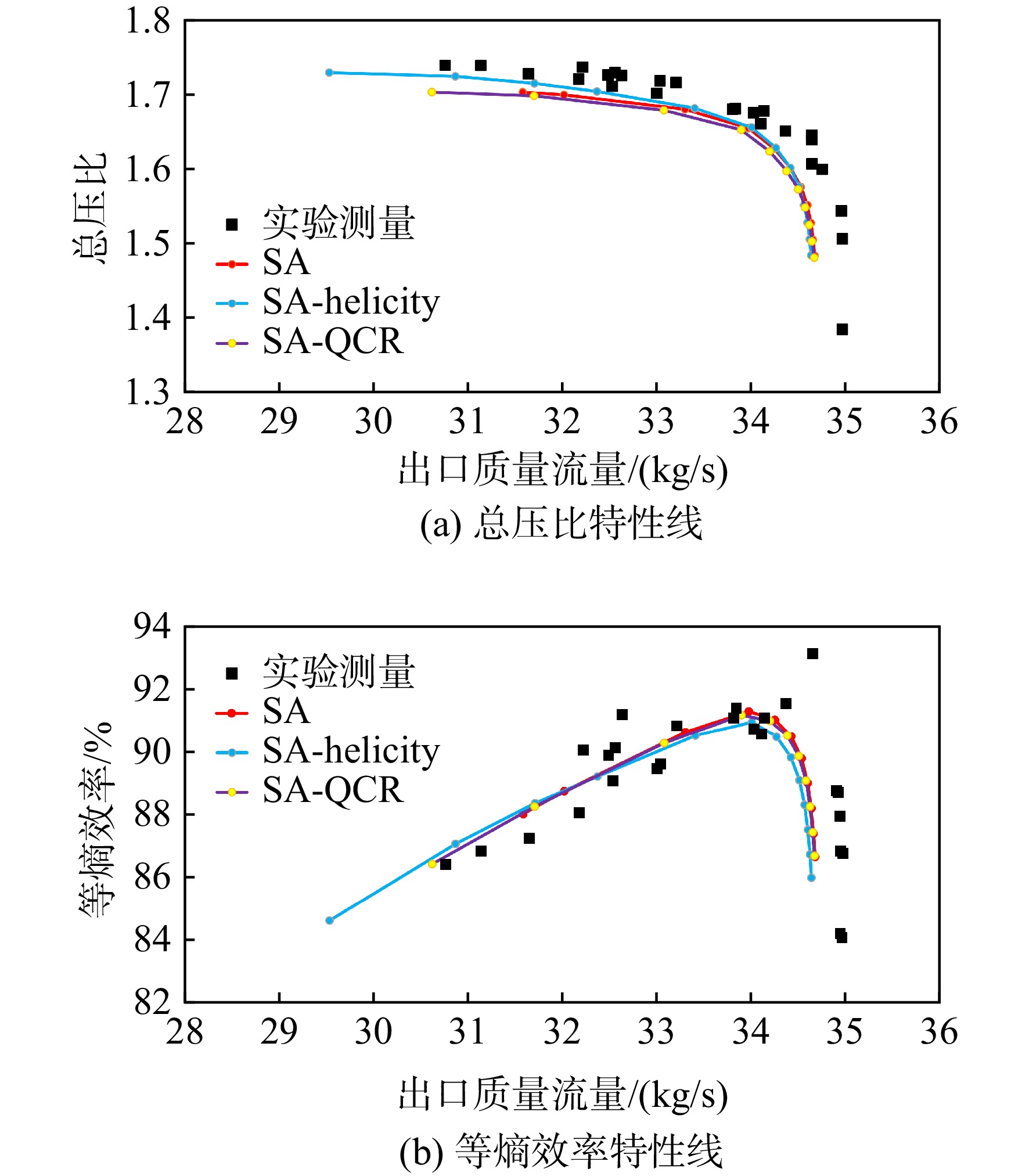
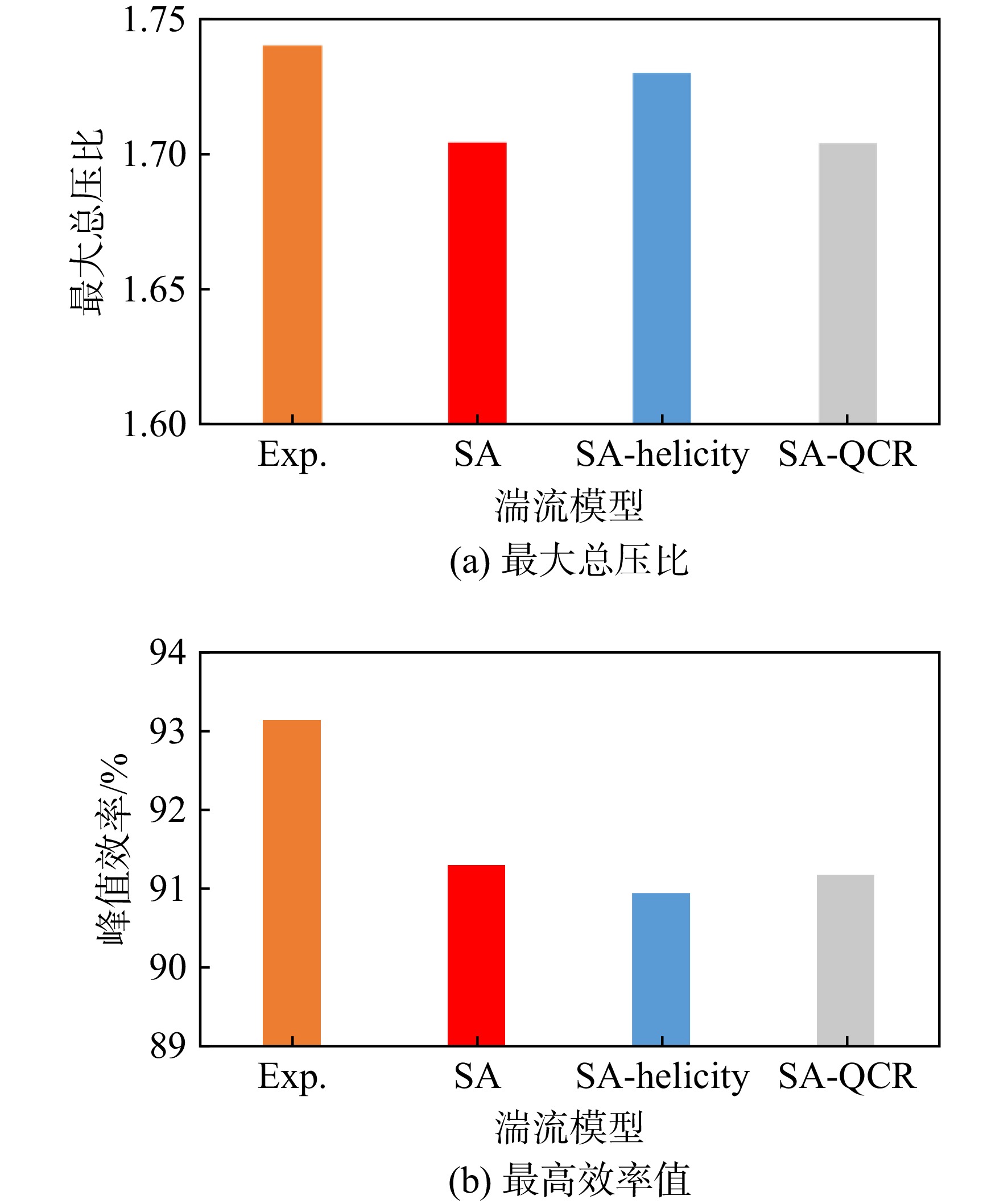
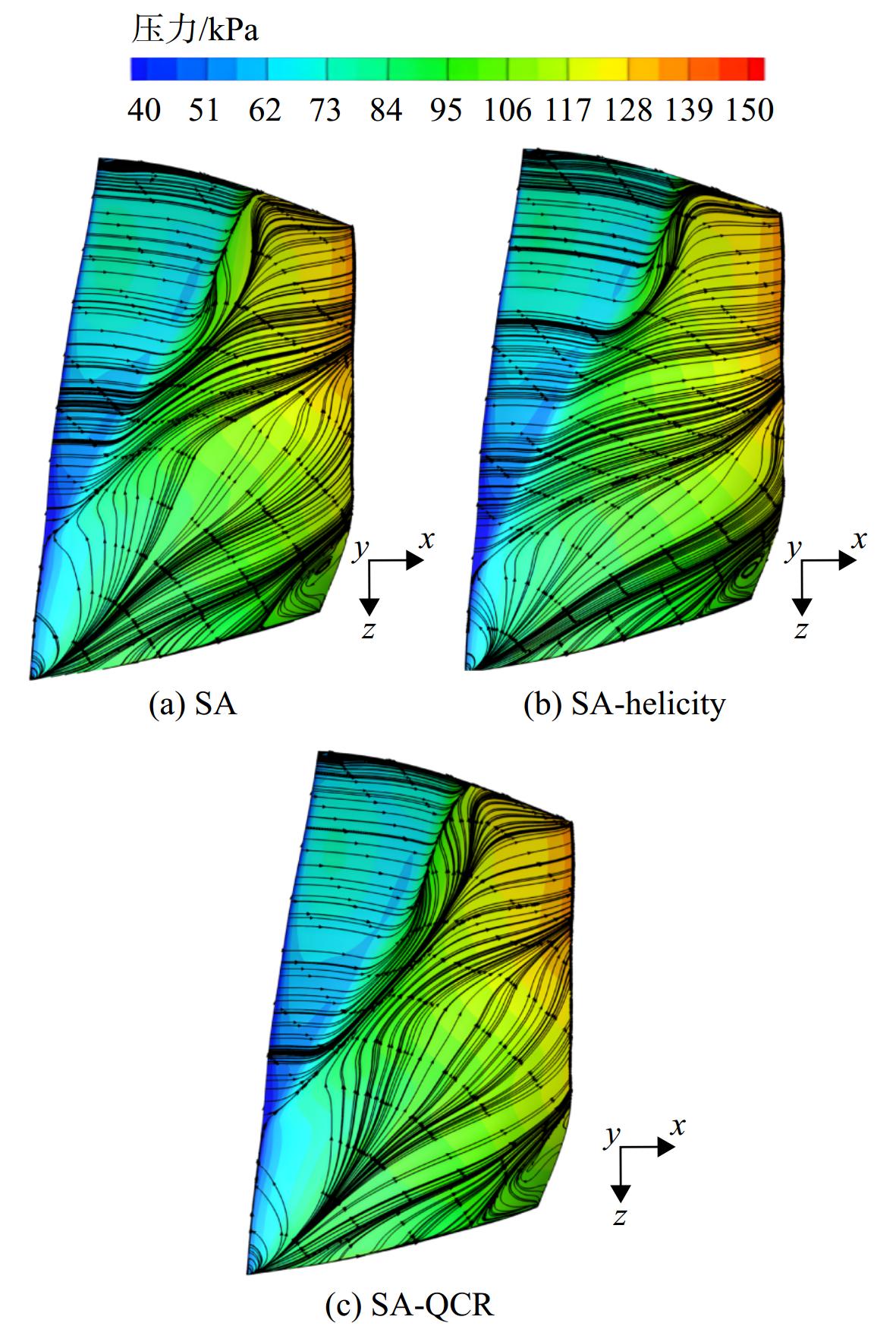
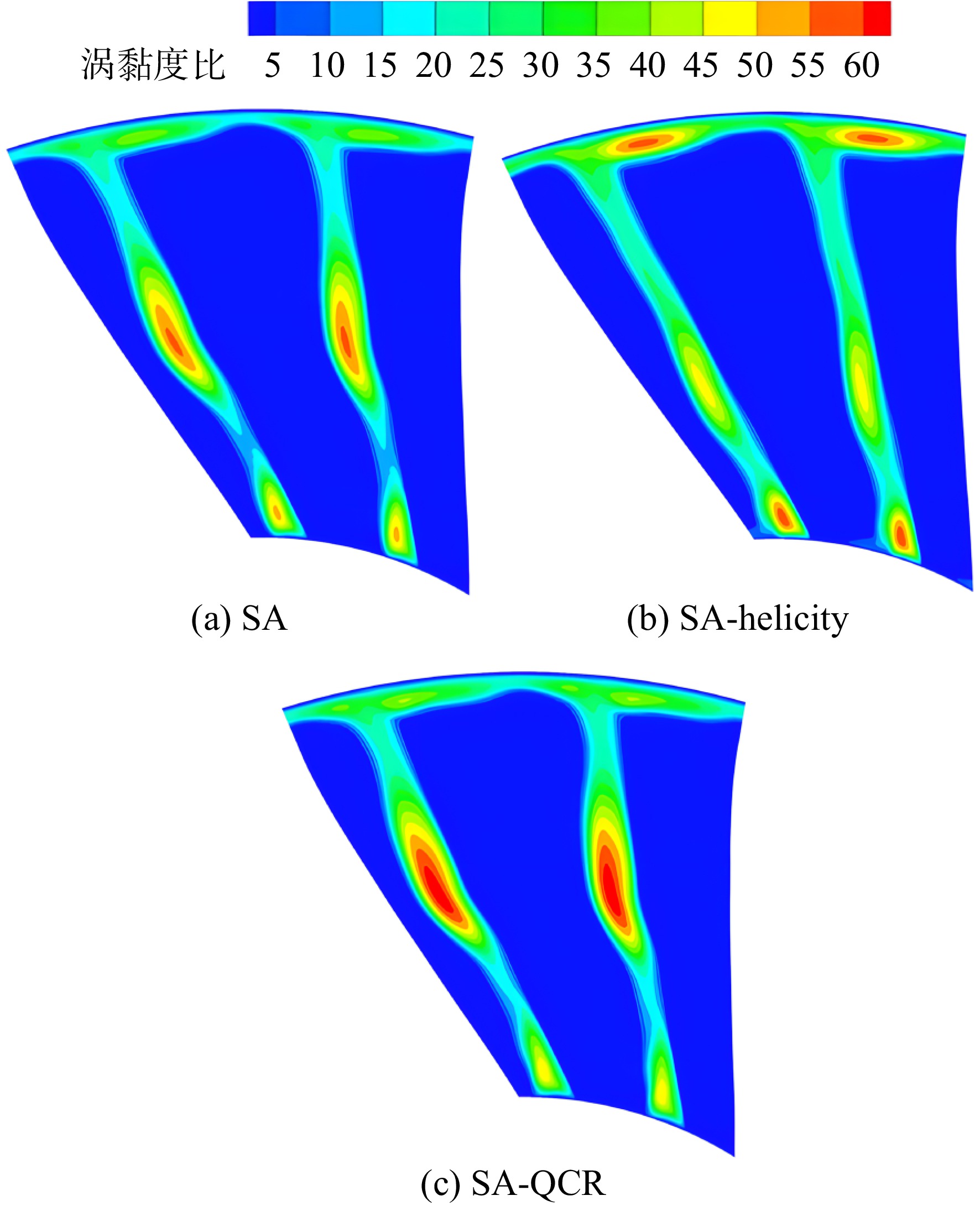
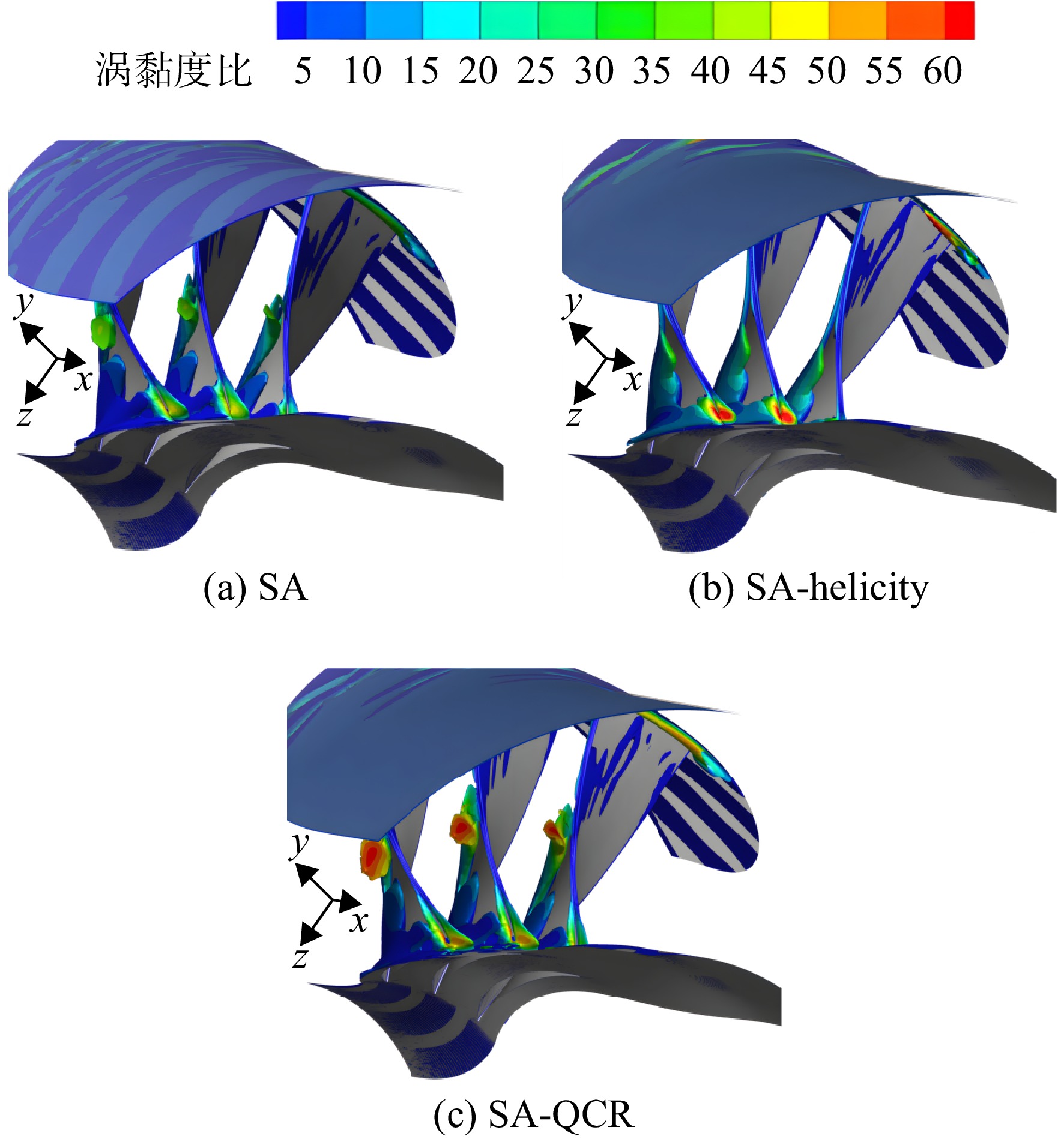
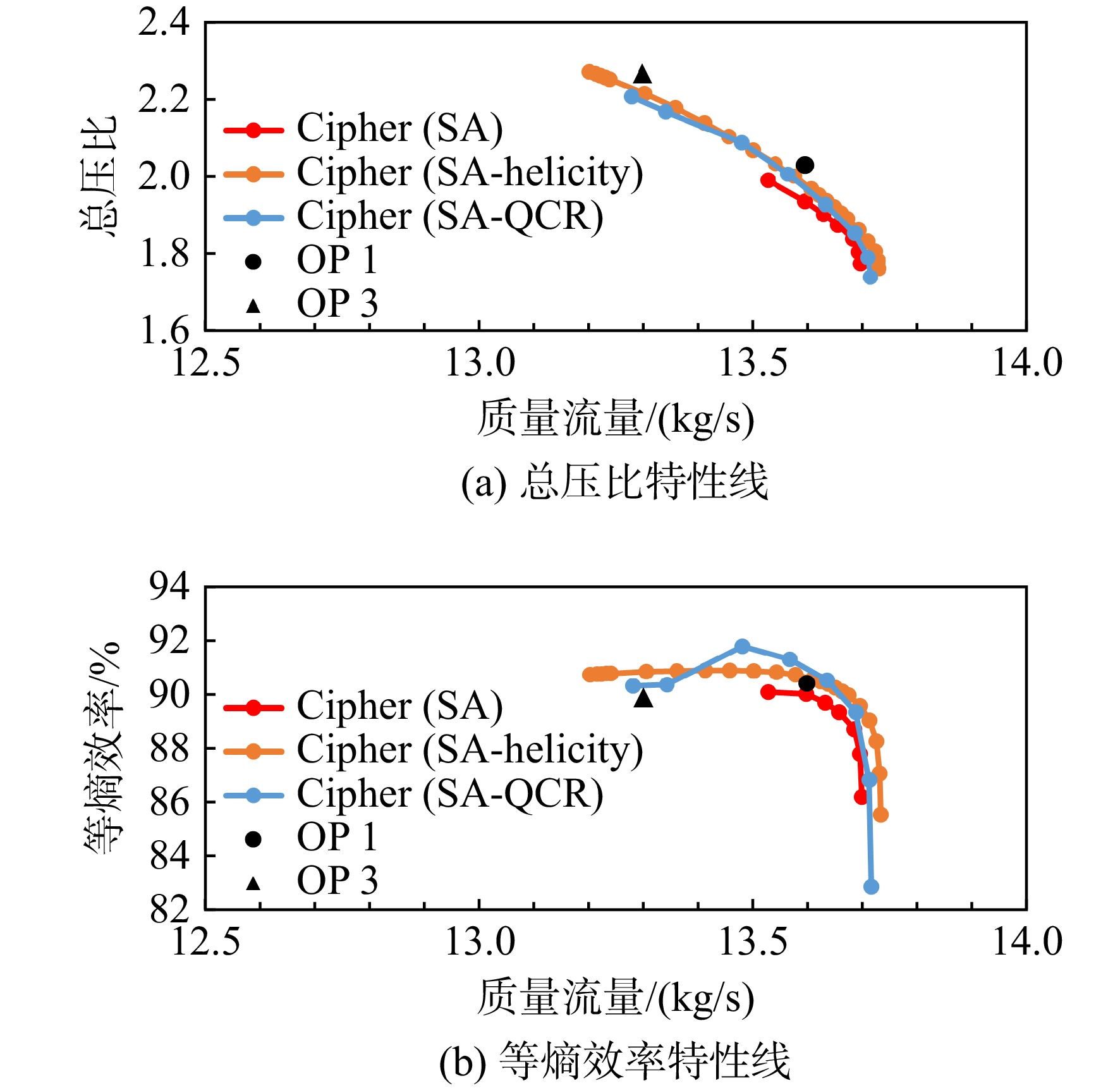
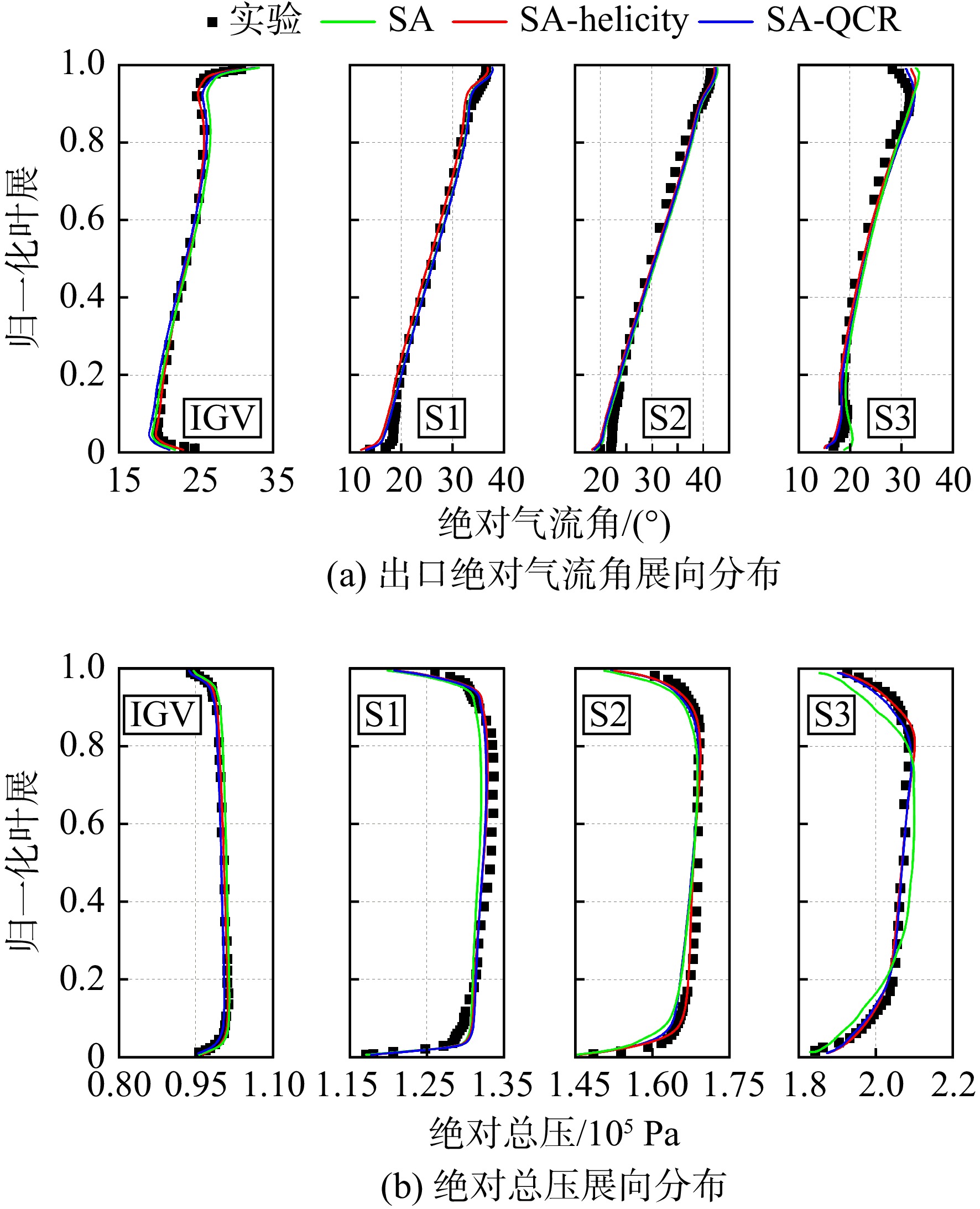
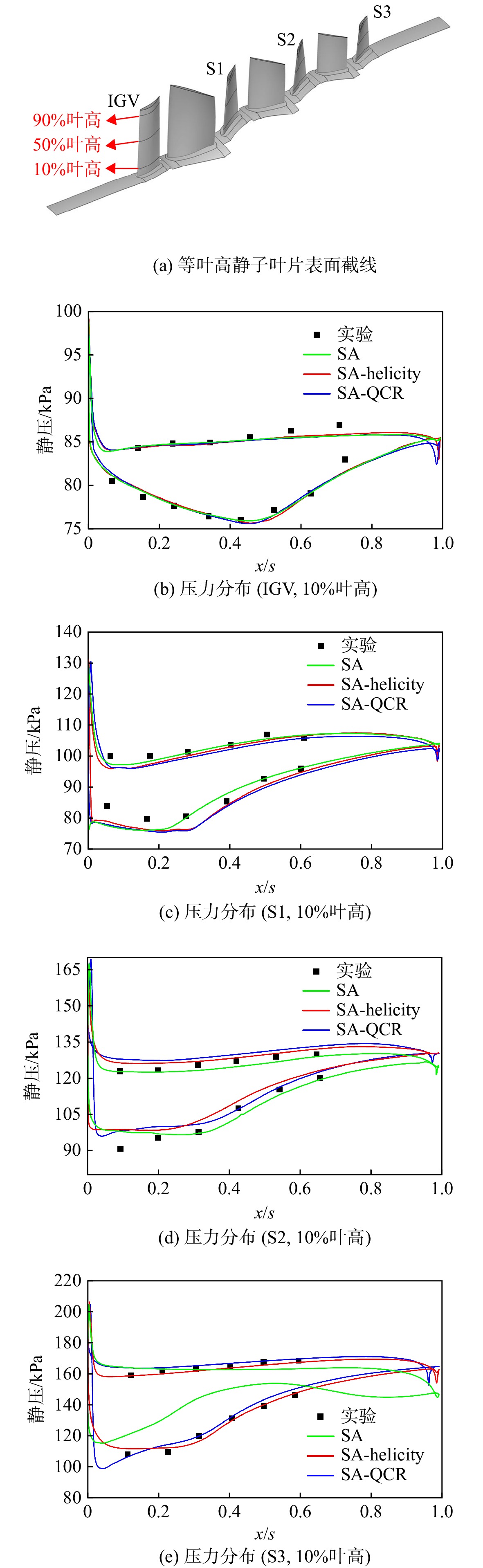
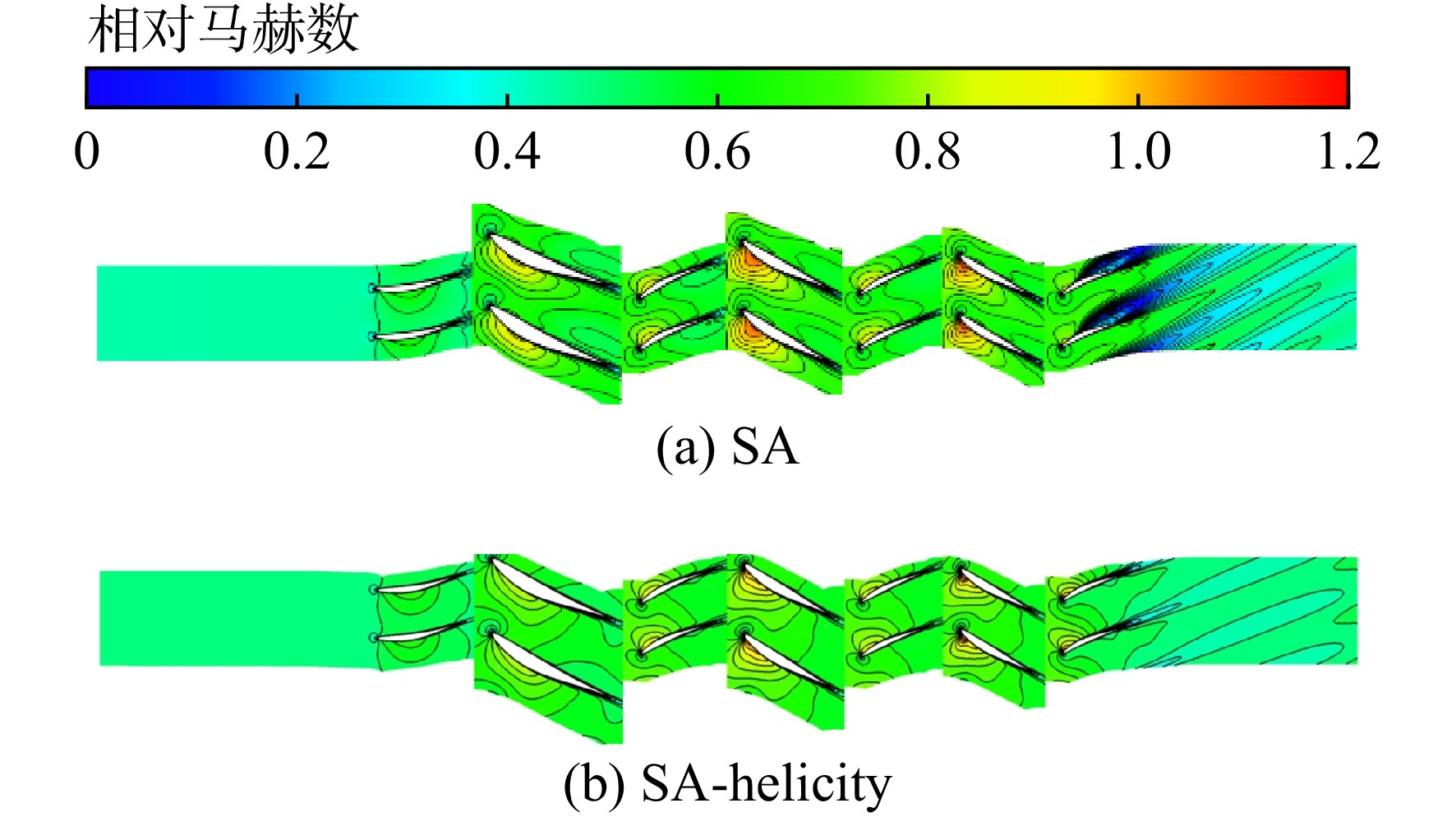
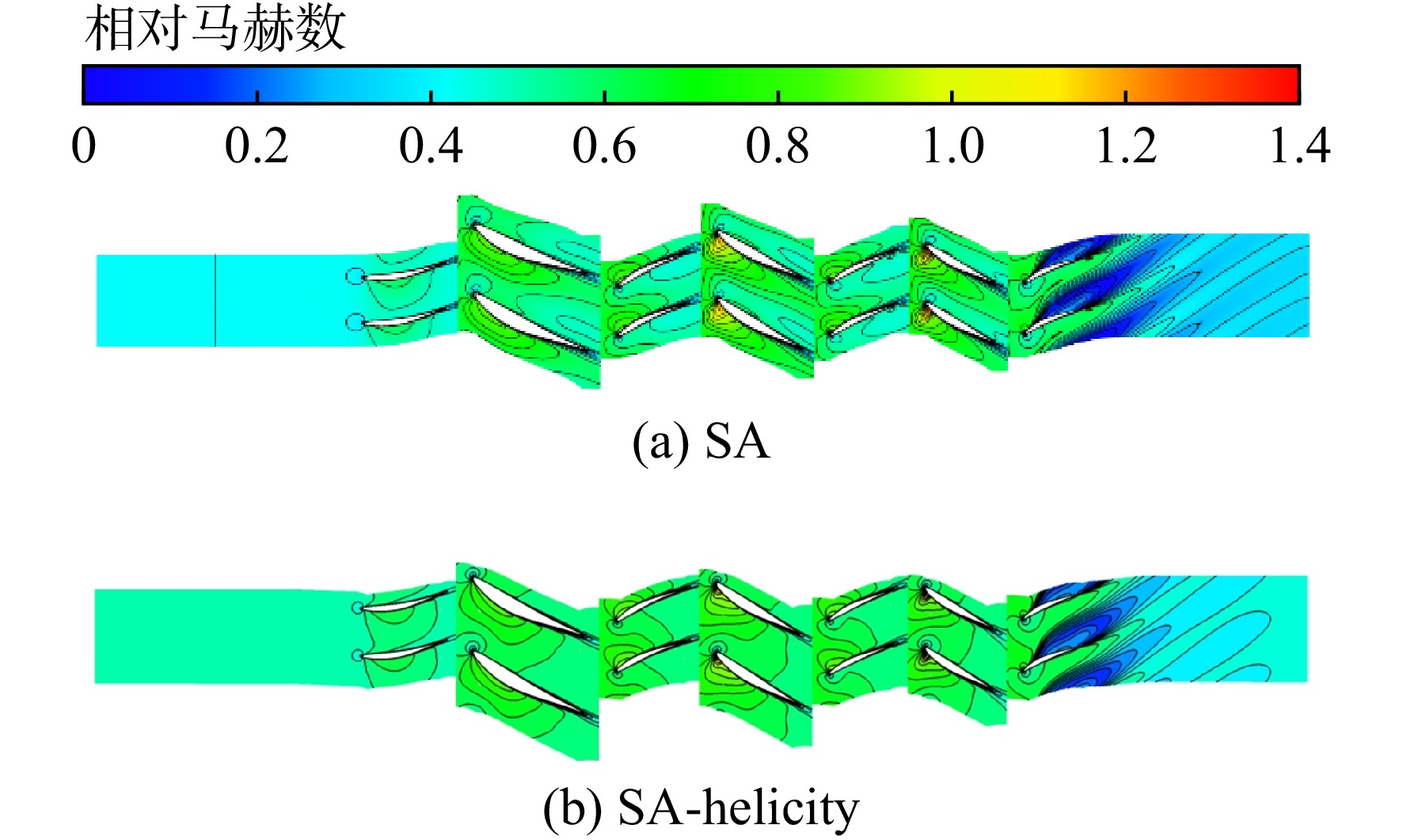
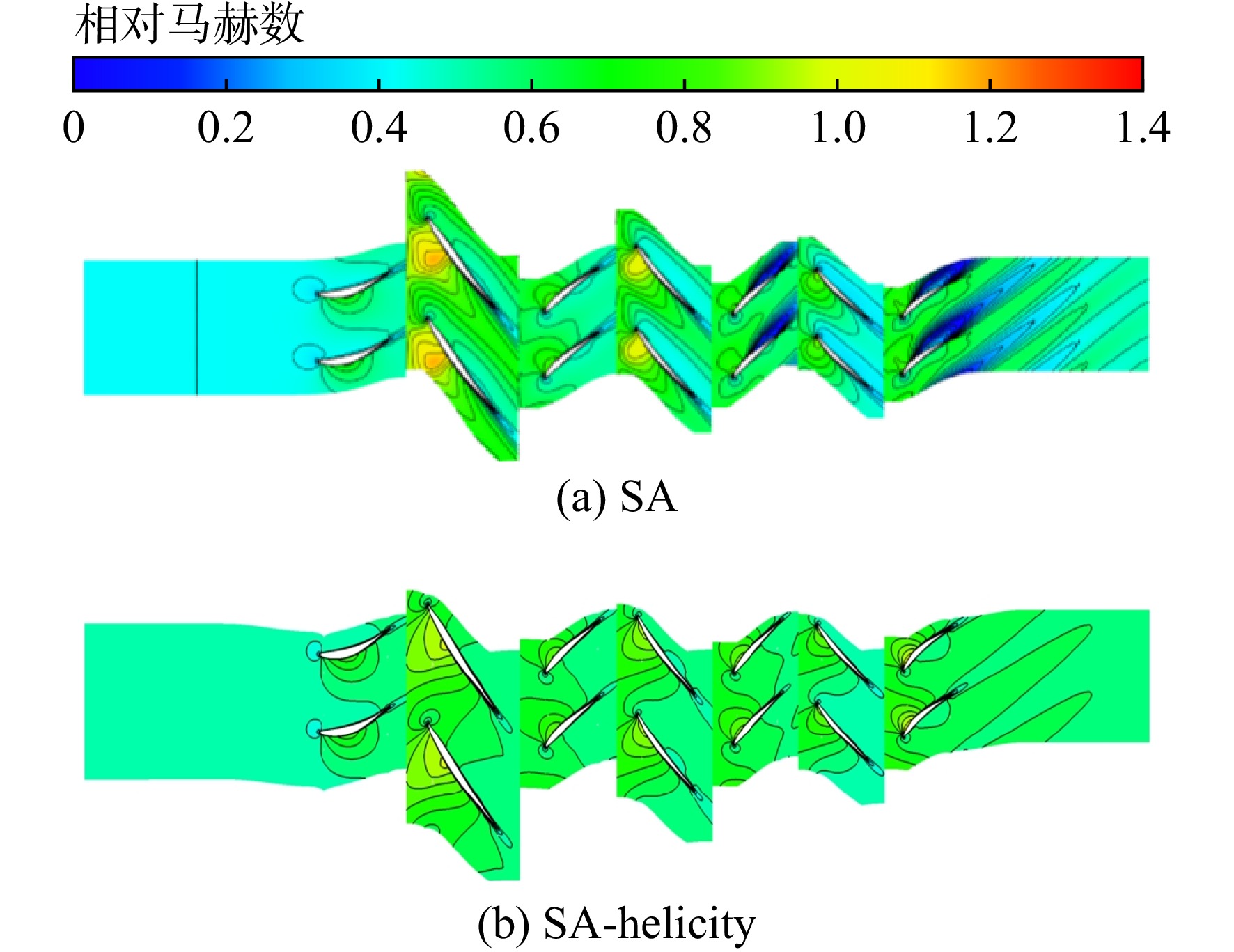
To address the accuracy problems of standard SA (Spalart-Allmaras) turbulence model when predicting complex rotating flows in aviation compressors, how the SA-helicity modified turbulence model performed in rotating flows was analyzed. It showed how the helicity correction helped compensate for strain rate through eddy viscosity mechanisms, leading to better predictions of corner separation and tip leakage flow while maintaining good boundary layer accuracy. Three turbulence models: standard SA, SA-helicity, and SA-QCR (quadratic constitutive relation), were tested, using NASA Rotor 67, a 3.5-stage axial compressor, and a publicly released high-load single-stage axial compressor from AECC Shenyang Engine Research Institute. Their performance at different rotational speeds was analyzed by focusing on performance characteristic curves, tip stall prediction, secondary flow prediction, and near-stall point prediction. Results showed that both the SA-helicity and SA-QCR models accurately predicted the trends of the characteristic curves. The SA-helicity model increased eddy viscosity in the corner separation region under adverse pressure gradients, thereby suppressing excessive corner separation. It also reasonably predicted the channel secondary flow induced by root separation, leading to an increased pressure ratio in the lower half of the blade. Compared with the QCR model, the helicity model better predicted the development and extent of tip leakage flow, significantly expanding the flow range, pressure ratio and efficiency, and showing better agreement with experimental results. Furthermore, the boundary layer flow predicted by the helicity model resisted adverse pressure gradients better, resulting in separation bubble reattaching earlier, thereby enhancing diffusion capability near the tip region and expanding the pressure ratio and flow range. Overall, the SA-helicity model overcame the limitations of traditional turbulence models in predicting how rotating secondary flows interacted with main flows in complex compressor environments.

| [1] |
曹建国. 航空发动机仿真技术研究现状、挑战和展望[J]. 推进技术, 2018, 39(5): 961-970. CAO Jianguo. Status, challenges and perspectives of aero-engine simulation technology[J]. Journal of Propulsion Technology, 2018, 39(5): 961-970. (in Chinese
CAO Jianguo. Status, challenges and perspectives of aero-engine simulation technology[J]. Journal of Propulsion Technology, 2018, 39(5): 961-970. (in Chinese)
|
| [2] |
WEI Sun. Assessment of advanced RANS turbulence models for prediction of complex flows in compressors[J]. Chinese Journal of Aeronautics, 2023, 36(9): 162-177. doi: 10.1016/j.cja.2023.06.007
|
| [3] |
CASARTELLI E, MANGANI L, ROOS LAUNCHBURY D, et al. Application of advanced RANS turbulence models for the prediction of turbomachinery flows[J]. Journal of Turbomachinery, 2022, 144(1): 011008. doi: 10.1115/1.4051938
|
| [4] |
JONAK P, BORZECKI T, KUBACKI S. An investigation of secondary flow features in a low pressure turbine[J]. Journal of Physics: Conference Series, 2018, 1101: 012011. doi: 10.1088/1742-6596/1101/1/012011
|
| [5] |
YAN Wenhui, SUN Zhaozheng, ZHOU Junwei, et al. Numerical simulation of transonic compressors with different turbulence models[J]. Aerospace, 2023, 10(9): 784. doi: 10.3390/aerospace10090784
|
| [6] |
GEORGIADIS N J, DEBONIS J R. Navier-Stokes analysis methods for turbulent jet flows with application to aircraft exhaust nozzles[J]. Progress in Aerospace Sciences, 2006, 42(5/6): 377-418.
|
| [7] |
GOURDAIN N, SICOT F, DUCHAINE F, et al. Large eddy simulation of flows in industrial compressors: a path from 2015 to 2035[J]. Philosophical Transactions Series A, Mathematical, Physical, and Engineering Sciences, 2014, 372(2022): 20130323.
|
| [8] |
WANG Danhua, LU Lipeng, LI Qiushi. Improvement on S-A model for predicting corner separation based on turbulence transport nature: AIAA2009-4931[R]. Denver, US: the 45th AIAA/ASME/SAE/ASEE Joint Propulsion Conference & Exhibit, 2009.
|
| [9] |
MA Li, LU Lipeng, FANG Jian, et al. A study on turbulence transportation and modification of Spalart-Allmaras model for shock-wave/turbulent boundary layer interaction flow[J]. Chinese Journal of Aeronautics, 2014, 27(2): 200-209. doi: 10.1016/j.cja.2014.02.008
|
| [10] |
SUN W. Turbulence modelling for complex flows in turbomachinery[D]. Cambridge, UK. University of Cambridge, 2020.
|
| [11] |
LIU Yangwei, LU Lipeng, FANG Le, et al. Modification of Spalart-Allmaras model with consideration of turbulence energy backscatter using velocity helicity[J]. Physics Letters: A, 2011, 375(24): 2377-2381. doi: 10.1016/j.physleta.2011.05.023
|
| [12] |
KIM S, PULLAN G, HALL C A, et al. Stall inception in low-pressure ratio fans[J]. Journal of Turbomachinery, 2019, 141(7): 071005. doi: 10.1115/1.4042731
|
| [13] |
LOPEZ D I, GHISU T, KIPOUROS T, et al. Extending highly loaded axial fan operability range through novel blade design[J]. Journal of Turbomachinery, 2022, 144(12): 121009. doi: 10.1115/1.4055350
|
| [14] |
YU Zhifan, DEFOE J. Validation of helicity-corrected Spalart-Allmaras model for corner separation prediction in incompressible flow with OpenFOAM[J]. Journal of the Global Power and Propulsion Society, 2024, 8: 73-83. doi: 10.33737/jgpps/186057
|
| [15] |
SPALART P R. Strategies for turbulence modelling and simlations[J]. International Journal of Heat and Fluid Flow, 2000, 21(3): 252-263. doi: 10.1016/S0142-727X(00)00007-2
|
| [16] |
MENTER F R, MATYUSHENKO A, LECHNER R. Development of a generalized k-ω two-equation turbulence model[C]// New Results in Numerical and Experimental Fluid Mechanics XII. Cham, Germany: Springer International Publishing, 2020: 101-109.
|
| [17] |
SUN Wei, XU Liping. Improvement of corner separation prediction using an explicit non-linear RANS closure[J]. Journal of the Global Power and Propulsion Society, 2021, 5: 50-65. doi: 10.33737/jgpps/133913
|
| [18] |
CHINA B U, LI Wenhao, LIU Yangwei, et al. Evaluation of Spalart-Allmaras model with various modifications for predicting corner separation in a compressor cascade[C]//Proceedings of Global Power & Propulsion Society. Beijing: GPPS, 2019: V02DT44A040.
|
| [19] |
LI Wenhao, LIU Yangwei. Numerical investigation of corner separation flow using Spalart-Allmaras model with various modifications[J]. Aerospace Science and Technology, 2022, 127: 107682. doi: 10.1016/j.ast.2022.107682
|
| [20] |
WANG Z, NIEHUIS R. Assessment of numerical methods on a 3.5-stage axial compressor[C]// Proceedings of the 18th International Society for Air Breathing Engines Conference. Beijing: ISABE, 2007: 1452-1461
|
| [21] |
SPALART P, ALLMARAS S. A one-equation turbulence model for aerodynamic flows: AIAA1992-439[R] Reno, US: AIAA, 1992.
|
| [22] |
赵宏凯, 方乐, 陆利蓬. 非均衡湍流研究进展[J]. 气体物理, 2018, 3(2): 13-26. ZHAO Hongkai, FANG Le, LU Lipeng. Advances in non-equilibrium turbulence research[J]. Physics of Gases, 2018, 3(2): 13-26. (in Chinese
ZHAO Hongkai, FANG Le, LU Lipeng. Advances in non-equilibrium turbulence research[J]. Physics of Gases, 2018, 3(2): 13-26. (in Chinese)
|
| [23] |
RUMSEY C L, CARLSON J R, PULLIAM T H, et al. Improvements to the quadratic constitutive relation based on NASA juncture flow data[J]. AIAA Journal, 2020, 58(10): 4374-4384. doi: 10.2514/1.J059683
|
| [24] |
STRAZISAR A J, POWELL J A. Laser anemometer measurements in a transonic axial flow compressor rotor[J]. Journal of Engineering for Power, 1981, 103(2): 430-437. doi: 10.1115/1.3230738
|
| [25] |
WADIA A R, SZUCS P N, CRALL D W. Inner workings of aerodynamic sweep[J]. Journal of Turbomachinery, 1998, 120(4): 671-682. doi: 10.1115/1.2841776
|
| [26] |
HAH C, HATHAWAY M, KATZ J. Investigation of unsteady flow field in a low-speed one and a half stage axial compressor: effects of tip gap size on the tip clearance flow structure at near stall operation[C]// Proceedings of the ASME Turbo Expo. Düsseldorf, Germany: ASME, 2014: DT44A04-V02DT44A04.
|
| [27] |
刘太秋, 赵月振, 王咏梅, 等. 负荷系数0.5的高负荷单级轴流压气机设计及试验研究[J]. 航空发动机, 2022, 48(5): 1-39. LIU Taiqiu, ZHAO Yuezhen, WANG Yongmei, et al. Design and experimental investigation of a highly loaded single-stage axial compressor with loading coefficient of 0.5[J]. Aeroengine, 2022, 48(5): 1-39. (in Chinese
LIU Taiqiu, ZHAO Yuezhen, WANG Yongmei, et al. Design and experimental investigation of a highly loaded single-stage axial compressor with loading coefficient of 0.5[J]. Aeroengine, 2022, 48(5): 1-39. (in Chinese)
|
| [28] |
SWOBODA D, HILDEBRANDT T H. Detailed verification of a 3D Navier-Stokes-solver in industrial design application on a 3 stage axial compressor (Aachen compressor) [C]//Proceedings of Ercoftac/QNET Meeting. Aachen, Germany: ERCOFTAC, 2002: 511-523.
|
| [29] |
WANG Zhuo. Numerical study of a 3.5-stage axial compressor at on-and off-design conditions[J]. Journal of Aerospace Power, 2007, 22(9): 1444-1454.
|







 DownLoad: