| Citation: | CHEN Xiaoxiao, ZENG Wen, DANG Jiaying, et al. Experiment on premixed turbulent combustion characteristics of natural gas[J]. Journal of Aerospace Power, 2023, 38(4):795-805 doi: 10.13224/j.cnki.jasp.20210522

|
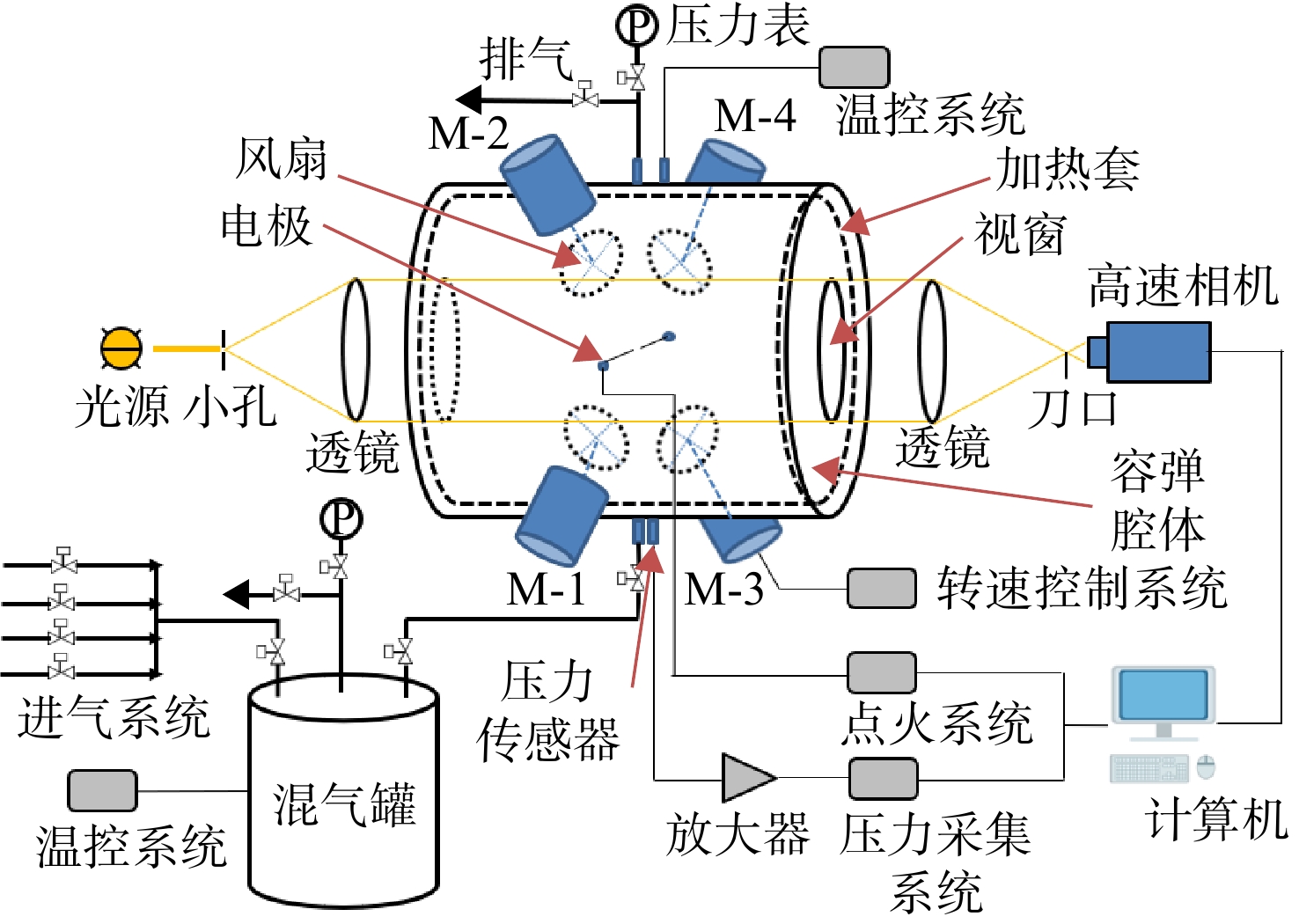
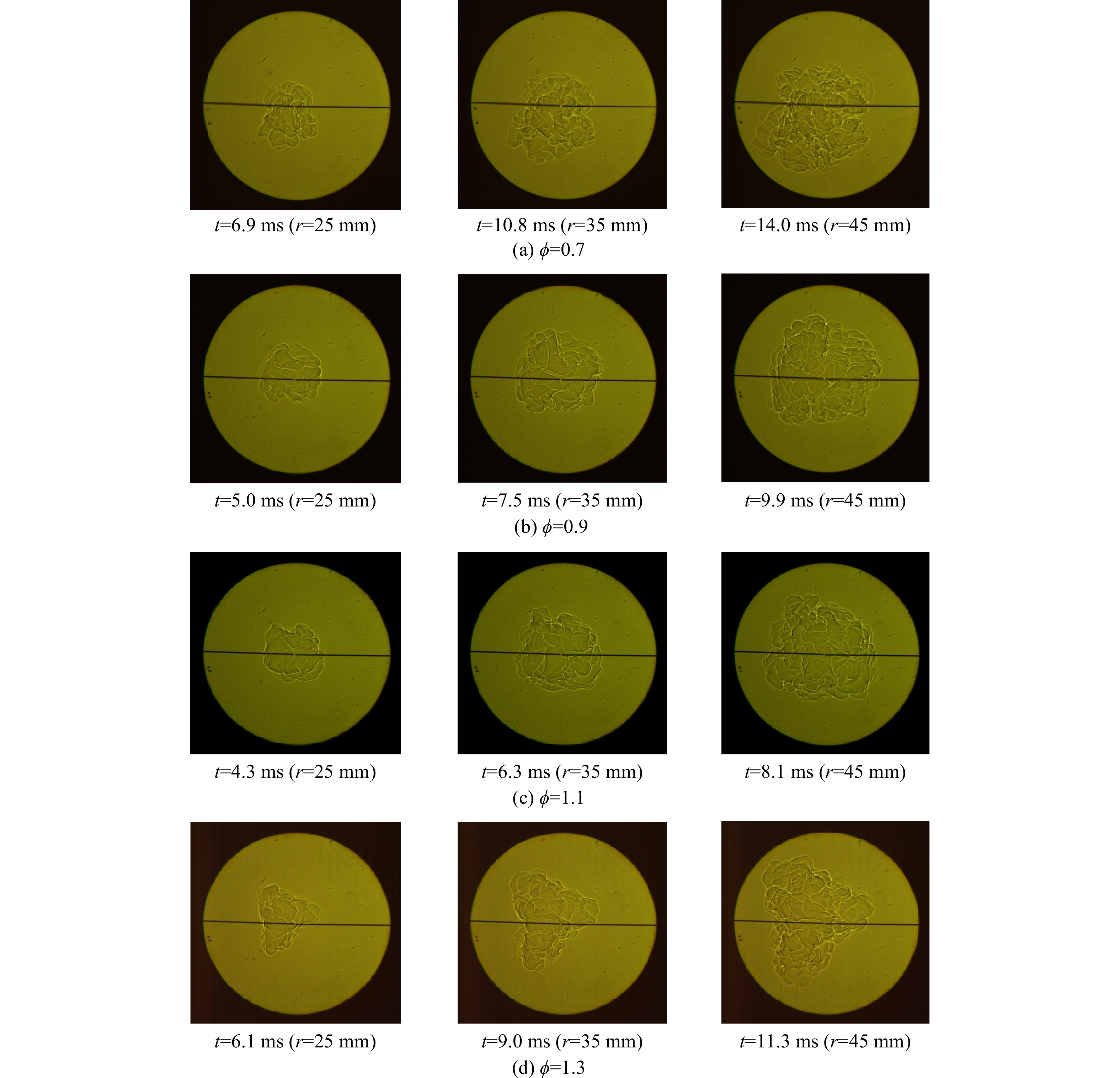
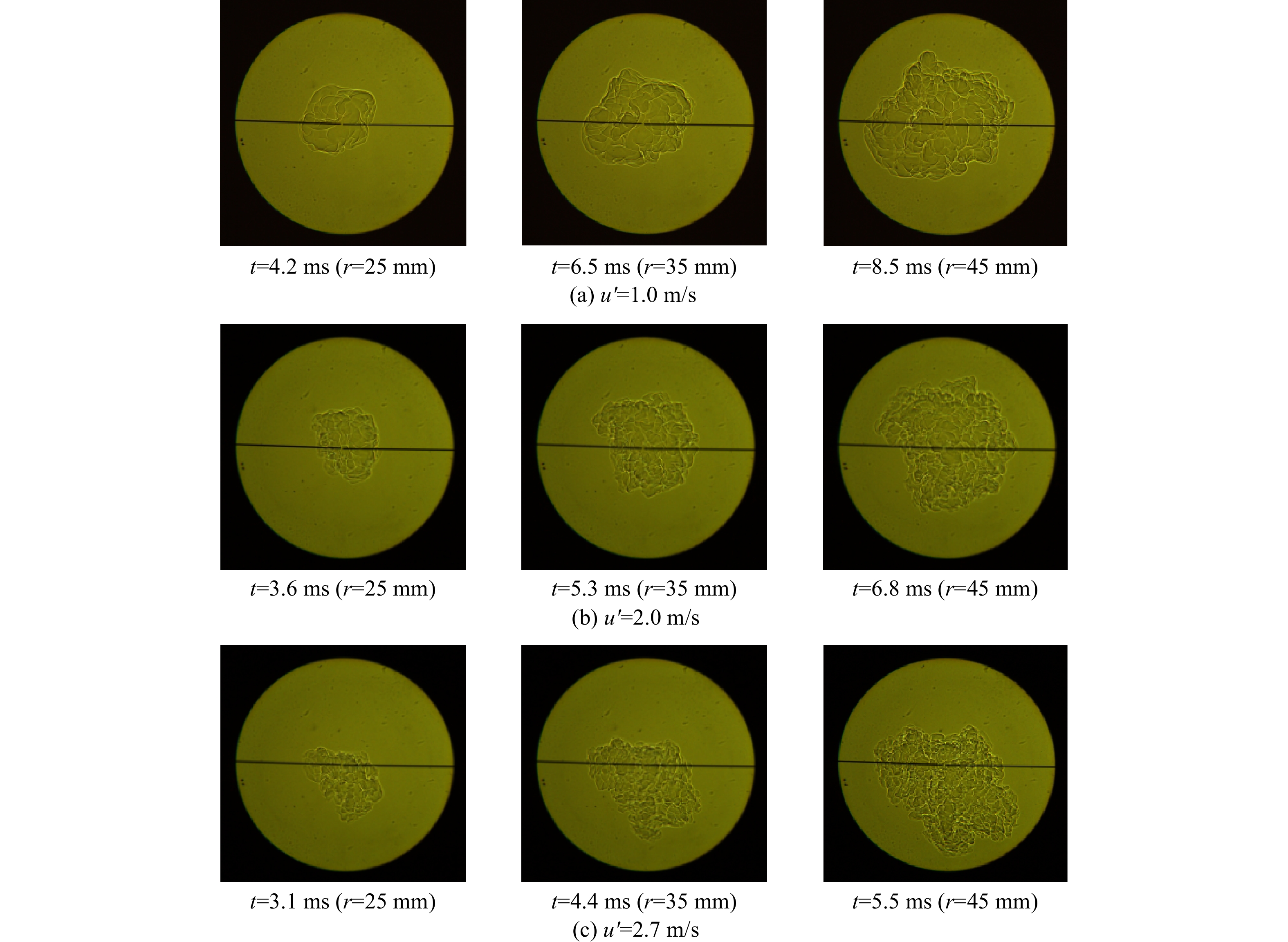
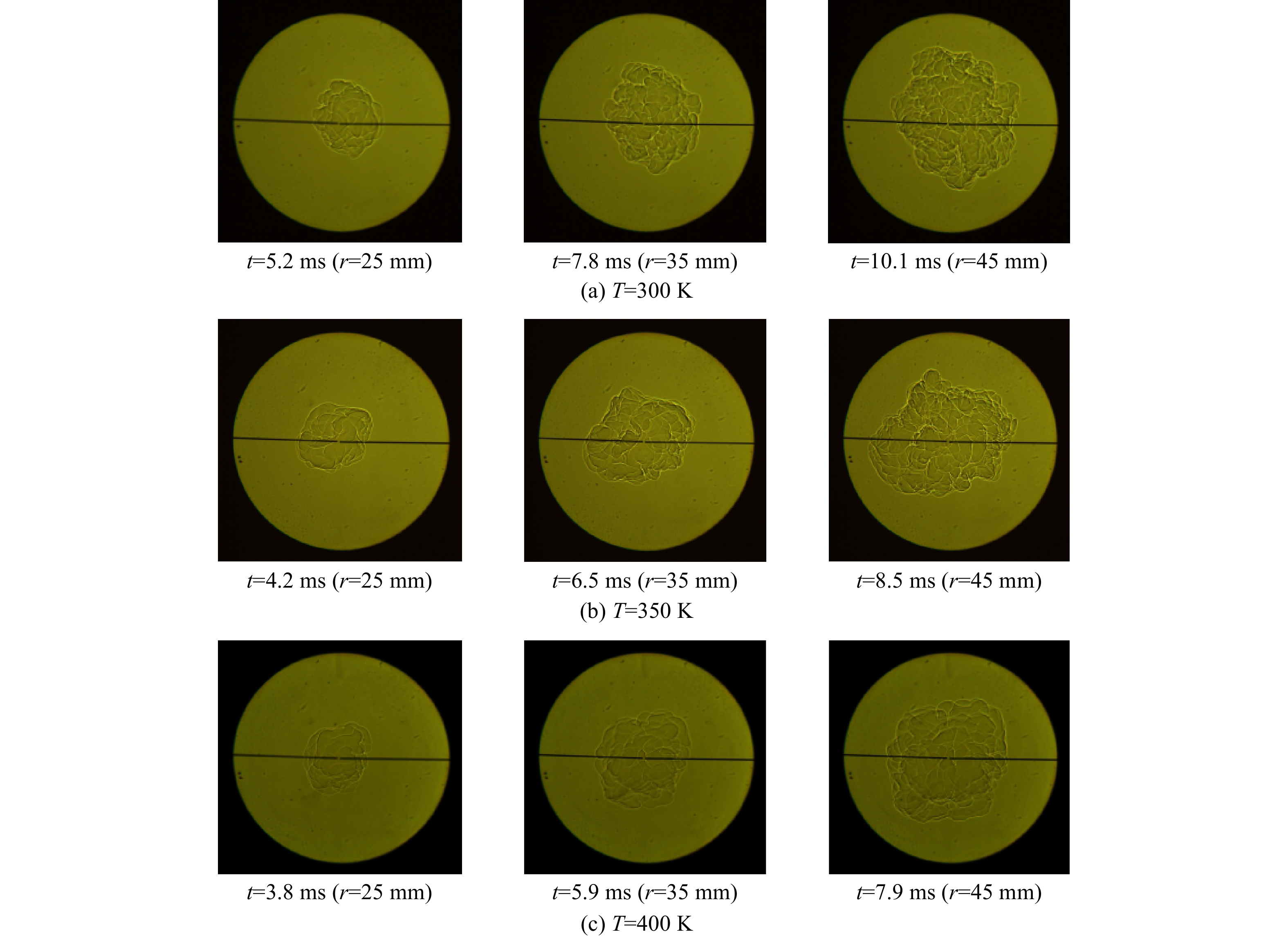
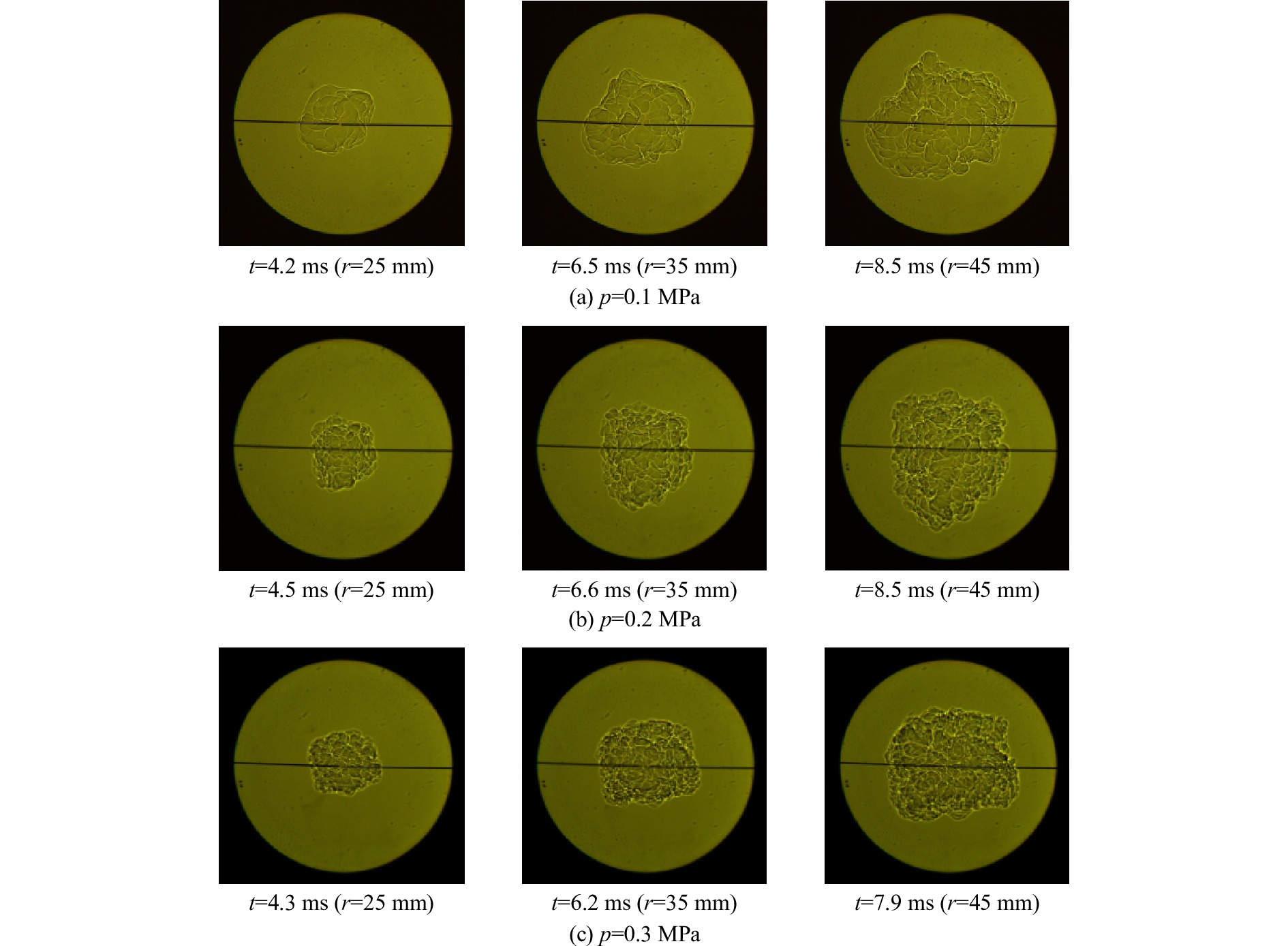
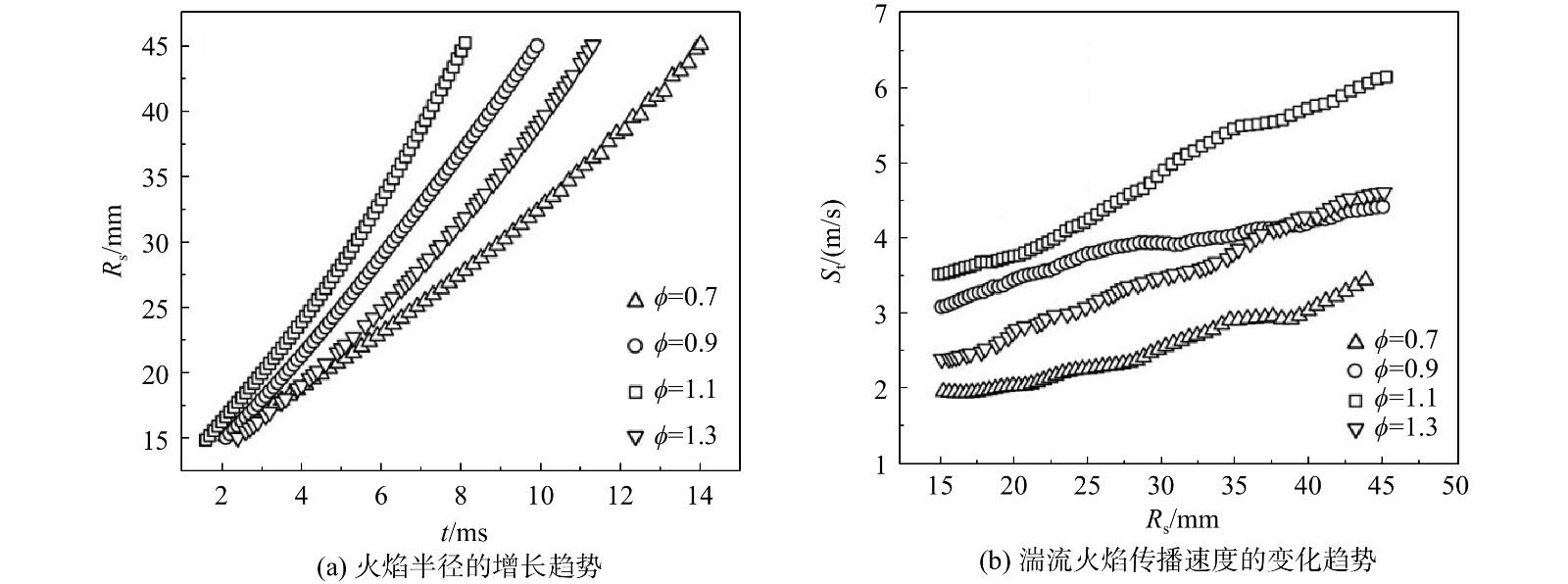
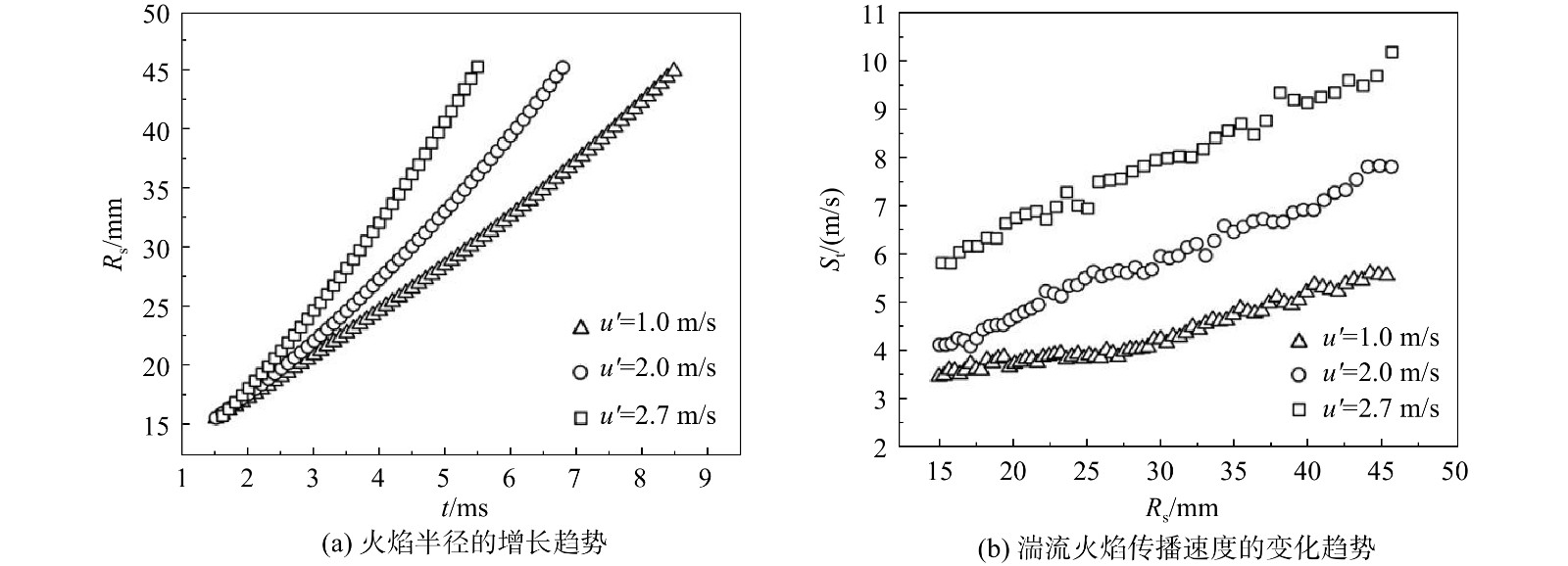
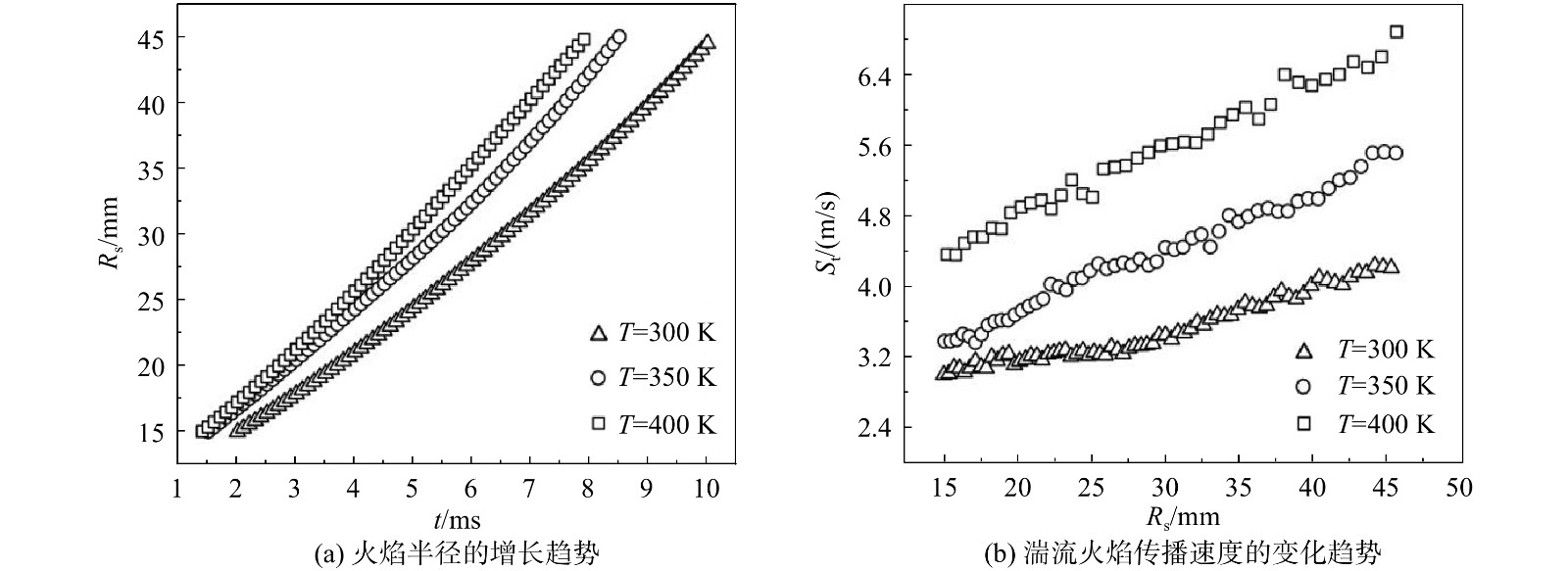
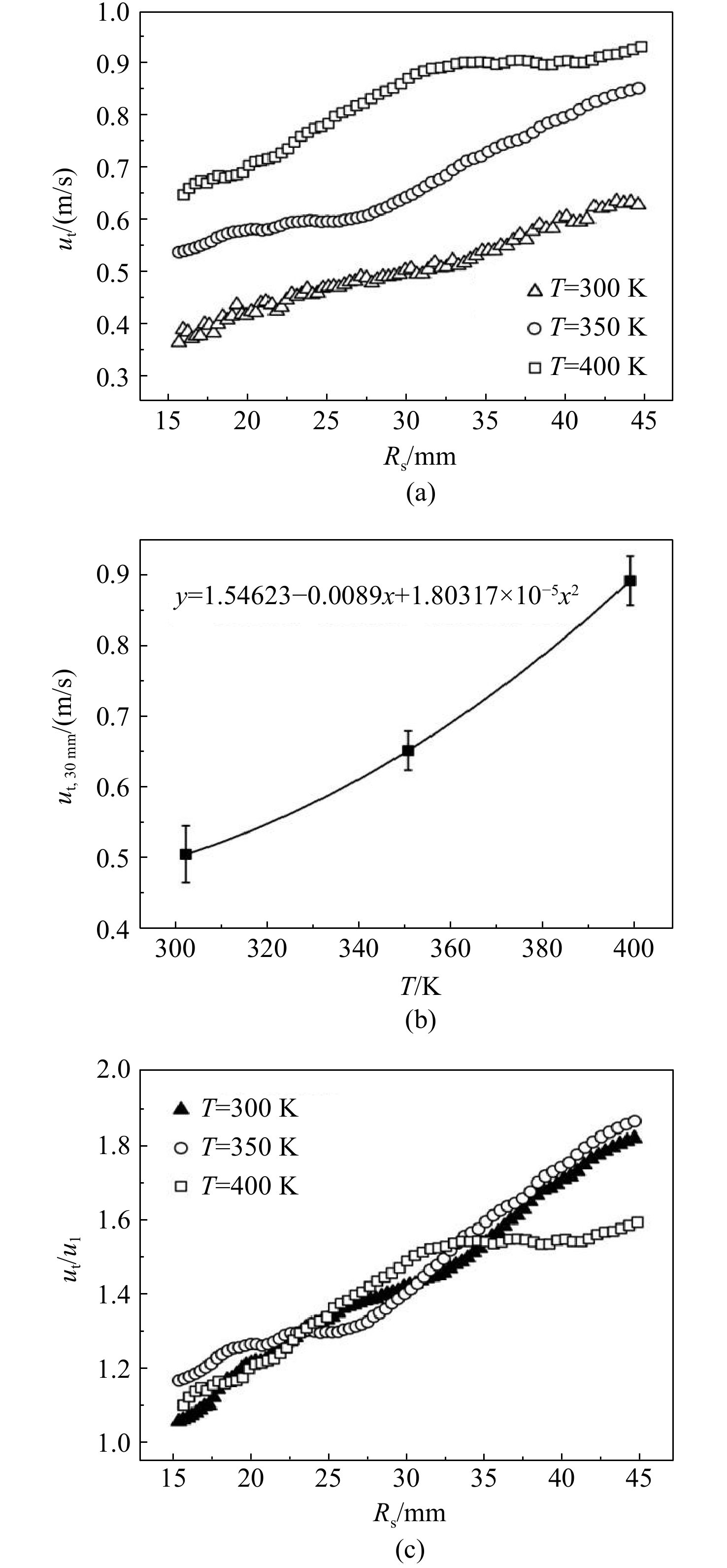
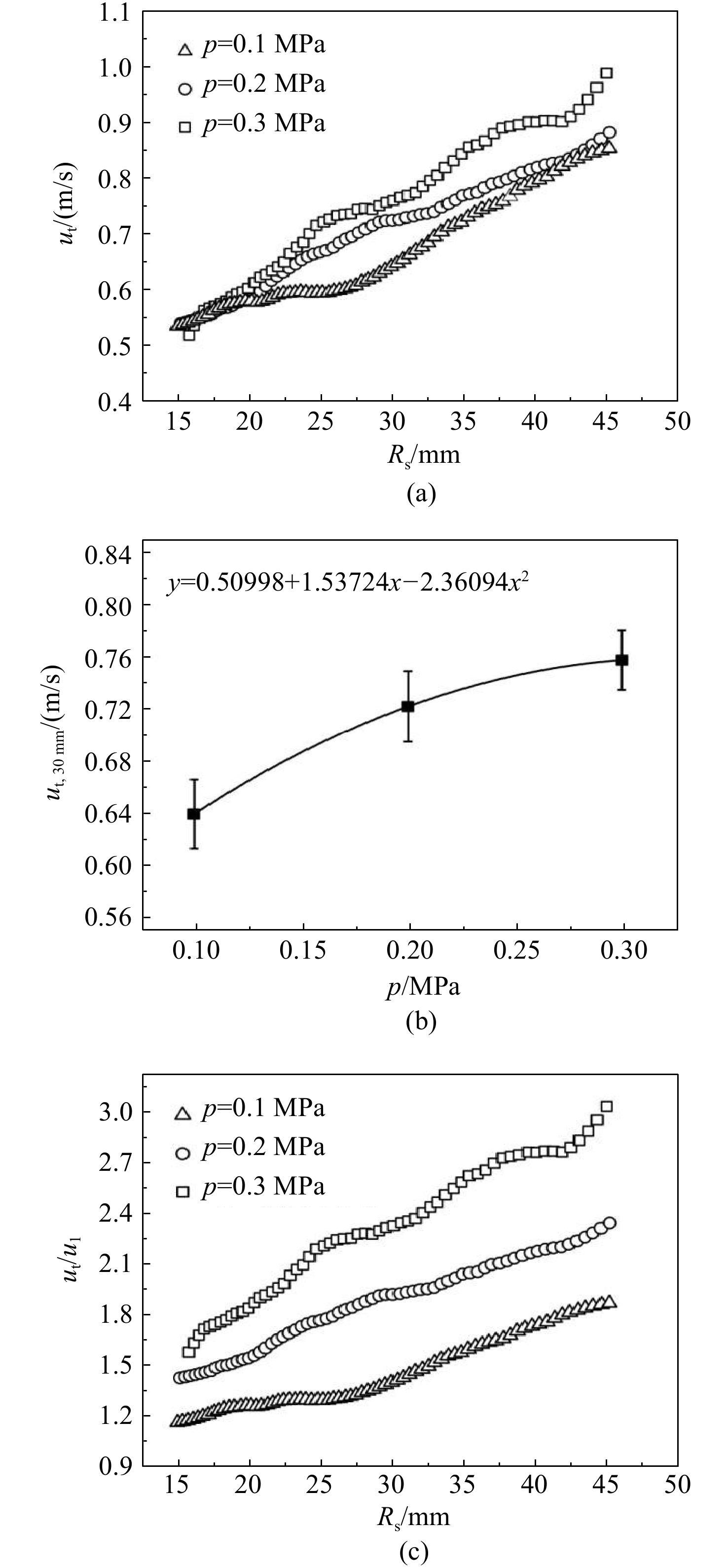
In order to gain the premixed turbulent combustion characteristics of natural gas, the premixed turbulent combustion flame propagation characteristics of natural gas at the conditions of the equivalence ratios range of 0.7−1.4, the initial pressures range of 0.1−0.3 MPa, the initial temperatures range of 300−400 K, and the turbulence intensities range of 1.0−2.7 m/s were experimentally tested in the turbulent combustion bomb. Furthermore, the influences of equivalence ratio, turbulence intensity, initial temperature, and initial pressure on the turbulent flame propagation speed, flame wrinkle ratio and turbulent combustion speed of natural gas were investigated. The results showed that the turbulent flame propagation speeds of natural gas increased and then decreased with the increase of equivalence ratio, and reached the maximum at equivalence ratio of 1.1. With the increase of turbulence intensity and initial temperature, the turbulent flame propagation speed gradually increased. However, with the increase of initial pressure, the turbulent flame propagation speed varied slightly. With the increase of turbulence intensity and initial pressure, or the decrease of equivalence ratio and initial temperature, the flame wrinkle ratio gradually increased. With the increase of equivalent ratio, the turbulent combustion speeds increased first and then decreased, and reached the maximum at equivalent ratio of 1.1. With the increase of the turbulence intensity, initial temperature and pressure, the turbulent combustion speeds gradually increased.

| [1] |
尉曙明,索建秦. 航空衍生工业燃气轮机双燃料贫燃预混低污染燃烧技术[J]. 航空动力学报,2015,30(9): 2049-2057. doi: 10.13224/j.cnki.jasp.2015.09.001
WEI Shuming,SUO Jianqin. Aero-derivative industrial gas turbine dual fuel lean premixed low emission combustion technology[J]. Journal of Aerospace Power,2015,30(9): 2049-2057. (in Chinese) doi: 10.13224/j.cnki.jasp.2015.09.001
|
| [2] |
BULAT G,JONES W P,MARQUIS A J. NO and CO formation in an industrial gas-turbine combustion chamber using LES with the Eulerian sub-grid PDF method[J]. Combustion and Flame,2014,161(7): 1804-1825. doi: 10.1016/j.combustflame.2013.12.028
|
| [3] |
ALMEIDA D S,LACAVA P T. Analysis of pollutant emissions in double-stage swirl chamber for gas turbine application[J]. Energy Procedia,2015,66: 117-120. doi: 10.1016/j.egypro.2015.02.067
|
| [4] |
LYRA S,CANT R S. Analysis of high pressure premixed flames using equivalent reactor networks for predicting NOx emissions[J]. Fuel,2013,107(9): 261-268.
|
| [5] |
STARIK A M,KOZLOV V E,LEBEDEV A B,et al. Application of reactor net models for the simulation of gas-turbine combustor emissions[J]. International Journal of Sustainable Aviation,2014,1(1): 43-57. doi: 10.1504/IJSA.2014.062867
|
| [6] |
KUMAR K,SUNG C J,HUI X. Laminar flame speeds and extinction limits of conventional and alternative jet fuels[J]. Fuel,2011,90(3): 1004-1011. doi: 10.1016/j.fuel.2010.11.022
|
| [7] |
BOSSCHAART K J,LPH D G. The laminar burning velocity of flames propagating in mixtures of hydrocarbons and air measured with the heat flux method[J]. Combustion and Flame,2004,136(3): 261-269. doi: 10.1016/j.combustflame.2003.10.005
|
| [8] |
WEISS M,ZARZALIS N,SUNTZ R. Experimental study of Markstein number effects on laminar flamelet velocity in turbulent premixed flames[J]. Combustion and Flame,2008,154(4): 671-691. doi: 10.1016/j.combustflame.2008.06.011
|
| [9] |
DRISCOLL J F. Turbulent premixed combustion: flamelet structure and its effect on turbulent burning velocities[J]. Progress in Energy & Combustion Science,2008,34(1): 91-134.
|
| [10] |
KOBAYASHI H,SEYAMA K,HAGIWARA H,et al. Burning velocity correlation of methane/air turbulent premixed flames at high pressure and high temperature[J]. Proceedings of the Combustion Institute,2005,30(1): 827-834. doi: 10.1016/j.proci.2004.08.098
|
| [11] |
BRADLEY D,LAWES M,MANSOUR M S. Correlation of turbulent burning velocities of ethanol-air, measured in a fan-stirred bomb up to 1.2 MPa[J]. Combustion and Flame,2011,158(1): 123-138. doi: 10.1016/j.combustflame.2010.08.001
|
| [12] |
ICHIMURA R,HADI K,HASHIMOTO N,et al. Extinction limits of an ammonia/air flame propagating in a turbulent field[J]. Fuel,2019,246: 178-186. doi: 10.1016/j.fuel.2019.02.110
|
| [13] |
蔡骁,王金华,赵浩然,等. 稀甲烷/氢气预混湍流传播火焰实验研究[J]. 工程热物理学报,2020,41(2): 514-519.
CAI Xiao,WANG Jinhua,ZHAO Haoran,et al. Experimental research on expanding turbulent flames of lean methane/hydrogen/air mixtures[J]. Journal of Engineering Thermophysics,2020,41(2): 514-519. (in Chinese)
|
| [14] |
CAI X,WANG J,BIAN Z,et al. Self-similar propagation and turbulent burning velocity of CH4/H2/air expanding flames: effect of Lewis number[J]. Combustion and Flame,2020,212: 1-12. doi: 10.1016/j.combustflame.2019.10.019
|
| [15] |
姜延欢,李国岫,孙作宇,等. 湍流强度对CH4/H2预混火焰结构特性的影响[J]. 燃烧科学与技术,2017,23(6): 505-510.
JIANG Yanhuan,LI Guoxiu,SUN Zuoyu,et al. Effect of turbulence intensity on structural characteristics of CH4/H2 premixed flame[J]. Journal of Combustion Science and Technology,2017,23(6): 505-510. (in Chinese)
|
| [16] |
边志坚,王金华,赵浩然,等. 氨/氢气湍流预混火焰传播特性实验研究[J]. 燃烧科学与技术,2020,26(6): 551-557.
BIAN Zhijian,WANG Jinhua,ZHAO Haoran,et al. Experimental study on turbulent premixed flame propagation characteristics of ammonia/hydrogen mixtures[J]. Journal of Combustion Science and Technology,2020,26(6): 551-557. (in Chinese)
|
| [17] |
BRADLEY D,HAQ M Z,HICKS R A,et al. Turbulent burning velocity, burned gas distribution, and associated flame surface definition[J]. Combustion and Flame,2003,133(4): 415-430. doi: 10.1016/S0010-2180(03)00039-7
|
| [18] |
CHAUDHURI S,WU F,ZHU D,et al. Flame speed and self-similar propagation of expanding turbulent premixed flames[J]. Physical Review Letters,2012,108(4): 1-5.
|
| [19] |
KITAGAWA T,NAKAHARA T,MARUYAMA K,et al. Turbulent burning velocity of hydrogen-air premixed propagating flames at elevated pressures[J]. International Journal of Hydrogen Energy,2008,33(20): 5842-5849. doi: 10.1016/j.ijhydene.2008.06.013
|
| [20] |
BREQUIGNY P,HALTER F,MOUNAM-ROUSSELLE C. Lewis number and Markstein length effects on turbulent expanding flames in a spherical vessel[J]. Experimental Thermal and Fluid Science,2016,73: 33-41. doi: 10.1016/j.expthermflusci.2015.08.021
|






 DownLoad: