2023 Vol. 38, No. 4

Combustion,Heat and Mass Transfer
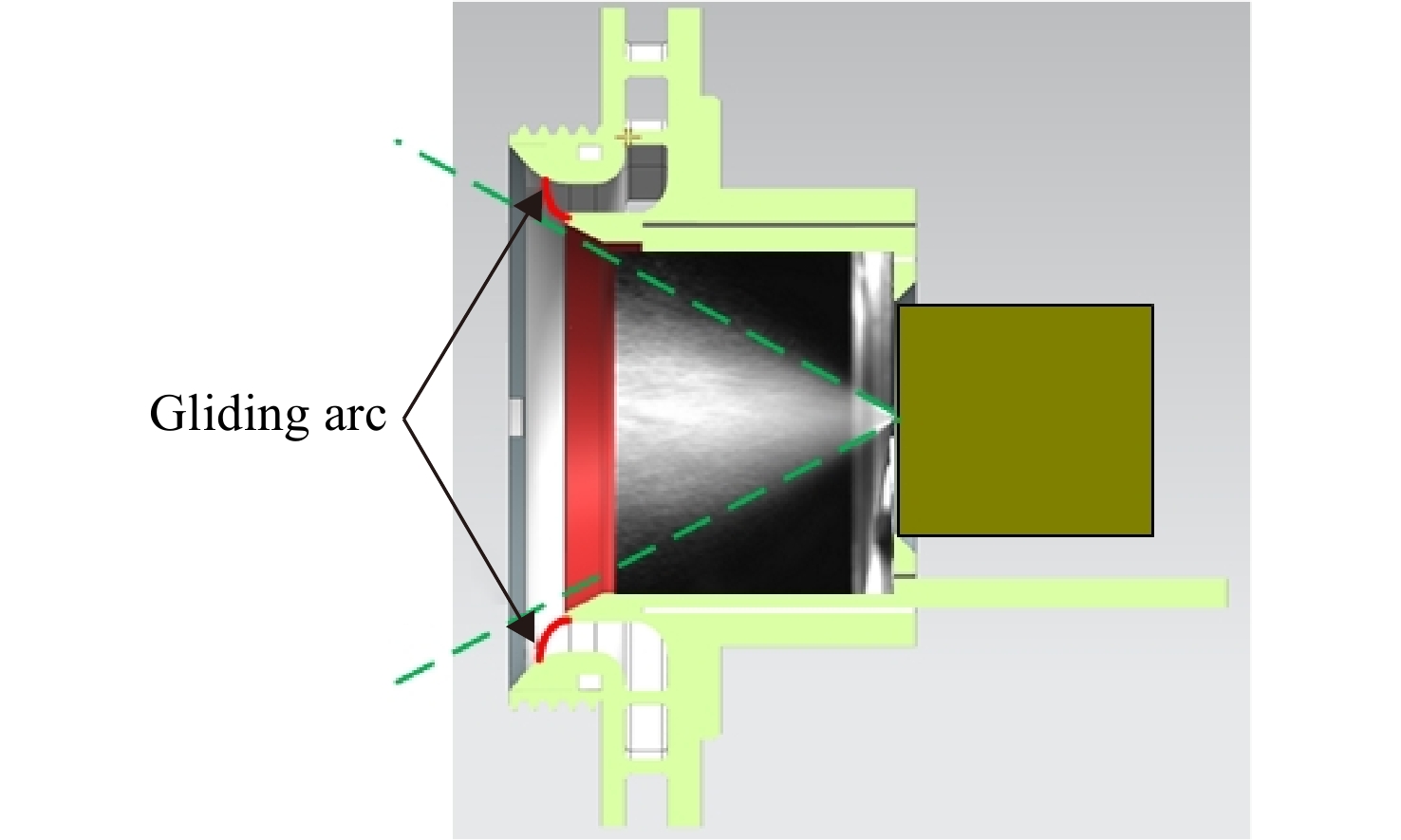
Exploratory test on ignition with rotating gliding arc swirlers
PENG Changxin, YANG Hao, LIU Yibo, JIANG Shijie, LI Yuanxing, LI Wei
2023, 38(4): 769-776. doi: 10.13224/j.cnki.jasp.20220461
Abstract:

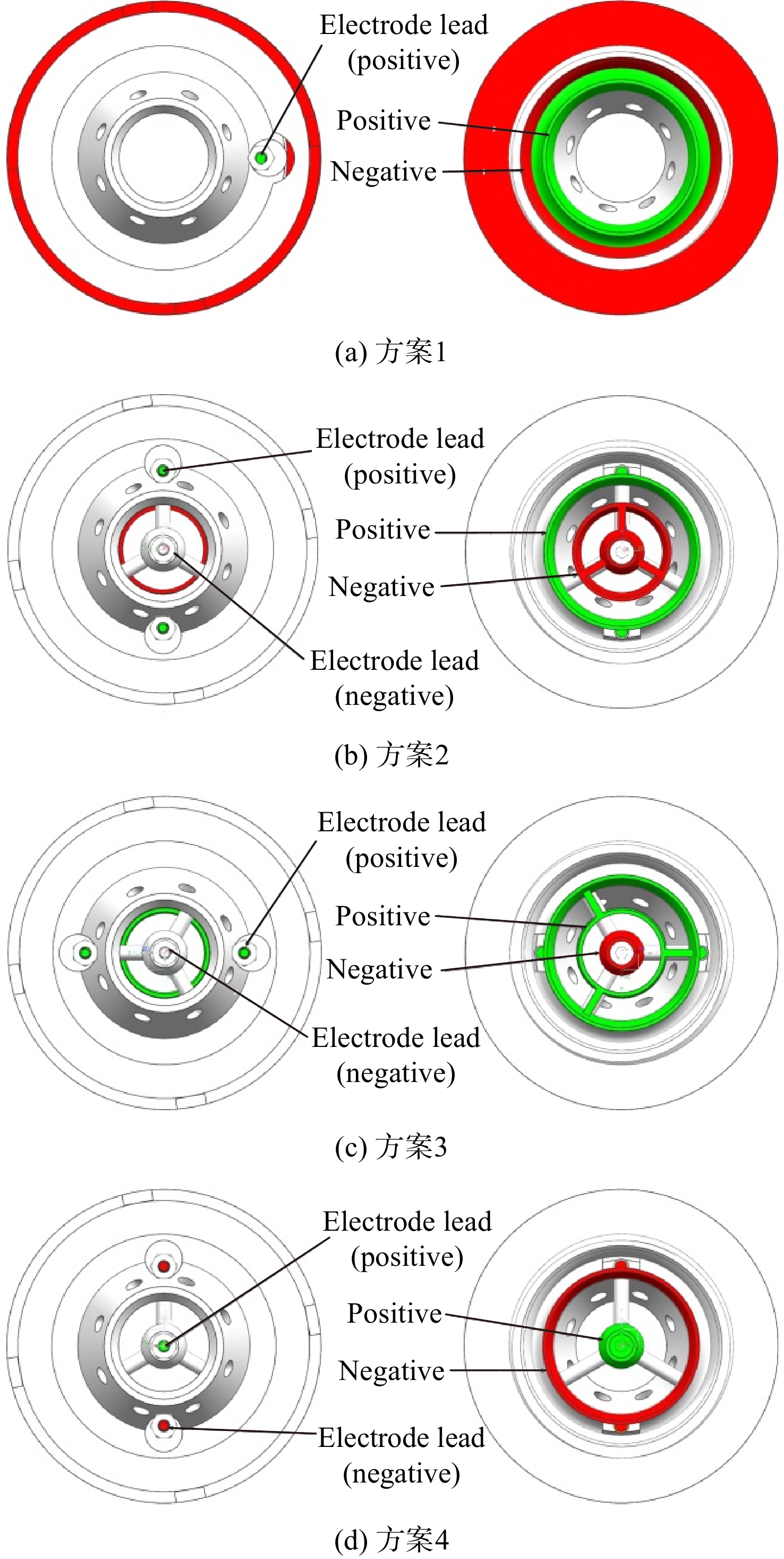
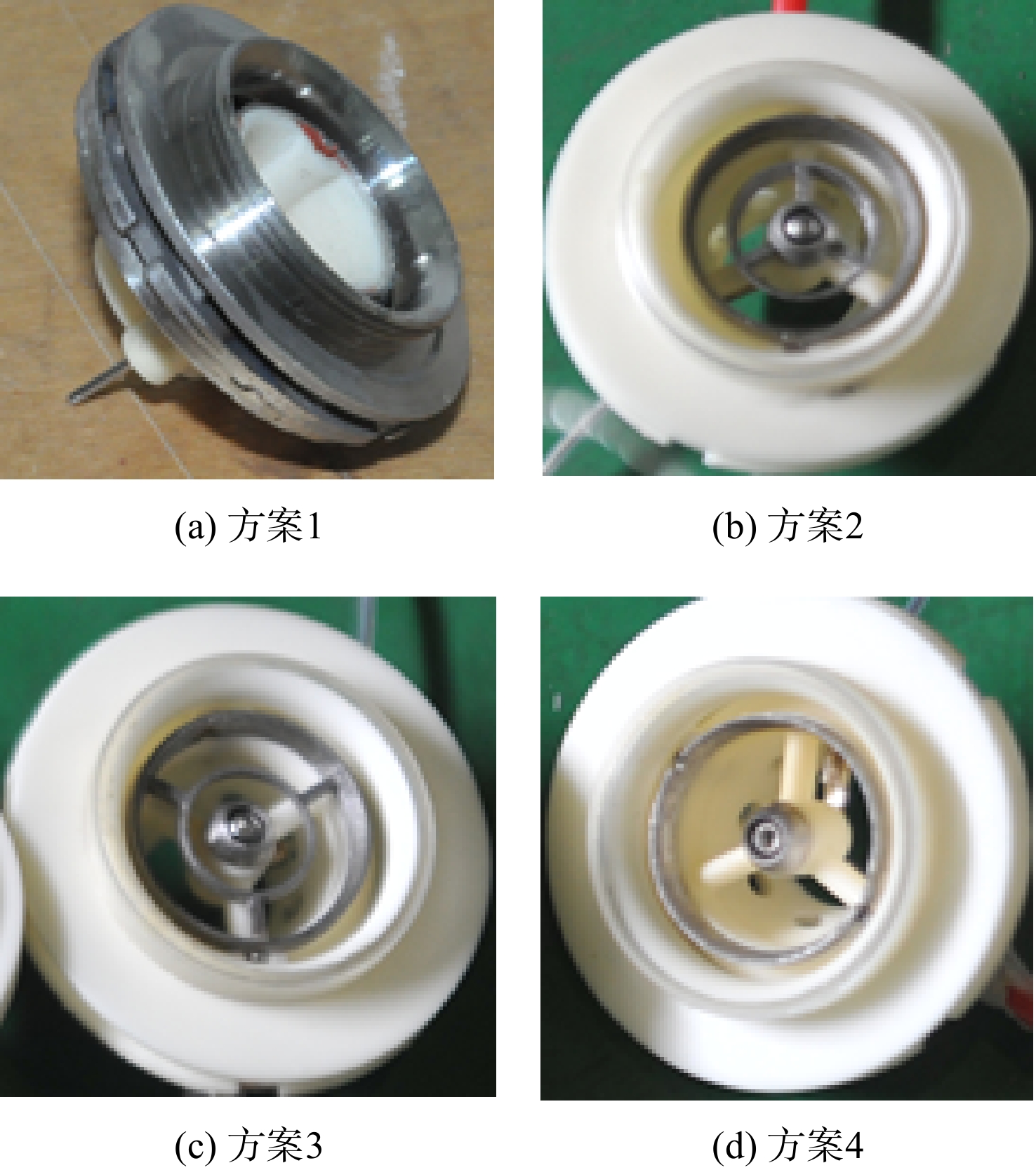
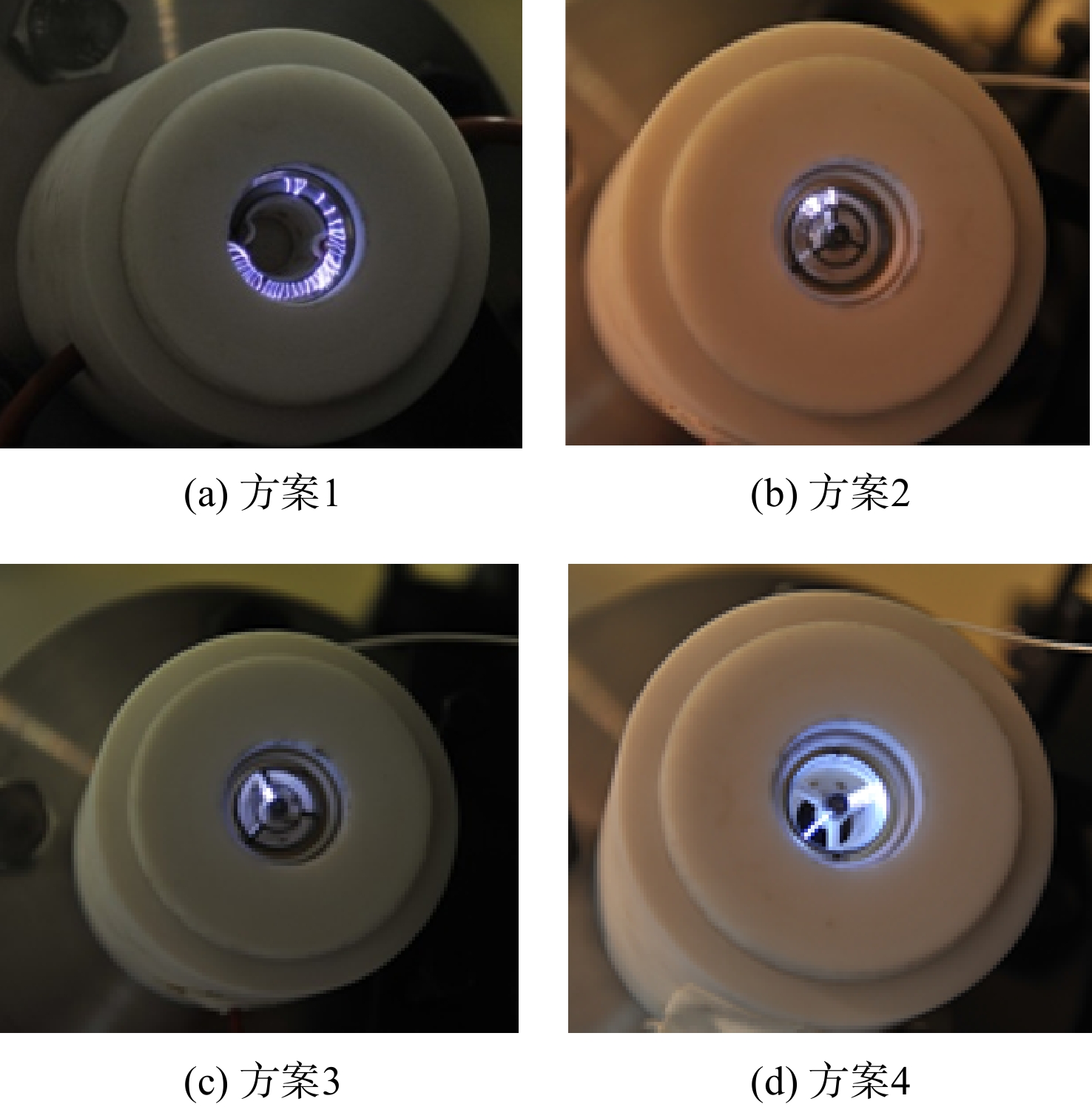
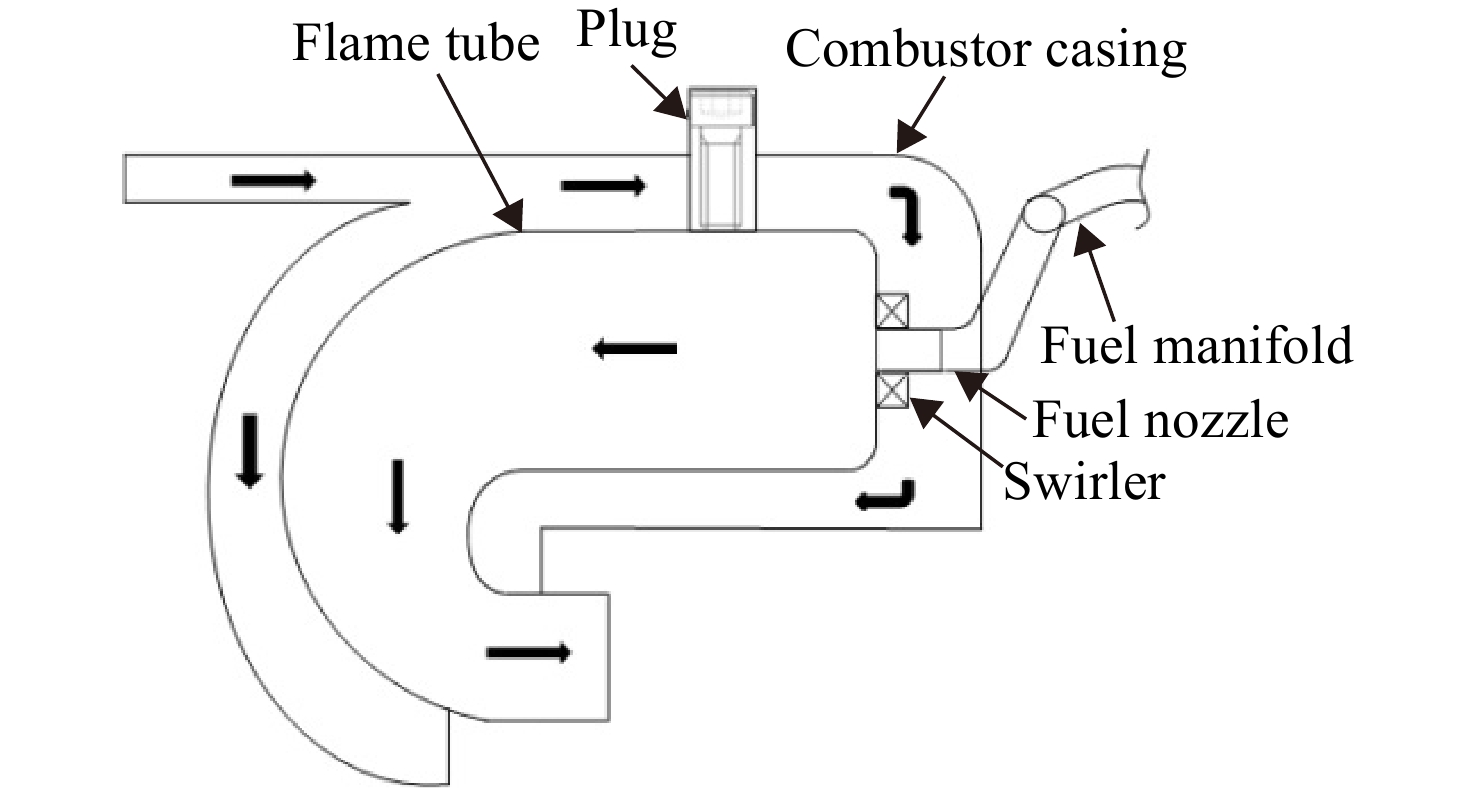
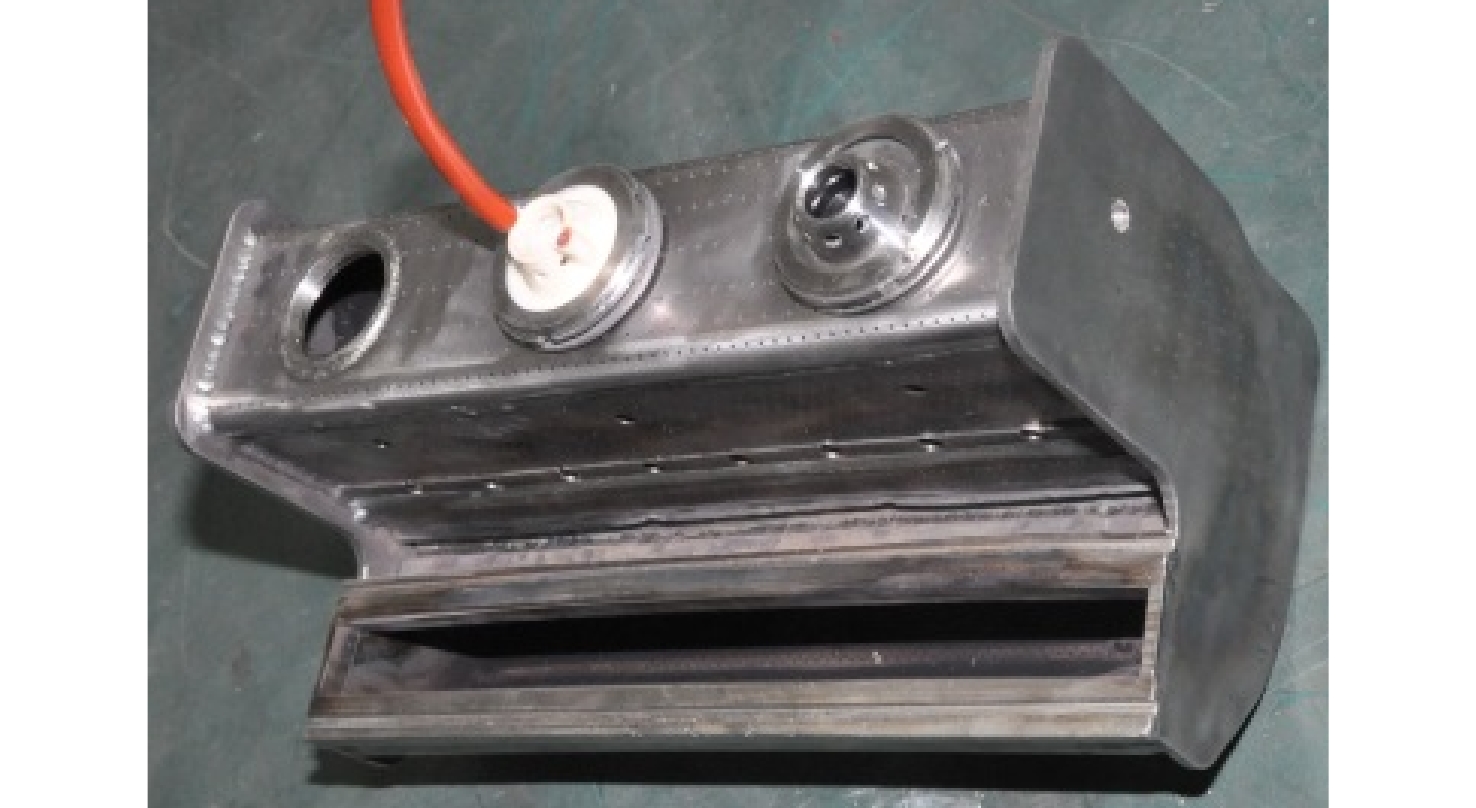
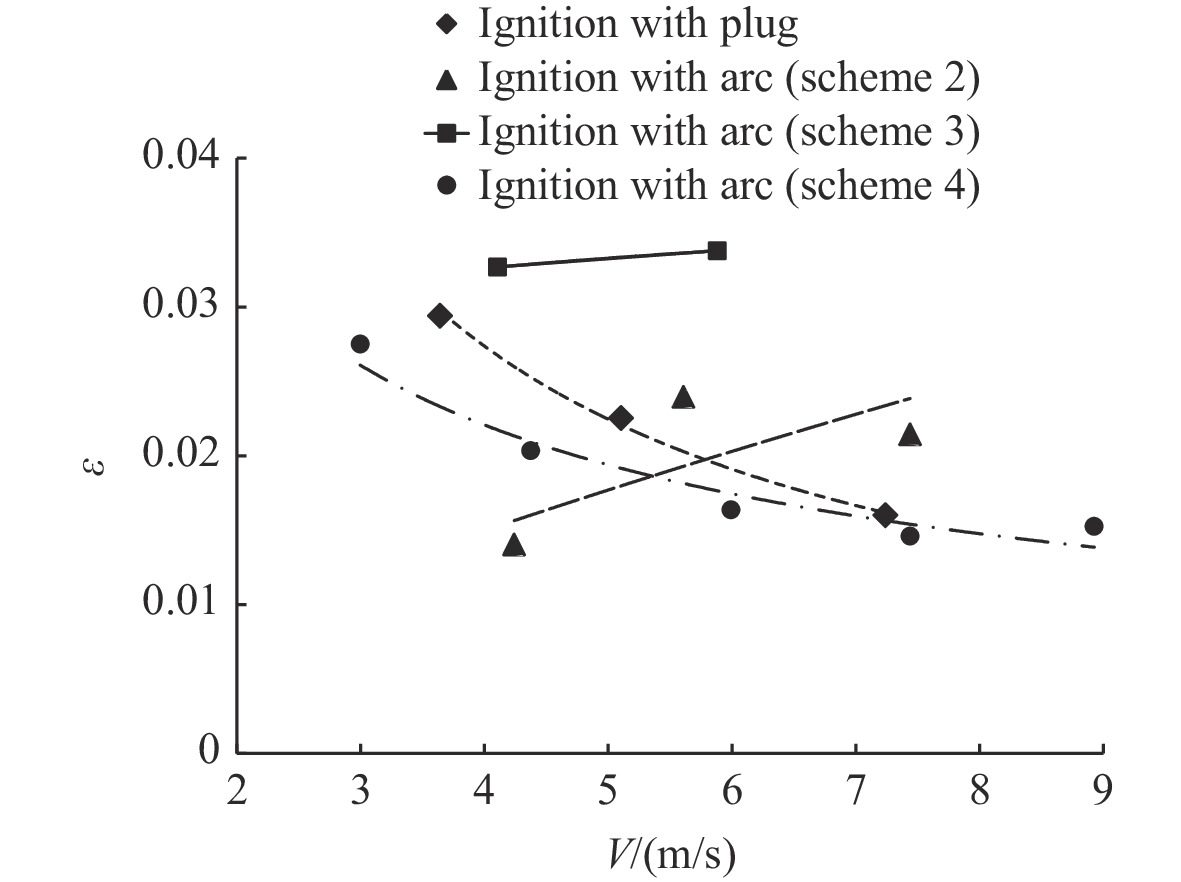
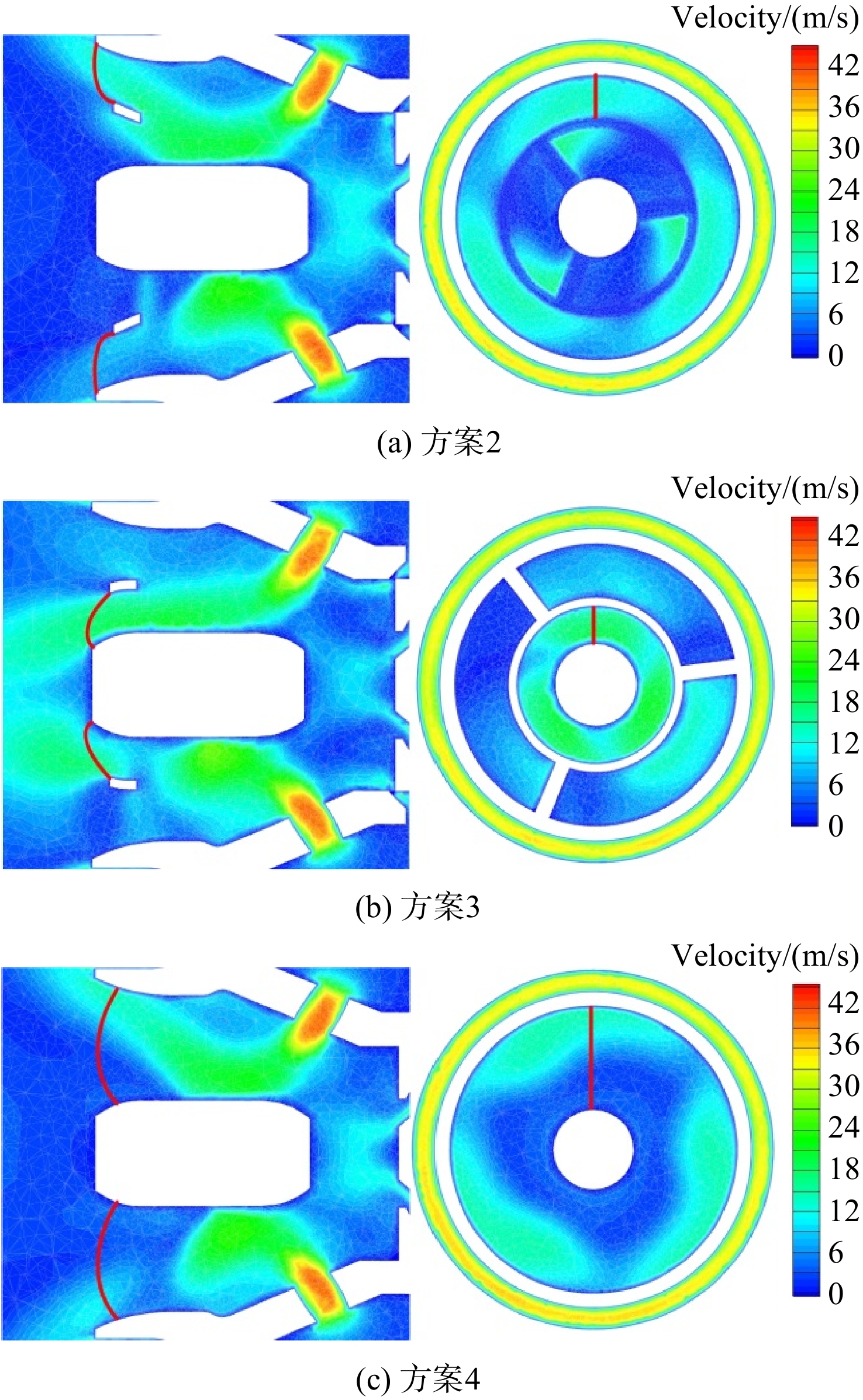
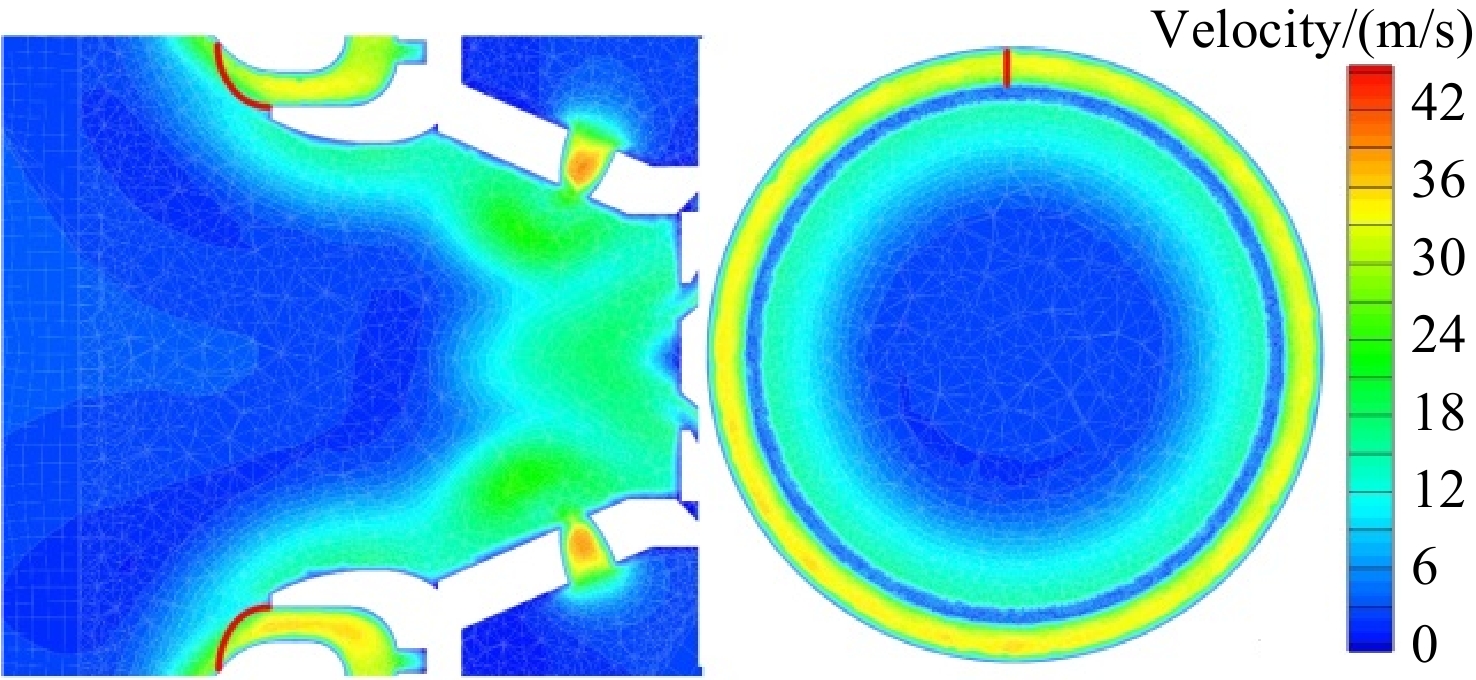
According to the position of gliding arcs, four kinds of rotating gliding arc swirlers were designed and manufactured based on the beveled holes and radial vanes swirlers commonly used in medium and small aero-engine combustors. The discharge test at cold state and ignition test were performed. The results of discharge test showed that the four swirlers could produce stable rotating gliding arcs at specific position. Ignition tests were performed based on a triple combustor. The ignition tests showed that, scheme 4 had the best ignition performance and the smallest ignition fuel-air ratio was lower if compared with conventional ignition method. The ignition performance of scheme 2 was worse than that of scheme 4. The combustor could only be ignited when the reference speed was low for scheme 3, and scheme 1 showed the worst ignition performance. The air speed and distribution of fuel air at local position of gliding arcs had a significant influence on the ignition performance and the recommended air speed was not more than 20 m/s.

Transient heat transfer experiment and thermal conductivity identification of coating materials
CHEN Xue, LU Guopeng, SUN Chuang, XIA Xinlin, WANG Qinyang, KANG Honglin
2023, 38(4): 777-786. doi: 10.13224/j.cnki.jasp.20210208
Abstract:

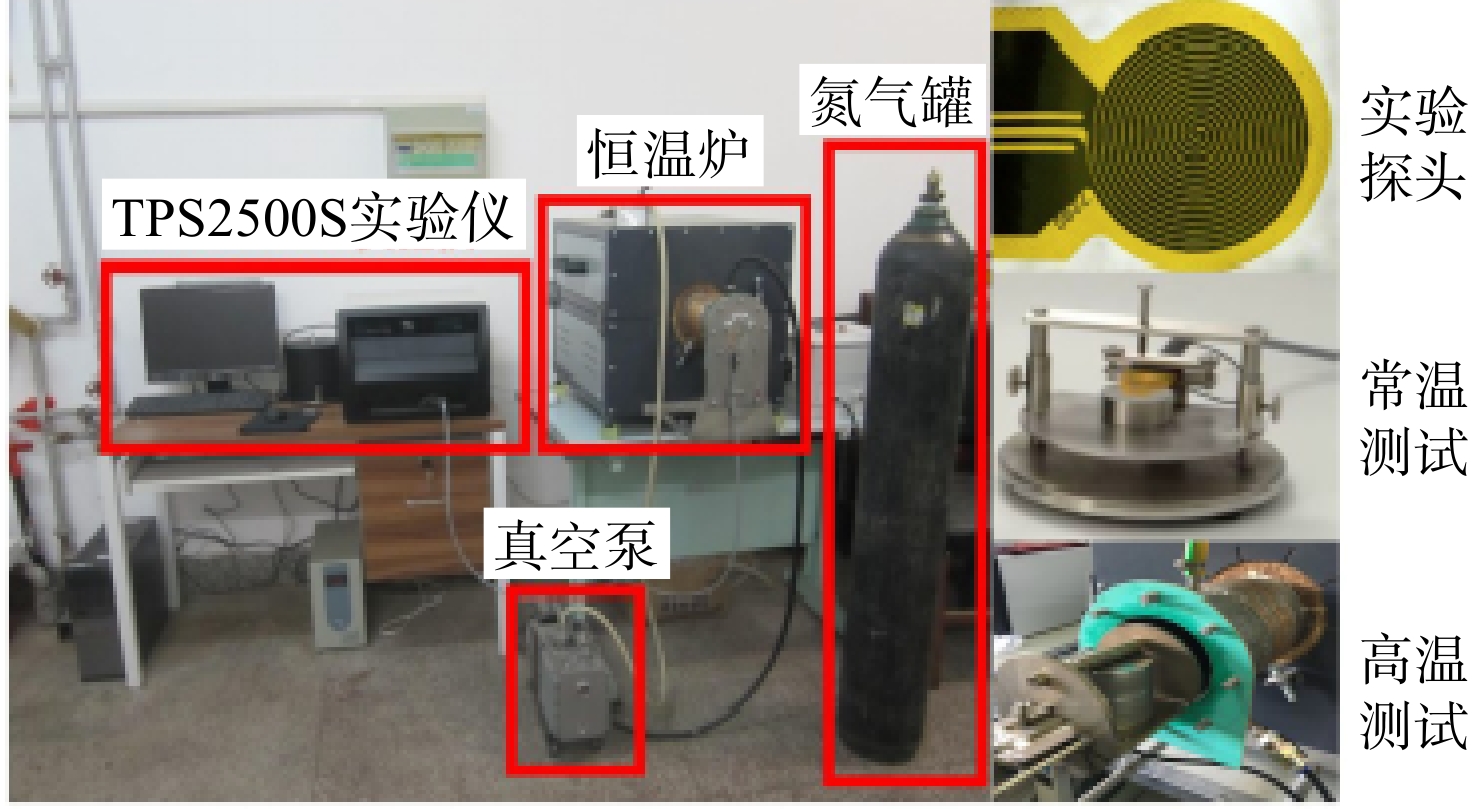
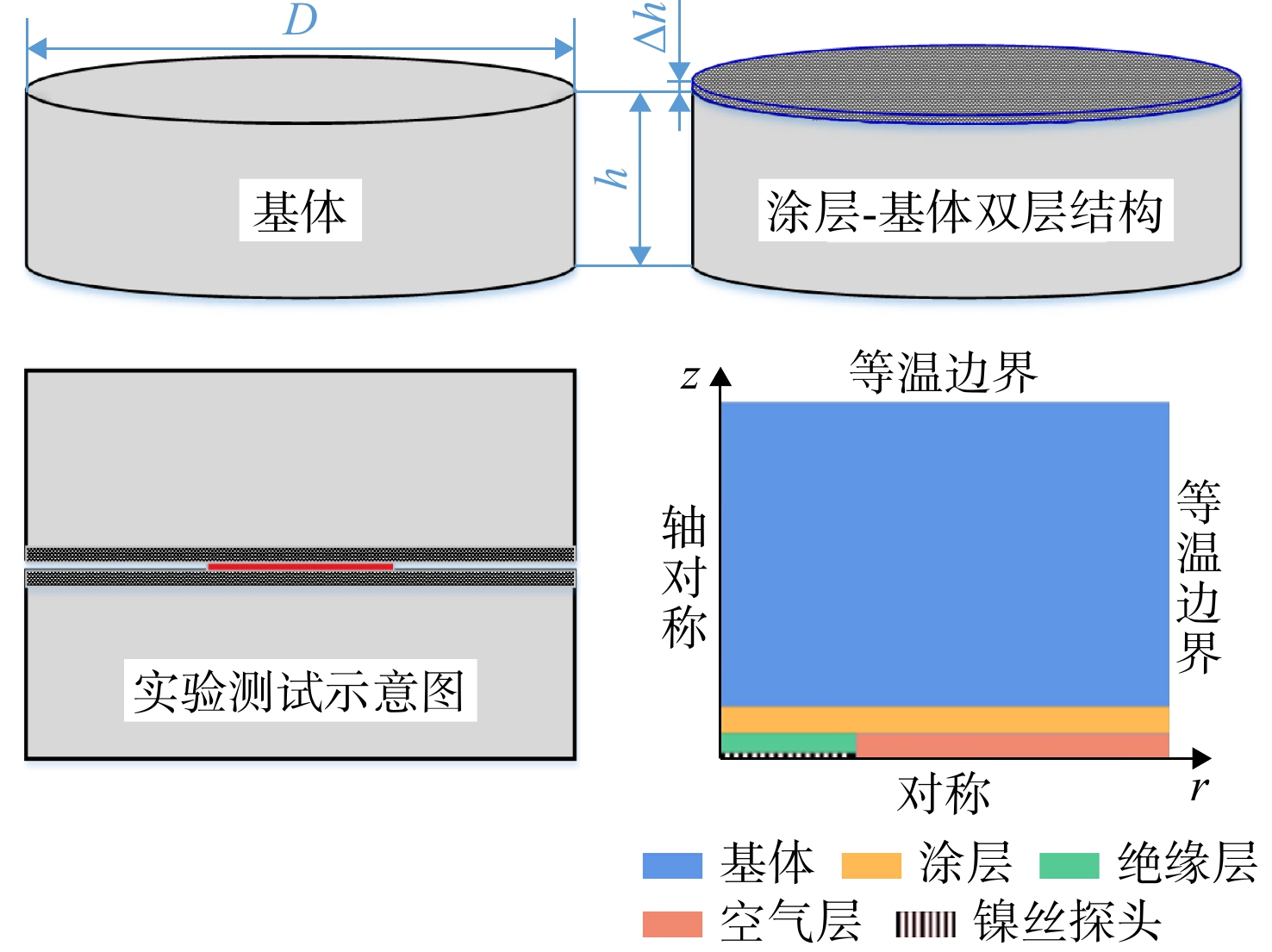
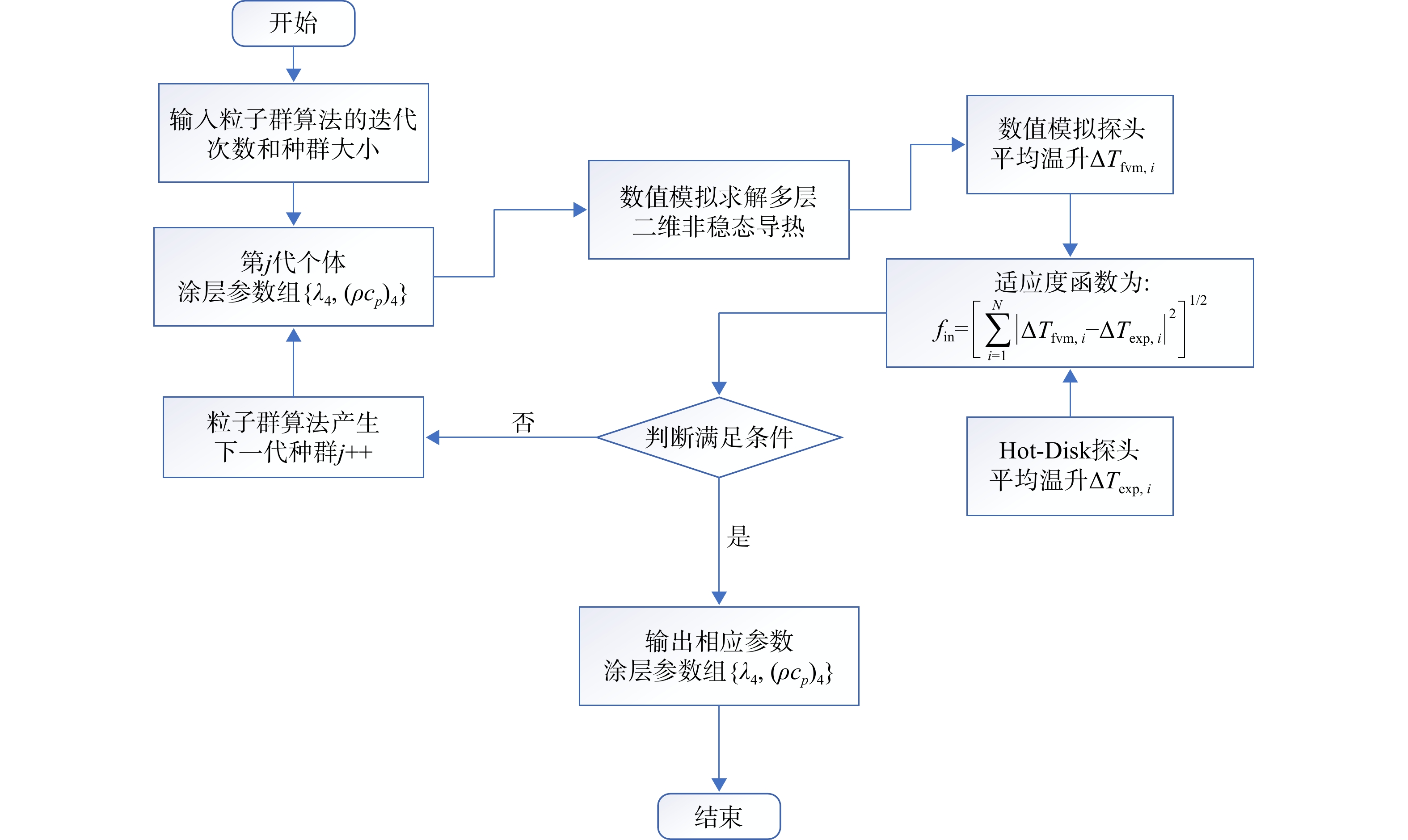
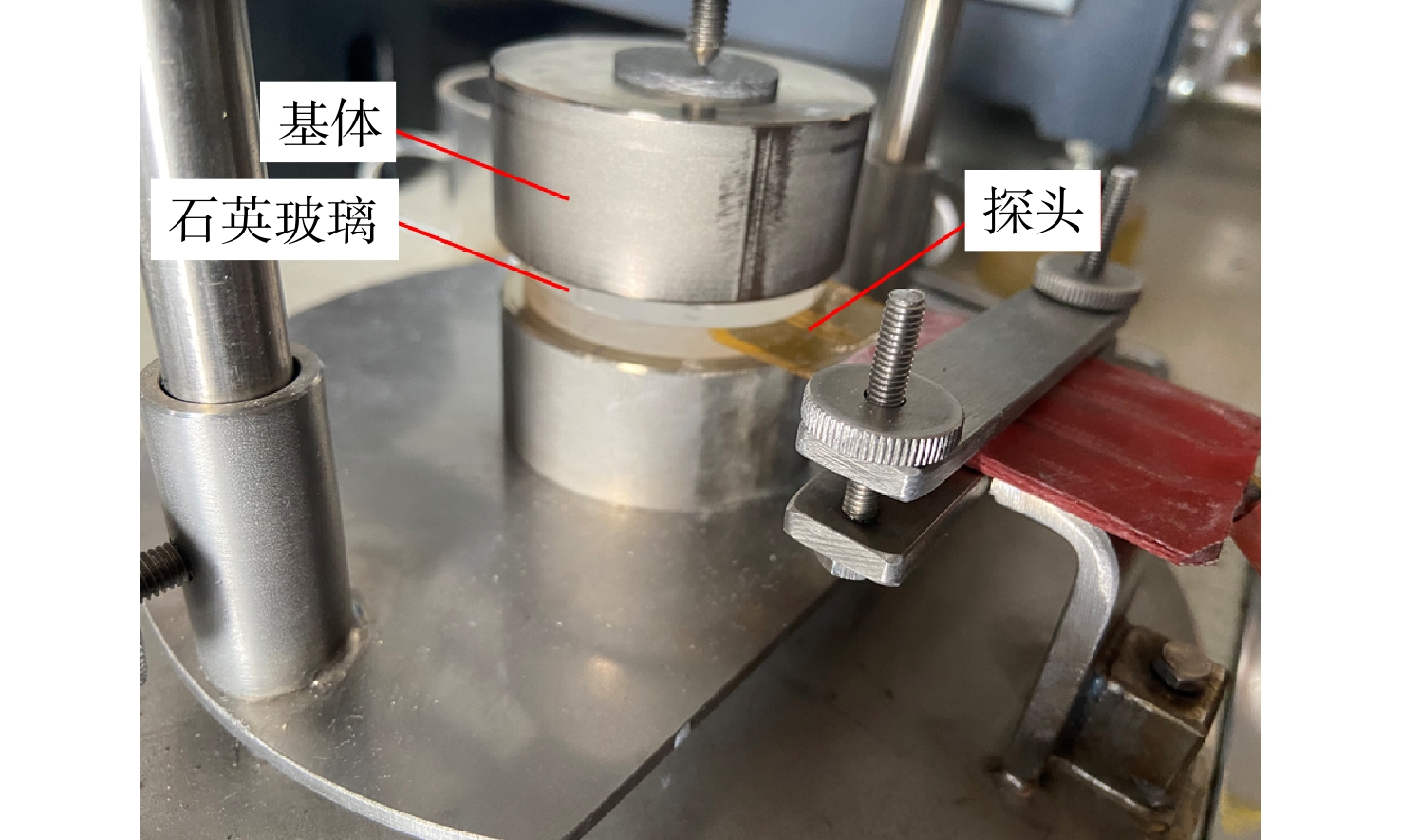
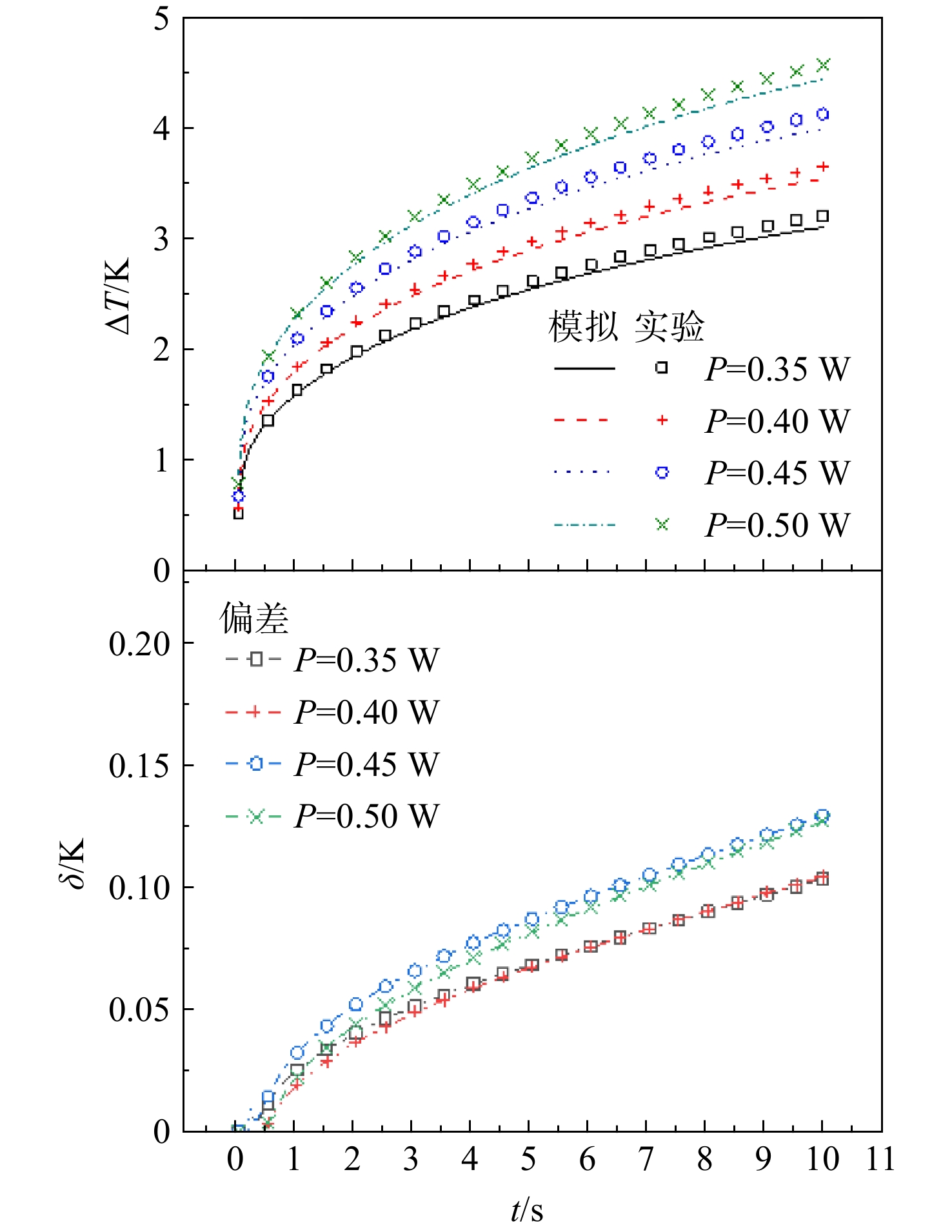
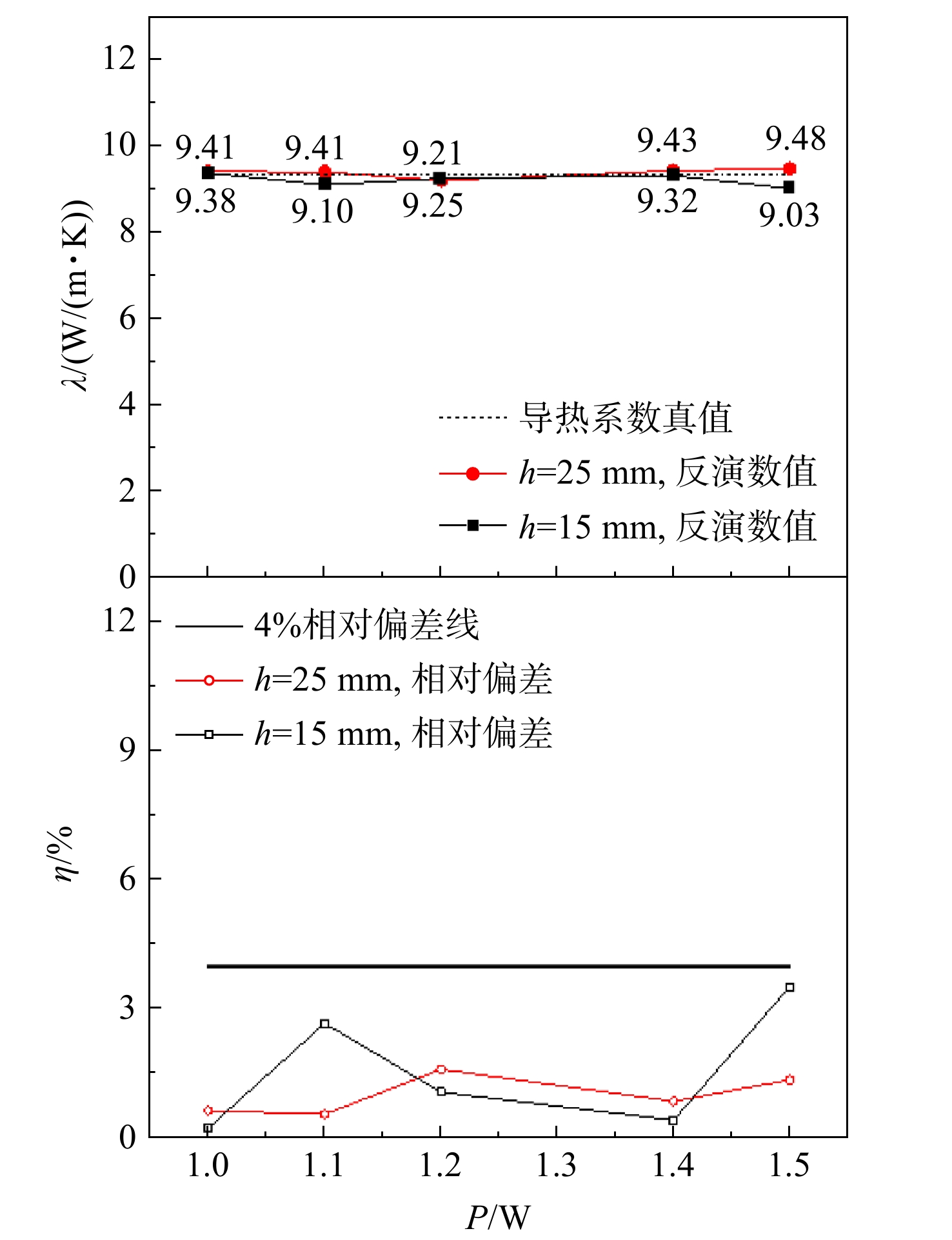
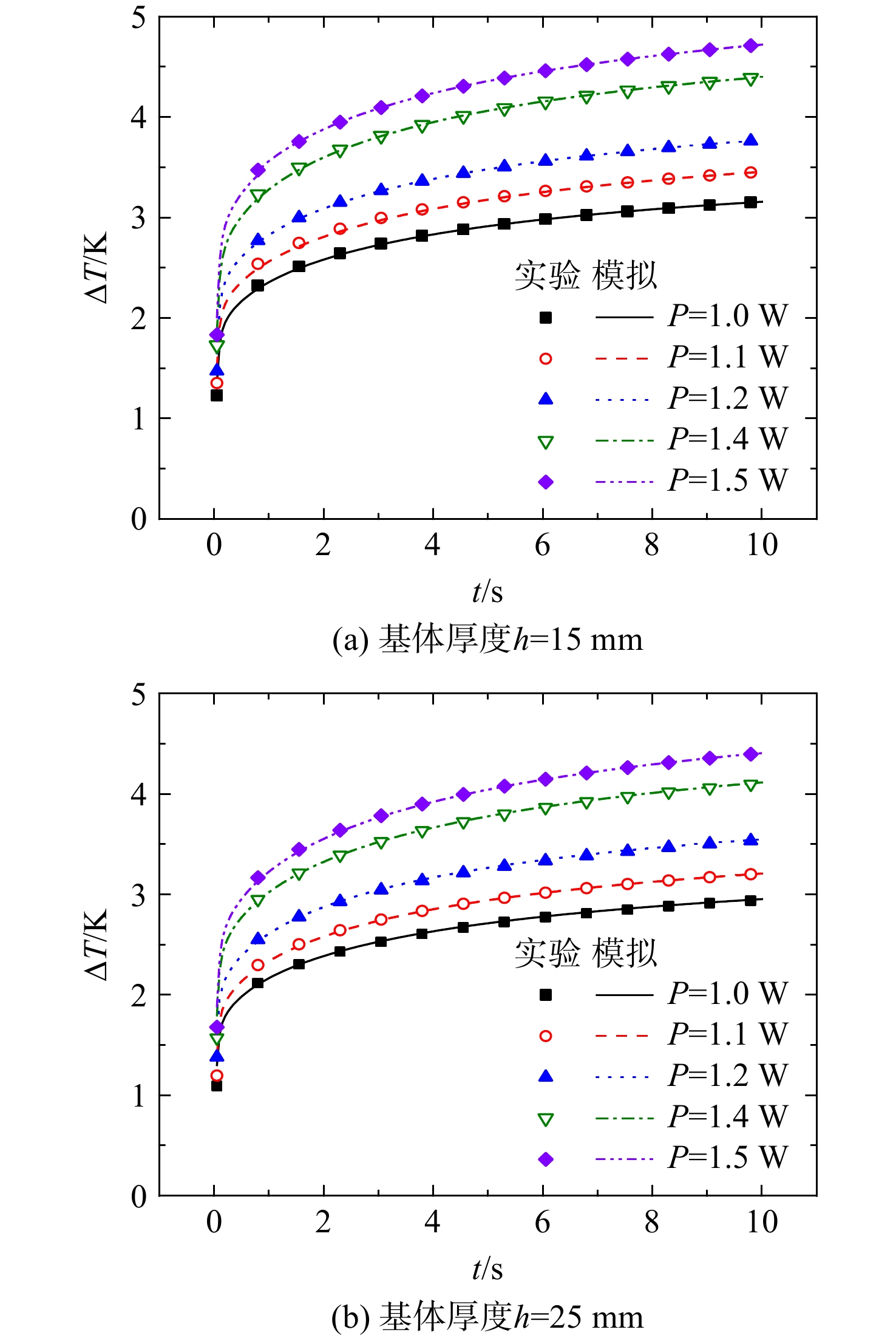
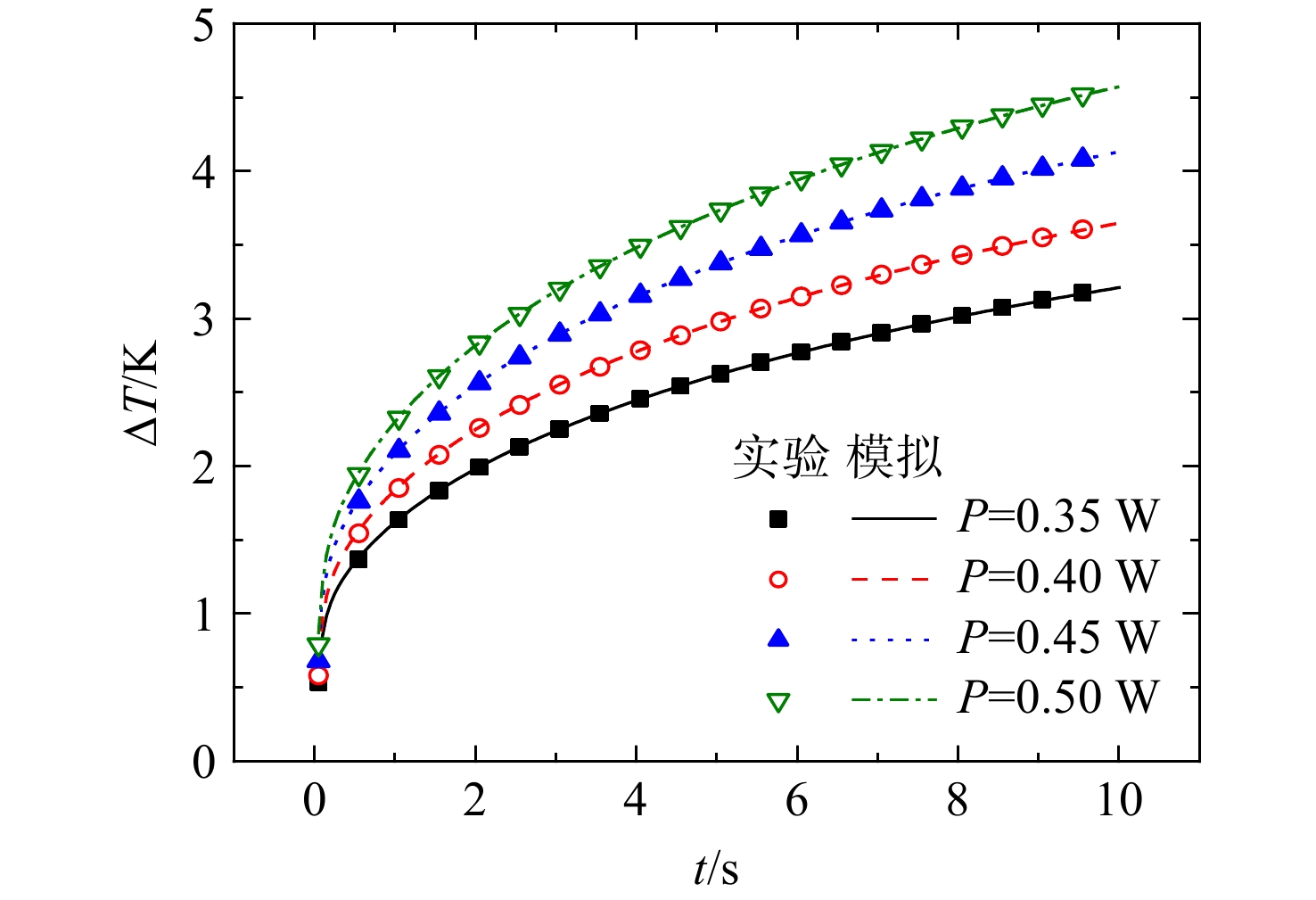
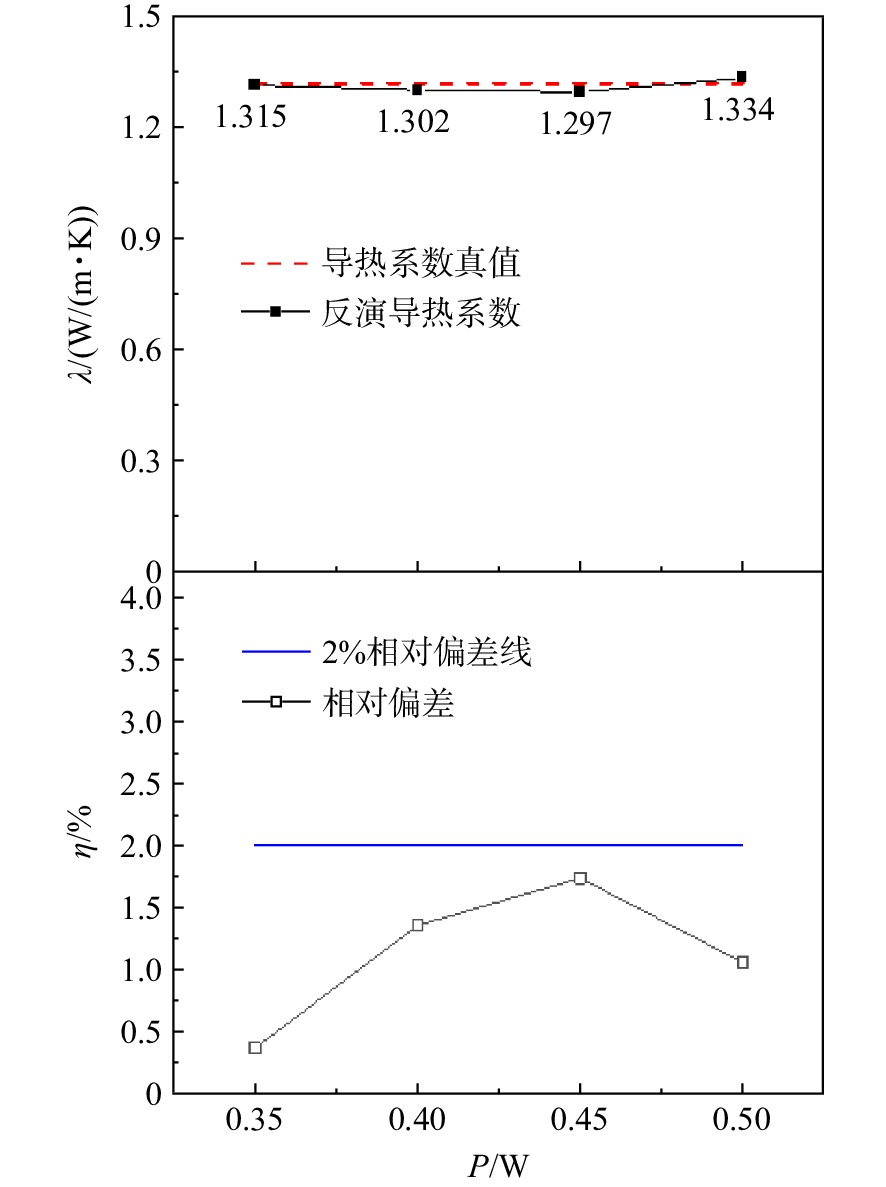
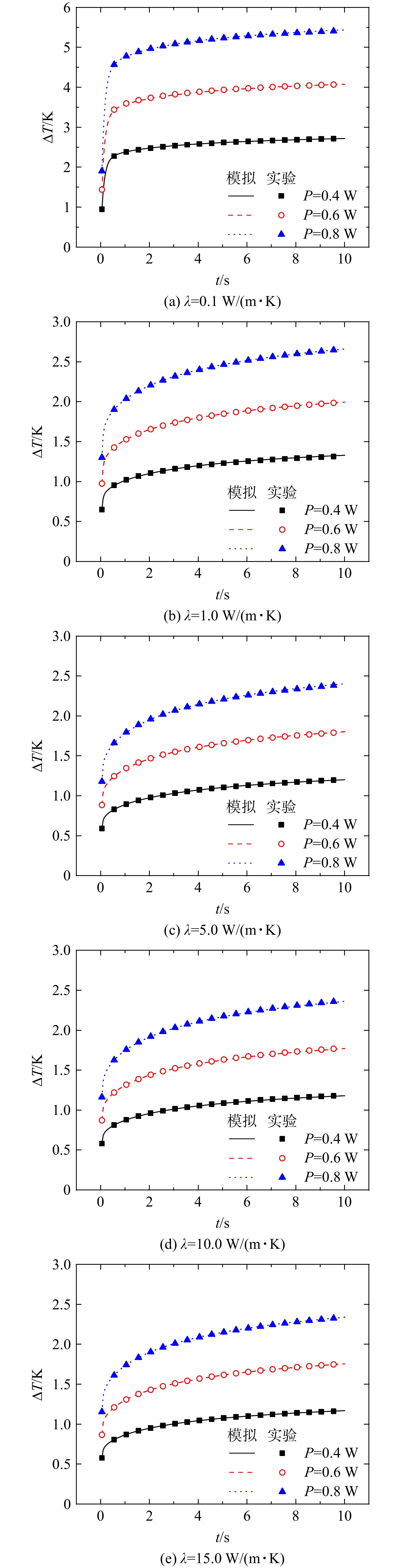
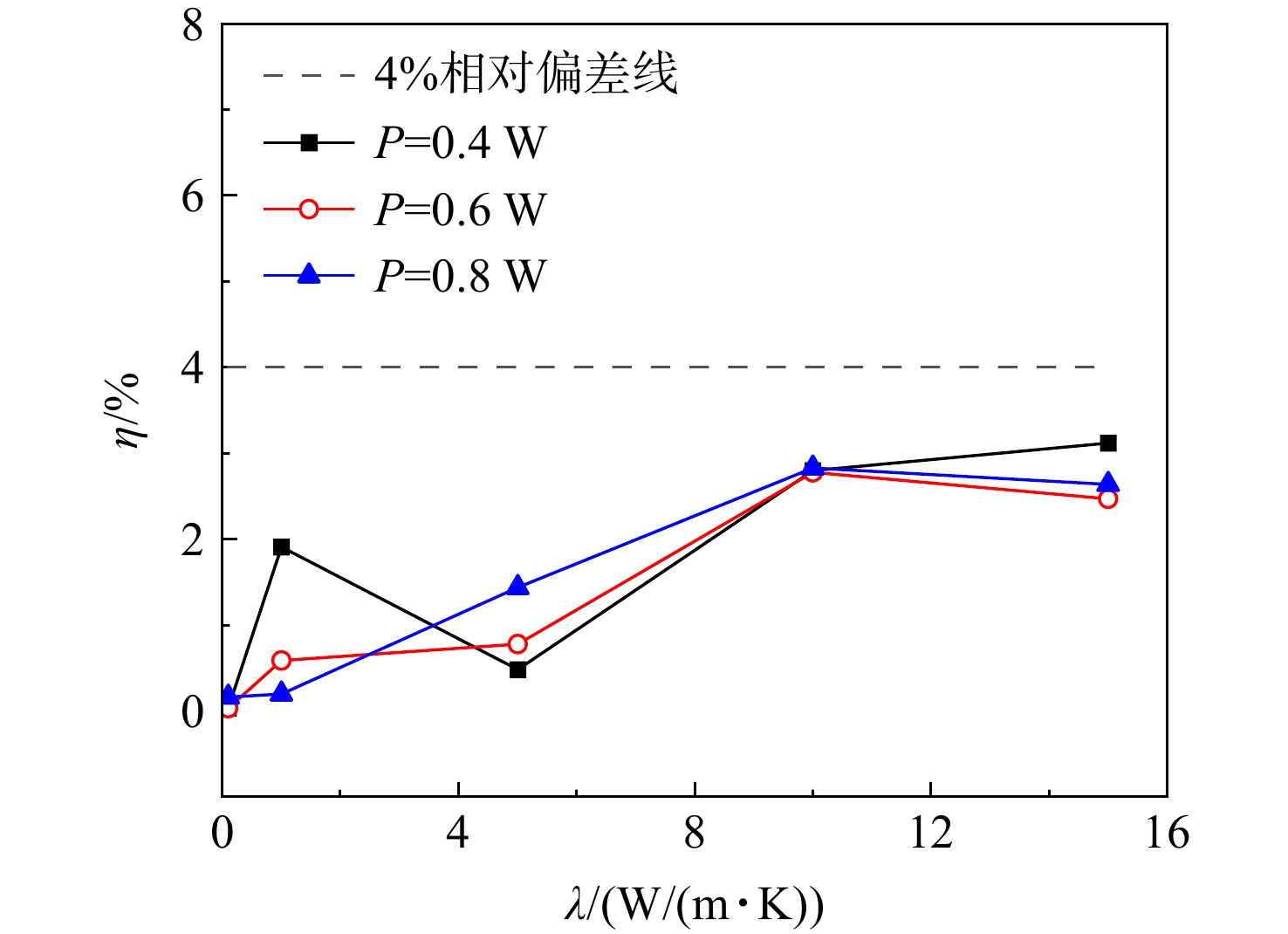
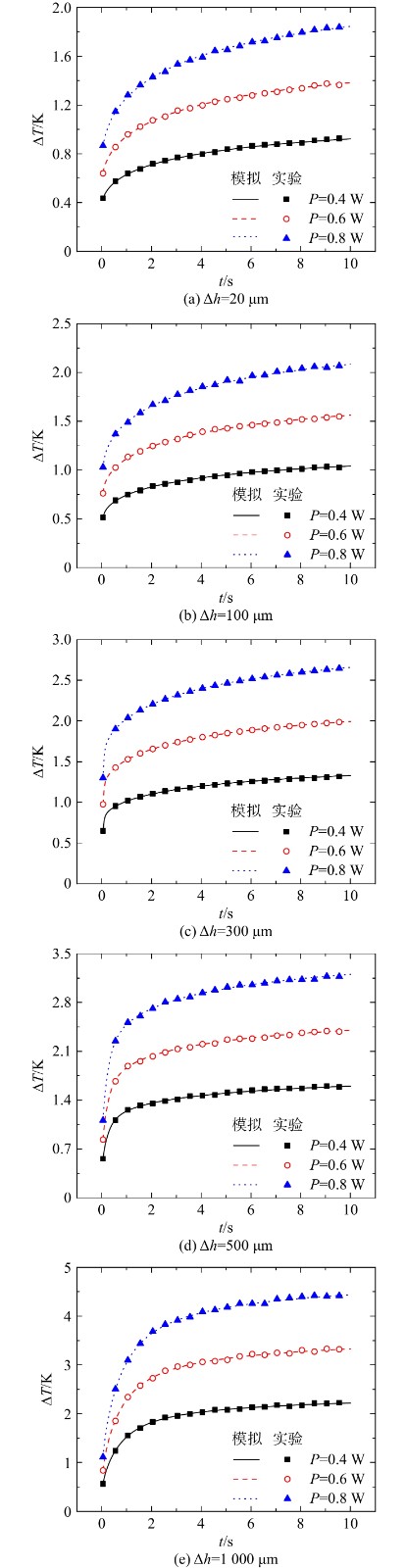
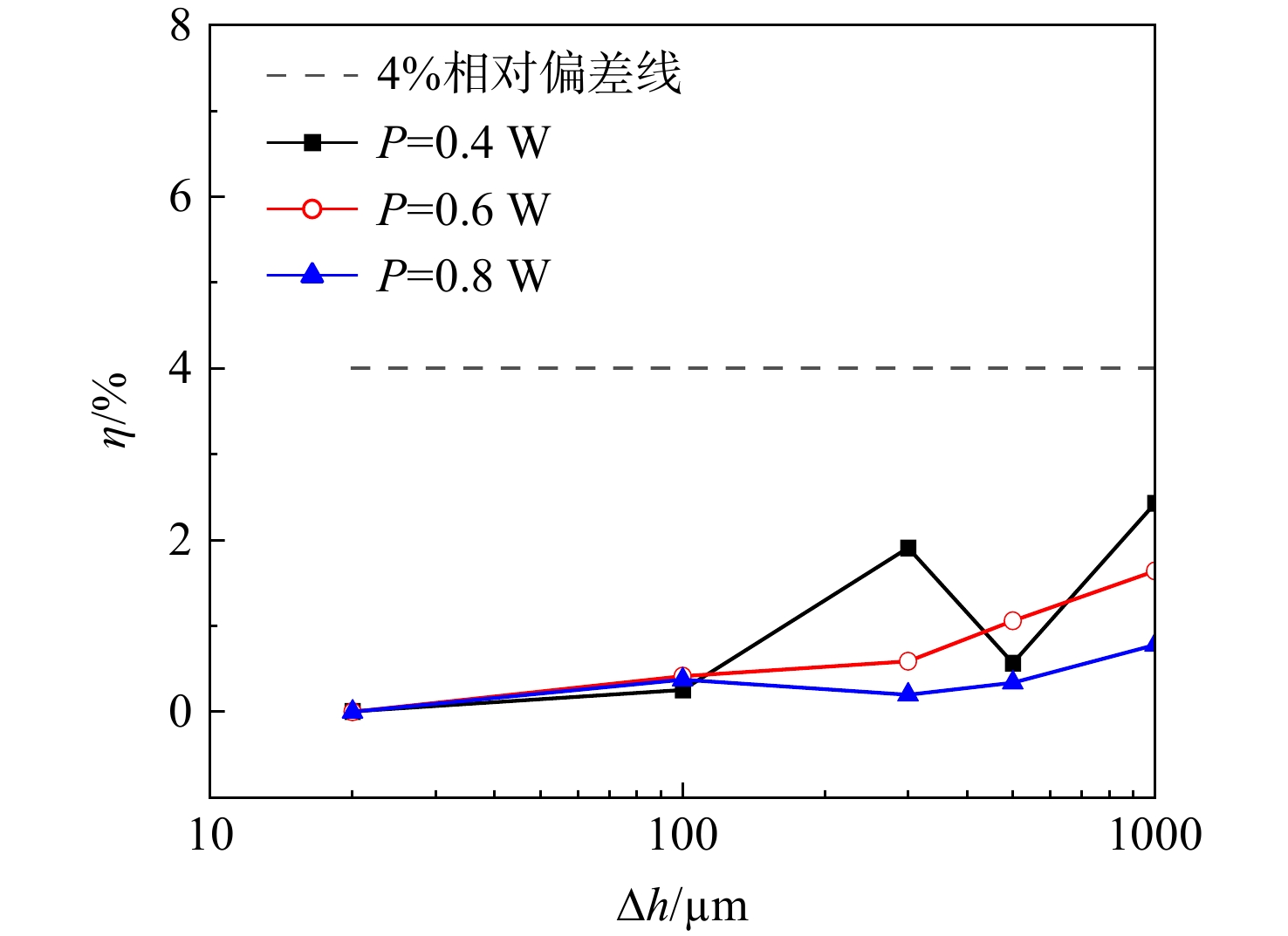
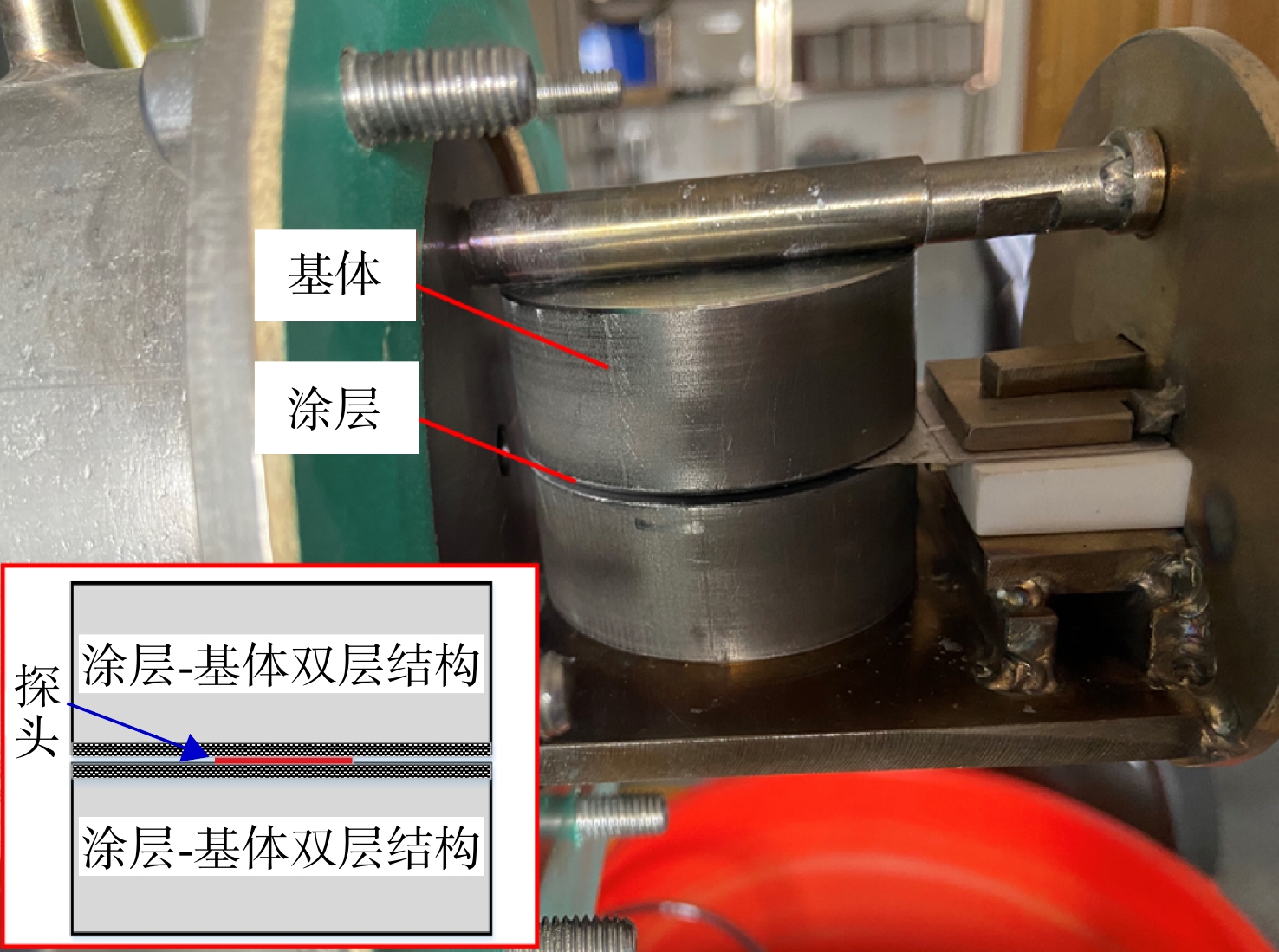
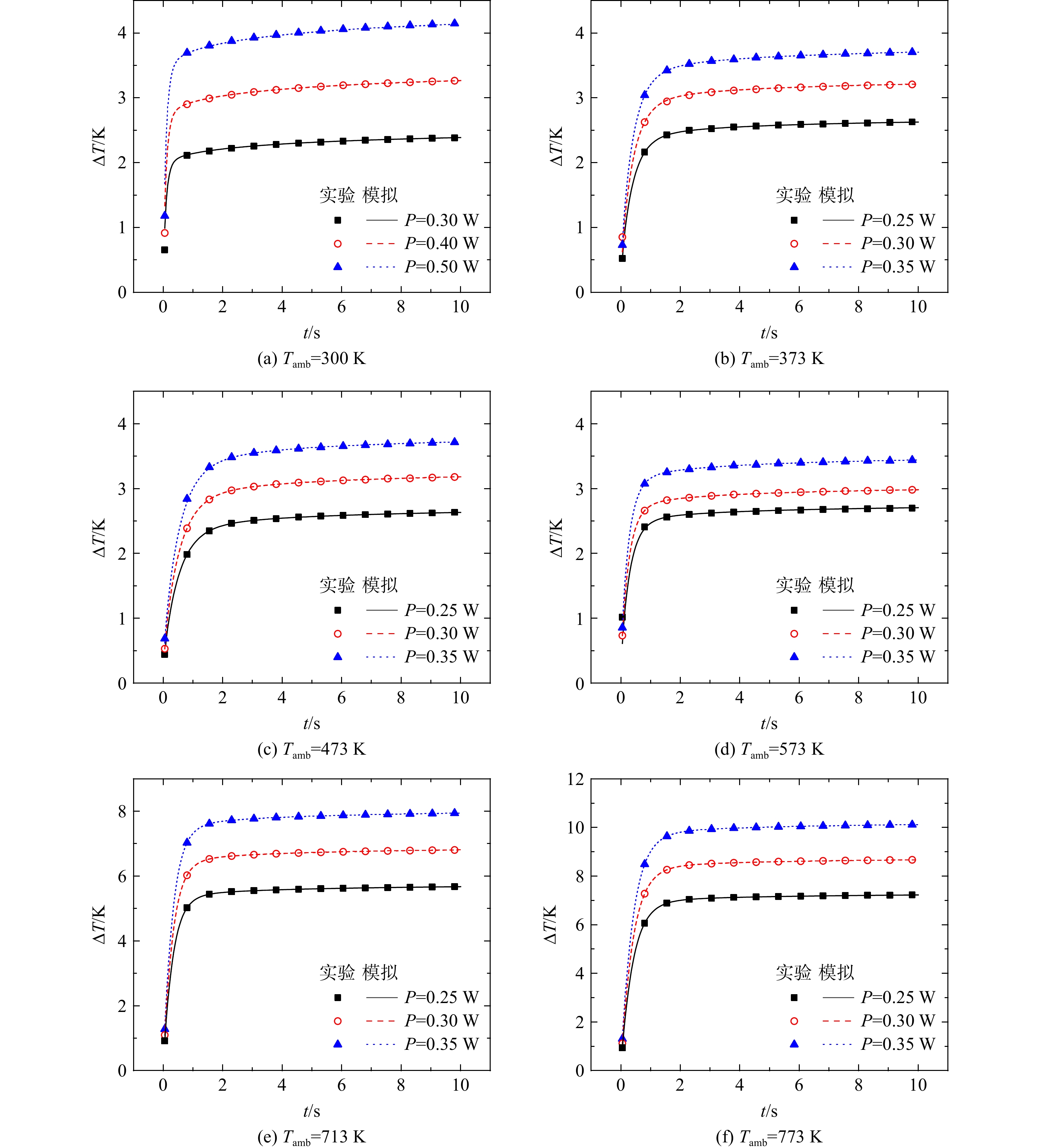
In order to evaluate the thermal conductivity of the coating material in the coating substrate integrated double-layer structure, an inversion method of thermal conductivity of coating materials based on transient plane source (TPS) was proposed. According to the Hot-Disk experimental measurement process, a two-dimensional unsteady heat transfer model of substrate-coating-probe was established. Combined with the instantaneous temperature rise data in the experimental test, the thermal conductivity of coating materials was obtained by inversion identification using particle swarm optimization algorithm. The reliability of the above method was demonstrated by experiments and numerical simulation. The results showed this technology can effectively acquire the thermal conductivity of coating with a low deviation less than 4.0%. Finally, the thermal conductivity of a coating material from room temperature to 773 K was obtained by actual measurement and inversion identification. A gradual increase was found as the temperature increased and the numerical range was 0.18−0.29 W/(m·K).

Experiment on convective heat transfer of pulsed chevron jet impingement on flat plate
LÜ Yuanwei, ZHAO Yunduo, ZHANG Jingzhou, SHAN Yong, SUN Wenjing, ZHANG Jingyang, LUO Xinyang
2023, 38(4): 787-794. doi: 10.13224/j.cnki.jasp.20210538
Abstract:

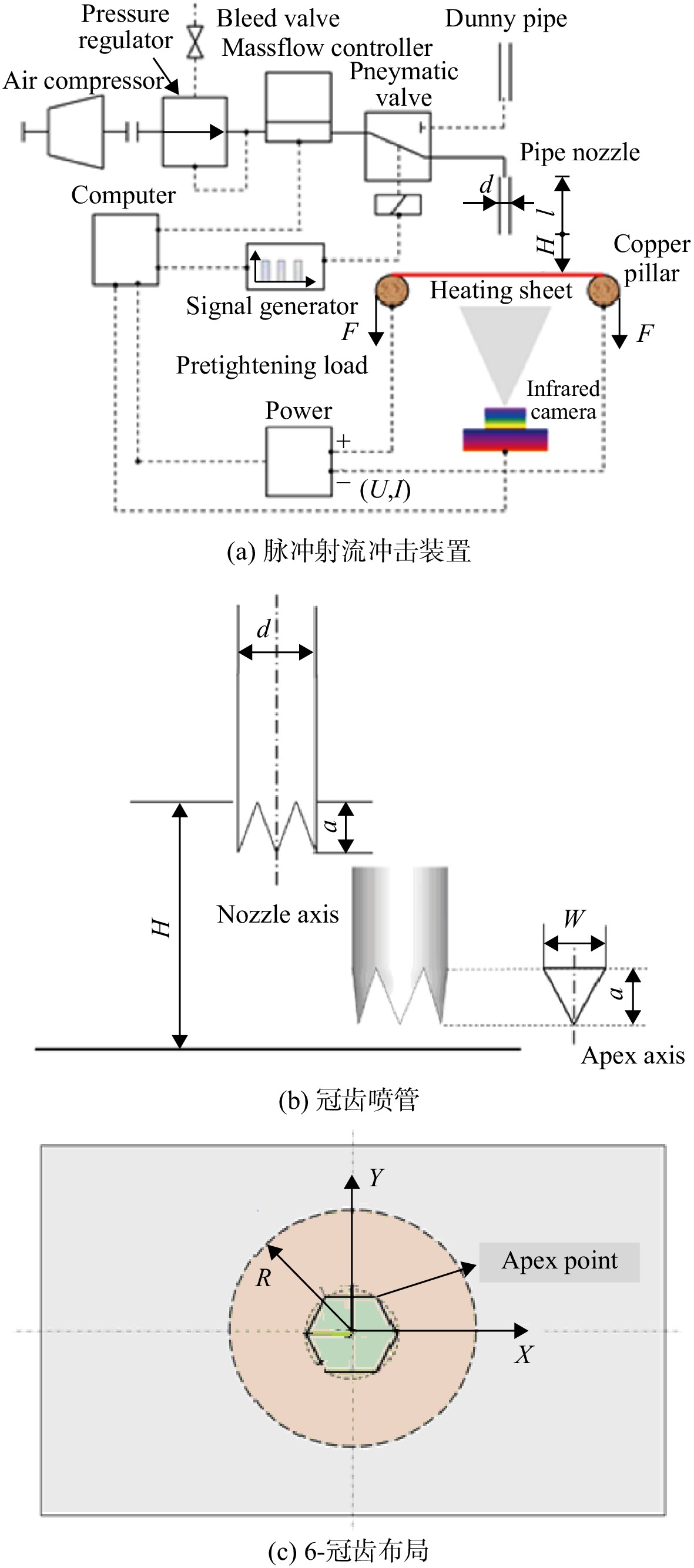
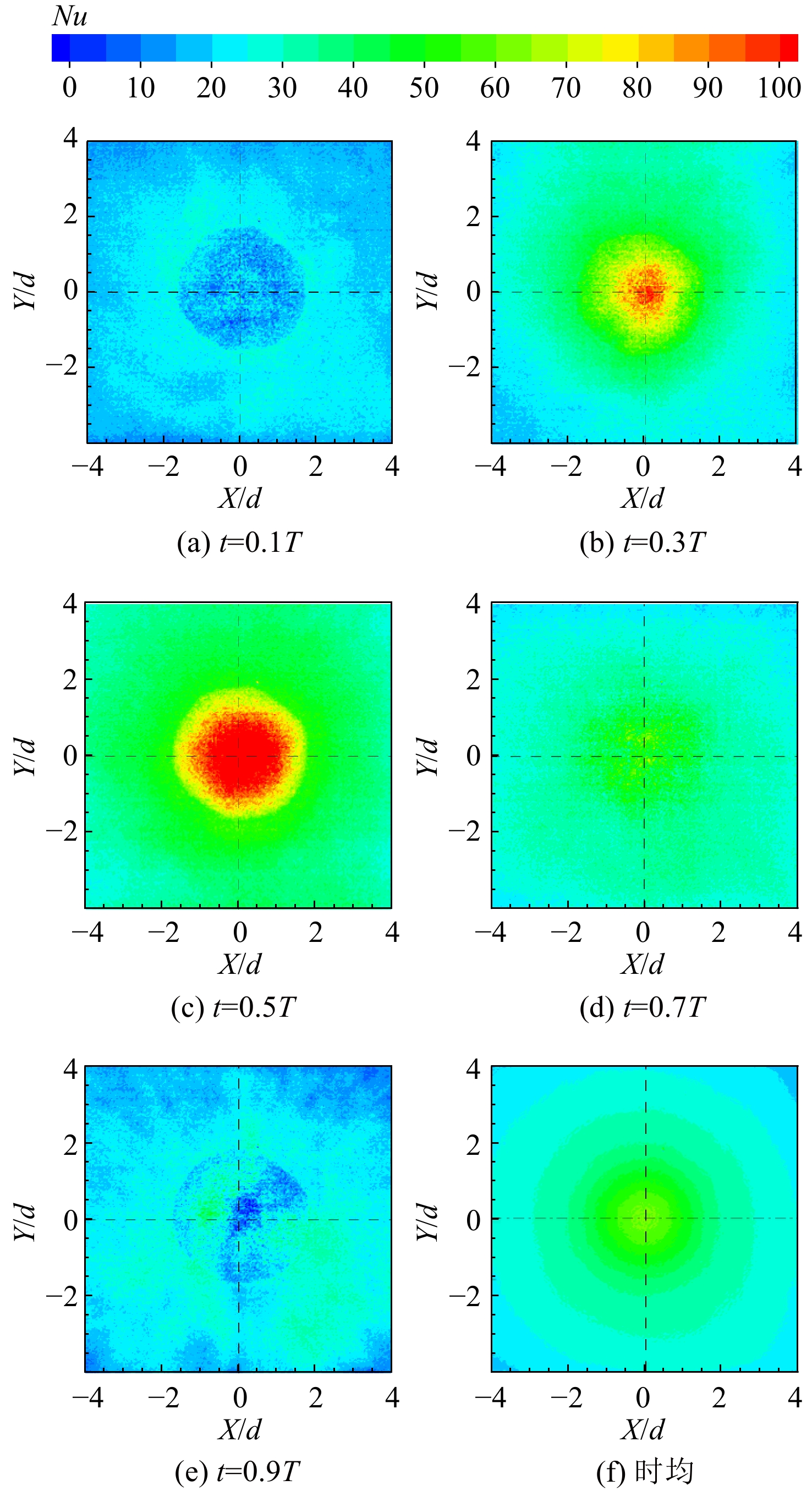
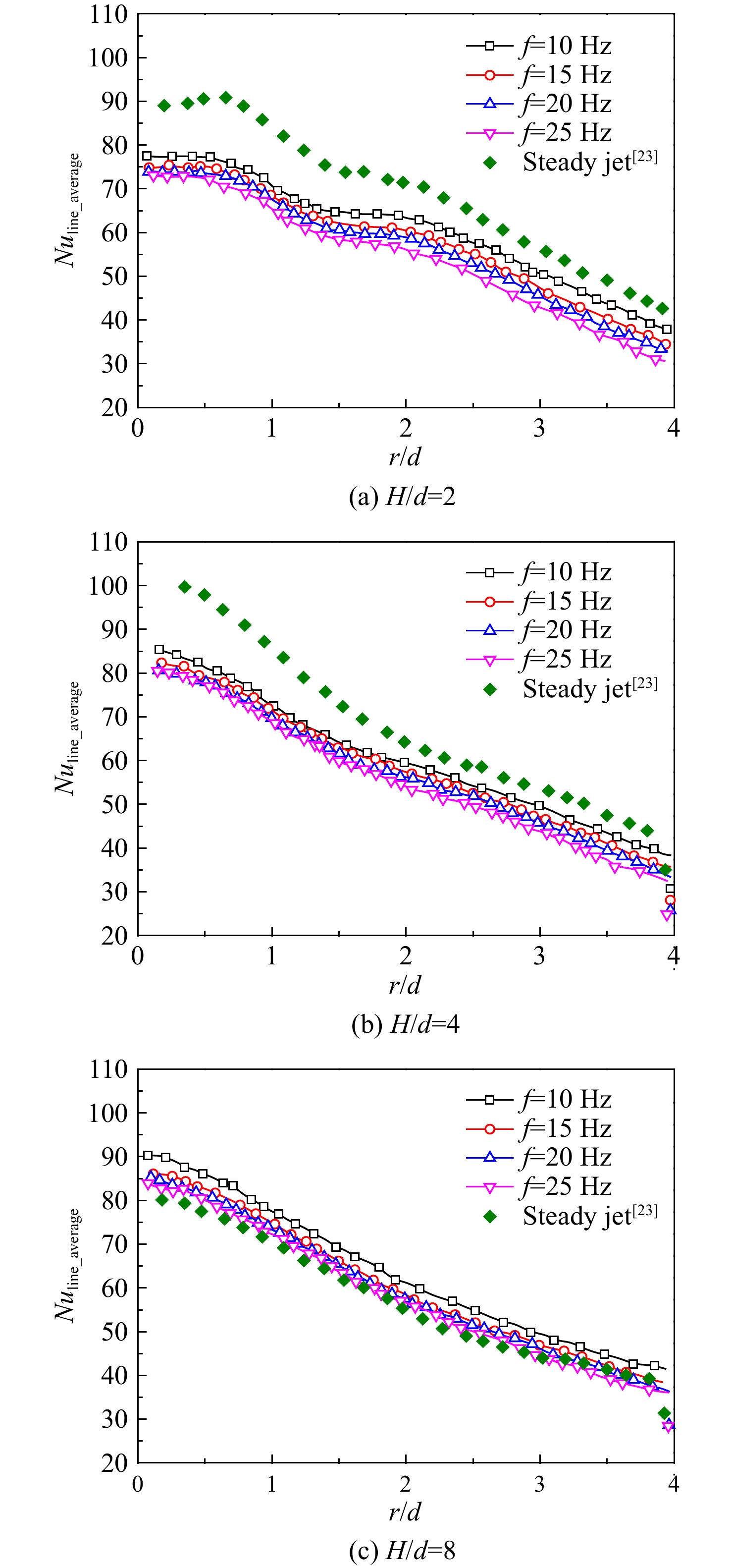
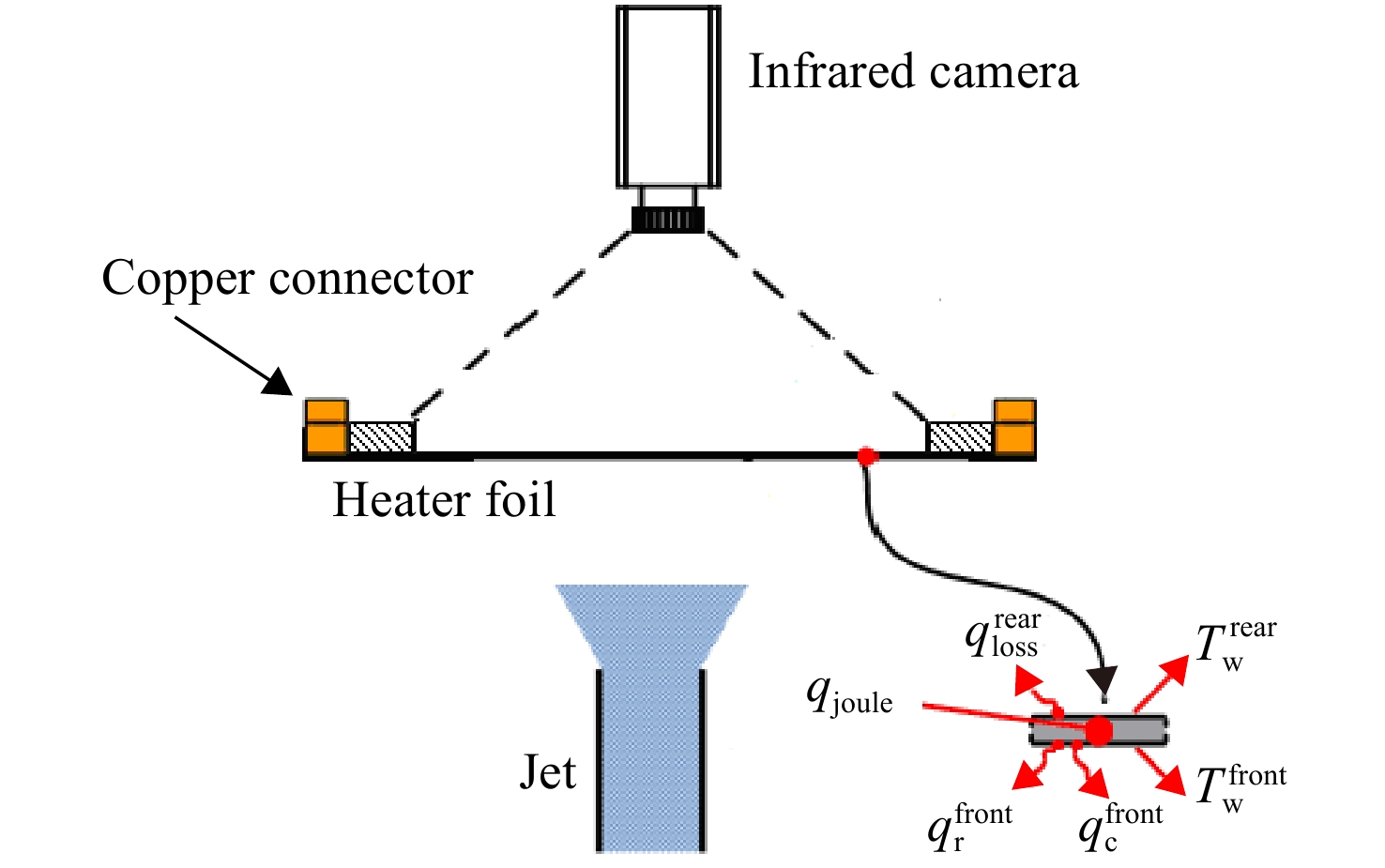
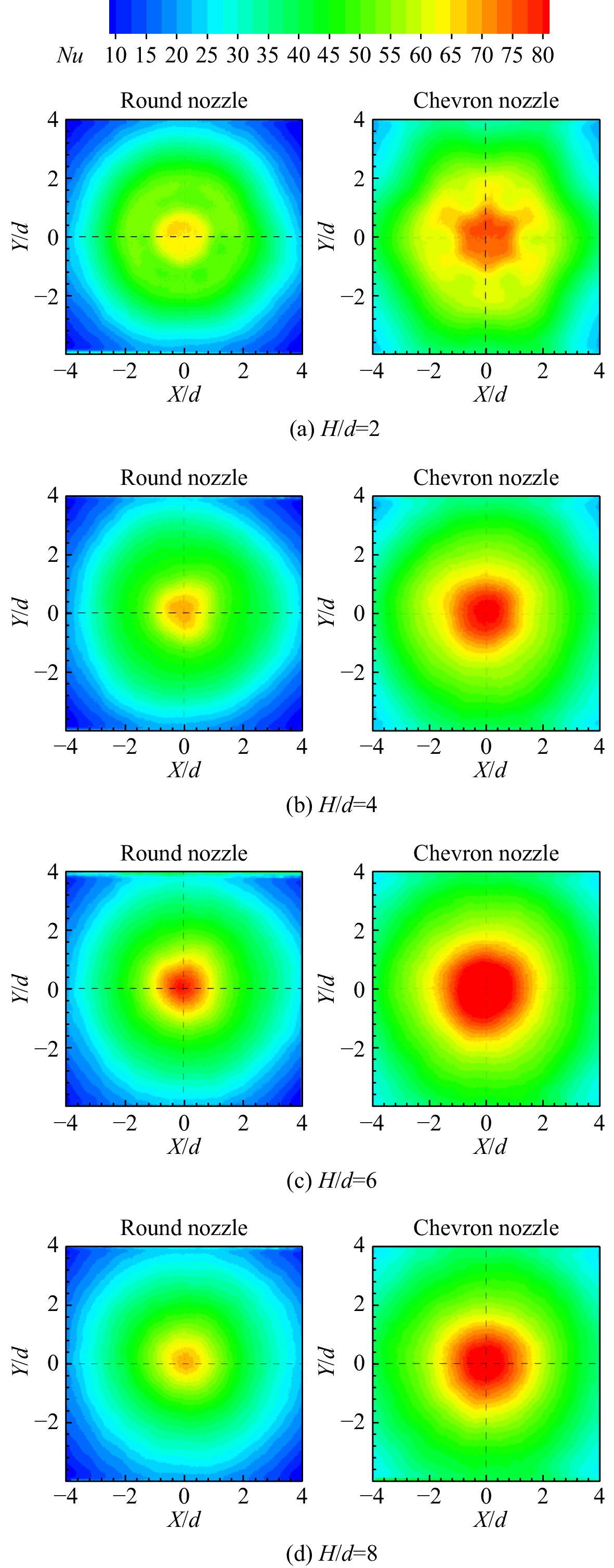
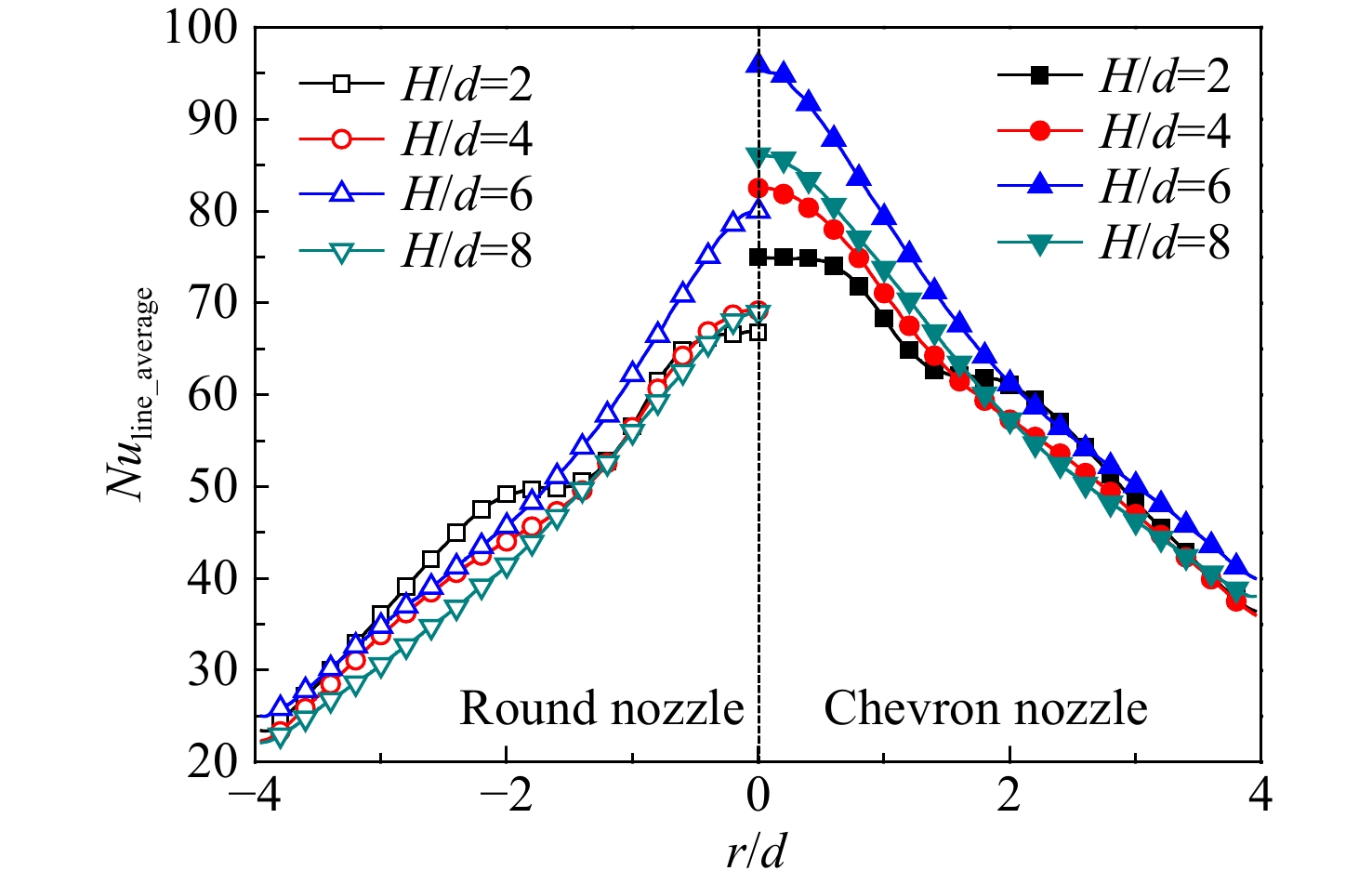
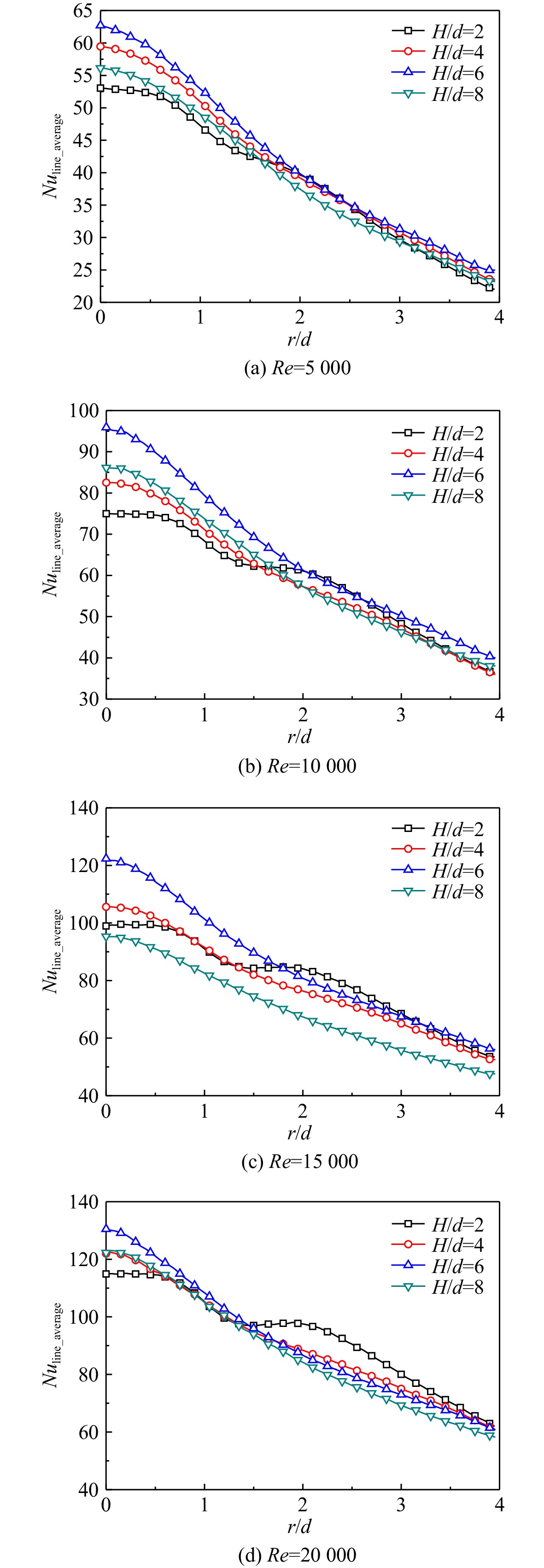
An experimental investigation was performed to study the convective heat transfer characteristics of pulsed chevron jet impingement on a flat plate, by using infrared imaging technique. The pulsed jet was fixed at a specific duty cycle (DC) of 0.5, the experiments were conducted under Reynolds number of 5000−20000, Dimensionless impingement spacing of 2−8 and working frequency of 10−25 Hz. Results indicated that the local Nusselt number distribution in the vicinity of jet stagnation presented a lobed pattern resembling the shape of the configuration. The pulsed chevron jet was confirmed to be capable of enhancing the jet impingement heat transfer related to the pulsed round jet. Under Reynolds number of 10000 and working frequency of 15 Hz, the convective heat transfer in the vicinity of jet stagnation could be increased by 20%−30% with the use of pulsed chevron jet, when compared with the pulsed round jet. In general, the heat transfer characteristics in the pulsed chevron jet impingement were found somewhat distinct from that in the steady chevron jet impingement as well as the pulsed round jet impingement, due to the inherent interaction of active excitation by the pulsation and passive excitation induced by chevron nozzle.

Experiment on premixed turbulent combustion characteristics of natural gas
CHEN Xiaoxiao, ZENG Wen, DANG Jiaying, HU Erjiang, MA Hongyu
2023, 38(4): 795-805. doi: 10.13224/j.cnki.jasp.20210522
Abstract:

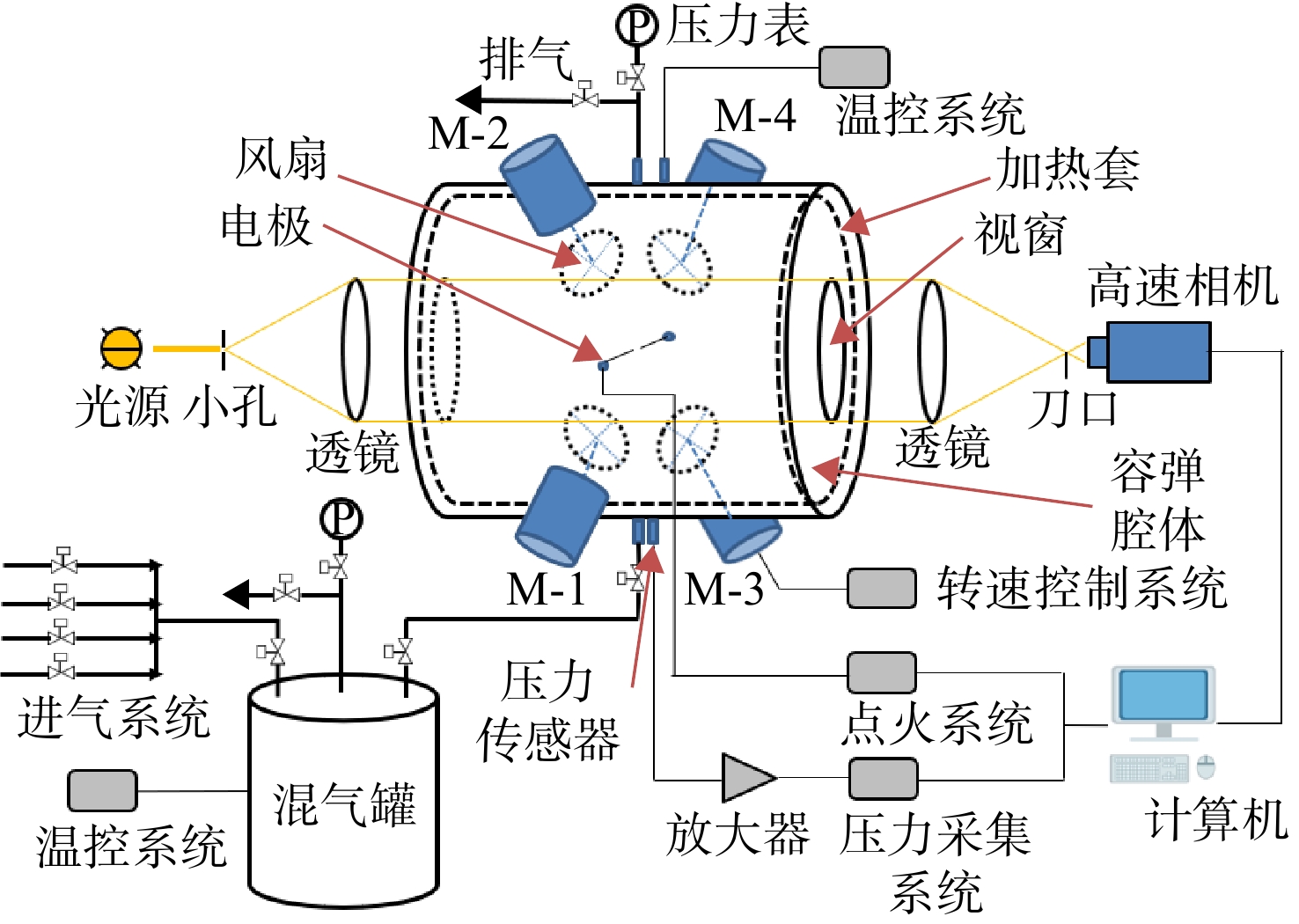
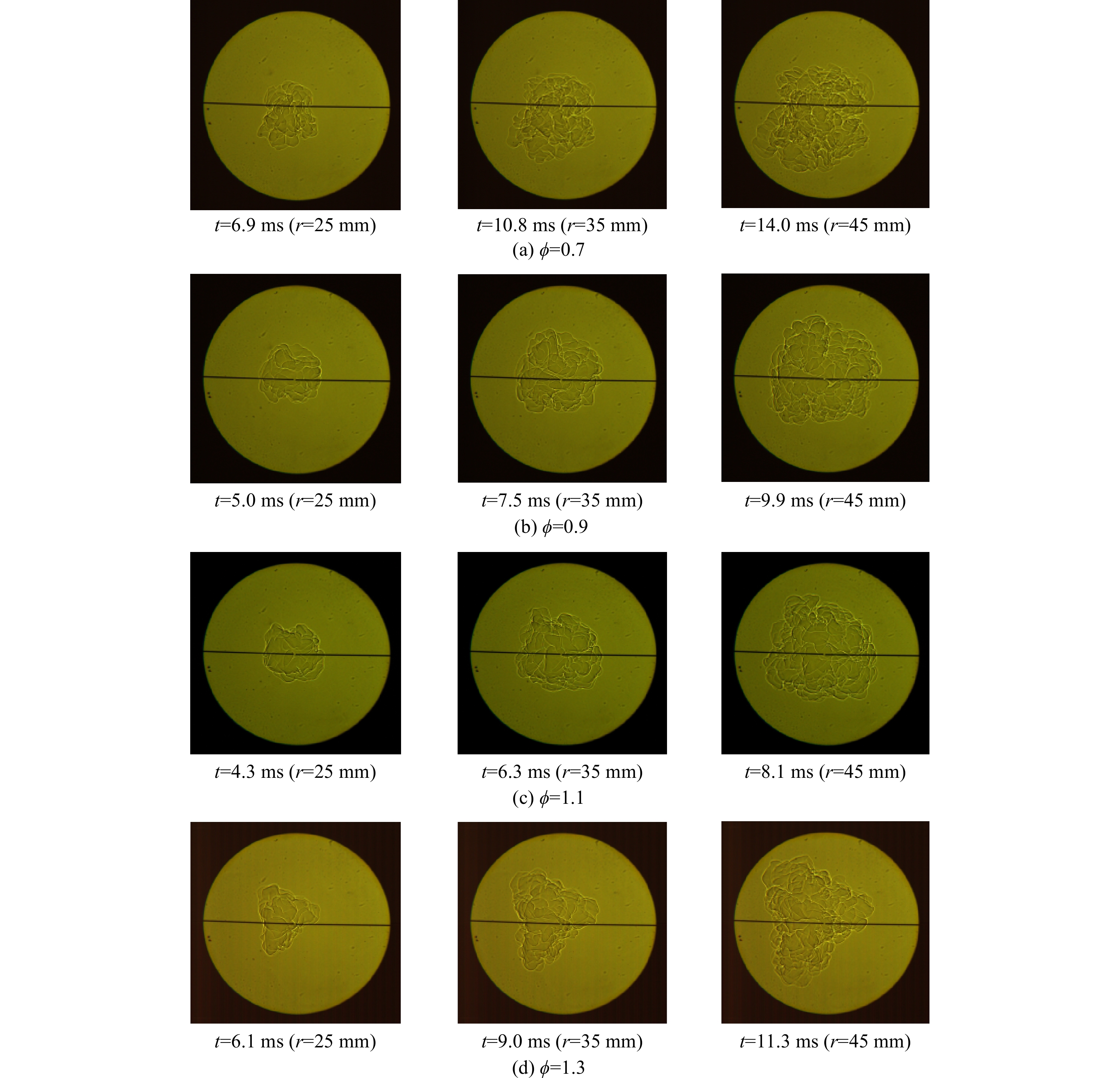
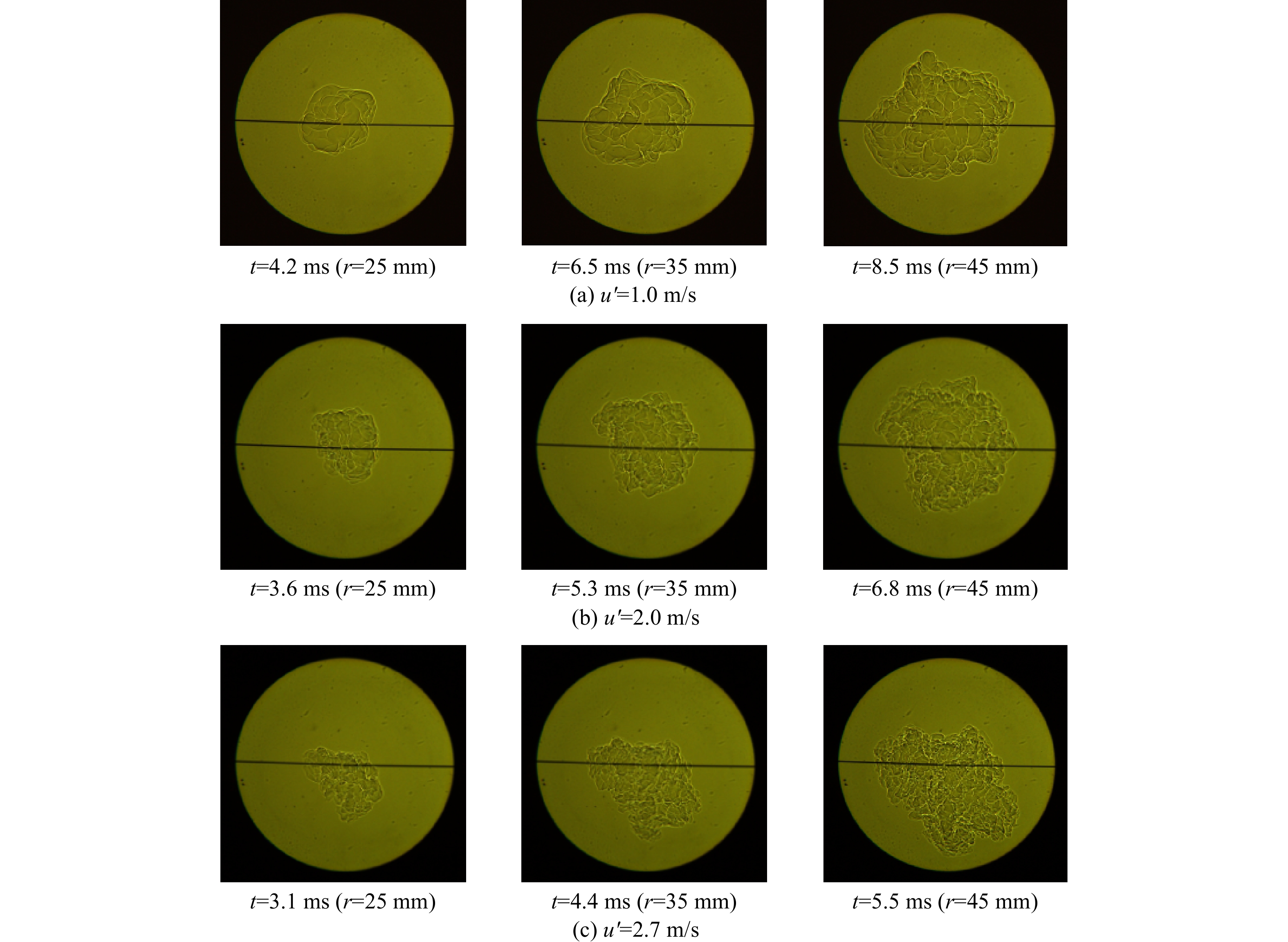
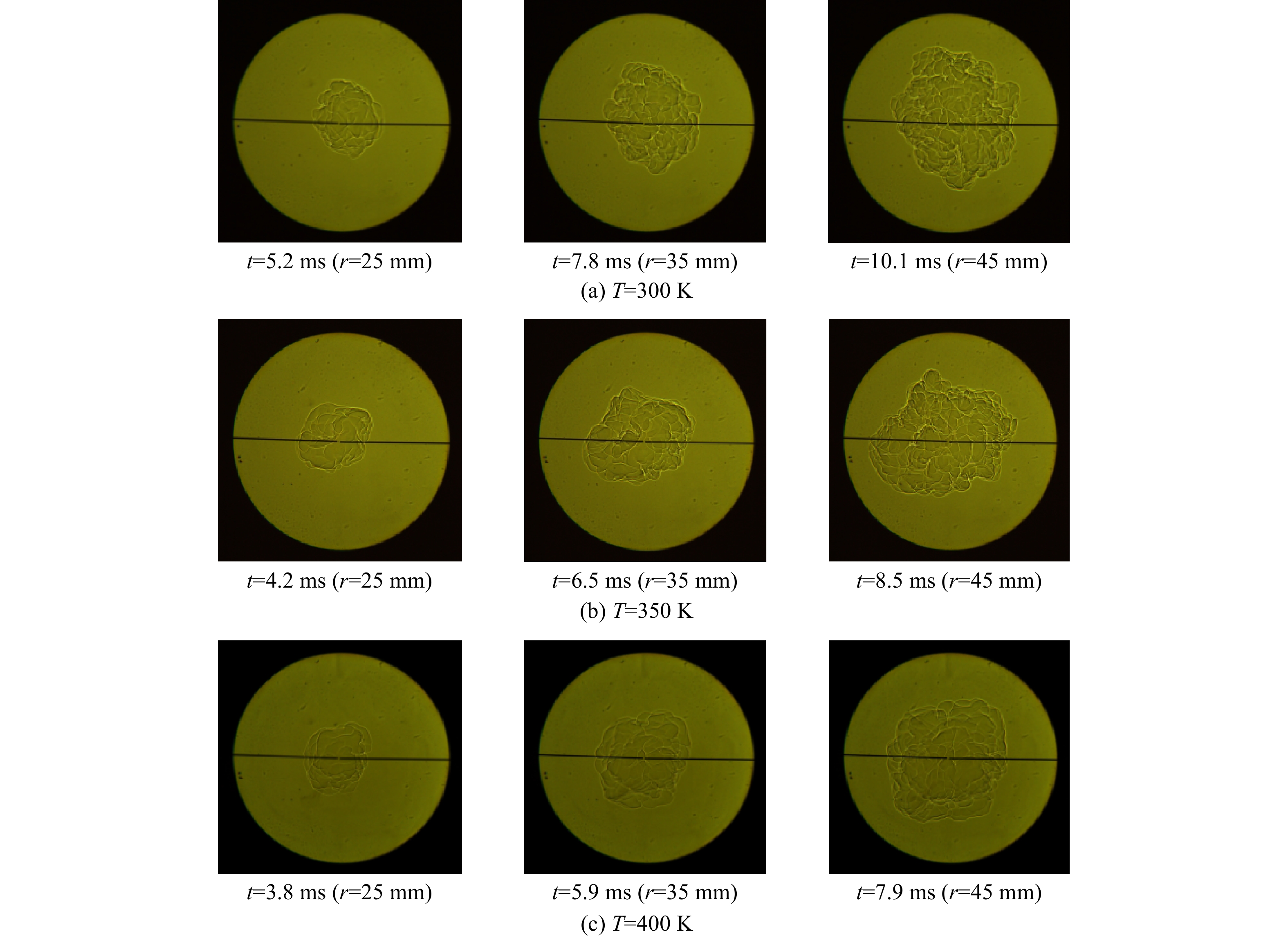
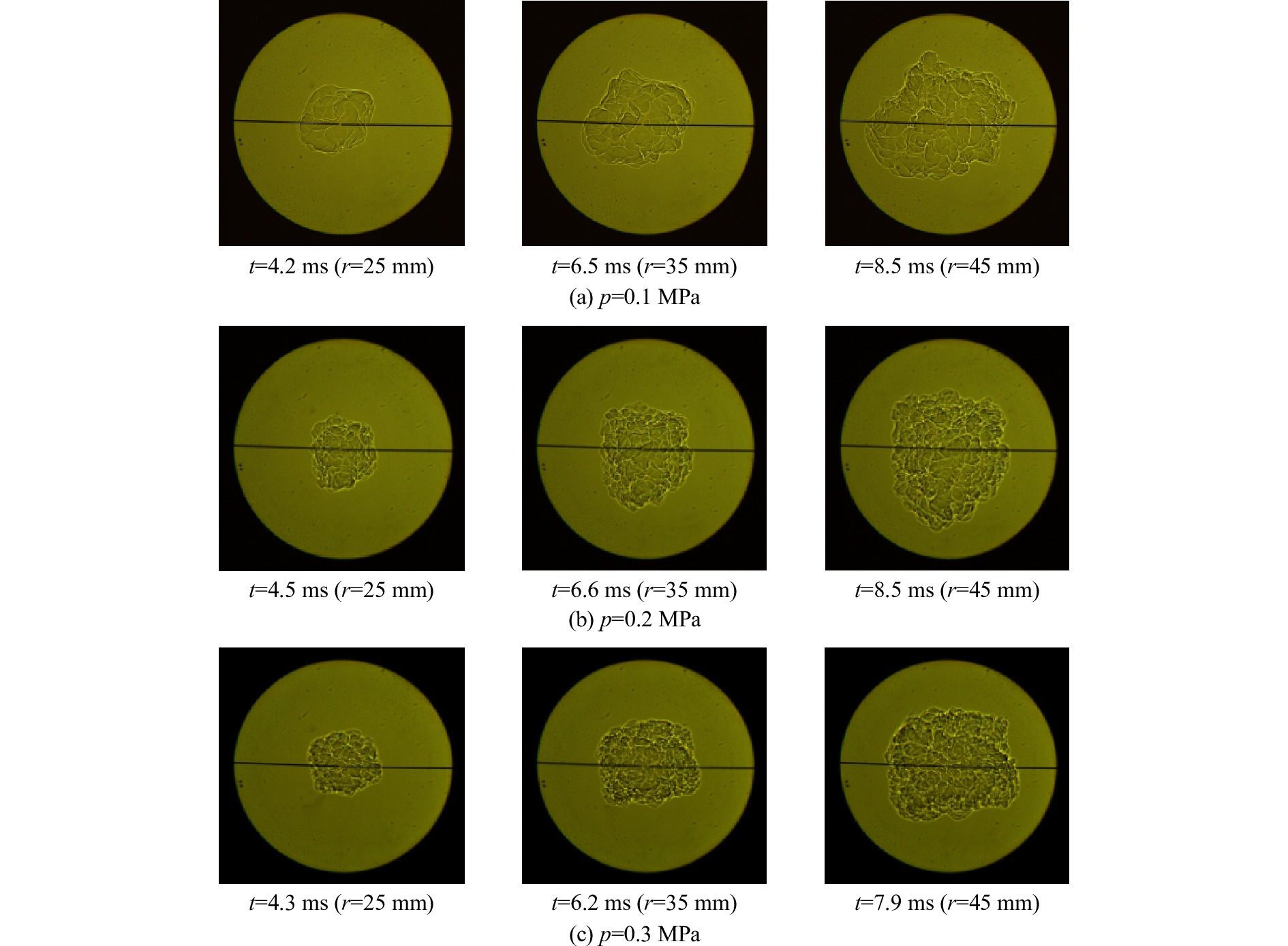
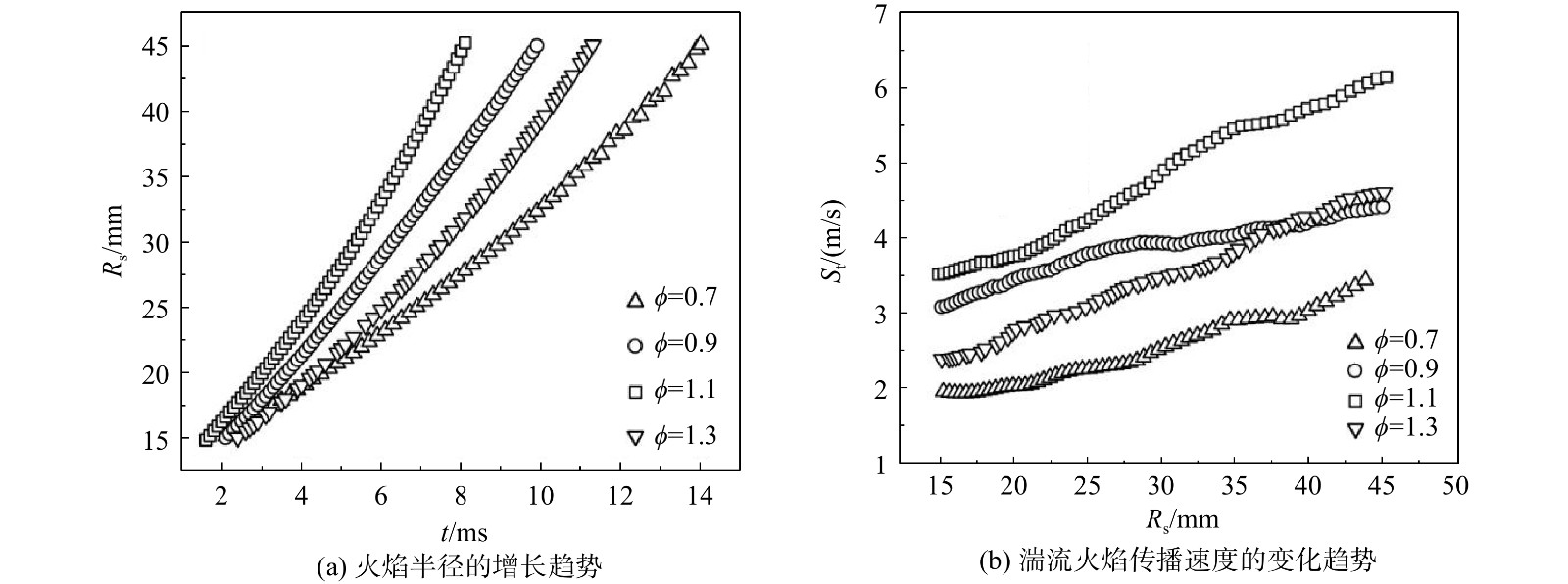
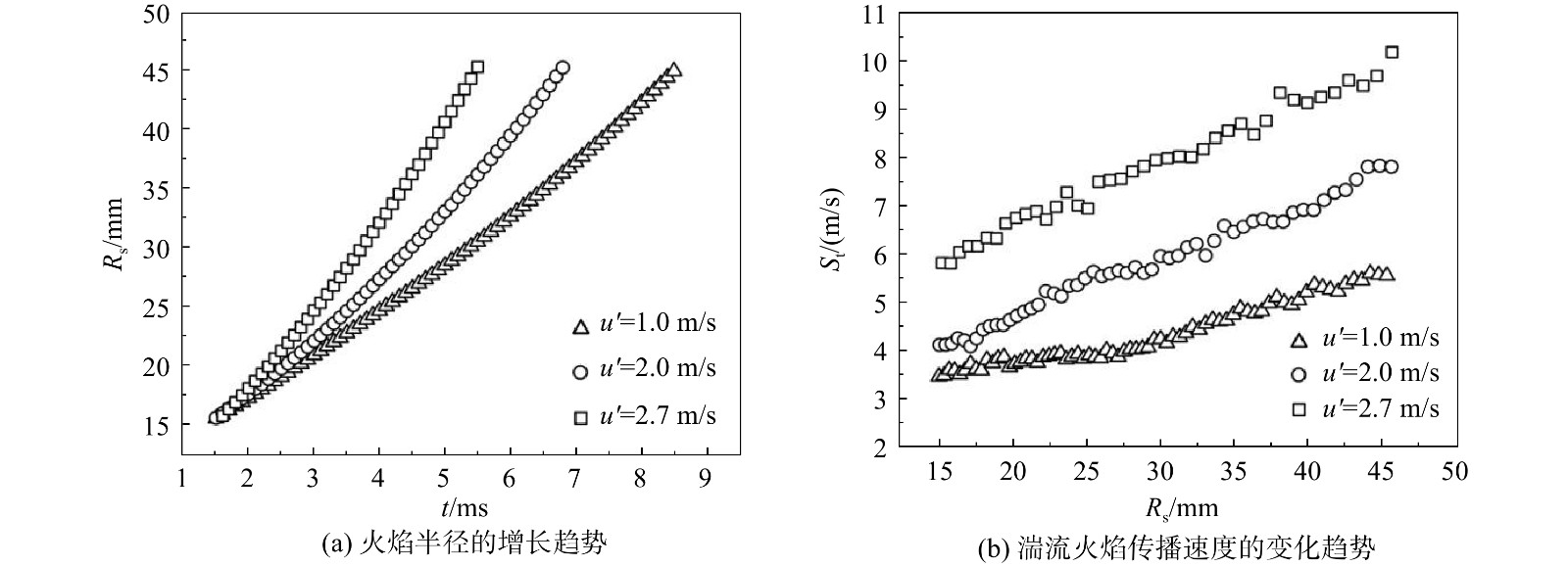
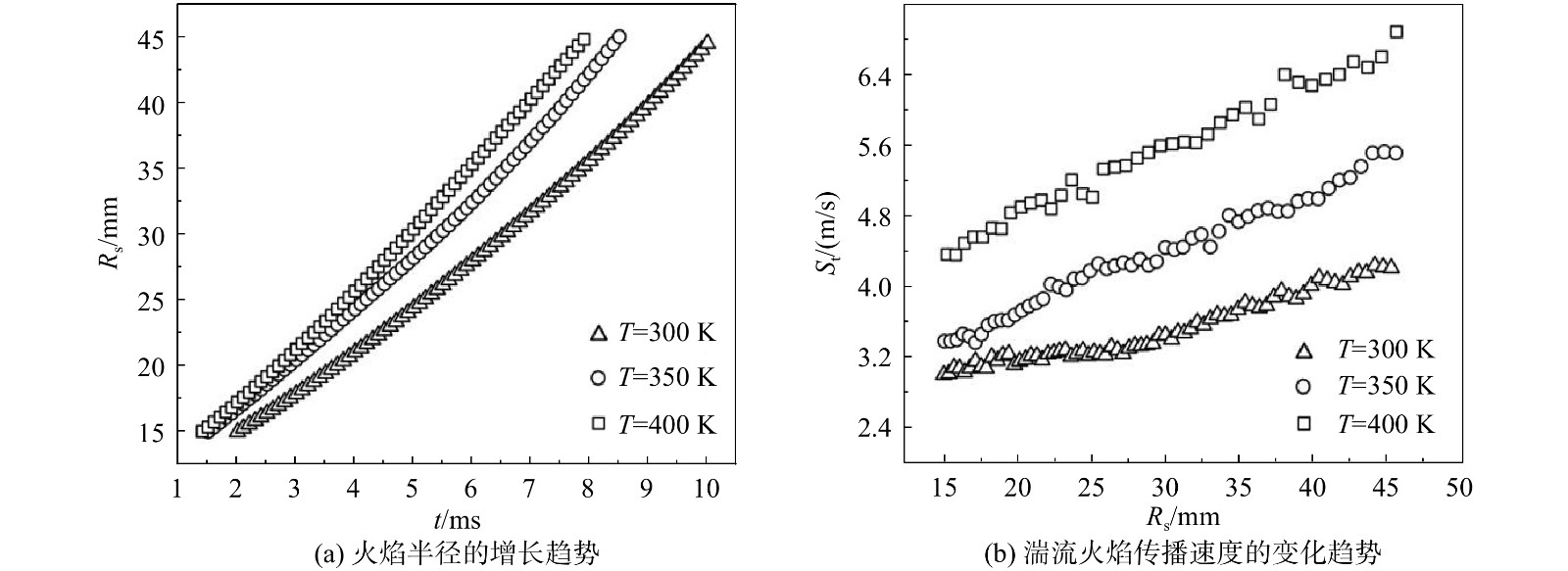
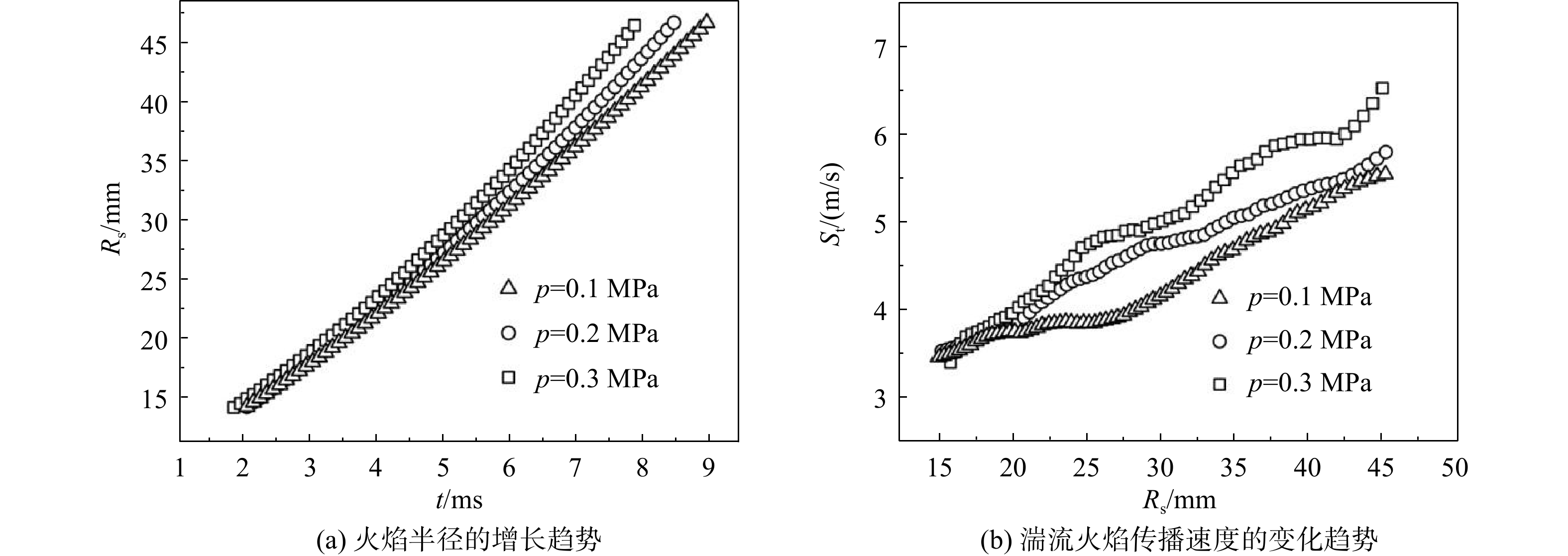
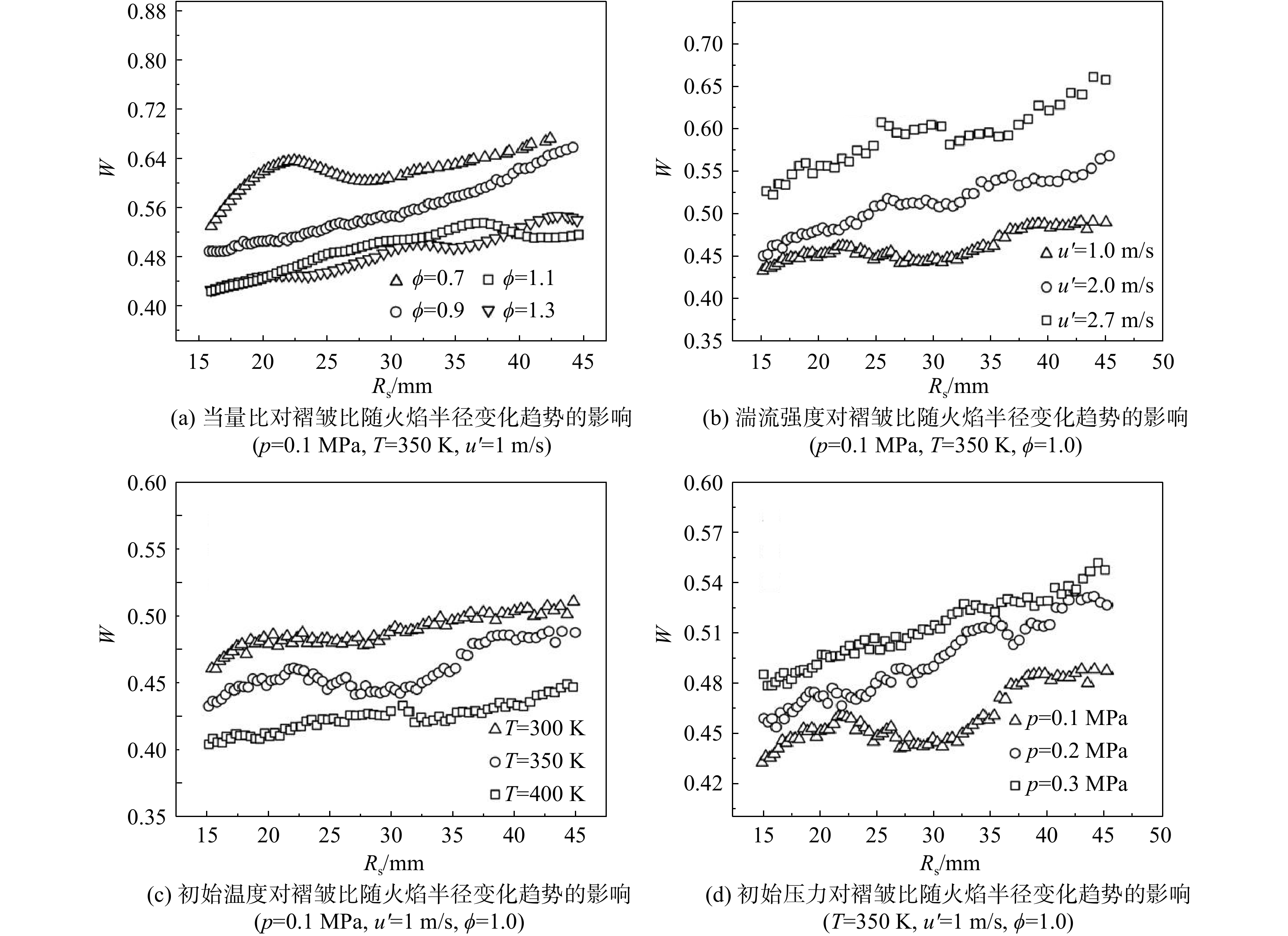
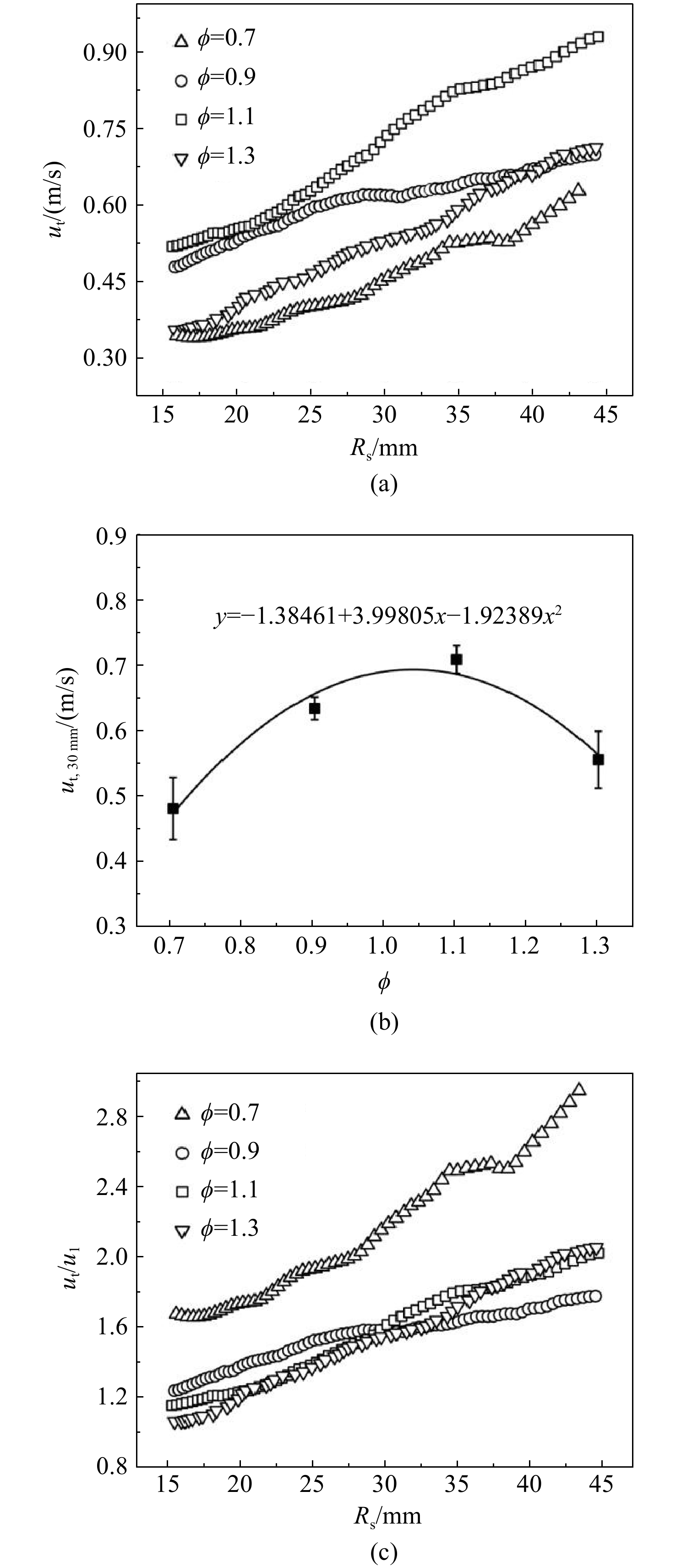
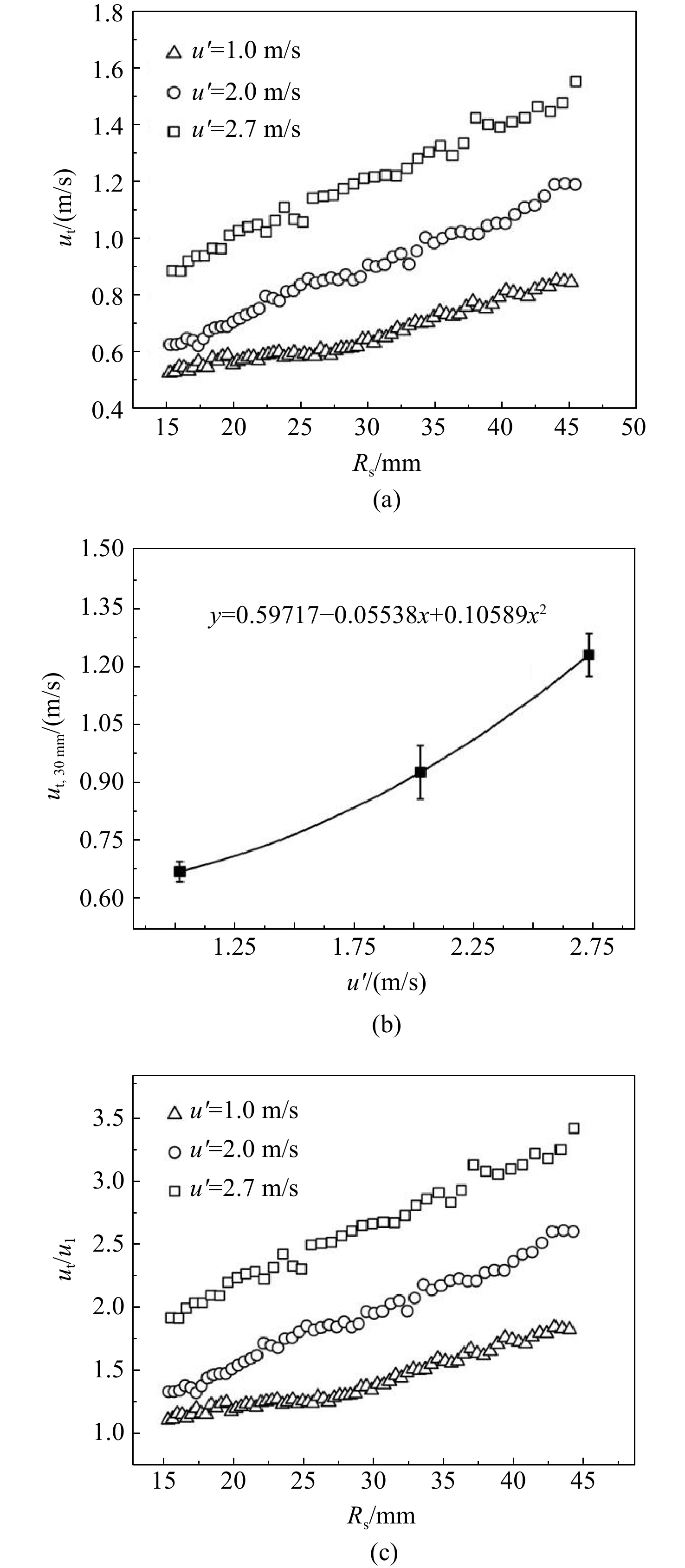
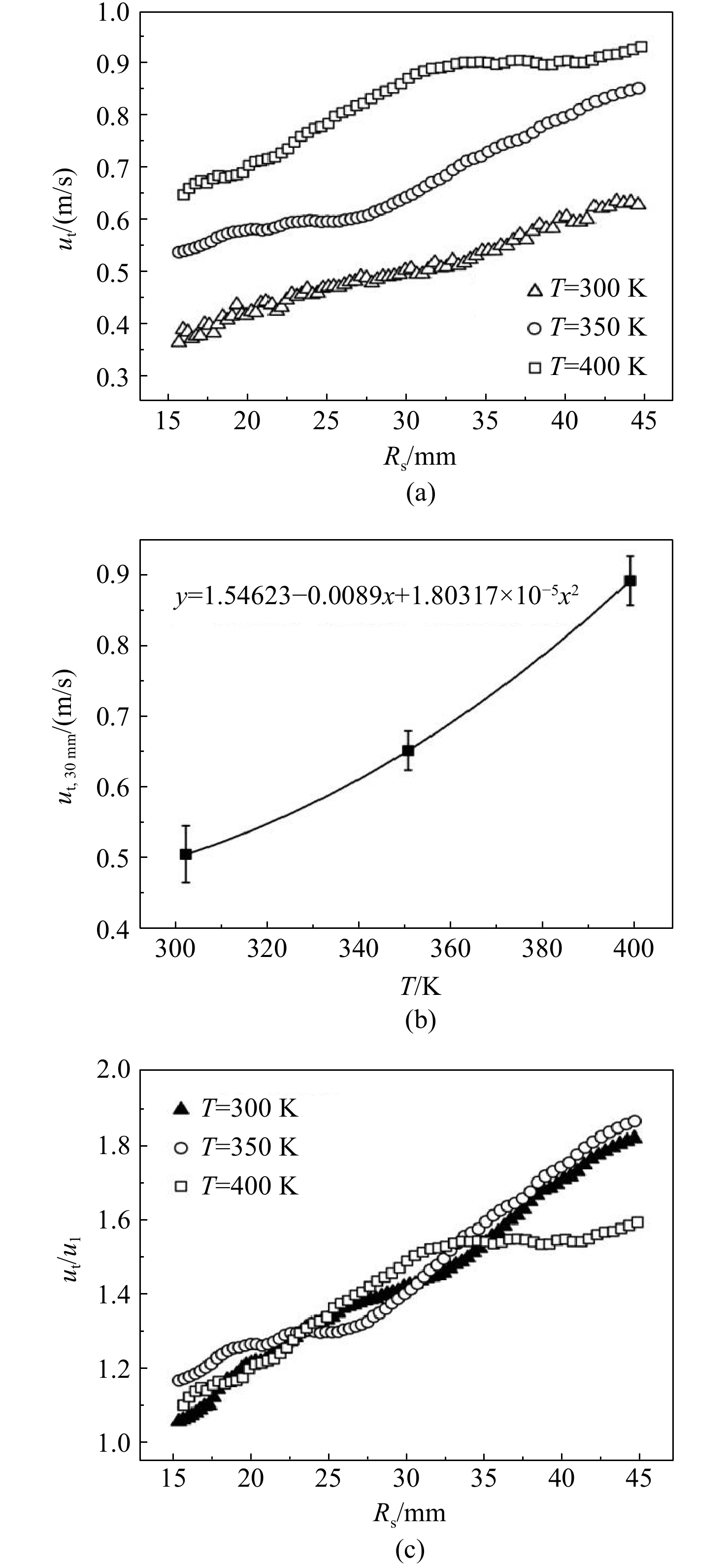
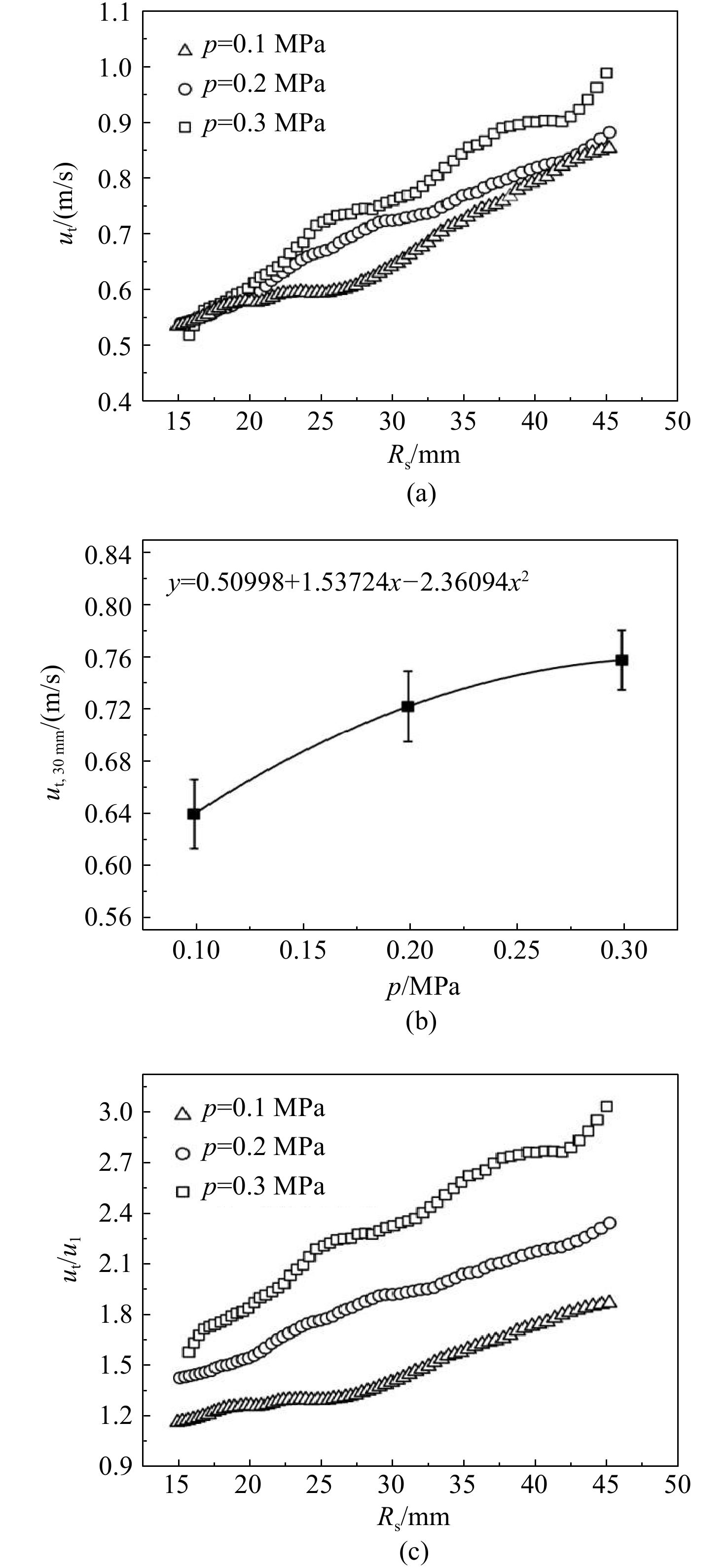
In order to gain the premixed turbulent combustion characteristics of natural gas, the premixed turbulent combustion flame propagation characteristics of natural gas at the conditions of the equivalence ratios range of 0.7−1.4, the initial pressures range of 0.1−0.3 MPa, the initial temperatures range of 300−400 K, and the turbulence intensities range of 1.0−2.7 m/s were experimentally tested in the turbulent combustion bomb. Furthermore, the influences of equivalence ratio, turbulence intensity, initial temperature, and initial pressure on the turbulent flame propagation speed, flame wrinkle ratio and turbulent combustion speed of natural gas were investigated. The results showed that the turbulent flame propagation speeds of natural gas increased and then decreased with the increase of equivalence ratio, and reached the maximum at equivalence ratio of 1.1. With the increase of turbulence intensity and initial temperature, the turbulent flame propagation speed gradually increased. However, with the increase of initial pressure, the turbulent flame propagation speed varied slightly. With the increase of turbulence intensity and initial pressure, or the decrease of equivalence ratio and initial temperature, the flame wrinkle ratio gradually increased. With the increase of equivalent ratio, the turbulent combustion speeds increased first and then decreased, and reached the maximum at equivalent ratio of 1.1. With the increase of the turbulence intensity, initial temperature and pressure, the turbulent combustion speeds gradually increased.

Calculation of thermophysical properties of supercritical RP-3 based on artificial neural network model
TAO Kaihang, ZHU Jianqin, CHENG Zeyuan
2023, 38(4): 806-815. doi: 10.13224/j.cnki.jasp.20220836
Abstract:

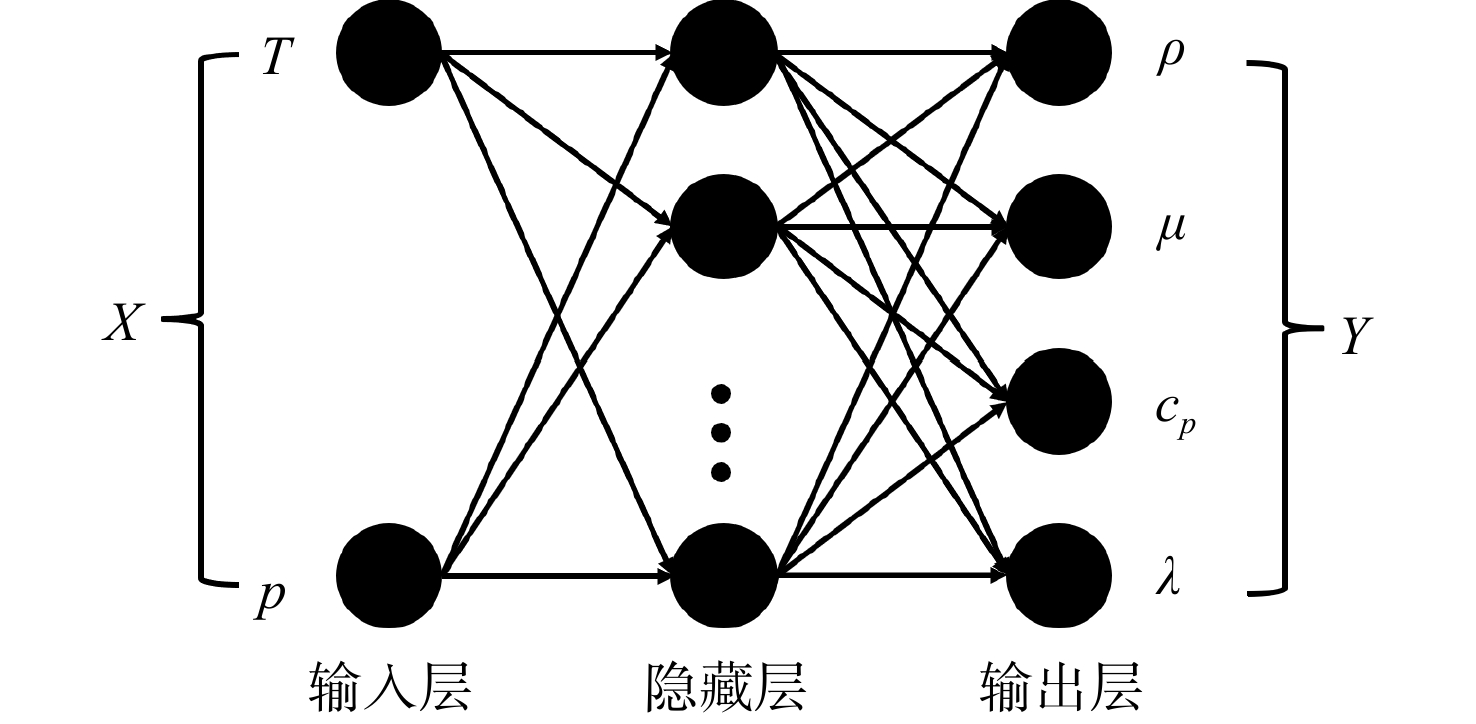
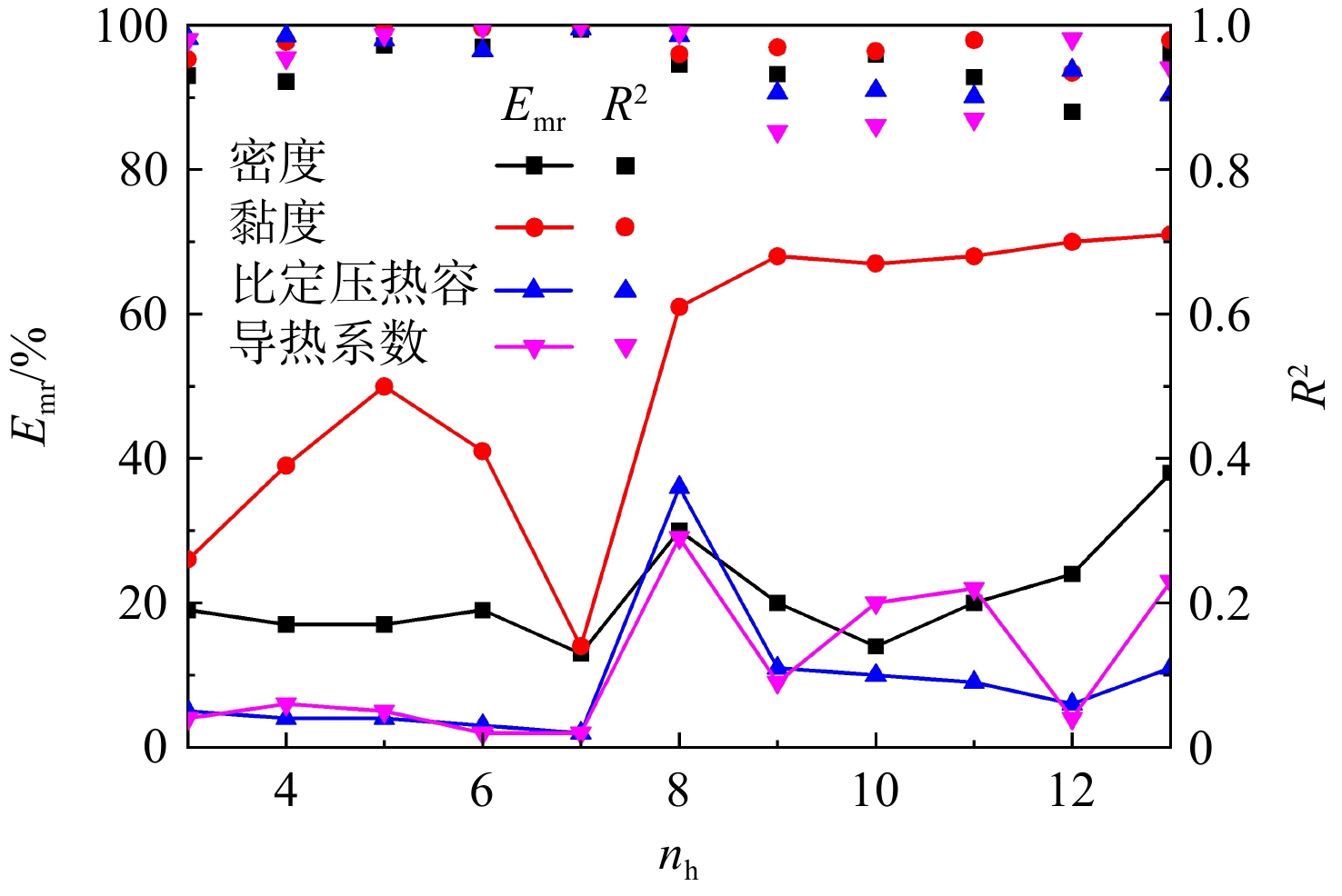
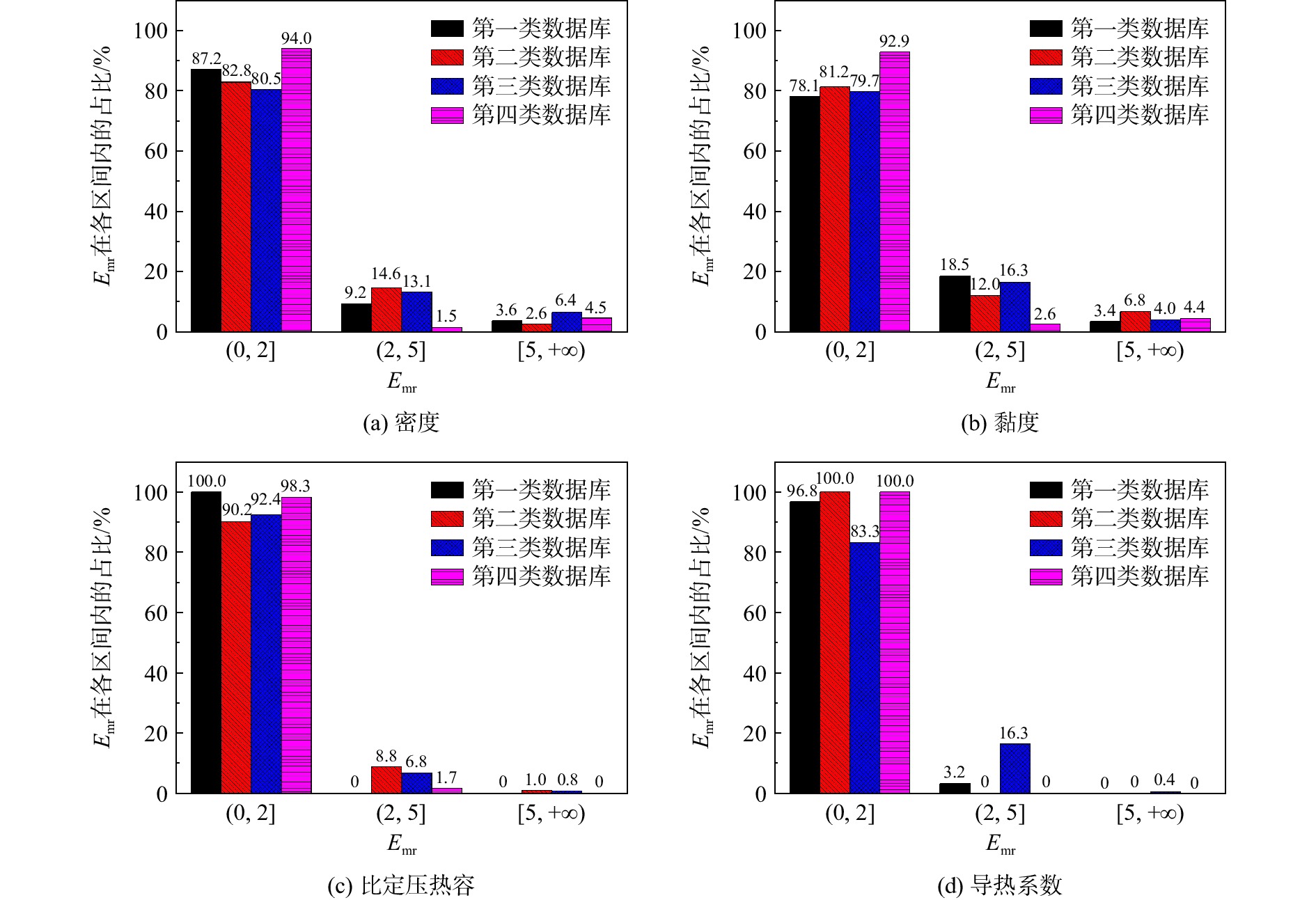
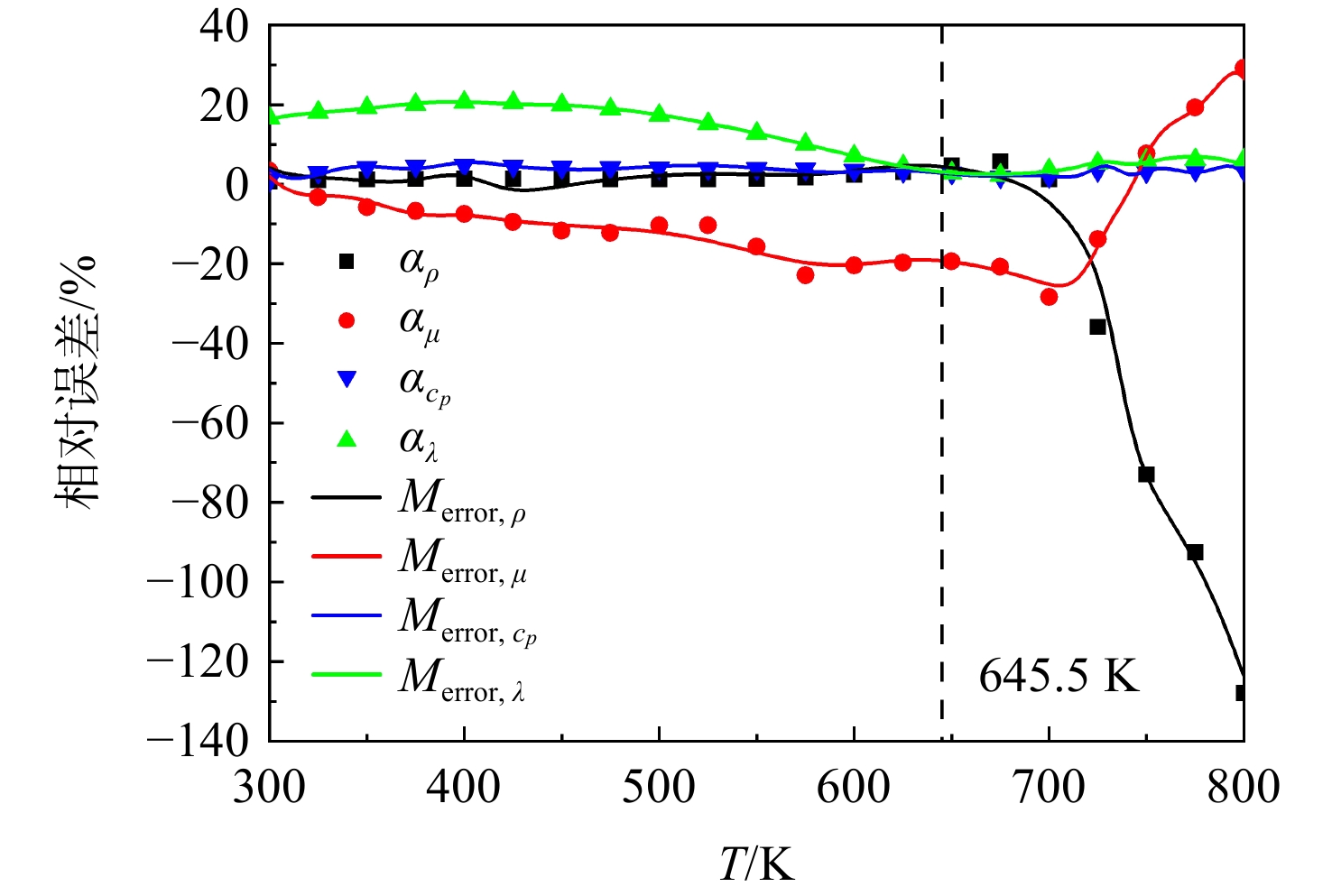
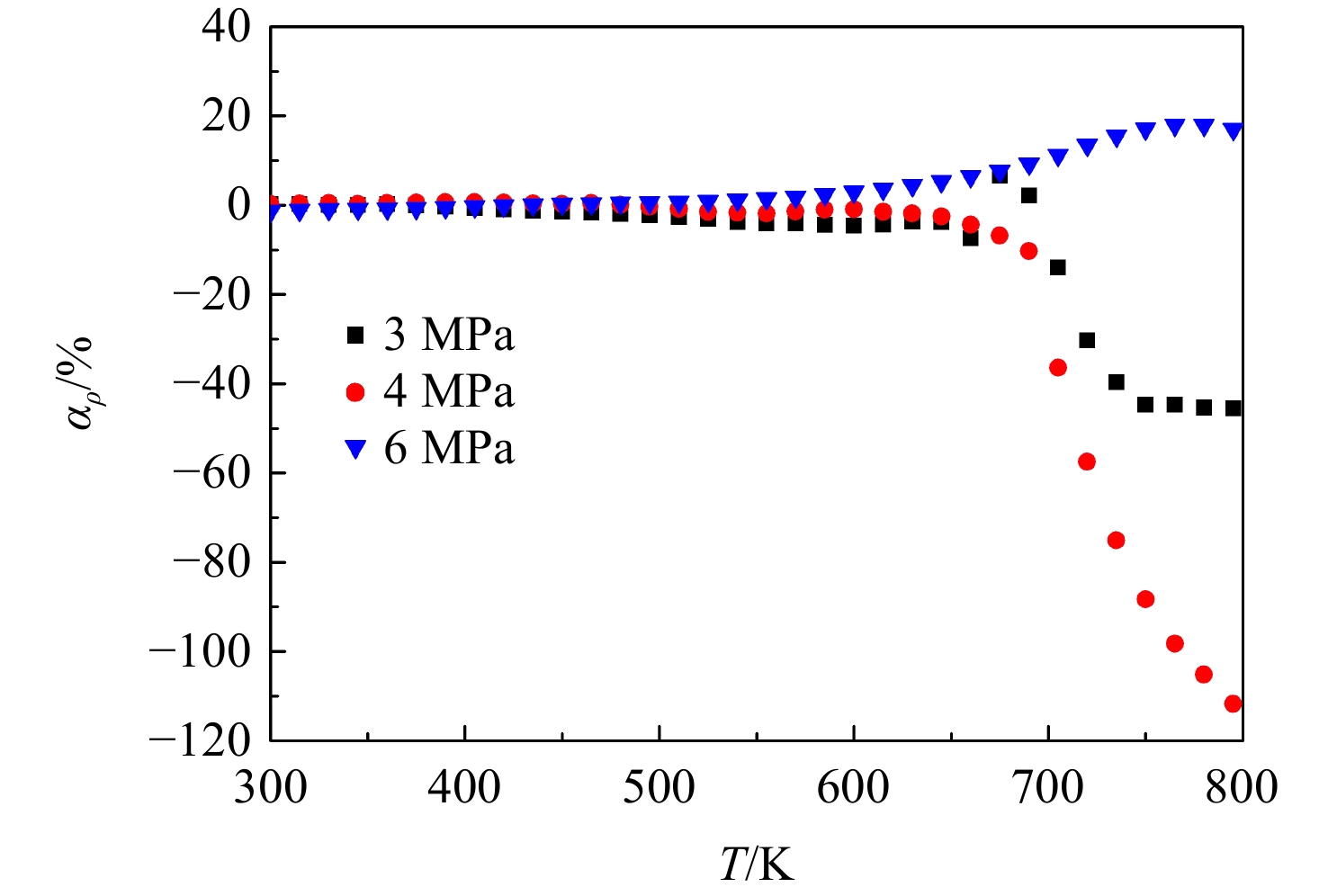
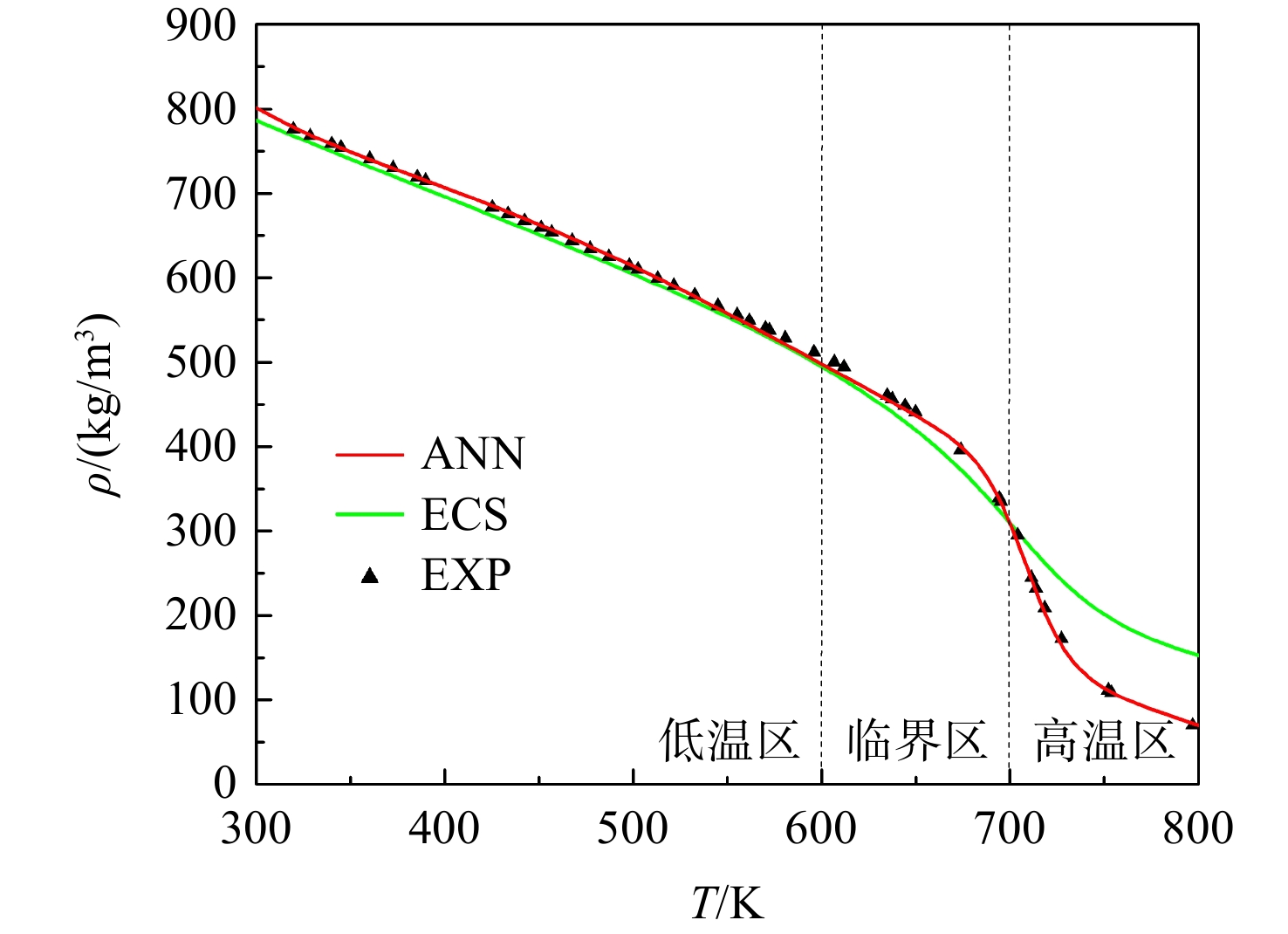
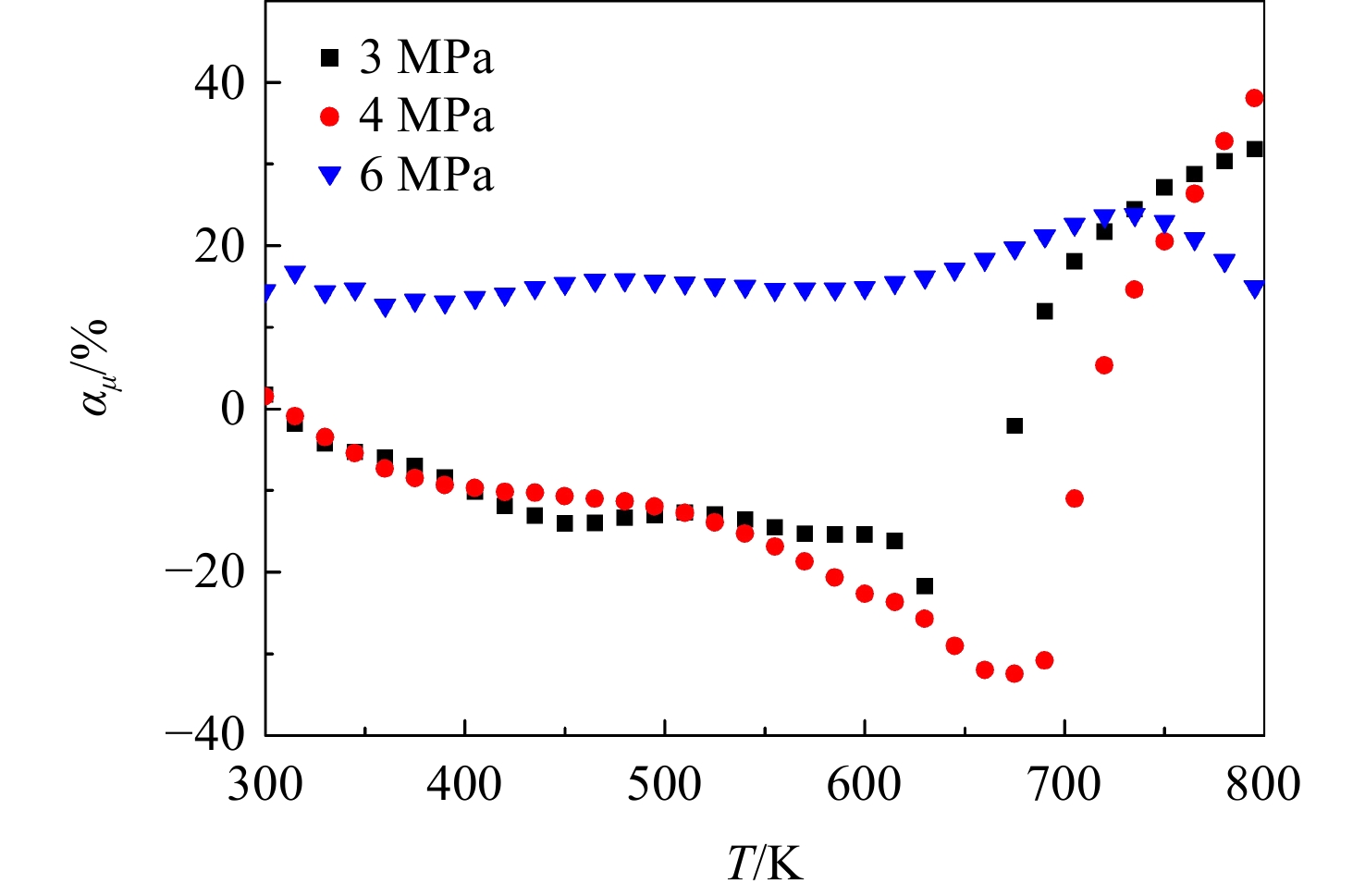
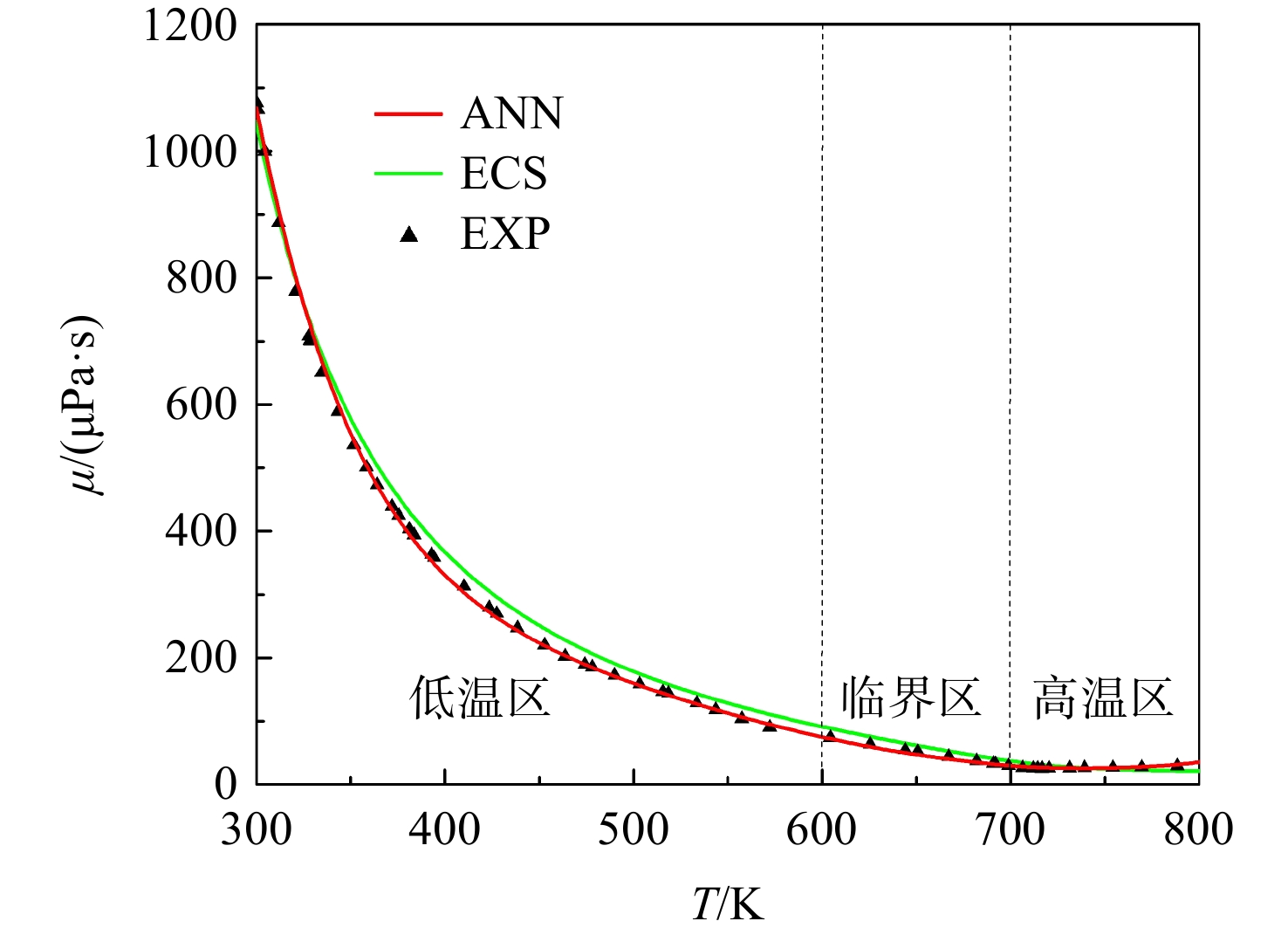
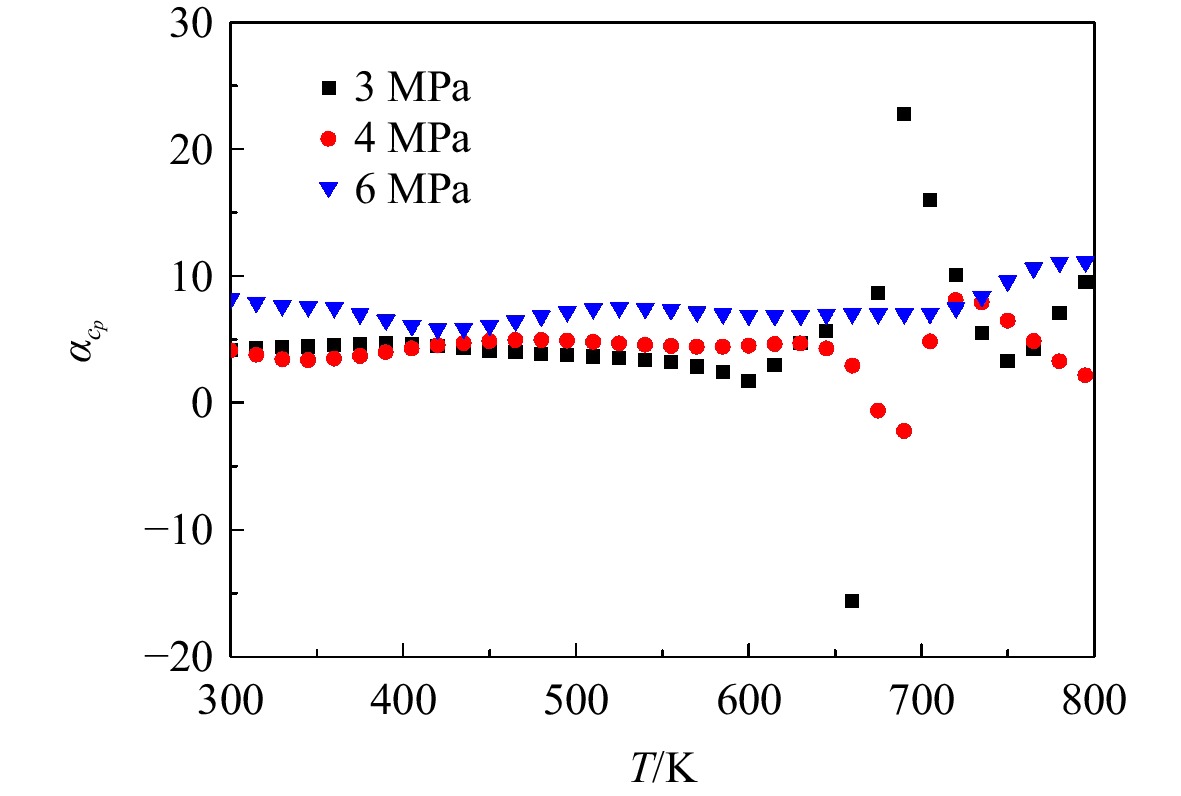
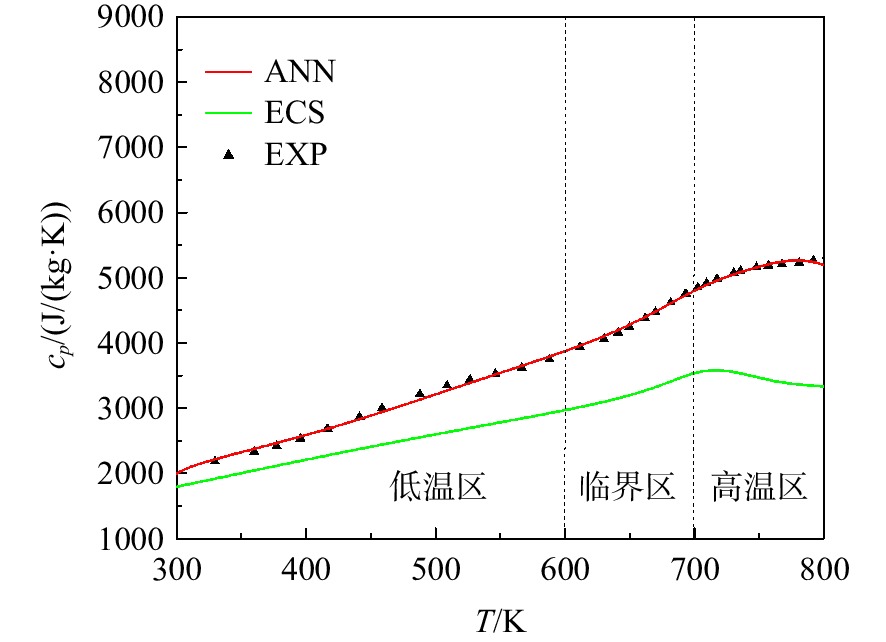
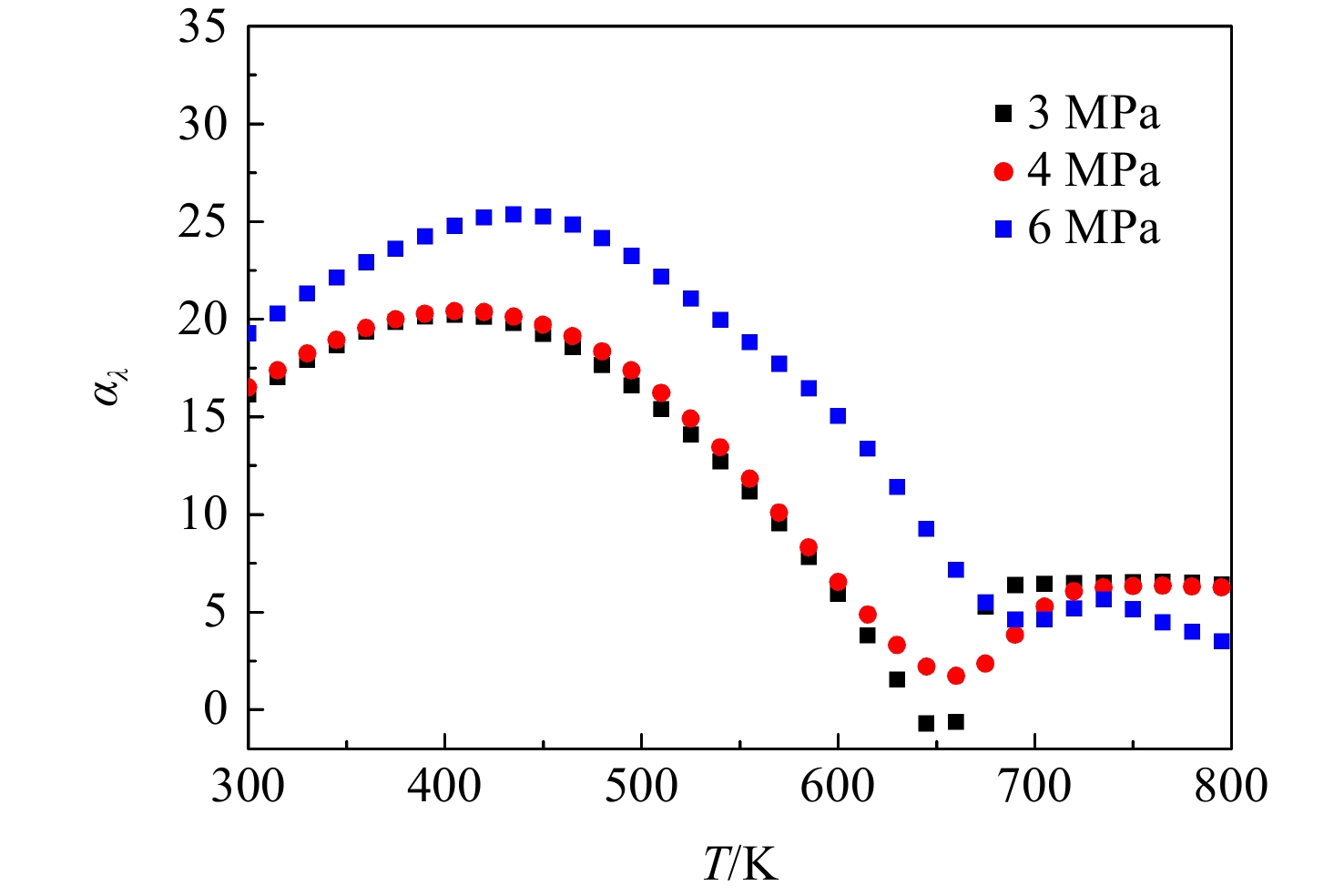
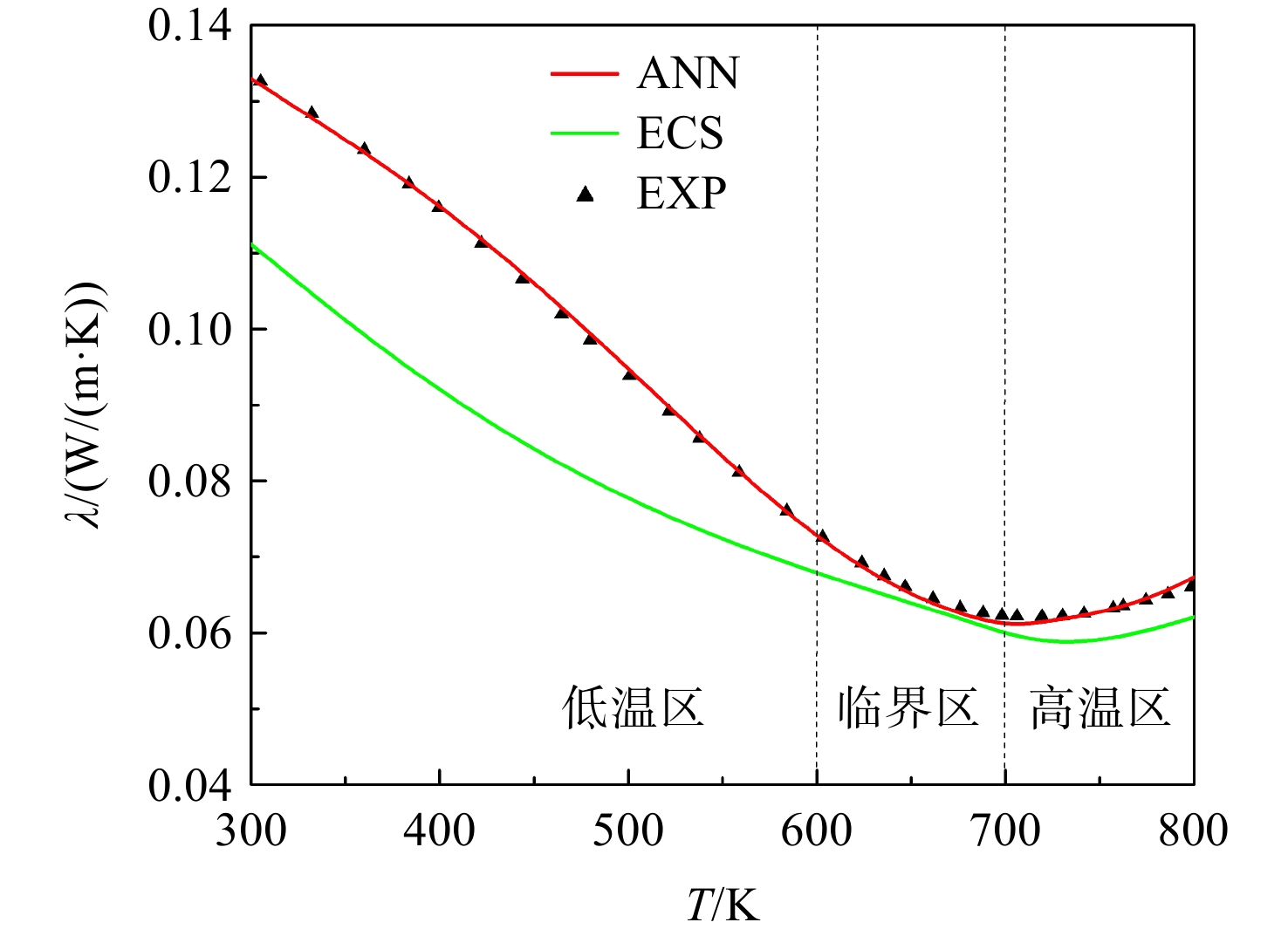
In order to accurately obtain the thermophysical properties of RP-3 under supercritical pressure, the calculation models of density, viscosity, specific heat capacity at constant pressure and thermal conductivity of supercritical RP-3 were established based on artificial neural network (ANN) method. The RP-3 thermophysical properties obtained by the extended corresponding state were used to train the neural network, and the modified ANN model was obtained by coupling the experimental error model. The calculated temperature range was 300−800 K, and the pressure range was 3−6 MPa. The results showed that the ANN model can accurately predict the thermophysical properties of supercritical RP-3, and the calculation accuracy was 16.3% higher than that of the extended corresponding state. At the pressure of 5 MPa, the regression coefficients of density, viscosity, specific heat capacity at constant pressure and thermal conductivity predicted by the ANN model were all greater than 0.99. The mean relative errors with the experimental results were 1.5%, 4.1%, 0.9% and 0.7%, respectively.

Analysis of blade cooling performance based on improved temperature assessment model
HUANG Congcong, XU Guoqiang, WEN Jie, ZHUANG Laihe, SUN Jingchuan
2023, 38(4): 816-829. doi: 10.13224/j.cnki.jasp.20210530
Abstract:

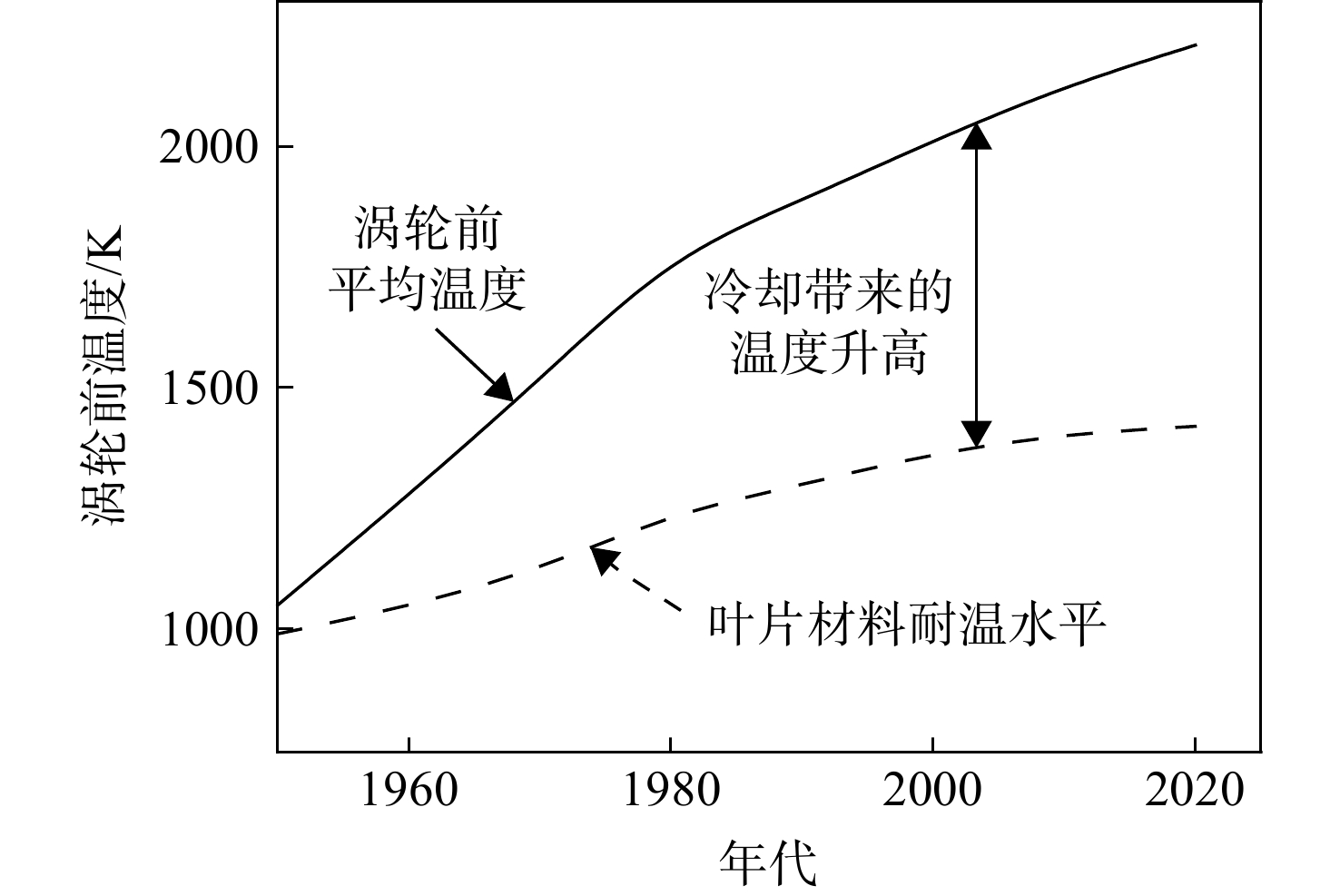
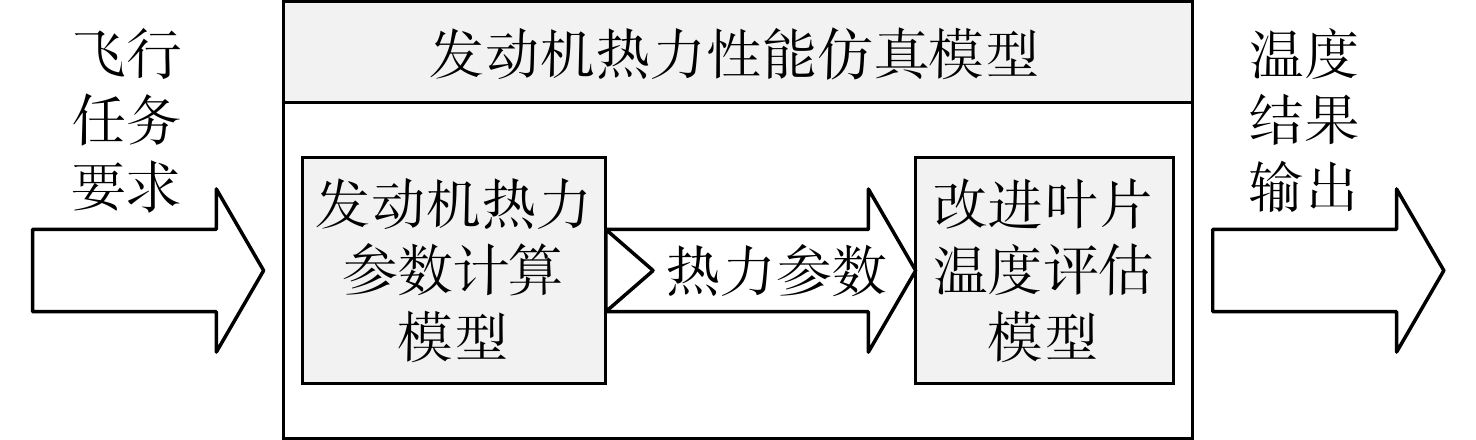
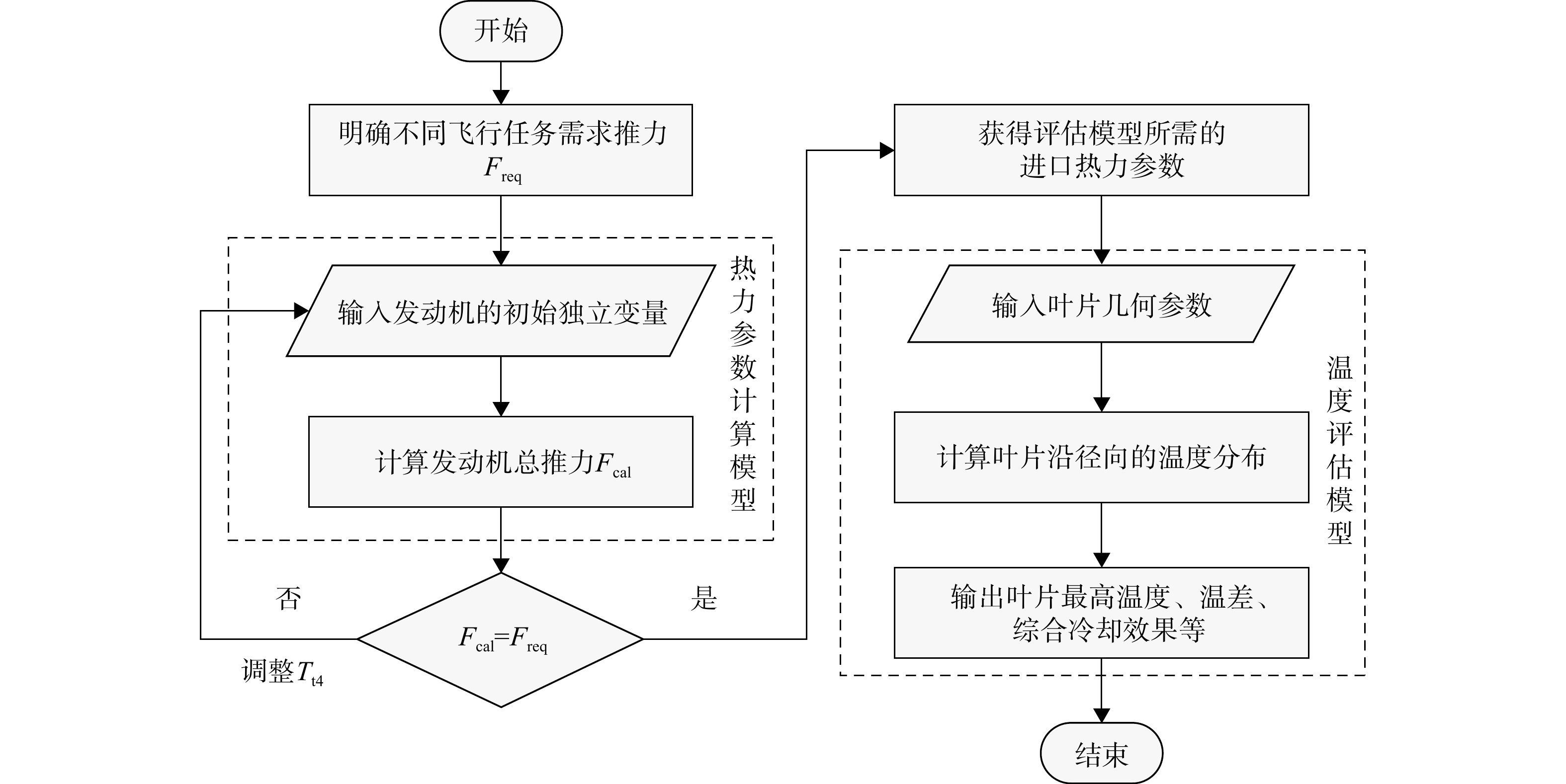
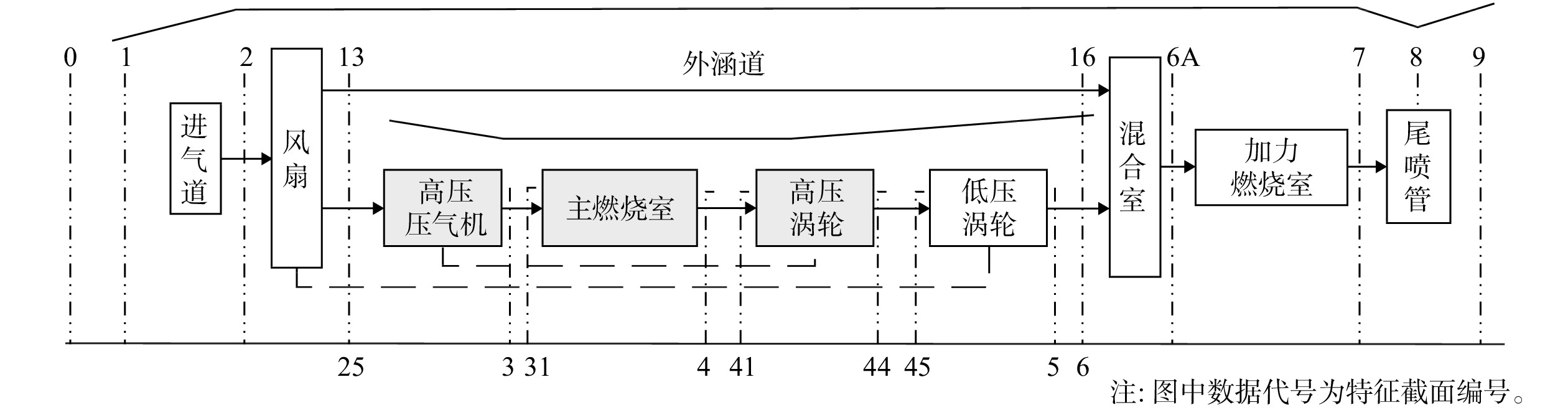
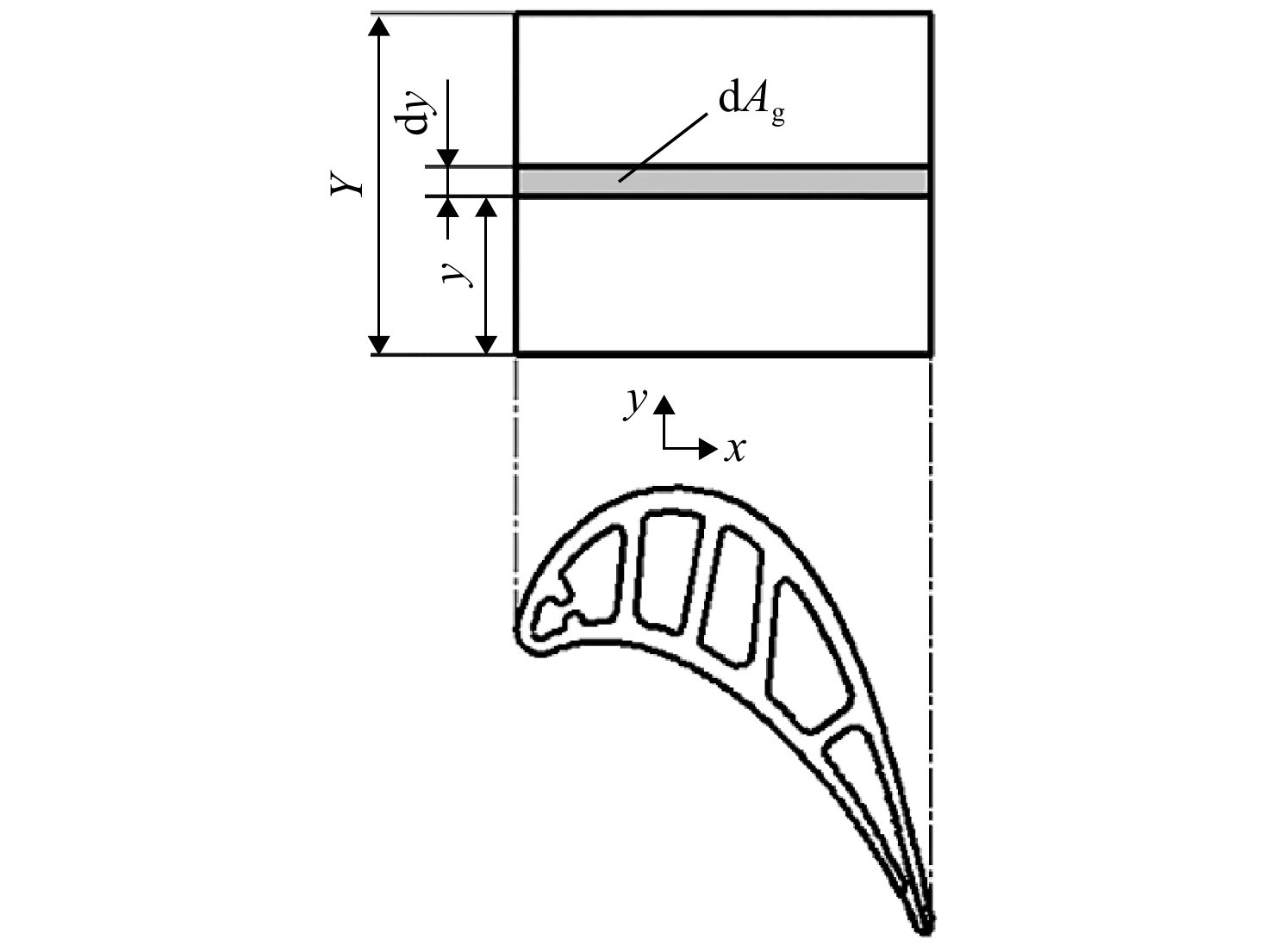
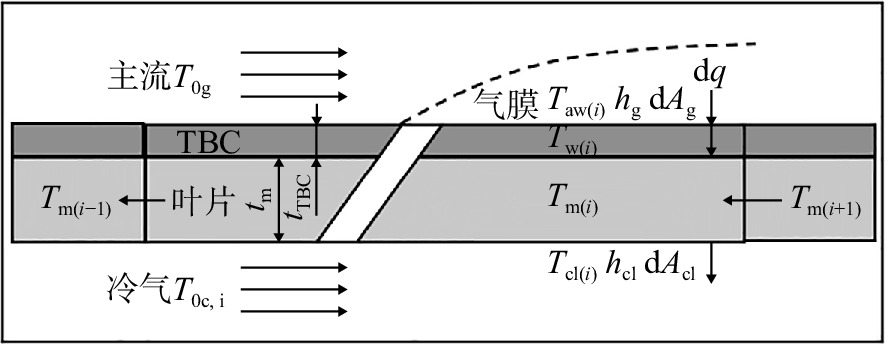
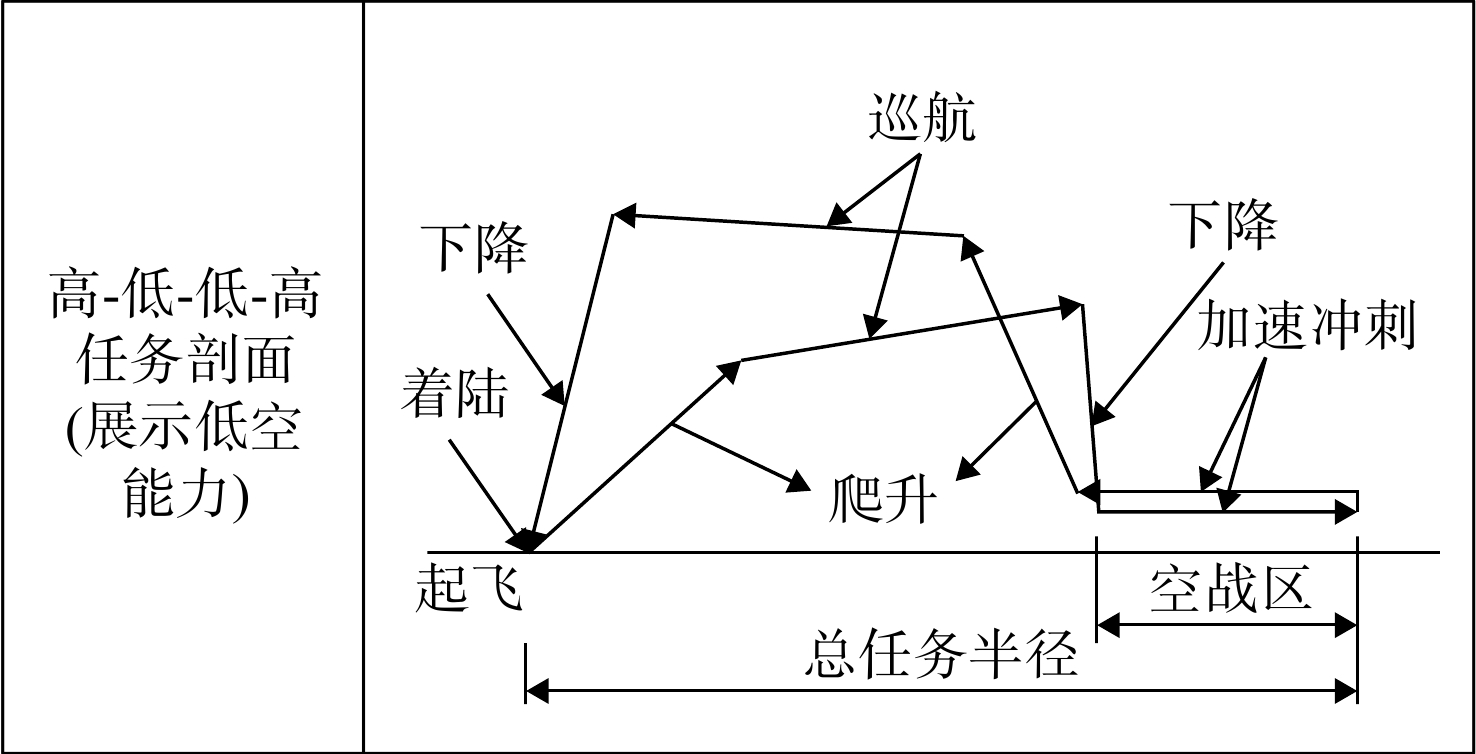
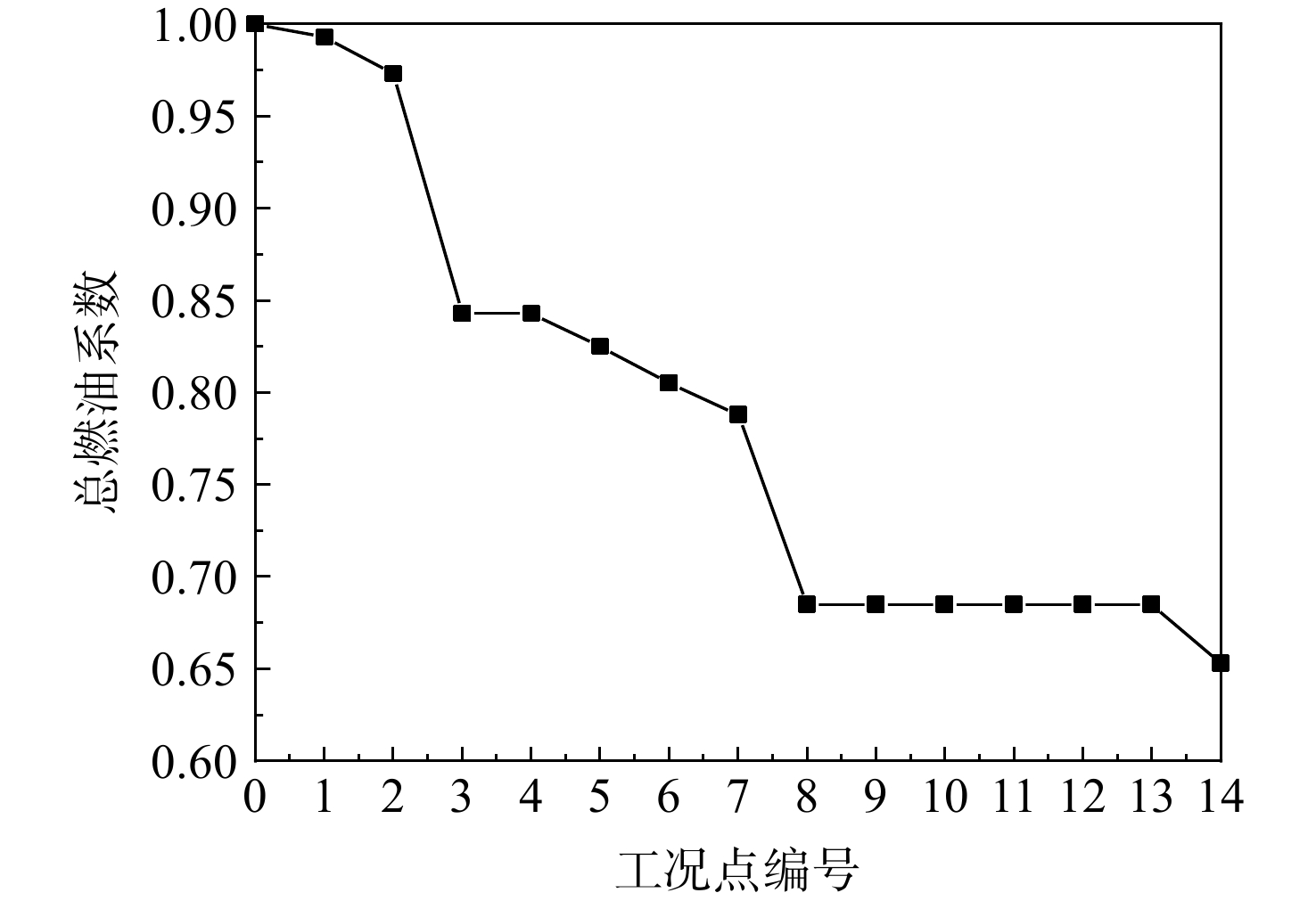
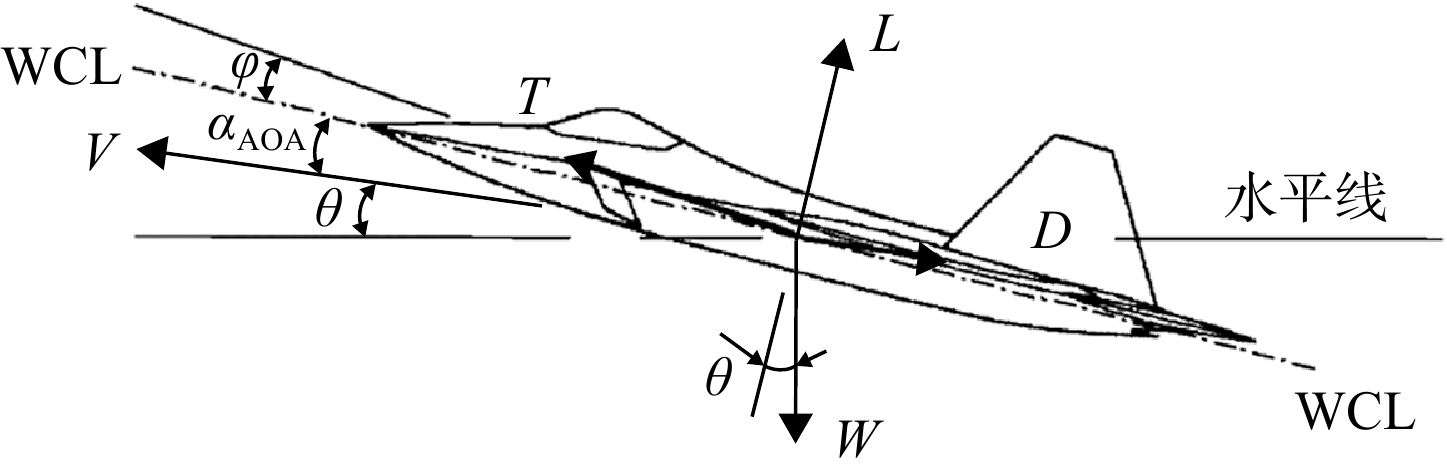
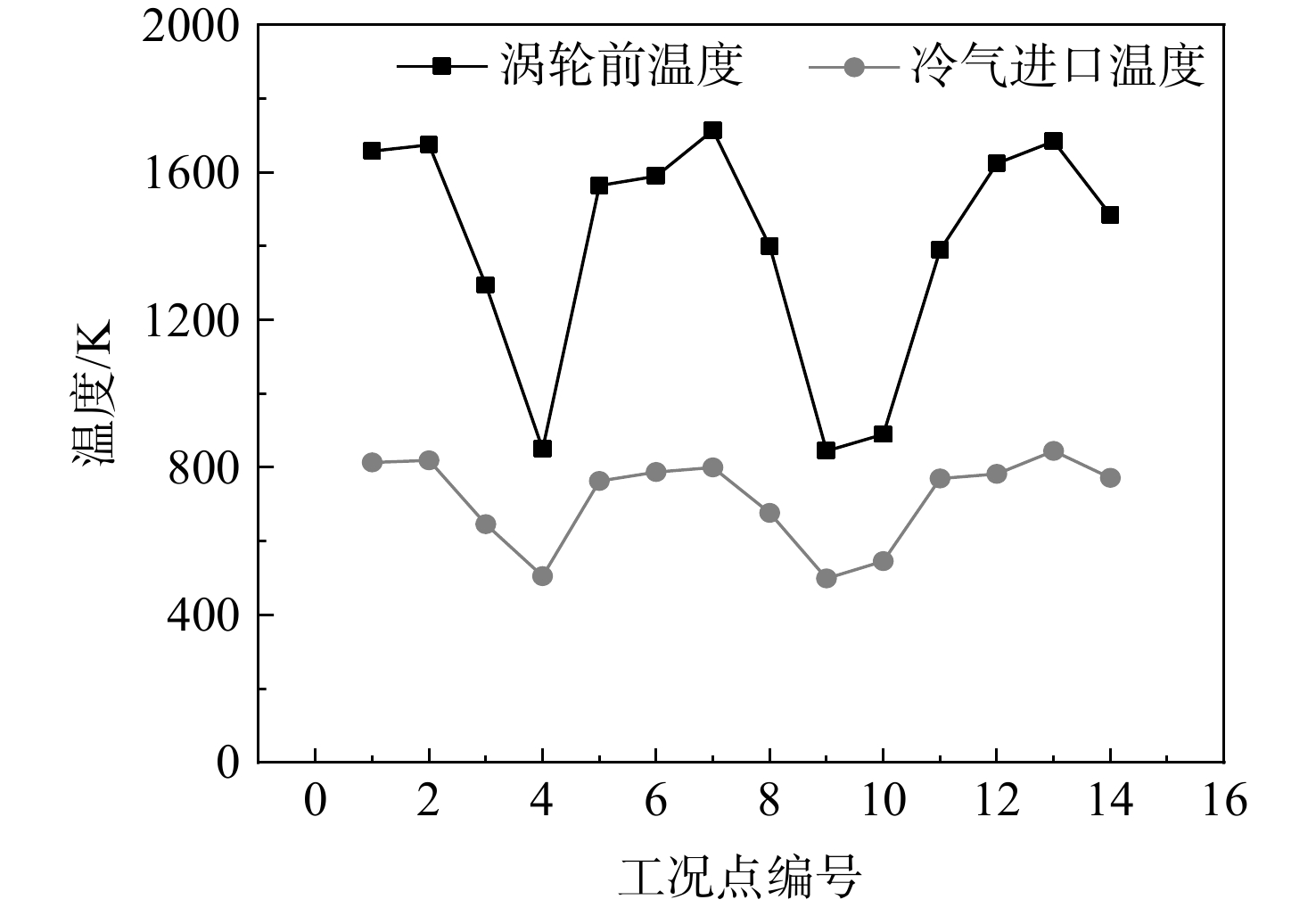
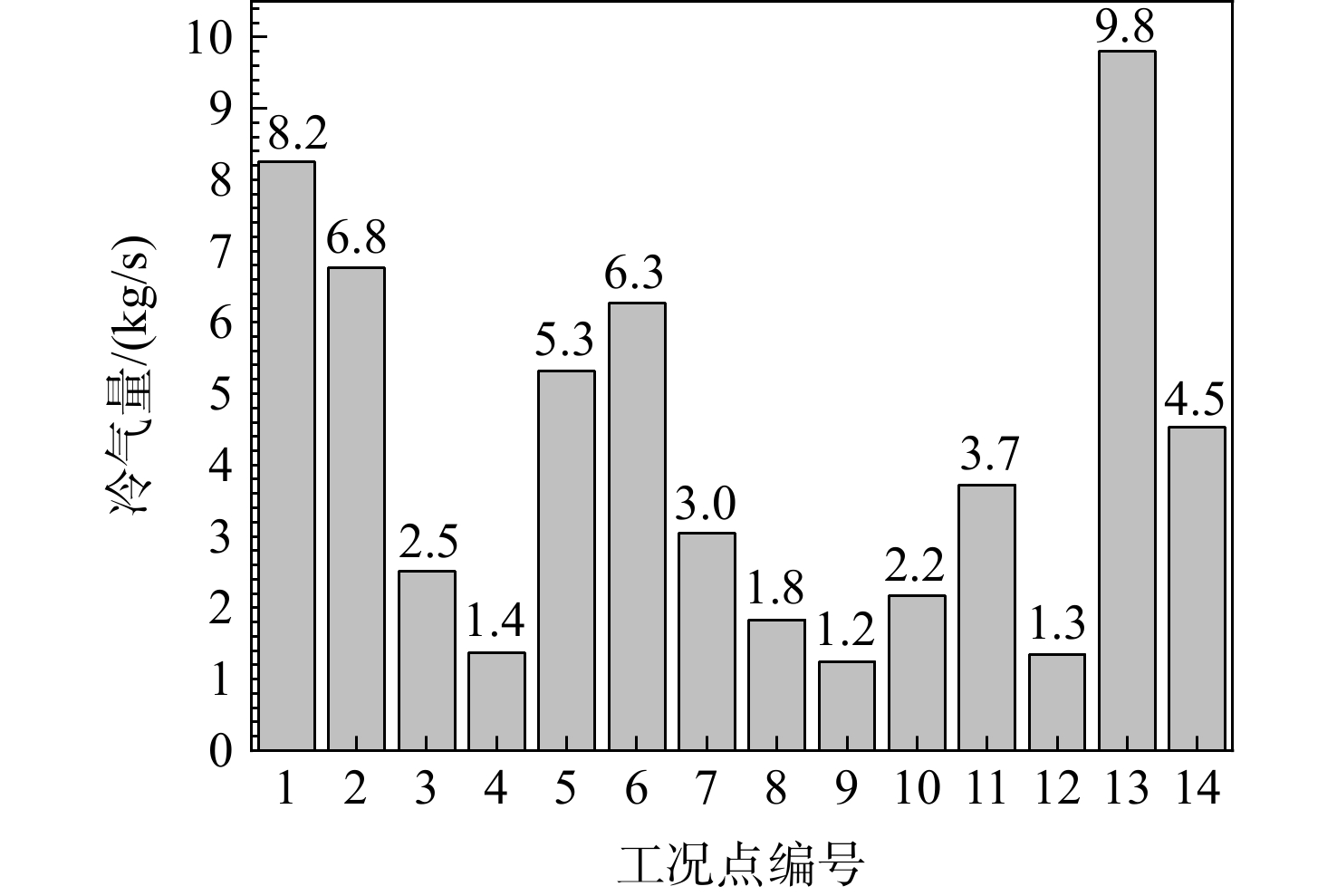
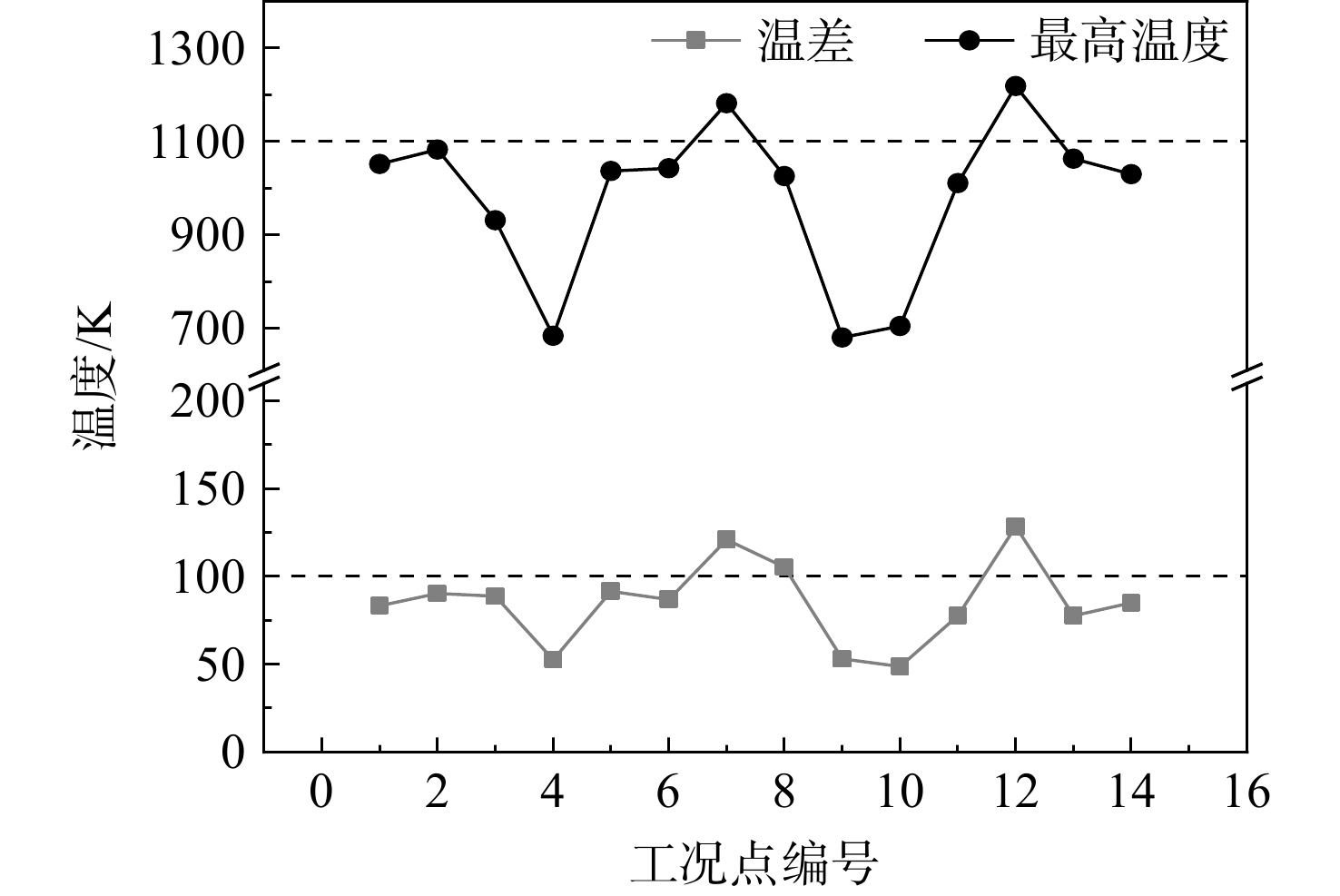
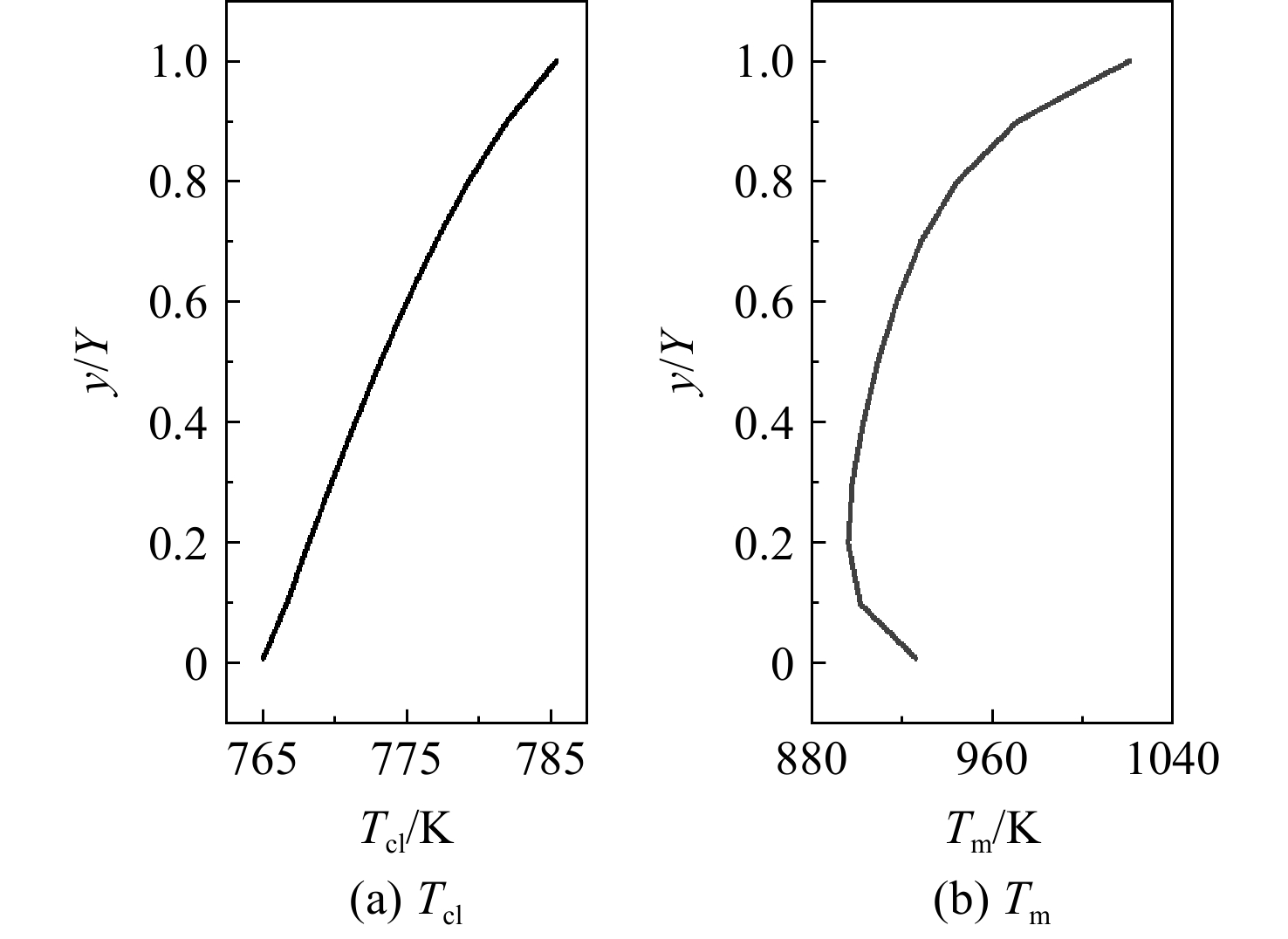
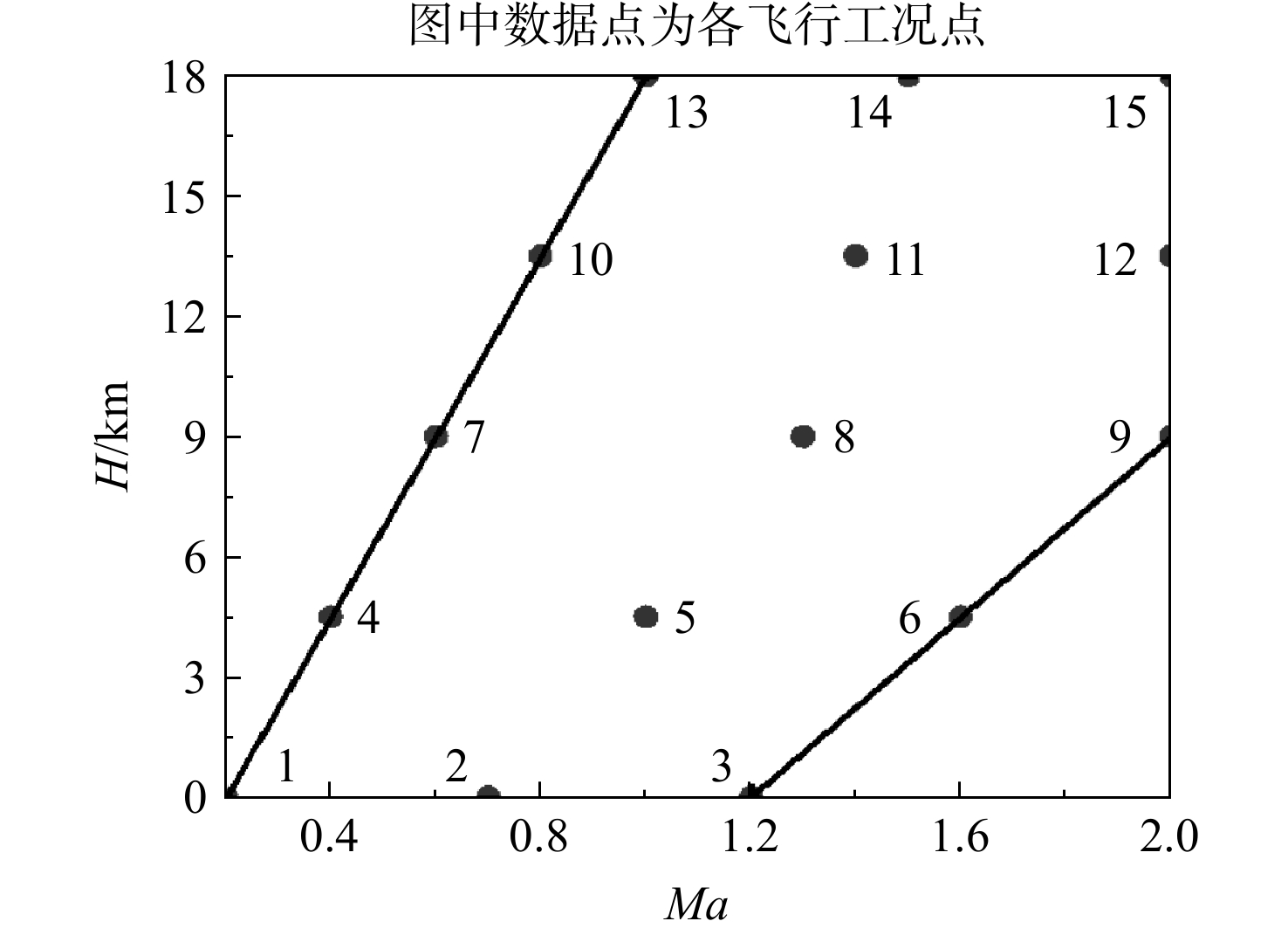
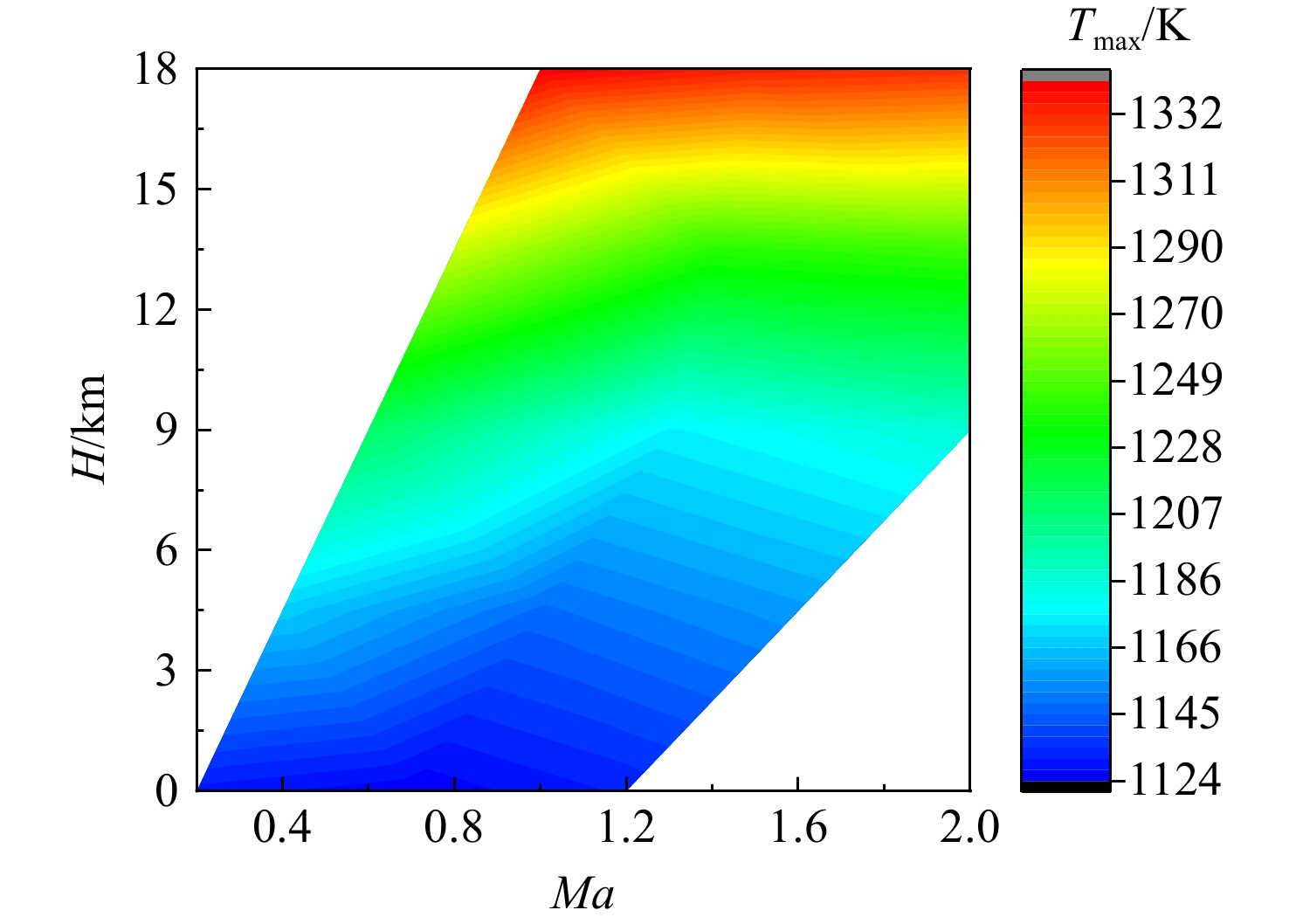
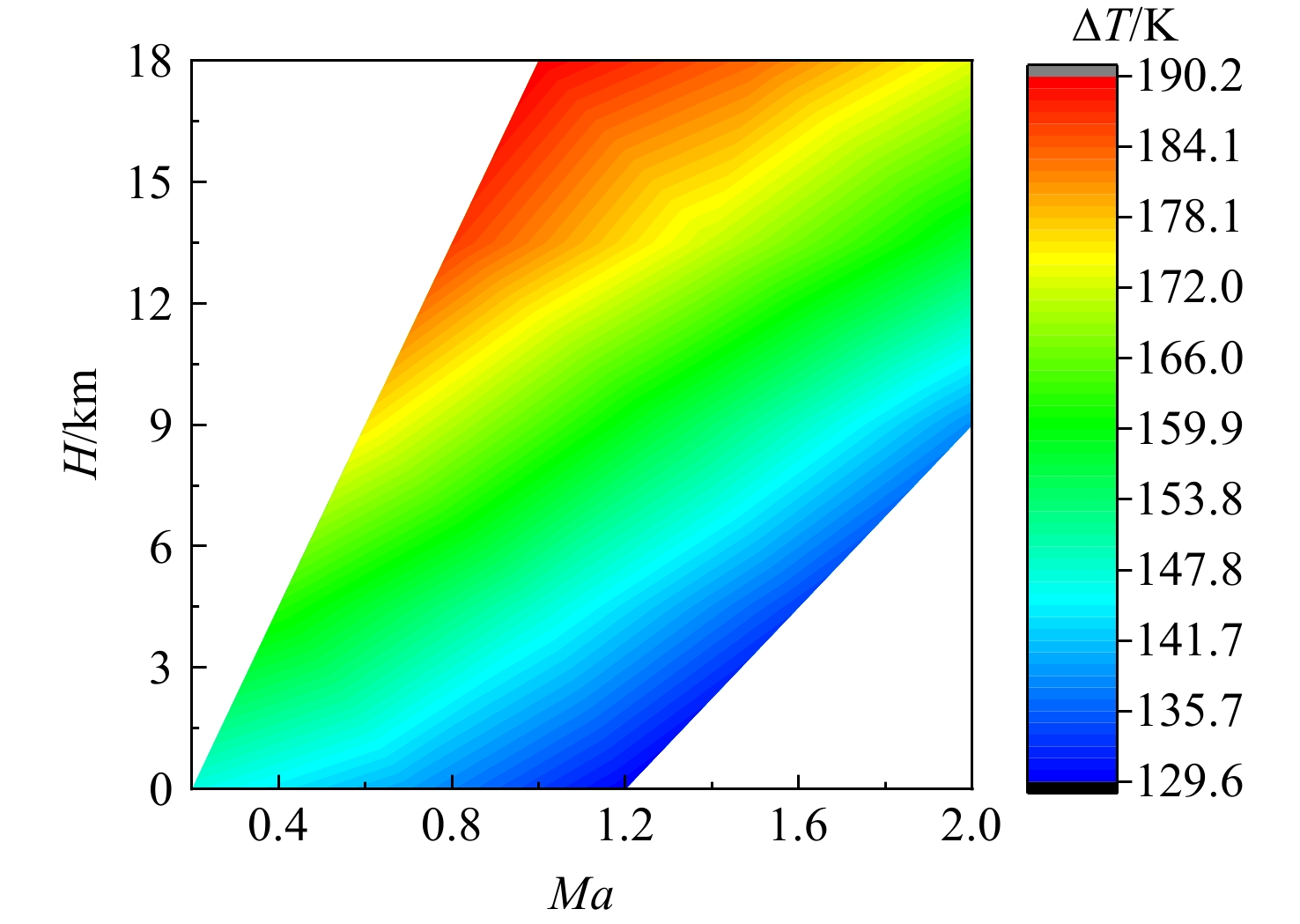
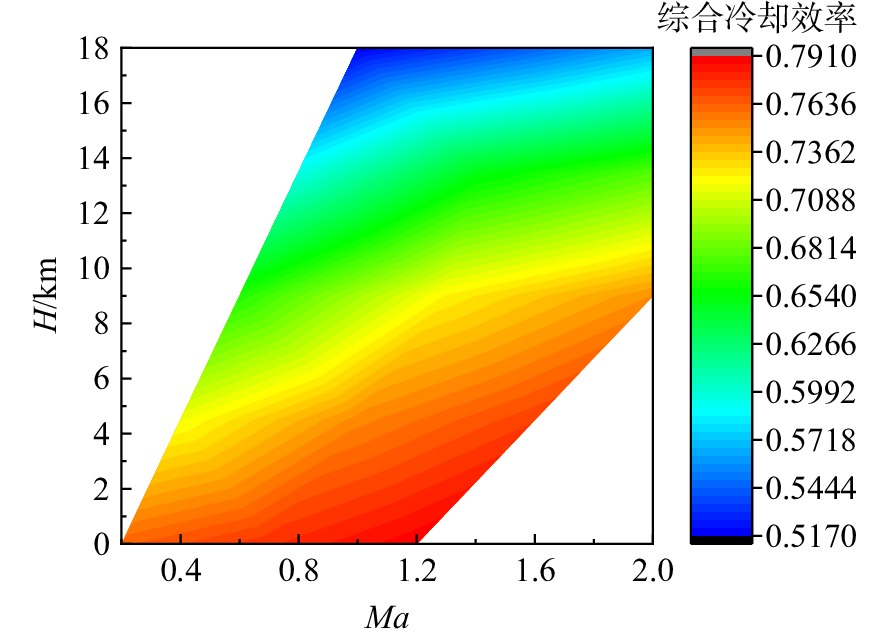
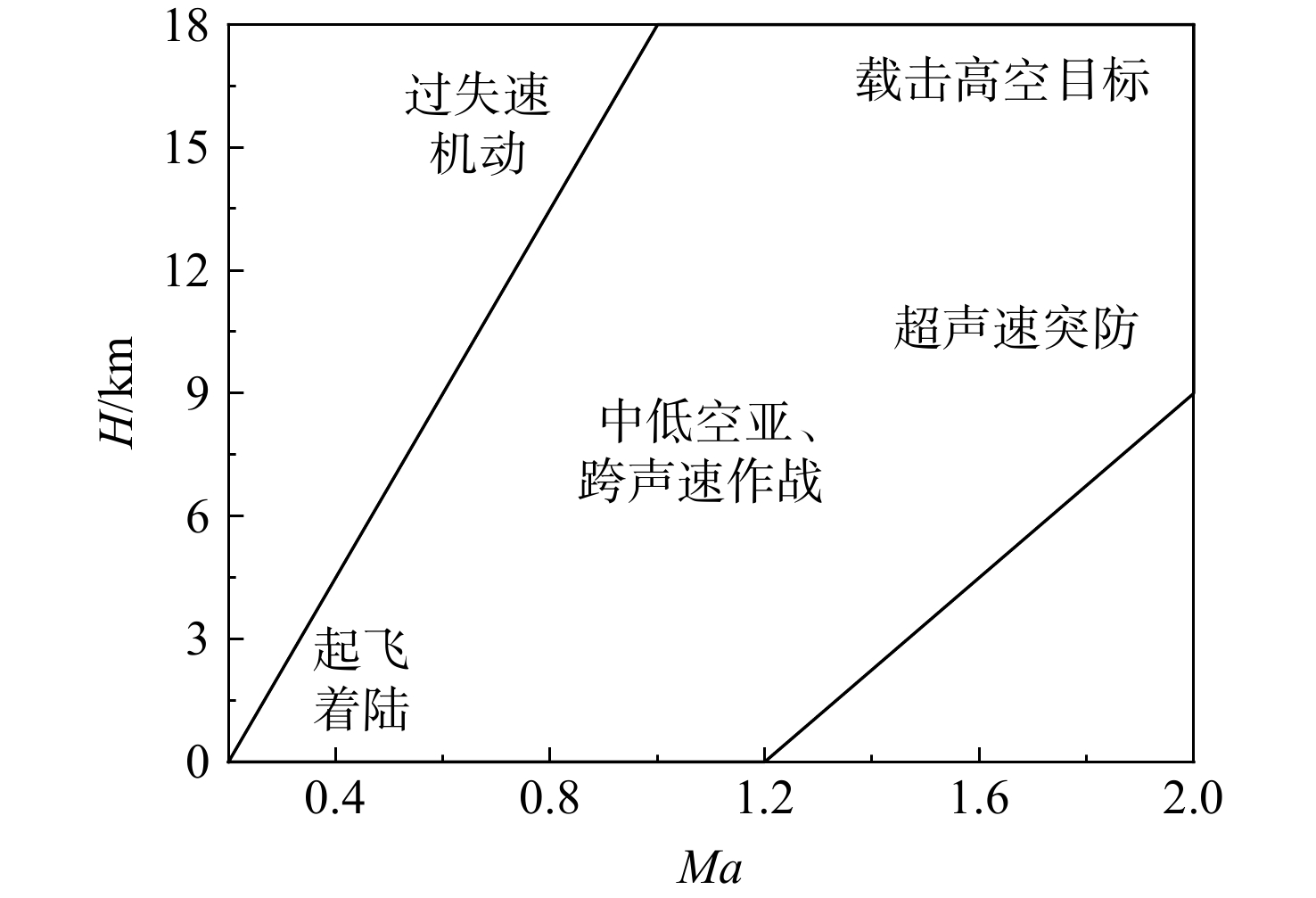
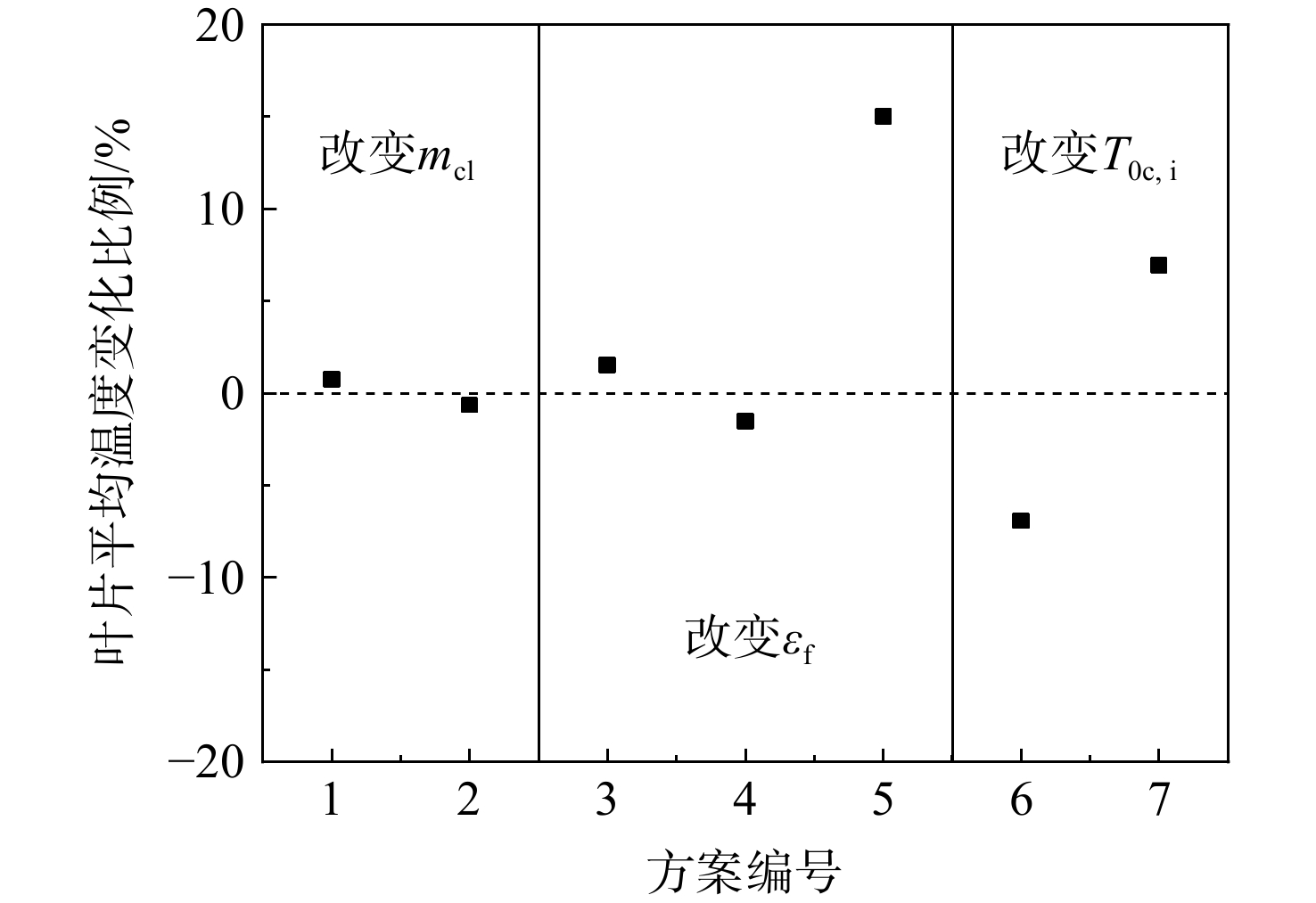
In order to meet the development trend of aero-engine turbine cooling technology, based on the traditional blade temperature evaluation model, an improved model suitable for internal and external coupled turbine blades was proposed. The improved temperature evaluation model was embedded into the engine thermal performance calculation model. And the cooling performance of the high pressure turbine guide vane of F-16 fighter within typical flight missions and flight envelope was studied through the coupling analysis of aircraft and engine. Results showed that: when analyzed on the whole flight mission, under the conditions of practical lift limit, take-off and high climb rate, the blade worked in bad thermal environment and was prone to overheat; the blade surface temperature increased along the radial direction and reached the maximum value at the blade tip. When analyzed in the flight envelope, the blade temperature changed obviously with the height; the maximum temperature and thermal stress of the blade in the high altitude region with low Mach number were the largest, and the maximum temperature of the blade can reach 1342 K; compared with the highest cooling efficiency in flight envelope, the comprehensive cooling efficiency in the high altitude region with low Mach number was reduced obviously by 34.2%. When conducting sensitivity analysis of model parameters, compared with the benchmark scheme, when the input parameters changed by the same proportion, changing the inlet temperature of cool air had the most significant effect on blade temperature.
Effect of fuel spray on combustion characteristics of a small engine annular reverse flow combustor
YANG Yudong, LIU Aiguo, WANG Xinci, XI Lei, CHEN Lei
2023, 38(4): 830-839. doi: 10.13224/j.cnki.jasp.20210216
Abstract:

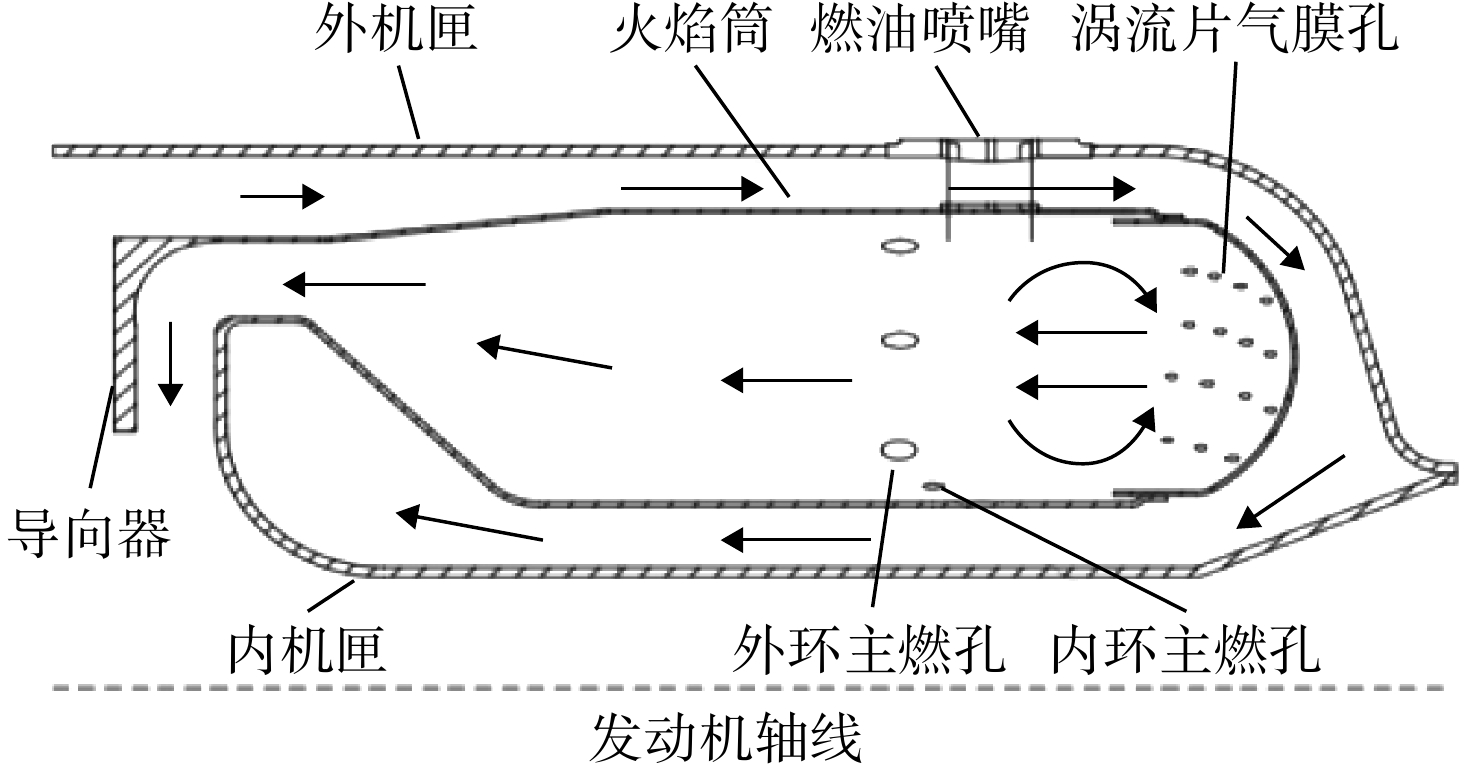
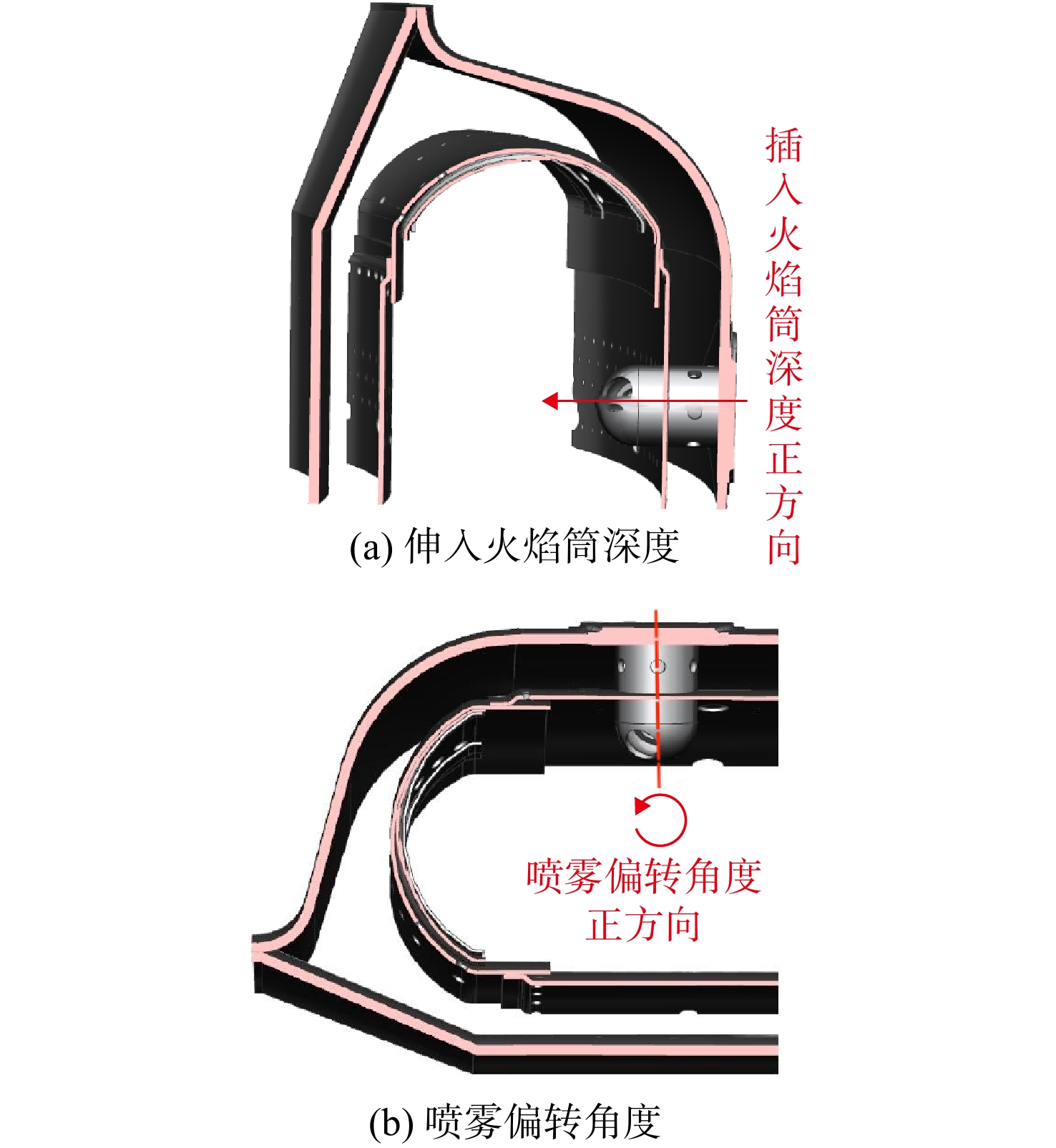
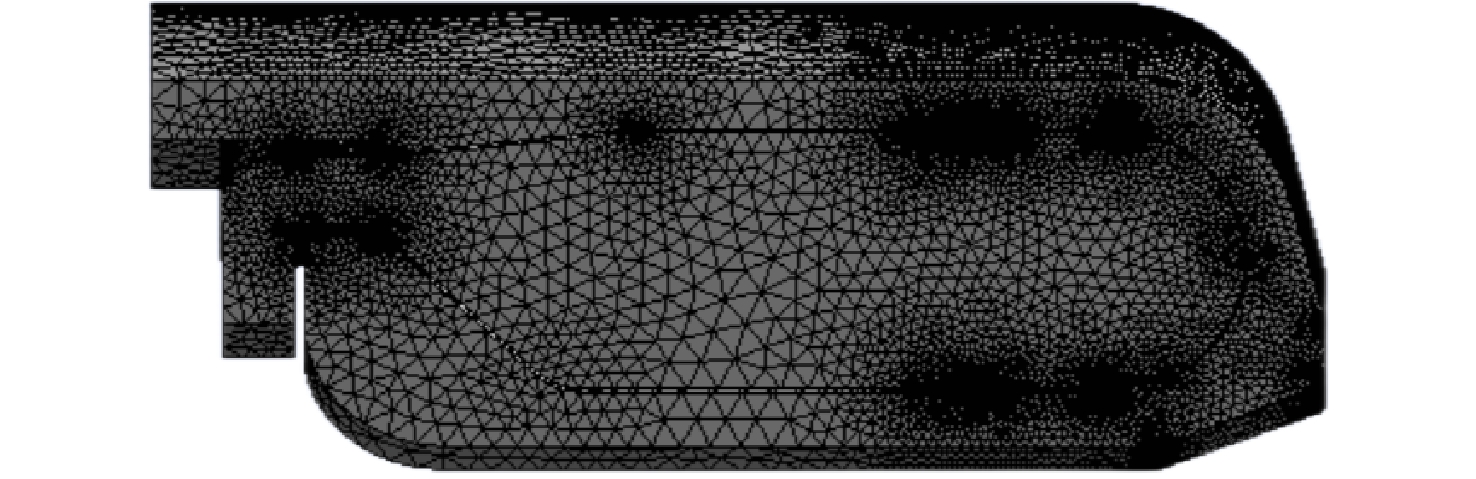
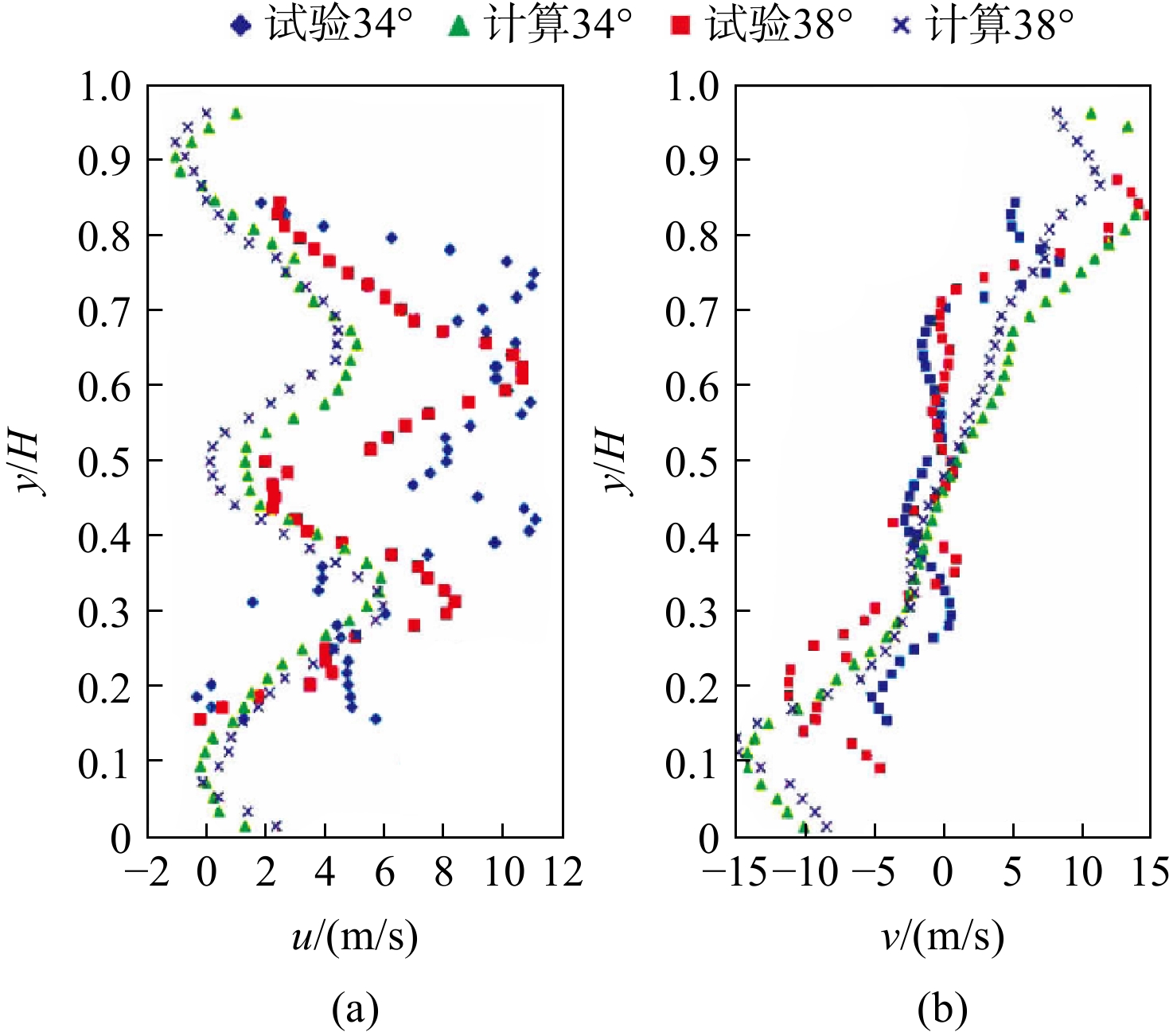
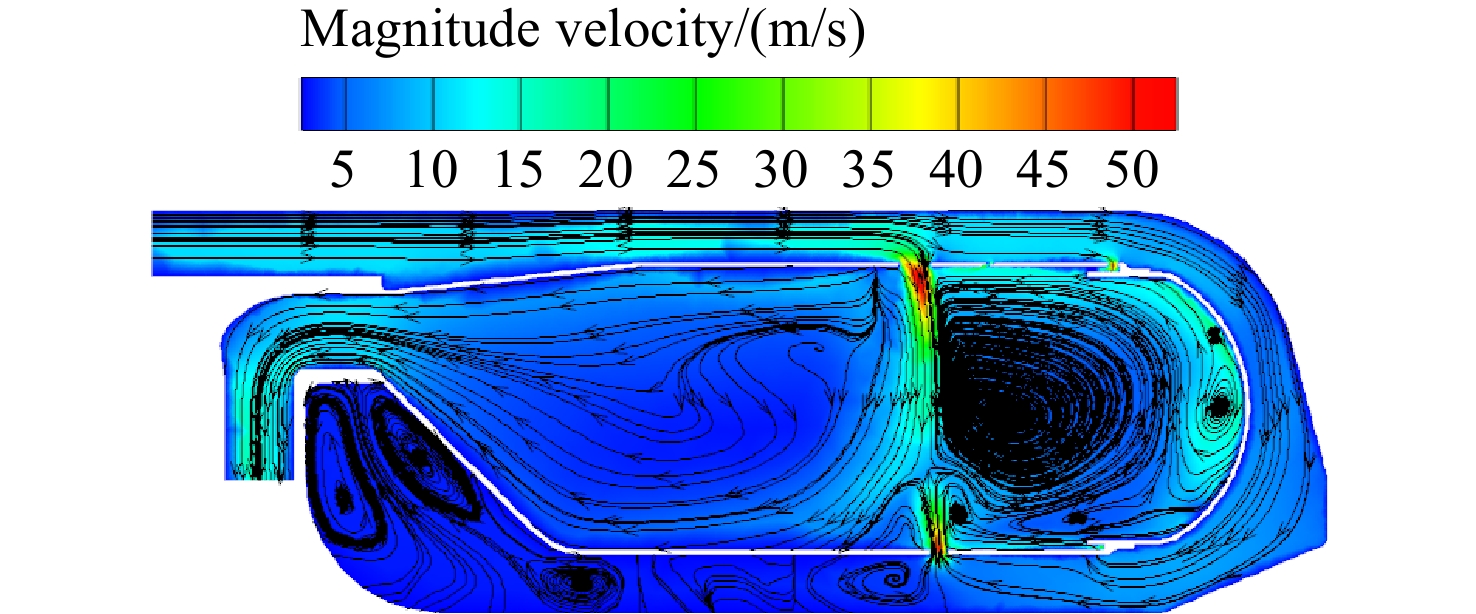
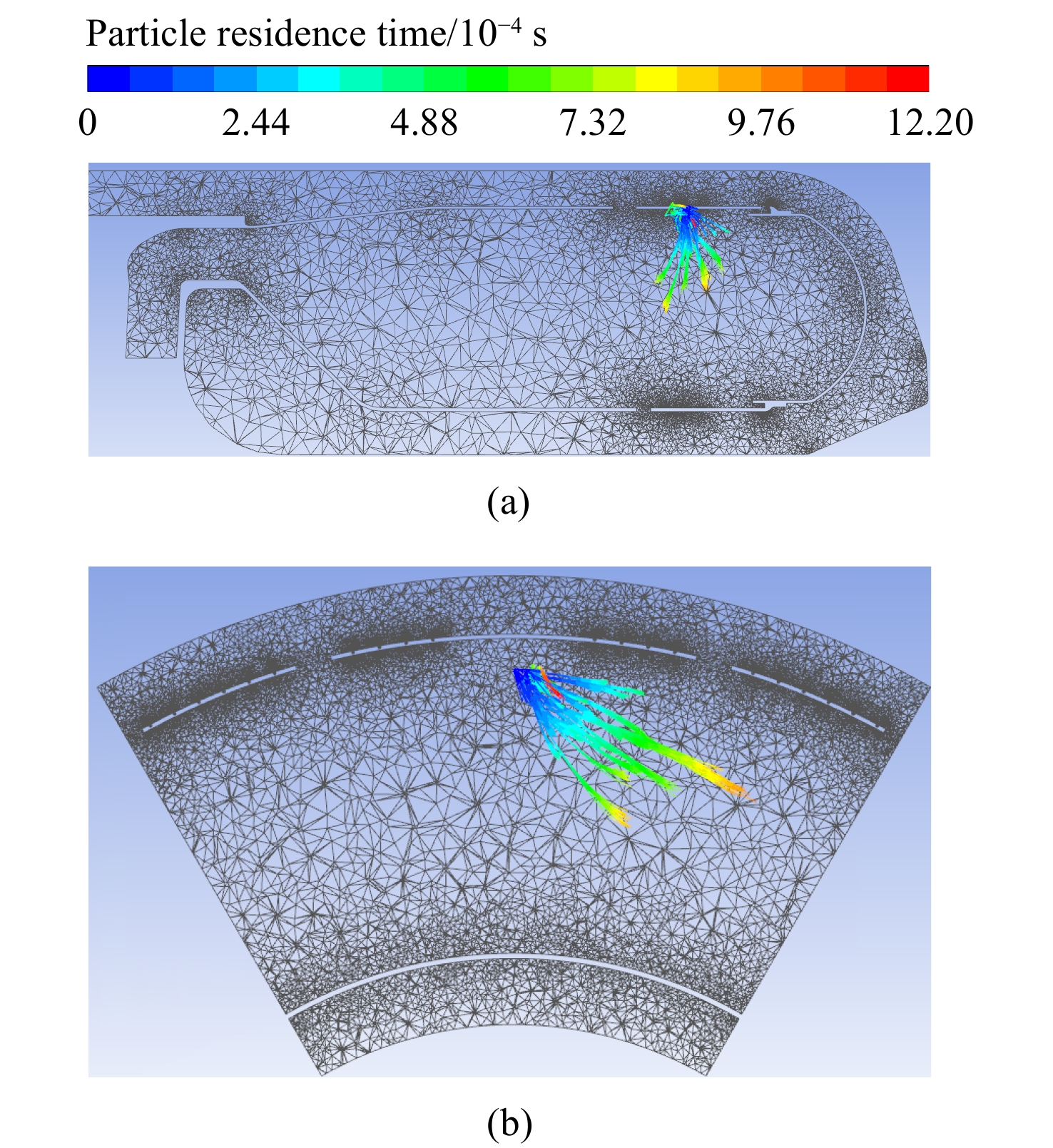
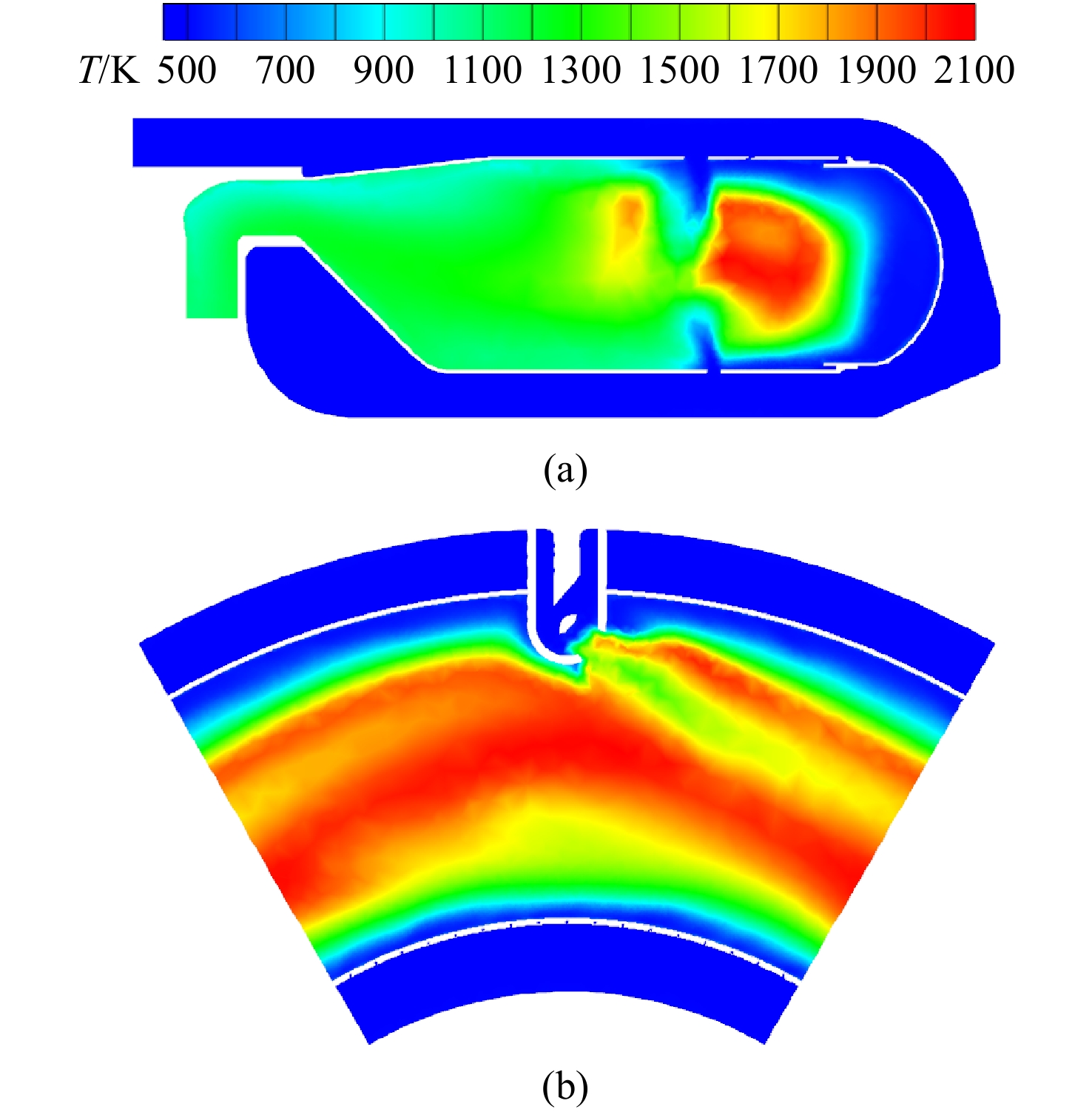
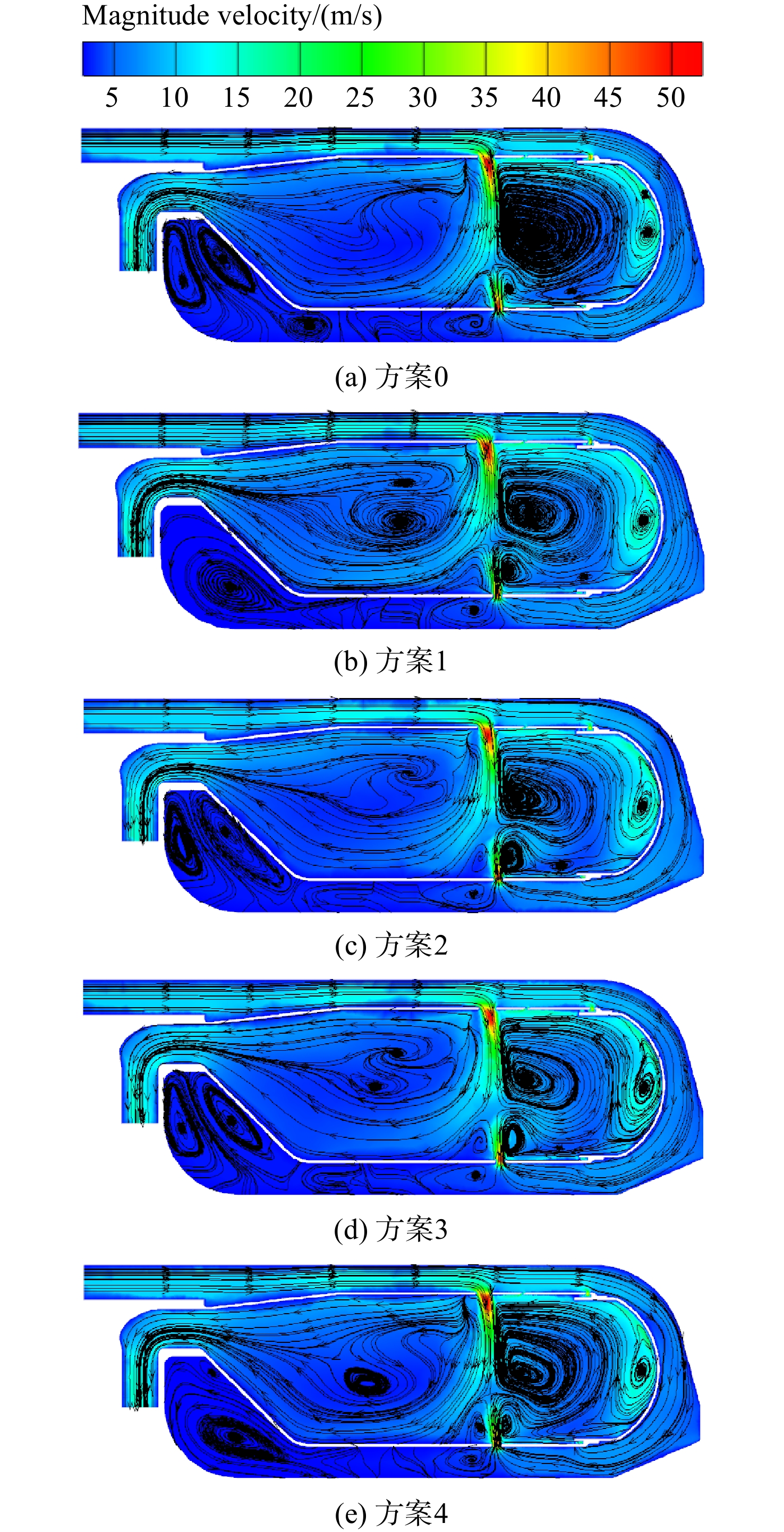
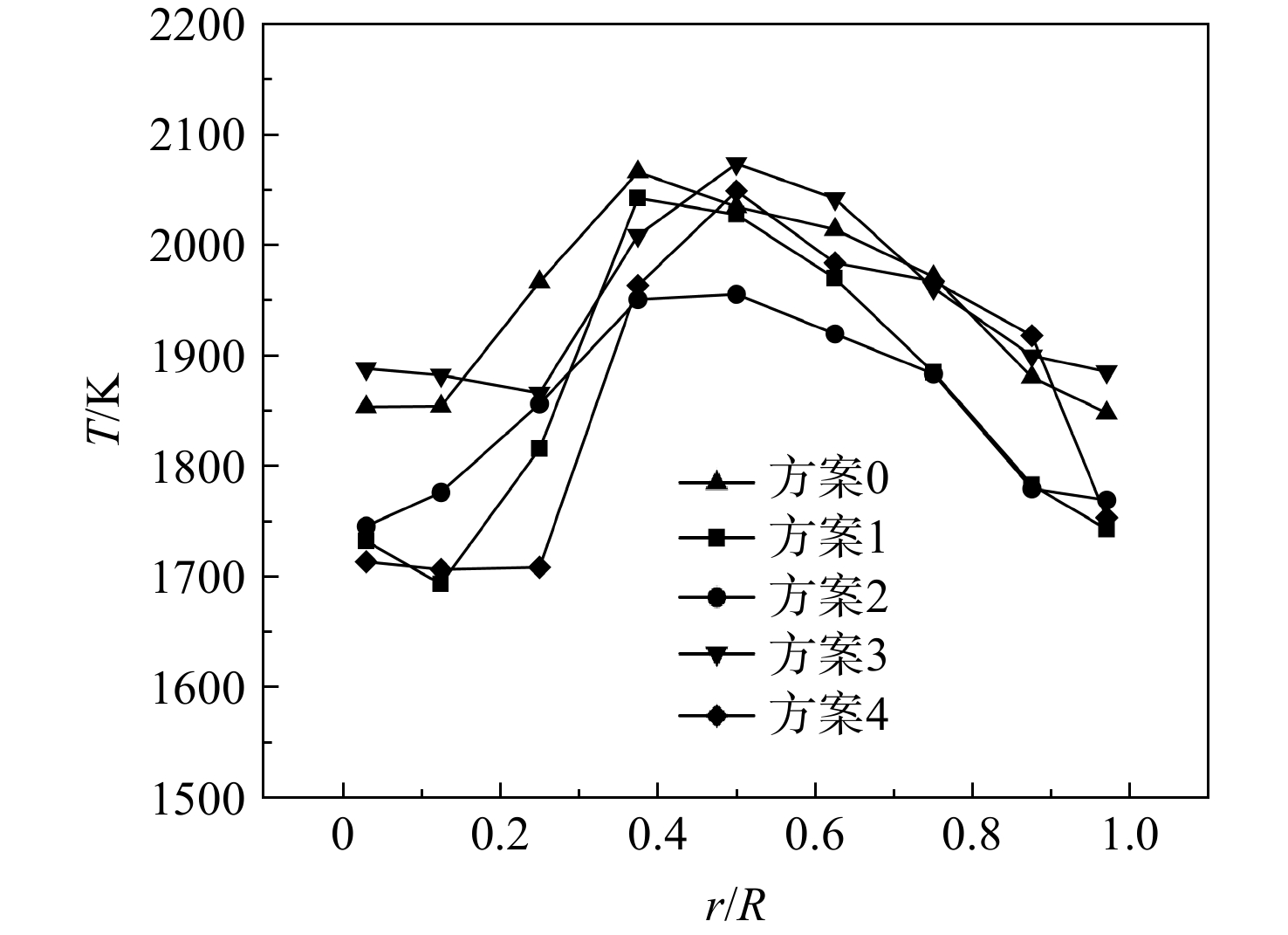
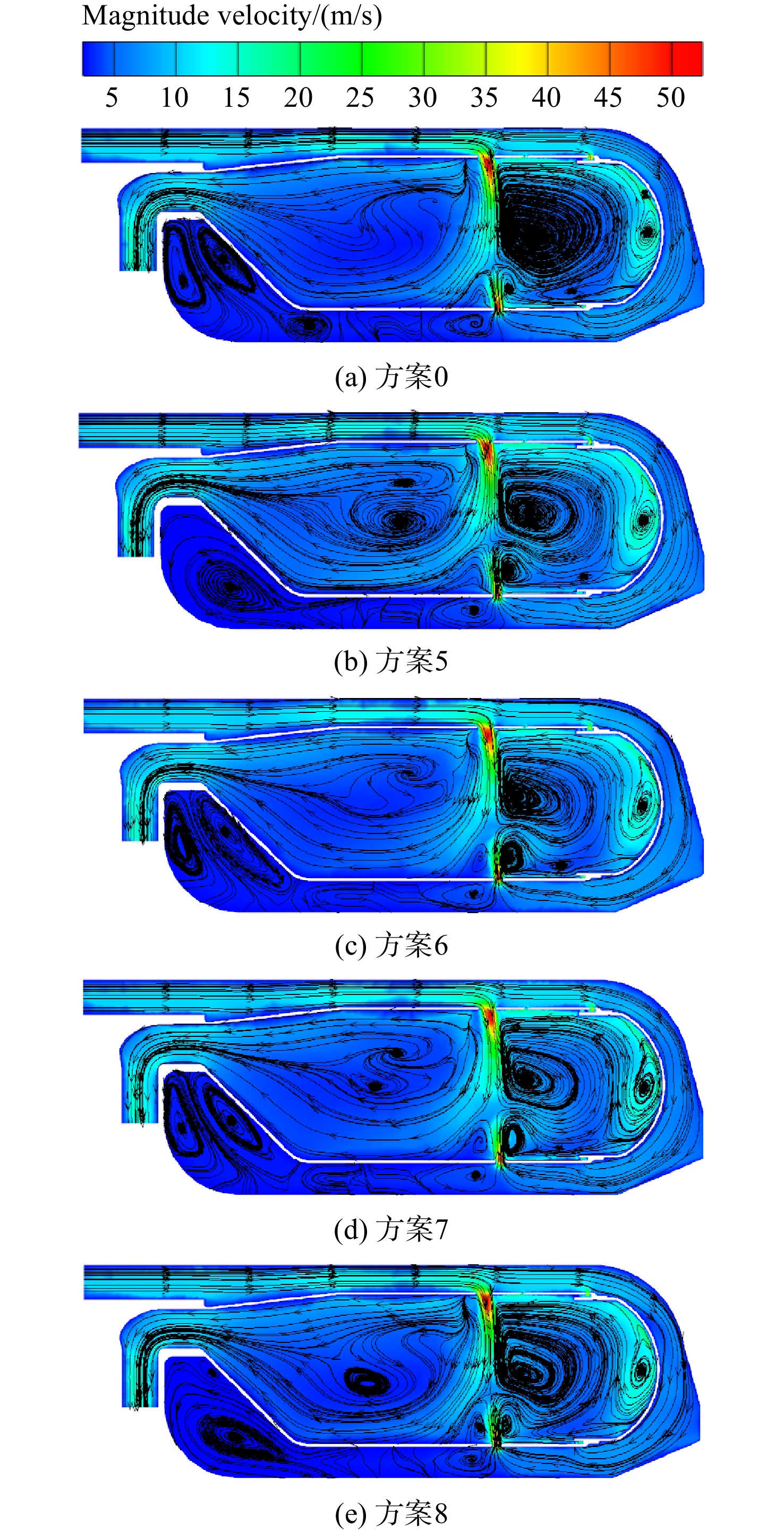
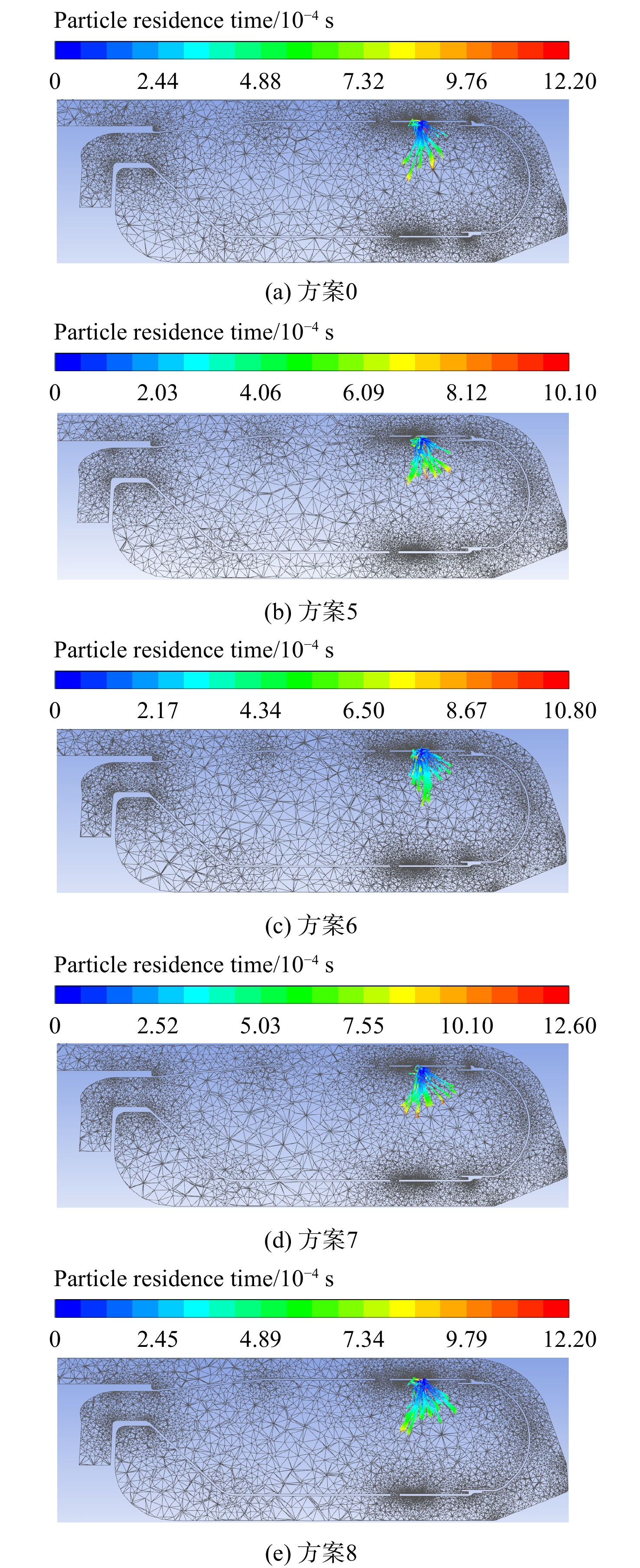
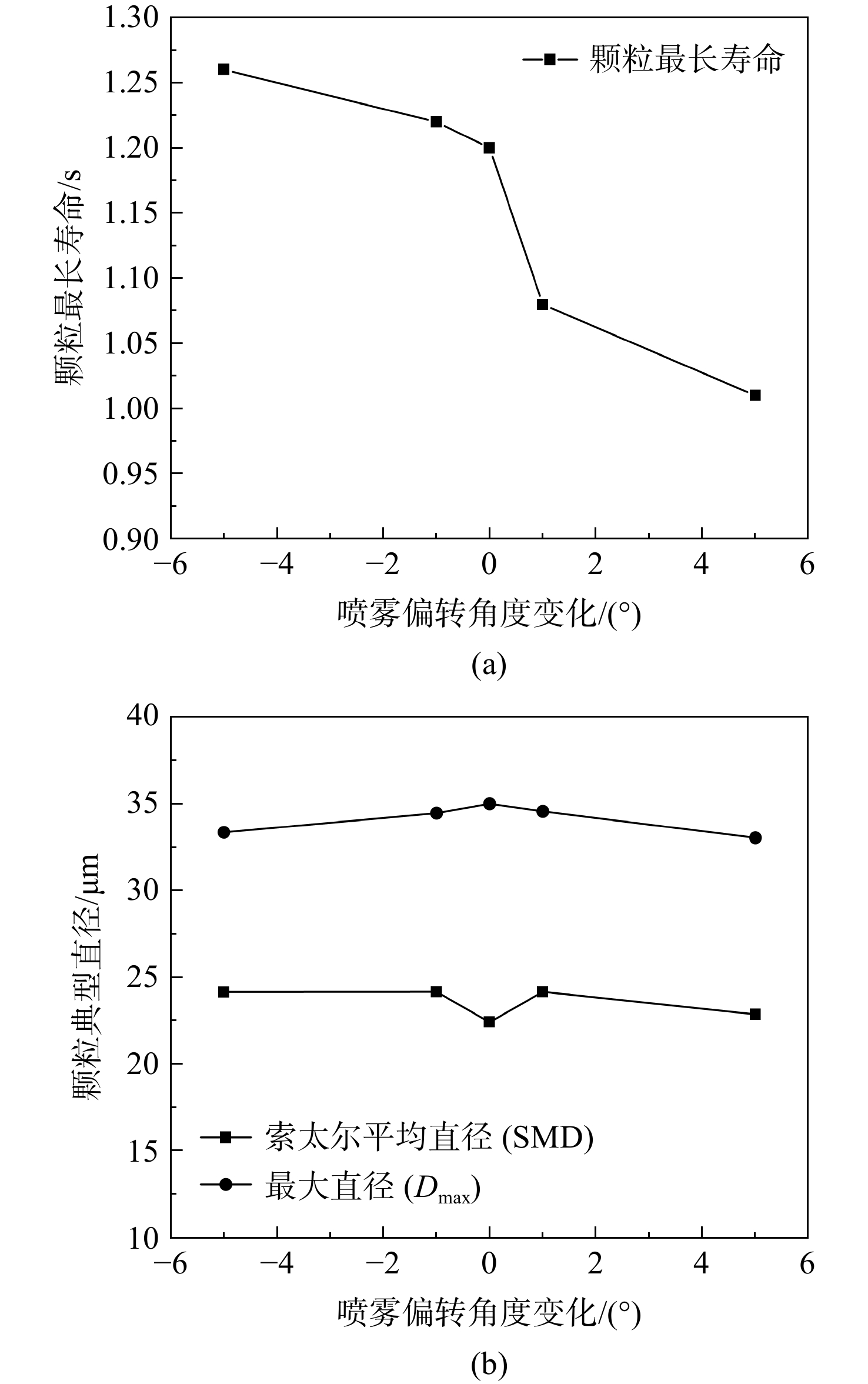
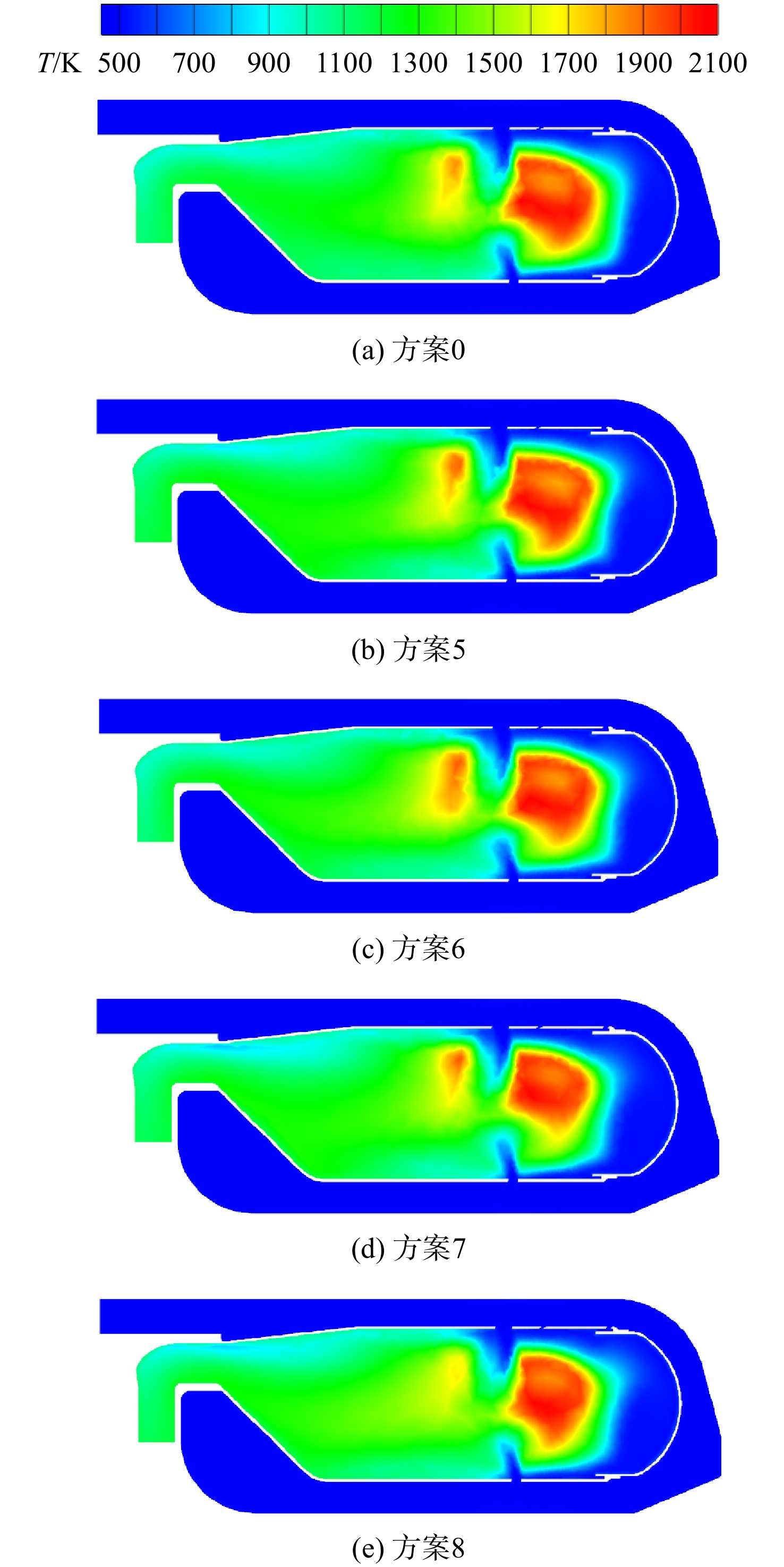
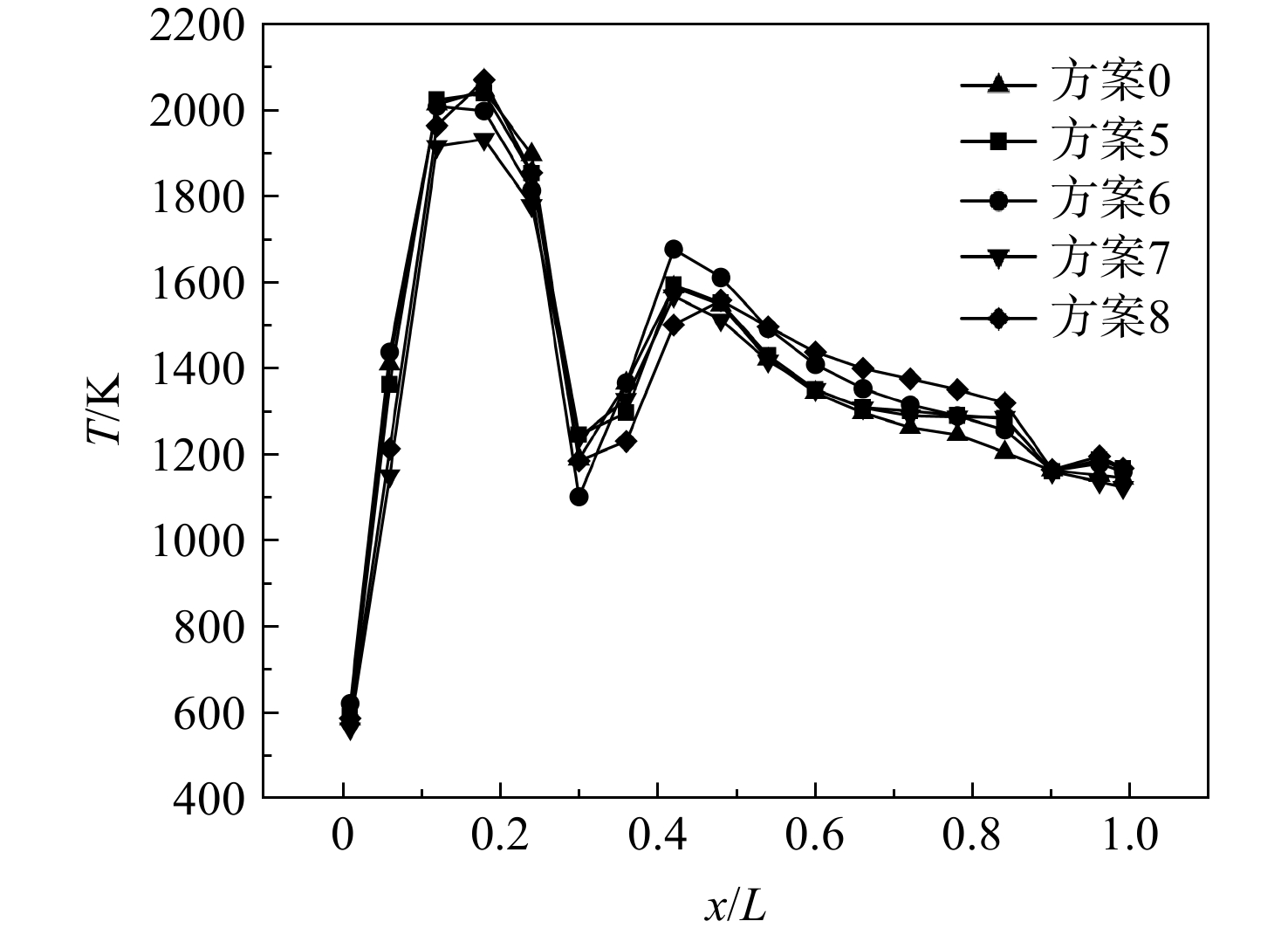
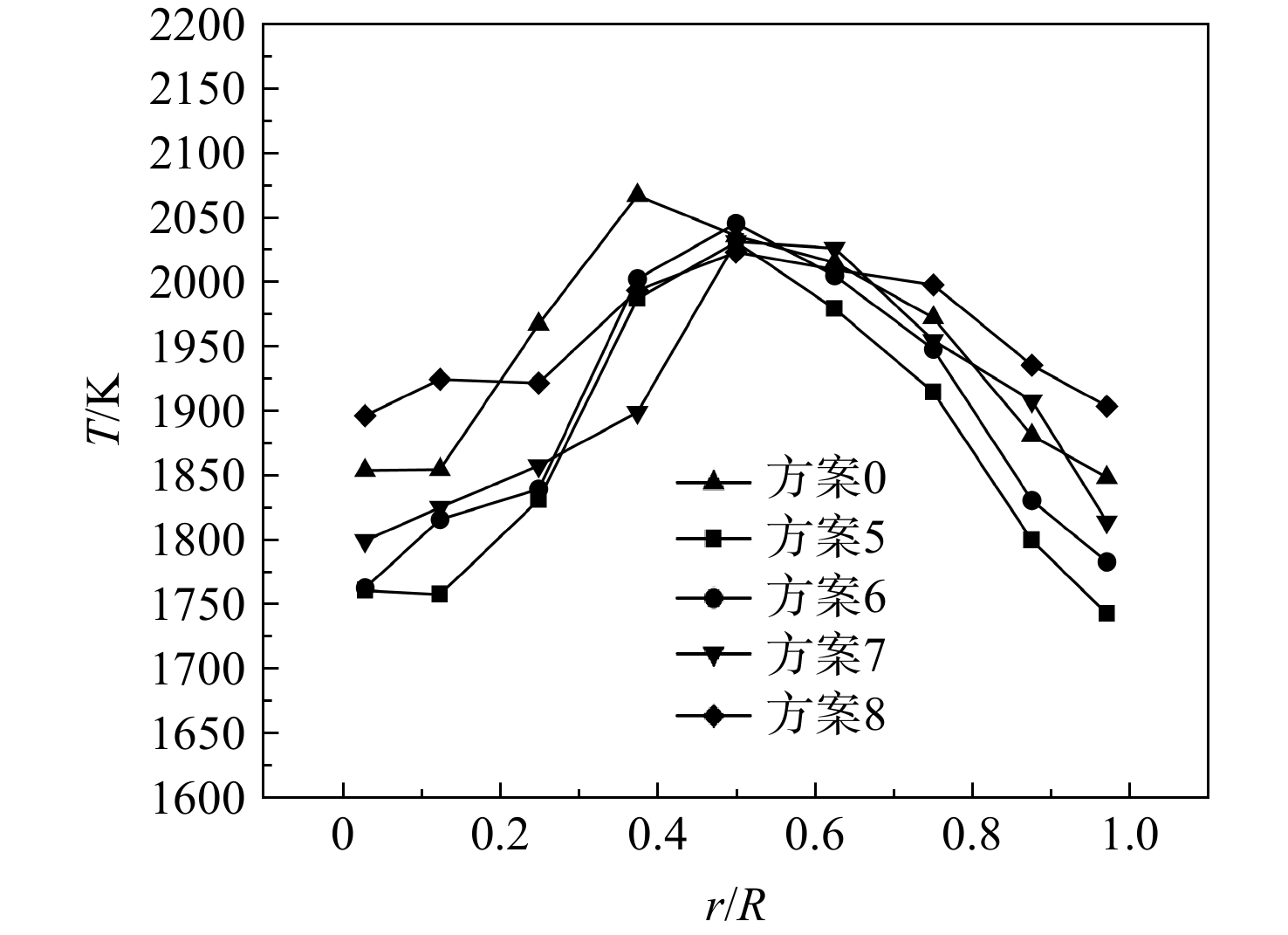
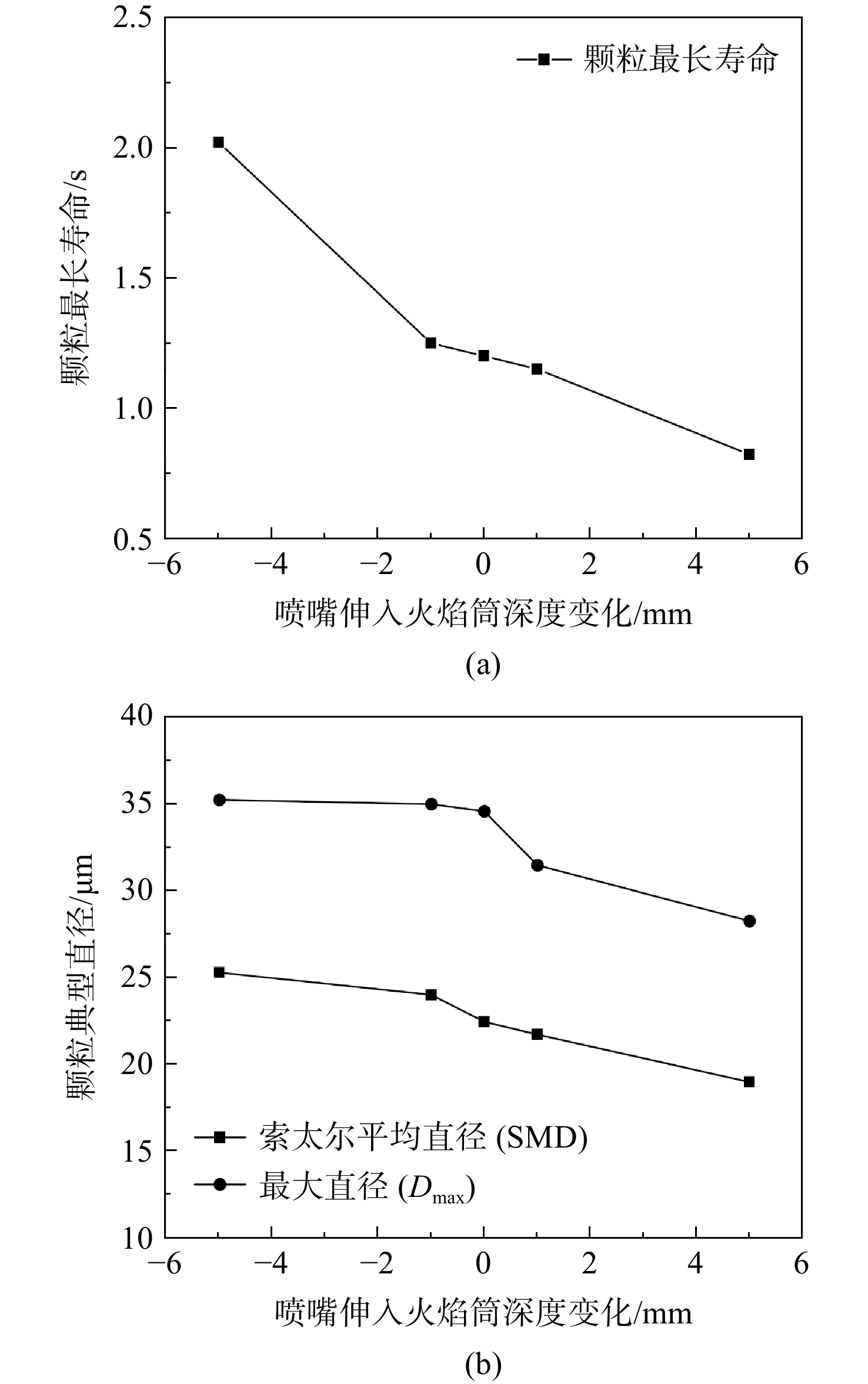
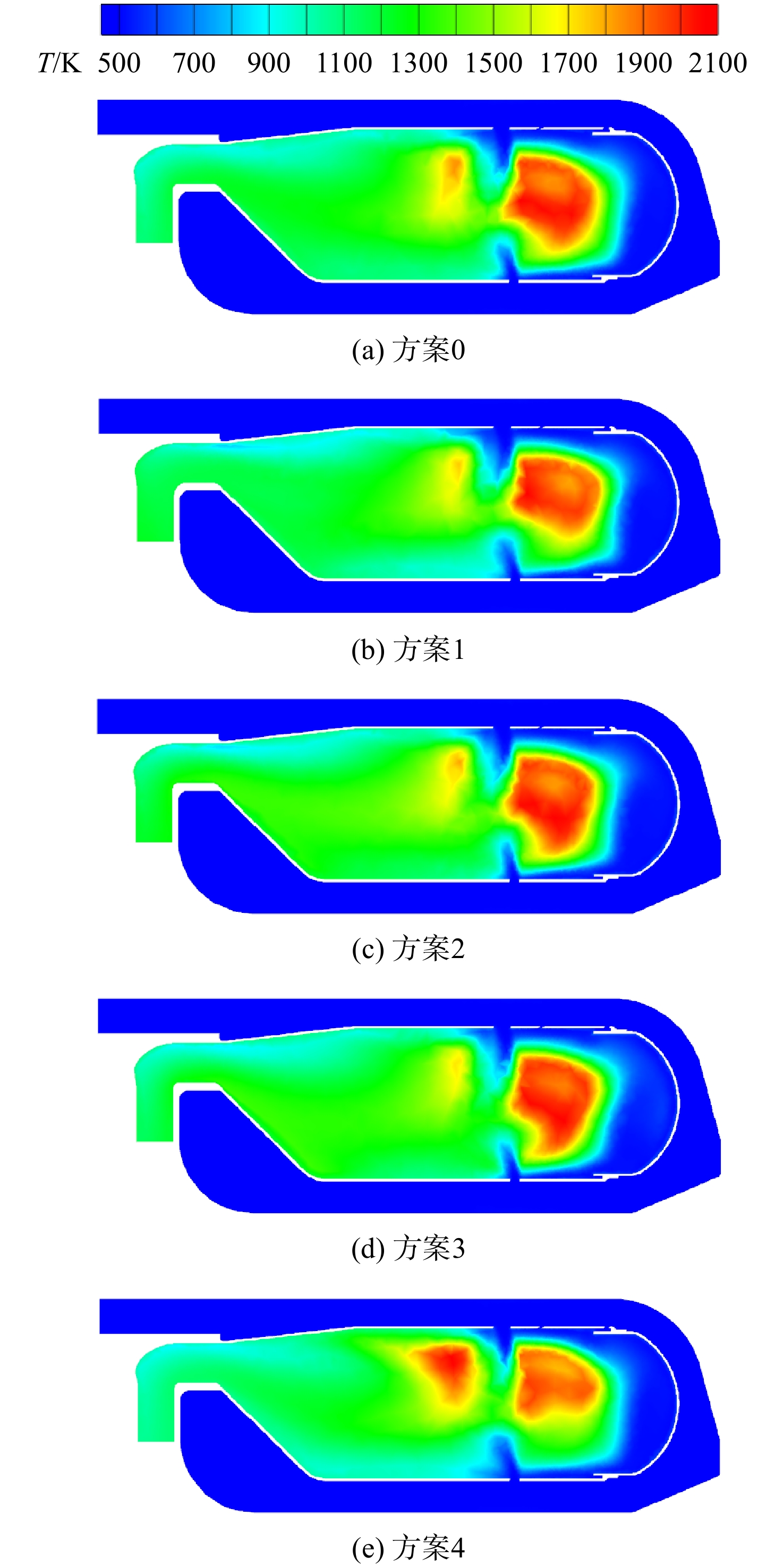
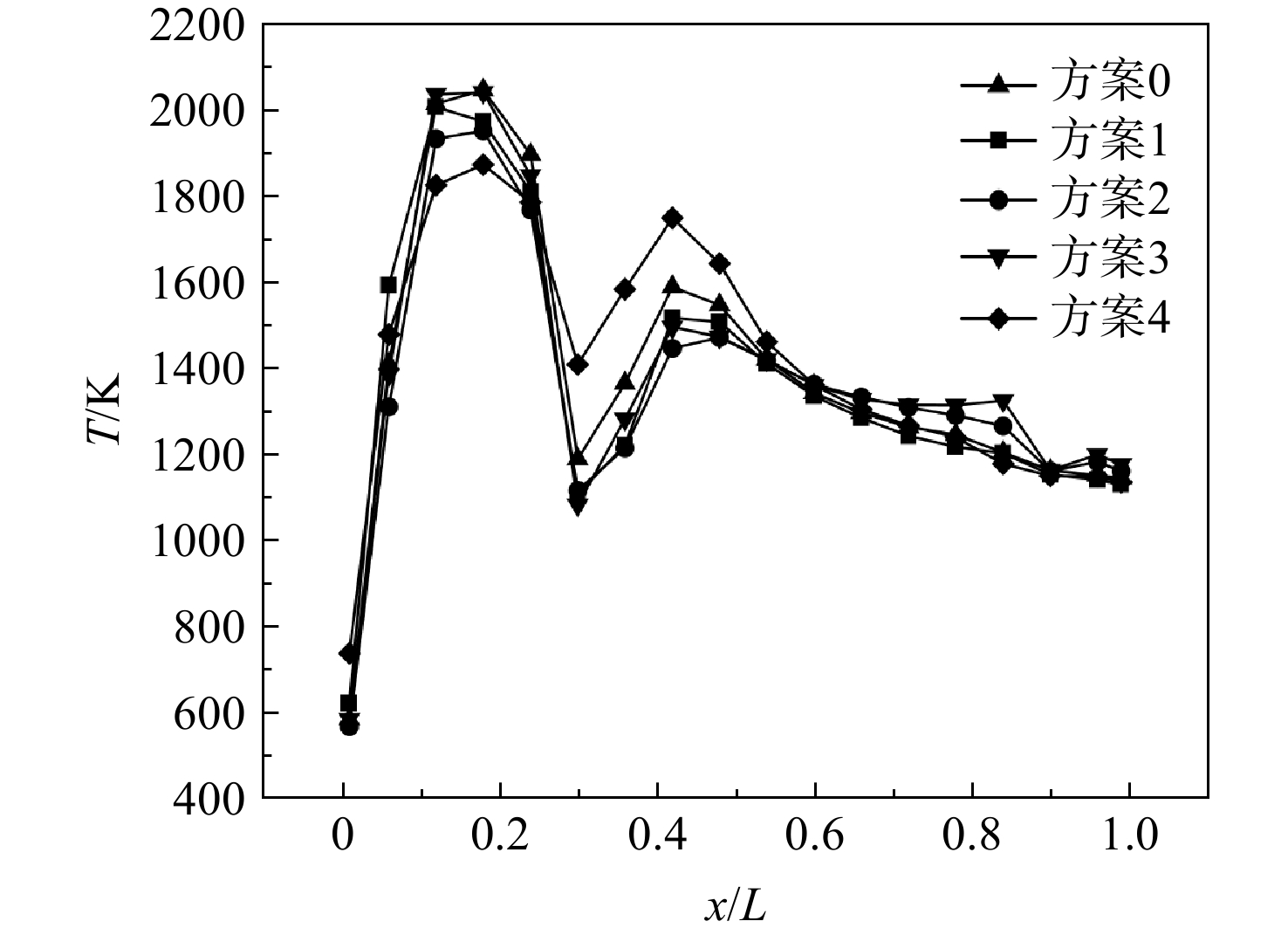
In order to study the effect of fuel spray on the combustion characteristics of primary combustion zone of a small engine annular reverse flow combustor, numerical simulation method was used to study the three-dimensional two-phase spray and combustion characteristics of the annular reverse flow combustor by the insertion depth of the nozzle into the flame tube and spray deflection angle in the combustor. The results showed that: the change of nozzle position and angle caused the change of fuel atomization performance, which caused the change of combustion characteristics; as the depth of nozzle extending into the flame tube became shorter, it could make the high temperature zone narrow and close to the outer wall of the flame tube. The longer depth could lead to reduction of the high temperature zone of primary combustion zone and insufficient combustion; the clockwise rotation of the spray deflection angle can make the fuel burning more fully in the primary combustion zone.

Design and experimental study of S-type foam metal tube-fin heat exchanger
ZHAO Hongliu, SUN Mingrui, JIANG Nan, LIU Weiguo, YAN Guanghan, SONG Yongchen, ZHAO Jiafei
2023, 38(4): 840-849. doi: 10.13224/j.cnki.jasp.20210219
Abstract:

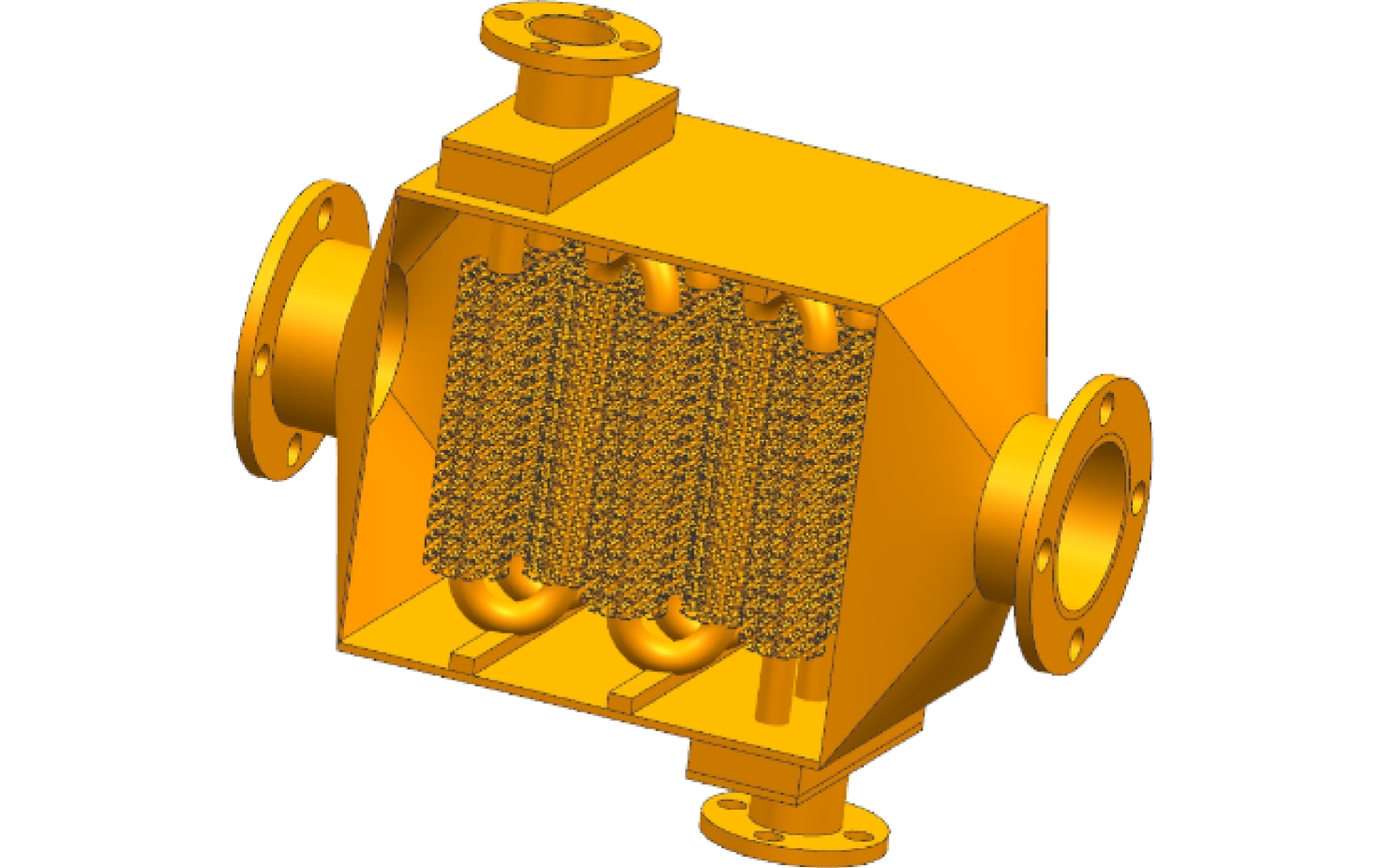
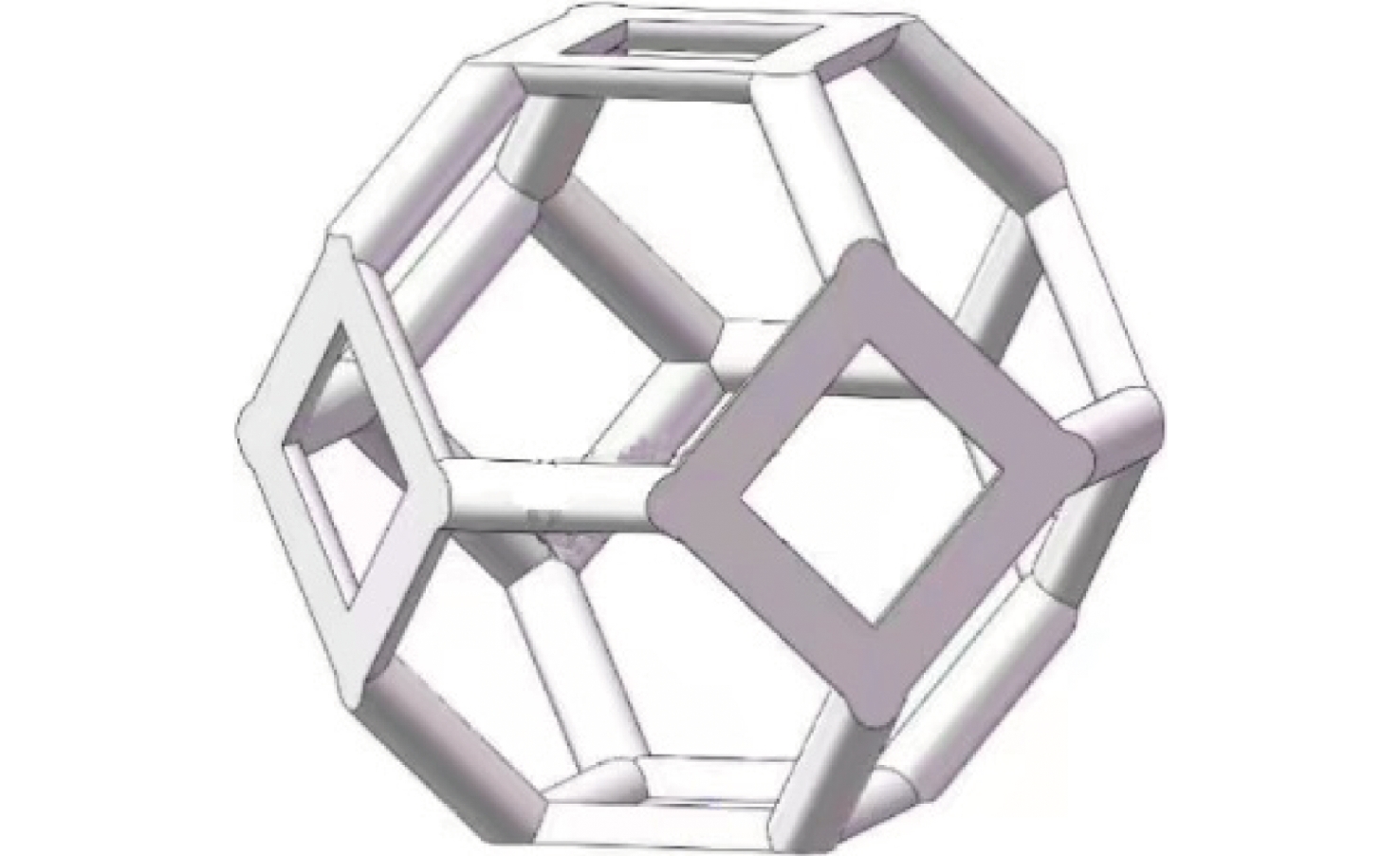
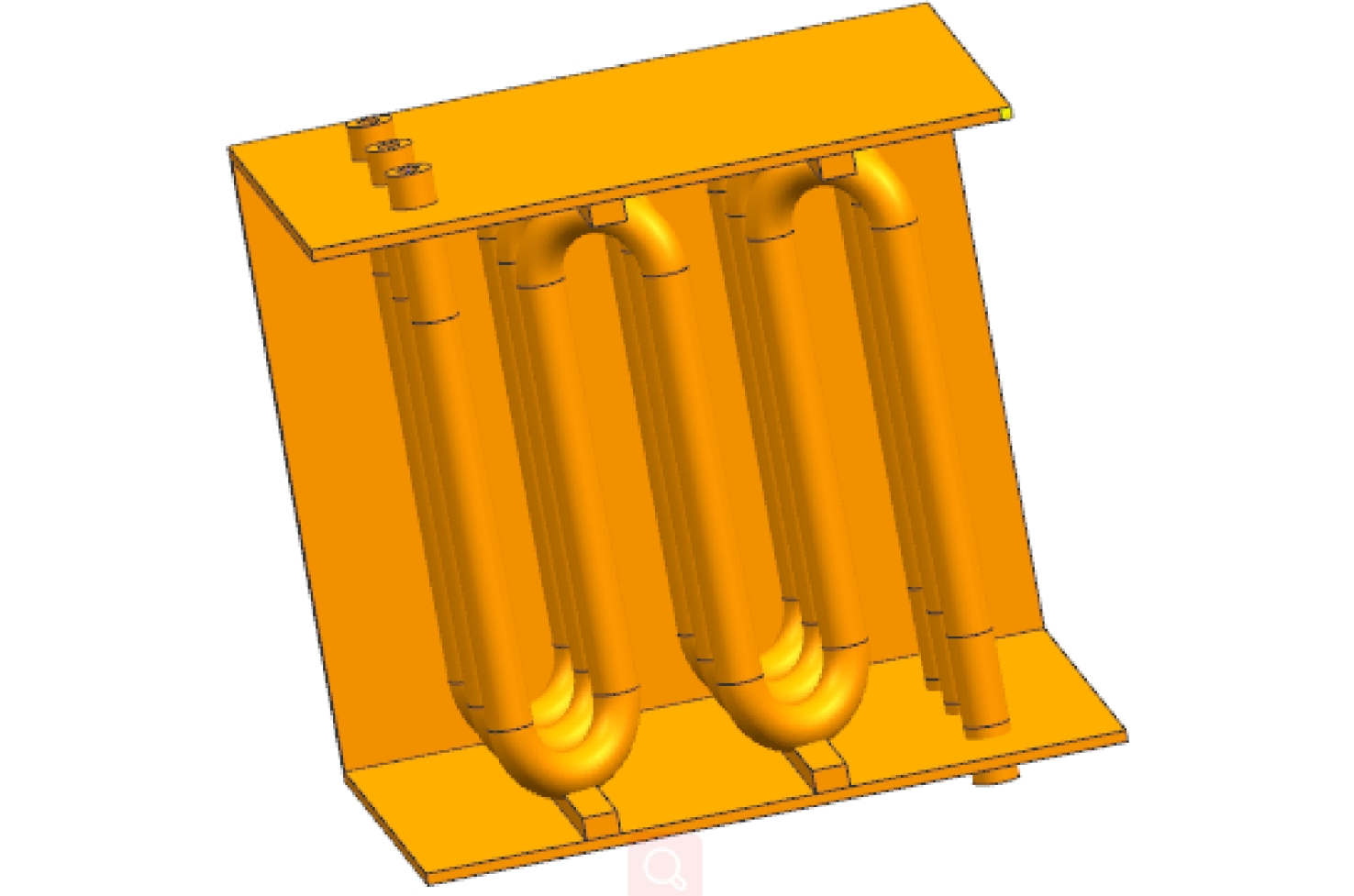
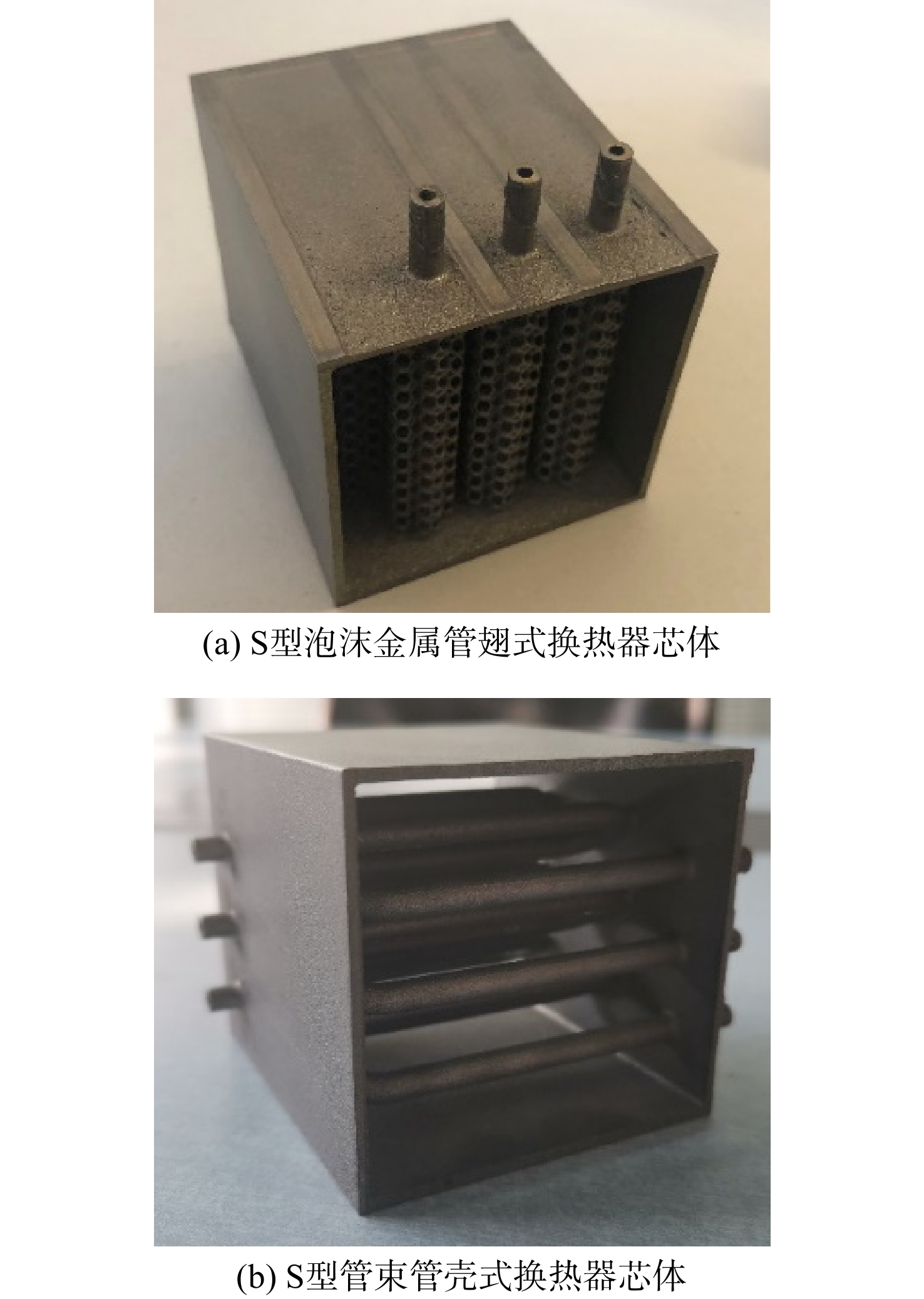
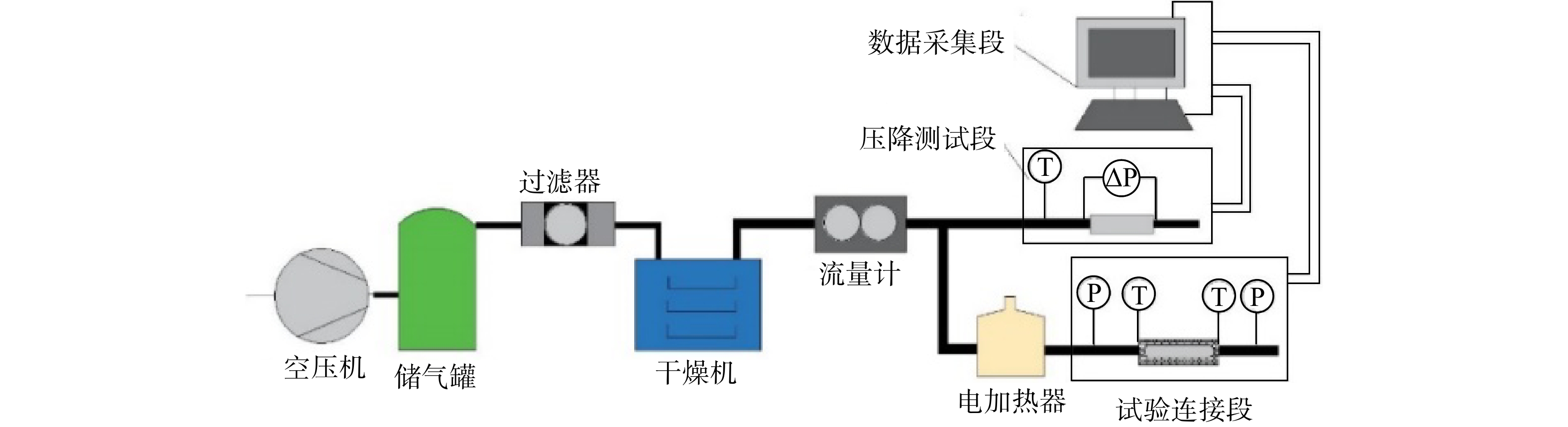
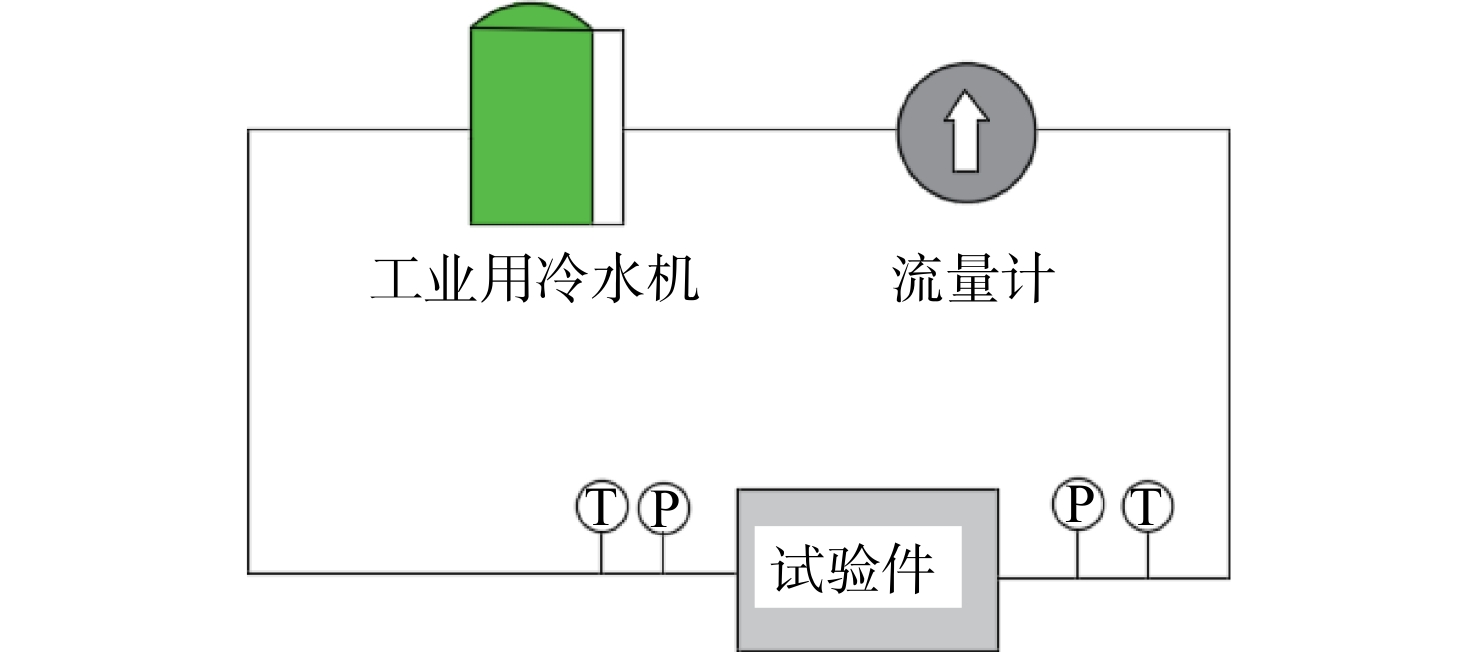
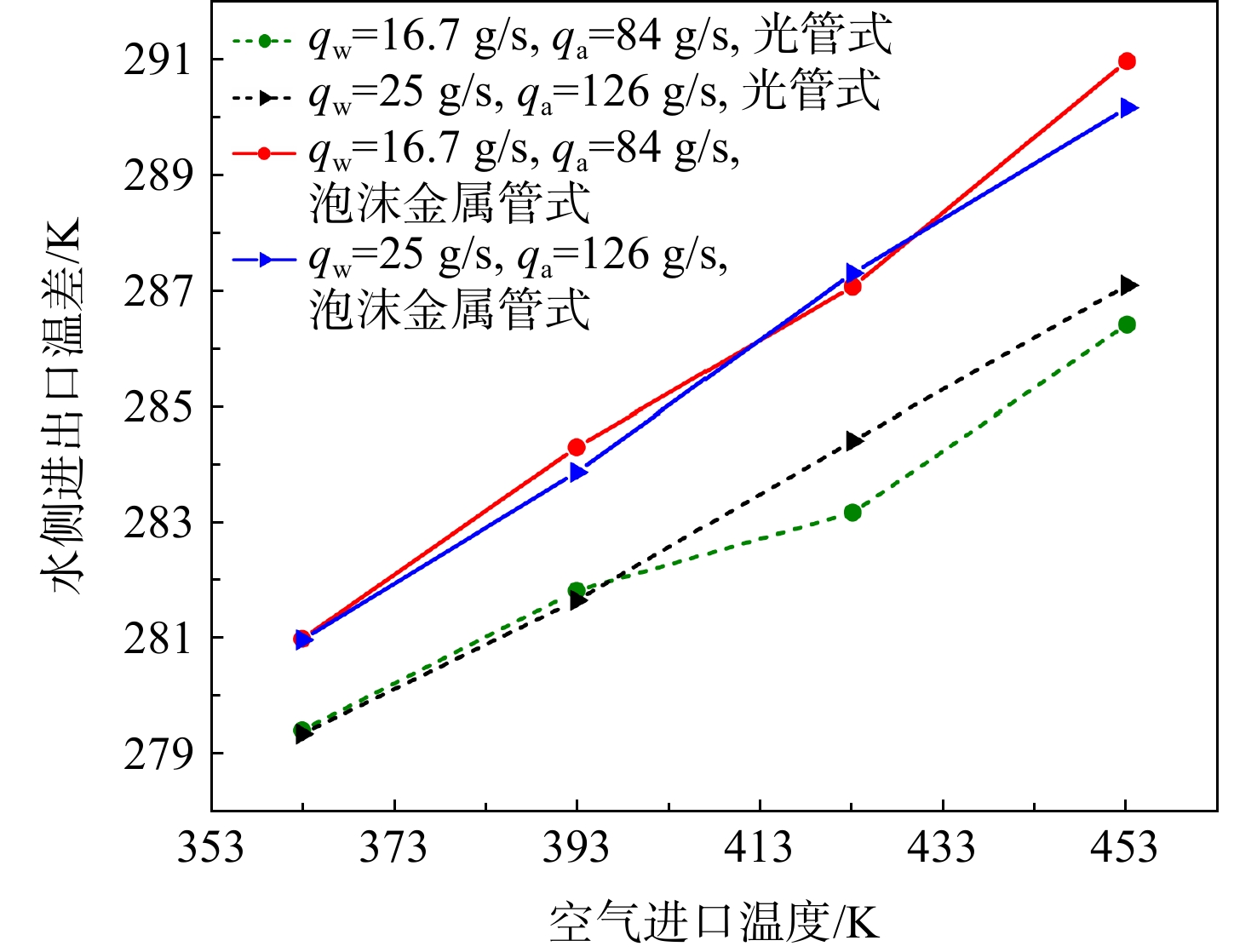
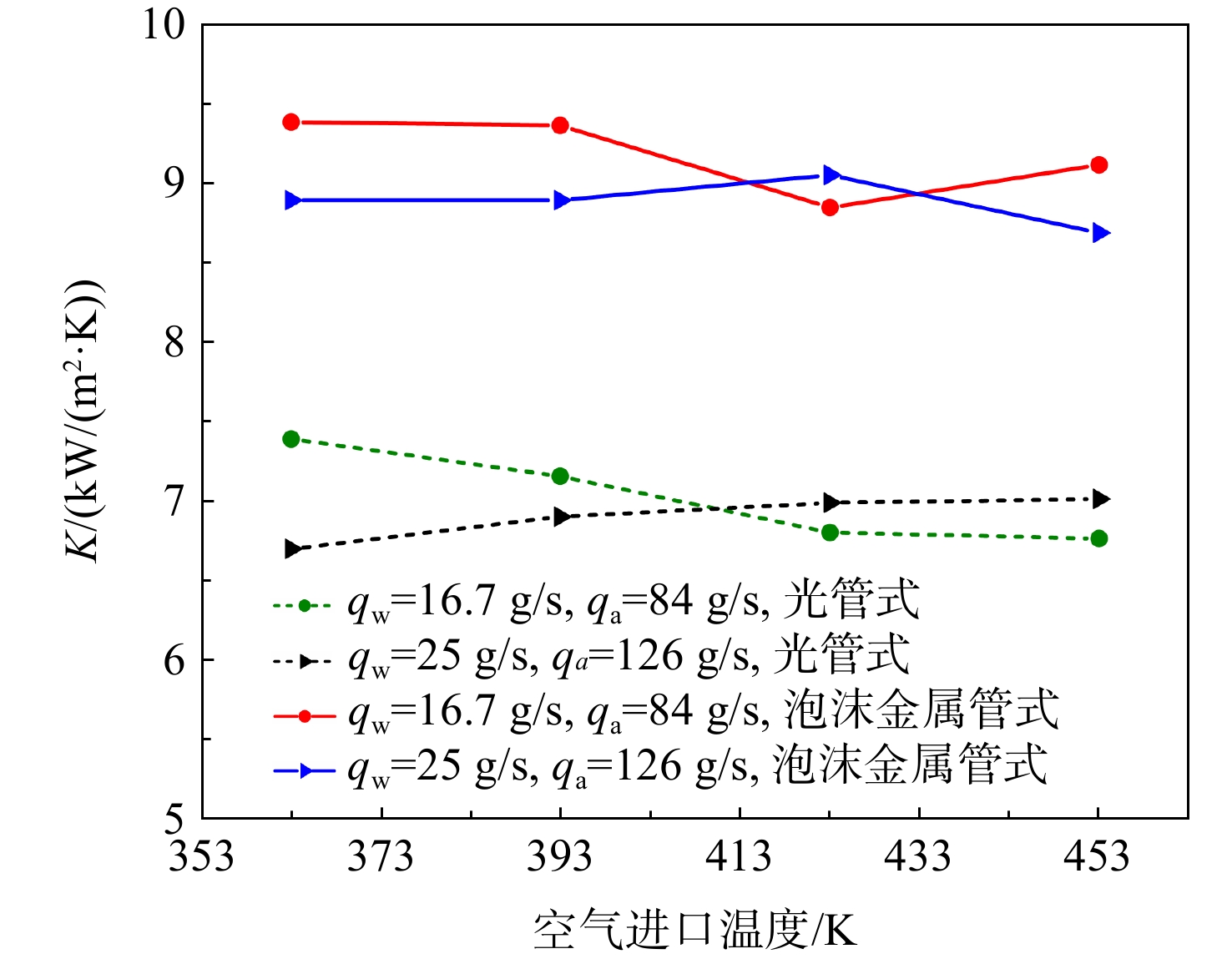
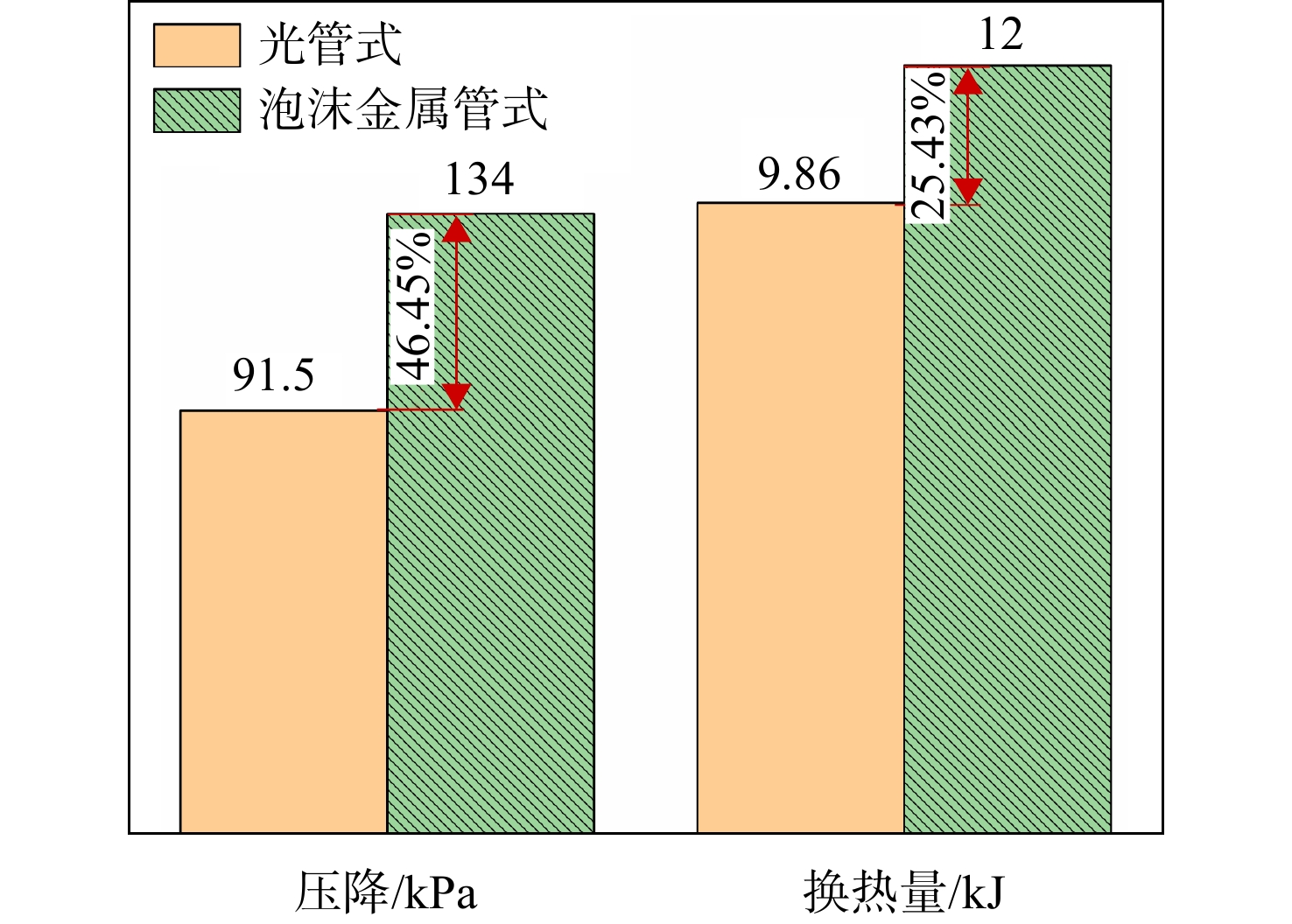
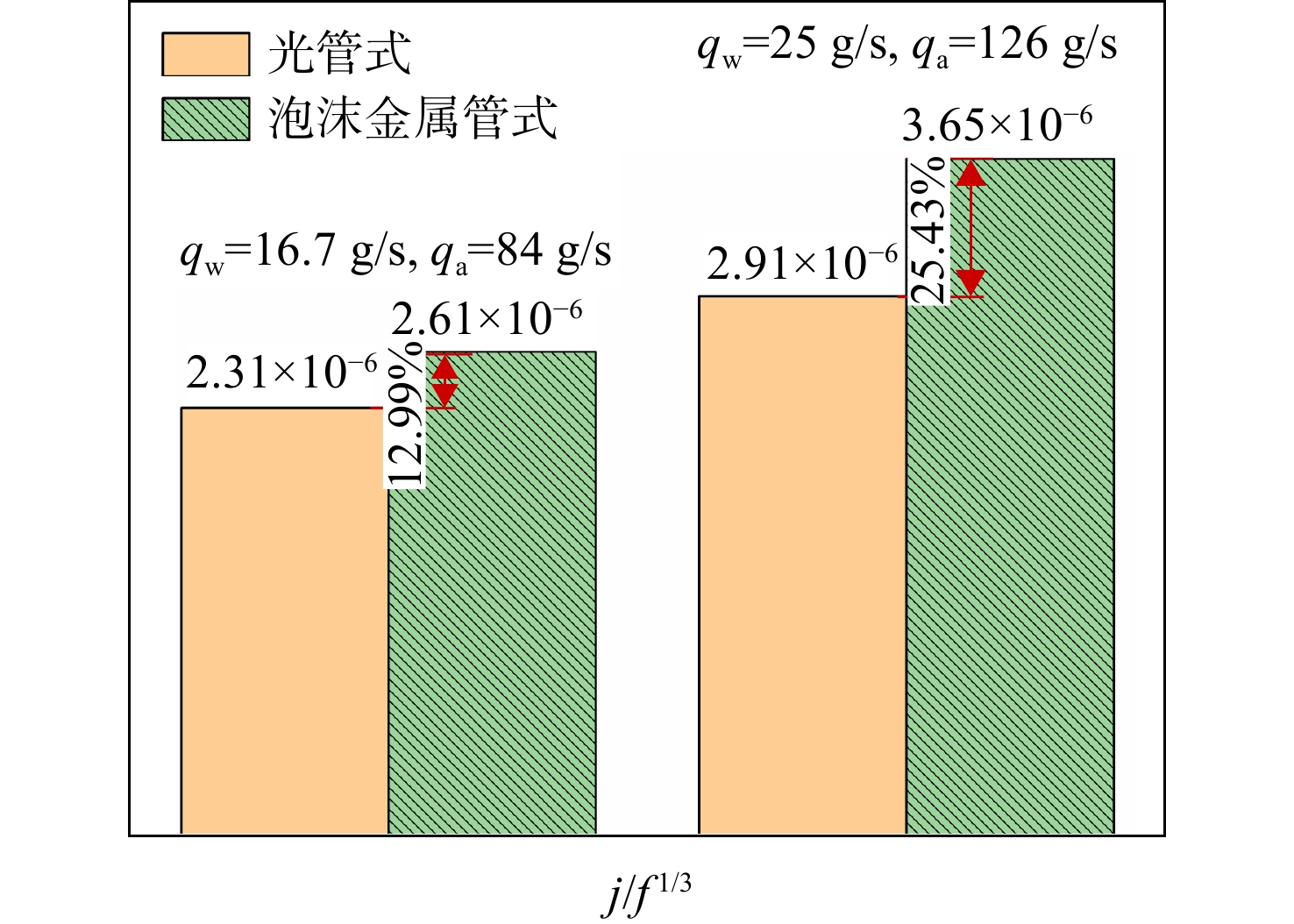
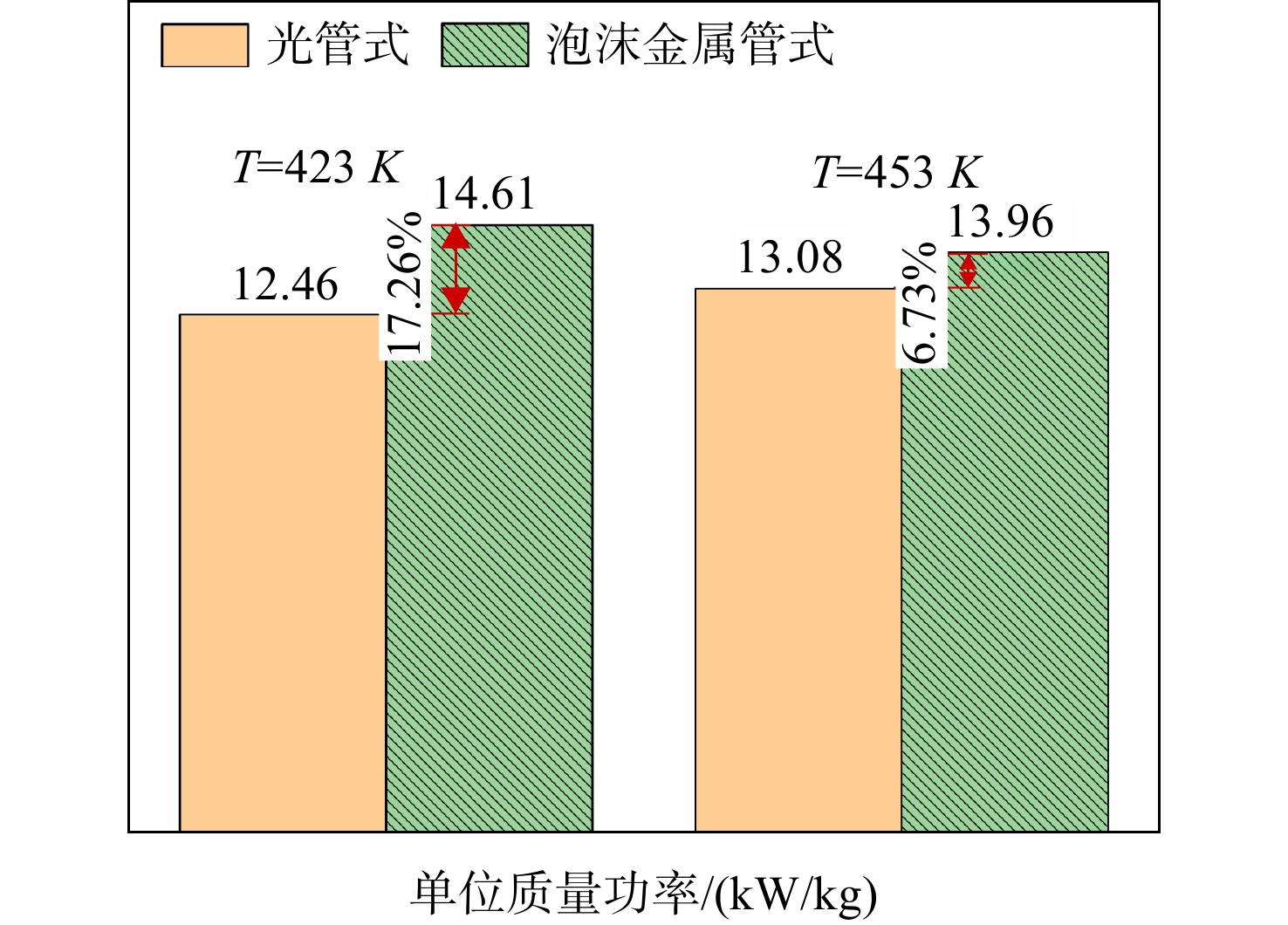
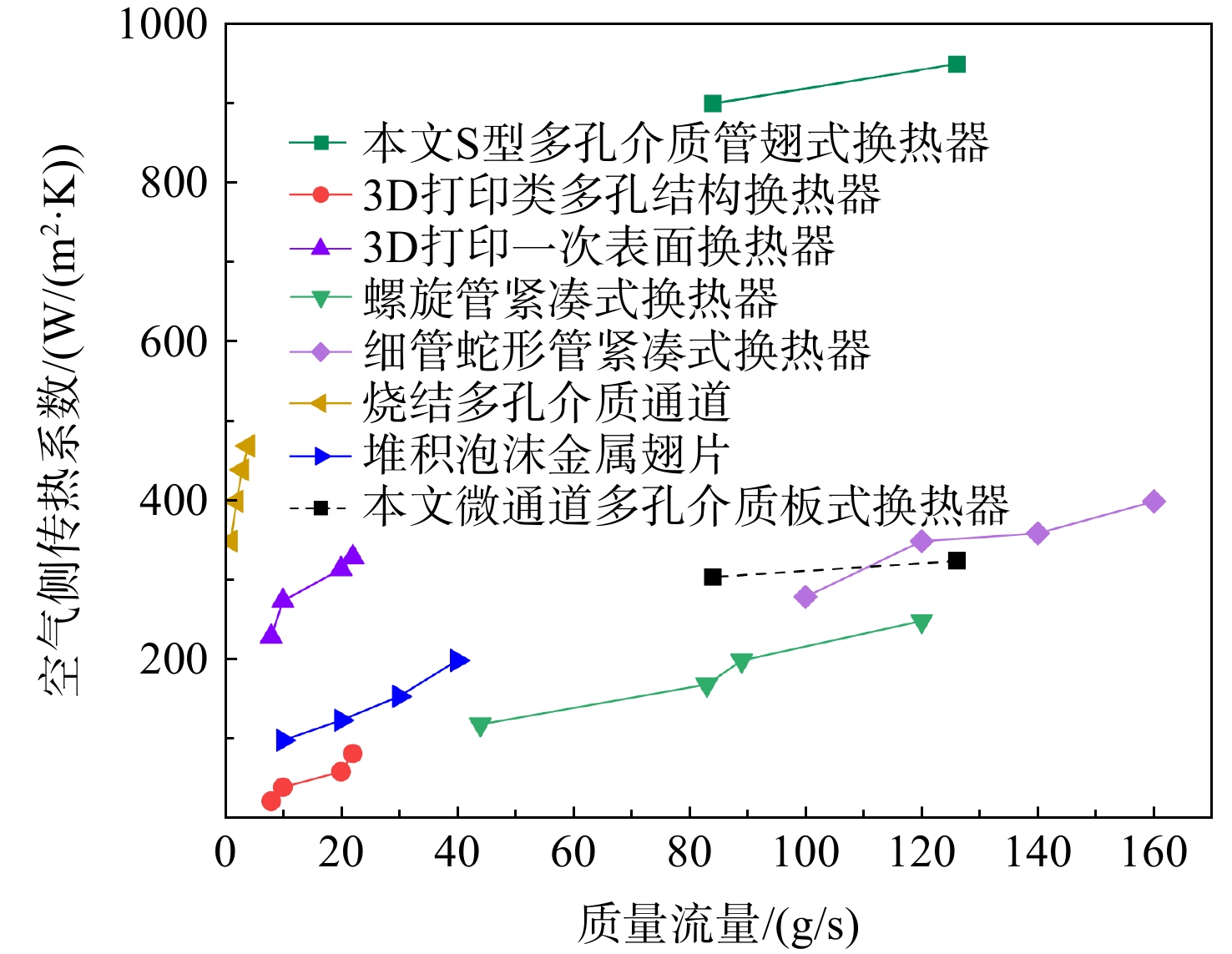
In order to solve the problem of thermal protection and thermal management of aero-engine components, for CCA (cooled cooling air) technology, high-porosity foam metal was used to replace the metal fins of traditional tube-fin heat exchangers, and a lightweight, efficient, and small size S-type foam metal tube-fin heat exchanger was designed. The heat exchanger core made of 3D printed titanium alloy, with weight of 129 g, was composed of S-shaped tube bundles and foamed metal fins. The fins were installed at the straight pipe section of the tube bundle. The flow heat transfer experiment simulated the air-oil heat exchanger outside the casing of an aero engine, with water on the cold side and high temperature air on the hot side. The flow rate, inlet and outlet temperature and pressure of the fluid on both sides were measured. The results showed that: for the fin of the heat exchanger, the heat transfer coefficient increased by 43.94%, the heat transfer increased by 21.7%, the comprehensive heat transfer performance increased by 25.43%, and the power-to-weight ratio increased by 17.26% on average, reaching 14.61 kW/kg. This showed that the metal foam can improve the overall performance of the heat exchanger and can be used in the design of heat exchangers with similar structures for future aero-engines.
Numerical study on propulsion performance of solar wind magnetic sail
CAI Jingyuan, LI Lai, ZHU Guiping
2023, 38(4): 850-859. doi: 10.13224/j.cnki.jasp.20210527
Abstract:

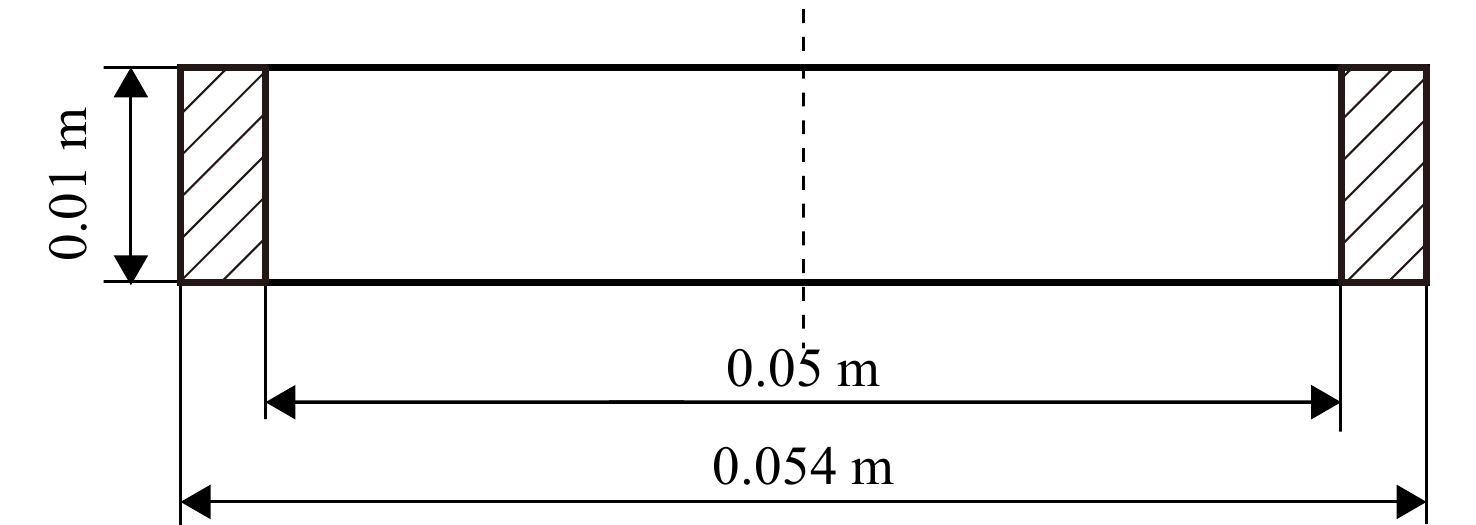
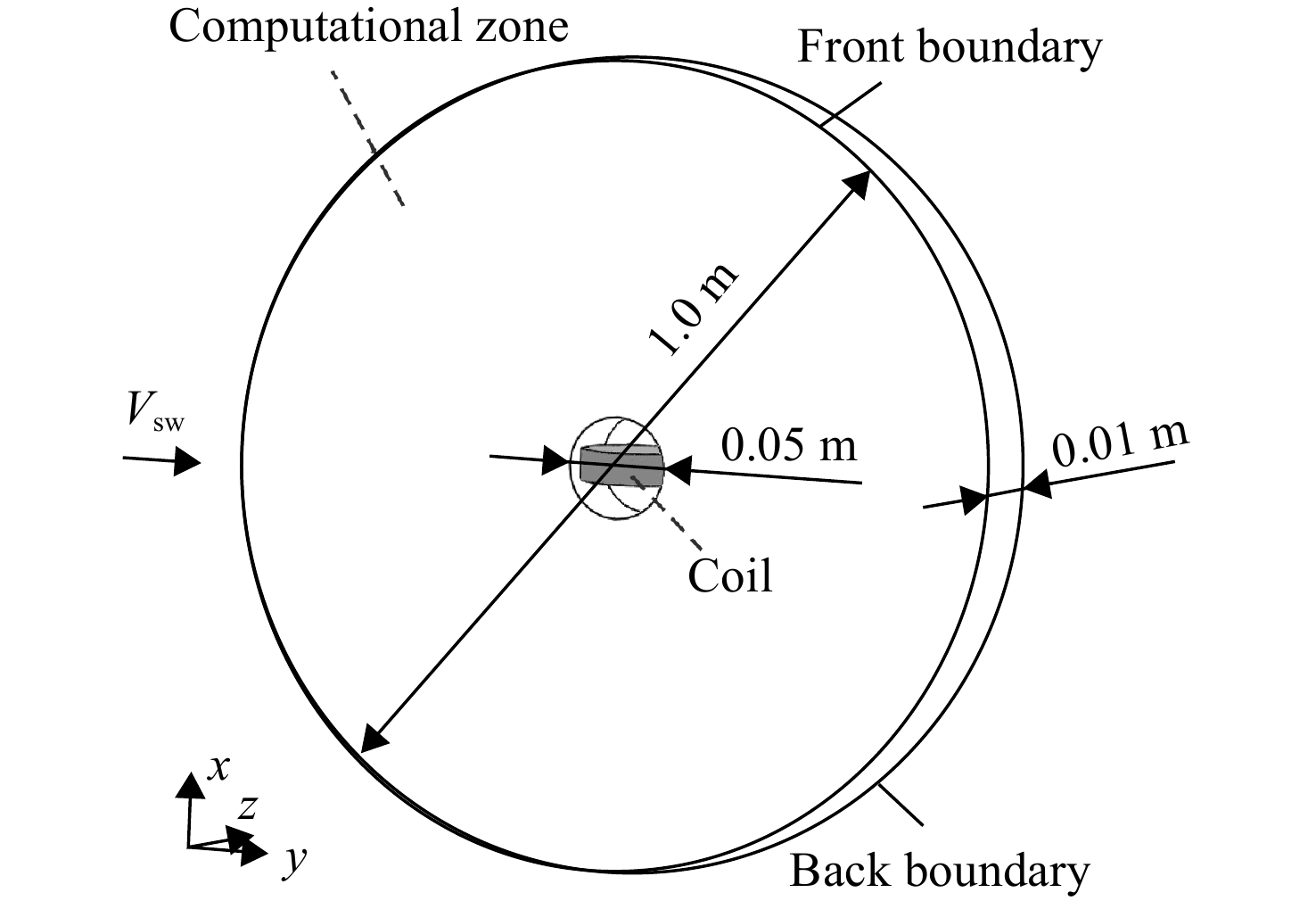
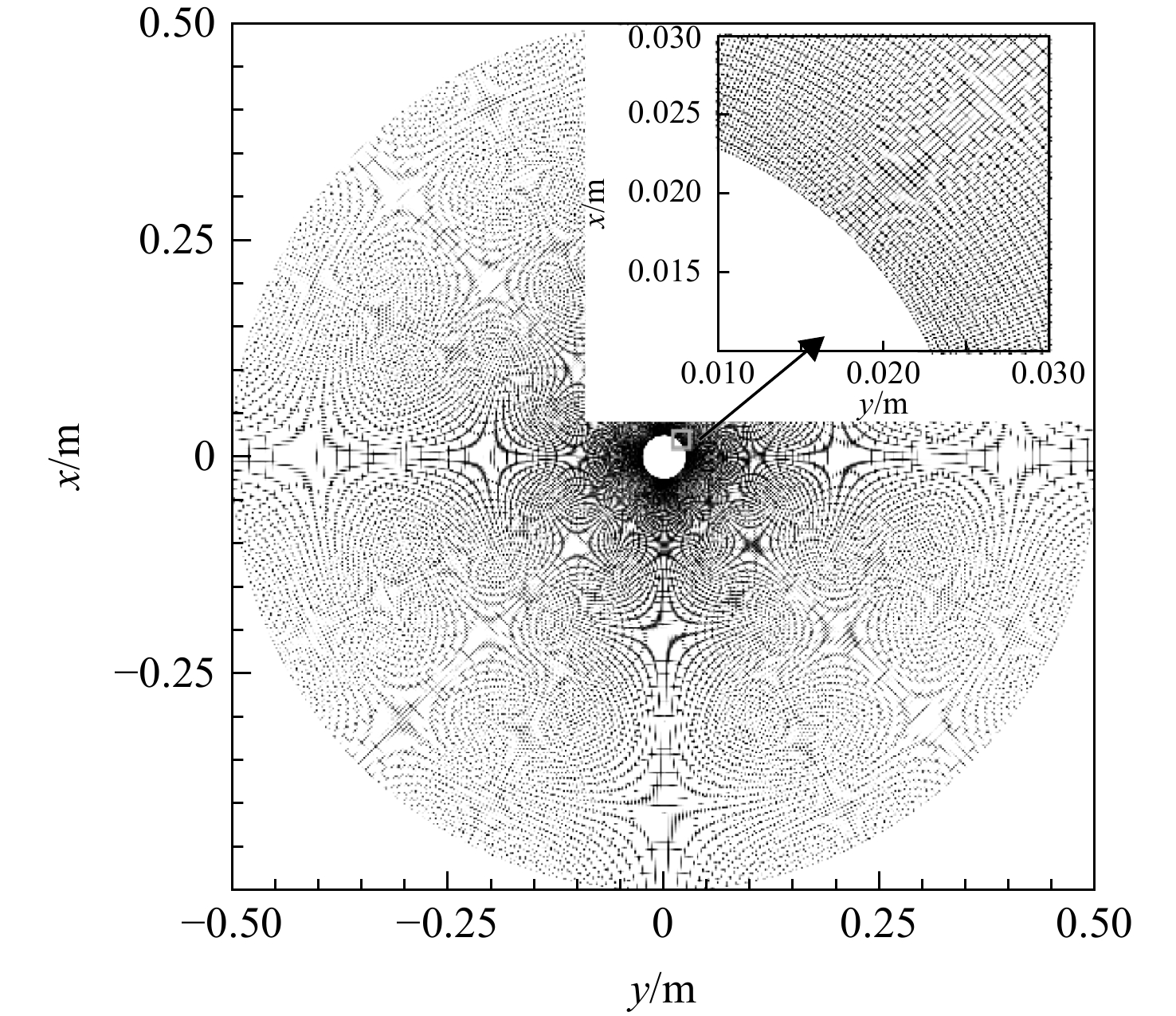
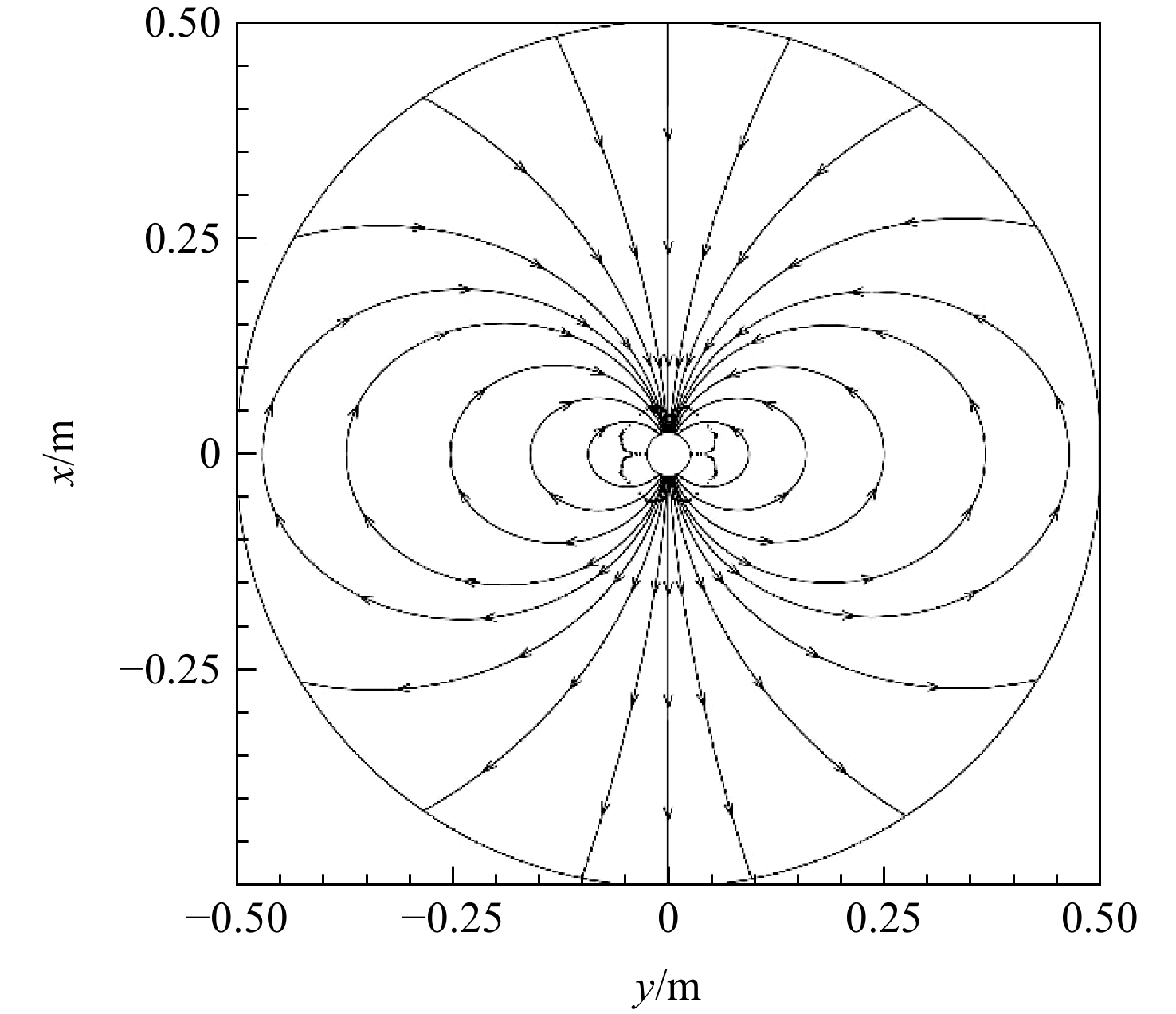
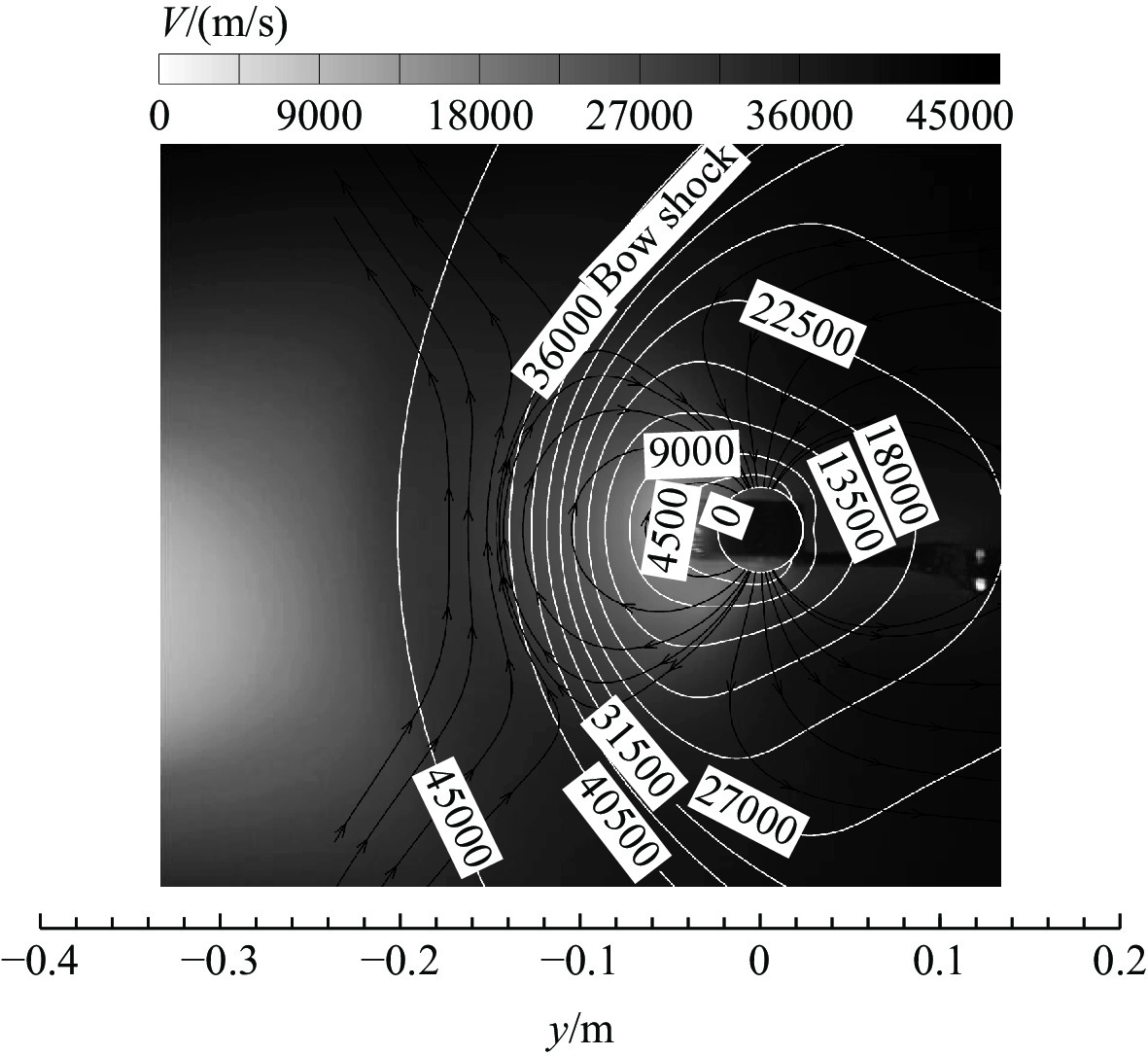
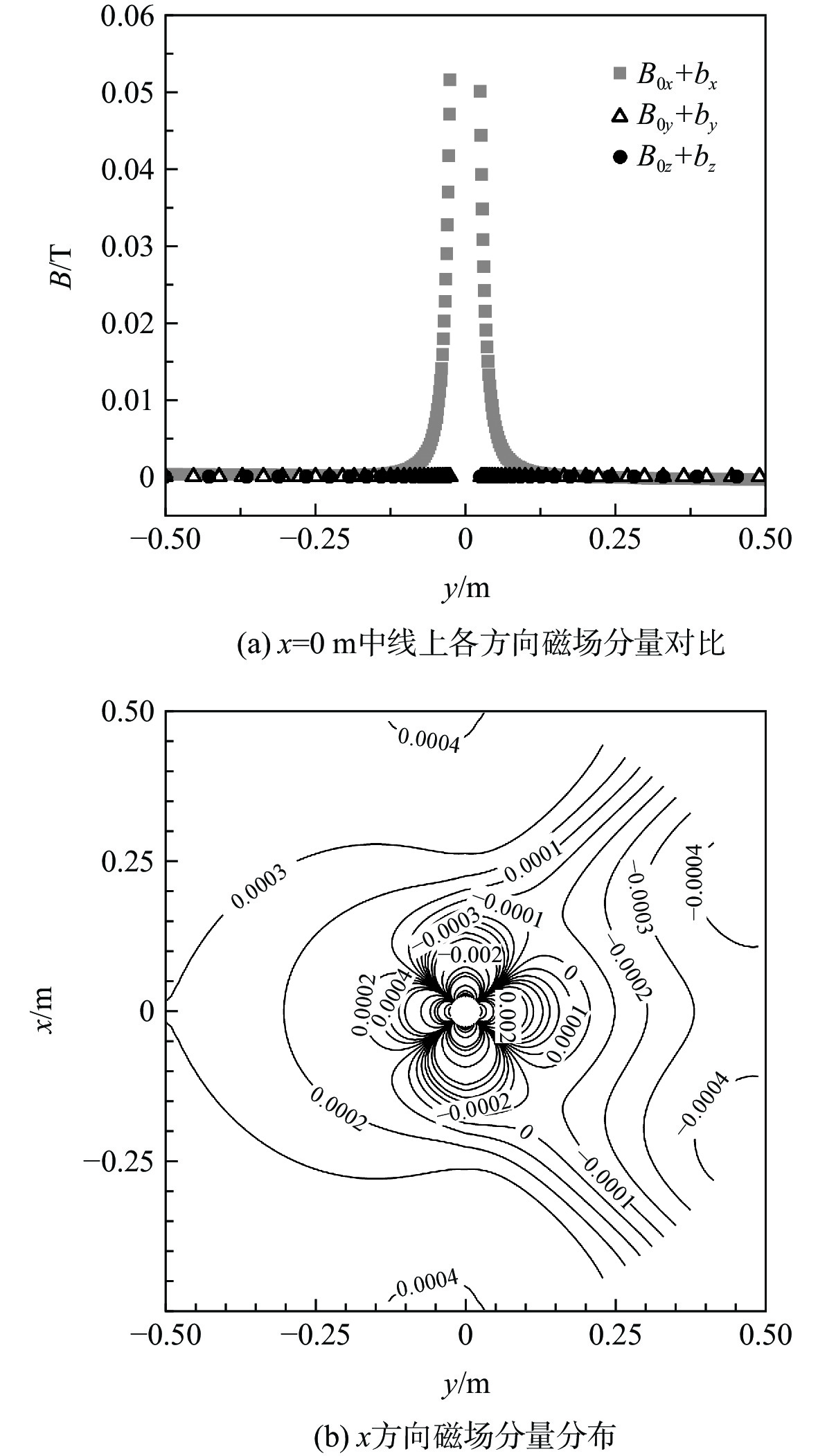
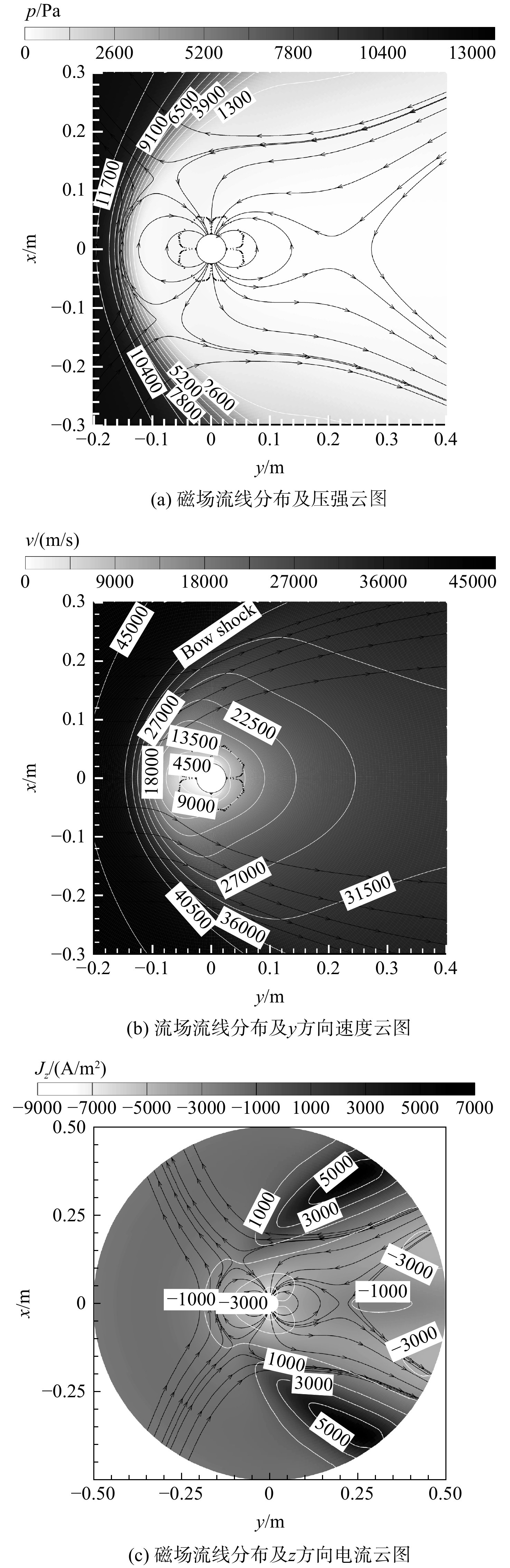
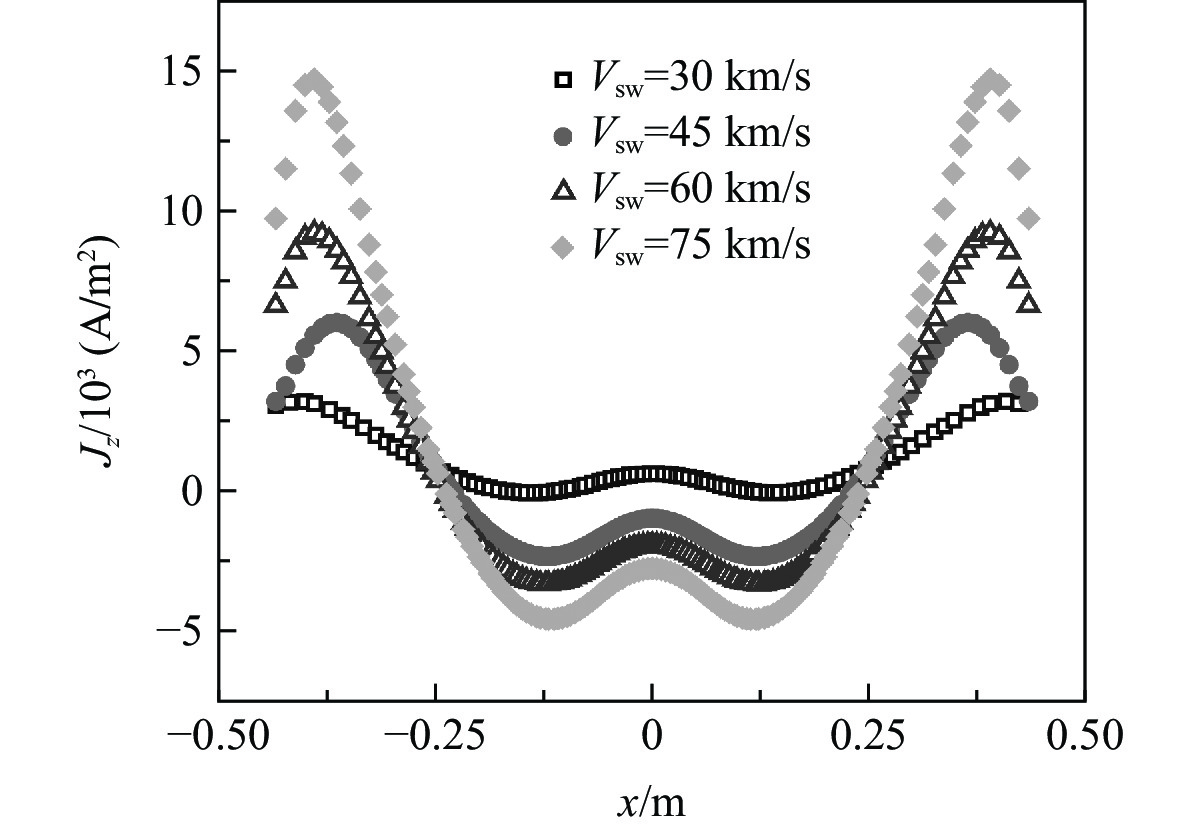
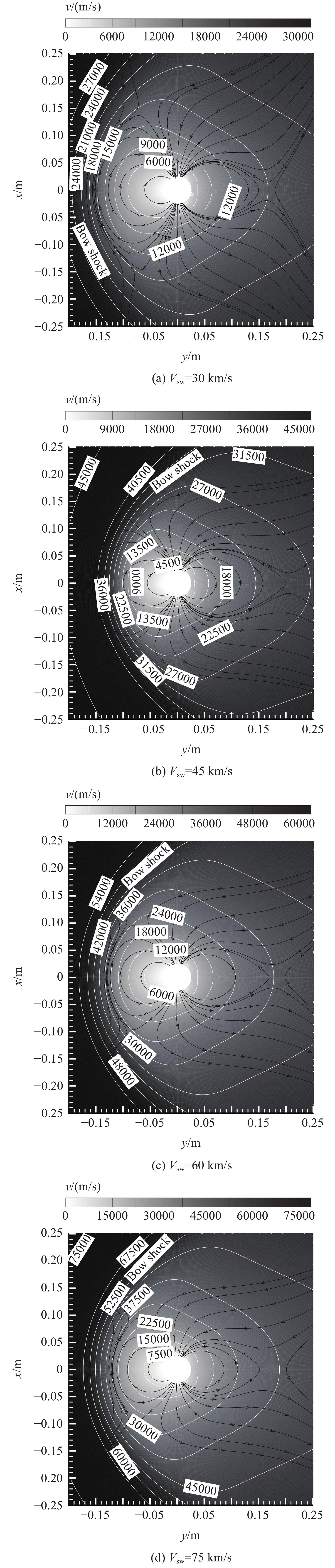
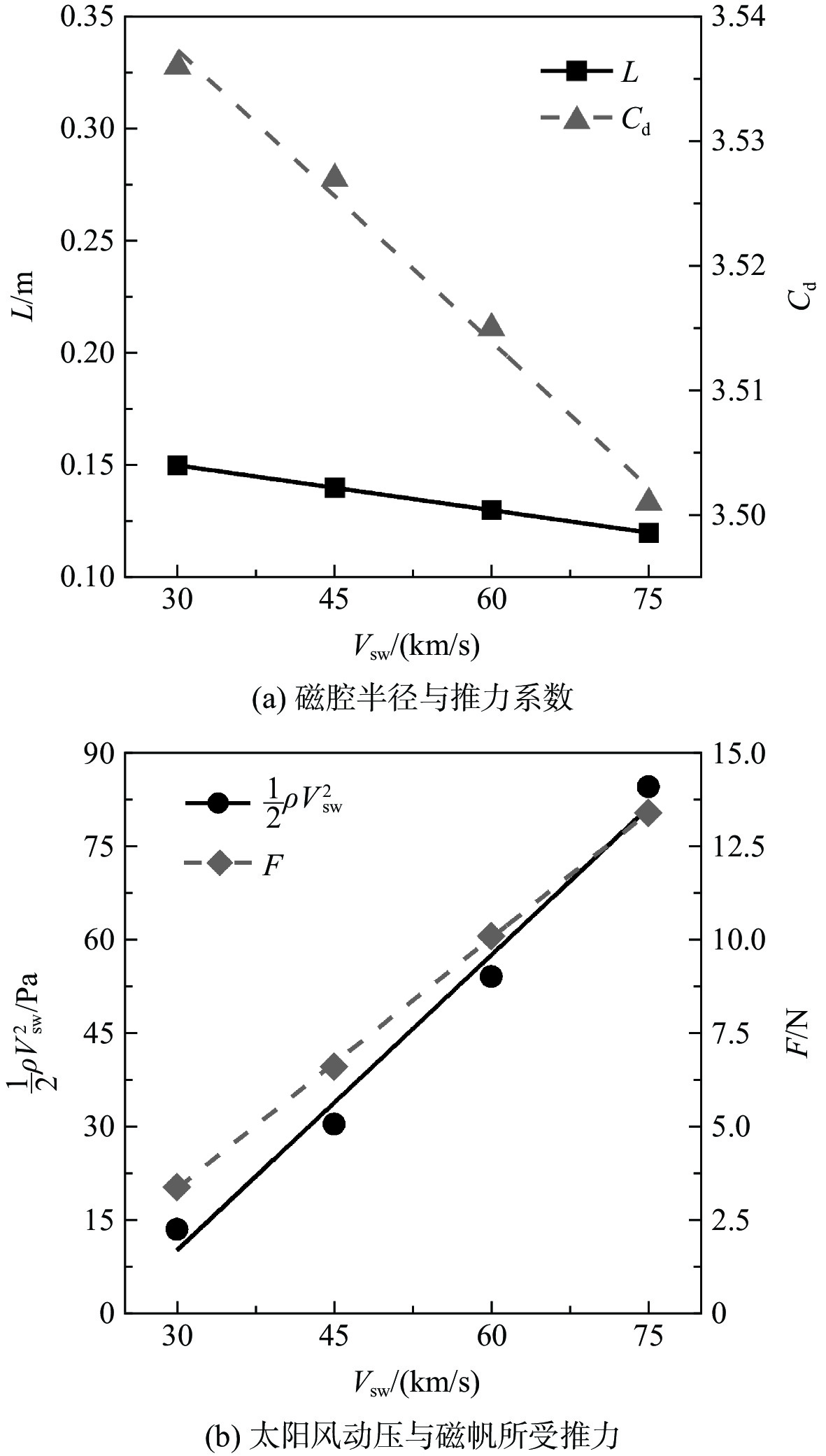
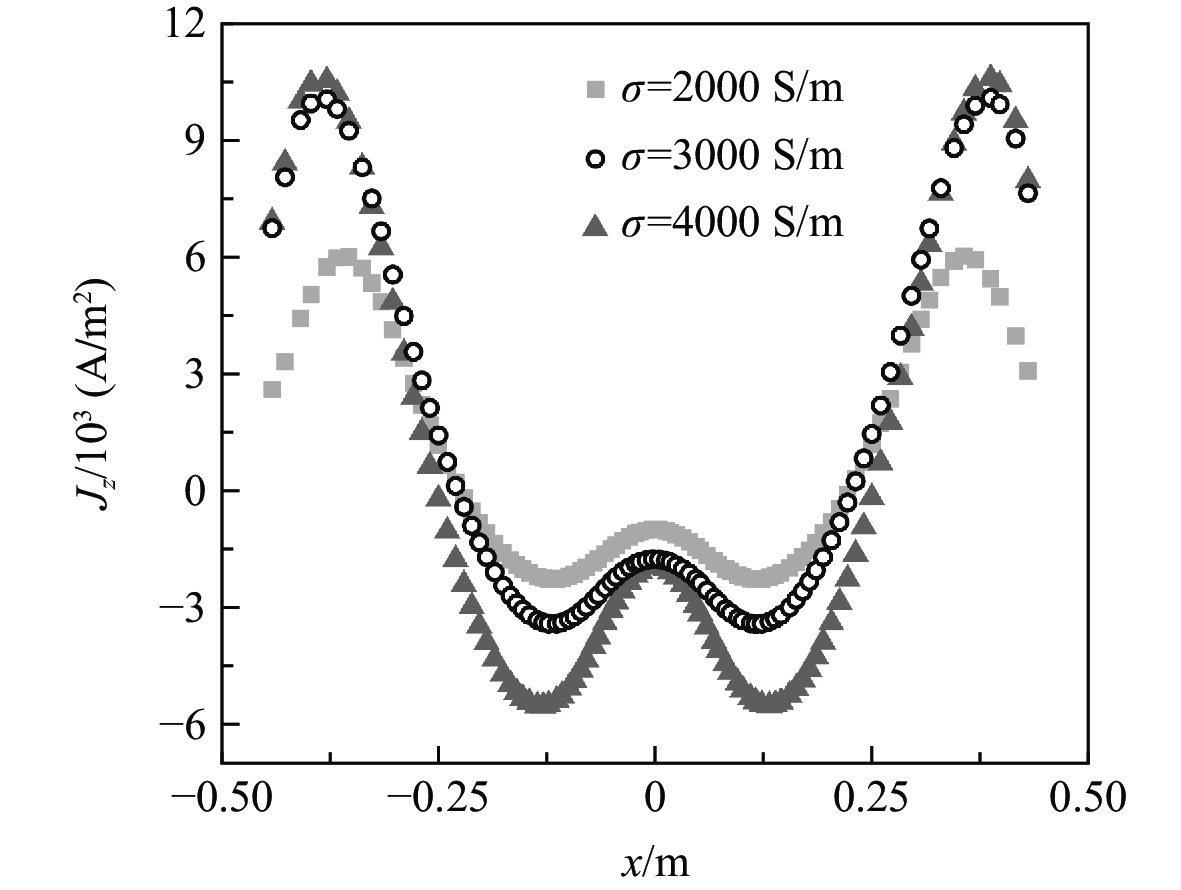
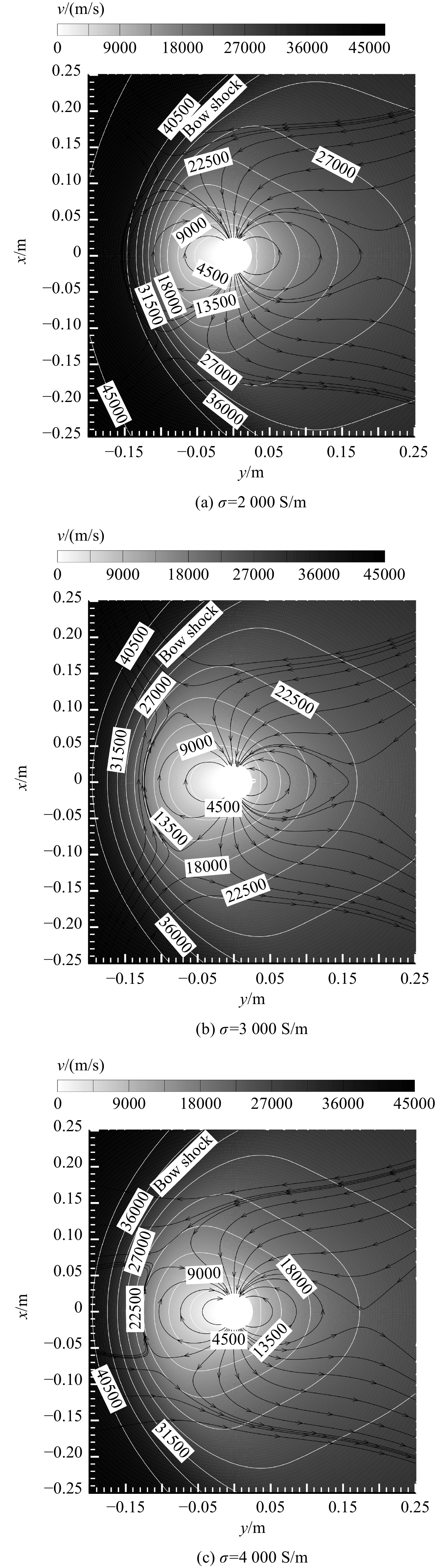
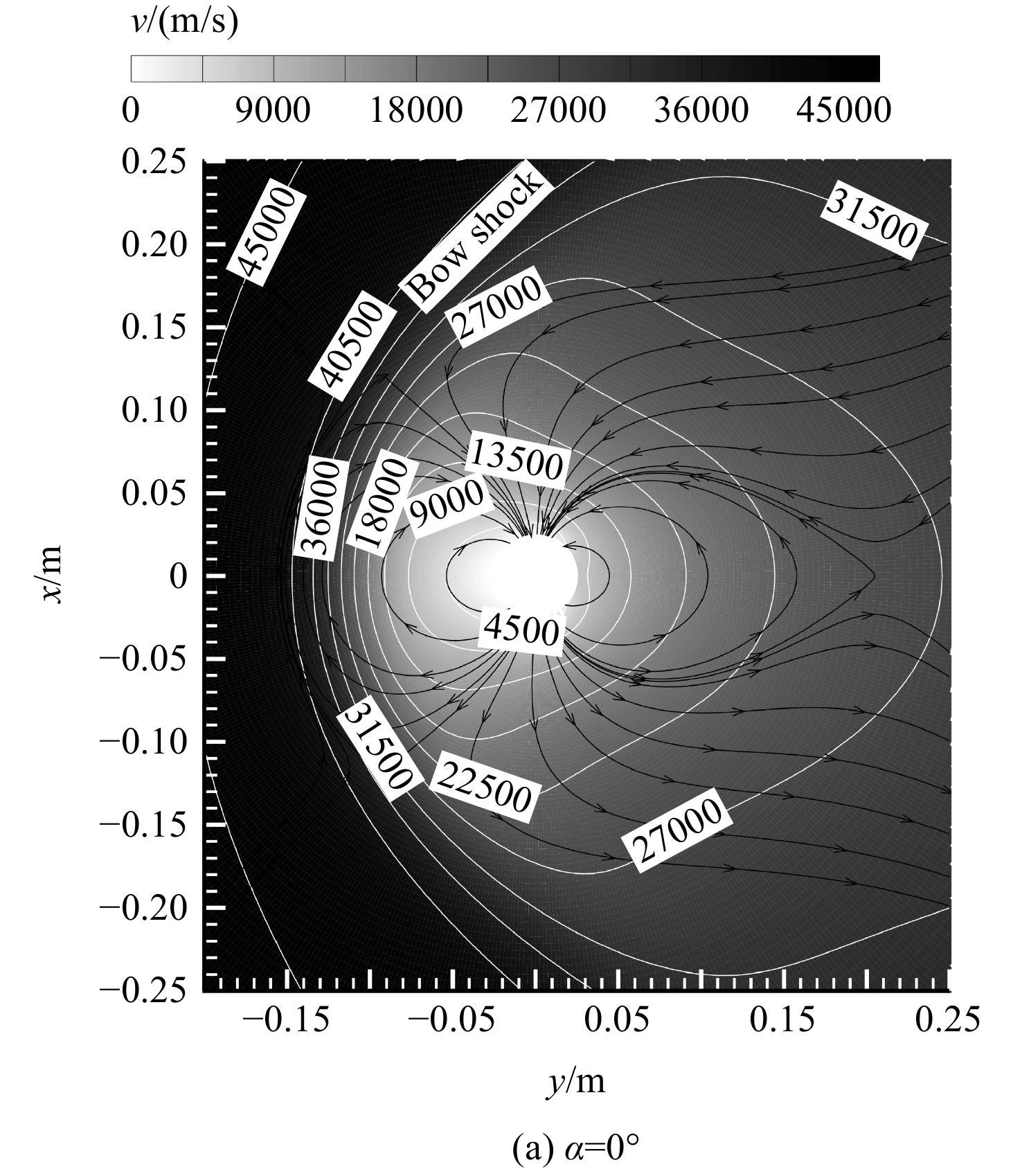
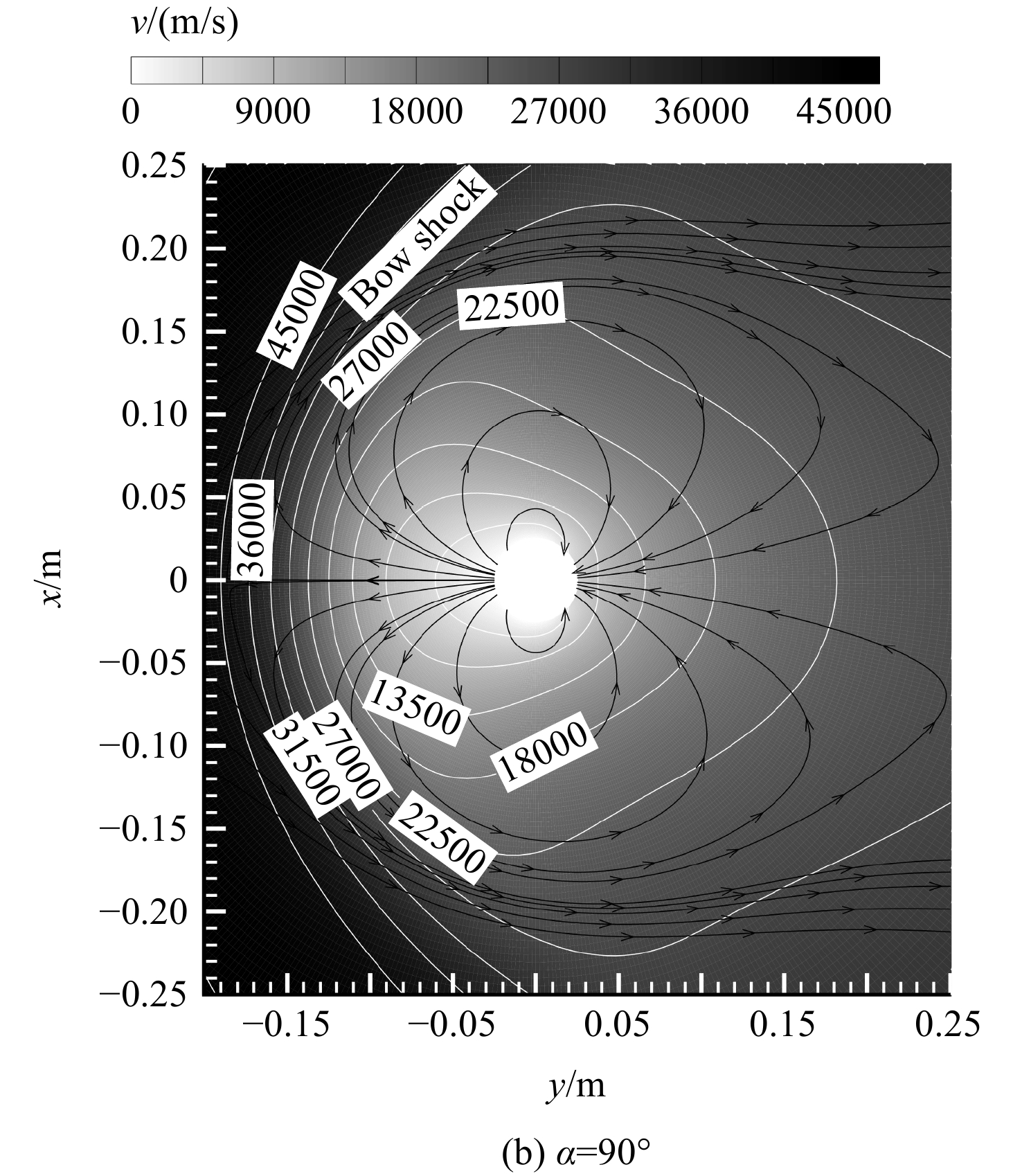
The three-dimensional numerical simulation of the solar wind magnetic sail was established with the magnetohydrodynamic (MHD) model considering the interplanetary magnetic field. The verification of the calculation method was accomplished by comparison with experimental data. In addition, the observation and confirmation of the magnetic reconnection were achieved at the tail of the coil. The propulsion performance of the magnetic sail was studied in terms of the incoming velocity, the plasma ion number density and the attack angle of of the solar wind. The solar wind with different velocities and different ion number densities mainly influenced the Lorentz force by affecting the current in the z direction, which further affected the propulsion performance of the magnetic sail. As incoming velocity increased from 30 km/s to 75 km/s of solar wind with fixed ion number density, the maximum current in z direction increased from 4205 A/m2 to 14709 A/m2, and the thrust of magnetic sail increased from 3.39 N to 13.40 N. As the ion number density increased from 1.8×10¹⁹ m−3 to 4.5×10¹⁹ m−3 of solar wind with fixed incoming velocity, the maximum current in z direction increased from 6039 A/m2 to 10585 A/m2, and the thrust increased from 6.62 N to 12.27 N. The variation of the attack angle affected the propulsion performance of magnetic sail by influencing the configuration of magnetic field. With the attack angle of 0° and 90°, the radius of the magnetic cavity was 0.14 m and 0.18 m, respectively. Correspondingly, the thrust of the magnetic sail was 6.62 N and 11.03 N, respectively. It was inferred that larger thrust can be obtained by keeping the axis of the coil parallel to the direction of the solar wind in practical application. The influence of relevant factors on the propulsion performance of magnetic sail was studied systematically, which can provide a reference and support for the research of thrust regulation of the sail, and has important reference value for the further study of magnetic sail.

Analysis of thermo-aerodynamic heat and flow characteristics in clearance of dynamic pressure gas thrust bearing
QIAO Xiangyun, ZHANG Jingyang, CHEN Weidong, LÜ Yuanwei, LUO Xinyang
2023, 38(4): 860-869. doi: 10.13224/j.cnki.jasp.20210541
Abstract:

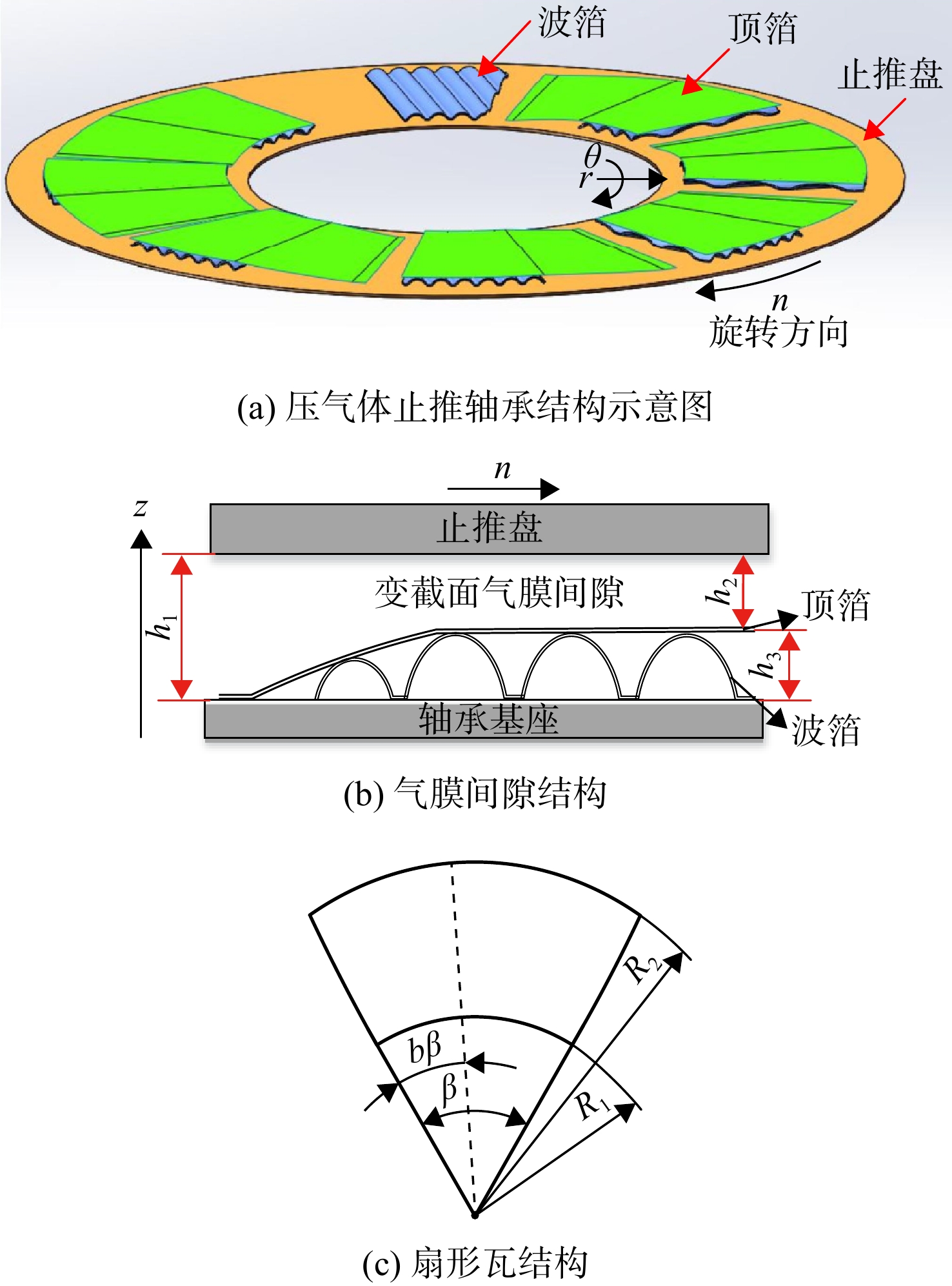
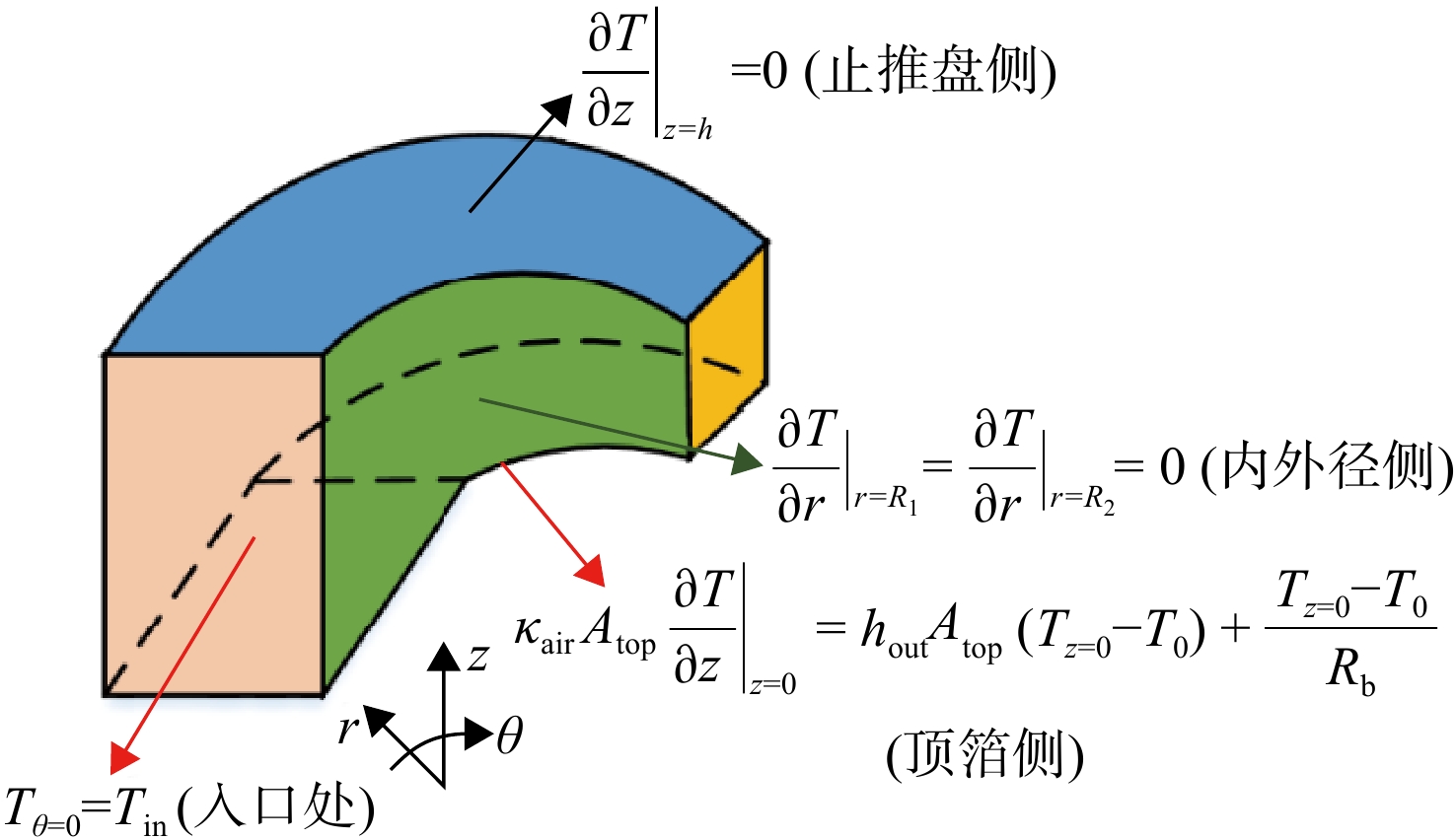
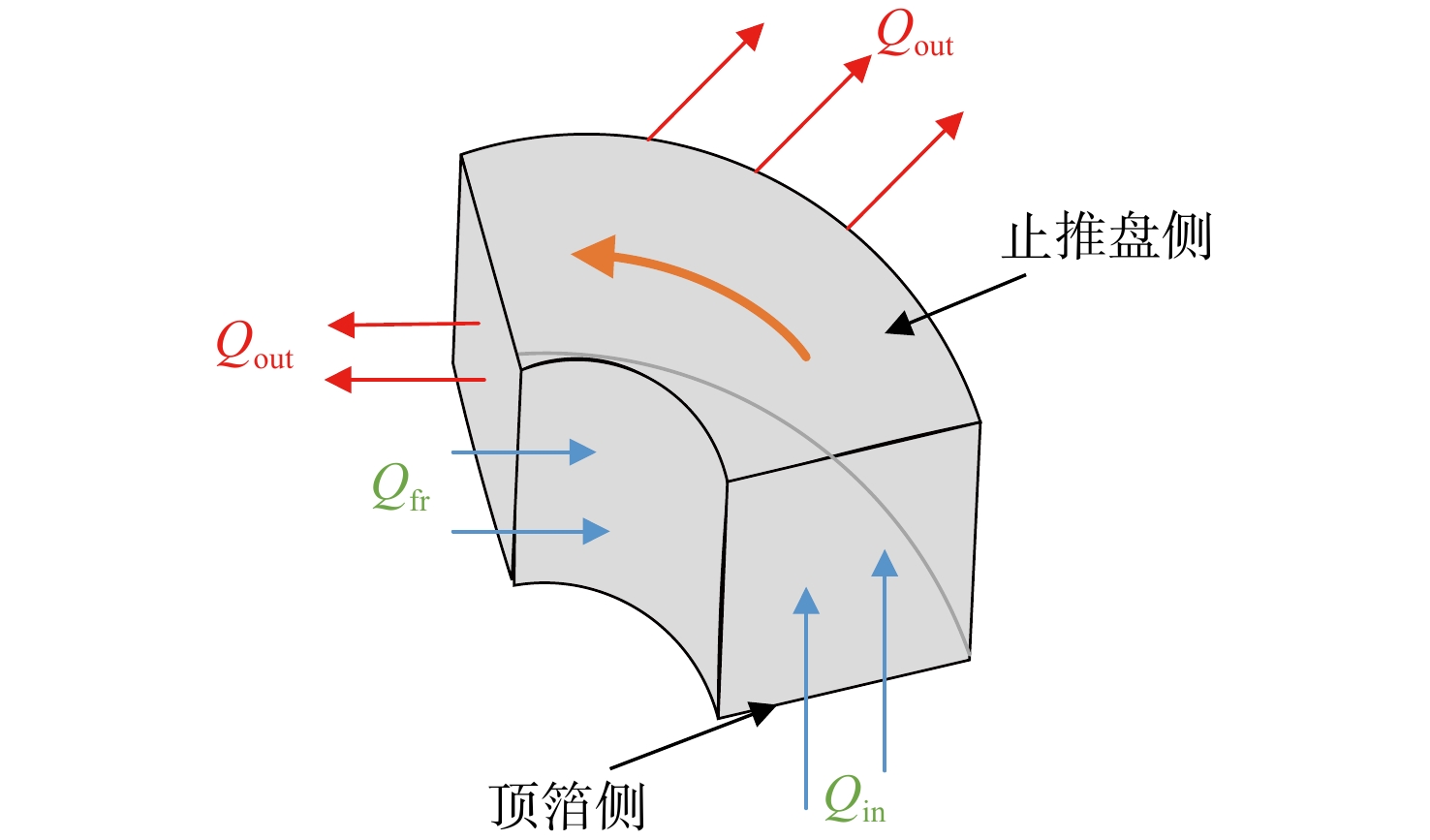
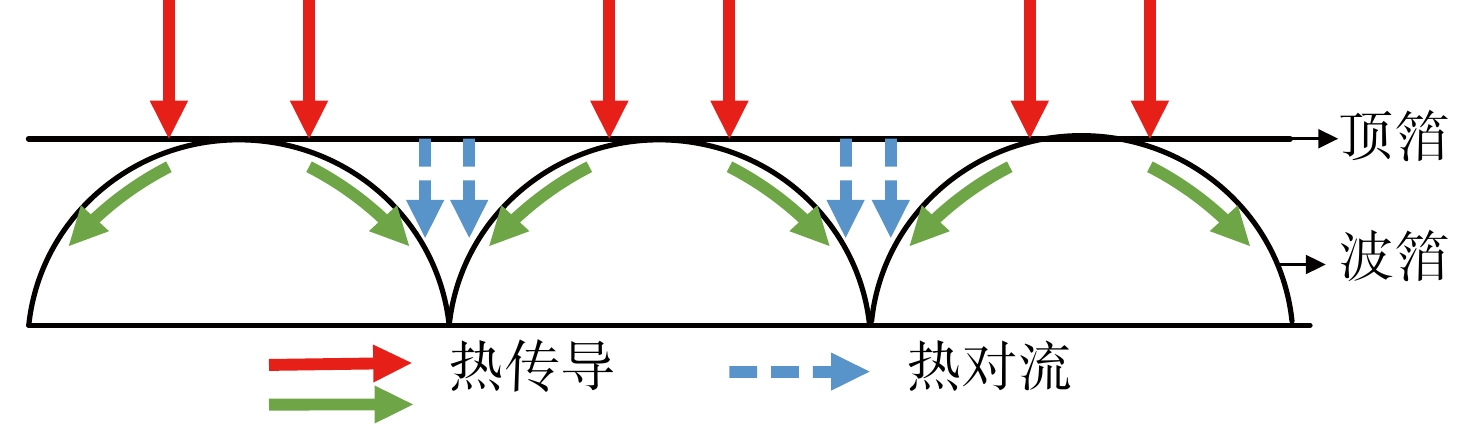
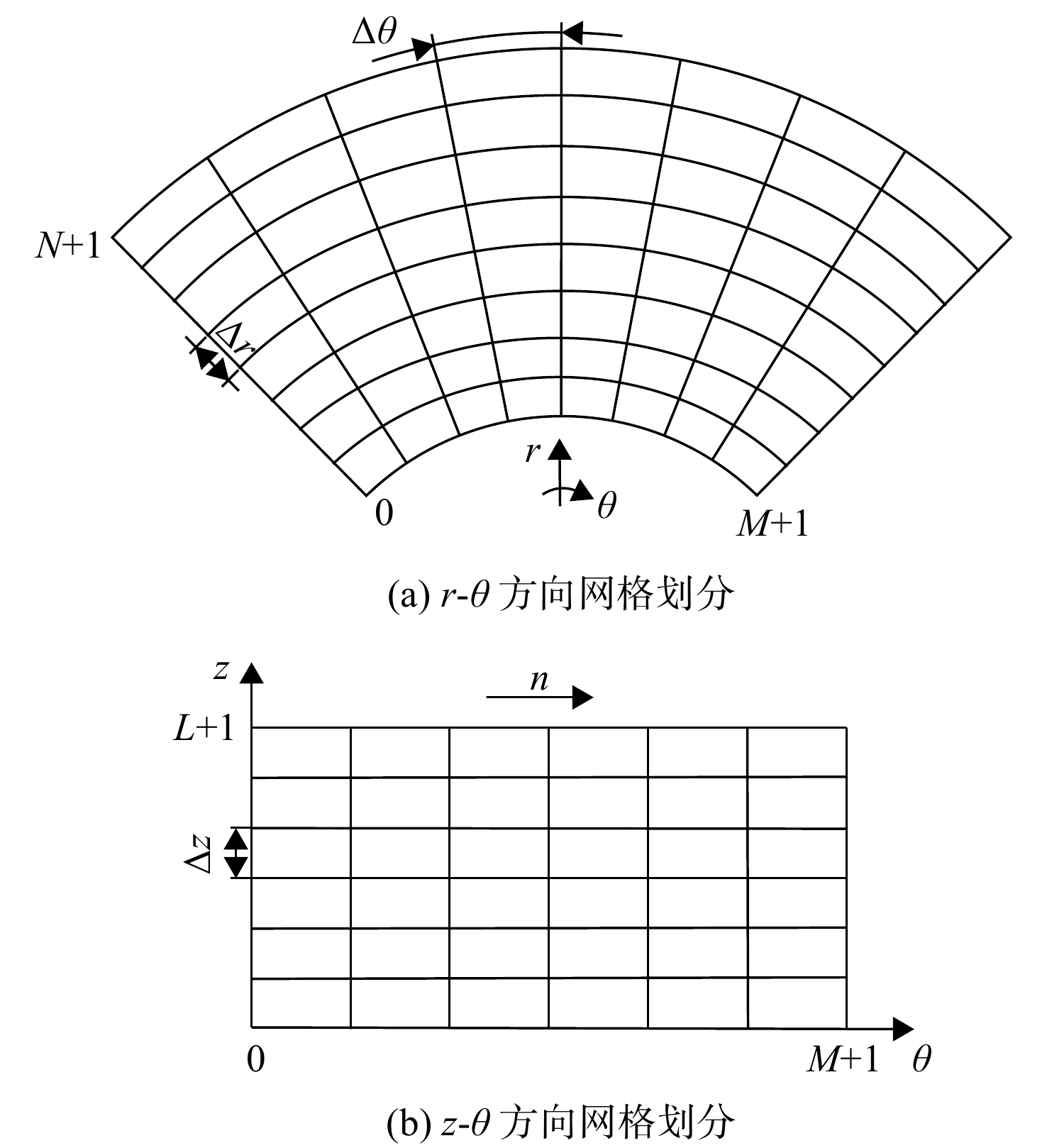
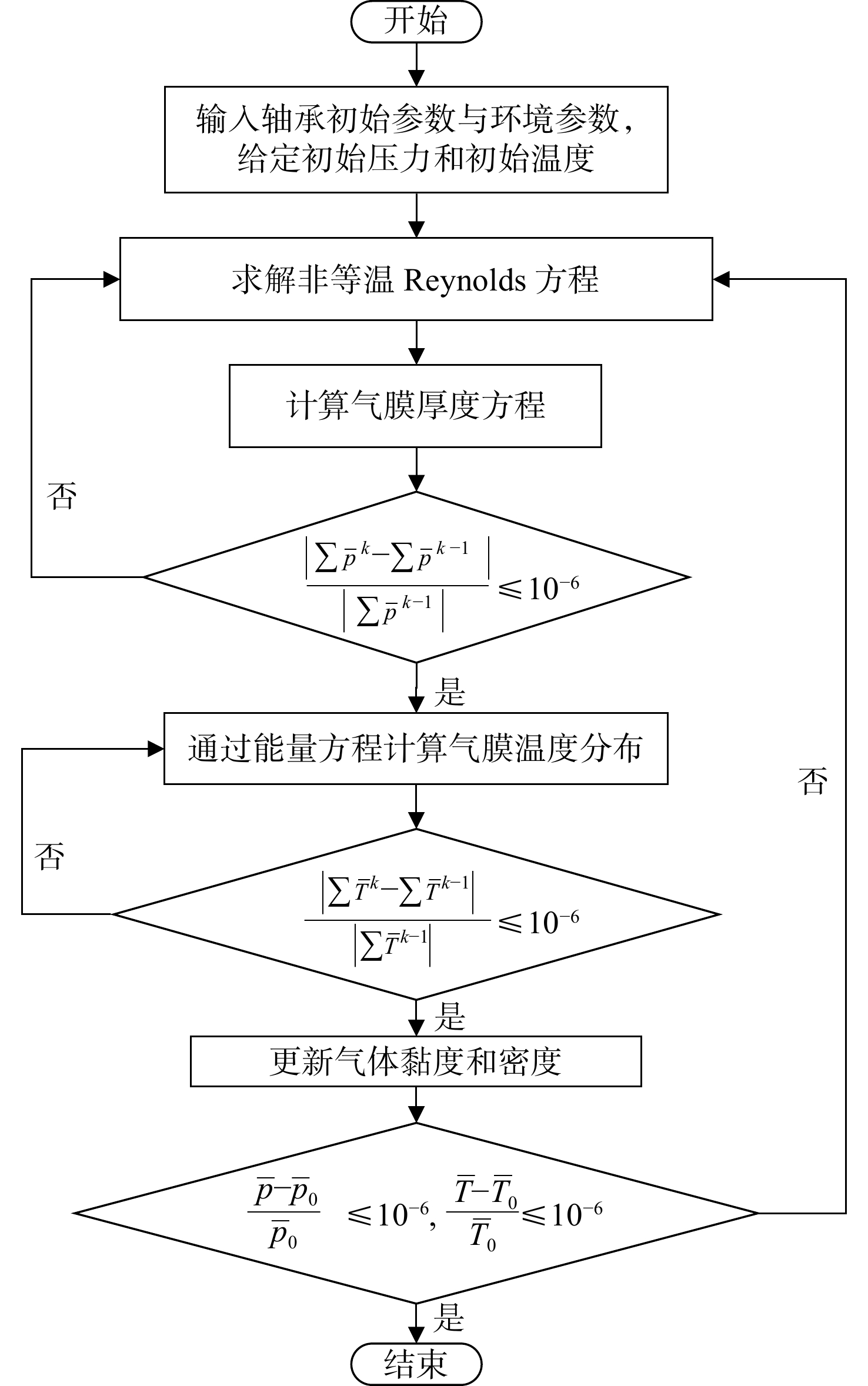
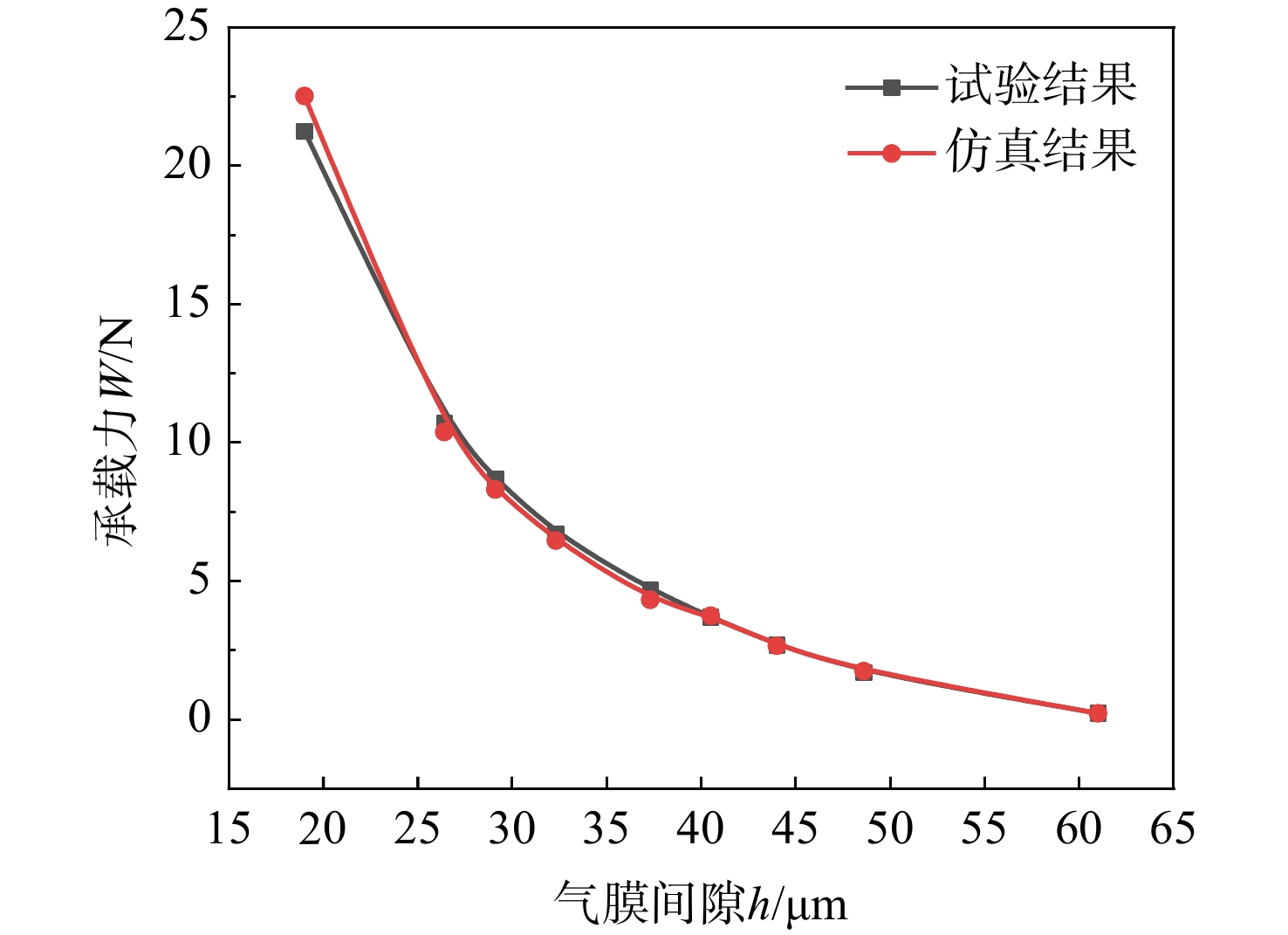
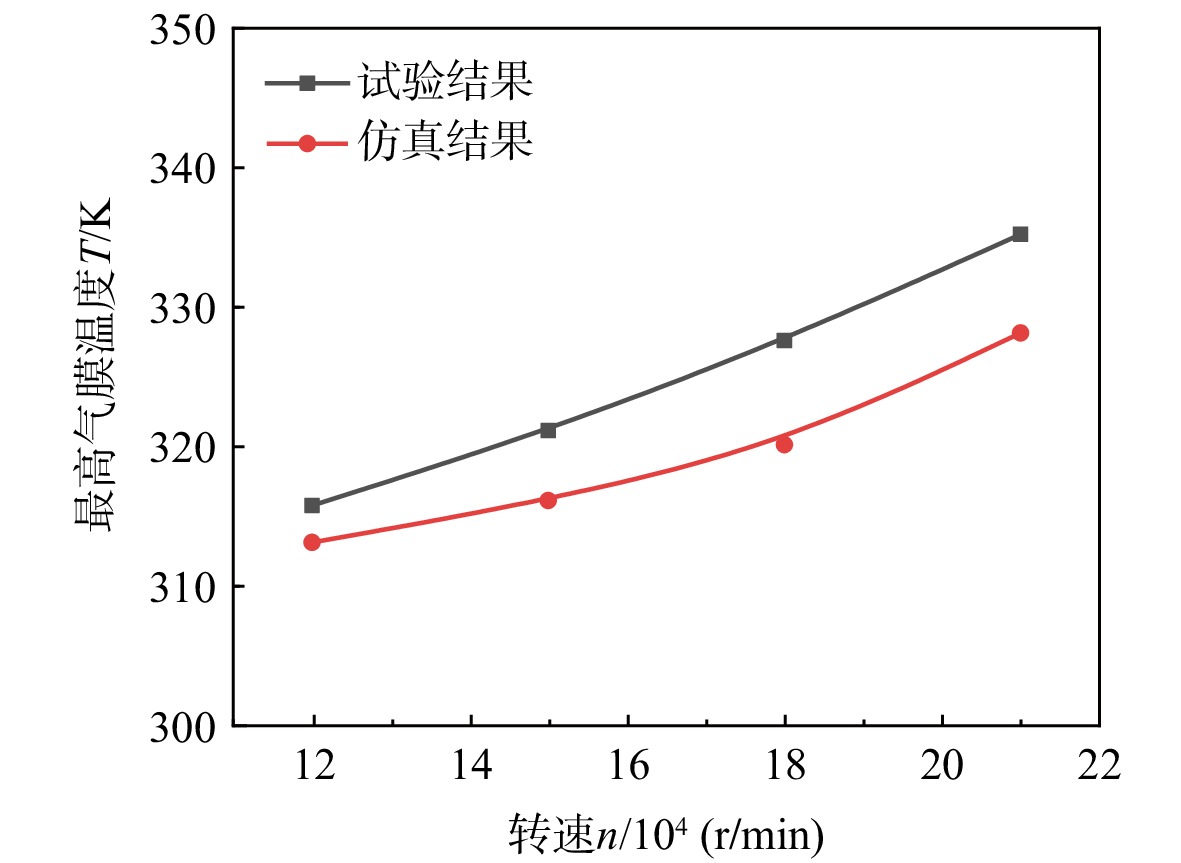
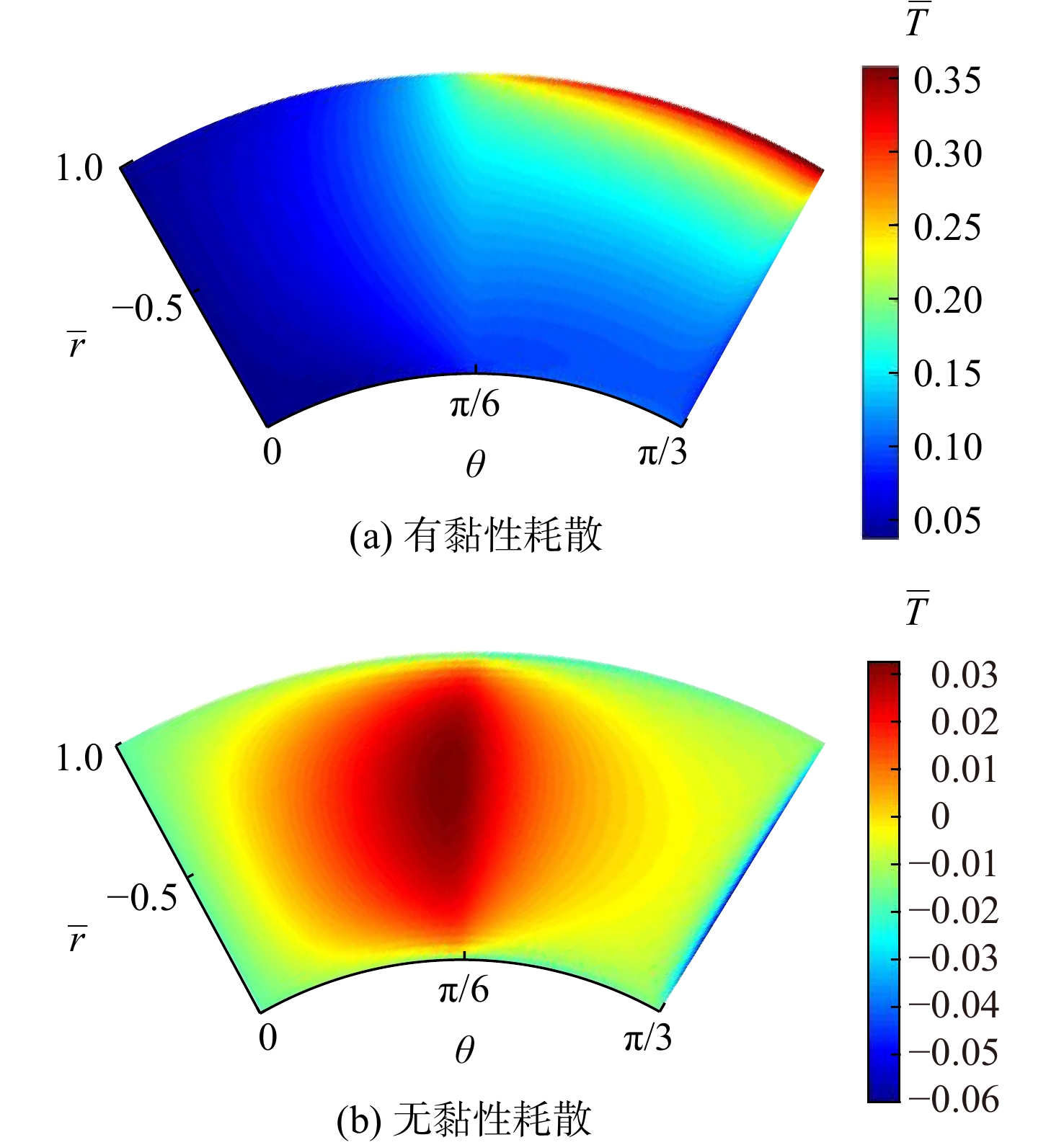
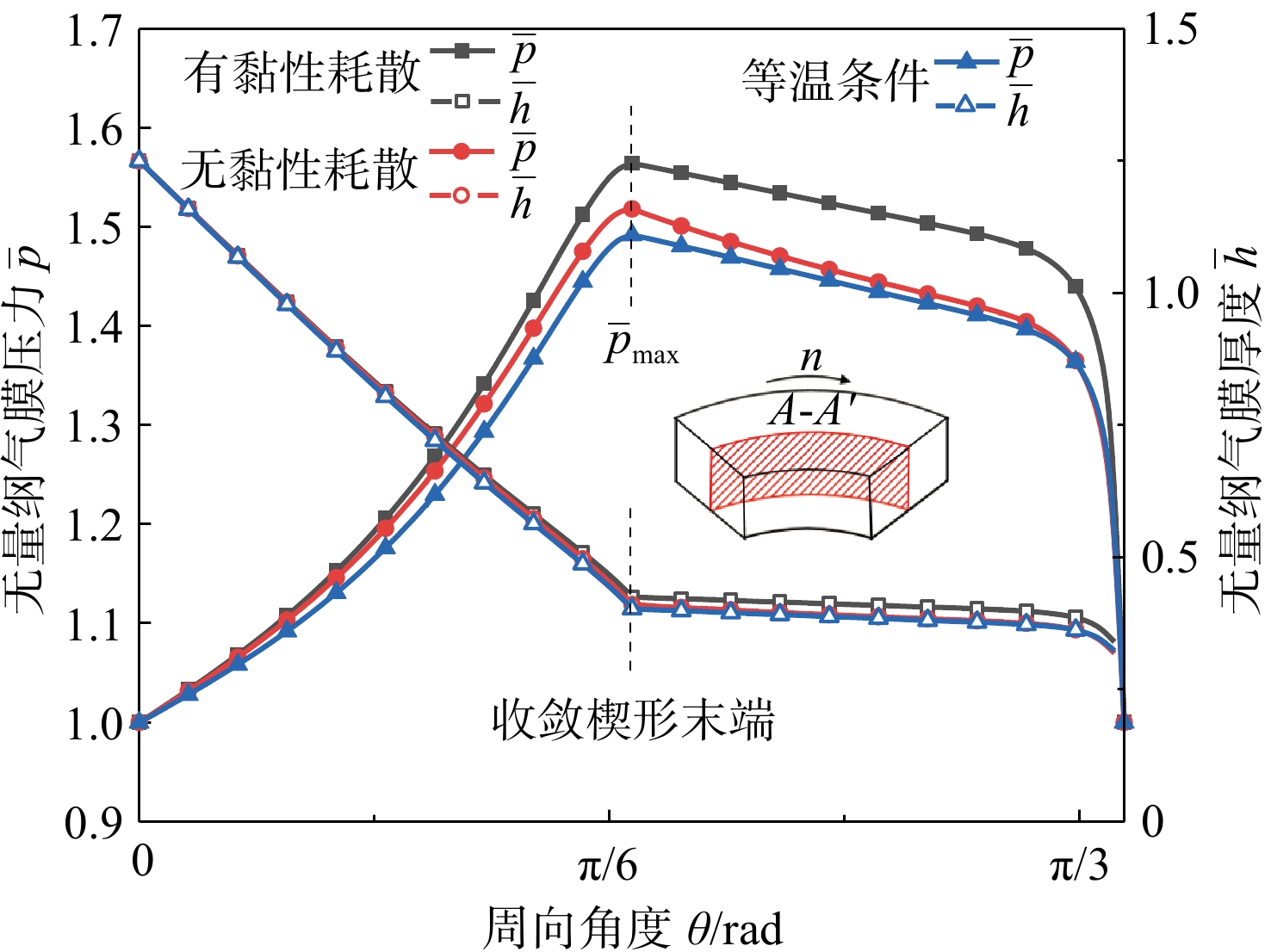
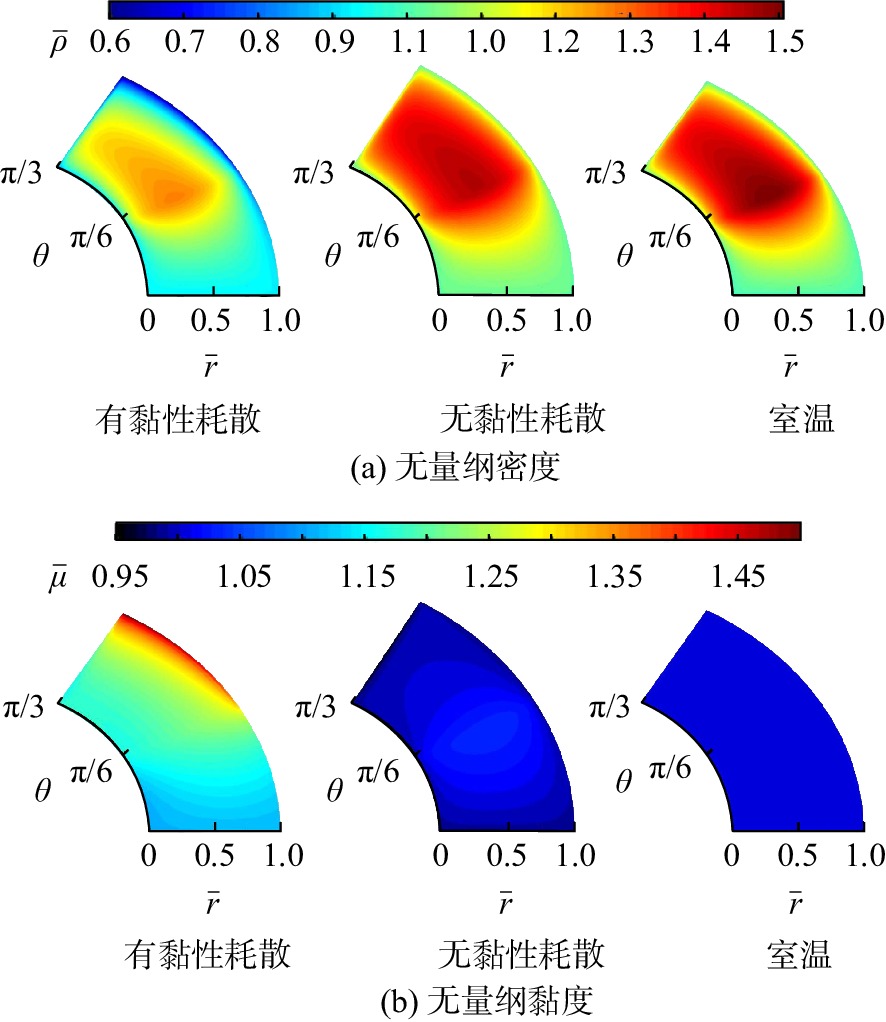
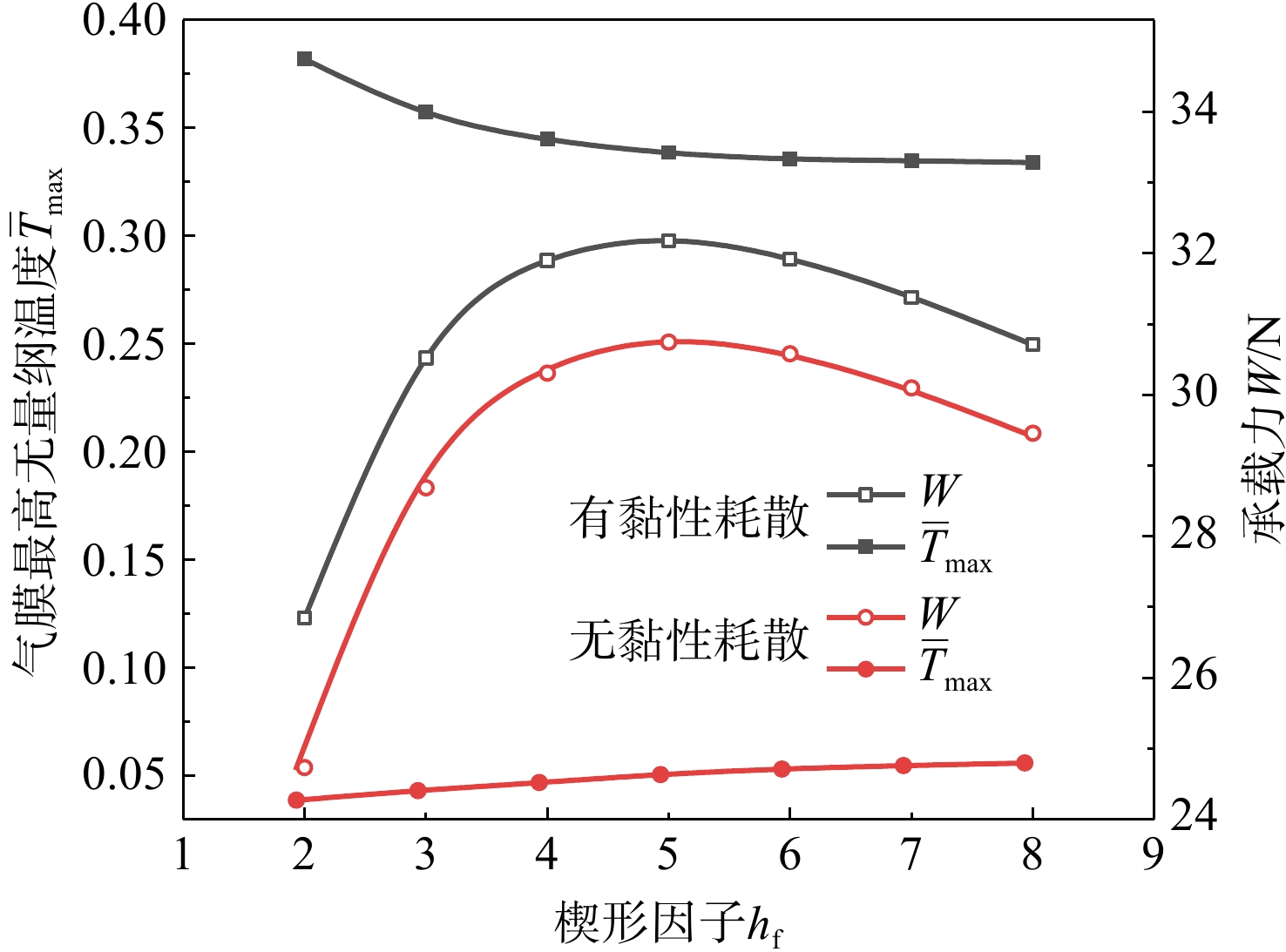
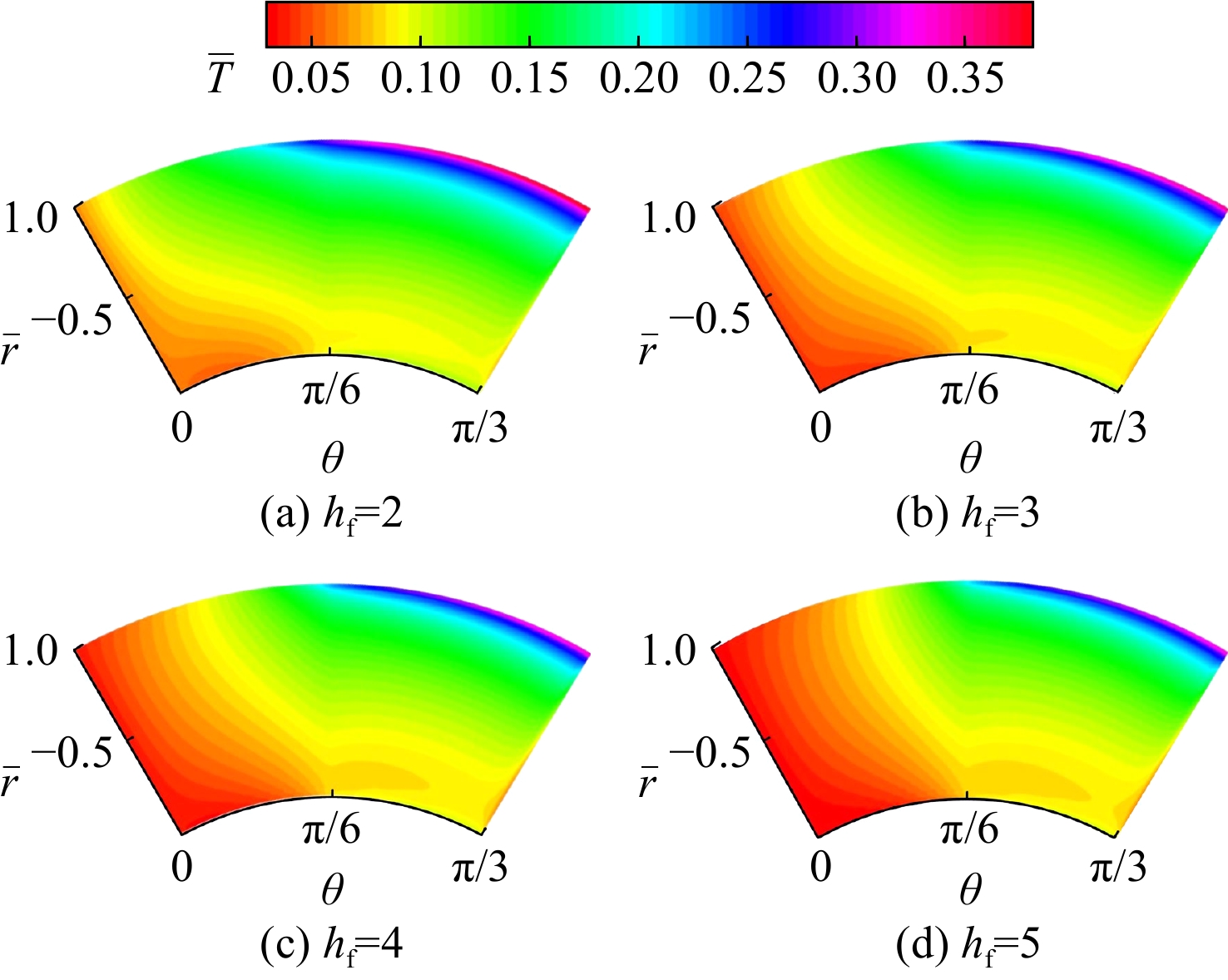
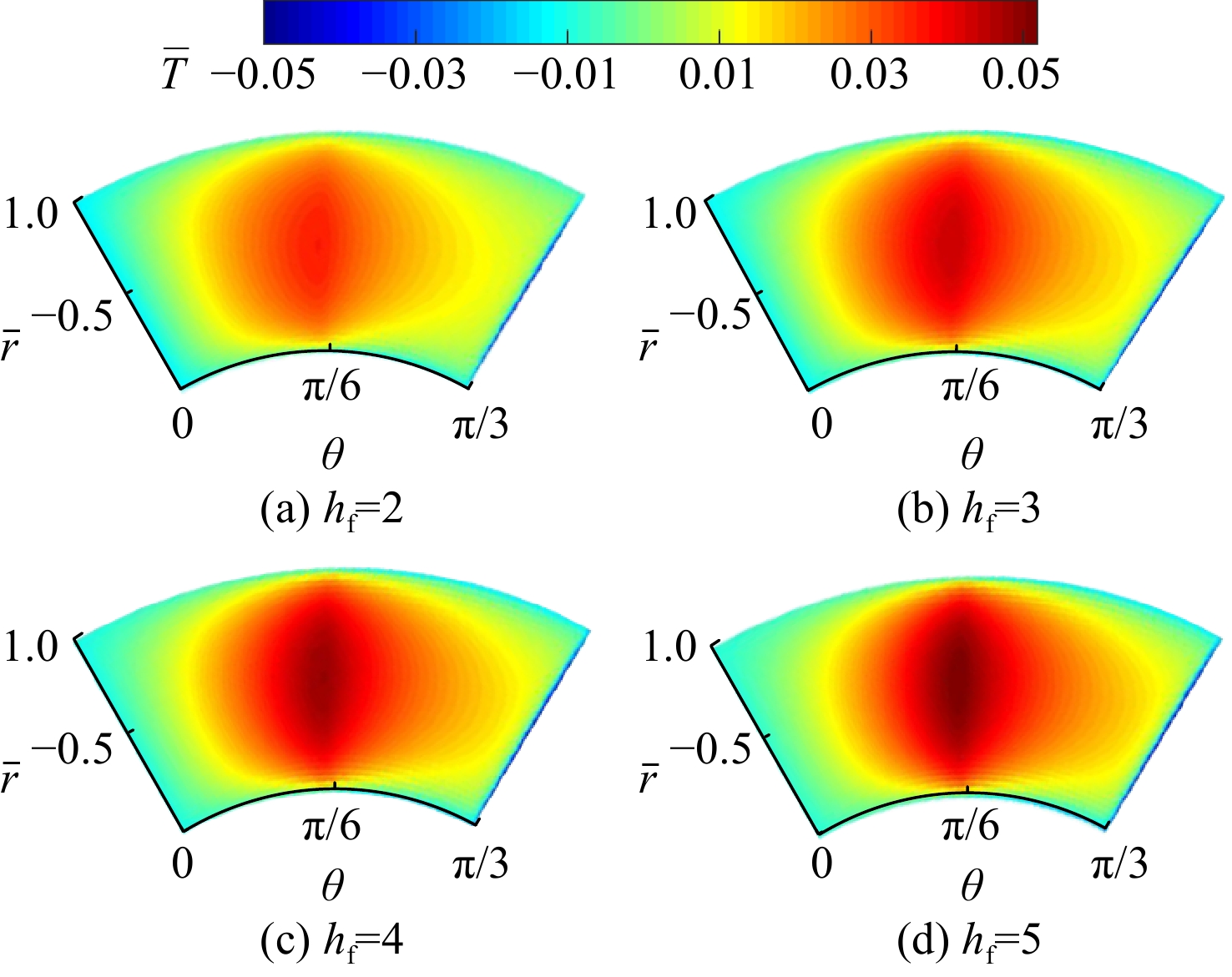
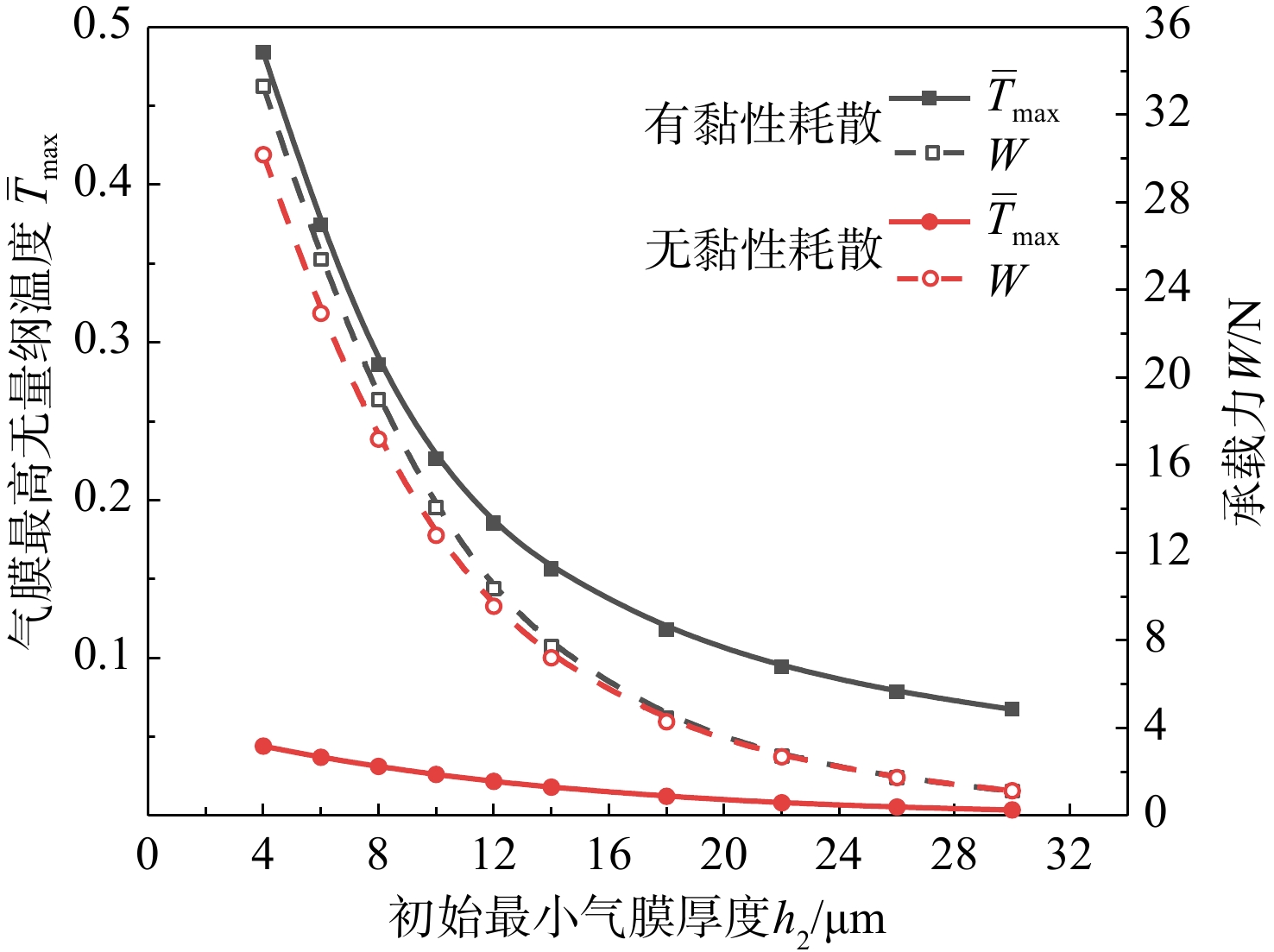
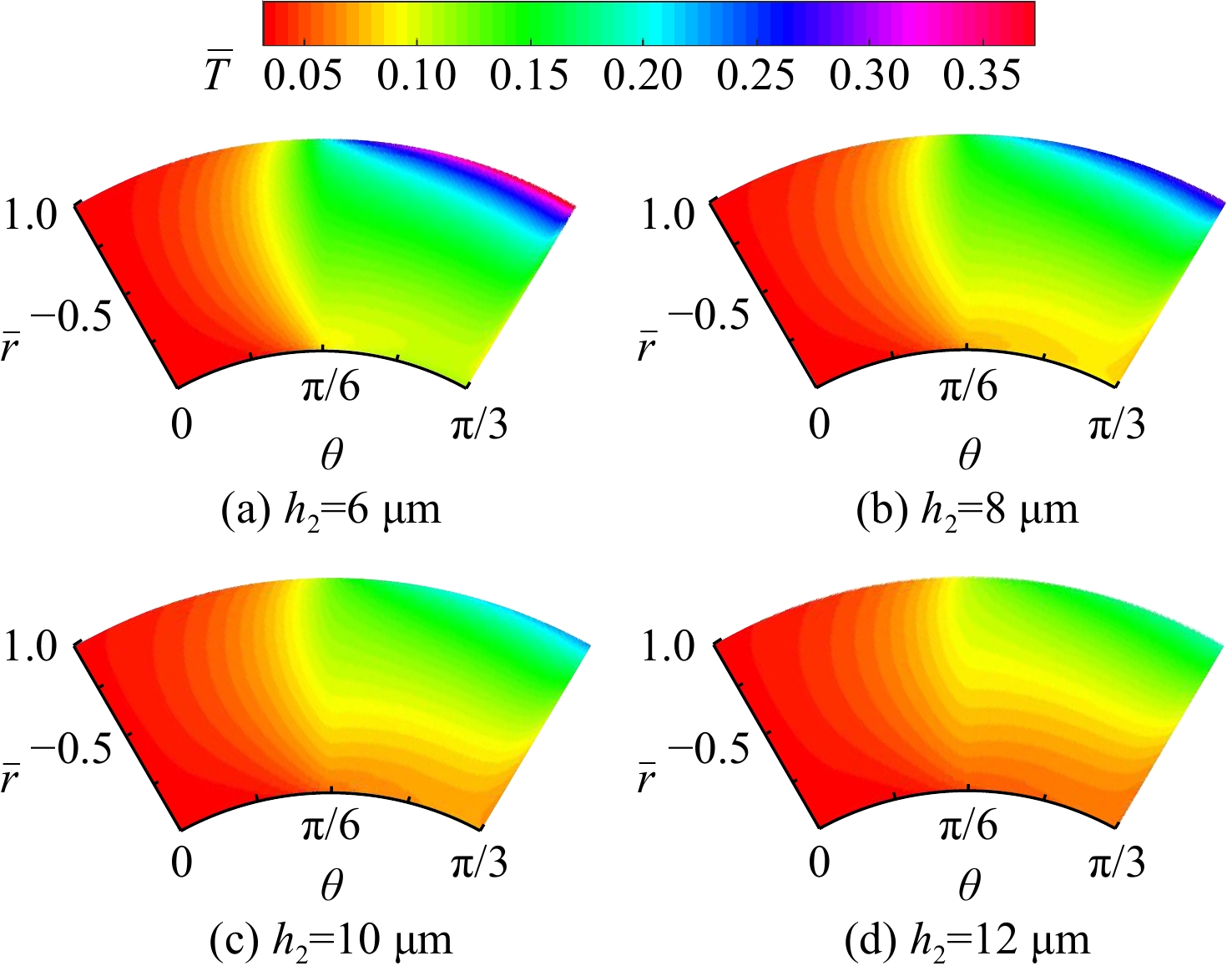
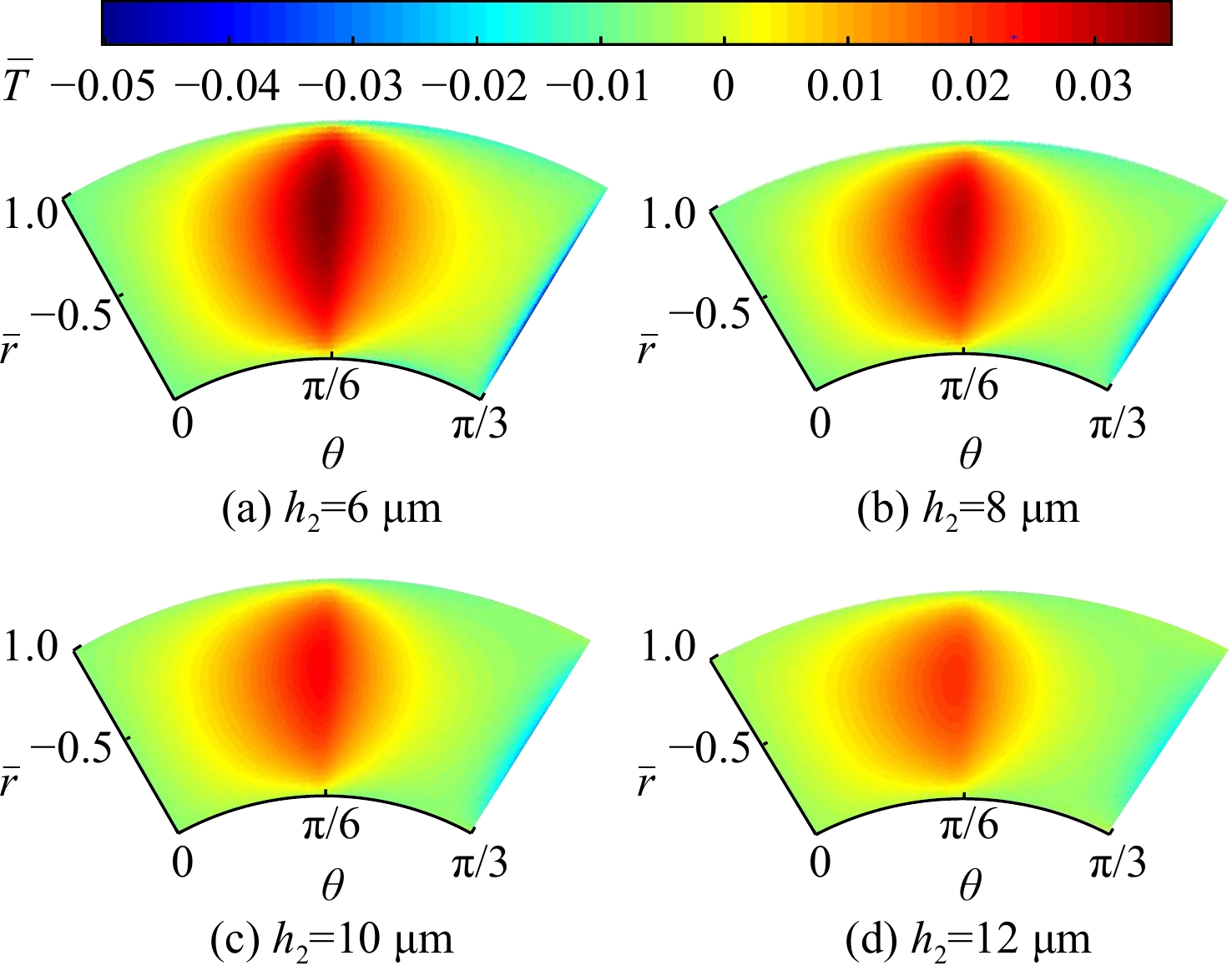
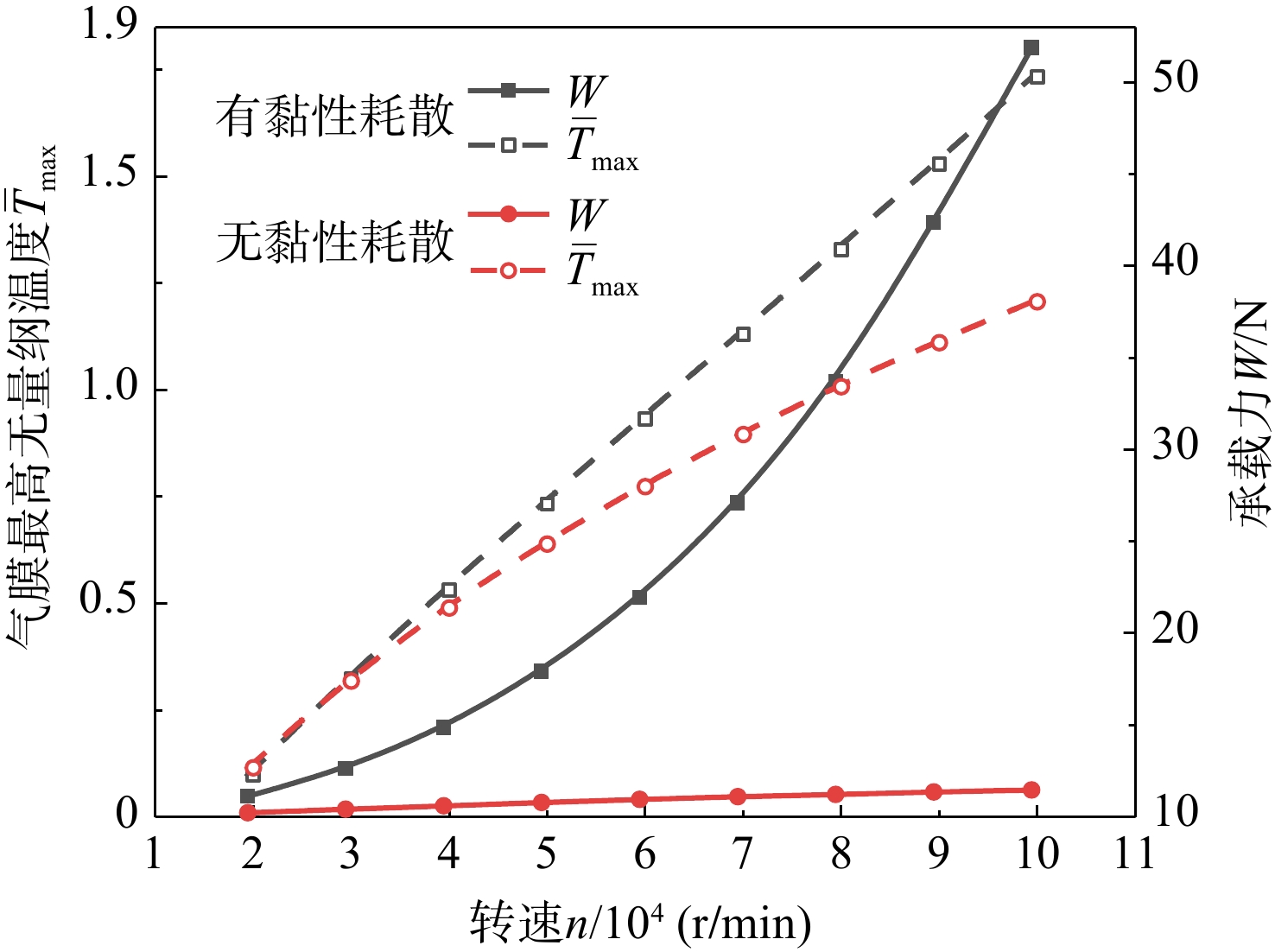
In order to reveal the thermo-aerodynamic characteristics of foil-type dynamic pressure gas thrust bearings in the presence or absence of viscosity dissipation, the lubrication models in the cross-section air film gap were built, and the term of viscosity dissipation and pressure variation term in the energy equations were decoupled and discussed respectively. The effects of wedge factor, air film thickness and rotation speed on flow field of the air film were obtained. The temperature distributions in air film between the presence and absence of viscosity dissipation were presented and compared. Results showed that the peak temperature in the air film was located near the circumferential air outlet and the side of outer diameter in the presence of viscosity dissipation, while the peak value took place near the end of the convergence channel in the absence of viscosity dissipation. Contrary to the case without viscosity dissipation, the magnitude of temperature rise in the air film increased with the increase of wedge factor in the presence of viscosity dissipation. The magnitude of temperature rise increased with the increase of the rotational speed, and had no effect on the variation of air film thickness. This study confirmed that viscosity dissipation played a significant role in the temperature rise and flow field of the foil-type dynamic pressure gas thrust bearings. In high-speed working conditions, the temperature rise in the presence of viscosity dissipation accounted for more than 90%. The results are of significant importance by providing basic design guidelines for temperature rise of the air film.

Spatial distribution of propane laminar pre-mixed flame temperature and equivalence ratio based on LIBS
LIU Xin, WANG Chaojun, HU Erjiang, YIN Geyuan, HUANG Zuohua
2023, 38(4): 870-877. doi: 10.13224/j.cnki.jasp.20210506
Abstract:

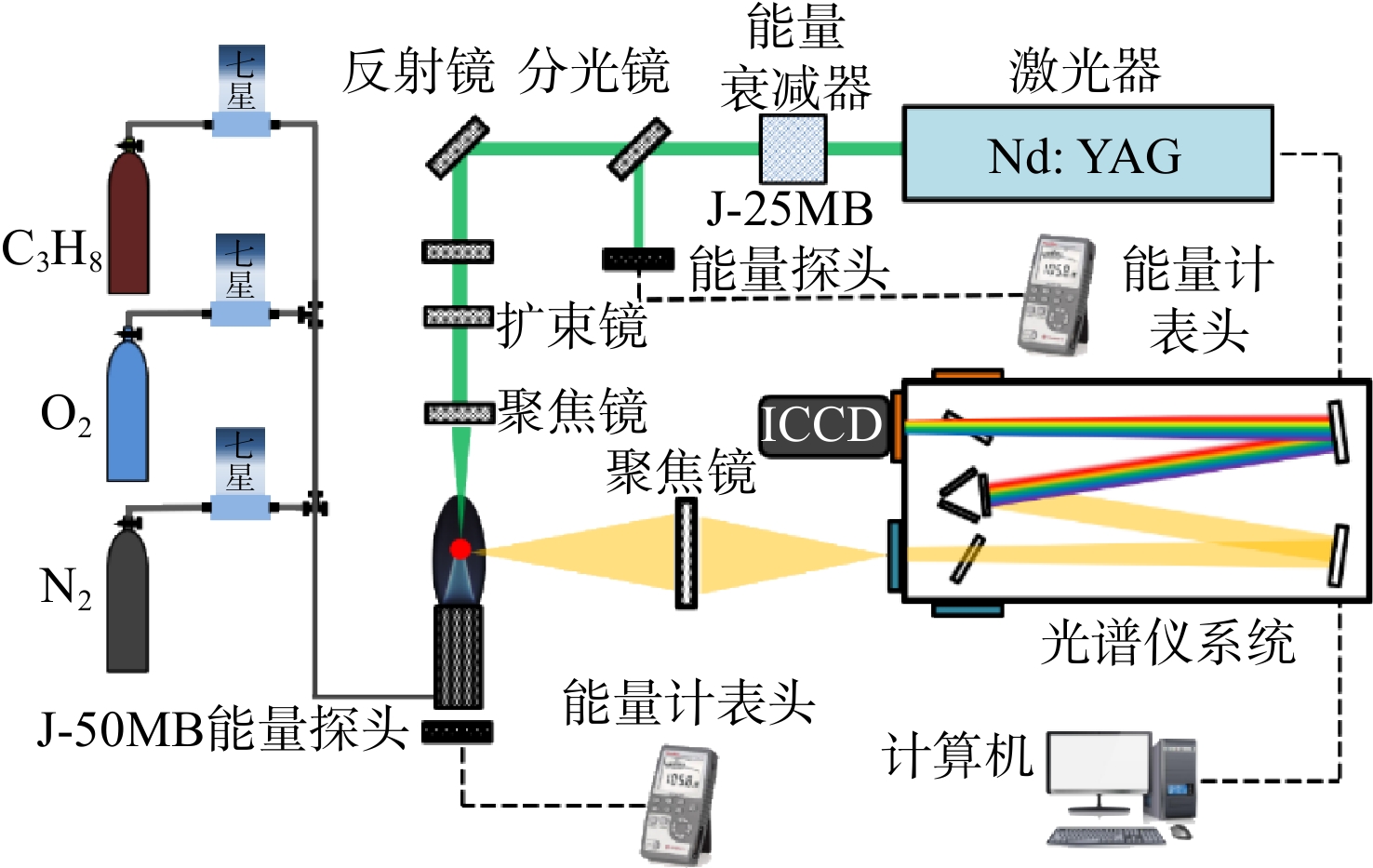
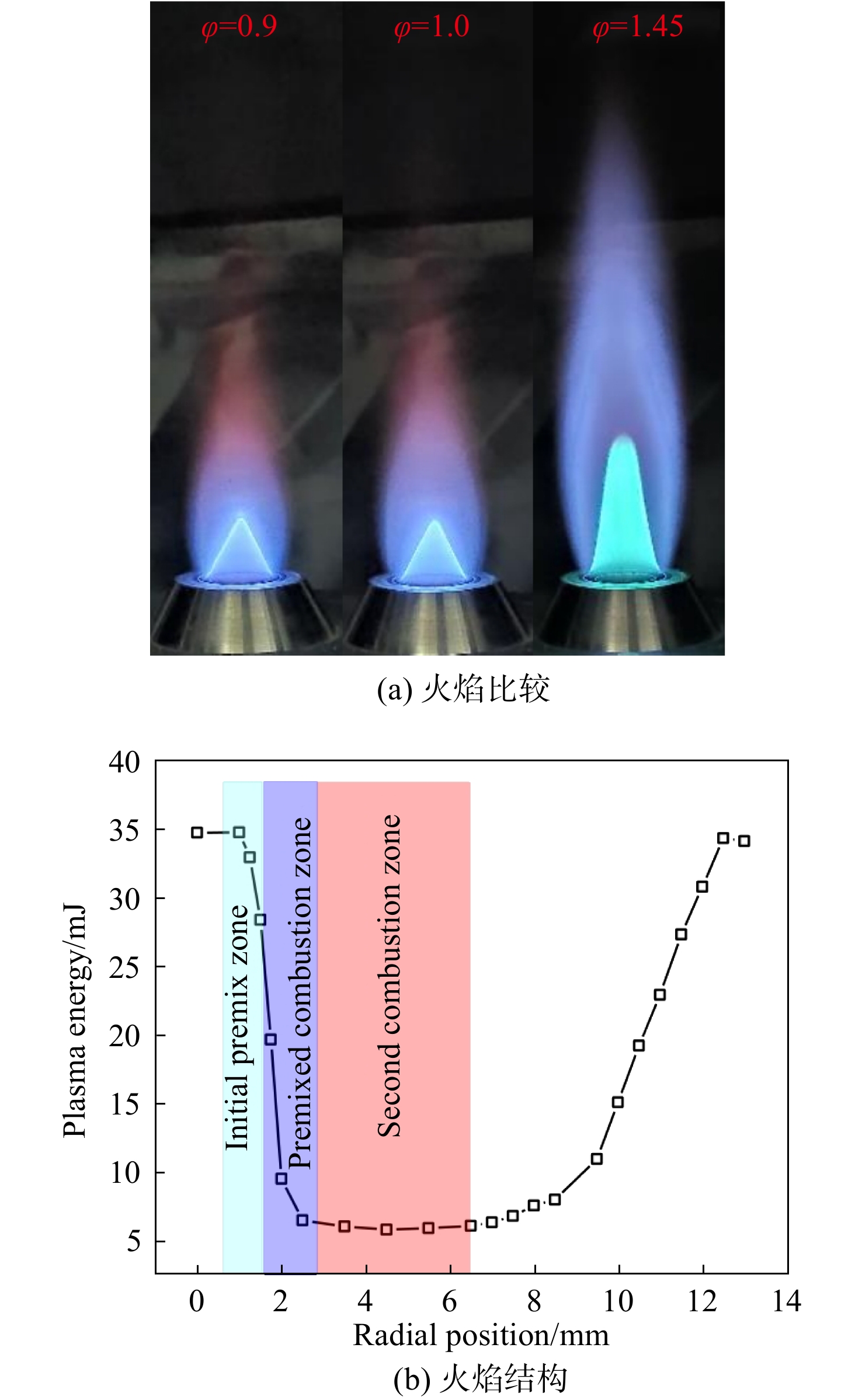
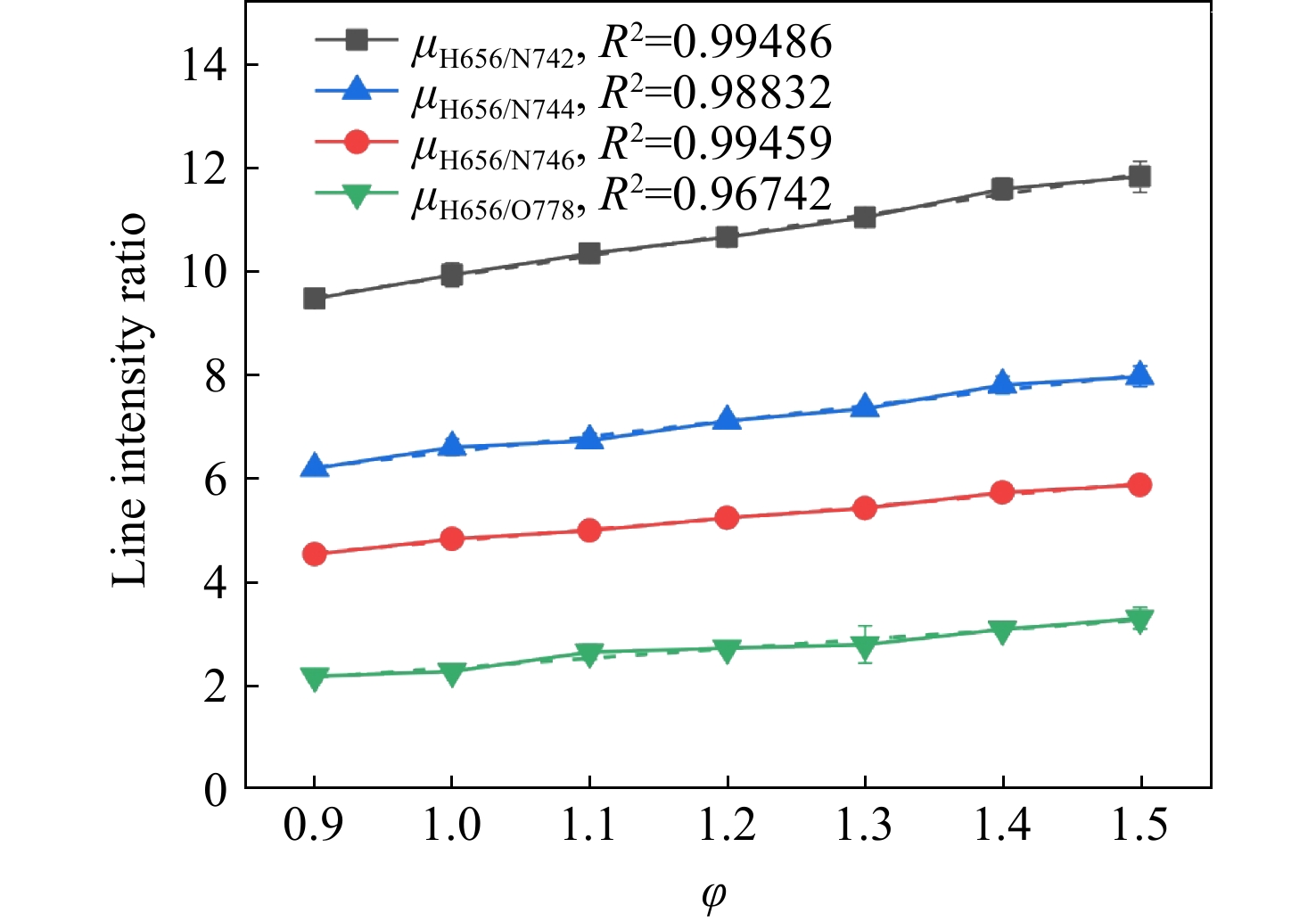
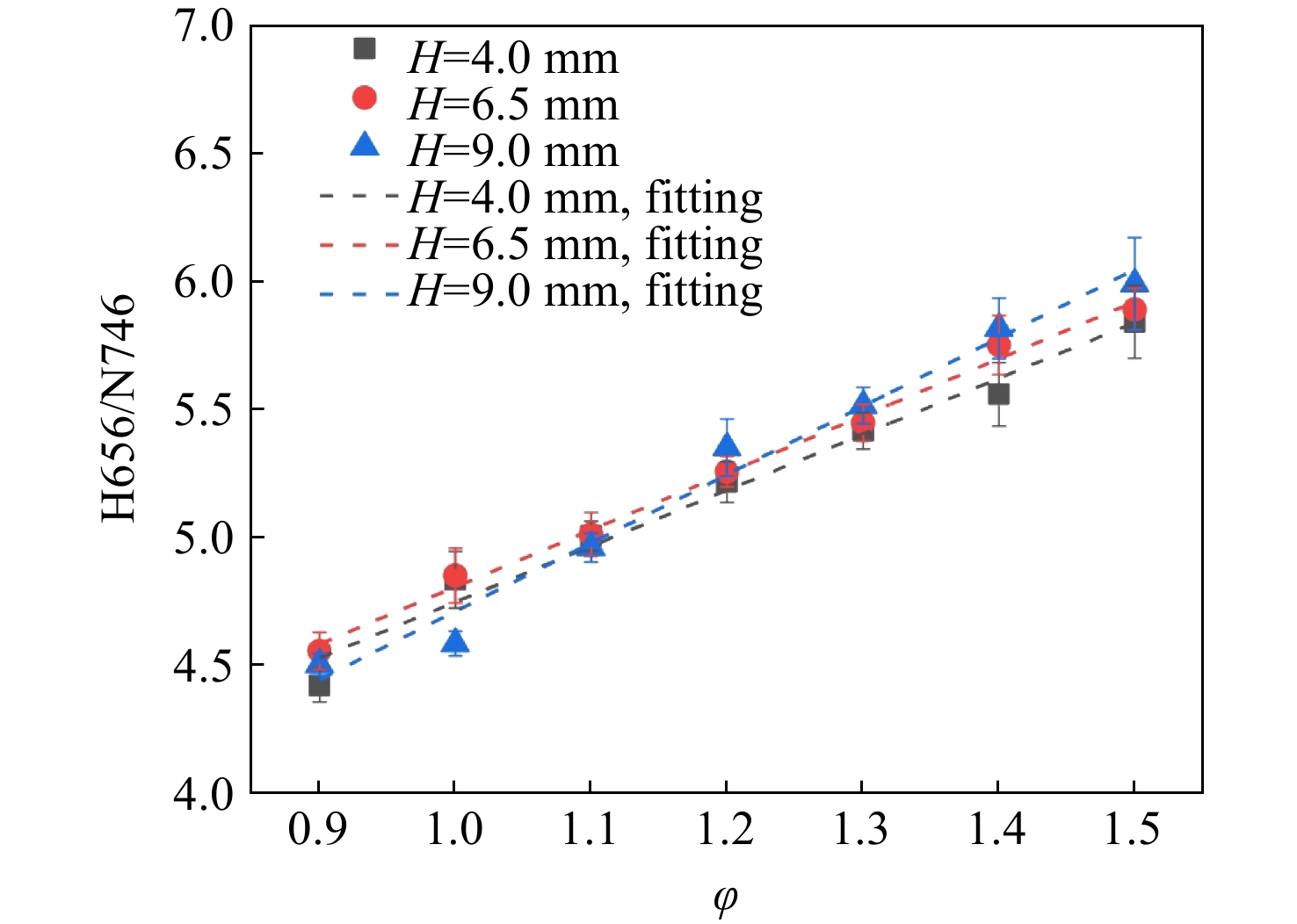
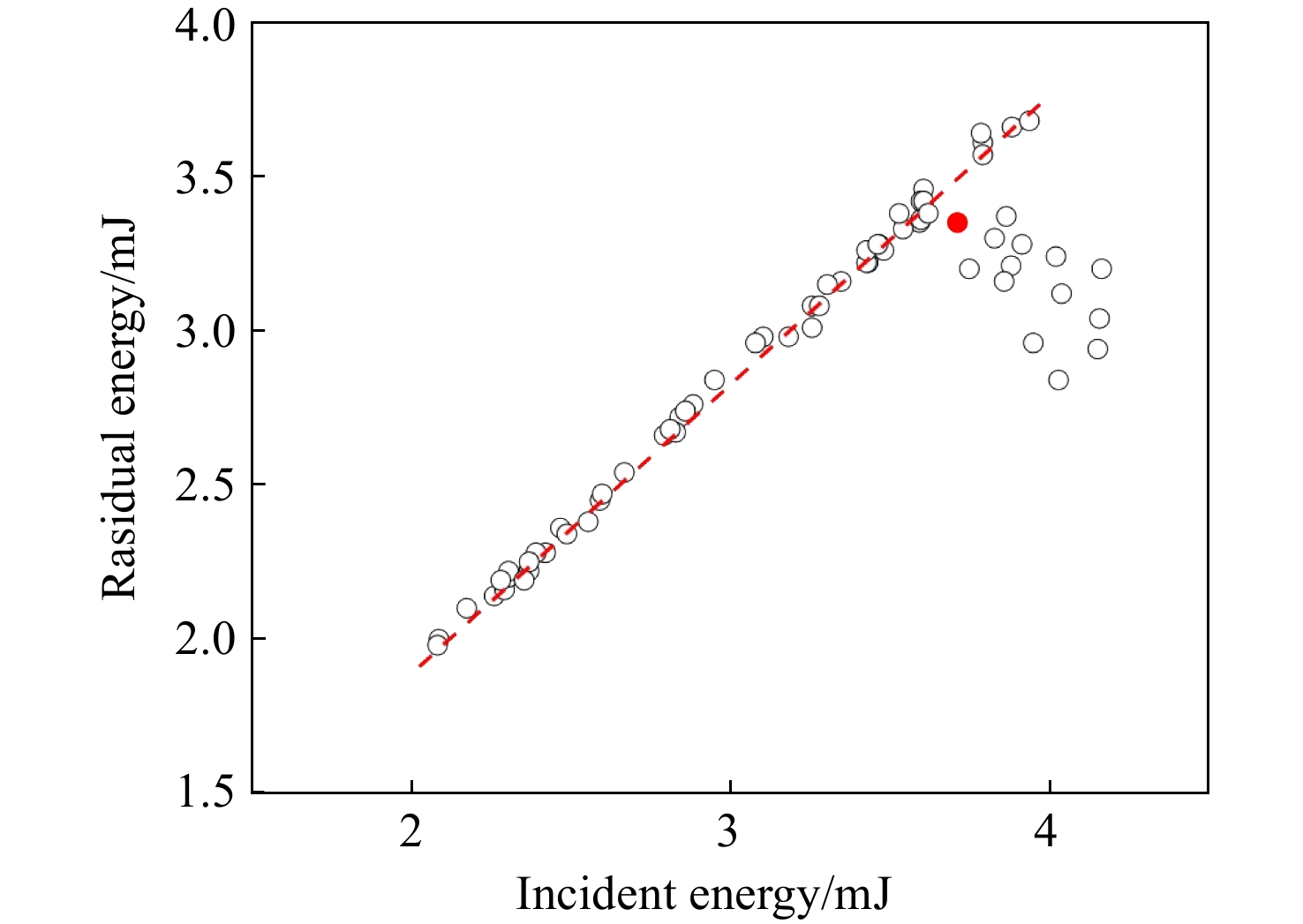
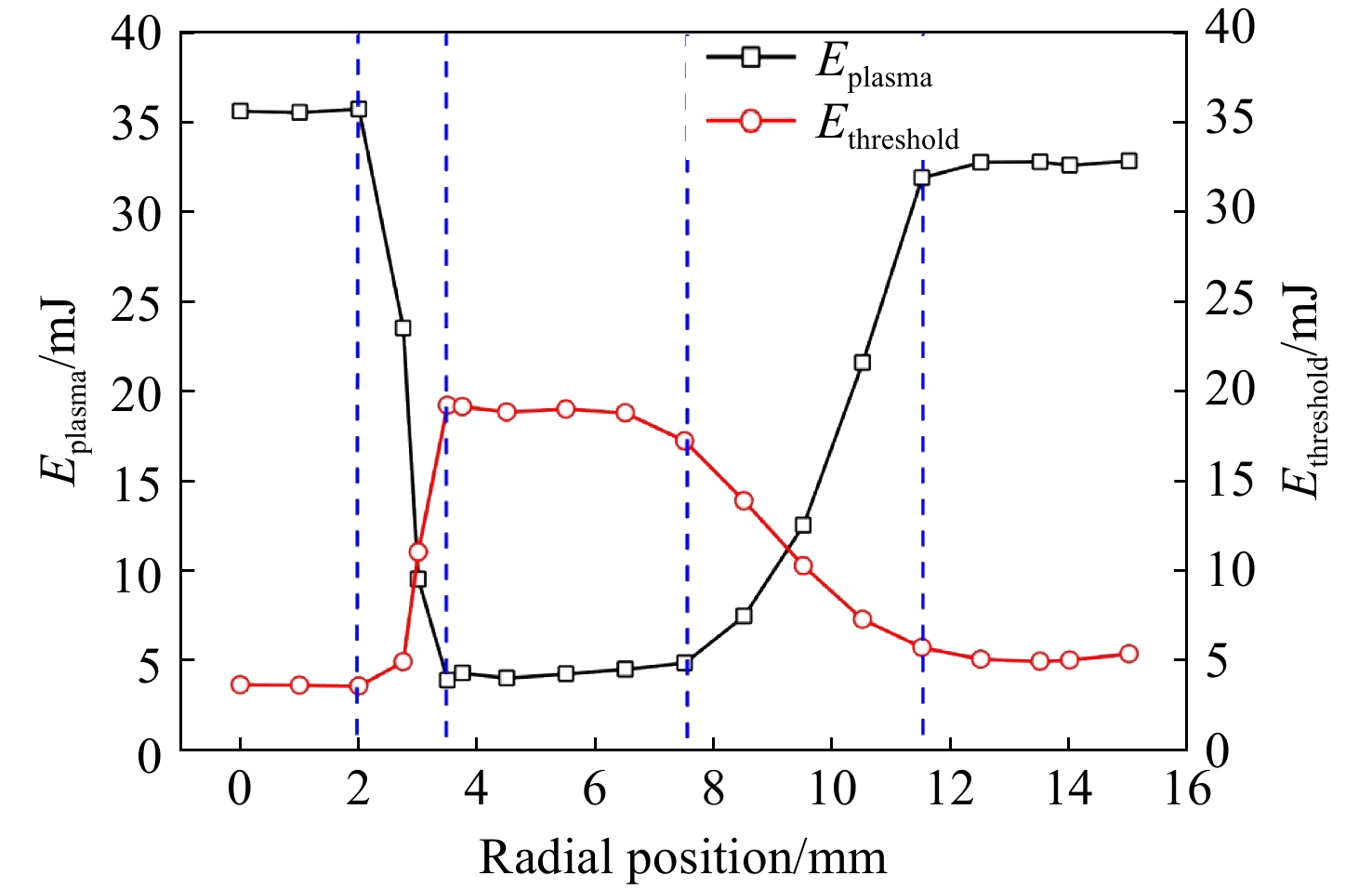
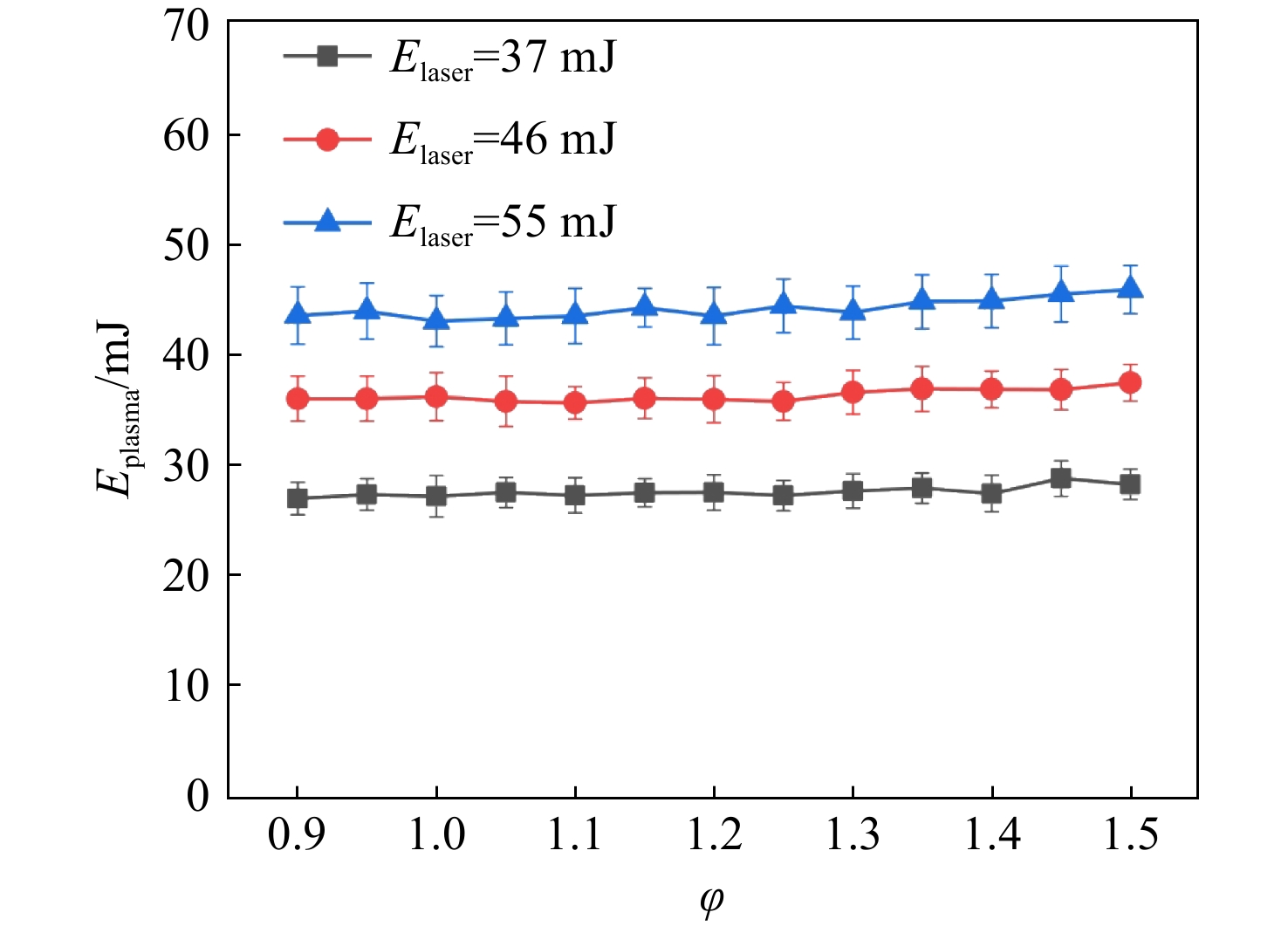
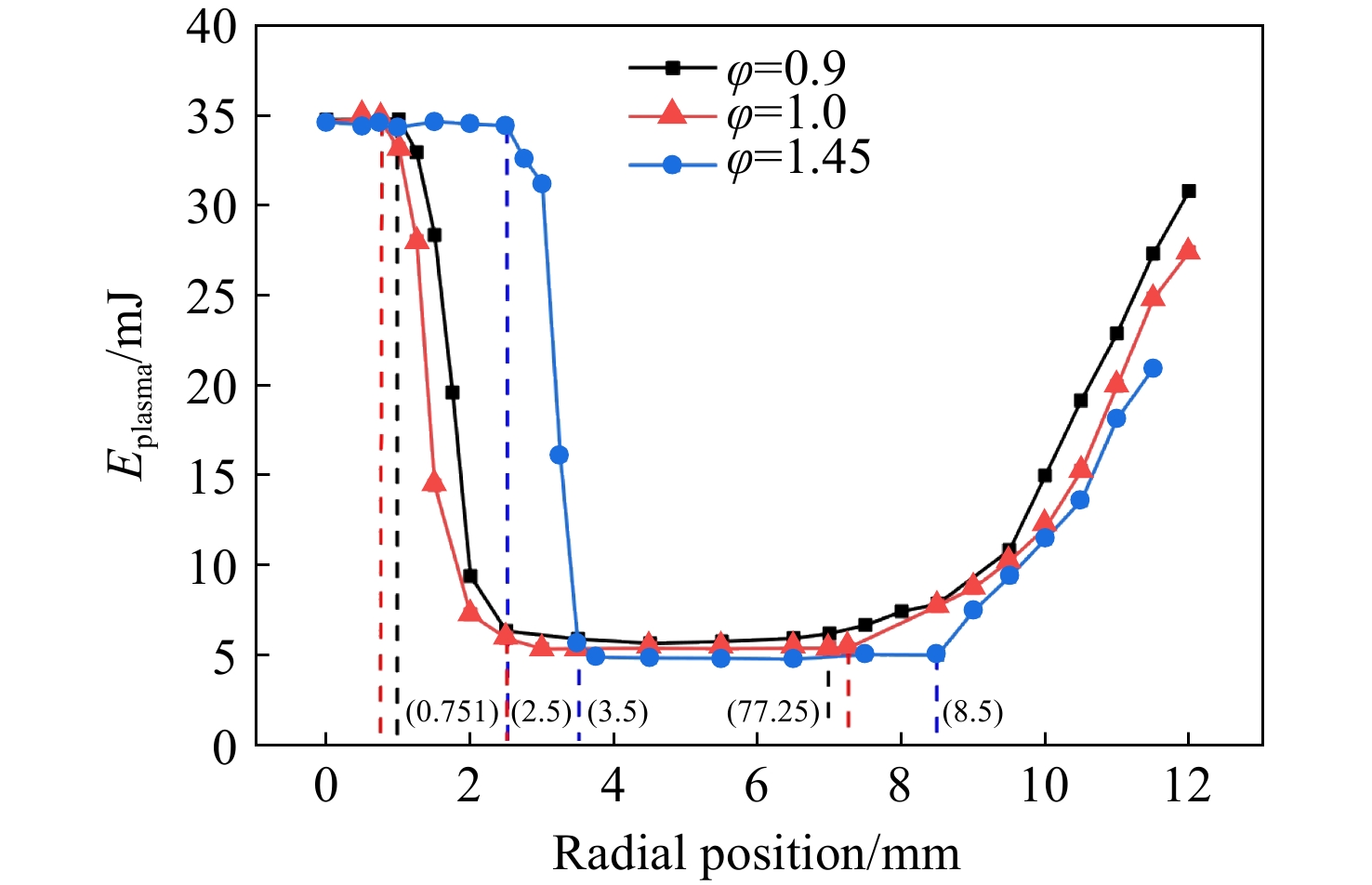
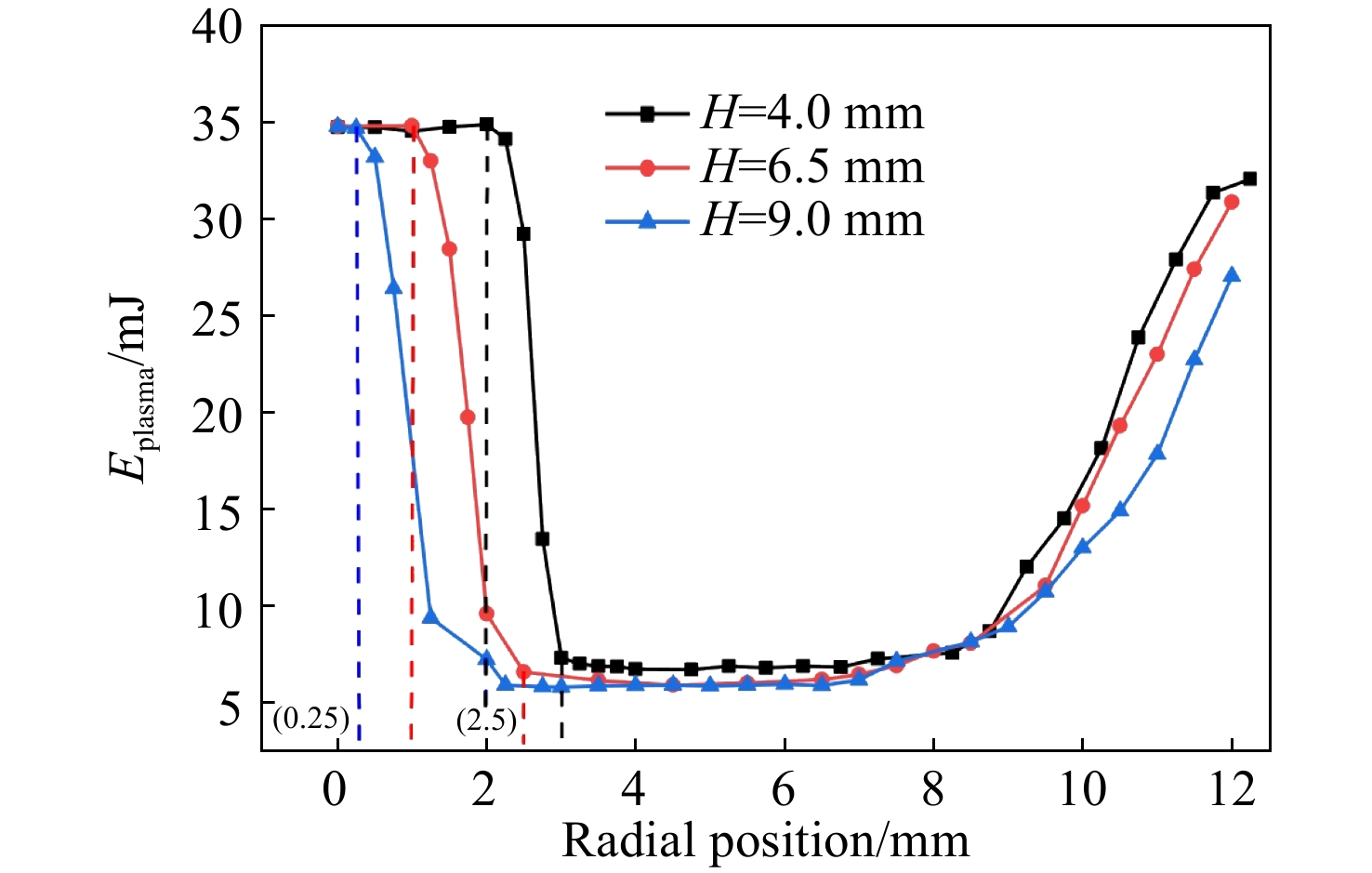
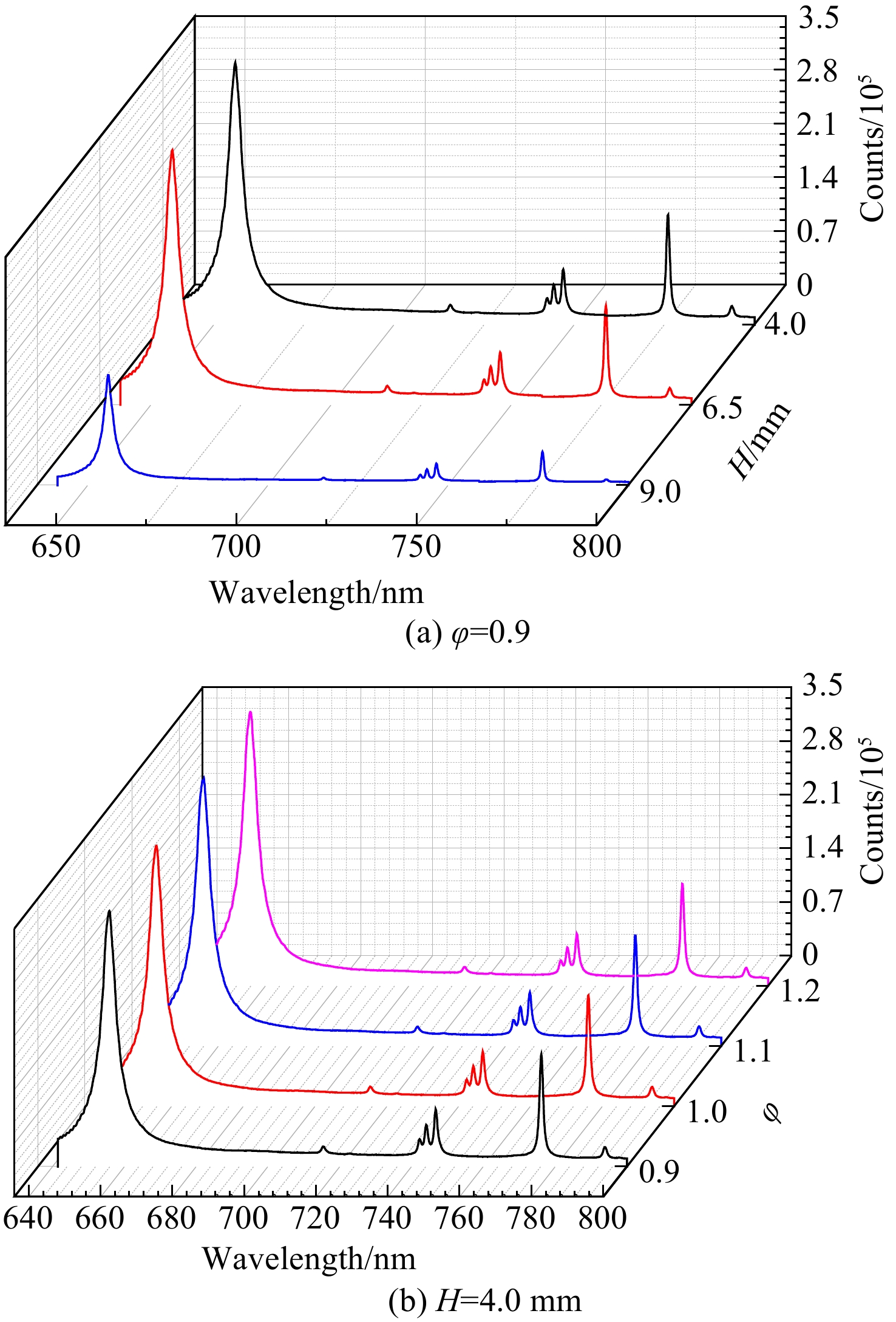
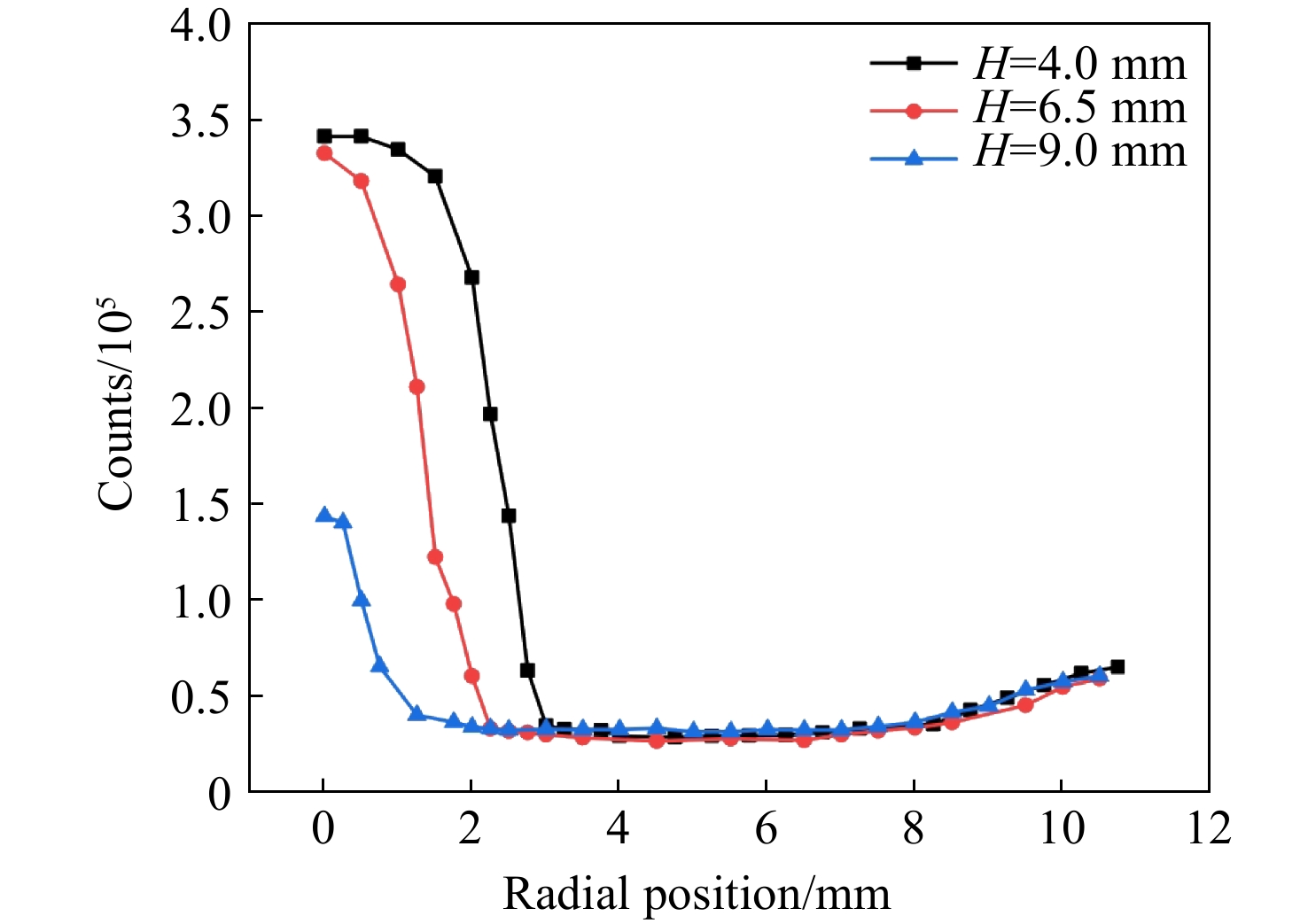
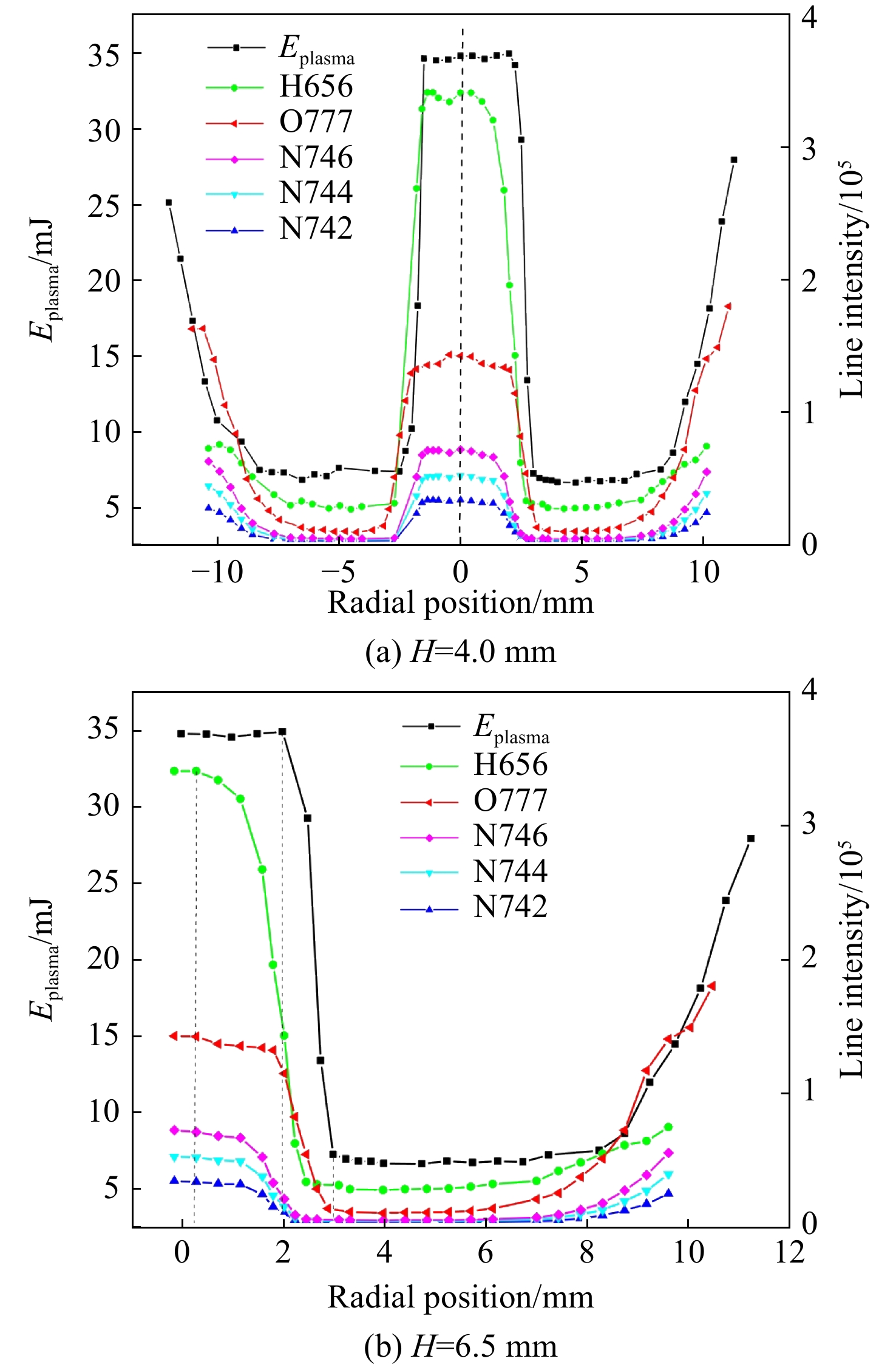
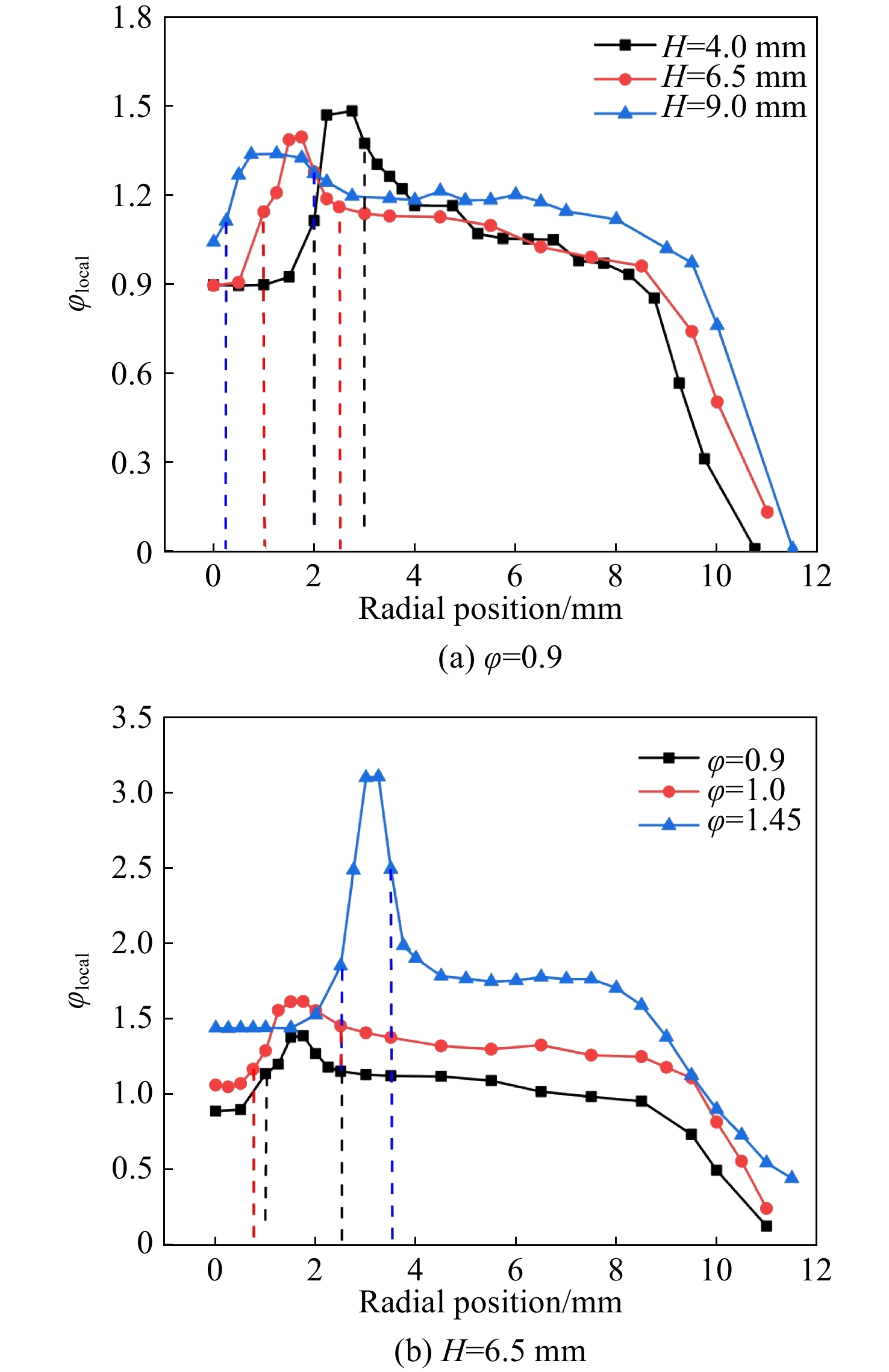
Laser induced breakdown spectroscopy (LIBS) is one of the important means to monitor the key parameters of combustion process. A three-dimensional movable experimental measurement platform of LIBS was built, then the spatial structure of propane laminar premixed flame was studied by combining plasma energy and spectroscopy, and the temperature trends and equivalence ratio spatial distributions with different equivalence ratios and heights were obtained. The results showed that the thickness of premixed combustion zone of Bunsen flame increased with the increase of height, and the spectral line intensity of H, N and O was consistent with the change trend of plasma energy, indicating that the particle volume fraction is the main factor affecting plasma energy. Then the spatial distribution of local equivalent ratio was obtained by calibrating the relationship between H656/N746 and equivalence ratio.

Structure,Strength and Vibration
Test on vibration characteristics of rotor system under sudden base shock excitation
CHEN Wei, WU Zeyu, HAN Jiaqi, LIU Lulu, LUO Gang, ZHAO Zhenhua
2023, 38(4): 878-888. doi: 10.13224/j.cnki.jasp.20210537
Abstract:

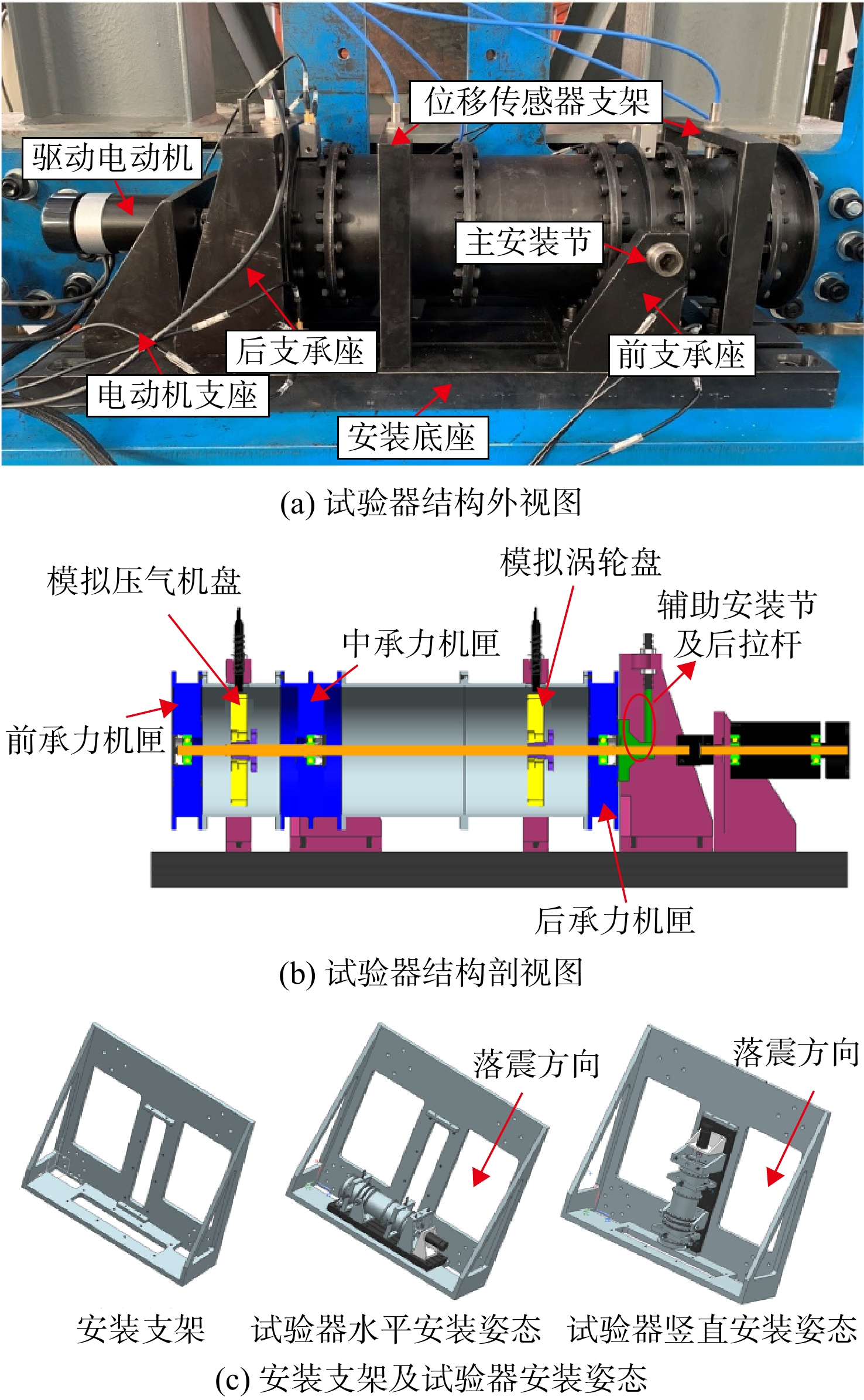
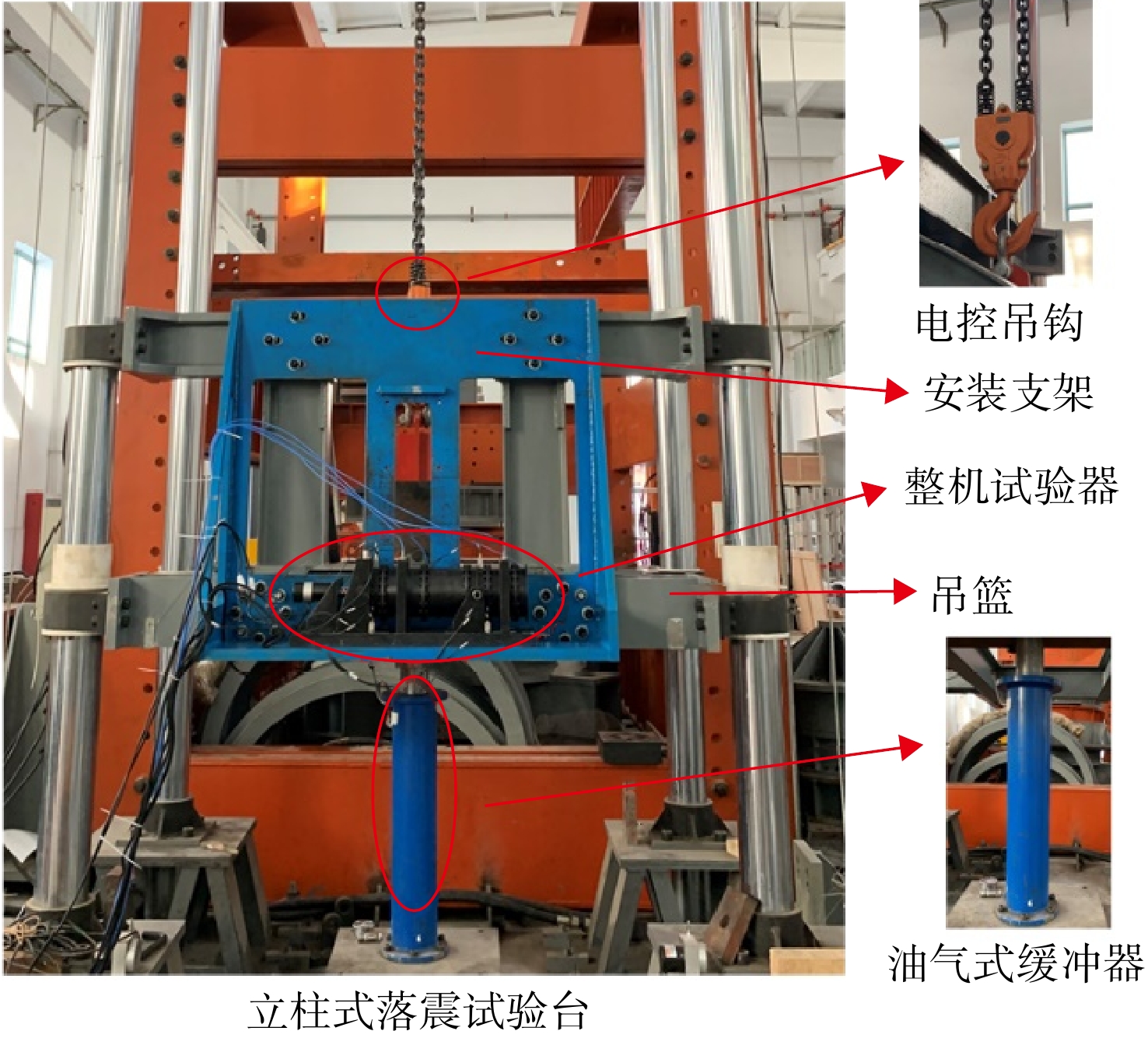
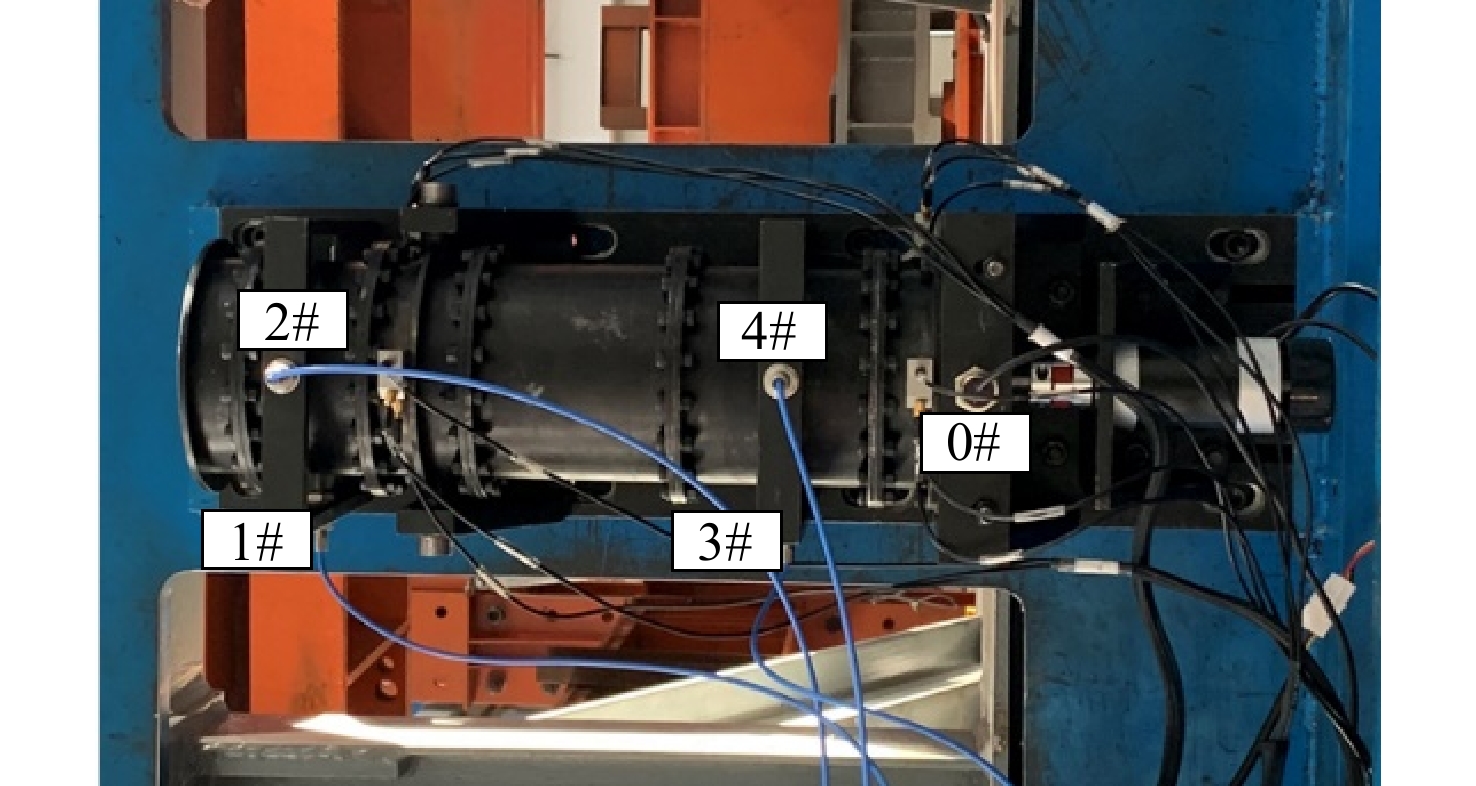
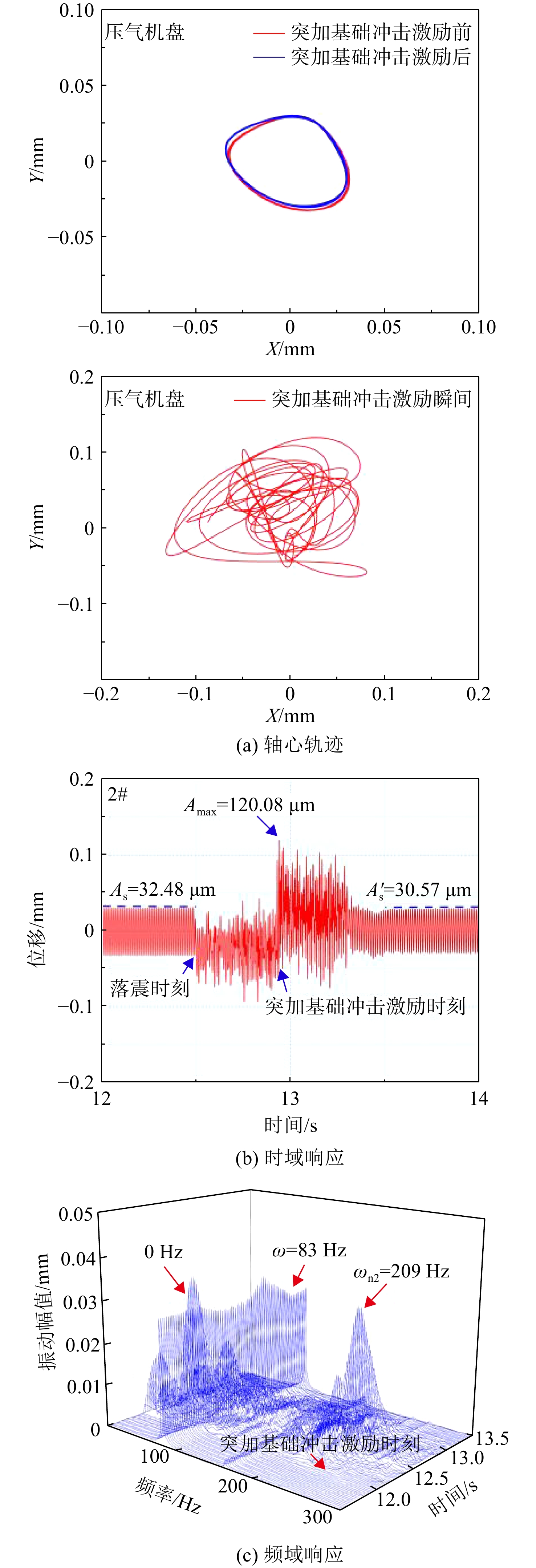
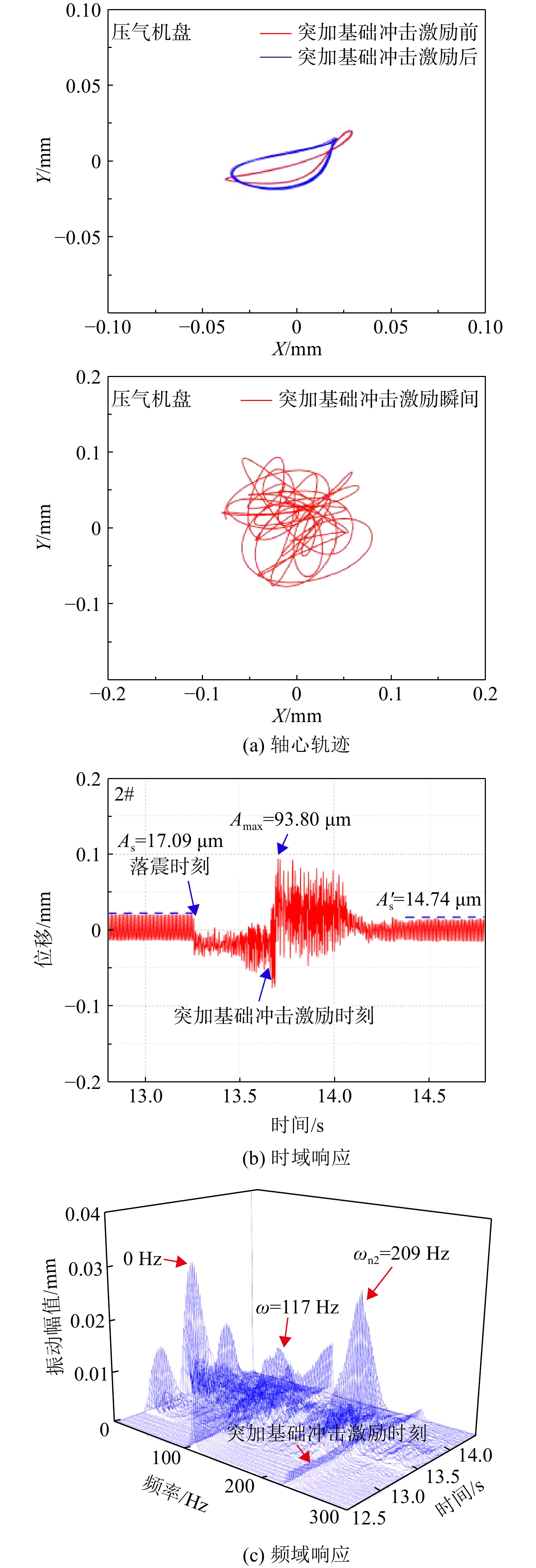
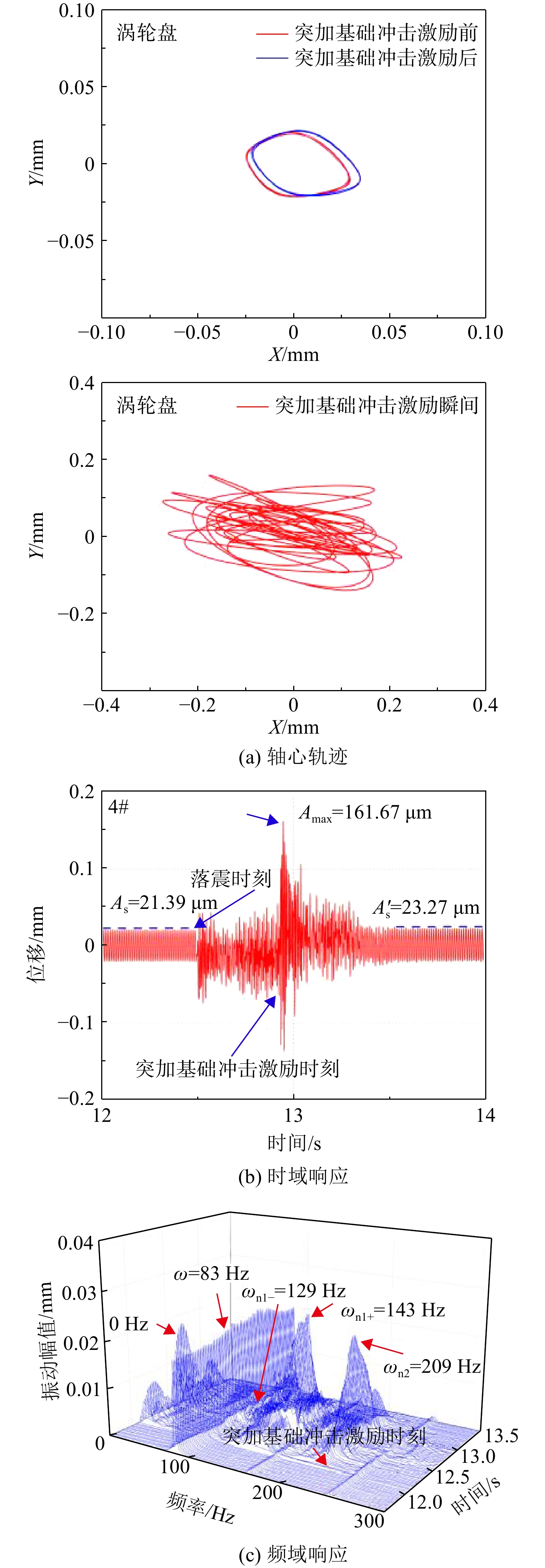
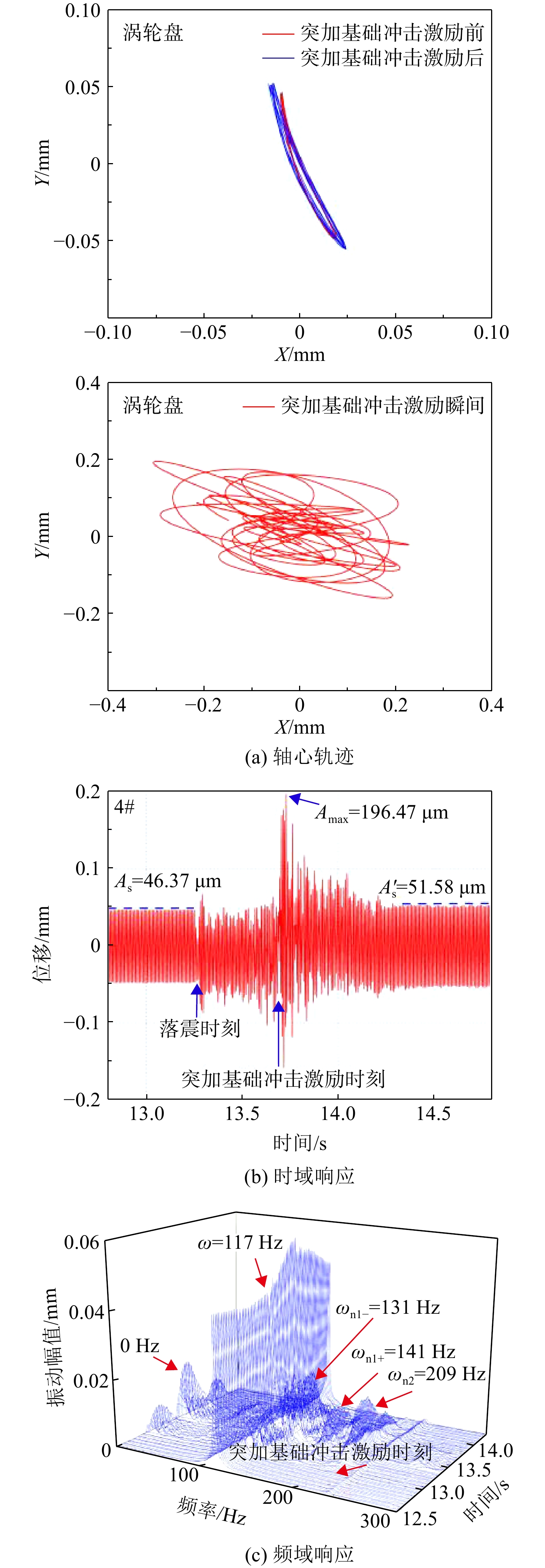
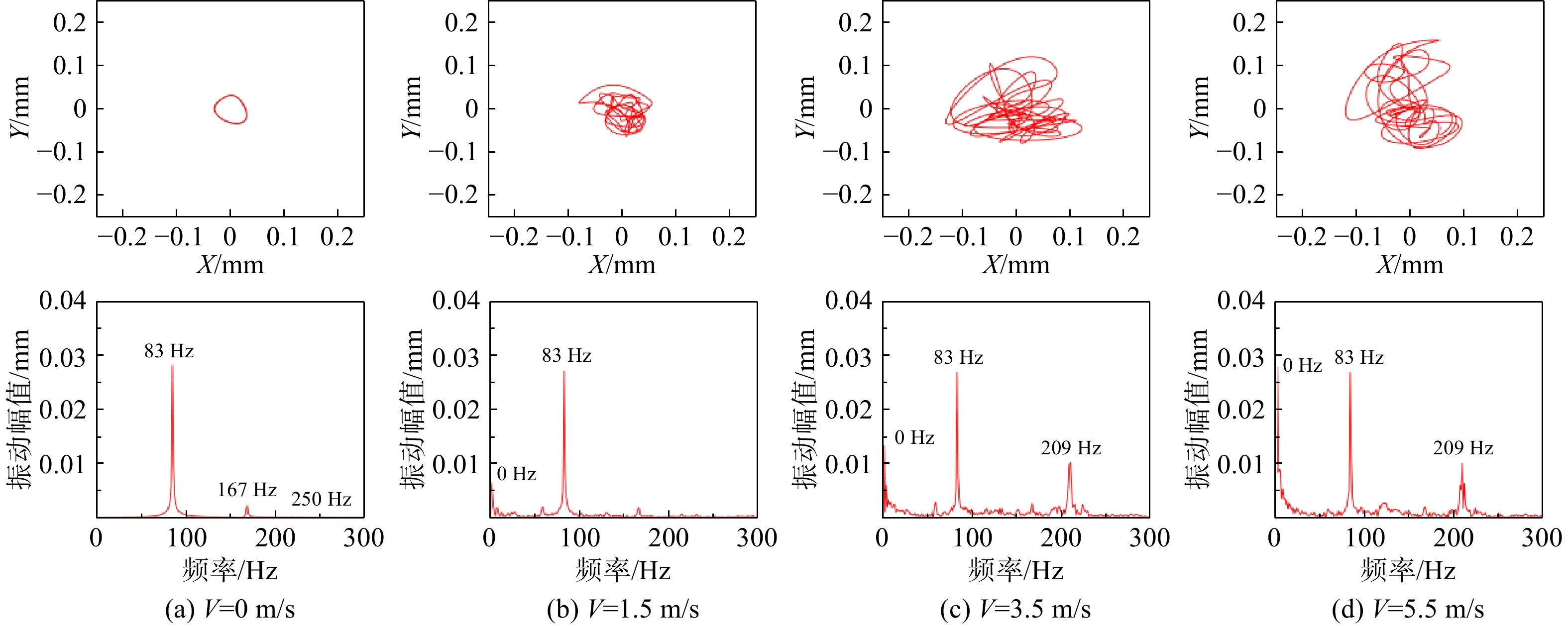
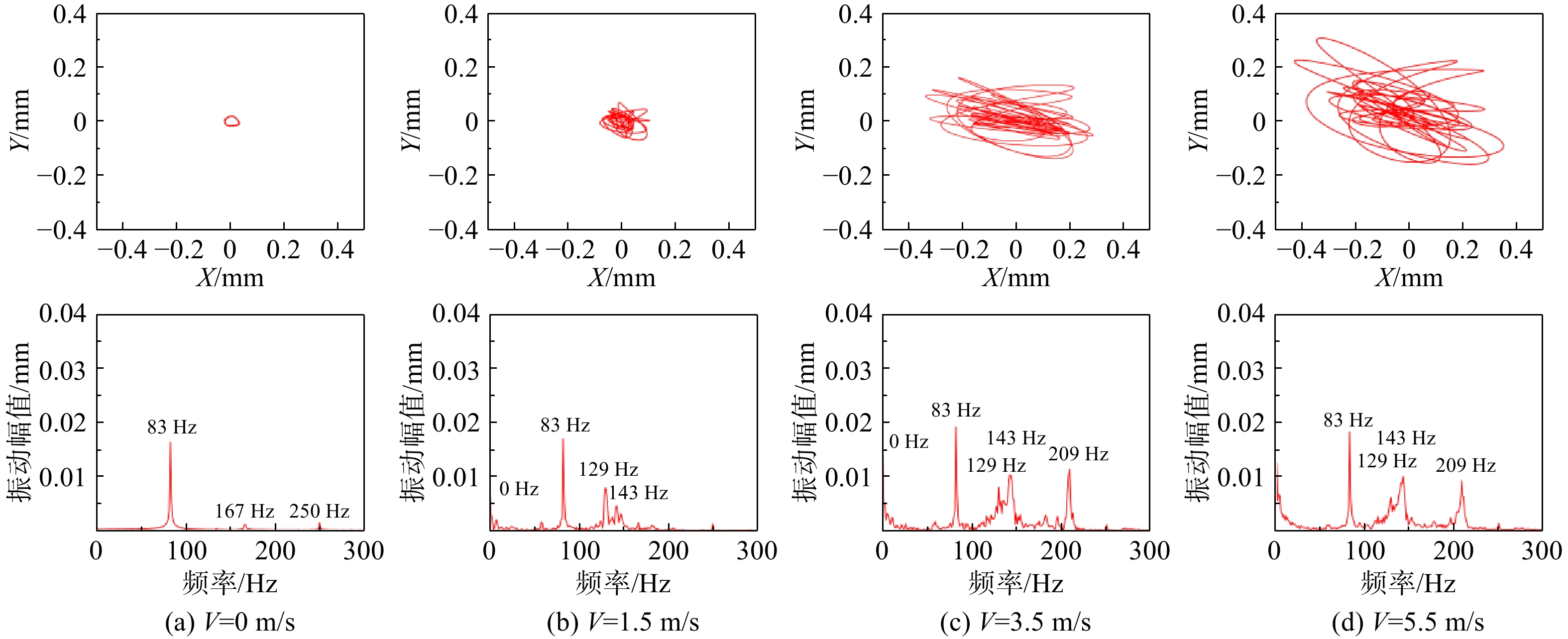
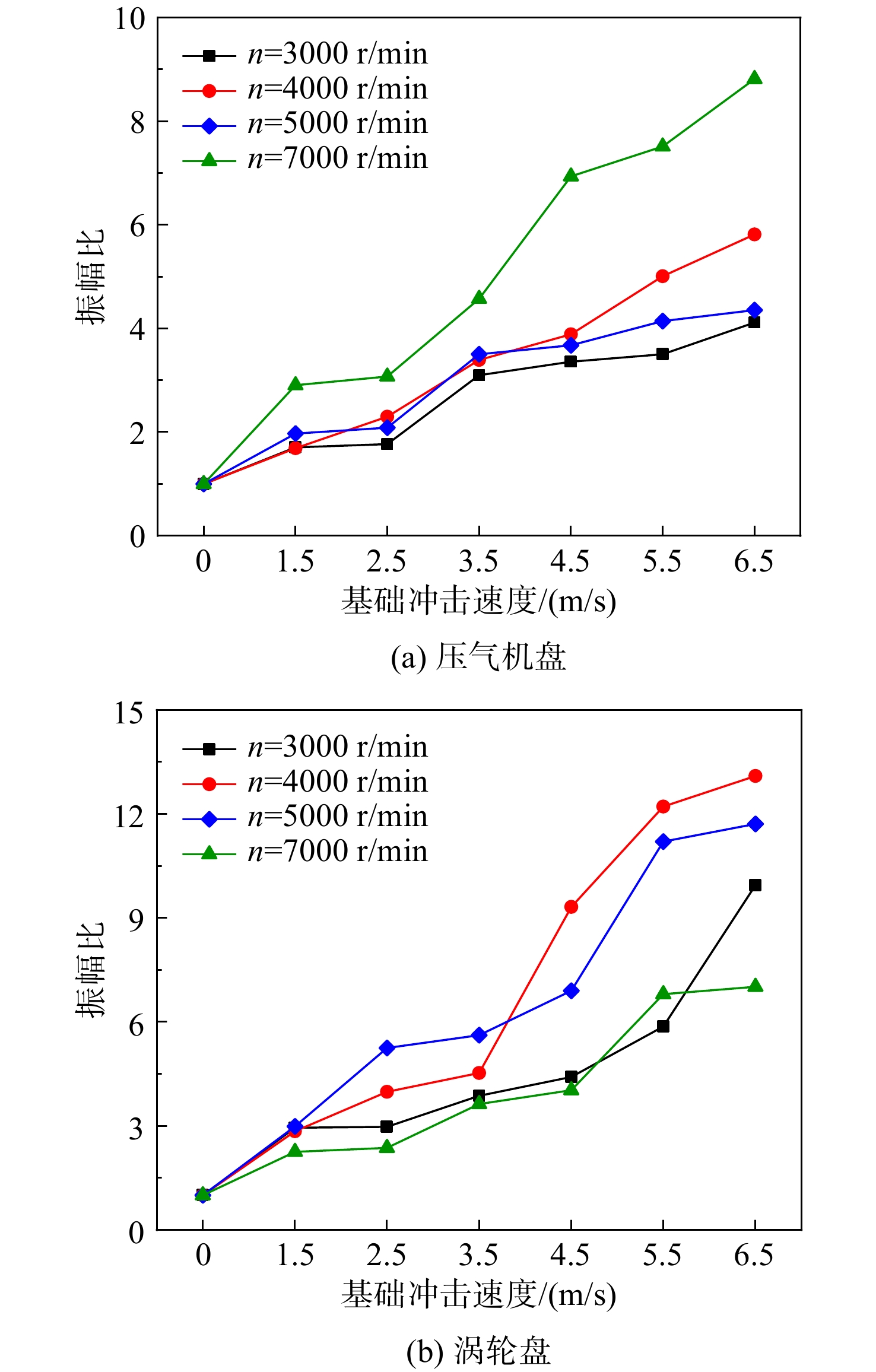
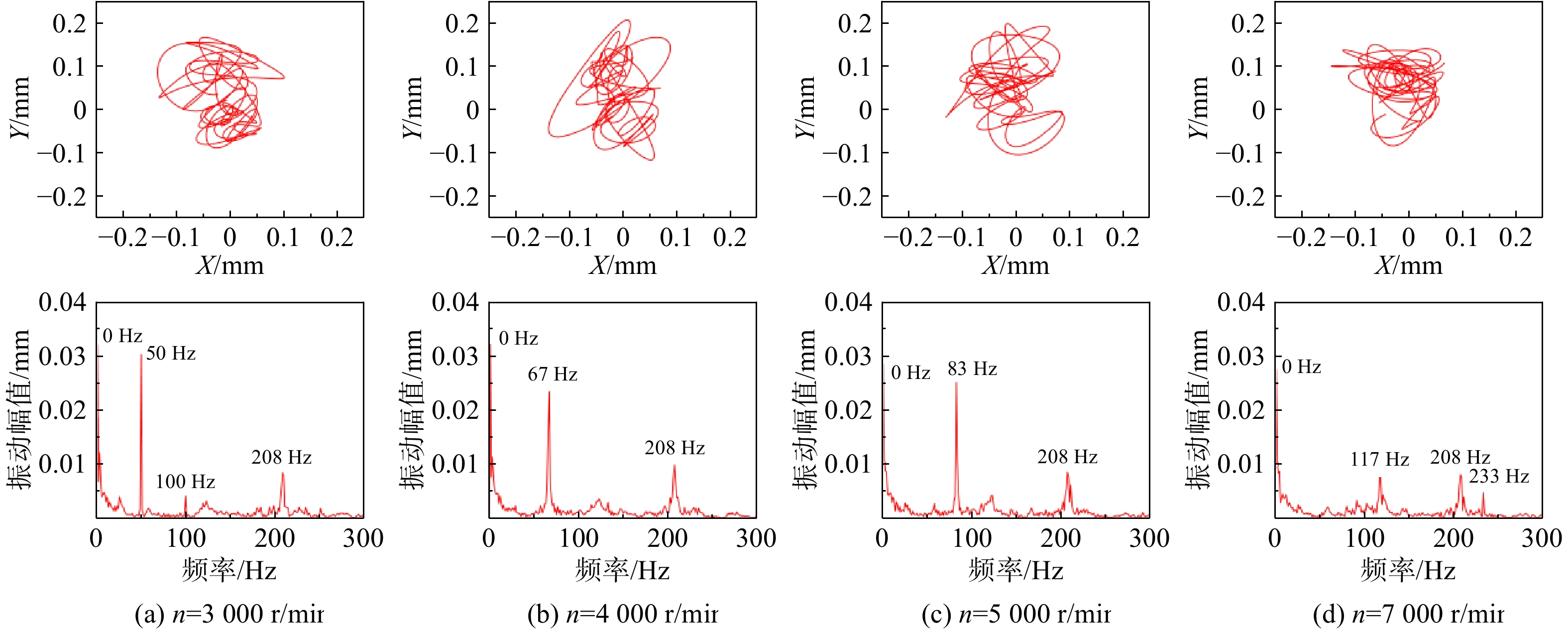
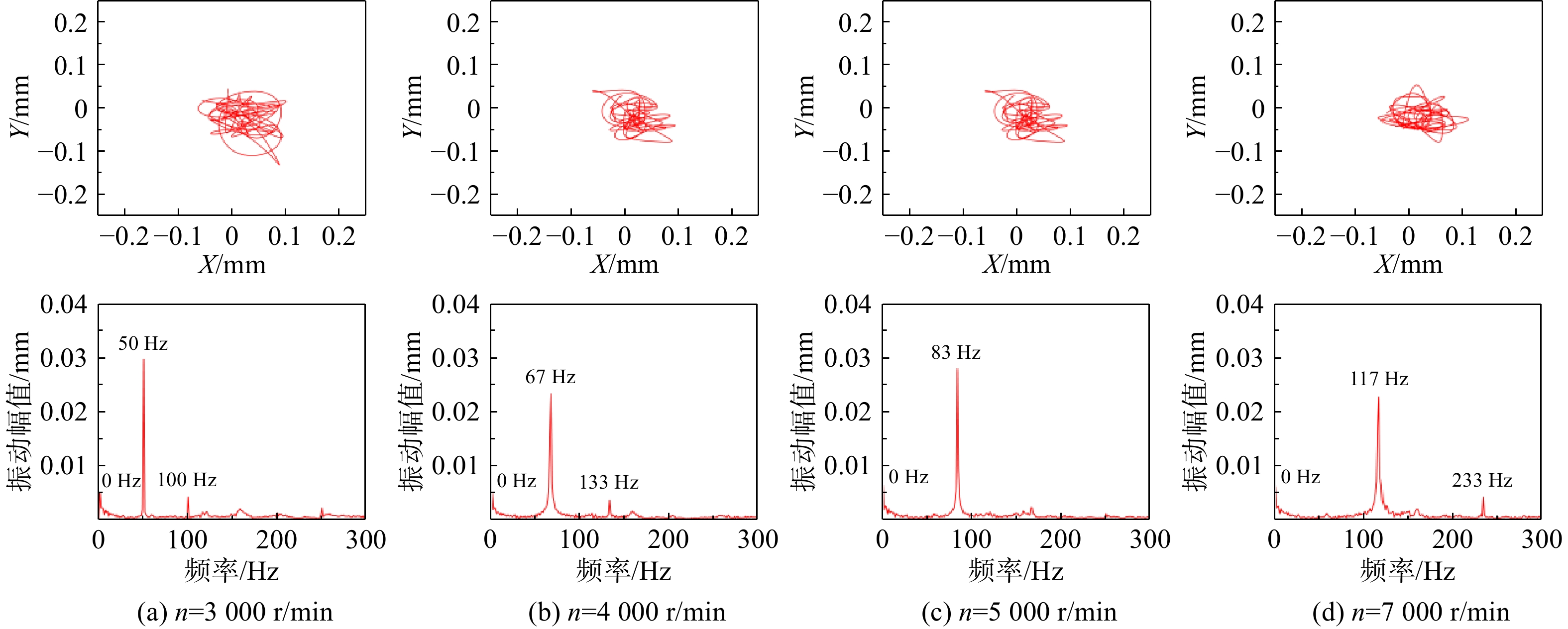
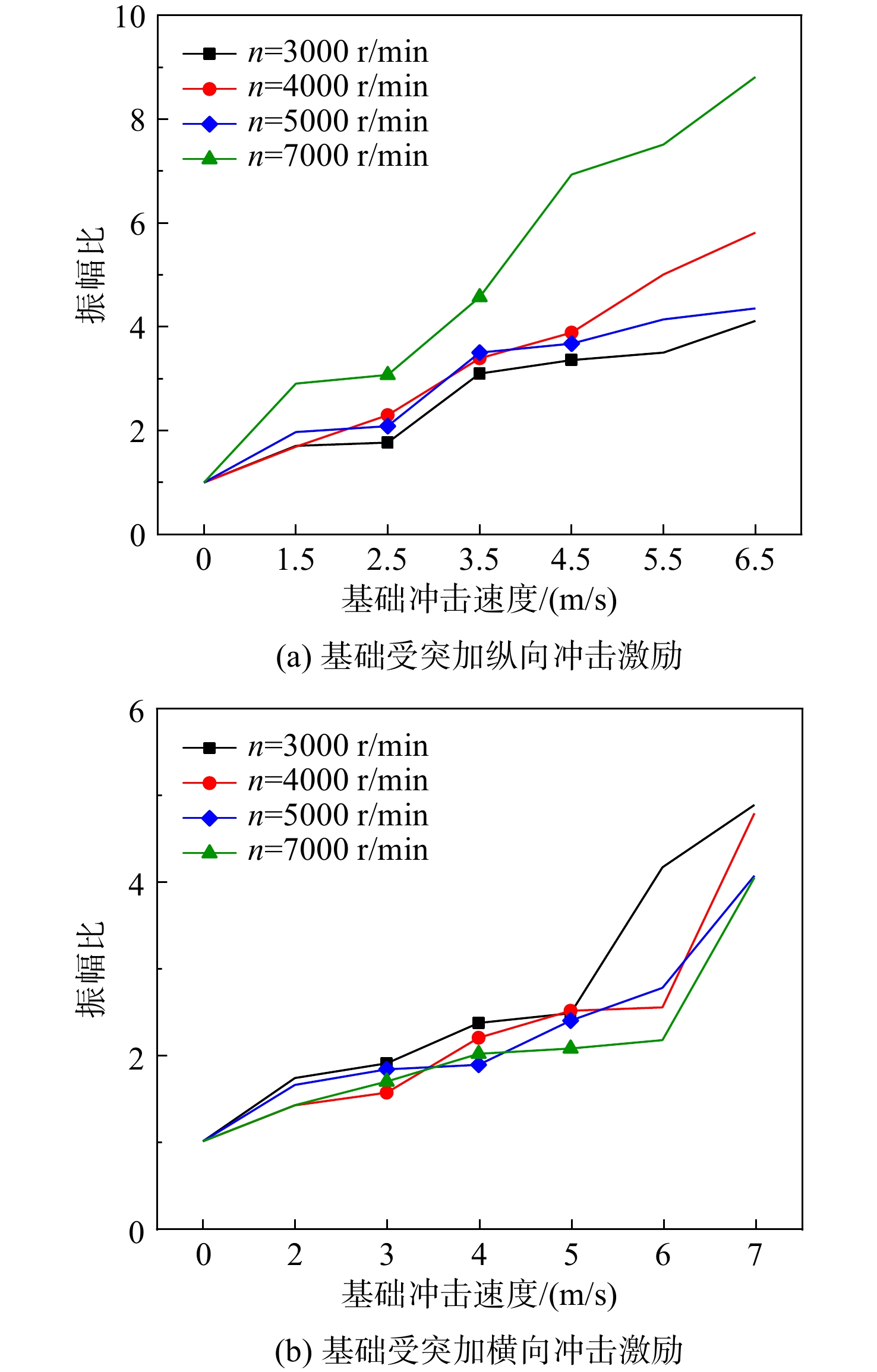
A rotor-supporting-casing system test rig was designed to investigate the vibration response of turbofan rotor in time domain and frequency domain under sudden base shock excitation during the process of landing, based on the equivalence principle of structural characteristics of the typical low bypass ratio turbofan engine. Results showed that sudden base shock excitation led to significant impact on rotor, the aggravation of rotor’s transient response, the positive and negative precession and flexural resonance. The amplitude ratio of the disk of rotor system increased nonlinearly with the increase of the impact velocity of base, and the longitudinal sudden base shock excitation had more influence on the vibration characteristics of the rotor system than the transverse sudden base shock excitation.

Composite fault signal feature extraction method for aero-engine based on maximum correlation Rényi entropy and phase space reconstruction
ZHANG Zhen, LIU Baoguo, ZHOU Wanchun, FENG Wei
2023, 38(4): 889-900. doi: 10.13224/j.cnki.jasp.20220609
Abstract:

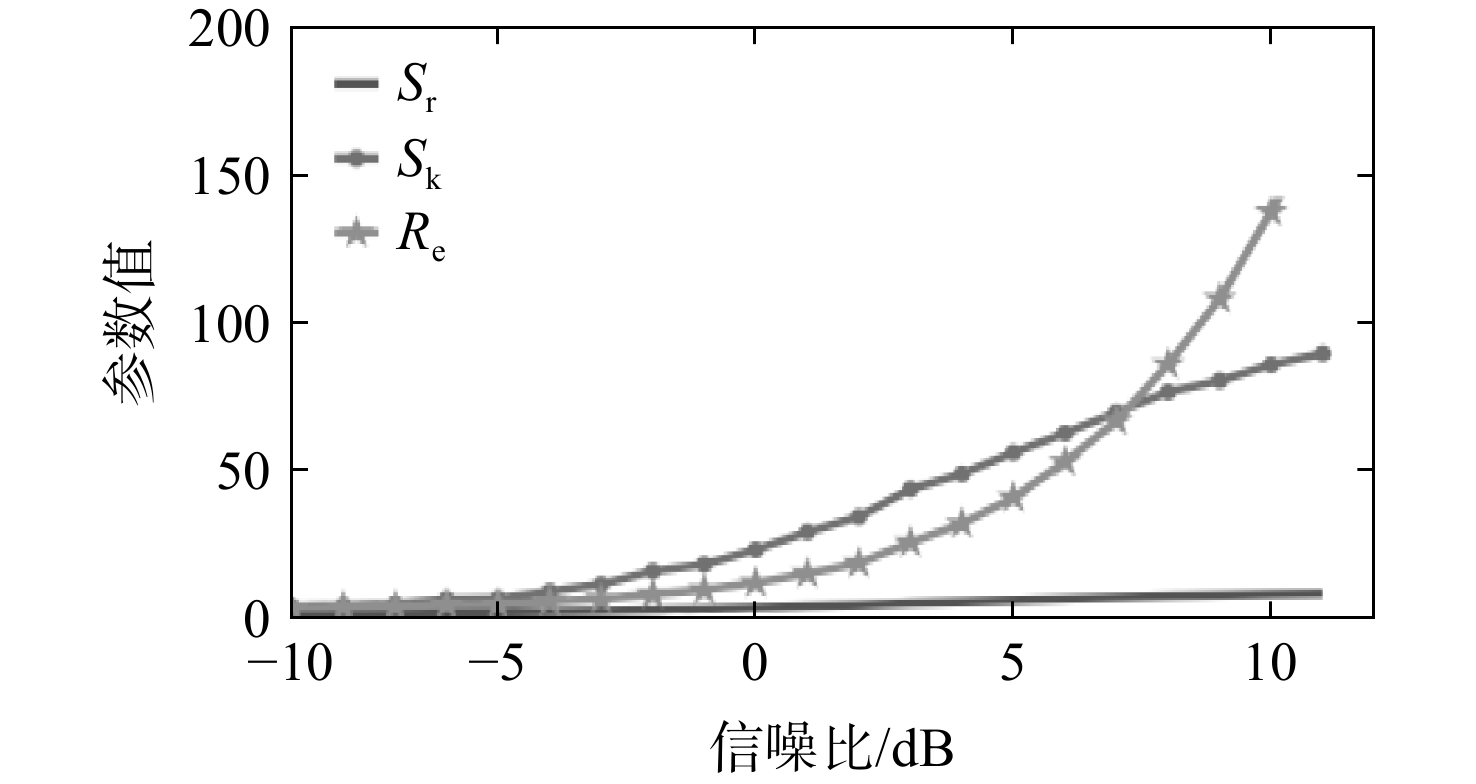
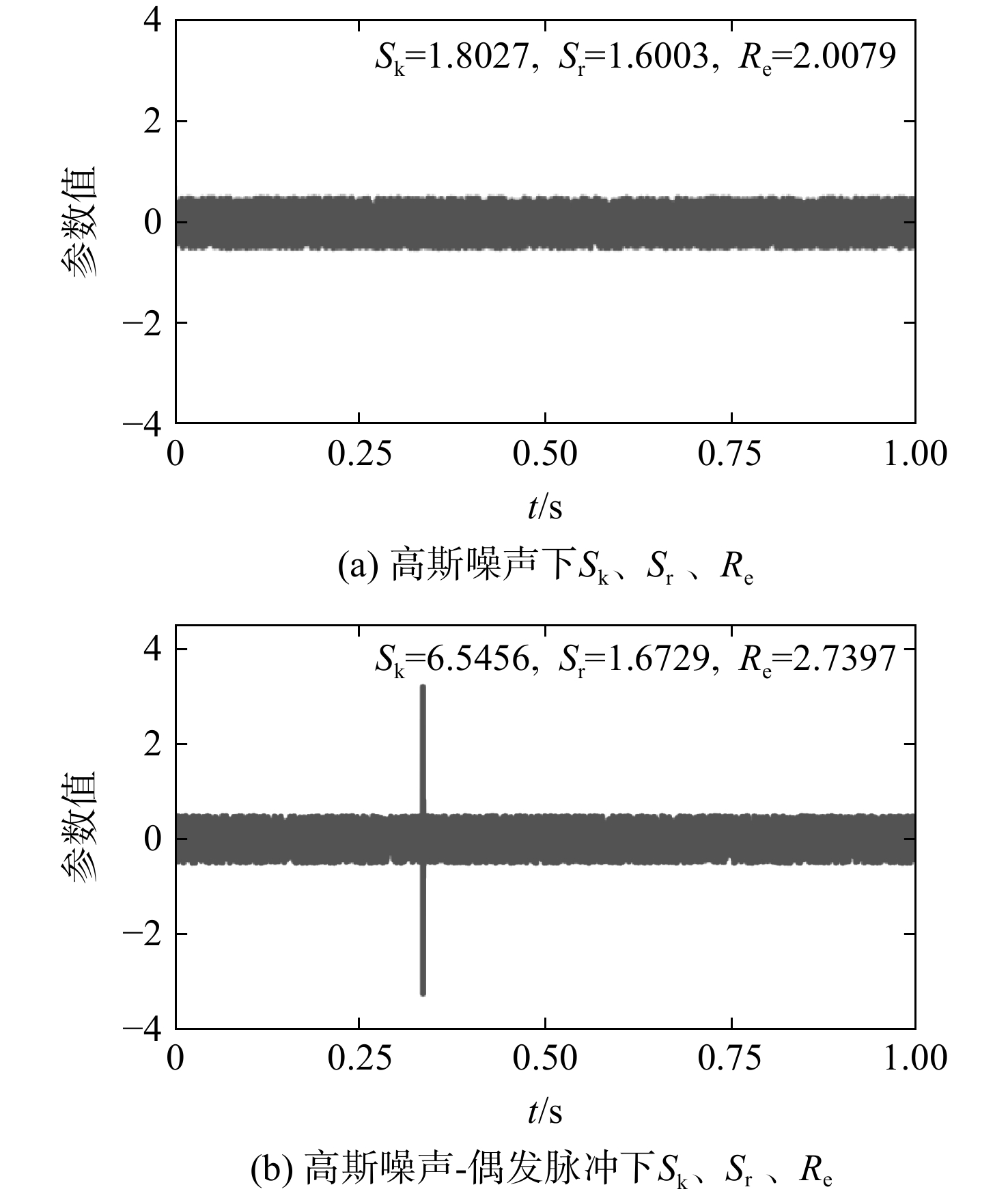
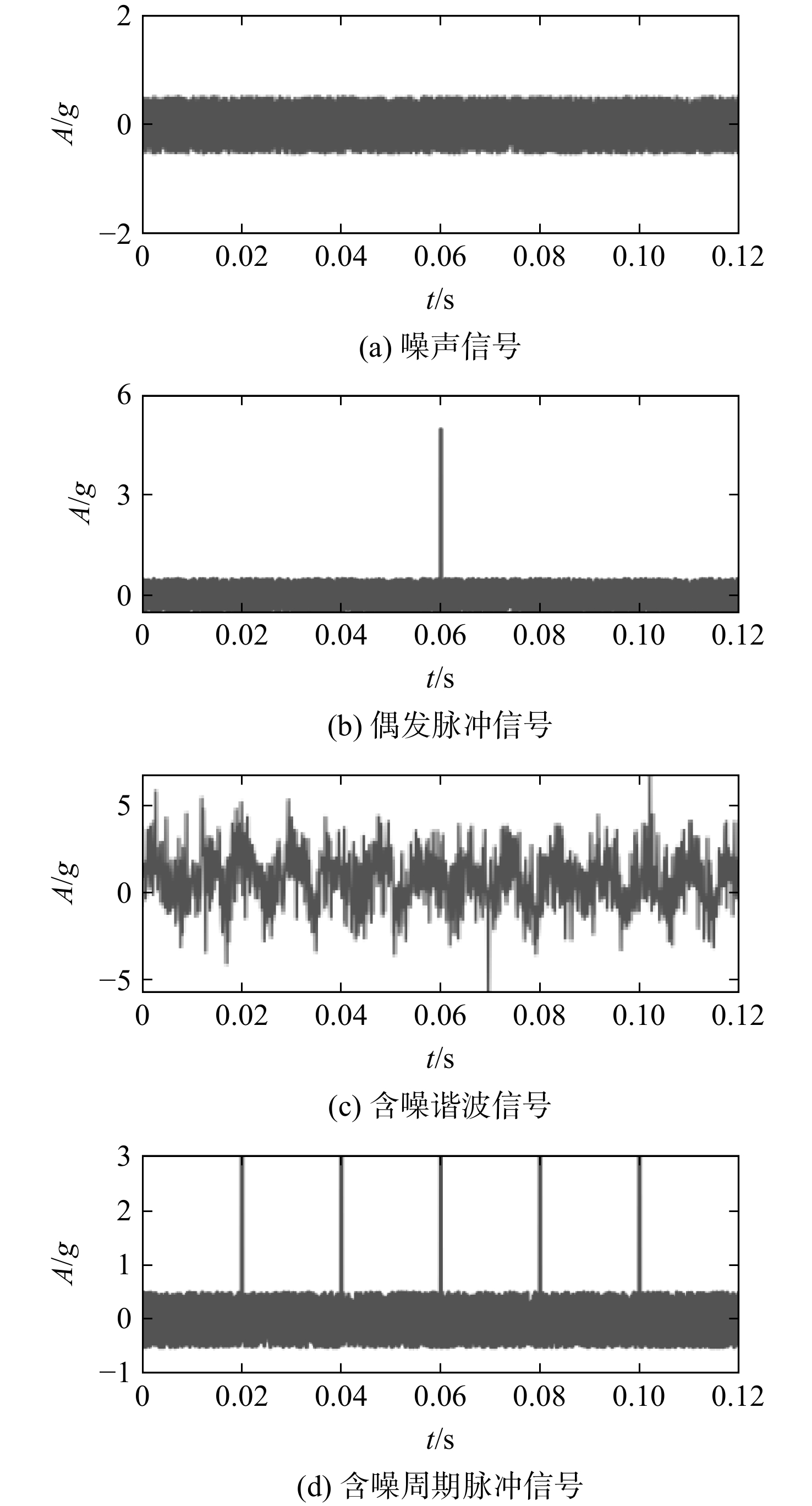
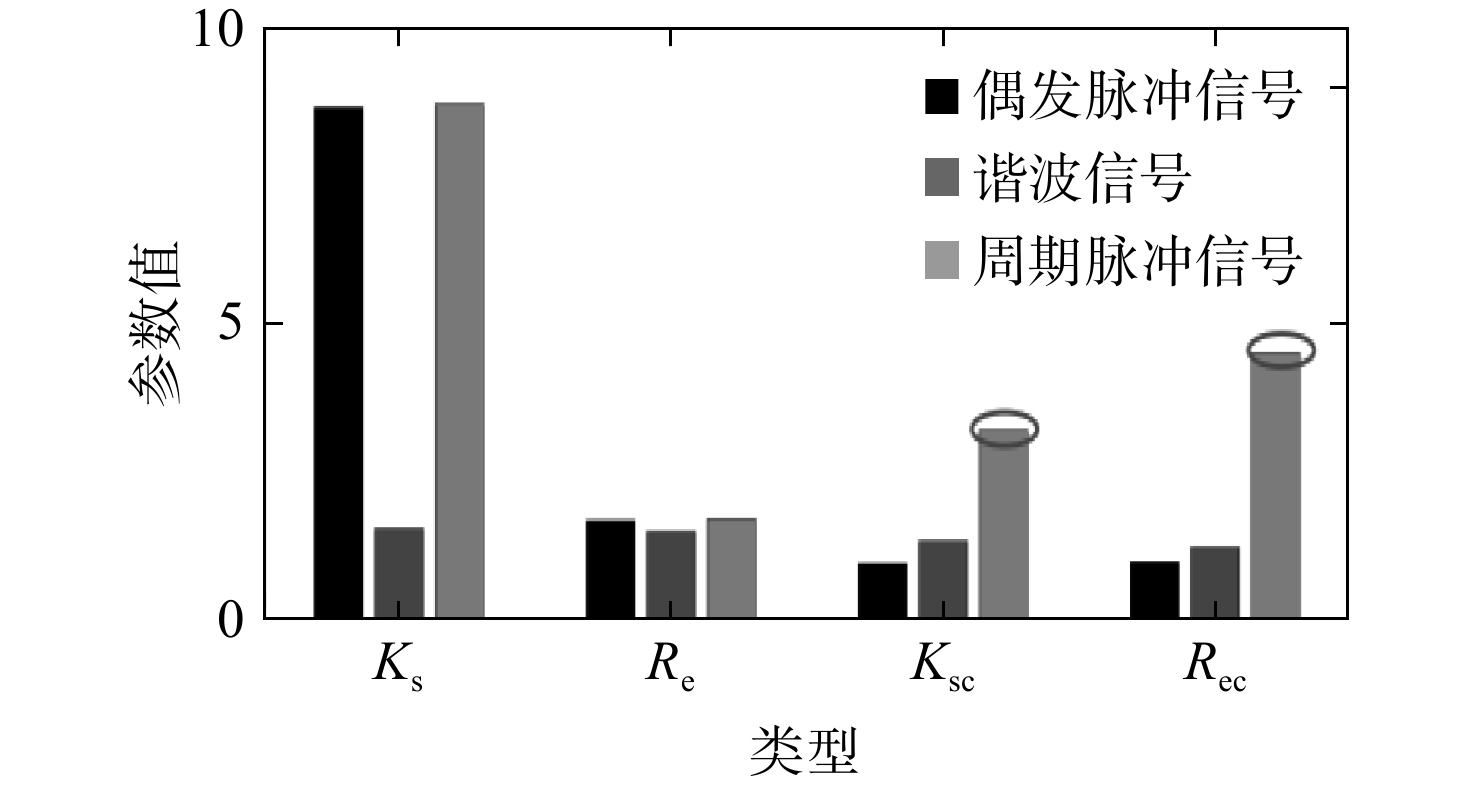
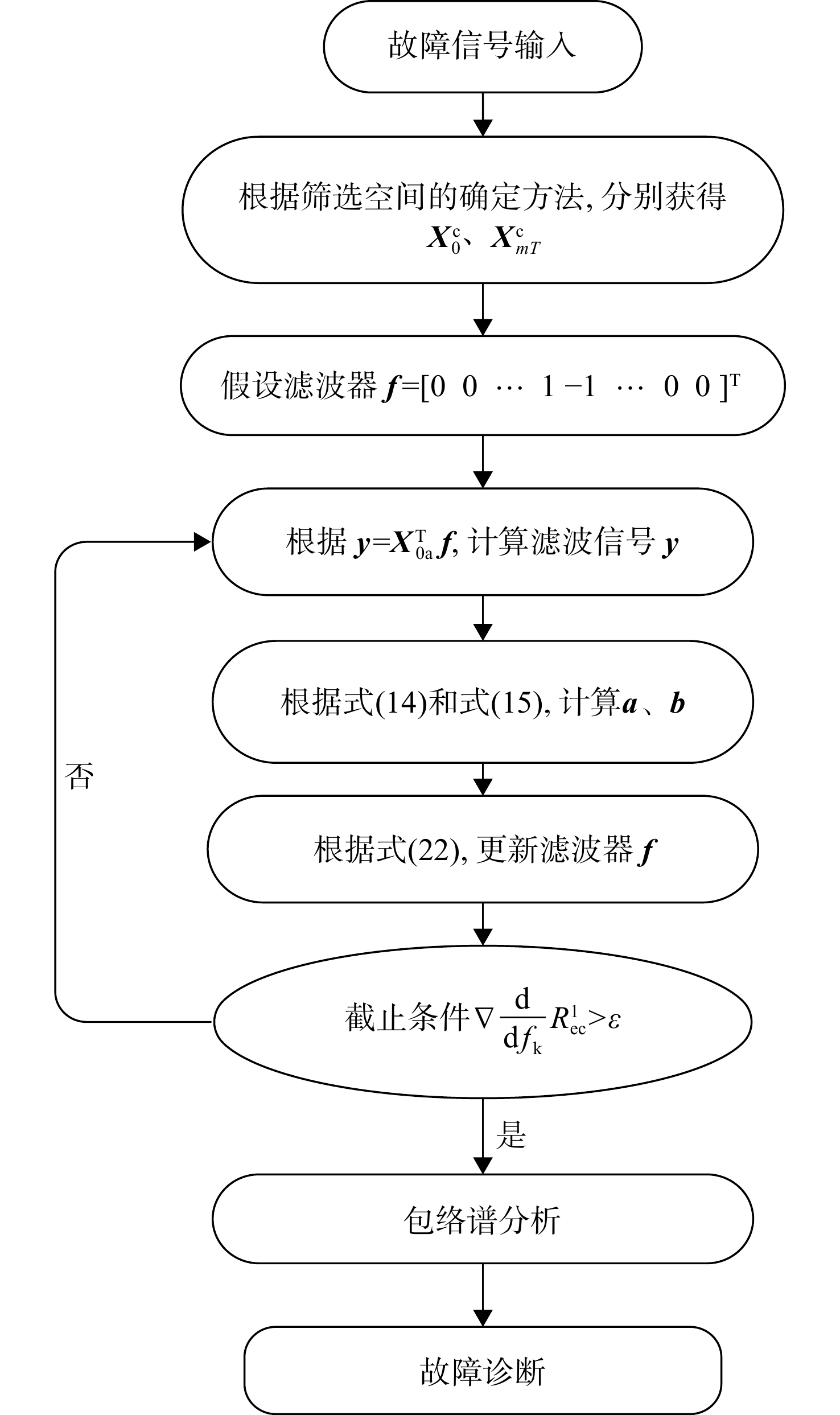
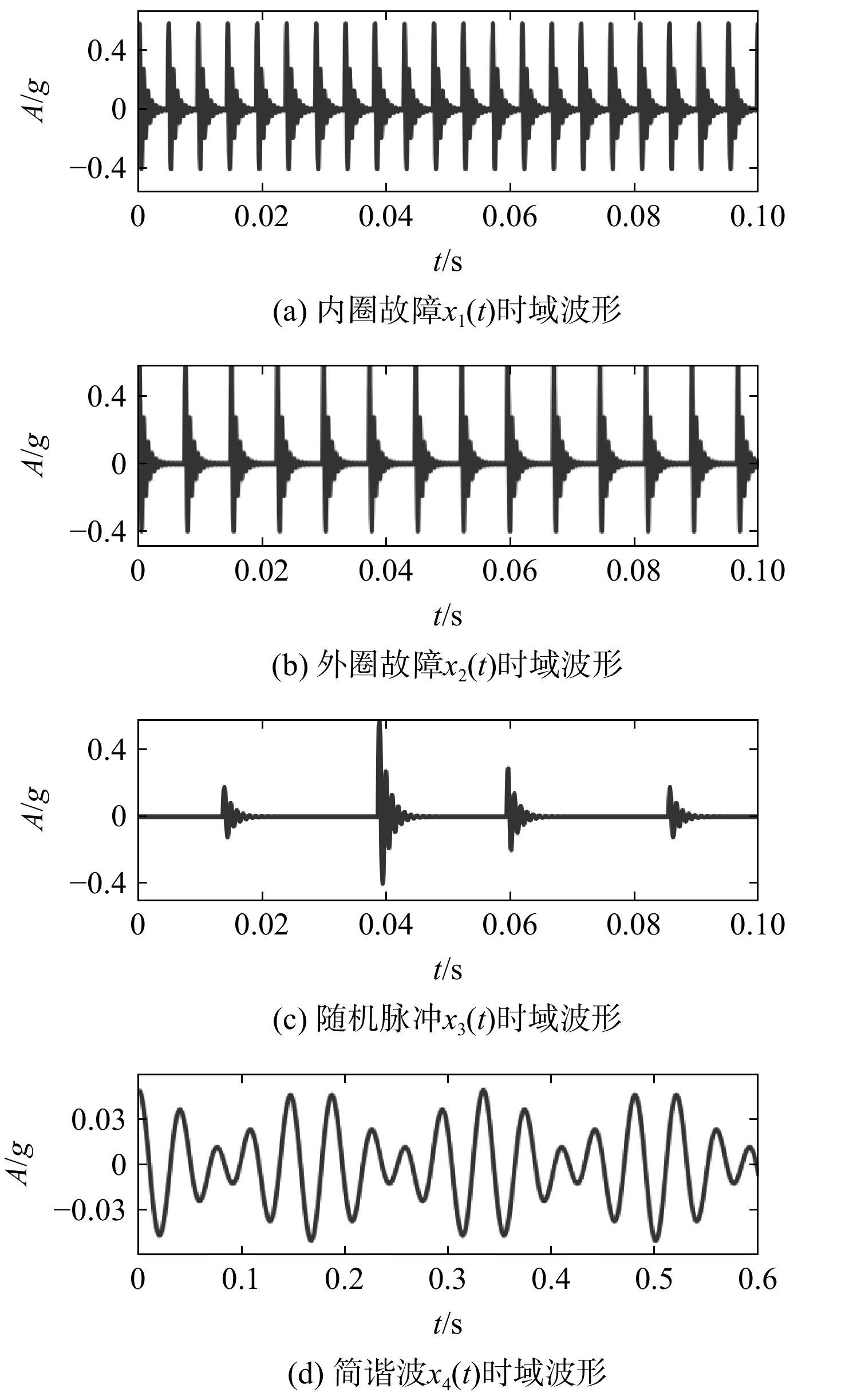
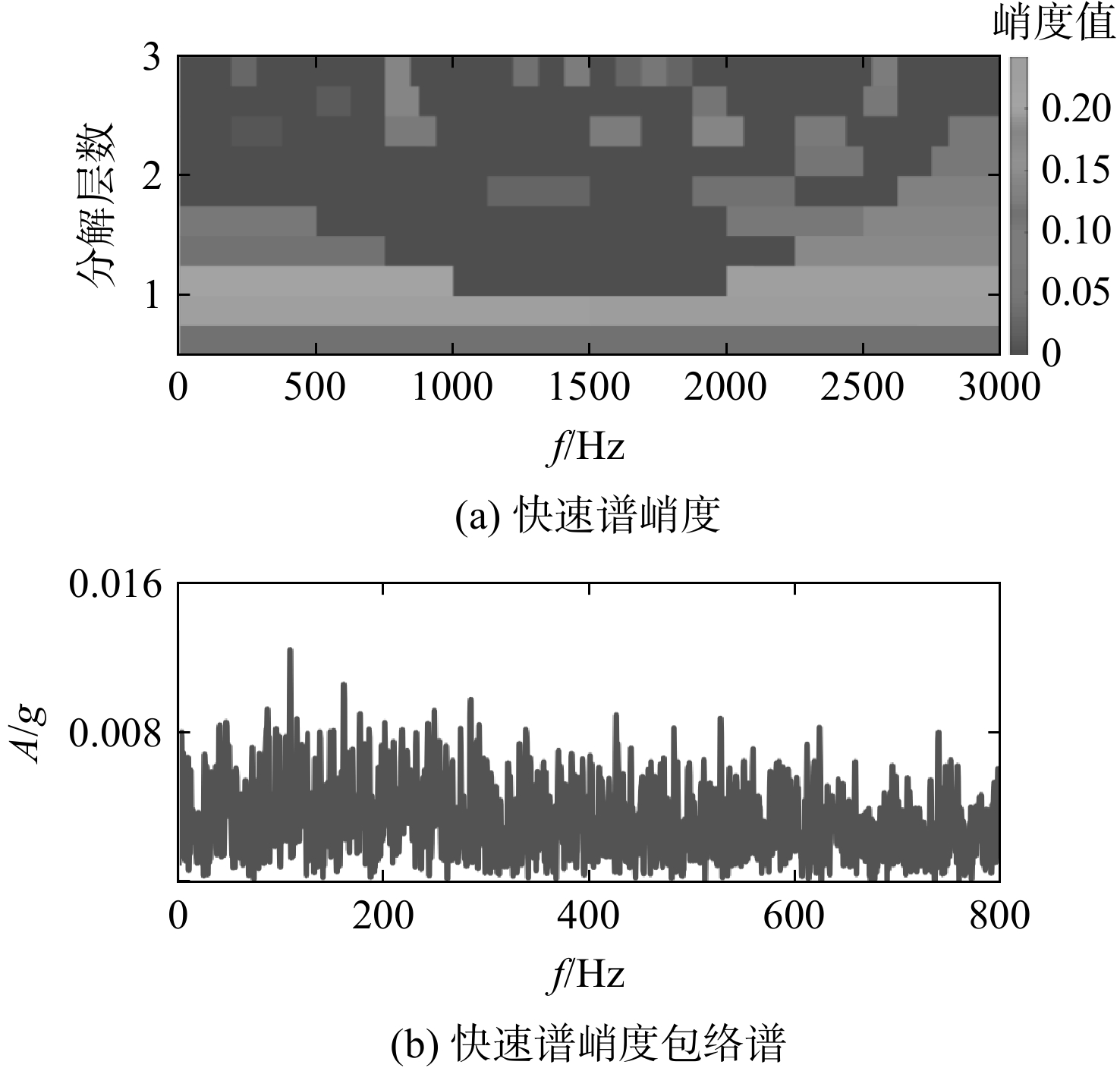
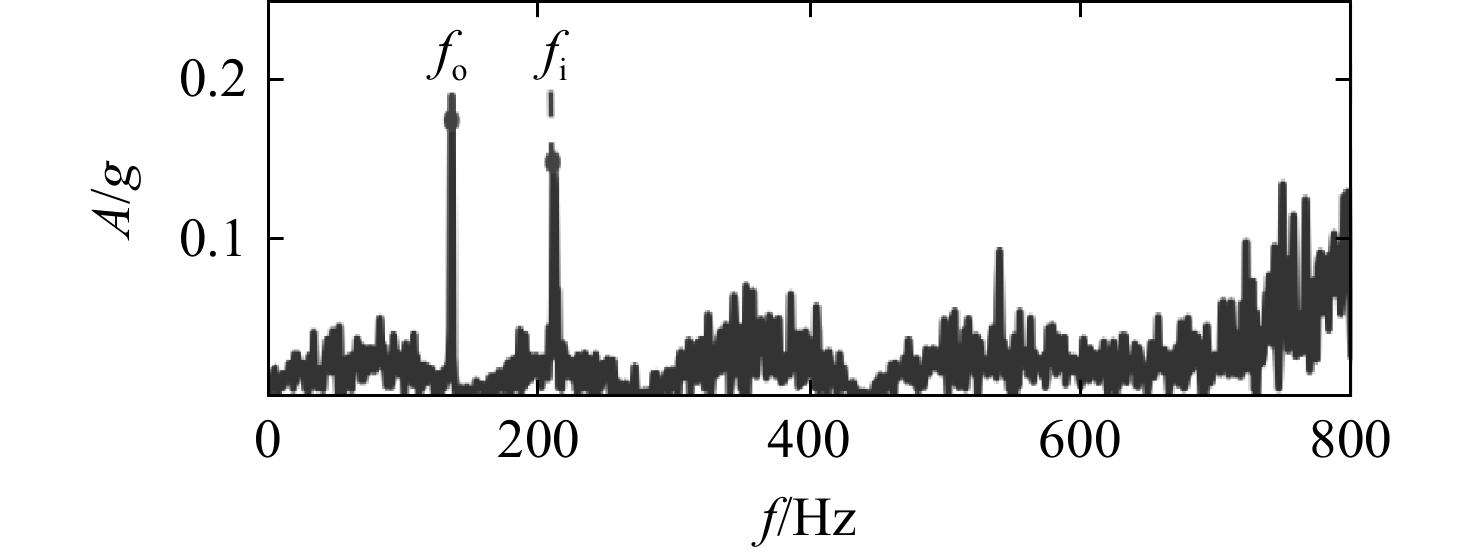
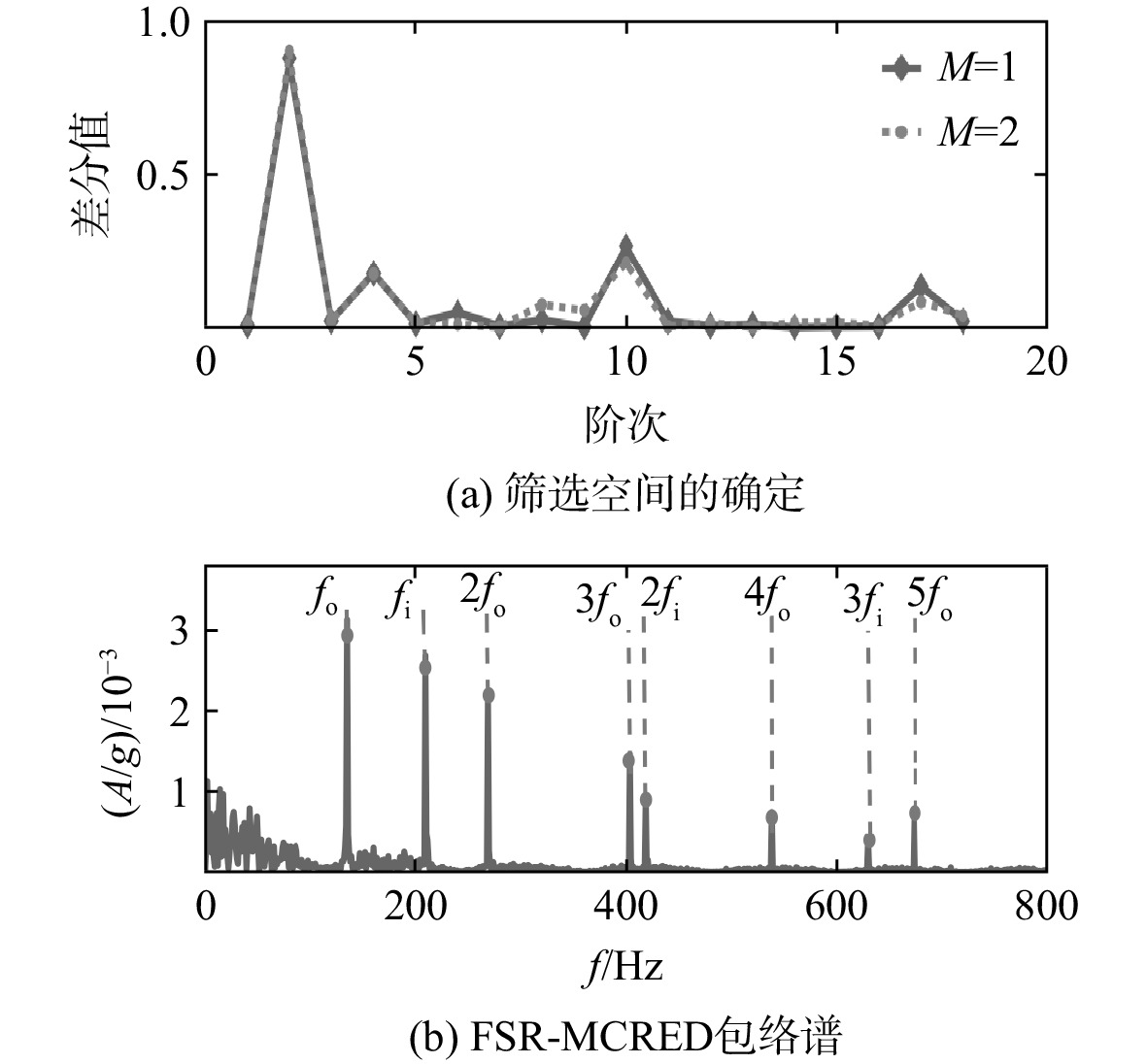
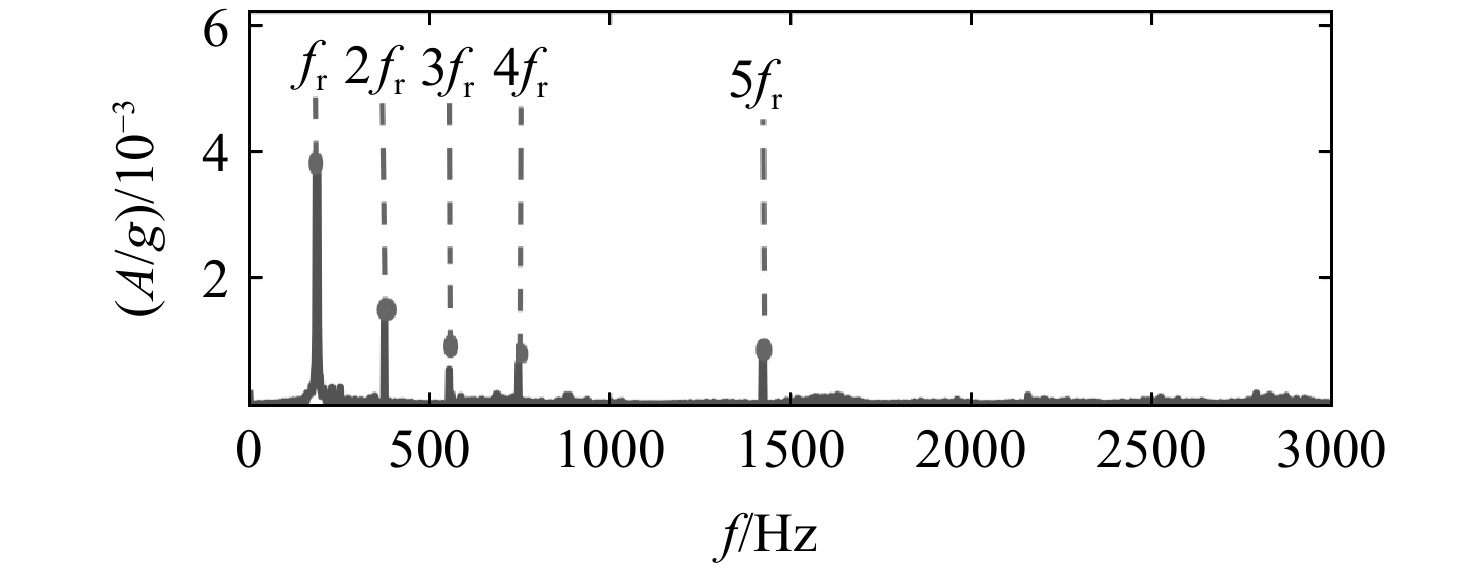
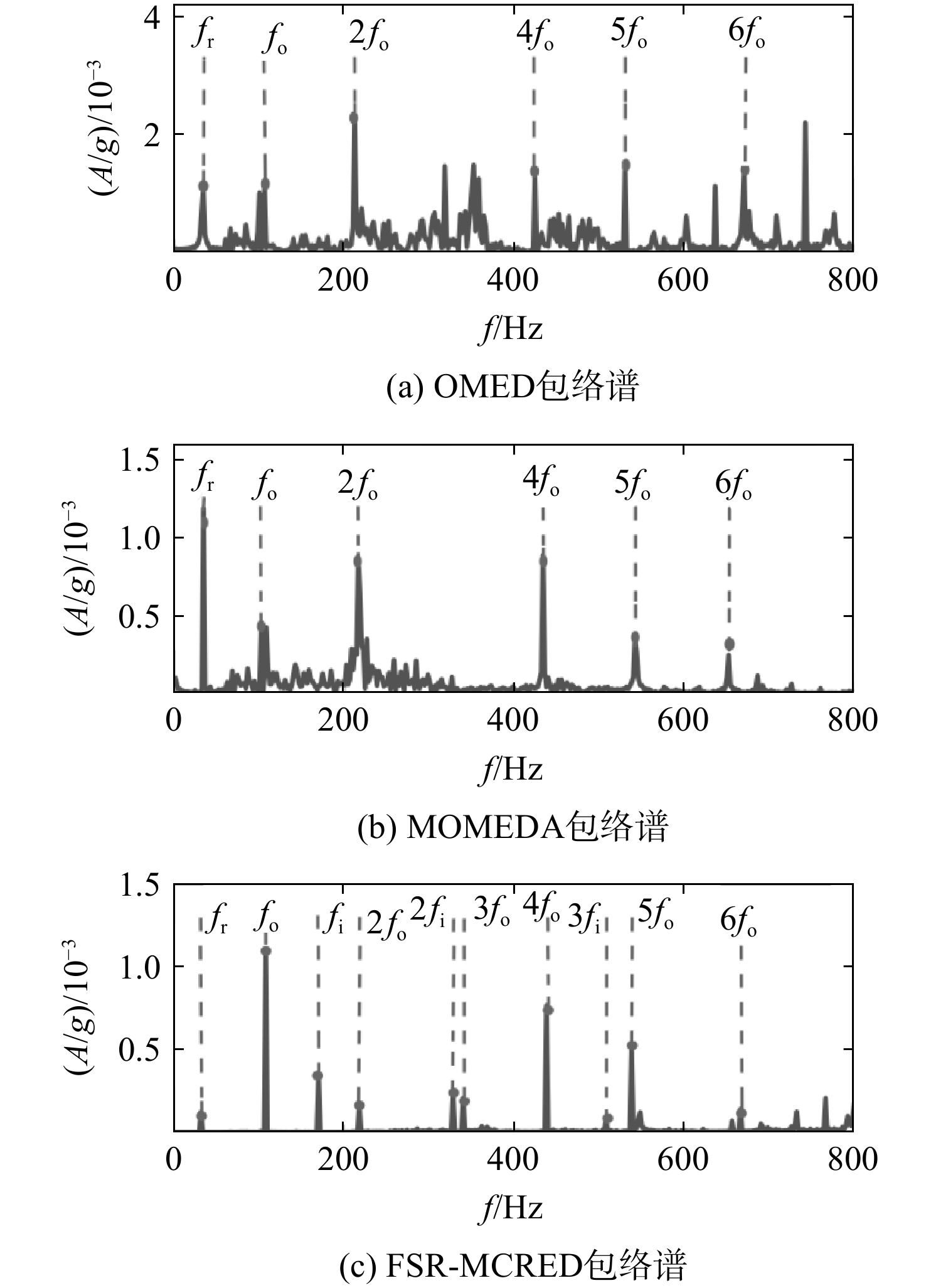
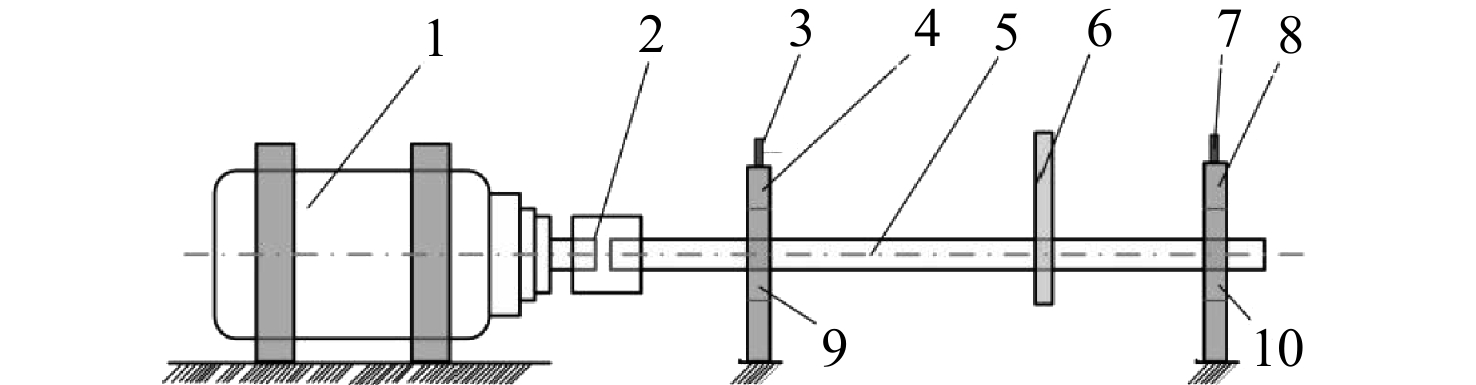
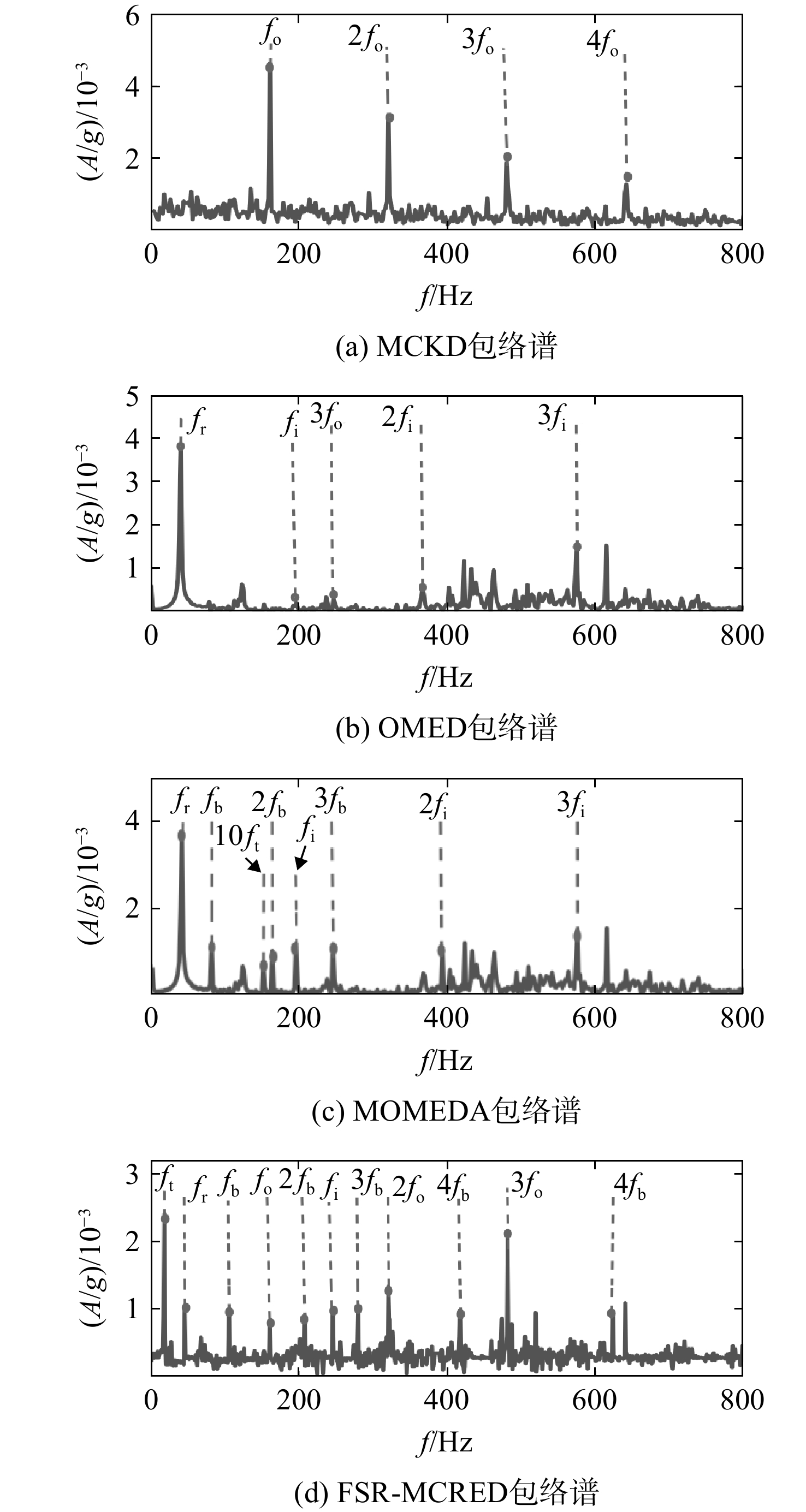
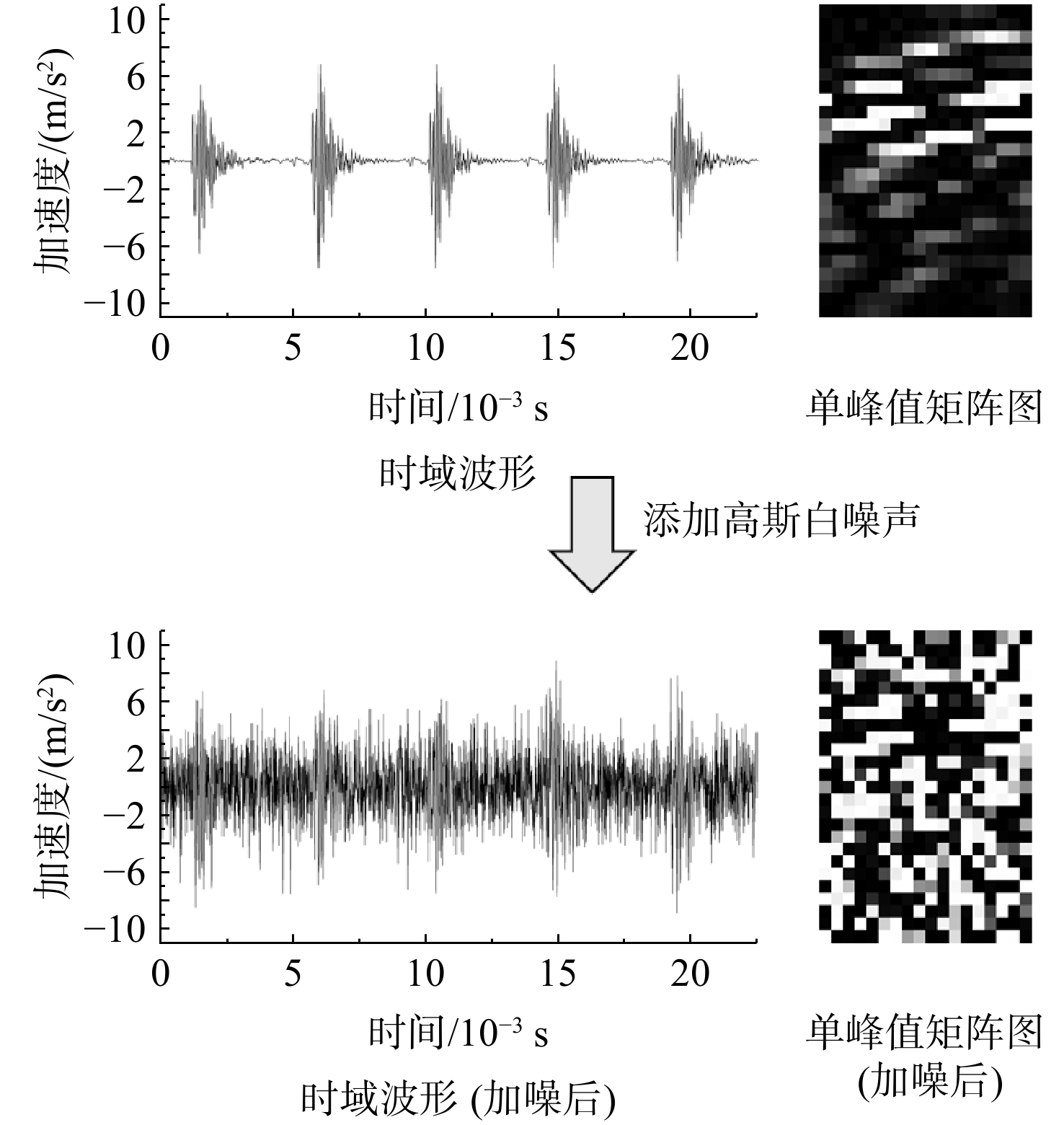
In order to solve the problem of complex fault signal feature extraction under the condition of low signal-to-noise ratio (SNR) and complex noise, a feature extraction method based on phase space reconstruction and maximum correlation Rényi entropy deconvolution was proposed. Rényi entropy was taken as the performance index, and the maximum correlation Rényi entropy deconvolution was taken as the basic method, and the phase space reconstruction technique was incorporated with the characteristics of noise suppression and decomposition. Results showed that the sensitivity of Raney entropy was only 18.4% of the kurtosis when the fault sensitivity was equal to and slightly better than that of kurtosis. Through simulation, experimental data and bench test, this method was proved superior to existing comparison methods in extracting the features of composite fault signals.
Vibration characteristics of complex aero-engine rotors considering support constraints
WANG Longkai, WANG Ailun, YIN Yijun, HENG Xing, JIN Miao, ZHANG Haibiao
2023, 38(4): 901-912. doi: 10.13224/j.cnki.jasp.20210463
Abstract:

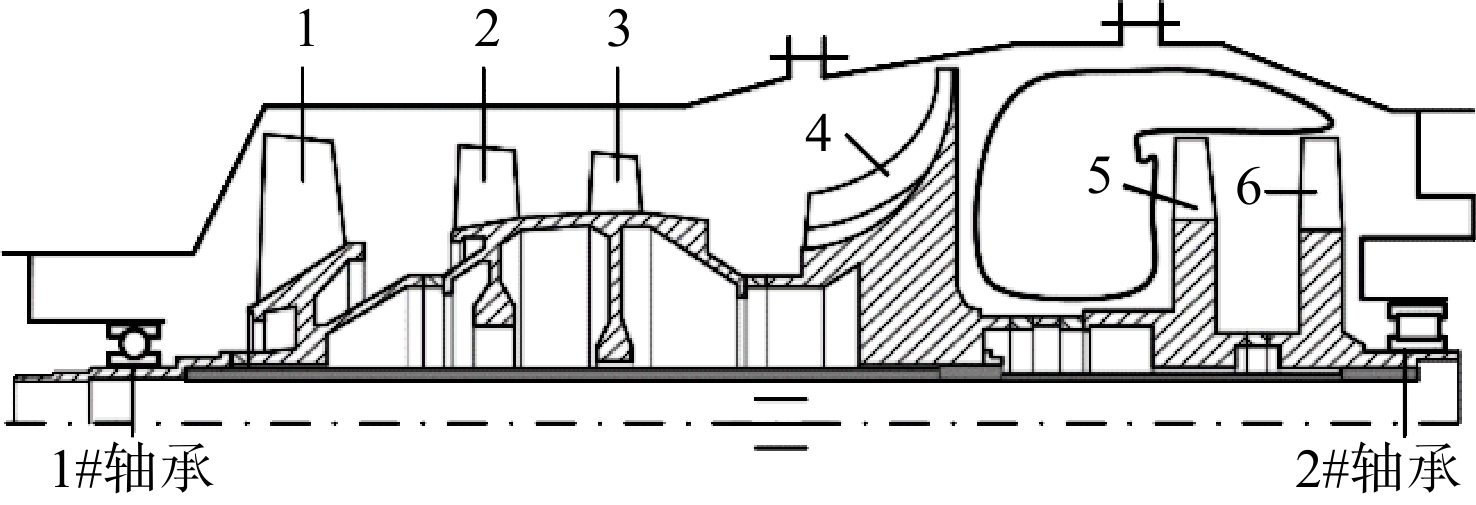
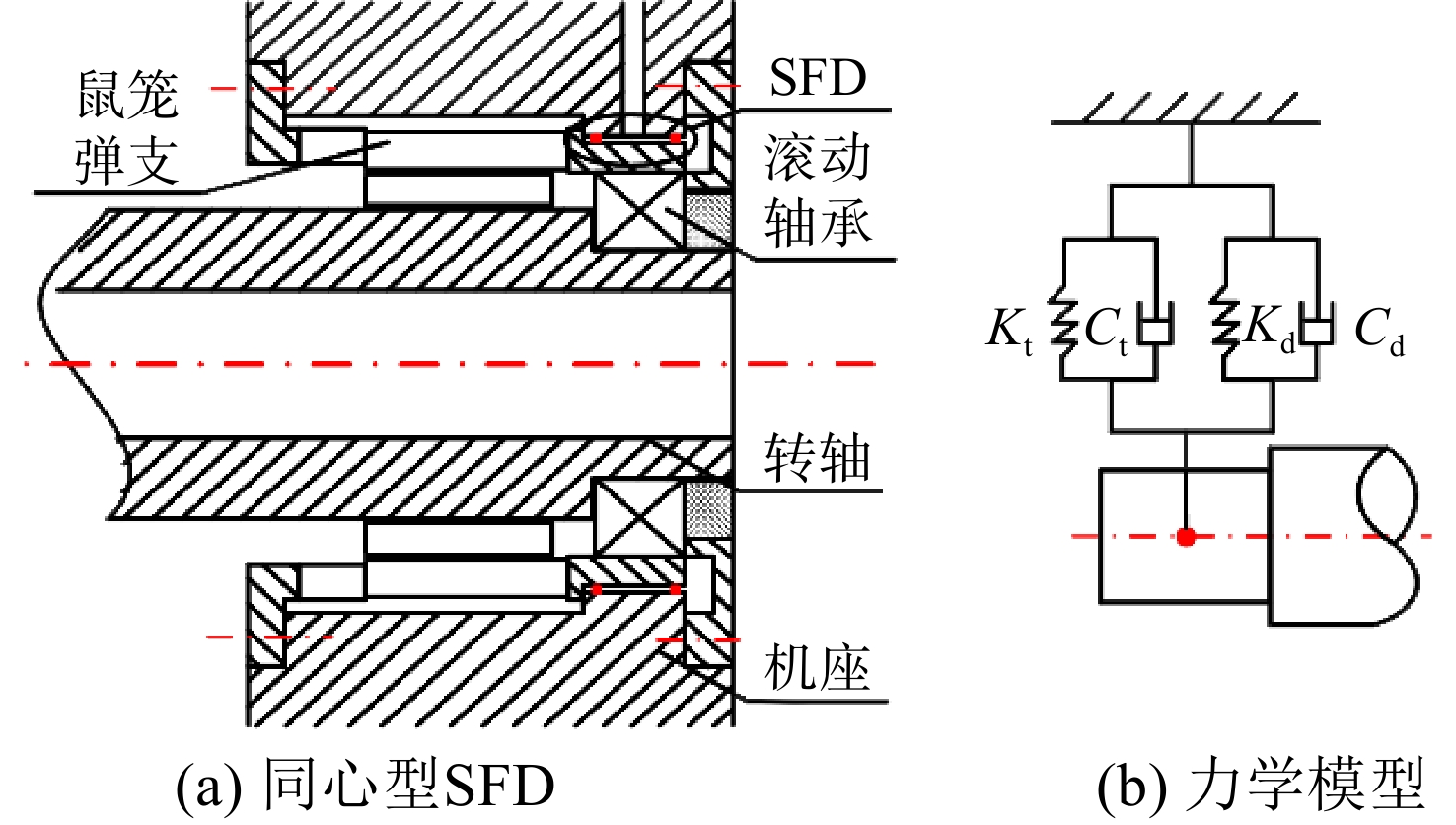
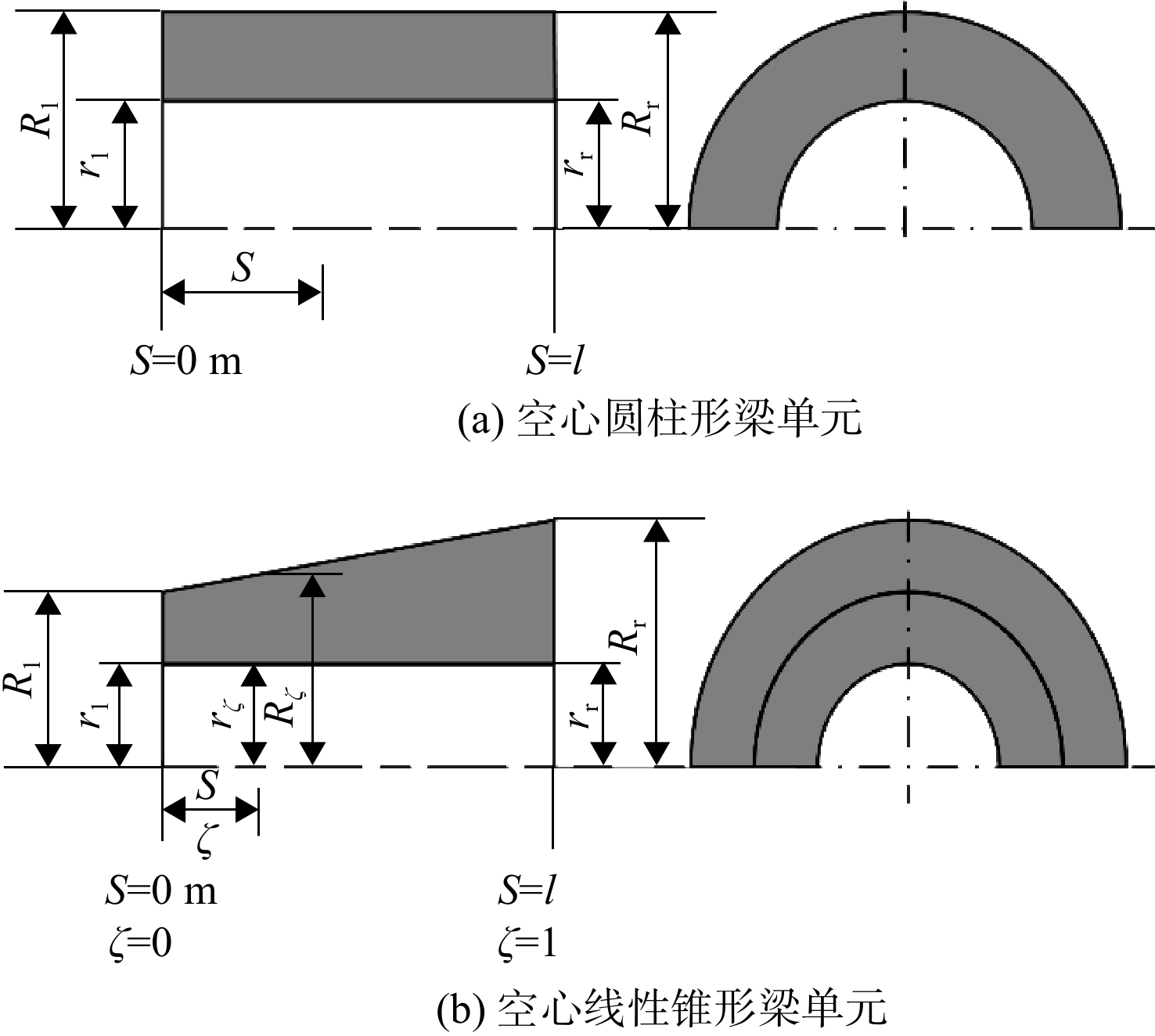
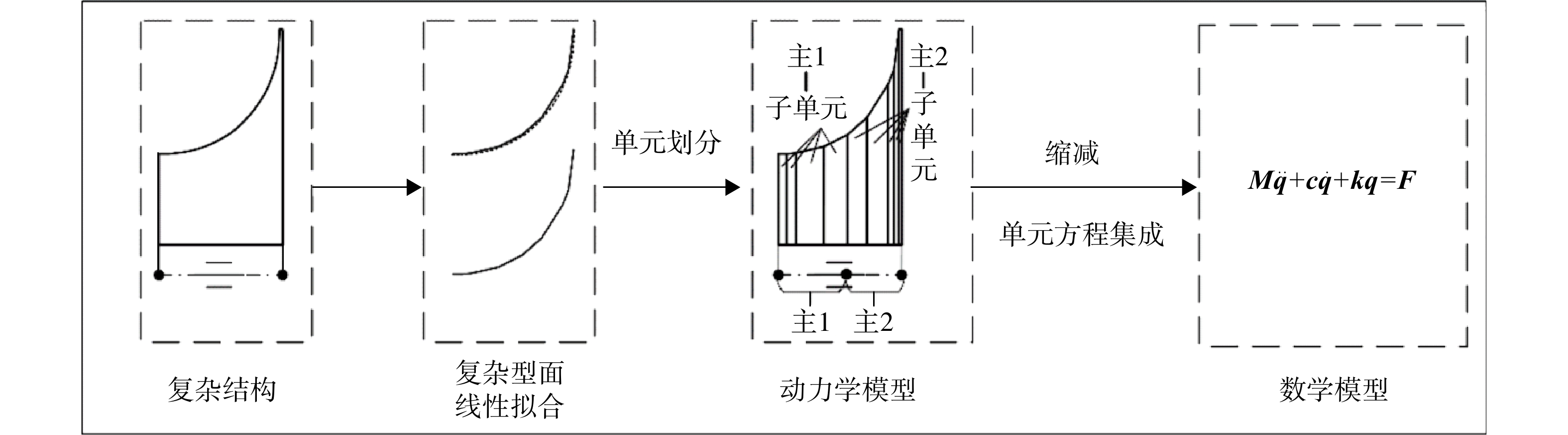
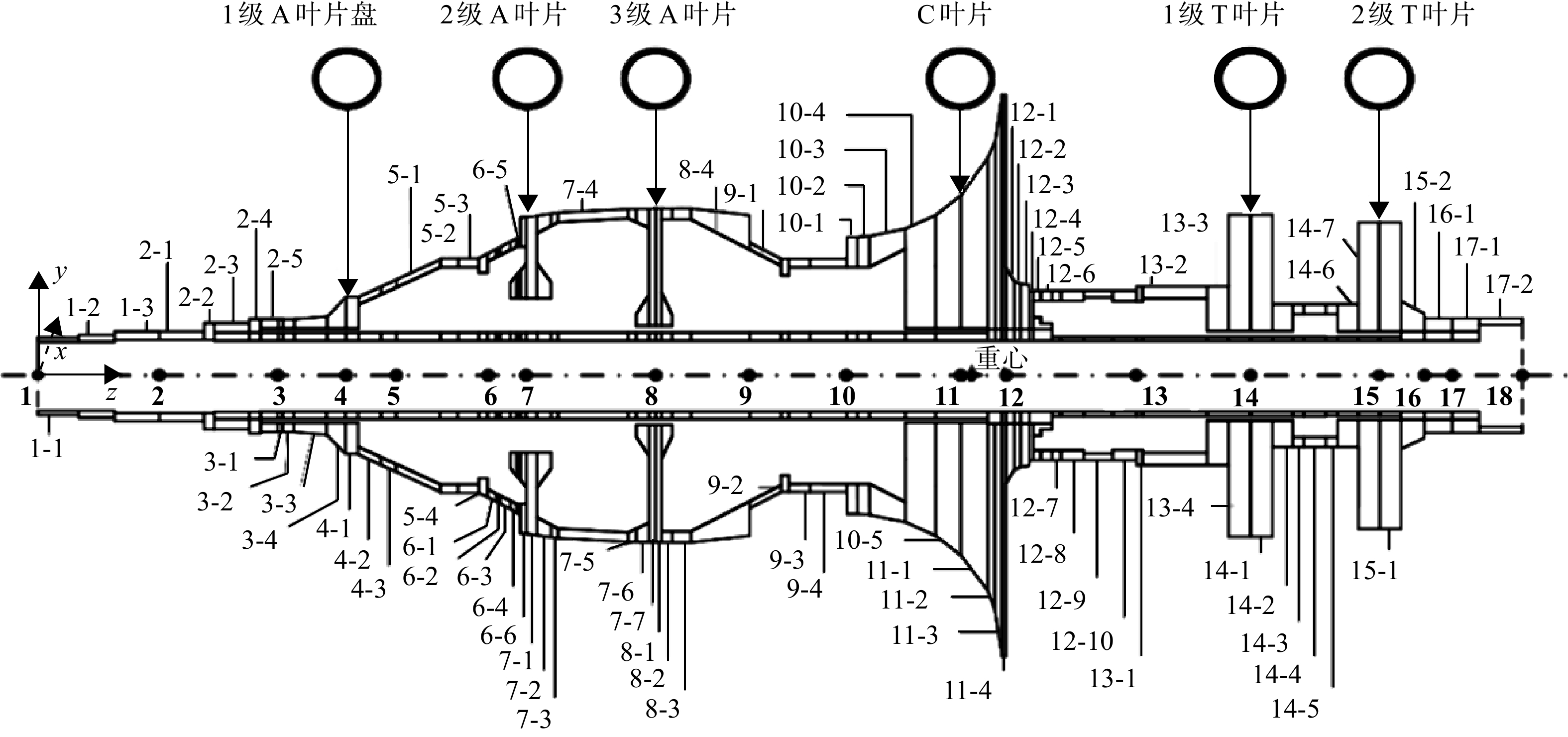
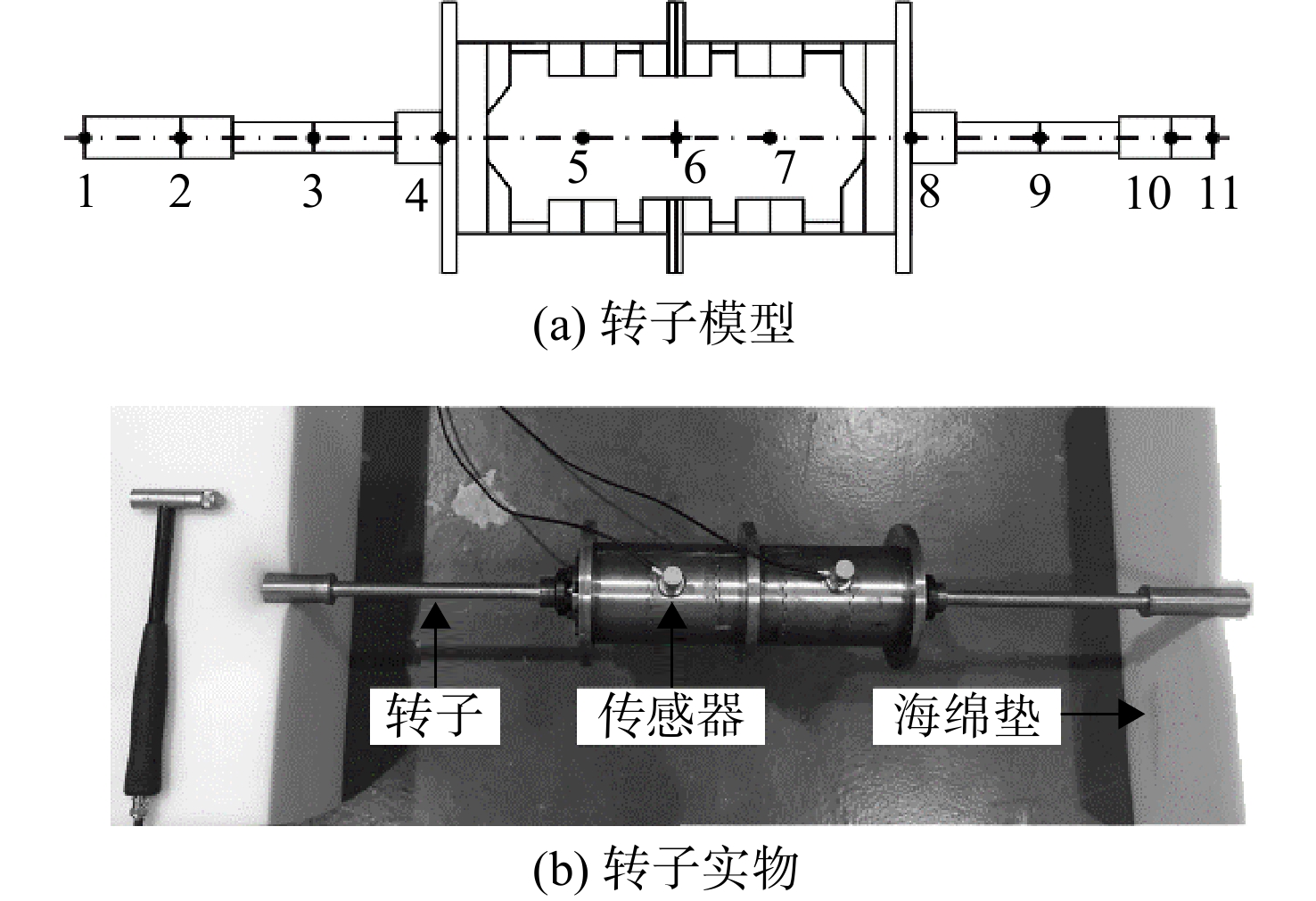
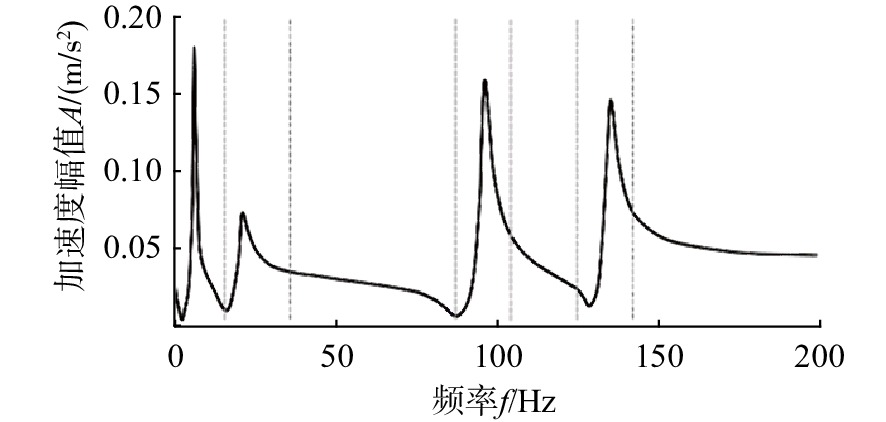
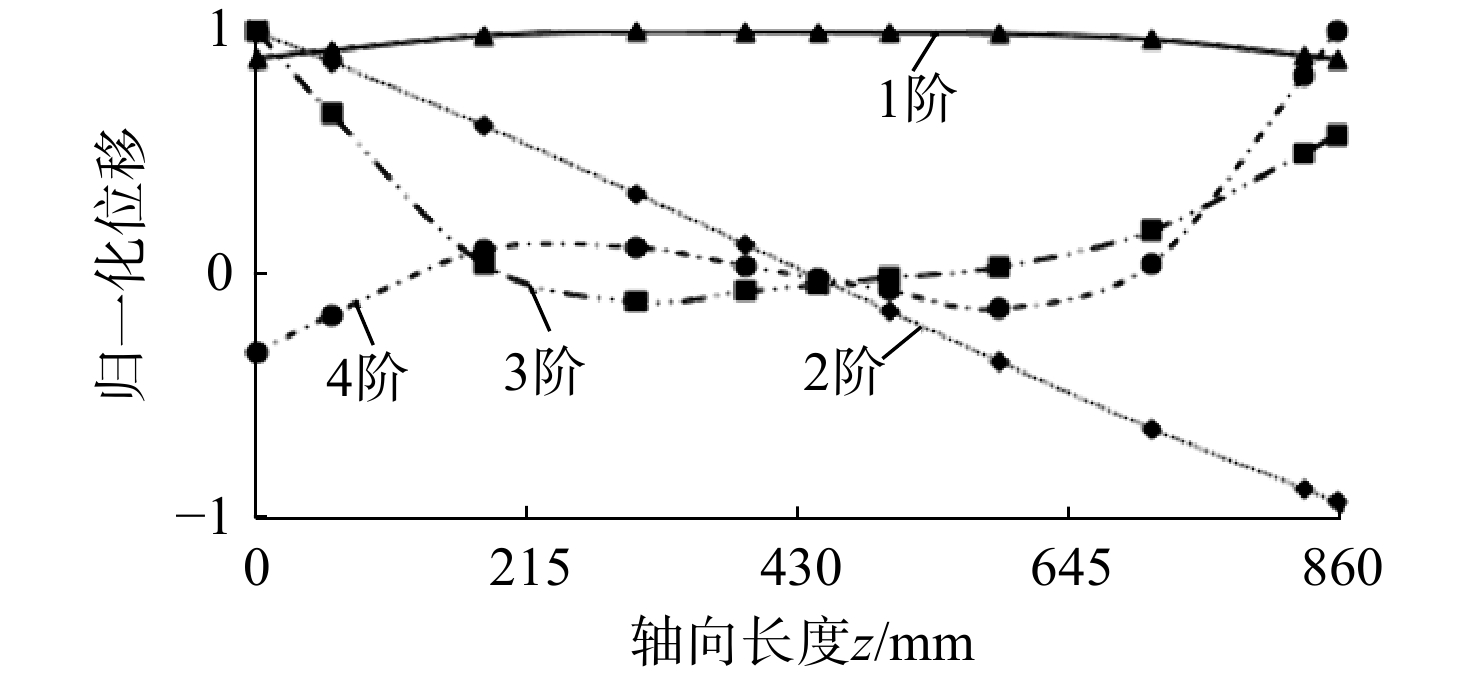
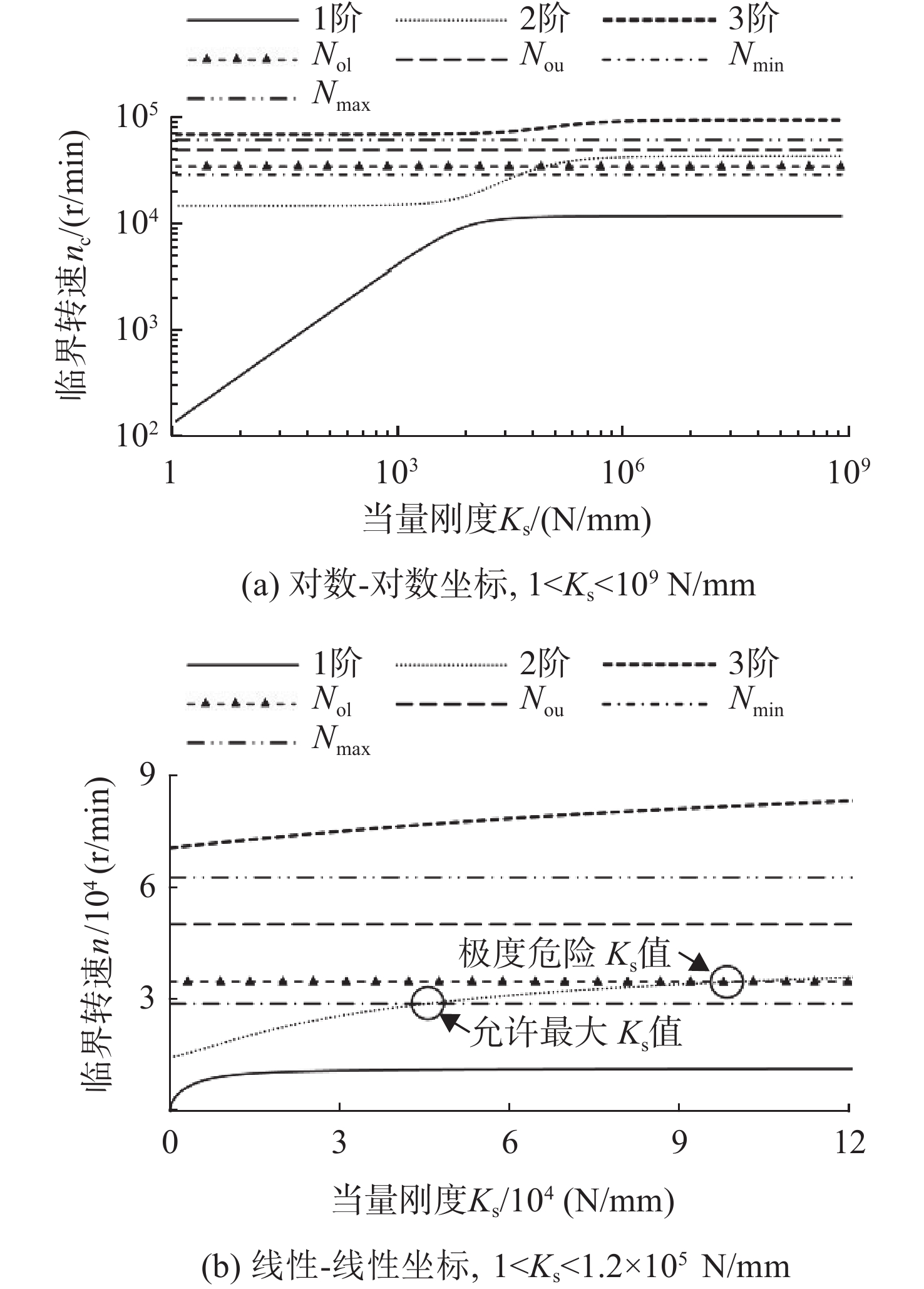
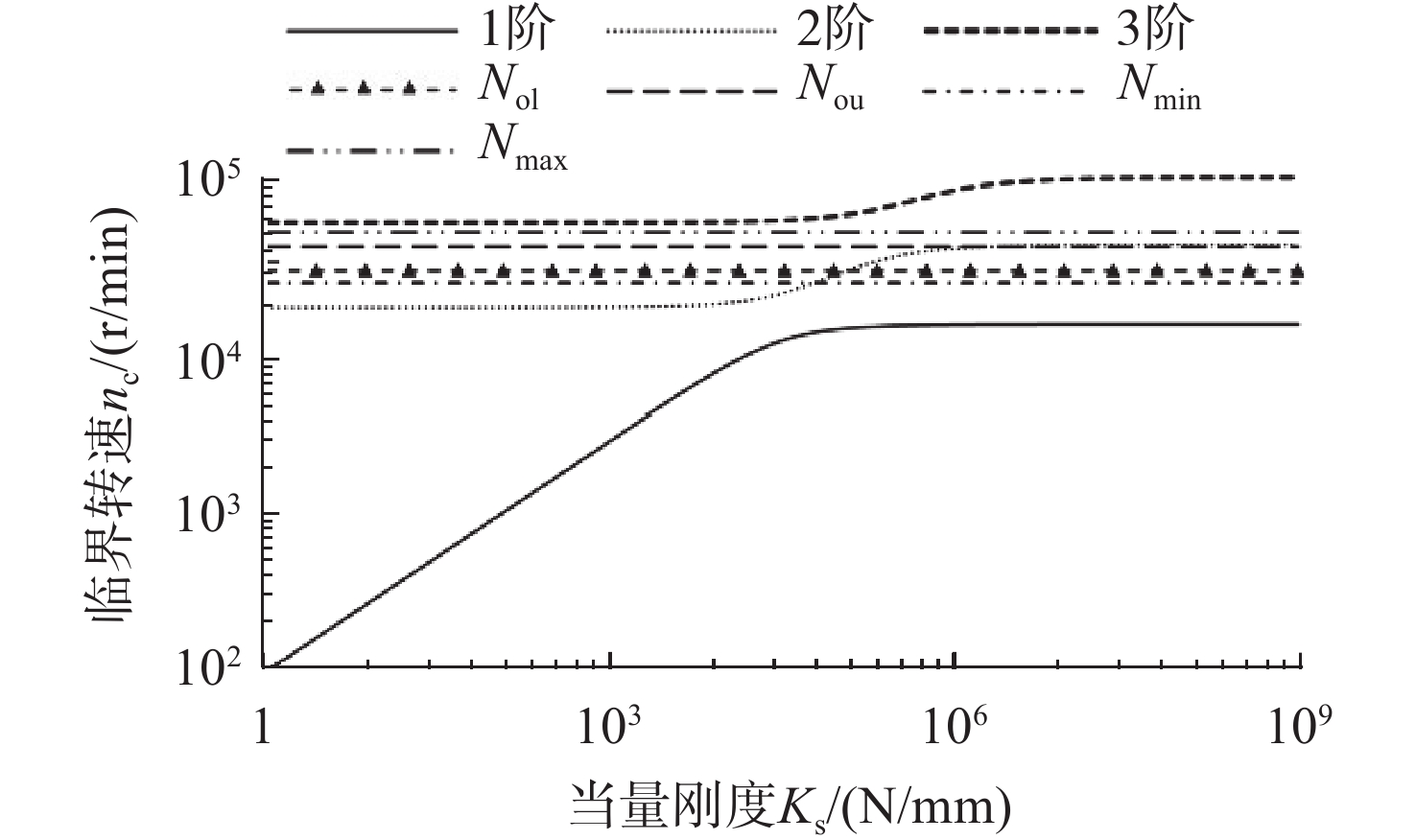
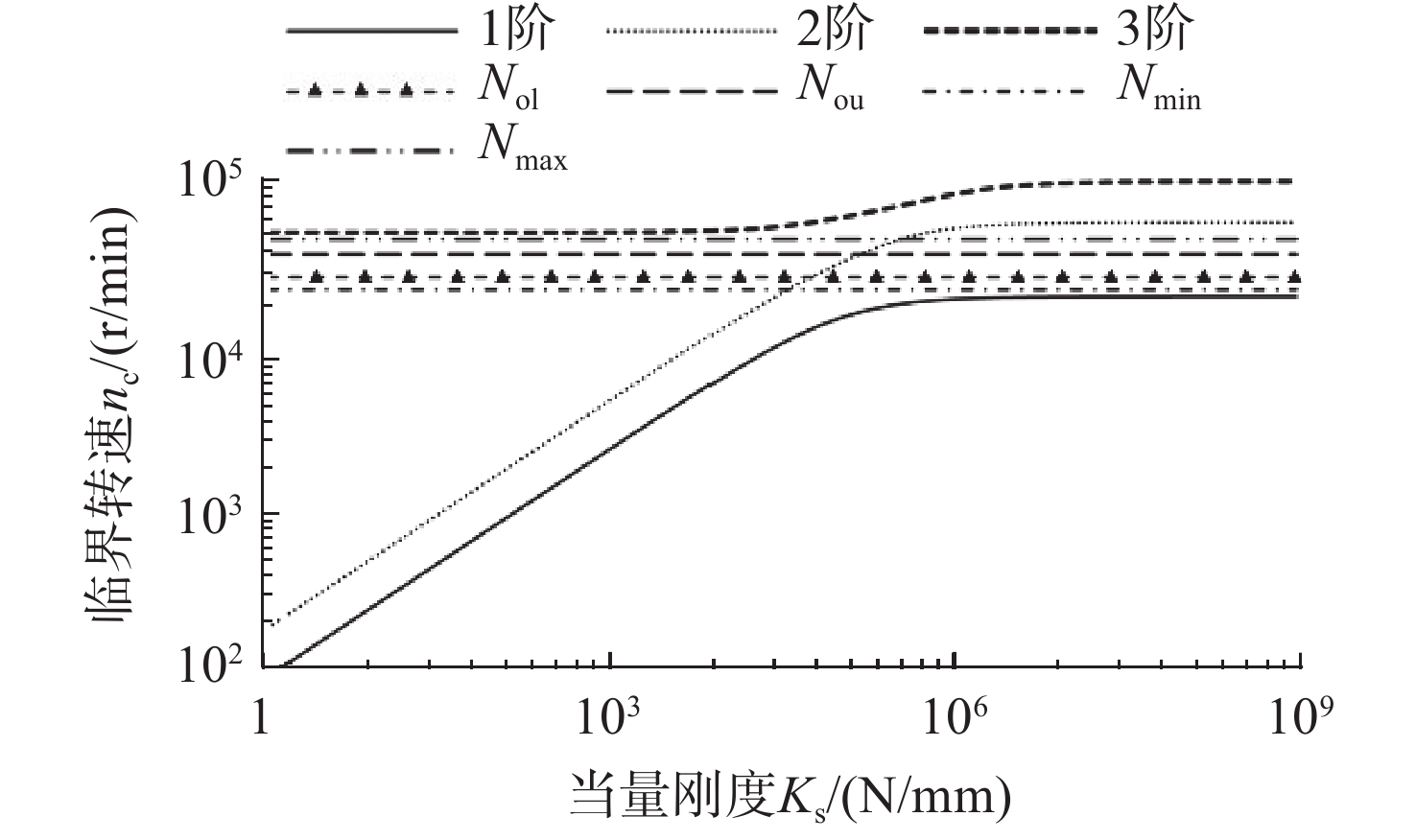
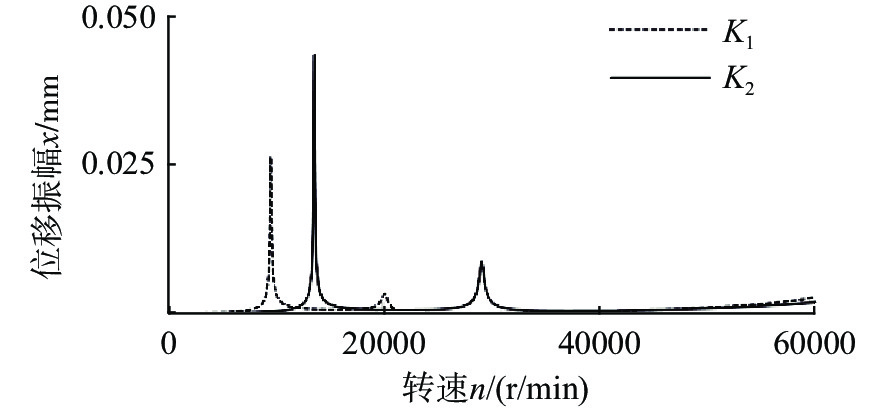
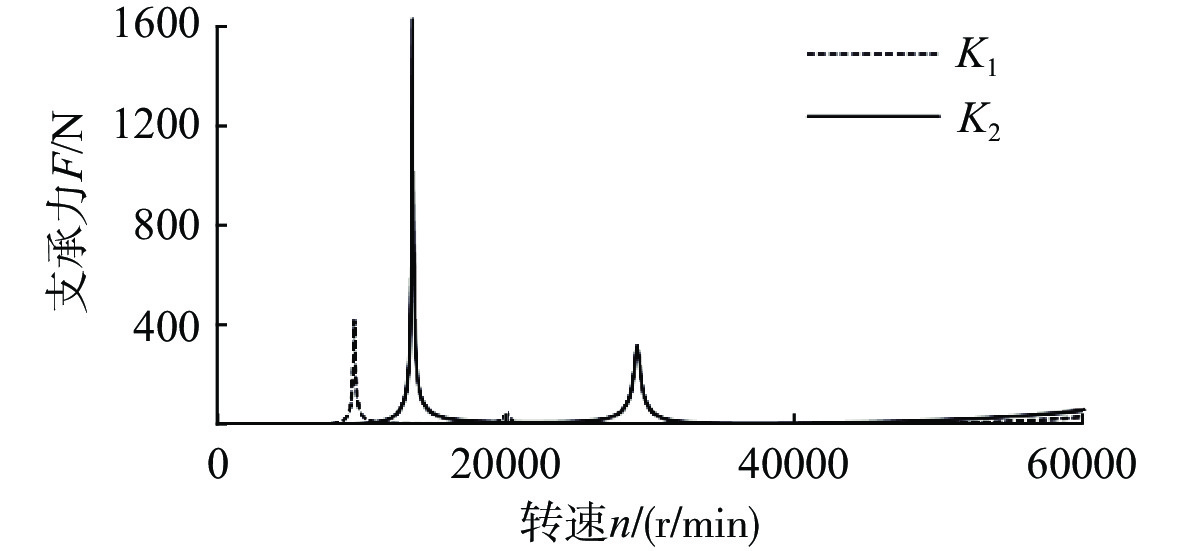
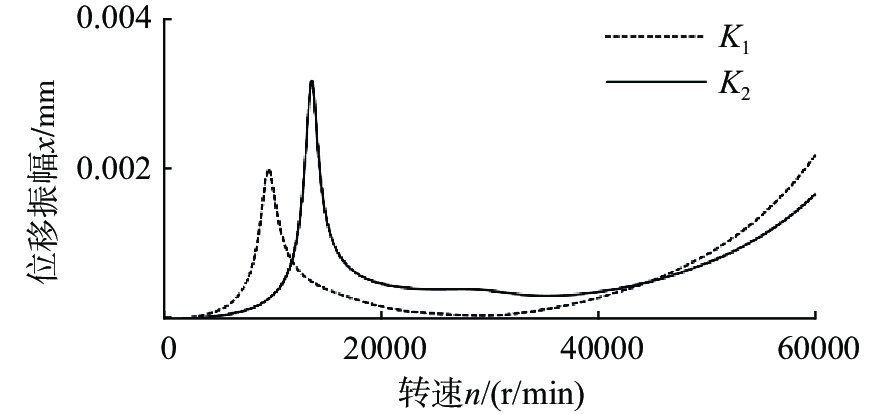
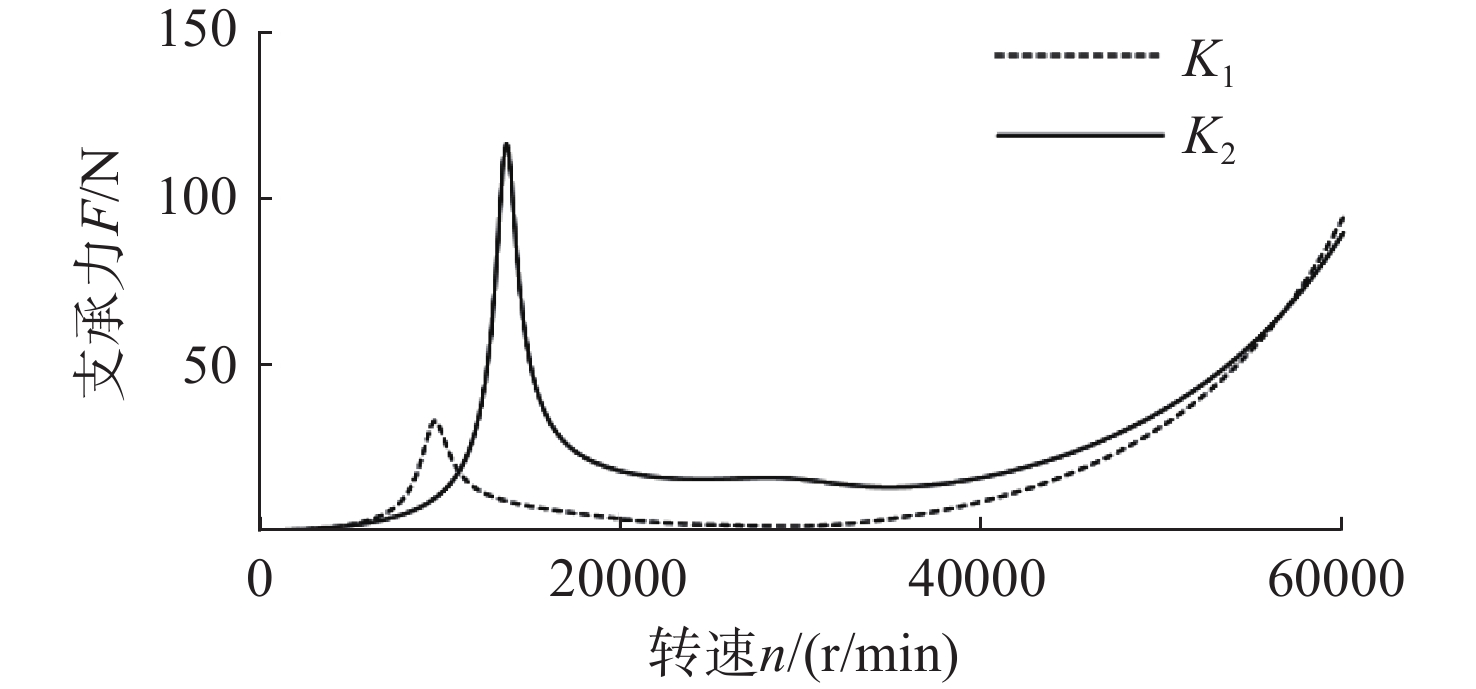
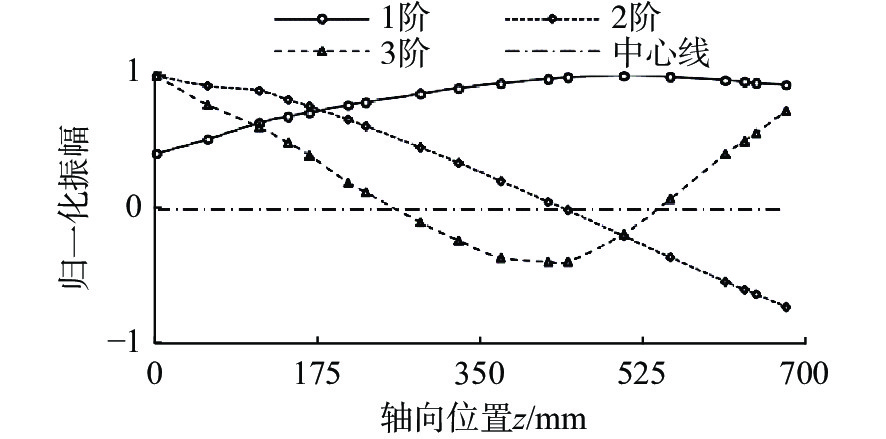
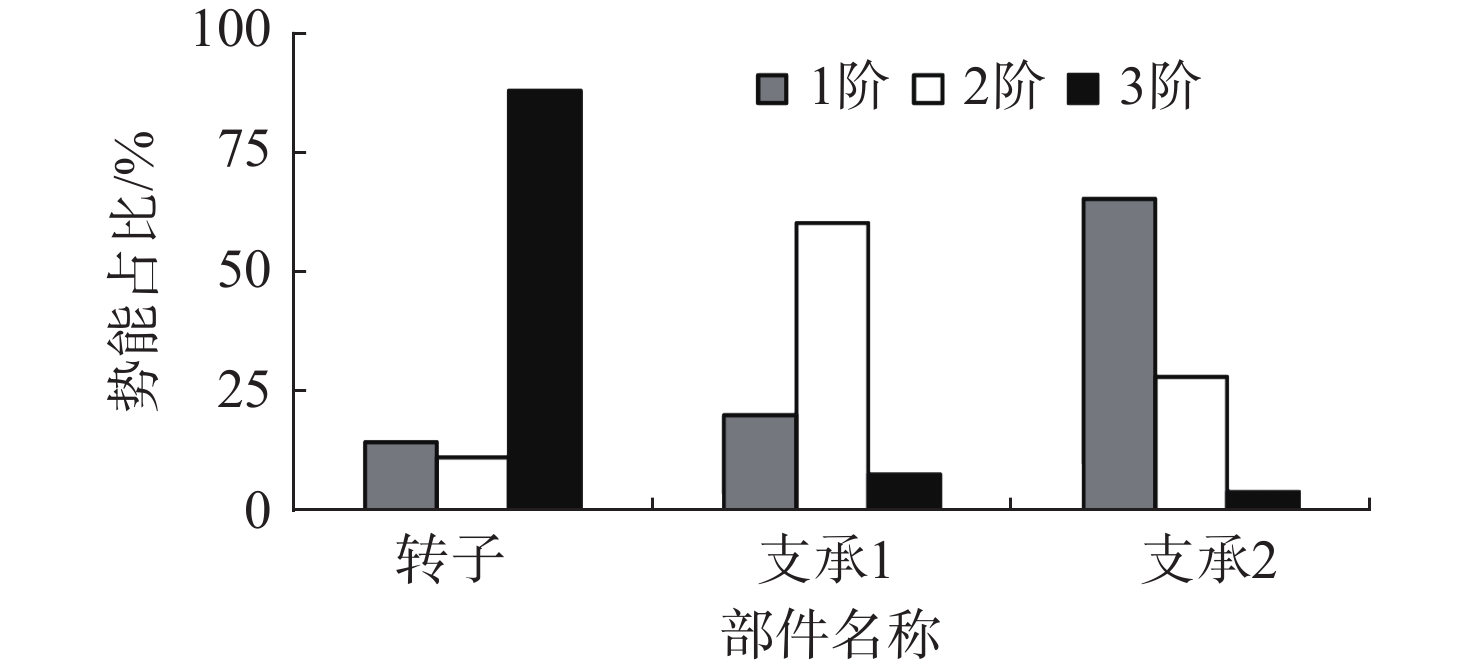
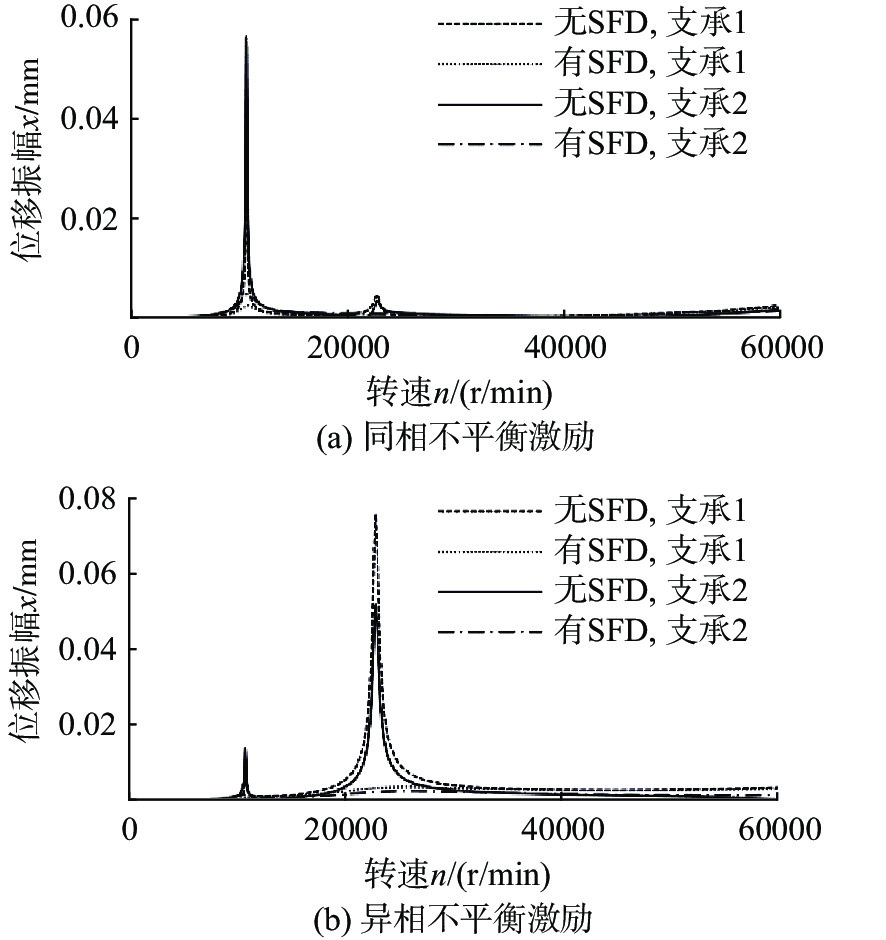
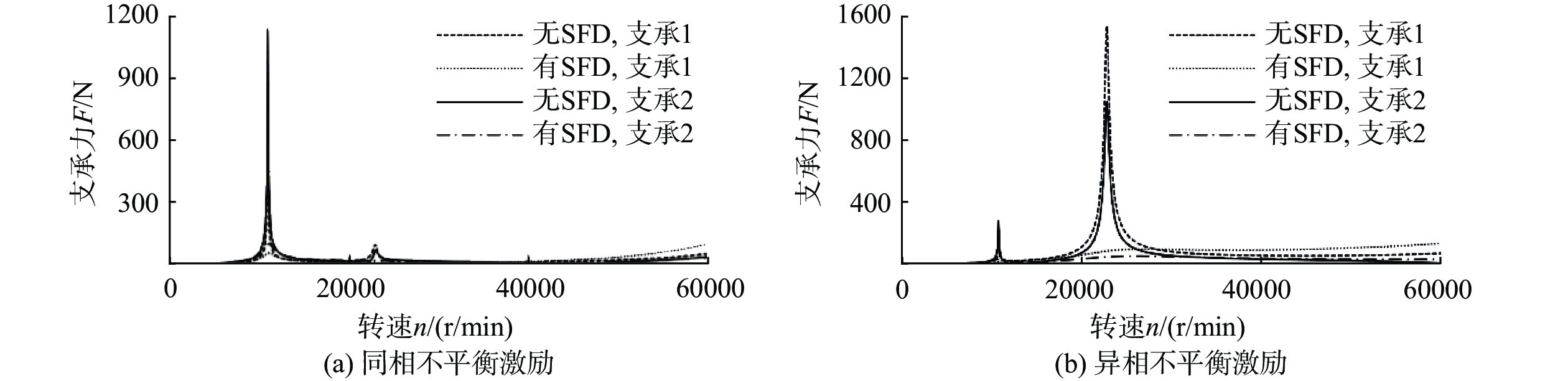
In view of the complex structural features and support with dynamic design problems for aero-engine rotors, based on finite element (FE), piecewise linear fitting and degree of freedom (DOF) reduction, the dynamic model of complex rotor-support system of the aero-engine was built by using the main and sub-units to reasonably equivalize the complex rotor, and the validity of the modeling was verified through experiments. The supporting stiffness was designed from the aspects of rotor natural characteristics, strain energy distribution, supporting force and vibration response, and the nonlinear vibration reduction efficiency analysis of elastic support parallel squeeze film damper (SFD) was carried out. The results showed that the dynamic model can reflect the dynamic characteristics of complex rotors well. The appropriate range of support stiffness was 1.5×10⁴−2.8×10⁴ N/mm, and the elastic support parallel SFD design had a significant effect on reducing vibration and supporting force, which met the critical speed design, strain energy constraint and deformation requirement. It provides a quantitative reference basis for aero-engine supporting stiffness and SFD parallel design, which has important engineering application value.

Probabilistic model of small crack simulation considering shot peening residual stress and inclusion influence
YANG Mao, LU Shan, PAN Rong, ZHANG Yonggang, LIU Xiaotao, QIN Shiyong
2023, 38(4): 913-920. doi: 10.13224/j.cnki.jasp.20210588
Abstract:

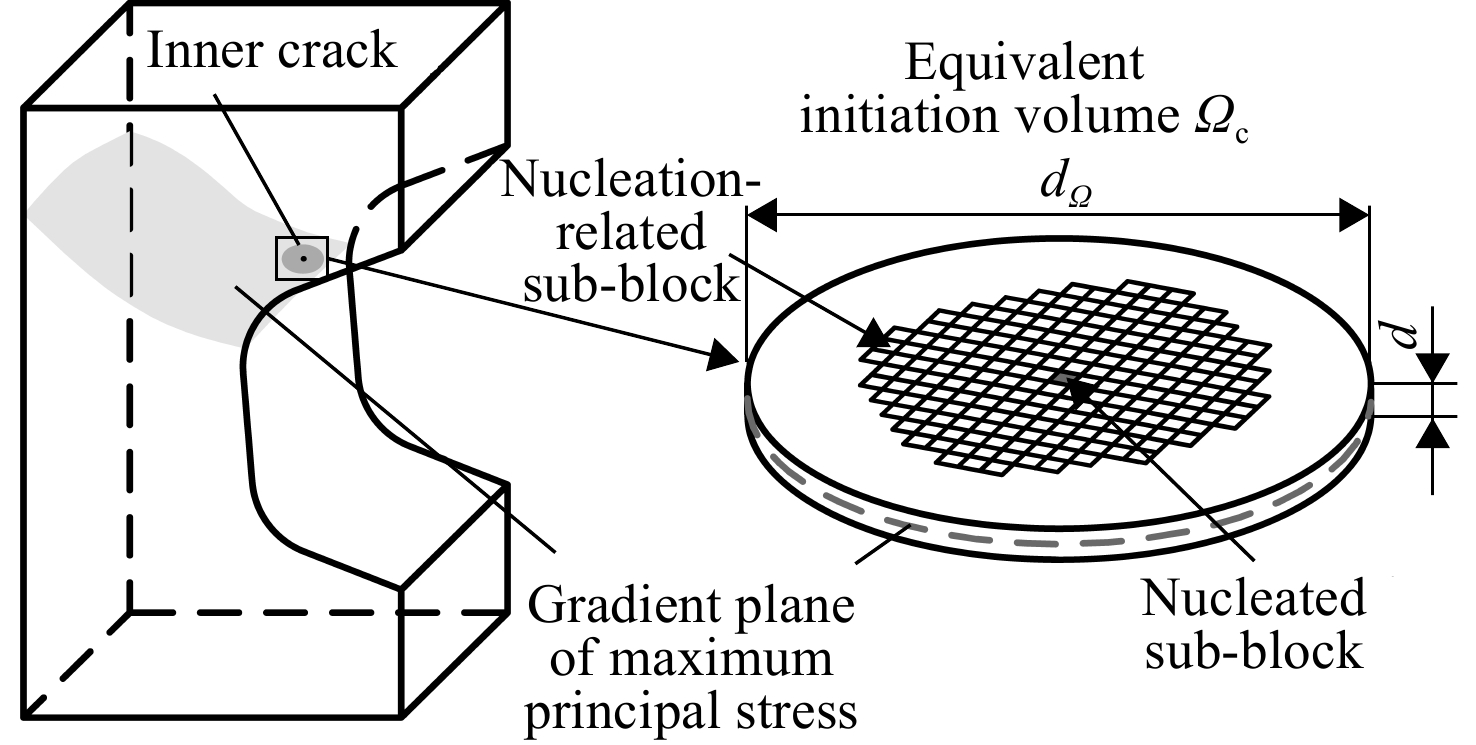
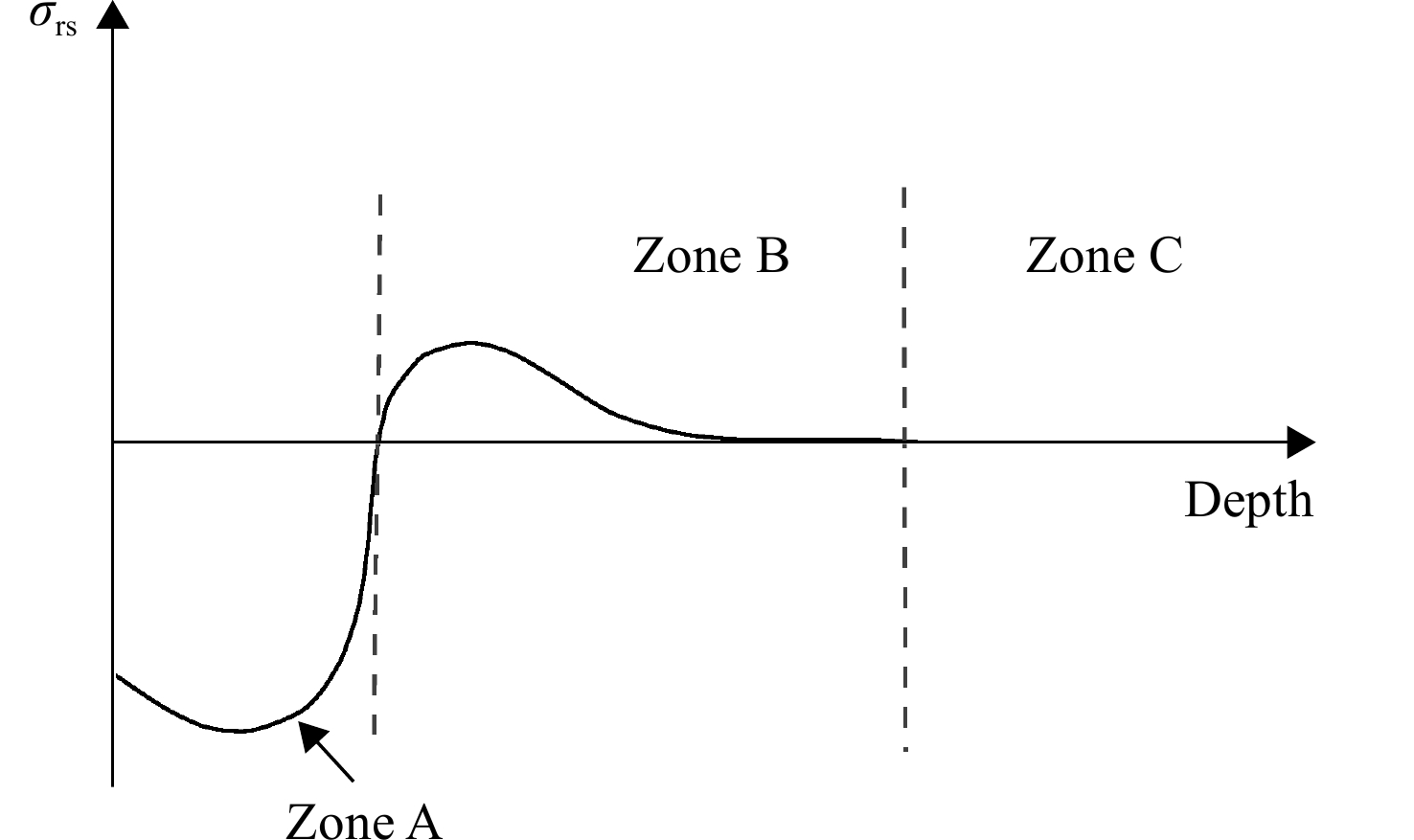
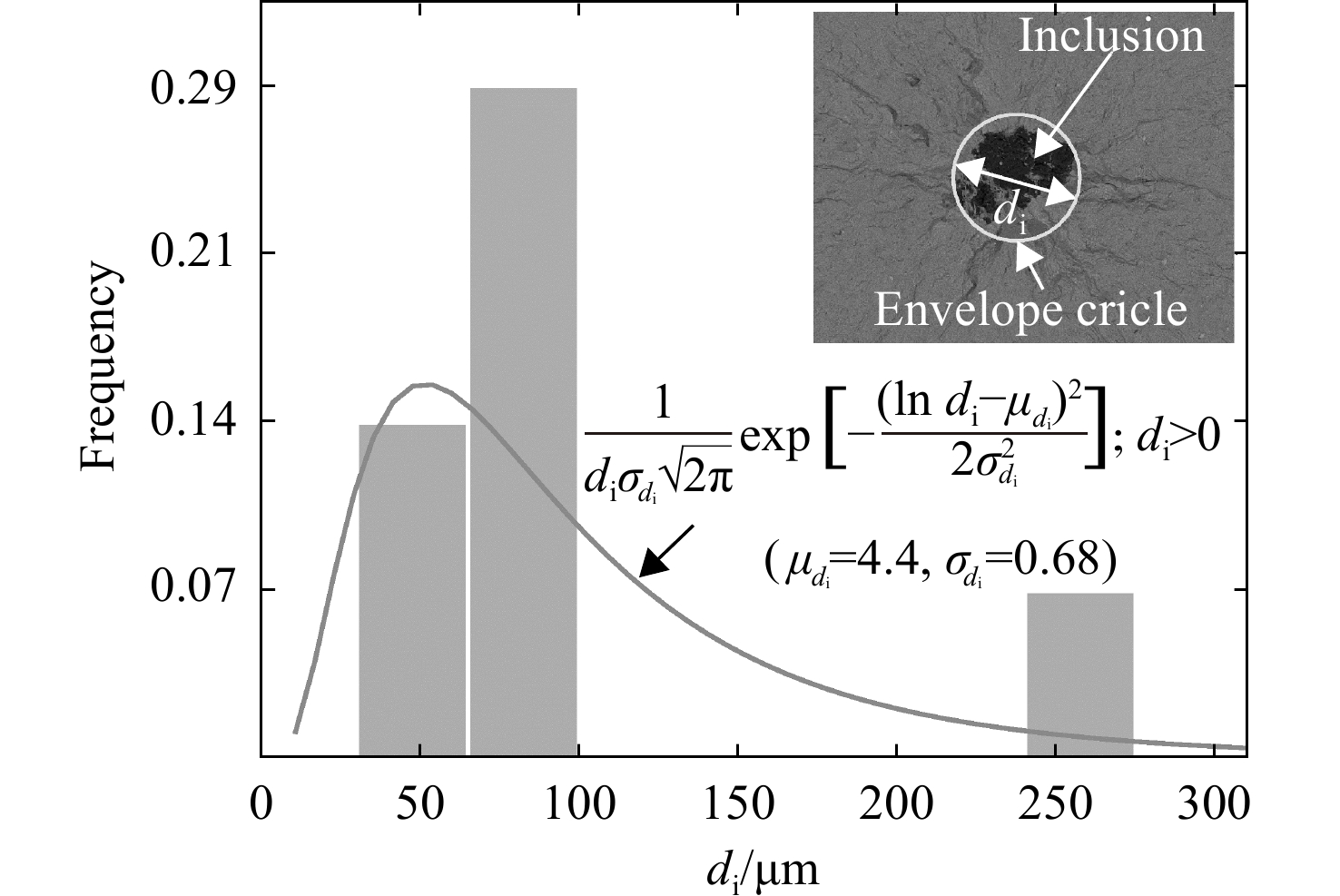
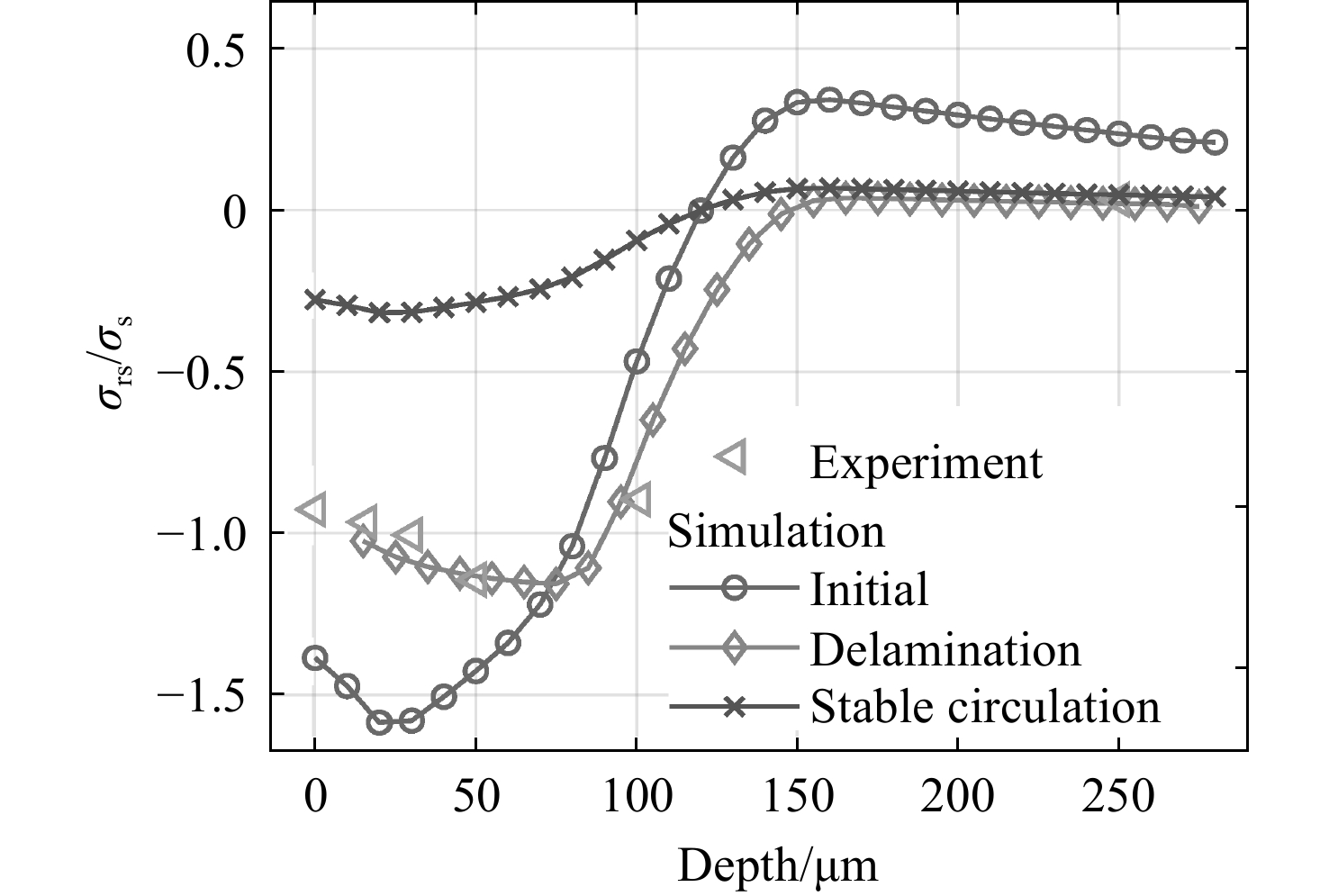
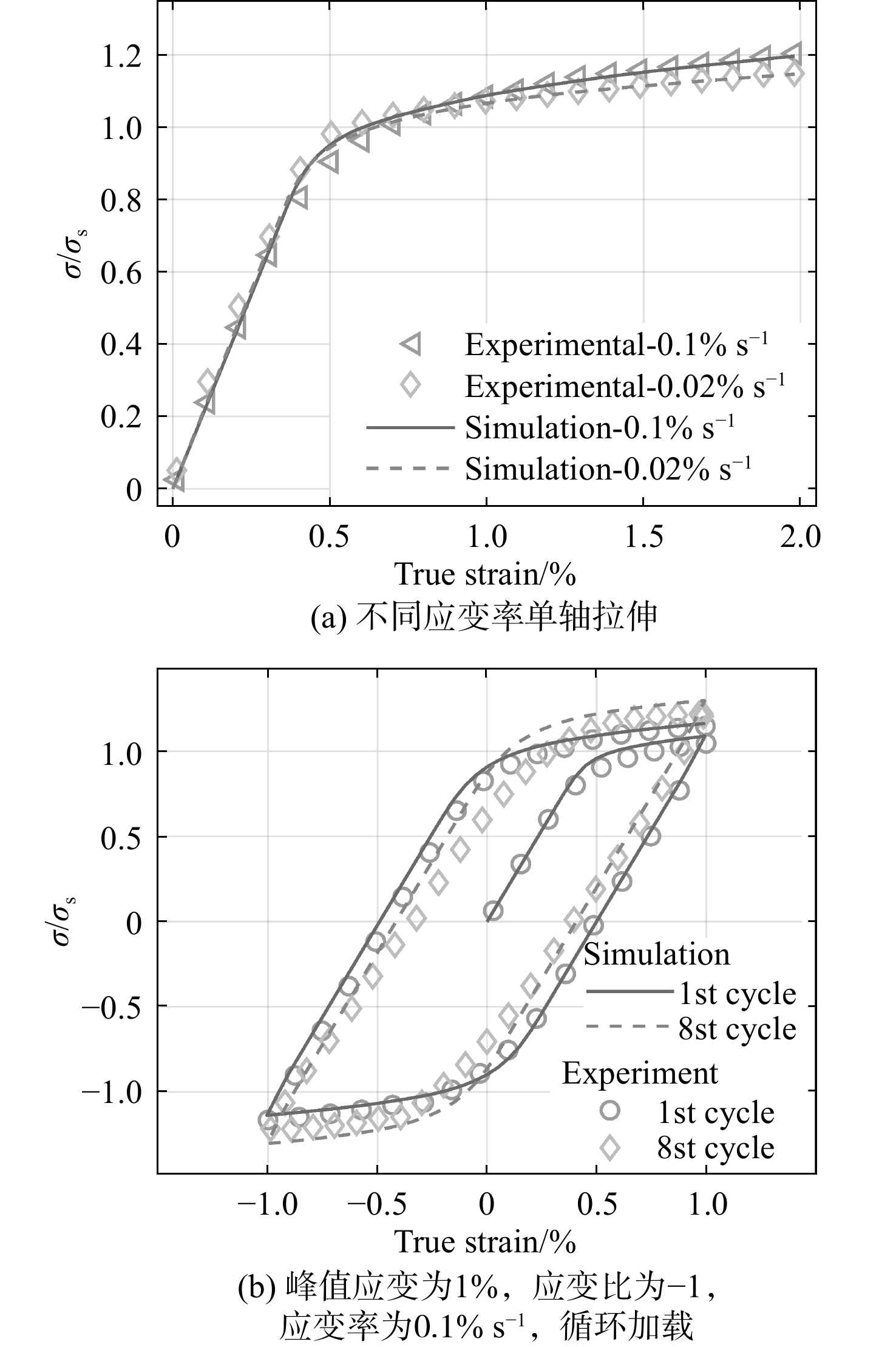
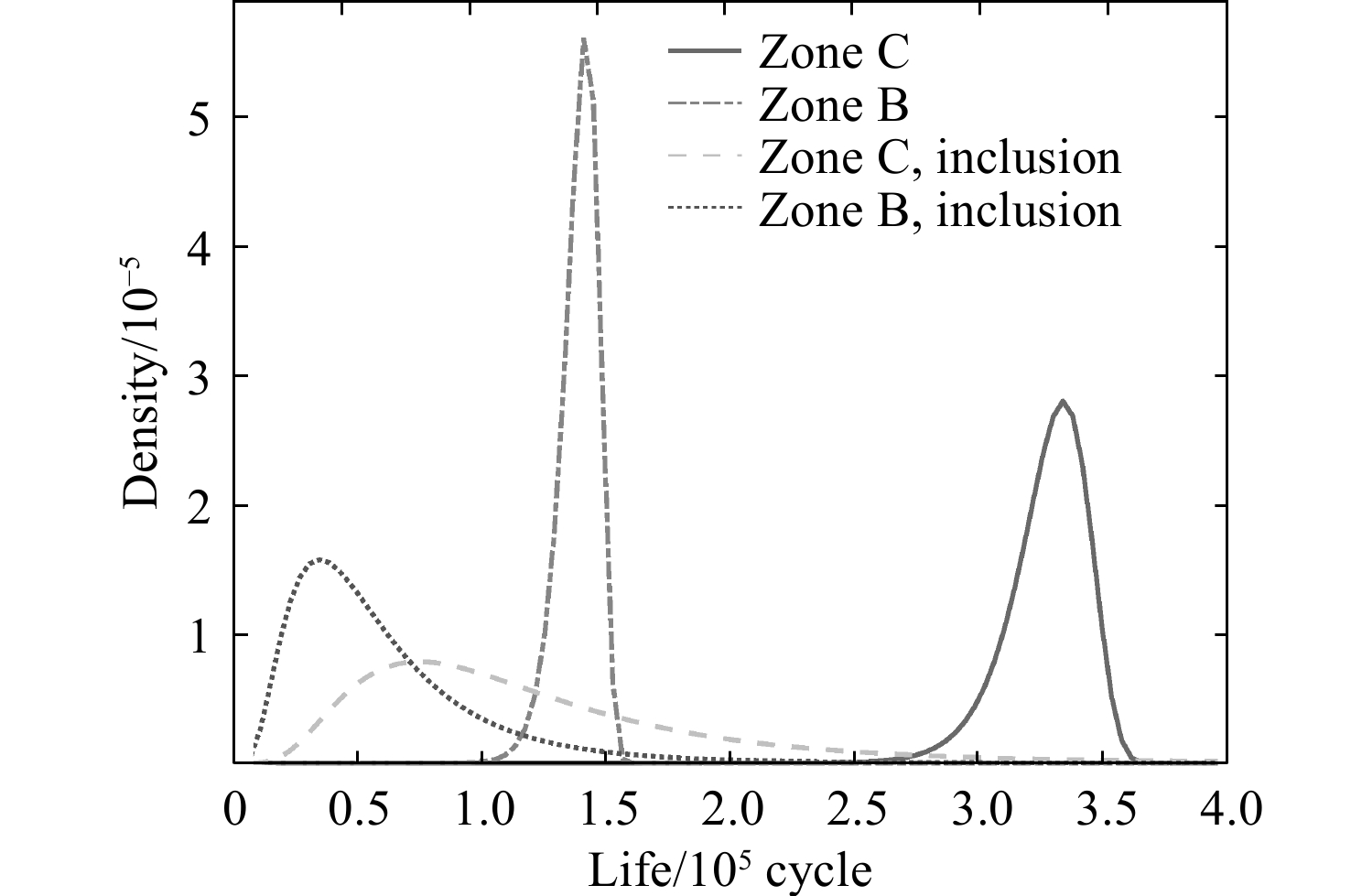
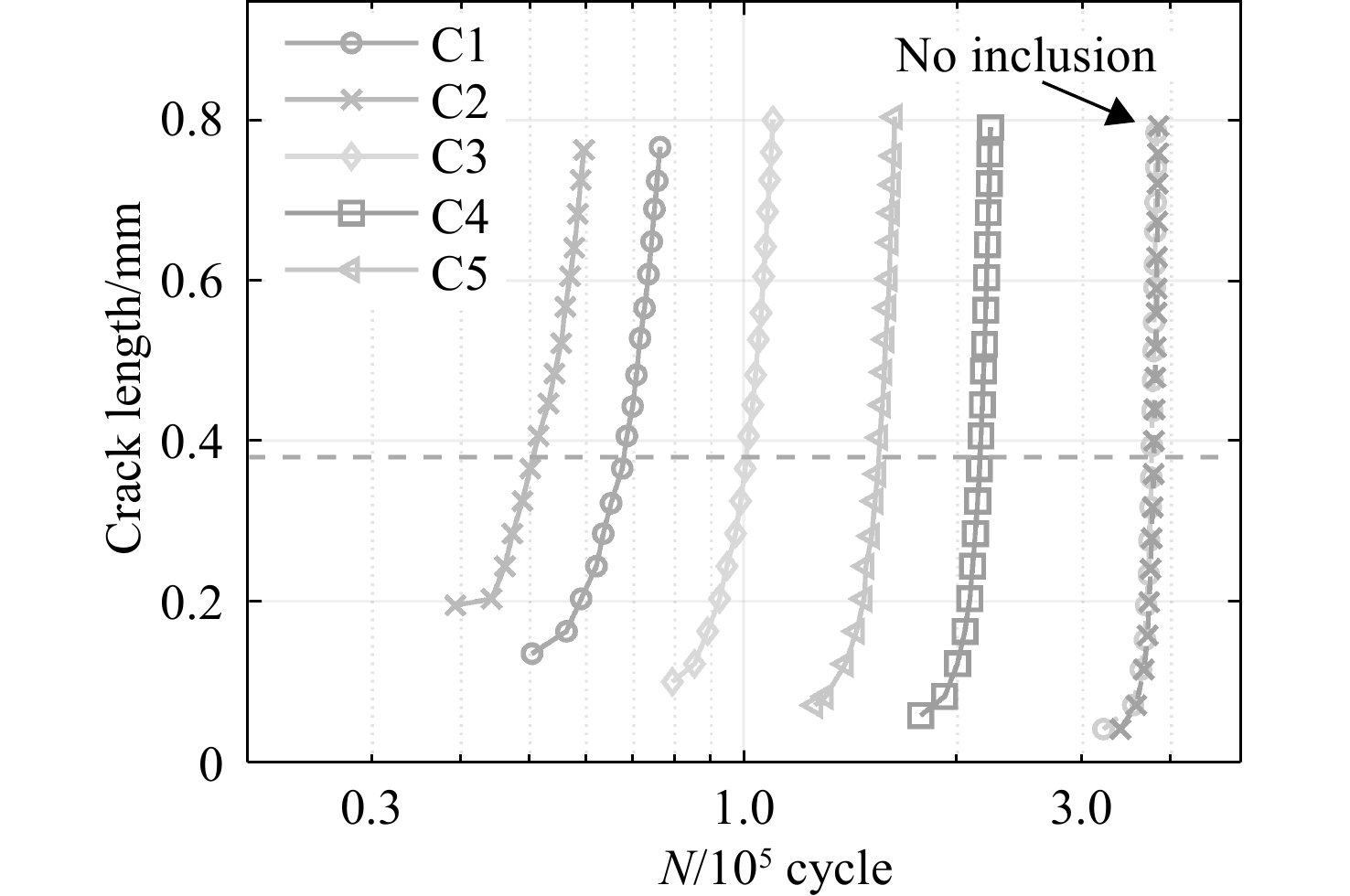
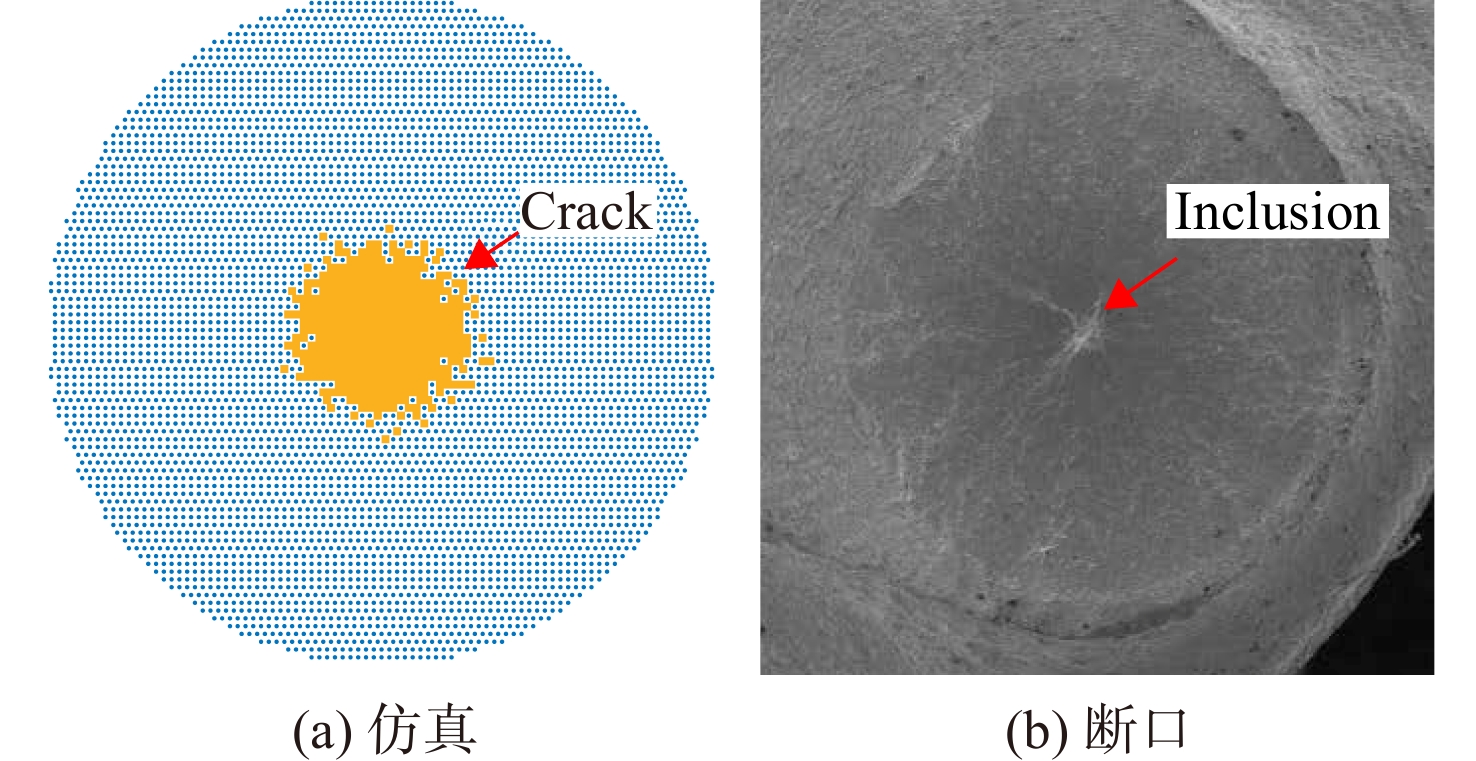
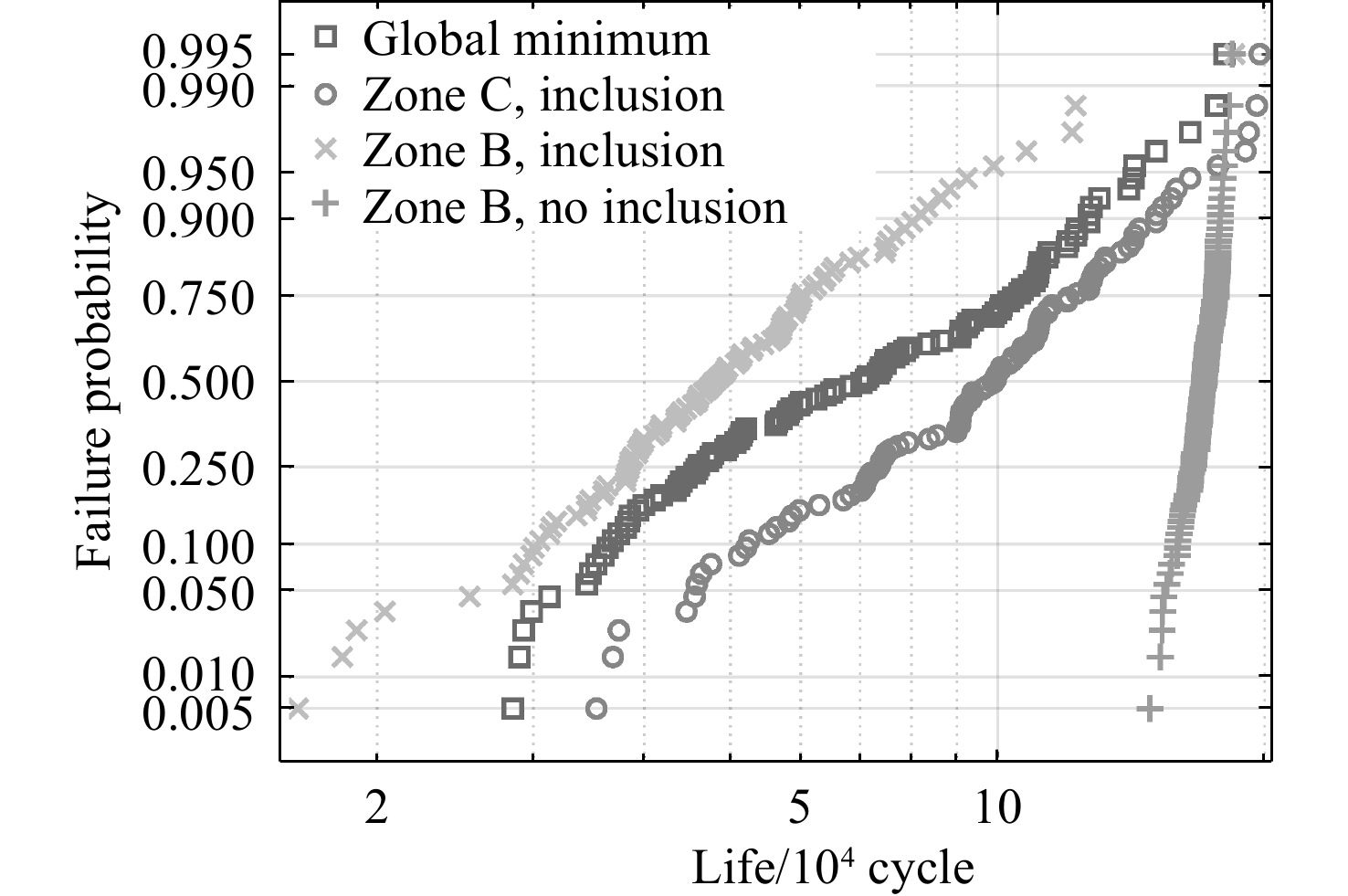
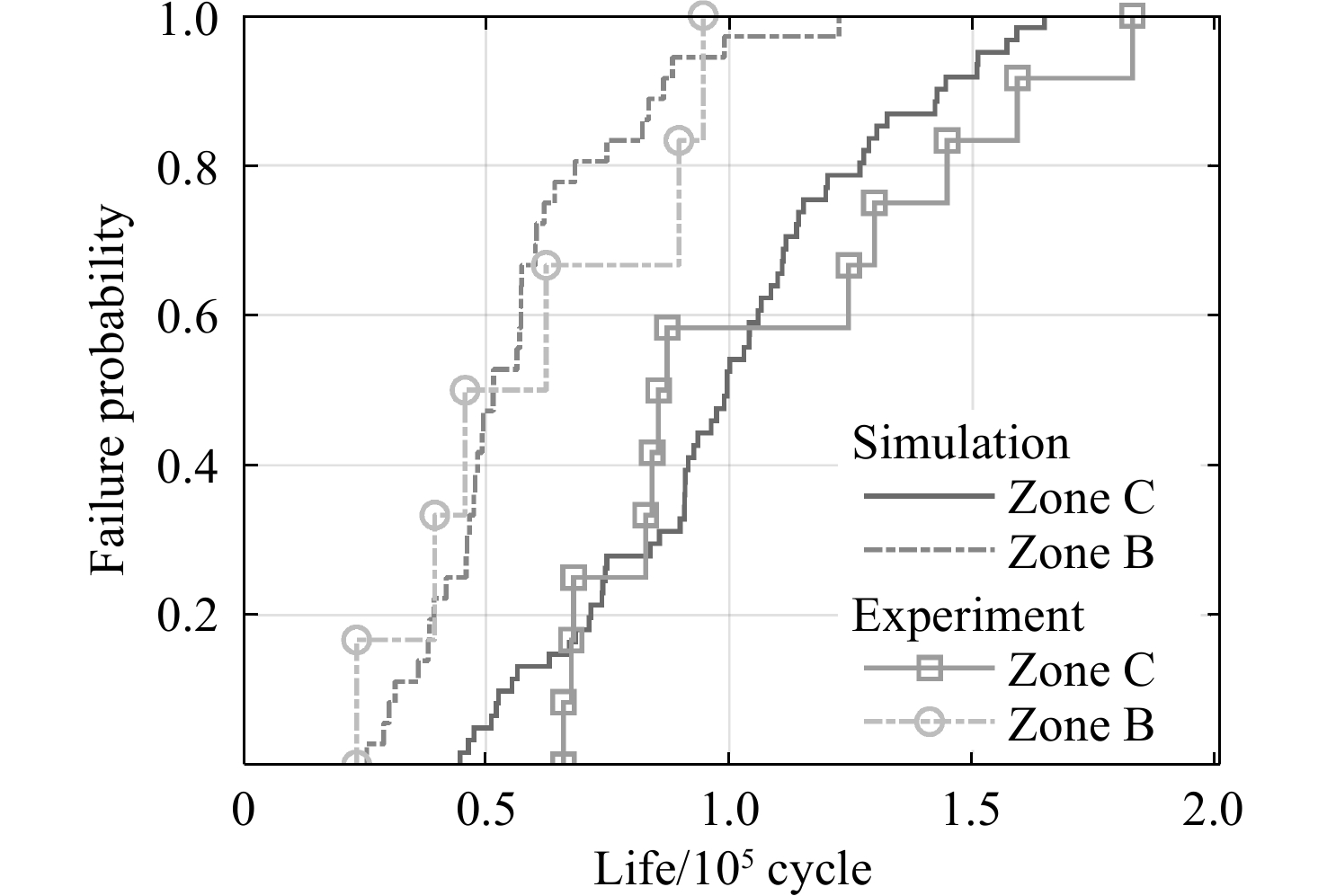
A probabilistic model to simulate nucleation and propagation of internal small crack induced by shot peening residual stress and internal inclusion was proposed to realize the simulation of internal fatigue crack initiation process. For superalloy X, parameters of the residual stress distribution, the ‘nucleation-related’ inclusion size distribution, the microstructure-related plastic constitutive model and the small crack nucleation and propagation required by the model were identified based on the experimental data. Two main nucleation patterns of shot peening uniform-cross-section bar specimens were successfully predicted by the proposed model: the inclusion nucleation in residual tensile equilibrium zone and the inclusion nucleation in the zone without residual stress. Compared with the experiment, the proposed model had high accuracy in predicting the internal crack initiation life and its dispersion. The error of predicted median initiation life in residual tensile stress equilibrium zone was 2%, and the error of predicted $ - 3\sigma $ initiation life was 37%. The error of predicted median initiation life in the zone without residual stress was 3%, and the error of predicted $ - 3\sigma $ initiation life was 3%. In addition, the internal crack morphology simulated by the present model was of ‘fisheye’ shape, which was consistent with the fracture appearance of the specimen.

Research progress in the mechanical properties and oxidation resistance modification effect of interphase of SiC matrix composites reinforced with continuous fibers
XU Bin, YANG Huiyong, LUO Ruiying, HUANG Juntong, WANG Lianyi, CHEN Dian, LI Wenpeng
2023, 38(4): 921-930. doi: 10.13224/j.cnki.jasp.20210605
Abstract:

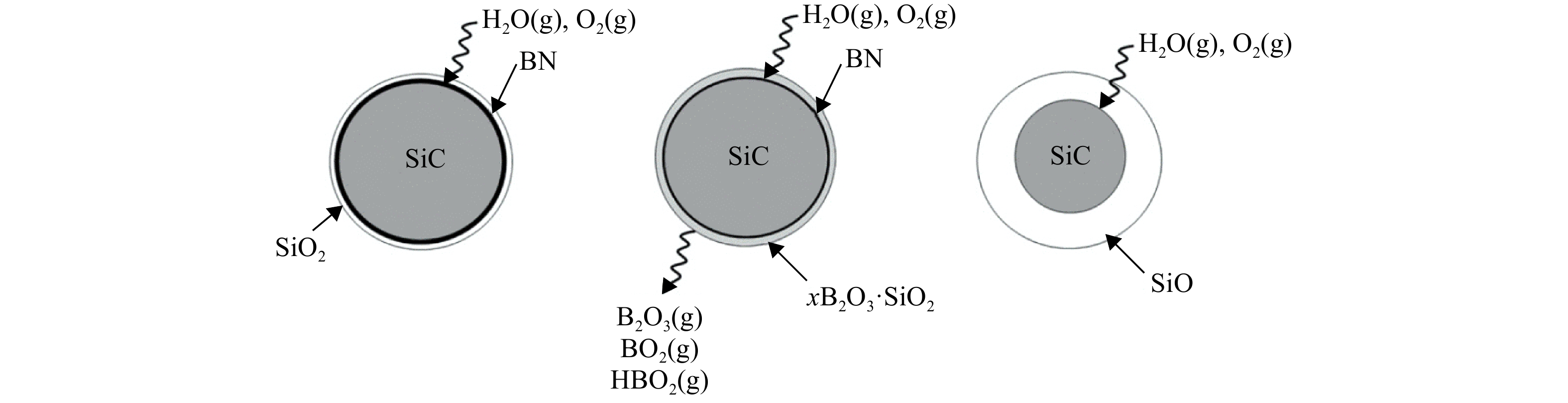
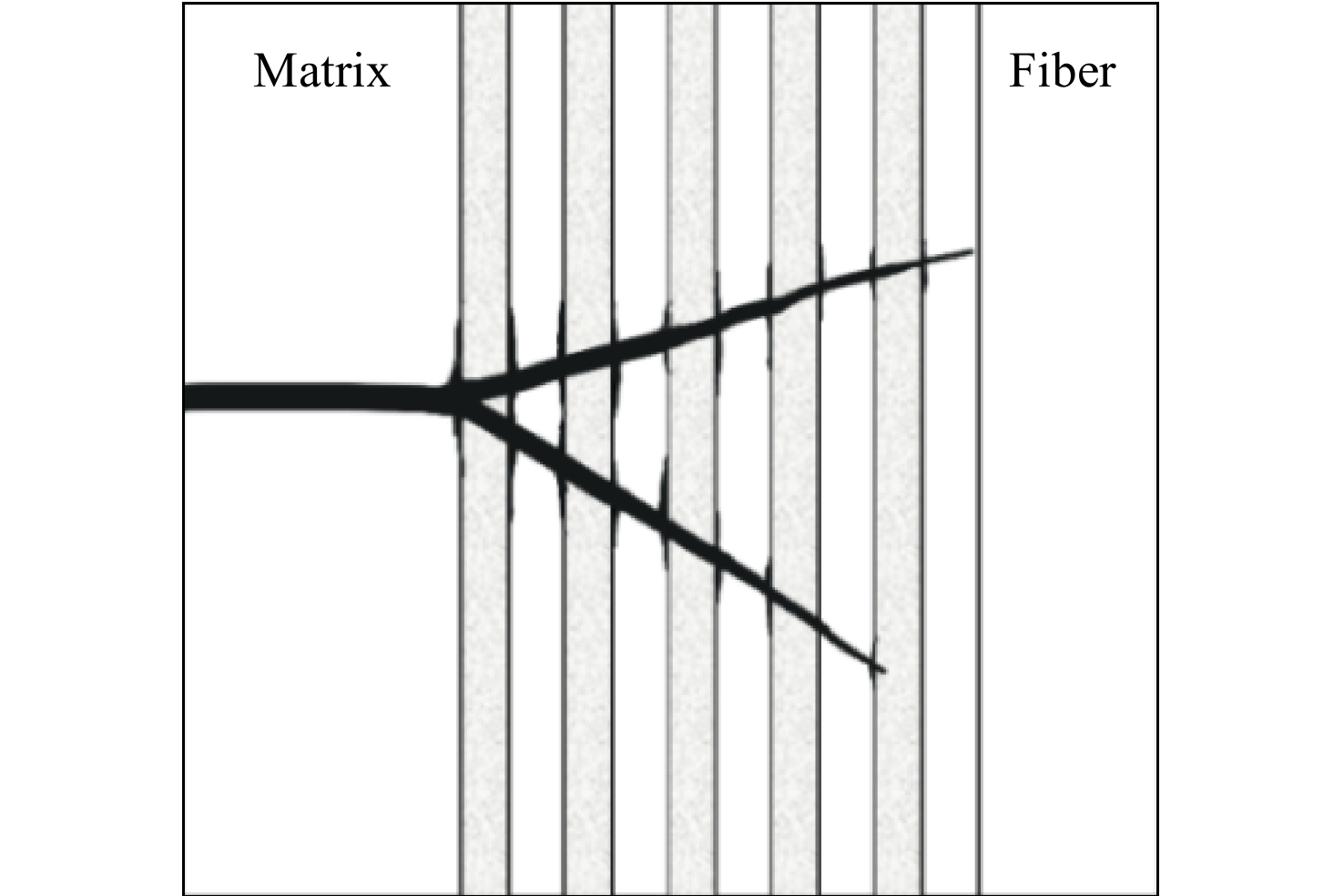
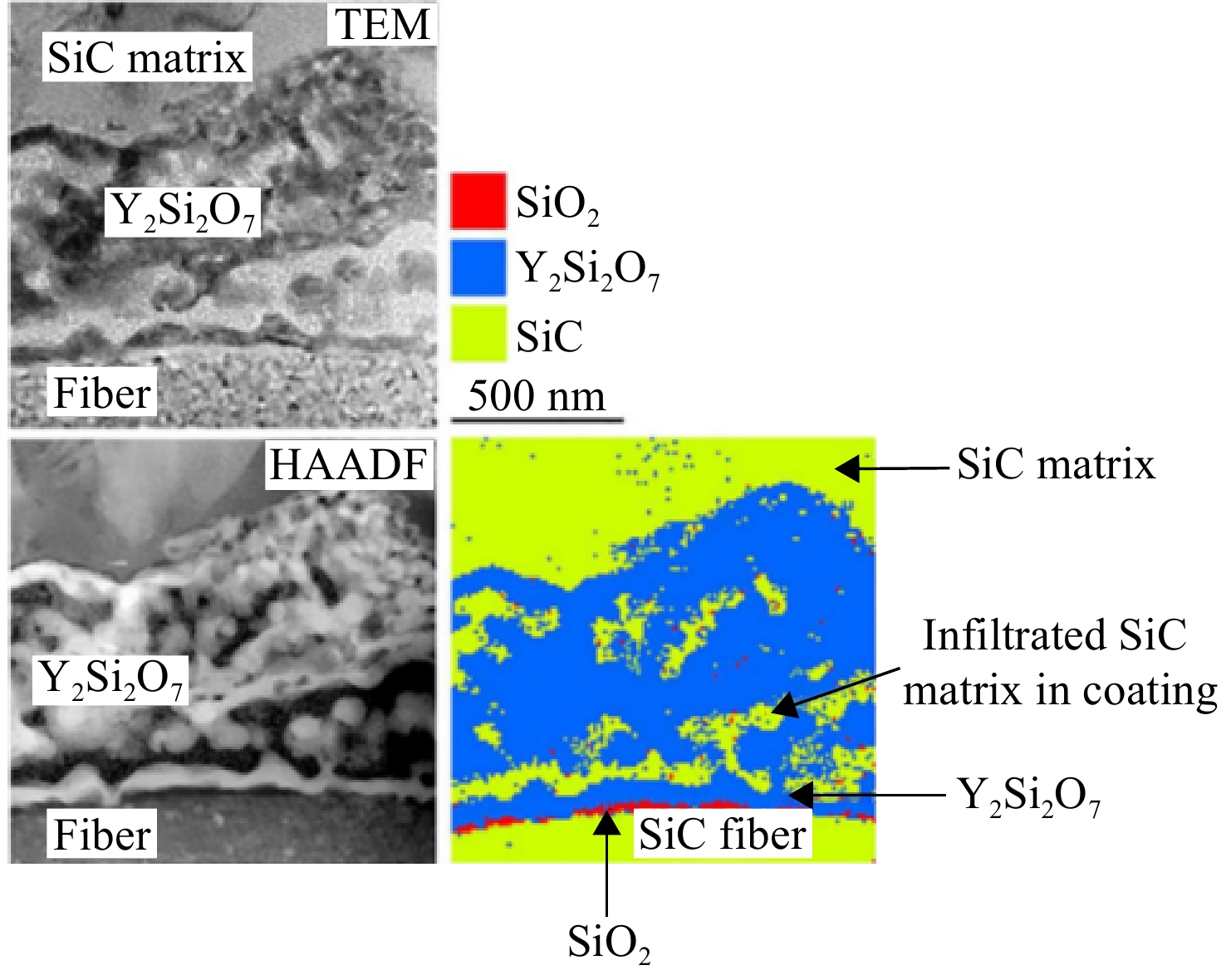
The mechanical and oxidation resistance modification effects, the related influencing factors, and the shortcomings of pyrocarbon (PyC) and its derivatives, BN and its derivatives, new style interphases, and compound interphases were reviewed, and several common interphases preparation technologies were also briefly compared. Among them, the PyC interphase had excellent mechanical modification but no oxidation resistance, and adding B element was still difficult to overcome its intrinsic oxidation resistance. The comprehensive performance of BN interphase was preferably good, but brittle at medium temperature and was not moisture-proof. Lots of advantages of composite interphase were presented, but the problems such as mismatch of thermal expansion coefficient and poor chemical compatibility can not be ignored. The new interphase was hard to be considered in terms of properties or preparation methods. The future development direction is to improve the performance database and damage mechanism, to explore more new types of interfacial phases, and to tap the potential of existing interfacial phase preparation processes.
LASSO based variable selection for similarity remaining useful life prediction of aero-engine
YU Qianying, LI Juan, DAI Hongde, XIN Fulu
2023, 38(4): 931-938. doi: 10.13224/j.cnki.jasp.20210516
Abstract:

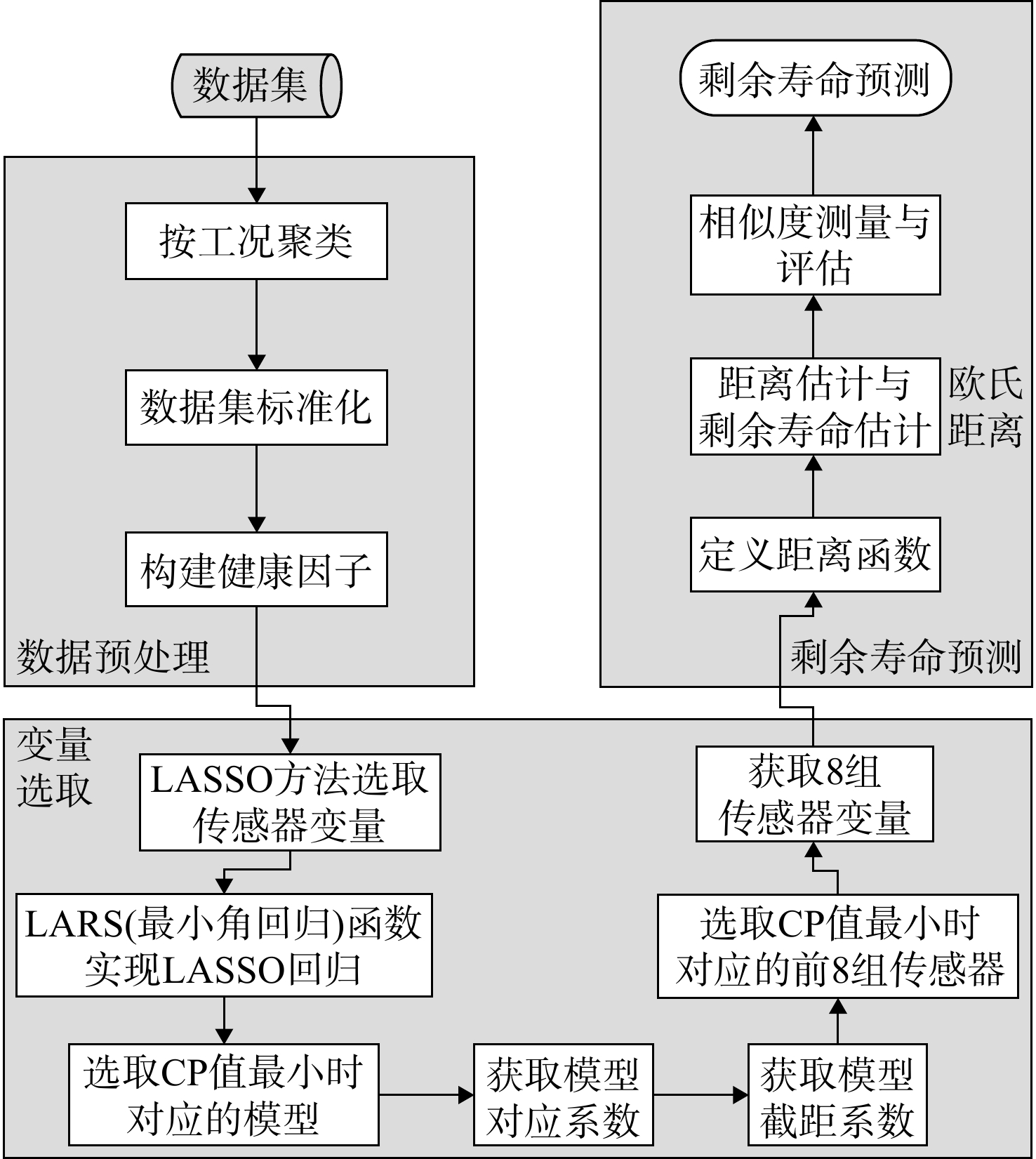
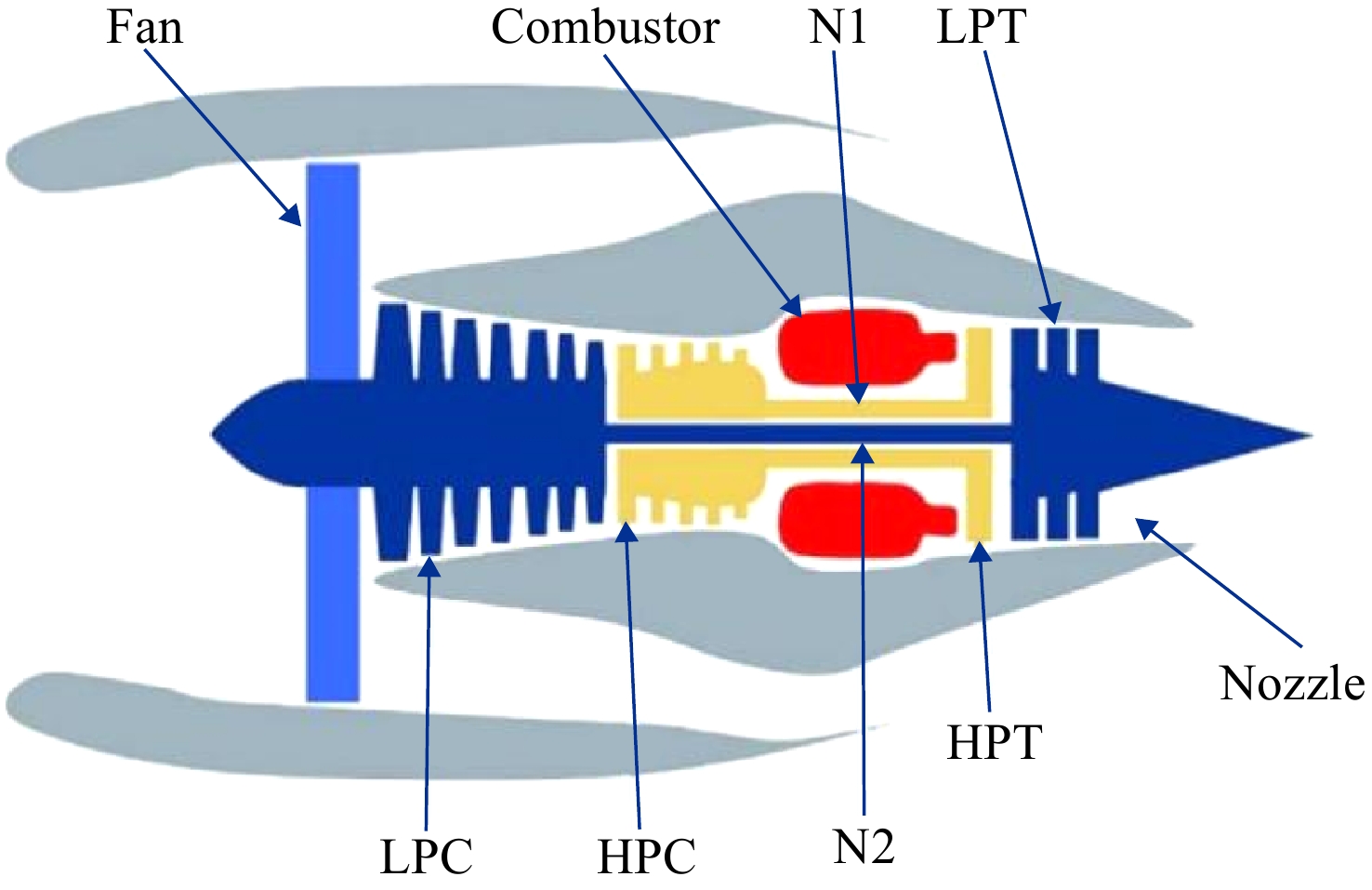
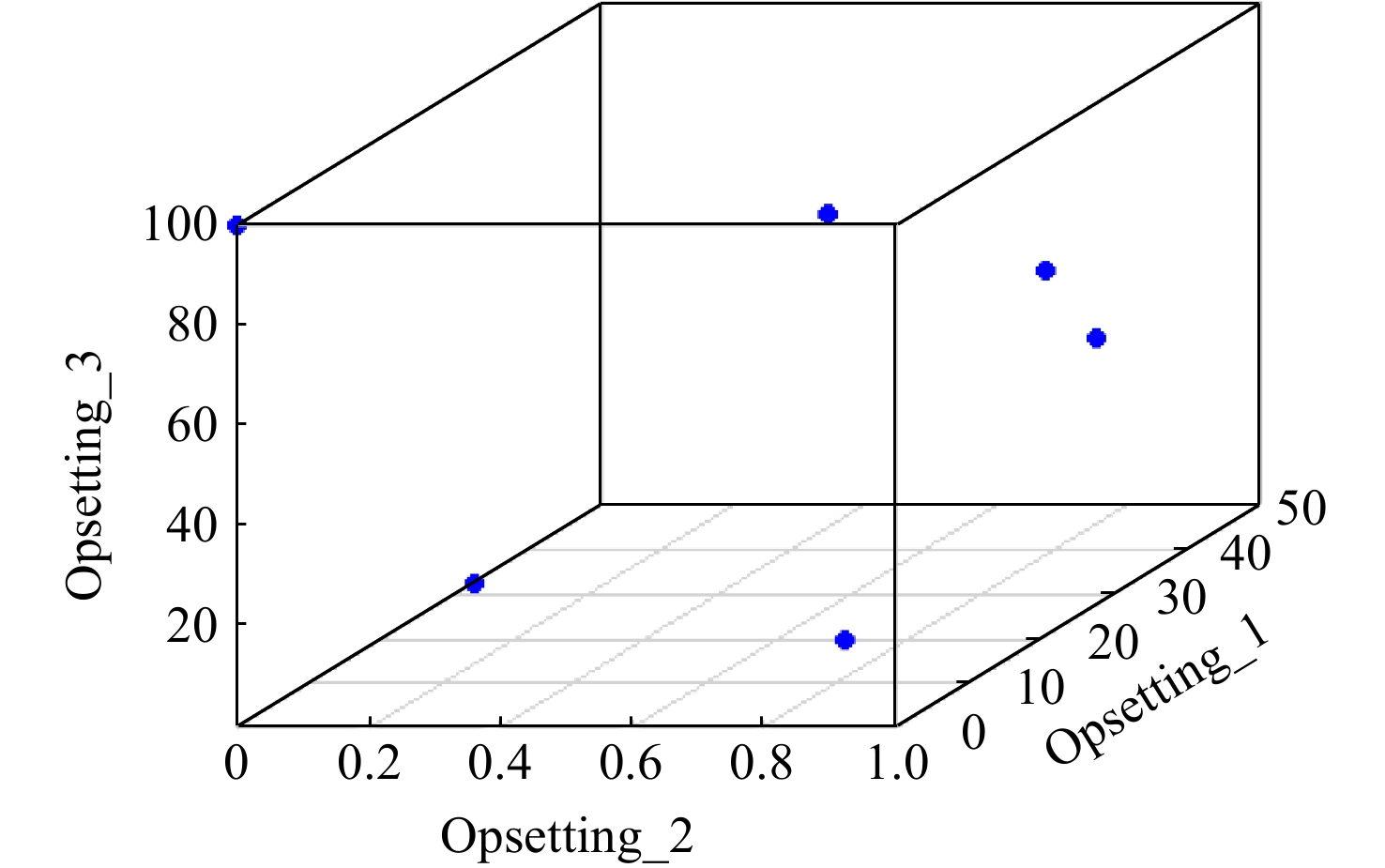
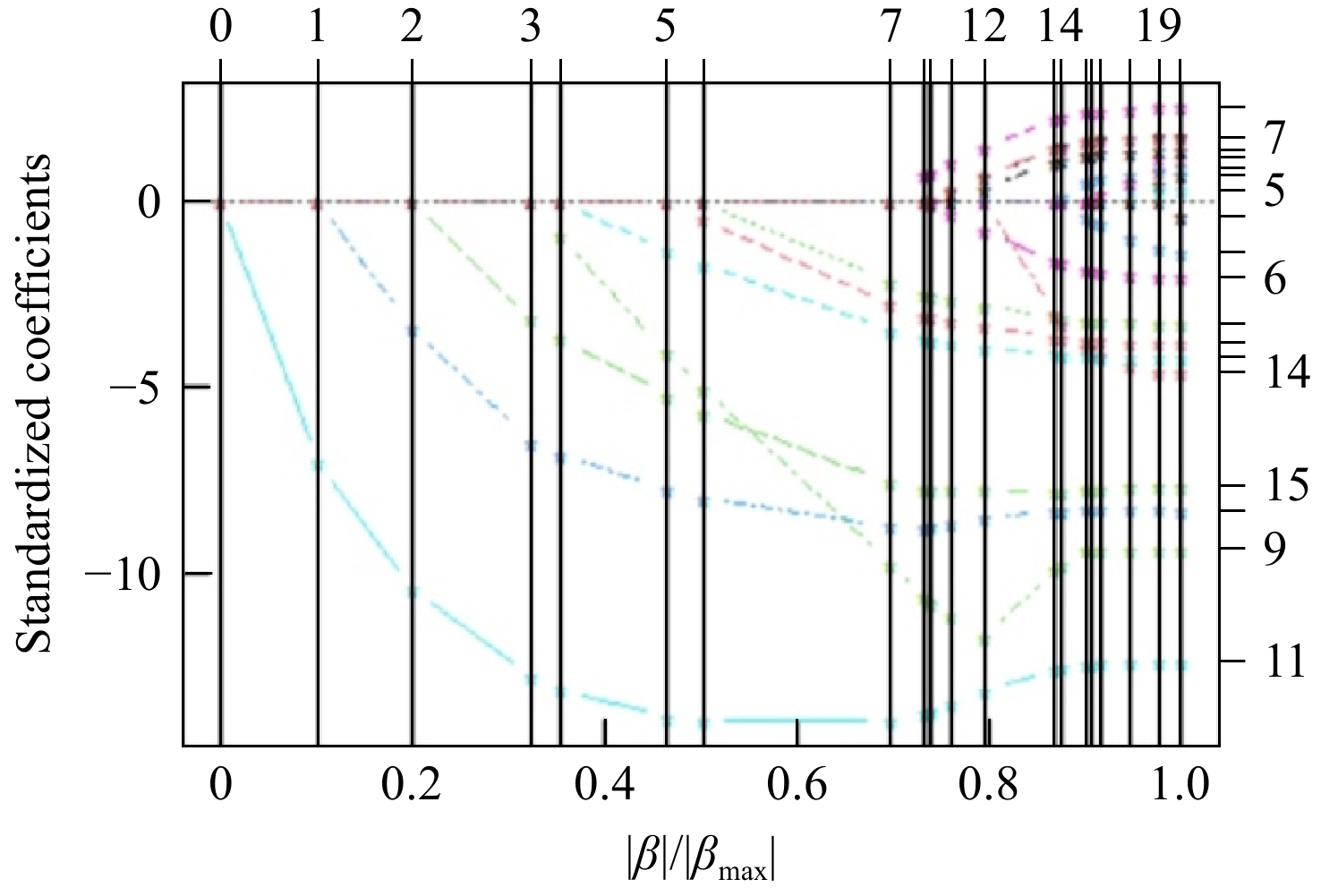
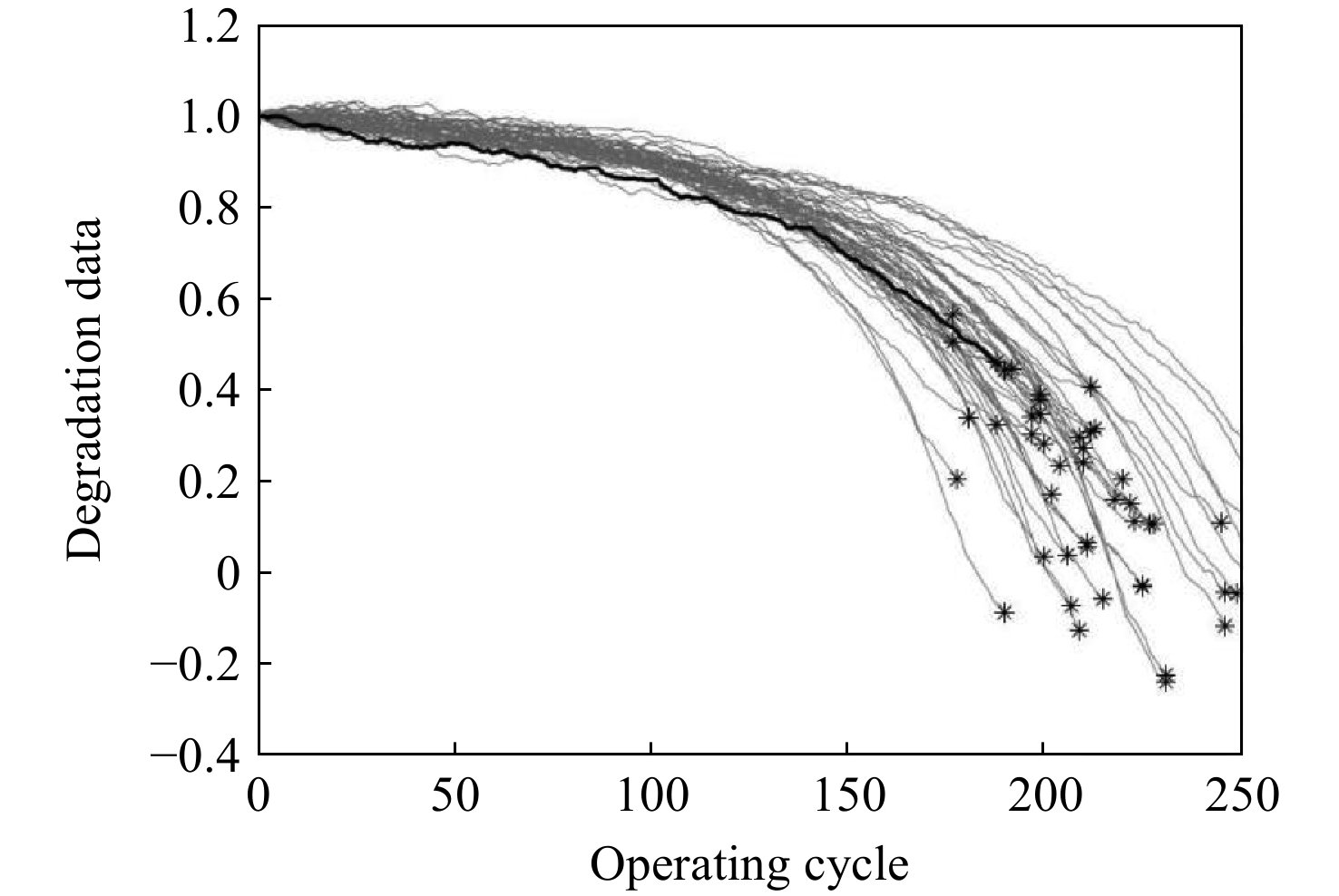
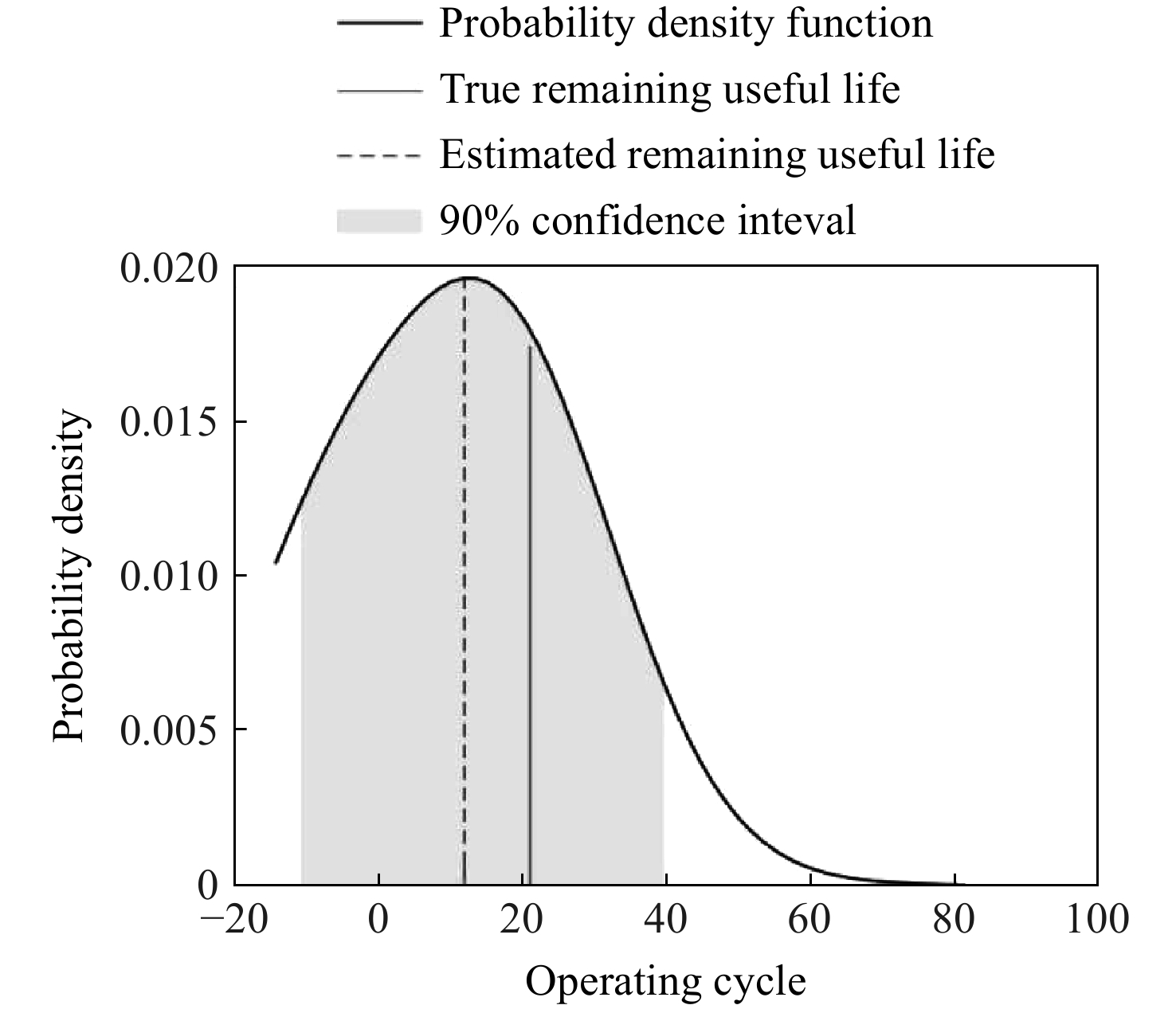
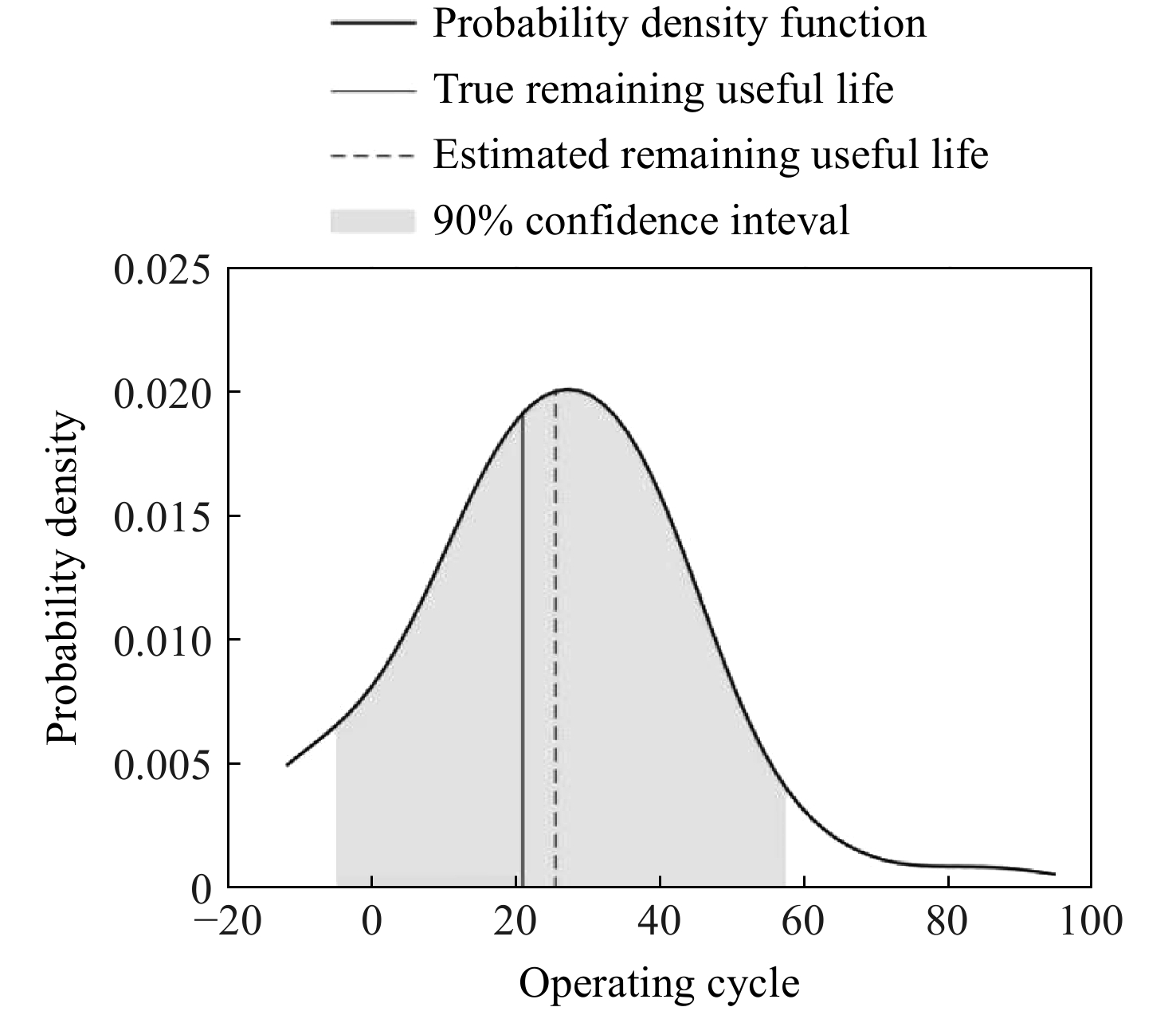
Due to the large number of aero-engine monitoring variables, the variables with obvious performance degradation trend were directly selected by traditional method for the life prediction, so a variable selection method based on LASSO (least absolute shrinkage and selection operator) was proposed, which combined with the similarity life prediction method to effectively improve the prediction accuracy. Based on K-means clustering, different working conditions were distinguished, and multiple monitoring variables of aero-engine were transformed according to the clustering results. The optimal sensor variables were selected based on the LASSO method. The remaining useful life of aero-engine was predicted based on similarity method. The results of remaining useful life prediction based on the variable selection method by LASSO and the traditional selection method by the degradation trend were compared. The results showed that the standard deviation of the similarity life prediction error based on the variables selected by LASSO decreased by about 1.84, 3.46 and 4.23 under three operating cycles.

Turbomachinery
Numerical investigation of noise reduction law and acoustic mecha-nism of the sweepback propfan
HE Xiang, ZHAO Zhenguo, SHU Taibo, PENG Xuemin
2023, 38(4): 939-948. doi: 10.13224/j.cnki.jasp.20210214
Abstract:

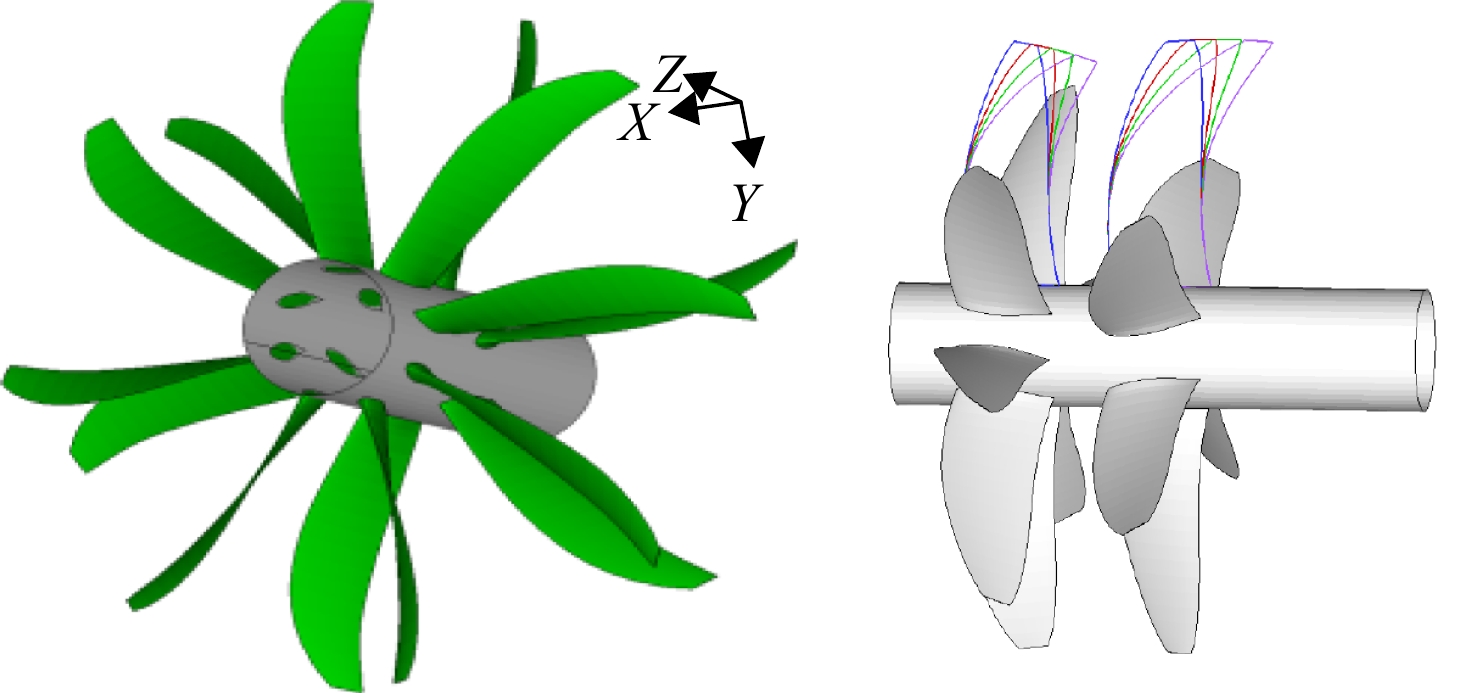
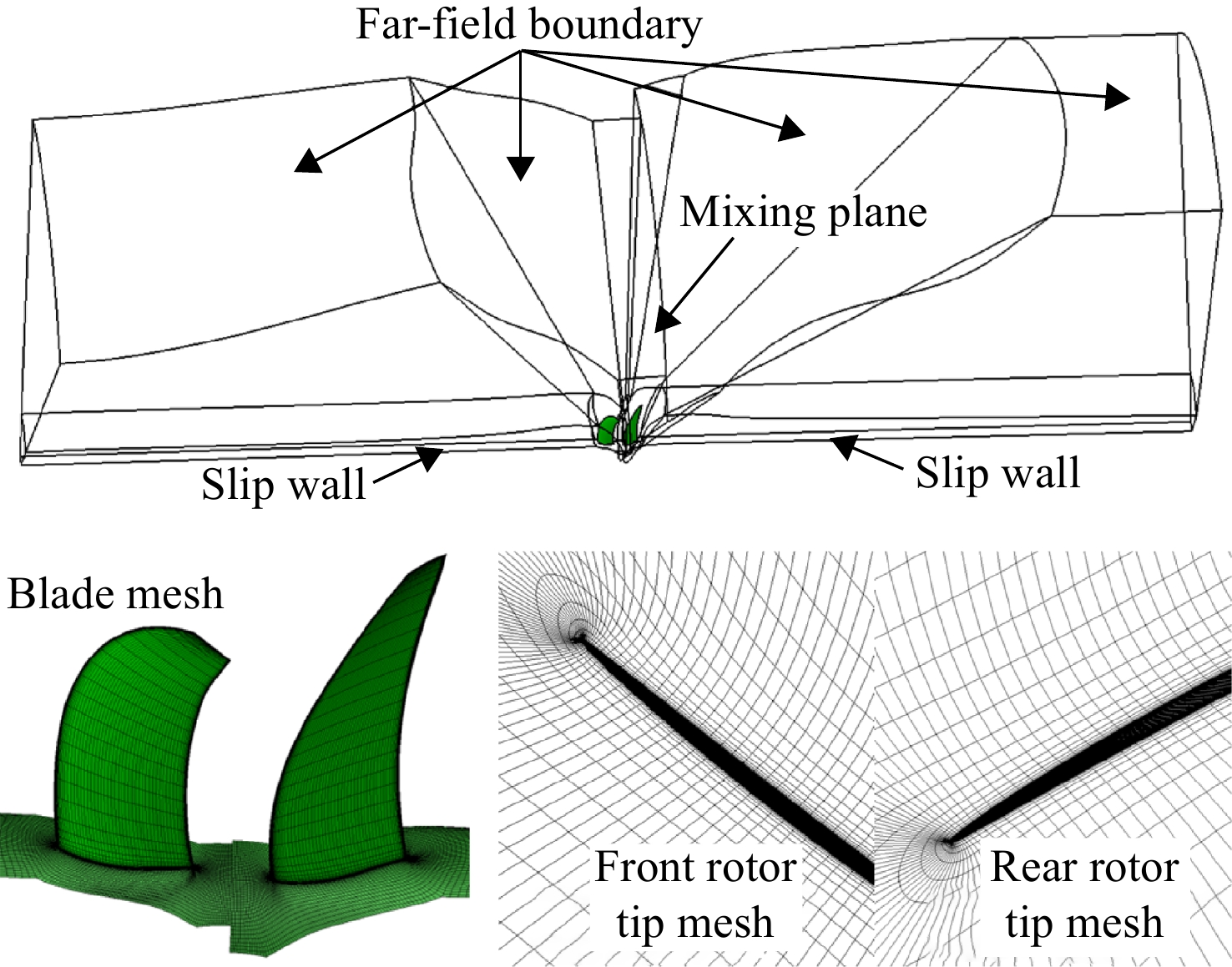
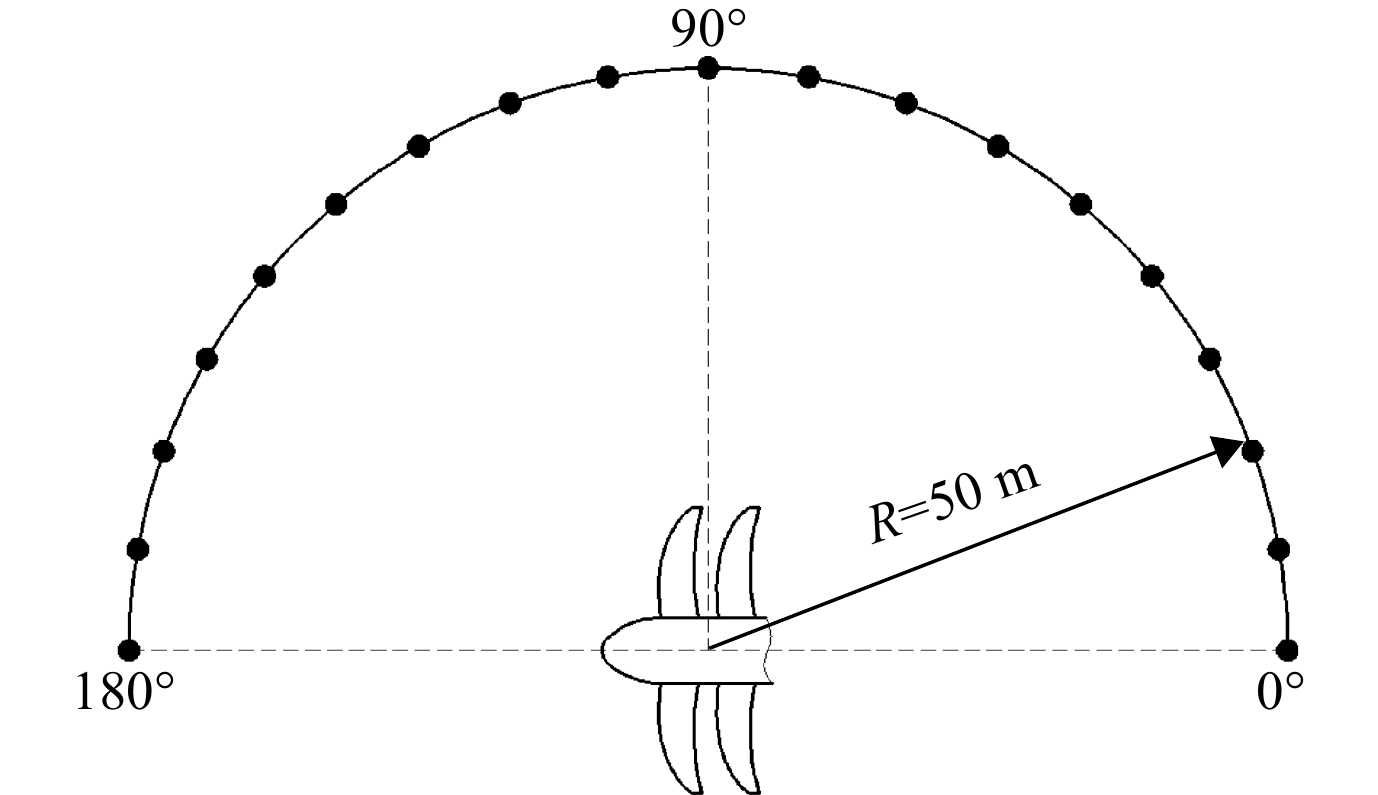
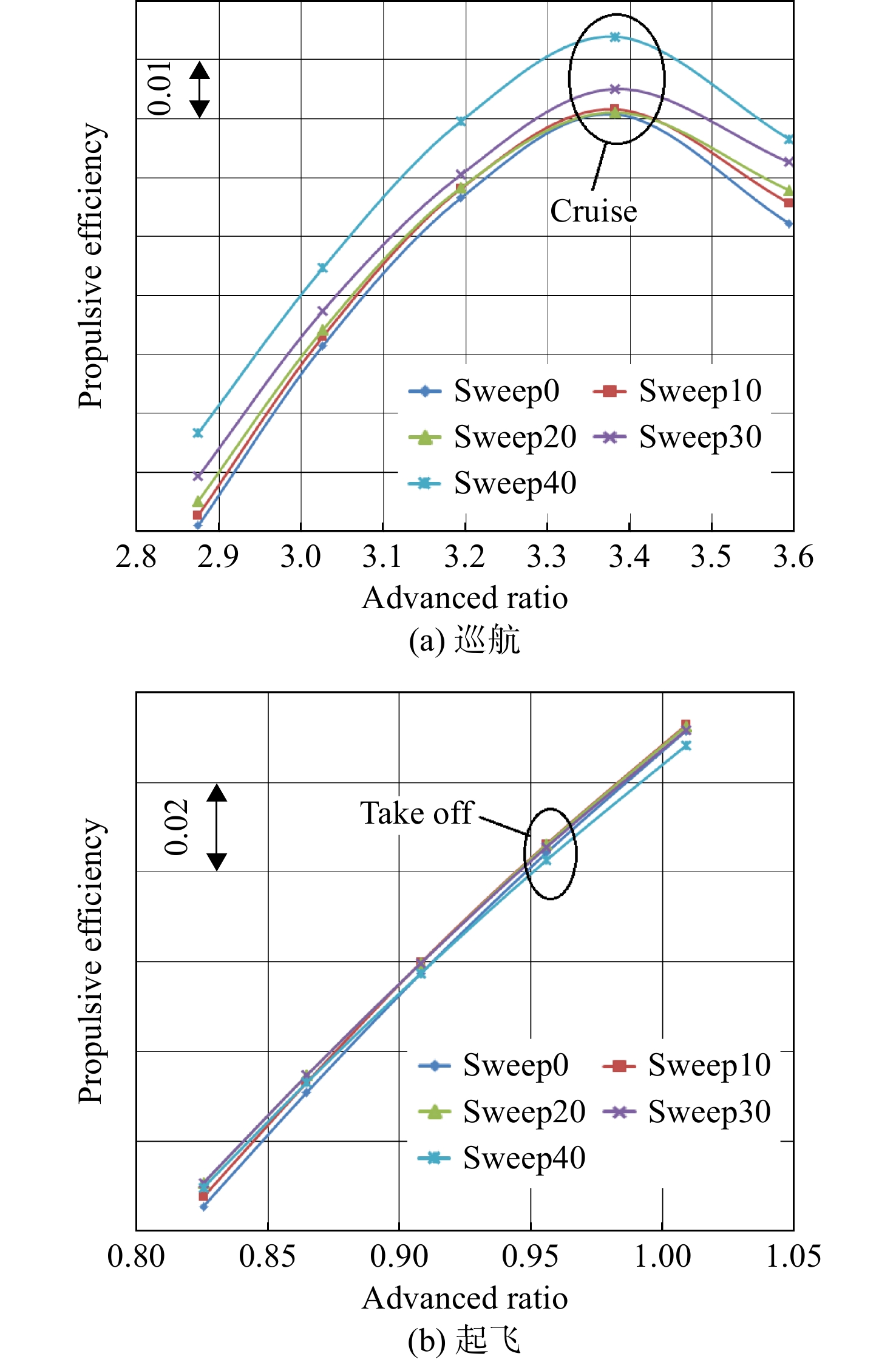
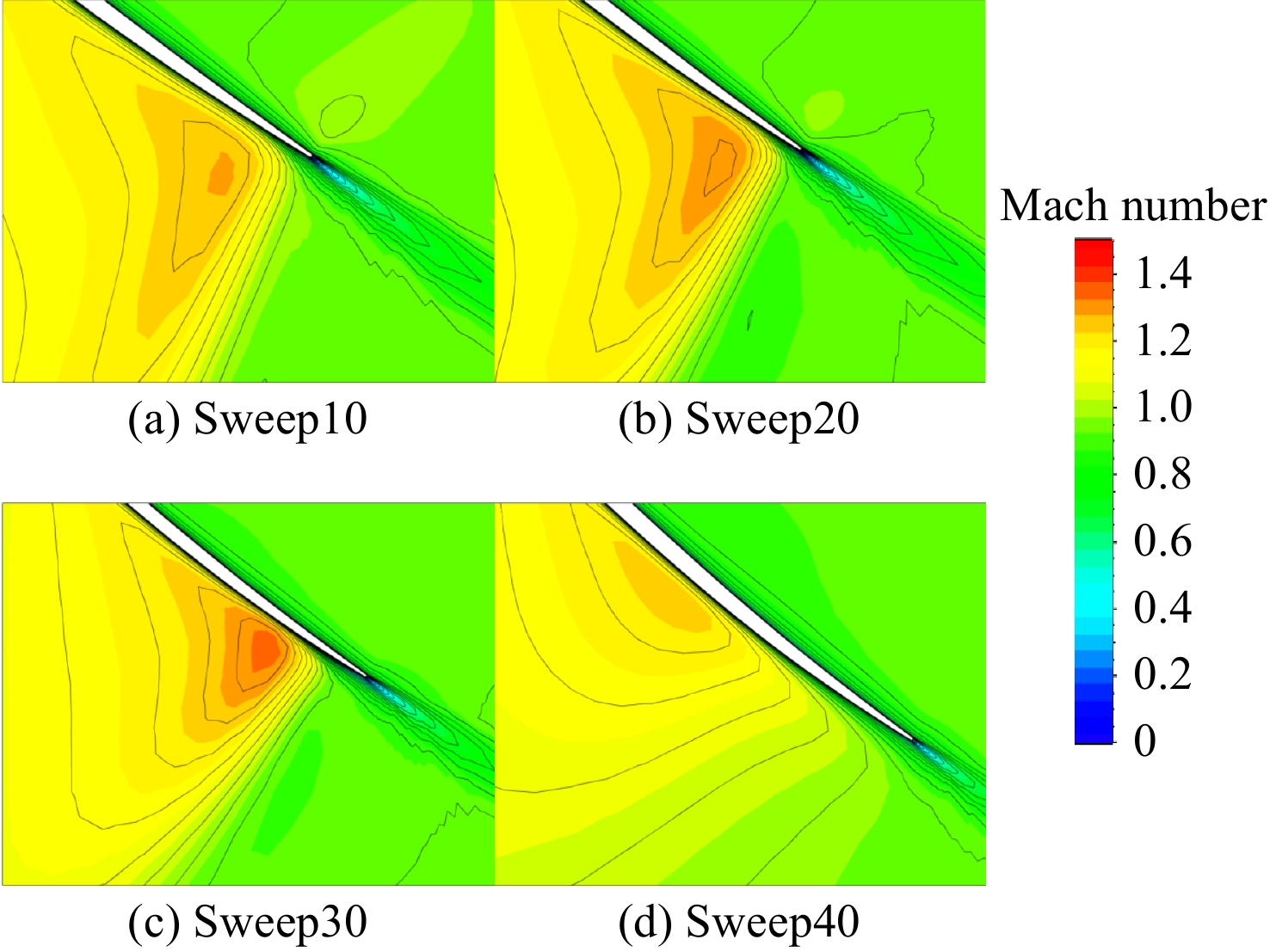
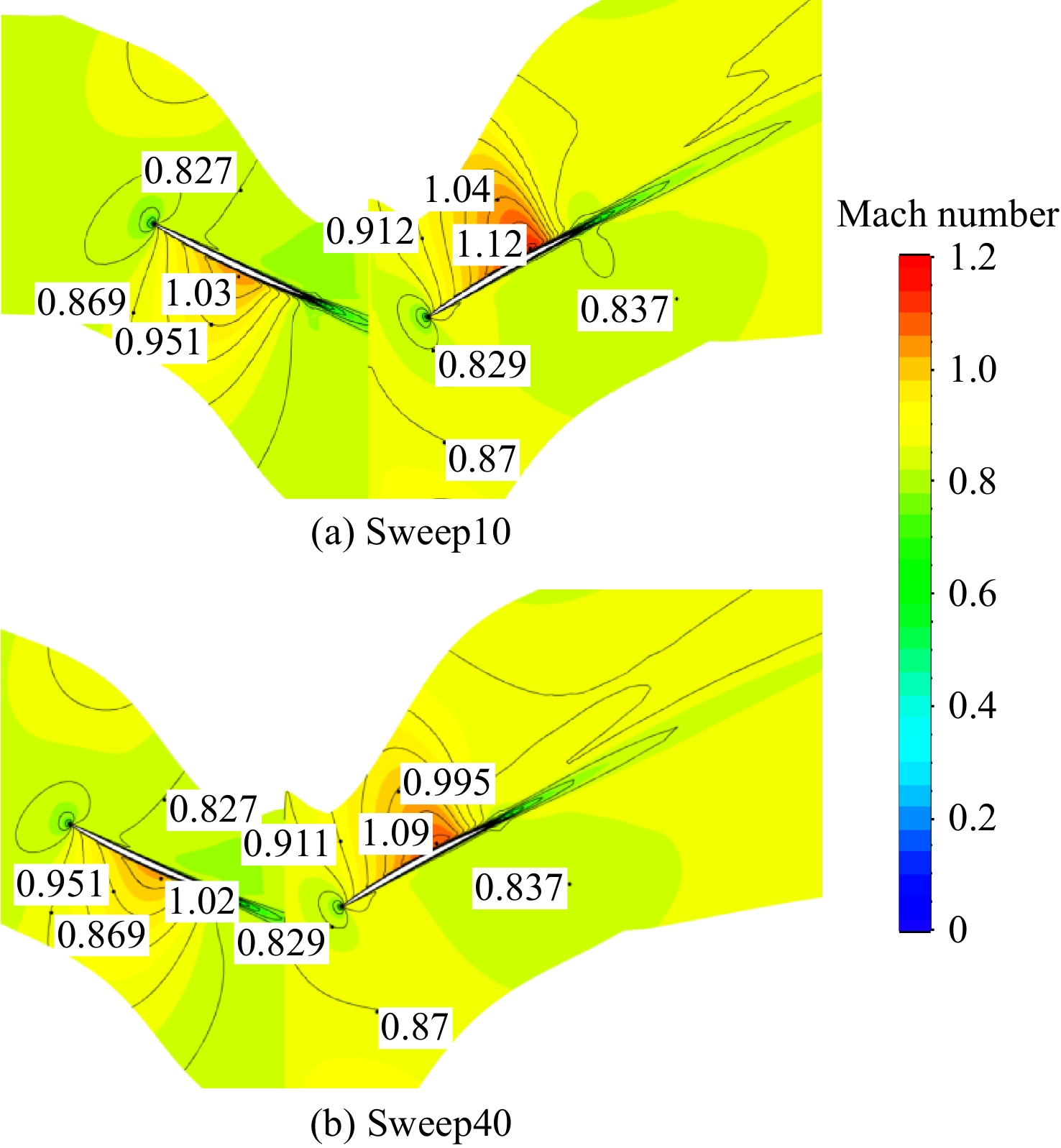
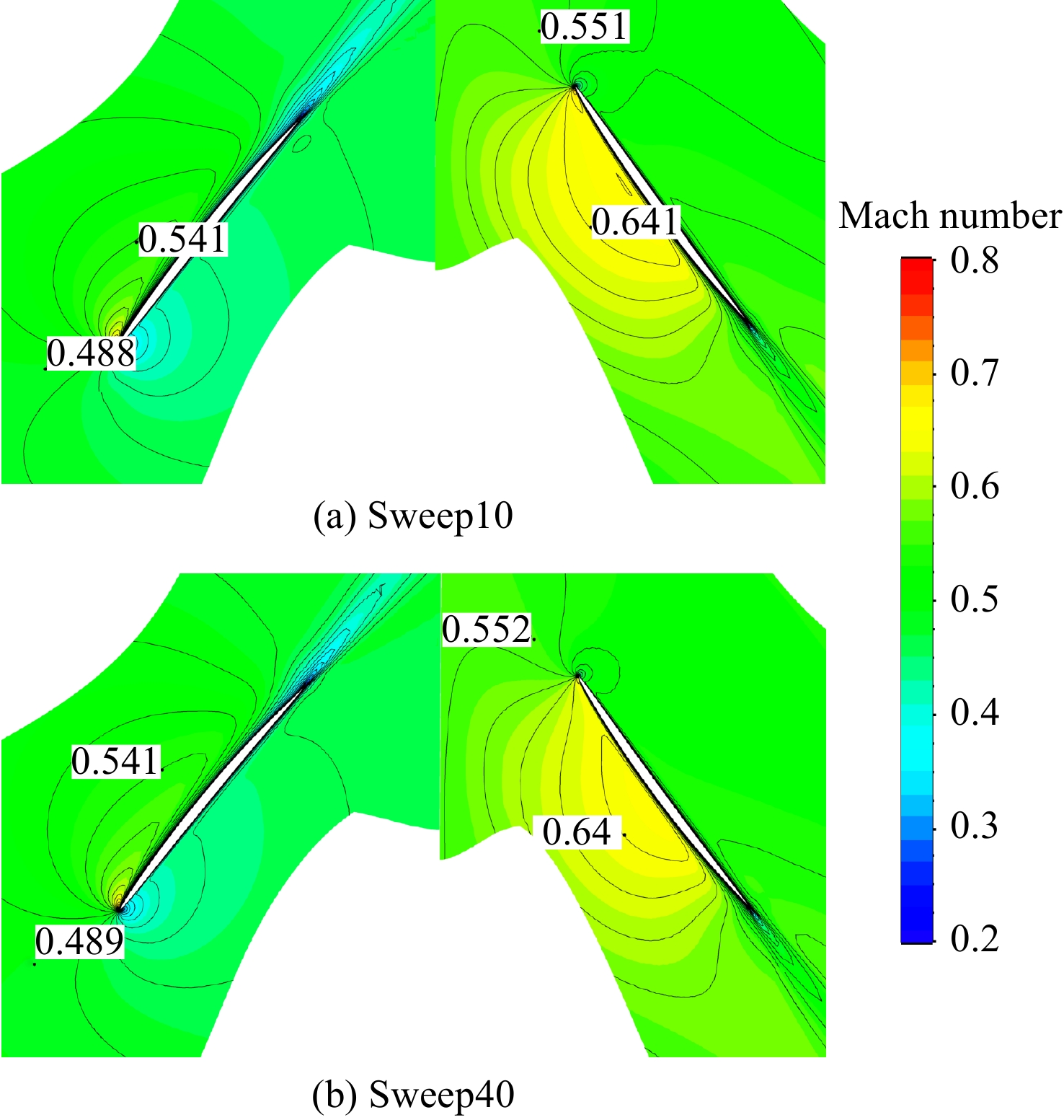
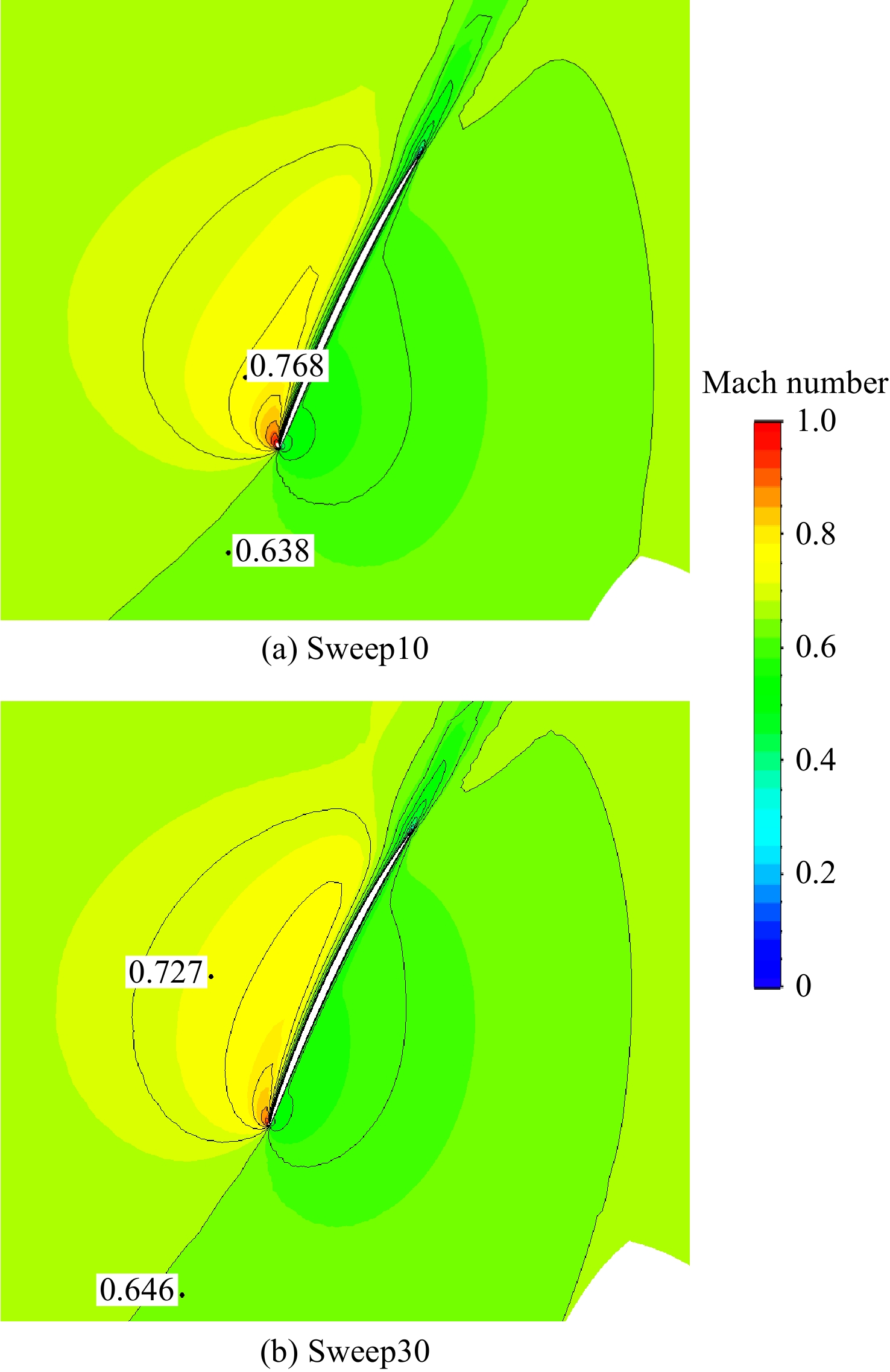
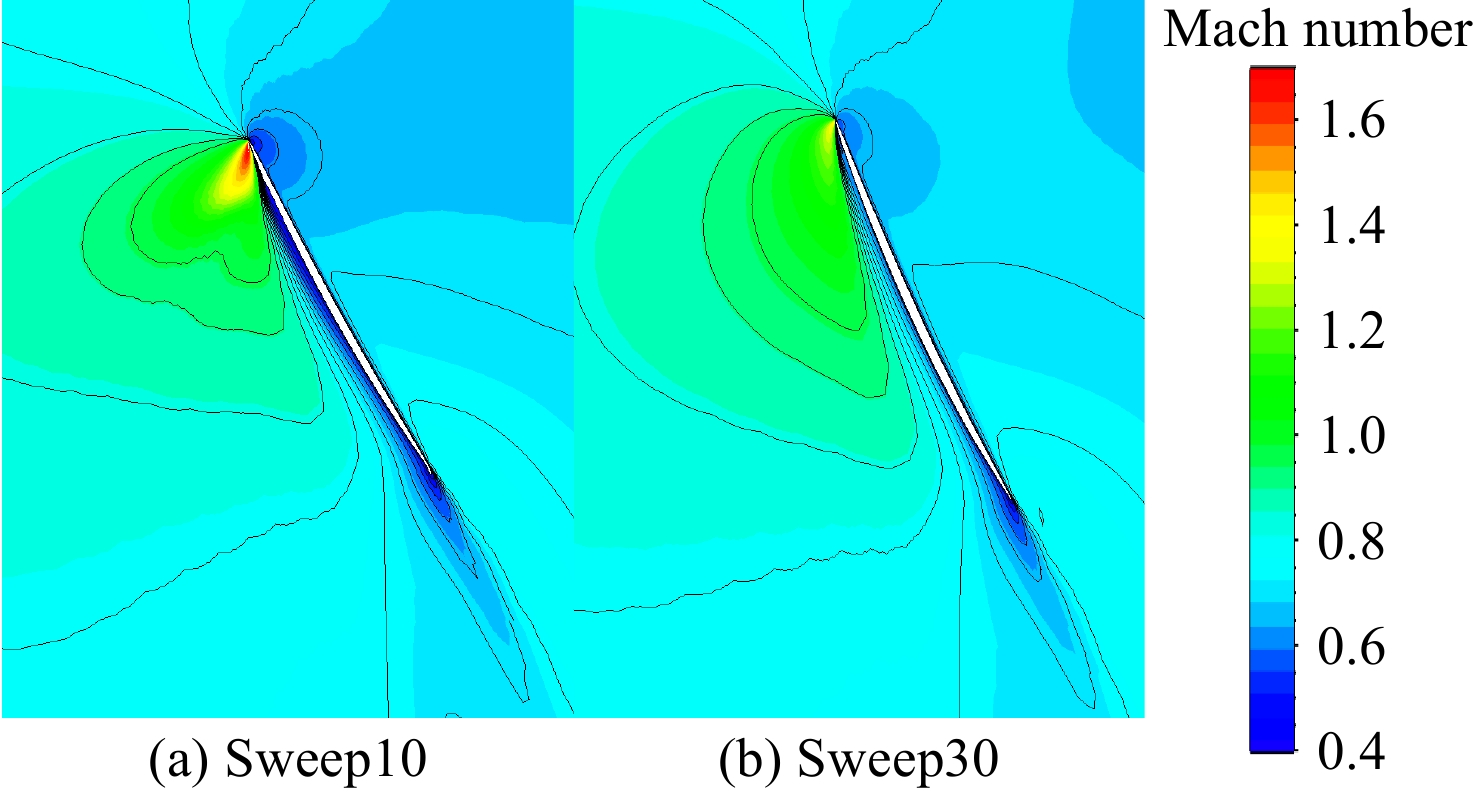
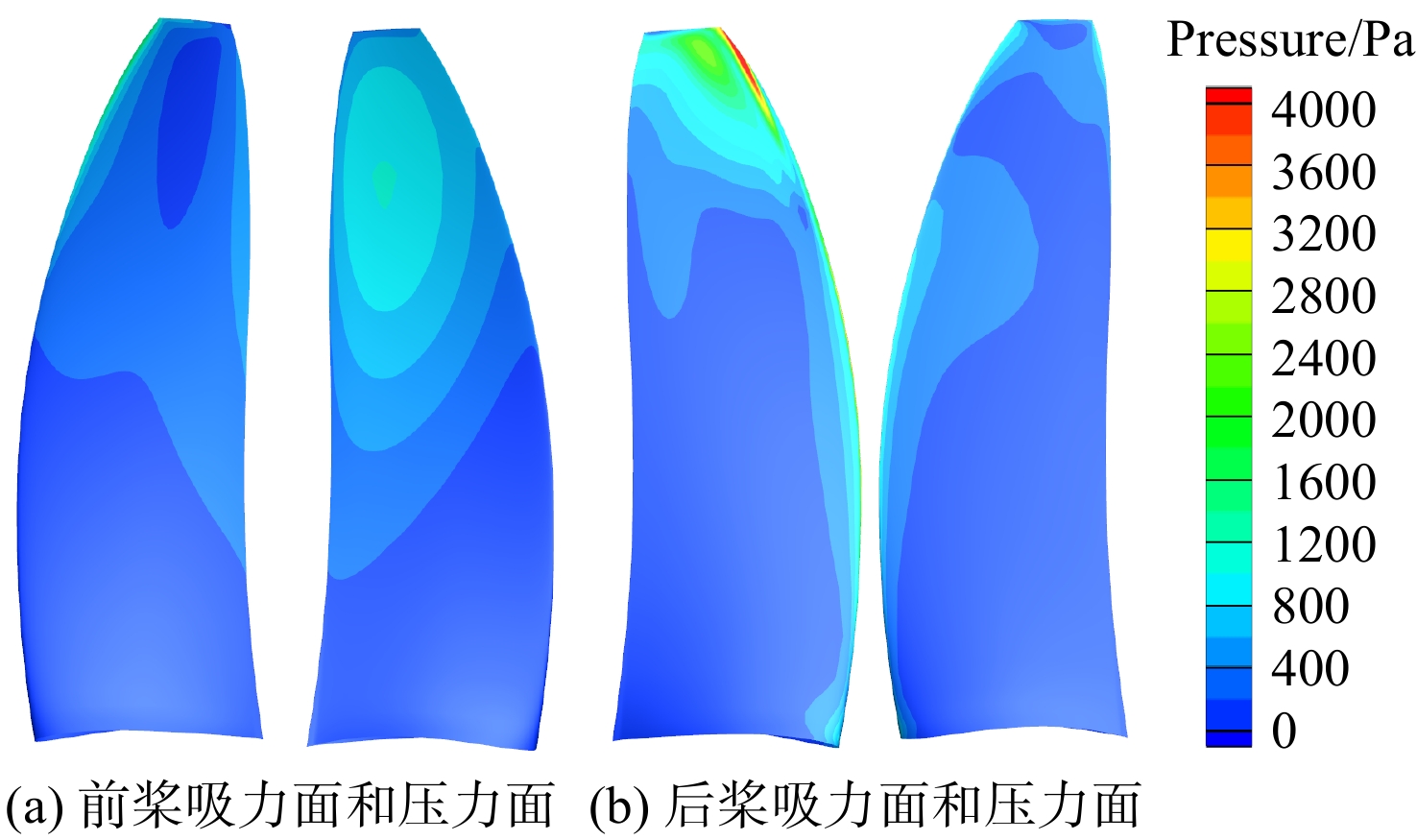
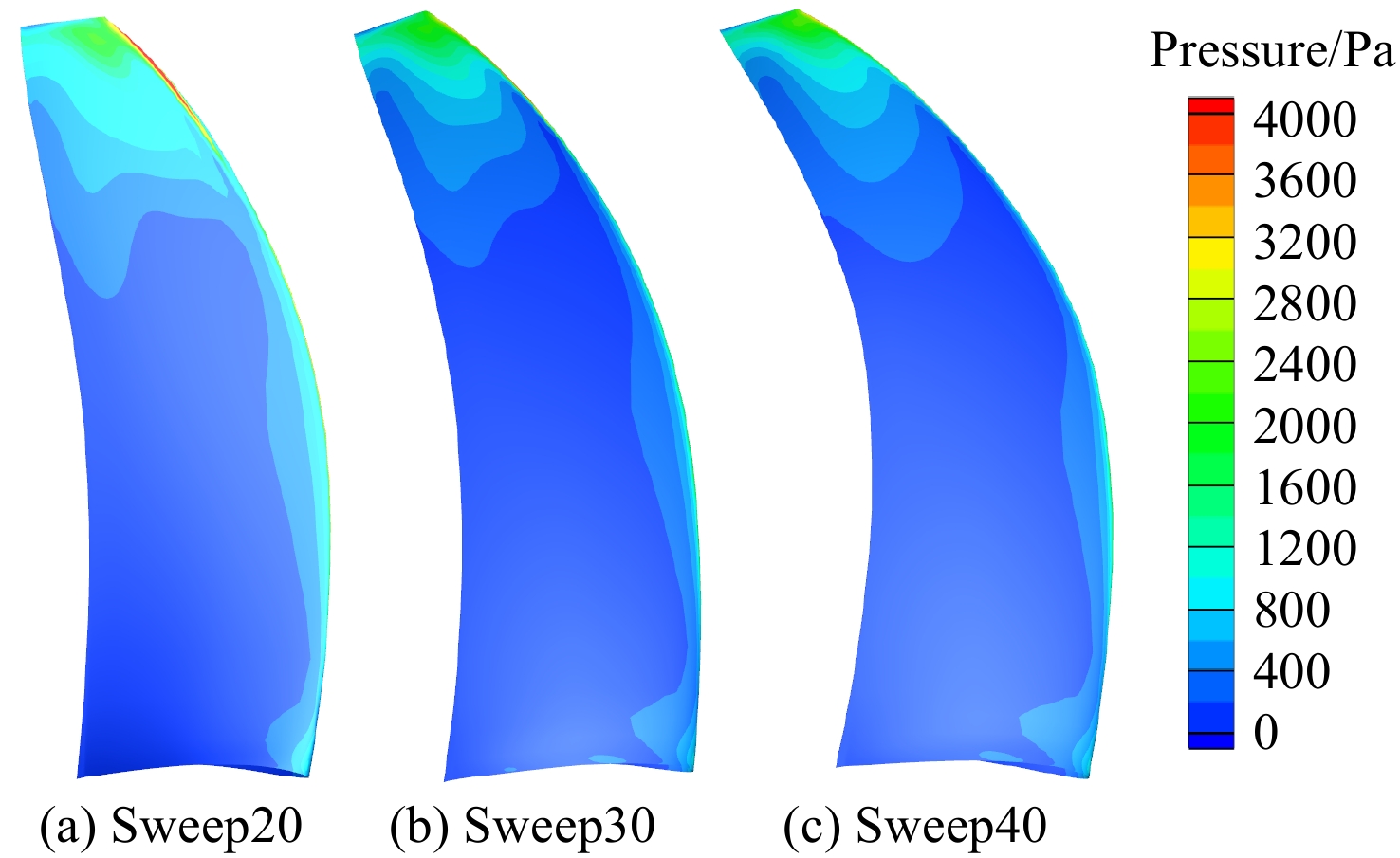
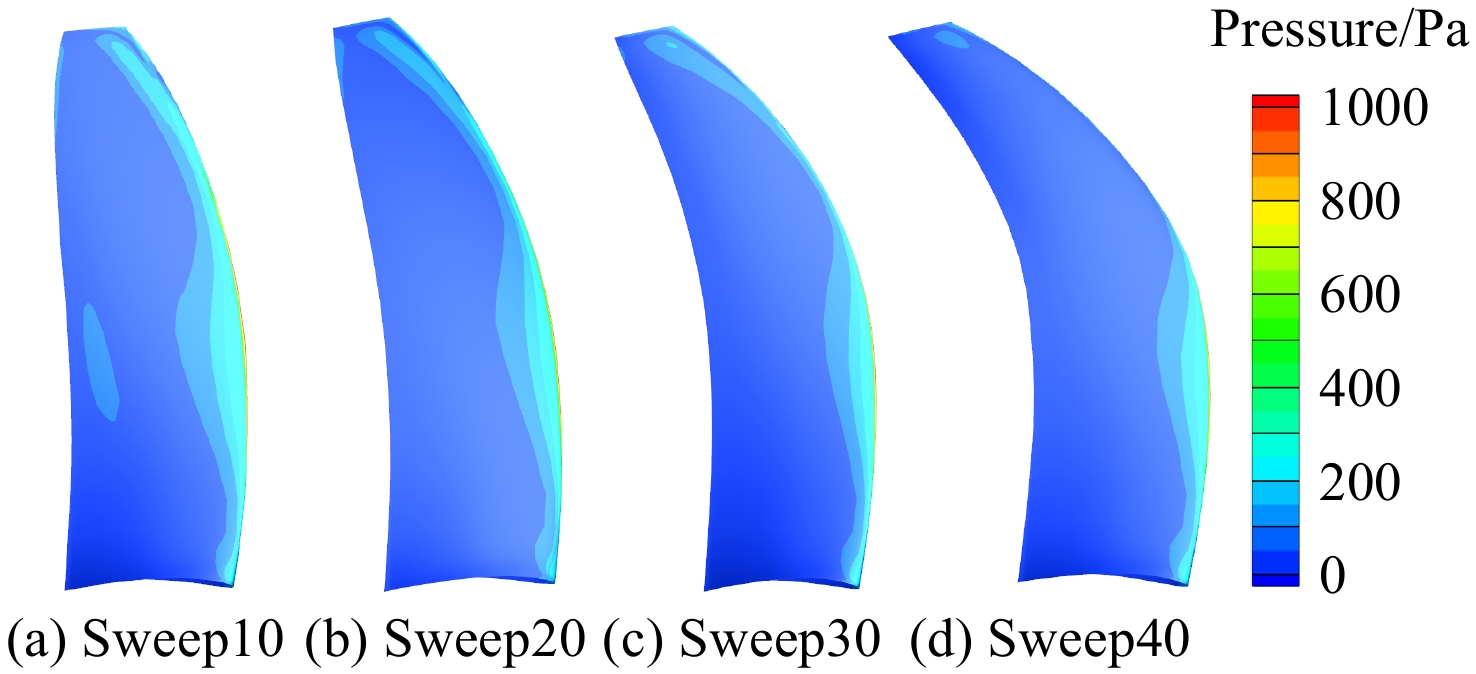
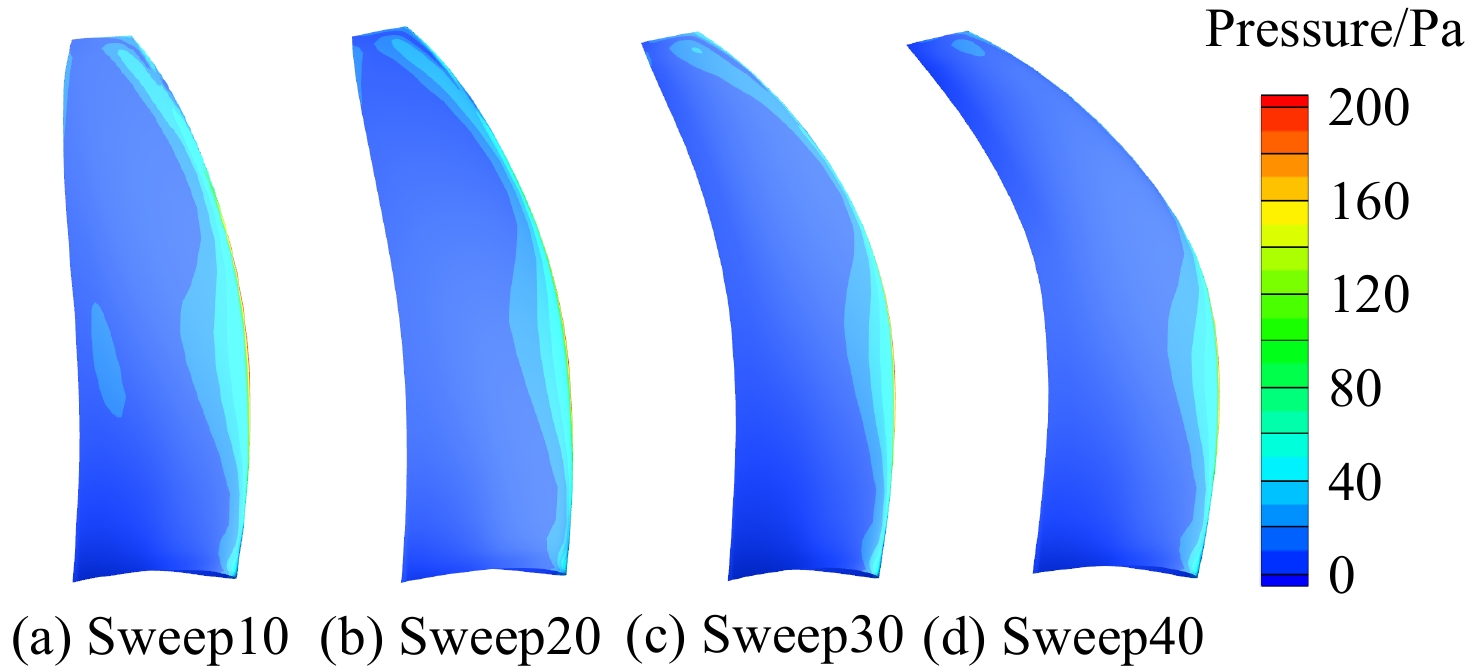
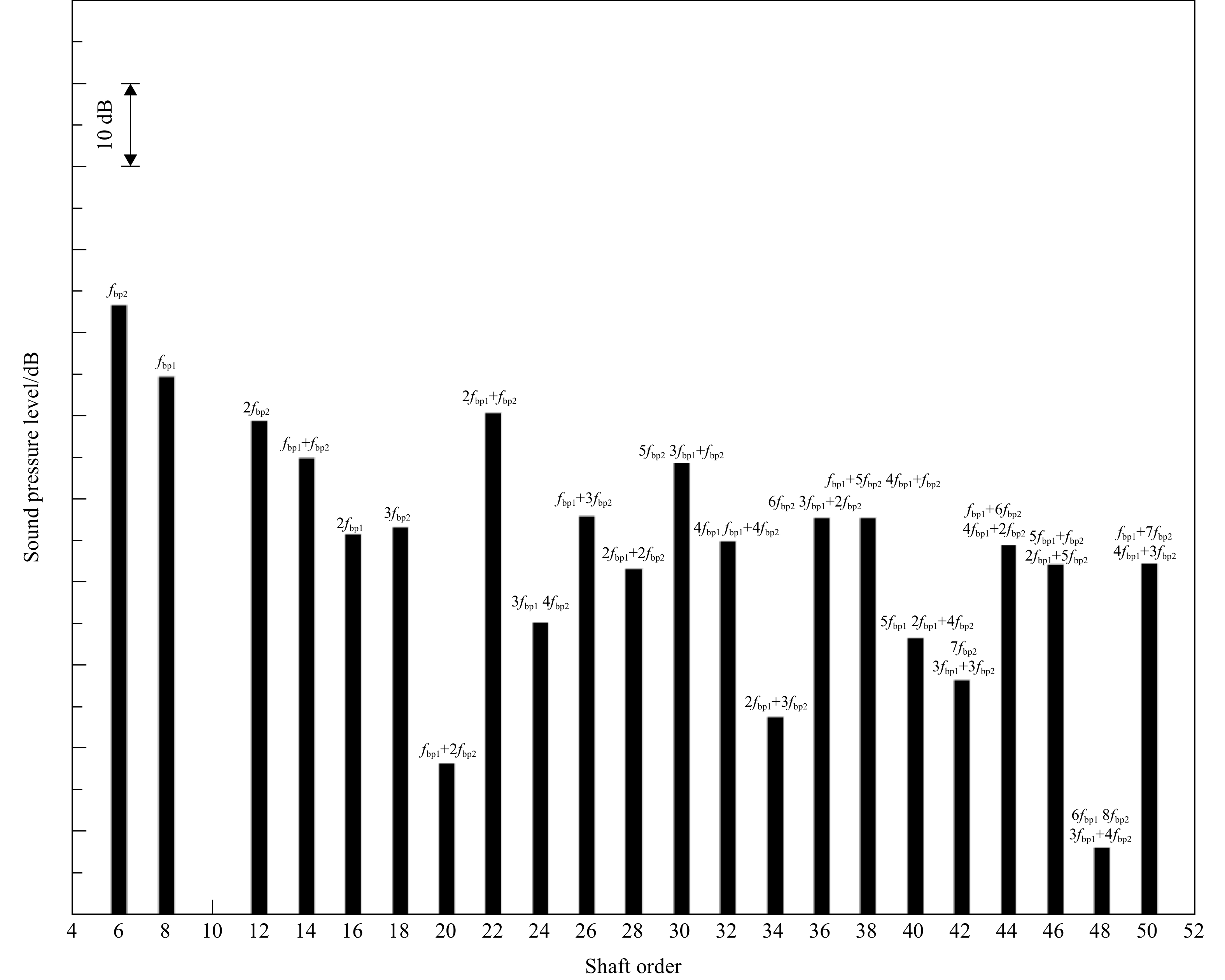
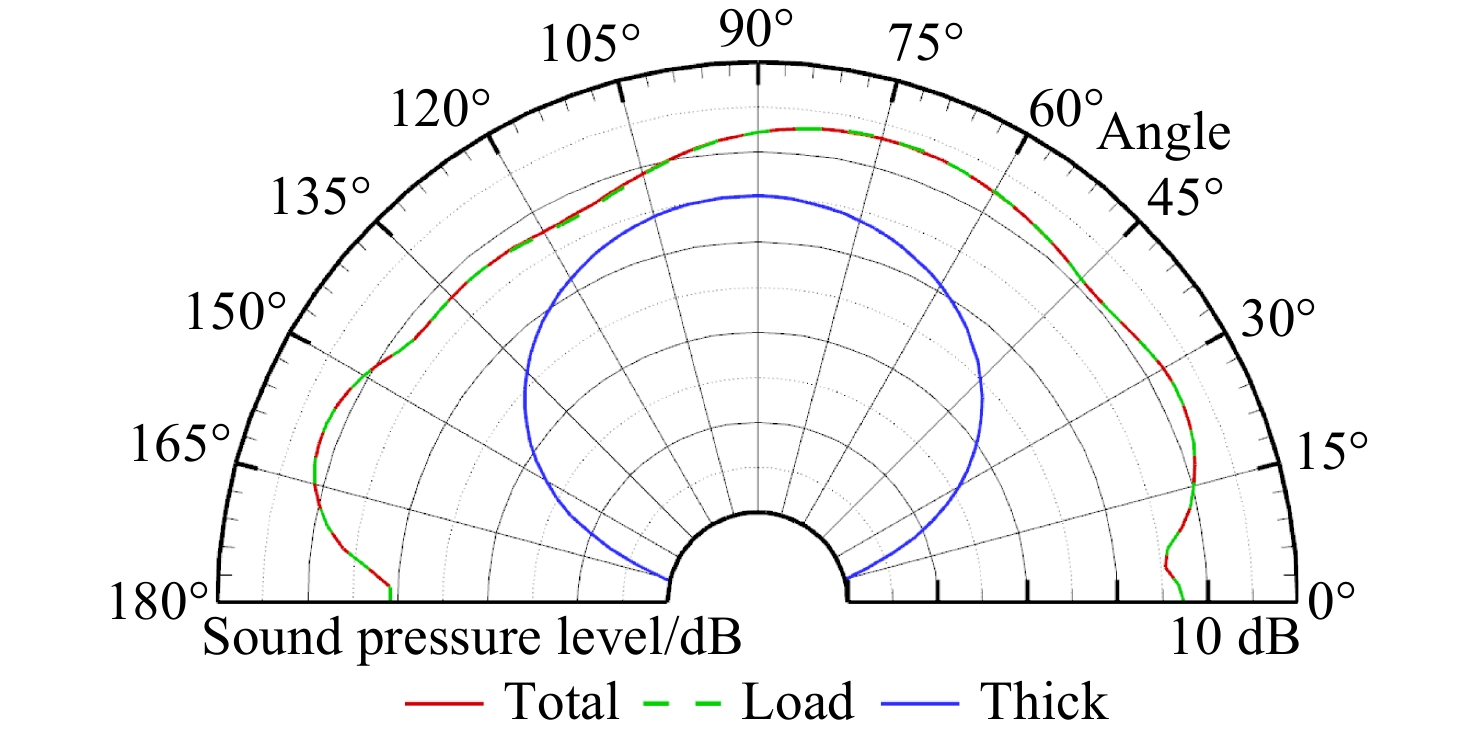
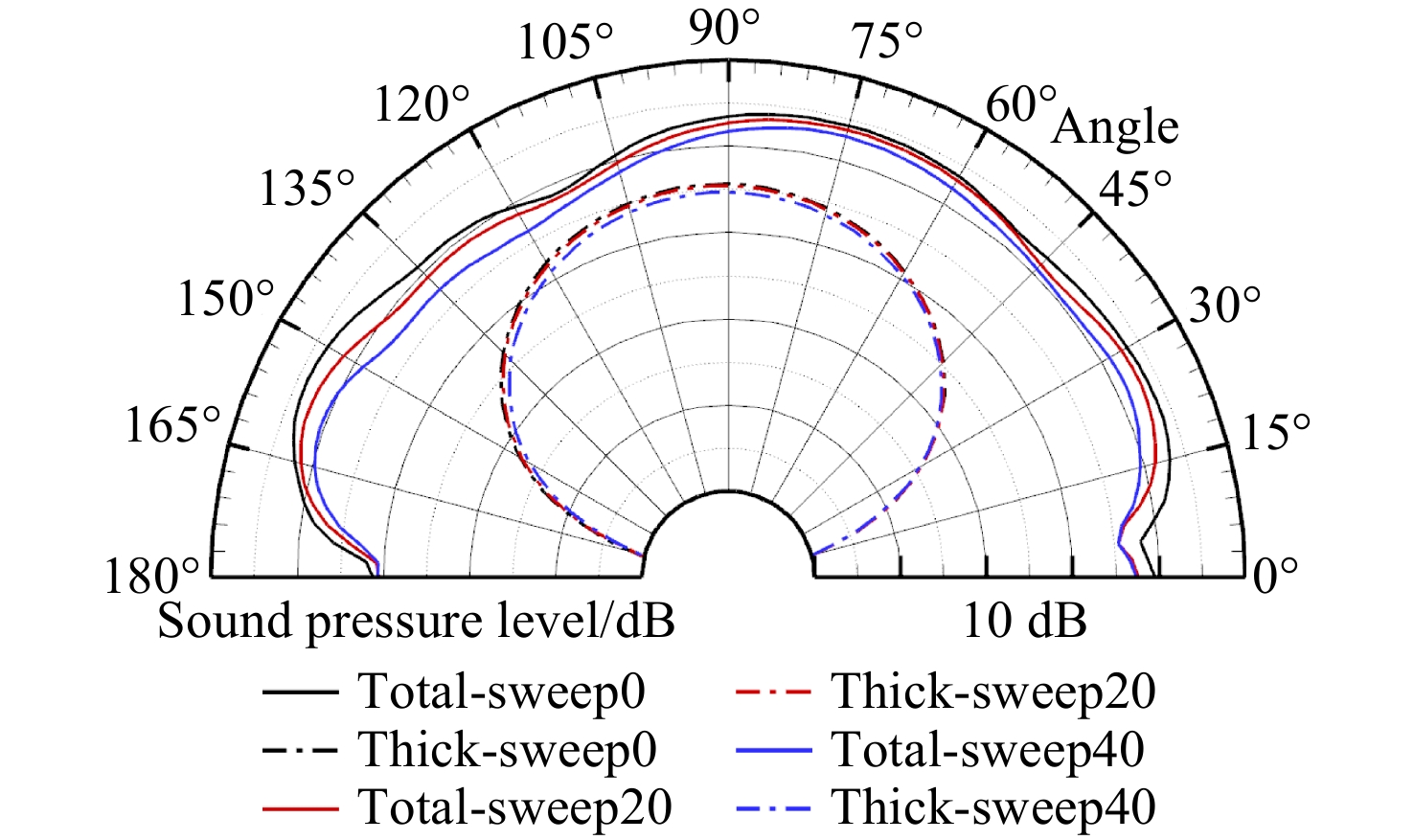
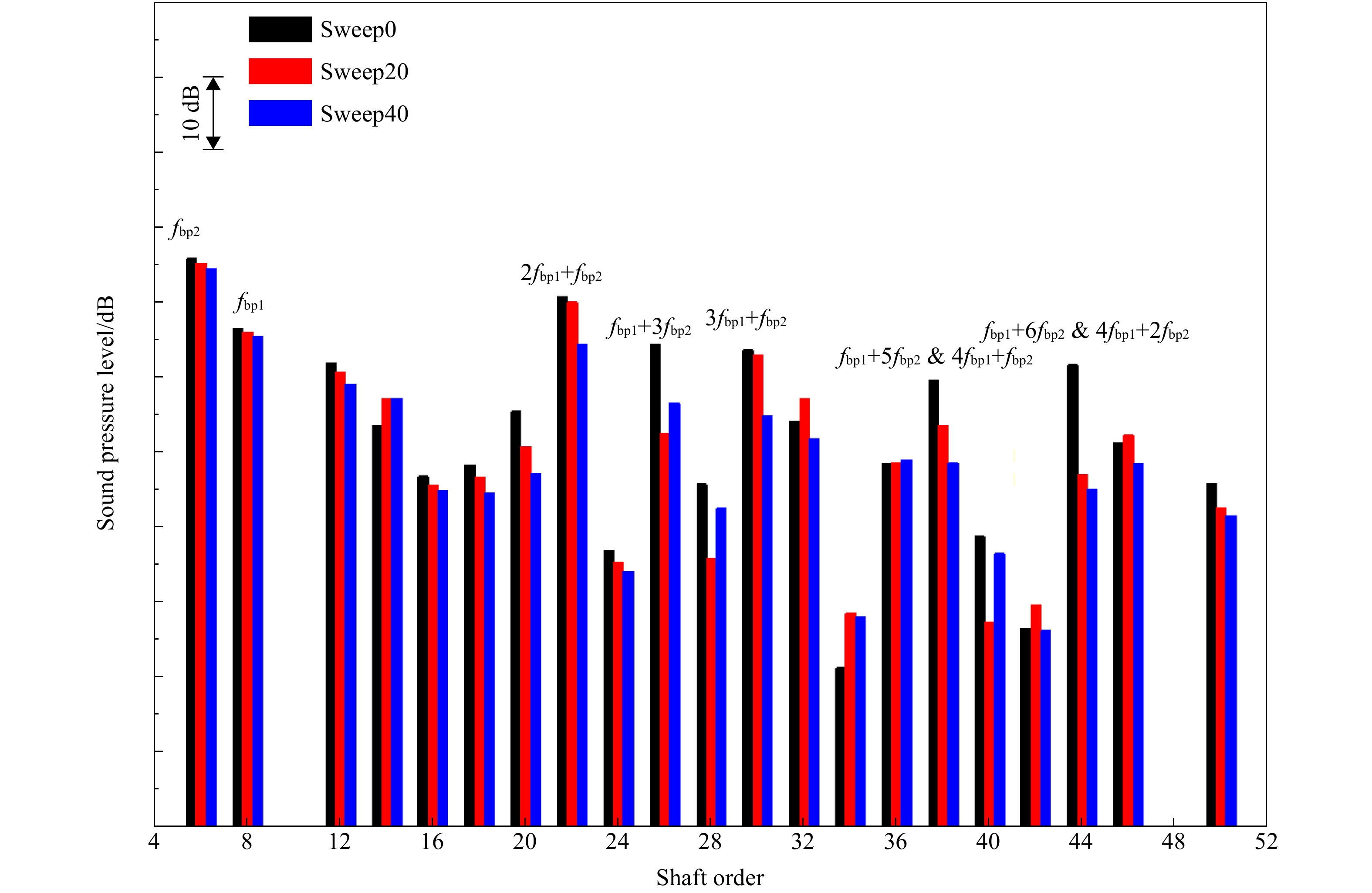
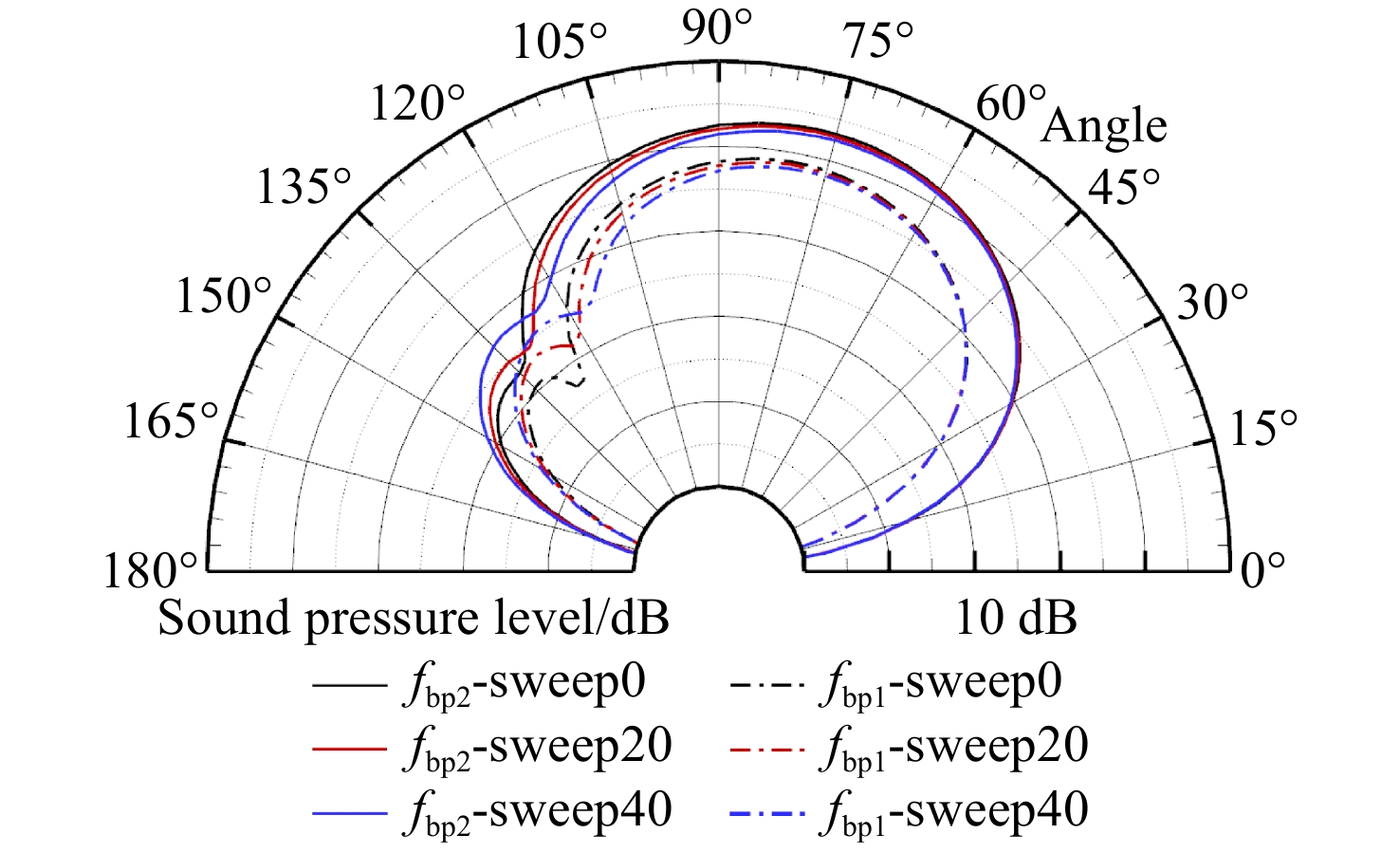
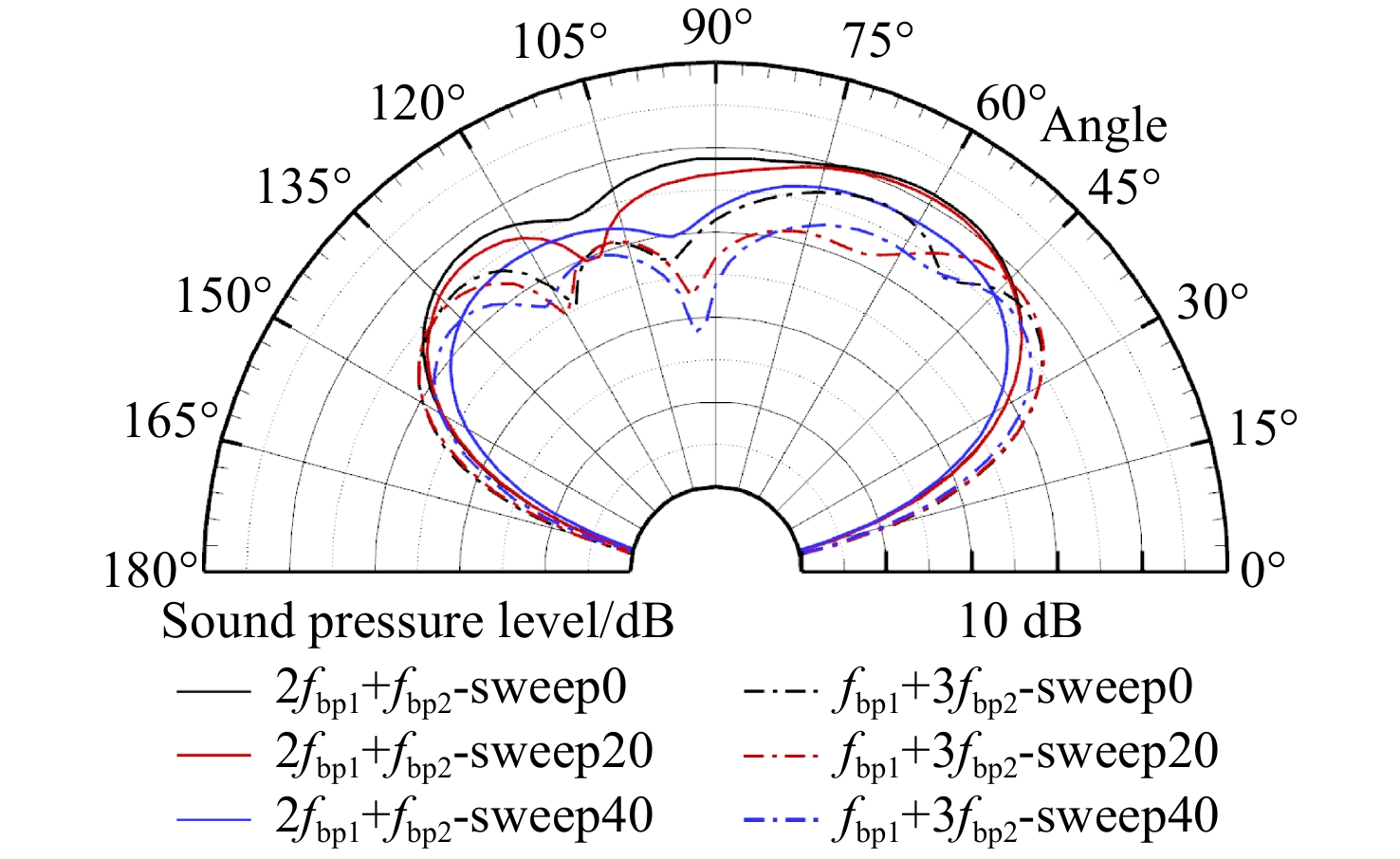
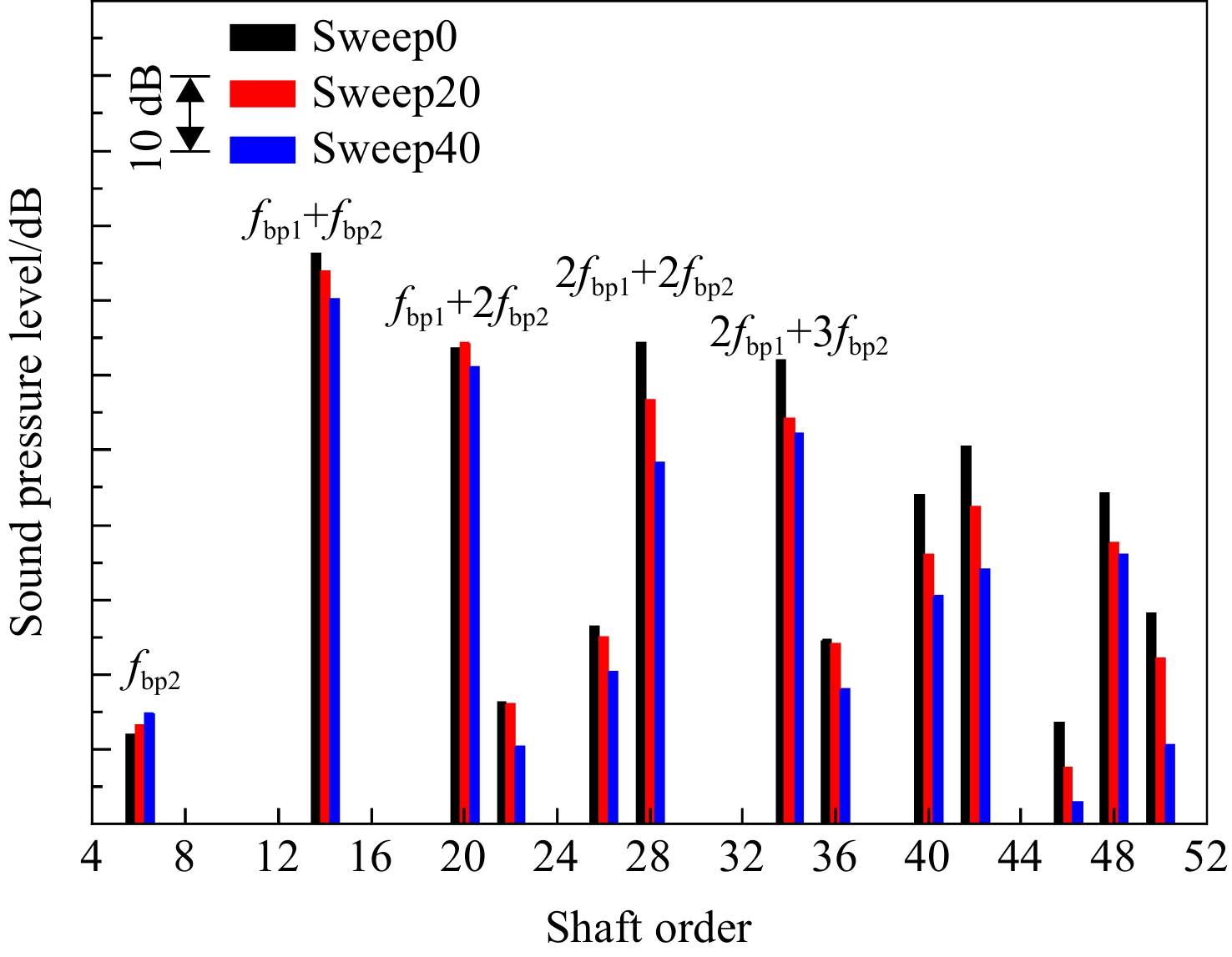
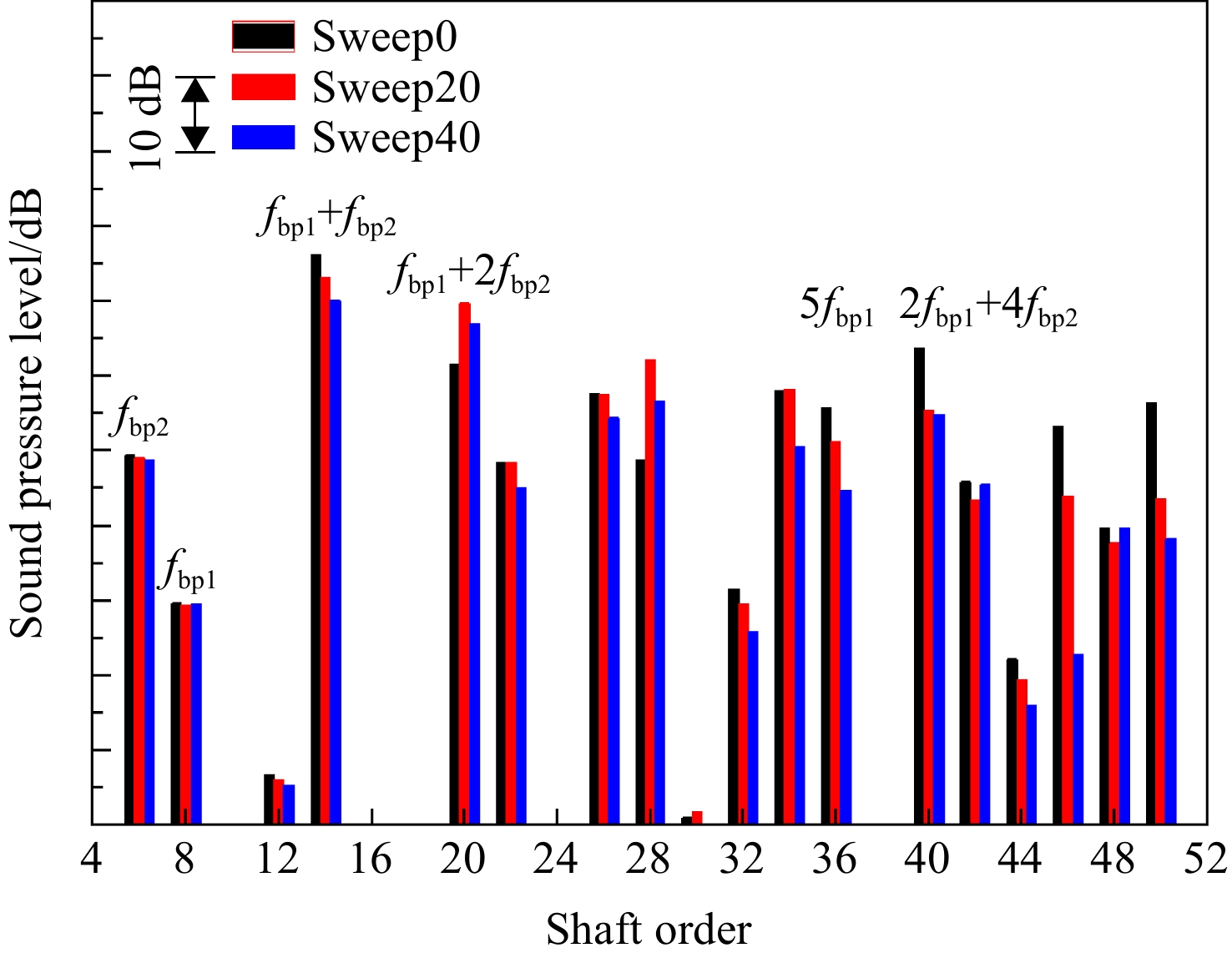
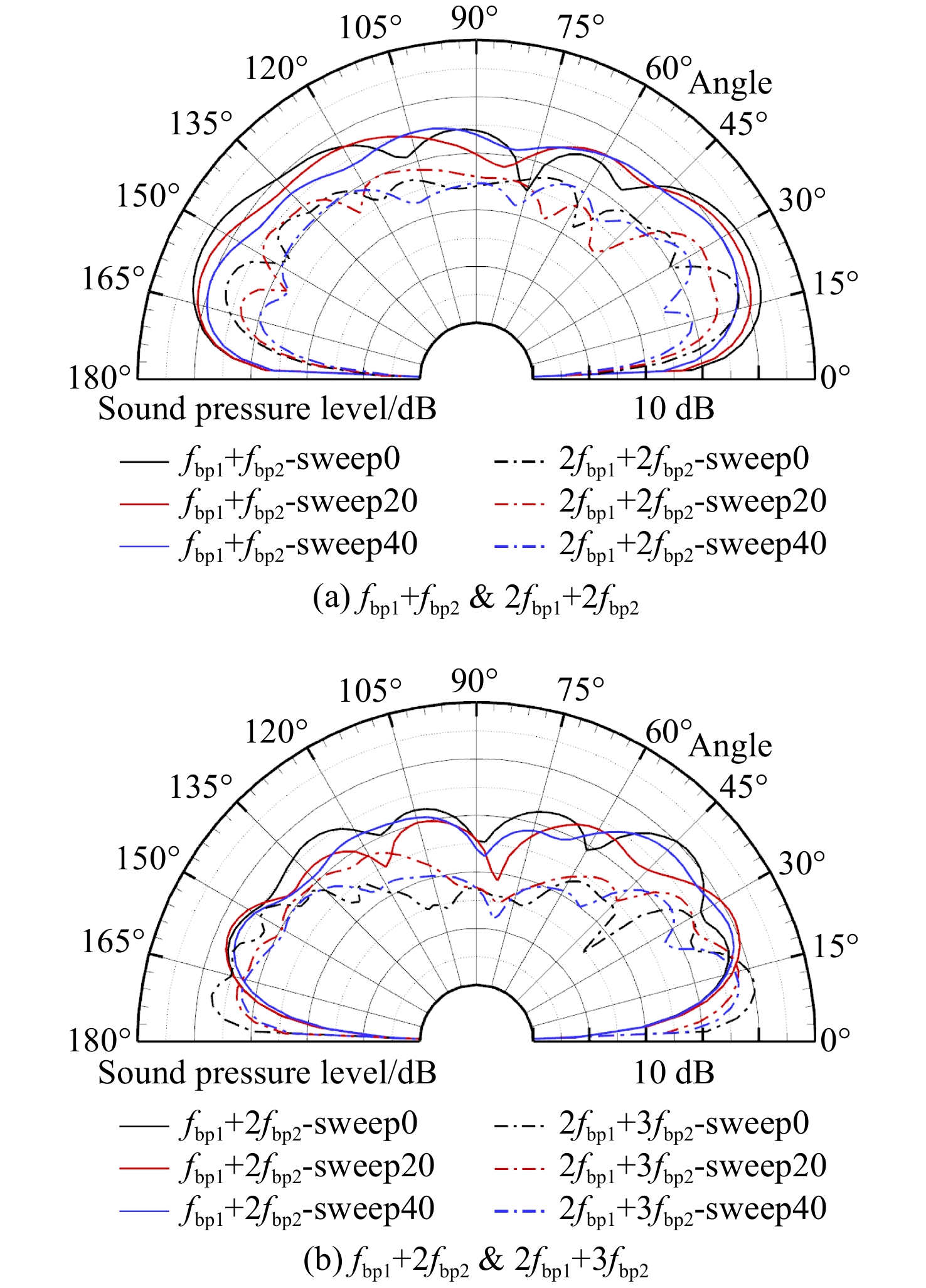
The propfan flow-field and acoustic features were investigated by combining the 3D numerical simulation with Ffowcs Williams-Hawkings equation. And the effects of propfan sweepback angle on aerodynamic performance and noise level were studied. It indicated that, with propfan sweepback angle increasing from 0° to 40°, the thrust efficiency was promoted about 1.5 percentage points at the high speed cruise condition but slightly at the take-off condition. The propfan noise level was directly related to the pressure fluctuation intensity of the rear blade suction surface. With the increase of sweepback angle, the pressure fluctuation intensity decreased, and then the noise level in all angular positions was reduced at the take-off condition. At the 75° angular position with the maximum sound pressure level, the sound pressure level decrease by more than 3 dB with propfan sweepback angle increasing from 0° to 40°.

Inversion test of rotating blade surface pressure
WEI Kai, XU Chen, YAN Qun, XU Jian, WANG Long
2023, 38(4): 949-954. doi: 10.13224/j.cnki.jasp.20220645
Abstract:

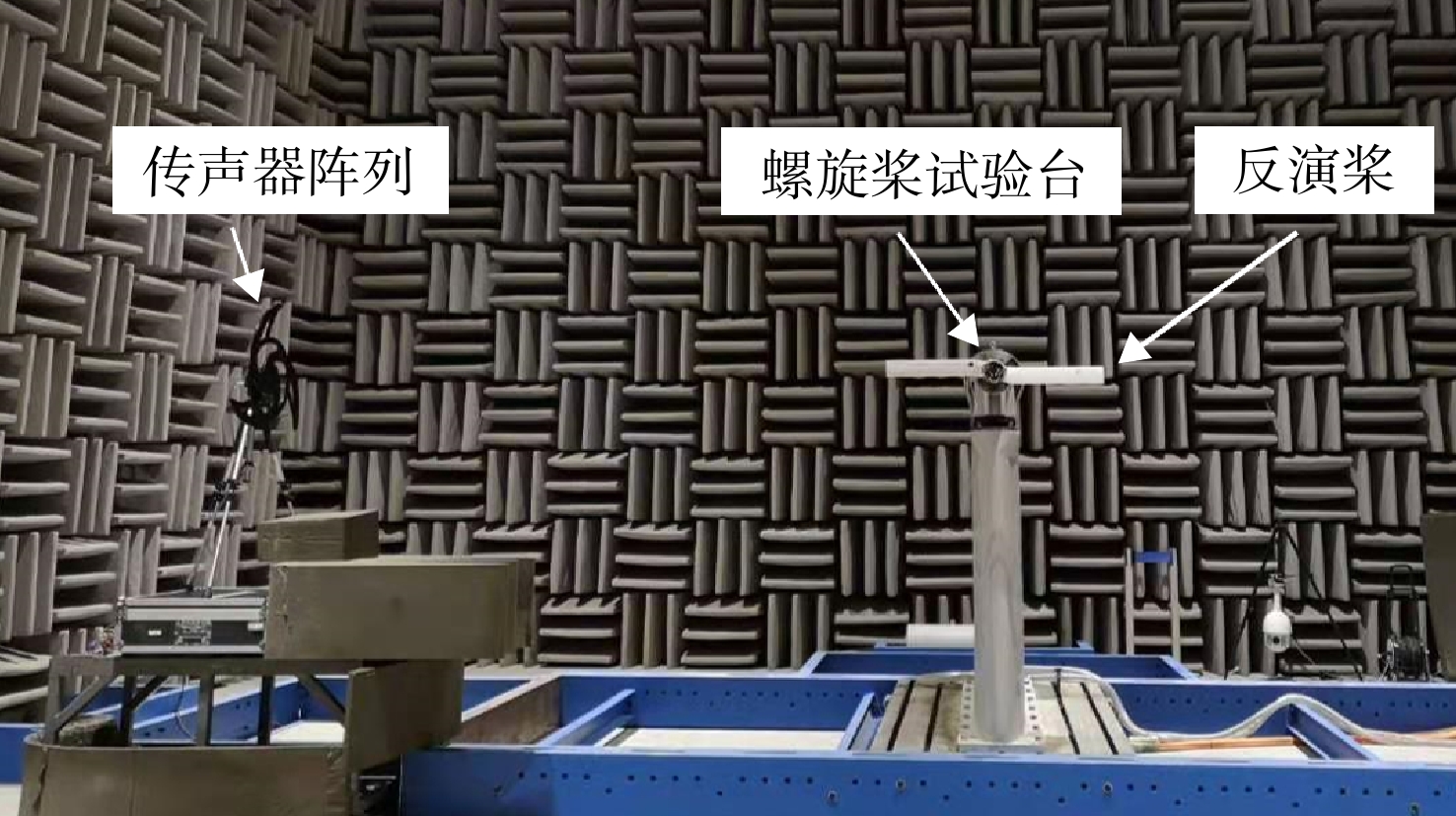
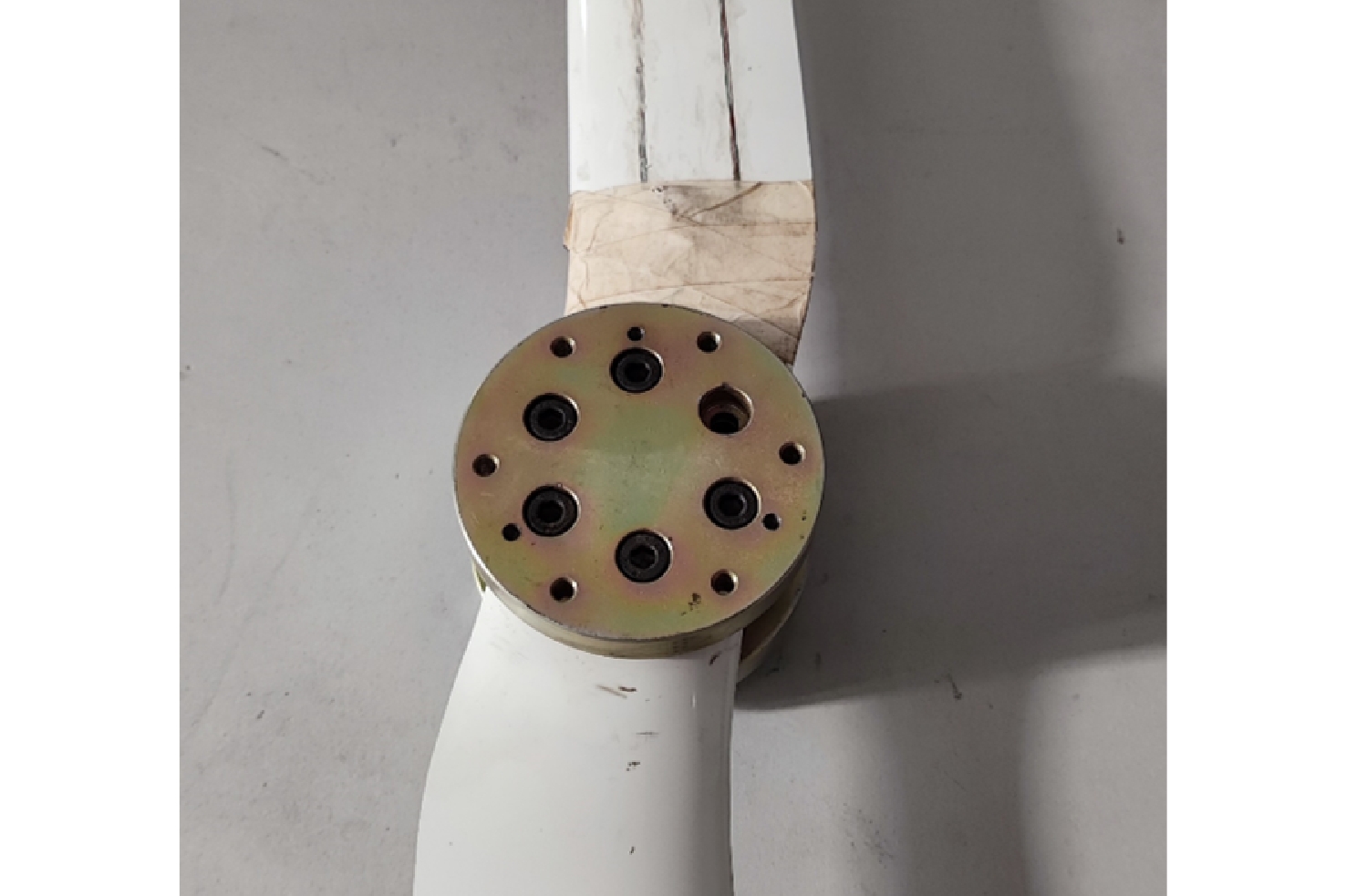
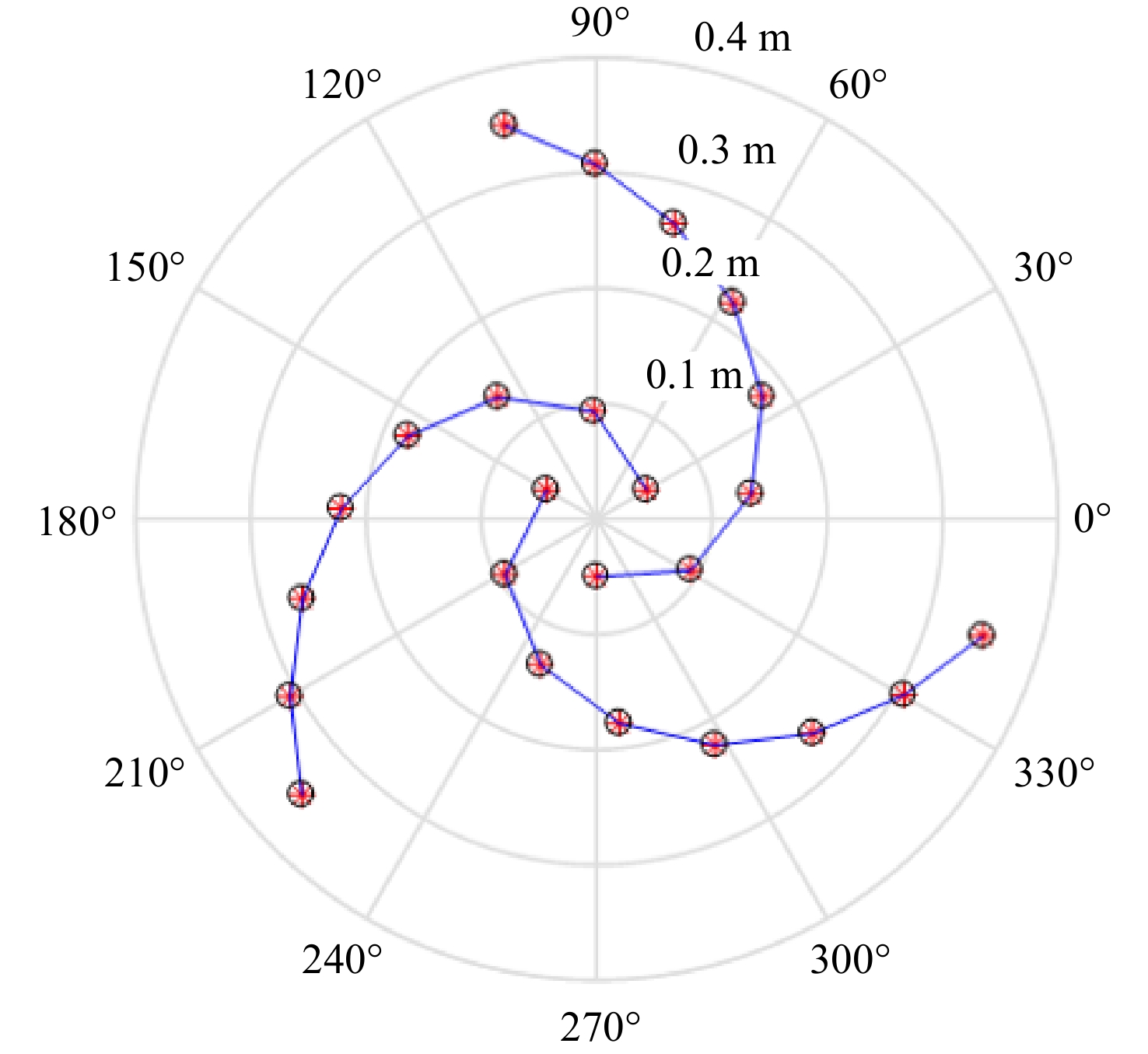
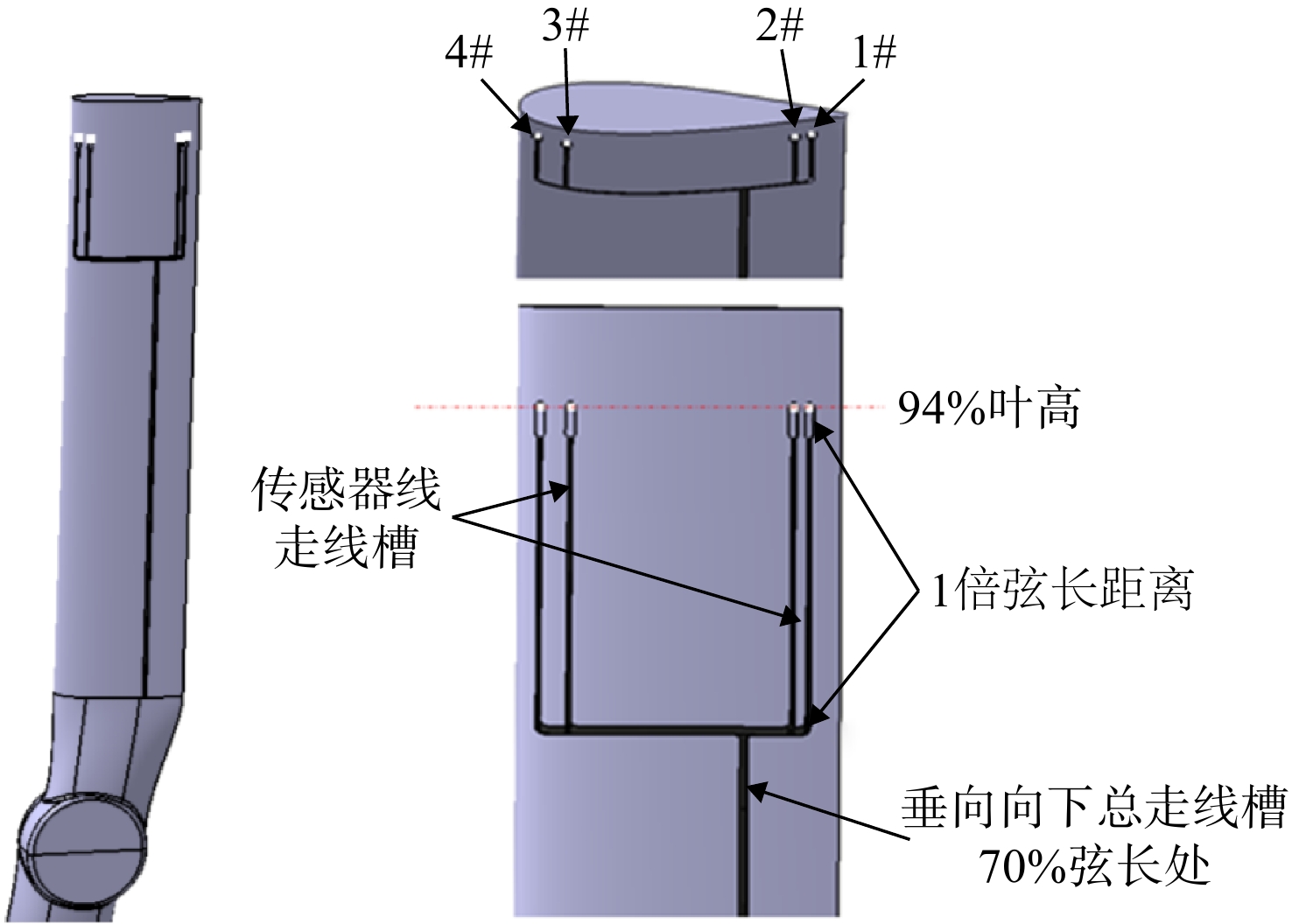
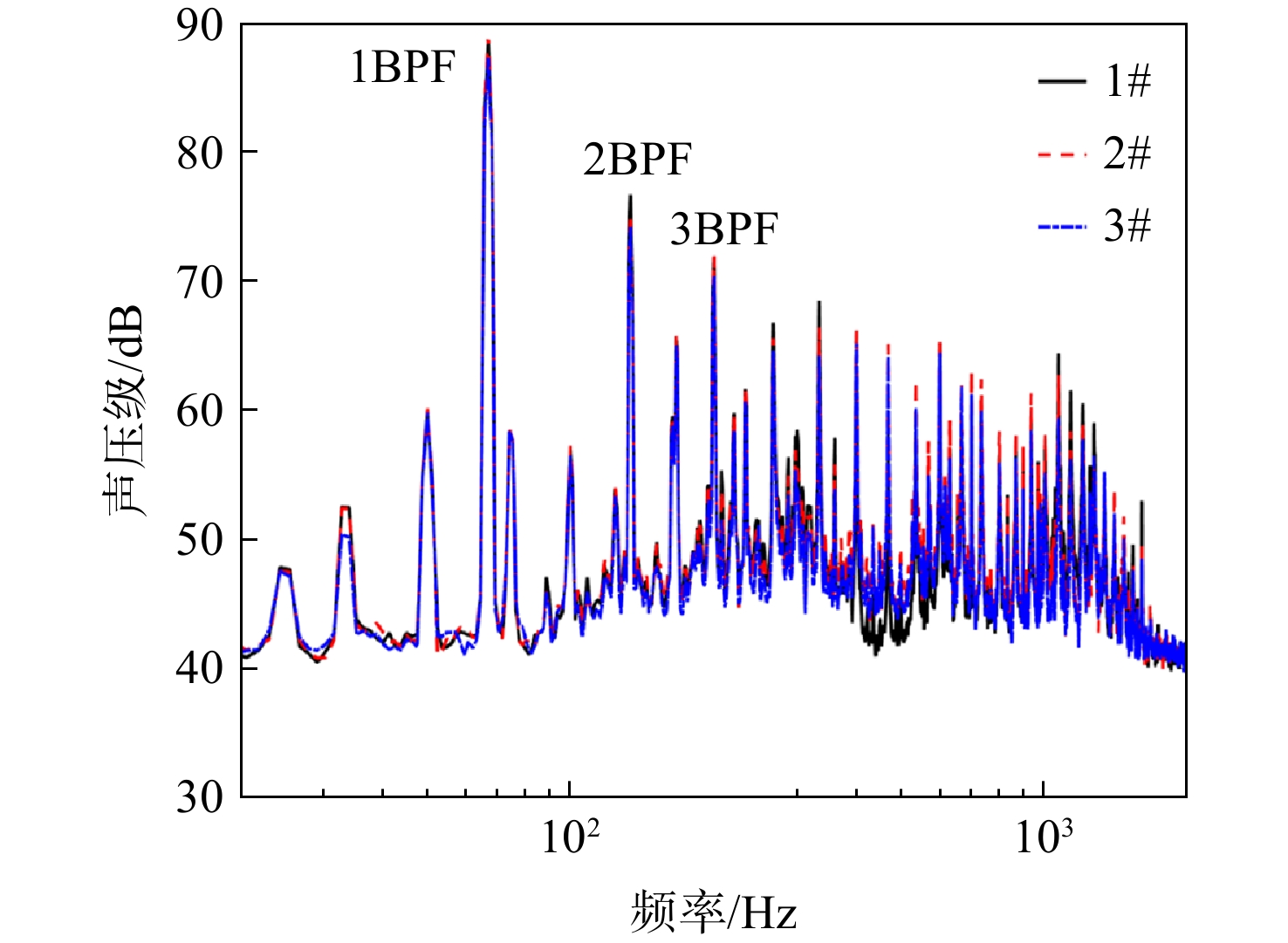
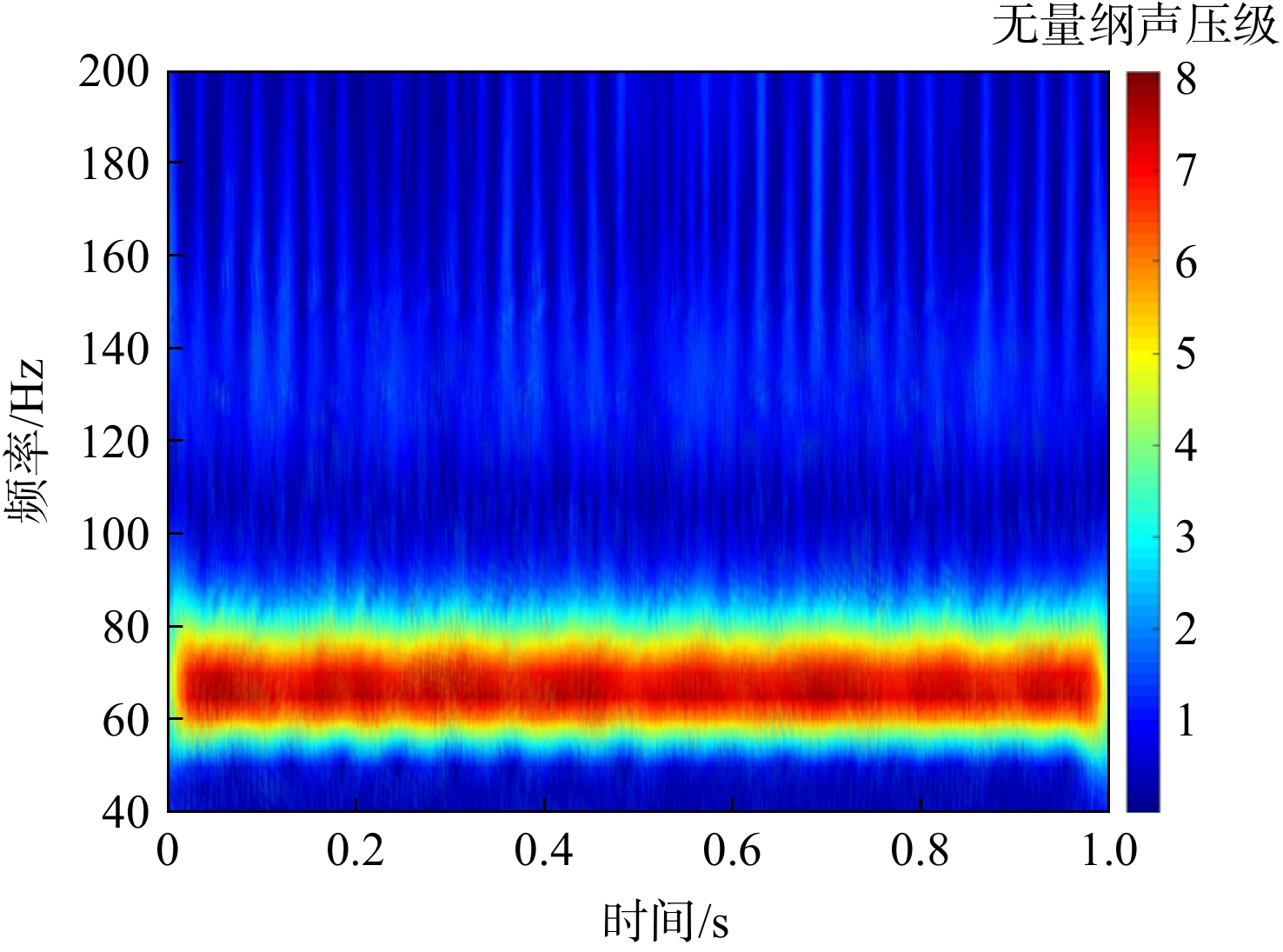
In order to verify the inversion calculation method of the surface pressure of the rotating blade, an inversion test platform for the surface pressure of the rotating blade was built, and the inversion test for the surface pressure of a set of two-blade propellers was carried out. The far-field noise of the propeller was measured by a microphone array, and the static pressure on the blade surface was measured by a Kulite pressure sensor and an offline collector, and then compared with the calculated results. The results showed that under the working conditions studied, the calculated results were in good agreement with the experimental results, and the trend was basically the same; the error between the experimental results and the calculated results of two measuring points was within 1%, and the accuracy was very high; the contrast difference between the points was large, which was mainly caused by the installation process error of the pressure sensor.

Analysis of blade vibration response based on contact stiffness distribution characteristics
QIAN Jiaqi, DONG Shaojing, GAO Pengxin, SHEN Xiuli
2023, 38(4): 955-963. doi: 10.13224/j.cnki.jasp.20210598
Abstract:

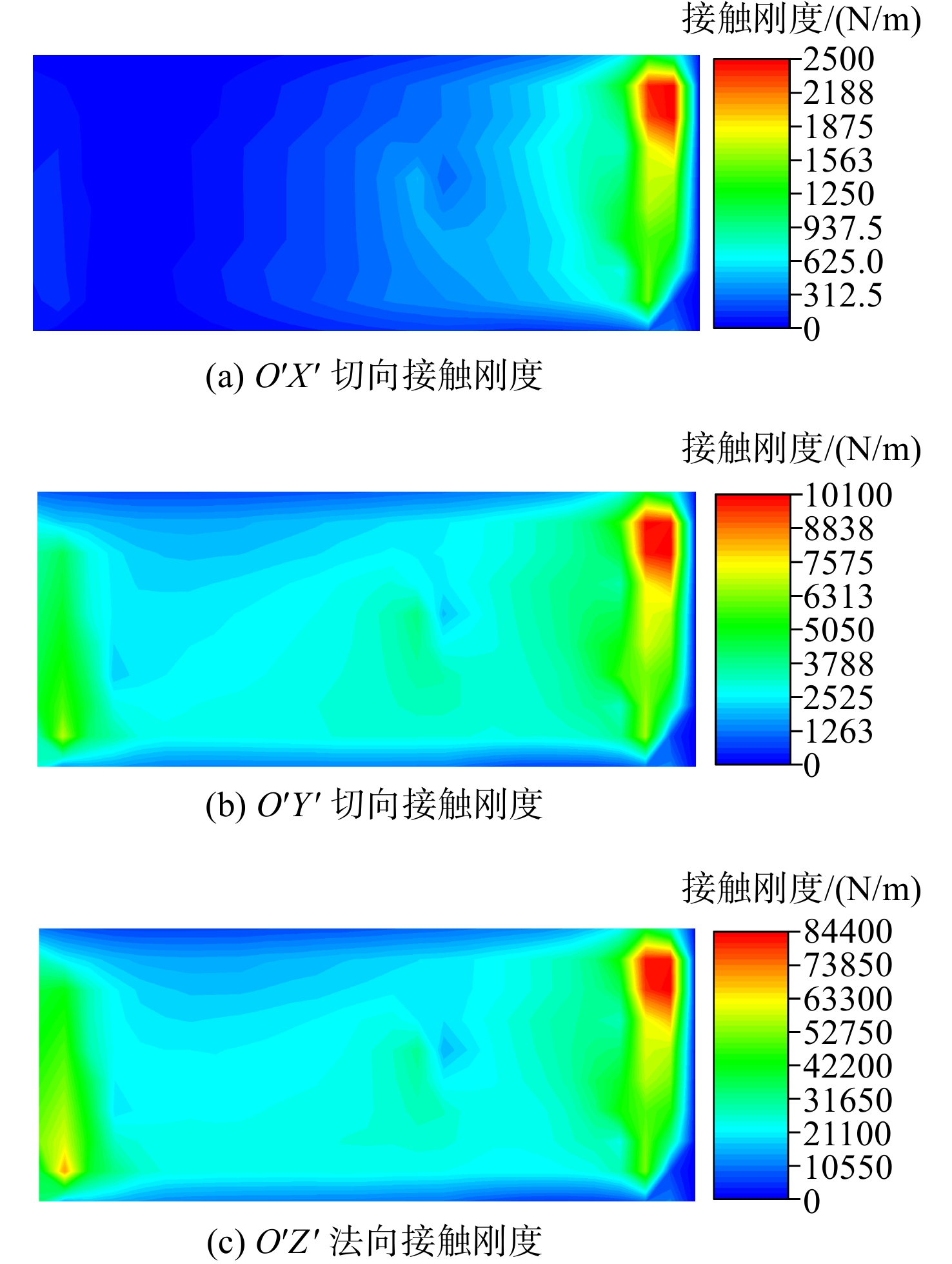
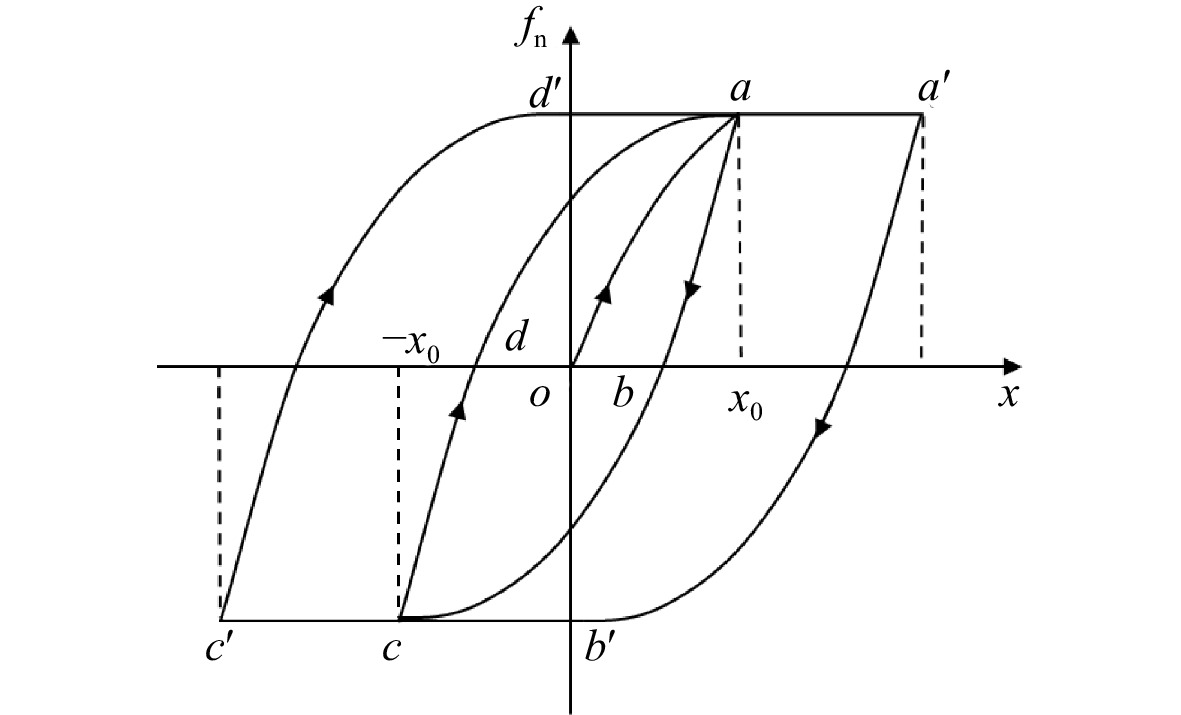
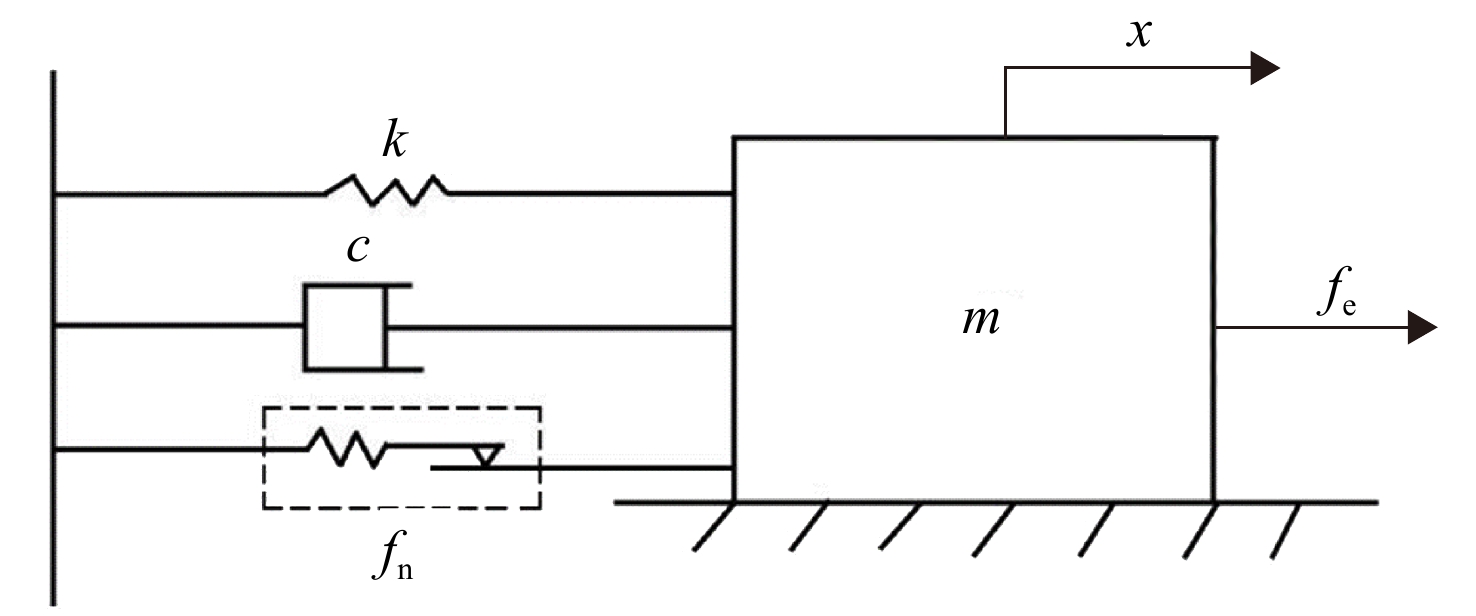
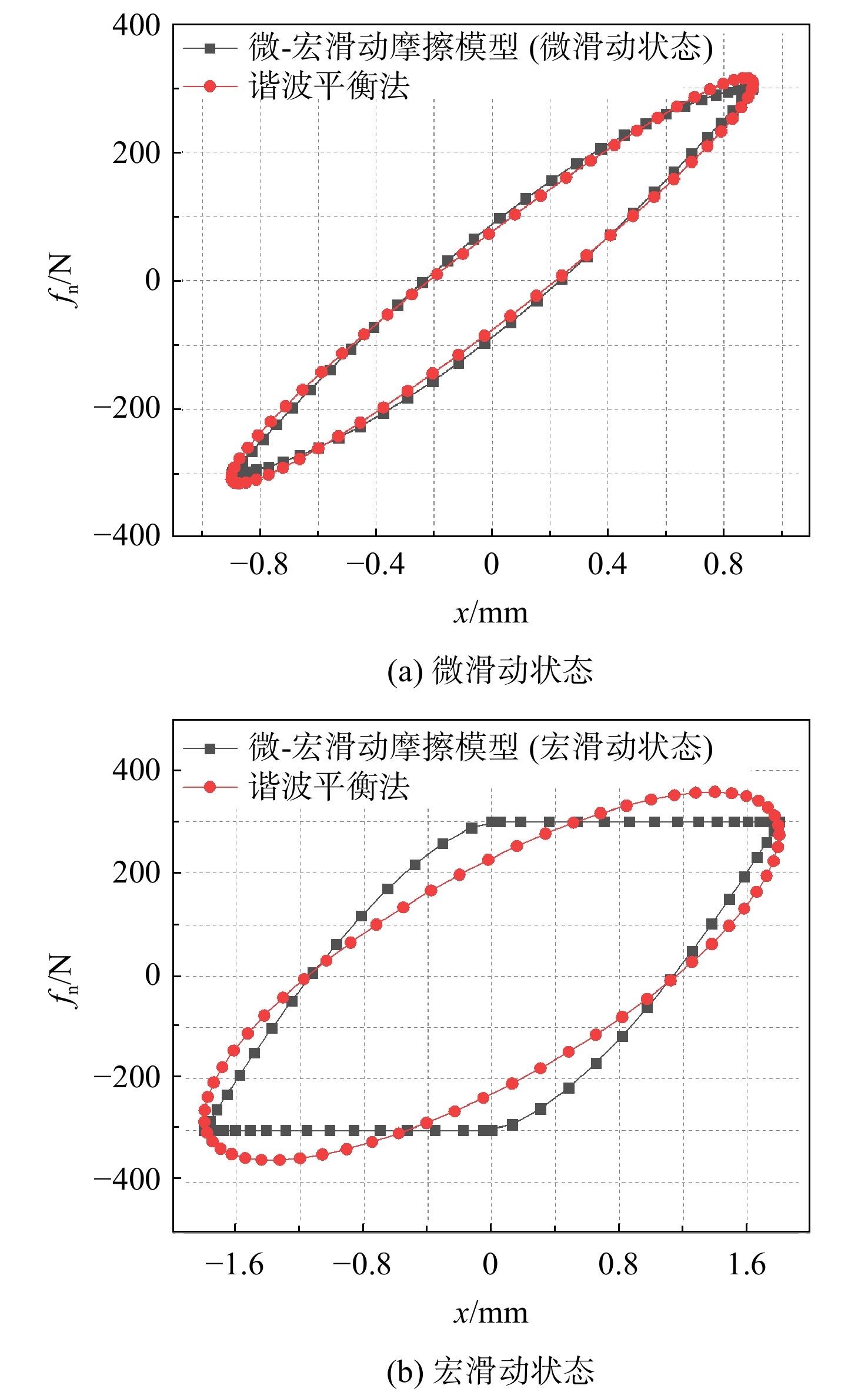
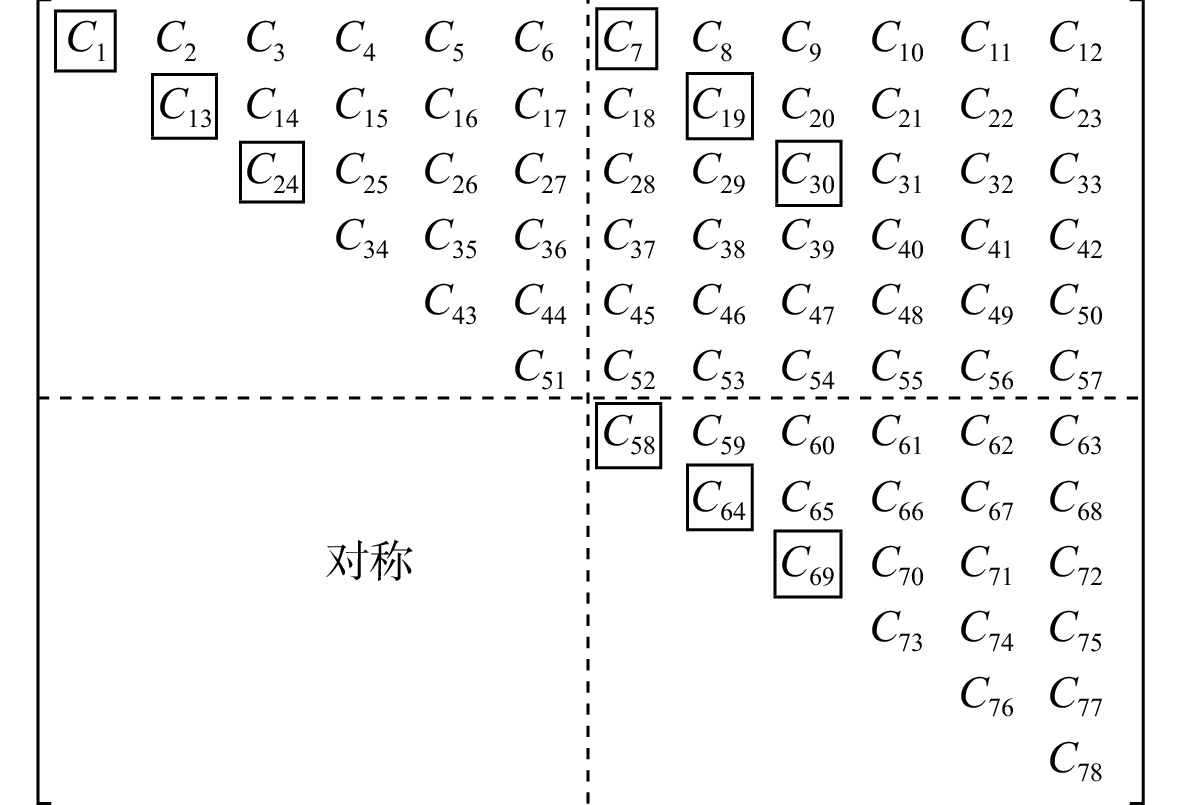
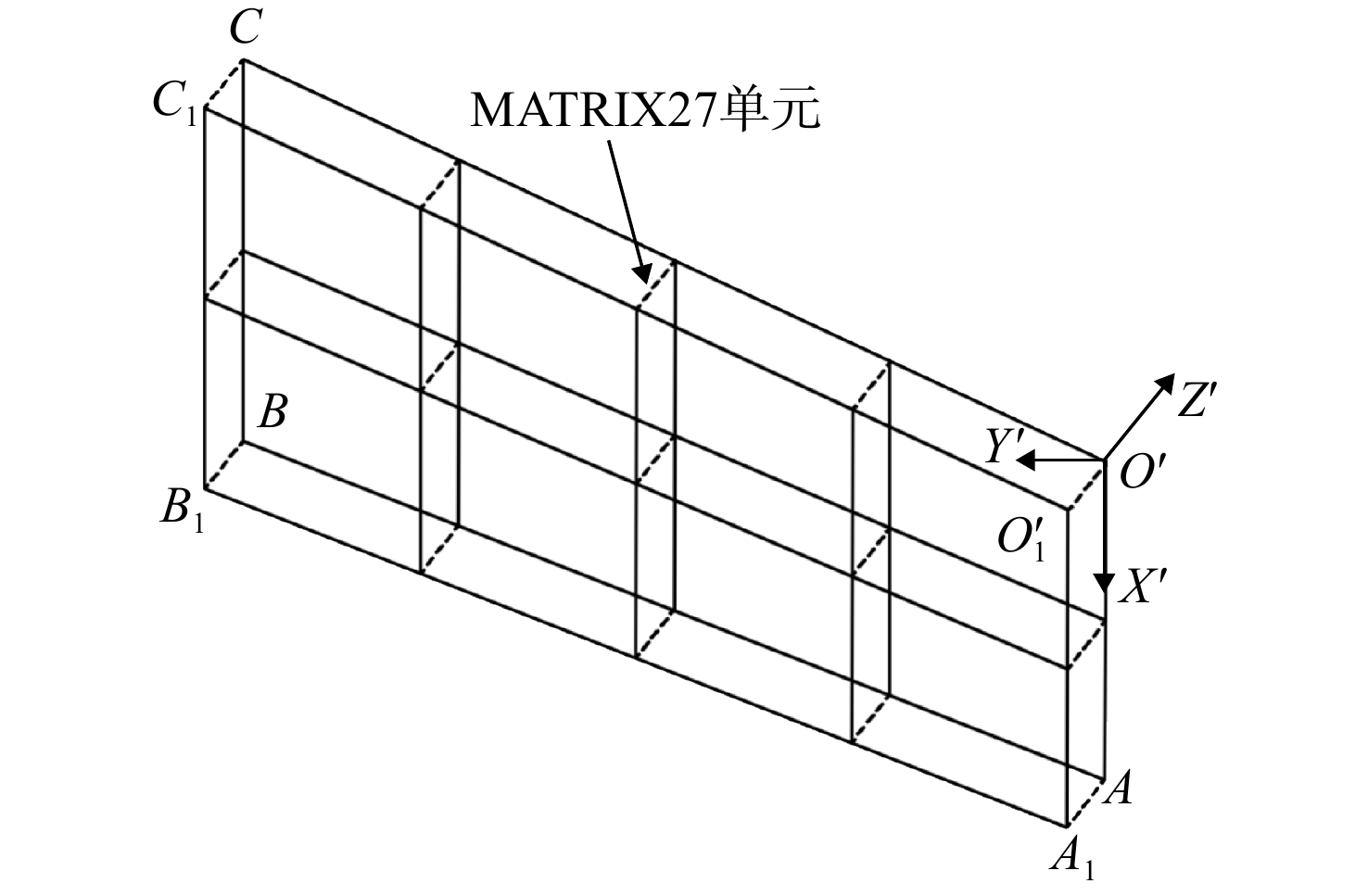
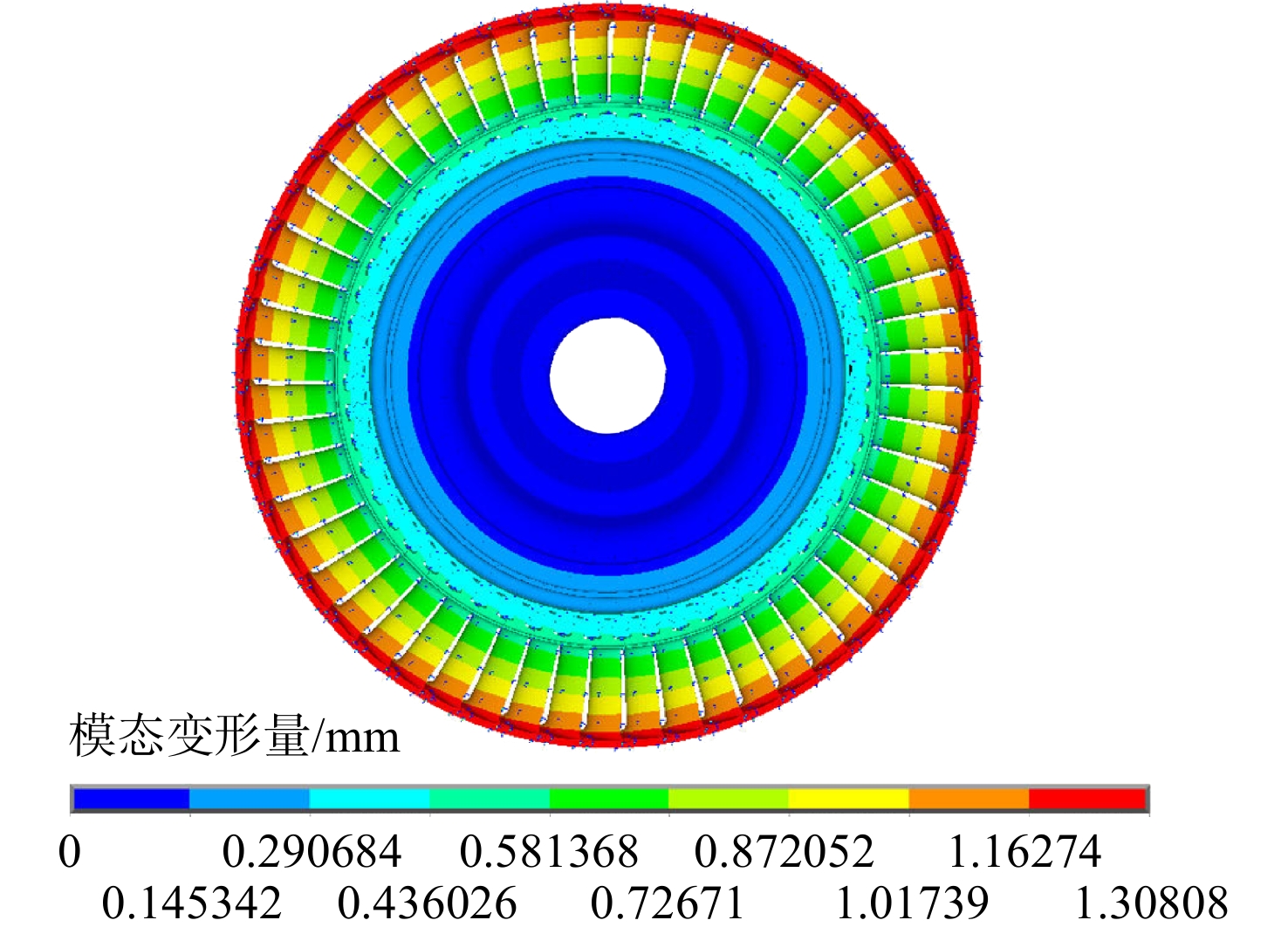
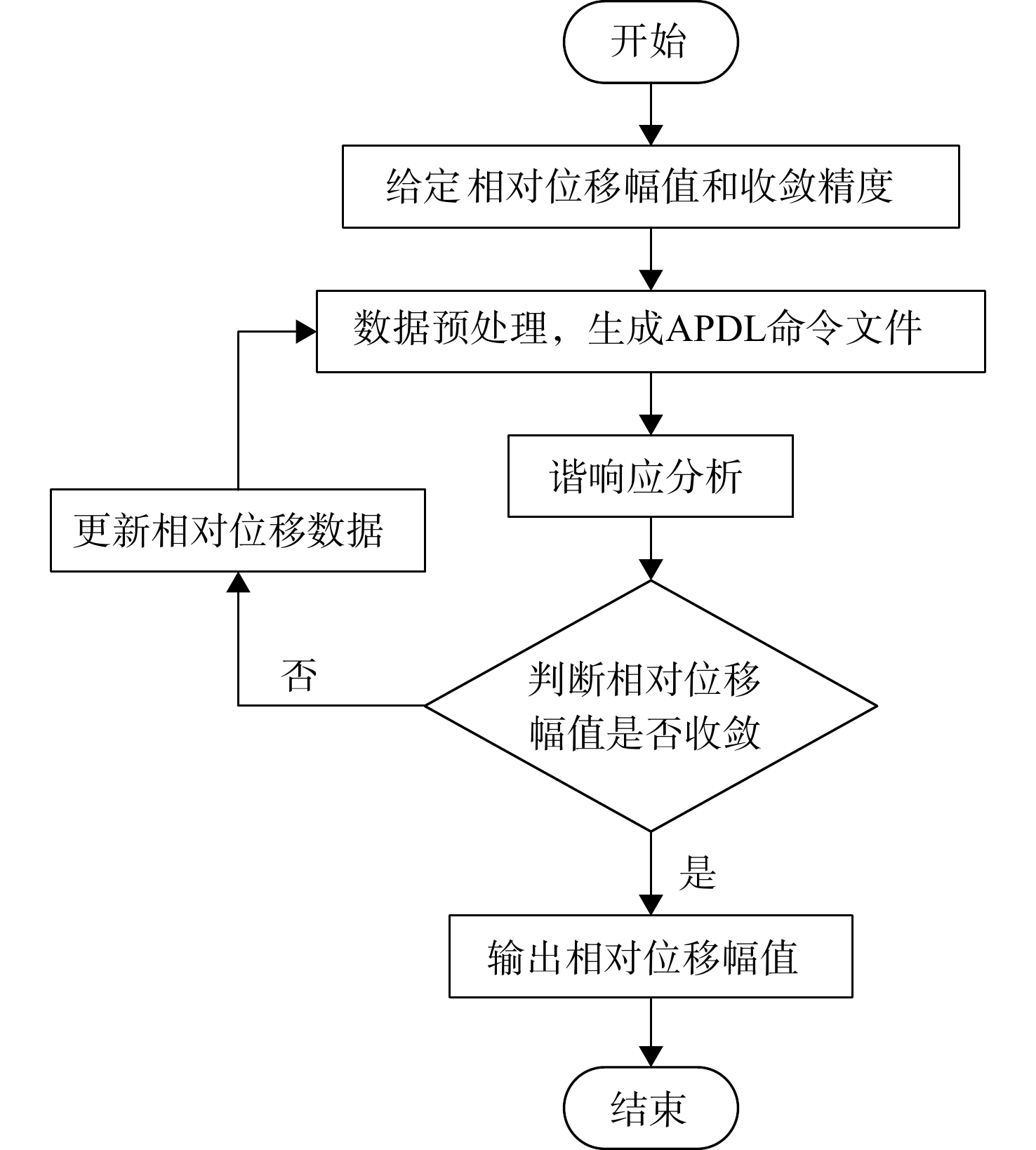
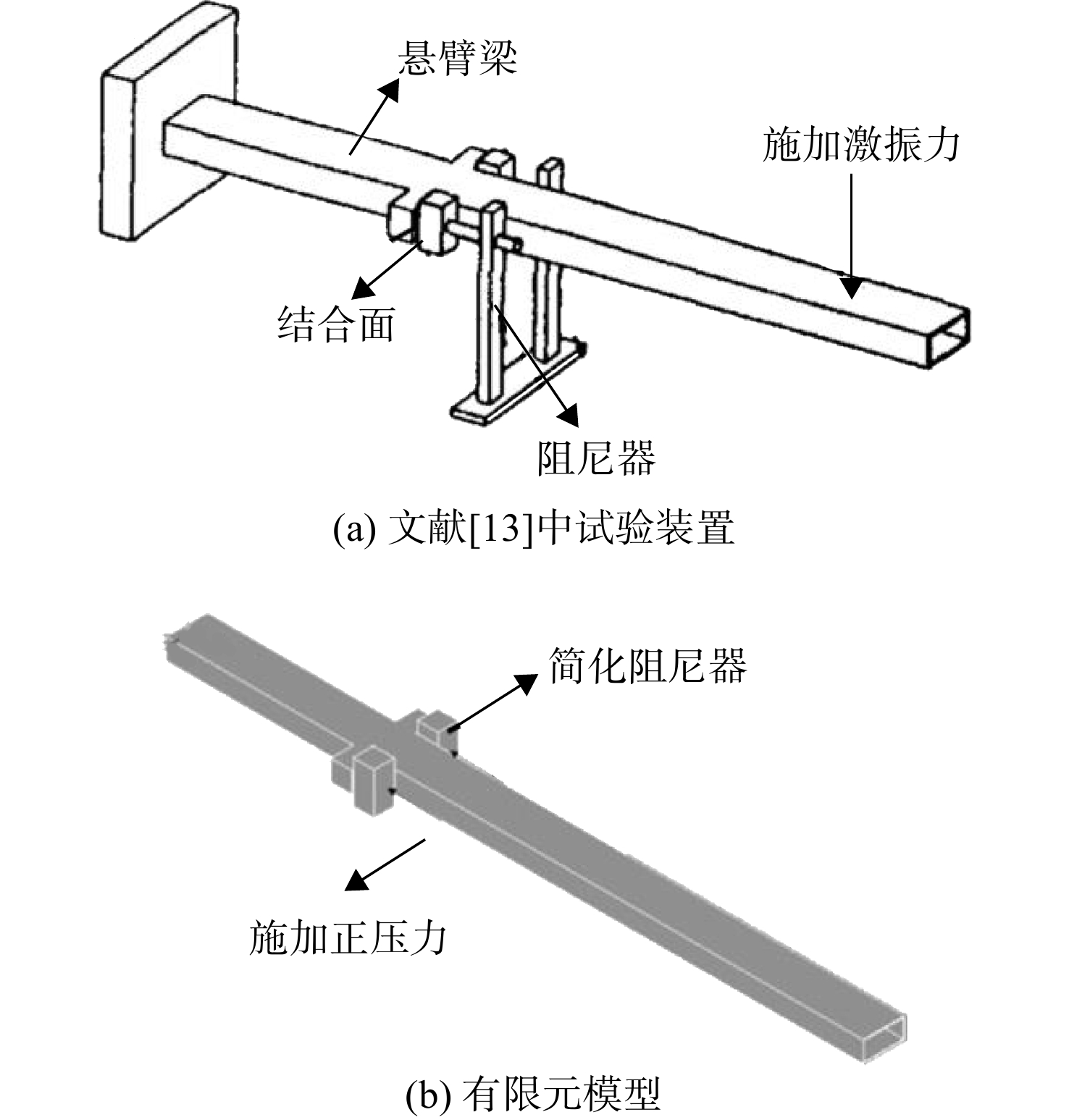
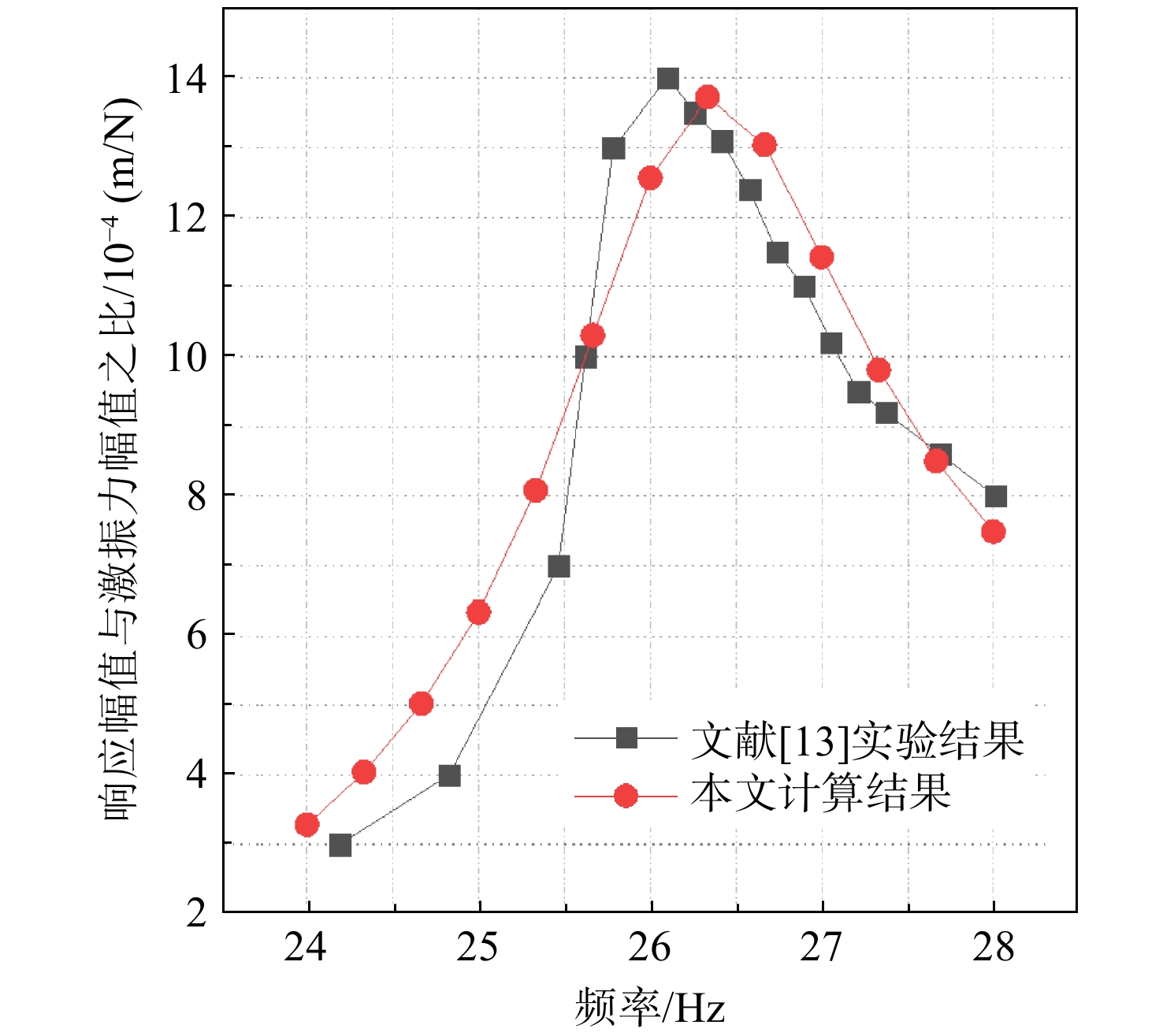
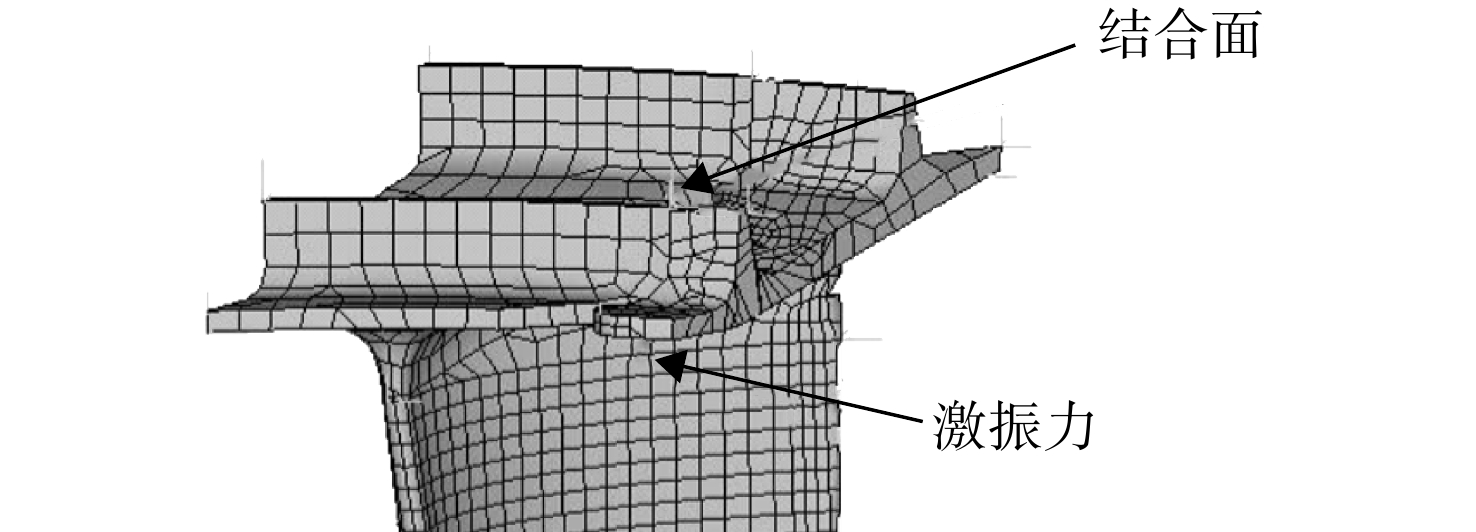
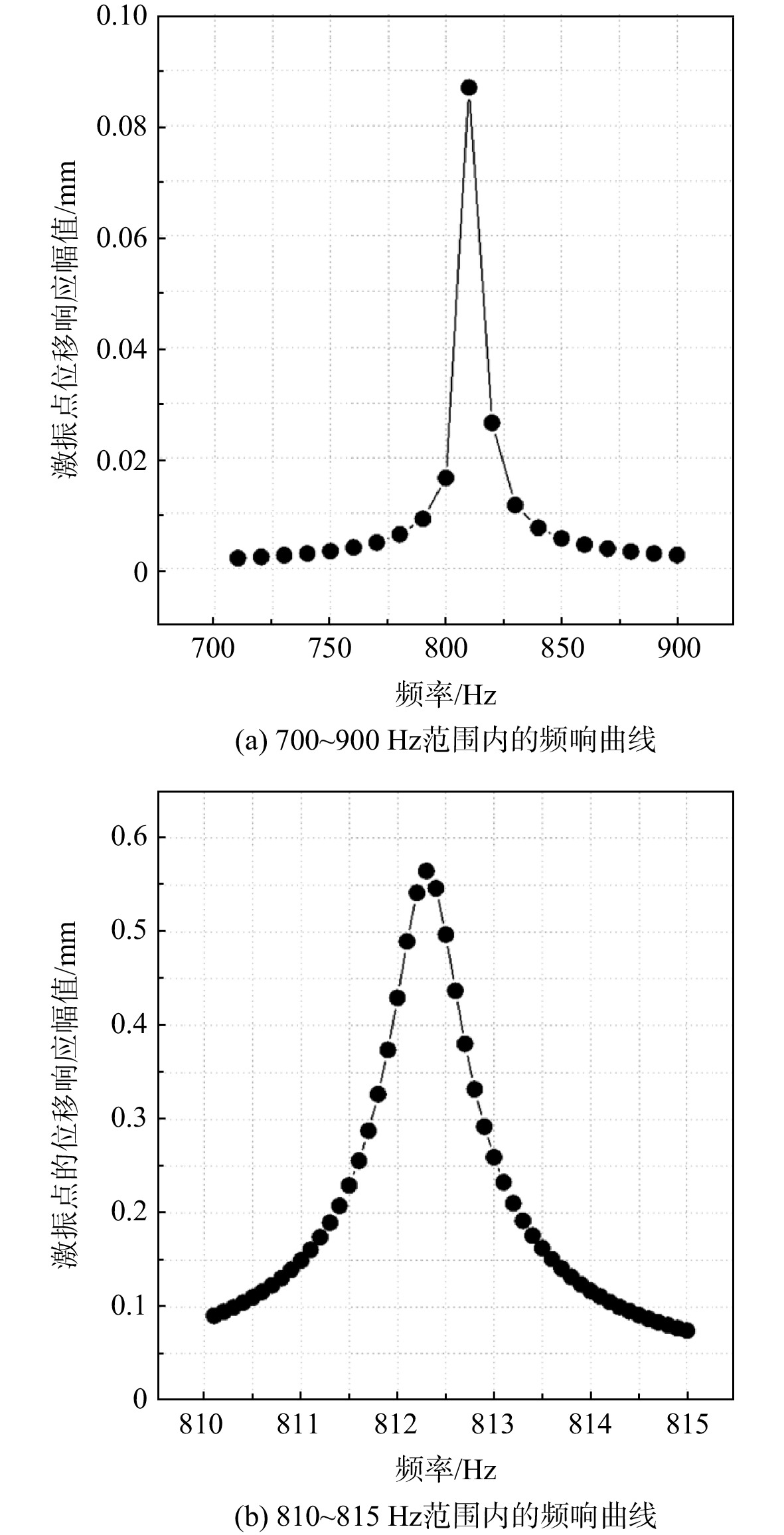
According to the non-uniform distribution characteristics of contact stiffness between interfaces of the zigzag shroud, a method for calculating contact stiffness was proposed based on the combination of definition and finite element calculation. On this basis, the micro-macro-slide friction model was applied to shroud contact interfaces, and the frictional force expressions were derived in micro-slide state and the macro-slide state. The harmonic balance method was used to convert the nonlinear friction force into the equivalent stiffness and equivalent damping. Considering the dynamic change of the relative displacement amplitude between interfaces, an iterative solution method for analyzing vibration response was proposed. Compared with experimental data of vibration response of cantilever beam with frictional damping structure provided in literature, the amplitude error near the resonance peak was 1.99 mm, and the relative error rate was 3.9%. The maximum error of the amplitude was 5.53 mm, which appeared far away from the resonance peak. It was believed that the accuracy of the response analysis method was relatively high. This method was applied to the shrouded blade, and the results showed that the amplitude was 0.56 mm when the excitation force frequency was 812.3 Hz.

Power Transimission
Frictional characteristics induced by ring deformation of thin-wall angular contact ball bearing
CUI Yongcun, WANG Yiming, DENG Sier, PING Jingyan, LI Shang
2023, 38(4): 964-975. doi: 10.13224/j.cnki.jasp.20210523
Abstract:

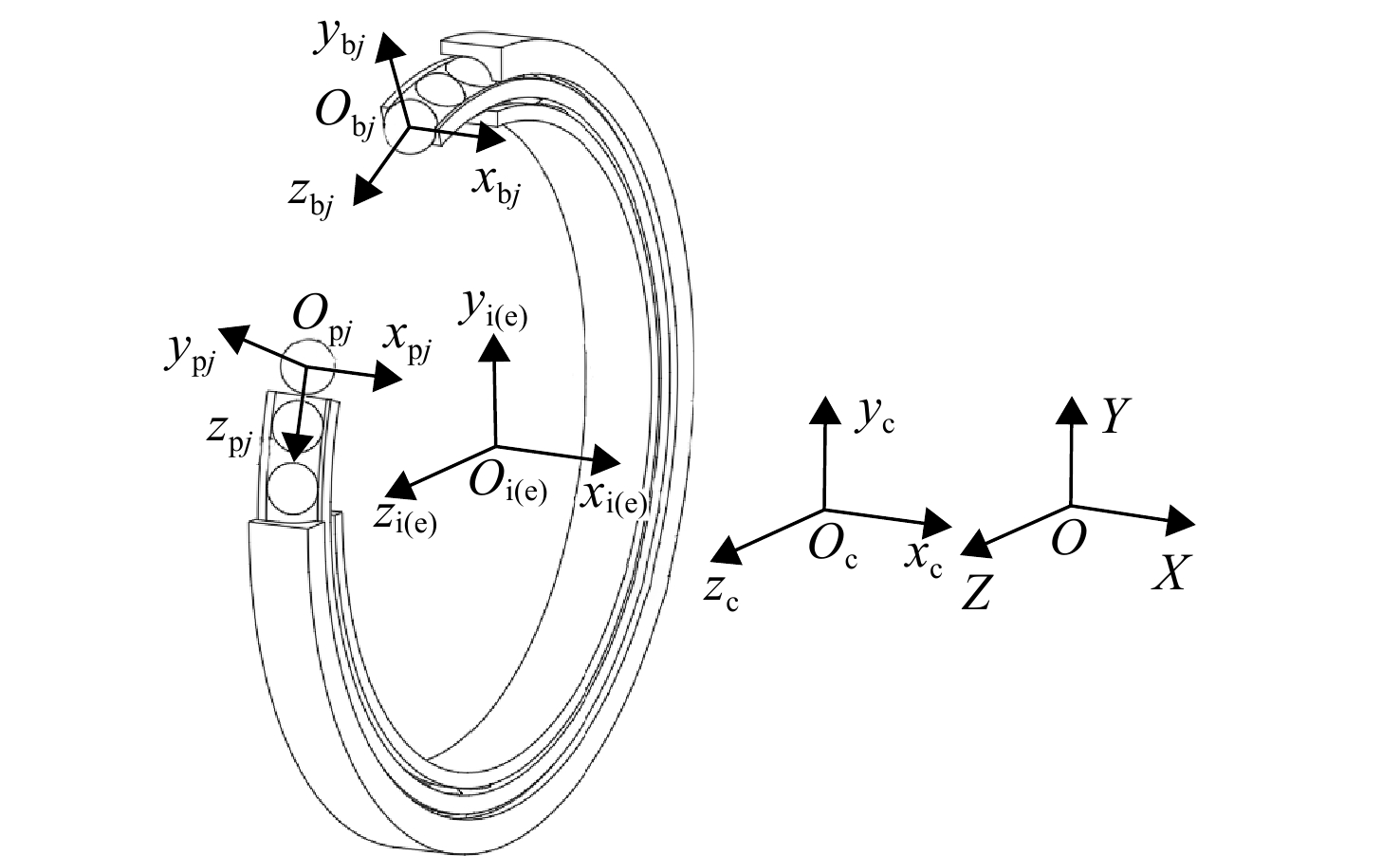
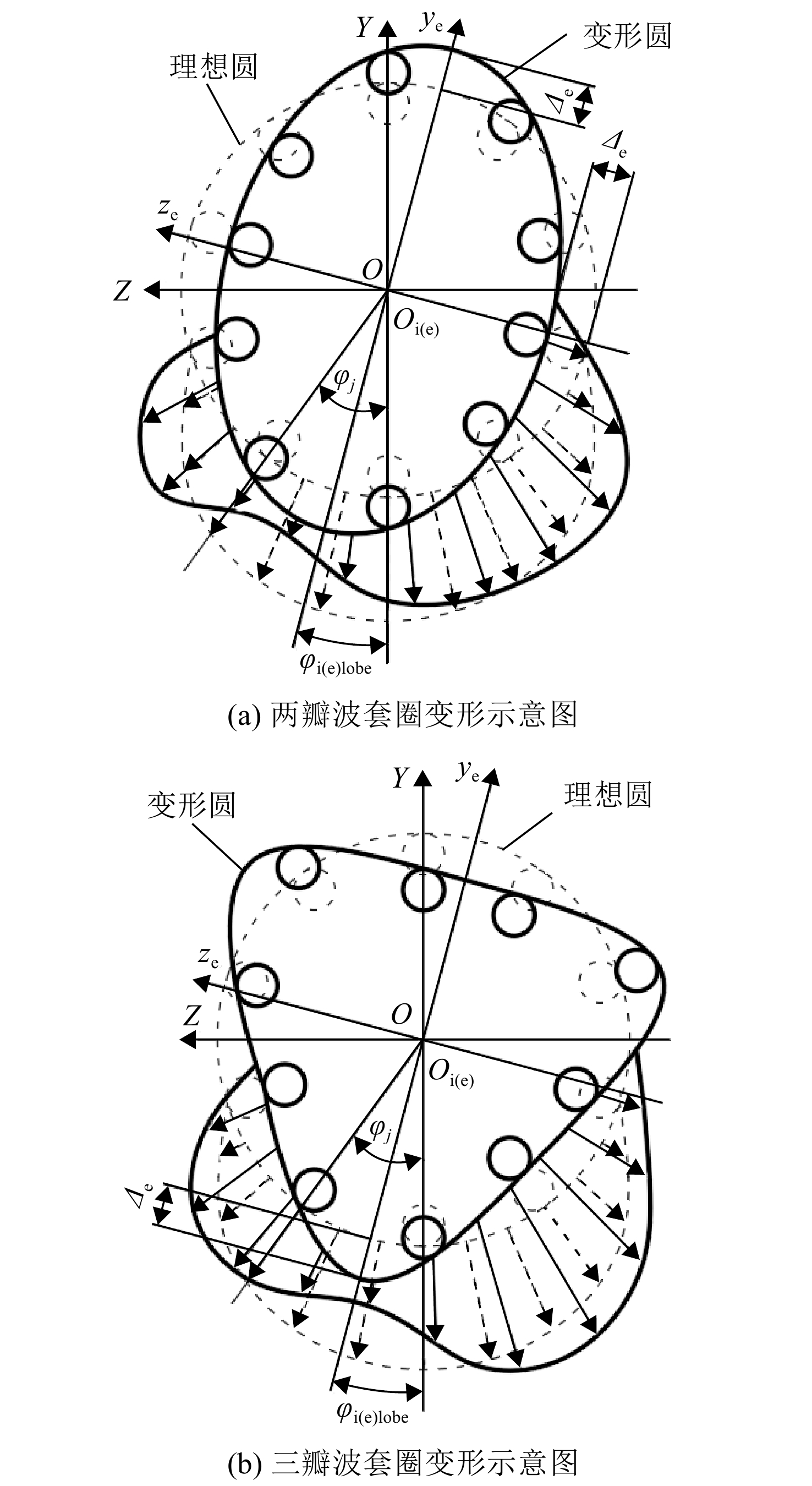
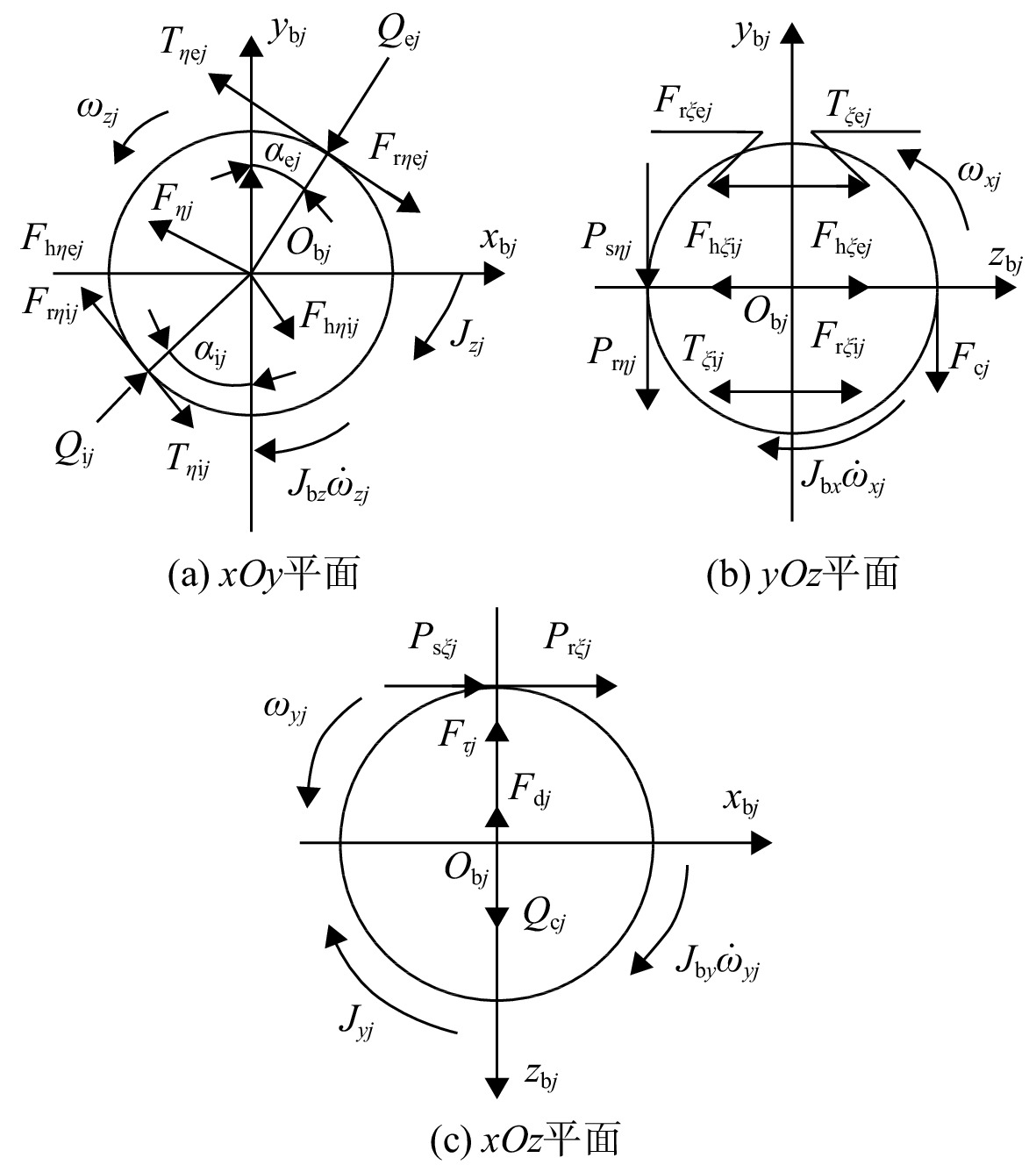
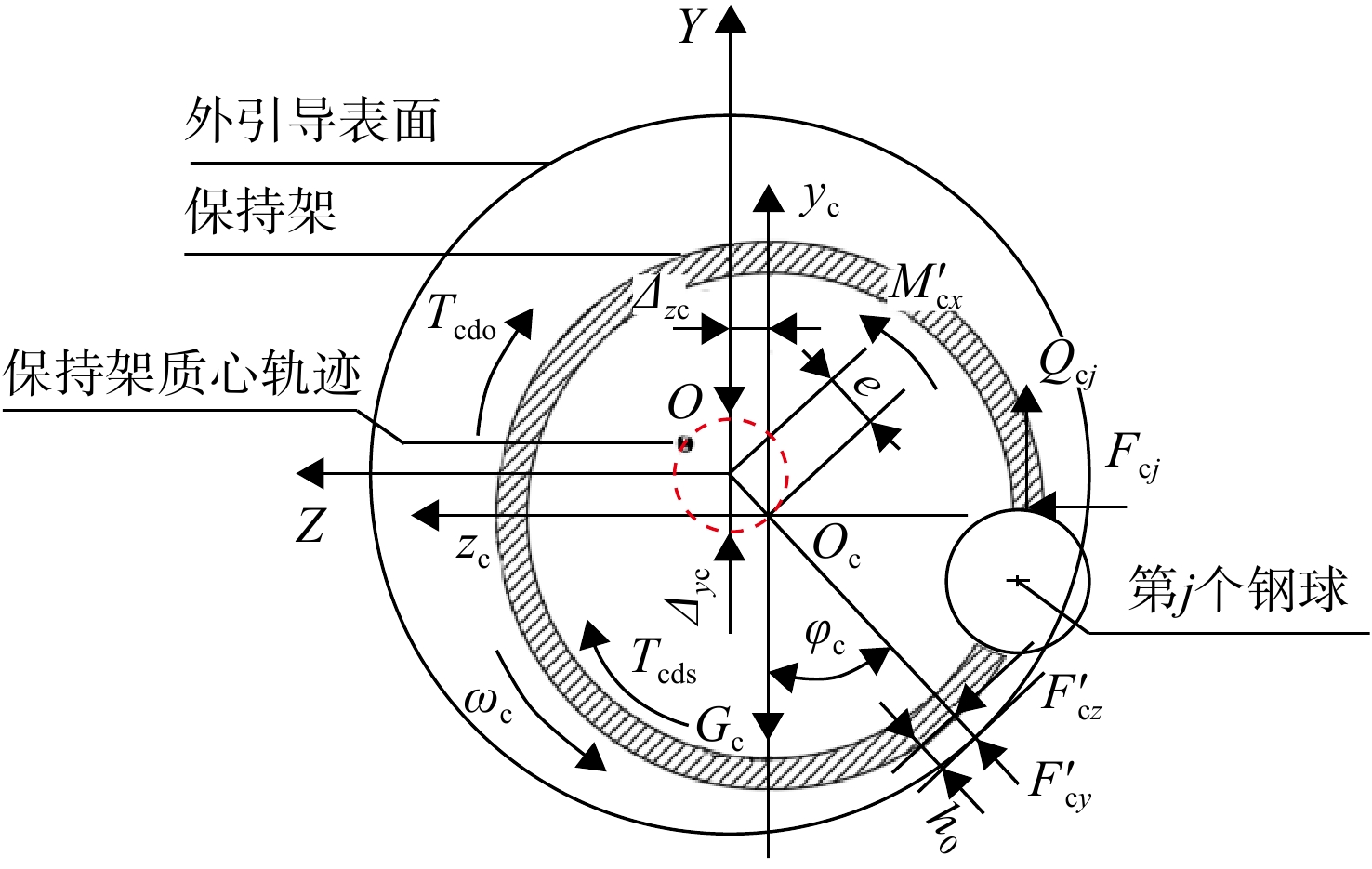
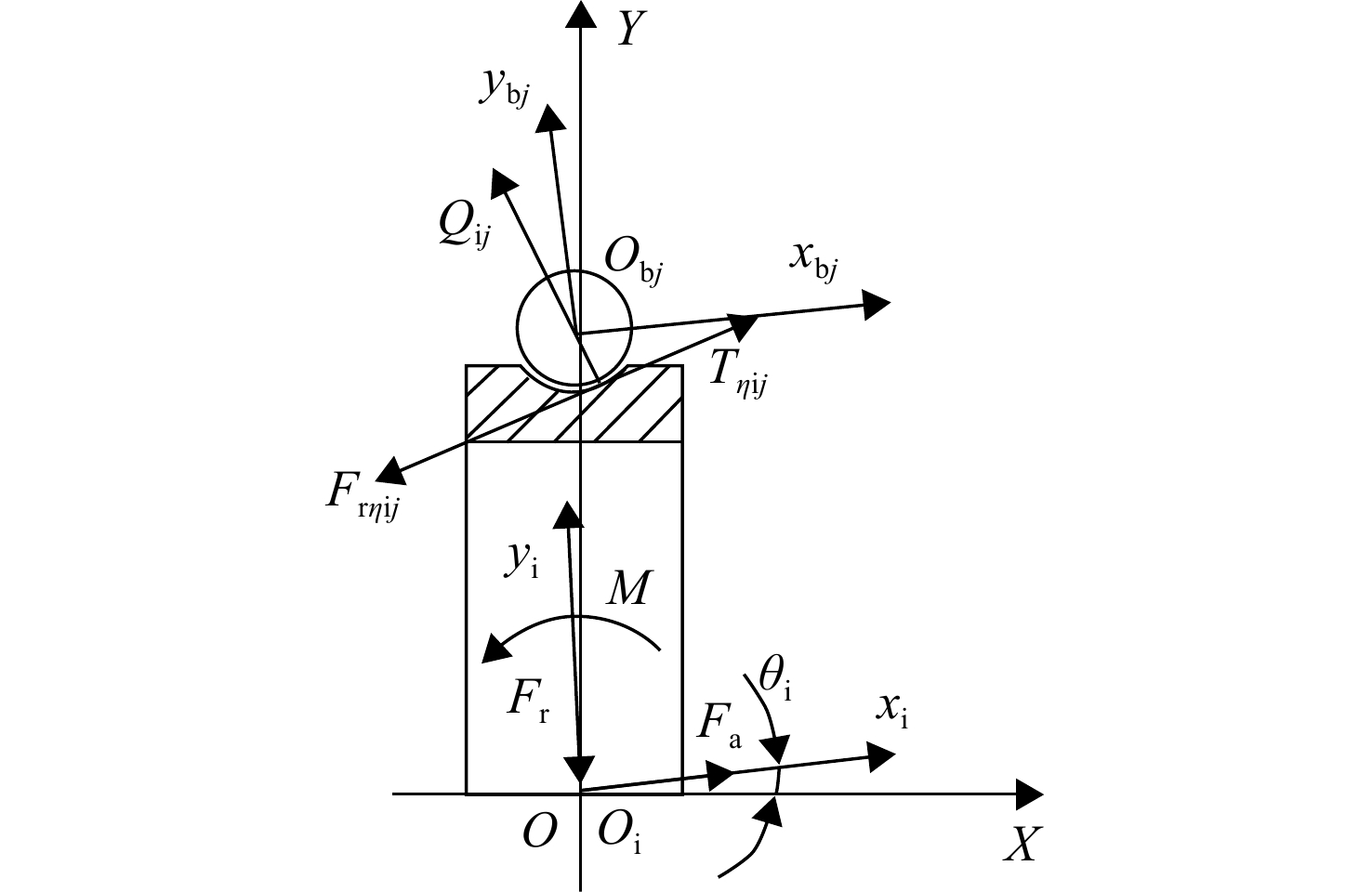
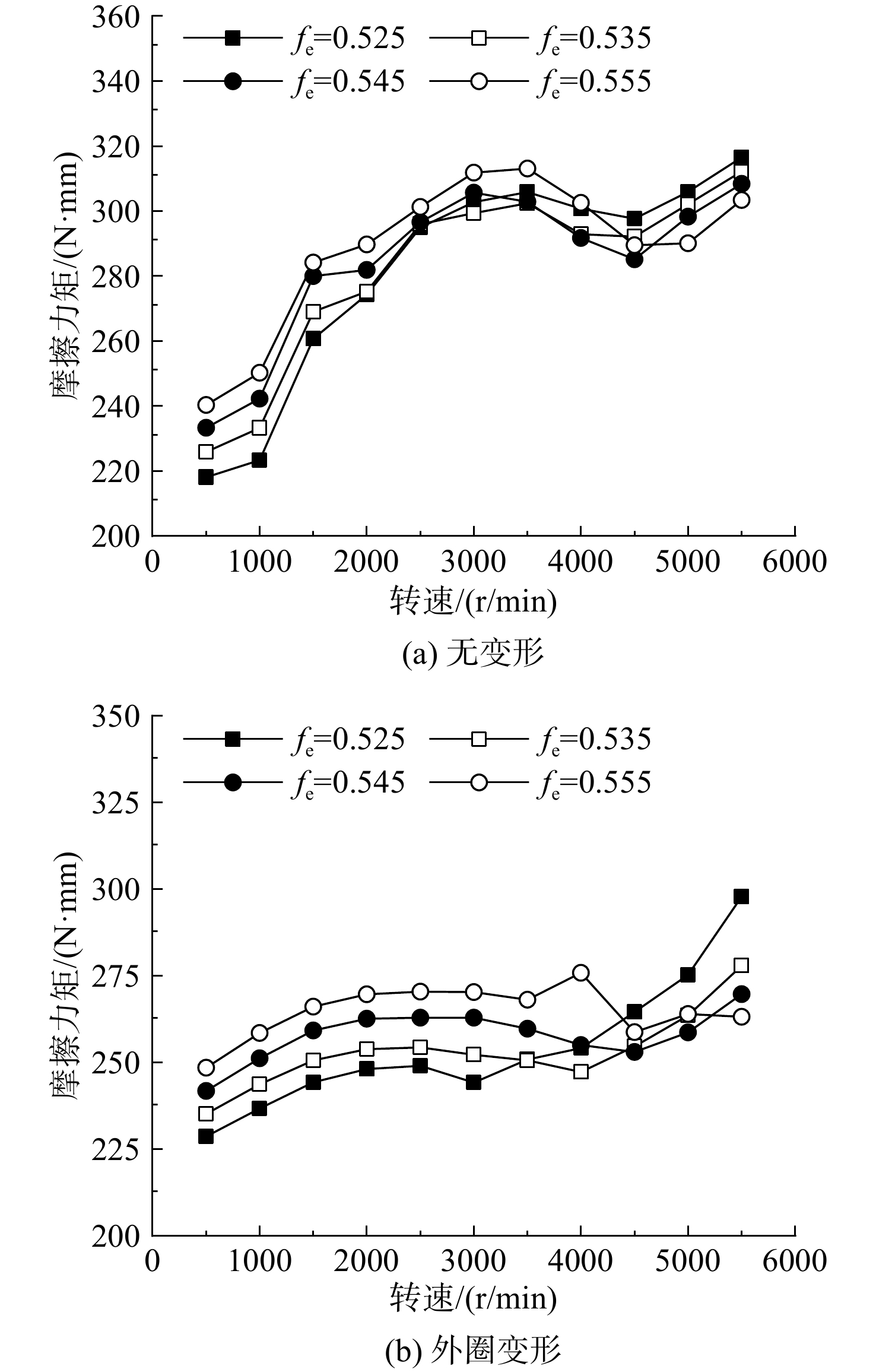
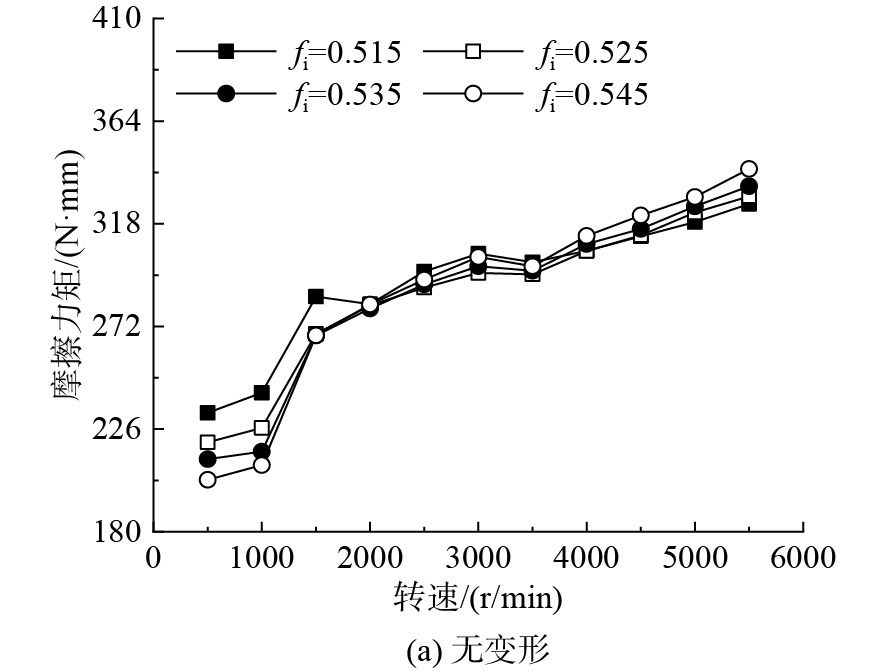
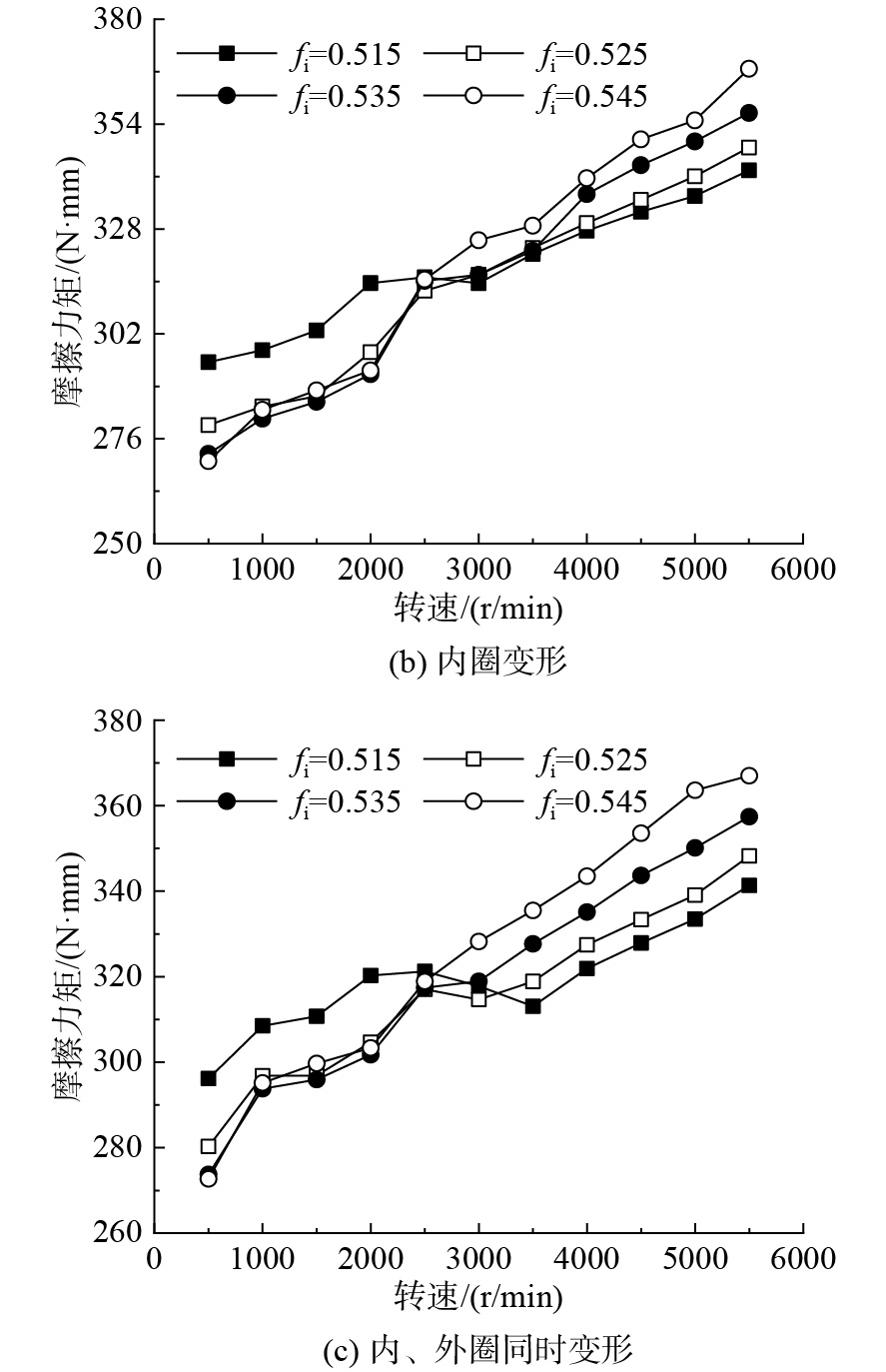
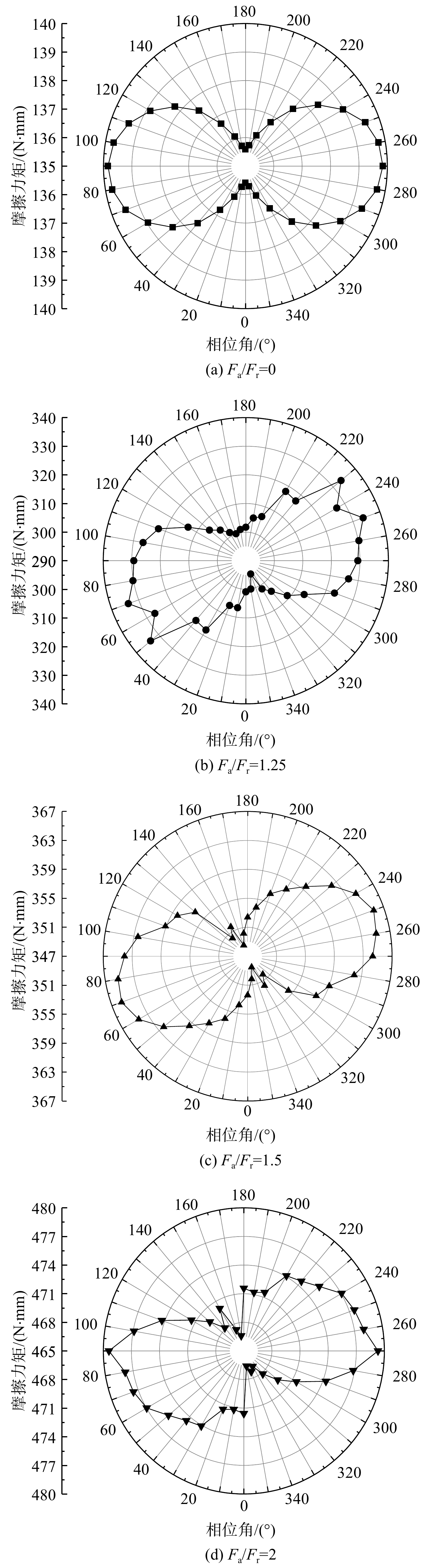
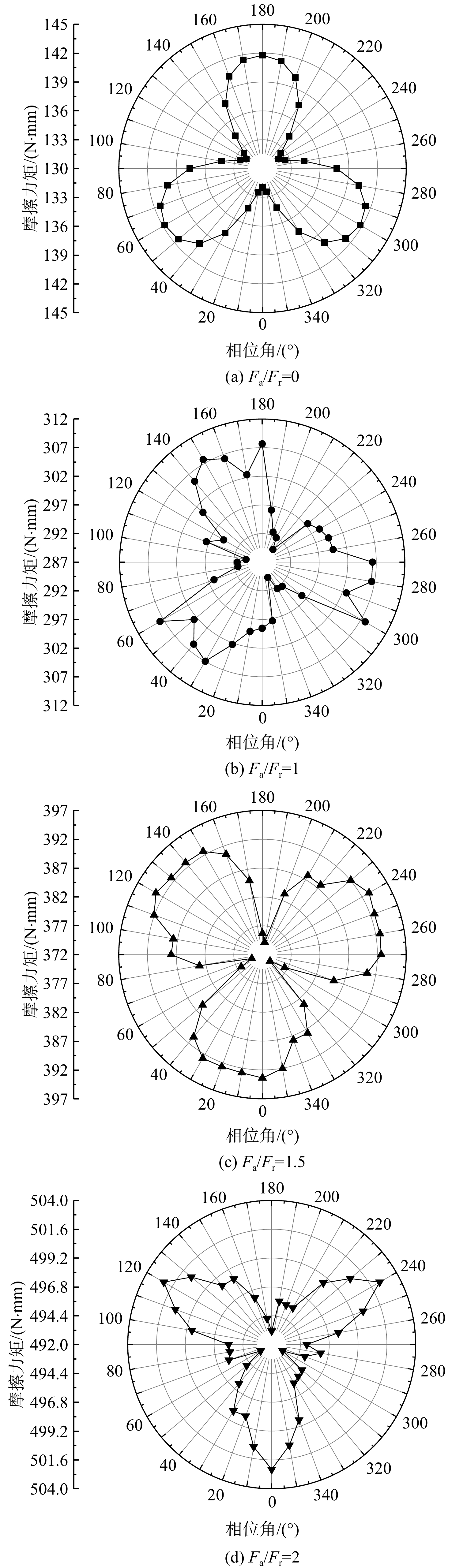
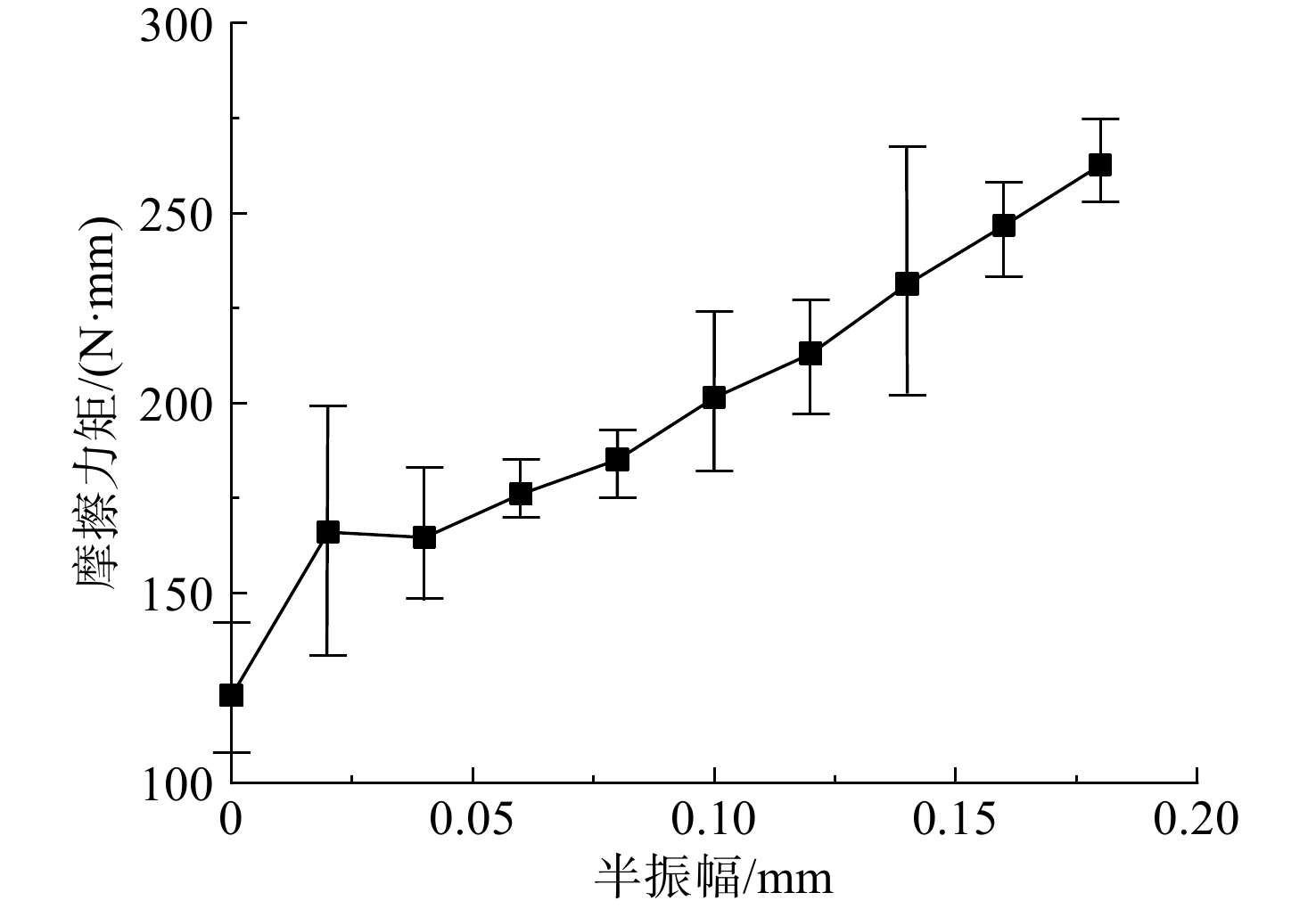
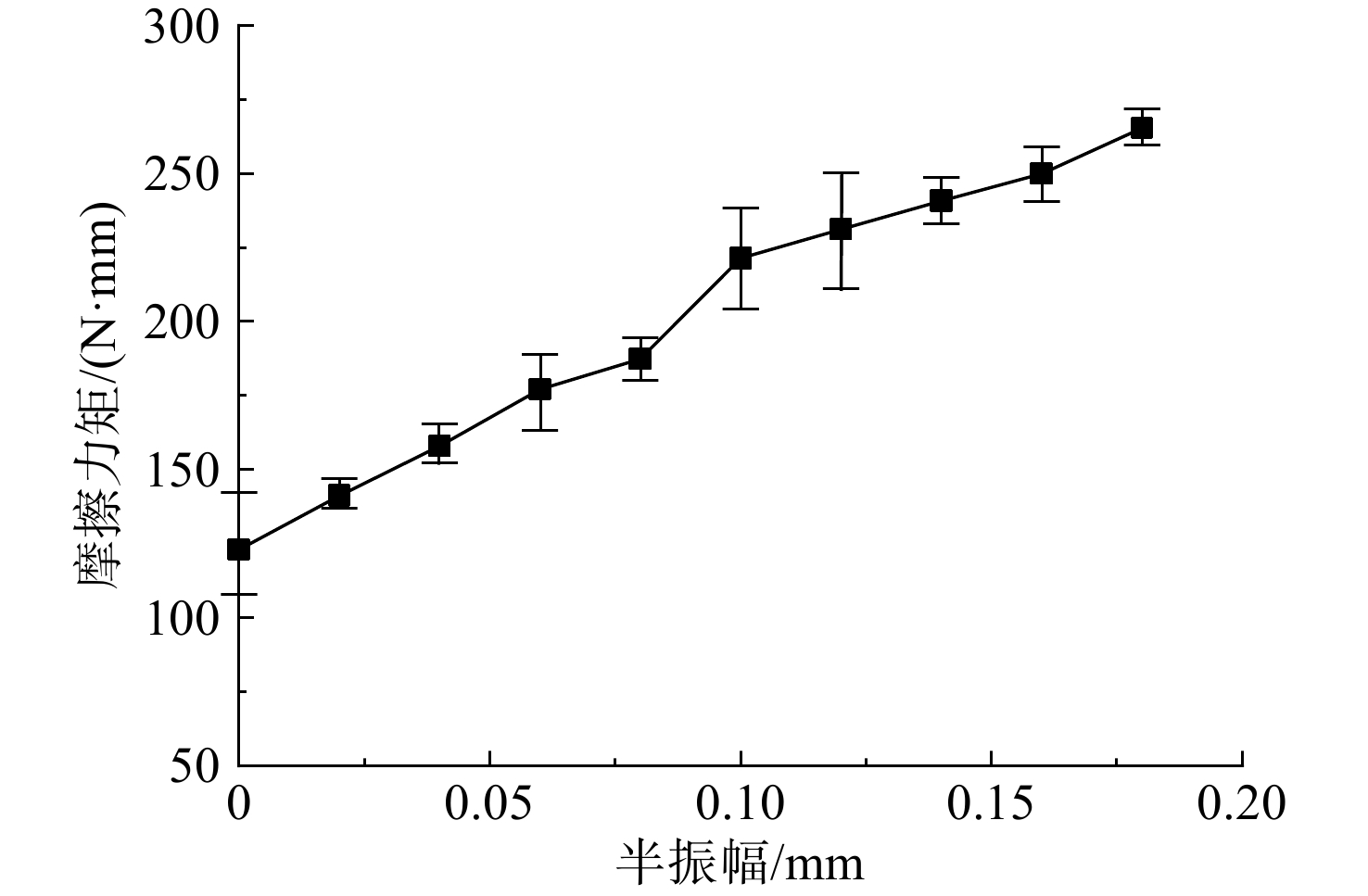
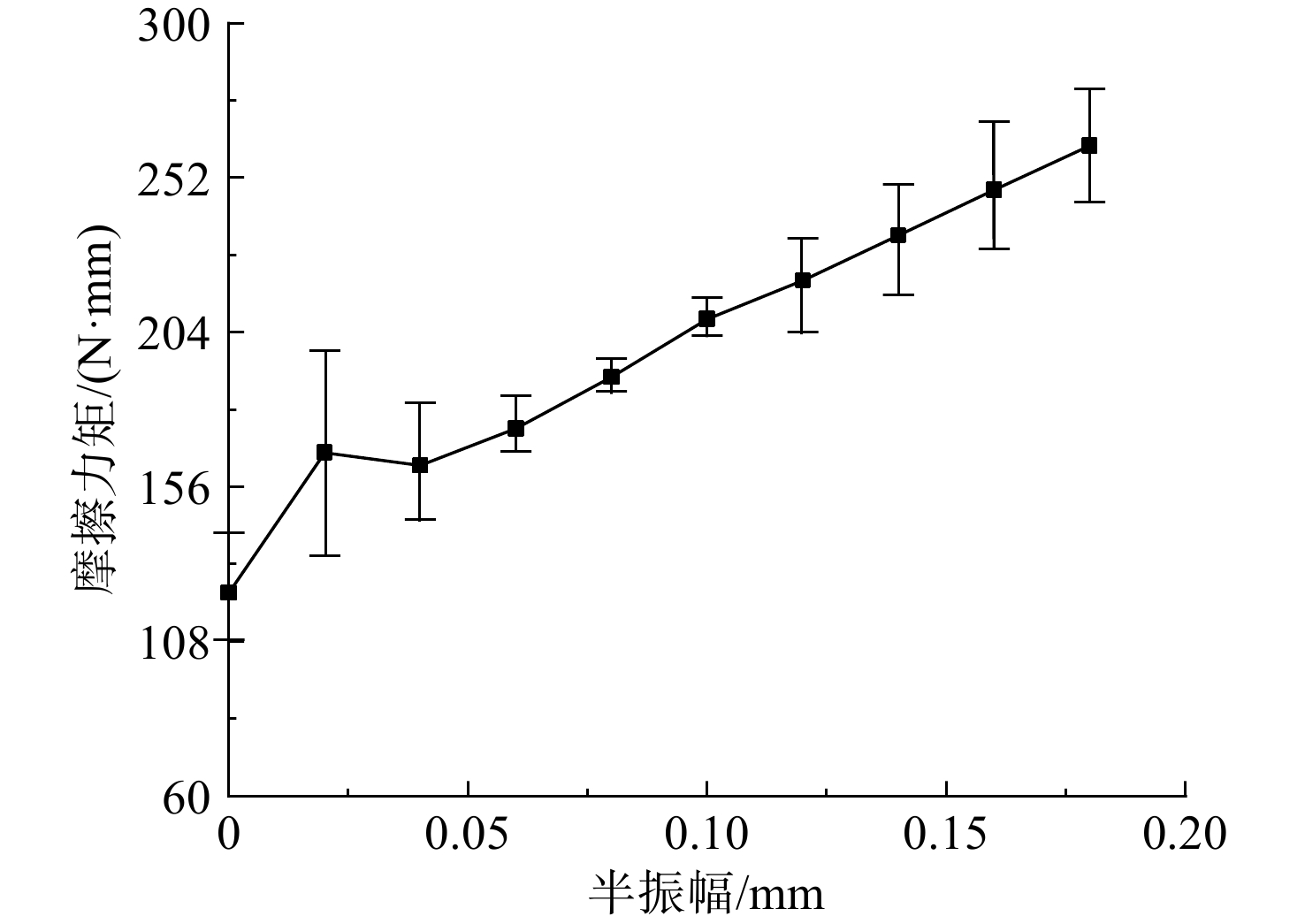
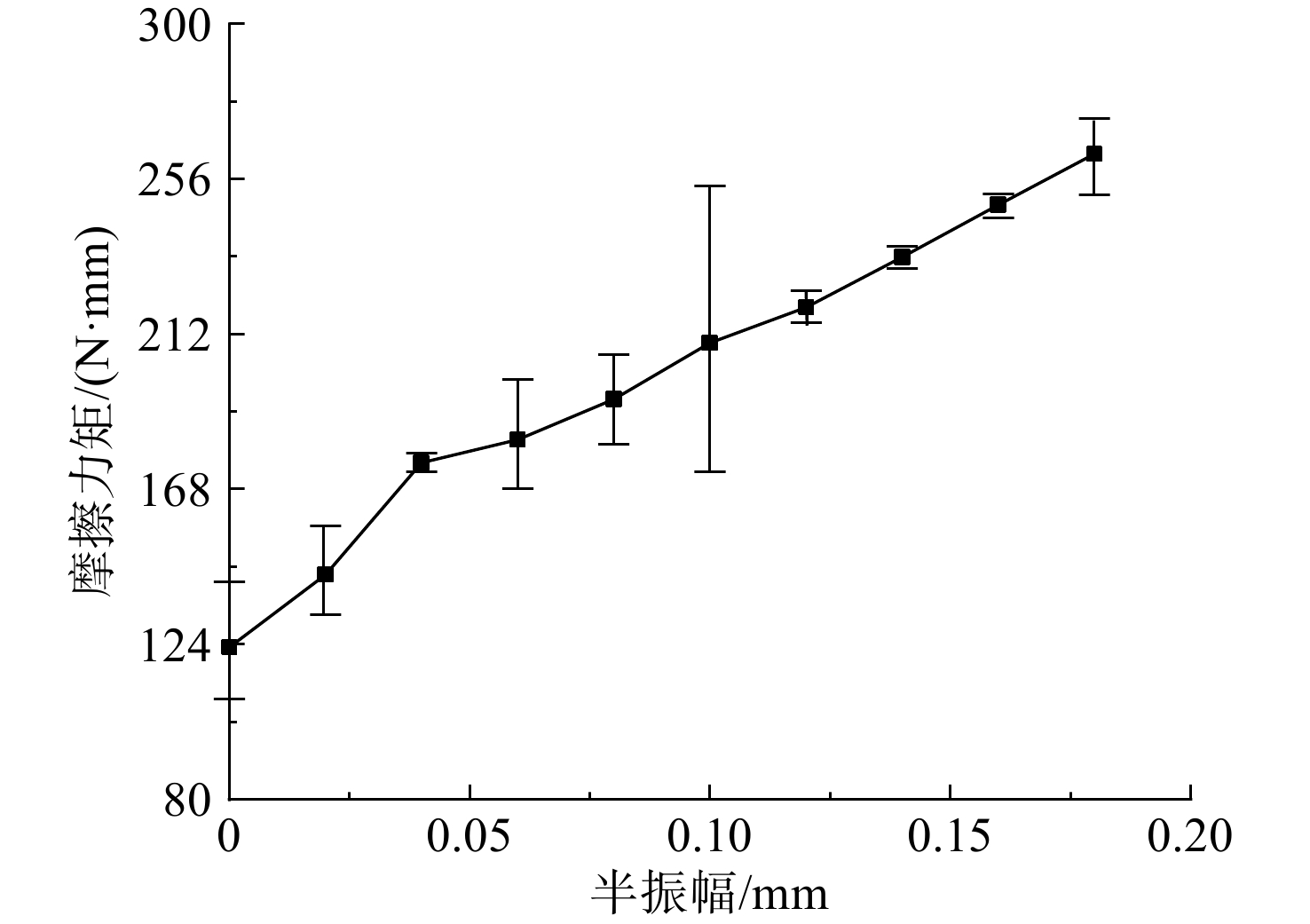
Targeting the unclear mechanism of the frictional torque variation induced by the ring deformation in the process of manufacturing and installation of the thin-wall angular contact ball bearings, based on the dynamic theory of rolling bearing, the dynamic analysis model and friction torque mathematical model of thin-wall angular contact ball bearing were established considering the time-varying representation of the ring deformation, and the effects of the ring groove curvature radius, the deformation phase angle, the half amplitude, and the working conditions on the frictional characteristics were studied. The results indicated that: the influence of the groove radius of curvature coefficient on the frictional torque changed at different speed critical values, which preacted or lagged compared with the ideal ring when considering the ring deformation. Optimal configuration of deformation phase angle of the ring can reduce the effect of the deformation on the frictional torque. The load ratio affected the deformation phase angle of the ring forming the minimum frictional torque, whose effect on the phase angle of two-lobe wave was less than that of three-lobe wave deformation. A reasonable control of half amplitude of ring deformation can reduce the influence of frictional torque fluctuation.

Analysis and optimization of windage power loss for aeronautical spiral bevel gear pair
ZHANG Xuyang, WANG Sanmin, LI Linlin, LIU Linlin, REN Hongfei
2023, 38(4): 976-985. doi: 10.13224/j.cnki.jasp.20210211
Abstract:

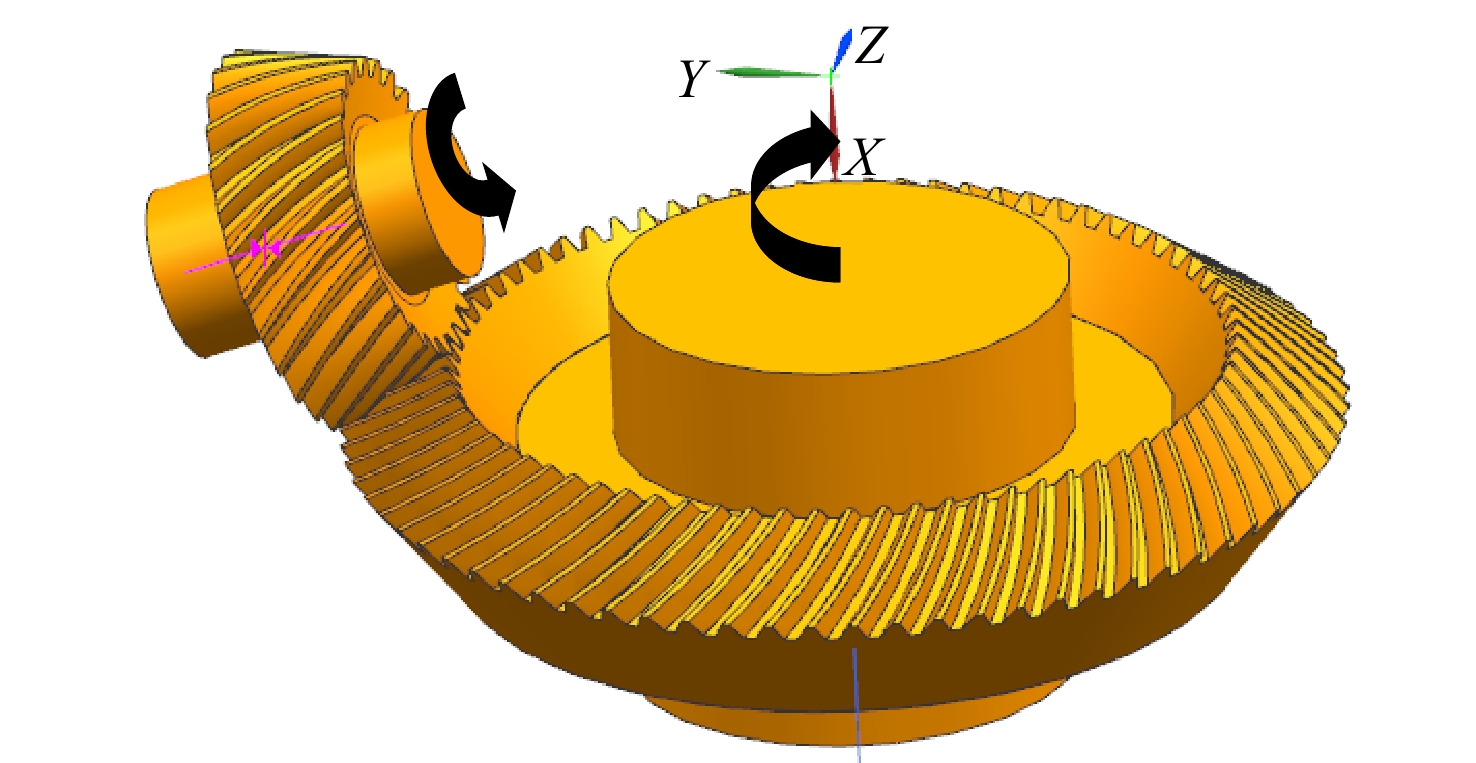
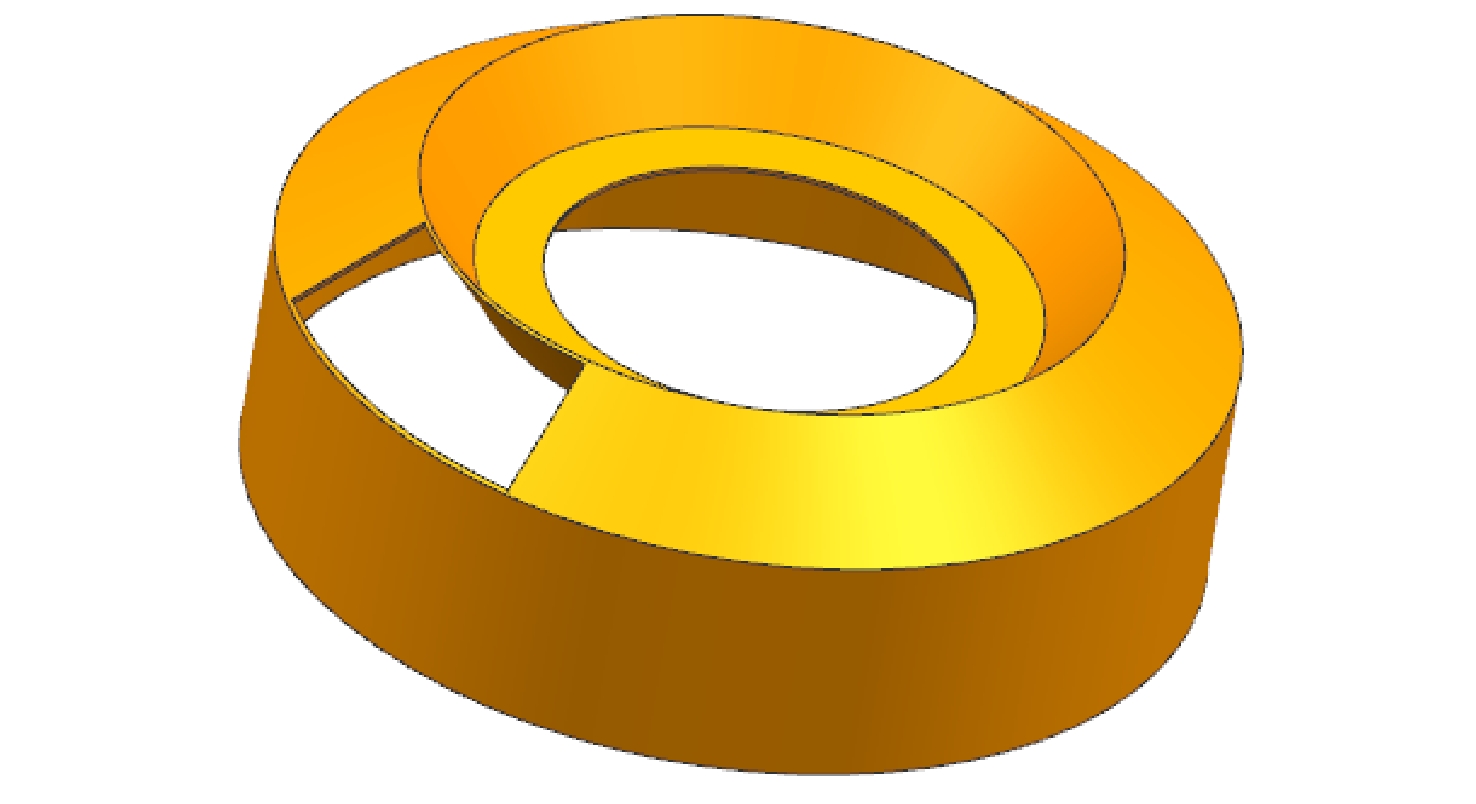
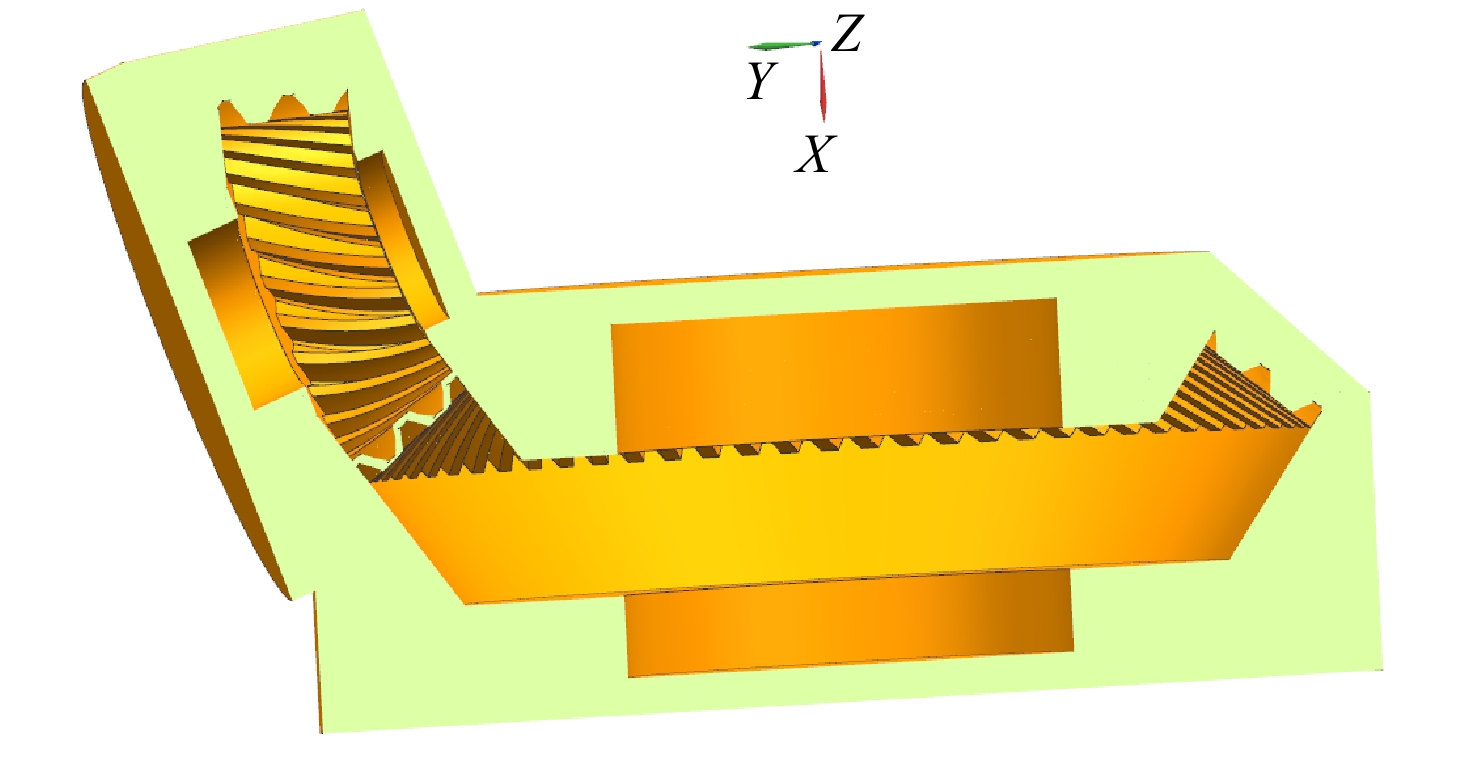
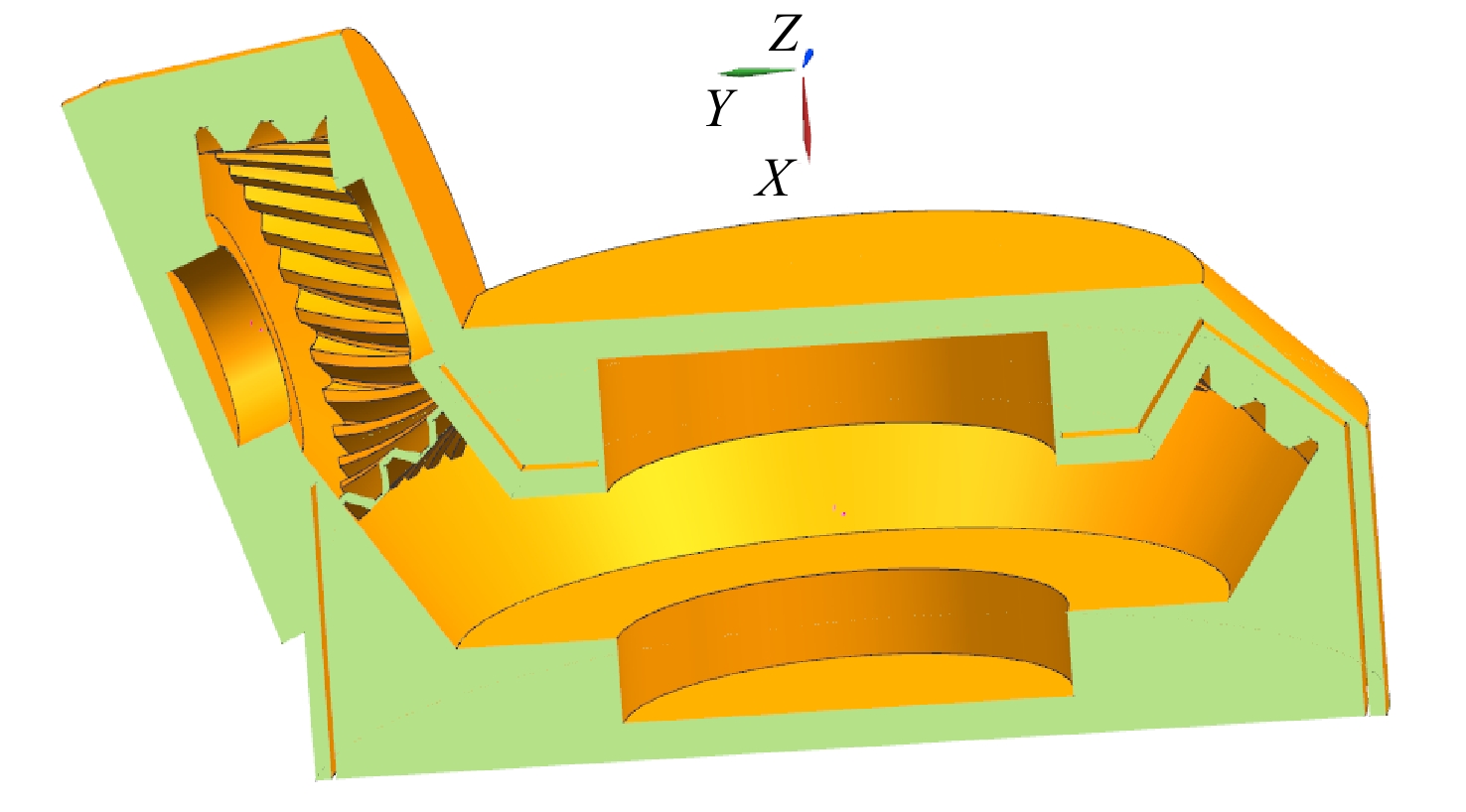
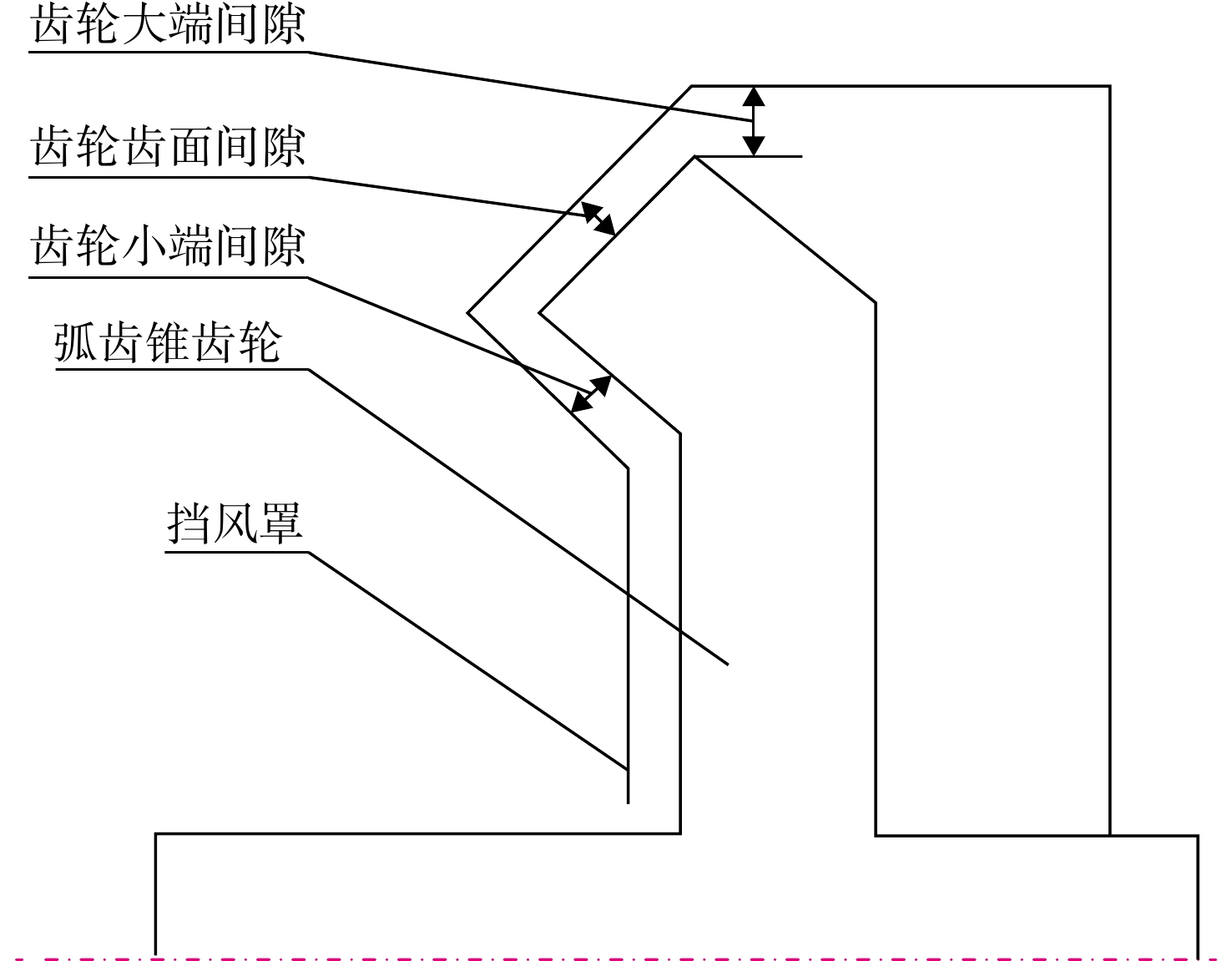
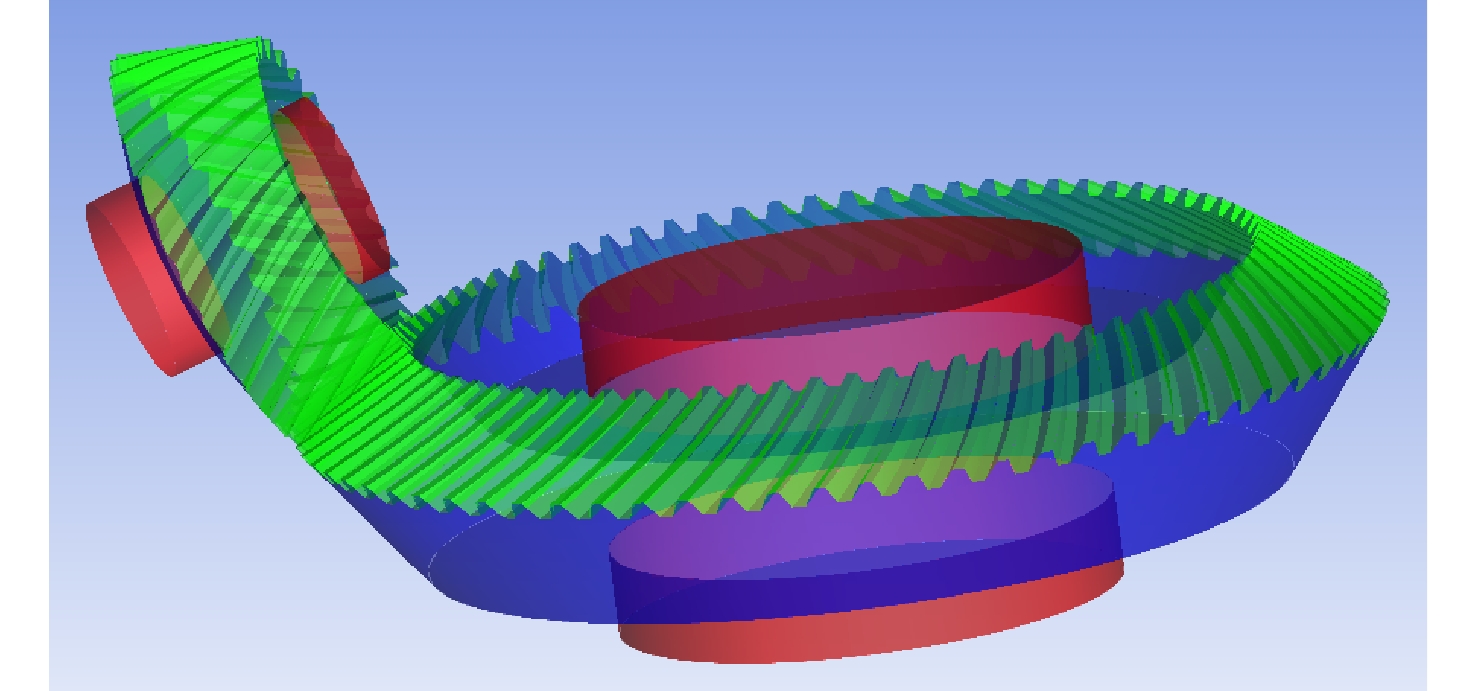
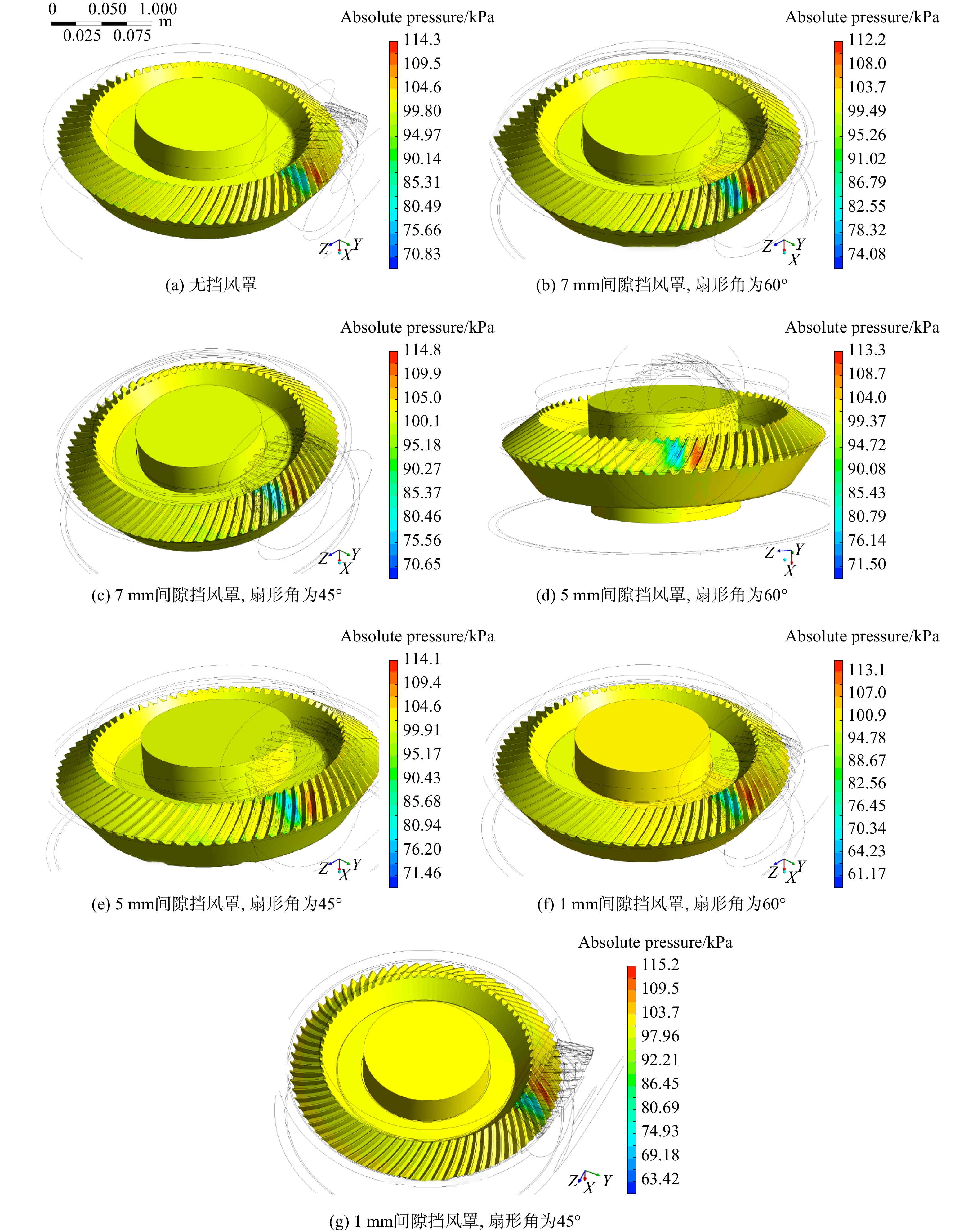
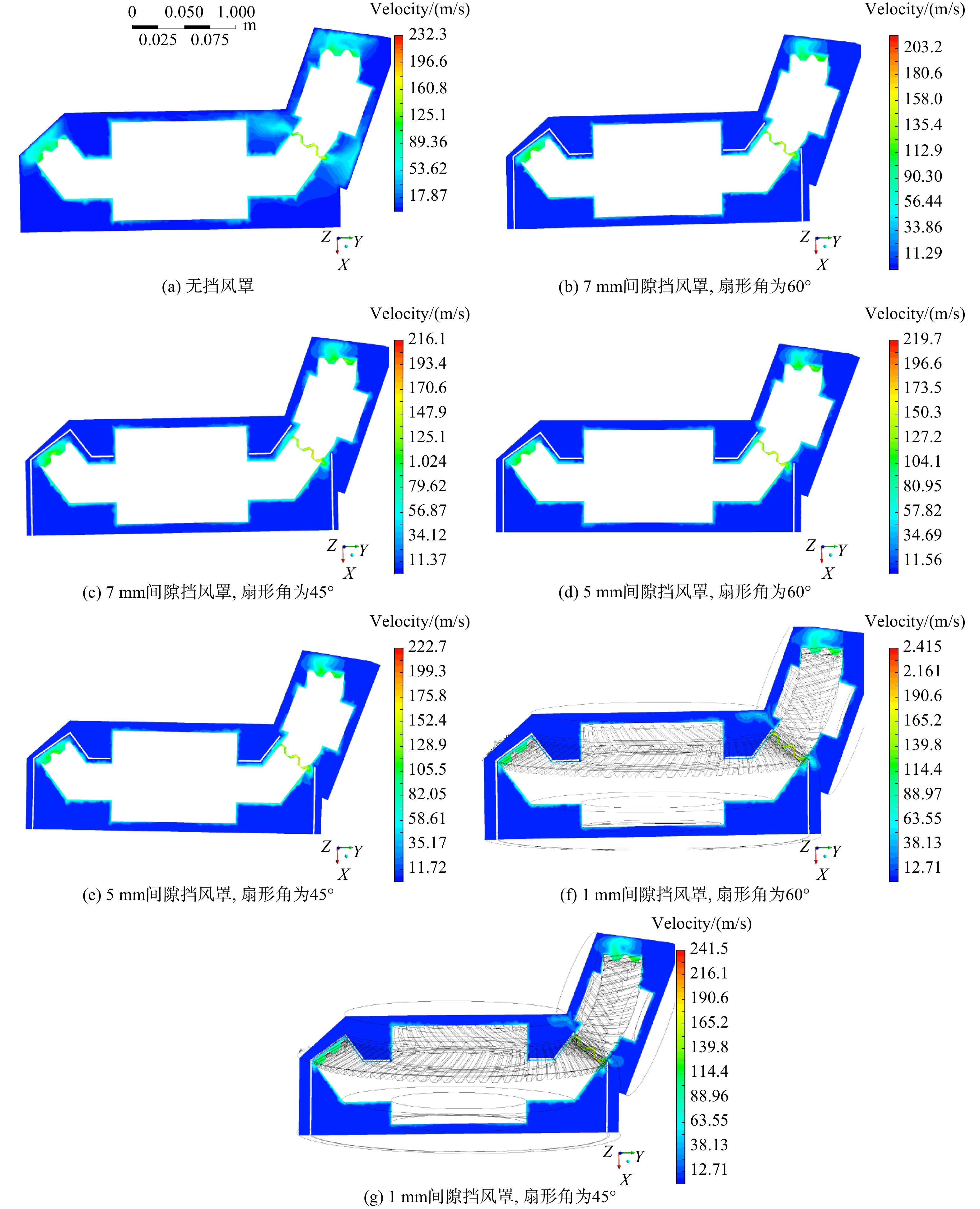
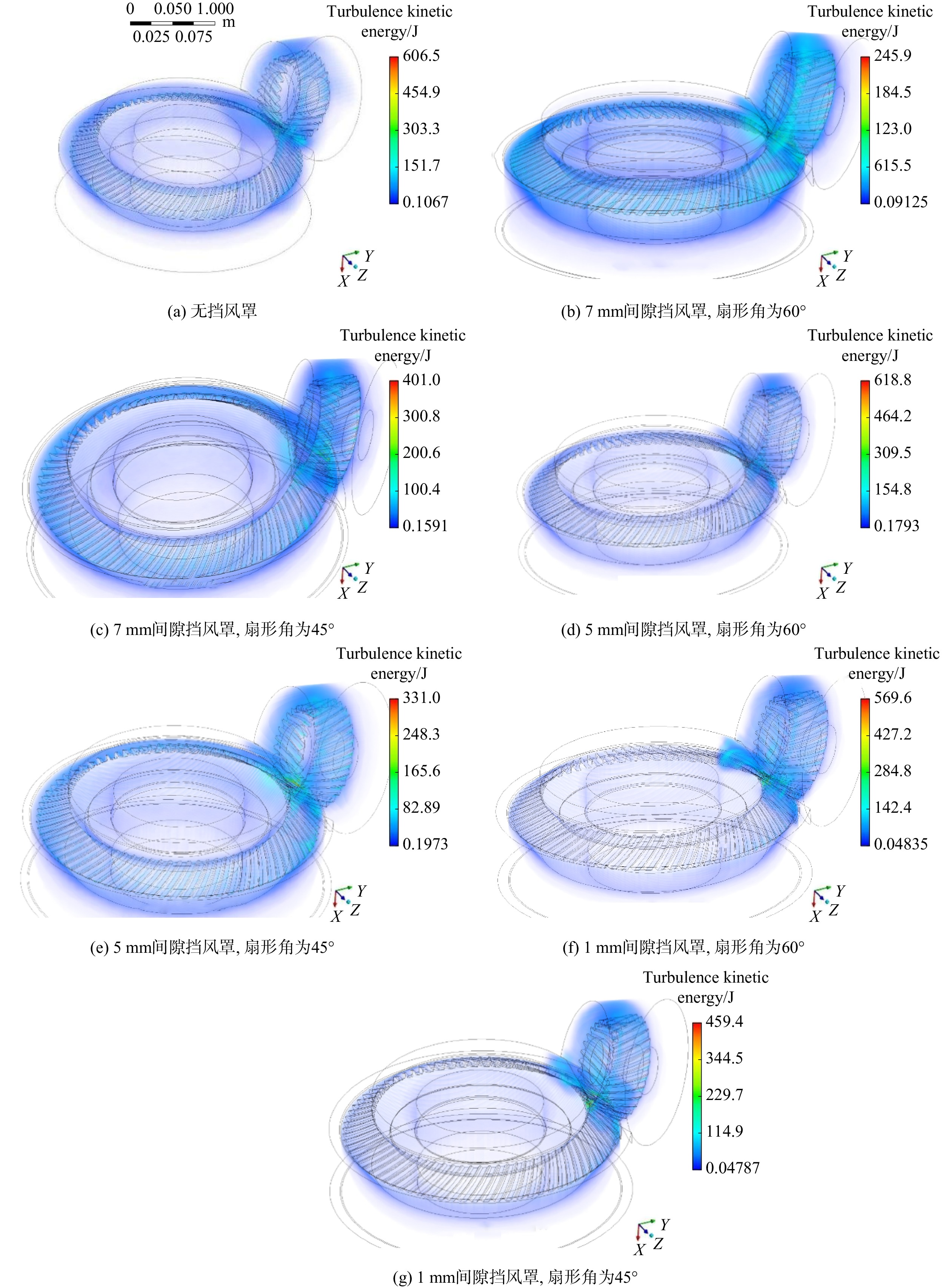
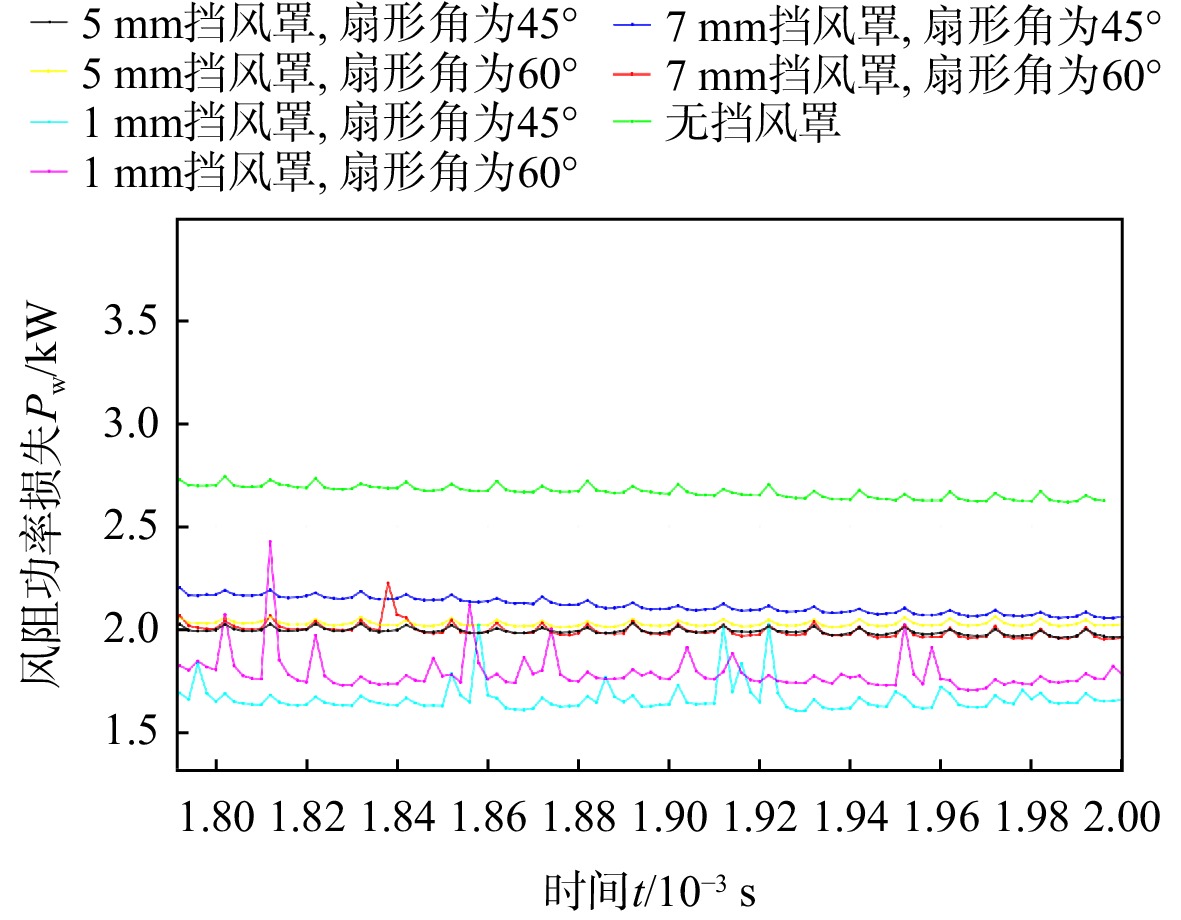
Based on CFD theory, the windage power loss of aviation spiral bevel gear pair was simulated by using Fluent solution software with the powerful parallel computing ability of supercomputer. The three-dimensional model of spiral bevel gear pair was established by local synthesis method. The turbulence model of RNG k-ε was selected to consider the swirl flow in the average flow. Compared with the standard k-ε model, the turbulence viscosity of RNG was corrected and the flow with high strain rate and large curvature of the flow line was well treated. The gear boundary motion was driven by UDF (user-defined functions) functions, and the change of flow field shape over time due to boundary motion was simulated by dynamic grid. Finally, the windage power loss of the gear pair with different shroud configurations was obtained. It is confirmed that the reasonable installation of the shroud can effectively reduce the gear windage loss, and the variations of cloud images of the flow field pressure, velocity and turbulent kinetic energy in the gearbox between several groups of simulation tests were analyzed, and the optimal shroud configuration was obtained to minimize the windage power loss. The shroud with the best drag reduction effect can reduce the gear windage loss by 55.3%, and the shroud clearance is 1 mm in this case, providing a reference for the design of shroud in engineering practice.

Aerothermodynamics and Aeroengine Design
Automatic shape evaluation method of aeroengine blade inlet and exhaust edges
CHEN Lei, LI Dali, WANG Jingwen, ZHANG Xu
2023, 38(4): 986-993. doi: 10.13224/j.cnki.jasp.20210461
Abstract:

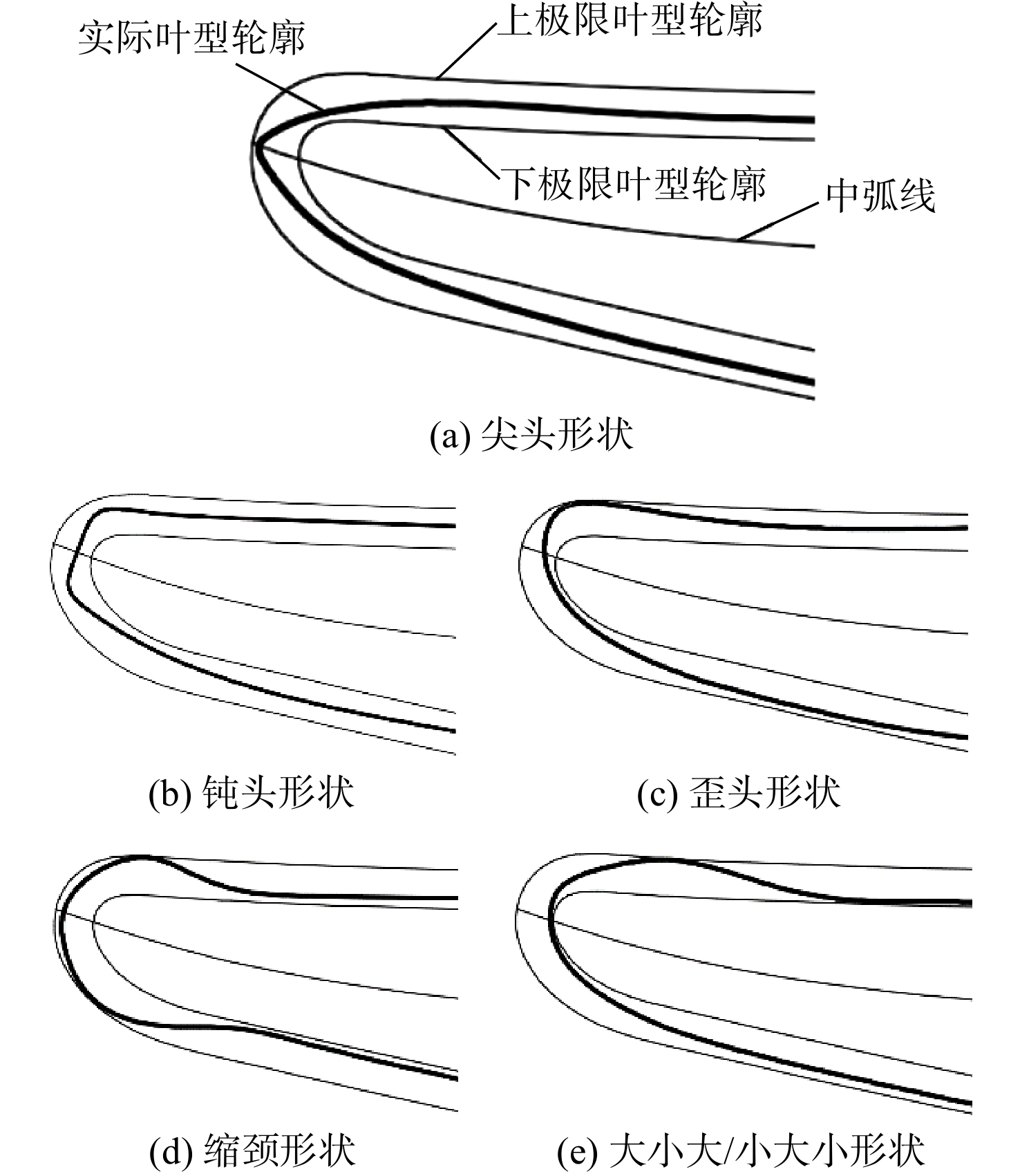
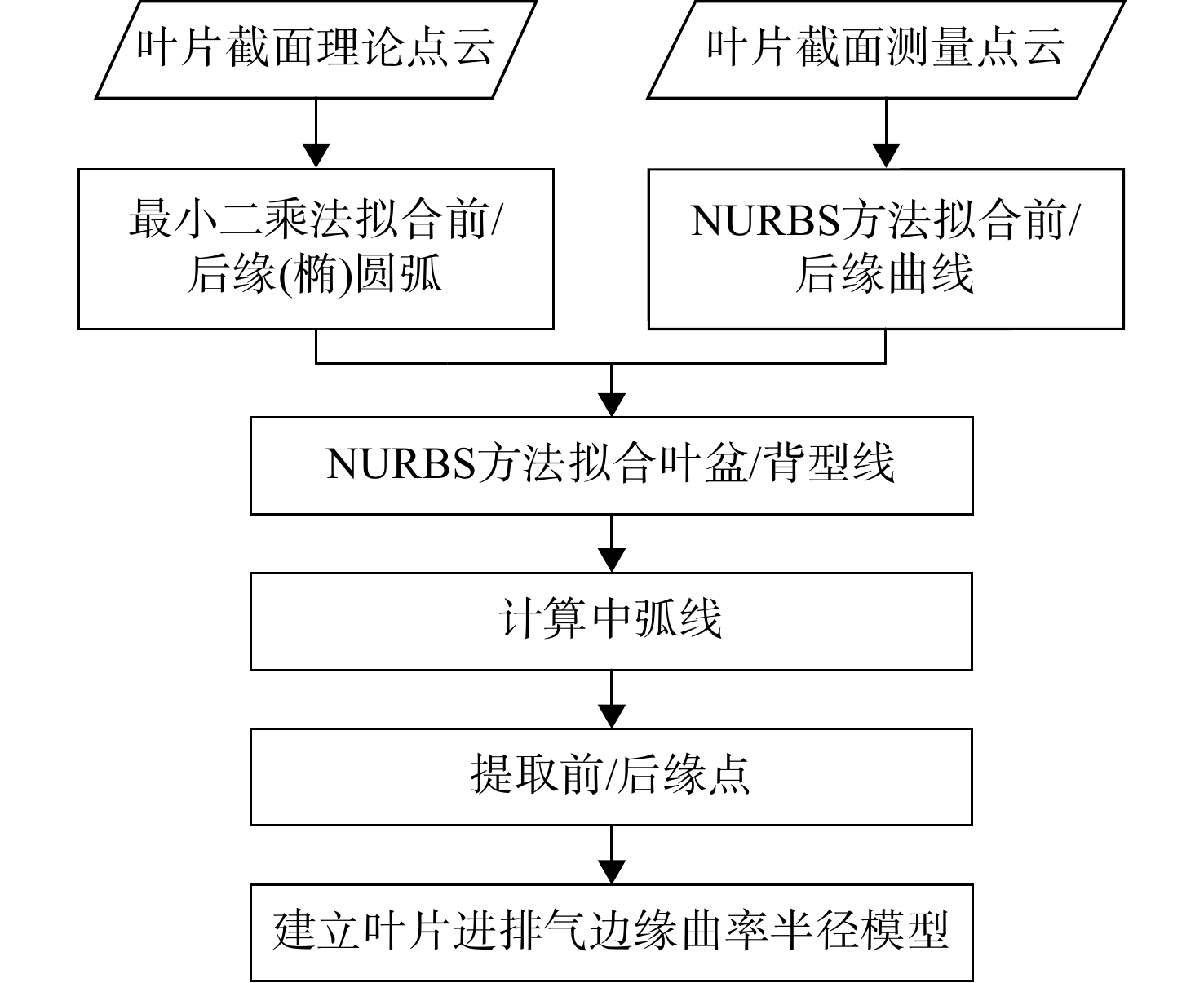
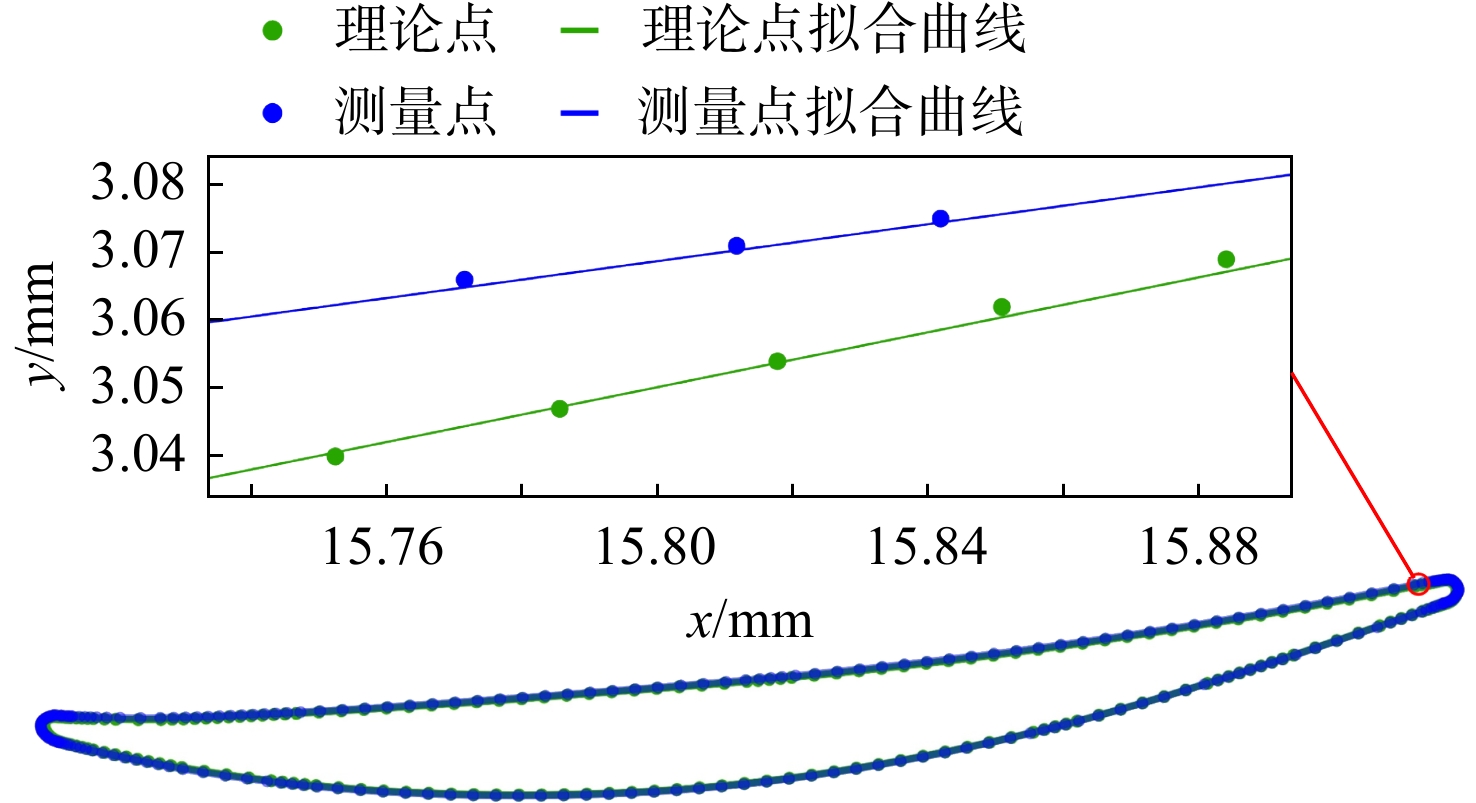
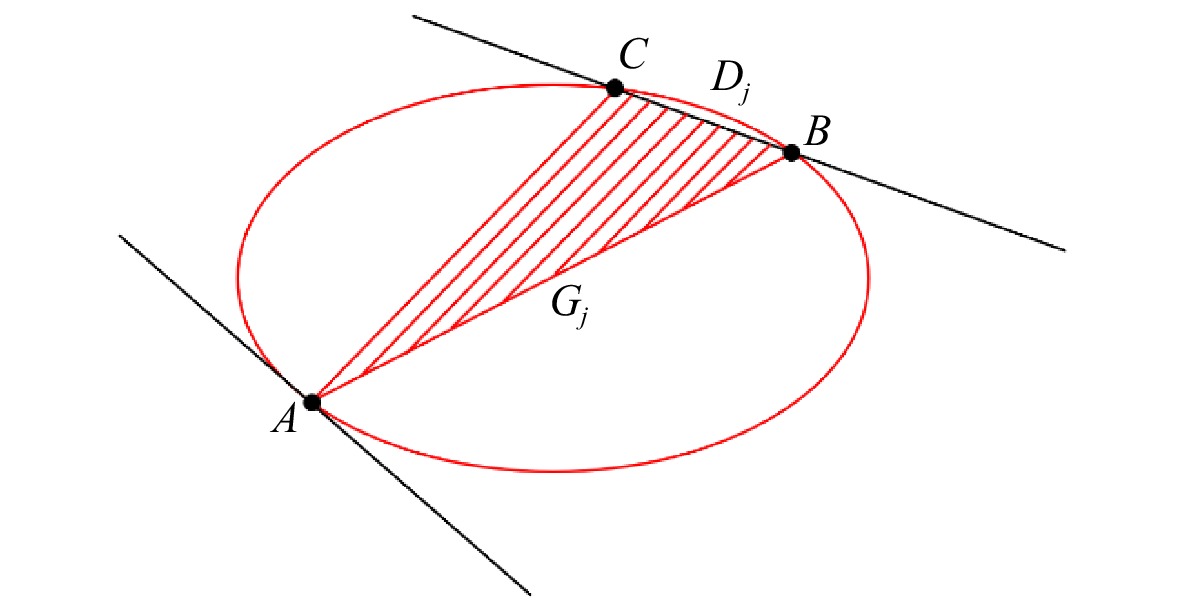
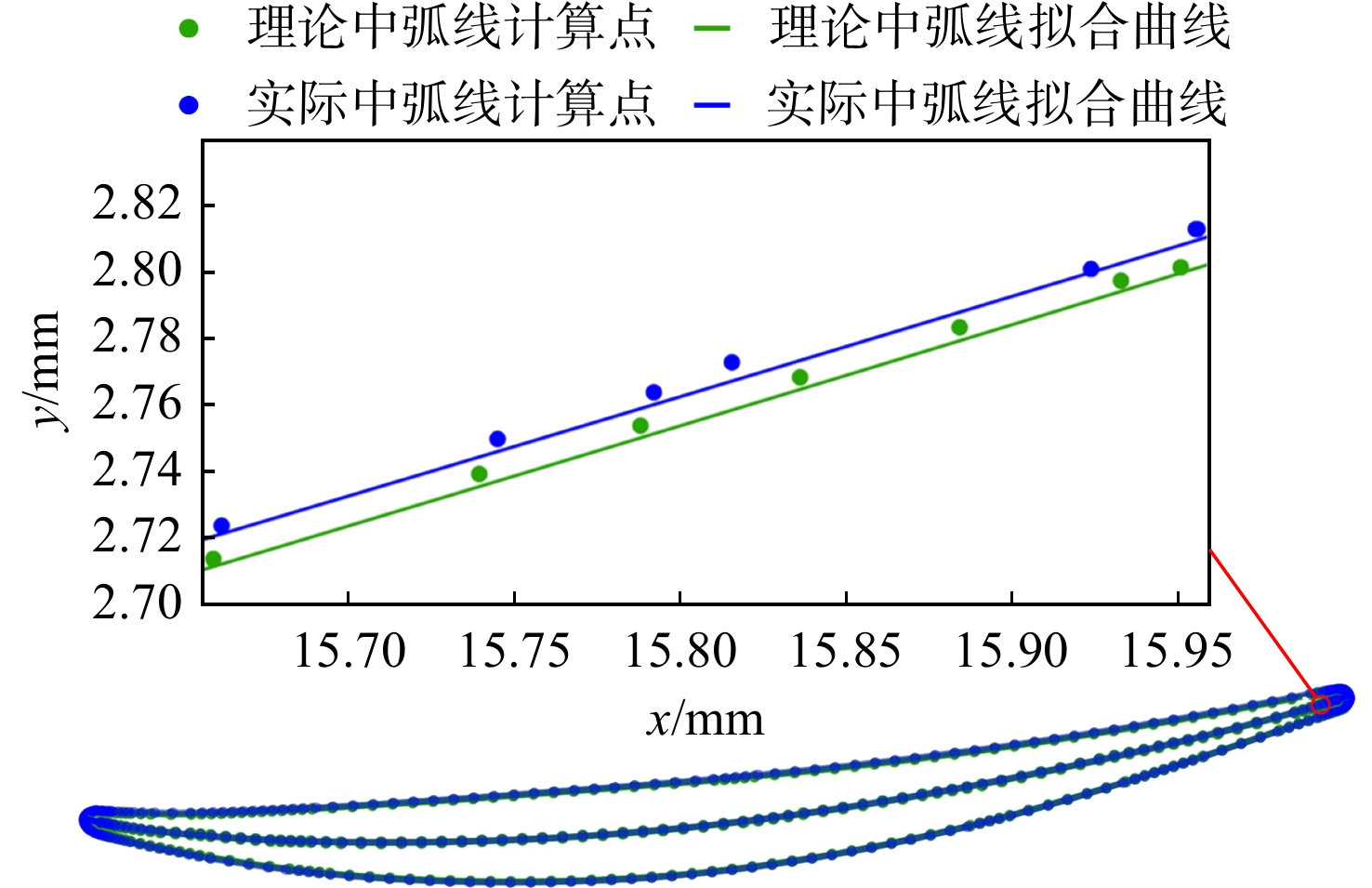
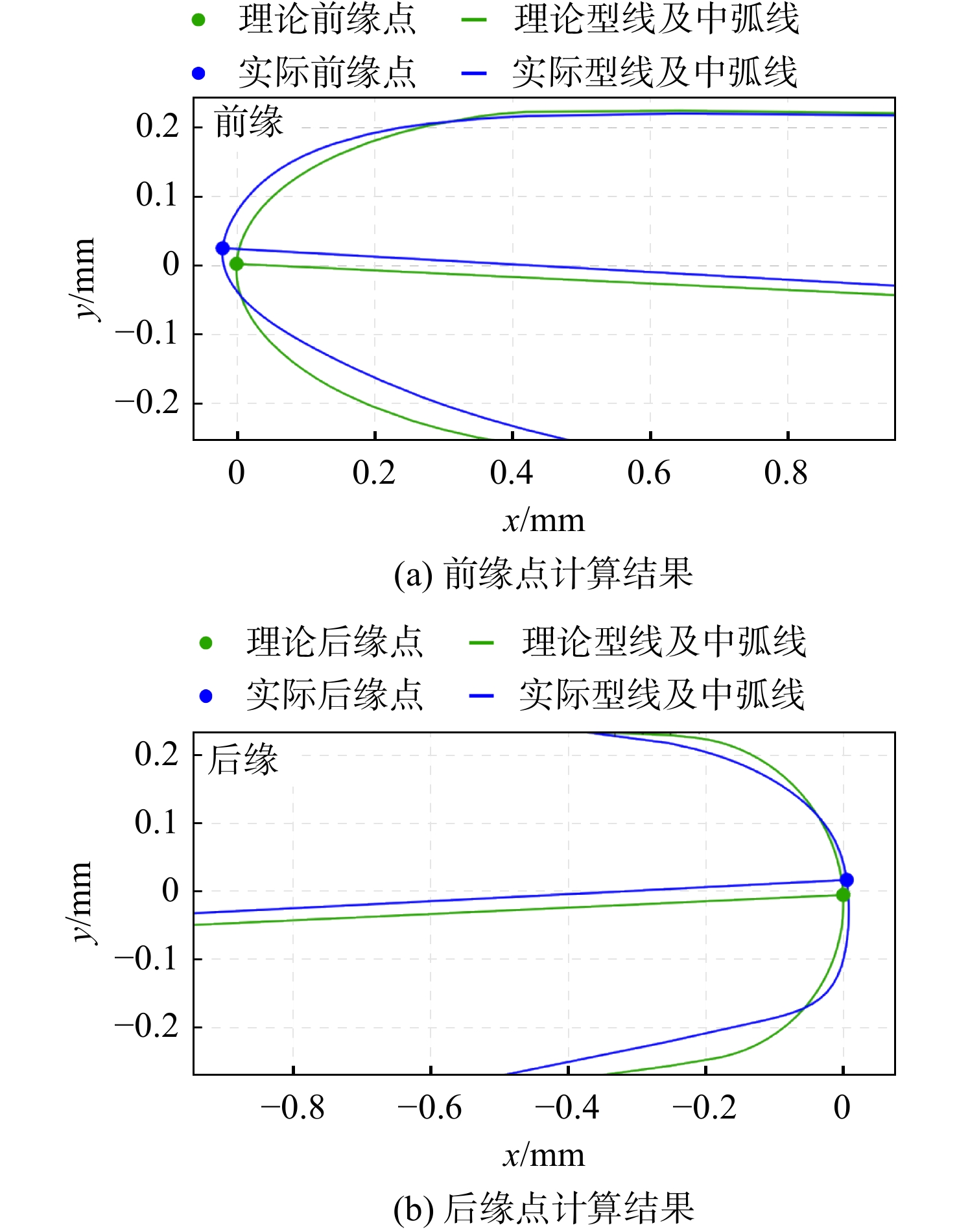
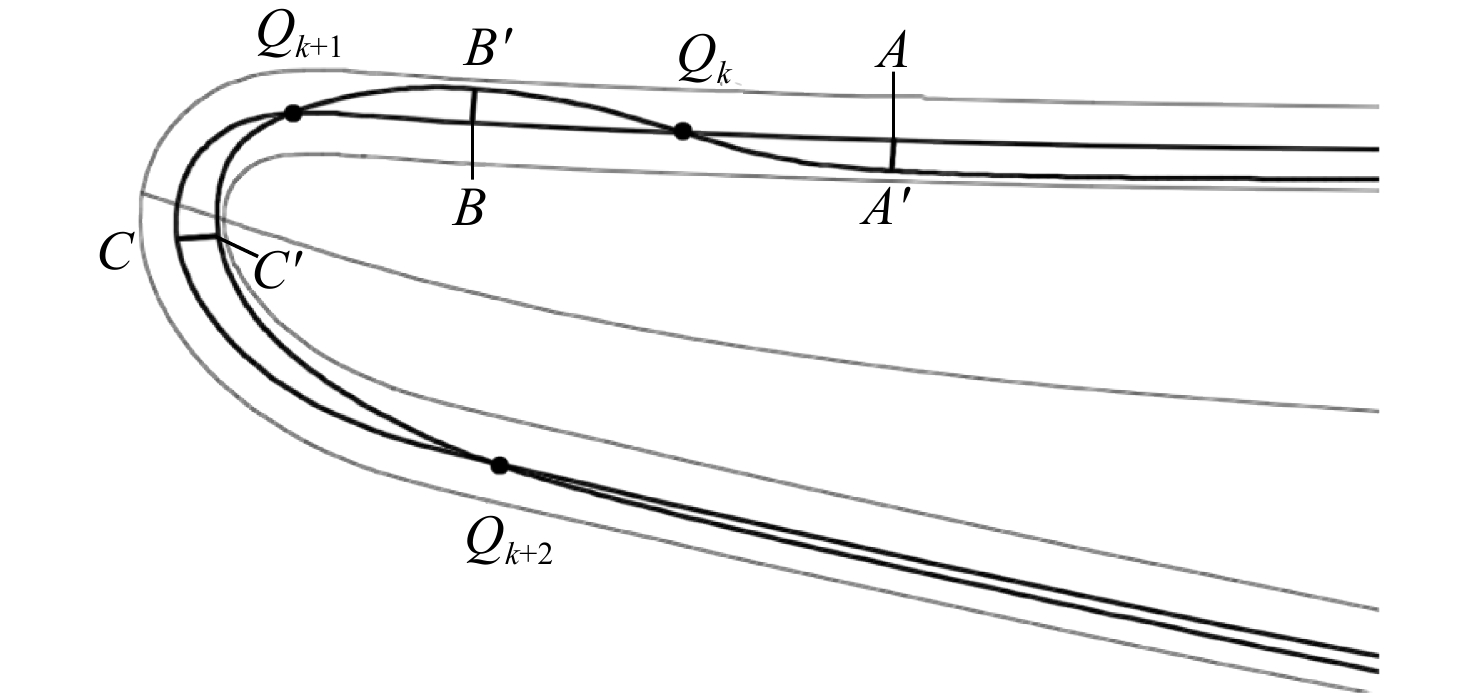
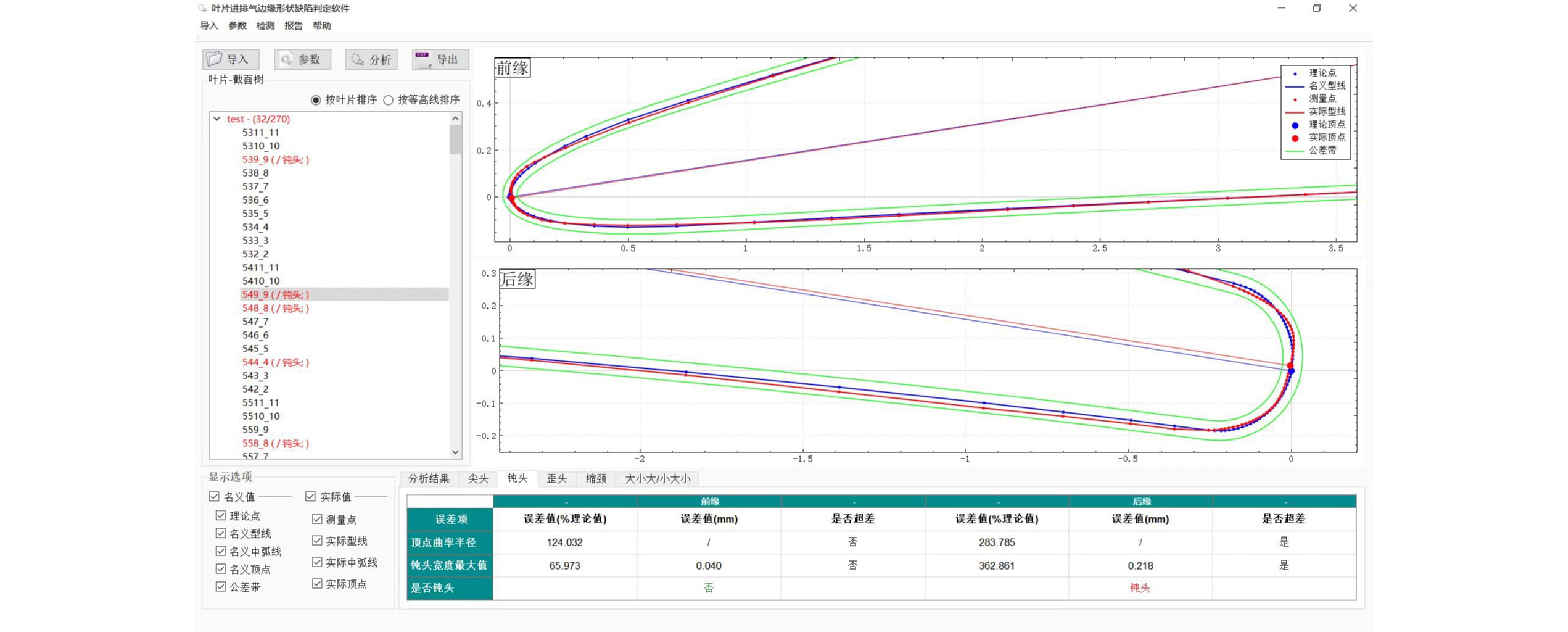
At present, the evaluation of blade inlet and exhaust edge shape mainly relies on manual visual inspection, which has the problems of strong subjectivity and low detection efficiency. An automatic evaluation method of blade inlet and exhaust edge shape was proposed. The blade profile was fitted and the relevant profile parameters were extracted by non-uniform rational B-splines (NURBS) curve fitting, least square elliptic fitting and equal radius method. A qualitative definition was given for the unqualified shapes of five types of blade inlet and exhaust edge. The shape of the blade was evaluated according to the curvature characteristics of the blade inlet and exhaust edges in different shapes and the variation characteristics of deviation values. Experiments showed that the proposed method can realize the automatic evaluation of five edge shapes: cusp, blunt, inclined, necking and large small large/small large small (LSL/SLS). The method has strong versatility for different blade types and acceptance standards, thereby improving the efficiency of the shape evaluation of blade inlet and exhaust edges.

Numerical simulation of shock train oscillation flows caused by periodic throttle disturbances
GAO Wenzhi, ZHAO Pengfei, NING Chongyang, TIAN Ye, NIE Baoping, LI Zhufei
2023, 38(4): 994-1004. doi: 10.13224/j.cnki.jasp.20210524
Abstract:

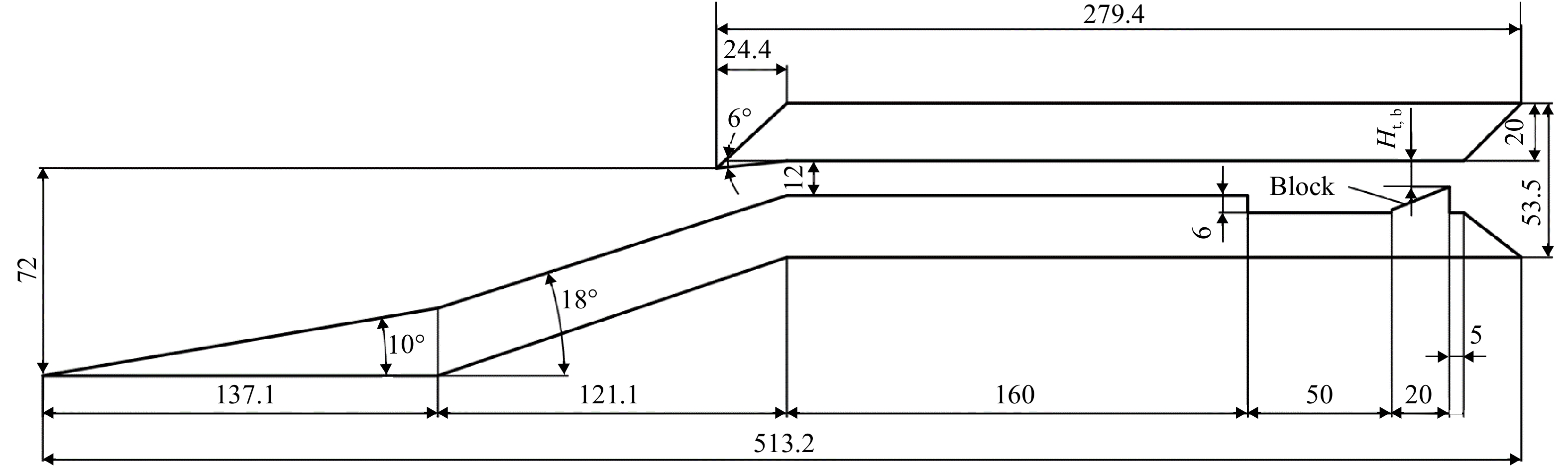
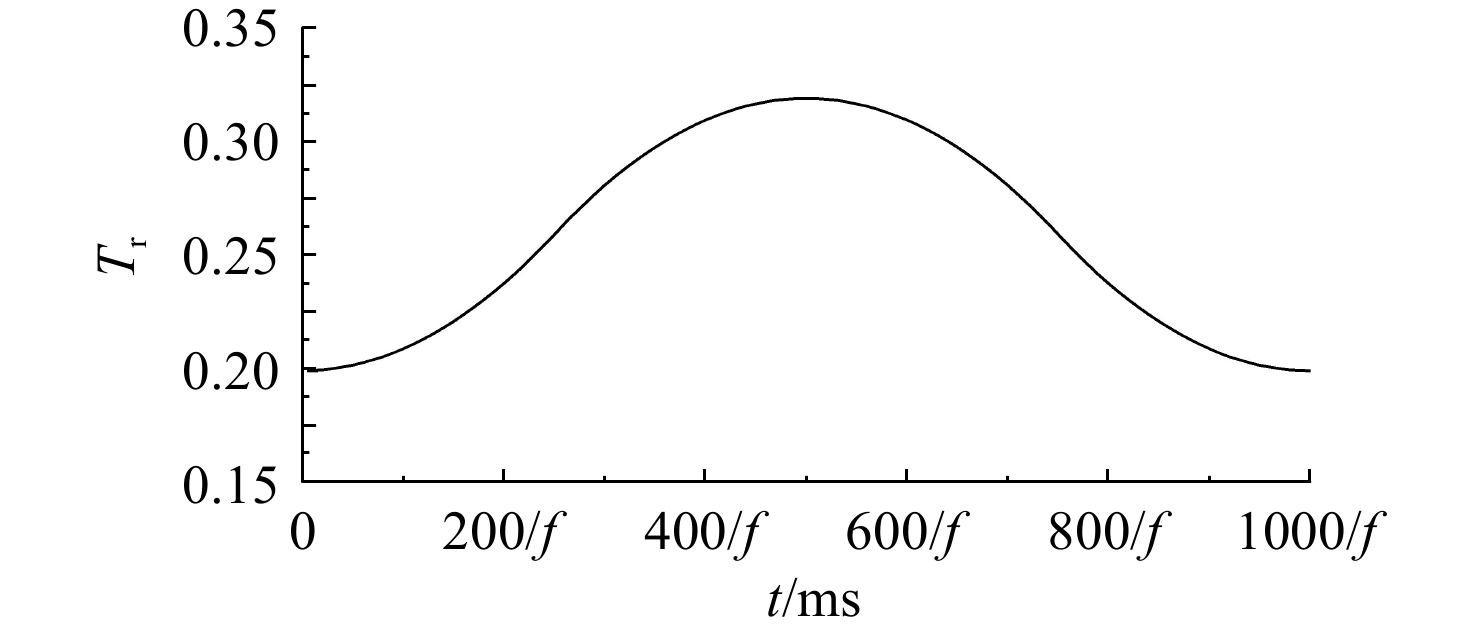
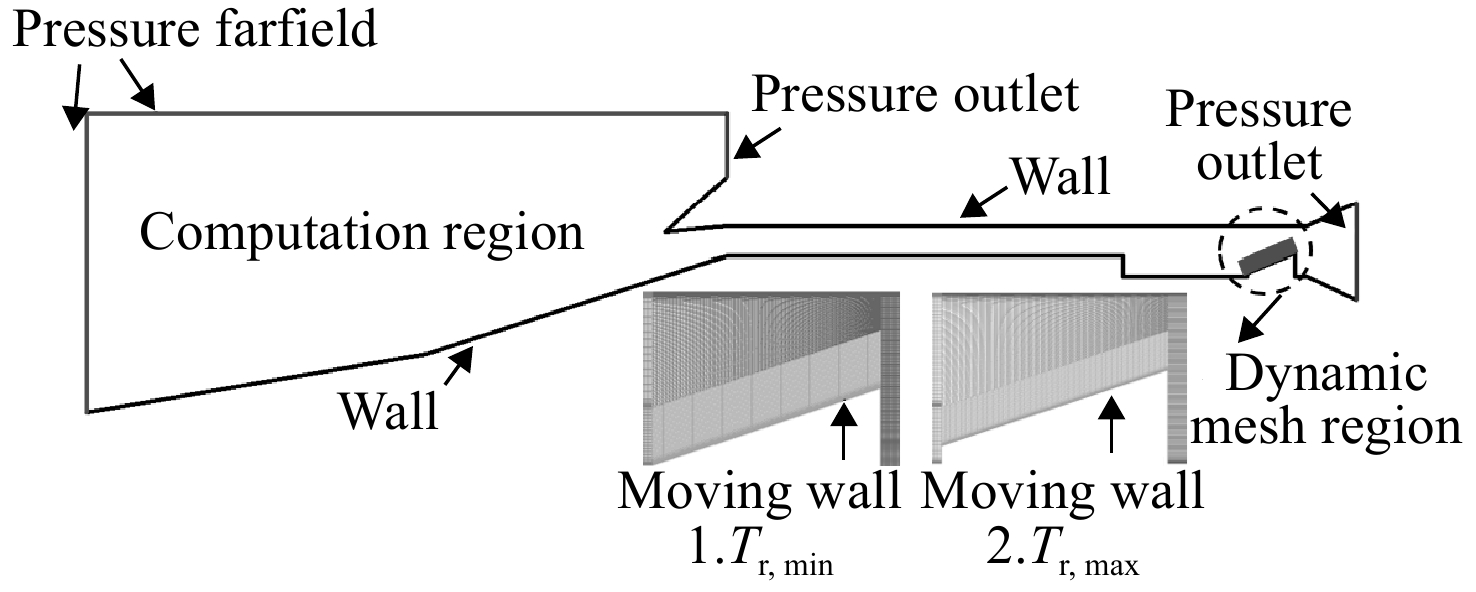
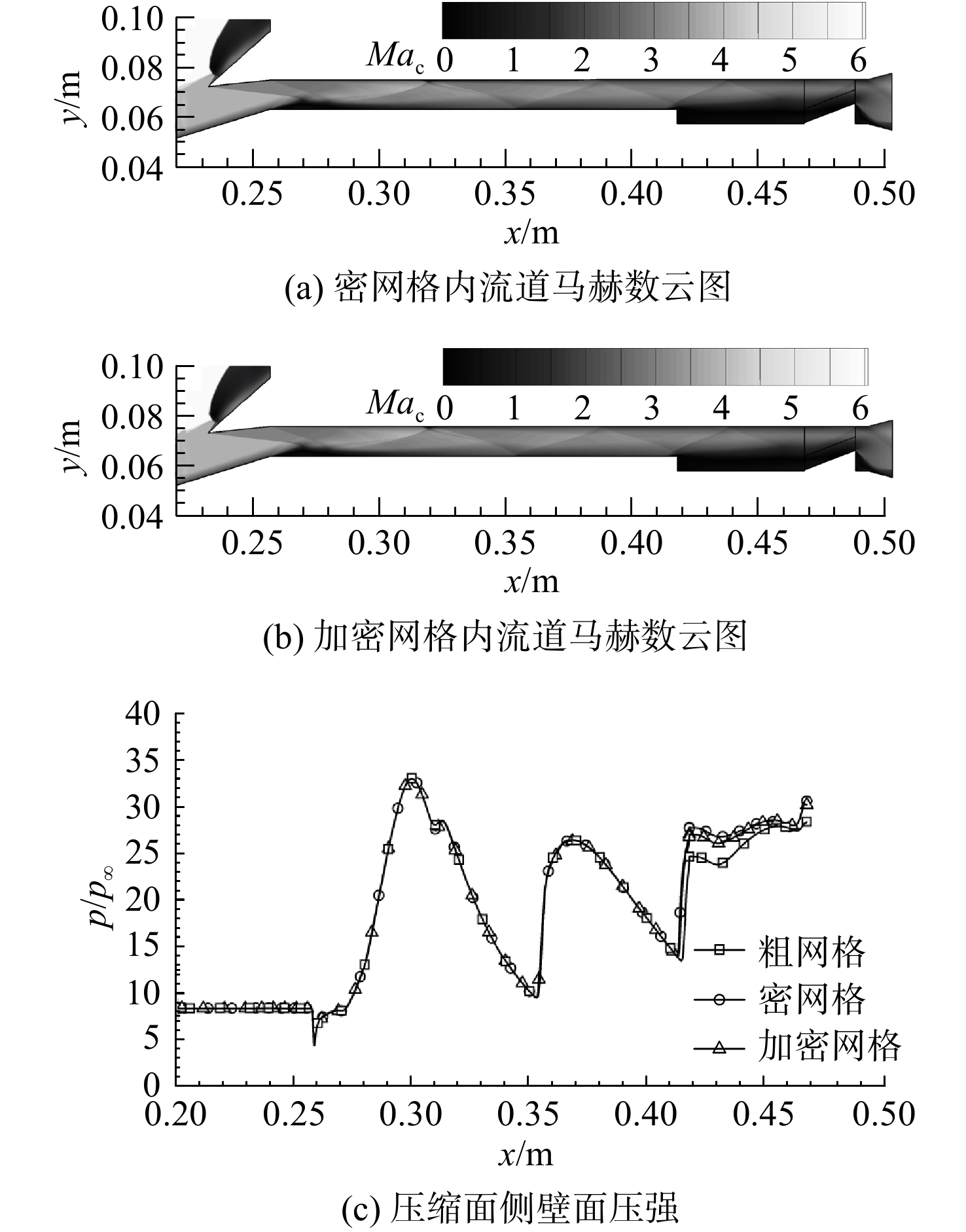
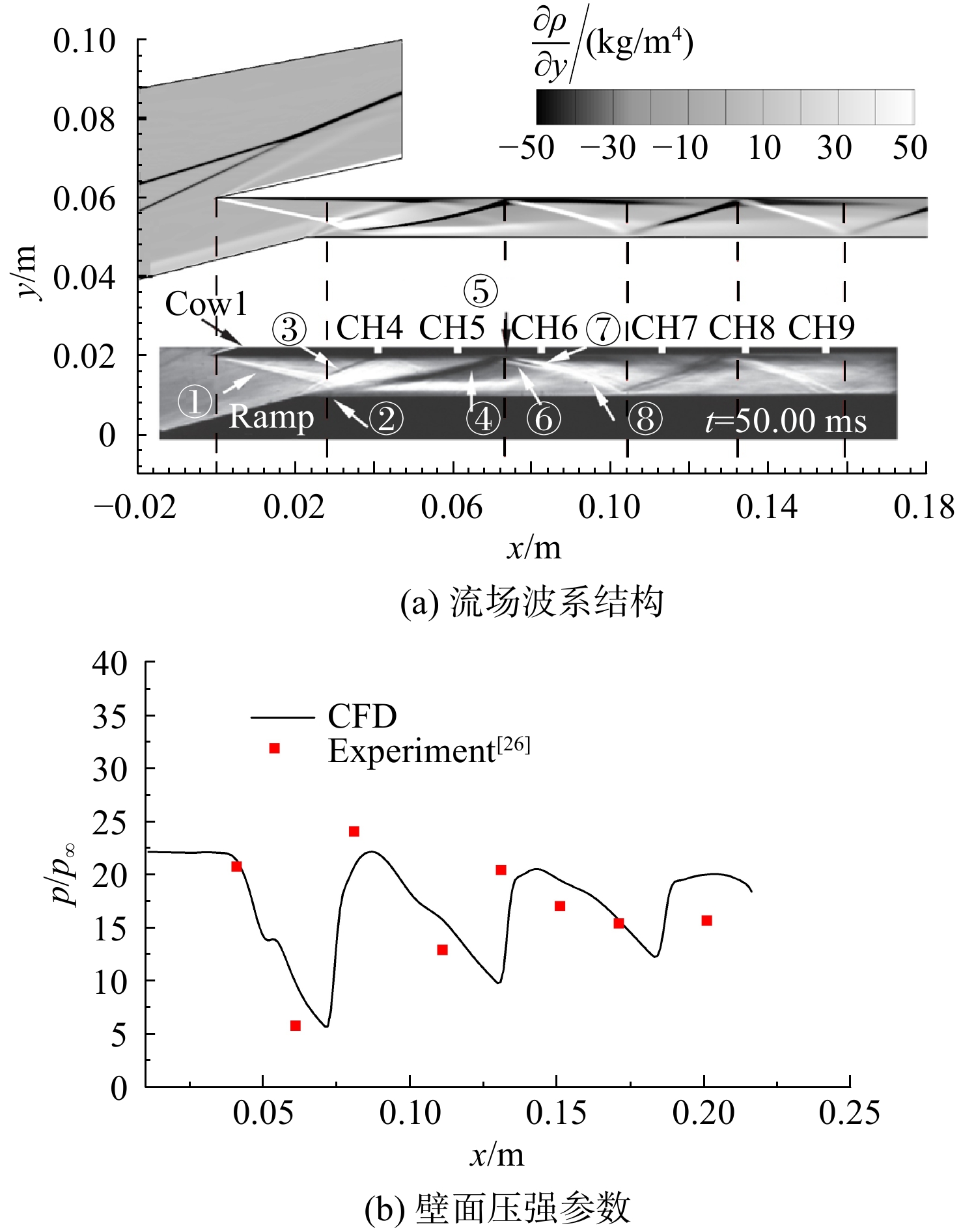
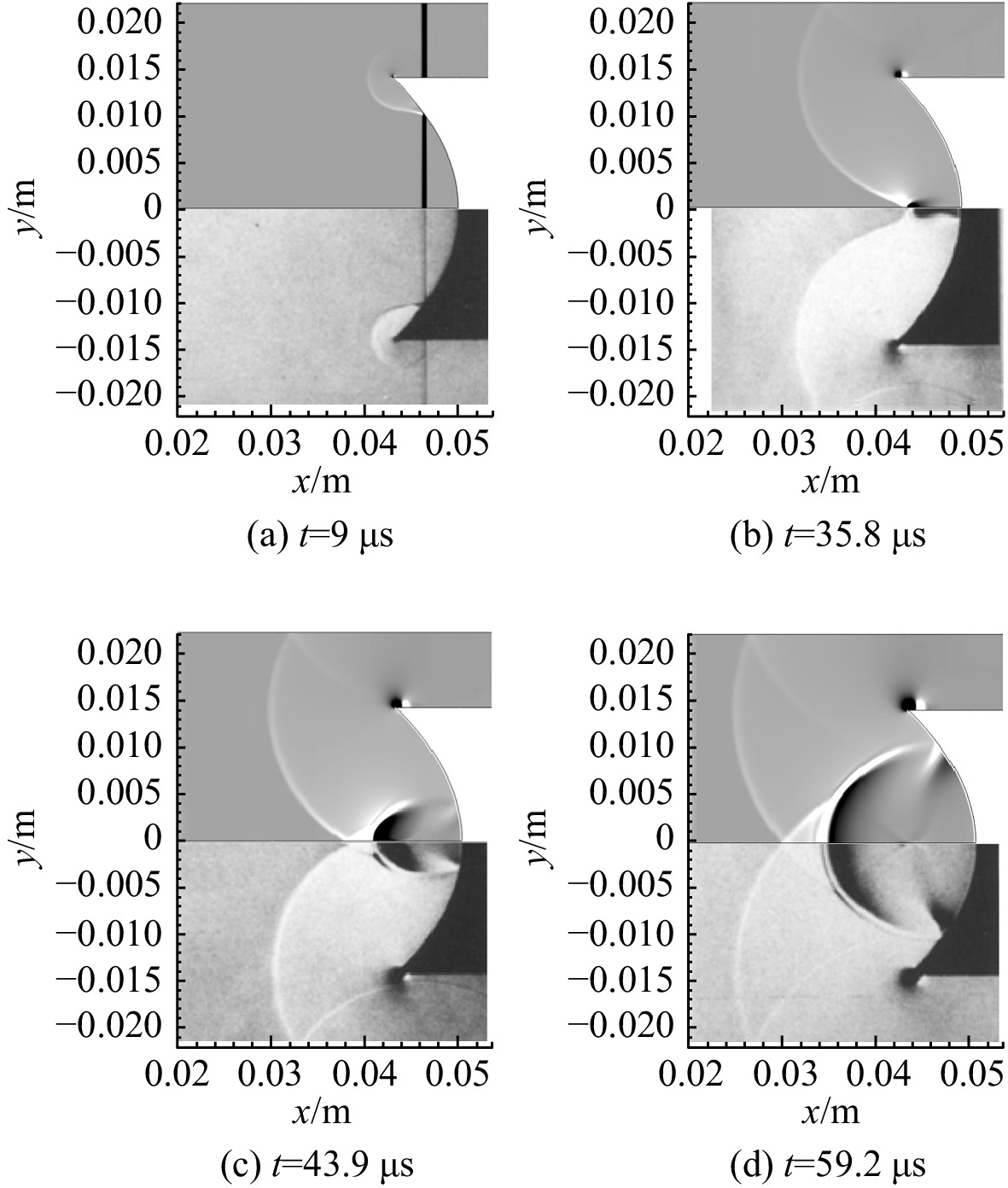
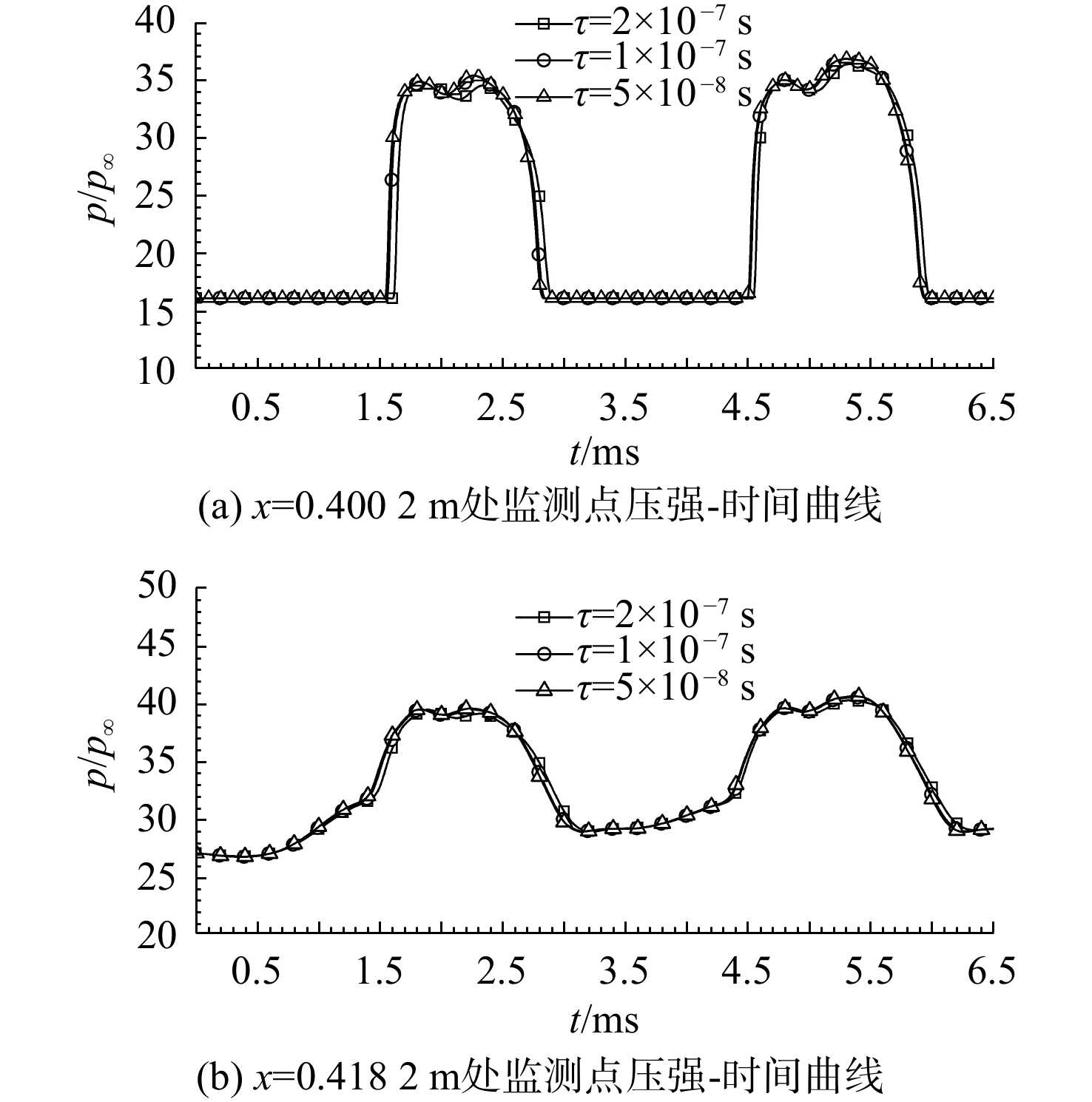
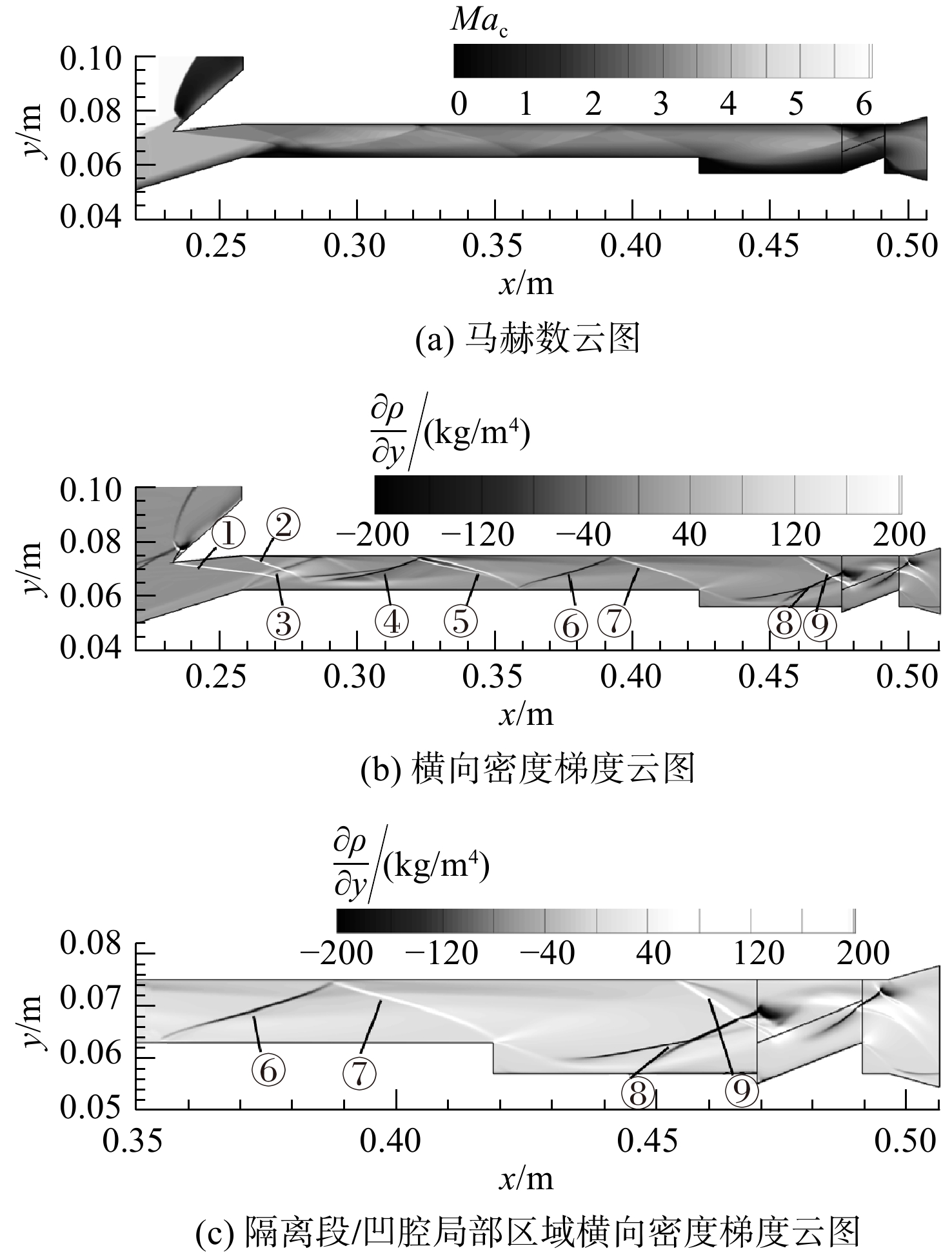
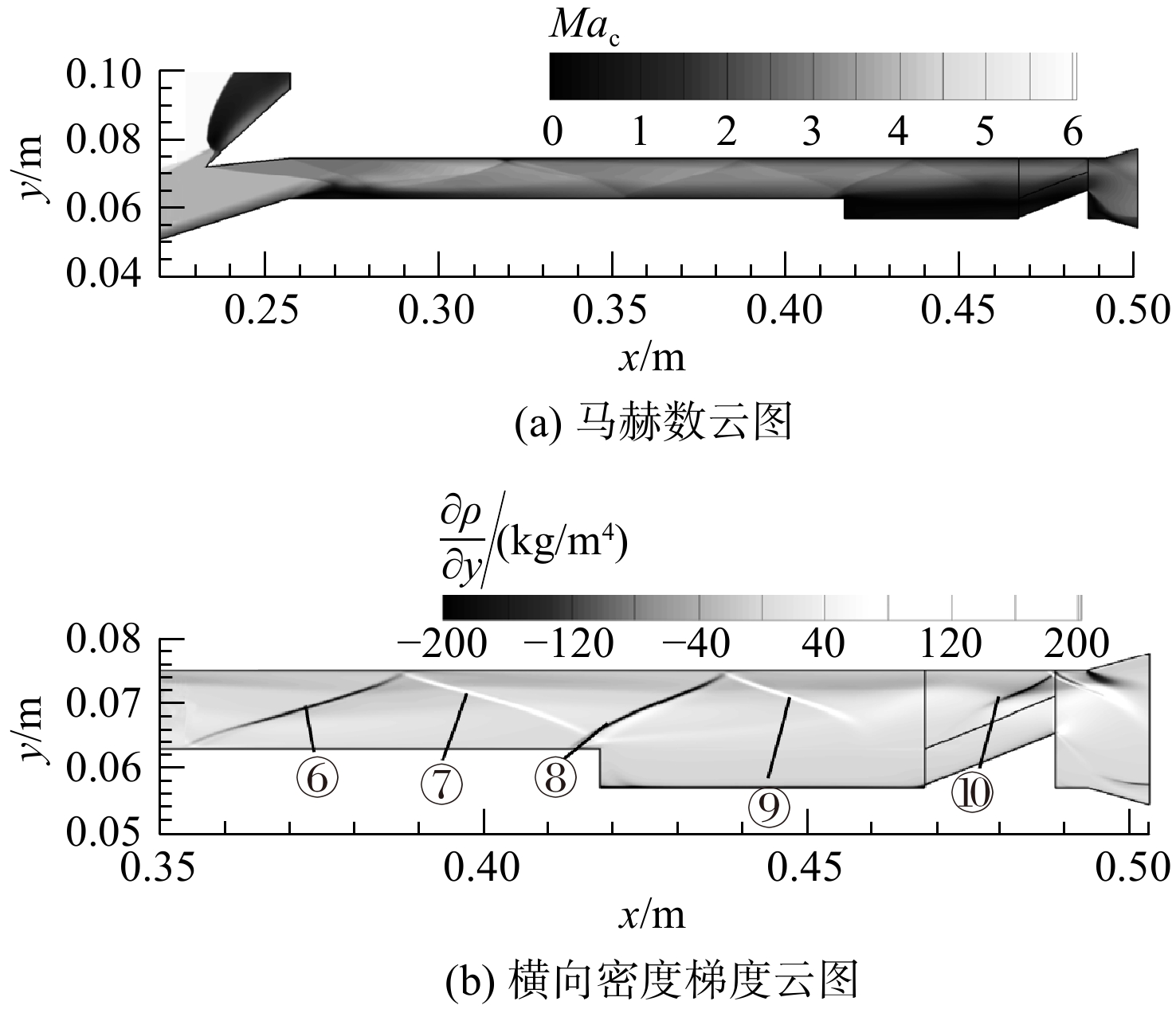
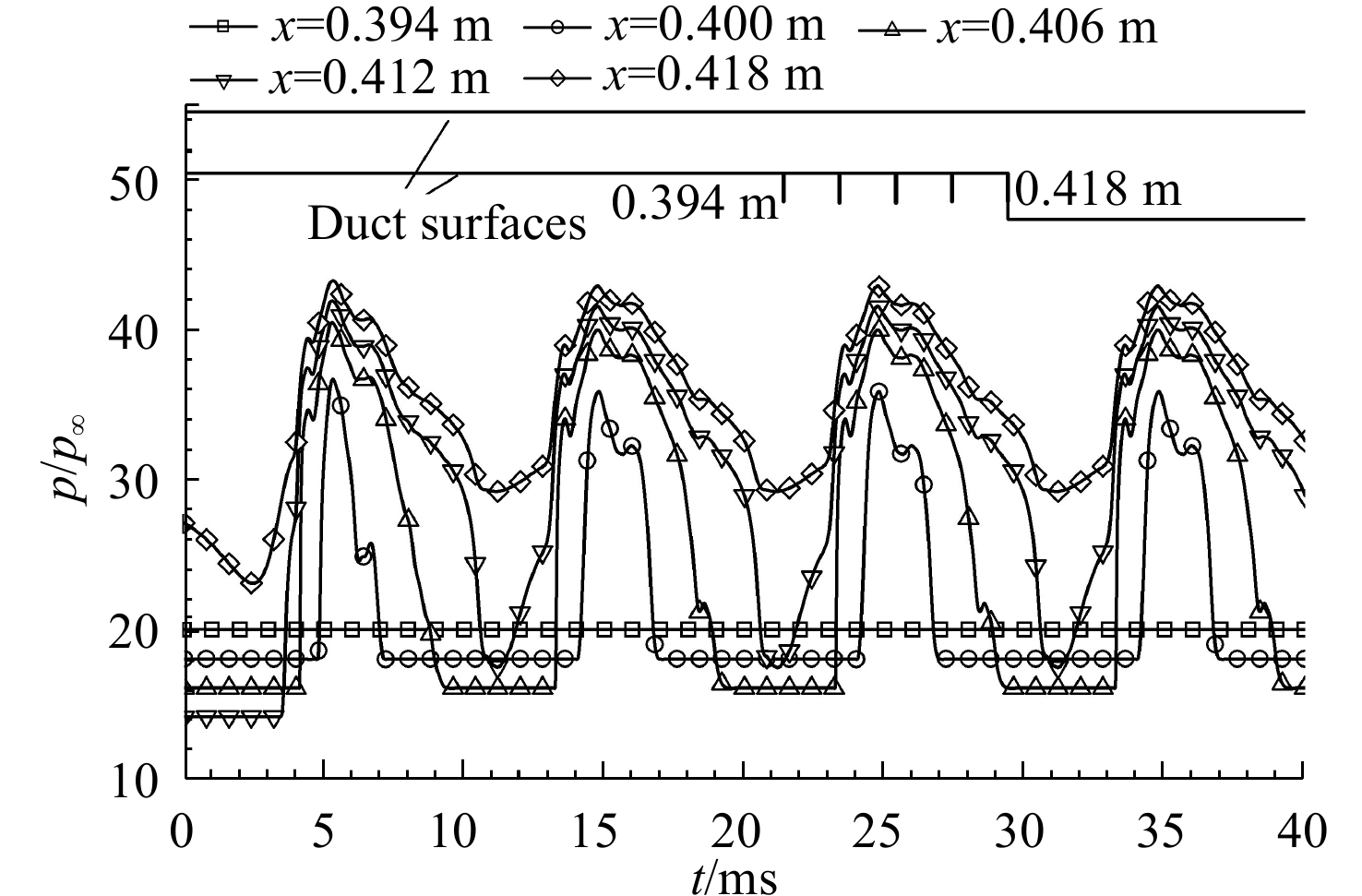
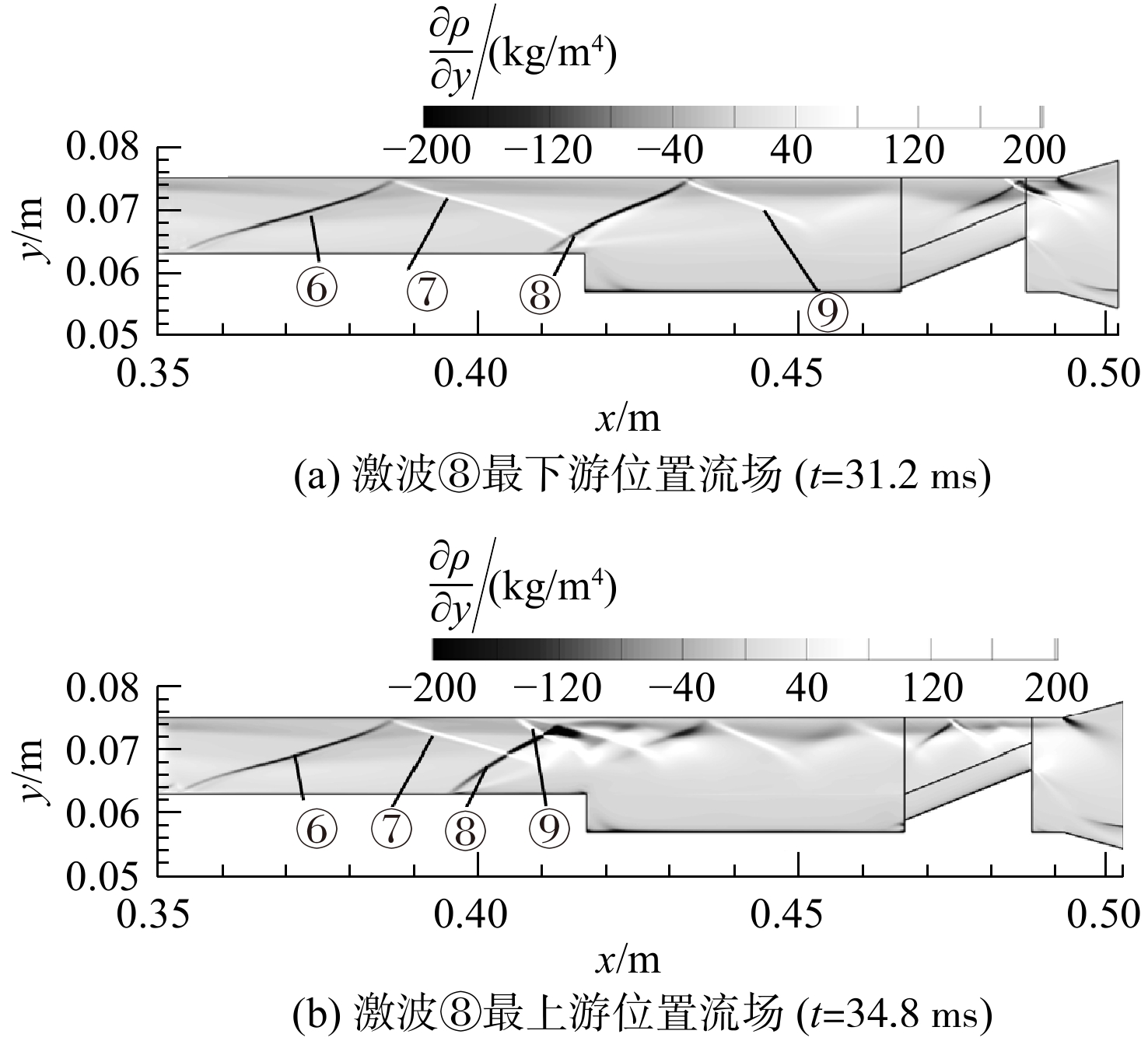
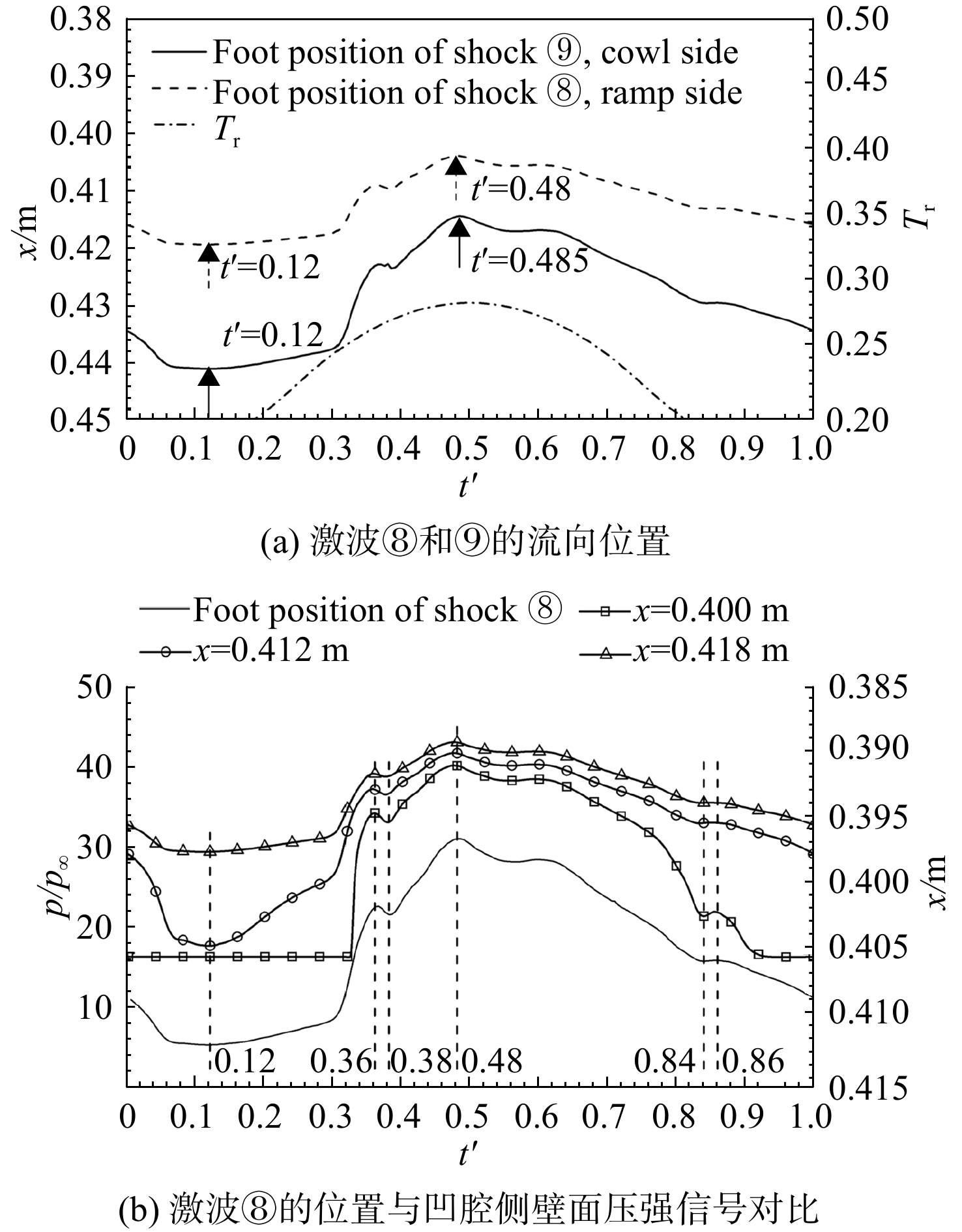
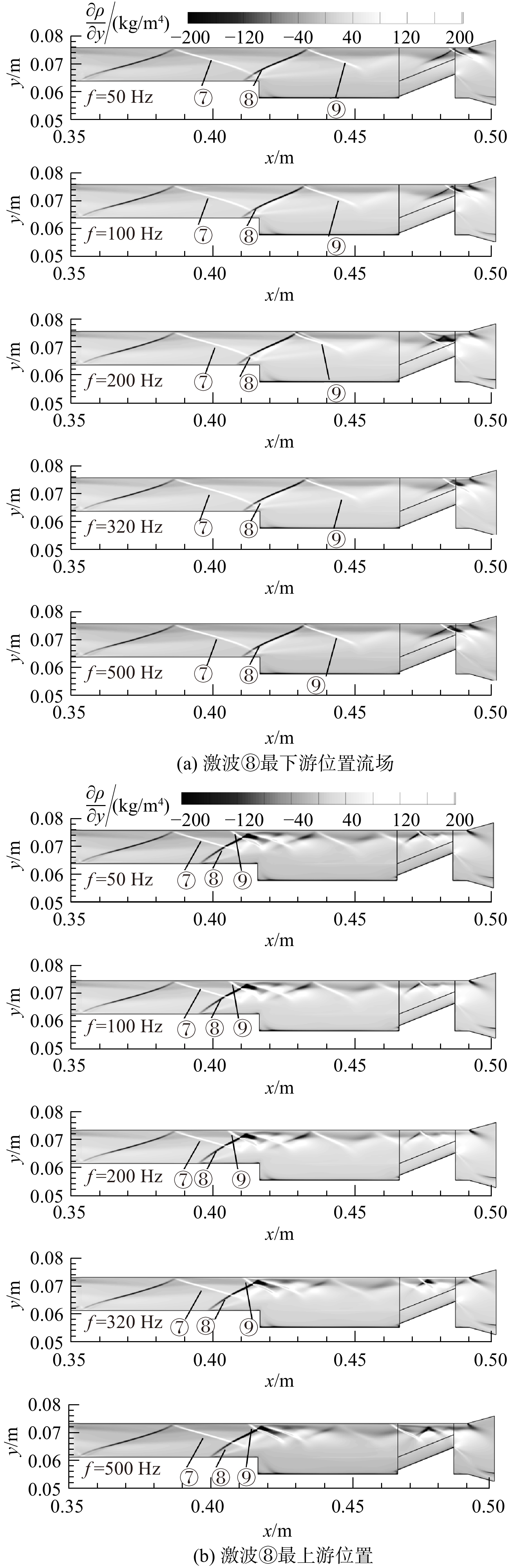
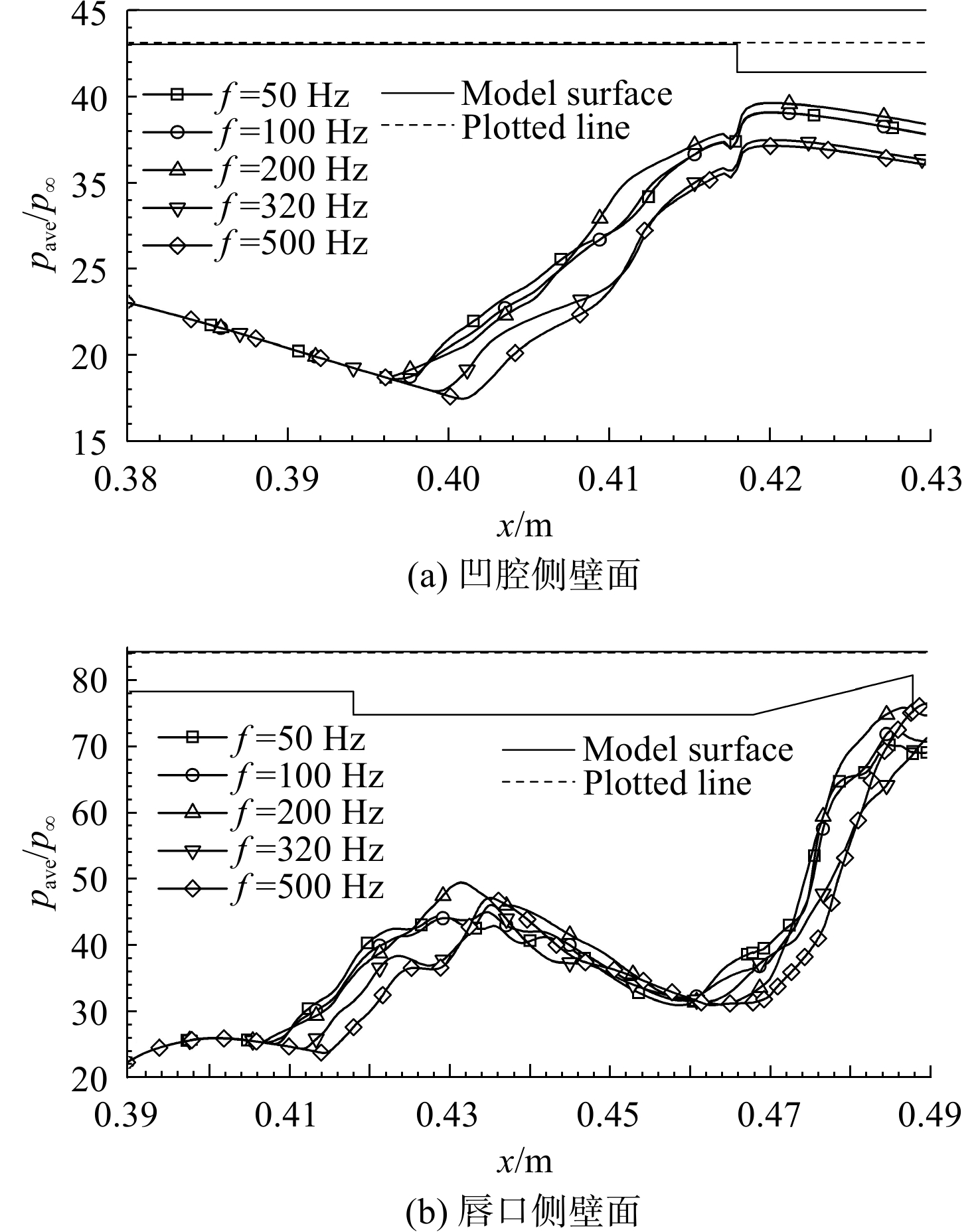
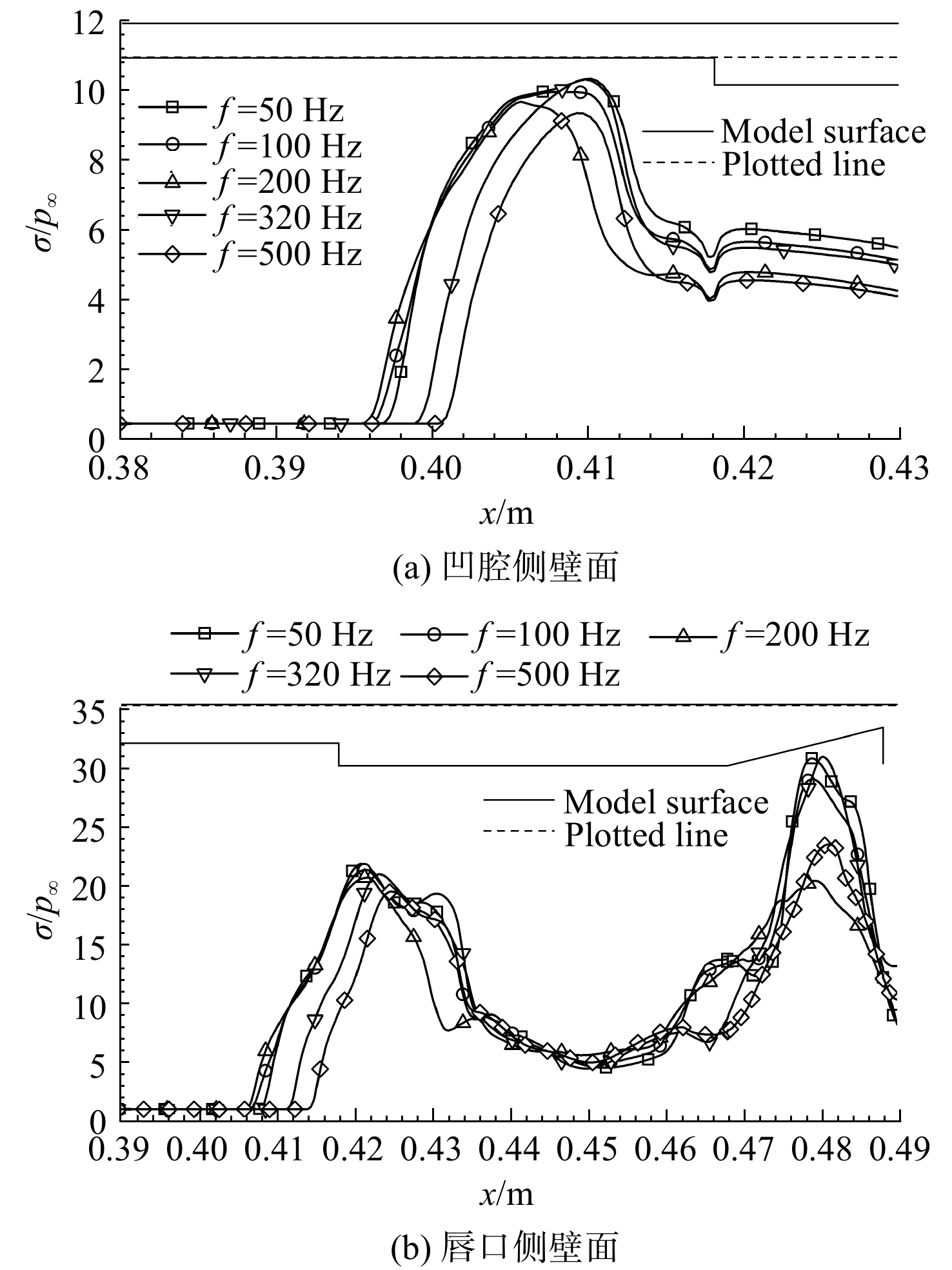
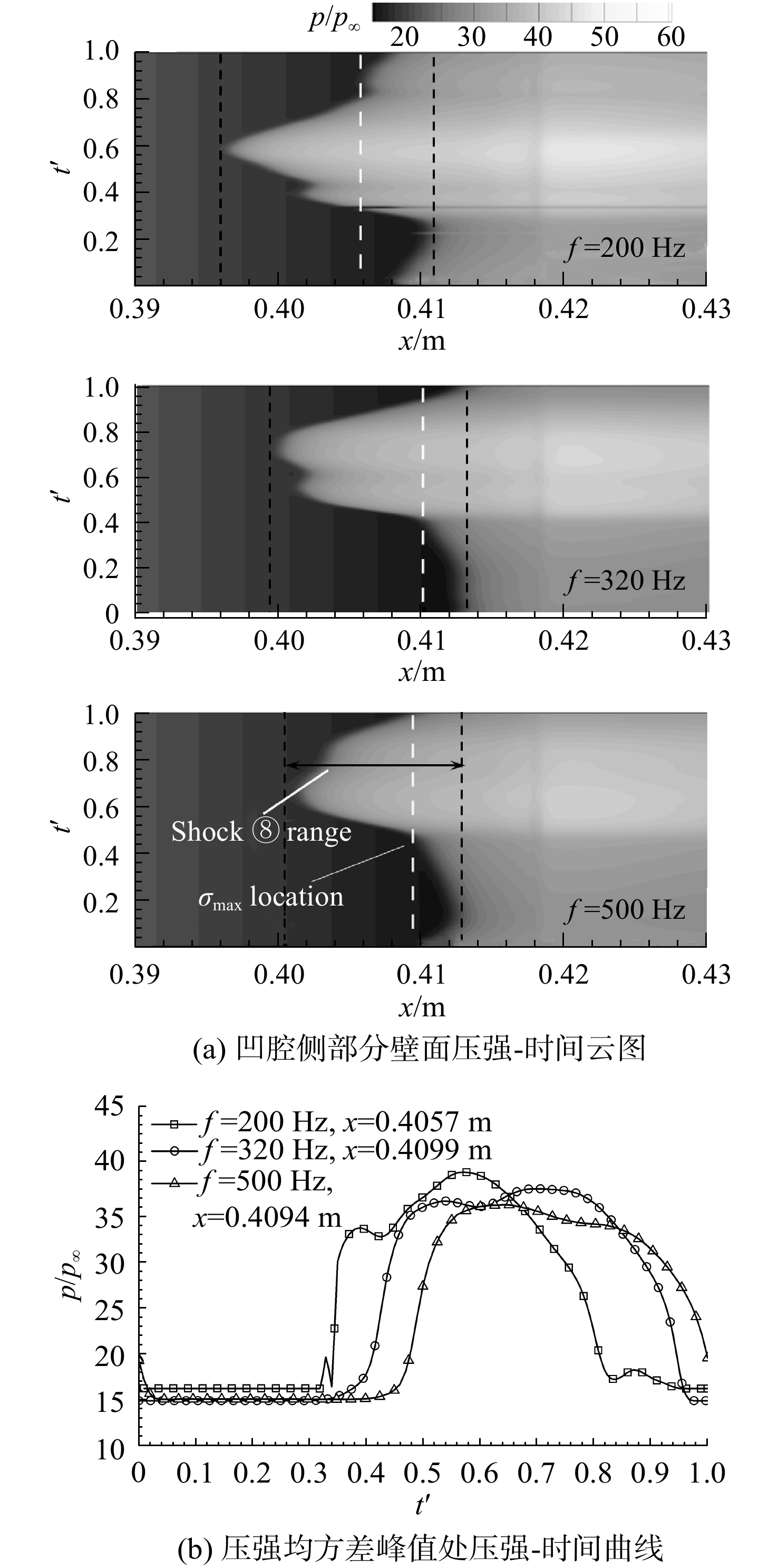
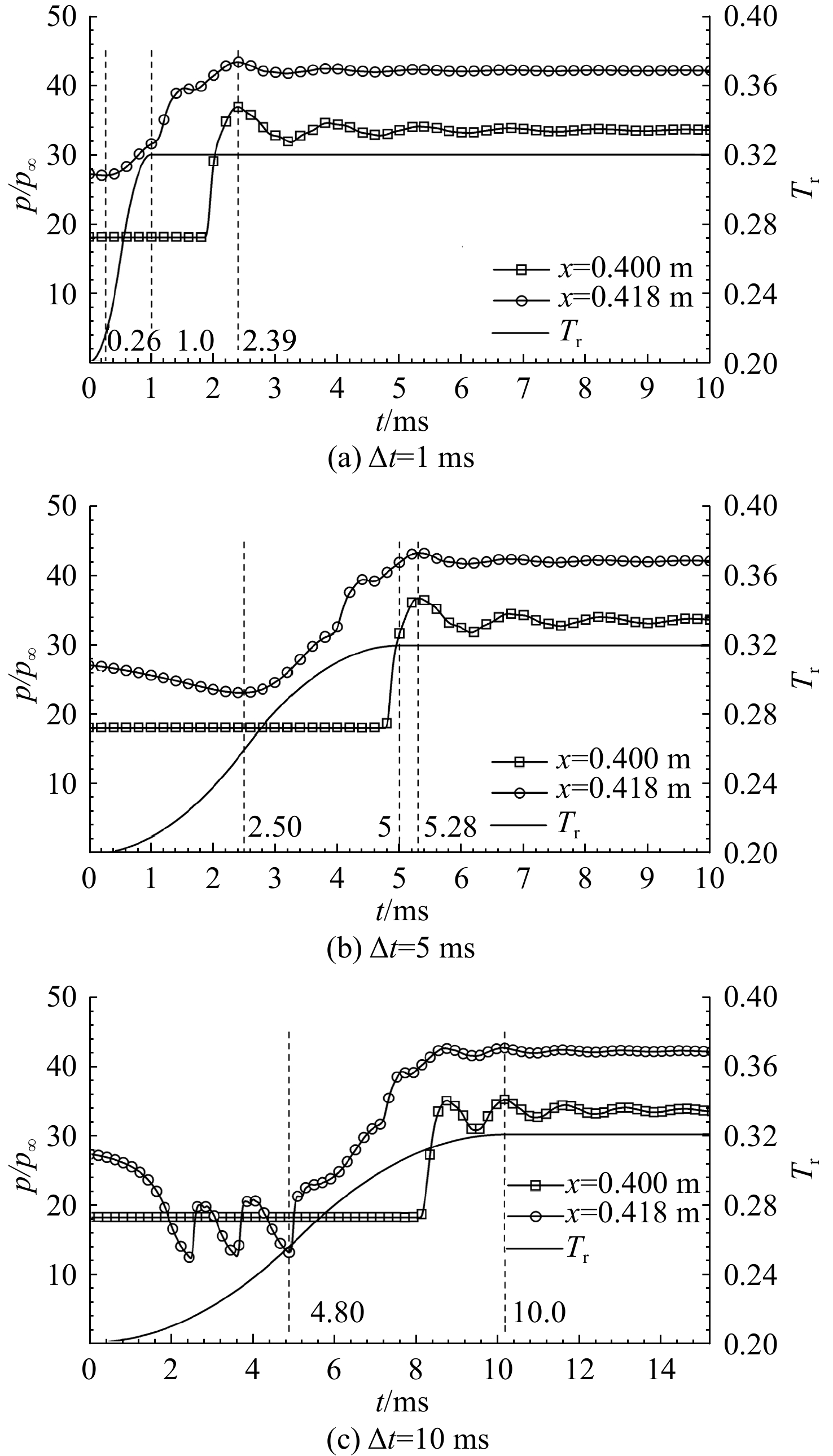
Based on the dynamic mesh method, the shock train oscillation flows of a two-dimensional inlet/isolator configuration caused by periodical throttle at frequencies from 50 to 500 Hz were investigated through numerical simulations under Mach number 6 freestream. The results showed that evident shock train oscillations appeared as the throttling ratio varied periodically within the range of (0.2−0.32), and the oscillation frequency accorded with the throttling disturbance frequency. The throttling frequency evidently affected the oscillation amplitude of the shock train and the characteristics of the wall pressure fluctuation. The oscillation ranges of shock train decreased with the increase of throttling frequency higher than or equal to 100 Hz, despite of the similar values between 50 Hz and 100 Hz conditions. The streamwise oscillation range was 15.5 mm and 10.8 mm under 100 Hz and 500 Hz conditions, respectively. Variation law of wall pressure with throttling frequency was complex. Time-averaged magnitudes and mean square deviations of the wall pressures decreased as the throttling frequency increased for the upstream section of the central part of cavity, while the variation laws of wall pressure were ambiguous for the downstream section. The highest square mean deviation was 21 times the freestream static pressure for the cowl sidewall pressure under 50 Hz condition. The analyses showed that variations of shock train oscillation with frequency were related to the response time of inlet/isolator flows to throttle disturbances. It is necessary to comprehensively consider the influences of configurations and back pressure parameters on shock train oscillation in engineering design.

Autocontrol
Bearing fault size estimation based on convolutional bidirectional long and short term memory networks
LIU Xiyang, CHEN Guo, HAO Tengfei, PAN Wenping
2023, 38(4): 1005-1016. doi: 10.13224/j.cnki.jasp.20210292
Abstract:

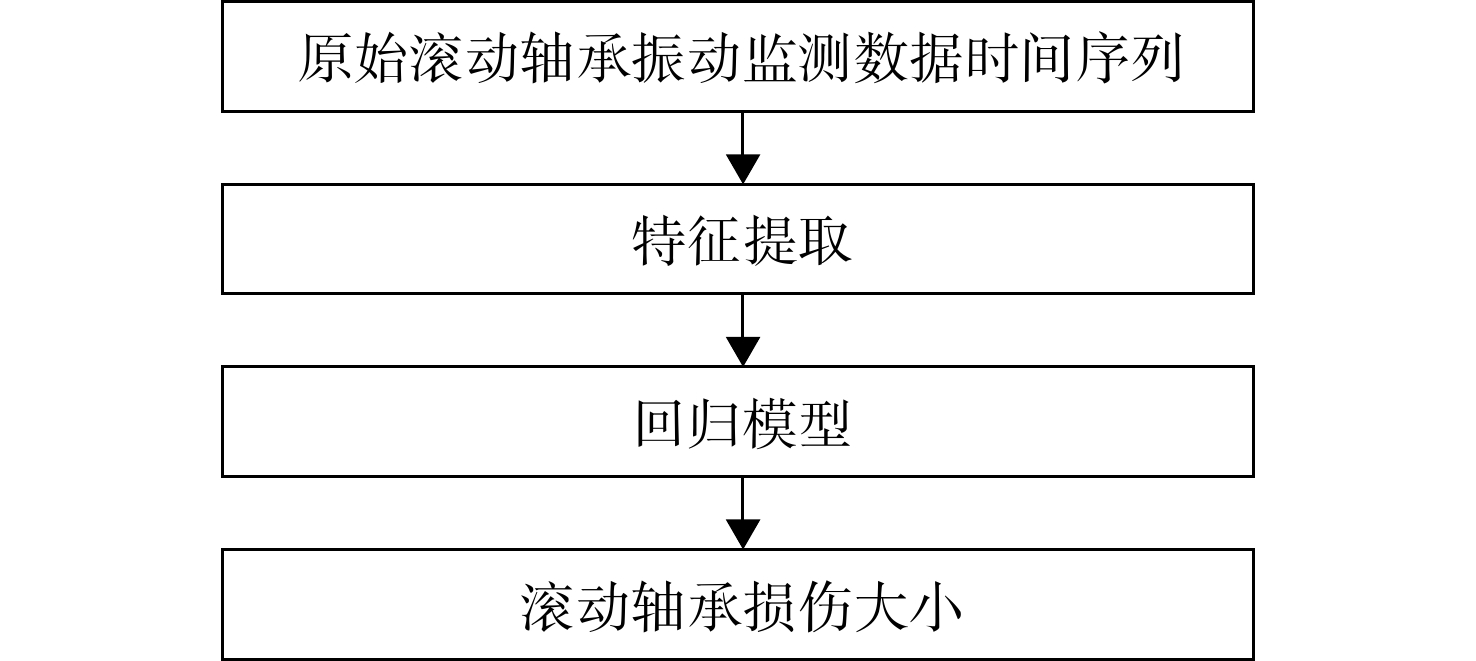
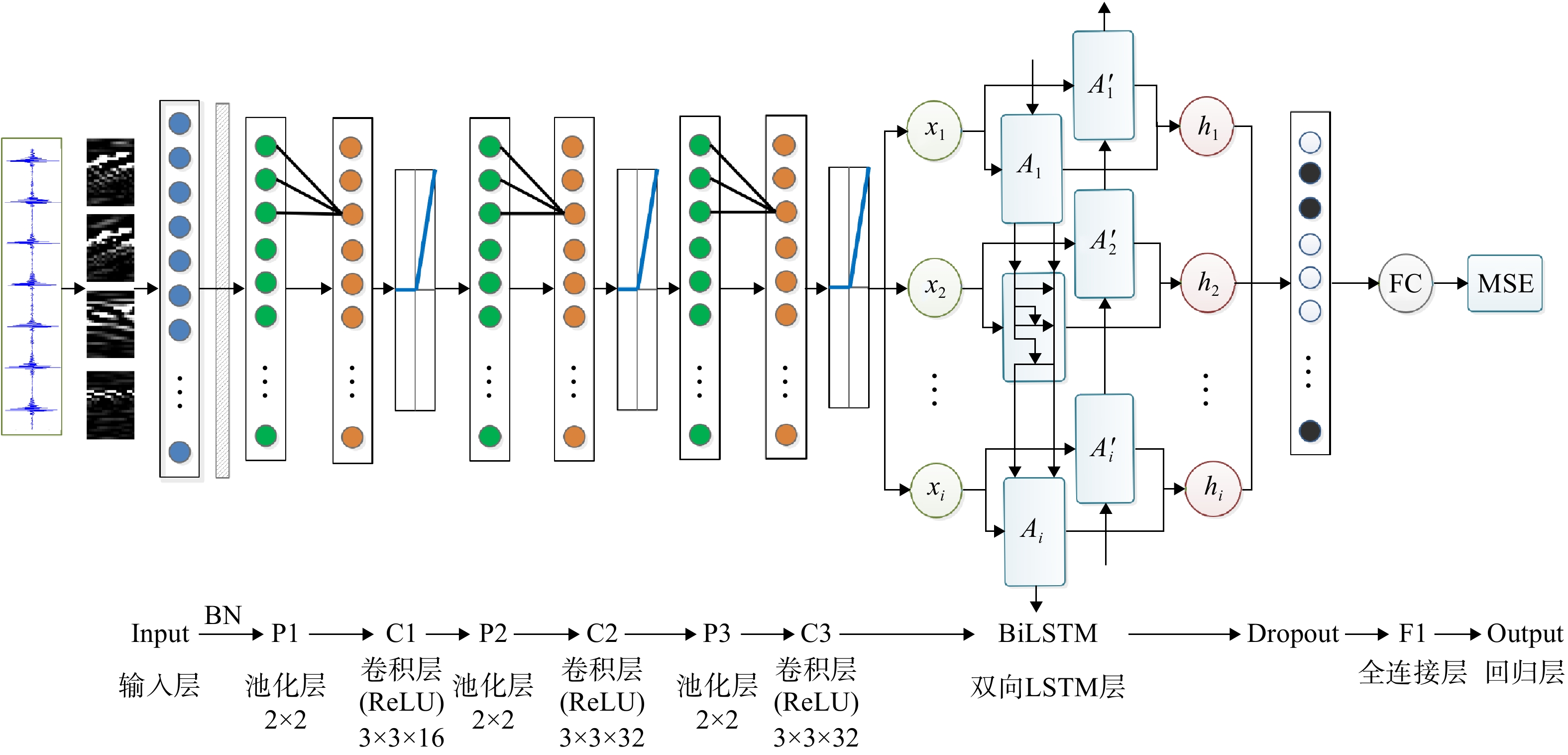
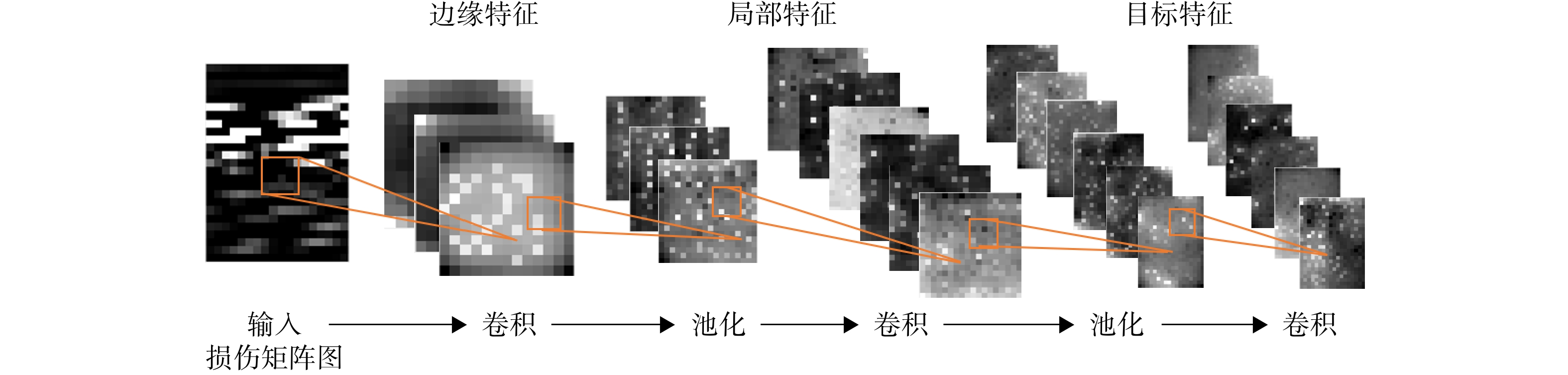
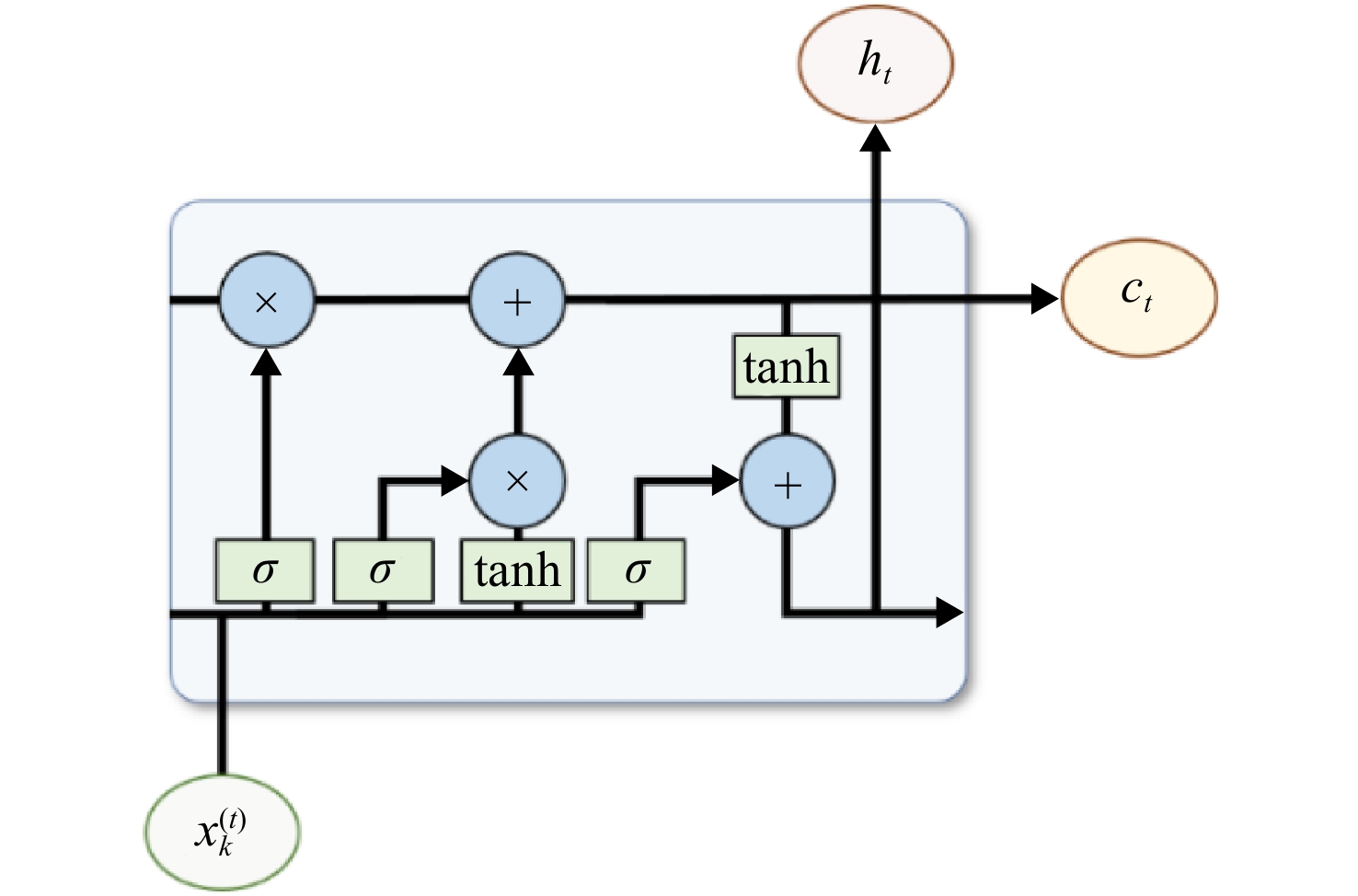
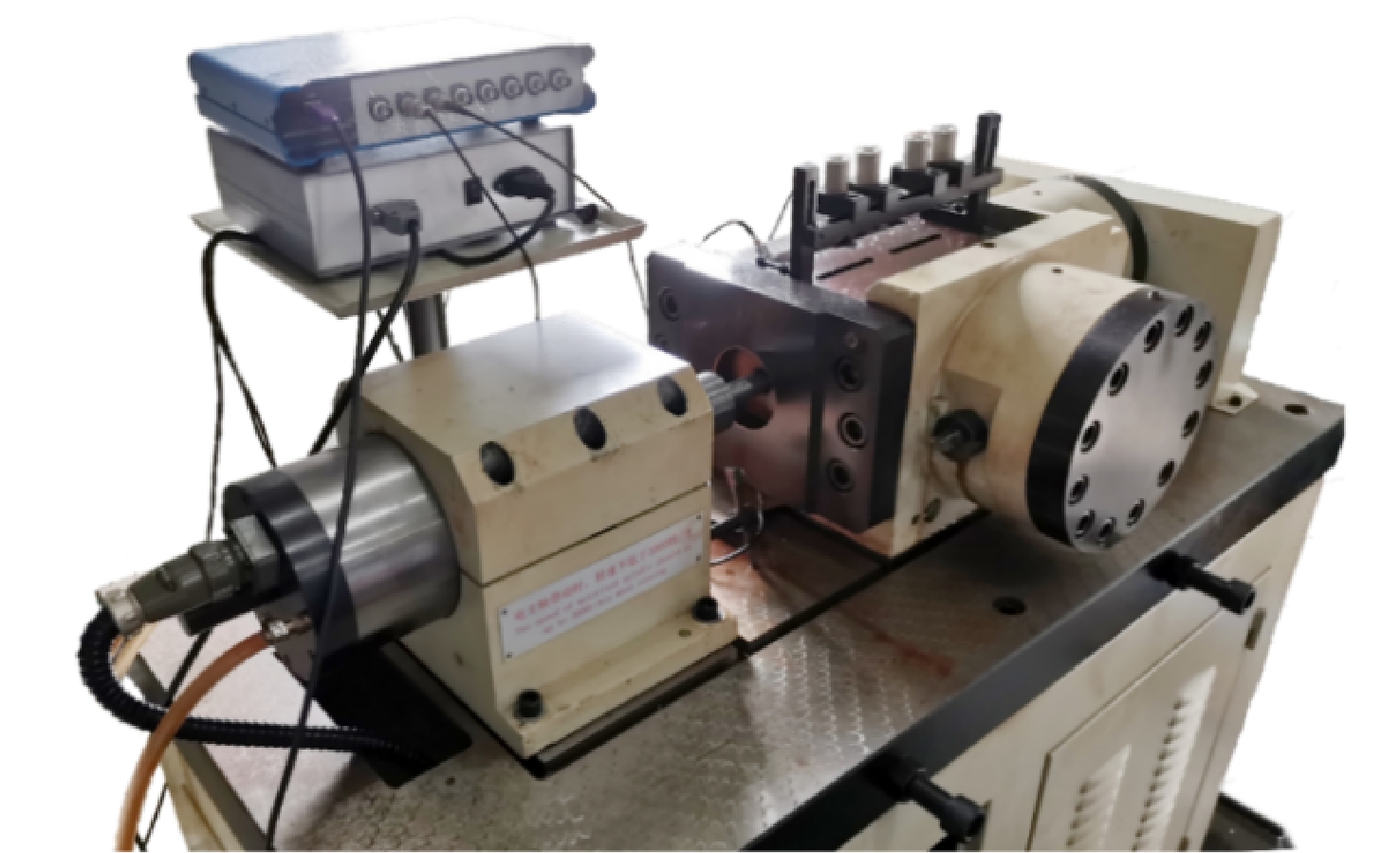
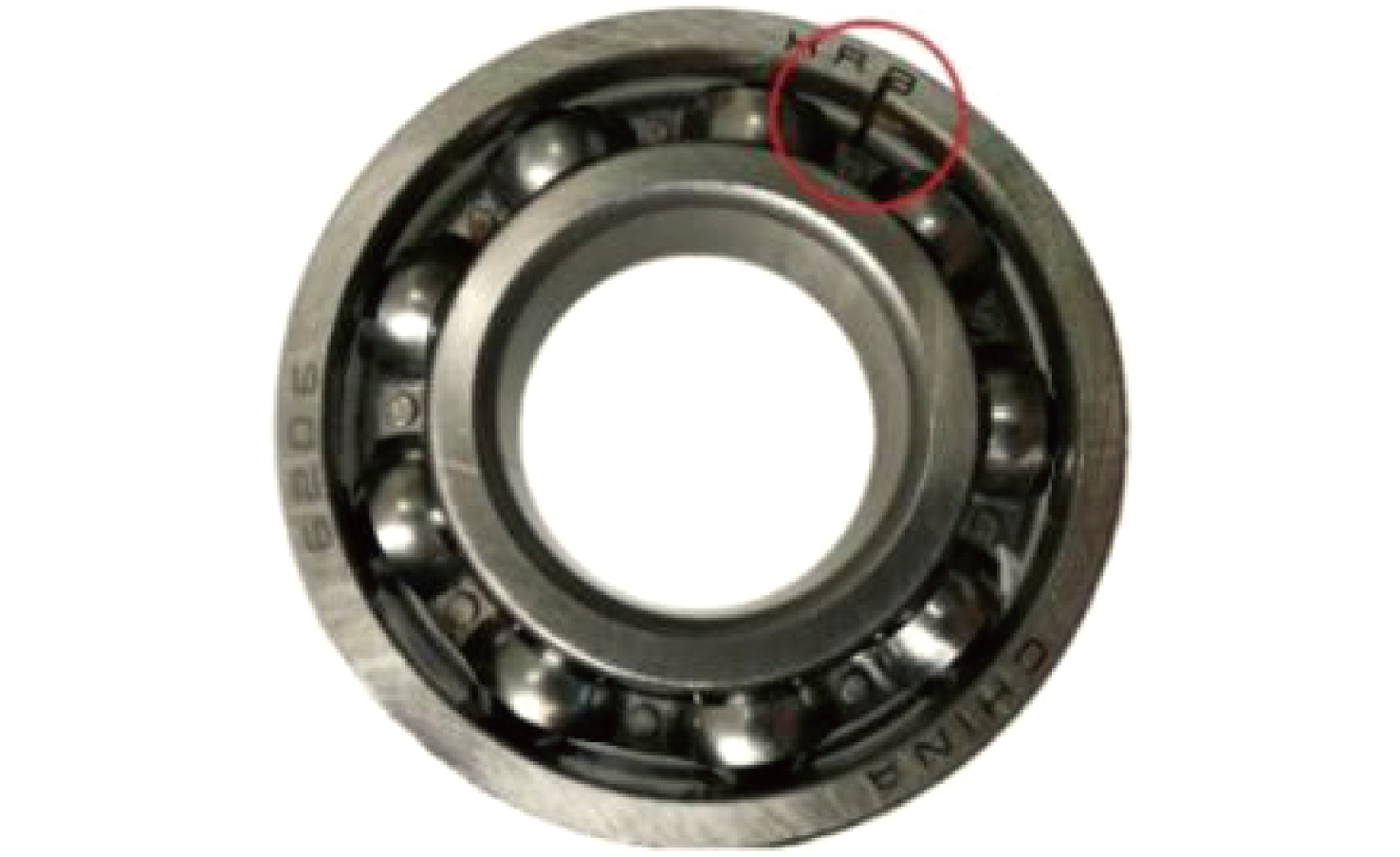
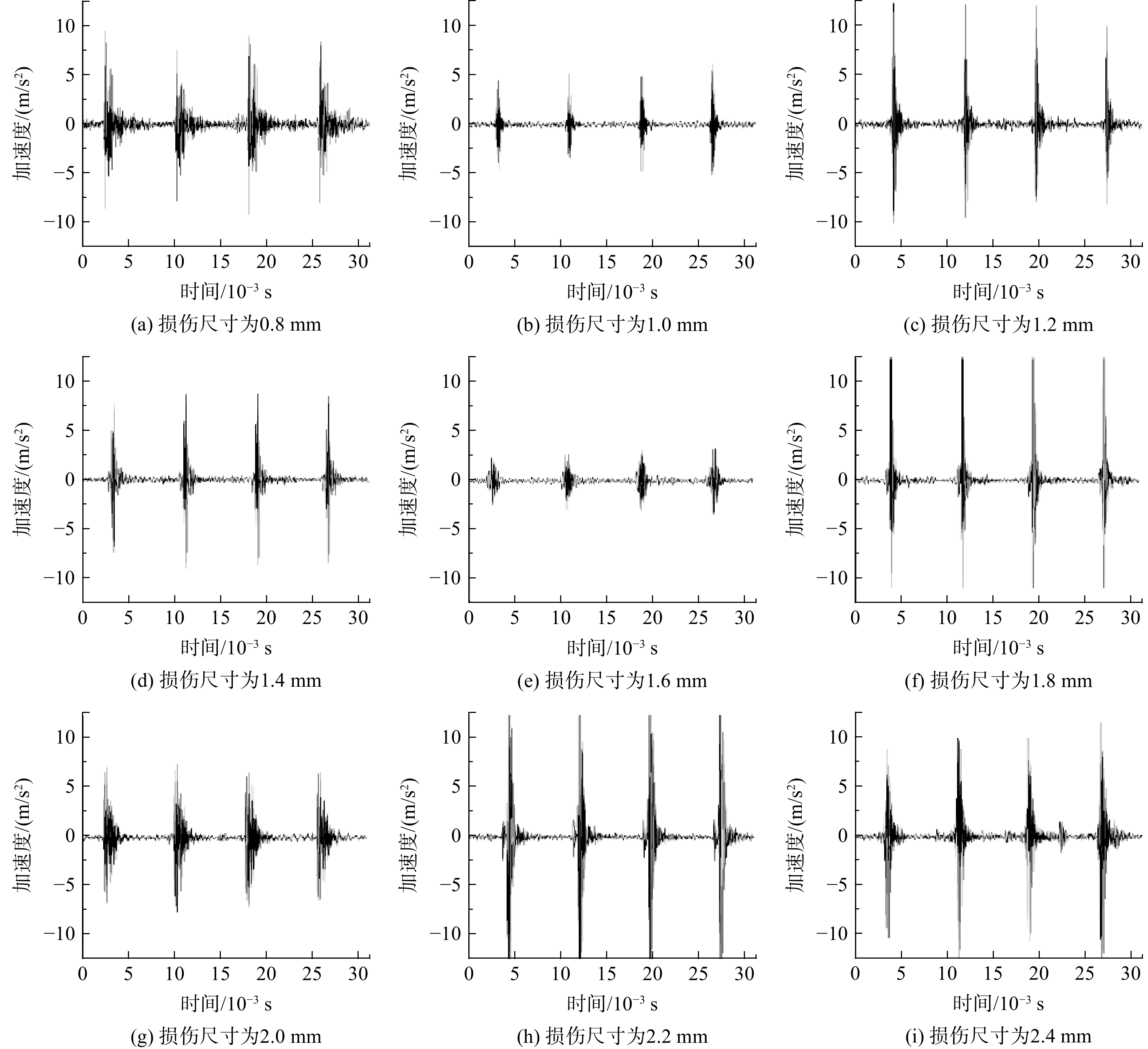
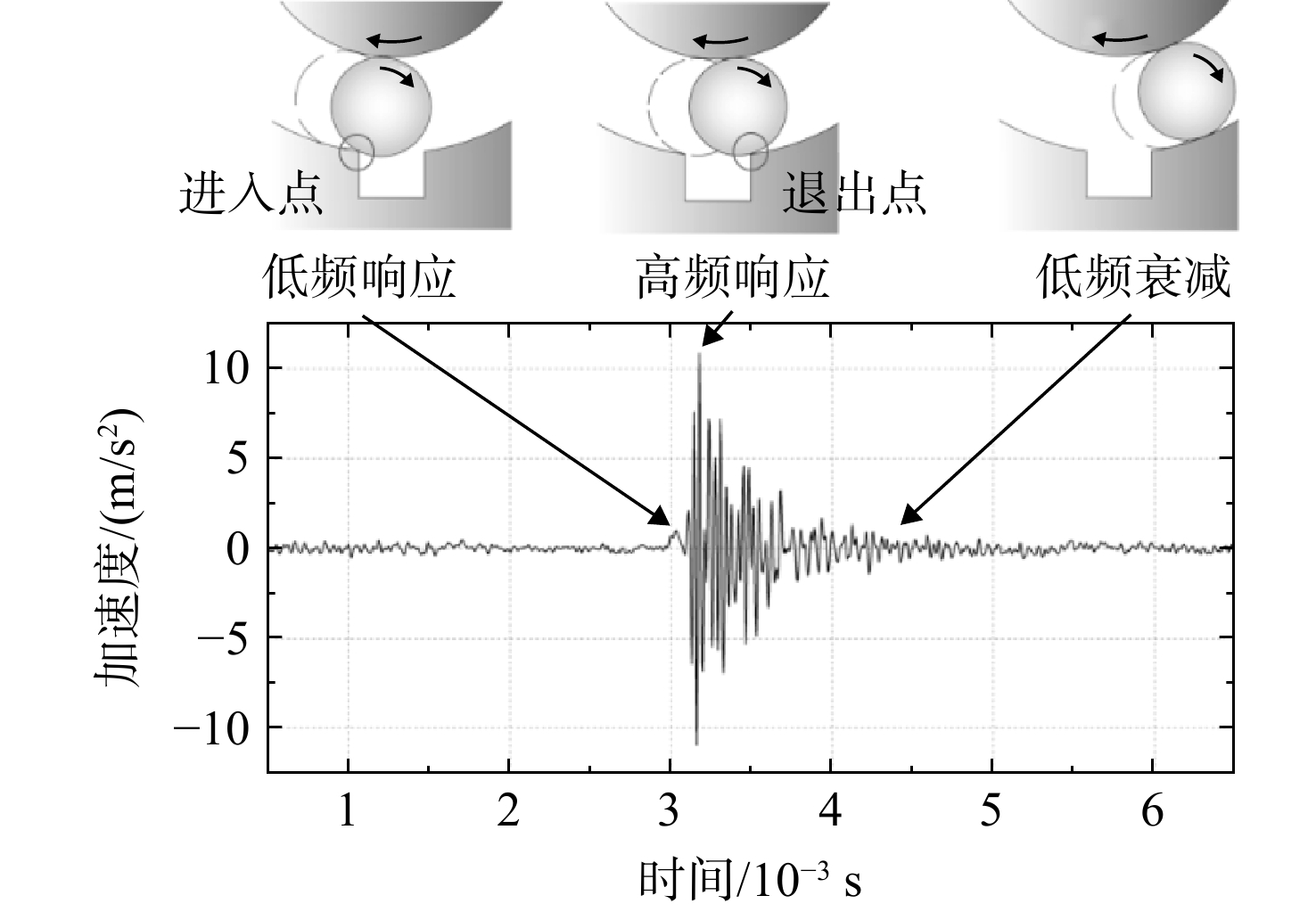
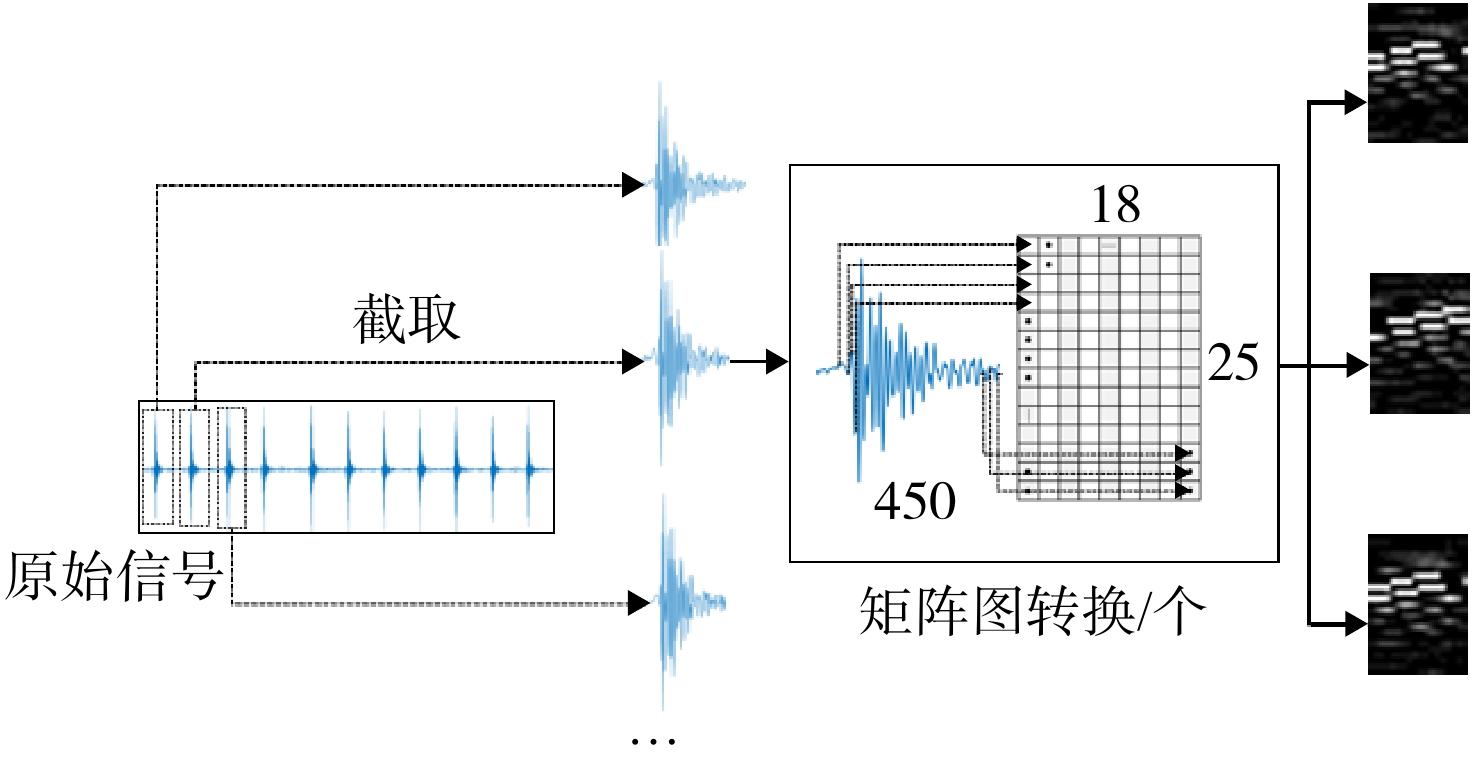
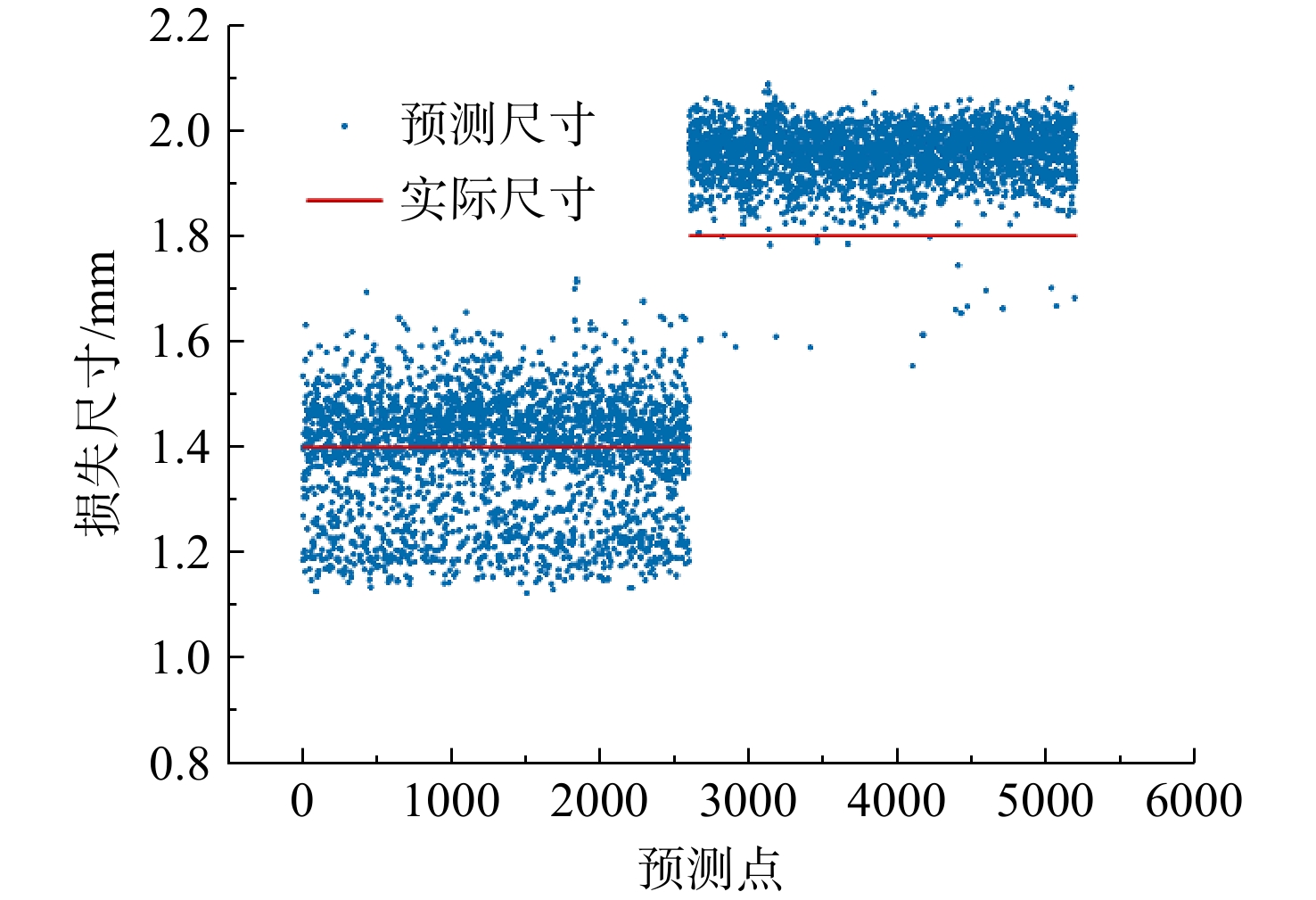
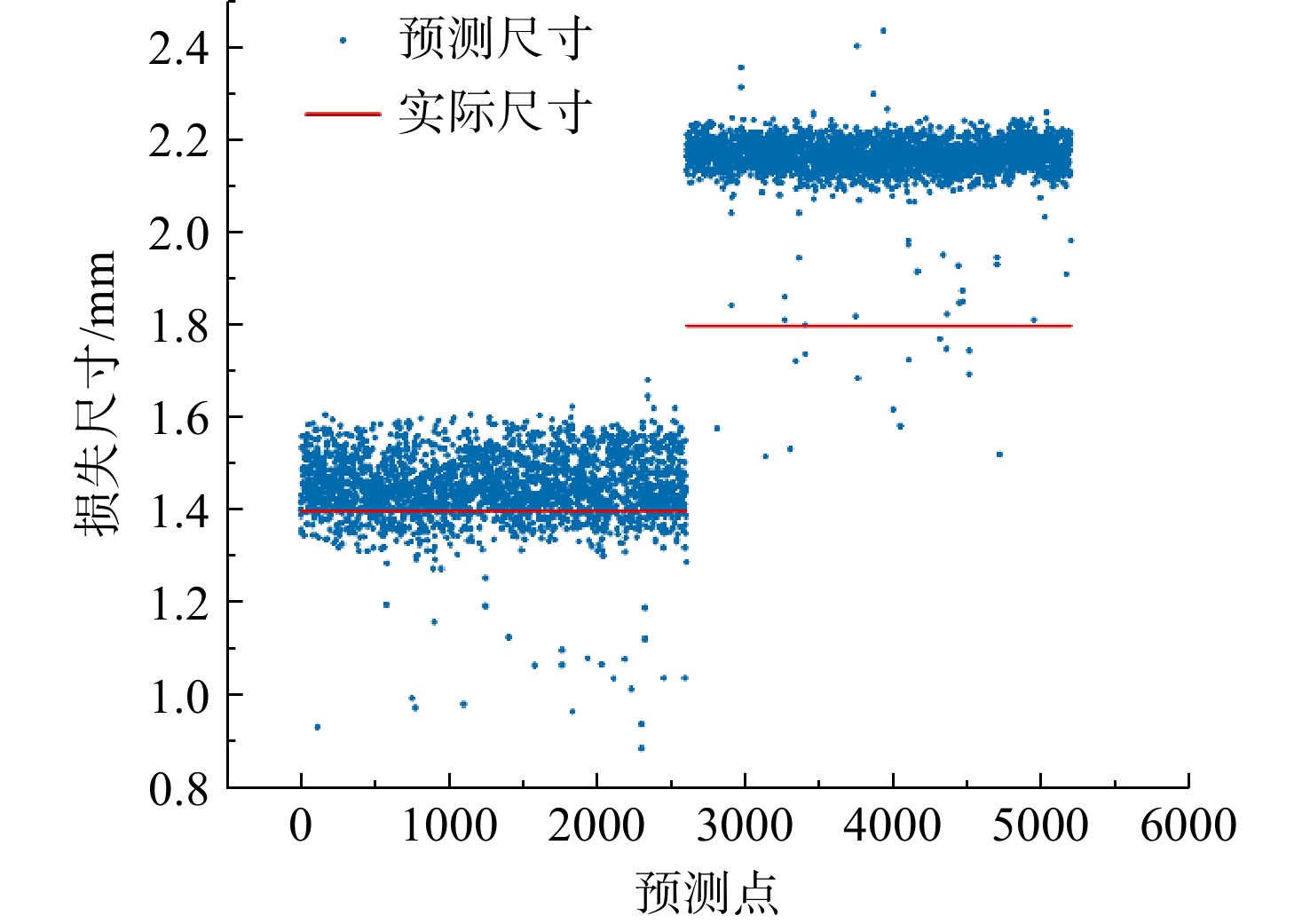
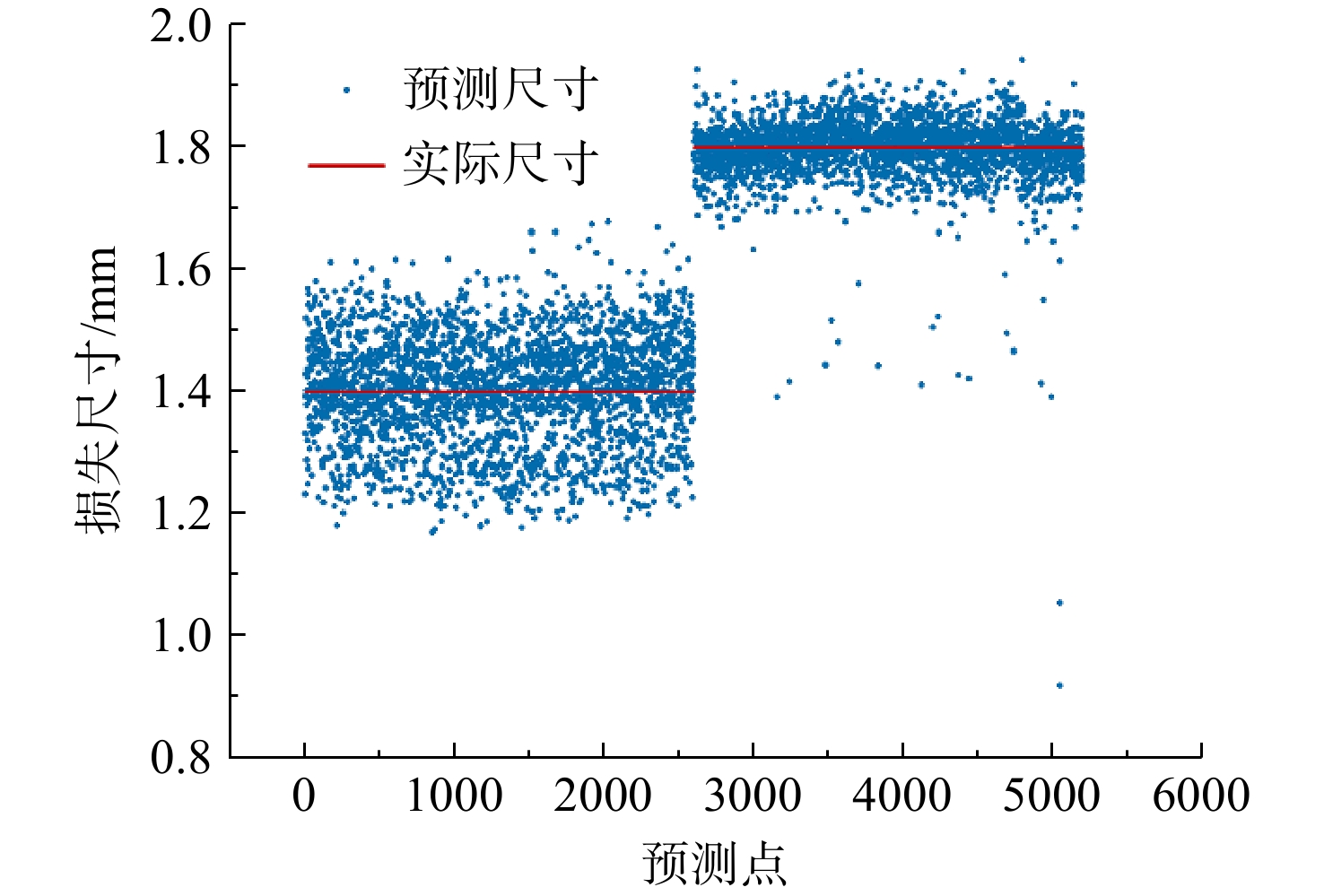
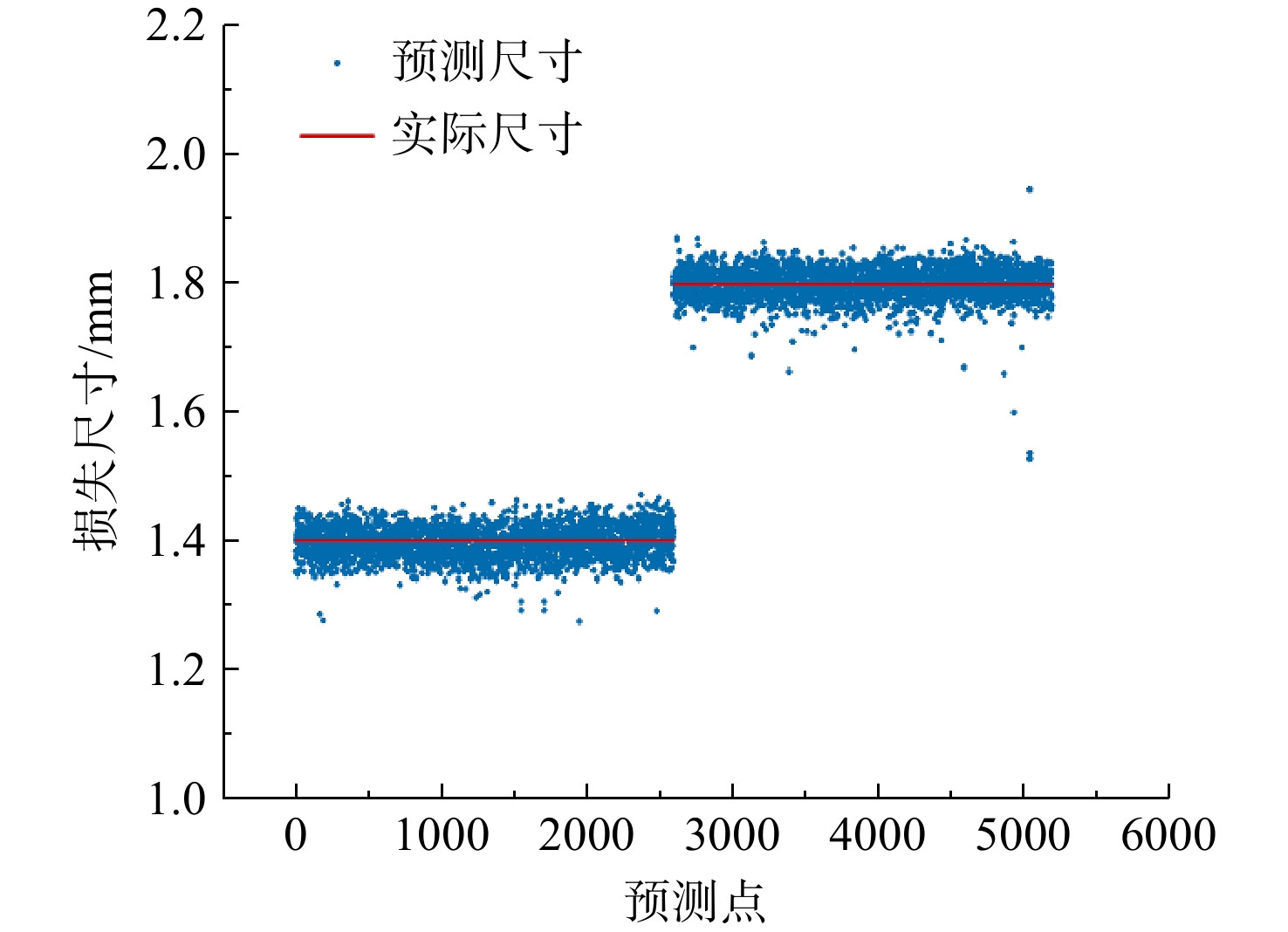
The damage size identification of aero-engine rolling bearing based on vibration monitoring data is of great significance to the study of rolling bearing fault evolution, prediction and diagnosis. In view of inherent restrictions in traditional identification models such as high dependence on prior knowledge, insufficient feature extraction and limited category of training fault sizes, a prediction method of rolling bearing damage size based on deep learning was proposed, which can accurately identify the middle sizes that did not appear in the training process. A combined model of deep convolutional long-short-term memory network was developed, which can sufficiently extract the multi-dimensional and time-series characteristics of bearing vibration signal, and realize the intelligent and efficient diagnosis of bearing fault. On the basis of theoretical analysis, the rolling bearing fault tests under various damage sizes and rotational velocities were carried out by using the accelerated fatigue testing machine for rolling bearings, and the traditional and novel methods were compared based on the test data. The results showed that the prediction accuracy of the combined network can reach 99.94% and 98.67%, respectively, under normal and noisy conditions, higher than the single deep convolution network, long-short-term memory network and other models. The comparison results amply demonstrate the superiority of the proposed method.

Safety,Airworthiness
Airworthiness certification of turbo fan engine core duct bird ingestion during climbing phase
WU Jingfeng, HOU Liang, SONG Jianyu, YANG Kun
2023, 38(4): 1017-1024. doi: 10.13224/j.cnki.jasp.20210497
Abstract:

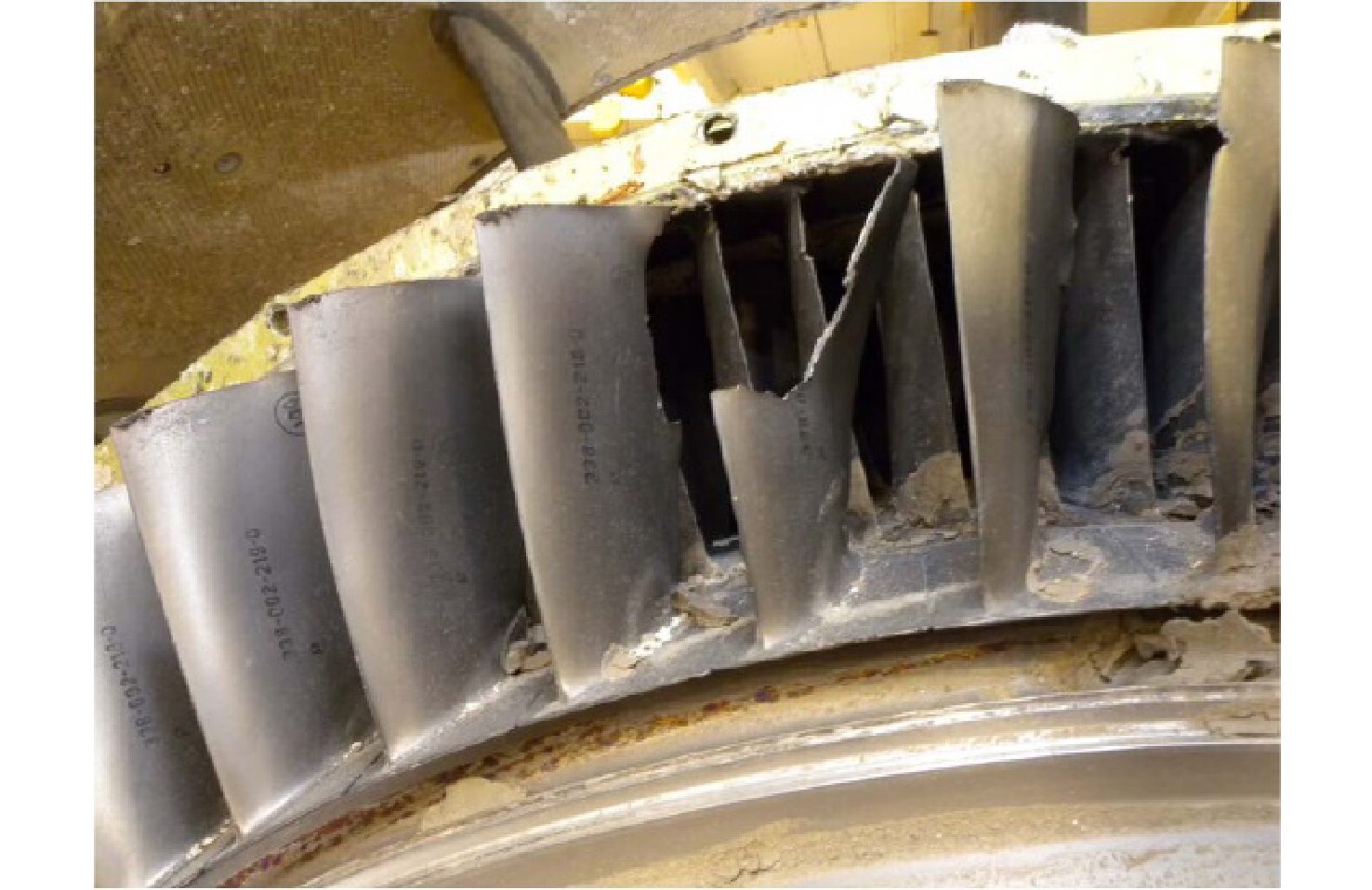
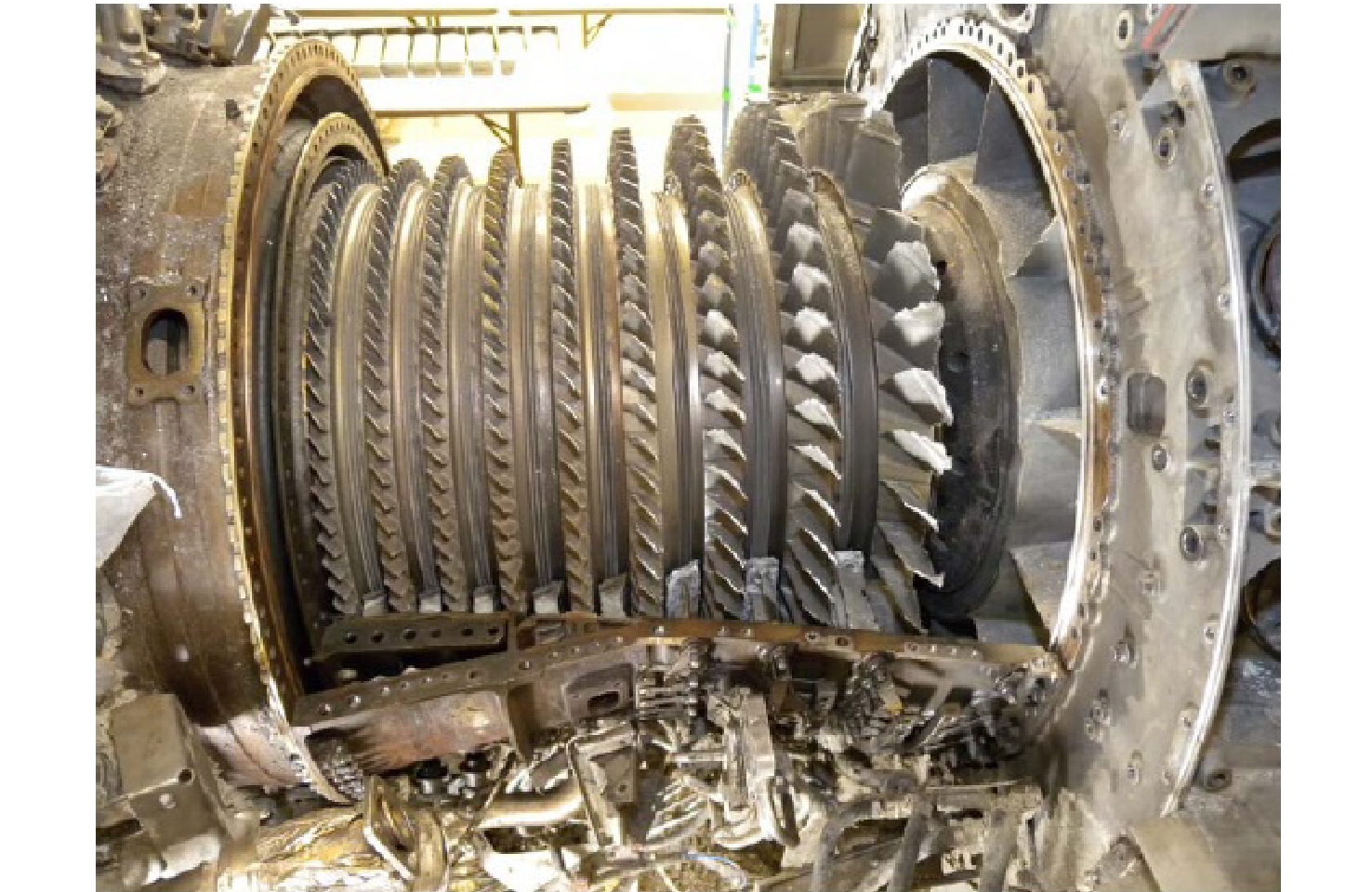
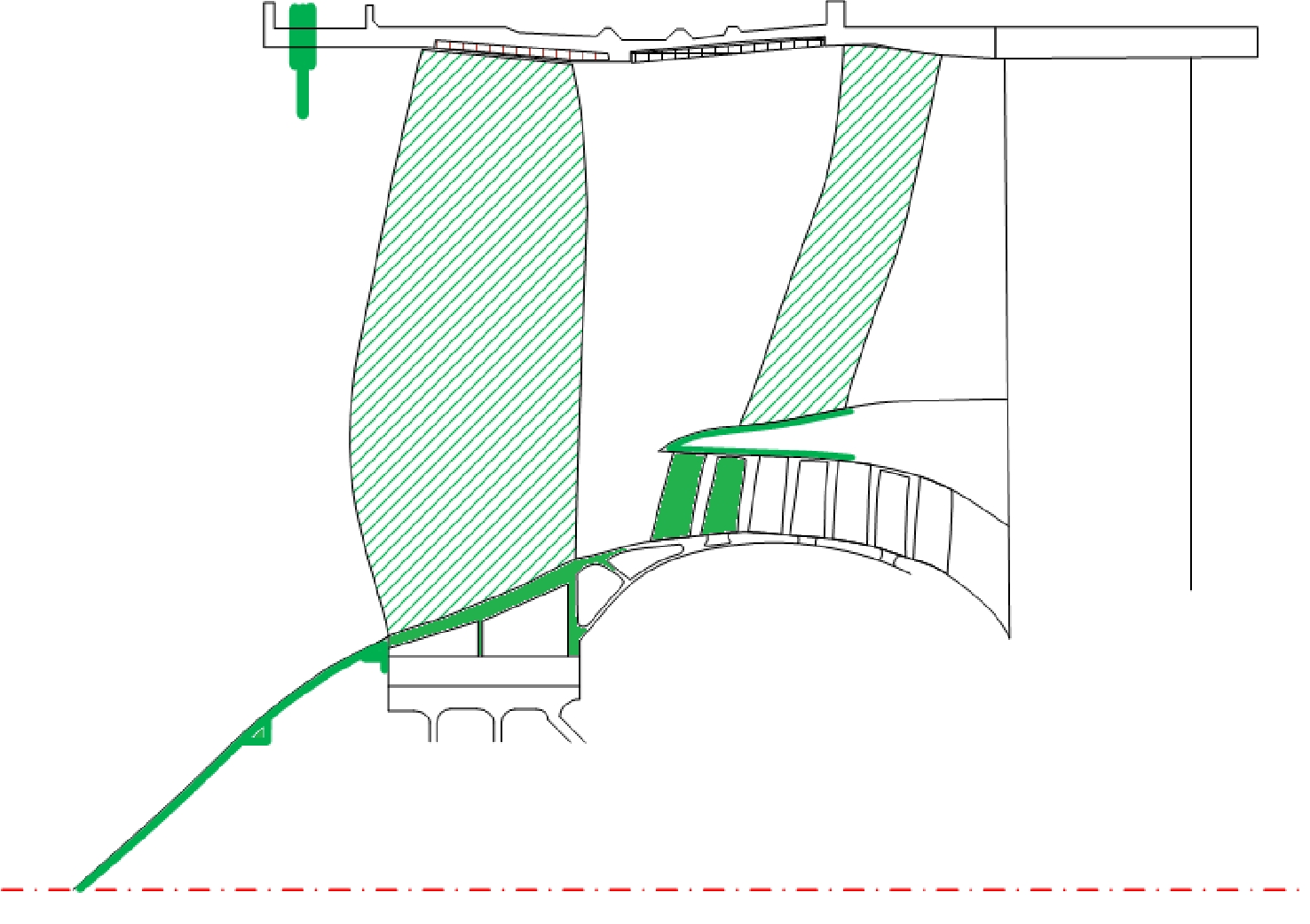
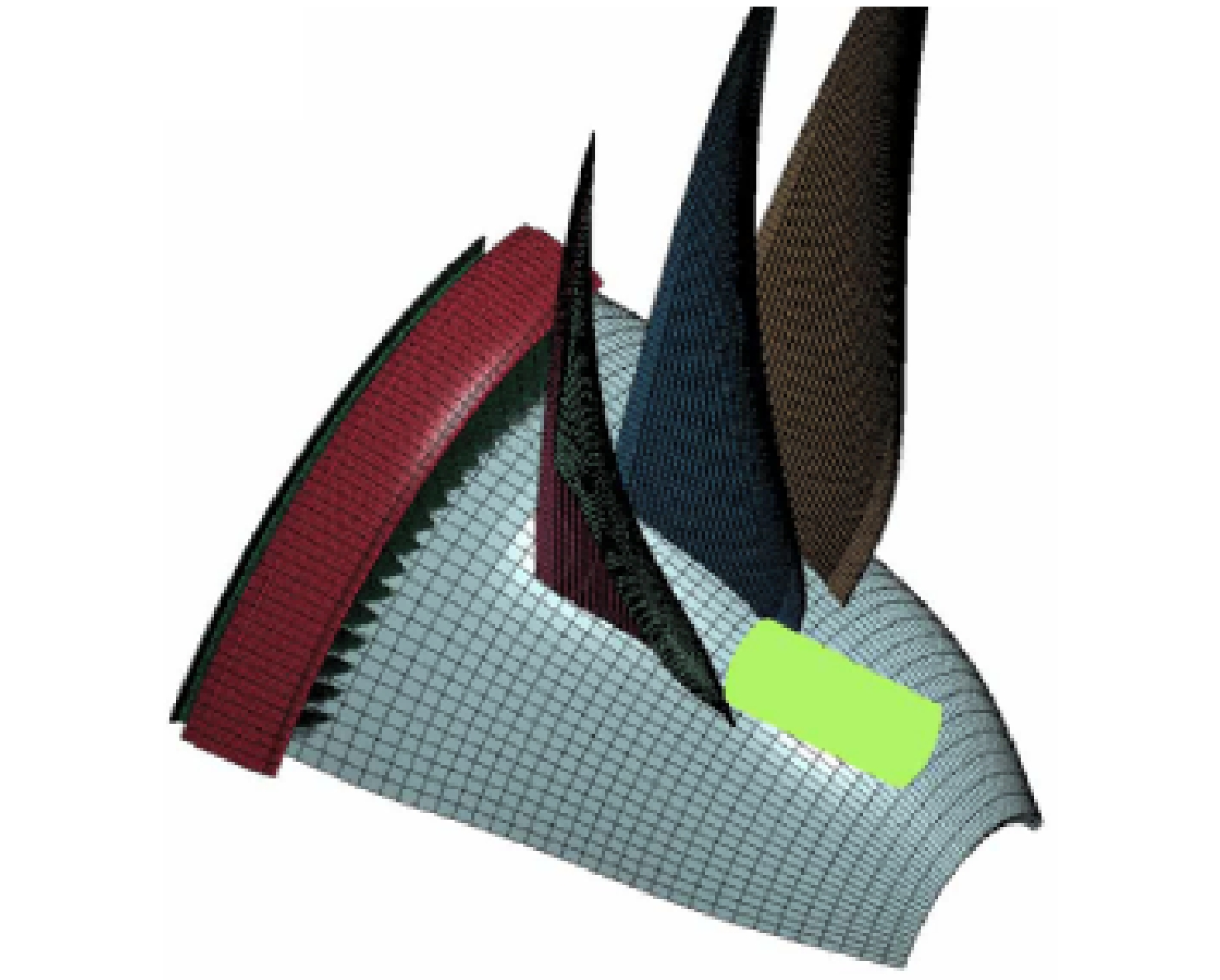
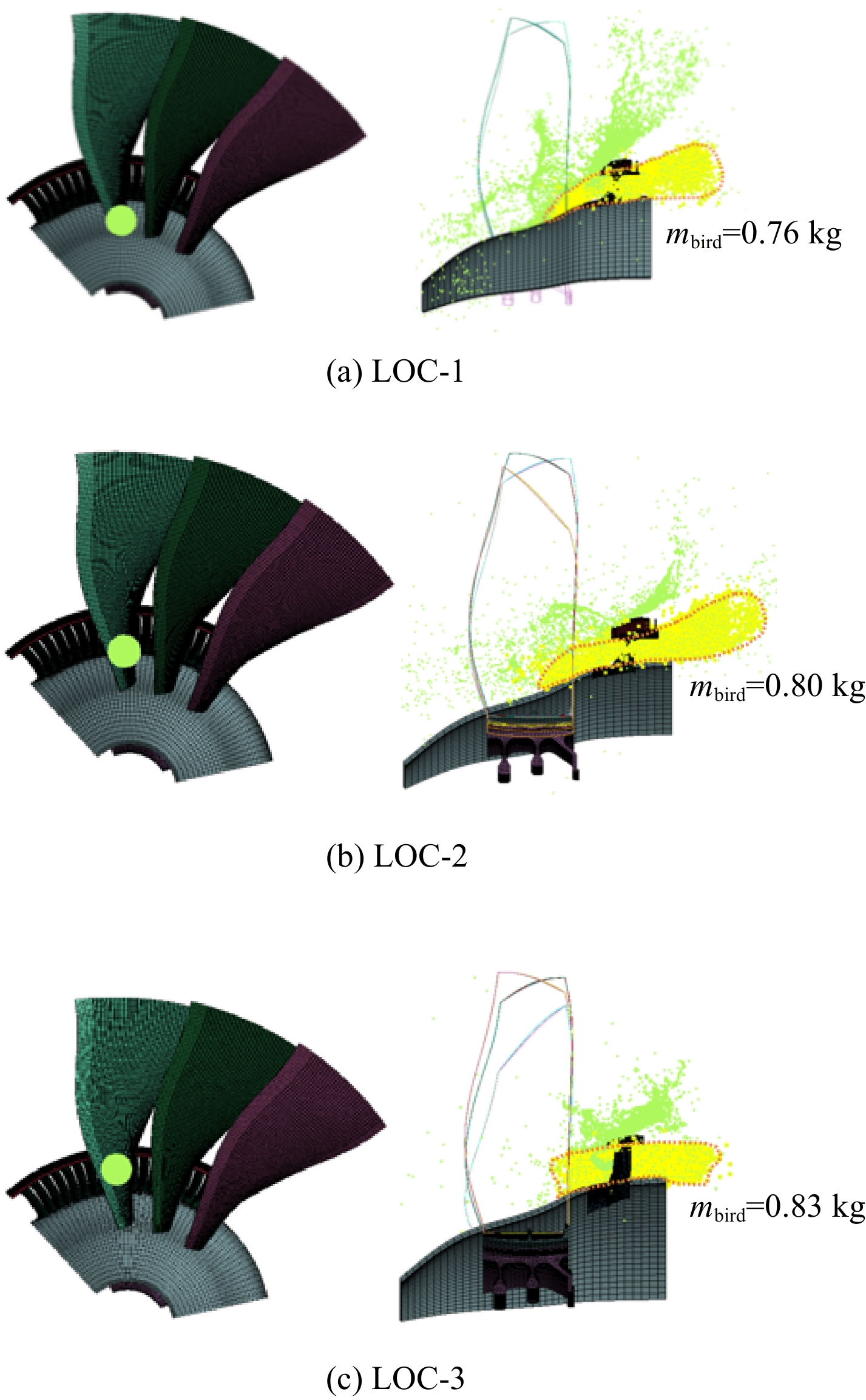
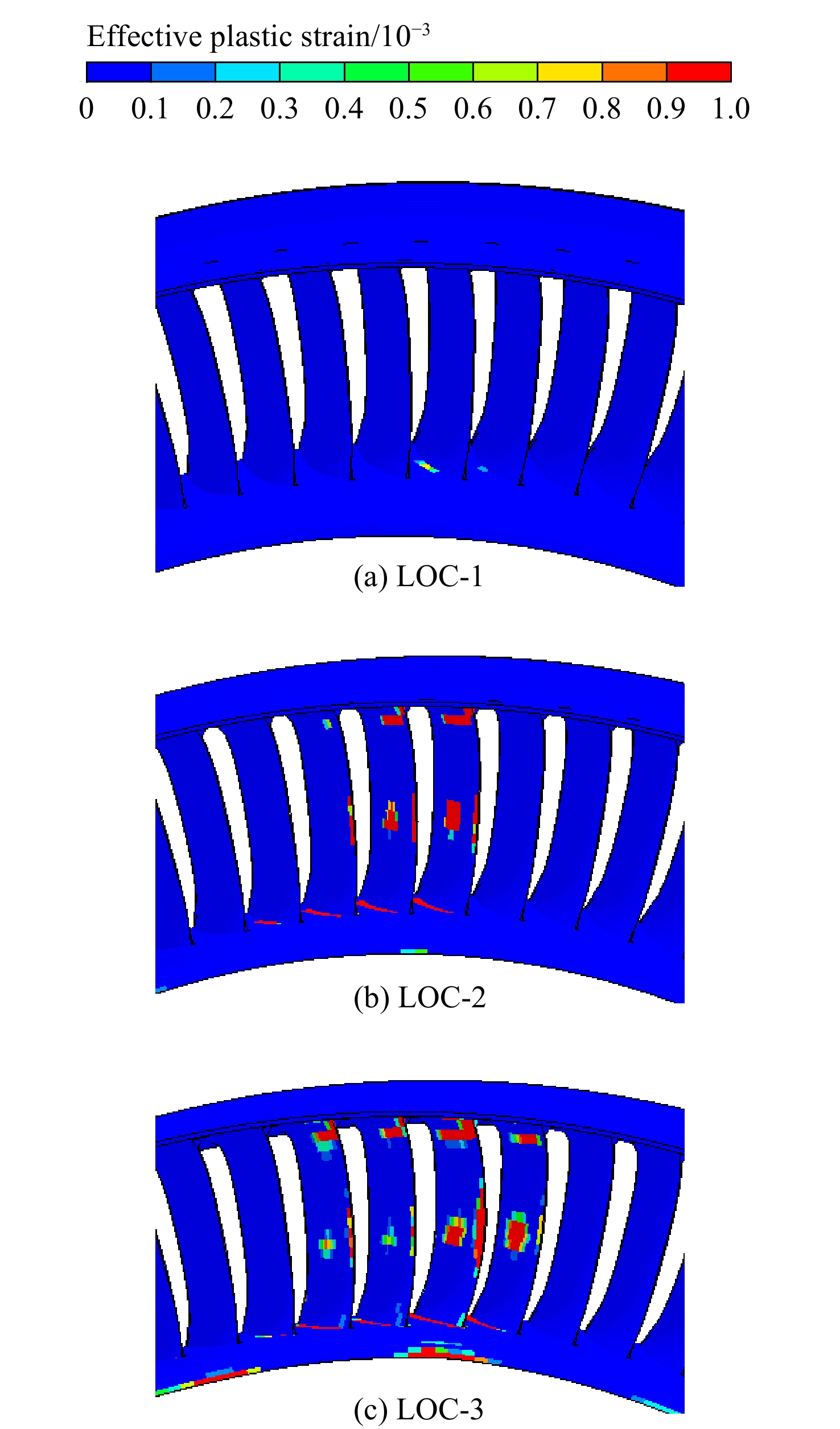
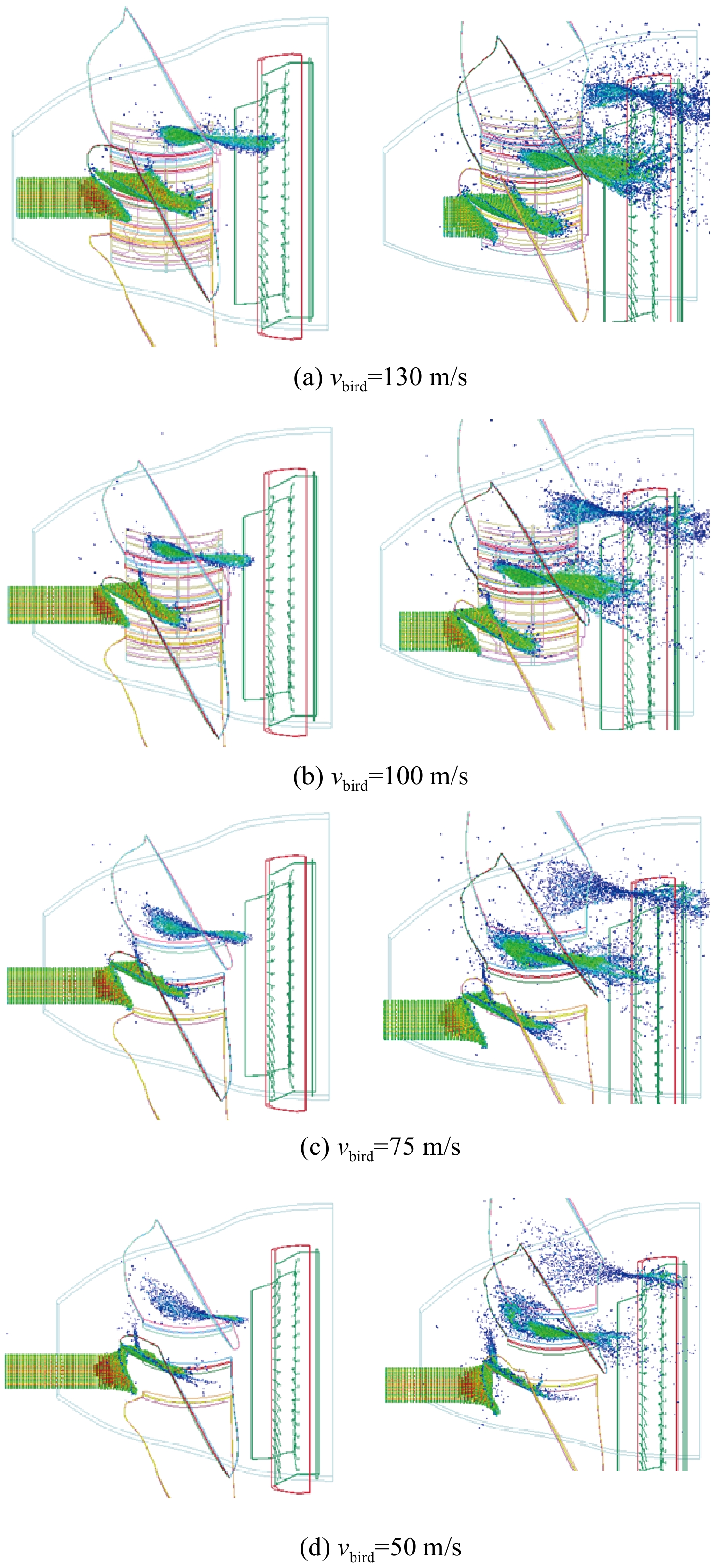
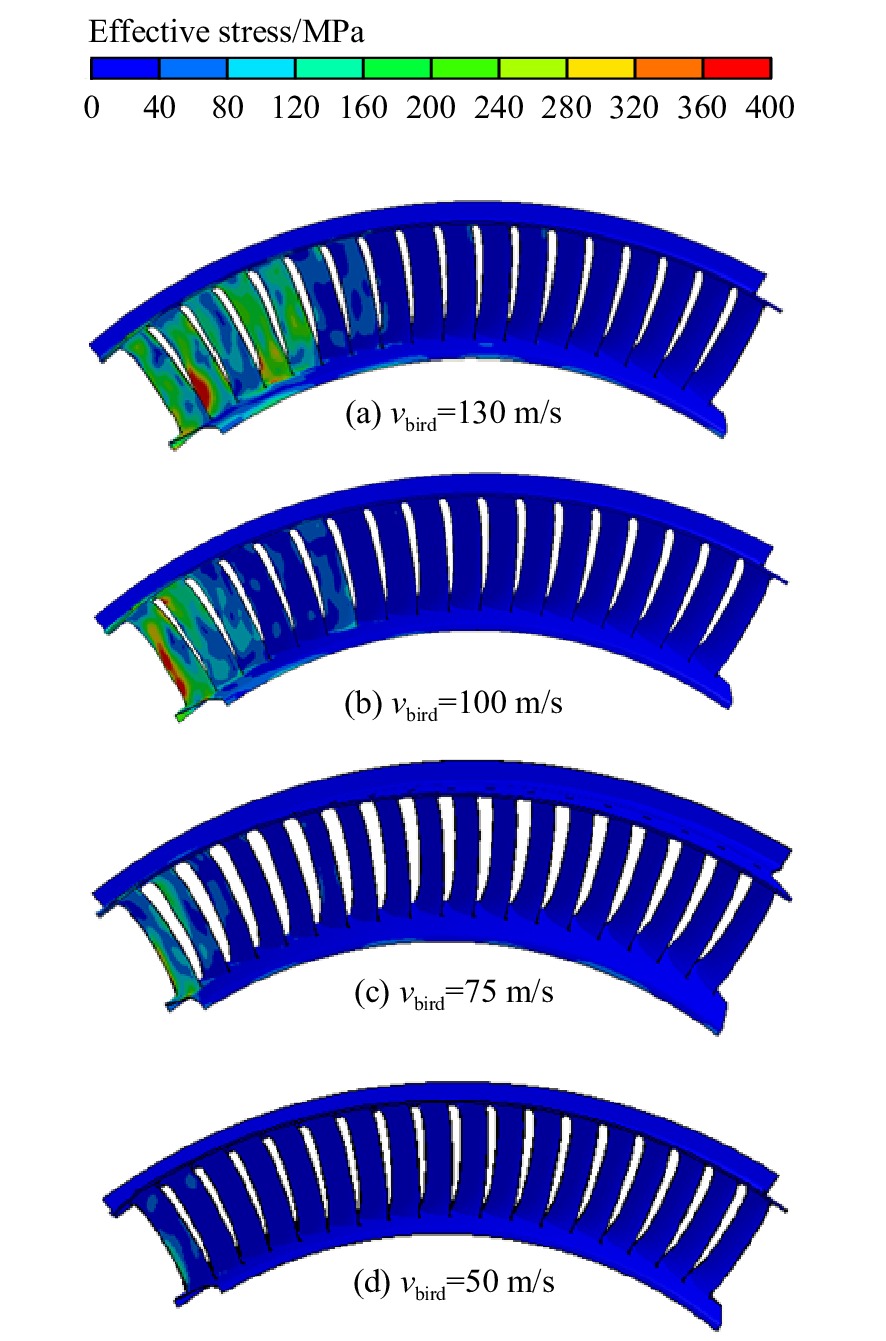
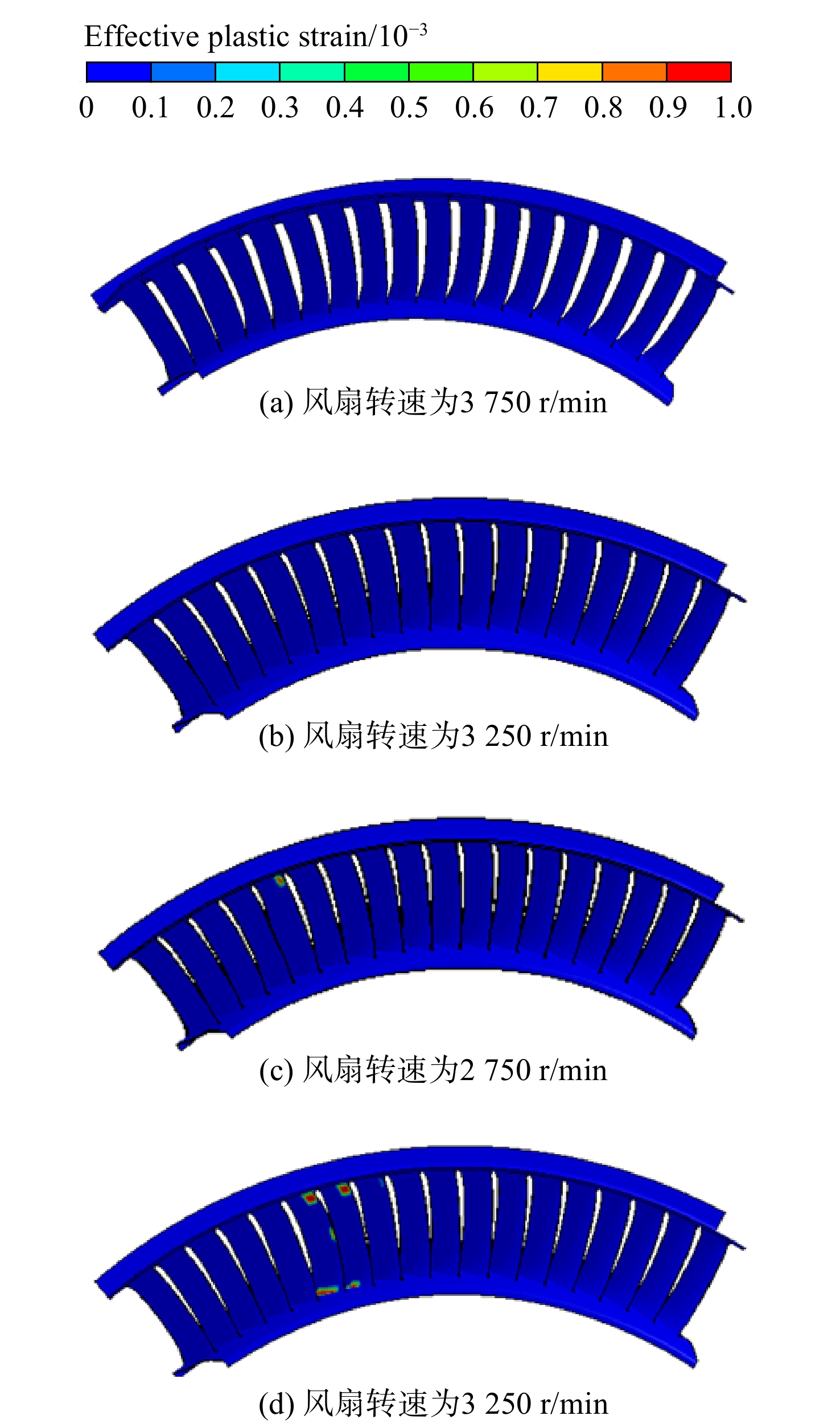
The effect of core duct bird ingestion on turbo fan engine was analyzed, the differences of damage mode and key factors between core duct bird ingestion and fan blade bird strike were determined. Core duct bird ingestion was simulated by using smooth particle hydrodynamic method to study the impact of bird ingestion location, bird ingestion velocity and fan rotor speed. The critical parameter of the most severe operating conditions for core duct bird ingestion was determined. The results showed that the center of the inlet guide vane was the most critical position which led more bird ingested. At higher bird ingestion speed and lower fan speed, the mass of the bird body slices entering the inner duct was greater. The research results support the formulation of special conditions for the core duct bird ingestion of a certain turbo fan engine. The bird ingestion test should be carried out under the conditions of the minimum fan speed at maximum climbing speed in the typical climbing stage, at the same time, the impact position of the bird used in the test should maximize the mass of the bird ingesting into the core duct.