| Citation: | CAI Jingyuan, LI Lai, ZHU Guiping. Numerical study on propulsion performance of solar wind magnetic sail[J]. Journal of Aerospace Power, 2023, 38(4):850-859 doi: 10.13224/j.cnki.jasp.20210527

|
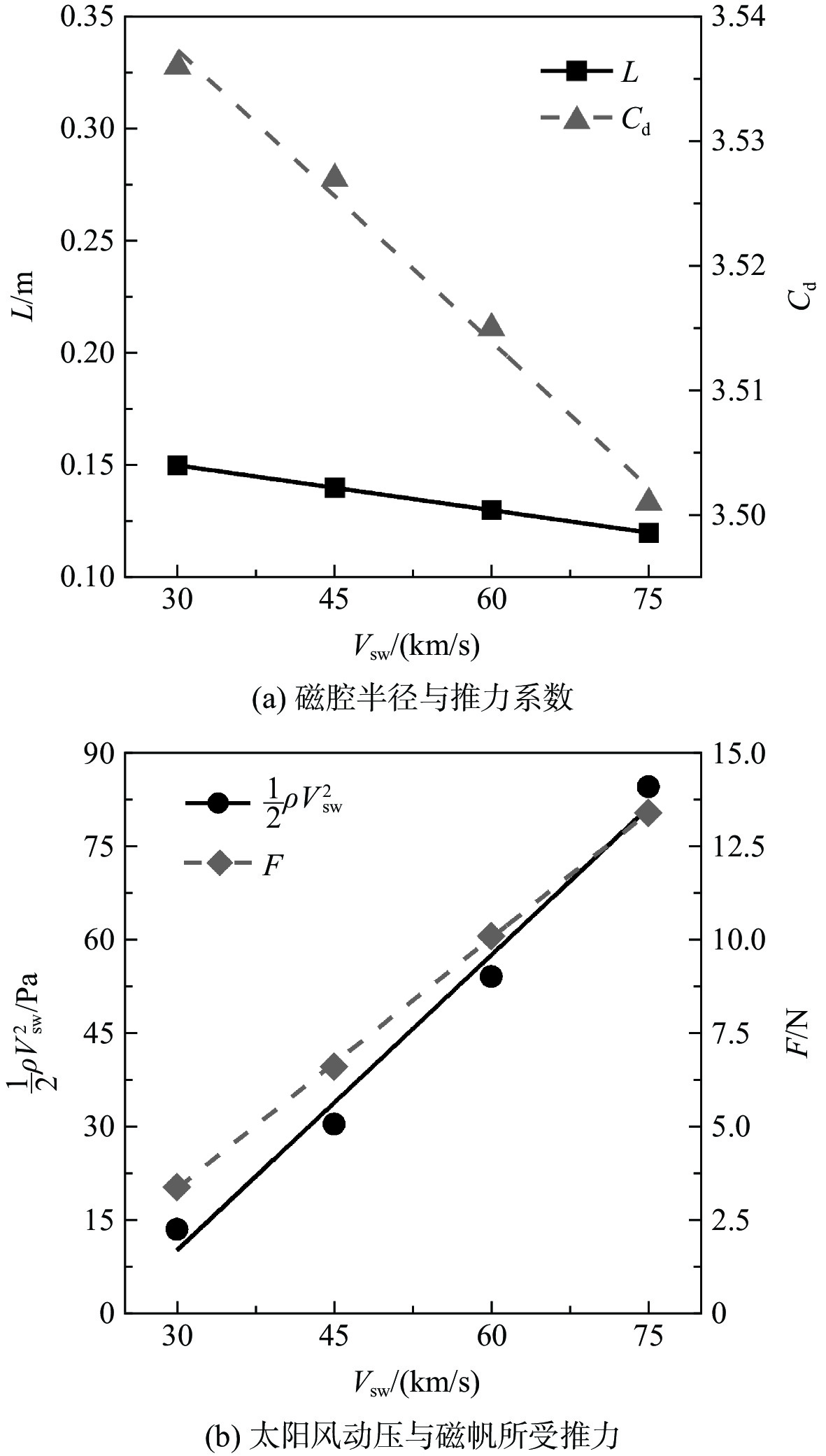
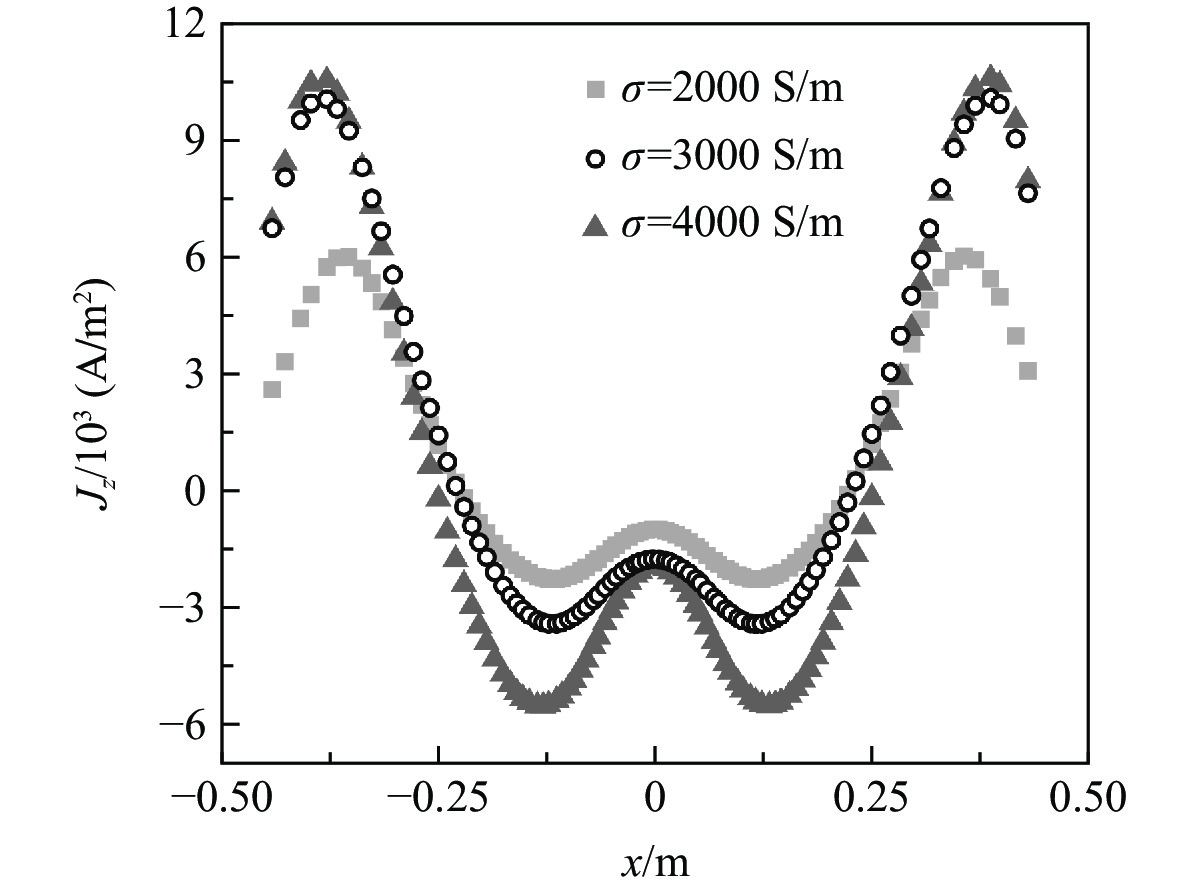
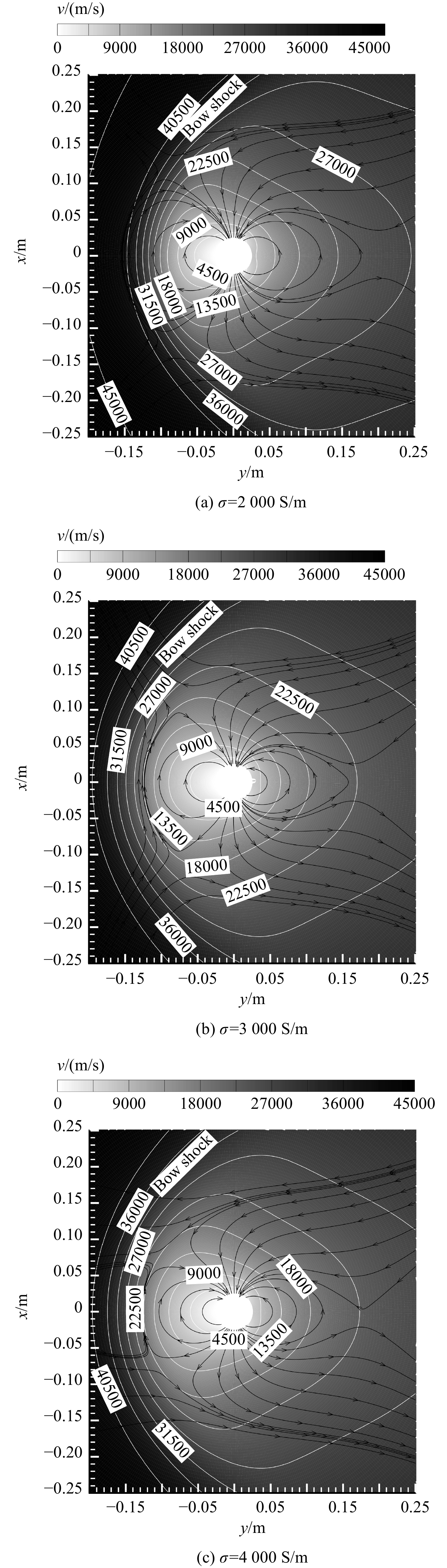
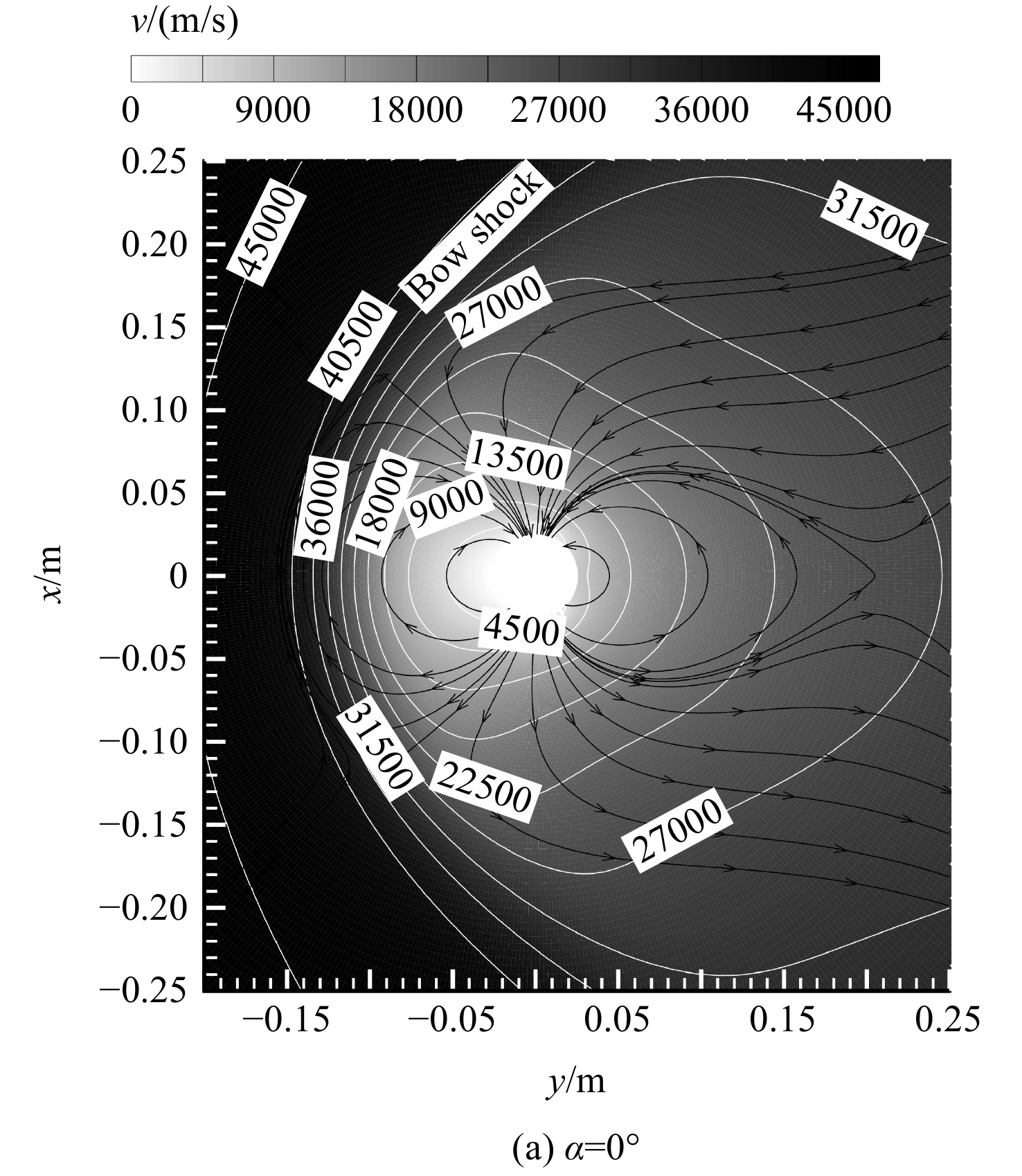
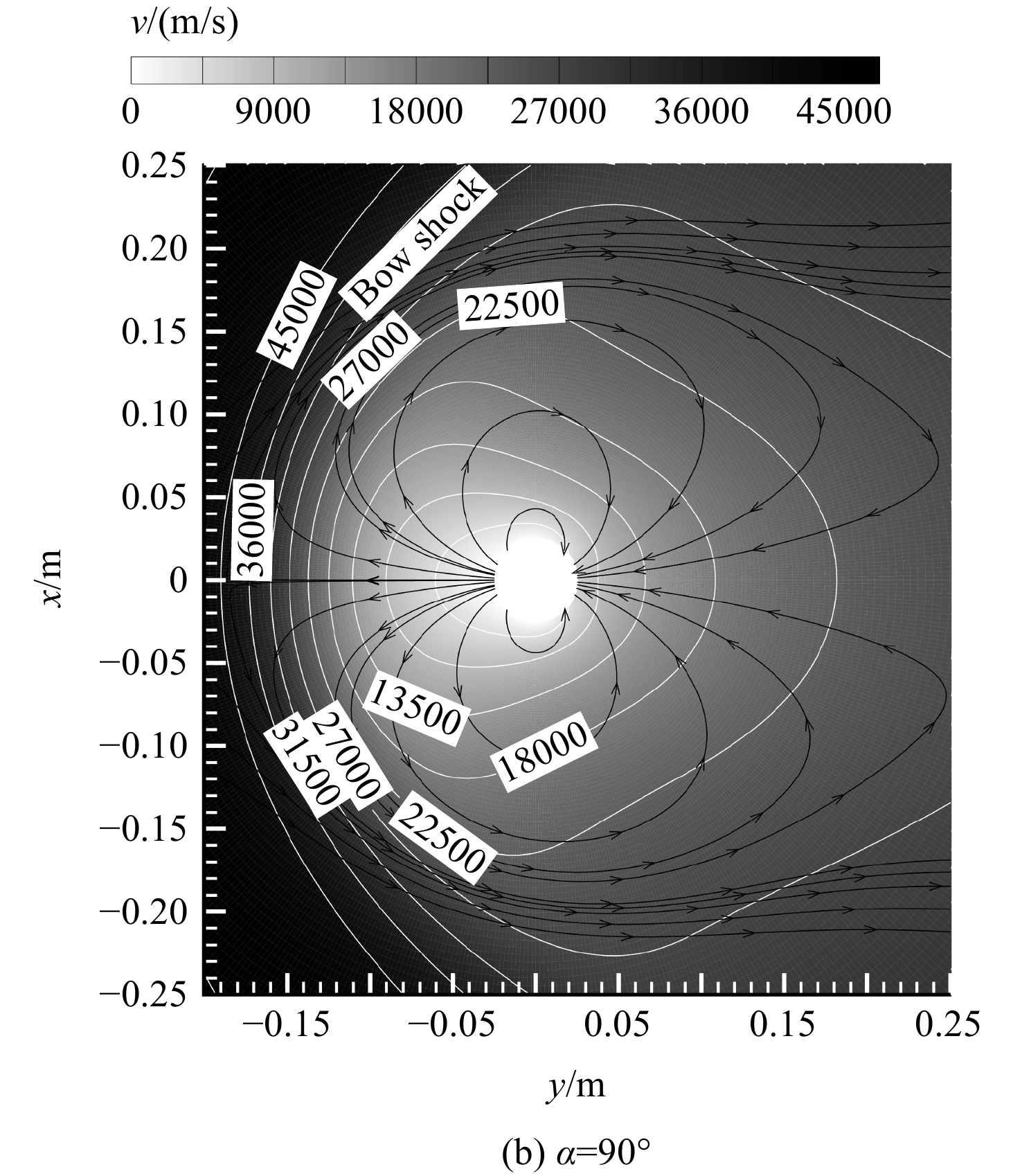
The three-dimensional numerical simulation of the solar wind magnetic sail was established with the magnetohydrodynamic (MHD) model considering the interplanetary magnetic field. The verification of the calculation method was accomplished by comparison with experimental data. In addition, the observation and confirmation of the magnetic reconnection were achieved at the tail of the coil. The propulsion performance of the magnetic sail was studied in terms of the incoming velocity, the plasma ion number density and the attack angle of of the solar wind. The solar wind with different velocities and different ion number densities mainly influenced the Lorentz force by affecting the current in the

| [1] |
ZUBRIN R M,ANDREWS D G. Magnetic sails and interplanetary travel[J]. Journal of Spacecraft and Rockets,1991,28(2): 197-203. doi: 10.2514/3.26230
|
| [2] |
ANDREWS D, ZUBRIN R. Progress in magnetic sails[R]. AIAA-1990-2367, 1990.
|
| [3] |
NISHIDA H, OGAWA H, FUNAKI I, et al. Verification of momentum transfer process on magnetic sail using MHD model[R]. AIAA-2005-4463, 2005.
|
| [4] |
AKITA D, SUZUKI K. Kinetic analysis on plasma flow of solar wind around magnetic sail[R]. AIAA-2005-4791, 2005.
|
| [5] |
KAJIMURA Y,USUI H,FUNAKI I,et al. Hybrid particle-in-cell simulations of magnetic sail in laboratory experiment[J]. Journal of Propulsion and Power,2010,26(1): 159-166. doi: 10.2514/1.45096
|
| [6] |
KAJIMURA Y,FUNAKI I,MATSUMOTO M,et al. Thrust and attitude evaluation of magnetic sail by three-dimensional hybrid particle-in-cell code[J]. Journal of Propulsion and Power,2012,28(3): 652-663. doi: 10.2514/1.B34334
|
| [7] |
ASHIDA Y,FUNAKI I,YAMAKAWA H,et al. Thrust evaluation of a magnetic sail by flux-tube model[J]. Journal of Propulsion and Power,2012,28(3): 642-651. doi: 10.2514/1.B34332
|
| [8] |
ASHIDA Y,YAMAKAWA H,FUNAKI I,et al. Thrust evaluation of small-scale magnetic sail spacecraft by three-dimensional particle-in-cell simulation[J]. Journal of Propulsion and Power,2014,30(1): 186-196. doi: 10.2514/1.B35026
|
| [9] |
UENO K, KIMURA T, AYABE T, et al. Laboratory experiment of magnetoplasma sail: Part 1 pure magnetic sail[R]. International Electric Propulsion Conference, IEPC-2007-2061, 2007.
|
| [10] |
UENO K,FUNAKI I,KIMURA T,et al. Thrust measurement of a pure magnetic sail using parallelogram-pendulum method[J]. Journal of Propulsion and Power,2009,25(2): 536-539. doi: 10.2514/1.39211
|
| [11] |
WINGLEE R M,SLOUGH J,ZIEMBA T,et al. Mini-magnetospheric plasma propulsion: tapping the energy of the solar wind for spacecraft propulsion[J]. Journal of Geophysical Research: Space Physics,2000,105(A9): 21067-21077. doi: 10.1029/1999JA000334
|
| [12] |
WINGLEE R M, ZIEMBA T, EURIPIDES P, et al. Computer modeling of the laboratory testing of mini-magnetospheric plasma propulsion (M2P2)[R]. International Electric Propulsion Conference, IEPC-2001-2200, 2001.
|
| [13] |
WINGLEE R M, EURIPIDES P, ZIEMBA T, et al. Simulation of mini-magnetospheric plasma propulsion (M2P2) interacting with an external plasma wind[R]. AIAA 2003-5224, 2003.
|
| [14] |
ASHIDA Y,FUNAKI I,YAMAKAWA H,et al. Two-dimensional particle-in-cell simulation of magnetic sails[J]. Journal of Propulsion and Power,2014,30(1): 233-245. doi: 10.2514/1.B34692
|
| [15] |
YAMAKAWA H,FUNAKI I,NAKAYAMA Y,et al. Magneto-plasma sail: an engineering satellite concept and its application for outer planet missions[J]. Acta Astronautica,2006,59(8/9/10/11): 777-784. doi: 10.1016/j.actaastro.2005.07.003
|
| [16] |
FUNAKI I, KIMURA T, UENO K, et al. Laboratory experiment of magnetoplasma sail: Part 2 magnetic field inflation[R]. International Electric Propulsion Conference, IEPC-2007-2094, 2007.
|
| [17] |
MORITAKA T,USUI H,NUNAMI M,et al. Full particle-in-cell simulation study on magnetic inflation around a magneto plasma sail[J]. IEEE Transactions on Plasma Science,2010,38(9): 2219-2228. doi: 10.1109/TPS.2010.2056392
|
| [18] |
NISHIDA H,OGAWA H,FUNAKI I,et al. Two-dimensional magnetohydrodynamic simulation of a magnetic sail[J]. Journal of Spacecraft and Rockets,2006,43(3): 667-672. doi: 10.2514/1.15717
|
| [19] |
尹真. 电动力学[M]. 北京: 科学出版社, 2005.
|
| [20] |
NISHIDA H,FUNAKI I. Analysis of thrust characteristics of a magnetic sail in a magnetized solar wind[J]. Journal of Propulsion and Power,2012,28(3): 636-641. doi: 10.2514/1.B34260
|






 DownLoad: