| Citation: | MENG Yan, SHEN Lixin, JIANG Chaohu, et al. Impact of nozzle area ratio on performance of small turbojet engines[J]. Journal of Aerospace Power, 2025, 40(X):20250110 doi: 10.13224/j.cnki.jasp.20250110

|
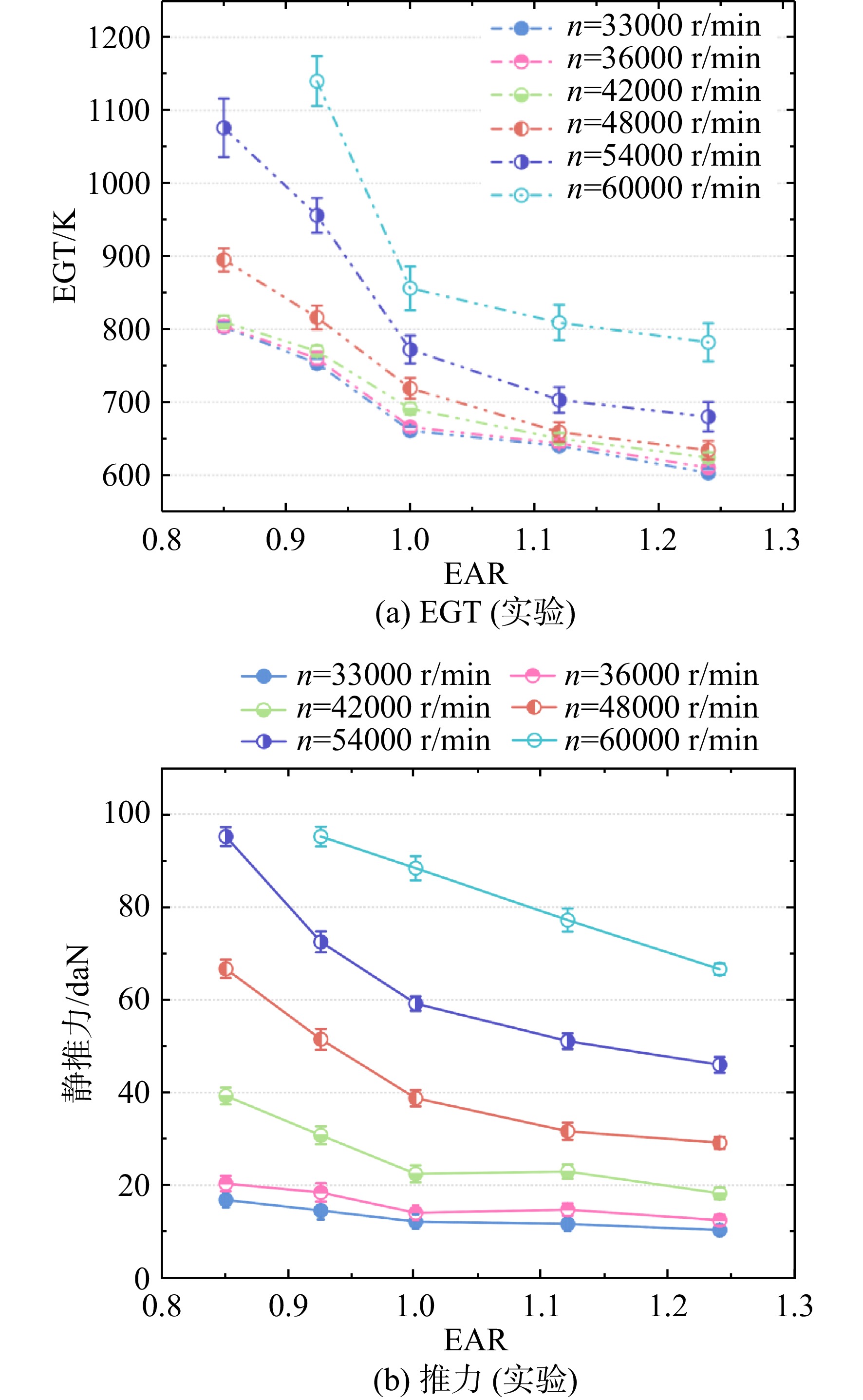
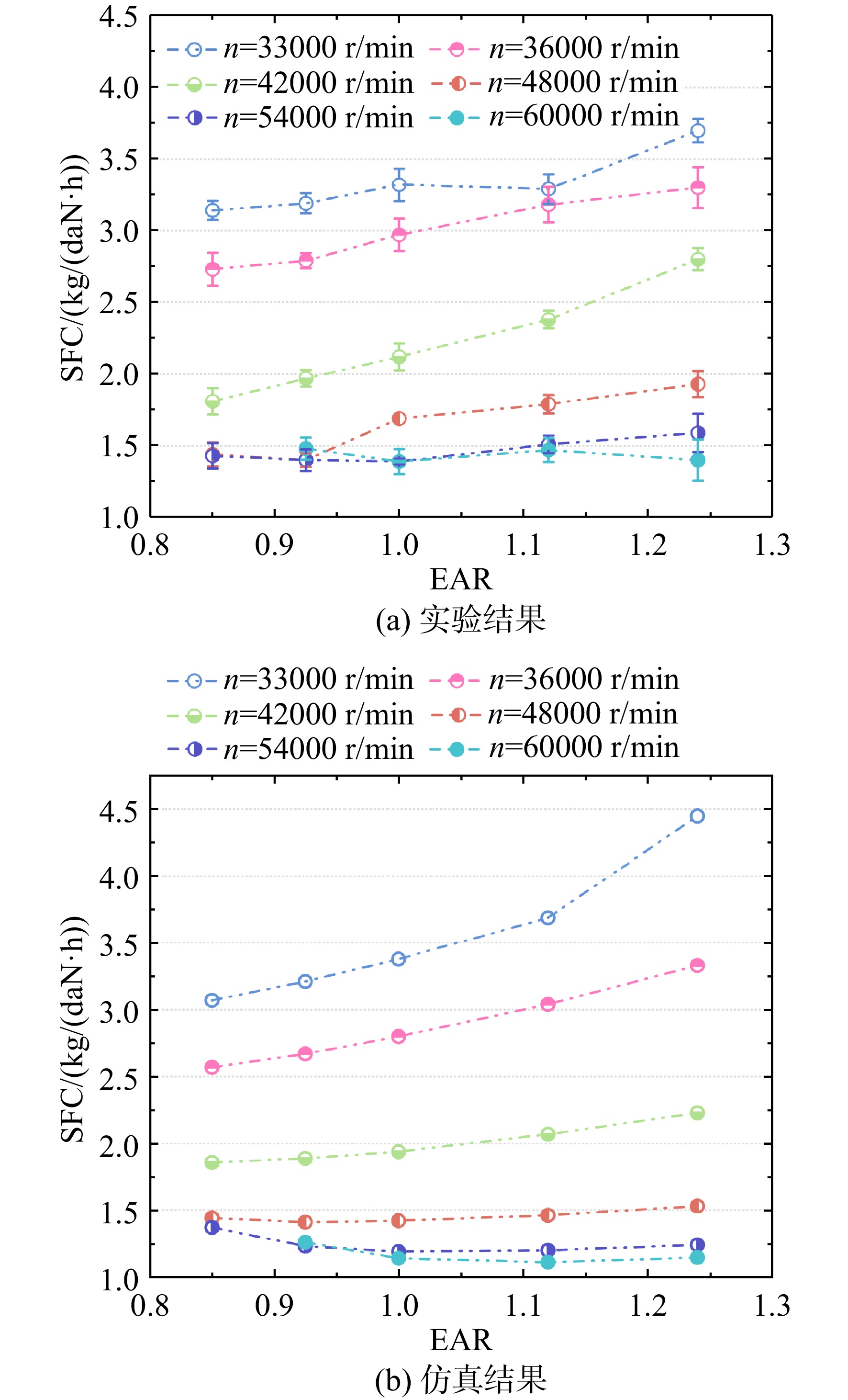
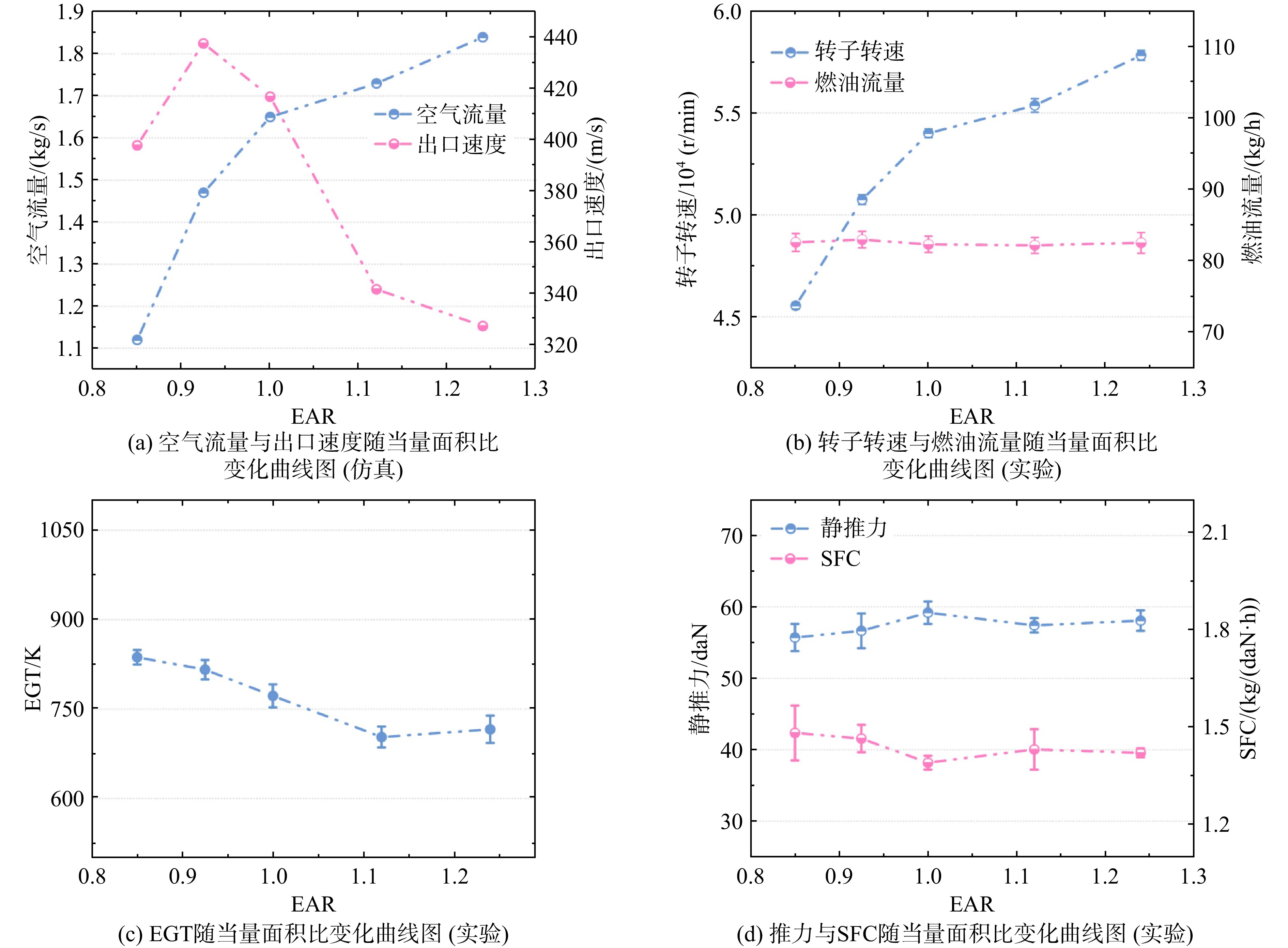
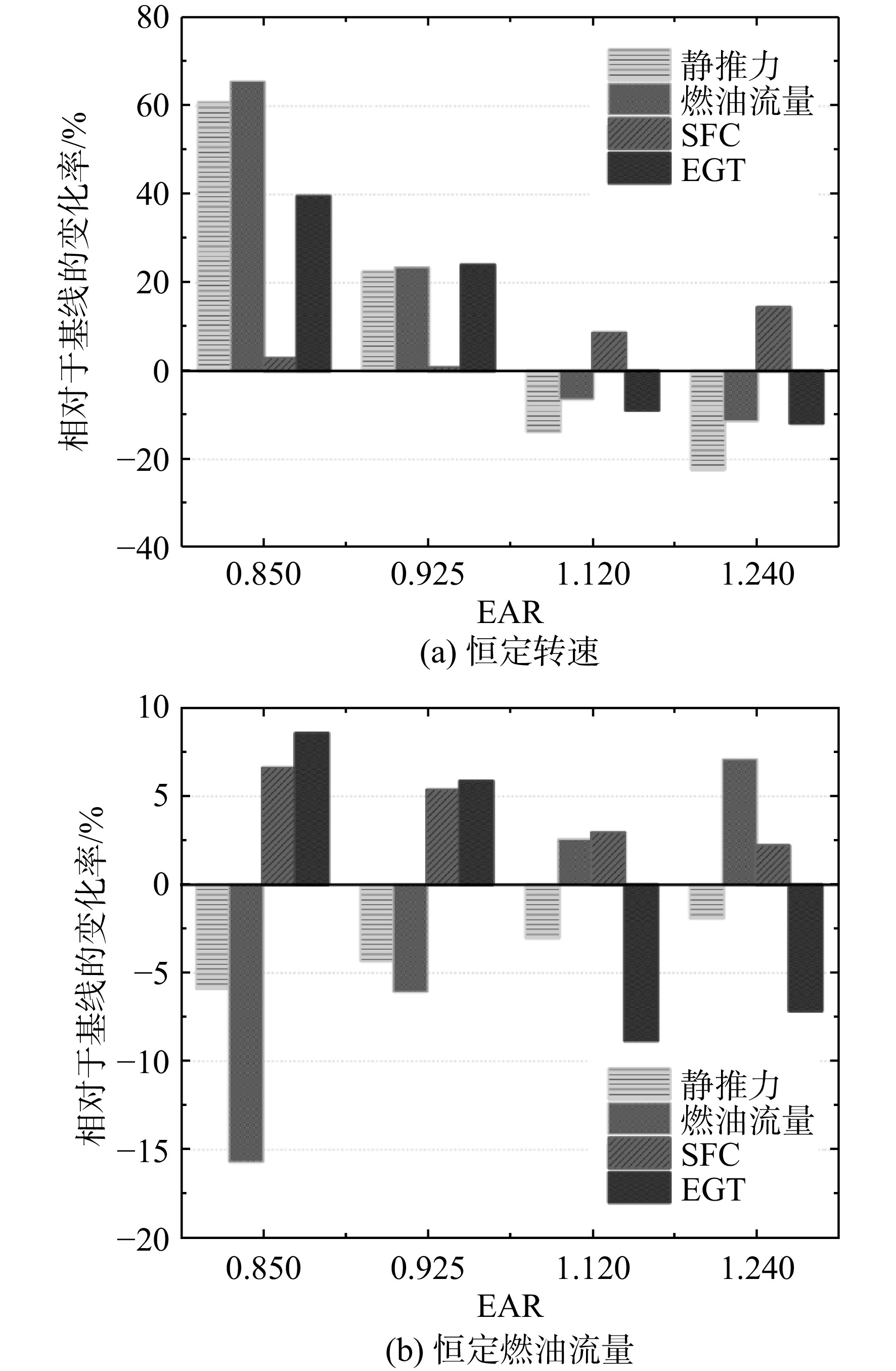
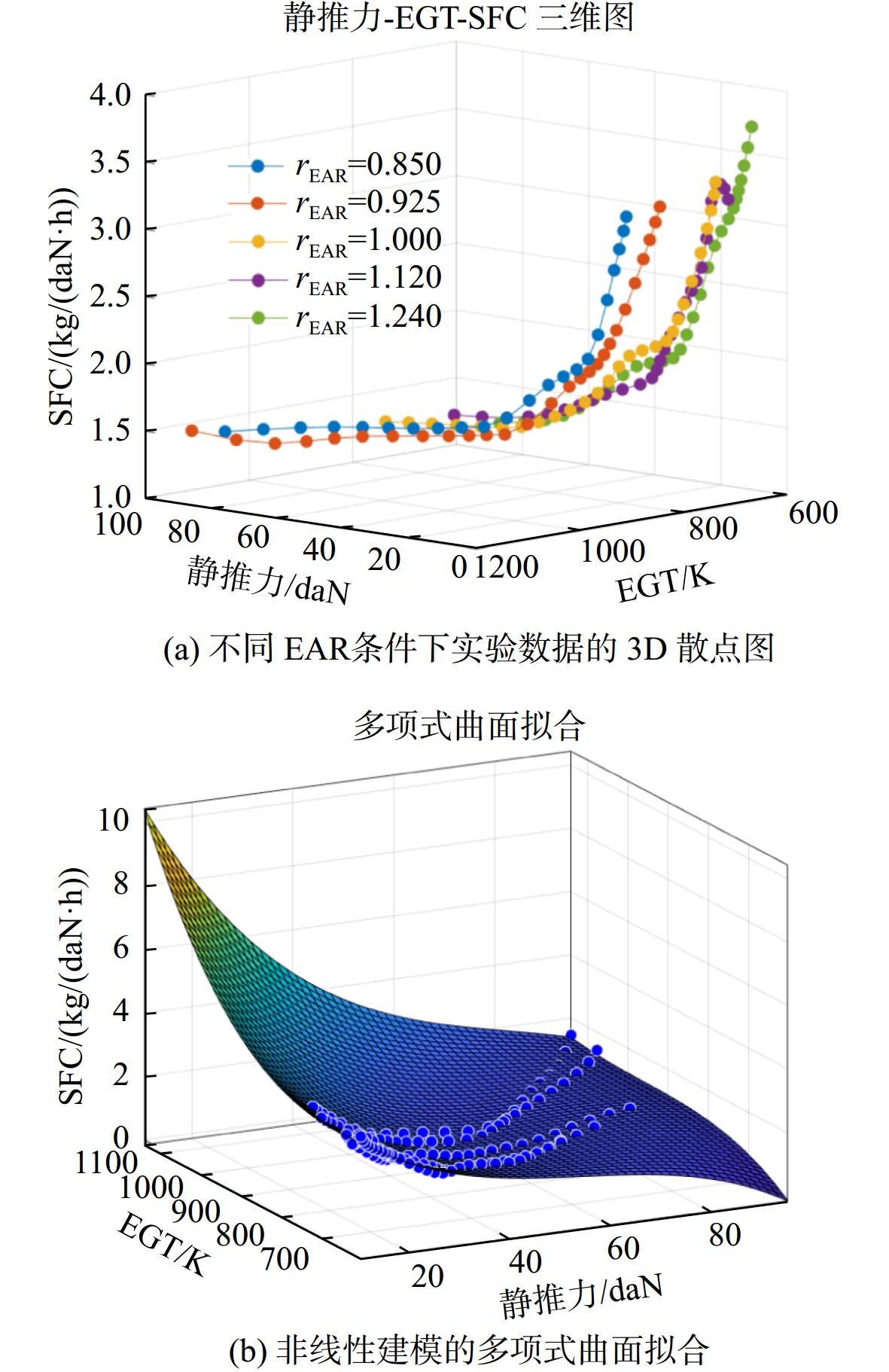
To investigate the impact of nozzle exit area variations on small turbofan engine performance, a 100 daN-class engine across 33 000 r/min to 60 000 r/min speed range under constant speed and constant fuel flow conditions was studied. A mathematical model was developed to quantify the coupling effects between engine parameters, and an optimization strategy was proposed. The results showed that at 54 000 r/min, reducing the equivalent area ratio (EAR) from 1.240 to 0.850 increased the static thrust by 107%, raised the exhaust gas temperature (EGT) by 400 K, and decreased the specific fuel consumption (SFC) by 10.6%. Under constant fuel flow conditions, decreasing EAR led to a 14.8% reduction in speed, a 4% decrease in thrust, a 121 K increase in EGT, and a 6% rise in SFC. Analysis revealed that at EAR of 0.925, SFC was minimized within the 60—80 daN thrust range, indicating the best matching between fuel combustion and gas expansion. Compared with high EAR (1.240), operating with low EAR (0.850—0.925) reduced SFC by 10%—20%, with a 300 K increase in EGT. The optimal operating range was identified as EAR of 0.925—1.000, corresponding to static thrust of 60—80 daN and EGT of 800—950 K. In this range, SFC can be reduced by 15%—20%, static thrust increased by 30%—40%, while EGT remained within material resistance range. These findings could offer valuable insights for adaptive nozzle design and real-time control in unmanned aerial vehicle propulsion systems.

| [1] |
BALLI O. Advanced exergy analyses to evaluate the performance of a military aircraft turbojet engine (TJE) with afterburner system: Splitting exergy destruction into unavoidable/avoidable and endogenous/exogenous[J]. Applied Thermal Engineering, 2017, 111: 152-169. doi: 10.1016/j.applthermaleng.2016.09.036
|
| [2] |
AMIRANTE R, CATALANO L A, DADONE A, et al. Design optimization of the intake of a small-scale turbojet engine [J]. Computer Modeling in Engineering & Sciences, 2007, 18(1): 17-30.
|
| [3] |
TANG Wei, WANG Lijian, GU Jiawei, et al. Single neural adaptive PID control for small UAV micro-turbojet engine[J]. Sensors, 2020, 20(2): 345. doi: 10.3390/s20020345
|
| [4] |
AYGUN H, DURSUN O O, DÖNMEZ K, et al. Prediction of performance characteristics of an experimental micro turbojet engine using machine learning approaches[J]. Energy, 2024, 313: 133997. doi: 10.1016/j.energy.2024.133997
|
| [5] |
CASALINO D, GENITO M. Achievements in the numerical modeling of fan noise radiation from aero-engines[J]. Aerospace Science and Technology, 2008, 12(1): 105-113. doi: 10.1016/j.ast.2007.10.005
|
| [6] |
CHMIELEWSKI M, GIERAS M. Impact of variable geometry combustor on performance and emissions from miniature gas turbine engine[J]. Journal of the Energy Institute, 2017, 90(2): 257-264. doi: 10.1016/j.joei.2016.01.004
|
| [7] |
TAM C K W. On the generation of entropy noise in a shock containing nozzle of high-performance aircraft at afterburner[J]. Journal of Sound and Vibration, 2021, 512: 116389. doi: 10.1016/j.jsv.2021.116389
|
| [8] |
AKÇAY I H H, GÜRBÜZ H, AKÇAY H, et al. An investigation of euro diesel-hydrogen dual-fuel combustion at different speeds in a small turbojet engine[J]. Aircraft Engineering and Aerospace Technology, 2021, 93(4): 701-710. doi: 10.1108/AEAT-10-2020-0235
|
| [9] |
COBAN K, YASIN Ş, COLPAN C O, et al. Exergetic and exergoeconomic assessment of a small-scale turbojet fuelled with biodiesel[J]. Energy, 2017, 140: 1358-1367. doi: 10.1016/j.energy.2017.05.096
|
| [10] |
GÜRBÜZ H, AKÇAY H, ALDEMIR M, et al. The effect of euro diesel-hydrogen dual fuel combustion on performance and environmental-economic indicators in a small UAV turbojet engine[J]. Fuel, 2021, 306: 121735. doi: 10.1016/j.fuel.2021.121735
|
| [11] |
LYON D H. A military perspective on small unmanned aerial vehicles[J]. IEEE Instrumentation & Measurement Magazine, 2004, 7(3): 27-31.
|
| [12] |
KRACIK J, DVORAK V. Secondary flow choking in axisymmetric supersonic air ejector with adjustable motive nozzle[J]. Applied Thermal Engineering, 2022, 204: 117936. doi: 10.1016/j.applthermaleng.2021.117936
|
| [13] |
CICAN G, FRIGIOESCU T, CRUN\U021BEANU D, et al. Micro turbojet engine nozzle ejector impact on the acoustic emission, trust force and fuel consumption analysis[J]. Aerospace, 2023, 10(2): 162. doi: 10.3390/aerospace10020162
|
| [14] |
林坚强, 徐惊雷, 葛建辉, 等. 辅助活门对串联TBCC排气系统的影响研究[J]. 推进技术, 2021, 42(11): 2445-2454. LIN Jianqiang, XU Jinglei, GE Jianhui, et al. Effects of auxiliary door on tandem TBCC exhaust system[J]. Journal of Propulsion Technology, 2021, 42(11): 2445-2454. (in Chinese
LIN Jianqiang, XU Jinglei, GE Jianhui, et al. Effects of auxiliary door on tandem TBCC exhaust system[J]. Journal of Propulsion Technology, 2021, 42(11): 2445-2454. (in Chinese)
|
| [15] |
饶珠明, 王兵. 微型涡喷发动机引射特性研究[J]. 弹箭与制导学报, 2017, 37(4): 106-108, 127. RAO Zhuming, WANG Bing. Study on ejection performance of micro-turbojet engine[J]. Journal of Projectiles, Rockets, Missiles and Guidance, 2017, 37(4): 106-108, 127. (in Chinese
RAO Zhuming, WANG Bing. Study on ejection performance of micro-turbojet engine[J]. Journal of Projectiles, Rockets, Missiles and Guidance, 2017, 37(4): 106-108, 127. (in Chinese)
|
| [16] |
LIU Zhenrong, SONG Caiyue, LIU Jiazhen, et al. Numerical study on infrared suppression (IRS) devices with streamlined lobed nozzles featuring Bezier curve characteristics[J]. Applied Thermal Engineering, 2025, 267: 125801. doi: 10.1016/j.applthermaleng.2025.125801
|
| [17] |
QIU Chenghui, ZOU Yitao, KONG Benben, et al. Multi-objective optimization of IRS device with scalloped lobed nozzle on flow features and thermal mixing performance[J]. International Communications in Heat and Mass Transfer, 2024, 155: 107561. doi: 10.1016/j.icheatmasstransfer.2024.107561
|
| [18] |
YAN Panpan, GAO Wenqiang, MENG Xiaying, et al. A numerical study on the influence of multiple nozzles on the infrared radiation signatures of liquid rocket exhaust plumes[J]. Case Studies in Thermal Engineering, 2024, 61: 104835. doi: 10.1016/j.csite.2024.104835
|
| [19] |
MICHEL U. The benefits of variable area fan nozzles on turbofan engines: AIAA-2011-226 [R]. Orlando, US : AIAA, 2011.
|
| [20] |
SUNDARARAJ R H, SEKAR T C, ARORA R, et al. Effect of nozzle exit area on the performance of a turbojet engine[J]. Aerospace Science and Technology, 2021, 116: 106844. doi: 10.1016/j.ast.2021.106844
|
| [21] |
FULARA S, CHMIELEWSKI M, GIERAS M. Experimental research of the small gas turbine with variable area nozzle[J]. Proceedings of the Institution of Mechanical Engineers, Part G: Journal of Aerospace Engineering, 2019, 233(15): 5650-5659. doi: 10.1177/0954410019853977
|
| [22] |
FULARA S, CHMIELEWSKI M, GIERAS M. Variable geometry in miniature gas turbine for improved performance and reduced environmental impact[J]. Energies, 2020, 13(19): 5230. doi: 10.3390/en13195230
|
| [23] |
HOU Junxing, XI Shuanghui, WANG Zhenghe, et al. Effects of biodiesel ratio and nozzle diameter on combustion and emissions of a biodiesel–DME-fueled engine[J]. Transactions of the Canadian Society for Mechanical Engineering, 2023, 47(3): 308-316. doi: 10.1139/tcsme-2022-0130
|
| [24] |
WESSLEY G J J, CHAUHAN S. Modeling and performance simulation of a micro turbojet engine using flownex[J]. Indian Journal of Science and Technology, 2019, 12(22): 1-5.
|
| [25] |
廉筱纯, 吴虎. 航空发动机原理[M]. 西安: 西北工业大学出版社, 2005. LIAN Xiaochun, WU Hu. Aeroengine principle[M]. Xi’an: Northwestern Polytechnical University Press, 2005. (in Chinese
LIAN Xiaochun, WU Hu. Aeroengine principle[M]. Xi’an: Northwestern Polytechnical University Press, 2005. (in Chinese)
|
| [26] |
GURBUZ H. The effect of H2 purity on the combustion, performance, emissions and energy costs in an SI engine[J]. Thermal Science, 2020, 24(1): 37-49.
|
| [27] |
ALTARAZI Y S M, ABU TALIB A R, GIRES E, et al. Performance and exhaust emissions rate of small-scale turbojet engine running on dual biodiesel blends using Gasturb[J]. Energy, 2021, 232: 120971. doi: 10.1016/j.energy.2021.120971
|
| [28] |
XU Yibing, DENG Weimin, LIU Xiangyang, et al. Full engine 3D simulation scheme considering rotor motion for turbojet engine under crosswind conditions[J]. Applied Thermal Engineering, 2025, 269: 125951. doi: 10.1016/j.applthermaleng.2025.125951
|
| [29] |
BARANWAL N, MAHULIKAR S P. IR signature study of aircraft engine for variation in nozzle exit area[J]. Infrared Physics & Technology, 2016, 74: 21-27.
|
| [30] |
RAHMAN N U, WHIDBORNE J F. A numerical investigation into the effect of engine bleed on performance of a single-spool turbojet engine[J]. Proceedings of the Institution of Mechanical Engineers, Part G: Journal of Aerospace Engineering, 2008, 222(7): 939-949. doi: 10.1243/09544100JAERO389
|
| [31] |
TANBAY T, DURMAYAZ A. Energy, exergy and ecological analysis and multiobjective optimization of the hydrogen-fueled Scimitar engine with fixed nozzle geometry[J]. International Journal of Hydrogen Energy, 2022, 47(45): 19876-19887. doi: 10.1016/j.ijhydene.2022.01.127
|







 DownLoad: