






Experimental study on impact of kerosene injection position on performance of rotating detonation combustors
-
摘要:
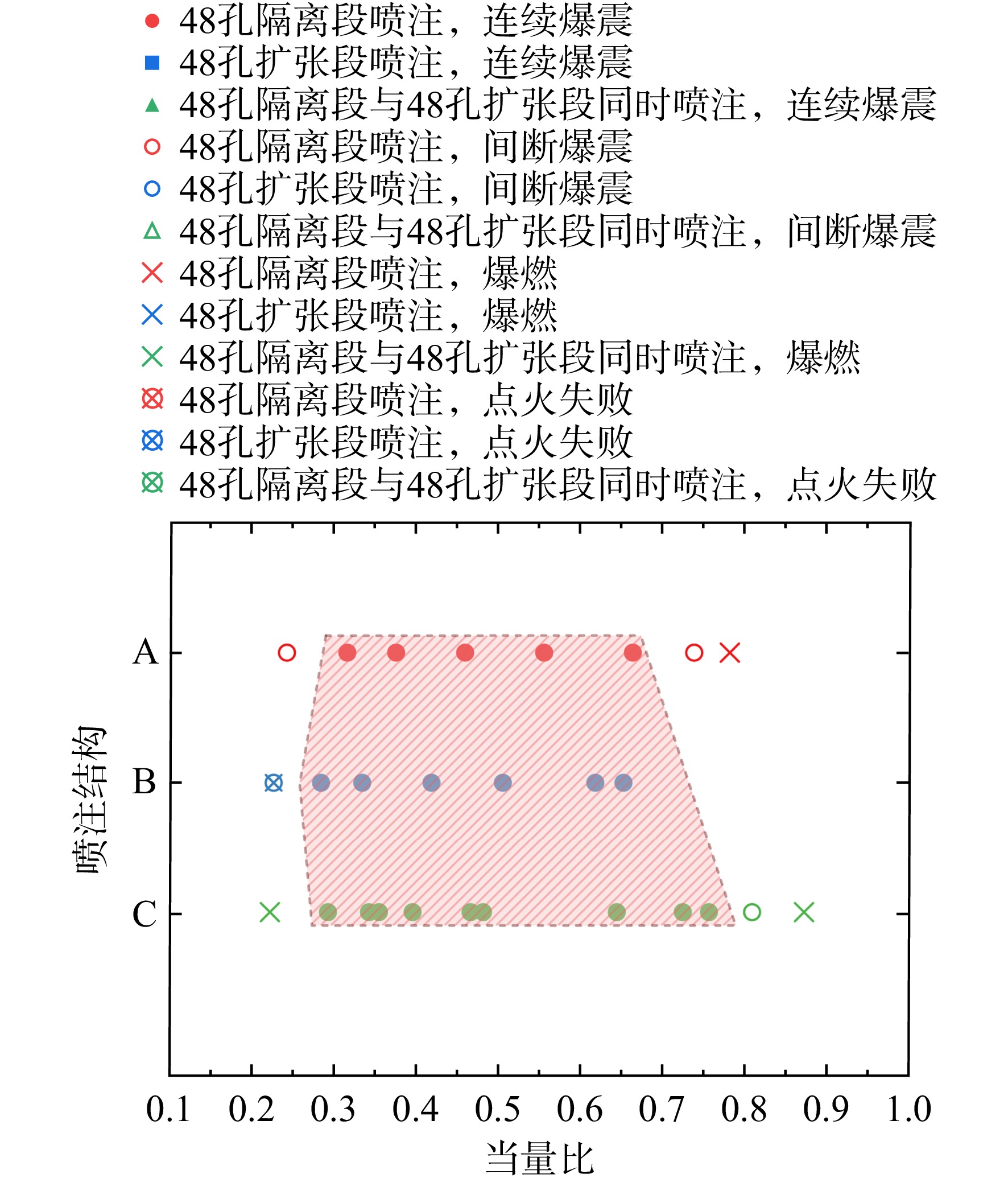
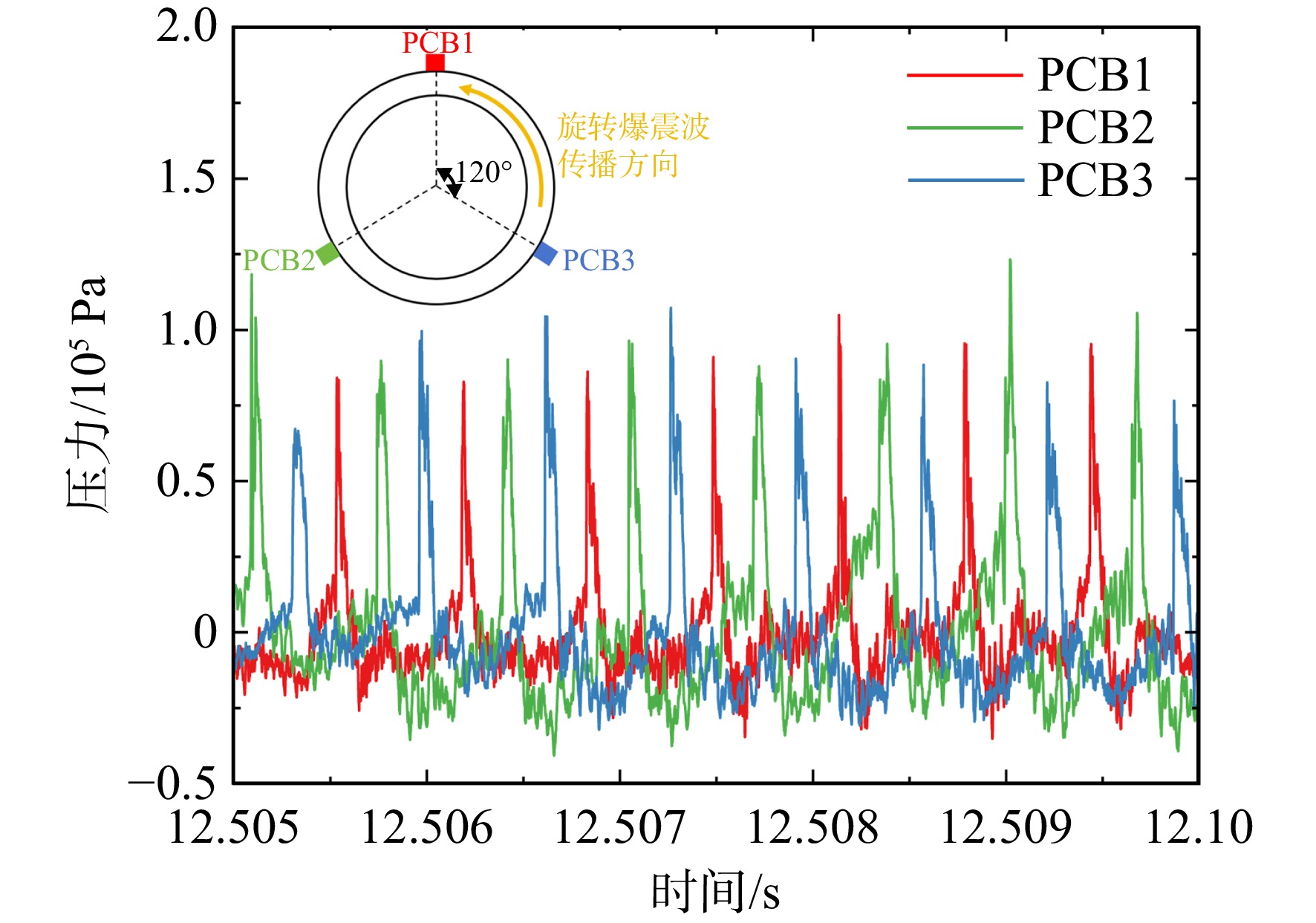
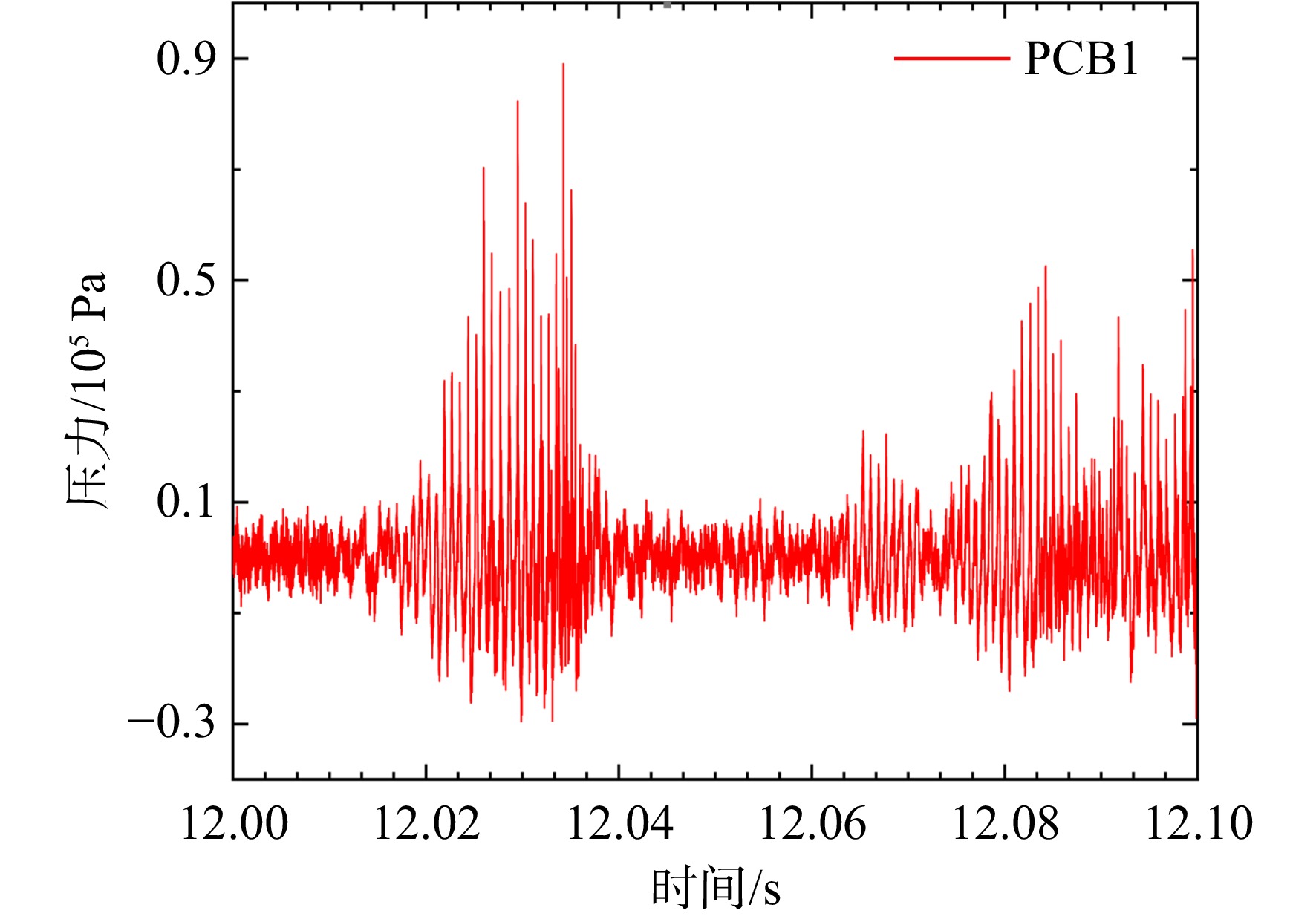
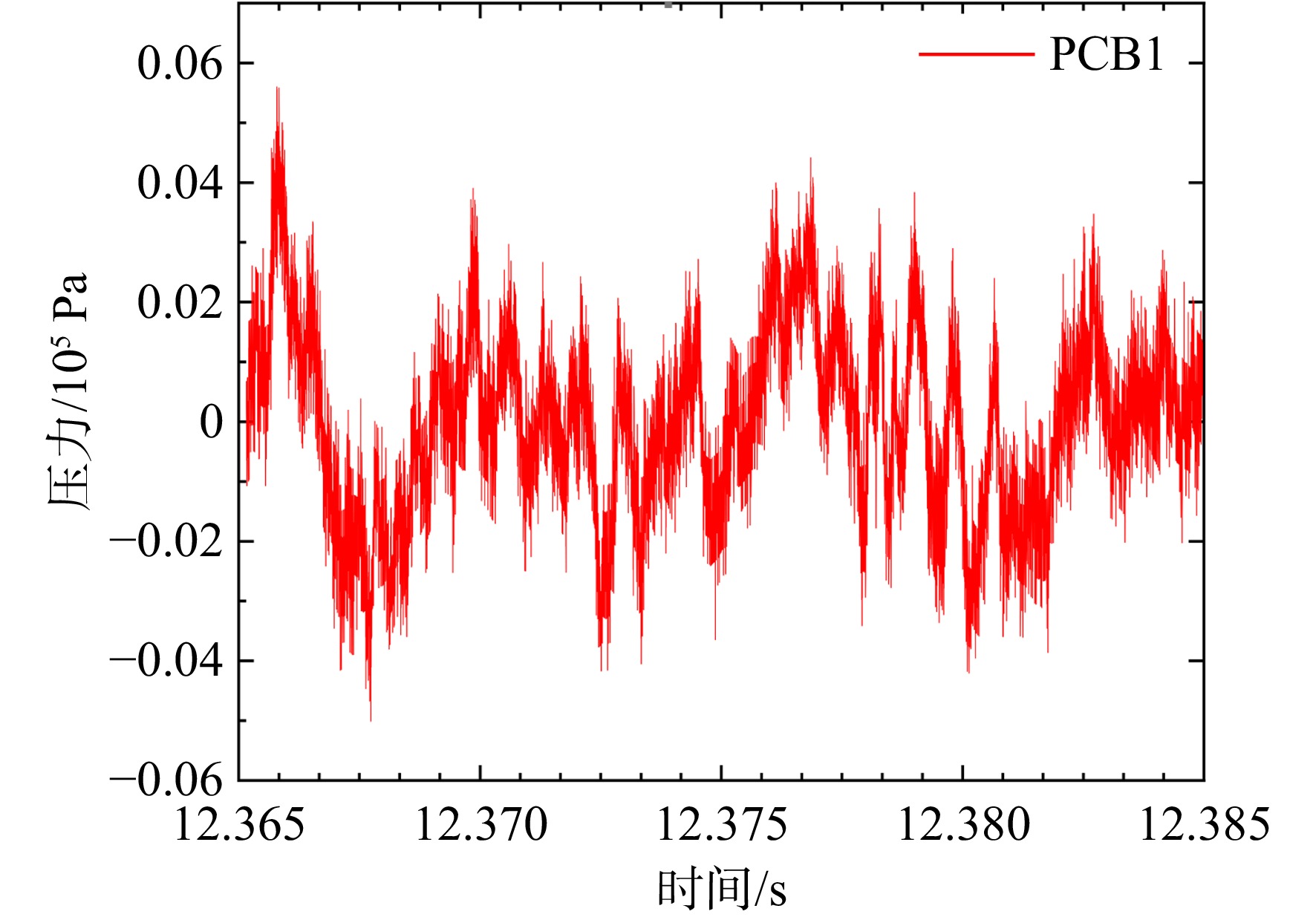
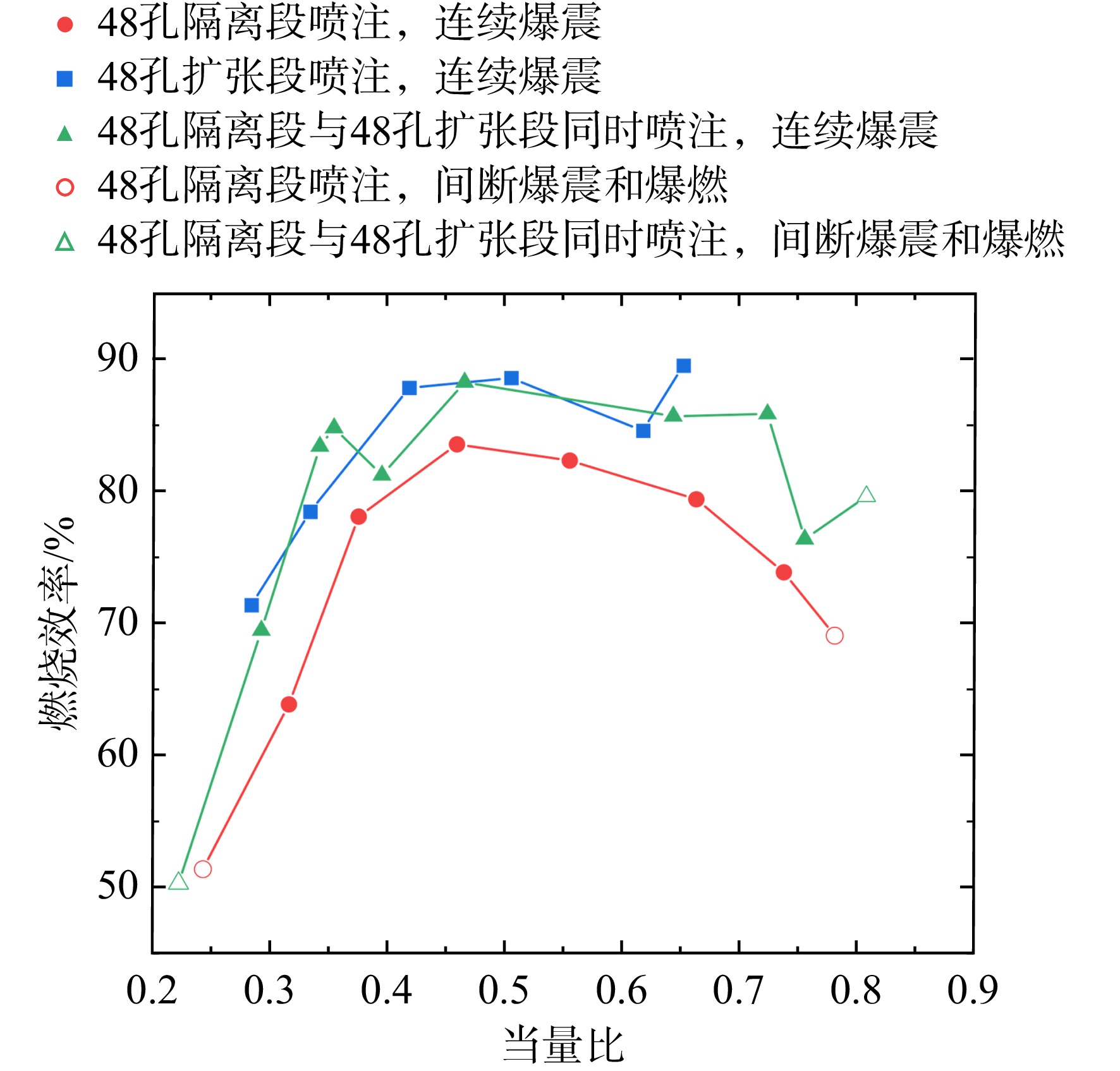
研究了隔离段、扩张段以及多点混合喷注对燃油/空气旋转爆震燃烧室的传播特性与性能影响。针对冲压旋转爆震燃烧室典型工作状态,实验研究了爆震燃烧室燃烧效率与总压增益的变化情况。研究发现,随着当量比的增加,不同喷注结构会对爆震波传播特性有所影响,实验中观察到连续稳定爆震,不稳定爆震以及爆燃等多种燃烧模态;不同喷注结构对燃烧效率与总压增益特性也有一定影响,综合条件下在隔离段与扩张段多点混合喷注的效果更优。燃烧效率随当量比增加出现先上升后波动变化的趋势,实验中观测到当量比为0.653时,燃烧效率达到最高值89.5%。爆震燃烧室总压增益特性随当量比上升逐渐上升,最高有效总压增益出现在当量比0.644时,有效总压增益最高值为−0.171。综合考虑下,扩张段喷注在整体性能上更具优势,但需结合隔离段辅助喷注以改善燃烧组织,以进一步优化喷注布局。
Abstract:The effects of isolator injection, divergent section injection, and multi-point mixing injection on the propagation and performance characteristics of kerosene/air rotating detonation combustors (RDCs) were investigated. Focusing on typical operating conditions of ramjet RDCs, changes in combustion efficiency and total pressure gain were studied. It was found that with increasing equivalence ratio, different injector configurations influenced the propagation characteristics of detonation waves. Steady detonation, unsteady detonation and deflagration were observed in the experiment. Different injector configurations also had certain impact on the combustion efficiency and total pressure gain. Overall, under varying equivalence ratios, multi-point mixing injection in the isolator and divergent section exhibited superior combustion efficiency. Combustion efficiency showed an initial increase followed by fluctuation with increasing equivalence ratio. In the experiments, the maximum combustion efficiency of 89.5% was observed at an equivalence ratio of 0.653. The total pressure gain of the RDC gradually increased with the increasing the equivalence ratio. The highest effective total pressure gain occurred at an equivalence ratio of 0.644, with a peak effective total pressure gain of −0.171. The injection in the divergent section demonstrated superior overall performance. However, it needs to be combined with auxiliary injection in the isolator to improve the organization of the combustion process, thereby further optimizing the injection configuration.
-
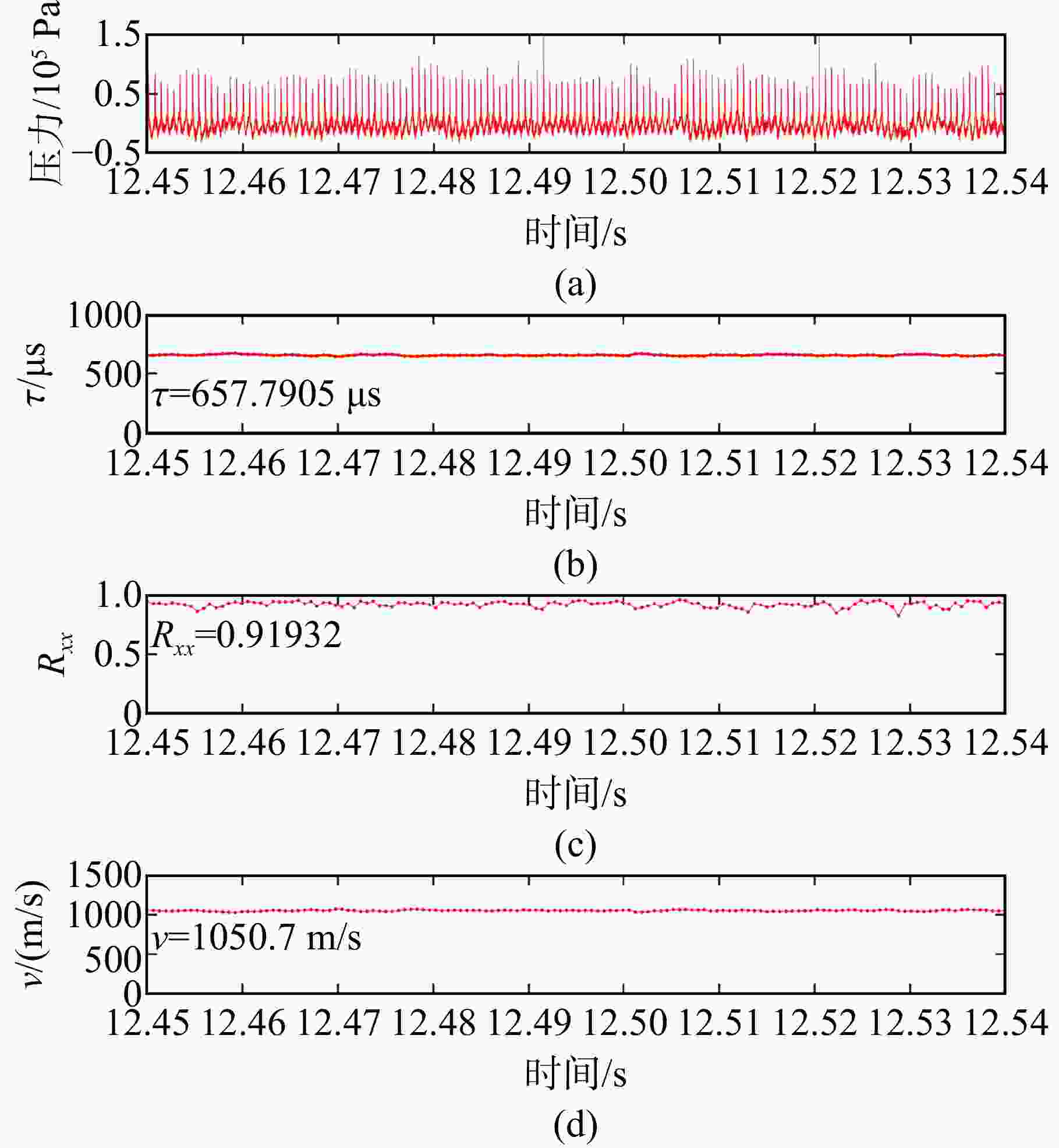
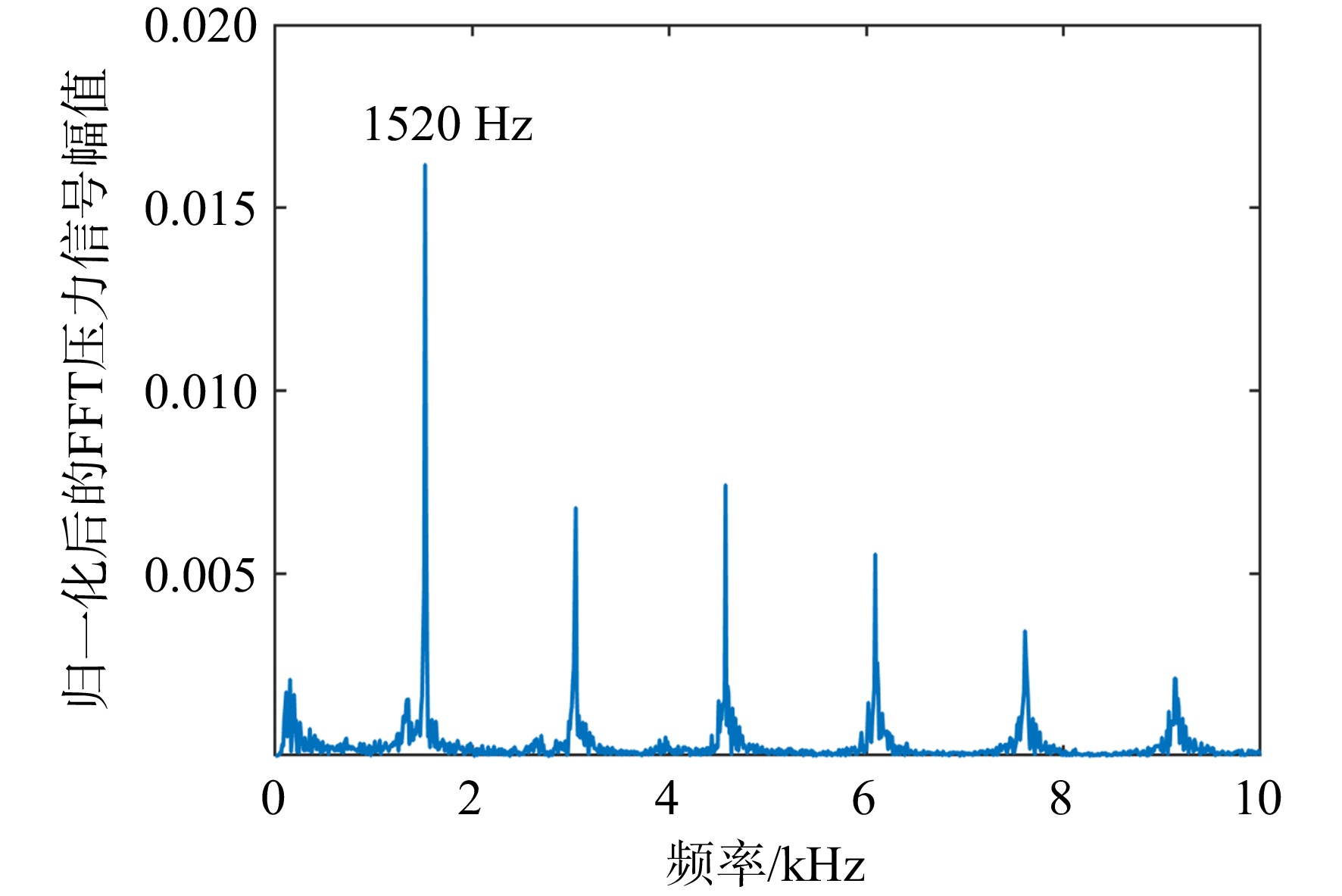
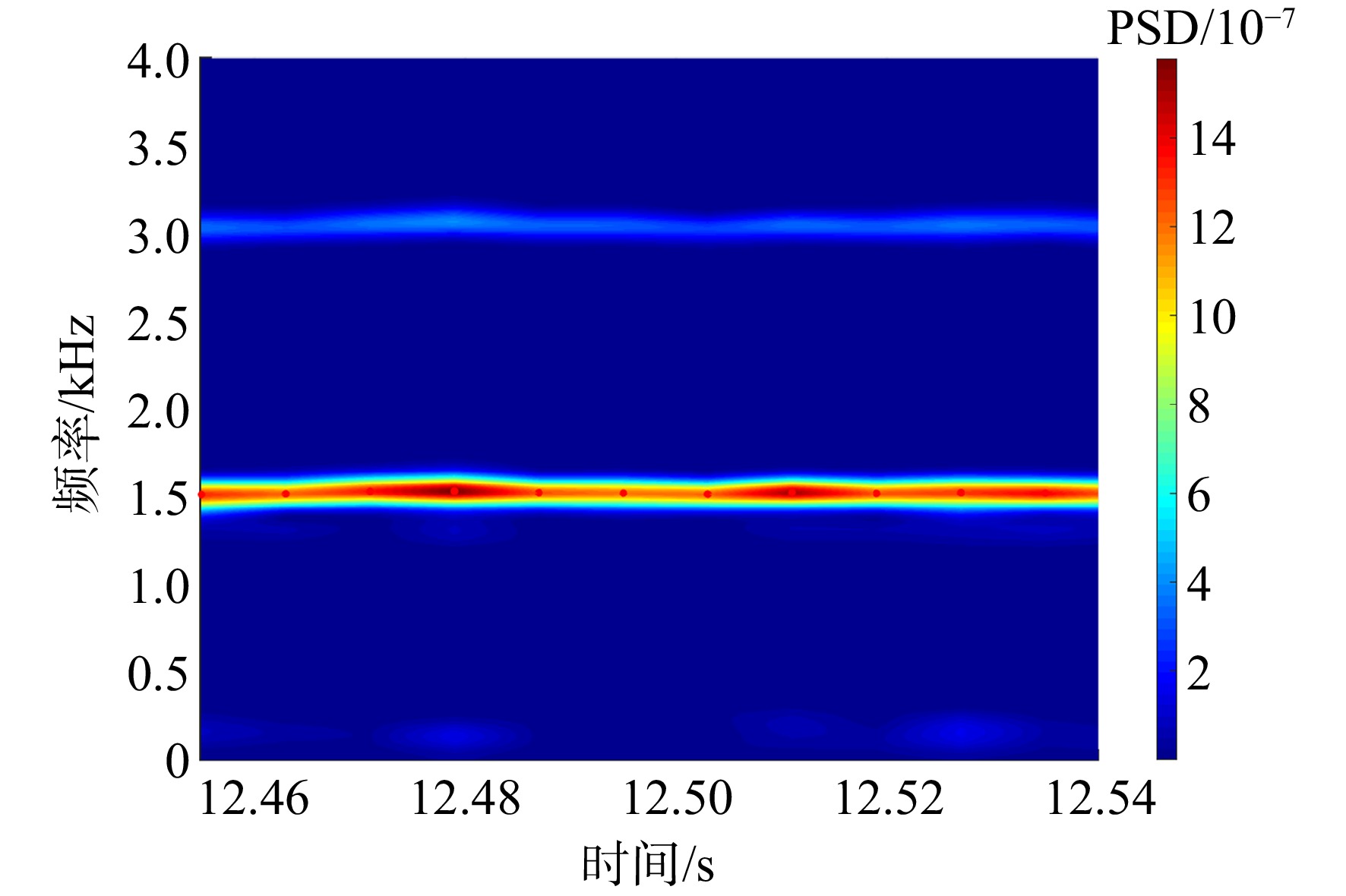
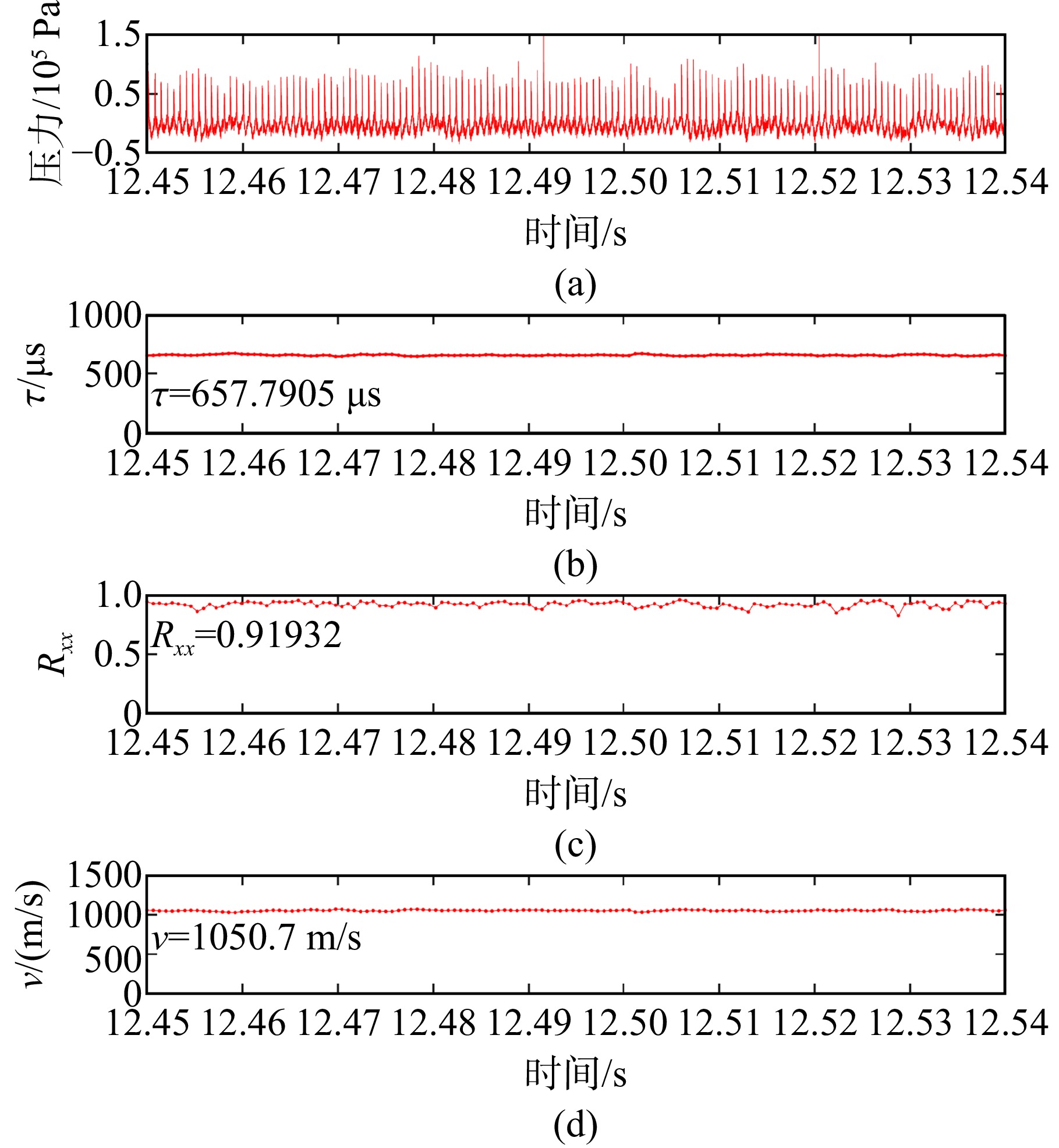
图 9 连续爆震的压力信号自相关分析结果
Figure 9. Auto-correlation of pressure signal in steady detonation
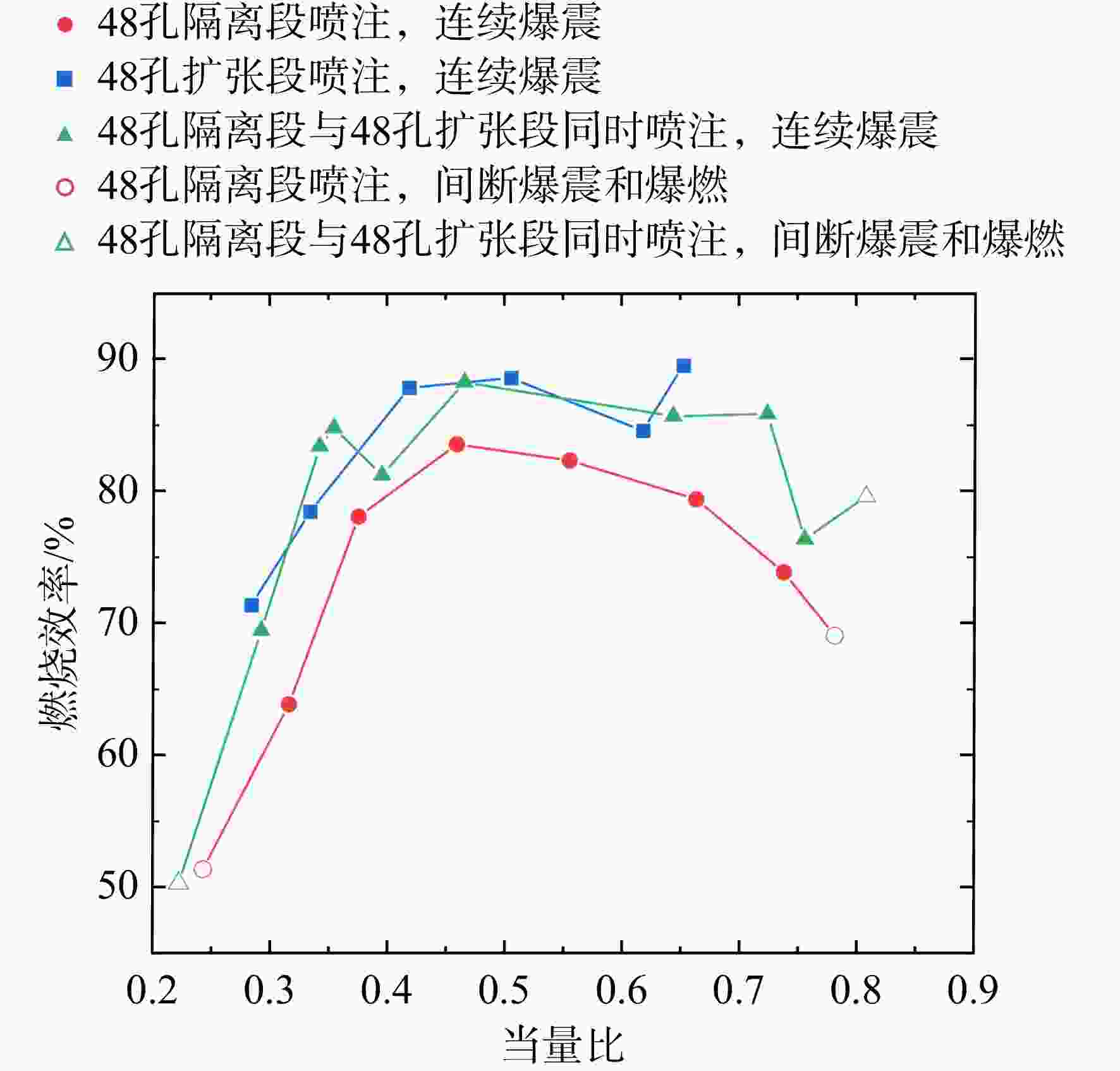
图 10 不同喷注位置下RDC的燃烧效率
Figure 10. Combustion efficiency of RDC at different injection positions
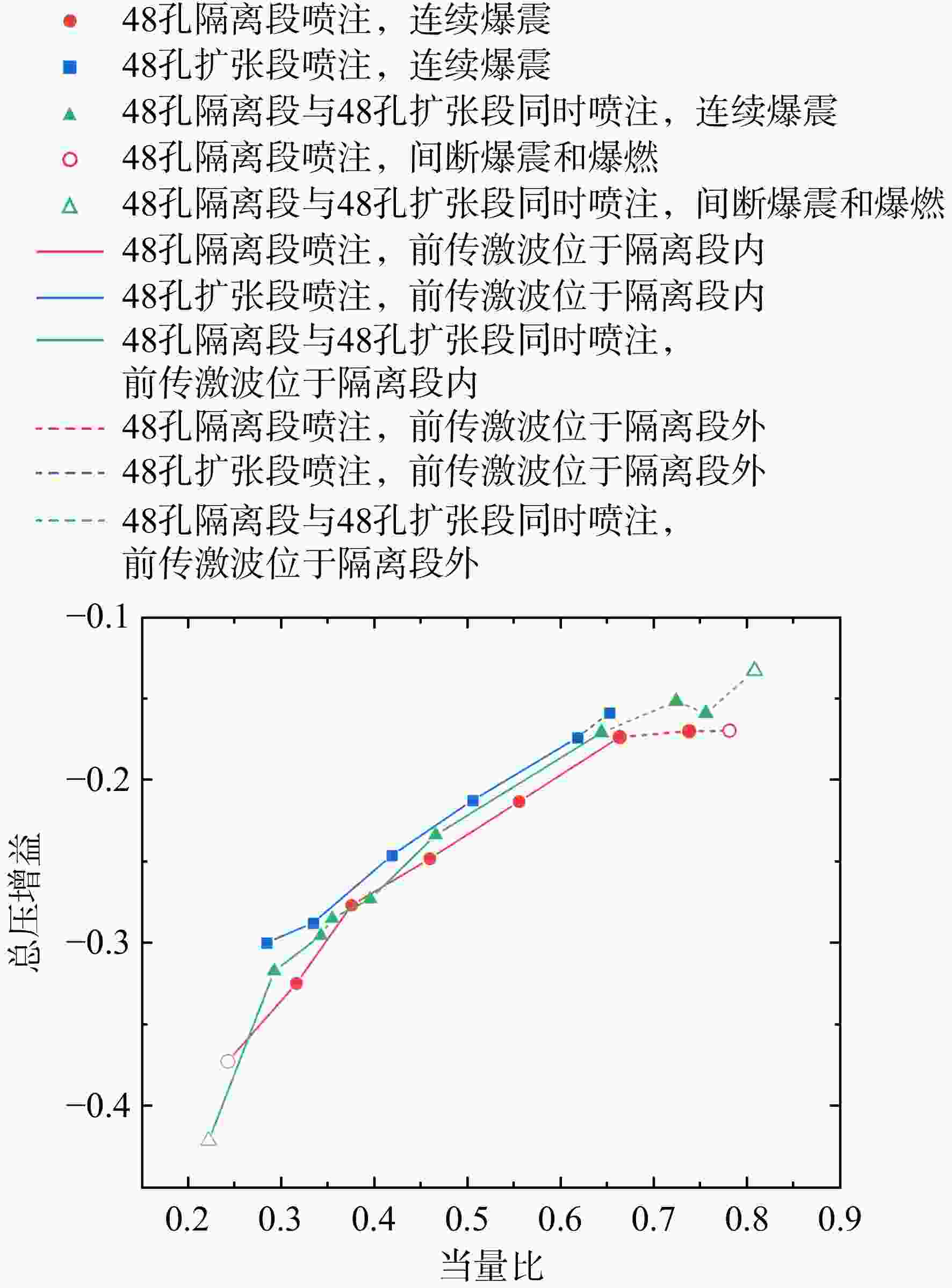
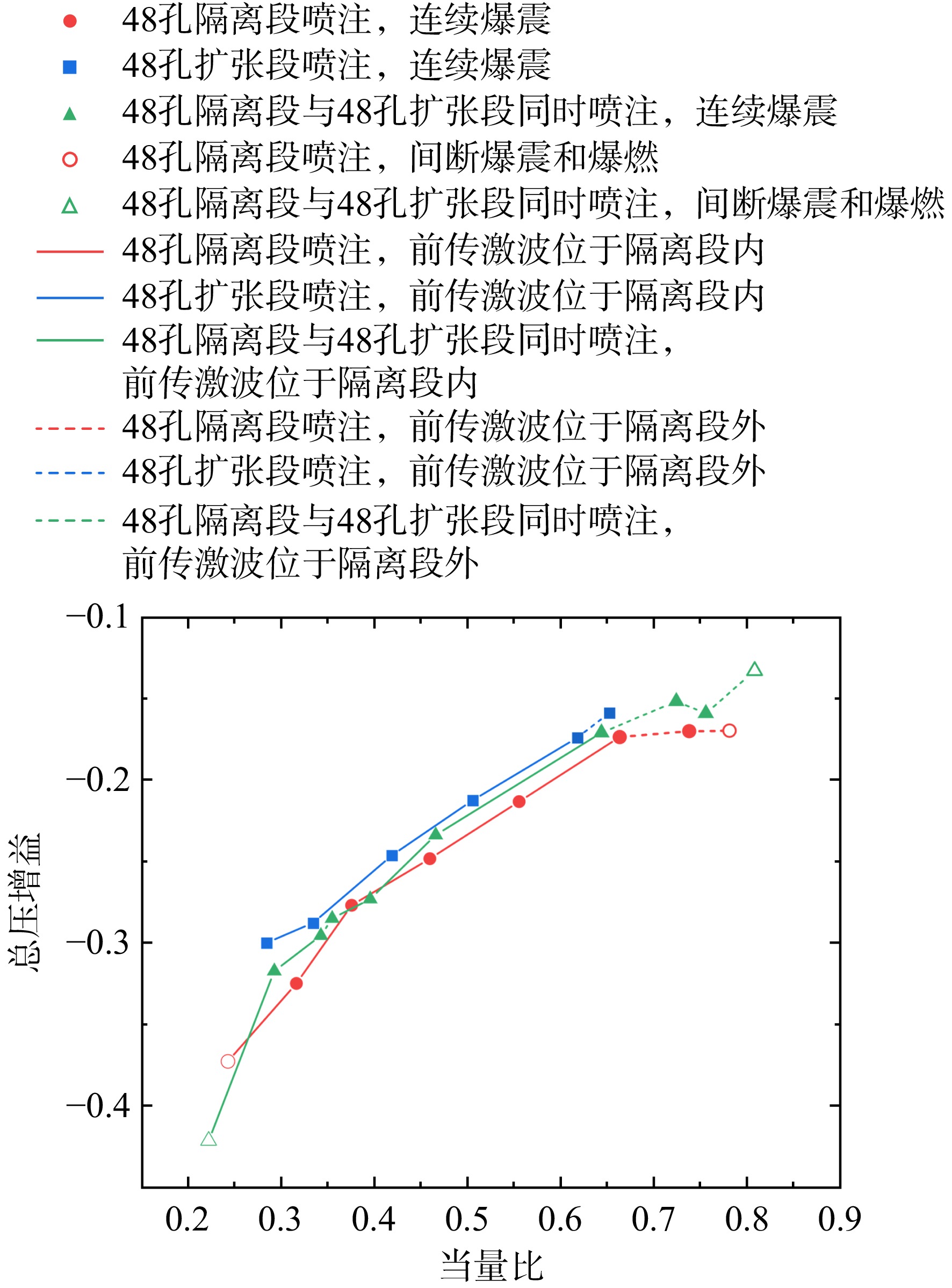
图 11 不同喷注位置下RDC的总压增益
Figure 11. Total pressure gain of RDC at different injection positions
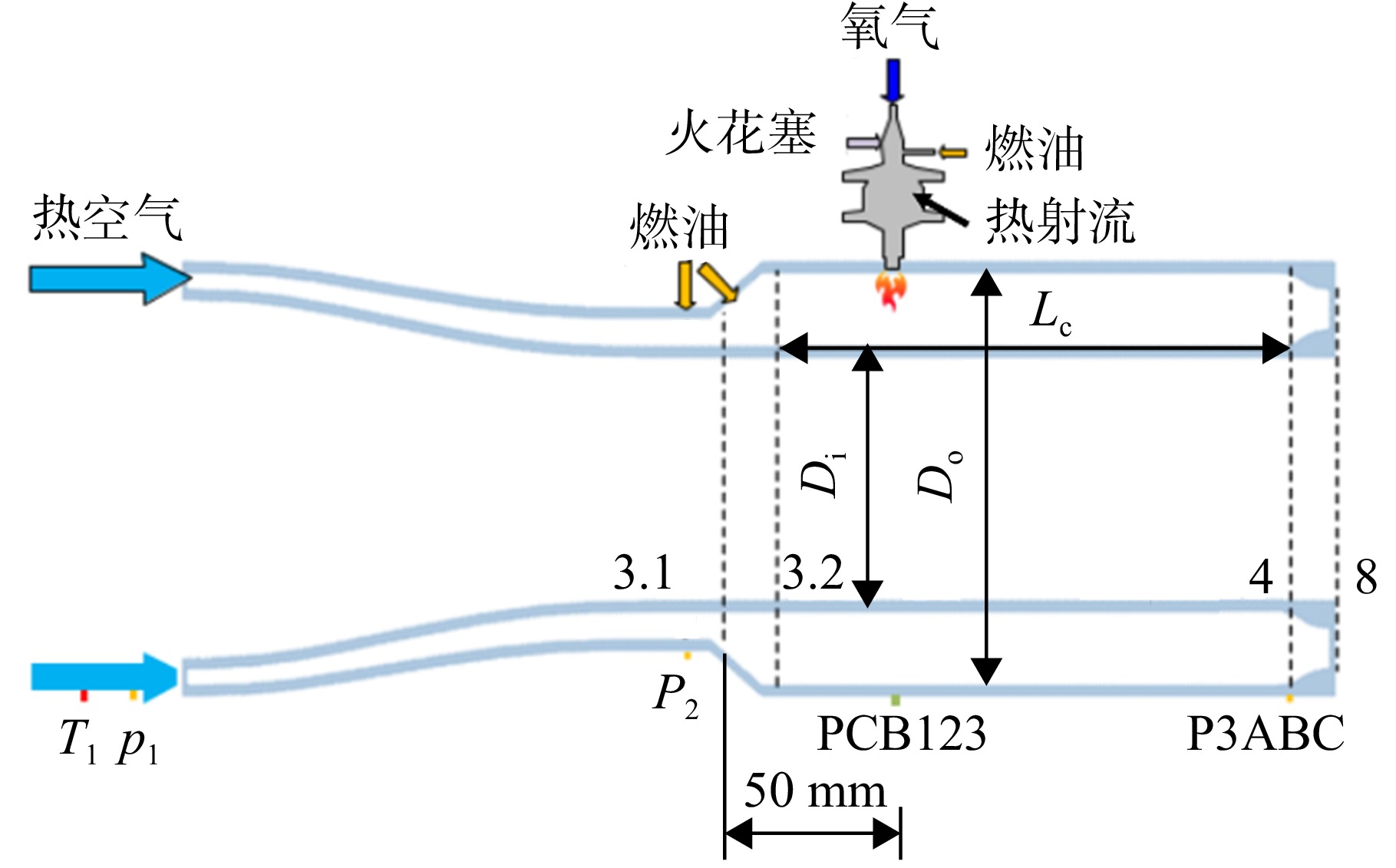
表 1 RDC关键几何参数
Table 1. Key geometry parameters of RDC
部件 结构参数 数值 隔离段
(入口~3.1截面)进口面积/mm2 6279.21 出口面积/mm2 7621.91 长度Li/mm2 278 扩张段
(3.1截面~3.2截面)半扩张角/(°) 41.12 燃烧室
(3.2截面~4截面)内径Di/mm 140 外径Do/mm 220 长度Lc/mm 272 收缩喷管
(4截面~8截面)出口面积比(A8/A4) 0.55  下载: 导出CSV
表 2 喷注结构关键参数
Table 2. Key parameters of injection configuration
实验结构 喷注位置 喷注孔数 喷注孔尺寸/mm A 隔离段 48 0.2 B 扩张段 48 0.2 C 隔离段-扩张段 48-48 0.2
下载: 导出CSV
A1 实验工况参数
A1. Experimental operating parameters
实验序号 喷注位置 空气流量$ {\dot{m}}_{\text{a}} $/(kg/s) 燃油流量$ {\dot{m}}_{\text{f}} $/(g/s) 进气总温Tta/K 当量比φ 喷注动量比qm 1 隔离段 2.18 36.0 593.78 0.243 4.54 2 隔离段 2.19 47.2 600.67 0.317 7.66 3 隔离段 2.17 55.5 603.25 0.376 10.62 4 隔离段 2.22 69.5 604.45 0.46 16.23 5 隔离段 2.23 84.3 608.84 0.556 23.70 6 隔离段 2.17 98.0 606.43 0.664 33.6 7 隔离段 2.19 110.1 601.85 0.739 41.47 8 隔离段 2.18 116.0 601.42 0.782 46.32 9 扩张段 2.15 27.4 600.67 0.187 21.56 10 扩张段 2.14 41.5 604.55 0.285 49.76 11 扩张段 2.13 48.5 606.55 0.335 68.81 12 扩张段 2.18 62.1 602.92 0.419 108.84 13 扩张段 2.2 75.7 604.5 0.506 158.90 14 扩张段 2.22 93.3 602.95 0.618 236.85 15 扩张段 2.2 97.7 604.66 0.653 263.69 16 多点喷注 2.21 16.7 613.02 0.222 8.46 17 多点喷注 2.2 21.9 605.93 0.293 14.85 18 多点喷注 2.21 25.8 601.04 0.343 20.57 19 多点喷注 2.22 26.8 602.97 0.355 21.97 20 多点喷注 2.19 29.5 607.58 0.396 27.28 21 多点喷注 2.18 34.6 605.03 0.467 38.05 22 多点喷注 2.14 35.1 618.96 0.482 39.46 23 多点喷注 2.18 47.8 608.04 0.645 72.09 24 多点喷注 2.2 54.3 608.46 0.725 89.72 25 多点喷注 2.18 56.1 602.45 0.757 98.64 26 多点喷注 2.16 59.4 601.22 0.809 113.12 27 多点喷注 2.2 65.3 607.94 0.873 130.57
下载: 导出CSV
-
[1] Wolański P. Detonative propulsion[J]. Proceedings of the Combustion Institute, 2013, 34(1): 125-158. doi: 10.1016/j.proci.2012.10.005 [2] 计自飞, 张会强, 谢峤峰, 等. 连续旋转爆震涡轮发动机热力过程与性能分析[J]. 清华大学学报(自然科学版), 2018, 58(10): 899-905. Ji Zifei, Zhang Huiqiang, Xie Qiaofeng, et al. Thermodynamic process and performance analysis of the continuous rotating detonation turbine engine[J]. Journal of Tsinghua University (Science and Technology), 2018, 58(10): 899-905. (in Chinese doi: 10.16511/j.cnki.qhdxxb.2018.26.040Ji Zifei, Zhang Huiqiang, Xie Qiaofeng, et al. Thermodynamic process and performance analysis of the continuous rotating detonation turbine engine[J]. Journal of Tsinghua University (Science and Technology), 2018, 58(10): 899-905. (in Chinese) doi: 10.16511/j.cnki.qhdxxb.2018.26.040 [3] Zhou Rui, Wu Dan, Wang Jianping. Progress of continuously rotating detonation engines[J]. Chinese Journal of Aeronautics, 2016, 29(1): 15-29. doi: 10.1016/j.cja.2015.12.006 [4] 王兵, 谢峤峰, 闻浩诚, 等. 爆震发动机研究进展[J]. 推进技术, 2021, 42(4): 721-737, 716. Wang Bing, Xie Qiaofeng, Wen Haocheng, et al. Research progress of detonation engines[J]. Journal of Propulsion Technology, 2021, 42(4): 721-737, 716. (in Chinese doi: 10.3724/1001-4055.202505004Wang Bing, Xie Qiaofeng, Wen Haocheng, et al. Research progress of detonation engines[J]. Journal of Propulsion Technology, 2021, 42(4): 721-737, 716. (in Chinese) doi: 10.3724/1001-4055.202505004 [5] 师迎晨, 张任帅, 计自飞, 等. 高速飞行器的连续旋转爆震推进技术[J]. 空气动力学学报, 2022, 40(1): 101-113. Shi Yingchen, Zhang Renshuai, Ji Zifei, et al. Rotating detonation propulsion technology for high-speed aircrafts[J]. Acta Aerodynamica Sinica, 2022, 40(1): 101-113. (in Chinese doi: 10.7638/kqdlxxb-2021.0231Shi Yingchen, Zhang Renshuai, Ji Zifei, et al. Rotating detonation propulsion technology for high-speed aircrafts[J]. Acta Aerodynamica Sinica, 2022, 40(1): 101-113. (in Chinese) doi: 10.7638/kqdlxxb-2021.0231 [6] Voitsekhovskii B V. Stationary spin detonation[J]. Journal of Applied Mechanics and Technical Physics, 1960, 3: 157-164. [7] Wen Haocheng, Fan Wenqi, Wang Bing. Theoretical analysis on the total pressure gain of rotating detonation systems[J]. Combustion and Flame, 2023, 248: 112582. doi: 10.1016/j.combustflame.2022.112582 [8] Bach E, Paschereit C O, Stathopoulos P, et al. An empirical model for stagnation pressure gain in rotating detonation combustors[J]. Proceedings of the Combustion Institute, 2021, 38(3): 3807-3814. doi: 10.1016/j.proci.2020.07.071 [9] Strakey P, Ferguson D, Sisler A, et al. Computationally quantifying loss mechanisms in a rotating detonation engine[R]. AIAA-2016-0900, 2016. [10] Prakash S, Fiévet R, Raman V, et al. Analysis of the detonation wave structure in a linearized rotating detonation engine[J]. AIAA Journal, 2019, 58(12): 5063-5077. doi: 10.2514/1.j058156 [11] Wu Wenbin, Wang Yingnan, Han Wenbo, et al. Experimental research on solid fuel pre-combustion rotating detonation engine[J]. Acta Astronautica, 2023, 205: 258-266. doi: 10.1016/j.actaastro.2023.02.007 [12] Peng Haoyang, Liu Weidong, Liu Shijie, et al. Hydrogen-air, ethylene-air, and methane-air continuous rotating detonation in the hollow chamber[J]. Energy, 2020, 211: 118598. doi: 10.1016/j.energy.2020.118598 [13] Zhou Jianping, Song Feilong, Wu Yun, et al. Investigation of pressure gain characteristics for kerosene-hot air RDE[J]. Combustion and Flame, 2023, 247: 112503. doi: 10.1016/j.combustflame.2022.112503 [14] Liu Shijie, Liu Weidong, Wang Yi, et al. Free jet test of continuous rotating detonation ramjet engine[R]. AIAA-2017-2282, 2017. [15] Bohon M, Bluemner R, Orchini A, et al. Analysis of RDC operation by dynamic mode decomposition (DMD)[R]. AIAA-2019-4377, 2019. [16] 王致程, 严宇, 王可, 等. 凹腔燃烧室对旋转爆震波传播模态和燃烧室推力性能的影响[J]. 航空动力学报, 2023, 38(6): 1306-1315. Wang Zhicheng, Yan Yu, Wang Ke, et al. Effect of the cavity combustor on the propagation modes of rotating detonations and propulsion performance[J]. Journal of Aerospace Power, 2023, 38(6): 1306-1315. (in Chinese doi: 10.13224/j.cnki.jasp.20220947Wang Zhicheng, Yan Yu, Wang Ke, et al. Effect of the cavity combustor on the propagation modes of rotating detonations and propulsion performance[J]. Journal of Aerospace Power, 2023, 38(6): 1306-1315. (in Chinese) doi: 10.13224/j.cnki.jasp.20220947 [17] 林伟. 爆震燃烧热射流起爆机理研究[D]. 长沙: 国防科学技术大学, 2010. Lin Wei. Investigation on mechanism of detonation initiation by hot jets[D]. Changsha: National University of Defense Technology, 2010. (in ChineseLin Wei. Investigation on mechanism of detonation initiation by hot jets[D]. Changsha: National University of Defense Technology, 2010. (in Chinese) [18] Wolański P. Application of the continuous rotating detonation to gas turbine[J]. Applied Mechanics and Materials, 2015, 782: 3-12. doi: 10.4028/www.scientific.net/AMM.782.3 [19] Han Chao, Bian Jing, Shi Baolu, et al. Numerical investigation of detonation initiation in a modeled rotating detonation engine[J]. Physics of Fluids, 2024, 36: 016102. doi: 10.1063/5.0179228 [20] 赵明皓, 王可, 王致程, 等. 点火方式对空桶型旋转爆震燃烧室起爆特性的影响[J]. 航空学报, 2022, 43(1): 124870. Zhao Minghao, Wang Ke, Wang Zhicheng, et al. Effects of ignition on initiation characteristics of hollow rotating detonation combustor[J]. Acta Aeronautica et Astronautica Sinica, 2022, 43(1): 124870. (in ChineseZhao Minghao, Wang Ke, Wang Zhicheng, et al. Effects of ignition on initiation characteristics of hollow rotating detonation combustor[J]. Acta Aeronautica et Astronautica Sinica, 2022, 43(1): 124870. (in Chinese) [21] Zheng Quan, Meng Haolong, Weng Chunsheng, et al. Experimental research on the instability propagation characteristics of liquid kerosene rotating detonation wave[J]. Defence Technology, 2020, 16(6): 1106-1115. doi: 10.1016/j.dt.2020.06.028 [22] Han Xinpei, Wang Yuanding, Zheng Quan, et al. Experimental study on propagation, quenching, and re-initiation characteristics of rotating detonation wave with liquid kerosene-oxygen-enriched air[J]. Experimental Thermal and Fluid Science, 2023, 148: 110984. doi: 10.1016/j.expthermflusci.2023.110984 [23] Duvall J, Chacon F, Harvey C, et al. Study of the effects of various injection geometries on the operation of a rotating detonation engine[R]. AIAA-2018-0631, 2018. [24] Bedick C, Ferguson D, Strakey P. Characterization of rotating detonation engine injector response using laser-induced fluorescence[J]. Journal of Propulsion and Power, 2019, 35(4): 827-838. doi: 10.2514/1.B37309 [25] Bedick C, Ferguson D H, Strakey P. Validation and application of a reduced-order rotating detonation engine inlet and fill zone model[R]. AIAA-2021-0193, 2021. [26] Andrus I Q, King P, Polanka M D, et al. Experimentation of a premixed rotating detonation engine utilizing a variable slot feed plenum[R]. AIAA-2016-1404, 2016. [27] 胡洪波, 严宇, 张锋, 等. 煤油富燃燃气旋转爆震燃烧实验研究[J]. 推进技术, 2020, 41(4): 881-888. Hu Hongbo, Yan Yu, Zhang Feng, et al. Experimental investigation on rotational detonation combustion with fuel-rich gases of kerosene[J]. Journal of Propulsion Technology, 2020, 41(4): 881-888. (in Chinese doi: 10.13675/j.cnki.tjjs.190407Hu Hongbo, Yan Yu, Zhang Feng, et al. Experimental investigation on rotational detonation combustion with fuel-rich gases of kerosene[J]. Journal of Propulsion Technology, 2020, 41(4): 881-888. (in Chinese) doi: 10.13675/j.cnki.tjjs.190407 [28] Prakash S, Raman V, Lietz C, et al. High fidelity simulations of a methane-oxygen rotating detonation rocket engine[R]. AIAA-2020-0689, 2020. [29] Liu Xiangyang, Chen Yanliang, Xia Zhijie, et al. Numerical study of the reverse-rotating waves in rotating detonation engine with a hollow combustor[J]. Acta Astronautica, 2020, 170: 421-430. doi: 10.1016/j.actaastro.2020.02.008 [30] 马虎, 武晓松, Jan Kindracki, 等. 分开喷注方式下旋转爆震发动机三维数值模拟[J]. 燃烧科学与技术, 2016, 22(1): 9-14. Ma Hu, Wu Xiaosong, Kindracki Jan, et al. Three-dimensional numerical simulation of rotating detonation engine with separate injection[J]. Journal of Combustion Science and Technology, 2016, 22(1): 9-14. (in Chinese doi: 10.11715/rskxjs.R201503019Ma Hu, Wu Xiaosong, Kindracki Jan, et al. Three-dimensional numerical simulation of rotating detonation engine with separate injection[J]. Journal of Combustion Science and Technology, 2016, 22(1): 9-14. (in Chinese) doi: 10.11715/rskxjs.R201503019 [31] 马虎, 张义宁, 杨成龙, 等. 燃料分布对旋转爆震波传播特性影响[J]. 航空动力学报, 2019, 34(3): 513-520. Ma Hu, Zhang Yining, Yang Chenglong, et al. Effects of fuel distribution on propagation of rotating detonation wave[J]. Journal of Aerospace Power, 2019, 34(3): 513-520. (in Chinese doi: 10.13224/j.cnki.jasp.2019.03.001Ma Hu, Zhang Yining, Yang Chenglong, et al. Effects of fuel distribution on propagation of rotating detonation wave[J]. Journal of Aerospace Power, 2019, 34(3): 513-520. (in Chinese) doi: 10.13224/j.cnki.jasp.2019.03.001 [32] Ding Chenwei, Wu Yuwen, Xu Gao, et al. Effects of the oxygen mass fraction on the wave propagation modes in a kerosene-fueled rotating detonation combustor[J]. Acta Astronautica, 2022, 195: 204-214. doi: 10.1016/j.actaastro.2022.03.003 [33] Meng Haolong, Xiao Qiang, Feng Wenkang, et al. Air-breathing rotating detonation fueled by liquid kerosene in cavity-based annular combustor[J]. Aerospace Science and Technology, 2022, 122: 107407. doi: 10.1016/j.ast.2022.107407 [34] Humble J, Heister S D. Heterogeneous detonation physics as applied to high pressure rotating detonation engines[R]. AIAA-2021-1027, 2021. [35] Xiao Qiang, Radulescu M I. Role of instability on the limits of laterally strained detonation waves[J]. Combustion and Flame, 2020, 220: 410-428. doi: 10.1016/j.combustflame.2020.06.040 [36] Xiao Qiang, Sow A, Maxwell B M, et al. Effect of boundary layer losses on 2D detonation cellular structures[J]. Proceedings of the Combustion Institute, 2021, 38(3): 3641-3649. doi: 10.1016/j.proci.2020.07.068 [37] Dille K J, Frederick M D, Slabaugh C D, et al. Rotating detonation combustor performance informed through a novel megahertz-rate stagnation pressure measurement[J]. Physics of Fluids, 2024, 36(2): 026127. doi: 10.1063/5.0195465 [38] Brophy C M, Codoni J. Experimental performance characterization of an RDE using equivalent available pressure[R]. AIAA-2019-4212, 2019. [39] Xu Shida, Song Feilong, Wu Yun, et al. Experimental investigation on combustion efficiency of a partially premixed kerosene-air rotating detonation combustor[J]. Fuel, 2022, 329: 125418. doi: 10.1016/j.fuel.2022.125418 [40] Zhou Jianping, Song Feilong, Wu Yun, et al. Investigation on propagation characteristics and performances of RDE fueled by kerosene under low oxygen mass fraction[J]. Fuel, 2023, 336: 127117. doi: 10.1016/j.fuel.2022.127117 [41] Liu Hao, Song Feilong, Jin Di, et al. Experimental investigation on spray and detonation initiation characteristics of premixed/non-premixed RDE[J]. Fuel, 2023, 331: 125949. doi: 10.1016/j.fuel.2022.125949 [42] 王超. 吸气式连续旋转爆震波自持传播机制研究[D]. 长沙: 国防科学技术大学, 2016. Wang Chao. Self-sustaining and propagation mechanism of airbreathing continuous rotating detonation wave[D]. Changsha: National University of Defense Technology, 2016. (in ChineseWang Chao. Self-sustaining and propagation mechanism of airbreathing continuous rotating detonation wave[D]. Changsha: National University of Defense Technology, 2016. (in Chinese) -

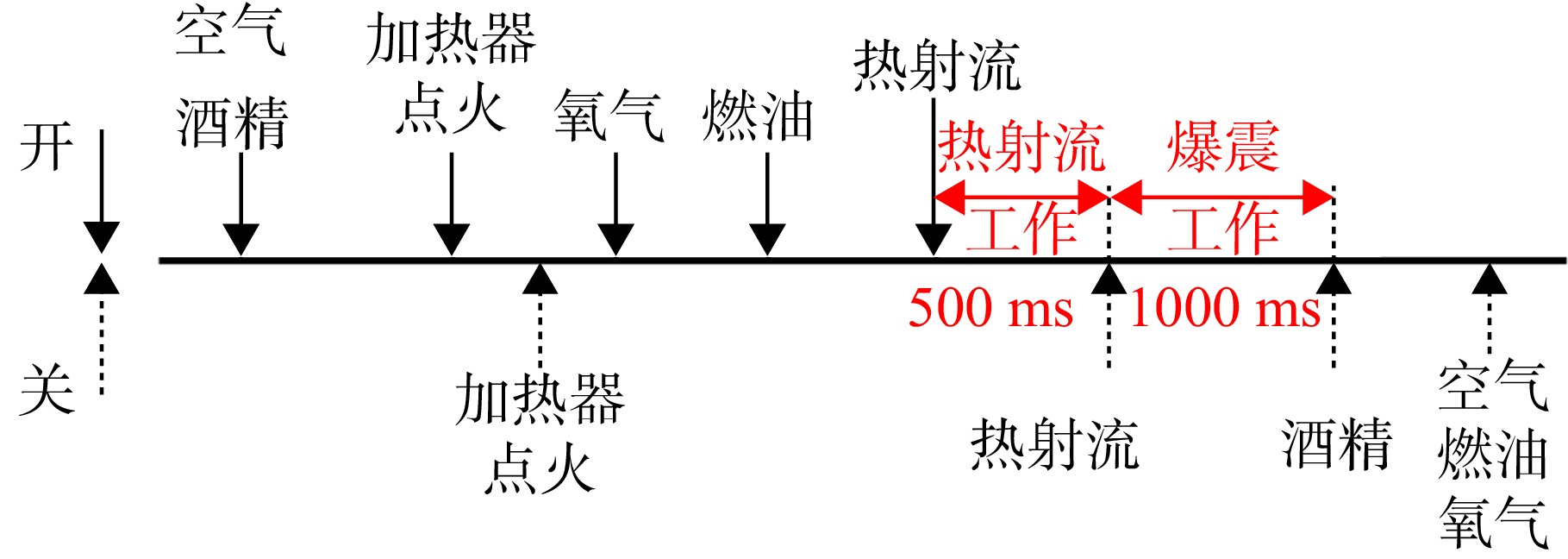
 点击查看大图
计量
- 文章访问数: 451
- HTML浏览量: 222
- PDF量: 36
- 被引次数: 0