






Analysis of JT refrigeration influence on temperature control of mainstream liquid in cryogenic storage tank
-
摘要:
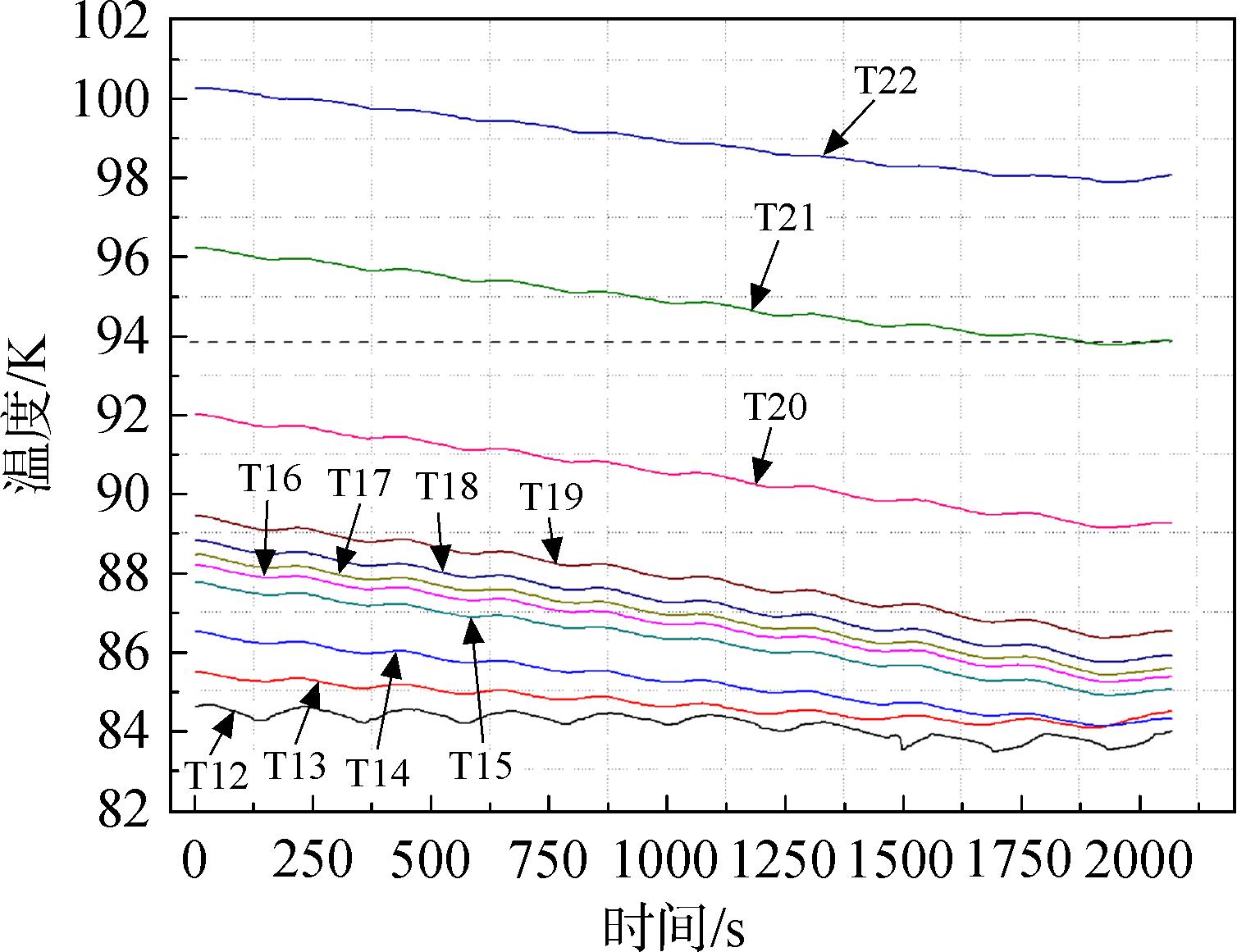
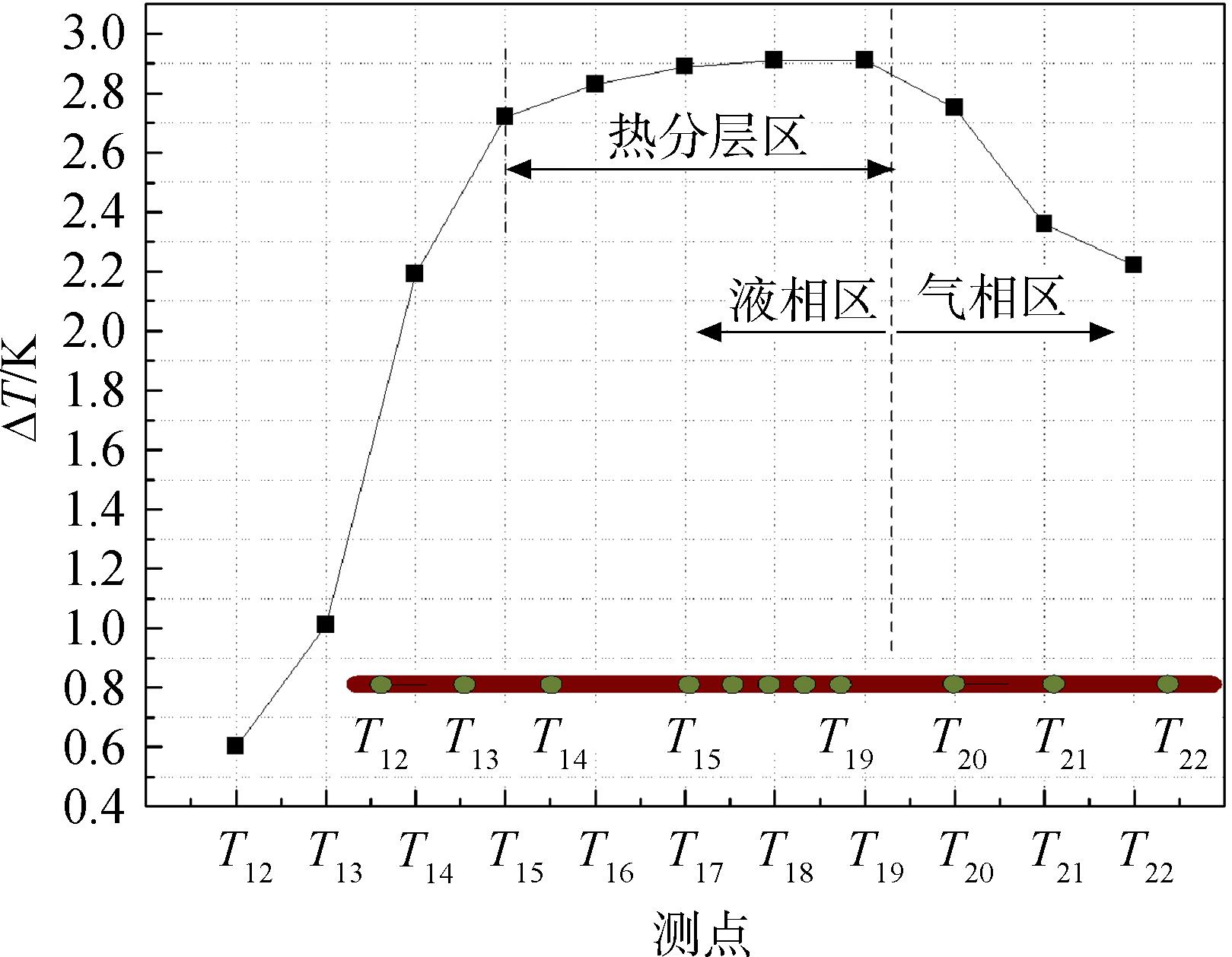
为研究低温流体节流特性及冷量引入对贮箱主流体控温影响,首先对低温流体节流干度和体积含气率进行了分析,结果表明质量占比较小的气相占据了大部分空间体积,对流动速率及换热产生较大影响;建立了节流制冷性能测试平台,采用液氮工质开展了节流前压力为0.3~0.37 MPa工况下的减压降温试验,节流前后降温达到了11.3~14.2 K;在集成节流阀孔的热力学排气系统(TVS)系统中,通过节流制冷使贮箱流体产生了平均6.5 K的温降,将贮箱压力控制在150~160 kPa范围;冷量的引入使主流区液体温度持续波浪式降低,气液界面热分层处的降温效果更加明显。
Abstract:In order to study the Joule Thomson (JT) characteristics of cryogenic liquid and the influence of the introduction of cooling capacity on the temperature control of the mainstream in tank,the mechanism of the throttling dryness and volume void fraction on the heat transfer of the fluid was analyzed,which showed that the gas with small mass occupied most of the space volume;The test platform of throttling performance was established,and the experiment of refrigeration was carried out with liquid nitrogen as the working medium when the pressure before throttle ranged from 0.3-0.37 MPa,the temperature drop reached 11.3-14.2 K.In the thermodynamic vent system (TVS),the average temperature drop of the fluid involved in throttling was 6.5 K,and the tank pressure was controlled within 150-160 kPa.The introduction of cooling capacity made the temperature of mainstream decrease in a wavy trend,and the cooling effect at the thermal stratification of the gas‑liquid interface was more obvious.
-
Key words:
- cryogenic liquid /
- JT effect /
- volume void fraction /
- depressurization /
- thermal stratification
-

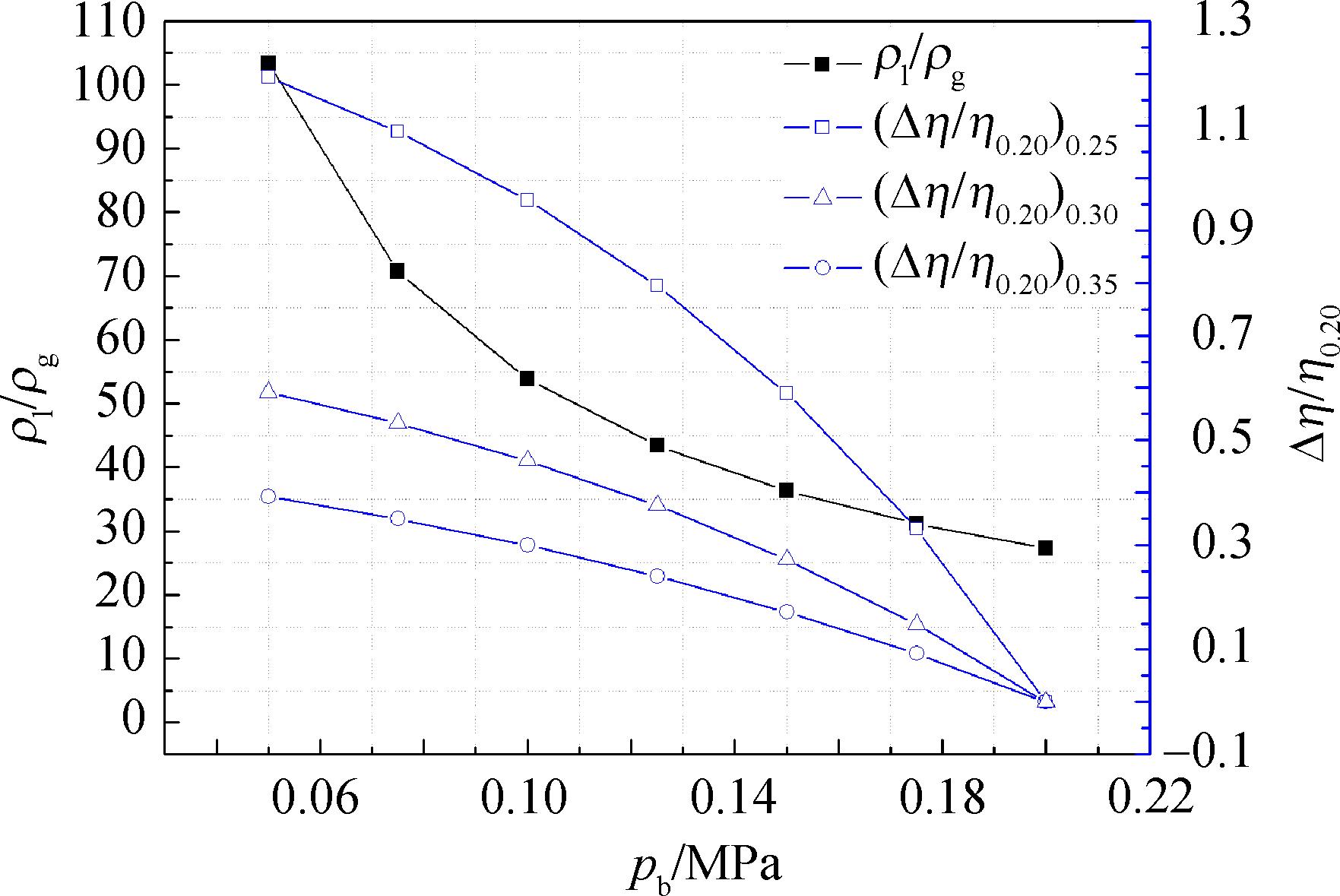
图 1 液氢节流背压与温差等参数关系曲线
Figure 1. Curve of relationship between back pressure of JT and temperature difference of liquid hydrogen

图 2 不同背压下液氢节流干度增长率曲线
Figure 2. Growth curve of JT dryness under different back pressures of liquid hydrogen

图 3 不同背压下液氢节流体积含气率增长曲线
Figure 3. Growth curve of JT volume void fraction under different back pressures of liquid hydrogen

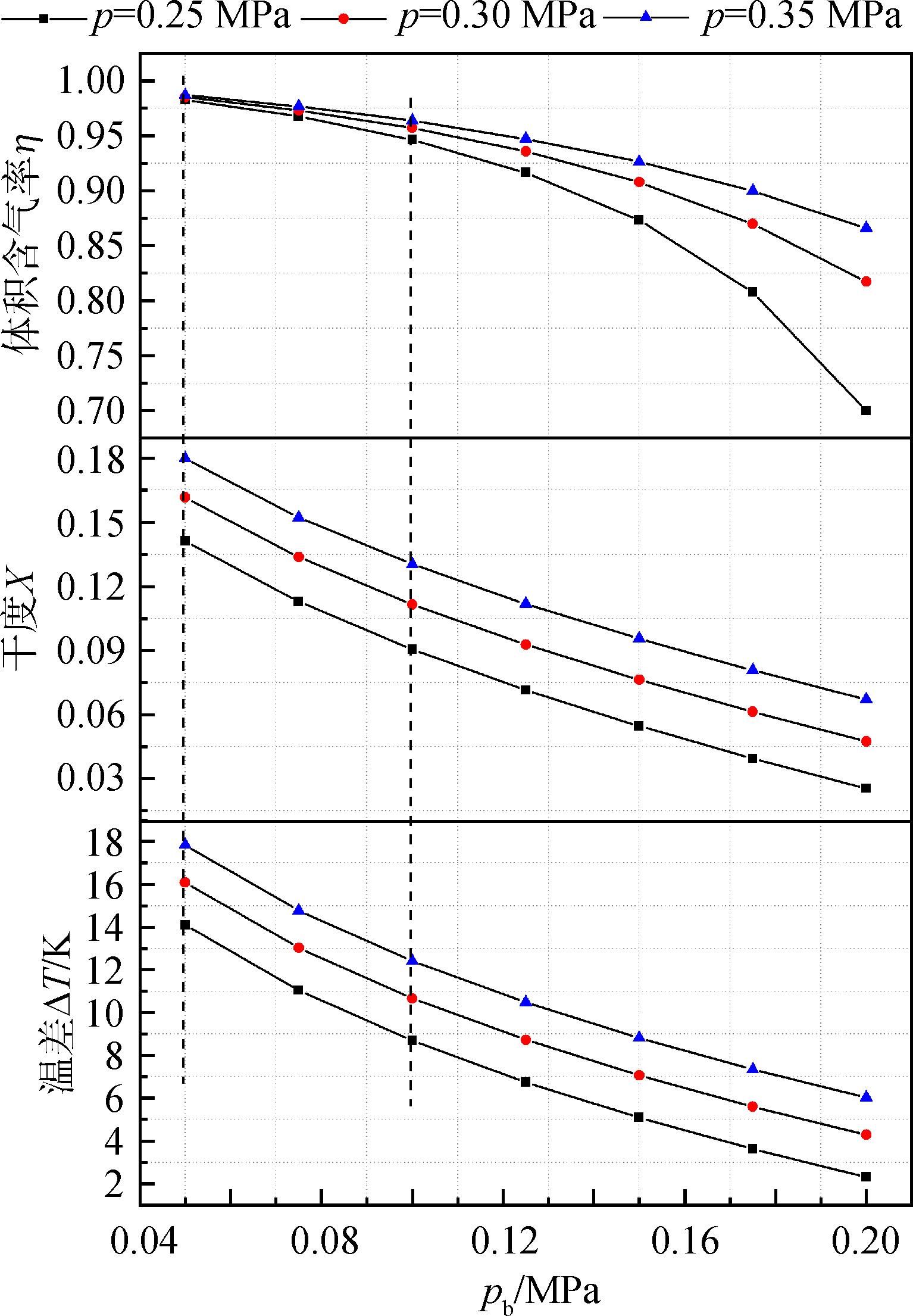
图 4 液氮节流背压与温差等参数关系曲线
Figure 4. Curve of relationship between back pressure of JT and temperature difference of liquid nitrogen

图 5 不同背压下液氮节流干度增长率曲线
Figure 5. Growth curve of JT dryness under different back pressures of liquid nitrogen

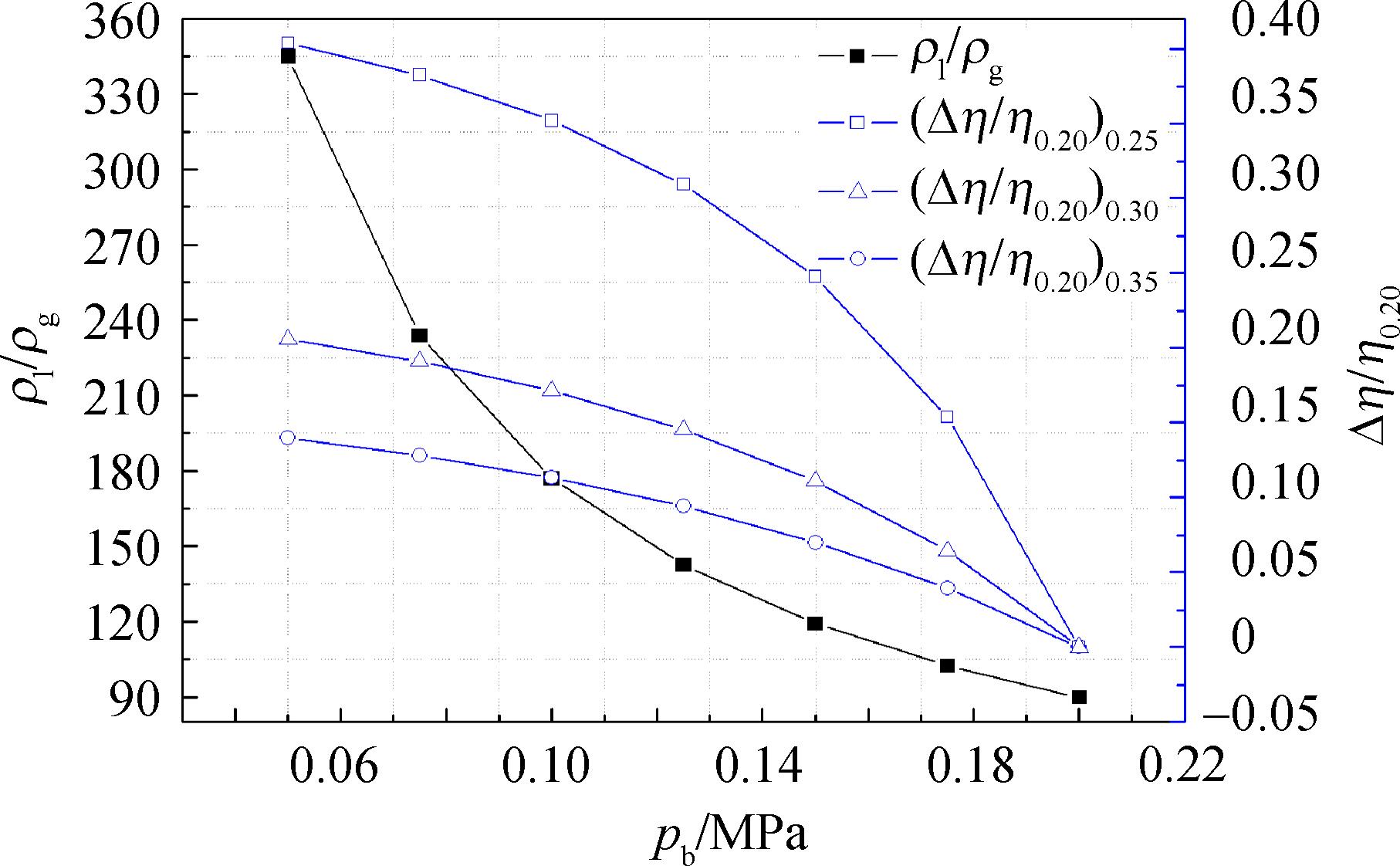
图 6 不同背压下液氮节流体积含气率增长曲线
Figure 6. Growth curve of volume void fraction under different back pressures of liquid nitrogen

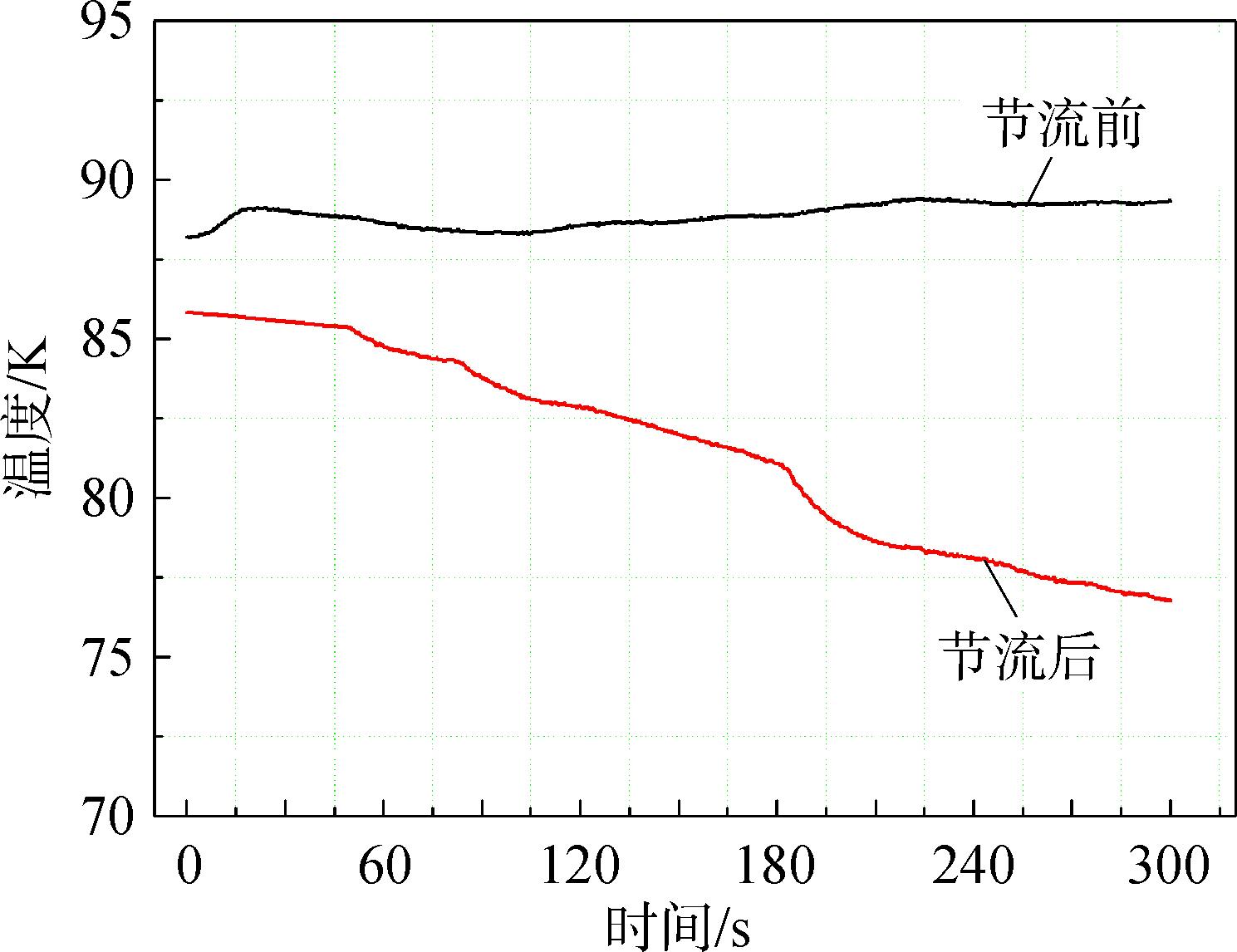
图 9 压力为0.3 MPa的液氮节流降温曲线
Figure 9. Cooling curve of liquid nitrogen when the pressure is 0.3 MPa before throttle valve

图 12 150~160 kPa控压区降温效应
Figure 12. Effect of temperature drop in pressure control zone of 150-160 kPa
表 1 不同背压节流制冷特性参数增长(节流前0.35 MPa,节流后0.05~0.20 MPa)
Table 1. Influence of different back pressure on the growth of refrigeration parameters in throttling process (0.35 MPa before throttling and 0.05-0.20 MPa after throttling)
介质 增长率/% ρ x 液氢 278.4 136 39 液氮 284.6 168 14  下载: 导出CSV
-
[1] CHATO D J.Cryogenic technology development for explorations missions[R].Reno,Nevada,US:the 45th AIAA Aerospace Sciences Meeting and Exhibit,2007. [2] FLACHBART R,HASTINGS L J,HEDAYAT A,et al.Thermodynamics vent system performance testing with subcooled liquid methane and gaseous helium pressurant[J].Cryogenics,2008,48(5):217⁃222. [3] KUTTER B F,ZEGLER F,NEIL G O,et al.A practical,affordable cryogenic propellant depot based on ULA's flight experimence[R].AIAA 2008⁃7644,2008. [4] SFORZA P M.Theory of aerospace propulsion[R].2nd ed.Kidlington,UK:Butterworth⁃Heinemann,2016. [5] SCHWEICKART R B.Thermodynamic analysis of a demonstration concept for the long⁃duration storage and transfer of cryogenic propellants[J].Cryogenics,2014,64:283⁃288. [6] MAJUMDAR A,VALENZUELA J,LE CLAIR A,et al.Numerical modeling of self⁃pressurization and pressure control by a thermodynamic vent system in a cryogenic tank[J].Cryogenics,2016,74:113⁃122. [7] LAK T,WOOD C.Cryogenic fluid management technologies for space transportation⁃zero g thermodynamic vent system final report[J].NASA CR⁃193981,1994. [8] LAK T I.Fluid management system for a zero gravity cryogenic storage system:US05398515A[P].1995⁃03⁃21. [9] MEYER M L,MOTIL S M,KORTES T F,et al.Cryogenic propellant storage and transfer (CPST) technology demonstration for long duration in‑space missions[R].Bordeaux,France:Space Propulsion 2012 Conference,2012. [10] MEYER M L,DOHERTY M P,MODER J P.Technology maturation in preparation for the cryogenic propellant storage and transfer (CPST) technology demonstration mission (TMD)[R].NASA E⁃18896,2014. [11] VAN OVERBEKE T.Modeling of pressure reduction due to axial‑jet mixers in cryogenic tanks[R].Reno,Nevada,US:the 41st Aerospace Sciences Meeting and Exhibit,2003. [12] MARCHETTA J,BENEDETTI R.Three dimensional modeling of jet⁃induced geysers in low gravity[R].Reno,Nevada,US:the 45th AIAA Aerospace Sciences Meeting and Exhibit,2007. [13] BREISACHER K,MODER J.Computational fluid dynamics (CFD) simulations of jet mixing in tanks of different scales[R].Washington:NASA/TM‑2010‑216749,2010. [14] KARTUZOVA O,KASSEMI M.Modeling active pressure control in a large scale cryogenic storage tank innormal gravity[R].AIAA 2012‑3983,2012. [15] BAE J,YOO J,JIN L,et al.Experimental investigation of passive thermodynamic vent system (TVS) with liquid nitrogen[J].Cryogenics,2018,89:147⁃156. [16] MER S,FERNANDEZ D,THIBAULT J P,et al.Optimal design of a thermodynamic vent system for cryogenic propellant storage[J].Cryogenics,2016,80:127⁃137. [17] 王磊,厉彦忠,李翠,等.液体火箭贮箱增压排液过程温度场数值研究[J].航空动力学报,2011,26(8):1893⁃1899.WANG Lei,LI Yanzhong,LI Cui,et al.Numerical study on temperature distribution of tank pressurization process of liquid rocket during outflow[J].Journal of Aerospace Power,2011,26(8):1893⁃1899.(in Chinese) [18] 周振君,雷刚,王天祥,等.低温液氮贮箱增压及排气流量控制方法[J].航空动力学报,2018,33(5):1263⁃1269.ZHOU Zhenjun,LEI Gang,WANG Tianxiang,et al.Control method of pressurization and venting flow rate in cryogenic tank[J].Journal of Aerospace Power,2018,33(5):1263‑1269.(in Chinese) -







 点击查看大图

计量
- 文章访问数: 589
- HTML浏览量: 316
- PDF量: 51
- 被引次数: 0