






Numerical simulation method of radial rotating heat pipe
-
摘要:
为了推动热管涡轮盘进入实用阶段,对热管内部的流动、相变及传热机理进行了数值模拟研究,采用流体体积(VOF)两相流模型,通过用户自定义函数(UDF)编程将Sun等提出的相变模型应用于重力热管及径向旋转热管,编程实现了相变界面网格捕捉方法以及质量守恒控制方法。重力热管的数值模拟结果与实验吻合较好,温度场的误差小于2%,将该方法推广至径向旋转热管后可观测到,离心力增大会使热管整体温度升高10%以上,内部工质流动加速超过2 m/s。以上结果说明,该方法适用于热管的数值模拟,而旋转离心力会对热管的温度场、流场产生较大影响。该工作为热管涡轮盘的数值模拟奠定了基础。
Abstract:In order to promote the heat pipe turbine disk into the practical stage, the flow, phase change and heat transfer mechanism inside the heat pipe were numerically simulated. The volume of fluid (VOF) two-phase flow model was adopted, and the phase change model proposed by Sun et al was applied to gravity heat pipe and radially rotating heat pipe for the first time through user-defined function (UDF) programming. The phase change interface grid capture method and mass conservation control method were realized by programming. The numerical simulation results of the gravity heat pipe were in good agreement with experiment, and the error of temperature field was less than 2%. After this the method was extended to the radially rotating heat pipe. It can be observed that the increase of centrifugal force increased the overall temperature of the heat pipe more than 10% and accelerated the flow velocity of the internal working fluid more than 2 m/s. The above results show that this method is suitable for the numerical simulation of heat pipe, and the rotating centrifugal force will have a greater impact on the temperature field and flow field of the heat pipe. This work has laid a foundation for the numerical simulation of the heat pipe turbine disk.
-
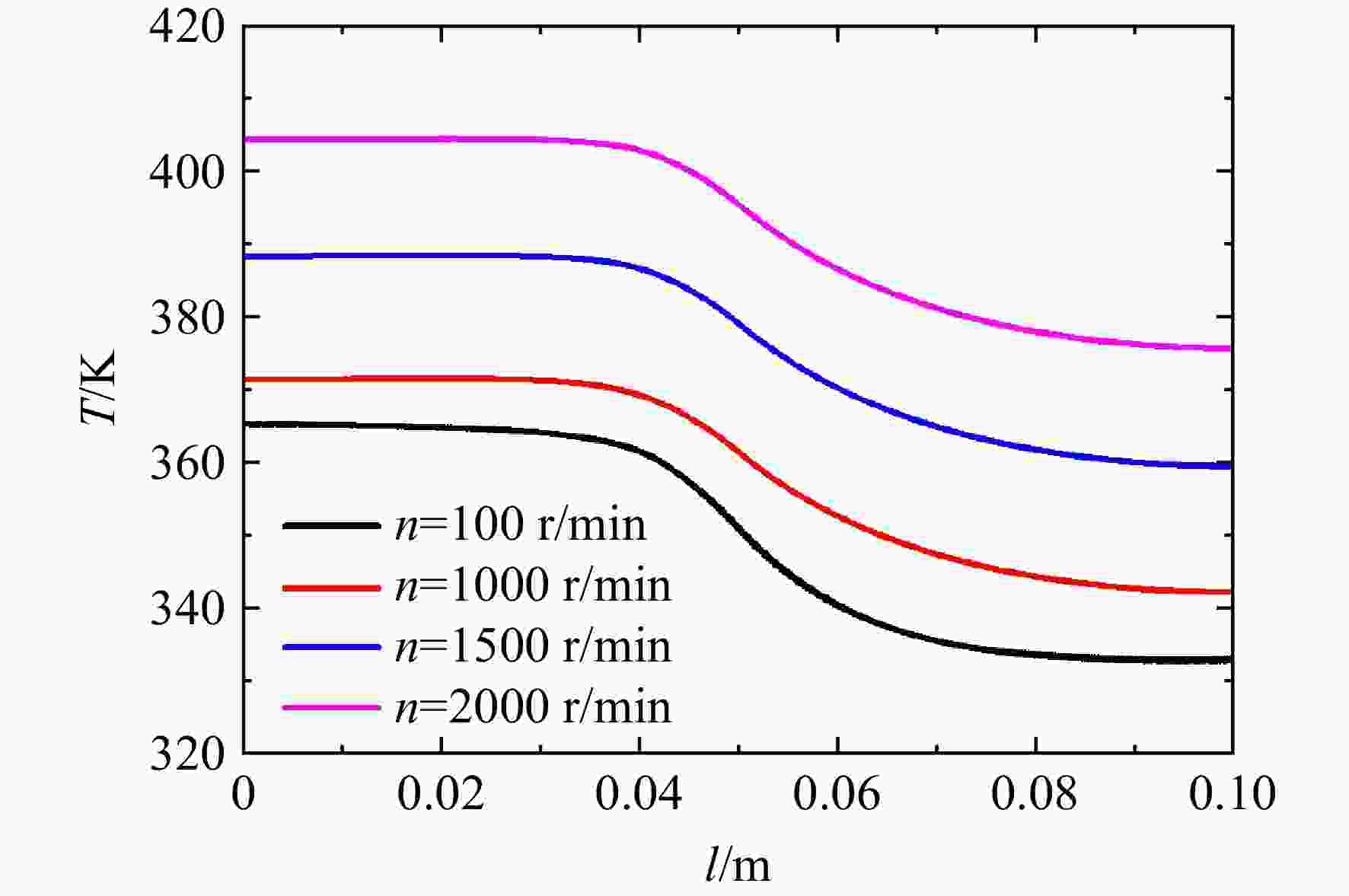
图 6 不同转速下热管内壁面的温度分布
Figure 6. Temperature distribution on inner surface of heat pipe under different rotational speeds
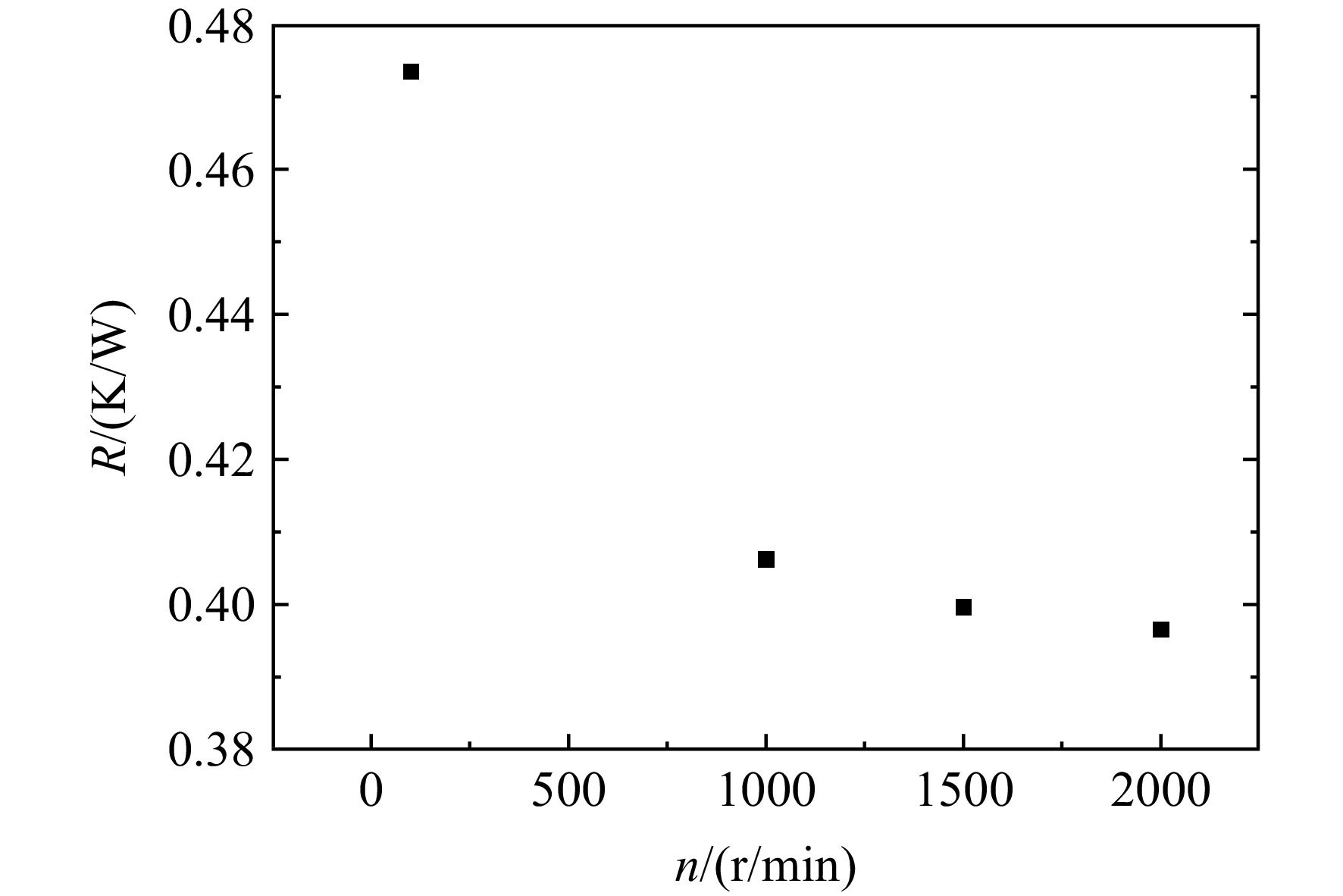
图 7 不同转速下的热阻分布
Figure 7. Thermal resistance distribution under different rotational speeds
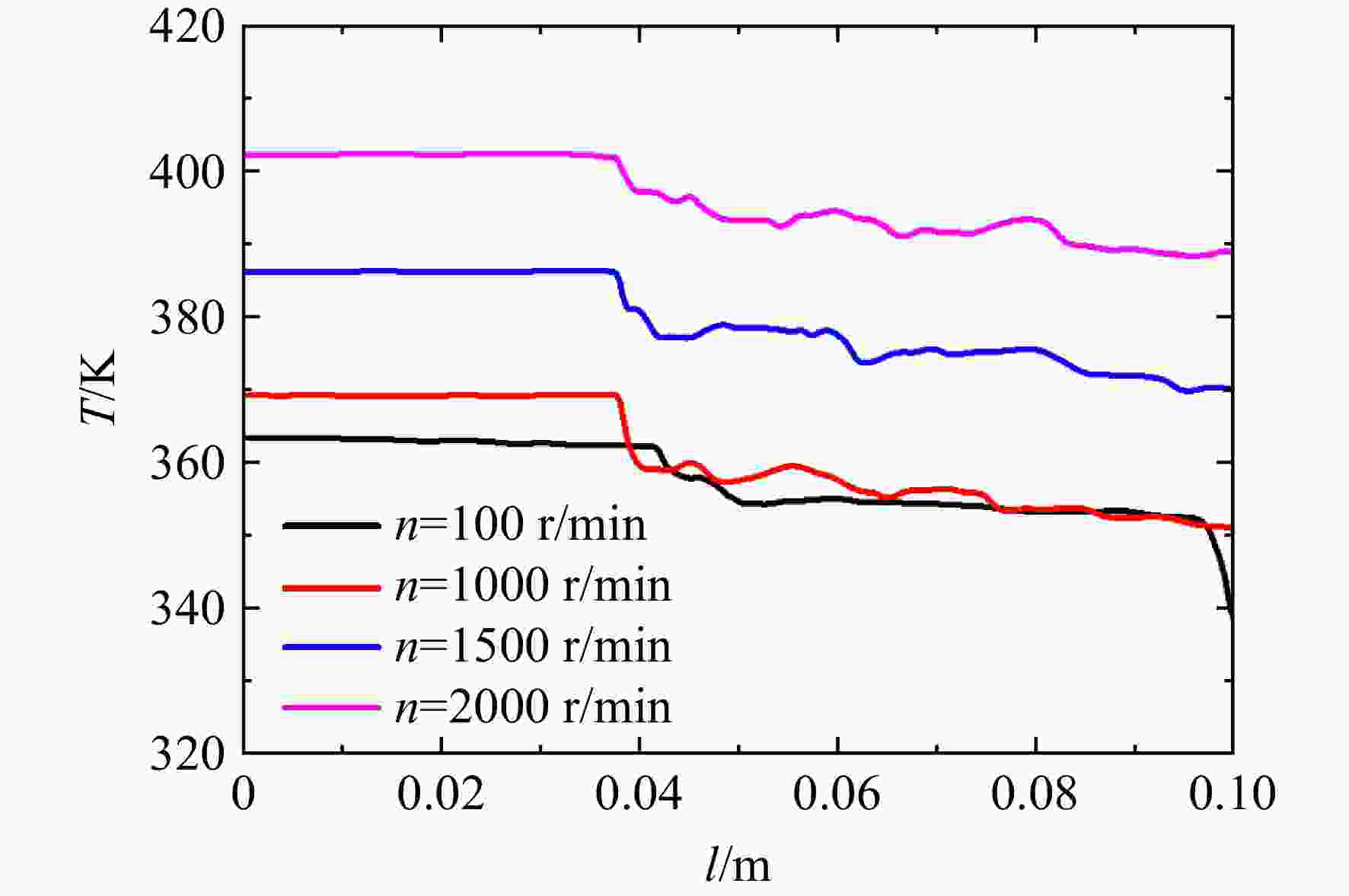
图 8 不同转速下热管中心的温度分布
Figure 8. Temperature distribution on center of heat pipe under different rotational speeds
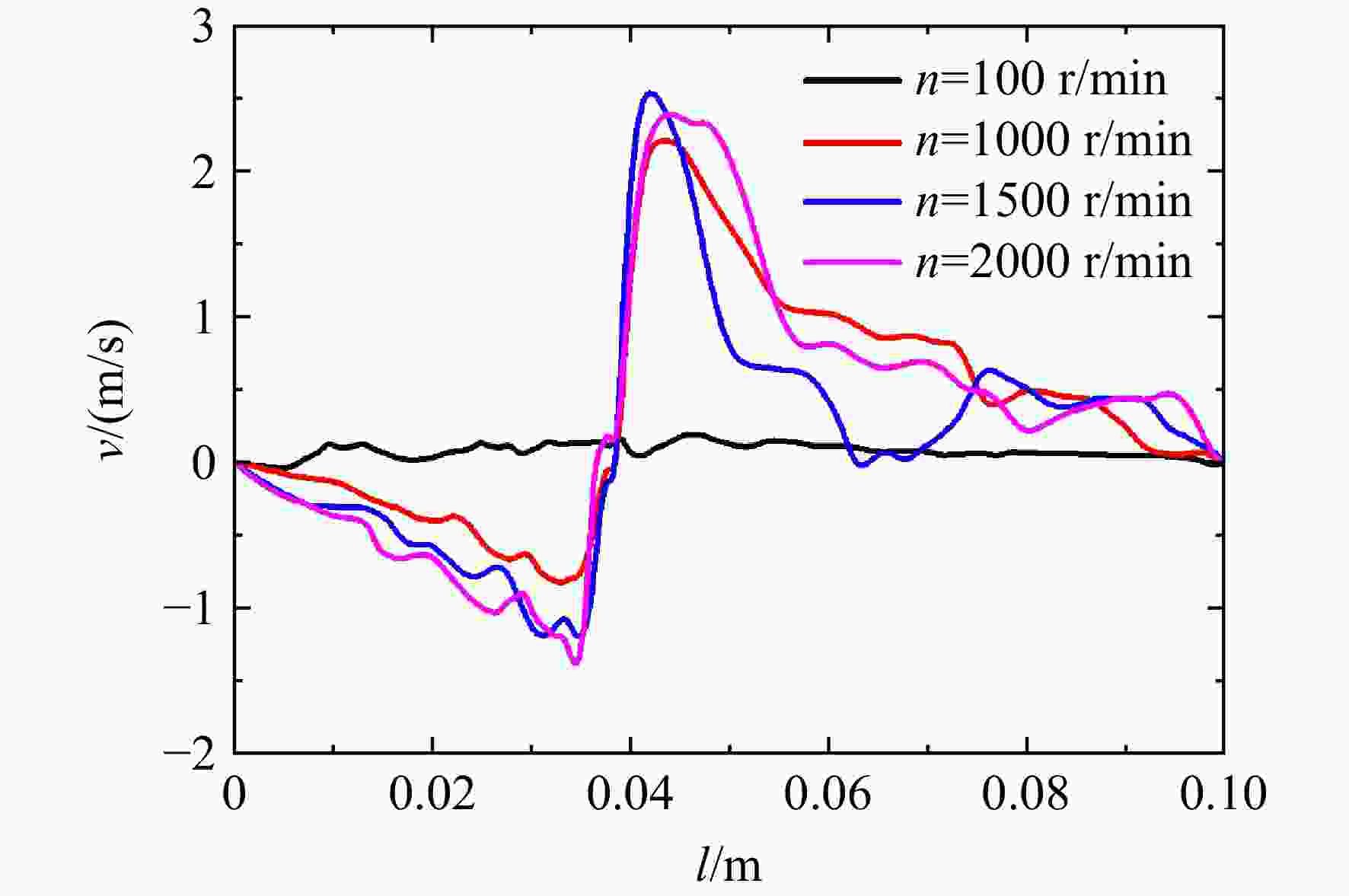
图 9 不同转速热管中心的轴向速度分布
Figure 9. Axial velocity distribution on center of heat pipe under different rotational speeds
表 1 网格无关性验证
Table 1. Grid independence verification
网格数量 最大温差/K 82500 50.28 99000 42.73 132000 42.25  下载: 导出CSV
-
[1] Federal Aviation Administration (FAA). Airworthiness standards, aircraft engines: CFR 14 Part 33[S]. Washington, DC : FAA, 1993: 33.1-33.201. [2] BUNKER R S. Gas turbine heat transfer: ten remaining hot gas path challenges[J]. Journal of Turbomachinery,2007,129(2): 193-201. doi: 10.1115/1.2464142 [3] 倪萌,朱惠人,裘云,等. 航空发动机涡轮叶片冷却技术综述[J]. 燃气轮机技术,2005,18(4): 25-33.NI Meng,ZHU Huiren,QIU Yun,et al. Review of aero-turbine blade cooling technologies[J]. Gas Turbine Technology,2005,18(4): 25-33. (in Chinese) [4] 杨世铭, 陶文铨. 传热学[M]. 4版. 北京: 高等教育出版社, 2006. [5] GRAY V H. The rotating heat pipe: a wickless, hollow shaft for transferring high heat fluxes[R]. Minneapolis, US: the ASME/AIChE Heat Transfer Conference, 1969. [6] CAO Y, LING J, RIVIR R, et al. A numerical analysis of gas turbine disks incorporating rotating heat pipe[R]. Orlando, US: ASME International Mechanical Engineering Congress and Exposition, 2000. [7] 丁水汀, 罗斌, 杜发荣. 热管涡轮盘: CN104121037A[P]. 2015-07-01. [8] 付德斌,丁水汀,陶智,等. 旋转盘应力水平与温度分布的关联分析[J]. 航空动力学报,2008,23(4): 623-628.FU Debin,DING Shuiting,TAO Zhi,et al. Analysis of the effects of temperature distribution on stress level in a rotating disk[J]. Journal of Aerospace Power,2008,23(4): 623-628. (in Chinese) [9] 付德斌,丁水汀,陶智,等. 一种基于热管理的热端部件轻量化研究[J]. 航空动力学报,2011,26(4): 814-821.FU Debin,DING Shuiting,TAO Zhi,et al. Study on heated components mass reduction based on thermal management[J]. Journal of Aerospace Power,2011,26(4): 814-821. (in Chinese) [10] DING Shuiting,LI Guo,LUO Bin. Active control thermal-loading method to ameliorate stress in aeroengine turbine disk[J]. Journal of Thermophysics and Heat Transfer,2013,27(2): 274-285. doi: 10.2514/1.T3907 [11] 李果. 航空发动机热端部件的主动热应力控制机理研究[D]. 北京: 北京航空航天大学, 2012.LI Guo. Research on active thermal stress control mechanism of aero-engine hot end components[D]. Beijing: Beijing University of Aeronautics and Astronautics, 2012. (in Chinese) [12] ALIZADEHDAKHEL A,RAHIMI M,ALSAIRAFI A A. CFD modeling of flow and heat transfer in a thermosyphon[J]. International Communications in Heat and Mass Transfer,2010,37(3): 312-318. doi: 10.1016/j.icheatmasstransfer.2009.09.002 [13] LEE W H. A pressure iteration scheme for two-phase flow modeling[R]. Los Alamos, US: University of California, 1980. [14] DE SCHEPPER S C K,HEYNDERICKX G J,MARIN G B. Modeling the evaporation of a hydrocarbon feedstock in the convection section of a steam cracker[J]. Computers and Chemical Engineering,2009,33(1): 122-132. doi: 10.1016/j.compchemeng.2008.07.013 [15] FADHL B,WROBEL L C,JOUHARA H. Numerical modelling of the temperature distribution in a two-phase closed thermosyphon[J]. Applied Thermal Engineering,2013,60(1/2): 122-131. [16] KAFEEL K,TURAN A. Axi-symmetric simulation of a two phase vertical thermosyphon using Eulerian two-fluid methodology[J]. Heat and Mass Transfer,2013,49(8): 1089-1099. doi: 10.1007/s00231-013-1155-6 [17] KAFEEL K,TURAN A. Simulation of the response of a thermosyphon under pulsed heat input conditions[J]. International Journal of Thermal Sciences,2014,80: 33-40. doi: 10.1016/j.ijthermalsci.2014.01.020 [18] 王啸远,朱跃钊,陈海军,等. 热虹吸管相变传热行为CFD模拟[J]. 中南大学学报(自然科学版),2017,48(5): 1391-1397.WANG Xiaoyuan,ZHU Yuezhao,CHEN Haijun,et al. CFD modeling of phase change heat transfer behaviors in thermosyphons[J]. Journal of Central South University (Science and Technology),2017,48(5): 1391-1397. (in Chinese) [19] KAVUSI H,TOGHRAIE D. A comprehensive study of the performance of a heat pipe by using of various nanofluids[J]. Advanced Powder Technology,2017,28(11): 3074-3084. doi: 10.1016/j.apt.2017.09.022 [20] FERTAHI S E D,BOUHAL T,AGROUAZ Y,et al. Performance optimization of a two-phase closed thermosyphon through CFD numerical simulations[J]. Applied Thermal Engineering,2018,128: 551-563. [21] ZHAO Zhongchao,ZHANG Yong,ZHANG Yanrui,et al. Numerical study on the transient thermal performance of a two-phase closed thermosyphon[J]. Energies,2018,11(6): 1433-1448. doi: 10.3390/en11061433 [22] TAROKH A,BLISS C,HEMMATI A. Performance enhancement of a two-phase closed thermosyphon with a vortex generator[J]. Applied Thermal Engineering,2021,182: 116092.1-116092.11. [23] SUN Dongliang,XU Jinliang,CHEN Qicheng. Modeling of the evaporation and condensation phase-change problems with Fluent[J]. Numerical Heat Transfer, Part B: Fundamentals,2014,66(4): 326-342. [24] Fluent Incorporation. A 2020R2 User’s Guide[R]. Pennsylvania: Fluent Incorporation, 2020. [25] BRACKBILL J U,KOTHE D B,ZEMACH C. A continuum method for modeling surface tension[J]. Journal of Computational Physics,1992,100(2): 335-354. doi: 10.1016/0021-9991(92)90240-Y [26] ROHSENOW W M, HARTNETT J P, CHO Y I. Handbook of heat transfer[M].3rd ed. New York: McGraw-Hill, 1998. -


 点击查看大图

计量
- 文章访问数: 750
- HTML浏览量: 349
- PDF量: 96
- 被引次数: 0