






Knock experiments for two-stroke spark-ignition aviation kerosene engine based on DoE method
-
摘要:
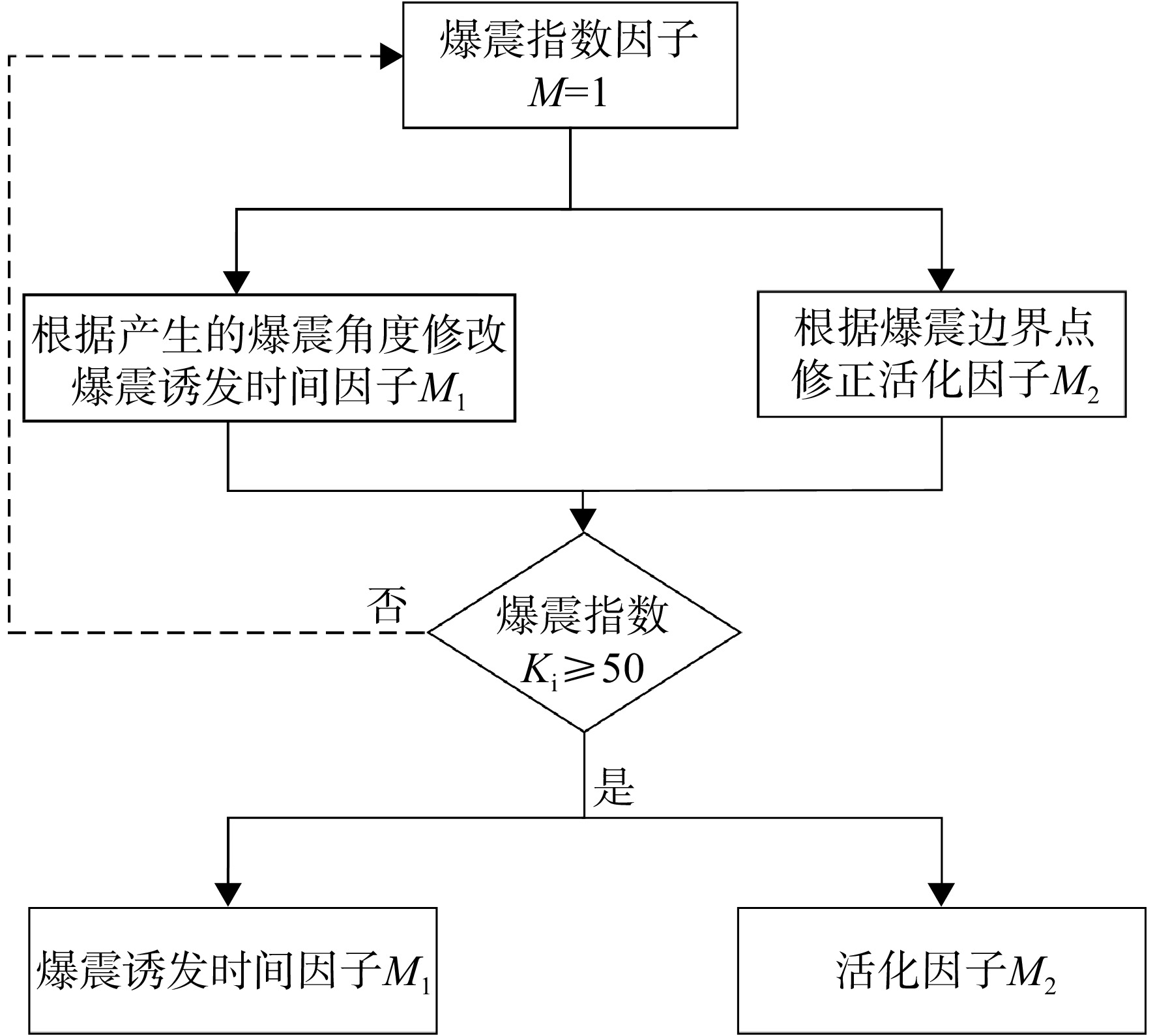
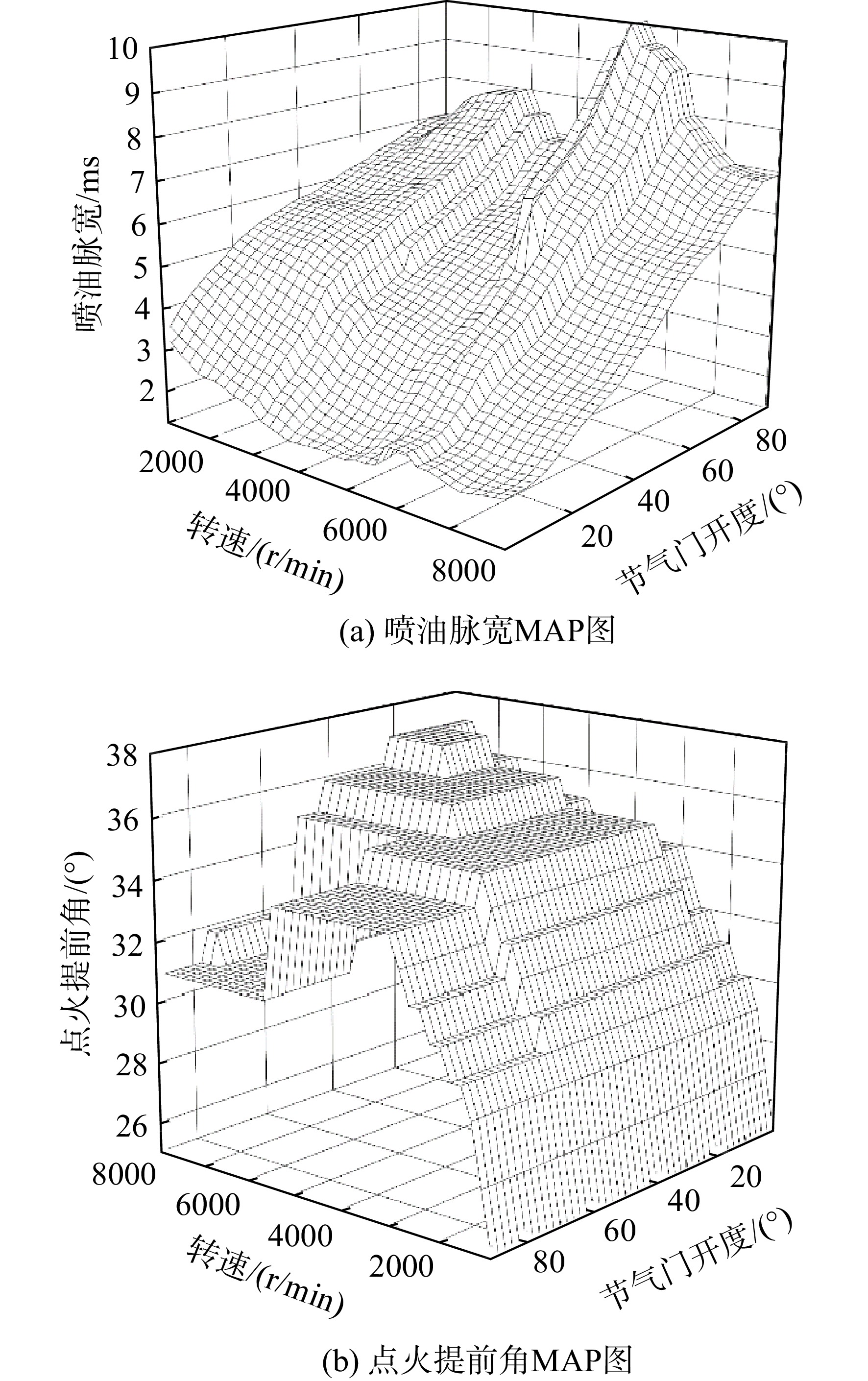
针对二冲程航空煤油发动机单参数调整喷油量或点火提前角来抑制发动机爆震,提出了一种喷油-点火协同控制的发动机爆震抑制策略,以一台二冲程点燃式发动机为对象,利用一维性能仿真计算平台对其建模与仿真分析,根据试验设计方法(design of experiment, DoE)得到基于喷油-点火协同控制策略下的喷油量和点火提前角的MAP图,并开展了试验研究。结果表明:在转速为4800 r/min时,相比于单参数控制点火提前角抑制煤油发动机爆震,采用优化策略后发动机爆震燃烧得到有效抑制,油耗率小幅度增加,功率损失减小且排气温度显著降低,并且在不同负荷下的发动机功率恢复最低能够达到汽油机的88.3%;在转速为5000~6500 r/min、全负荷工况下,发动机功率恢复最高能够达到汽油机的96.2%,排气温度控制在475 ℃以内,能够有效改善发动机性能。
Abstract:In considering the deficiency of adjusting fuel injection amount or ignition advance angle to suppress knock on two-stroke kerosene engine, the coordinated injection-ignition control strategy for suppressing engine knock was proposed. A two-stroke spark ignition engine was taken as the test engine for comparative study, and its modeling and simulation analysis were carried out by using one-dimensional simulation platform. The MAPs of fuel injection amount and ignition advance angle were obtained by the method of design of experiment (DoE) after adopting the coordinated control strategy. The corresponding experimental investigations were conducted. The results showed that, at engine speed of 4800 r/min, compared with the single parameter of adjusting ignition advance angle to suppress knock intensity of kerosene engine, the optimized strategy was more effective. The specific fuel consumption showed a modest increase with reduced power loss and decreased exhaust temperature. The power recovery of kerosene engine can reach at least 88.3% of the burning gasoline at different loads; meanwhile, the power recovery can reach 96.2% under the condition of full load at engine speeds of 5000—6500 r/min, and the exhaust temperature can be controlled within 475 ℃, effectively promoting the performance of kerosene engine.
-
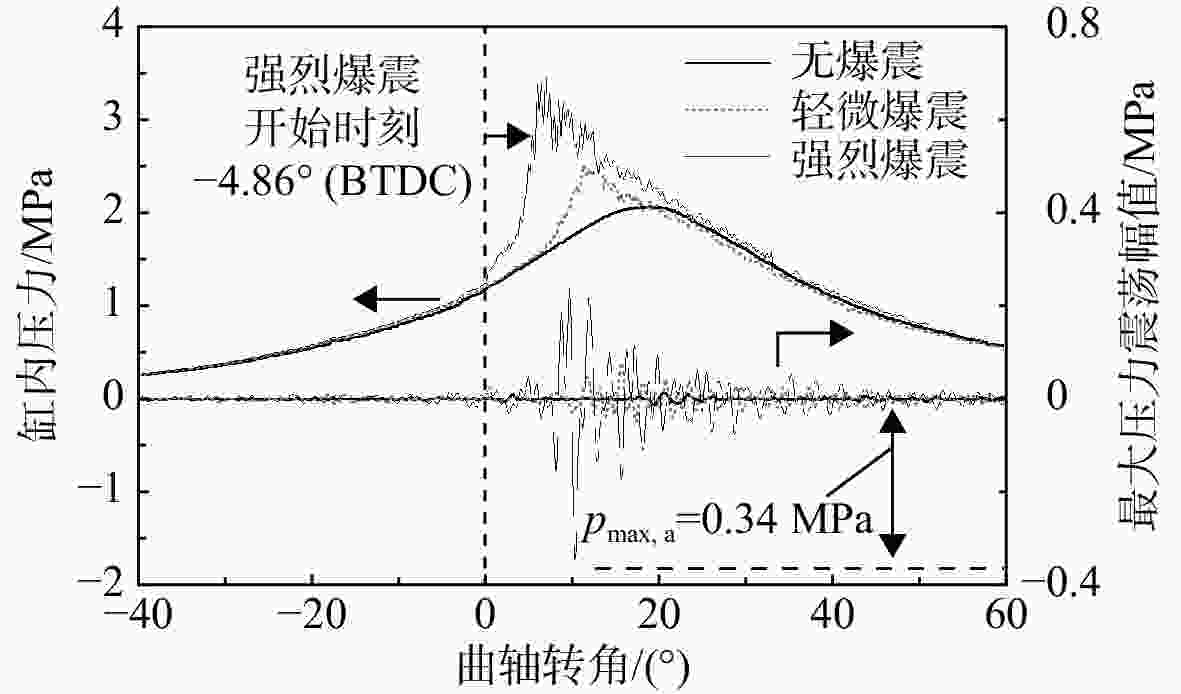
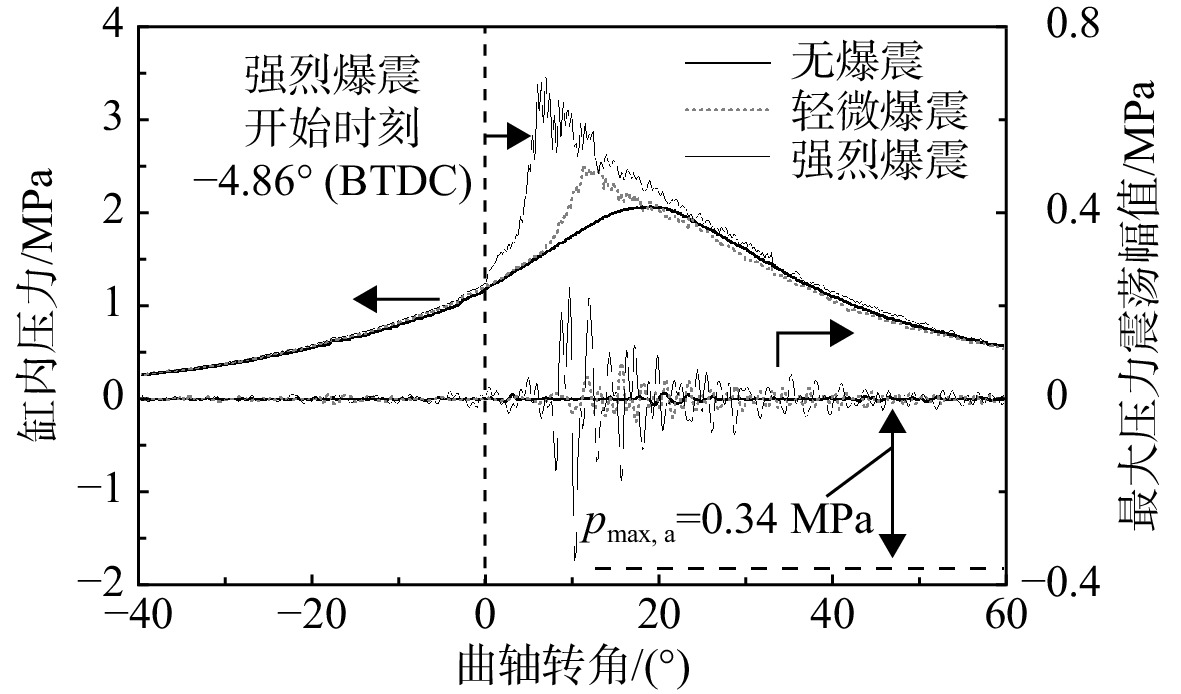
图 3 不同控制条件下缸压与最大压力震荡幅值
Figure 3. Cylinder pressure and MAPO at different controlling conditions
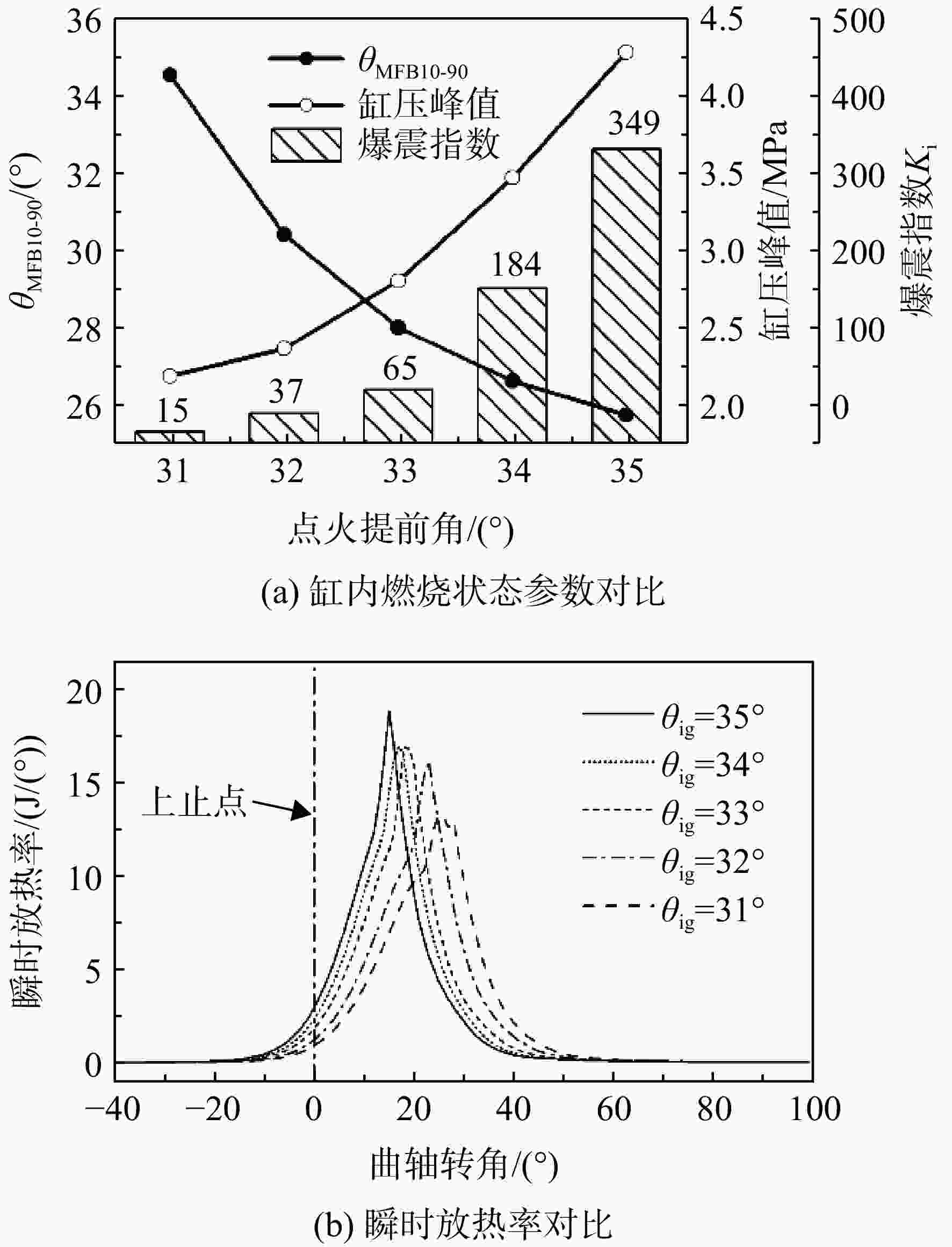
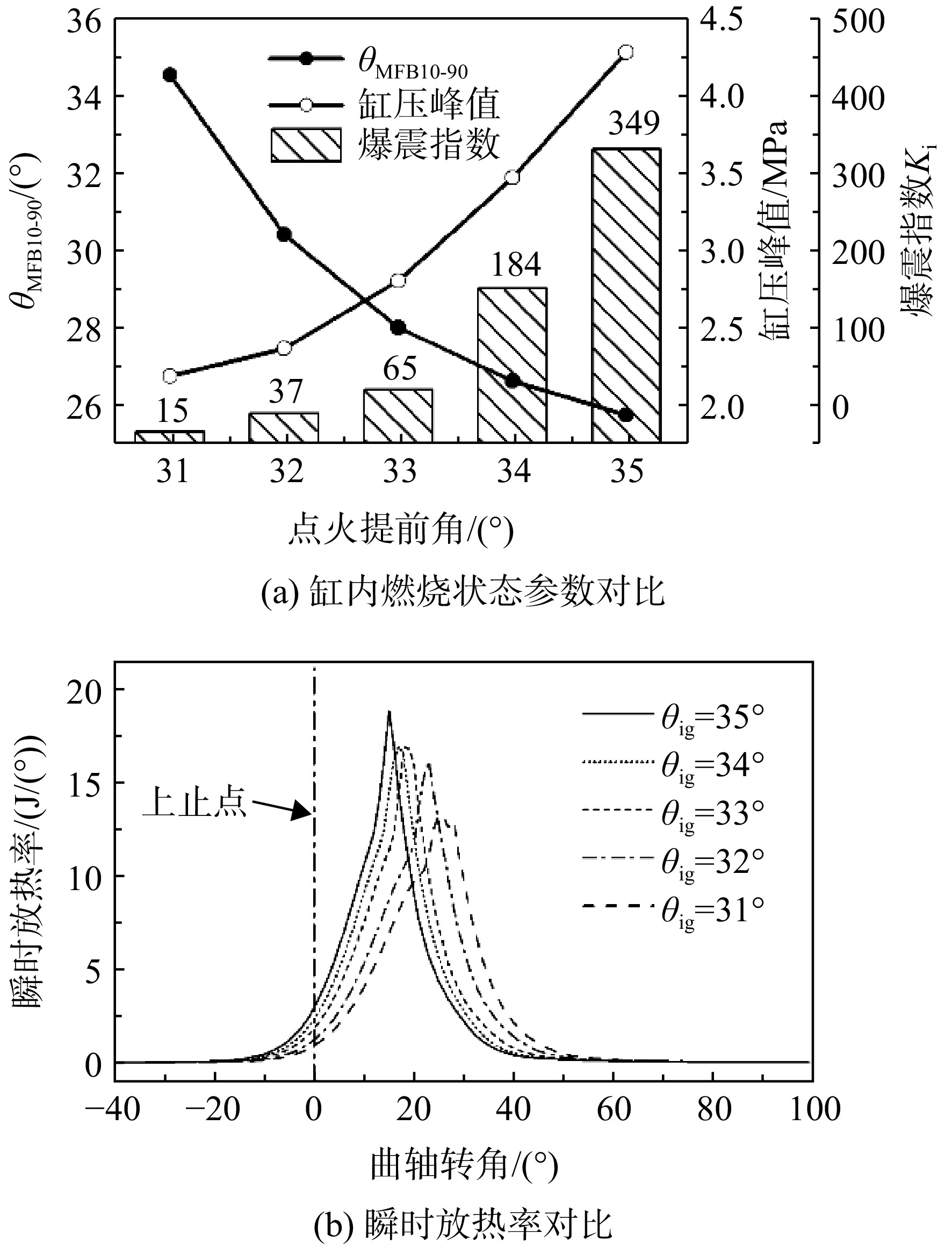
图 10 不同点火提前角下缸内燃烧特性
Figure 10. In-cylinder combustion characteristics at different ignition advance angles
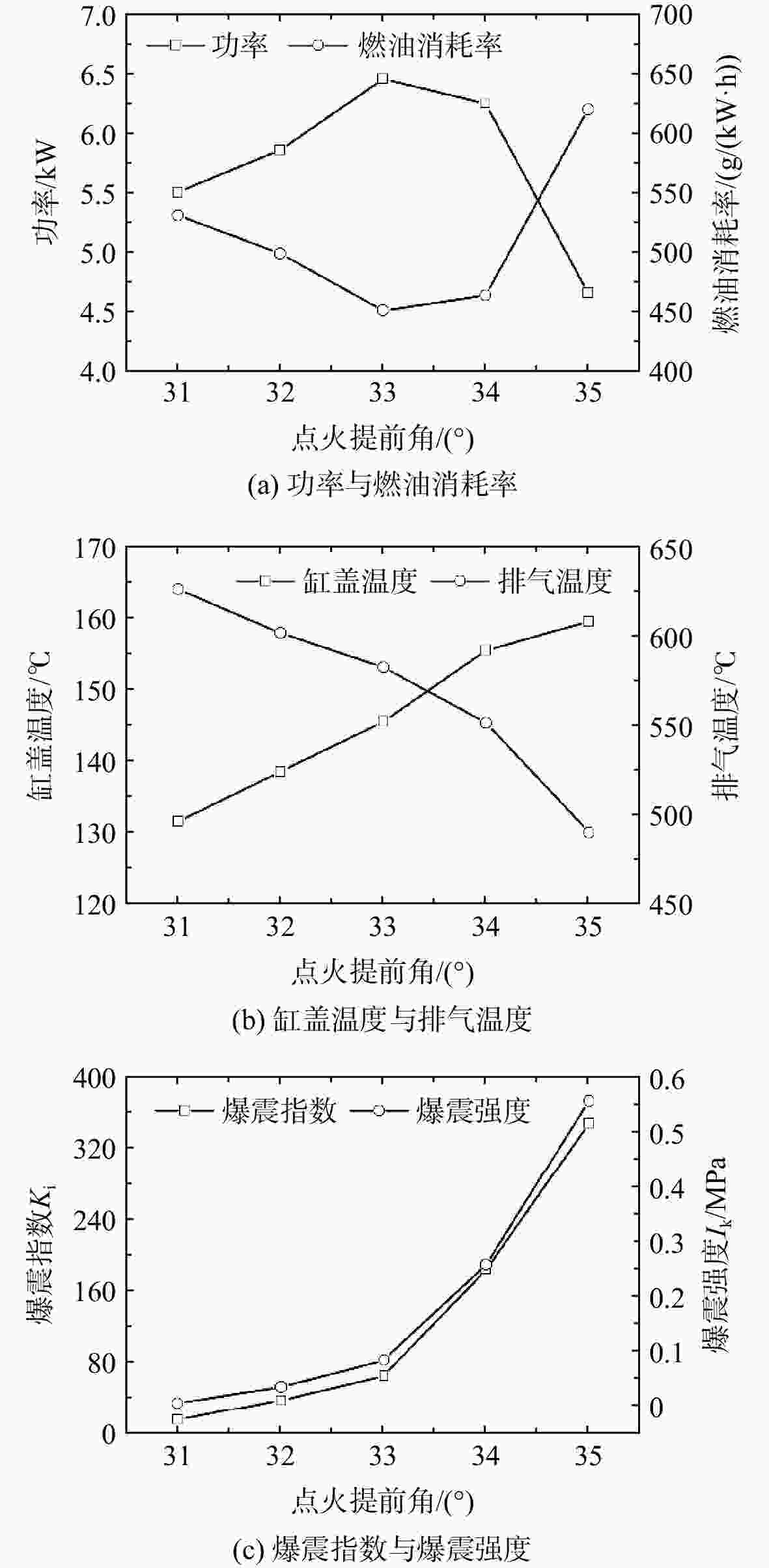
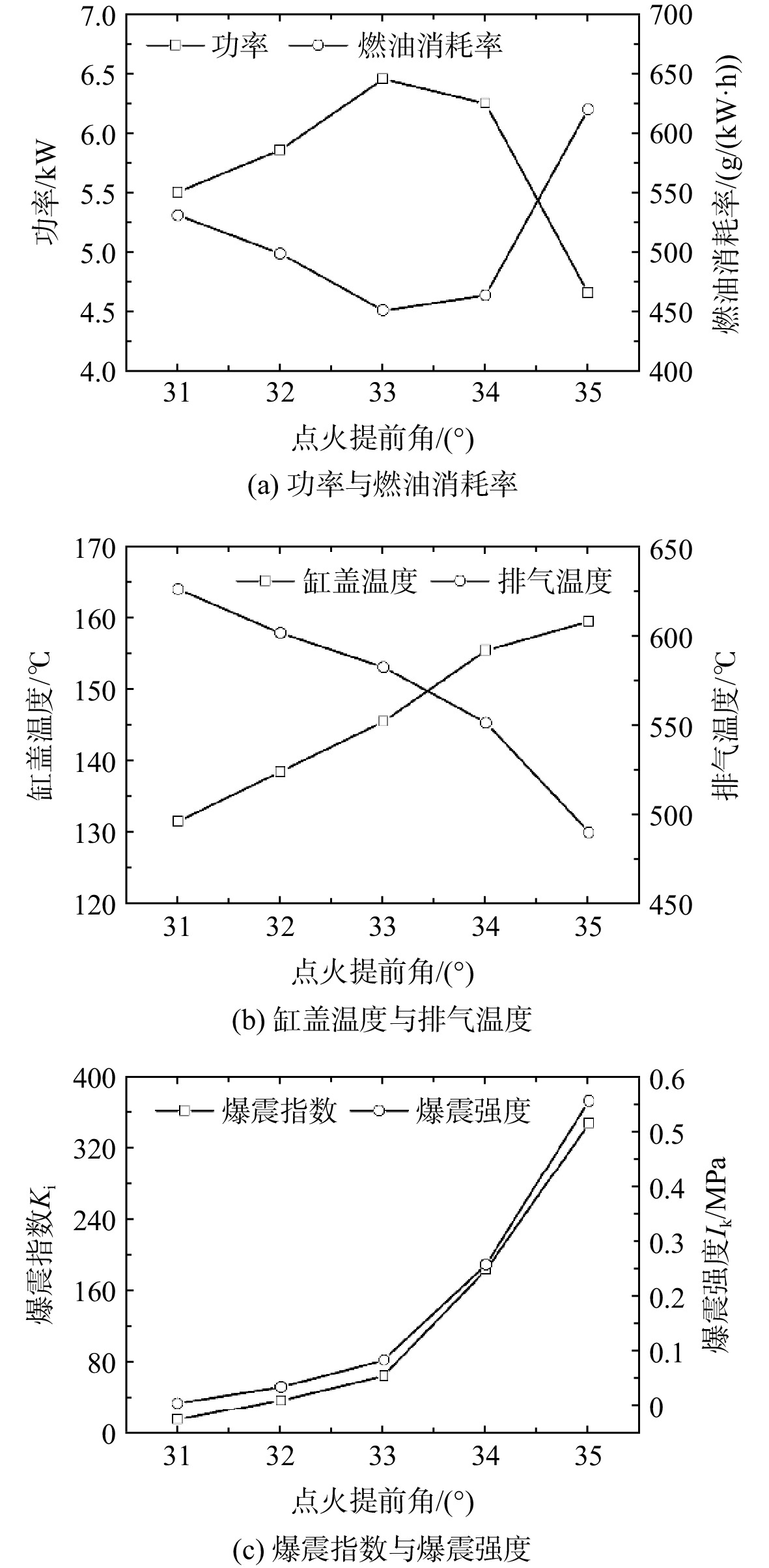
图 11 不同点火提前角下发动机参数变化
Figure 11. Engine parameter changes at different ignition advance angles
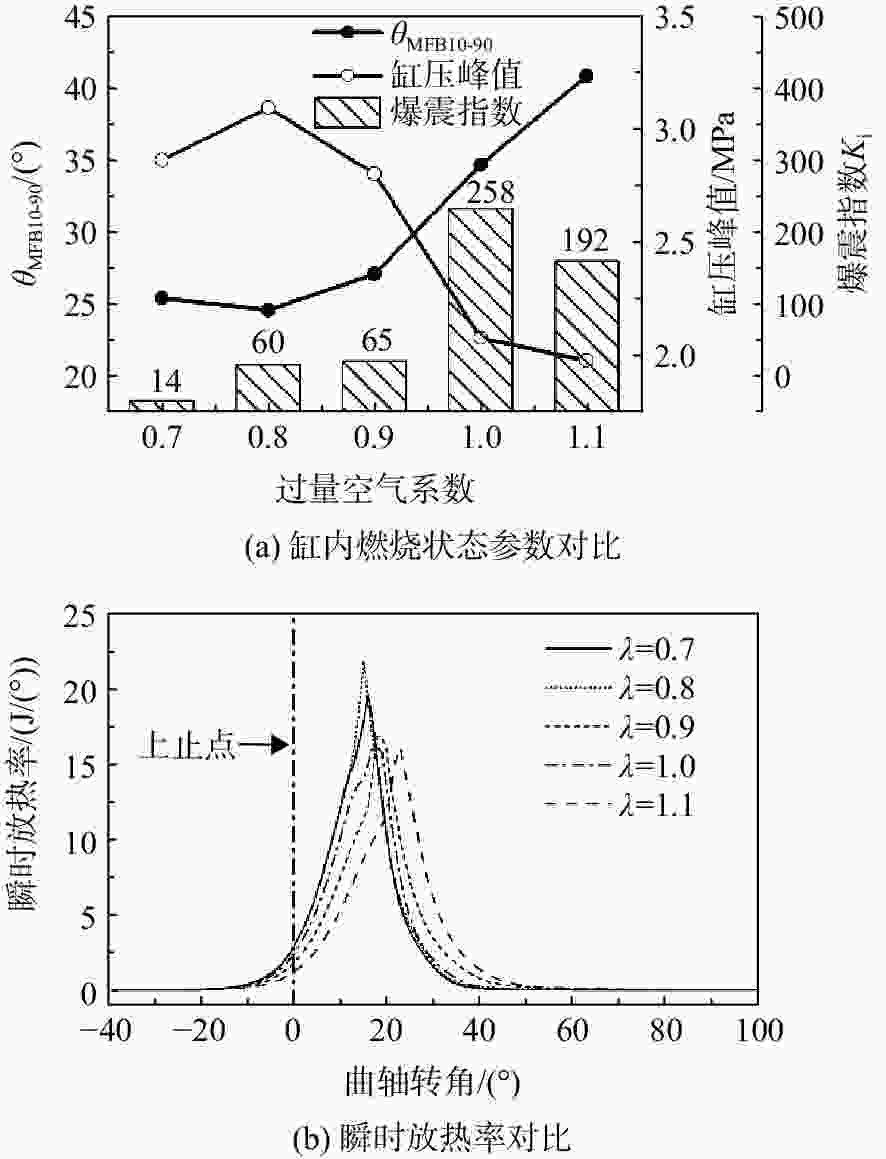
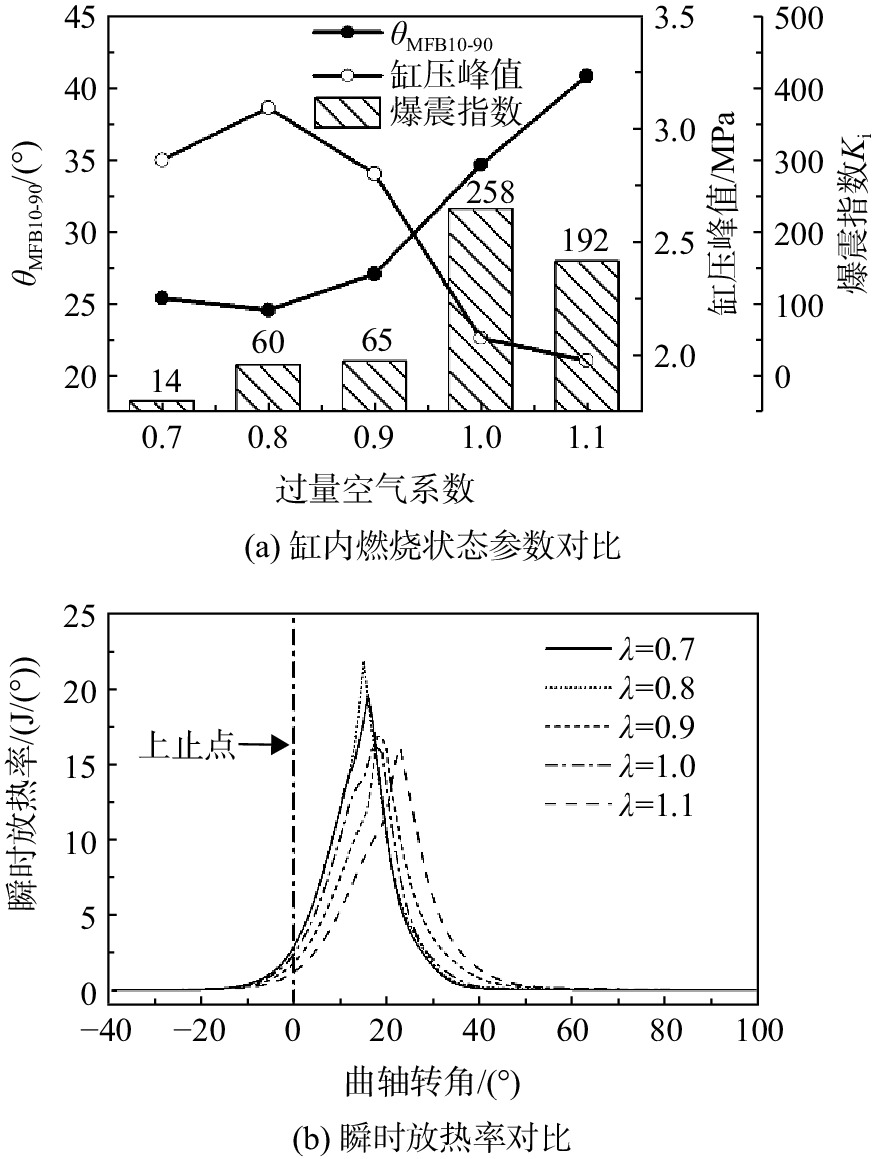
图 12 不同过量空气系数下缸内燃烧特性
Figure 12. In-cylinder combustion characteristics at different excess air coefficients
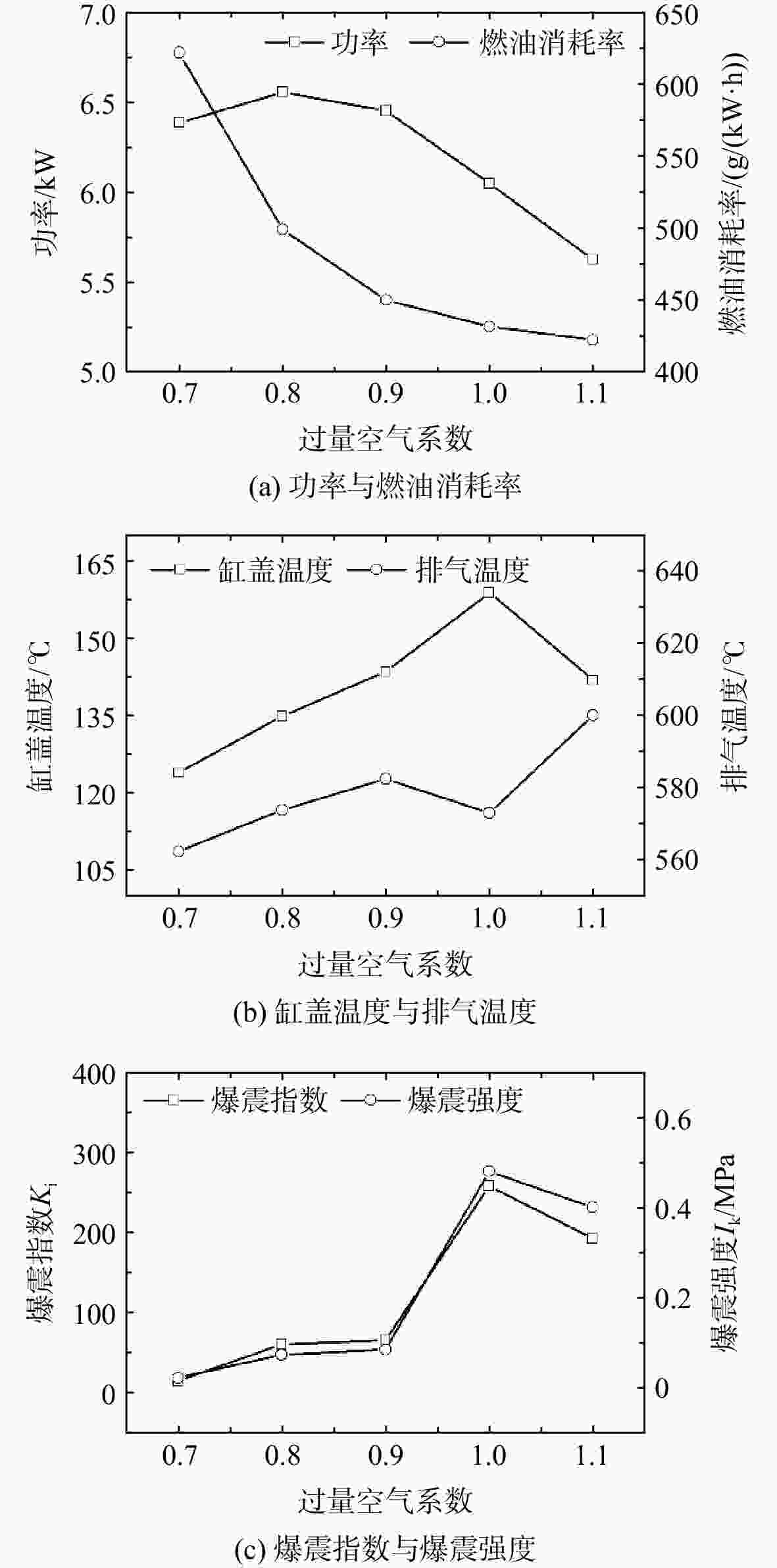
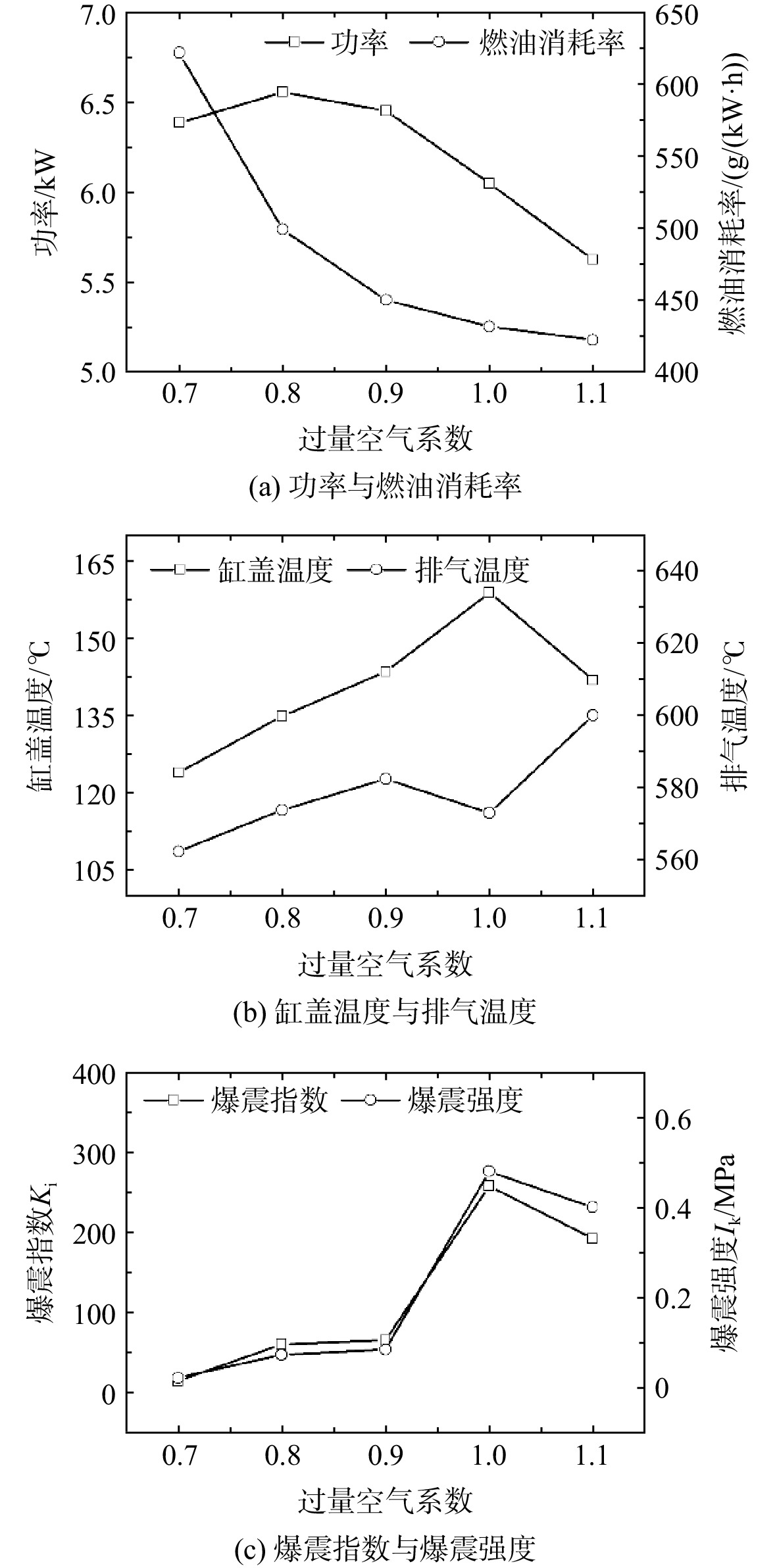
图 13 不同过量空气系数下发动机参数变化
Figure 13. Engine parameter changes at different excess air coefficients
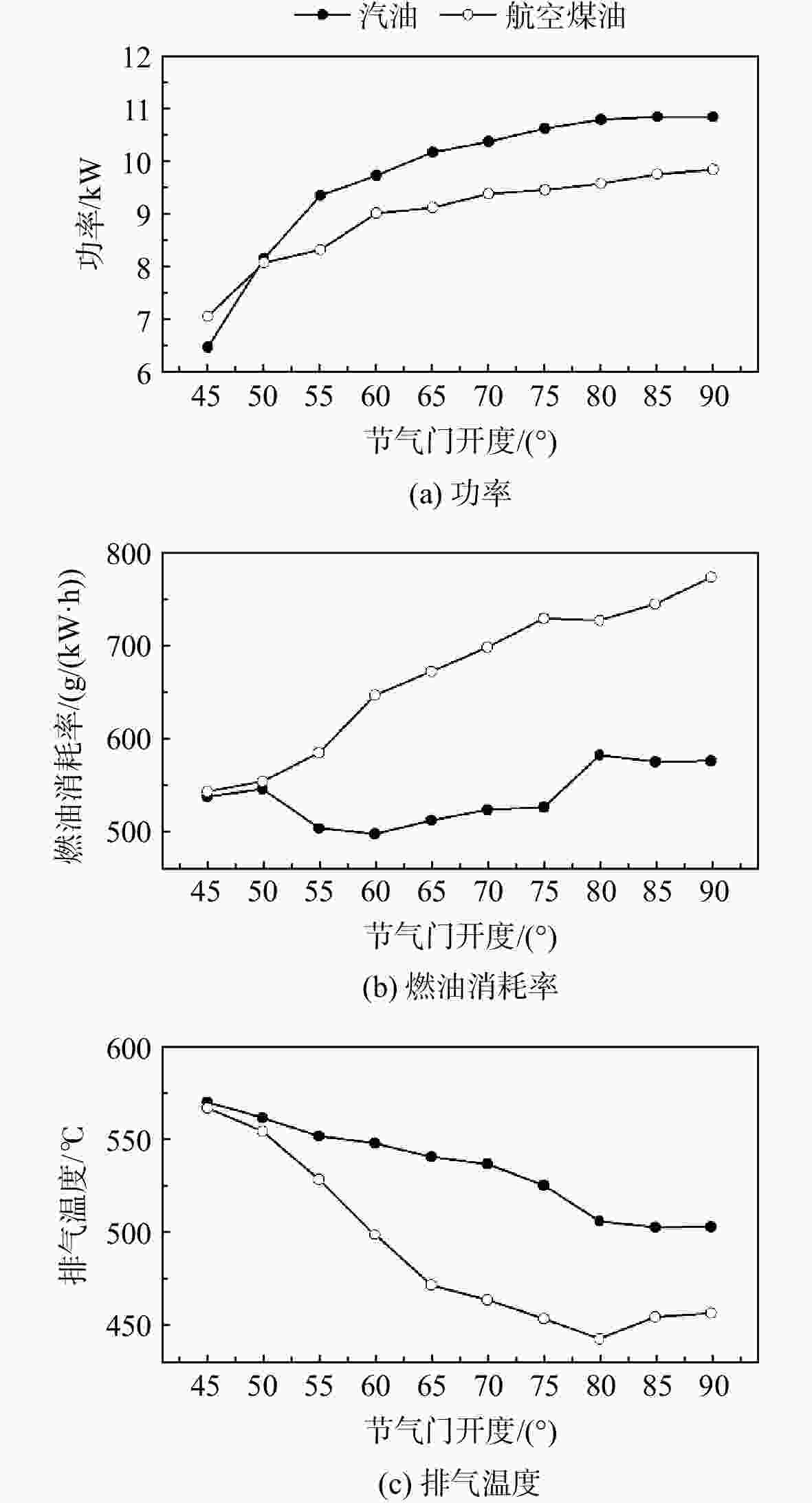
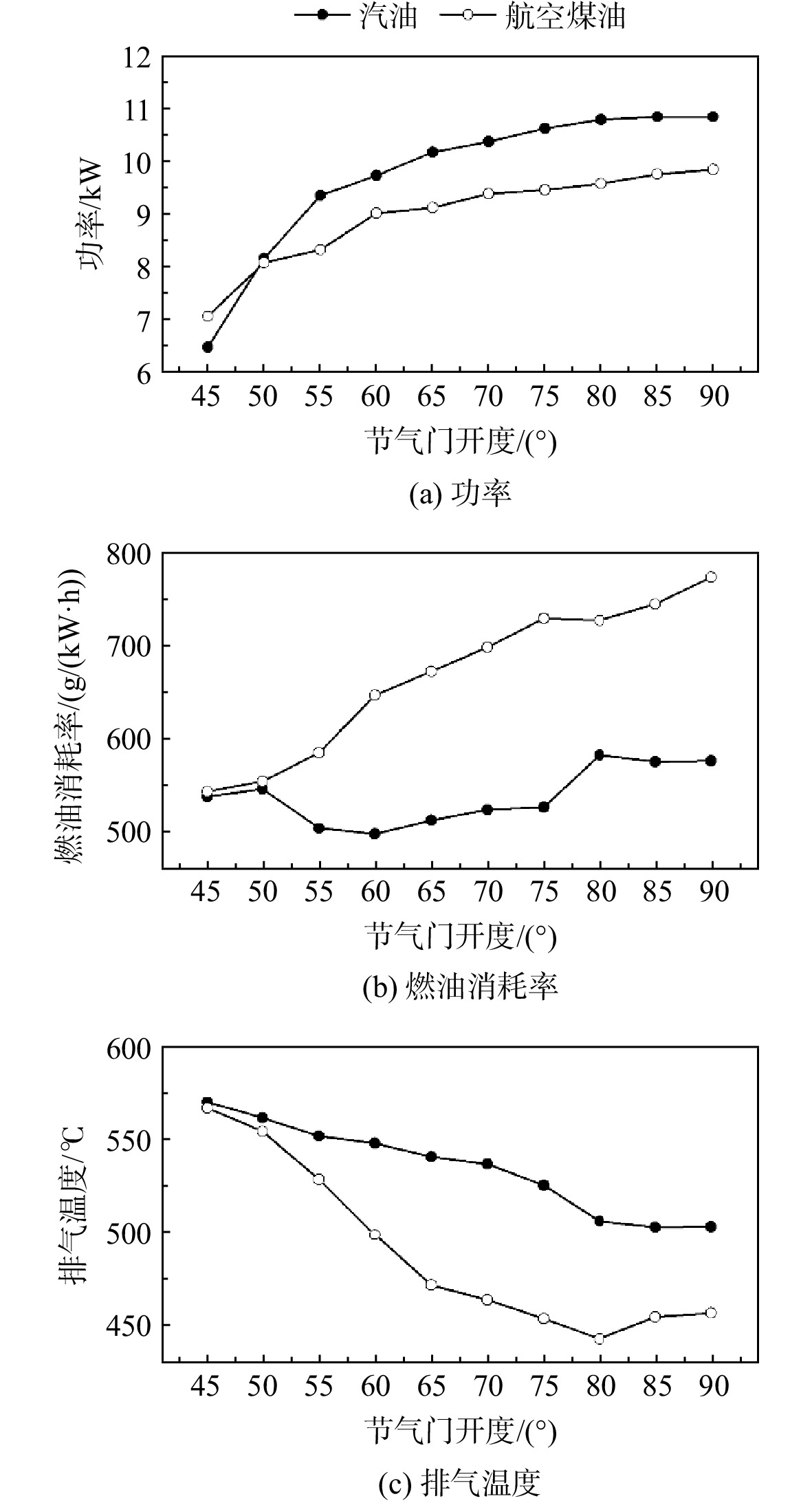
图 15 转速为4800 r/min时不同负荷性能参数
Figure 15. Performance parameters under different loads at 4800 r/min
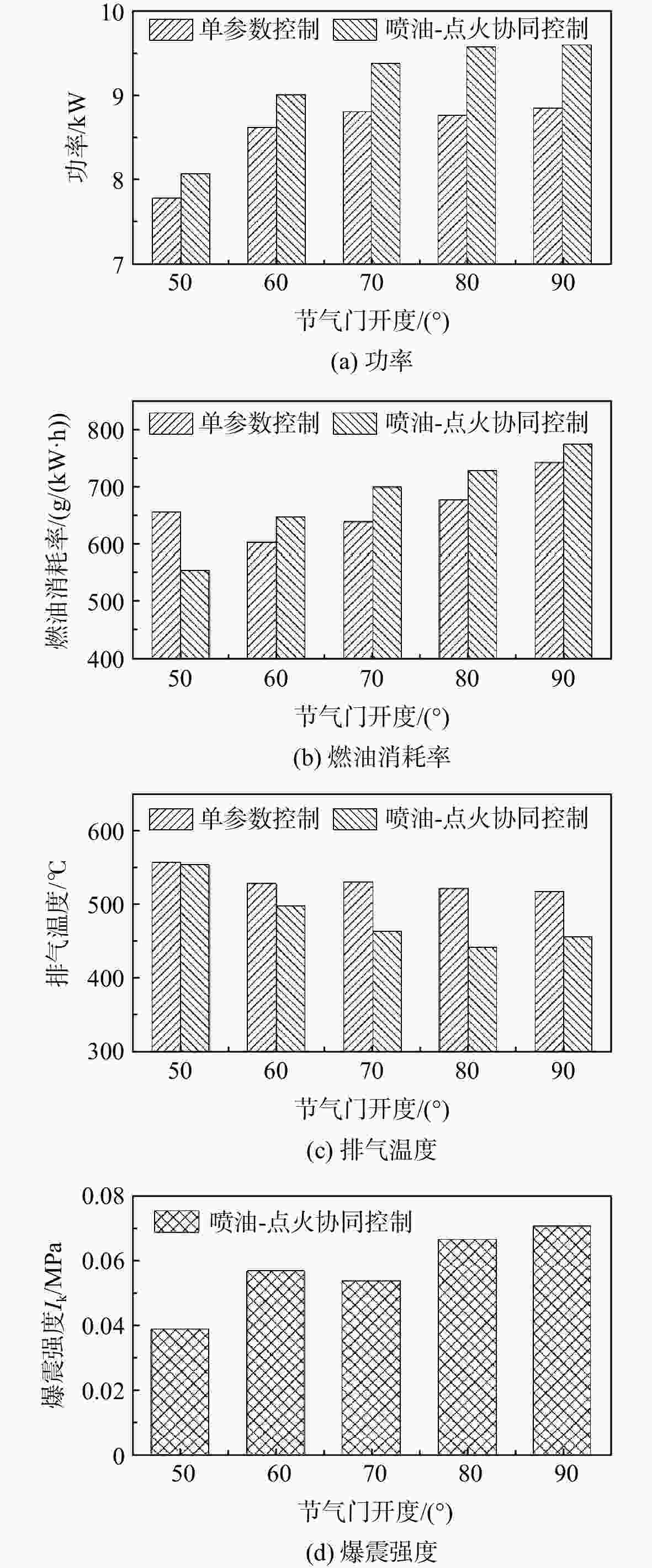
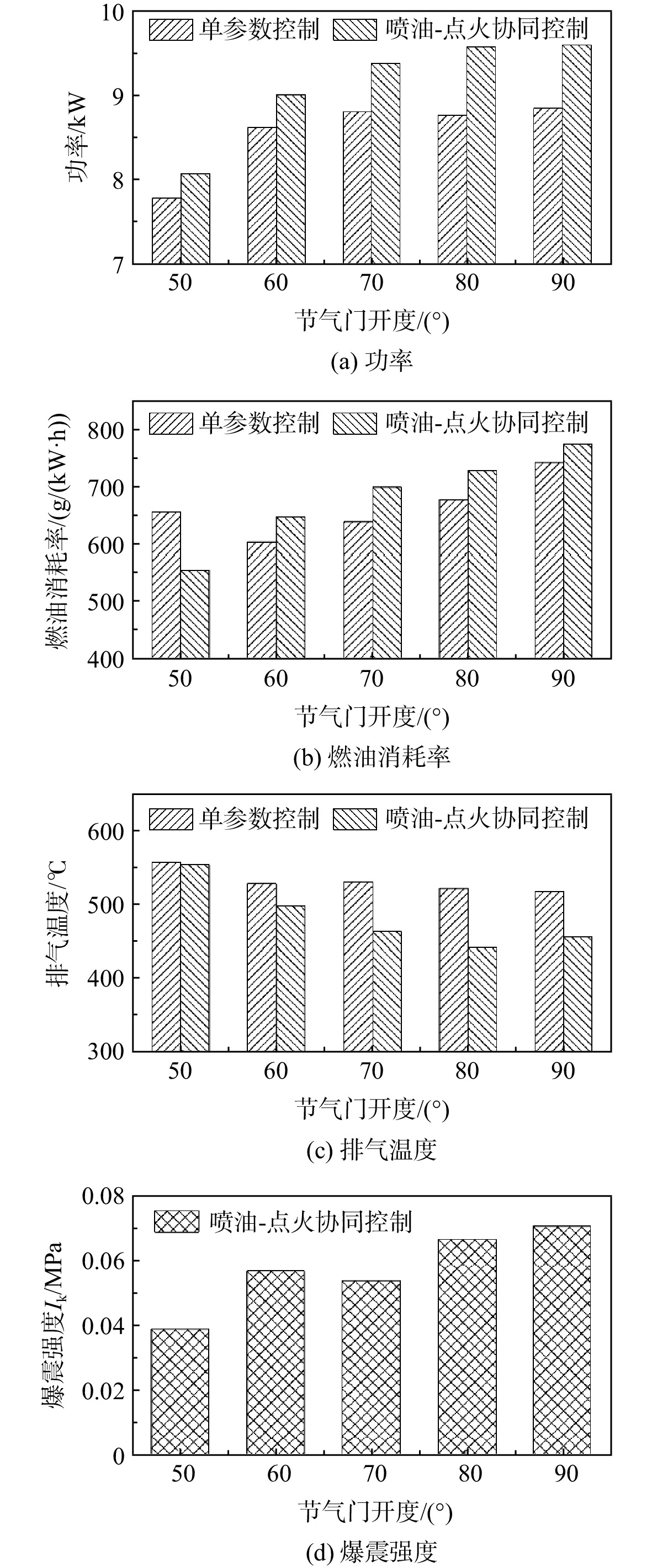
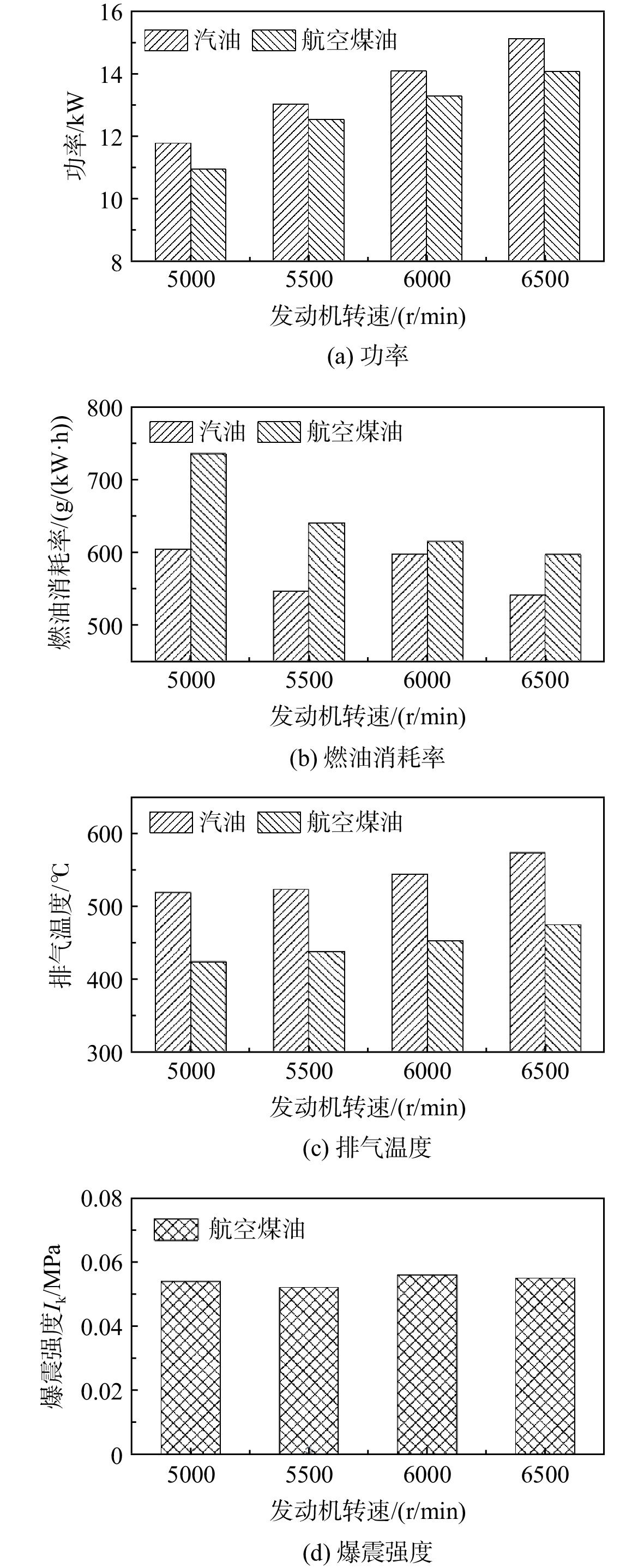
图 16 不同控制策略下发动机性能对比
Figure 16. Performance comparison of engine with different control strategies
表 1 发动机技术参数
Table 1. Engine specifications
参数 数值及说明 发动机类型 对置双缸二冲程 喷油方式 进气管喷射 进气方式 活塞阀进气 排气方式 直排式 冷却方式 风冷 发动机排量/L 0.274 气缸直径/mm 66 活塞行程/mm 40 几何压缩比 10.5 标定功率/kW 16 (7200 r/min) 排气口关闭角(BTDC)/(°) 102 扫气口关闭角(BTDC)/(°) 114  下载: 导出CSV
表 2 燃油理化特性对比
Table 2. Comparison of fuel physical and chemical properties
燃油属性 汽油 RP-3航空煤油 分子组成成分 C5~C11 C8~C12 辛烷值 95 46 闪点/℃ −45~−25 35~51 密度(20 ℃)/(kg/L) 0.70~0.75 0.79 理论空燃比 14.7 14.9 运动黏度(20 ℃)/(mm2/s) 0.8 1.28
下载: 导出CSV
表 3 发动机爆震预测模型校核结果
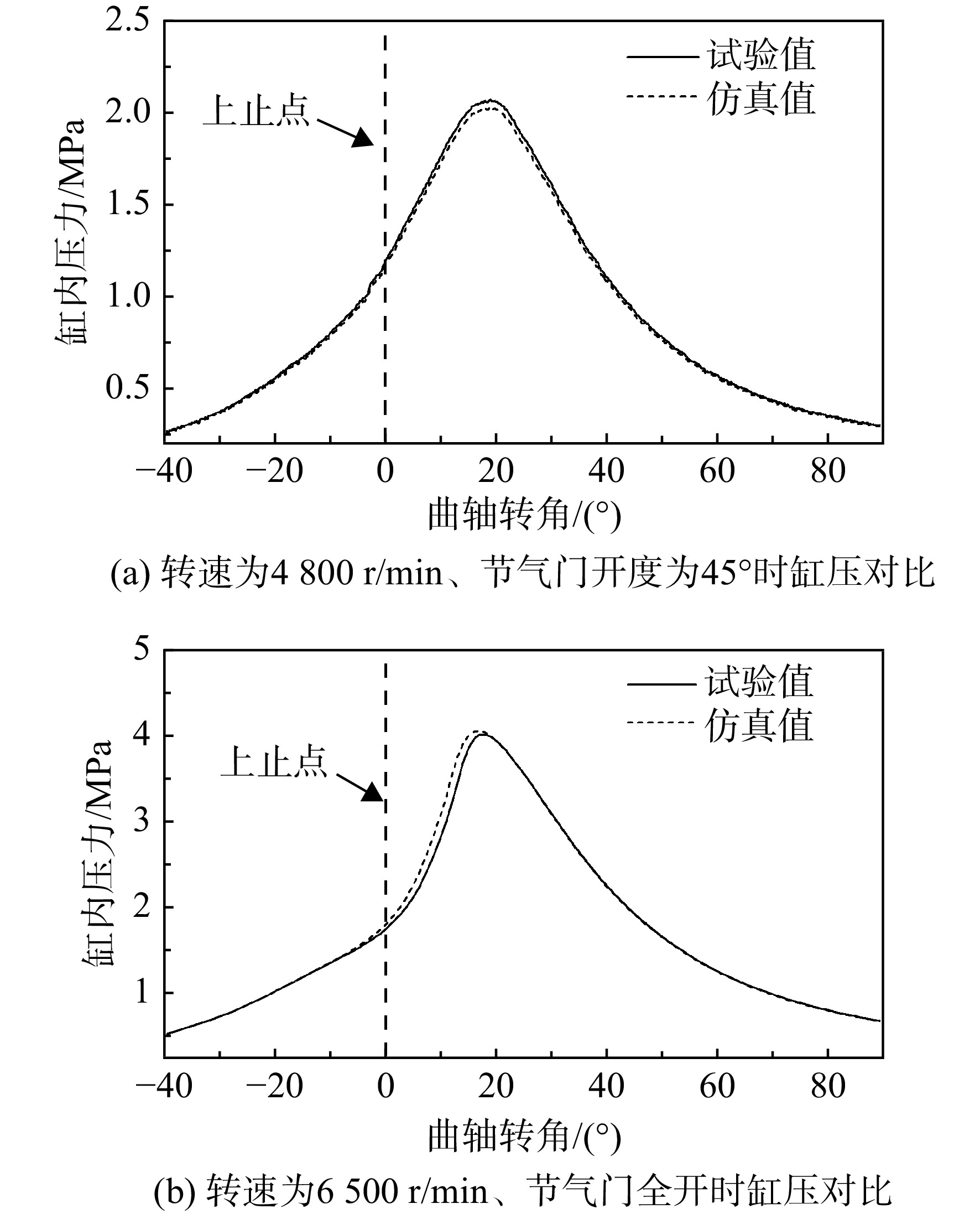
Table 3. Check results of engine knock prediction model
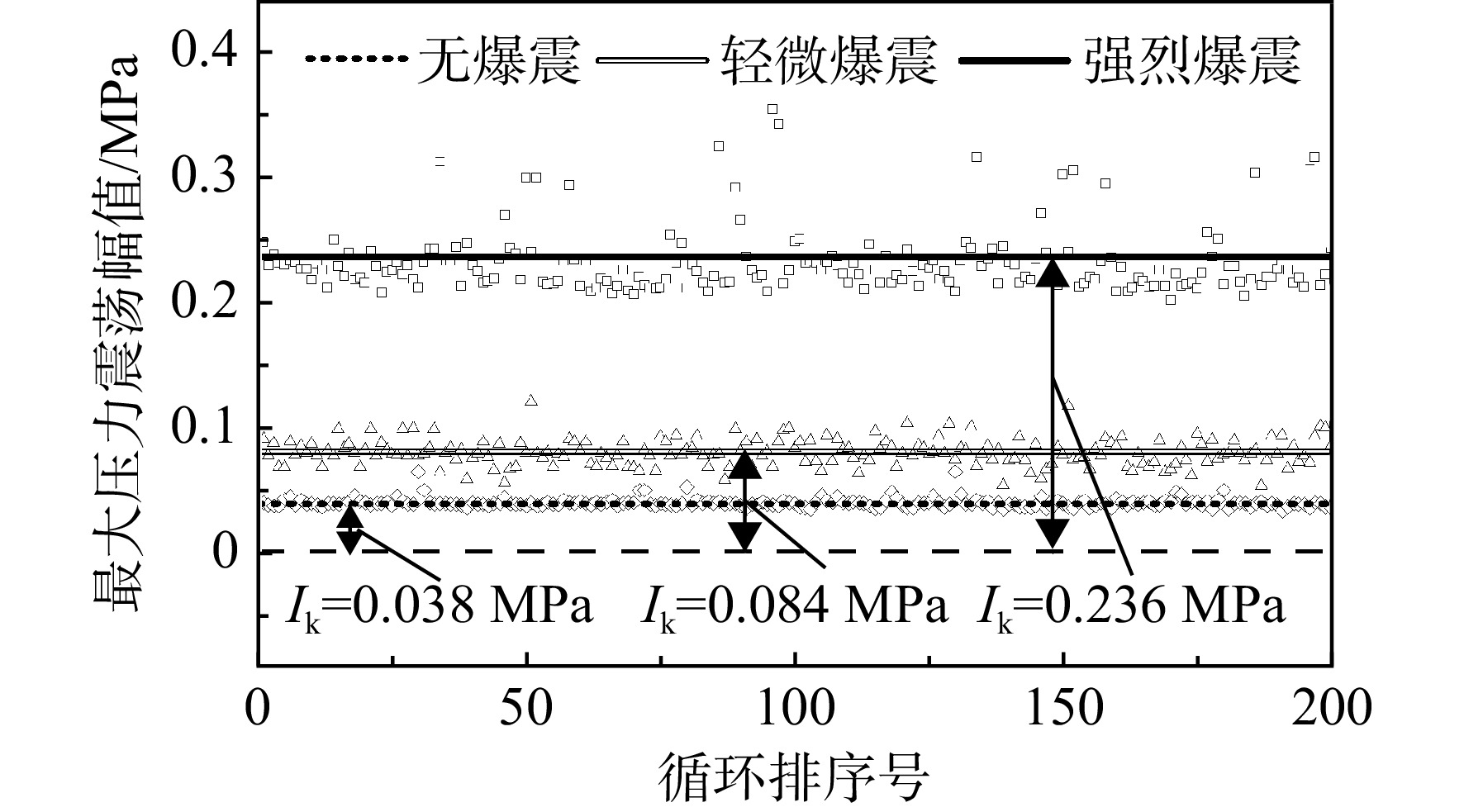
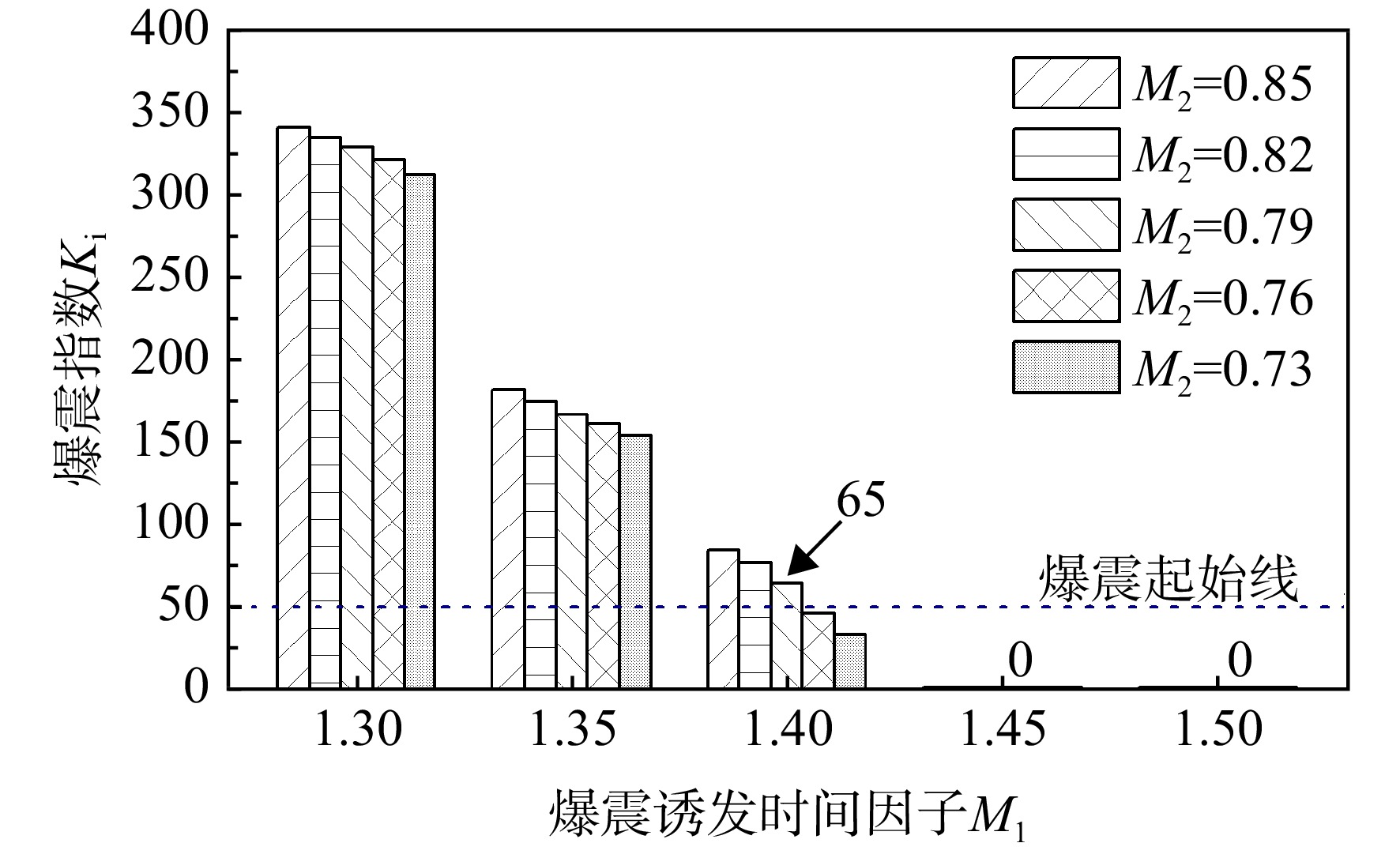
参数 数值及说明 试验值 仿真值 转速/(r/min) 4800 4800 点火提前角(BTDC)/(°) 33 33 节气门开度/(°) 45 45 功率/kW 6.44 6.38 扭矩/(N·m) 12.81 12.69 爆震燃烧状态 Ik=0.084 MPa Ki=65
下载: 导出CSV
表 4 试验设计优化参数
Table 4. Experimental design optimization parameters
参数 数值 转速/(r/min) 4800 节气门开度/(°) 45 点火提前角范围(BTDC)/(°) 18~36 过量空气系数范围 0.68~1.15
下载: 导出CSV
表 5 不同控制参数的试验工况
Table 5. Experimental conditions with different control parameters
参数 数值及说明 转速/(r/min) 4800 节气门开度/(°) 50,60,70,80,90 过量空气系数 1 点火提前角 由正常点火提前角
提前至爆震点火提前角
下载: 导出CSV
-
[1] 卢杰, 任志文, 万志明, 等. 小型航空活塞发动机发展现状与应用研究[C]//第9届中国航空学会青年科技论坛论文集. 西安, 2020: 324-330. [2] 胡强,余双,史开源,等. 浅谈航空重油活塞式发动机[J]. 航空动力,2020(5): 32-35.HU Qiang,YU Shuang,SHI Kaiyuan,et al. Discussion on the aviation heavy fuel piston engines[J]. Aerospace Power,2020(5): 32-35. (in Chinese) [3] 杜春媛,田梦园,胡春明. 二冲程重油航空发动机技术发展分析[J]. 小型内燃机与车辆技术,2020,49(3): 92-96.DU Chunyuan,TIAN Mengyuan,HU Chunming. Technical development analysis of two-stroke heavy fuel aero engine[J]. Small Internal Combustion Engine and Vehicle Technique,2020,49(3): 92-96. (in Chinese) [4] 冯光烁,周明. 重油航空活塞发动机技术路线分析[J]. 清华大学学报(自然科学版),2016,56(10): 1114-1121.FENG Guangshuo,ZHOU Ming. Assessment of heavy fuel aircraft piston engine types[J]. Journal of Tsinghua University (Science and Technology),2016,56(10): 1114-1121. (in Chinese) [5] 杨白凡. 二冲程点燃式缸内直喷重油发动机性能试验研究[D]. 南京: 南京航空航天大学, 2016.YANG Baifan. Research on a 2-stroke DISI heavy fuel engine’s performance[D]. Nanjing: Nanjing University of Aeronautics and Astronautics, 2016. (in Chinese) [6] 刘锐,魏民祥,杨海青,等. 二冲程点燃式直喷煤油发动机冷起动控制策略[J]. 航空动力学报,2017,32(1): 213-220.LIU Rui,WEI Minxiang,YANG Haiqing,et al. Cold start control strategy of a two-stroke direct injection spark-ignited kerosene engine[J]. Journal of Aerospace Power,2017,32(1): 213-220. (in Chinese) [7] 郭凌崧,王昊,黄克菲. 航空重油在航空活塞式发动机的应用[J]. 小型内燃机与车辆技术,2018,47(1): 84-89, 93. doi: 10.3969/j.issn.1671-0630.2018.01.016GUO Lingsong,WANG Hao,HUANG Kefei. Application of aviation heavy oil in aviation piston engine[J]. Small Internal Combustion Engine and Vehicle Technique,2018,47(1): 84-89, 93. (in Chinese) doi: 10.3969/j.issn.1671-0630.2018.01.016 [8] 吴平友,黄河,程庆. 汽油发动机爆震分析与控制[J]. 传动技术,2003,17(3): 36-38, 6.WU Pingyou,HUANG He,CHENG Qing. The engine knock analysis and control[J]. Drive System Technique,2003,17(3): 36-38, 6. (in Chinese) [9] BRUNT M F J, POND C R, BIUNDO J. Gasoline engine knock analysis using cylinder pressure data[R]. SAE Technical Paper 980896, 1998. [10] GRANDIN B. Knock in gasoline engines-the effects of mixture composition on knock onset and heat transfer[J]. Doktorsavhandlingar vid Chalmers Tekniska Hogskola,2001,90(1781): 1-92. [11] OBODEH O,AKHERE N. Experimental study on the effects of kerosene-doped gasoline on gasoline-powered engine performance characteristics[J]. Journal of Petroleum and Gas Engineering,2010,1(2): 37-40. [12] CATHCART G, HOUSTON R, AHERN S. The potential of gasoline direct injection for small displacement 4-stroke motorcycle applications [R]. SAE Technical Paper, 2004-32-0098, 2004. [13] CHANG Cheng,WEI Minxiang. Effect of key parameters on knock suppression in a two-stroke spark ignition engine with aviation kerosene fuel[J]. Proceedings of the Institution of Mechanical Engineers: Part A Journal of Power and Energy,2019,233(8): 1047-1055. doi: 10.1177/0957650919842008 [14] 宗培越,胡春明,王书典. 活塞式航空煤油直喷发动机的爆震控制[J]. 航空动力学报,2018,33(3): 635-641.ZONG Peiyue,HU Chunming,WANG Shudian. Knocking control of direct injection piston-type aviation kerosene engine[J]. Journal of Aerospace Power,2018,33(3): 635-641. (in Chinese) [15] 李兆乐. 小型航空点燃式重油活塞发动机点火及爆燃协同控制的模拟研究[D]. 北京: 北京交通大学, 2016.LI Zhaole. Simulation analysis on cooperative control of ignition and knock of light-weight, spark ignition, heavy oil aeroengine[D]. Beijing: Beijing Jiaotong University, 2016. (in Chinese) [16] SIANO D,D’AGOSTINO D. Knock detection in SI engines by using the discrete wavelet transform of the engine block vibrational signals[J]. Energy Procedia,2015,81: 673-688. doi: 10.1016/j.egypro.2015.12.052 [17] HUDSON C,GAO X,STONE R. Knock measurement for fuel evaluation in spark ignition engines[J]. Fuel,2001,80(3): 395-407. doi: 10.1016/S0016-2361(00)00080-6 [18] HORNER T G. Knock detection using spectral analysis techniques on a texas instruments TMS320 DSP[R] SAE Technical Paper 960614, 1996. [19] 陈龙华,程强,许敏,等. 低压冷却EGR增压汽油机准维爆震模型[J]. 内燃机学报,2017,35(2): 142-148.CHEN Longhua,CHENG Qiang,XU Min,et al. A knock onset predicting model for low pressure cooled EGR boosted gasoline engines[J]. Transactions of CSICE,2017,35(2): 142-148. (in Chinese) [20] 韩义勇,华剑雄,王利民,等. 汽油压燃发动机的爆震特性试验[J]. 内燃机学报,2021,39(1): 18-25.HAN Yiyong,HUA Jianxiong,WANG Limin,et al. Experimental investigation on knock characteristics of a gasoline compression ignition engine[J]. Transactions of CSICE,2021,39(1): 18-25. (in Chinese) [21] 盛敬,魏民祥,刘国满,等. 基于内禀模态特征能量法煤油机爆震特征提取[J]. 仪器仪表学报,2013,34(2): 462-468.SHENG Jing,WEI Minxiang,LIU Guoman,et al. Knock feature extraction based on intrinsic mode function feature energy method for a kerosene engine[J]. Chinese Journal of Scientific Instrument,2013,34(2): 462-468. (in Chinese) [22] 王思奇. 小型航模二冲程煤油发动机缸内直喷技术研究[D]. 南京: 南京航空航天大学, 2018.WANG Siqi. Research on GDI technology of small model two-stroke kerosene engine[D]. Nanjing: Nanjing University of Aeronautics and Astronautics, 2018. (in Chinese) [23] WOSCHNI G. Die berechnung der wanderverluste and der thermischen belastung der bauteile von dieselmotoren[J]. Motortechnische Zeitschrift,1970,31(12): 491-499. [24] 李志锐,华剑雄,卫海桥,等. 直喷汽油机爆震试验与一维模拟研究[J]. 燃烧科学与技术,2018,24(3): 238-244.LI Zhirui,HUA Jianxiong,WEI Haiqiao,et al. Experimental and 1-D simulation studies of gasoline direct ignition engine[J]. Journal of Combustion Science and Technology,2018,24(3): 238-244. (in Chinese) [25] 金顺爱,李勇,尚秀镜,等. 汽油机燃烧过程模拟计算及爆震预测[J]. 内燃机学报,1999,17(3): 271-276. doi: 10.3321/j.issn:1000-0909.1999.03.013JIN Shunai,LI Yong,SHANG Xiujing,et al. Simulation of combustion process and knock prediction in gasoline engines[J]. Transactions of CSICE,1999,17(3): 271-276. (in Chinese) doi: 10.3321/j.issn:1000-0909.1999.03.013 [26] 丁昌露,杨海青,陈方超. 提高二冲程煤油发动机抗爆性措施研究[J]. 航空动力学报,2017,32(12): 2972-2980.DING Changlu,YANG Haiqing,CHEN Fangchao. Study on anti-knock quality strategies of two-stroke kerosene engine[J]. Journal of Aerospace Power,2017,32(12): 2972-2980. (in Chinese) [27] CHEN Longfei,DING Shirun,LIU Haoye,et al. Comparative study of combustion and emissions of kerosene (RP-3), kerosene-pentanol blends and diesel in a compression ignition engine[J]. Applied Energy,2017,203: 91-100. doi: 10.1016/j.apenergy.2017.06.036 [28] DOUAUD A M, EYZAT P. Four-octane-number method for predicting the anti-knock behavior of fuels and engines[R]. SAE Technical Paper 780080, 1978. [29] 盛敬. 二冲程煤油发动机爆震燃烧数值模拟与试验研究[D]. 南京: 南京航空航天大学, 2014.SHENG Jing. Simulation and experimental study on knock combustion in two-stroke kerosene engine[D]. Nanjing: Nanjing University of Aeronautics and Astronautics, 2014. (in Chinese) [30] ZHEN Xudong,WANG Yang,XU Shuaiqing,et al. Study of knock in a high compression ratio spark-ignition methanol engine by multi-dimensional simulation[J]. Energy,2013,50: 150-159. doi: 10.1016/j.energy.2012.09.062 [31] MCKAY M D,BECKMAN R J,CONOVER W J. A comparison of three methods for selecting values of input variables in the analysis of output from a computer code[J]. Technometrics,2000,42(1): 55-61. doi: 10.1080/00401706.2000.10485979 -

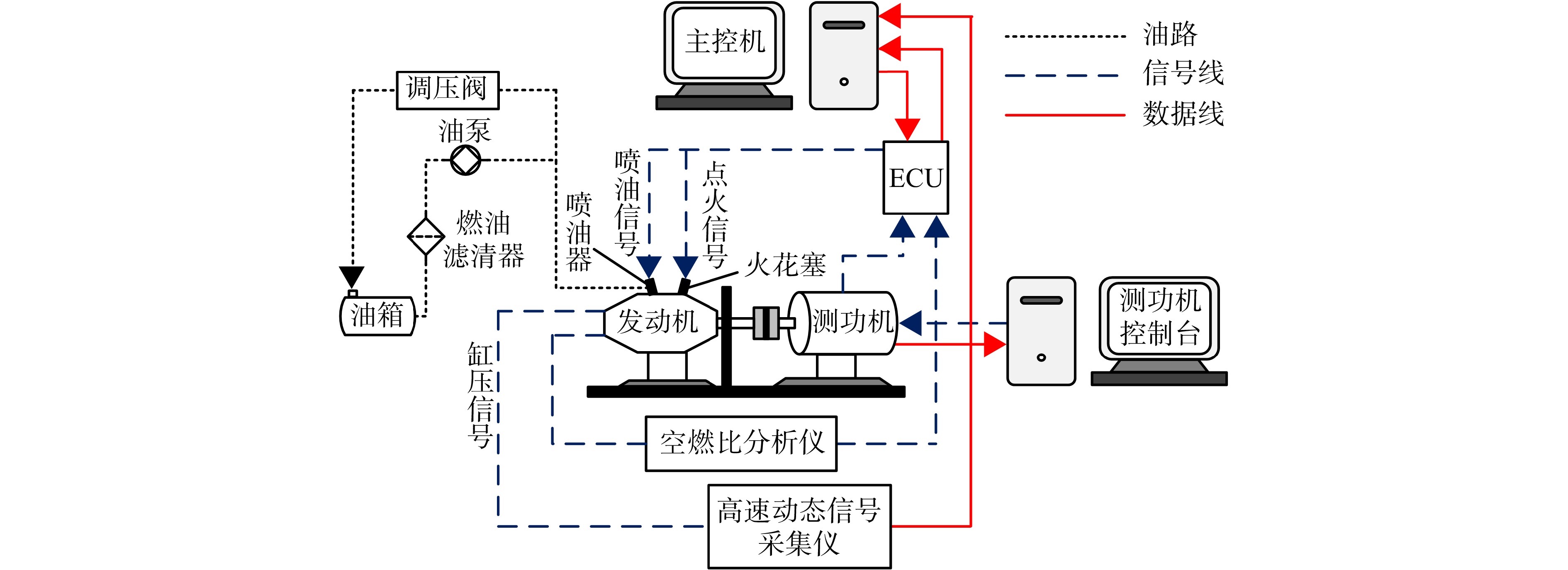
 点击查看大图
计量
- 文章访问数: 812
- HTML浏览量: 536
- PDF量: 79
- 被引次数: 0