






Coupling response law of aero-engine internal cavities
-
摘要:
为了准确评估航空发动机快速机动过程中容积效应的影响,提出了发动机内部容腔低维模化方法和控制方程。通过集成发动机主流道与二次空气系统的耦合算法,建立了考虑容积效应影响的航空发动机全流域仿真模型,模拟并分析了快速机动过程中航空发动机整机系统环境下多容腔耦合响应规律和机理。研究表明:容积效应虽然并不会对航空发动机过渡态性能造成显著宏观影响,但却导致发动机内部不同区域气路参数呈现不可忽视的非均衡响应现象。在发动机快速机动过程中,轴向力峰值相对变化幅度可达轴向力设计值10%左右,增大了航空发动机过渡过程的潜在安全风险。且当容腔特征时间小于0.01 s,那么其容积效应对航空发动机的影响基本可以忽略。容腔的特征时间与发动机的推力响应时间量级越接近,其导致危险过渡态载荷的风险越高,这是现代高性能航空发动机设计中不应忽略的影响因素。
Abstract:In order to accurately evaluate volume packing effects of aero-engine in rapid transients, a low-dimensional modeling method and the corresponding governing equations for the aero-engine internal cavities were proposed. By means of integrating the coupling algorithm of aero-engine main gas path and secondary air-system, an aero-engine whole gas path model considering volume packing effects was established. Predictions and analysis were made for the cavities responses in aero engine system environment during rapid transients. The result showed that the volume packing effects exerted little effects on the overall transient performance of the aero-engine, but its effect can cause significant imbalanced local responses in aero-engine gas path. In the process of rapid engine maneuvering, the relative change amplitude of the peak axial force can reach about 10% of the design value of the axial force, which increased the potential safety risk in the transition process of the aero-engine. And when the cavity characteristic time was less than 0.01 s, the effect of its volumetric effect on the aero engine can be basically ignored. The closer the characteristic time of the cavity was to the thrust response time of the engine, the higher the risk of dangerous transition state loads, making it an influencing factor that should not be ignored in modern high-performance aero-engine designs.
-
Key words:
- system safety /
- volume packing effects /
- air system /
- transient /
- zero-dimensional simulation
-
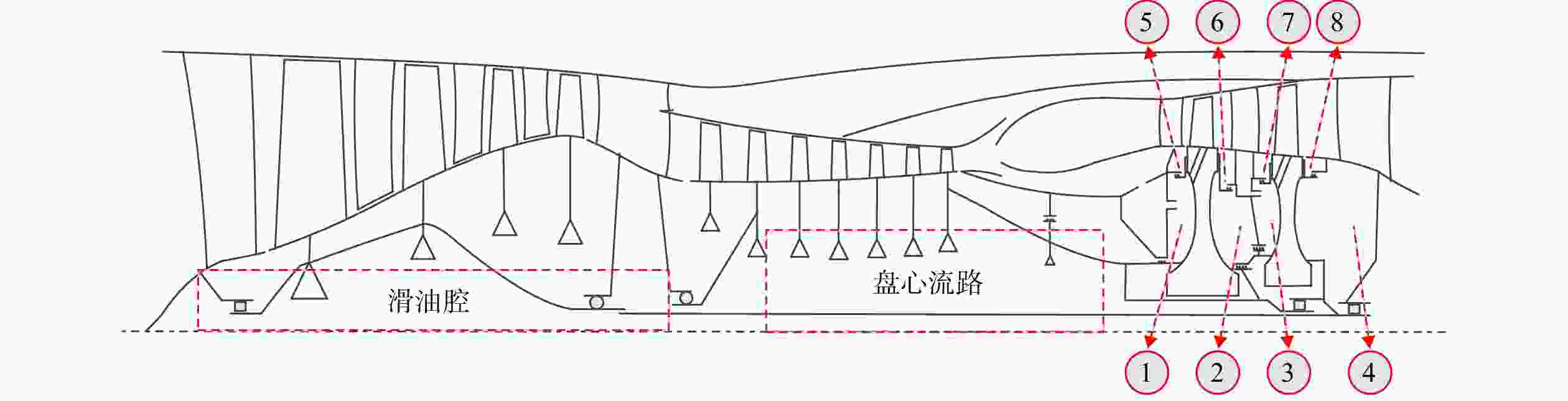
图 4 双轴混合排气涡扇发动机示意图
1 高压涡轮盘前腔;2 高压涡轮盘后腔;3 低压涡轮盘前腔;4 低压涡轮盘后腔;5 高压盘前封严;6 高压盘后封严;7 低压盘前封严;8 低压盘后封严。
Figure 4. Twin-spool turbofan engine with mixed exhaust
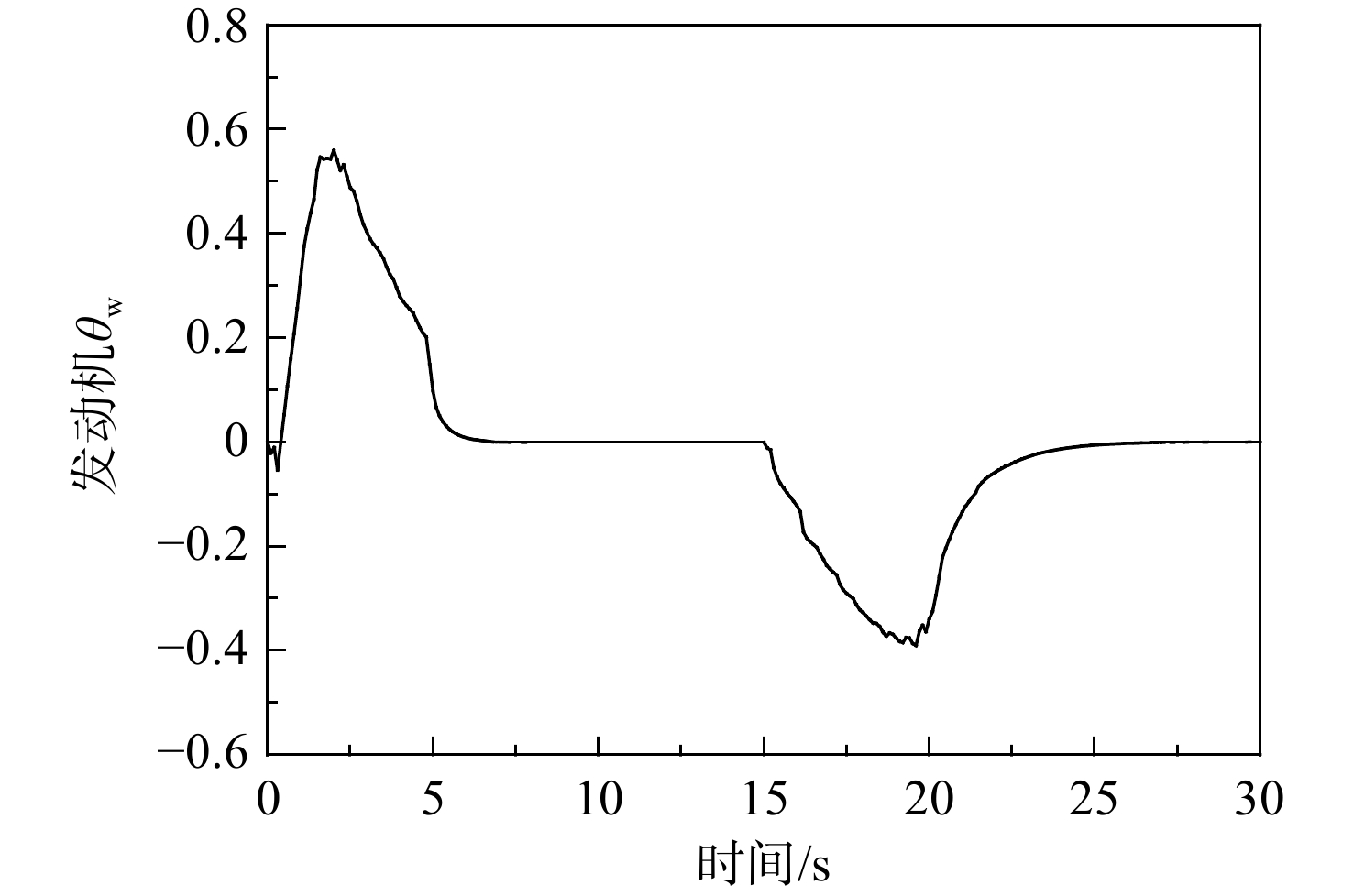
图 6 过渡过程$ {\theta _{\text{w}}} $的变化过程
Figure 6. $ {\theta _{\text{w}}} $ evolution in transient process

图 7 冷端部件$ {\theta _{\text{w}}} $的变化过程
Figure 7. Cold section component $ {\theta _{\text{w}}} $ evolution

图 8 热端部件$ {\theta _{\text{w}}} $的变化过程
Figure 8. Hot section component $ {\theta _{\text{w}}} $ evolution
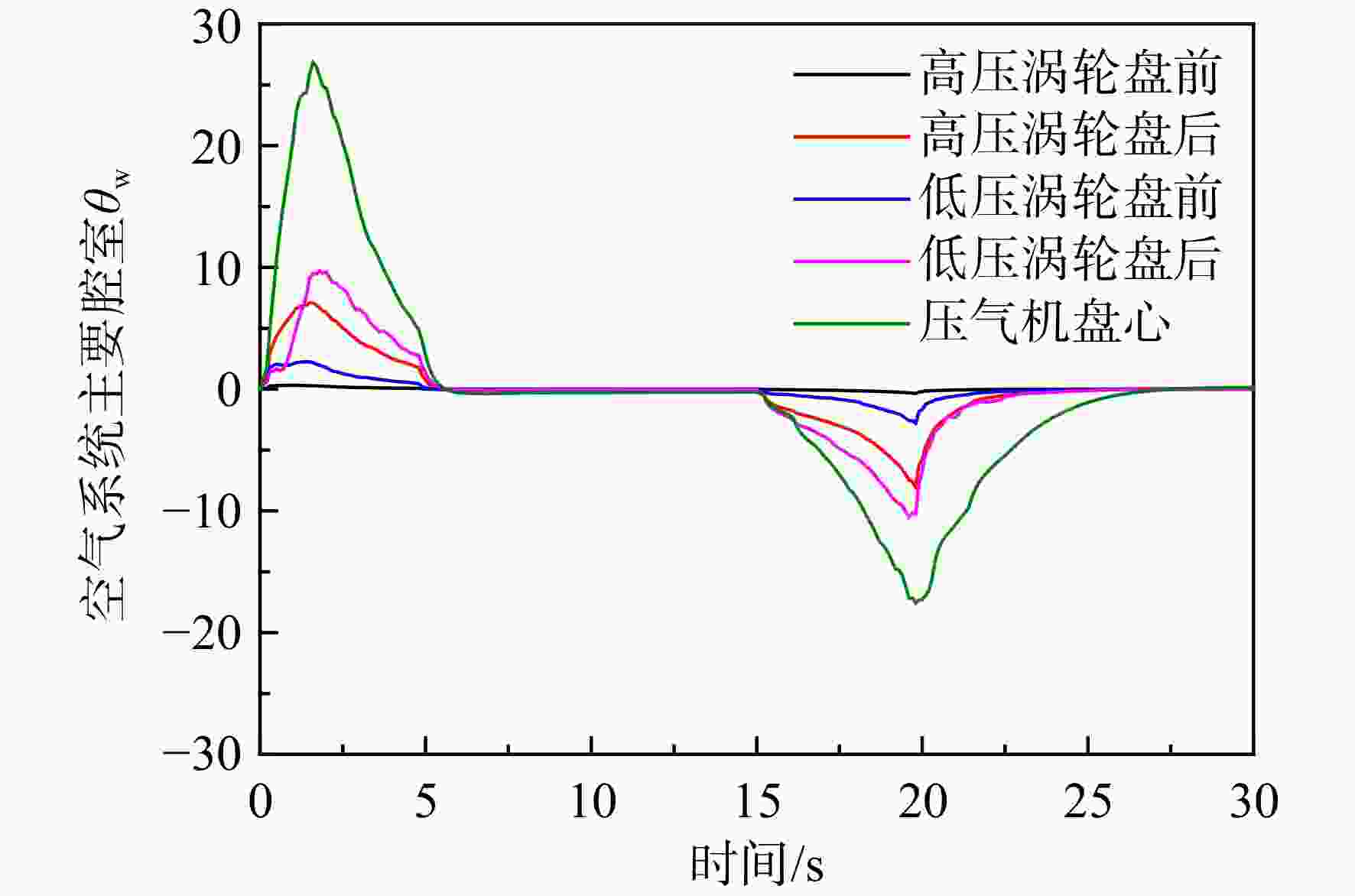
图 11 空气系统内部腔室$ {\theta _{\text{w}}} $的变化过程
Figure 11. Air system internal cavities $ {\theta _{\text{w}}} $ evolution
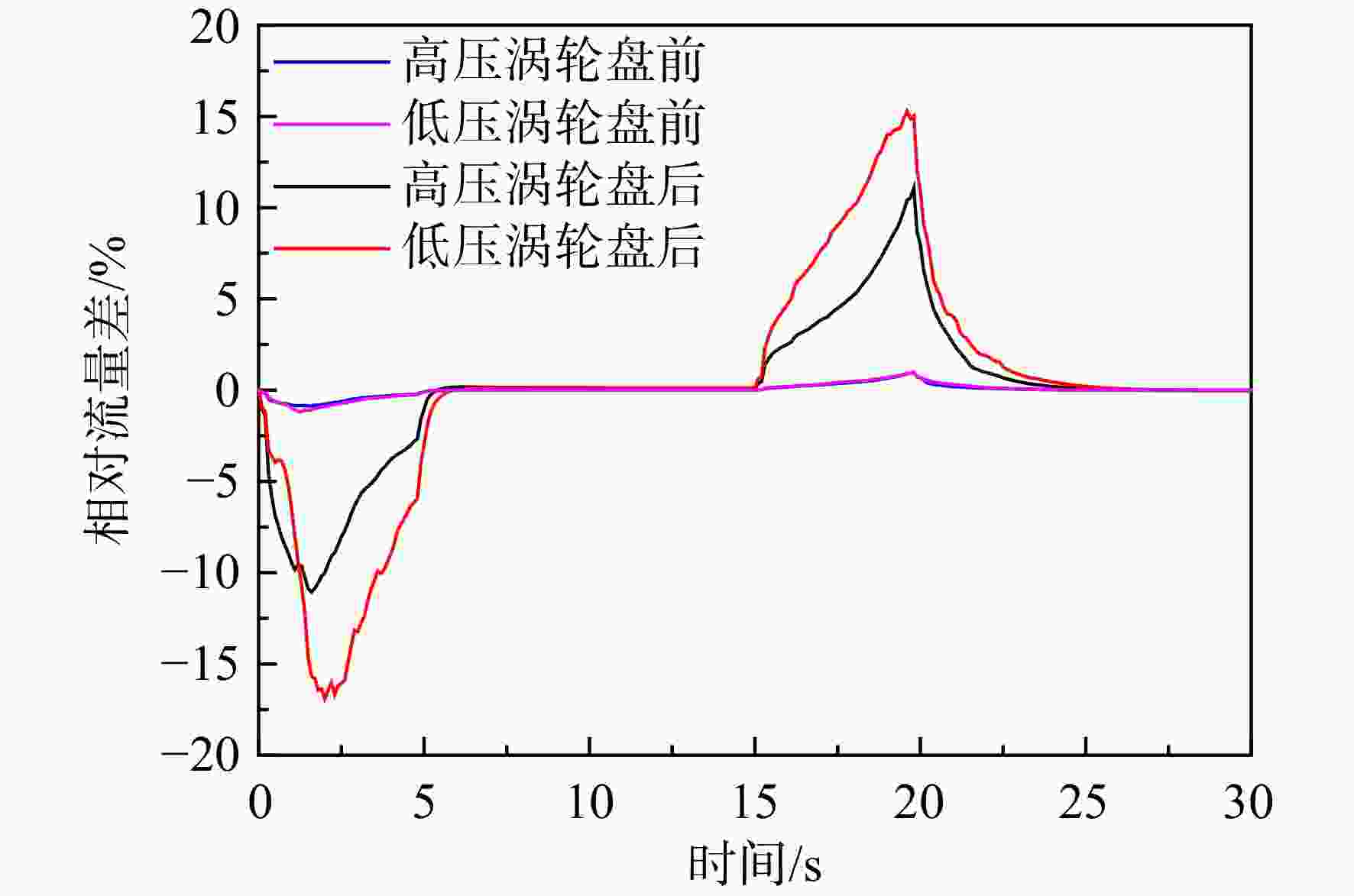
图 12 容腔效应对涡轮盘缘封严流量的影响
Figure 12. Influence of volume packing effects on disk edge sealing flow

图 13 容腔效应对转子轴向力的影响
Figure 13. Influence of volume packing effects on rotor axial force
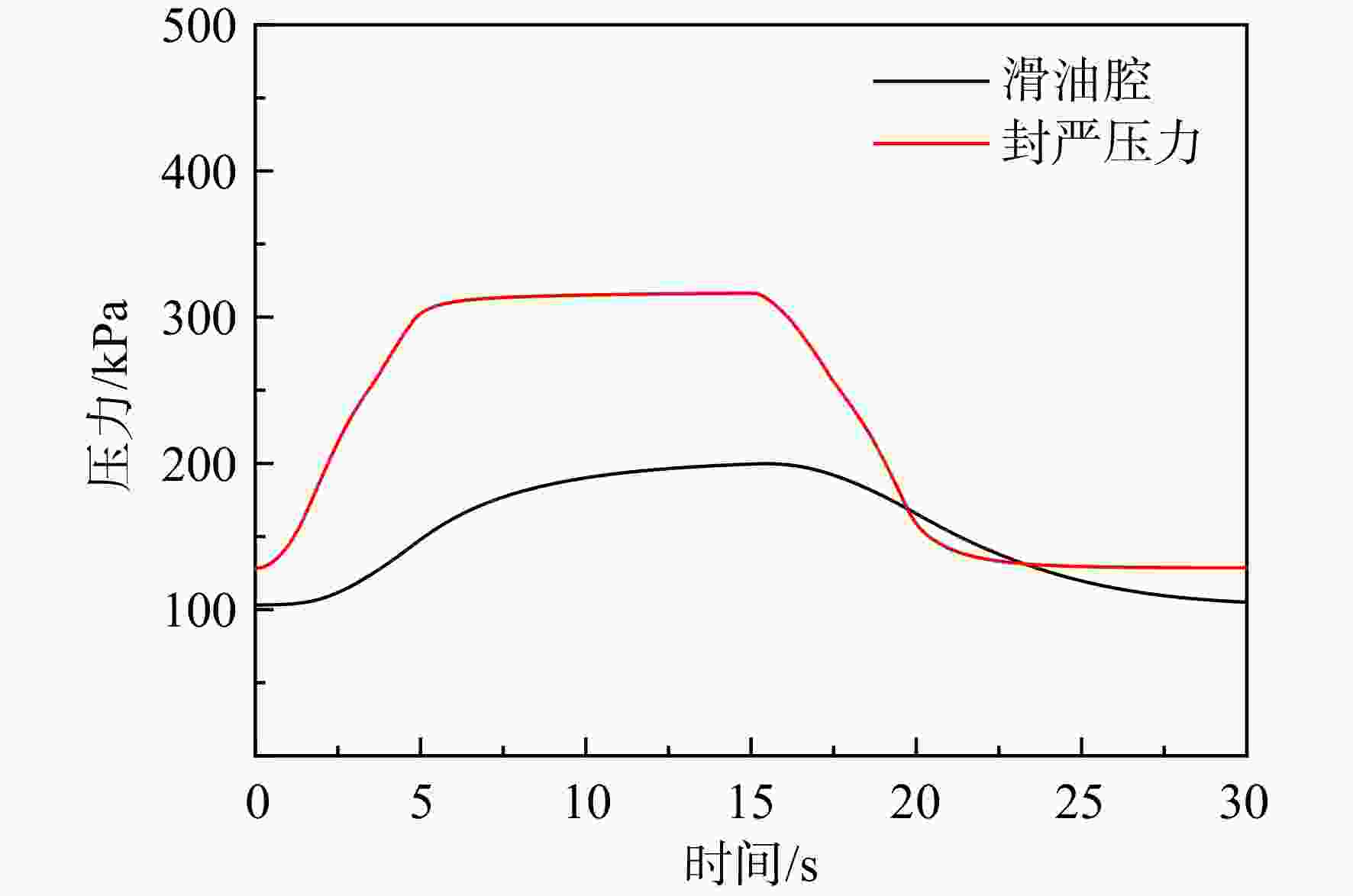
图 14 容腔效应对滑油腔封严压力的影响
Figure 14. Effects of volume packing on oil cavity sealing pressure
表 1 各腔特征时间
Table 1. Characteristic time of each cavity
发动机内部腔室 特征时间/10−4 s 风扇容腔 7.73 压气机容腔 5.42 外涵道容腔 12.8 燃烧室容腔 2.04 高压涡轮容腔 1.28 低压涡轮容腔 1.47 混合室容腔 5.05 高压涡轮盘前腔 59.8 高压涡轮盘后腔 225 低压涡轮盘前腔 70.4 低压涡轮盘后腔 477 高压转子盘心容腔 1610 发动机前滑油腔 64000  下载: 导出CSV
-
[1] DUTTON J,COVERDILL R E. Experiments to study the gaseous discharge and filling of vessels[J]. International Journal of Engineering Education,1997,13: 122-134. [2] SAKAMOTO K,MATSUNAGA K,FUJII K,et al. Experimental investigation of supersonic internal cavity flows: AIAA 1995-2213[R]. Reston,Virigina: AIAA,1995. [3] GALLAR L,CALCAGNI C,LLORENS C,et al. Time accurate modelling of the secondary air system response to rapid transients[J]. Proceedings of the Institution of Mechanical Engineers,Part G: Journal of Aerospace Engineering,2011,225(8): 946-958. doi: 10.1177/0954410011398280 [4] ZHANG Ke,NAGUIB A M. Effect of finite cavity width on flow oscillation in a low-Mach-number cavity flow[J]. Experiments in Fluids,2011,51(5): 1209-1229. doi: 10.1007/s00348-011-1142-y [5] 王新月,苏三买,廉小纯. 混合排气加力涡扇发动机过渡态的数值计算[J]. 推进技术,2002,23(3): 189-192. WANG Xinyue,SU Sanmai,LIAN Xiaochun. Numerical simulation of turbofan engine with mixer afterburning under transient conditions[J]. Journal of Propulsion Technology,2002,23(3): 189-192. (in ChineseWANG Xinyue, SU Sanmai, LIAN Xiaochun. Numerical simulation of turbofan engine with mixer afterburning under transient conditions[J]. Journal of Propulsion Technology, 2002, 23(3): 189-192. (in Chinese) [6] 梁超,吴新跃. 燃气轮机动态仿真容积效应法研究[J]. 机电工程,2013,30(10): 1277-1279,1292. LIANG Chao,WU Xinyue. Volume effect of gas turbine dynamic simulation[J]. Journal of Mechanical & Electrical Engineering,2013,30(10): 1277-1279,1292. (in ChineseLIANG Chao, WU Xinyue. Volume effect of gas turbine dynamic simulation[J]. Journal of Mechanical & Electrical Engineering, 2013, 30(10): 1277-1279, 1292. (in Chinese) [7] 吴丁毅. 内流系统的网络计算法[J]. 航空学报,1996,17(6): 653-657. WU Dingyi. Network technique of internal system[J]. Acta Aeronautica et Astronautica Sinica,1996,17(6): 653-657. (in ChineseWU Dingyi. Network technique of internal system[J]. Acta Aeronautica et Astronautica Sinica, 1996, 17(6): 653-657. (in Chinese) [8] 倪纬斗,苟建兵,孙怠,等. 热动力系统流体网络及算法处理[J]. 系统仿真学报,1997,9(3): 78-83. NI Weidou,GOU Jianbing,SUN Dai. Research on fluid network in thermal power system[J]. Journal System Simulation,1997,9(3): 78-83. (in ChineseNI Weidou, GOU Jianbing, SUN Dai. Research on fluid network in thermal power system[J]. Journal System Simulation, 1997, 9(3): 78-83. (in Chinese) [9] 陶智,侯升平,韩树军,等. 流体网络法在发动机空气冷却系统设计中的应用[J]. 航空动力学报,2009,24(1): 1-6. TAO Zhi,HOU Shengping,HAN Shujun,et al. Study on application of fluid network into the design of air system in engine[J]. Journal of Aerospace Power,2009,24(1): 1-6. (in ChineseTAO Zhi, HOU Shengping, HAN Shujun, et al. Study on application of fluid network into the design of air system in engine[J]. Journal of Aerospace Power, 2009, 24(1): 1-6. (in Chinese) [10] CHEW J W,HILLS N J. Computational fluid dynamics for turbomachinery internal air systems[J]. Philosophical Transactions Series A,Mathematical,Physical,and Engineering Sciences,2007,365(1859): 2587-2611. [11] GANINE V,JAVIYA U,HILLS N,et al. Coupled fluid-structure transient thermal analysis of a gas turbine internal air system with multiple cavities[J]. Journal of Engineering for Gas Turbines and Power,2012,134(10): 102508.1-102508.8. [12] SUN Z L,CHEW J W,HILLS N J,et al. Coupled aero-thero-mechanical simulation for a turbine disc through a full transient cycle[R]. ASME GT2010-22673,2010. [13] 侯升平,陶智,韩树军,等. 非稳态流体网络方法在发动机空气冷却系统中的应用[J]. 航空动力学报,2009,24(3): 494-498. HOU Shengping,TAO Zhi,HAN Shujun,et al. Application of unsteady fluid network to air cooling system in engine[J]. Journal of Aerospace Power,2009,24(3): 494-498. (in ChineseHOU Shengping, TAO Zhi, HAN Shujun, et al. Application of unsteady fluid network to air cooling system in engine[J]. Journal of Aerospace Power, 2009, 24(3): 494-498. (in Chinese) [14] 侯升平,陶智,韩树军,等. 非稳态流体网络模拟新方法及其应用[J]. 航空动力学报,2009,24(6): 1253-1257. HOU Shengping,TAO Zhi,HAN Shujun,et al. New simulation approach to the unsteady fluid network and the application[J]. Journal of Aerospace Power,2009,24(6): 1253-1257. (in ChineseHOU Shengping, TAO Zhi, HAN Shujun, et al. New simulation approach to the unsteady fluid network and the application[J]. Journal of Aerospace Power, 2009, 24(6): 1253-1257. (in Chinese) [15] 骆广琦. 航空燃气涡轮发动机数值仿真[M]. 北京: 国防工业出版社,2007. LUO Guangqi. Numerical methods for aviation gas turbine engine simulation[M]. Beijing: National Defense Industry Press,2007. (in ChineseLUO Guangqi. Numerical methods for aviation gas turbine engine simulation[M]. Beijing: National Defense Industry Press, 2007. (in Chinese) [16] 刘传凯,李圆圆,李艳茹,等. 涡轮轴断裂条件下空气系统强瞬变过程分析[J]. 北京航空航天大学学报,2016,42(1): 47-53. LIU Chuankai,LI Yuanyuan,LI Yanru,et al. Dynamic analysis of air system with fast transients in shaft failure event[J]. Journal of Beijing University of Aeronautics and Astronautics,2016,42(1): 47-53. (in ChineseLIU Chuankai, LI Yuanyuan, LI Yanru, et al. Dynamic analysis of air system with fast transients in shaft failure event[J]. Journal of Beijing University of Aeronautics and Astronautics, 2016, 42(1): 47-53. (in Chinese) [17] DAVID M,JOHN W C. Response of a disk cavity flow to gas turbine engine transients[R]. ASME Paper GT 2010-22824,2010. [18] 刘传凯,姜宏超,李艳茹,等. 航空发动机性能与二次空气系统的耦合仿真模型[J]. 航空动力学报,2017,32(7): 1623-1630. LIU Chuankai,JIANG Hongchao,LI Yanru,et al. Coupled simulation model of aero-engine performance and secondary air system[J]. Journal of Aerospace Power,2017,32(7): 1623-1630. (in ChineseLIU Chuankai, JIANG Hongchao, LI Yanru, et al. Coupled simulation model of aero-engine performance and secondary air system[J]. Journal of Aerospace Power, 2017, 32(7): 1623-1630. (in Chinese) [19] 刘传凯,刘海明,李艳茹,等. 强瞬变空气系统的模块化仿真建模[J]. 航空动力学报,2015,30(8): 1826-1833. LIU Chuankai,LIU Haiming,LI Yanru,et al. Modularized simulation modeling of air system with fast transients[J]. Journal of Aerospace Power,2015,30(8): 1826-1833. (in ChineseLIU Chuankai, LIU Haiming, LI Yanru, et al. Modularized simulation modeling of air system with fast transients[J]. Journal of Aerospace Power, 2015, 30(8): 1826-1833. (in Chinese) [20] 王华阁. 航空发动机设计手册: 第16册 空气系统及传热分析[M]. 北京: 航空工业出版社,2001: 76-96. -


 点击查看大图

计量
- 文章访问数: 1243
- HTML浏览量: 191
- PDF量: 171
- 被引次数: 0