






Construction and validation of reduced reaction mechanism of RP-3 kerosene surrogate fuel
-
摘要:
采用基于反应类的全局敏感性分析方法、组分敏感性分析方法构建了甲基环己烷(MCH)的燃料相关骨架反应机理,包含25种组分和44个反应;并采用解耦法构建了甲基环己烷的骨架反应机理,包含72种组分和383个反应;同时,采用遗传算法对燃料相关反应的反应速率常数进行了优化,优化后的骨架反应机理在甲基环己烷的着火延迟时间以及MCH、CO、CO2摩尔分数的预测精度获得大幅提升。通过耦合正癸烷、正十二烷、异十六烷、甲基环己烷、甲苯的骨架反应机理与C0~C3的简化反应机理,构建了RP-3航空煤油模型燃料的简化反应机理(包含121种组分、469个反应);采用该简化反应机理计算得到的多工况条件下RP-3航空煤油的着火延迟时间与层流燃烧速度与相应试验值之间的误差均在5%以内,除个别工况外,氧化过程中主要组分摩尔分数的计算值与相应试验值吻合较好。
Abstract:By adopting the reaction class-based global sensitivity analysis (RC-GSA) methodology and species sensitivity analysis (SSA) methodology, the fuel-relevant skeleton mechanism (containing 25 species and 44 reactions) of methylcyclohexane (MCH) was developed. At the same time, with use of the decoupling method, the skeleton mechanism (containing 72 species and 383 reactions) of MCH was obtained. Furthermore, based on the genetic algorithm, the rate constants of fuel-relevant reactions in the skeleton mechanism of MCH were optimized. The results showed that the optimized skeleton mechanism can greatly improve the prediction accuracy of ignition delay time of MCH and MCH, CO, CO2 concentrations. By coupling the skeleton reaction mechanisms of n-decane, n-dodecane, iso-hexadecane, MCH, toluene and the reduced reaction mechanism of C0—C3, a reduced mechanism (containing 121 species and 469 reactions) of the surrogate fuel for RP-3 kerosene was formed. The errors between the simulated ignition delay time and laminar combustion velocity by the reduced reaction mechanism and the corresponding test values of RP-3 kerosene were less than 5% under multiple working conditions. The calculated values of the main species concentration in the oxidation process were in good agreement with the corresponding test values except for some conditions.
-
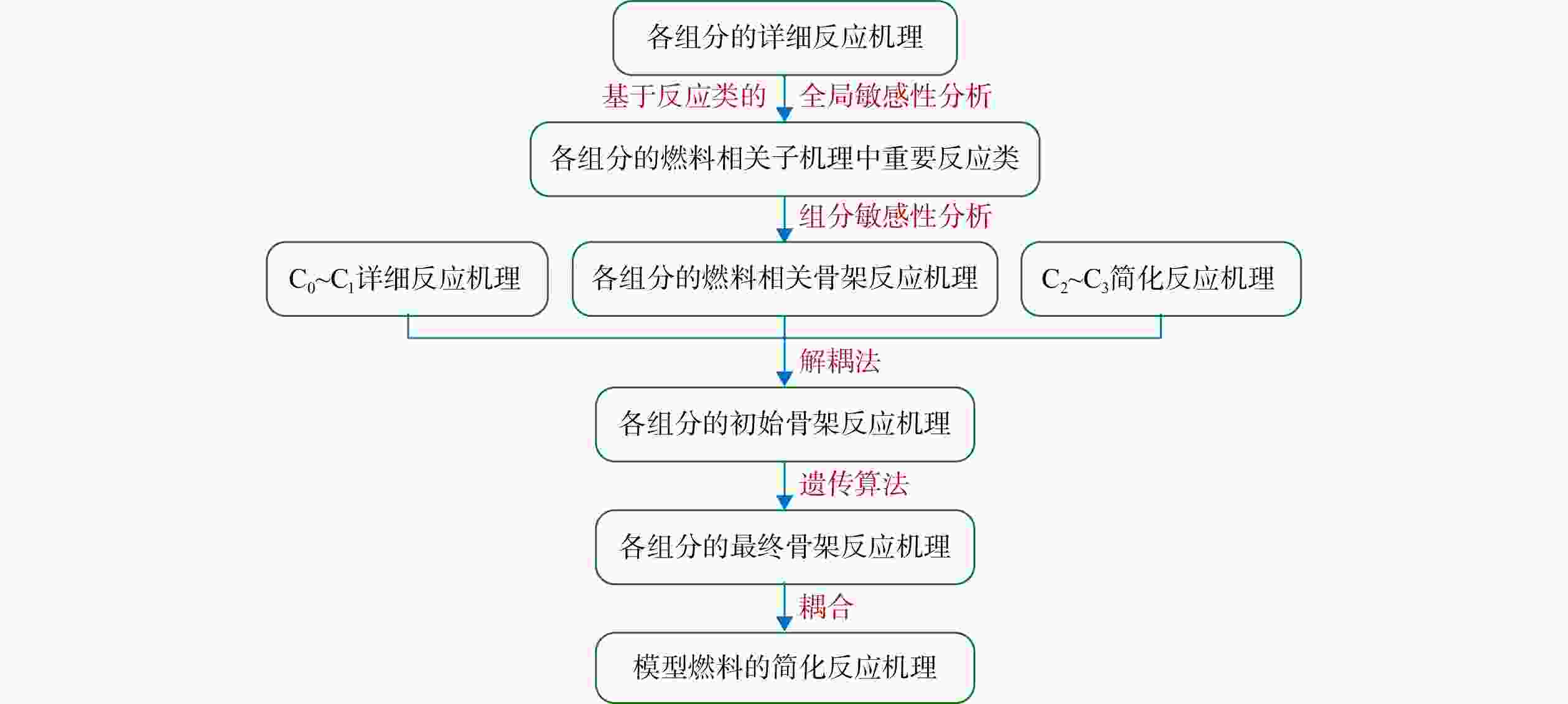
图 1 模型燃料简化反应机理的构建方法与流程
Figure 1. Construction method and flowchart of surrogate fuel reduced reaction mechanism

图 2 甲基环己烷的燃料相关子机理中反应类划分
Figure 2. Reaction class division in the fuel-specific sub-mechanism of MCH
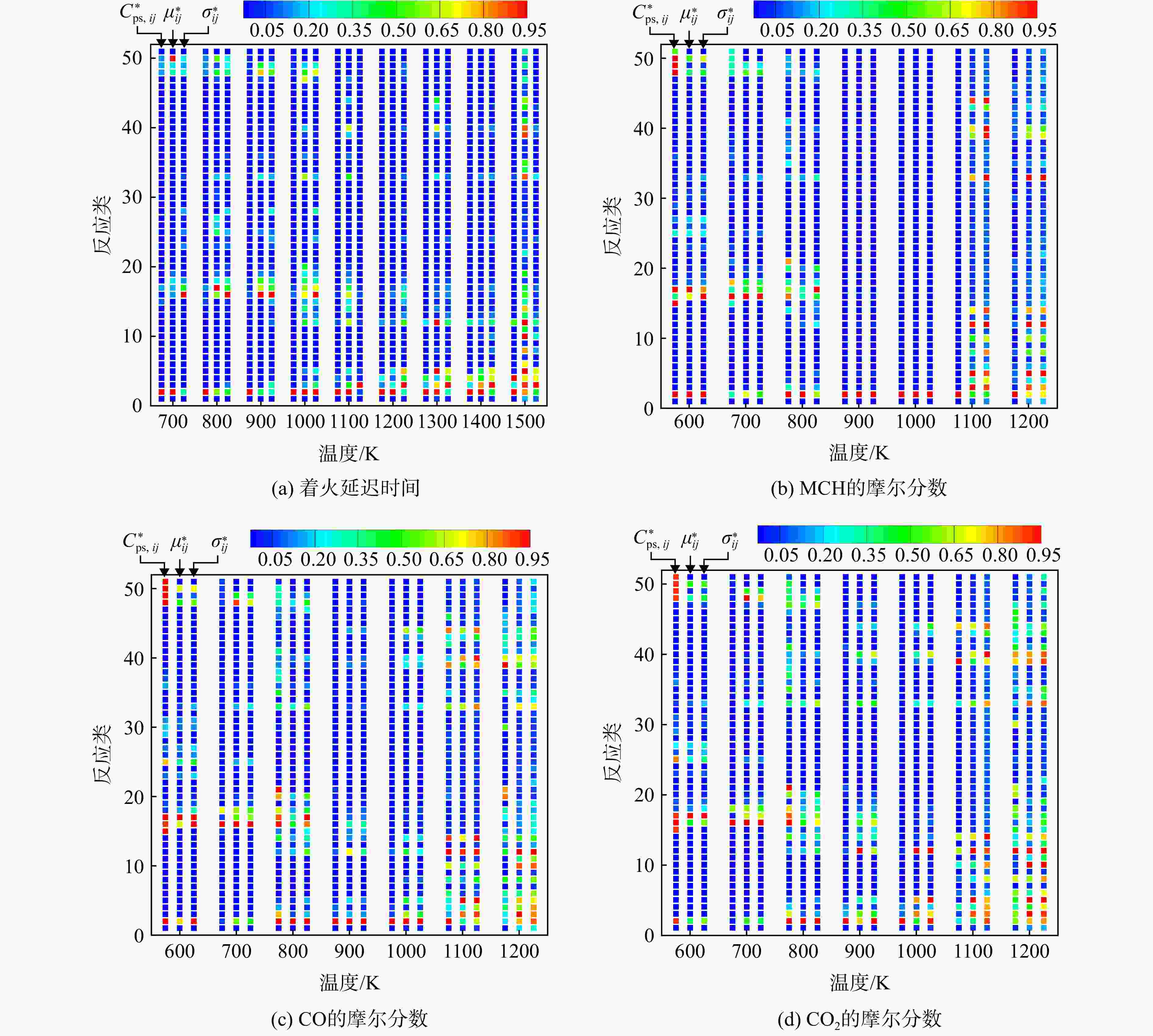
图 3 以着火延迟时间与MCH、CO、CO2的摩尔分数为简化目标时的敏感性分析结果
Figure 3. Sensitivity analysis results with ignition delay times and MCH, CO, CO2 concentrations as reduced targets
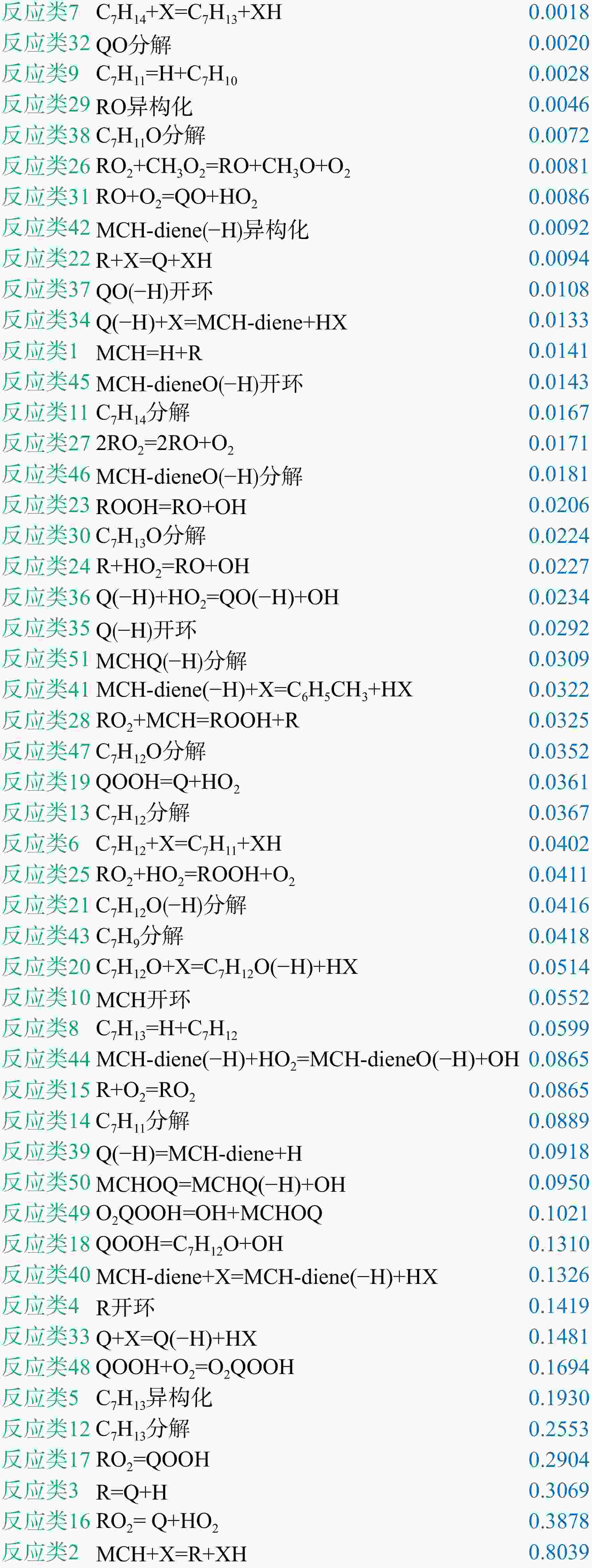
图 4 甲基环己烷的燃料相关子机理中反应类重新排序
Figure 4. Rearrangement of reaction classes in fuel-specific sub-mechanism of MCH
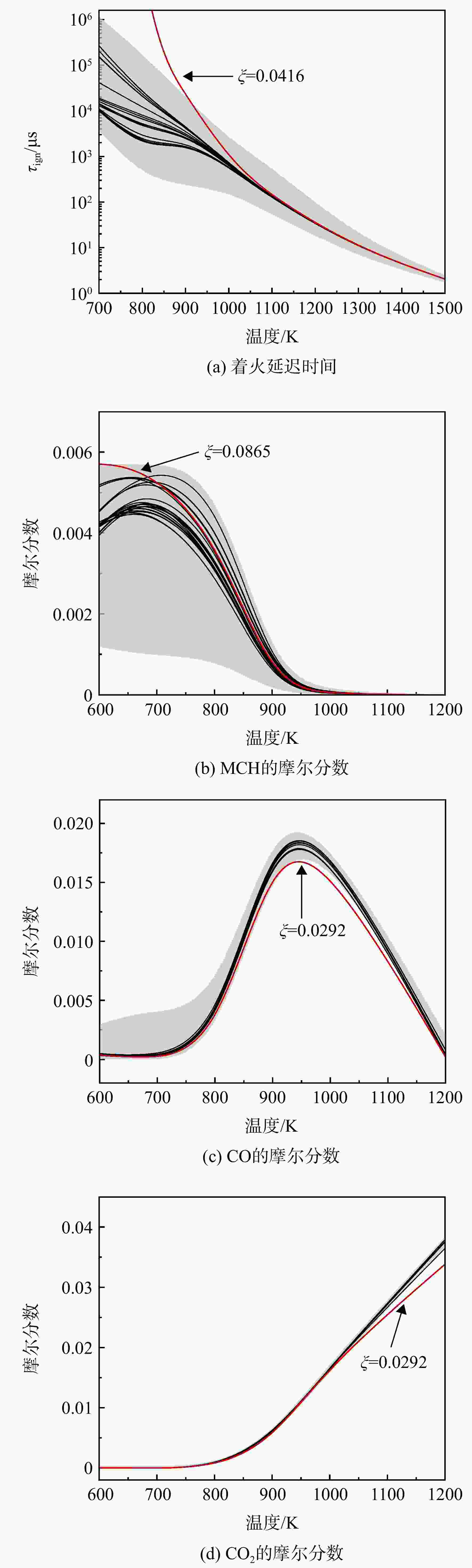
图 5 着火延迟时间与MCH、CO、CO2摩尔分数的 不确定范围
Figure 5. Uncertainty ranges of ignition delay times and MCH, CO, and CO2 concentrations
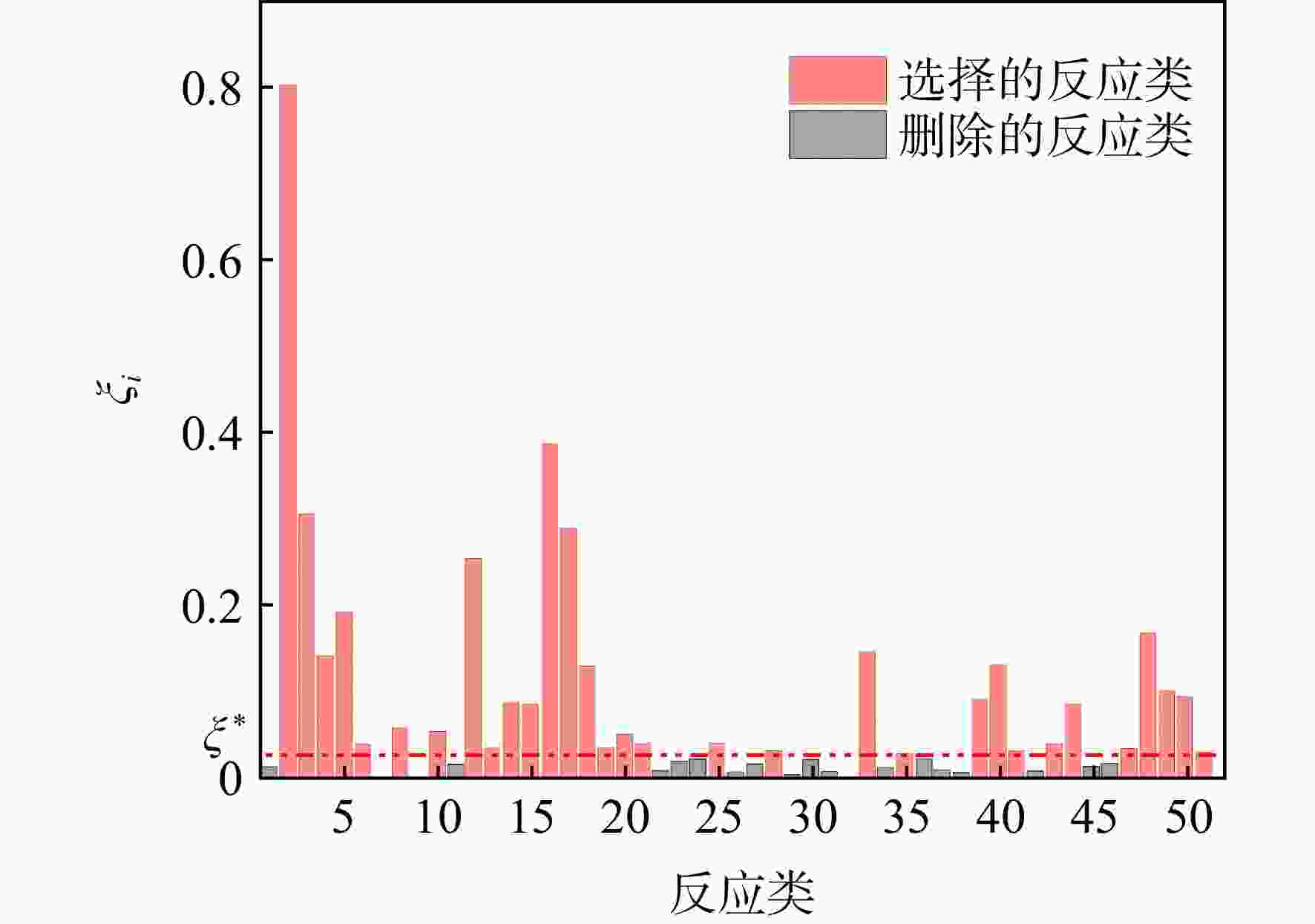
图 6 各反应类的平均敏感性系数与阈值
Figure 6. Average sensitivities coefficient of each reaction class and the threshold value

图 7 反应类2和反应类17的组分敏感性分析
Figure 7. Species sensitivity analysis of reaction class 2 and reaction class 17
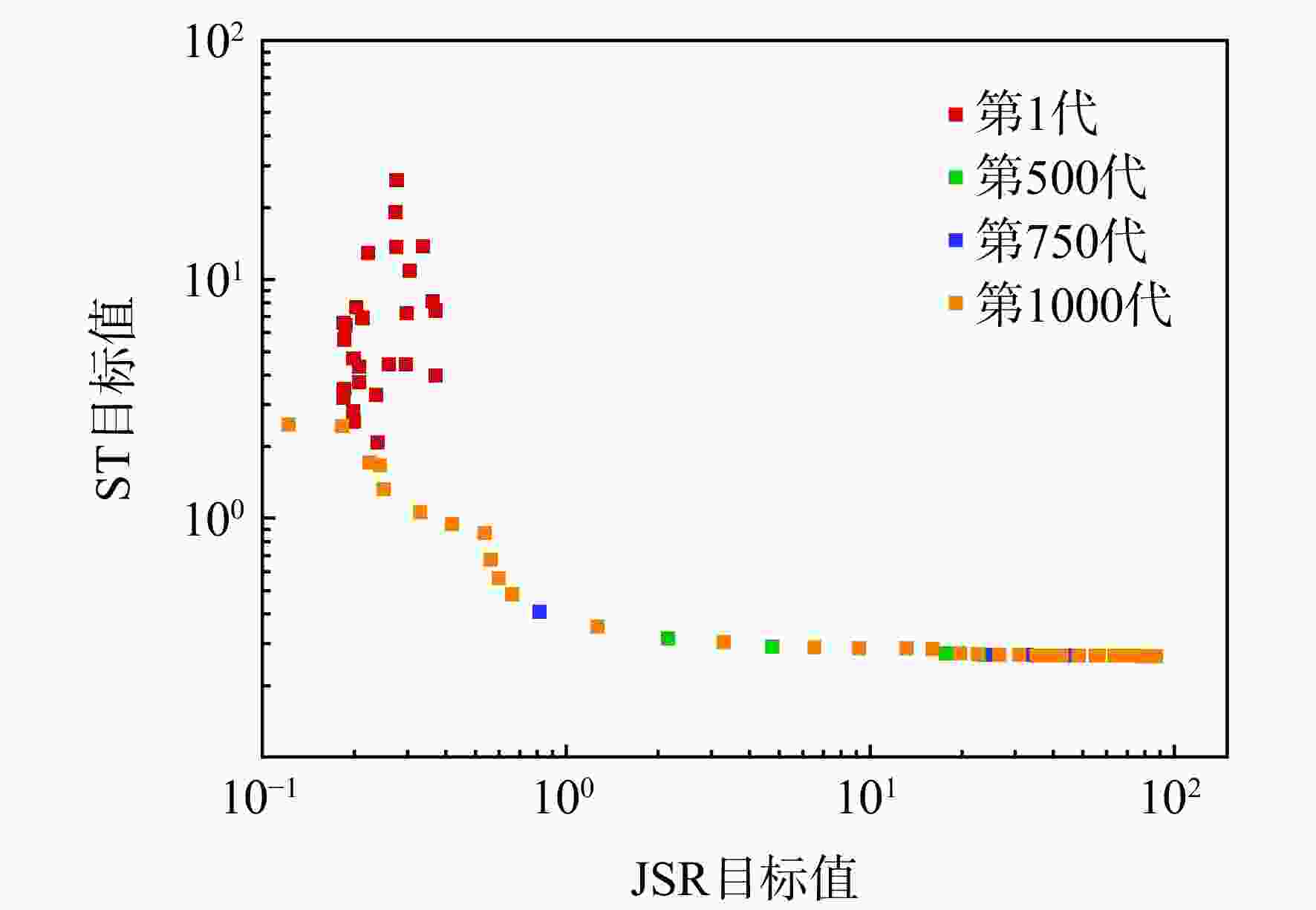
图 8 优化过程中不同代的个体对应的目标值
Figure 8. Objective values of individuals from various generations in the optimization process
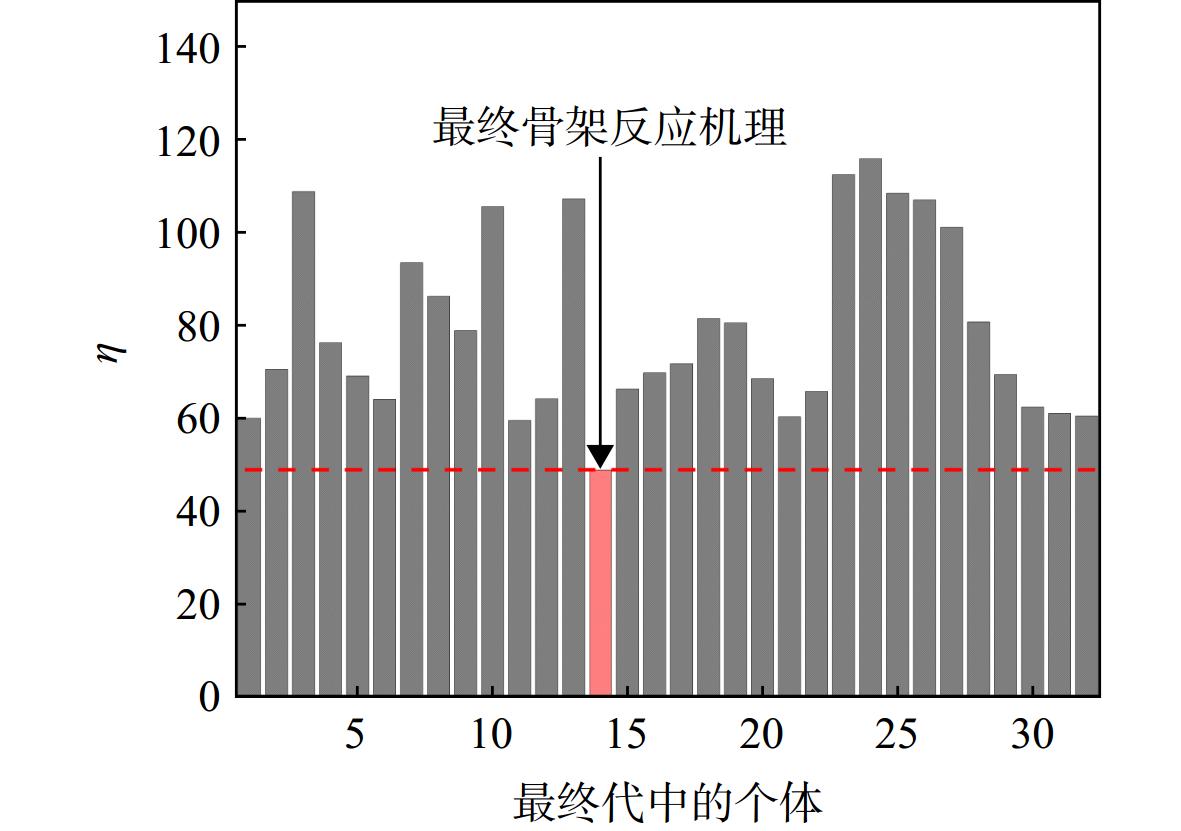
图 9 最终代所有个体的$ \eta $值
Figure 9. Distribution of $ \eta $ of all individuals in the last generation
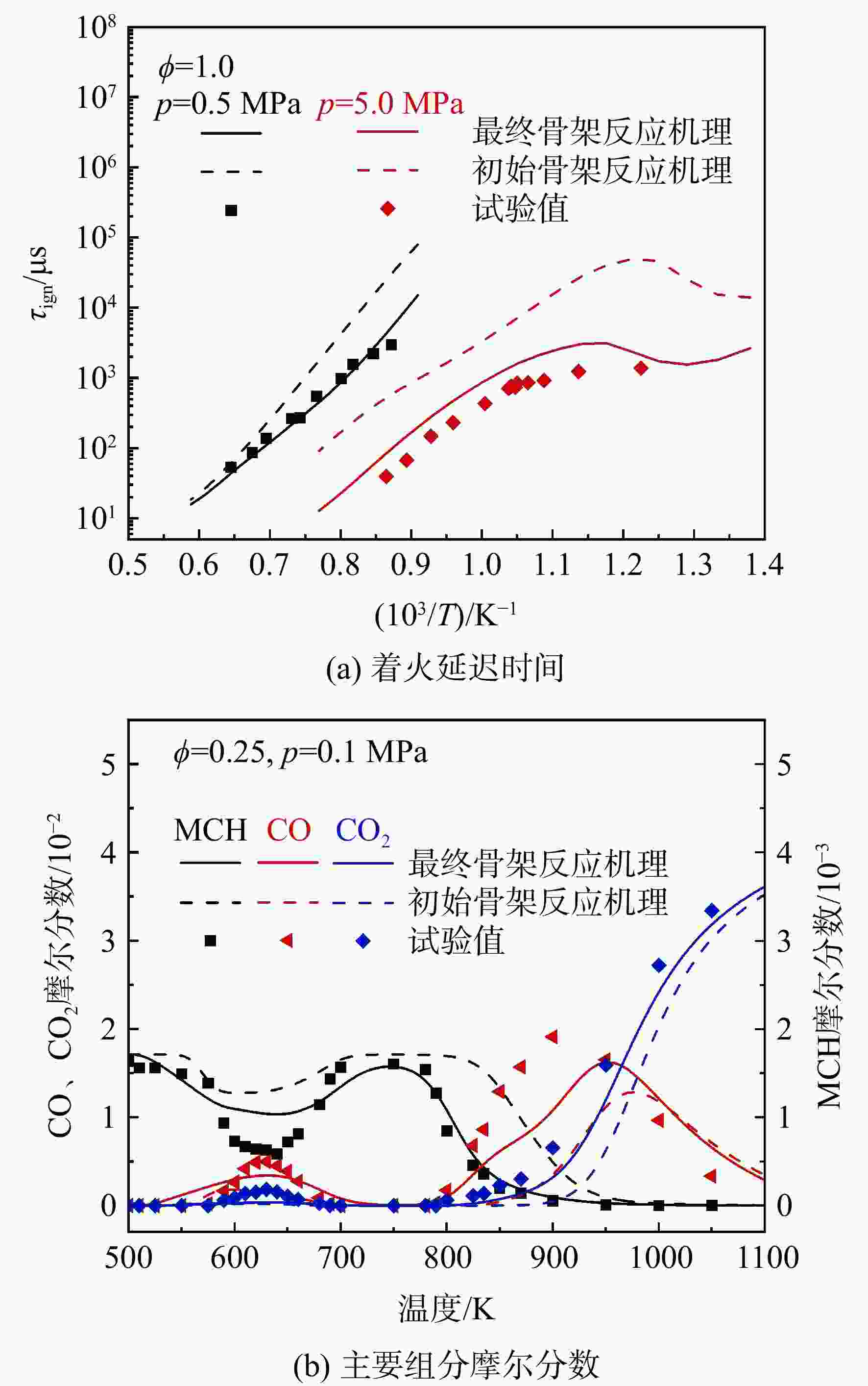
图 10 采用初始与最终的MCH骨架反应机理计算得到的着火延迟时间与各组分摩尔分数
Figure 10. Predicted ignition delay times and species concentrations by the initial and final skeleton mechanisms of MCH
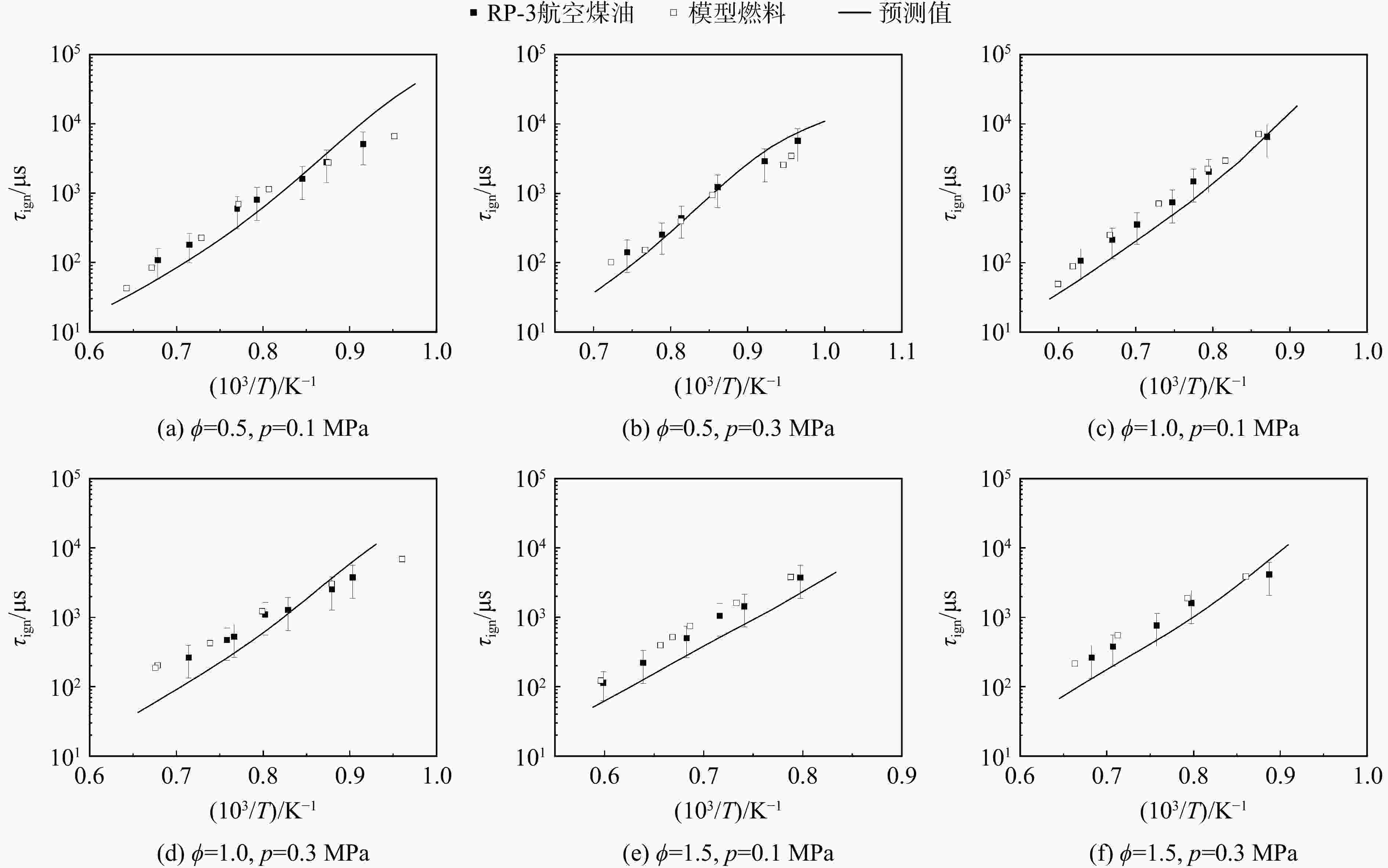
图 11 不同工况下着火延迟时间的计算值与试验值
Figure 11. Predicted and experimental ignition delay times under various conditions

图 12 不同工况下层流燃烧速度的计算值与试验值
Figure 12. Predicted and experimental laminar flame speeds under various conditions
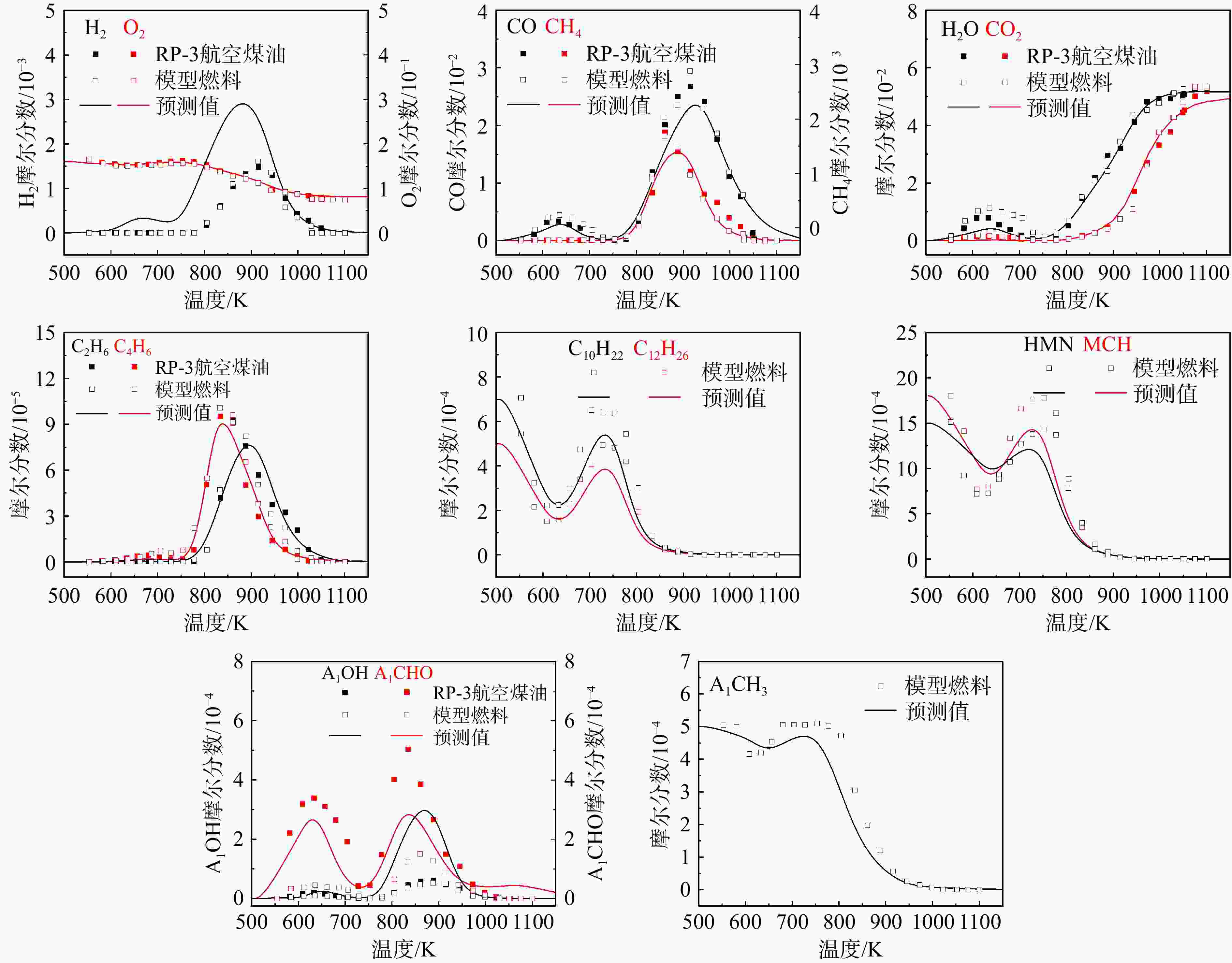
图 13 主要组分摩尔分数的计算值与试验值(ϕ=0.5)
Figure 13. Simulated and experimental main species concentrations (ϕ=0.5)
-
[1] MASIOL M,HARRISON R M. Aircraft engine exhaust emissions and other airport-related contributions to ambient air pollution: a review[J]. Atmospheric Environment,2014,95: 409-455. doi: 10.1016/j.atmosenv.2014.05.070 [2] MENSCH A,SANTORO R J,LITZINGER T A,et al. Sooting characteristics of surrogates for jet fuels[J]. Combustion and Flame,2010,157(6): 1097-1105. doi: 10.1016/j.combustflame.2010.02.008 [3] KIM D,MARTZ J,VIOLI A. A surrogate for emulating the physical and chemical properties of conventional jet fuel[J]. Combustion and Flame,2014,161(6): 1489-1498. doi: 10.1016/j.combustflame.2013.12.015 [4] SAMIMI ABIANEH O,CHEN C P,MAHALINGAM S. Numerical modeling of multi-component fuel spray evaporation process[J]. International Journal of Heat and Mass Transfer,2014,69: 44-53. doi: 10.1016/j.ijheatmasstransfer.2013.10.007 [5] NARAYANASWAMY K,PITSCH H,PEPIOT P. A component library framework for deriving kinetic mechanisms for multi-component fuel surrogates: application for jet fuel surrogates[J]. Combustion and Flame,2016,165: 288-309. doi: 10.1016/j.combustflame.2015.12.013 [6] ALEKSEEV V A,SOLOVIOVA-SOKOLOVA J V,MATVEEV S S,et al. Laminar burning velocities of n-decane and binary kerosene surrogate mixture[J]. Fuel,2017,187: 429-434. doi: 10.1016/j.fuel.2016.09.085 [7] MAO Yebing,YU Liang,WU Zhiyong,et al. Experimental and kinetic modeling study of ignition characteristics of RP-3 kerosene over low-to-high temperature ranges in a heated rapid compression machine and a heated shock tube[J]. Combustion and Flame,2019,203: 157-169. doi: 10.1016/j.combustflame.2019.02.015 [8] XU Jiaqi,GUO Junjiang,LIU Aike,et al. Construction of autoignition mechanisms for the combustion of RP-3 surrogate fuel and kinetics simulation[J]. Acta Physico-Chimica Sinica,2015,31(4): 643-652. doi: 10.3866/PKU.WHXB201503022 [9] ZHENG Dong,YU Weiming,ZHONG Beijing. RP-3 aviation kerosene surrogate fuel and the chemical reaction kinetic model[J]. Acta Physico-Chimica Sinica,2015,31(4): 636-642. doi: 10.3866/PKU.WHXB201501231 [10] LIU Jing,HU Erjiang,ZENG Wen,et al. A new surrogate fuel for emulating the physical and chemical properties of RP-3 kerosene[J]. Fuel,2020,259: 116210. doi: 10.1016/j.fuel.2019.116210 [11] LIU Jing,HU Erjiang,YIN Geyuan,et al. An experimental and kinetic modeling study on the low-temperature oxidation,ignition delay time,and laminar flame speed of a surrogate fuel for RP-3 kerosene[J]. Combustion and Flame,2022,237: 111821. doi: 10.1016/j.combustflame.2021.111821 [12] SARATHY S M,WESTBROOK C K,MEHL M,et al. Comprehensive chemical kinetic modeling of the oxidation of 2-methylalkanes from C7 to C20[J]. Combustion and Flame,2011,158(12): 2338-2357. doi: 10.1016/j.combustflame.2011.05.007 [13] OEHLSCHLAEGER M A,STEINBERG J,WESTBROOK C K,et al. The autoignition of iso-cetane at high to moderate temperatures and elevated pressures: shock tube experiments and kinetic modeling[J]. Combustion and Flame,2009,156(11): 2165-2172. doi: 10.1016/j.combustflame.2009.05.007 [14] WEBER B W,PITZ W J,MEHL M,et al. Experiments and modeling of the autoignition of methylcyclohexane at high pressure[J]. Combustion and Flame,2014,161(8): 1972-1983. doi: 10.1016/j.combustflame.2014.01.018 [15] METCALFE W K,DOOLEY S,DRYER F L. Comprehensive detailed chemical kinetic modeling study of toluene oxidation[J]. Energy & Fuels,2011,25(11): 4915-4936. [16] CHANG Yachao,JIA Ming,NIU Bo,et al. Reduction of large-scale chemical mechanisms using global sensitivity analysis on reaction class/sub-mechanism[J]. Combustion and Flame,2020,212: 355-366. doi: 10.1016/j.combustflame.2019.11.019 [17] NIEMEYER K E,SUNG C J,RAJU M P. Skeletal mechanism generation for surrogate fuels using directed relation graph with error propagation and sensitivity analysis[J]. Combustion and Flame,2010,157(9): 1760-1770. doi: 10.1016/j.combustflame.2009.12.022 [18] CHANG Yachao,JIA Ming,LIU Yaodong,et al. Development of a new skeletal mechanism for n-decane oxidation under engine-relevant conditions based on a decoupling methodology[J]. Combustion and Flame,2013,160(8): 1315-1332. doi: 10.1016/j.combustflame.2013.02.017 [19] NIU Bo,JIA Ming,XU Guangfu,et al. Efficient approach for the optimization of skeletal chemical mechanisms with multiobjective genetic algorithm[J]. Energy & Fuels,2018,32(6): 7086-7102. [20] CURRAN H J,GAFFURI P,PITZ W J,et al. A comprehensive modeling study of n-heptane oxidation[J]. Combustion and Flame,1998,114(1/2): 149-177. [21] MORRIS M D. Factorial sampling plans for preliminary computational experiments[J]. Technometrics,1991,33(2): 161-174. doi: 10.1080/00401706.1991.10484804 [22] WANG Pengzhi,CHANG Yachao,NIU Bo,et al. Influence of the functional group of fuels on the construction of skeletal chemical mechanisms: a case study of 1-hexane,1-hexene,and 1-hexanol[J]. Combustion and Flame,2020,221: 120-135. doi: 10.1016/j.combustflame.2020.07.034 [23] HANTOUCHE M,SARATHY S M,KNIO O M. Global sensitivity analysis of n-butanol reaction kinetics using rate rules[J]. Combustion and Flame,2018,196: 452-465. doi: 10.1016/j.combustflame.2018.06.035 [24] CHANG Yachao,JIA Ming,NIU Bo,et al. Construction of a skeletal oxidation mechanism of n-pentanol by integrating decoupling methodology,genetic algorithm,and uncertainty quantification[J]. Combustion and Flame,2018,194: 15-27. doi: 10.1016/j.combustflame.2018.04.012 [25] HELTON J C,JOHNSON J D,SALLABERRY C J,et al. Survey of sampling-based methods for uncertainty and sensitivity analysis[J]. Reliability Engineering & System Safety,2006,91(10/11): 1175-1209. [26] TIAN Zemin,ZHANG Yingjia,YANG Feiyu,et al. Comparative study on autoignition characteristics of methylcyclohexane and cyclohexane[J]. Energy & Fuels,2015,29(4): 2685-2695. [27] VANDEROVER J,OEHLSCHLAEGER M A. Ignition time measurements for methylcylcohexane- and ethylcyclohexane-air mixtures at elevated pressures[J]. International Journal of Chemical Kinetics,2009,41(2): 82-91. doi: 10.1002/kin.20370 [28] BISSOONAUTH T,WANG Zhandong,MOHAMED S Y,et al. Methylcyclohexane pyrolysis and oxidation in a jet-stirred reactor[J]. Proceedings of the Combustion Institute,2019,37(1): 409-417. doi: 10.1016/j.proci.2018.05.086 -

 下载:
下载:


 点击查看大图

计量
- 文章访问数: 1314
- HTML浏览量: 438
- PDF量: 173
- 被引次数: 0