






Research on the flow characteristics and regulation techniques of ducted fan lip in crosswind conditions
-
摘要:
以涵道风扇为动力的飞行器在低速领域中优秀的效率、安全以及噪声特性使其得到重视,如何减小横风条件下唇口的推力损失与进气畸变有待进一步探索。本文采用减小逆压梯度的优化方法对唇口几何进行了优化设计,研究了原始唇口与优化唇口在横风条件下的气动特性及流动规律。为进一步提高唇口的抗横风能力,在优化几何的基础上提出了双唇口结构,并对双唇口结构的流动控制机理进行了分析。结果表明:减小逆压梯度的优化方法可以使唇口在0~0.07的前进比范围内,无量纲推力与总压畸变系数的变化量在3%以内;双唇口结构可以进一步将唇口无量纲推力降低的前进比由0.07提高到0.44;当前进比由0增加到0.55时,采用双唇口结构可以使涵道风扇的总推力降低量由18.5%减小到6.6%。
Abstract:Ducted fan powered aircrafts are valued for their excellent efficiency, safety and noise characteristics in the low-speed field. How to reduce the thrust loss and intake distortion at the lip in crosswind conditions needs to be further explored. In this paper, an optimization method for reducing the adverse pressure gradient was used to optimize the lip geometry. The aerodynamic characteristics and flow laws of the original and optimized lips under crosswind conditions were investigated. In order to further improve the ability of the lip to resist crosswind, a double-lip structure was proposed based on the optimized geometry, and the flow control mechanism of the double-lip structure was analyzed. The results showed that the optimization method of reducing the adverse pressure gradient allowed the lip to vary within 3% of the dimensionless thrust and total pressure distortion coefficient over the advance ratio range of 0 to 0.07. The double-lip configuration allowed a further increase in the advance ratio reduced by the lip dimensionless thrust from 0.07 to 0.44. The total thrust reduction of the ducted fan can be reduced from 18.5% to 6.6% by using the double-mouth structure when the advance ratio increased from 0 to 0.55.
-
Key words:
- lip /
- ducted fan /
- crosswind /
- double-lip structure /
- flow control
-
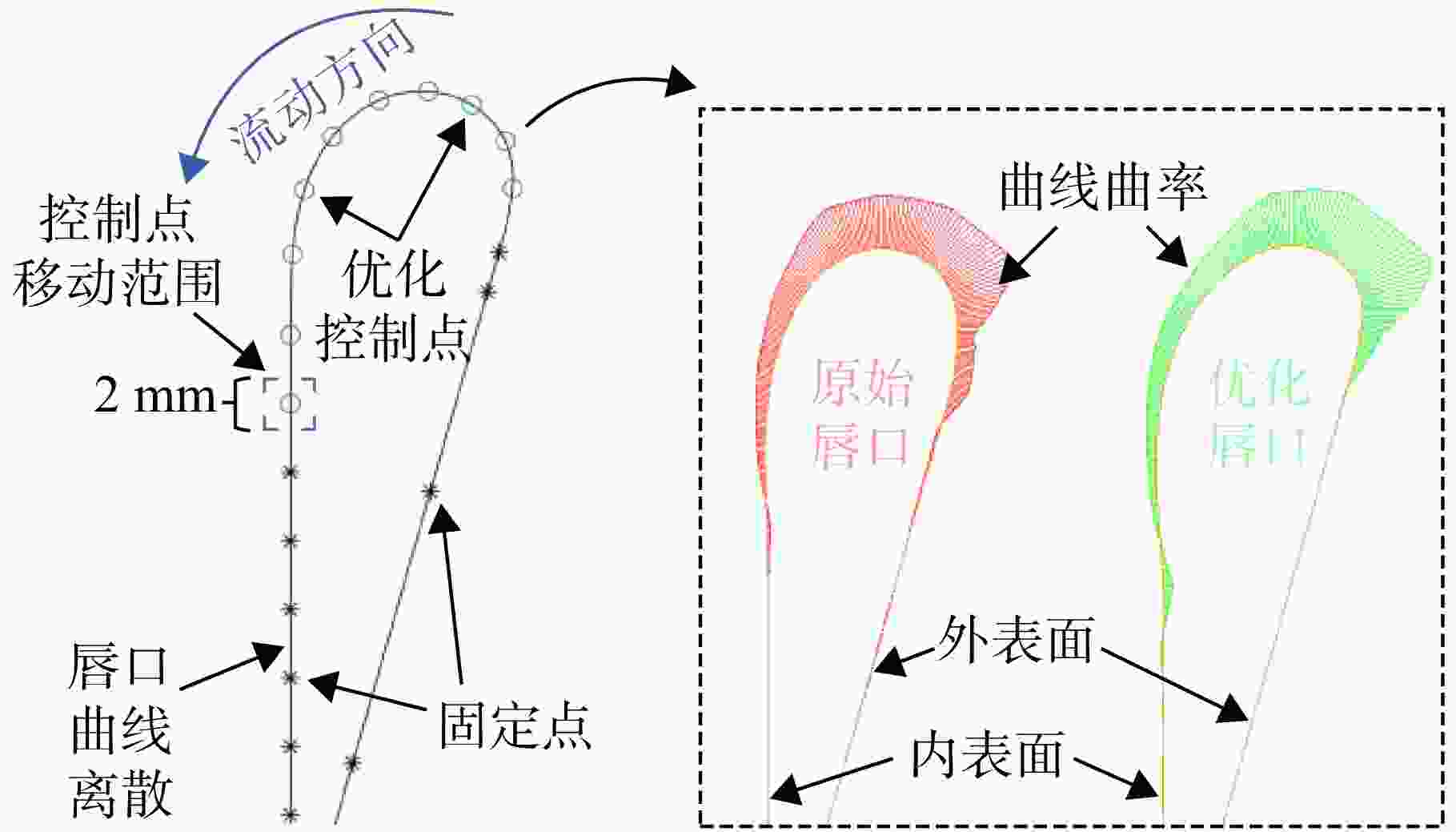
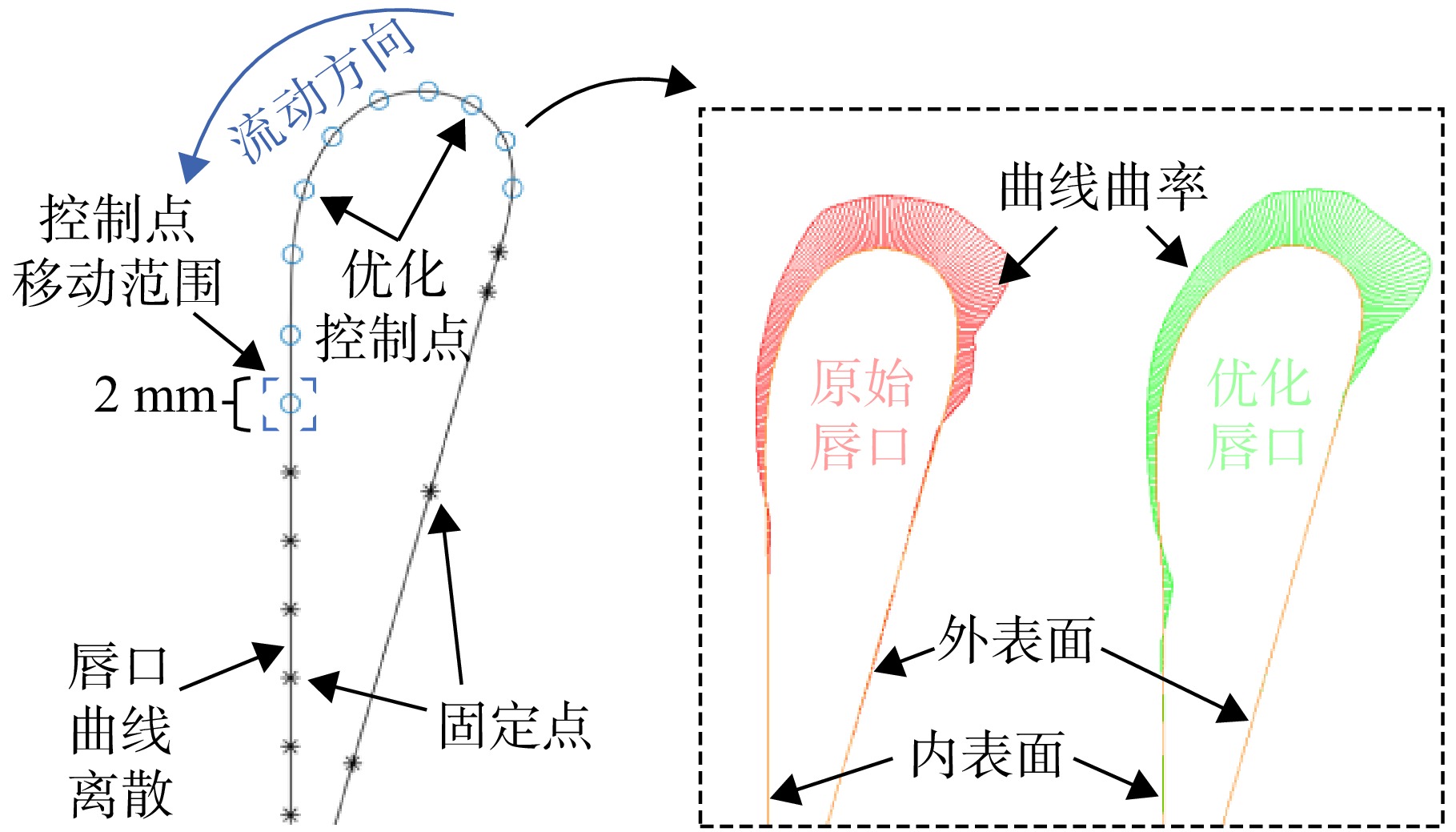
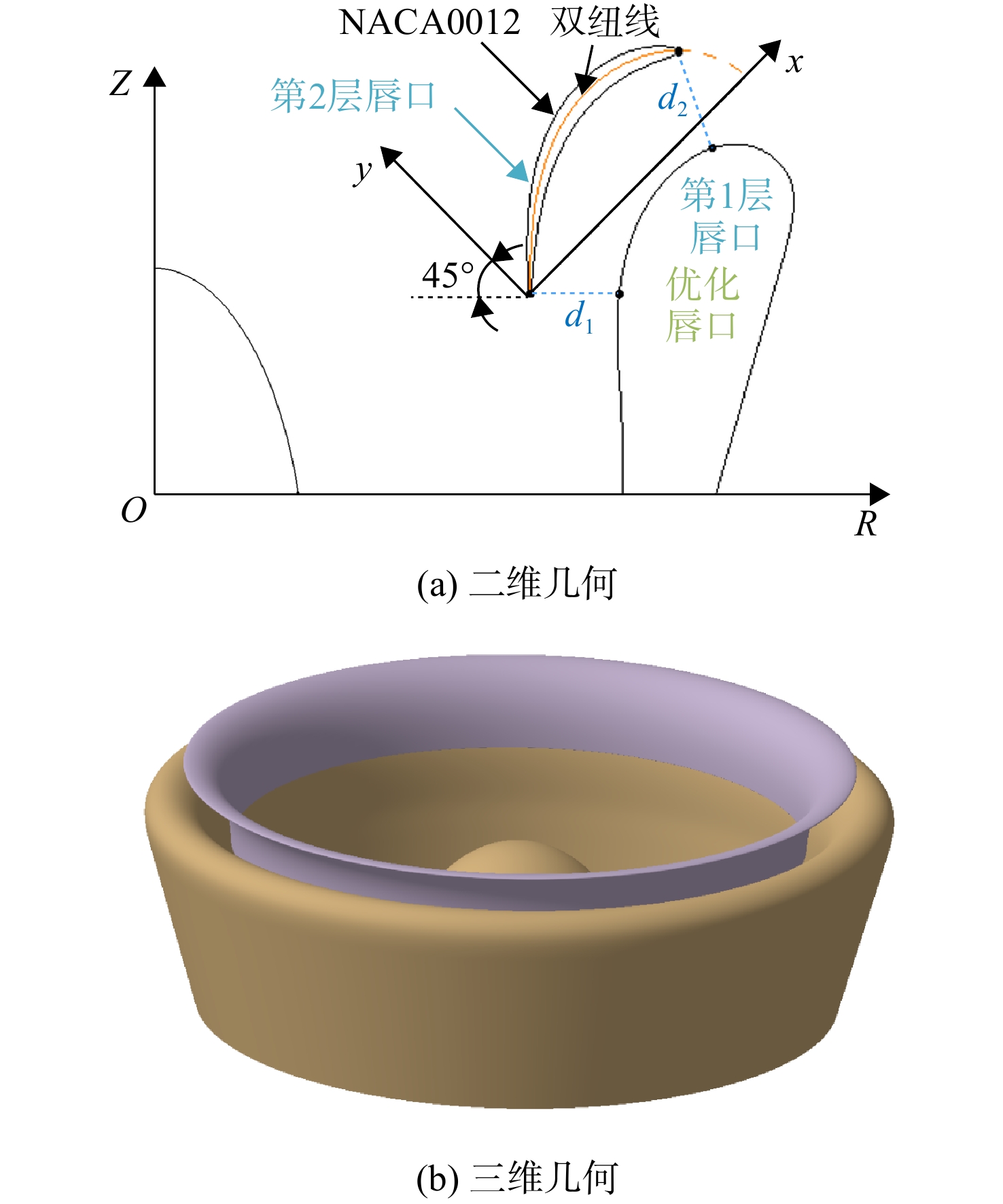
图 5 唇口几何参数化及优化后的曲率分布
Figure 5. Geometric parameterization of lip and curvature distribution after optimization
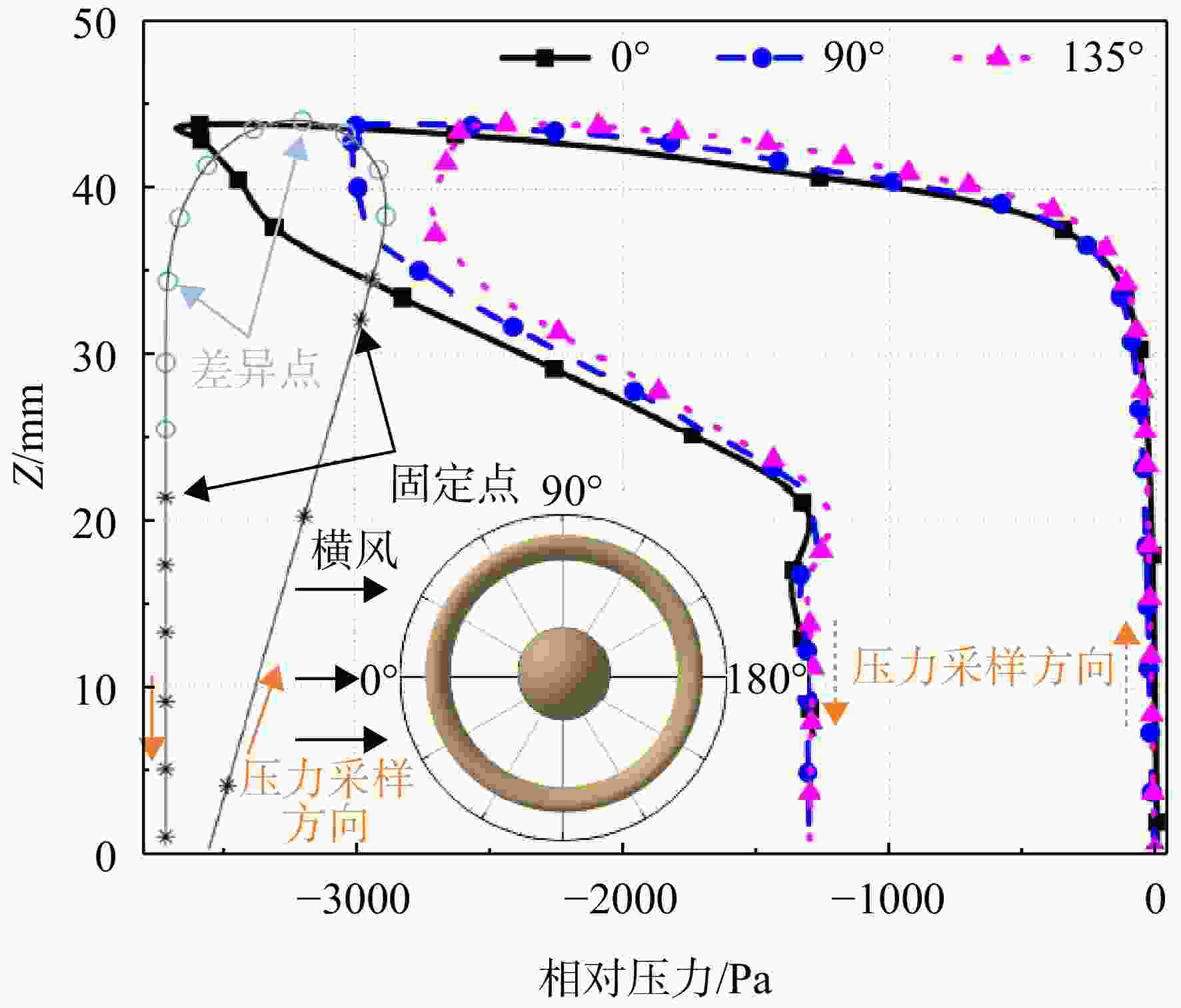
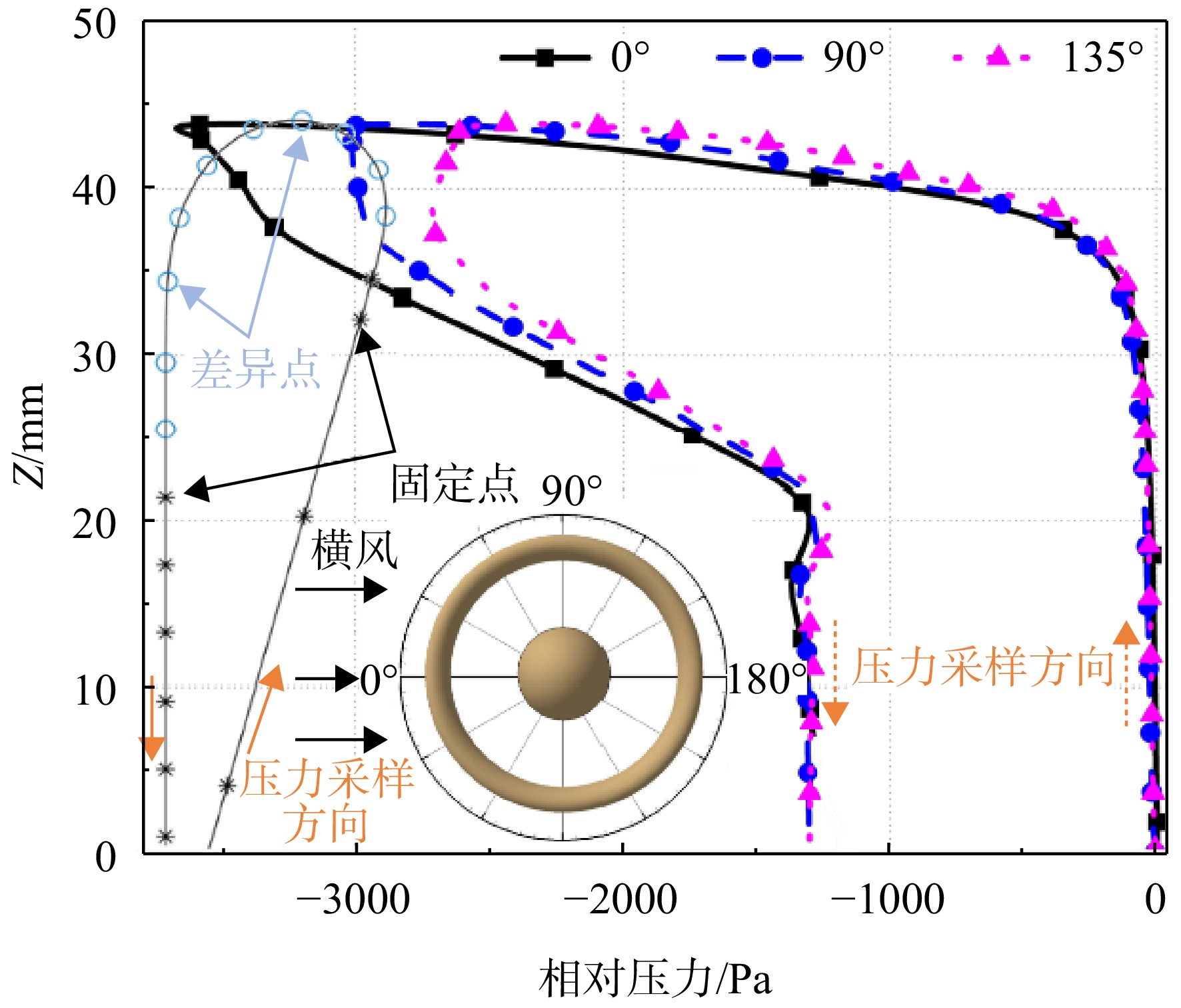
图 7 唇口表面相对压力分布沿周向分布
Figure 7. Relative pressure distribution on lip surface is distributed along the circumference

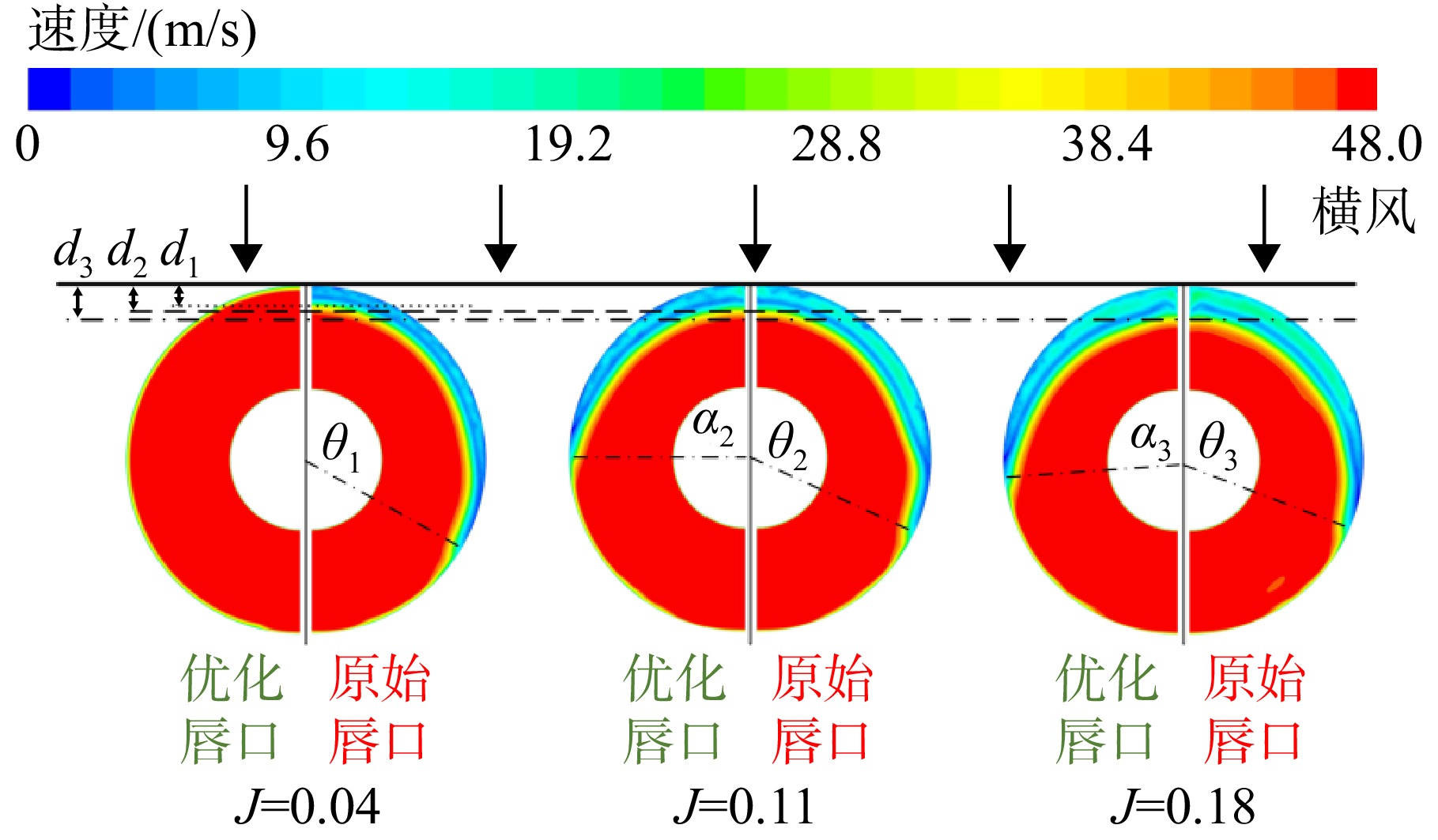
图 10 唇口出口截面速度分布云图
Figure 10. Velocity distribution cloud diagram of lip outlet section
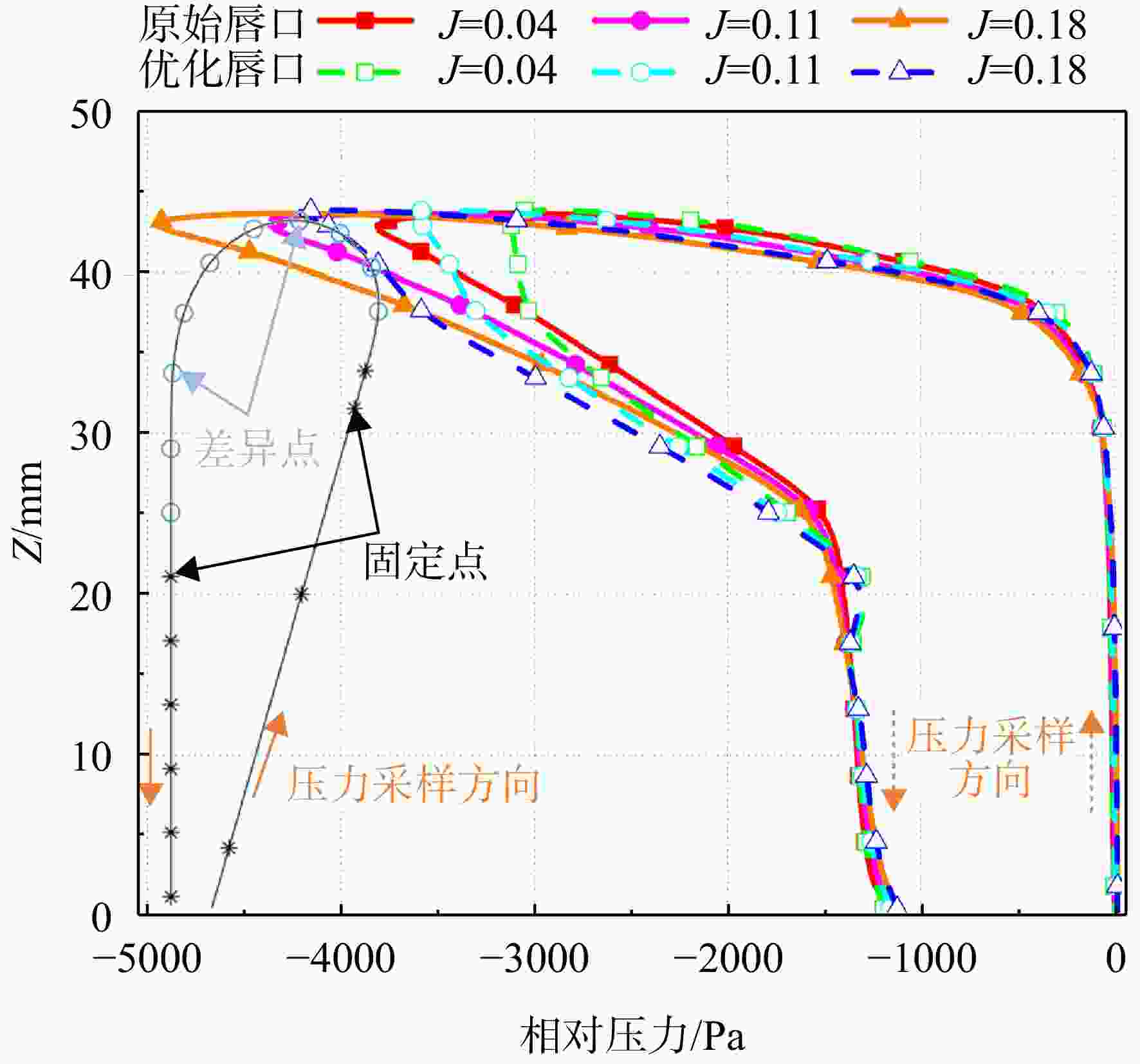
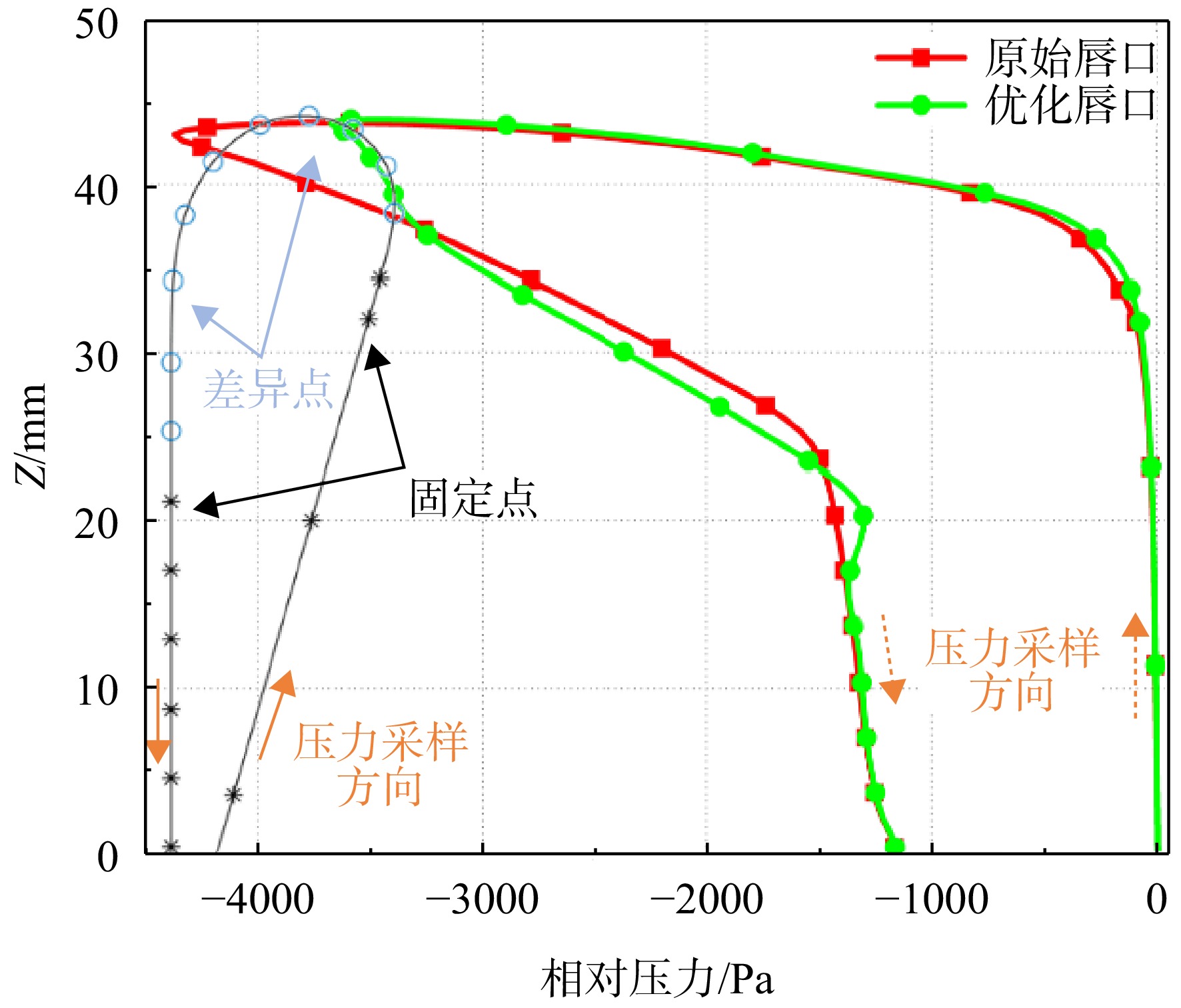
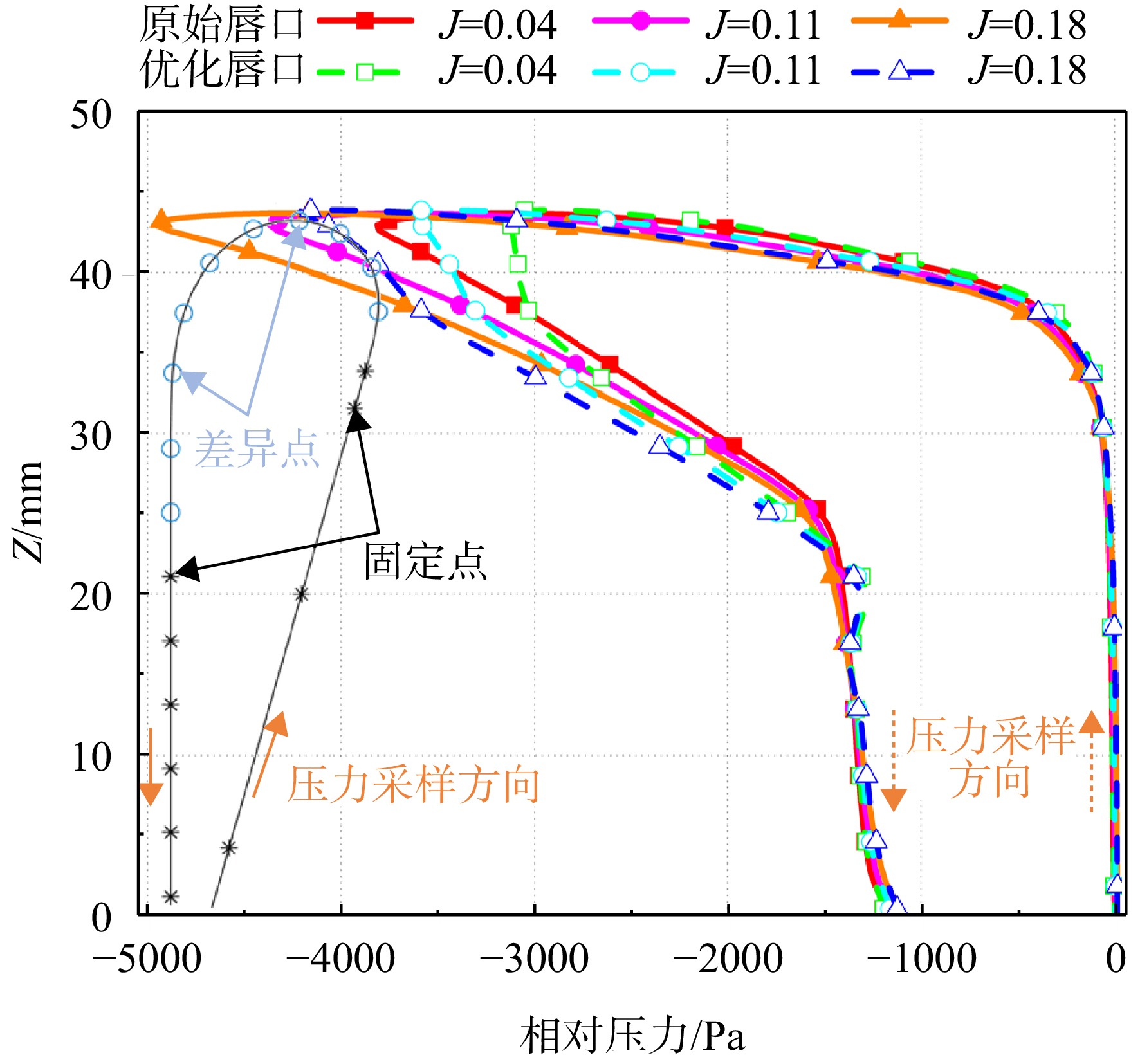
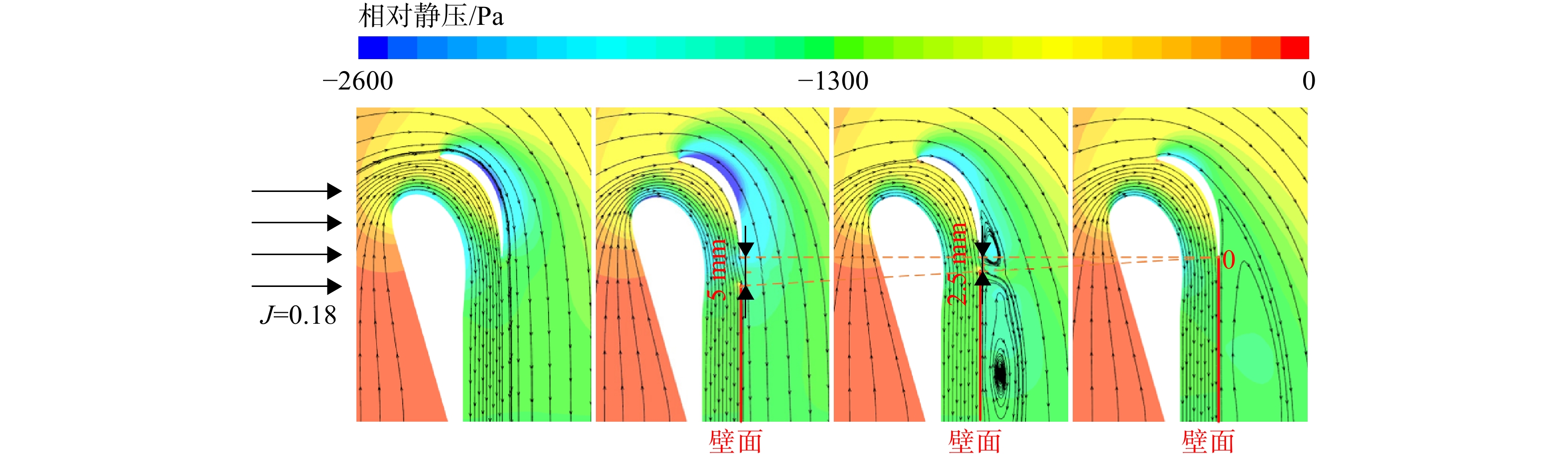
图 12 唇口表面压力分布随前进比变化
Figure 12. Pressure distribution on lip surface varies with advance ratio

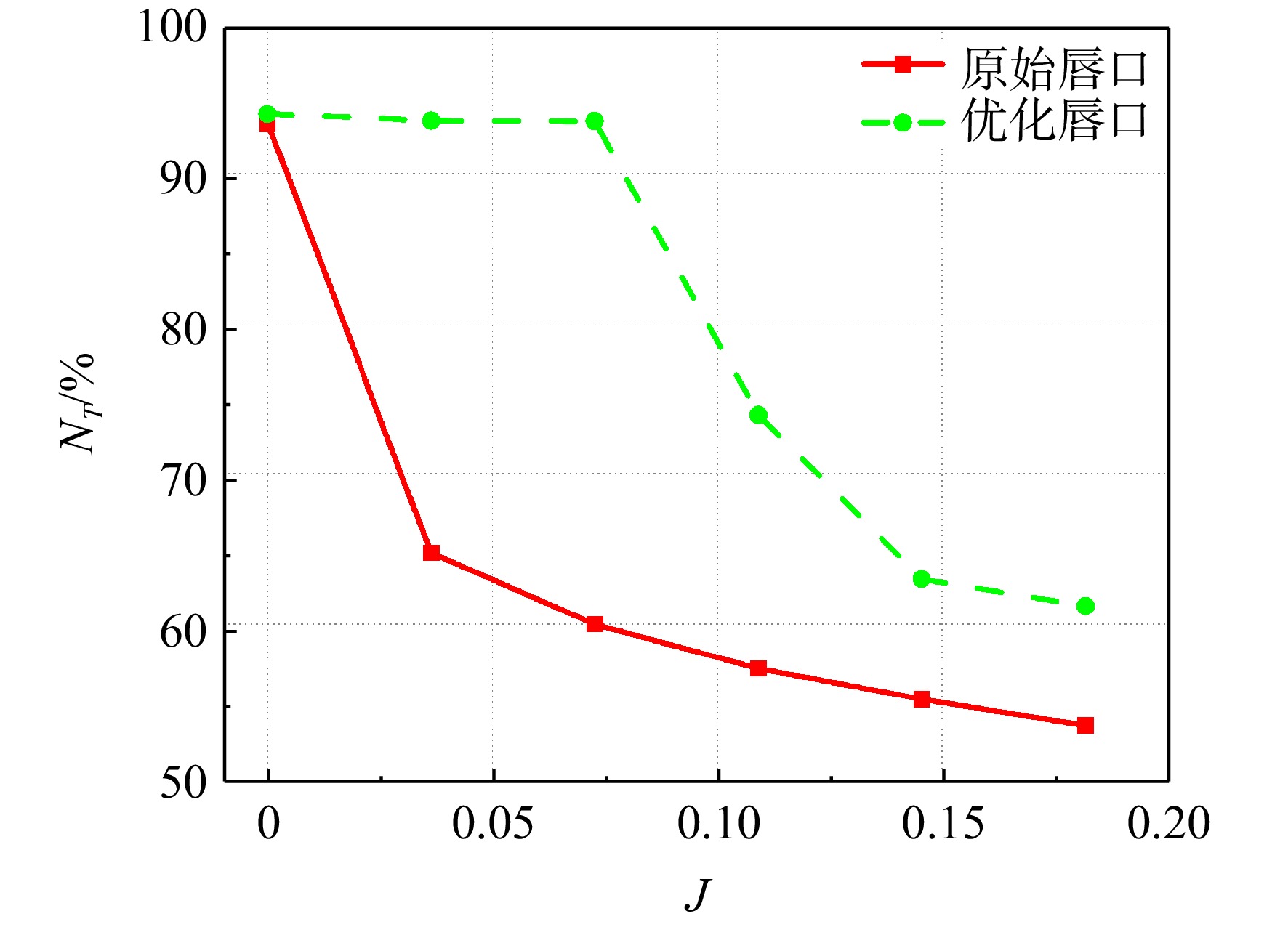
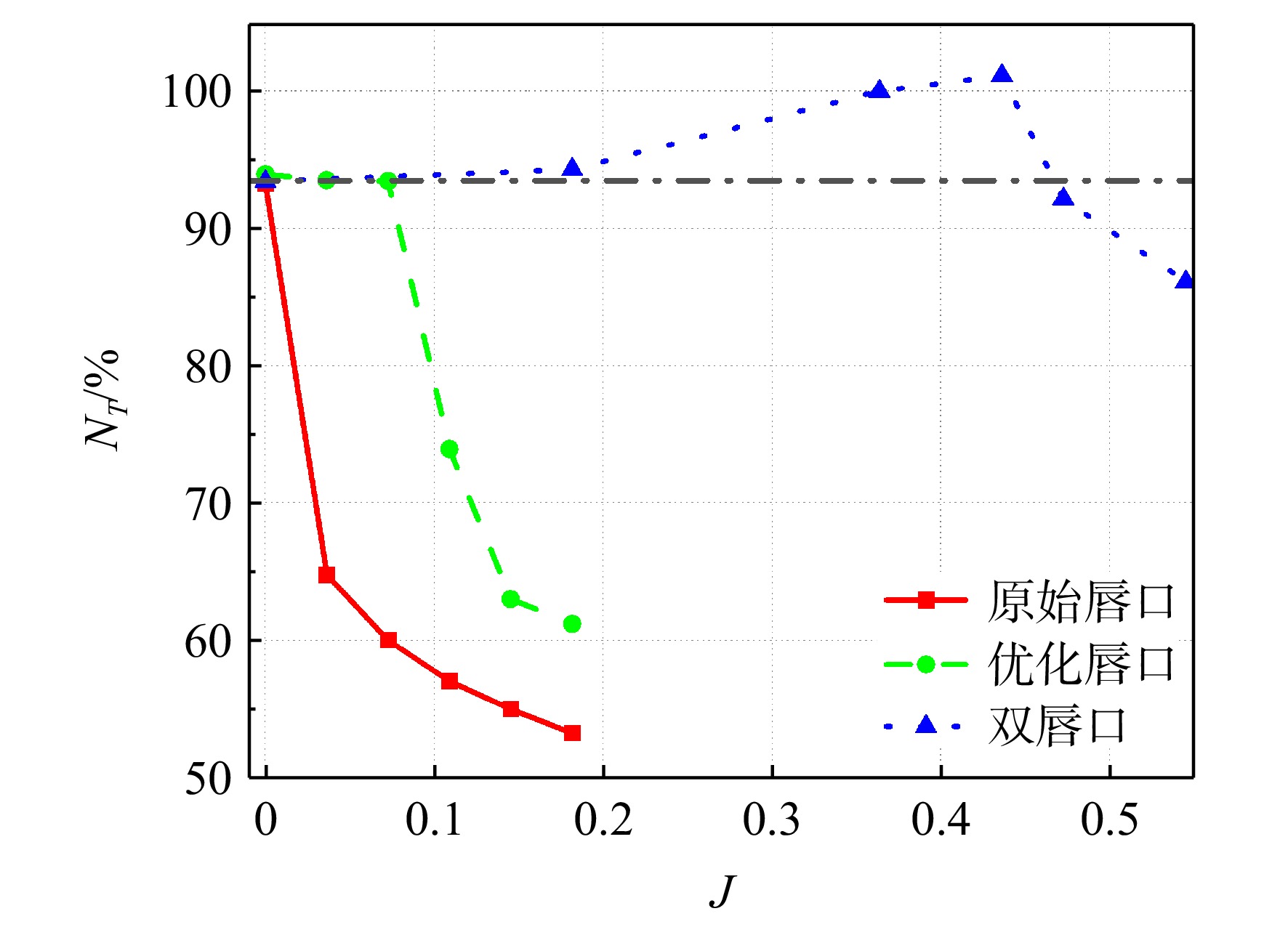
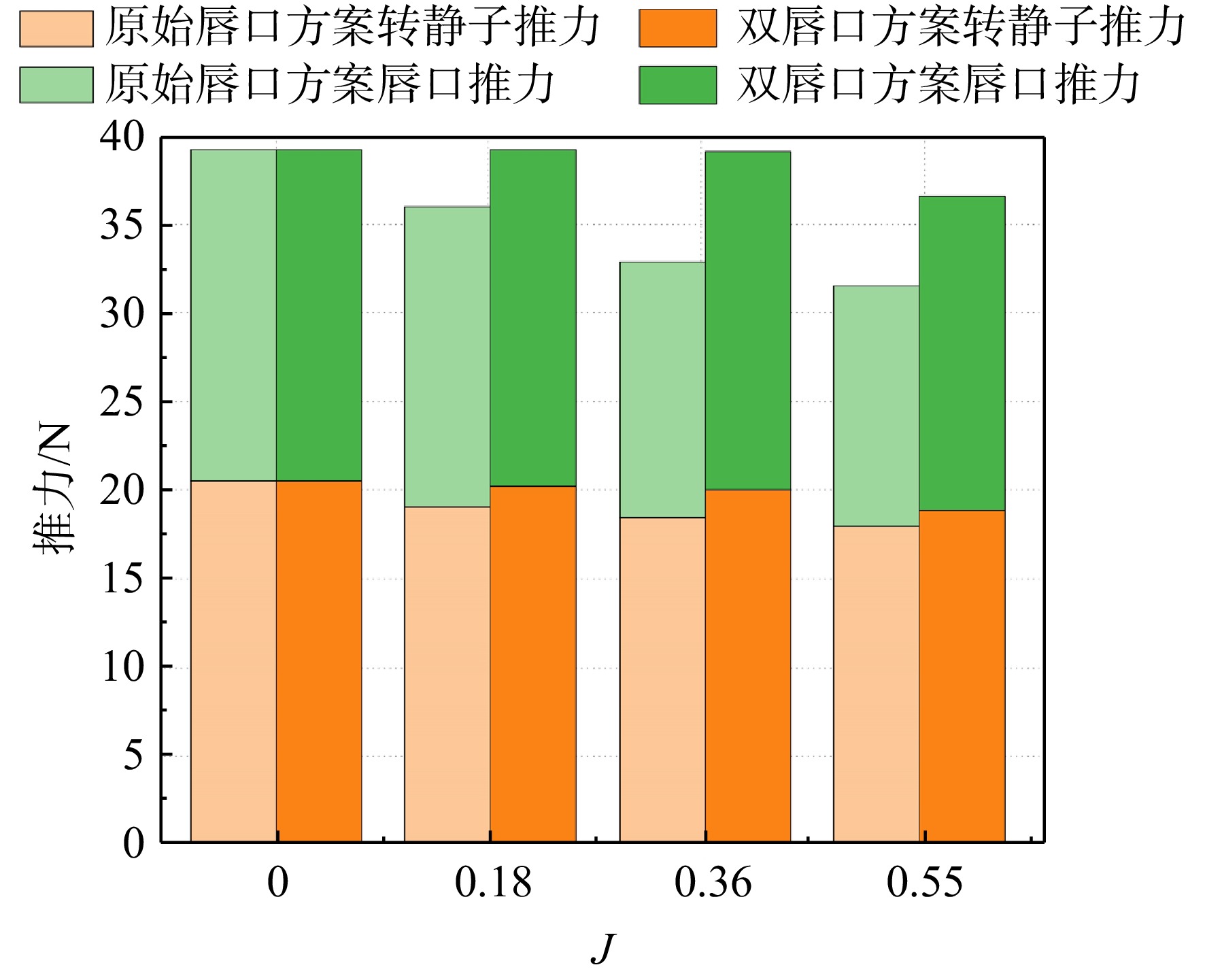
图 14 3种唇口的无量纲推力随前进比变化规律
Figure 14. Non-dimension thrust of three kinds of lips varies with advance ratio
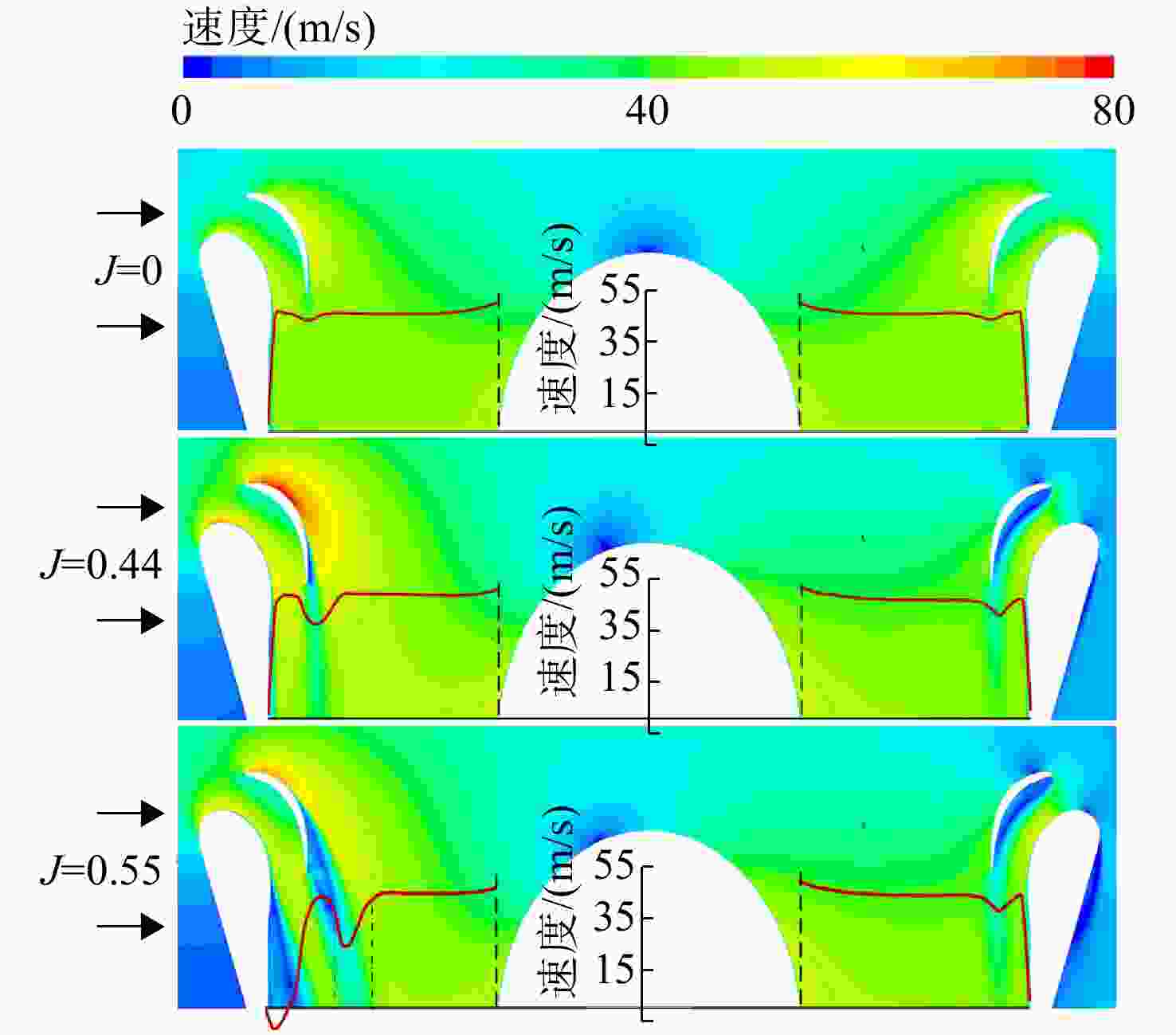
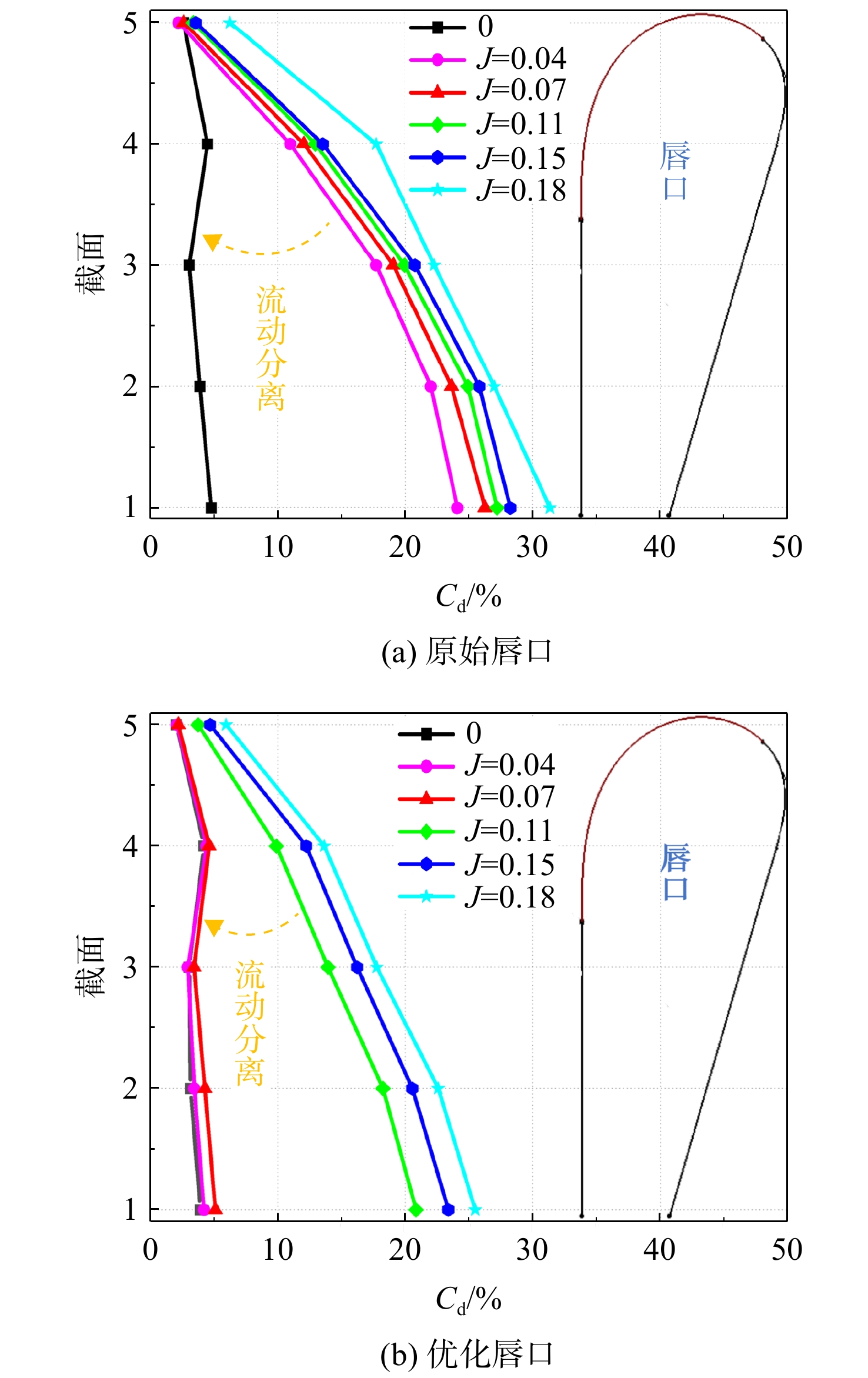
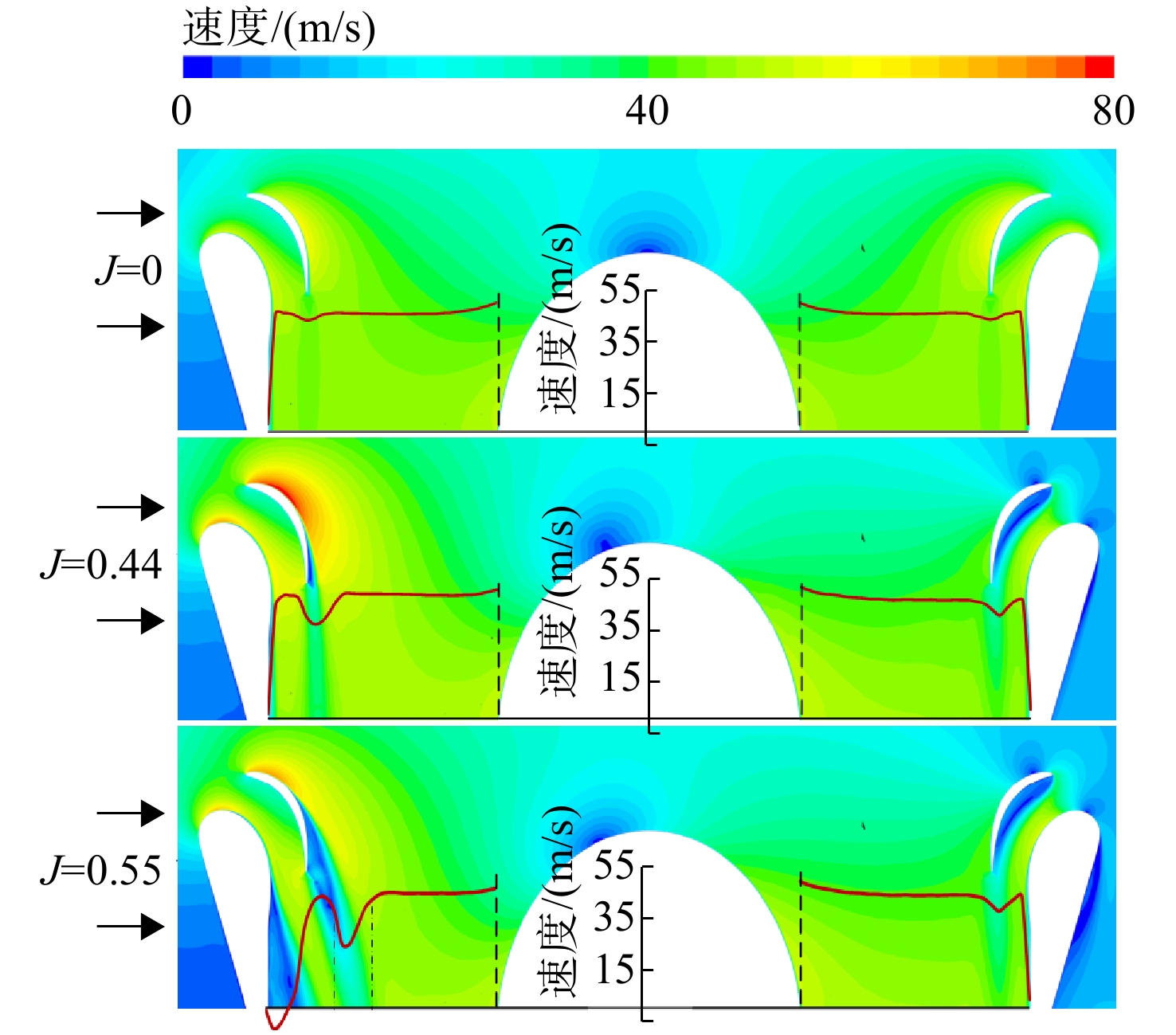
图 15 双唇口结构中截面速度云图
Figure 15. Velocity cloud diagram of cross section in double-lip structure

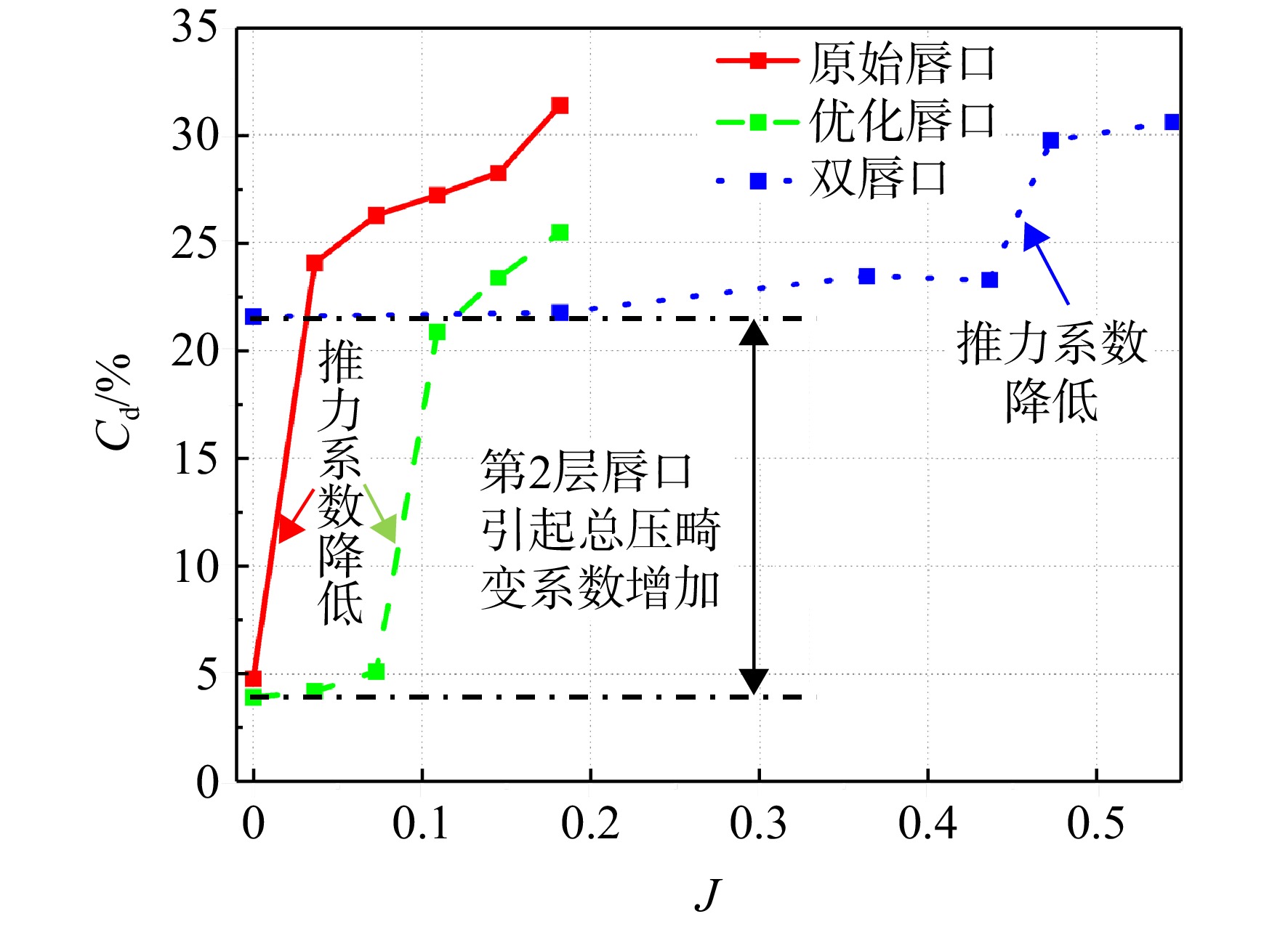
图 16 3种唇口的总压畸变系数随前进比变化规律
Figure 16. Total pressure distortion coefficient of three kinds of lips varies with advance ratio
-
[1] KOPARDEKAR P. Urban air mobility: initial reflections[R]. Dallas: Uber Elevate Summit,2017. [2] PLATT R J. Static tests of a shrouded and an unshrouded propeller[R]. Texas : NASA ,1948. [3] PEREIRA J L,CHOPRA I. Hover tests of micro aerial vehicle-scale shrouded rotors: Part Ⅰ performance characteristics[J]. Journal of the American Helicopter Society,2009,54(1): 12001. doi: 10.4050/JAHS.54.012001 [4] 李晓华,郭正,陈清阳. 涵道螺旋桨气动特性数值模拟[J]. 国防科技大学学报,2015,37(4): 31-35. LI Xiaohua,GUO Zheng,CHEN Qingyang. Numerical simulation of ducted rotor’s aerodynamic characteristics[J]. Journal of National University of Defense Technology,2015,37(4): 31-35. (in ChineseLI Xiaohua, GUO Zheng, CHEN Qingyang. Numerical simulation of ducted rotor’s aerodynamic characteristics[J]. Journal of National University of Defense Technology, 2015, 37(4): 31-35. (in Chinese) [5] DENG Shuanghou,WANG Siwei,ZHANG Zheng. Aerodynamic performance assessment of a ducted fan UAV for VTOL applications[J]. Aerospace Science and Technology,2020,103: 105895. doi: 10.1016/j.ast.2020.105895 [6] WANG Siwei,WANG Yangang,ZHOU Fang,et al. Investigating the unsteady flow mechanism at the lip of a ducted fan in crosswind[J]. Proc IMechE Part G: Journal of Aerospace Engineering,2024,238(12): 1179-1192. [7] AKTURK A,CAMCI C. Tip clearance investigation of a ducted fan used in VTOL UAVS: Part 1 baseline experiments and computational validation[C]//Proceedings of ASME 2011 Turbo Expo: Turbine Technical Conference and Exposition,Vancouver: ASME,2011: 331-344. [8] AKTURK A,CAMCI C. Tip clearance investigation of a ducted fan used in VTOL UAVS: Part 2 novel treatments via computational design and their experimental verification[C]//Proceedings of ASME 2011 Turbo Expo: Turbine Technical Conference and Exposition,Vancouver: ASME,2011: 345-357. [9] 叶坤,叶正寅,屈展. 涵道气动优化设计方法[J]. 航空动力学报,2013,28(8): 1828-1835. YE Kun,YE Zhengyin,QU Zhan. Aerodynamic optimization method for duct design[J]. Journal of Aerospace Power,2013,28(8): 1828-1835. (in ChineseYE Kun, YE Zhengyin, QU Zhan. Aerodynamic optimization method for duct design[J]. Journal of Aerospace Power, 2013, 28(8): 1828-1835. (in Chinese) [10] ZHANG Xingyu,ZHANG Wei,LI Weilin,et al. Experimental research on aero-propulsion coupling characteristics of a distributed electric propulsion aircraft[J]. Chinese Journal of Aeronautics,2023,36(2): 201-212. doi: 10.1016/j.cja.2022.07.024 [11] 李建波,高正. 涵道风扇空气动力学特性分析[J]. 南京航空航天大学学报,2005,37(6): 680-684. LI Jianbo,GAO Zheng. Aerodynamical characteristics analysis of ducted fan[J]. Journal of Nanjing University of Aeronautics & Astronautics,2005,37(6): 680-684. (in ChineseLI Jianbo, GAO Zheng. Aerodynamical characteristics analysis of ducted fan[J]. Journal of Nanjing University of Aeronautics & Astronautics, 2005, 37(6): 680-684. (in Chinese) [12] GRAF W,FLEMING J,NG W. Improving ducted fan UAV aerodynamics in forward flight: AIAA 2008-430 [R]. Reston,Virigina: AIAA,2008. [13] FLEMING J,JONES T,NG W,et al. Improving control system effectiveness for ducted fan VTOL UAVs operating in crosswinds: AIAA 2003-6514 [R]. Reston,Virigina: AIAA,2003. [14] AKTURK A,SHAVALIKUL A,CAMCI C. PIV measurements and computational study of a 5-inch ducted fan for V/STOL UAV applications: AIAA 2009-332 [R]. Reston,Virigina: AIAA,2009. [15] AKTURK A,CAMCI C. Influence of tip clearance and inlet flow distortion on ducted fan performance in VTOL UAVs[C] //66th Forum of the American Helicopter Society. Phoenix: American Helicopter Society International,2010: 111-121. [16] AKTURK A,CAMCI C. Double-ducted fan as an effective lip separation control concept for vertical-takeoff-and-landing vehicles[J]. Journal of Aircraft,2022,59(1): 233-252. doi: 10.2514/1.C036386 [17] WANG Haitong,WANG Yangang,WANG Siwei,et al. Optimization strategy for performance improvement of a lift fan cowl lip based on panel method[J]. Journal of Mechanical Science and Technology,2021,35(7): 2961-2970. doi: 10.1007/s12206-021-0619-8 [18] WANG Haitong,WANG Yangang,WANG Siwei,et al. Modified lifting line method based on vortex rings and its application on lift fan design[J]. Transactions of The Japan Society for Aeronautical and Space Sciences,2022,65(1): 23-32. doi: 10.2322/tjsass.65.23 [19] OHANIAN O J III,GELHAUSEN P A,INMAN D J. Nondimensional modeling of ducted-fan aerodynamics[J]. Journal of Aircraft,2012,49(1): 126-140. doi: 10.2514/1.C031389 [20] 王海童,王掩刚,周芳,等. 基于面元法的分布式涵道推进系统进气道优化设计[J]. 推进技术,2021,42(11): 2465-2473. WANG Haitong,WANG Yangang,ZHOU Fang,et al. Optimization design of inlet for distributed ducted fan propulsion system based on panel method[J]. Journal of Propulsion Technology,2021,42(11): 2465-2473. (in ChineseWANG Haitong, WANG Yangang, ZHOU Fang, et al. Optimization design of inlet for distributed ducted fan propulsion system based on panel method[J]. Journal of Propulsion Technology, 2021, 42(11): 2465-2473. (in Chinese) [21] RODRIGUEZ D L. Multidisciplinary optimization method for designing boundary-layer-ingesting inlets[J]. Journal of Aircraft,2009,46(3): 883-894. doi: 10.2514/1.38755 -

 下载:
下载:
 点击查看大图
计量
- 文章访问数: 1239
- HTML浏览量: 287
- PDF量: 71
- 被引次数: 0