






Comparison of flow characteristics between tank-to-tank and tank-to-manifold crossfeed systems for liquid rocket
-
摘要:
针对管路间和贮箱间两种不同形式交叉输送系统,通过AMEsim软件分别构建仿真模型,对比研究两种系统的推进剂流动特性和系统故障响应特性。研究结果表明:正常工作状态下,贮箱间交叉输送具有更高的交叉输送流量,在助推分离时具有更稳定的流动特性,能实现芯级压力、流量的平稳过渡;管路间交叉输送(压差控制)则出现明显的水击现象,各特征点流量振荡强度均大于贮箱间交叉输送。缓冲罐可降低助推级脱离导致的压力波动,缓冲罐体积越大,芯级压力过渡越平缓。助推级发动机发生故障时,交叉输送技术可将故障侧多余推进剂输送至芯级或未故障助推级贮箱或发动机内,实现故障侧推进剂的充分利用和故障侧/非故障侧流量的重新分配,管路间交叉输送(压差控制)相比贮箱间流量分配更为均匀,两助推级贮箱推进剂消耗更为平衡。
Abstract:A study on the propellant crossfeed characteristics under both normal and engine-out conditions was described. Two transfer mechanisms, tank-to-tank and tank-to-manifold, were analyzed to optimize the performance and reduce the operational complexity. The results showed that the tank-to-tank transfer mechanism had higher crossfeed flow rate in the ascent stage and smoother transition to orbiter on booster staging in comparison with the tank-to-manifold mechanism. Buffer tank can significantly decrease the pressure fluctuation caused by the booster staging, and the larger buffer tank volume indicated the smoother transition of the orbiter pressure. When the booster engines were abnormally shut down, crossfeed could redistribute its remanent propellant between the orbiter or the non-fault booster, contributing to the full utilization of propellant in the malfunction booster. Moreover, the pressure-controlled tank-to-manifold mechanism was characterized by more uniform crossfeed flow distribution under abnormal engine-out conditions, helping to provide synchronous consumption of the two booster tanks despite its stronger water hammer phenomenon when the booster was staged.
-
Key words:
- liquid rocket /
- crossfeed /
- tank-to-tank /
- tank-to-manifold /
- water hammer
-
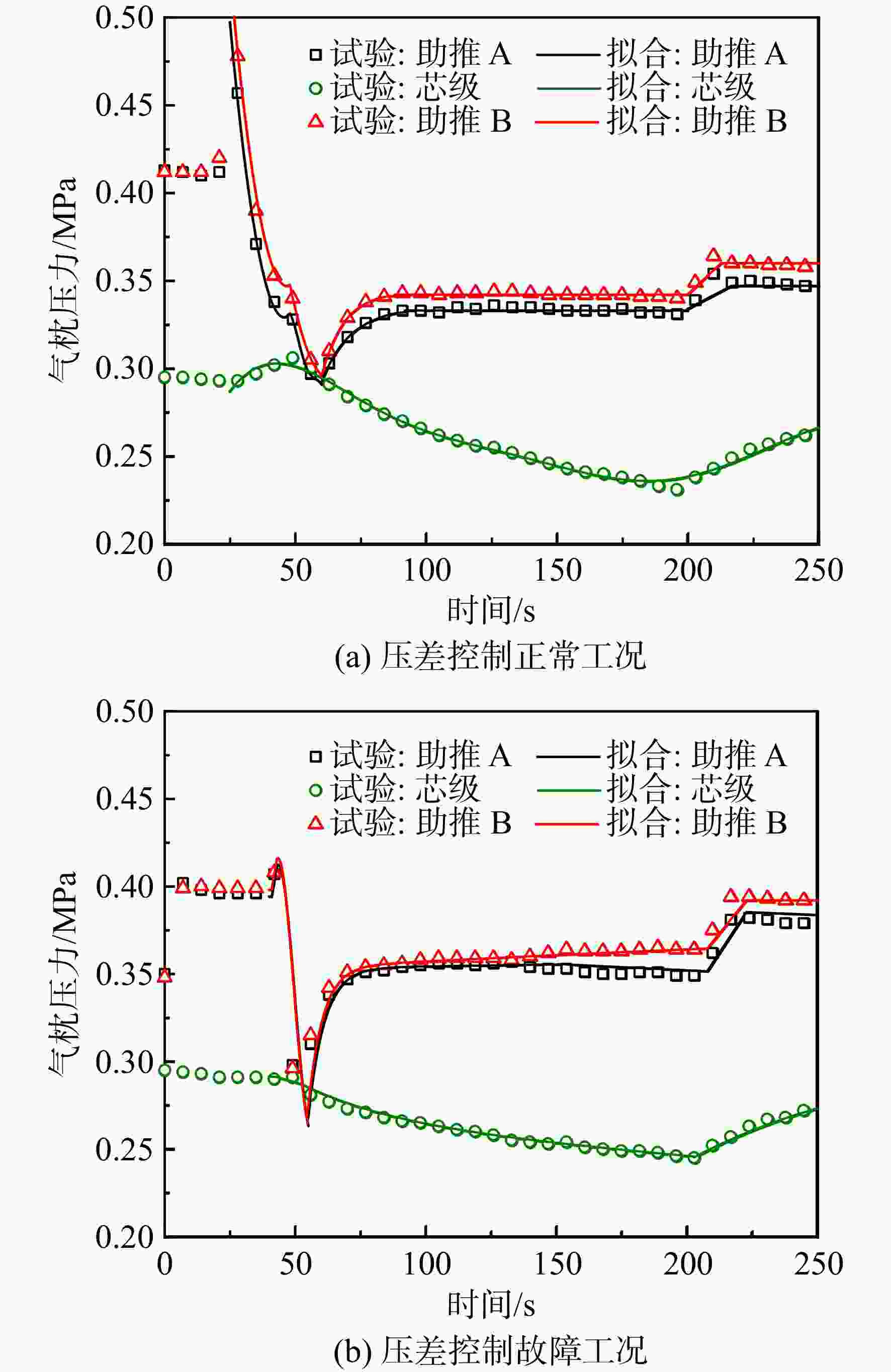
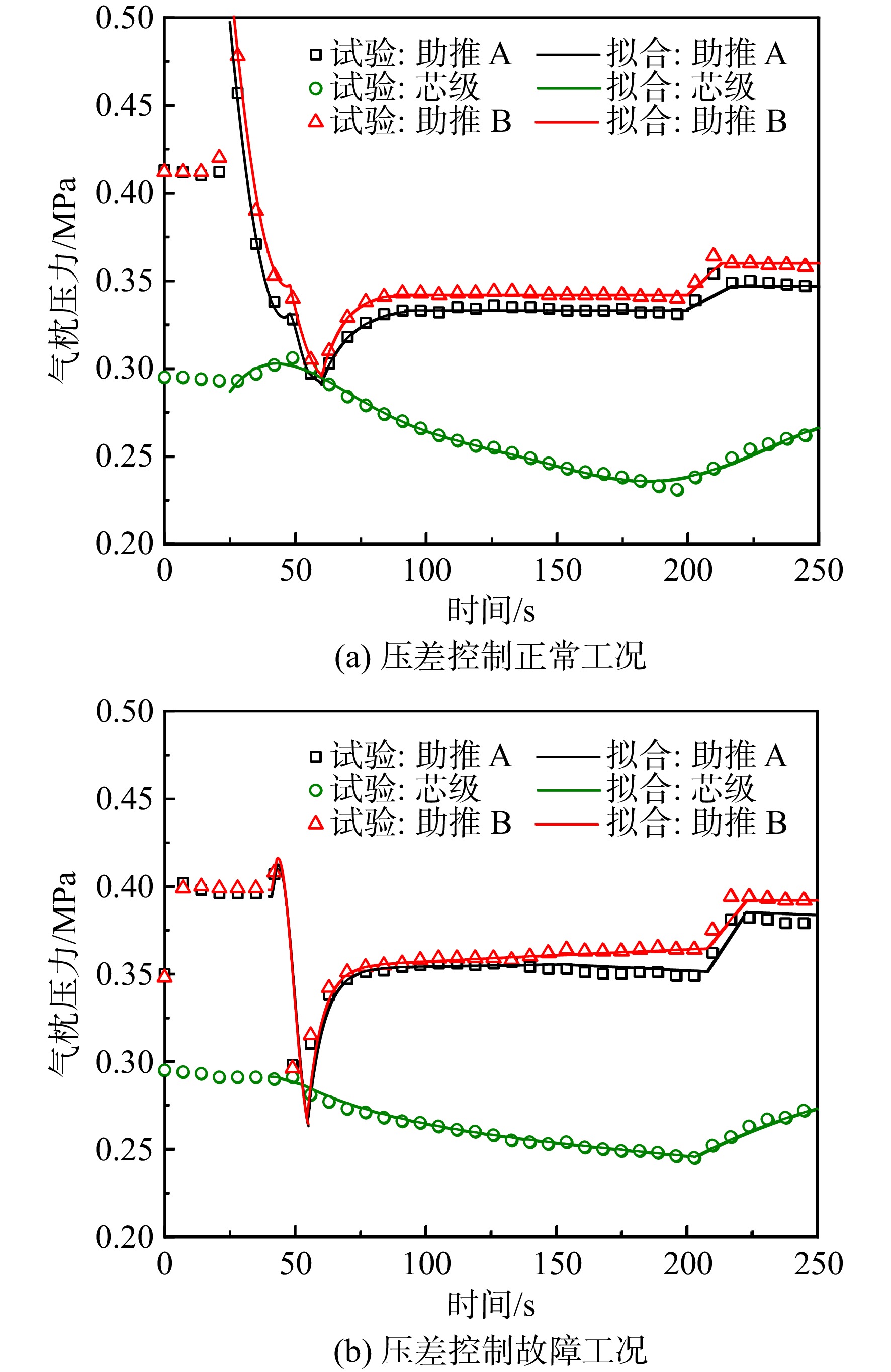
图 4 各工况气枕压力试验值与拟合值对比
Figure 4. Comparison of test and fitting results of ullage pressures at various conditions

图 5 压差控制交叉输送系统故障工况控制时序
Figure 5. Sequence of engine-out conditions for the pressure-controlled crossfeed system
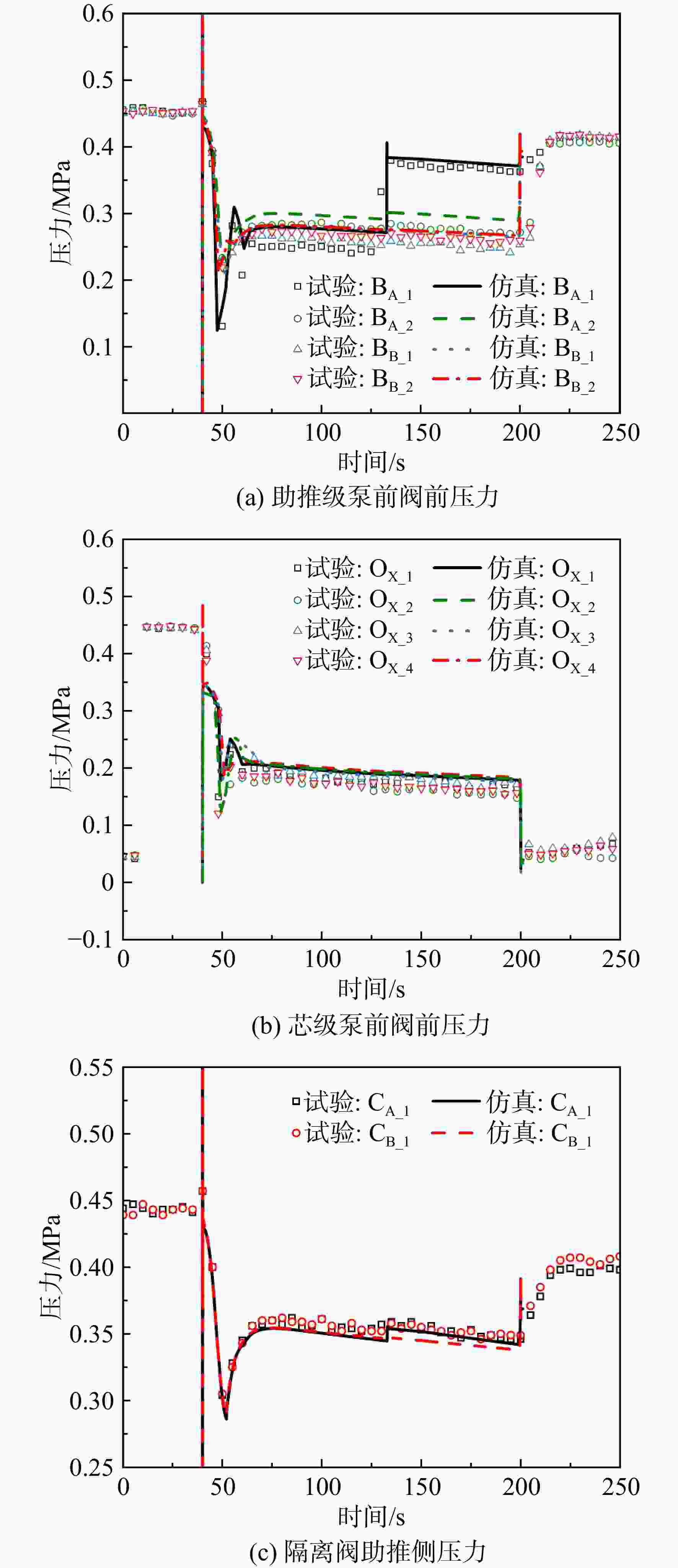
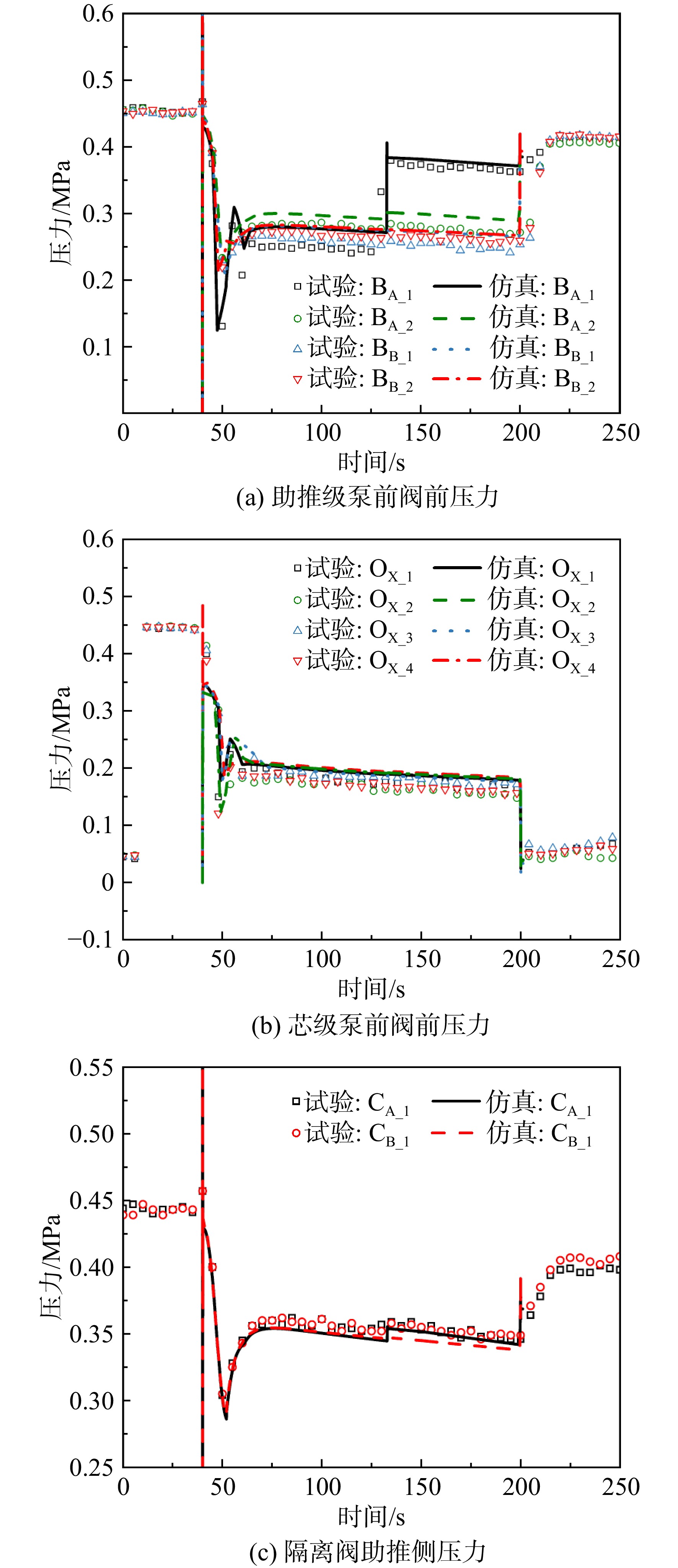
图 6 压差控制交叉输送系统故障工况仿真与试验结果对比
Figure 6. Comparison of simulation and test results at engine-out conditions for the pressure-controlled crossfeed system
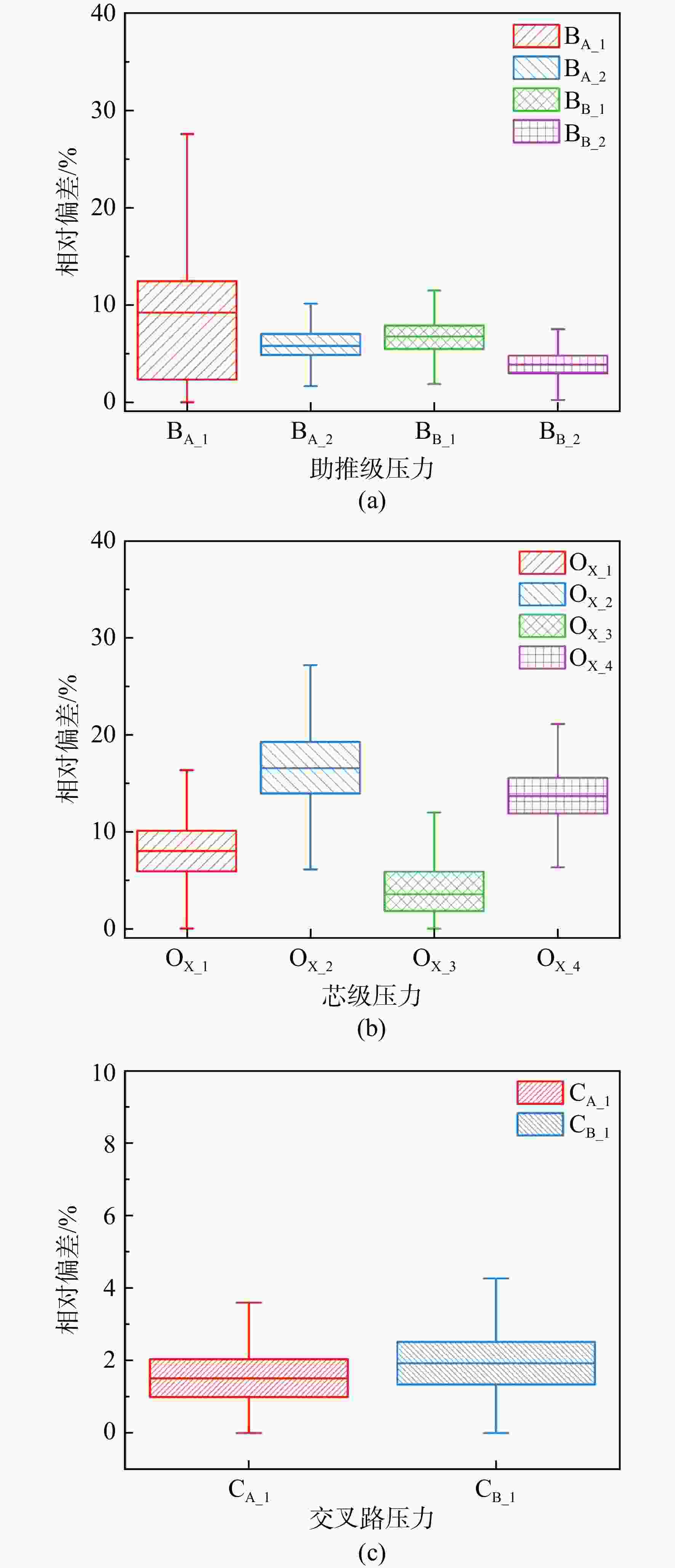
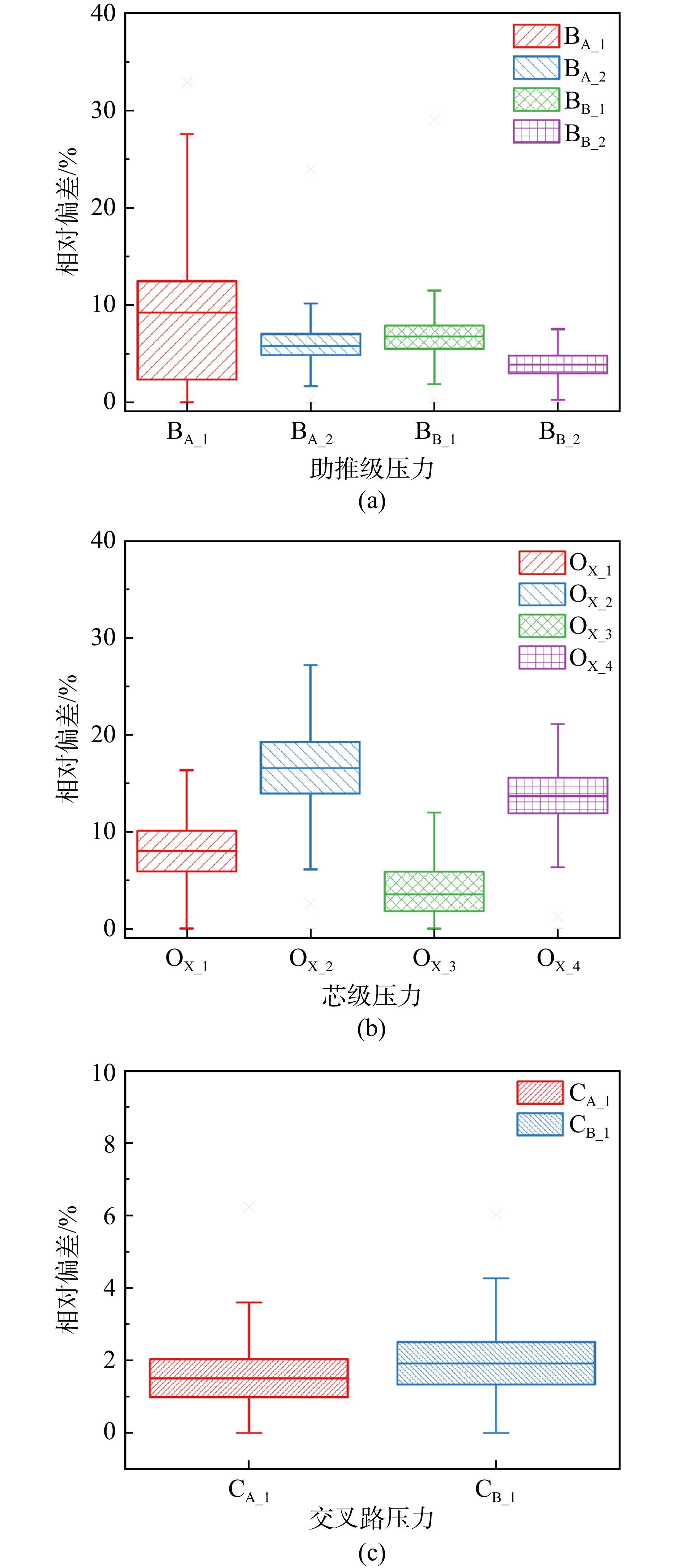
图 7 压差控制交叉输送系统故障工况仿真与试验偏差
Figure 7. Relative deviations between the simulation and test results at engine-out conditions of the pressure-controlled crossfeed system
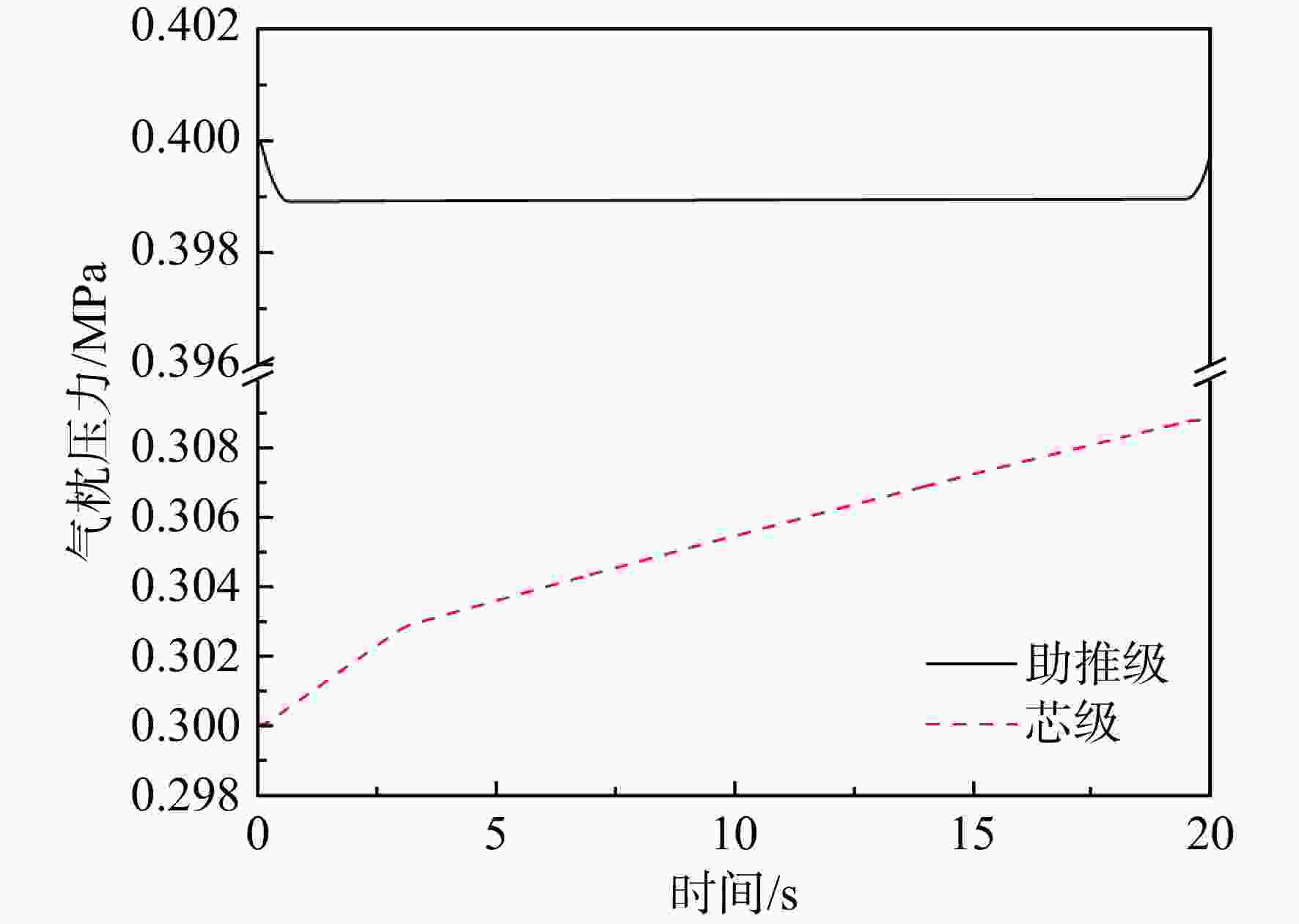
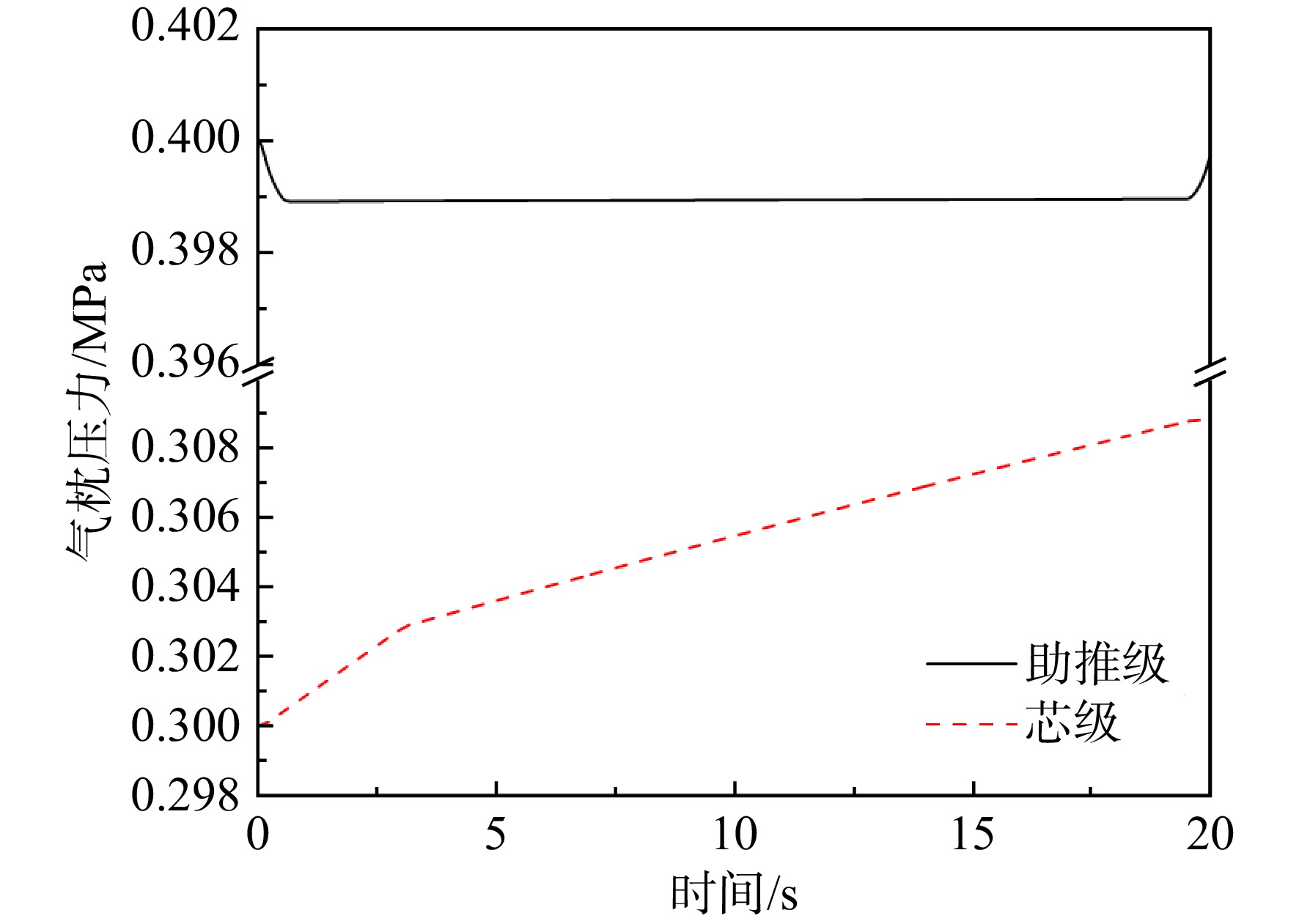
图 10 PID控制助推与芯级贮箱气枕压力
Figure 10. Ullage pressures of the PID controlled booster and orbiter tanks

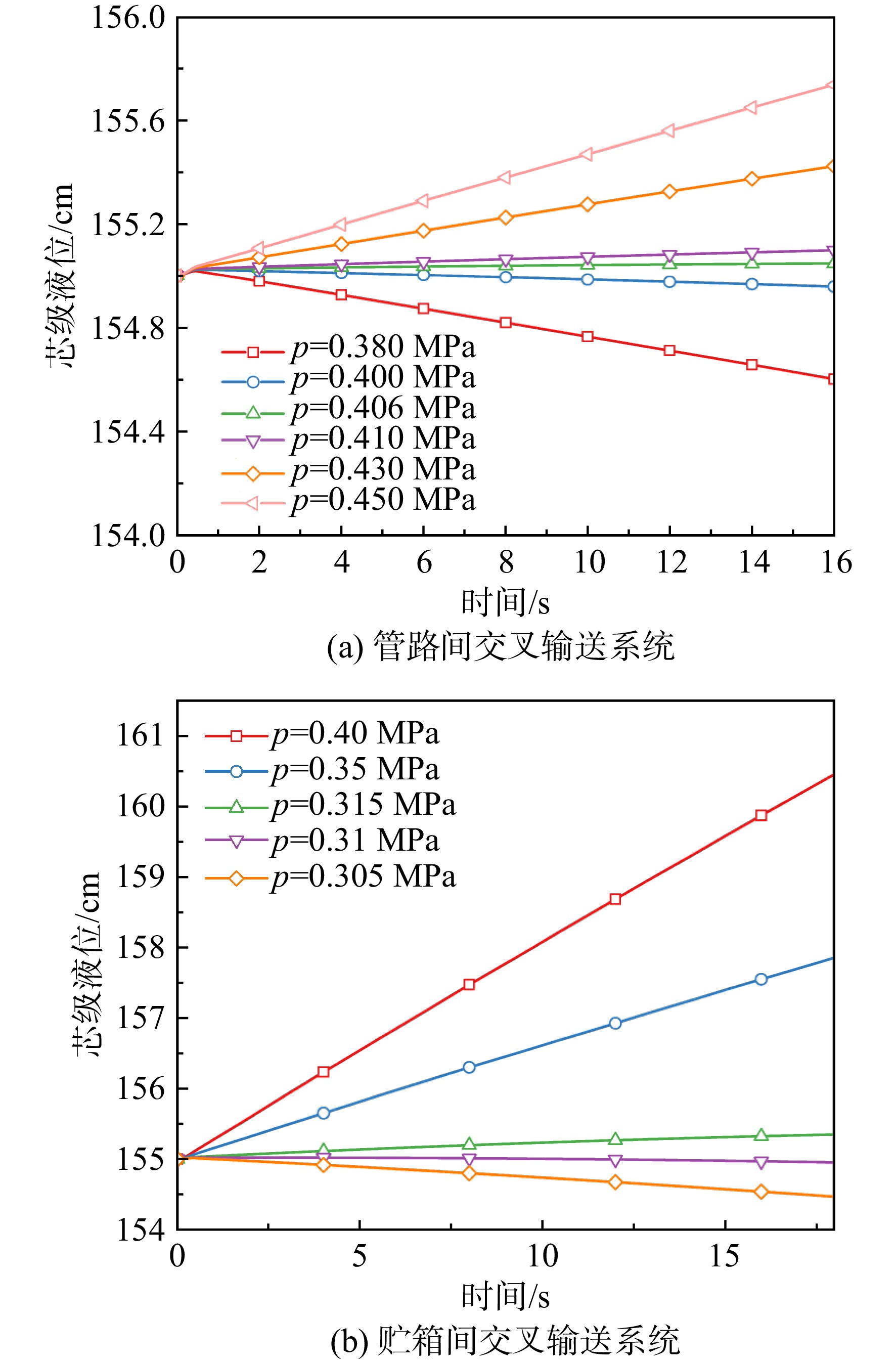
图 13 助推级气枕压力对芯级贮箱液位高度的影响对比
Figure 13. Effects of the booster ullage pressure on the orbiter tank liquid level

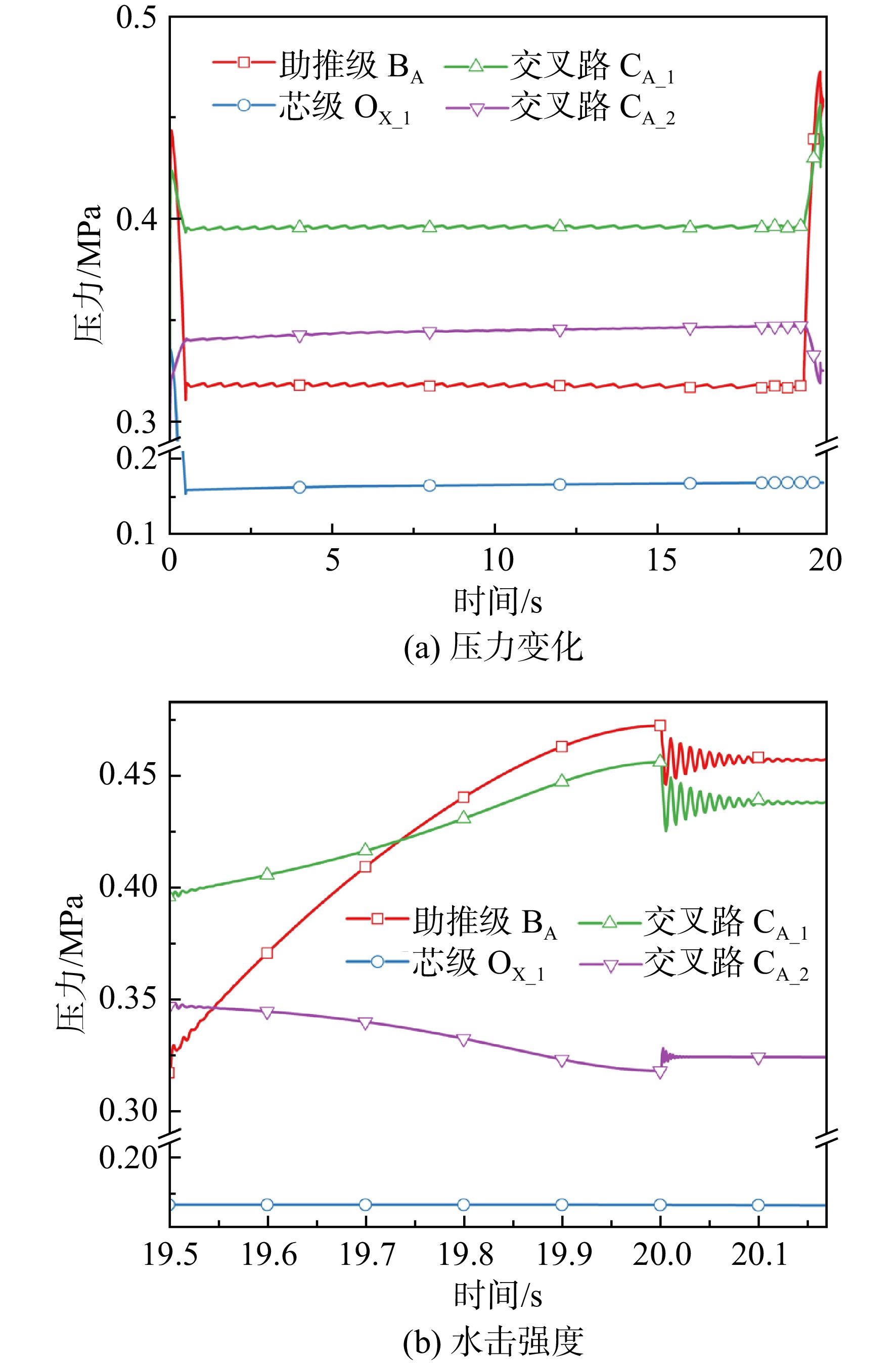
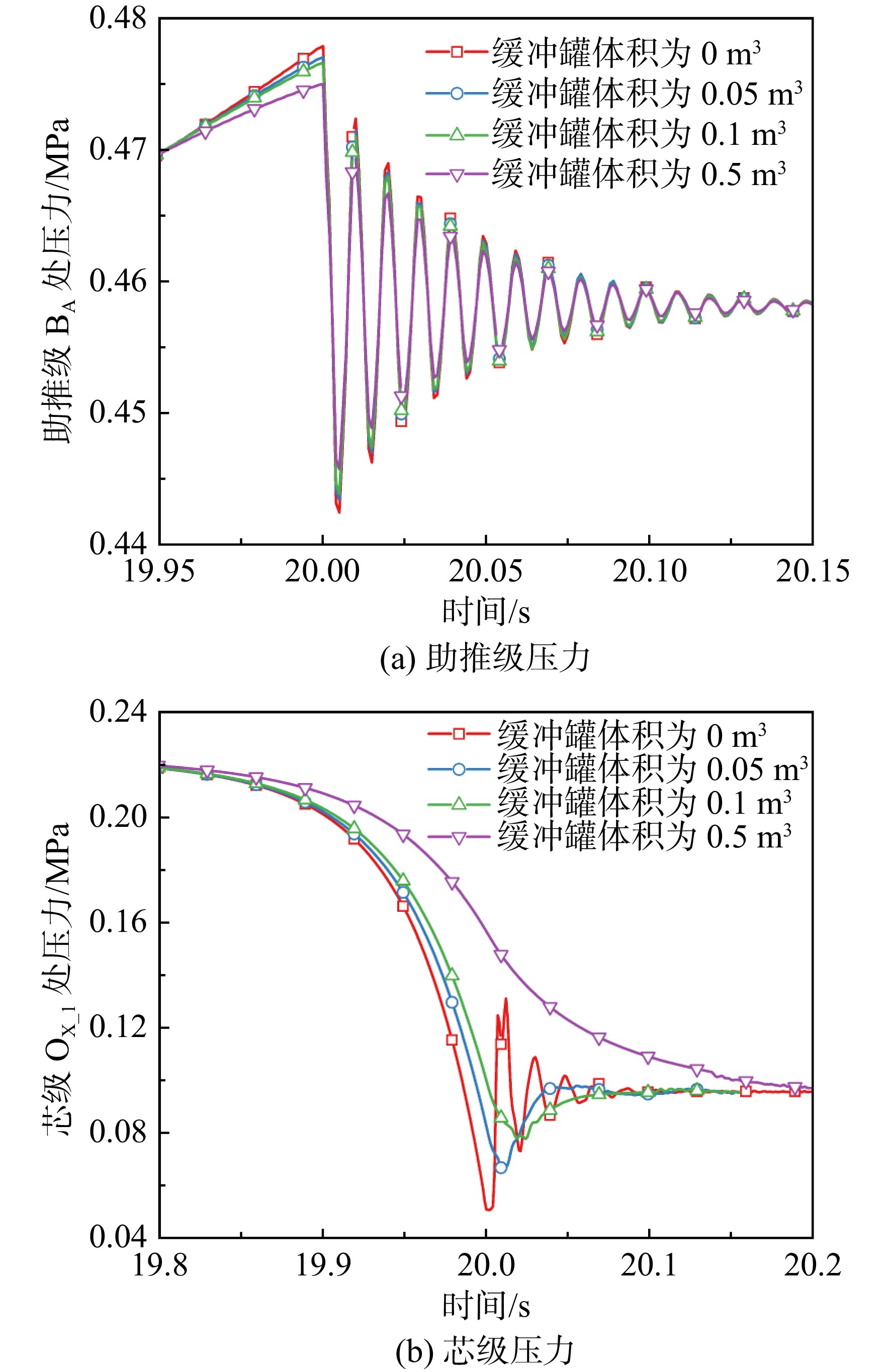
图 14 缓冲罐体积对水击强度的影响
Figure 14. Effect of buffer tank volume on water hammer intensities
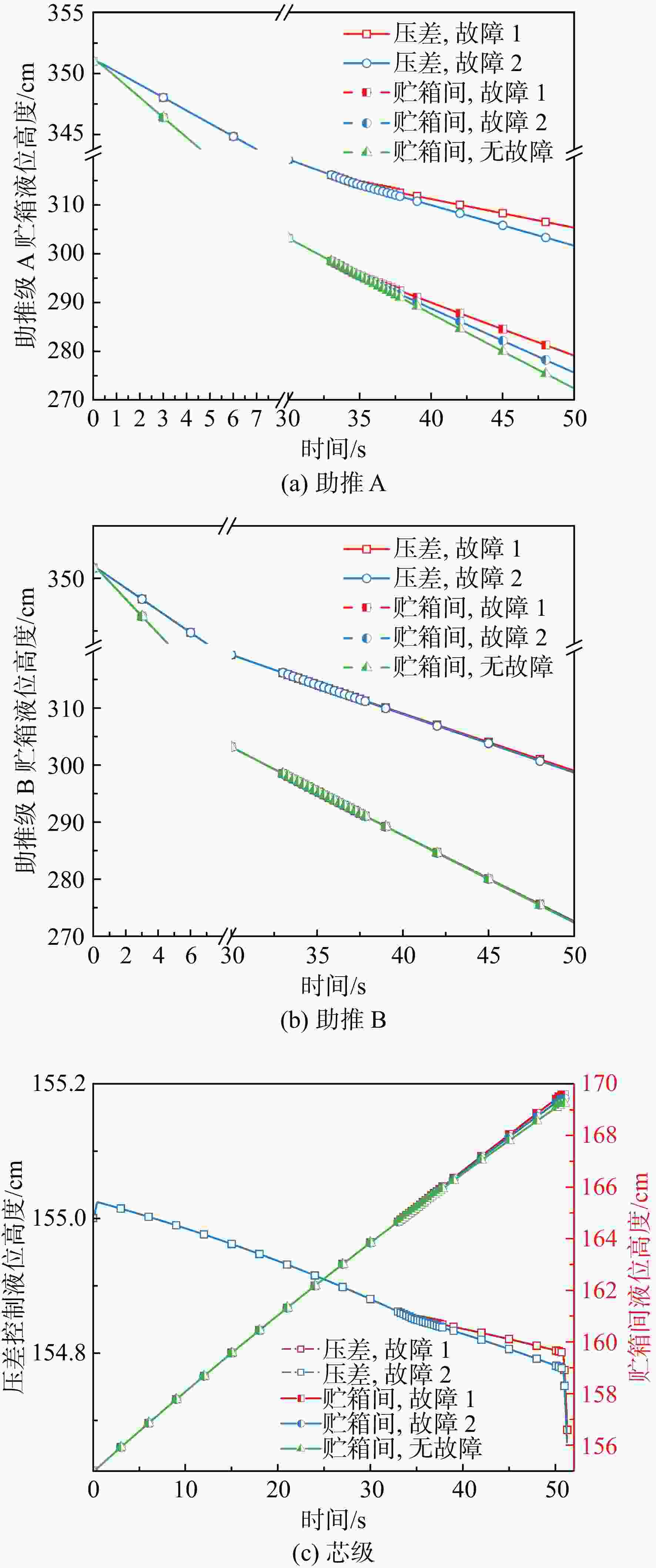
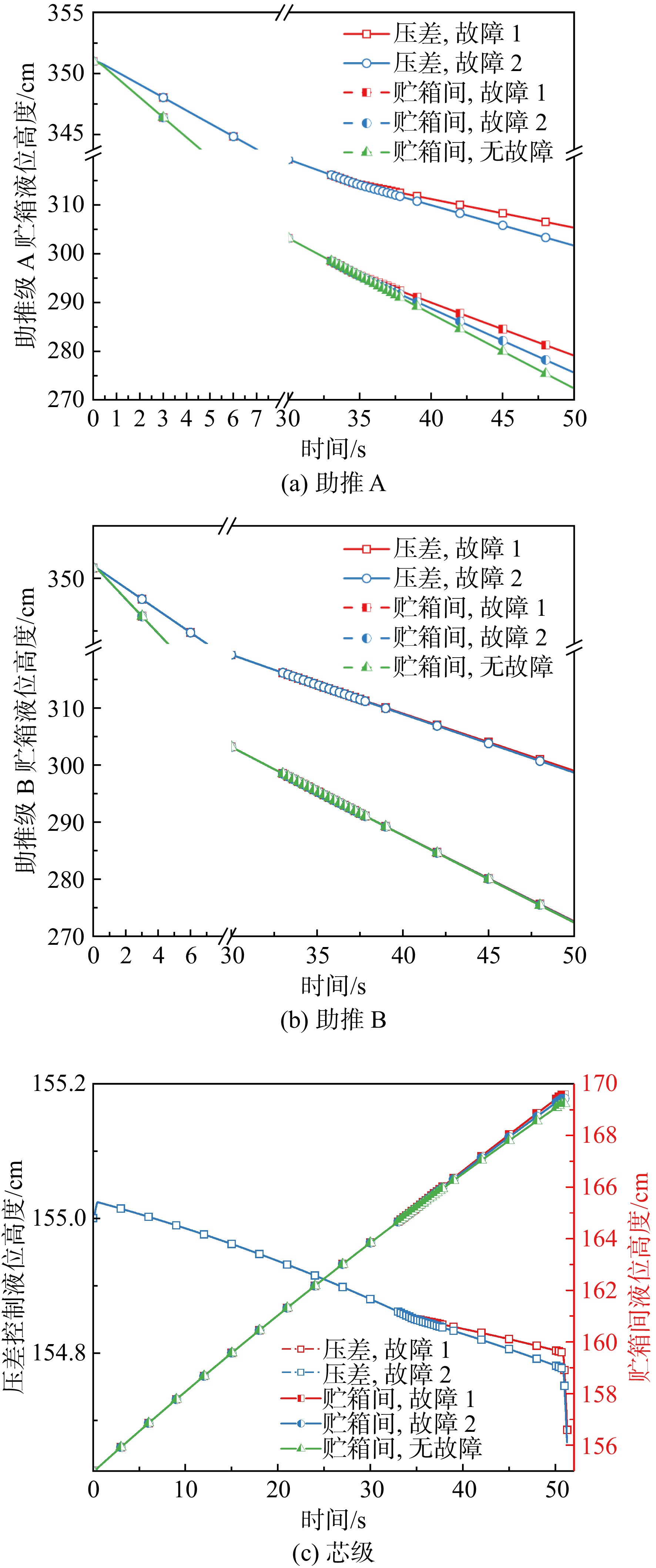
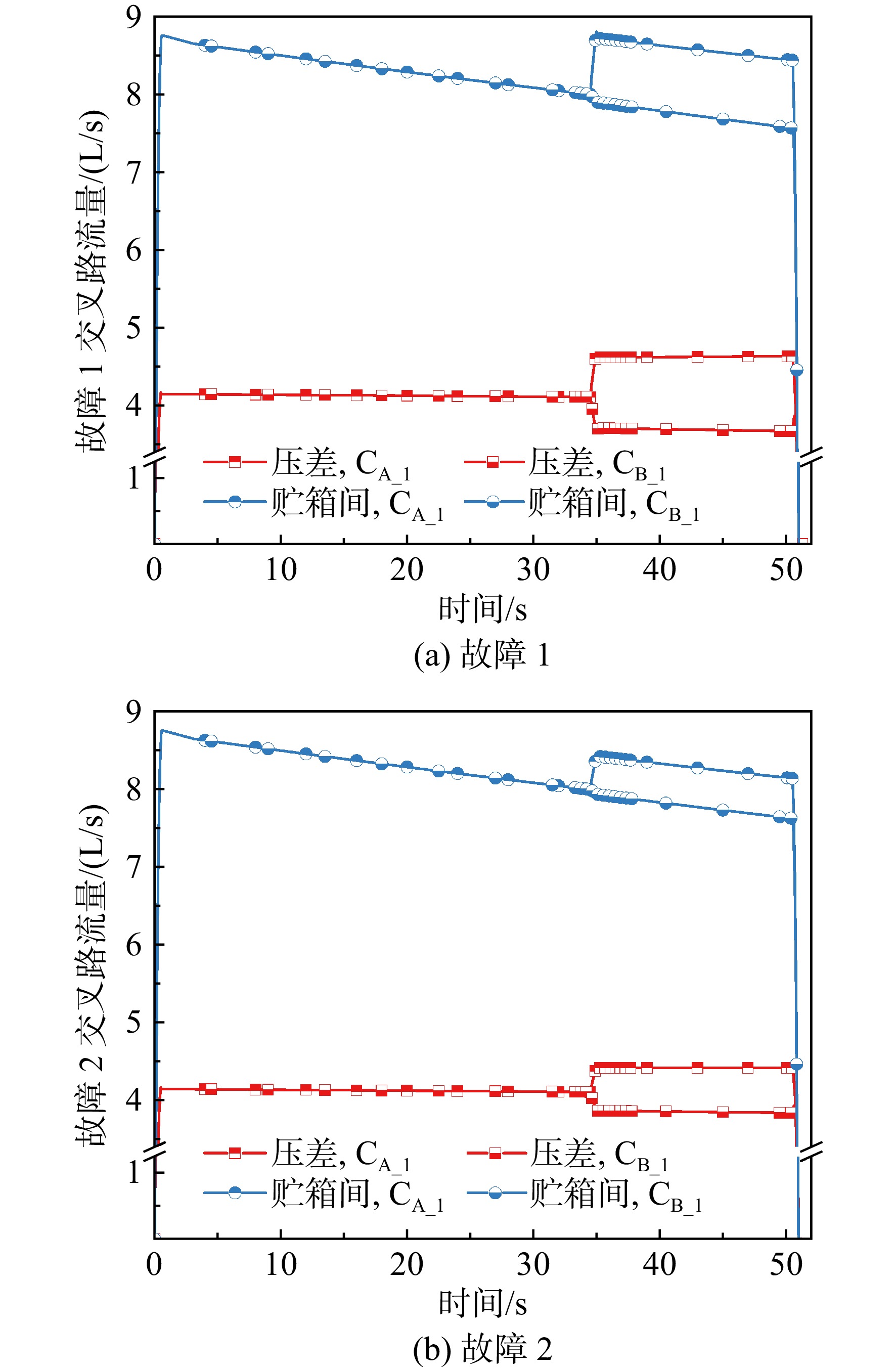
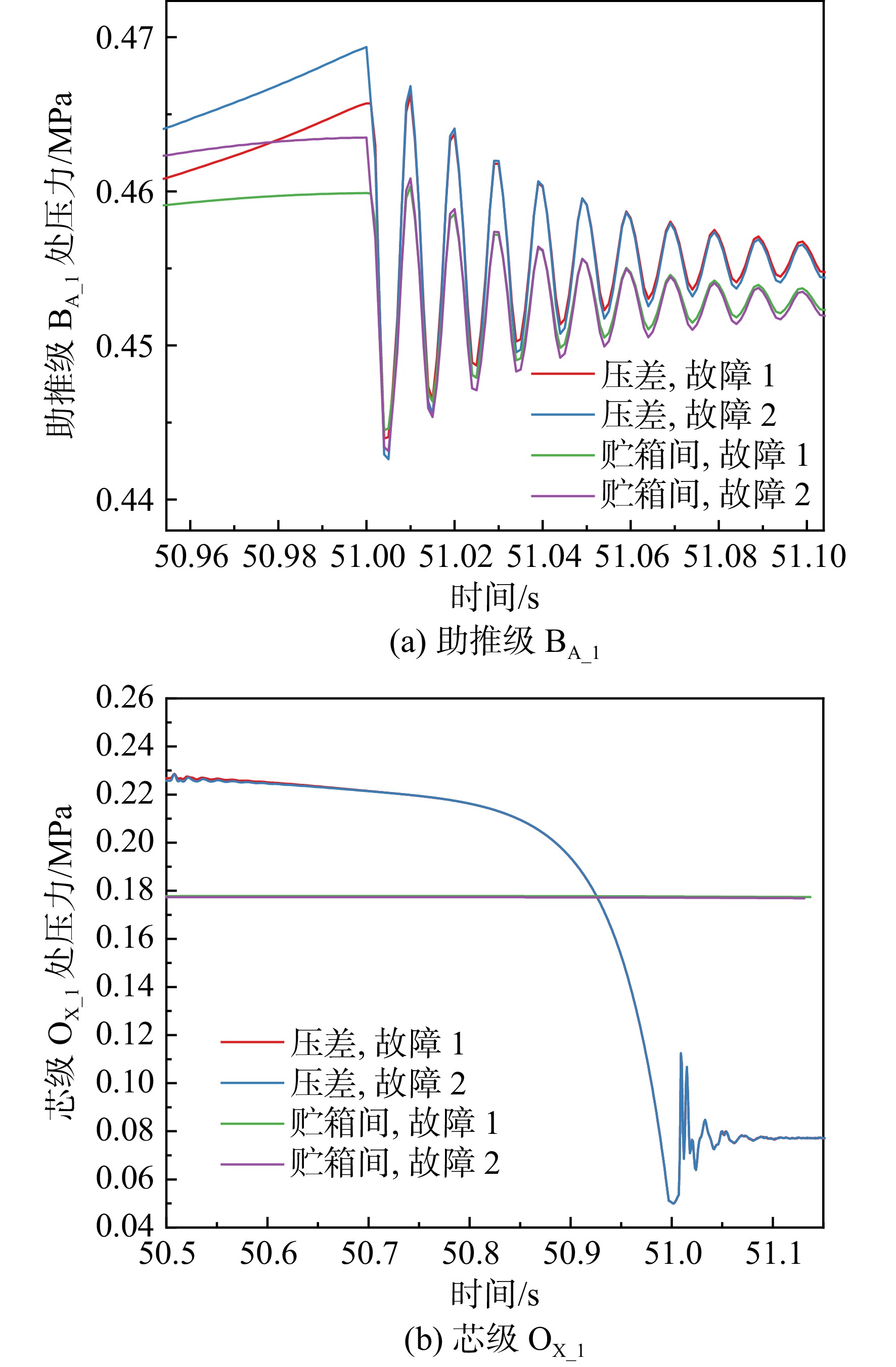
图 15 多故障工况不同交叉输送系统助推与芯级液位对比
Figure 15. Comparisons of the booster and orbiter liquid levels between different crossfeed systems at multiple engine-out conditions
表 2 交叉输送系统主要参数
Table 2. Main parameters of crossfeed systems
几何参数 助推级 芯级 体积/m3 3 7.3 ab段管路直径/mm 65 32 bc段管路直径/mm 32 泵前阀前管路长度/m 2.3 2.4 交叉管路直径/mm 65 贮箱间间距/m 2  下载: 导出CSV
表 3 试验工况输入参数
Table 3. Input parameters of test conditions
下载: 导出CSV
表 4 贮箱间与管路间交叉输送系统流动特性对比
Table 4. Comparisons of flow characteristics between the tank-to-tank and tank-to-manifold crossfeed systems
变量 管路间交叉输送(压差控制) 贮箱间交叉输送 BA_12 OX_1 CA_1 CA_2 BA_12 OX_1 CA_1 CA_2 稳态 压力/kPa 333 227 422 411 317 167 396 347 流量/(L/s) 4.2 4.2 4.17 4.2 4.2 8.75 瞬态 水击强度/kPa 35.44 80.26 45.60 90.00 17.85 0 30.77 6.10 水击频率/Hz 100 50 100 50 100 0 100 333 稳定时间/s 0.700 0.600 0.700 0.600 0.68 0 0.68 0.524 流量振荡强度/(L/s) 0.015 0.074 0.0463 0.012 0 0.027 流量振荡频率/Hz 100 50 100 100 0 100 流量振荡稳定时间/s 0.6 0.6 0.7 0.6 0 0.6
下载: 导出CSV
表 5 故障工况
Table 5. Engine-out conditions
故障模式 流量/(L/s) 故障时刻/s 故障前 故障后 故障1 助推级A 4.2 0 34.5 助推级B 4.2 4.2 故障2 助推级A 4.2 2.1 34.5 助推级B 4.2 4.2
下载: 导出CSV
表 6 不同交叉输送系统45 s时助推与芯级液位对比
Table 6. Comparison of the booster and orbiter liquid levels at 45 s between different crossfeed systems
工况 液位高度/cm 助推级A 芯级 助推级B A、B贮箱液位最低值 A、B贮箱液位差 无故障 管路间交叉输送(压差控制) 303.51 154.78 303.51 303.51 0 贮箱间交叉输送 280 167.8 280 280 0 故障1 管路间交叉输送(压差控制) 308.31 154.82 304.04 304.04 4.27 贮箱间交叉输送 284.52 168.02 280.14 280.14 4.38 故障2 管路间交叉输送(压差控制) 305.89 154.80 303.82 303.82 2.07 贮箱间交叉输送 282.17 167.93 280.08 280.08 2.09
下载: 导出CSV
-
[1] 秦曈,李彩霞,容易,等. 动力冗余技术对全箭可靠性影响研究[J]. 导弹与航天运载技术,2020(5): 48-53. QIN Tong,LI Caixia,RONG Yi,et al. The research on the influence of redundant propulsion technology on the reliability of launch vehicle[J]. Missiles and Space Vehicles,2020(5): 48-53. (in ChineseQIN Tong, LI Caixia, RONG Yi, et al. The research on the influence of redundant propulsion technology on the reliability of launch vehicle[J]. Missiles and Space Vehicles, 2020(5): 48-53. (in Chinese) [2] 张智,容易,郑立伟,等. 运载火箭动力冗余技术[J]. 载人航天,2013,19(6): 15-19. ZHANG Zhi,RONG Yi,ZHENG Liwei,et al. Redundant propulsion technology for launch vehicle[J]. Manned Spaceflight,2013,19(6): 15-19. (in Chinese doi: 10.3969/j.issn.1674-5825.2013.06.003ZHANG Zhi, RONG Yi, ZHENG Liwei, et al. Redundant propulsion technology for launch vehicle[J]. Manned Spaceflight, 2013, 19(6): 15-19. (in Chinese) doi: 10.3969/j.issn.1674-5825.2013.06.003 [3] 胡冬生,唐琼. 猎鹰重型火箭首飞分析及影响[J]. 中国航天,2018(3): 46-51. HU Dongsheng,TANG Qiong. Analysis and impact of Falcon Heavy launcher’s first flight[J]. Aerospace China,2018(3): 46-51. (in Chinese doi: 10.3969/j.issn.1002-7742.2018.03.007HU Dongsheng, TANG Qiong. Analysis and impact of Falcon Heavy launcher’s first flight[J]. Aerospace China, 2018(3): 46-51. (in Chinese) doi: 10.3969/j.issn.1002-7742.2018.03.007 [4] 肖智文,武迪. 运载火箭推进剂交叉输送技术收效分析[J]. 力学与实践,2020,42(4): 413-417. XIAO Zhiwen,WU Di. Effectiveness of the propellent cross-feed technology for launch vehicle[J]. Mechanics in Engineering,2020,42(4): 413-417. doi: 10.6052/0459-1879-19-483XIAO Zhiwen, WU Di. Effectiveness of the propellent cross-feed technology for launch vehicle[J]. Mechanics in Engineering, 2020, 42(4): 413-417. doi: 10.6052/0459-1879-19-483 [5] STANLEY D O,TALAY T A,LEPSCH R A,et al. Parametric trade studies on a shuttle 2 launch system architecture[R]. NASA-TP-3059,1991. [6] SCHWANEKAMP T. Cryogenic propellant tank and feedline design studies in the framework of the CHATT project[C]//Proceedings of the 19th AIAA International Space Planes and Hypersonic Systems and Technologies Conference. Reston,Virginia: AIAA,2014: 1-27. [7] MARTIN J A. History of propulsion for single-stage-to-orbit and multiple-stage vehicles[J]. Journal of Propulsion and Power,1995,11(1): 98-104. doi: 10.2514/3.23845 [8] MARSHALL W R. Three stage rocket vehicle with parallel staging: US4451017[P]. 1984-05-29. [9] HAPPERSETT R,LAURSEN E. The Angara launch vehicle fleet: AIAA 2001-3931 [R]. Reston,Virigina: AIAA,2001. [10] CHANDLER F,SCHEIERN M,CHAMPION R,et al. Launch vehicle sizing benefits utilizing main propulsion system: AIAA 2002-3900 [R]. Reston,Virigina: AIAA,2002. [11] JAMES L. Uprated Saturn I[C]//Proceedings of the 3rd Annual Meeting. Reston,Virigina: AIAA,1966: AIAA 1966-839. [12] GILMORE W. Supplying cryogenic propellants for space based OTV: AIAA 1985-1225 [R]. Reston,Virigina: AIAA,1985. [13] NEWTON K E. Atlas/centaur launch vehicle operation experience[R]. Warrendale,US: SAE International,1968. [14] 孙国庆. 关于天地往返运输系统动力装置[J]. 推进技术,1988,9(1): 30-33. SUN Guoqing. About the power unit of the round-trip transportation system between heaven and earth[J]. Journal of Propulsion Technology,1988,9(1): 30-33.SUN Guoqing. About the power unit of the round-trip transportation system between heaven and earth[J]. Journal of Propulsion Technology, 1988, 9(1): 30-33. [15] 符锡理. 航天飞行器动力装置液体推进剂交叉供应技术[J]. 国外导弹与航天运载器,1990(9): 41-50. [16] 廖少英,顾仁年. 新一代运载火箭增压输送系统交叉输送技术研究[J]. 上海航天,2005,22(3): 37-41. LIAO Shaoying,GU Rennian. Research on the pressurization system crossfeed technology for new lift launch vehicle[J]. Aerospace Shanghai (Chinese & English),2005,22(3): 37-41. (in ChineseLIAO Shaoying, GU Rennian. Research on the pressurization system crossfeed technology for new lift launch vehicle[J]. Aerospace Shanghai (Chinese & English), 2005, 22(3): 37-41. (in Chinese) [17] 马方超,刘文川,丁建春,等. 推进剂交叉输送技术综述及概念研究[J]. 载人航天,2014,20(5): 474-479. MA Fangchao,LIU Wenchuan,DING Jianchun,et al. Technical summary and conceptual study of propellant cross feed technology[J]. Manned Spaceflight,2014,20(5): 474-479. (in Chinese doi: 10.3969/j.issn.1674-5825.2014.05.013MA Fangchao, LIU Wenchuan, DING Jianchun, et al. Technical summary and conceptual study of propellant cross feed technology[J]. Manned Spaceflight, 2014, 20(5): 474-479. (in Chinese) doi: 10.3969/j.issn.1674-5825.2014.05.013 [18] 马方超,李德权,吴姮,等. 液体火箭推进剂交叉输送系统试验研究[J]. 载人航天,2017,23(3): 358-364. MA Fangchao,LI Dequan,WU Heng,et al. Experimental investigation on propellant crossfeed system of liquid rocket[J]. Manned Spaceflight,2017,23(3): 358-364. doi: 10.3969/j.issn.1674-5825.2017.03.012MA Fangchao, LI Dequan, WU Heng, et al. Experimental investigation on propellant crossfeed system of liquid rocket[J]. Manned Spaceflight, 2017, 23(3): 358-364. doi: 10.3969/j.issn.1674-5825.2017.03.012 [19] 汤波,胡久辉,邵业涛,等. 液体运载火箭交叉输送总体参数研究[J]. 导弹与航天运载技术,2017(3): 22-27. TANG Bo,HU Jiuhui,SHAO Yetao,et al. Study on system parameters of crossfeed technology in liquid rocket[J]. Missiles and Space Vehicles,2017(3): 22-27. (in ChineseTANG Bo, HU Jiuhui, SHAO Yetao, et al. Study on system parameters of crossfeed technology in liquid rocket[J]. Missiles and Space Vehicles, 2017(3): 22-27. (in Chinese) [20] 李翠,程亦薇,庄钰涵,等. 液体火箭压差控制交叉输送特性研究[J]. 西安交通大学学报,2020,54(4): 165-172. LI Cui,CHENG Yiwei,ZHUANG Yuhan,et al. A study on flow characteristics of pressure-controlled propellant crossfeed in liquid rocket systems[J]. Journal of Xi’an Jiaotong University,2020,54(4): 165-172. (in ChineseLI Cui, CHENG Yiwei, ZHUANG Yuhan, et al. A study on flow characteristics of pressure-controlled propellant crossfeed in liquid rocket systems[J]. Journal of Xi’an Jiaotong University, 2020, 54(4): 165-172. (in Chinese) [21] LI Cui,CHENG Yiwei,WANG Nan,et al. Transient modelling of pressure-controlled propellant crossfeed for liquid rocket[J]. Cryogenics,2021,116: 103303. doi: 10.1016/j.cryogenics.2021.103303 [22] 熊天赐,容易,黄辉,等. 运载火箭推进剂交叉输送系统控制方法仿真研究[J]. 导弹与航天运载技术,2020(1): 20-26. XIONG Tianci,RONG Yi,HUANG Hui,et al. Research on simulation of control method of propellant crossfeed system for launch vehicle[J]. Missiles and Space Vehicles,2020(1): 20-26. (in ChineseXIONG Tianci, RONG Yi, HUANG Hui, et al. Research on simulation of control method of propellant crossfeed system for launch vehicle[J]. Missiles and Space Vehicles, 2020(1): 20-26. (in Chinese) [23] 容易,熊天赐,黄辉,等. 运载火箭交叉输送系统关键影响因素辨识与分析[J]. 宇航学报,2021,42(2): 239-248. RONG Yi,XIONG Tianci,HUANG Hui,et al. Identification and analysis of key factors of propellant crossfeed system in launch vehicle[J]. Journal of Astronautics,2021,42(2): 239-248. doi: 10.3873/j.issn.1000-1328.2021.02.012RONG Yi, XIONG Tianci, HUANG Hui, et al. Identification and analysis of key factors of propellant crossfeed system in launch vehicle[J]. Journal of Astronautics, 2021, 42(2): 239-248. doi: 10.3873/j.issn.1000-1328.2021.02.012 -


 点击查看大图

计量
- 文章访问数: 598
- HTML浏览量: 365
- PDF量: 62
- 被引次数: 0