






A thermodynamics-based neural network modeling approach for turbofan engines
-
摘要:
由于无法掌握不同发动机的真实部件特性,传统热力学模型对在翼涡扇发动机的建模存在较大的建模误差;同时,热力学模型在特性图边界线附近迭代时,容易迭代到特性图之外,造成迭代过程的不收敛。针对上述问题,本论文提出基于热力学过程的涡扇发动机神经网络建模方法,在神经网络模型的训练过程中充分考虑对部件共同工作热力学约束的优化,提高发动机建模的准确性。通过构建部件级网络结构、部件共同工作损失函数及融合训练过程,将基于部件特性图的传统热力学模型迭代过程转化为部件级神经网络的多目标优化与训练过程,提高了模型的收敛性及建模准确性。模型在26970条发动机实际飞行数据上进行了训练及测试,结果表明,在相当宽松的准稳态数据下,论文提出的建模方法最大误差可以达到7%左右,比基于部件特性图的热力学模型低5%左右。
Abstract:Owing to the inaccuracies of the component characteristic maps, the traditional thermodynamic model for on-wing turbofans exhibited a significant modeling error. Moreover, when the model was iterated near the boundary points of the maps, it was prone to non-convergence, rendering it unreliable. To address these issues, a neural network modeling method for turbofans based on thermodynamic was put forward. This method improved modeling accuracy by fully considering the optimization of thermodynamic constraints during the training process of neural network models. By constructing a component-level network structure, implementing a components-cooperating loss function, and applying a fusion training process, the traditional iterative process of the thermodynamic model was transformed based on the component characteristic maps into a multi-objective optimization and training process of the component-level neural network. This approach improved the convergence and modeling accuracy of the model. The model was trained and tested using 26970 actual engine flight data. The results demonstrated that the maximum error of the proposed modeling method was approximately 7%, even under loose quasi-steady-state data, which was about 5% lower than that of the thermodynamic model based on the characteristic maps.
-
Key words:
- turbofan engines /
- thermodynamic model /
- neural network model /
- flight data /
- fusion approach
-
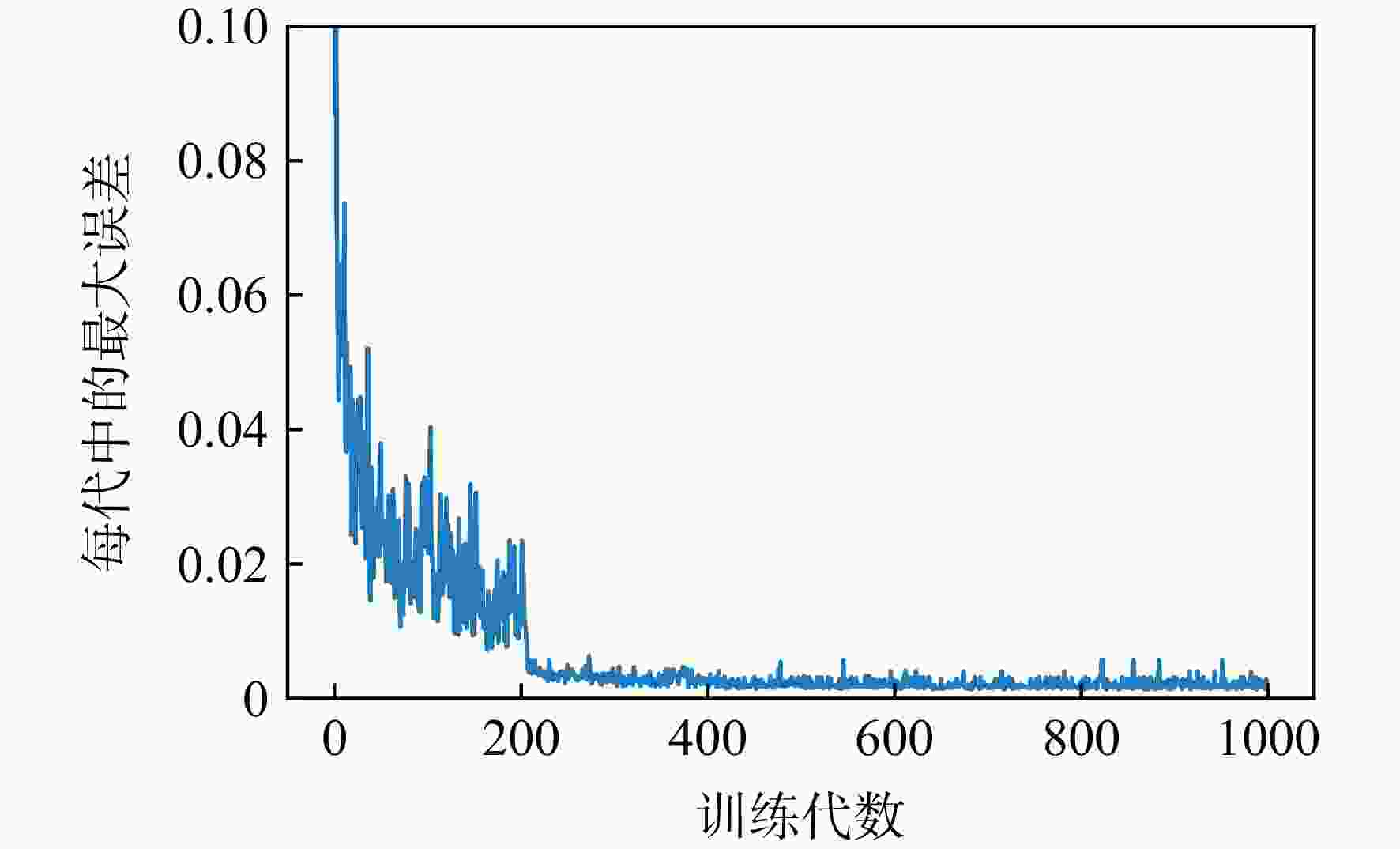
图 7 涡轮后温度最大训练误差趋势
Figure 7. Trend of maximum training error for turbine exit temperature
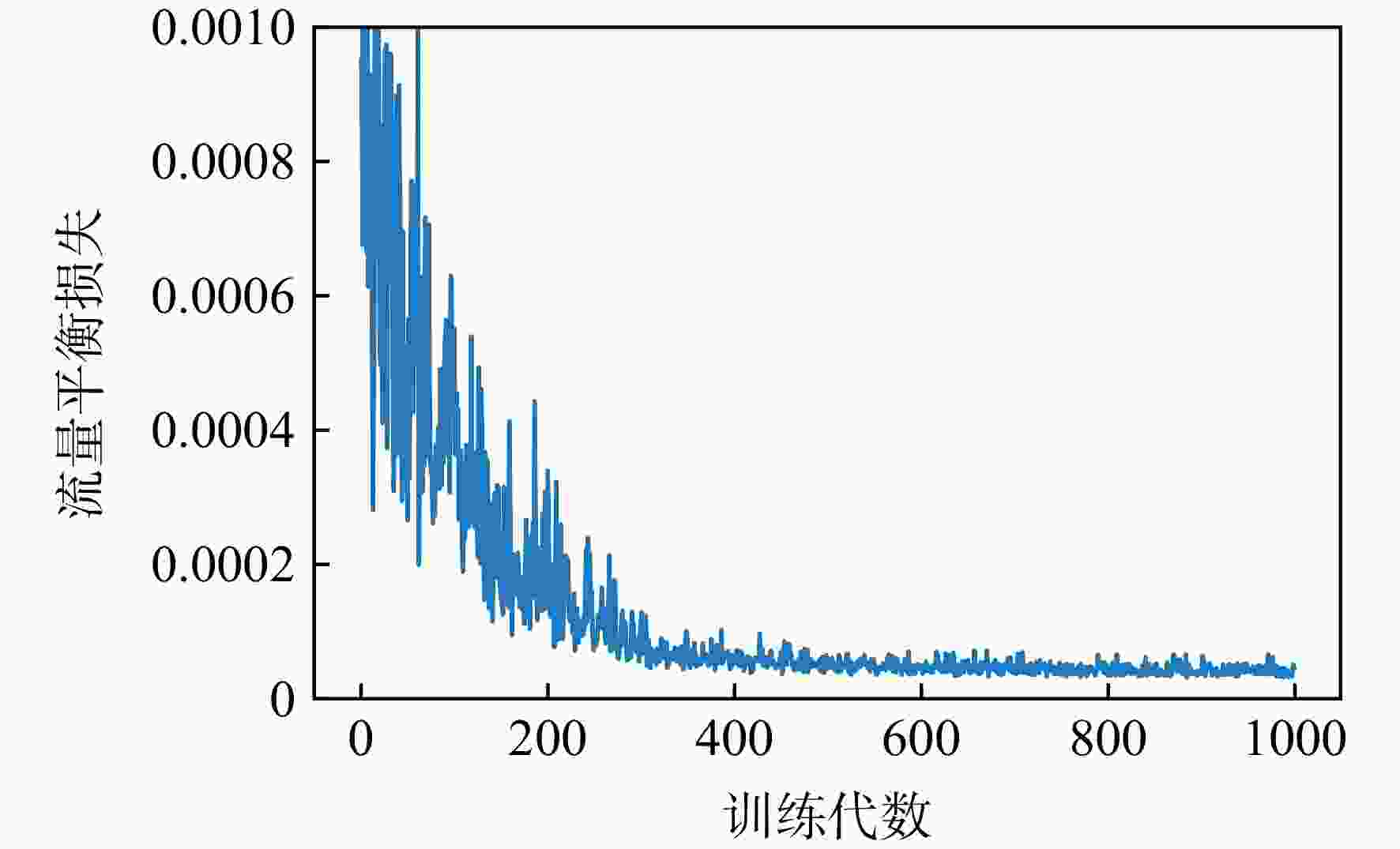
图 8 流量平衡损失最大值随训练代数的变化趋势
Figure 8. Trend of flow balance loss maximum with training epochs
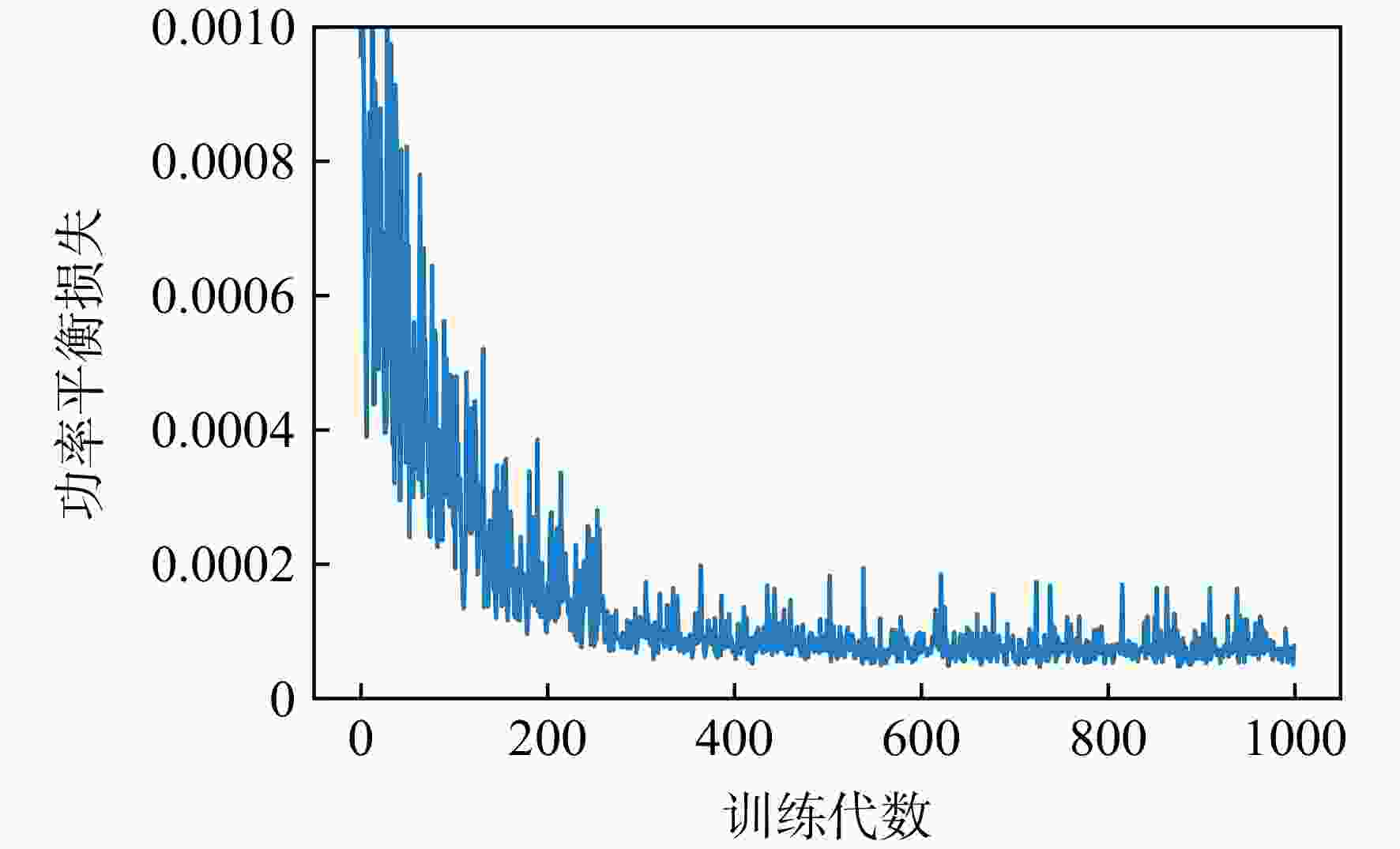
图 9 功率平衡损失最大值随训练代数的变化趋势
Figure 9. Trend of the maximum power balance loss with the training epochs
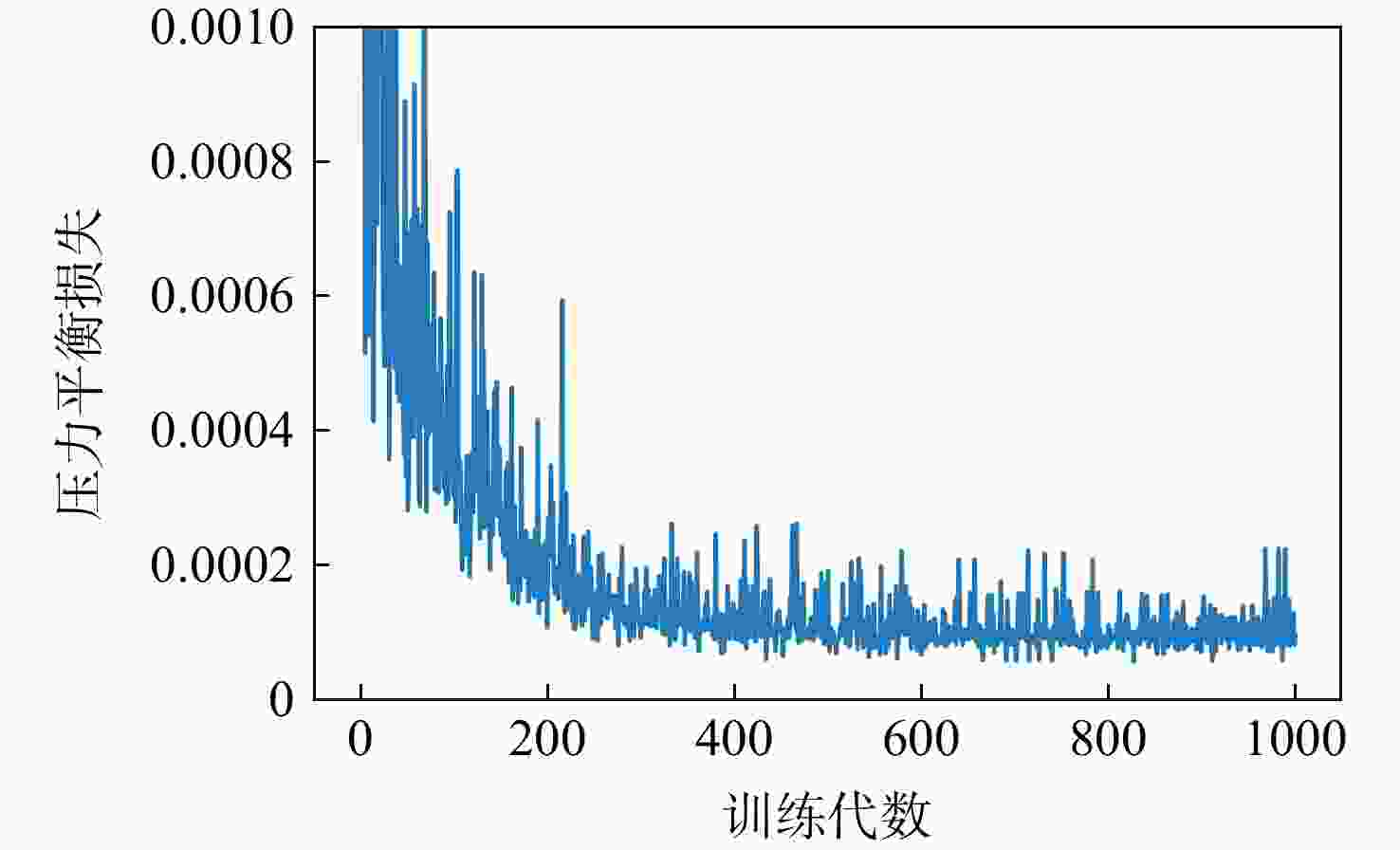
图 10 压力平衡损失最大值随训练代数的变化趋势
Figure 10. Trend of maximum pressure balance loss with training epochs
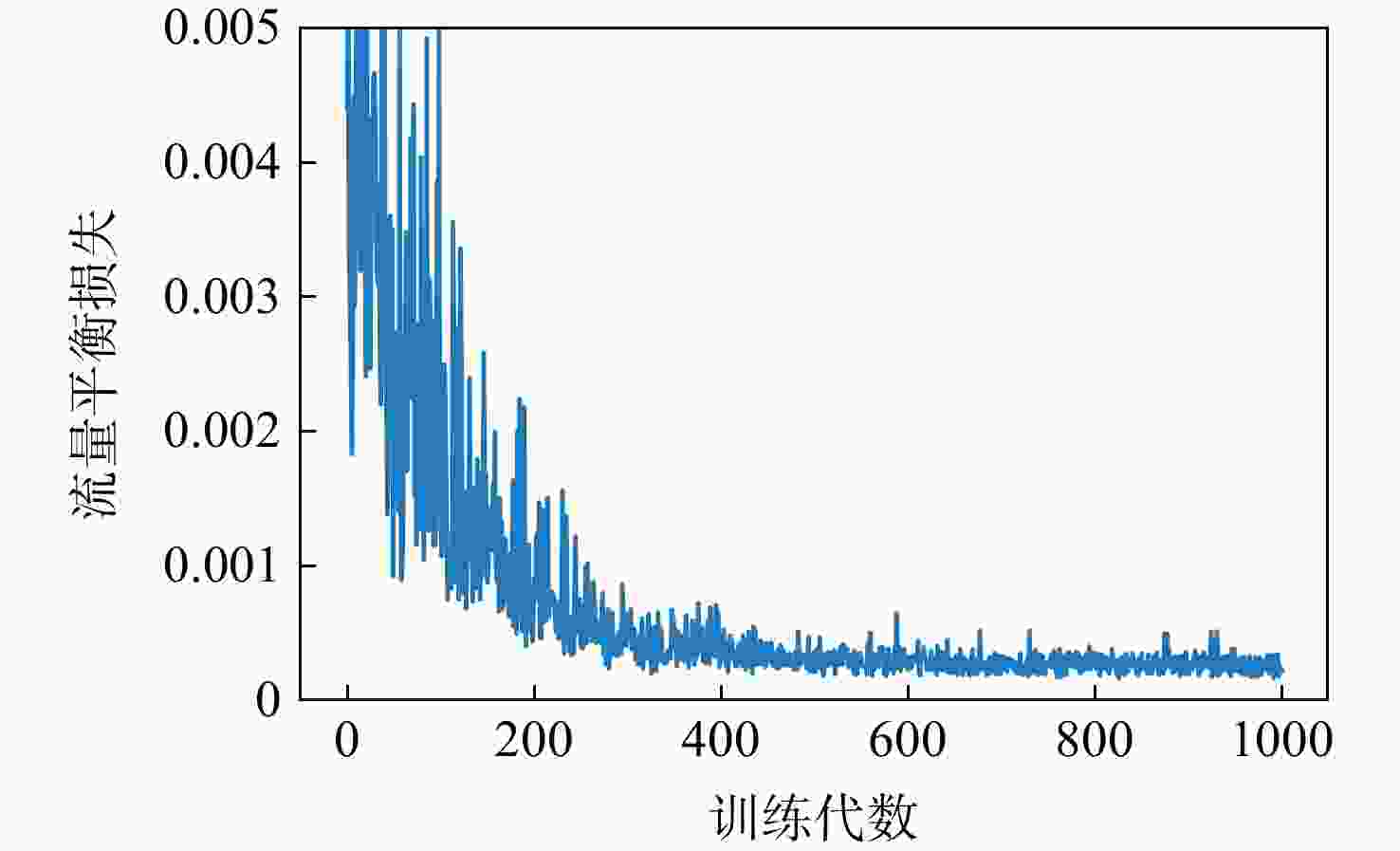
图 12 飞行训练集上流量平衡损失最大值随训练代数的变化趋势
Figure 12. Trend of flow balance loss maximum with training epochs in flight dataset
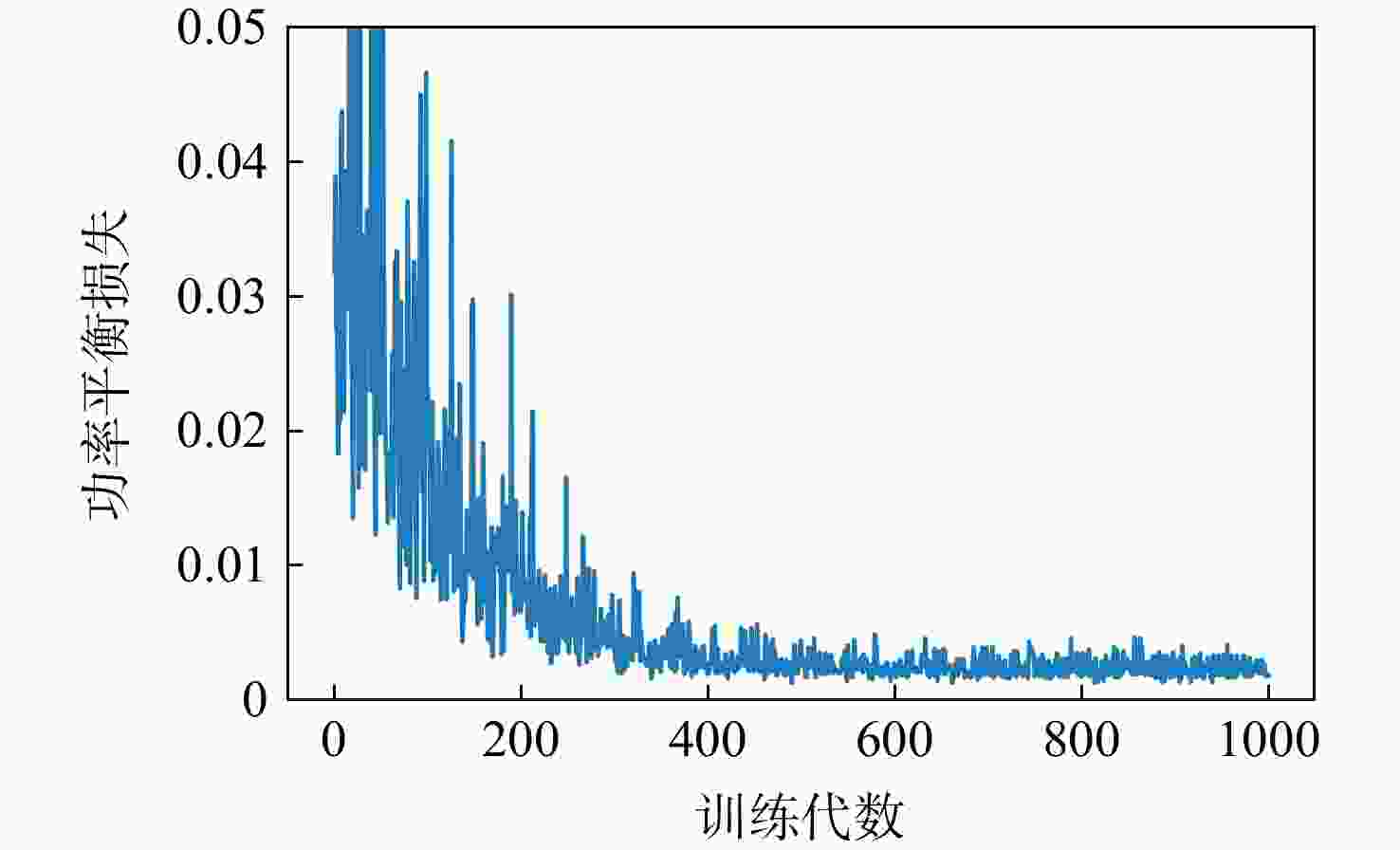
图 13 飞行训练集上功率平衡损失最大值随训练代数的变化趋势
Figure 13. Trend of power balance loss maximum with training epochs in flight dataset
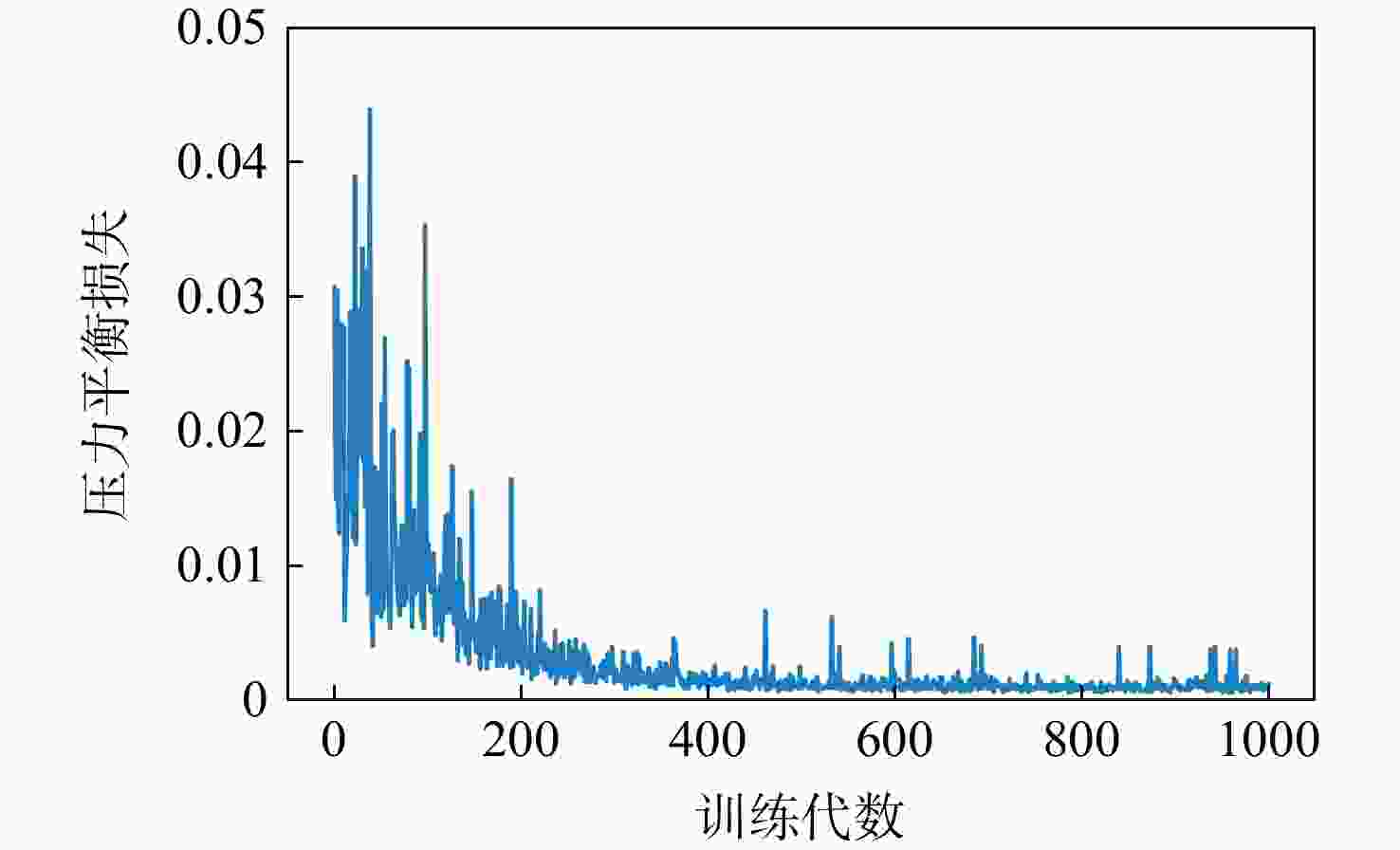
图 14 飞行训练集上压力平衡损失最大值随训练代数的变化趋势
Figure 14. Trend of pressure balance loss maximum with training epochs in flight dataset
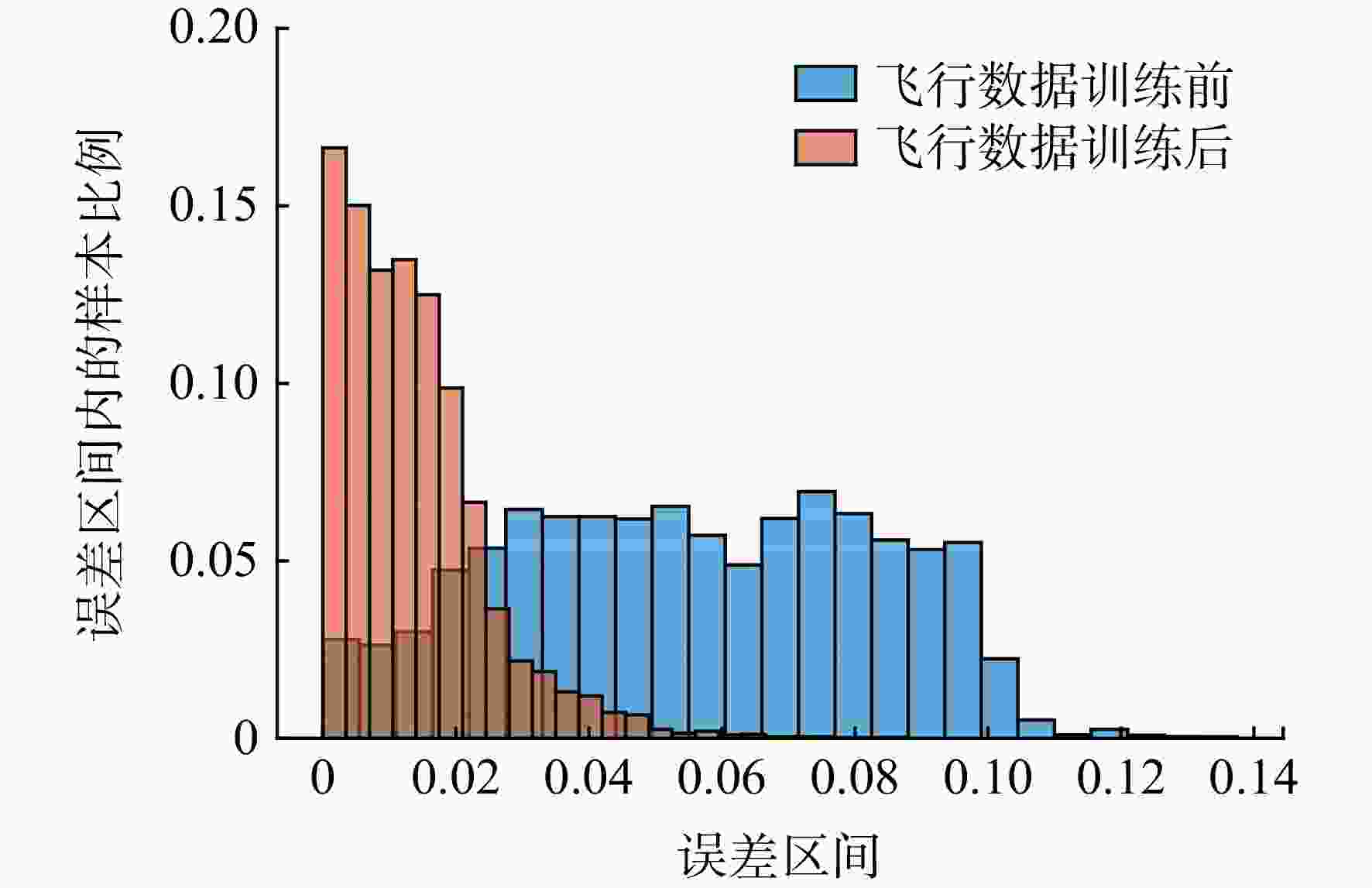
图 15 飞行数据训练前后网络模型对涡轮后温度的建模误差分布
Figure 15. Modeling error distribution of network models for turbine exit temperature before and after flight data training
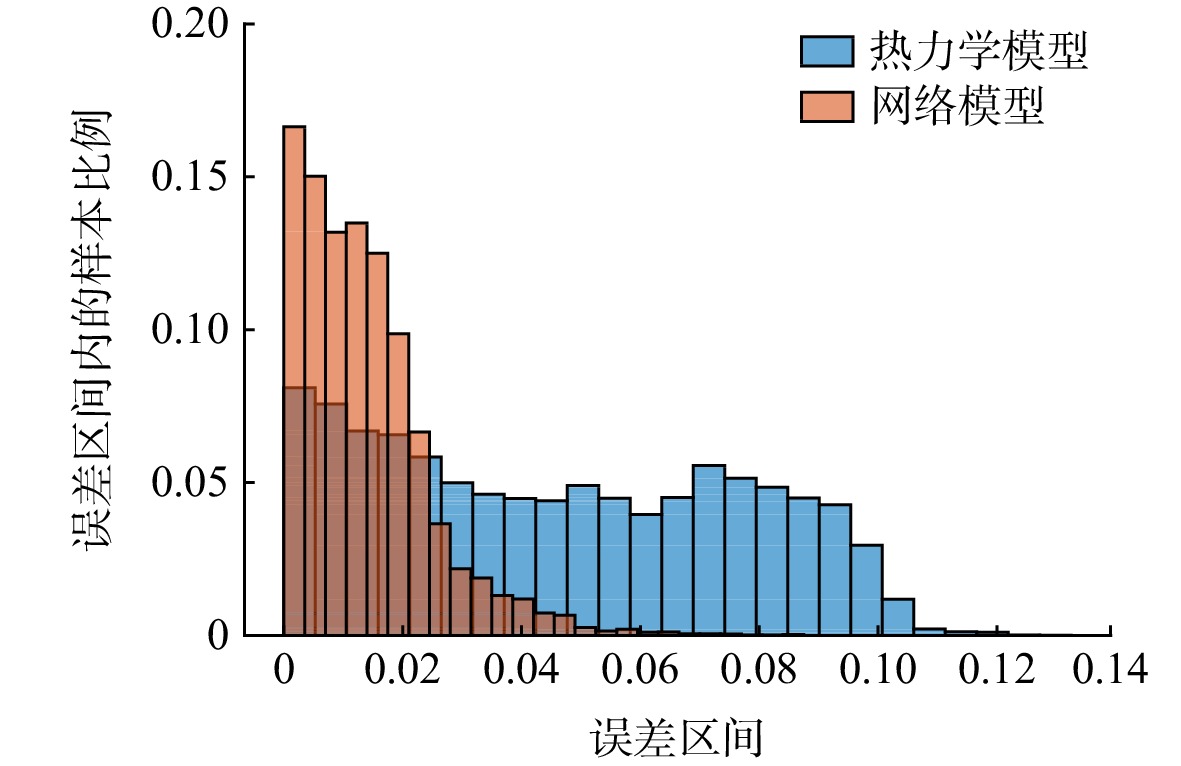
图 16 热力学模型与网络模型的误差分布对比
Figure 16. Error distribution comparison of the thermodynamic model and the proposed model
-
[1] SELLERS J F, CARL J D. DYNGEN-a program for calculating steady-state and transient performance of turbojet and turbofan engine[R]. NASA TN-D-7901, 1973. [2] 陈贞来,苏三买,李荣. 航空发动机涡轮特性转换方法[J]. 航空动力学报,2020,35(3): 651-657.CHEN Zhenlai,SU Sanmai,LI Rong. Turbine characteristics conversion method of aeroengine[J]. Journal of Aerospace Power,2020,35(3): 651-657. (in Chinese) [3] LIU Xiaofeng,ZHANG Liming,LUO Chenshuang. Model reference adaptive control for aero-engine based on system equilibrium manifold expansion model[J]. International Journal of Control,2023,96(4): 884-899. doi: 10.1080/00207179.2021.2016979 [4] 鲁峰,黄金泉. 航空发动机部件性能参数融合预测[J]. 航空学报,2009,30(10): 1795-1800.LU Feng,HUANG Jinquan. Engine component performance prognostics based on decision fusion[J]. Acta Aeronautica et Astronautica Sinica,2009,30(10): 1795-1800. (in Chinese) [5] SANCHEZ L L, VEGA J M, MONTANES J L, et al. Gradient-like minimization methods for signal treatment and aeroengines diagnosis and control ROM methods and LSI future applicability[C]//AIAA Propulsion and Energy 2020 Forum. Virtual Event: AIAA, 2020: 3681-3688. [6] 甘晓华,李伟. 现役航空发动机使用寿命确定和控制方法[J]. 航空工程进展,2010,1(2): 103-106.GAN Xiaohua,LI Wei. A summary of military aero-engine life determination methods[J]. Advances in Aeronautical Science and Engineering,2010,1(2): 103-106. (in Chinese) [7] 王占学,宋甫,周莉,等. 航空发动机数值缩放技术的研究进展[J]. 推进技术,2018,39(7): 1441-1454.WANG Zhanxue,SONG Fu,ZHOU Li,et al. Research progress in numerical zooming technology of aero-engine[J]. Journal of Propulsion Technology,2018,39(7): 1441-1454. (in Chinese) [8] KONG C,KI J,KANG M. A new scaling method for component maps of gas turbine using system identification[J]. Journal of Engineering for Gas Turbines and Power,2003,125(4): 979-985. doi: 10.1115/1.1610014 [9] KONG C,KI J. Study on component map identification from gas turbine performance deck data using hybrid method[J]. International Journal of Turbo and Jet Engines,2007,24(3/4): 171-182. [10] LI Y G,GHAFIR M F,WANG L,et al. Nonlinear multiple points gas turbine off-design performance adaptation using a genetic algorithm[J]. Journal of Engineering for Gas Turbines and Power,2011,133(7): 071701.1-071701.9. [11] LI Y G,ABDUL G F,WANG L,et al. Improved multi-ple point nonlinear genetic algorithm based perfor-mance adaptation using least square method[J]. Journal of Engineering for Gas Turbines and Power,2012,134(3): 031701.1-031701.10. [12] TSOUTSANIS E,MESKIN N,BENAMMAR M,et al. A component map tuning method for performance prediction and diagnostics of gas turbine compressors[J]. Applied Energy,2014,135: 572-585. doi: 10.1016/j.apenergy.2014.08.115 [13] TSOUTSANIS E,MESKIN N,BENAMMAR M,et al. Transient gas turbine performance diagnostics through nonlinear adaptation of compressor and turbine maps[J]. Journal of Engineering for Gas Turbines and Power,2015,137(9): 091201.1-091201.12. [14] KIM S,KIM K,SON C. Adaptation method for overall and local performances of gas turbine engine model[J]. International Journal of Aeronautical and Space Sciences,2018,19(1): 250-261. doi: 10.1007/s42405-018-0016-4 [15] YU Y,CHEN L,SUN F,et al. Neural-network based analysis and prediction of a compressor’s characteristic performance map[J]. Applied Energy,2007,84(1): 48-55. doi: 10.1016/j.apenergy.2006.04.005 [16] GHORBANIAN K,GHOLAMREZAEI M. An artificial neural network approach to compressor performance prediction[J]. Applied Energy,2009,86(7/8): 1210-1221. [17] 艾璐. 某型涡扇发动机部件特性预测与多变量控制研究[D]. 辽宁 大连: 大连理工大学, 2021.AI Lu. Research on component characteristics prediction and multivariable control for a turbofan engine[D]. Dalian Liaoning: Dalian University of Technology, 2021. (in Chinese) [18] 王昊. 航空发动机剩余使用寿命预测研究[D]. 辽宁 大连: 大连理工大学, 2022.WANG Hao. Research on remaining useful life prediction of aeroengine[D]. Dalian Liaoning: Dalian University of Technology, Dalian, 2022. (in Chinese) [19] 史国华. 数据驱动的航空发动机RUL预测模型研究[D]. 辽宁 大连: 大连理工大学, 2021.SHI Guohua. Research on data-driven aero-engine RUL prediction model[D]. Dalian Liaoning: Dalian University of Technology, 2021. (in Chinese) [20] 李国军. 基于神经网络的涡轴航空发动机控制系统建模及优化研究[D]. 成都: 电子科技大学, 2019.LI Guojun. Research on control system of turboshaft engine based on component method modeling and neural network[D]. Chengdu: University of Electronic Science and Technology of China, 2019. (in Chinese) [21] CHAO M A,KULKARNI C,GOEBEL K,et al. Fusing physics-based and deep learning models for prognostics[J]. Reliability Engineering & System Safety,2022,217: 107961.1-107961.18. [22] 王元,李秋红,黄向华. 基于自校正Broyden拟牛顿法的航空发动机模型数值计算[J]. 航空动力学报,2016,31(1): 249-256.WANG Yuan,LI Qiuhong,HUANG Xianghua. Numerical calculation of aero-engine model based on self-tuning Broyden quasi-Newton method[J]. Journal of Aerospace Power,2016,31(1): 249-256. (in Chinese) -

 下载:
下载:


 点击查看大图

计量
- 文章访问数: 866
- HTML浏览量: 439
- PDF量: 127
- 被引次数: 0