






A film superposition model integrating spatial iteration and deep learning
-
摘要:
结合神经网络方法发展一套隐含物理变量的空间迭代算法用于气膜叠加模型,并通过全覆盖气膜平板综合冷效实验和绝热数值模拟分别进行验证,解决了直接采用神经网络方法不蕴含真实物理规律以及缺乏可解释性的问题。通过精度对比和隐含变量挖掘,获得垂直平板方向5倍平板前缘边界层厚度位置处沿侧向的速度等4个可解释的气膜叠加模型关键封闭变量,验证了融合模型的精度和可靠性。
Abstract:A set of spatial iterative algorithms with implicit physical variables were developed in combination with the neural network method for film superposition model, and this model was verified by comprehensive film effectiveness experiment of a flat plate fully covered film cooling and adiabatic numerical simulation respectively. And it solved the problem that the directly used neural network method does not contain real physical laws and lacks of interpretability. At the same time, by comparing accuracy and mining implicit variables, the interpretable 4 key closed variables of the film superposition model, such as the lateral velocity at the position of 5 times the thickness of the front edge boundary layer in the vertical plate direction, were obtained, thus verifying the accuracy and reliability of the fusion model.
-
Key words:
- film cooling /
- superposition model /
- deep learning /
- spatial iterative /
- implicit physical variables
-
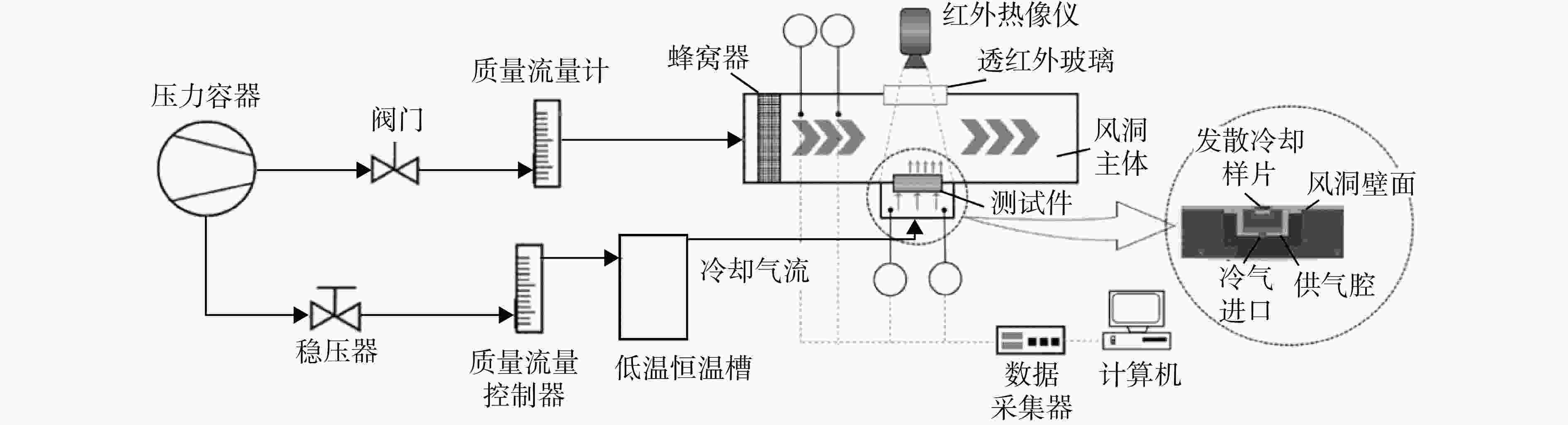
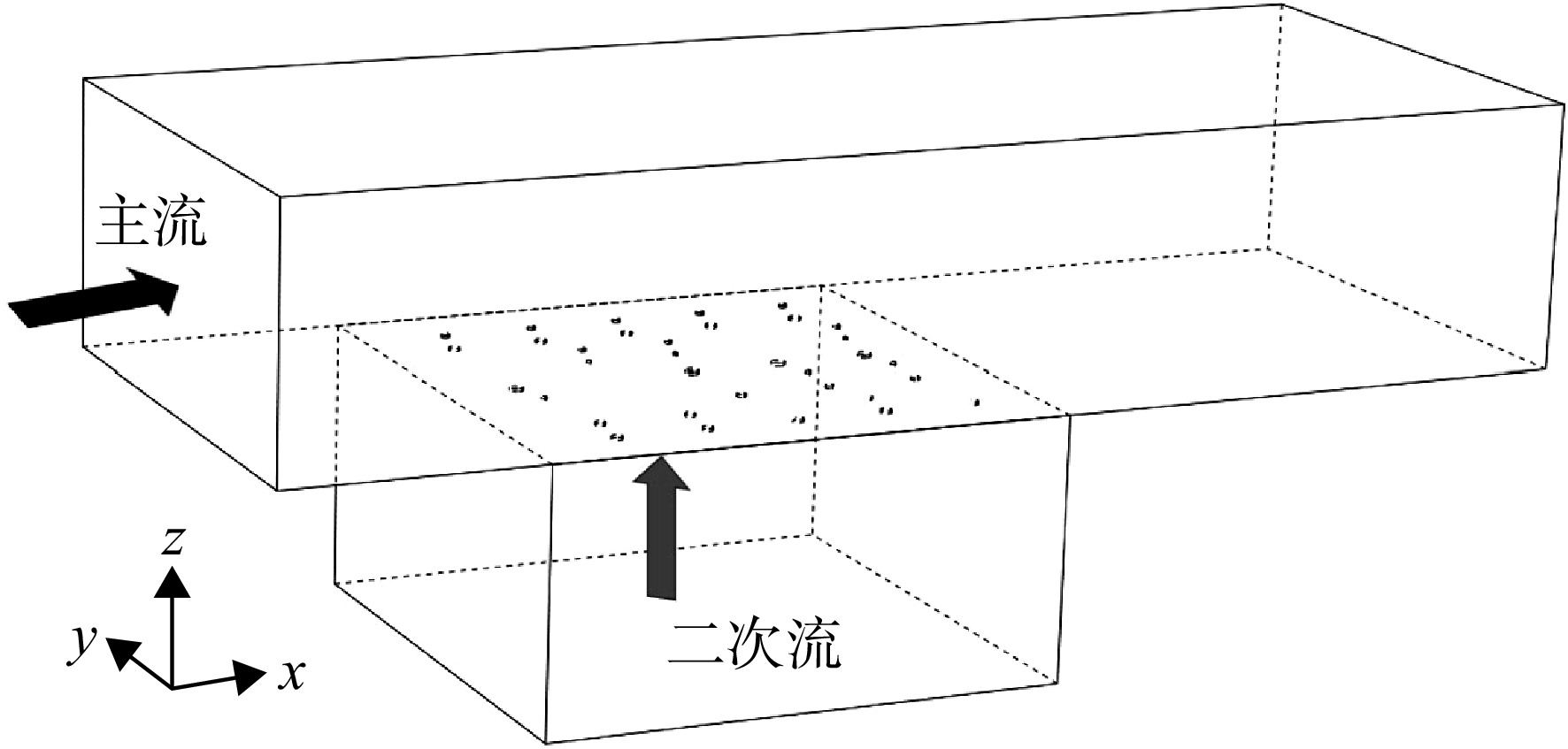
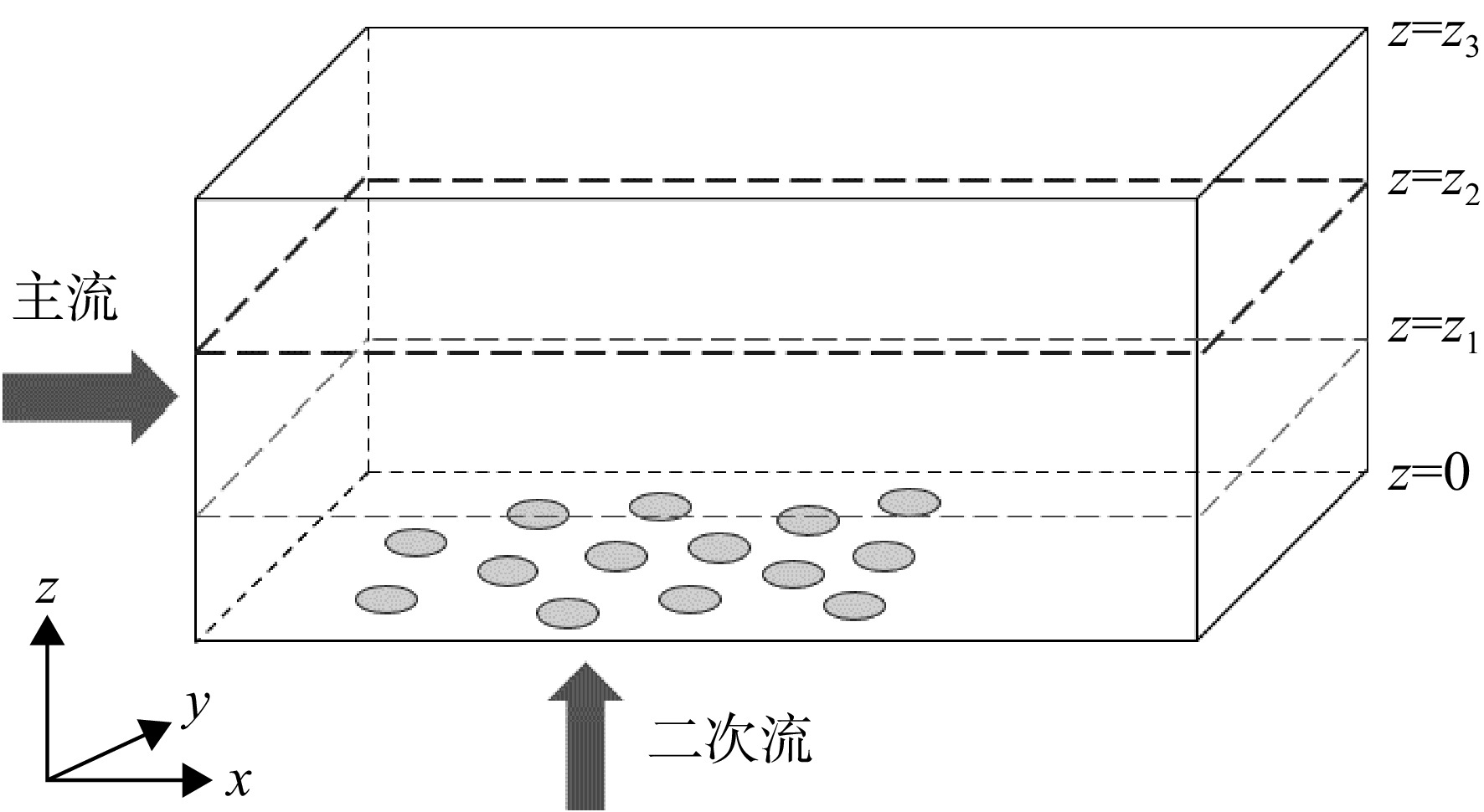
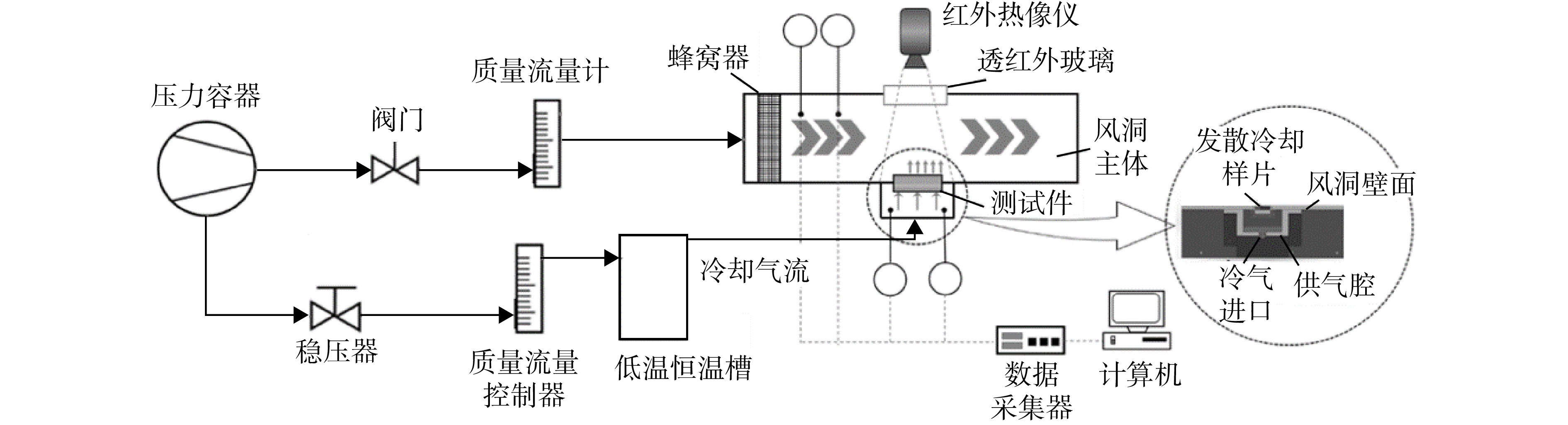
图 1 全覆盖气膜冷却实验台示意图
Figure 1. Schematic of experimental device of fully coverage film cooling
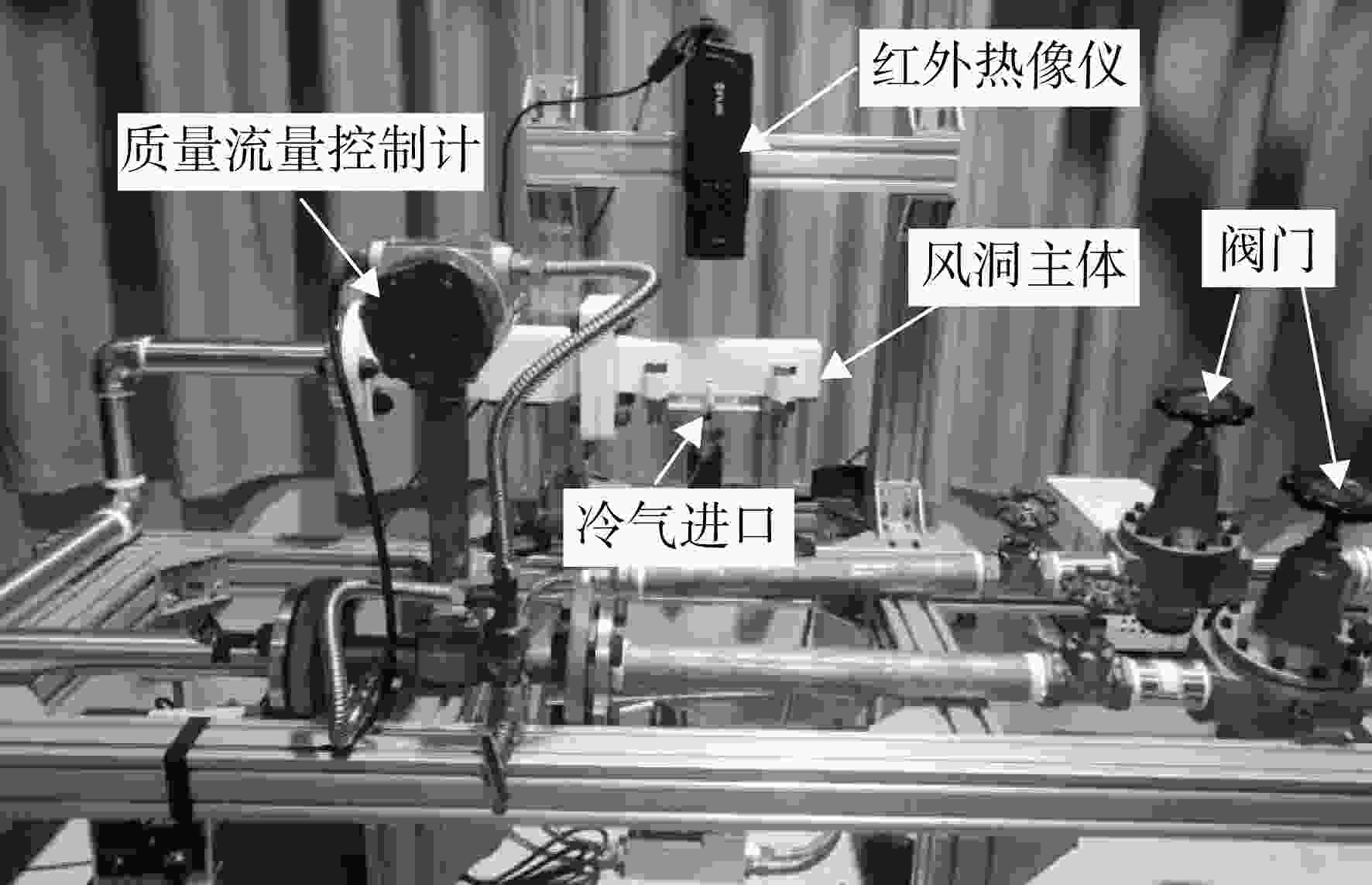
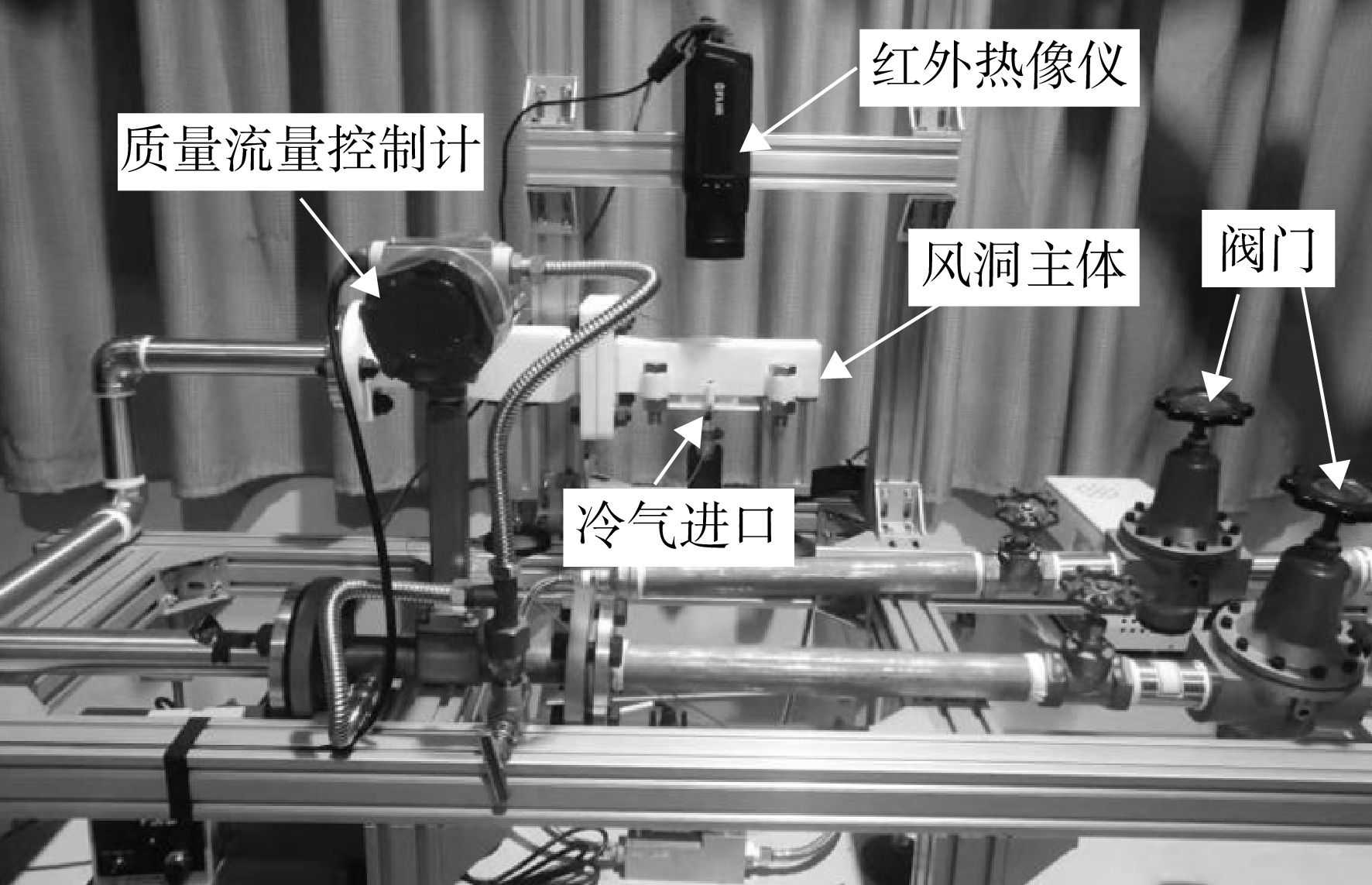
图 2 全覆盖气膜冷却实验台实物图
Figure 2. Photo of experimental device of fully coverage film cooling
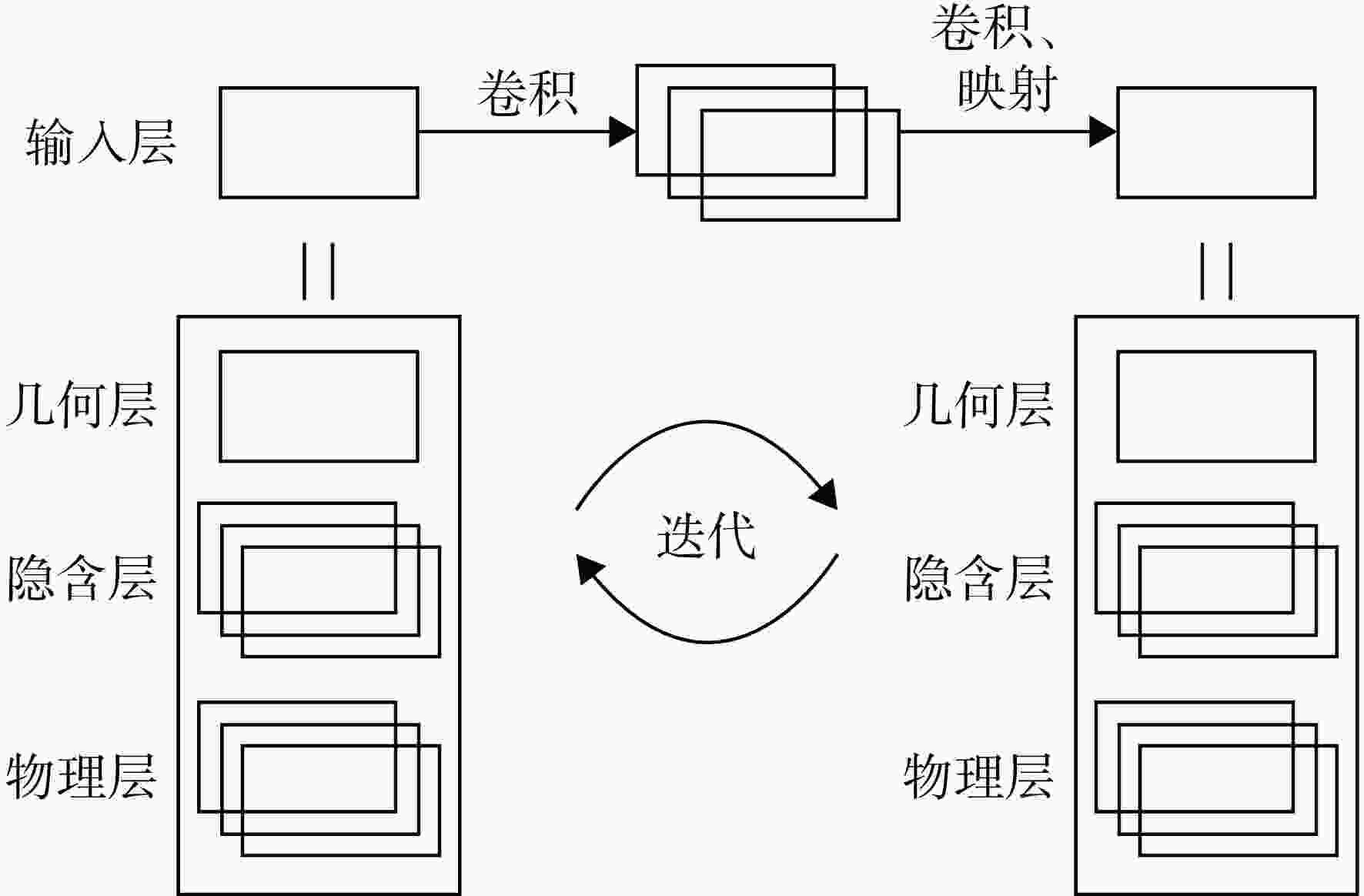
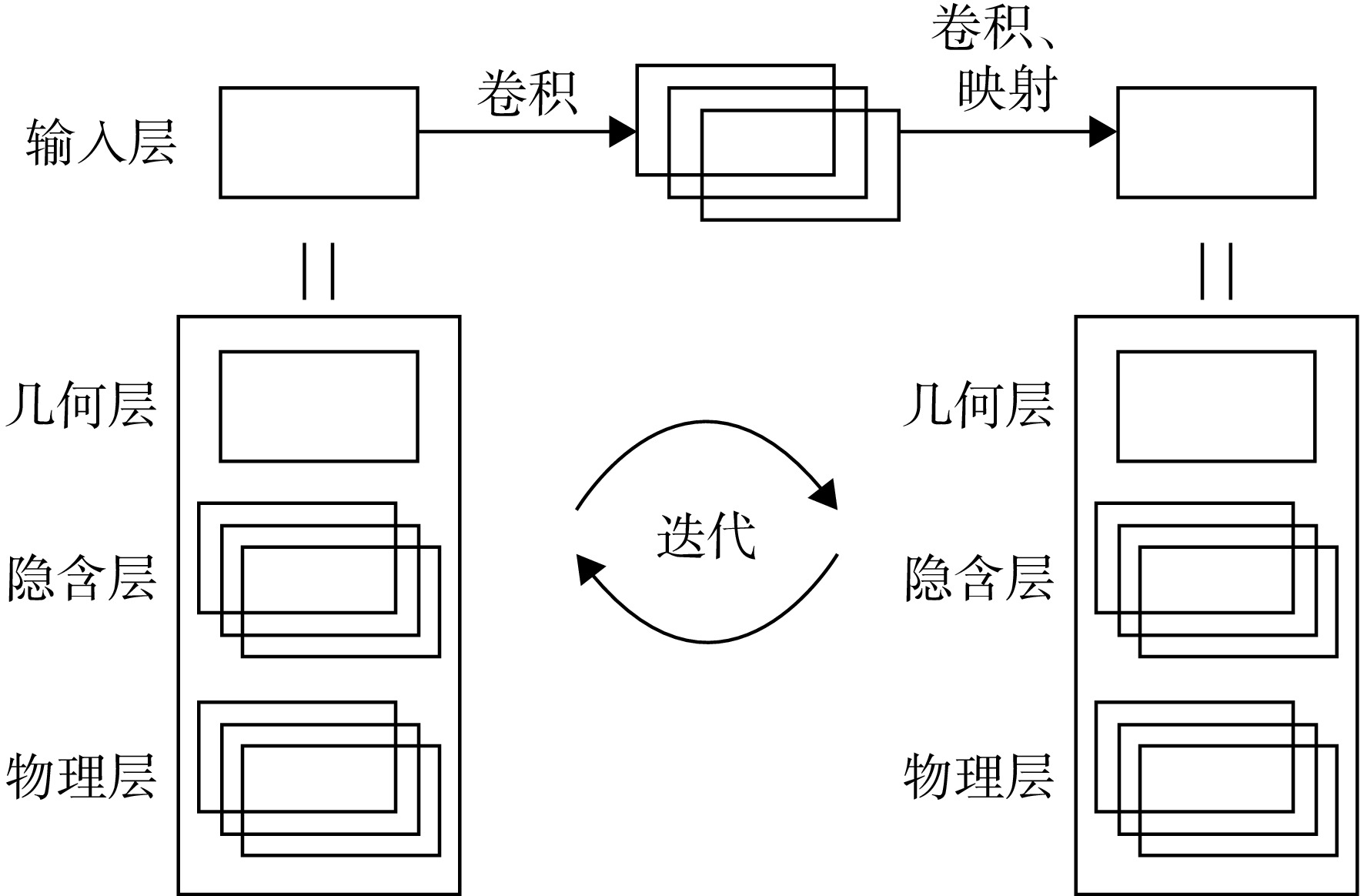
图 6 迭代算子网络架构
Figure 6. Framework of the physically iterative arithmetic convolution network
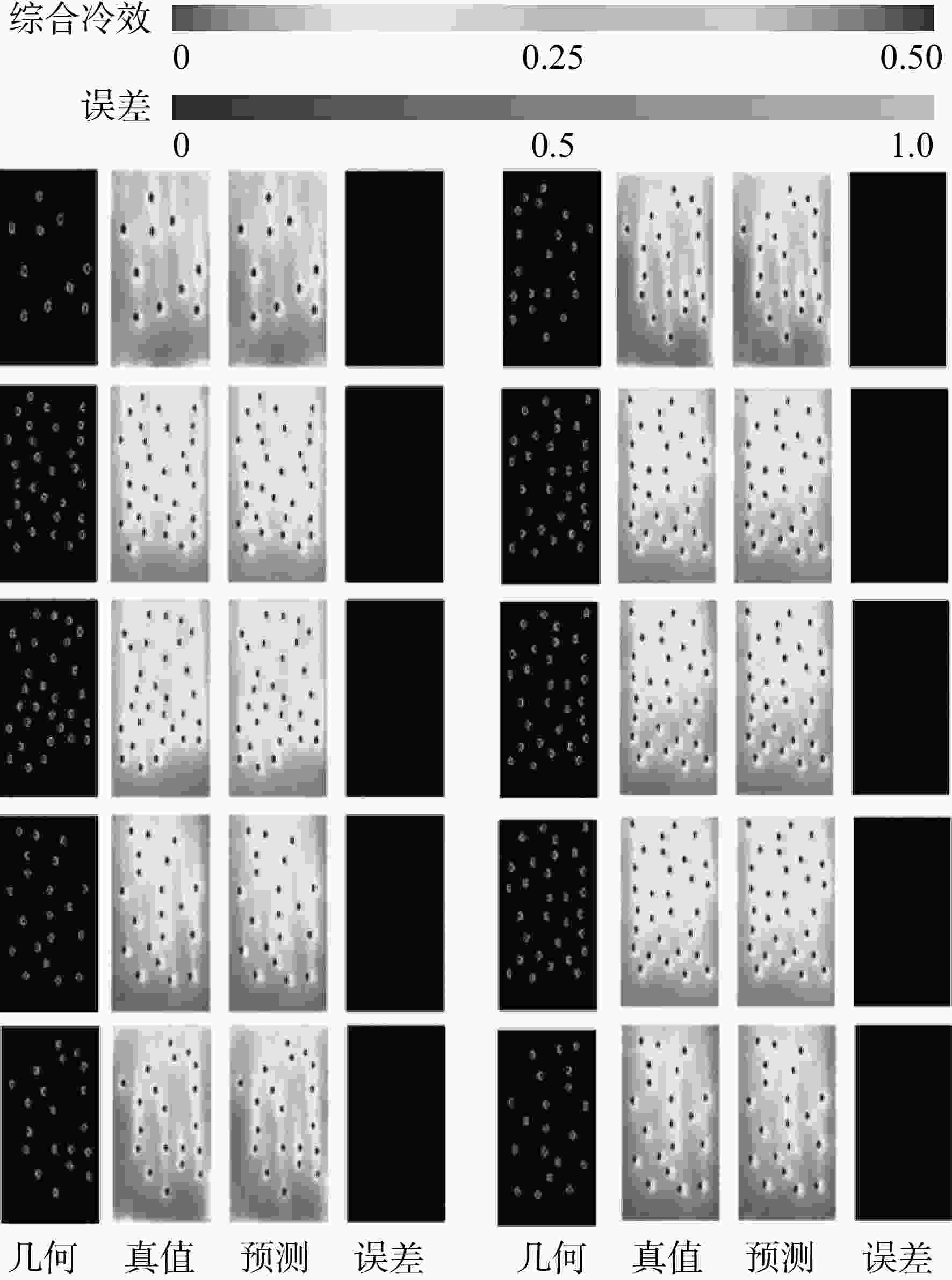
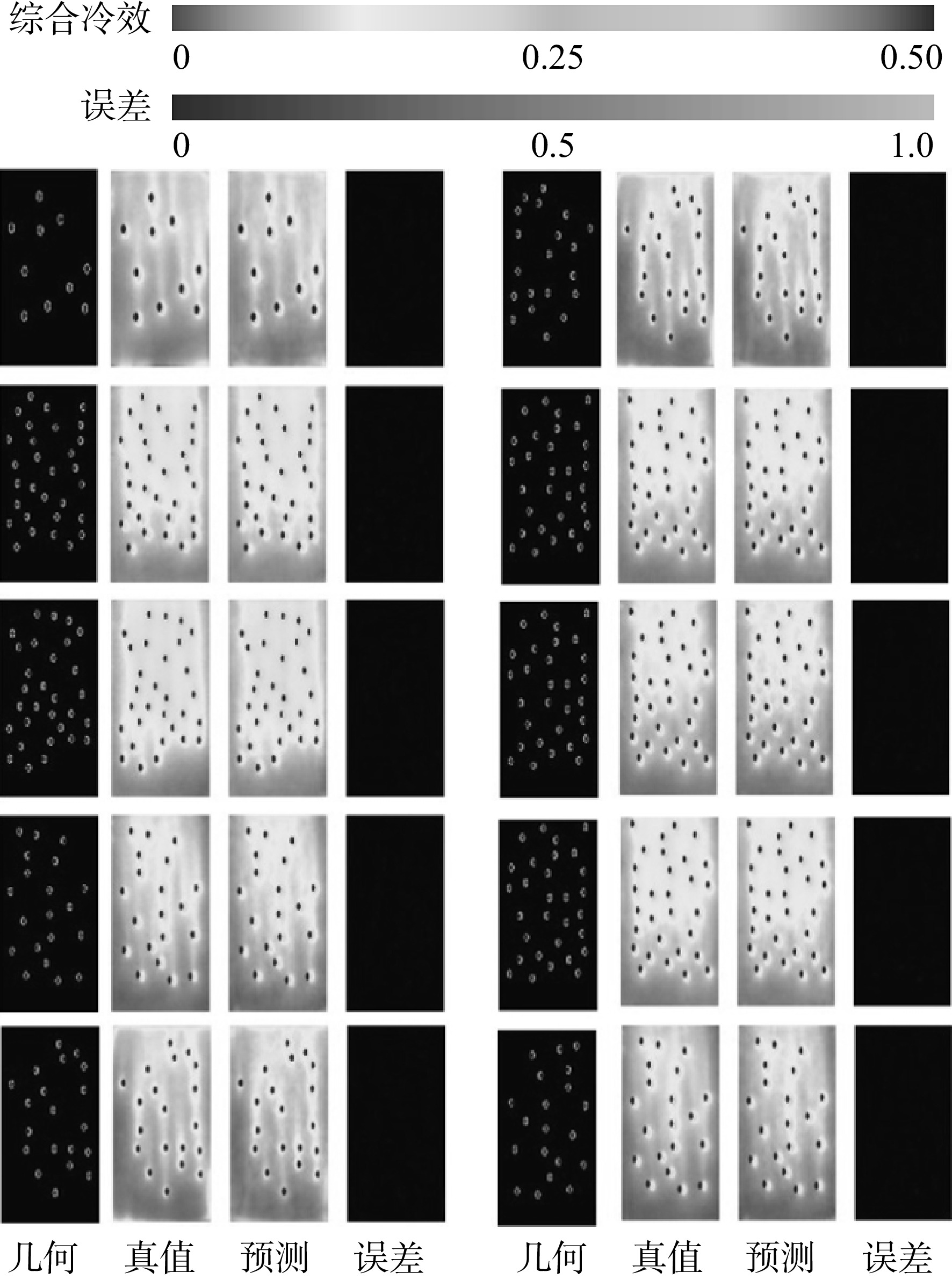
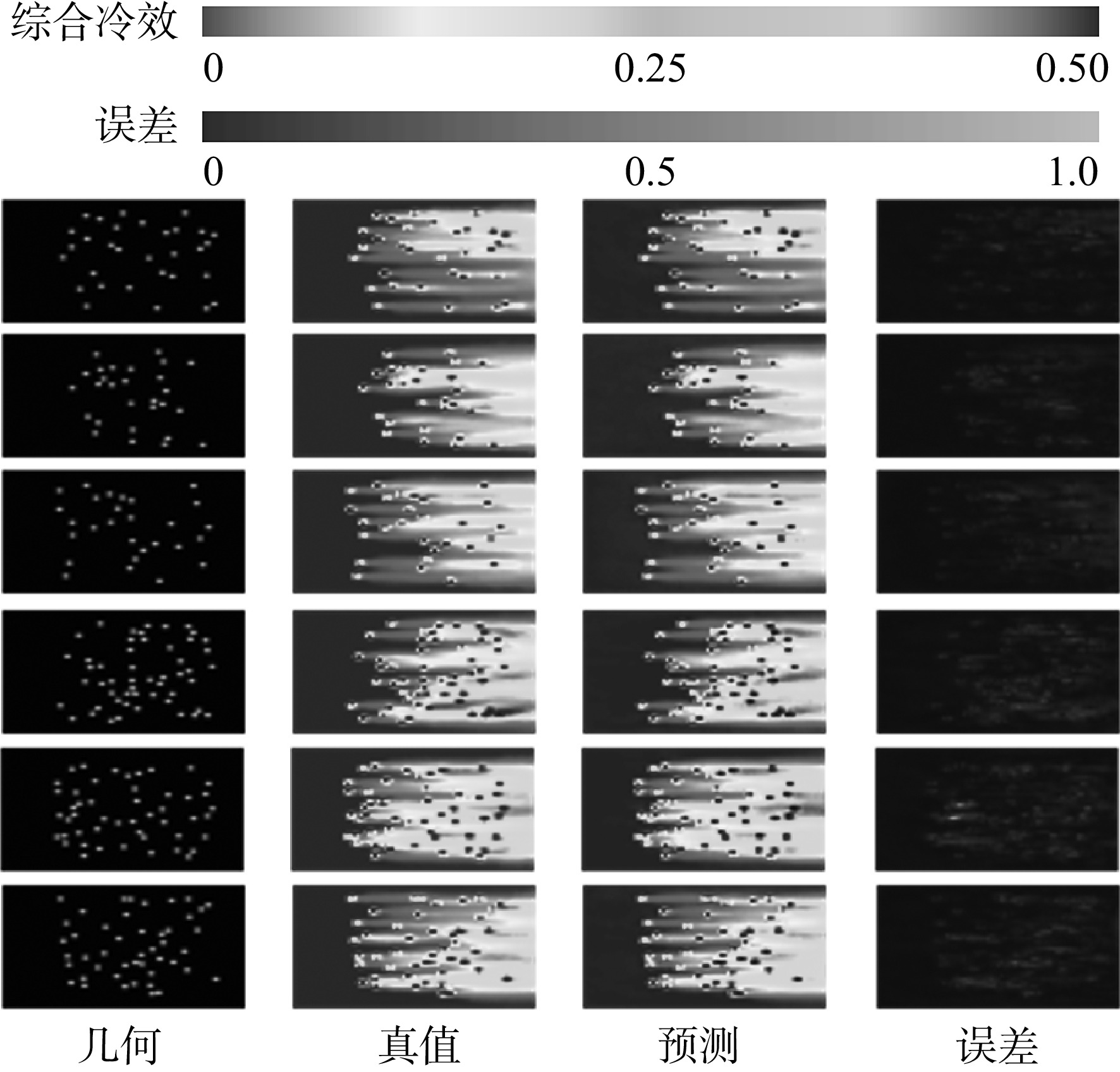
图 7 随机孔板训练集结果(综合冷效实验数据)
Figure 7. Results of random orifice plate training set (based on experimental data of comprehensive cooling efficiency)
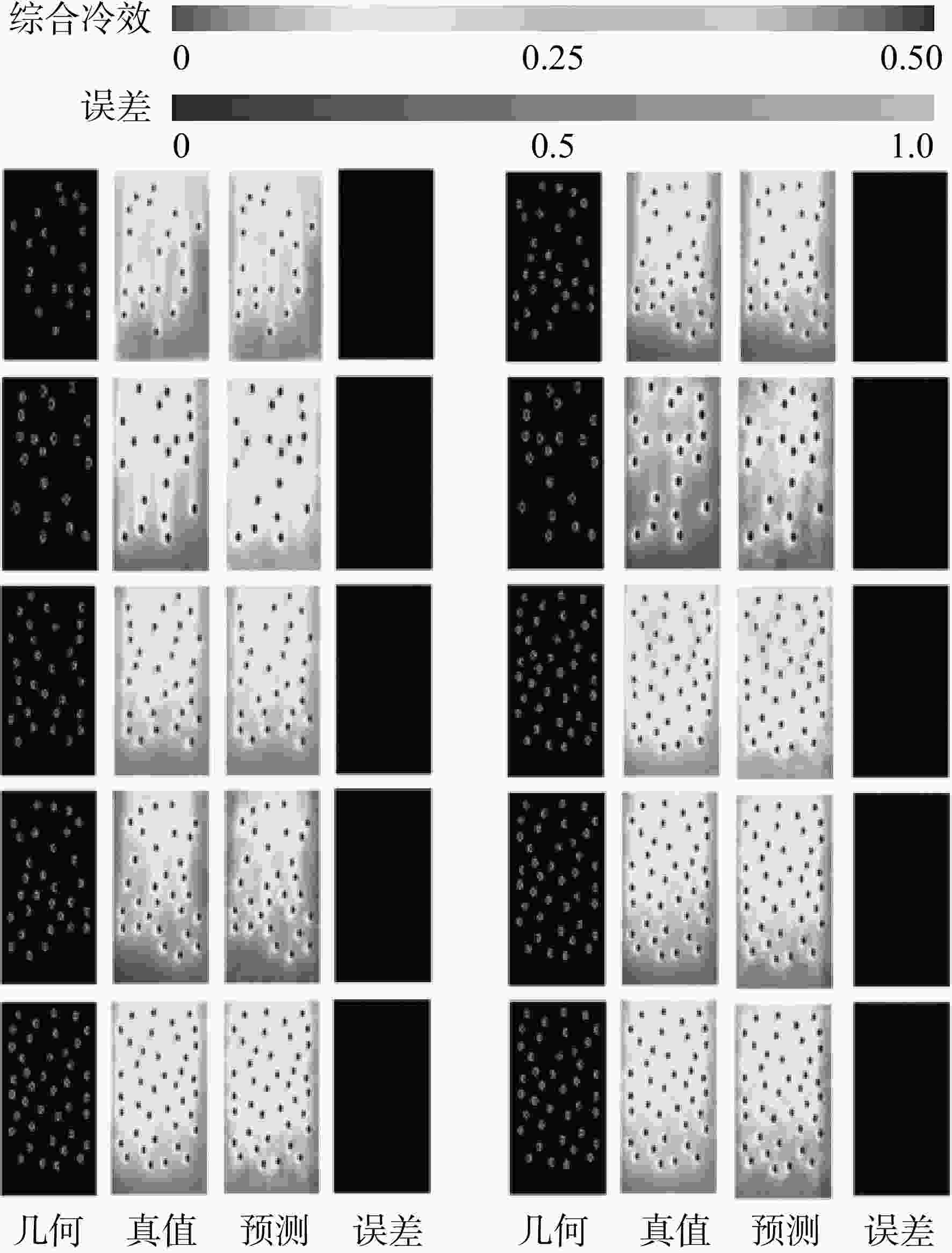
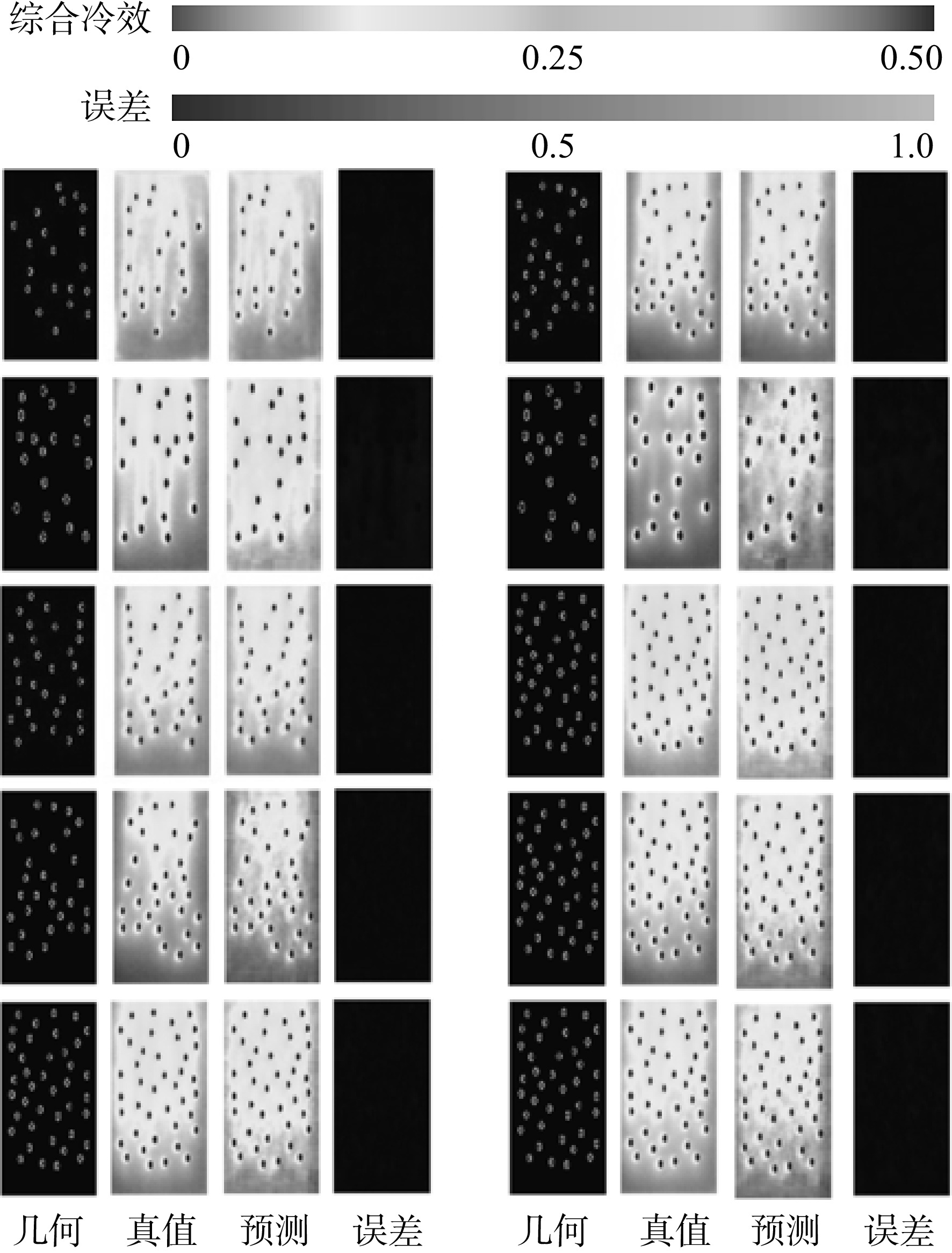
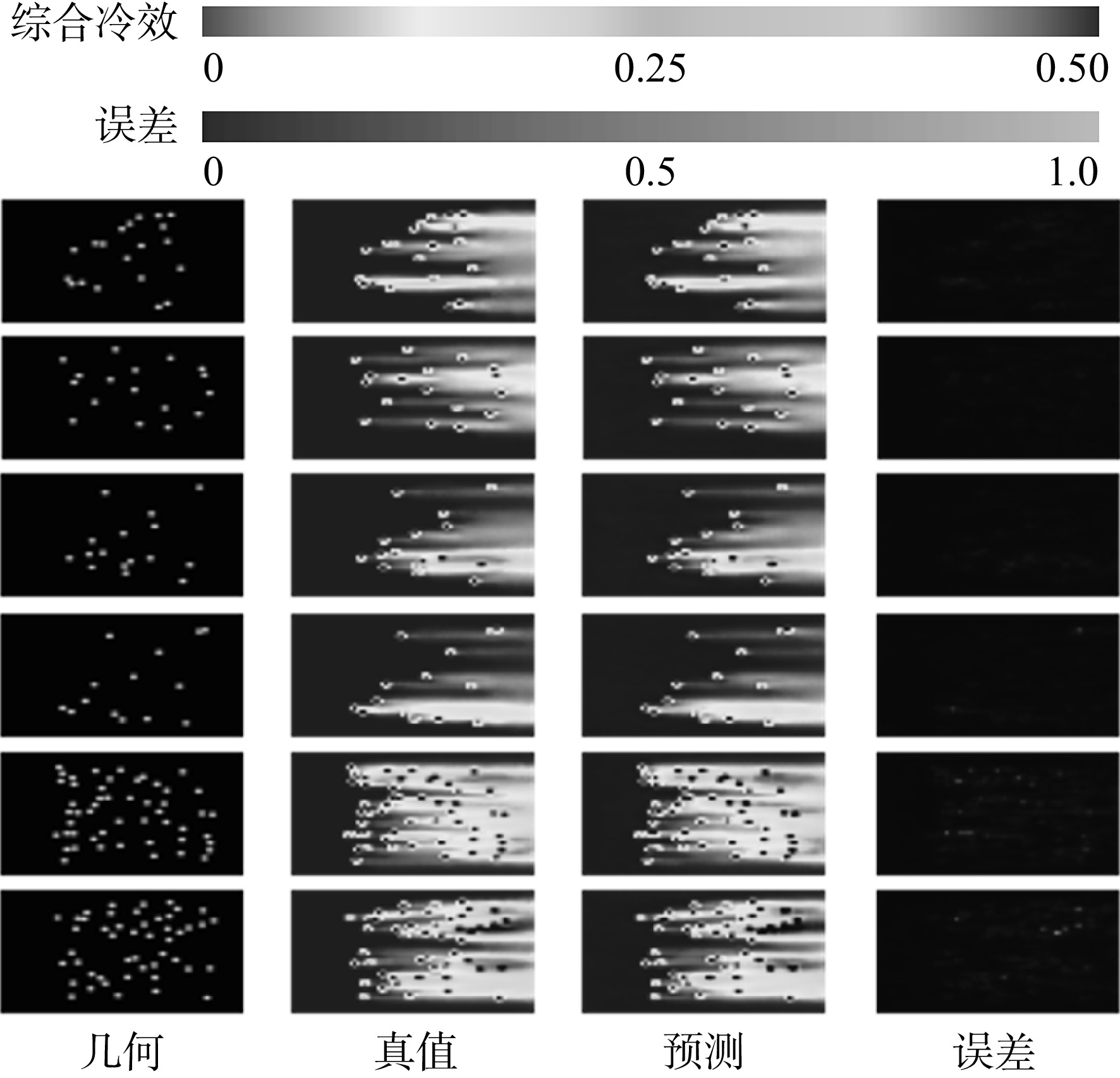
图 8 随机孔板测试集结果(综合冷效实验数据)
Figure 8. Results of random orifice plate test set (based on experimental data of comprehensive cooling efficiency)
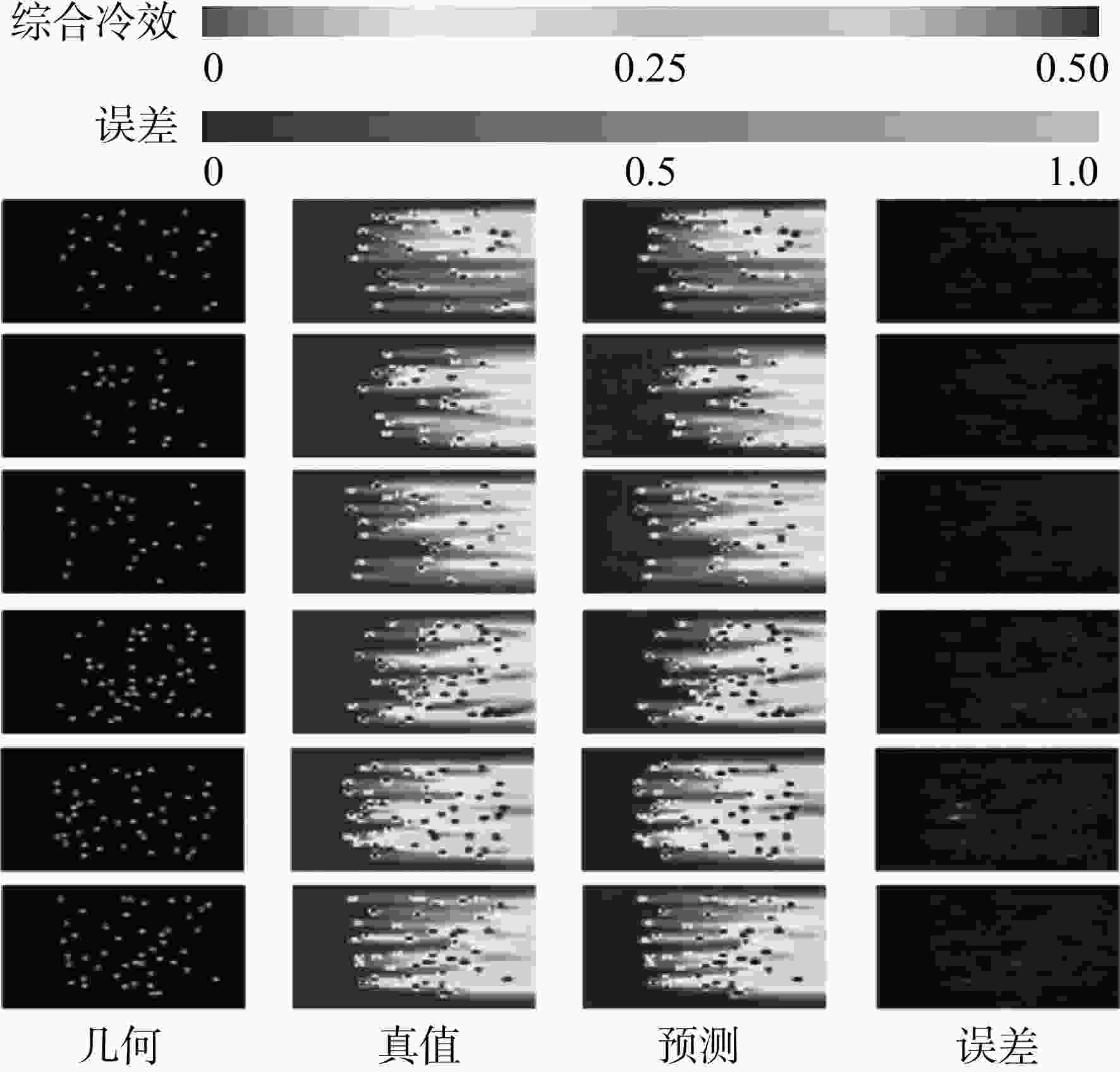
图 9 随机孔板训练集结果(绝热冷效数值模拟数据)
Figure 9. Results of random orifice plate training set (based on numerical simulation data of adiabatic cooling efficiency)
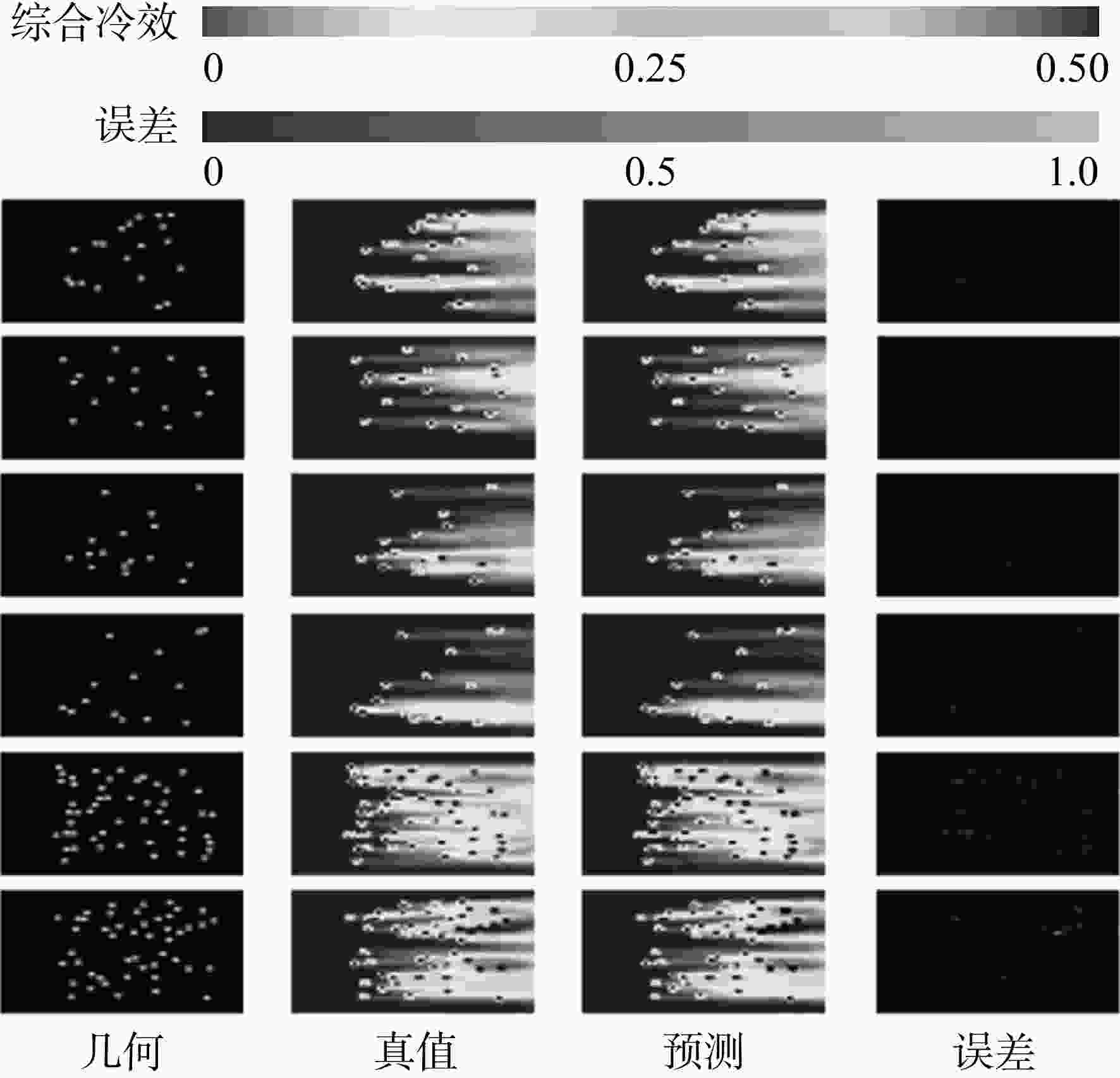
图 10 随机孔板测试集结果(绝热冷效数值模拟数据)
Figure 10. Results of random orifice plate test set (based on numerical simulation data of adiabatic cooling efficiency)
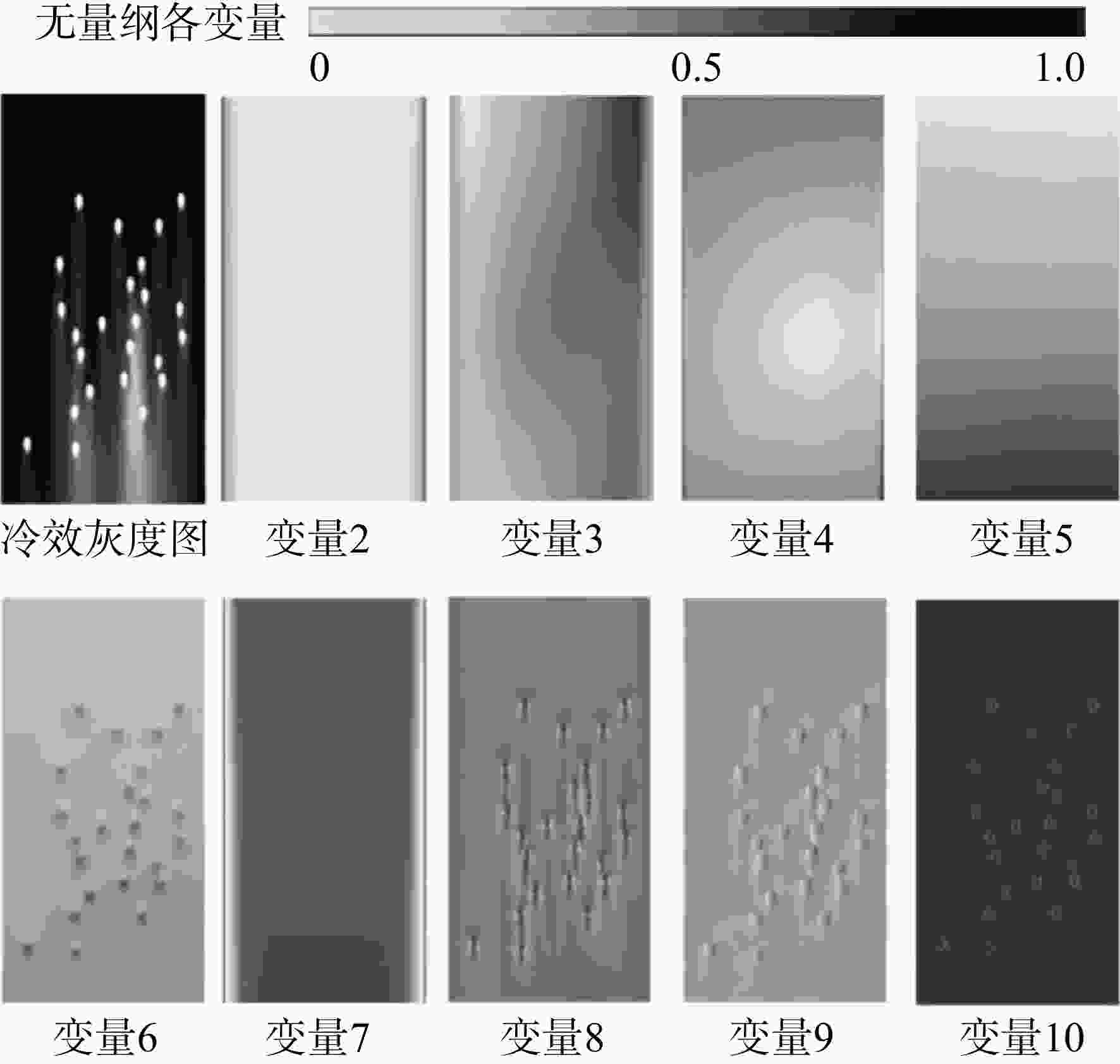
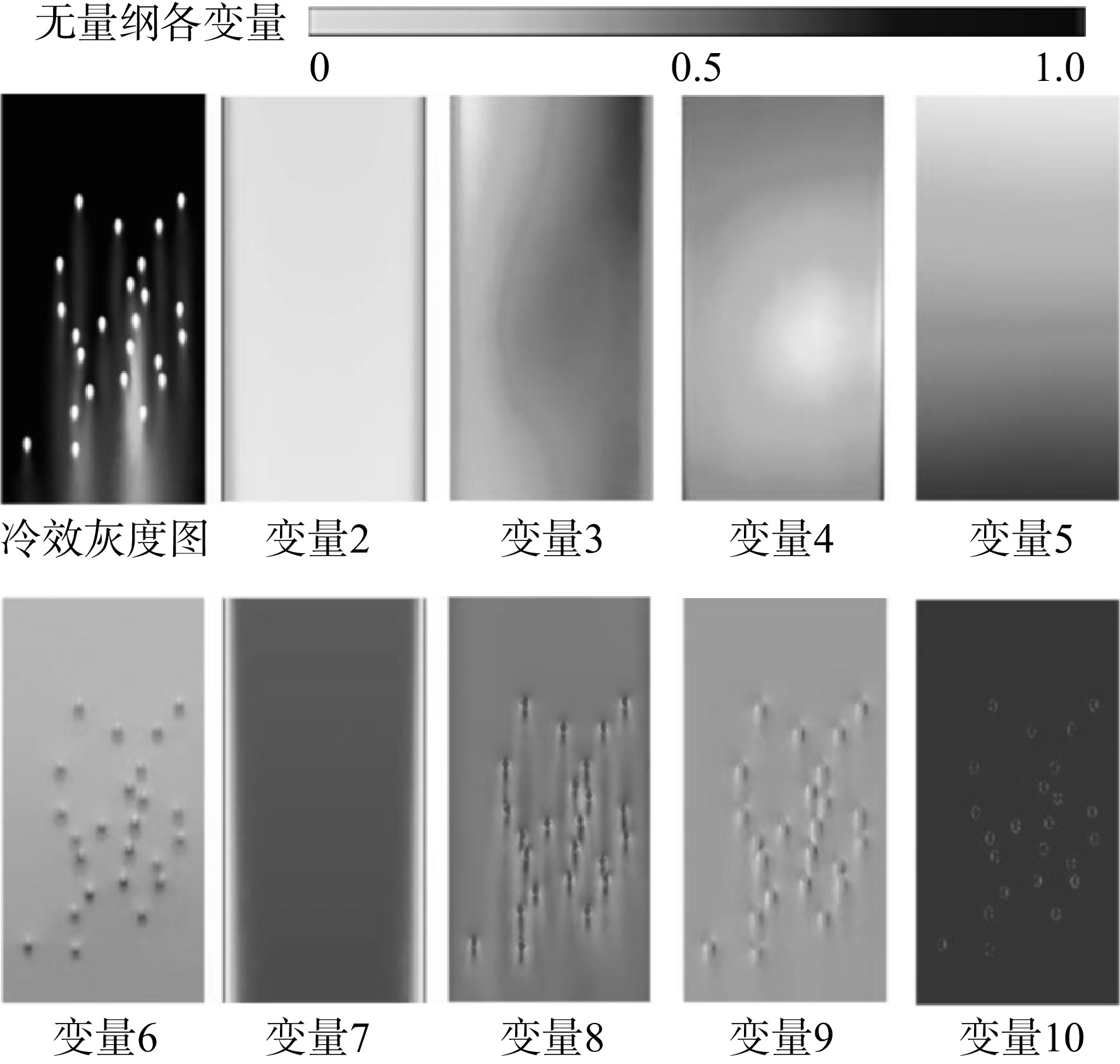
图 11 全覆盖气膜冷却近壁面变量分布
Figure 11. Near wall parameters distribution of fully coverage film cooling
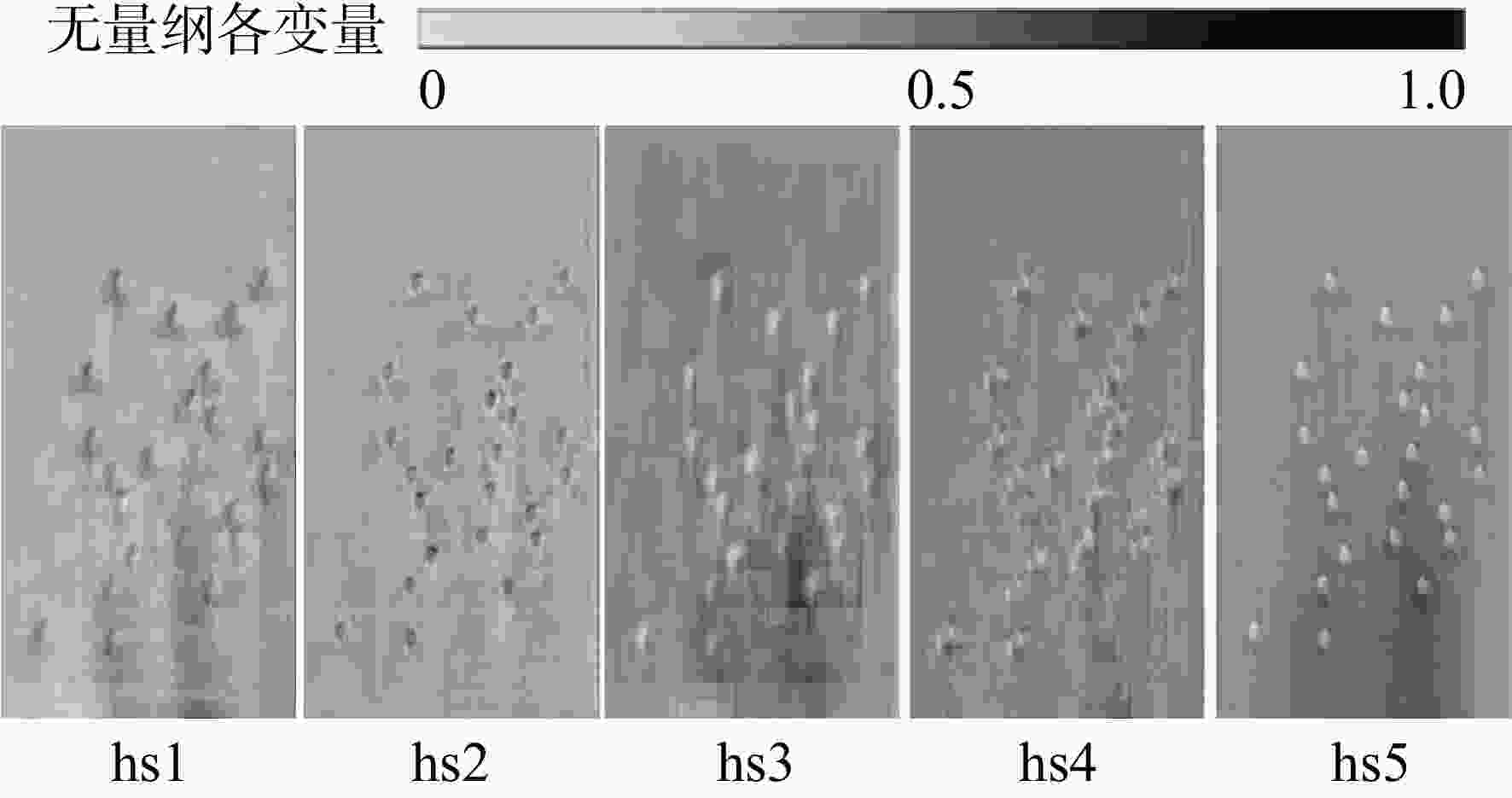
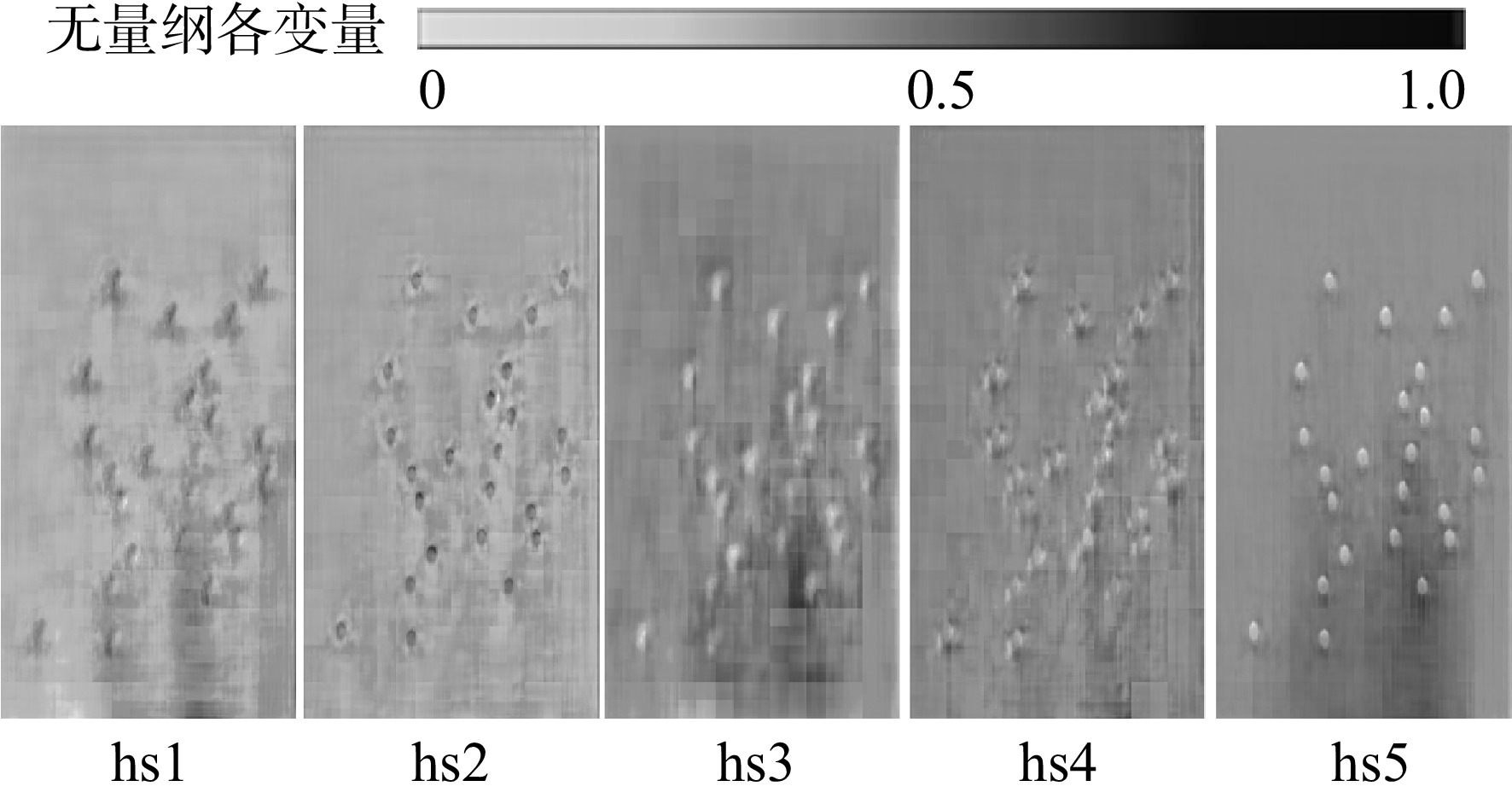
图 12 迭代算子全覆盖气膜叠加模型隐含层
Figure 12. Hidden state of fully coverage film superposition model
-
[1] HUANG Gan,HE Li. Influence of inhomogeneous porosity on effusion cooling[J]. International Journal of Heat and Mass Transfer,2019,144: 118675. doi: 10.1016/j.ijheatmasstransfer.2019.118675 [2] YANG Li,MIN Zheng,YUE Tianwei,et al. High resolution cooling effectiveness reconstruction of transpiration cooling using convolution modeling method[J]. International Journal of Heat and Mass Transfer,2019,133: 1134-1144. doi: 10.1016/j.ijheatmasstransfer.2019.01.010 [3] SELLERS J P JR. Combined external and internal cooling[J]. AIAA Journal,1963,1(9): 2152-2154. doi: 10.2514/3.2013 [4] WANG L,LI X Y,REN J,et al. Effect of row spacing on the accuracy of film cooling superposition method[R]. Oslo,Norway: ASME Turbo Expo 2018: Turbomachinery Technical Conference and Exposition,2018. [5] LI Xueying,REN Jing,JIANG Hongde. Multi-row film cooling characteristics on a vane endwall[J]. International Journal of Heat and Mass Transfer,2016,92: 23-33. doi: 10.1016/j.ijheatmasstransfer.2015.08.049 [6] SASAKI M,TAKAHARA K,KUMAGAI T,et al. Film cooling effectiveness for injection from multirow holes[J]. Journal of Engineering for Power,1979,101(1): 101-108. doi: 10.1115/1.3446430 [7] AFEJUKU W O,HAY N,LAMPARD D. The film cooling effectiveness of double rows of holes[J]. Journal of Engineering for Power,1980,102(3): 601-606. doi: 10.1115/1.3230309 [8] CHEN Ziyu,MAO Yinbo,HU Kexin,et al. 2-D prediction method for multi-row film cooling effectiveness[J]. Applied Thermal Engineering,2021,199: 117607. doi: 10.1016/j.applthermaleng.2021.117607 [9] SAUMWEBER C,SCHULZ A. Interactions of film cooling rows: effects of hole geometry and row spacing on the cooling performance downstream of the second row of holes[R]. Atlanta,US: ASME Turbo Expo 2003,Collocated with the 2003 International Joint Power Generation Conference,2009. [10] MENG T,ZHU H R,LIU C L,et al. Accuracy of superposition predictions of film cooling effectiveness on a flat plate with double rows of holes[R]. New York,US: ASME Turbo Expo 2016: Turbomachinery Technical Conference and Exposition,2016. [11] NATSUI G,LITTLE Z,KAPAT J S,et al. Adiabatic film cooling effectiveness measurements throughout multirow film cooling arrays[J]. Journal of Turbomachinery,2017,139(10): 101008. doi: 10.1115/1.4035520 [12] ZHU Huiren,GUO Tao,XU Duchun. Investigation of film cooling and superposition method for double row dustpan-shaped holes[J]. Heat Transfer—Asian Research,2008,37(4): 208-217. doi: 10.1002/htj.20204 [13] INGRAM P T,YAVUZKURT S. A superposition technique for multiple-row film-cooling for calculation of 2-D effectiveness and heat transfer coefficients[R]. New York,US: ASME Turbo Expo 2015: Turbine Technical Conference and Exposition,2015. [14] HARRINGTON M K,MCWATERS M A,BOGARD D G,et al. Full-coverage film cooling with short normal injection holes[J]. Journal of Turbomachinery,2001,123(4): 798-805. doi: 10.1115/1.1400111 [15] KIROLLOS B,POVEY T. An energy-based method for predicting the additive effect of multiple film cooling rows[J]. Journal of Engineering for Gas Turbines and Power,2015,137(12): 122607. doi: 10.1115/1.4030907 [16] KIROLLOS B,POVEY T. Cooling optimization theory: Part Ⅰ optimum wall temperature,coolant exit temperature,and the effect of wall/film properties on performance[J]. Journal of Turbomachinery,2016,138(8): 081002. doi: 10.1115/1.4032612 [17] LONG Zichao,LU Yiping,DONG Bin. PDE-Net 2.0: learning PDEs from data with a numeric-symbolic hybrid deep network[J]. Journal of Computational Physics,2019,399: 108925. doi: 10.1016/j.jcp.2019.108925 -

 下载:
下载:
 点击查看大图
计量
- 文章访问数: 1062
- HTML浏览量: 473
- PDF量: 41
- 被引次数: 0