






Micro high-speed bionic robot
-
摘要:
基于尺寸为3.5 mm×3 mm×3 mm的微机电系统(micro-electro-mechanical-systems,MEMS)微型直线电动机,设计并制备了一种微型高速仿生机器人。该电动机推力系数达13 mN/A,兼具微尺度和大行程优势。设计了一种无连杆运动机构,简化机械结构,提高了运动效率与灵活性;采用由前腿、后腿与限位组成的三件式腿部结构,通过多参数耦合仿真优化出前腿、后腿与地面夹角分别为95°和80°的最佳角度组合。引入仿树蛙高摩擦表面,结构经聚二甲基硅氧烷(PDMS)软光刻复制后,摩擦因数提升2.5倍,且在湿润环境中衰减低于10%,显著增强了复杂环境中的抓地力与稳定性。整机尺寸为5 mm×5 mm×4 mm,质量为88 mg,在0.45 A、90 Hz的最佳驱动条件下,极限速度达每秒48倍体长,展现出优异的运动性能。
Abstract:A micro high-speed bionic robot was designed and fabricated based on a 3.5 mm×3 mm×3 mm micro-electro-mechanical-systems (MEMS) miniature linear motor. With a thrust coefficient of 13 mN/A, the motor had advantages of microscale dimensions and large stroke output. A linkage-free locomotion mechanism was developed to reduce the complexity of conventional transmission systems, enhancing the motion efficiency and flexibility. A three-part leg structure—composed of a front leg, a rear leg, and limiter—was implemented. Multi-parameter coupled simulations identified an optimal angle combination of angles between the front leg, the rear leg and the ground are 95° and 80° respectively. A high-friction surface inspired by tree frogs was introduced. Fabricated via polydimethylsiloxane (PDMS) soft lithography, the structure increased the friction coefficient by 2.5 times and exhibited less than 10% degradation under wet conditions, significantly improving the ground adhesion and stability in complex environments. With overall dimensions of 5 mm×5 mm×4 mm and a mass of 88 mg, the robot achieved a maximum speed of 48 body lengths per second, demonstrating outstanding locomotion performance under optimal operating conditions (0.45 A, 90 Hz).
-
Key words:
- engine detection /
- micro robot /
- bionic structure /
- micro linear motor /
- motion mechanism /
- high speed movement
-

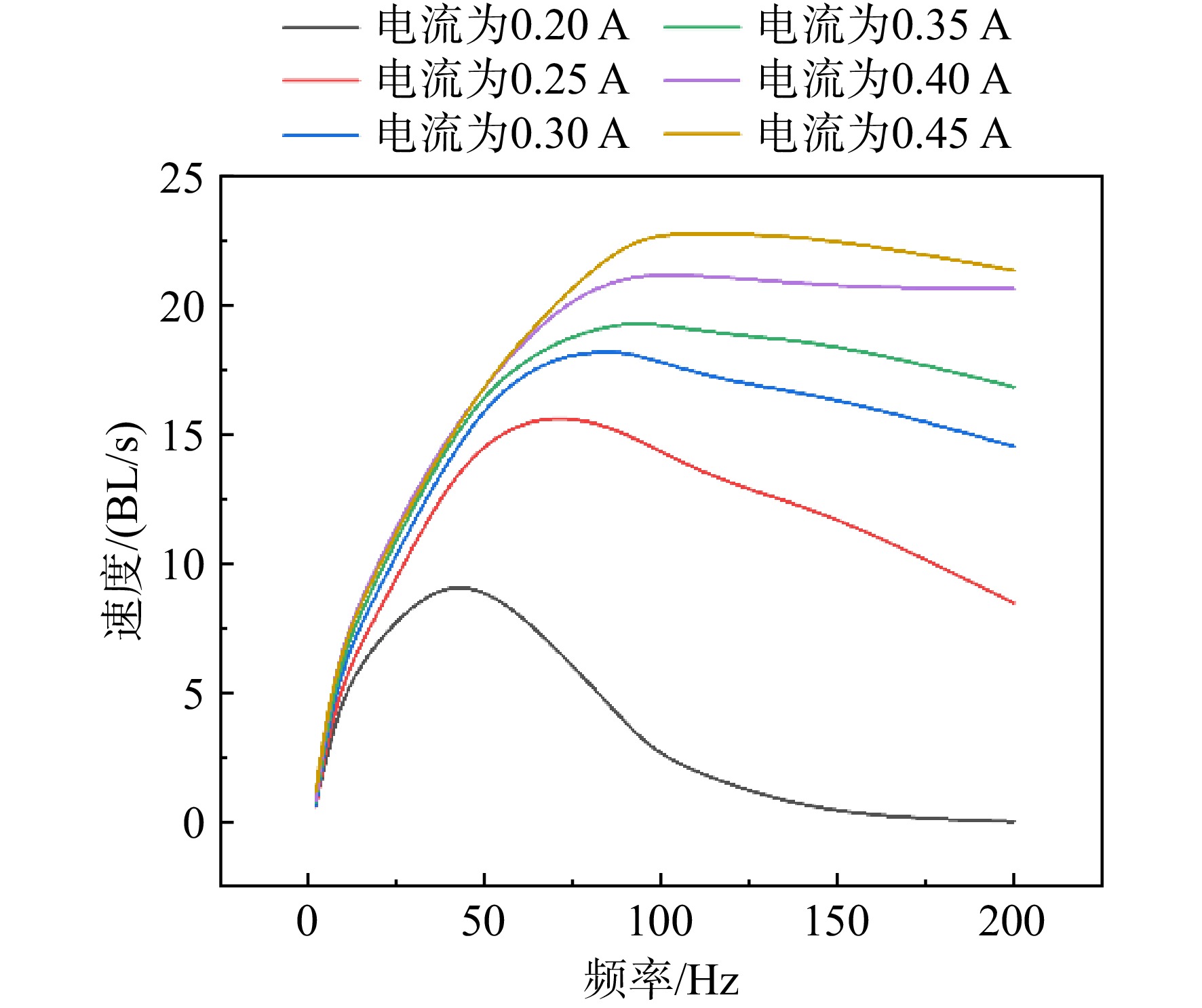
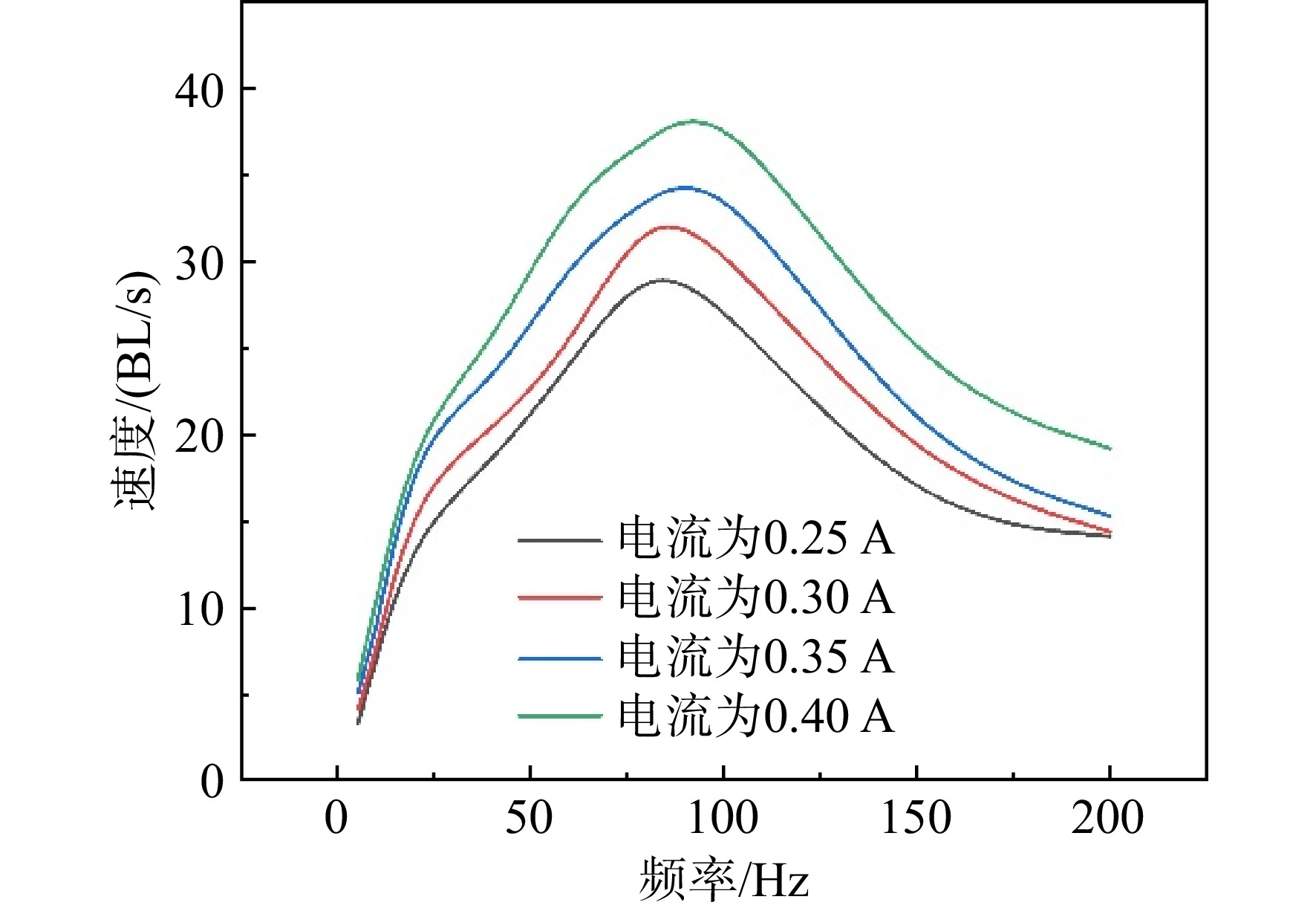
图 9 带仿生表面的微型机器人电流-频率-速度关系
Figure 9. Current-frequency-speed relationship of micro robot with bionic surface
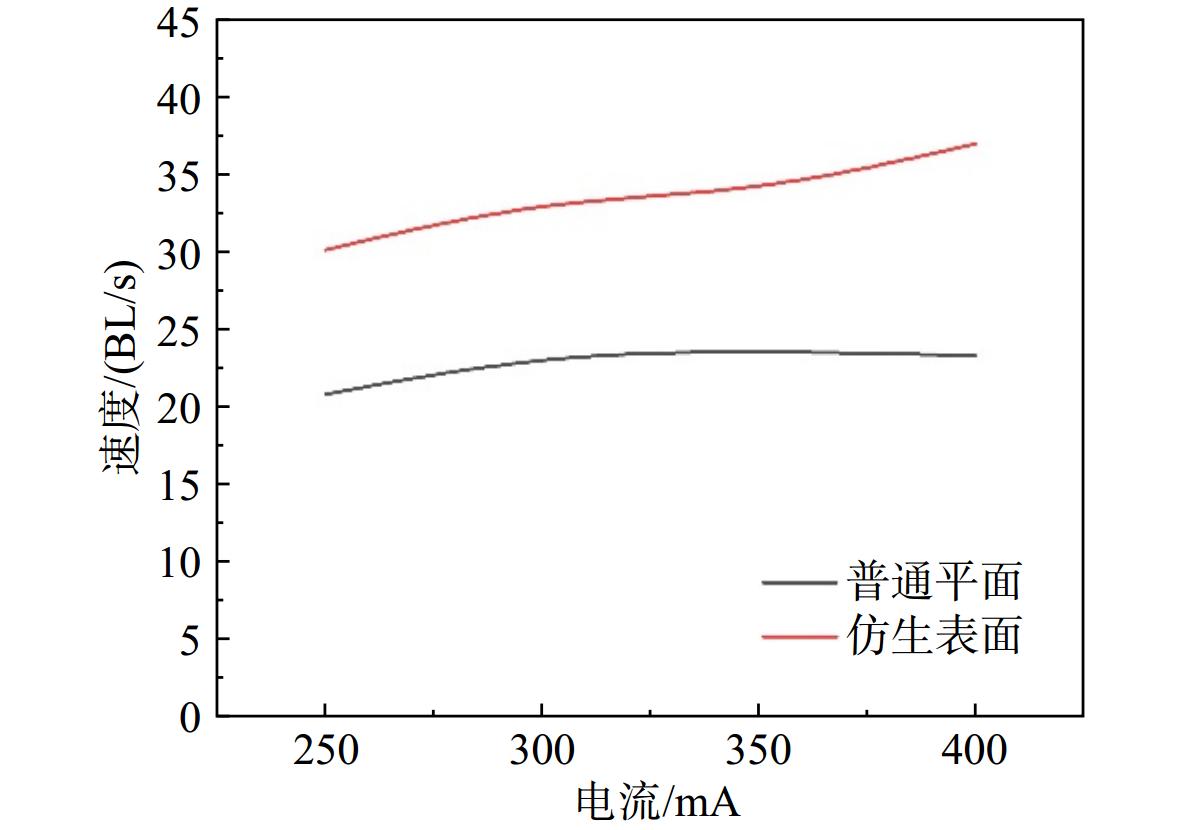
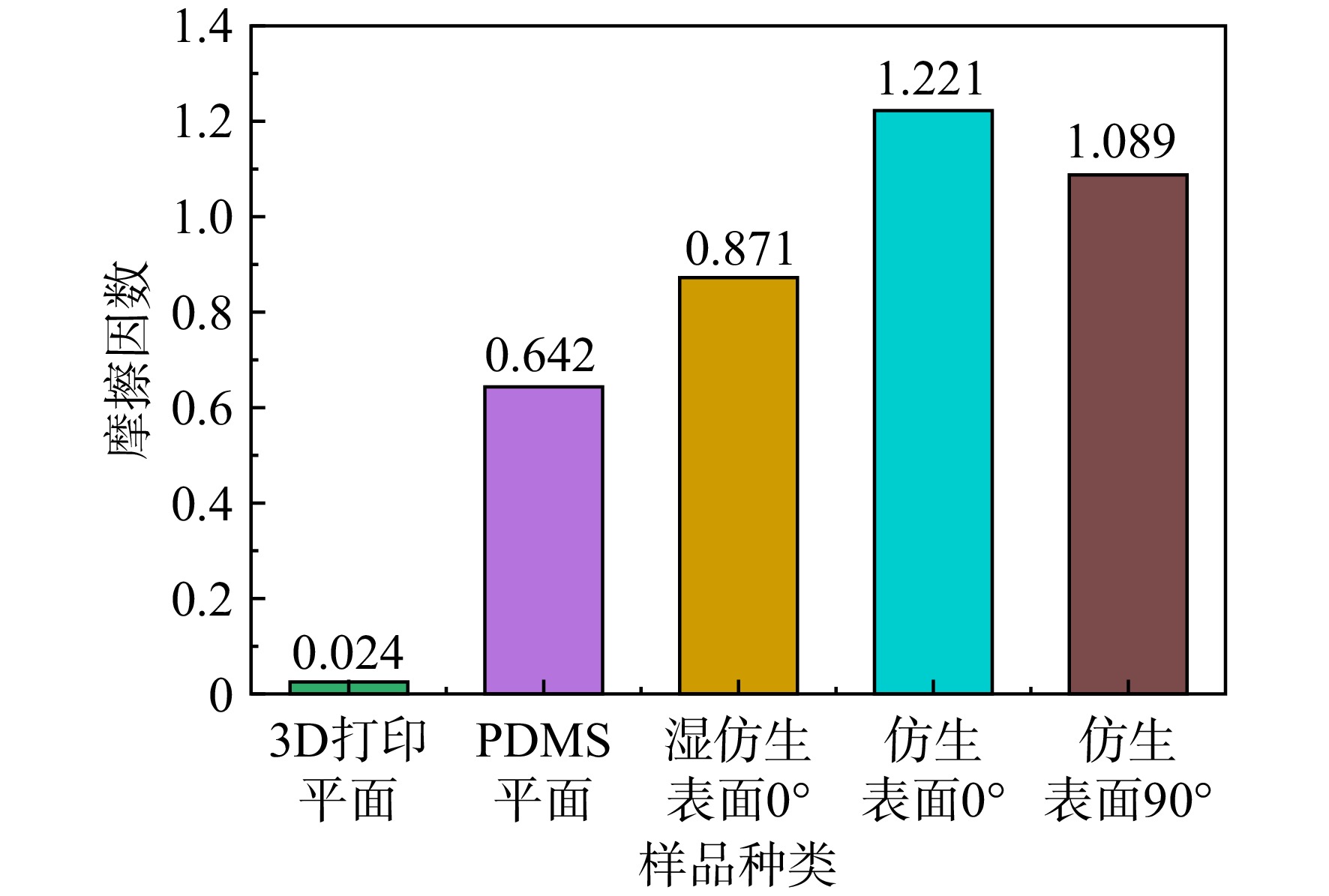
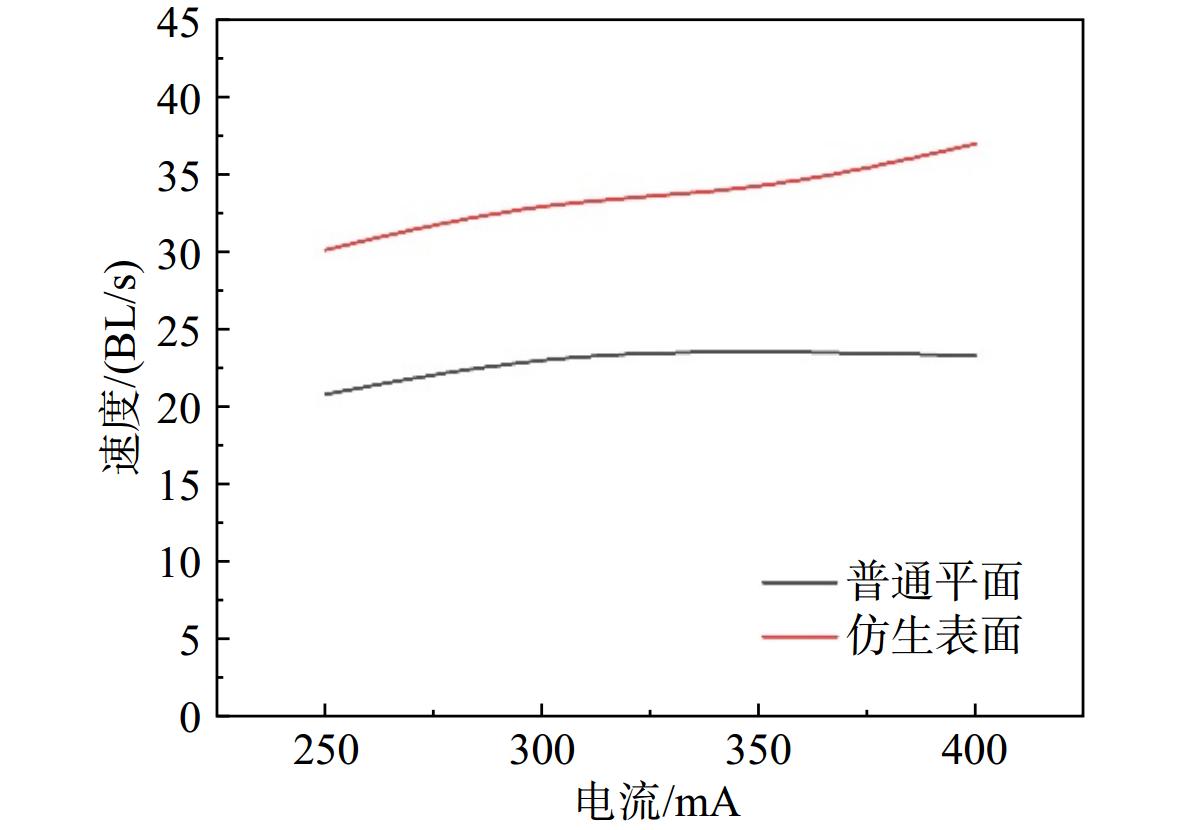
图 10 有无仿生表面微型机器人速度对比
Figure 10. Speed comparison of micro robot between with and without bionic surface
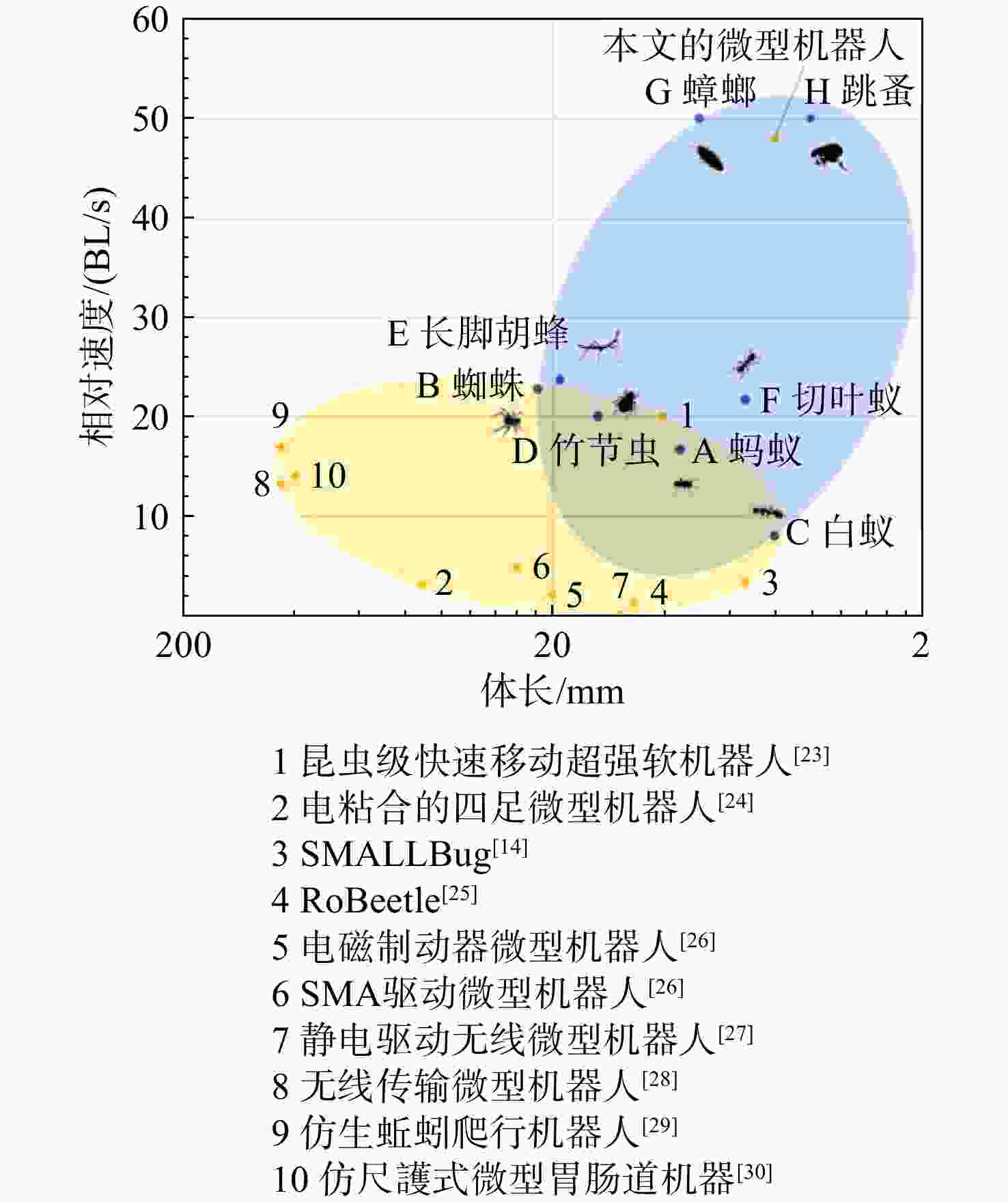
图 11 本文微型机器人的相对速度、体长与其他微型机器人以及自然界生物的对比
Figure 11. Comparison of this paper’s micro robot’s relative speed and body length with other micro robots and organisms in nature
表 1 不同前后腿角度下的运动距离
Table 1. Movement distance with different front and rear leg angles
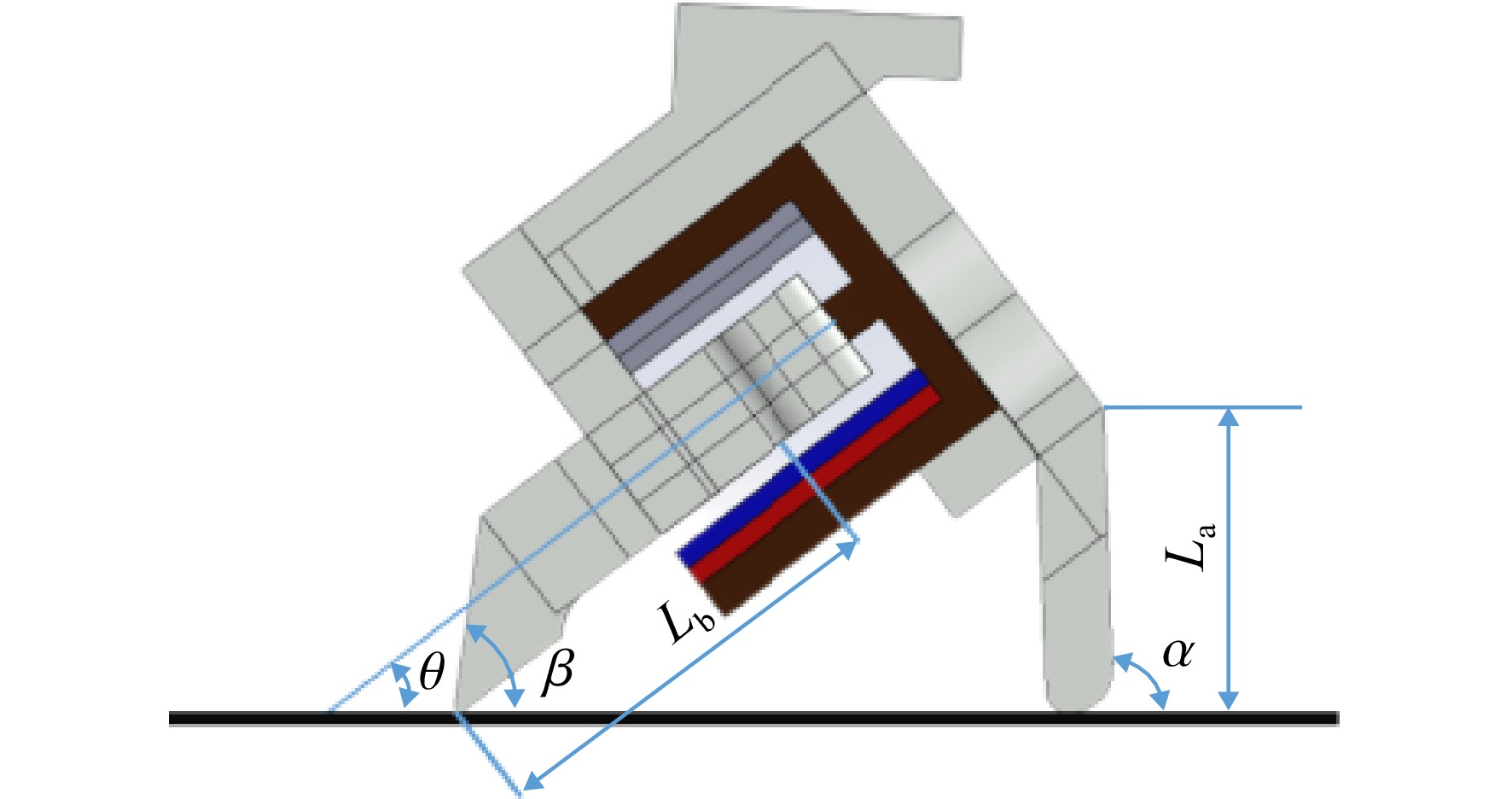
mm α/(°) β/(°) 95 90 85 80 75 115 2.6 3.9 4.0 4.2 3.9 110 8.5 9.8 10.4 11.8 10.2 105 7.7 7.3 8.2 8.5 8.1 100 8.4 10.3 10.5 10.3 10.1 95 8.8 10.5 10.7 11.5 10.1 90 9.8 8.9 7.7 6.9 6.2  下载: 导出CSV
表 2 后腿摩擦因数与运动距离的关系
Table 2. Relationship between friction coefficient of rear leg and motion distance
后腿摩擦因数 运动距离/mm 0.2 5.9 0.4 9.4 0.6 13.8 0.8 14.2 1 15.1
下载: 导出CSV
-
[1] BOLU G, GACHAGAN A, PIERCE G, et al. Reliable thermosonic inspection of aero engine turbine blades[J]. Insight-Non-Destructive Testing and Condition Monitoring, 2010, 52(9): 488-493. doi: 10.1784/insi.2010.52.9.488 [2] HARIRI H H, SOH G S, FOONG S, et al. Locomotion study of a standing wave driven piezoelectric miniature robot for bi-directional motion[J]. IEEE Transactions on Robotics, 2017, 33(3): 742-747. doi: 10.1109/TRO.2017.2656902 [3] DUDUTA M, CLARKE D R, WOOD R J. A high speed soft robot based on dielectric elastomer actuators[R]. Singapore, Singapore: 2017 IEEE International Conference on Robotics and Automation, 2017. [4] LIN Huaiti, LEISK G G, TRIMMER B. GoQBot: a caterpillar-inspired soft-bodied rolling robot[J]. Bioinspiration & Biomimetics, 2011, 6(2): 026007. [5] UMEDACHI T, VIKAS V, TRIMMER B A. Softworms: the design and control of non-pneumatic, 3D-printed, deformable robots[J]. Bioinspiration & Biomimetics, 2016, 11(2): 025001. [6] SEOK S, ONAL C D, CHO K J, et al. Meshworm: a peristaltic soft robot with antagonistic nickel titanium coil actuators[J]. IEEE/ASME Transactions on Mechatronics, 2013, 18(5): 1485-1497. doi: 10.1109/TMECH.2012.2204070 [7] FANG Hongbin, WANG K W. Piezoelectric vibration-driven locomotion systems-exploiting resonance and bistable dynamics[J]. Journal of Sound and Vibration, 2017, 391: 153-169. doi: 10.1016/j.jsv.2016.12.009 [8] HOOVER A M, STELTZ E, FEARING R S. RoACH: an autonomous 2.4g crawling hexapod robot[R]. Nice, France: 2008 IEEE/RSJ International Conference on Intelligent Robots and Systems, 2008. [9] HOFFMAN K L, WOOD R J. Passive undulatory gaits enhance walking in a myriapod millirobot[R]. San Francisco, US: 2011 IEEE/RSJ International Conference on Intelligent Robots and Systems, 2011. [10] GOLDBERG B, DOSHI N, JAYARAM K, et al. Gait studies for a quadrupedal microrobot reveal contrasting running templates in two frequency regimes[J]. Bioinspiration & Biomimetics, 2017, 12(4): 046005. [11] DOSHI N, JAYARAM K, GOLDBERG B, et al. Phase control for a legged microrobot operating at resonance[R]. Singapore, Singapore: 2017 IEEE International Conference on Robotics and Automation, 2017. [12] QU Jinhong, TEEPLE C B, OLDHAM K R. Modeling legged microrobot locomotion based on contact dynamics and vibration in multiple modes and axes[J]. Journal of Vibration and Acoustics, 2017, 139(3): 031013. doi: 10.1115/1.4035959 [13] DHARMAWAN A G, HARIRI H H, FOONG S, et al. Steerable miniature legged robot driven by a single piezoelectric bending unimorph actuator[R]. Singapore, Singapore: 2017 IEEE International Conference on Robotics and Automation, 2017. [14] NGUYEN X T, CALDERÓN A A, RIGO A, et al. SMALLBug: a 30-mg crawling robot driven by a high-frequency flexible SMA microactuator[J]. IEEE Robotics and Automation Letters, 2020, 5(4): 6796-6803. doi: 10.1109/LRA.2020.3015457 [15] JAYARAM K, SHUM J, CASTELLANOS S, et al. Scaling down an insect-size microrobot, HAMR-VI into HAMR-jr[R]. Paris, France: 2020 IEEE International Conference on Robotics and Automation, 2020. [16] XUE Longjian, SANZ B, LUO Aoyi, et al. Hybrid surface patterns mimicking the design of the adhesive toe pad of tree frog[J]. ACS Nano, 2017, 11(10): 9711-9719. doi: 10.1021/acsnano.7b04994 [17] LANGOWSKI J K A, RUMMENIE A, PIETERS R P M, et al. Estimating the maximum attachment performance of tree frogs on rough substrates[J]. Bioinspiration & Biomimetics, 2019, 14(2): 025001. [18] 张力文, 陈华伟, 王炎, 等. 基于树蛙脚掌湿黏附的仿生手术夹钳表面研究[J]. 机械工程学报, 2018, 54(17): 14-20. ZHANG Liwen, CHEN Huawei, WANG Yan, et al. Bioinspired surgical grasper based on the strong wet attachment of tree frog’s toe pads[J]. Journal of Mechanical Engineering, 2018, 54(17): 14-20. (in Chinese doi: 10.3901/JME.2018.17.014ZHANG Liwen, CHEN Huawei, WANG Yan, et al. Bioinspired surgical grasper based on the strong wet attachment of tree frog’s toe pads[J]. Journal of Mechanical Engineering, 2018, 54(17): 14-20. (in Chinese) doi: 10.3901/JME.2018.17.014 [19] SHAHSAVAN H, ARUNBABU D, ZHAO Boxin. Biomimetic modification of polymeric surfaces: a promising pathway for tuning of wetting and adhesion[J]. Macromolecular Materials and Engineering, 2012, 297(8): 743-760. doi: 10.1002/mame.201200016 [20] WANG H L, SHAO J D, LIU T T, et al. The mechanism of air-righting performance in tree frogs[J]. Applied Mechanics and Materials, 2013, 461: 291-296. doi: 10.4028/www.scientific.net/AMM.461.291 [21] 张力文, 陈华伟, 张鹏飞, 等. 基于树蛙脚掌的仿生六棱柱表面边界摩擦研究[J]. 科学通报, 2016, 61(23): 2596-2604. ZHANG Liwen, CHEN Huawei, ZHANG Pengfei, et al. Boundary friction force of tree frog’s toe pads and bio-inspired hexagon pillar surface[J]. Chinese Science Bulletin, 2016, 61(23): 2596-2604. (in Chinese doi: 10.1360/N972015-01166ZHANG Liwen, CHEN Huawei, ZHANG Pengfei, et al. Boundary friction force of tree frog’s toe pads and bio-inspired hexagon pillar surface[J]. Chinese Science Bulletin, 2016, 61(23): 2596-2604. (in Chinese) doi: 10.1360/N972015-01166 [22] ZHOU Wei, GRAVISH N. Rapid two-anchor crawling from a milliscale prismatic-push-pull (3P) robot[J]. Bioinspiration & Biomimetics, 2020, 15(6): 065001. [23] WU Yichuan, YIM J K, LIANG Jiaming, et al. Insect-scale fast moving and ultrarobust soft robot[J]. Science Robotics, 2019, 4(32): eaax1594. doi: 10.1126/scirobotics.aax1594 [24] DE RIVAZ S D, GOLDBERG B, DOSHI N, et al. Inverted and vertical climbing of a quadrupedal microrobot using electroadhesion[J]. Science Robotics, 2018, 3(25): eaau3038. doi: 10.1126/scirobotics.aau3038 [25] YANG Xiufeng, CHANG Longlong, PÉREZ-ARANCIBIA N O. An 88-milligram insect-scale autonomous crawling robot driven by a catalytic artificial muscle[J]. Science Robotics, 2020, 5(45): eaba0015. doi: 10.1126/scirobotics.aba0015 [26] 马晓晨, 方楠, 张旭, 等. 国外微厘米级微型机器人发展综述[J]. 军民两用技术与产品, 2020(11): 34-38. MA Xiaocheng, FANG Nan, ZHANG Xu, et al. Review of international development of micrometer-scale microrobots[J]. Dual-Use Technologies and Products, 2020(11): 34-38. (in ChineseMA Xiaocheng, FANG Nan, ZHANG Xu, et al. Review of international development of micrometer-scale microrobots[J]. Dual-Use Technologies and Products, 2020(11): 34-38. (in Chinese) [27] ZHAN Wencheng, QI Mingjing, LIU Zhiwei, et al. Untethered microrobots driven by kV-level capacitive actuators via mechanical electrostatic inverters[J]. IEEE Robotics and Automation Letters, 2022, 7(4): 12483-12490. doi: 10.1109/LRA.2022.3219028 [28] HAN Ding, YAN Guozheng, JIANG Pingping, et al. A three-dimensional orthogonal receiving coil for in vivo microrobot wireless power transmission systems[J]. Energies, 2022, 15(17): 6321. doi: 10.3390/en15176321 [29] 姜锋. 具有自愈合功能的仿生蚯蚓爬行机器人设计、制备及其控制研究[D]. 江苏 镇江: 江苏大学, 2020. JIANG Feng. Design, fabrication and control of a biomimetic earthworm-like crawling robot with self-healing function[D]. Zhenjiang Jiangsu: Jiangsu University, 2020. (in ChineseJIANG Feng. Design, fabrication and control of a biomimetic earthworm-like crawling robot with self-healing function[D]. Zhenjiang Jiangsu: Jiangsu University, 2020. (in Chinese) [30] 史玉婷, 姜萍萍, 颜国正, 等. 直流电动机驱动仿尺護式微型胃肠道机器人的设计[J]. 北京生物医学工程, 2012, 31(3): 225-230. SHI Yuting, JIANG Pingping, YAN Guozheng, et al. Design of an inchworm locomotive miniature gastrointestinal robot driven by DC motor[J]. Beijing Biomedical Engineering, 2012, 31(3): 225-230. (in ChineseSHI Yuting, JIANG Pingping, YAN Guozheng, et al. Design of an inchworm locomotive miniature gastrointestinal robot driven by DC motor[J]. Beijing Biomedical Engineering, 2012, 31(3): 225-230. (in Chinese) -




 点击查看大图

计量
- 文章访问数: 562
- HTML浏览量: 304
- PDF量: 37
- 被引次数: 0