






The impact of end-wall fillet on secondary flow losses in a highly-loaded rotor with low aspect ratio and larger camber angle
-
摘要:
为控制超高负荷大折转动叶二次流损失,借助数值模拟技术分析了转子通道涡、泄漏涡间的演化干涉机制,考察了端壁倒圆对损失的影响,结果表明:动叶前缘至50%轴向弦长,马蹄涡演化形成下通道涡后迅速迁移至近叶顶区域,抑制了上通道涡发展,而上通道涡则减弱了叶顶泄漏涡强度;50%轴向弦长以后,泄漏流与主流剪切效应增强,泄漏涡迅速增强,其与下通道涡共同将上通道涡推离吸力面,使其无法卷吸壁面低能流体,限制了上通道涡发展。在通道涡系卷吸作用下,低能流体在叶顶处堆积,致使叶顶区损失及气流落后角增加,因而端壁二次流诱发的损失是损失的主要来源。倒圆对动叶的影响与传统涡轮存在差别:当倒圆半径小于轮毂前缘边界层厚度,倒圆减弱马蹄涡及下通道涡强度,但增大了端区涡系影响区域,涡系卷吸作用导致吸力面叶根30%~50%弦长范围低能流体减少,径向压力梯度增大,下通道涡径向迁移受限,其对壁面低能流体卷吸量减少,强度减小,涡轮效率因而随倒圆半径增大而增加;当倒圆半径大于轮毂前缘边界层厚度,马蹄涡及下通道涡作用区域减弱,叶根近吸力面低能流体堆积增加,径向压力梯度减小,下通道涡强度及其径向迁移位置、吸力面上堆积的低能流体量增加,因而涡轮效率随倒圆半径增加而降低。
Abstract:The interference mechanisms between the rotor passage vortex and tip leakage vortex were analyzed numerically to control the secondary flow losses in a highly loaded rotor with a low aspect ratio and large camber angle. The impact of end-wall fillets on these losses was also investigated. The results revealed that, at the leading edge up to 50% axial chord length, after the horseshoe vortex was evolved and formed into the hub passage vortex, it quickly moved to the upper part of the blade, limiting the development of the shroud passage vortex and reducing the vorticity of the tip leakage vortex. After 50% axial chord length, the high-speed shear effects between the leakage flow and the mainstream were intensified, rapidly strengthening the tip leakage vortex. The shroud passage vortex was pushed away from the suction surface by the combined action of the hub passage vortex and tip leakage vortex, which prevented it from sucking low-energy fluid onto the suction surface and restricted its growth. Due to the entrainment effect of the passage vortex system, low-energy fluid was accumulated at the blade tip, increasing the flow losses and deviation angles there. As a result, the main cause of losses was attributed to the secondary flow caused by the end-wall. The effect of end-wall fillet on the highly loaded rotor with a low aspect ratio and large camber angle was significantly different from the traditional turbines. When the fillet radius was smaller than the boundary layer thickness at the leading edge of the hub, the fillet could weaken the strength of the horseshoe vortex and the hub passage vortex, but it could increase their influential region. This intensified the entrainment effect of the vortex system, reduced the accumulation of low-energy fluid within the 30%—50% axial chord length range on the suction surface, and increased the radial pressure gradient. Therefore, as the radial migration of the hub passage vortex decreased, its entrainment of low-energy fluid on the suction surface was reduced, resulting in reduced vorticity. When the fillet radius was larger than the boundary layer thickness at the leading edge of the hub, the fillet could weaken the effect region of the horseshoe vortex and the hub passage vortex, increasing the accumulation of low-energy fluid on the suction surface close to the blade root and decreasing the radial pressure gradient. Then the radial migration position and vorticity of the hub passage vortex increased, and low-energy fluid was accumulated on the suction surface. Consequently, turbine efficiency decreased as the fillet radius increased.
-
Key words:
- low aspect ratio /
- large camber angle /
- high load /
- end-wall secondary flow /
- flow control /
- end-wall fillet
-
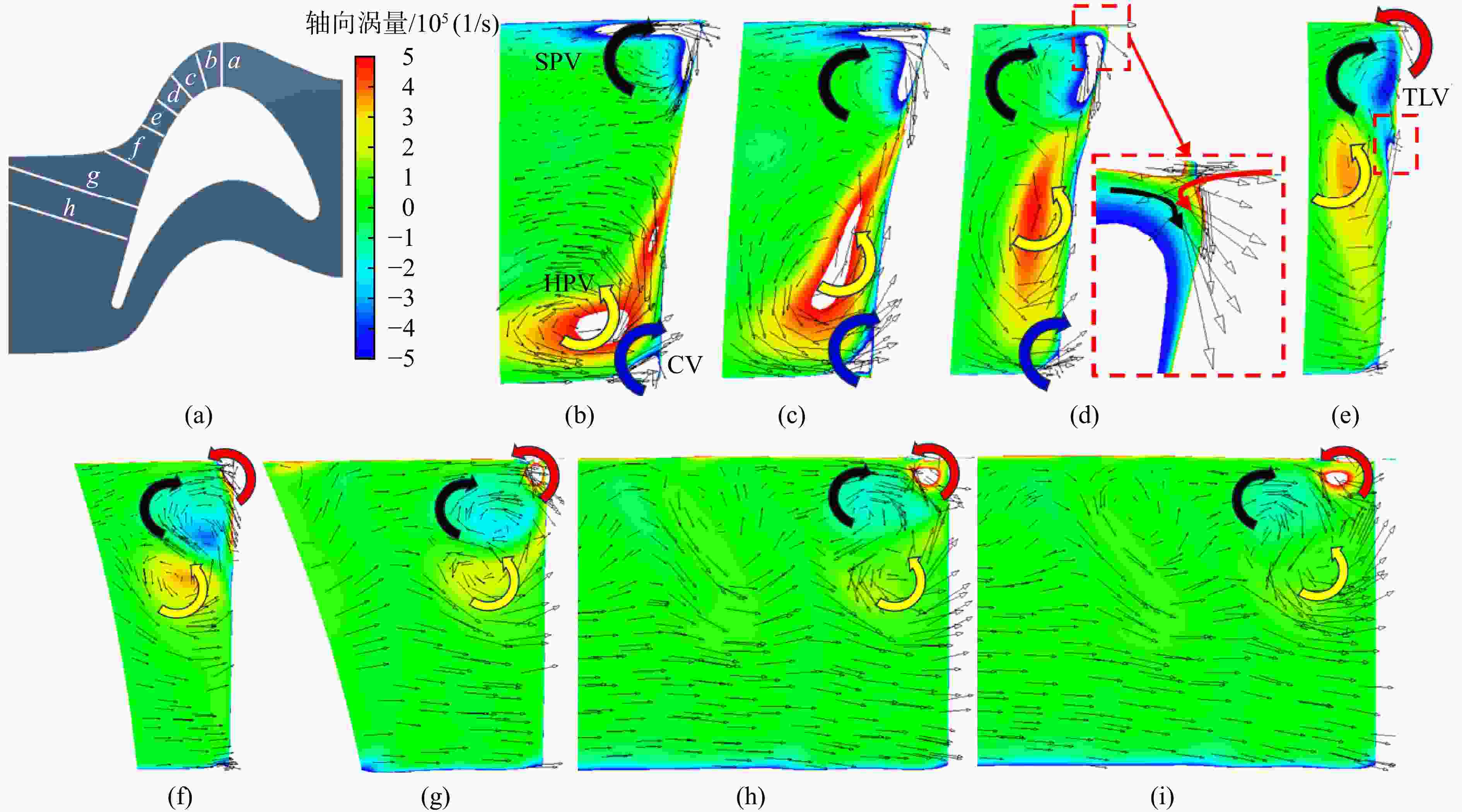
图 10 转子端区轴向涡量及二次流速度矢量分布
Figure 10. Distribution of axial vorticity and Secondary velocity vectors at rotor
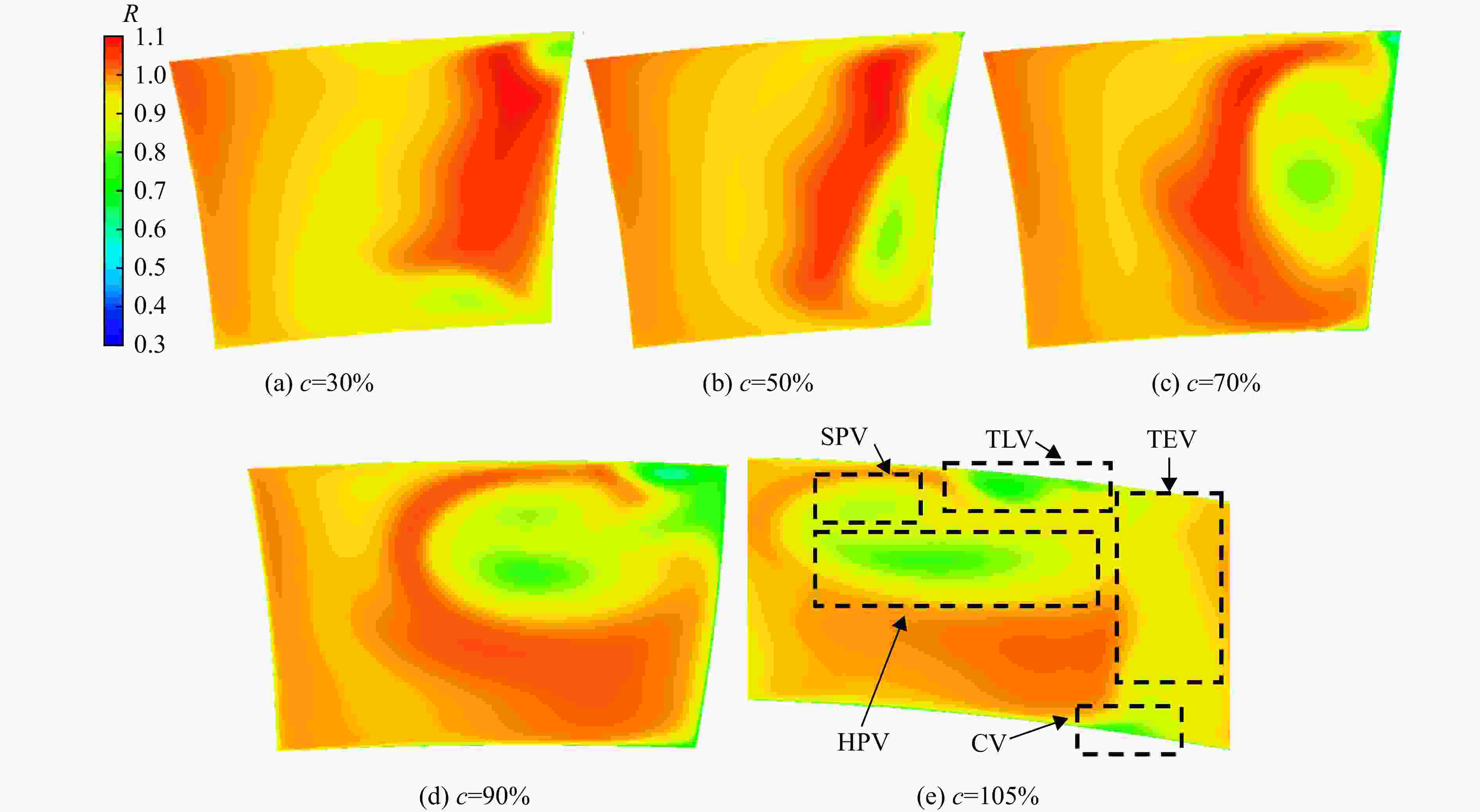
图 11 转子端区相对总压恢复系数分布
Figure 11. Distribution of relative total pressure coefficient at rotor
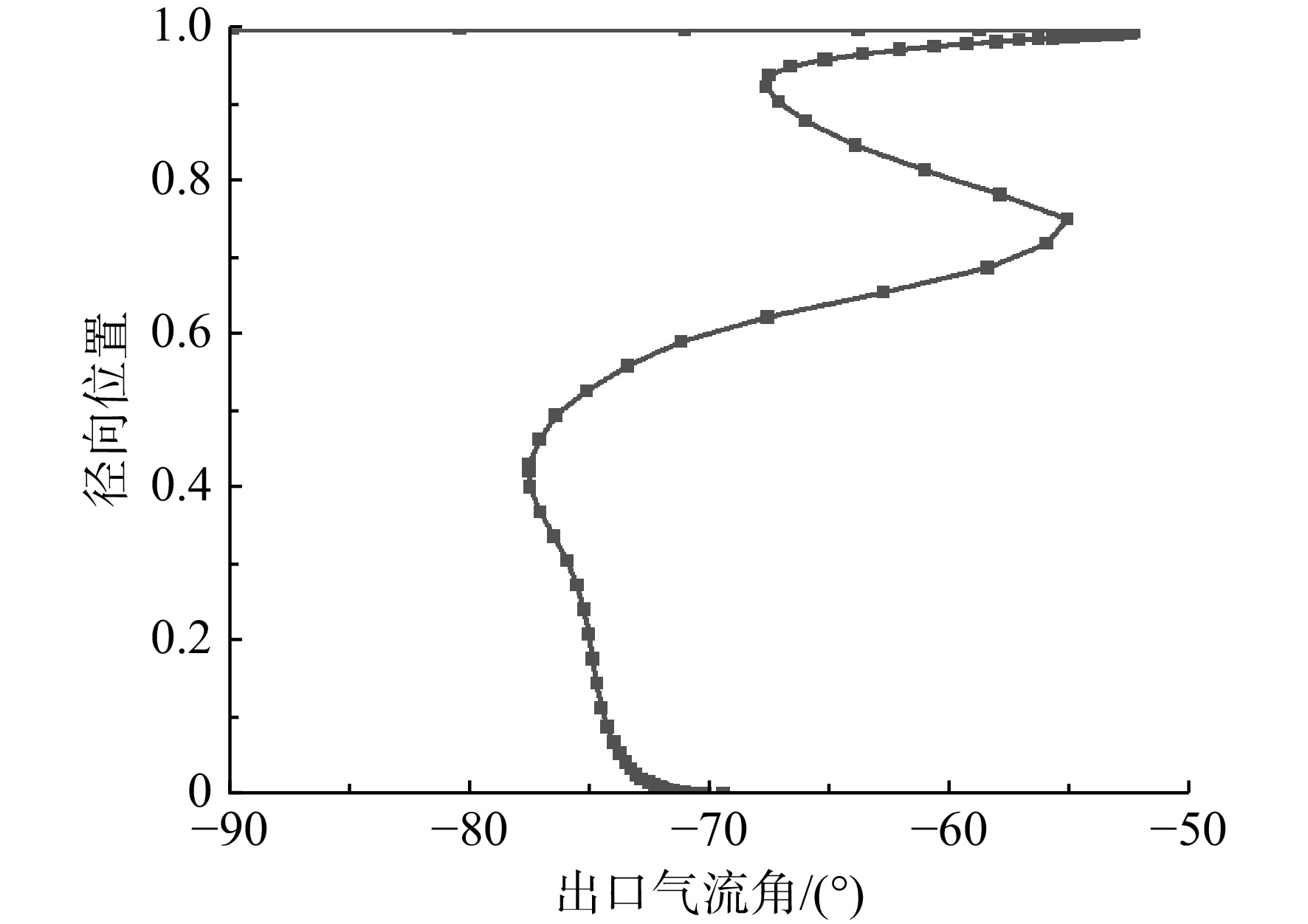
图 12 转子尾缘105%相对轴向位置的相对气流角径向分布
Figure 12. Radial distribution of relative flow angle at 105% axial location relative to rotor trailing edge
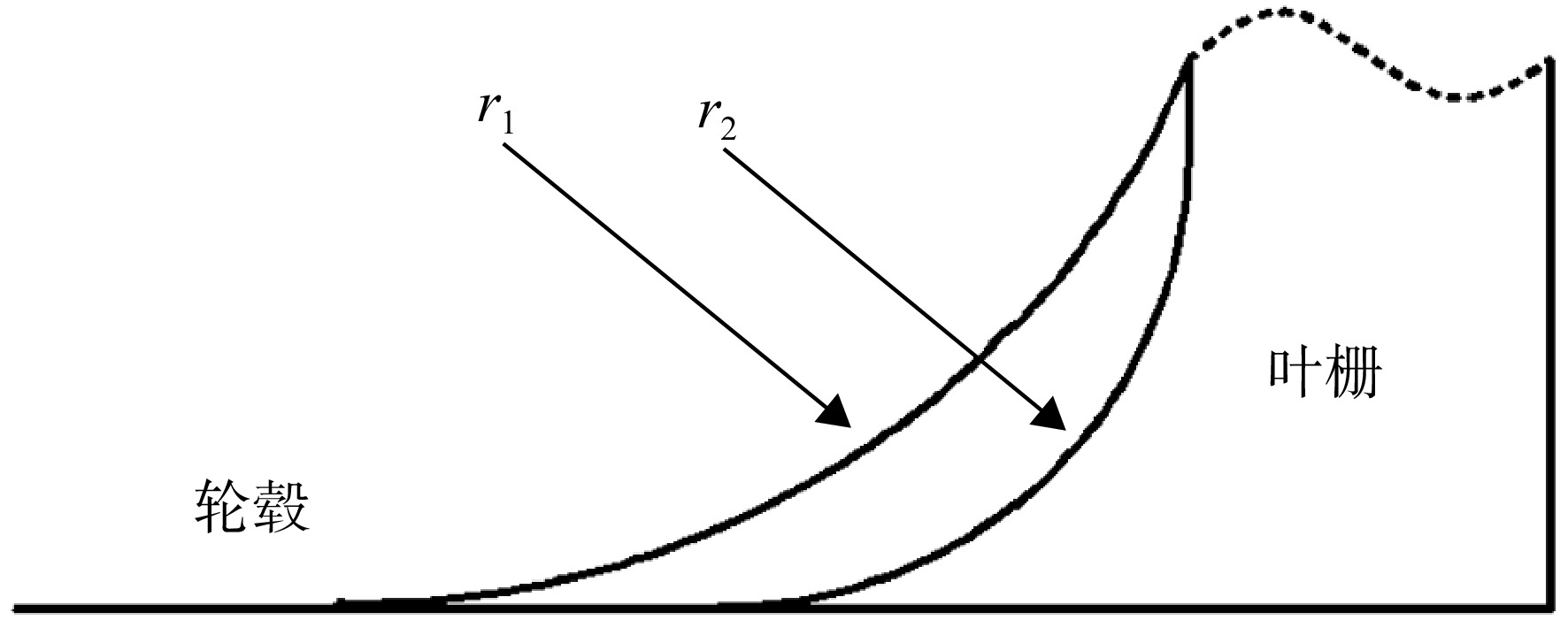
图 13 转子不同倒圆半径结构示意图
Figure 13. Schematic diagram of rotor structures with different fillet radii
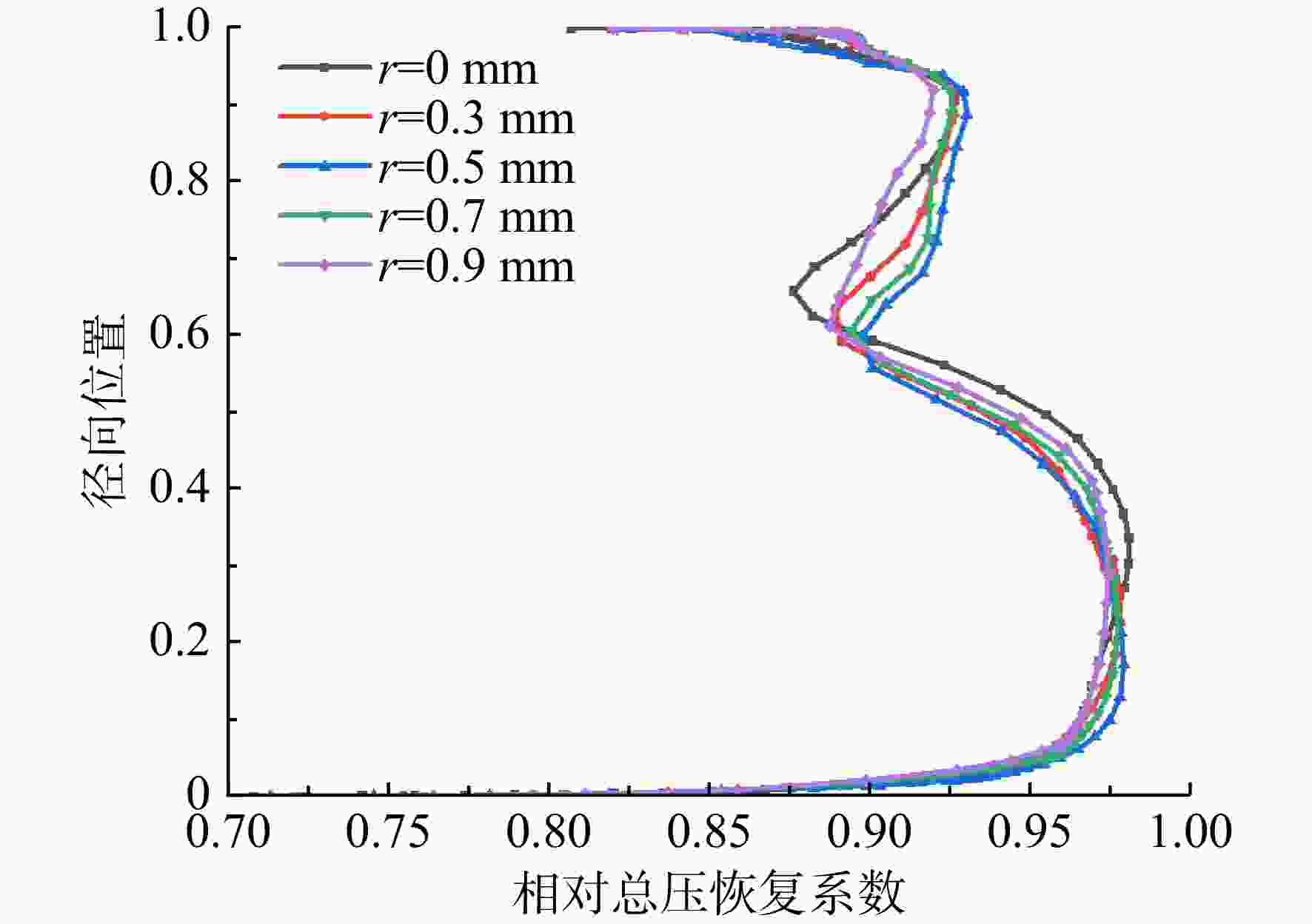
图 17 转子尾缘相对总压恢复系数的径向分布
Figure 17. Radial distribution of relative total pressure recovery coefficient at the rotor trailing edge
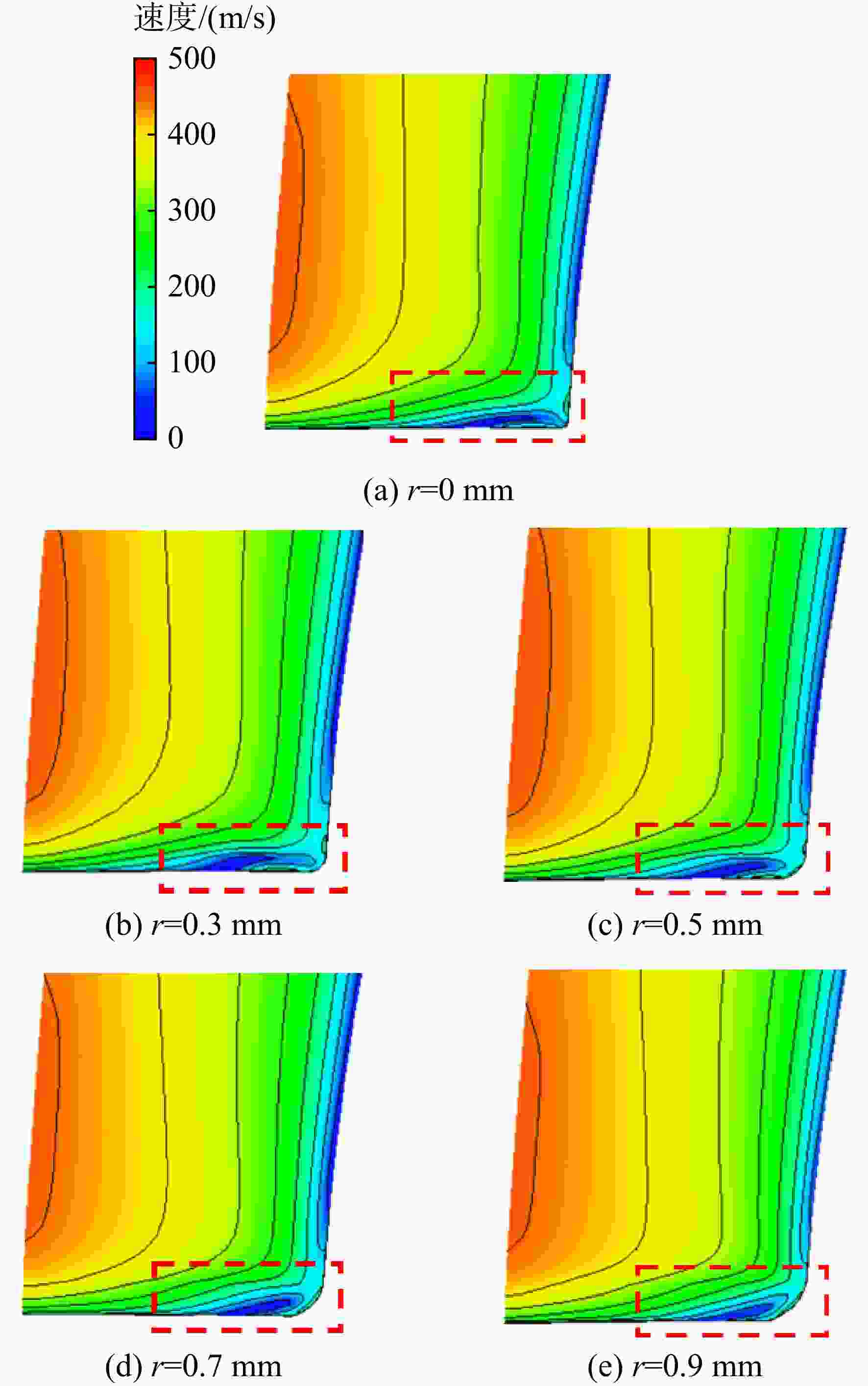
图 18 不同倒圆半径动叶前缘的速度分布
Figure 18. Distribution of velocity at the leading of the blade with different fillets
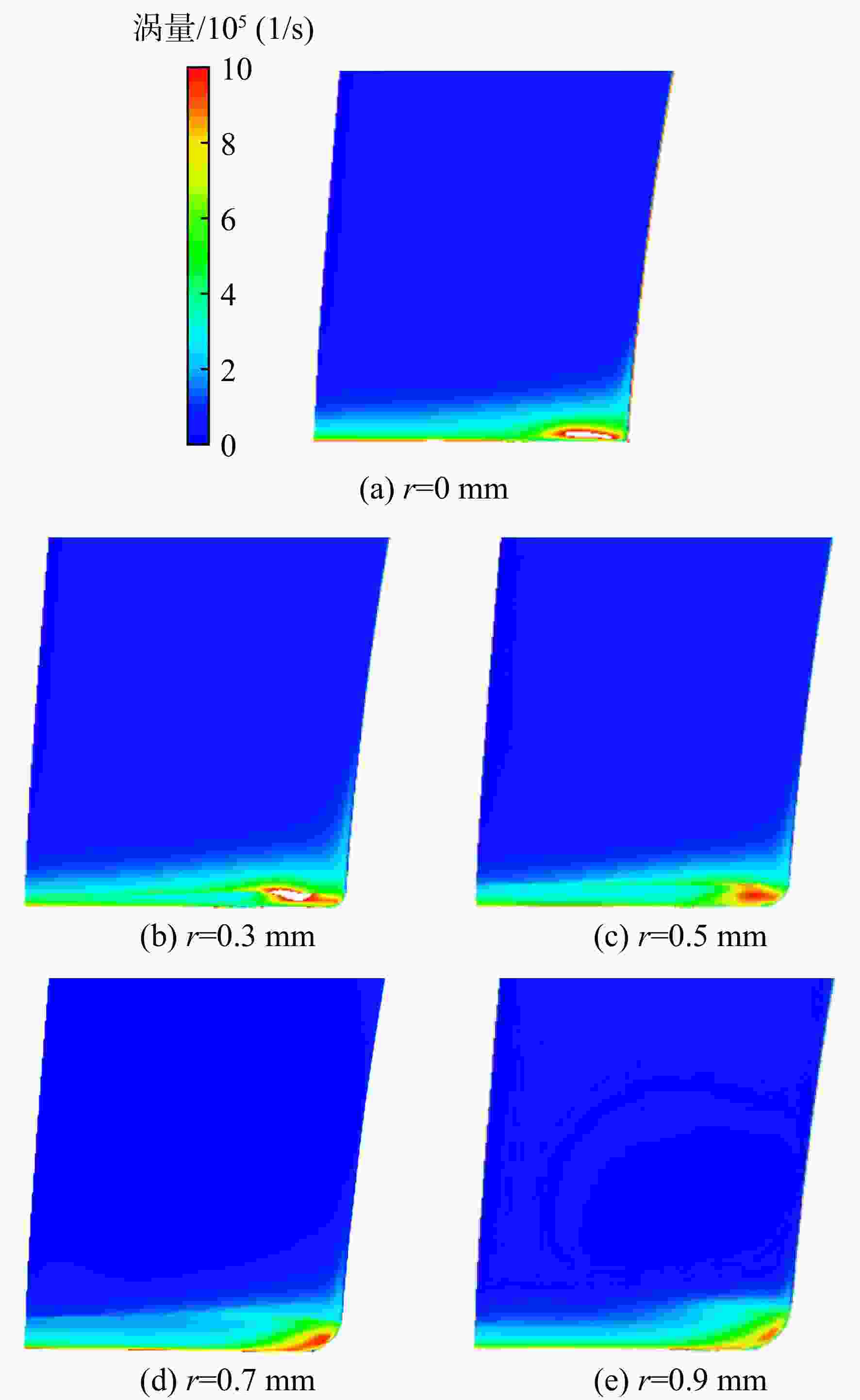
图 19 不同倒圆半径动叶前缘的涡量分布
Figure 19. Distribution of vorticity at the leading of the blade with different fillets

图 20 端区40%轴向位置截面的速度径向分布
Figure 20. Radial distribution of velocity at the 40% relative axial chord location in the end-wall region
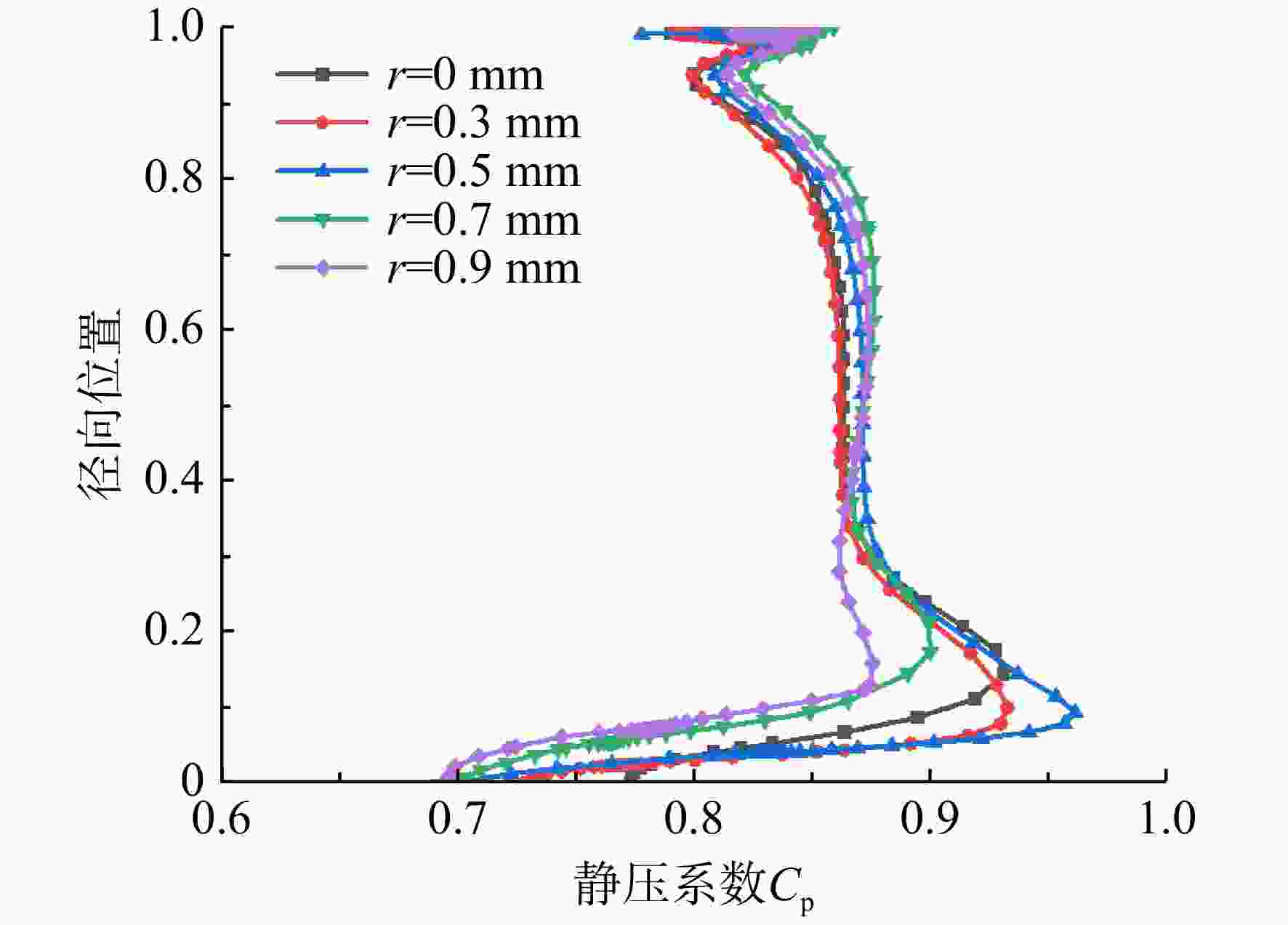
图 21 端区40%轴向位置截面的静压系数径向分布
Figure 21. Radial distribution of static pressure coefficient at the 40% axial chord location in the end-wall region
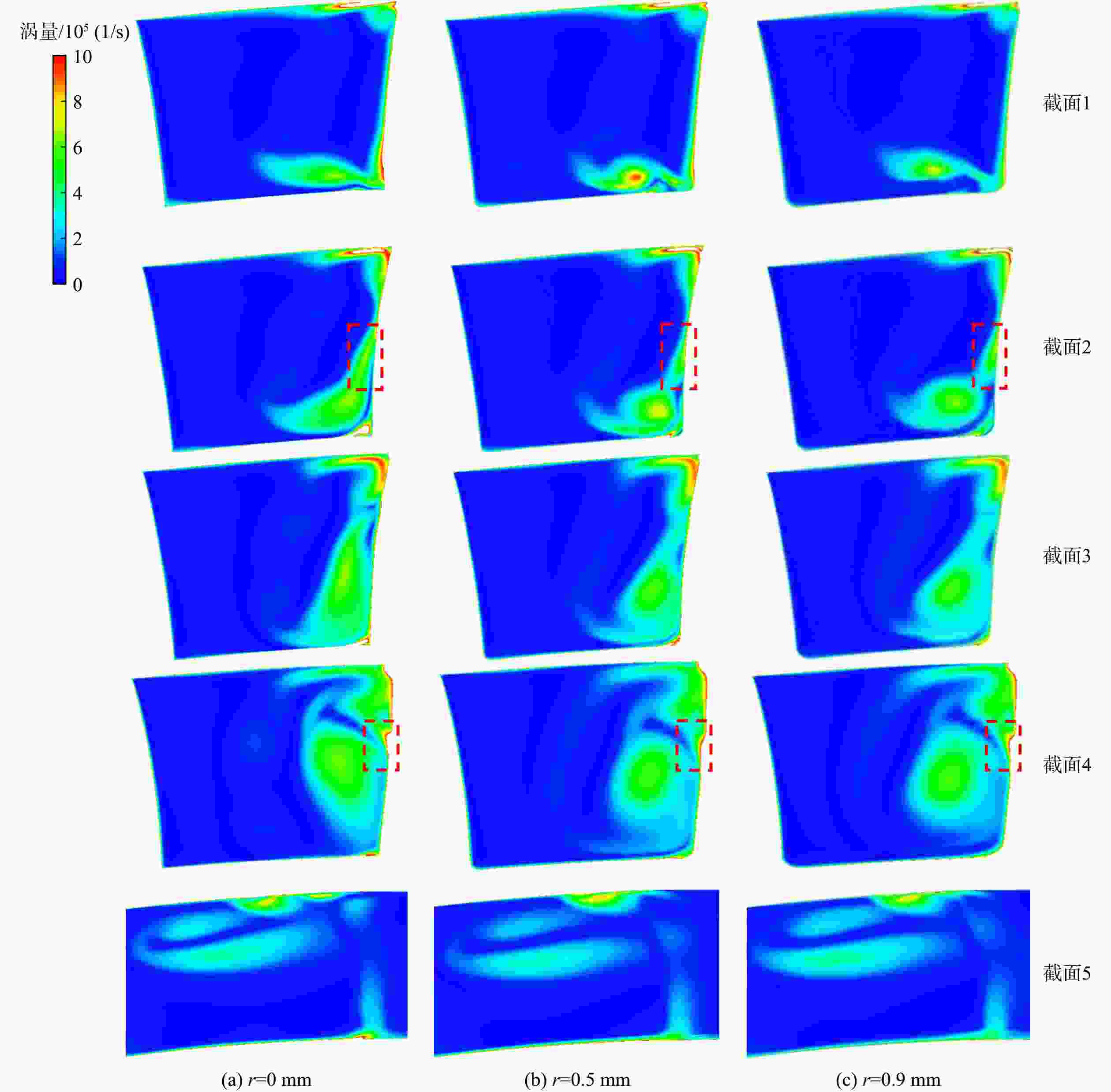
图 22 不同倒圆半径下端区二次流涡量云图
Figure 22. Vorticity contour plots of end-wall secondary flow under different fillet radii
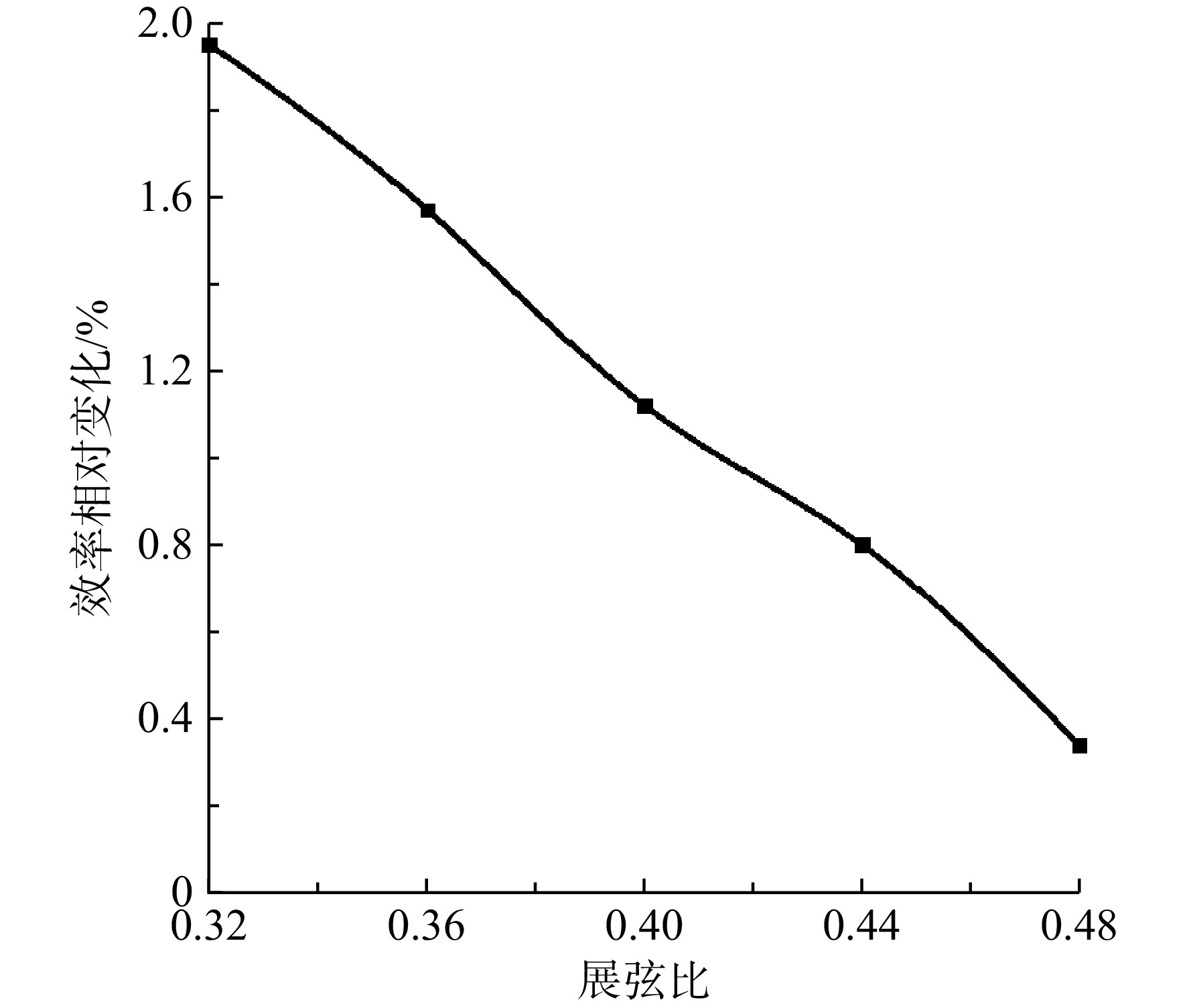
图 23 小半径倒圆对不同展弦比动叶涡轮效率的影响
Figure 23. Effect of small radius fillet on the efficiency of turbines with different aspect ratios of rotor
表 1 叶片主要设计参数
Table 1. Main design parameters of blade
参数 导叶 动叶 叶片数 38 49 叶高/mm 12.3 12.7 展弦比 0.42 0.44 折转角/(°) 77.8 145.03 级负荷 4.4 流量系数 0.66  下载: 导出CSV
-
[1] MINATO R, NAKATA D, UCHIUMI M, et al. Overspeeding characteristics of turbomachinery for gas generator cycle air turbo ramjet engine[J]. Propulsion and Power Research, 2022, 11(4): 444-456. doi: 10.1016/j.jppr.2022.10.001 [2] FERNANDEZ V. Simulation, design and analysis of air-breathing combined-cycle engines for high speed propulsion[D]. Madrid, Spain: University of Technology of Madrid, 2013. [3] 刘洋, 李江, 刘诗昌, 等. 固体燃料空气涡轮火箭发动机方案和技术研究[J]. 推进技术, 2017, 38(2): 249-256. LIU Yang, LI Jiang, LIU Shichang, et al. Scheme and technology investigation on solid propellant air turbo rocket[J]. Journal of Propulsion Technology, 2017, 38(2): 249-256. (in Chinese doi: 10.13675/j.cnki.tjjs.2017.02.002LIU Yang, LI Jiang, LIU Shichang, et al. Scheme and technology investigation on solid propellant air turbo rocket[J]. Journal of Propulsion Technology, 2017, 38(2): 249-256. (in Chinese) doi: 10.13675/j.cnki.tjjs.2017.02.002 [4] WANG H P, OLSON S J, GOLDSTEIN R J, et al. Flow visualization in a linear turbine cascade of high performance turbine blades[J]. Journal of Turbomachinery, 1997, 119(1): 1-8. doi: 10.1115/1.2841006 [5] BENNER M W, SJOLANDER S A, MOUSTAPHA S H. The influence of leading-edge geometry on secondary losses in a turbine cascade at the design incidence[J]. Journal of Turbomachinery, 2004, 126(2): 277-287. doi: 10.1115/1.1645533 [6] SIEVERDING C H. Recent progress in the understanding of basic aspects of secondary flows in turbine blade passages[J]. Journal of Engineering for Gas Turbines and Power, 1985, 107(2): 248-257. doi: 10.1115/1.3239704 [7] MARKS C R, SONDERGAARD R, BEAR P S, et al. Reynolds number effects on the secondary flow of profile contoured low pressure turbines[R]. AIAA-2016-0114, 2016. [8] BIAN Xiutao, WANG Qingsong, CHEN Ziyu, et al. Hybrid RANS/LES study of complex turbulence characteristics and flow mechanisms on the highly-loaded turbine endwall[J]. Aerospace Science and Technology, 2019, 94: 105404. doi: 10.1016/j.ast.2019.105404 [9] SCHREINER B D J, WILSON M, LI Y S, et al. Effect of purge on the secondary flow-field of a gas turbine blade-row[J]. Journal of Turbomachinery, 2020, 142(10): 101006. doi: 10.1115/1.4047185 [10] 魏佐君. 高负荷涡轮端区非定常流动机理及损失控制研究[D]. 西安: 西北工业大学, 2016. WEI Zuojun. Study on unsteady flow mechanism and loss control in high load turbine end zone[D]. Xi’an: Northwestern Polytechnical University, 2016. (in ChineseWEI Zuojun. Study on unsteady flow mechanism and loss control in high load turbine end zone[D]. Xi’an: Northwestern Polytechnical University, 2016. (in Chinese) [11] ANANTHAKRISHNAN K, GOVARDHAN M. Influence of fillet shapes on secondary flow field in a transonic axial flow turbine stage[J]. Aerospace Science and Technology, 2018, 82: 425-437. [12] 吕剑波, 雷志军, 孙爽, 等. 压气机叶型前缘形状对吸力面分离流动的影响[J]. 燃气轮机技术, 2015, 28(3): 24-30, 37. LVU Jianbo, LEI Zhijun, SUN Shuang, et al. Effect of leading-edge geometry on separation of high-lift compressor profile[J]. Gas Turbine Technology, 2015, 28(3): 24-30, 37. (in Chinese doi: 10.16120/j.cnki.issn1009-2889.2015.03.005LVU Jianbo, LEI Zhijun, SUN Shuang, et al. Effect of leading-edge geometry on separation of high-lift compressor profile[J]. Gas Turbine Technology, 2015, 28(3): 24-30, 37. (in Chinese) doi: 10.16120/j.cnki.issn1009-2889.2015.03.005 [13] 李兰攀, 楚武利, 张皓光. 端壁倒圆对高负荷压气机叶栅性能及流场影响的机理探究[J]. 推进技术, 2017, 38(12): 2743-2752. LI Lanpan, CHU Wuli, ZHANG Haoguang. Mechanism study of end-wall fillet’s influence on performance and flow field of high-load compressor cascade[J]. Journal of Propulsion Technology, 2017, 38(12): 2743-2752. (in Chinese doi: 10.13675/j.cnki.tjjs.2017.12.013LI Lanpan, CHU Wuli, ZHANG Haoguang. Mechanism study of end-wall fillet’s influence on performance and flow field of high-load compressor cascade[J]. Journal of Propulsion Technology, 2017, 38(12): 2743-2752. (in Chinese) doi: 10.13675/j.cnki.tjjs.2017.12.013 [14] MENG Fusheng, ZHENG Qun, ZHANG Jian. Effects of blade fillet structures on flow field and surface heat transfer in a large meridional expansion turbine[J]. Energies, 2019, 12(15): 3035. doi: 10.3390/en12153035 [15] 李燕飞. 小展弦比燃气涡轮二次流动控制数值研究[D]. 哈尔滨: 哈尔滨工业大学, 2014. LI Yanfei. Numercal study on secondary flow control of the low-aspect ratio gas turbine[D]. Harbin: Harbin Institute of Technology, 2014. (in ChineseLI Yanfei. Numercal study on secondary flow control of the low-aspect ratio gas turbine[D]. Harbin: Harbin Institute of Technology, 2014. (in Chinese) [16] 张旭阳. 基于二次流控制的叶栅前缘端壁造型[J]. 热能动力工程, 2019, 34(8): 35-42. ZHANG Xuyang. Design of endwall in the leading edge based on the control of secondary flow[J]. Journal of Engineering for Thermal Energy and Power, 2019, 34(8): 35-42. (in Chinese doi: 10.16146/j.cnki.rndlgc.2019.08.006ZHANG Xuyang. Design of endwall in the leading edge based on the control of secondary flow[J]. Journal of Engineering for Thermal Energy and Power, 2019, 34(8): 35-42. (in Chinese) doi: 10.16146/j.cnki.rndlgc.2019.08.006 [17] WEI Zuojun, QIAO Weiyang, LIU Jian, et al. Reduction of endwall secondary flow losses with leading-edge fillet in a highly loaded low-pressure turbine[J]. Proceedings of the Institution of Mechanical Engineers, Part A: Journal of Power and Energy, 2016, 230(2): 184-195. doi: 10.1177/0957650915619560 [18] TURGUT Ö H, CAMCı C. Influence of leading edge fillet and nonaxisymmetric contoured endwall on turbine NGV exit flow structure and interactions with the rim seal flow: GT2013-95842. [R]. San Antonio, US: ASME Turbo Expo 2013: Turbine Technical Conference and Exposition, 2013. -


 点击查看大图

计量
- 文章访问数: 603
- HTML浏览量: 439
- PDF量: 37
- 被引次数: 0