






Coupling prediction of multi-stage axial turbine characteristics based on data-driven and change of flow angle
-
摘要:
构建了一种基于数据驱动的涡轮性能多模型耦合预测方法。该方法融合了多个机器学习模型和级间气流角变化规律,利用熵权法综合量化分析预测结果,动态确定最优模型。经多级轴流涡轮特性变工况实例验证表明:在定转速下,相较于传统方法,该方法在质量流量-效率特性与质量流量-膨胀比特性上的计算精度分别提升了40.47%与18.26%,与三维仿真结果的最大误差不超过3%。在变转速预测中,基于网格超参数优化,成功构建了2~8 kg/s质量流量范围内的特性图谱,膨胀比最大误差接近3%,满足精度要求。
Abstract:A data-driven coupled prediction method for turbine performance was proposed by incorporating multiple machine learning models and inter-stage flow angle variation patterns. Multiple prediction analysis models were established based on fundamental data, and the entropy weighting method was used to perform comprehensive quantitative analysis of the model predictions. The optimal prediction model was dynamically determined based on data-driven approaches. Verification through multi-stage axial turbine characteristic variation examples demonstrated that under constant rotational speed conditions, compared with the traditional direct prediction method without considering changes in the flow angle, the computational accuracy of the flow-efficiency characteristic and the flow-expansion ratio characteristic was improved by 40.47% and 18.26%, respectively. Furthermore, the maximum error compared with the results of three-dimensional numerical simulations was less than 3%. For variable speed performance prediction, the construction of the turbine characteristic map within a wide flow range of 2 to 8 kg/s was achieved through grid hyper parameter optimization methods. Simulation testing of the constructed map validated that the maximum error in the expansion ratio was close to 3%, meeting the requirements for characteristic estimation accuracy.
-
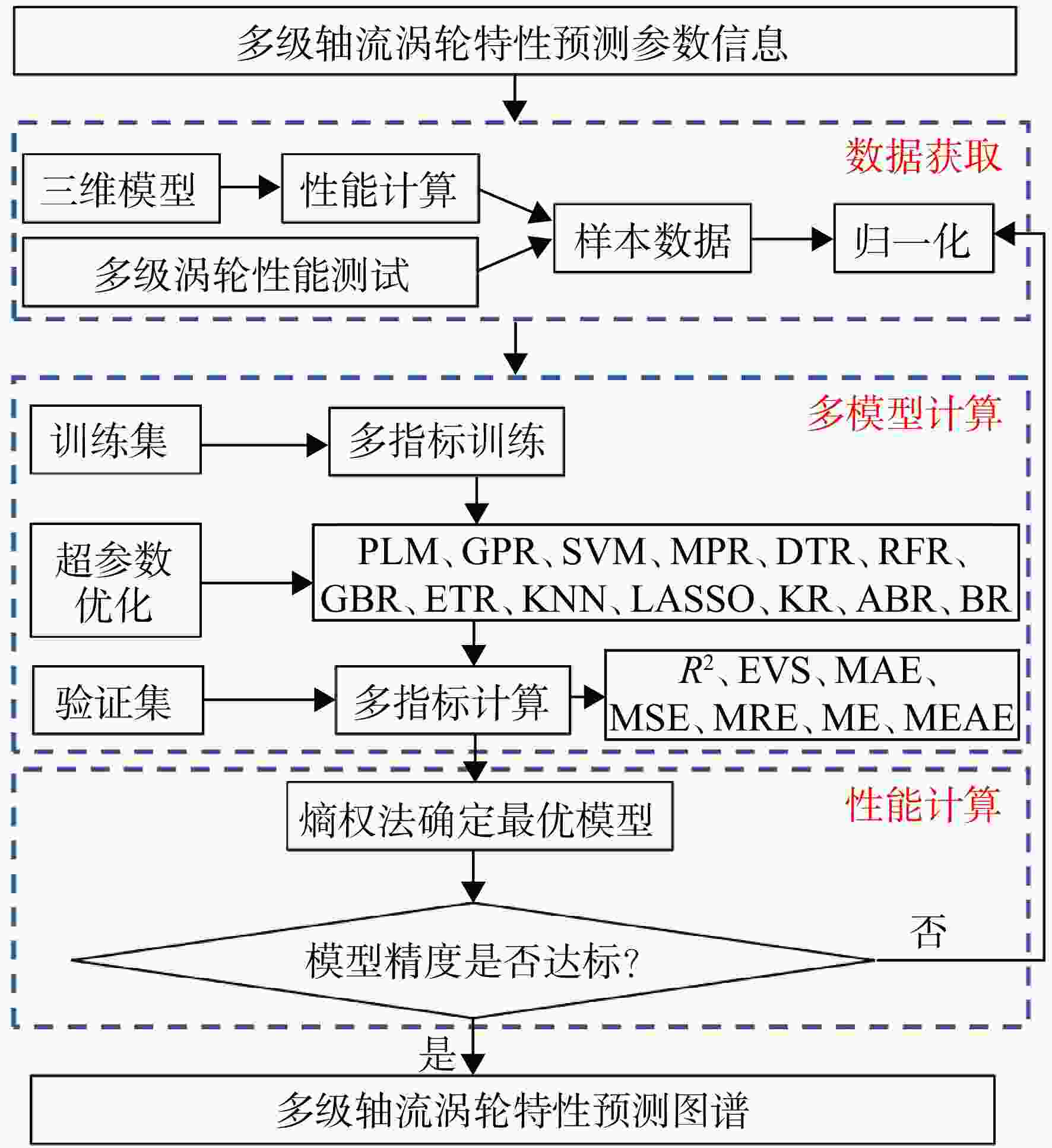
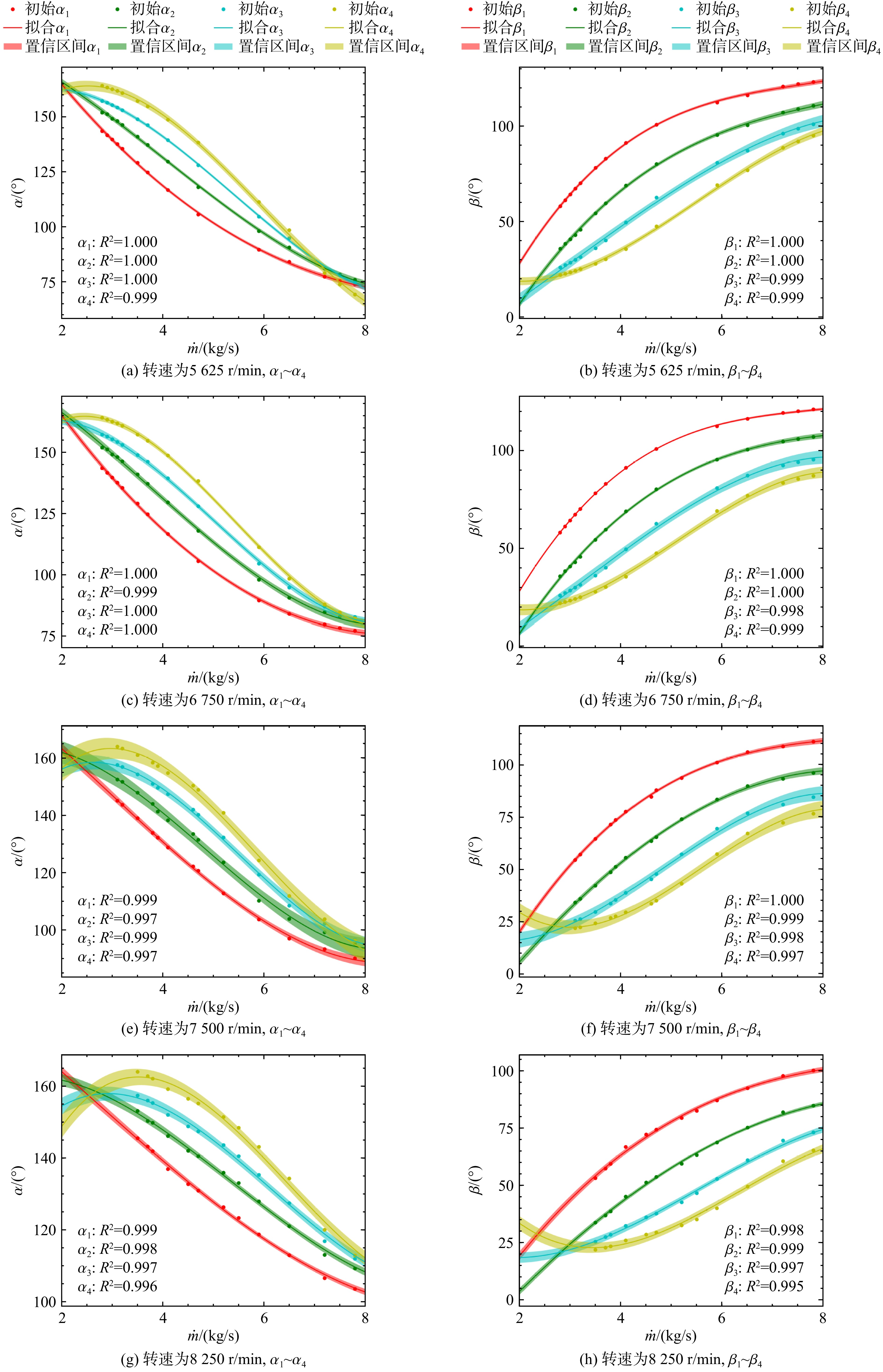
图 1 涡轮特性耦合预测分析方法框架
Figure 1. Framework of coupling predictive analysis method for turbine characteristics
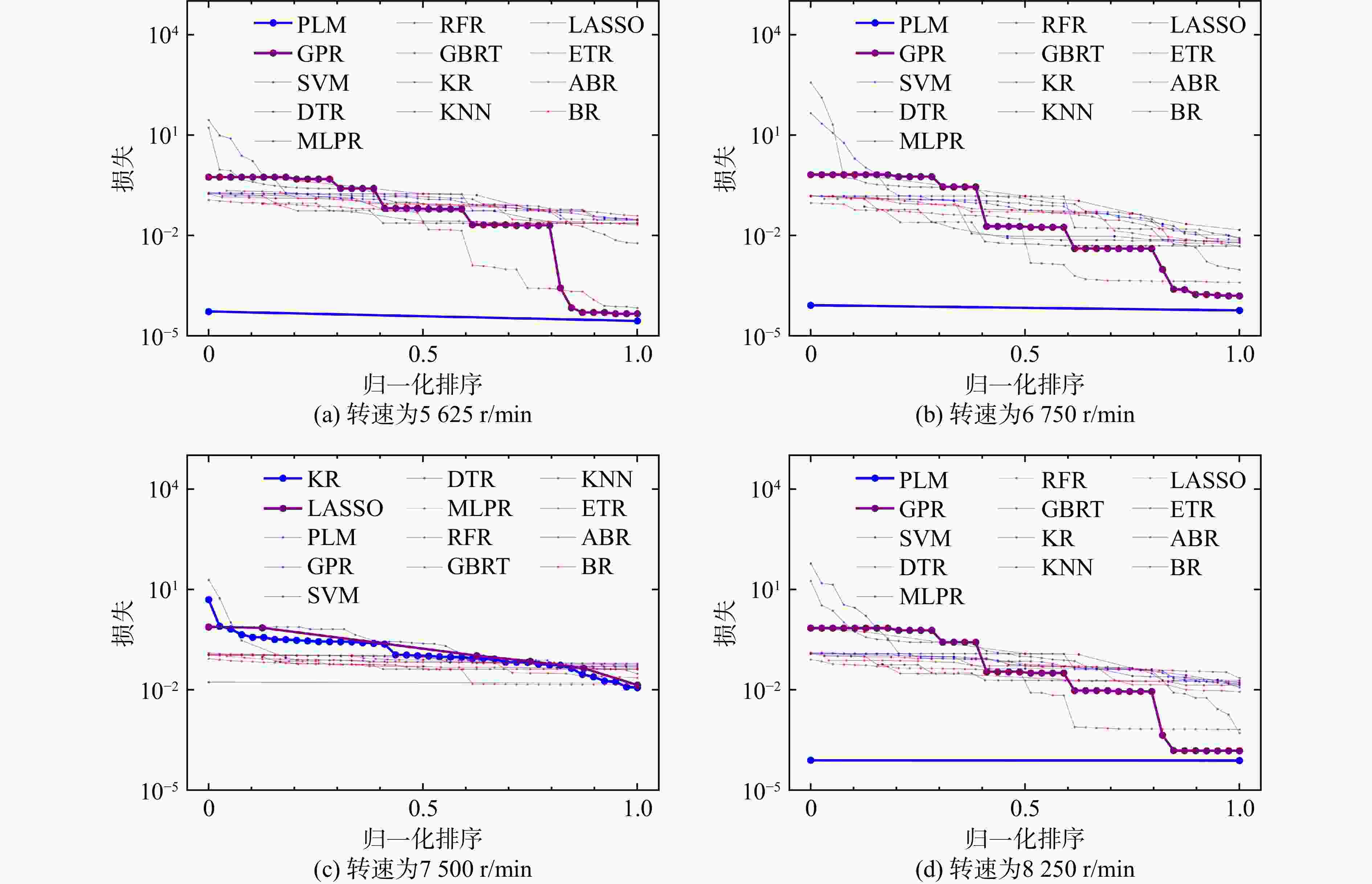
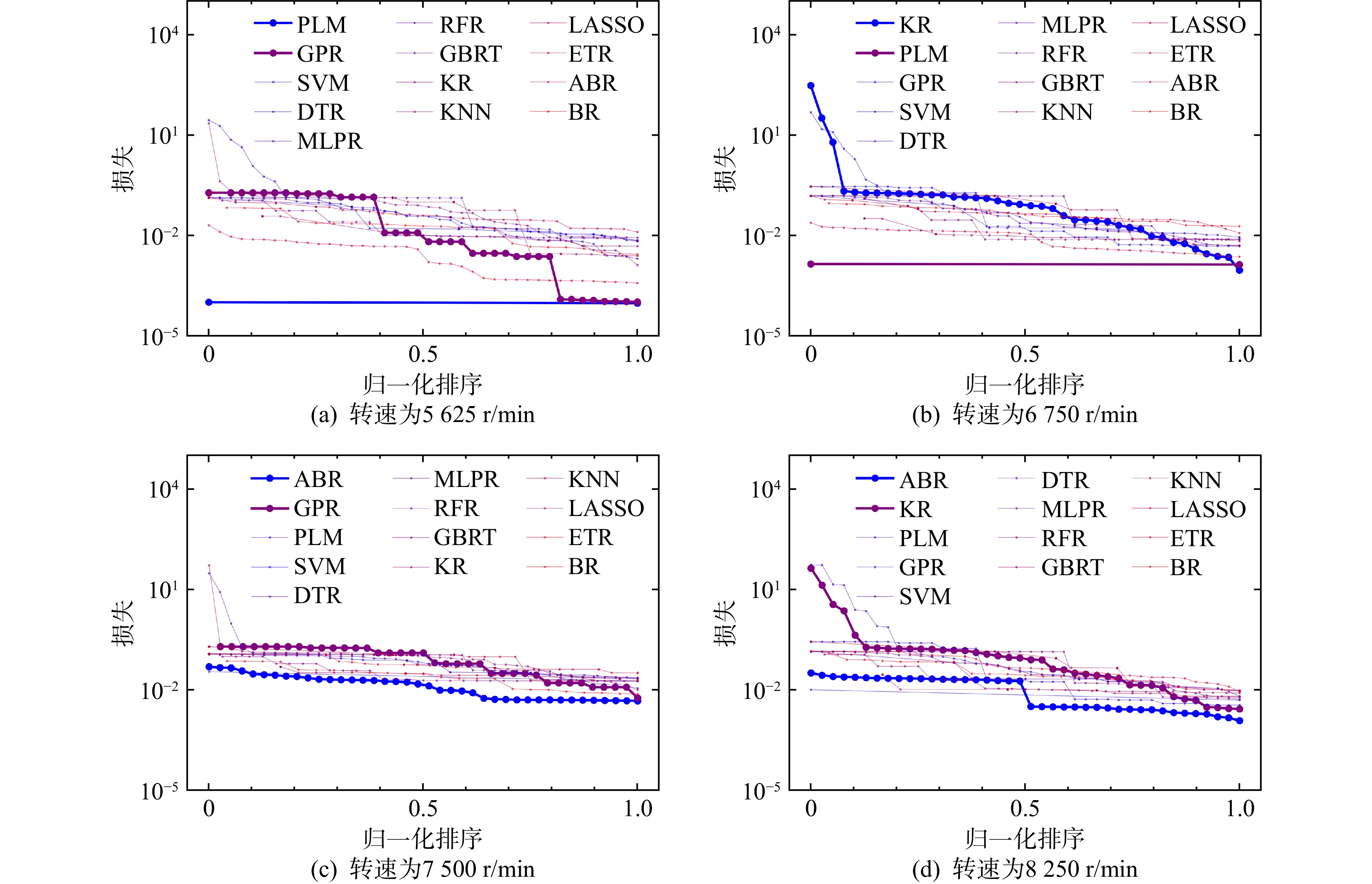
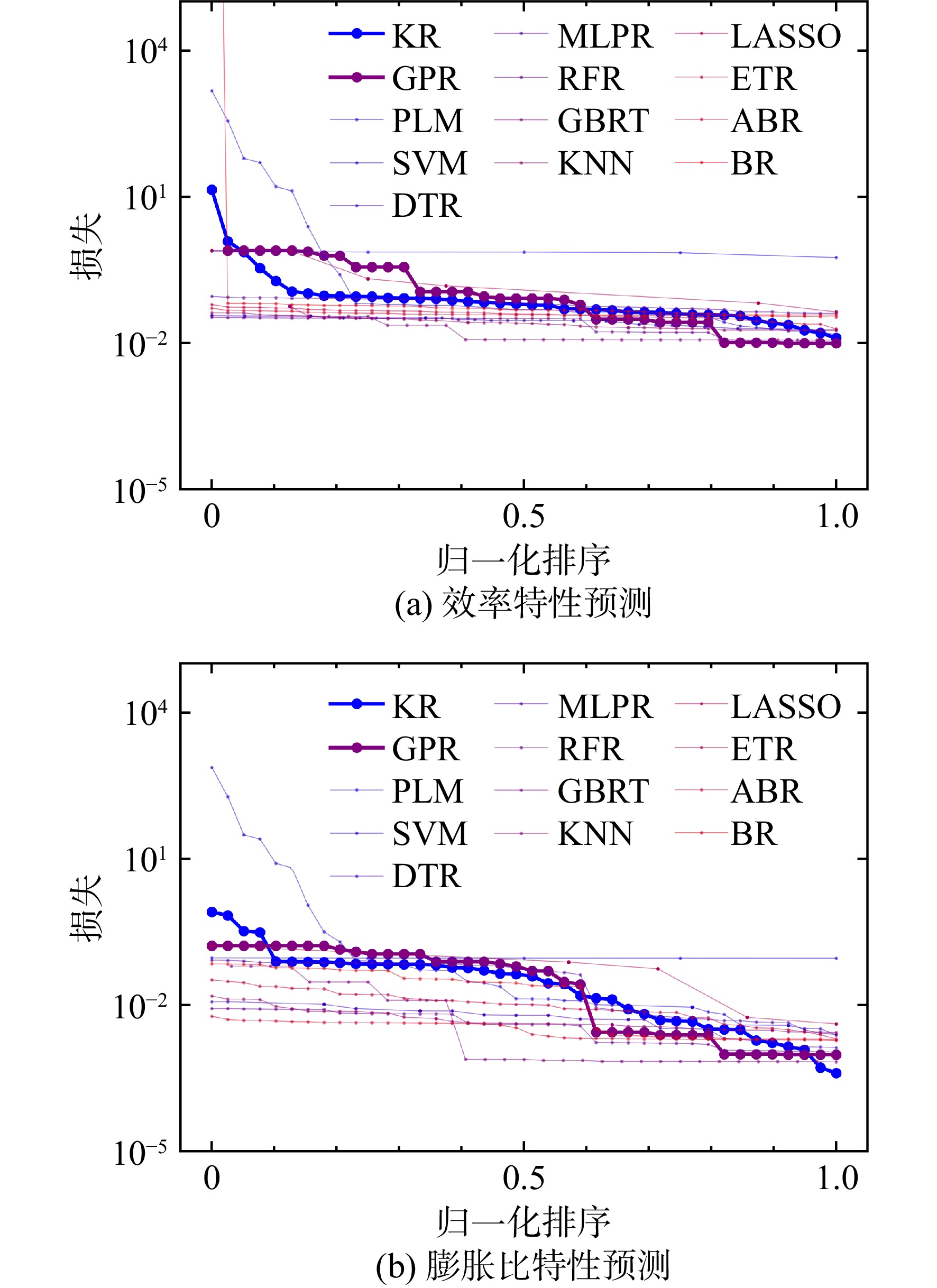
图 6 定转速效率特性超参数优化
Figure 6. Constant speed efficiency characteristic hyper-parameter optimization
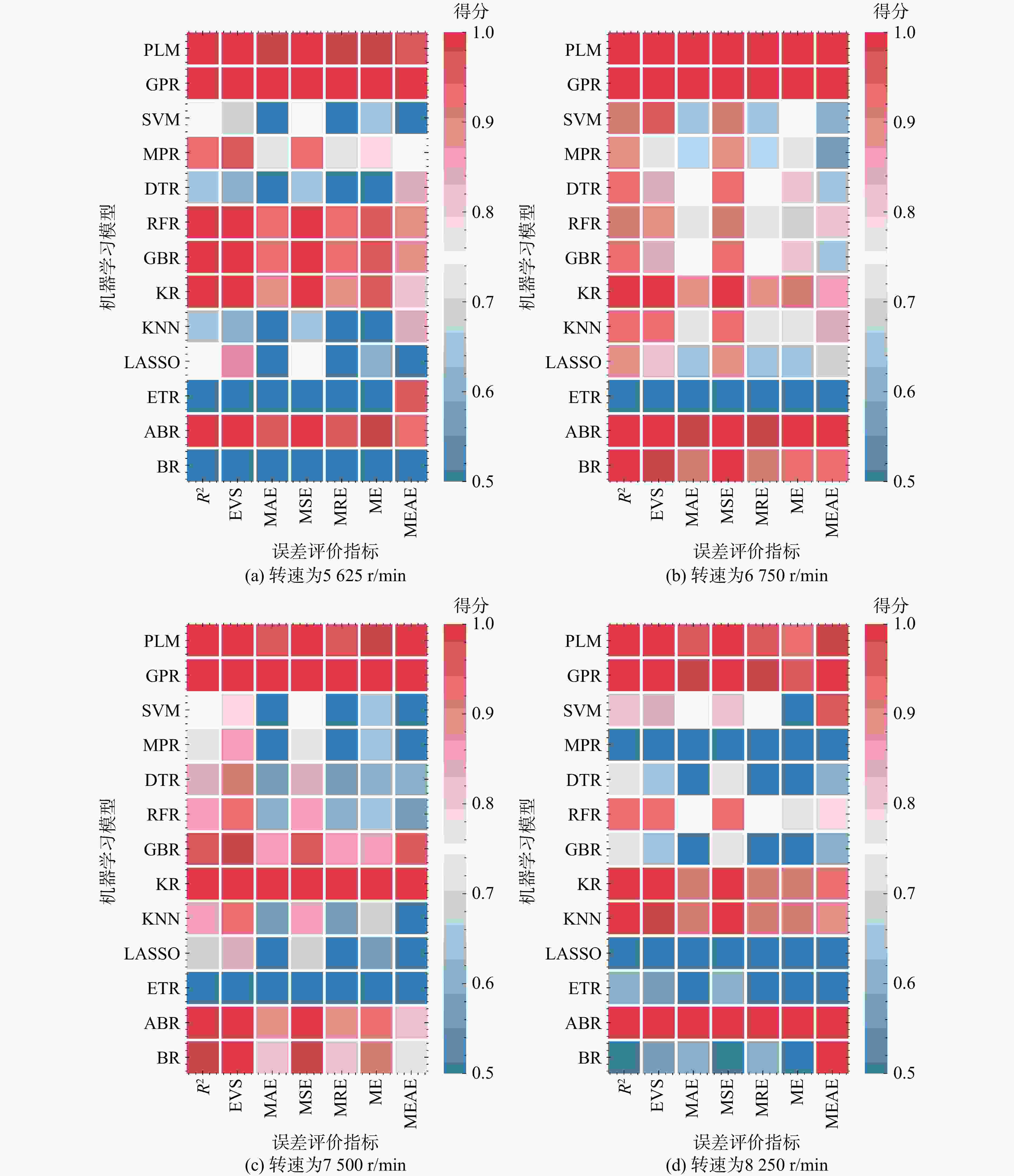
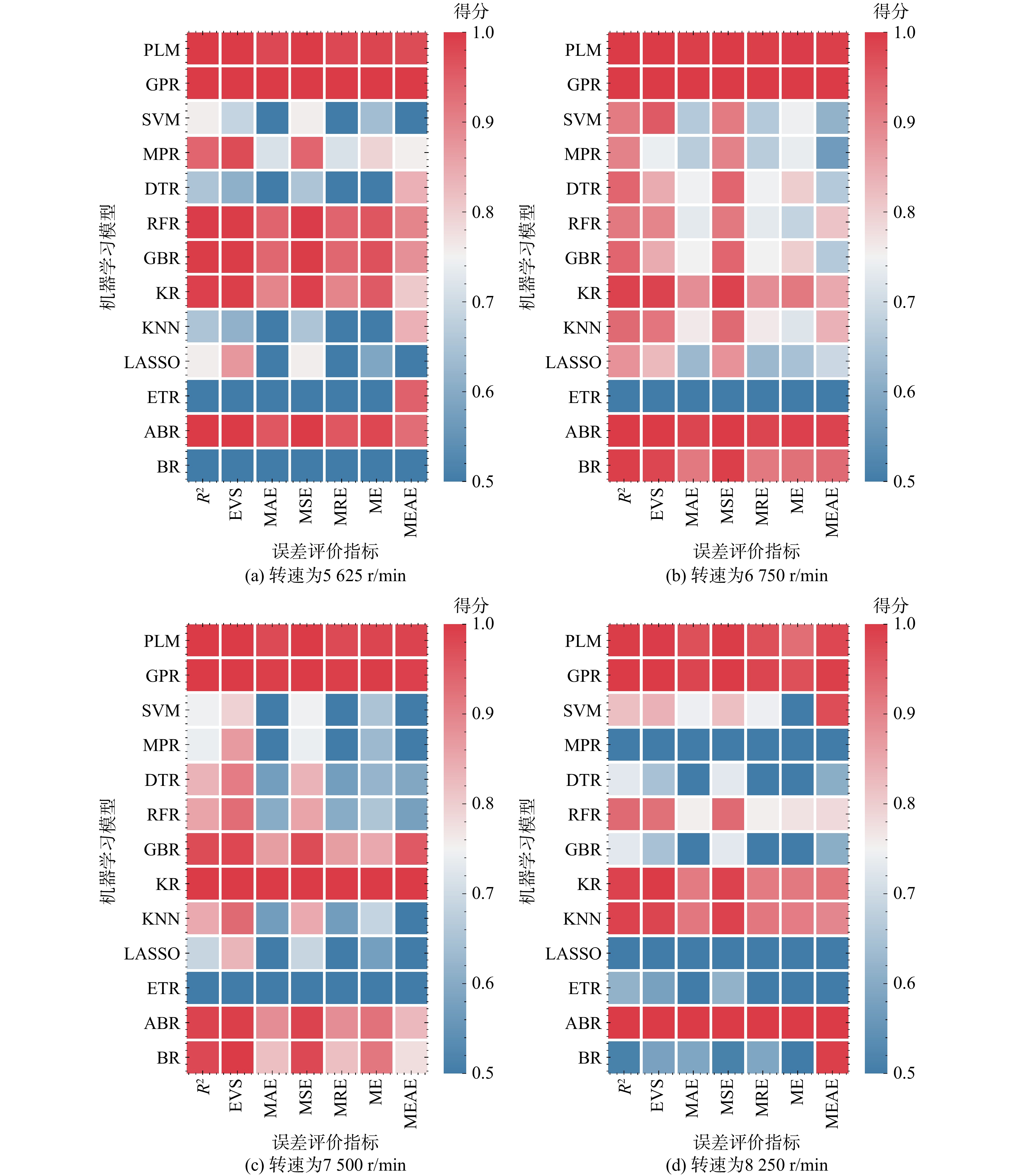
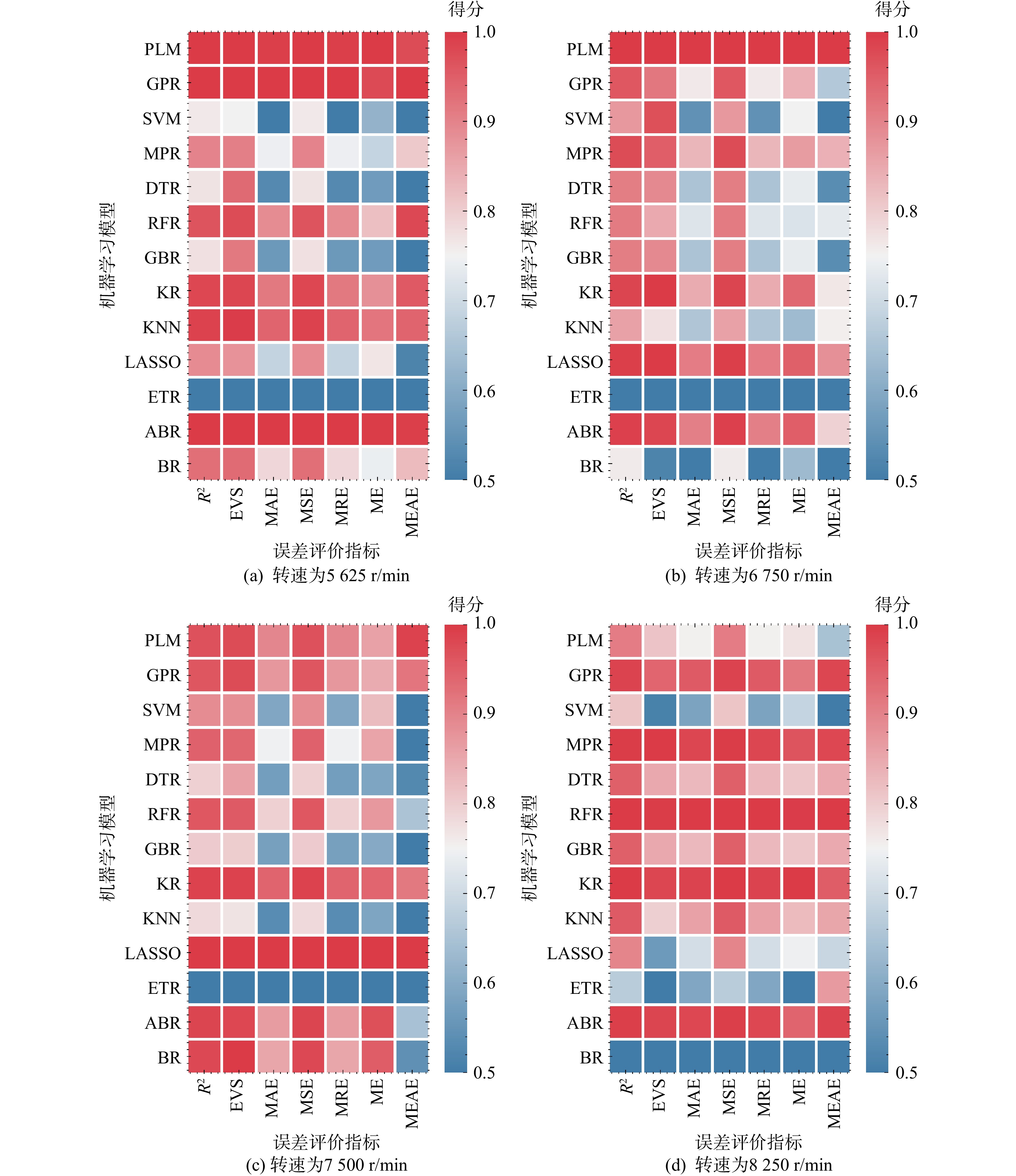
图 7 定转速气流角模型的效率特性得分
Figure 7. Efficiency characteristic score of constant speed flow angle model
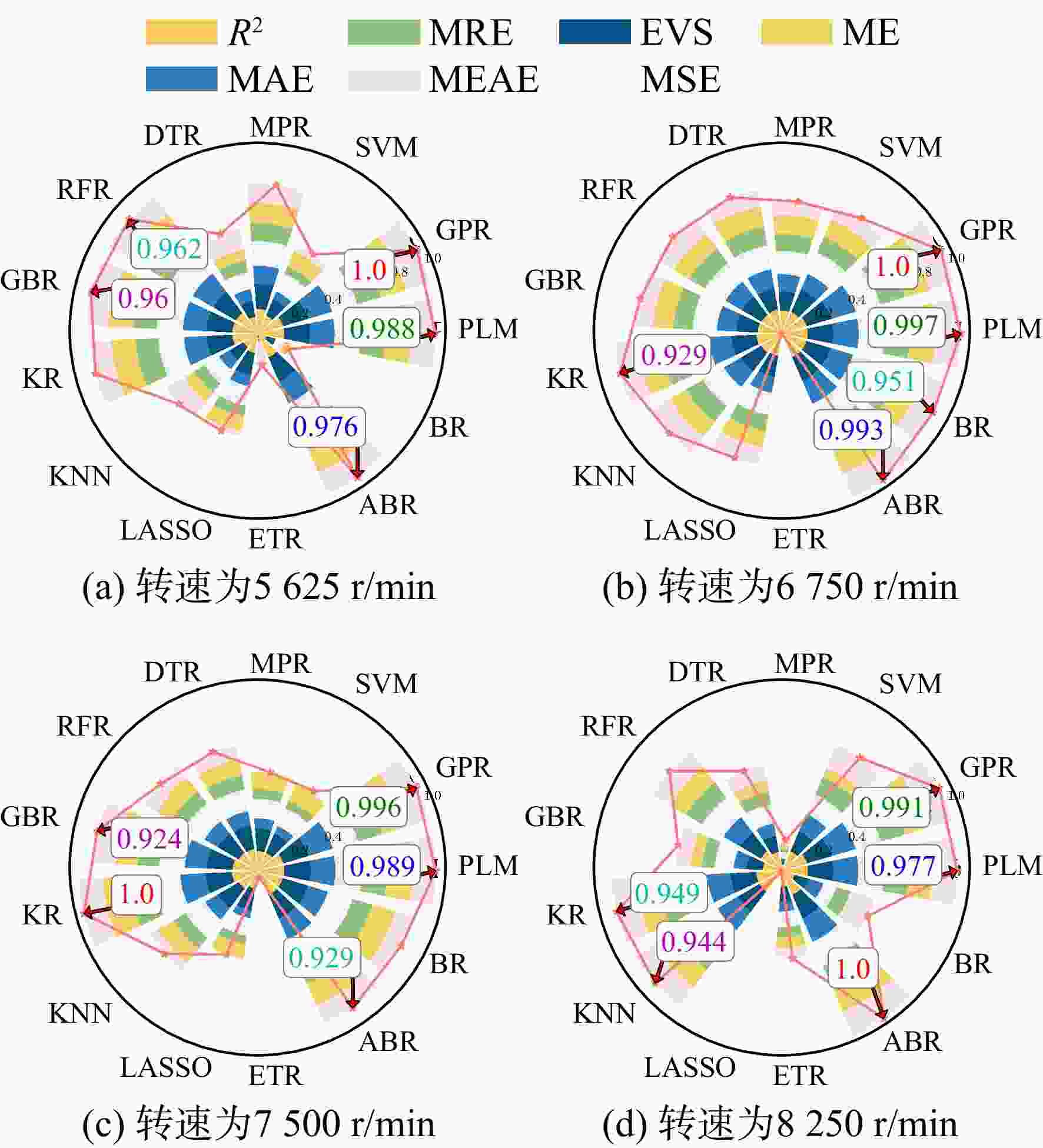
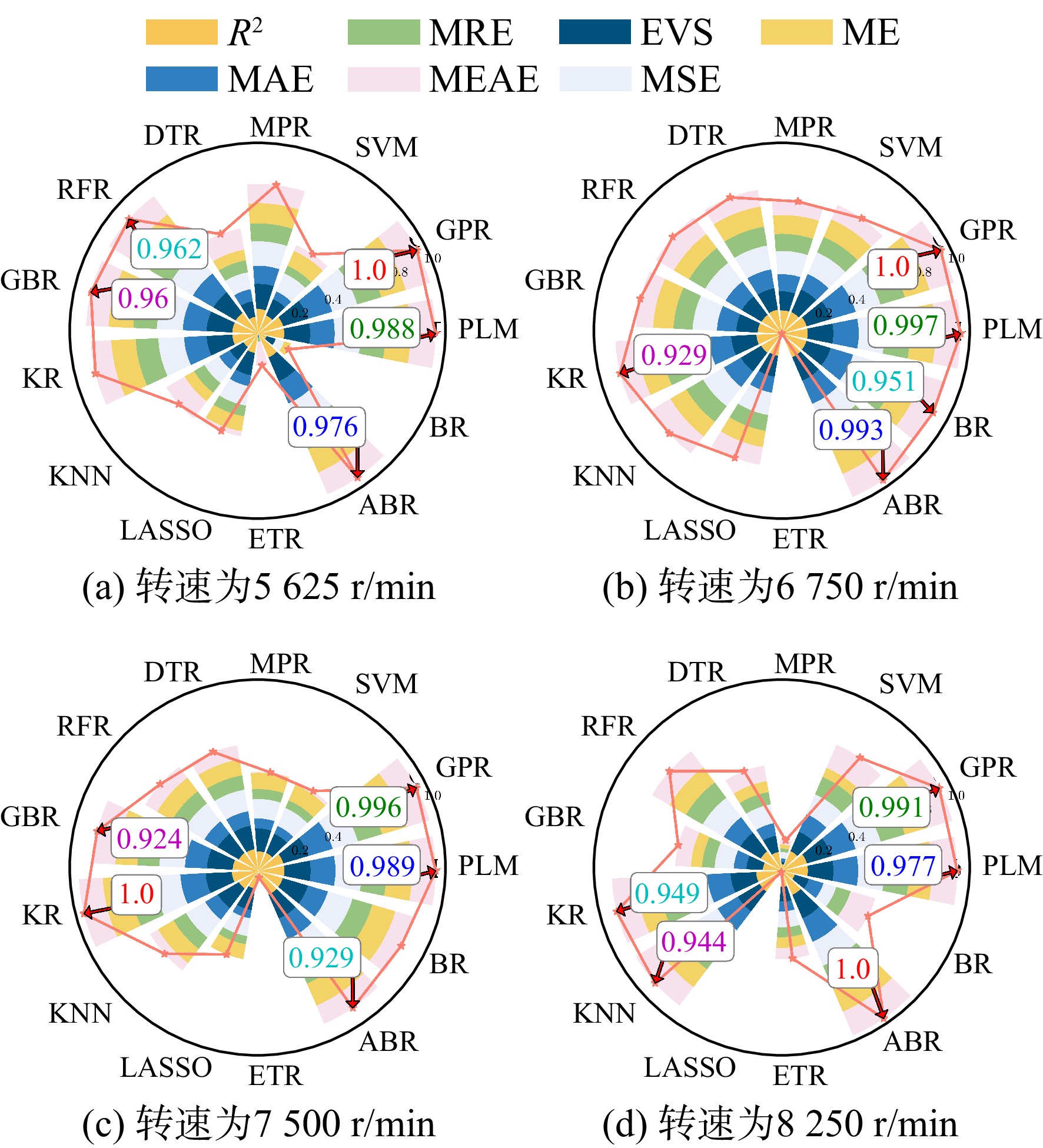
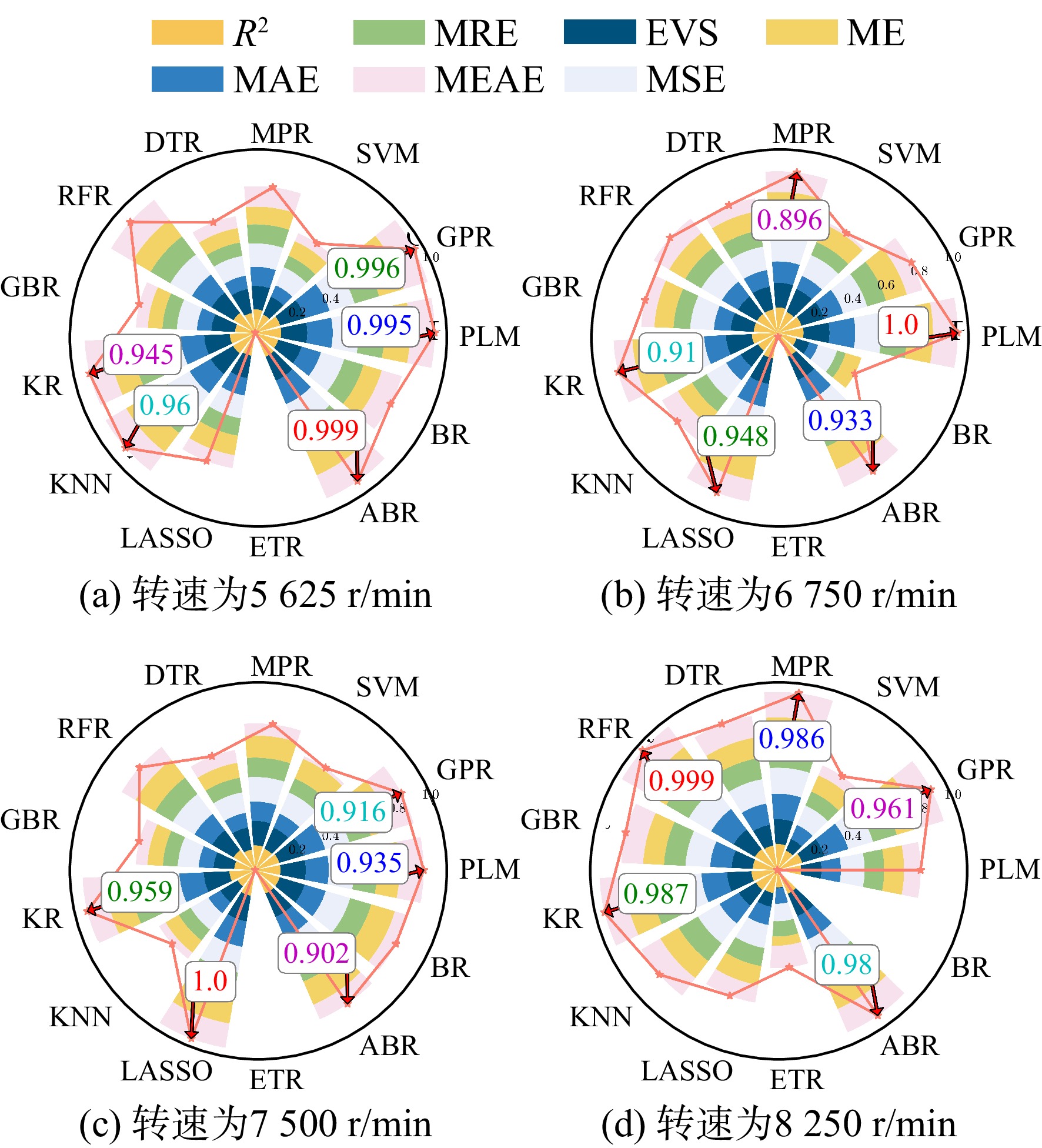
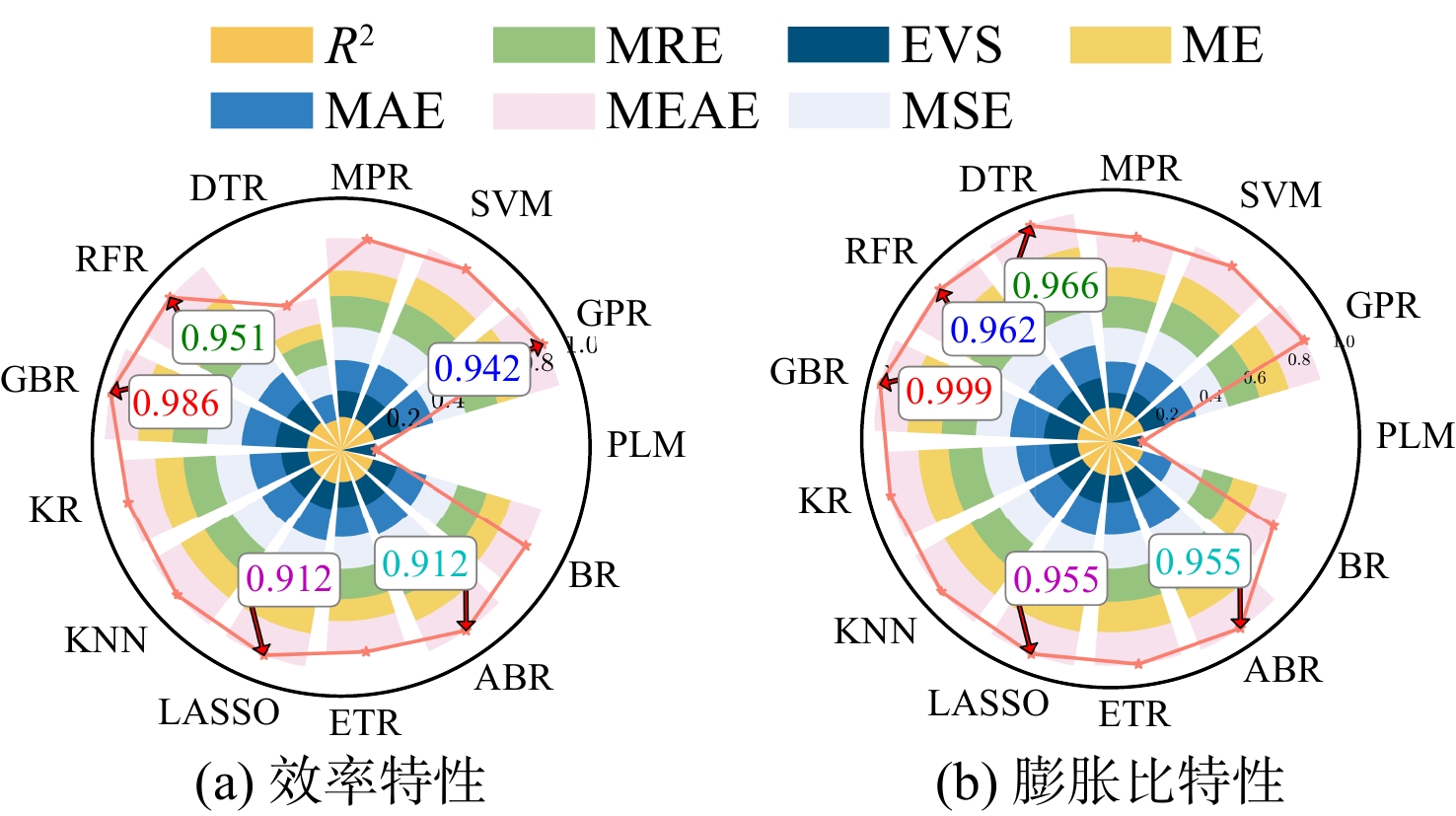
图 8 定转速气流角模型的效率综合评价
Figure 8. Comprehensive evaluation of efficiency of constant speed flow angle model
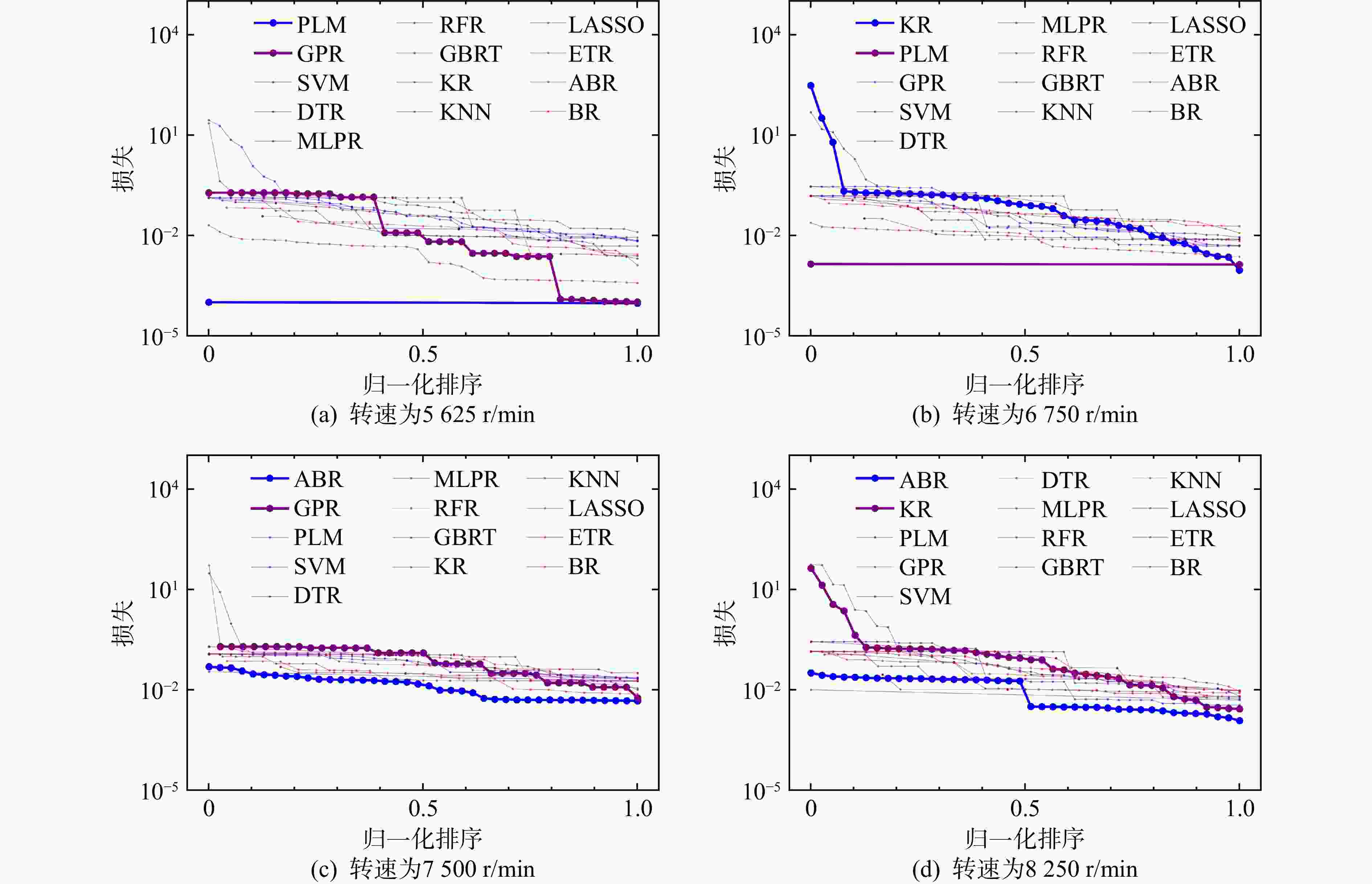
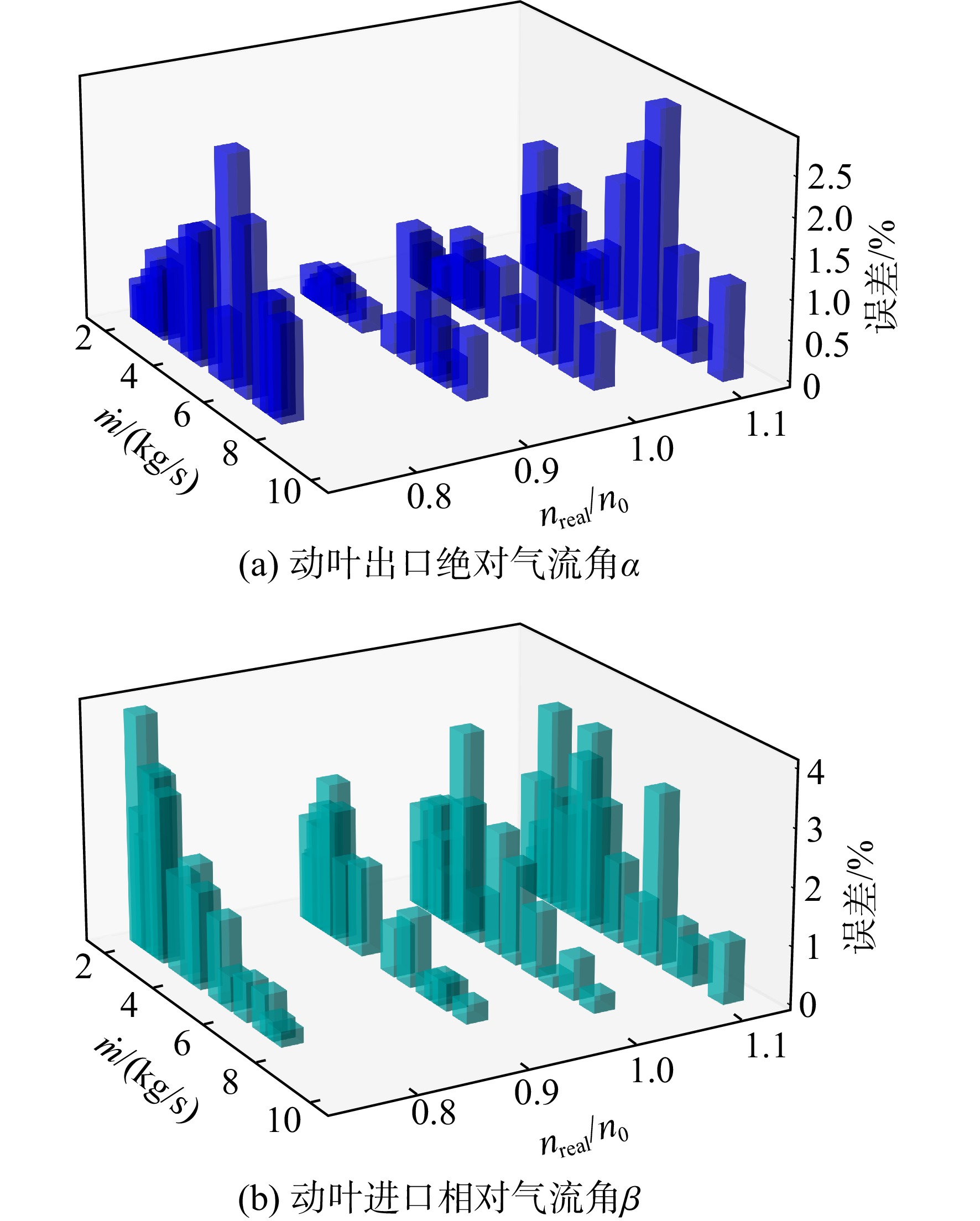
图 9 定转速膨胀比特性超参数优化
Figure 9. Constant speed expansion ratio characteristic hyper-parameter optimization

图 10 定转速气流角模型的膨胀比特性得分
Figure 10. Expansion ratio characteristic score of constant speed flow angle model
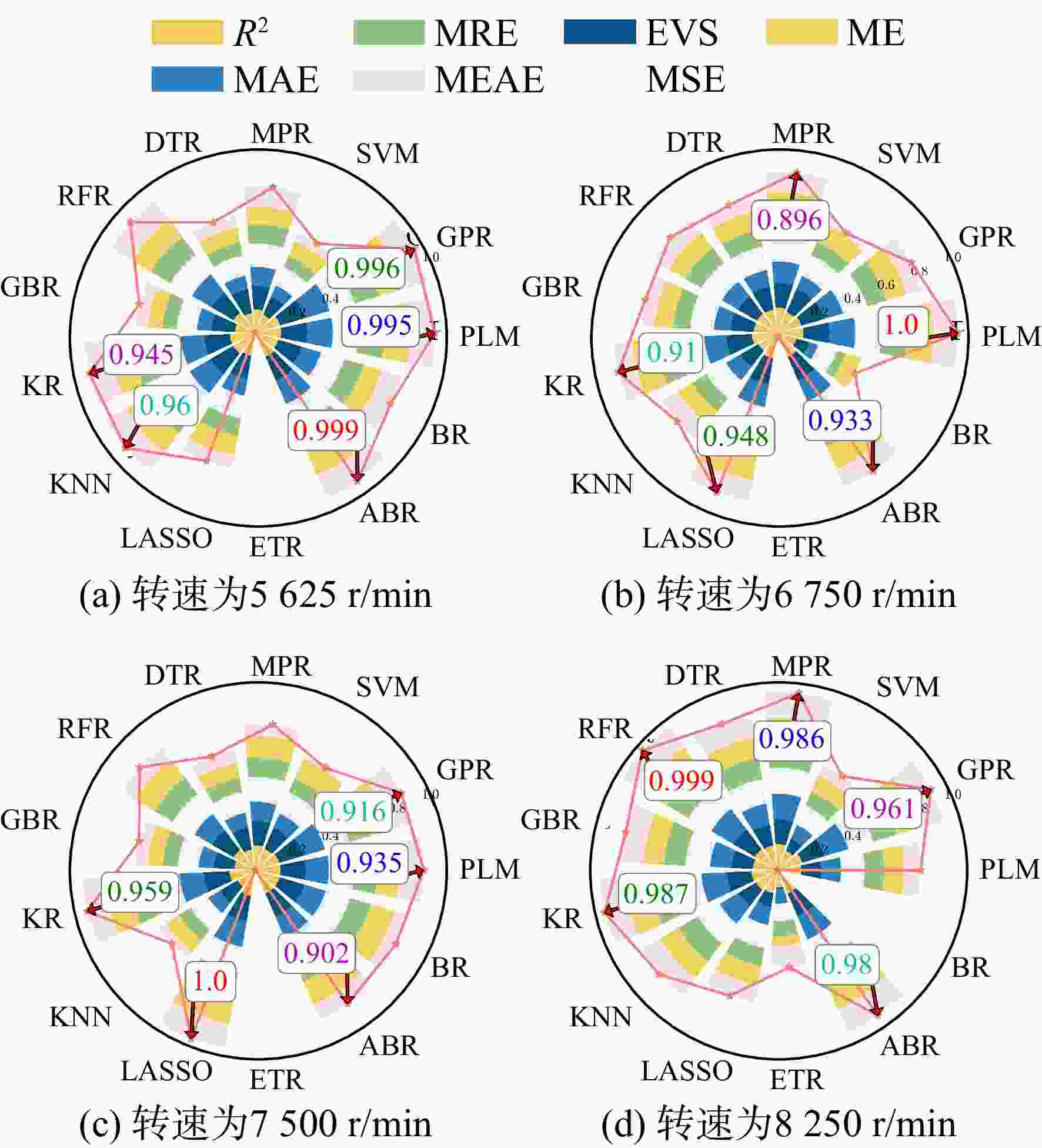
图 11 定转速气流角模型综合评价结果
Figure 11. Comprehensive evaluation results of constant speed flow angle model
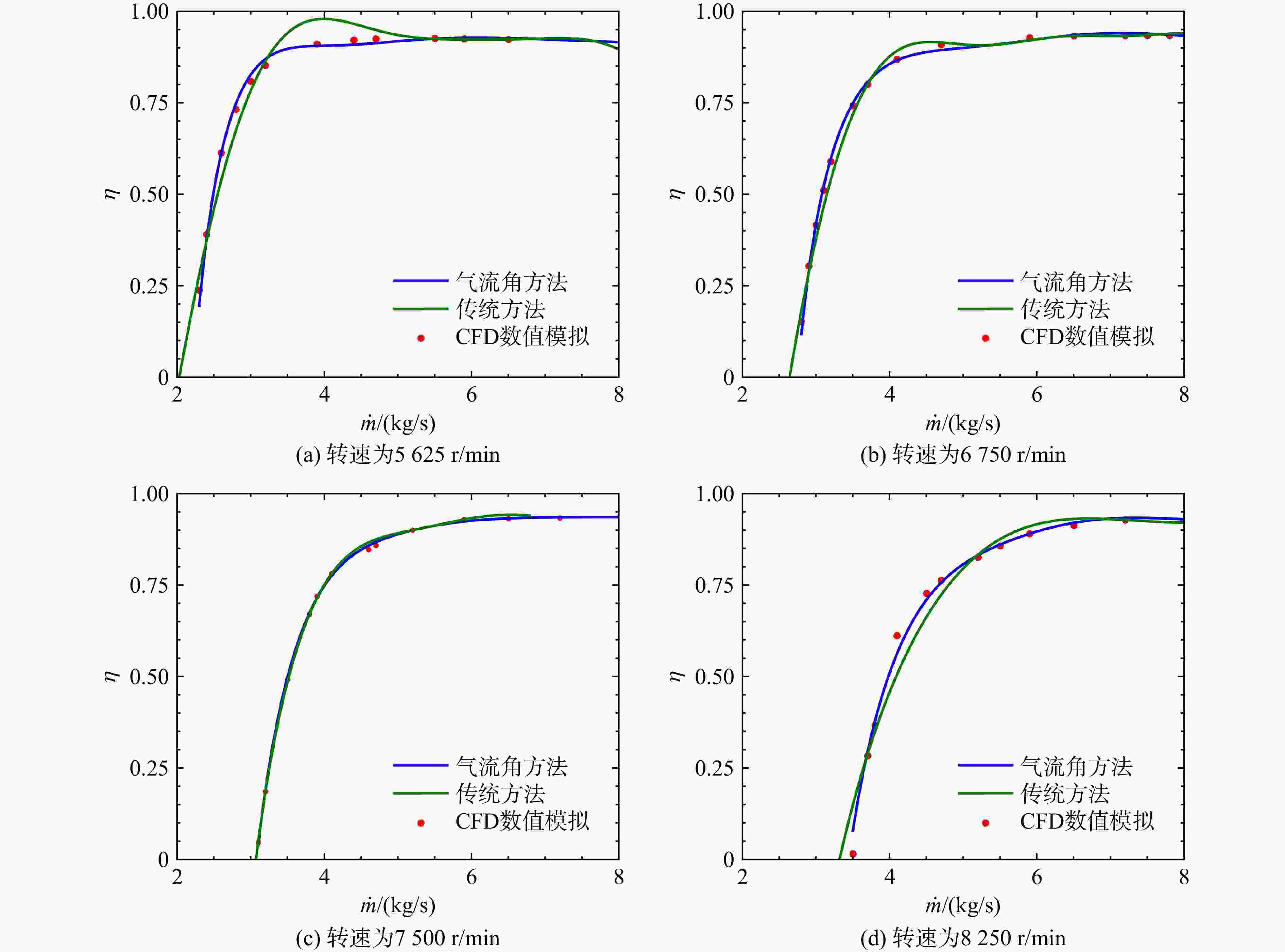
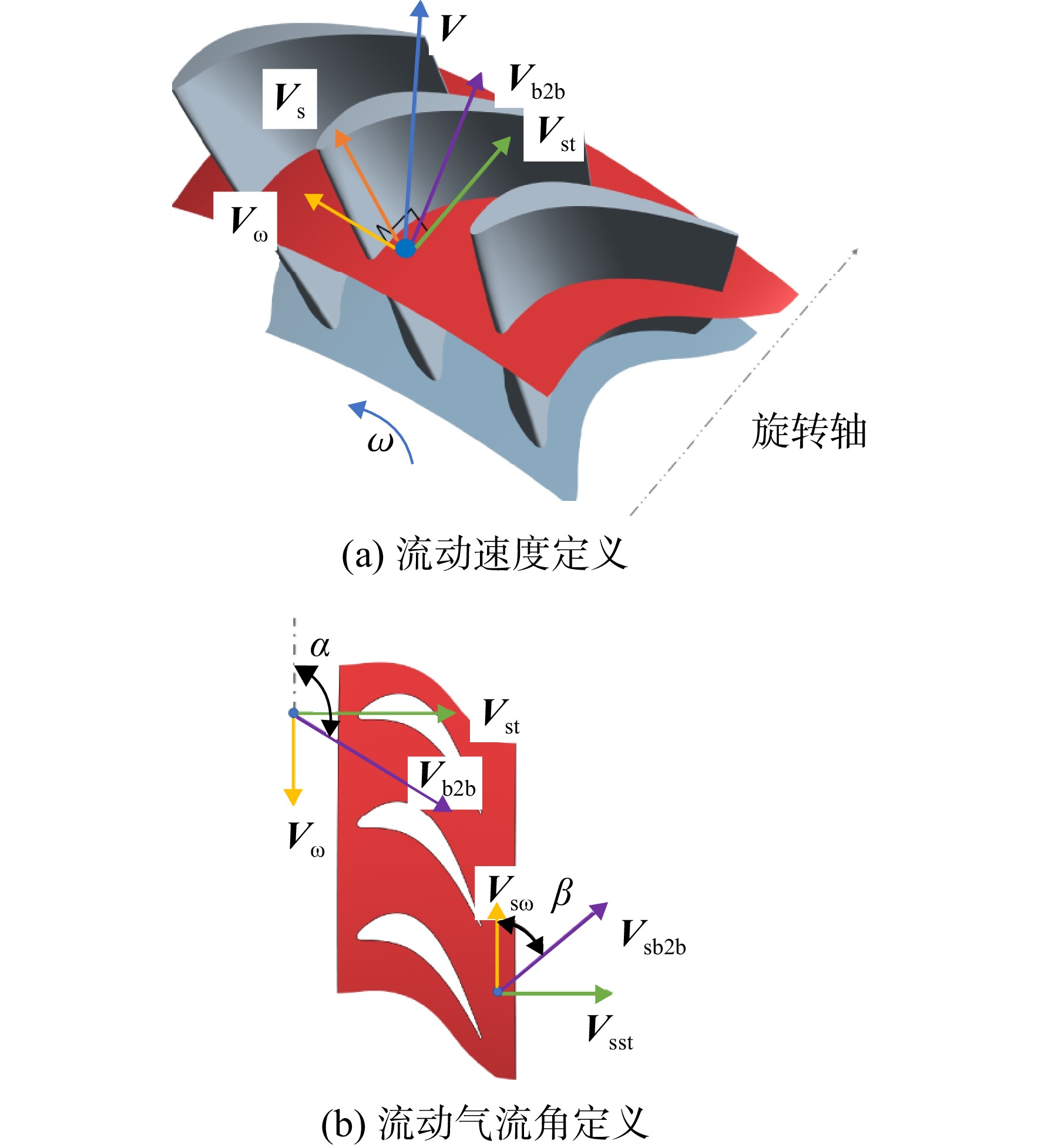
图 12 不同输入条件效率特性对比
Figure 12. Comparison of efficiency characteristics at different input conditions
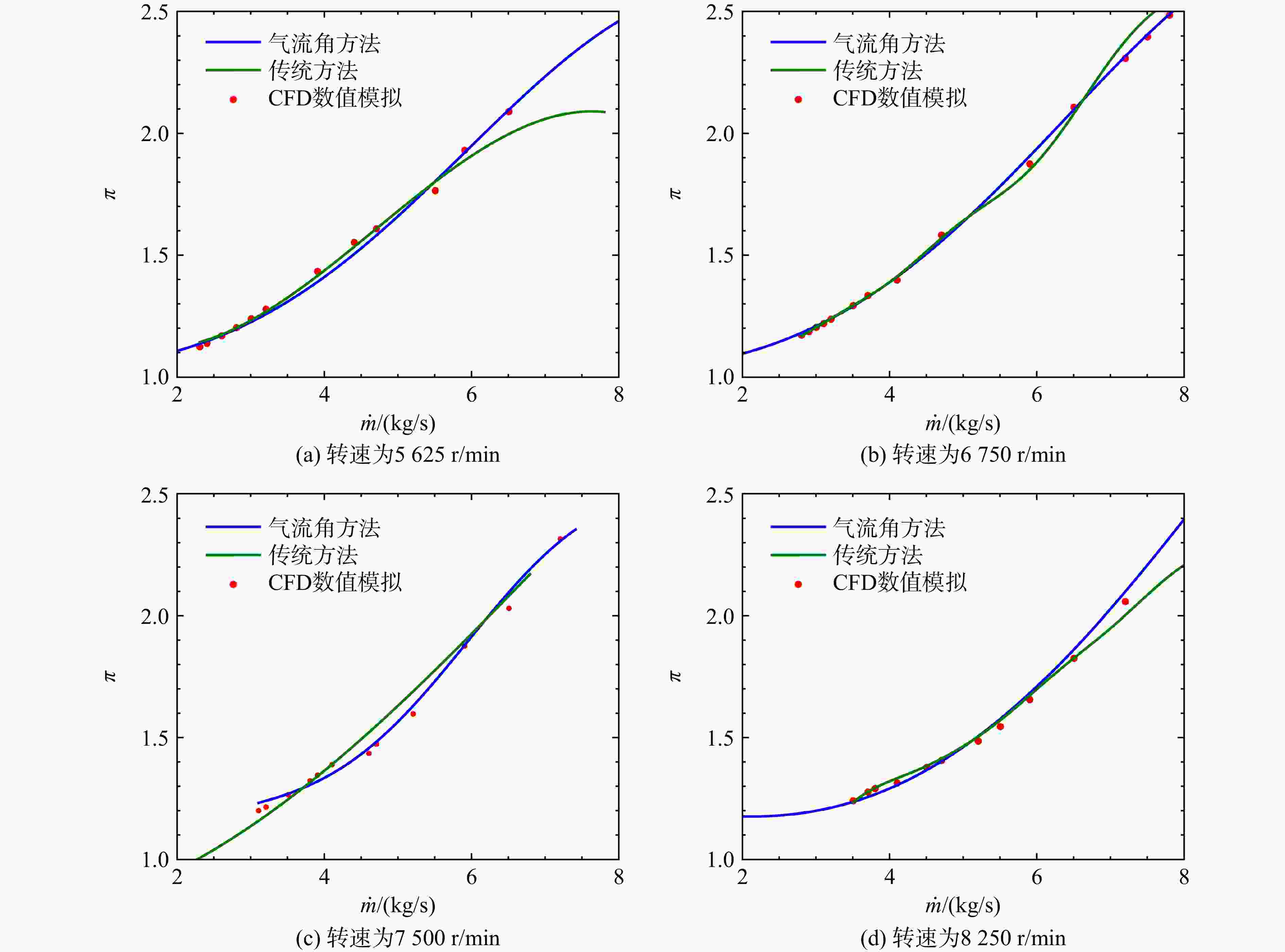
图 13 不同输入条件膨胀比特性对比
Figure 13. Comparison of expansion ratio characteristics at different input conditions

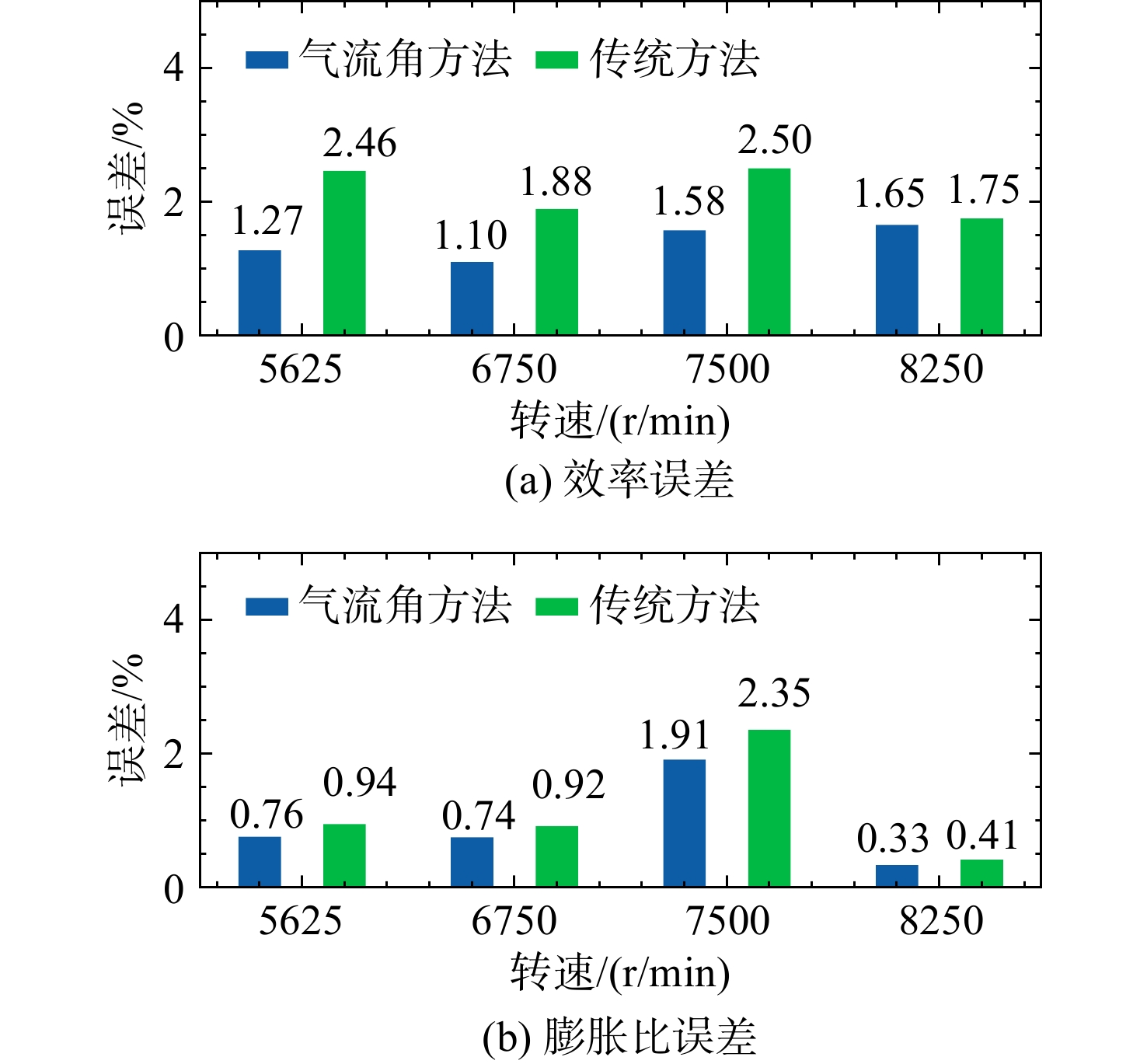
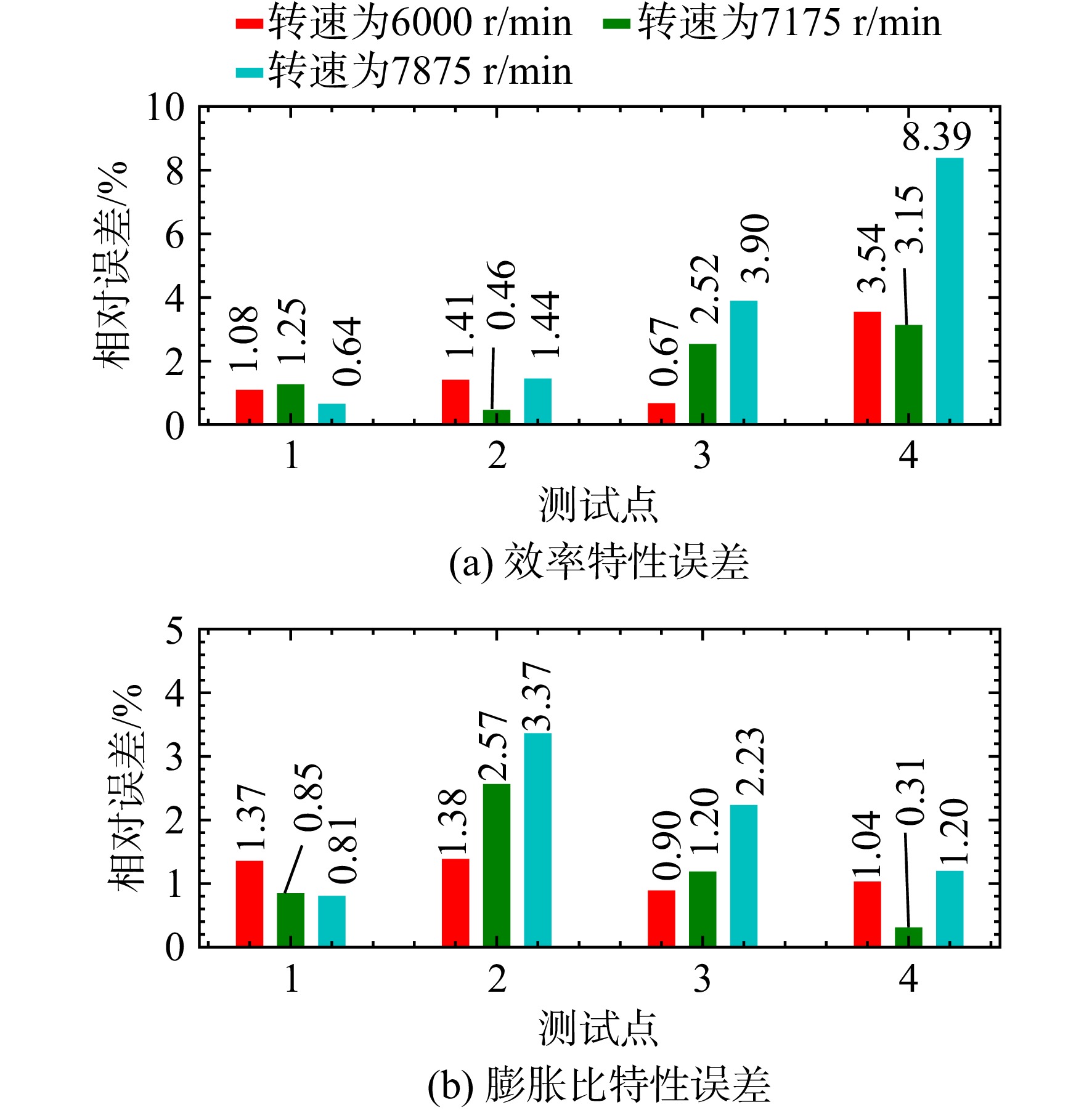
图 14 定转速下不同输入方法误差比较
Figure 14. Error comparison of different input methods at constant speed
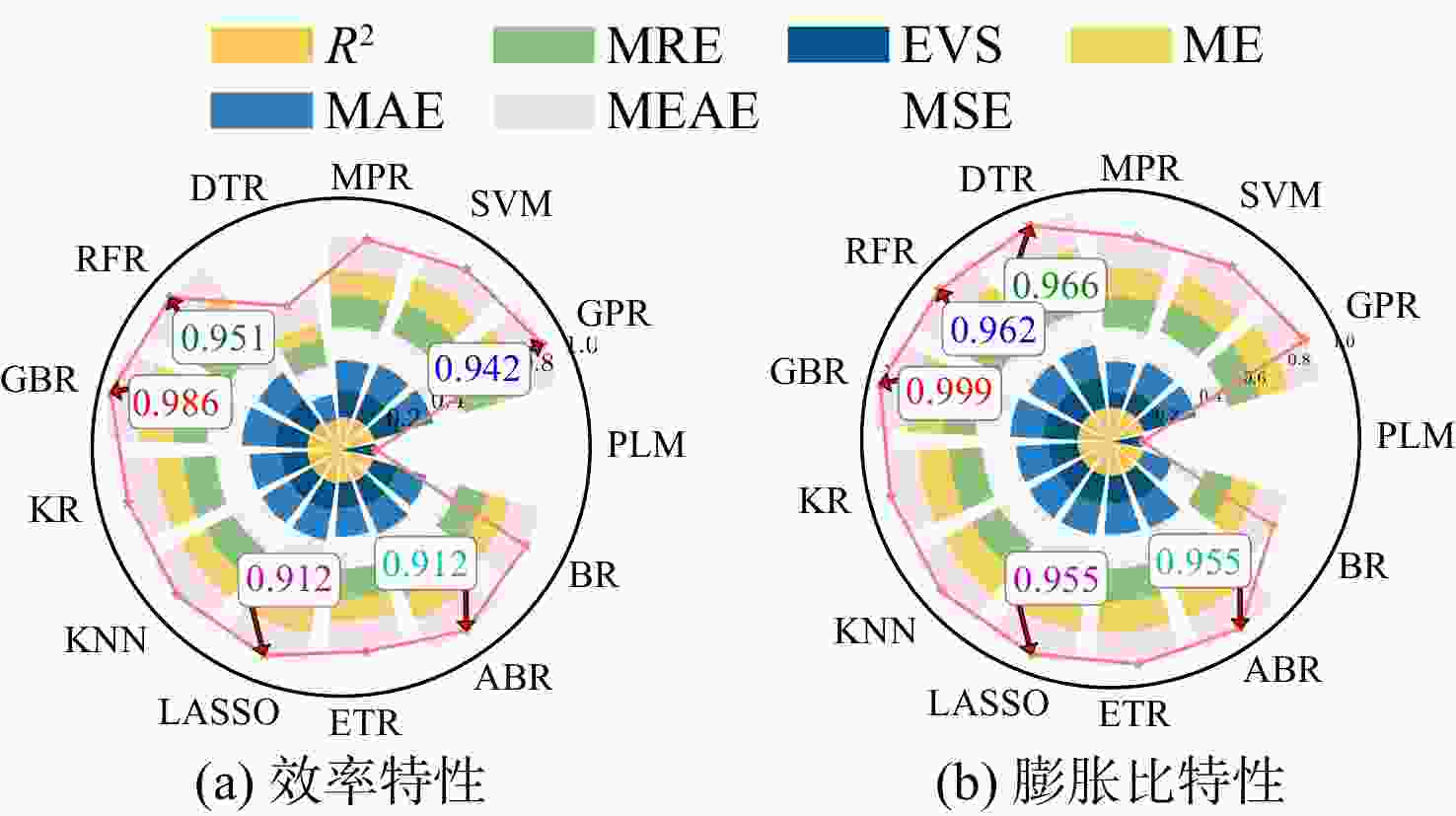
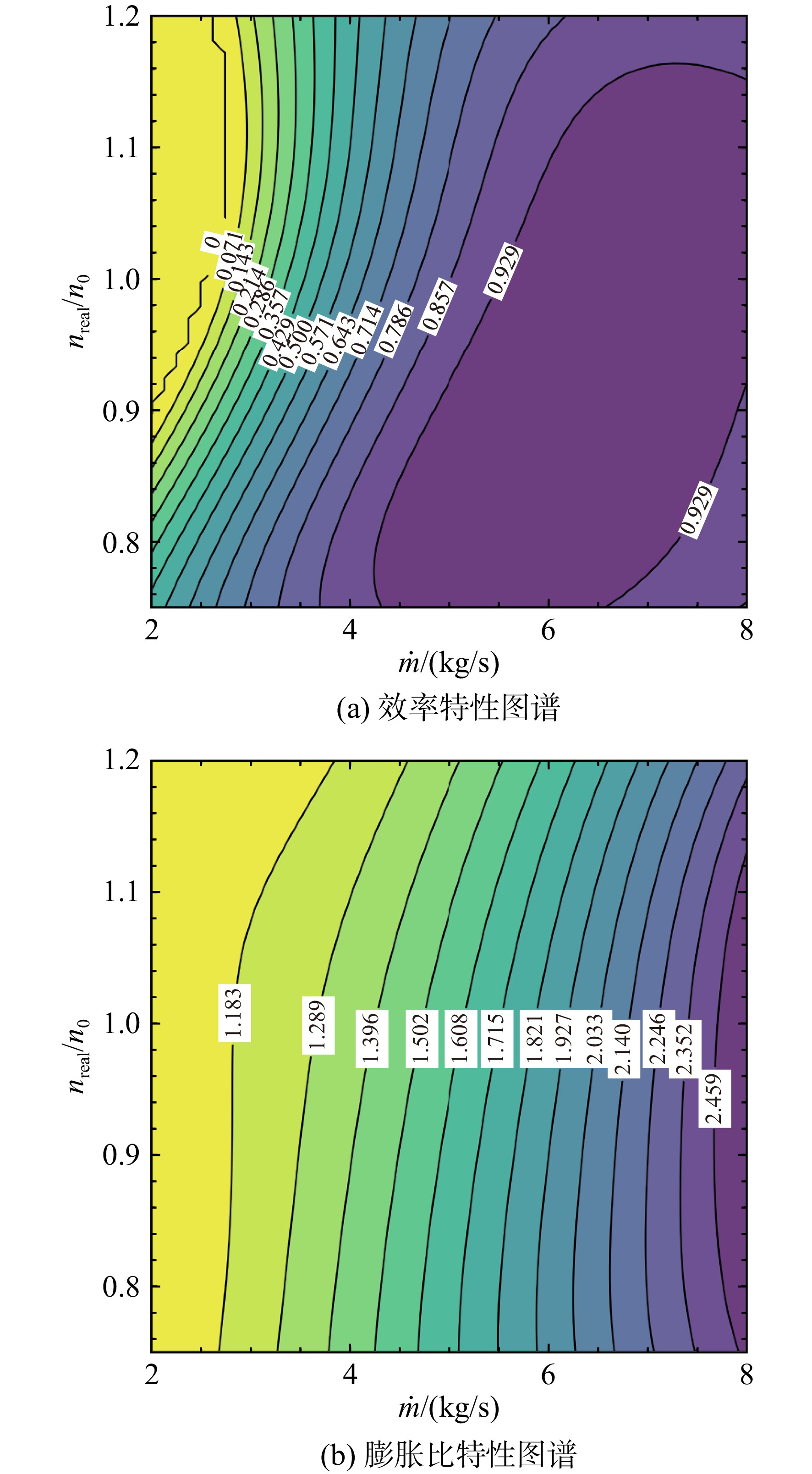
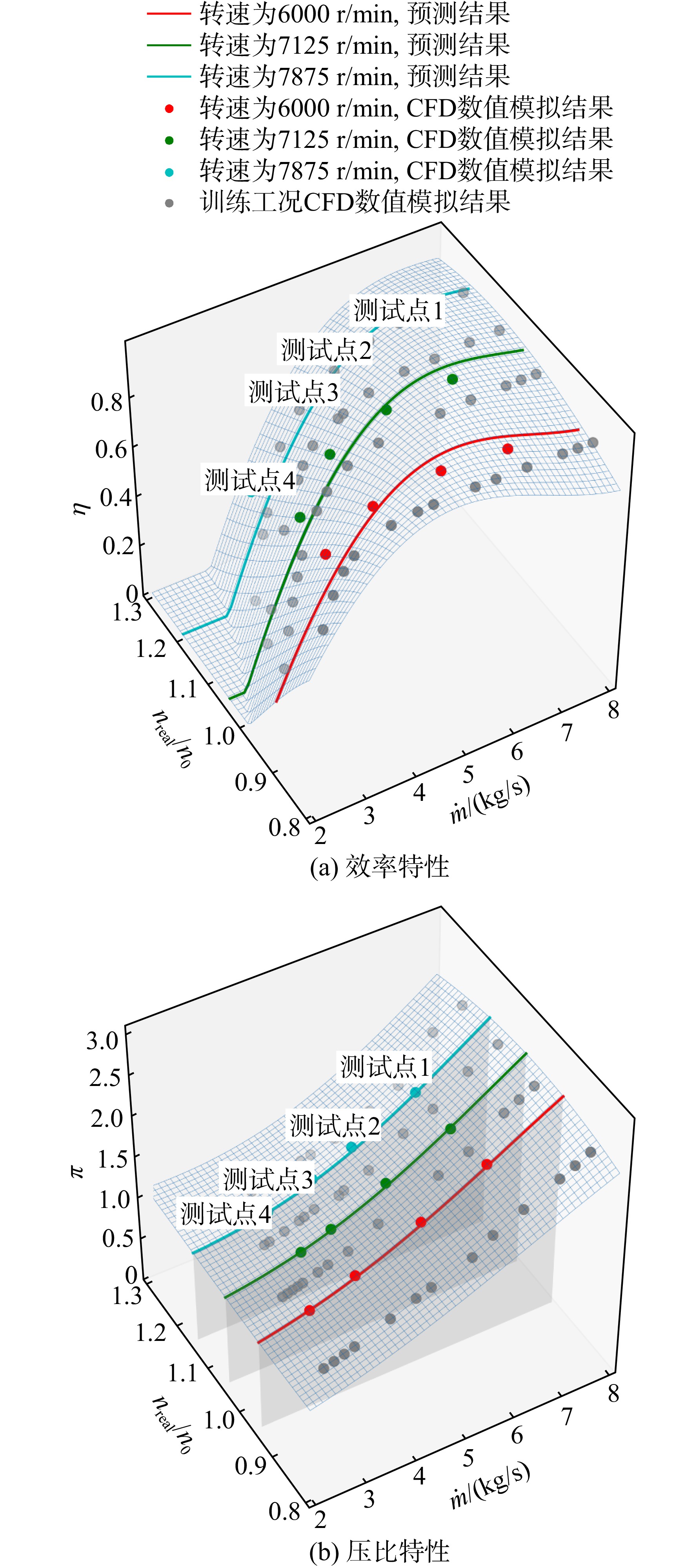
图 18 变转速预测模型综合评价结果
Figure 18. Comprehensive evaluation results of variable speed prediction model
表 1 模型评价指标
Table 1. Model evaluation indices
误差指标 量符号 计算公式 决定系数(R2) $ {X_1} $ $ {R^2} = 1 - \frac{{{{\displaystyle\sum\limits_0^{n - 1} { ({y_i} - {{\hat y}_i}) ^2} }}}}{{\displaystyle\sum\limits_0^{n - 1} {{{ ({y_i} - {{\bar y}_i}) ^2}}} }}\quad {\bar y_i} = \dfrac{1}{n}\displaystyle\sum\limits_0^{n - 1} {{y_i}} $ 解释方差(EVS) $ {X_2} $ $1 - \dfrac{{{\text{Var}} ( {{y_i} - {{\hat y}_i}} ) }}{{{\text{Var}} ( {{y_i}} ) }}$ 平均绝对误差(MAE) $ {X_3} $ $ \dfrac{1}{n}\displaystyle\sum\limits_0^{n - 1} {|{y_i} - } {\hat y_i}| $ 均方误差(MSE) $ {X_4} $ $ \dfrac{1}{n}\displaystyle\sum\limits_0^{n - 1} { ({y_i} - } {\hat y_i}{) ^2} $ 平均相对误差(MRE) $ {X_5} $ $ \dfrac{1}{n}\displaystyle\sum\limits_0^{n - 1} {\frac{{|{y_i} - {{\hat y}_i}|}}{{|{y_i}|}}} $ 最大误差(ME) $ {X_6} $ $ \max (|{y_i} - {\hat y_i}|) $ 中位绝对误差(MEAE) $ {X_7} $ $ {\text{median}} (|{y_i} - {\text{median}} (y) |) $  下载: 导出CSV
-
[1] FRANUS D J. The world gas turbine industry production trends and key factors[R]. Hague, Netherlands: ASME Turbo Expo: Power for Land, Sea, and Air, 1994. [2] 汤来东. 基于损失模型的涡轮性能预估方法研究[D]. 南京: 南京航空航天大学, 2014. TANG Laidong. Research on turbine performance prediction method based on loss model[D]. Nanjing: Nanjing University of Aeronautics and Astronautics, 2014. (in ChineseTANG Laidong. Research on turbine performance prediction method based on loss model[D]. Nanjing: Nanjing University of Aeronautics and Astronautics, 2014. (in Chinese) [3] AINLEY D G, MATHIESON G C. A method of performance estimation for axial-flow turbines[R]. London, UK: Aeronautical Research Council, ARC-R/M2974, 1951. [4] CARTER A F, LENHERR F K. Correlations of turbine blade total-pressure-loss coefficients derived from achievable stage efficiency data[R]. ASME 68-WA/GT-5, 1968. [5] DENTON J D. The 1993 IGTI scholar lecture: loss mechanisms in turbomachines[J]. Journal of Turbomachinery, 1993, 115(4): 621-656. doi: 10.1115/1.2929299 [6] 王嘉辉, 张华良, 尹钊, 等. 轴流涡轮损失模型研究进展[J]. 推进技术, 2021, 42(1): 82-93. WANG Jiahui, ZHANG Hualiang, YIN Zhao, et al. Review of axial turbine loss model[J]. Journal of Propulsion Technology, 2021, 42(1): 82-93. (in ChineseWANG Jiahui, ZHANG Hualiang, YIN Zhao, et al. Review of axial turbine loss model[J]. Journal of Propulsion Technology, 2021, 42(1): 82-93. (in Chinese) [7] YUAN Zhen, ZHANG Jun, ZHU Dong. Profile loss correlations for variable incidences[J]. Applied Mechanics and Materials, 2014, 577: 527-530. doi: 10.4028/www.scientific.net/AMM.577.527 [8] BENNER M W, SJOLANDER S A, MOUSTAPHA S H. Influence of leading-edge geometry on profile losses in turbines at off-design incidence: experimental results and an improved correlation[R]. Journal of Turbomachinery 1997, 9(2): 193-200. [9] KACKER S C, OKAPUU U. A mean line prediction method for axial flow turbine efficiency[J]. Journal of Engineering for Power, 1982, 104(1): 111-119. doi: 10.1115/1.3227240 [10] 胡江峰, 竺晓程, 欧阳华, 等. 轴流压气机非设计点性能计算[J]. 航空动力学报, 2012, 27(3): 682-688. HU Jiangfeng, ZHU Xiaocheng, OUYANG Hua, et al. Axial compressor performance calculation at off-design conditions[J]. Journal of Aerospace Power, 2012, 27(3): 682-688. (in ChineseHU Jiangfeng, ZHU Xiaocheng, OUYANG Hua, et al. Axial compressor performance calculation at off-design conditions[J]. Journal of Aerospace Power, 2012, 27(3): 682-688. (in Chinese) [11] 高丽敏, 祝启鹏, 李瑞宇, 等. 轴流压气机损失预估及特性计算方法[J]. 风机技术, 2013, 55(3): 38-42, 58. GAO Limin, ZHU Qipeng, LI Ruiyu, et al. Axial-flow compressor loss estimation and charateristic calculation method[J]. Compressor, Blower & Fan Technology, 2013, 55(3): 38-42, 58. (in ChineseGAO Limin, ZHU Qipeng, LI Ruiyu, et al. Axial-flow compressor loss estimation and charateristic calculation method[J]. Compressor, Blower & Fan Technology, 2013, 55(3): 38-42, 58. (in Chinese) [12] 祝启鹏, 高丽敏, 李瑞宇, 等. 跨声速多级轴流压气机特性预估及分析[J]. 推进技术, 2014, 35(10): 1342-1348. ZHU Qipeng, GAO Limin, LI Ruiyu, et al. Performance prediction and analysis of multi-stage transonic axial compressors[J]. Journal of Propulsion Technology, 2014, 35(10): 1342-1348. (in ChineseZHU Qipeng, GAO Limin, LI Ruiyu, et al. Performance prediction and analysis of multi-stage transonic axial compressors[J]. Journal of Propulsion Technology, 2014, 35(10): 1342-1348. (in Chinese) [13] 曹志鹏, 刘波, 靳军, 等. 一种损失和落后角模型在轴流压气机特性预估中的应用[J]. 汽轮机技术, 2005, 47(6): 433-436. CAO Zhipeng, LIU Bo, JIN Jun, et al. The application of a loss and deviation angle model on performance prediction of axial flow compressor[J]. Turbine Technology, 2005(6): 433-436. (in ChineseCAO Zhipeng, LIU Bo, JIN Jun, et al. The application of a loss and deviation angle model on performance prediction of axial flow compressor[J]. Turbine Technology, 2005(6): 433-436. (in Chinese) [14] BENNER M W, SJOLANDER S A, MOUSTAPHA S H. An empirical prediction method for secondary losses in turbines: Part I a new loss breakdown scheme and penetration depth correlation[J]. American Society of Mechanical Engineers Journal of Turbomachinery, 2006, 128(2): 273-280. [15] 王志涛, 李淑英, 谭智勇. 基于BP和RBF神经网络压气机特性曲线拟合方法的研究[J]. 汽轮机技术, 2009, 51(2): 94-96, 99. WANG Zhitao, LI Shuying, TAN Zhiyong. Comparing study on the fitting method of compressor characteristic curve based on BP and RBF neural network[J]. Turbine Technology, 2009, 51(2): 94-96, 99. (in Chinese doi: 10.3969/j.issn.1001-5884.2009.02.005WANG Zhitao, LI Shuying, TAN Zhiyong. Comparing study on the fitting method of compressor characteristic curve based on BP and RBF neural network[J]. Turbine Technology, 2009, 51(2): 94-96, 99. (in Chinese) doi: 10.3969/j.issn.1001-5884.2009.02.005 [16] 路绪坤, 张士杰, 迟金玲, 等. 基于遗传算法的压气机性能曲线拟合方法研究[J]. 热能动力工程, 2022, 37(1): 105-109, 123. LU Xukun, ZHANG Shijie, CHI Jinling, et al. Research on the fitting method of compressor performance curve based on genetic algorithm[J]. Journal of Engineering for Thermal Energy and Power, 2022, 37(1): 105-109, 123. (in ChineseLU Xukun, ZHANG Shijie, CHI Jinling, et al. Research on the fitting method of compressor performance curve based on genetic algorithm[J]. Journal of Engineering for Thermal Energy and Power, 2022, 37(1): 105-109, 123. (in Chinese) [17] 刘锬韬, 高丽敏, 冯旭栋. 基于数据驱动的轴流压气机特性图规律及预测[J]. 航空动力学报, 2021, 36(5): 1072-1082. LIU Tantao, GAO Limin, FENG Xudong. Laws and prediction of axial compressor performance map based on data-driven[J]. Journal of Aerospace Power, 2021, 36(5): 1072-1082. (in ChineseLIU Tantao, GAO Limin, FENG Xudong. Laws and prediction of axial compressor performance map based on data-driven[J]. Journal of Aerospace Power, 2021, 36(5): 1072-1082. (in Chinese) [18] 马博文, 巫骁雄, 于洋. 基于机器学习方法的压气机落后角与总压损失预测代理模型[J]. 航空动力学报, 2023, 38(7): 1675-1690. MA Bowen, WU Xiaoxiong, YU Yang. Surrogate model for deviation angle and total pressure loss prediction of compressor based on machine learning methods[J]. Journal of Aerospace Power, 2023, 38(7): 1675-1690. (in ChineseMA Bowen, WU Xiaoxiong, YU Yang. Surrogate model for deviation angle and total pressure loss prediction of compressor based on machine learning methods[J]. Journal of Aerospace Power, 2023, 38(7): 1675-1690. (in Chinese) [19] 陶慧卿, 徐宁, 李润泽, 等. 基于多元非线性回归损失及落后角模型研究[J]. 热能动力工程, 2022, 37(12): 38-46. TAO Huiqing, XU Ning, LI Runze, et al. Research on loss and deviation angle model based on multivariate nonlinear regression[J]. Journal of Engineering for Thermal Energy and Power, 2022, 37(12): 38-46. (in ChineseTAO Huiqing, XU Ning, LI Runze, et al. Research on loss and deviation angle model based on multivariate nonlinear regression[J]. Journal of Engineering for Thermal Energy and Power, 2022, 37(12): 38-46. (in Chinese) [20] 徐劲松, 陈科中, 刘保含. 航空活塞发动机的层次熵权性能评价方法[J]. 航空动力学报, 2023, 38(11): 2747-2756. XU Jinsong, CHEN Kezhong, LIU Baohan. Hierarchical entropy weight performance evaluation method of aero piston engine[J]. Journal of Aerospace Power, 2023, 38(11): 2747-2756. (in ChineseXU Jinsong, CHEN Kezhong, LIU Baohan. Hierarchical entropy weight performance evaluation method of aero piston engine[J]. Journal of Aerospace Power, 2023, 38(11): 2747-2756. (in Chinese) [21] 陈贞来, 苏三买, 李荣. 航空发动机涡轮特性转换方法[J]. 航空动力学报, 2020, 35(3): 651-657. CHEN Zhenlai, SU Sanmai, LI Rong. Turbine characteristics conversion method of aeroengine[J]. Journal of Aerospace Power, 2020, 35(3): 651-657. (in ChineseCHEN Zhenlai, SU Sanmai, LI Rong. Turbine characteristics conversion method of aeroengine[J]. Journal of Aerospace Power, 2020, 35(3): 651-657. (in Chinese) [22] 周志华. 机器学习[M]. 北京: 清华大学出版社, 2016. [23] FOTTNER L. Test cases for computation of internal flows in aero engine components[R]. AGARD-AR-275, 1990. [24] BAMMERT K, ZEHNER P. Measurements of the four-quadrant characteristics on a multi-stage turbine[J]. Journal of Engineering for Power, 1980, 102(2): 316-321. doi: 10.1115/1.3230254 [25] HERZOG N, GÜNDOGDU Y, KANG G, et al. Part load operation of a four-stage turbine[R]. GT-2005-68700, 2005. [26] 祁明旭, 康顺. 四级轴流涡轮变工况数值分析[J]. 热力透平, 2005, 34(2): 73-77, 87. QI Mingxu, KANG Shun. Numerical simulation of a 4-stage axial-flow turbine in design and off-design conditions[J]. Thermal Turbine, 2005, 34(2): 73-77, 87. (in ChineseQI Mingxu, KANG Shun. Numerical simulation of a 4-stage axial-flow turbine in design and off-design conditions[J]. Thermal Turbine, 2005, 34(2): 73-77, 87. (in Chinese) [27] 李钰洁, 刘永葆. 叶顶间隙对多级轴流涡轮气动特性影响的非定常数值计算[J]. 推进技术, 2017, 38(1): 85-93. LI Yujie, LIU Yongbao. Numerical simulation on effects of tip clearance on unsteady aerodynamic performance of multistage axial turbine[J]. Journal of Propulsion Technology, 2017, 38(1): 85-93. (in ChineseLI Yujie, LIU Yongbao. Numerical simulation on effects of tip clearance on unsteady aerodynamic performance of multistage axial turbine[J]. Journal of Propulsion Technology, 2017, 38(1): 85-93. (in Chinese) -




 点击查看大图

计量
- 文章访问数: 499
- HTML浏览量: 353
- PDF量: 52
- 被引次数: 0