






Variation of tilt-rotor aircraft motion stability and its influence mechanism
-
摘要:
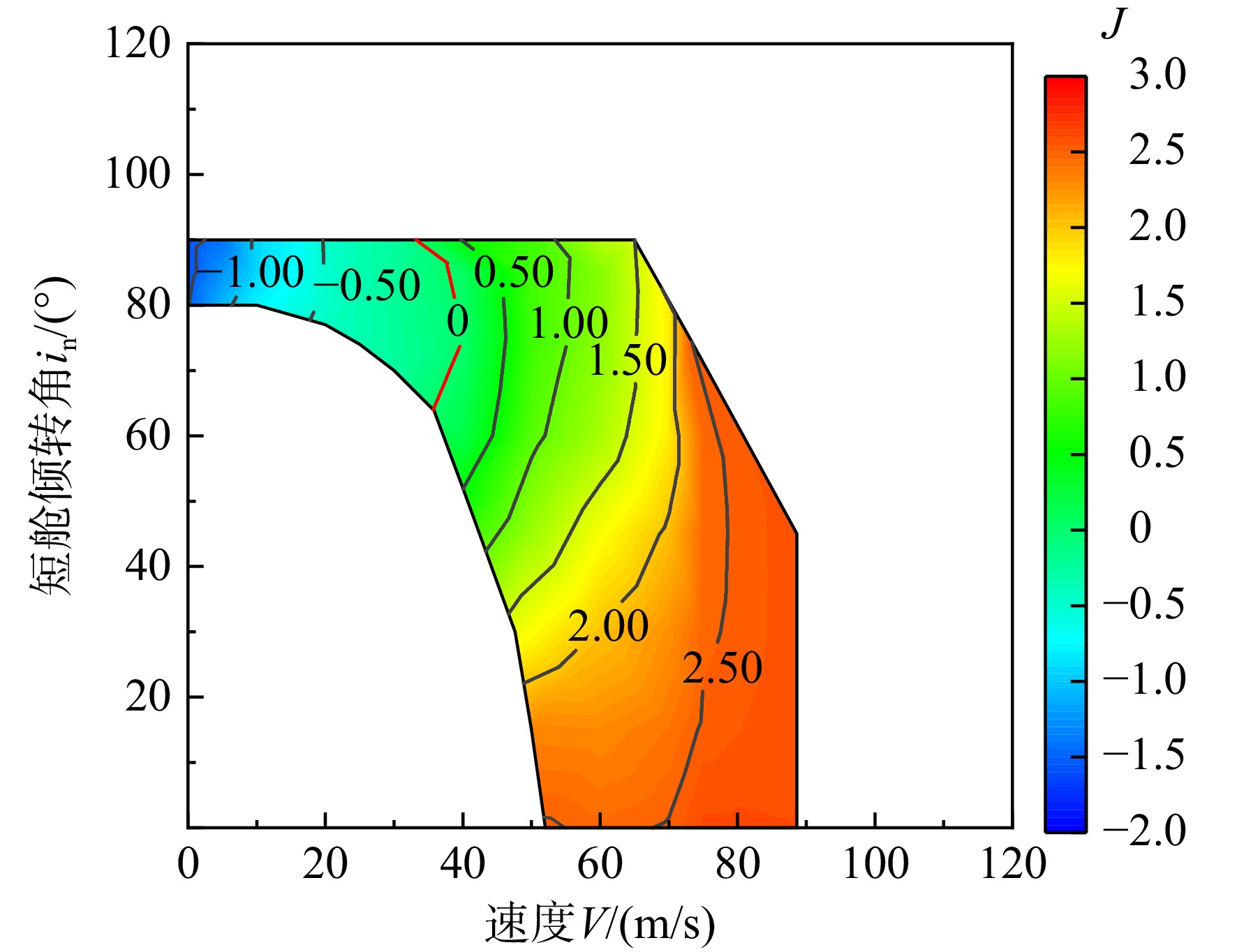
为摸清运动模态稳定性变化规律,以XV-15为例,深入分析了短舱倾转角、飞行速度、旋翼/机翼气动干扰等因素对运动模态特征根、特征向量、稳定性导数等影响规律及产生机理。研究表明:旋翼倾转对主要运动模态特征根、荷兰滚和纵向长周期模态特征向量产生显著影响,其背后主要影响因素是机体角速度在旋翼坐标系投影、旋翼桨盘与飞行速度夹角和旋翼桨毂中心距重心距离等因素随短舱倾角成正弦或余弦变化。在低速飞行时,旋翼/机翼间气动干扰恶化了纵向长周期模态的不稳定性,但随短舱倾转角减小和飞行速度增加,稳定性得以改善。为能倾转过渡路径选择提供指导,提出了倾转走廊内运动稳定性综合评估指标,基于等值图直观反映出运动稳定性的综合变化规律。
Abstract:To elucidate the variation of stability during transition flight, the XV-15 model was taken as the research object. A comprehensive analysis was conducted to understand how factors such as nacelle angle, flight speed, and rotor/wing aerodynamic interactions, influenced the eigenvalues and eigenvectors of motion modes, and stability derivatives, along with their underlying mechanisms. The findings revealed that nacelle angle primarily influenced the eigenvalues of main motion modes and the eigenvectors of Dutch roll and phugoid modes. The underlying key factors included the body’s angular velocity projection onto the rotor axis, the angle between the rotor disc and flight velocity, and the distance from the rotor hub center to the center of gravity, which changed sine or cosine with the nacelle angle. During low-speed flight, the aerodynamic interference between the rotor and wing exacerbated the instability of phugoid mode. The instability was alleviated as the nacelle angle decreased and the flight speed increased. To facilitate the selection of transition paths for tiltable mechanisms, a comprehensive evaluation metric for assessing motion stability within tilting corridors was introduced. This metric in contour mapping visually represented the aggregate trends in motion stability, offering an intuitive understanding of its variations.
-
Key words:
- tilt-rotor aircraft /
- stability /
- motion modes /
- root loci /
- stability derivatives /
- eigenvectors
-

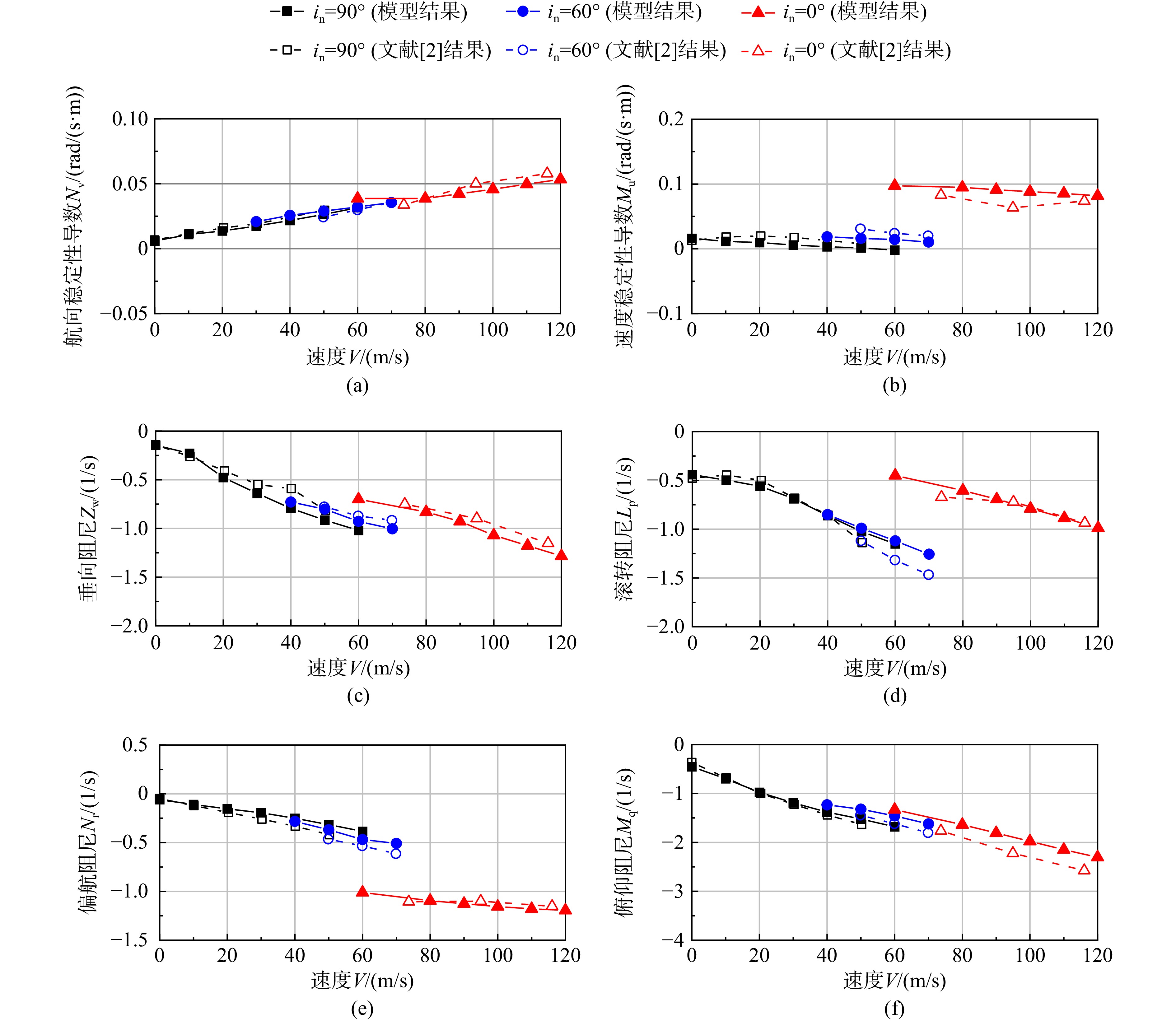
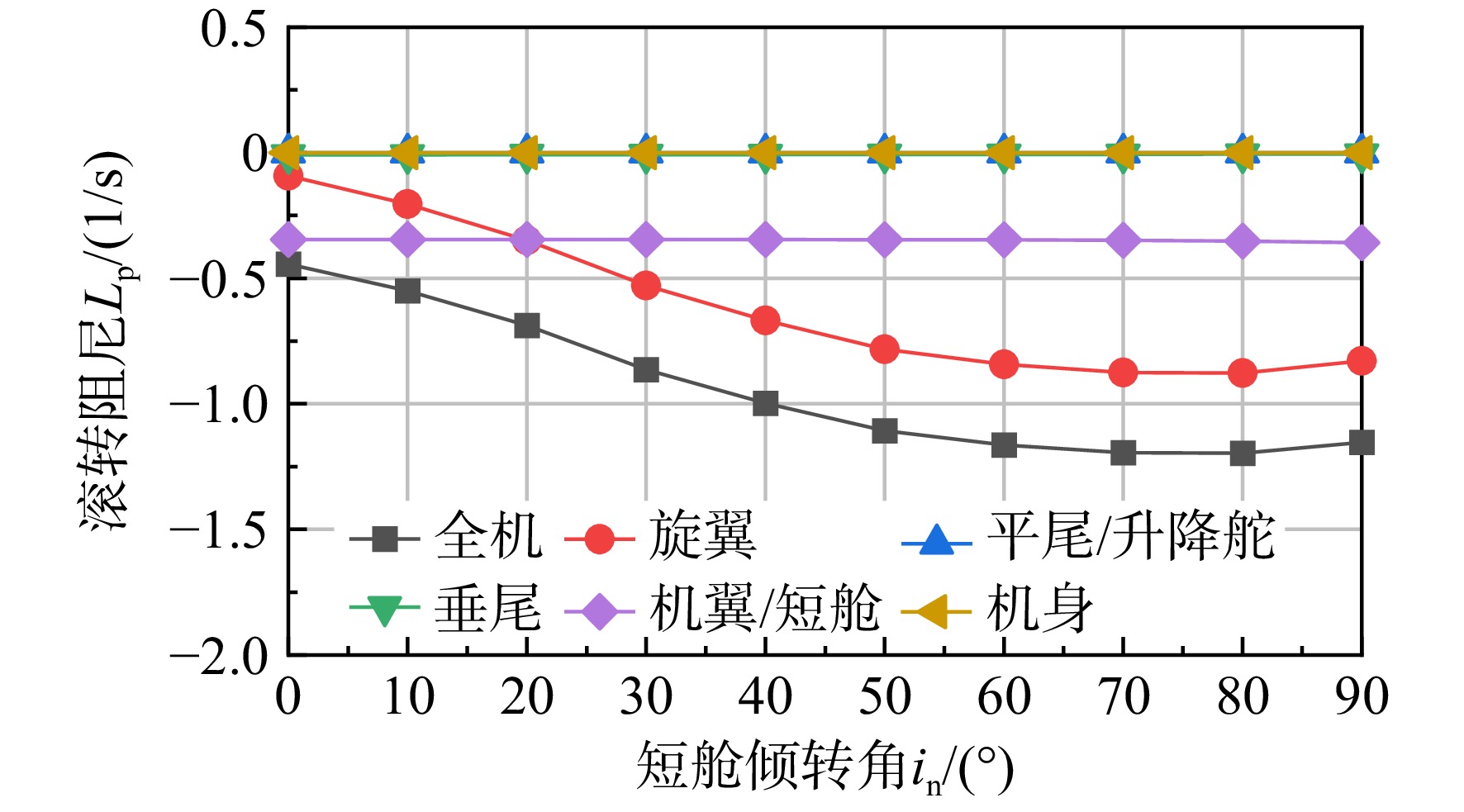
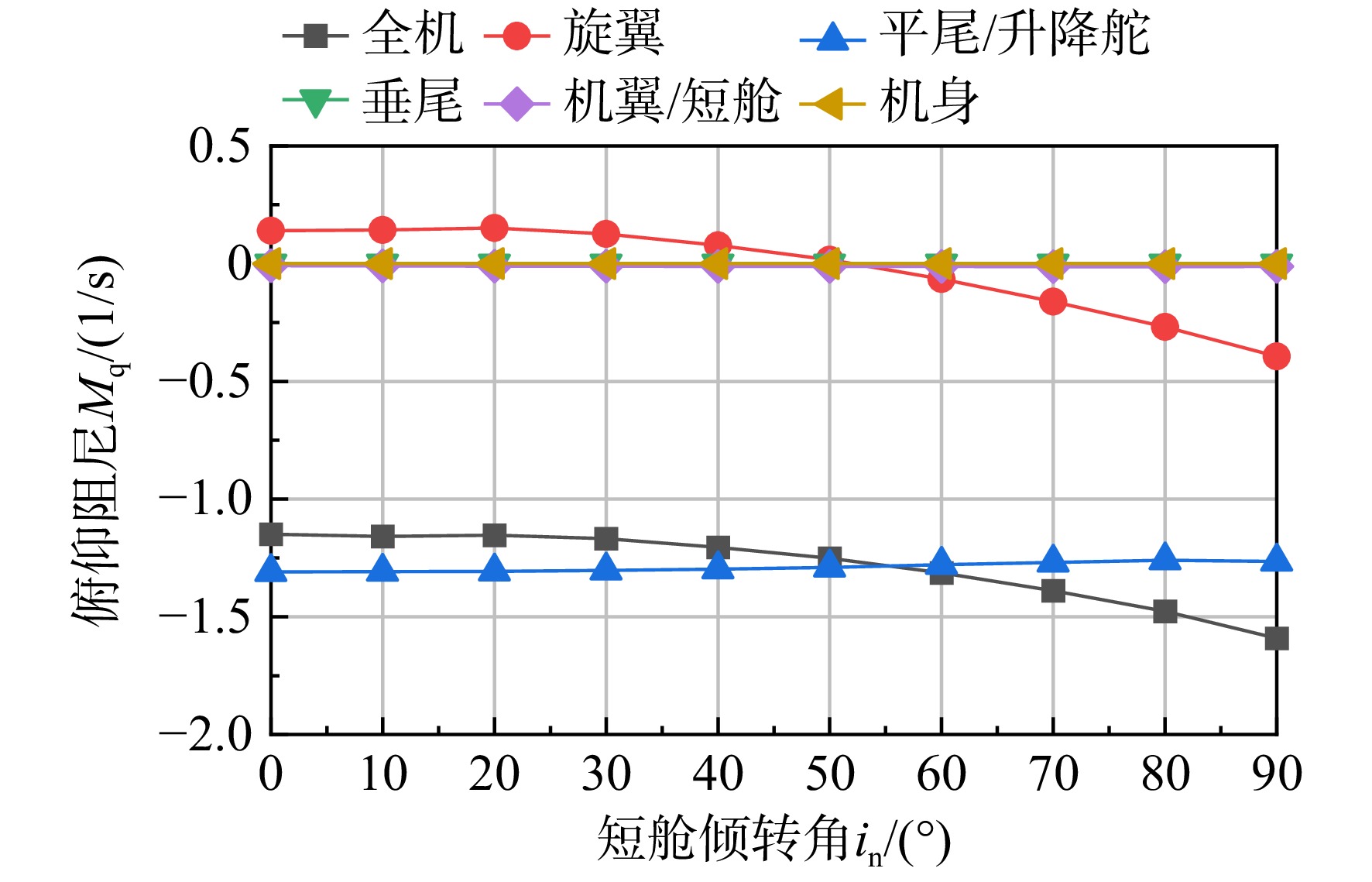
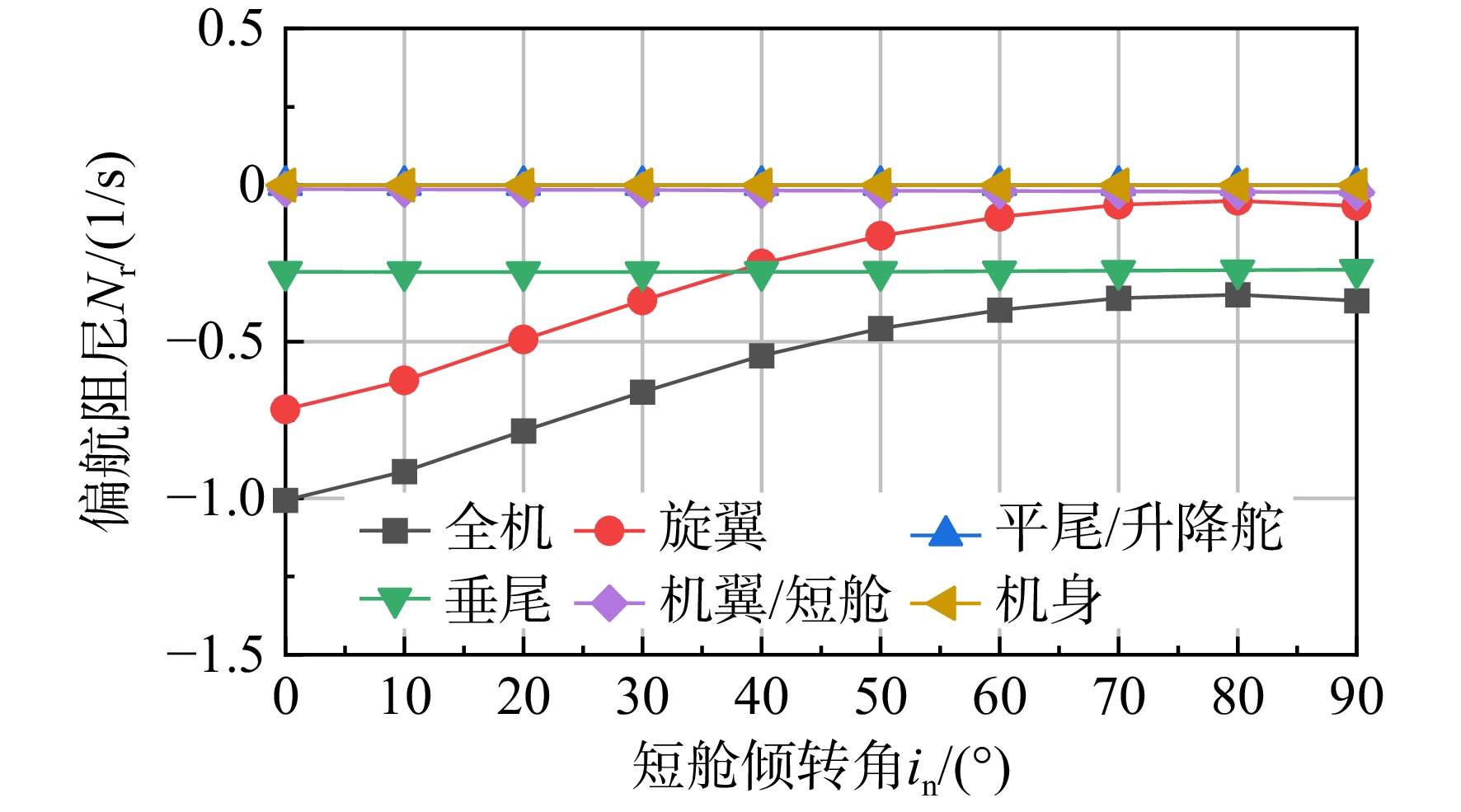
图 4 不同飞行状态下主要稳定性导数和运动阻尼
Figure 4. Main stability derivatives and damping in different flight conditions
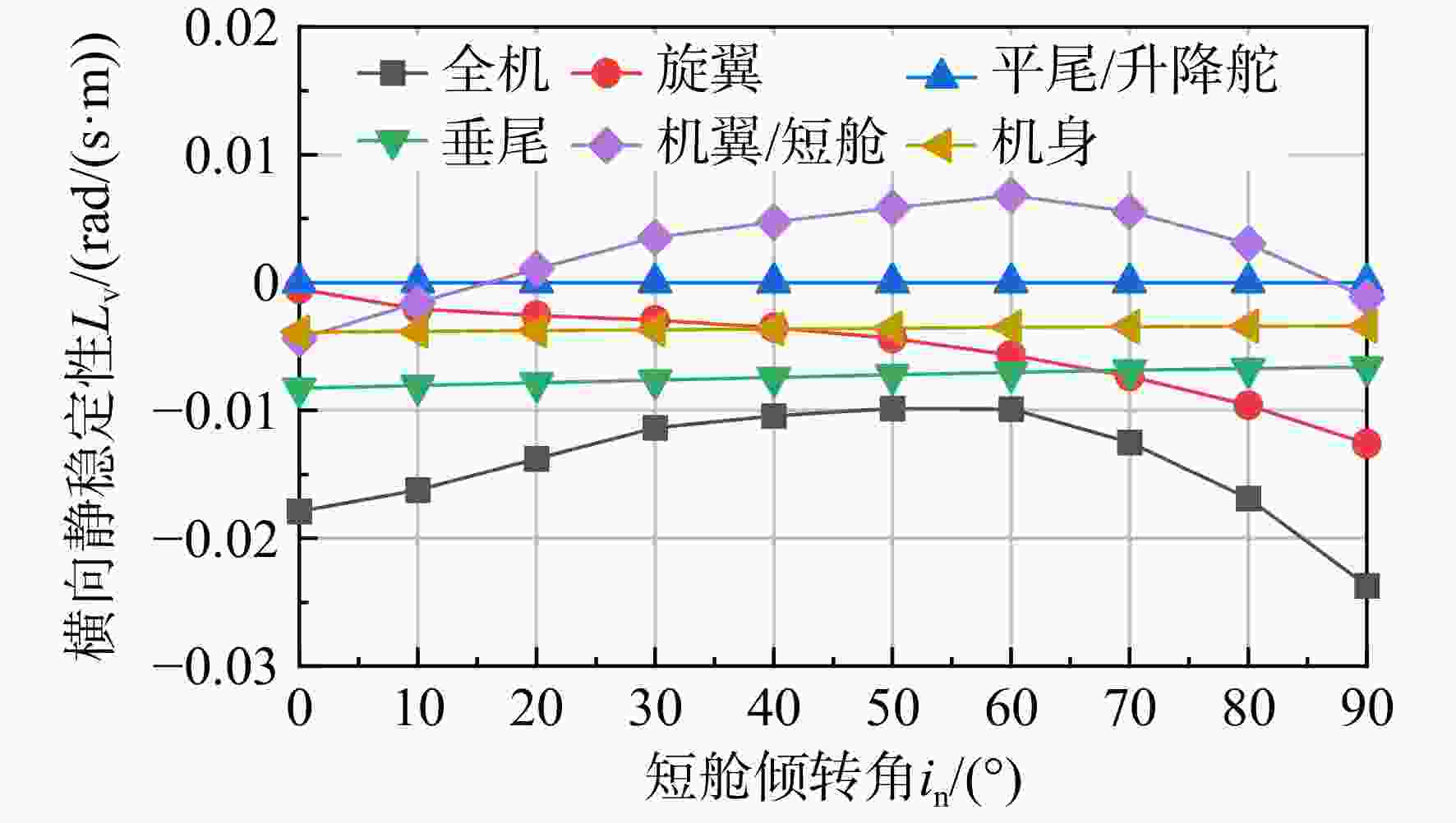
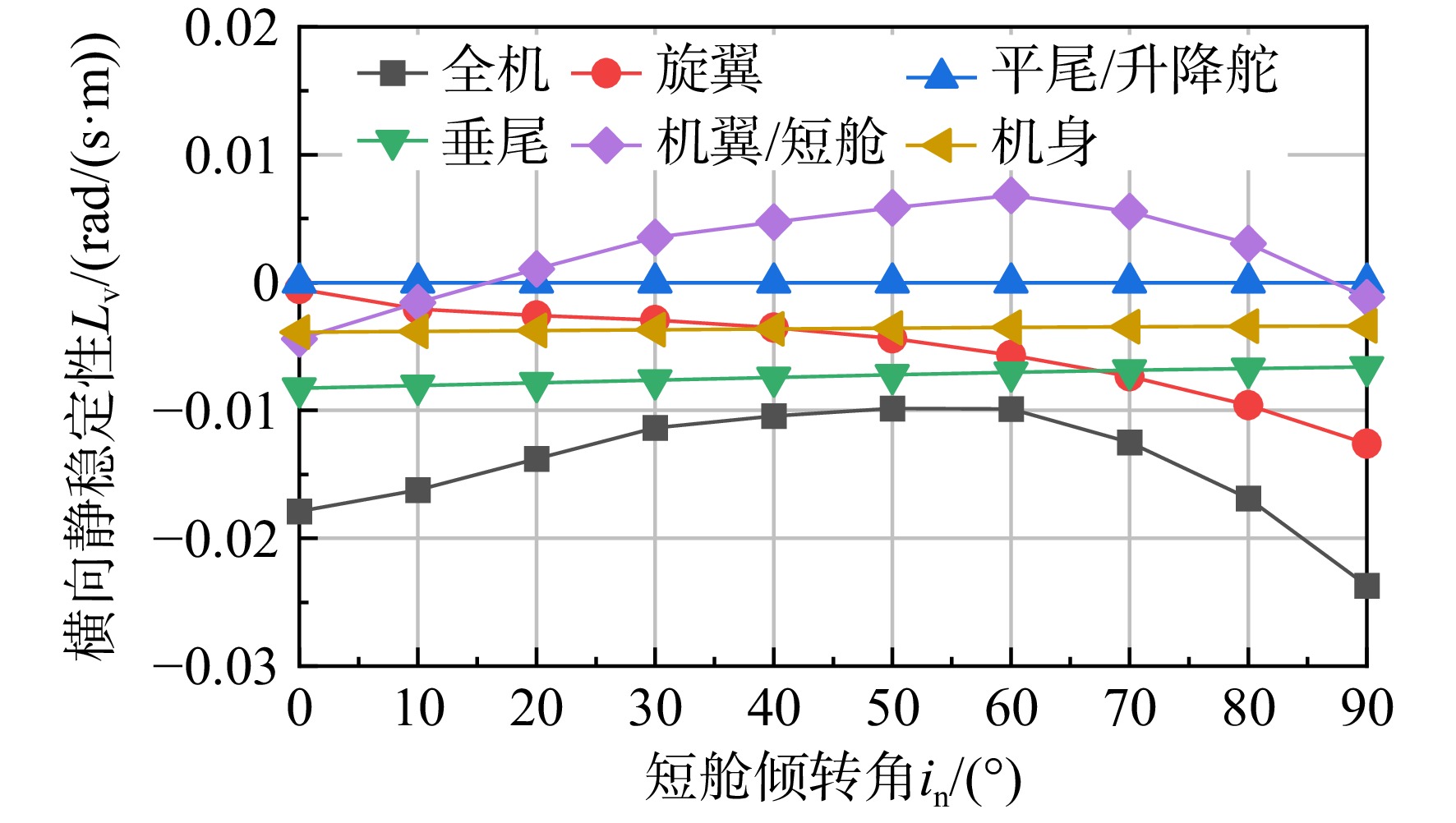
图 6 不同短舱倾转角时横向静稳定性
Figure 6. Lateral static stability derivative at different nacelle angles

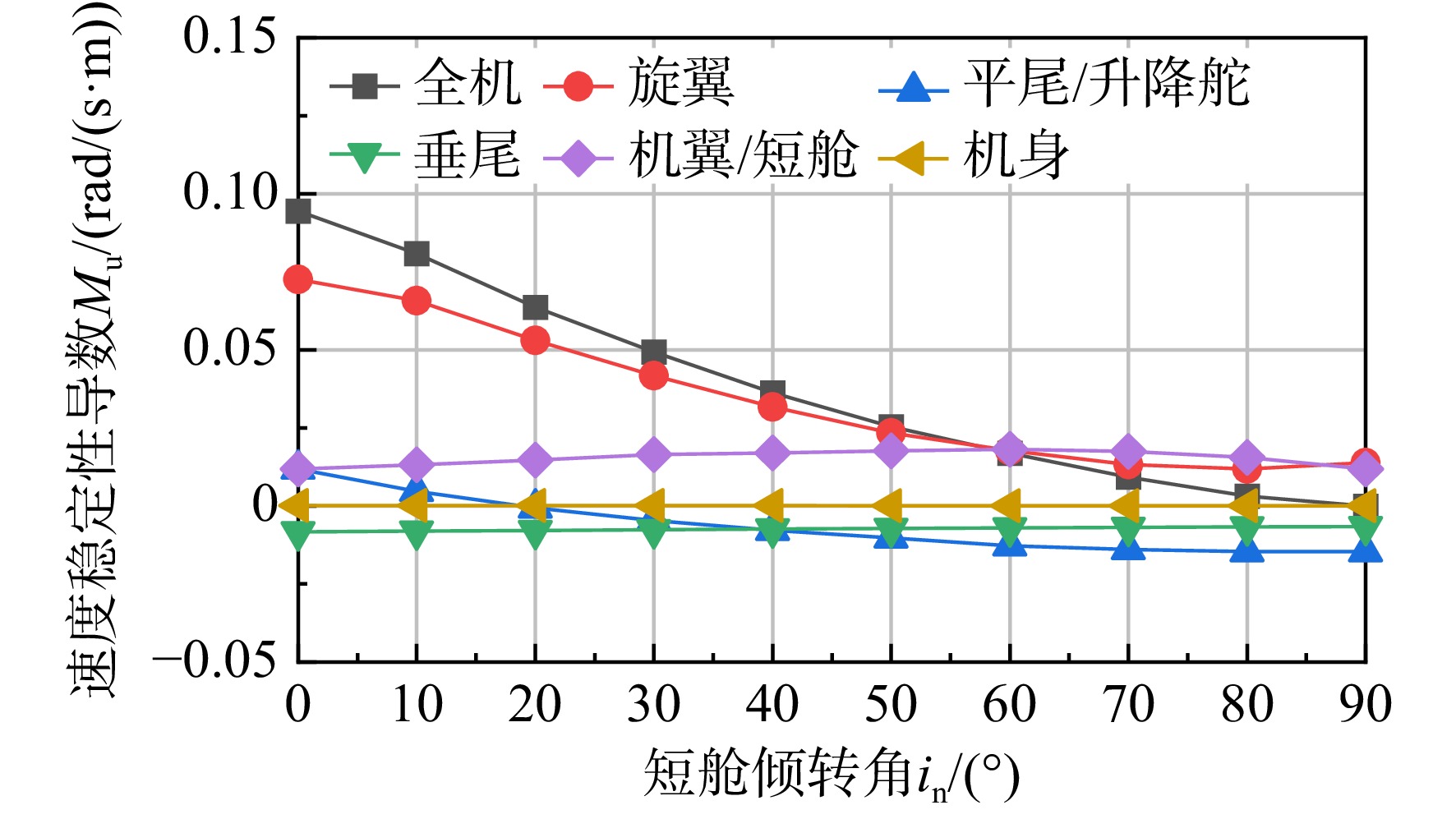
图 7 不同短舱倾转角时速度静稳定性
Figure 7. Speed static stability derivative at different nacelle angles
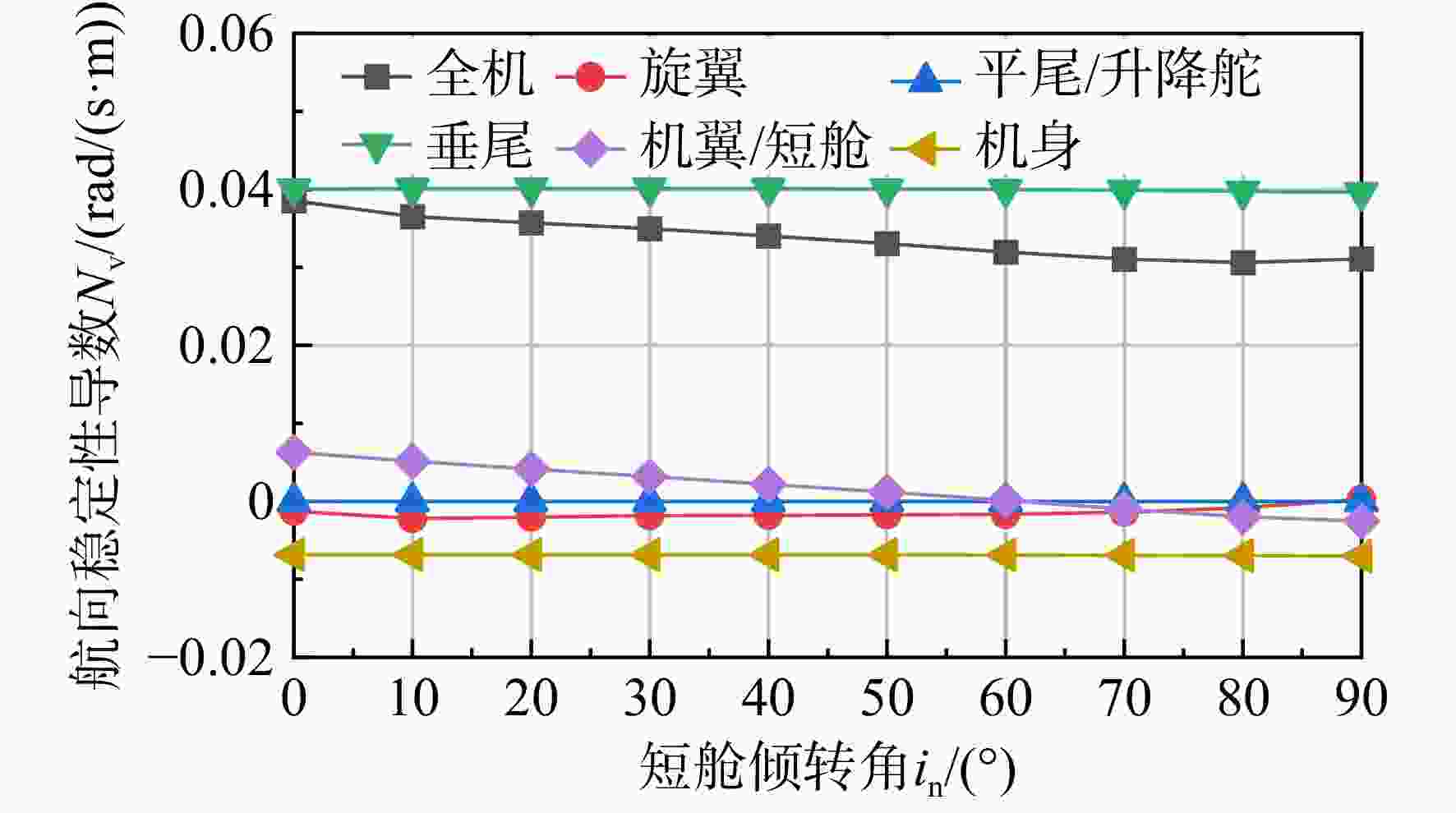
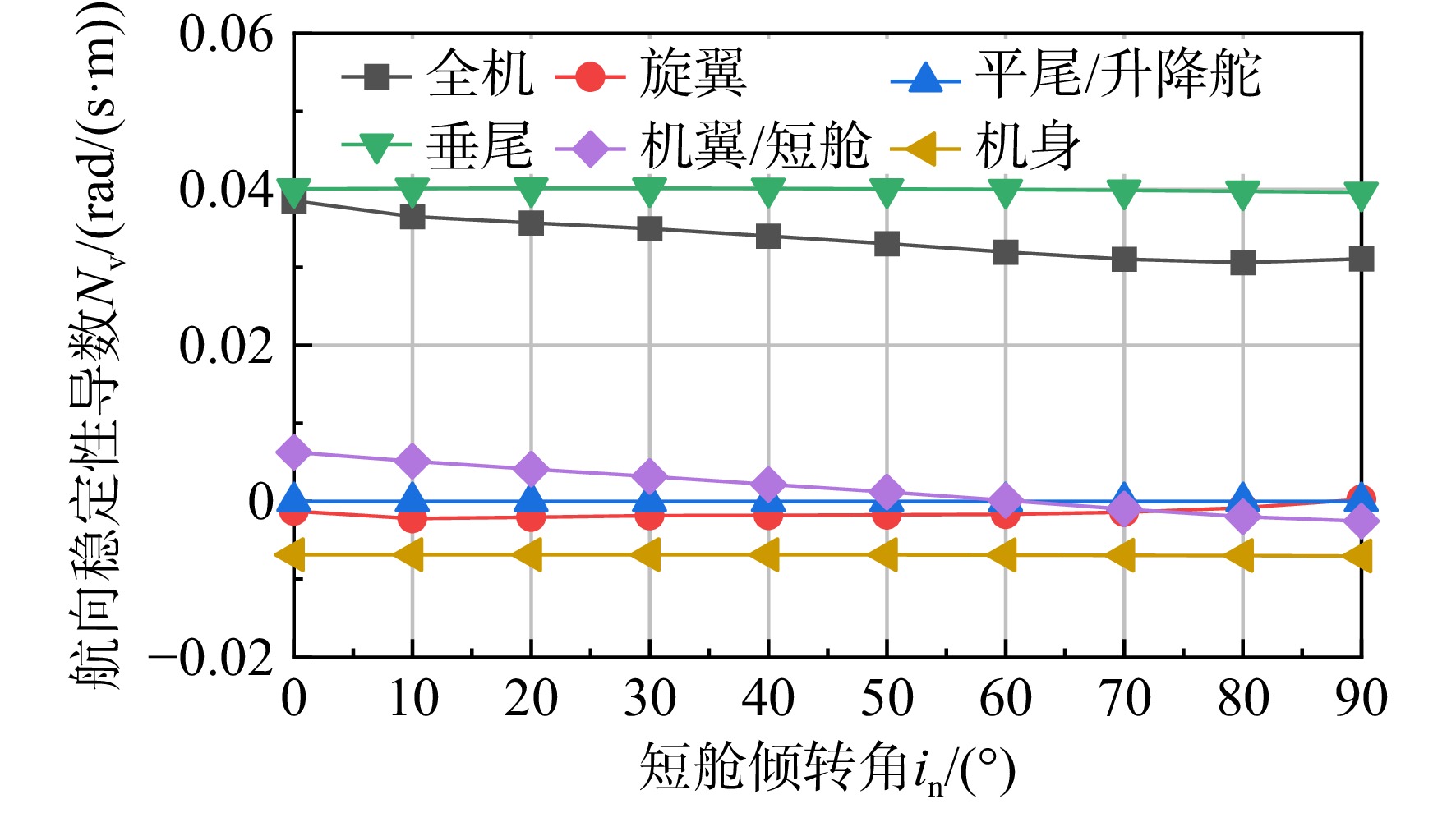
图 8 不同短舱倾转角时航向稳定性
Figure 8. Directional stability derivative at different nacelle angles

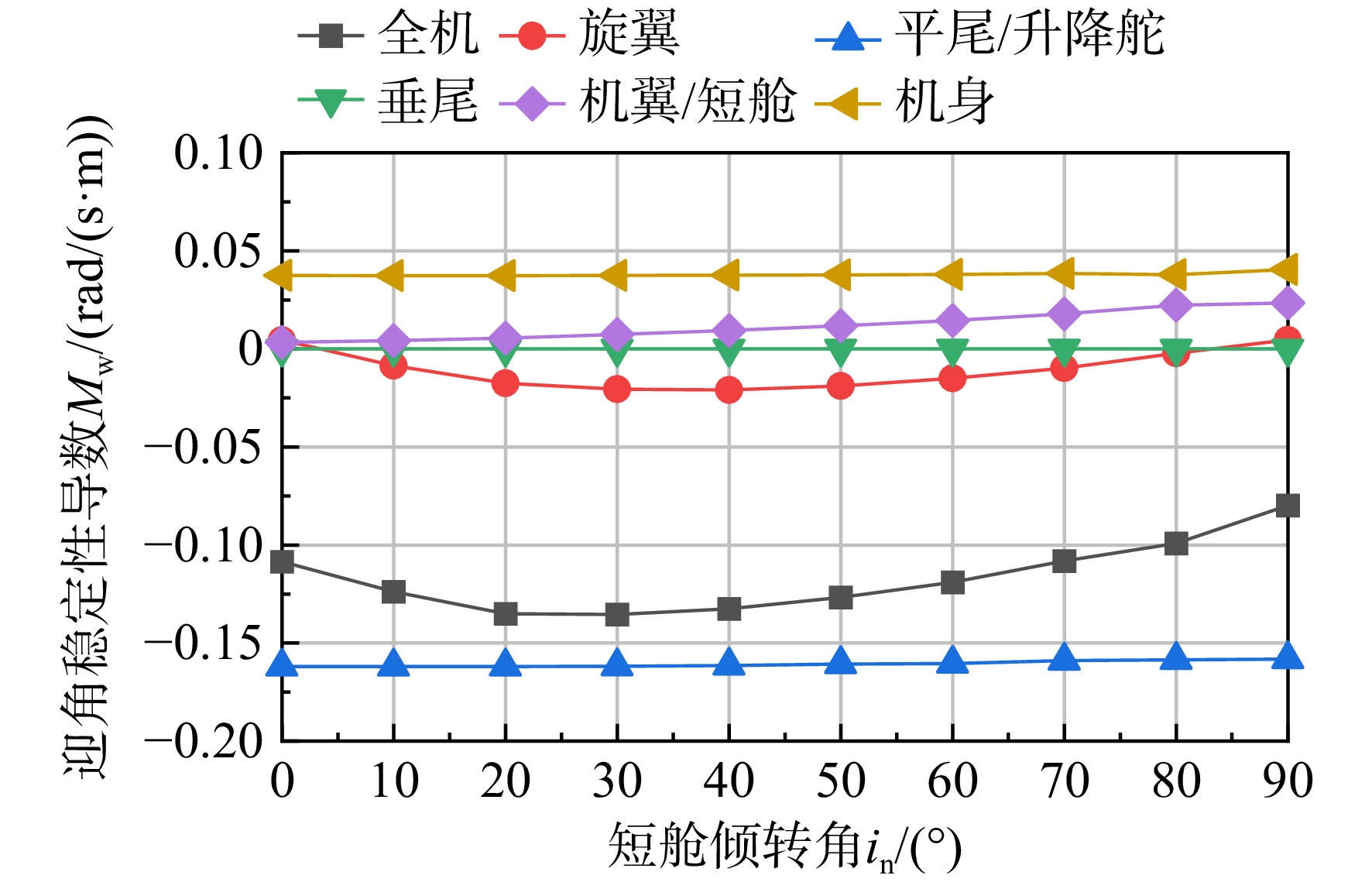
图 9 不同短舱倾转角时迎角稳定性
Figure 9. Incidence stability derivative at different nacelle angles

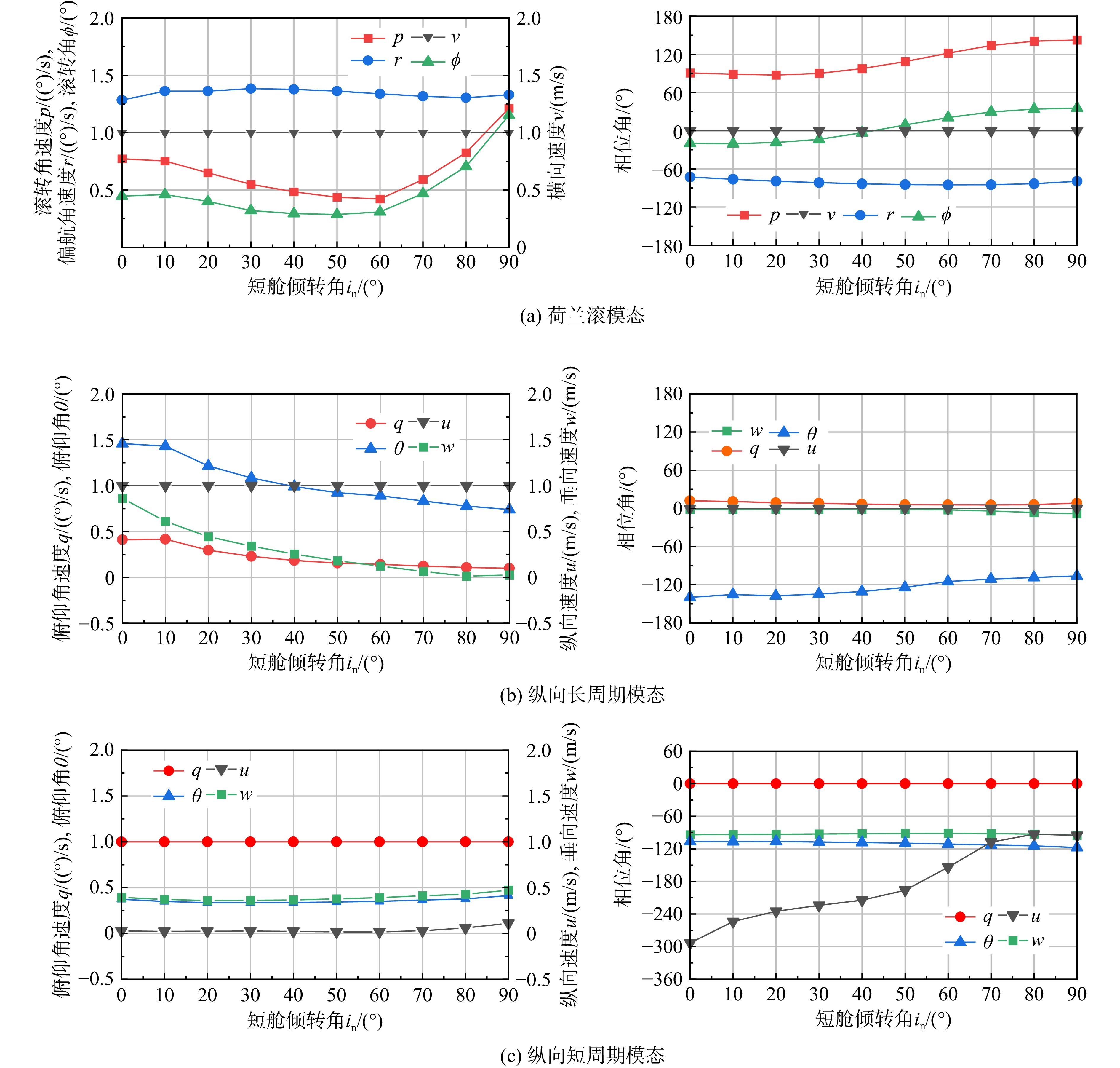
图 13 不同短舱倾转角下运动模态对应特征向量的幅值比和相位角变化
Figure 13. Amplitude and phase variations of corresponding eigenvectors of motion modes at different nacelle angles
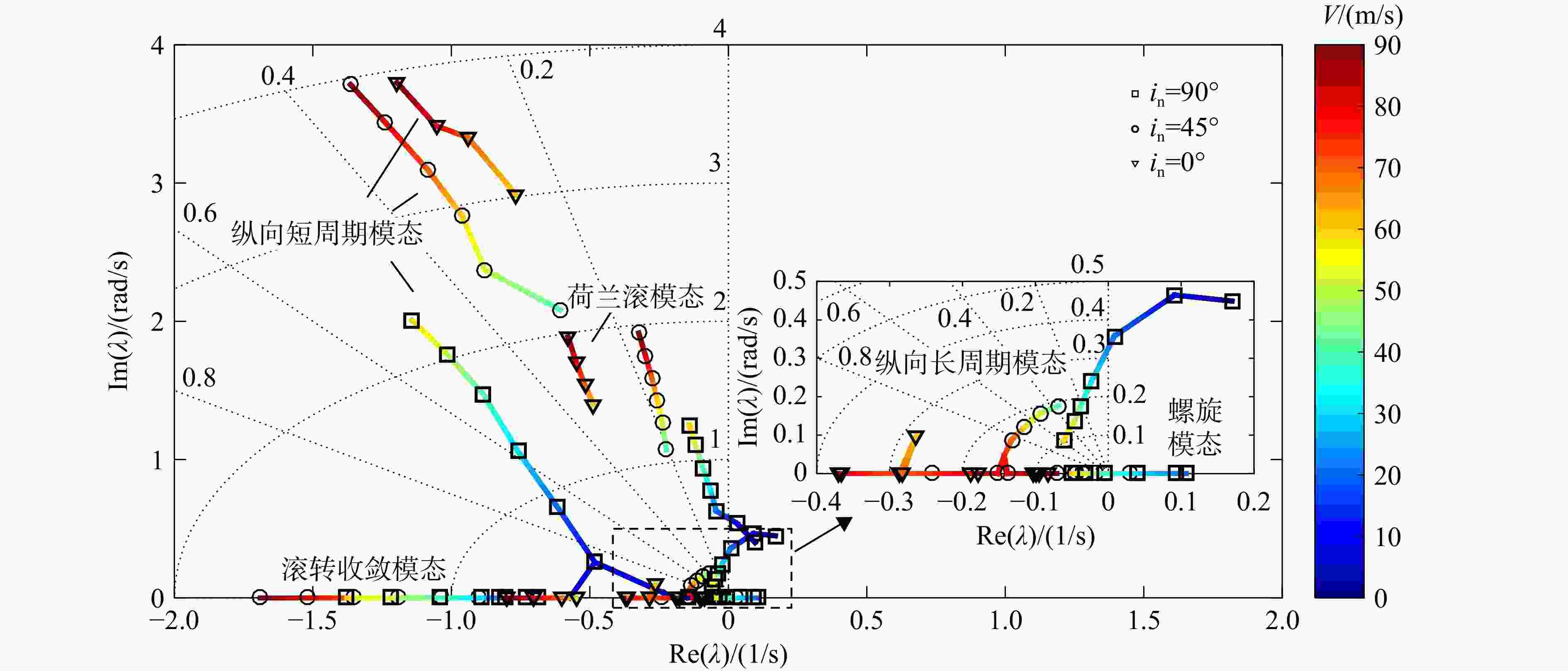
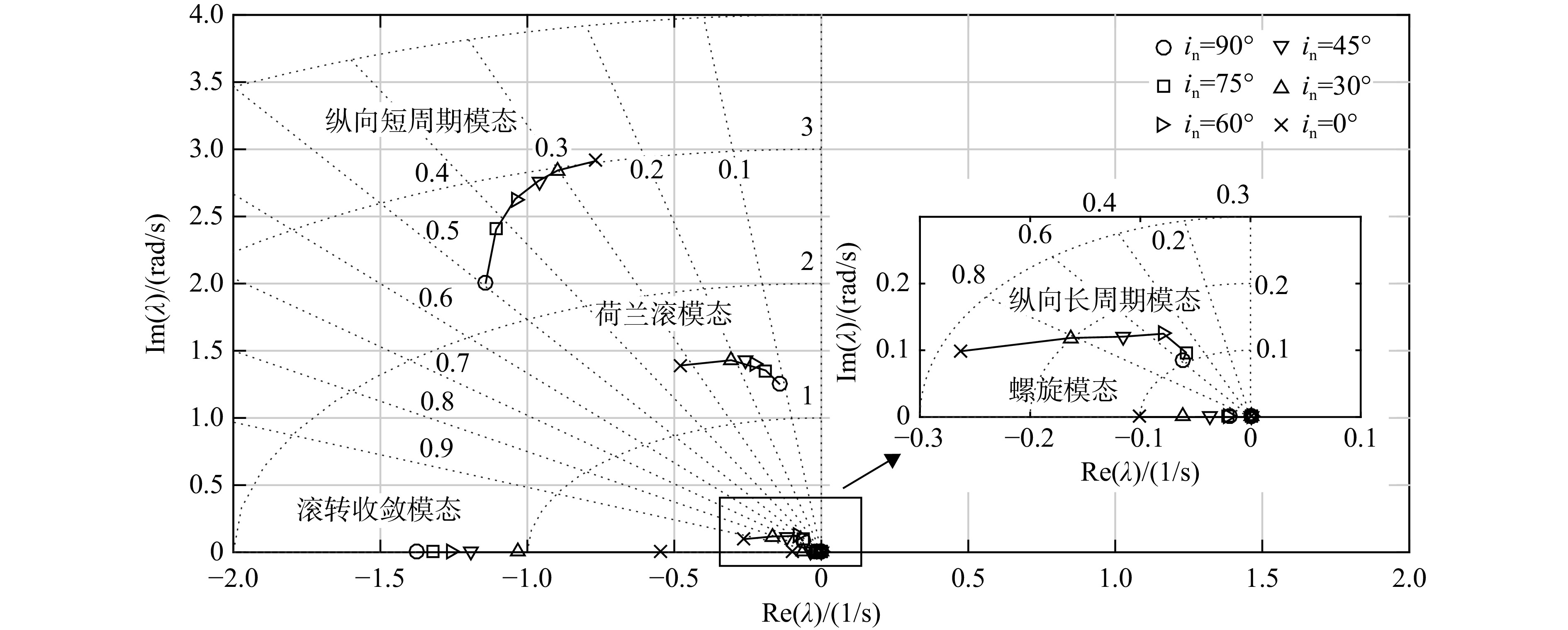
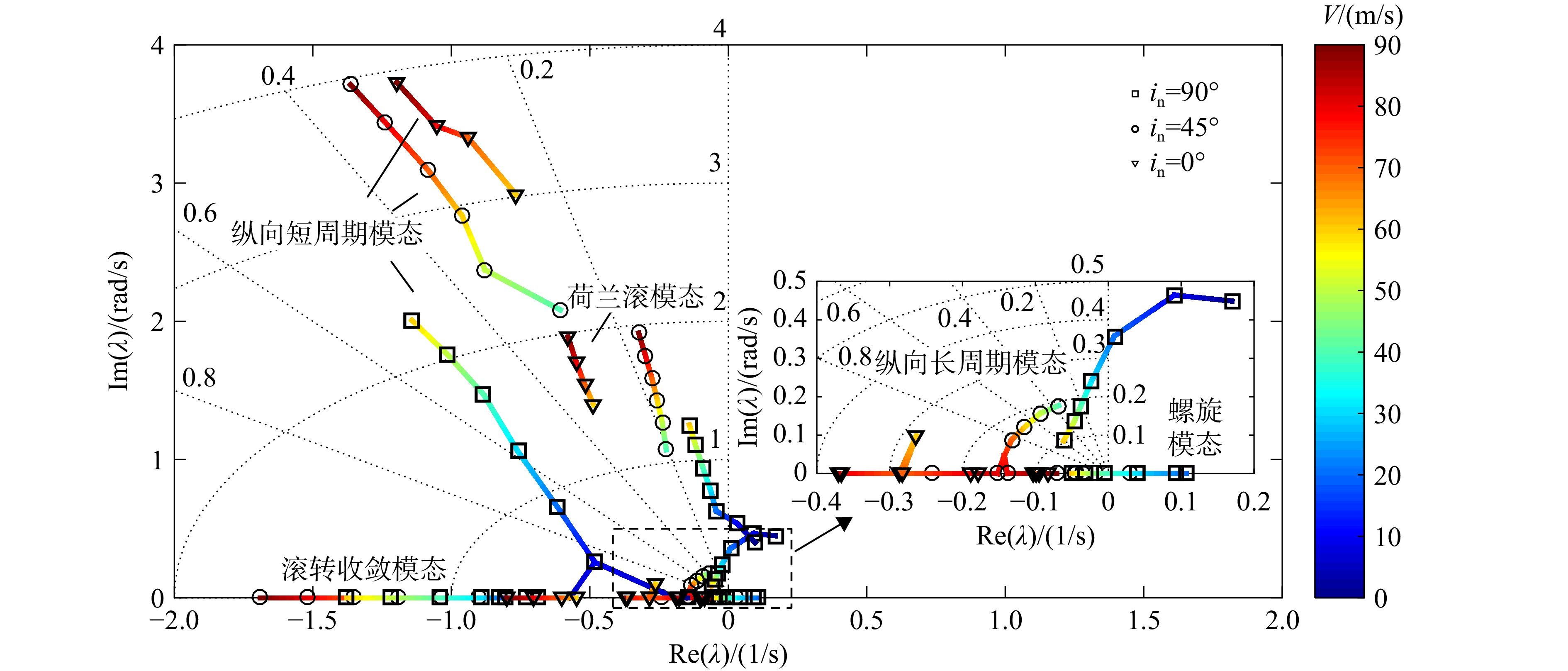
图 14 倾转走廊内不同前飞速度下特征根轨迹
Figure 14. Eigenvalues loci at different flight speeds within conversion corridor
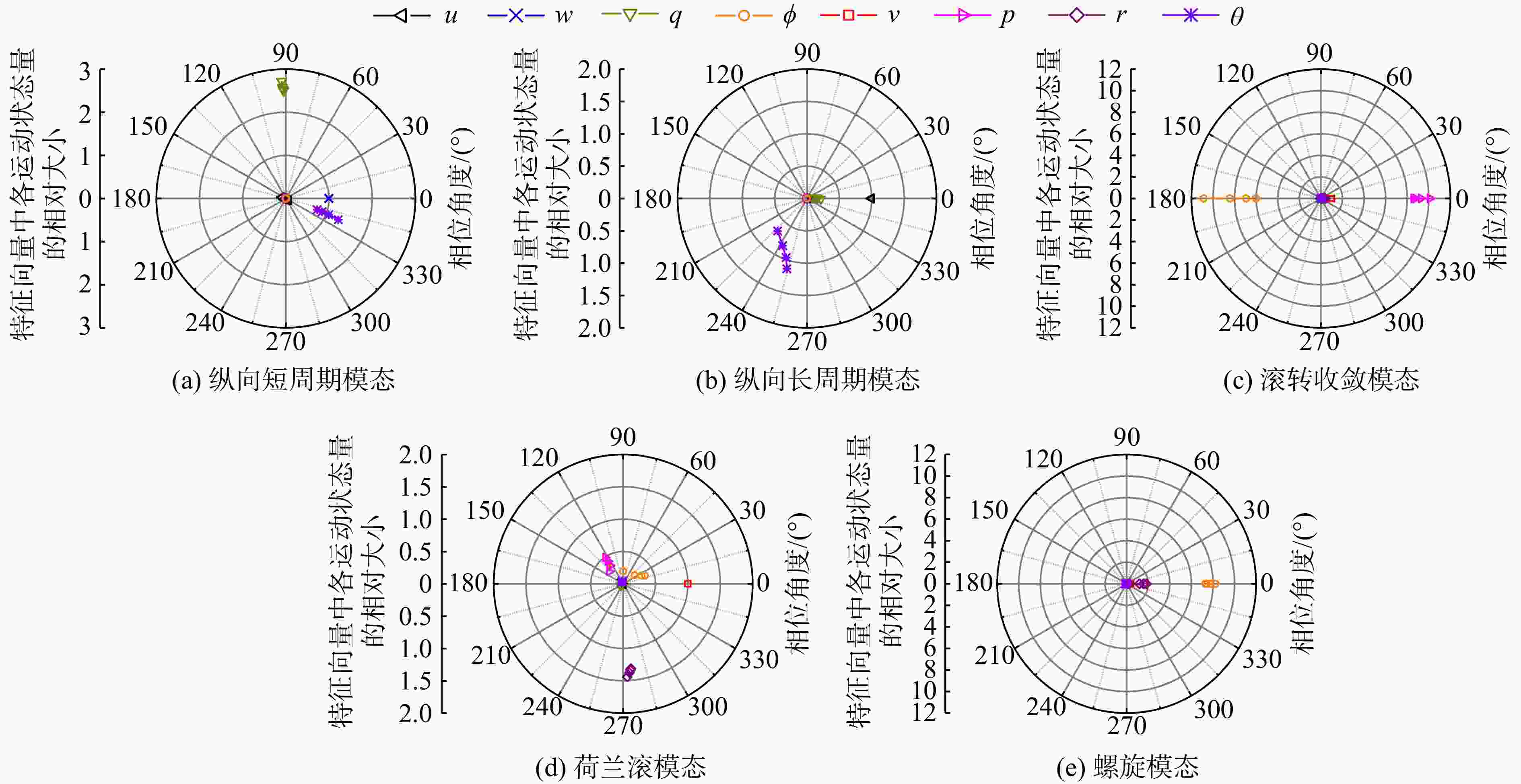
图 15 极坐标下运动模态对应的特征向量变化
Figure 15. Variation of eigenvectors corresponding to motion modes in polar coordinates
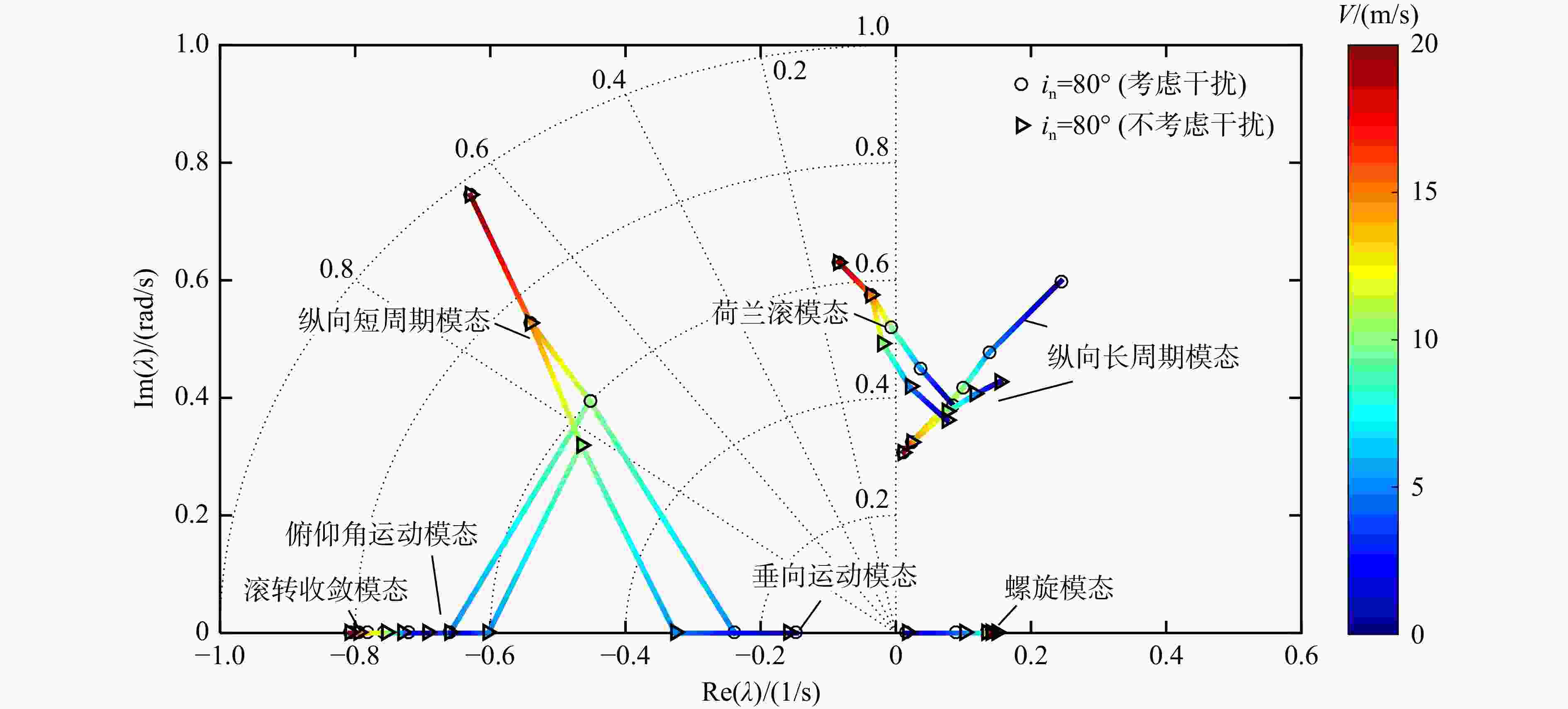
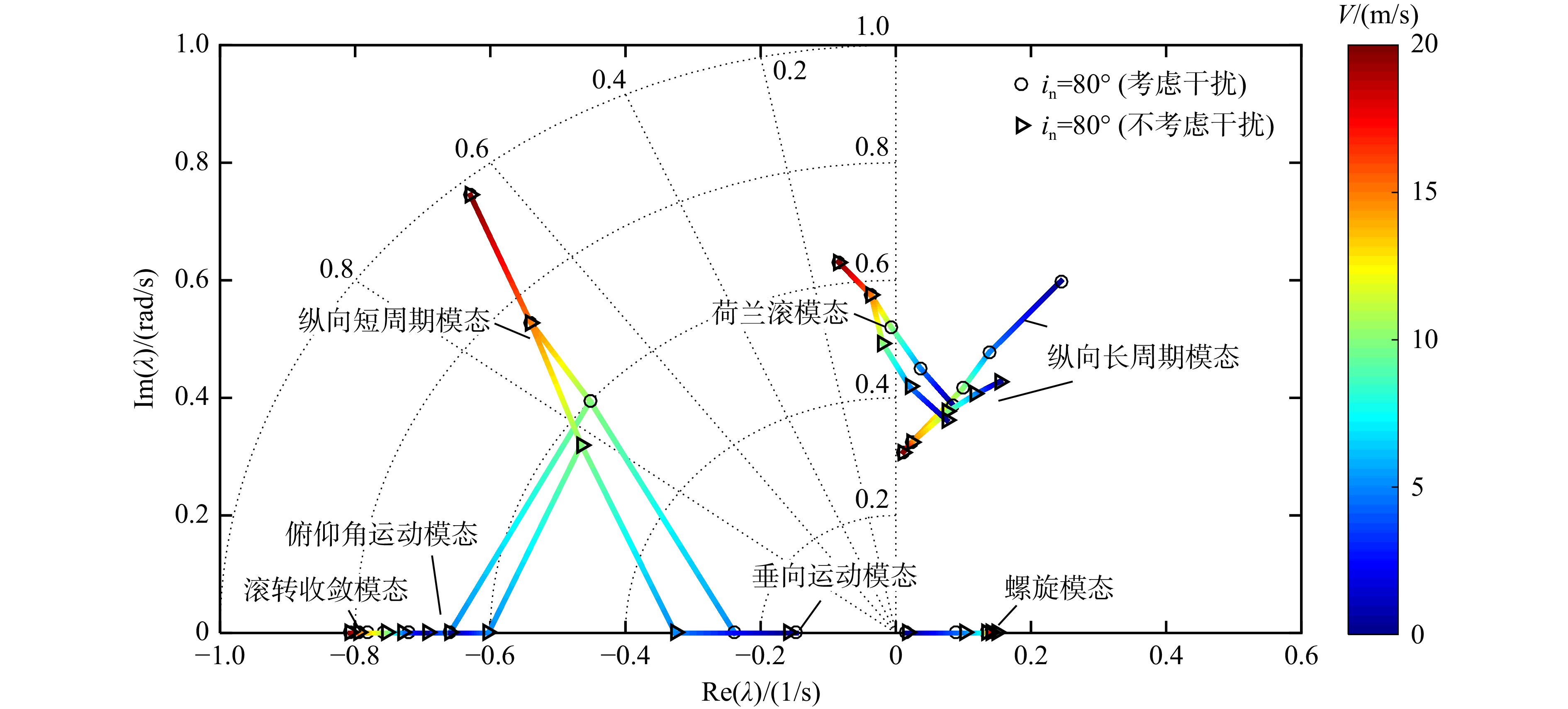
图 17 对比有无气动干扰下的特征根根轨迹
Figure 17. Comparison of eigenvalues loci with and without aerodynamic interactions
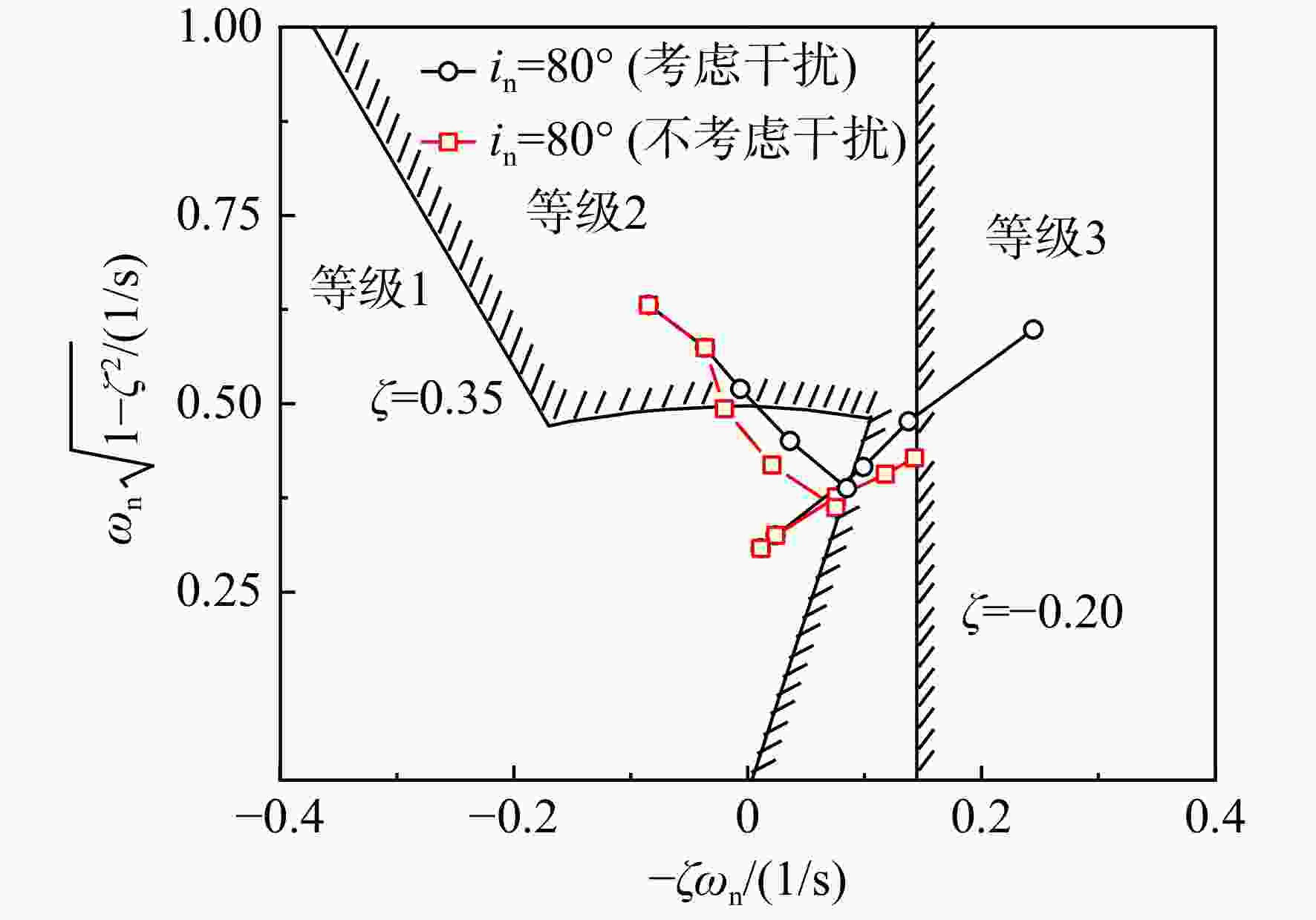
图 18 纵向(横向)振荡模态在悬停及低速飞行状态下的等级评估
Figure 18. Level evaluation of longitudinal (lateral) oscillation modes in hover and low-speed
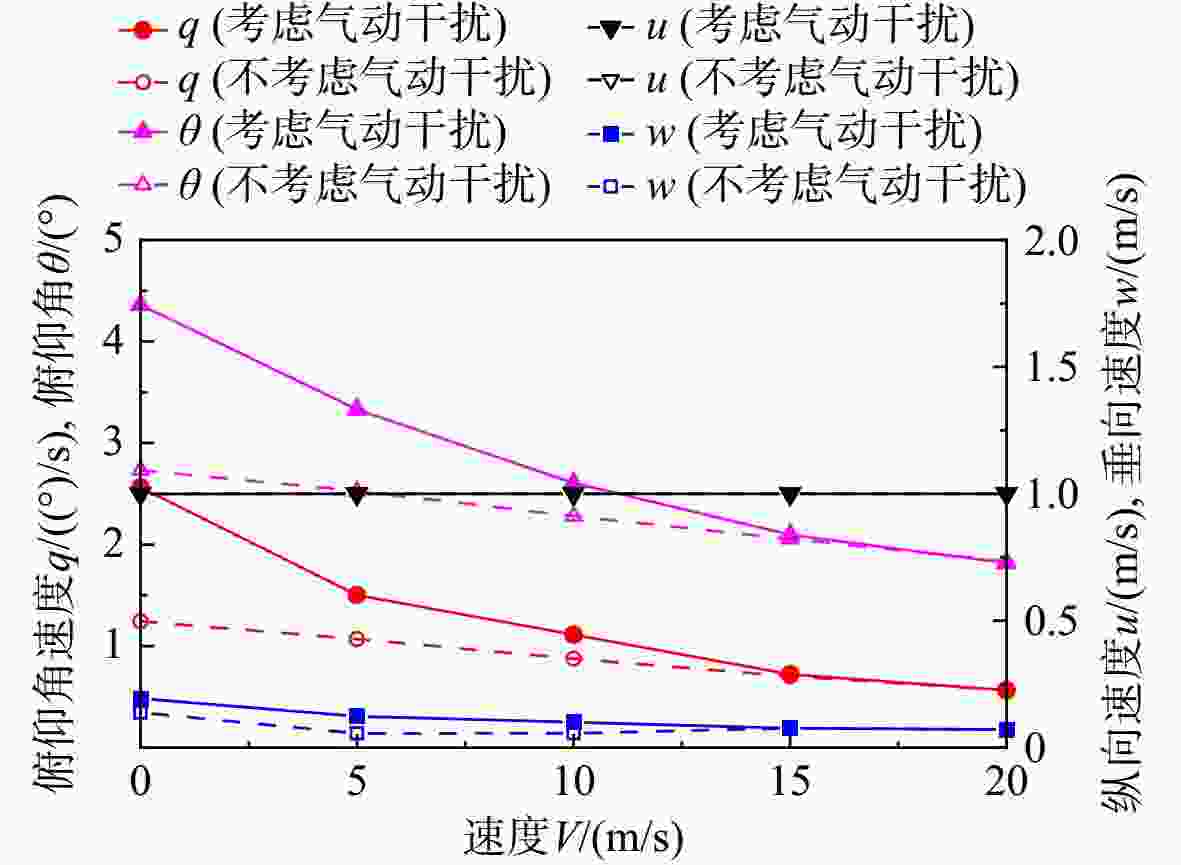
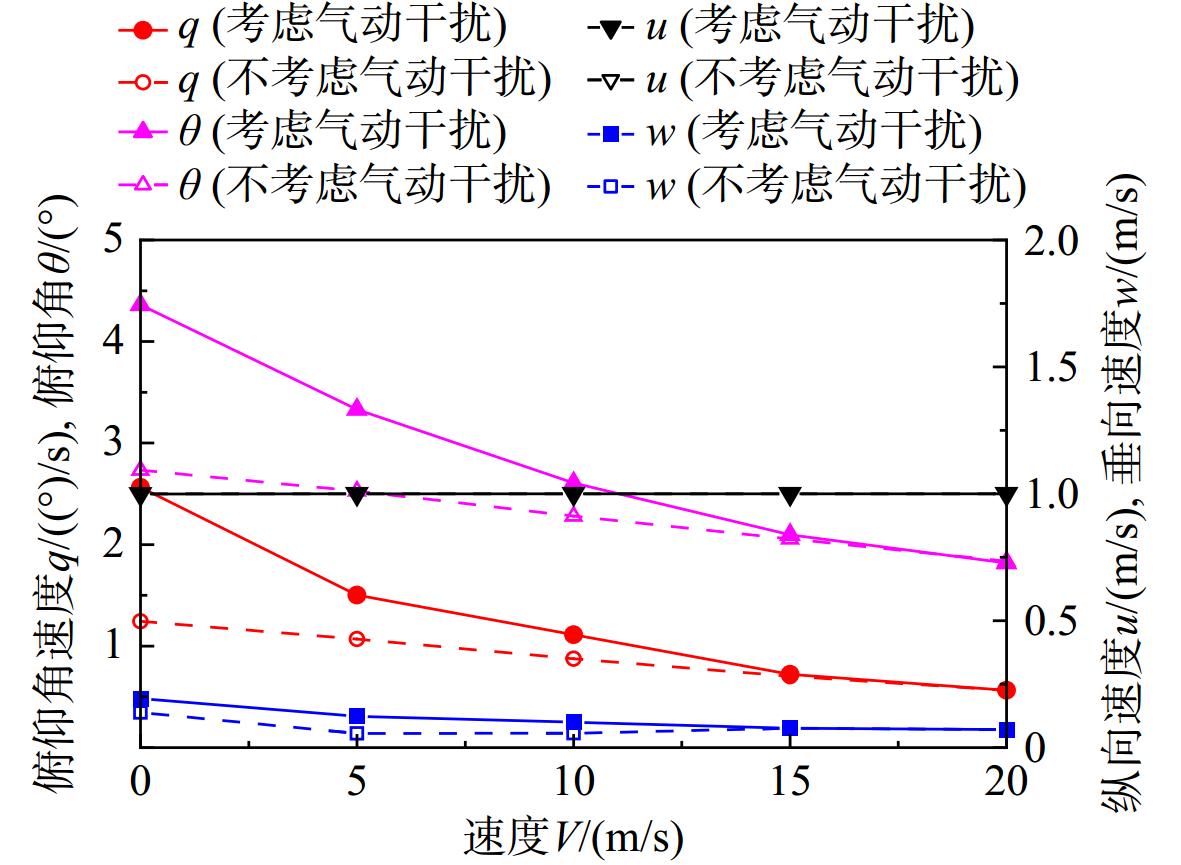
图 19 气动干扰下纵向长周期模态特征向量的幅值变化
Figure 19. Amplitude change of eigenvector of phugoid mode with aerodynamic interactions
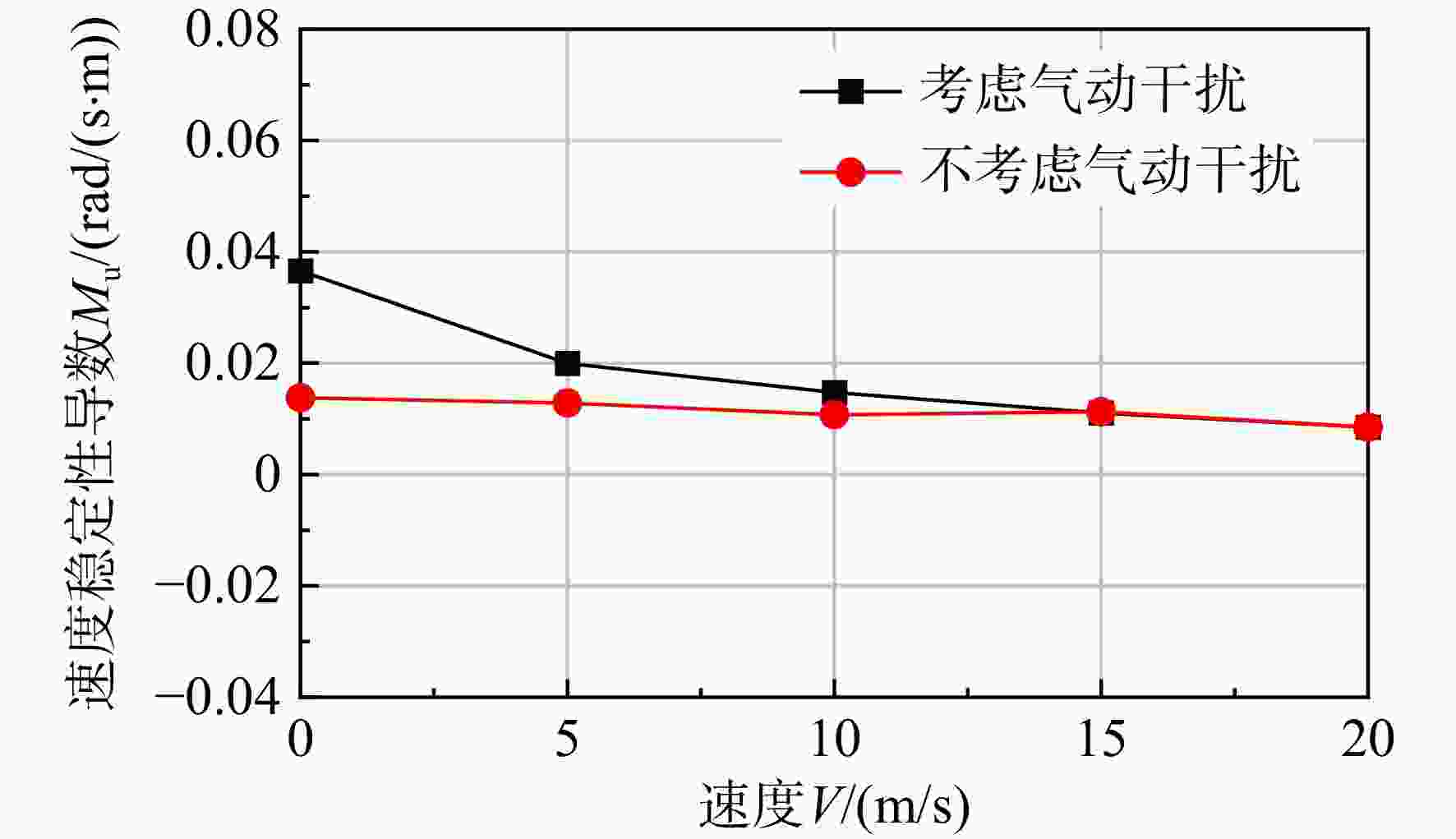
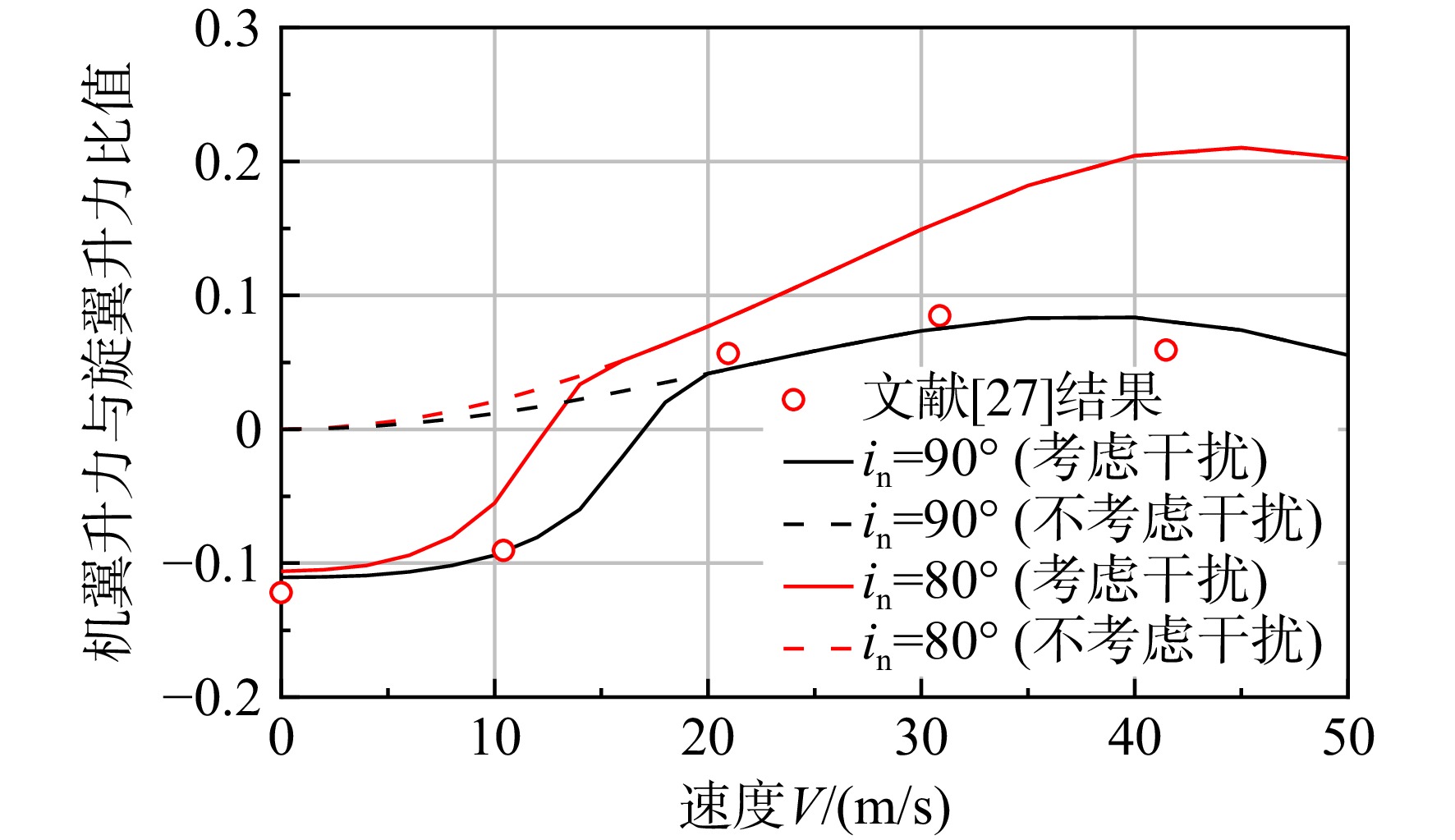
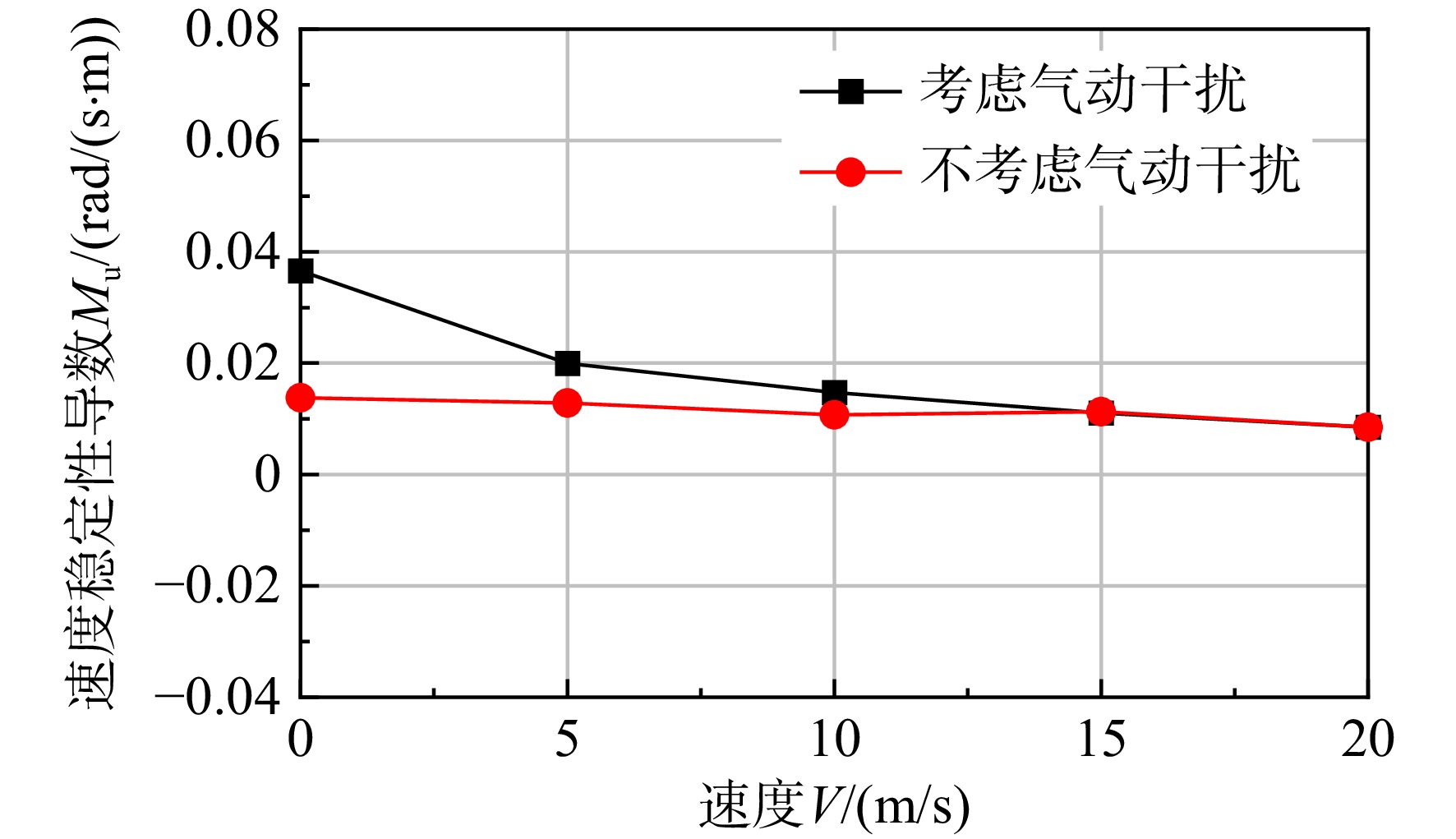
图 20 对比有无气动干扰下的速度稳定性
Figure 20. Comparison of speed stability with and without aerodynamic interactions
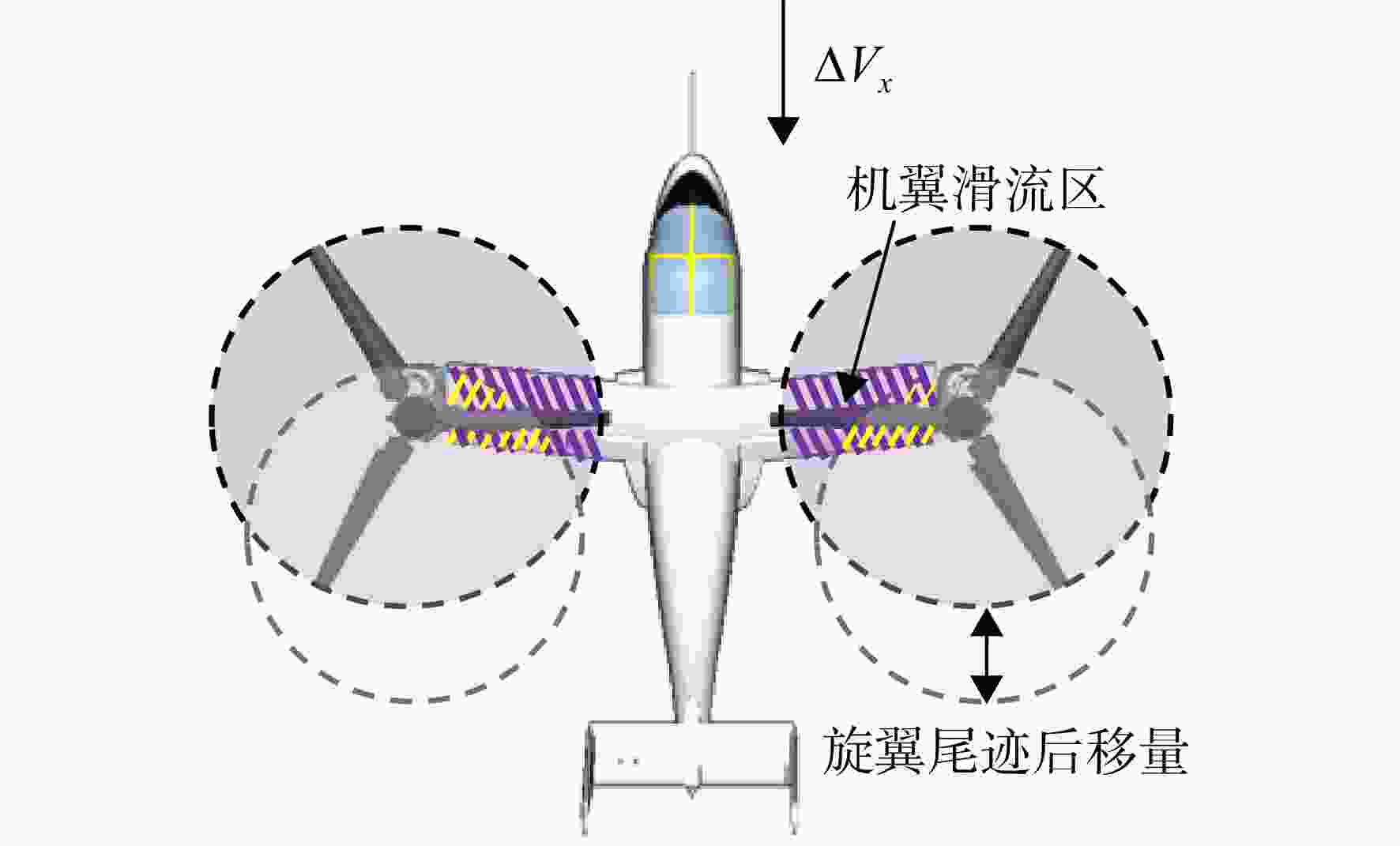
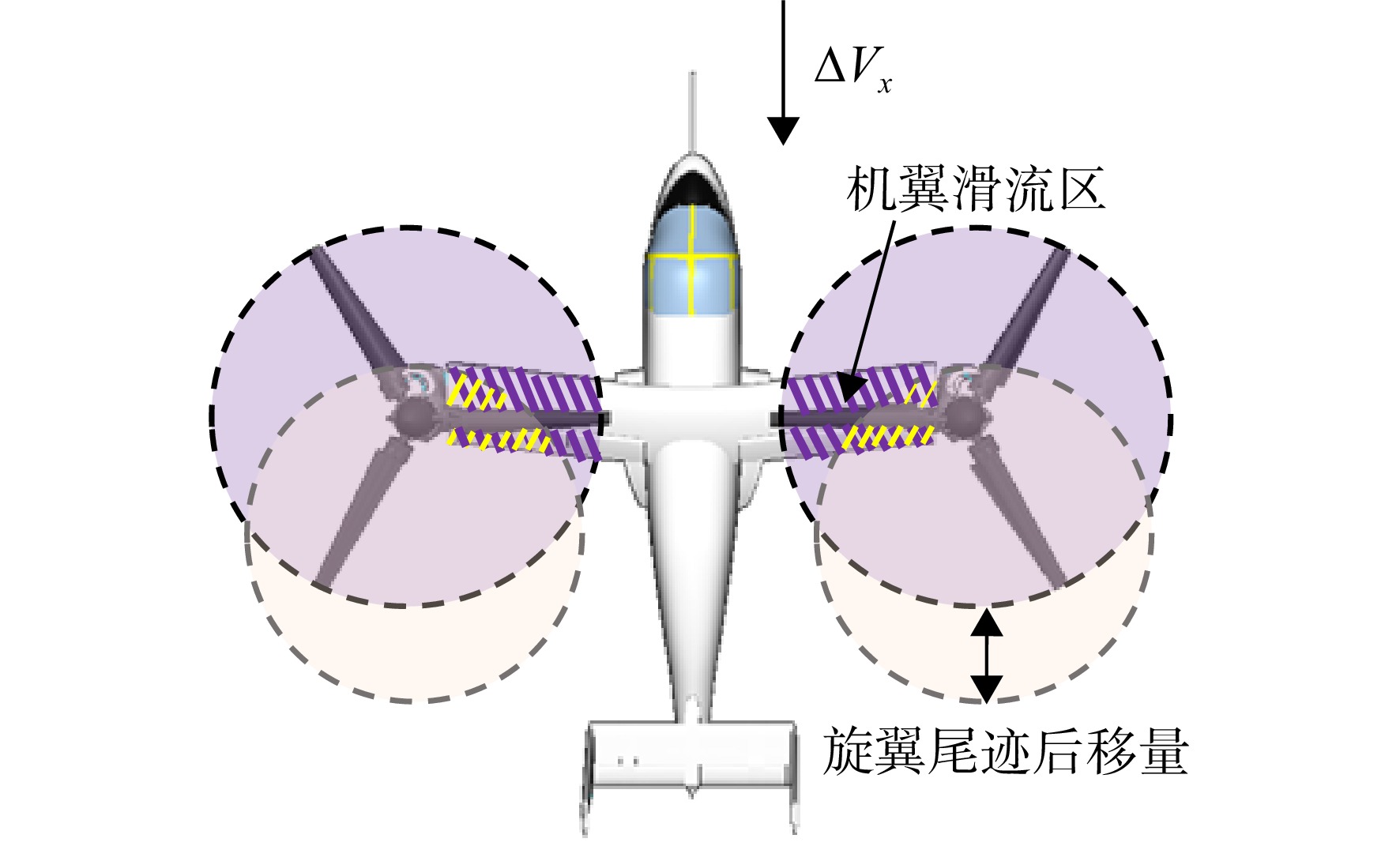
图 21 机翼滑流区受纵向速度扰动变化示意图
Figure 21. Diagram of wing slipstream affected by longitudinal velocity perturbation
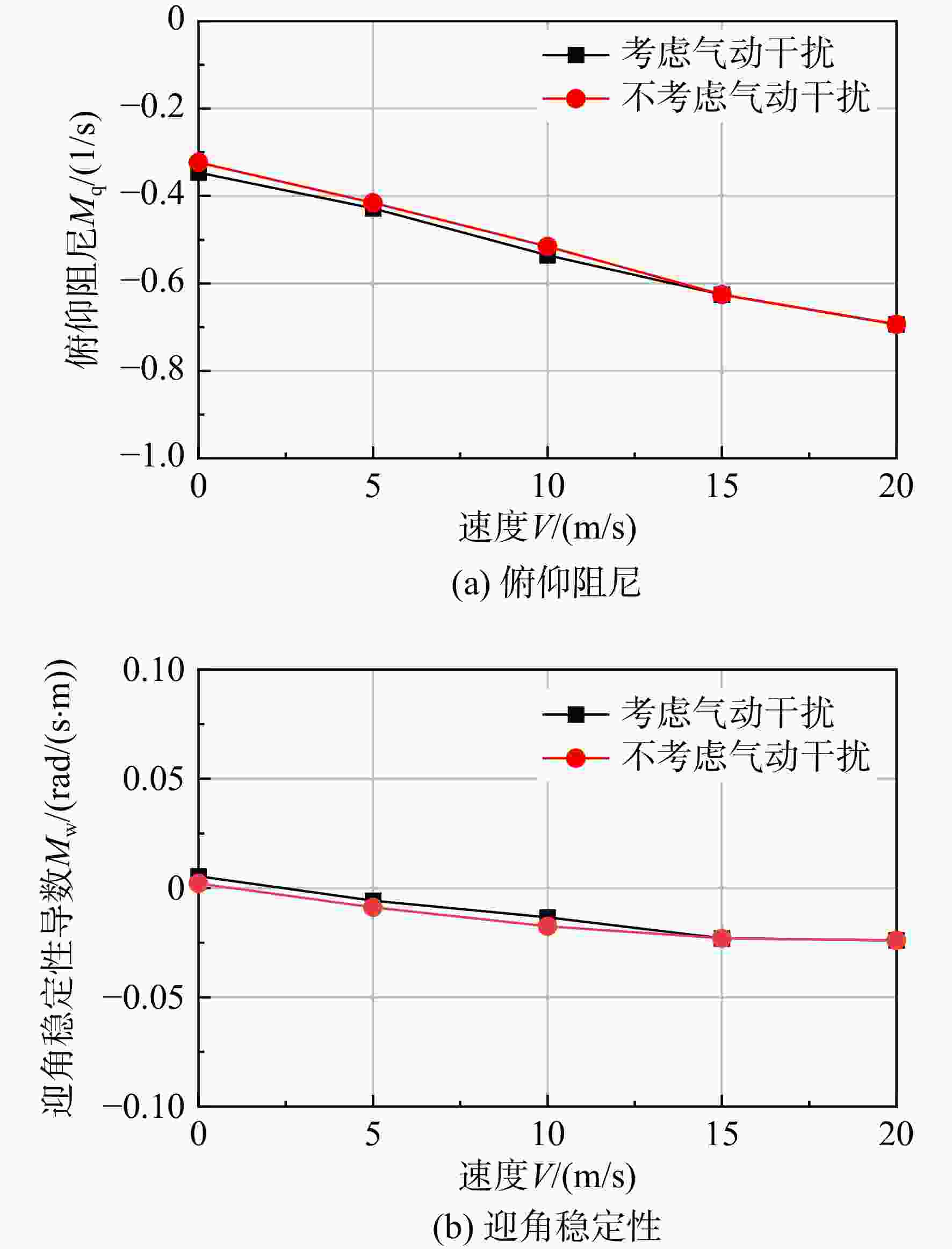
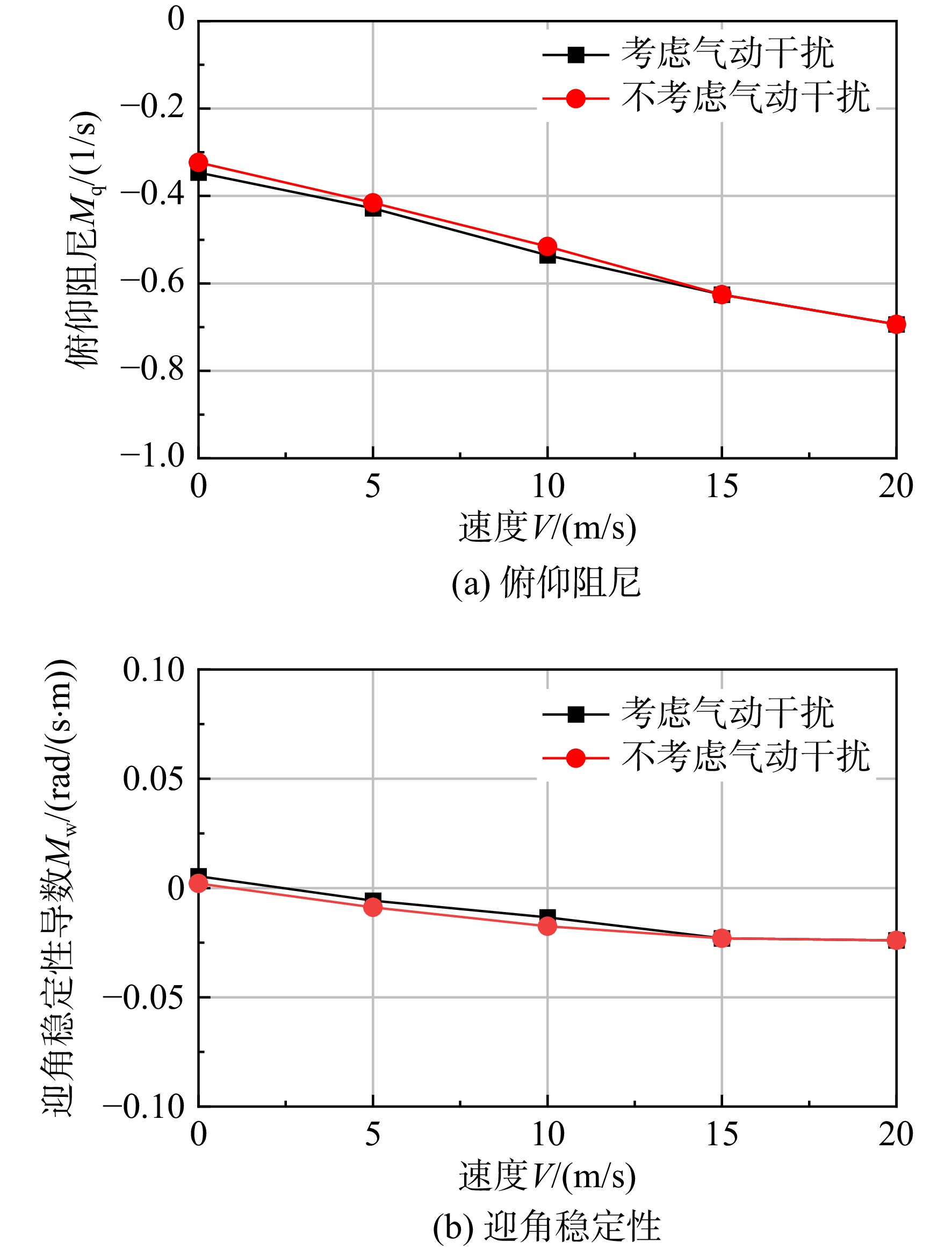
图 22 对比有无气动干扰下的俯仰阻尼和迎角稳定性
Figure 22. Comparison of pitch damping and incidence stability derivatives with or without aerodynamic interactions
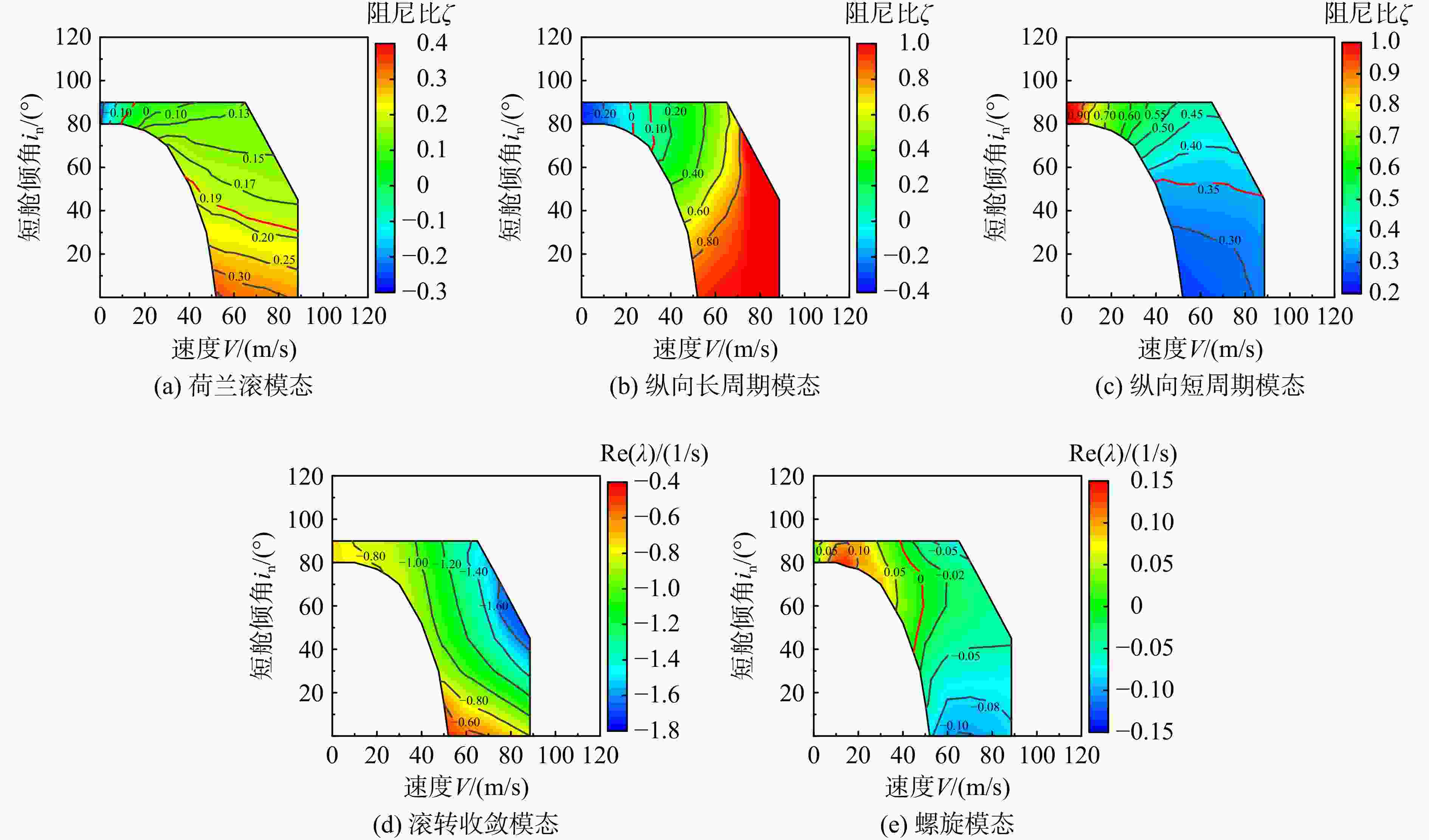
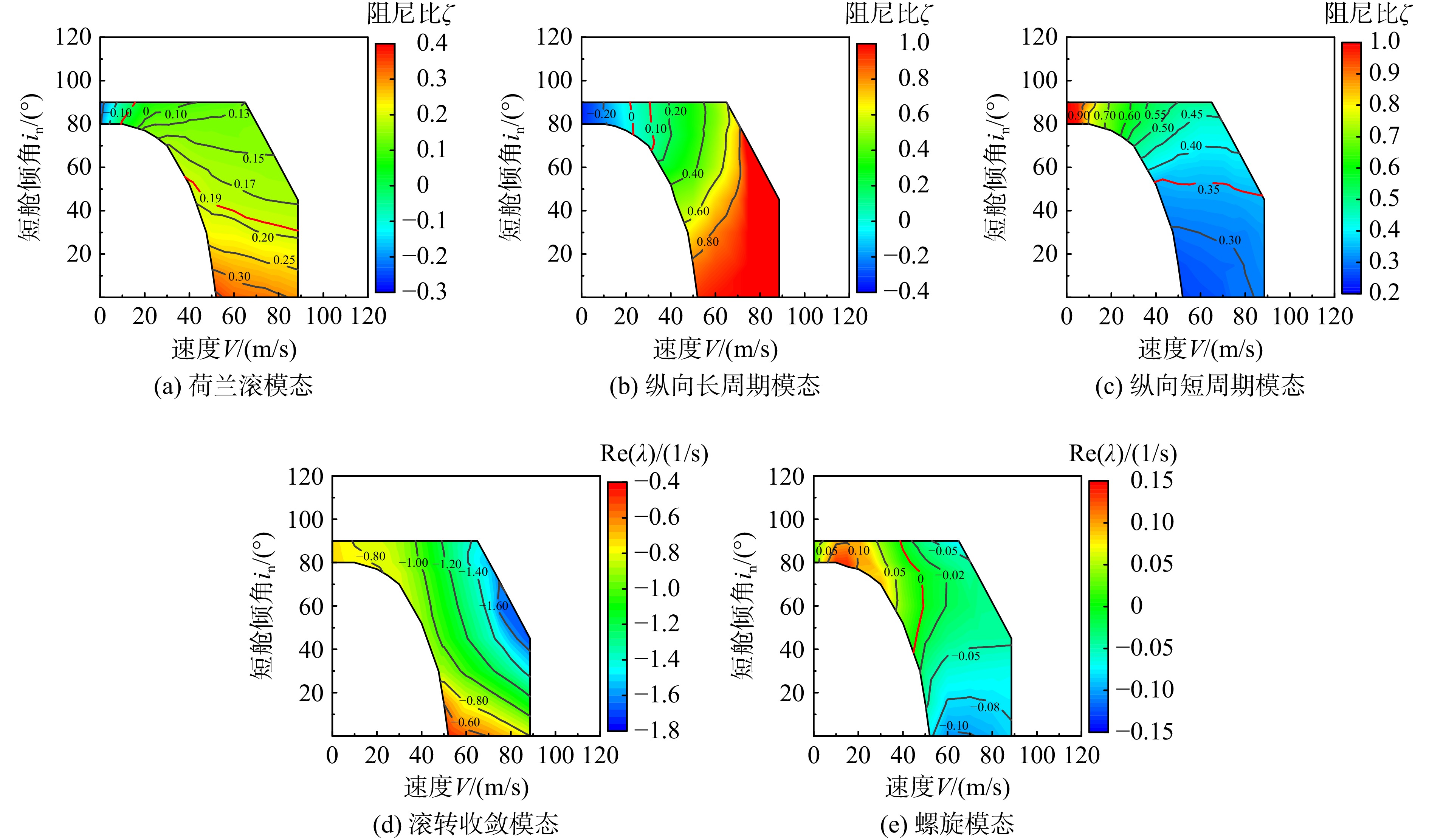
图 23 倾转走廊内各运动模态阻尼比及螺旋、滚转收敛模态实部根
Figure 23. Damping ratio of each motion mode and real root of spiral and roll subsidence mode within conversion corridor
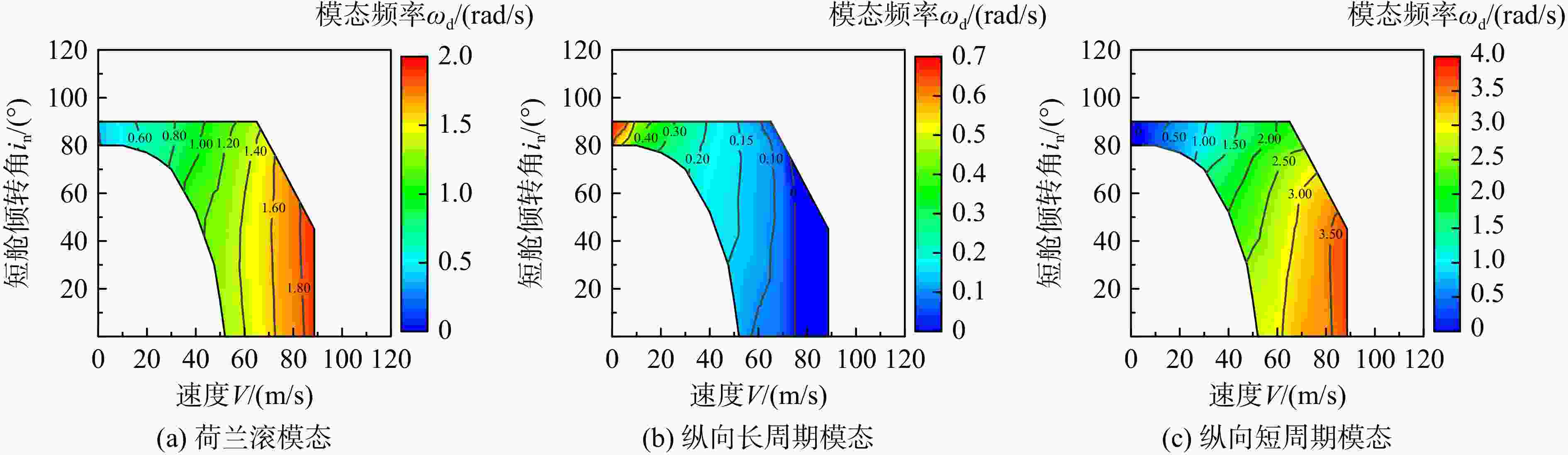
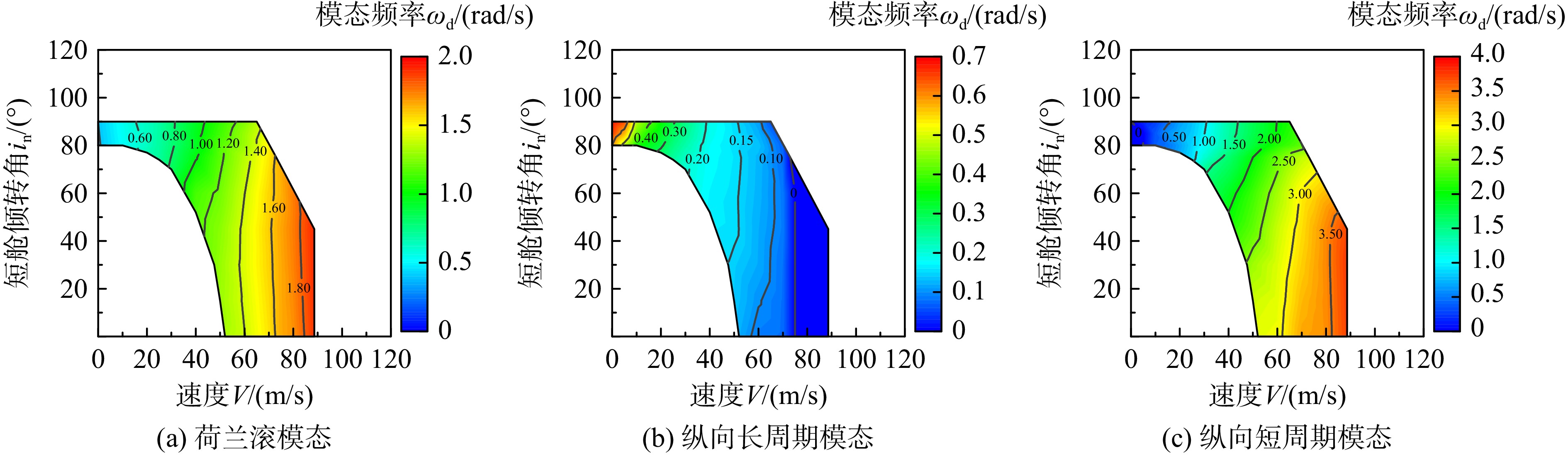
图 24 倾转走廊内各运动模态频率图
Figure 24. Frequency of each motion mode within conversation corridor
-
[1] 邓景辉. 高速直升机关键技术与发展[J]. 航空学报, 2024, 45(9): 529085. DENG Jinghui. Key technologies and development for high-speed helicopters[J]. Acta Aeronautica et Astronautica Sinica, 2024, 45(9): 529085. (in ChineseDENG Jinghui. Key technologies and development for high-speed helicopters[J]. Acta Aeronautica et Astronautica Sinica, 2024, 45(9): 529085. (in Chinese) [2] PADFIELD G D. Helicopter flight dynamics including a treatment of tilt-rotor aircraft[M]. 3rd ed. New York, US: John Wiley & Sons, 2018. [3] LIU Zhong, HE Yuqing, YANG Liying, et al. Control techniques of tilt rotor unmanned aerial vehicle systems: a review[J]. Chinese Journal of Aeronautics, 2017, 30(1): 135-148. doi: 10.1016/j.cja.2016.11.001 [4] 刘佳豪, 李高华, 王福新. 倾转过渡状态旋翼-机翼气动干扰特性[J]. 航空学报, 2022, 43(12): 126097. LIU Jiahao, LI Gaohua, WANG Fuxin. Rotor-wing aerodynamic interference characteristics in conversion mode[J]. Acta Aeronautica et Astronautica Sinica, 2022, 43(12): 126097. (in ChineseLIU Jiahao, LI Gaohua, WANG Fuxin. Rotor-wing aerodynamic interference characteristics in conversion mode[J]. Acta Aeronautica et Astronautica Sinica, 2022, 43(12): 126097. (in Chinese) [5] 杨喜立, 朱纪洪, 黄兴李, 等. 倾转旋翼飞机建模与仿真[J]. 航空学报, 2006, 27(4): 584-587. YANG Xili, ZHU Jihong, HUANG Xingli, et al. Modeling and simulation for tiltrotor airplane[J]. Acta Aeronautica et Astronautica Sinica, 2006, 27(4): 584-587. (in Chinese doi: 10.3321/j.issn:1000-6893.2006.04.009YANG Xili, ZHU Jihong, HUANG Xingli, et al. Modeling and simulation for tiltrotor airplane[J]. Acta Aeronautica et Astronautica Sinica, 2006, 27(4): 584-587. (in Chinese) doi: 10.3321/j.issn:1000-6893.2006.04.009 [6] LI Haixu, QU Xiangju, WANG Weijun. Multi-body motion modeling and simulation for tilt rotor aircraft[J]. Chinese Journal of Aeronautics, 2010, 23(4): 415-422. doi: 10.1016/S1000-9361(09)60236-3 [7] 鲁可, 刘春生, 汪正中, 等. 倾转旋翼飞行器飞行力学建模及验证分析[J]. 系统工程与电子技术, 2017, 39(4): 910-916. LU Ke, LIU Chunsheng, WANG Zhengzhong, et al. Flight dynamics modeling and validation for tilt-rotor aircraft[J]. Systems Engineering and Electronics, 2017, 39(4): 910-916. (in Chinese doi: 10.3969/j.issn.1001-506X.2017.04.30LU Ke, LIU Chunsheng, WANG Zhengzhong, et al. Flight dynamics modeling and validation for tilt-rotor aircraft[J]. Systems Engineering and Electronics, 2017, 39(4): 910-916. (in Chinese) doi: 10.3969/j.issn.1001-506X.2017.04.30 [8] 宋彦国, 孙涛. 旋翼飞行器飞行动力学系统辨识建模算法[J]. 南京航空航天大学学报, 2011, 43(3): 387-392. SONG Yanguo, SUN Tao. System identification modeling of rotorcraft flight mechanics[J]. Journal of Nanjing University of Aeronautics & Astronautics, 2011, 43(3): 387-392. (in Chinese doi: 10.3969/j.issn.1005-2615.2011.03.019SONG Yanguo, SUN Tao. System identification modeling of rotorcraft flight mechanics[J]. Journal of Nanjing University of Aeronautics & Astronautics, 2011, 43(3): 387-392. (in Chinese) doi: 10.3969/j.issn.1005-2615.2011.03.019 [9] 吴伟, 陈仁良. 直升机悬停状态全耦合飞行动力学模型辨识方法[J]. 航空学报, 2011, 32(2): 202-211. WU Wei, CHEN Renliang. Identification method for helicopter fully coupled flight dynamics model in hover condition[J]. Acta Aeronautica et Astronautica Sinica, 2011, 32(2): 202-211. (in ChineseWU Wei, CHEN Renliang. Identification method for helicopter fully coupled flight dynamics model in hover condition[J]. Acta Aeronautica et Astronautica Sinica, 2011, 32(2): 202-211. (in Chinese) [10] WU Wei, CHEN Renliang. An improved online system identification method for tiltrotor aircraft[J]. Aerospace Science and Technology, 2021, 110: 106491. doi: 10.1016/j.ast.2021.106491 [11] FERGUSON S W. A mathematical model for real time flight simulation of a generic tilt-rotor aircraft[R]. Washington, US: NASA CR-166536, 1988. [12] HARENDR P B, JOGLEKAR M J, GAFFEY T M, et al. A mathematical model for real time flight simulation of the bell model 301 tiltrotor research aircraft [R]. Washington US: NASA CR-114614, 1973. [13] KLEIN G D. Linear modeling of tiltrotor aircraft (in helicopter and airplane modes) for stability analysis and preliminary design[D]. Sacramento, US: Naval Postgraduate School, 1996. [14] KLEINHESSELINK K M. Stability and control modeling of tiltrotor aircraft [D]. College Park, US: University of Maryland, 2007. [15] BERGER T. Handling qualities requirements and control design for high-speed rotorcraft[D]. State College, US: The Pennsylvania State University, 2019. [16] CELI R. HeliUM 2 flight dynamic simulation model: development, technical concepts, and applications[R]. Virginia Beach, US: American Helicopter Society 71st Annual Forum, 2015. [17] 沙虹伟, 陈仁良. 倾转旋翼机飞行力学特性[J]. 航空动力学报, 2012, 27(4): 749-754. SHA Hongwei, CHEN Renliang. Flight dynamics characteristic of tilt rotor aircraft[J]. Journal of Aerospace Power, 2012, 27(4): 749-754. (in ChineseSHA Hongwei, CHEN Renliang. Flight dynamics characteristic of tilt rotor aircraft[J]. Journal of Aerospace Power, 2012, 27(4): 749-754. (in Chinese) [18] 鲁可. 倾转旋翼飞行器飞行力学与飞行控制中的若干问题研究[D]. 南京: 南京航空航天大学, 2020. LU Ke. Study on some problems in flight mechanics and flight control of tilt rotor aircraft[D]. Nanjing: Nanjing University of Aeronautics and Astronautics, 2020. (in ChineseLU Ke. Study on some problems in flight mechanics and flight control of tilt rotor aircraft[D]. Nanjing: Nanjing University of Aeronautics and Astronautics, 2020. (in Chinese) [19] LU Ke, LIU Chunsheng, LI Chunhua, et al. Flight dynamics modeling and dynamic stability analysis of tilt-rotor aircraft[J]. International Journal of Aerospace Engineering, 2019, 2019(1): 5737212. [20] 董凌华. 倾转旋翼/机翼气弹耦合动力学研究[D]. 南京: 南京航空航天大学, 2011. DONG Linghua. Research on aeroelastic dynamics of tiltrotor-wing coupled system[D]. Nanjing: Nanjing University of Aeronautics and Astronautics, 2011. (in ChineseDONG Linghua. Research on aeroelastic dynamics of tiltrotor-wing coupled system[D]. Nanjing: Nanjing University of Aeronautics and Astronautics, 2011. (in Chinese) [21] 岳海龙, 夏品奇. 倾转旋翼机前飞动力学稳定性分析[J]. 航空动力学报, 2007, 22(11): 1863-1867. YUE Hailong, XIA Pinqi. Dynamic stability analysis of tiltrotor aircraft in forward flight[J]. Journal of Aerospace Power, 2007, 22(11): 1863-1867. (in ChineseYUE Hailong, XIA Pinqi. Dynamic stability analysis of tiltrotor aircraft in forward flight[J]. Journal of Aerospace Power, 2007, 22(11): 1863-1867. (in Chinese) [22] RUGH W J, SHAMMA J S. Research on gain scheduling[J]. Automatica, 2000, 36(10): 1401-1425. doi: 10.1016/S0005-1098(00)00058-3 [23] PITT D M, PETERS D A. Theoretical prediction of dynamic-inflow derivatives[J]. Vertica, 1981, 5(1): 21-34. [24] 张铮, 陈仁良. 倾转旋翼机旋翼/机翼气动干扰理论与试验[J]. 航空学报, 2017, 38(3): 120196. ZHANG Zheng, CHEN Renliang. Theory and test of rotor/wing aero-interaction in tilt-rotor aircraft[J]. Acta Aeronautica et Astronautica Sinica, 2017, 38(3): 120196. (in ChineseZHANG Zheng, CHEN Renliang. Theory and test of rotor/wing aero-interaction in tilt-rotor aircraft[J]. Acta Aeronautica et Astronautica Sinica, 2017, 38(3): 120196. (in Chinese) [25] 曹芸芸, 陈仁良. 倾转旋翼飞行器旋翼对机翼向下载荷计算模型[J]. 航空动力学报, 2011, 26(2): 468-474. CAO Yunyun, CHEN Renliang. Mathematical model for calculating wing download of tiltrotor aircraft[J]. Journal of Aerospace Power, 2011, 26(2): 468-474. (in ChineseCAO Yunyun, CHEN Renliang. Mathematical model for calculating wing download of tiltrotor aircraft[J]. Journal of Aerospace Power, 2011, 26(2): 468-474. (in Chinese) [26] CARLSON E, ZHAO Yiyuan, CHEN R. Optimal tiltrotor runway operations in one engine inoperative[R]. AIAA-1999-3961, 1999. [27] FERGUSON S W. Development and validation of a simulation for a generic tlit-rotor aircraft[R]. Washington, US: NASA CR-166537, 1989. [28] MAISEL M D, GIULIANETTI D J, DUGAN D C. The history of the XV-15 tilt rotor research aircraft: from concept to flight[R]. Washington, US: NASA TR-SP-2000-4517, 2000. [29] WEIBERG M, MAISEL J A. Wind-tunnel tests of the XV-15 tiltrotor aircraft[R]. Washington, US: NASA TM 81177, 1980. [30] 招启军, 倪同兵, 李鹏, 等. 倾转旋翼机流动机理及气动干扰特性试验[J]. 航空动力学报, 2018, 33(12): 2900-2912. ZHAO Qijun, NI Tongbing, LI Peng, et al. Experiment on flow mechanism and aerodynamic interaction characteristics of tilt-rotor aircraft[J]. Journal of Aerospace Power, 2018, 33(12): 2900-2912. (in ChineseZHAO Qijun, NI Tongbing, LI Peng, et al. Experiment on flow mechanism and aerodynamic interaction characteristics of tilt-rotor aircraft[J]. Journal of Aerospace Power, 2018, 33(12): 2900-2912. (in Chinese) [31] United States Army Aviation and Missile Command. Handling qualities requirements for military rotorcraft: ADS-33E-PRF[S]. Washington, US: US Army Aviation and Missile Command, 2000: 61-77. [32] Wright-Patterson Air Force Base. Military specification flying qualities of piloted V/STOL aircraft: MIL-F-83300[S]. Washington, US: US Military and Government Specs & Standards, 1970: 80-92. -

 下载:
下载:


 点击查看大图

计量
- 文章访问数: 805
- HTML浏览量: 449
- PDF量: 71
- 被引次数: 0