






Diagnosis of bearing and drive shaft faults in helicopter tail drive systems assisted by digital twin
-
摘要:
针对直升机尾传动系统故障数据不平衡问题,提出一种基于数字孪生和迁移学习的直升机尾传动系统故障诊断方法。建立直升机尾传动系统刚柔耦合动力学仿真模型获取真实反映直升机尾传动系统工作状态的高保真故障仿真数据。通过引入坐标可分离卷积和注意力机制的残差网络进行故障特征提取和分类。采用基于高斯核函数的领域自适应方法缩小仿真数据和实验数据在特征空间的分布差异。为提高决策边界的鲁棒性,增强类别之间的区分度,引入边界正则化的交叉熵损失。经实验验证,基于数字孪生和迁移学习的故障诊断方法,可以解决数据不平衡导致的深度学习故障诊断模型训练效果变差的问题,使模型损失显著降低、准确率至少提高了2.17%,达到基于正常数据驱动的深度学习故障诊断模型的性能水平。
Abstract:Considering the problem of unbalanced fault data in the helicopter tail drive system, a fault diagnosis method of helicopter tail drive system based on digital twin and transfer learning was proposed. A rigid-flexible coupling dynamics simulation model of the helicopter tail drive system was established to obtain high-fidelity fault simulation data truly reflecting the operating state of the helicopter tail drive system. A residual network introducing coordinate separable convolution and attention mechanism was used for fault feature extraction and classification. The domain adaptive method based on Gaussian kernel function was used to reduce the distribution difference between simulation data and experimental data in the feature space. In order to improve the robustness of the decision boundary and enhance the differentiation between categories, the cross-entry loss with margin regularization was introduced. It was experimentally verified that the fault diagnosis method based on digital twin and transfer learning can address the issue of deteriorated training effect in deep learning fault diagnosis model caused by unbalanced data. This method significantly reduced model loss and improved model accuracy by at least 2.17%, reaching the performance level of the deep learning fault diagnosis model based on normal data.
-
Key words:
- unbalanced data /
- fault diagnosis /
- digital twin /
- transfer learning /
- helicopter tail drive system
-
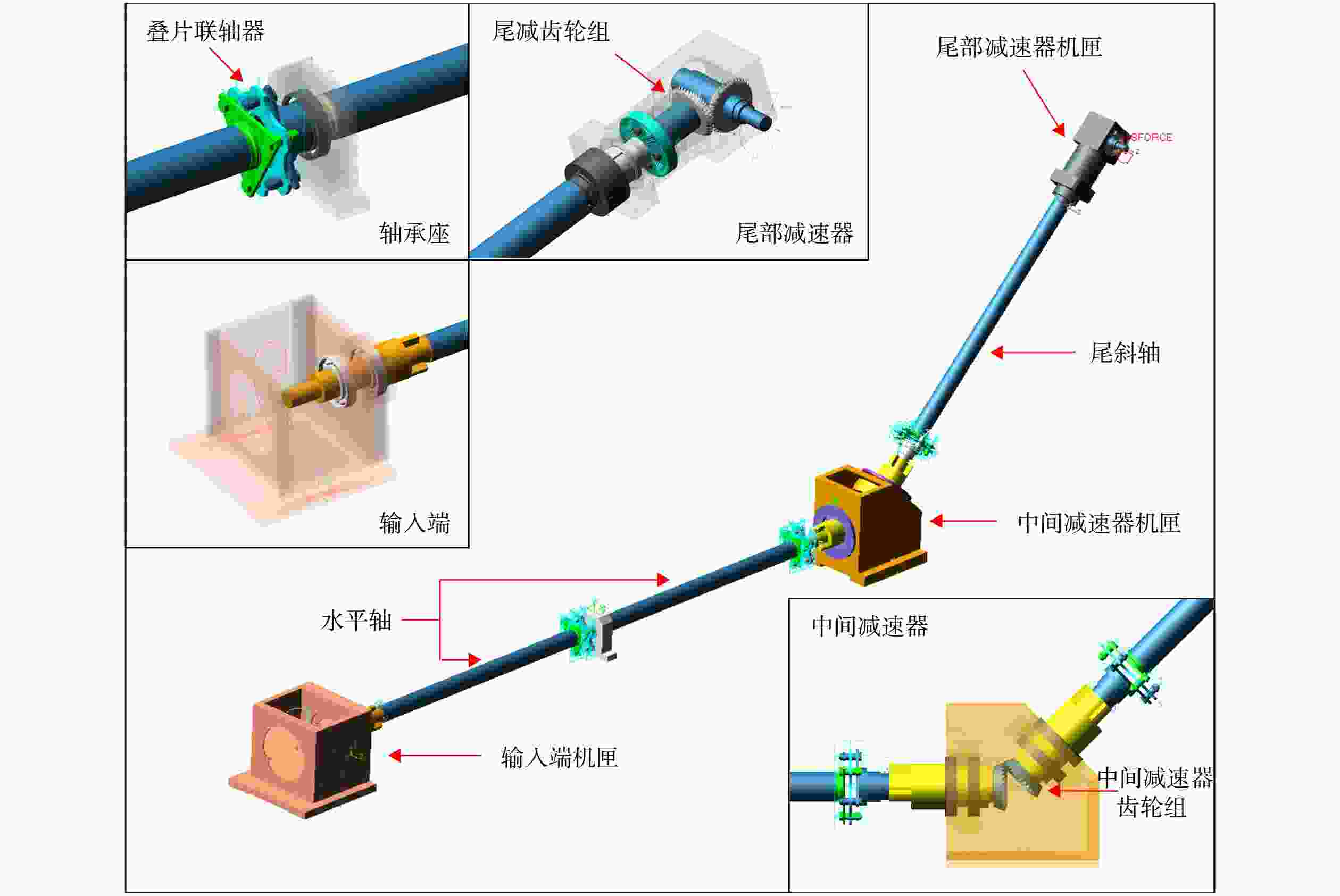
图 1 直升机尾传动系统刚柔耦合动力学仿真模型
Figure 1. Rigid-flexible coupled dynamics simulation model of helicopter tail drive system
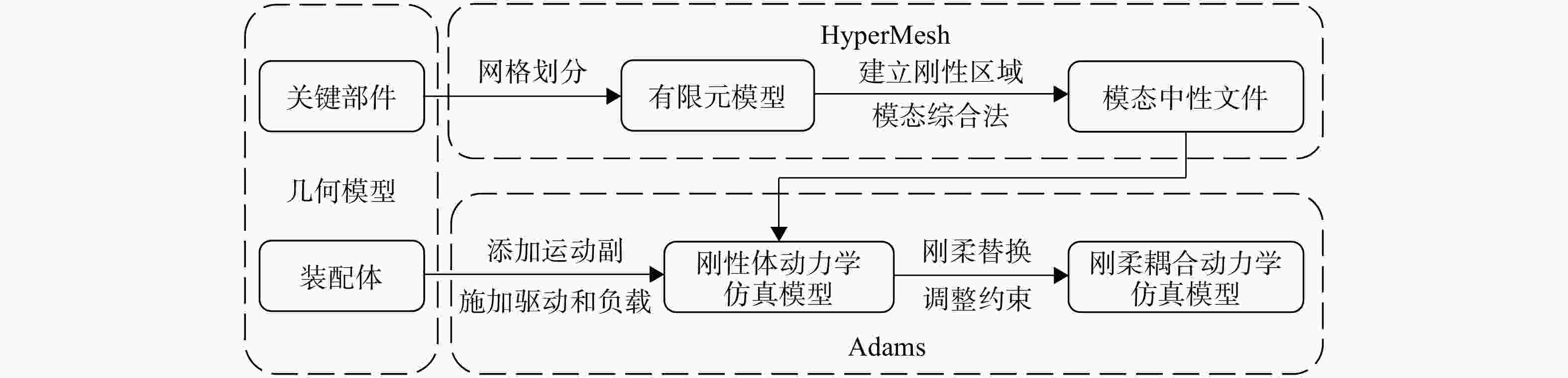
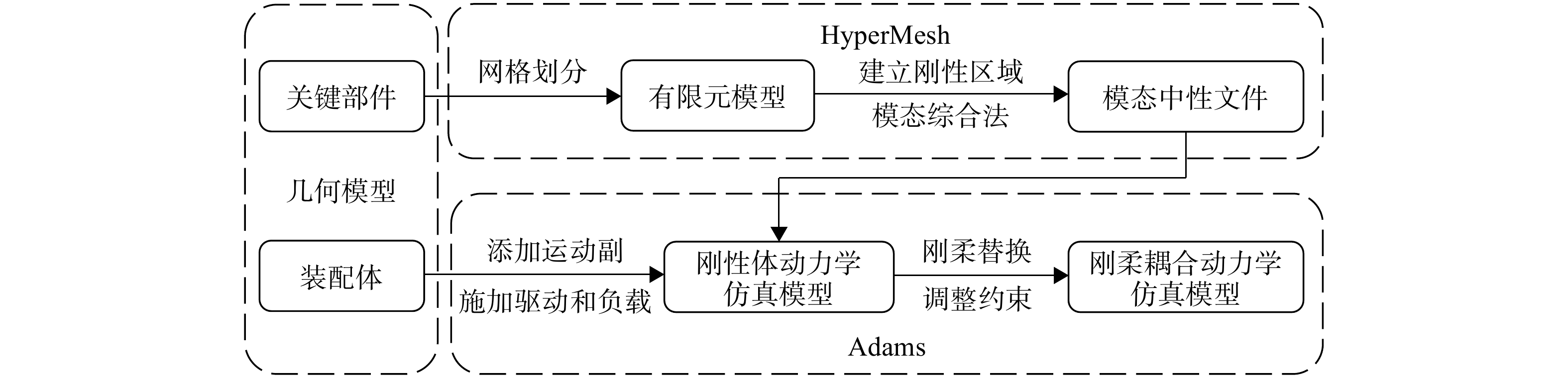
图 2 刚柔耦合动力学仿真模型建模
Figure 2. Modeling process of rigid-flexible coupled dynamics simulation model
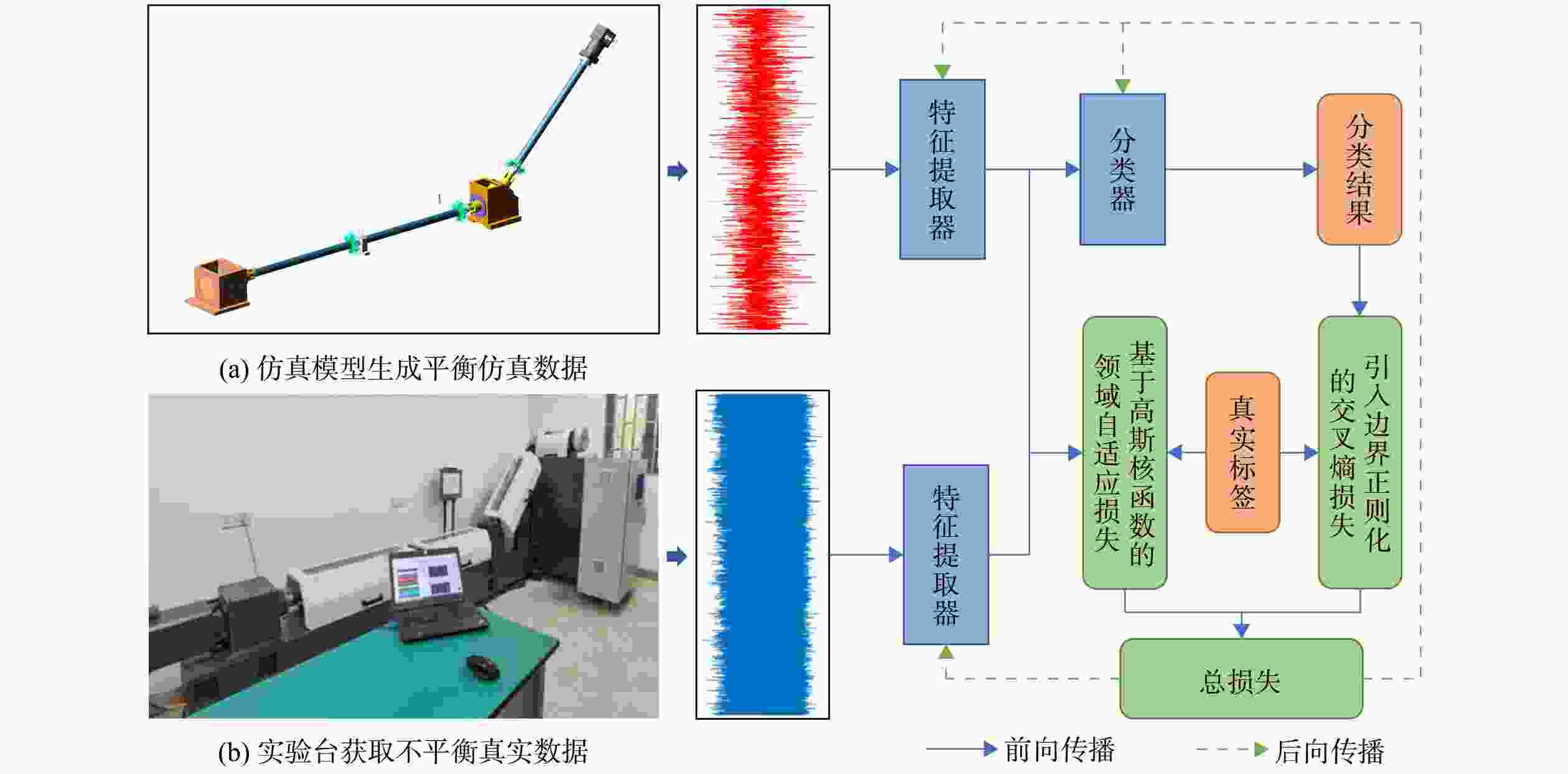
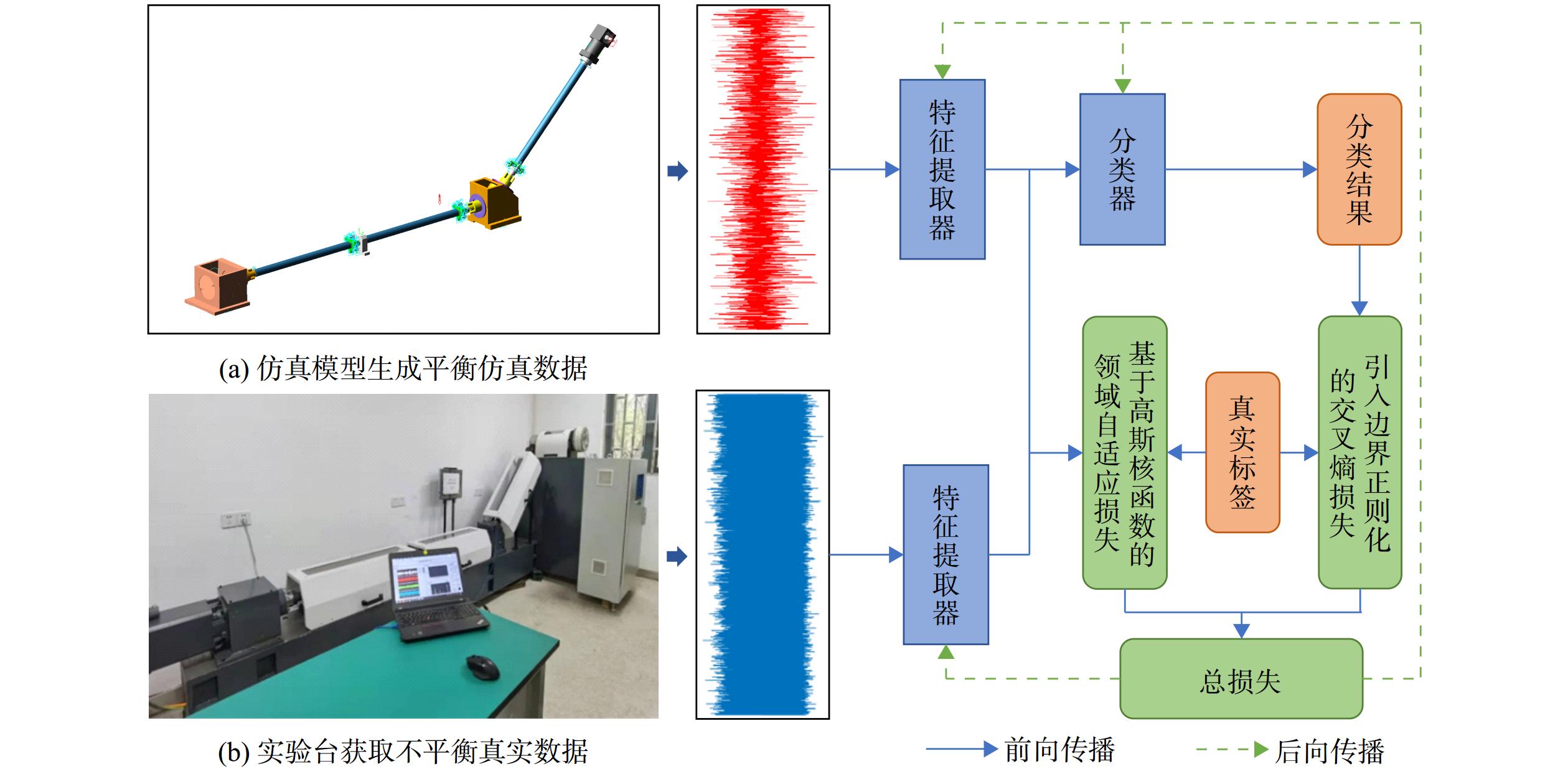
图 4 基于数字孪生和迁移学习的故障诊断方法整体框架
Figure 4. Fault diagnosis framework based on digital twin and transfer learning
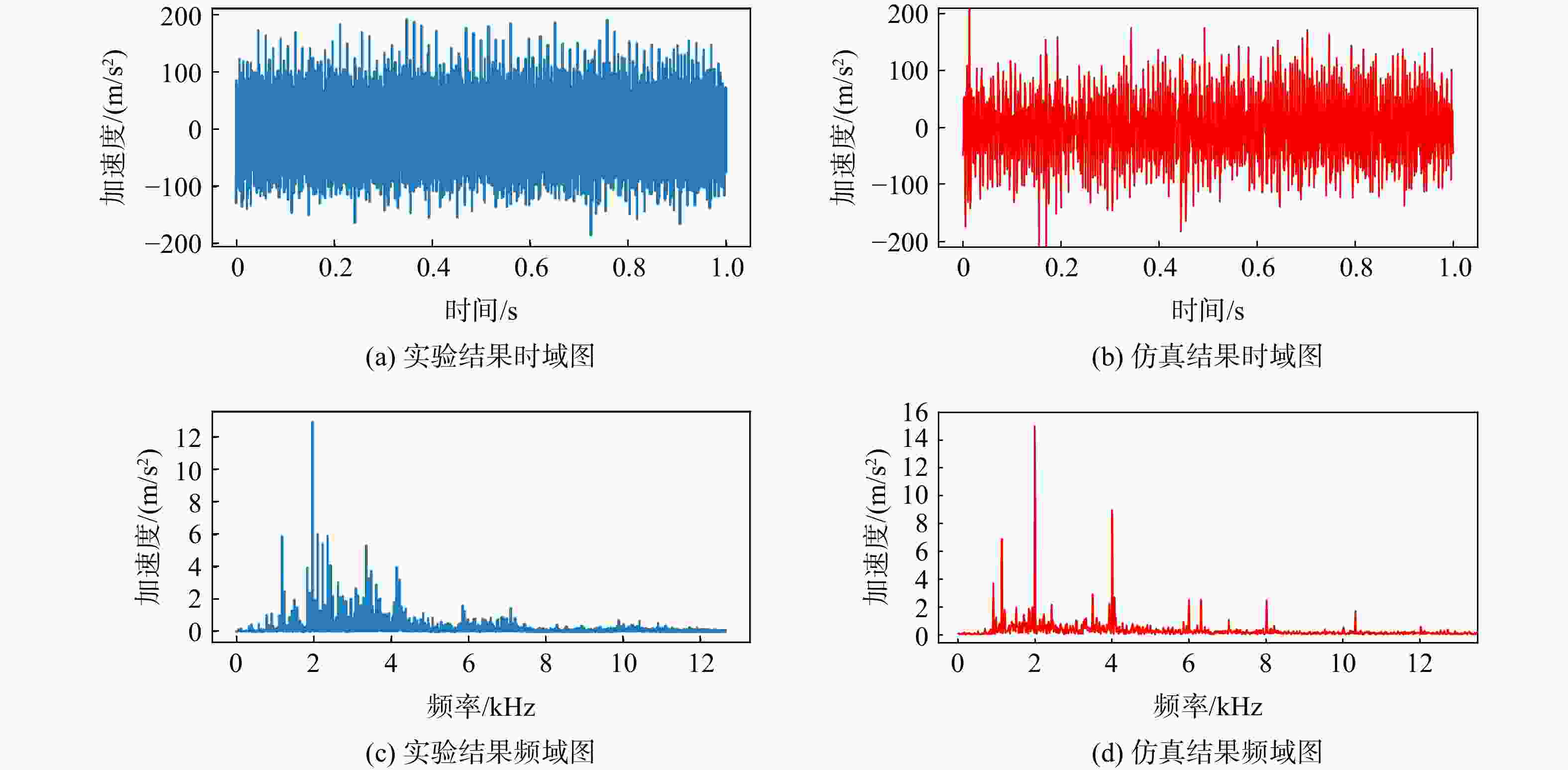
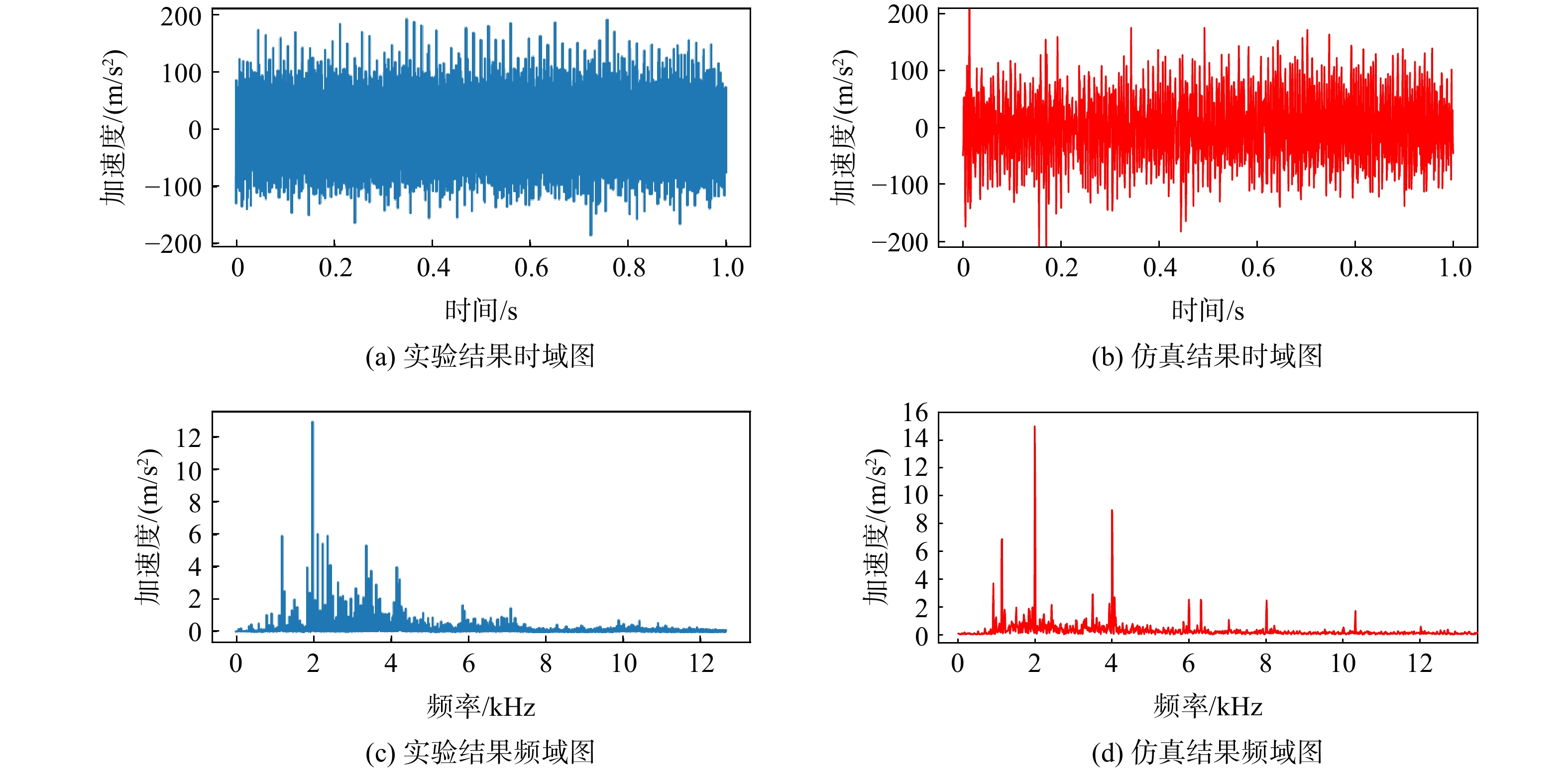
图 9 仿真结果与实验结果在时域和频域下的对比
Figure 9. Comparison of simulation results with experimental results in time and frequency domains
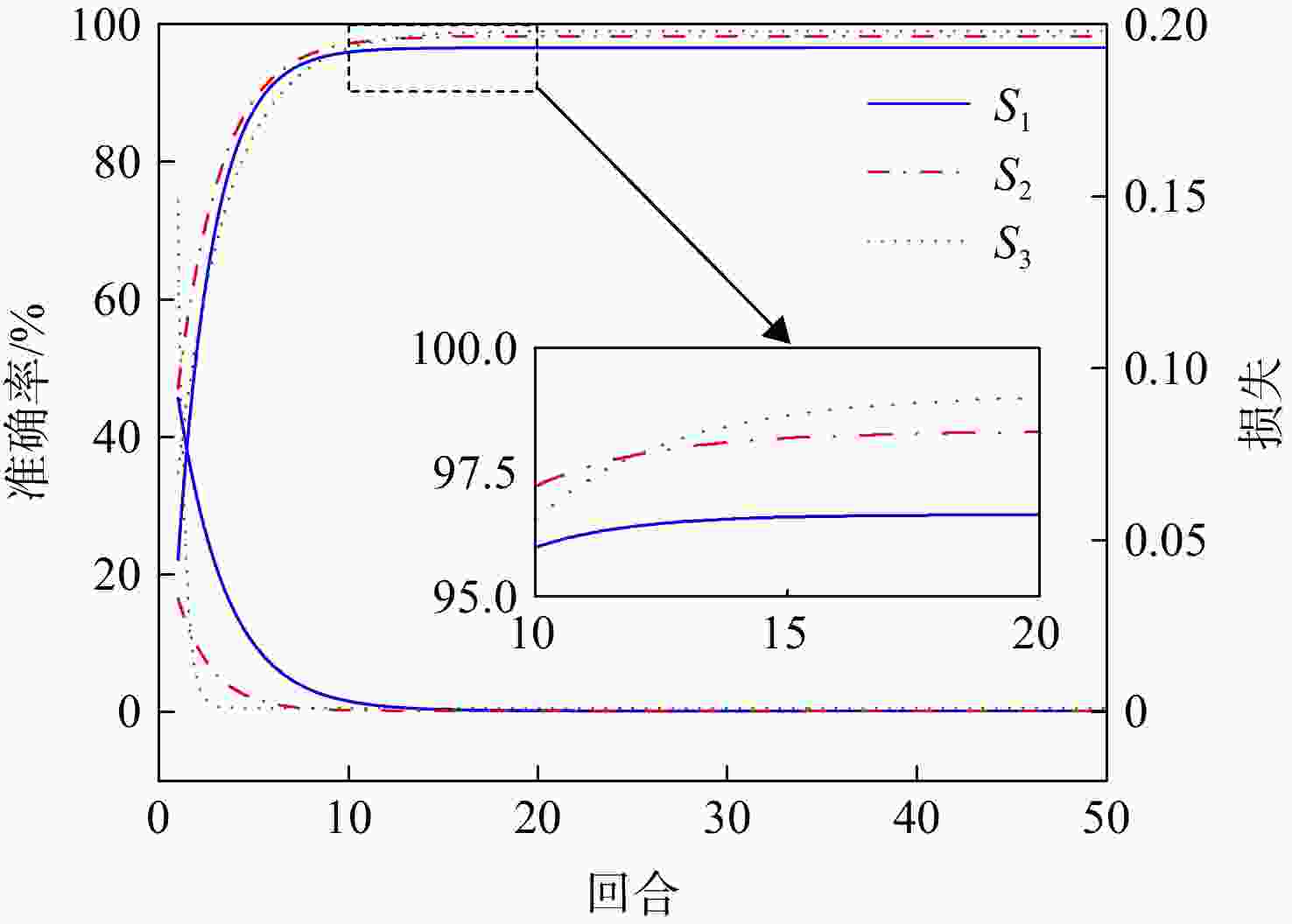
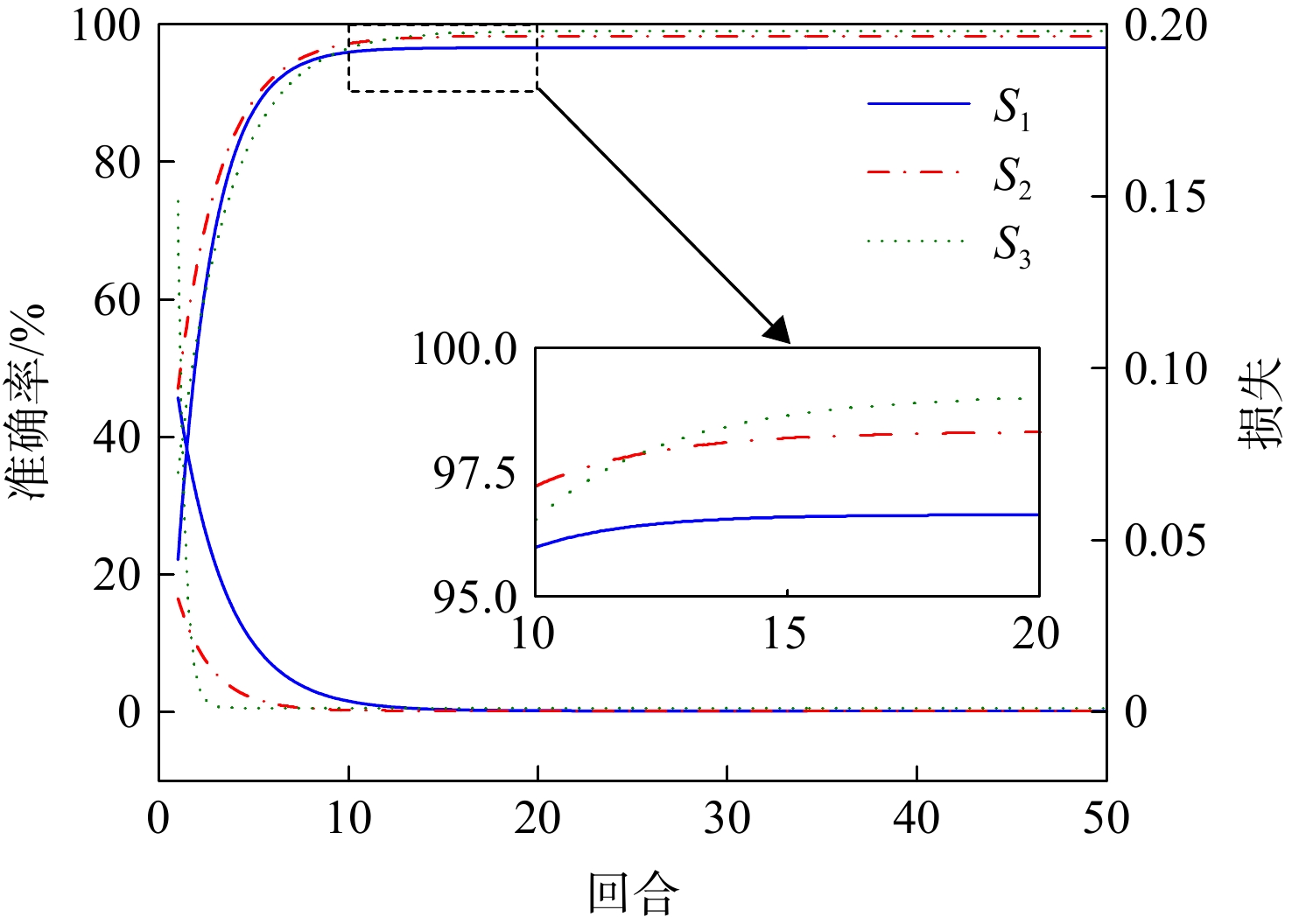
图 10 验证集准确率和损失变化曲线
Figure 10. Variation curves of accuracy and loss on the validation set
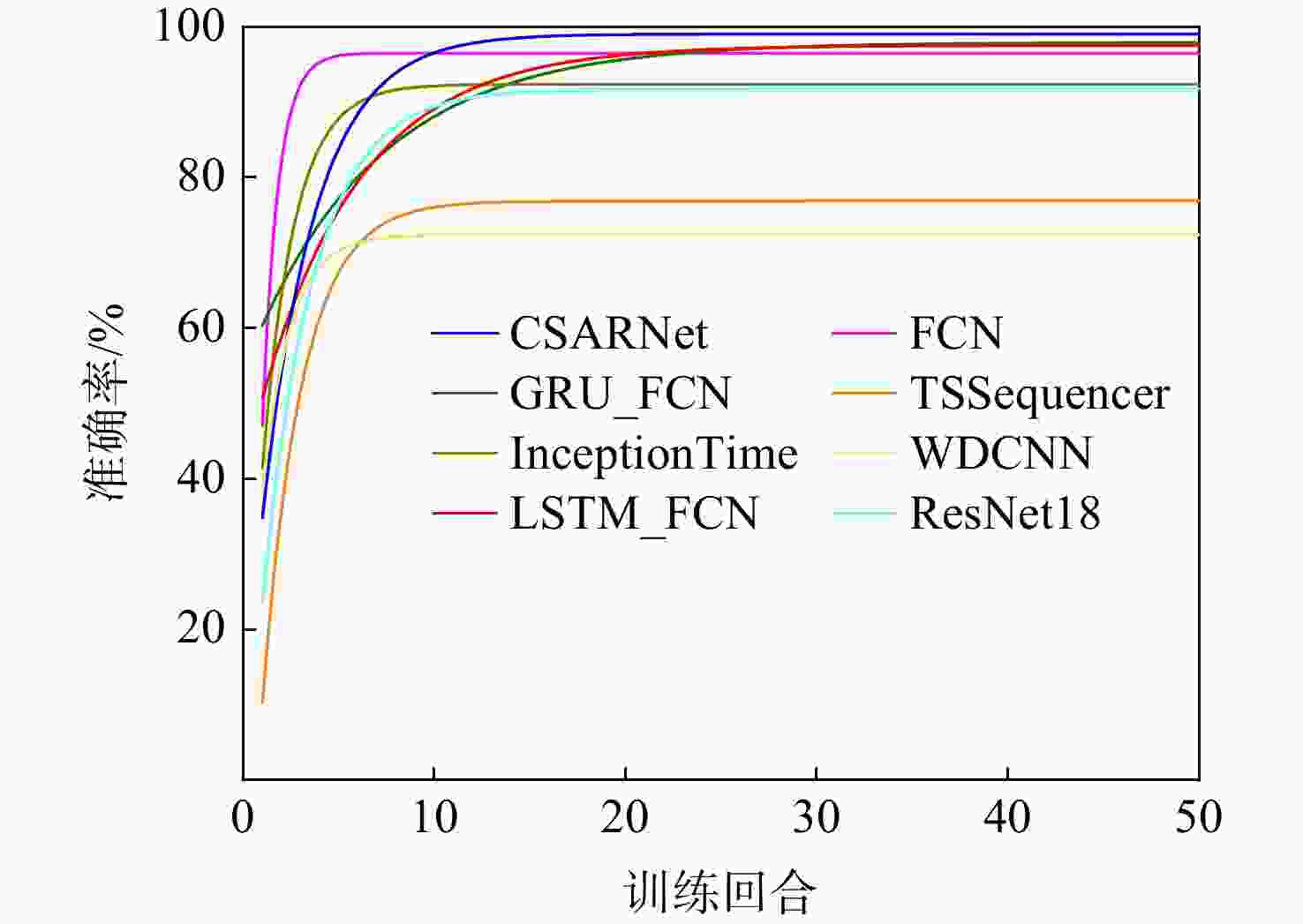
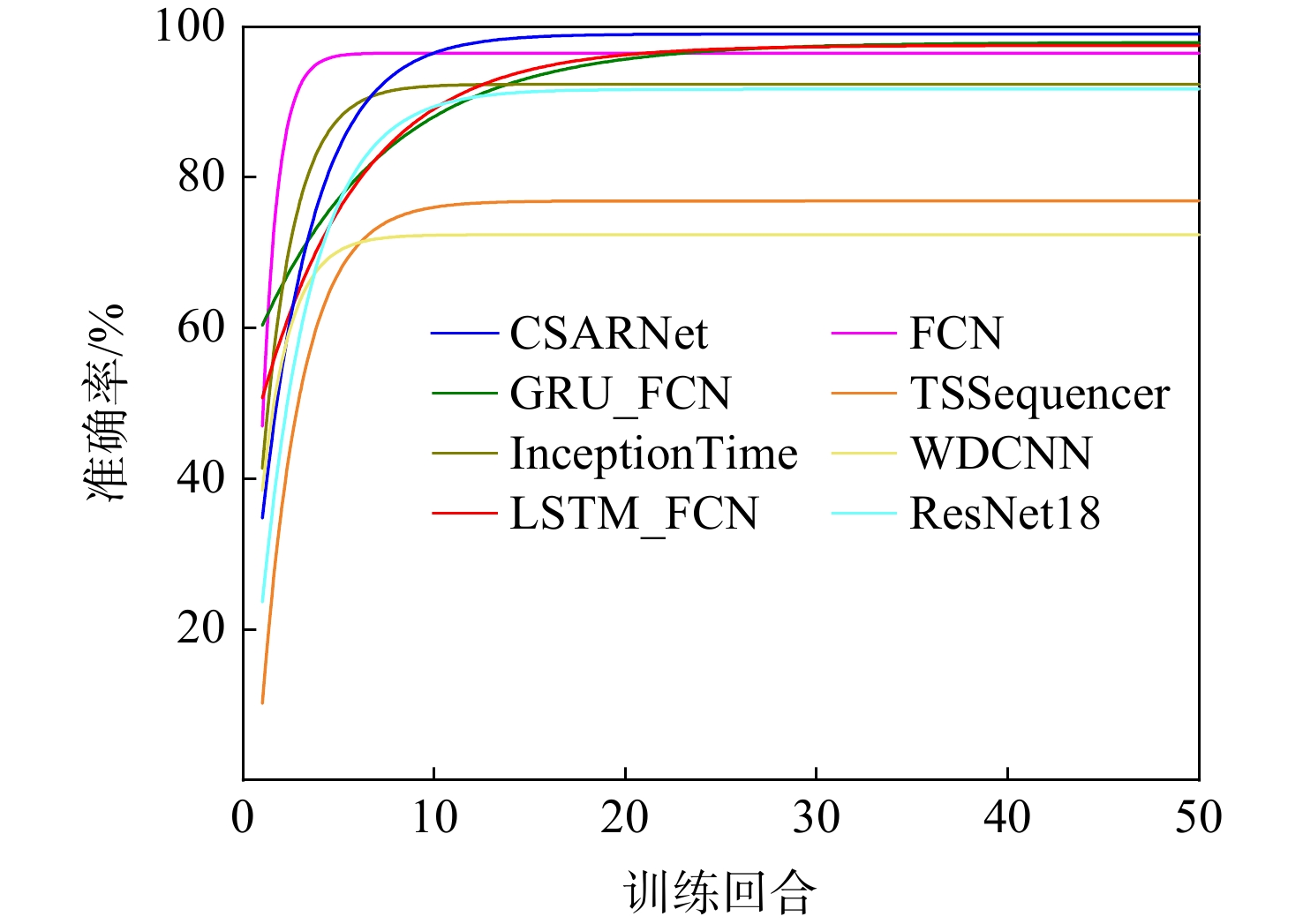
图 11 各模型验证集准确率对比曲线
Figure 11. Comparison curves of accuracy of validation sets for each model
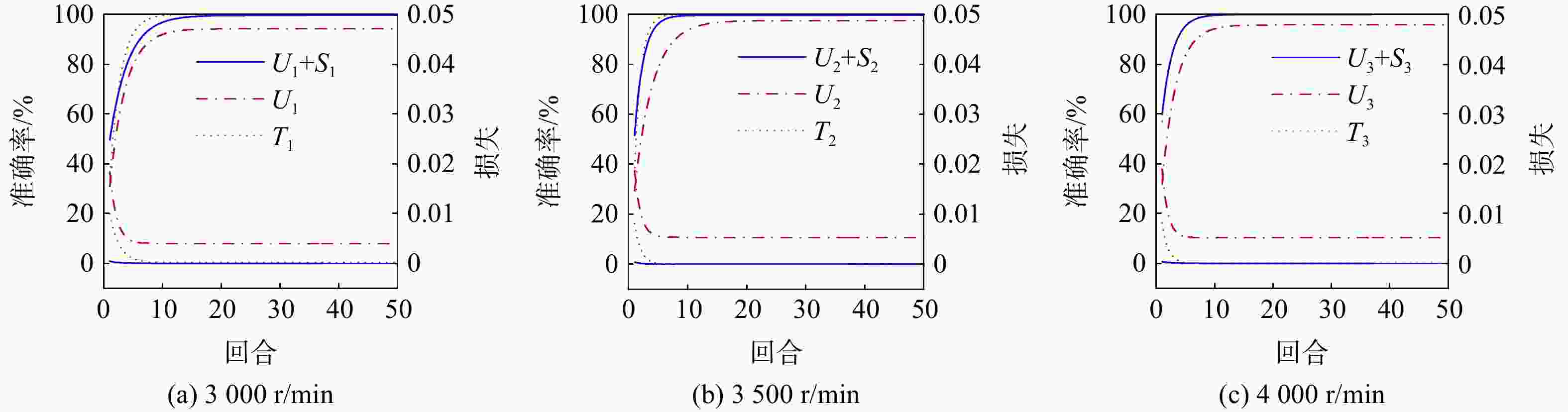
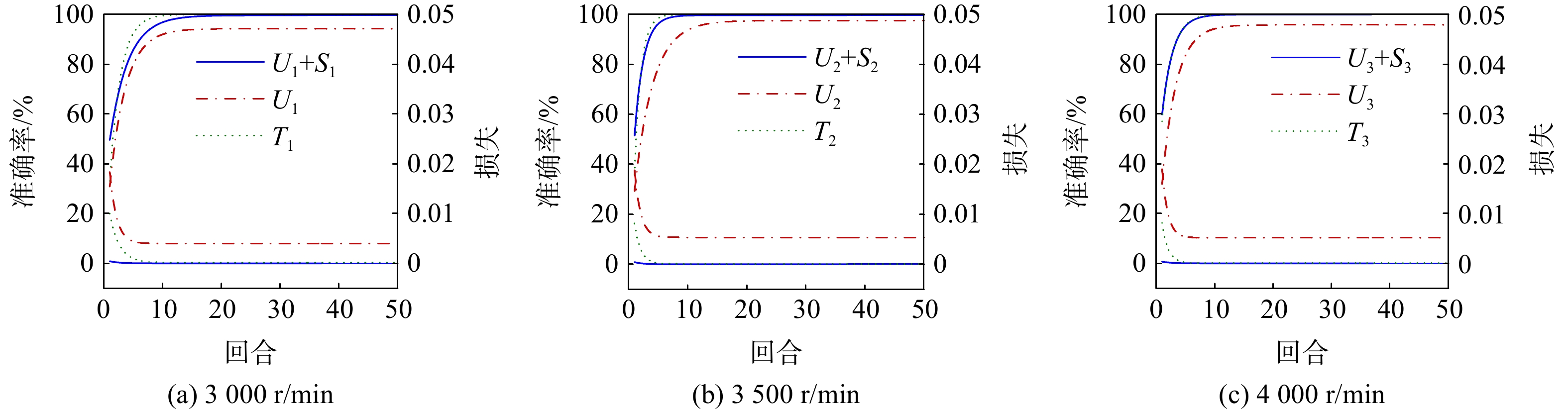
图 12 3种工况下各组实验训练过程中验证集上的准确率和损失
Figure 12. Accuracy and loss on the validation set during the training for each set of experiments under the three working conditions
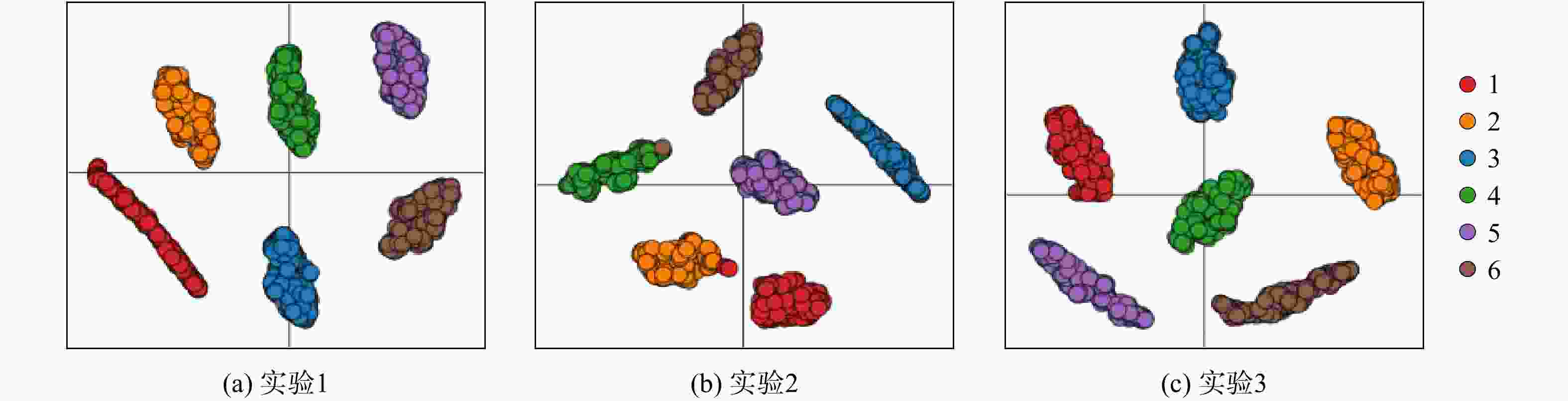
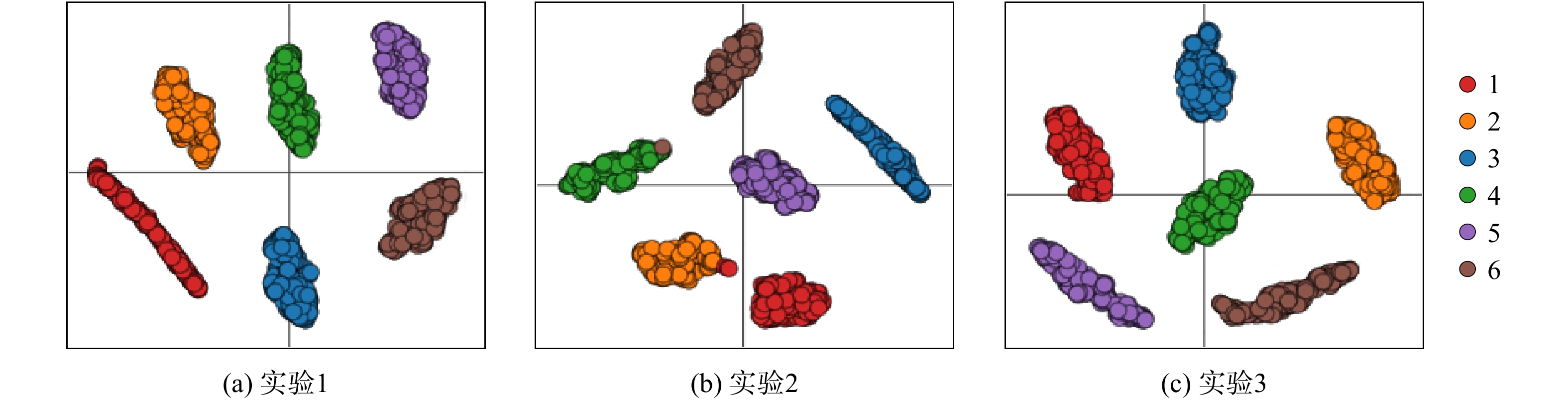
图 13 3组实验在测试集上的T-SNE分类可视化
Figure 13. Visualization of T-SNE classification on the data test set for three sets of experiments
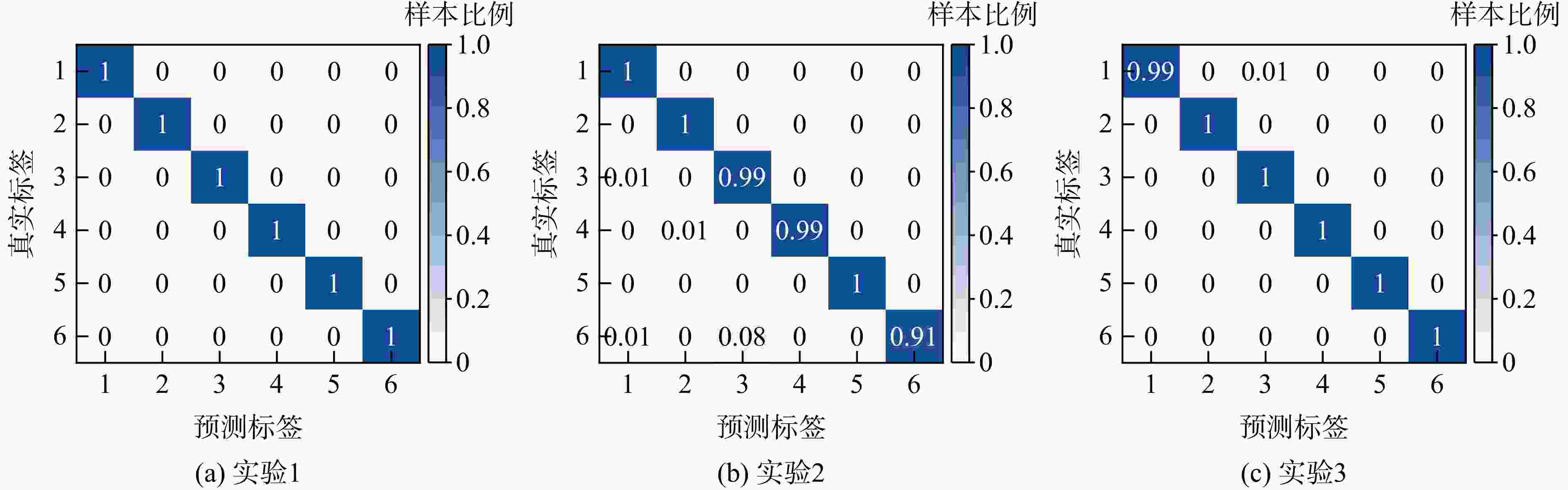
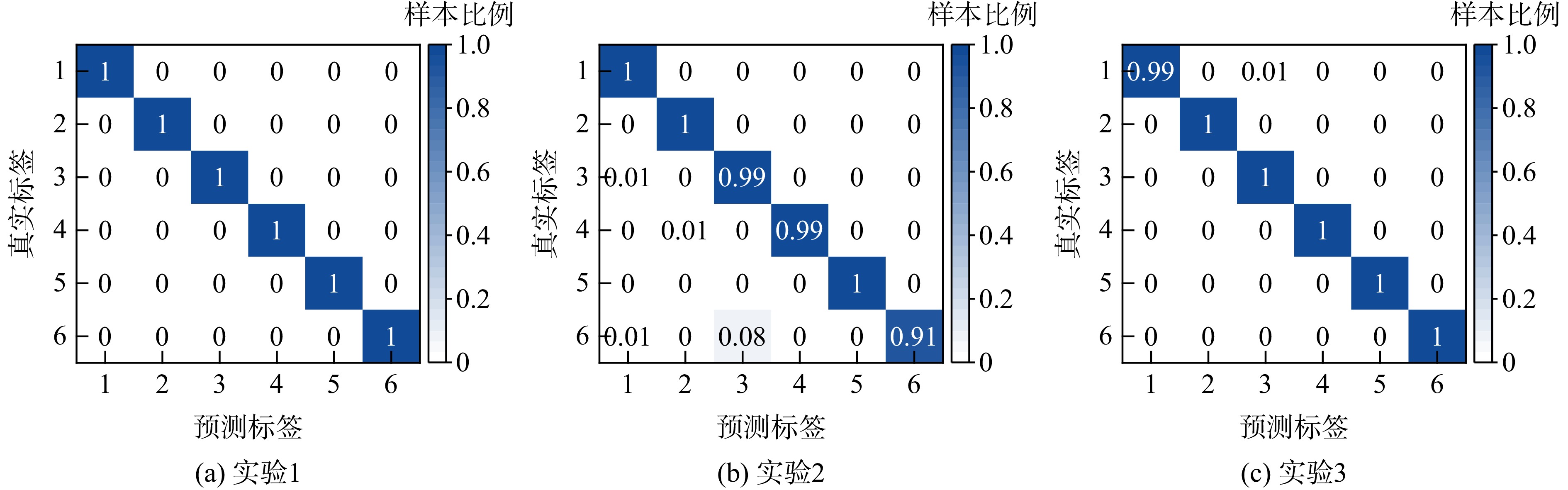
图 14 3组实验在测试集上的混淆矩阵
Figure 14. Confusion matrix on the data test set for the three sets of experiments
表 1 刚性体动力学仿真模型约束关系
Table 1. Constraints of the rigid body dynamics simulation model
对象1 对象2 约束 输入机匣 Ground(地面) 固定副 角接触球轴承外圈 输入机匣 固定副 角接触球轴承内圈 输入轴 固定副 花键 空心轴 固定副 叠片联轴器 空心轴 固定副 叠片联轴器 花键 固定副 叠片联轴器 深沟球轴承内圈 固定副 深沟球轴承外圈 轴承座 固定副 套筒 中减机匣 固定副 角接触球轴承外圈 套筒 固定副 角接触球轴承内圈 轴 固定副 弧齿锥齿轮 轴 固定副 中减机匣 Ground(地面) 固定副 输入轴 Ground(地面) 旋转副+驱动 轴承内圈/外圈 滚子 接触力 弧齿锥齿轮 弧齿锥齿轮 接触力 输出轴 Ground(地面) 旋转副+负载  下载: 导出CSV
表 2 不同工况下仿真结果和实验结果对比
Table 2. Comparison between simulation results and experimental results under different operating conditions
测试方位 输入转速/(r/min) 加速度/(m/s2) 误差/% 测试结果有效值 仿真结果有效值 中减减速器水平 2000 25.04 25.58 2.1 中减减速器垂直 20.79 22.68 9.1 轴承座水平 15.67 18.52 18.2 轴承座垂直 13.00 9.89 23.9 中减减速器水平 2500 34.83 31.88 8.5 中减减速器垂直 29.64 28.84 2.7 轴承座水平 18.80 22.39 19.1 轴承座垂直 17.72 14.40 18.8 中减减速器水平 3000 35.02 41.20 17.6 中减减速器垂直 35.82 37.96 6.0 轴承座水平 19.98 23.67 18.5 轴承座垂直 19.87 15.22 23.4 中减减速器水平 3500 43.86 46.20 5.3 中减减速器垂直 44.63 46.92 5.1 轴承座水平 23.13 27.30 18.0 轴承座垂直 22.13 18.28 17.4 中减减速器水平 4000 48.85 57.32 17.3 中减减速器垂直 58.03 54.01 6.9 轴承座水平 34.49 39.28 13.9 轴承座垂直 36.51 30.16 17.4
下载: 导出CSV
表 3 仿真数据各故障类型样本量设置
Table 3. Sample size for each fault type in the simulation data
故障
类型样本量 轴承内
圈裂纹轴承外
圈裂纹轴承内
圈磨损轴承外
圈磨损轴穿孔 正常 训练集 600 600 600 600 600 600 验证集 200 200 200 200 200 200 测试集 200 200 200 200 200 200
下载: 导出CSV
表 4 各模型仿真数据测试集准确率
Table 4. Accuracy of each model on the simulation data test set
模型 准确率/% 平均值/% S1 S2 S3 CSARNet 97.66 99.75 99.42 98.94 ResNet 87.67 99.25 93.58 93.5 InceptionTime 97.58 99.58 98.58 98.58 FCN 99.83 98.83 96.67 98.44 GRU_FCN 96.42 99.58 96.5 97.5 LSTM_FCN 99.16 99.83 97.08 98.69 TSSequencer 65.417 74 79.25 72.89 1DCNN 71.92 74.58 72.67 73.06
下载: 导出CSV
表 5 实验数据各故障类型样本量设置
Table 5. Sample size for each fault type in experimental data
数据
类型样本量 轴承内
圈裂纹轴承外
圈裂纹轴承内
圈磨损轴承外
圈磨损轴穿孔 正常 不平衡
训练集60 60 60 60 60 600 正常
训练集600 600 600 600 600 600 验证集 200 200 200 200 200 200 测试集 200 200 200 200 200 200
下载: 导出CSV
-
[1] HOANG D T,KANG H J. A survey on deep learning based bearing fault diagnosis[J]. Neurocomputing,2019,335(335): 327-335. [2] TANG S,YUAN S,ZHU Y. Deep learning-based intelligent fault diagnosis methods toward rotating machinery[J]. IEEE Access,2019,8: 9335-9346. [3] 文成林,吕菲亚. 基于深度学习的故障诊断方法综述[J]. 电子与信息学报,2020,42(1): 234-248. WEN Chenglin,LYU Feiya. Review on deep learning based fault diagnosis[J]. Journal of Electronics & Information Technology,2020,42(1): 234-248. (in ChineseWEN Chenglin, LYU Feiya. Review on deep learning based fault diagnosis[J]. Journal of Electronics & Information Technology, 2020, 42(1): 234-248. (in Chinese) [4] SUN M,QIAN H,ZHU K,et al. Ensemble learning and SMOTE based fault diagnosis system in self-organizing cellular networks[C]//GLOBECOM 2017-2017 IEEE Global Communications Conference. Piscataway,US: IEEE,2017: 1-6. [5] 钟诗胜,李旭,张永健. 基于DBN的不均衡样本驱动民航发动机故障诊断[J]. 航空动力学报,2019,34(3): 708-716. ZHONG Shisheng,LI Xu,ZHANG Yongjian. Fault diagnosis of civil aero-engine driven by unbalanced samples based on DBN[J]. Journal of Aerospace Power,2019,34(3): 708-716. (in ChineseZHONG Shisheng, LI Xu, ZHANG Yongjian. Fault diagnosis of civil aero-engine driven by unbalanced samples based on DBN[J]. Journal of Aerospace Power, 2019, 34(3): 708-716. (in Chinese) [6] LIU S W,JIANG H,WU Z,et al. Rolling bearing fault diagnosis using variational autoencoding generative adversarial networks with deep regret analysis[J]. Measurement,2021,168: 108371. doi: 10.1016/j.measurement.2020.108371 [7] CHEN M,SHAO H,DOU H,et al. Data augmentation and intelligent fault diagnosis of planetary gearbox using ILoFGAN under extremely limited samples[J]. IEEE Transactions on Reliability,2023,72(3): 1029-1037. doi: 10.1109/TR.2022.3215243 [8] YU Y,GUO L,GAO H,et al. PCWGAN-GP: a new method for imbalanced fault diagnosis of machines[J]. IEEE Transactions on Instrumentation and Measurement,2022,71: 3515711. [9] CUI Y,JIA M,LIN T Y,et al. Class-balanced loss based on effective number of samples[C]//2019 IEEE/CVF Conference on Computer Vision and Pattern Recognition. Piscataway,US: IEEE,2019: 9260-9269. [10] FERNANDO K R M,TSOKOS C P. Dynamically weighted balanced loss: class imbalanced learning and confidence calibration of deep neural networks[J]. IEEE Transactions on Neural Networks and Learning Systems,2022,33(7): 2940-2951. doi: 10.1109/TNNLS.2020.3047335 [11] DUAN A,GUO L,GAO H,et al. Deep focus parallel convolutional neural network for imbalanced classification of machinery fault diagnostics[J]. IEEE Transactions on Instrumentation and Measurement,2020,69(11): 8680-8689. doi: 10.1109/TIM.2020.2998233 [12] HOU R,CHEN J,FENG Y,et al. Contrastive-weighted self-supervised model for long-tailed data classification with vision transformer augmented[J]. Mechanical Systems and Signal Processing,2022,177: 109174. doi: 10.1016/j.ymssp.2022.109174 [13] 陈果,杨默晗,于平超. 基于深度学习的航空发动机不平衡故障部位识别[J]. 航空动力学报,2020,35(12): 2602-2615. CHEN Guo,YANG Mohan,YU Pingchao. Aero-engine unbalanced fault location identification method based on deep learning[J]. Journal of Aerospace Power,2020,35(12): 2602-2615. (in ChineseCHEN Guo, YANG Mohan, YU Pingchao. Aero-engine unbalanced fault location identification method based on deep learning[J]. Journal of Aerospace Power, 2020, 35(12): 2602-2615. (in Chinese) [14] 董绍江,朱朋,朱孙科,等. 基于仿真数据驱动和领域自适应的滚动轴承故障诊断方法[J]. 中国机械工程,2023,34(6): 694-702. DONG Shaojiang,ZHU Peng,ZHU Sunke,et al. Fault diagnosis method of rolling bearings based on simulation data drive and domain adaptation[J]. China Mechanical Engineering,2023,34(6): 694-702. (in ChineseDONG Shaojiang, ZHU Peng, ZHU Sunke, et al. Fault diagnosis method of rolling bearings based on simulation data drive and domain adaptation[J]. China Mechanical Engineering, 2023, 34(6): 694-702. (in Chinese) [15] ZHANG Qinglei,HE Qunshan,QIN Jiyun,et al. Application of fault diagnosis method combining finite element method and transfer learning for insufficient turbine rotor fault samples[J]. Entropy,2023,25(3): 414. doi: 10.3390/e25030414 [16] 陈书辉. 基于仿真数据与深度迁移学习的液压泵故障诊断研究[D]. 武汉: 华中科技大学,2021. CHEN Shuhui. Research on fault diagnosis of hydraulic pump based on simulation data and deep transfer learning[D]. Wuhan: Huazhong University of Science and Technology,2021. (in ChineseCHEN Shuhui. Research on fault diagnosis of hydraulic pump based on simulation data and deep transfer learning[D]. Wuhan: Huazhong University of Science and Technology, 2021. (in Chinese) [17] SHEN Y,ZHONG X,SHAO H,et al. Digital twin-assisted imbalanced fault diagnosis framework using subdomain adaptive mechanism and margin-aware regularization[J]. Reliability Engineering & System Safety,2023,239: 109522. [18] LIU R,LEHMAN J,MOLINO P,et al. An intriguing failing of convolutional neural networks and the CoordConv solution[C]//Proceedings of the 32nd International Conference on Neural Information Processing Systems. New York: ACM,2018: 9628-9639. [19] LU G,ZHANG W,WANG Z. Optimizing depthwise separable convolution operations on GPUs[J]. IEEE Transactions on Parallel and Distributed Systems,2022,33(1): 70-87. doi: 10.1109/TPDS.2021.3084813 [20] YE R,WANG W,REN Y,et al. Bearing fault detection based on convolutional self-attention mechanism[C]//2020 IEEE 2nd International Conference on Civil Aviation Safety and Information Technology (ICCASIT). Piscataway,US: IEEE,2020: 869-873. [21] ZHONG H,LYU Y,YUAN R,et al. Bearing fault diagnosis using transfer learning and self-attention ensemble lightweight convolutional neural network[J]. Neurocomputing,2022,501: 765-777. doi: 10.1016/j.neucom.2022.06.066 [22] PARK J,KIM J K,JUNG S,et al. ECG-signal multi-classification model based on squeeze-and-excitation residual neural networks[J]. Applied Sciences,2020,10(18): 6495. doi: 10.3390/app10186495 [23] LI A,YAO D,YANG J,et al. Bearing diagnosis using an anti-noise neural network based on selectable branch multiscale modules and attention mechanisms[J]. IEEE Sensors Journal,2024,24(5): 5830-5840. doi: 10.1109/JSEN.2023.3326439 -

 点击查看大图

计量
- 文章访问数: 751
- HTML浏览量: 374
- PDF量: 118
- 被引次数: 0