






Influence of hydrogen on the microstructure and mechanical properties of TC4ELI titanium alloy
-
摘要:
TC4ELI钛合金在氢燃料发动机上应用前景巨大,但存在氢损伤风险。通过高温气相充氢得到了不同氢质量分数的TC4ELI,结合扫描电子显微镜和X射线衍射仪等微观表征手段,开展了纳米压痕和单轴拉伸等力学试验,深入研究了氢对其微观组织和力学性能的影响。结果表明:氢原子优先固溶在β相中,随后从富氢的β相扩散到贫氢的α相,当氢质量分数达到0.28%和0.52%时,α相和β相内先后析出δ氢化物。随着氢质量分数的增加,TC4ELI的弹性模量和断裂应变显著降低,其断裂模式受氢化物的影响而由穿晶韧窝断裂逐渐转变为沿晶脆性断裂,且氢损伤敏感性随应变速率的降低而升高。在低应力水平下因应力诱导氢化物开裂,充氢TC4ELI的低周疲劳寿命显著降低,而在高应力水平下因氢致局部塑性,充氢TC4ELI表现出更好的抗疲劳性能。
Abstract:TC4ELI titanium alloy has a wide application prospect in hydrogen fuel engines, but there is a risk of hydrogen damage. TC4ELI with different hydrogen contents was obtained by high-temperature gaseous hydrogen charging. Combined with scanning electron microscope, X-ray diffraction and other microscopic characterization methods, mechanical tests such as nano-indentation and uniaxial tensile tests were carried out to deeply investigate the influence of hydrogen on the microstructure and mechanical properties. The results showed that hydrogen atoms preferentially dissolved in the β phase, and then diffused from the hydrogen-rich β phase to the hydrogen-poor α phase. When the hydrogen mass fraction reached 0.28% and 0.52%, δ hydride precipitated in α phase and β phase successively. With the increase of hydrogen mass fraction, the elastic modulus and fracture strain of TC4ELI decreased significantly, and the fracture mode gradually changed from transgranular dimple fracture to intergranular brittle fracture due to the influence of hydride. Moreover, the hydrogen damage sensitivity increased with the decrease of strain rate. The low-cycle fatigue life of hydrogen-charged TC4ELI was significantly reduced due to stress-induced hydride cracking at low stress level, while the hydrogen-charged TC4ELI showed better anti-fatigue performance due to hydrogen-induced local plasticity at high stress level.
-
Key words:
- TC4ELI titanium alloy /
- hydrogen damage /
- hydride /
- microstructure /
- mechanical properties /
- nanoindentation
-
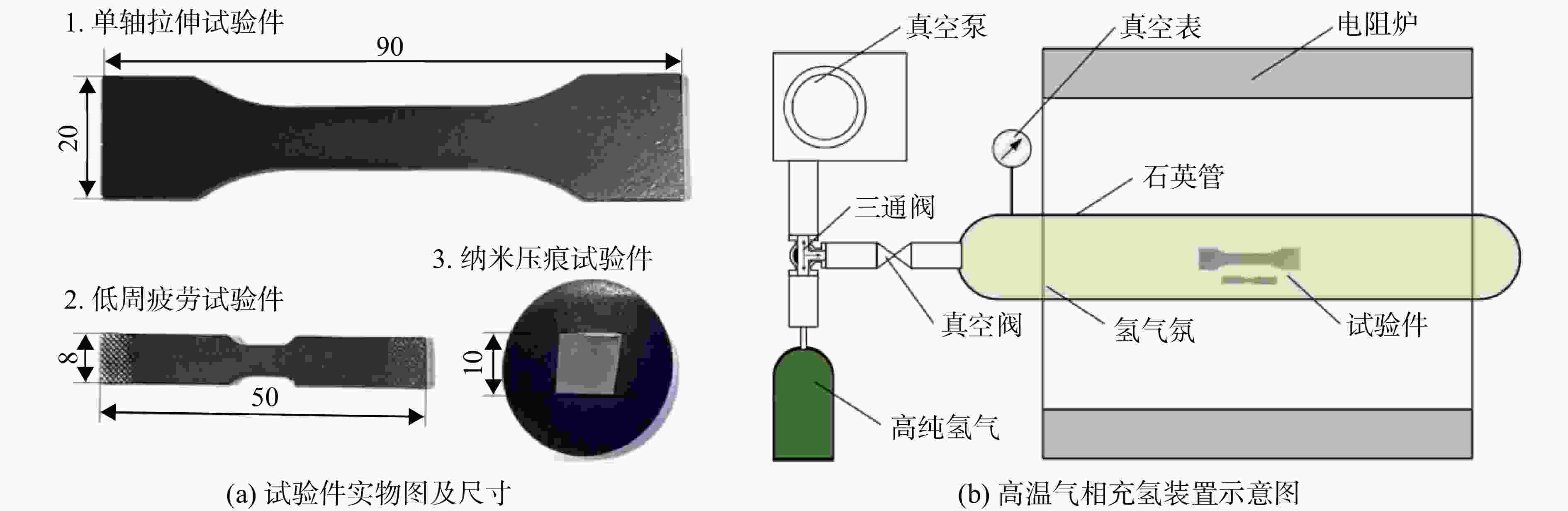
图 1 TC4ELI试验件实物图及气相充氢装置示意图(单位:mm)
Figure 1. Physical drawing of TC4ELI test pieces and schematic diagram of gaseous hydrogen charging device (unit:mm)
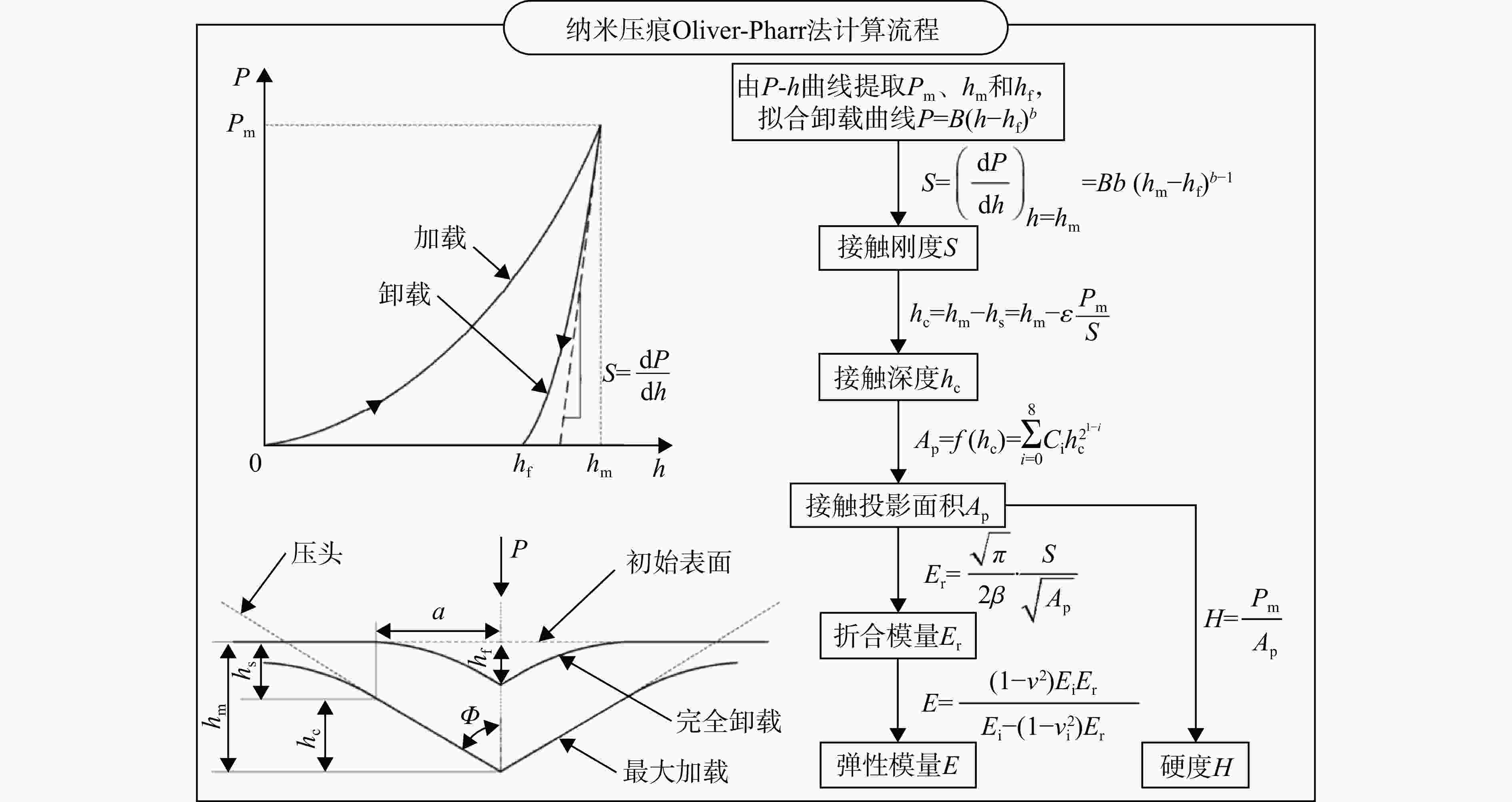
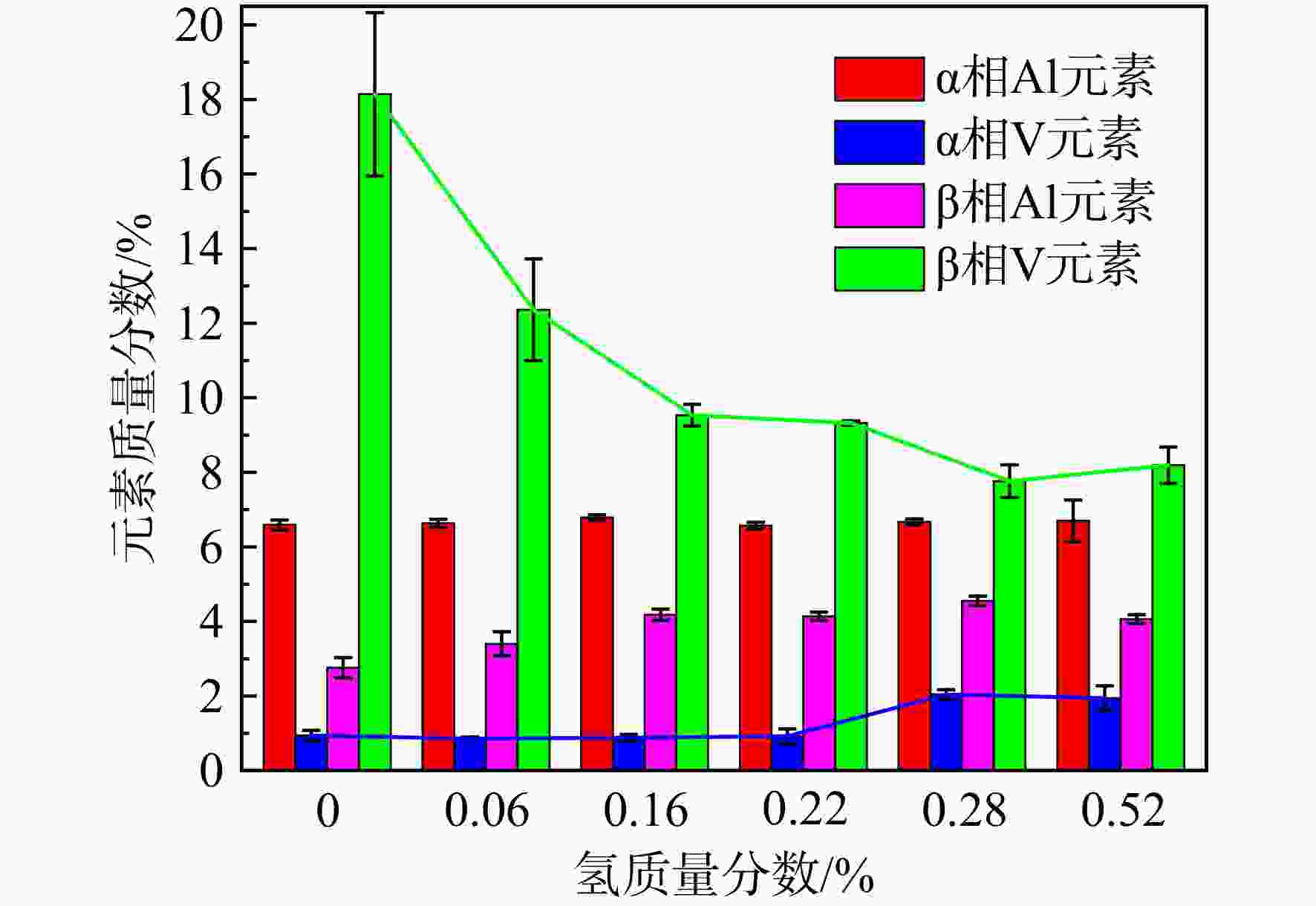
图 4 不同氢质量分数TC4ELI表面EDS分析对比
Figure 4. Comparison of EDS analysis of TC4ELI with varying hydrogen mass fractions
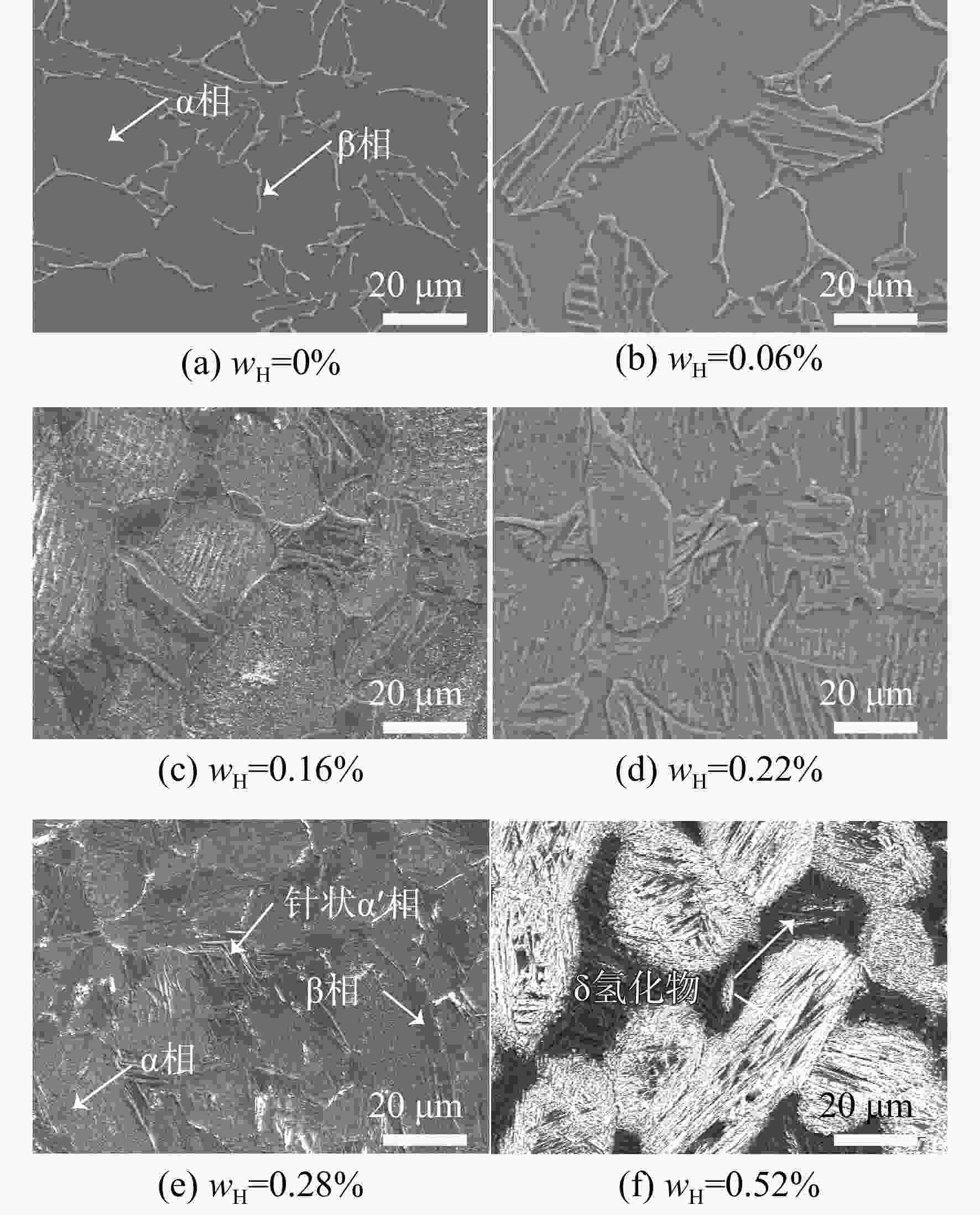
图 5 不同氢质量分数TC4ELI表面SEM分析对比
Figure 5. Comparison of SEM analysis of TC4ELI with varying hydrogen mass fractions
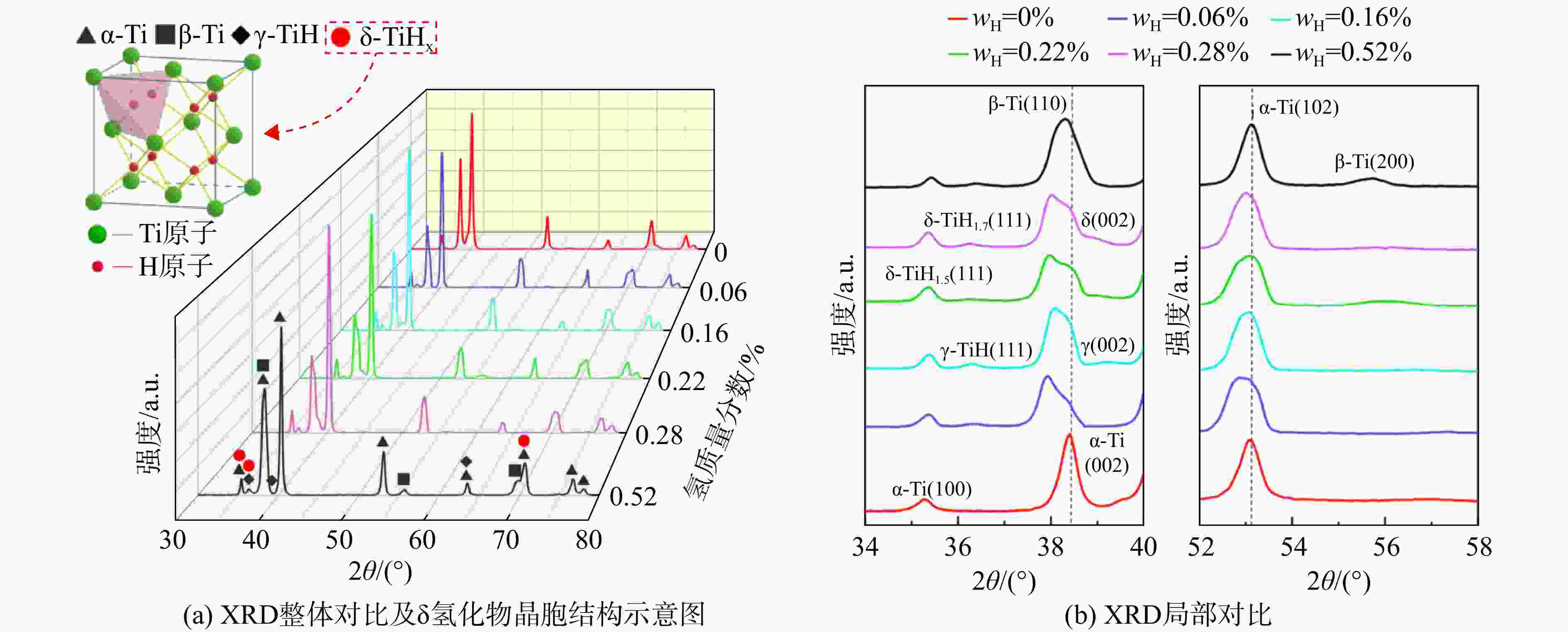
图 6 不同氢质量分数TC4ELI表面XRD分析对比
Figure 6. Comparison of XRD analysis of TC4ELI with varying hydrogen mass fractions
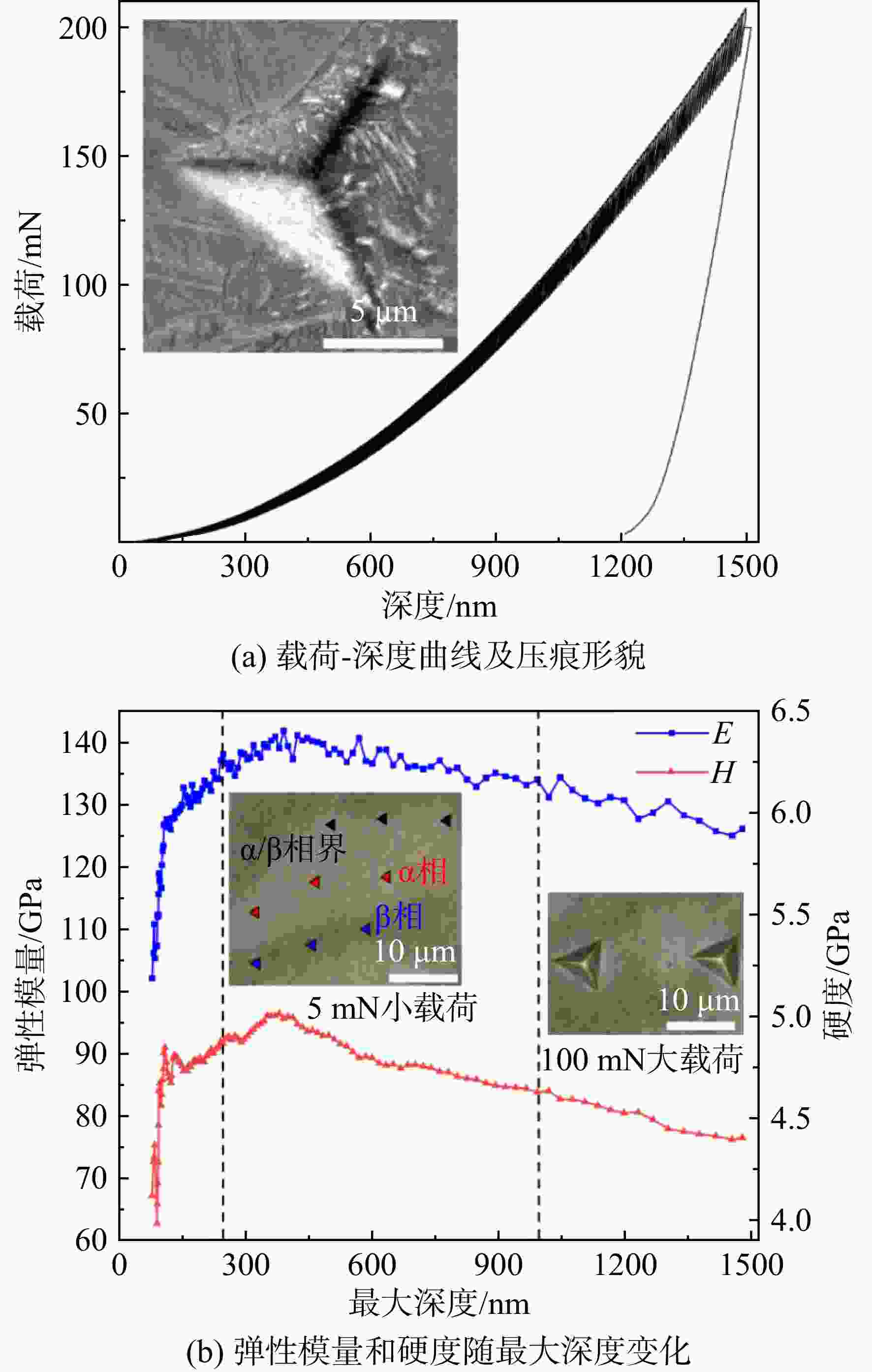
图 7 未充氢TC4ELI纳米压痕动态响应结果
Figure 7. Dynamic response result of nanoindentation on unhydrogen-charged TC4ELI
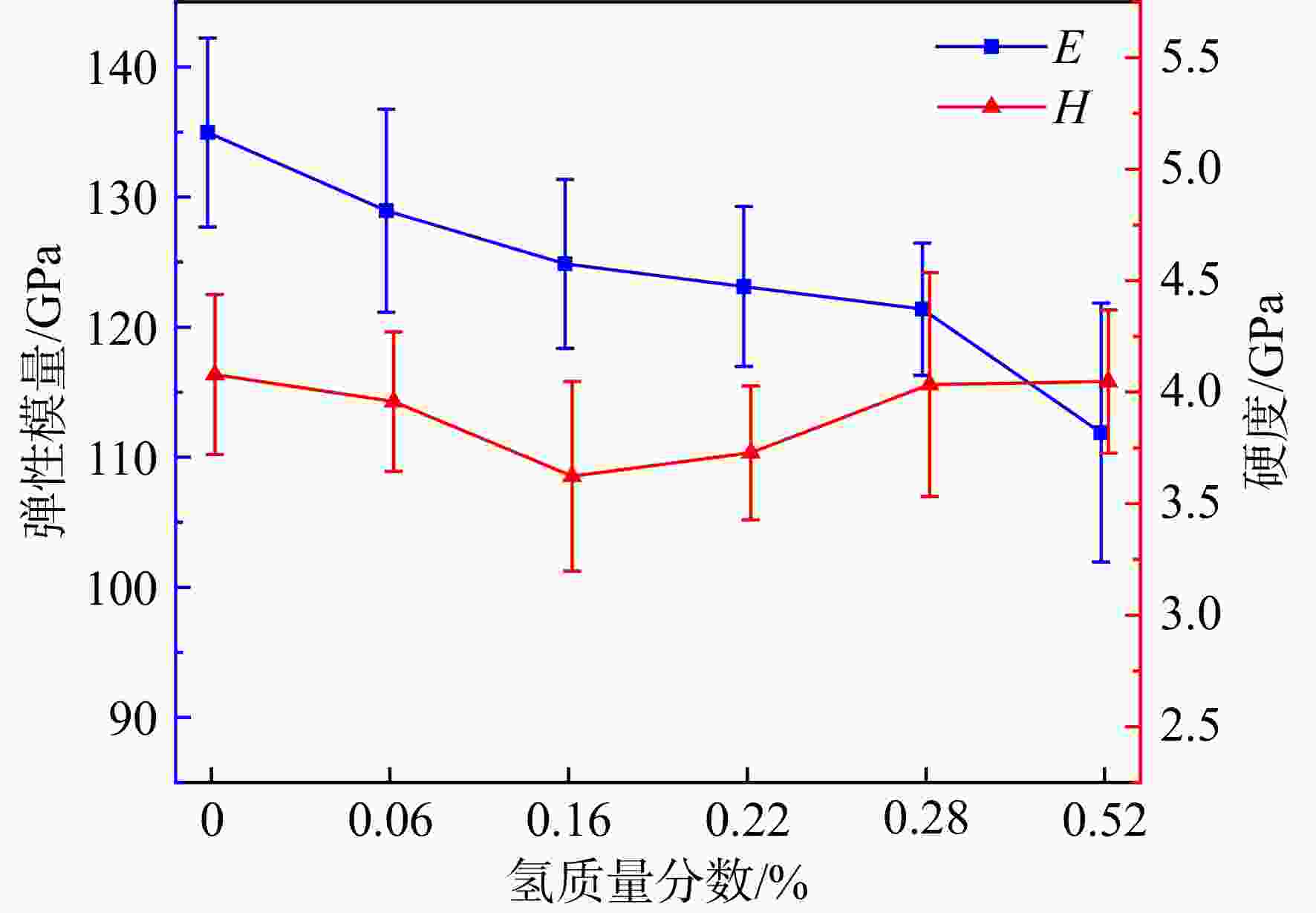
图 8 不同氢质量分数TC4ELI大载荷纳米压痕结果对比
Figure 8. Comparison of results of large-load nanoindentation on TC4ELI with varying hydrogen mass fractions
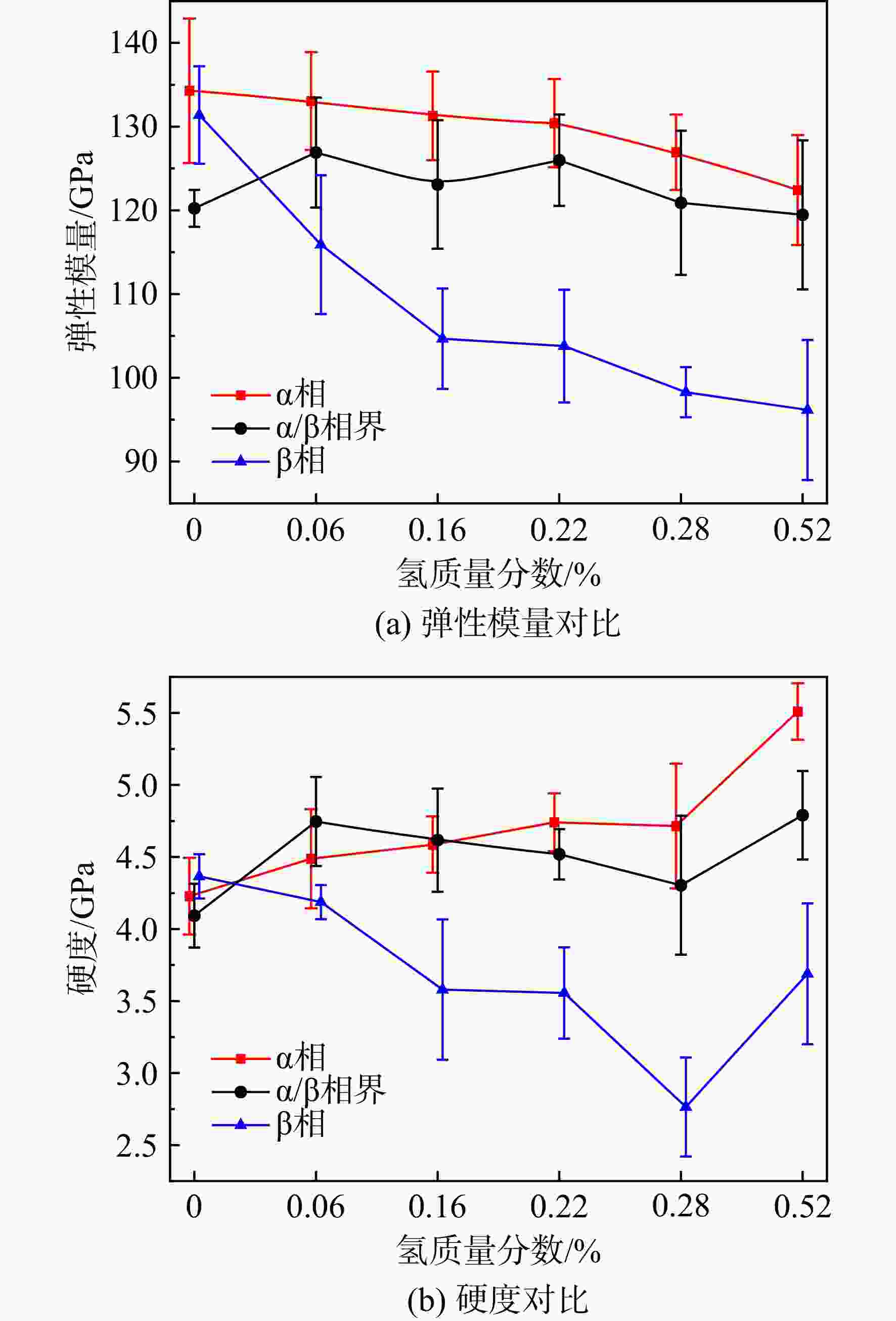
图 9 不同氢质量分数TC4ELI小载荷纳米压痕结果对比
Figure 9. Comparison of results of small-load nanoindentation on TC4ELI with varying hydrogen mass fractions
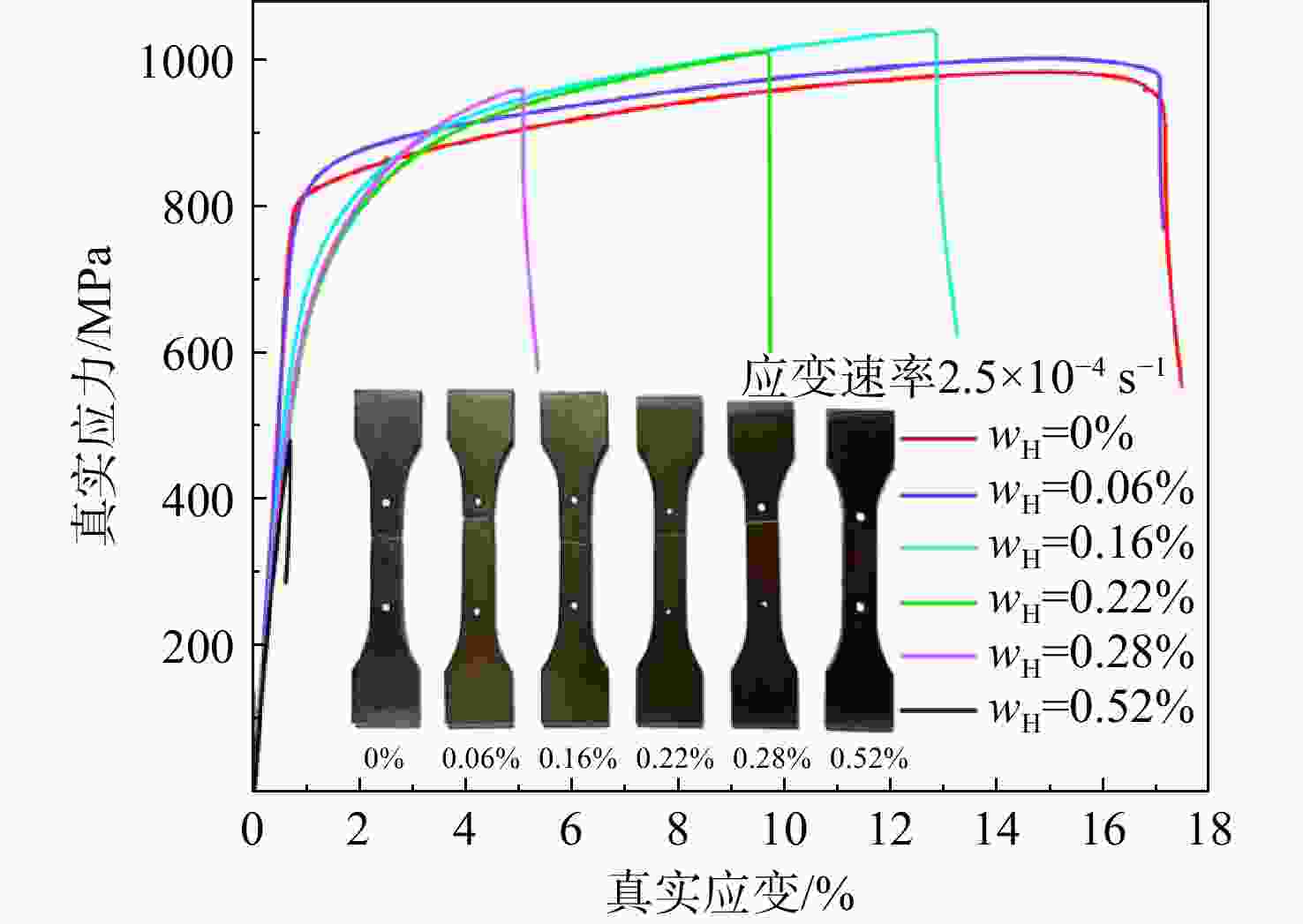
图 10 不同氢质量分数TC4ELI单轴拉伸应力-应变曲线
Figure 10. Uniaxial tensile stress-strain curves of TC4ELI with varying hydrogen mass fractions
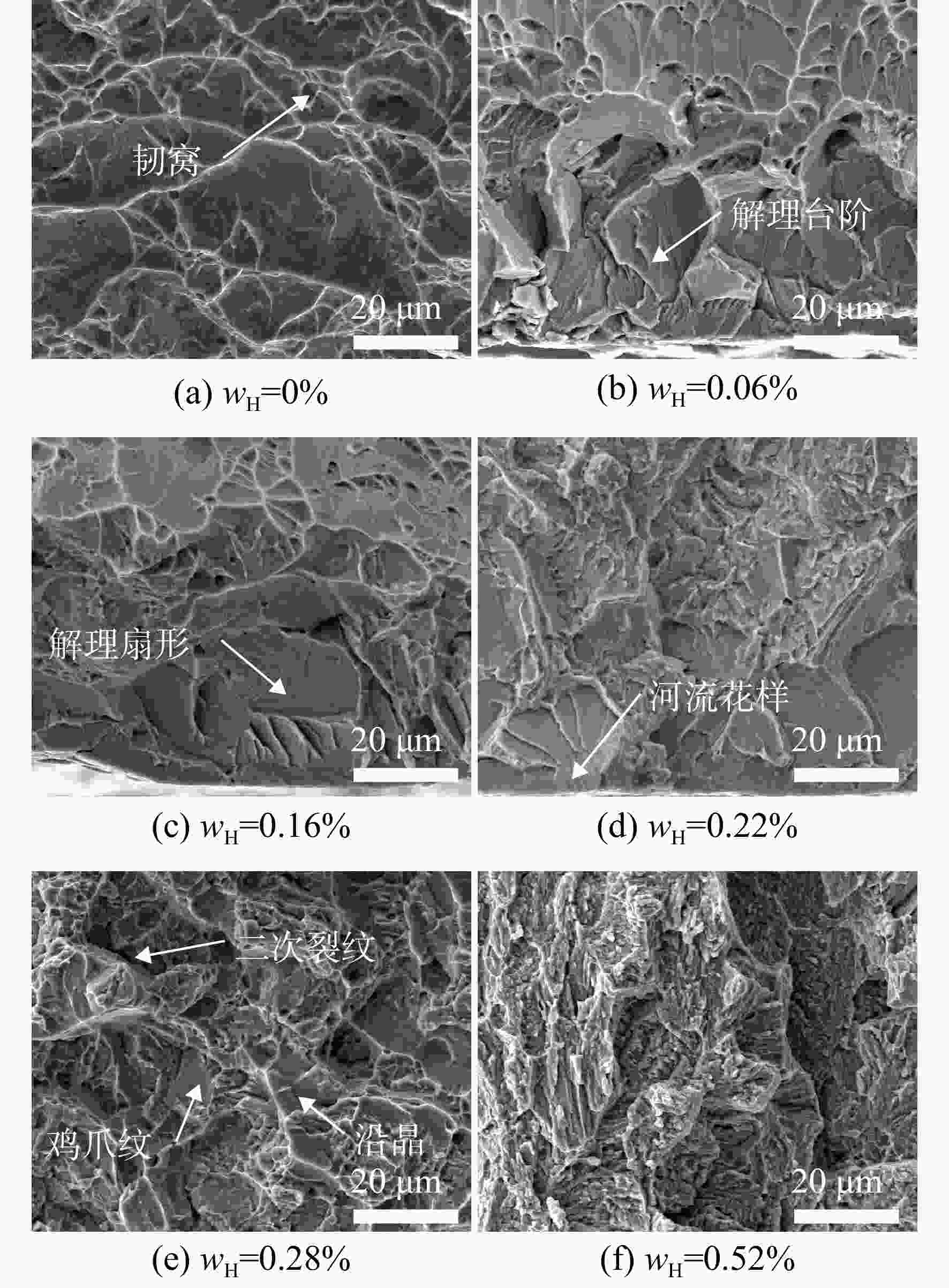
图 11 不同氢质量分数TC4ELI单轴拉伸断口形貌
Figure 11. Fracture morphology of TC4ELI with varying hydrogen mass fractions after uniaxial tensile
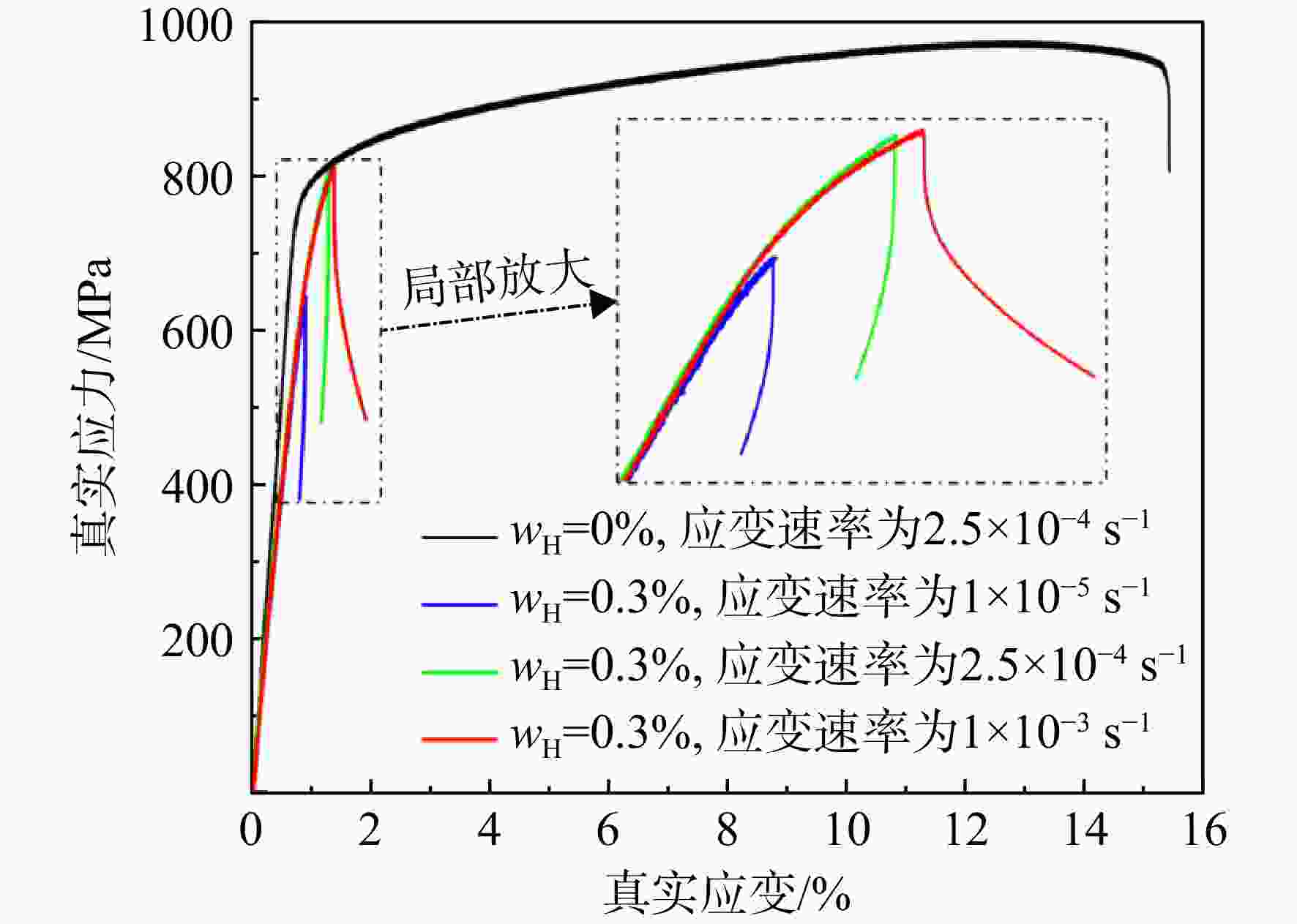
图 12 充氢TC4ELI不同应变速率下单轴拉伸应力-应变曲线
Figure 12. Uniaxial tensile stress-strain curves of hydrogen-charged TC4ELI at different strain rates
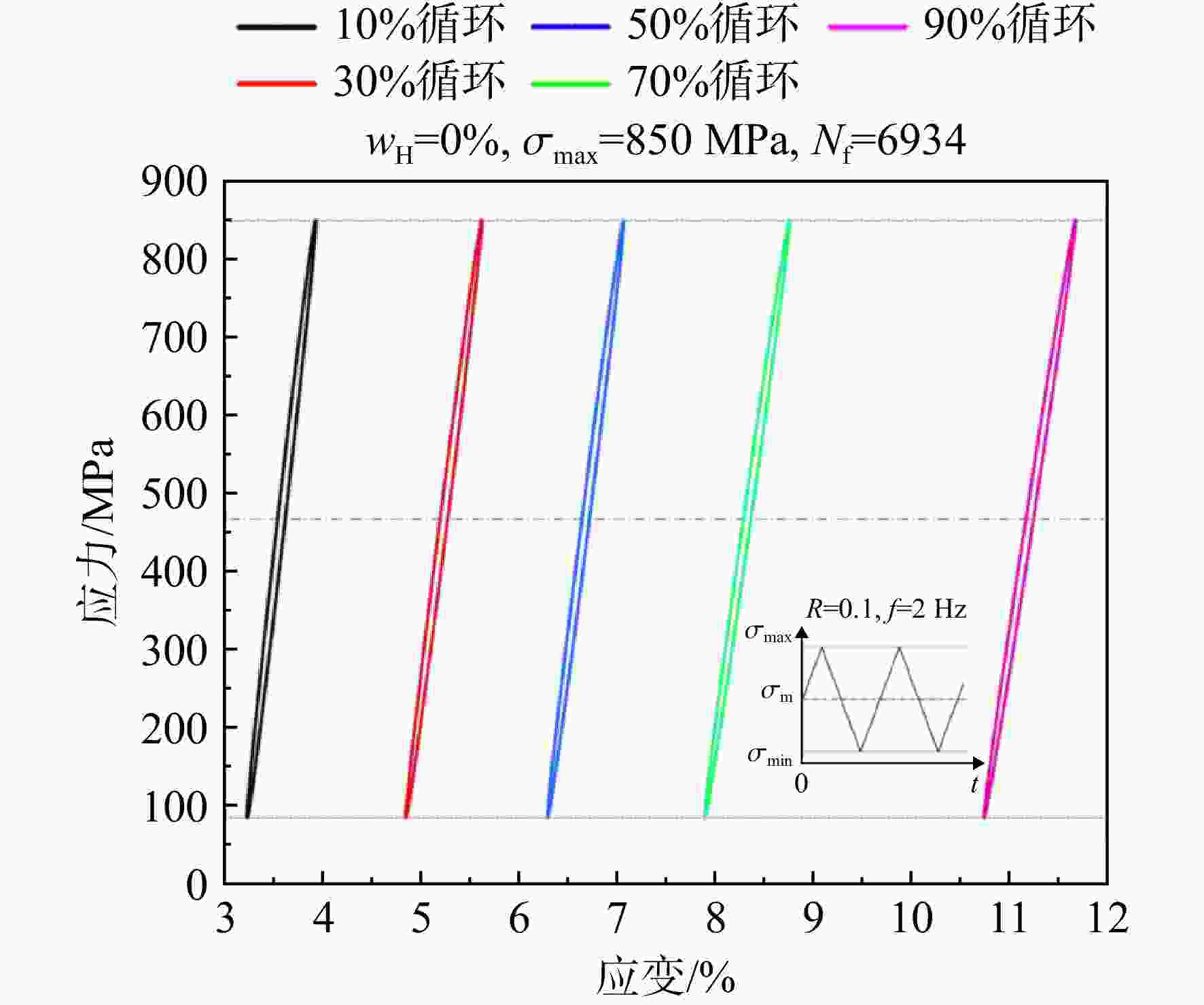
图 13 未充氢TC4ELI在850 MPa下低周疲劳迟滞回线
Figure 13. Hysteresis loop of unhydrogen-charged TC4ELI under low-cycle fatigue at 850 MPa
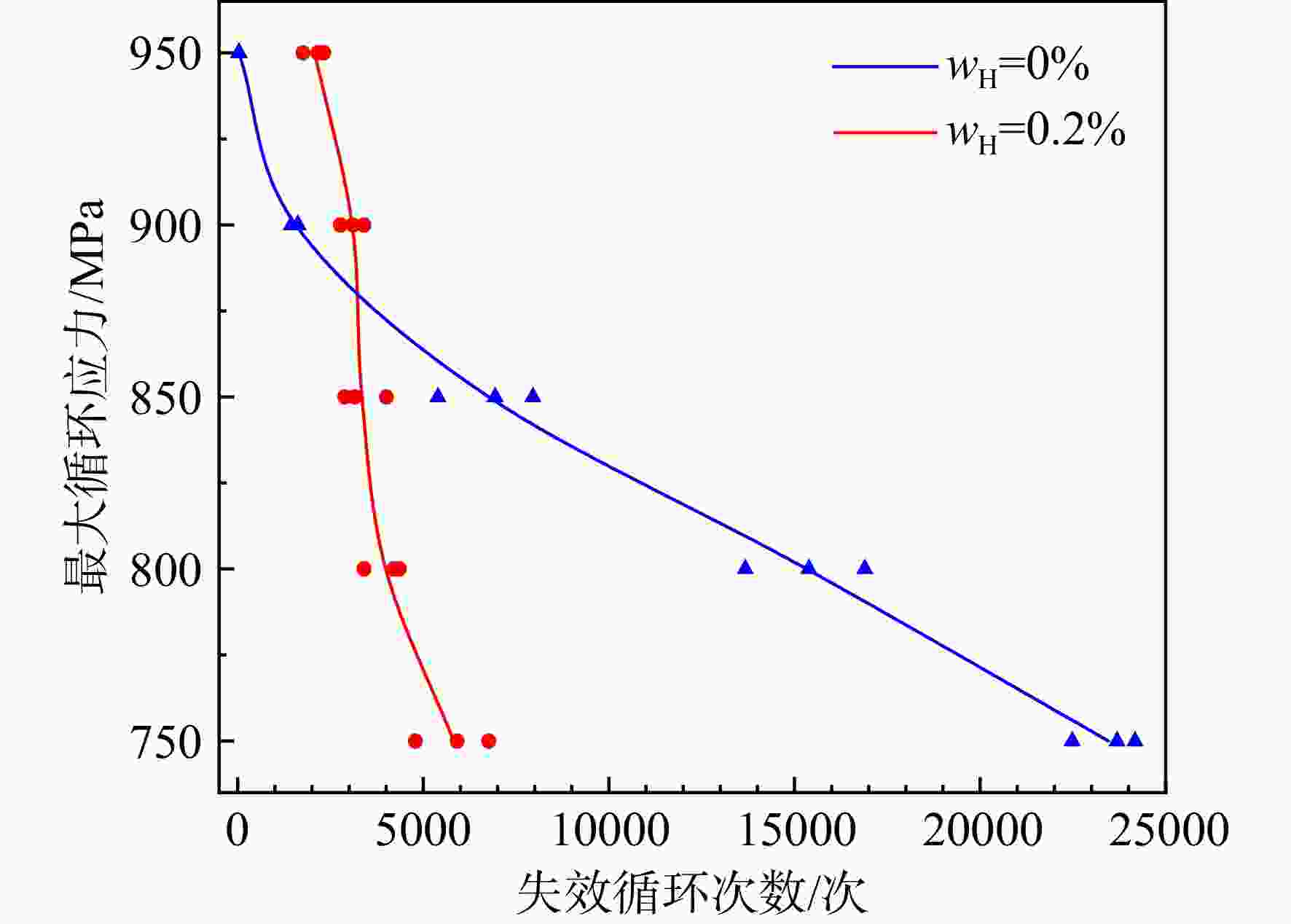
图 14 未充氢和充氢TC4ELI在不同应力水平下疲劳寿命对比
Figure 14. Comparison of fatigue life of unhydrogen-charged and hydrogen-charged TC4ELI at different stress levels
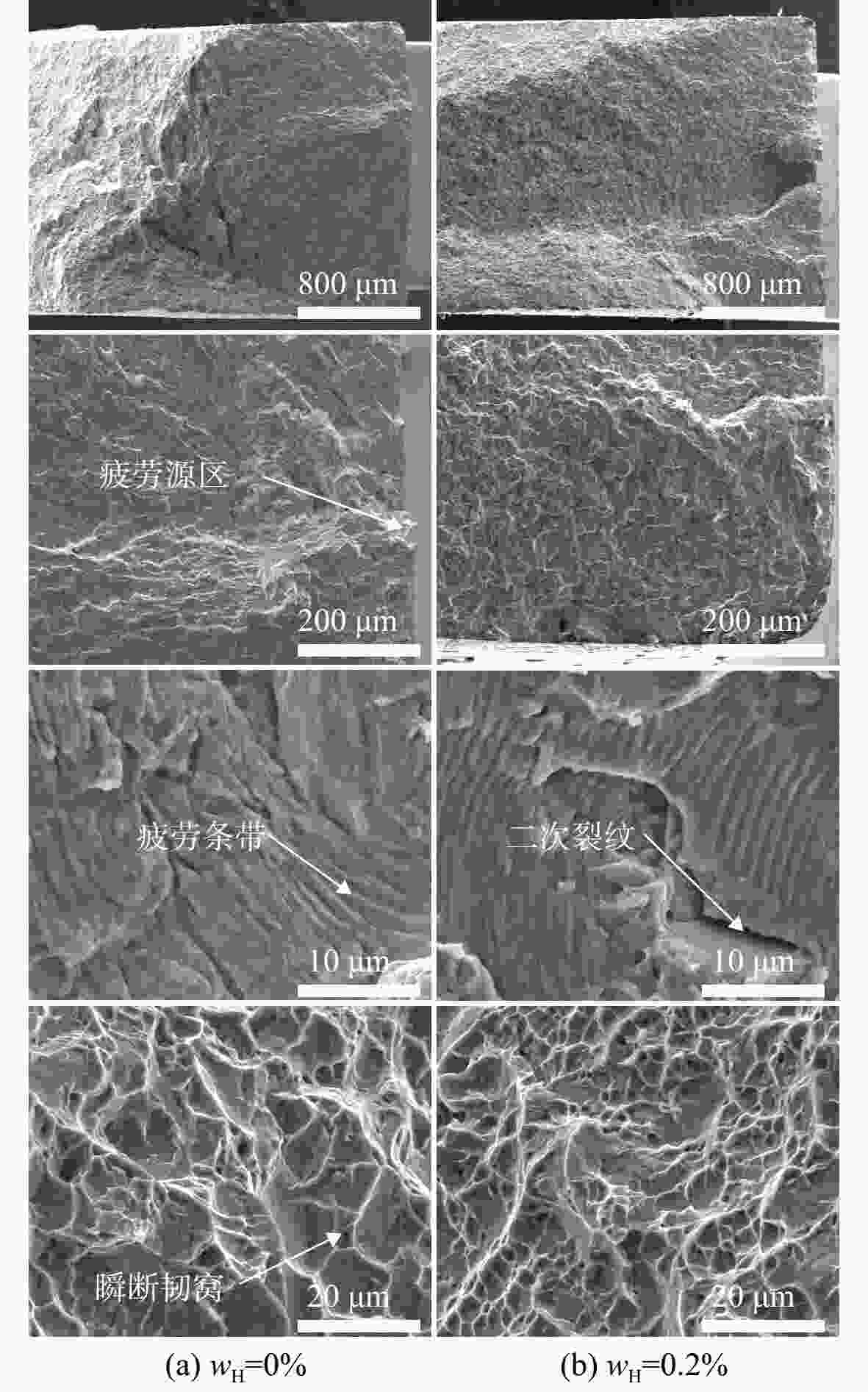
图 15 未充氢和充氢TC4ELI在750 MPa下低周疲劳断口形貌
Figure 15. Fracture morphology of unhydrogen-charged and hydrogen-charged TC4ELI after low-cycle fatigue at 750 MPa
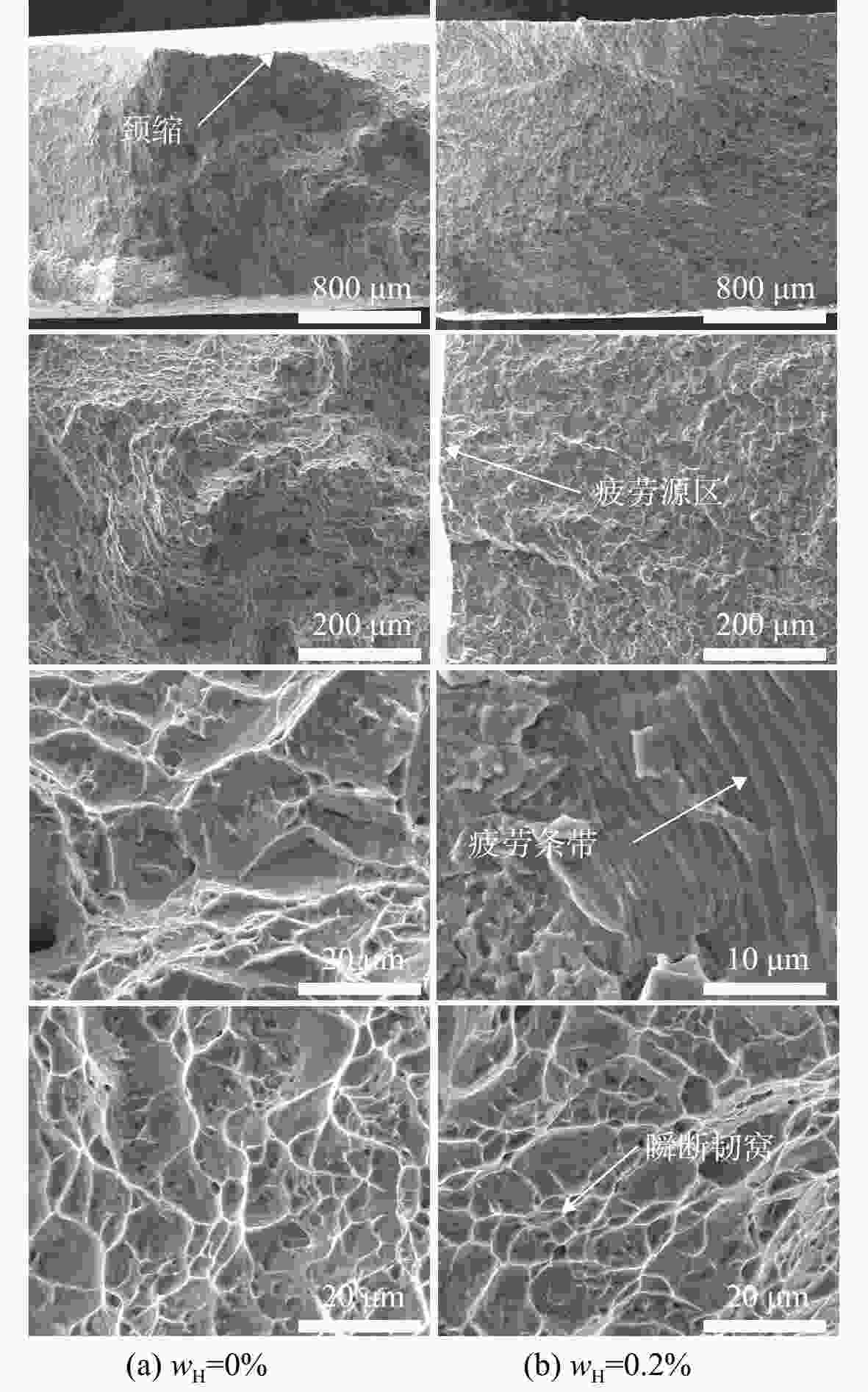
图 16 未充氢和充氢TC4ELI在950 MPa下低周疲劳断口形貌
Figure 16. Fracture morphology of unhydrogen-charged and hydrogen-charged TC4ELI after low-cycle fatigue at 950 MPa
表 1 TC4ELI与标准TC4的主要化学成分对比
Table 1. Comparison of major chemical composition between TC4ELI and standard TC4
% 材料 Ti Al V Fe C N O TC4ELI 余量 6.12 4.21 0.125 0.016 0.015 0.095 标准TC4 余量 5.5~6.8 3.5~4.5 ≤0.30 ≤0.10 ≤0.05 ≤0.20  下载: 导出CSV
表 2 未充氢TC4ELI表面EDS分析元素含量结果
Table 2. Elemental content results of EDS analysis of unhydrogen-charged TC4ELI
% 区域 Ti Al V 相 点扫谱1 92.29 6.65 1.05 α 点扫谱2 92.58 6.71 0.71 α 点扫谱3 92.52 6.39 1.08 α 点扫谱4 92.59 6.48 0.93 α 点扫谱5 92.50 6.64 0.86 α 点扫谱6 92.30 6.68 1.02 α 点扫谱7 78.25 2.61 19.14 β 点扫谱8 82.13 3.18 14.69 β 点扫谱9 76.94 2.61 20.45 β 点扫谱10 80.72 2.95 16.33 β 点扫谱11 78.66 2.76 18.58 β 点扫谱12 77.90 2.43 19.67 β
下载: 导出CSV
表 3 不同氢质量分数TC4ELI单轴拉伸结果对比
Table 3. Comparison of uniaxial tensile results of TC4ELI with varying hydrogen mass fractions
氢质量分数/
%弹性模量/
GPa抗拉强度/
MPa断裂应变/
%0 112.5 983 17.2 0.06 108.3 1002 17.1 0.16 91.5 1040 12.9 0.22 79.2 1010 9.7 0.28 78.3 959 5.1 0.52 75.6 480 0.7
下载: 导出CSV
表 4 充氢TC4ELI不同应变速率下单轴拉伸结果对比
Table 4. Comparison of uniaxial tensile results of hydrogen-charged TC4ELI at different strain rates
应变速率/
s−1弹性模量/
GPa抗拉强度/
MPa断裂应变/
%1×10⁻⁵ 75.8 643 0.89 2.5×10⁻⁴ 79.9 804 1.27 1×10⁻³ 82.6 813 1.37
下载: 导出CSV
-
[1] 曹冠杰, 王業輝, 孫小金. 氢能航空发展现状分析[J]. 航空动力, 2022(2): 29-33. CAO Guanjie, WANG Yehui, SUN Xiaojin. Development status of hydrogen in aviation[J]. Aerospace Power, 2022(2): 29-33. (in ChineseCAO Guanjie, WANG Yehui, SUN Xiaojin. Development status of hydrogen in aviation[J]. Aerospace Power, 2022(2): 29-33. (in Chinese) [2] 李維, 曹俊, 肖爲. 氢燃料发动机技术及发展趋势[J]. 航空动力, 2022(2): 39-42. LI Wei, CAO Jun, XIAO Wei. Technology and development trend of hydrogen gas turbine[J]. Aerospace Power, 2022(2): 39-42. (in ChineseLI Wei, CAO Jun, XIAO Wei. Technology and development trend of hydrogen gas turbine[J]. Aerospace Power, 2022(2): 39-42. (in Chinese) [3] 褚武扬, 乔利杰, 李金许, 等. 氢脆和应力腐蚀-基础部分[M]. 北京: 科学出版社, 2013. CHU Wuyang, QIAO Lijie, LI Jinxu, et al. Hydrogen embrittlement and stress corrosion-basic part[M]. Beijing: Science Press, 2013. (in ChineseCHU Wuyang, QIAO Lijie, LI Jinxu, et al. Hydrogen embrittlement and stress corrosion-basic part[M]. Beijing: Science Press, 2013. (in Chinese) [4] 王佳, 刘晓勇, 高灵清, 等. 钛合金氢致损伤机理的研究现状[J]. 材料保护, 2020, 53(11): 98-105. WANG Jia, LIU Xiaoyong, GAO Lingqing, et al. A review on mechanisms of hydrogen embrittlement of titanium alloys[J]. Materials Protection, 2020, 53(11): 98-105. (in ChineseWANG Jia, LIU Xiaoyong, GAO Lingqing, et al. A review on mechanisms of hydrogen embrittlement of titanium alloys[J]. Materials Protection, 2020, 53(11): 98-105. (in Chinese) [5] 扬帆, 张超, 张博超, 等. 大型液氢储罐内罐材料研究与应用进展[J]. 太阳能学报, 2023, 44(10): 557-563. YANG Fan, ZHANG Chao, ZHANG Bochao, et al. Research and application progress of inner tank materials for large liquid hydrogen storage tanks[J]. Acta Energiae Solaris Sinica, 2023, 44(10): 557-563. (in ChineseYANG Fan, ZHANG Chao, ZHANG Bochao, et al. Research and application progress of inner tank materials for large liquid hydrogen storage tanks[J]. Acta Energiae Solaris Sinica, 2023, 44(10): 557-563. (in Chinese) [6] 许爱军, 万海峰, 梁春祖, 等. 低温钛合金材料应用现状及发展趋势[J]. 精密成形工程, 2020, 12(6): 145-156. XU Aijun, WAN Haifeng, LIANG Chunzu, et al. Application status and development trend of cryogenic titanium alloy[J]. Journal of Netshape Forming Engineering, 2020, 12(6): 145-156. (in ChineseXU Aijun, WAN Haifeng, LIANG Chunzu, et al. Application status and development trend of cryogenic titanium alloy[J]. Journal of Netshape Forming Engineering, 2020, 12(6): 145-156. (in Chinese) [7] 吕志阳, 熊峻江, 赵延广, 等. Ti-6Al-4V/ELI钛合金250℃裂纹扩展性能[J]. 航空材料学报, 2018, 38(4): 123-129. LYU Zhiyang, XIONG Junjiang, ZHAO Yanguang, et al. Experimental investigation of high-temperature crack propagation behaviors for Ti-6Al-4V/ELI at 250℃[J]. Journal of Aeronautical Materials, 2018, 38(4): 123-129. (in ChineseLYU Zhiyang, XIONG Junjiang, ZHAO Yanguang, et al. Experimental investigation of high-temperature crack propagation behaviors for Ti-6Al-4V/ELI at 250℃[J]. Journal of Aeronautical Materials, 2018, 38(4): 123-129. (in Chinese) [8] ZHANG Hongbo, LEYGRAF C, WEN Lei, et al. The formation of hydride and its influence on Ti-6Al-4V alloy fracture behavior[J]. International Journal of Hydrogen Energy, 2023, 48(92): 36169-36184. doi: 10.1016/j.ijhydene.2023.05.226 [9] BROSH E, NAVI N U, ROSEN B A, et al. Microvoids in electrochemically hydrogenated titanium-based alloys[J]. International Journal of Hydrogen Energy, 2021, 46(53): 27234-27242. doi: 10.1016/j.ijhydene.2021.05.187 [10] 陈小龙, 戴国庆, 孙中刚, 等. 置氢0.55%对电弧增材制造TC4钛合金组织的影响[J]. 稀有金属材料与工程, 2022, 51(6): 2323-2328. CHEN Xiaolong, DAI Guoqing, SUN Zhonggang, et al. Effect of adding 0.55% hydrogen on microstructure of TC4 titanium alloy produced by arc additive[J]. Rare Metal Materials and Engineering, 2022, 51(6): 2323-2328. (in ChineseCHEN Xiaolong, DAI Guoqing, SUN Zhonggang, et al. Effect of adding 0.55% hydrogen on microstructure of TC4 titanium alloy produced by arc additive[J]. Rare Metal Materials and Engineering, 2022, 51(6): 2323-2328. (in Chinese) [11] LIU Xiaozhen, HAN Enhou, SONG Yingwei, et al. Hydrogen damage process of dual-phase Ti-6Al-4V alloy: from surface passive film to the interior substrate[J]. Electrochimica Acta, 2023, 464: 142916. doi: 10.1016/j.electacta.2023.142916 [12] DONG Yuecheng, HUANG Shuai, WANG Yuyang, et al. Stress corrosion cracking of TC4 ELI alloy with different microstructure in 3.5% NaCl solution[J]. Materials Characterization, 2022, 194: 112357. doi: 10.1016/j.matchar.2022.112357 [13] 杨日明, 申秀丽, 董少静. 氢对TC4ELI钛合金疲劳裂纹扩展行为影响[J]. 材料导报, 2025, 39(14): 153-157. YANG Riming, SHEN Xiuli, DONG Shaojing. Influence of hydrogen on fatigue crack growth behavior of TC4ELI titanium alloy[J]. Materials Reports, 2025, 39(14): 153-157. (in ChineseYANG Riming, SHEN Xiuli, DONG Shaojing. Influence of hydrogen on fatigue crack growth behavior of TC4ELI titanium alloy[J]. Materials Reports, 2025, 39(14): 153-157. (in Chinese) [14] 王耀奇, 李红, 侯红亮. Ti-6Al-4V合金置氢动力学与氢分布规律[J]. 北京科技大学学报, 2010, 32(5): 634-637. WANG Yaoqi, LI Hong, HOU Hongliang. Hydrogen absorption kinetics and hydrogen distribution of Ti-6Al-4V alloy[J]. Journal of University of Science and Technology Beijing, 2010, 32(5): 634-637. (in ChineseWANG Yaoqi, LI Hong, HOU Hongliang. Hydrogen absorption kinetics and hydrogen distribution of Ti-6Al-4V alloy[J]. Journal of University of Science and Technology Beijing, 2010, 32(5): 634-637. (in Chinese) [15] 龚江宏. 准静态纳米压痕的理论基础与数据分析[J]. 陶瓷学报, 2021, 42(2): 181-245. GONG Jianghong. Theoretical foundation and data analyses of quasi-static nanoindentation[J]. Journal of Ceramics, 2021, 42(2): 181-245. (in ChineseGONG Jianghong. Theoretical foundation and data analyses of quasi-static nanoindentation[J]. Journal of Ceramics, 2021, 42(2): 181-245. (in Chinese) [16] OLIVER W C, PHARR G M. An improved technique for determining hardness and elastic modulus using load and displacement sensing indentation experiments[J]. Journal of Materials Research, 1992, 7(6): 1564-1583. doi: 10.1557/JMR.1992.1564 [17] ORIANI R A, JOSEPHIC P H. Equilibrium aspects of hydrogen-induced cracking of steels[J]. Acta Metallurgica, 1974, 22(9): 1065-1074. doi: 10.1016/0001-6160(74)90061-3 [18] 蔡建明, 曹春晓. 航空发动机钛合金材料与应用技术[M]. 北京: 冶金工业出版社, 2021. CAI Jianming, CAO Chunxiao. Titanium alloy materials and application technology of aero-engine[M]. Beijing: Metallurgical Industry Press, 2021. (in ChineseCAI Jianming, CAO Chunxiao. Titanium alloy materials and application technology of aero-engine[M]. Beijing: Metallurgical Industry Press, 2021. (in Chinese) [19] 李淼泉, 牛勇. 置氢钛合金高温变形[M]. 西安: 西北工业大学出版社, 2015. LI Miaoquan, NIU Yong. High-temperature deformation of hydrogen-loaded titanium alloy[M]. Xi’an: Northwestern Polytechnical University Press, 2015. (in ChineseLI Miaoquan, NIU Yong. High-temperature deformation of hydrogen-loaded titanium alloy[M]. Xi’an: Northwestern Polytechnical University Press, 2015. (in Chinese) [20] GAO Kun, LIU Zhiying, SHEN Xiuli, et al. Integration of nanoindentation and finite element method for interpretable tensile properties: a cross-scale calculation method of uneven joints[J]. Chinese Journal of Aeronautics, 2023, 36(6): 233-248. doi: 10.1016/j.cja.2023.03.020 [21] WESTLAKE D G. A generalized model for hydrogen embrittlement[J]. Transactions of the American Society for Metals, 1969, 62: 1000-1006. [22] BIRNBAUM H K, SOFRONIS P. Hydrogen-enhanced localized plasticity: a mechanism for hydrogen-related fracture[J]. Materials Science and Engineering: A, 1994, 176(1/2): 191-202. [23] CHEN C Q, LI S X, ZHENG H, et al. An investigation on structure, deformation and fracture of hydrides in titanium with a large range of hydrogen contents[J]. Acta Materialia, 2004, 52(12): 3697-3706. doi: 10.1016/j.actamat.2004.04.024 -


 点击查看大图

计量
- 文章访问数: 739
- HTML浏览量: 359
- PDF量: 30
- 被引次数: 0