






Study on the inkjet printing manufacturing method of high-temperature thin-film sensors for turbine blades
-
摘要:
相较于溅射沉积、离子束蒸发等薄膜制造方法,采用喷墨打印直写沉积原位制造三维曲面高温多层薄膜传感器线路更为简单高效。提出一种利用喷墨打印技术精准制造薄膜传感器的方法,探究了墨水特性、打印参数、烧结参数等因素对薄膜沉积质量的影响规律,获得了陶瓷及镍基合金基底上高质量、高性能的薄膜线路。对薄膜传感器进行室温至
1100 ℃的标定测试,其平均赛贝克系数为46.8 μV/℃,升降温段热电特性曲线的重复率为99.96%,测量误差为±0.21%。Abstract:Compared with methods such as sputter deposition and ion beam evaporation, inkjet printing offered a simpler and more efficient approach to directly deposit conformal multilayer high-temperature thin-film sensor circuits onto three-dimensional curved surfaces. A method for precisely manufacturing thin-film sensors using inkjet printing technology was proposed. The effects of nano-ink properties, as well as printing and sintering parameters, on the quality of film deposition were systematically investigated. Results demonstrated that high-quality, high-performance thin-film circuits can be successfully fabricated on ceramic or superalloy substrates. The thin-film sensor was calibrated up to
1100 ℃, with the mean Seebeck coefficient measured at 46.8 μV/℃. The repeatability of the fitted thermoelectric curves reached 99.96%, and temperature measurement error was ±0.21%. -
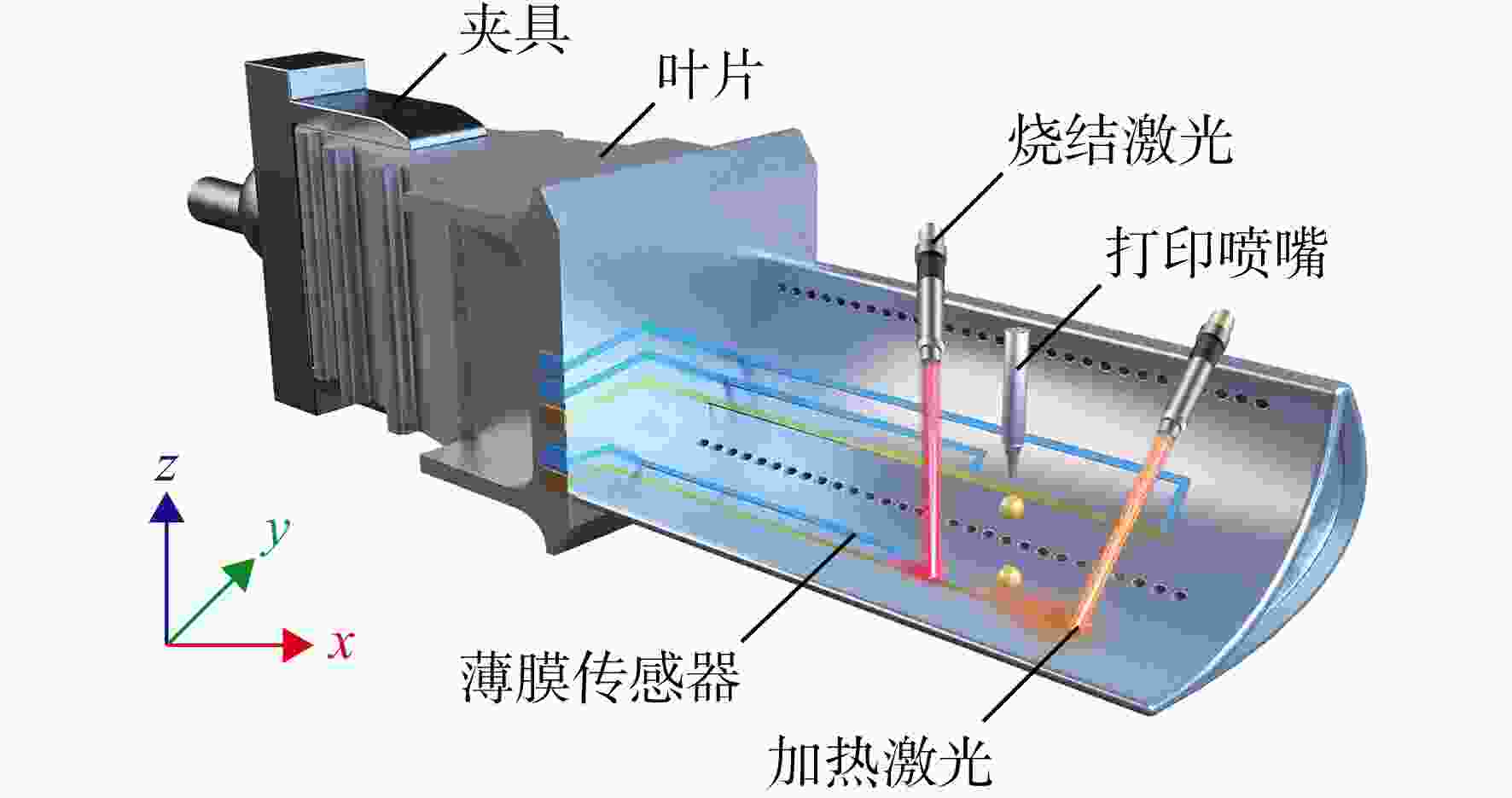
图 1 涡轮叶片高温薄膜传感器喷墨打印制造概念图
Figure 1. Schematic diagram of inkjet printing manufacturing for high-temperature thin-film sensors on turbine blades
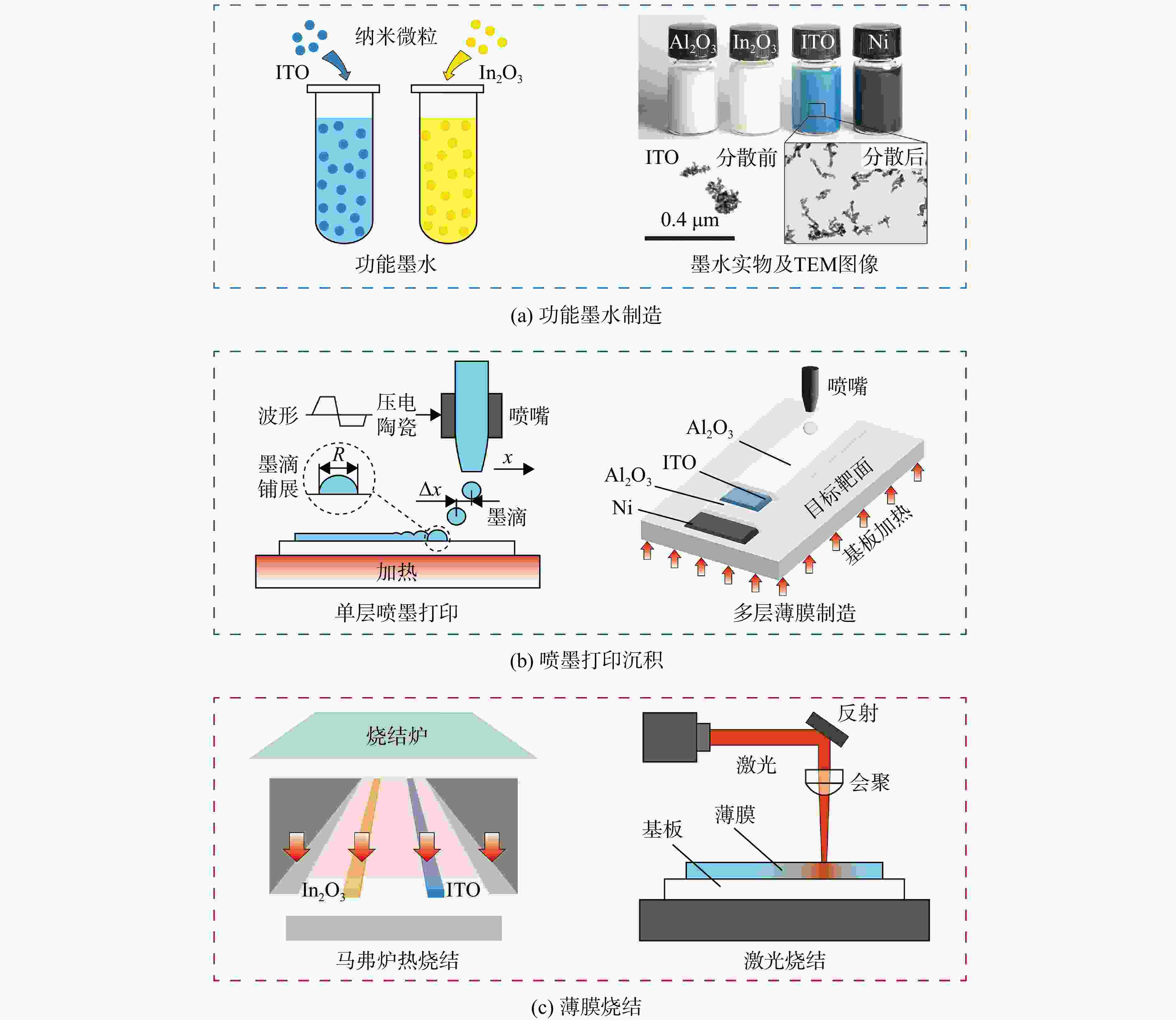
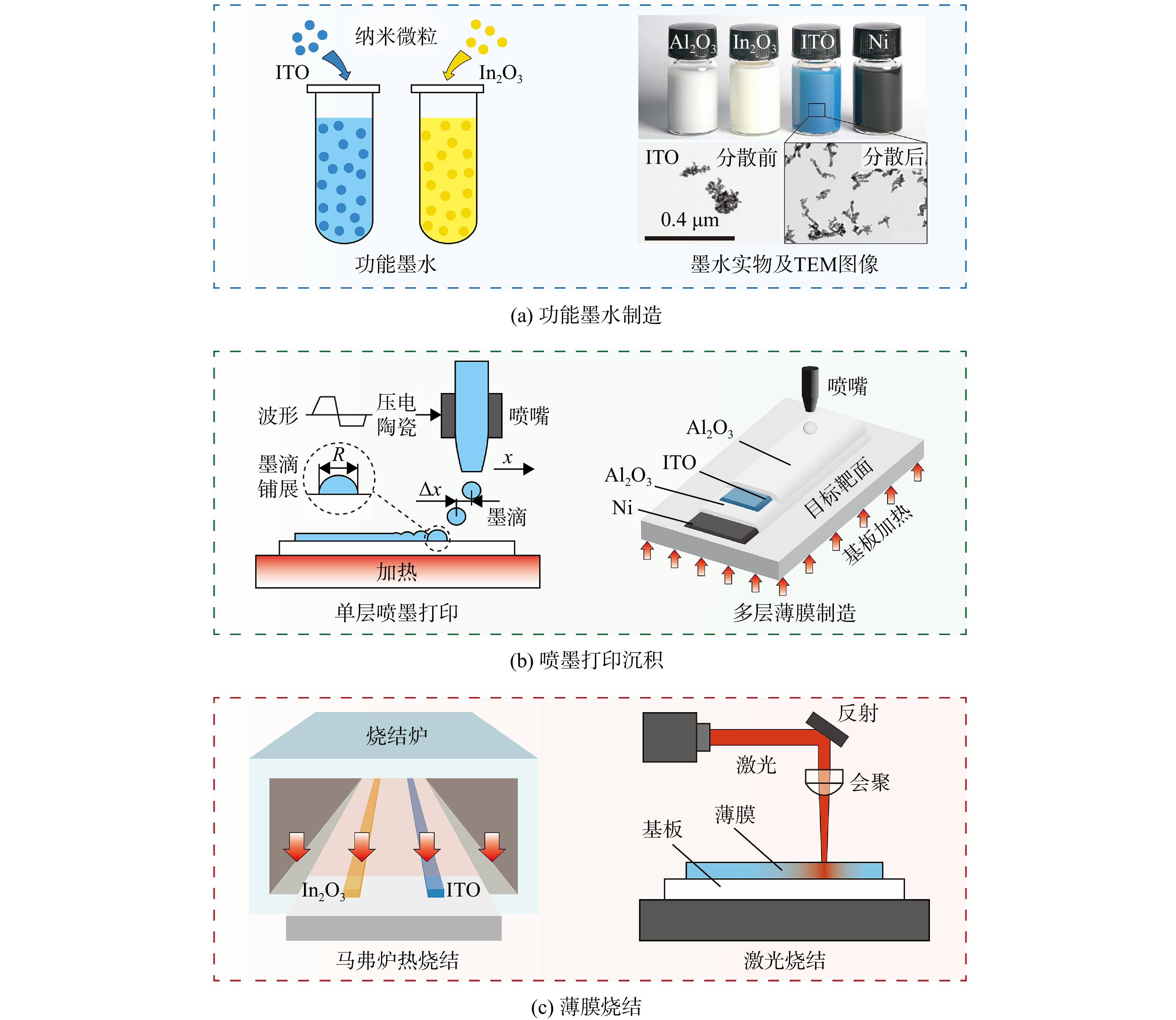
图 2 薄膜传感器喷墨打印制造过程
Figure 2. Inkjet printing manufacturing process of thin-film sensors
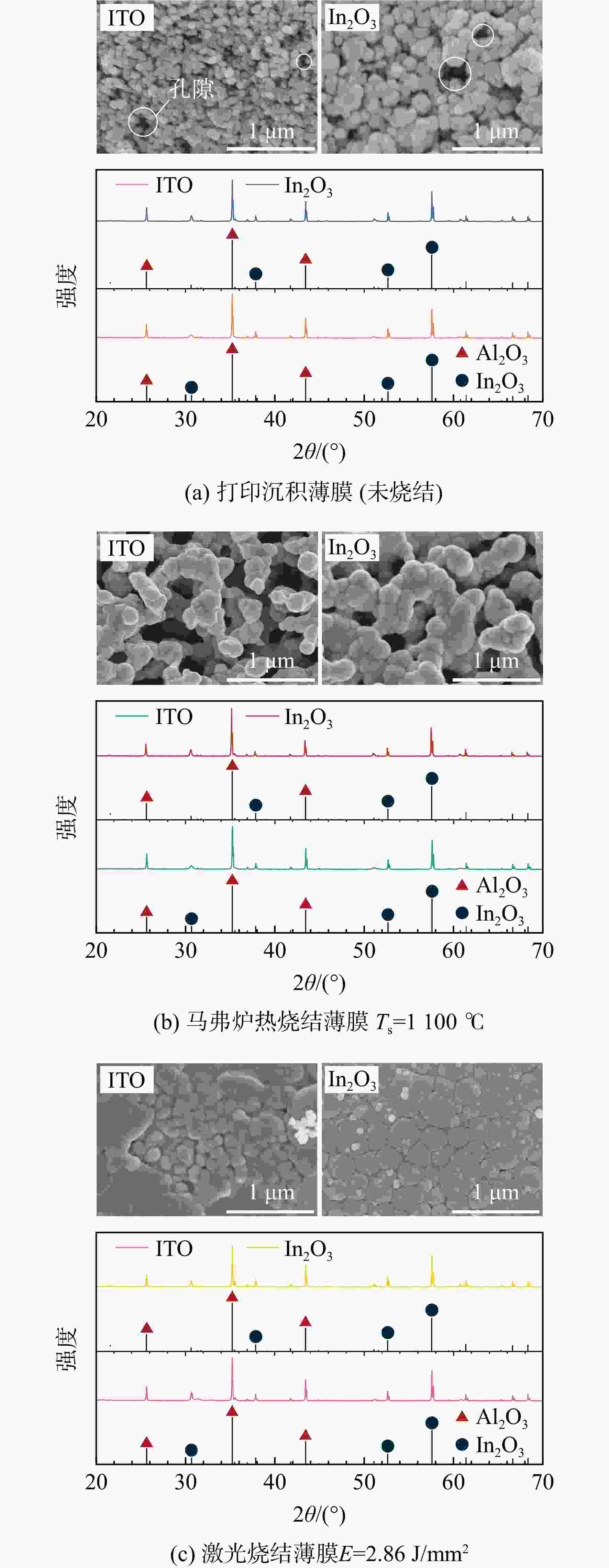
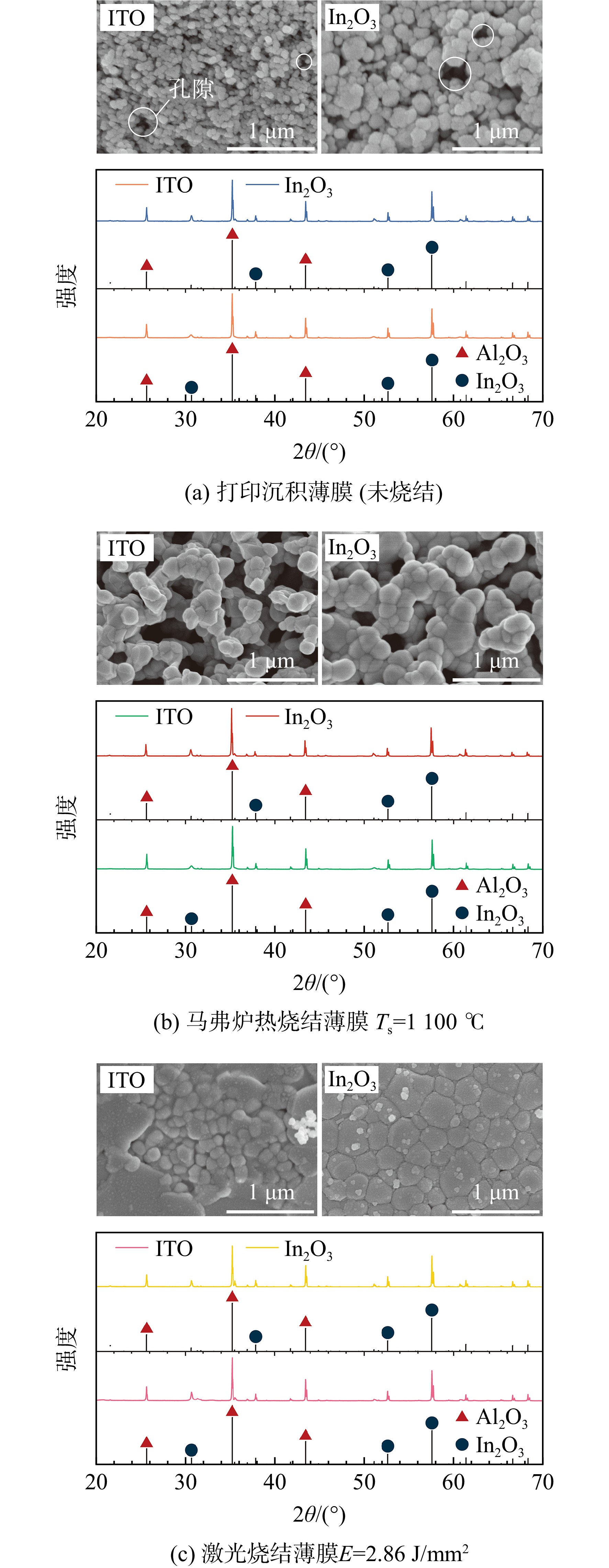
图 6 不同烧结状态下ITO和In2O3薄膜的SEM图像和XRD图谱,打印参数为tw=140 ℃,Δx=Δy=0.04 mm,vp=10 mm/s
Figure 6. SEM images and XRD patterns of ITO and In2O3 films in different sintering states, with printing parameters of tw=140 ℃, Δx=Δy=0.04 mm, vp=10 mm/s
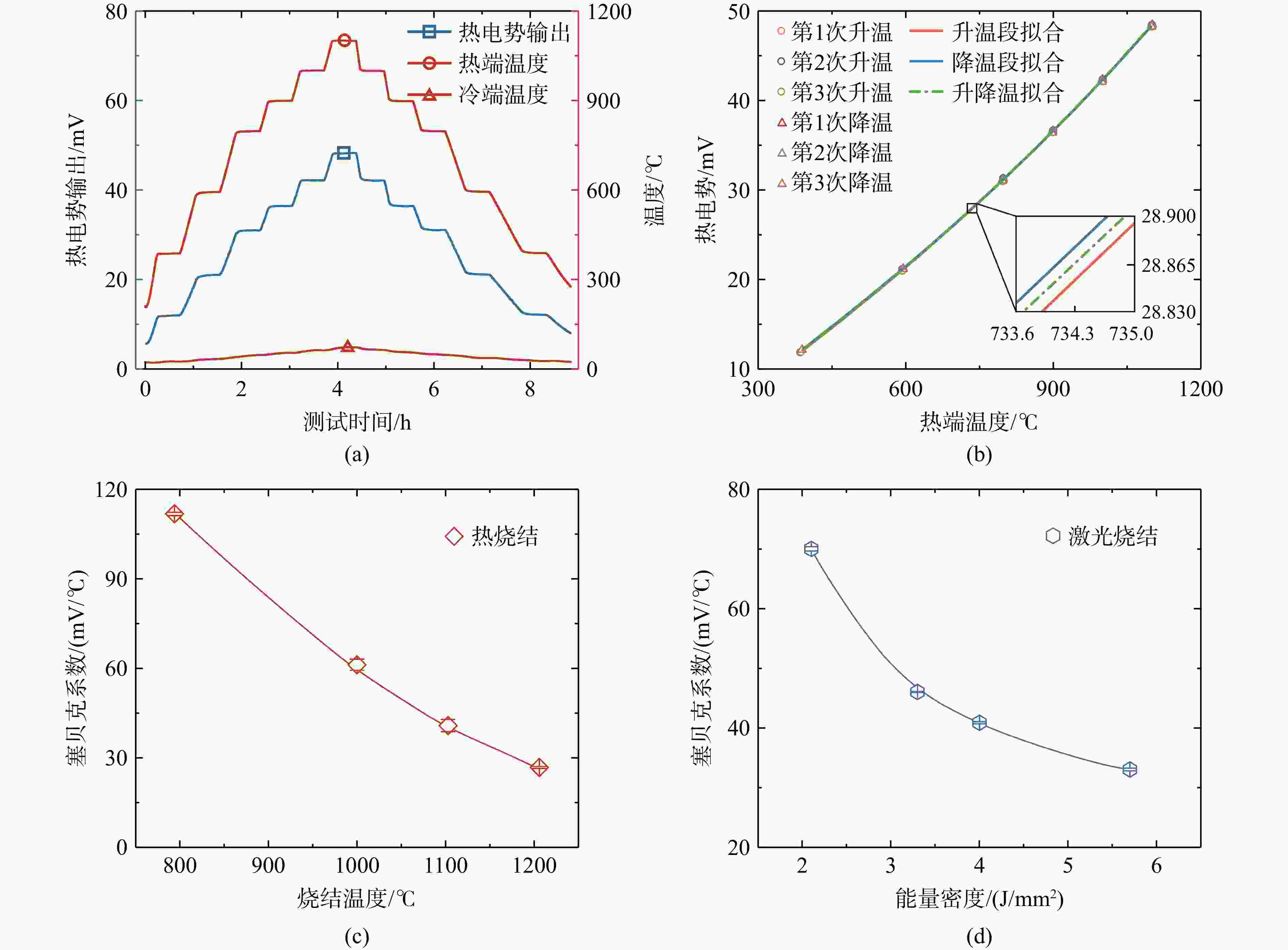
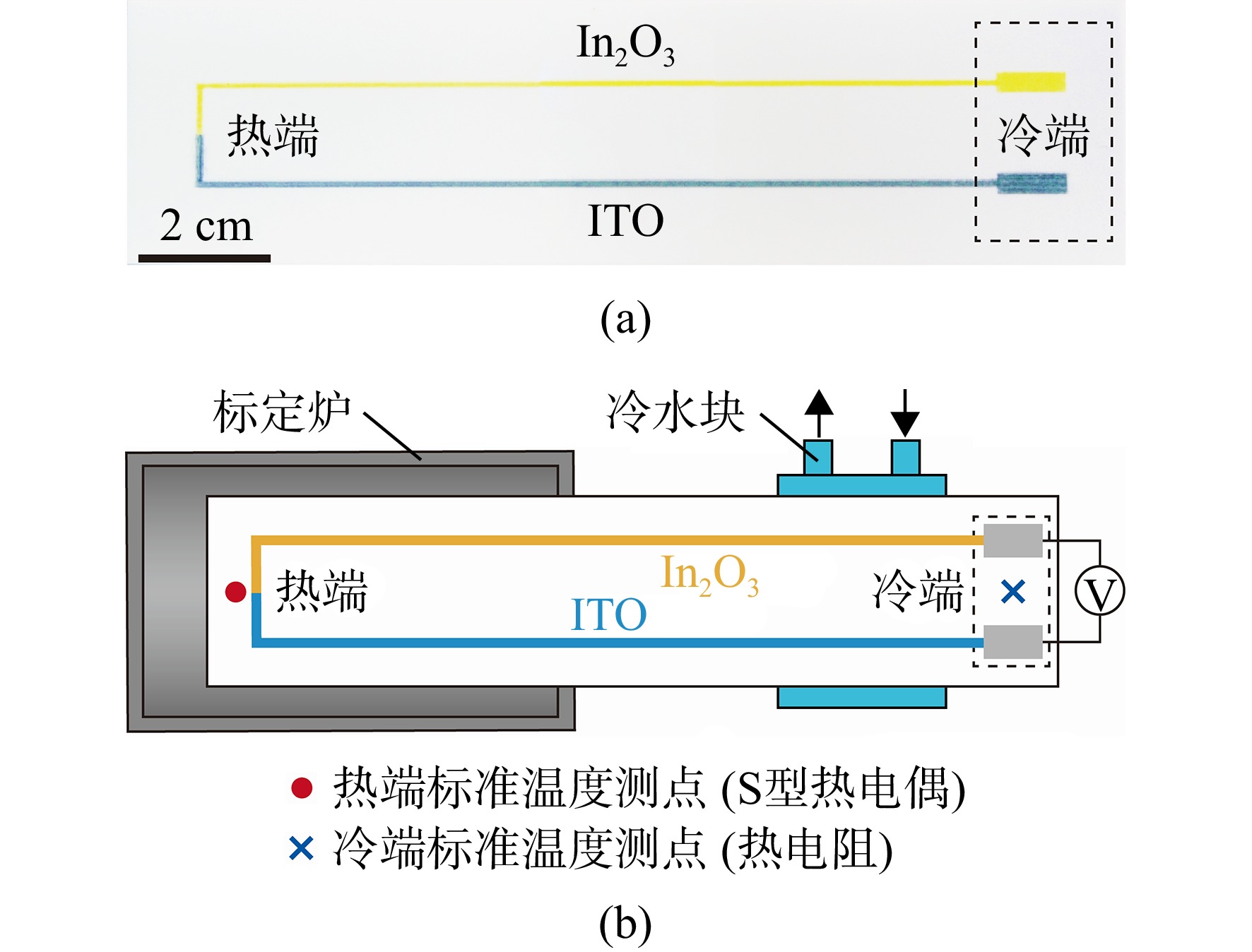
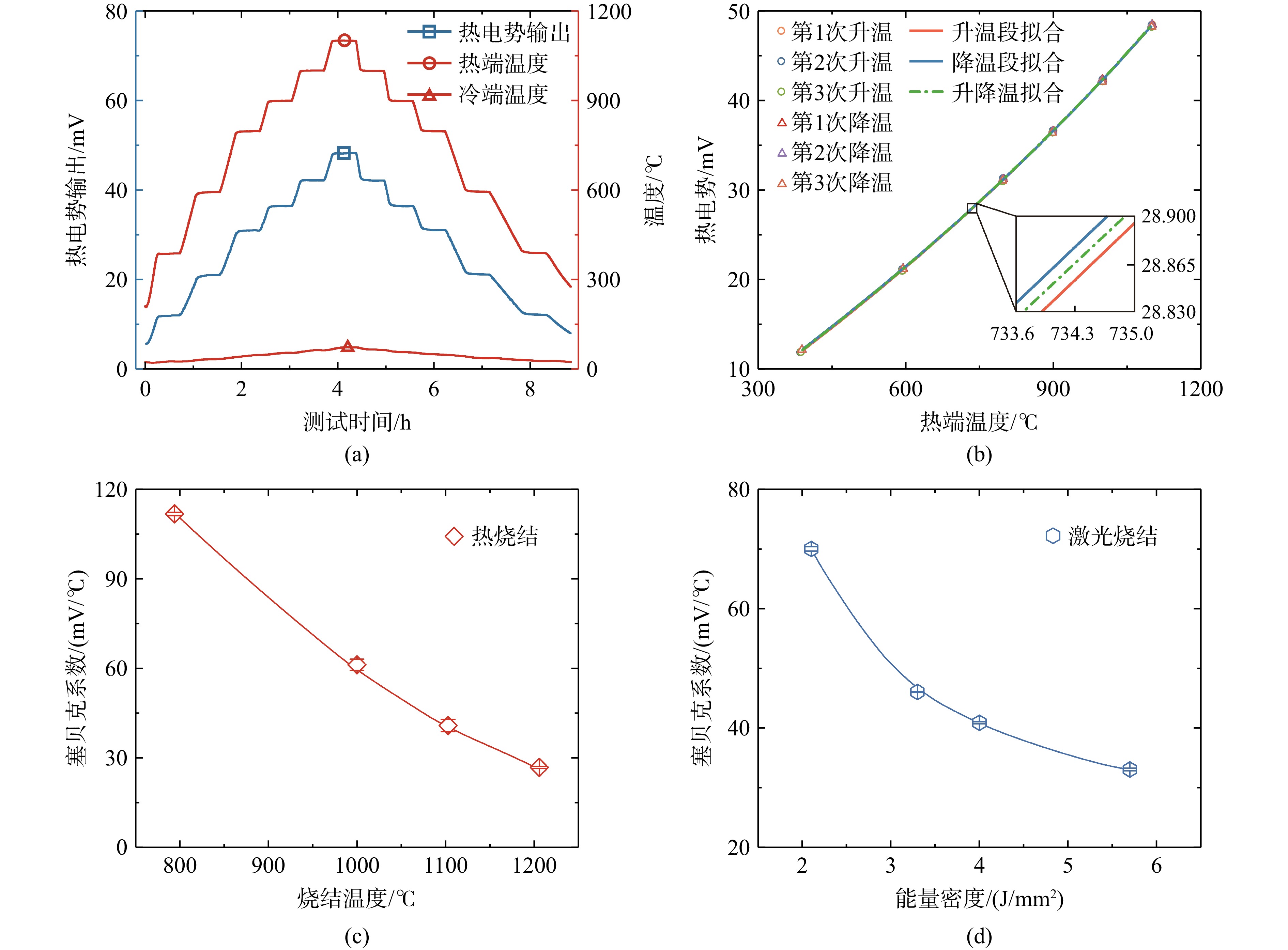
图 7 薄膜传感器热电特性测试结果
Figure 7. Test results of the thermoelectric properties of the thin-film sensor
表 1 有机和无机溶剂的物性参数和沉降速度
Table 1. Physical parameters and sedimentation rates of organic and inorganic solvents
溶剂 沸点/℃ 黏度/(${\text{mPa}} \cdot {\text{s}}$) 密度/(${\text{g}} / {\text{c}}{{\text{m}}^3}$) 表面张力/(${\text{mN}} / {{\text{m}}}$) 介电常数/$ ({{\text{C}}^2}/ ({\text{N}} \cdot {{\text{M}}^2}) ) $ 沉降速度/(${\text{nm/s}}$) 安全性 水 100 1.01 1.00 72.8 78.5 10.78 无毒性 甲醇 65 0.59 0.79 22.6 32.7 18.70 刺激性 乙醇 78 1.07 0.79 22.3 24.5 10.35 低毒性 乙二醇 197 17.66 1.11 46.5 37.0 0.60 无毒性 异丙醇 82 2.40 0.78 21.3 17.9 4.64 低毒性 正己醇 157 5.20 0.82 27.9 13.3 2.13 低毒性 甘油 291 56.00 1.26 61.9 56.2 0.18 低毒性 环己烷 81 0.89 0.78 24.4 1.2 12.50 刺激性  下载: 导出CSV
表 2 薄膜传感器热电特性曲线三次多项式拟合结果及其重复率
Table 2. Cubic polynomial fitting results of the thermoelectric characteristic curves of the thin-film sensor and their repeatability
三次多项式拟合 a/10−9 b/10−5 c e A/% 升温段拟合(3组测试结果) −2.78 2.22 0.0245 0.0124 99.97 降温段拟合(3组测试结果) −1.84 2.01 0.0258 0.0067 99.98 升降温拟合(6组测试结果) −2.35 2.12 0.0251 0.0134 99.96
下载: 导出CSV
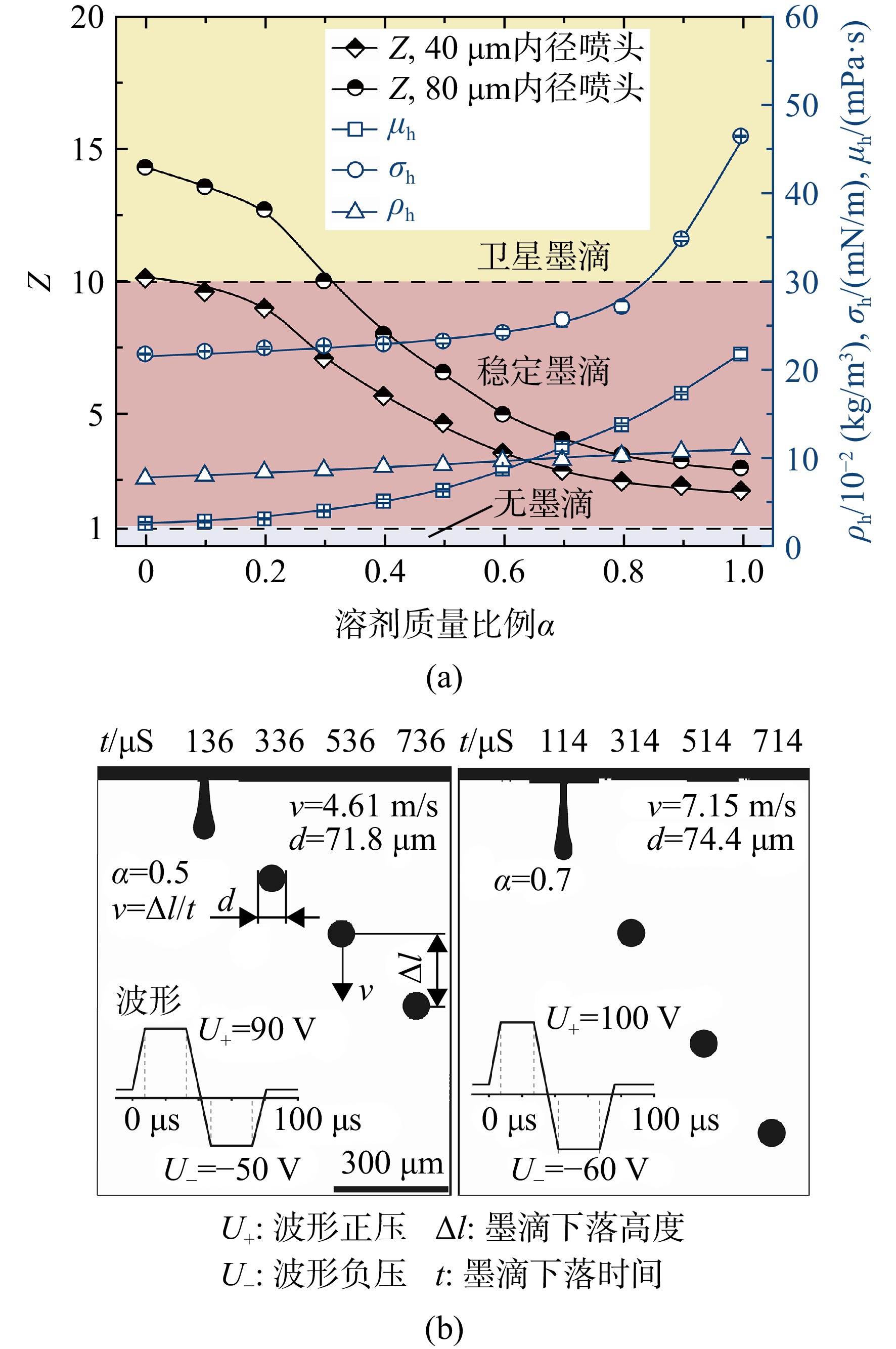
表 3 喷墨打印各步骤中的影响因素及其研究结果总结
Table 3. Summary of influencing factors and research findings for each step in inkjet printing
关键步骤 影响因素 主要研究结果 功能墨水制造 溶剂种类 乙二醇、异丙醇作为主、副溶剂可提升墨水稳定性及可打印性 溶剂比例 乙二醇和异丙醇质量比例范围为0.3~1.0时,Z值满足最佳打印区间 压电陶瓷波形 调整压电陶瓷波形可获得稳定、规则的球形墨滴 喷墨打印沉积 靶面温度 靶面温度影响咖啡环效应,均匀沉积的靶面温度为140 ℃ 打印横向点间距 点间距过大或过小导致线路间断或开裂,最佳点间距为0.04 mm 微粒薄膜烧结 热烧结温度 薄膜传感器塞贝克系数随烧结温度的增加而减小 激光烧结功率 薄膜传感器塞贝克系数随激光能量密度的增加而减小
下载: 导出CSV
-
[1] 廉筱纯, 吴虎. 航空发动机原理[M]. 西安: 西北工业大学出版社, 2005. LIAN Xiaochun, WU Hu. Aeroengine principle[M]. Xi’an: Northwestern Polytechnical University Press, 2005. (in ChineseLIAN Xiaochun, WU Hu. Aeroengine principle[M]. Xi’an: Northwestern Polytechnical University Press, 2005. (in Chinese) [2] SCHOBEIRI M T. Gas turbine engines, design and dynamic performance[M]//Turbomachinery Flow Physics and Dynamic Performance. Berlin, Heidelberg: Springer Berlin Heidelberg, 2012: 473-512. [3] GIALANELLA S, MALANDRUCCOLO A. Gas turbine aero-engines[M]//Aerospace Alloys. Cham, Swiss: Springer International Publishing, 2019: 17-39. [4] REED R C. The superalloys: fundamentals and applications[M]. Cambridge, UK: Cambridge University Press, 2008. [5] LI Yang, LI Zhimin. The research of temperature indicating paints and its application in aero-engine temperature measurement[J]. Procedia Engineering, 2015, 99: 1152-1157. doi: 10.1016/j.proeng.2014.12.697 [6] FEIST J P, HEYES A L, NICHOLLS J R. Phosphor thermometry in an electron beam physical vapour deposition produced thermal barrier coating doped with dysprosium[J]. Proceedings of the Institution of Mechanical Engineers, Part G: Journal of Aerospace Engineering, 2001, 215(6): 333-341. doi: 10.1243/0954410011533338 [7] YAÑEZ GONZALEZ A, PILGRIM C C, FEIST J P, et al. On-line temperature measurement inside a thermal barrier sensor coating during engine operation[J]. Journal of Turbomachinery, 2015, 137(10): 101004. doi: 10.1115/1.4030260 [8] ELDRIDGE J I, BENCIC T J, ALLISON S W, et al. Depth-penetrating temperature measurements of thermal barrier coatings incorporating thermographic phosphors[J]. Journal of Thermal Spray Technology, 2004, 13(1): 44-50. doi: 10.1007/s11666-004-0048-0 [9] JENKINS T P, HESS C F, ALLISON S W, et al. Measurements of turbine blade temperature in an operating aero engine using thermographic phosphors[J]. Measurement Science and Technology, 2020, 31(4): 044003. doi: 10.1088/1361-6501/ab4c20 [10] WANG Yutian, ZHU Yongjing. Temperature and displacement measurement system with fiber optic sensors for turbine blades[C]//Third International Symposium on Precision Mechanical Measurements. Bellingham, US: SPIE, 2006, 6280: 333-338. [11] GRANT H P, PRZYBYSZEWSKI J S, CLAING R G. Turbine blade temperature measurements using thin film temperature sensors[R]. NASA-CR-165201, 1981. [12] VEDULA R. Materials for high temperature thin film thermocouple applications[D]. Blacksburg, US: Virginia Polytechnic Institute and State University, 1998. [13] GREGORY O J, YOU Tao. Ceramic temperature sensors for harsh environments[J]. IEEE Sensors Journal, 2005, 5(5): 833-838. doi: 10.1109/JSEN.2005.844346 [14] TOUGAS I M, AMANI M, GREGORY O J. Metallic and ceramic thin film thermocouples for gas turbine engines[J]. Sensors, 2013, 13(11): 15324-15347. doi: 10.3390/s131115324 [15] RIVERA K, GREGORY O J. ITO: SiC ceramic matrix composite thermocouples for engine components[J]. IEEE Sensors Letters, 2020, 4(5): 2500404. [16] LIU Yantao, REN Wei, SHI Peng, et al. Preparation and thermal volatility characteristics of In2O3/ITO thin film thermocouple by RF magnetron sputtering[J]. AIP Advances, 2017, 7(11): 115025. doi: 10.1063/1.4999246 [17] LIU Yantao, REN Wei, SHI Peng, et al. A highly thermostable In2O3/ITO thin film thermocouple prepared via screen printing for high temperature measurements[J]. Sensors, 2018, 18(4): 958. doi: 10.3390/s18040958 [18] LI Shuimin, ZHANG Zhongkai, LEI Jiaming, et al. Screen printing silver shielded ITO-In2O3 thin-film thermocouples for electromagnetic interference reduction[J]. IEEE Sensors Letters, 2024, 8(8): 2502204. [19] CHEN Yin, JIANG Hong, JIANG Shu, et al. Thin film thermocouples for surface temperature measurement of turbine blade[J]. Advanced Materials Research, 2013, 873: 420-425. doi: 10.4028/www.scientific.net/AMR.873.420 [20] XU Lida, ZHOU Xiong, ZHAO Fuxin, et al. Rapid laser fabrication of indium tin oxide and polymer-derived ceramic composite thin films for high-temperature sensors[J]. Journal of Colloid and Interface Science, 2024, 658: 913-922. doi: 10.1016/j.jcis.2023.12.119 [21] HAI Zhenyin, SU Zhixuan, GUO Maocheng, et al. Utilizing screen printing technology to fabricate tungsten-rhenium thick film thermocouples with a maximum temperature limit of 1600 ℃[J]. Measurement, 2025, 239: 115454. doi: 10.1016/j.measurement.2024.115454[22] WOHLMUTH W, ADESIDA I. Properties of RF magnetron sputtered cadmium-tin-oxide and indium-tin-oxide thin films[J]. Thin Solid Films, 2005, 479(1/2): 223-231. [23] SHAJAN N T, BHARATHI MOHAN D. RF magnetron sputtering of Zn2SnO4 thin films: optimising microstructure, optical and electrical properties for photovoltaics[J]. Journal of Materials Science: Materials in Electronics, 2024, 35(12): 1-18. doi: 10.1007/s10854-024-12648-8 [24] ZHAO Changjiang, ZHAO Leran, LIU Juncheng, et al. Effect of sputtering power on the properties of SiO2 films grown by radio frequency magnetron sputtering at room temperature[J]. Optical and Quantum Electronics, 2021, 53(15): 1-13. doi: 10.1007/s11082-020-02639-4 [25] XIE Shanghang, ZHU Jin, JIANG Hongchuan, et al. Preparation and properties of high-temperature transient thin-film thermopile heat flux sensor[J]. Journal of Electronic Materials, 2025, 54(1): 361-369. doi: 10.1007/s11664-024-11476-0 [26] GREGORY O J, BUSCH E, FRALICK G C, et al. Preparation and characterization of ceramic thin film thermocouples[J]. Thin Solid Films, 2010, 518(21): 6093-6098. doi: 10.1016/j.tsf.2010.05.102 [27] CAREY T, CACOVICH S, DIVITINI G, et al. Fully inkjet-printed two-dimensional material field-effect heterojunctions for wearable and textile electronics[J]. Nature Communications, 2017, 8(1): 1202. doi: 10.1038/s41467-017-01210-2 [28] NAYAK L, MOHANTY S, NAYAK S K, et al. A review on inkjet printing of nanoparticle inks for flexible electronics[J]. Journal of Materials Chemistry C, 2019, 7(29): 8771-8795. doi: 10.1039/C9TC01630A [29] KUMAR P, EBBENS S, ZHAO Xiubo. Inkjet printing of mammalian cells-Theory and applications[J]. Bioprinting, 2021, 23: e00157. doi: 10.1016/j.bprint.2021.e00157 [30] ARRABITO G, PIGNATARO B. Inkjet printing methodologies for drug screening[J]. Analytical Chemistry, 2010, 82(8): 3104-3107. doi: 10.1021/ac100169w [31] GBURECK U, HÖLZEL T, DOILLON C J, et al. Direct printing of bioceramic implants with spatially localized angiogenic factors[J]. Advanced Materials, 2007, 19(6): 795-800. doi: 10.1002/adma.200601370 [32] ZHANG Guanguang, ZHANG Jianhua, QIU Tian, et al. Fabrication of flexible electrochromic film based on amorphous isopolytungstate by low-temperature inkjet-printed process with a solution crystallization kinetic-controlled strategy[J]. Chemical Engineering Journal, 2022, 427: 131840. doi: 10.1016/j.cej.2021.131840 [33] JANG D, KIM D, MOON J. Influence of fluid physical properties on ink-jet printability[J]. Langmuir, 2009, 25(5): 2629-2635. doi: 10.1021/la900059m -


 点击查看大图

计量
- 文章访问数: 748
- HTML浏览量: 490
- PDF量: 54
- 被引次数: 0