






Flow and heat transfer of aeroengine turbine guide vanes based on fluid-thermal-solid coupling
-
摘要:
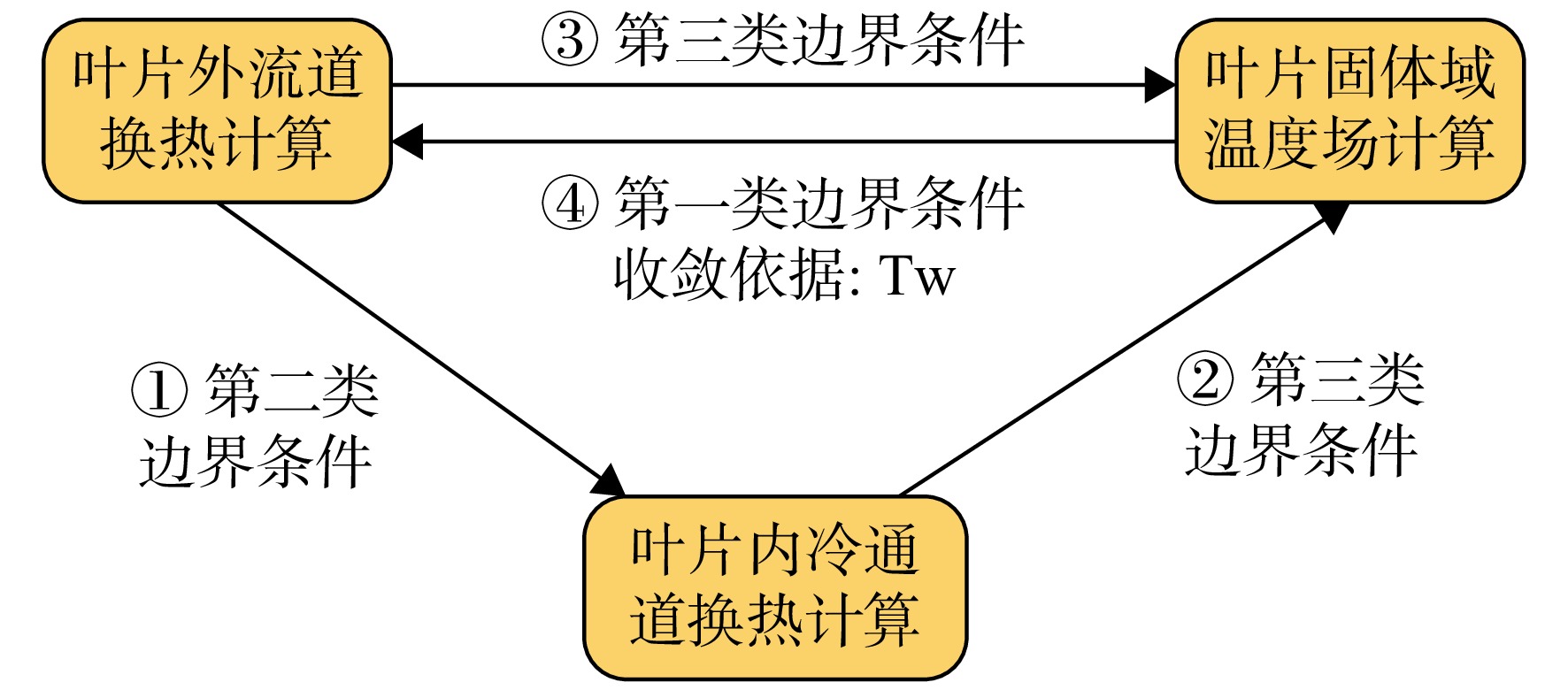
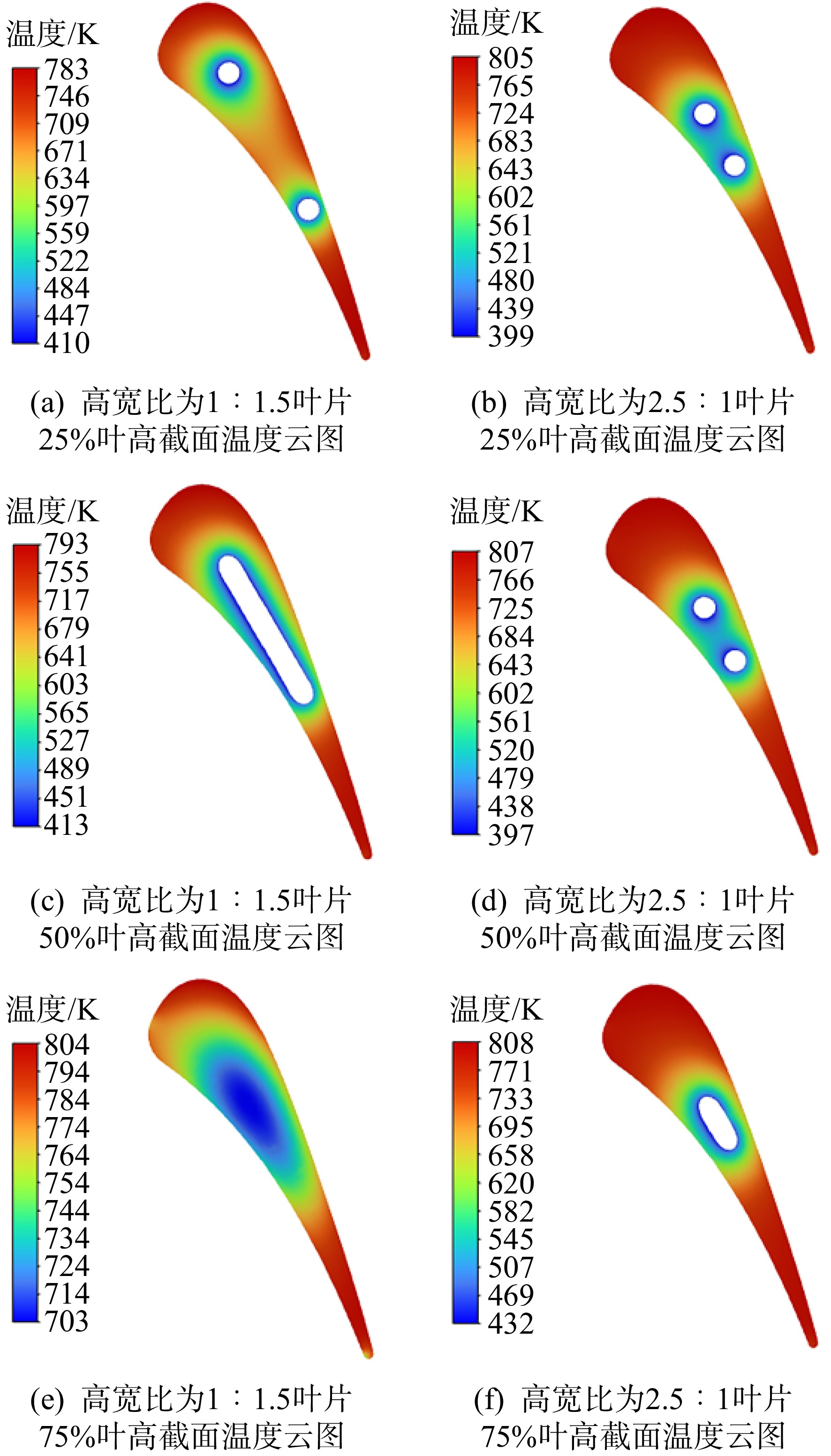
根据涡轮叶片的工作原理、流动换热机理,利用编程软件二次开发了包含ANSYS Fluent、ANSYS APDL和Flowmaster的流热固耦合计算系统,实现仿真软件自动调用、自动计算、不同计算域之间的数据交互和计算结果监控。利用该联合仿真软件对不同内冷通道高宽比的油冷涡轮导叶的燃气通道流动特性以及叶片换热特性进行了分析,结果表明:涡轮叶片内冷通道的结构设计和排布方案对油冷涡轮叶片冷却效果的影响较大,更改U型内冷通道高宽比会对油冷涡轮叶片的温度分布产生较大的影响;随着U型通道的高宽比增大,叶片的冷却效率随之降低,但降低幅度较小;高宽比更小的油冷结构设计,其叶片外壁面的温度分布更均匀,冷却覆盖区域更大,高宽比更大的油冷结构设计,其冷却效果更集中,冷却覆盖区域更小。
Abstract:Based on the principle of turbine vanes and the mechanism of flow and heat transfer, a fluid-thermal-solid coupling calculation system incorporating ANSYS Fluent, ANSYS APDL, and Flowmaster was developed through secondary development. This system achieved the invocating of different programs, automatic calculation, data exchange between different computational domains, and monitoring of calculation results. Based on this integrated simulation software, the flow phenomena in the blade channels and heat transfer phenomena of oil-cooled turbine vanes with different cooling channels aspect ratios were analyzed. The results showed that the structural design and layout of cooling channels significantly influenced the cooling effectiveness of oil-cooled turbine vanes. Moreover, as the aspect ratio of U-shaped cooling channels increased, the oil-cooled turbine vanes had a great impact on the temperature distribution. With the increase of the aspect ratio of U-shaped channels, the cooling efficiency of the turbine vanes decreased, but the reduction was minor; oil cooling structures with smaller aspect ratios exhibited more uniform temperature distribution on the turbine vanes outer walls and a larger cooling coverage area, while oil cooling structures with larger aspect ratios had a more concentrated cooling effect and a smaller cooling coverage area.
-
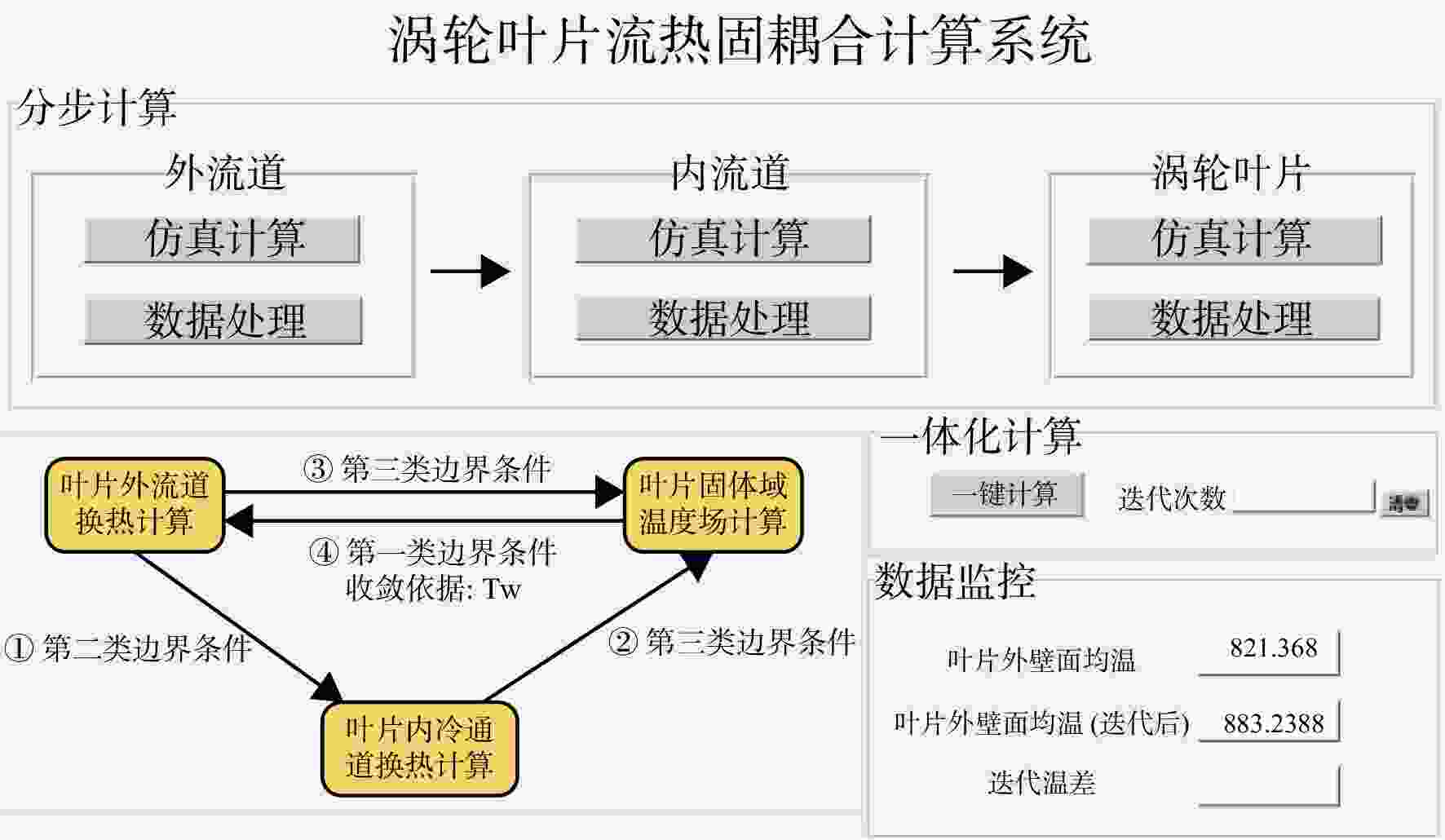
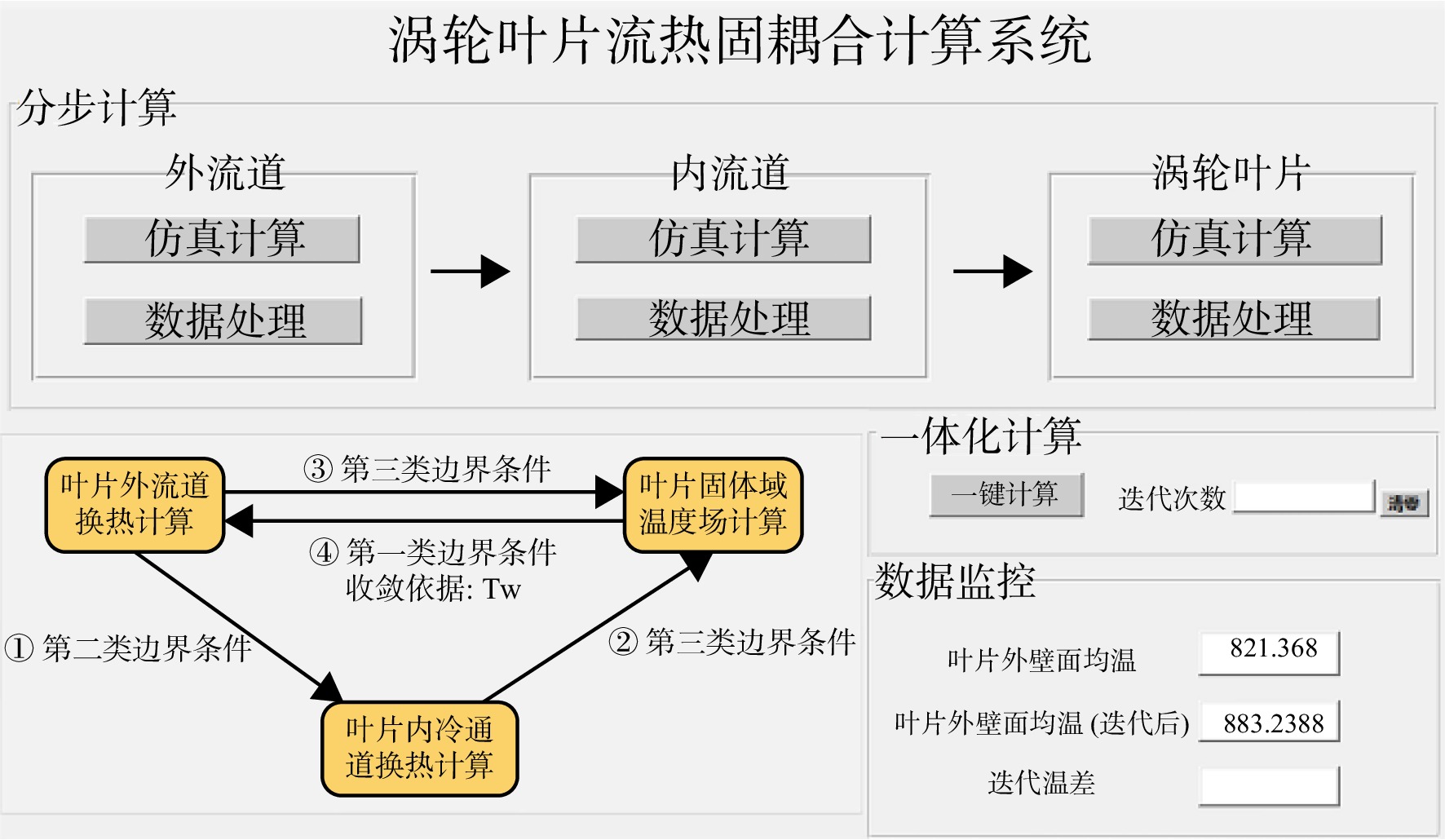
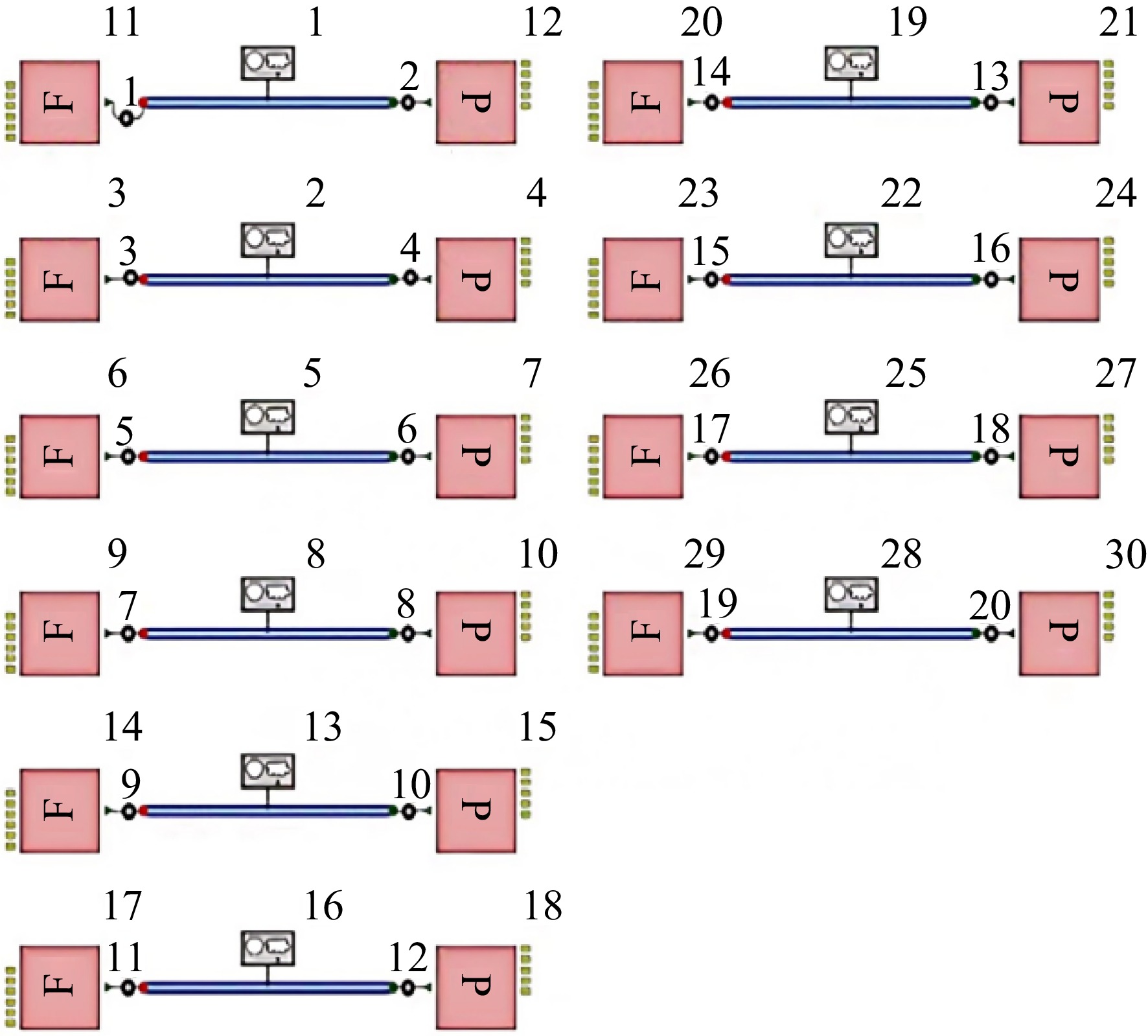
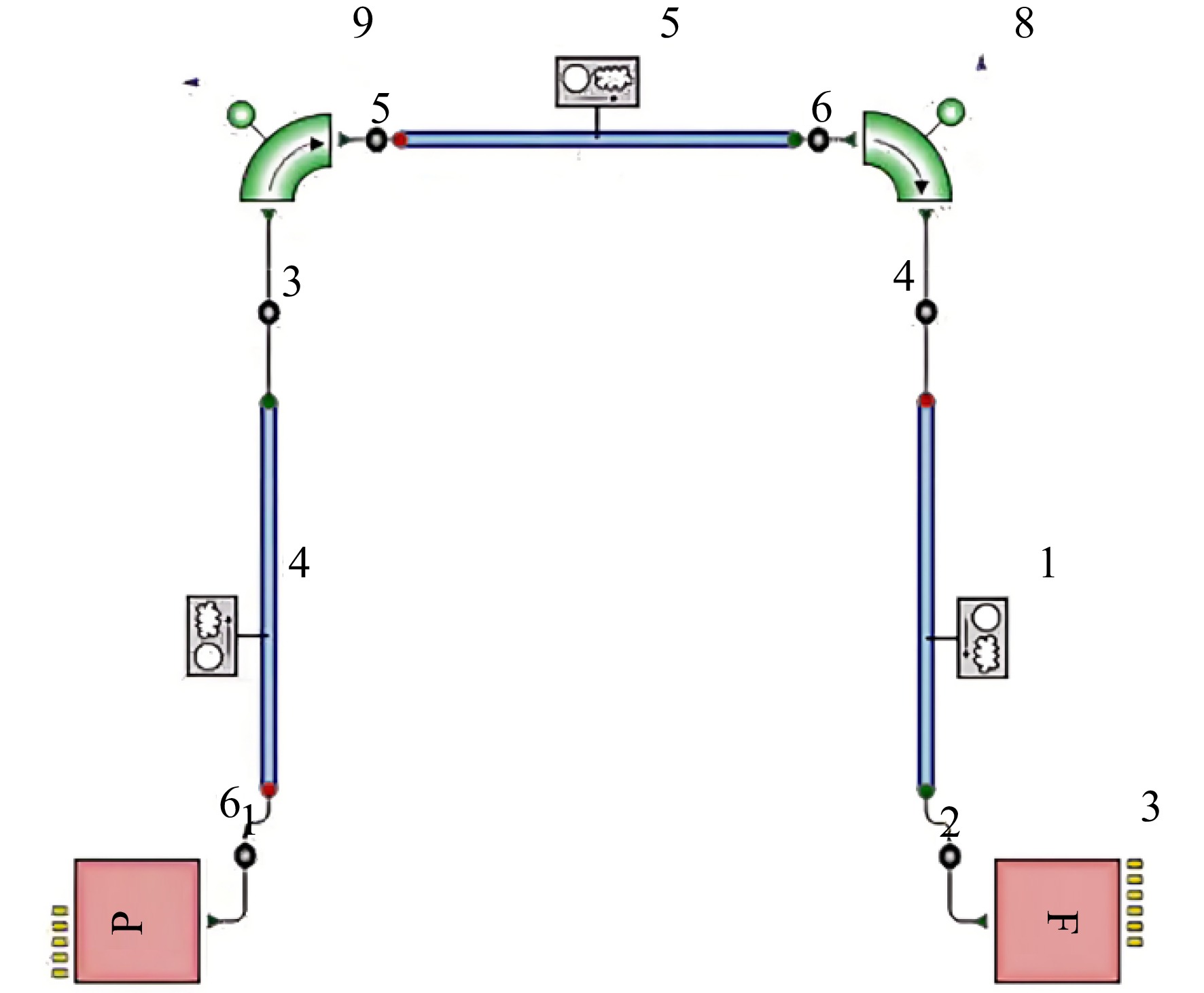
图 4 涡轮叶片流热固耦合计算系统软件界面
Figure 4. Turbine blade fluid-thermal-solid coupling simulation software interface

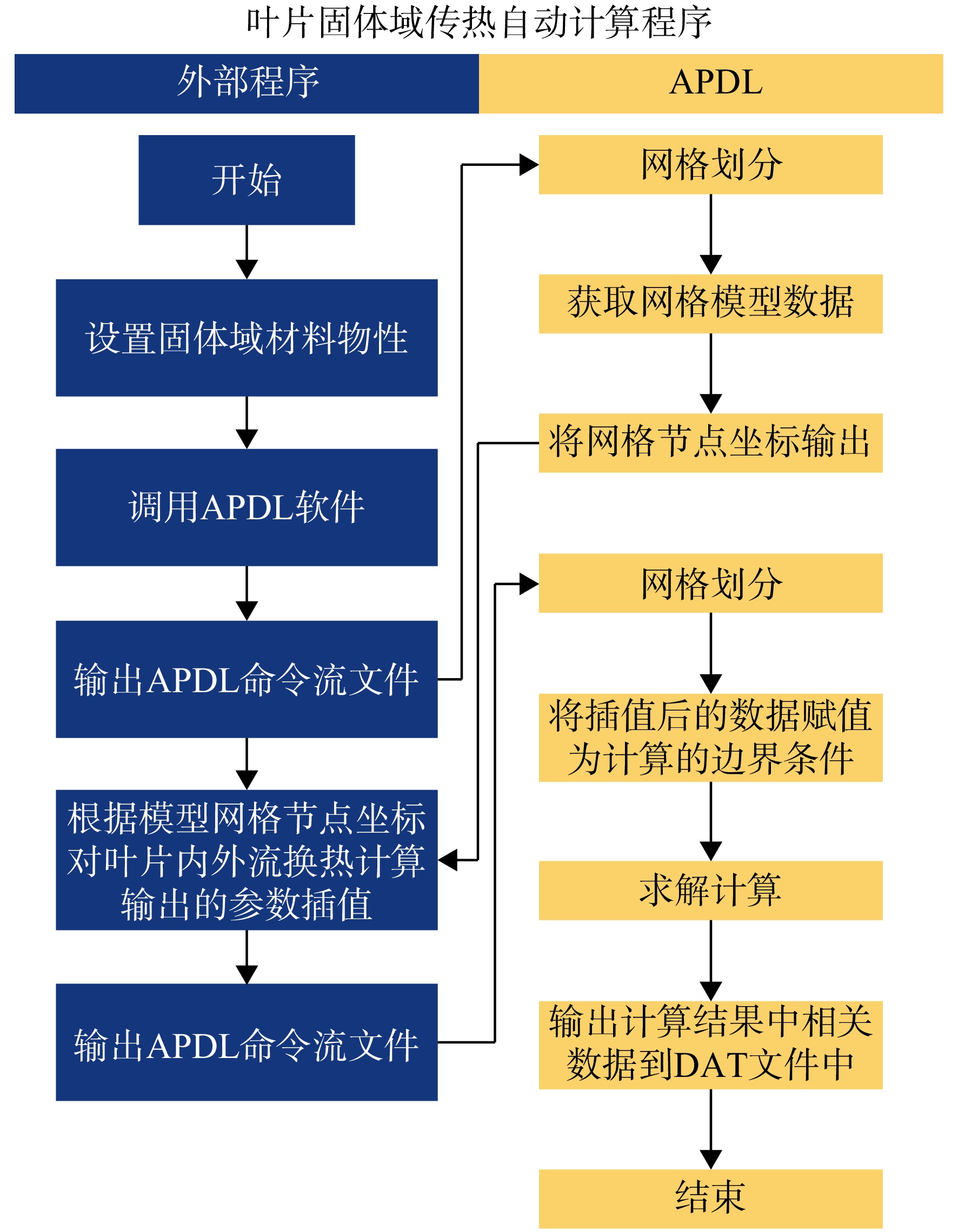
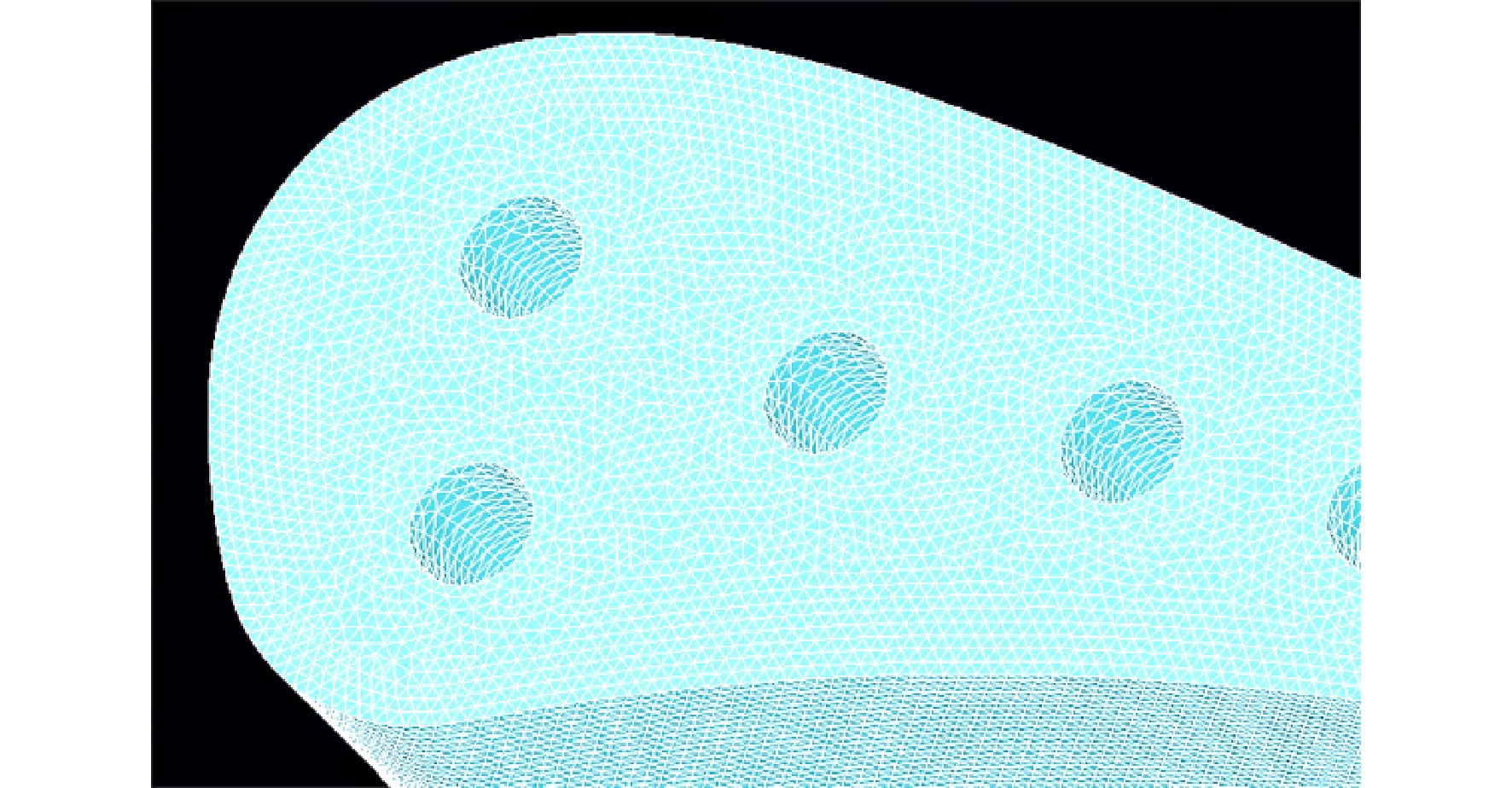
图 6 叶片固体域网格模型局部示意图
Figure 6. Local schematic representation of the blade solid domain grid model
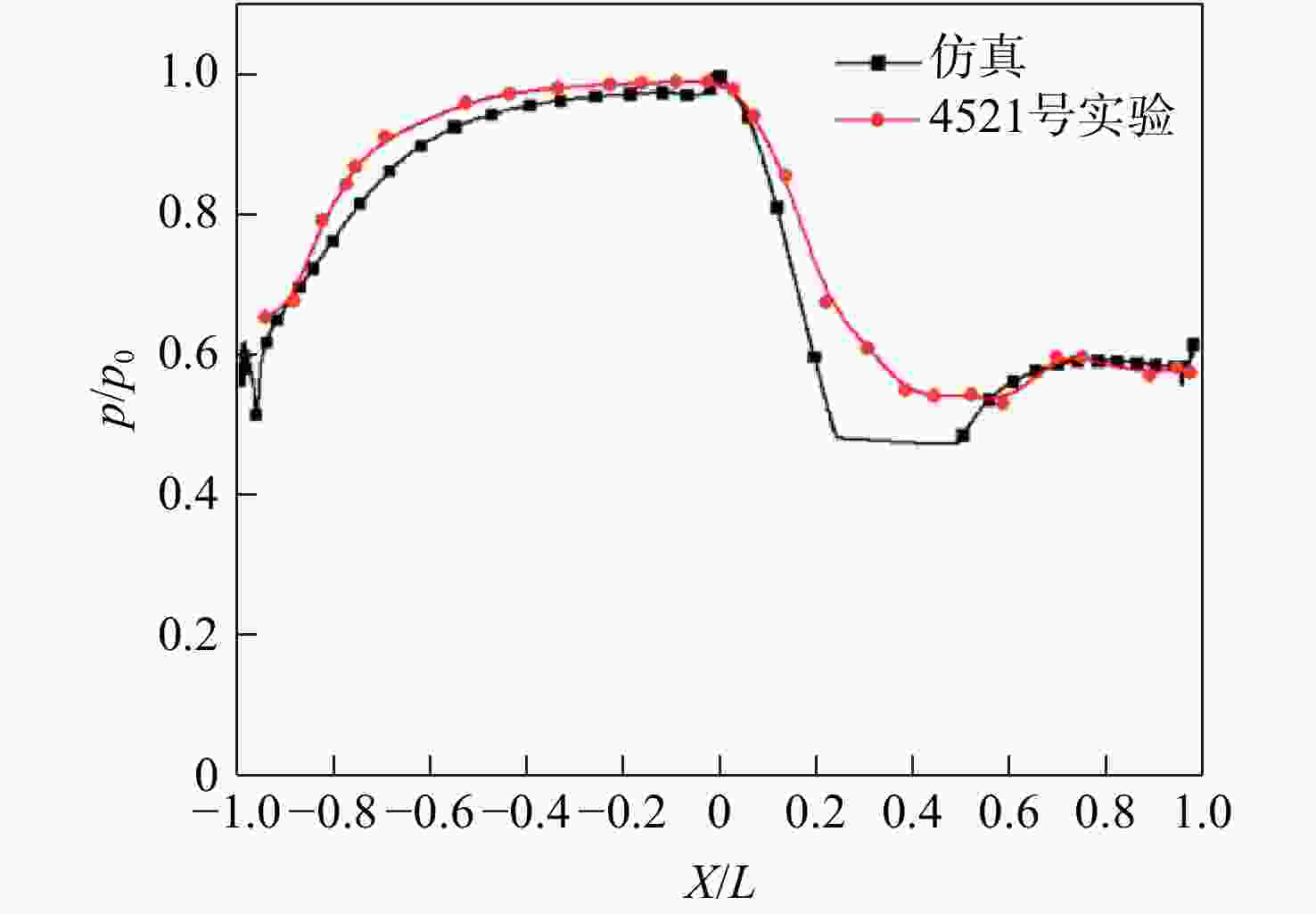
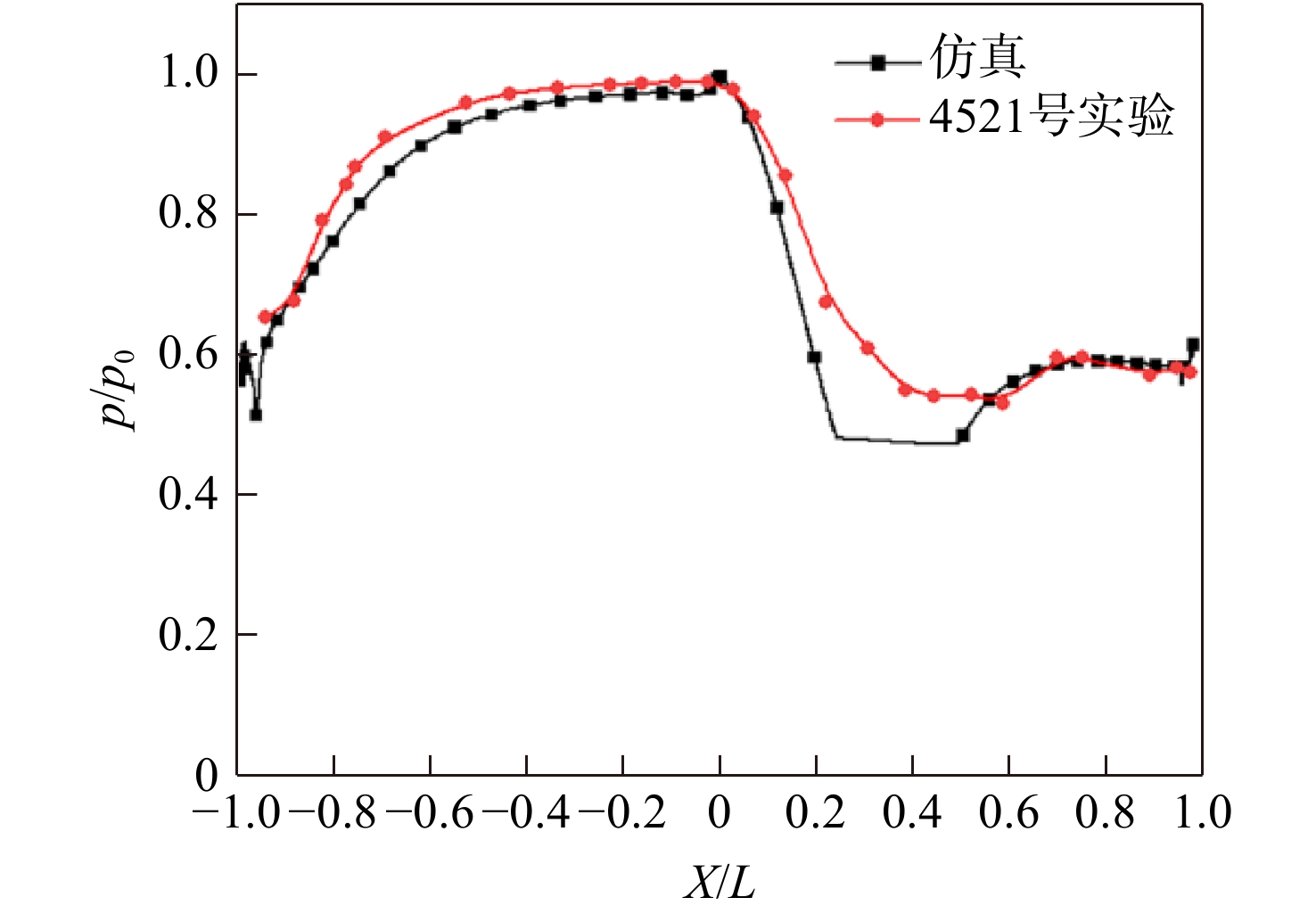
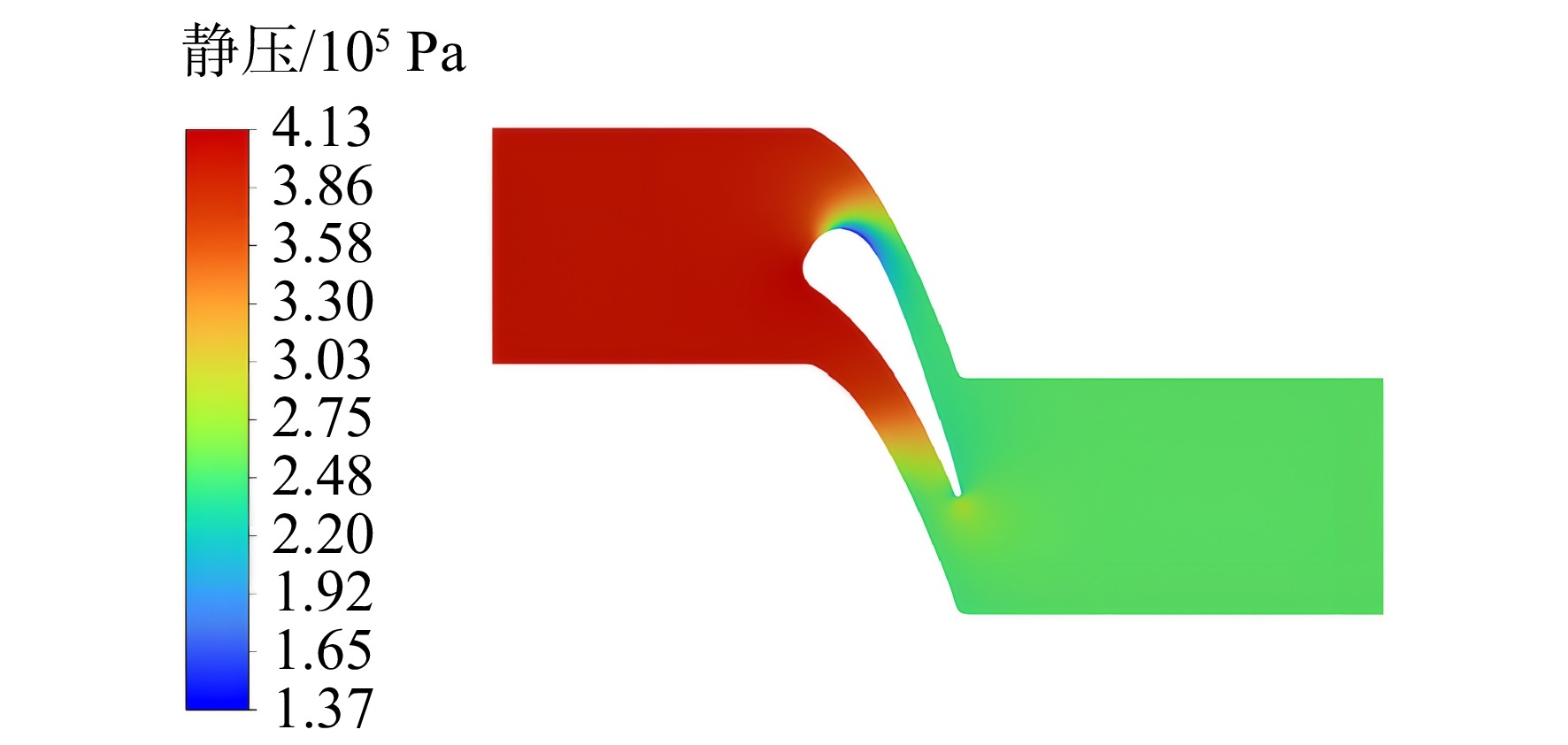
图 10 叶片中径壁面静压分布(p0=
413286 Pa)Figure 10. Wall static pressure distribution on median blade section (p0=
413286 Pa)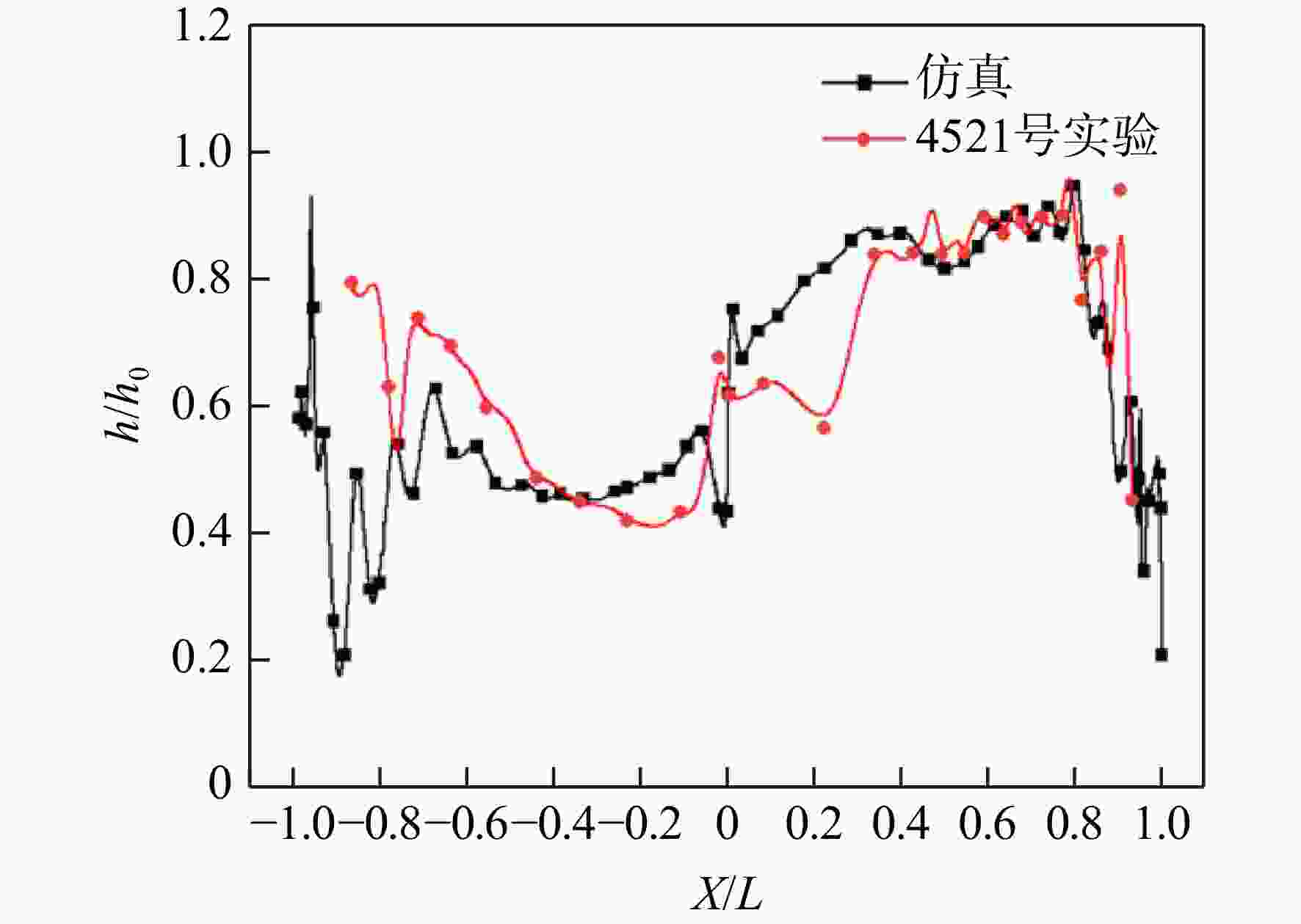
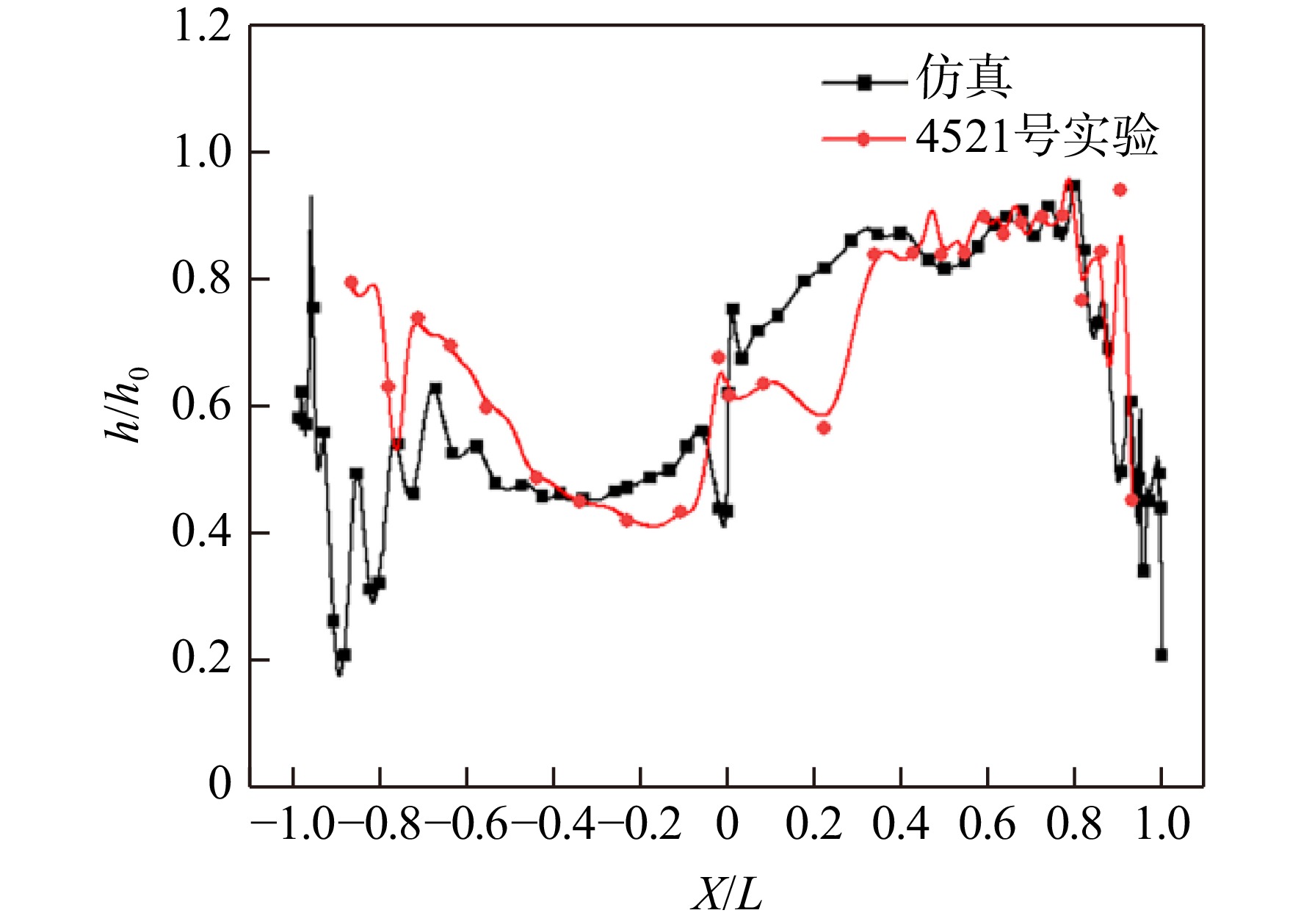
图 11 叶片中径壁面传热系数分布(h0=
1135 W/(m2·K))Figure 11. Wall heat transfer coefficient distribution on median blade section (h0=
1135 W/(m2·K))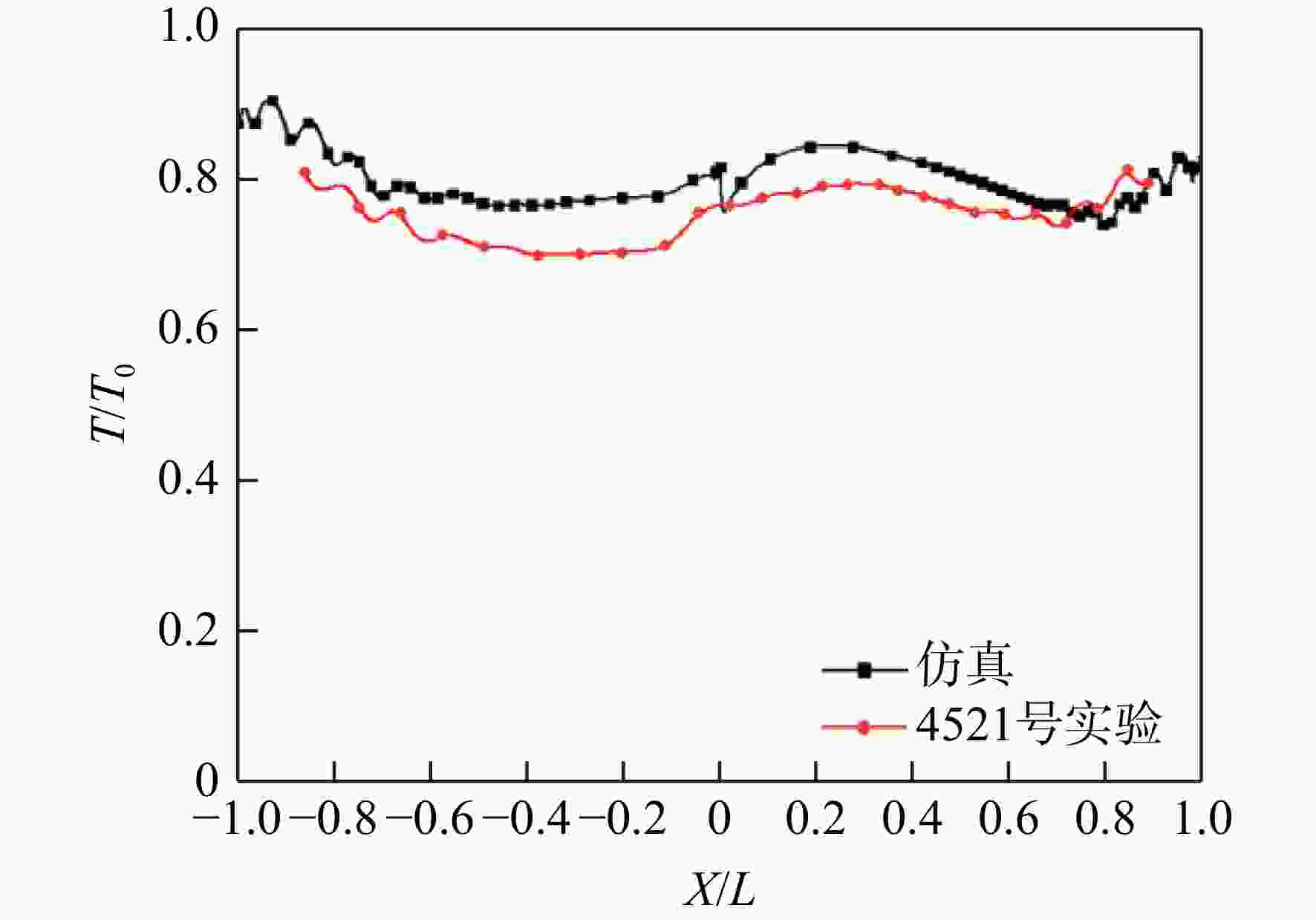
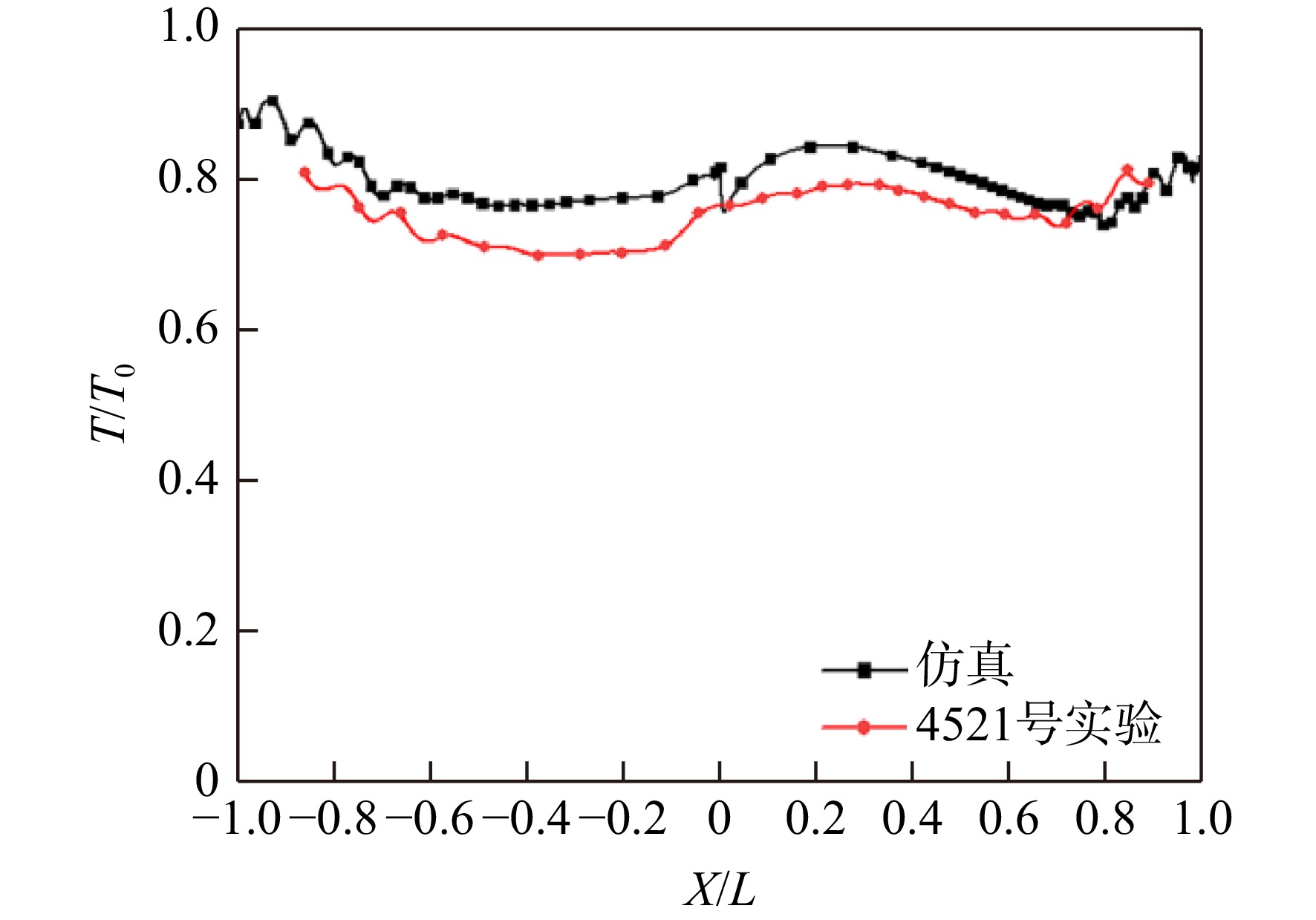
图 12 叶片中径壁面温度分布(T0=811 K)
Figure 12. Wall temperature distribution on median blade section (T0=811 K)
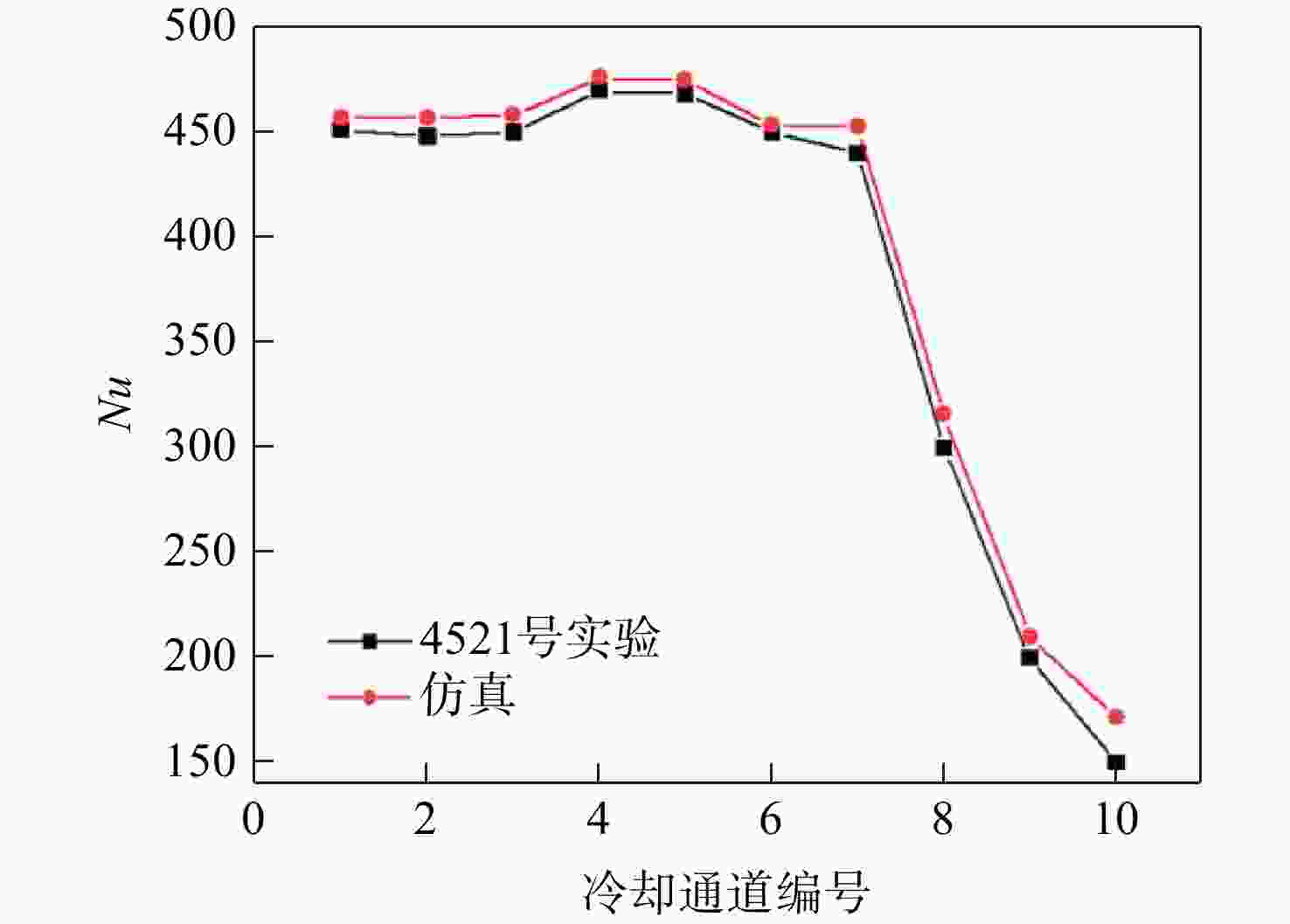
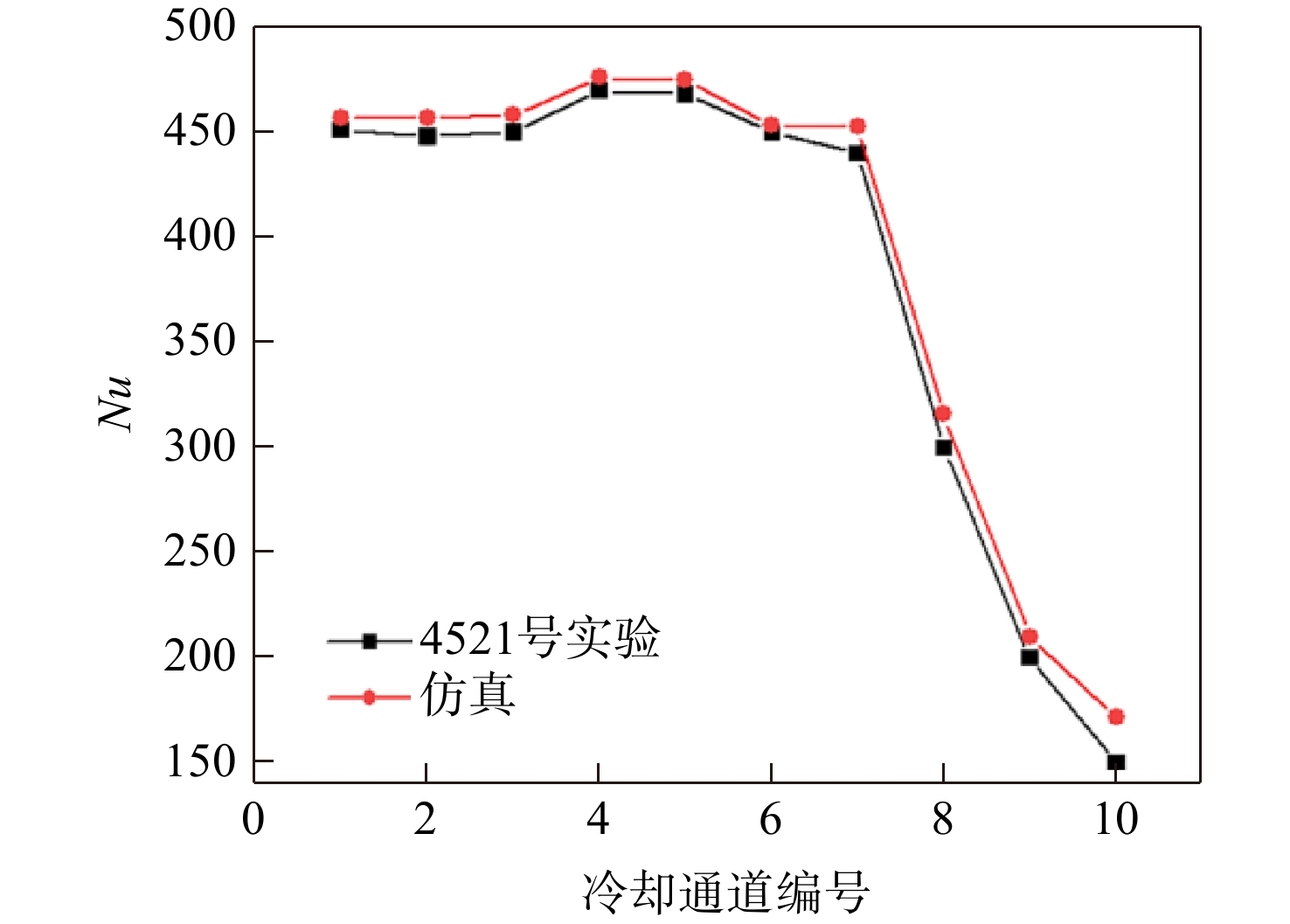
图 13 冷却通道中径努塞尔数分布
Figure 13. Nusselt numbers distribution on median section in the cooling channel
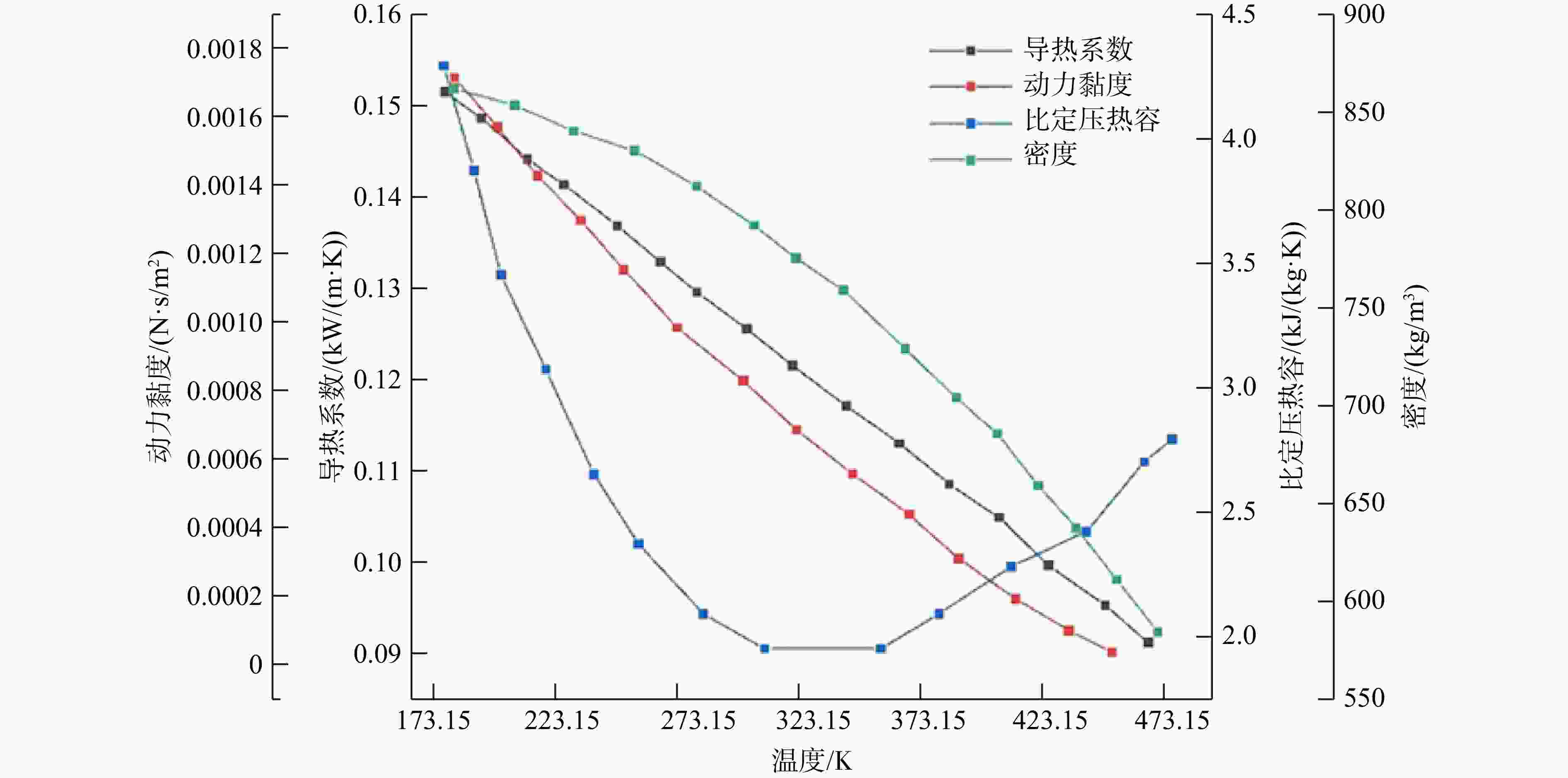
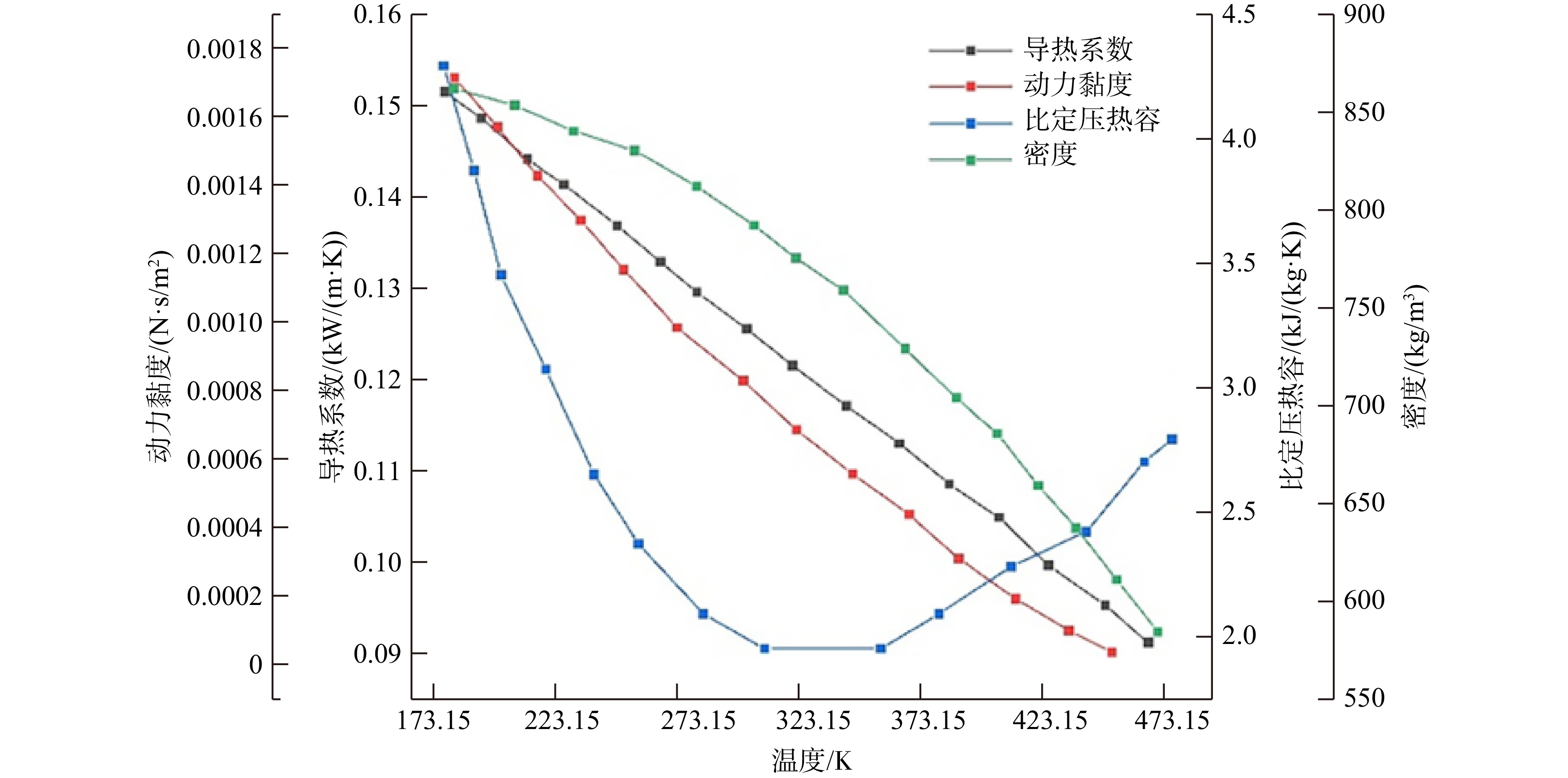
图 17 RP-3主要物性参数随温度变化曲线
Figure 17. Curcurve of main physical property parameters of RP-3 varying with temperature
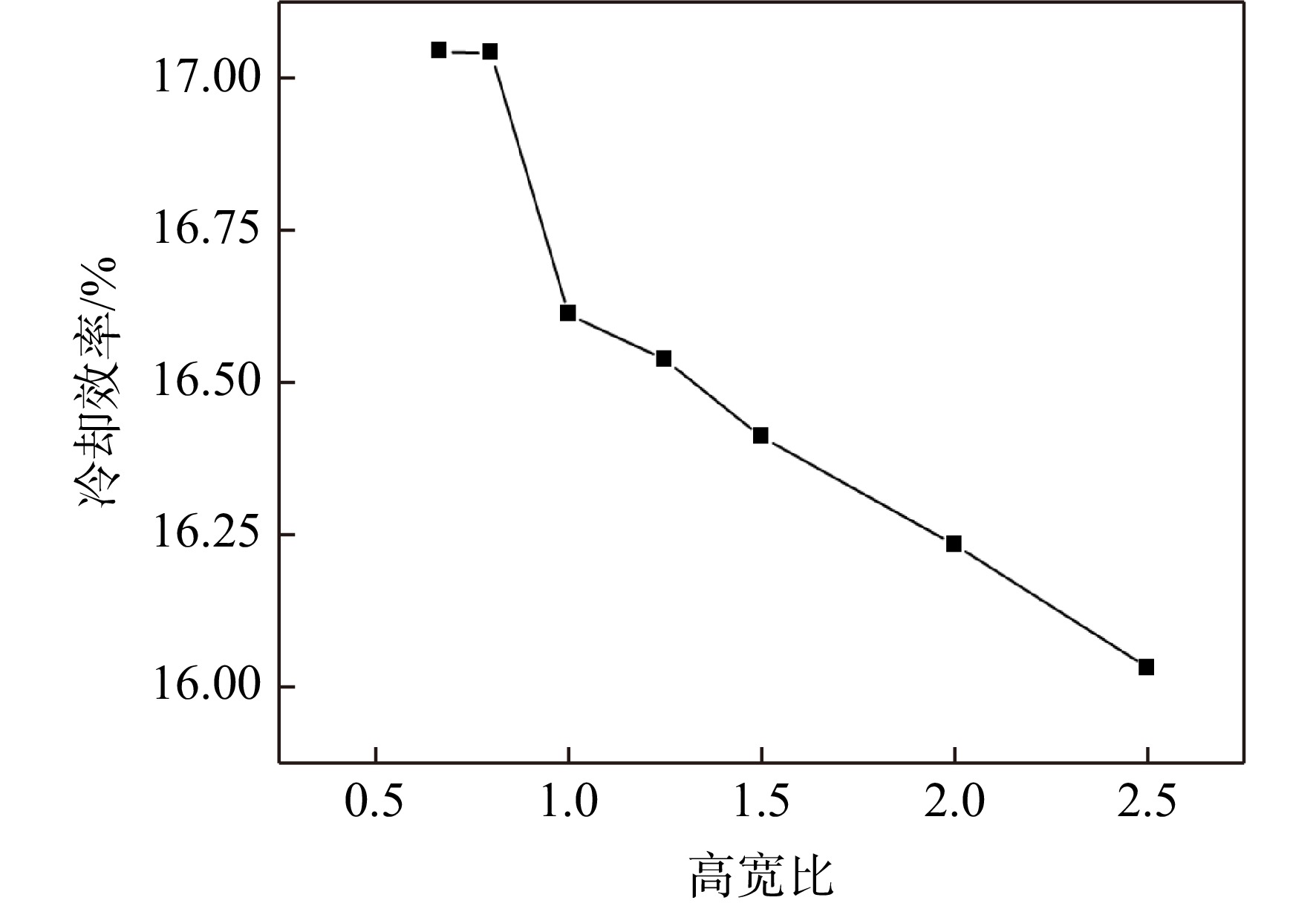
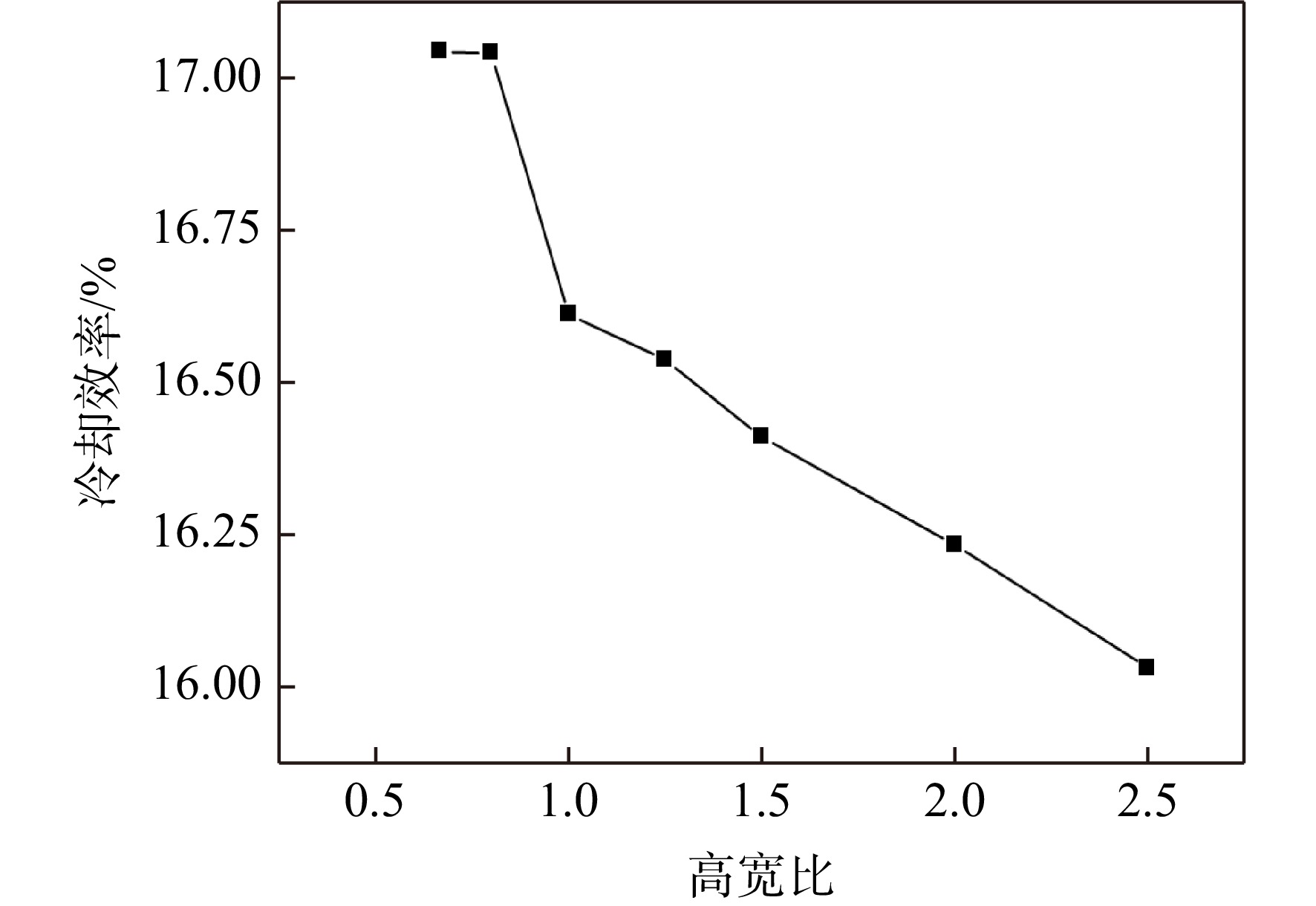
图 18 不同高宽比方案下的冷却效率
Figure 18. Cooling efficiency with different high-aspect ratio schemes
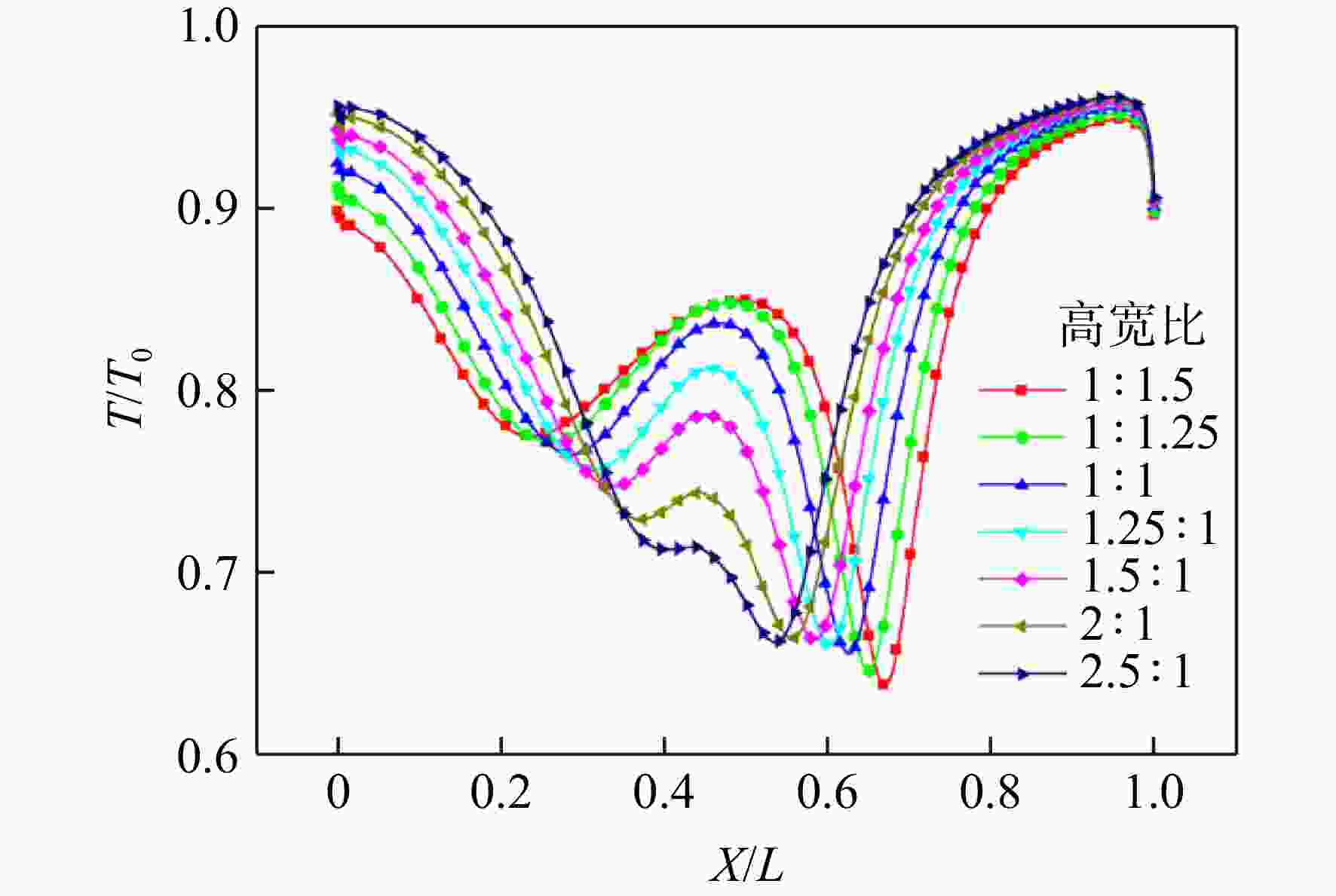
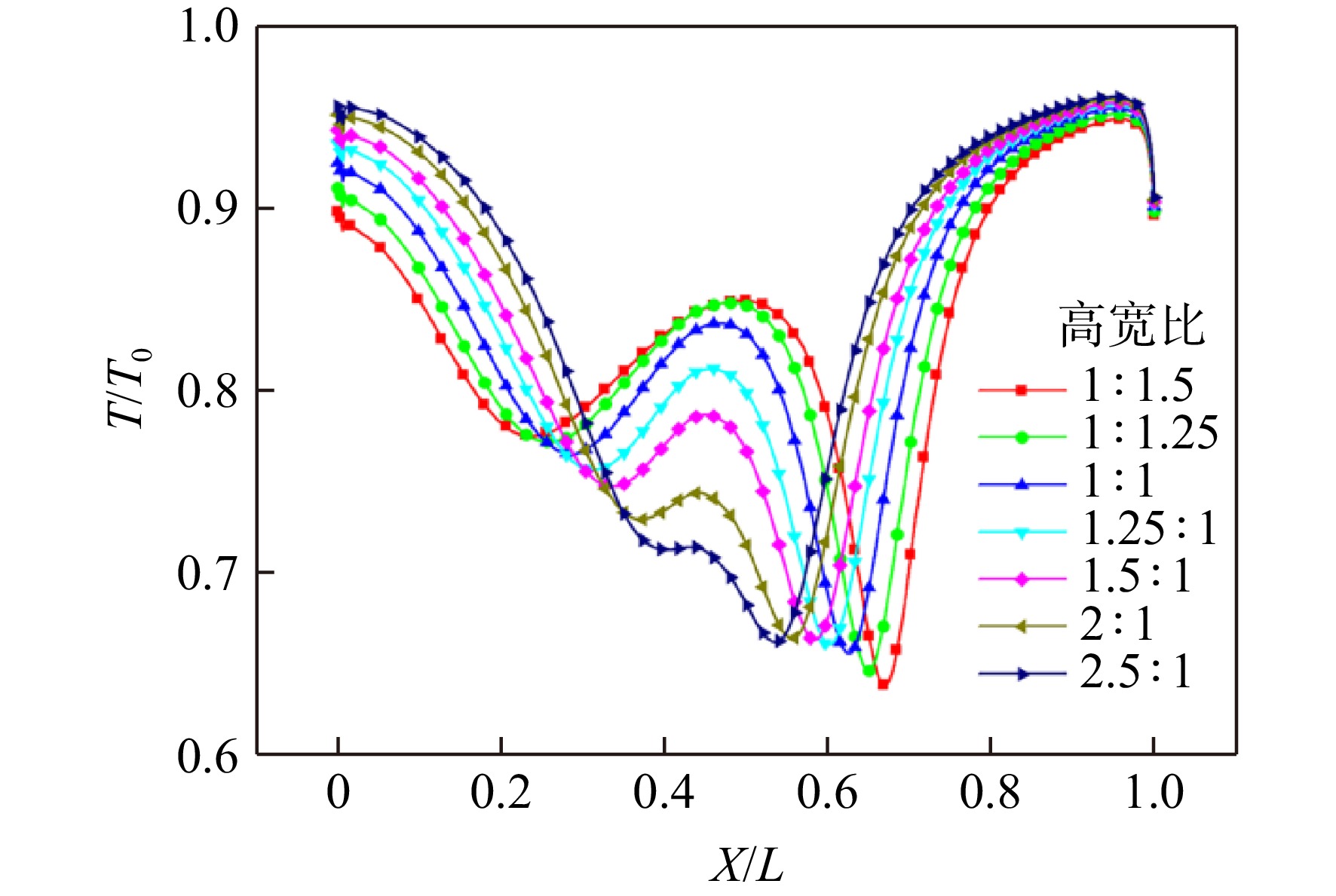
图 19 25%叶高截面处叶片压力面温度分布图(T0=818 K)
Figure 19. Temperature distribution diagram of blade pressure surface at 25% span (T0=818 K)
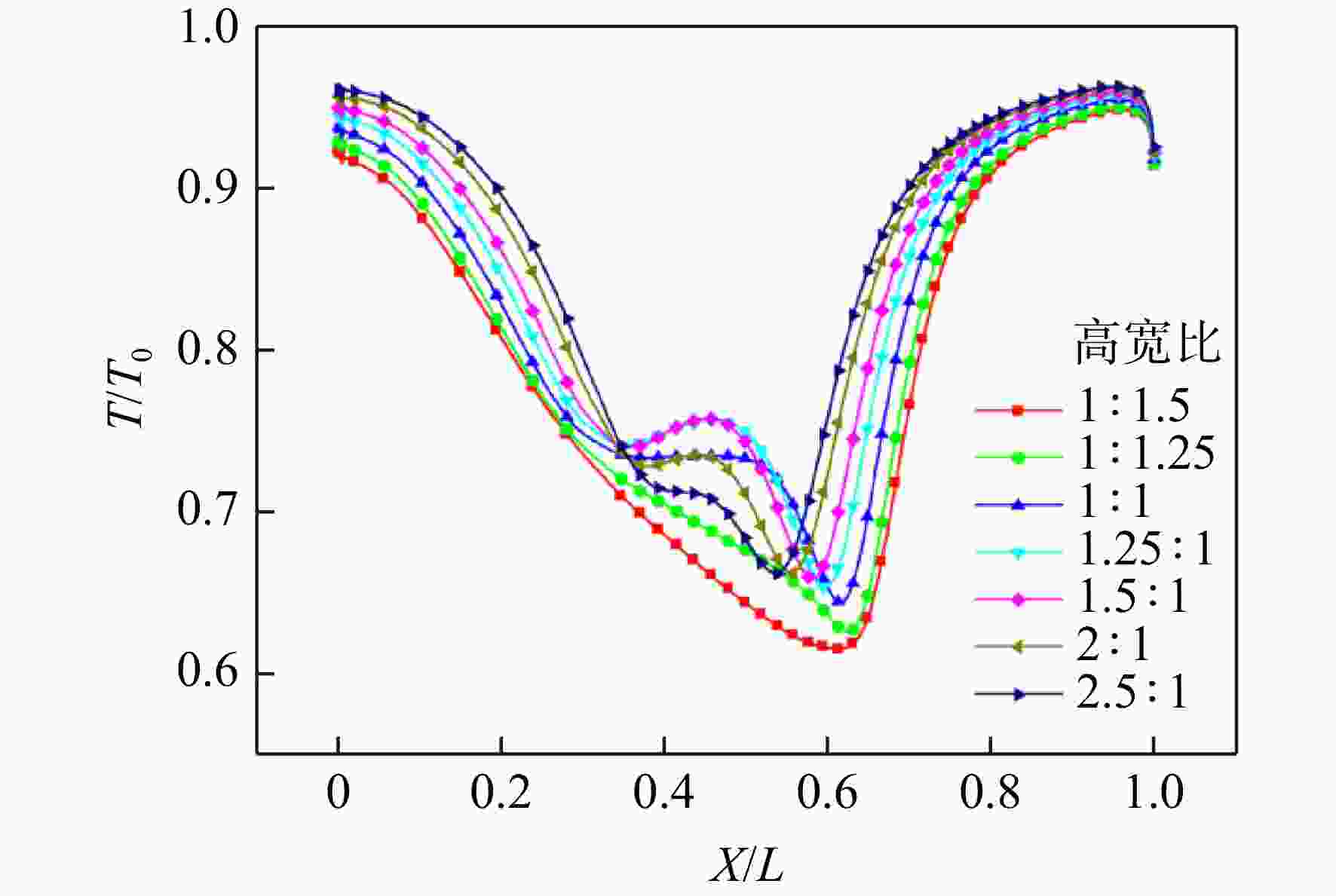
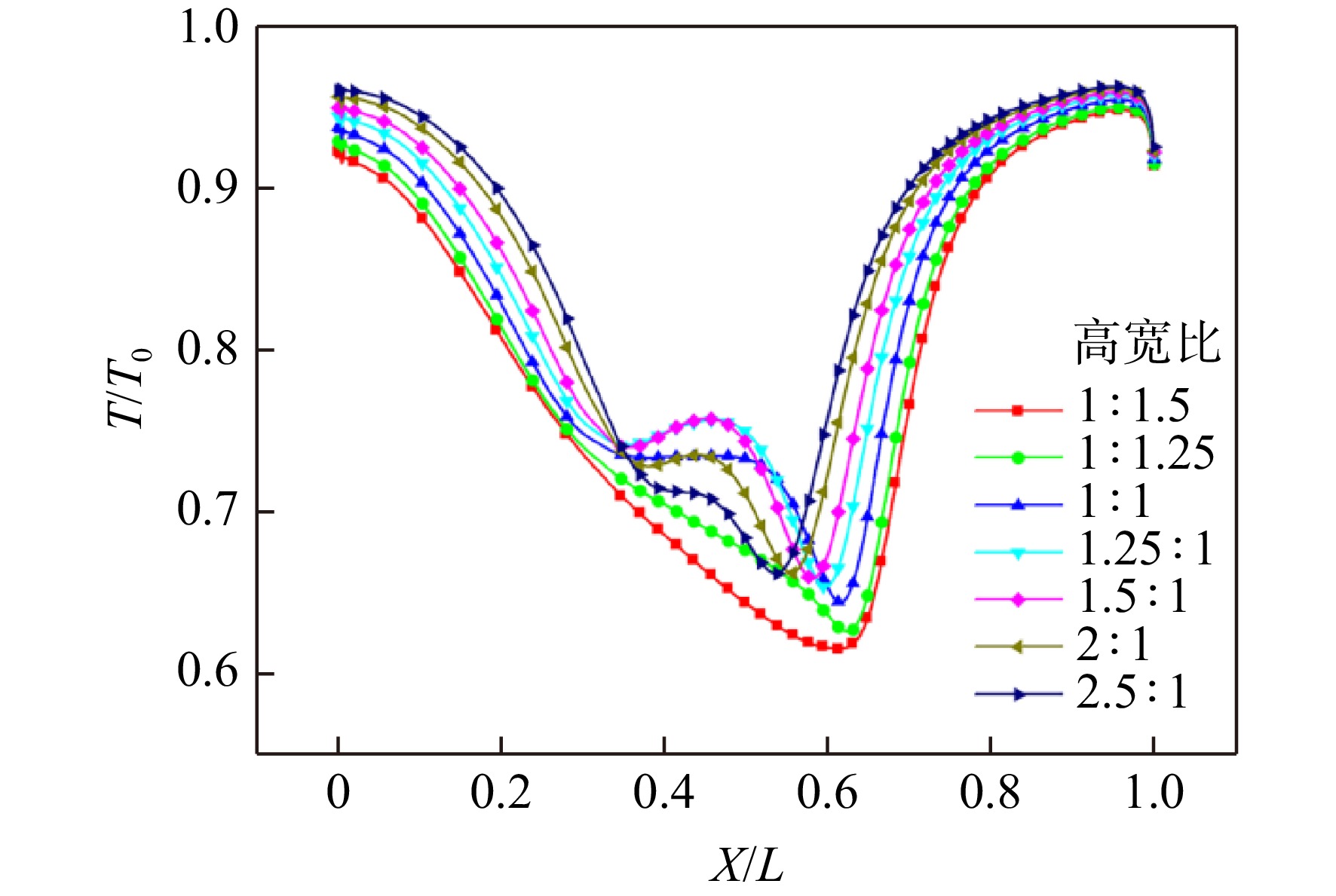
图 20 50%叶高截面处叶片压力面温度分布图(T0=818 K)
Figure 20. Temperature distribution diagram of blade pressure surface at 50% span (T0=818 K)
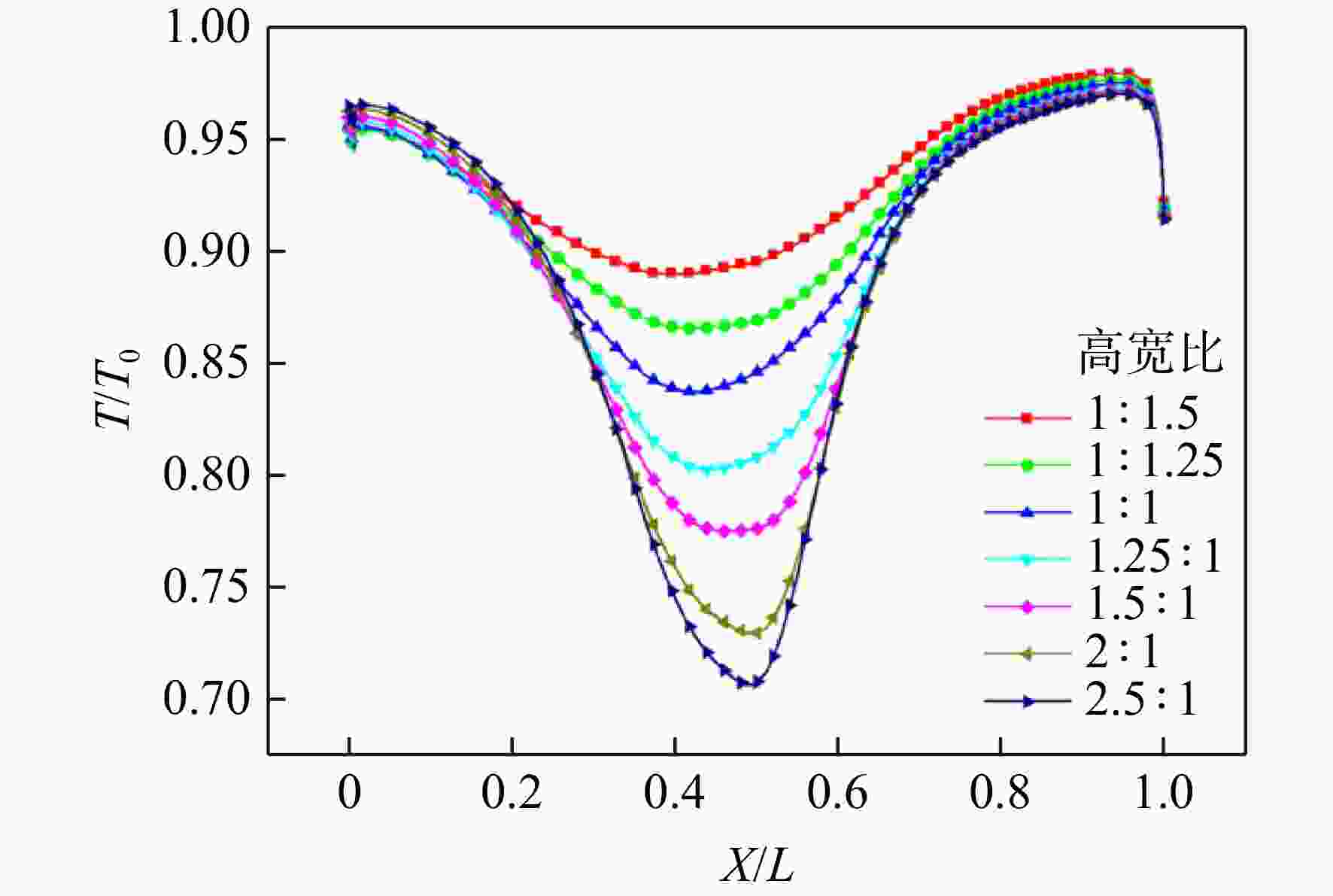
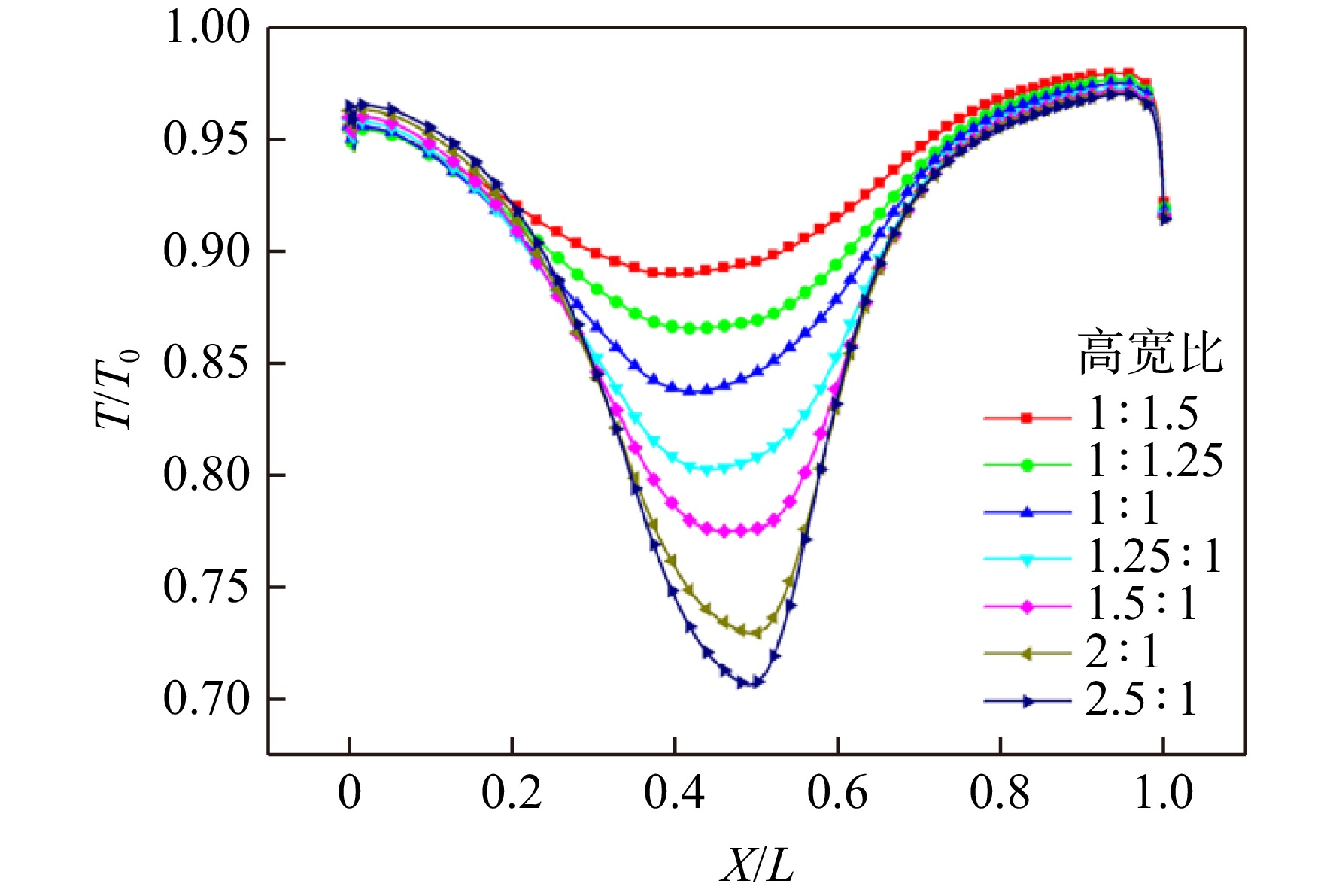
图 21 75%叶高截面处叶片压力面温度分布图(T0=818 K)
Figure 21. Temperature distribution diagram of blade pressure surface at 75% span (T0=818 K)
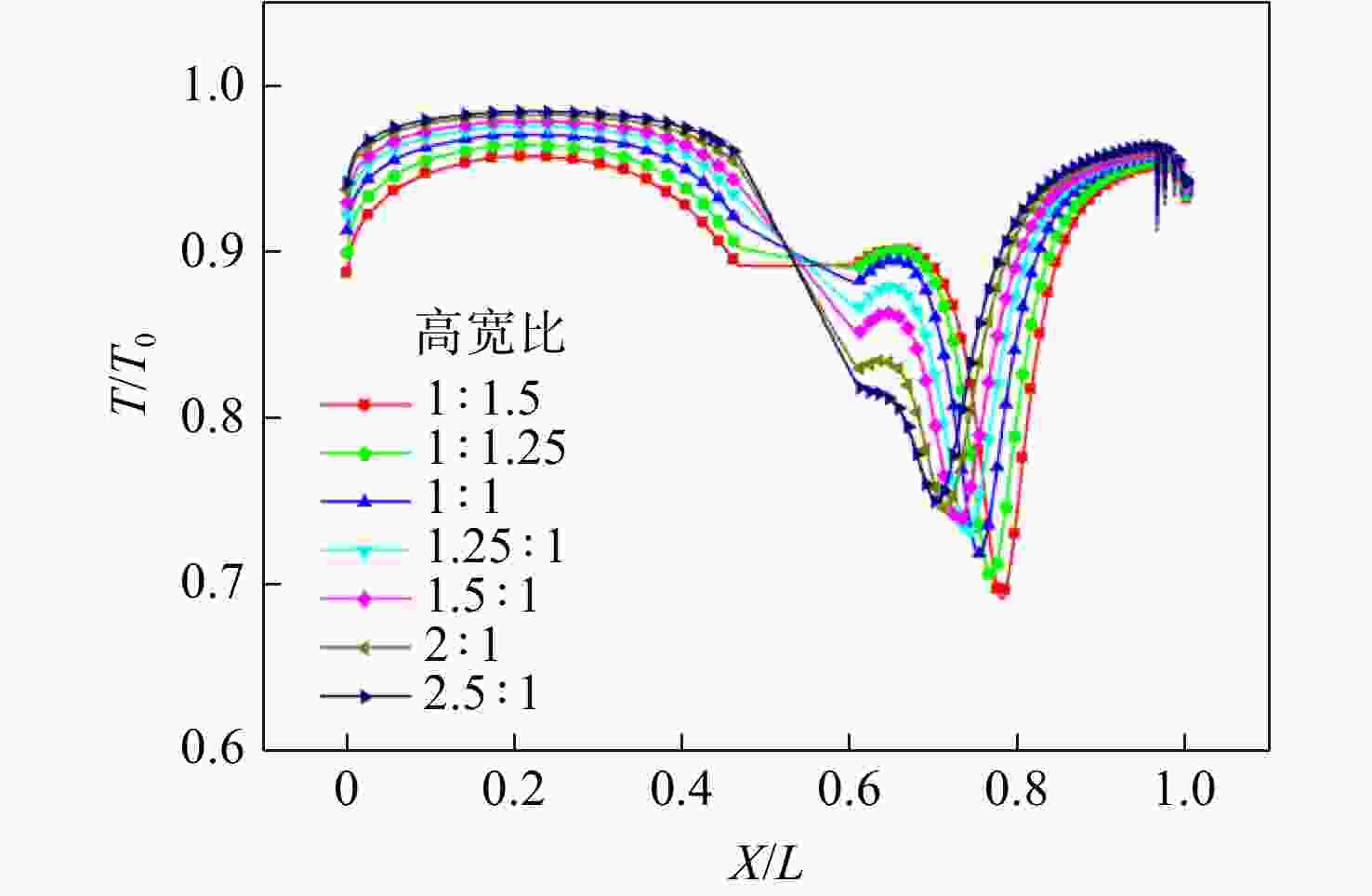
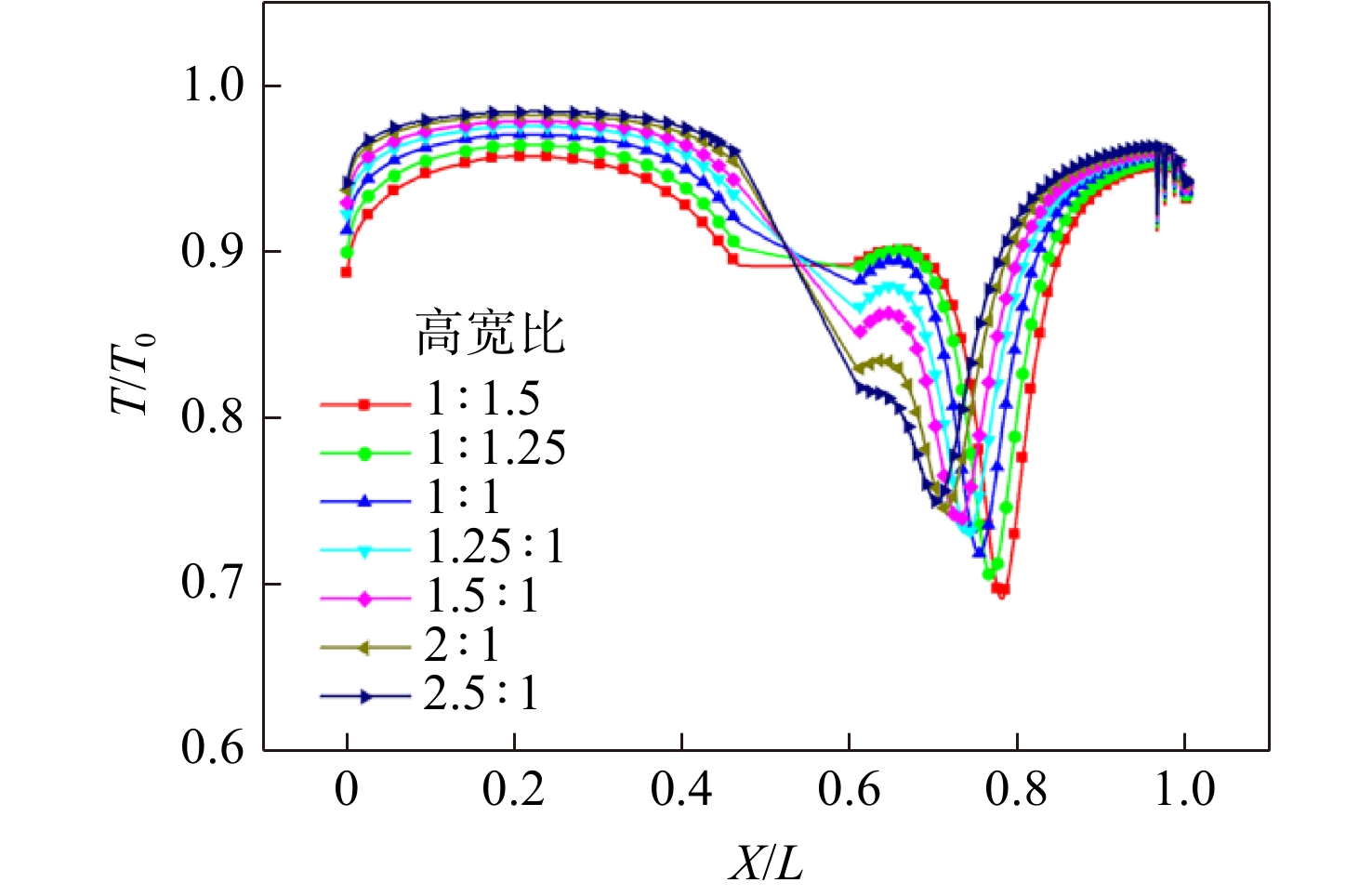
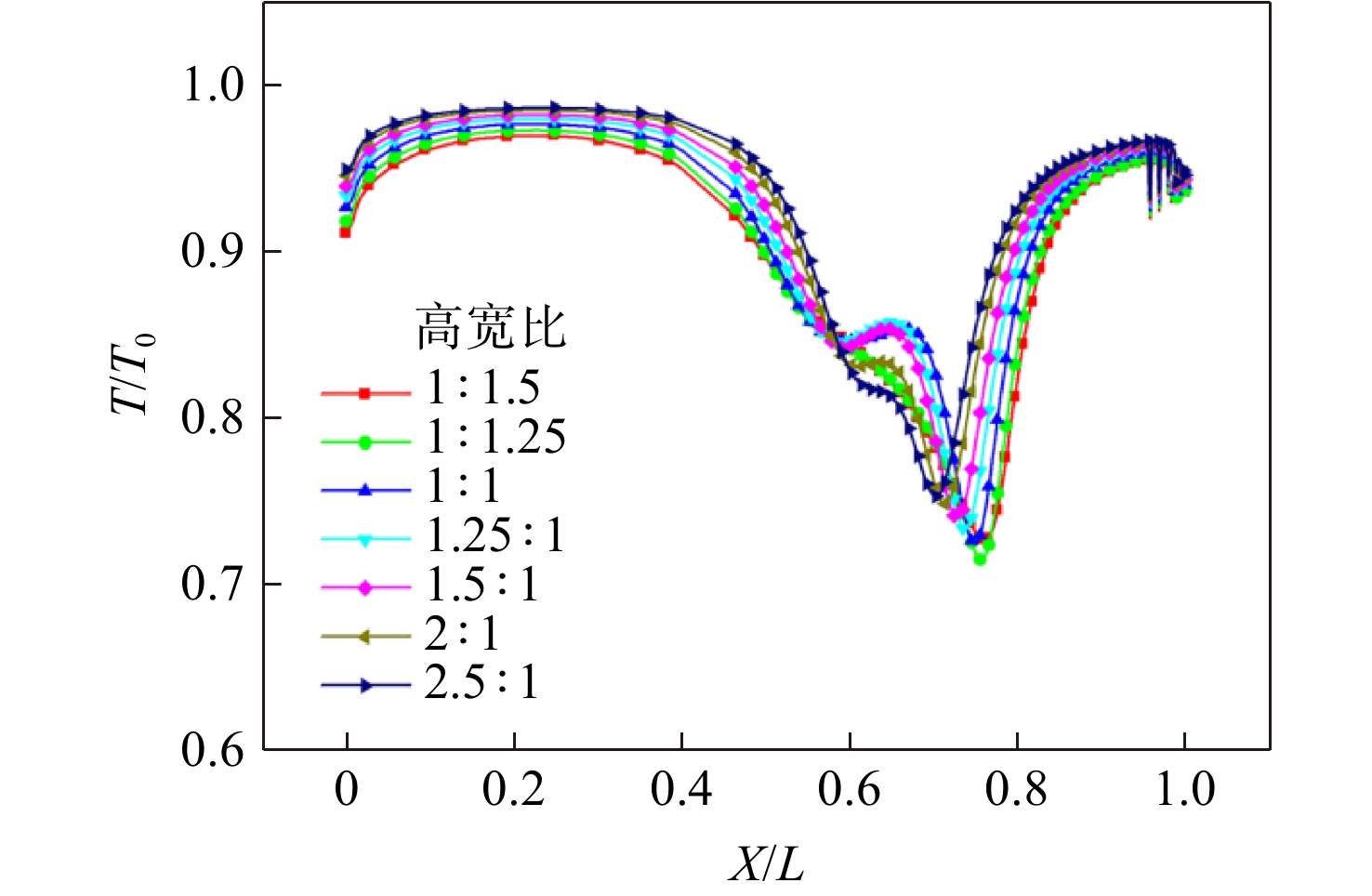
图 22 25%叶高截面处叶片吸力面温度分布图(T0=818 K)
Figure 22. Temperature distribution of blade suction surface at 25% span (T0=818 K)
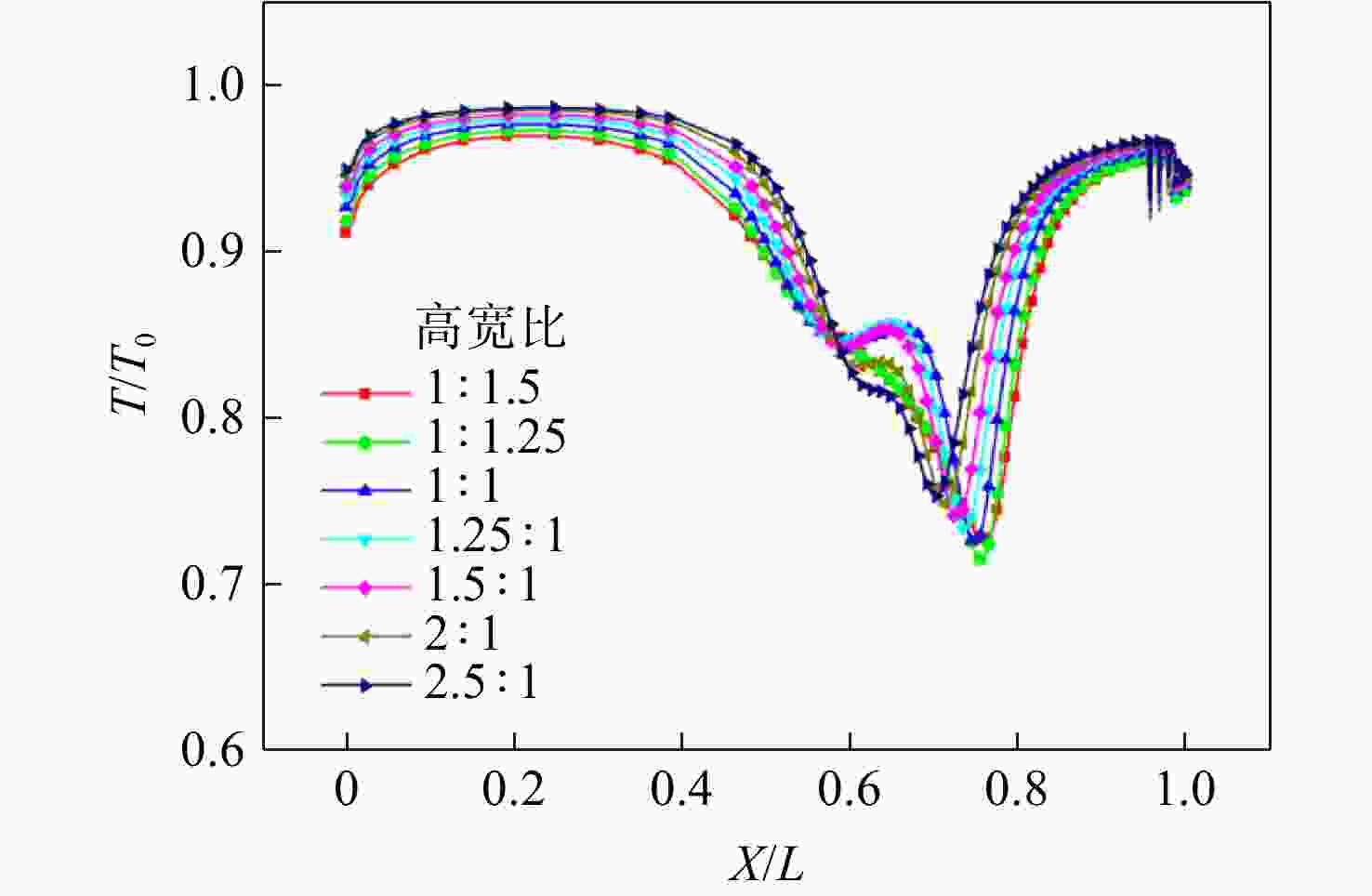
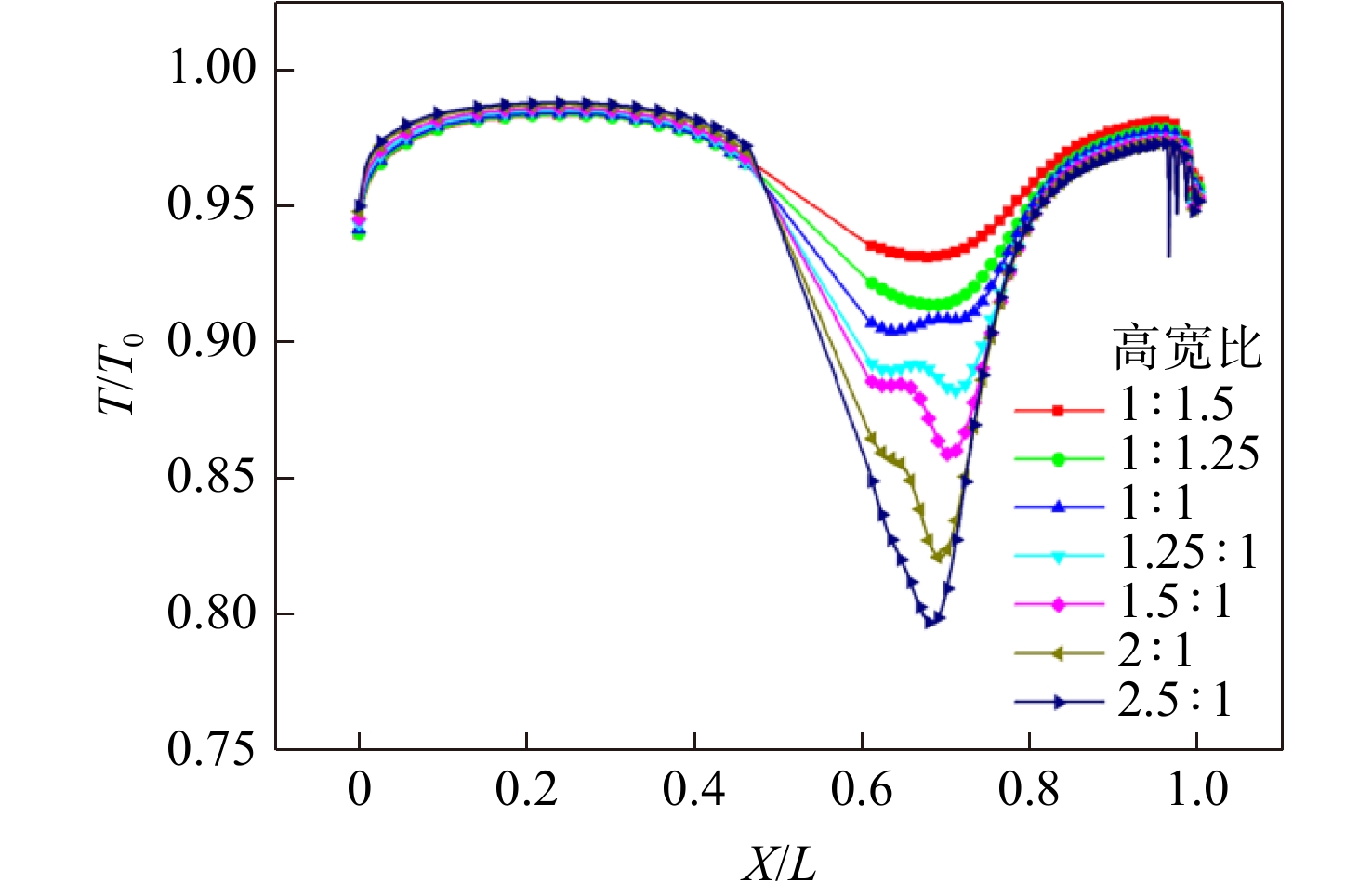
图 23 50%叶高截面处叶片吸力面温度分布图(T0=818 K)
Figure 23. Temperature distribution diagram of blade suction surface at 50% span (T0=818 K)
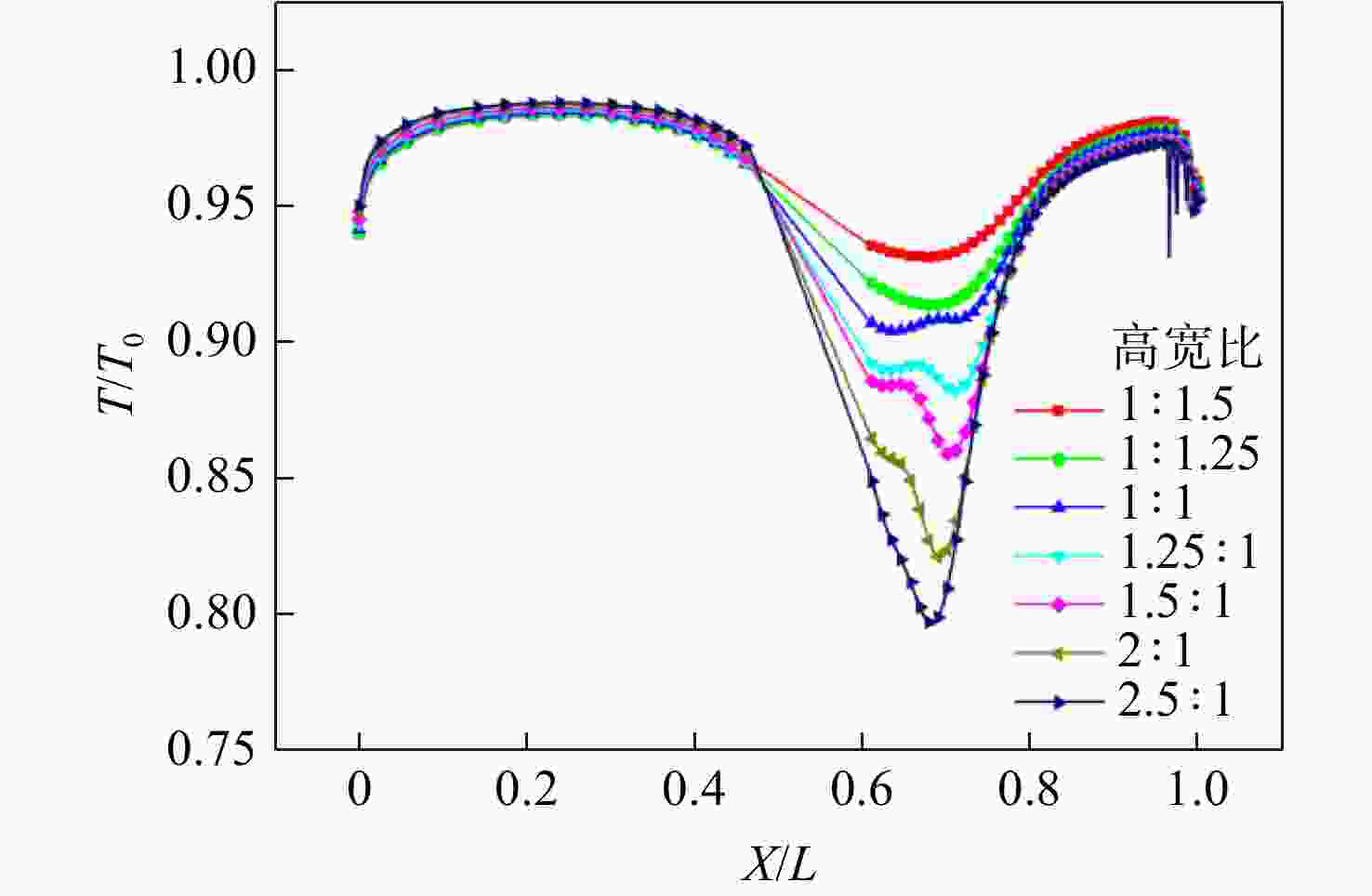
图 24 75%叶高截面处叶片吸力面温度分布图(T0=818 K)
Figure 24. Temperature distribution of blade suction surface at the 75% span (T0=818 K)
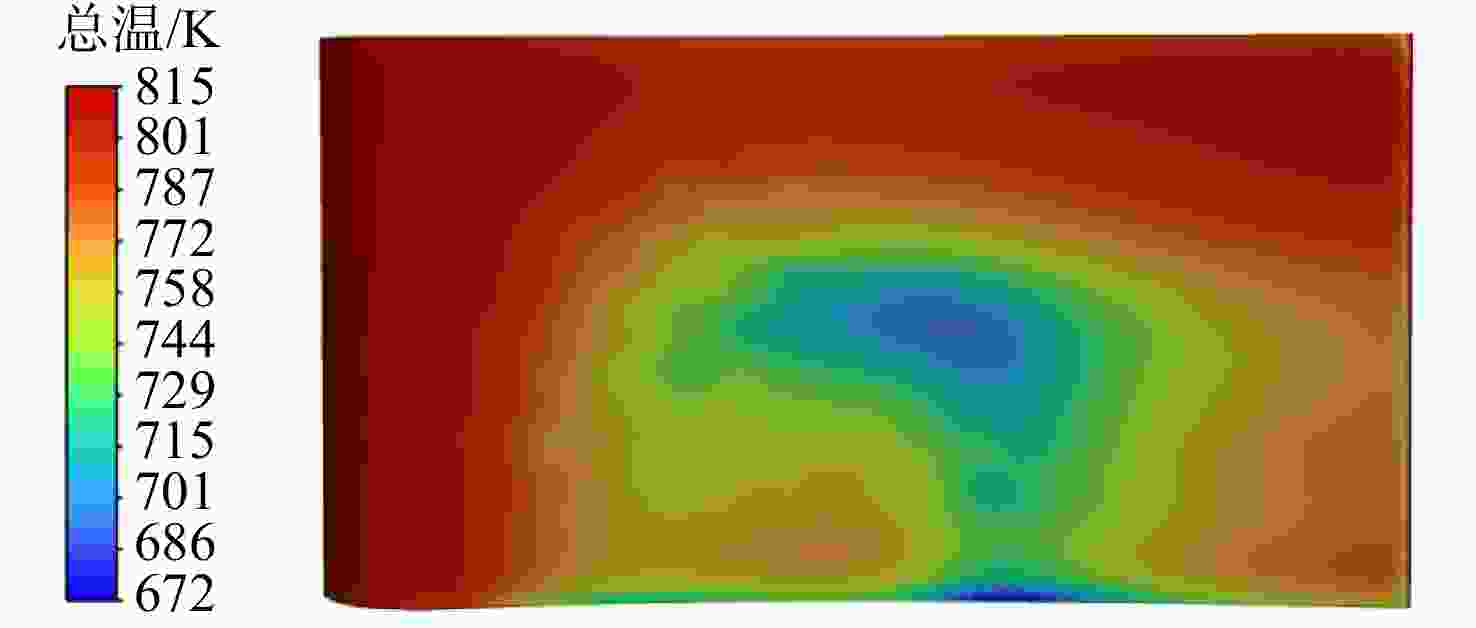
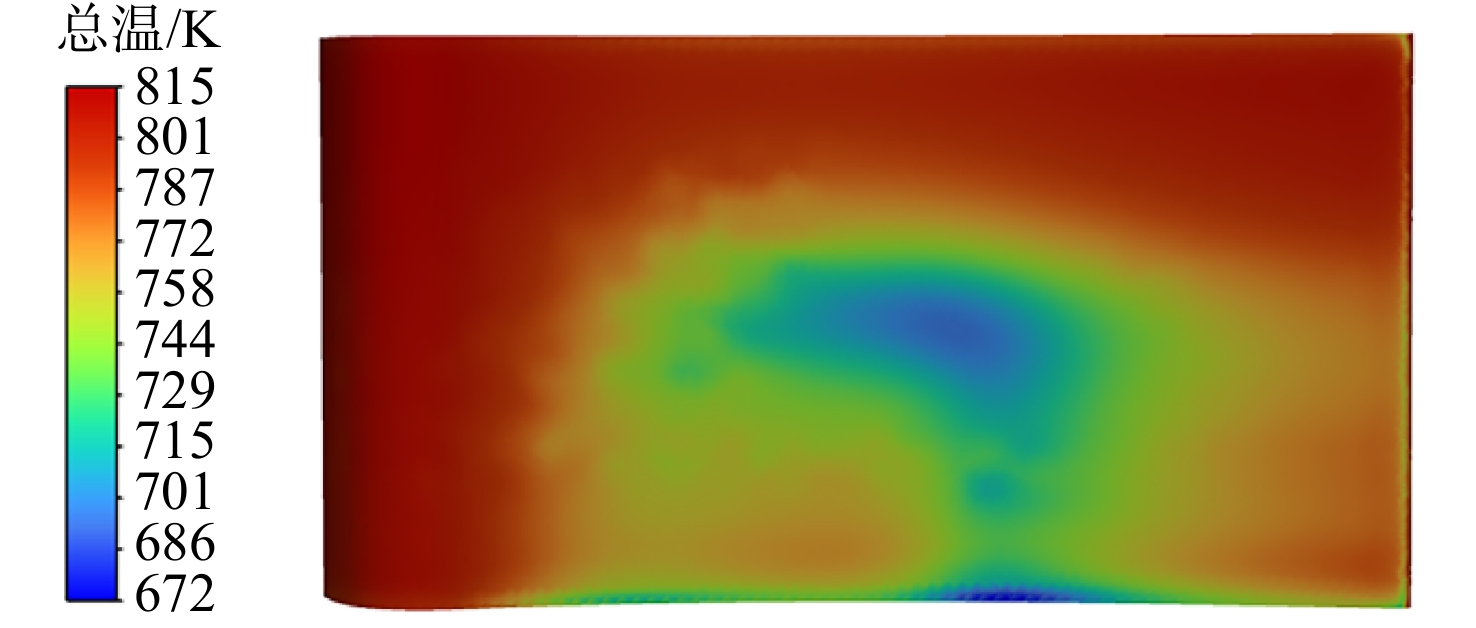
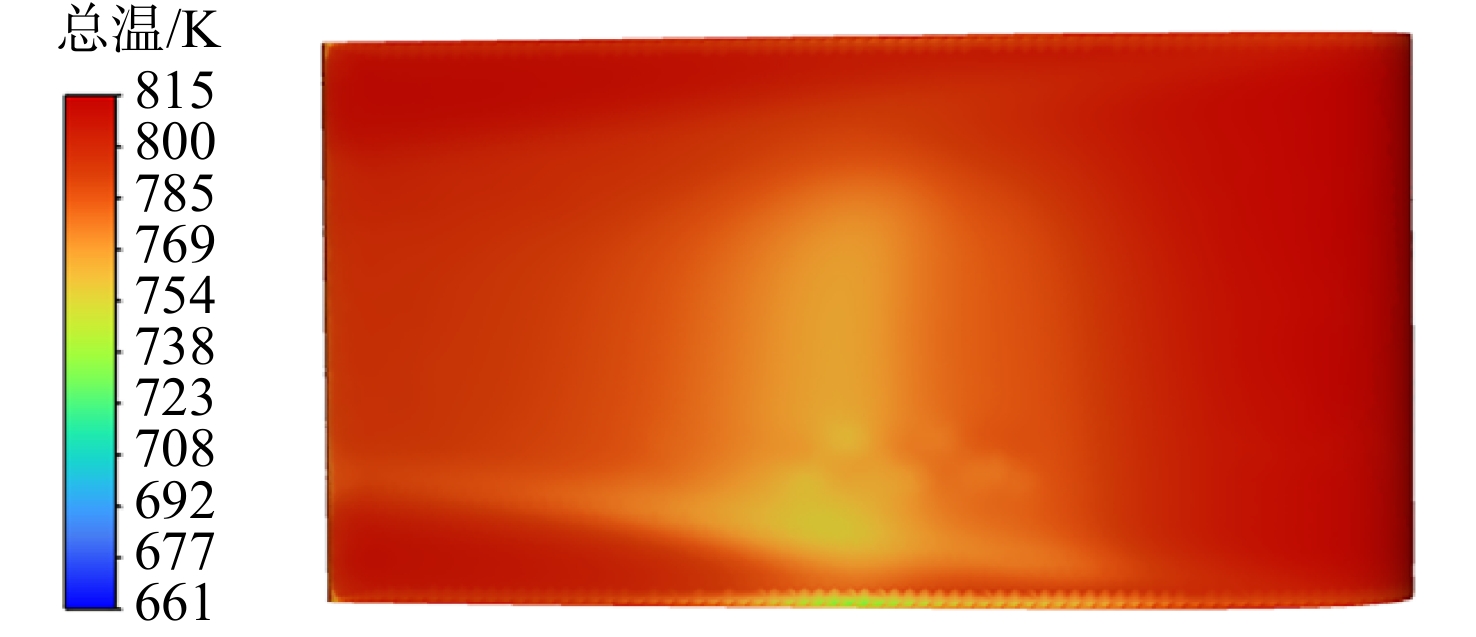
图 25 高宽比为1∶1.5叶片压力面温度云图
Figure 25. Temperature contour of blade pressure surface with aspect ratio of 1∶1.5
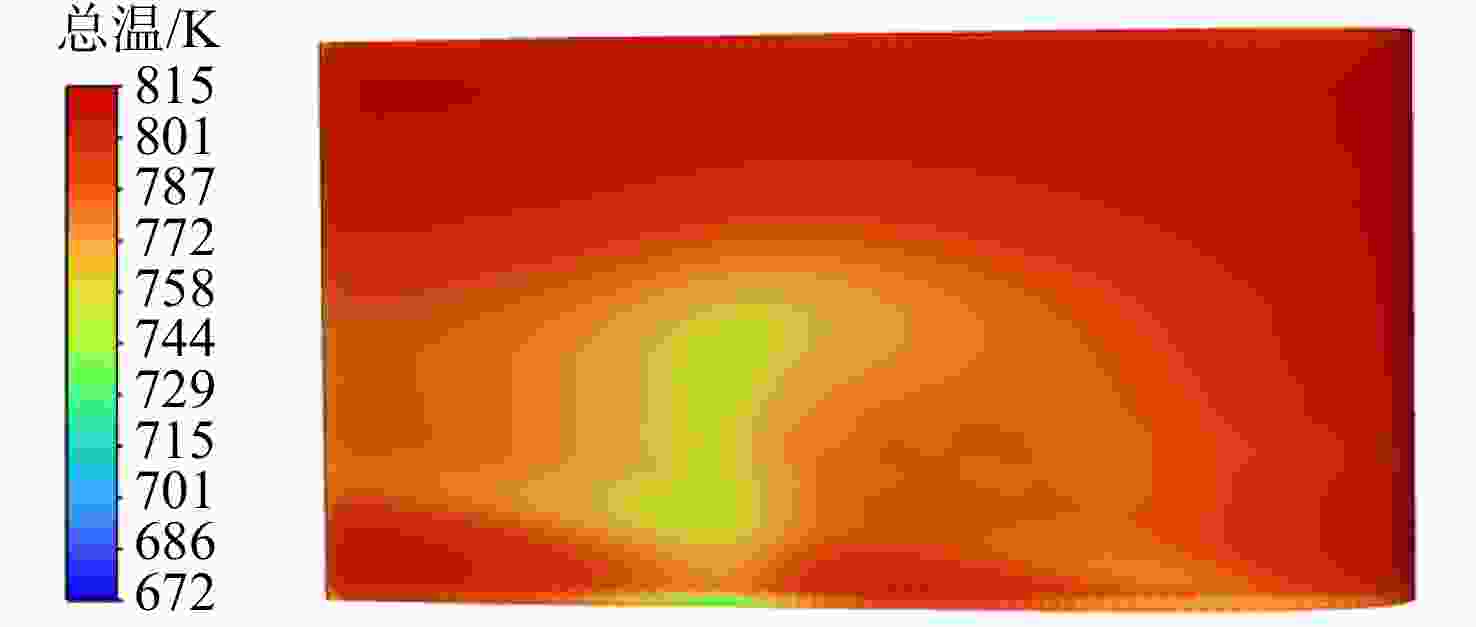
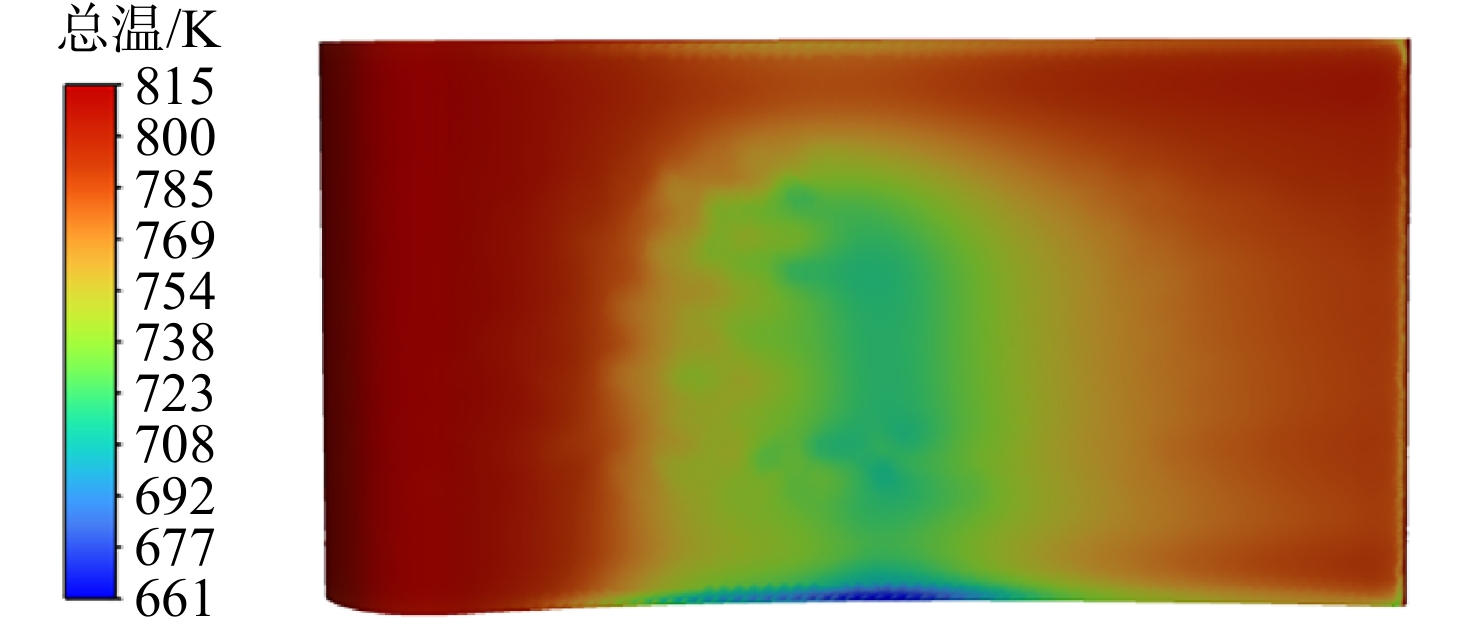
图 26 高宽比为1∶1.5叶片吸力面温度云图
Figure 26. Temperature contour of blade suction surface with aspect ratio of 1∶1.5
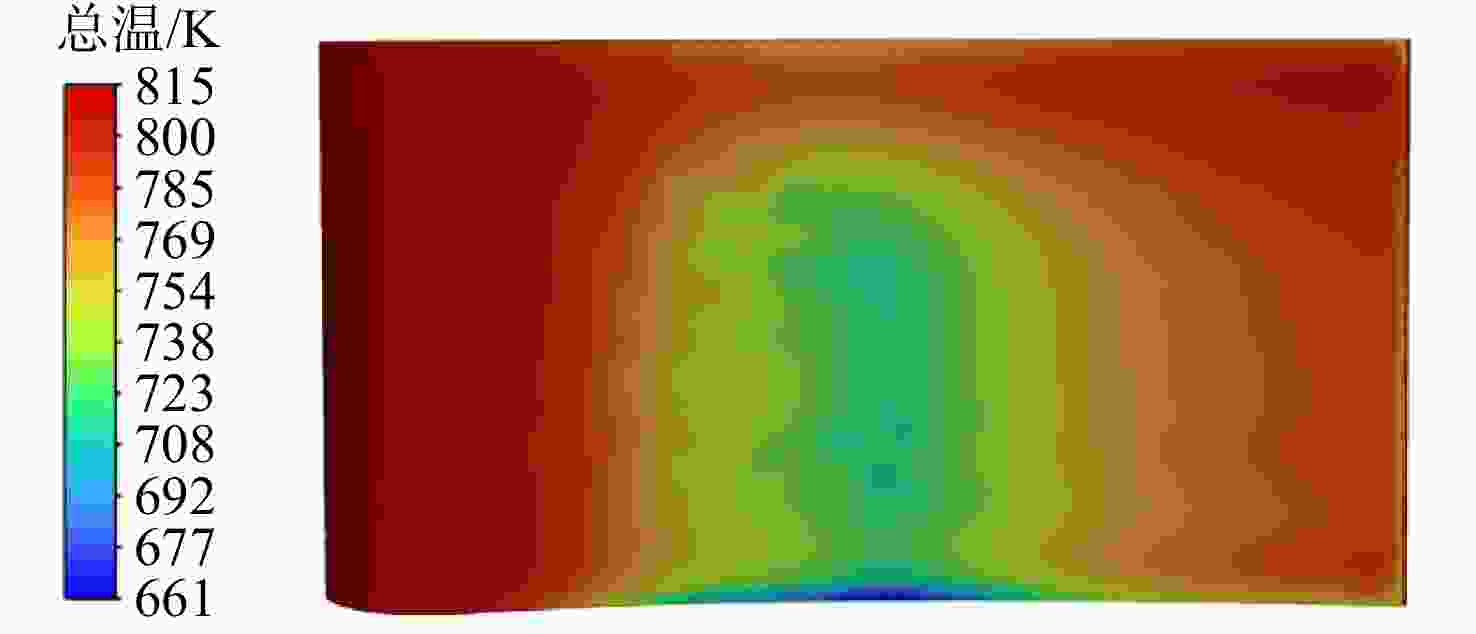
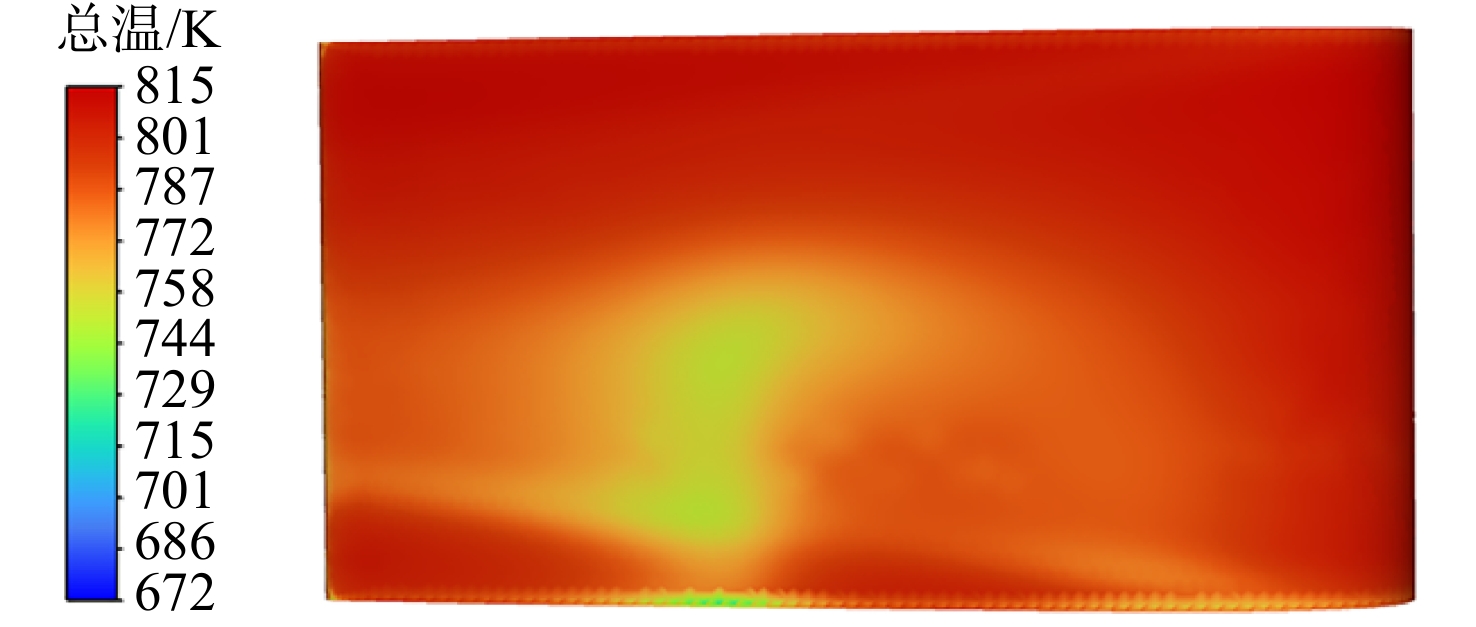
图 27 高宽比为2∶1叶片压力面温度云图
Figure 27. Temperature contour of blade pressure surface with aspect ratio of 2∶1
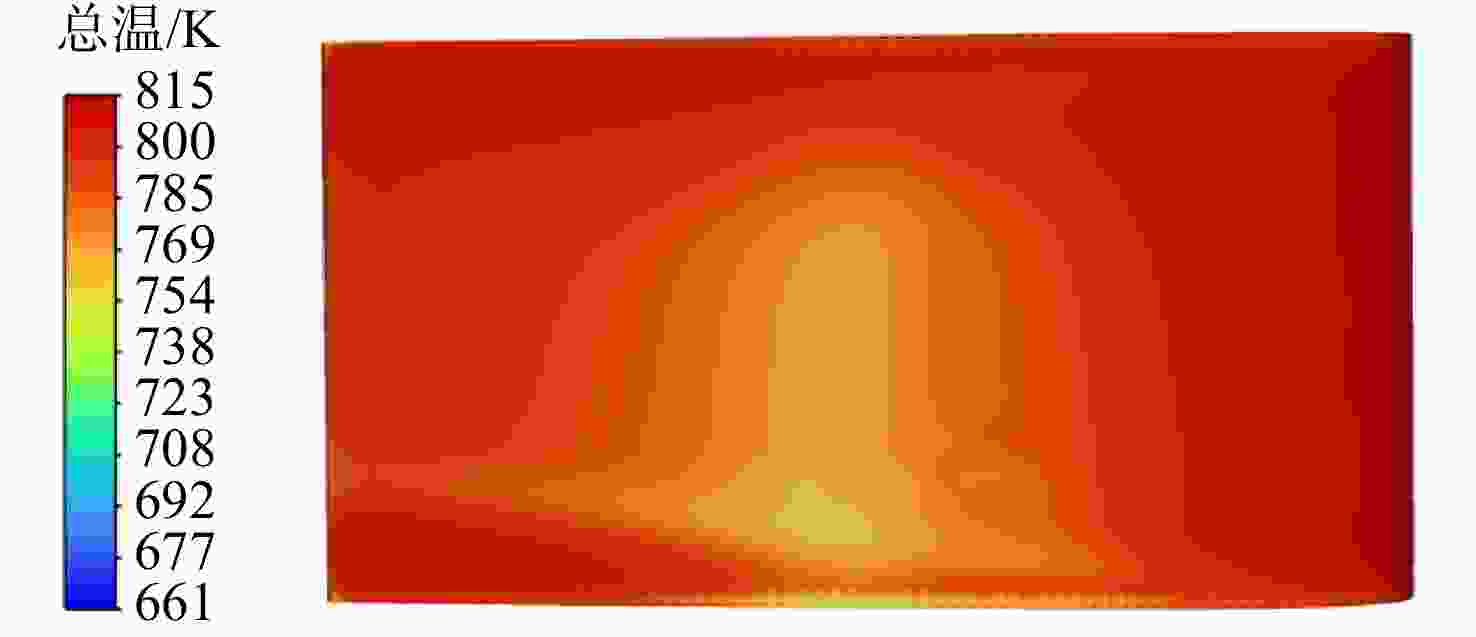
图 28 高宽比为2∶1叶片吸力面温度云图
Figure 28. Temperature contour of blade suction surface with aspect ratio of 2∶1
表 1 燃气通道边界条件
Table 1. Blade channel boundary conditions
参数 数值 进口 总压/Pa 413286 总温/K 818 湍流强度/% 8.3 黏度比 30 马赫数 0.17 雷诺数/106 6.4 出口 静压/Pa 254172 马赫数 0.89 雷诺数/106 2.44  下载: 导出CSV
表 2 内冷通道边界条件
Table 2. Inner cooling channel boundary conditions
通道编号 内径/mm 空气流量/(kg/s) 进口温度/K 1 6.3 0.0222 342 2 6.3 0.0221 344 3 6.3 0.0218 335 4 6.3 0.0228 336 5 6.3 0.0225 330 6 6.3 0.0225 355 7 6.3 0.0216 336 8 3.1 0.00744 350 9 3.1 0.00477 377 10 1.98 0.00256 387
下载: 导出CSV
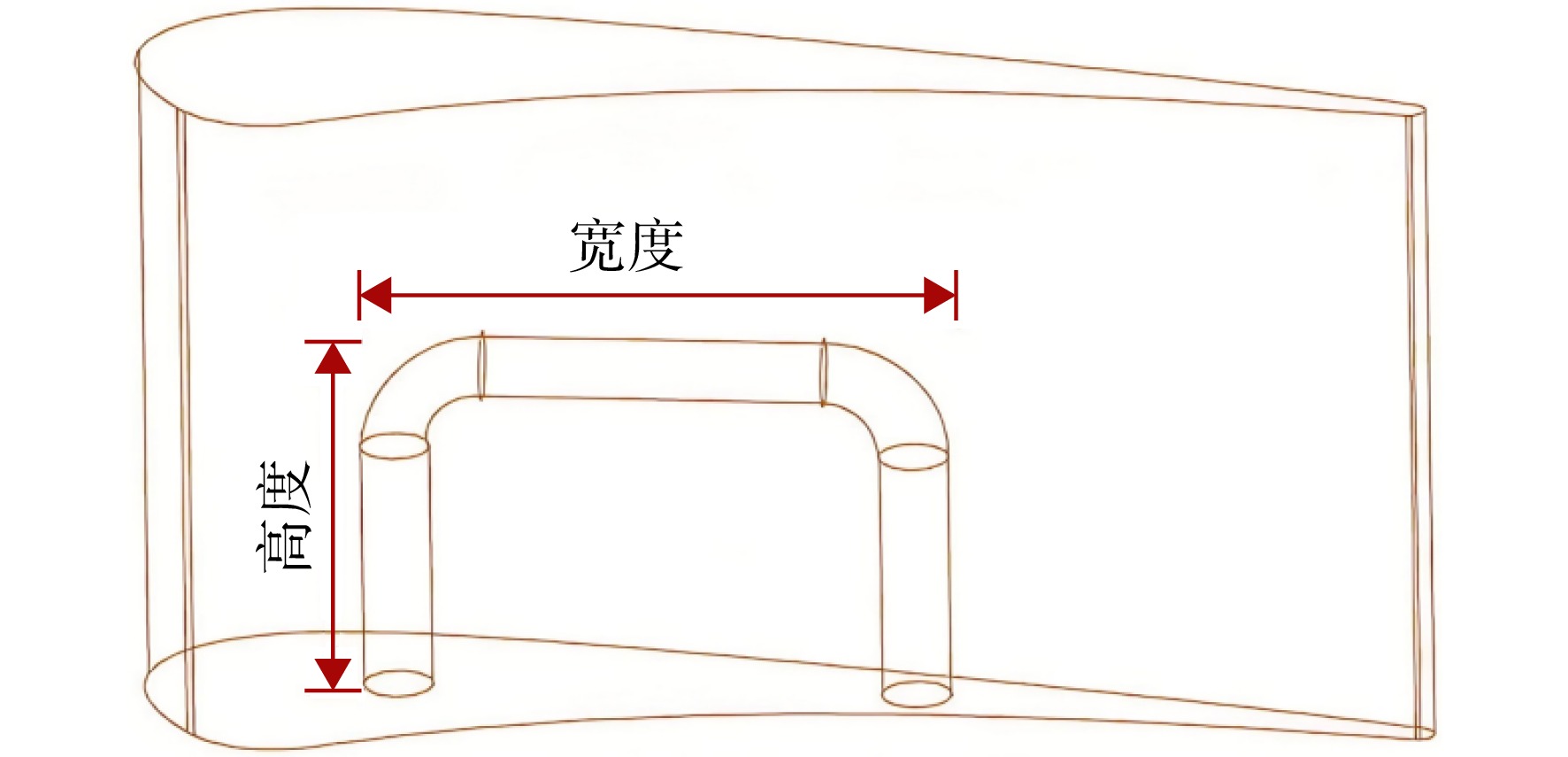
表 3 内冷通道高宽比
Table 3. Height-width ratio of the inner cooling channel
方案编号 高宽比 高度/m 宽度/m 1 1∶1.5 39.0000 58.5000 2 1∶1 42.0000 52.5000 3 1∶1.25 45.5000 45.5000 4 1.25∶1 48.7500 39.0000 5 1.5∶1 51.1875 34.1250 6 2∶1 54.6000 27.3000 7 2.5∶1 56.8750 22.7500
下载: 导出CSV
表 4 油冷方案内冷通道边界条件
Table 4. Inner cooling channel boundary conditions in the oil-cooling scheme
参数 数值 进口 总压/MPa 3 总温/K 303.15 出口 燃油流量/(kg/s) 0.2
下载: 导出CSV
-
[1] BOEHM R C, SCHOLLA L C, HEYNE J S. Sustainable alternative fuel effects on energy consumption of jet engines[J]. Fuel, 2021, 304: 121378. doi: 10.1016/j.fuel.2021.121378 [2] LI Fuqiang, LI Zaizheng, JING Kai, et al. Thermal cracking of endothermic hydrocarbon fuel in regenerative cooling channels with different geometric structures[J]. Energy & Fuels, 2018, 32(6): 6524-6534. [3] 裴崇雁, 黎林林, 程洪贵. 油冷涡轮泵涡轮叶片换热特性分析[C]//中国航天第三专业信息网第三十七届技术交流会暨第一届空天动力联合会议论文集. 西安: 北京动力机械研究所, 2016: 12. PEI Chongyan, LI Linlin, CHENG Honggui. Analysis of heat transfer characteristics of oil-cooled turbine pump turbine blades[C]//Proceedings of the 37th Technical Exchange Meeting and the first Space Power Joint Conference of China Aerospace Third Professional Information Network. Xi’an: Beijing Power Machinery Research Institute. 2016: 12. (in ChinesePEI Chongyan, LI Linlin, CHENG Honggui. Analysis of heat transfer characteristics of oil-cooled turbine pump turbine blades[C]//Proceedings of the 37th Technical Exchange Meeting and the first Space Power Joint Conference of China Aerospace Third Professional Information Network. Xi’an: Beijing Power Machinery Research Institute. 2016: 12. (in Chinese) [4] 秦江, 孙红闯, 白新阳, 等. 油冷涡轮动叶方案中旋转冷却效应分析[J]. 推进技术, 2017, 38(2): 399-407. QIN Jiang, SUN Hongchuang, BAI Xinyang, et al. Analysis of rotary cooling effect in the oil-cooled turbine moving vane scheme[J]. Journal of Propulsion Technology, 2017, 38(2): 399-407. (in ChineseQIN Jiang, SUN Hongchuang, BAI Xinyang, et al. Analysis of rotary cooling effect in the oil-cooled turbine moving vane scheme[J]. Journal of Propulsion Technology, 2017, 38(2): 399-407. (in Chinese) [5] SUN H, QIN J, HONGYAN H, et al. Numerical simulation of flow and heat transfer in a square rotating U-duct using hydrocarbon fuel[J]. Journal of Heat Transfer, 2018, 141(3): 031701. [6] CHENG Xiang, LI Zhaoren, WAN Hongniu, et al. Experimental investigation on convective heat transfer of hydrocarbon fuel in transverse corrugated tubes[J]. International Journal of Heat and Mass Transfer, 2023, 201: 123586. doi: 10.1016/j.ijheatmasstransfer.2022.123586 [7] FENG Song, CHENG Xiang, BI Qincheng, et al. Experimental investigation on convective heat transfer of hydrocarbon fuel in circular tubes with twisted-tape inserts[J]. International Journal of Heat and Mass Transfer, 2020, 146: 118817. doi: 10.1016/j.ijheatmasstransfer.2019.118817 [8] WEN Jie, HUANG Haoran, JIA Zhouxia, et al. Buoyancy effects on heat transfer to supercritical pressure hydrocarbon fuel in a horizontal miniature tube[J]. International Journal of Heat and Mass Transfer, 2017, 115: 1173-1181. doi: 10.1016/j.ijheatmasstransfer.2017.08.116 [9] BOHN D, BONHOFF B, SCHONENBORN H. Combined aerodynamic and thermal analysis of a high-pressure turbine nozzle guide vane[R]. IGTC Paper 95-108, 1995. [10] 徐建新, 许立敬. 基于流热固耦合的航空发动机涡轮叶片仿真分析[J]. 航空科学技术, 2023, 34(2): 26-33. XU Jianxin, XU Lijing. Simulation analysis of aviation engine turbine blade based on flow thermosetting coupling[J]. Aeronautical Science & Technology, 2023, 34(2): 26-33. (in ChineseXU Jianxin, XU Lijing. Simulation analysis of aviation engine turbine blade based on flow thermosetting coupling[J]. Aeronautical Science & Technology, 2023, 34(2): 26-33. (in Chinese) [11] 肖力伟. 基于流热固耦合方法的燃气轮机透平叶片强度与寿命分析[D]. 北京: 中国科学院大学, 2018. XIAO Liwei. Analysis of strength and life of gas turbine turbine blades based on flow thermosetting coupling method[D]. Beijing: University of Chinese Academy of Sciences, 2018. (in ChineseXIAO Liwei. Analysis of strength and life of gas turbine turbine blades based on flow thermosetting coupling method[D]. Beijing: University of Chinese Academy of Sciences, 2018. (in Chinese) [12] 杨杰, 张姝, 刘志超. 基于某航空发动机涡轮叶片的热流固耦合分析[J]. 机械, 2022, 49(10): 74-80. YANG Jie, ZHANG Zhu, LIU Zhichao. Thermal current solid coupling analysis based on an aviation engine turbine blade[J]. Machinery, 2022, 49(10): 74-80. (in Chinese doi: 10.3969/j.issn.1006-0316.2022.10.012YANG Jie, ZHANG Zhu, LIU Zhichao. Thermal current solid coupling analysis based on an aviation engine turbine blade[J]. Machinery, 2022, 49(10): 74-80. (in Chinese) doi: 10.3969/j.issn.1006-0316.2022.10.012 [13] 毕绍康. 双辐板涡轮盘流热固耦合计算及优化设计[D]. 哈尔滨: 哈尔滨工业大学, 2020. BI Shaokang. Calculation and optimization design of double-spoke plate[D]. Harbin: Harbin Institute of Technology, 2020. (in ChineseBI Shaokang. Calculation and optimization design of double-spoke plate[D]. Harbin: Harbin Institute of Technology, 2020. (in Chinese) [14] 董平. 航空发动机气冷涡轮叶片的气热耦合数值模拟研究[D]. 哈尔滨: 哈尔滨工业大学, 2009. DONG Ping. Numerical simulation study of gas-thermal coupling of gas-cooled turbine blades of aero-engine[D]. Harbin: Harbin Institute of Technology, 2009. (in ChineseDONG Ping. Numerical simulation study of gas-thermal coupling of gas-cooled turbine blades of aero-engine[D]. Harbin: Harbin Institute of Technology, 2009. (in Chinese) [15] 刘友宏, 赵晓旺. 涡轮基组合循环发动机燃油系统流动传热耦合仿真软件开发[J]. 推进技术, 2022, 43(3): 200254. LIU Youhong, ZHAO Xiaowang. Development of simulation of turbine-based combined cycle engine[J]. Journal of Propulsion Technology, 2022, 43(3): 200254. (in ChineseLIU Youhong, ZHAO Xiaowang. Development of simulation of turbine-based combined cycle engine[J]. Journal of Propulsion Technology, 2022, 43(3): 200254. (in Chinese) [16] HYLTON L D, MIHELC M S, TURNER E R, et al. Analytical and experimental evaluation of the heat transfer distribution over the surfaces of turbine vanes[R]. NASA-CR-168015, 1983. [17] 王伯鑫, 赵巍, 隋秀明, 等. 考虑叶片径向和垂直于壁面方向导热的涡轮叶片对流冷却模型研究[J]. 推进技术, 2020, 41(2): 390-397. WANG Boxin, ZHAO Wei, SUI Xiuming, et al. A convective cooling model of turbine blades with radial and thermal direction normal to the wall[J]. Journal of Propulsion Technology, 2020, 41(2): 390-397. (in ChineseWANG Boxin, ZHAO Wei, SUI Xiuming, et al. A convective cooling model of turbine blades with radial and thermal direction normal to the wall[J]. Journal of Propulsion Technology, 2020, 41(2): 390-397. (in Chinese) [18] 程泽源, 朱剑琴, 金钊. 吸热型碳氢燃料RP-3替代模型研究[J]. 航空动力学报, 2016, 31(2): 391-398. CHENG Zeyuan, ZHU Jianqin, JIN Kan. Study on RP-3 substitution model for endothermic hydrocarbon fuel[J]. Journal of Aerospace Power, 2016, 31(2): 391-398. (in ChineseCHENG Zeyuan, ZHU Jianqin, JIN Kan. Study on RP-3 substitution model for endothermic hydrocarbon fuel[J]. Journal of Aerospace Power, 2016, 31(2): 391-398. (in Chinese) [19] 裴崇雁, 程洪贵, 肖鑫, 等. 涡轮泵壳体与喷嘴环一体化结构燃油冷却研究[C]//第五届空天动力联合会议暨中国航天第三专业信息网第41届技术交流会论文集: 第三册.呼和浩特: 中国科协航空发动机产学联合体, 2020: 50-61. PEI Chongyan, CHENG Honggui, XIAO Xin, et al. Study on fuel cooling of turbine pump housing and nozzle ring[C]//Proceedings of the 5th Space Power Joint Conference and the 41st Technical Exchange Meeting of China Aerospace Third Professional Information Network: Volume 3. Hohhot: Aero-engine Production and Science Consortium of China Association for Science and Technology, 2020: 50-61. (in ChinesePEI Chongyan, CHENG Honggui, XIAO Xin, et al. Study on fuel cooling of turbine pump housing and nozzle ring[C]//Proceedings of the 5th Space Power Joint Conference and the 41st Technical Exchange Meeting of China Aerospace Third Professional Information Network: Volume 3. Hohhot: Aero-engine Production and Science Consortium of China Association for Science and Technology, 2020: 50-61. (in Chinese) -



 点击查看大图

计量
- 文章访问数: 849
- HTML浏览量: 475
- PDF量: 93
- 被引次数: 0