






Simulation and experiment on laminar combustion characteristics of methane/ammonia mixture
-
摘要:
利用定容燃烧弹对甲烷/氨气混合气在初始压力分别为0.1、0.2、0.3 MPa、当量比范围为0.8~1.4、初始温度分别为390、420、450 K、氨气掺混比分别为0.1、0.3、0.5工况下的层流燃烧特性进行了实验测试,获得了当量比、初始压力、初始温度及氨气掺混比对甲烷/氨气混合气层流燃烧特性的影响规律。另外,采用3种不同的详细反应机理对甲烷/氨气混合气的层流燃烧速度进行了数值计算。结果表明:随当量比、初始压力升高,火焰前锋面出现裂纹、胞状结构,火焰稳定性变差;初始温度与氨气掺混比对火焰前锋面结构及火焰稳定性影响较小。随当量比增大,甲烷/氨气混合气的层流燃烧速度先增大后减小,当量比为1.0时达到最大;随初始压力、氨气掺混比降低或初始温度增大,甲烷/氨气混合气的层流燃烧速度逐渐增大。另外,与Okafor机理、NUIGMech 1.1机理相比,采用Konnov机理(201种组分、
2300 个反应)计算得到的多工况条件下甲烷/氨气混合气的层流燃烧速度与实验值最为吻合。Abstract:The laminar combustion characteristics of methane/ammonia mixture at the constant volume combustion bomb were measured at the initial pressures of 0.1, 0.2, 0.3 MPa, the equivalence ratios range of 0.8—1.4, the temperatures of 390, 420, 450 K, and the ammonia mixing ratios of 0.1, 0.3, 0.5. The effects of the equivalence ratio, initial pressure, initial temperature and ammonia mixing ratio on the laminar combustion characteristics of methane/ammonia mixture were obtained. Furthermore, the laminar burning velocities of methane/ammonia mixture were calculated using three detailed chemical kinetic mechanisms. The results showed that, as the equivalence ratio and initial pressure increased, cracks or cellular structures appeared on the flame front surface of methane/ammonia mixture, and the flame stability deteriorated. At the same time, the initial temperature and ammonia mixing ratio had a relatively small impact on the flame front structure and flame stability. The laminar burning velocity of methane/ammonia mixture showed a pattern of first increasing and then decreasing as the equivalence ratio increased, with the maximum value occurring at the equivalence ratio of 1.0. As the initial pressure and ammonia mixing ratio decreased or the initial temperature increased, the laminar burning velocity of methane/ammonia mixture gradually increased. Meanwhile, compared with the calculated results of the Okafor mechanism and NUIGMech 1.1 mechanism, the laminar burning velocities of methane/ammonia mixture under multiple conditions calculated by the Konnov mechanism (201 species,
2300 reactions) agreed well with the corresponding experimental data. -
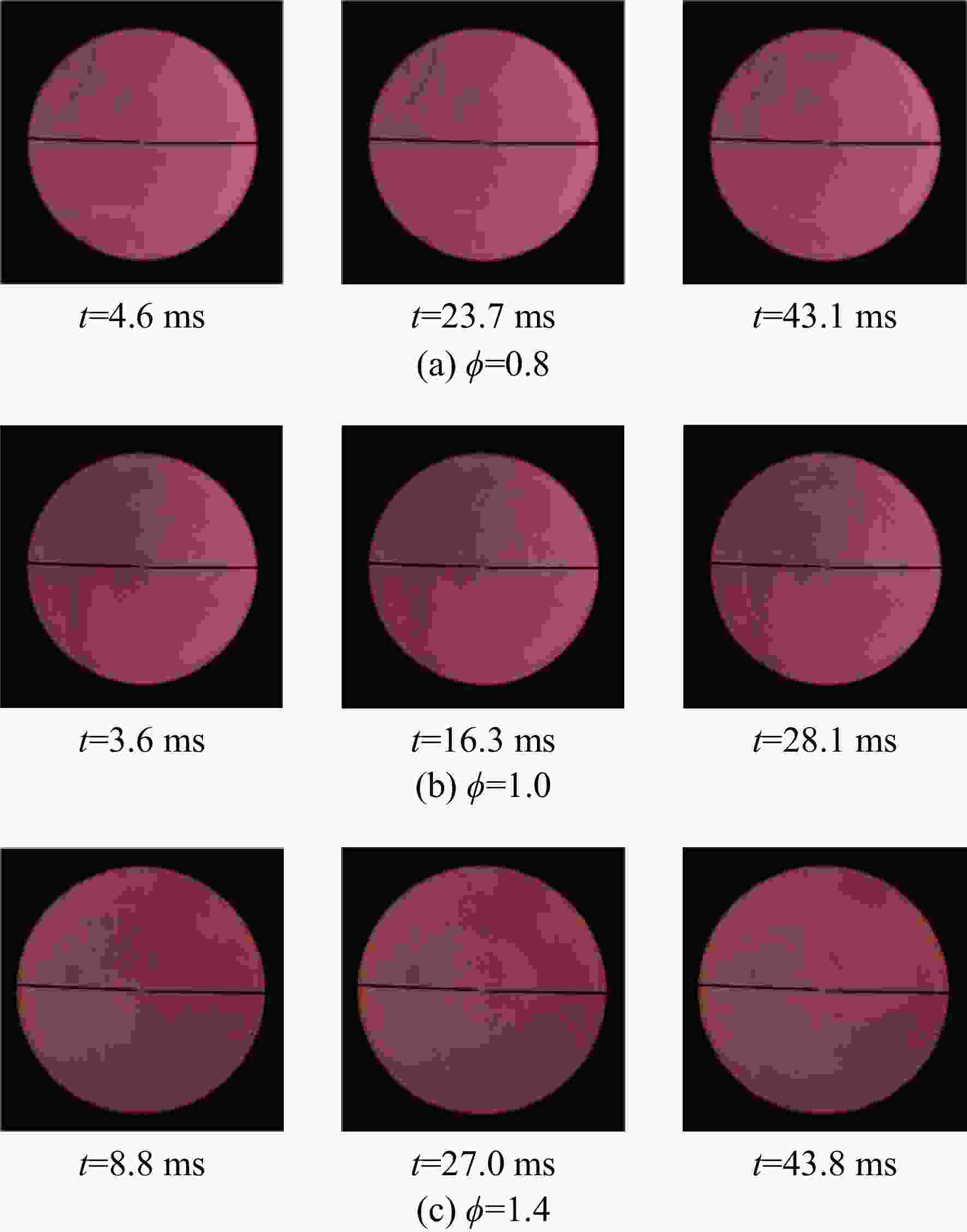
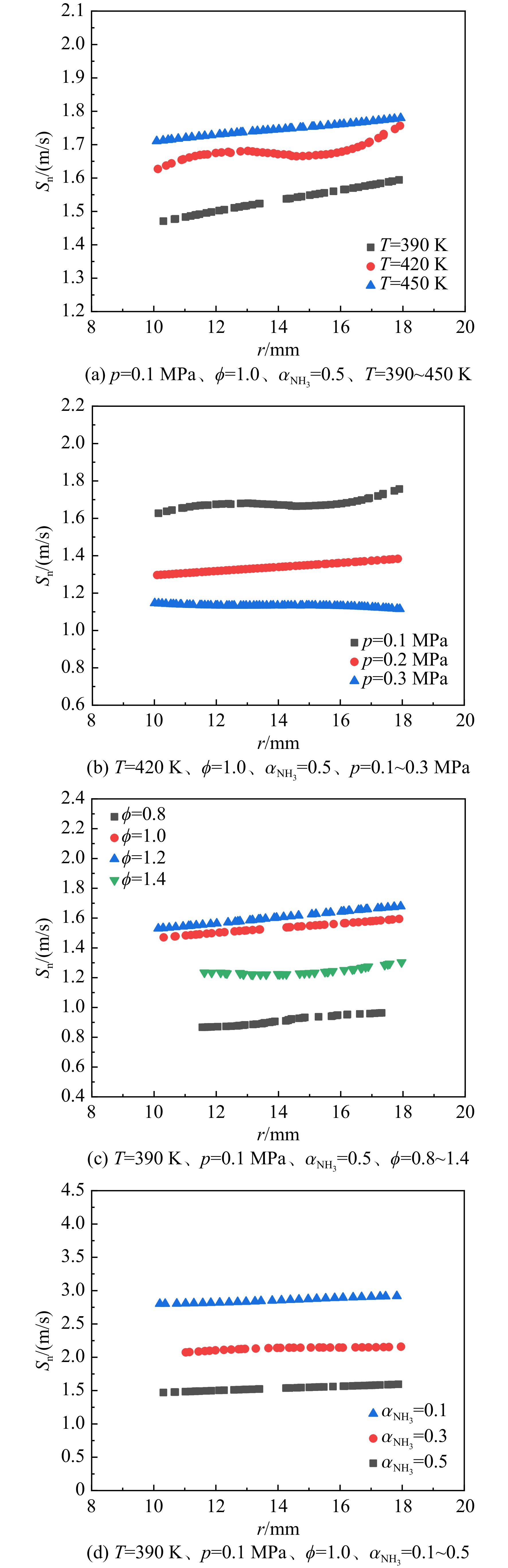
图 3 当量比对甲烷/氨气混合气火焰发展的影响(p=0.1 MPa、T=390 K、$ {\alpha _{{\text{N}}{{\text{H}}_{\text{3}}}}} $=0.5)
Figure 3. Effect of equivalent ratio on the flame development of methane/ammonia mixture(p =0.1 MPa, T=390 K, $ {\alpha _{{\text{N}}{{\text{H}}_{\text{3}}}}} $=0.5)

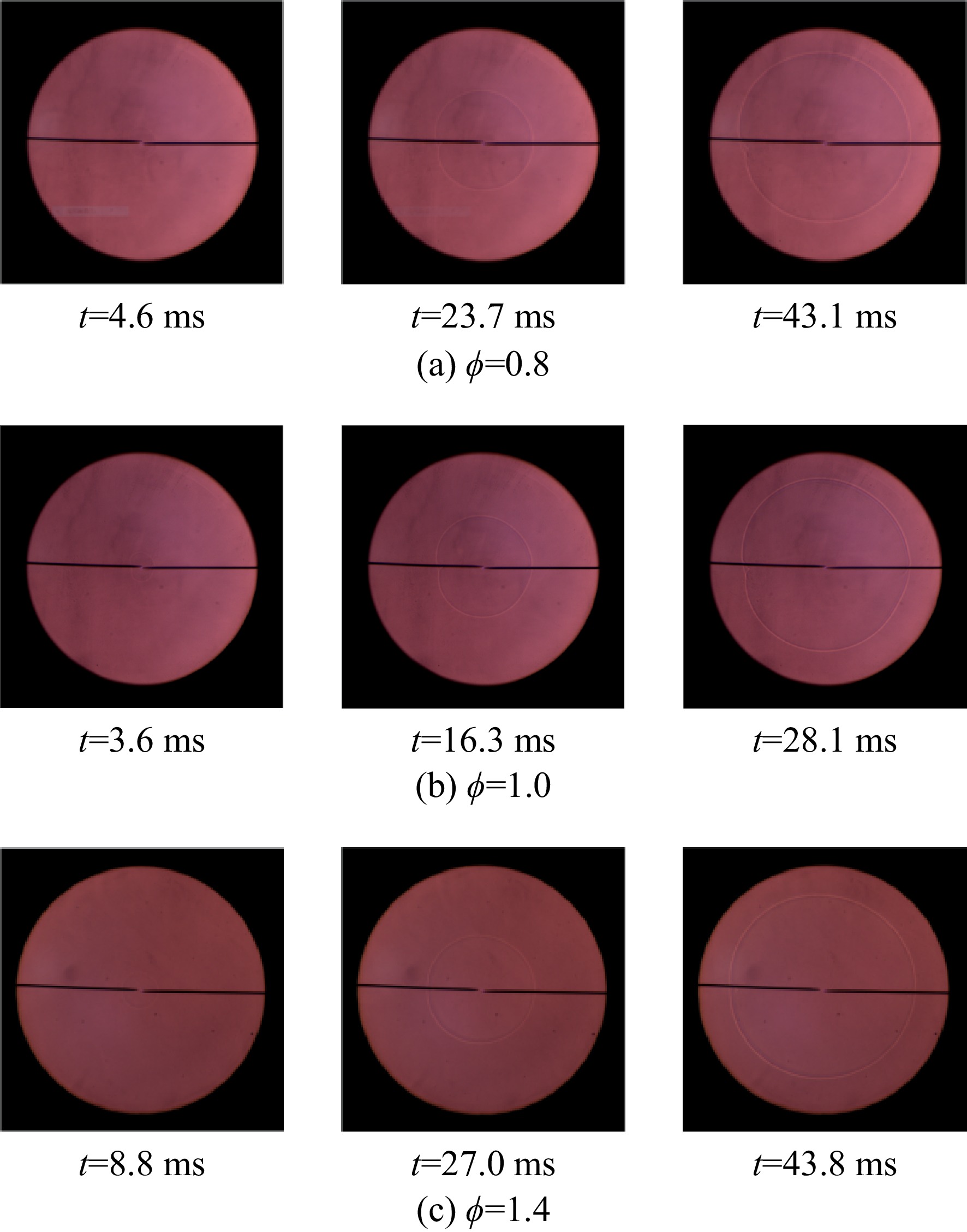
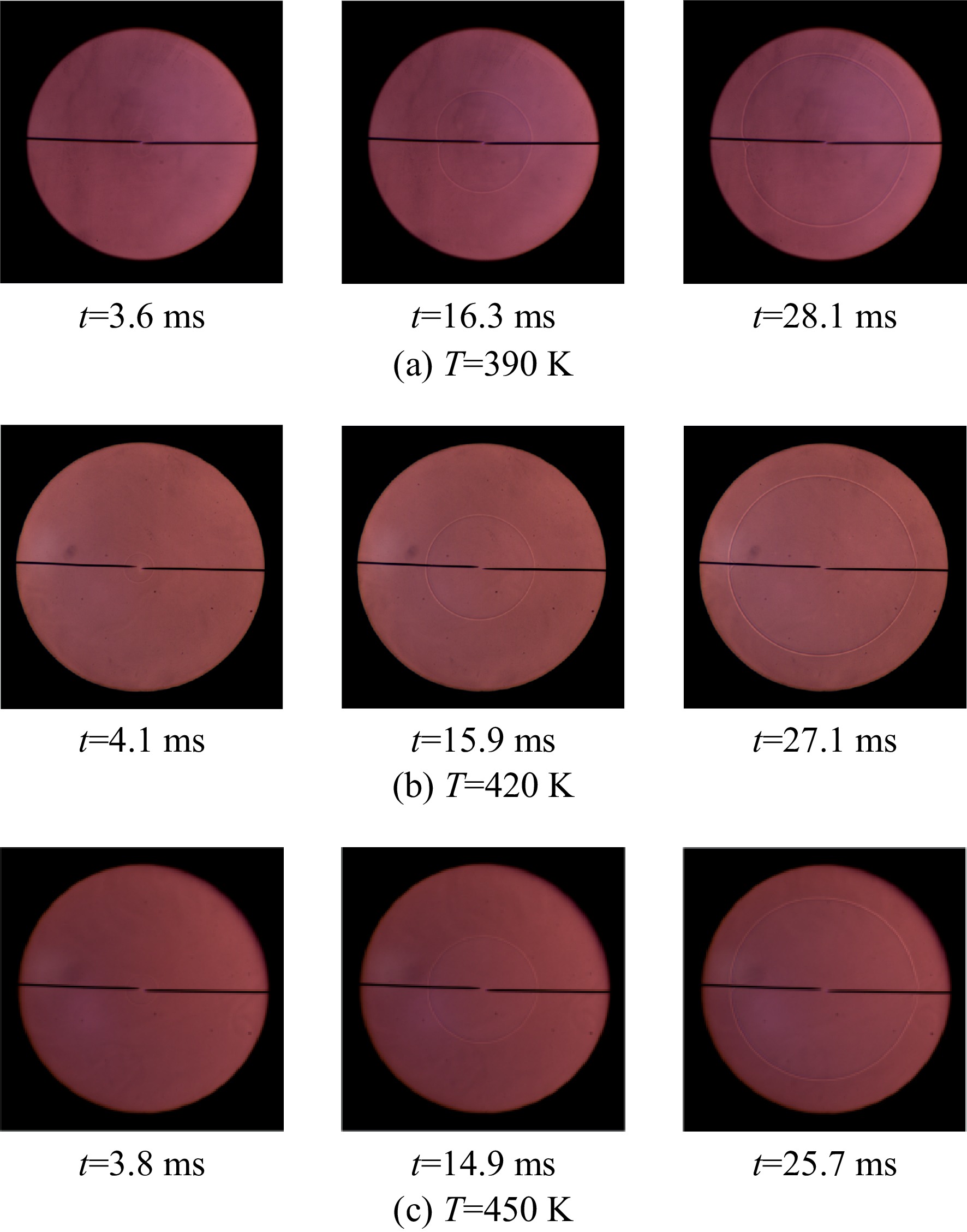
图 4 初始温度对甲烷/氨气混合气火焰发展的影响(p =0.1 MPa、ϕ=1.0、$ {\alpha _{{\text{N}}{{\text{H}}_{\text{3}}}}} $=0.5)
Figure 4. Effect of initial temperature on the flame development of methane/ammonia mixture (p =0.1 MPa, ϕ=1.0, $ {\alpha _{{\text{N}}{{\text{H}}_{\text{3}}}}} $=0.5)

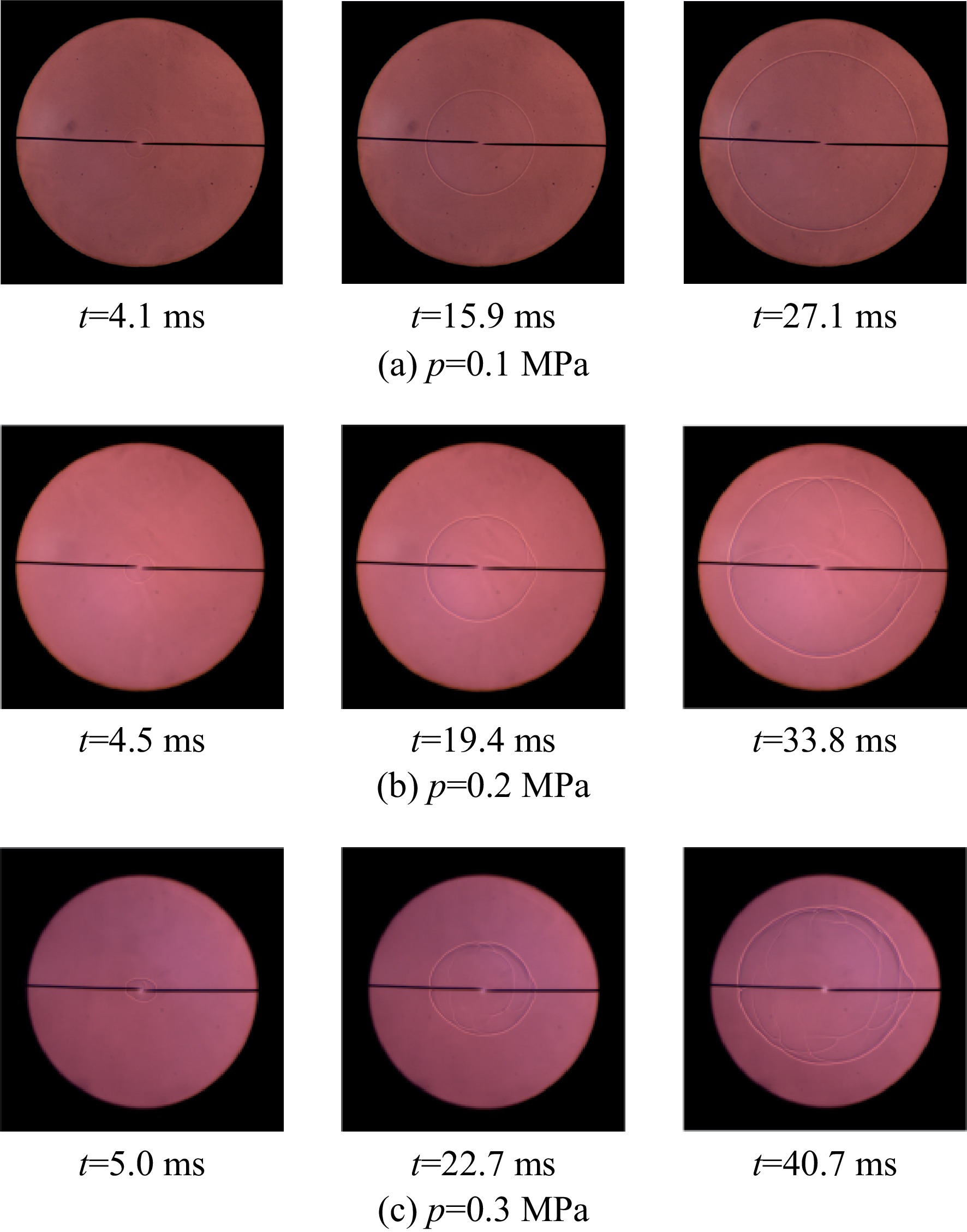
图 5 初始压力对甲烷/氨气混合气火焰发展的影响(T=420 K、ϕ=1.0、$ {\alpha _{{\text{N}}{{\text{H}}_{\text{3}}}}} $=0.5)
Figure 5. Effect of initial pressure on the flame development of methane/ammonia mixture (T=420 K, ϕ=1.0, $ {\alpha _{{\text{N}}{{\text{H}}_{\text{3}}}}} $=0.5)

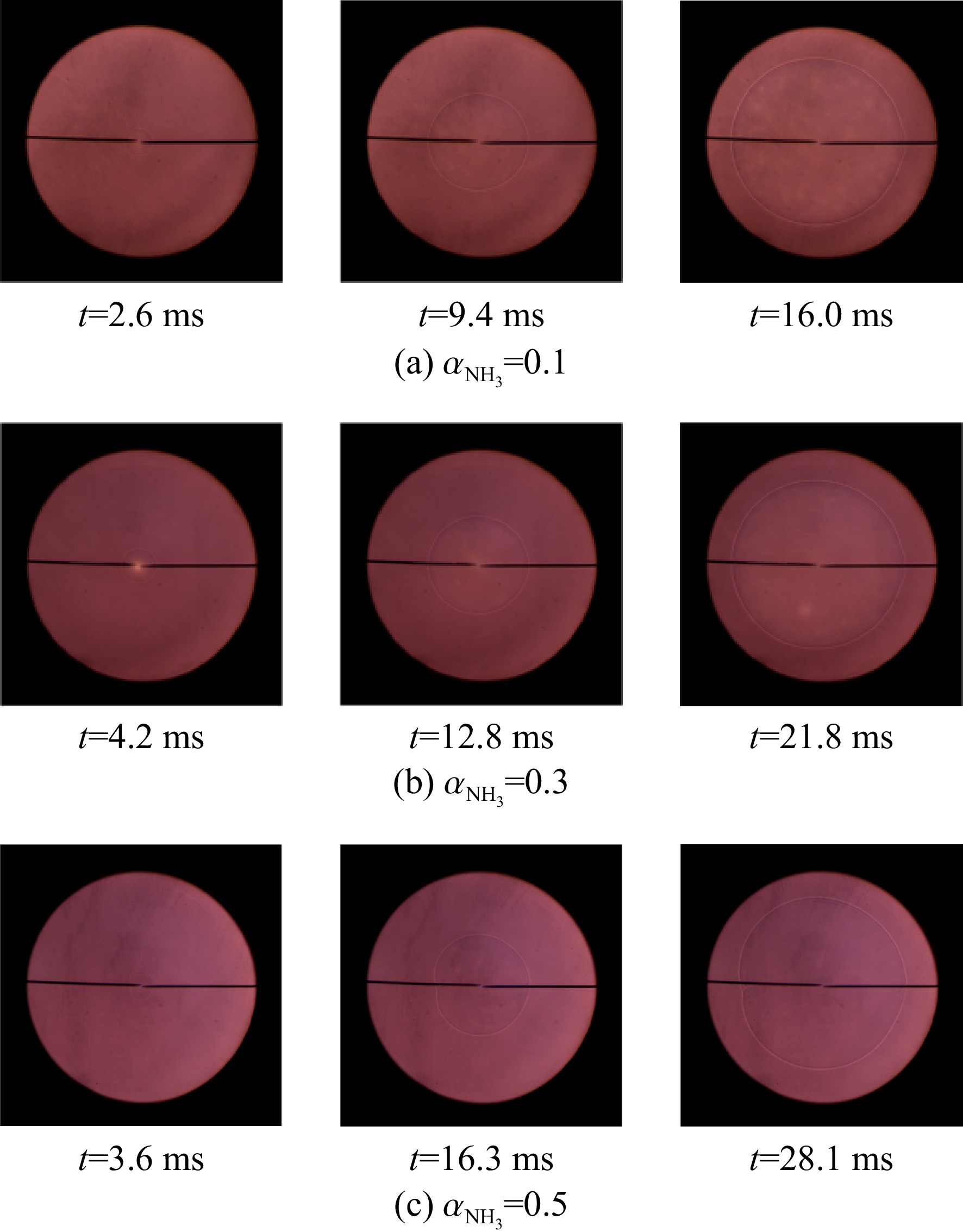
图 6 氨气掺混比对甲烷/氨气混合气火焰发展的影响(p =0.1 MPa、T=390 K、ϕ=1.0)
Figure 6. Effect of ammonia mixing ratio on the flame development of methane/ammonia mixture(p =0.1 MPa, T=390 K, ϕ=1.0)
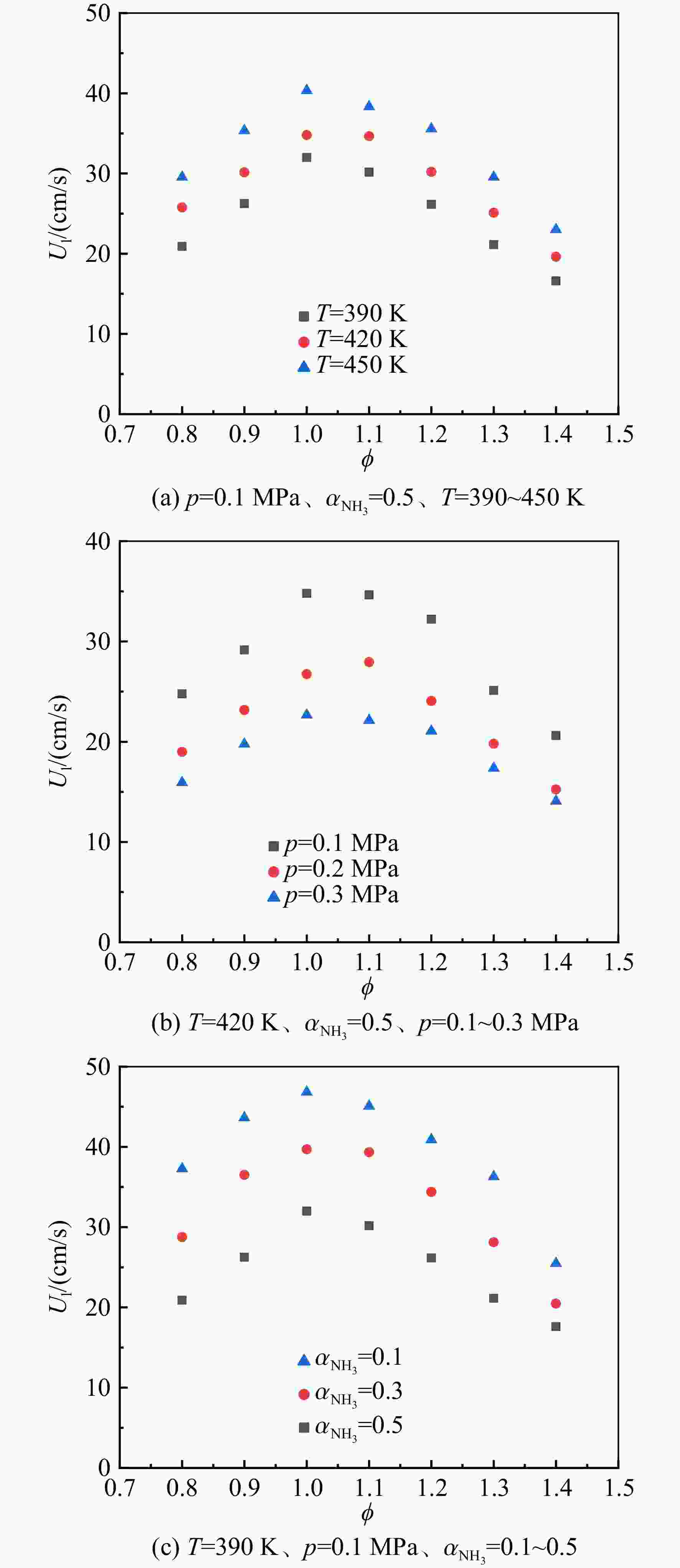
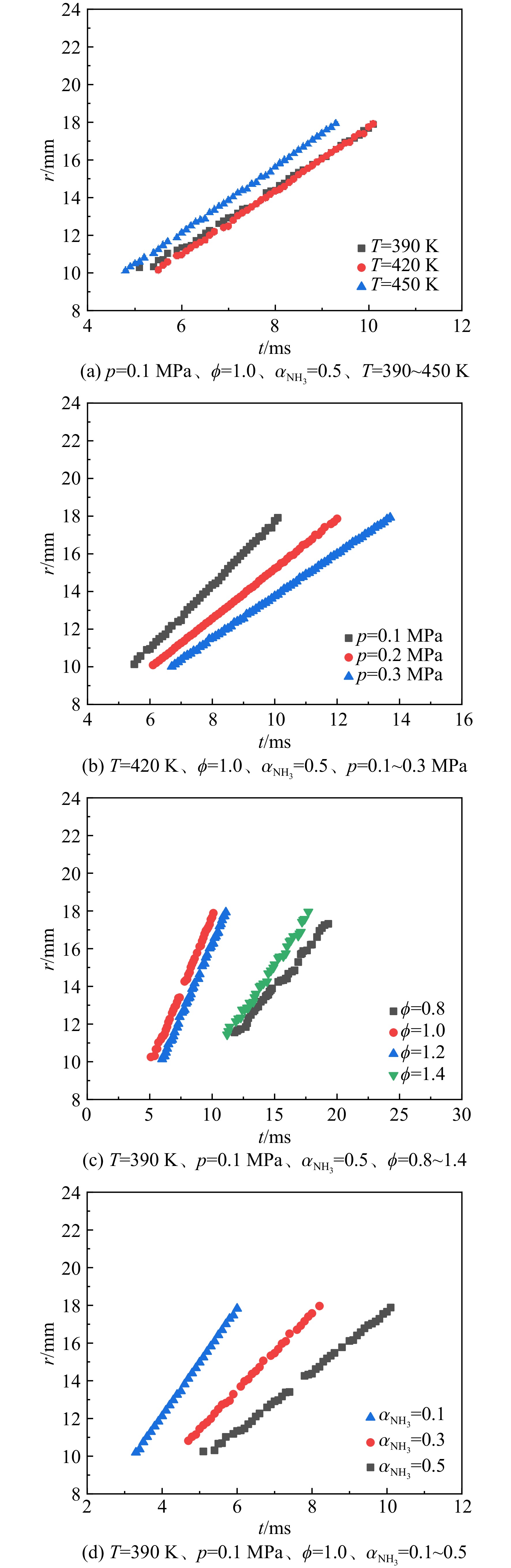
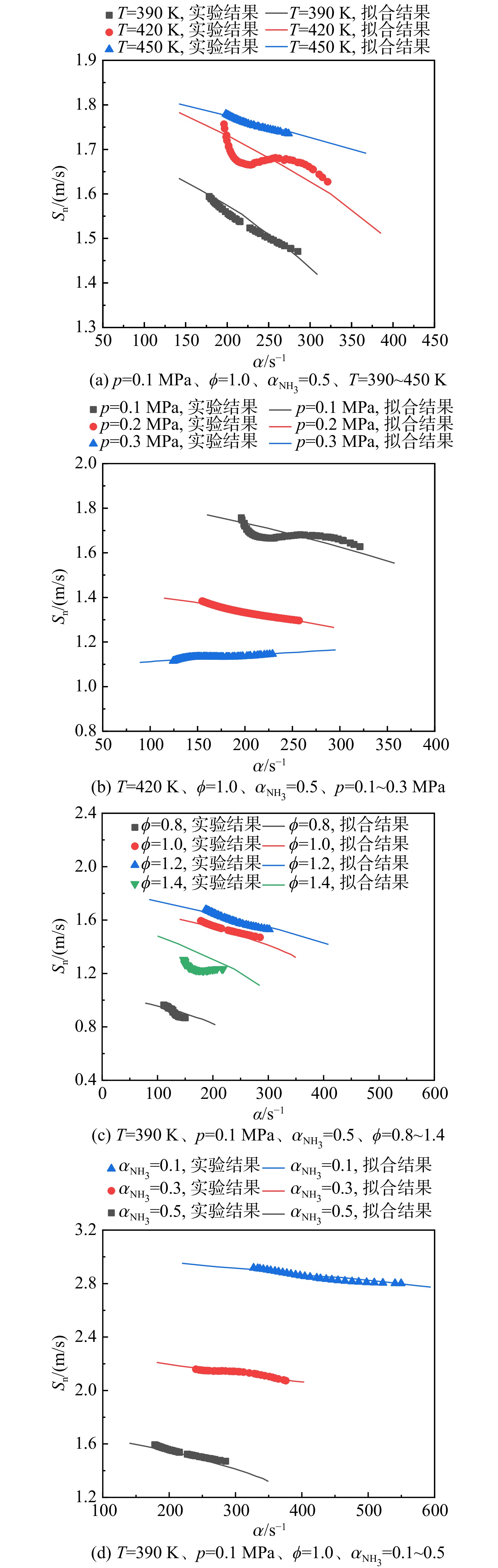
图 11 初始工况条件对层流燃烧速度的影响
Figure 11. Effect of the initial conditions on the laminar burning velocity
-
[1] 张屿, 赵义军, 曾光, 等. 氨燃料强化燃烧技术研究进展[J]. 能源环境保护, 2023, 37(5): 129-144. ZHANG Yu, ZHAO Yijun, ZENG Guang, et al. A review of the research progress of ammonia combustion enhancement technology[J]. Energy Environmental Protection, 2023, 37(5): 129-144. (in ChineseZHANG Yu, ZHAO Yijun, ZENG Guang, et al. A review of the research progress of ammonia combustion enhancement technology[J]. Energy Environmental Protection, 2023, 37(5): 129-144. (in Chinese) [2] AVERY W. A role for ammonia in the hydrogen economy[J]. International Journal of Hydrogen Energy, 1988, 13(12): 761-773. doi: 10.1016/0360-3199(88)90037-7 [3] BRANDHORST H, TATARCHUK B, CAHELA D, et al. Ammonia: it’s transformation and effective utilization: AIAA2008-5610 [R]. Reston, US: AIAA, 2008. [4] 赖诗妮, 江丽霞, 李军, 等. 含碳掺氨燃料的研究进展[J]. 化工进展, 2023, 42(9): 4603-4615. LAI Shini, JIANG Lixia, LI Jun, et al. Research progress of ammonia blended fossil fuel[J]. Chemical Industry and Engineering Progress, 2023, 42(9): 4603-4615. (in ChineseLAI Shini, JIANG Lixia, LI Jun, et al. Research progress of ammonia blended fossil fuel[J]. Chemical Industry and Engineering Progress, 2023, 42(9): 4603-4615. (in Chinese) [5] LIU Shibo, ZOU Chun, SONG Yu, et al. Experimental and numerical study of laminar flame speeds of CH4/NH3 mixtures under oxy-fuel combustion[J]. Energy, 2019, 175: 250-258. doi: 10.1016/j.energy.2019.03.040 [6] OKAFOR E C, NAITO Y, COLSON S, et al. Experimental and numerical study of the laminar burning velocity of CH4-NH3-air premixed flames[J]. Combustion and Flame, 2018, 187: 185-198. doi: 10.1016/j.combustflame.2017.09.002 [7] MENDIARA T, GLARBORG P. Reburn chemistry in oxy-fuel combustion of methane[J]. Energy & Fuels, 2009, 23(7): 3565-3572. [8] HE Yizhuo, ZHENG Xiaochuan, LUO Jianghui, et al. Experimental and numerical study of the effects of steam addition on NO formation during methane and ammonia oxy-fuel combustion[J]. Energy & Fuels, 2017, 31(9): 10093-10100. [9] KU J W, AHN Y J, KIM H K, et al. Propagation and emissions of premixed methane-ammonia/air flames[J]. Energy, 2020, 201: 117632. doi: 10.1016/j.energy.2020.117632 [10] FRENKLACH M, WANG H, GOLDENBERG M, et al. Gri-mech: An optimized detailed chemical reaction mechanism for methane combustion: PB-96-137054/XAB[R]. Menlo Park, US: SRI International, 1995. [11] TIAN Zhenyu, LI Yuyang, ZHANG Lidong, et al. An experimental and kinetic modeling study of premixed NH3/CH4/O2/Ar flames at low pressure[J]. Combustion and Flame, 2009, 156(7): 1413-1426. doi: 10.1016/j.combustflame.2009.03.005 [12] MILLER J A, SMOOKE M D, GREEN R M, et al. Kinetic modeling of the oxidation of ammonia in flames[J]. Combustion Science and Technology, 1983, 34(1): 149-176. [13] KONNOV A A, DE RUYCK J. Kinetic modeling of the thermal decomposition of ammonia[J]. Combustion Science and Technology, 2000, 152(1): 23-37. doi: 10.1080/00102200008952125 [14] LI Rui, KONNOV A A, HE Guoqiang, et al. Chemical mechanism development and reduction for combustion of NH3/H2/CH4 mixtures[J]. Fuel, 2019, 257: 116059. doi: 10.1016/j.fuel.2019.116059 [15] GLARBORG P, MILLER J A, RUSCIC B, et al. Modeling nitrogen chemistry in combustion[J]. Progress in Energy and Combustion Science, 2018, 67: 31-68. doi: 10.1016/j.pecs.2018.01.002 [16] OTOMO J, KOSHI M, MITSUMORI T, et al. Chemical kinetic modeling of ammonia oxidation with improved reaction mechanism for ammonia/air and ammonia/hydrogen/air combustion[J]. International Journal of Hydrogen Energy, 2018, 43(5): 3004-3014. doi: 10.1016/j.ijhydene.2017.12.066 [17] LIU Yu, LUO Rui, SUN Zhen, et al. Experimental study on the Markstein length and laminar burning velocity of CH4/RP-3 mixture[J]. Journal of Mechanical Science and Technology, 2017, 31(11): 5527-5537. doi: 10.1007/s12206-017-1047-7 [18] FRANKEL M L, SIVASHINSKY G I. On effects due to thermal expansion and lewis number in spherical flame propagation[J]. Combustion Science and Technology, 1983, 31(3/4): 131-138. [19] CHEN Zheng. On the extraction of laminar flame speed and Markstein length from outwardly propagating spherical flames[J]. Combustion and Flame, 2011, 158(2): 291-300. doi: 10.1016/j.combustflame.2010.09.001 [20] WANG Shixing, WANG Zhihua, CHEN Chenlin, et al. Applying heat flux method to laminar burning velocity measurements of NH3/CH4/air at elevated pressures and kinetic modeling study[J]. Combustion and Flame, 2022, 236: 111788. doi: 10.1016/j.combustflame.2021.111788 -

 下载:
下载:


 点击查看大图

计量
- 文章访问数: 865
- HTML浏览量: 453
- PDF量: 60
- 被引次数: 0