






Influence of PCHE channel shape on oxidation coking characteristics of aviation kerosene
-
摘要:
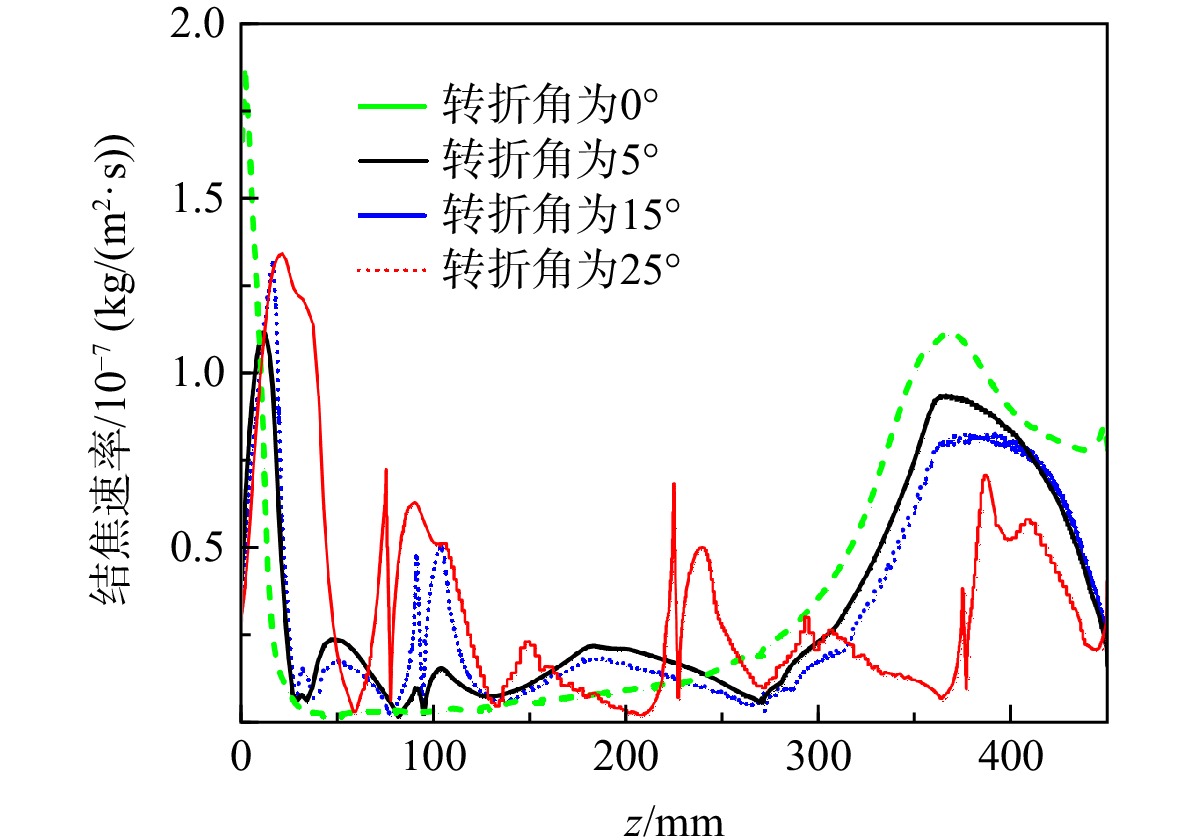
数值计算了直形、Z形PCHE(印刷电路板式换热器)流道航空煤油氧化结焦过程,分析了不同质量流量及热流密度下流道形状对航空煤油氧化结焦特性的影响规律及内在机理。结果表明:当流道转折角从0°(直形)逐渐增大到25°(
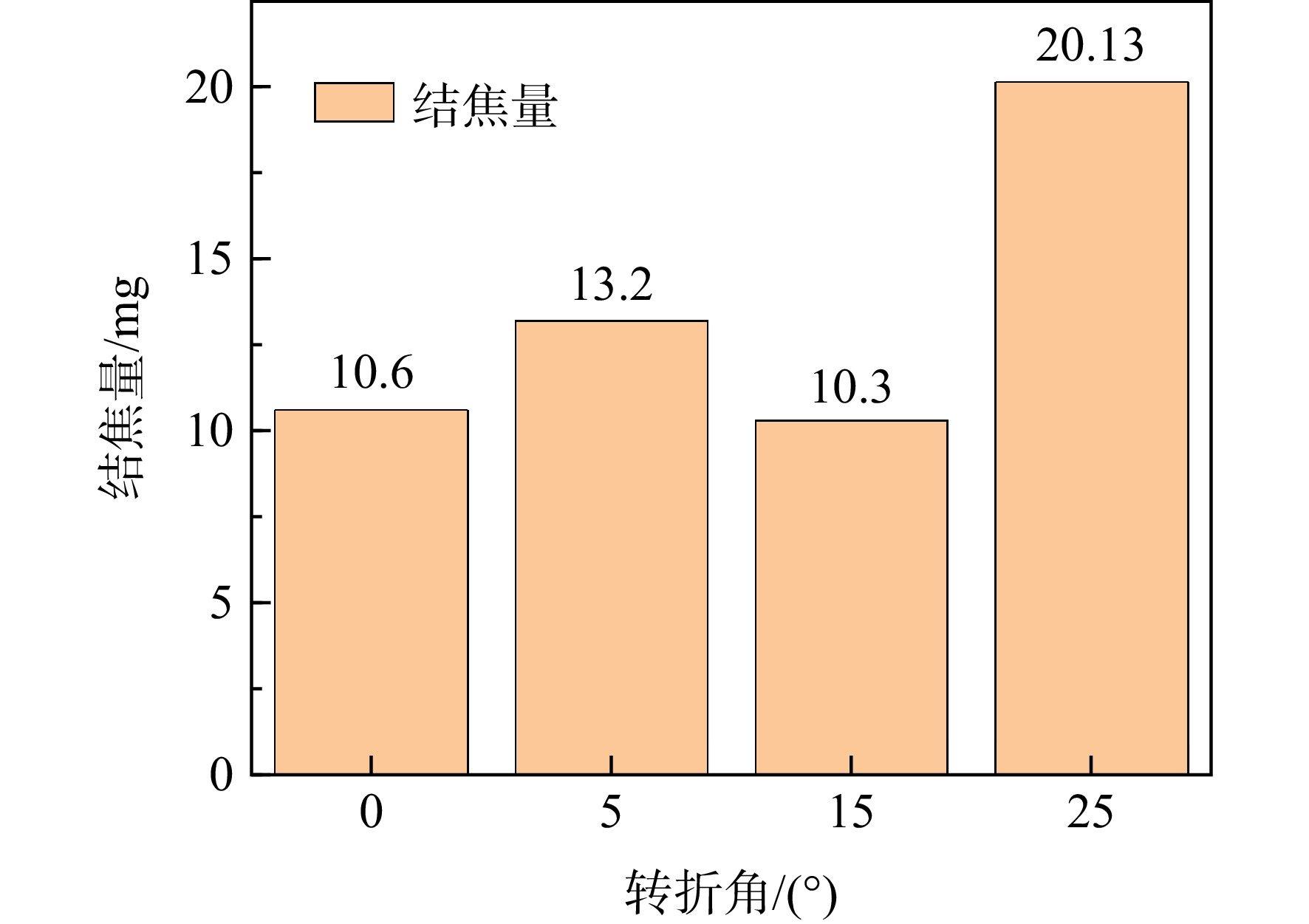
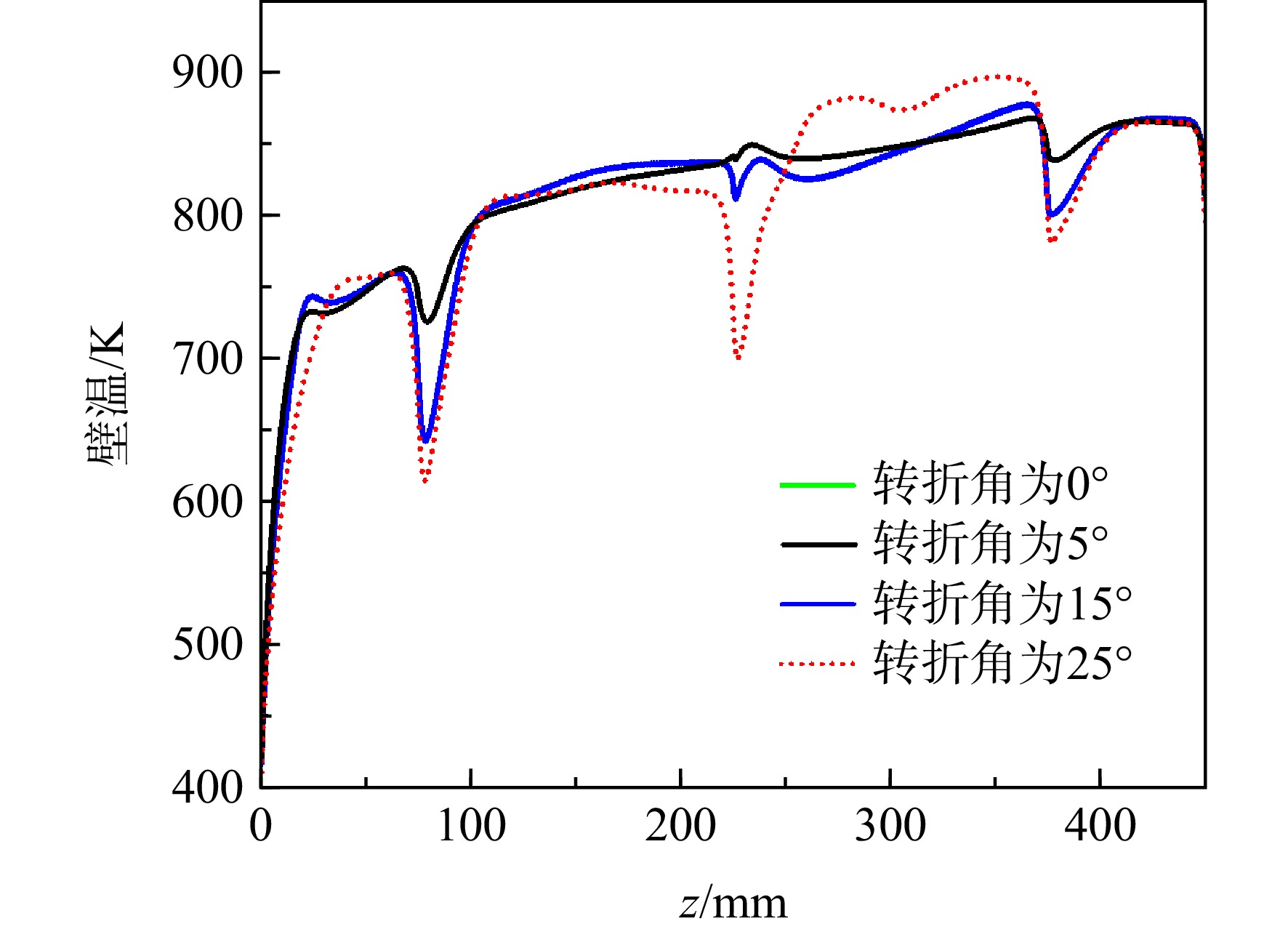
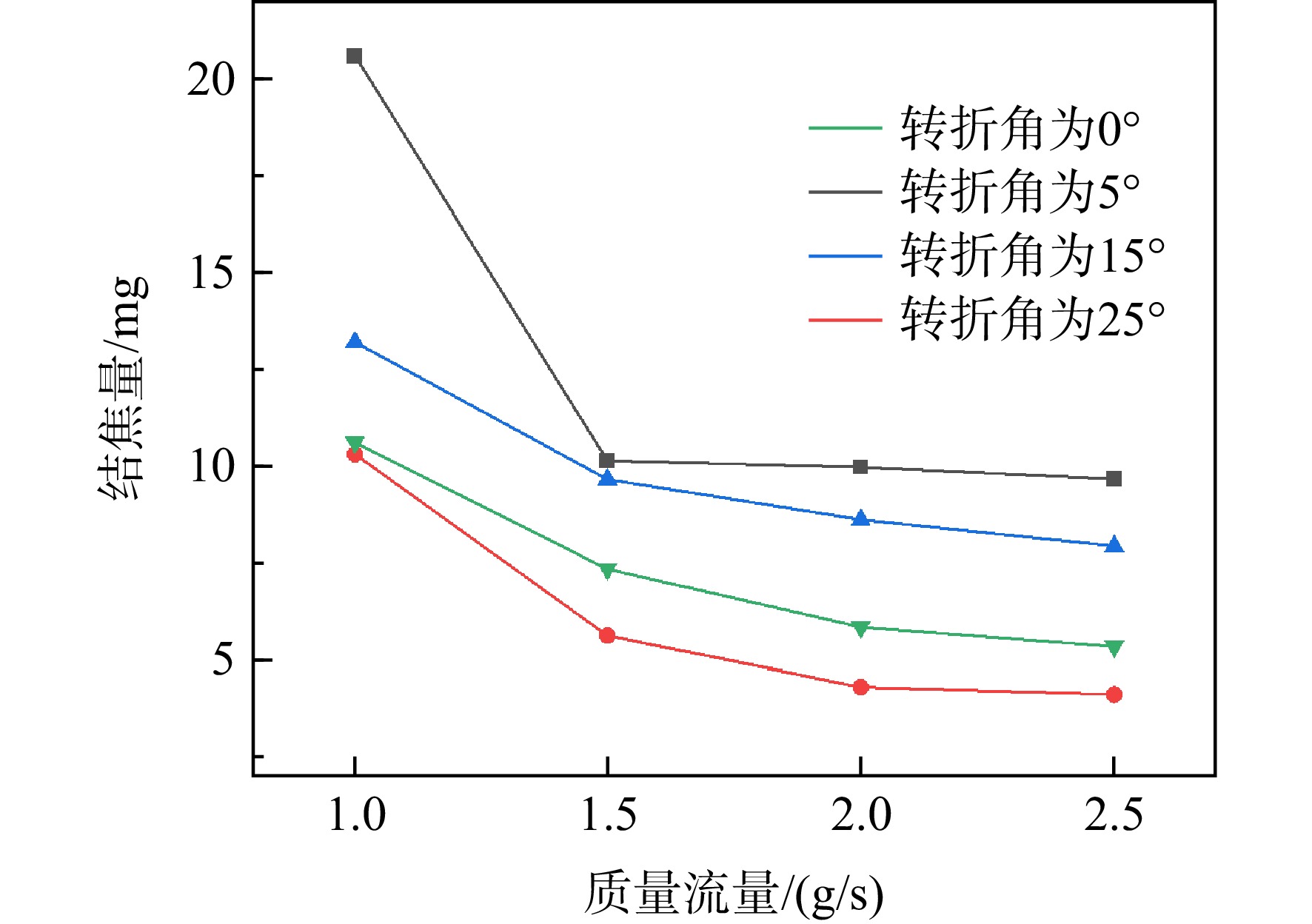
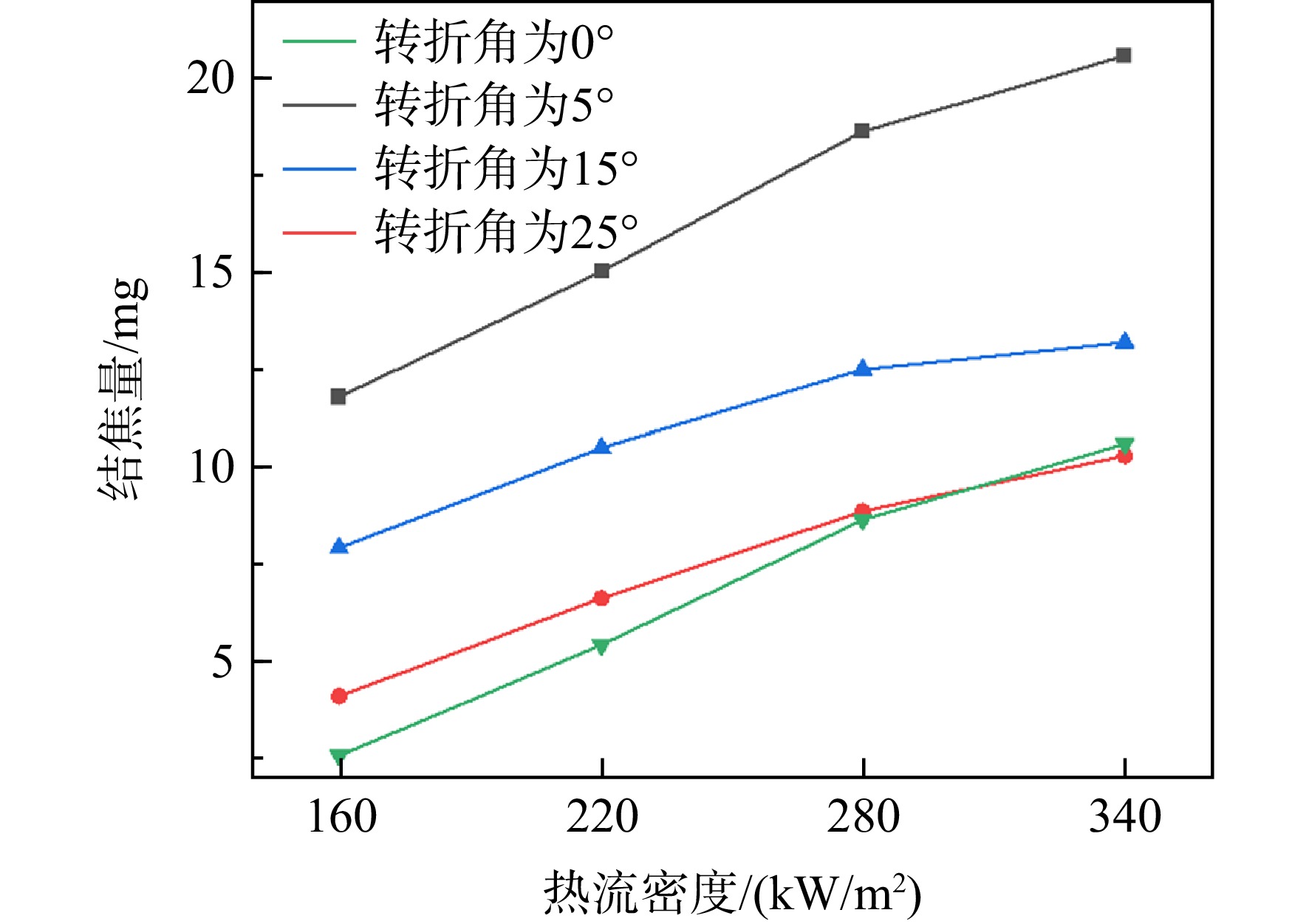
Z 形),结焦总量先减小后增大,沿程分布呈现多峰值特征。小转折角时,高温边界层诱发结焦机制主导结焦过程,转折引发的二次流随角度变大而逐渐增强,导致换热强化,结焦得到抑制;大转折角时,高温度梯度诱发结焦机制占主导地位,二次流会增大温度梯度,导致结焦速率沿程分布的不均匀性变强,加剧了转折角处的结焦沉积。结焦量随质量流量的增大而下降,随热流密度的增大而升高,转折角越大,提升质量流量抑制结焦的效果越明显。-
关键词:
- 印刷电路板式换热器(PCHE) /
- 航空煤油 /
- 氧化结焦 /
- 流道形状 /
- 二次流
Abstract:The oxidation coking process of aviation kerosene with straight and Z-shaped PCHE (printed circuit heat exchanger) channels was numerically calculated. The influences of the shape of the channels on the oxidation coking of aviation kerosene with different mass flow and heat flux were analyzed. The results showed that, when the turning angle of the channel gradually increased from 0° (straight) to 25° (Z-shaped), the total mass of coking decreased first and then increased, and the distribution along the channel presented multi-peak characteristics. When the angle was small, the coking mechanism induced by the boundary layer at high temperature dominated the coking process, and the secondary flow induced by the transition gradually increased with the increase of the angle, resulting in the inhibition of heat transfer and enhanced coking. When the turning angle was large, the coking mechanism induced by high temperature gradient was dominant, and the secondary flow could increase the temperature gradient, which led to the uneven distribution of coking rate along the way, and intensified the coking deposition at the corner. The coking mass decreased with the increase of mass flow rate and increased with the increase of heat flux. The larger turning angle indicated the more obvious effect of increasing mass flow rate on inhibiting coking.
-
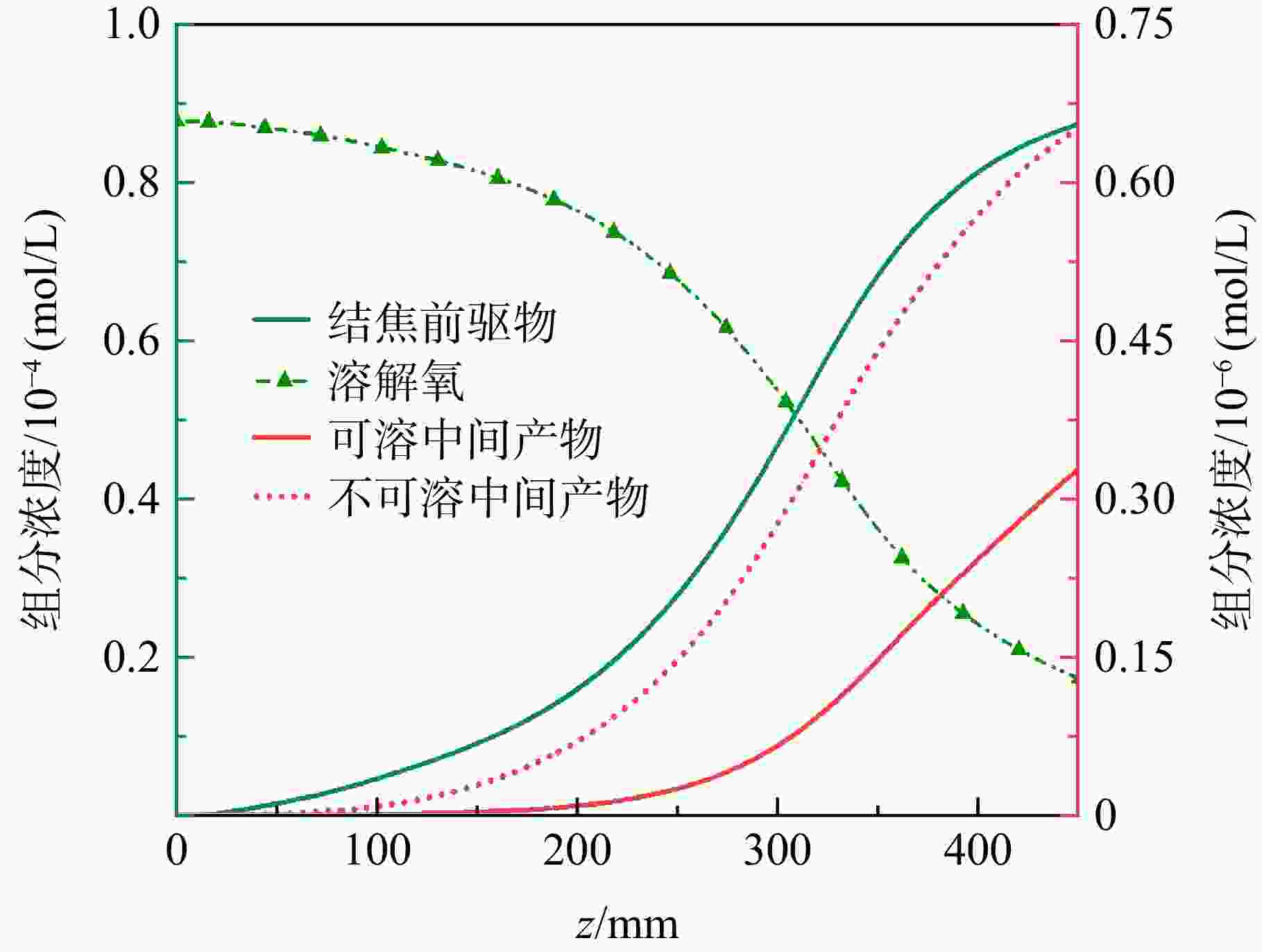
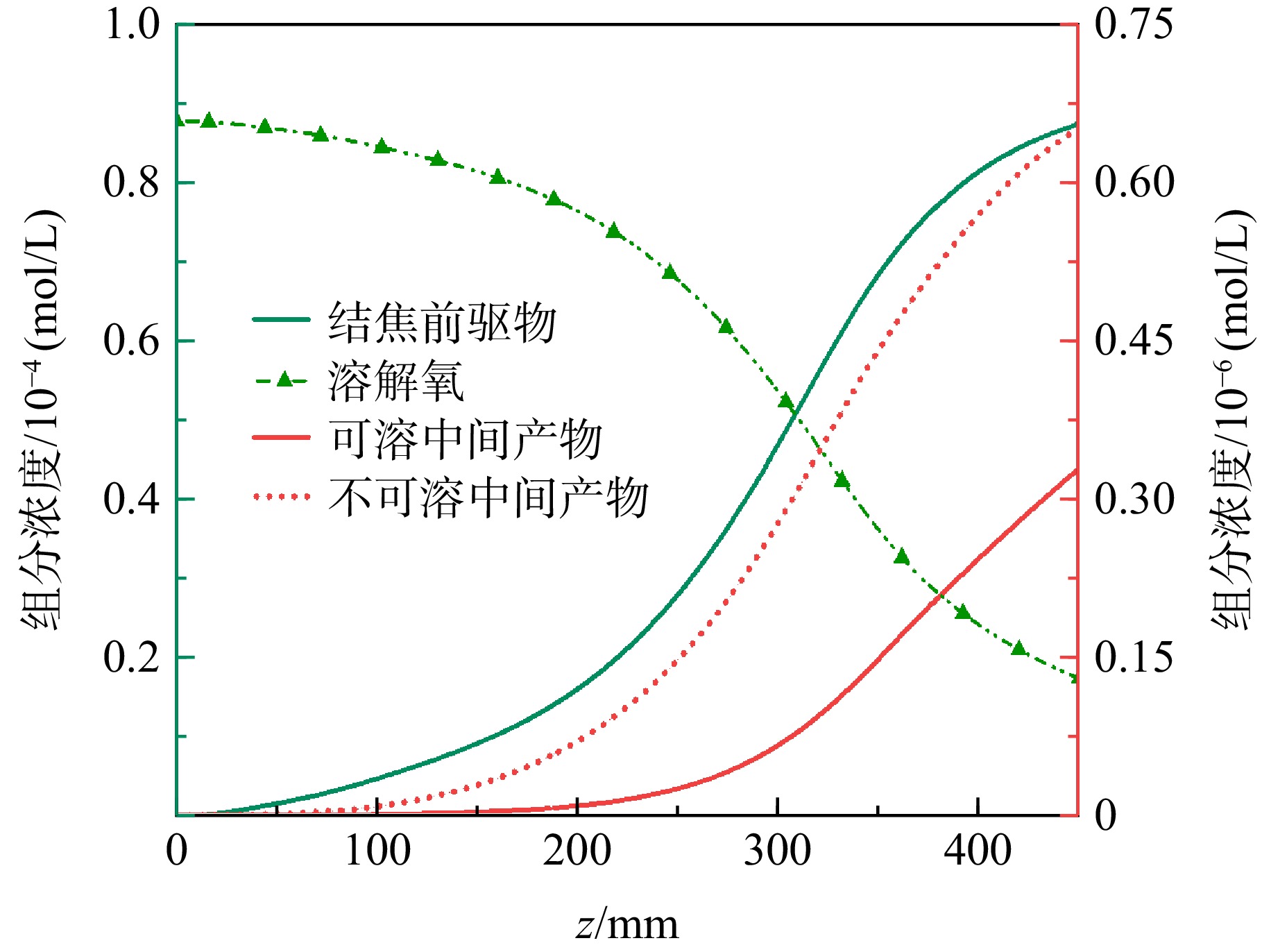
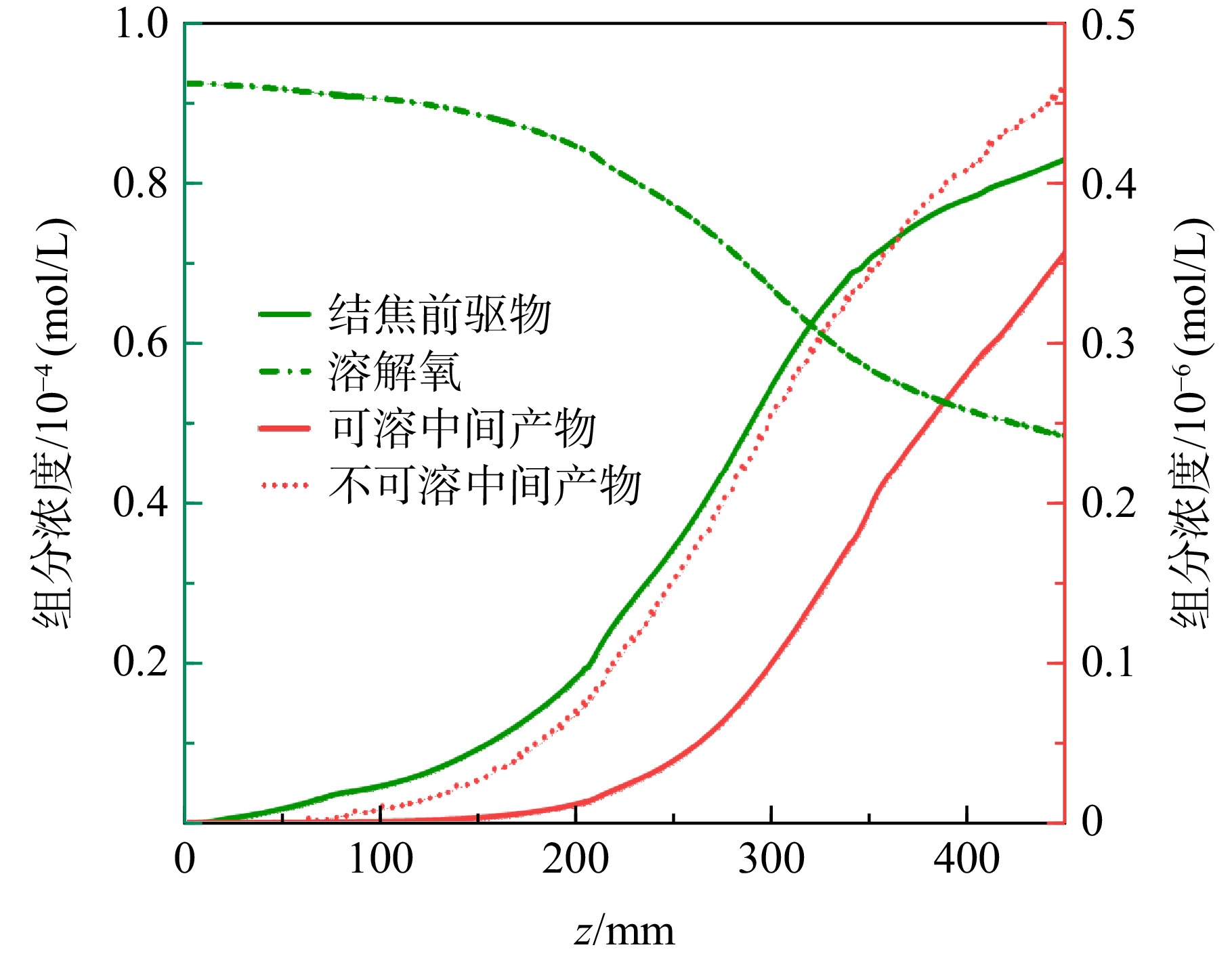
图 6 直形流道内结焦反应中间产物沿程分布
Figure 6. Intermediate products distribution of coking reaction along straight channel
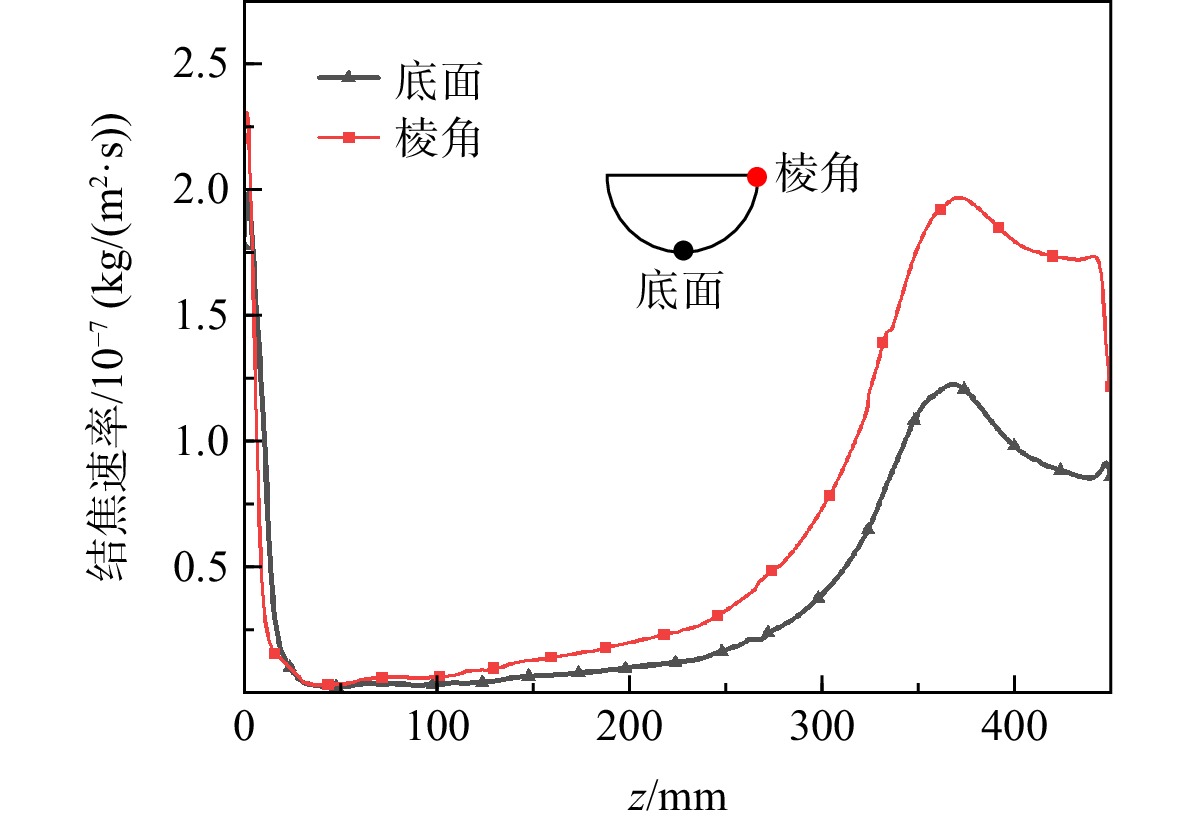
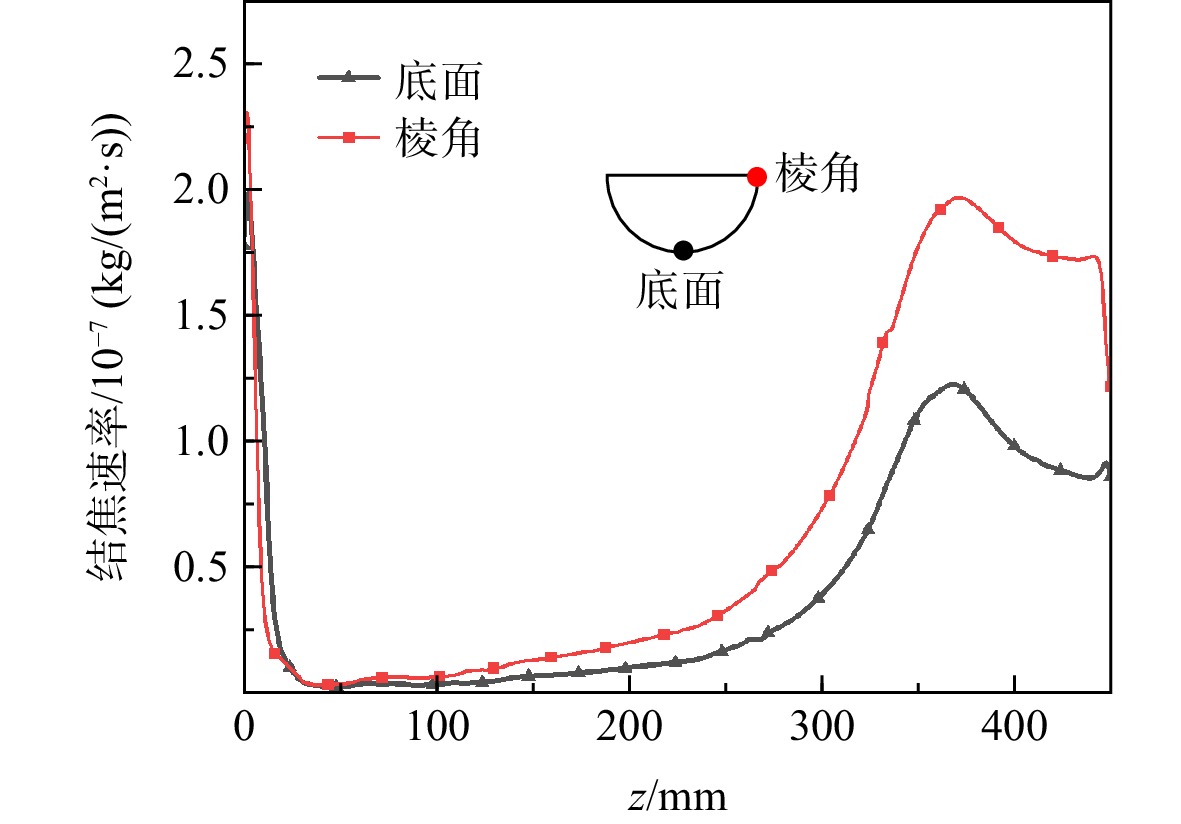
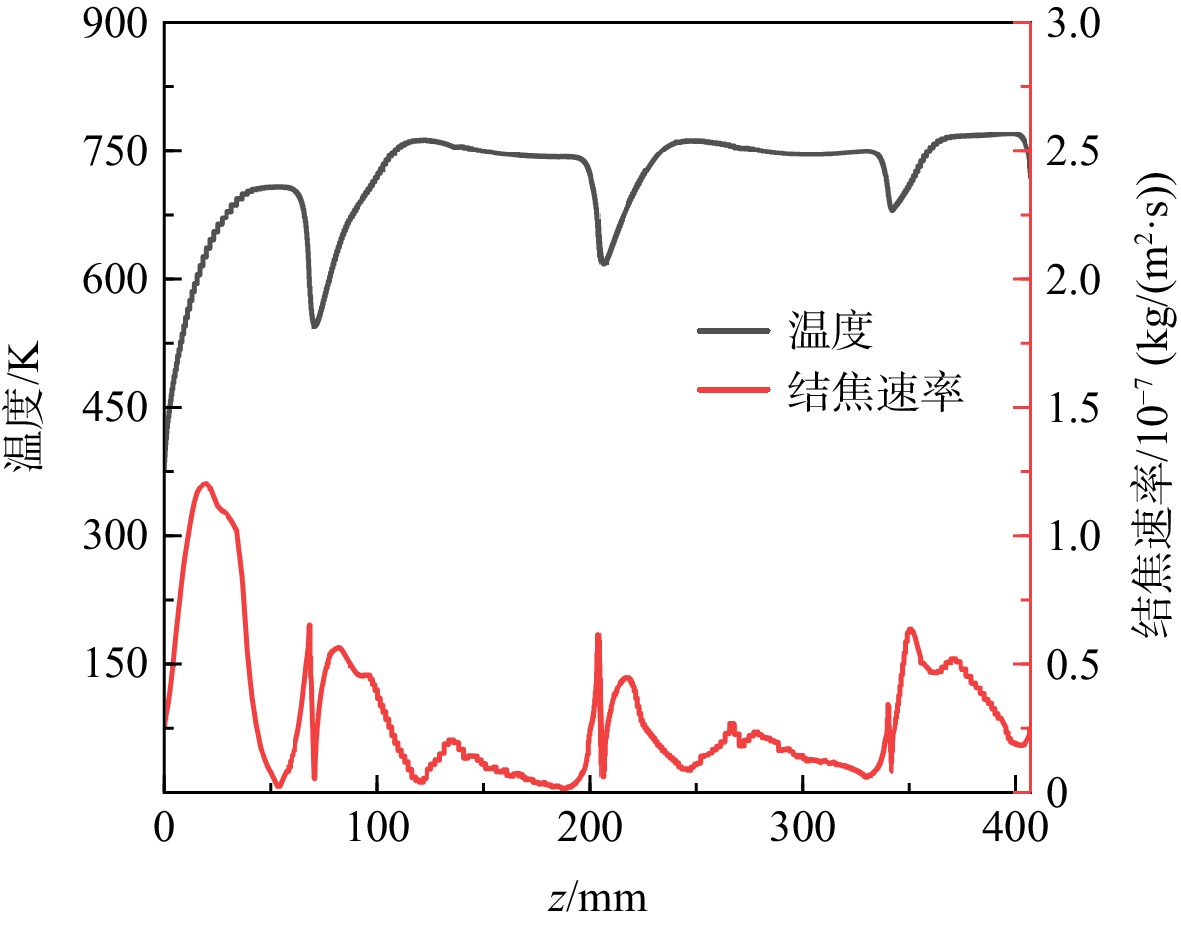
图 7 直形流道底面与棱角处沿程结焦速率
Figure 7. Coking rate at the bottom and corner of straight channel
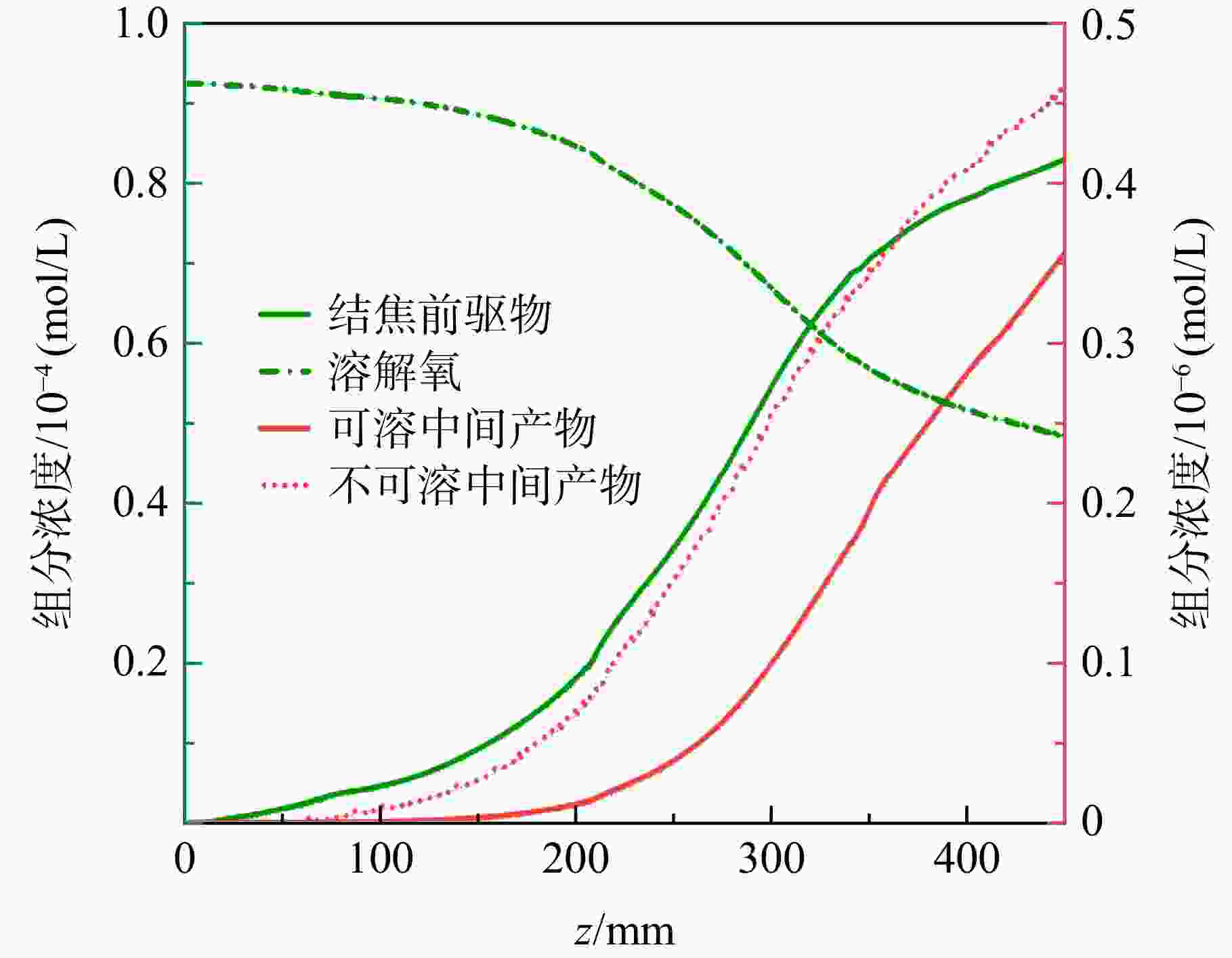
图 9 Z形流道内结焦反应中间产物沿程分布
Figure 9. Intermediate products distribution of coking reaction along Z-shaped channel
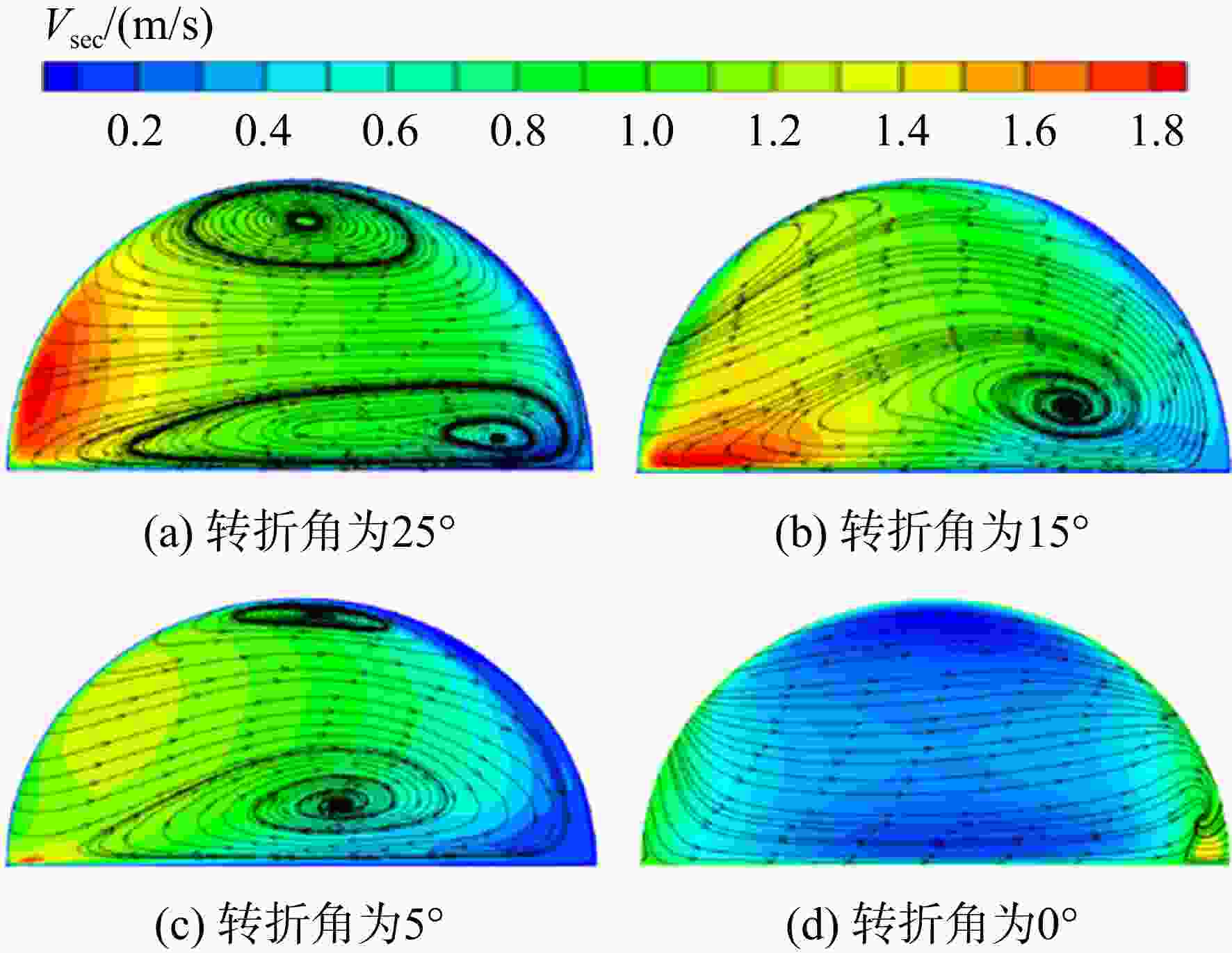
图 13 不同转折角流道375 mm处二次流
Figure 13. Secondary flow at 375 mm position in different angle channels
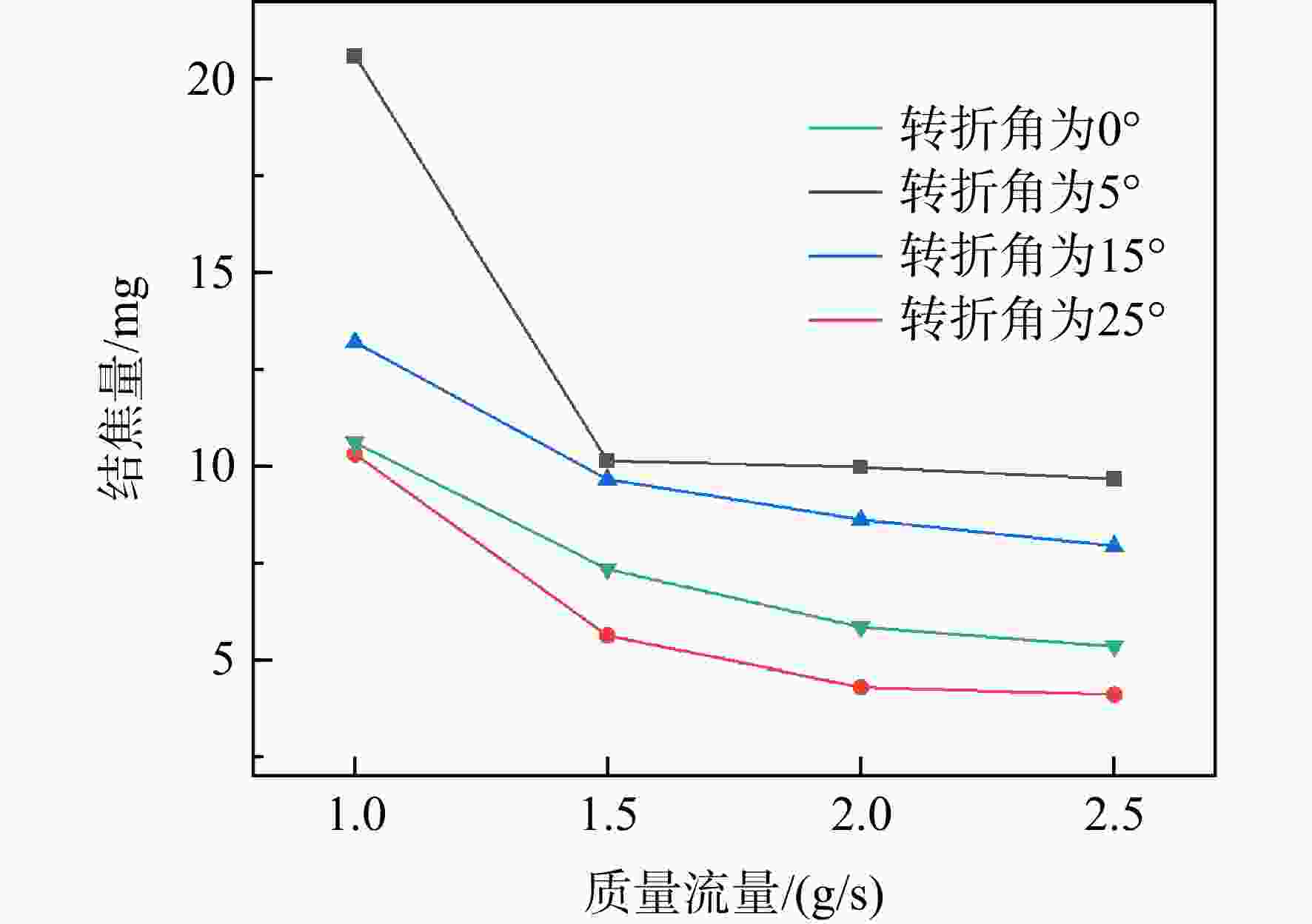
图 14 不同转折角流道2 h结焦量随质量流量变化
Figure 14. 2 h coking mass varies with the mass flow rate at different angle channels
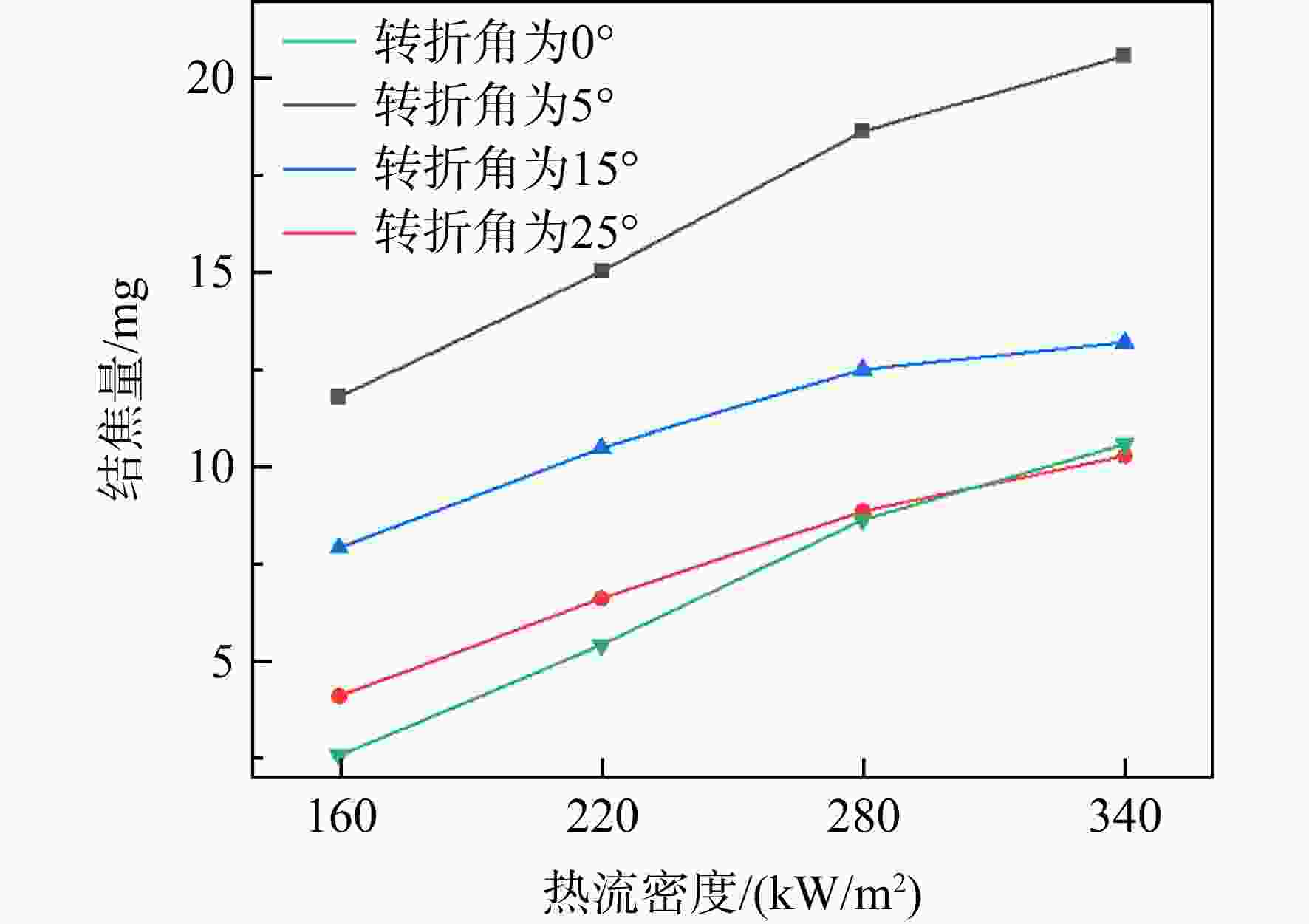
图 15 不同转折角流道2 h结焦量随热流密度变化
Figure 15. 2 h coking mass varies with the heat flux density at different angle channels
表 1 计算工况
Table 1. Computational boundary condition
序号 入口
温度/K流量/
(g/s)压力/
MPa热流密度/
( kW/m2)1 300 1 3 340 2 300 1 3 280 3 300 1 3 220 4 300 1 3 160 5 300 1.5 3 340 6 300 2 3 340 7 300 2.5 3 340  下载: 导出CSV
反应类型 序号 反应过程 指前因子A 活化能E/106 空间反应 R1 F+O2$\longrightarrow $P 0.083 0.2 R2 P$\longrightarrow $S 500 41.861 R3 P$\longrightarrow $IN 2 8.4 壁面反应 R4 F$\longrightarrow $D 2×10⁻¹¹ 8.6 R5 IN$\longrightarrow $D 10 50 R6 P$\longrightarrow $D 480 85
下载: 导出CSV
-
[1] 庄来鹤,徐国强,闻洁,等. 基于典型飞行任务的CCA技术优势分析[J]. 航空动力学报,2022,37(7): 1363-1378. ZHUANG Laihe,XU Guoqiang,WEN Jie,et al. Superiority analysis of CCA technology under typical flight mission[J]. Journal of Aerospace Power,2022,37(7): 1363-1378. (in ChineseZHUANG Laihe, XU Guoqiang, WEN Jie, et al. Superiority analysis of CCA technology under typical flight mission[J]. Journal of Aerospace Power, 2022, 37(7): 1363-1378. (in Chinese) [2] SOUTHALL D,LE PIERRES R,DEWSON S J. Design considerations for compact heat exchangers[C]//Proceedings of the 2008 International Congress on Advances in Nuclear Power Plants. Anaheim,US,2008: 42096311. [3] NEERAAS B O,FREDHEIM A O,AUNAN B. Experimental data and model for heat transfer,in liquid falling film flow on shell-side,for spiral-wound LNG heat exchanger[J]. International Journal of Heat and Mass Transfer,2004,47(14/15/16): 3565-3572. [4] ZABARNICK S. Studies of jet fuel thermal stability and oxidation using a quartz crystal microbalance and pressure measurements[J]. Industrial and Engineering Chemistry Research,1994,33(5): 1348-1354. doi: 10.1021/ie00029a034 [5] HENEGHAN S P,ZABARNICK S. Oxidation of jet fuels and the formation of deposit[J]. Fuel,1994,73(1): 35-43. doi: 10.1016/0016-2361(94)90185-6 [6] TAO Zhi,FU Yanchen,XU Guoqiang,et al. Experimental study on influences of physical factors to supercritical RP-3 surface and liquid-space thermal oxidation coking[J]. Energy and Fuels,2014,28(9): 6098-6106. doi: 10.1021/ef5011868 [7] CHIN J S,LEFEBVRE A H,SUN F T Y. Temperature effects on fuel thermal stability[J]. Journal of Engineering for Gas Turbines and Power,1992,114(2): 353-358. doi: 10.1115/1.2906596 [8] 琚印超,徐国强,郭隽,等. 压力对航空煤油RP-3结焦的影响[J]. 北京航空航天大学学报,2010,36(3): 257-260. JU Yinchao,XU Guoqiang,GUO Jun,et al. Effects of pressure on the coking characteristic of jet fuel RP-3[J]. Journal of Beijing University of Aeronautics and Astronautics,2010,36(3): 257-260. (in ChineseJU Yinchao, XU Guoqiang, GUO Jun, et al. Effects of pressure on the coking characteristic of jet fuel RP-3[J]. Journal of Beijing University of Aeronautics and Astronautics, 2010, 36(3): 257-260. (in Chinese) [9] PEI Xinyan,HOU Lingyun,REN Zhuyin. Kinetic modeling of thermal oxidation and coking deposition in aviation fuel[J]. Energy and Fuels,2017,31(2): 1399-1405. doi: 10.1021/acs.energyfuels.6b02869 [10] GIOVANETTI A J,SPADACCINI L J,SZETELA E J. Deposit formation and heat-transfer characteristics of hydrocarbon rocket fuels[J]. Journal of Spacecraft and Rockets,1985,22(5): 574-580. doi: 10.2514/3.25067 [11] MOSES C. Effect of Reynolds number on deposition in fuels flowing over heated surfaces[J]. Journal of Engineering for Gas Turbines and Power,2013,135(12): 121503. doi: 10.1115/1.4025147 [12] PEAT A E. Thermal decomposition of aviation fuel: ASME Paper 82-GT-27[R]. New York,US. ASME,1982. [13] MARTENEY P J. Thermal decomposition of aircraft fuel[J]. Journal of Engineering Gas Turbines Power,1989,108(4): 648-653. [14] FU Yanchen,WEN Jie,TAO Zhi,et al. Surface coking deposition influences on flow and heat transfer of supercritical hydrocarbon fuel in helical tubes[J]. Experimental Thermal and Fluid Science,2017,85: 257-265. doi: 10.1016/j.expthermflusci.2017.03.016 [15] FU Yanchen,XU Guoqiang,WEN Jie,et al. Thermal oxidation coking of aviation kerosene RP-3 at supercritical pressure in helical tubes[J]. Applied Thermal Engineering,2018,128: 1186-1195. doi: 10.1016/j.applthermaleng.2017.09.101 [16] PEI Xinyan,HOU Lingyun. Secondary flow and oxidation coking deposition of aviation fuel[J]. Fuel,2016,167: 68-74. doi: 10.1016/j.fuel.2015.11.054 [17] 杨治,张净玉,姬鹏飞,等. 典型管路RP-3航空煤油热氧化结焦特性试验研究[J]. 推进技术,2020,41(10): 2374-2381. YANG Zhi,ZHANG Jingyu,JI Pengfei,et al. Experimental study on autoxidation coking characteristics of aviation kerosene RP-3 in typical pipeline[J]. Journal of Propulsion Technology,2020,41(10): 2374-2381. (in ChineseYANG Zhi, ZHANG Jingyu, JI Pengfei, et al. Experimental study on autoxidation coking characteristics of aviation kerosene RP-3 in typical pipeline[J]. Journal of Propulsion Technology, 2020, 41(10): 2374-2381. (in Chinese) [18] 姬鹏飞. 典型管路RP-3航空煤油热氧化结焦沉积特性研究[D]. 南京: 南京航空航天大学,2018. JI Pengfei. Study on thermal oxidation coking deposition characteristics of RP-3 aviation kerosene in typical pipeline[D]. Nanjing: Nanjing University of Aeronautics and Astronautics,2018. (in ChineseJI Pengfei. Study on thermal oxidation coking deposition characteristics of RP-3 aviation kerosene in typical pipeline[D]. Nanjing: Nanjing University of Aeronautics and Astronautics, 2018. (in Chinese) [19] HE S,KIM W S,JACKSON J D. A computational study of convective heat transfer to carbon dioxide at a pressure just above the critical value[J]. Applied Thermal Engineering,2008,28(13): 1662-1675. doi: 10.1016/j.applthermaleng.2007.11.001 [20] 裴鑫岩. 航空煤油超临界换热与氧化结焦理论与实验研究[D]. 北京: 清华大学,2016. PEI Xinyan. Theoretical and experimental study on supercritical heat transfer and oxidation coking of aviation kerosene[D]. Beijing: Tsinghua University,2016. (in ChinesePEI Xinyan. Theoretical and experimental study on supercritical heat transfer and oxidation coking of aviation kerosene[D]. Beijing: Tsinghua University, 2016. (in Chinese) [21] LIU Zhiqiang,TANG Shaokun,LI Zaizheng,et al. An improved kinetic model for deposition by thermal oxidation of aviation hydrocarbon fuels[J]. Fuel,2019,258: 116139. doi: 10.1016/j.fuel.2019.116139 -


 点击查看大图

计量
- 文章访问数: 398
- HTML浏览量: 302
- PDF量: 36
- 被引次数: 0