






Flutter prediction based on various deep learning models for compressor swept-curved blade
-
摘要:
针对压气机中由非定常流固耦合导致的叶片颤振问题,提出了一种基于深度学习的多物理场预测及颤振特性识别方法,采用多种深度学习算子构建了一套从压气机弯掠叶片设计变量至叶片表面的三维物理场参数,再到颤振特性的端到端预测方法。分别对比了UNet、Fourier neural operator(FNO)、Transformer和Gaussian mixture model(GMM)这4种深度学习模型,其中结合多头线性自注意力机制和傅里叶层的Transformer模型在三维叶片表面物理场分布预测和气动阻尼系数识别任务中均具有更高的预测精度。Transformer模型物理场预测平均相对偏差约为0.005,最大相对偏差约为0.05,颤振参数和气动阻尼最小值预测的相对偏差在±7.5%以内,其中50%以上的相对偏差在±2.5%以内,相对偏差绝对值的平均值小于3%,并且可以在7 ms内完成32个算例的预测。
Abstract:In view of the problem of blade flutter caused by unsteady fluid-solid coupling in compressor, a multi-physical field prediction and flutter characteristics identification method based on deep learning was proposed. A set of end-to-end prediction methods from the design variables of compressor blade to the three-dimensional physical field parameters of blade surface and then to flutter characteristics were constructed by using various deep learning operators. Four deep learning models, UNet, FNO, Transformer and GMM, were compared respectively. Among them, the Transformer model combined with multi-head linear self-attention mechanism and Fourier layer had higher prediction accuracy in the prediction of physical field distribution and aerodynamic damping coefficient recognition tasks of three-dimensional blade surface. For Transformer model, the average relative deviation of the physical field prediction was about 0.005, and the maximum relative deviation was about 0.05. The relative deviation of the minimum prediction of the flutter parameters and the aerodynamic damping was within ±7.5%, of which more than 50% of the relative deviation fell within ±2.5%. The average absolute value of the relative deviation was less than 3%, and the prediction of 32 examples can be completed within 7 milliseconds.
-
Key words:
- compressor /
- swept-curved blade /
- flutter /
- aerodynamic damping /
- deep learning
-
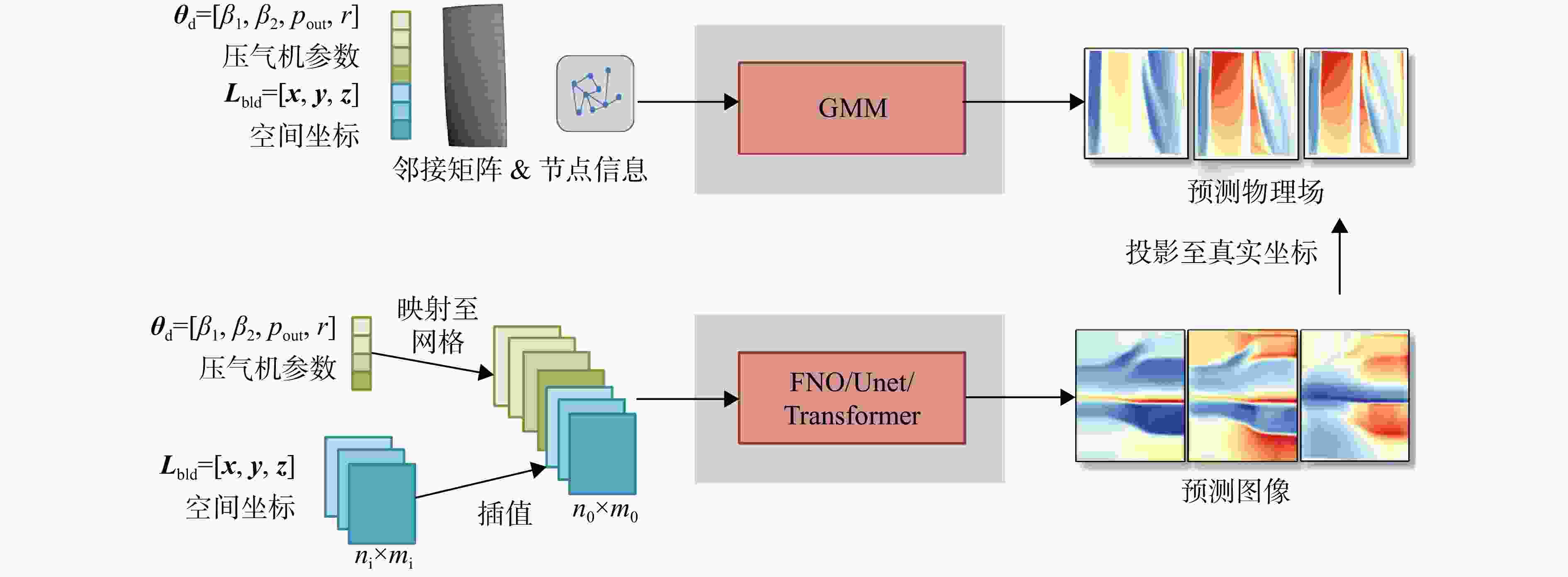
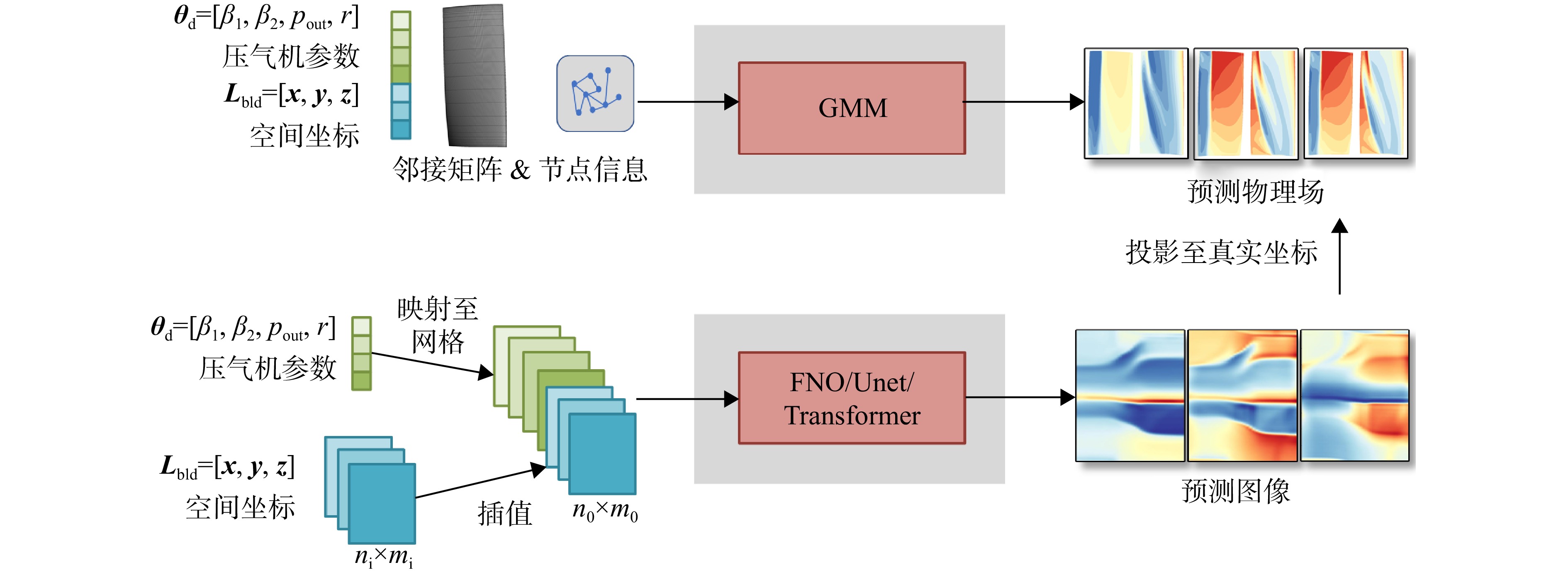
图 5 三维叶片表面物理场预测模型的总体框架
Figure 5. Overall framework of three-dimensional blade surface physical field prediction model
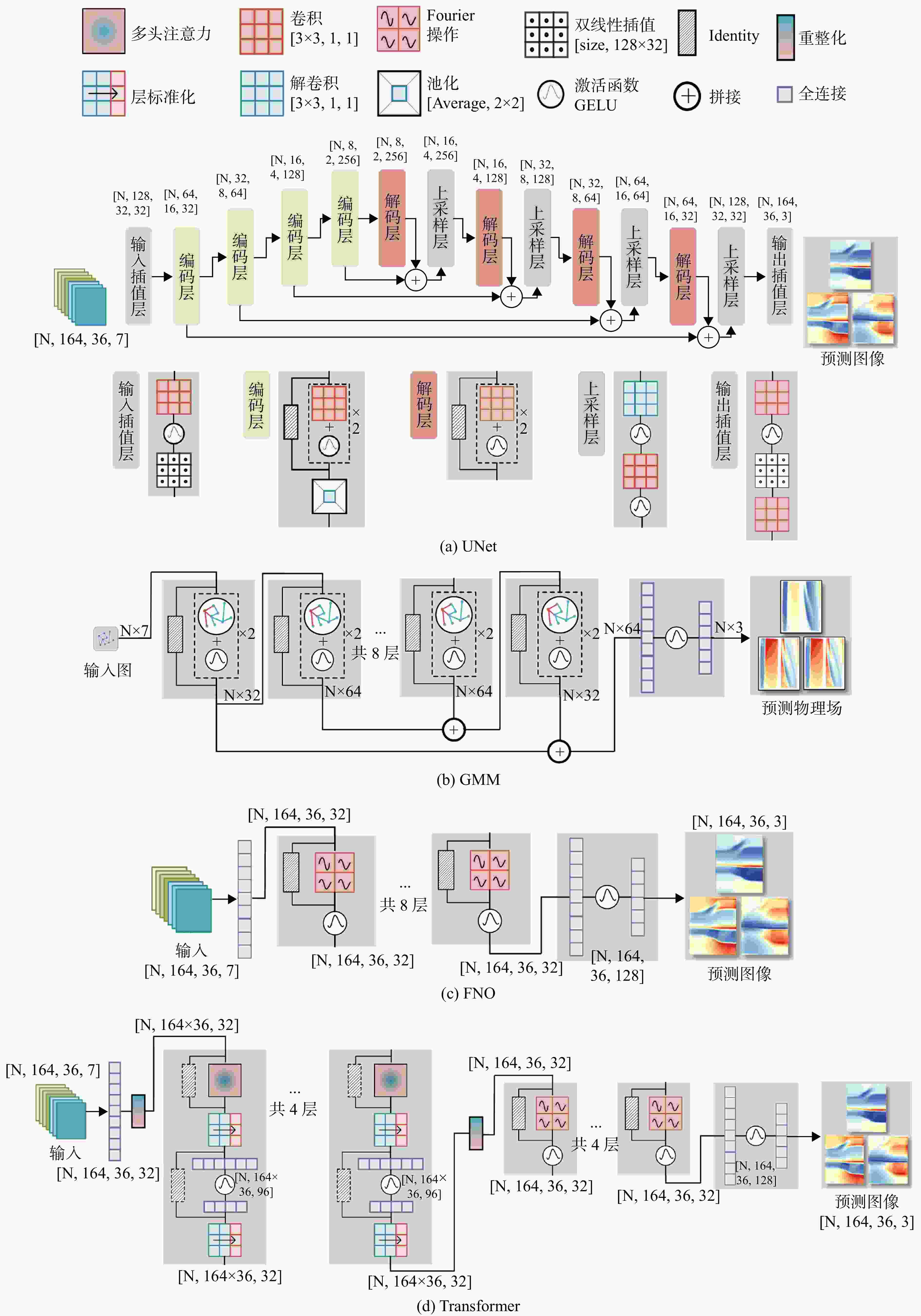
图 6 三维叶片表面的物理场预测模型的具体结构
Figure 6. Specific structure of the physical field prediction model of the three-dimensional blade surface
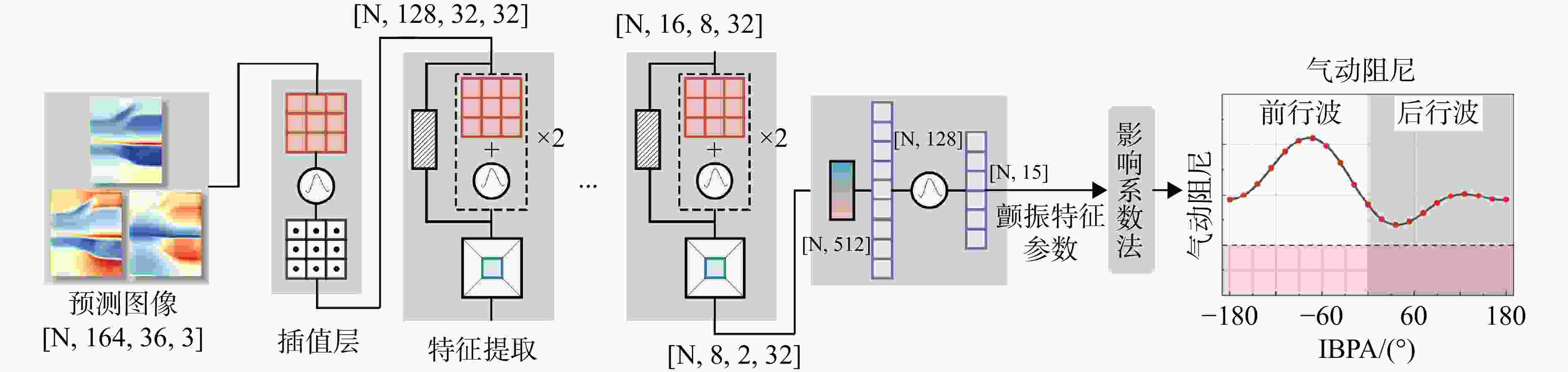
图 7 基于卷积的气动阻尼系数预测网络
Figure 7. Aerodynamic damping coefficient prediction network based on convolution

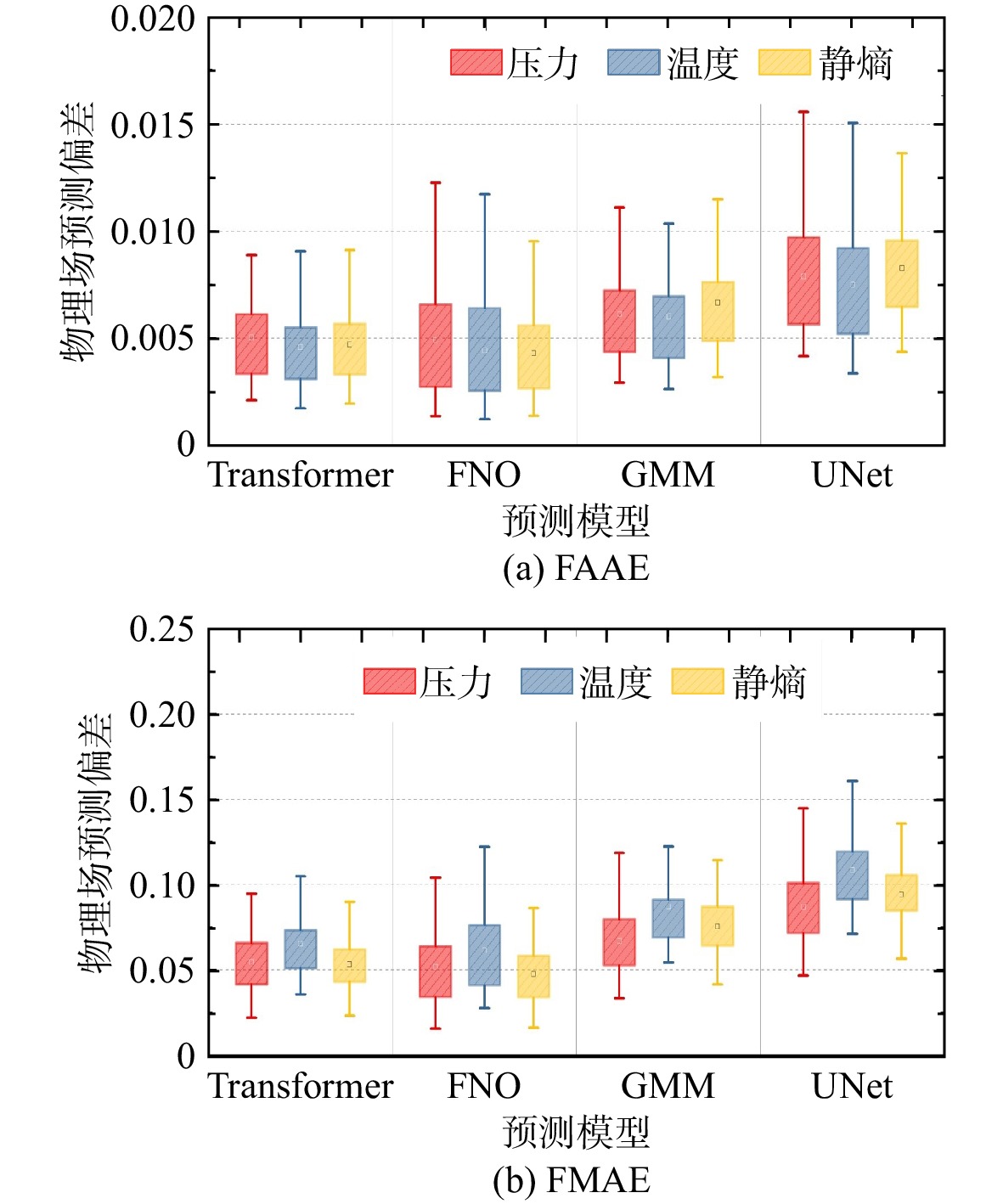
图 8 不同预测模型下三维叶片表面的物理场预测偏差
Figure 8. Prediction deviation of physical field on three-dimensional blade surface under different prediction models
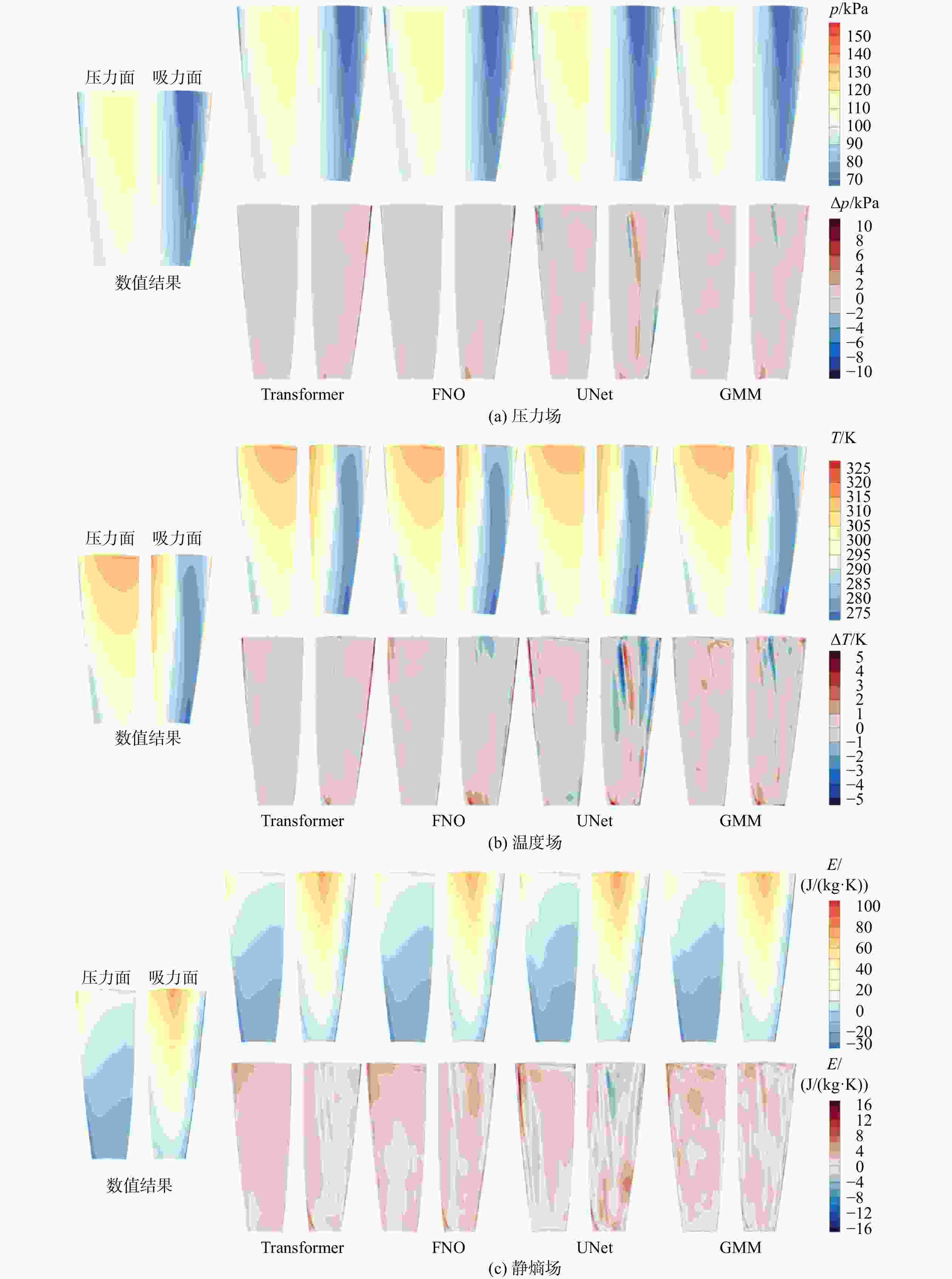
图 9 不同模型三维叶片表面物理场的预测对比(算例A)
Figure 9. Comparison of different models on the prediction of three-dimensional blade surface physical field (Example A)
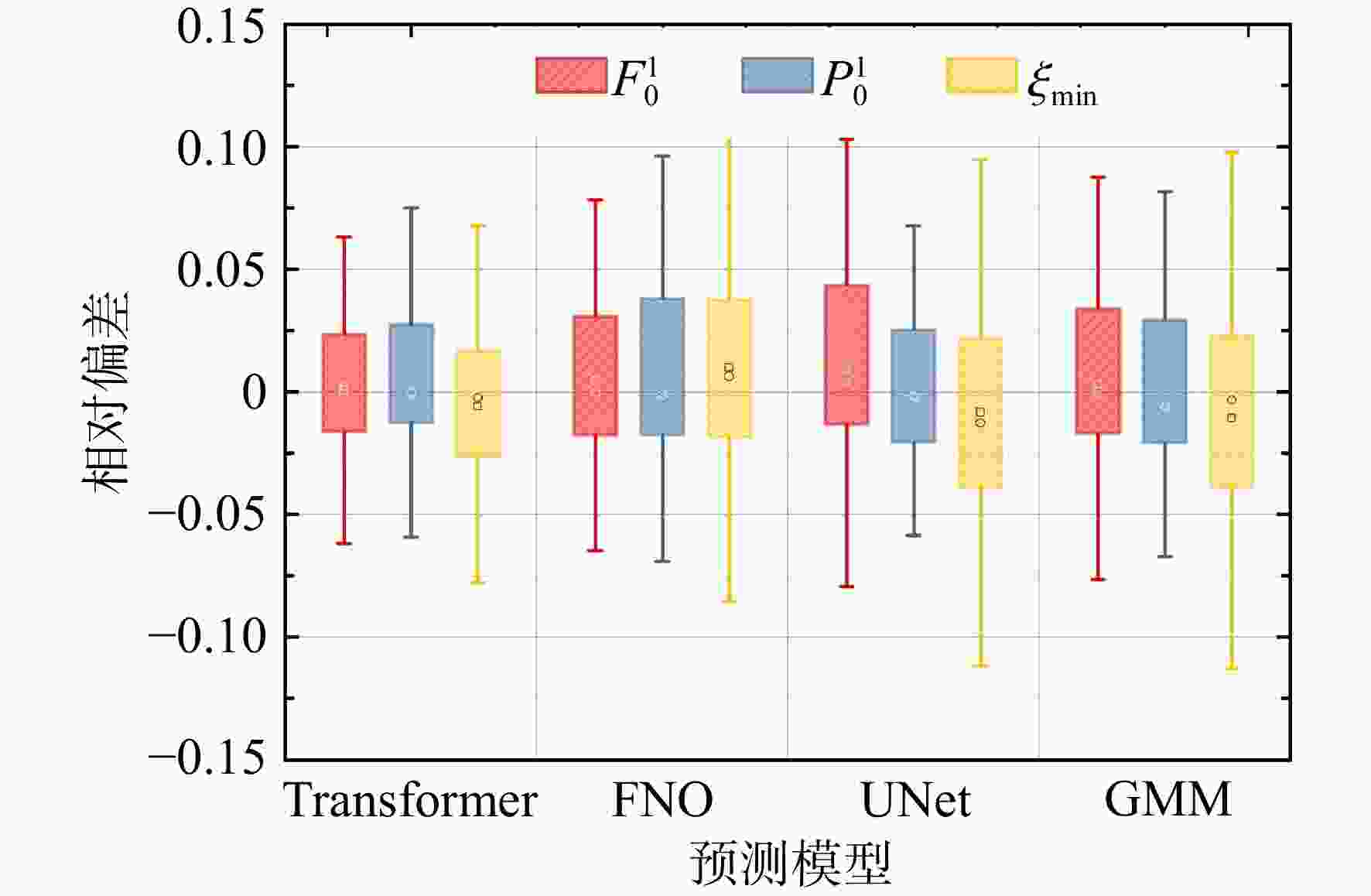
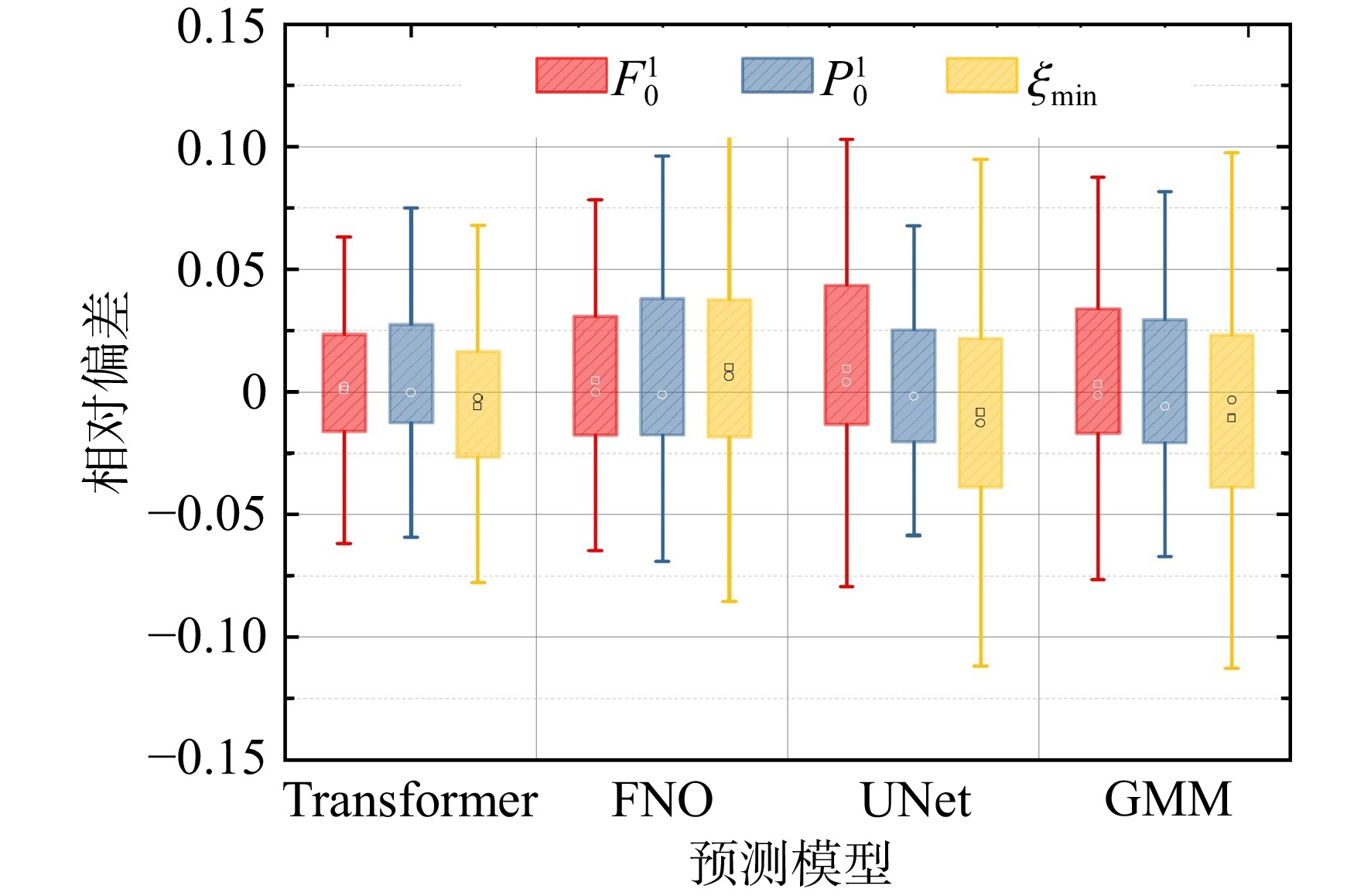
图 10 不同预测模型颤振特性参数预测的相对偏差对比
Figure 10. Comparison of relative deviations of flutter characteristic parameter prediction of different prediction models
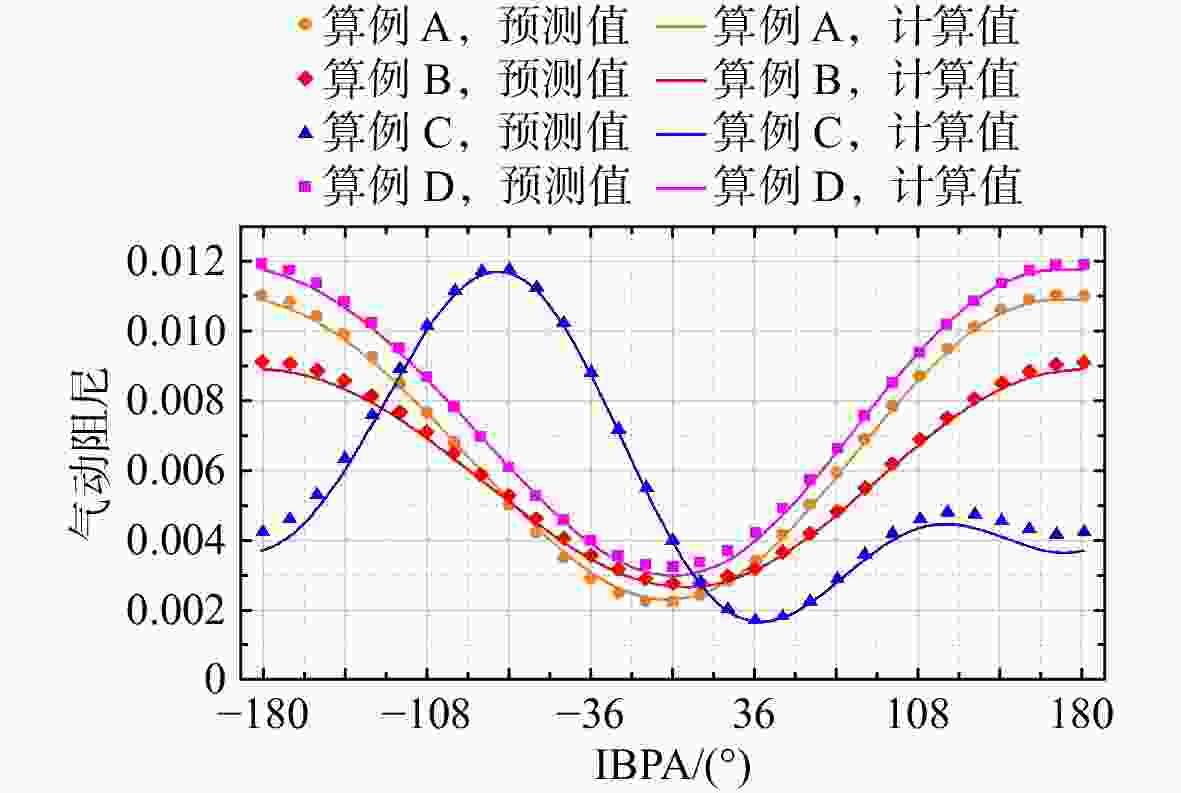
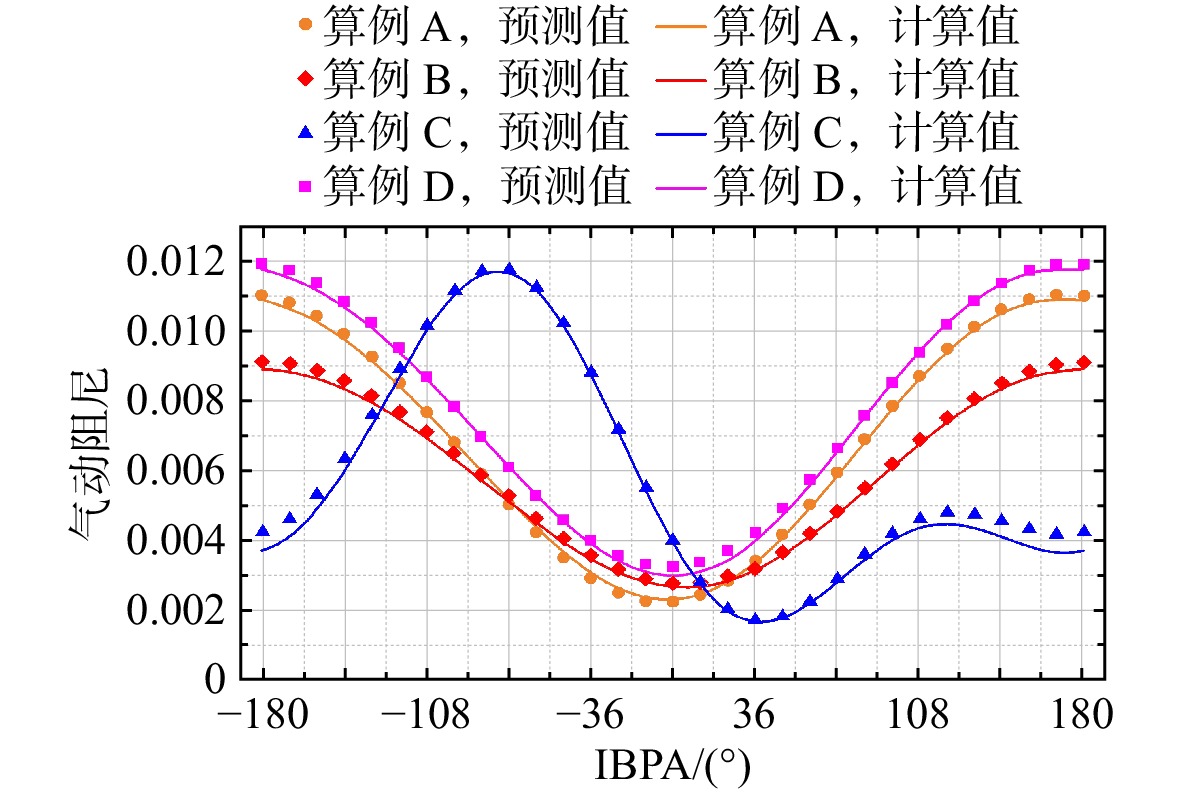
图 11 Transformer模型气动阻尼系数预测效果
Figure 11. Aerodynamic damping prediction results of Transformer model
表 1 压气机参数的采样区间
Table 1. Sampling interval of compressor parameters
压气机参数 采样区间 弯角β1/(°) [−15,15] 掠角β2/(°) [−10,10] 出口背压pout/kPa [90,112] 相对转速r/% [68,100]  下载: 导出CSV
表 2 展示算例的压气机参数
Table 2. Compressor parameters of the examples
算例 pout/kPa r/% β1/(°) β2/(°) A 105.68 93.25 3.84 −5.21 B 98.37 76.05 −14.46 −4.85 C 106.01 74.75 −9.95 9.65 D 95.37 86.09 −13.46 6.96
下载: 导出CSV
表 3 不同预测模型的计算成本对比
Table 3. Comparison of calculation costs of different prediction models
预测模型 显存
占用/GB浮点运算
次数/GB训练
时间/h预测
时间/msTransformer 3.6 2.24 1.4 6.98 FNO 3.1 2.05 0.7 4.98 UNet 2.4 32.59 1.1 6.98 GMM 4.6 3.97 3.2 4.98
下载: 导出CSV
-
[1] 刘文阁,冯毓诚. 对经验法预测叶片失速颤振的分析及叶片颤振数据库的建立[J]. 北京航空学院学报,1986(4): 1-10. LIU Wenge,FENG Yucheng. Analysis of blade stall flutter prediction by empirical Method and establishment of blade flutter database[J]. Journal of Beijing University of Aeronautics and Astronautics,1986(4): 1-10. (in ChineseLIU Wenge, FENG Yucheng. Analysis of blade stall flutter prediction by empirical Method and establishment of blade flutter database[J]. Journal of Beijing University of Aeronautics and Astronautics, 1986(4): 1-10. (in Chinese) [2] KHALAK A. A framework for flutter clearance of aeroengine blades[J]. Journal of Engineering for Gas Turbines and Power,2002,124(4): 1003-1010. doi: 10.1115/1.1492832 [3] WHITEHEAD D S. Vibration of cascade blades treated by actuator disc methods[J]. Proceedings of the Institution of Mechanical Engineers,1959,173(1): 555-574. doi: 10.1243/PIME_PROC_1959_173_050_02 [4] 杨晓东,唐智明,周盛. 预测叶片失速颤振的一种半激盘方法[J]. 北京航空学院学报,1986(4): 93-101. YANG Xiaodong,TANG Zhiming,ZHOU Sheng. A half-disk method for predicting stall flutter of blades[J]. Journal of Beijing University of Aeronautics and Astronautics,1986(4): 93-101. (in ChineseYANG Xiaodong, TANG Zhiming, ZHOU Sheng. A half-disk method for predicting stall flutter of blades[J]. Journal of Beijing University of Aeronautics and Astronautics, 1986(4): 93-101. (in Chinese) [5] JUTRAS R R,STALLONE M J,BANKHEAD H R. Experimental investigation of flutter in midstage compressor designs[J]. Journal of Aircraft,1981,18(10): 874-880. doi: 10.2514/3.57574 [6] BÖLCS A,FRANSSON T H. Aeroelasticity in tur-bomachines. comparison of theoretical and experimental cascade results[R]. Switzerland: Communication du Laboratoire de Ther-mique Appliquée et de Turbomachines,No. 13,École Polytechnique Fédérale de Lausanne (EPFL),1986. [7] SANZ LUENGO A,VOGT D M,SCHMITT S,et al. Validation of linearized navier-stokes based flutter prediction tool: Part 2—quantification of the prediction accuracy on a turbine test case[C]//Proceedings of ASME Turbo Expo 2012: Turbine Technical Conference and Exposition. Copenhagen,Denmark: American Society of Mechanical Engineers Digital Collection,2013: 1581-1592. [8] FUHRER C,GRÜBEL M,VOGT D M. A generic low-pressure steam turbine test case for aeromechanics and condensation[J]. Proceedings of the Institution of Mechanical Engineers,Part A: Journal of Power and Energy,2019,233(7): 953-958. doi: 10.1177/0957650919833207 [9] BRANDSTETTER C,PAGES V,DUQUESNE P,et al. Project PHARE-2—a high-speed UHBR fan test facility for a new open-test case[J]. Journal of Turbomachinery,2019,141(10): 101004. doi: 10.1115/1.4043883 [10] HE L. An Euler solution for unsteady flows around oscillating blades[R]. Athens,Greece: Proceedings of ASME 1989 International Gas Turbine and Aeroengine Congress and Exposition,2015. [11] HERRICK G P. Assessing fan flutter stability in presence of inlet distortion using one-way and two-way coupled methods: AIAA 2014-3733. [R]. Reston,Virginia: AIAA,2014. [12] BENDIKSEN O. Aeroelastic problems in turbomachines: AIAA 1990-1157 [R]. Reston,Virigina: AIAA,1990. [13] KRIZHEVSKY A,SUTSKEVER I,HINTON G E. ImageNet classification with deep convolutional neural networks[J]. Communications of the ACM,2017,60(6): 84-90. doi: 10.1145/3065386 [14] DEVLIN J,CHANG Mingwei,LEE K,et al. BERT: pre-training of deep bidirectional transformers for language uderstanding[EB/OL]. (2018-10-11)[2018-10-11]. http://arxiv.org/abs/1810.04805. [15] SILVER D,HUANG A,MADDISON C J,et al. Mastering the game of Go with deep neural networks and tree search[J]. Nature,2016,529: 484-489. doi: 10.1038/nature16961 [16] TOLLE K M,TANSLEY D S W,HEY A J G. The fourth paradigm: data-intensive scientific discovery[J]. Proceedings of the IEEE,2011,99(8): 1334-1337. doi: 10.1109/JPROC.2011.2155130 [17] CHEN Zhen,SHI Zhiwei,CHEN Sinuo,et al. Active flutter suppression for a flexible wing model with trailing-edge circulation control via reinforcement learning[J]. AIP Advances,2023,13(1): 015317. doi: 10.1063/5.0130370 [18] ZHENG Hua,WU Zhenglong,DUAN Shiqiang,et al. Research on feature extracted method for flutter test based on EMD and CNN[J]. International Journal of Aerospace Engineering,2021,2021: 6620368. [19] QI Hui,YU Jiaming,JIANG Jingjiang,et al. Linear and nonlinear combined aerodynamic reduced order model based on residual network framework[J]. EPL (Europhysics Letters),2022,138(6): 63002. doi: 10.1209/0295-5075/ac765e [20] LI Wencheng,GAO Xiumin,LIU Haojie. Efficient prediction of transonic flutter boundaries for varying Mach number and angle of attack via LSTM network[J]. Aerospace Science and Technology,2021,110: 106451. doi: 10.1016/j.ast.2020.106451 [21] CHATTERJEE T,ESSIEN A,GANGULI R,et al. The stochastic aeroelastic response analysis of helicopter rotors using deep and shallow machine learning[J]. Neural Computing and Applications,2021,33(23): 16809-16828. doi: 10.1007/s00521-021-06288-w [22] DUAN Shiqiang,ZHENG Hua,LIU Junhao. A novel classification method for flutter signals based on the CNN and STFT[J]. International Journal of Aerospace Engineering,2019,2019: 9375437. [23] VASWANI A,SHAZEER N,PARMAR N,et al. Attention is all you need[EB/OL]. (2023-08-02)[2023-08-02]. http://arxiv.org/abs/1706.03762. [24] BENGIO Y,LECUN Y,HINTON G. Deep learning for AI[J]. Communications of the ACM,2021,64(7): 58-65. doi: 10.1145/3448250 [25] YIN Zikai,LIANG Yongshou,REN Junxue,et al. LETR: an end-to-end detector of reconstruction area in blades adaptive machining with transformer[J]. Journal of Sensors,2022,2022: 3005684. [26] LIU Qiang,ZHU Wei,MA Feng,et al. Graph attention network-based fluid simulation model[J]. AIP Advances,2022,12(9): 095114. doi: 10.1063/5.0122165 [27] HUANG X Q,HE L,BELL D L. Experimental and computational study of oscillating turbine cascade and influence of part-span shrouds[J]. Journal of Fluids Engineering,2009,131(5): 051102. doi: 10.1115/1.3111254 [28] 张翔. 叶轮机械叶片气弹稳定性频域非线性分析方法及应用研究[D]. 西安: 西北工业大学,2017. ZHANG Xiang. Study on nonlinear analysis method and application of aeroelastic stability of turbomachinery blades in frequency domain[D]. Xi’an: Northwestern Polytechnical University,2017. (in ChineseZHANG Xiang. Study on nonlinear analysis method and application of aeroelastic stability of turbomachinery blades in frequency domain[D]. Xi’an: Northwestern Polytechnical University, 2017. (in Chinese) -






 点击查看大图

计量
- 文章访问数: 603
- HTML浏览量: 464
- PDF量: 82
- 被引次数: 0