






Hybrid vision-based quantitative evaluation method of complex wear scratches on honeycomb seals
-
摘要:
提出了一种基于混合视觉的封严蜂窝磨痕测量数据自适应处理与量化评估方法,考虑蜂窝磨痕的边缘模糊及截面复杂的特性,通过点云和图像的融合分析实现了蜂窝磨痕的自适应识别、特征提取与量化评估。在点云数据中,根据蜂窝结构的先验几何特征,对实测点云进行重新定位与主平面提取,实现测量坐标系与理论坐标系的位姿对齐;在图像数据中,通过图像形态学算法解决蜂窝空洞较多、深孔等干扰下的蜂窝区域精准提取问题,实现划痕几何的量化计算。对多组磨损烧蚀后的蜂窝实测数据测试,能够实现所有划痕的精准辨识,在划痕宽度与深度上与人工测量结果偏差小于5%,识别速度提升7倍以上;结果表明所提出的方法能够利用表面形貌点云数据对碰磨及烧蚀的蜂窝磨痕进行自适应识别与量化评估。
Abstract:A hybrid vision-based method for adaptive processing and quantitative evaluation of sealing honeycomb scratch measurement data was proposed. Taking into account the characteristics of edge blurring and complex cross-sections in honeycomb scratches, the method integrated point cloud and image data through fusion analysis to achieve adaptive scratch identification, feature extraction, and quantitative evaluation. In point cloud data analysis, the measured point cloud was realigned, and the primary plane was extracted based on the prior geometric features of the honeycomb structure, enabling alignment of the measurement coordinate system with the theoretical coordinate system. In image data analysis, image morphology algorithms were employed to address challenges such as the abundance of honeycomb cavities and deep holes, ensuring precise extraction of the honeycomb regions and quantitative computation of the scratch geometry. Testing on multiple sets of measured data from worn and ablated honeycomb surfaces demonstrated the ability of the proposed method to accurately identify all scratches, with deviations in scratch width and depth measurements being less than 5% compared with manual measurements. Moreover, the identification speed was improved by more than sevenfold. The results indicated that the proposed method effectively utilized surface morphology point cloud data for the adaptive identification and quantitative evaluation of honeycomb scratches caused by wear and ablation.
-
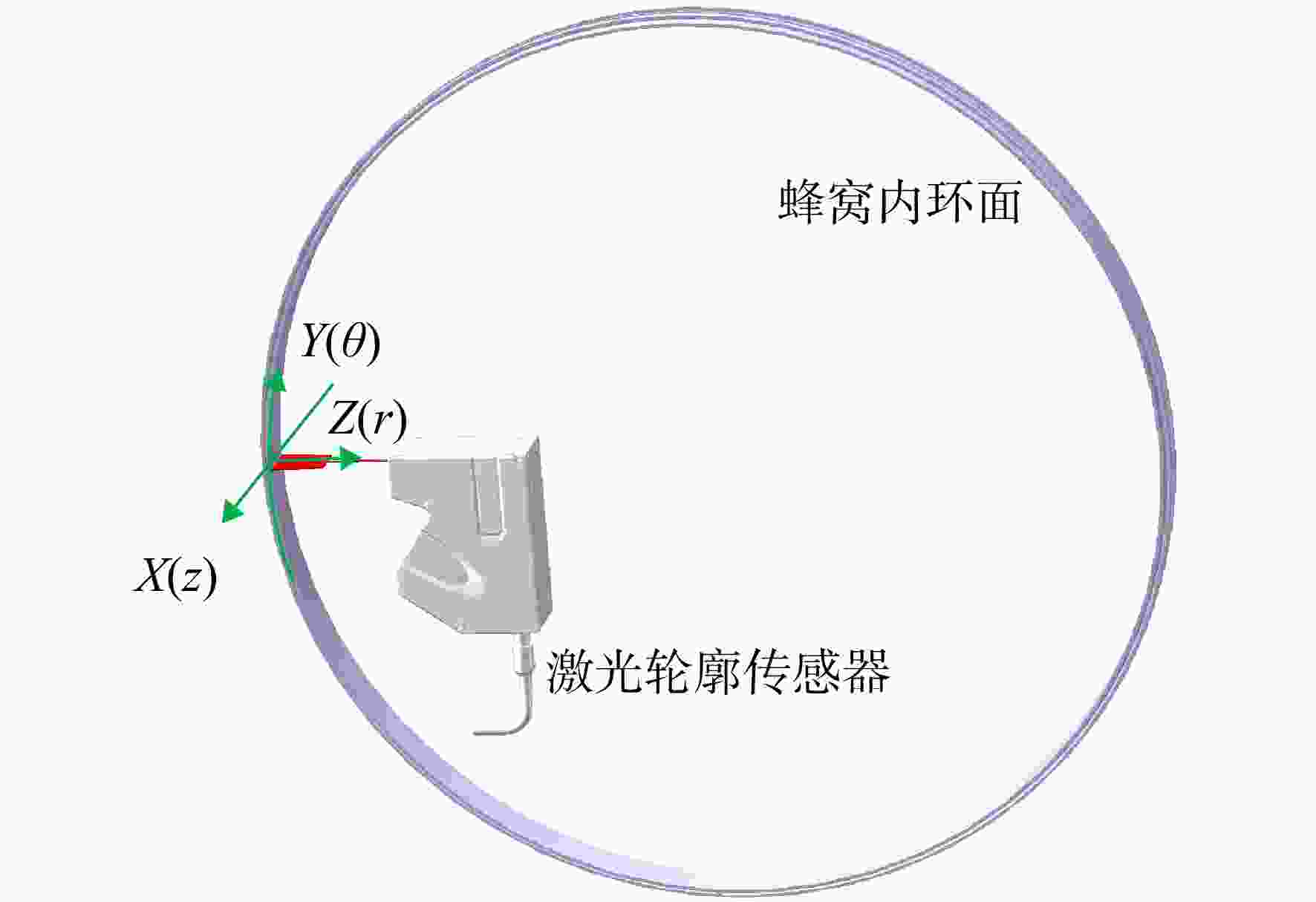
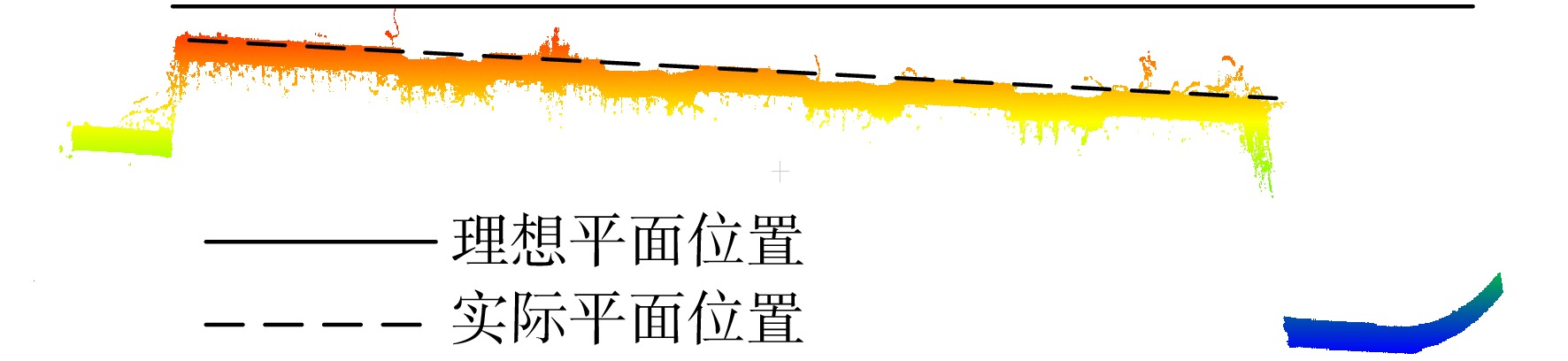
图 2 蜂窝封严点云测量示意图
Figure 2. Schematic diagram of honeycomb sealed point cloud measurement
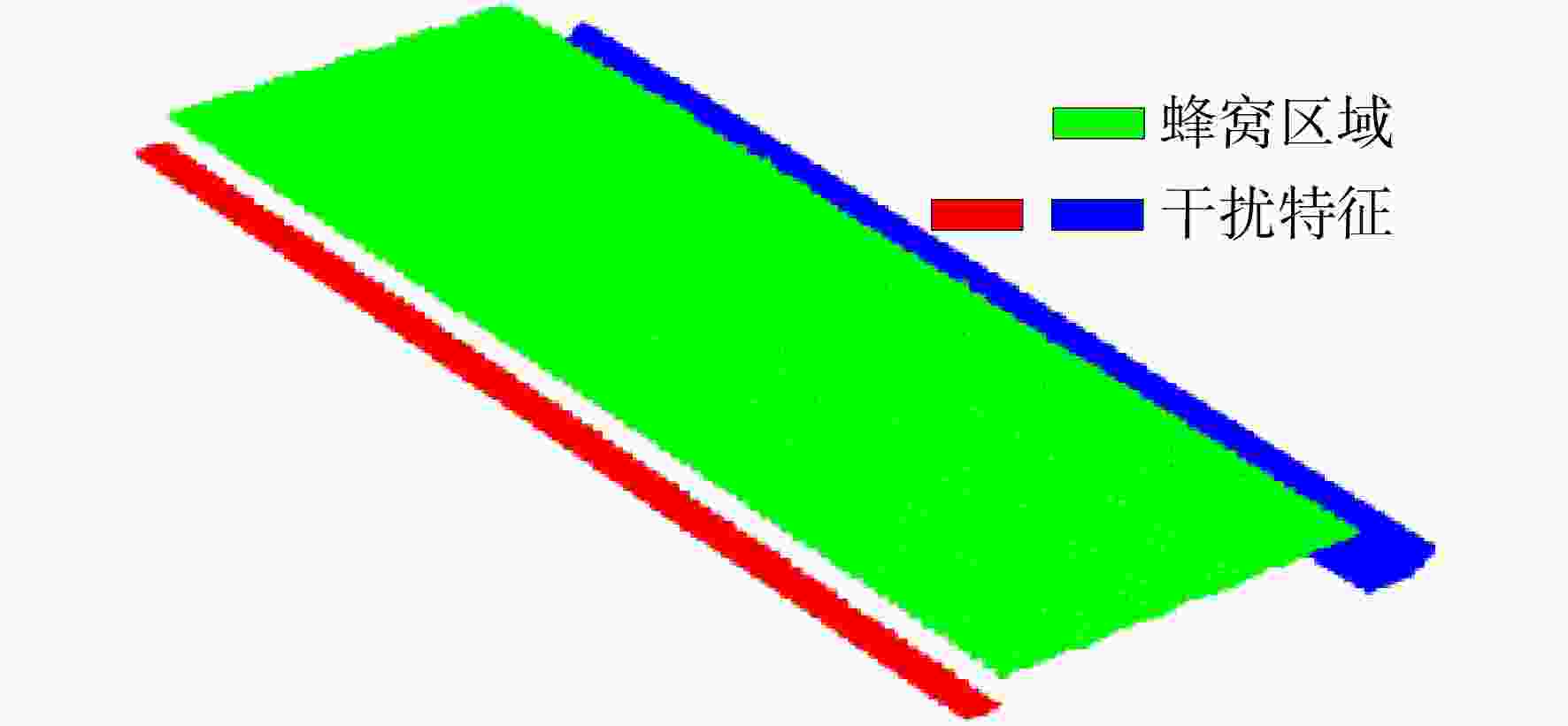
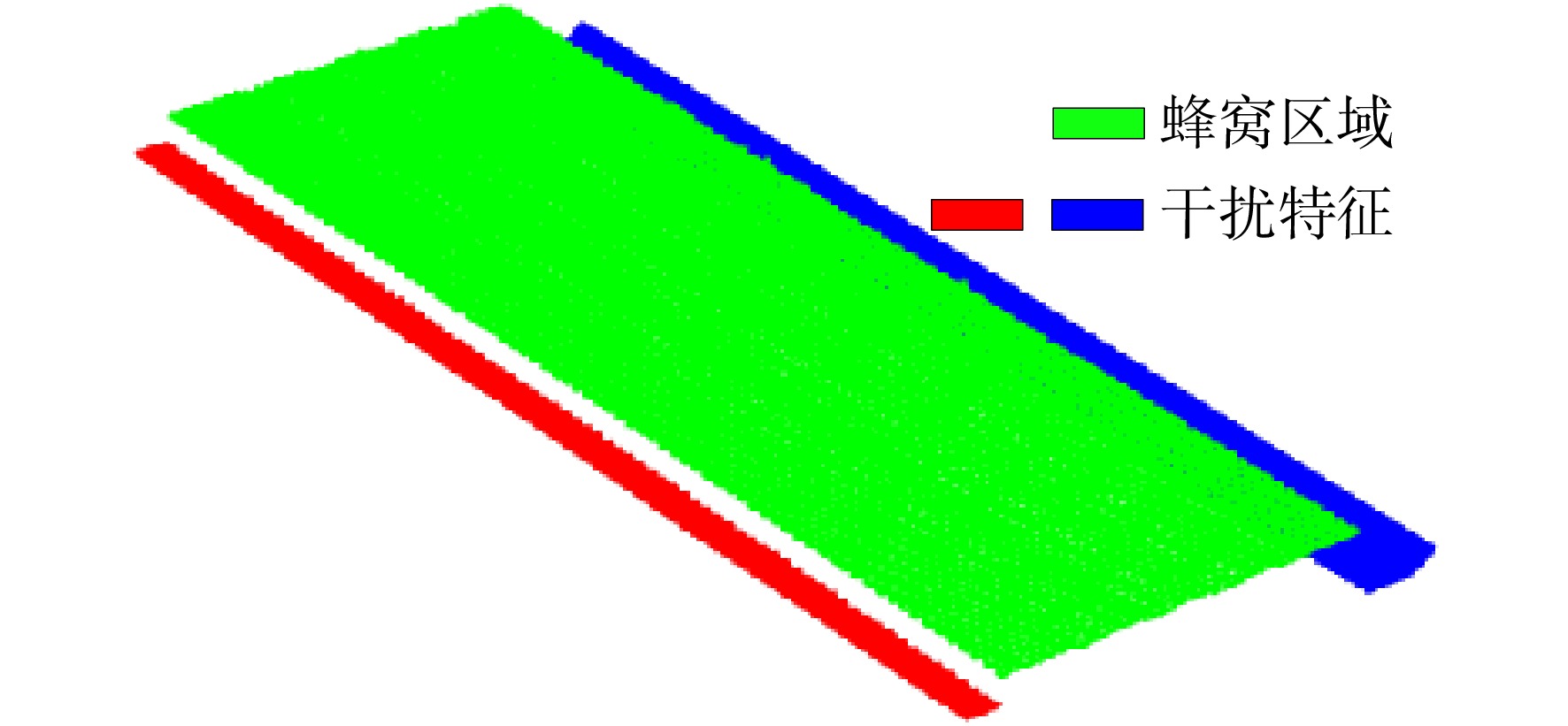
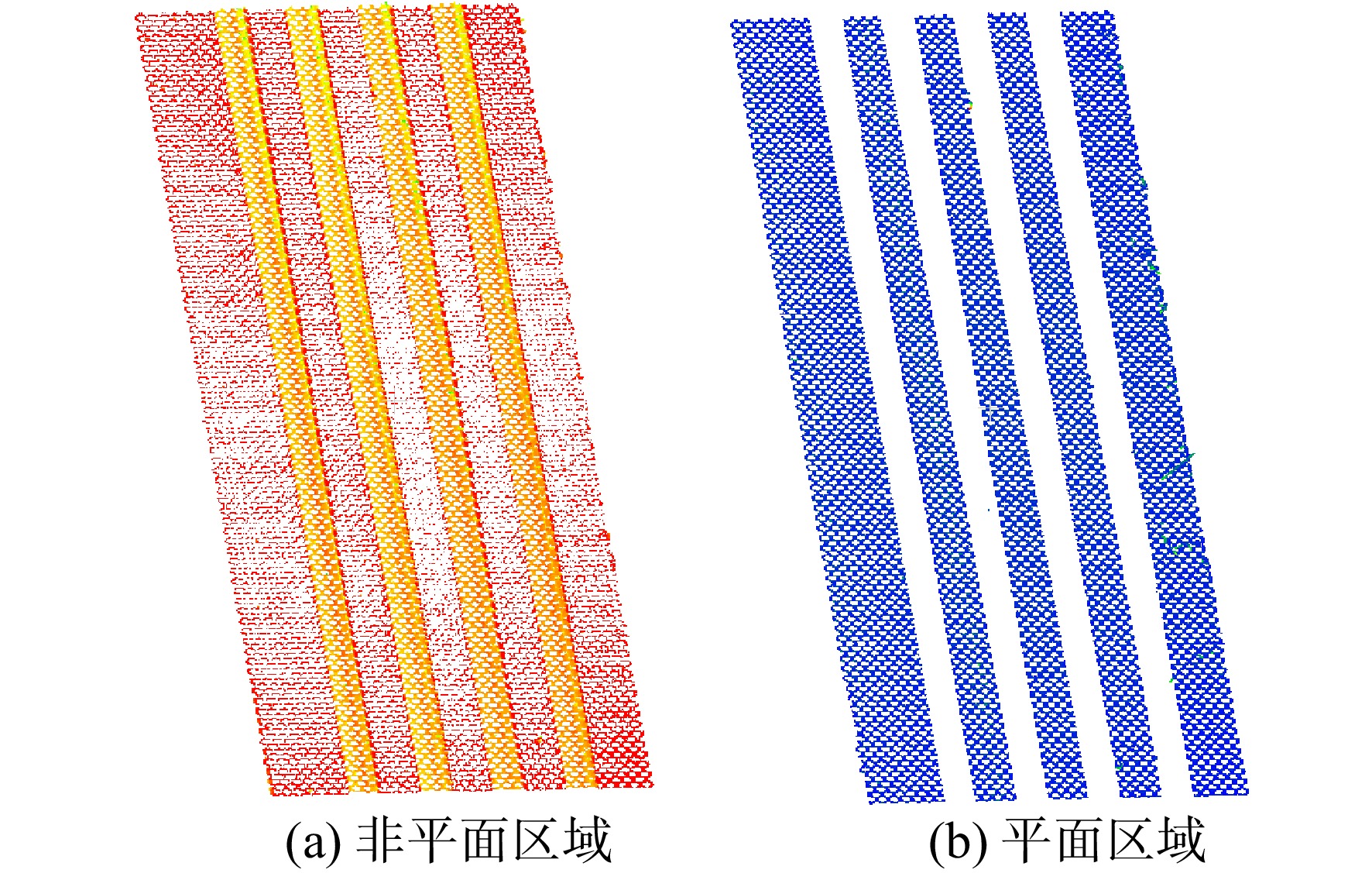
图 4 点云Z距离聚类分割(颜色随机赋值)
Figure 4. Point cloud Z distance clustering segmentation (color random assignment)
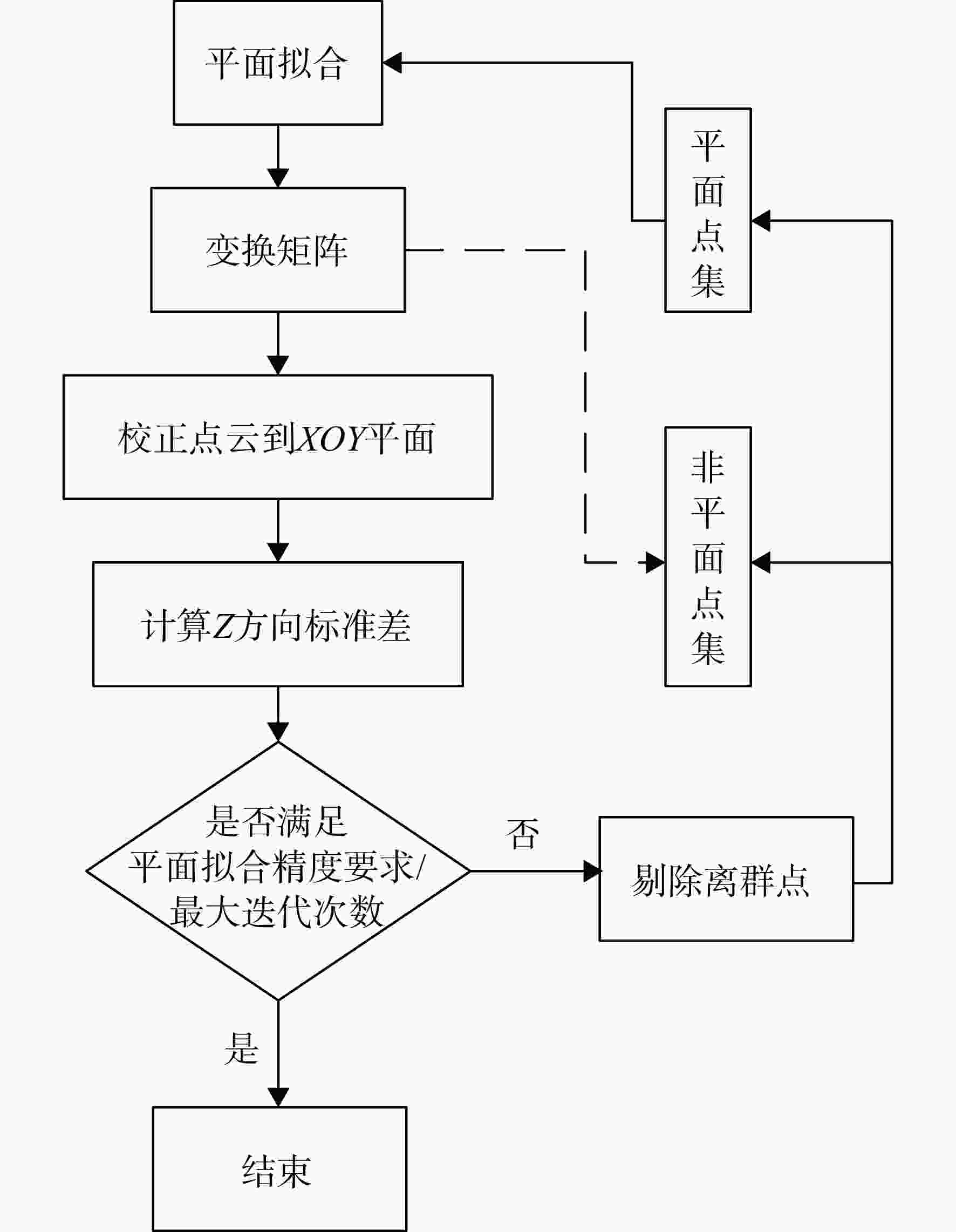
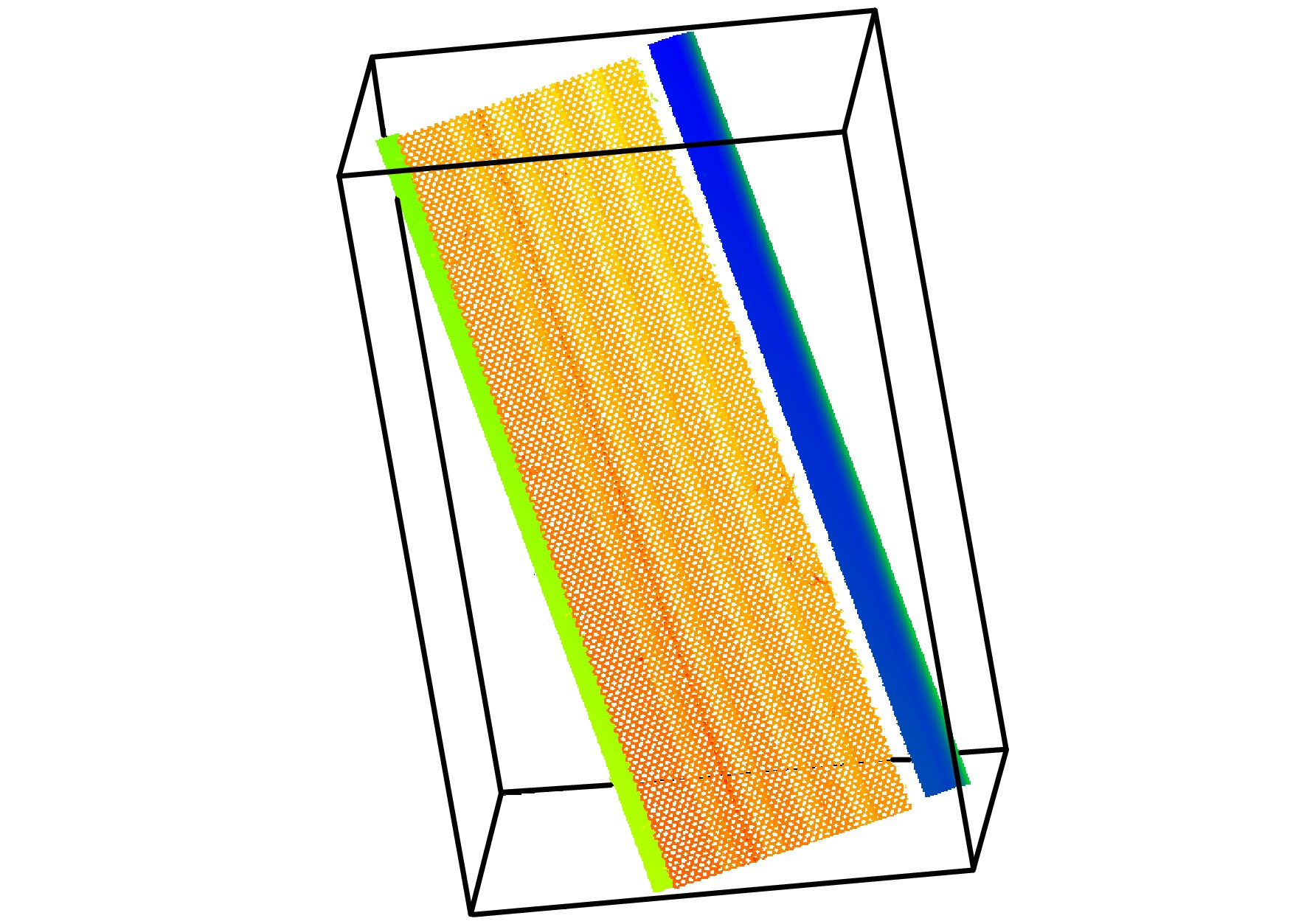
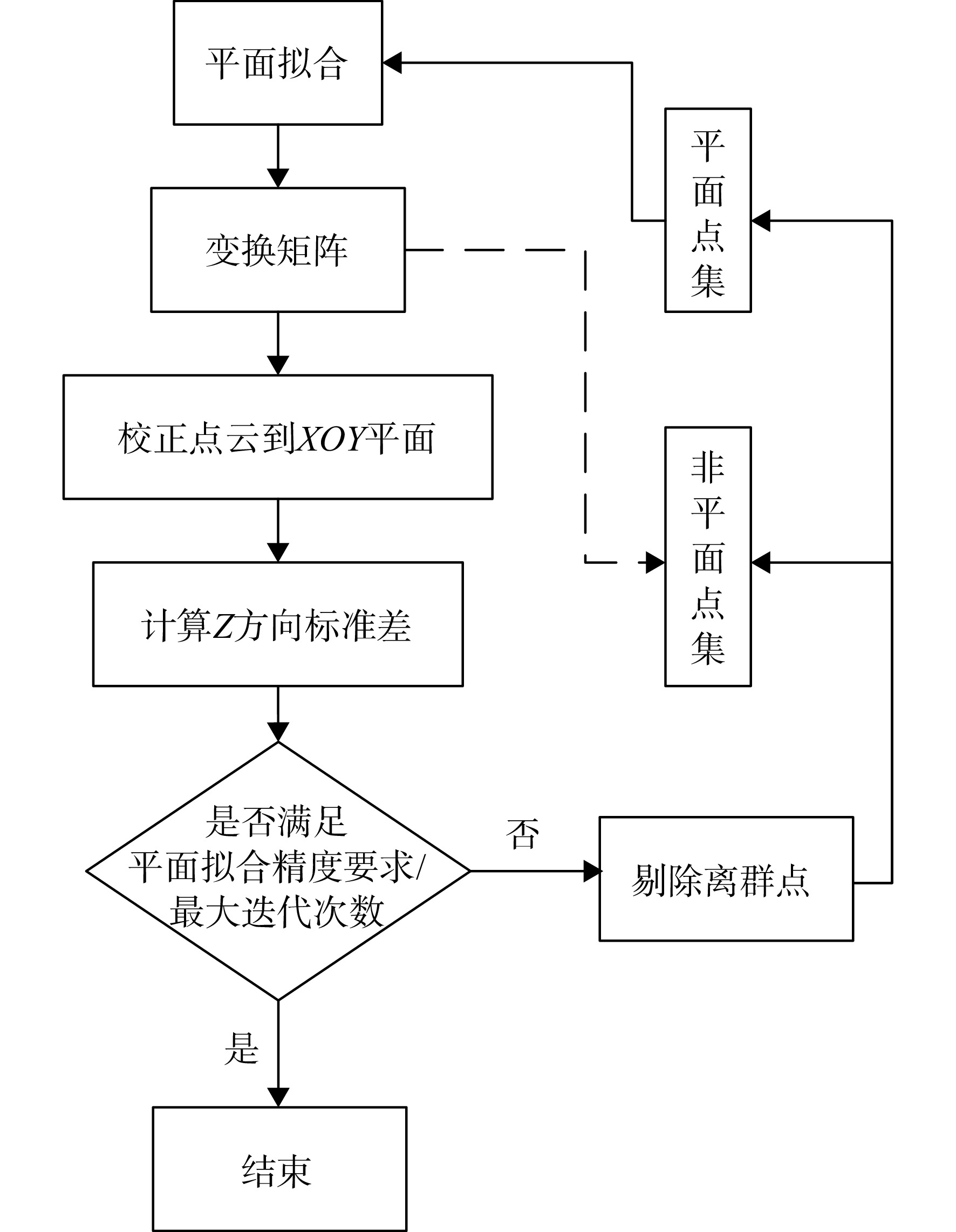
图 8 点云坐标校正与平面提取流程
Figure 8. Coordinate correction and plane extraction process of point cloud
表 1 蜂窝封严识别对比(自动/人工)
Table 1. Honeycomb seal recognition and comparison (automatic/manual)
测量项目 数据1 数据2 数据3 划痕数量 4/4 4/4 4/4 处理时间/s 40/300 40/300 40/300 划痕1宽度/mm 1.90/1.89 2.50/2.44 2.56/2.61 划痕1深度/mm 0.367/0.344 0.309/0.314 0.405/0.411 划痕2宽度/mm 1.84/1.91 2.50/2.33 2.60/2.72 划痕2深度/mm 0.376/0.353 0.287/0.284 0.360/0.351 划痕3宽度/mm 1.94/1.96 2.26/2.29 2.62/2.55 划痕3深度/mm 0.366/0.366 0.288/0.279 0.356/0.361 划痕4宽度/mm 1.82/1.79 2.36/2.37 2.60/2.58 划痕4深度/mm 0.35/0.362 0.281/0.257 0.355/0.312  下载: 导出CSV
-
[1] 孙丹, 王猛飞, 艾延廷, 等. 蜂窝密封泄漏特性理论与实验[J]. 航空学报, 2017, 38(4): 420512. SUN Dan, WANG Mengfei, AI Yanting, et al. Theoretical and experimental study of leakage characteristics of honeycomb seal[J]. Acta Aeronautica et Astronautica Sinica, 2017, 38(4): 420512. (in ChineseSUN Dan, WANG Mengfei, AI Yanting, et al. Theoretical and experimental study of leakage characteristics of honeycomb seal[J]. Acta Aeronautica et Astronautica Sinica, 2017, 38(4): 420512. (in Chinese) [2] ZHANG Na, XUAN Haijun, GUO Xiaojun, et al. Investigation of high-speed rubbing behavior of labyrinth-honeycomb seal for turbine engine application[J]. Journal of Zhejiang University: Science A, 2016, 17(12): 947-960. doi: 10.1631/jzus.A1600367 [3] LU Bin, XUAN Haijun, MA Xiaojian, et al. The influence of the axial rub added in the radial rub on the wear of the seal fins during the high speed rub of labyrinth-honeycomb seal[J]. Materials, 2021, 14(8): 1997. doi: 10.3390/ma14081997 [4] 何振鹏, 王宇博, 王伟韬, 等. 蜂窝结构对篦齿-蜂窝密封封严性能的影响[J]. 润滑与密封, 2020, 45(8): 26-35. HE Zhenpeng, WANG Yubo, WANG Weitao, et al. Effect of honeycomb structure on sealing performance of labyrinth-honeycomb seal[J]. Lubrication Engineering, 2020, 45(8): 26-35. (in ChineseHE Zhenpeng, WANG Yubo, WANG Weitao, et al. Effect of honeycomb structure on sealing performance of labyrinth-honeycomb seal[J]. Lubrication Engineering, 2020, 45(8): 26-35. (in Chinese) [5] NAYAK K C. Effect of rotation on leakage and windage heating in labyrinth seals with honeycomb lands[J]. Journal of Engineering for Gas Turbines and Power, 2020, 142(8): 081001. doi: 10.1115/1.4047180 [6] FISCHER T, WELZENBACH S, MEIER F, et al. Modeling the rubbing contact in honeycomb seals[J]. Continuum Mechanics and Thermodynamics, 2018, 30(2): 381-395. doi: 10.1007/s00161-017-0608-4 [7] 王泽铭, 徐文峰, 任国哲, 等. 蜂窝衬套对篦齿封严静力与动力特性影响机理研究[J]. 推进技术, 2024, 45(2): 2301005. WANG Zeming, XU Wenfeng, REN Guozhe, et al. Influence mechanism of honeycomb bushing on static and dynamic characteristics of labyrinth seal[J]. Journal of Propulsion Technology, 2024, 45(2): 2301005. (in ChineseWANG Zeming, XU Wenfeng, REN Guozhe, et al. Influence mechanism of honeycomb bushing on static and dynamic characteristics of labyrinth seal[J]. Journal of Propulsion Technology, 2024, 45(2): 2301005. (in Chinese) [8] 李娜, 张清, 牛坤, 等. 基于蜂窝磨损槽实测数据的发动机工作状态封严间隙变化规律分析[J]. 航空维修与工程, 2022(5): 77-79. LI Na, ZHANG Qing, NIU Kun, et al. Analysis on the variation law of sealing clearance in engine working state based on the measured data of honeycomb rub-grooves[J]. Aviation Maintenance & Engineering, 2022(5): 77-79. (in ChineseLI Na, ZHANG Qing, NIU Kun, et al. Analysis on the variation law of sealing clearance in engine working state based on the measured data of honeycomb rub-grooves[J]. Aviation Maintenance & Engineering, 2022(5): 77-79. (in Chinese) [9] 王文昊, 何立东, 王学志, 等. 偏心工况下梳齿、蜂窝与蜂窝-梳齿密封的泄漏特性[J]. 化工进展, 2023, 42(4): 1698-1707. WANG Wenhao, HE Lidong, WANG Xuezhi, et al. Leakage characteristics of labyrinth, honeycomb and honeycomb-labyrinth seals under eccentric conditions[J]. Chemical Industry and Engineering Progress, 2023, 42(4): 1698-1707. (in ChineseWANG Wenhao, HE Lidong, WANG Xuezhi, et al. Leakage characteristics of labyrinth, honeycomb and honeycomb-labyrinth seals under eccentric conditions[J]. Chemical Industry and Engineering Progress, 2023, 42(4): 1698-1707. (in Chinese) [10] 王文昊. 叶轮机械典型故障治理方法研究[D]. 北京: 北京化工大学, 2023. WANG Wenhao. Research on typical fault treatment methods of turbomachinery[D]. Beijing: Beijing University of Chemical Technology, 2023. (in ChineseWANG Wenhao. Research on typical fault treatment methods of turbomachinery[D]. Beijing: Beijing University of Chemical Technology, 2023. (in Chinese) [11] 王晓艳, 高继昆, 权伊明, 等. 一种蜂窝封严装置磨痕几何参数测量方法: CN202310588090. X[P]. 2023-08-22. WANG Xiaoyan, GAO Jikun, QUAN Yiming, et al. A method for measuring geometrical parameters of wear marks of honeycomb sealing device: CN202310588090. X [P]. 2023-08-22. (in ChineseWANG Xiaoyan, GAO Jikun, QUAN Yiming, et al. A method for measuring geometrical parameters of wear marks of honeycomb sealing device: CN202310588090. X [P]. 2023-08-22. (in Chinese) [12] 万谷. 航空发动机蜂窝表面跳动和同轴度测量技术研究[D]. 哈尔滨: 哈尔滨工业大学, 2015. WAN Gu. Research on measurement technology of honeycomb surface runout and coaxiality of aero-engine[D]. Harbin: Harbin Institute of Technology, 2015. (in ChineseWAN Gu. Research on measurement technology of honeycomb surface runout and coaxiality of aero-engine[D]. Harbin: Harbin Institute of Technology, 2015. (in Chinese) [13] 崔宝锋, 宋树林, 黄健, 等. 一种蜂窝磨痕深度的测量装置及方法: CN110514100A[P]. 2019-11-29. CUI Baofeng, SONG Shulin, HUANG Jian, et al. Device and method for measuring depth of honeycomb wear scar: CN110514100A[P]. 2019-11-29. (in ChineseCUI Baofeng, SONG Shulin, HUANG Jian, et al. Device and method for measuring depth of honeycomb wear scar: CN110514100A[P]. 2019-11-29. (in Chinese) [14] 张旭. 基于激光轮廓测量的工件三维尺寸数据处理方法研究[D]. 杭州: 中国计量大学, 2020. ZHANG Xu. Research on data processing method of three-dimensional dimension of workpiece based on laser profile measurement[D]. Hangzhou: China University of Metrology, 2020. (in ChineseZHANG Xu. Research on data processing method of three-dimensional dimension of workpiece based on laser profile measurement[D]. Hangzhou: China University of Metrology, 2020. (in Chinese) [15] 王新荣. 基于线激光扫描的异形轴零件尺寸测量技术实现[D]. 太原: 中北大学, 2022. WANG Xinrong. Realization of dimension measurement technology of special-shaped shaft parts based on line laser scanning[D]. Taiyuan: North University of China, 2022. (in ChineseWANG Xinrong. Realization of dimension measurement technology of special-shaped shaft parts based on line laser scanning[D]. Taiyuan: North University of China, 2022. (in Chinese) [16] ZHAO Yiming, ZHANG Xiao, HUANG Xinming. A technical survey and evaluation of traditional point cloud clustering methods for LiDAR panoptic segmentation[R]. Montreal, Canada: 2021 IEEE/CVF International Conference on Computer Vision Workshops (ICCVW), 2021. [17] DUAN Yao, YANG Chuanchuan, CHEN Hao, et al. Low-complexity point cloud denoising for LiDAR by PCA-based dimension reduction[J]. Optics Communications, 2021, 482: 126567. doi: 10.1016/j.optcom.2020.126567 [18] LIU Haoyue, SONG Rui, ZHANG Xuebo, et al. Point cloud segmentation based on Euclidean clustering and multi-plane extraction in rugged field[J]. Measurement Science and Technology, 2021, 32(9): 095106. doi: 10.1088/1361-6501/abead3 [19] SHIH F Y. Image processing and mathematical morphology: fundamentals and applications[M]. 1st ed. Boca Raton: CRC press, 2017. -


 点击查看大图

计量
- 文章访问数: 544
- HTML浏览量: 377
- PDF量: 37
- 被引次数: 0