






Deposition characteristics of graphite dust in helium turbine of an HTGR
-
摘要:
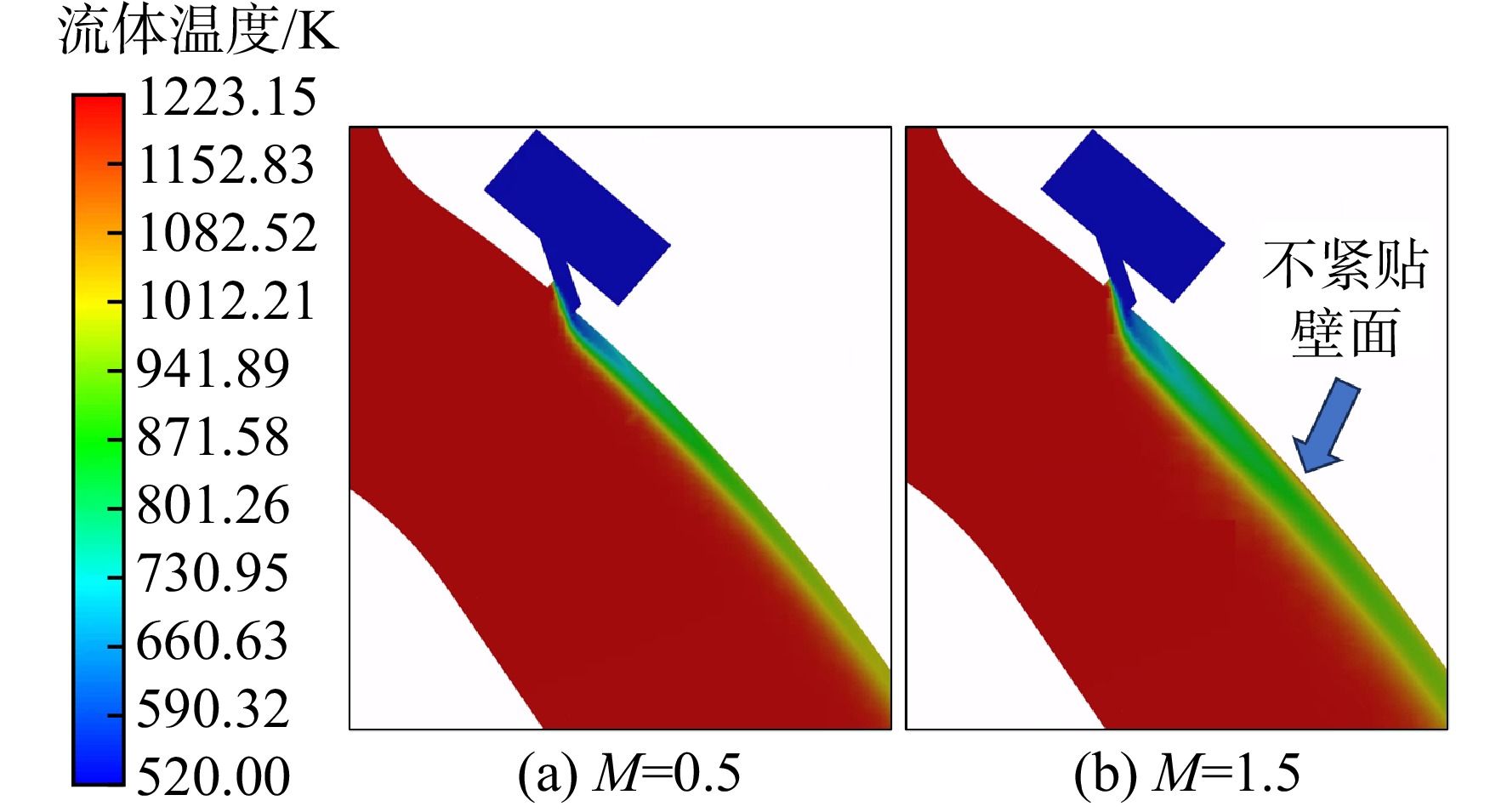
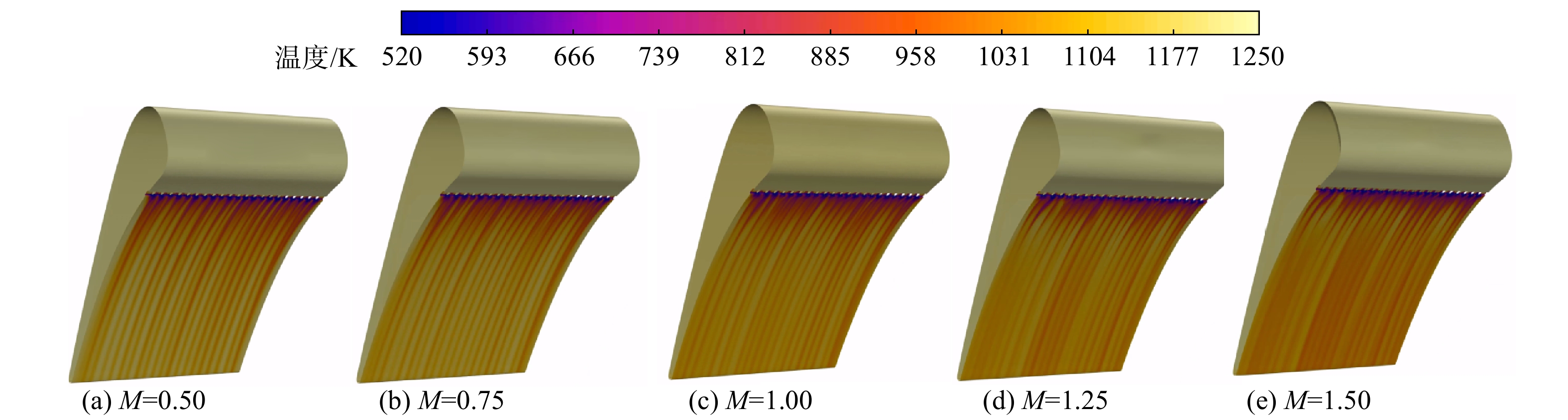
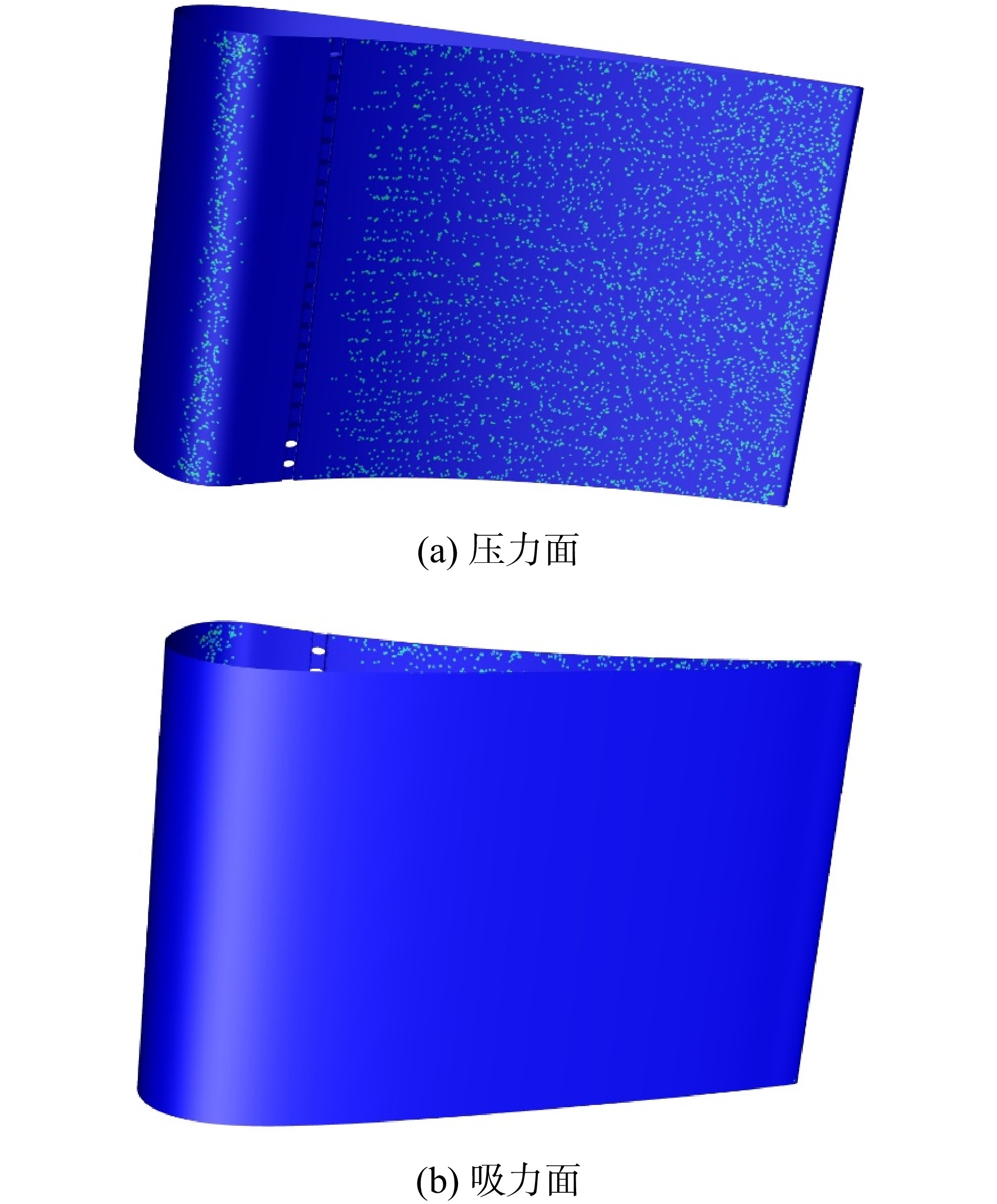
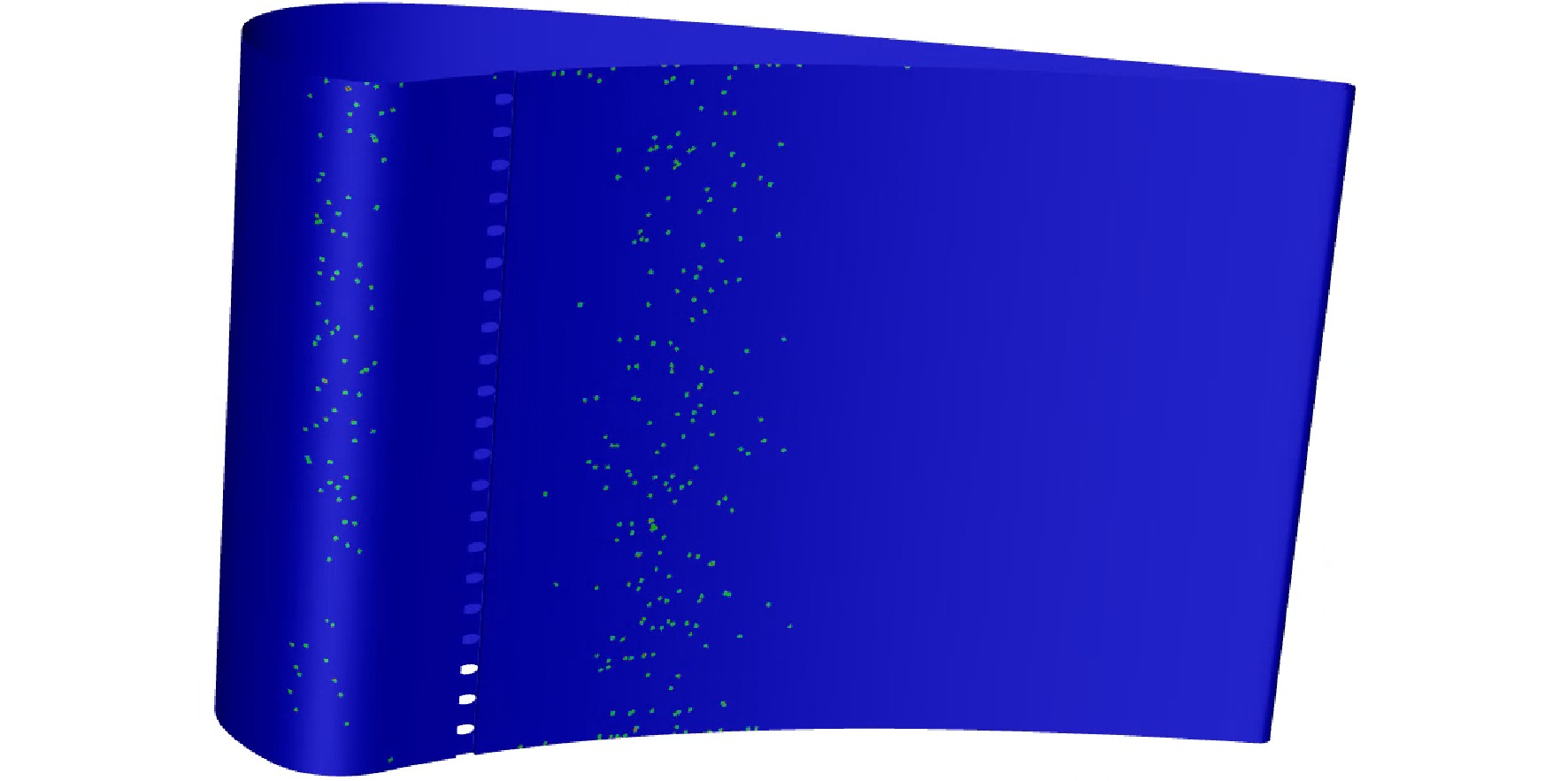
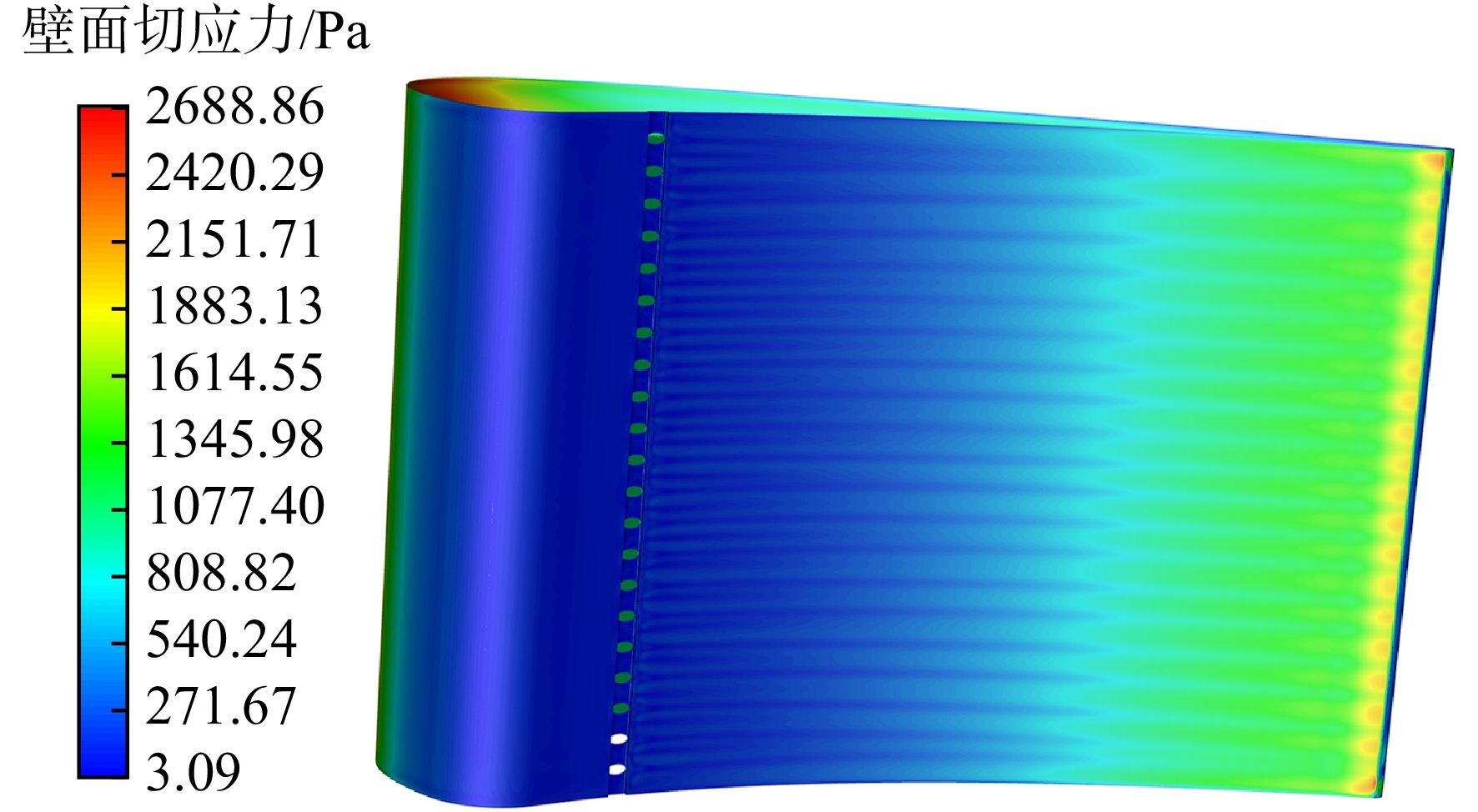
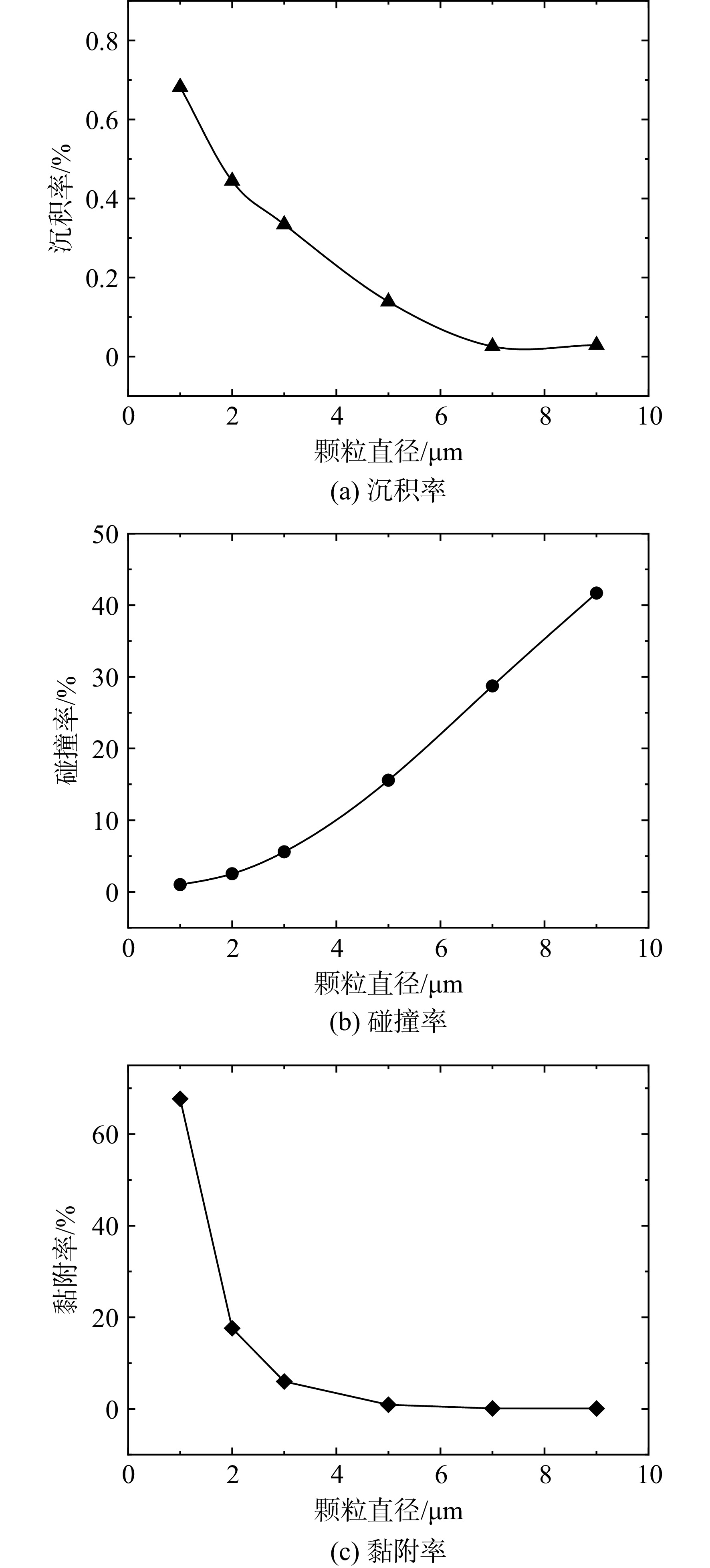
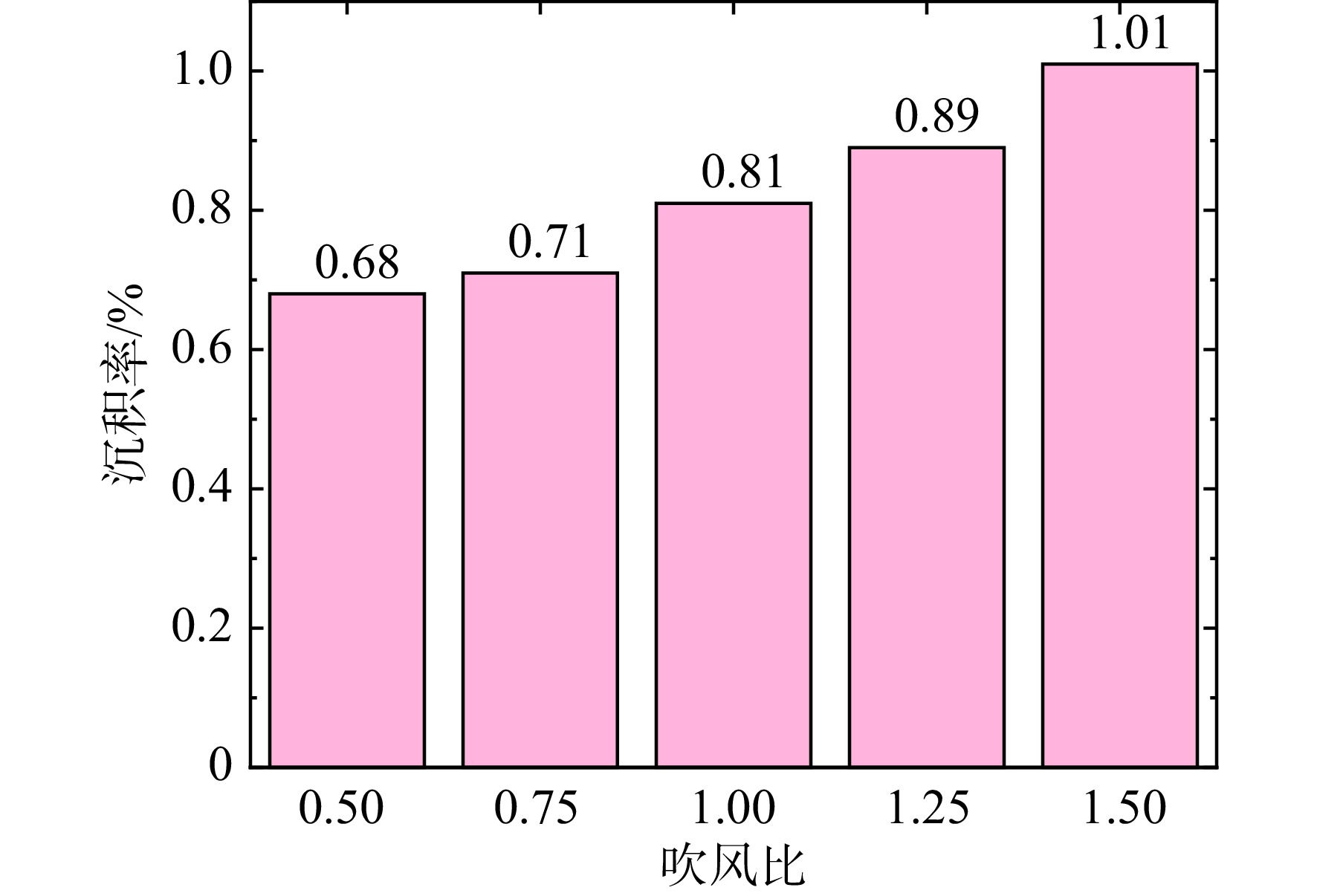
针对石墨粉尘在高温气冷堆(HTGR)氦气透平内沉积影响性能与维护的问题,通过数值模拟的方法研究了石墨粉尘颗粒在具有气膜冷却的氦气透平叶片表面上的运动沉积行为,考虑了颗粒与壁面之间的反弹作用以及流场对沉积颗粒的起尘作用,建立了石墨粉尘颗粒的沉积-重悬浮模型。研究结果表明:对于氦气透平叶片,吸力面几乎没有颗粒发生撞击,因此基本没有颗粒沉积。而压力面的颗粒沉积主要集中在中部,末端由于切应力较大,颗粒重悬浮效应较为明显。小颗粒由于惯性较小,更容易在反向对漩涡的影响下发生沉积,其沉积率主要受到碰撞率的影响;大颗粒由于临界沉积速度较小,所以沉积率显著低于小颗粒,其沉积率主要受到黏附率的影响;随着吹风比的增加,气膜的卷吸作用增强,使得小颗粒的沉积率不断增加。
-
关键词:
- 高温气冷堆(HTGR) /
- 氦气透平 /
- 石墨粉尘 /
- 沉积 /
- 重悬浮
Abstract:To address the issue of graphite dust deposition within the helium turbine of high-temperature reactors (HTGR) impacting performance and maintenance, the motion and deposition behaviors of graphite dust particles on the helium turbine walls with film cooling were investigated by numerical simulations. The rebound effects between the particles and the wall, as well as the resuspension of deposited particles caused by the flow field were considered. A deposition-resuspension model for graphite dust particles was established. The results indicated that due to the shape of the turbine blades, almost no particles impacted the suction surface, leading to no particle deposition. Due to higher shear stress at the trailing edge, the deposition on the pressure surface mainly concentrated at the middle. Small particles with lower inertia were more prone to deposition under the influence of counter-rotating vortices, and their deposition rate was primarily influenced by the collision rate. Larger particles with a lower critical deposition velocity exhibited a significantly lower deposition rate, which was mainly affected by the adhesion rate. As the blowing ratio increased, the entrainment effect of the cooling film intensified, resulting in a continuous increase in the deposition rate of smaller particles.
-
Key words:
- high temperature gas-cooled reactor (HTGR) /
- helium turbine /
- graphite dust /
- deposition /
- resuspension
-

图 4 颗粒-壁面和颗粒-流体之间的相互作用
Figure 4. Interaction between particles-wall and particles-fluid
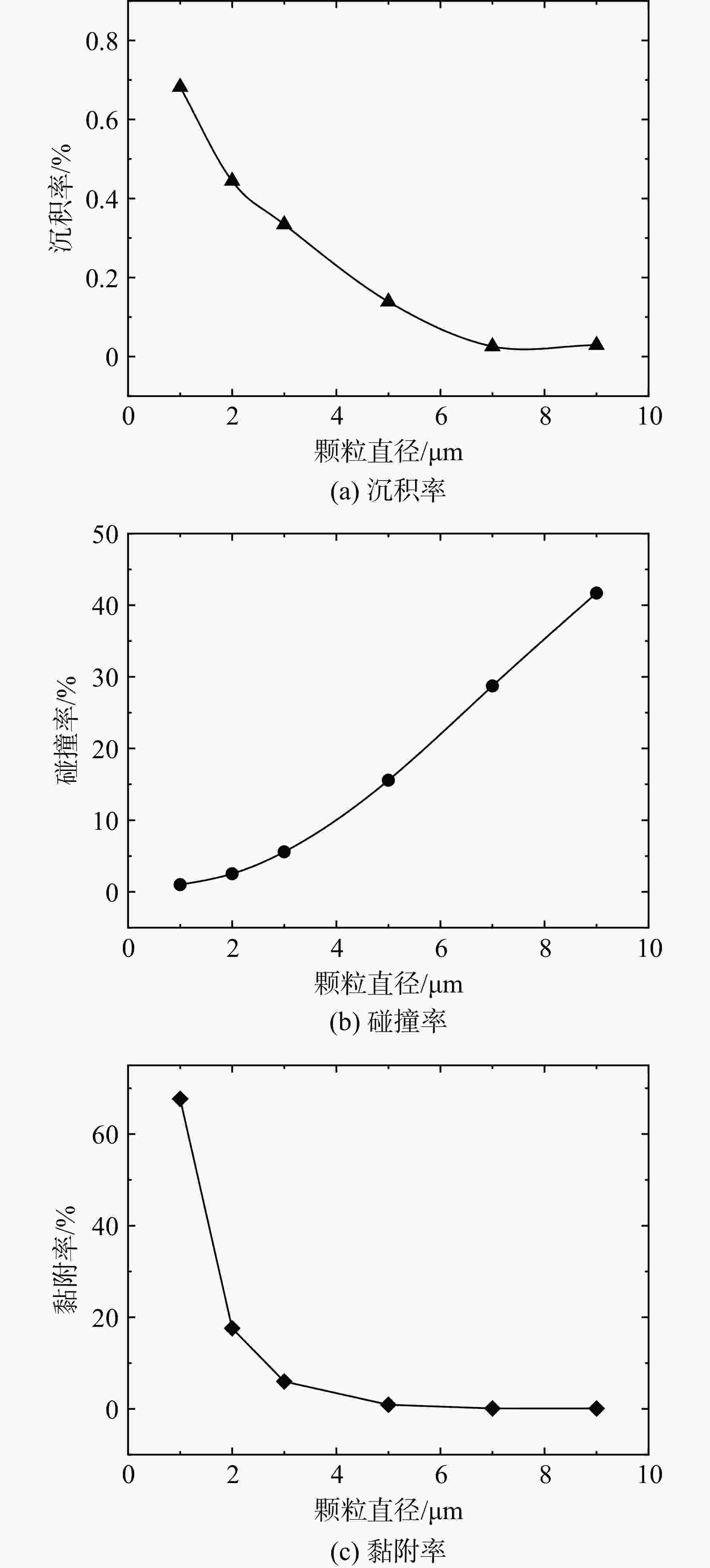
图 12 颗粒的沉积率、碰撞率与黏附率
Figure 12. Deposition rate, adhesion rate and collision rate of different size particles
表 1 计算条件
Table 1. Calculation conditions
参数 数值 入口氦气温度/K 1223.15 入口氦气流速/(m/s) 140 出口压力/MPa 7 冷却流入口温度/K 523.15 吹风比 0.5 1.0 1.5 2.0 颗粒密度/(kg/m3) 2 000 颗粒直径/μm 1,2,3,5,7,9  下载: 导出CSV
-
[1] 吴宗鑫, 张作义. 世界核电发展趋势与高温气冷堆[J]. 核科学与工程, 2000, 20(3): 211-231. WU Zongxin, ZHANG Zuoyi. World development of nuclear power system and high temperature gas-cooled reactor[J]. Chinese Journal of Nuclear Science and Engineering, 2000, 20(3): 211-231. (in Chinese doi: 10.3321/j.issn:0258-0918.2000.03.004WU Zongxin, ZHANG Zuoyi. World development of nuclear power system and high temperature gas-cooled reactor[J]. Chinese Journal of Nuclear Science and Engineering, 2000, 20(3): 211-231. (in Chinese) doi: 10.3321/j.issn:0258-0918.2000.03.004 [2] 王捷. 高温气冷堆氦气透平循环热工特性的初步研究[J]. 高技术通讯, 2002, 12(9): 91-95. WANG Jie. Preliminary study on thermal features for high temperature gas-cooled reactor gas turbine cycle[J]. High Technology Letters, 2002, 12(9): 91-95. (in Chinese doi: 10.3321/j.issn:1002-0470.2002.09.021WANG Jie. Preliminary study on thermal features for high temperature gas-cooled reactor gas turbine cycle[J]. High Technology Letters, 2002, 12(9): 91-95. (in Chinese) doi: 10.3321/j.issn:1002-0470.2002.09.021 [3] TROY R S, TOMPSON R V, GHOSH T K, et al. Generation of graphite particles by rotational/spinning abrasion and their characterization[J]. Nuclear Technology, 2012, 178(3): 241-257. doi: 10.13182/NT11-48 [4] WENGLARZ R A, FOX R G Jr. Physical aspects of deposition from coal-water fuels under gas turbine conditions[J]. Journal of Engineering for Gas Turbines and Power, 1990, 112(1): 9-14. doi: 10.1115/1.2906484 [5] KLEINHANS U, WIELAND C, BABAT S, et al. Ash particle sticking and rebound behavior: a mechanistic explanation and modeling approach[J]. Proceedings of the Combustion Institute, 2017, 36(2): 2341-2350. doi: 10.1016/j.proci.2016.05.015 [6] SREEDHARAN S S, TAFTI D K. Composition dependent model for the prediction of syngas ash deposition in turbine gas hotpath[J]. International Journal of Heat and Fluid Flow, 2011, 32(1): 201-211. doi: 10.1016/j.ijheatfluidflow.2010.10.006 [7] CROSSBY J M, LEWIS S, BONS J P, et al. Effects of particle size, gas temperature and metal temperature on high pressure turbine deposition in land based gas turbines from various synfuels[C]//ASME Turbo Expo 2007: Power for Land, Sea, and Air. Montreal, Canada: International Gas Turbine Institute, 2007: 1365-1376. [8] PENG Wei, ZHANG Tianqi, YU Suyuan, et al. Graphite dust resuspension in a depressurization accident of HTR[J]. Nuclear Engineering and Design, 2013, 265: 785-790. doi: 10.1016/j.nucengdes.2013.09.029 [9] EL-BATSH H, HASELBACHER H. Numerical investigation of the effect of ash particle deposition on the flow field through turbine cascades[C]//ASME Turbo Expo 2002: Power for Land, Sea, and Air. Amsterdam. The Netherlands: International Gas Turbine Institute, 2002: 1035-1043. [10] DAHNEKE B. Further measurements of the bouncing of small latex spheres[J]. Journal of Colloid and Interface Science, 1975, 51(1): 58-65. doi: 10.1016/0021-9797(75)90083-1 [11] CHEN Tao, WANG Jie, PENG Wei, et al. Numerical simulation of graphite dust deposition in pebble bed reactor core of HTGR[C]//2017 25th International Conference on Nuclear Engineering. Shanghai, China: Nuclear Engineering Division, American Society of Mechanical Engineers, 2017: V006T08A071. [12] SUN Qi, YUAN Kun, PENG Wei, et al. Study on graphite particle motion and impact in the helium circulator of HTGR[J]. Nuclear Engineering and Design, 2021, 385: 111535. doi: 10.1016/j.nucengdes.2021.111535 [13] SUN Qi, CHEN Tao, PENG Wei, et al. A numerical study of particle deposition in HTGR steam generators[J]. Nuclear Engineering and Design, 2018, 332: 70-78. doi: 10.1016/j.nucengdes.2018.03.017 [14] WANG Xiaozhong, SUN Qi, YANG Xiaoyong, et al. Study of the behavior of dust particles in helium turbines considering the effects of particle deposition and resuspension[J]. Powder Technology, 2024, 444: 120030. doi: 10.1016/j.powtec.2024.120030 [15] HYLTON L D, NIRMALAN V, SULTANIANB K, et al. The effects of leading edge and downstream film cooling on turbine vane heat transfer[R]. Washington DC: NASA STI Program, 1988. [16] FRIEND D G, HUBER M L. Thermophysical property standard reference data from NIST[J]. International journal of thermophysics, 1994, 15(6): 1279-1288. doi: 10.1007/BF01458836 [17] WANG Haoyu, TAN Zhen, KUANG Shibo, et al. Numerical modeling and analysis of particle-fluid flow and wall erosion in centrifugal slurry pumps under different solid concentrations[J]. Powder Technology, 2022, 410: 117861. doi: 10.1016/j.powtec.2022.117861 [18] DODDS D, SARHAN A A R, NASER J. Experimental and numerical study of free-falling streams of particles impacting an inclined surface[J]. Experimental and Computational Multiphase Flow, 2023, 5(4): 381-395. doi: 10.1007/s42757-022-0144-8 [19] ZHOU Lixing. A review for measurements and simulations of swirling gas-particle flows[J]. Experimental and Computational Multiphase Flow, 2023, 5(2): 133-141. doi: 10.1007/s42757-021-0109-3 [20] RIMAI D S, DEMEJO L P, BOWEN R C. Mechanics of particle adhesion[J]. Journal of Adhesion Science and Technology, 1994, 8(11): 1333-1355. doi: 10.1163/156856194X00645 [21] JOHNSON K L, KENDALL K, ROBERTS A A D. Surface energy and the contact of elastic solids[J]. Proceedings of the Royal Society of London A Mathematical and Physical Sciences, 1971, 324(1558): 301-313. doi: 10.1098/rspa.1971.0141 [22] SUN Qi, PENG Wei, HAI Xiao. Mathematical model and atomic force microscopy measurements of adhesion between graphite particles and rough walls[J]. Applied Surface Science, 2021, 562: 149976. doi: 10.1016/j.apsusc.2021.149976 [23] SOLTANI M, AHMADI G. On particle adhesion and removal mechanisms in turbulent flows[J]. Journal of Adhesion Science and Technology, 1994, 8(7): 763-785. doi: 10.1163/156856194X00799 [24] ZHANG Yiyang, FANG Zhu, ZHAO Shumiao, et al. An experimental study on the wall collision of micro-sized graphite particles by high-speed photomicrography[J]. Progress in Nuclear Energy, 2020, 125: 103391. doi: 10.1016/j.pnucene.2020.103391 [25] PENG WEI, JIANG PEIXUE. Experimental and numerical study of film cooling with internal coolant cross-flow effects[J]. Experimental Heat Transfer, 2012, 25(4): 282-300. doi: 10.1080/08916152.2011.609630 -



 点击查看大图

计量
- 文章访问数: 654
- HTML浏览量: 374
- PDF量: 58
- 被引次数: 0