






Borescope vision-based aero-engine blade counting method
-
摘要:
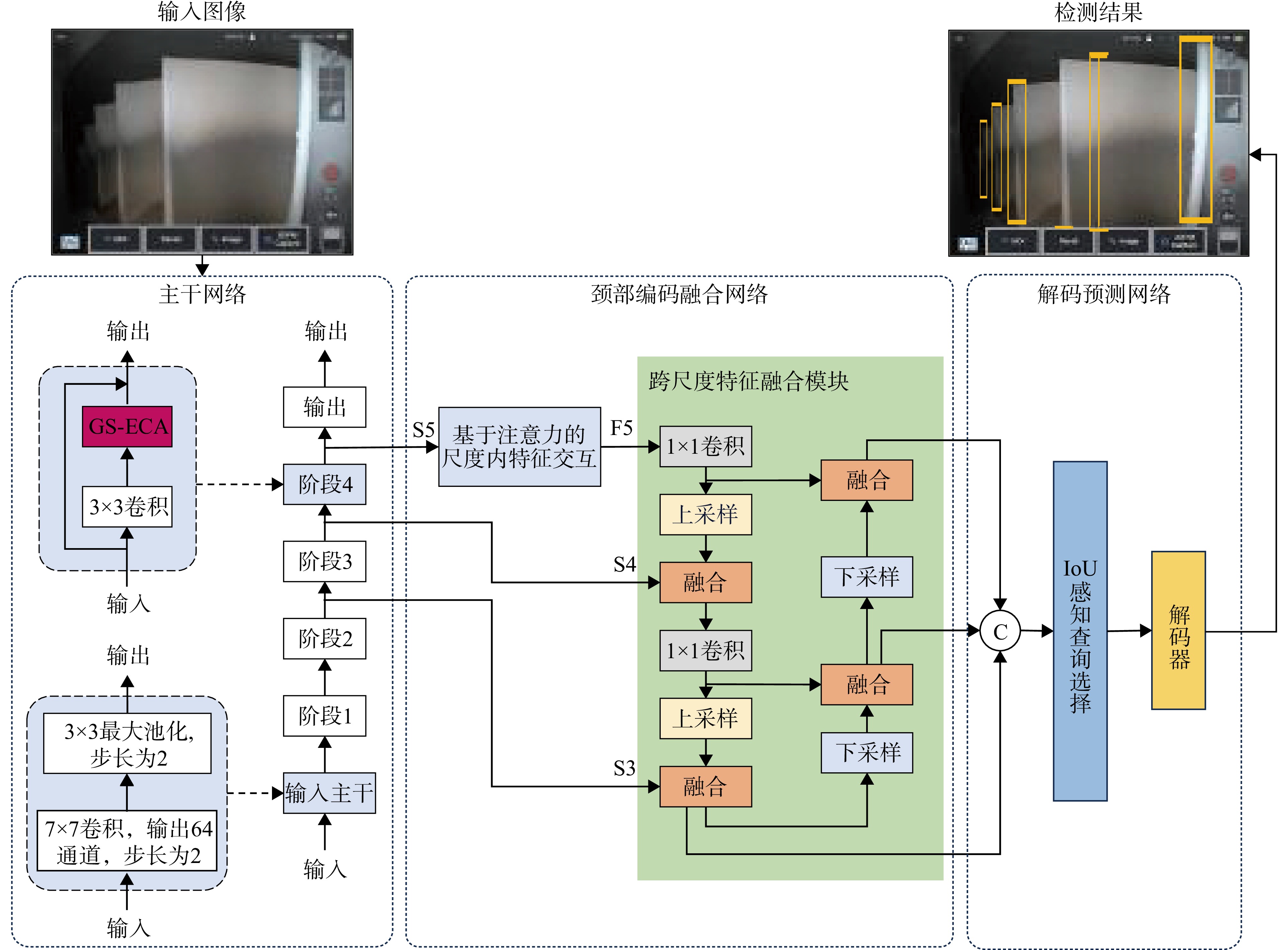
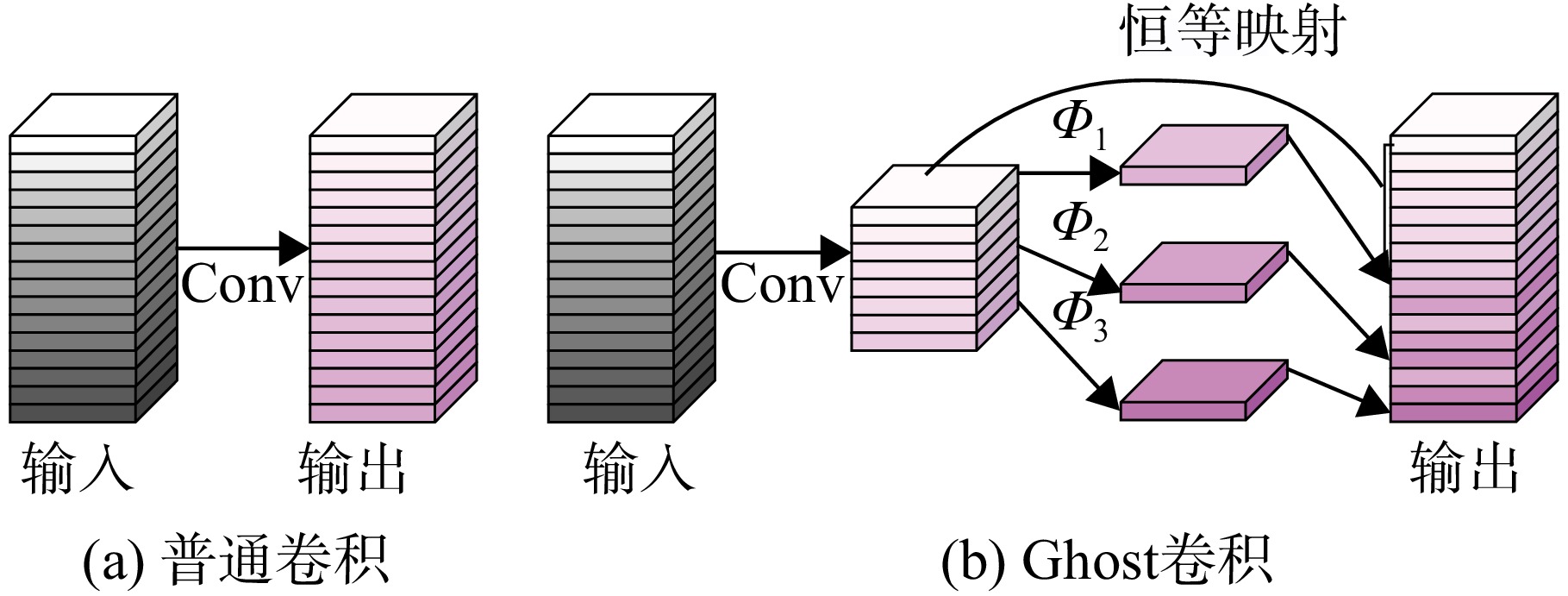
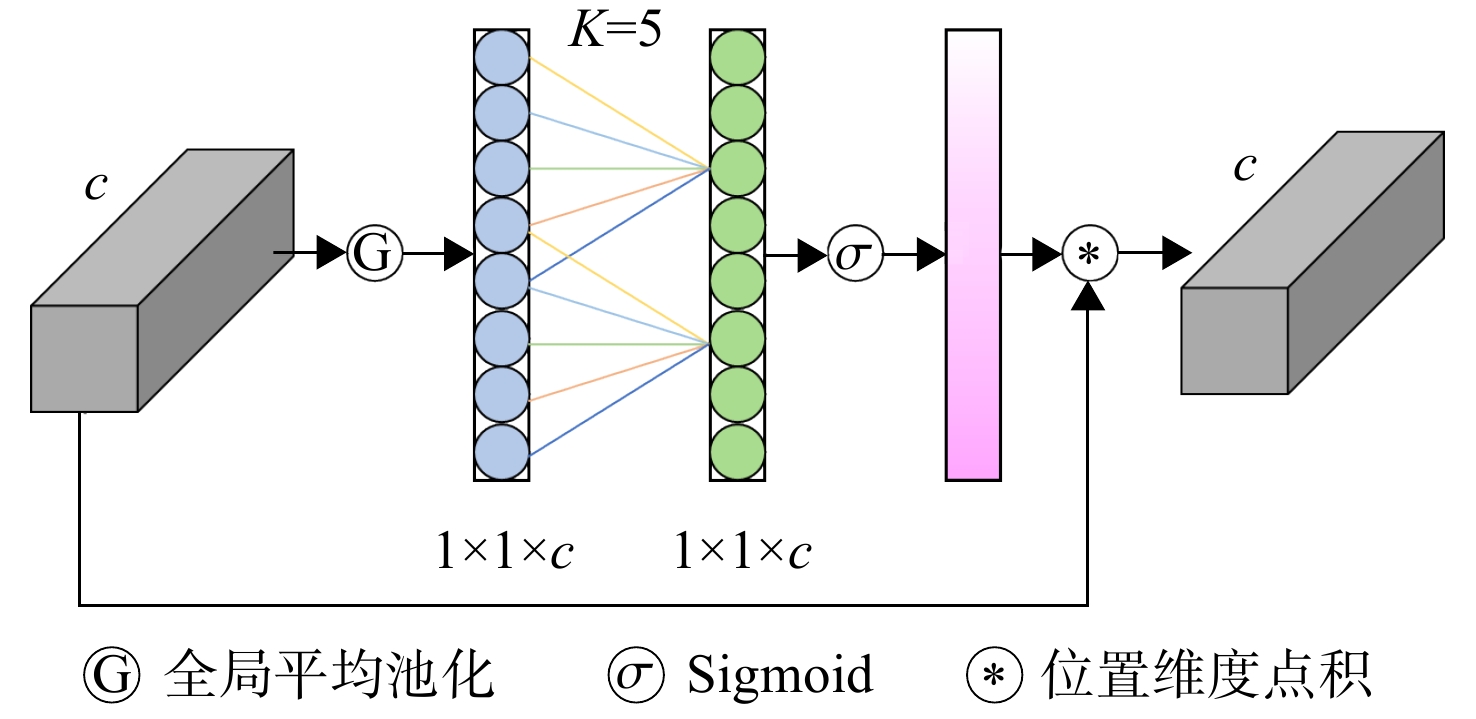
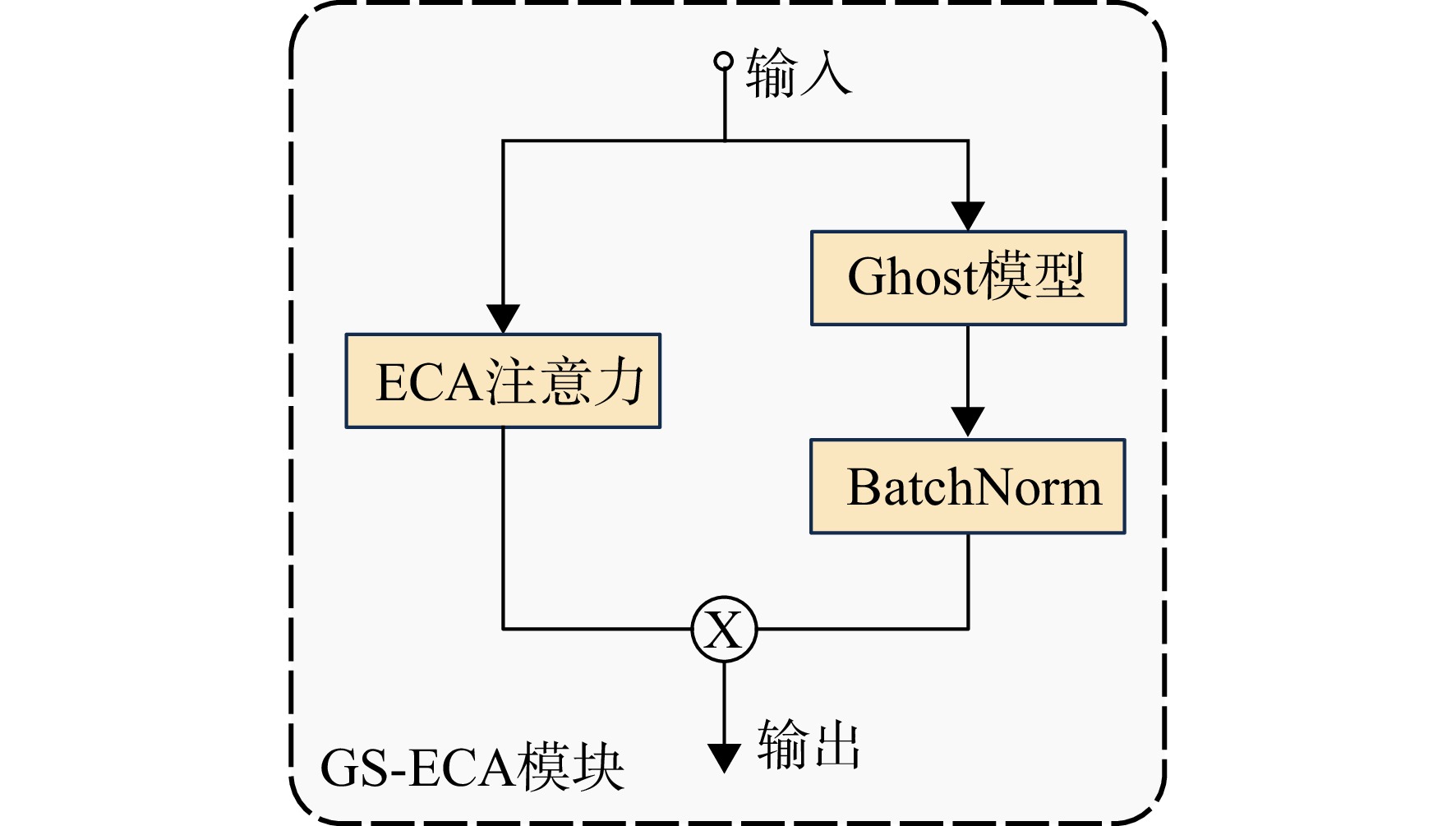
基于孔探视觉的航空发动机(简称航发)叶片计数是航发日常维护中不可或缺的环节。然而,叶片表面的反光及姿态变化等因素使得现有的叶片计数算法在实时性和准确性方面面临显著挑战。针对上述问题,提出一种基于叶片边缘检测的航发叶片计数算法。为实现叶片高效、准确检测,设计增强型叶片检测Transform(EB-DETR)模型,通过GS-ECA模块来提高叶片特征的表达能力和提取效率。在此基础上,创新性地提出了时空关联状态机(TSCSM)模型,通过捕捉叶片边缘特征点的时空信息来实现航发叶片的计数。实验表明:所提EB-DETR模型检测精度(AP50)为93.17%,相较其他同类规模的先进模型提升了6.54%,同时模型计算复杂度(GFLOPs)降低了35.16%,检测速度达到61帧/s。此外,航发叶片平均计数精度(MCP)为97.06%,比现有计数算法提升了45.82%,可满足航发叶片计数的实际需求。
Abstract:Blades counting in aero-engines based on borescope vision is a critical component of routine maintenance. However, factors such as surface reflections and posture variations pose significant challenges to the real-time accuracy of existing blade counting methods. To address these challenges, a blade counting methods based on edge detection was proposed. To achieve efficient and accurate blade detection, an enhanced blade detection transformer (EB-DETR) model, augmented by the GS-ECA module, was presented to significantly enhance the representation and extraction efficiency of blade features. Furthermore, an innovative temporal-spatial correlation state machine (TSCSM) model was introduced for effectively capturing the temporal and spatial information of blade edge feature points for counting blades in aero-engines. Experimental results demonstrated that the proposed EB-DETR model achieved an average precision (AP50) of 93.17%, reflecting a 6.54% improvement over other state-of-the-art (SOTA) models of similar scale, while reducing Giga floating point operations (GFLOPs) by 35.16% and achieving a detection speed of 61 frames per second (FPS). Additionally, the mean counting precision (MCP) for blades in aero-engines reached 97.06%, exceeding existing blade counting methods by 45.82%, thus satisfying the practical requirements for blade counting in aero-engines.
-
Key words:
- borescope vision /
- aero-engine blade /
- blade counting /
- object detection /
- Transformer network /
- state machine
-
表 1 网络结构对比
Table 1. Comparison of network architectures
输出尺寸 GEResNet ResNet34 112×112 7×7, 64,步长2 7×7, 64,步长2 $ 56\times 56 $ 3×3最大池化,步长2 3×3最大池化,步长2 $ 56\times 56 $ $ \left[\begin{matrix}3\times 3 & 64\\\mathrm{GS}{\text{-}}\mathrm{ECA} & 64\end{matrix}\right]\times 3 $ $ \left[\begin{matrix}3\times 3 & 64\\3\times 3 & 64\end{matrix}\right]\times 3 $ $ 28\times 28 $ $ \left[\begin{matrix}3\times 3 & 128\\\mathrm{GS}{\text{-}}\mathrm{ECA} & 128\end{matrix}\right]\times 4 $ $ \left[\begin{matrix}3\times 3 & 128\\3\times 3 & 128\end{matrix}\right]\times 4 $ $ 14\times 14 $ $ \left[\begin{matrix}3\times 3 & 256\\\mathrm{GS}{\text{-}}\mathrm{ECA} & 256\end{matrix}\right]\times 6 $ $ \left[\begin{matrix}3\times 3 & 256\\3\times 3 & 256\end{matrix}\right]\times 6 $ $ 7\times 7 $ $ \left[\begin{matrix}3\times 3 & 512\\\mathrm{GS}{\text{-}}\mathrm{ECA} & 512\end{matrix}\right]\times 3 $ $ \left[\begin{matrix}3\times 3 & 512\\3\times 3 & 512\end{matrix}\right]\times 3 $  下载: 导出CSV
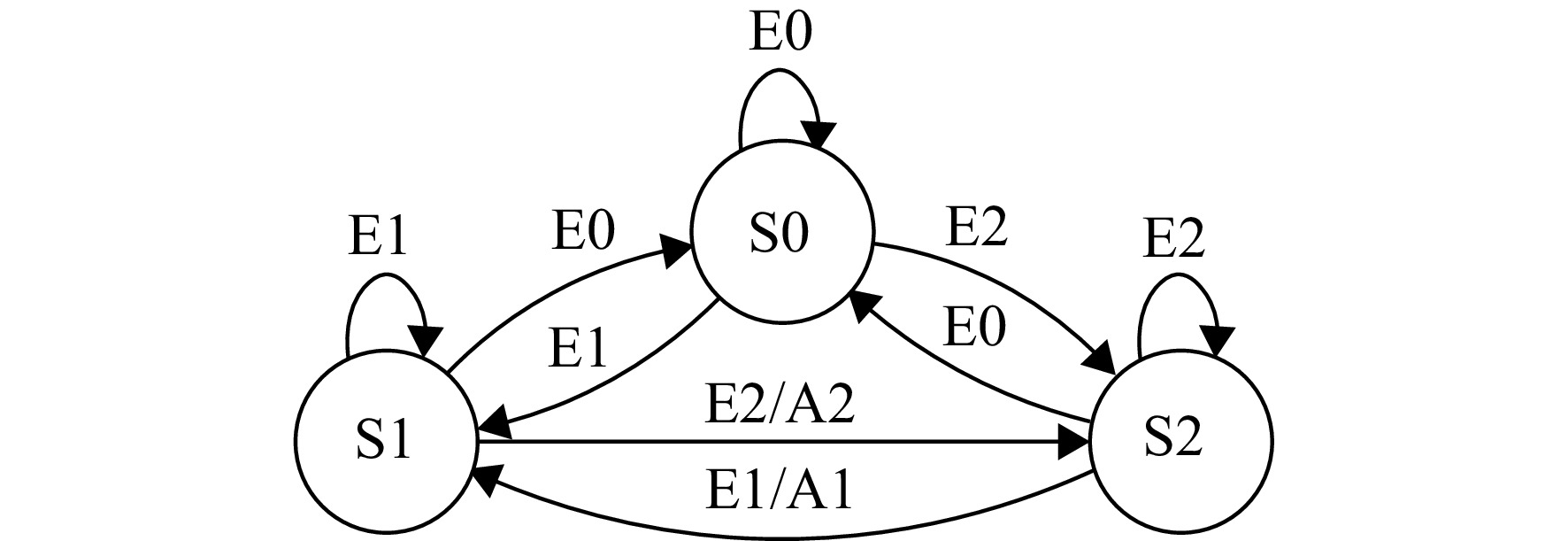
表 2 叶片计数状态转换表
Table 2. Blade counting state transition table
状态 事件 动作 次态 S0 E1 S1 E2 S2 E0 S0 S1 E1 S1 E2 A2 S2 E0 S0 S2 E1 A1 S1 E2 S2 E0 S0
下载: 导出CSV
表 3 训练参数
Table 3. Training parameters
名称 参数及说明 初始学习率 0.001 优化器 Adam 批处理量 16 训练轮数 50 工作线程数 8
下载: 导出CSV
表 4 叶片检测方法对比结果
Table 4. Comparison results of blade detection methods
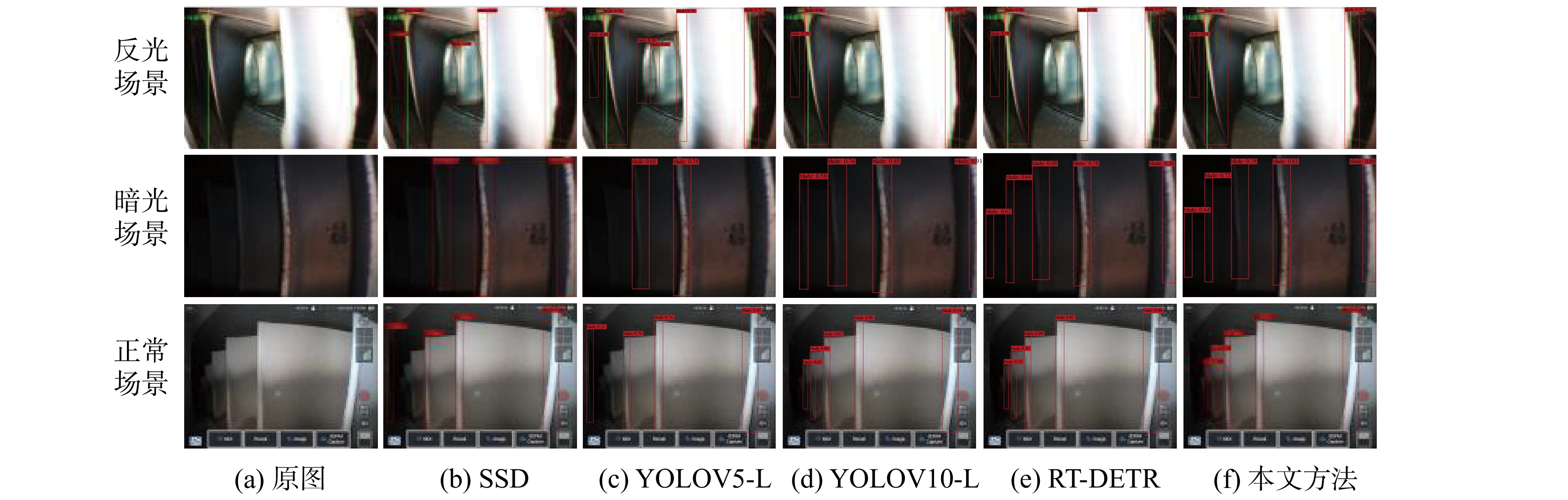
检测模型 Ap50/% Ap50-95/% GFLOPs/109 检测速度/(帧/s) SSD300(VGG-16) 78.34 63.75 35.2 39 YOLOV5-L 83.85 67.05 109.1 42 YOLOV10-L 87.45 72.79 120.3 38 RT-DETR-R50 87.14 72.13 136 42 EB-DETR 93.17 77.28 78 61
下载: 导出CSV
表 5 计数结果
Table 5. Counting results
方法 涡轮叶片 压气机叶片 风扇叶片 mCP/% mADE RMSDE 计数结果 Cp/% 计数结果 Cp/% 计数结果 Cp/% 光流-统计联合方法 16 65.23 21 62.57 32 71.89 66.56 5.33 9.90 SSD+TSCSM 20 87.16 35 91.32 38 89.49 89.32 3.26 4.31 YOLOv10+TSCSM 22 92.75 36 94.56 43 93.85 93.72 2.34 3.67 RT-DETR+TSCSM 23 95.34 36 96.44 45 94.76 95.51 1.64 4.68 本文方法 23 95.83 38 97.44 47 97.92 97.06 1.00 1.00
下载: 导出CSV
-
[1] Zhao Bingfeng, Xie Liyang, Li Haiyang, et al. Reliability analysis of aero-engine compressor rotor system considering cruise characteristics[J]. IEEE Transactions on Reliability, 2020, 69(1): 245-259. doi: 10.1109/TR.2018.2885354 [2] Ballal D R, Zelina J. Progress in aeroengine technology (1939: 2003)[J]. Journal of Aircraft, 2004, 41(1): 43-50. doi: 10.2514/1.562 [3] Aust J, Pons D. Taxonomy of gas turbine blade defects[J]. Aerospace, 2019, 6(5): 58. doi: 10.3390/aerospace6050058 [4] 胡明辉, 高金吉, 江志农, 等. 航空发动机振动监测与故障诊断技术研究进展[J]. 航空学报, 2024, 45(4): 630194. Hu Minghui, Gao Jinji, Jiang Zhinong, et al. Research progress on vibration monitoring and fault diagnosis for aero-engine[J]. Acta Aeronautica et Astronautica Sinica, 2024, 45(4): 630194. (in Chinese doi: 10.7527/S1000-6893.2024.30194Hu Minghui, Gao Jinji, Jiang Zhinong, et al. Research progress on vibration monitoring and fault diagnosis for aero-engine[J]. Acta Aeronautica et Astronautica Sinica, 2024, 45(4): 630194. (in Chinese) doi: 10.7527/S1000-6893.2024.30194 [5] 何超, 陈果, 王雨薇. 基于深度学习的航空发动机内部损伤实时检测方法[J]. 航空动力学报, 2023, 38(8): 1857-1864. He Chao, Chen Guo, Wang Yuwei. Real-time detection method of aero-engine internal damage based on deep learning[J]. Journal of Aerospace Power, 2023, 38(8): 1857-1864. (in Chinese doi: 10.13224/j.cnki.jasp.20210381He Chao, Chen Guo, Wang Yuwei. Real-time detection method of aero-engine internal damage based on deep learning[J]. Journal of Aerospace Power, 2023, 38(8): 1857-1864. (in Chinese) doi: 10.13224/j.cnki.jasp.20210381 [6] Aust J, Mitrovic A, Pons D. Assessment of the effect of cleanliness on the visual inspection of aircraft engine blades: an eye tracking study[J]. Sensors, 2021, 21(18): 6135. doi: 10.3390/s21186135 [7] Wong C Y, Seshadri P, Parks G T. Automatic borescope damage assessments for gas turbine blades via deep learning[R]. AIAA-2021-1488, 2021. [8] Zou Fuqun. Review of aero-engine defect detection technology[C]//2020 IEEE 4th Information Technology, Networking, Electronic and Automation Control Conference. Piscataway, US: IEEE, 2020: 1524-1527. [9] Shang Hongbing, Sun Chuang, Liu Jinxin, et al. Deep learning-based borescope image processing for aero-engine blade in-situ damage detection[J]. Aerospace Science and Technology, 2022, 123: 107473. doi: 10.1016/j.ast.2022.107473 [10] 蔡舒妤, 闫子砚. 基于改进YOLOv4的航空发动机小目标损伤检测研究[J]. 航空动力学报, 2023, 38(2): 445-452. Cai Shuyu, Yan Ziyan. Research on small target damage detection of aero-engine based on improved YOLOv4[J]. Journal of Aerospace Power, 2023, 38(2): 445-452. (in Chinese doi: 10.13224/j.cnki.jasp.20220557Cai Shuyu, Yan Ziyan. Research on small target damage detection of aero-engine based on improved YOLOv4[J]. Journal of Aerospace Power, 2023, 38(2): 445-452. (in Chinese) doi: 10.13224/j.cnki.jasp.20220557 [11] Harding K G, Gu Jiajun, Tao Li, et al. Blade counting tool with a 3D borescope for turbine applications[J]. Interferometry XVII: Advanced Applications, 2014, 9204: 92040Q. doi: 10.1117/12.2063742 [12] Von Wrangel M, Kästner M, Reithmeier E. Robust counting of engine blades in aircraft engine video endoscopy[C]//Dimensional Optical Metrology and Inspection for Practical Applications XI. Orlando, US: SPIE, 2022: 16. [13] 郭立宇, 钟晨杰, 李志鹏. 基于3D卷积神经网络的金属滚轮叶片转动计数算法设计与实现[J]. 计算机科学与应用, 2023(1): 34-48. Guo Liyu, Zhong Chenjie, Li Zhipeng. Design and implementation of metal roller blade rotation counting algorithm based on 3D convolution neural network[J]. Computer Science and Application, 2023(1): 34-48. (in Chinese doi: 10.12677/CSA.2023.131004Guo Liyu, Zhong Chenjie, Li Zhipeng. Design and implementation of metal roller blade rotation counting algorithm based on 3D convolution neural network[J]. Computer Science and Application, 2023(1): 34-48. (in Chinese) doi: 10.12677/CSA.2023.131004 [14] Li Jinna, Yang Mingwei, Lewis F L, et al. Compensator-based self-learning: optimal operational control for two-time-scale systems with input constraints[J]. IEEE Transactions on Industrial Informatics, 2024, 20(7): 9465-9475. doi: 10.1109/TII.2024.3384621 [15] Han Kai, Wang Yunhe, Tian Qi, et al. GhostNet: more features from cheap operations[C]//2020 IEEE/CVF Conference on Computer Vision and Pattern Recognition. Piscataway, US: IEEE, 2020: 1577-1586. [16] Wang Qilong, Wu Banggu, Zhu Pengfei, et al. ECA-net: efficient channel attention for deep convolutional neural networks[C]//2020 IEEE/CVF Conference on Computer Vision and Pattern Recognition. Piscataway, US: IEEE, 2020: 11531-11539. [17] He Kaiming, Zhang Xiangyu, Ren Shaoqing, et al. Deep residual learning for image recognition[C]//2016 IEEE Conference on Computer Vision and Pattern Recognition. Piscataway, US: IEEE, 2016: 770-778. [18] Villa T, Kam T, Brayton R K, et al. Synthesis of finite state machines: logic optimization[M]. New York: Springer Science & Business Media, 2012. [19] Everingham M, Ali Eslami S M, Van Gool L, et al. The pascal visual object classes challenge: a retrospective[J]. International Journal of Computer Vision, 2015, 111(1): 98-136. doi: 10.1007/s11263-014-0733-5 [20] Jiang Peiyuan, Ergu D, Liu Fangyao, et al. A review of yolo algorithm developments[J]. Procedia Computer Science, 2022, 199: 1066-1073. doi: 10.1016/j.procs.2022.01.135 [21] Zhao Yian, Lv Wenyu, Xu Shangliang, et al. DETRs beat YOLOs on real-time object detection[C]//2024 IEEE/CVF Conference on Computer Vision and Pattern Recognition. Piscataway, US: IEEE, 2024: 16965-16974. [22] Liu Wei, Anguelov D, Erhan D, et al. SSD: single shot MultiBox detector[C]//Computer Vision-ECCV 2016. Cham: Springer, 2016: 21-37. -

 点击查看大图

计量
- 文章访问数: 843
- HTML浏览量: 470
- PDF量: 58
- 被引次数: 0