






Experimental study on evaporation characteristics of n-Al/decane droplet heated by laser
-
摘要:
为了研究纳米铝颗粒(Al NPs)作为高能添加剂在碳氢燃料中的应用,实验将正癸烷、油酸和纳米铝颗粒分别作为燃料、表面活性剂和金属添加剂,制备了纳米铝癸烷单液滴。在波长为
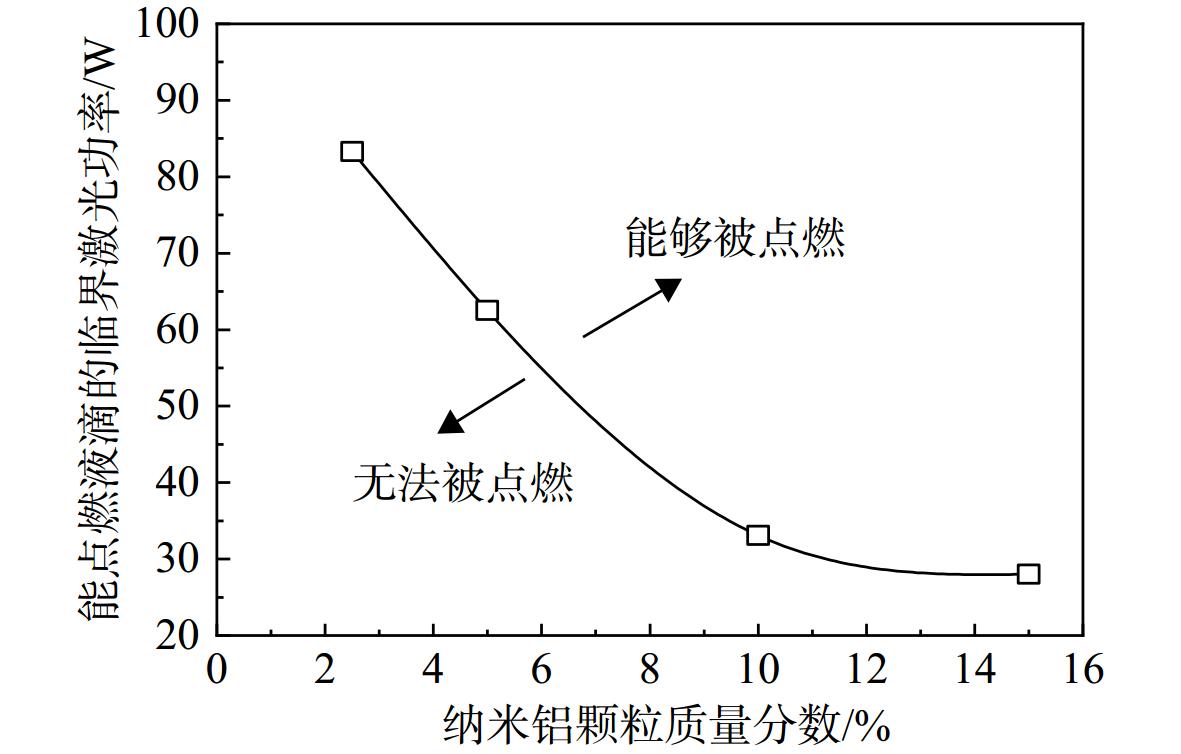
1064 nm的恒功率红外激光激励下,研究了纳米铝颗粒质量分数(1%~15%)和激光功率(9.1~100.0 W)对液滴蒸发和燃烧特性的影响。结果表明:纳米铝颗粒的添加显著加速了液滴蒸发,并出现了微爆和燃烧现象。微爆是纳米铝癸烷液滴能被点燃的关键,其喷射出的铝颗粒在空气中被激光点燃,形成火焰促进燃料液滴燃烧。通过增大激光功率和提高含铝量,能加速液滴温升和提高微爆频率,从而提升液滴蒸发速率。随着纳米铝颗粒质量分数从2.5%增加到15%,液滴点火敏感性显著增强,点燃液滴所需的最小激光功率从83.3 W减少到28.0 W。Abstract:To investigate the application of aluminum nano-particles (Al NPs) as high-energy additives in hydrocarbon fuels, experiments were conducted using
n -decane, oleic acid (OA), and Al NPs as fuel, surfactant, and metal additive, respectively, to prepare singlen -Al/decane droplet. The effects of Al NPs mass fraction (1%—15%) and laser power (9.1—100.0 W) on the droplet evaporation and combustion characteristics were studied under infrared laser excitation at a wavelength of1064 nm. The results showed that the addition of Al NPs significantly accelerated droplet evaporation and resulted in micro-explosions and combustion phenomena. Micro-explosions were the key to ignite then -Al/decane droplet. The ejected Al NPs were ignited by laser in the air, forming a flame that promoted the combustion of fuel droplet. By increasing the laser power and aluminum content, the temperature rise of droplet can be accelerated and the frequency of micro-explosions can be increased, thereby improving the evaporation rate of droplet. As the mass fraction of Al NPs increased from 2.5% to 15%, the ignition sensitivity of droplet was significantly enhanced, and the minimum laser power required to ignite droplet was reduced from 83.3 W to 28.0 W. -
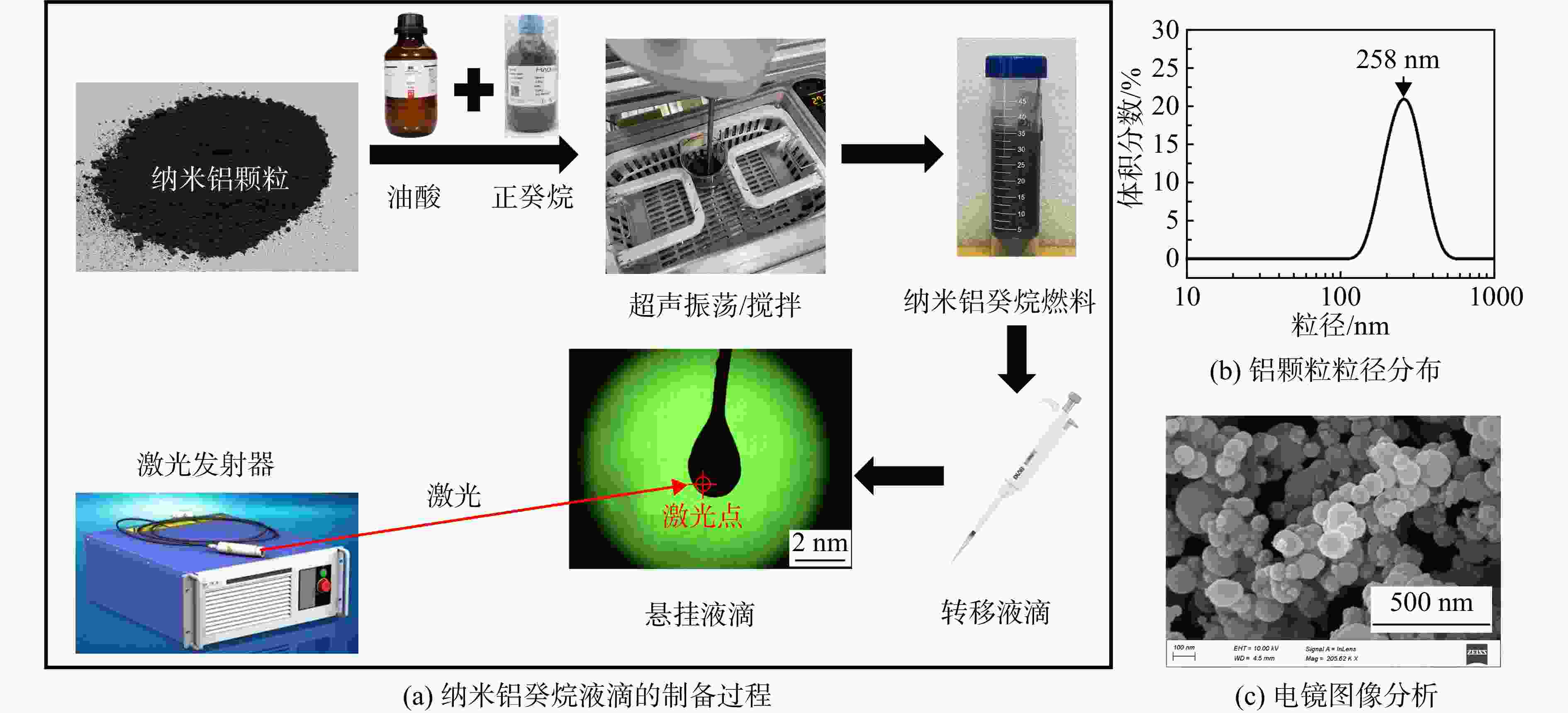
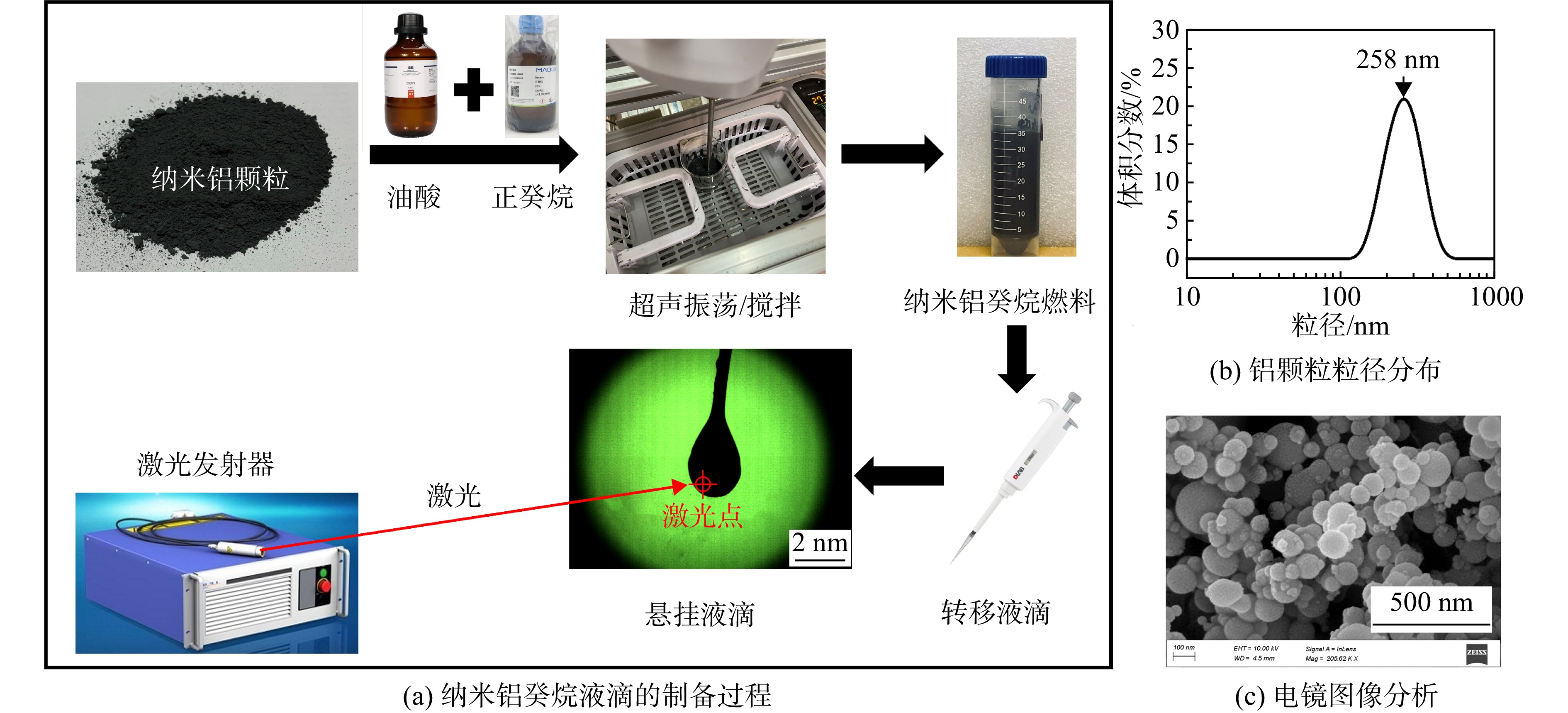
图 2 纳米铝癸烷燃料液滴的制备过程及粒径分布
Figure 2. Preparation process of n-Al/decane fuel droplet and size distribution

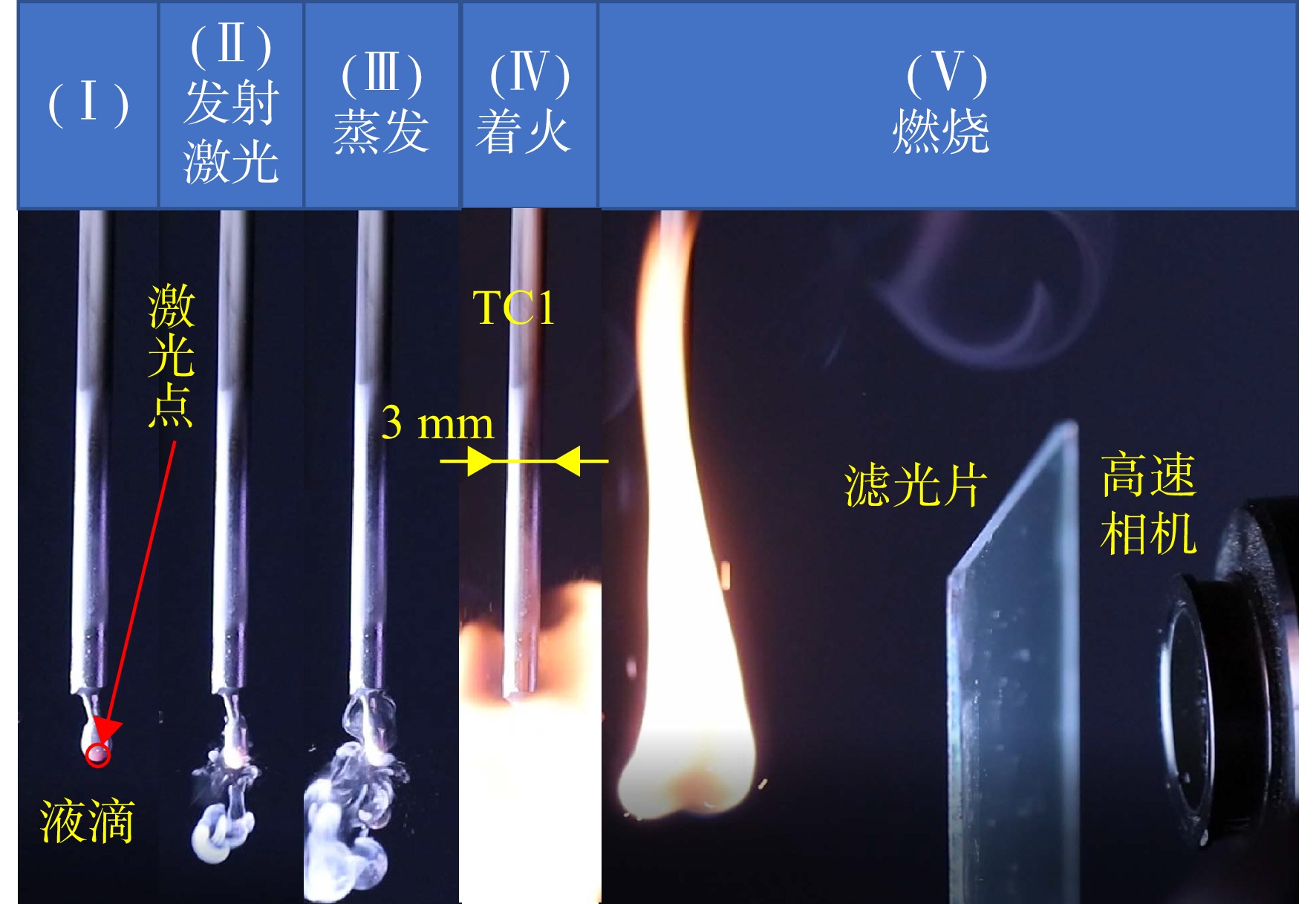
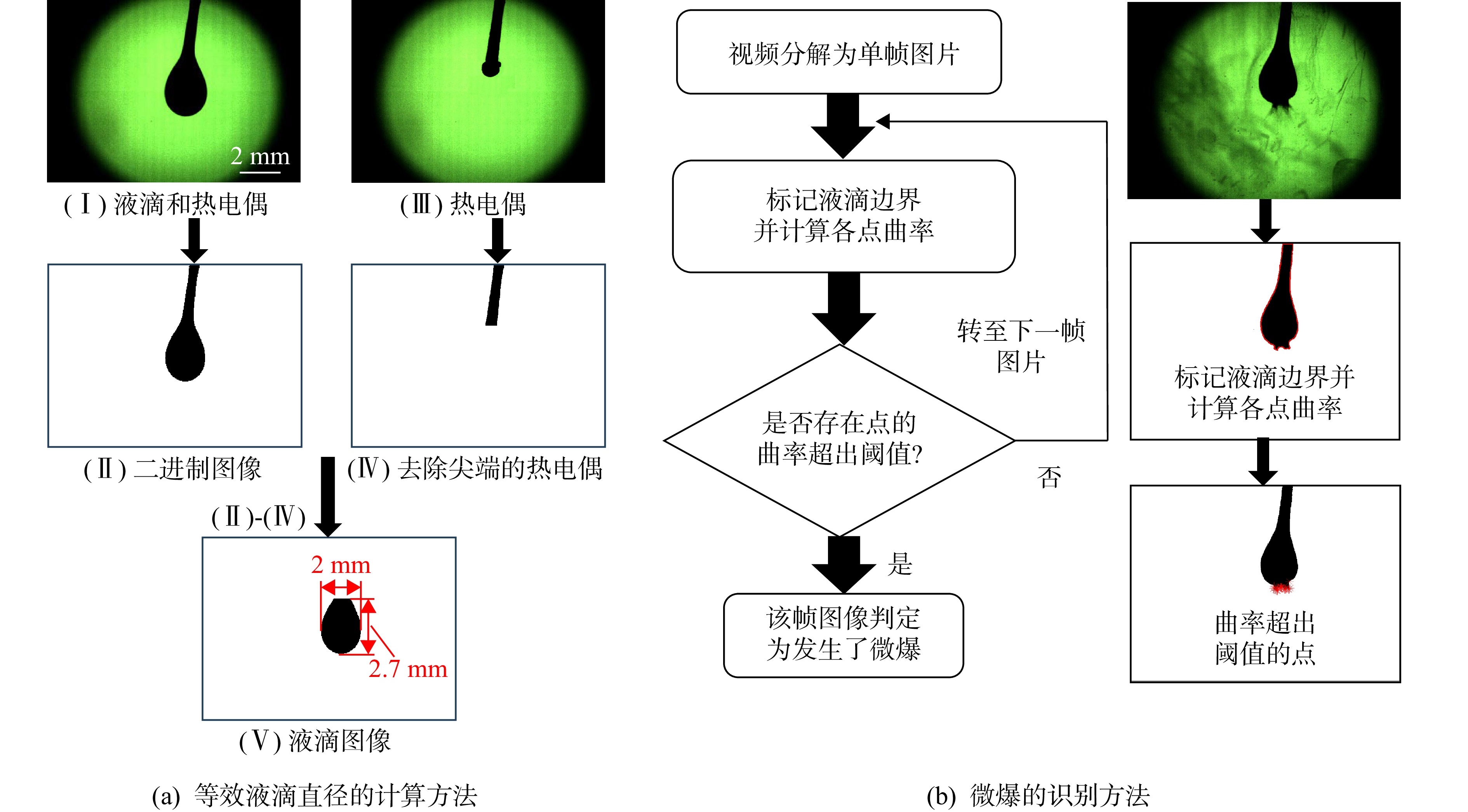
图 3 红外激光激励下纳米铝癸烷液滴的点火过程
Figure 3. Ignition process of n-Al/decane droplet under infrared laser excitation

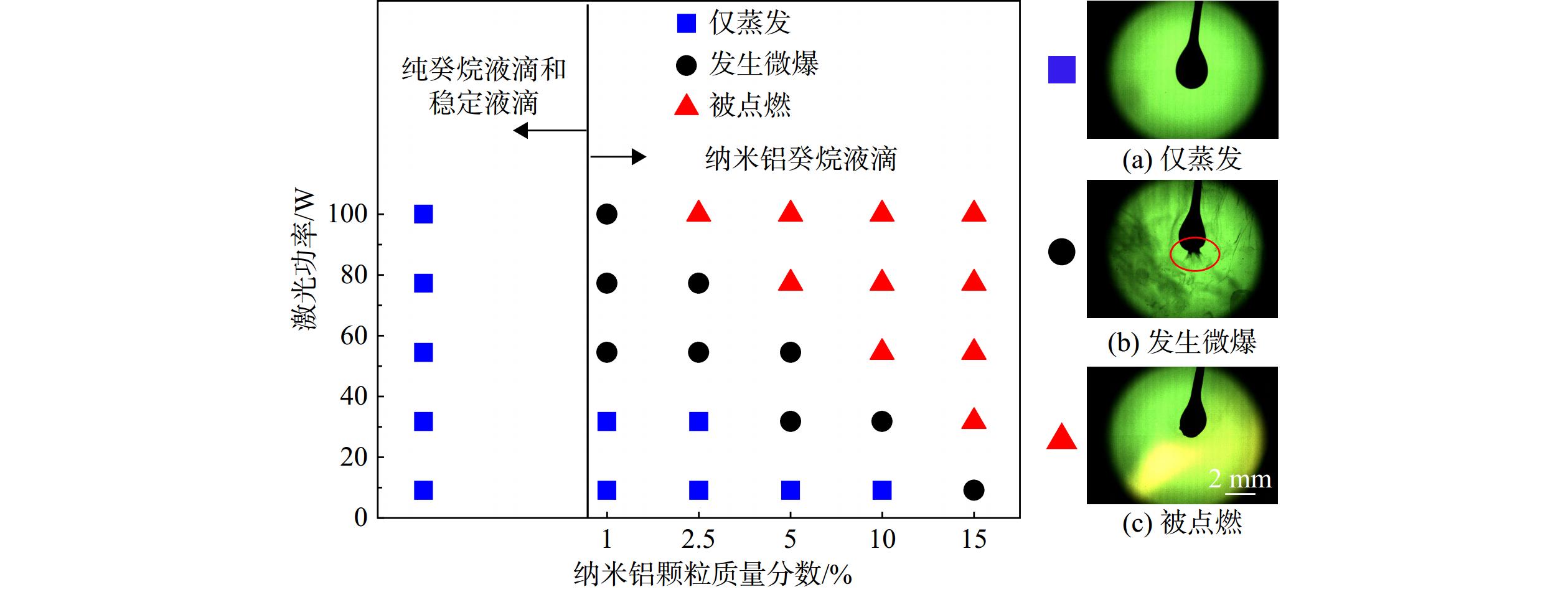
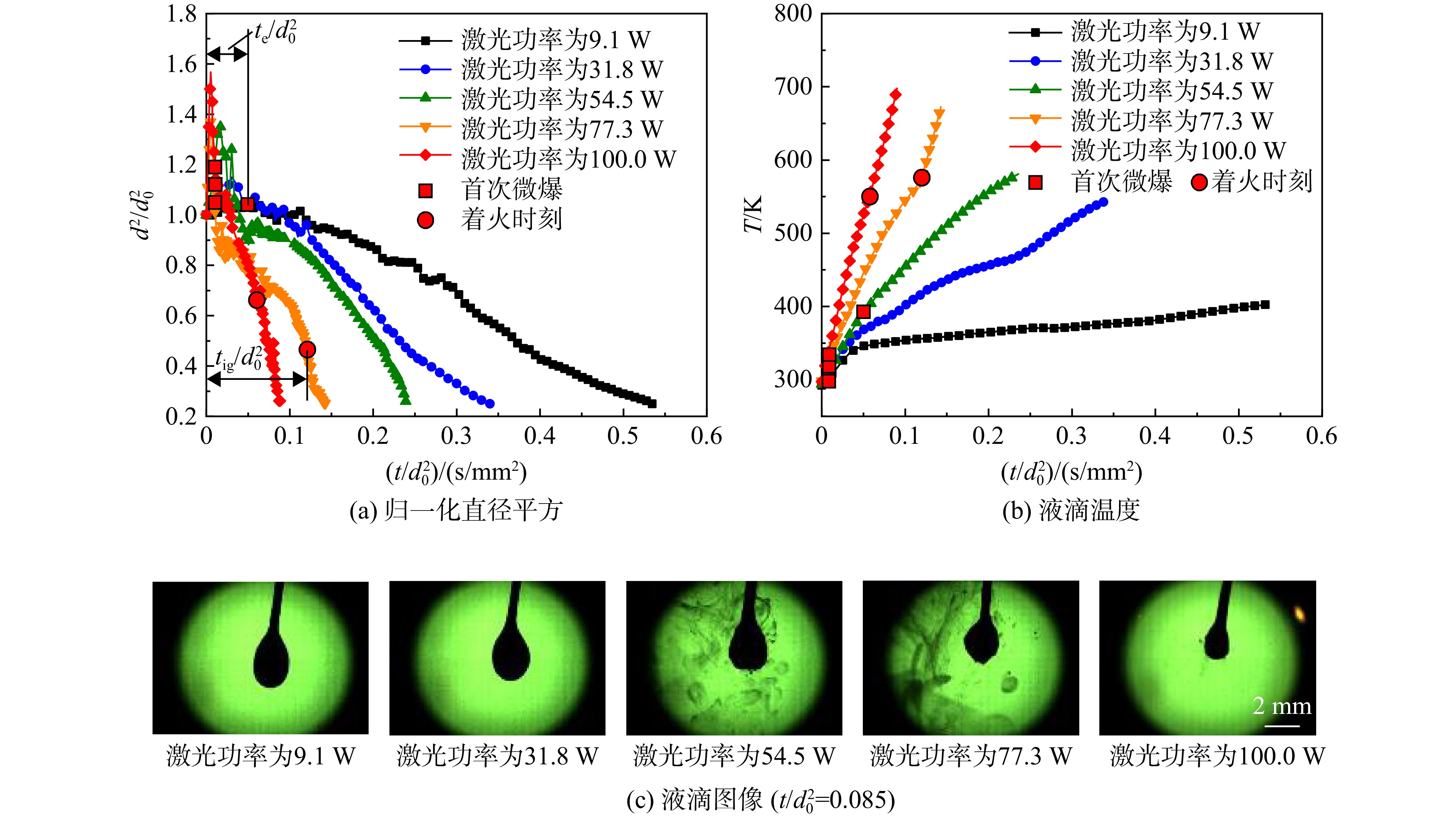
图 5 不同激光功率和纳米铝颗粒质量分数下各燃料液滴的行为
Figure 5. Behaviors of fuel droplets under different laser powers and Al NPs mass fractions

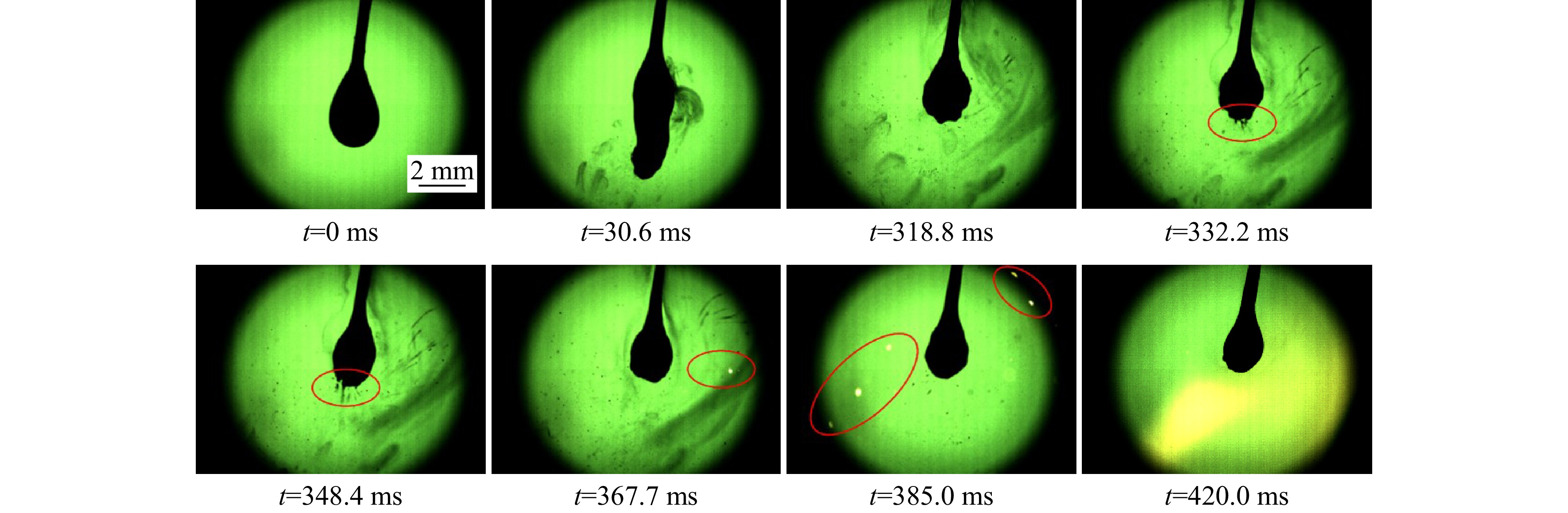
图 6 纳米铝癸烷液滴的微爆过程(燃料9、激光3、d0=2.37 mm)
Figure 6. Micro-explosion process of n-Al/decane droplet (fuel 9, laser 3, d0=2.37 mm)
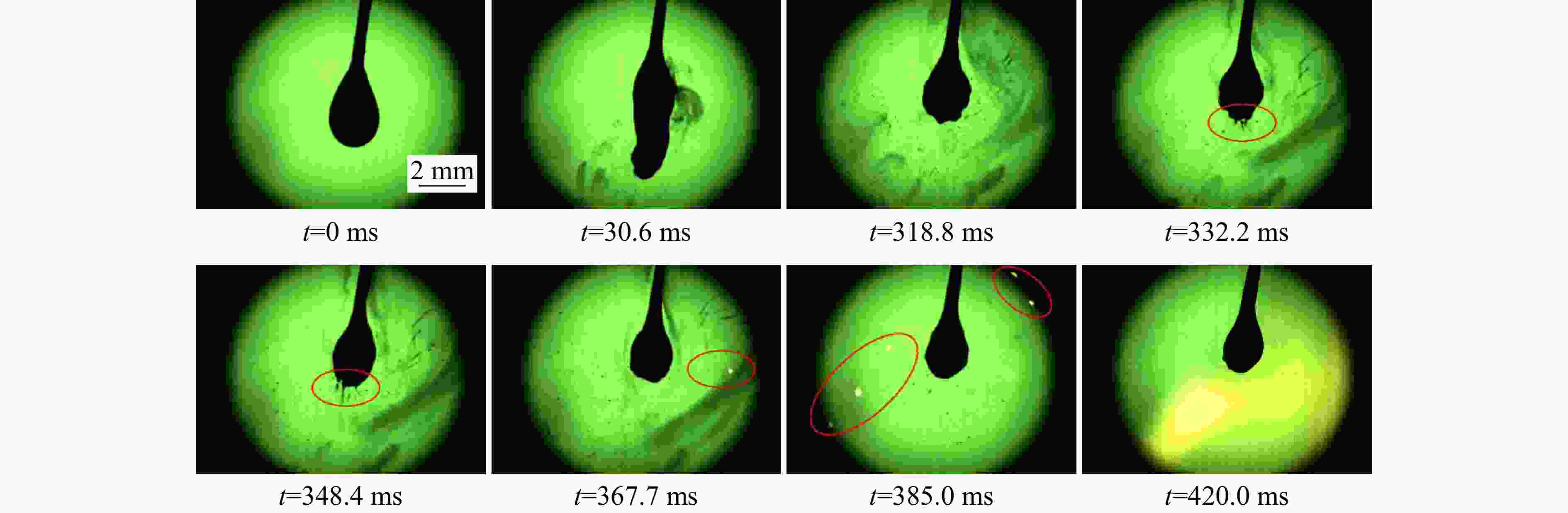
图 7 纳米铝癸烷液滴的燃烧过程(燃料9、激光5、d0=2.48 mm)
Figure 7. Combustion process of n-Al/decane droplet (fuel 9, laser 5, d0=2.48 mm)

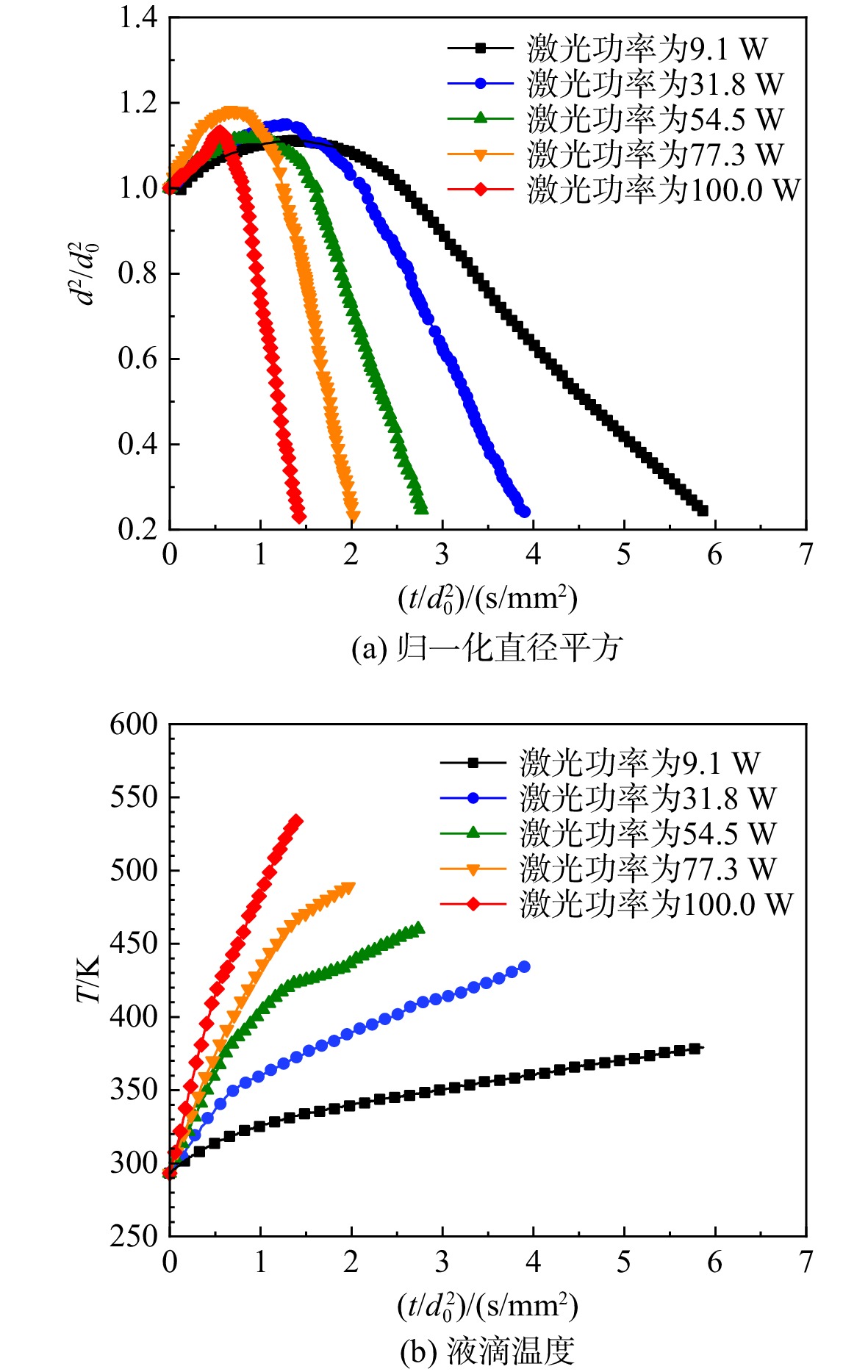
图 8 不同激光功率下正癸烷液滴的蒸发特性(燃料1)
Figure 8. Evaporation characteristics of n-decane droplets under different laser powers (fuel 1)

图 9 稳定液滴在不同激光功率下的蒸发特性(燃料4)
Figure 9. Evaporation characteristics of stable droplets atdifferent laser powers(fuel 4)
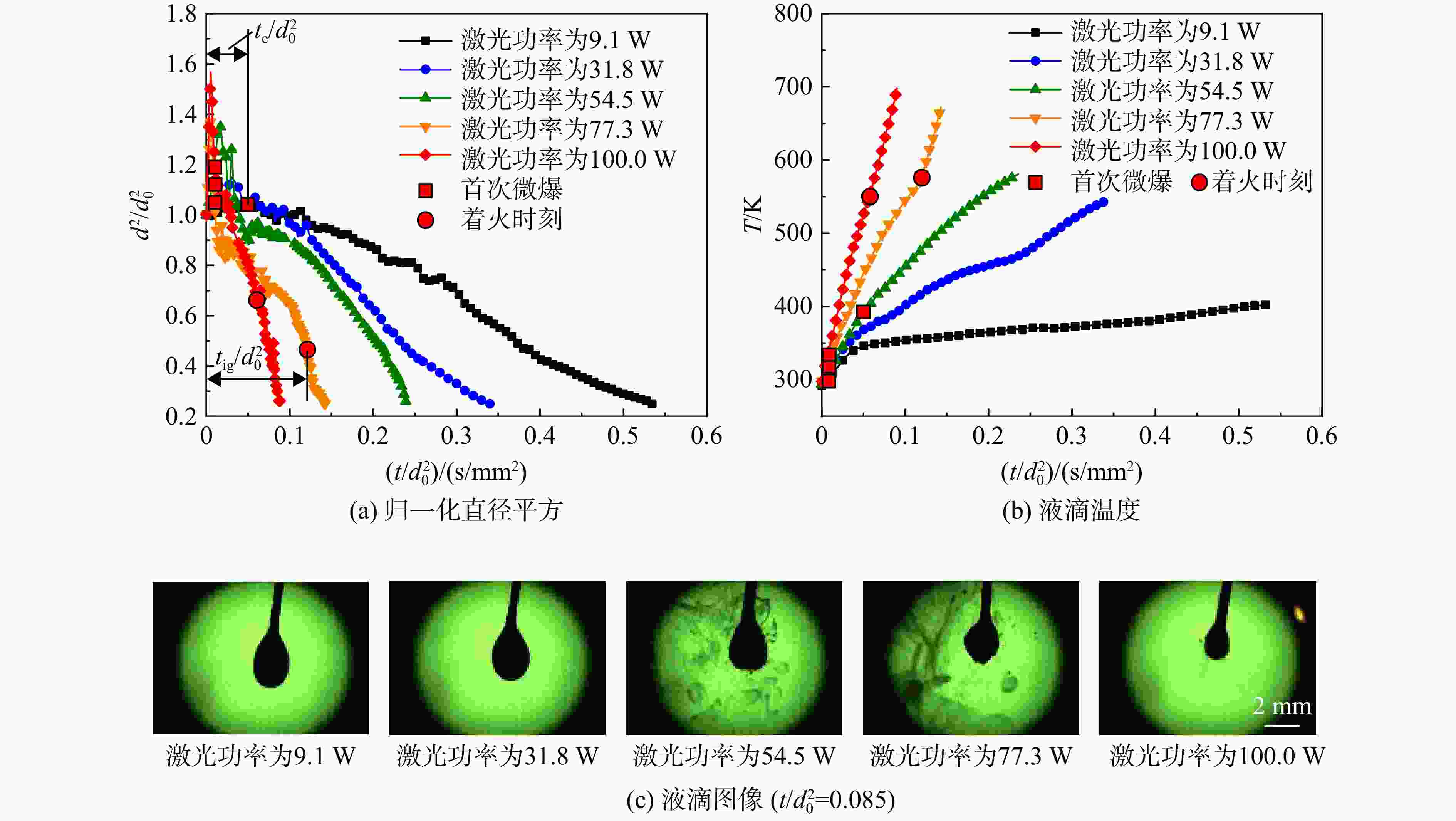
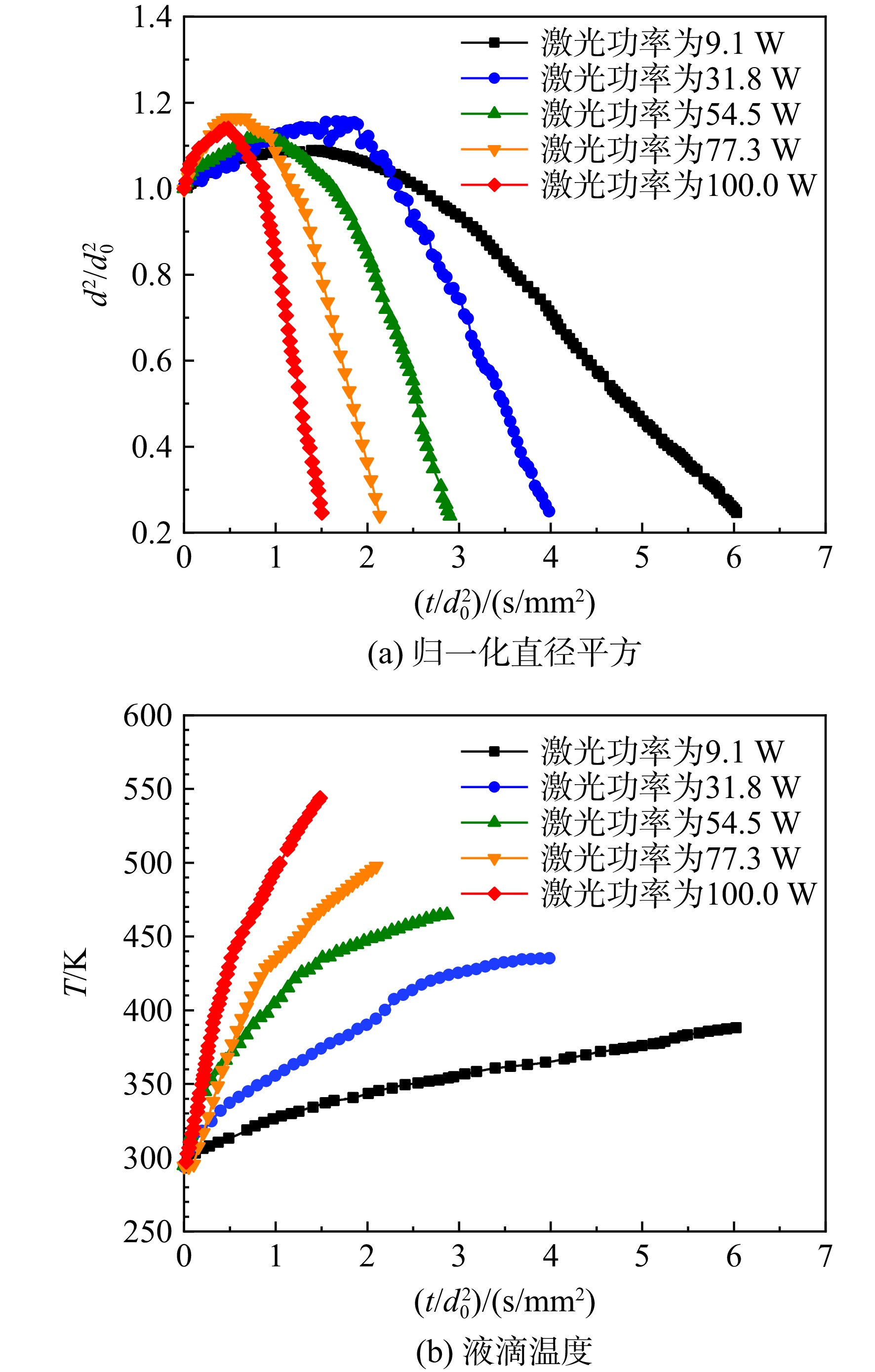
图 10 纳米铝癸烷液滴在不同激光功率下的蒸发特性(燃料9)
Figure 10. Evaporation characteristics of n-Al/decane droplets at different laser powers (fuel 9)
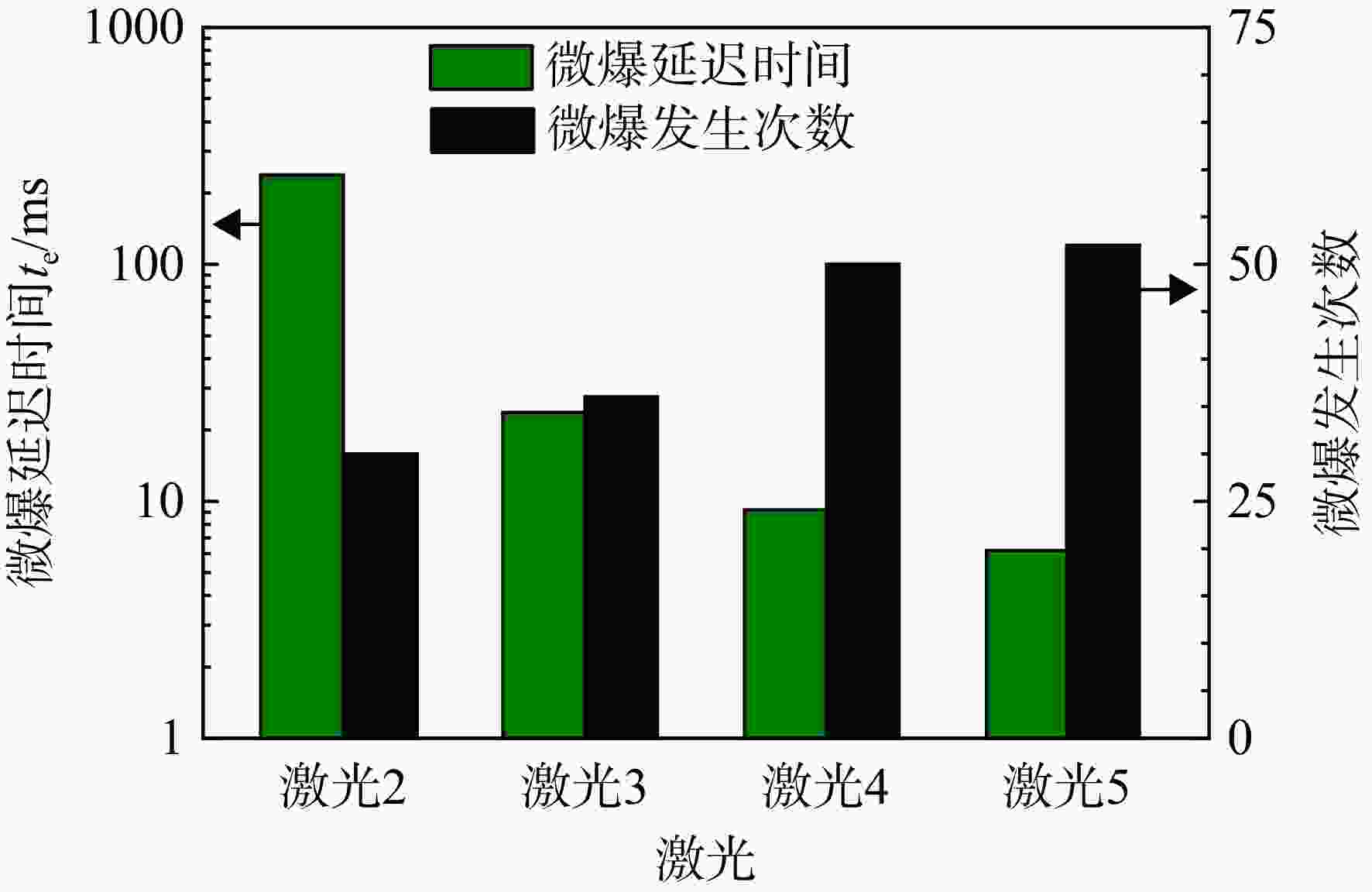
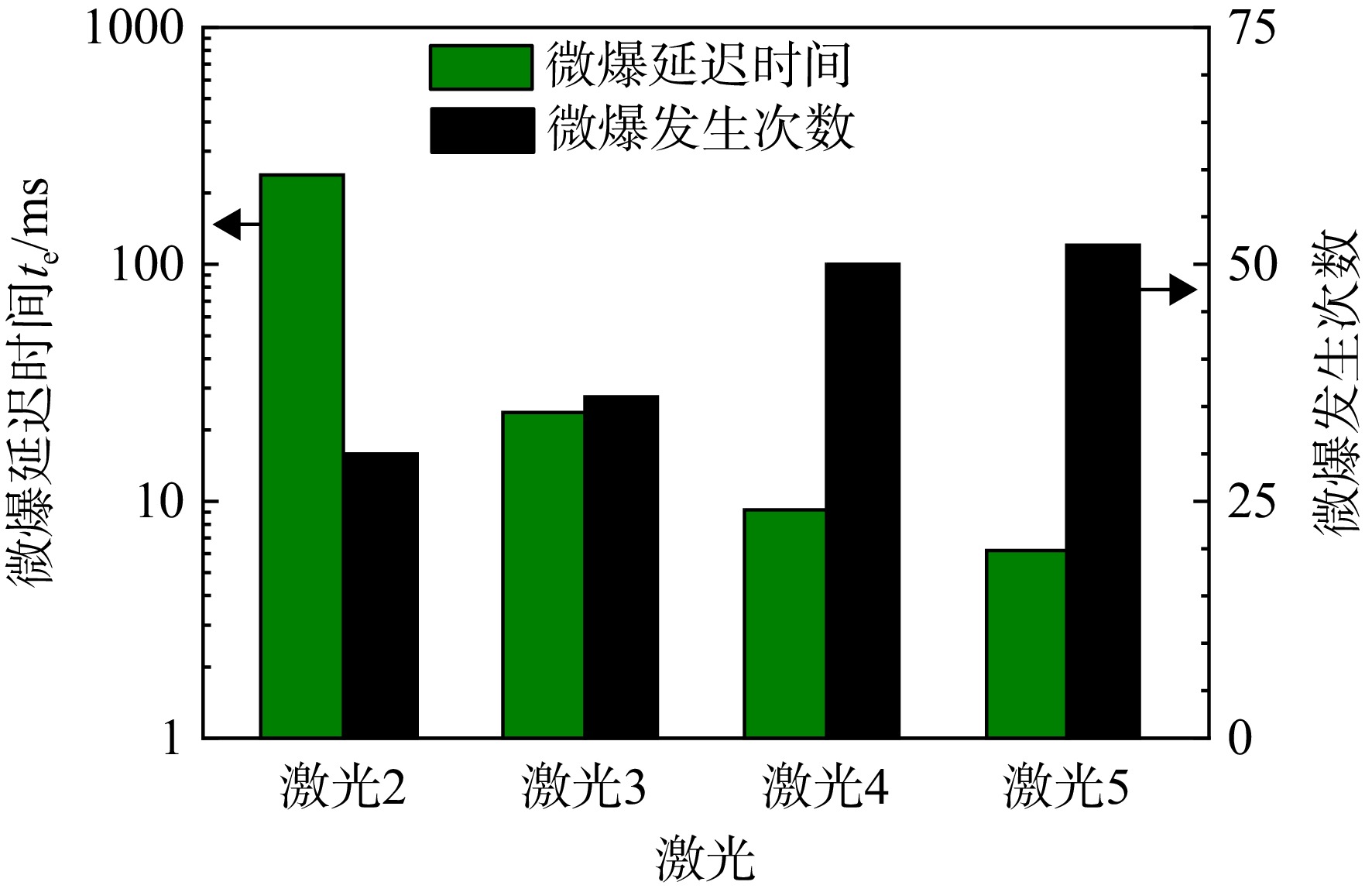
图 11 不同激光功率下纳米铝癸烷液滴微爆的延迟时间和微爆总次数(燃料9)
Figure 11. Delay time and total number of micro-explosions of n-Al/decane droplet under different laser powers (fuel 9)
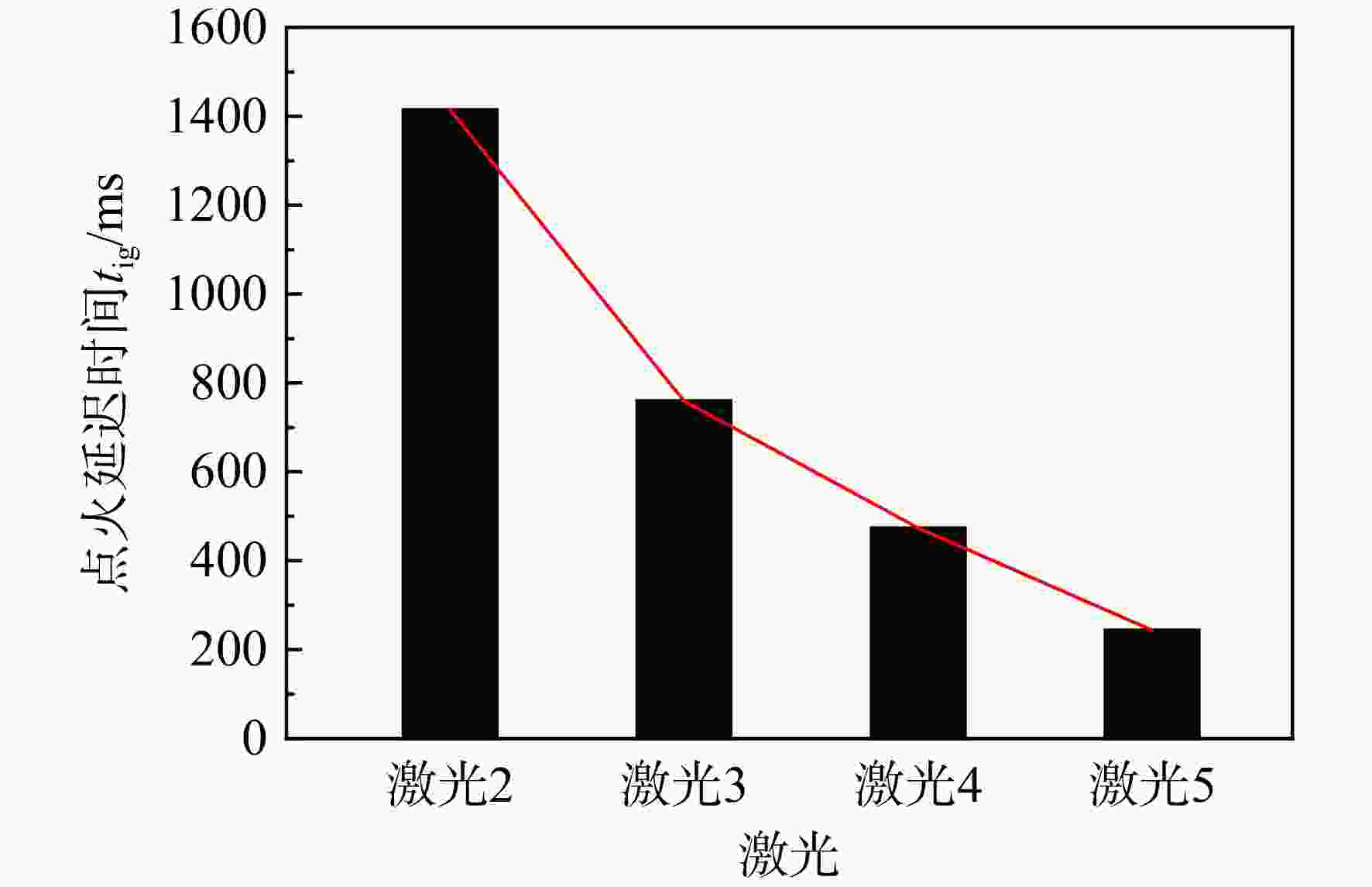
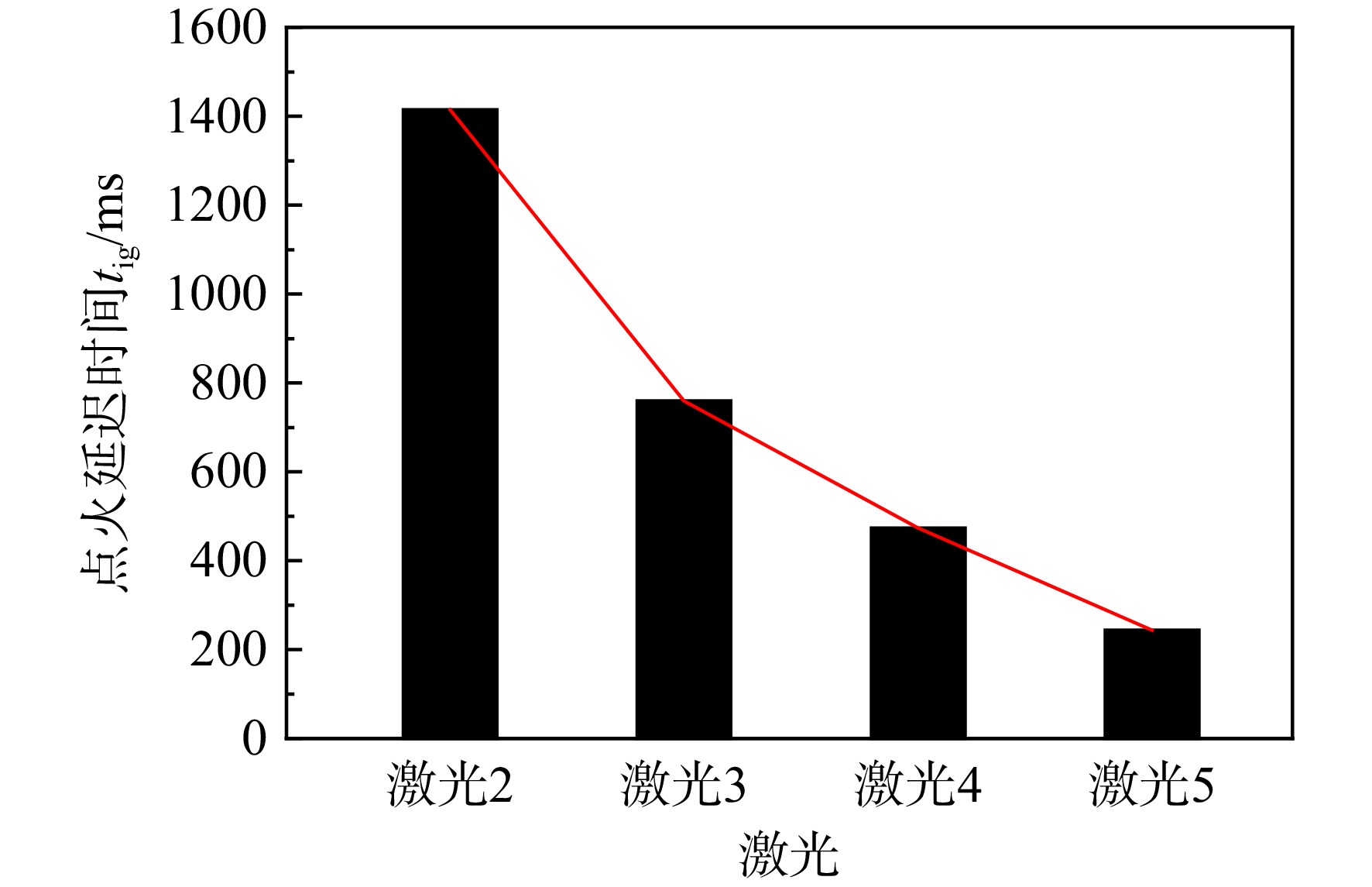
图 12 不同激光功率下纳米铝癸烷液滴的点火延迟时间(燃料11)
Figure 12. Ignition delay time of n-Al/decane droplet under different laser powers (fuel 11)
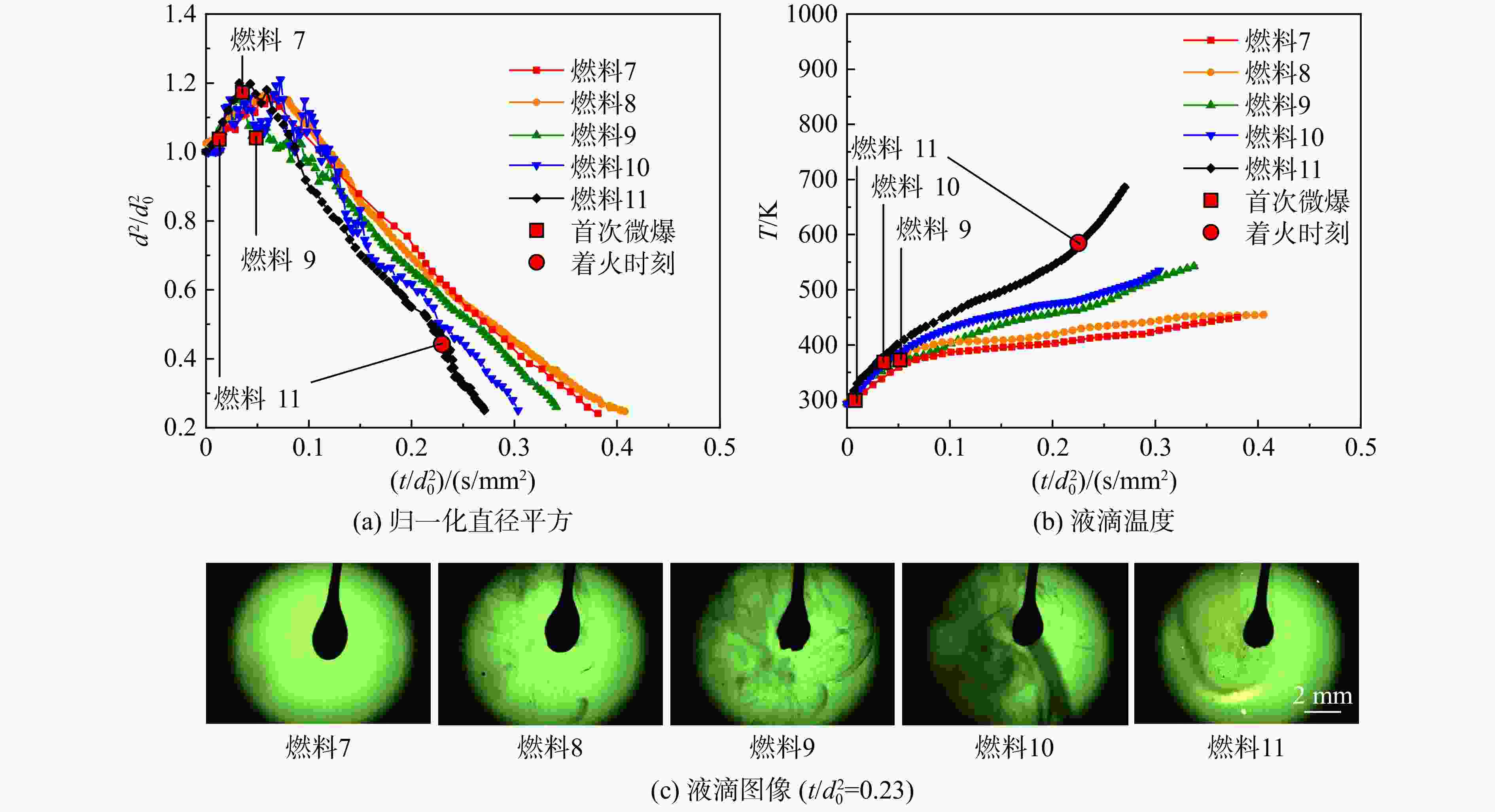
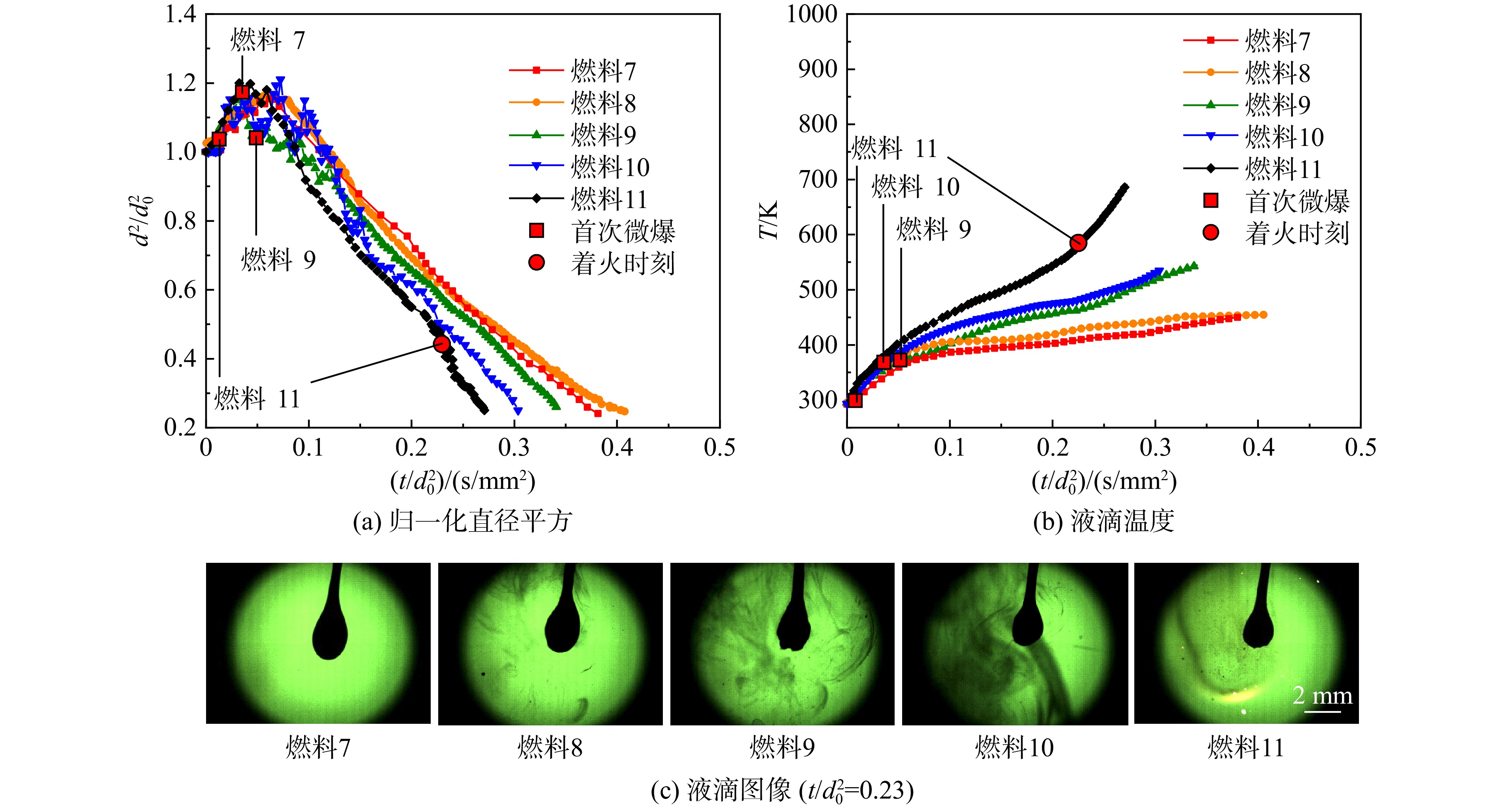
图 13 不同纳米铝颗粒质量分数纳米铝癸烷液滴的蒸发特性(激光2)
Figure 13. Evaporation characteristics of n-Al/decane droplets with different Al NPs mass fractions (laser 2)
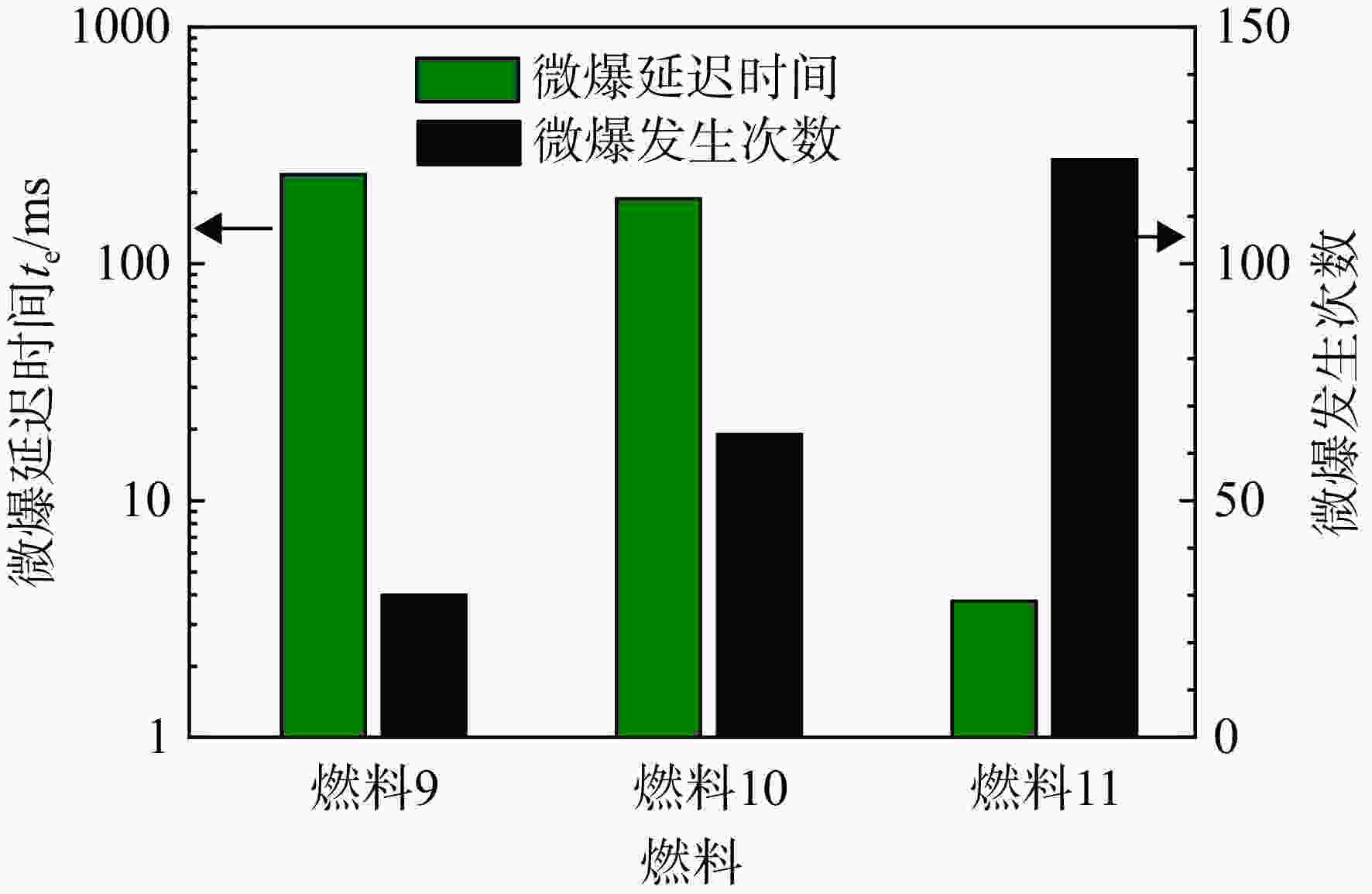
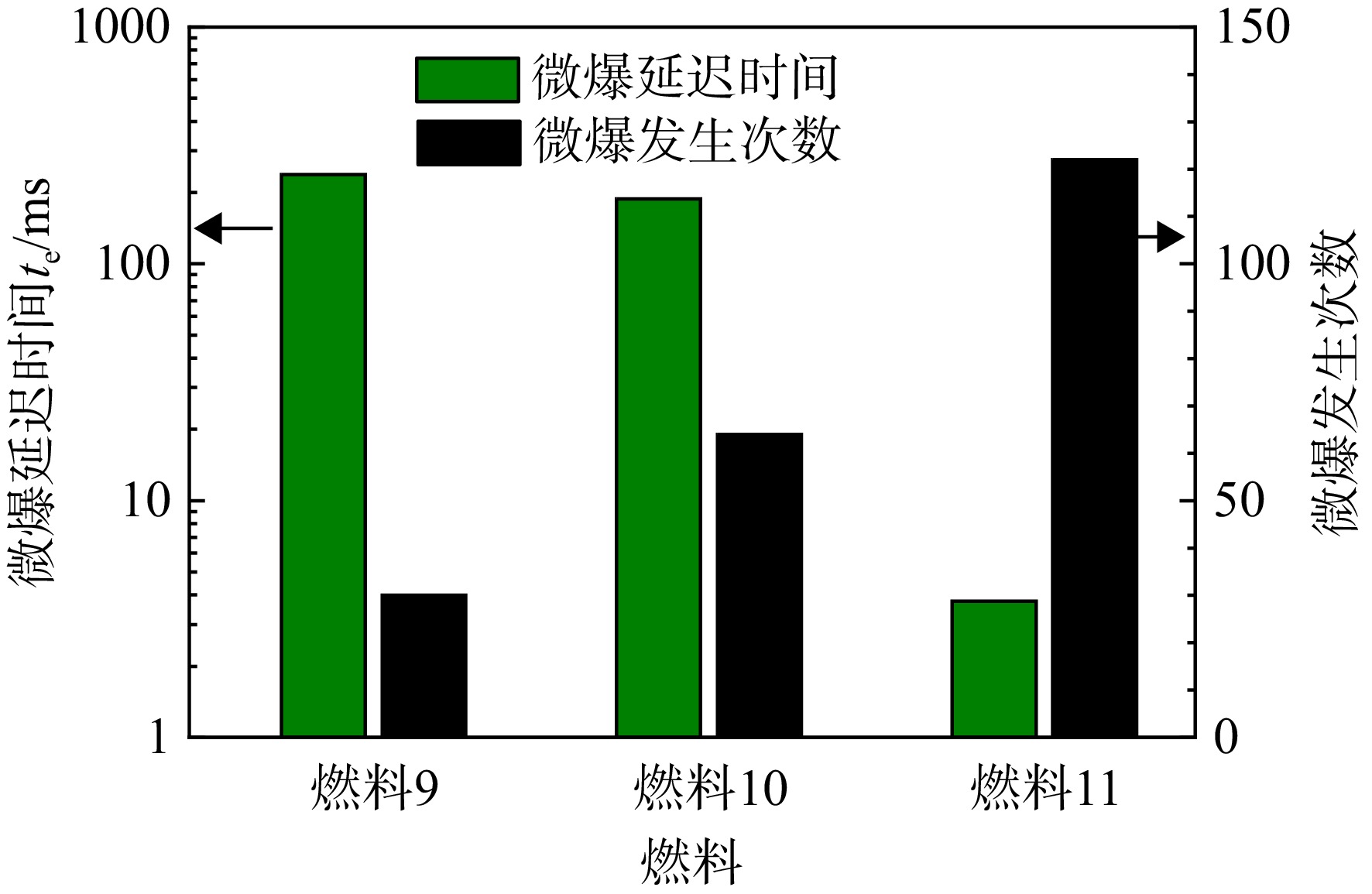
图 14 不同纳米铝颗粒质量分数下纳米铝癸烷液滴的微爆延迟时间和微爆次数 (激光2)
Figure 14. Delay time and number of micro-explosions of n-Al/decane droplet with different Al NPs mass fractions (laser 2)
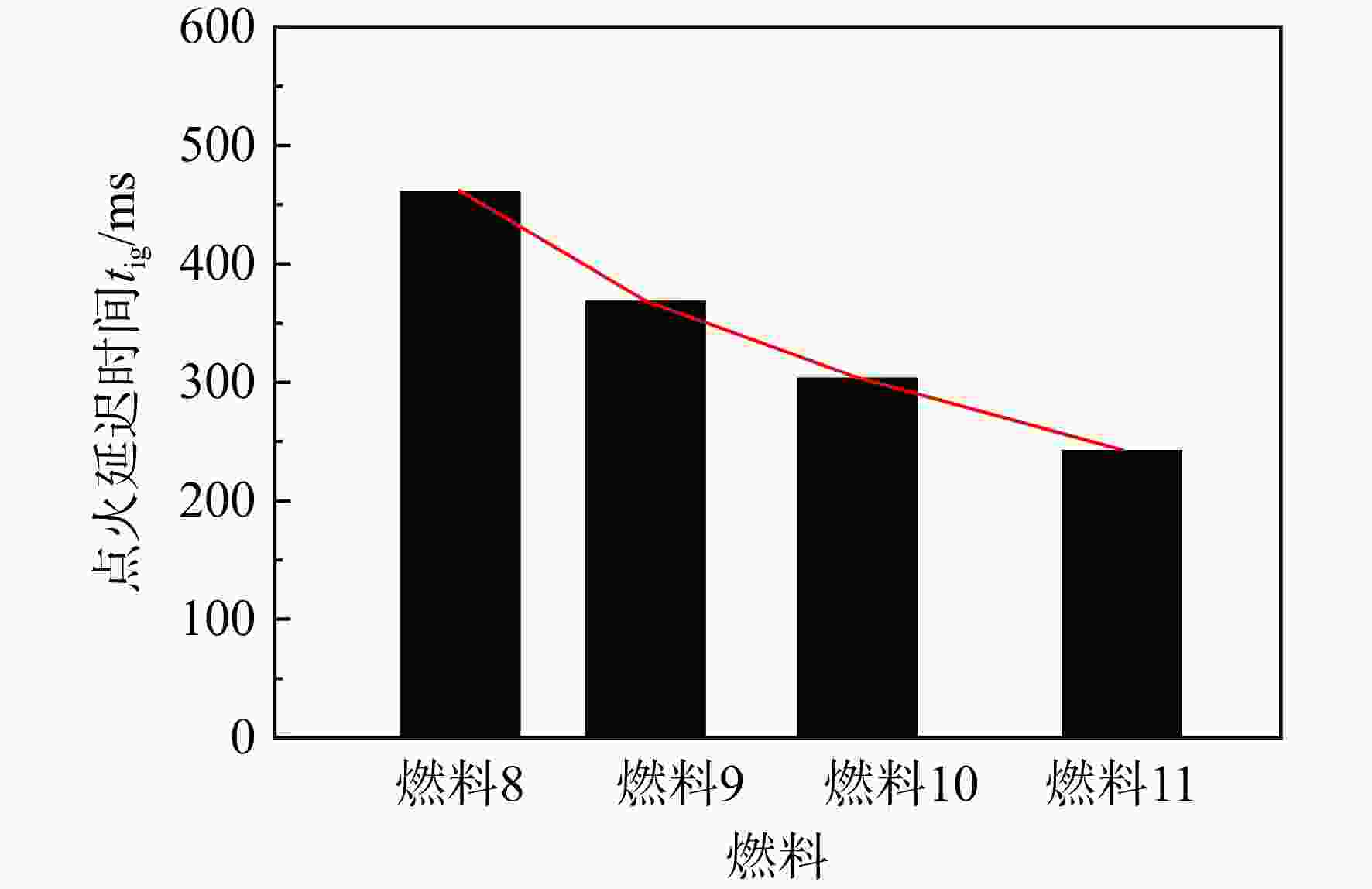
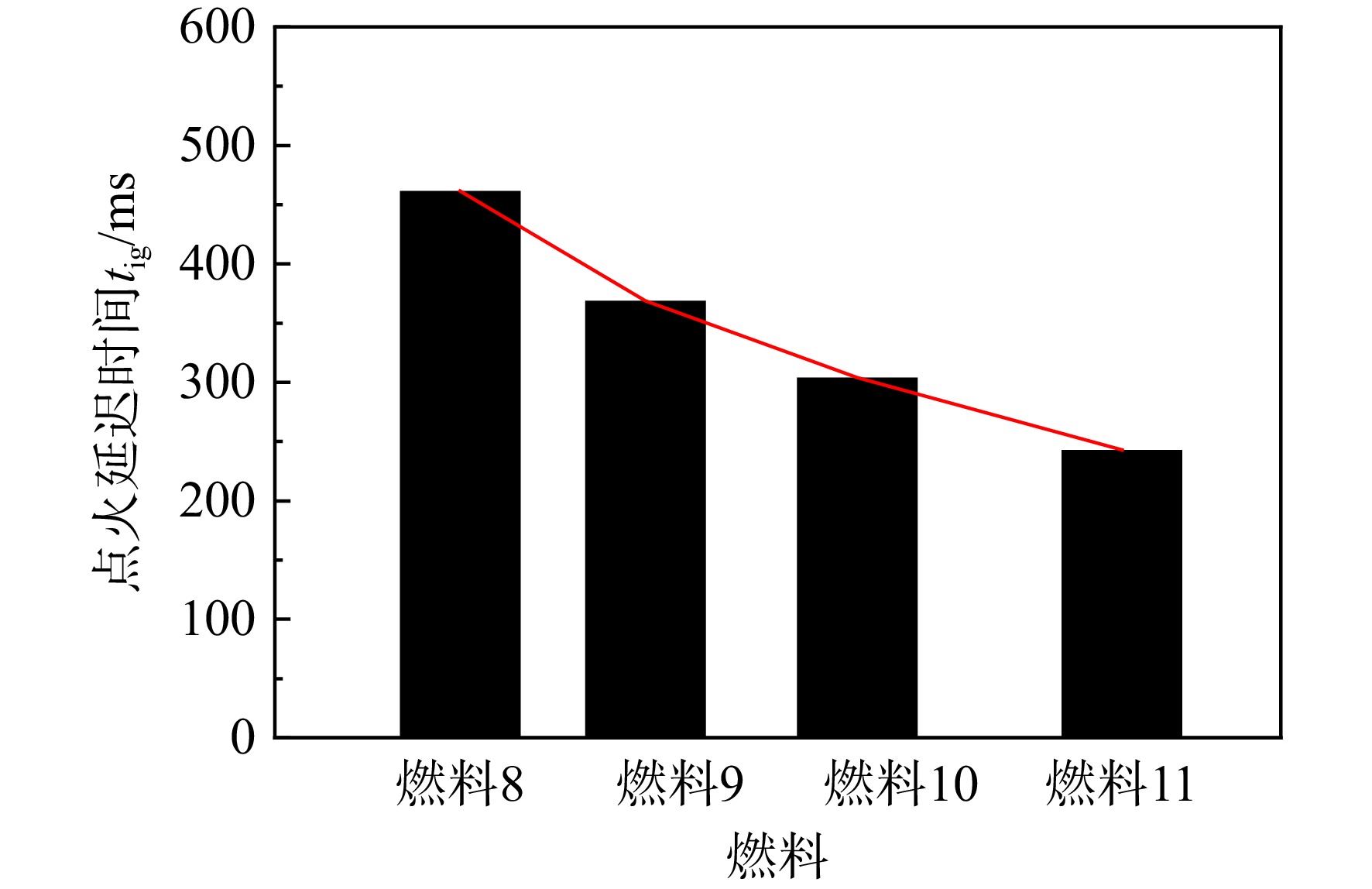
图 15 不同纳米铝颗粒质量分数下纳米铝癸烷液滴的点火延迟时间(激光5)
Figure 15. Ignition delay time of n-Al/decane droplet under different Al NPs mass fractions (laser 5)
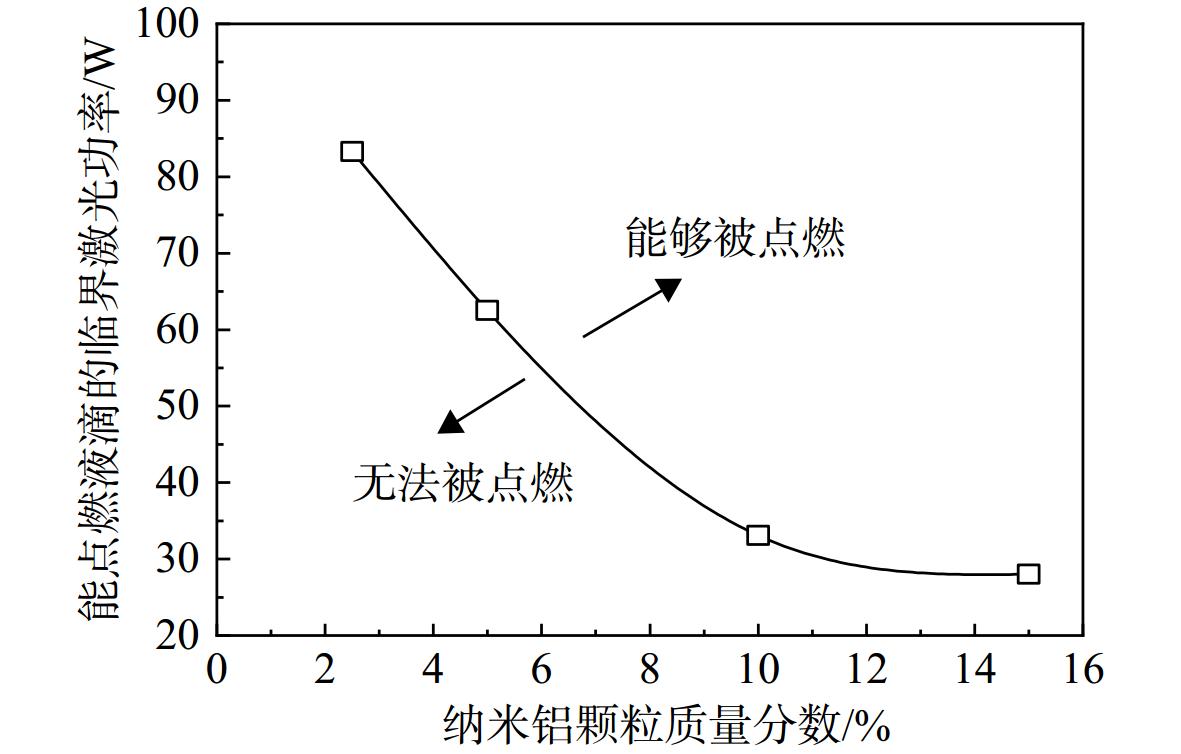
图 16 不同纳米铝颗粒质量分数下点燃纳米铝癸烷液滴的临界激光功率
Figure 16. Critical laser power capable of igniting n-Al/decane droplet under different Al NPs mass fractions
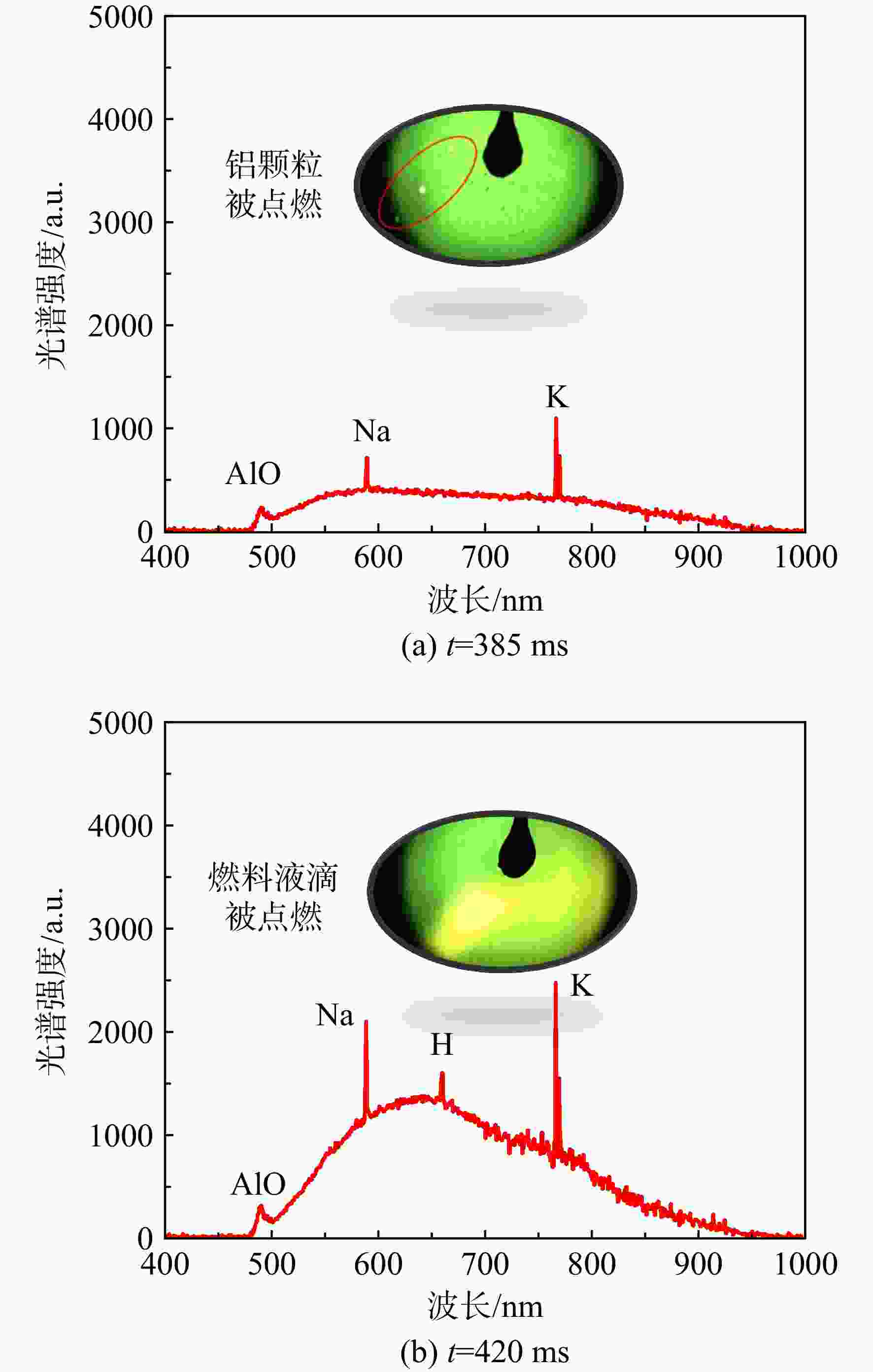
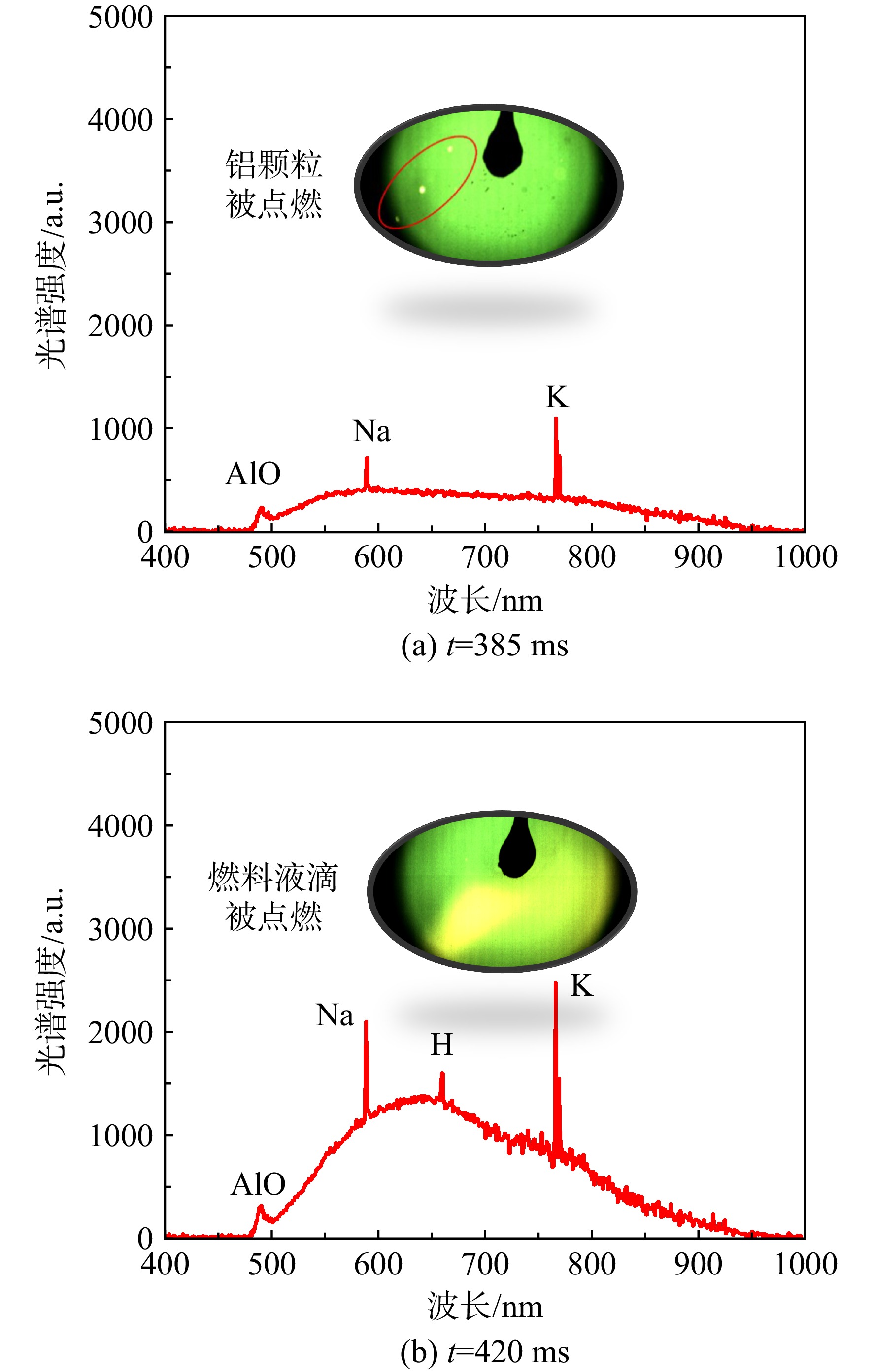
图 17 纳米铝癸烷液滴燃烧的光谱结果(燃料9、激光5)
Figure 17. Spectral results of n-Al/decane droplets in combustion state (fuel 9, laser 5)
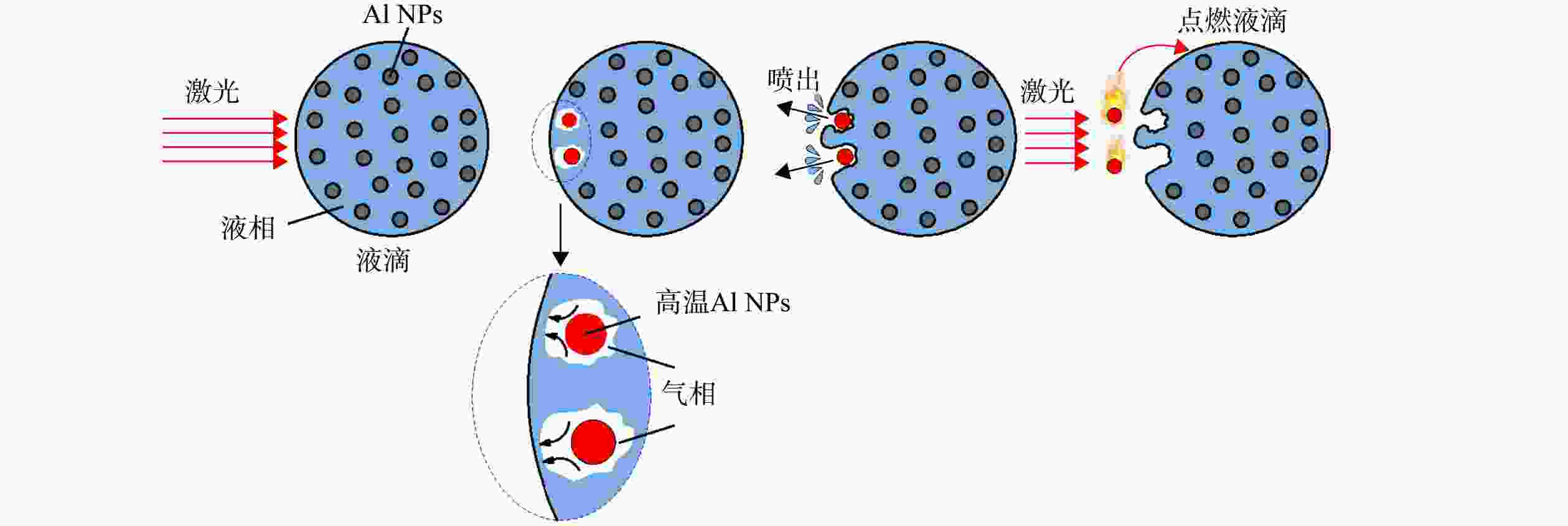
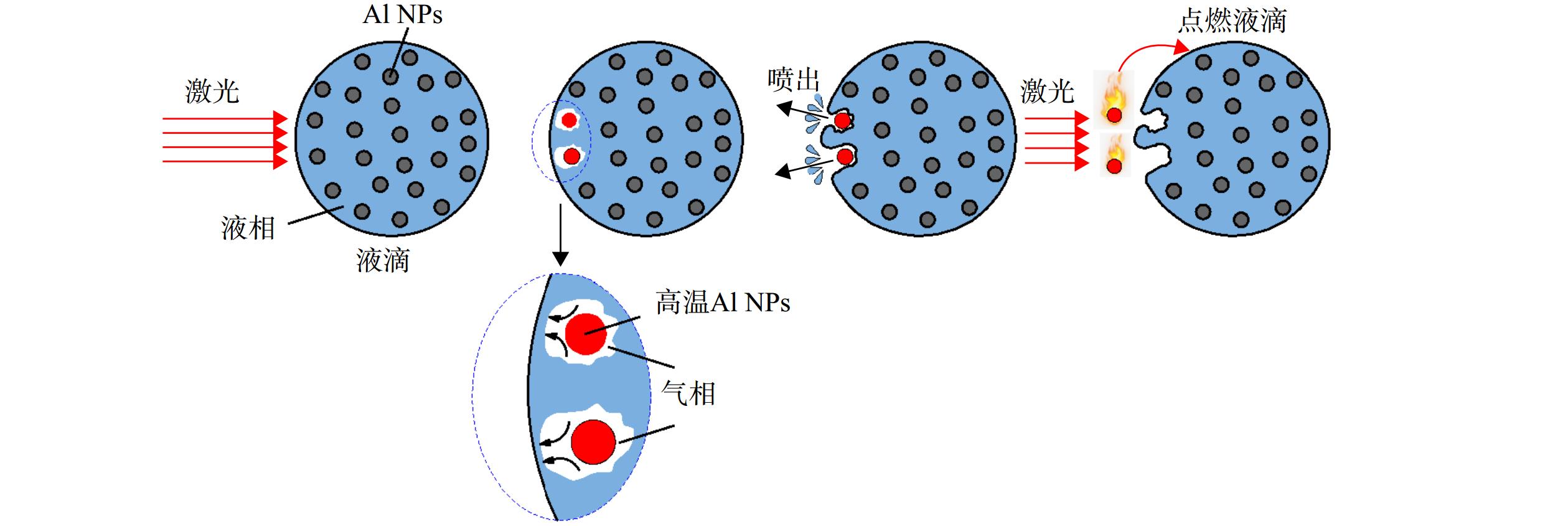
图 18 激光激励下纳米铝癸烷液滴的微爆和燃烧机理
Figure 18. Micro-explosion and combustion mechanism of n-Al/decane droplet under laser irradiation
表 1 实验中使用的燃料及其组成成分
Table 1. Composition of fuels used in the experiment
燃料号 组成成分 质量分数/% 正癸烷C10H22
(n-decane)油酸OA
(oleic acid)纳米铝颗粒
Al NPs燃料1 Pure n-decane 100 0 0 燃料2 n-decane+1.0%OA 99 1 0 燃料3 n-decane+2.5%OA 97.5 2.5 0 燃料4 n-decane+5.0%OA 95 5 0 燃料5 n-decane+10.0%OA 90 10 0 燃料6 n-decane+15.0%OA 85 15 0 燃料7 n-decane+1.0%OA+1.0%Al NPs 98 1 1 燃料8 n-decane+2.5%OA+2.5%Al NPs 95 2.5 2.5 燃料9 n-decane+5.0%OA+5.0%Al NPs 90 5 5 燃料10 n-decane+10.0%OA+10.0%Al NPs 80 10 10 燃料11 n-decane+15.0%OA+15.0%Al NPs 70 15 15  下载: 导出CSV
表 2 实验使用的激光功率
Table 2. Laser power used in experiments
激光编号 激光功率/W 激光1 9.1 激光2 31.8 激光3 54.5 激光4 77.3 激光5 100.0
下载: 导出CSV
-
[1] TANVIR S, BISWAS S, QIAO Li. Evaporation characteristics of ethanol droplets containing graphite nanoparticles under infrared radiation[J]. International Journal of Heat and Mass Transfer, 2017, 114: 541-549. doi: 10.1016/j.ijheatmasstransfer.2017.06.059 [2] AO Wen, FAN Zhimin, GAO Yi, et al. Ignition and combustion characteristics of boron-based nanofluid fuel[J]. Combustion and Flame, 2023, 254: 112831. doi: 10.1016/j.combustflame.2023.112831 [3] GUERIERI P M, DELISIO J B, ZACHARIAH M R. Nanoaluminum/nitrocellulose microparticle additive for burn enhancement of liquid fuels[J]. Combustion and Flame, 2017, 176: 220-228. doi: 10.1016/j.combustflame.2016.10.011 [4] GUERIERI P M, JACOB R J, WANG Haiyang, et al. Droplet combustion of kerosene augmented by stabilized nanoaluminum/oxidizer composite mesoparticles[J]. Combustion and Flame, 2020, 211: 1-7. doi: 10.1016/j.combustflame.2019.07.031 [5] JANG G M, KIM N I. Investigation on breakup characteristics of multicomponent single droplets of nanofluid and water-in-oil emulsion using a pulse laser[J]. Fuel, 2022, 310: 122300. doi: 10.1016/j.fuel.2021.122300 [6] GAN Yanan, QIAO Li. Evaporation characteristics of fuel droplets with the addition of nanoparticles under natural and forced convections[J]. International Journal of Heat and Mass Transfer, 2011, 54(23/24): 4913-4922. [7] BELLO M N, HILL K J, PANTOYA M L, et al. Surface engineered nanoparticles dispersed in kerosene: The effect of oleophobicity on droplet combustion[J]. Combustion and Flame, 2018, 188: 243-249. doi: 10.1016/j.combustflame.2017.09.041 [8] EMEKWURU N G. Nanofuel droplet evaporation processes[J]. Journal of the Indian Institute of Science, 2019, 99(1): 43-58. doi: 10.1007/s41745-018-0092-2 [9] JAVED I, BAEK S W, WAHEED K. Evaporation characteristics of heptane droplets with the addition of aluminum nanoparticles at elevated temperatures[J]. Combustion and Flame, 2013, 160(1): 170-183. doi: 10.1016/j.combustflame.2012.09.005 [10] JAVED I, BAEK S W, WAHEED K, et al. Evaporation characteristics of kerosene droplets with dilute concentrations of ligand-protected aluminum nanoparticles at elevated temperatures[J]. Combustion and Flame, 2013, 160(12): 2955-2963. doi: 10.1016/j.combustflame.2013.07.007 [11] JAVED I, BAEK S W, WAHEED K. Effects of dense concentrations of aluminum nanoparticles on the evaporation behavior of kerosene droplet at elevated temperatures: The phenomenon of microexplosion[J]. Experimental Thermal and Fluid Science, 2014, 56: 33-44. doi: 10.1016/j.expthermflusci.2013.11.006 [12] JAVED I, BAEK S W, WAHEED K. Autoignition and combustion characteristics of kerosene droplets with dilute concentrations of aluminum nanoparticles at elevated temperatures[J]. Combustion and Flame, 2015, 162(3): 774-787. doi: 10.1016/j.combustflame.2014.08.018 [13] JAVED I, BAEK S W, WAHEED K. Autoignition and combustion characteristics of heptane droplets with the addition of aluminium nanoparticles at elevated temperatures[J]. Combustion and Flame, 2015, 162(1): 191-206. doi: 10.1016/j.combustflame.2014.07.015 [14] CHOO S, HE Bin, DUAN Fei. Evaporation of droplet with and without laser excitation[J]. Applied Thermal Engineering, 2015, 88: 341-346. doi: 10.1016/j.applthermaleng.2014.10.068 [15] LEUNG P T, DO N, KLEES L, et al. Transmission studies of explosive vaporization of a transparent liquid film on an opaque solid surface induced by excimer-laser-pulsed irradiation[J]. Journal of Applied Physics, 1992, 72(6): 2256-2263. doi: 10.1063/1.351619 [16] XIE J, RUEKGAUER T E, ARMSTRONG R L, et al. Evaporative instability in pulsed laser-heated droplets[J]. Physical Review Letters, 1991, 66(23): 2988-2991. doi: 10.1103/PhysRevLett.66.2988 [17] TANVIR S, QIAO Li. Droplet burning rate enhancement of ethanol with the addition of graphite nanoparticles: influence of radiation absorption[J]. Combustion and Flame, 2016, 166: 34-44. doi: 10.1016/j.combustflame.2015.12.021 [18] GAN Yanan, QIAO L. Optical properties and radiation-enhanced evaporation of nanofluid fuels containing carbon-based nanostructures[J]. Energy and Fuels, 2012, 26: 4224-4230. doi: 10.1021/ef300493m [19] GAN Yanan, QIAO Li. Radiation-enhanced evaporation of ethanol fuel containing suspended metal nanoparticles[J]. International Journal of Heat and Mass Transfer, 2012, 55(21/22): 5777-5782. [20] FERRAZ-ALBANI L A, BALDELLI A, KNAPP C J, et al. Enhanced evaporation of microscale droplets with an infrared laser[J]. Journal of Heat Transfer, 2017, 139(1): 011503. doi: 10.1115/1.4034486 [21] JONES C F, BERNANDO C, ERUKALA S, et al. Evaporation dynamics from Ag-doped He droplets upon laser excitation[J]. The Journal of Physical Chemistry A, 2019, 123(28): 5859-5865. doi: 10.1021/acs.jpca.9b02496 [22] JIAO Long, CHEN Rong, ZHU Xun, et al. IR laser caused droplet evaporation on the hydrophobic surface[J]. International Journal of Heat and Mass Transfer, 2016, 94: 180-190. doi: 10.1016/j.ijheatmasstransfer.2015.11.050 [23] NGUYEN T T B, MITRA S, SATHE M J, et al. Evaporation of a suspended binary mixture droplet in a heated flowing gas stream[J]. Experimental Thermal and Fluid Science, 2018, 91: 329-344. doi: 10.1016/j.expthermflusci.2017.10.025 [24] TANG Yong, ZOU Xiangrui, DONG Wei, et al. Temperature measurements and high-speed photography of micron-sized aluminum particles burning in methane flat-flame exhaust[J]. Fuel, 2021, 306: 121743. doi: 10.1016/j.fuel.2021.121743 [25] FENG Yunchao, XIA Zhixun, HUANG Liya, et al. Experimental investigation on the combustion characteristics of aluminum in air[J]. Acta Astronautica, 2016, 129: 1-7. doi: 10.1016/j.actaastro.2016.06.049 [26] ZHANG Zhifei, LI Tie, XUE Xuefeng, et al. Simultaneous measurements of fuel concentration and temperature in gas jets by laser induced breakdown spectroscopy[J]. Spectrochimica Acta: Part B Atomic Spectroscopy, 2019, 161: 105706. doi: 10.1016/j.sab.2019.105706 -


 点击查看大图

计量
- 文章访问数: 547
- HTML浏览量: 331
- PDF量: 38
- 被引次数: 0