






Bearability of cross-excitation modes of aero-engine dual-rotor system and its experimental verification
-
摘要:
为剖析航空发动机双转子系统“交叉激励”模态的特性,并评估其“可容度”,以某型发动机带中介轴承双转子相似模型为对象,将高、低压转子分别取为独立的单元体,以作用力和反作用力来替代中介轴承的耦合作用;利用转子模态分析方法,分析作用力与振型的正交性,由此证明了“交叉激励”模态的高“可容度”特性。最后,利用与某型发动机动力学相似的双转子试验器进行了试验验证。开展了模态测试、响应测试,以及“长时间共振”试验。双转子试验器升降速过程中,不平衡响应在“交叉激励”模态处无峰值;在“交叉激励”模态下双转子经历了超过62 min的“长时间共振”,所施加的不平衡量最大为耦合模态的145%,而响应峰值小于耦合模态的25%。本文的理论分析和试验结果表明,“交叉激励”模态为“可容模态”,剧烈振动的风险很低。
Abstract:To elucidate the contradictory phenomenon of the cross-excitation mode that the displacement or deformation of the excitation source rotor is very small while that of the excited rotor is absolutely dominant, the orthogonality between the force and the vibration mode is analyzed based on rotor modal analysis method and a dual-rotor model with inter-shaft bearing. A dual-rotor experimental setup was built, and modal experiment, response experiment and long-term resonance experiment were carried out. The unbalanced response during the acceleration and deceleration process had no peak at the cross-excitation mode. A long-time resonance exceeding 62 minutes was performed under the cross-excitation mode. Even if the maximum amount of applied imbalance was 145% of the coupling mode, the peak response was still less than 25% of the coupling mode. The research results fully prove that the cross-excitation mode is a mode with high acceptability, presenting vey low risk of severe vibration.
-
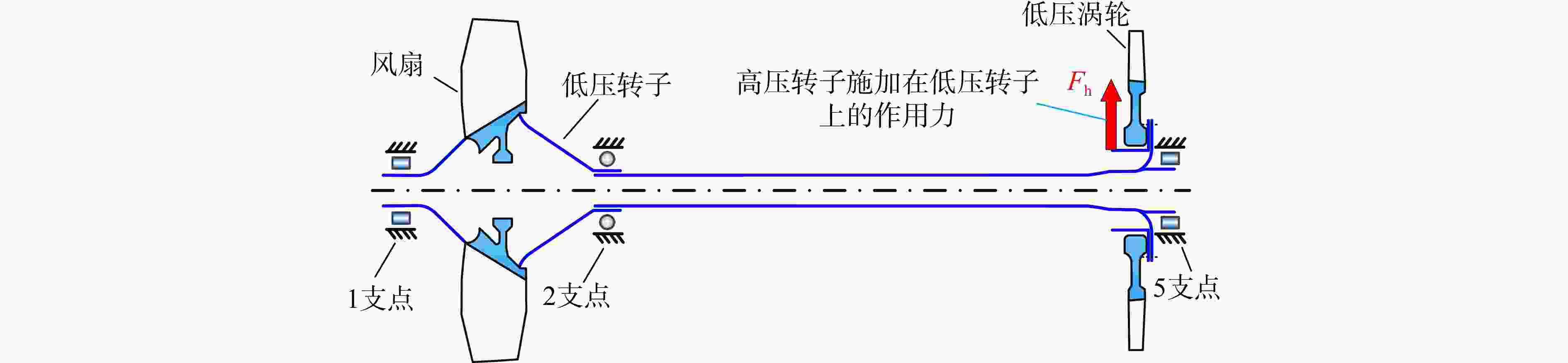
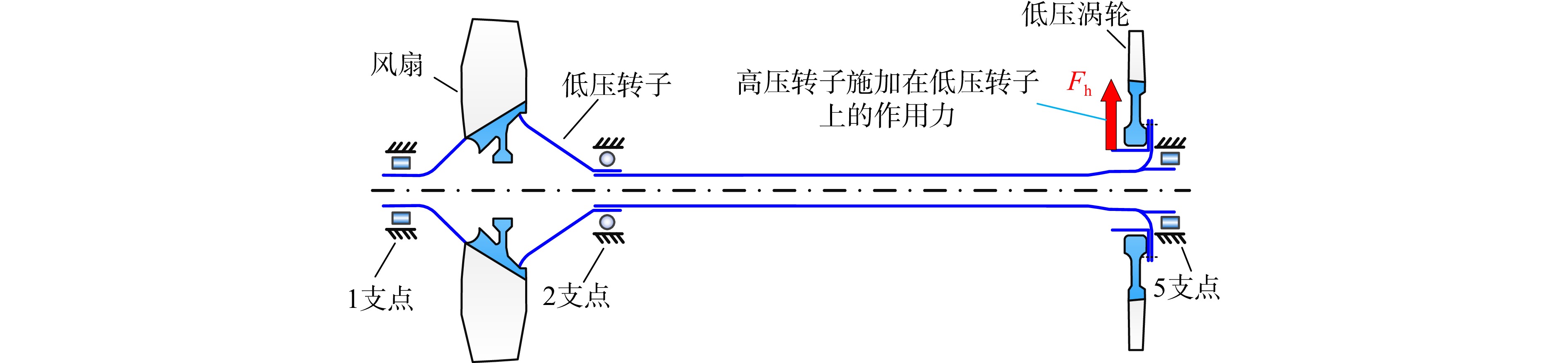
图 5 低压转子单元体和高压转子的作用力
Figure 5. Forces between the low-pressure rotor unit and the high-pressure rotor
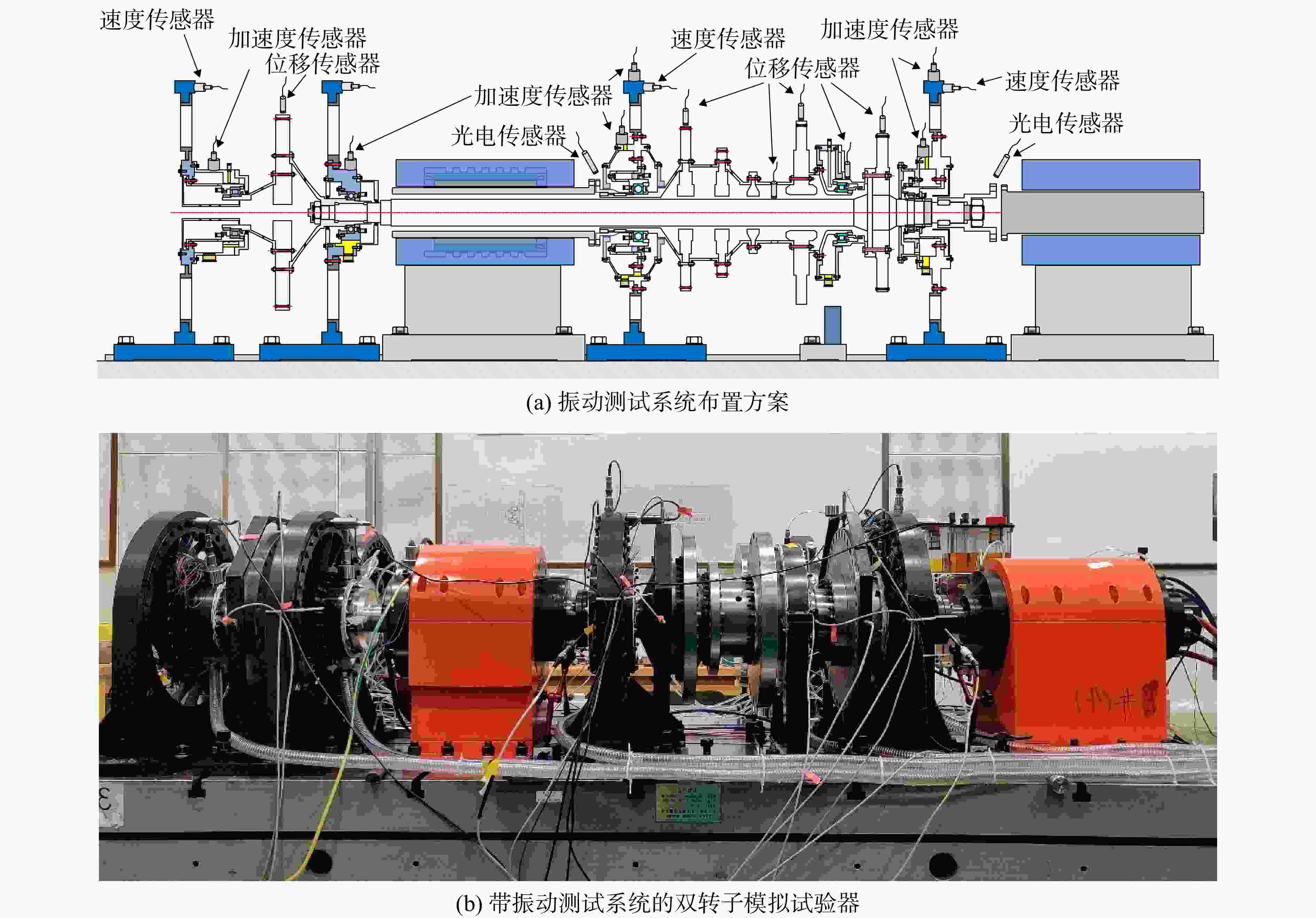
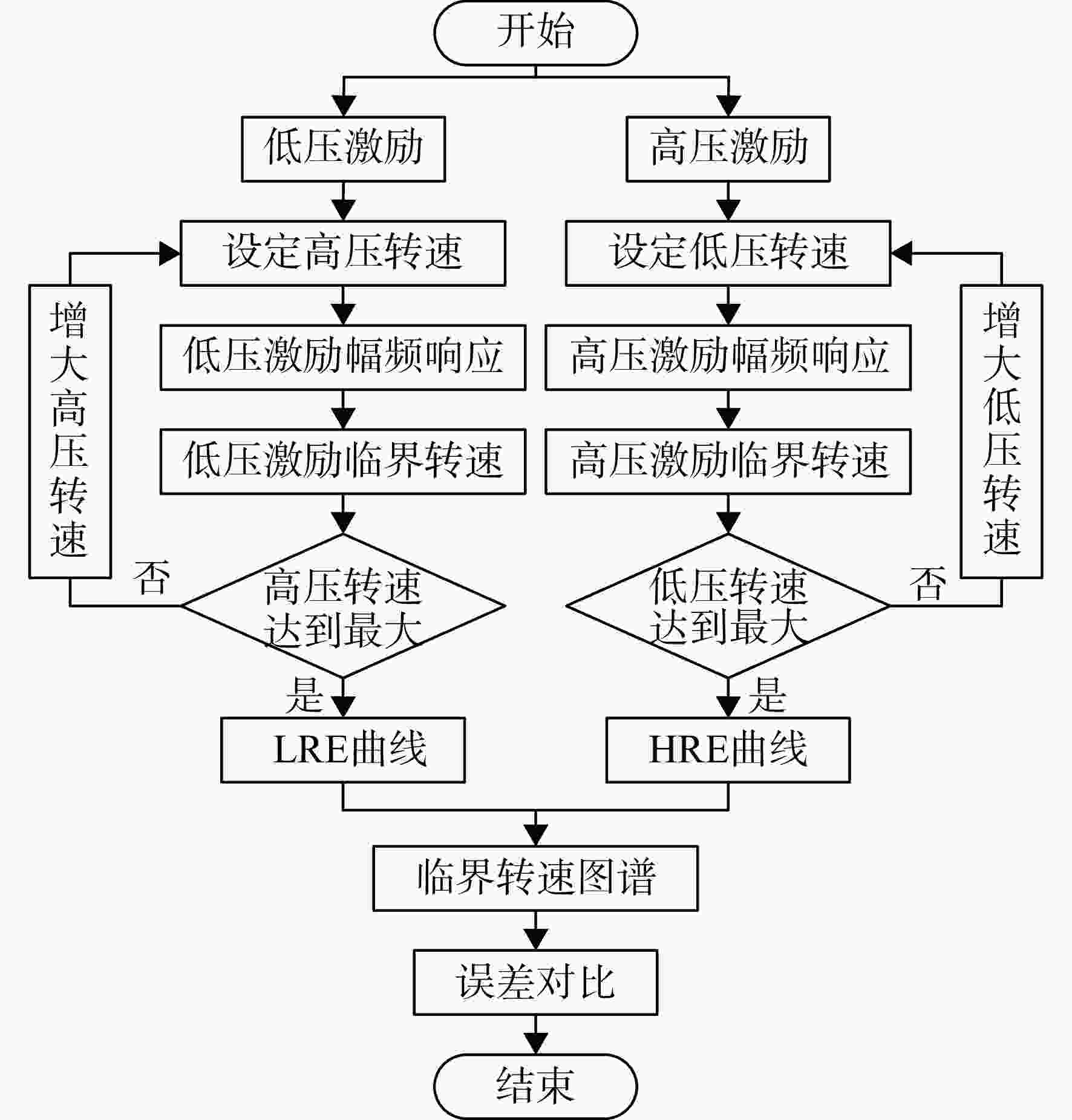
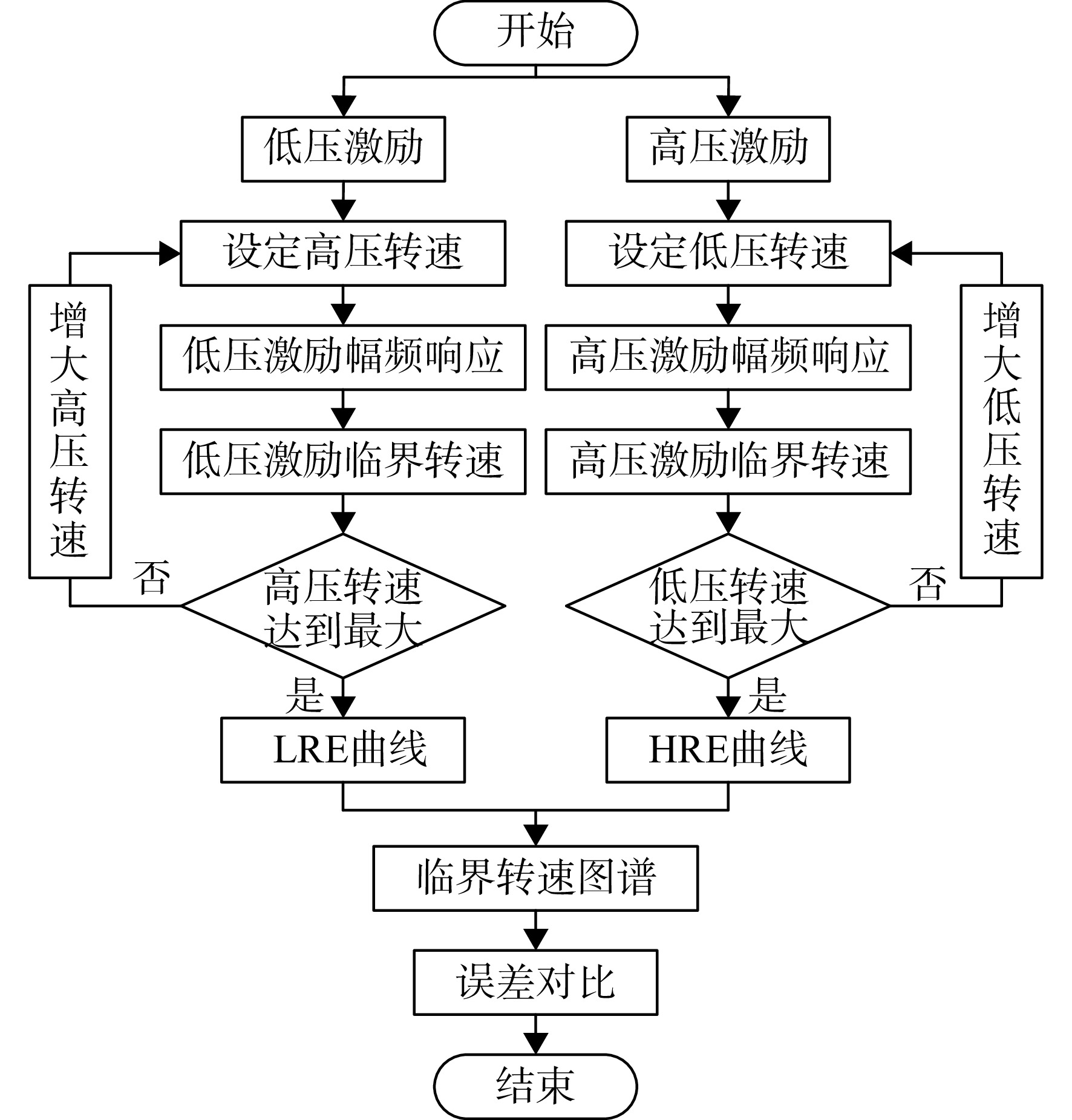
图 9 双转子系统临界转速测试试验流程
Figure 9. Critical speed experiment procedure for dual-rotor system
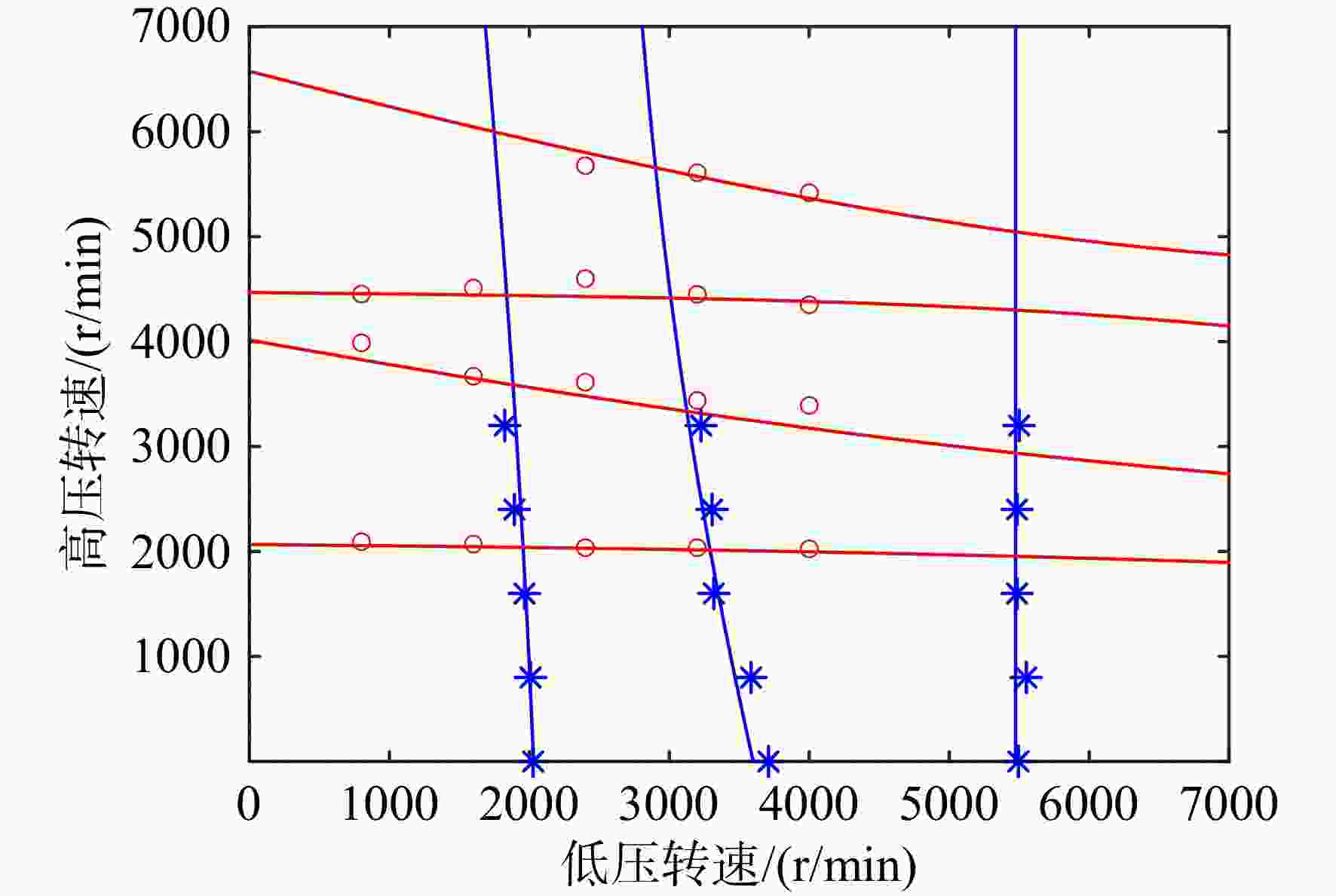
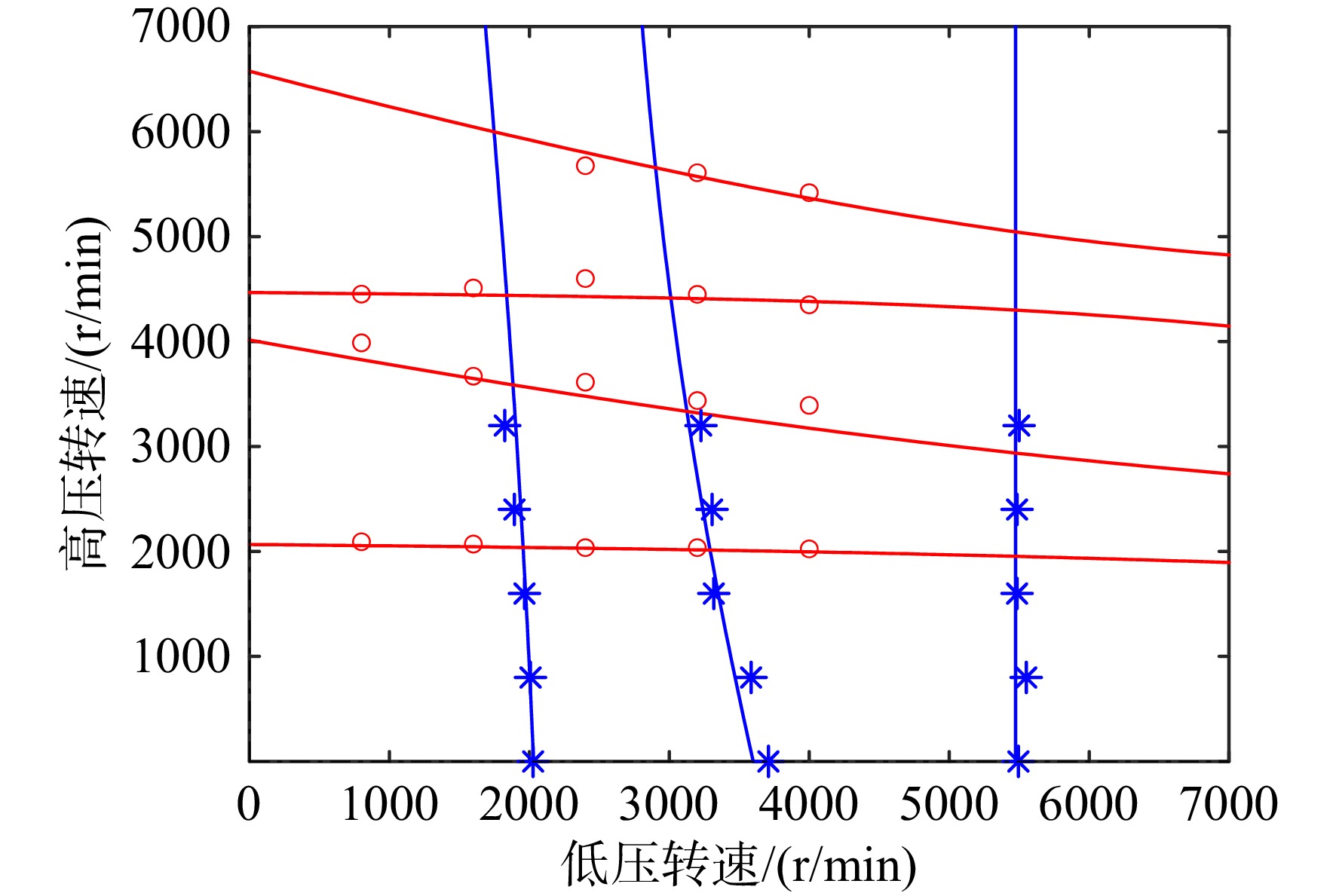
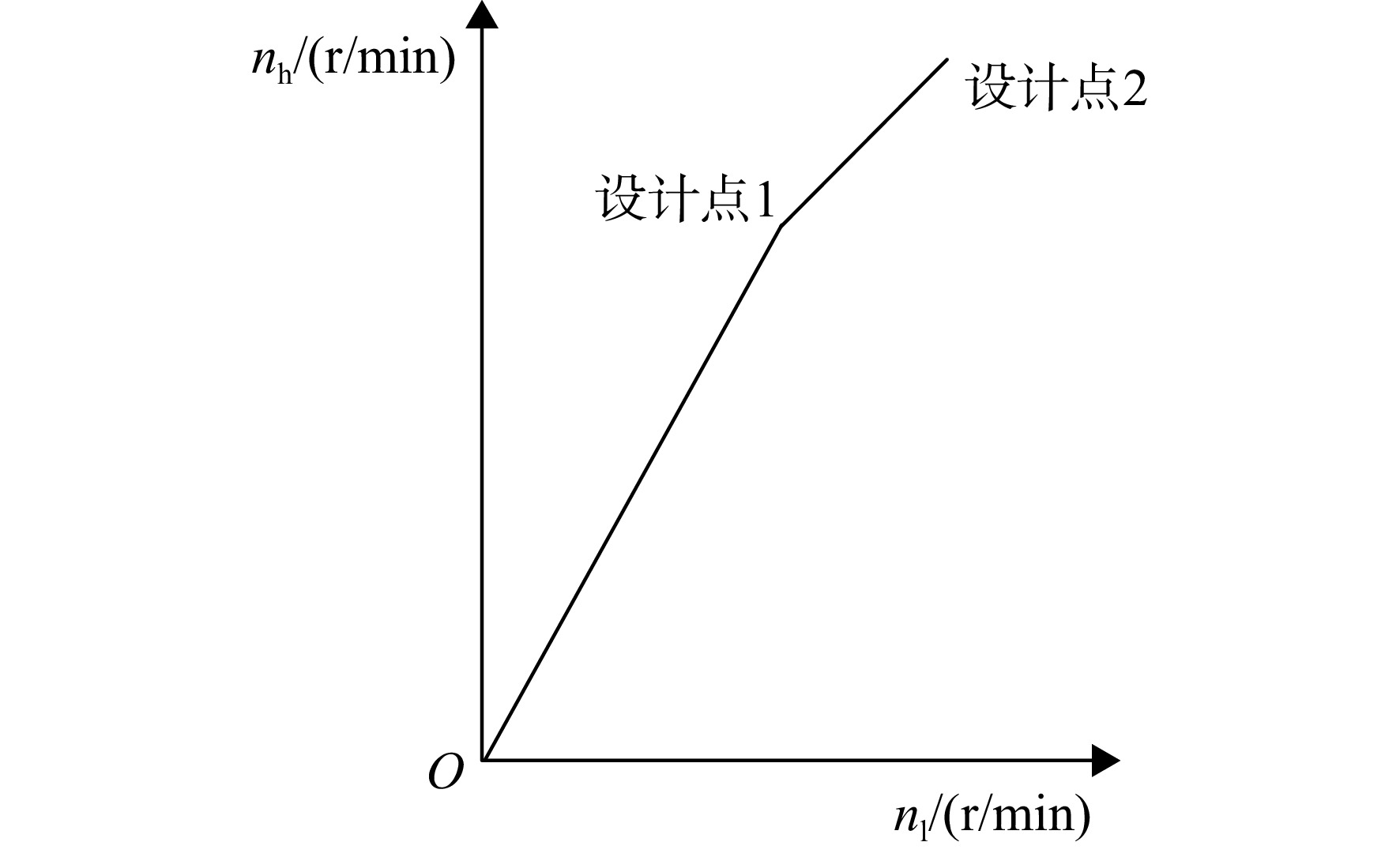
图 10 双转子临界转速的实测与设计结果的对比
Figure 10. Comparison of experimental and calculated results of critical speed diagram for dual-rotor system
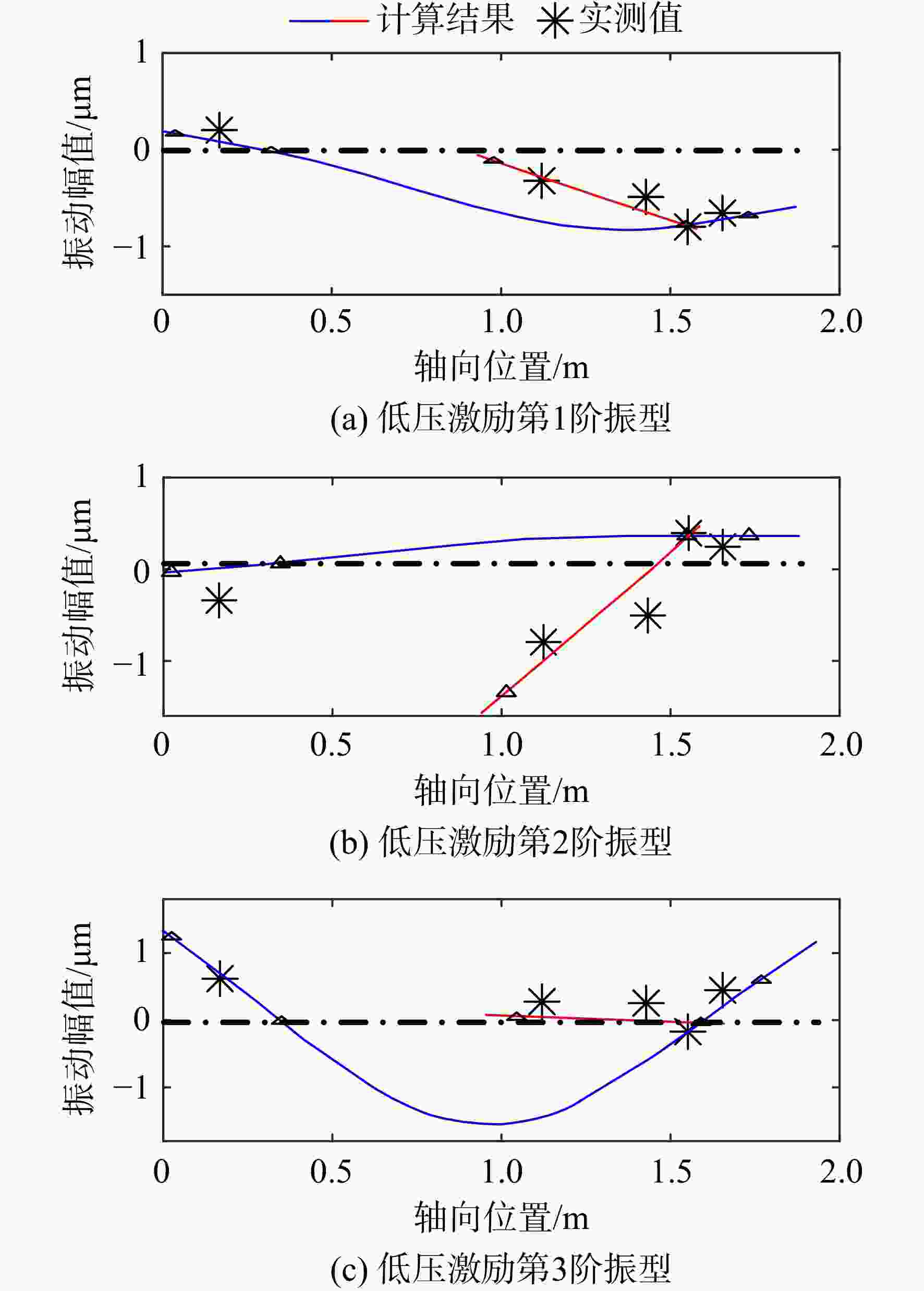
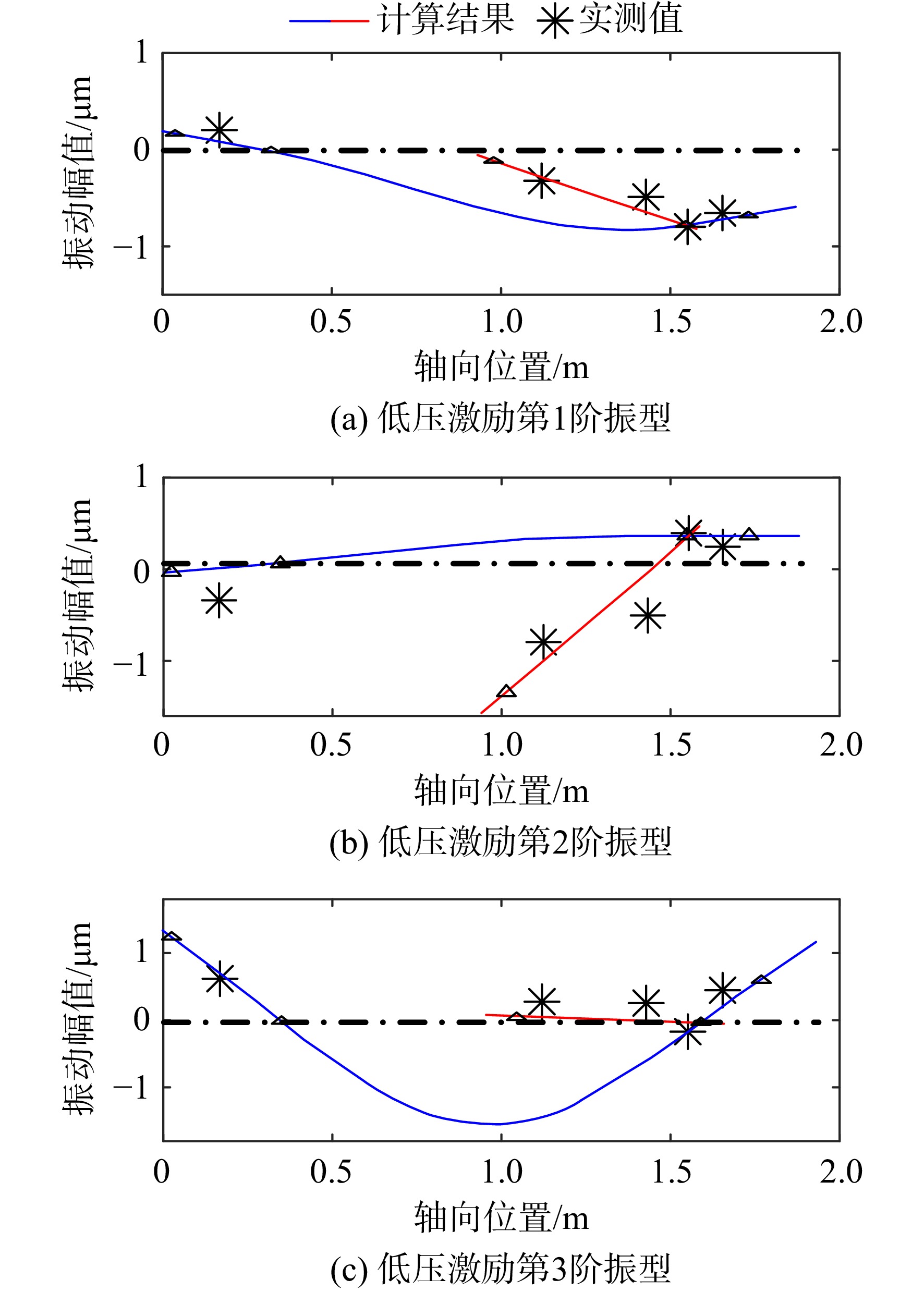
图 11 低压激励前3阶振型实测与设计结果的对比
Figure 11. Comparison of experimental results with calculated results for three order vibration patterns of LP rotor excitation
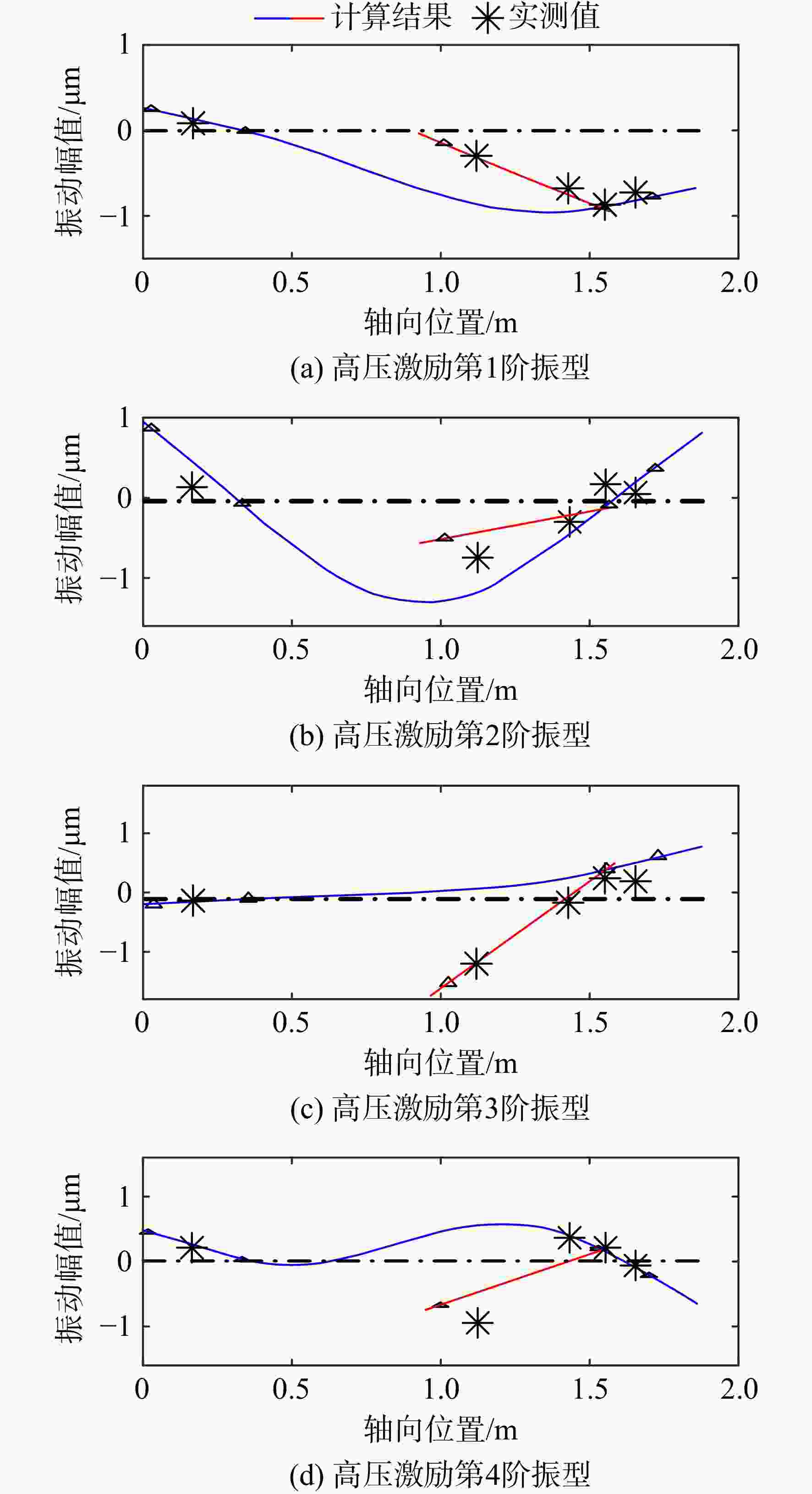
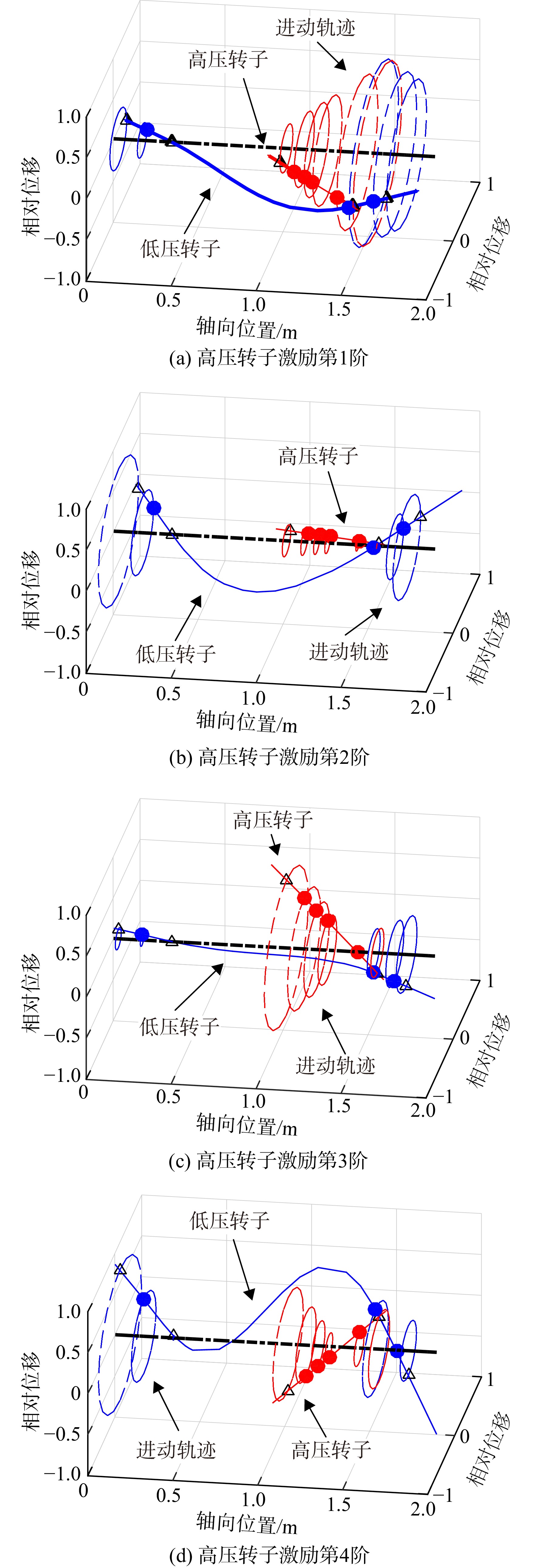
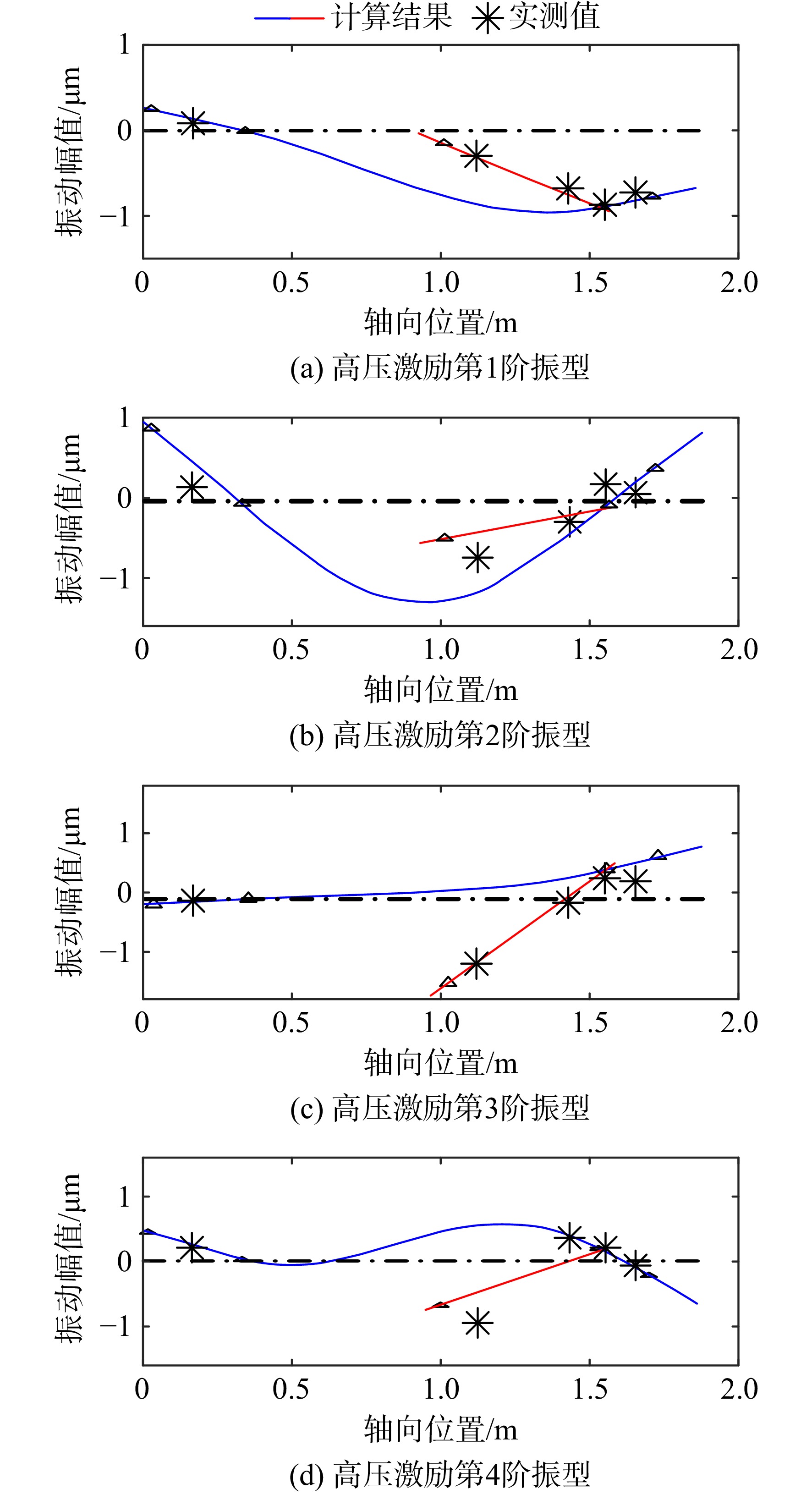
图 12 高压激励前4阶振型的实测与设计结果的对比
Figure 12. Comparison of experimental results with calculated results for four order vibration patterns of HP rotor excitation
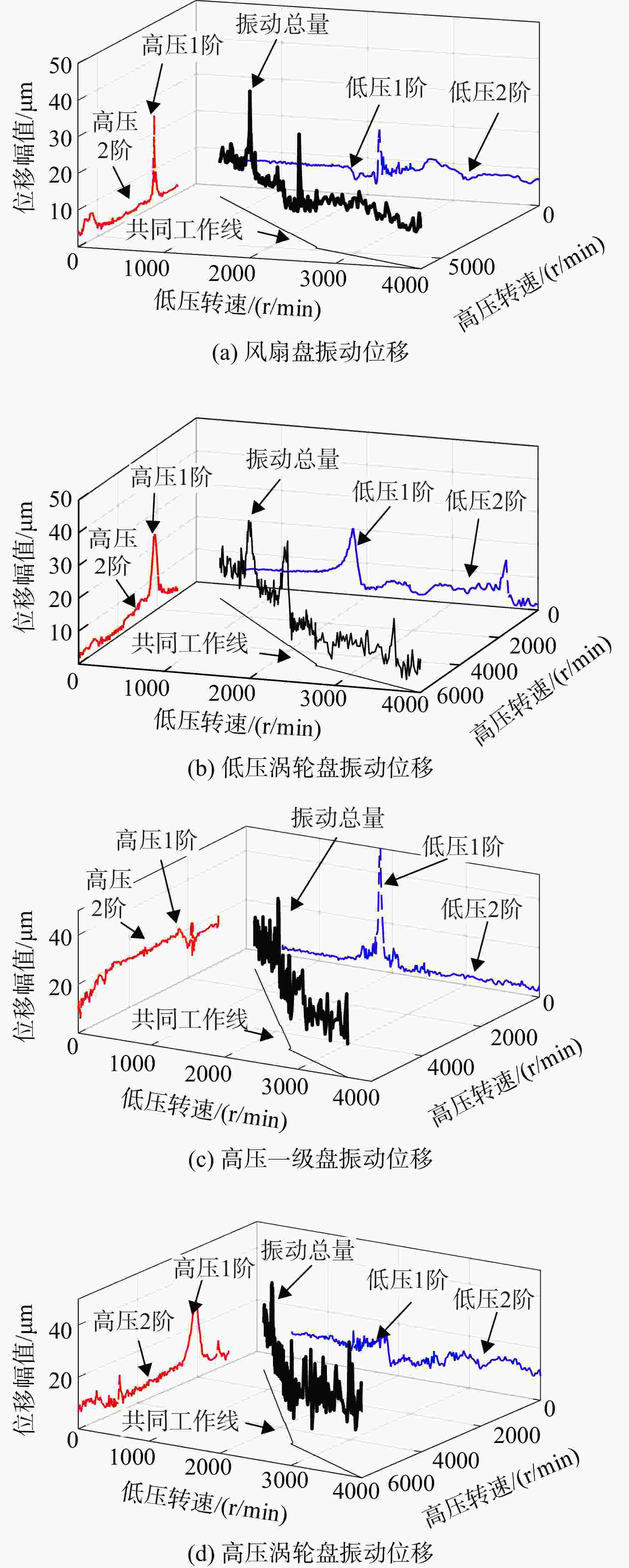
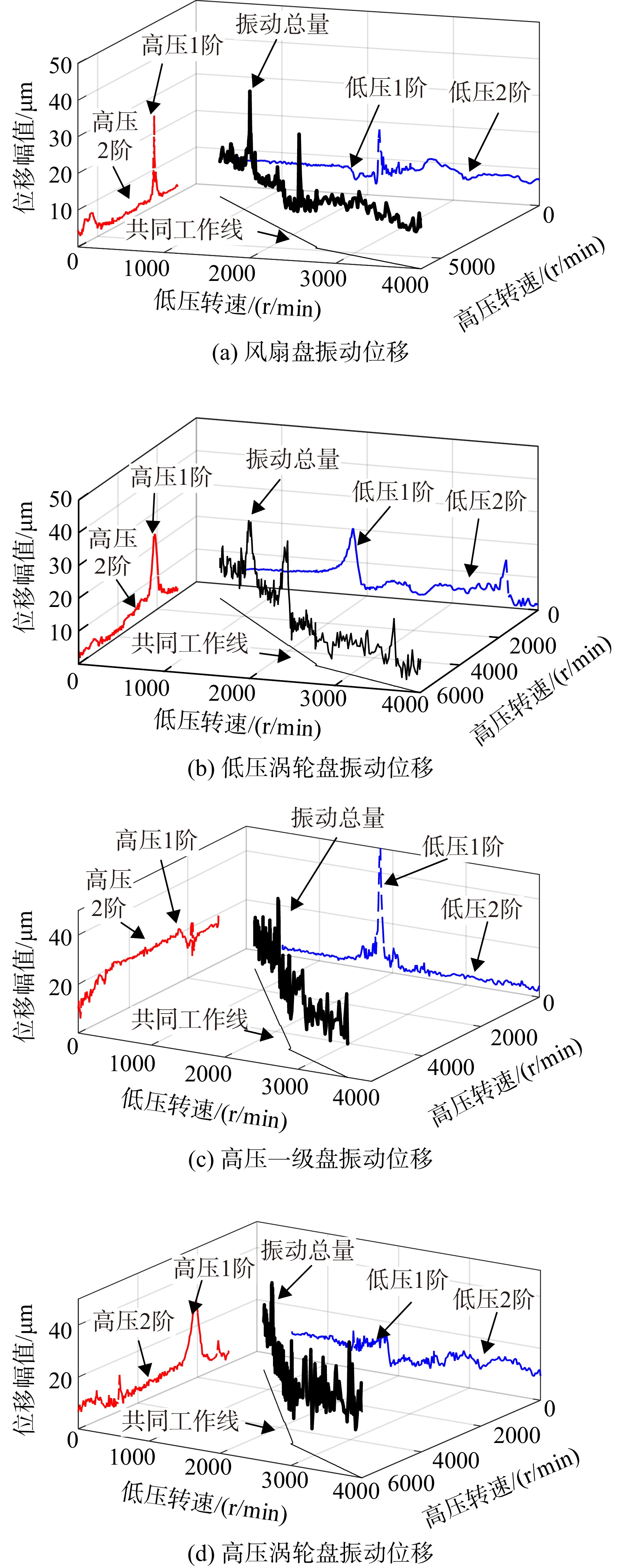
图 14 双转子系统的振动响应三维图谱
Figure 14. Three-dimensional mapping of the vibration response for dual-rotor system
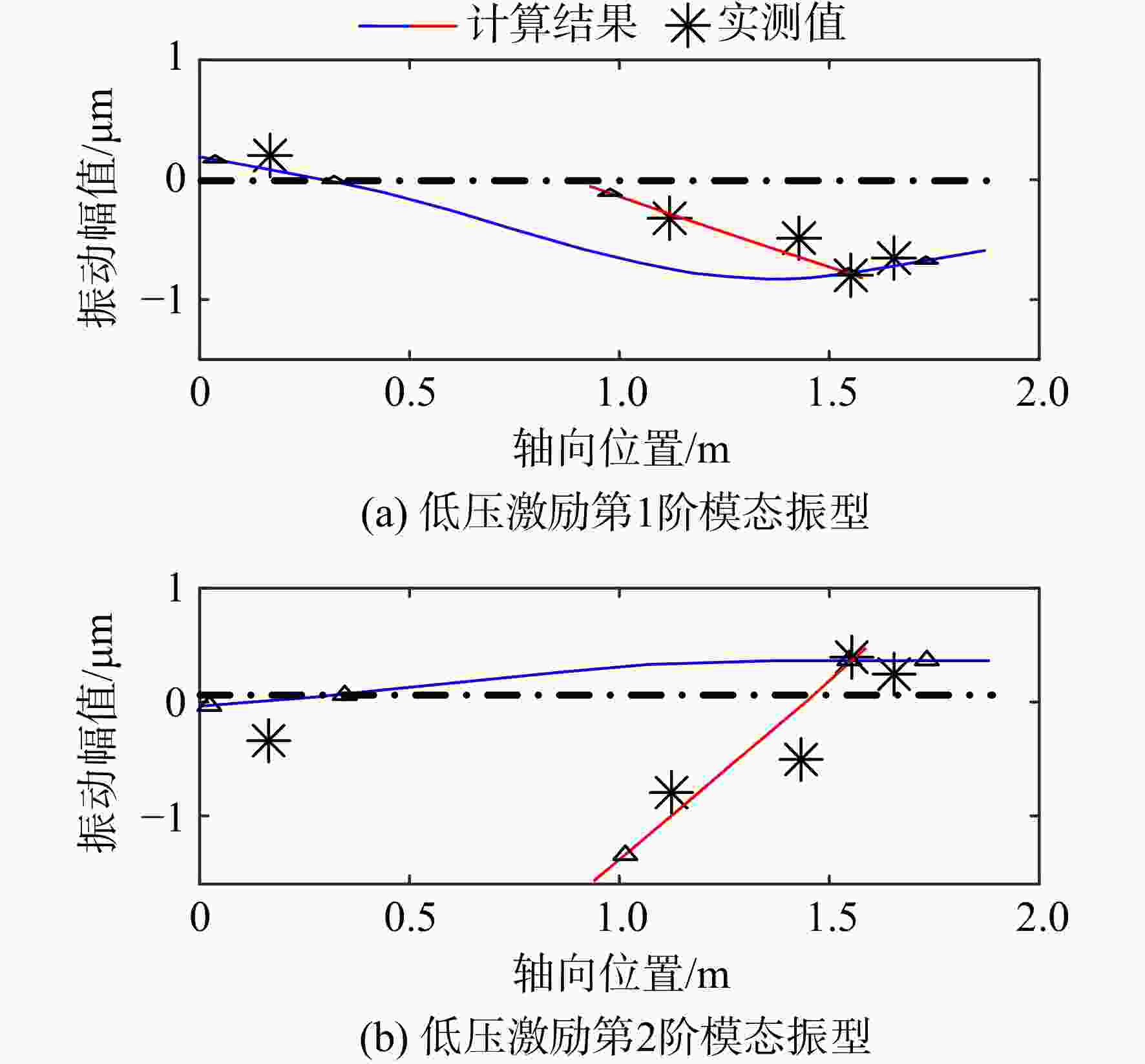
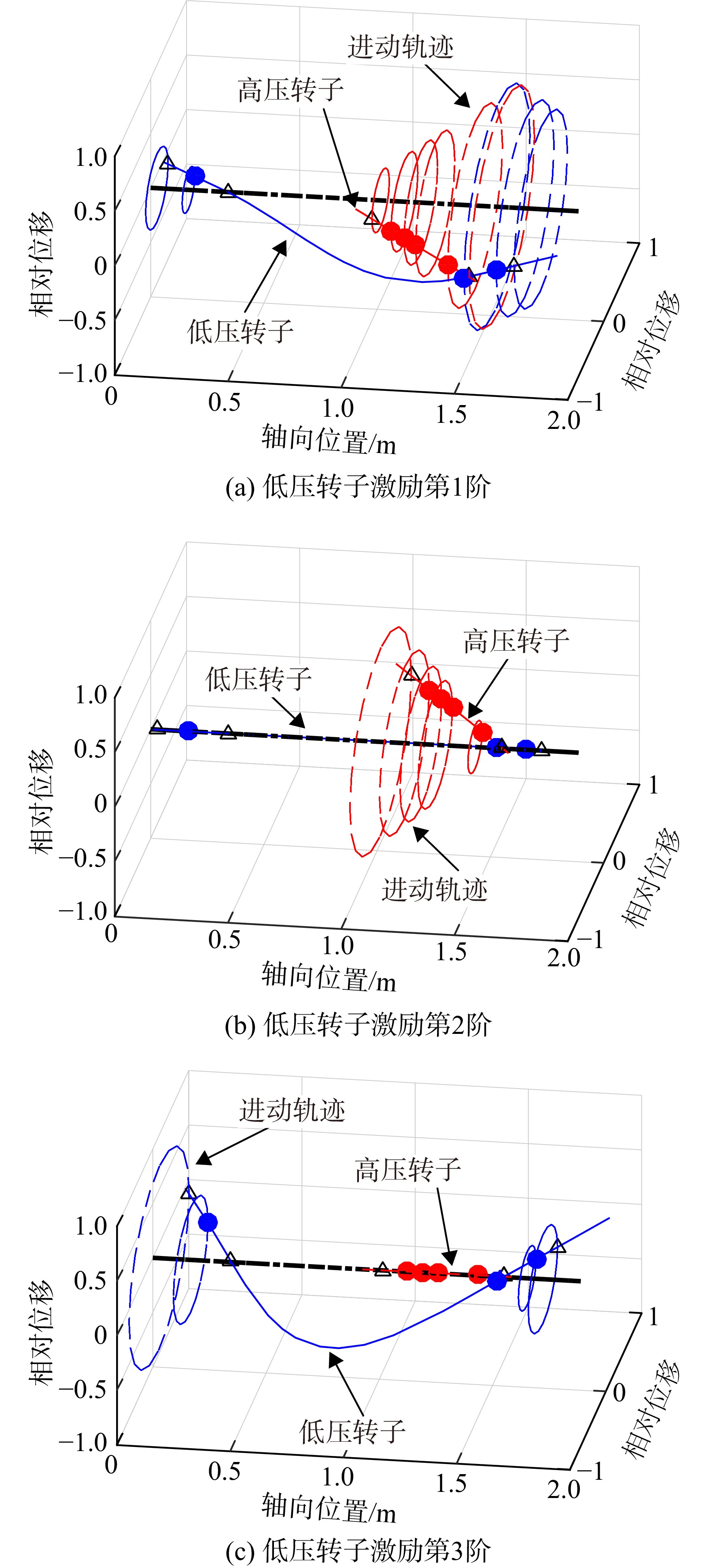
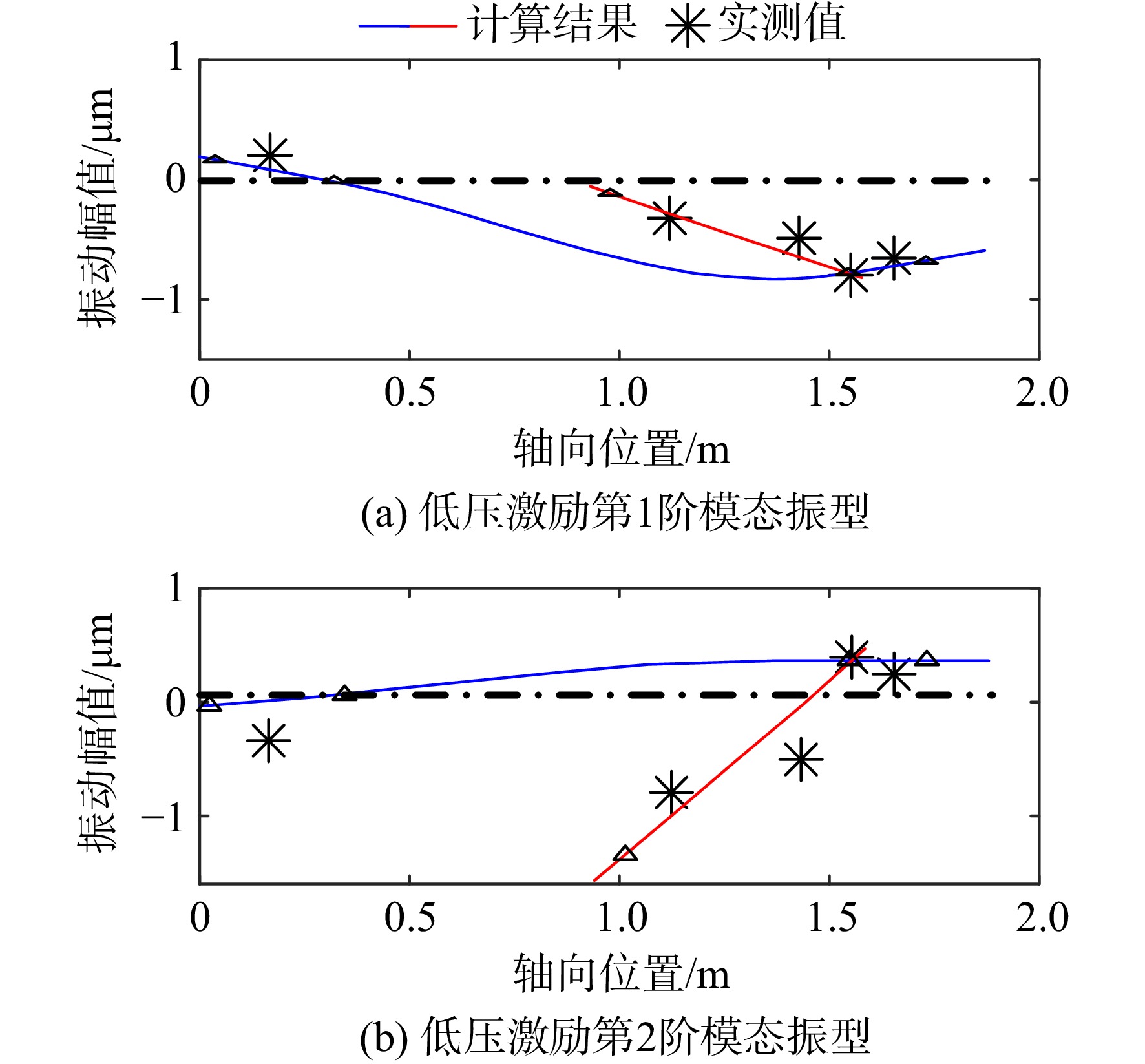
图 15 低压激励第1阶和第2阶模态振型
Figure 15. Mode shapes of the first and second order under low-pressure excitation
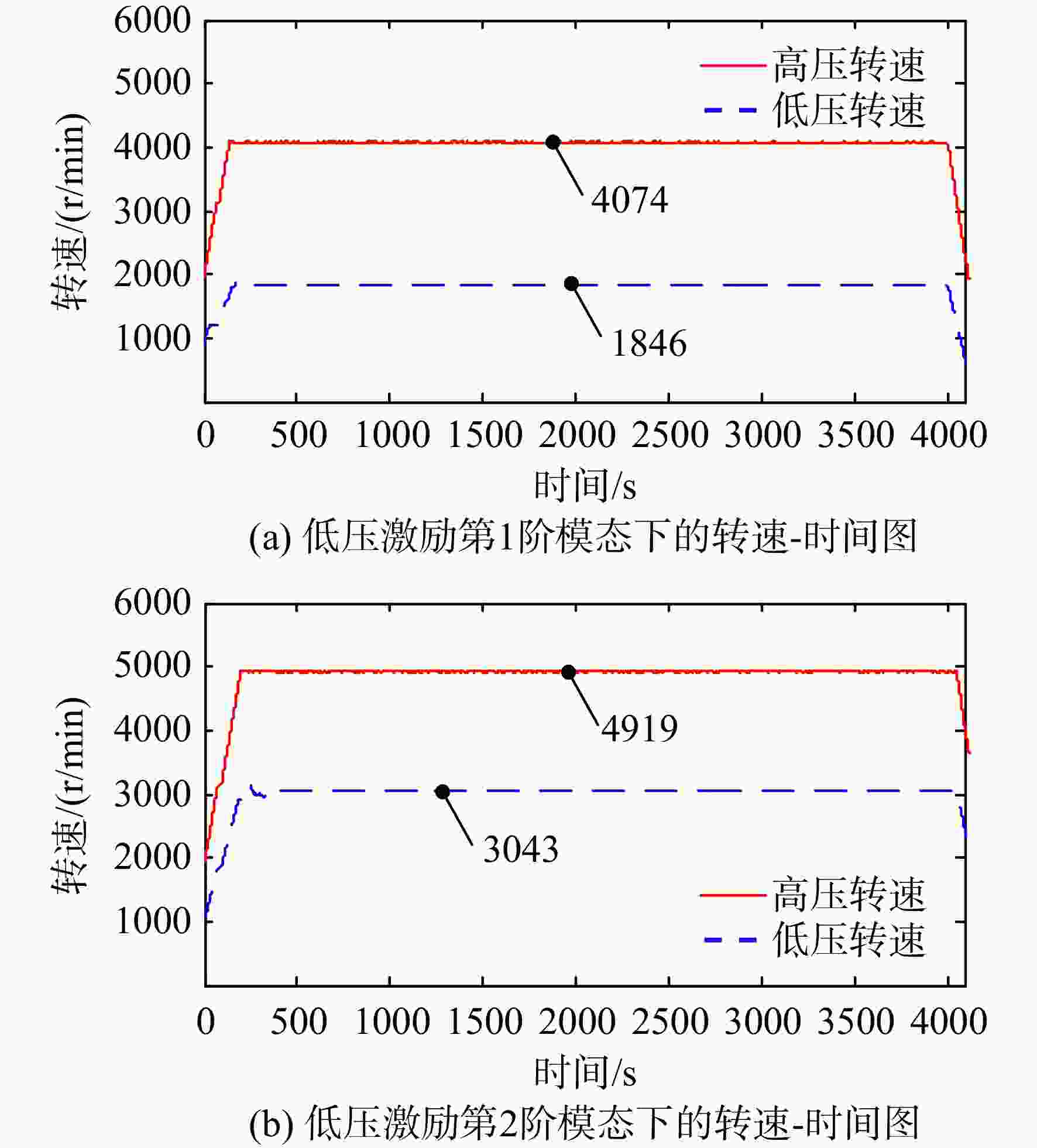
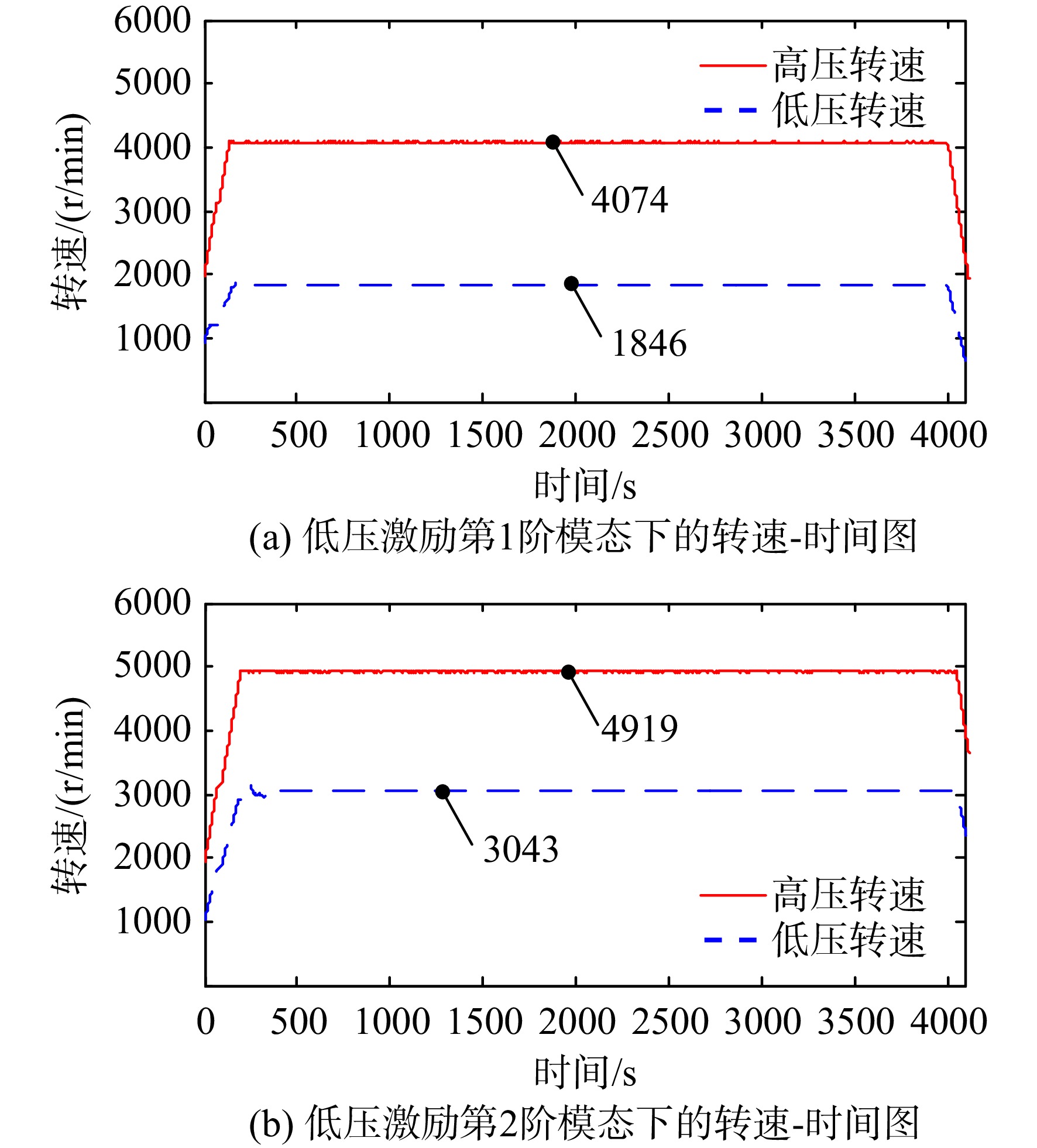
图 16 在低压激励第1阶和第2阶模态下“长时间共振”试验的转速-时间图
Figure 16. Variation of rotor speeds with time during prolonged resonance experiments at the first and second order modes with low-pressure excitation
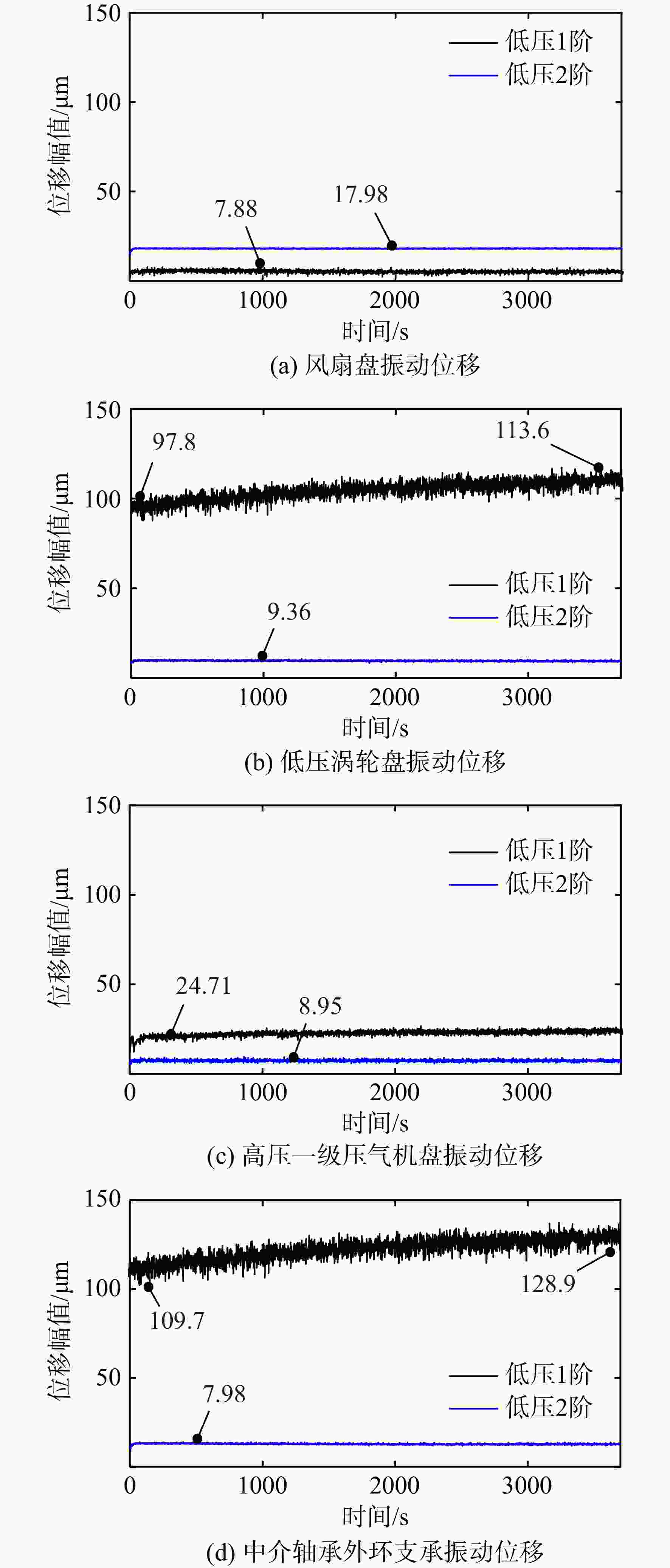
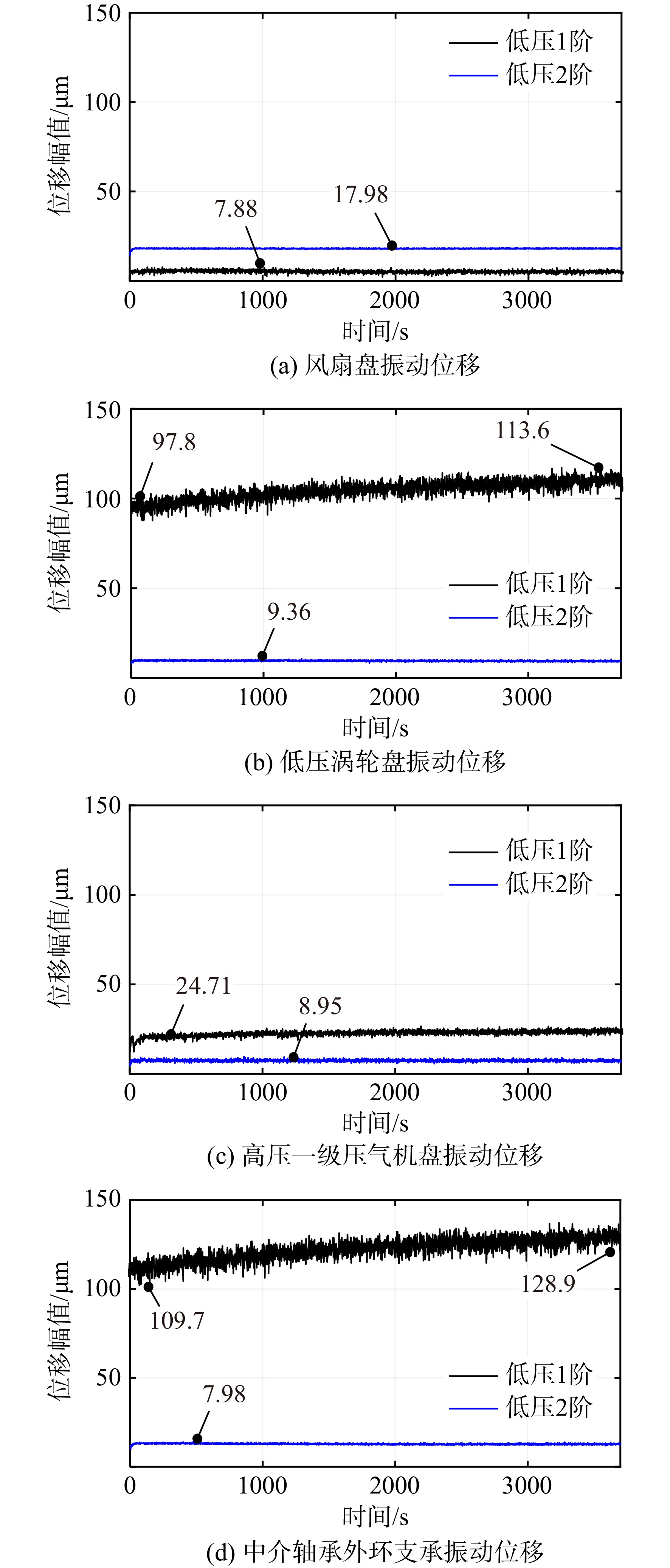
图 17 低压激励第1阶和第2阶模态下“长时间共振”的振动幅值随时间的变化(低压转速基频)
Figure 17. Variation of measured vibration amplitude with time after prolonged resonance in the first and second order modes of low-pressure excitation (low-pressure rotational speed fundamental frequency)
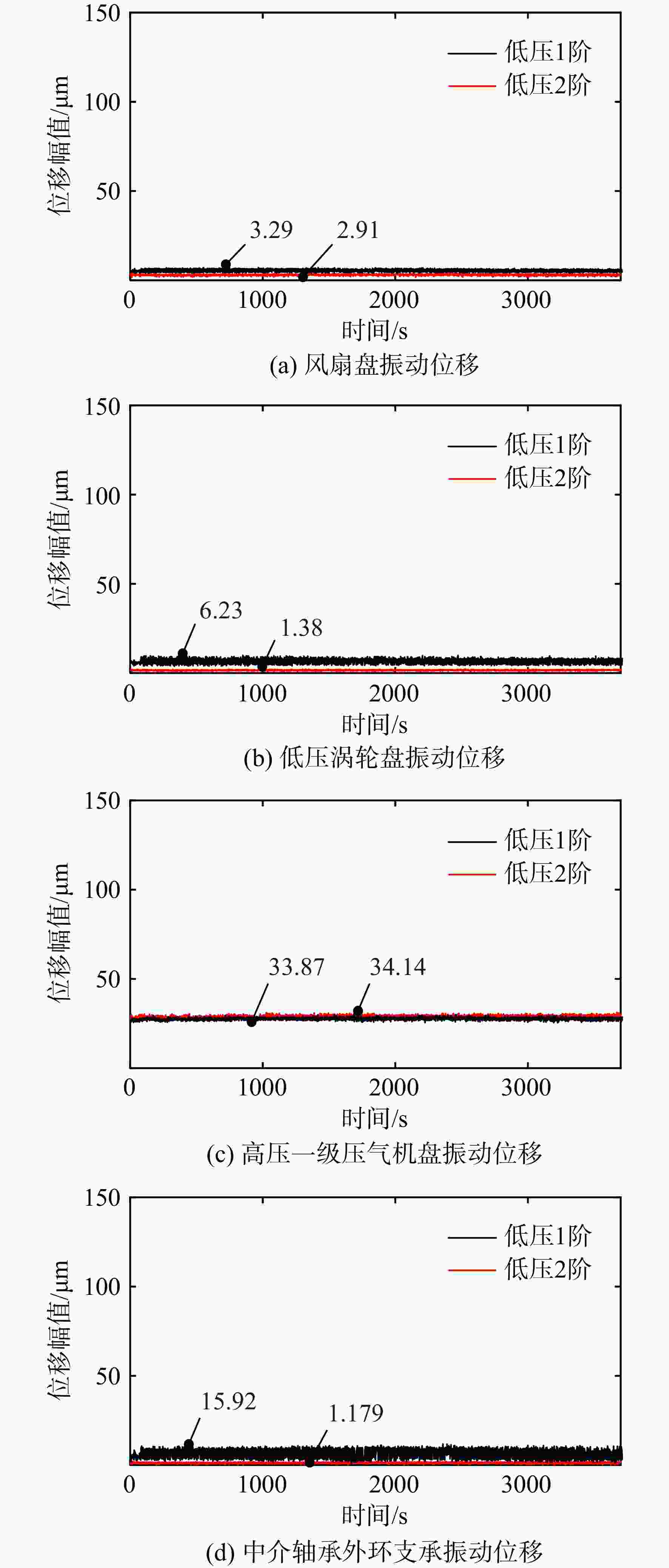
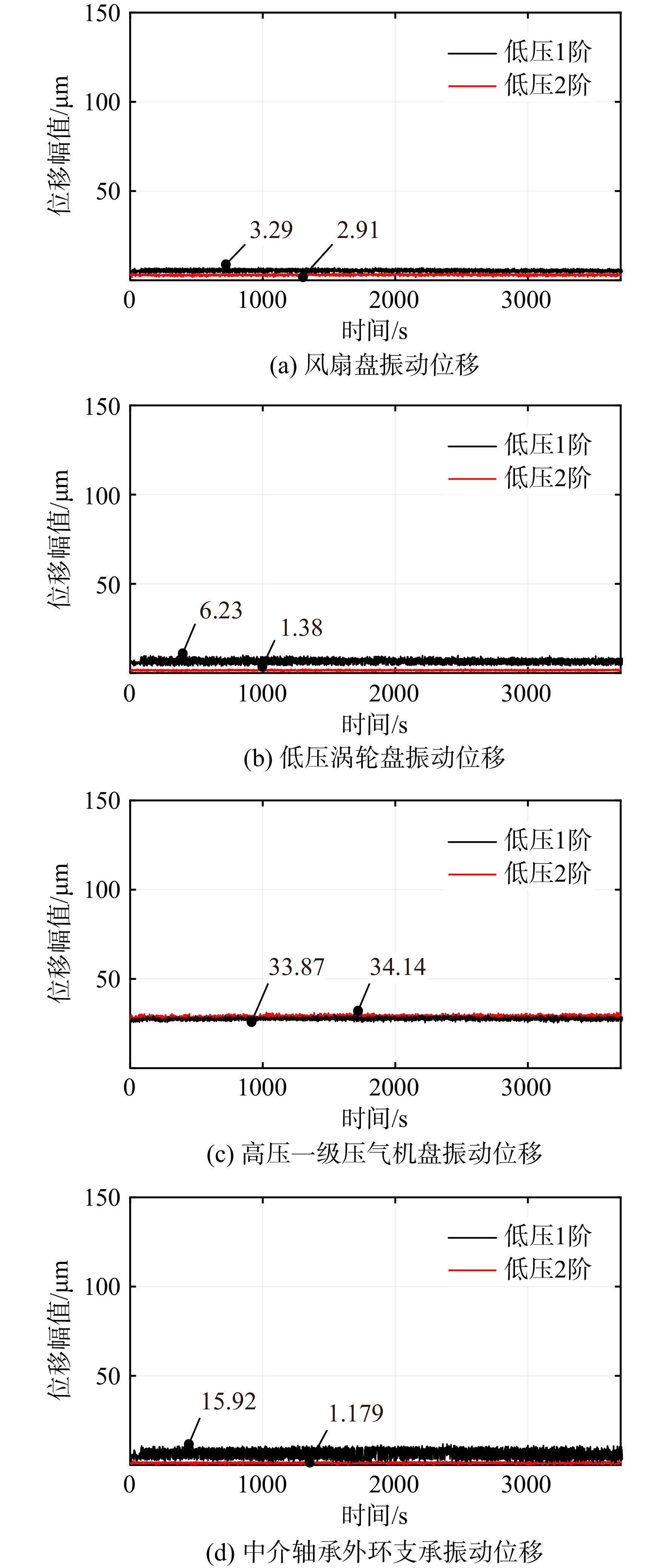
图 18 低压激励第1阶和第2阶模态下“长时间共振”的振动幅值随时间的变化(高压转速基频)
Figure 18. Variation of measured vibration amplitude with time after prolonged resonance in the first and second order modes of low-pressure excitation (high-pressure rotational speed fundamental frequency)
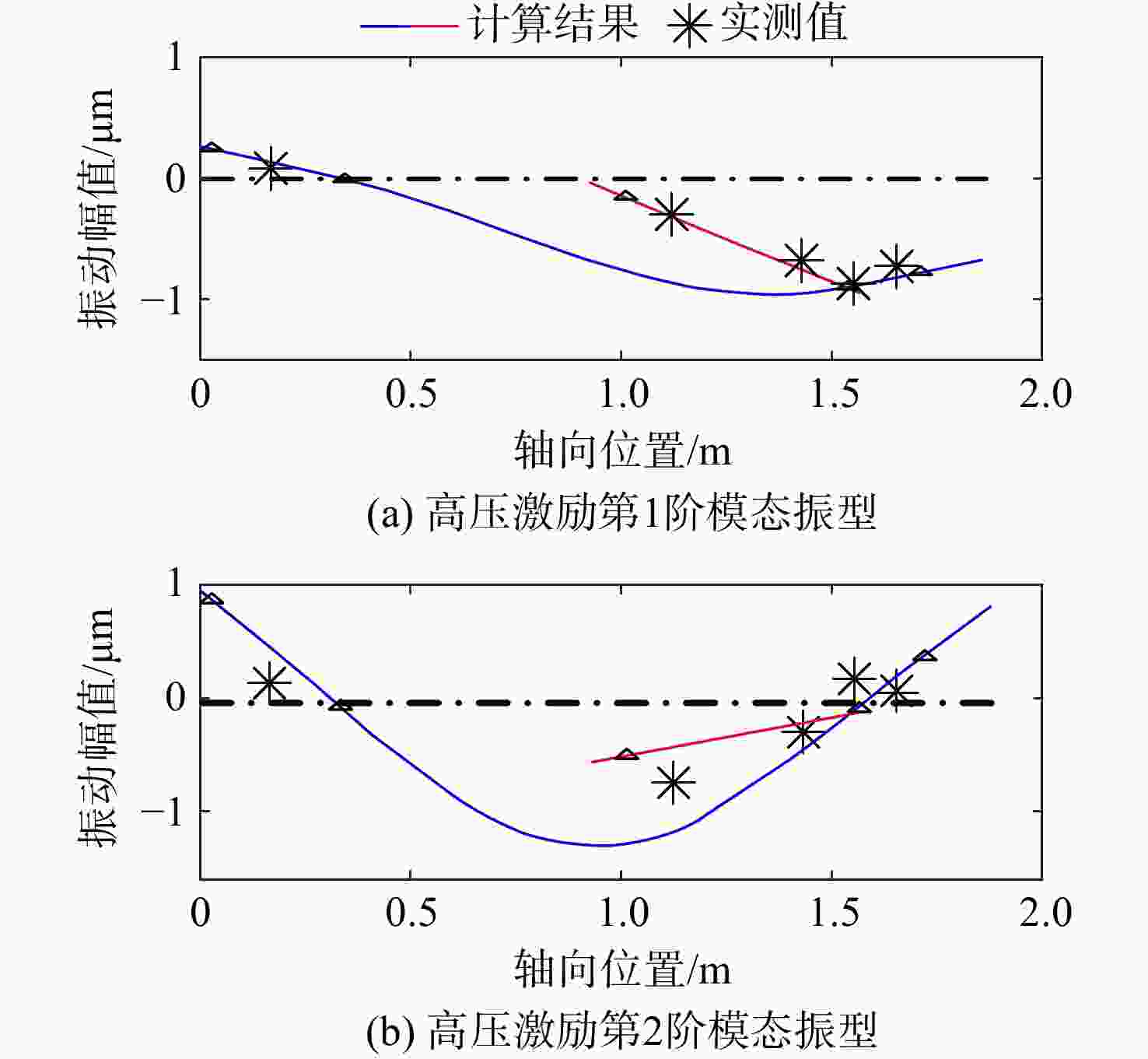
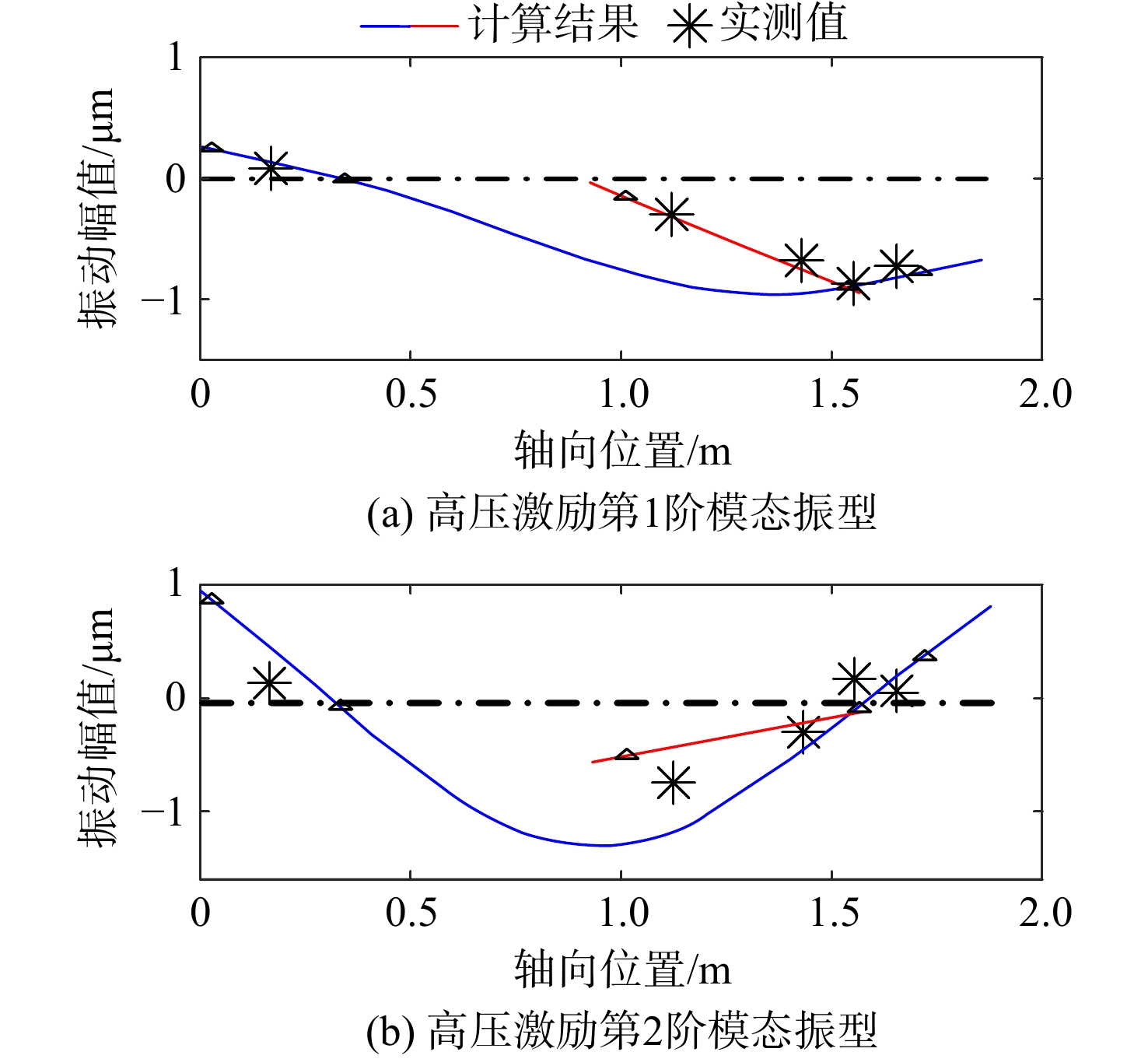
图 19 高压激励第1阶和第2阶模态振型
Figure 19. Mode shapes of the first and second order under high-pressure excitation
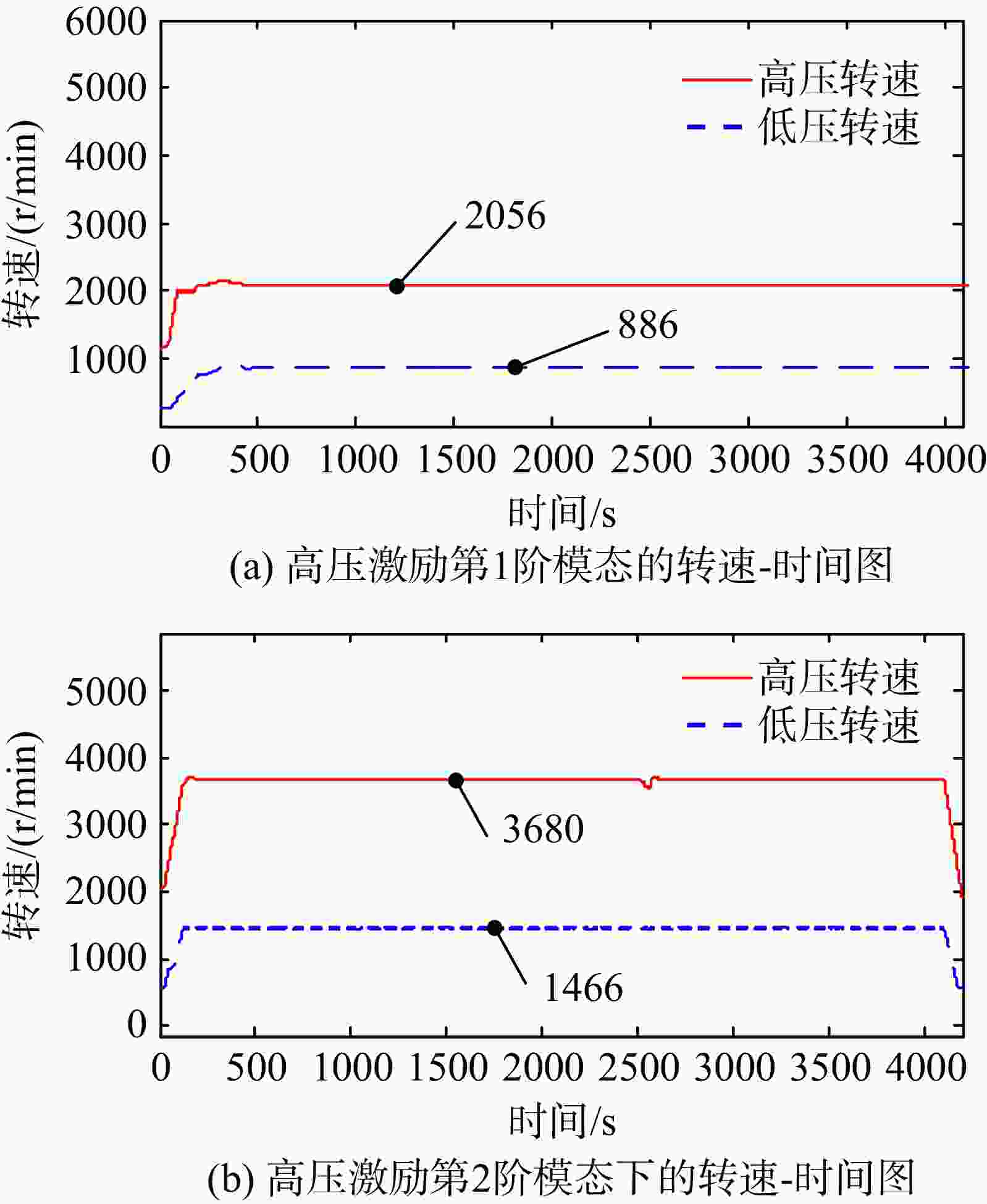
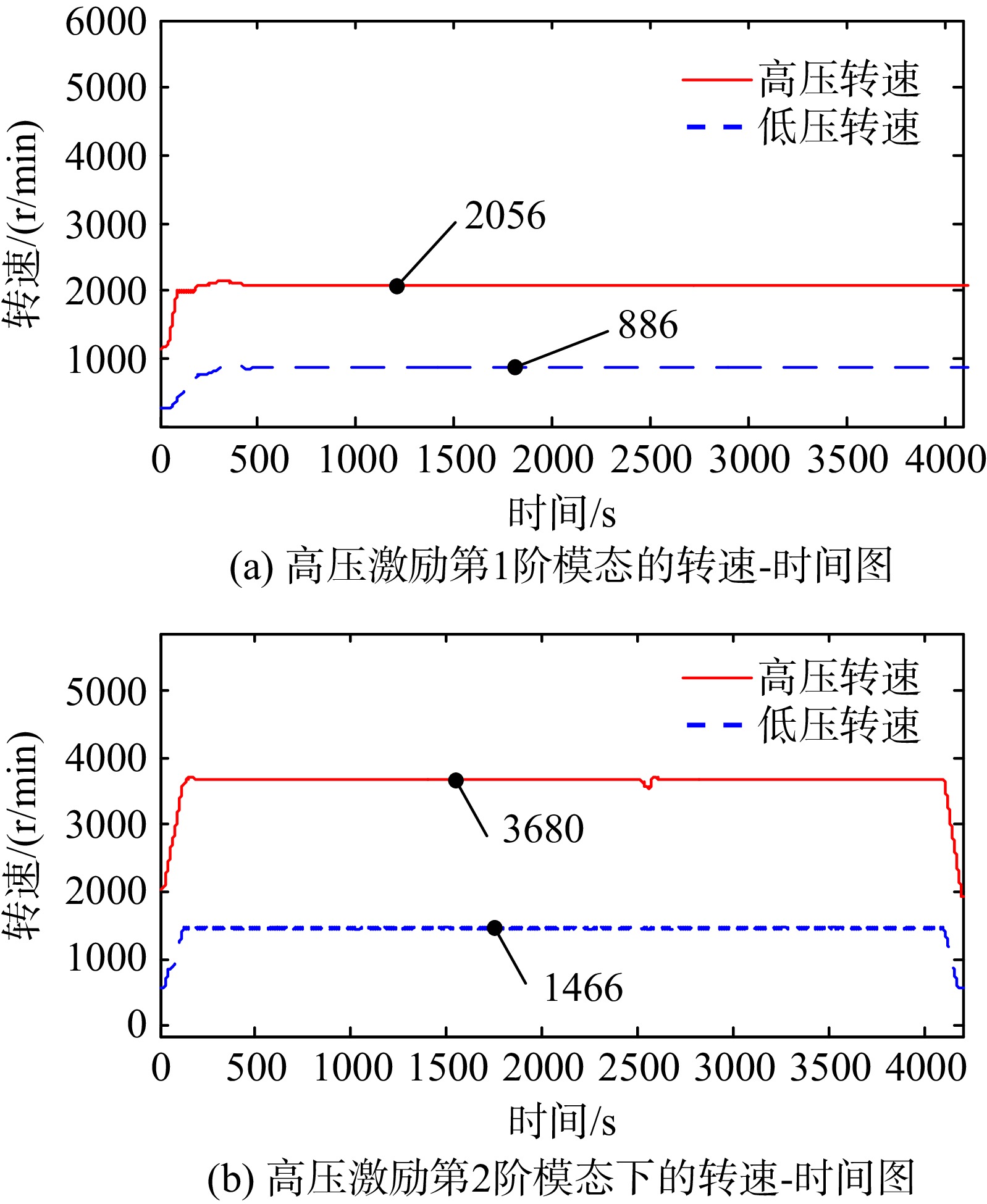
图 20 在高压激励第1阶和第2阶模态下“长时间共振”试验的转速-时间图
Figure 20. Variation of rotor speeds with time during prolonged resonance experiments at the first and second order modes with HP excitation
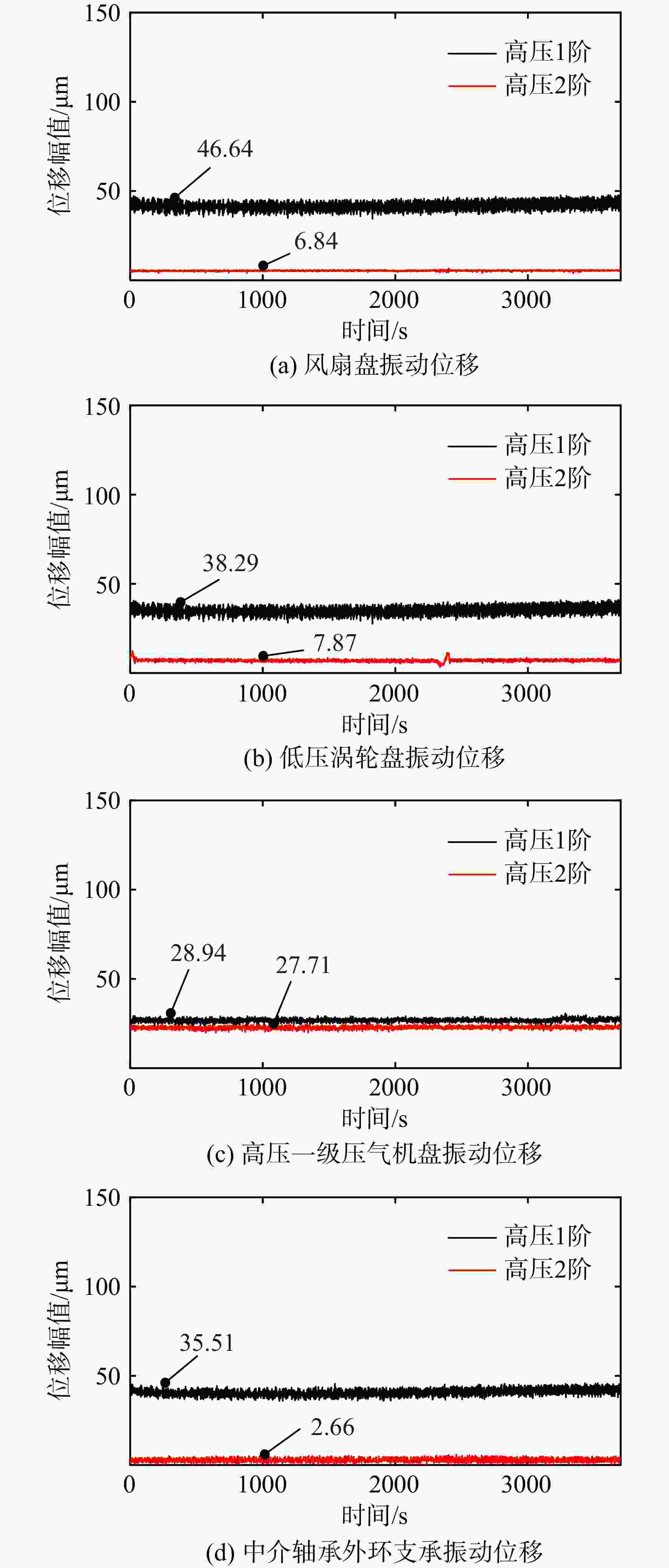
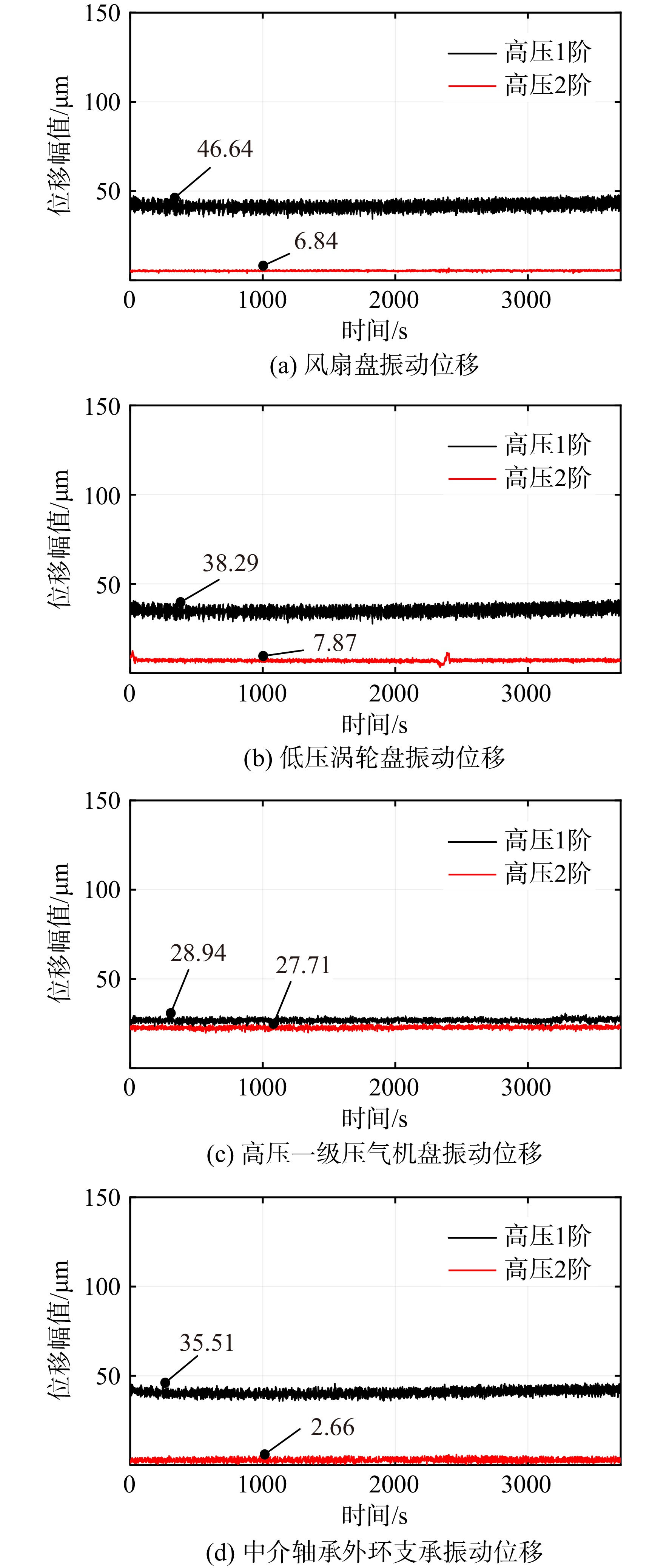
图 21 高压激励第1阶和第2阶模态下“长时间共振”的振动幅值随时间的变化(高压转速基频)
Figure 21. Variation of measured vibration amplitude with time after prolonged resonance in the first and second order modes of high-pressure excitation (high-pressure rotational speed fundamental frequency)
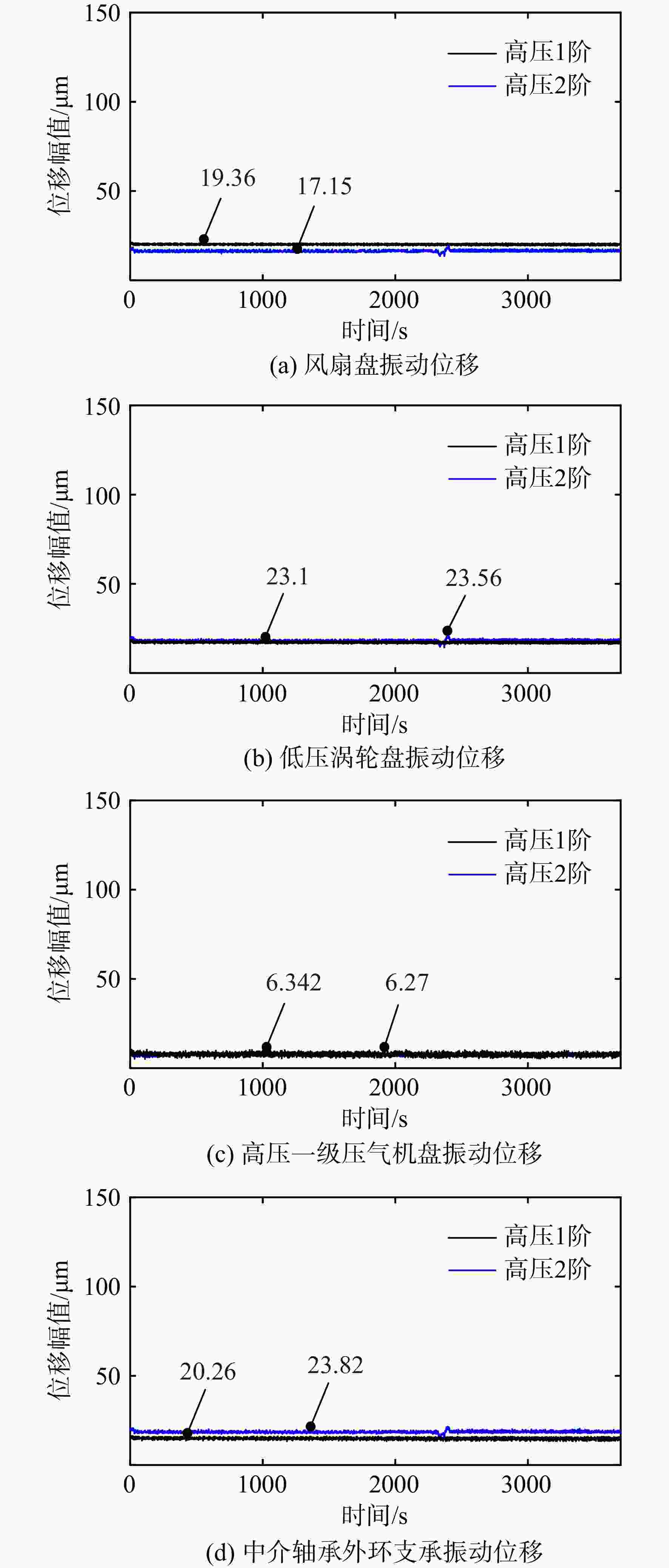
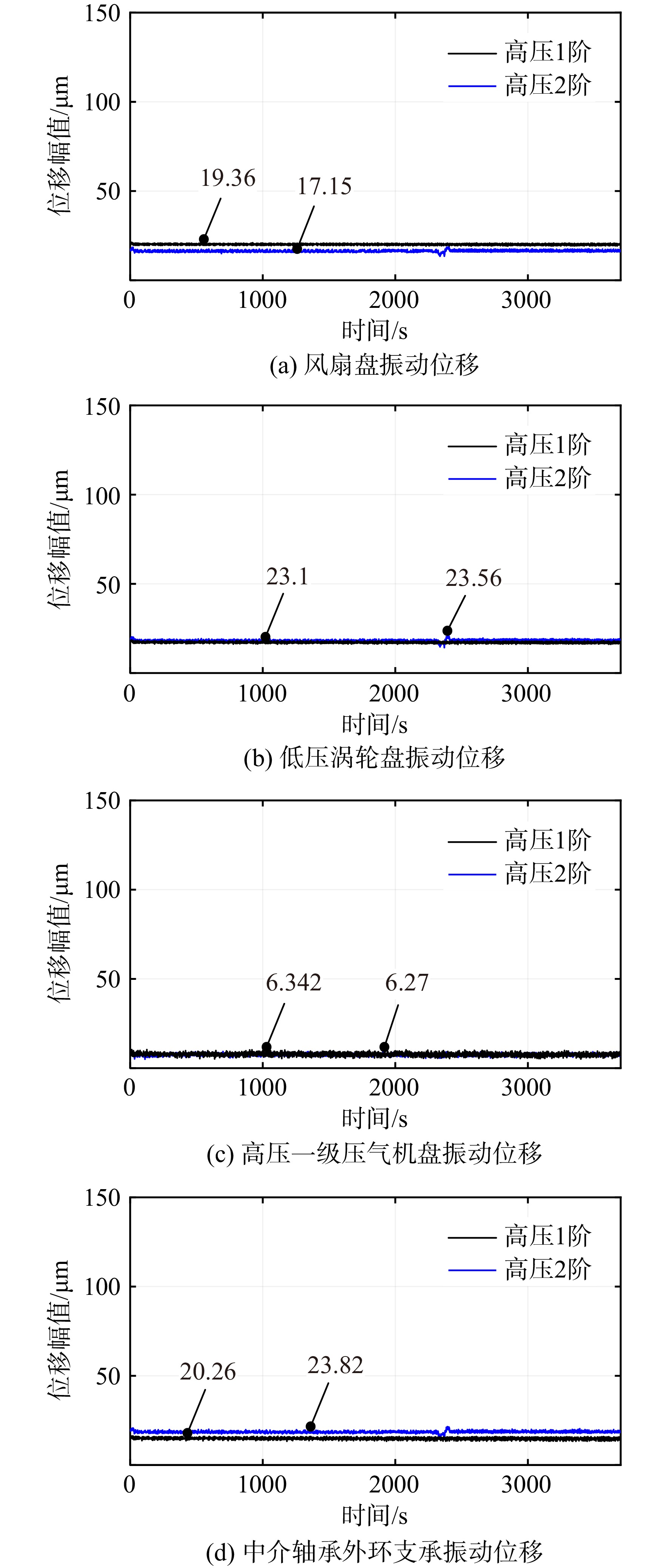
图 22 高压激励第1阶和第2阶模态下“长时间共振”的振动幅值随时间的变化(低压转速基频)
Figure 22. Variation of measured vibration amplitude with time after prolonged resonance in the first and second order modes of high-pressure excitation (low-pressure rotational speed fundamental frequency)
表 1 各阶模态的模态可容度评价函数计算结果
Table 1. Calculation of the criterion function of mode acceptability for each order of modes
模态阶次 评价参数 弹支总应变能
占比模态不平衡
影响因子中介轴承应变能
评价函数值模态可容度
评价函数值低压转子激励第1阶 0.808 0.353 1 0.932 低压转子激励第2阶
(“交叉激励”)0.982 0.002 1 0.999 低压转子激励第3阶 0.466 0.247 1 0.868 高压转子激励第1阶 0.820 0.540 1 0.903 高压转子激励第2阶
(“交叉激励”)0.540 0.036 1 0.983 高压转子激励第3阶 0.514 0.560 0 0 高压转子激励第4阶 0.205 0.289 1 0.770  下载: 导出CSV
表 2 传感器参数
Table 2. Technical parameters of sensors
类型 型号 频响范围/Hz 灵敏度 数量 光电传感器 P-84 0~ 10000 2 电涡流传感器 IN-085 0~ 10000 8 mV/μm 12 速度传感器 VS-080 15~2000 75 mV/(mm/s) 4 加速度传感器 AS-020 1.5~ 15000 100 mV/g 12
下载: 导出CSV
表 3 不平衡试验时高、低压转子不平衡质量及其分布
Table 3. Imbalance and its distribution in high and low pressure rotors during unbalance experiment
不平衡
质量分布试验条件 计算条件 大小/
(g·cm )相位/
(°)大小/
(g·cm )相位/
(°)风扇盘 4.3 180 5.0 180 低压涡轮盘 25.7 0 25.0 0 高压一级压气机盘 5.22 0 5.0 0 高压涡轮盘 24.78 180 25.0 180
下载: 导出CSV
表 4 对转条件下要进行“长时间共振”试验的模态及其设计计算的模态“可容度”
Table 4. Modes to be subjected to long-time resonance experiments under counter-rotating conditions and their calculated acceptability
模态 设计的“可容度” 低压激励第1阶 0.932 低压激励第2阶(“交叉激励”) 0.999 高压激励第1阶 0.903 高压激励第2阶(“交叉激励”) 0.983
下载: 导出CSV
表 5 低压激励第1阶和第2阶模态对应的高压转速和低压转速
Table 5. High and low pressure rotational speed corresponding to first and second order modes for low-pressure excitation
(r/min) 低压激励模态 低压转速 高压转速 第1阶 1 846 4074 第2阶(“交叉激励”) 3043 4919
下载: 导出CSV
表 6 在低压激励第1阶和第2阶模态下“长时间共振”试验时,低压转子不平衡质量的分布
Table 6. Distribution of imbalance of low-pressure rotor during prolonged resonance experiment at first and second order modes of low-pressure excitation
参数 低压激励模态 第1阶 第2阶 总不平衡量/(g·cm ) 52.5 76.2 风扇盘 大小/(g·cm ) 7.5 12.5 相位/(°) 0 0 低压涡轮盘 大小/(g·cm ) 45 63.7 相位/(°) 180 180
下载: 导出CSV
表 7 高压激励第1阶和第2阶模态对应的高压转速和低压转速
Table 7. High and low pressure rotational speed corresponding to first and second order modes for high- pressure excitation
(r/min) 低压激励模态 低压转速 高压转速 第1阶 886 2056 第2阶(“交叉激励”) 1466 3680
下载: 导出CSV
表 8 在高压激励第1阶和第2阶模态下“长时间共振”试验时,高压转子不平衡质量的分布
Table 8. Distribution of imbalance of high-pressure rotor during prolonged resonance experiment at first and second order modes of high-pressure excitation
参数 模态阶次 第1阶 第2阶 总不平衡量/(g·cm ) 84.4 156.1 一级压气机盘 大小/(g·cm ) 13.2 49.2 相位/(°) 0 0 二级压气机盘 大小/(g·cm ) 17.1 47.0 相位/(°) 0 0 三级压气机盘 大小/(g·cm ) 20.6 28.6 相位/(°) 0 0 高压涡轮盘 大小/(g·cm ) 33.5 31.3 相位/(°) 0 0
下载: 导出CSV
-
[1] Meirovitch L. Fundamentals of vibrations[M]. Boston: McGraw-Hill, 2001. [2] 顾家柳. 转子动力学[M]. 北京: 国防工业出版社, 1985. [3] 钟一谔, 何衍宗, 王正, 等. 转子动力学[M]. 北京: 清华大学出版社, 1987. [4] 沈达宽. 航空发动机强度计算[M]. 北京: 国防工业出版社, 1980. [5] 廖明夫. 航空发动机转子动力学[M]. 西安: 西北工业大学出版社, 2015. Liao Mingfu. Rotor dynamics of aero-engine[M]. Xi’an: Northwestern Polytechnical University Press, 2015. (in ChineseLiao Mingfu. Rotor dynamics of aero-engine[M]. Xi’an: Northwestern Polytechnical University Press, 2015. (in Chinese) [6] 廖明夫, 王四季, 李全坤, 等. 航空发动机转子-支承系统的振动: 上册[M]. 北京: 科学出版社, 2023. Liao Mingfu, Wang Siji, Li Quankun, et al. Vibration of aeroengine rotor-support system: Part Ⅰ[M]. Beijing: Science Press, 2023. (in ChineseLiao Mingfu, Wang Siji, Li Quankun, et al. Vibration of aeroengine rotor-support system: Part Ⅰ[M]. Beijing: Science Press, 2023. (in Chinese) [7] 金路. 航空发动机转子系统动力学优化设计方法研究[D]. 西安: 西北工业大学, 2013. Jin Lu. Research on dynamic optimization design method of aero-engine rotor system[D]. Xi’an: Northwestern Poly-technical Uni-versity, 2013. (in ChineseJin Lu. Research on dynamic optimization design method of aero-engine rotor system[D]. Xi’an: Northwestern Poly-technical Uni-versity, 2013. (in Chinese) [8] 王东华, 刘占生, 窦唯. 基于混合遗传算法的转子系统优化设计[J]. 振动与冲击, 2009, 28(5): 87-91. Wang Donghua, Liu Zhansheng, Dou Wei. Rotordynamics optimization based on a hybrid genetic algorithm[J]. Journal of Vibration and Shock, 2009, 28(5): 87-91. (in ChineseWang Donghua, Liu Zhansheng, Dou Wei. Rotordynamics optimization based on a hybrid genetic algorithm[J]. Journal of Vibration and Shock, 2009, 28(5): 87-91. (in Chinese) [9] 刘展翅. 弹支挤压油膜阻尼器设计与特殊工况下阻尼器减振特性研究[D]. 西安: 西北工业大学, 2016. Liu Zhanchi. Study of the squeeze film dampers design and the vi-bration attenuating characteristics under special conditions[D]. Xi’an: Northwestern Polytechnical University, 2015. (in ChineseLiu Zhanchi. Study of the squeeze film dampers design and the vi-bration attenuating characteristics under special conditions[D]. Xi’an: Northwestern Polytechnical University, 2015. (in Chinese) [10] 李岩, 廖明夫, 蒋云帆, 等. 航空发动机双转子系统“临界跟随”现象的机理及影响[J]. 航空动力学报, 2019, 34(11): 2403-2413. Li Yan, Liao Mingfu, Jiang Yunfan, et al. Mechanism and effect of “critical follower speed” on dual-rotor system of aero-engines[J]. Journal of Aerospace Power, 2019, 34(11): 2403-2413. (in Chinese doi: 10.13224/j.cnki.jasp.2019.11.012Li Yan, Liao Mingfu, Jiang Yunfan, et al. Mechanism and effect of “critical follower speed” on dual-rotor system of aero-engines[J]. Journal of Aerospace Power, 2019, 34(11): 2403-2413. (in Chinese) doi: 10.13224/j.cnki.jasp.2019.11.012 [11] 李岩. 航空发动机转子系统可容模态优化设计方法与实验研究[D]. 西安: 西北工业大学, 2020. Li Yan. Optimization design and experimental verification of tolerable modes of aero-engine rotor systems[D]. Xi’an: Northwestern Polytechnical University, 2020. (in ChineseLi Yan. Optimization design and experimental verification of tolerable modes of aero-engine rotor systems[D]. Xi’an: Northwestern Polytechnical University, 2020. (in Chinese) [12] 黄江博, 廖明夫, 雷新亮, 等. 航空发动机低压转子系统的“可容模态”设计及实验验证[J]. 航空动力学报, 2022, 37(5): 964-979. Huang Jiangbo, Liao Mingfu, Lei Xinliang, et al. Workable mode design and experimental verification of aero-engine low-pressure rotor system[J]. Journal of Aerospace Power, 2022, 37(5): 964-979. (in Chinese doi: 10.13224/j.cnki.jasp.20210578Huang Jiangbo, Liao Mingfu, Lei Xinliang, et al. Workable mode design and experimental verification of aero-engine low-pressure rotor system[J]. Journal of Aerospace Power, 2022, 37(5): 964-979. (in Chinese) doi: 10.13224/j.cnki.jasp.20210578 [13] 赵璐, 廖明夫, 薛永广, 等. 航空发动机高压转子“可容模态”设计及实验验证[J]. 推进技术, 2022, 43(2): 210553. Zhao Lu, Liao Mingfu, Xue Yongguang, et al. Workable mode design and experimental verification of aero-engine high pressure rotor[J]. Journal of Propulsion Technology, 2022, 43(2): 210553. (in ChineseZhao Lu, Liao Mingfu, Xue Yongguang, et al. Workable mode design and experimental verification of aero-engine high pressure rotor[J]. Journal of Propulsion Technology, 2022, 43(2): 210553. (in Chinese) [14] 王瑞, 廖明夫, 雷新亮, 等. 带中介轴承双转子系统“可容模态”优化设计及实验[J]. 推进技术, 2023, 44(5): 2208091. Wang Rui, Liao Mingfu, Lei Xinliang, et al. Optimization design and experiment of workable mode for dual-rotor system with inter-shaft bearing[J]. Journal of Propulsion Technology, 2023, 44(5): 2208091. (in Chinese doi: 10.13675/j.cnki.tjjs.2208091Wang Rui, Liao Mingfu, Lei Xinliang, et al. Optimization design and experiment of workable mode for dual-rotor system with inter-shaft bearing[J]. Journal of Propulsion Technology, 2023, 44(5): 2208091. (in Chinese) doi: 10.13675/j.cnki.tjjs.2208091 [15] 王瑞, 廖明夫, 程荣辉, 等. 带中介轴承双转子系统的“可容模态”优化设计方法[J]. 航空动力学报, 2024, 39(9): 20220623. Wang Rui, Liao Mingfu, Cheng Ronghui, et al. Workable mode optimization design method for dual-rotor system with inter-shaft bearing[J]. Journal of Aerospace Power, 2024, 39(9): 20220623. (in Chinese doi: 10.13224/j.cnki.jasp.20220623Wang Rui, Liao Mingfu, Cheng Ronghui, et al. Workable mode optimization design method for dual-rotor system with inter-shaft bearing[J]. Journal of Aerospace Power, 2024, 39(9): 20220623. (in Chinese) doi: 10.13224/j.cnki.jasp.20220623 [16] 王瑞, 廖明夫, 程荣辉, 等. 航空发动机双转子系统的模态及其表达方法[J]. 振动与冲击, 2022, 41(21): 209-215, 278. Wang Rui, Liao Mingfu, Cheng Ronghui, et al. Modal characteristics and their expression method for aeroengine dual-rotor system[J]. Journal of Vibration and Shock, 2022, 41(21): 209-215, 278. (in Chinese doi: 10.13465/j.cnki.jvs.2022.21.023Wang Rui, Liao Mingfu, Cheng Ronghui, et al. Modal characteristics and their expression method for aeroengine dual-rotor system[J]. Journal of Vibration and Shock, 2022, 41(21): 209-215, 278. (in Chinese) doi: 10.13465/j.cnki.jvs.2022.21.023 [17] 黄江博, 廖明夫, 程荣辉, 等. 航空发动机双转子系统模态正交性和不平衡响应[J]. 振动与冲击, 2022, 41(21): 176-189. Huang Jiangbo, Liao Mingfu, Cheng Ronghui, et al. Modal orthogonality and unbalance response of aeroengine dual-rotor system[J]. Journal of Vibration and Shock, 2022, 41(21): 176-189. (in ChineseHuang Jiangbo, Liao Mingfu, Cheng Ronghui, et al. Modal orthogonality and unbalance response of aeroengine dual-rotor system[J]. Journal of Vibration and Shock, 2022, 41(21): 176-189. (in Chinese) [18] 王瑞, 廖明夫, 黄江博. 建立双转子系统响应特性三面三维表达方式的方法: CN202210017008.3[P]. 2023-07-04. -

 点击查看大图

计量
- 文章访问数: 510
- HTML浏览量: 420
- PDF量: 67
- 被引次数: 0