






Combustion process of agglomerated boron particles at 0.1—1.0 MPa atmospheric pressure
-
摘要:
为明晰加压环境下团聚硼颗粒燃烧特性,采用激光点火试验系统,探究了粒径约为350 μm的团聚硼在0.1~1.0 MPa 环境范围内的点火燃烧过程。试验结果表明:在激光开始加热的15 ms以内,压强越高的环境中,BO2的发射峰更明显,且颗粒表面温度更高。但在激光开始加热的15 ms之后,高压环境中,硼燃烧会出现明显的产物凝结-聚集-沉降现象,具体为燃烧产物氧化硼凝结形成烟雾,聚集成较大颗粒并沉降覆盖在团聚硼的外表面,影响硼颗粒的能量释放过程,使颗粒表面温度降低。环境压强从0.2 MPa增加到1.0 MPa,平均自维持燃烧时间从191 ms增加到547 ms。本研究有利于深入认识团聚硼颗粒在加压环境中的能量释放过程,研究结果对优化含硼推进剂的配方设计和优化含硼冲压发动机的燃烧组织具有实际意义。
Abstract:In order to elucidate the combustion characteristics of agglomerated boron particles in a pressurized environment, a laser ignition experimental system was employed to investigate the ignition and combustion process of agglomerated boron particles with an average particle size of approximately 350 μm within the pressure range of 0.1—1.0 MPa. The experimental findings demonstrated that within 15 ms of laser heating, there was a more pronounced emission peak for BO2 and higher particle surface temperatures in environments with elevated pressures. However, after 15 ms from initiating laser heating in high-pressure environments, smoke generated by boron oxide covered the outer surface of aggregated boron particles, thereby influencing their energy release process and reducing their surface temperatures. As ambient pressure increased from 0.2 MPa to 1.0 MPa, the average self-sustaining combustion time also increased from 191 ms to 547 ms. This contributed to understanding of the energy release process of boron particles in pressurized environments, so it showed practical significance for optimizing formula design for propellants containing boron and enhancing the combustion structure for ramjets utilizing boron.
-
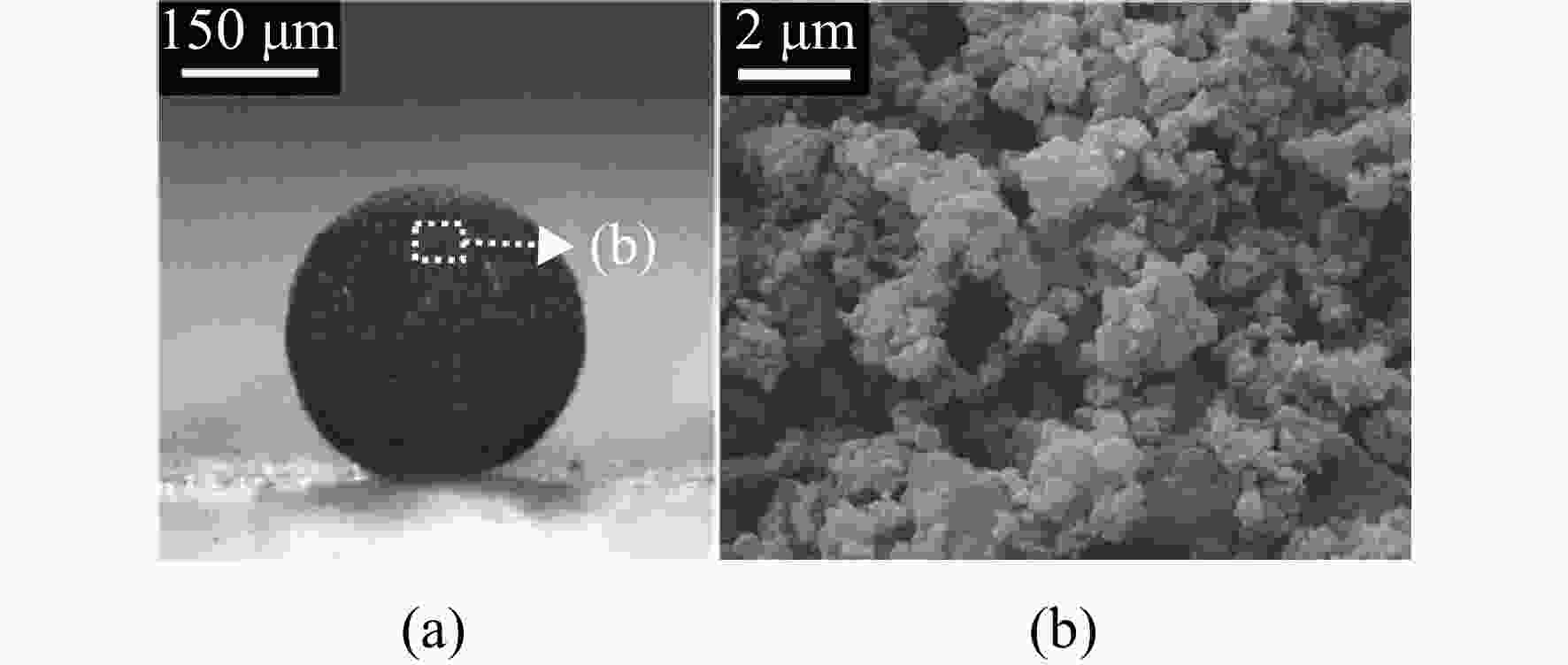
图 1 放置在钨片上用于激光点火的团聚硼颗粒及扫描电镜图像
Figure 1. Agglomerated boron particle placed on a tungsten plate for laser ignition and its scanning electron microscope images
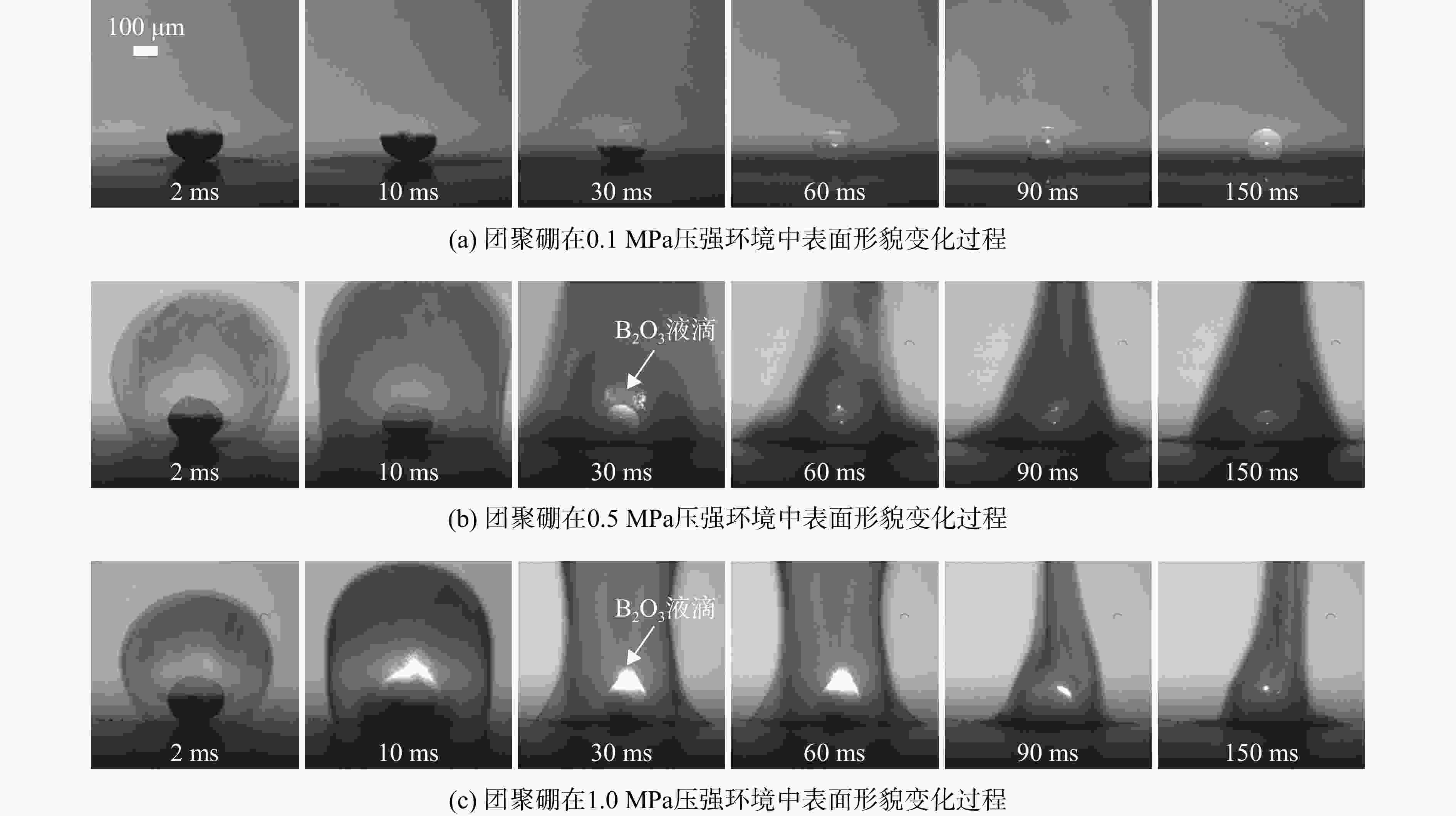
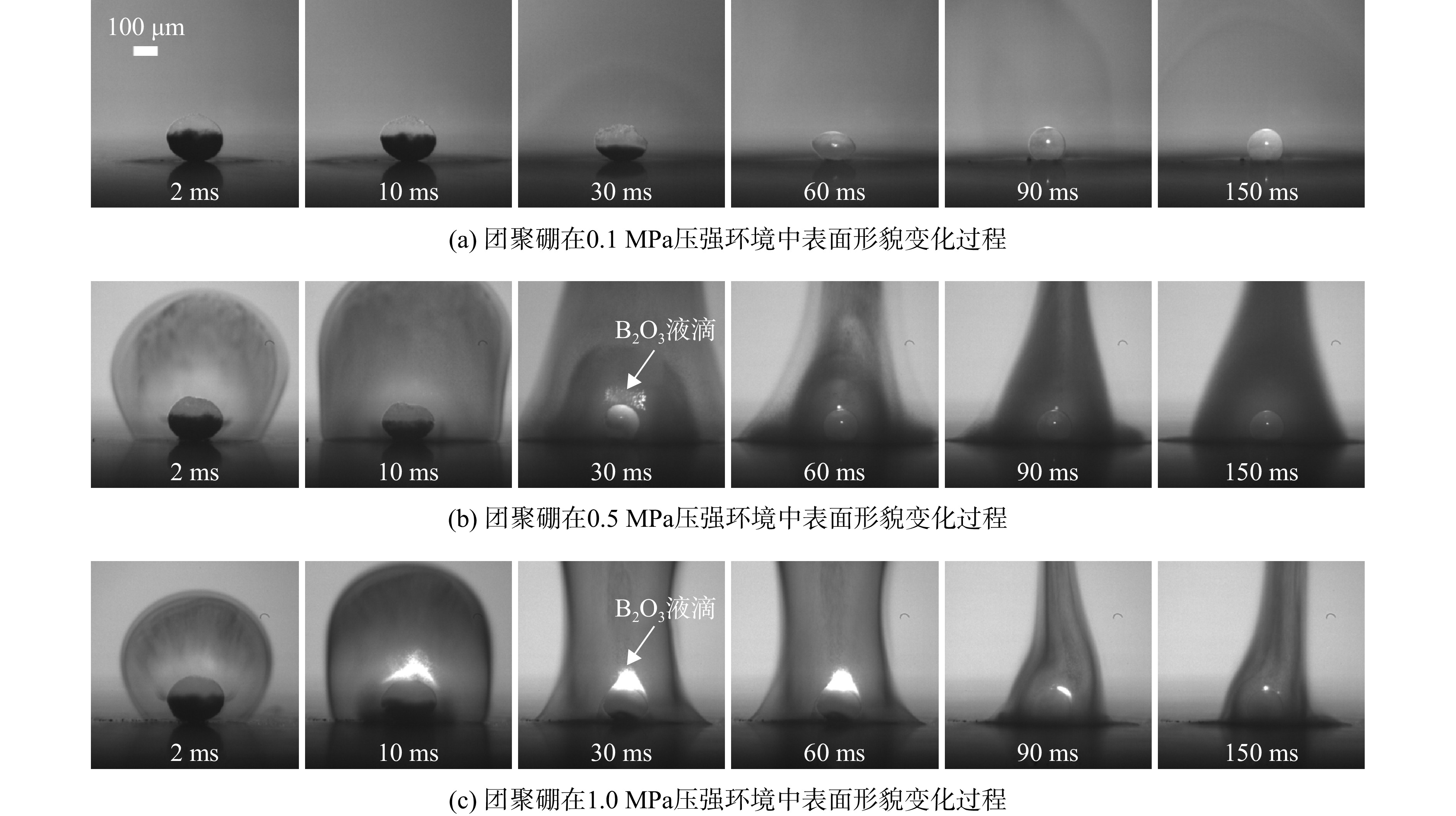
图 3 团聚硼在不同压强环境中表面形貌变化过程
Figure 3. Surface morphology changes of agglomerated boron in different pressure environments
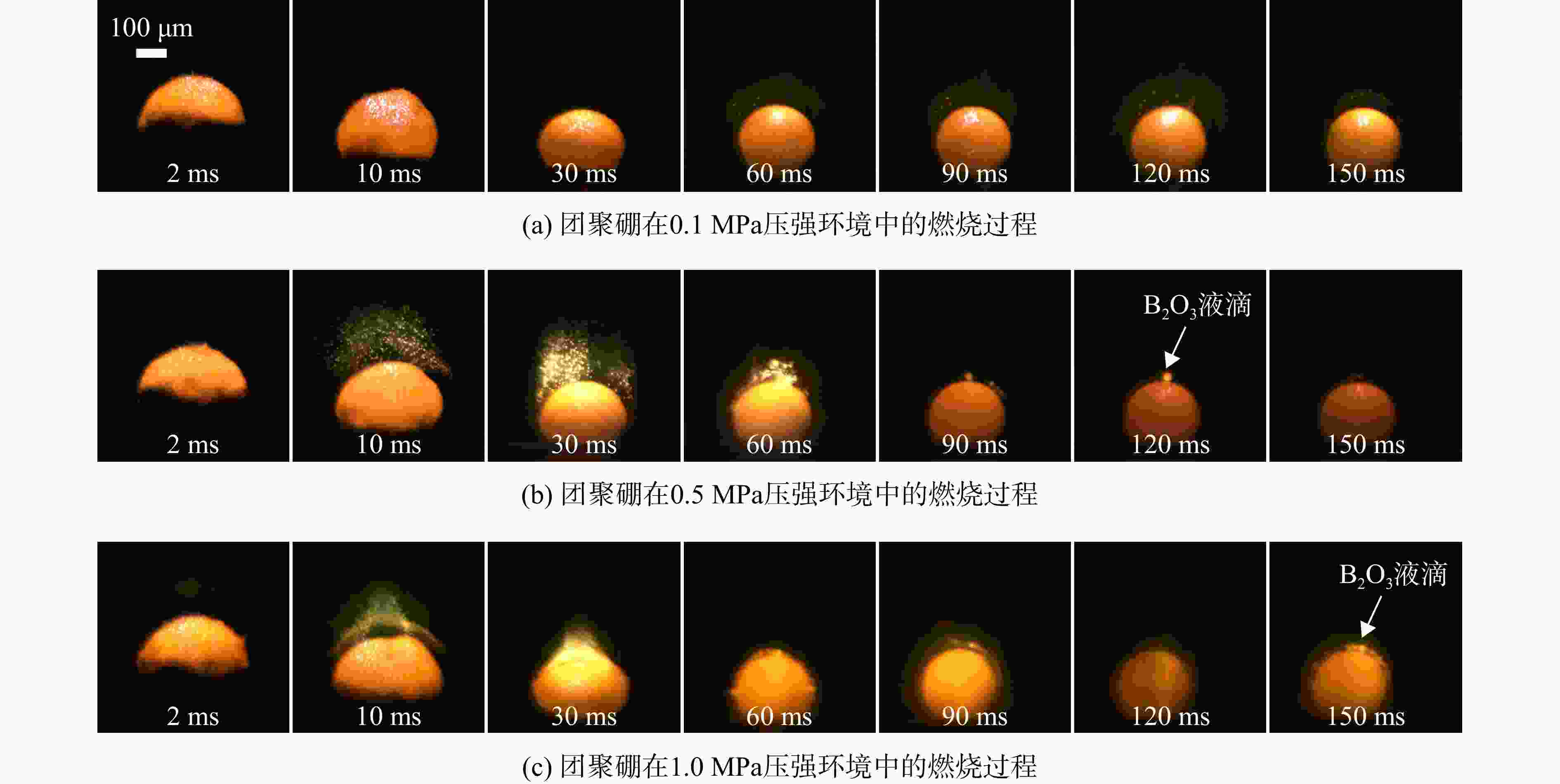
图 4 团聚硼在不同压强环境中的燃烧过程
Figure 4. Combustion process of agglomerated boron in different pressure environments

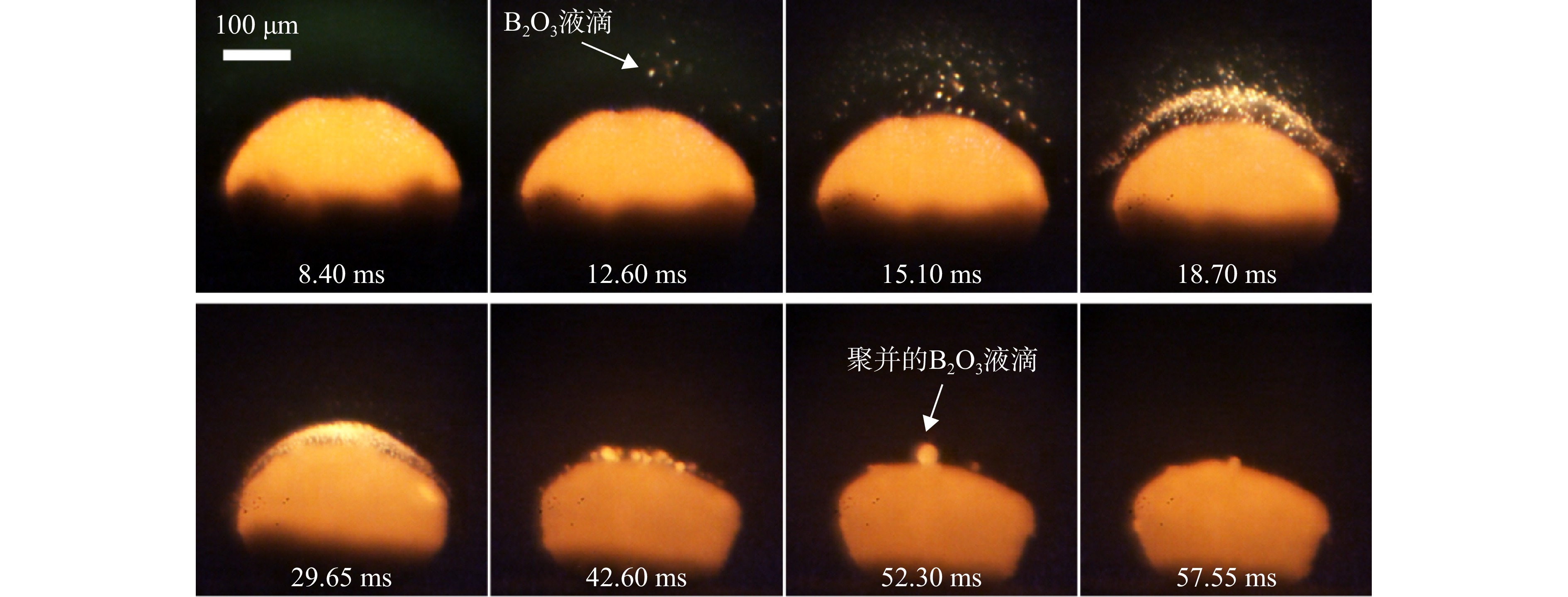
图 5 环境中的 B2O3液滴向母颗粒上表面扩散并最终融于母颗粒的过程
Figure 5. Process of B2O3 droplets in the environment diffuse to the upper surface of the parent particle and finally melt into the parent particle
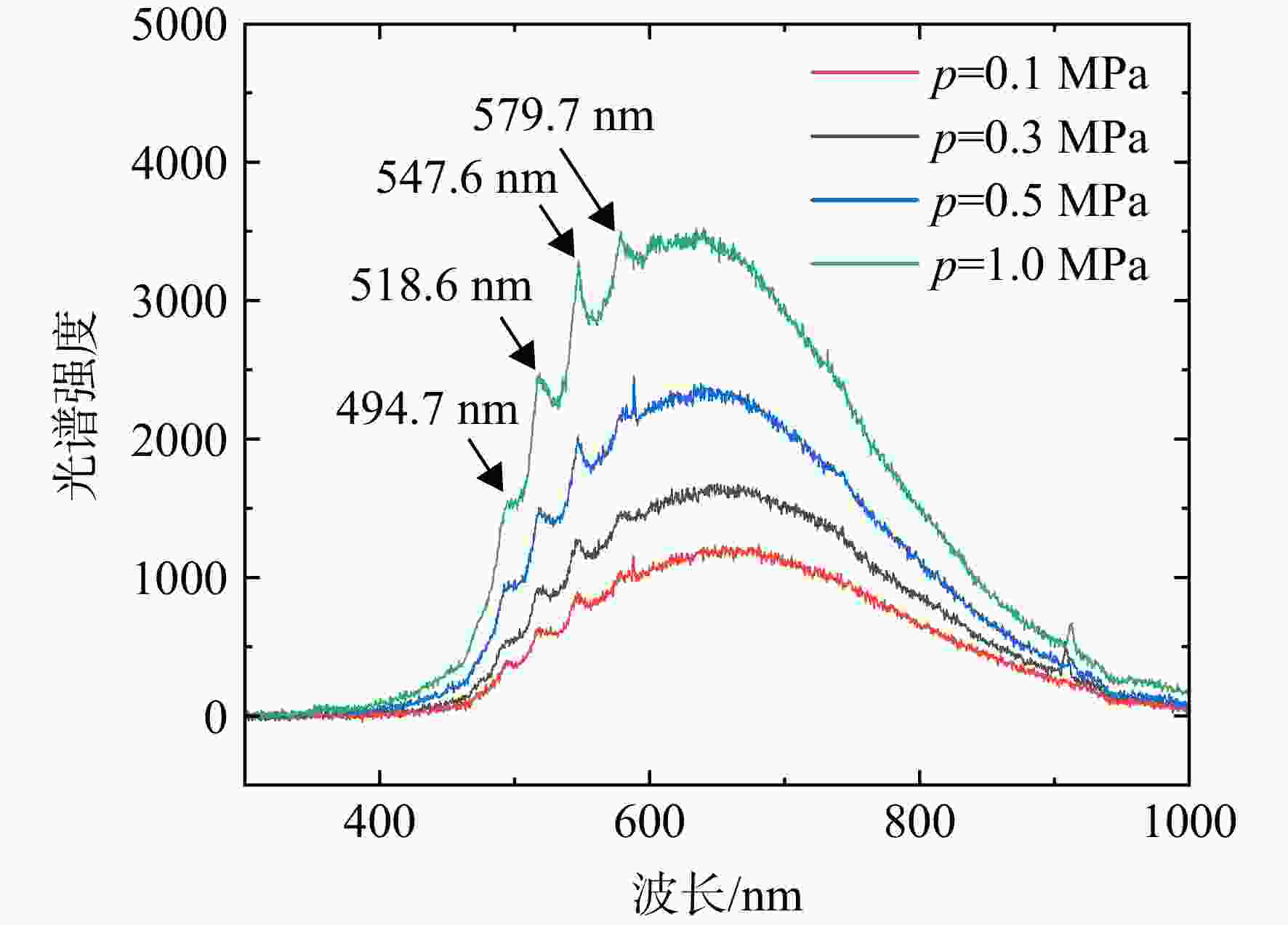
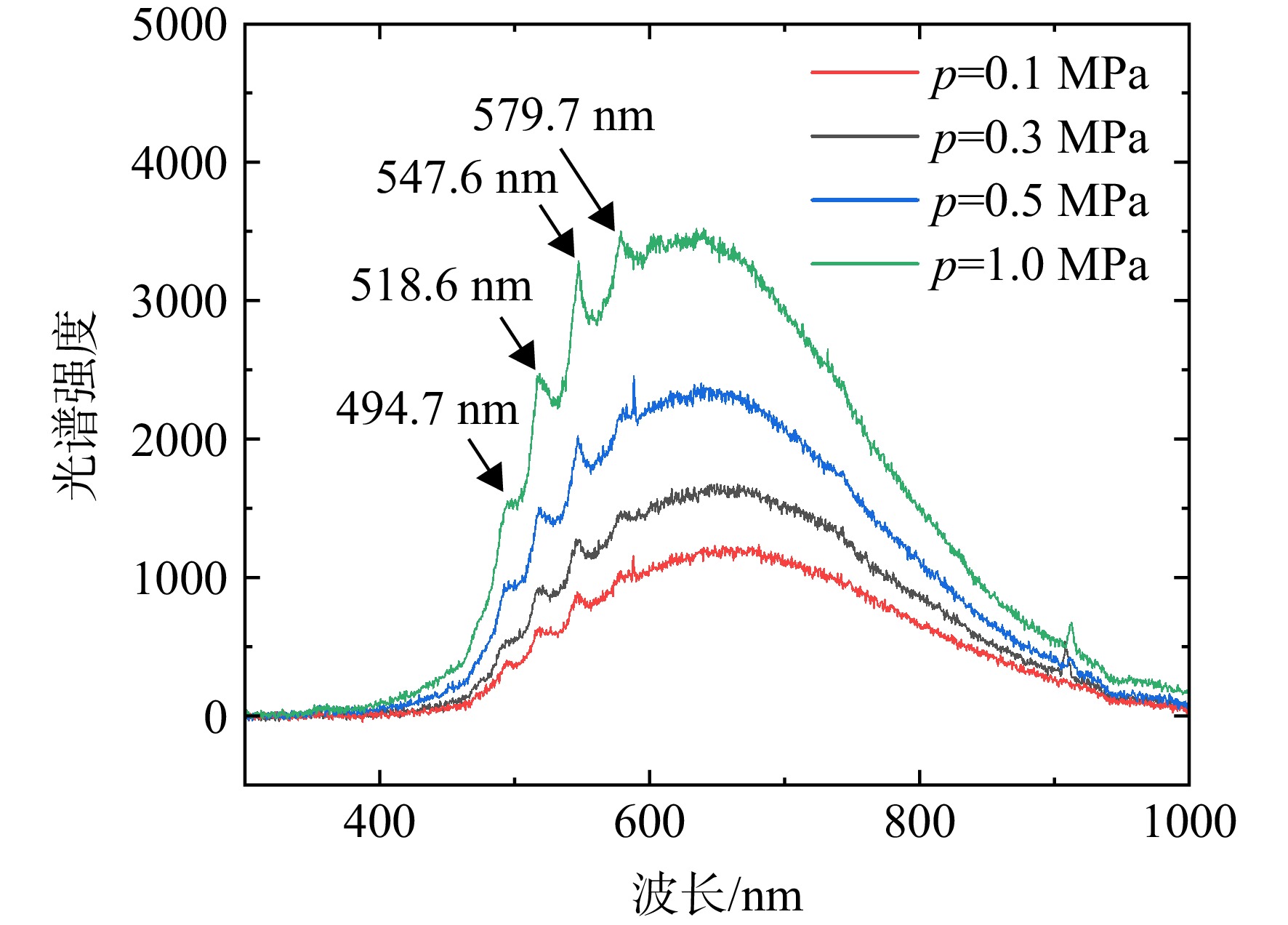
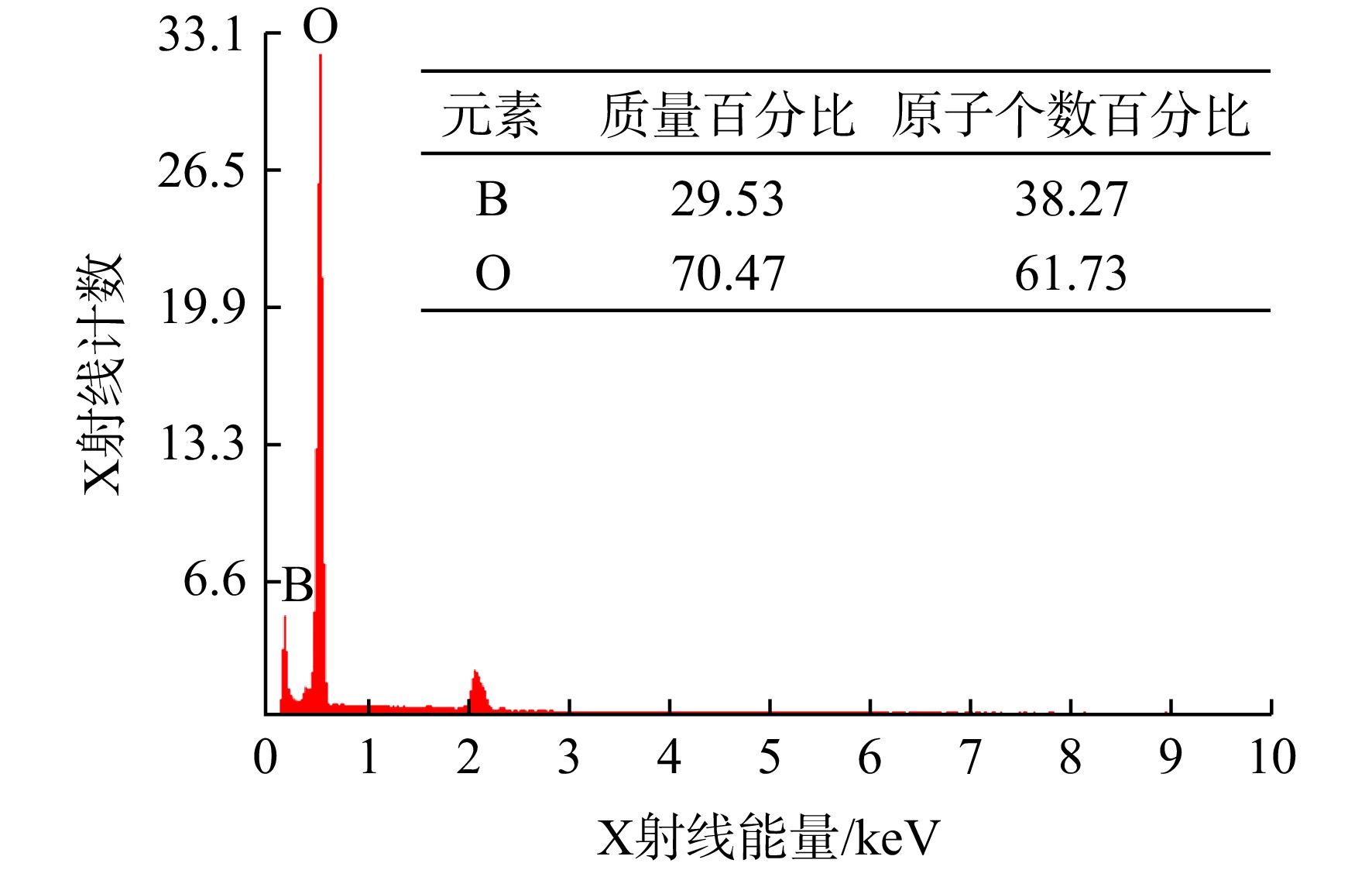
图 6 不同压强环境中最大光谱强度时刻的光谱强度-波长曲线
Figure 6. Spectral intensity-wavelength curves at the time of maximum spectral intensity in different pressure environments
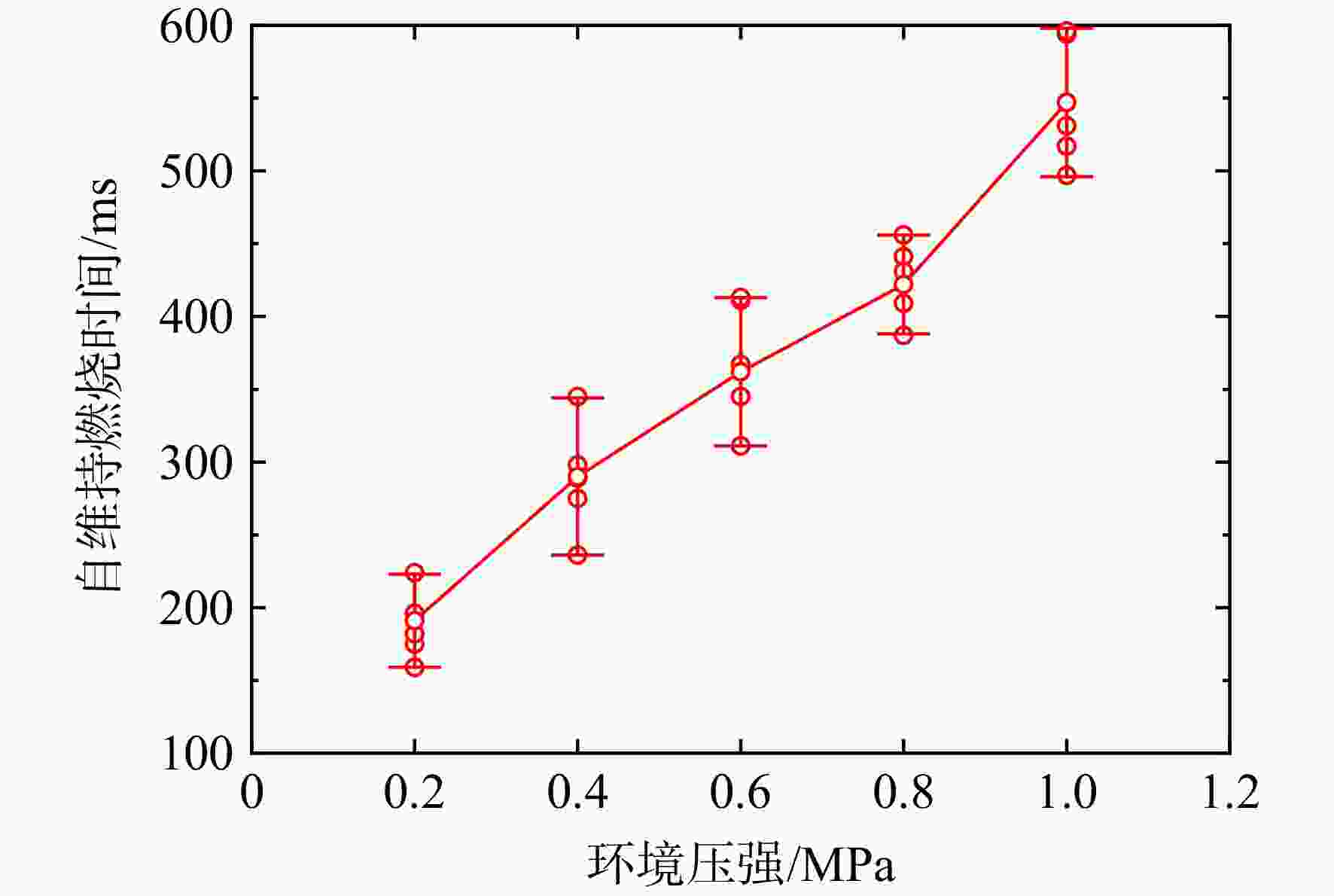
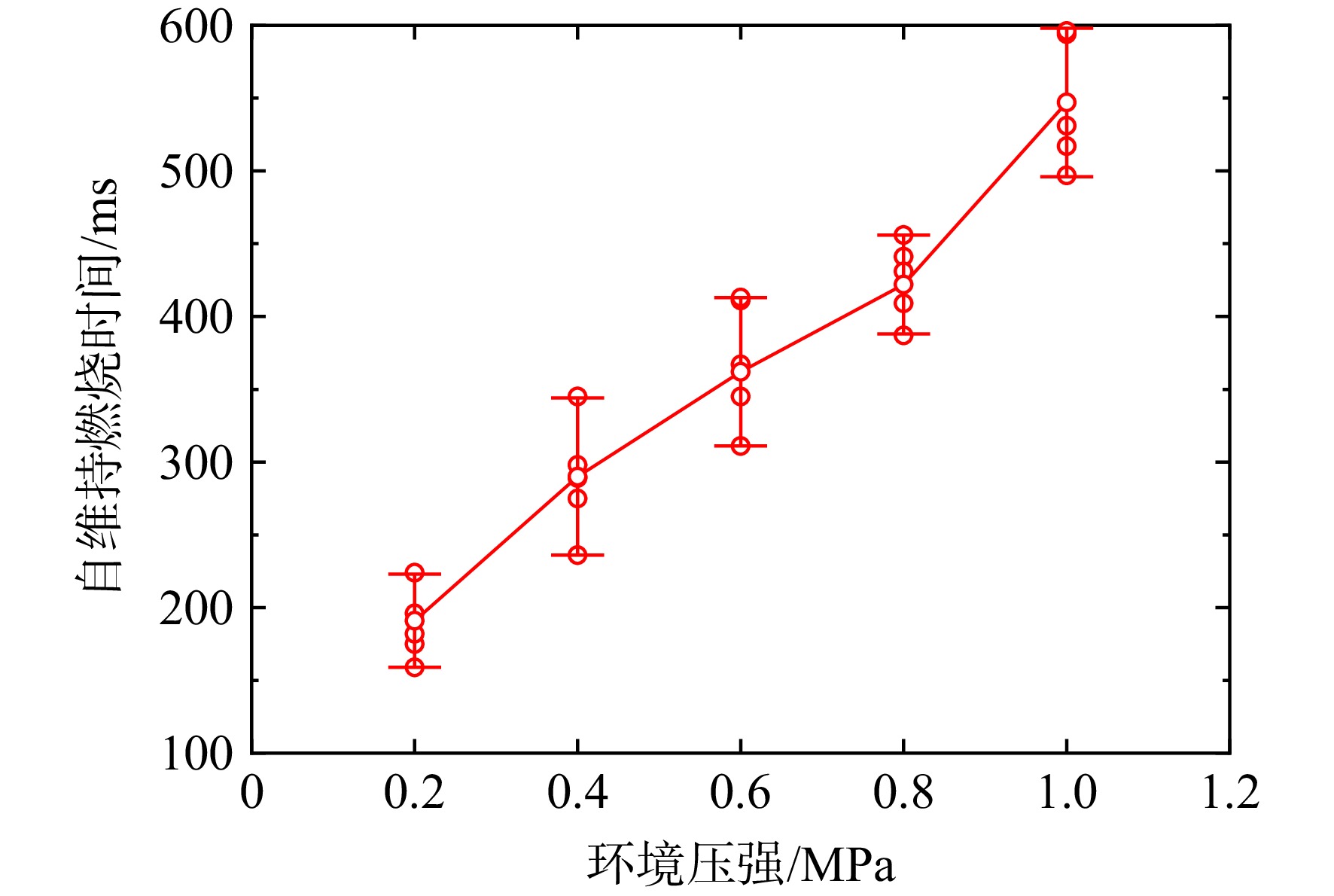
图 7 不同压强环境中的自维持燃烧时间
Figure 7. Self-sustaining combustion time in different pressure environments

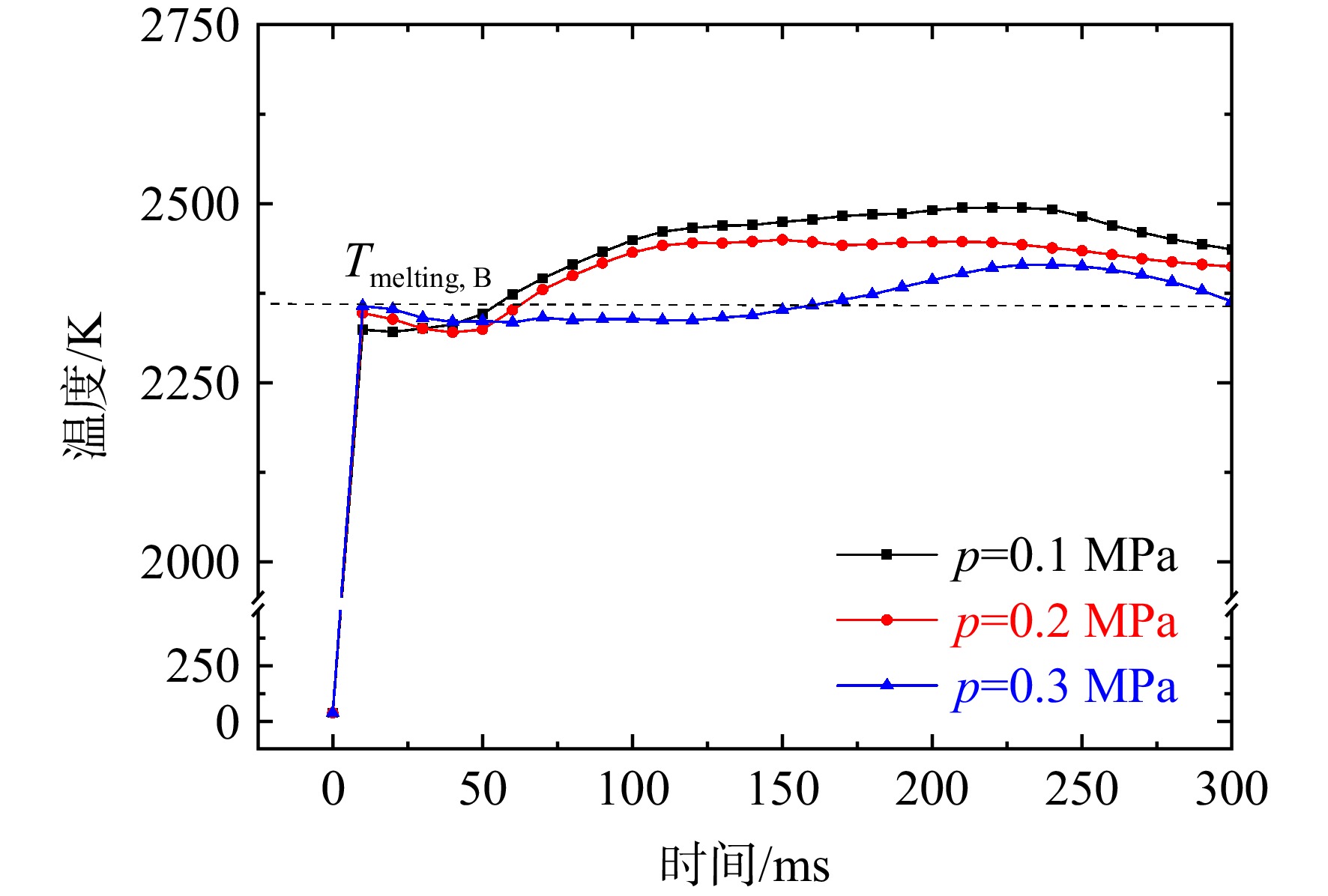
图 8 不同压强下的颗粒温度变化曲线
Figure 8. Temperature curves of particles under different pressures

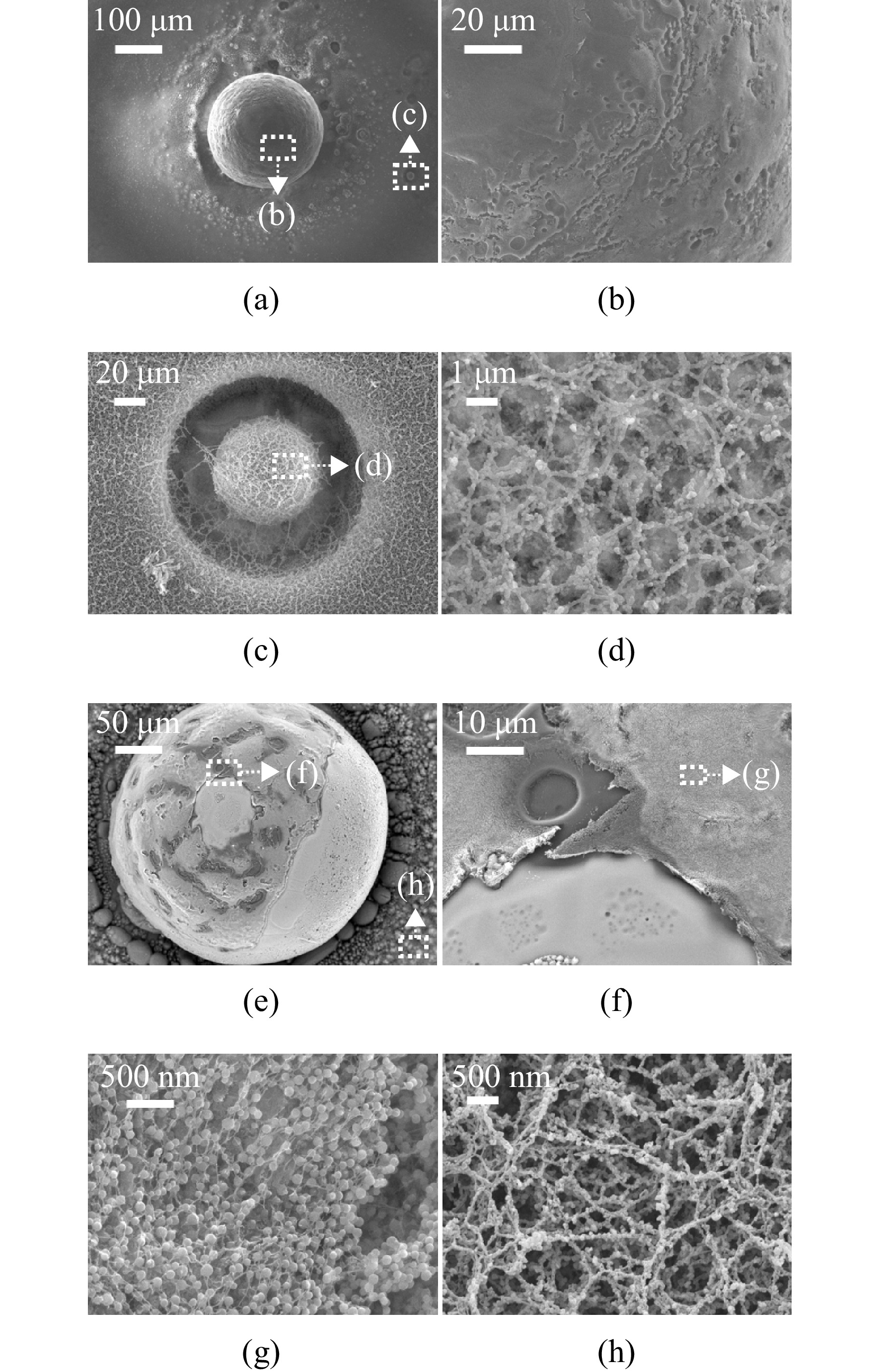
图 9 凝相颗粒表面的扫描电镜图像
Figure 9. Scanning electron microscope images of condensed particle surface
-
[1] YEH C L, KUO K K. Ignition and combustion of boron particles[J]. Progress in Energy and Combustion Science, 1996, 22(6): 511-541. [2] GANY A. Thermodynamic limitation on boron energy realization in ramjet propulsion[J]. Acta Astronautica, 2014, 98: 128-132. [3] CHEN Binbin, XIA Zhixun, HUANG Liya, et al. Characteristics of the combustion chamber of a boron-based solid propellant ducted rocket with a chin-type inlet[J]. Aerospace Science and Technology, 2018, 82: 210-219. [4] 夏智勋, 冯运超, 马立坤, 等. 固体火箭超燃冲压发动机燃烧技术研究进展[J]. 航空学报, 2023, 44(15): 528793. XIA Zhixun, FENG Yunchao, MA Likun, et al. Research progress of solid rocket scramjet combustion technology[J]. Acta Aeronautica et Astronautica Sinica, 2023, 44(15): 528793. (in ChineseXIA Zhixun, FENG Yunchao, MA Likun, et al. Research progress of solid rocket scramjet combustion technology[J]. Acta Aeronautica et Astronautica Sinica, 2023, 44(15): 528793. (in Chinese) [5] PIVKINA A N, MURAVYEV N V, MONOGAROV K A, et al. Comparative analysis of boron powders obtained by various methods: Ⅰ microstructure and oxidation parameters during heating[J]. Combustion, Explosion, and Shock Waves, 2018, 54(4): 450-460. doi: 10.1134/S0010508218040093 [6] LIU Linlin, HE Guoqiang, WANG Yinghong, et al. Factors affecting the primary combustion products of boron-based fuel-rich propellants[J]. Journal of Propulsion and Power, 2017, 33(2): 333-337. doi: 10.2514/1.B36134 [7] SCHILLER A, VILOZNY B, WESSLING R A, et al. Recognition of phospho sugars and nucleotides with an array of boronic acid appended bipyridinium salts[J]. Analytica Chimica Acta, 2008, 627(2):203-211. doi: 10.1016/j.aca.2008.08.011 [8] RASHKOVSKIY S A. Boron particle agglomeration and formation of solid residues in combustion of boron-containing solid propellants[J]. Journal of Physics: Conference Series, 2018, 1009(1): 012029. [9] MEEROV D, MONOGAROV K, BRAGIN A, et al. Boron particles agglomeration and slag formation during combustion of energetic condensed systems[J]. Physics Procedia, 2015, 72: 85-88. doi: 10.1016/j.phpro.2015.09.024 [10] RASHKOVSKIY S A. Formation of solid residues in combustion of boron-containing solid propellants[J]. Acta Astronautica, 2019, 158: 277-285. doi: 10.1016/j.actaastro.2019.03.034 [11] CHENG Long, YANG Hongtao, YANG Yue, et al. Preparation of B/Nitrocellulose/Fe particles and their effect on the performance of an ammonium perchlorate propellant[J]. Combustion and Flame, 2020, 211: 456-464. doi: 10.1016/j.combustflame.2019.10.017 [12] 敖文, 刘佩进. 固体推进剂铝团聚模型[J]. 航空动力学报, 2017, 32(5): 1224-1233. AO Wen, LIU Peijin. Models of aluminum agglomeration in solid propellants[J]. Journal of Aerospace Power, 2017, 32(5): 1224-1233. (in ChineseAO Wen, LIU Peijin. Models of aluminum agglomeration in solid propellants[J]. Journal of Aerospace Power, 2017, 32(5): 1224-1233. (in Chinese) [13] KING M K. Boron ignition and combustion in air-augmented rocket afterburners[J]. Combustion Science and Technology, 1972, 5(1): 155-164. [14] UDA R T. A shock-tube study of the ignition limit of boron particles[D]. Dayton, US: Air Force Institute of Technology, 1968. [15] FOELSCHE R O, BURTON R L, KRIER H. Boron particle ignition and combustion at 30–150 atm[J]. Combustion and Flame, 1999, 117(1/2): 32-58. [16] KRIER H, BURTON R L, PIRMAN S R, et al. Shock initiation of crystalline boron in oxygen and fluorine compounds[J]. Journal of Propulsion and Power, 1996, 12(4): 672-679. doi: 10.2514/3.24088 [17] AO Wen, YANG Weijuan, WANG Yang, et al. Ignition and combustion of boron particles at one to ten standard atmosphere[J]. Journal of Propulsion and Power, 2014, 30(3): 760-764. doi: 10.2514/1.B35054 [18] SONG Qingguan, CAO Wei, WEI Xiao, et al. Laser ignition and combustion characteristics of micro- and nano-sized boron under different atmospheres and pressures[J]. Combustion and Flame, 2021, 230: 111420. doi: 10.1016/j.combustflame.2021.111420 [19] YUAN Jifei, LIU Jianzhong, ZHANG Linqing, et al. Combustion and agglomeration characteristics of boron particles in boron-containing fuel-rich propellant[J]. Combustion and Flame, 2021, 232: 111551. doi: 10.1016/j.combustflame.2021.111551 [20] MI Xiaocheng, GOROSHIN S, HIGGINS A J, et al. Dual-stage ignition of boron particle agglomerates[J]. Combustion and Flame, 2013, 160(11): 2608-2618. doi: 10.1016/j.combustflame.2013.06.004 [21] YUASA S, YOSHIDA T, KAWASHIMA M, et al. Effects of pressure and oxygen concentration on ignition and combustion of boron in oxygen/nitrogen mixture streams[J]. Combustion and Flame, 1998, 113(3): 380-387. doi: 10.1016/S0010-2180(97)00225-3 [22] ZHOU Wei. Numerical study of multi-phase combustion: ignition and combustion of an isolated boron particle in fluorinated environments [D]. Princeton, US: Princeton University, 1998. [23] YETTER R A, RABITZ H, DRYER F L, et al. Kinetics of high-temperature B/O/H/C chemistry[J]. Combustion and Flame, 1991, 83(1/2): 43-62. [24] BROWN R C, KOLB C E, CHO S Y, et al. Kinetic model for hydrocarbon-assisted particulate boron combustion[J]. International Journal of Chemical Kinetics, 1994, 26(3): 319-332. doi: 10.1002/kin.550260302 [25] YUASA S, ISODA H. Ignition and combustion of small boron lumps in an oxygen stream[J]. Combustion and Flame, 1991, 86(3): 216-222. doi: 10.1016/0010-2180(91)90101-G [26] DUAN Lian, XIA Zhixun, CHEN Binbin, et al. Ignition and combustion characteristics of boron agglomerates under different oxygen concentrations[J]. Acta Astronautica, 2022, 197: 81-90. doi: 10.1016/j.actaastro.2022.05.020 -

 下载:
下载:

 点击查看大图

计量
- 文章访问数: 592
- HTML浏览量: 313
- PDF量: 33
- 被引次数: 0