






Experimental study on laminar combustion characteristics of bio-jet fuel
-
摘要:
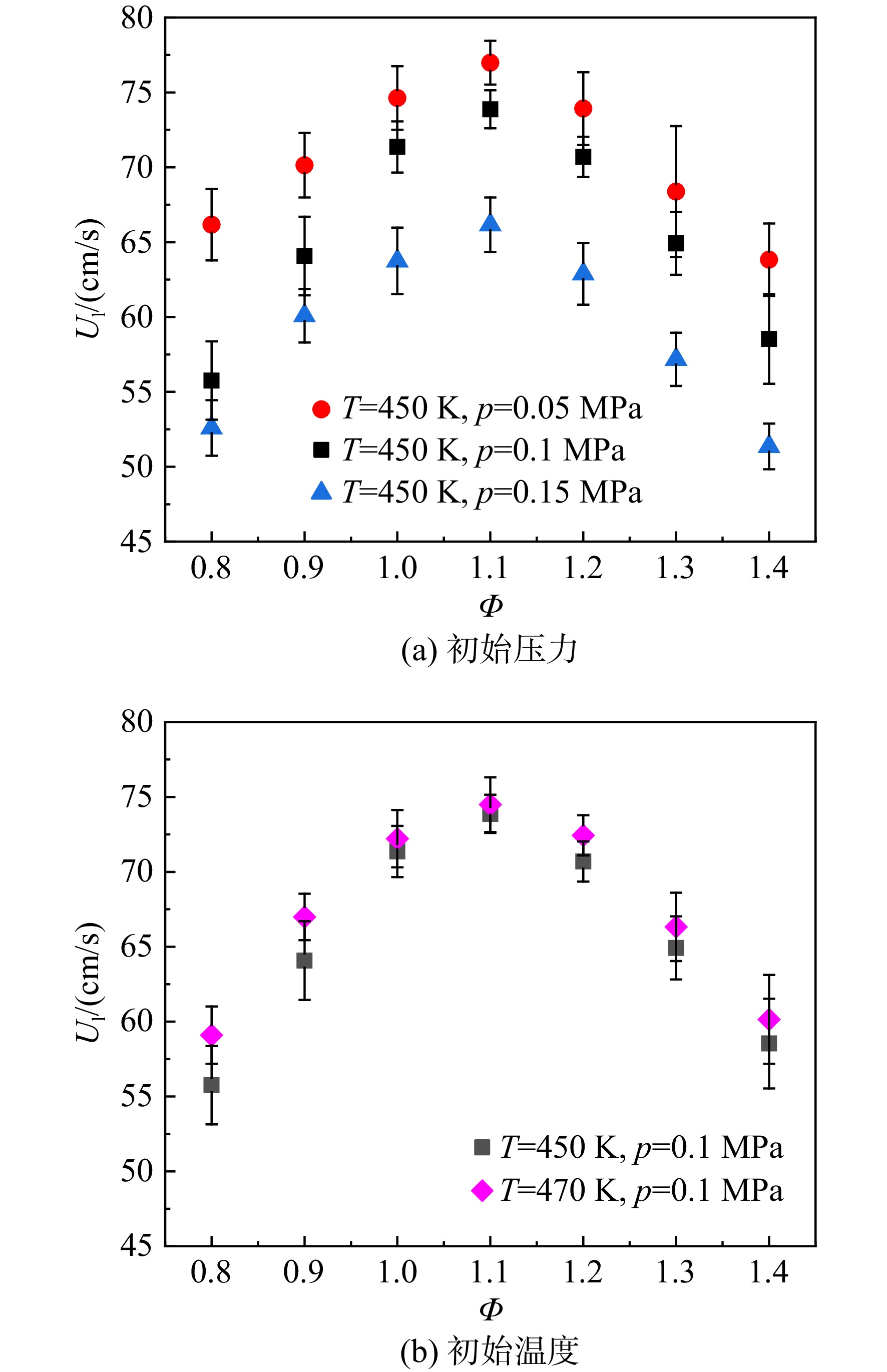
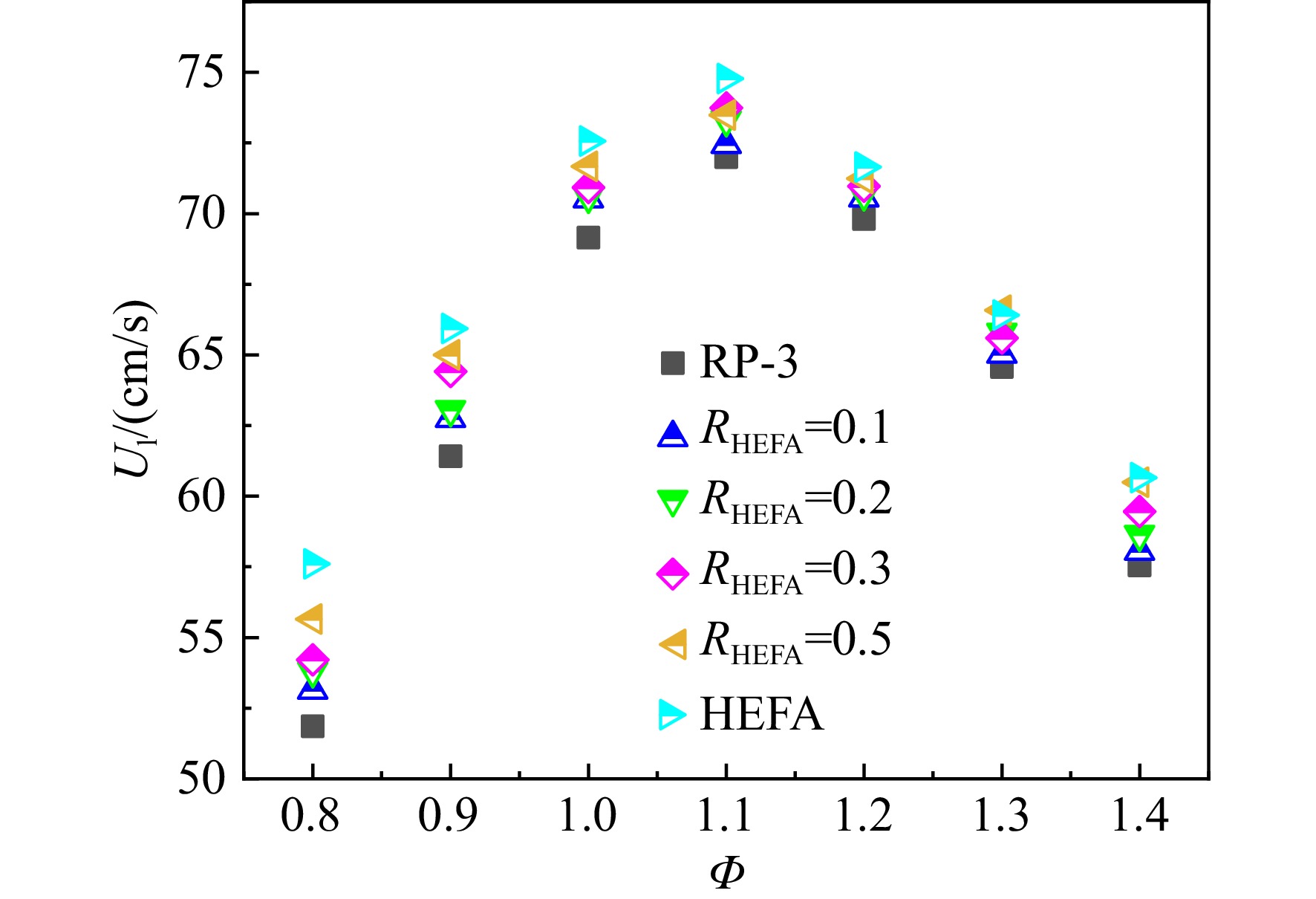
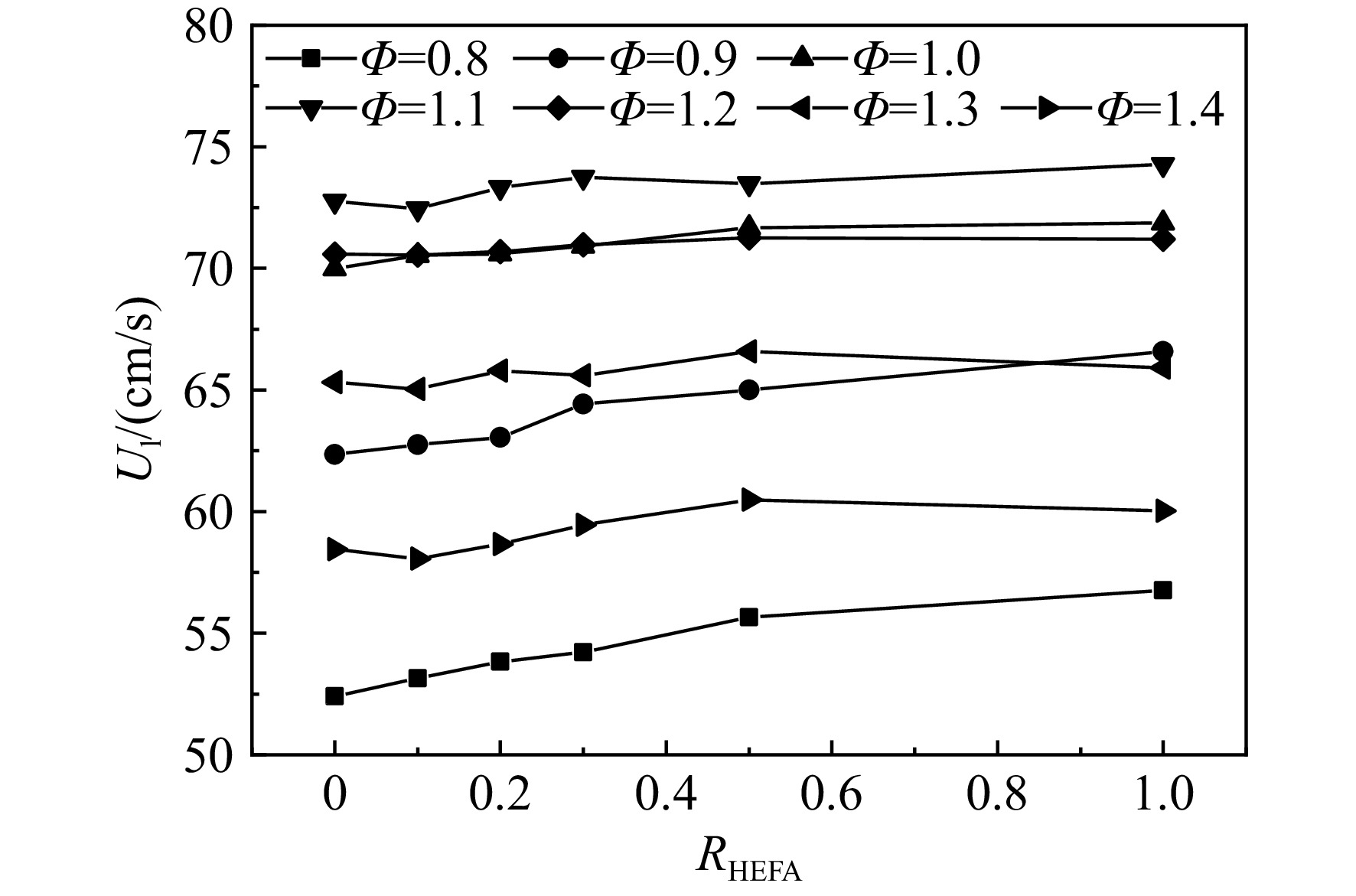
以油脂加氢(HEFA)技术制备所得生物航空煤油为研究对象,开展层流燃烧特性研究。采用定容燃烧实验装置获得HEFA生物航空煤油及其与RP-3航空煤油混合燃料的层流燃烧速度(LBV)。实验参数包括当量比(0.8~1.4)、初始压力(0.05、0.1、0.15 MPa)、初始温度(450、470 K)、HEFA掺混比(0、0.1、0.2、0.3、0.5)等。分析当量比、初始压力、初始温度对HEFA生物航空煤油以及HEFA掺混比对HEFA生物航空煤油/RP-3航空煤油混合燃料层流燃烧速度的影响。研究发现:随着当量比增加,HEFA生物航空煤油的层流燃烧速度呈现出先增后减的趋势,其峰值速度出现在当量比1.1附近。随着初始压力从0.05 MPa增加至0.15 MPa,HEFA生物航空煤油层流燃烧速度减小13.54%。随着初始温度从450 K增加至470 K,HEFA生物航空煤油层流燃烧速度略有增加。随着HEFA掺混比从0增加至0.5,HEFA生物航空煤油/RP-3航空煤油混合燃料层流燃烧速度增加3.85%。结果表明:与RP-3航空煤油相比,虽然HEFA生物航空煤油碳数分布较高,但其化学组成却以链烷烃为主,导致其层流燃烧速度高于RP-3航空煤油。掺混HEFA生物航空煤油后,RP-3航空煤油层流燃烧速度略有增加。该项研究为生物航空煤油在航空发动机中的应用提供理论基础。
-
关键词:
- 定容燃烧 /
- 油脂加氢(HEFA)生物航空煤油 /
- RP-3航空煤油 /
- 混合燃料 /
- 层流燃烧速度(LBV)
Abstract:The laminar combustion characteristics of a certain bio-jet fuel with hydroprocessed esters and fatty acids (HEFA) technology were studied. The laminar burning velocity (LBV) of HEFA bio-jet fuel and HEFA bio-jet fuel/RP-3 mixed fuel was obtained by a constant volume combustion experimental device. The experimental parameters included equivalence ratios (0.8—1.4), initial pressures (0.05, 0.1, 0.15 MPa), initial temperatures (450, 470 K) and HEFA mixing ratios (0, 0.1, 0.2, 0.3, 0.5), et al. The effects of the equivalence ratio, initial pressure and initial temperature on the LBV of HEFA bio-jet fuel and the HEFA mixing ratio on the LBV of HEFA/RP-3 mixed fuel were analyzed. It was found that with the increase of equivalence ratio, the LBV of HEFA bio-jet fuel showed a trend of increasing first and then decreasing, and its peak value appeared near the equivalence ratio of 1.1. As the initial pressure increased from 0.05 MPa to 0.15 MPa, the LBV of HEFA bio-jet fuel decreased by 13.54%. As the initial temperature increased from 450 K to 470 K, the LBV of HEFA bio-jet fuel increased slightly. With the increase of HEFA mixing ratio from 0 to 0.5, the LBV of HEFA/RP-3 mixed fuel increased by 3.85%. The results showed that compared with RP-3 jet fuel, although the carbon number distribution of HEFA bio-jet fuel was higher, its chemical composition was dominated by alkanes, which led to its LBV higher than that of RP-3 jet fuel, so that the LBV of the mixed fuel after blending HEFA slightly increased. This study could provide a theoretical basis for the application of bio-jet fuel in aircraft engines.
-

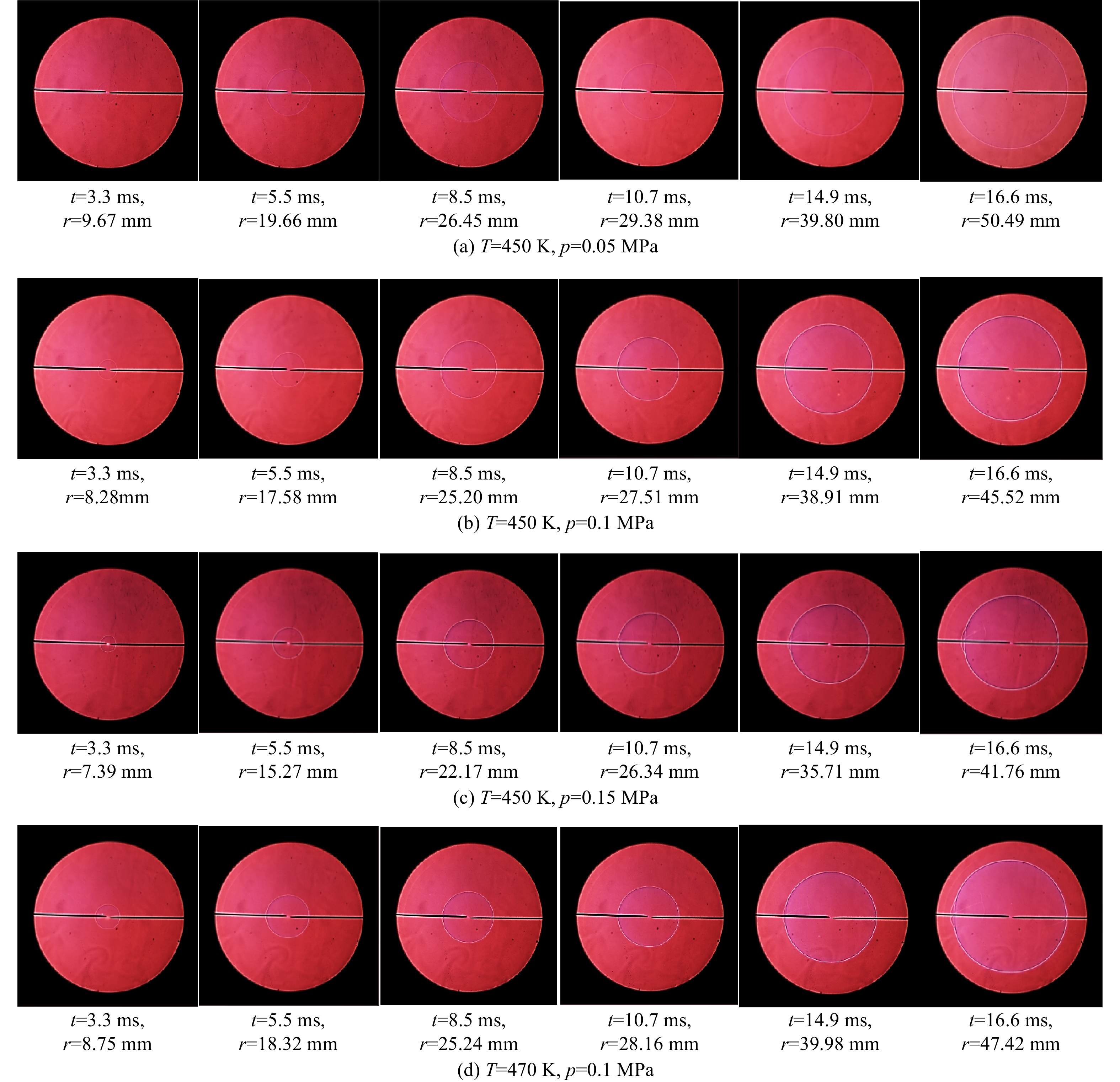
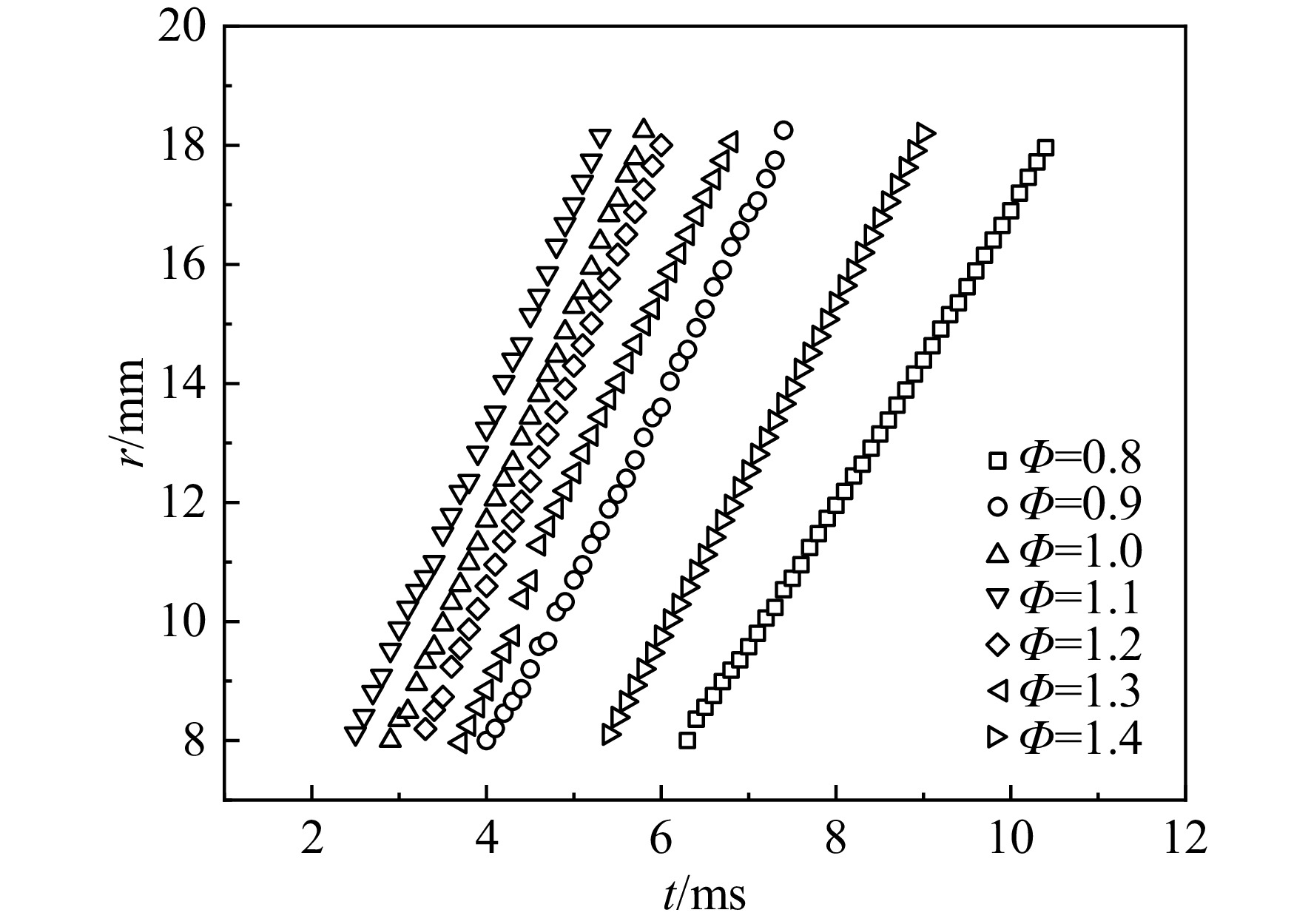
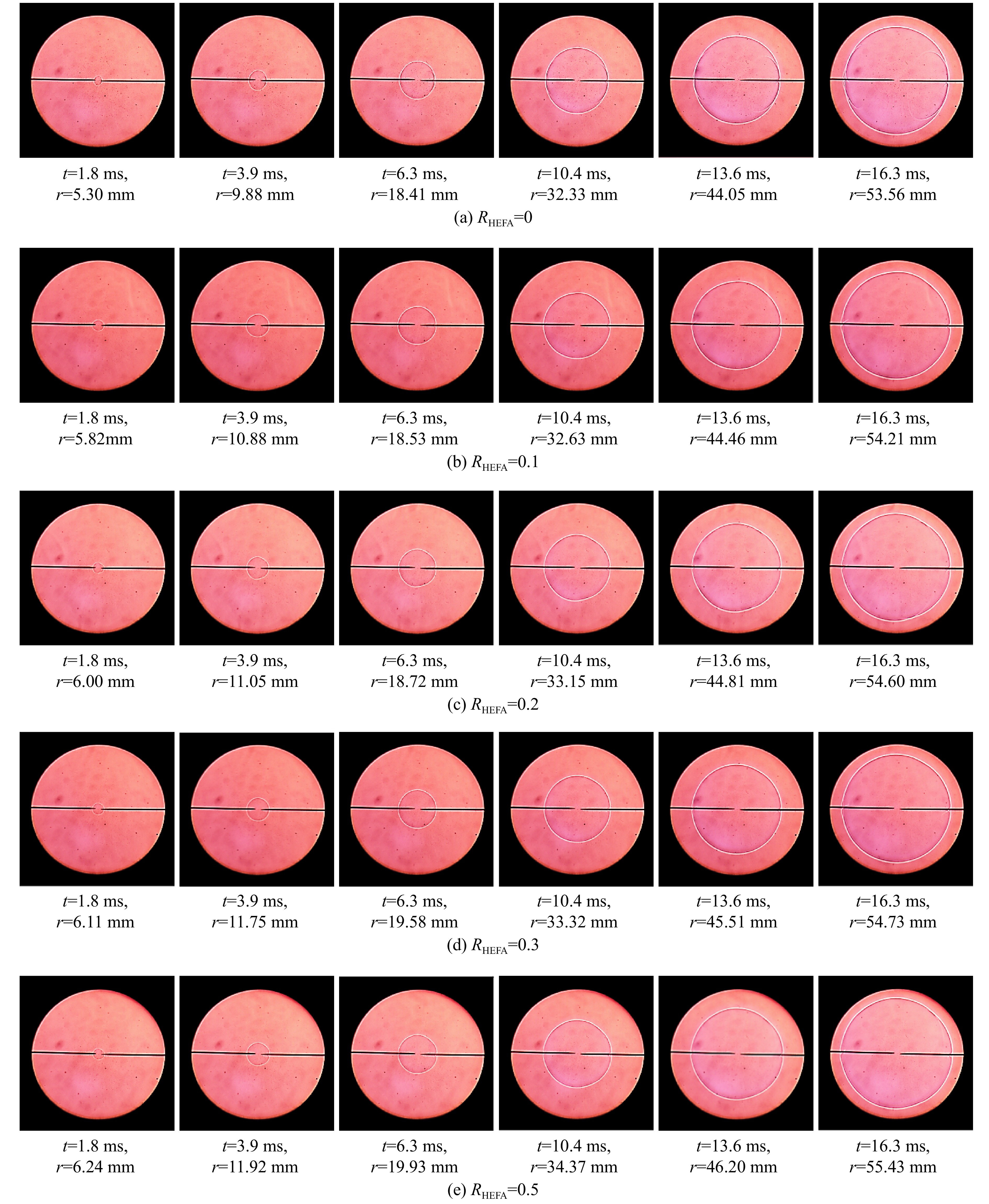
图 3 火焰半径随时间的变化规律(T=450 K,p=0.1 MPa)
Figure 3. Variation of flame radius with time(T=450 K,p=0.1 MPa)

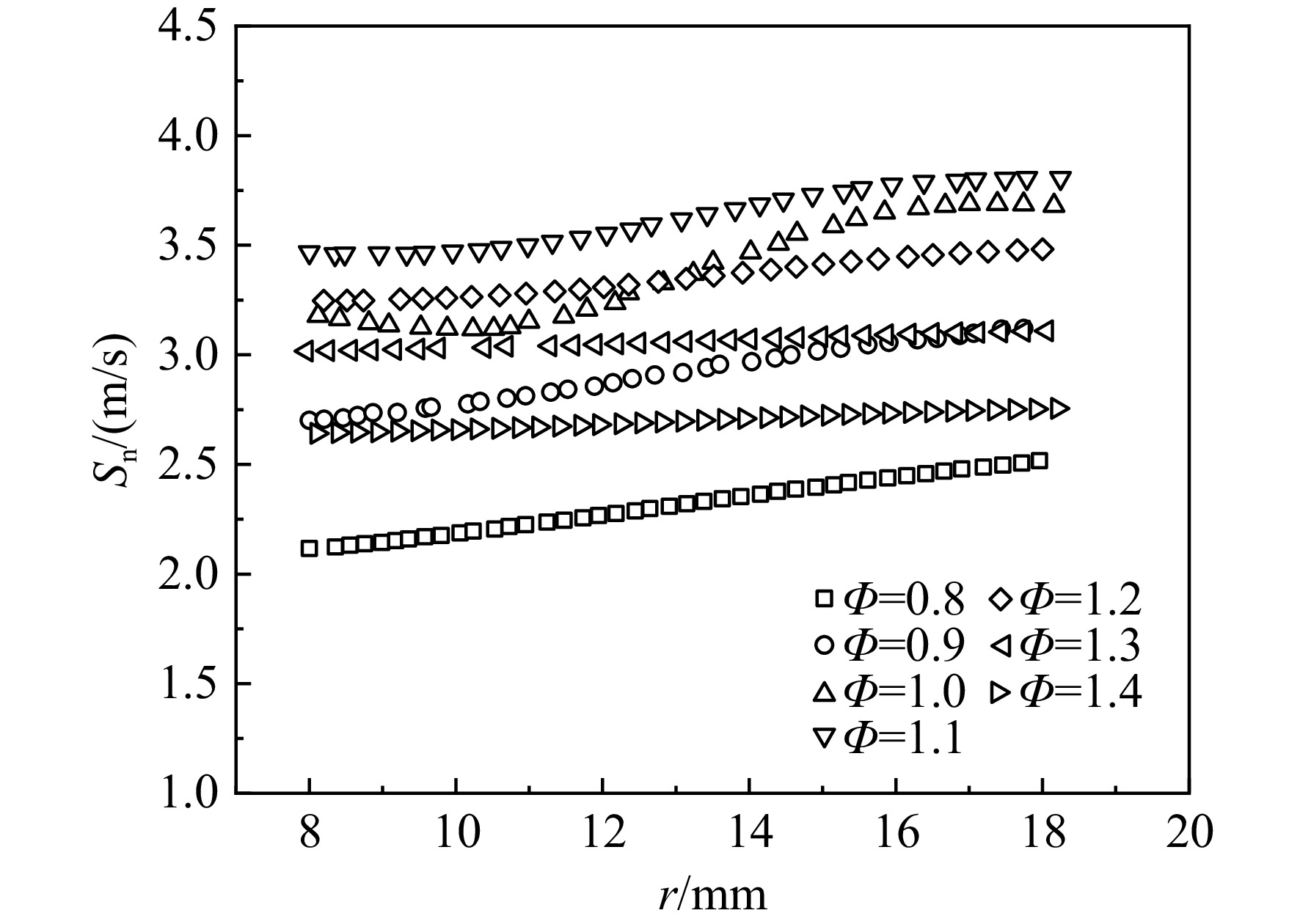
图 4 拉伸火焰传播速度随火焰半径的变化规律(T=450 K,p=0.1 MPa)
Figure 4. Variation of stretched flame speed with flame radius (T=450 K,p=0.1 MPa)
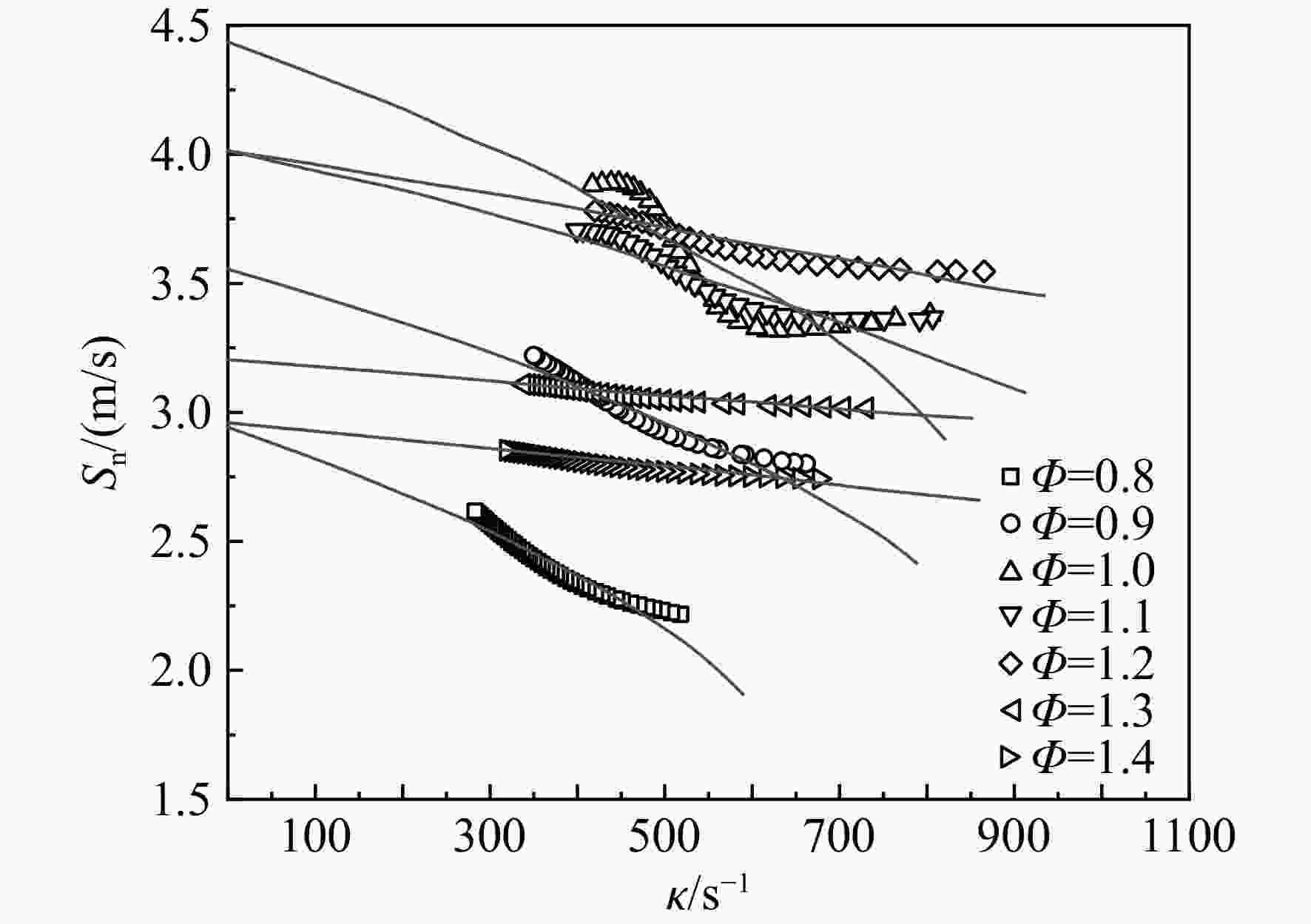
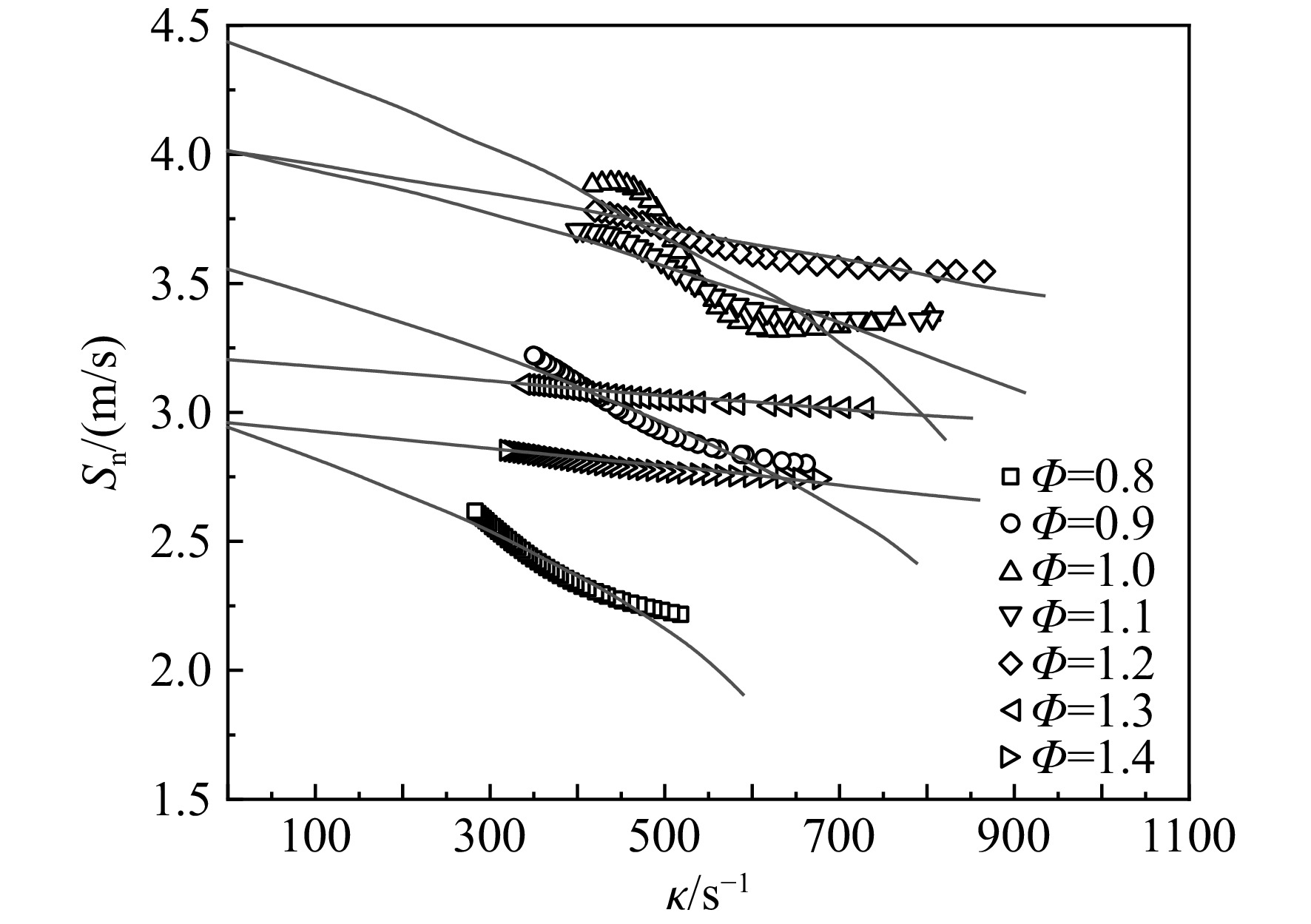
图 5 拉伸火焰传播速度随拉伸率的变化规律(T=450 K,p=0.1 MPa)
Figure 5. Variation of stretched flame speed with stretch rate (T=450 K,p=0.1 MPa)
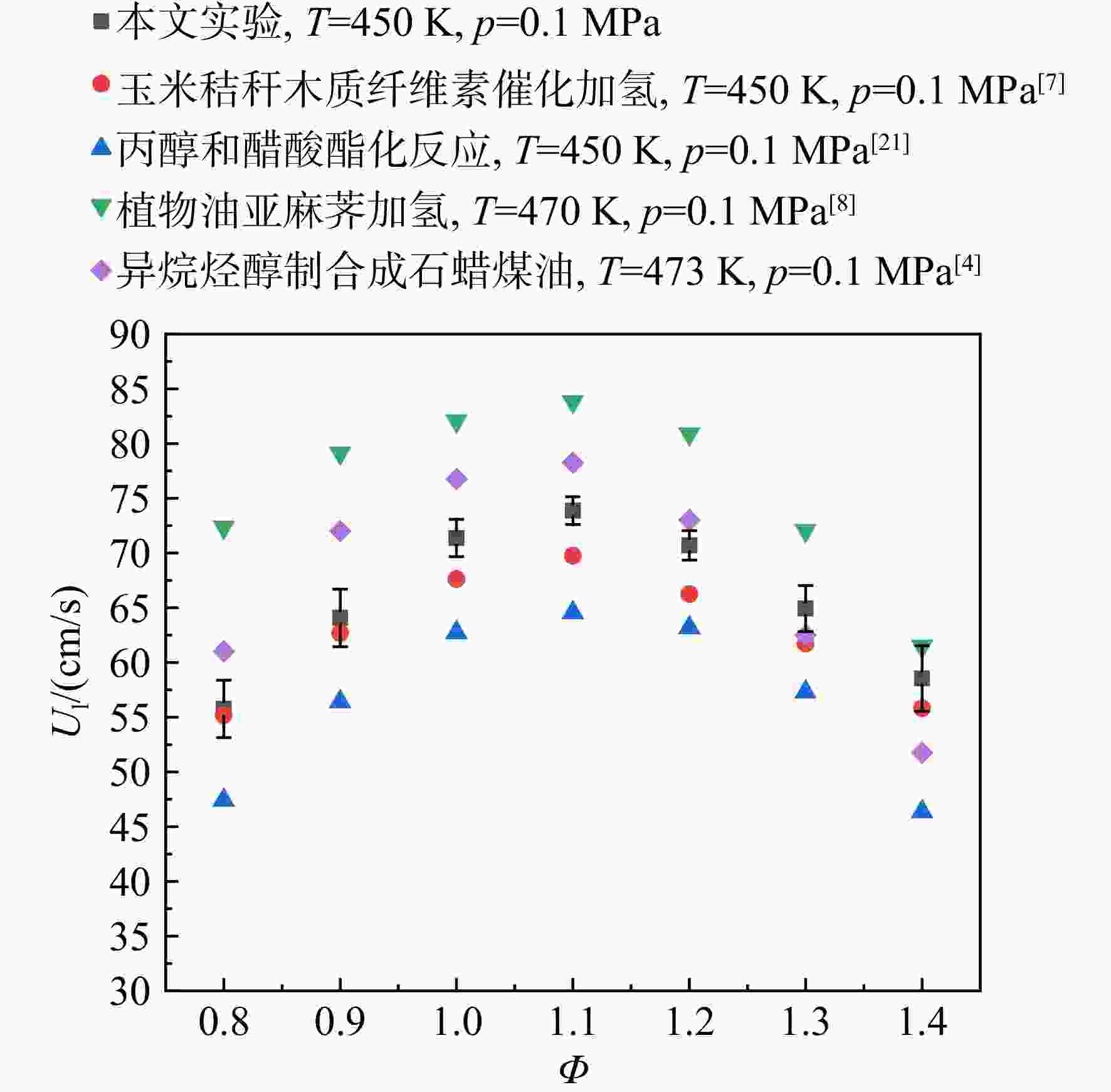
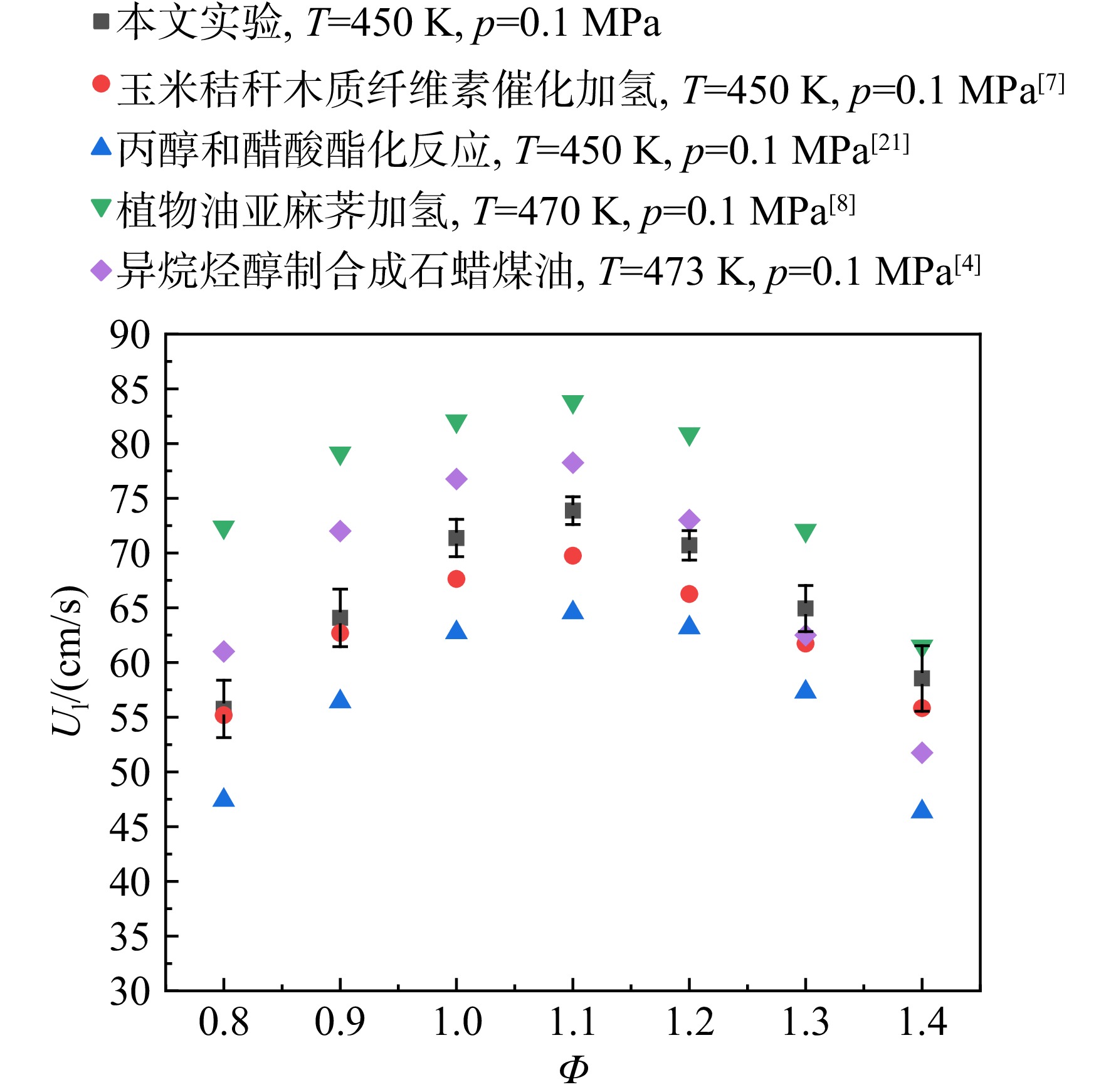
图 6 HEFA生物航空煤油与其他生物航空煤油层流燃烧速度对比
Figure 6. Comparison of LBV between HEFA bio-jet fuel and other bio-jet fuel

图 7 HEFA生物航空煤油层流燃烧速度随当量比变化
Figure 7. Changes in LBV of HEFA bio-jet fuel with equivalence ratio

图 9 混合燃料层流燃烧速度随当量比变化规律
Figure 9. Variation of LBV of mixed fuel with equivalence ratio
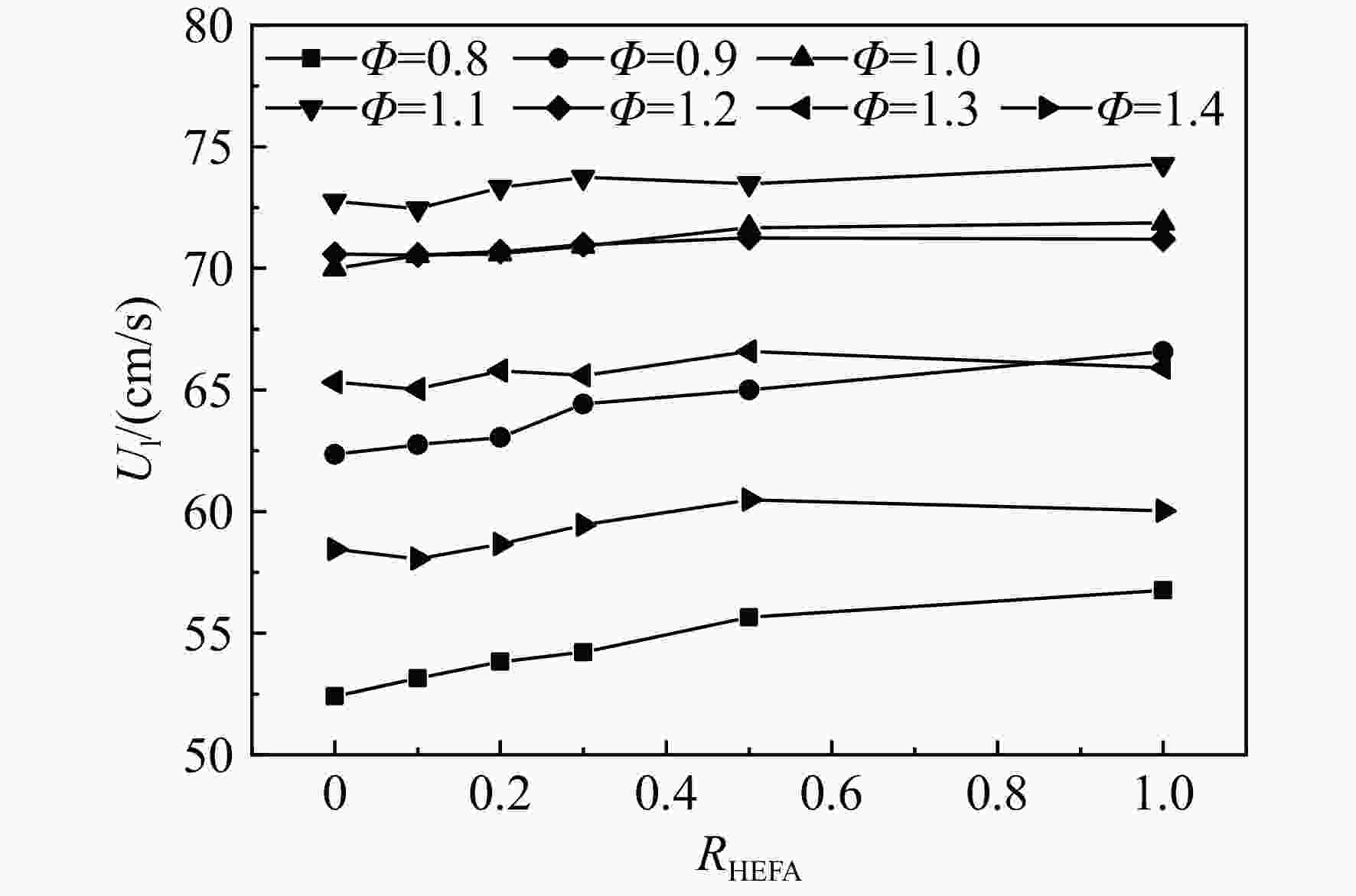
图 10 混合燃料层流燃烧速度随HEFA掺混比变化规律
Figure 10. Variation of LBV of mixed fuel with HEFA blending ratio
表 1 HEFA生物航空煤油和RP-3航空煤油的部分理化性质
Table 1. Main physicochemical properties of HEFA bio-jet fuel and RP-3 jet fuel
参数 数值及详情 HEFA RP-3 平均分子式 C14.08H30.62 C10.63H20.29 分子量/(g/mol) 199.6 147.9 密度(293.15 K)/(kg/m3) 764.8 802.1 闪点/K 322.15 319.15 初馏点/K 433.55 10%回收温度/K 460.95 446.25 90%回收温度/K 553.45 474.85 终馏点/K 559.55 489.15 冰点/K <208.15 <208.15 净热值/(MJ/kg) 44.102 43.124 碳质量分数/% 84.66 86.28 氢质量分数/% 15.34 13.72  下载: 导出CSV
表 2 HEFA生物航空煤油和RP-3航空煤油的化学组分
Table 2. Chemical components of HEFA bio-jet fuel and RP-3 jet fuel
成分 质量分数/% HEFA RP-3 链烷烃 正构烃 11.24 5.53 单取代异构烃 52.76 19.47 多取代异构烃 33.96 14.91 单环环烷烃 单取代单环烷烃 0.40 3.65 多取代单环烷烃 1.30 22.52 多环环烷烃 双环、三环烷烃 0.33 12.49 芳烃 单取代烷基苯 3.08 多取代烷基苯 8.62 萘、烷基萘 0.19 茚满、四氢化萘、烷基四氢化萘 9.54
下载: 导出CSV
表 3 实验工况
Table 3. Experimental conditions
参数 数值 初始温度/K 450,470 初始压力/MPa 0.05,0.1,0.15 当量比 0.8~1.4 HEFA掺混比 0,0.1,0.2,0.3,0.5
下载: 导出CSV
-
[1] 兰孟彤, 高慧, 吴谋远. 可持续航空燃料产业发展现状及对我国SAF发展建议[J]. 石油石化绿色低碳, 2024, 9(2): 7-11, 33. LAN Mengtong, GAO Hui, WU Mouyuan. Development status of sustainable aviation fuel industry and suggestions for SAF development in China[J]. Green Petroleum & Petrochemicals, 2024, 9(2): 7-11, 33. (in Chinese doi: 10.3969/j.issn.2095-0942.2024.02.002LAN Mengtong, GAO Hui, WU Mouyuan. Development status of sustainable aviation fuel industry and suggestions for SAF development in China[J]. Green Petroleum & Petrochemicals, 2024, 9(2): 7-11, 33. (in Chinese) doi: 10.3969/j.issn.2095-0942.2024.02.002 [2] AMARA A B, KAOUBI S, STARCK L. Toward an optimal formulation of alternative jet fuels: Enhanced oxidation and thermal stability by the addition of cyclic molecules[J]. Fuel, 2016, 173: 98-105. doi: 10.1016/j.fuel.2016.01.040 [3] WANG Zhiwei, FESER J S, LEI Tingzhou, et al. Performance and emissions of camelina oil derived jet fuel blends under distributed combustion condition[J]. Fuel, 2020, 271: 117685. doi: 10.1016/j.fuel.2020.117685 [4] RICHTER S, KUKKADAPU G, WESTBROOK C K, et al. A combined experimental and modeling study of combustion properties of an isoparaffinic alcohol-to-jet fuel[J]. Combustion and Flame, 2022, 240: 111994. doi: 10.1016/j.combustflame.2022.111994 [5] 刘宇, 汤卓, 孙震, 等. 小球藻油/RP-3航空煤油混合燃料的层流燃烧特性[J]. 航空动力学报, 2019, 34(8): 1663-1670. LIU Yu, TANG Zhuo, SUN Zhen, et al. Laminar combustion characteristics of chlorella oil/RP-3 kerosene mixed fuel[J]. Journal of Aerospace Power, 2019, 34(8): 1663-1670. (in ChineseLIU Yu, TANG Zhuo, SUN Zhen, et al. Laminar combustion characteristics of chlorella oil/RP-3 kerosene mixed fuel[J]. Journal of Aerospace Power, 2019, 34(8): 1663-1670. (in Chinese) [6] JÜRGENS S, OßWALD P, SELINSEK M, et al. Assessment of combustion properties of non-hydroprocessed Fischer-Tropsch fuels for aviation[J]. Fuel Processing Technology, 2019, 193: 232-243. doi: 10.1016/j.fuproc.2019.05.015 [7] XU Cangsu, LIU Kai, SONG Yang, et al. Laminar burning characteristics of bio-aviation fuel candidate derived from lignocellulosic biomass[J]. Fuel, 2023, 334: 126719. doi: 10.1016/j.fuel.2022.126719 [8] HUI Xin, KUMAR K, SUNG C J, et al. Experimental studies on the combustion characteristics of alternative jet fuels[J]. Fuel, 2012, 98: 176-182. doi: 10.1016/j.fuel.2012.03.040 [9] GUTIÉRREZ-ANTONIO C, GÓMEZ-CASTRO F I, DE LIRA-FLORES J A, et al. A review on the production processes of renewable jet fuel[J]. Renewable and Sustainable Energy Reviews, 2017, 79: 709-729. doi: 10.1016/j.rser.2017.05.108 [10] WANG Weicheng, TAO Ling. Bio-jet fuel conversion technologies[J]. Renewable and Sustainable Energy Reviews, 2016, 53: 801-822. doi: 10.1016/j.rser.2015.09.016 [11] LI Xin, LUO Xingyi, JIN Yangbin, et al. Heterogeneous sulfur-free hydrodeoxygenation catalysts for selectively upgrading the renewable bio-oils to second generation biofuels[J]. Renewable and Sustainable Energy Reviews, 2018, 82: 3762-3797. doi: 10.1016/j.rser.2017.10.091 [12] MÄKI-ARVELA P, MARTÍNEZ-KLIMOV M, MURZIN D Y. Hydroconversion of fatty acids and vegetable oils for production of jet fuels[J]. Fuel, 2021, 306: 121673. doi: 10.1016/j.fuel.2021.121673 [13] WANG Meng, DEWIL R, MANIATIS K, et al. Biomass-derived aviation fuels: challenges and perspective[J]. Progress in Energy and Combustion Science, 2019, 74: 31-49. doi: 10.1016/j.pecs.2019.04.004 [14] NG K S, FAROOQ D, YANG Aidong. Global biorenewable development strategies for sustainable aviation fuel production[J]. Renewable and Sustainable Energy Reviews, 2021, 150: 111502. doi: 10.1016/j.rser.2021.111502 [15] 曾文, 陈欣, 马洪安, 等. RP-3航空煤油层流燃烧特性的实验[J]. 航空动力学报, 2015, 30(12): 2888-2896. ZENG Wen, CHEN Xin, MA Hongan, et al. Experiment on laminar combustion characteristics of RP-3 kerosene[J]. Journal of Aerospace Power, 2015, 30(12): 2888-2896. (in ChineseZENG Wen, CHEN Xin, MA Hongan, et al. Experiment on laminar combustion characteristics of RP-3 kerosene[J]. Journal of Aerospace Power, 2015, 30(12): 2888-2896. (in Chinese) [16] HUANG Z, WANG Q, YU J, et al. Measurement of laminar burning velocity of dimethyl ether-air premixed mixtures[J]. Fuel, 2007, 86(15): 2360-2366. doi: 10.1016/j.fuel.2007.01.021 [17] BURKE M P, CHEN Zheng, JU Yiguang, et al. Effect of cylindrical confinement on the determination of laminar flame speeds using outwardly propagating flames[J]. Combustion and Flame, 2009, 156(4): 771-779. doi: 10.1016/j.combustflame.2009.01.013 [18] BRADLEY D, HICKS R A, LAWES M, et al. The measurement of laminar burning velocities and markstein numbers for iso-octane-air and iso-octane-n-heptane-air mixtures at elevated temperatures and pressures in an explosion bomb[J]. Combustion and Flame, 1998, 115(1/2): 126-144. [19] FRANKEL M L, SIVASHINSKY G I. On effects due to thermal expansion and lewis number in spherical flame propagation[J]. Combustion Science and Technology, 1983, 31(3/4): 131-138. [20] CHEN Zheng. On the extraction of laminar flame speed and Markstein length from outwardly propagating spherical flames[J]. Combustion and Flame, 2011, 158(2): 291-300. doi: 10.1016/j.combustflame.2010.09.001 [21] OPPONG F, LI Xiaolu, XU Cangsu, et al. An experimental and numerical study of propyl acetate laminar combustion characteristics[J]. Combustion and Flame, 2024, 268: 113651. doi: 10.1016/j.combustflame.2024.113651 -

 点击查看大图

计量
- 文章访问数: 642
- HTML浏览量: 534
- PDF量: 43
- 被引次数: 0