






Suppression of detonation wave backward propagation by topological fluid diode
-
摘要:
旋转爆震发动机中爆震波诱导的斜激波会带来上游高压脉动回传,影响发动机的稳定工作。设计了一类拓扑流体二极管防回传进气结构,并通过数值仿真方法,对比分析了6种不同构型在冷流和压力脉动条件下的流场分布和压力回传特性。研究结果表明:拓扑结构能够有效改变回传气流的流向并减弱其速度,从而实现对回传激波的有效抑制。从最大静压和沿程压力脉动等方面分析拓扑流体二极管对回传的抑制效果,发现拓扑流体二极管的槽深和级数是关键设计参数,对爆震波回传的抑制效果有显著影响,其中单级-槽深20构型在各工况下均表现出较低的最大静压和脉动幅度,压力抑制率最高可达10.23%,三级构型由于旋涡形成更充分,亦表现出良好的抑制效果。
Abstract:For the rotating detonation engine, the oblique shock waves induced by detonation waves can lead to upstream high-pressure pulsations, affecting the stable operation of the engine. A class of topological fluid diode anti-backward propagation intake structures was designed, and numerical simulation methods were used to compare and analyze the flow field distribution and pressure backward propagation characteristics of six different configurations under cold flow and pressure pulsation conditions. The research results indicated that the topological structure can effectively change the direction of the backward propagation gas and reduce its speed, thereby effectively suppressing the shock waves backward propagation. By analyzing the maximum static pressure and the pressure pulsation along the process, it was found that the depth and level of the topological fluid diode were key design parameters affecting the suppression of detonation wave backward propagation. Among them, the single-level-slot depth 20 configuration showed lower maximum static pressure and pulsation amplitude under various conditions, with a pressure suppression rate reaching up to 10.23%. Additionally, the three-level configuration also showed good suppression effect due to more sufficient vortex formation.
-

图 1 集气腔及部分燃烧室的基准构型截面图(单位:mm)
Figure 1. Cross-sectional view of the baseline configuration for the plenum and partial combustion chamber (unit: mm)
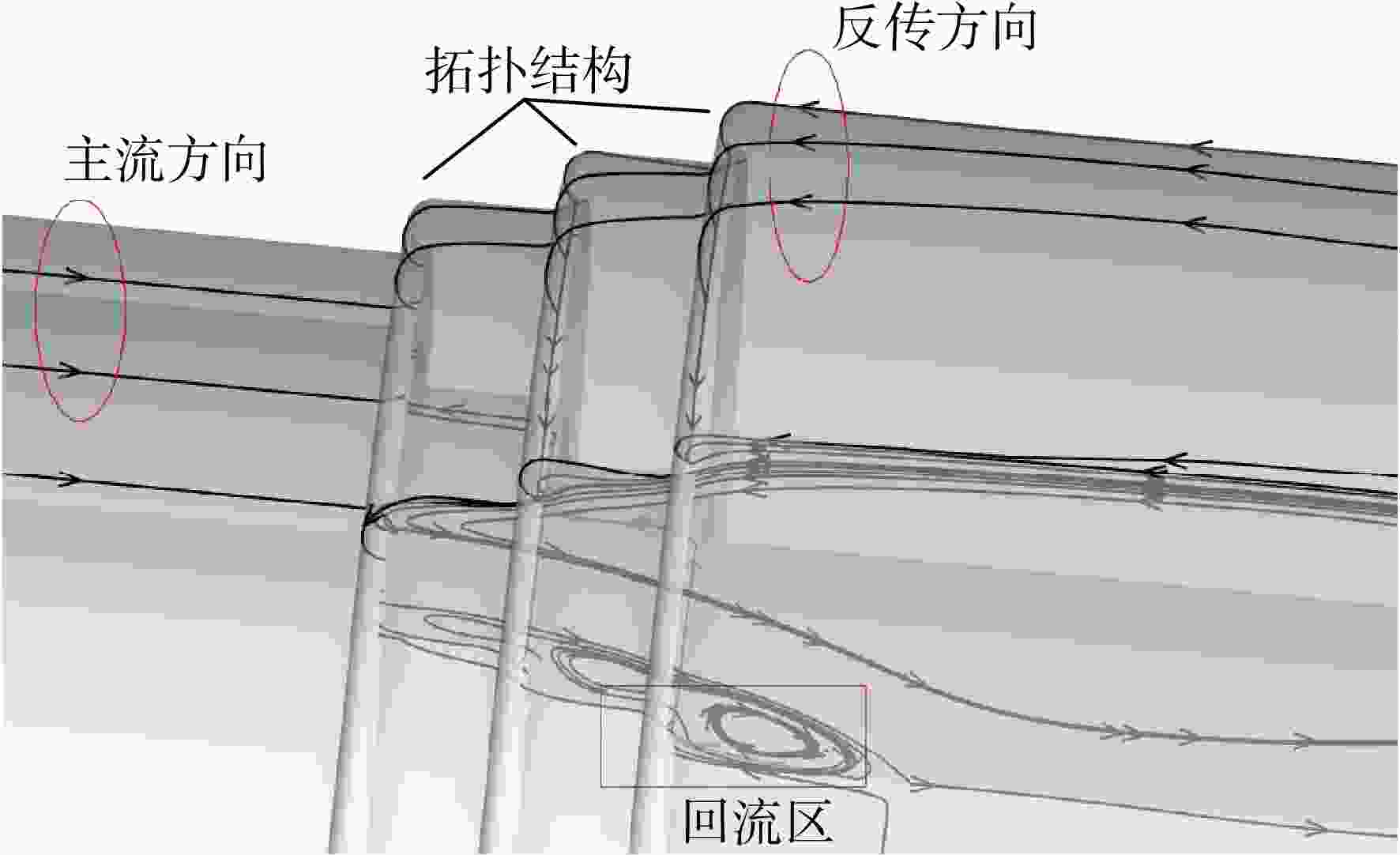
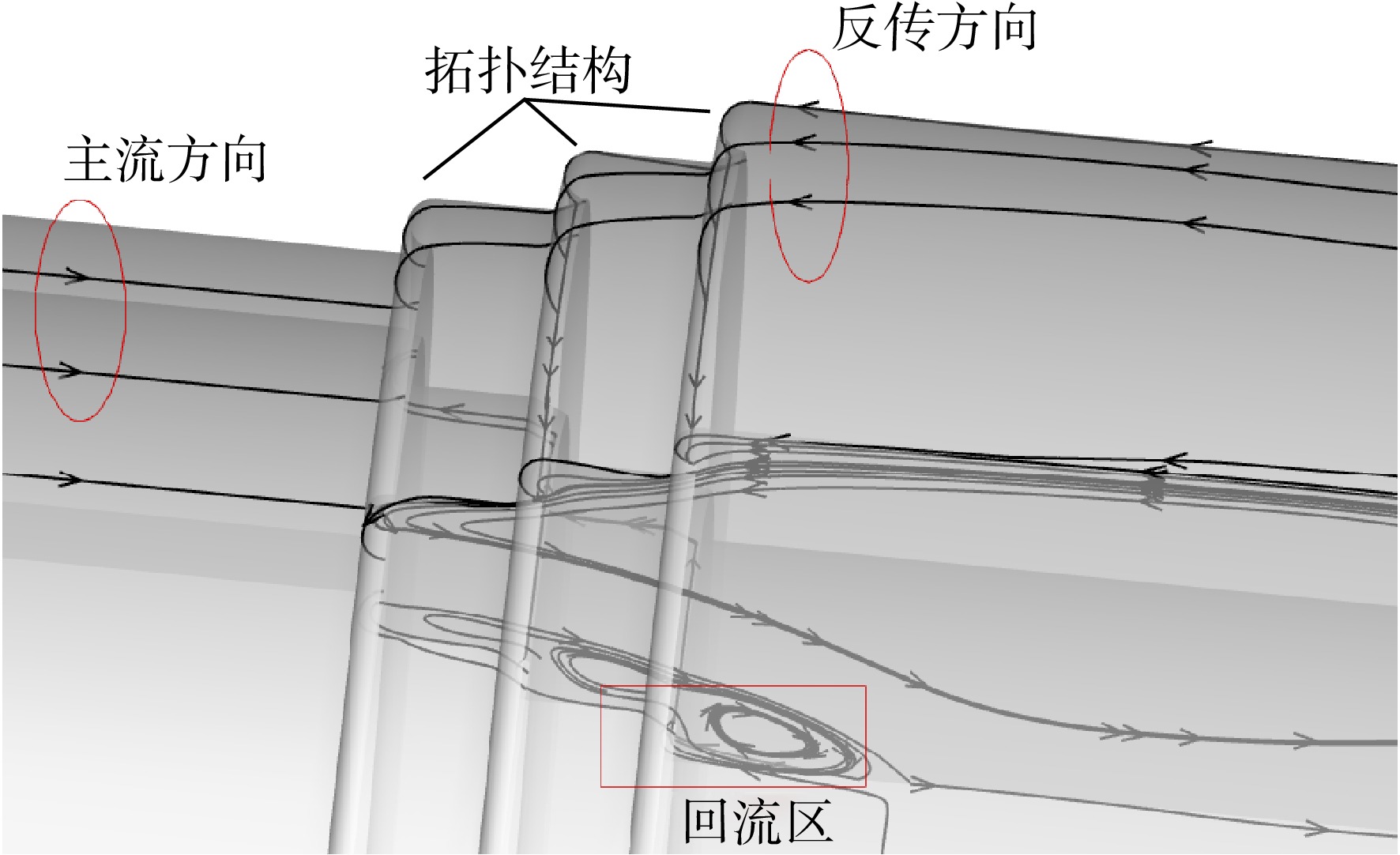
图 2 拓扑结构三维示意图
Figure 2. Three-dimensional schematic diagram of the topological structure
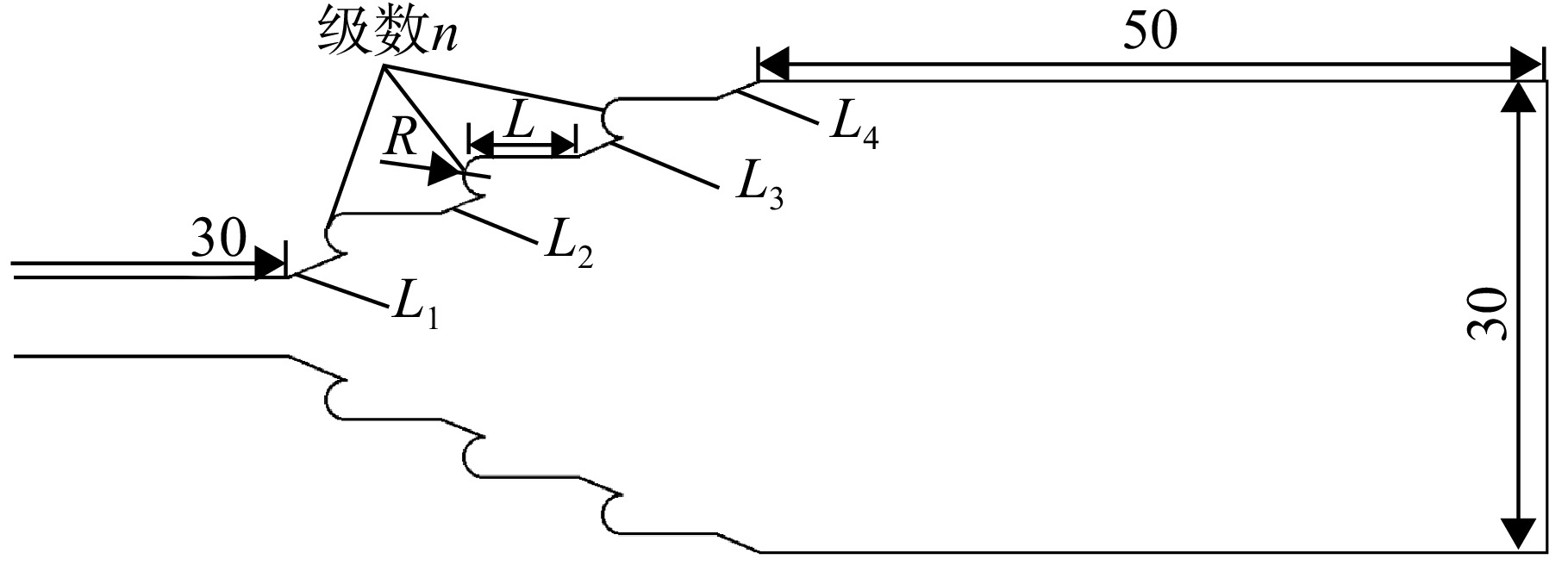
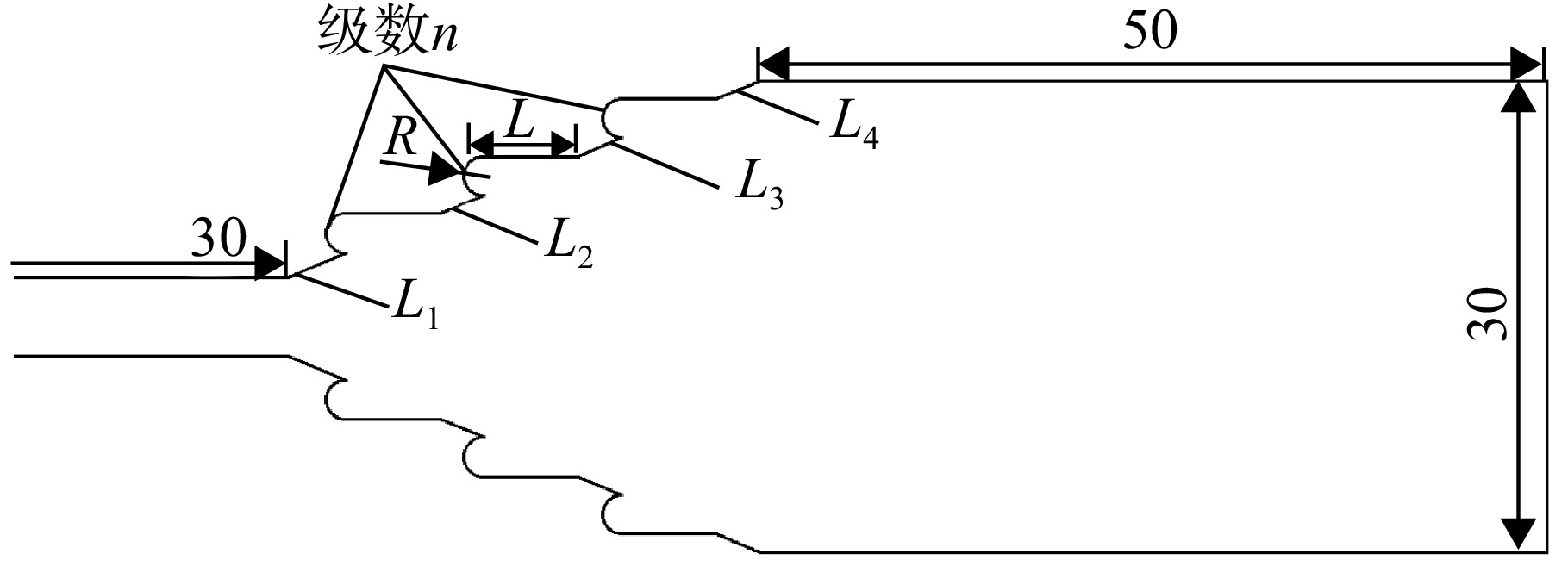
图 3 拓扑流体二极管构型示意图(单位:mm)
Figure 3. Schematic diagram of topological fluid diode configuration (unit: mm)
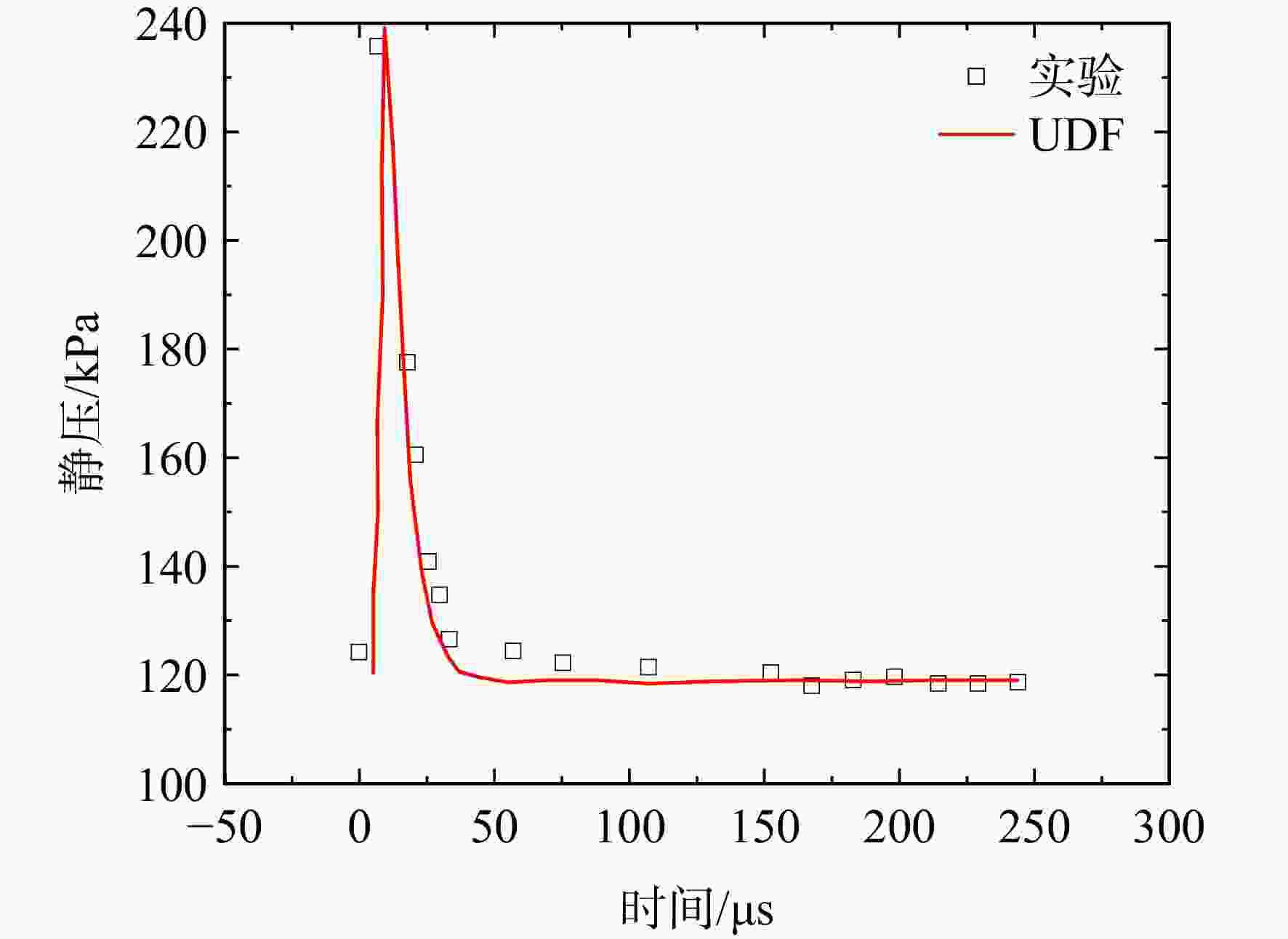
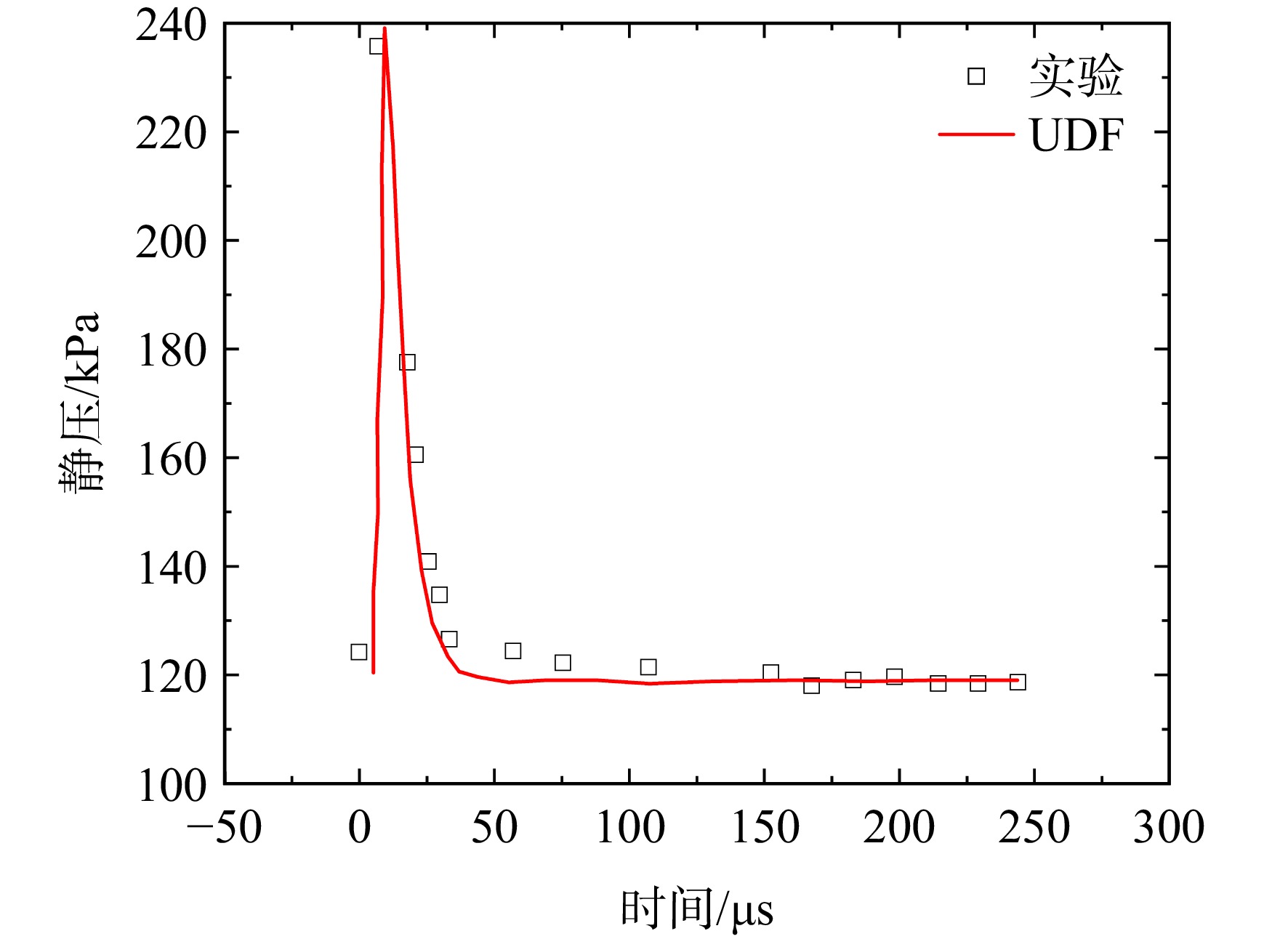
图 4 UDF模拟爆震波回传验证
Figure 4. UDF simulation of detonation wave backward propagation verification
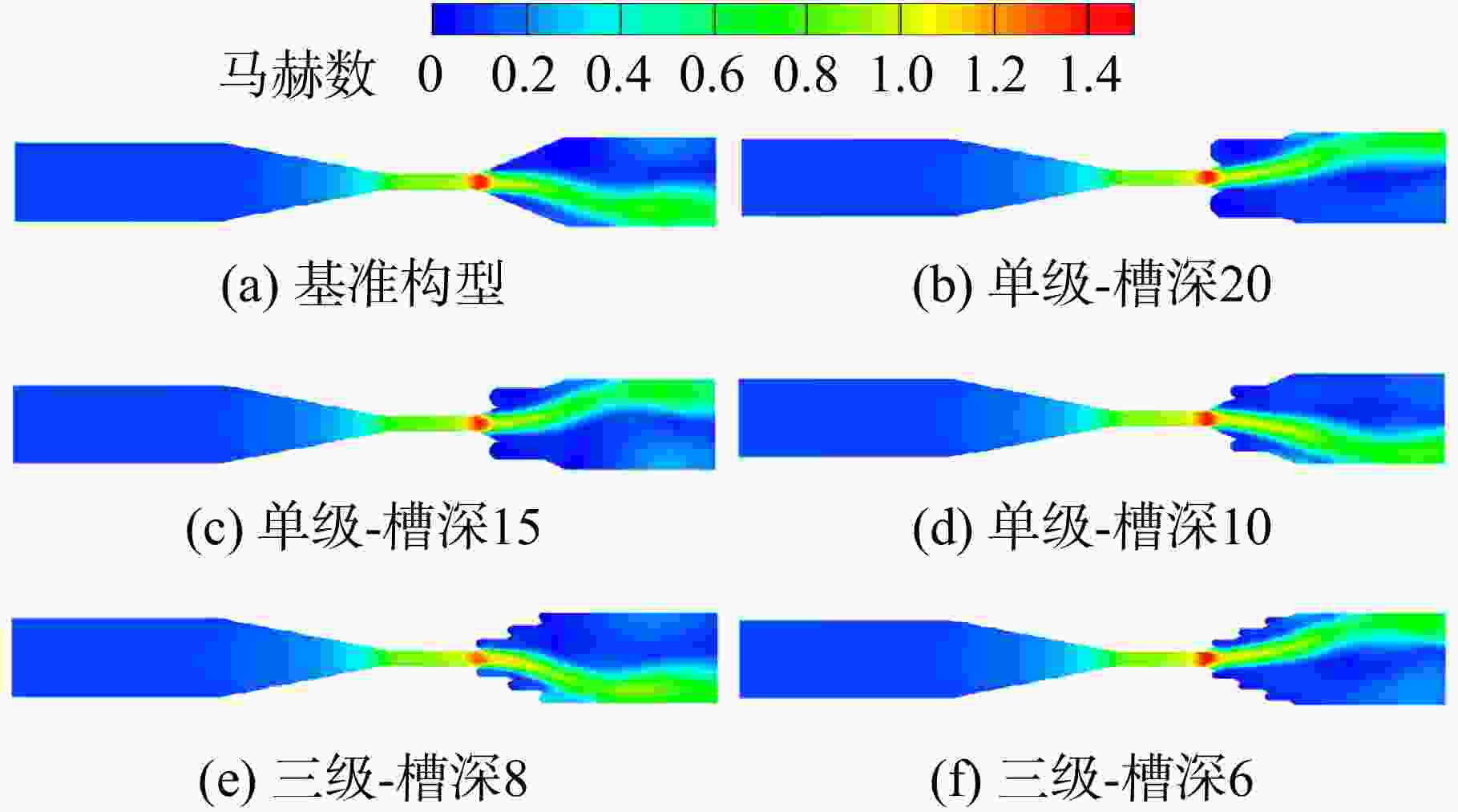
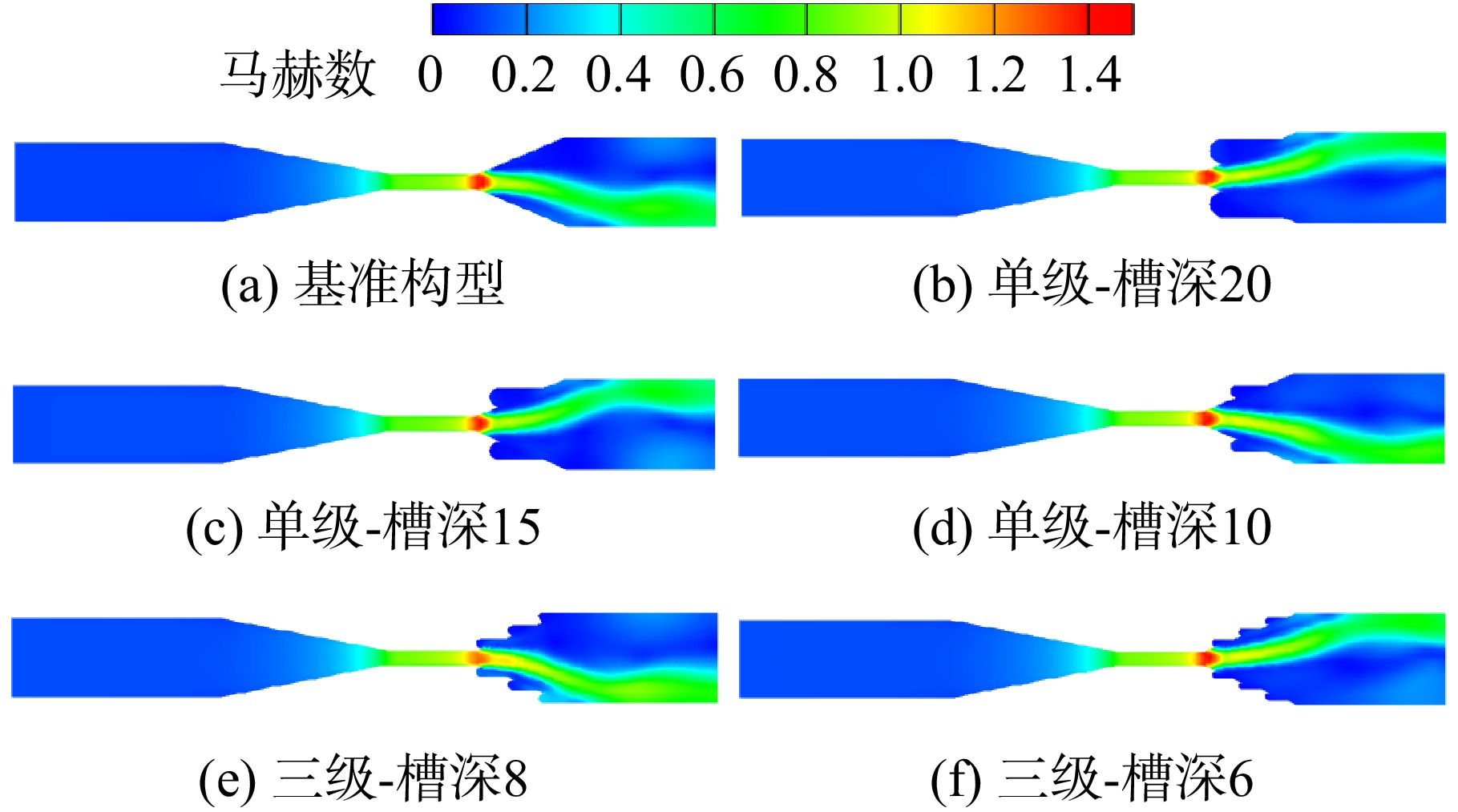
图 7 冷态各构型马赫数分布云图
Figure 7. Mach number distribution contour for various configurations in cold state
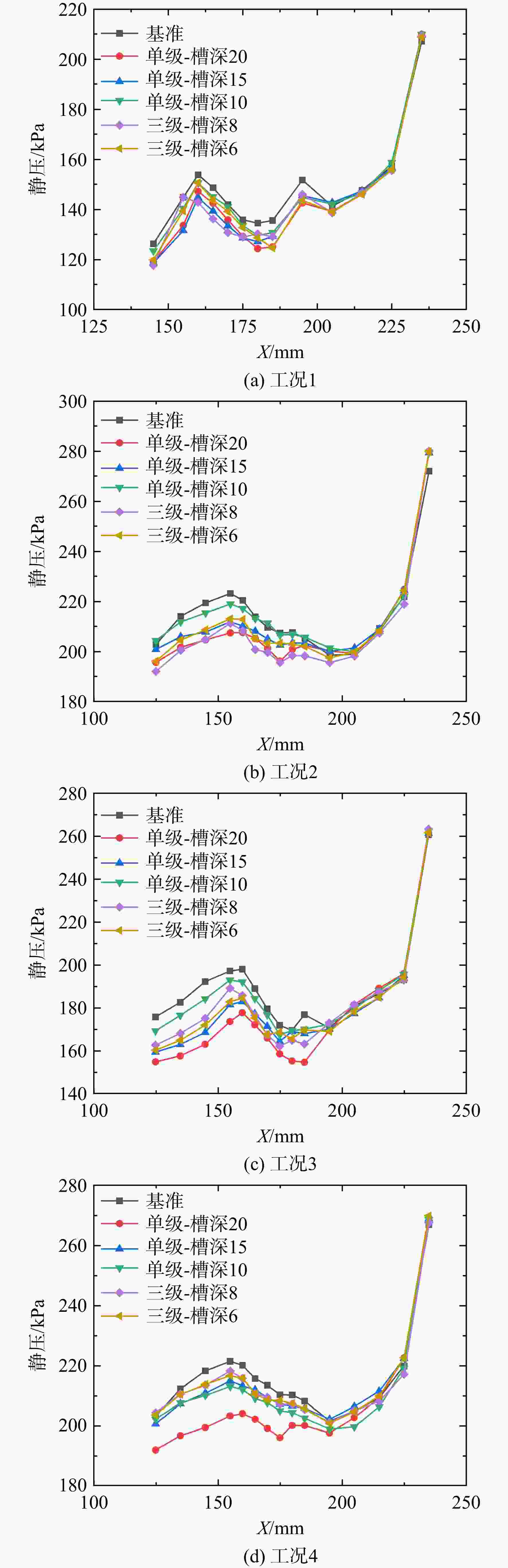
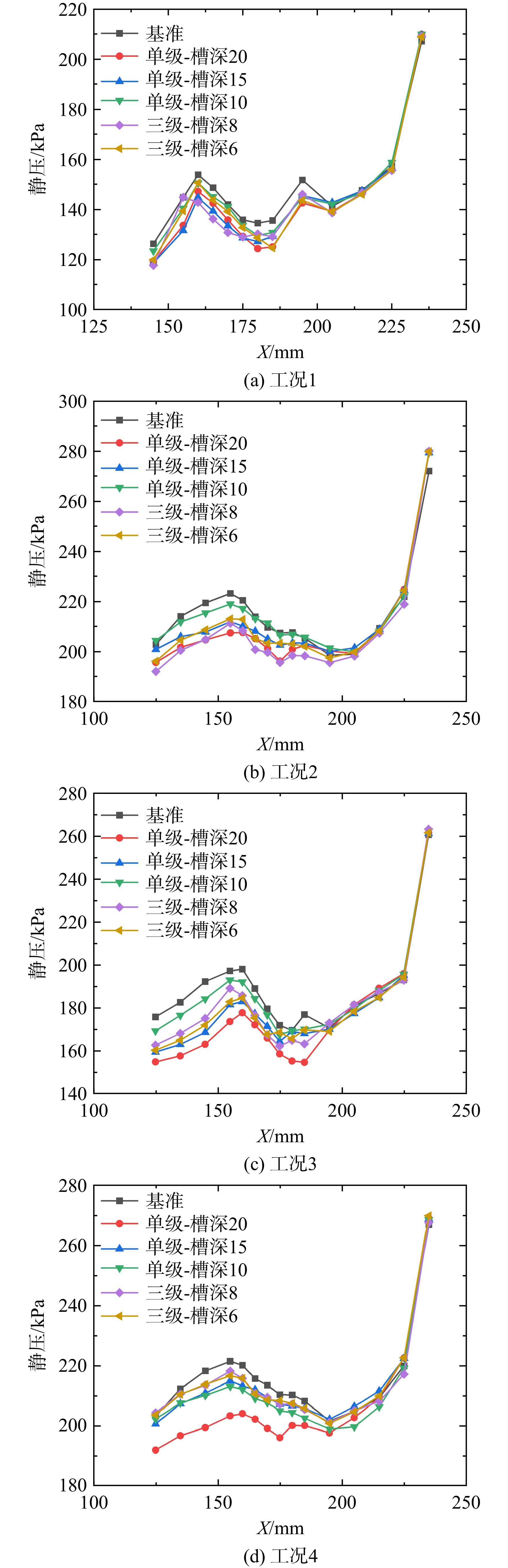
图 8 不同工况最大静压变化曲线
Figure 8. Maximum static pressure variation curves for different operating conditions
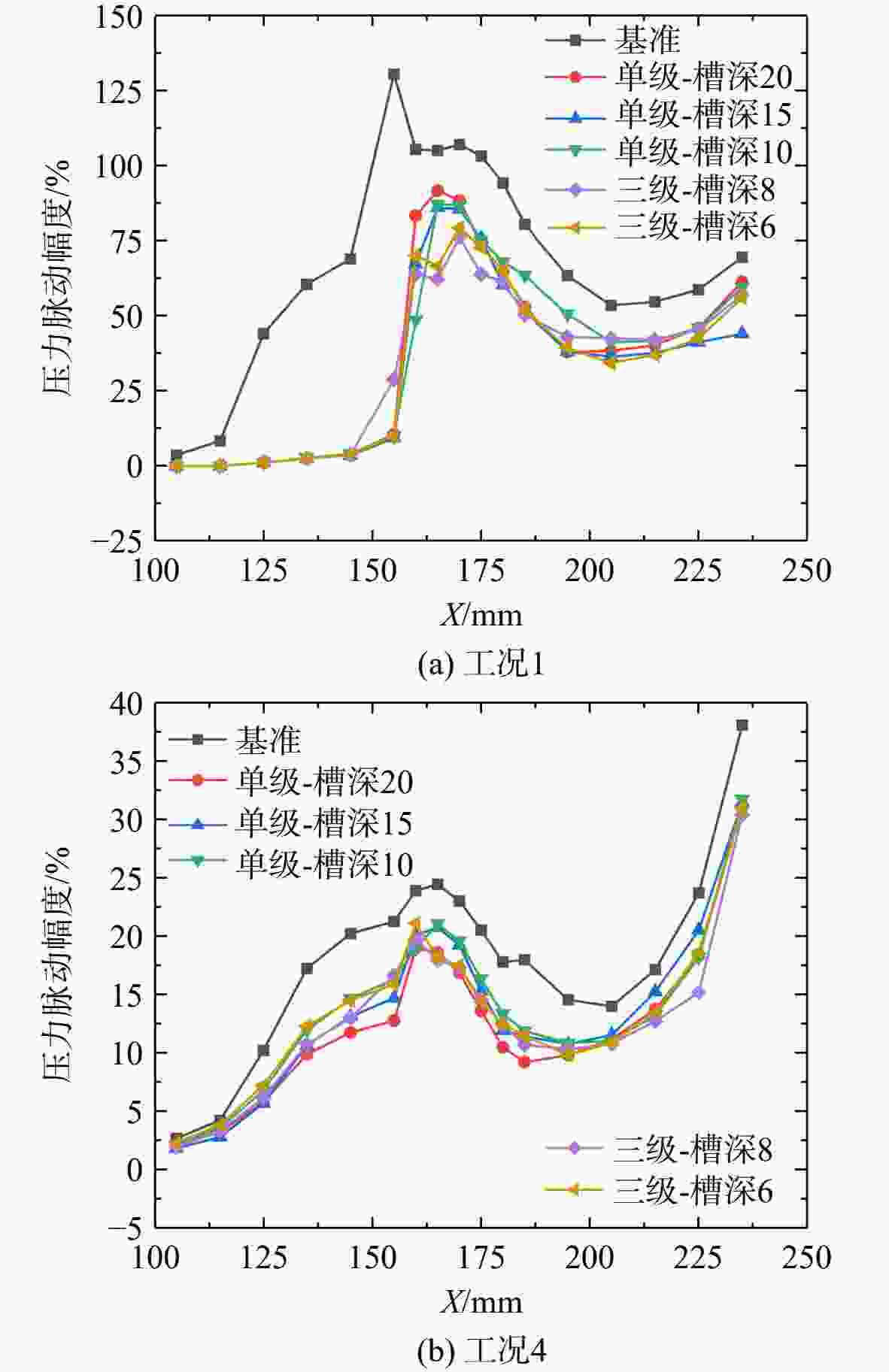
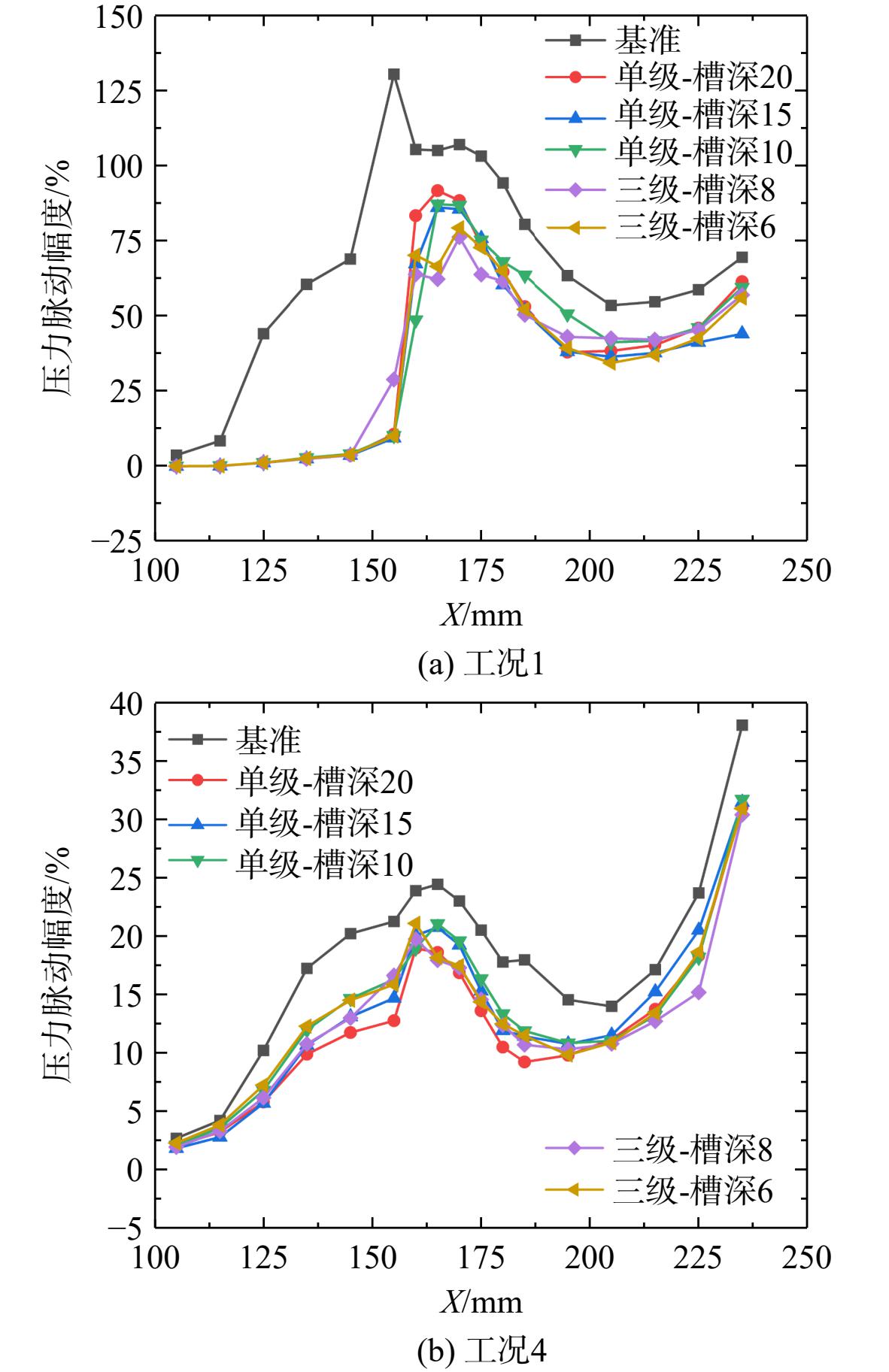
图 9 不同构型各截面压力脉动幅度变化曲线
Figure 9. Pressure fluctuation amplitude variation curves for different configurations at various cross-sections
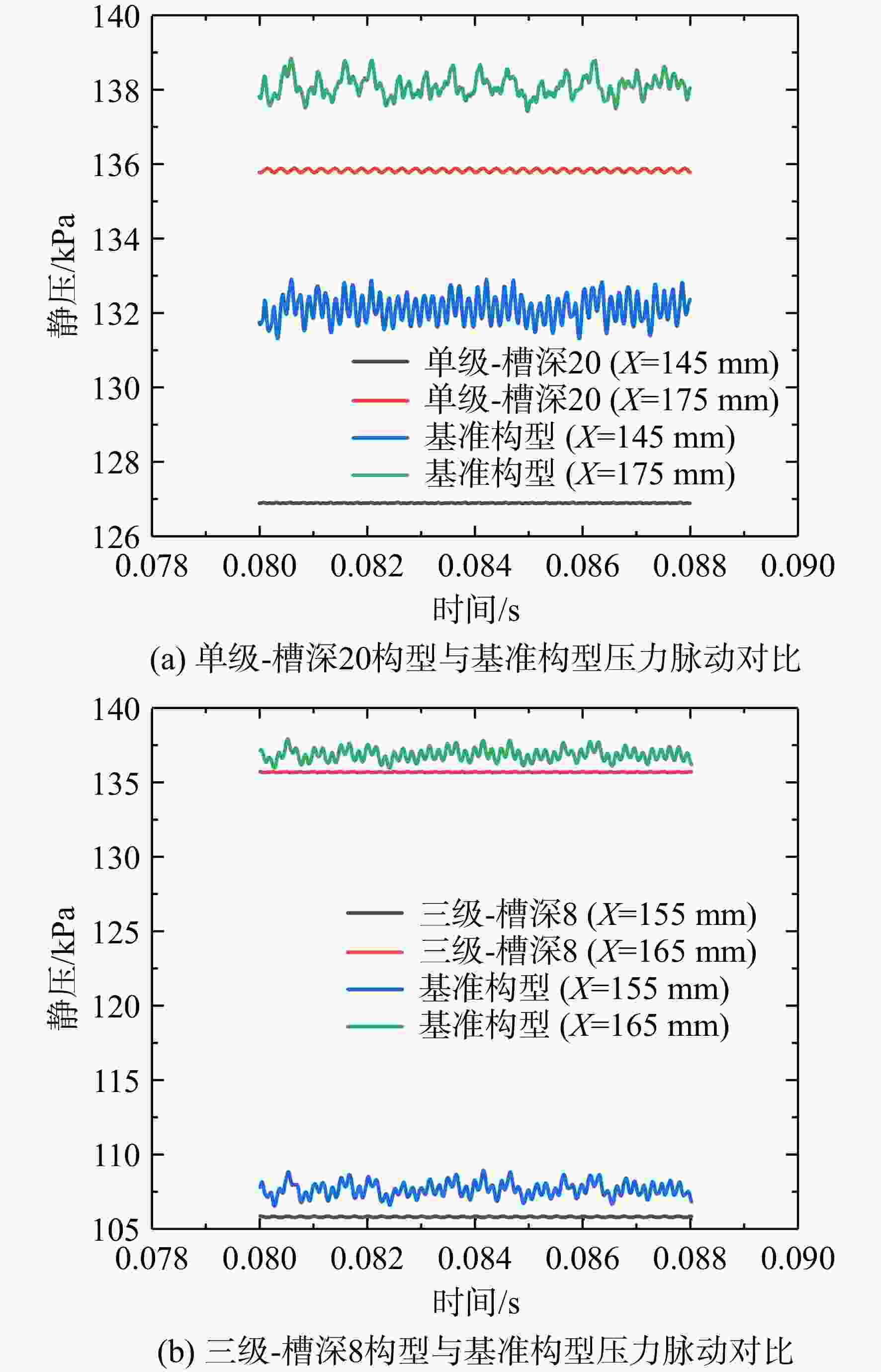
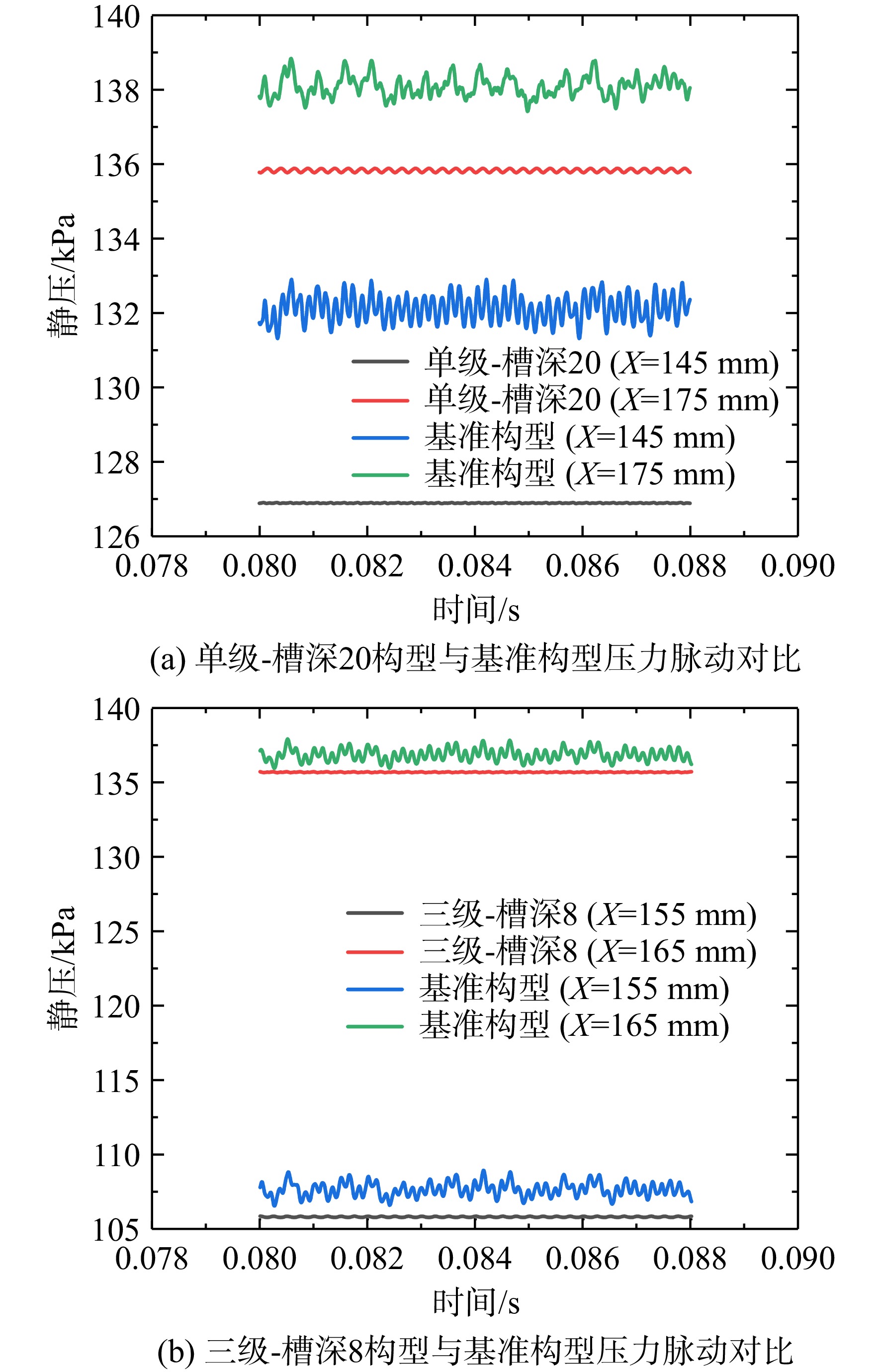
图 10 工况3平均压力脉动随时间的变化曲线
Figure 10. Variation of average pressure fluctuation with time under operating condition 3
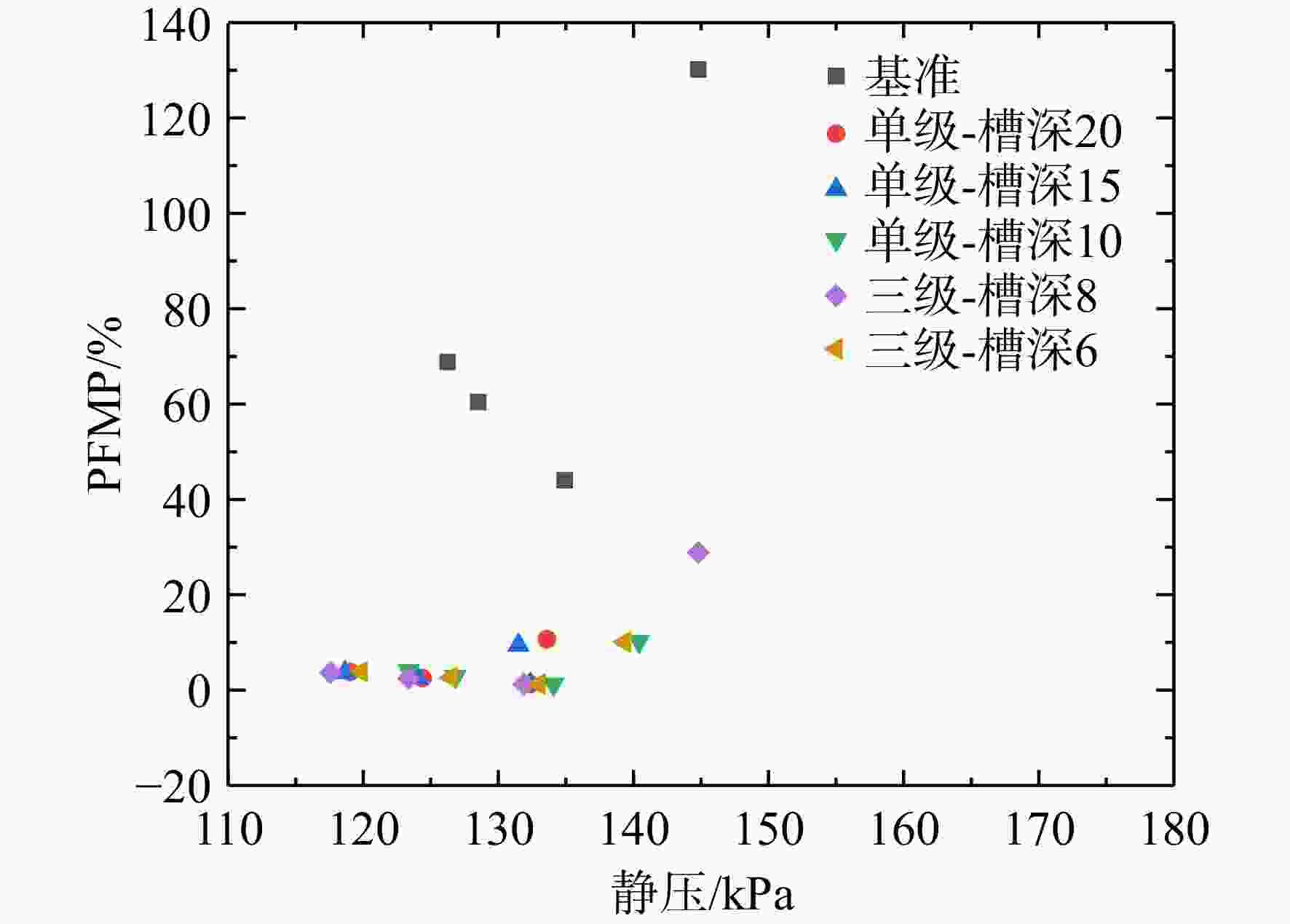
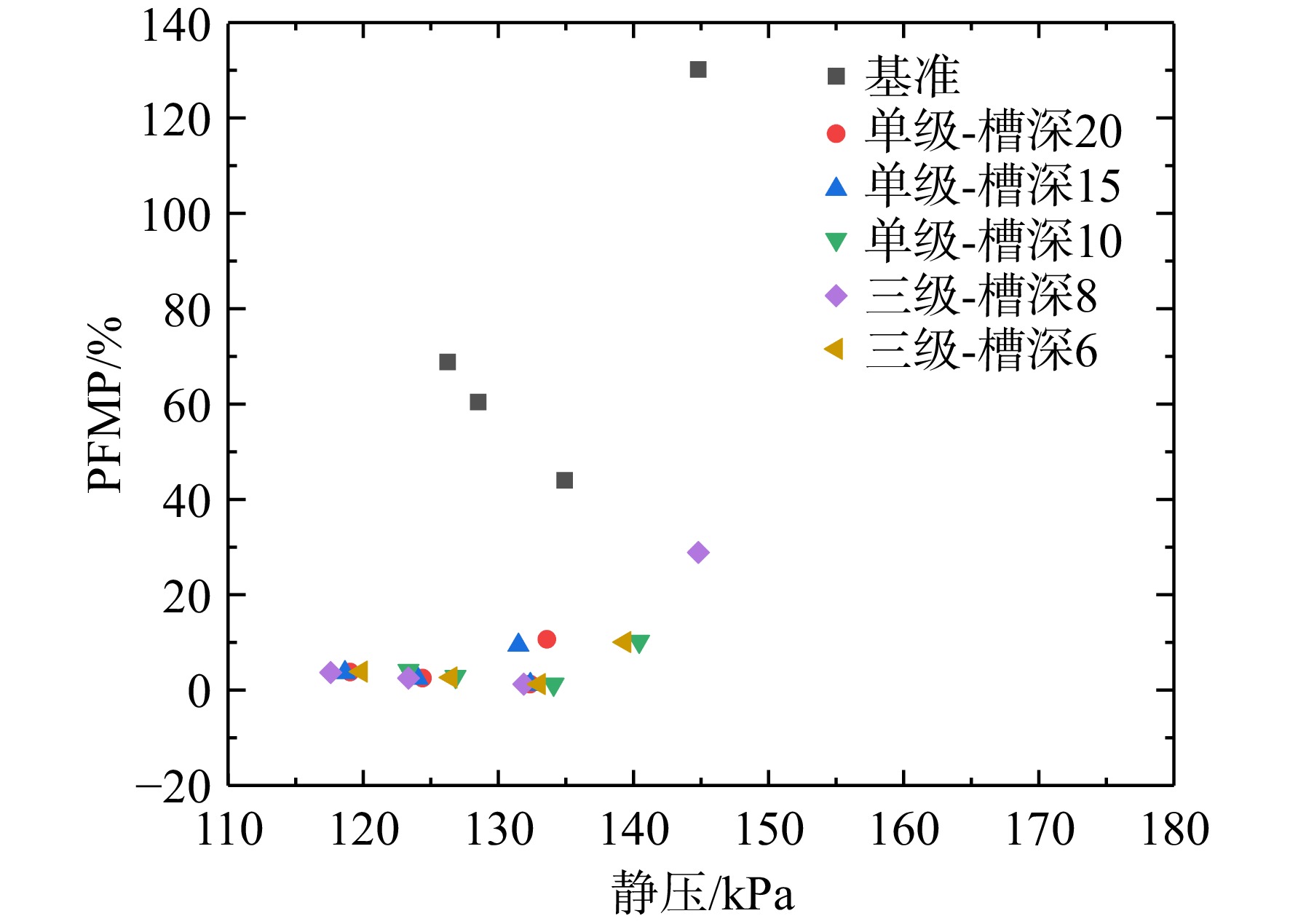
图 11 燃烧室喉道段静压与PFMP
Figure 11. Static pressure and PFMP in the combustion chamber throat section
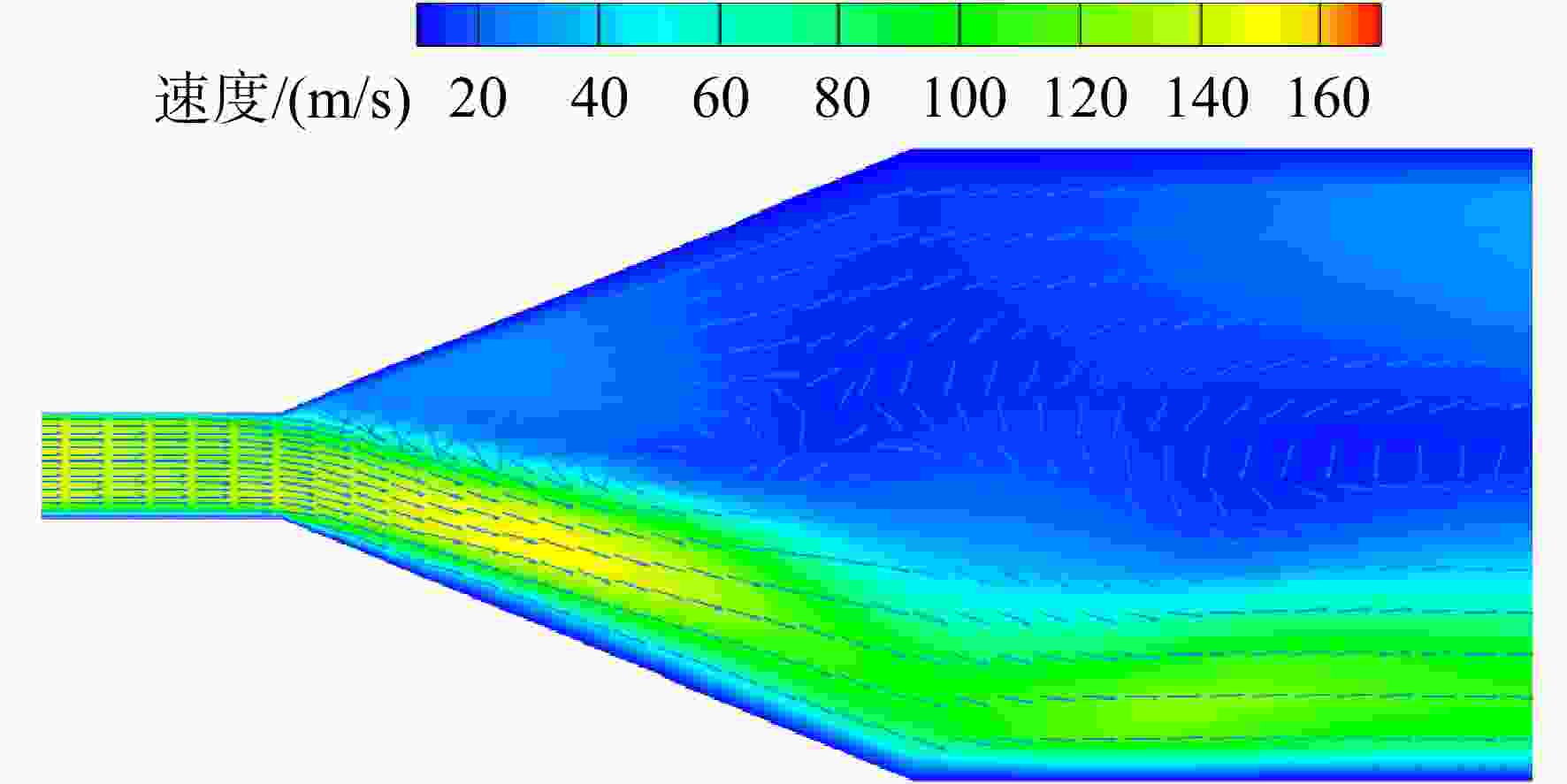
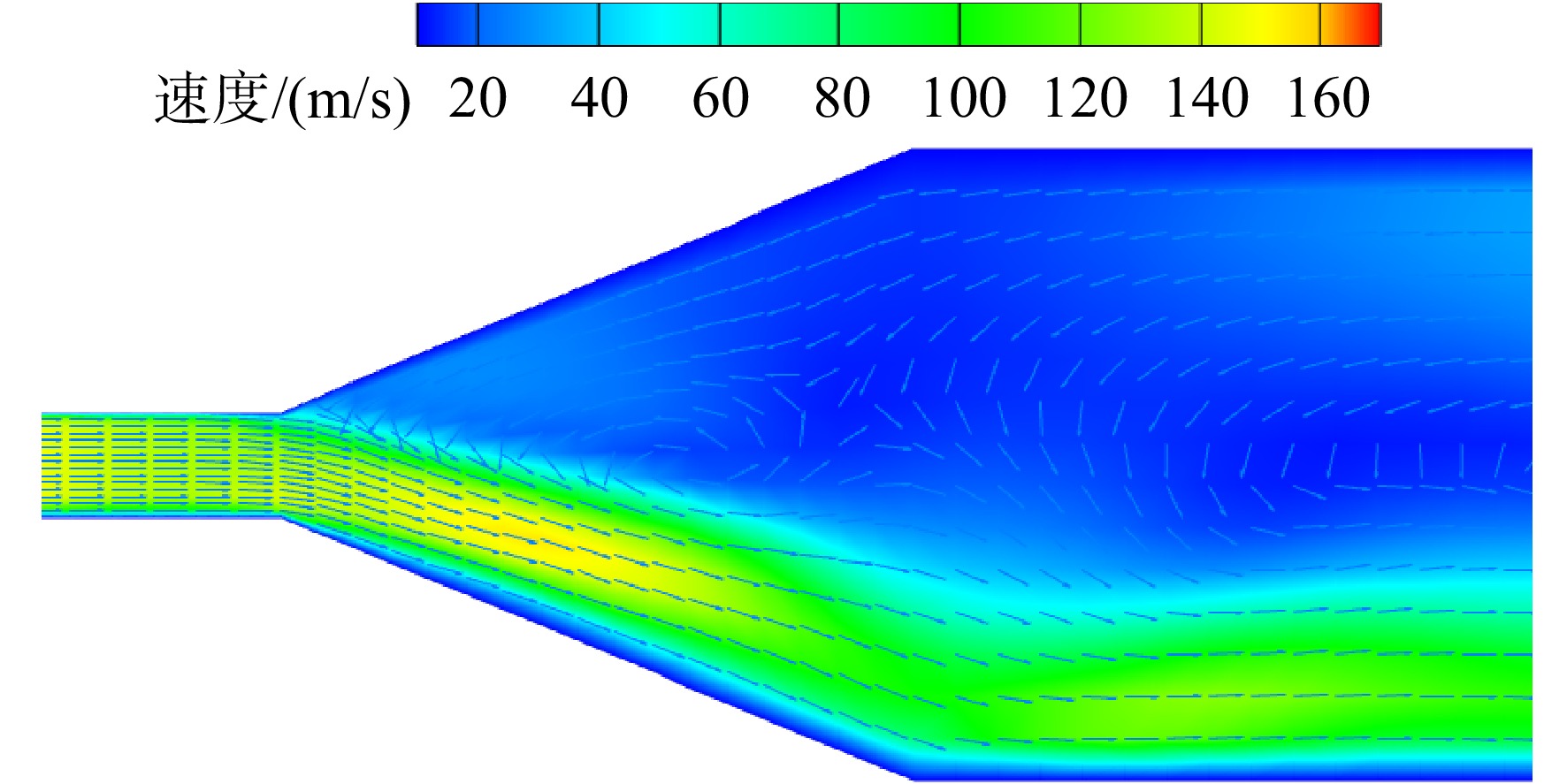
图 12 基准构型中间截面流场图
Figure 12. Flow field diagram of the baseline configuration at the mid-span cross-section
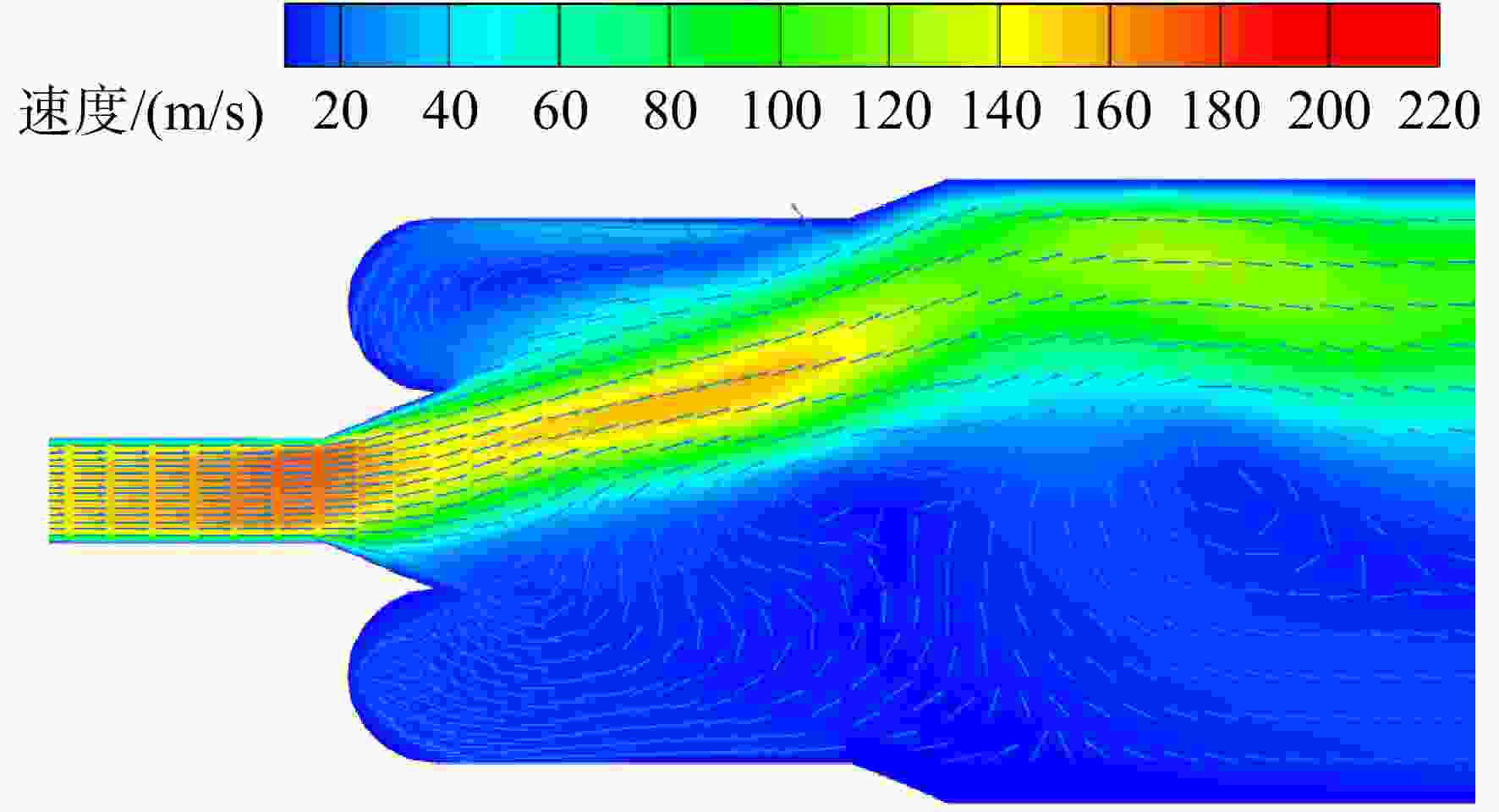
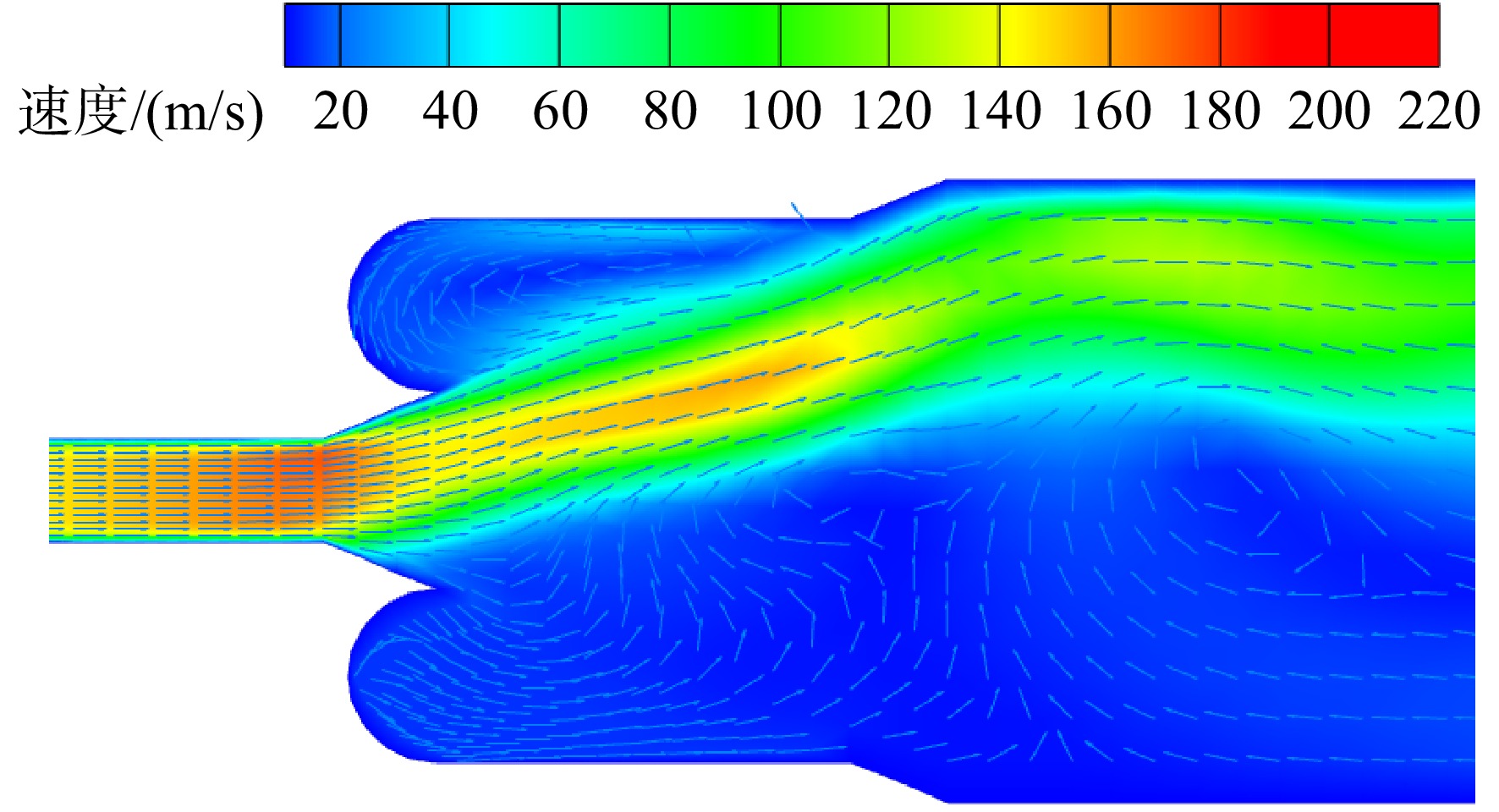
图 13 单级-槽深20构型中间截面流场图
Figure 13. Flow field diagram of the single-stage-20 slot depth configuration at the mid-span cross-section
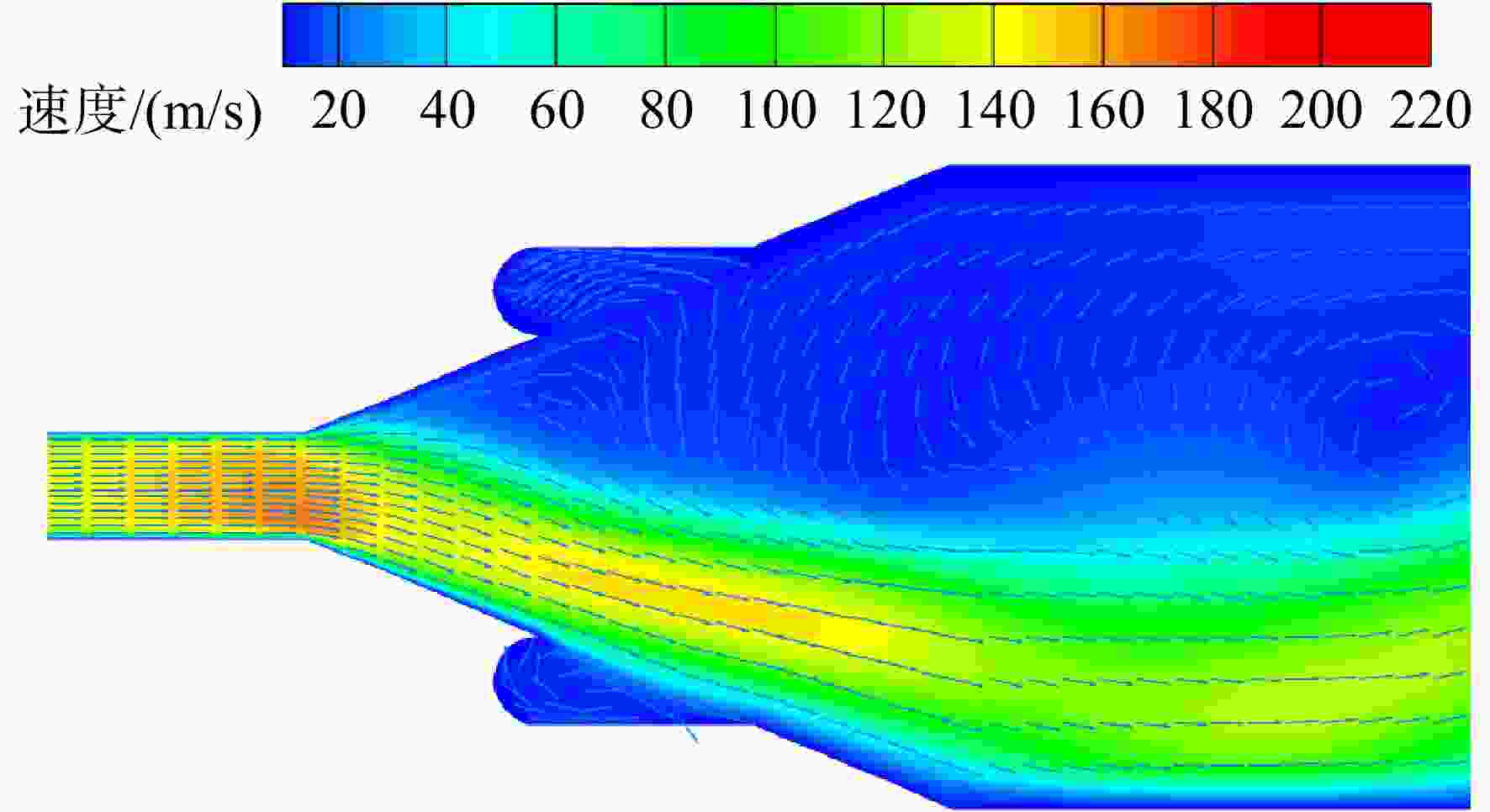
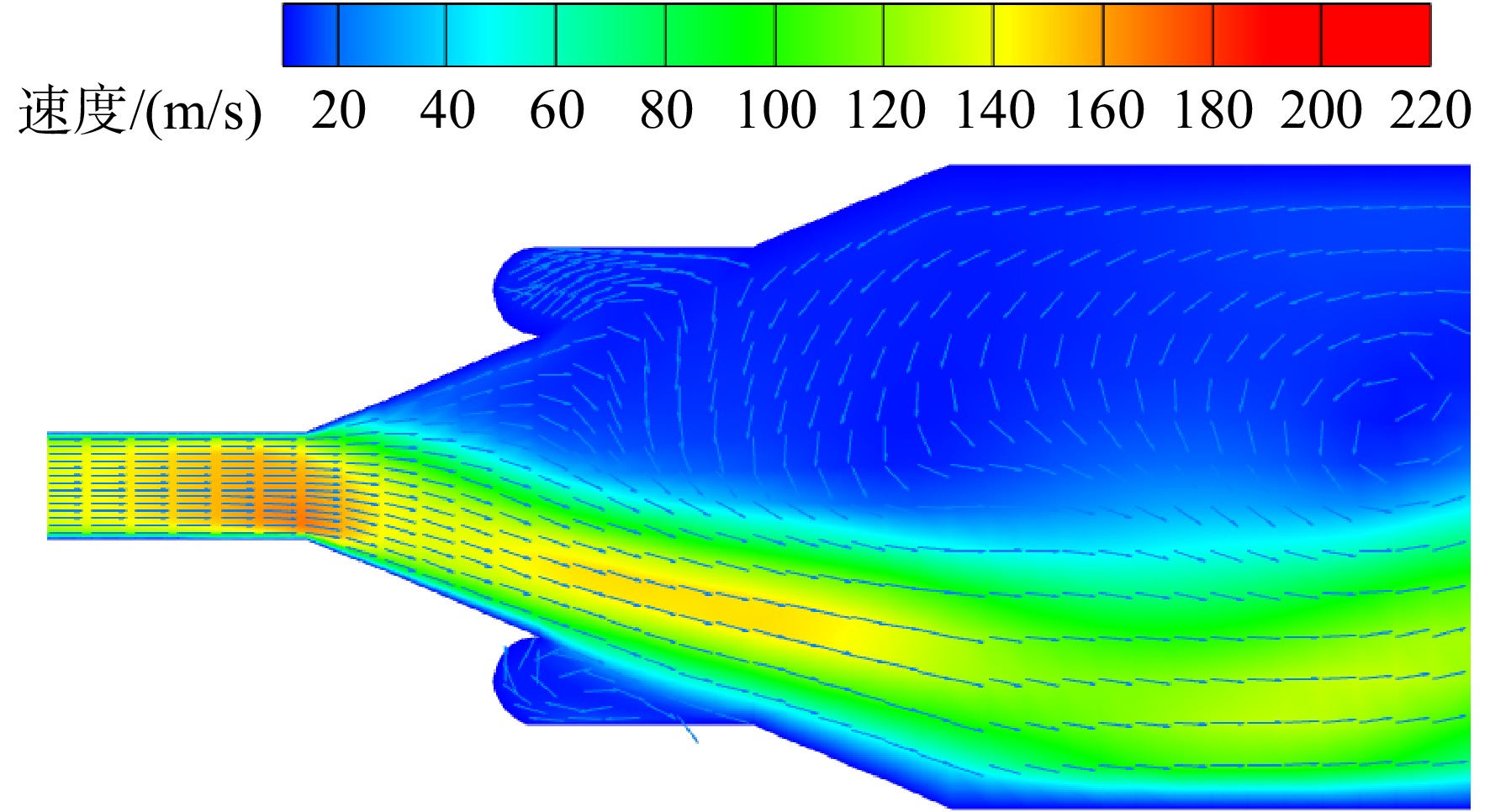
图 14 单级-槽深10中间截面流场图
Figure 14. Flow field diagram of the single-stage-10 slot depth configuration at the mid-span cross-section
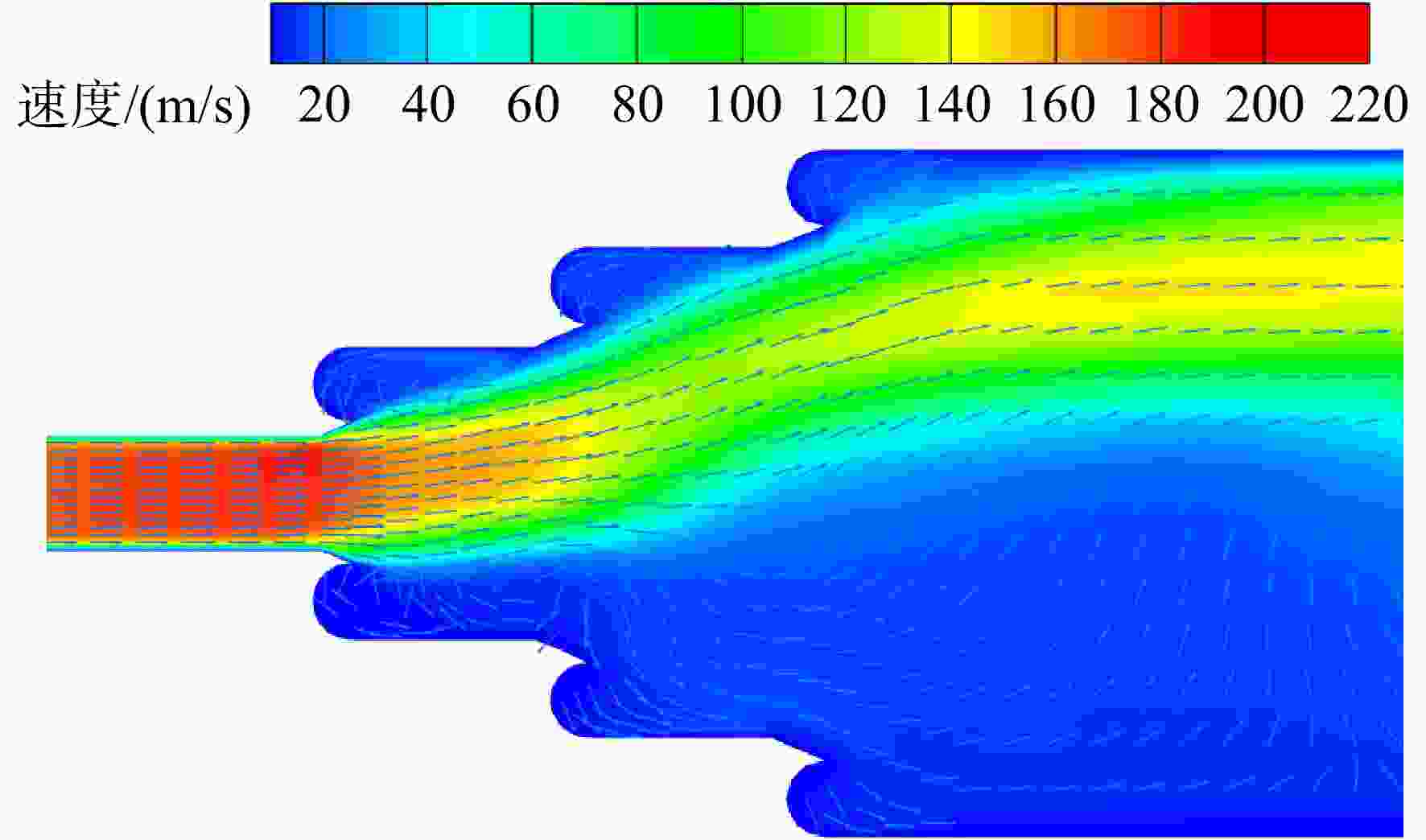
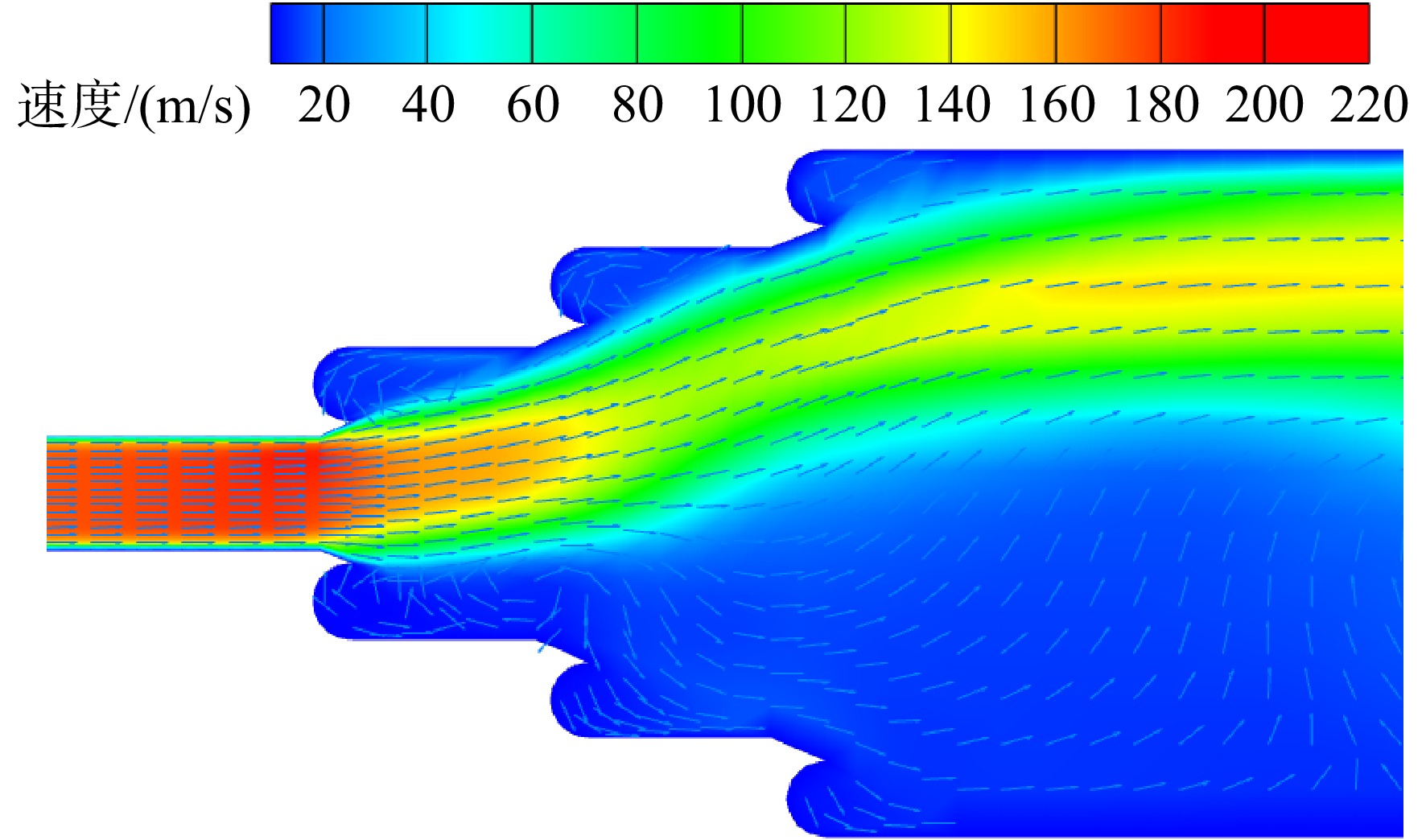
图 15 三级-槽深8中间截面流场图
Figure 15. Flow field diagram of the third-stage-8 slot depth configuration at the mid-span cross-section
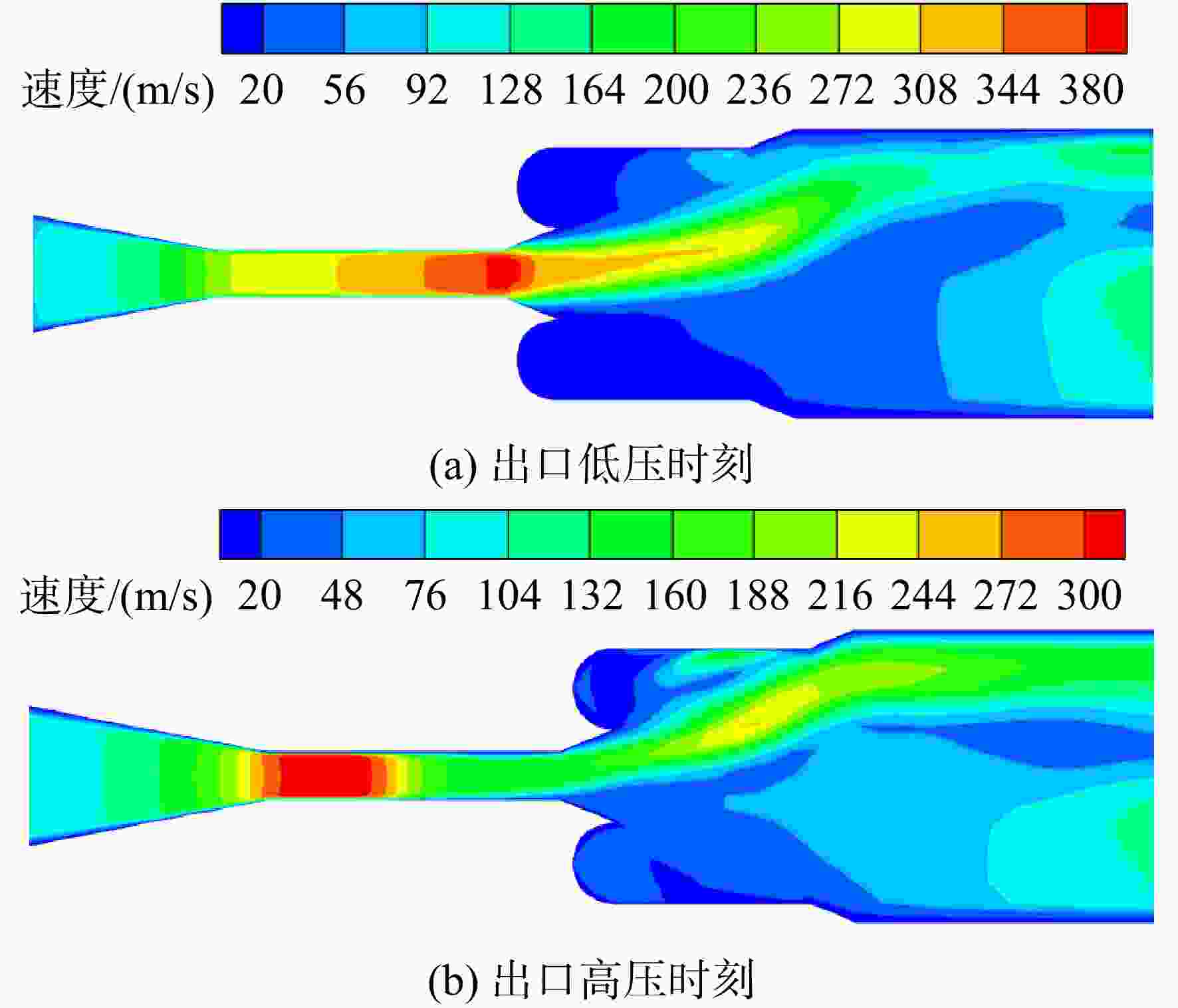
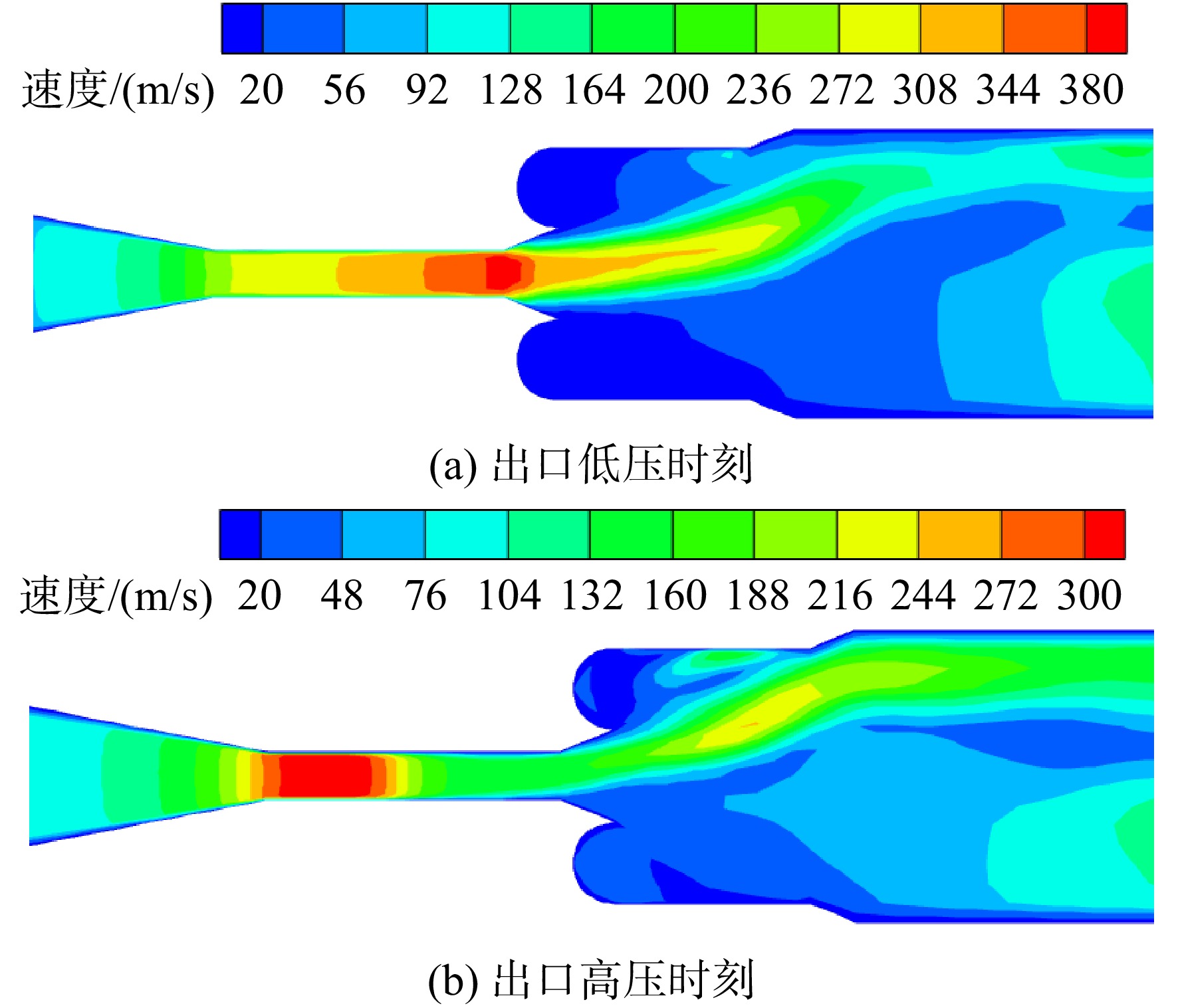
图 16 单级-槽深20构型低压高压时刻流场对比
Figure 16. Flow field comparison of the single-stage-20 slot depth configuration at low-pressure and high-pressure moments
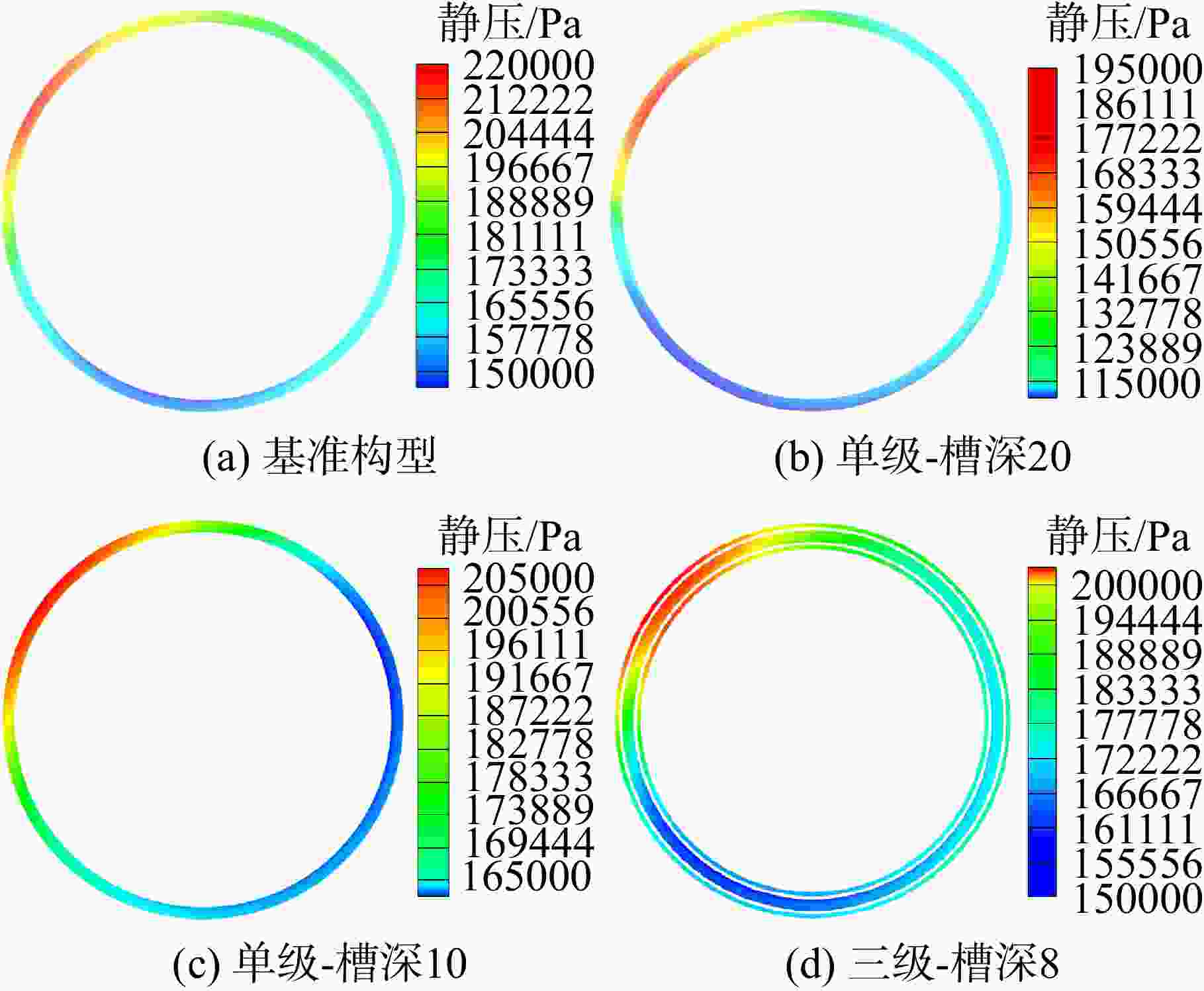
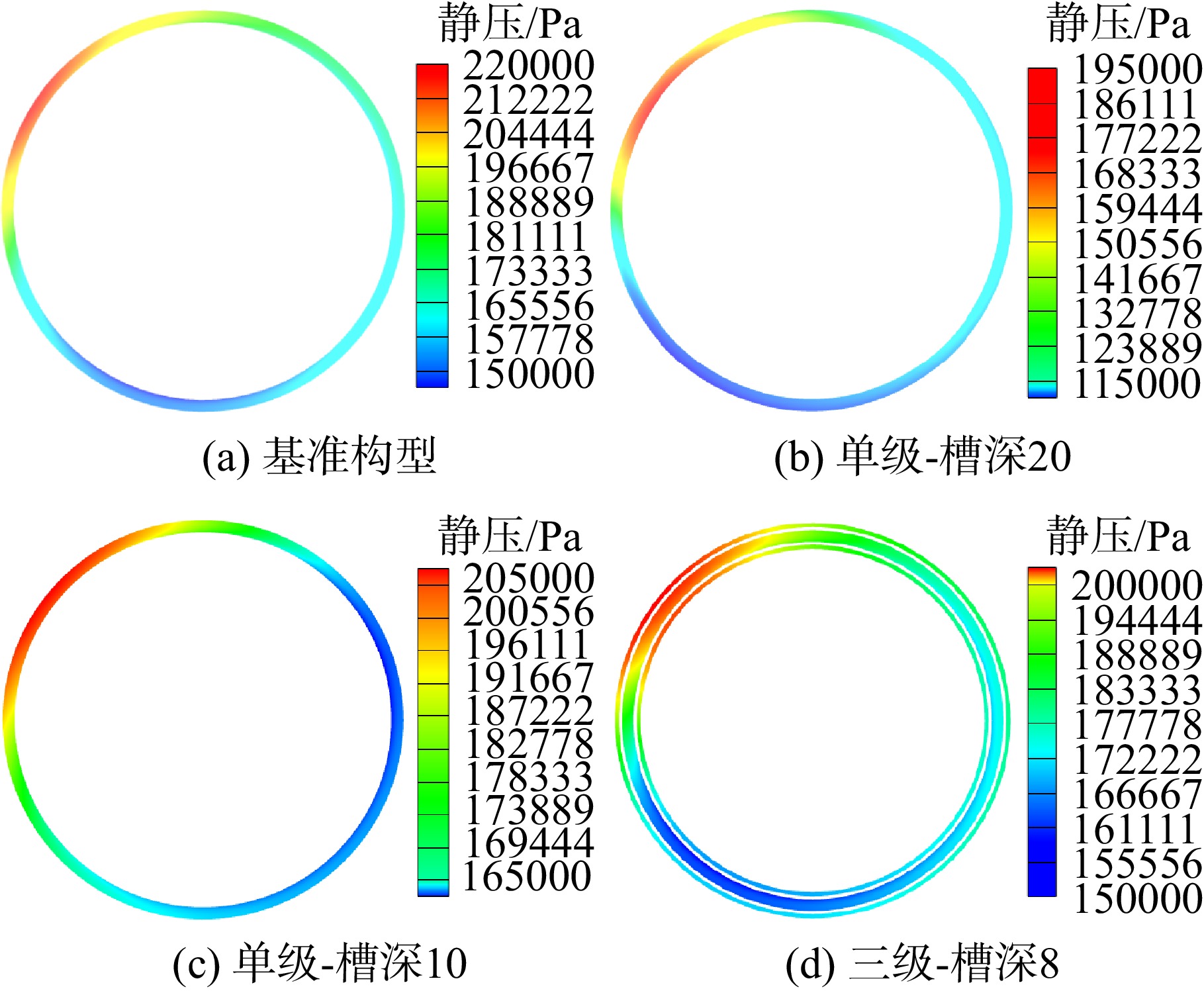
图 17 轴向位置X=155 mm处截面静压云图
Figure 17. Cross-sectional static pressure contour plot at axial position X=155 mm
表 1 构型尺寸参数
Table 1. Configuration dimension parameters
mm 构型 n L R L1 L2 L3 L4 单级-槽深10 1 10 2.08 11.67 10.00 0 0 单级-槽深15 1 15 3.13 8.25 8.00 0 0 单级-槽深20 1 20 4.17 5.83 5.00 0 0 三级-槽深6 3 6 1.25 4.00 3.00 3.00 3.00 三级-槽深8 3 8 1.67 1.50 2.50 2.50 0  下载: 导出CSV
表 2 拟合结果与实验结果比较
Table 2. Comparison of fitting results and experimental results
参数 实验结果 拟合结果 波峰压力/Pa 240000 240000 波谷压力/Pa 120000 120000 平均压力/Pa 125026 124907 周期/ms 0.224 0.224 频率/Hz 4100 4100
下载: 导出CSV
表 3 冷态各构型进出口总压损失
Table 3. Total pressure loss at inlet and outlet for various configurations in cold state
Pa 构型 入口总压 出口总压 压力损失 基准 200000 120875 79125 单级-槽深20 200000 121458 78542 单级-槽深15 200000 117081 82919 单级-槽深10 200000 126115 73885 三级-槽深8 200000 124670 75330 三级-槽深6 200000 119630 80370
下载: 导出CSV
表 4 不同工况的参数设置
Table 4. Parameter settings for different operating conditions
工况 p1/Pa a p3/Pa 1 105000 − 80000 105000 2 105000 − 80000 175000 3 131722 − 80000 131722 4 90000 − 80000 180000
下载: 导出CSV
表 5 不同工况压力抑制率及标准差
Table 5. Pressure suppression rate and standard deviation for different operating conditions
% 构型 压力抑制率 标准差 工况1 工况2 工况3 工况4 单级-槽深20 4.36 7.05 10.23 8.22 2.12 单级-槽深15 5.93 5.06 7.65 2.96 1.69 单级-槽深10 2.16 1.88 2.99 3.77 0.74 三级-槽深8 7.18 5.33 6.20 1.47 2.17 三级-槽深6 2.10 4.52 6.81 2.17 1.88
下载: 导出CSV
-
[1] Wolański P. Detonative propulsion[J]. Proceedings of the Combustion Institute, 2013, 34(1): 125-158. doi: 10.1016/j.proci.2012.10.005 [2] Lu F K, Braun E M. Rotating detonation wave propulsion: experimental challenges, modeling, and engine concepts[J]. Journal of Propulsion and Power, 2014, 30(5): 1125-1142. doi: 10.2514/1.B34802 [3] Kailasanath K. Review of propulsion applications of detonation waves[J]. AIAA Journal, 2000, 38(9): 1698-1708. doi: 10.2514/2.1156 [4] Roy G D, Frolov S M, Borisov A A, et al. Pulse detonation propulsion: challenges, current status, and future perspective[J]. Progress in Energy and Combustion Science, 2004, 30(6): 545-672. [5] Zeldovich Y B. To the question of energy use of detonation combustion[J]. Journal of Propulsion and Power, 2006, 22(3): 588-592. doi: 10.2514/1.22705 [6] 芮长胜, 武郁文, 王晓东, 等. 旋转爆震燃烧航空涡轮发动机研究综述[J]. 航空发动机, 2023, 49(2): 1-12, F0002. Rui Changsheng, Wu Yuwen, Wang Xiaodong, et al. Review of research on rotating detonation turbine engine[J]. Aeroengine, 2023, 49(2): 1-12, F0002. (in Chinese doi: 10.13477/j.cnki.aeroengine.2023.02.001Rui Changsheng, Wu Yuwen, Wang Xiaodong, et al. Review of research on rotating detonation turbine engine[J]. Aeroengine, 2023, 49(2): 1-12, F0002. (in Chinese) doi: 10.13477/j.cnki.aeroengine.2023.02.001 [7] Hishida M, Fujiwara T, Wolanski P. Fundamentals of rotating detonations[J]. Shock Waves, 2009, 19(1): 1-10. doi: 10.1007/s00193-008-0178-2 [8] 彭畅新, 王治武, 郑龙席, 等. 吸气式脉冲爆震发动机反传数值研究[J]. 西北工业大学学报, 2013, 31(2): 283-288. Peng Changxin, Wang Zhiwu, Zheng Longxi, et al. Numerical investigation of backpropagation of air-breathing pulse detonation engine[J]. Journal of Northwestern Polytechnical University, 2013, 31(2): 283-288. (in Chinese doi: 10.3969/j.issn.1000-2758.2013.02.023Peng Changxin, Wang Zhiwu, Zheng Longxi, et al. Numerical investigation of backpropagation of air-breathing pulse detonation engine[J]. Journal of Northwestern Polytechnical University, 2013, 31(2): 283-288. (in Chinese) doi: 10.3969/j.issn.1000-2758.2013.02.023 [9] Schwer D, Kailasanath K. Feedback into mixture plenums in rotating detonation engines[R]. AIAA-2012-0617, 2012. [10] Gustavsson J, Nori V, Segal C. Inlet/engine interactions in an axisymmetric pulse detonation engine system[J]. Journal of Propulsion and Power, 2003, 19(2): 282-286. doi: 10.2514/2.6109 [11] Nori V, Lerma N, Gustavsson J, et al. Forced oscillations in a mixed-compression inlet at Mach 3.5 for pulse detonation engine systems[J]. Journal of Fluids Engineering, 2006, 128(3): 494-506. doi: 10.1115/1.2174061 [12] Ma Fuhua, Choi J Y, Yang V. Numerical modeling of valveless airbreathing pulse detonation engine[R]. AIAA-2005-0227, 2005. [13] Brophy C, Werner S, Sinibaldi J. Performance characterization of a valveless pulse detonation engine[R]. AIAA-2003-1344, 2003. [14] Ji Zifei, Zhang Bo, Zhang Huiqiang, et al. Reduction of feedback pressure perturbation for rotating detonation combustors[J]. Aerospace Science and Technology, 2022, 126: 107635. doi: 10.1016/j.ast.2022.107635 [15] Yang Xingkui, Song Feilong, Wu Yun, et al. Suppression of pressure feedback of the rotating detonation combustor by a Tesla inlet configuration[J]. Applied Thermal Engineering, 2022, 216: 119123. doi: 10.1016/j.applthermaleng.2022.119123 [16] Yang Xingkui, Song Feilong, Wu Yun, et al. Experimental study on suppressing pressure feedback and combustion product backflow of the rotating detonation engine[J]. Aerospace Science and Technology, 2023, 141: 108523. doi: 10.1016/j.ast.2023.108523 [17] Meng Haolong, Zheng Quan, Weng Chunsheng, et al. Propagation mode analysis of rotating detonation waves fueled by liquid kerosene[J]. Acta Astronautica, 2021, 187: 248-258. doi: 10.1016/j.actaastro.2021.06.043 [18] Athmanathan V, Braun J, Ayers Z, et al. Detonation structure evolution in an optically-accessible non-premixed H2-Air RDC using MHz rate imaging[R]. AIAA-2020-1178, 2020. [19] 莫建伟, 严宇, 杨建文. 旋转爆震反压扰动下超声速进气道流动特性数值分析[J]. 火箭推进, 2022, 48(6): 85-91. Mo Jianwei, Yan Yu, Yang Jianwen. Numerical study on flow characteristics of supersonic inlet disturbed by backpressure of rotating detonation[J]. Journal of Rocket Propulsion, 2022, 48(6): 85-91. (in Chinese doi: 10.3969/j.issn.1672-9374.2022.06.011Mo Jianwei, Yan Yu, Yang Jianwen. Numerical study on flow characteristics of supersonic inlet disturbed by backpressure of rotating detonation[J]. Journal of Rocket Propulsion, 2022, 48(6): 85-91. (in Chinese) doi: 10.3969/j.issn.1672-9374.2022.06.011 [20] Prakash S, Fiévet R, Raman V. The effect of fuel stratification on the detonation wave structure[R]. AIAA-2019-1511, 2019. [21] Prakash S, Fiévet R, Raman V, et al. Analysis of the detonation wave structure in a linearized rotating detonation engine[J]. AIAA Journal, 2019, 58(12): 5063-5077. doi: 10.2514/1.j058156 [22] Zhao Minghao, Wang Ke, Zhu Yiyuan, et al. Effects of the exit convergent ratio on the propagation behavior of rotating detonations utilizing liquid kerosene[J]. Acta Astronautica, 2022, 193: 35-43. doi: 10.1016/j.actaastro.2021.12.052 [23] Bedick C, Ferguson D H, Billups D, et al. Characterization of rotating detonation engine injector response using acetone PLIF in a lab-scale experimental testing platform[R]. AIAA-2018-4481, 2018. [24] Keller A R, Otomize J, Nair A P, et al. High-diodicity impinging injector design for rocket propulsion enabled by additive manufacturing[R]. AIAA-2022-1265, 2022. [25] Chacon F, Gamba M. Study of parasitic combustion in an optically accessible continuous wave rotating detonation engine[R]. AIAA-2019-0473, 2019. -

 点击查看大图

计量
- 文章访问数: 574
- HTML浏览量: 579
- PDF量: 86
- 被引次数: 0