






State-space inflow model identification for tandem rotor based on viscous vortex particle method
-
摘要:
多旋翼飞行器旋翼间存在气动入流干扰时,飞仿模型一般较难兼具实时性和高置信度。为此,综合考虑计算复杂度和精确度,以纵列双旋翼为例提出了基于黏性涡粒子方法的旋翼状态空间入流模型辨识方法。首先,在Peters-He有限状态尾迹模型的基础上引入压力势叠加方法,构建了纵列双旋翼耦合状态空间入流模型。进一步,通过预设扫频力和双旋翼入流状态提取,基于黏性涡粒子方法得到了辨识状态空间入流模型的原始数据。在上述基础上,引入多变量输出误差状态空间辨识方法,形成了纵列双旋翼入流模型辨识方法。最后,以某小型纵列双旋翼配置为例,开展了悬停状态、前进比为0.1时的双旋翼状态空间入流模型辨识,验证了辨识方法的有效性和可行性。此外,辨识结果指出:前后旋翼准定常入流、一阶纵向入流存在交叉干扰,且前进比为0.1时干扰更大;前旋翼一阶横向入流只在前飞状态下对后旋翼有影响,后旋翼一阶横向入流对前旋翼基本不存在干扰。
-
关键词:
- 入流模型辨识 /
- 纵列双旋翼 /
- 黏性涡粒子 /
- Peters-He有限状态尾迹模型 /
- 扫频输入 /
- 多变量输出误差状态空间模型辨识
Abstract:When aerodynamic inflow interference exists between the rotors of a multi-rotor aircraft, the flight simulation model often struggles to achieve both real-time performance and high fidelity. To address this issue, considering both computational complexity and accuracy, a rotor state-space inflow model identification method based on the viscous vortex particle approach was proposed using tandem rotors as an example. Based on the Peters-He finite state induced inflow model, a pressure potential superposition method was introduced to establish a coupled state-space inflow model for tandem rotors. By applying predefined sweep force functions and extracting the inflow states of the tandem rotors, the original data for identifying the state-space inflow model were obtained using the viscous vortex particle method. On this basis, a multivariable output-error state-space model identification method was introduced, forming the inflow model identification approach for the tandem rotor. Taking a small tandem rotor configuration as an example, the state-space inflow model identification for hover at an advance ratio of 0.1 was conducted, validating the effectiveness and feasibility of the proposed identification method. And the identification results indicated that the quasi-steady inflow and first-order longitudinal inflow of the fore and aft rotors exhibited cross-interference, with more significant interference occurring at an advance ratio of 0.1. Besides, the first-order lateral inflow of the fore rotor affected the aft rotor only in forward flight, while the first-order lateral inflow of the aft rotor had negligible interference on the fore rotor.
-
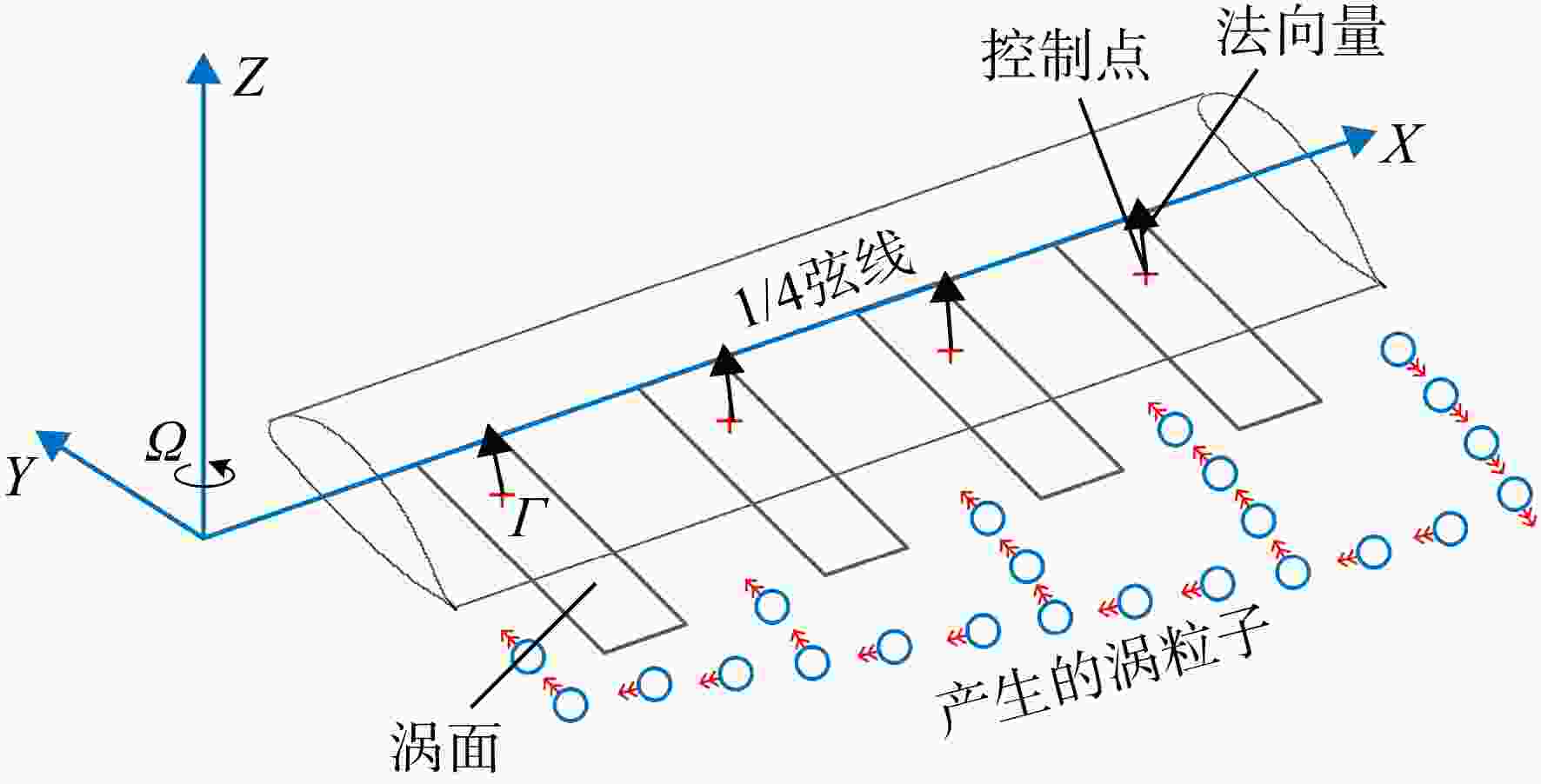
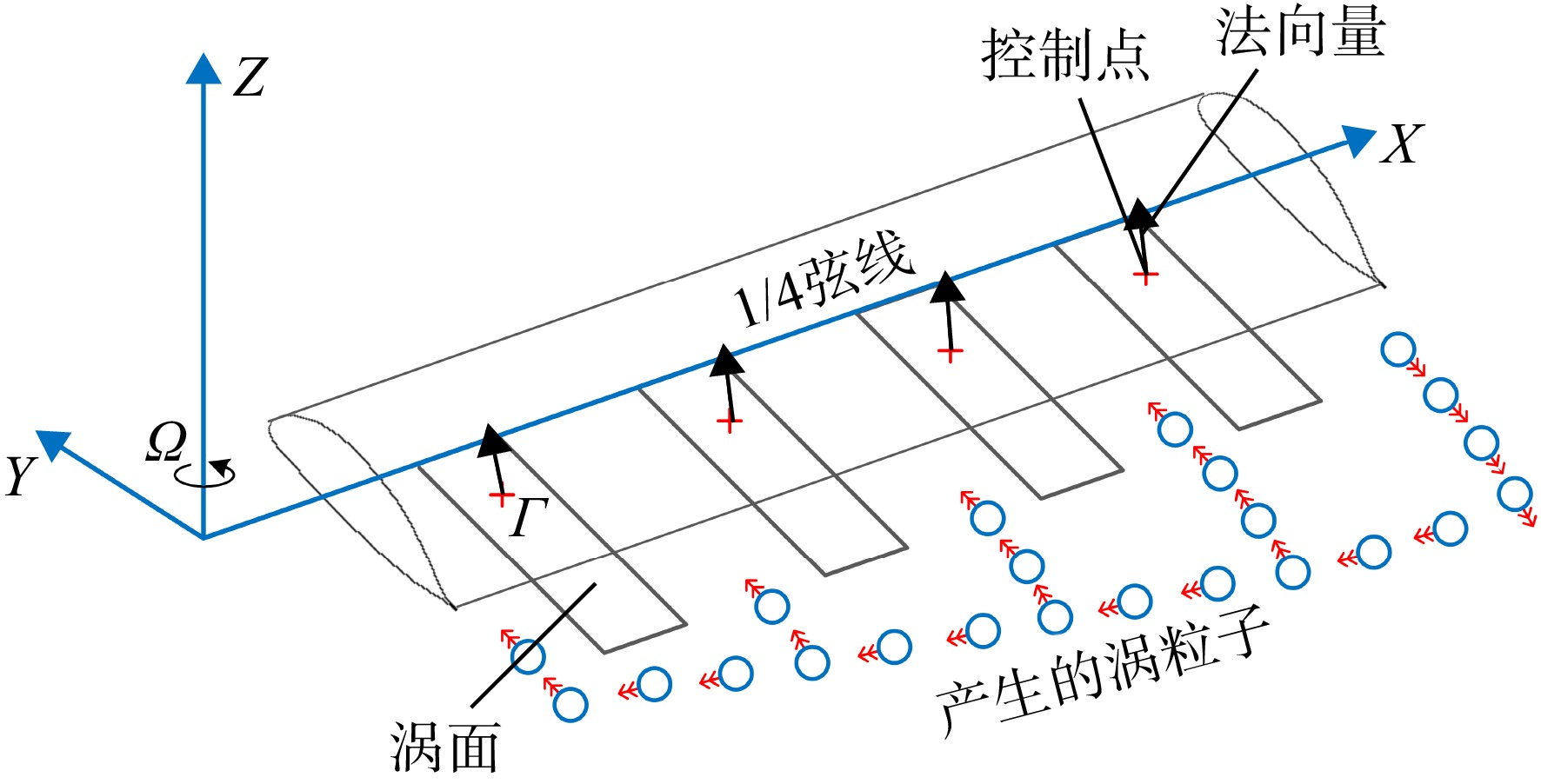
图 2 涡面分布和涡粒子生成
Figure 2. Distribution of vortex sheets and generation of vortex particles
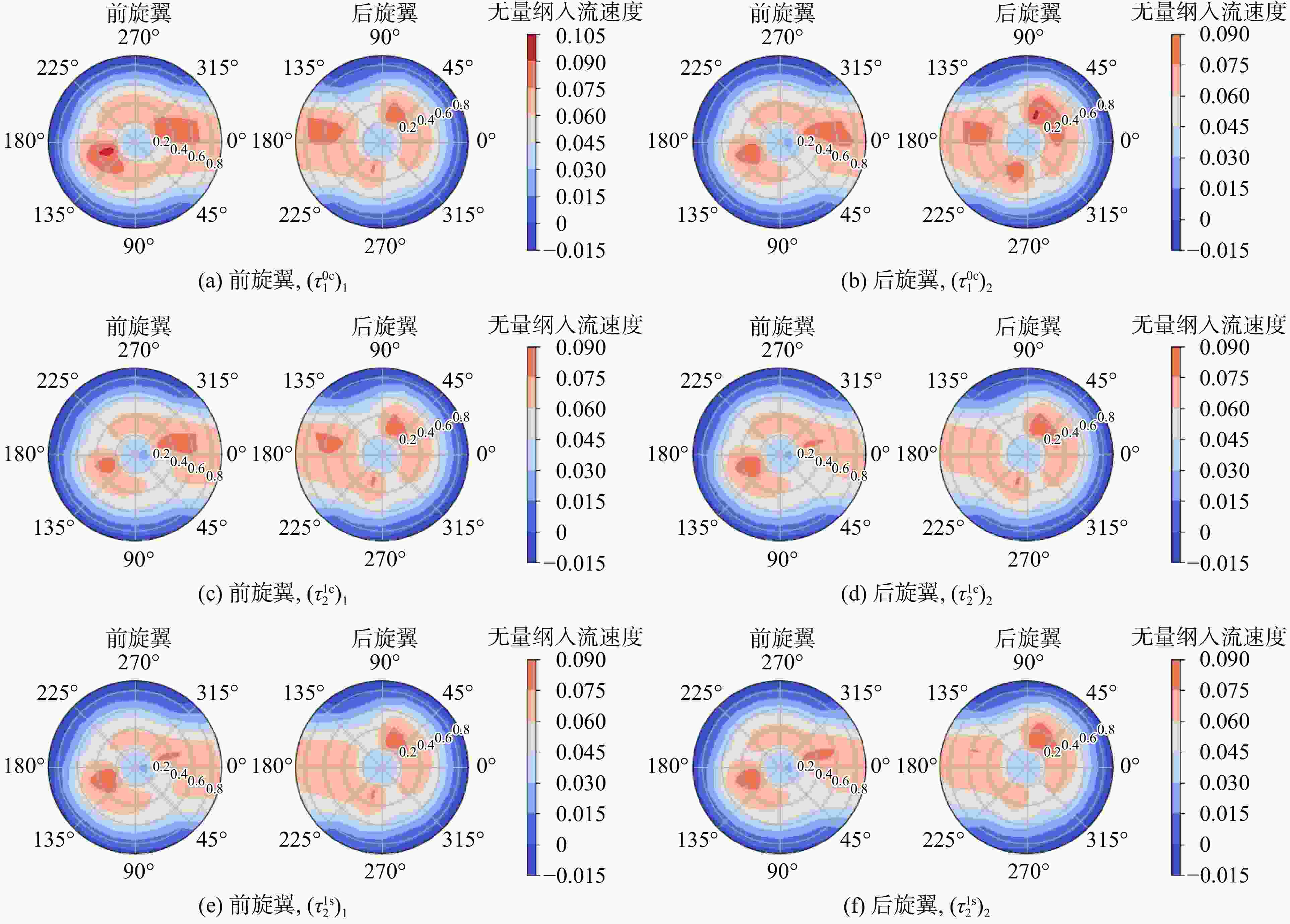
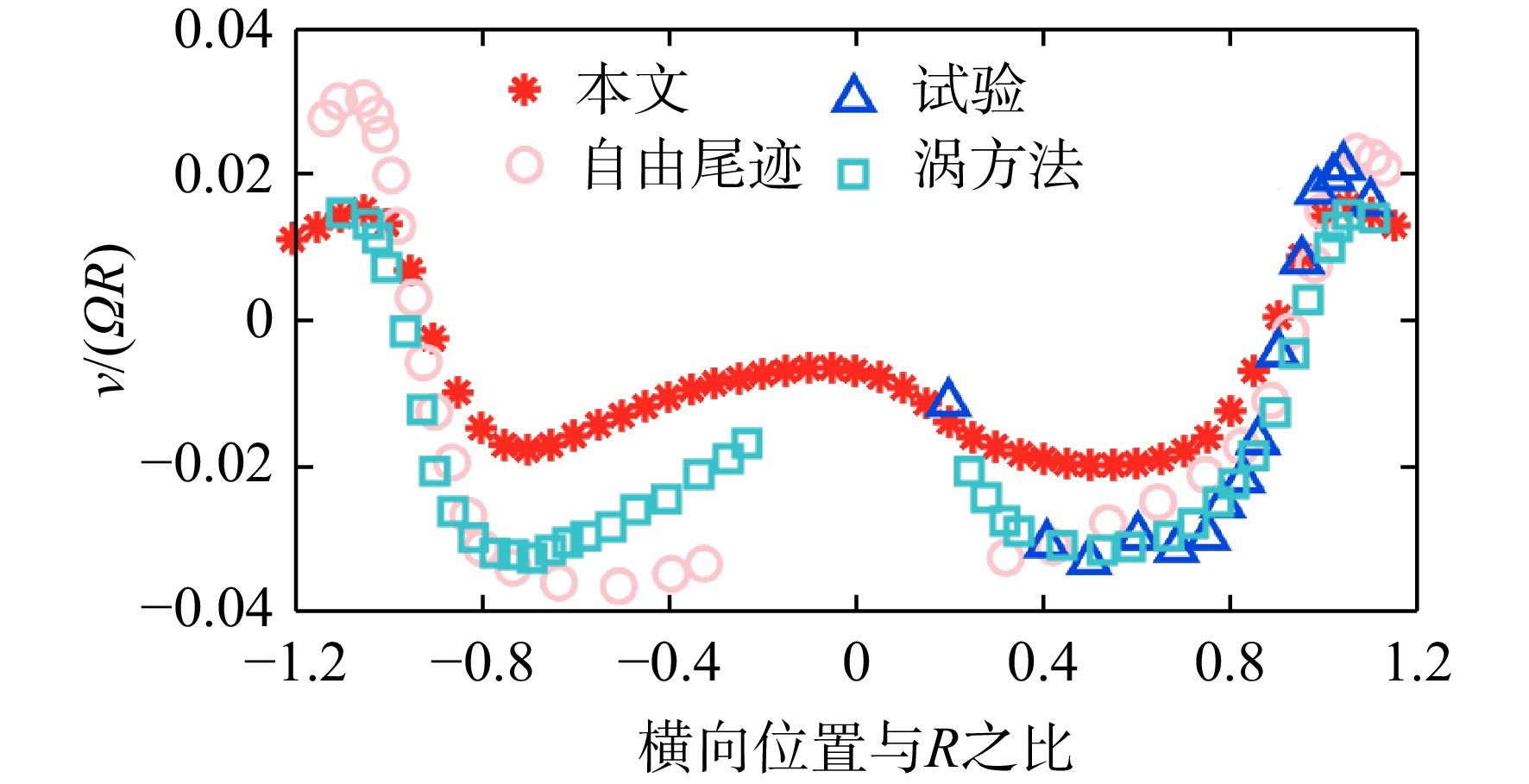
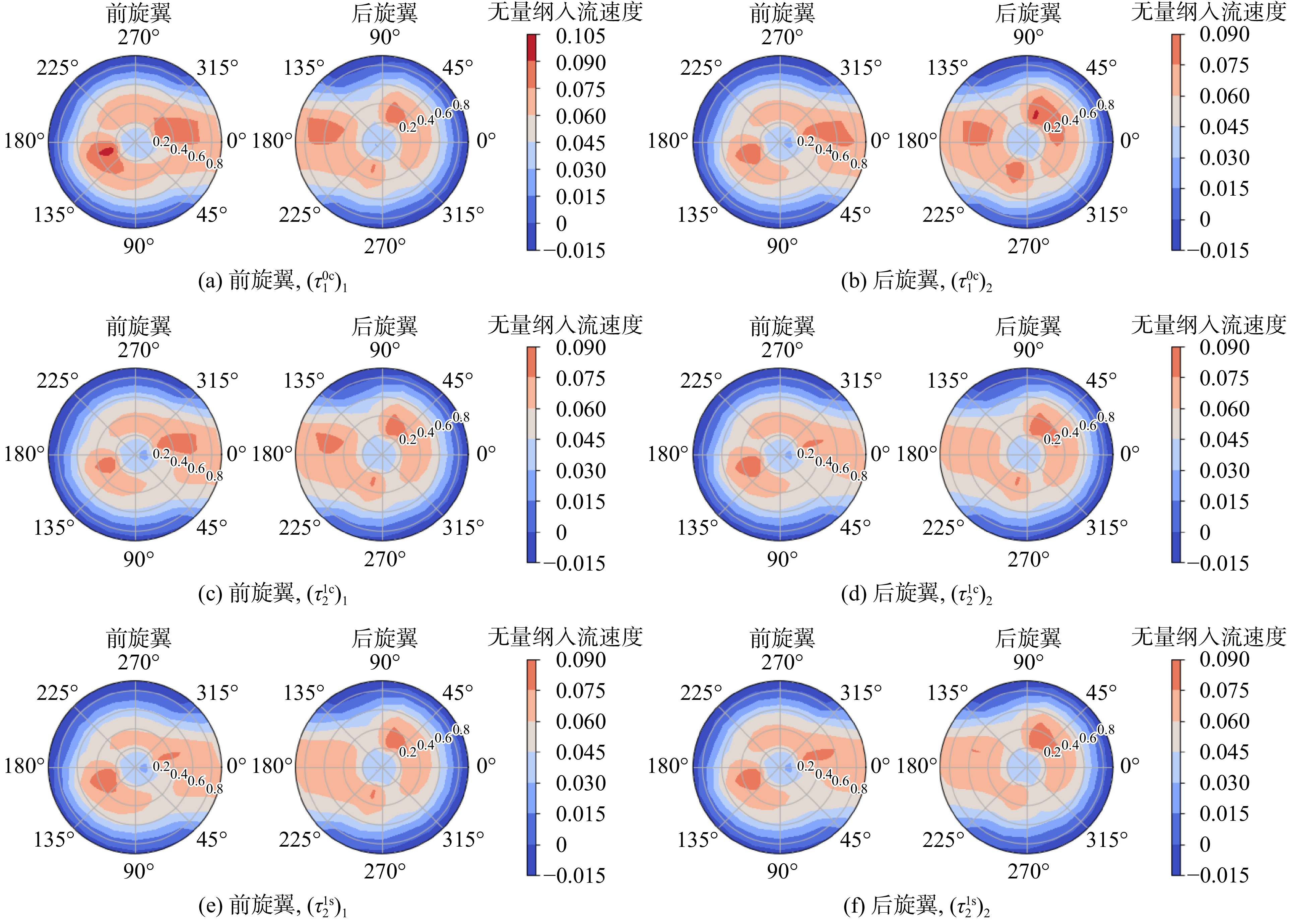
图 9 悬停状态下扫频值为正幅值时的双旋翼入流分布
Figure 9. Inflow distribution of tandem rotors during hover with positive sweep amplitude
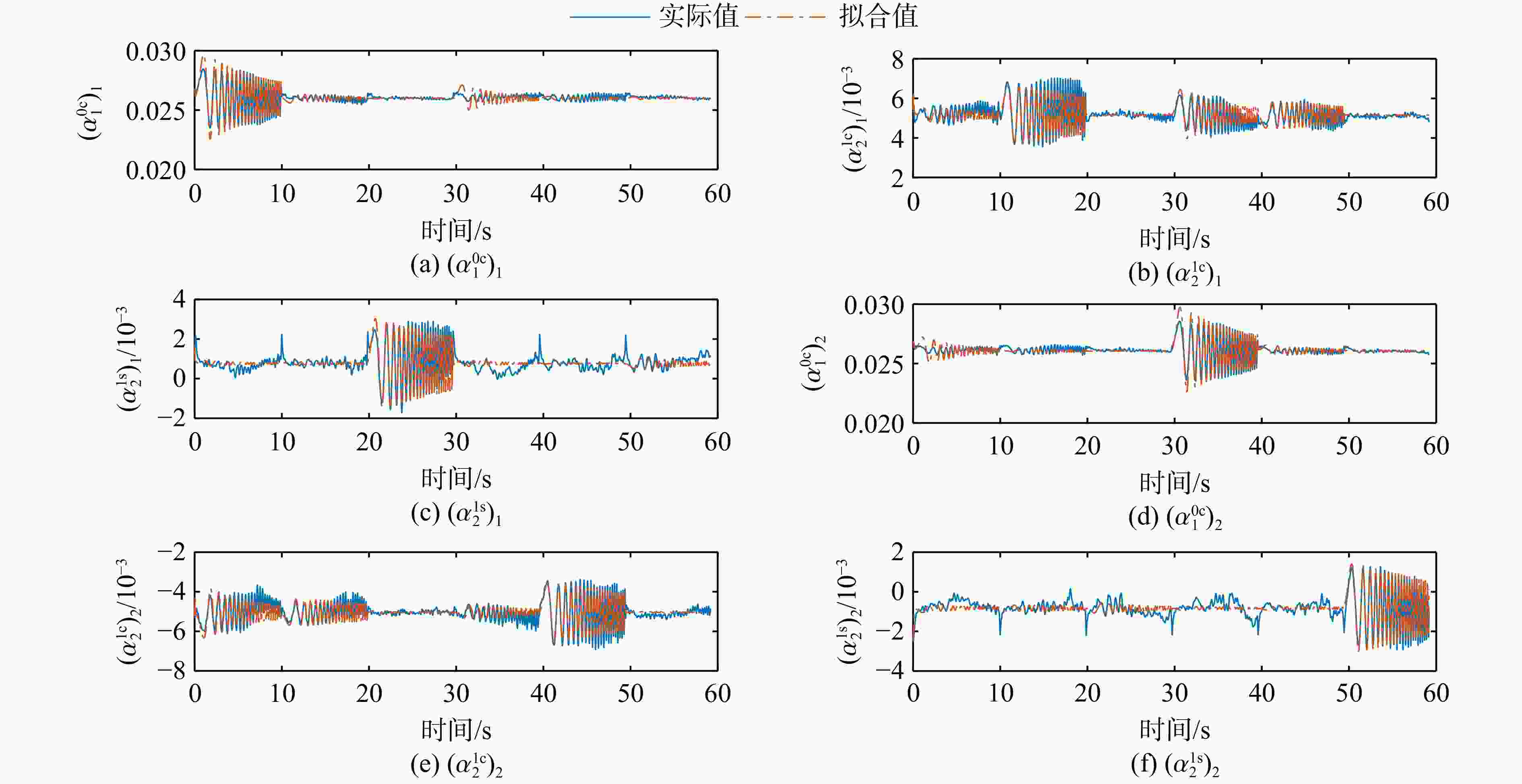
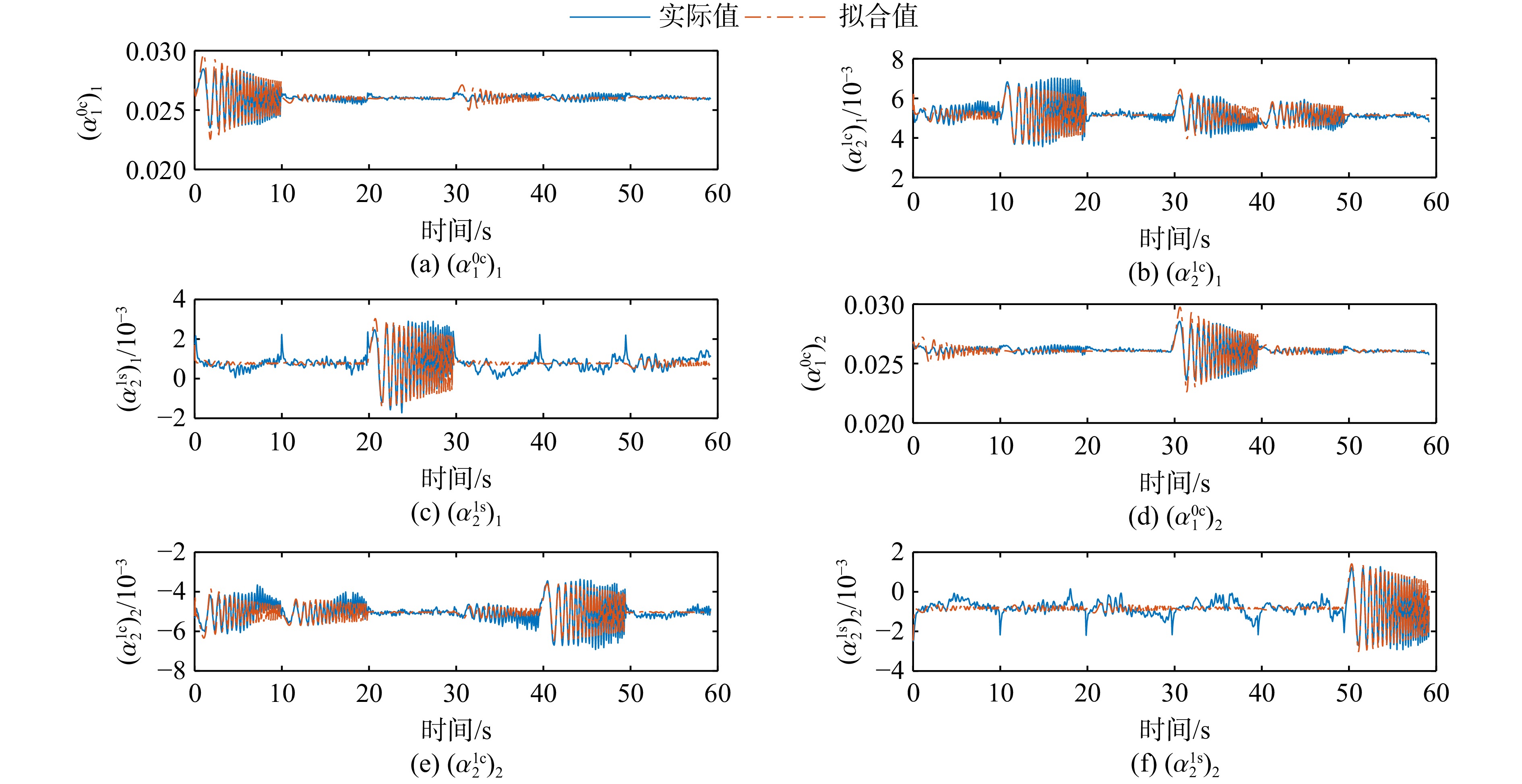
图 10 悬停状态入流分量实际值及辨识结果对比
Figure 10. Comparison between measured and identified inflow components in hover
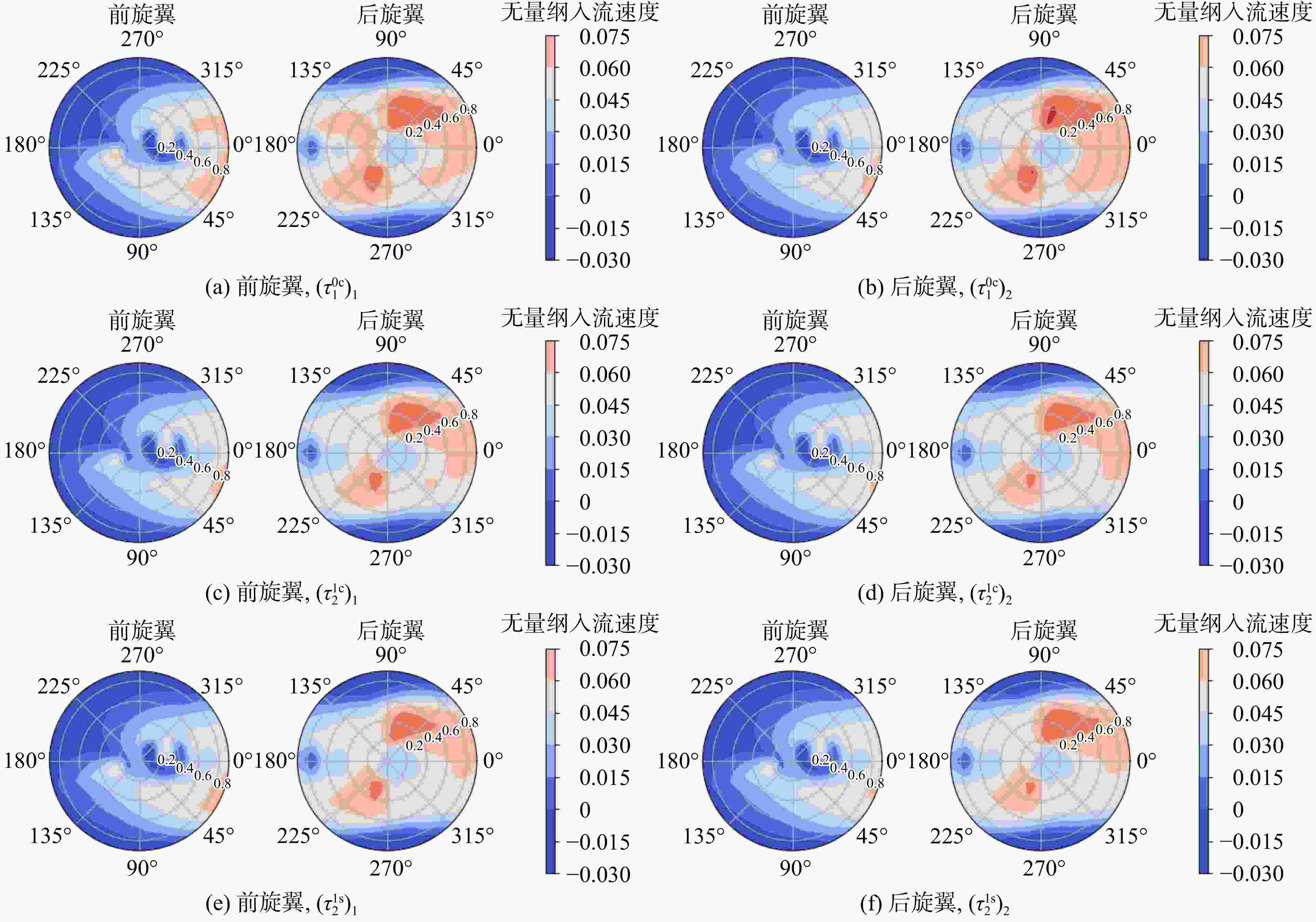
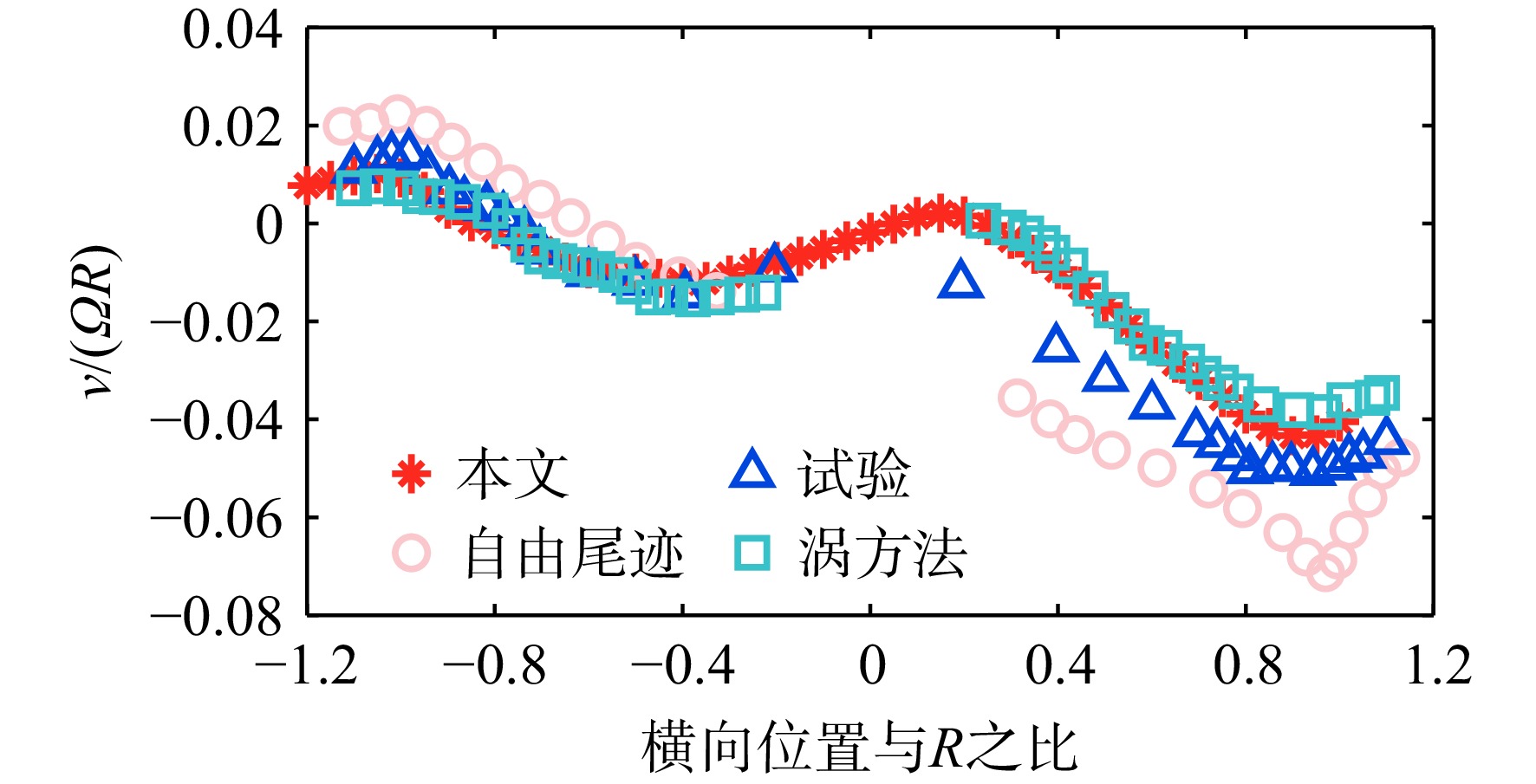
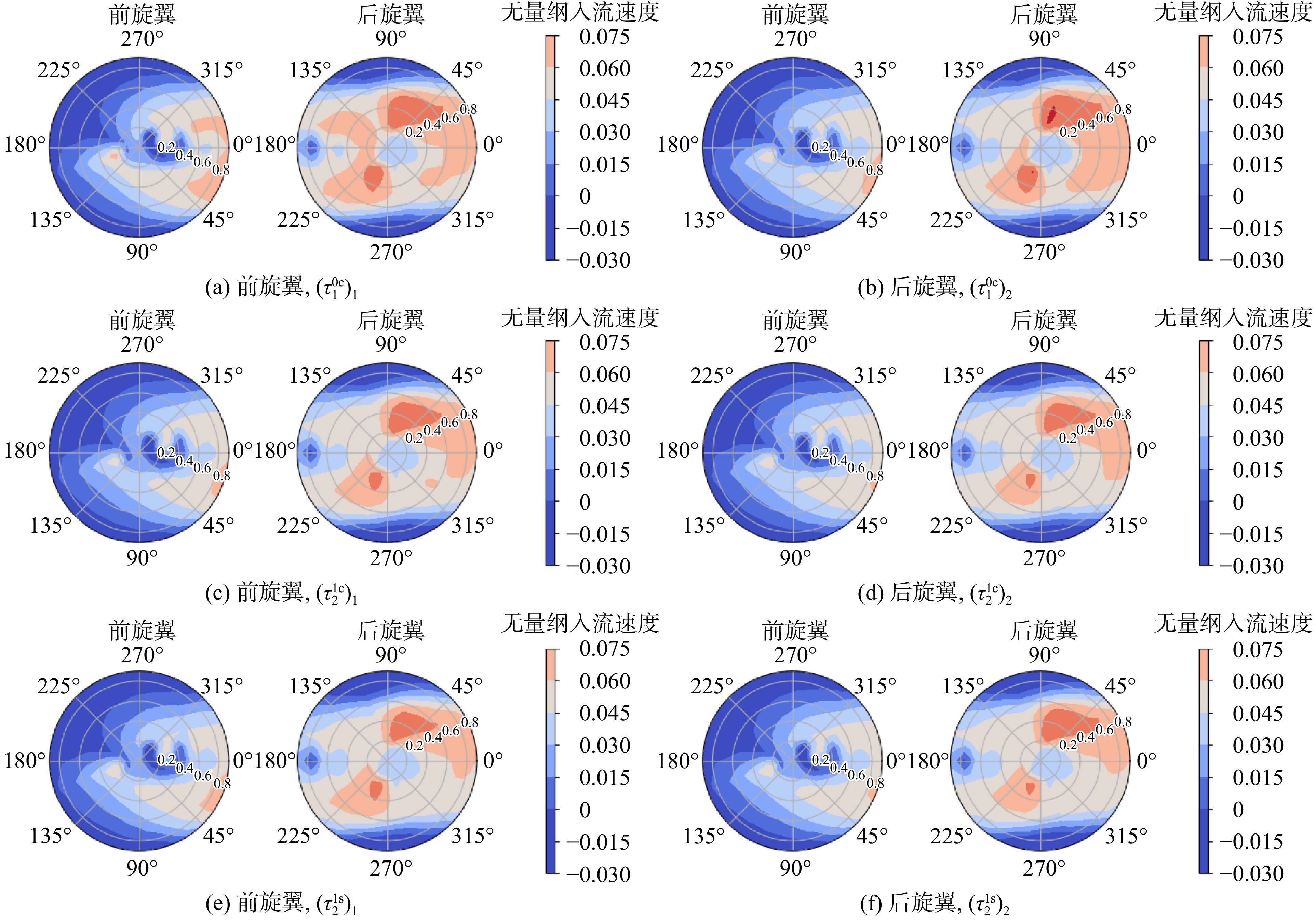
图 12 前进比为0.1下扫频值为正幅值时的双旋翼入流分布
Figure 12. Inflow distribution of tandem rotors at advance ratio of 0.1 with positive sweep amplitude
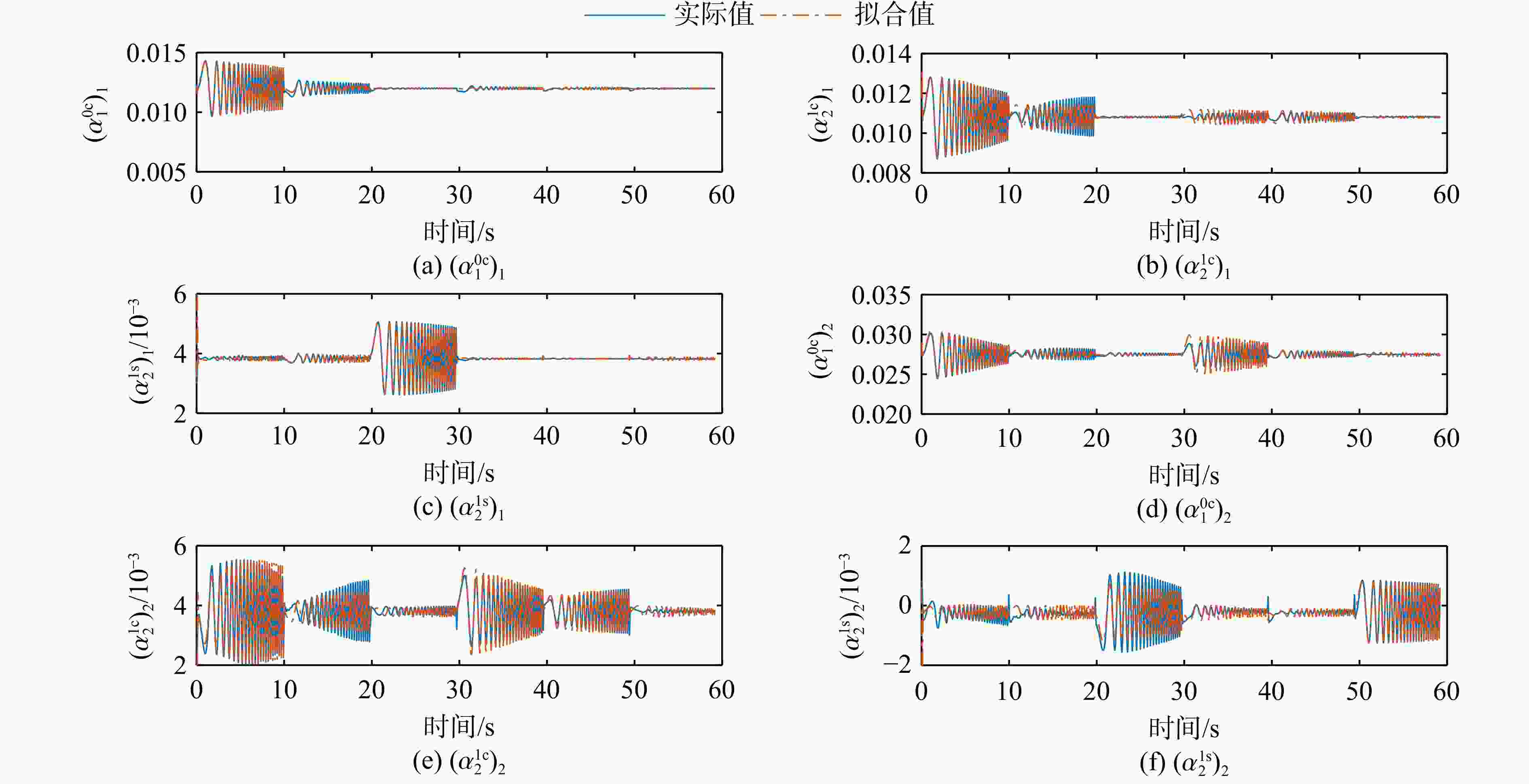
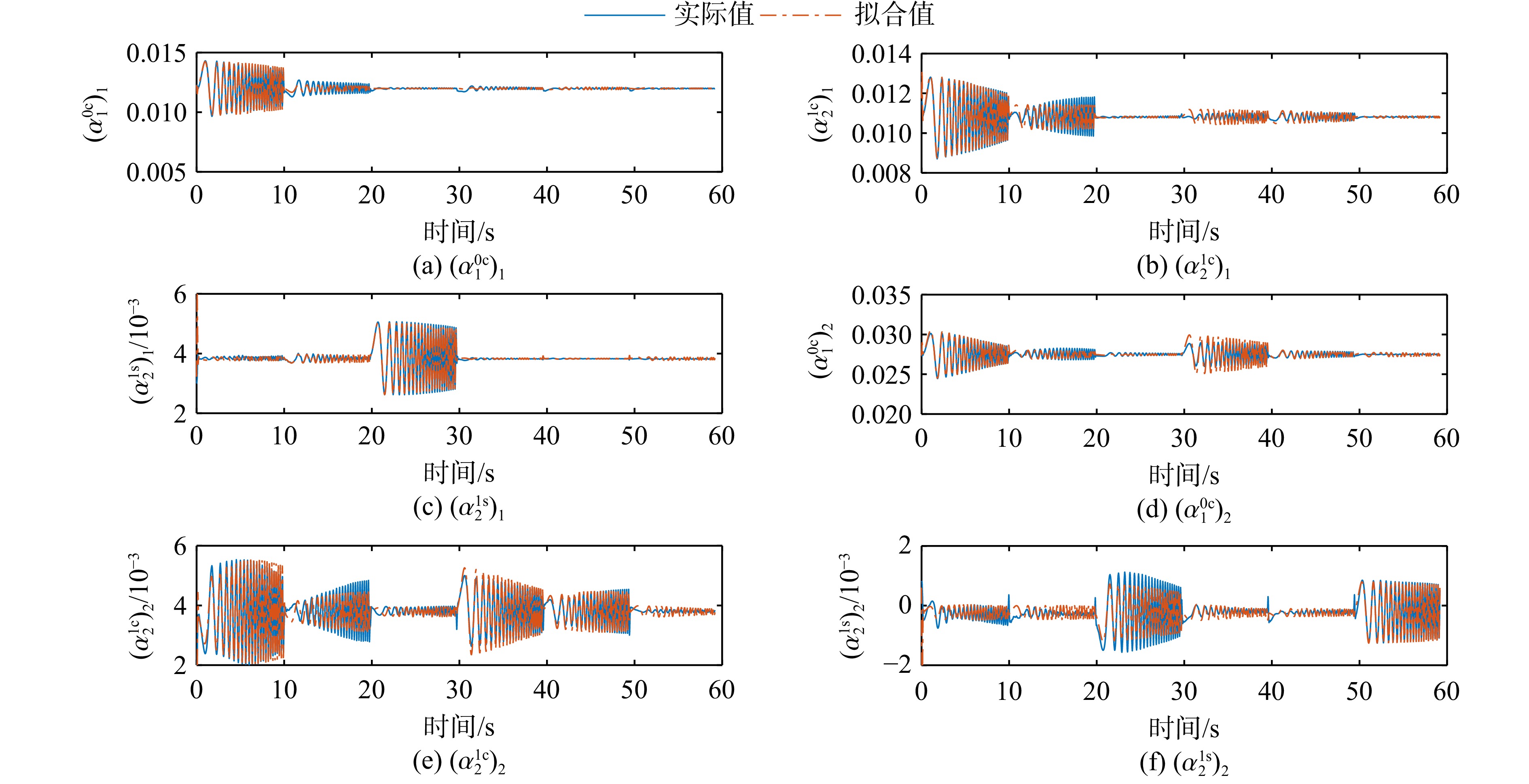
图 13 前进比为0.1入流分量响应及辨识结果对比
Figure 13. Comparison between measured and identified inflow components at advance ratio of 0.1
表 1 悬停状态下增益矩阵$ \boldsymbol{L} $辨识值
Table 1. Identification result of inflow influence coefficient matrix $ \boldsymbol{L} $ during hover
行号 列号 1 2 3 4 5 6 1 0.613 −0.193 −0.023 0.190 0.065 0.057 2 0.057 0.659 −0.019 0.216 −0.279 0.017 3 0.024 0.022 1.013 0.031 −0.021 −0.109 4 0.195 −0.005 −0.016 0.610 0.238 0.063 5 −0.217 −0.279 0.018 −0.052 0.645 −0.015 6 −0.036 −0.064 −0.108 −0.018 −0.032 0.999  下载: 导出CSV
表 2 前进比为0.1下增益矩阵$ \boldsymbol{L} $辨识值
Table 2. Identification result of inflow influence coefficient matrix $ \boldsymbol{L} $ at advance ratio of 0.1
行号 列号 1 2 3 4 5 6 1 0.110 −0.065 0 −0.010 −0.043 −0.023 2 0.103 0.122 −0.008 0.060 −0.152 0.022 3 −0.003 −0.029 0.245 0.003 0.005 0.028 4 0.151 0.110 −0.014 0.391 −0.270 0.128 5 −0.050 −0.068 0.025 0.234 0.249 0.092 6 0.010 0.050 −0.195 −0.044 −0.058 0.482
下载: 导出CSV
-
[1] 谭剑锋, 吴超, 王浩文, 等. 旋翼/平尾气动干扰对直升机配平特性的影响分析[J]. 北京航空航天大学学报, 2016, 42(11): 2349-2357. Tan Jianfeng, Wu Chao, Wang Haowen, et al. Analysis on influence of rotor/empennage aerodynamic interaction on helicopter trim characteristic[J]. Journal of Beijing University of Aeronautics and Astronautics, 2016, 42(11): 2349-2357. (in Chinese doi: 10.13700/j.bh.1001-5965.2015.0770Tan Jianfeng, Wu Chao, Wang Haowen, et al. Analysis on influence of rotor/empennage aerodynamic interaction on helicopter trim characteristic[J]. Journal of Beijing University of Aeronautics and Astronautics, 2016, 42(11): 2349-2357. (in Chinese) doi: 10.13700/j.bh.1001-5965.2015.0770 [2] 曹芸芸. 倾转旋翼飞行器飞行动力学数学建模方法研究[D]. 南京: 南京航空航天大学, 2012. Cao Yunyun. Research on mathematical modeling method for tilt rotor aircraft flight dynamics[D]. Nanjing: Nanjing University of Aeronautics and Astronautics, 2012. (in ChineseCao Yunyun. Research on mathematical modeling method for tilt rotor aircraft flight dynamics[D]. Nanjing: Nanjing University of Aeronautics and Astronautics, 2012. (in Chinese) [3] 徐进. 直升机大机动飞行中旋翼非定常空气动力研究[D]. 南京: 南京航空航天大学, 2007. Xu Jin. Unsteady aerodynamics investigation for the isolated rotor in large amplitude maneuvering flight[D]. Nanjing: Nanjing University of Aeronautics and Astronautics, 2007. (in ChineseXu Jin. Unsteady aerodynamics investigation for the isolated rotor in large amplitude maneuvering flight[D]. Nanjing: Nanjing University of Aeronautics and Astronautics, 2007. (in Chinese) [4] Pitt D M, Peters D A. Theoretical prediction of dynamic-inflow derivatives[R]. Bristol, UK: 6th European Rotorcraft and Powered Lift Aircraft Forum, 1980. [5] Peters D A, Karunamoorthy S, Cao Wenming. Finite state induced flow models: I Two-dimensional thin airfoil[J]. Journal of Aircraft, 1995, 32(2): 313-322. doi: 10.2514/3.46718 [6] Peters D A, He Chengjian. Finite state induced flow models: Ⅱ three-dimensional rotor disk[J]. Journal of Aircraft, 1995, 32(2): 323-333. doi: 10.2514/3.46719 [7] 黄水林, 招启军, 徐国华. 纵列式双旋翼悬停状态气动干扰特性参数影响分析[J]. 空气动力学学报, 2011, 29(2): 155-162. Huang Shuilin, Zhao Qijun, Xu Guohua. Parametric effect investigations on aerodynamic interaction characteristics for tandem rotors in hover[J]. Acta Aerodynamica Sinica, 2011, 29(2): 155-162. (in Chinese doi: 10.3969/j.issn.0258-1825.2011.02.005Huang Shuilin, Zhao Qijun, Xu Guohua. Parametric effect investigations on aerodynamic interaction characteristics for tandem rotors in hover[J]. Acta Aerodynamica Sinica, 2011, 29(2): 155-162. (in Chinese) doi: 10.3969/j.issn.0258-1825.2011.02.005 [8] 赵其凯, 陈仁良. 基于自由尾迹和升力面方法的四旋翼气动干扰分析[J]. 飞行力学, 2022, 40(2): 33-38. Zhao Qikai, Chen Renliang. Analysis of quadrotor aerodynamic interference based on free wake and lift surface method[J]. Flight Dynamics, 2022, 40(2): 33-38. (in ChineseZhao Qikai, Chen Renliang. Analysis of quadrotor aerodynamic interference based on free wake and lift surface method[J]. Flight Dynamics, 2022, 40(2): 33-38. (in Chinese) [9] 徐川, 刘长文, 鲁可, 等. 基于黏性涡粒子尾迹模型的高速直升机配平特性分析[J]. 航空科学技术, 2023, 34(5): 38-45. Xu Chuan, Liu Changwen, Lu Ke, et al. Trim characteristics analysis on high-speed helicopter using viscous vortex particles wake model[J]. Aeronautical Science and Technology, 2023, 34(5): 38-45. (in Chinese doi: 10.19452/j.issn1007-5453.2023.05.005Xu Chuan, Liu Changwen, Lu Ke, et al. Trim characteristics analysis on high-speed helicopter using viscous vortex particles wake model[J]. Aeronautical Science and Technology, 2023, 34(5): 38-45. (in Chinese) doi: 10.19452/j.issn1007-5453.2023.05.005 [10] Ding Zhiwei, Duan Dengyan, Zhao Gang, et al. Aerodynamic interference and performance changes in “2-lead” multi-lift system with helicopters[J]. Transactions of Nanjing University of Aeronautics and Astronautics, 2023, 40(4): 401-419. [11] Tan Jianfeng, Cai Jiangang, Barakos G N, et al. Computational study on the aerodynamic interference between tandem rotors and nearby obstacles[J]. Journal of Aircraft, 2020, 57(3): 456-468. doi: 10.2514/1.C035629 [12] 陆思佳. 基于CFD/CSD耦合的共轴刚性旋翼气弹综合分析及干扰特性研究[D]. 南京: 南京航空航天大学, 2022. Lu Sijia. Aeroelastic comprehensive analysis and interference characteristics research for coaxial rigid rotors based on CFD/CSD coupling[D]. Nanjing: Nanjing University of Aeronautics and Astronautics, 2022. (in ChineseLu Sijia. Aeroelastic comprehensive analysis and interference characteristics research for coaxial rigid rotors based on CFD/CSD coupling[D]. Nanjing: Nanjing University of Aeronautics and Astronautics, 2022. (in Chinese) [13] Hayami K, Sugawara H, Tanabe Y, et al. Numerical investigation of aerodynamic interference on coaxial rotor[R]. AIAA-2020-0306, 2020. [14] Li Liang, Zhou Chenglong, Chen Ming, et al. The influence of rotor overlapping azimuth on compound coaxial helicopter performance based on unsteady CFD simulation[J]. Applied Sciences, 2023, 13(2): 820. doi: 10.3390/app13020820 [15] 张夏阳, 罗彬, 招启军, 等. 倾转四旋翼机多涡系气动干扰非定常特性[J]. 航空动力学报, 2025, 40(7): 20240216. Zhang Xiayang, Luo Bin, Zhao Qijun, et al. Unsteady aerodynamic interference of tilt-quadrotor due to multi-vortex effect[J]. Journal of Aerospace Power, 2025, 40(7): 20240216. (in Chinese doi: 10.13224/j.cnki.jasp.20240216Zhang Xiayang, Luo Bin, Zhao Qijun, et al. Unsteady aerodynamic interference of tilt-quadrotor due to multi-vortex effect[J]. Journal of Aerospace Power, 2025, 40(7): 20240216. (in Chinese) doi: 10.13224/j.cnki.jasp.20240216 [16] He Chengjian, Syal M, Tischler M B, et al. State-space inflow model identification from viscous vortex particle method for advanced rotorcraft configurations[R]. Fort Worth, US: AHS 73rd Annual Forum, 2017. [17] Gladfelter M, He Chengjian, Chang C, et al. Enhancement and validation of VPM-derived state-space inflow models for multi-rotor simulation[R]. Virtual: Vertical Flight Society 76th Annual Forum, 2020. [18] Chen P W, Sankar L N, Prasad J V R, et al. Extraction of dynamic inflow models for coaxial and tandem rotors from CFD simulations[R]. Philadelphia, US: Vertical Flight Society's Annual Forum and Technology Display, 2019. [19] Elliott J W, Althoff S L, Sailey R H. Inflow measurements made with a laser velocimeter on a helicopter model in forward flight: Volume 1 rectangular planform blades at an advance ration of 0.15[R]. NASA TM 100541, 1988. [20] Dingeldein R C. Wind-tunnel studies of the performance of multirotor configurations[M]. Washington, US: National Advisory Committee for Aeronautics, 1954. [21] Bhagwat M, Leishman J. Transient rotor inflow using a time-accurate free-vortex wake model[R]. AIAA-2001-0993, 2001. [22] Tan Jianfeng, Wang Haowen. Simulating unsteady aerodynamics of helicopter rotor with panel/viscous vortex particle method[J]. Aerospace Science and Technology, 2013, 30(1): 255-268. doi: 10.1016/j.ast.2013.08.010 [23] Bauer D, Jansson M. Analysis of the asymptotic properties of the MOESP type of subspace algorithms[J]. Automatica, 2000, 36(4): 497-509. doi: 10.1016/S0005-1098(99)00174-0 [24] Hachicha S, Kharrat M, Chaari A. N4SID and MOESP algorithms to highlight the ill-conditioning into subspace identification[J]. International Journal of Automation and Computing, 2014, 11(1): 30-38. doi: 10.1007/s11633-014-0763-z -

 点击查看大图

计量
- 文章访问数: 452
- HTML浏览量: 359
- PDF量: 55
- 被引次数: 0