






Research on gas path fault diagnosis method of intercooled recuperated turbofan engine based on nonlinear model
-
摘要:
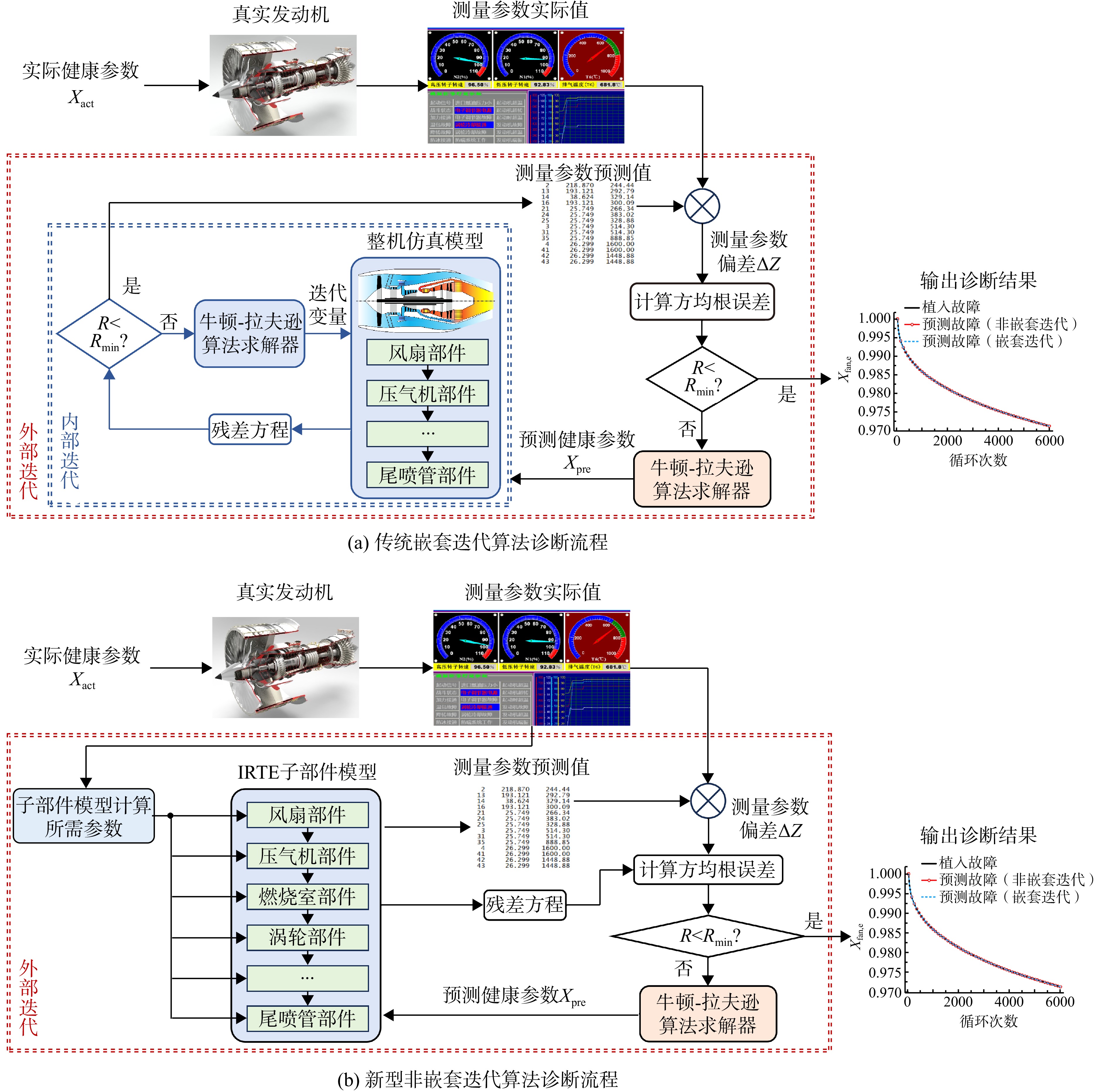
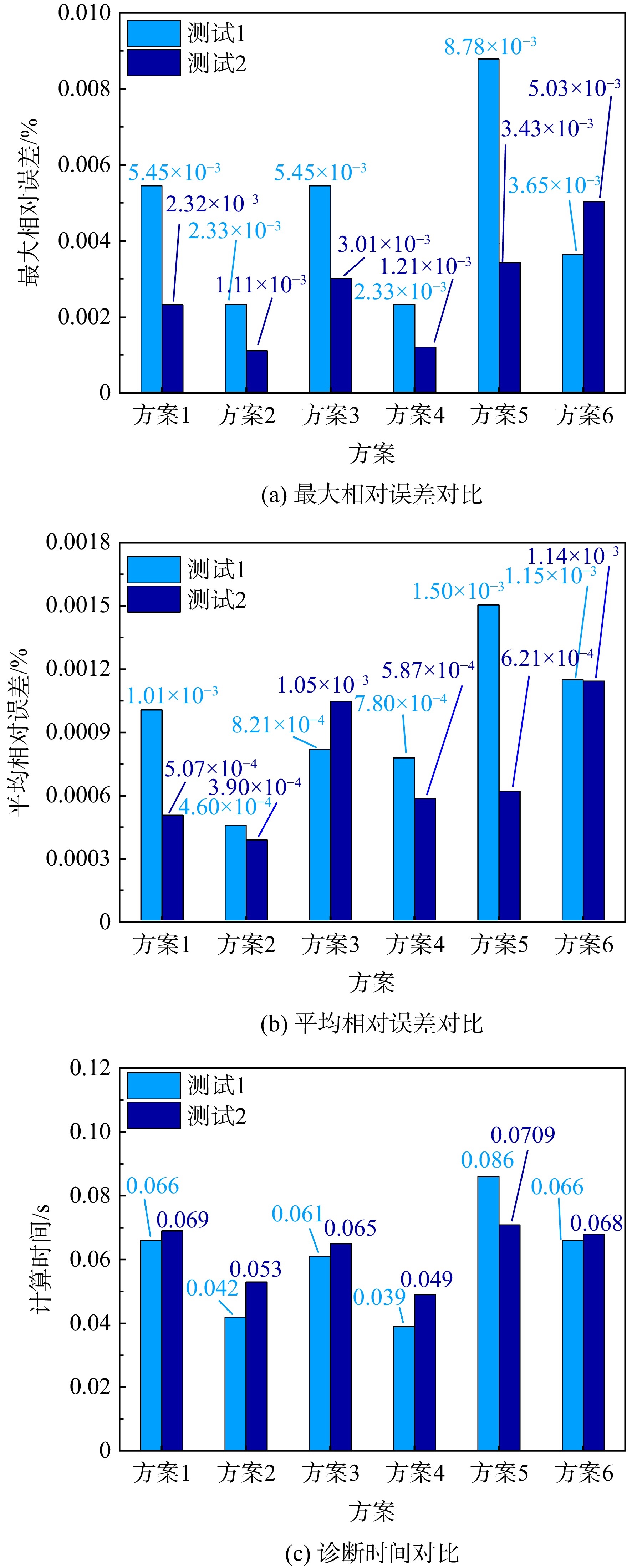
间冷回热涡扇发动机相对普通三轴涡扇发动机的健康参数更多,导致故障诊断计算量变大。为提高间冷回热涡扇发动机多部件退化下气路故障诊断速度,开发了一种适用于间冷回热涡扇发动机的快速气路故障诊断方法。该方法在传统嵌套迭代诊断架构的基础上设计了一种非嵌套迭代架构,考虑了包括6个旋转部件以及2个换热器部件的退化情况,通过分割部件使发动机部件匹配和故障诊断可以在同一个牛顿-拉夫逊迭代算法中完成,并开展了传感器选择优化以提升测量参数对于不同部件退化的辨识能力。在对发动机全寿命周期内的所有工况进行仿真测试的结果显示,该方法的最大诊断误差为
0.0036 %,平均误差为0.0008 %,平均计算时间小于0.063 s。与传统诊断架构相比,这种非嵌套的架构可以在保证诊断精度的前提下显著降低了子部件调用次数和故障诊断时间,为克服多部件故障高精度诊断与快速诊断需求相互冲突提供了方法和理论支撑。Abstract:The intercooled recuperated turbofan engine has more health parameters than the ordinary three-shaft turbofan engine, which leads to a larger calculation amount of fault diagnosis. To enhance the speed of gas path fault diagnosis of intercooled recuperated turbofan engine under multi-component degradation, a fast gas path fault diagnosis method for intercooled recuperated turbofan engine was developed. Based on the traditional nested iterative diagnosis architecture, a non-nested iterative architecture was designed, which considered the degradation of 6 rotating components and 2 heat exchanger components. By dividing the components, the engine component matching and fault diagnosis could be completed in the same Newton-Raphson iterative algorithm. The sensor selection optimization was carried out to improve the ability of measuring parameters to identify the degradation of different components. The results of simulation test on all conditions of engine life cycle showed that the maximum diagnostic error of this method was
0.0036 %, the average error was0.0008 %, and the average calculation time was less than 0.063 seconds. Compared with the traditional diagnostic architecture, this non-nested architecture can significantly reduce the number of sub-component calls and fault diagnosis time while ensuring the diagnostic accuracy. It provides the method and theoretical support for overcoming the conflict between high-precision fault diagnosis and rapid diagnosis of multi-component faults. -
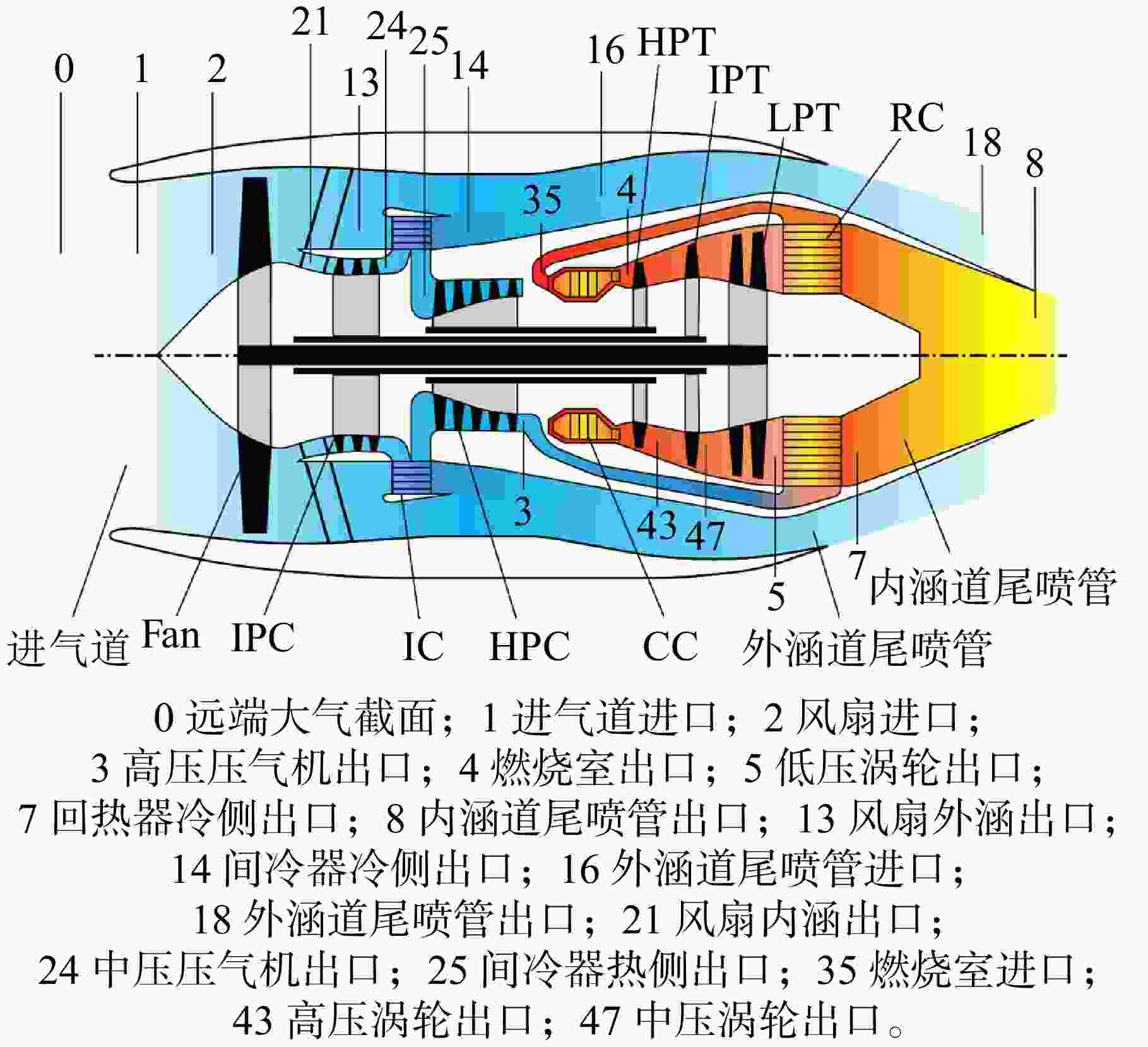
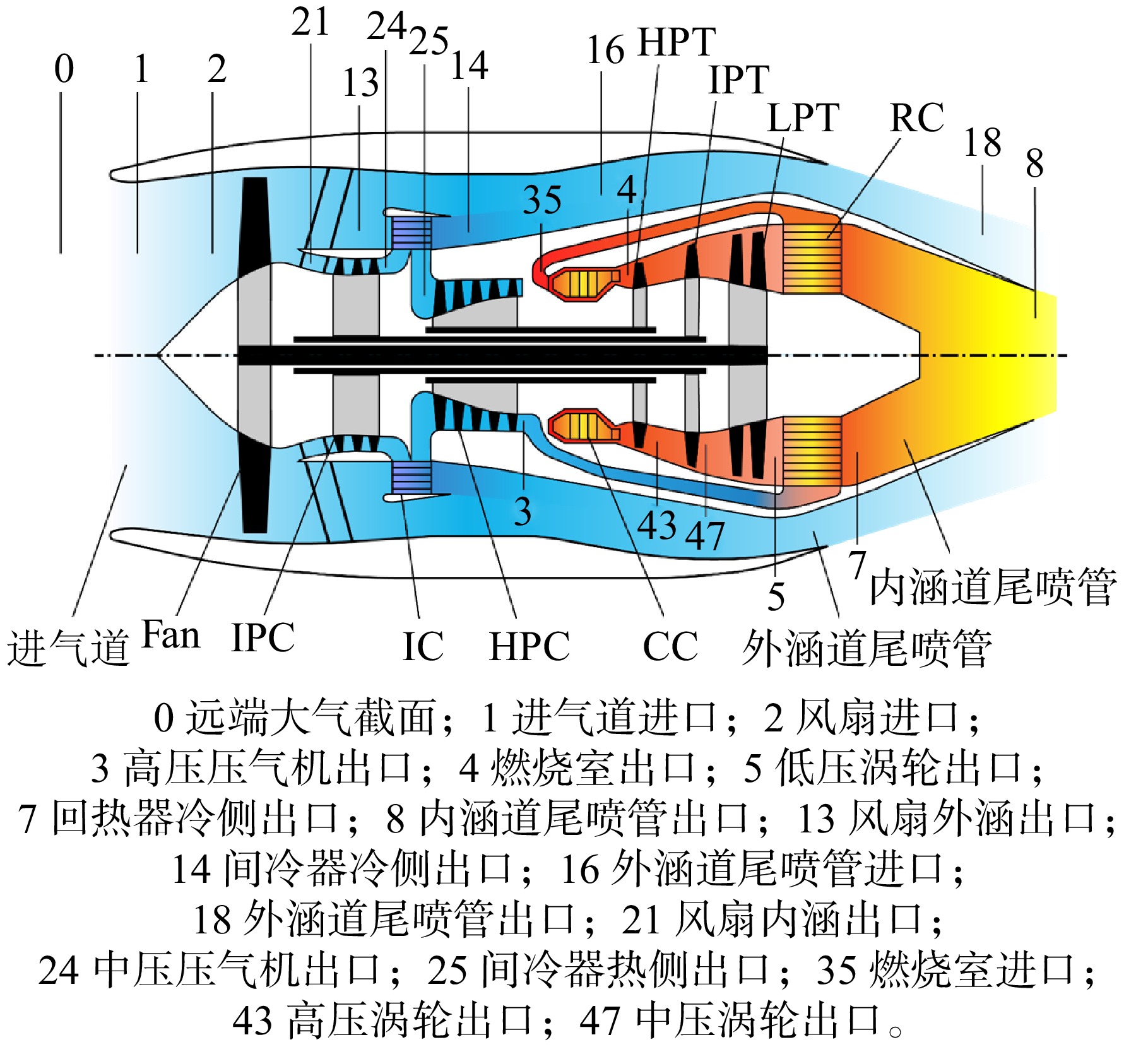
图 1 三轴间冷回热涡扇发动机结构示意图
Figure 1. Schematic diagram of the three-shaft intercooled recuperated turbofan engine
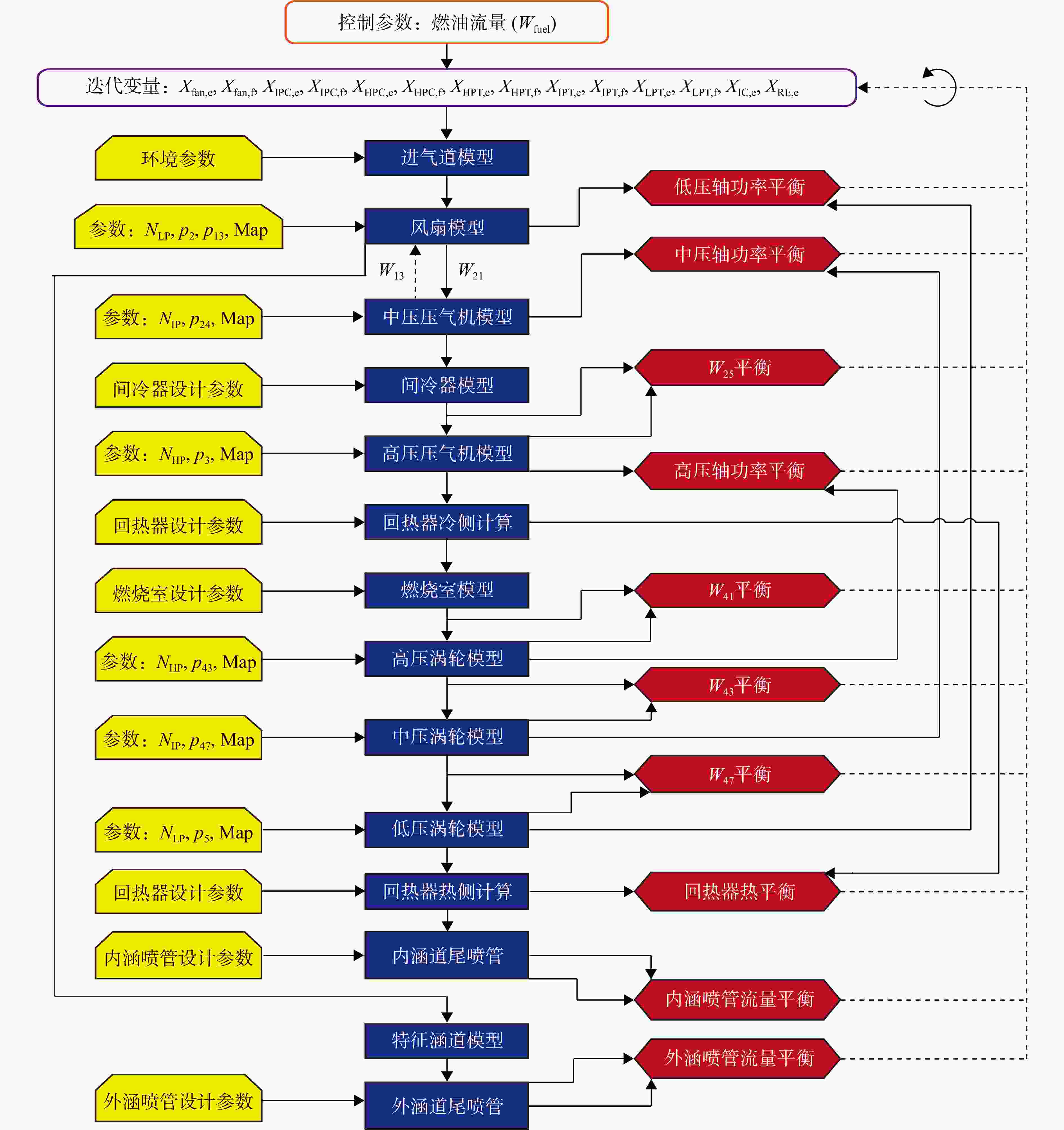
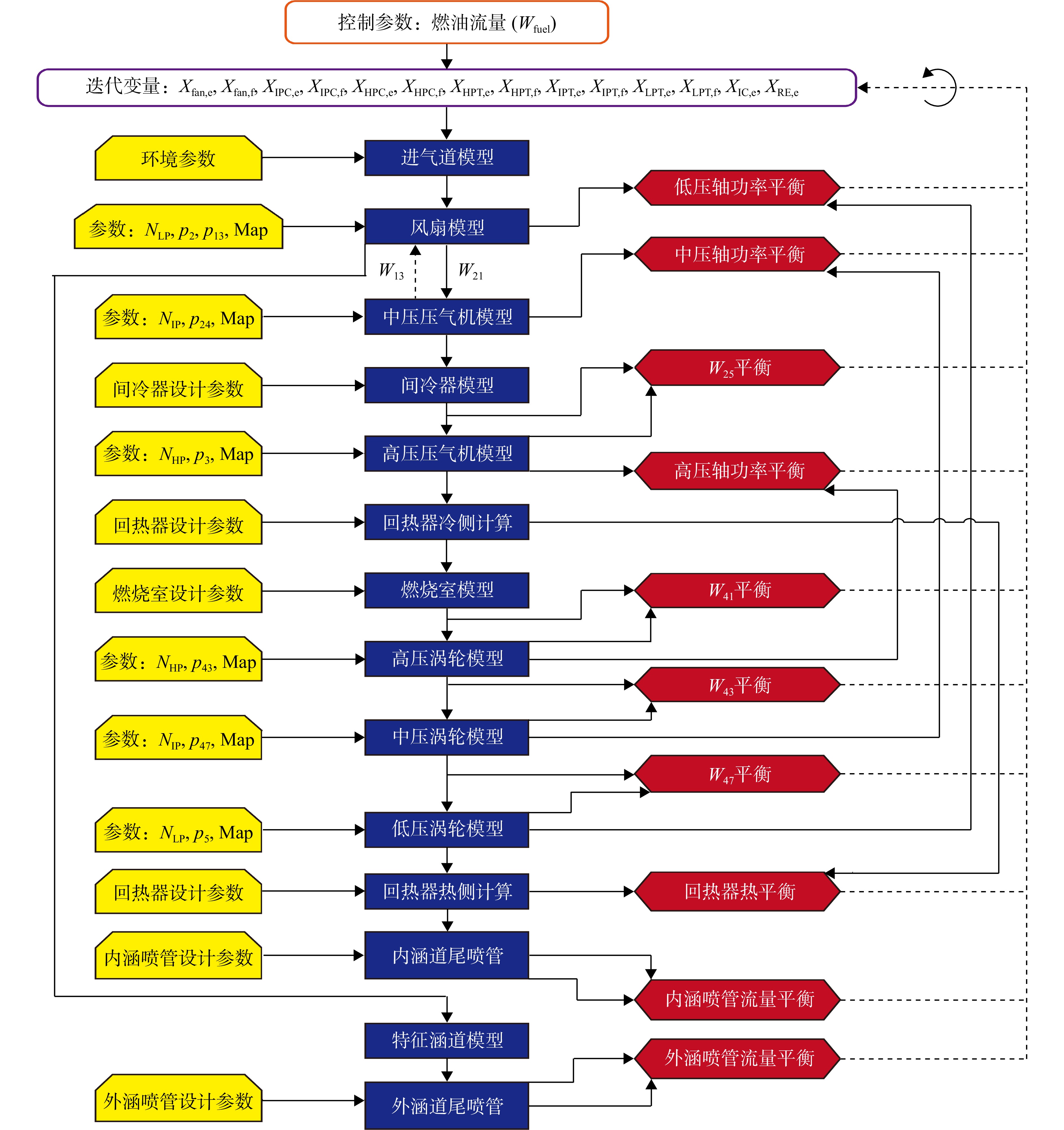
图 3 非嵌套迭代算法中子部件计算流程
Figure 3. Non-nested iterative algorithm subcomponent calculation schedule
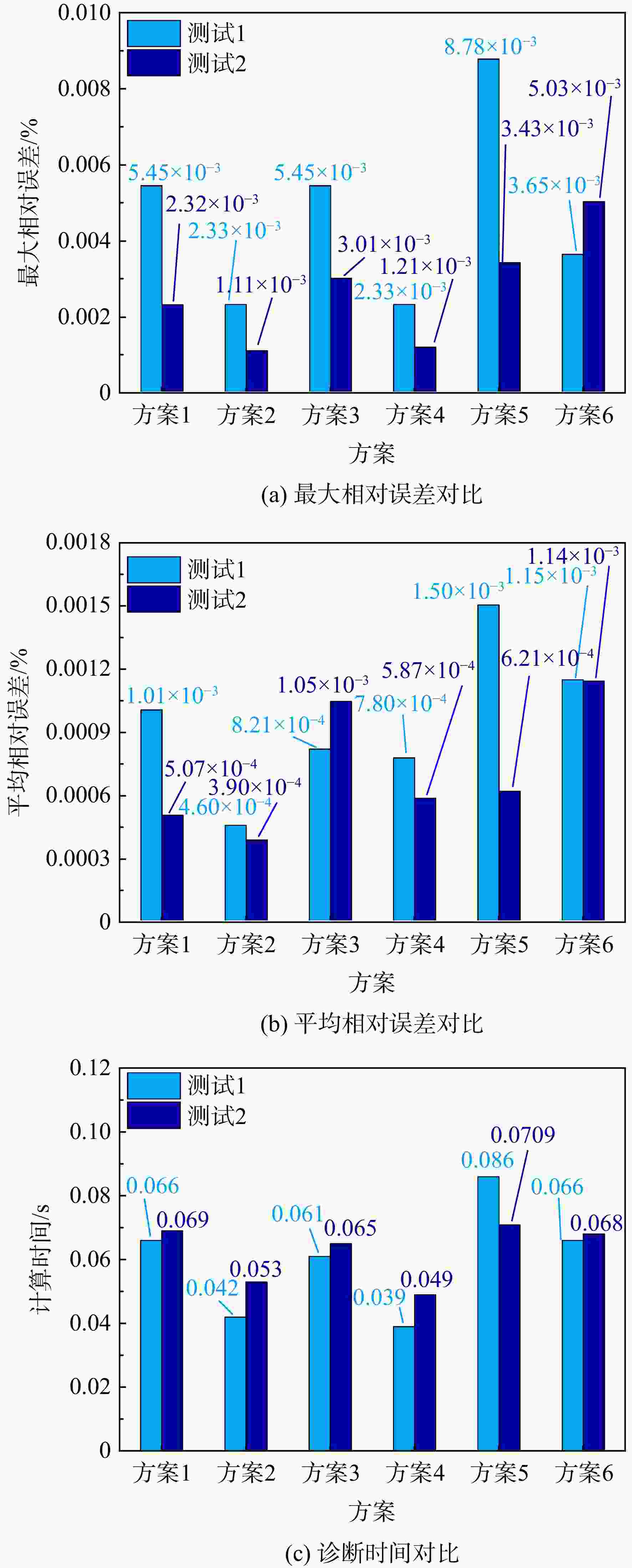
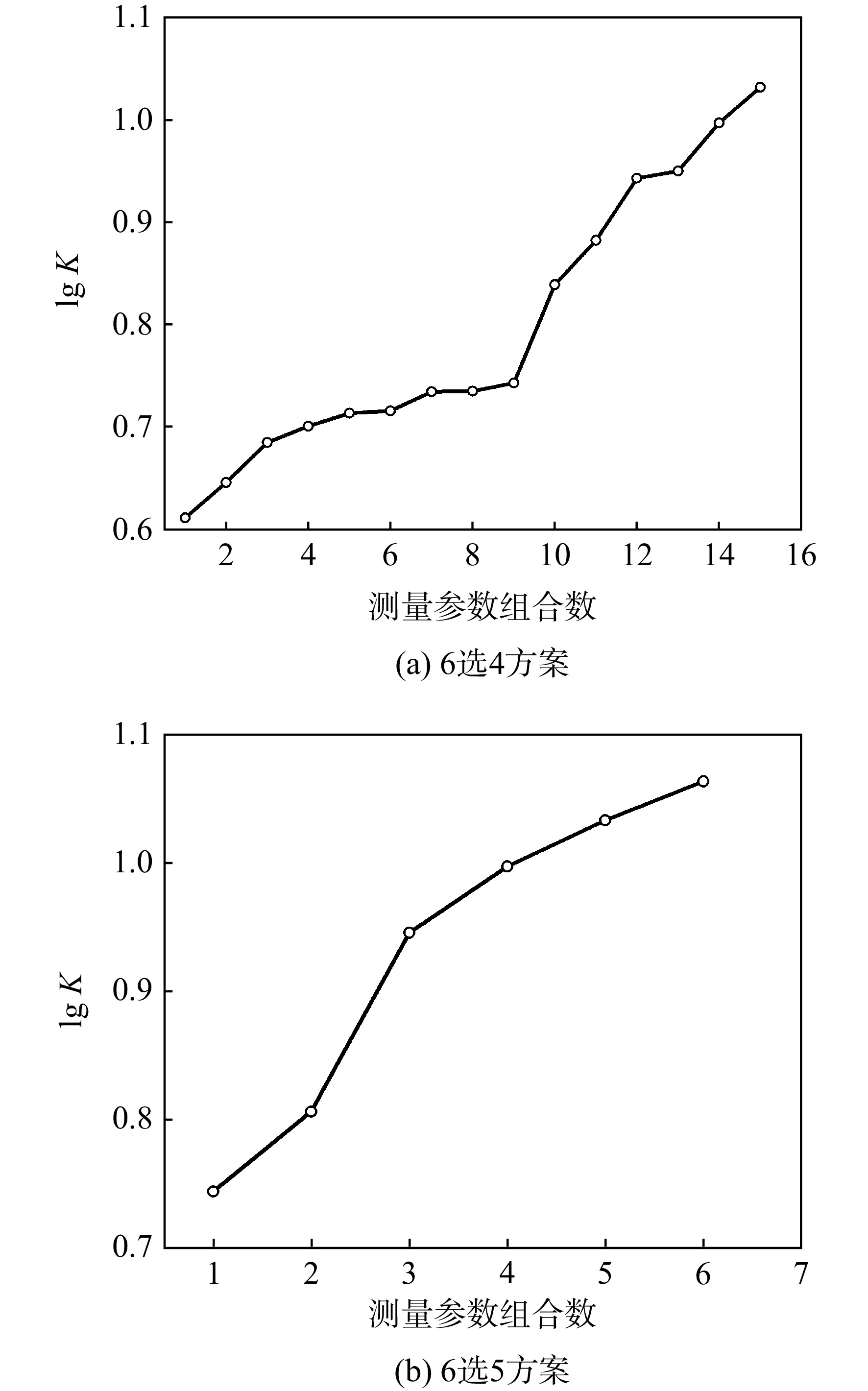
图 7 不同测量参数选择方案的诊断效果
Figure 7. Diagnostic effect of different measurement parameter selection schemes
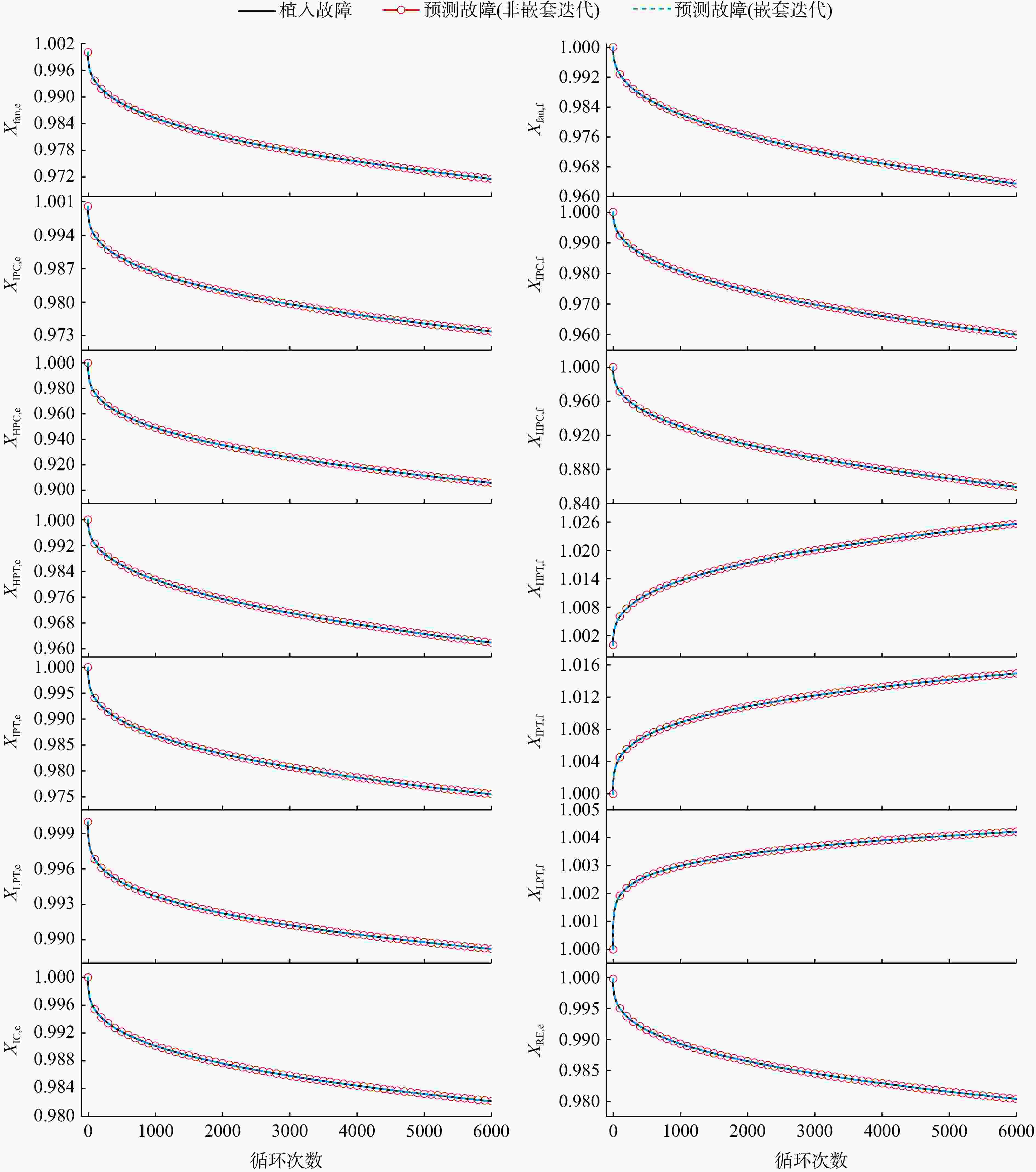
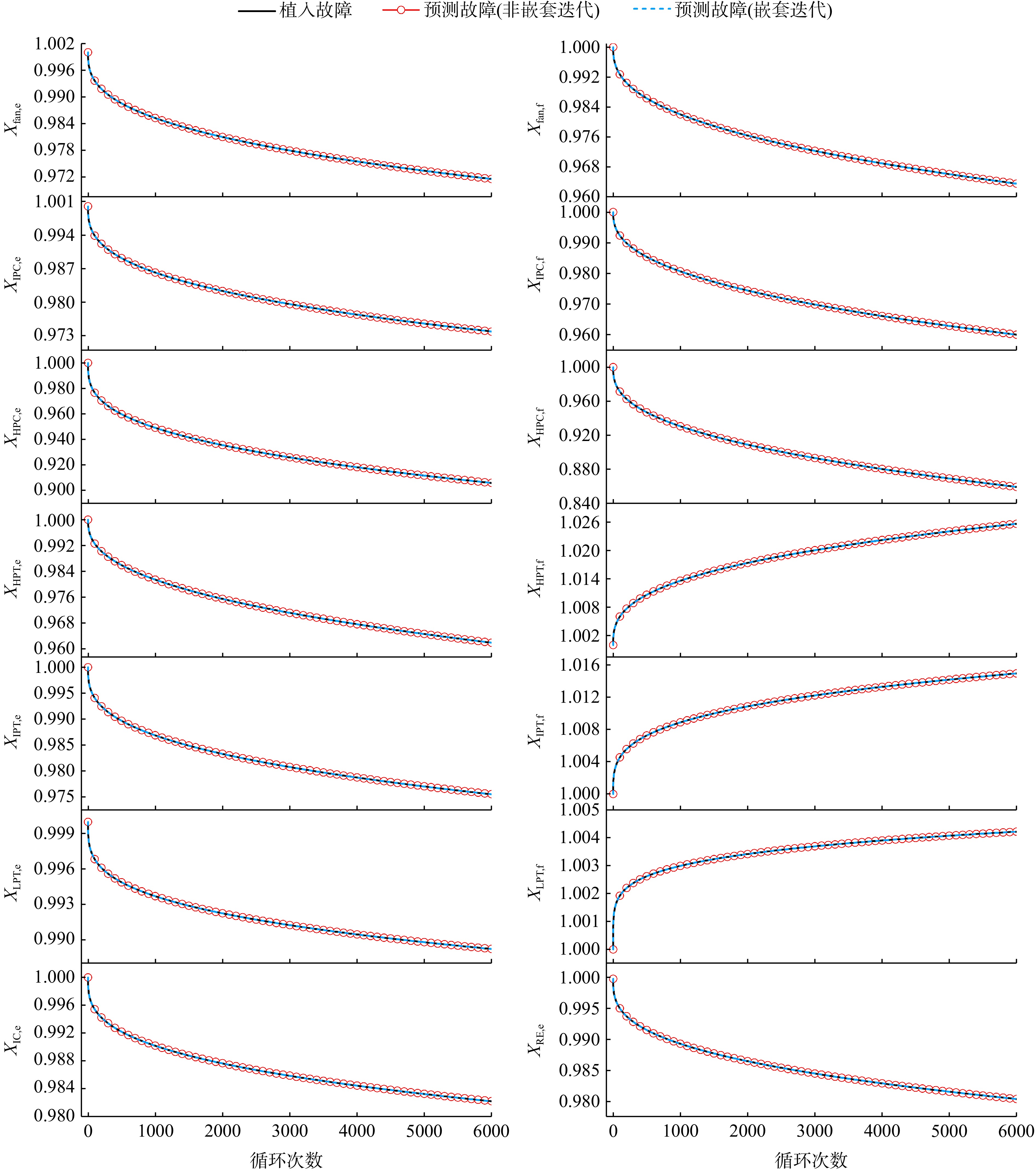
图 8 嵌套与非嵌套迭代算法诊断结果对比
Figure 8. Comparison of nested and non-nested iterative algorithm diagnosis results
编号 健康参数 健康状态1 健康状态2 1 $ {X}_{\text{fan,e}} $ 0.9858 0.9715 2 $ {X}_{\text{fan,f}} $ 0.9818 0.9635 3 $ {X}_{\text{IPC,e}} $ 0.9870 0.9739 4 $ {X}_{\text{IPC,f}} $ 0.9800 0.9600 5 $ {X}_{\text{HPC,e}} $ 0.9530 0.9060 6 $ {X}_{\text{HPC,f}} $ 0.9297 0.8594 7 $ {X}_{\text{HPT,e}} $ 0.9810 0.9619 8 $ {X}_{\text{HPT,f}} $ 1.0129 1.0257 9 $ {X}_{\text{IPT,e}} $ 0.9878 0.9756 10 $ {X}_{\text{IPT,f}} $ 1.0075 1.0150 11 $ {X}_{\text{LPT,e}} $ 0.9946 0.9892 12 $ {X}_{\text{LPT,f}} $ 1.0021 1.0042 13 $ {X}_{\text{IC,e}} $ 0.9910 0.9820 14 $ {X}_{\text{RC,e}} $ 1.0006 1.0012  下载: 导出CSV
表 2 备选测量参数
Table 2. Alternative measurement parameter
序号 参数 定义 1 $ {T}_{13} $ 风扇外涵出口温度 2 $ {T}_{21} $ 风扇内涵出口温度 3 $ {T}_{24} $ 间冷器热侧进口温度 4 $ {T}_{25} $ 间冷器热侧出口温度 5 $ {T}_{43} $ 高压涡轮出口温度 6 $ {T}_{47} $ 中压涡轮出口温度 7 $ {T}_{5} $ 低压涡轮出口温度 8 $ {T}_{7} $ 回热器热侧出口温度 9 $ {T}_{16} $ 外涵尾喷管进口温度 10 $ {p}_{25} $ 间冷器热侧出口压力 11 $ {p}_{7} $ 回热器热侧出口压力 12 $ {p}_{16} $ 外涵尾喷管进口压力
下载: 导出CSV
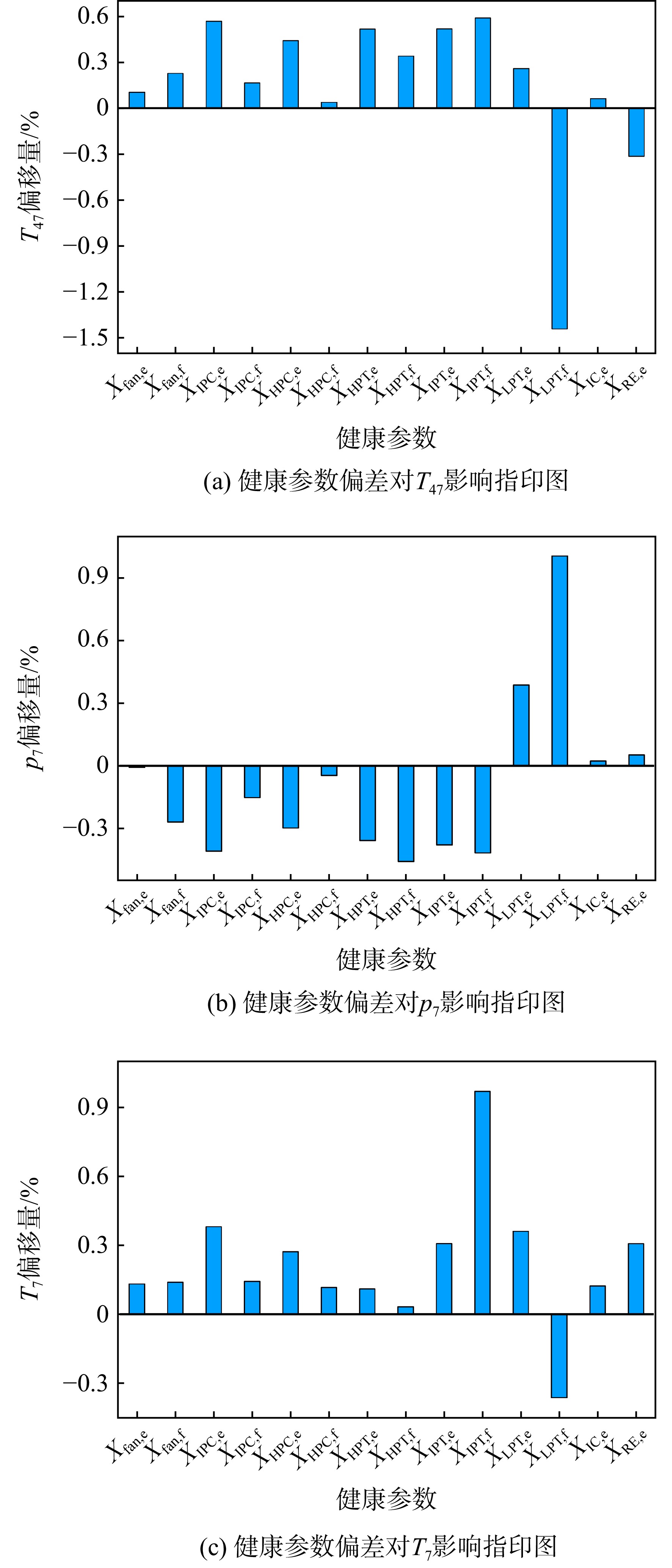
表 3 健康参数偏差对测量参数影响矩阵
Table 3. Influence matrix of health parameter deviation on measurement parameter
参数 $ {X}_{\text{fan,e}} $ $ {X}_{\text{fan,f}} $ $ {X}_{\text{IPC,e}} $ $ {X}_{\text{IPC,f}} $ $ {X}_{\text{HPC,e}} $ $ {X}_{\text{HPC,f}} $ $ {X}_{\text{HPT,e}} $ $ {X}_{\text{HPT,f}} $ $ {X}_{\text{IPT,e}} $ $ {X}_{\text{IPT,f}} $ $ {X}_{\text{LPT,e}} $ $ {X}_{\text{LPT,f}} $ $ {X}_{\text{IC,e}} $ $ {X}_{\text{RE,e}} $ $ {T}_{13} $ 0.029 0.142 −0.023 −0.012 −0.002 −0.015 0.041 0.076 0.004 −0.049 −0.179 −0.121 −0.002 −0.125 $ {T}_{21} $ 0.008 0.062 −0.012 −0.006 −0.001 −0.008 0.022 0.041 0.003 −0.025 −0.095 −0.065 −0.001 −0.066 $ {T}_{24} $ 0.064 0.043 0.084 0.162 0.085 −0.004 0.151 0.189 −0.390 −0.868 0.032 0.821 0.011 −0.154 $ {T}_{25} $ 0.045 0.095 0.028 0.070 0.039 −0.010 0.093 0.129 −0.181 −0.433 −0.079 0.326 0.249 −0.139 $ {T}_{43} $ 0.107 0.210 0.543 0.186 0.426 0.036 0.599 0.812 0.588 0.564 0.261 −1.154 0.060 −0.315 $ {T}_{47} $ 0.103 0.227 0.567 0.165 0.441 0.038 0.516 0.340 0.517 0.589 0.259 −1.441 0.062 −0.314 $ {T}_{5} $ 0.173 0.131 0.622 0.184 0.470 0.054 0.619 0.828 0.765 0.893 0.778 −1.250 0.072 −0.224 $ {T}_{7} $ 0.132 0.139 0.381 0.143 0.272 0.117 0.110 0.032 0.308 0.968 0.361 −0.362 0.123 0.307 $ {T}_{16} $ 0.039 0.138 −0.029 0.001 −0.005 −0.016 0.040 0.072 −0.052 −0.152 −0.148 0.017 −0.037 −0.131 $ {p}_{25} $ −0.078 −0.327 −0.897 −0.168 1.184 0.209 1.459 1.717 −1.052 −3.337 0.013 1.797 0.142 −0.298 $ {p}_{7} $ −0.007 −0.270 −0.409 −0.152 −0.298 −0.046 −0.358 −0.458 −0.378 −0.417 0.387 1.006 0.023 0.053 $ {p}_{16} $ −0.354 −0.535 −0.002 −0.005 0.025 −0.022 0.105 0.174 0.037 −0.057 −0.344 −0.291 −0.009 −0.222
下载: 导出CSV
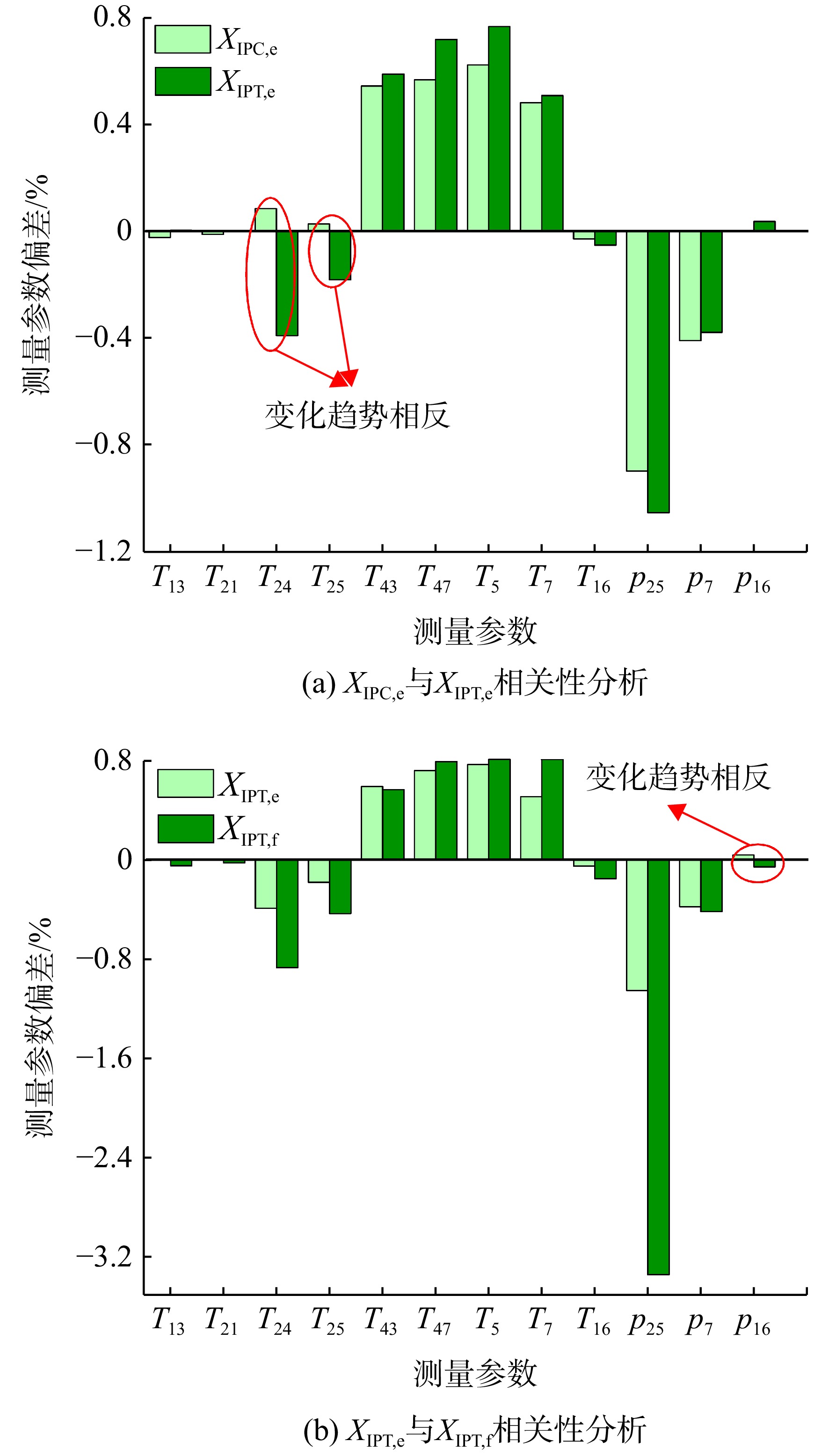
表 4 各健康参数间相关性系数值
Table 4. Correlation coefficient values among various health parameters
参数 $ {X}_{\text{fan,e}} $ $ {X}_{\text{fan,f}} $ $ {X}_{\text{IPC,e}} $ $ {X}_{\text{IPC,f}} $ $ {X}_{\text{HPC,e}} $ $ {X}_{\text{HPC,f}} $ $ {X}_{\text{HPT,e}} $ $ {X}_{\text{HPT,f}} $ $ {X}_{\text{IPT,e}} $ $ {X}_{\text{IPT,f}} $ $ {X}_{\text{LPT,e}} $ $ {X}_{\text{LPT,f}} $ $ {X}_{\text{IC,e}} $ $ {X}_{\text{RE,e}} $ $ {X}_{\text{fan,e}} $ 1 $ {X}_{\text{fan,f}} $ 0.88 1 $ {X}_{\text{IPC,e}} $ 0.52 0.67 1 $ {X}_{\text{IPC,f}} $ 0.56 0.68 0.93 1 $ {X}_{\text{HPC,e}} $ 0.10 −0.04 −0.13 0.03 1 $ {X}_{\text{HPC,f}} $ 0.14 −0.06 −0.18 −0.05 0.90 1 $ {X}_{\text{HPT,e}} $ 0.06 −0.05 −0.14 0.03 0.99 0.84 1 $ {X}_{\text{HPT,f}} $ 0.06 −0.02 −0.09 0.07 0.97 0.78 0.99 1 $ {X}_{\text{IPT,e}} $ 0.45 0.59 0.95 0.78 −0.10 −0.16 −0.12 −0.06 1 $ {X}_{\text{IPT,f}} $ 0.39 0.55 0.90 0.69 −0.45 −0.43 −0.47 −0.43 0.93 1 $ {X}_{\text{LPT,e}} $ 0.67 0.34 0.47 0.40 0.23 0.30 0.17 0.17 0.50 0.39 1 $ {X}_{\text{LPT,f}} $ −0.37 −0.57 −0.93 −0.77 0.06 0.14 0.05 −0.01 −0.99 −0.89 −0.38 1 $ {X}_{\text{IC,e}} $ 0.24 0.10 −0.03 0.10 0.41 0.48 0.36 0.33 −0.09 −0.20 0.23 0.11 1 $ {X}_{\text{RE,e}} $ 0.21 0.10 0.12 0.02 −0.30 0.10 −0.46 −0.53 0.11 0.29 0.27 −0.02 0.12 1
下载: 导出CSV
表 5 不同组合的测量参数及条件数
Table 5. Different combinations of measurement parameters and conditions
序号 $ {T}_{24} $ $ {T}_{25} $ $ {T}_{47} $ $ {T}_{7} $ $ {p}_{7} $ $ {p}_{16} $ $ \mathrm{\lg }\;K $ 1 √ √ √ √ 0.61 2 √ √ √ √ 0.65 3 √ √ √ √ 0.68 4 √ √ √ √ 0.70 5 √ √ √ √ √ 0.74 6 √ √ √ √ √ 0.81
下载: 导出CSV
表 6 嵌套与非嵌套迭代算法诊断效果对比
Table 6. Comparison of diagnostic effect between nested and non-nested iterative algorithms
诊断性能对比 嵌套迭代 非嵌套迭代 最大相对误差/% 0.0043 0.0036 平均相对误差/% 0.0011 0.0008 平均调用子部件次数 14112 112 平均计算时间/s 1.213 0.063
下载: 导出CSV
-
[1] Chen Yuzhi, Tsoutsanis E, Wang Chen, et al. A time-series turbofan engine successive fault diagnosis under both steady-state and dynamic conditions[J]. Energy, 2023, 263: 125848. doi: 10.1016/j.energy.2022.125848 [2] 曹明, 黄金泉, 周健, 等. 民用航空发动机故障诊断与健康管理现状、挑战与机遇Ⅰ: 气路、机械和FADEC系统故障诊断与预测[J]. 航空学报, 2022, 43(9): 625573. Cao Ming, Huang Jinquan, Zhou Jian, et al. Current status, challenges and opportunities of civil aero-engine diagnostics & health management: Ⅰ diagnosis and prognosis of engine gas path, mechanical and FADEC[J]. Acta Aeronautica et Astronautica Sinica, 2022, 43(9): 625573. (in ChineseCao Ming, Huang Jinquan, Zhou Jian, et al. Current status, challenges and opportunities of civil aero-engine diagnostics & health management: Ⅰ diagnosis and prognosis of engine gas path, mechanical and FADEC[J]. Acta Aeronautica et Astronautica Sinica, 2022, 43(9): 625573. (in Chinese) [3] 吴超, 陈磊, 刘渊, 等. 基于特征优化和支持向量机的航空发动机气路故障诊断[J]. 航空发动机, 2024, 50(4): 30-37. Wu Chao, Chen Lei, Liu Yuan, et al. Aeroengine gas-path fault diagnosis based on feature optimization and support vector machine[J]. Aeroengine, 2024, 50(4): 30-37. (in Chinese doi: 10.13477/j.cnki.aeroengine.2024.04.004Wu Chao, Chen Lei, Liu Yuan, et al. Aeroengine gas-path fault diagnosis based on feature optimization and support vector machine[J]. Aeroengine, 2024, 50(4): 30-37. (in Chinese) doi: 10.13477/j.cnki.aeroengine.2024.04.004 [4] Chen Yuzhi, Zhang Weigang, Zhao Zhiwen, et al. Actuator fault diagnosis and severity identification of turbofan engines for steady-state and dynamic conditions[J]. Chinese Journal of Aeronautics, 2025, 38(1): 103243. doi: 10.1016/j.cja.2024.09.019 [5] Urban L A. Gas path analysis applied to turbine engine condition monitoring[J]. Journal of Aircraft, 1973, 10(7): 400-406. doi: 10.2514/6.1972-1082 [6] 黄金泉, 王启航, 鲁峰. 航空发动机气路故障诊断研究现状与展望[J]. 南京航空航天大学学报, 2020, 52(4): 507-522. Huang Jinquan, Wang Qihang, Lu Feng. Research status and prospect of gas path fault diagnosis for aeroengine[J]. Journal of Nanjing University of Aeronautics & Astronautics, 2020, 52(4): 507-522. (in Chinese doi: 10.16356/j.1005‑2615.2020.04.001Huang Jinquan, Wang Qihang, Lu Feng. Research status and prospect of gas path fault diagnosis for aeroengine[J]. Journal of Nanjing University of Aeronautics & Astronautics, 2020, 52(4): 507-522. (in Chinese) doi: 10.16356/j.1005‑2615.2020.04.001 [7] 张世杰, 胡家文, 苗国磊. 基于工况识别与自训练时空图卷积的航空发动机气路故障诊断[J]. 推进技术, 2024, 45(11): 2401036. Zhang Shijie, Hu Jiawen, Miao Guolei. Fault diagnosis of aero-engine gas path based on condition recognition and self-training ST-GCN model[J]. Journal of Propulsion Technology, 2024, 45(11): 2401036. (in Chinese doi: 10.13675/j.cnki.tjjs.2401036Zhang Shijie, Hu Jiawen, Miao Guolei. Fault diagnosis of aero-engine gas path based on condition recognition and self-training ST-GCN model[J]. Journal of Propulsion Technology, 2024, 45(11): 2401036. (in Chinese) doi: 10.13675/j.cnki.tjjs.2401036 [8] Chen Yuzhi, Zhang Weigang, Tsoutsanis E, et al. An advanced performance-based method for soft and abrupt fault diagnosis of industrial gas turbines[J]. Energy, 2025, 321: 135358. doi: 10.1016/j.energy.2025.135358 [9] Simon D L, Thomas R, Dunlap K M. Considerations for the extension of gas path analysis to electrified aircraft propul-sion systems[J]. Journal of Engineering for Gas Turbines and Power, 2022, 144(3): 031004. doi: 10.1115/1.4052424 [10] 林京, 张博瑶, 张大义, 等. 航空燃气涡轮发动机故障诊断研究现状与展望[J]. 航空学报, 2022, 43(8): 626565. Lin Jing, Zhang Boyao, Zhang Dayi, et al. Research status and prospect of fault diagnosis for gas turbine aeroengine[J]. Acta Aeronautica et Astronautica Sinica, 2022, 43(8): 626565. (in ChineseLin Jing, Zhang Boyao, Zhang Dayi, et al. Research status and prospect of fault diagnosis for gas turbine aeroengine[J]. Acta Aeronautica et Astronautica Sinica, 2022, 43(8): 626565. (in Chinese) [11] 廖增步, 张瑞, 耿佳, 等. 小涵道比涡扇发动机机载气路故障诊断研究综述: 边界条件与研究难点[J]. 推进技术, 2024, 45(12): 2405029. Liao Zengbu, Zhang Rui, Geng Jia, et al. A review on onboard gas-path fault diagnosis for low bypass ratio turbofan engines: boundaries and challenges[J]. Journal of Propulsion Technology, 2024, 45(12): 2405029. (in Chinese doi: 10.13675/j.cnki.tjjs.2405029Liao Zengbu, Zhang Rui, Geng Jia, et al. A review on onboard gas-path fault diagnosis for low bypass ratio turbofan engines: boundaries and challenges[J]. Journal of Propulsion Technology, 2024, 45(12): 2405029. (in Chinese) doi: 10.13675/j.cnki.tjjs.2405029 [12] 李大为, 王奕首, 李军, 等. 军用航空发动机气路故障诊断技术进展[J]. 航空发动机, 2024, 50(6): 1-12. Li Dawei, Wang Yishou, Li Jun, et al. Review on gas path fault diagnosis technology for military aeroengine[J]. Aeroengine, 2024, 50(6): 1-12. (in Chinese doi: 10.13477/j.cnki.aeroengine.2024.06.001Li Dawei, Wang Yishou, Li Jun, et al. Review on gas path fault diagnosis technology for military aeroengine[J]. Aeroengine, 2024, 50(6): 1-12. (in Chinese) doi: 10.13477/j.cnki.aeroengine.2024.06.001 [13] Sampath S, Ogaji S, Singh R, et al. Engine-fault diagnostics: an optimisation procedure[J]. Applied Energy, 2002, 73(1): 47-70. doi: 10.1016/S0306-2619(02)00051-X [14] 朱柳. 基于滤波方法的航空发动机故障诊断研究[D]. 北京: 清华大学, 2014. Zhu Liu. Research of aero-engine fault diagnosis based on filtering methods[D]. Beijing: Tsinghua University, 2014. (in ChineseZhu Liu. Research of aero-engine fault diagnosis based on filtering methods[D]. Beijing: Tsinghua University, 2014. (in Chinese) [15] Lu Feng, Gao T, Huang Jinquan, et al. Nonlinear Kalman filters for aircraft engine gas path health estimation with measurement uncertainty[J]. Aerospace Science and Technology, 2018, 76: 126-140. doi: 10.1016/j.ast.2018.01.024 [16] Ying Yulong, Cao Yunpeng, Li Shuying, et al. Study on gas turbine engine fault diagnostic approach with a hybrid of gray relation theory and gas-path analysis[J]. Advances in Mechanical Engineering, 2016, 8: 1687814015627769. [17] Yang Qingcai, Li Shuying, Cao Yunpeng. A strong tracking filter based multiple model approach for gas turbine fault diagnosis[J]. Journal of Mechanical Science and Technology, 2018, 32(1): 465-479. doi: 10.1007/s12206-017-1248-0 [18] Lu Feng, Wang Yafan, Huang Jinquan, et al. Fusing unscented Kalman filter for performance monitoring and fault accommodation in gas turbine[J]. Proceedings of the Institution of Mechanical Engineers, Part G: Journal of Aerospace Engineering, 2018, 232(3): 556-570. doi: 10.1177/0954410016682269 [19] Lu Feng, Li Zhihu, Huang Jinquan, et al. Hybrid state estimation for aircraft engine anomaly detection and fault accommodation[J]. AIAA Journal, 2020, 58(4): 1748-1762. doi: 10.2514/1.J059044 [20] Chen Yuzhi, Zhao Xudong, Xiang Hengchao, et al. A sequential model-based approach for gas turbine performance diagnostics[J]. Energy, 2021, 220: 119657. doi: 10.1016/j.energy.2020.119657 [21] Tahan M, Tsoutsanis E, Muhammad M, et al. Performance-based health monitoring, diagnostics and prognostics for condition-based maintenance of gas turbines: a review[J]. Applied Energy, 2017, 198: 122-144. doi: 10.1016/j.apenergy.2017.04.048 [22] 龚昊. 间冷回热涡扇发动机循环参数优化及间冷回热器设计方法研究[D]. 西安: 西北工业大学, 2016. Gong Hao. Study on cycle parameter optimization for intercooled recuperated turbofan engine and design method for intercooler and recuperator[D]. Xi’an: Northwestern Polytechnical University, 2016. (in ChineseGong Hao. Study on cycle parameter optimization for intercooled recuperated turbofan engine and design method for intercooler and recuperator[D]. Xi’an: Northwestern Polytechnical University, 2016. (in Chinese) [23] 袁昌坤, 刘娇, 刘火星, 等. 第二动力系统建模及性能分析[J]. 航空动力学报, 2024, 39(10): 20220197. Yuan Changkun, Liu Jiao, Liu Huoxing, et al. Second power system modeling and performance analysis[J]. Journal of Aerospace Power, 2024, 39(10): 20220197. (in Chinese doi: 10.13224/j.cnki.jasp.20220197Yuan Changkun, Liu Jiao, Liu Huoxing, et al. Second power system modeling and performance analysis[J]. Journal of Aerospace Power, 2024, 39(10): 20220197. (in Chinese) doi: 10.13224/j.cnki.jasp.20220197 [24] Chen Yuzhi, Tsoutsanis E, Xiang Hengchao, et al. A dynamic performance diagnostic method applied to hydrogen powered aero engines operating under transient conditions[J]. Applied Energy, 2022, 317: 119148. doi: 10.1016/j.apenergy.2022.119148 [25] Saxena A, Goebel K, Simon D, et al. Damage propagation modeling for aircraft engine run-to-failure simulation[C]//2008 International Conference on Prognostics and Health Management. Piscataway, US: IEEE, 2008: 1-9. [26] Li Y G. Gas turbine performance and health status estimation using adaptive gas path analysis[C]//Volume 4: Cycle Innovations; Industrial and Cogeneration; Manufacturing Materials and Metallurgy; Marine. Orlando, FL, USA: ASMEDC, 2009: 109-121. [27] Chen Yuzhi, Feng Guolong, Xiang Hengchao, et al. Techno-economic, environmental risk, and gas path analysis of intercooled recuperated turbofan engine[J]. Applied Thermal Engineering, 2024, 243: 122557. doi: 10.1016/j.applthermaleng.2024.122557 [28] 胡良权, 陈敏, 唐海龙, 等. 双轴分排涡扇发动机气路故障诊断测量参数选择方法[J]. 航空动力学报, 2015, 30(8): 1853-1861. Hu Liangquan, Chen Min, Tang Hailong, et al. Measurement parameters selection method for gas path fault diagnosis of two-shaft split flow turbofan engine[J]. Journal of Aerospace Power, 2015, 30(8): 1853-1861. (in Chinese doi: 10.13224/j.cnki.jasp.2015.08.008Hu Liangquan, Chen Min, Tang Hailong, et al. Measurement parameters selection method for gas path fault diagnosis of two-shaft split flow turbofan engine[J]. Journal of Aerospace Power, 2015, 30(8): 1853-1861. (in Chinese) doi: 10.13224/j.cnki.jasp.2015.08.008 [29] 刘伟. 基于非线性模型的变循环发动机气路部件故障诊断[D]. 上海: 上海交通大学, 2020. Liu Wei. Fault diagnosis for gas path components of variable cycle engines based on a nonlinear model[D]. Shanghai: Shanghai Jiao Tong University, 2020. (in ChineseLiu Wei. Fault diagnosis for gas path components of variable cycle engines based on a nonlinear model[D]. Shanghai: Shanghai Jiao Tong University, 2020. (in Chinese) -

 点击查看大图
计量
- 文章访问数: 130
- HTML浏览量: 89
- PDF量: 10
- 被引次数: 0