






Study on total pressure distortion characteristics at engine inlet during carrier-based aircraft landing and boltering process
-
摘要:
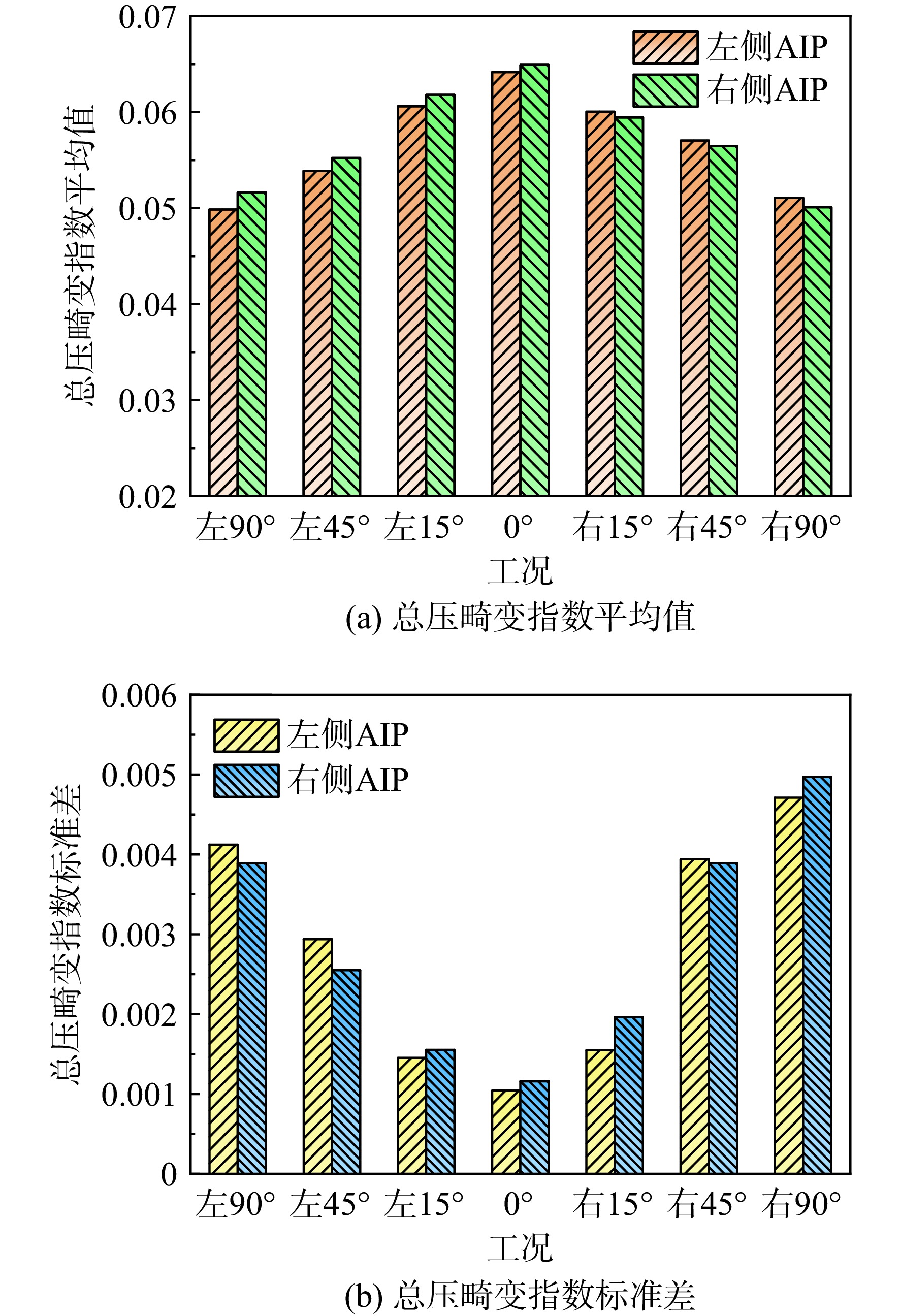
针对舰载机着舰复飞过程发动机周围环境的复杂流场,建立包含航母及舰载机的全尺寸一体化的数值模型。开发了移动坐标系下的重叠网格与移动压力检测技术,耦合延迟分离涡模拟(DDES)方法,解析了高速前行中航母舰体产生的复杂尾流涡量系统,分析了风速、风向角及攻角等参数对着舰过程的舰载机发动机总压畸变的影响,揭示了发动机进口总压畸变特性的动态演化规律。结果表明:正风条件下舰体两侧形成反向旋转涡对,而斜向风会引起显著非对称性流动分离,且湍流强度显著提升。总压畸变指数随风向角增大平均值降低而标准差升高。相较于正风0°,当风向角增至90°时,总压畸变指数平均值从
0.0649 降至0.0498 (降幅23.3%),标准差则由1.04×10⁻³升至4.97×10⁻³(增幅达377.9%),其中触舰瞬间因地面效应及仰角调整引发的畸变突变尤为显著。Abstract:The complex flow field around aircraft engines during carrier landing and boltering was analyzed by establishing a full-scale numerical model of both carrier and aircraft. The overset grid and moving pressure measurement techniques combined with delayed detached-eddy simulation (DDES) were developed to resolve the complex vortex systems generated by the advancing carrier hull. The effects of wind speed, wind direction angle, and angle of attack on the total pressure distortion at the engine inlet were analyzed, and the dynamic evolution characteristics of the total pressure distortion were revealed. Key findings indicated that under headwind conditions, counter-rotating vortex pairs formed on both sides of the carrier hull, while crosswinds caused significantly asymmetric flow separation, with turbulence intensity enhanced on the leeward side. With the increase of wind angle, the total pressure distortion index exhibited decreased mean values but elevated standard deviations. Specifically at 90° yaw angle (relative to 0°), the mean value dropped from
0.0649 to0.0498 (23.3% reduction), while the standard deviation surged from 1.04×10⁻³ to 4.97×10⁻³ (377.9% increase). Particularly during touchdown, the distortion transients became especially prominent due to ground effects and pitch adjustment.-
Key words:
- landing and boltering /
- engine matching /
- distortion /
- detached-eddy /
- overset mesh method
-
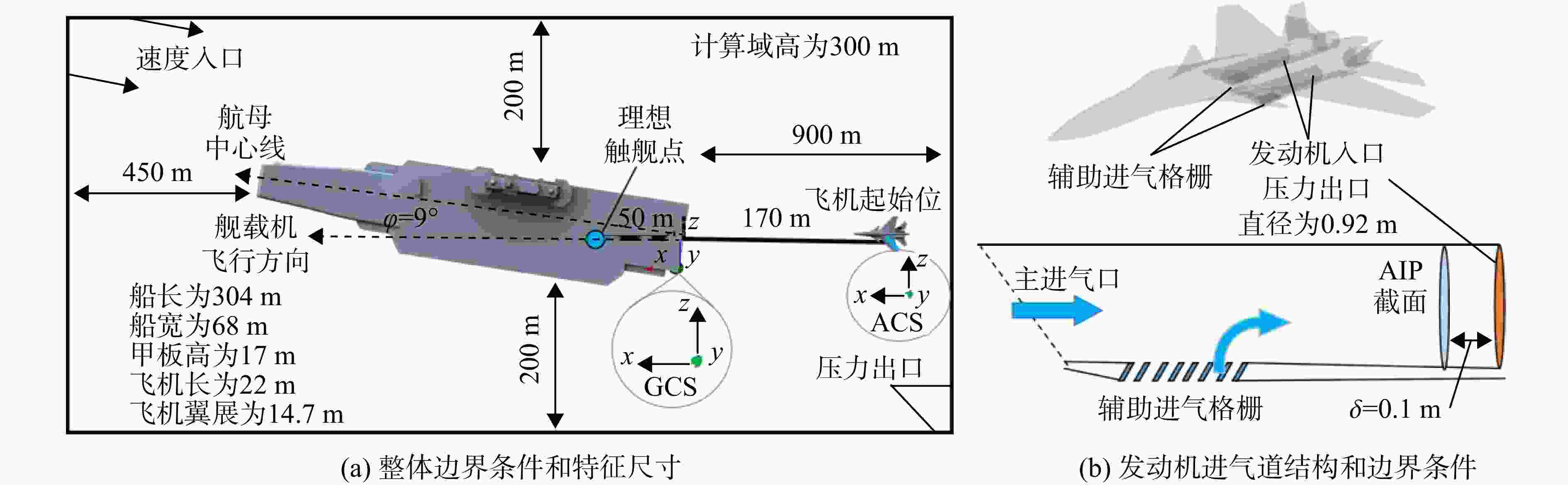
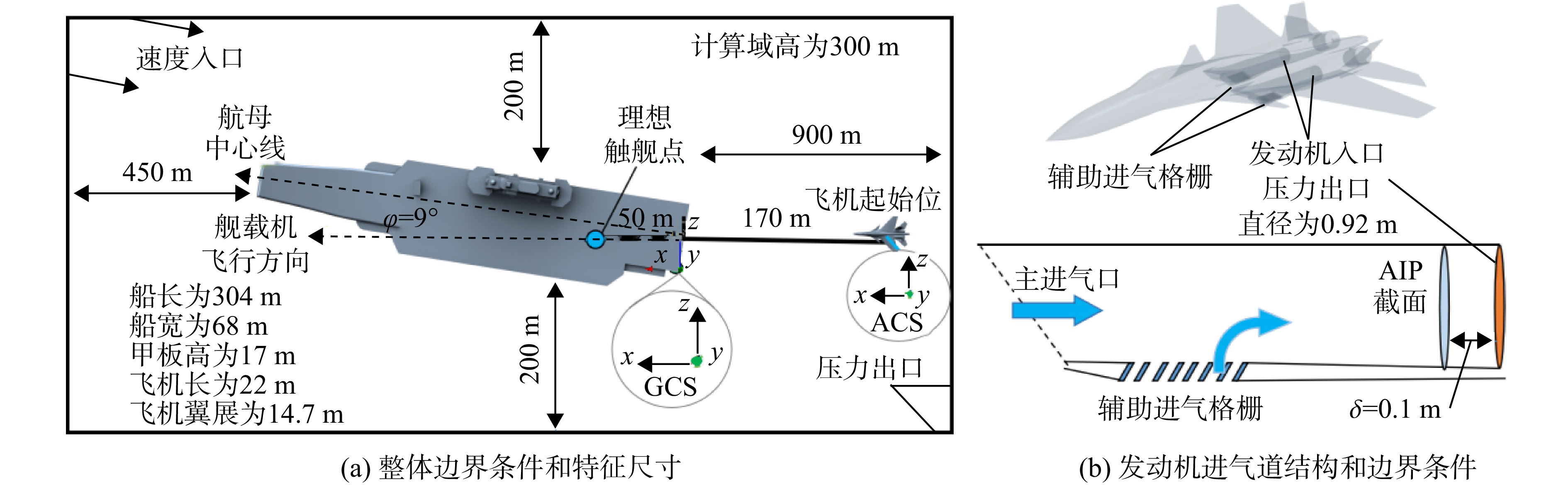
图 2 几何模型和边界条件示意图
Figure 2. Schematic diagram of geometric models and boundary conditions
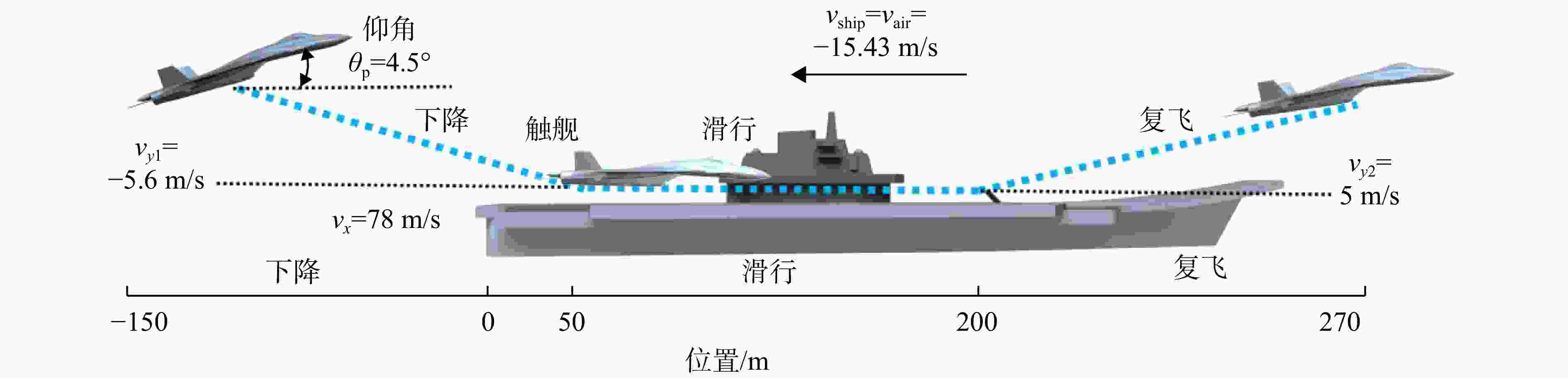
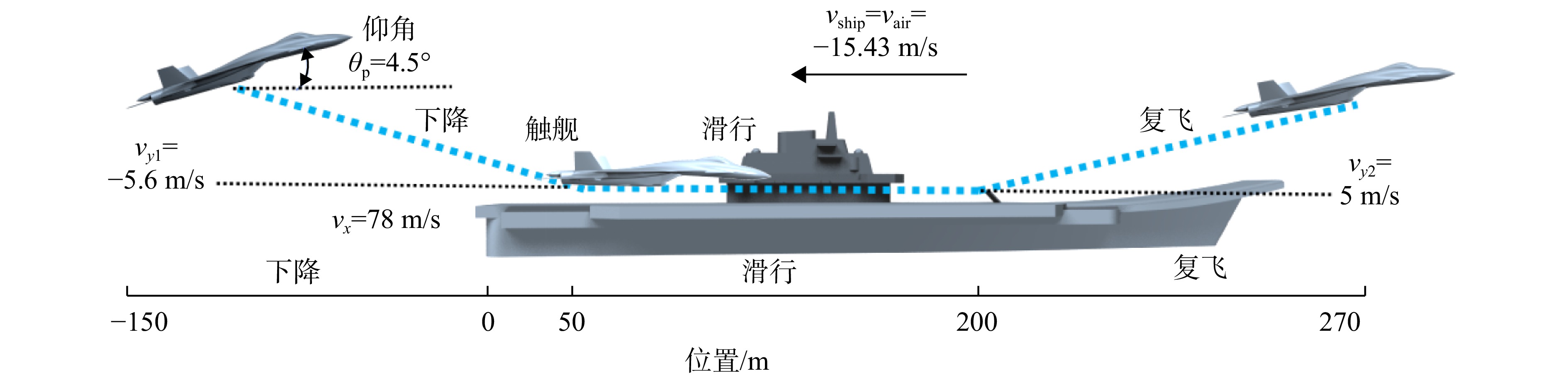
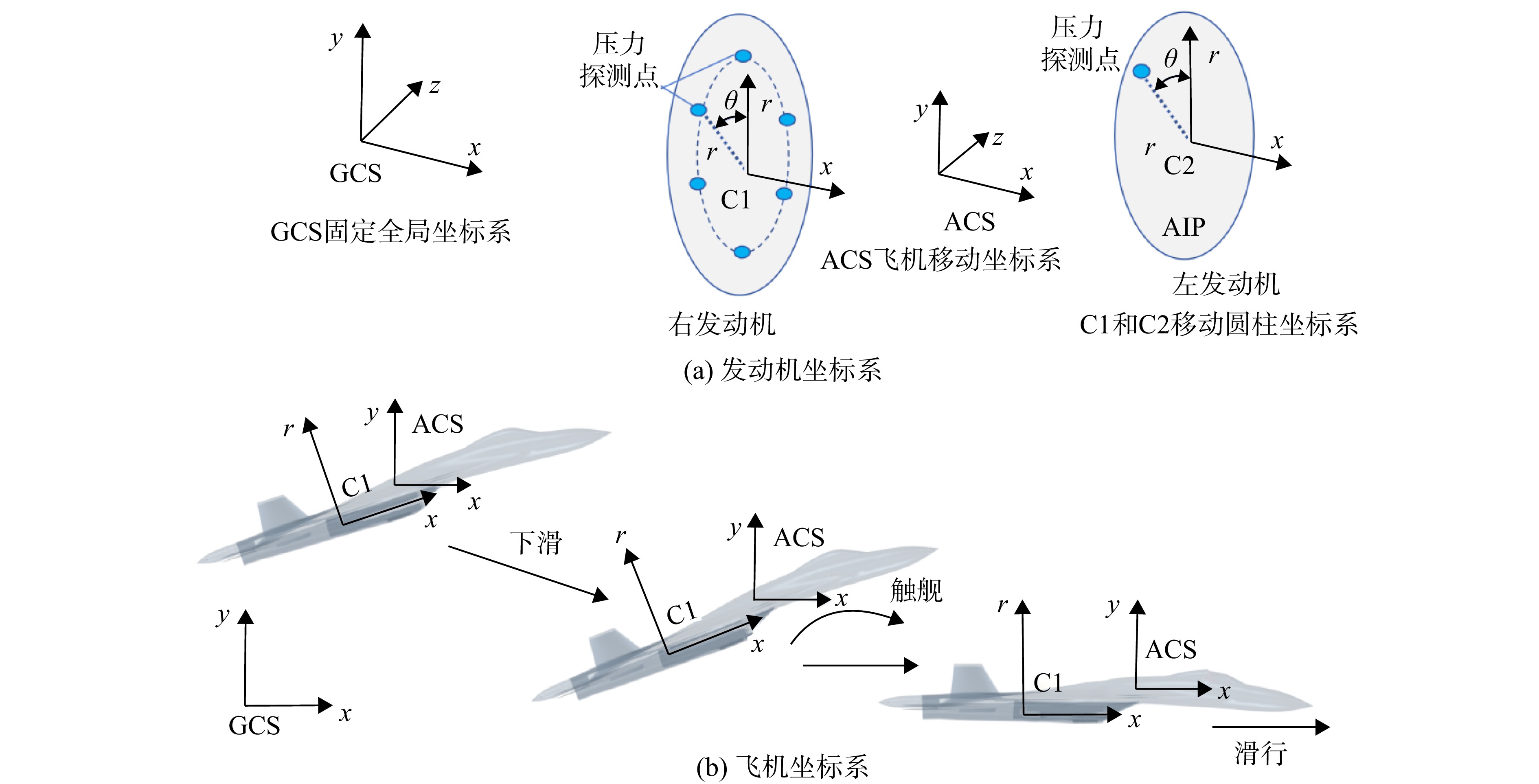
图 3 舰载机着舰复飞全过程示意图
Figure 3. Schematic diagram of the process of carrier-based aircraft landing and boltering
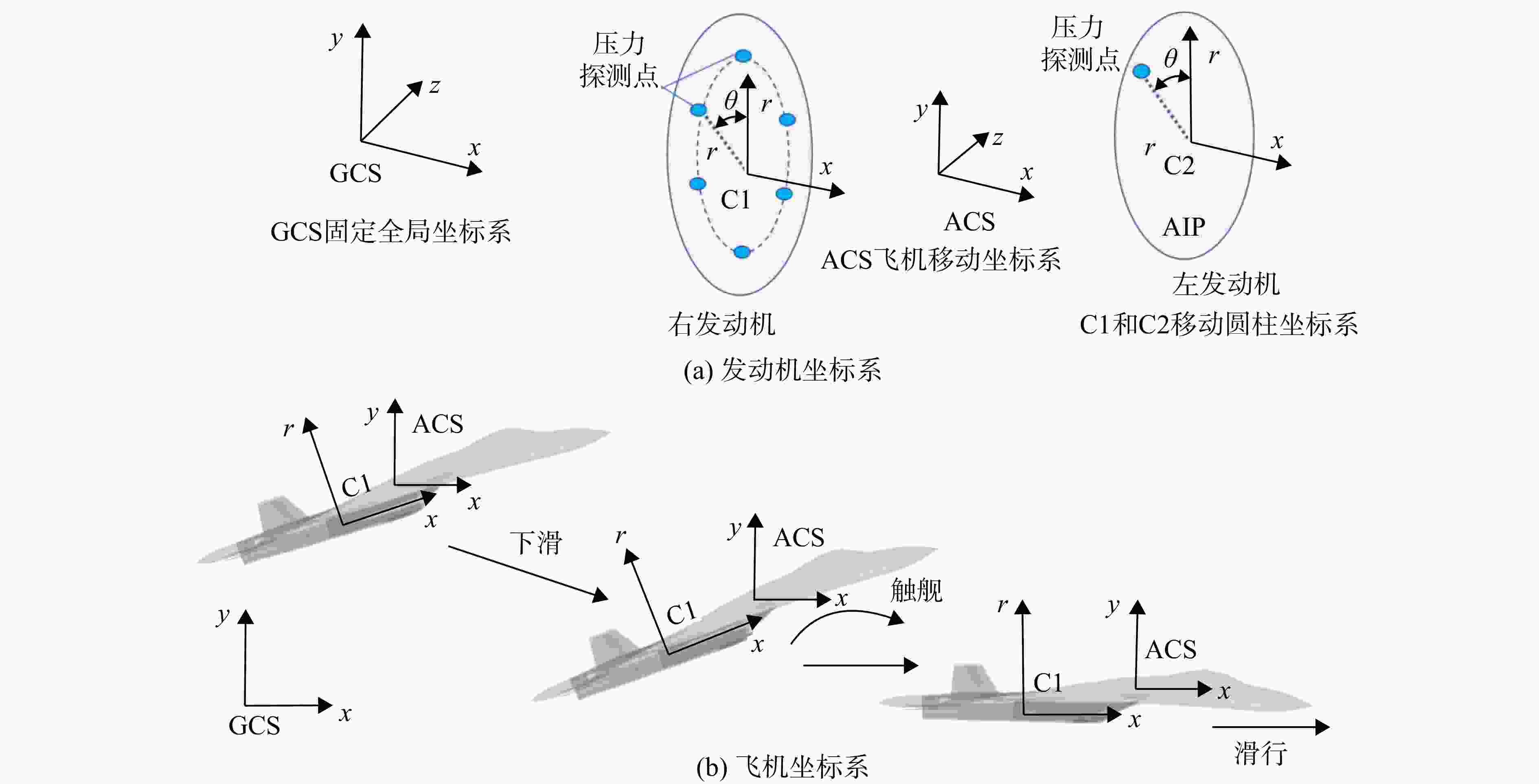
图 4 压力监测点随坐标系移动示意图
Figure 4. Schematic diagram of pressure measurement points moving with the coordinate system
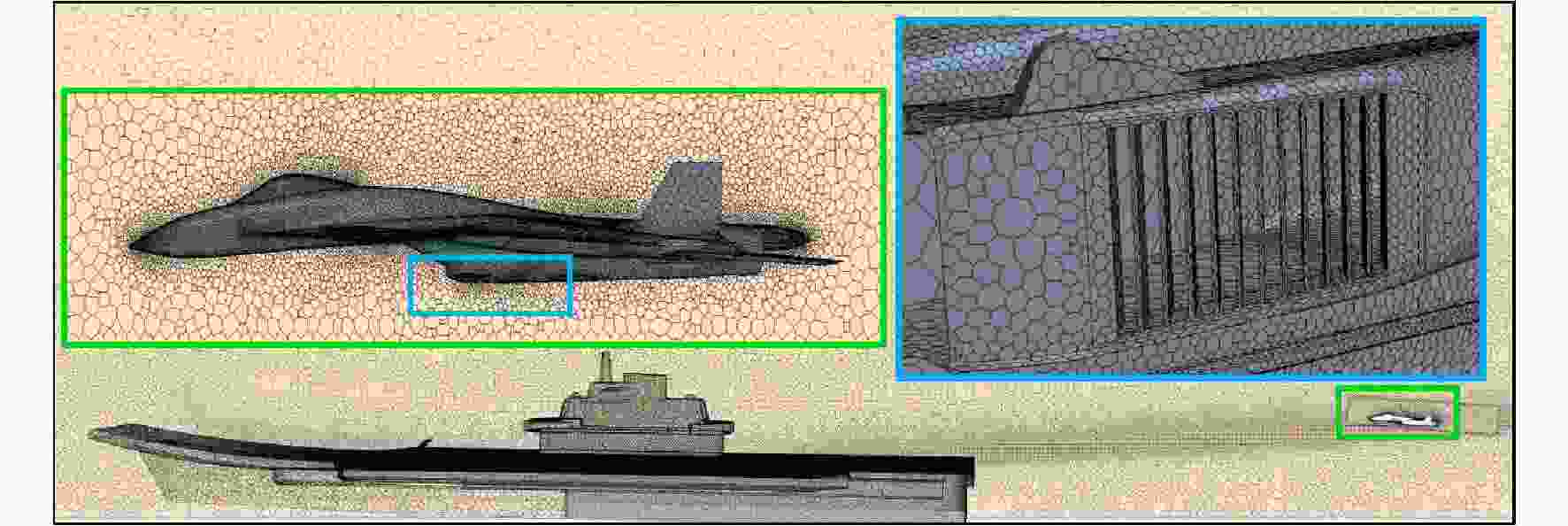
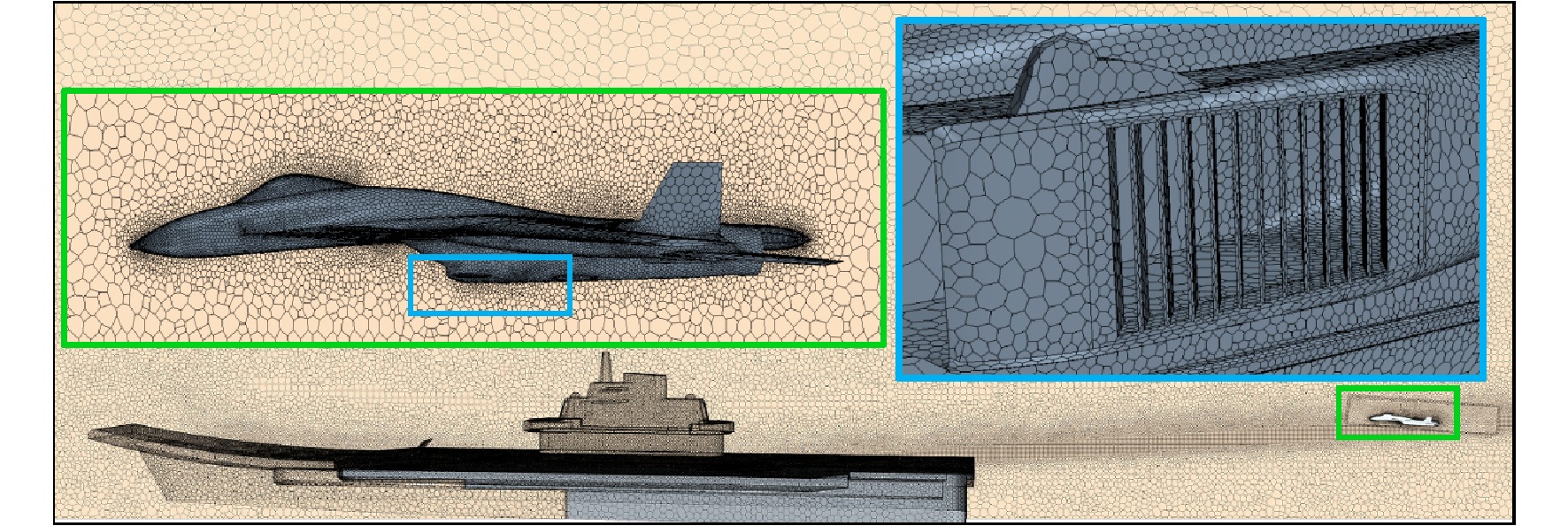
图 5 航母和舰载机网格划分
Figure 5. Mesh generation for aircraft carrier and carrier-based aircraft
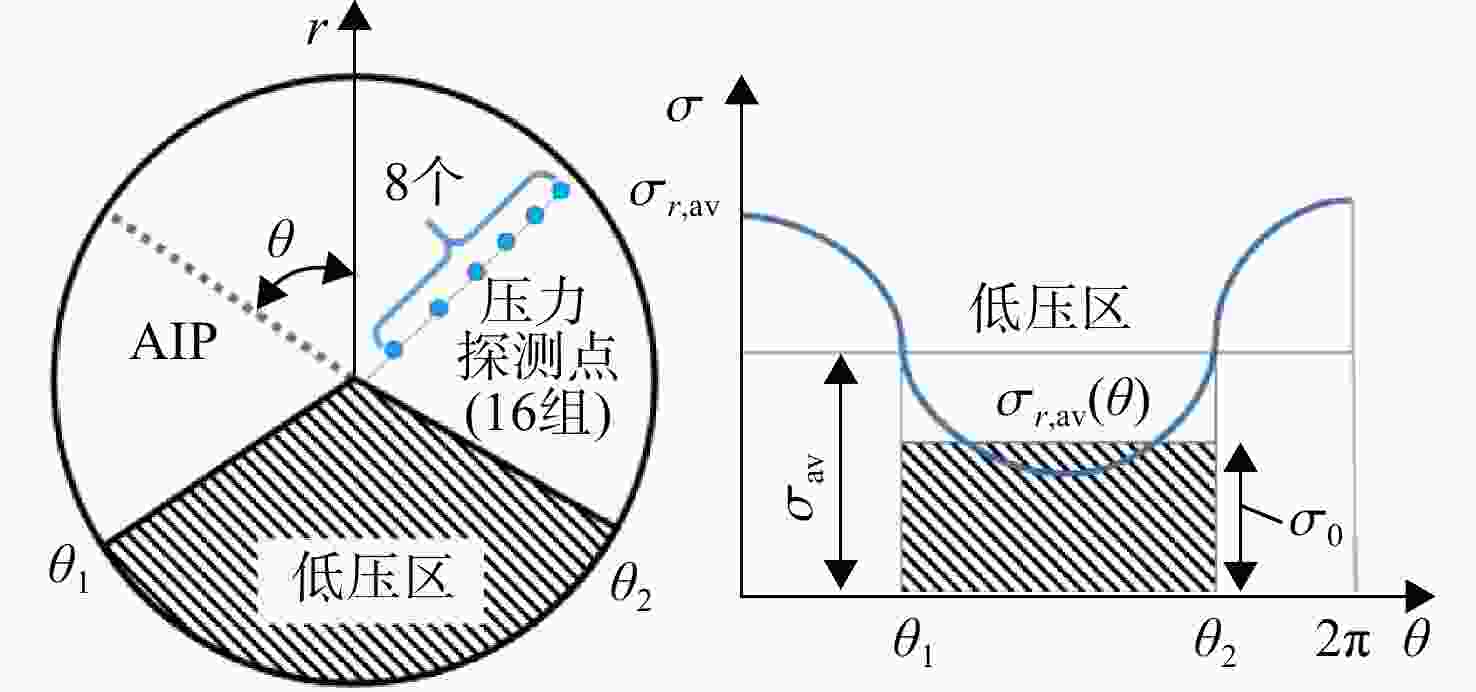
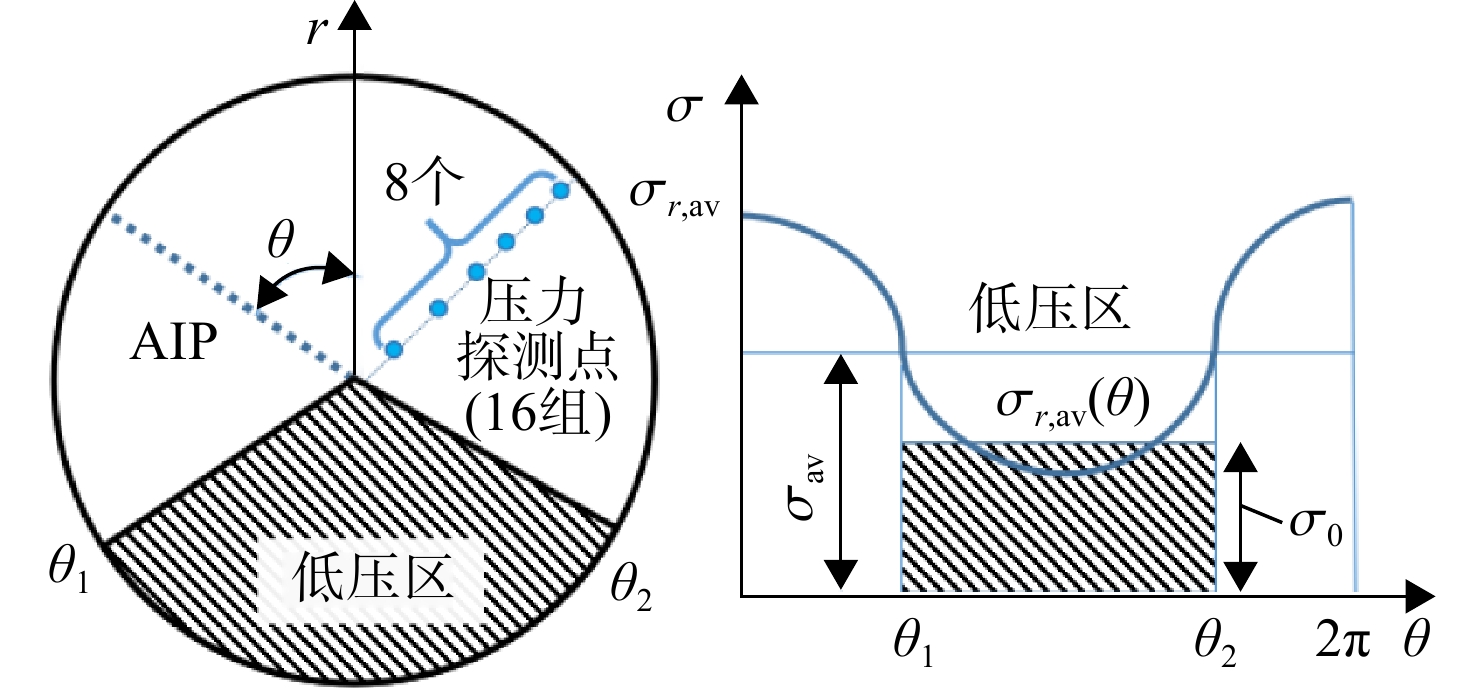
图 6 AIP截面压力探测点和低压区示意图
Figure 6. Schematic diagram of pressure measurement points and low-pressure zone at AIP
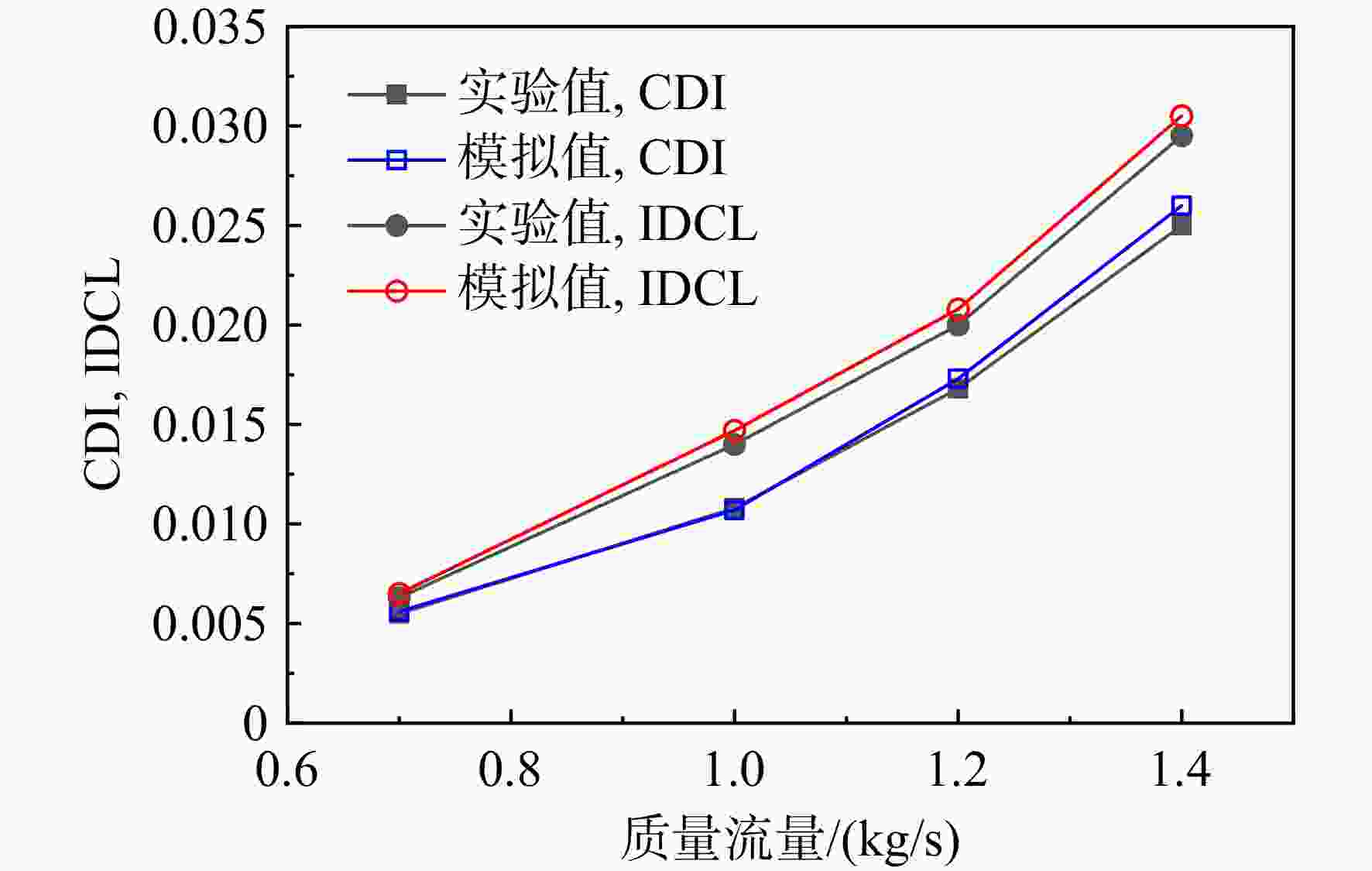
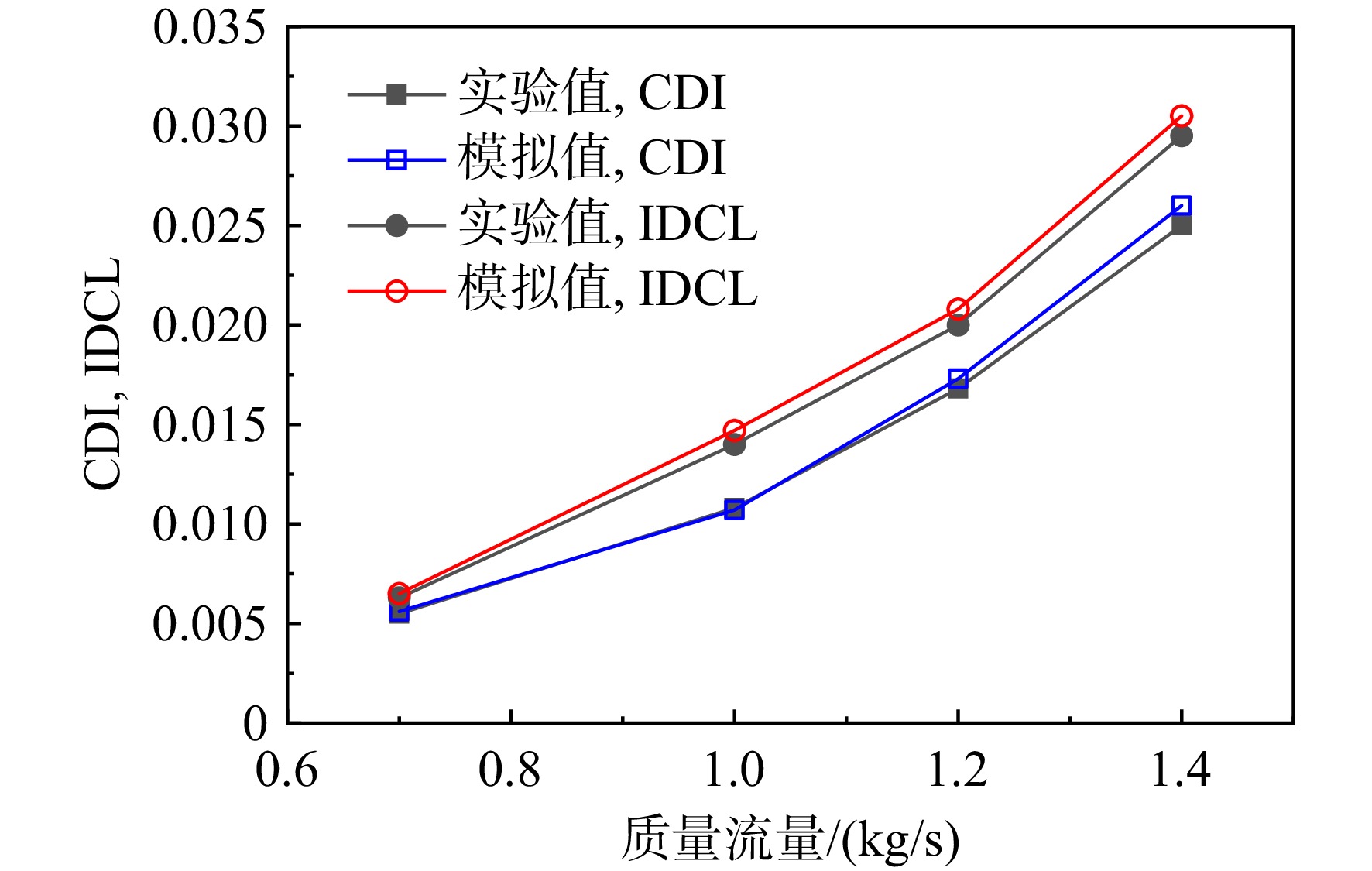
图 8 数值模拟与实验结果的对比验证
Figure 8. Validation of numerical simulation against experimental results
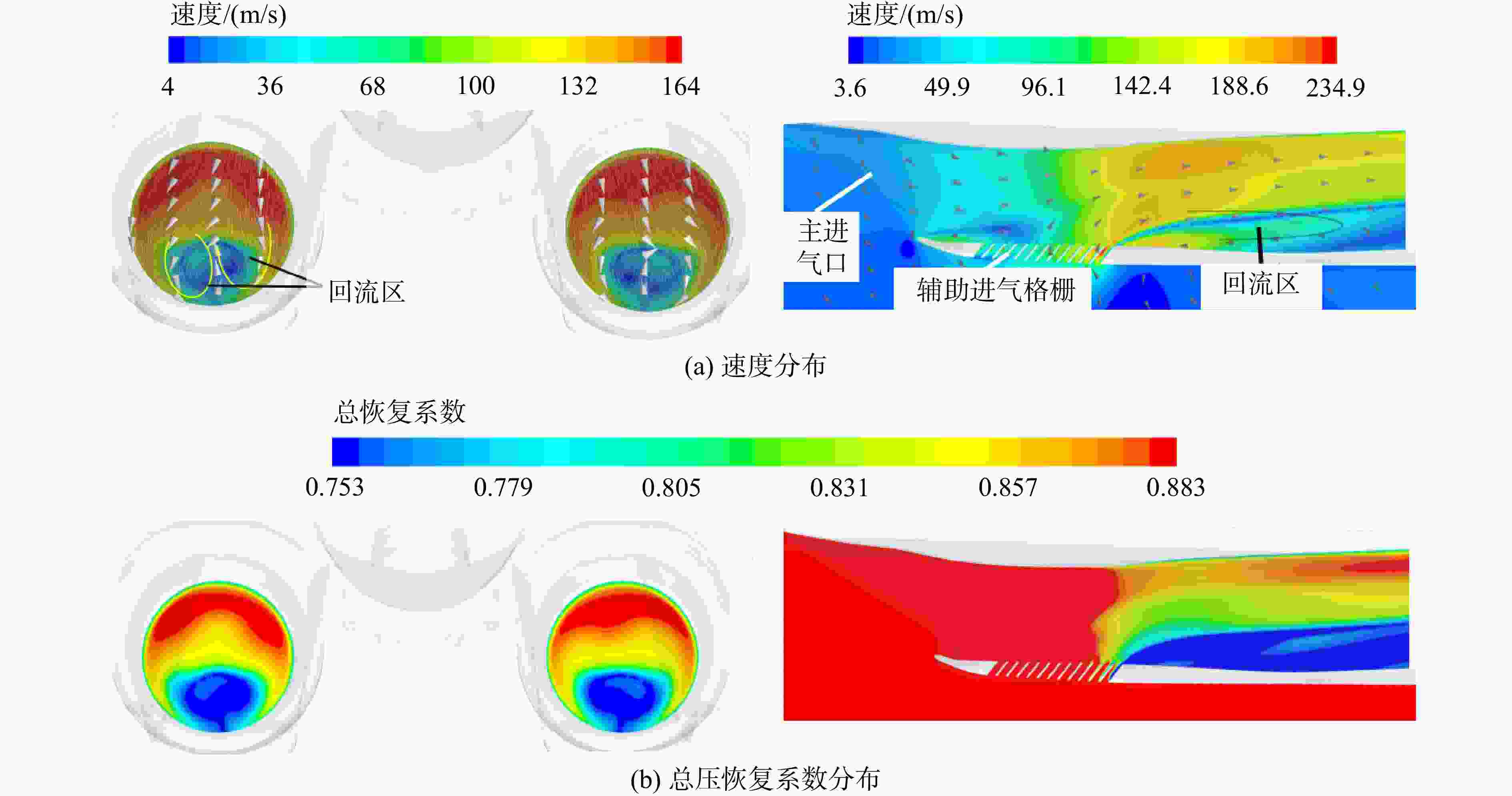
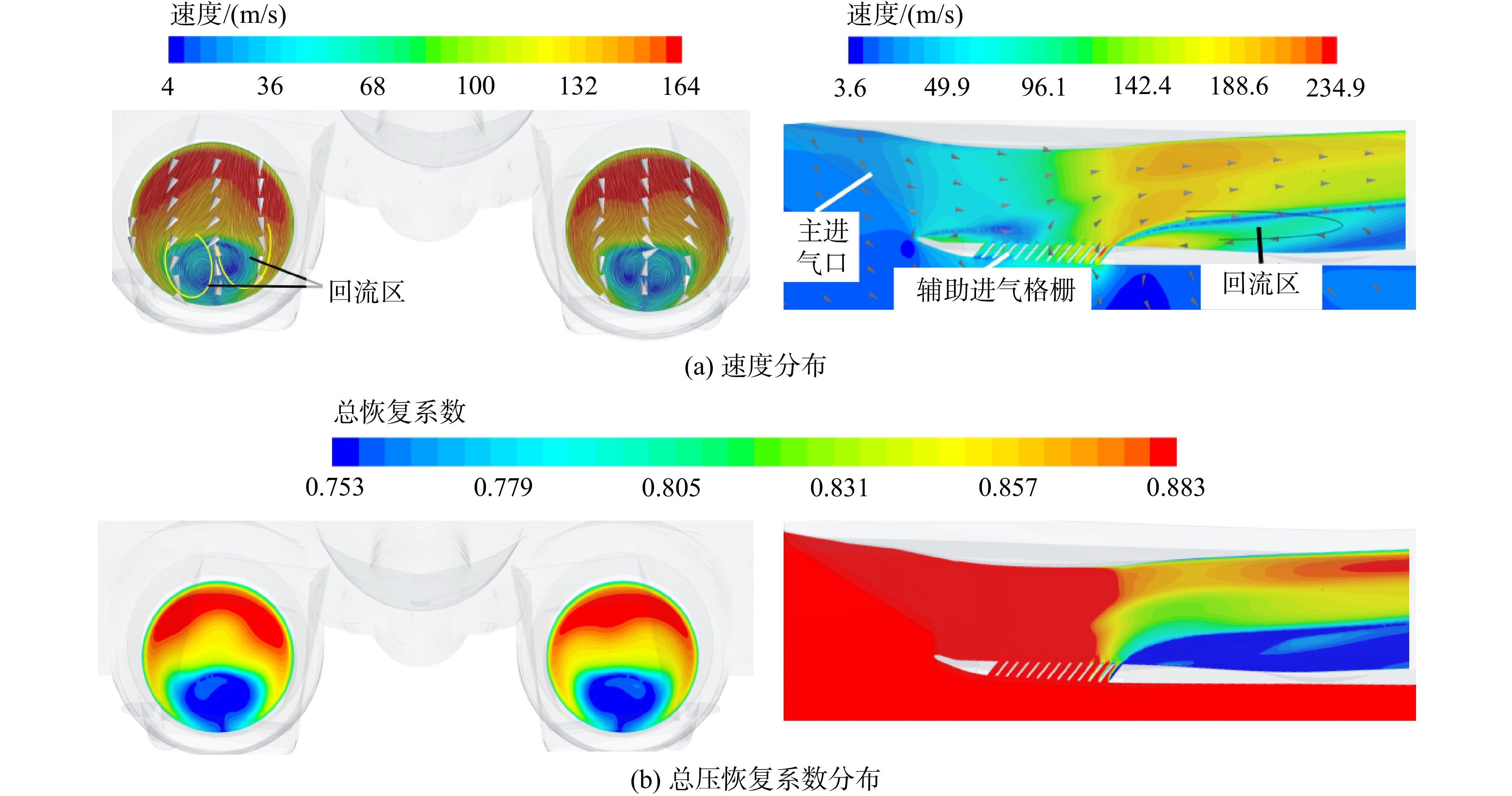
图 9 无航母尾流扰动发动机进气道流场特性
Figure 9. Engine air intake flow characteristics without aircraft carrier airwake disturbance
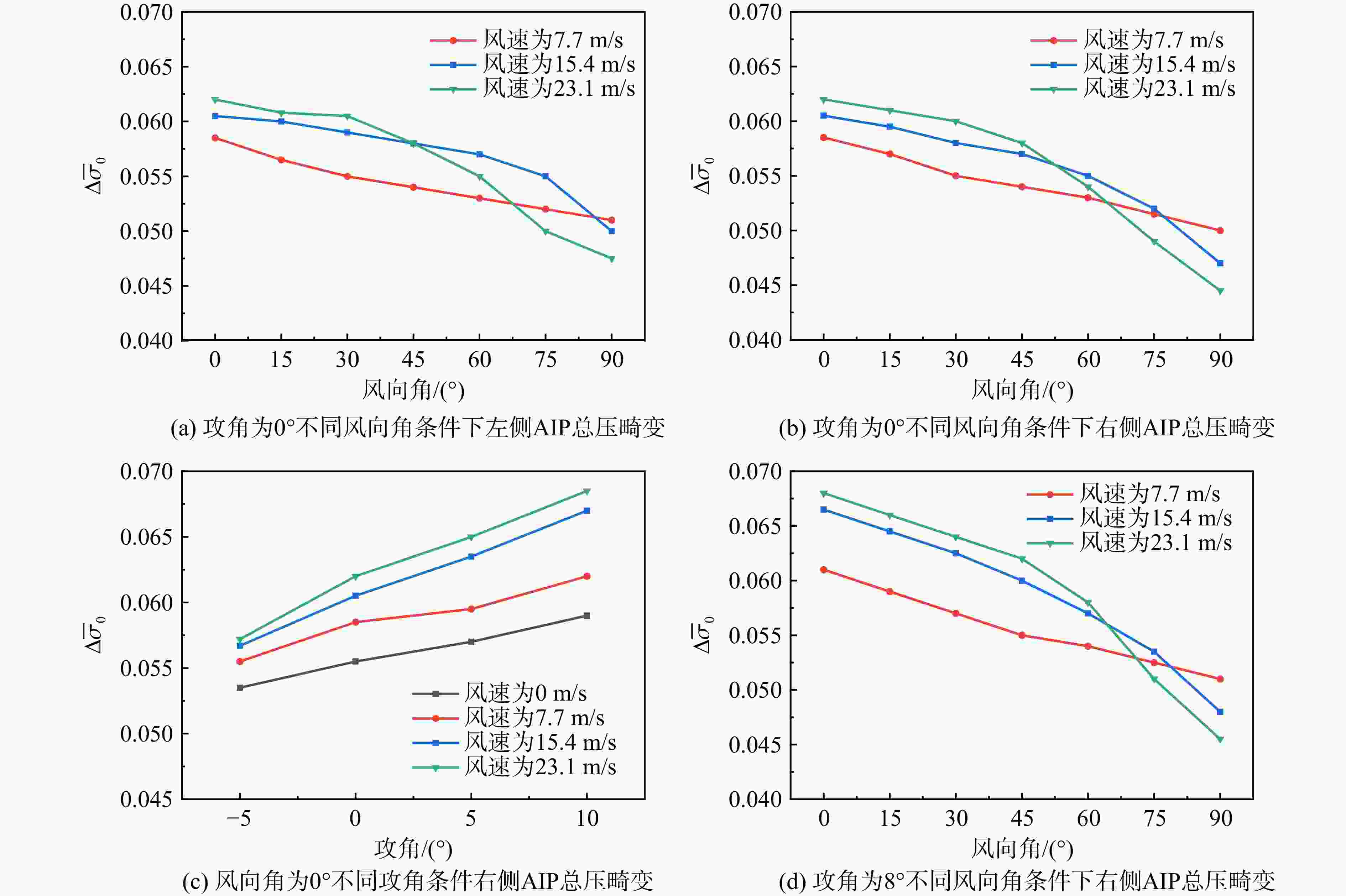
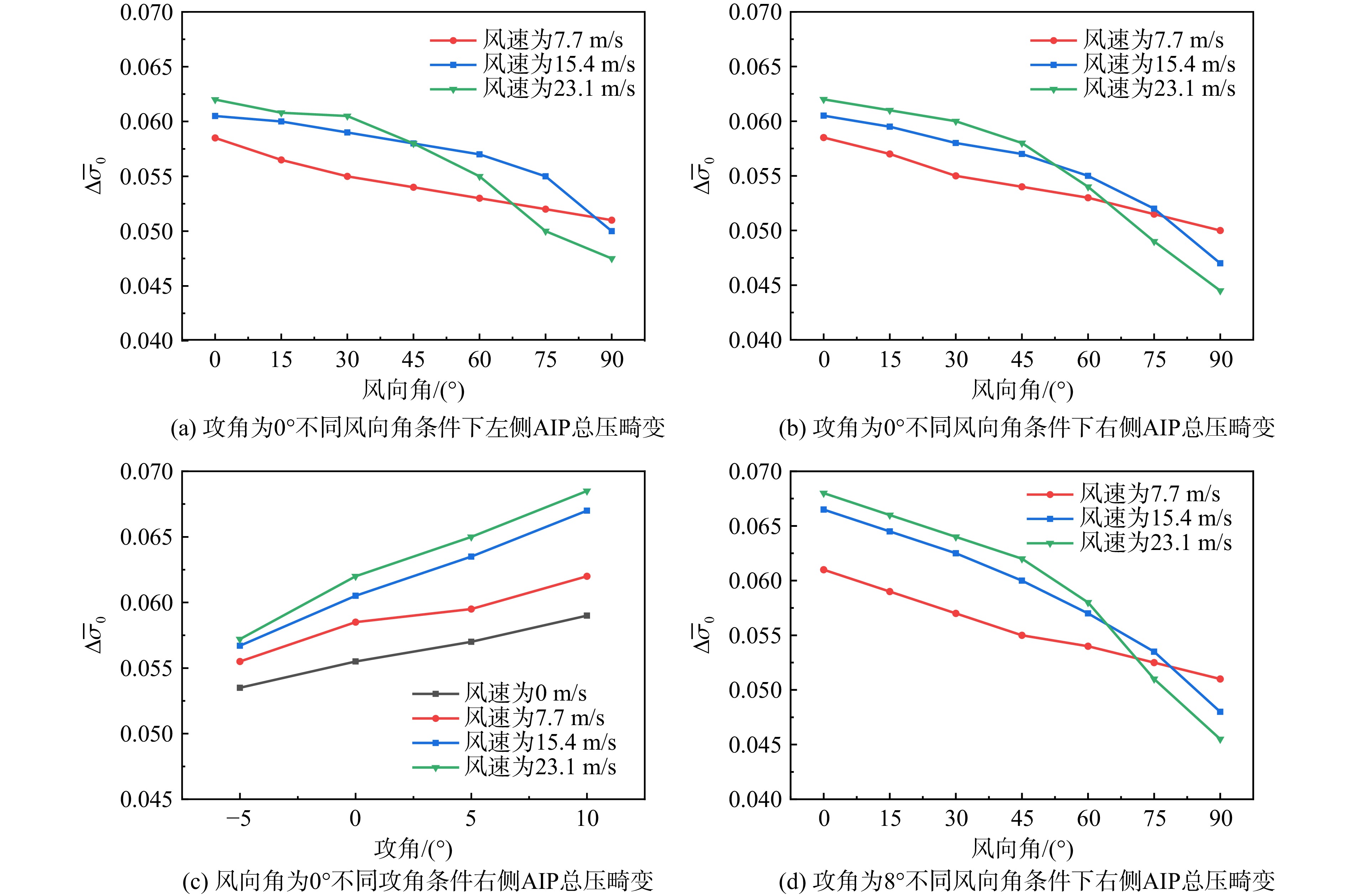
图 10 无航母尾流扰动不同外部条件对总压畸变的影响
Figure 10. Influence of different external conditions on total pressure distortion without aircraft carrier airwake disturbance
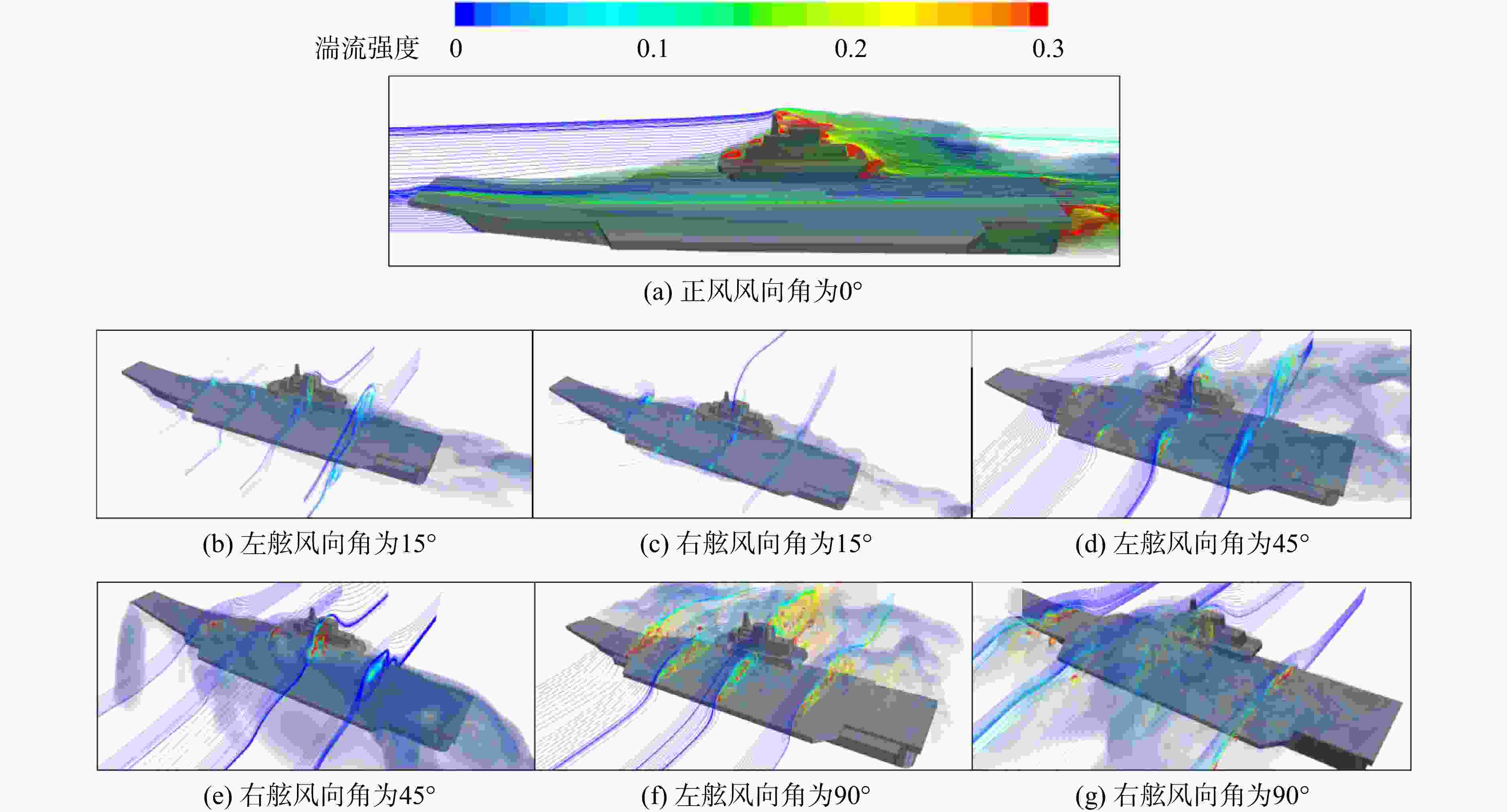
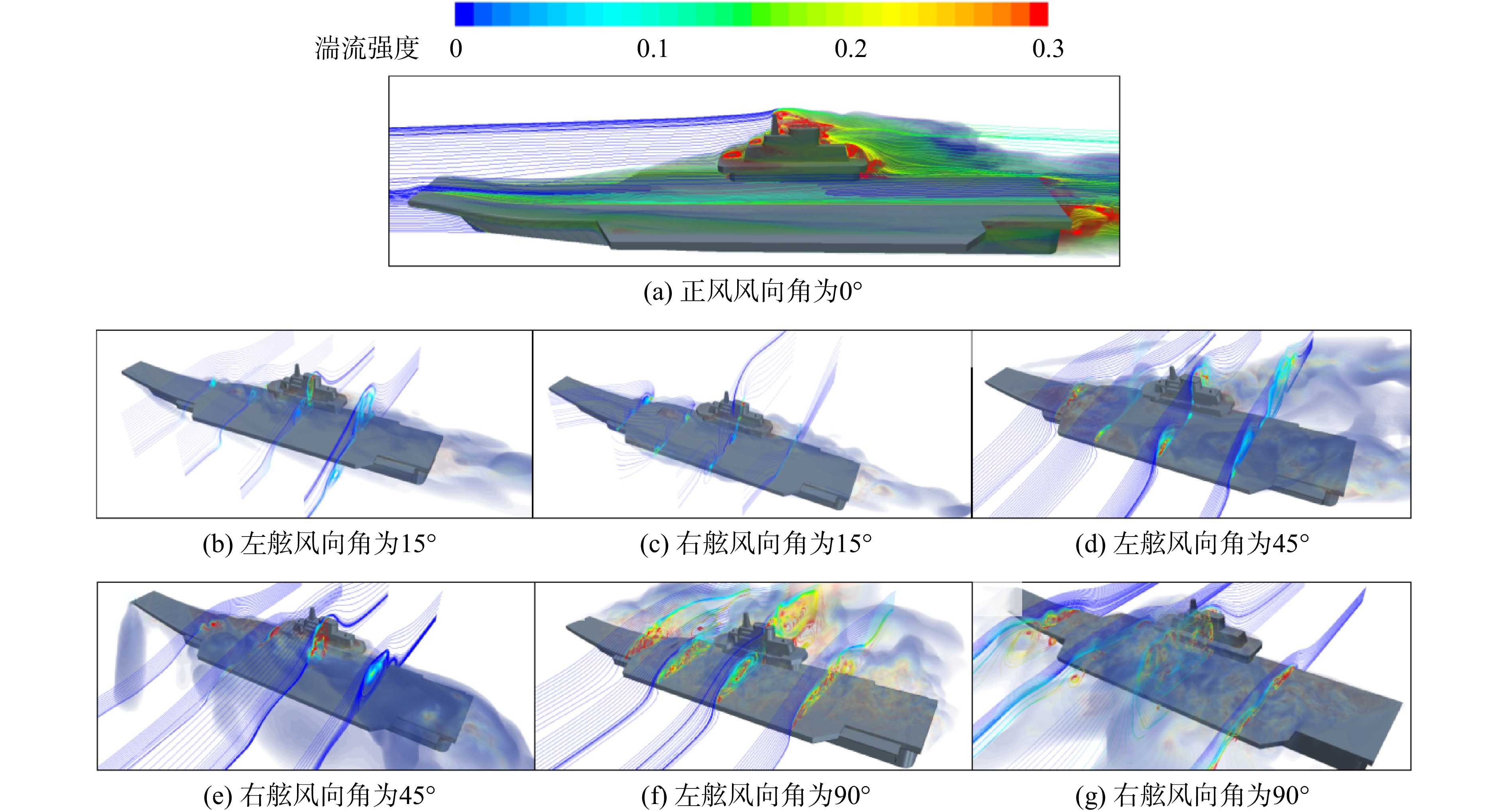
图 11 航母尾流场湍流强度和流线
Figure 11. Turbulence intensity and streamlines in aircraft carrier airwake
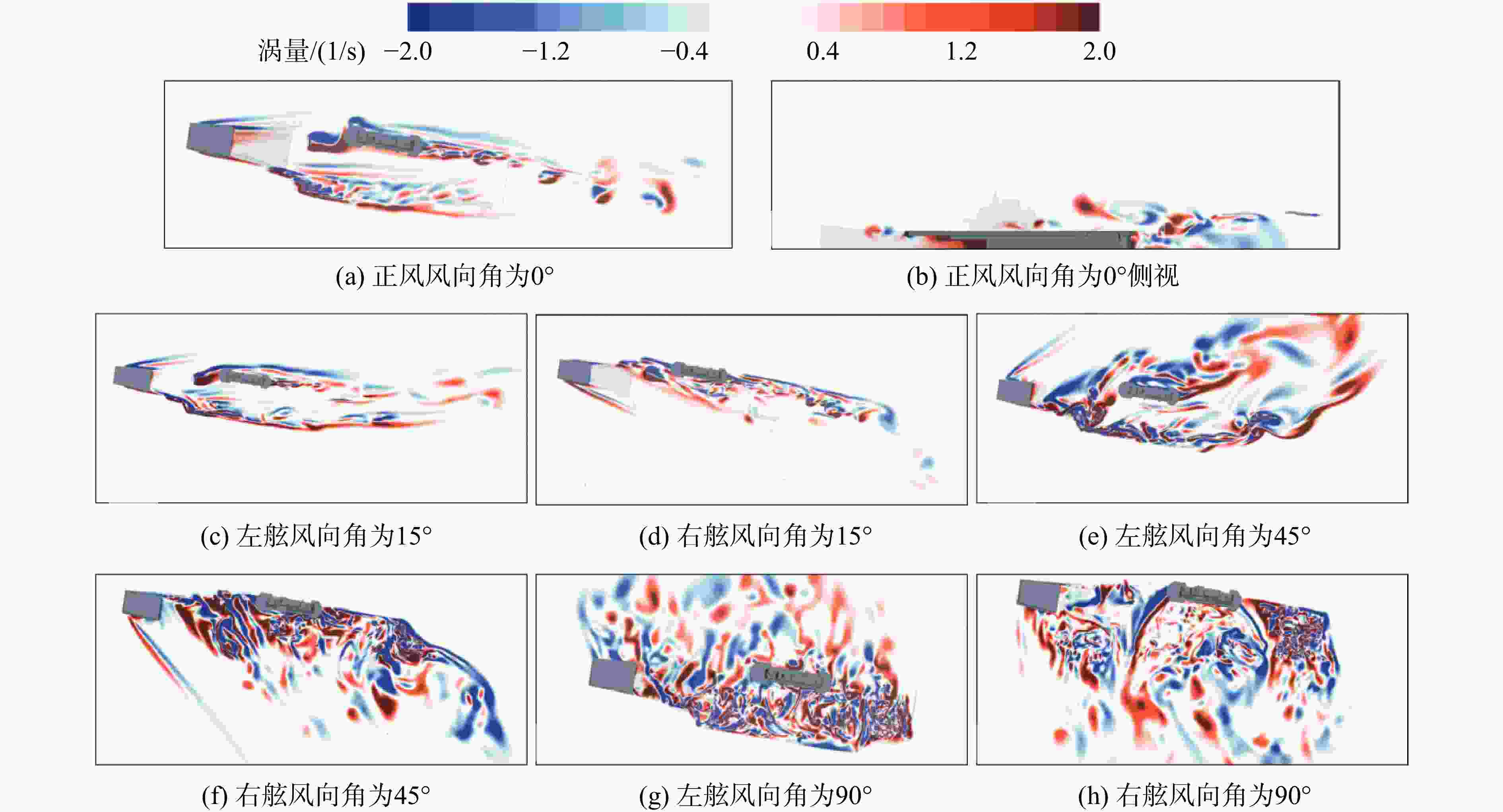
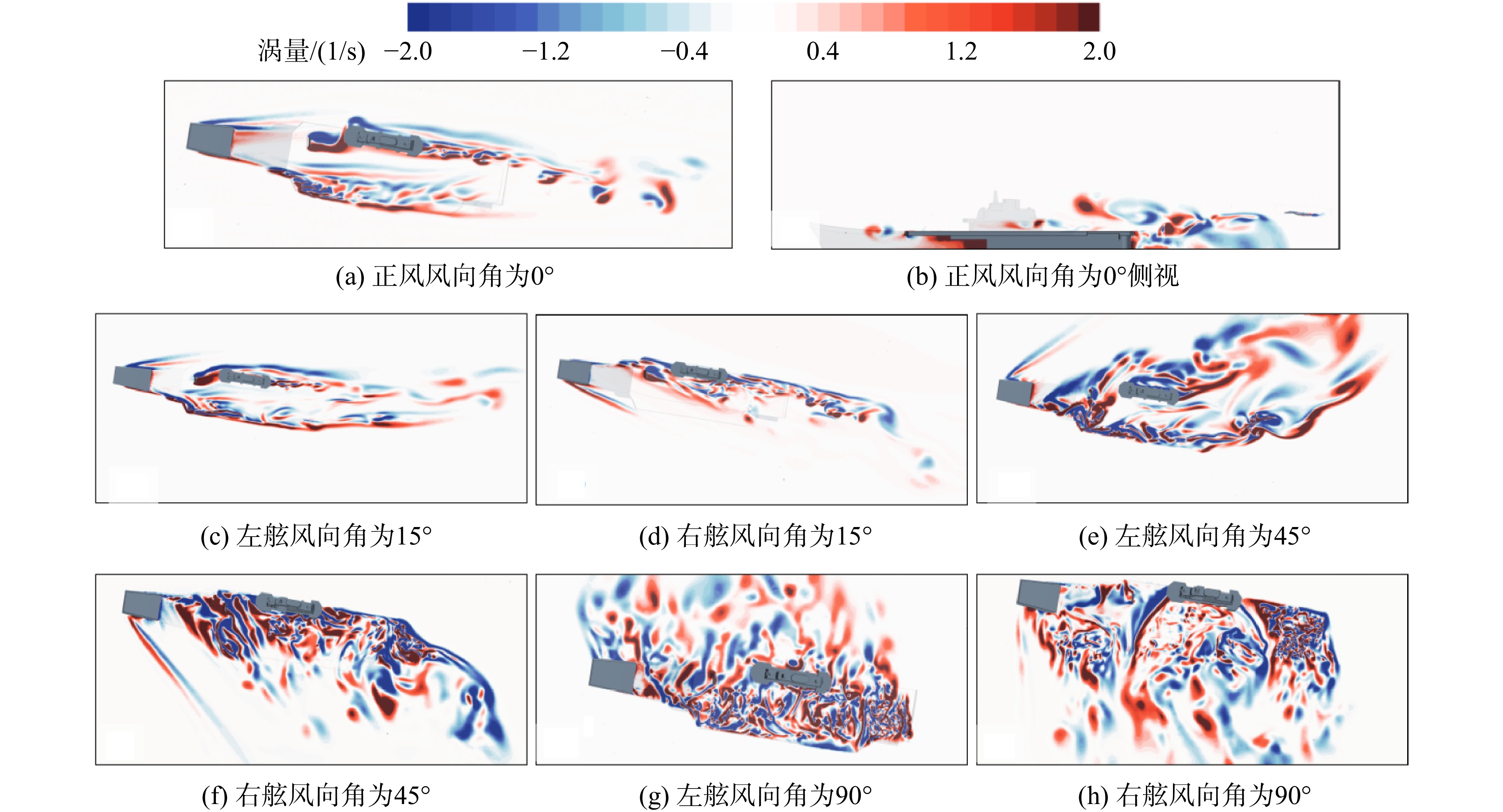
图 12 航母尾流瞬时涡量分布
Figure 12. Transient vorticity distribution in aircraft carrier airwake
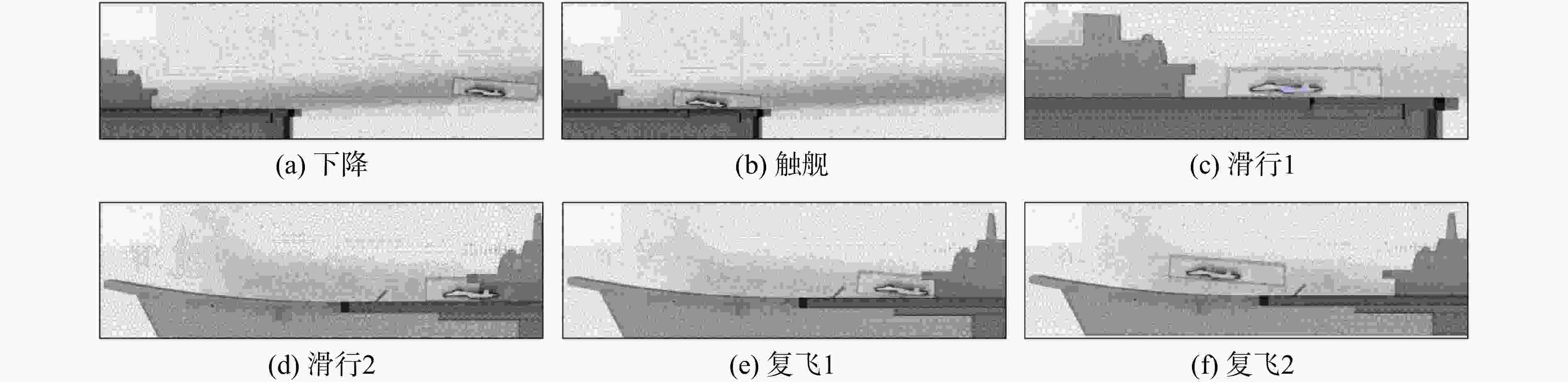
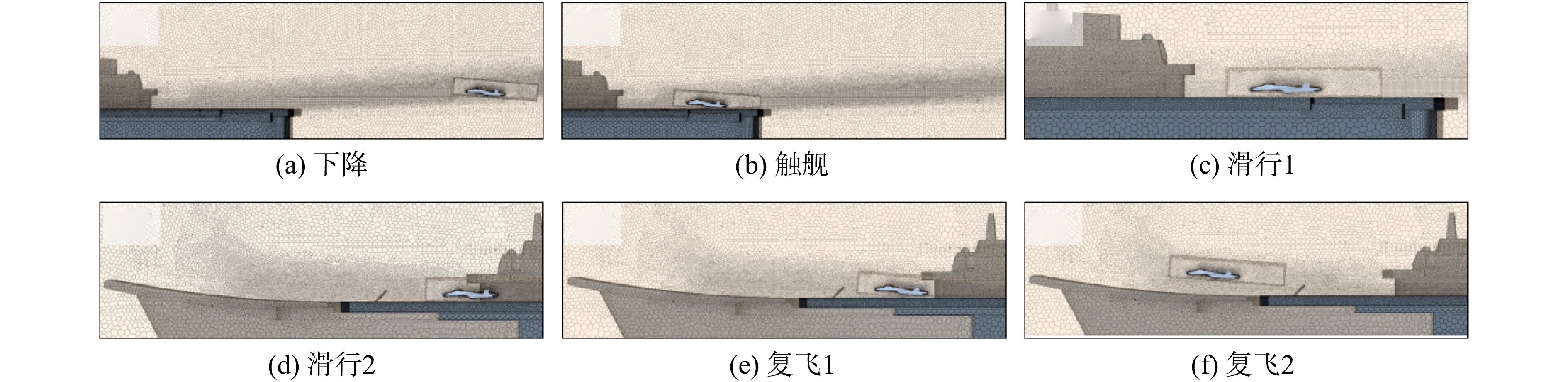
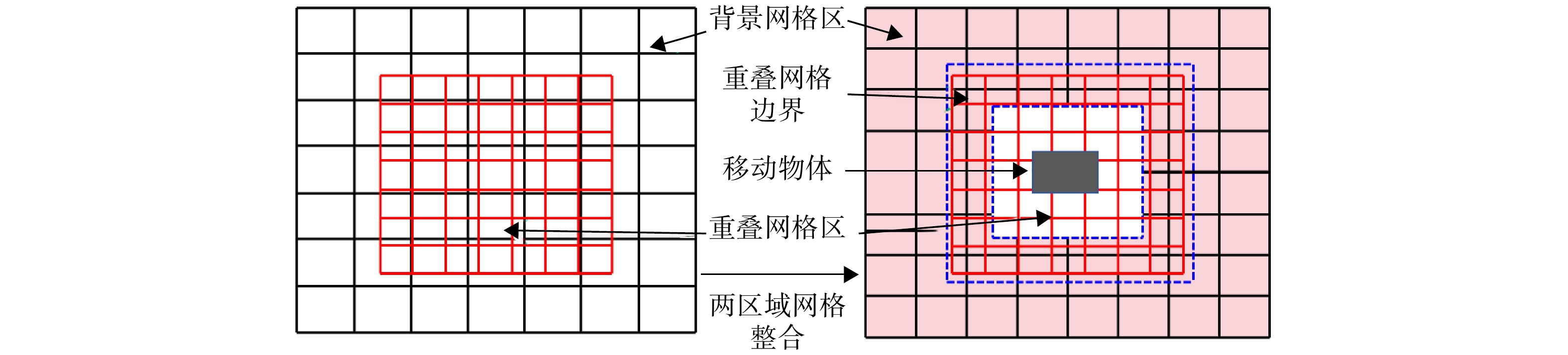
图 13 着舰复飞过程网格动态变化
Figure 13. Dynamic mesh variation during carrier landing and boltering process
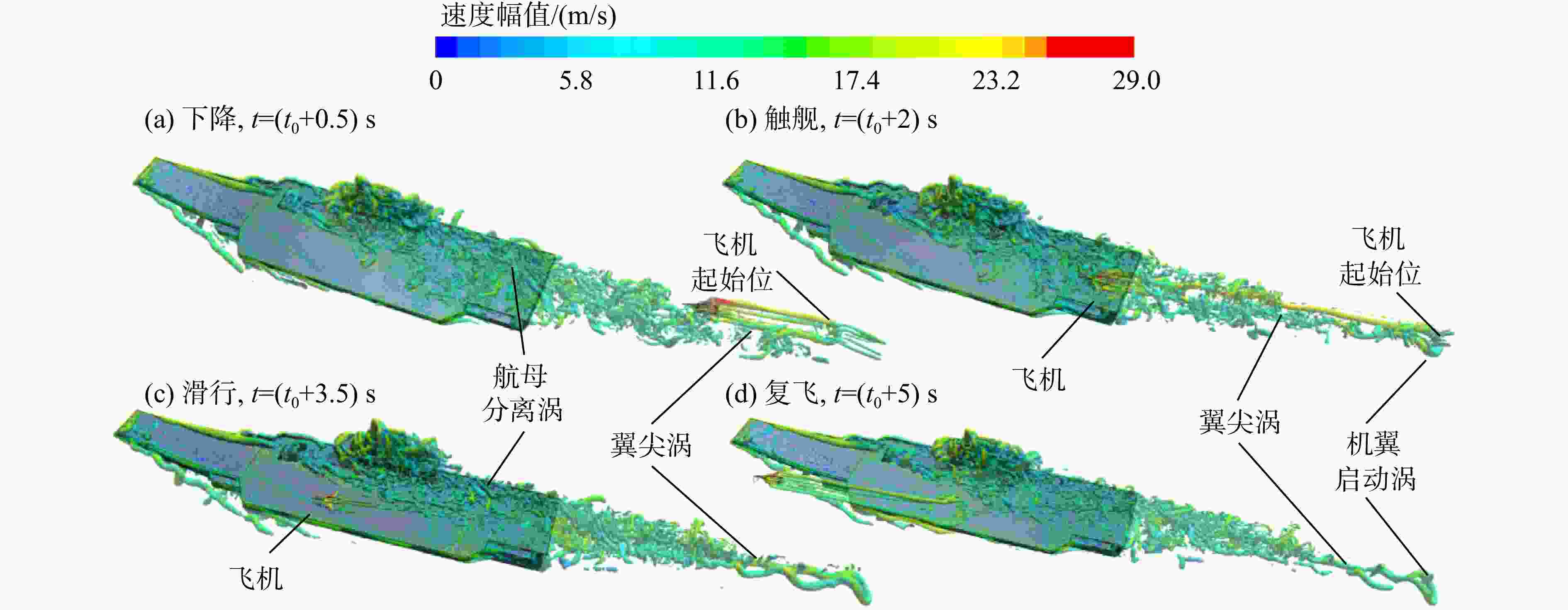
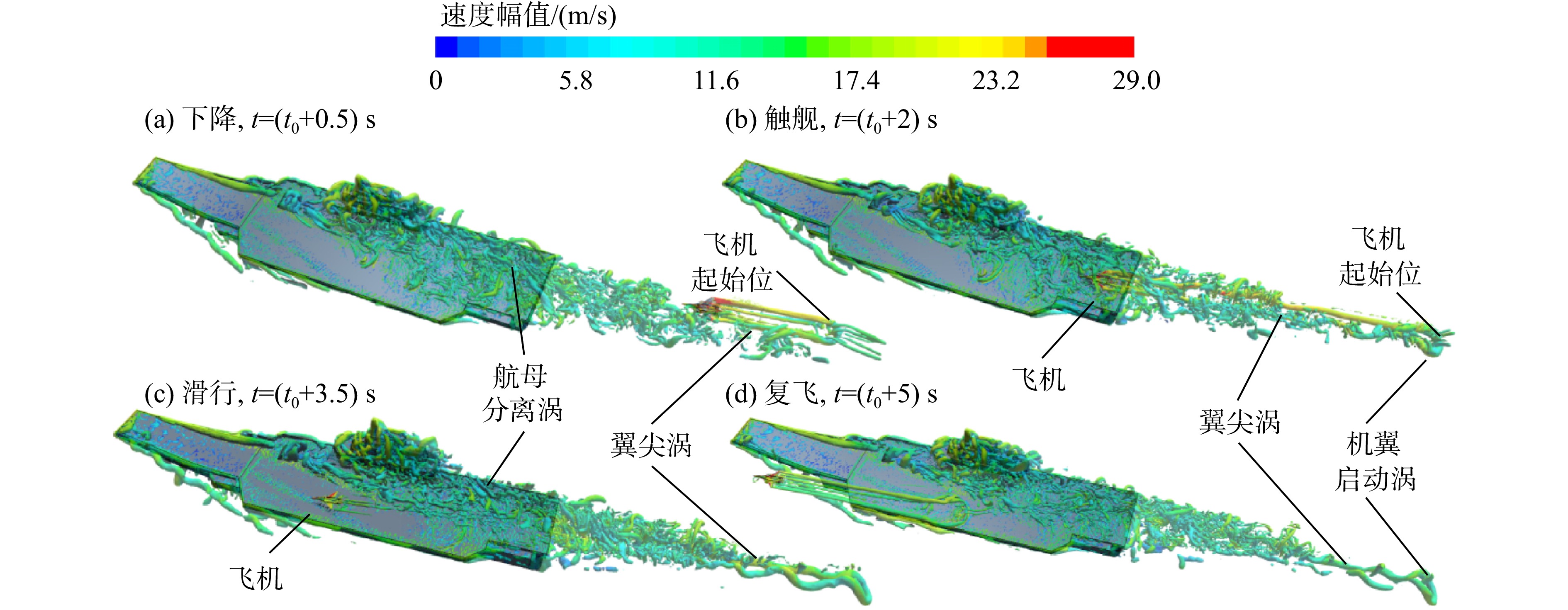
图 14 着舰复飞过程涡量Q-准则等值面速度图
Figure 14. Q-criterion isosurfaces coloured by velocity during carrier landing and boltering process
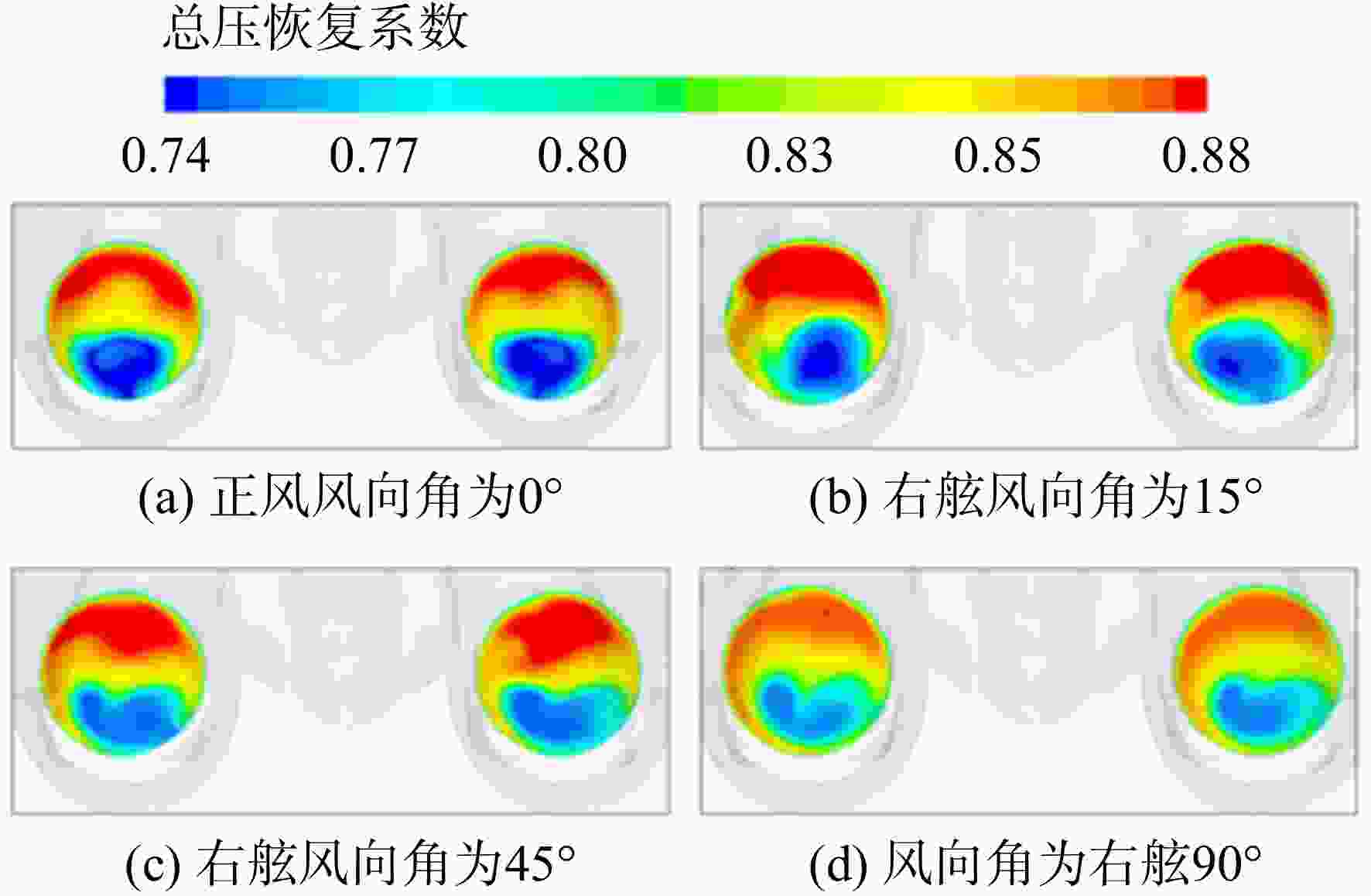
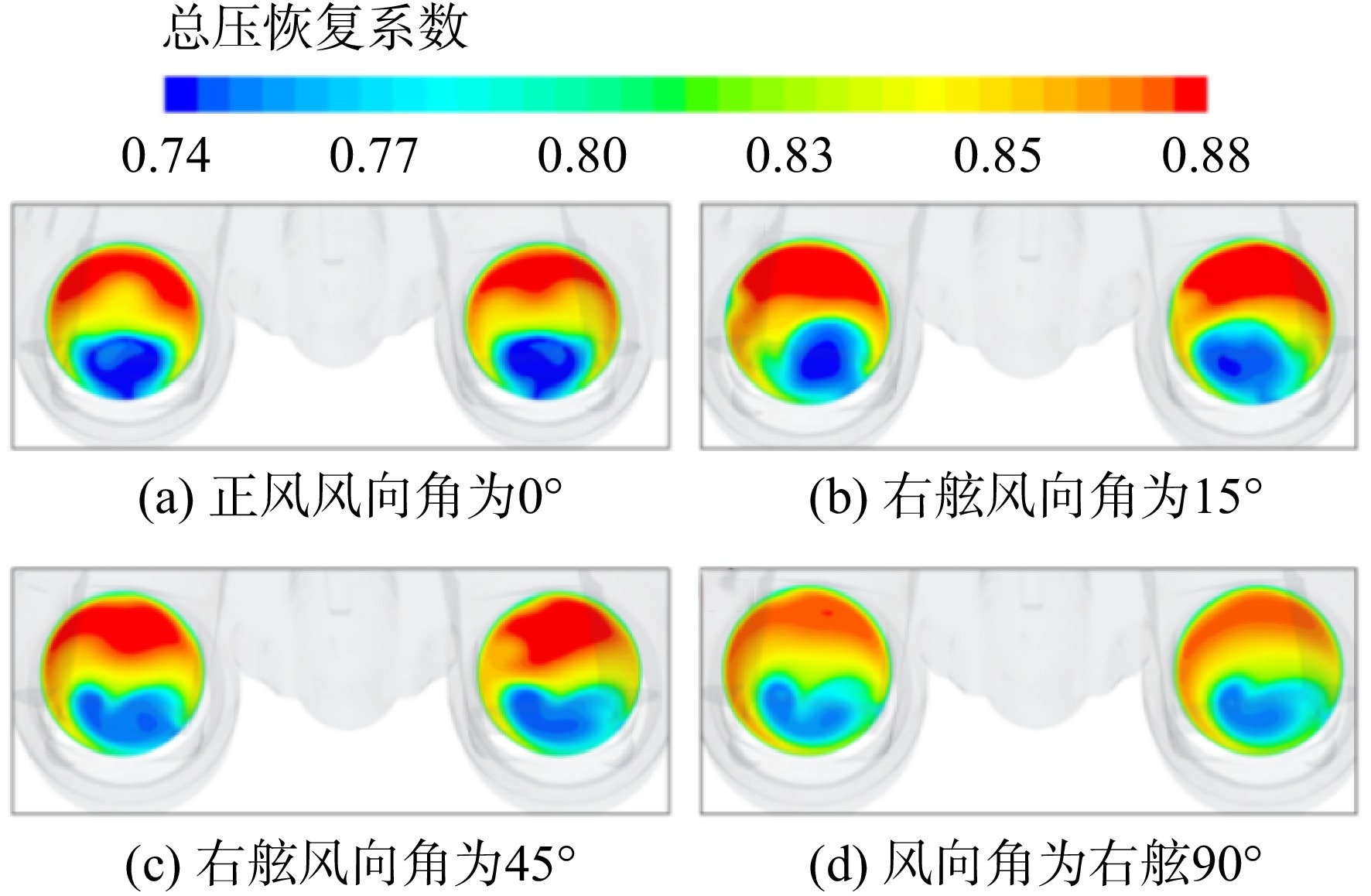
图 15 不同风向条件下AIP截面总压恢复系数分布
Figure 15. Total pressure recovery coefficient distribution at AIP under different wind directions
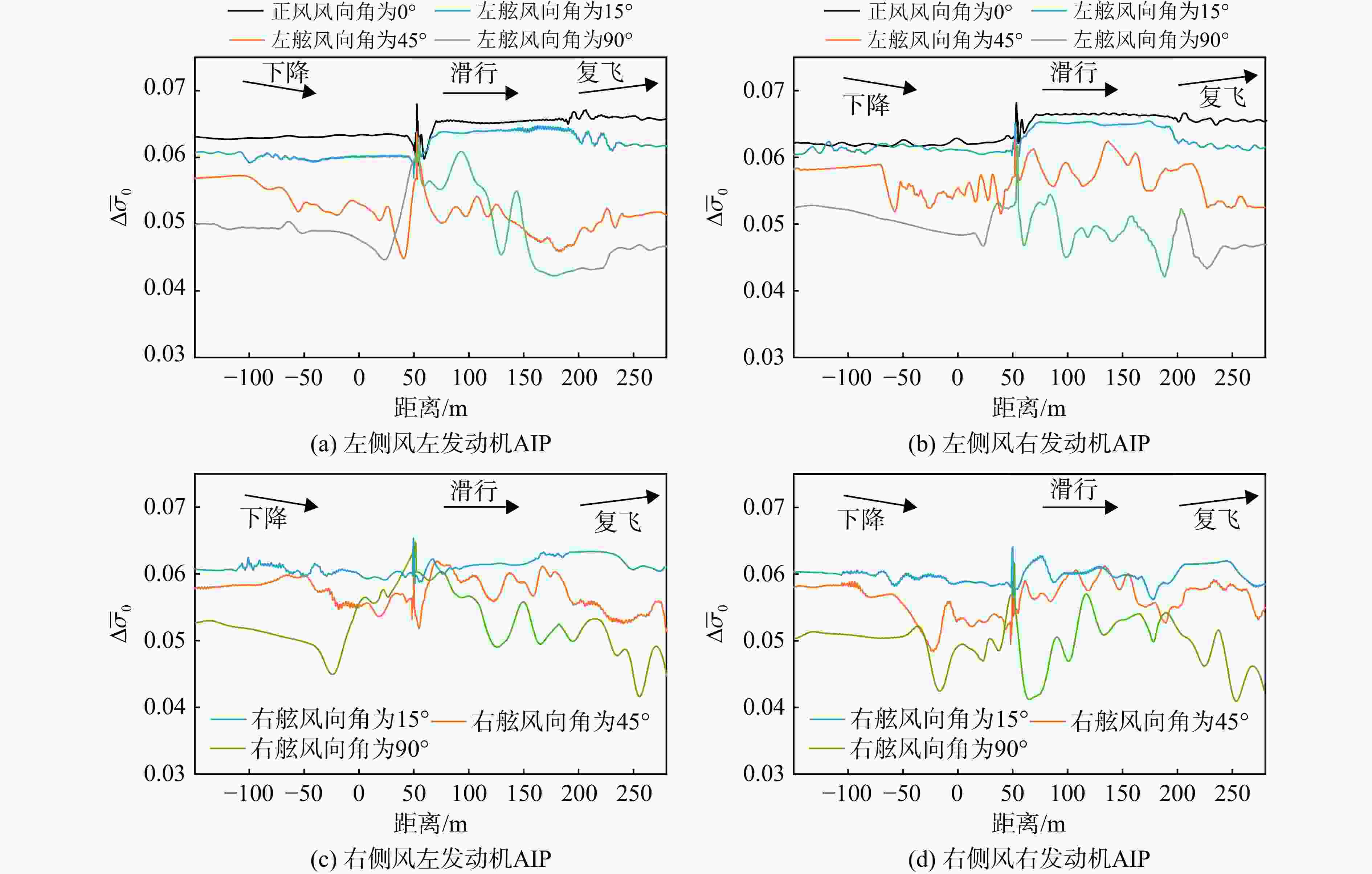
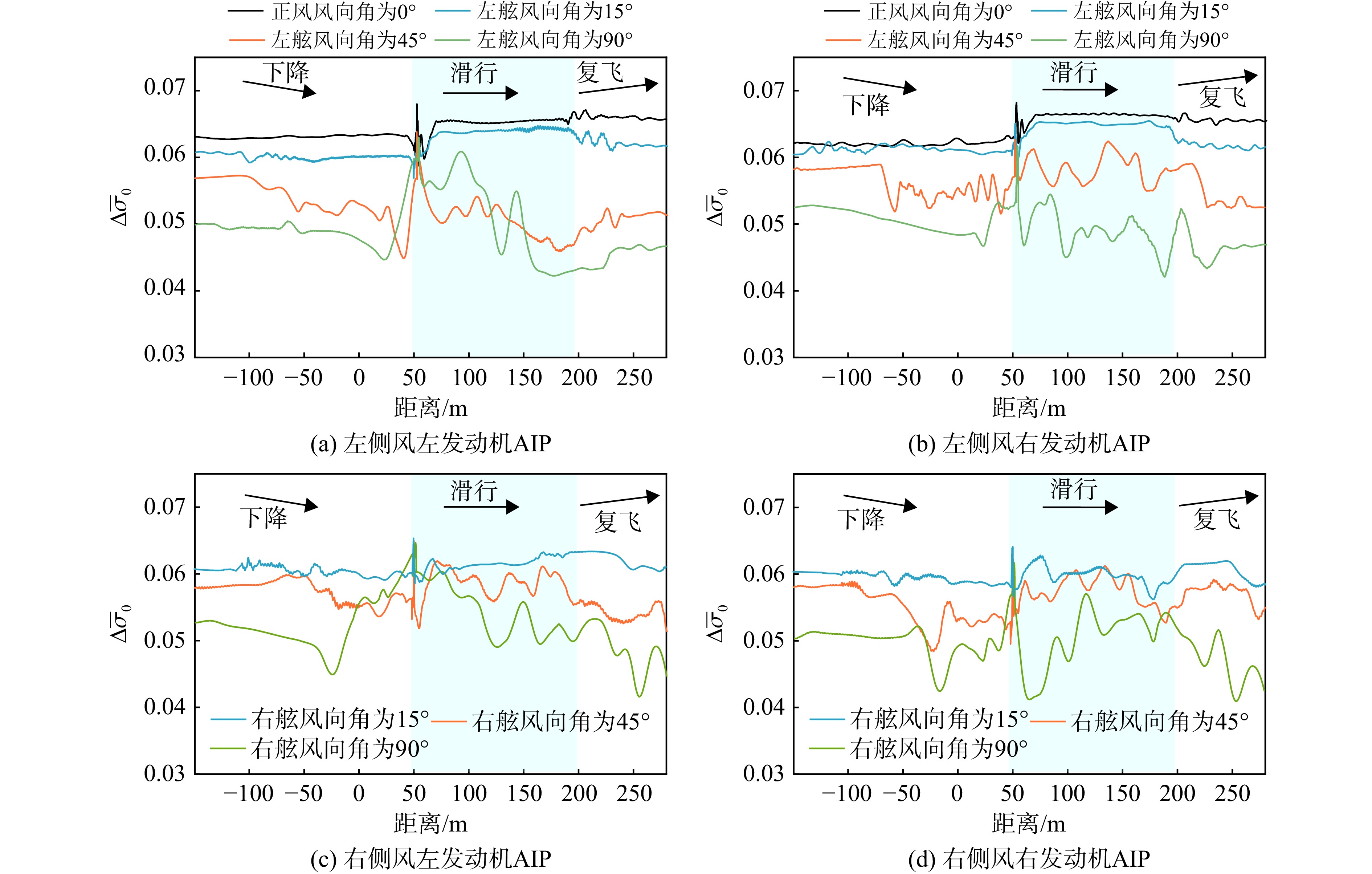
图 16 舰载机着舰复飞过程中AIP总压畸变指数的时变规律
Figure 16. Time-varying characteristics of AIP total pressure distortion index during carrier landing and boltering process
-
[1] Forrest J S, Owen I. An investigation of ship airwakes using Detached-Eddy Simulation[J]. Computers & Fluids, 2010, 39(4): 656-673. doi: 10.1016/j.compfluid.2009.11.002 [2] Shi Yongjie, Su Dacheng, Xu Guohua. Numerical investigation of the influence of passive/active flow control on ship/helicopter dynamic interface[J]. Aerospace Science and Technology, 2020, 106: 106205. doi: 10.1016/j.ast.2020.106205 [3] Setiawan H, Kevin, Philip J, et al. Turbulence characteristics of the ship air-wake with two different topside arrangements and inflow conditions[J]. Ocean Engineering, 2022, 260: 111931. doi: 10.1016/j.oceaneng.2022.111931 [4] Nisham A, Terziev M, Tezdogan T, et al. Prediction of the aerodynamic behaviour of a full-scale naval ship in head waves using Detached Eddy Simulation[J]. Ocean Engineering, 2021, 222: 108583. doi: 10.1016/j.oceaneng.2021.108583 [5] Zamiri A, Chung J T. Numerical evaluation of wind direction effects on the turbulence aerodynamics of a ship airwake[J]. Ocean Engineering, 2023, 284: 115104. doi: 10.1016/j.oceaneng.2023.115104 [6] Cousins W T. History, philosophy, physics, and future directions of aircraft propulsion system/inlet integration[R]. Vienna, Austria: ASME Turbo Expo: Turbine Technical Conference and Exposition, 2004. [7] Zhang Zhang, Hou Anping, Chen Yinxiu, et al. Numerical and test investigation on an aircraft inlet distortion[J]. International Journal of Turbo and Jet Engines, 2013, 30(3): 231-241. doi: 10.1515/tjj-2013-0021 [8] 好毕斯嘎拉图, 周胜田, 张志舒, 等. 总压畸变对整机稳定性的影响研究分析[J]. 航空发动机, 2012, 38(4): 34-37, 46. Hao Bisigalatu, Zhou Shengtian, Zhang Zhishu, et al. Effect of total pressure distortion on aeroengine stability[J]. Aeroengine, 2012, 38(4): 34-37, 46. (in Chinese doi: 10.3969/j.issn.1672-3147.2012.04.009Hao Bisigalatu, Zhou Shengtian, Zhang Zhishu, et al. Effect of total pressure distortion on aeroengine stability[J]. Aeroengine, 2012, 38(4): 34-37, 46. (in Chinese) doi: 10.3969/j.issn.1672-3147.2012.04.009 [9] Gil-prieto D, Macmanus D G, Zachos P K, et al. Assessment methods for unsteady flow distortion in aero-engine intakes[J]. Aerospace Science and Technology, 2018, 72: 292-304. doi: 10.1016/j.ast.2017.10.029 [10] 高为民, 田方超, 杨瀚超. 二元外压式超声速进气道起飞过程的进发匹配特性[J]. 空气动力学学报, 2022, 40(1): 92-100. Gao Weimin, Tian Fangchao, Yang Hanchao. Study on the matching between a two-dimensional supersonic inlet and an aero-engine during take-off[J]. Acta Aerodynamica Sinica, 2022, 40(1): 92-100. (in Chinese doi: 10.7638/kqdlxxb-2021.0201Gao Weimin, Tian Fangchao, Yang Hanchao. Study on the matching between a two-dimensional supersonic inlet and an aero-engine during take-off[J]. Acta Aerodynamica Sinica, 2022, 40(1): 92-100. (in Chinese) doi: 10.7638/kqdlxxb-2021.0201 [11] Doll U, Migliorini M, Baikie J, et al. Non-intrusive flow diagnostics for unsteady inlet flow distortion measurements in novel aircraft architectures[J]. Progress in Aerospace Sciences, 2022, 130: 100810. doi: 10.1016/j.paerosci.2022.100810 [12] Triantafyllou T, Nikolaidis T, Diakostefanis M, et al. Stability assessment of an airflow distorted military engine’s FAN[J]. Proceedings of the Institution of Mechanical Engineers, Part G: Journal of Aerospace Engineering, 2018, 232(13): 2584-2592. doi: 10.1177/0954410017716478 [13] Tanguy G, Macmanus D G, Garnier E, et al. Characteristics of unsteady total pressure distortion for a complex aero-engine intake duct[J]. Aerospace Science and Technology, 2018, 78: 297-311. doi: 10.1016/j.ast.2018.04.031 [14] Worden T J, Shih C, Alvi F S. Supersonic jet impingement on a model-scale jet blast deflector[J]. AIAA Journal, 2017, 55(8): 2522-2536. doi: 10.2514/1.J055664 [15] Pan Tianyu, Yan Jiandong, Lu Hanan, et al. Impact of circumferential inlet distortion on different types of stall inceptions in a transonic compressor[J]. Chinese Journal of Aeronautics, 2024, 37(11): 107-117. doi: 10.1016/j.cja.2024.07.018 [16] Rademakers R P M, Bindl S, Niehuis R. Effects of flow distortions as they occur in S-duct inlets on the performance and stability of a jet engine[J]. Journal of Engineering for Gas Turbines and Power, 2016, 138(2): 022605. doi: 10.1115/1.4031305 [17] Xia Aiguo, Huang Xudong, Tuo Wei, et al. Experimental study of a controlled variable double-baffle distortion generator engine test rig[J]. Chinese Journal of Aeronautics, 2018, 31(9): 1880-1893. doi: 10.1016/j.cja.2018.06.015 [18] Triantafyllou T, Nikolaidis T, Diakostefanis M, et al. Total pressure distortion levels at the aerodynamic interface plane of a military aircraft[J]. The Aeronautical Journal, 2015, 119(1219): 1147-1166. doi: 10.1017/S0001924000011179 [19] Wang Hongwei, Lyu Yuanwei, Zhang Jingyang, et al. Numerical investigation of inlet distortion in a jet engine coupled with Ski-jump of carrier-based aircraft[J]. Thermal Science and Engineering Progress, 2023, 43: 101961. doi: 10.1016/j.tsep.2023.101961 [20] Shin H W, Paik K J, Jang Y H, et al. A numerical investigation on the nominal wake of KVLCC2 model ship in regular head waves[J]. International Journal of Naval Architecture and Ocean Engineering, 2020, 12: 270-282. doi: 10.1016/j.ijnaoe.2020.01.001 [21] Zhang Jie, Minelli G, Basara B, et al. Yaw effect on bi-stable air-wakes of a generic ship using large eddy simulation[J]. Ocean Engineering, 2021, 219: 108164. doi: 10.1016/j.oceaneng.2020.108164 [22] Praveen B, Vijayakumar R, Singh S N, et al. Flow characteristics on helodeck of a generic frigate ship model through experiment and CFD[J]. Ocean Engineering, 2022, 250: 110912. doi: 10.1016/j.oceaneng.2022.110912 [23] Linton D, Thornber B. Quantifying uncertainty in turbulence resolving ship airwake simulations[J]. Ocean Engineering, 2021, 229: 108983. doi: 10.1016/j.oceaneng.2021.108983 [24] Li Tong, Wang Yibin, Zhao Ning. Numerical study of the flow over the modified simple frigate shape[J]. Proceedings of the Institution of Mechanical Engineers, Part G: Journal of Aerospace Engineering, 2021, 235(12): 1551-1565. doi: 10.1177/0954410020977752 [25] Kelly M, White M, Owen I, et al. Using airwake simulation to inform flight trials for the Queen Elizabeth Class Carrier[R]. Bristol, UK: 13th International Naval Engineering Conference, 2016. [26] Watson N A, Kelly M F, Owen I, et al. Computational and experimental modelling study of the unsteady airflow over the aircraft carrier HMS Queen Elizabeth[J]. Ocean Engineering, 2019, 172: 562-574. doi: 10.1016/j.oceaneng.2018.12.024 [27] Shukla S, Singh S N, Sinha S S, et al. Comparative assessment of URANS, SAS and DES turbulence modeling in the predictions of massively separated ship airwake characteristics[J]. Ocean Engineering, 2021, 229: 108954. doi: 10.1016/j.oceaneng.2021.108954 [28] Spalart P R, Deck S, Shur M L, et al. A new version of detached-eddy simulation, resistant to ambiguous grid densities[J]. Theoretical and Computational Fluid Dynamics, 2006, 20(3): 181-195. doi: 10.1007/s00162-006-0015-0 [29] Menter F R, Kuntz M, Langtry R. Ten years of industrial experience with the SST turbulence model[J]. Turbulence, Heat and Mass Transfer, 2003, 4: 625-632. [30] Chesshire G, Henshaw W D. A scheme for conservative interpolation on overlapping grids[J]. SIAM Journal on Scientific Computing, 1994, 15(4): 819-845. doi: 10.1137/0915051 [31] Hadzic H. Development and application of a finite volume method for the computation of flows around moving bodies on unstructured, overlapping grids[D]. Hamburg: Technische Universität Hamburg-Harburg, 2005. [32] Pecinka J, Bugajski G T, Kmoch P, et al. Jet engine inlet distortion screen and descriptor evaluation[J]. Acta Polytechnica, 2017, 57(1): 22-31. doi: 10.14311/ap.2017.57.0022 [33] Anderson B H, Baust H D, Agrell J. Management of total pressure recovery, distortion and high cycle fatigue in compact air vehicle inlets[R]. NASA/TM-2002-212000, 2002. [34] Advanced Engineering & Technology Programs Department Group Engineering Division. NASA/Navy lift/cruise fan phase Ⅰ: design summary[R]. NASA CR-135242, 1977. -

 下载:
下载:
 点击查看大图
计量
- 文章访问数: 126
- HTML浏览量: 70
- PDF量: 16
- 被引次数: 0