






Mission-driven aerodynamic optimization method for tiltrotor blades
-
摘要:
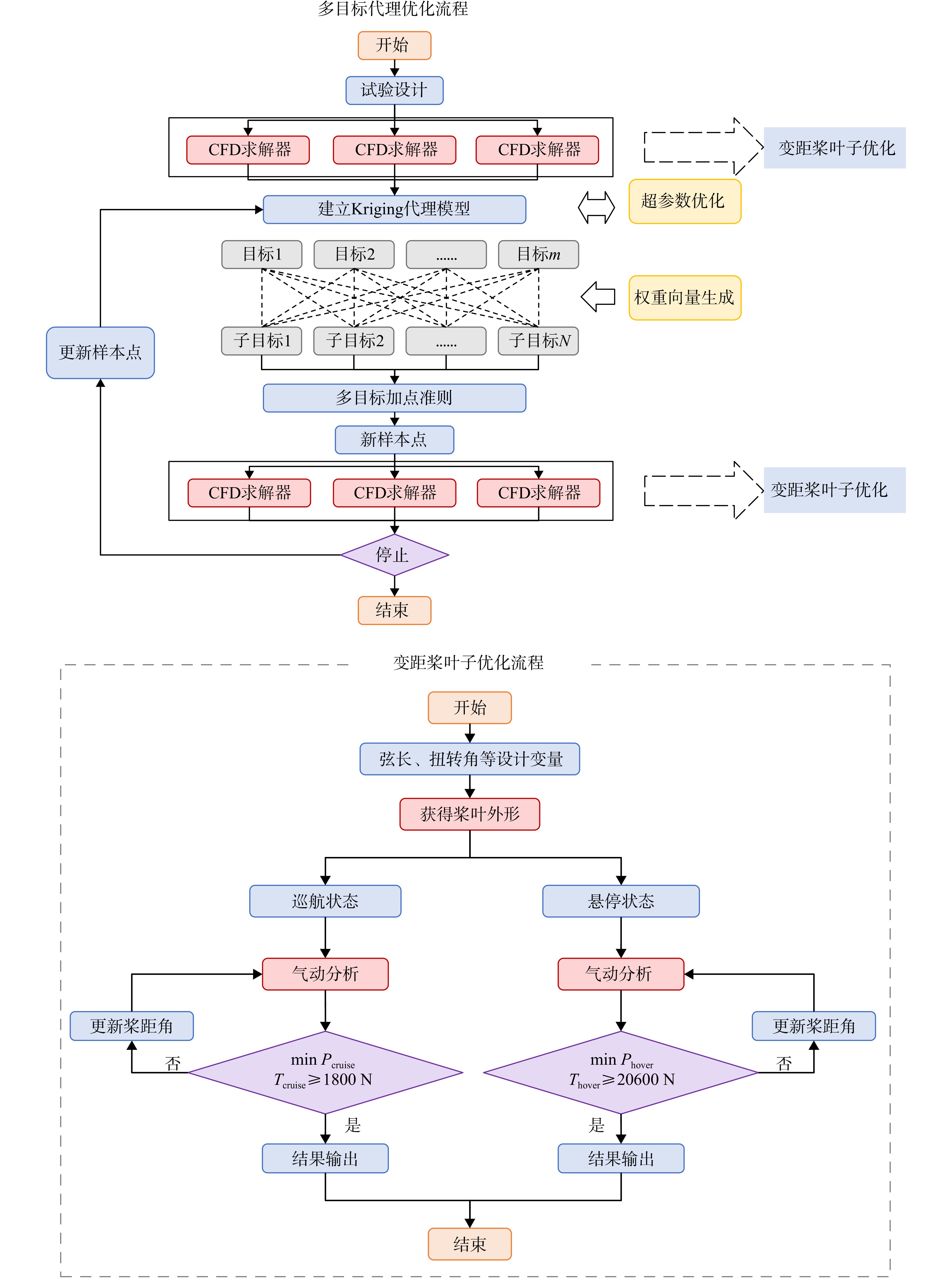
针对倾转旋翼机桨叶在悬停状态和巡航状态下的最优外形存在强矛盾这一难题,在倾转旋翼桨叶的优化设计中综合考虑不同任务场景下的总能耗,发展了任务场景驱动的倾转旋翼桨叶气动优化设计方法,确保飞行性能与效率的全面提升。考虑垂直起飞、巡航、悬停等典型阶段及其工作时长,以整个任务场景所消耗的总能量为目标,将多点多目标问题转化为单目标问题,分别分析了侧重于巡航和悬停任务场景下优化桨叶的外形差距,结果表明,发展的方法可实现倾转旋翼桨叶在多工况下都具有较高的气动性能,优化时间相比多目标优化节省69.67%。
Abstract:To address the significant contradiction between the optimal blade shapes of tiltrotor aircraft in hover and cruise modes, a mission scenario-driven aerodynamic optimization design method for tiltrotor blades was developed. This approach comprehensively considered the total energy consumption across different mission scenarios to ensure overall improvements in flight performance and efficiency. By incorporating typical mission phases including vertical takeoff, cruise, and hover and their respective durations, the method transformed the multi-point multi-objective optimization problem into a single-objective optimization problem with the total energy consumption of the entire mission scenario as the objective. The shape differences of the optimized blades under cruise and hover-focused mission scenarios were analyzed. Results indicated that the developed method achieved high aerodynamic performance of tiltrotor blades across multiple operating conditions, with optimization time reduced by 69.67% compared with multi-objective optimization.
-
Key words:
- tiltrotor /
- multi-objective optimization /
- aerodynamic optimization /
- mission-driven /
- surrogate model
-
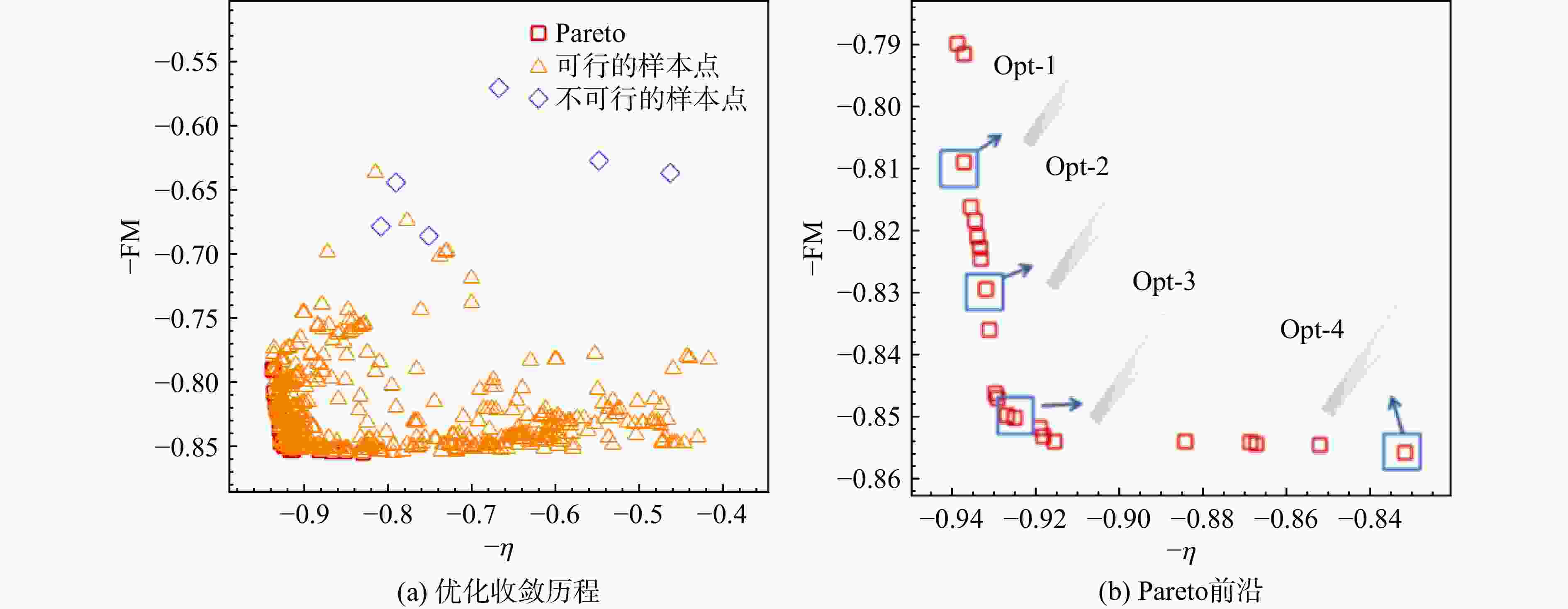
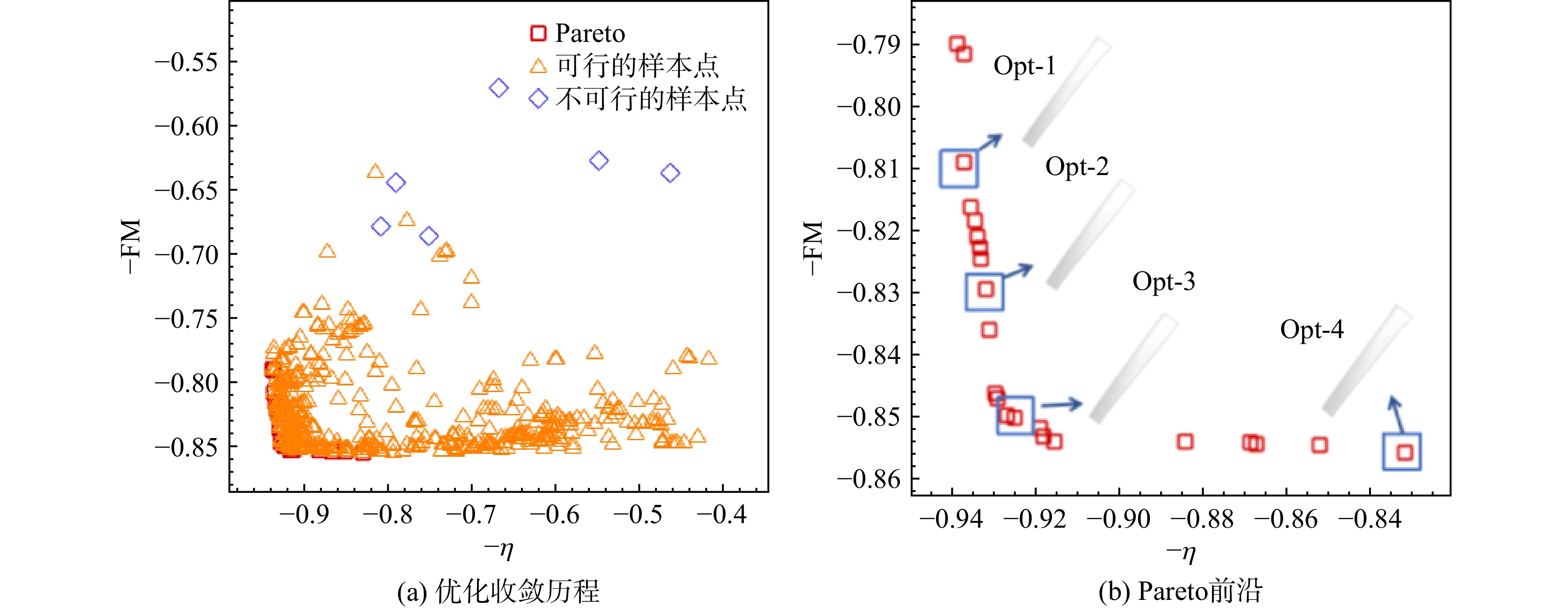
图 4 倾转旋翼桨叶多点多目标优化收敛历程及选取的桨叶外形对应在Pareto前沿的位置
Figure 4. Convergence history of multi-point multi-objective optimization for tiltrotor blades and the corresponding positions of selected blade shapes on the Pareto front
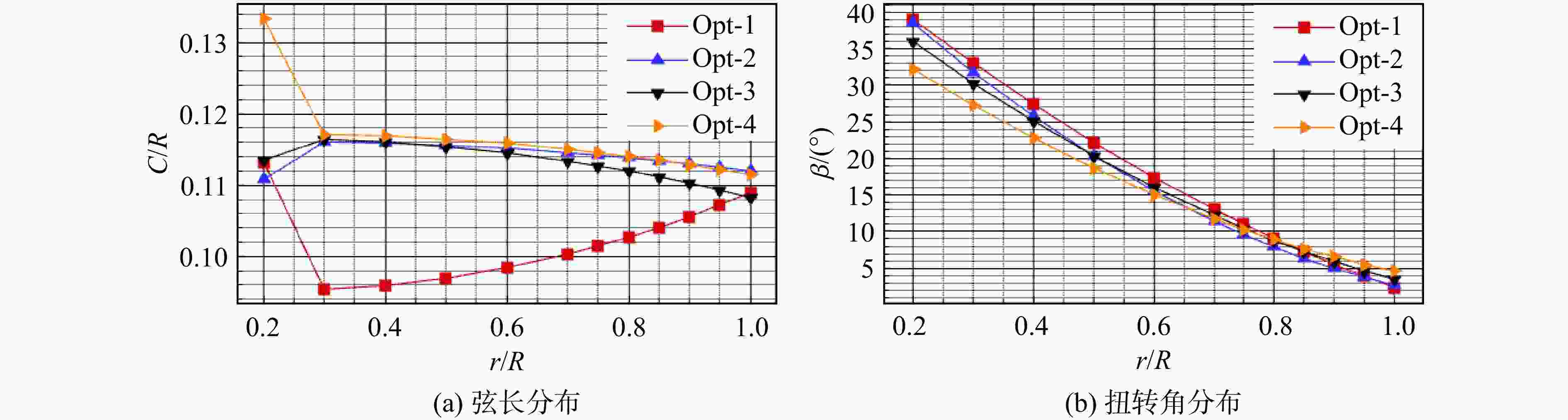
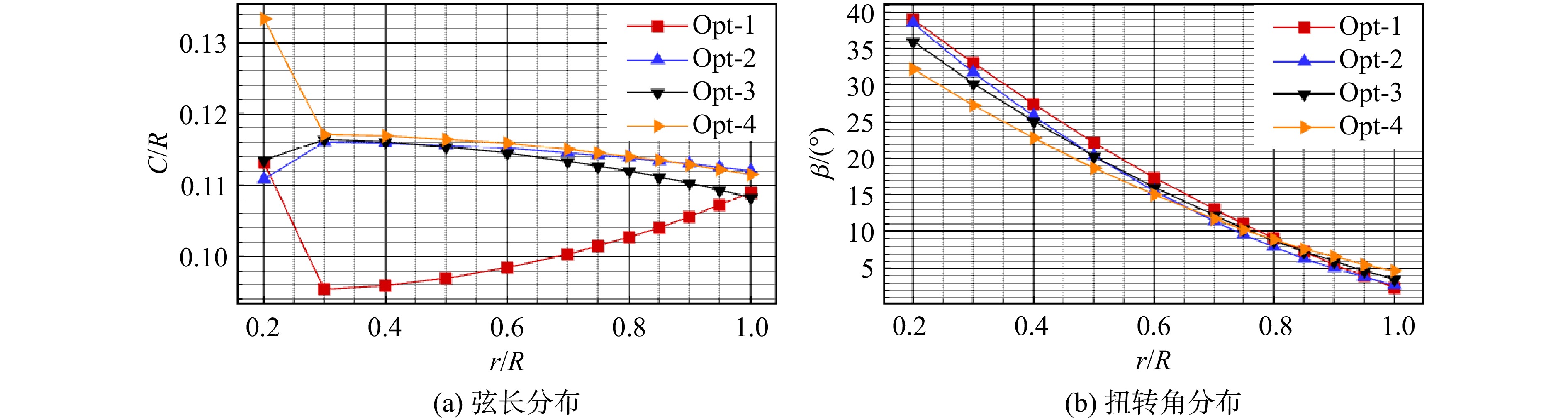
图 5 多点多目标优化桨叶弦长及扭转角分布
Figure 5. Chord length and twist distributions of the multi-point multi-objective optimized blades
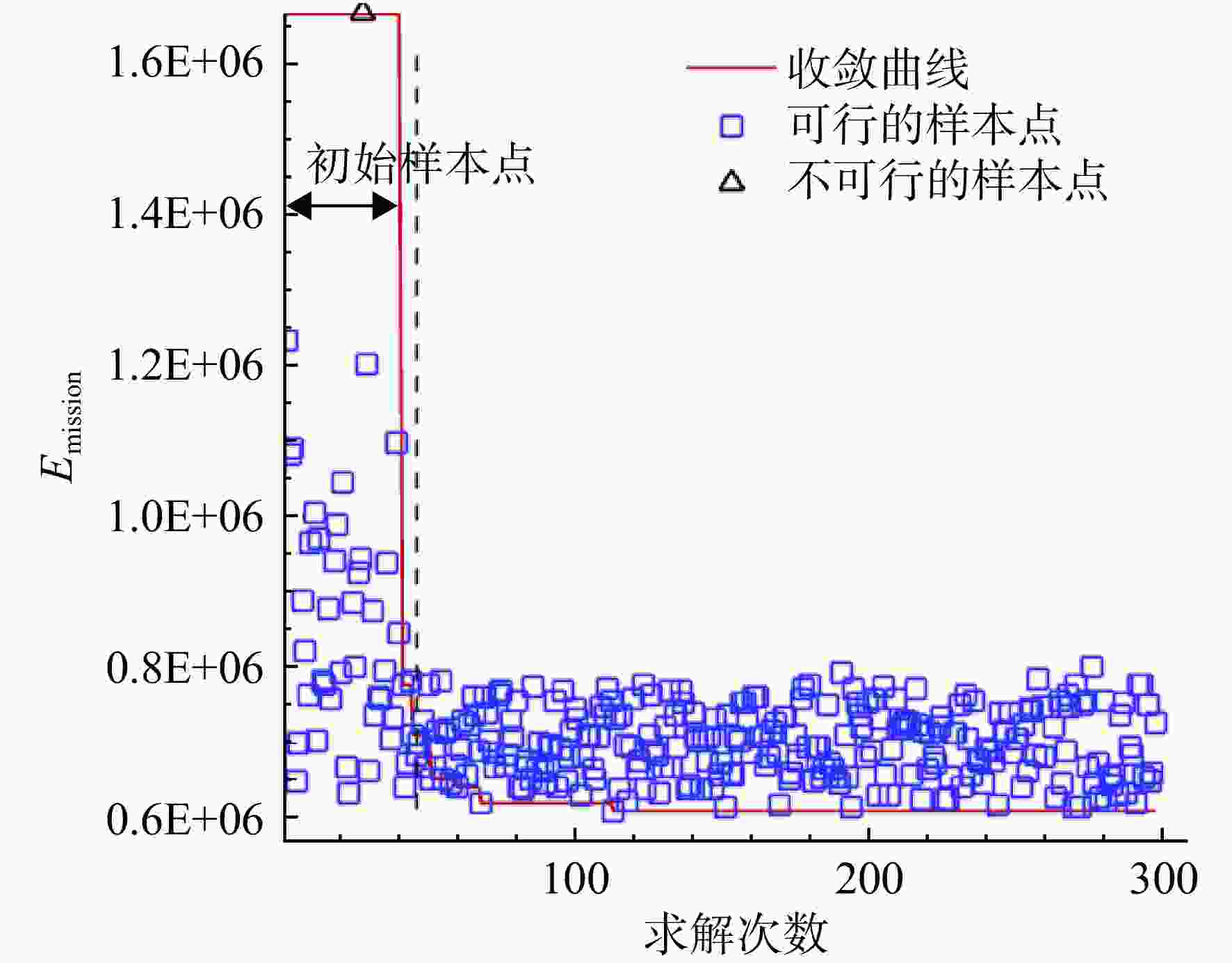
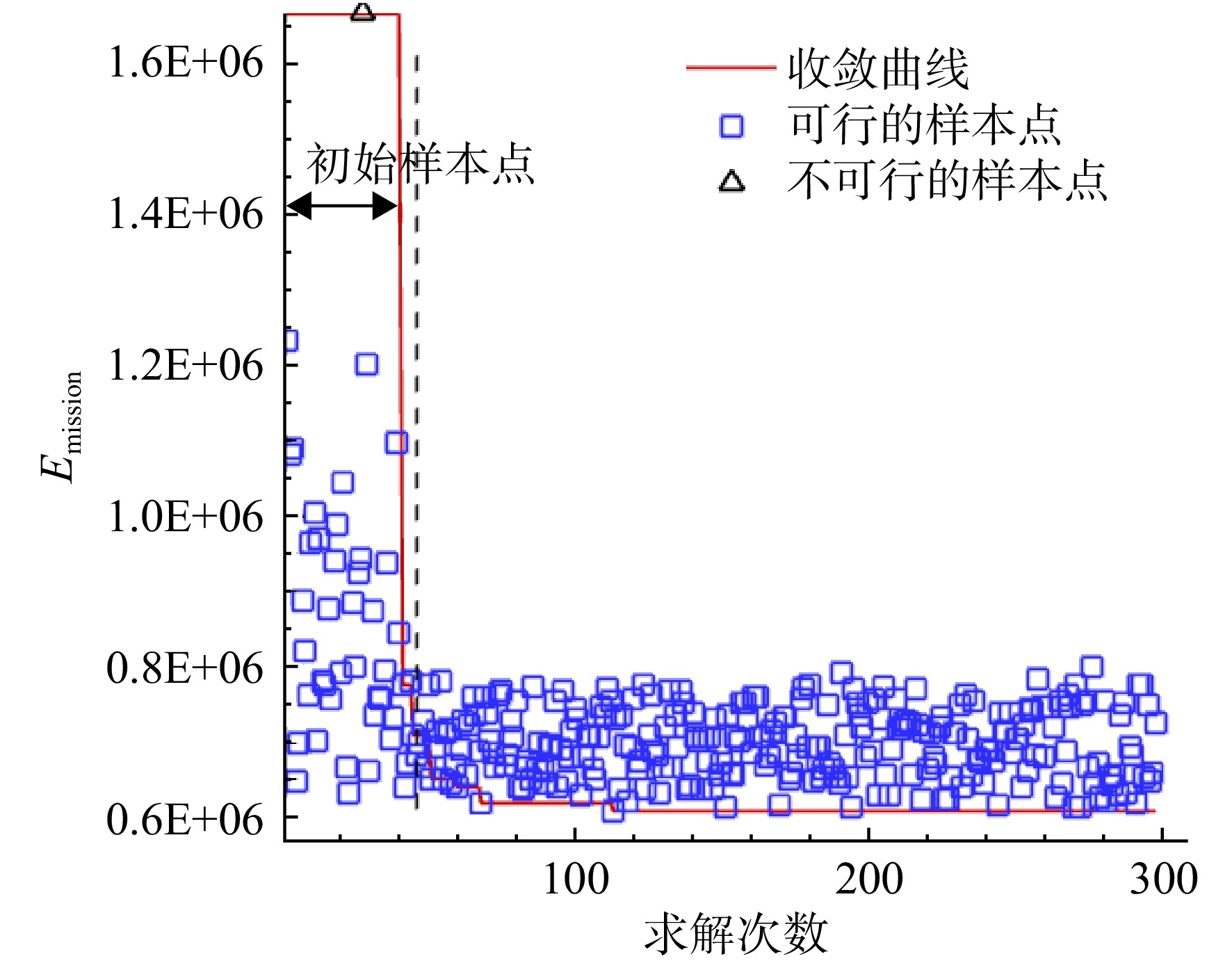
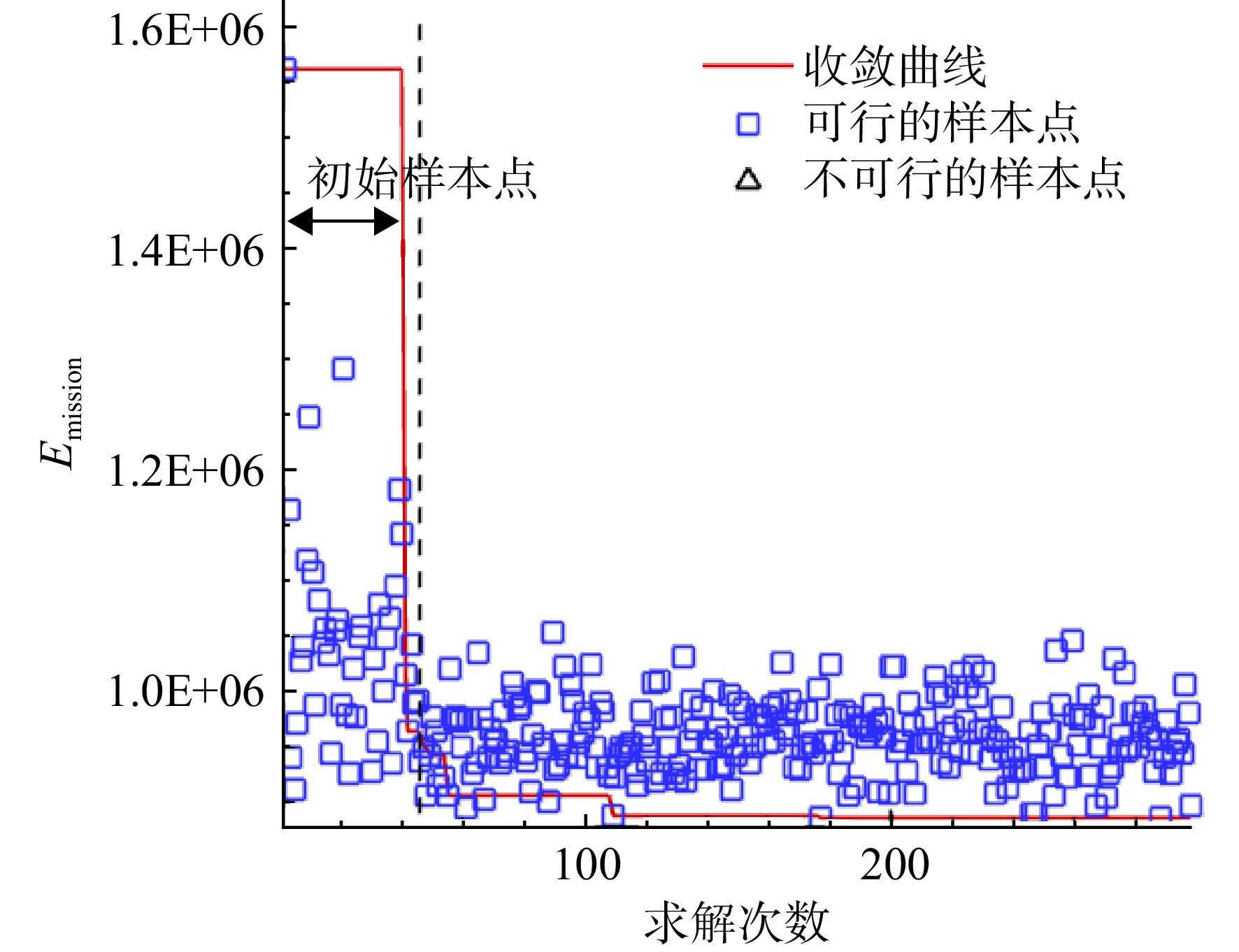
图 6 目标函数收敛曲线(任务场景一)
Figure 6. Convergence curve of the objective function (mission scenario 1)
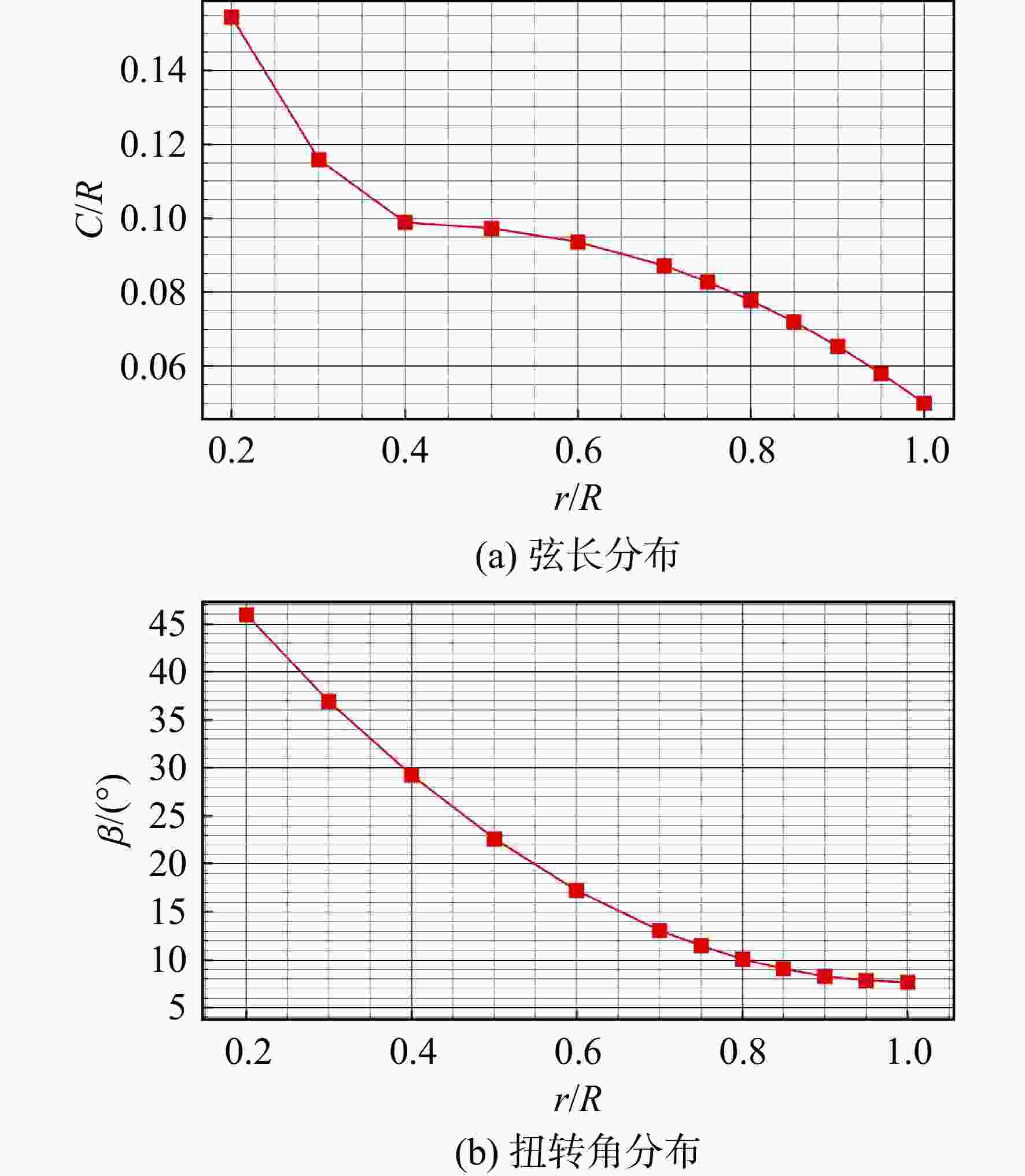
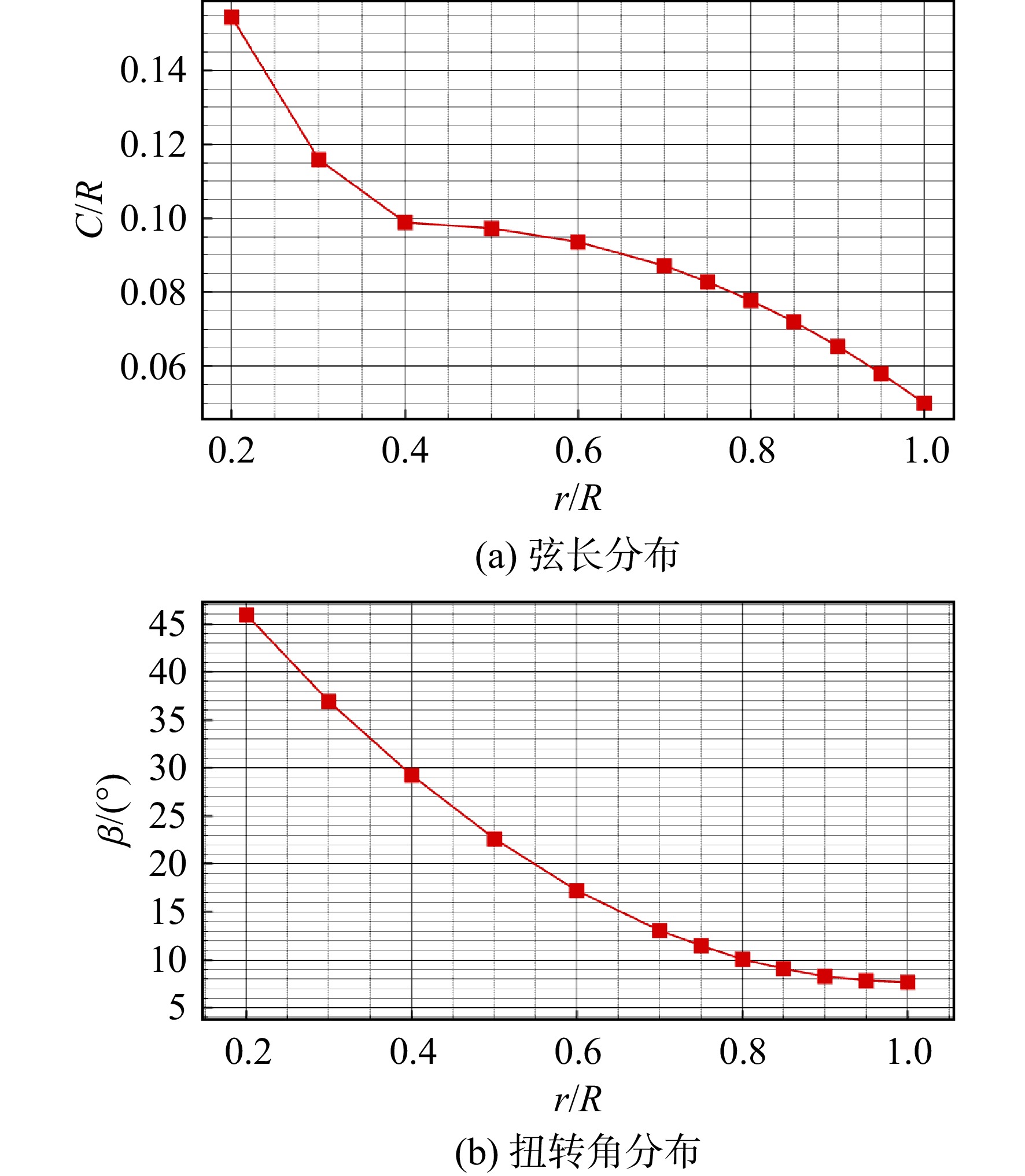
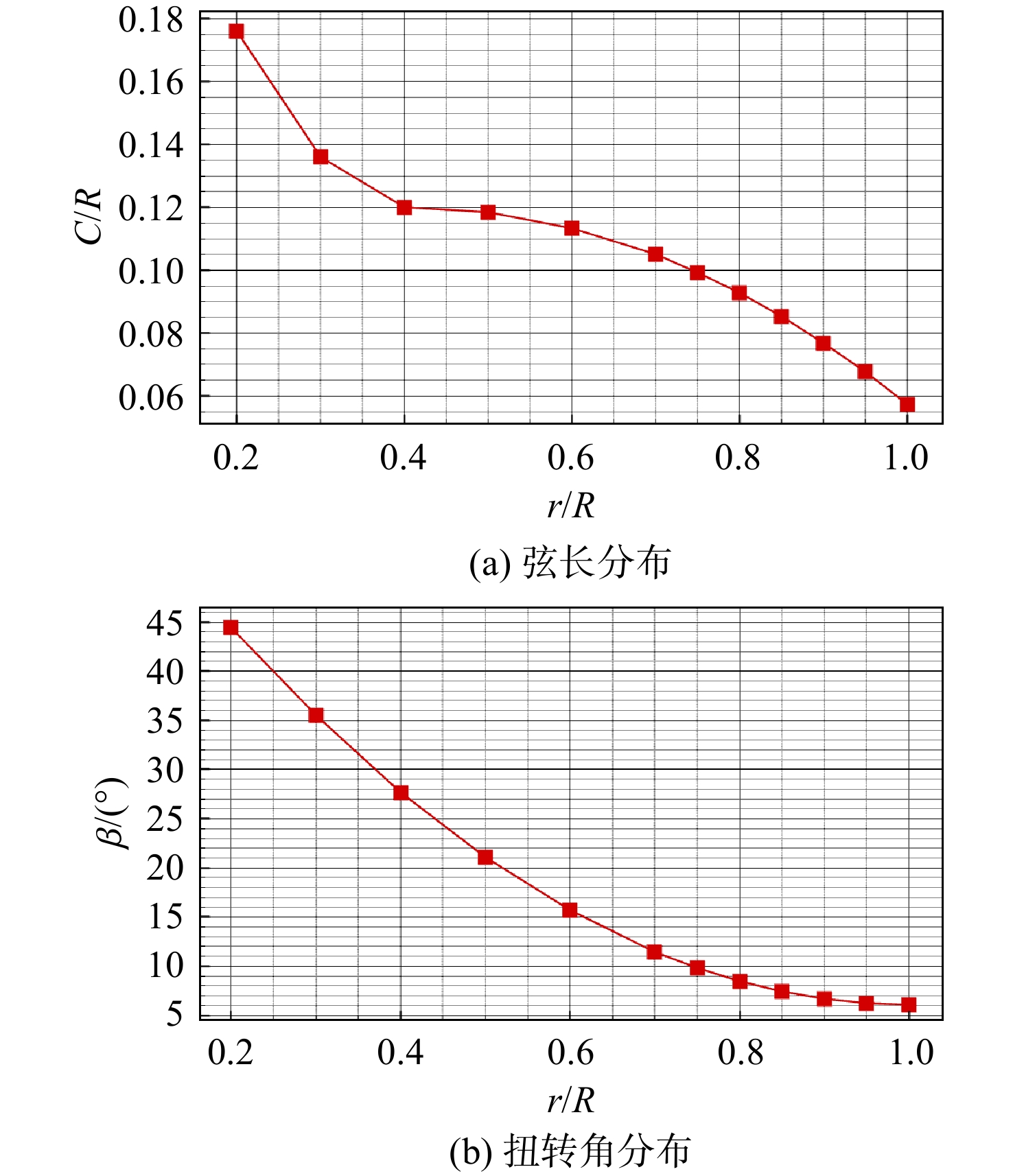
图 8 优化桨叶弦长及扭转角分布(任务场景一)
Figure 8. Chord length and twist distributions of optimized blades (mission scenario 1)
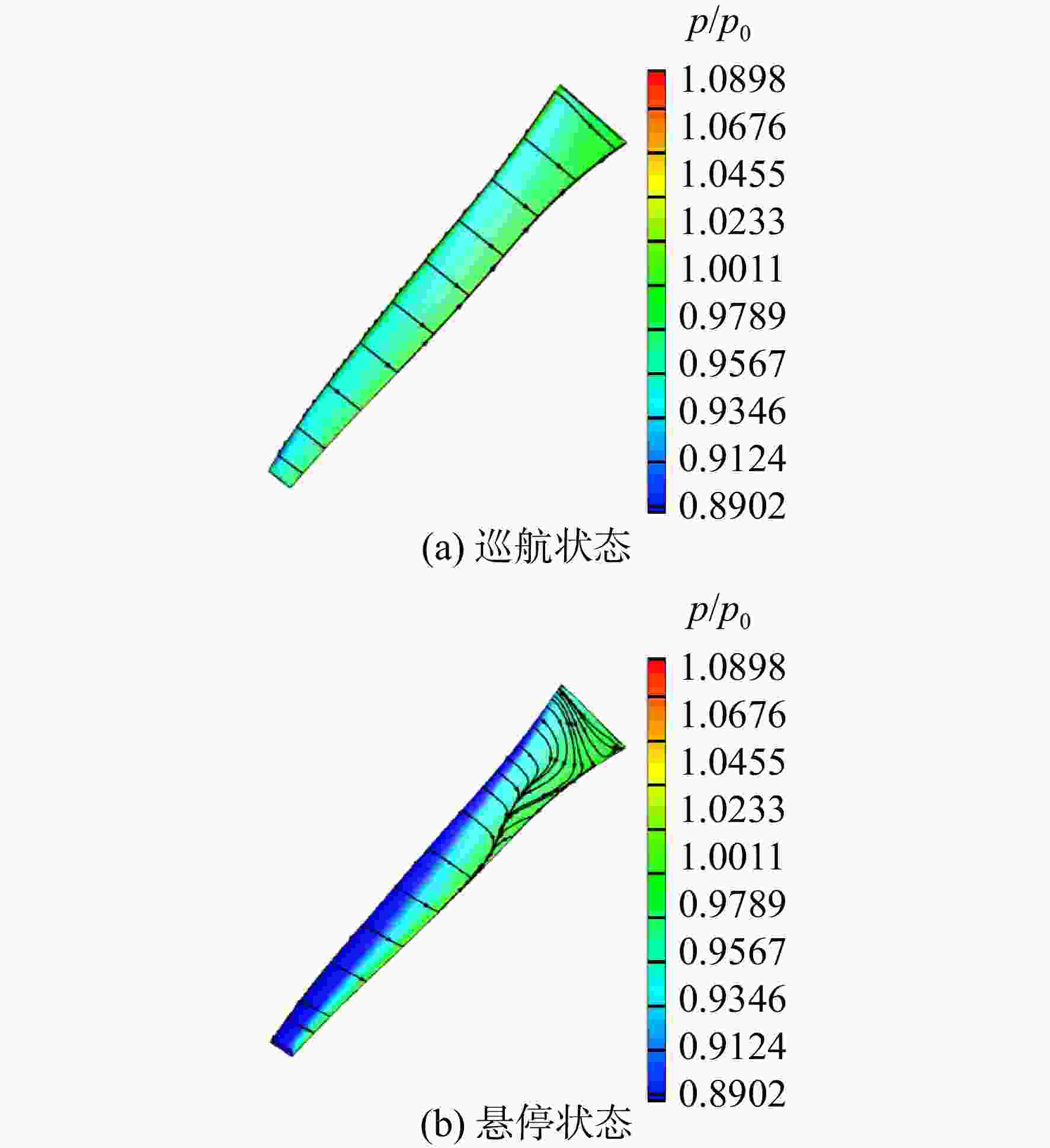
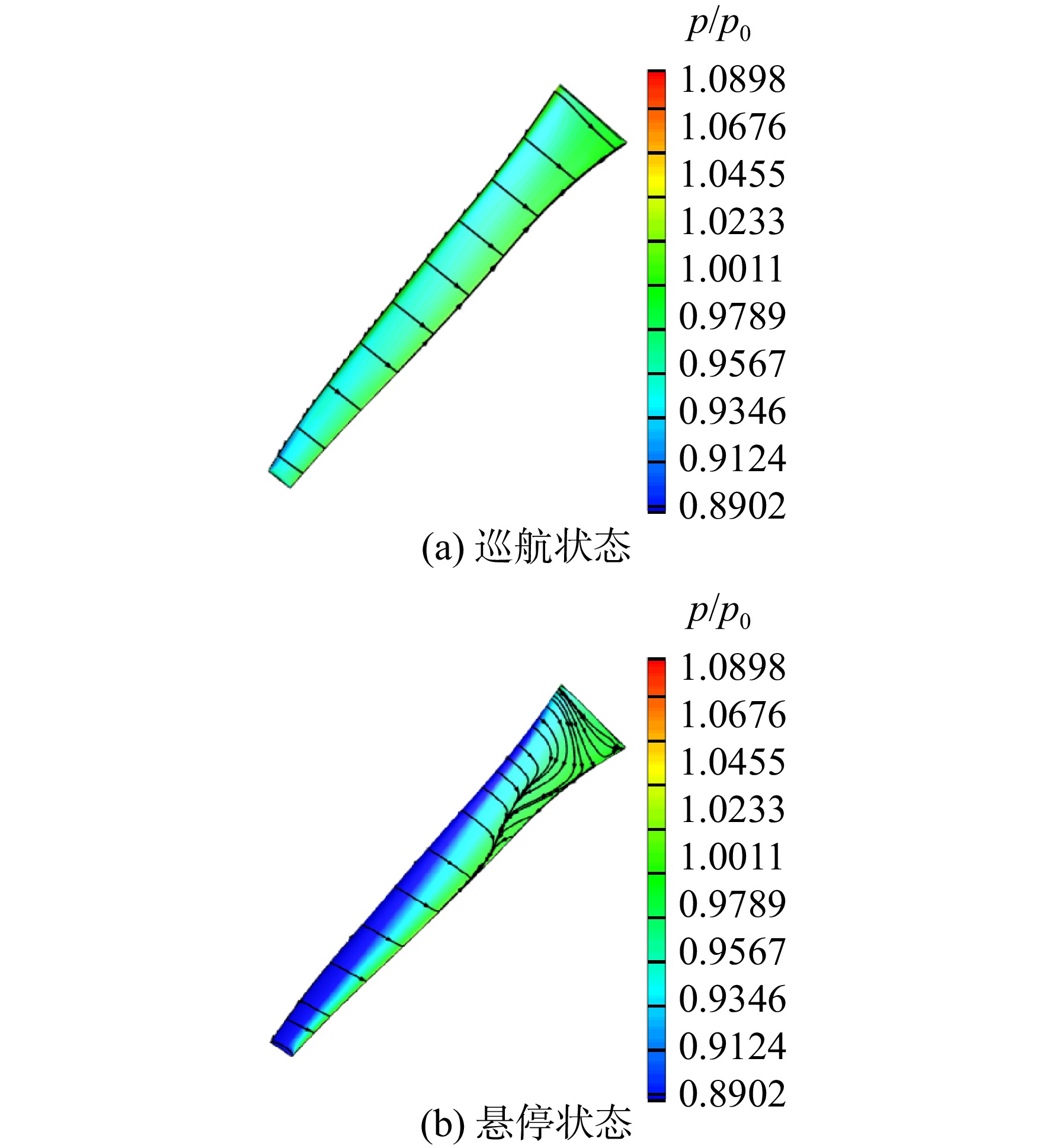
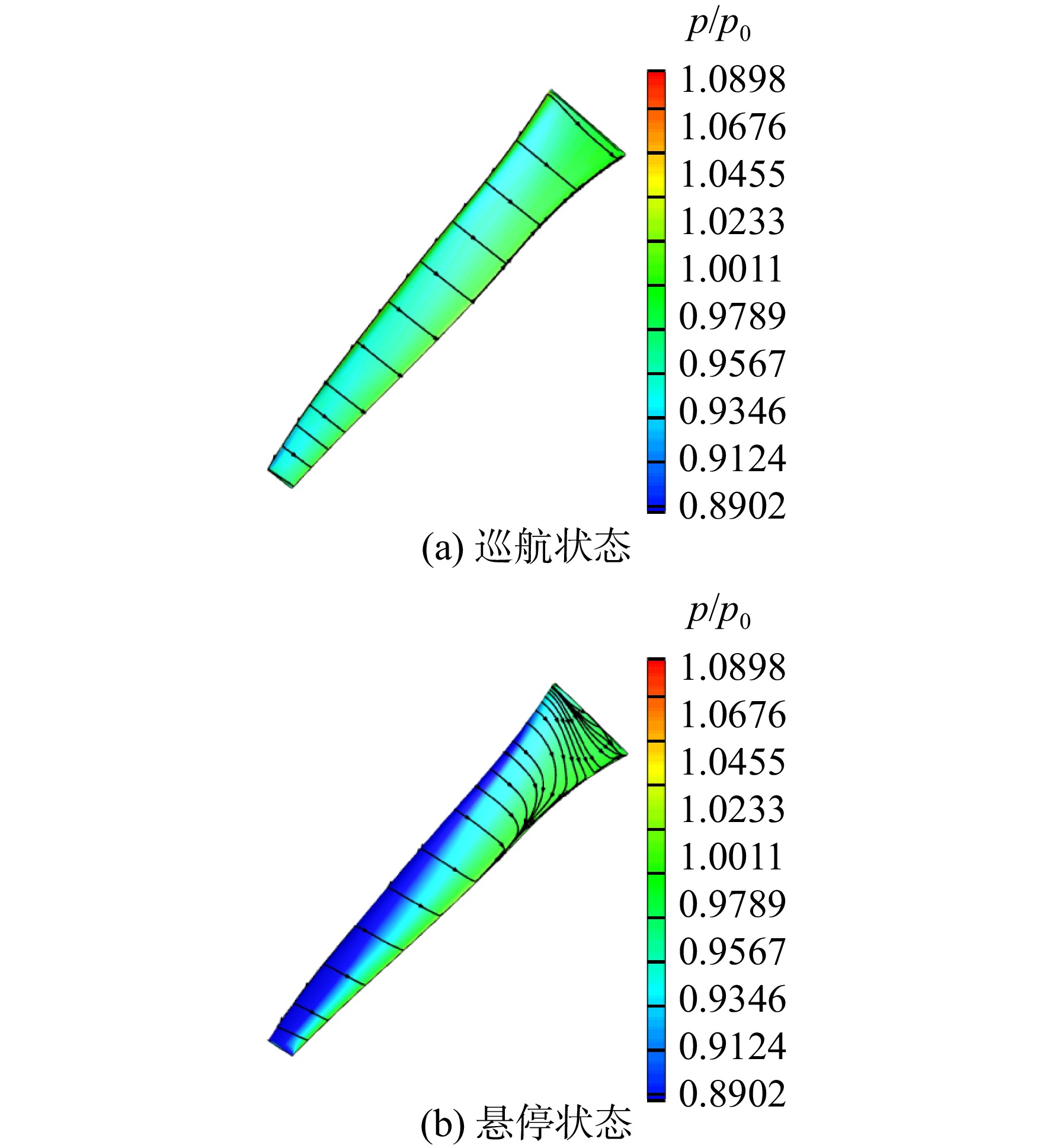
图 9 优化桨叶分别在巡航和悬停状态下的压力云图及流线(任务场景一)
Figure 9. Pressure contours and streamlines of the optimized blade in cruise and hover modes (mission scenario 1)
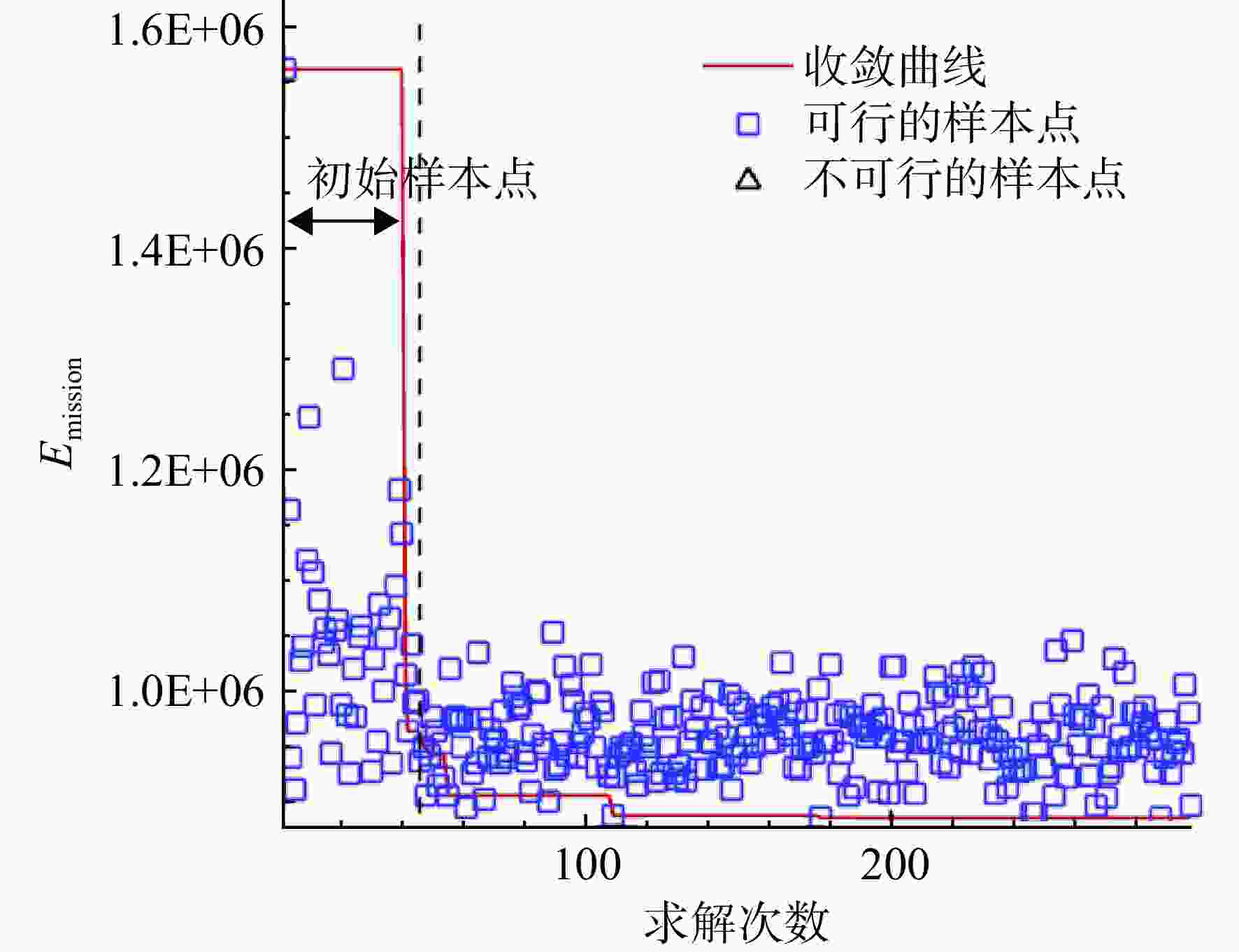
图 10 目标函数收敛曲线(任务场景二)
Figure 10. Convergence curve of the objective function(Mission Scenario 2)
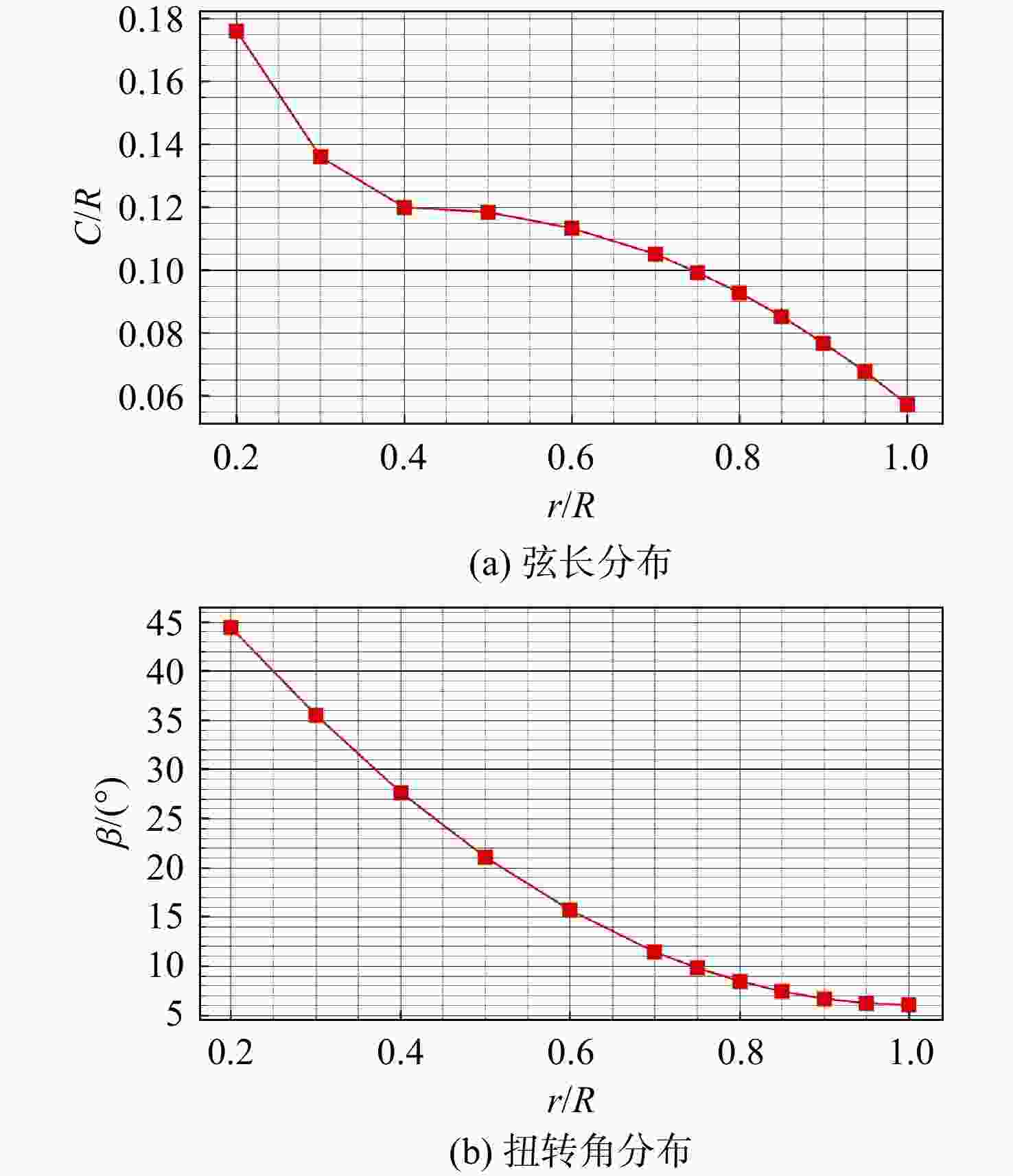
图 12 优化桨叶弦长及扭转角分布(任务场景二)
Figure 12. Chord length and twist distributions of optimized blades (mission scenario 2)
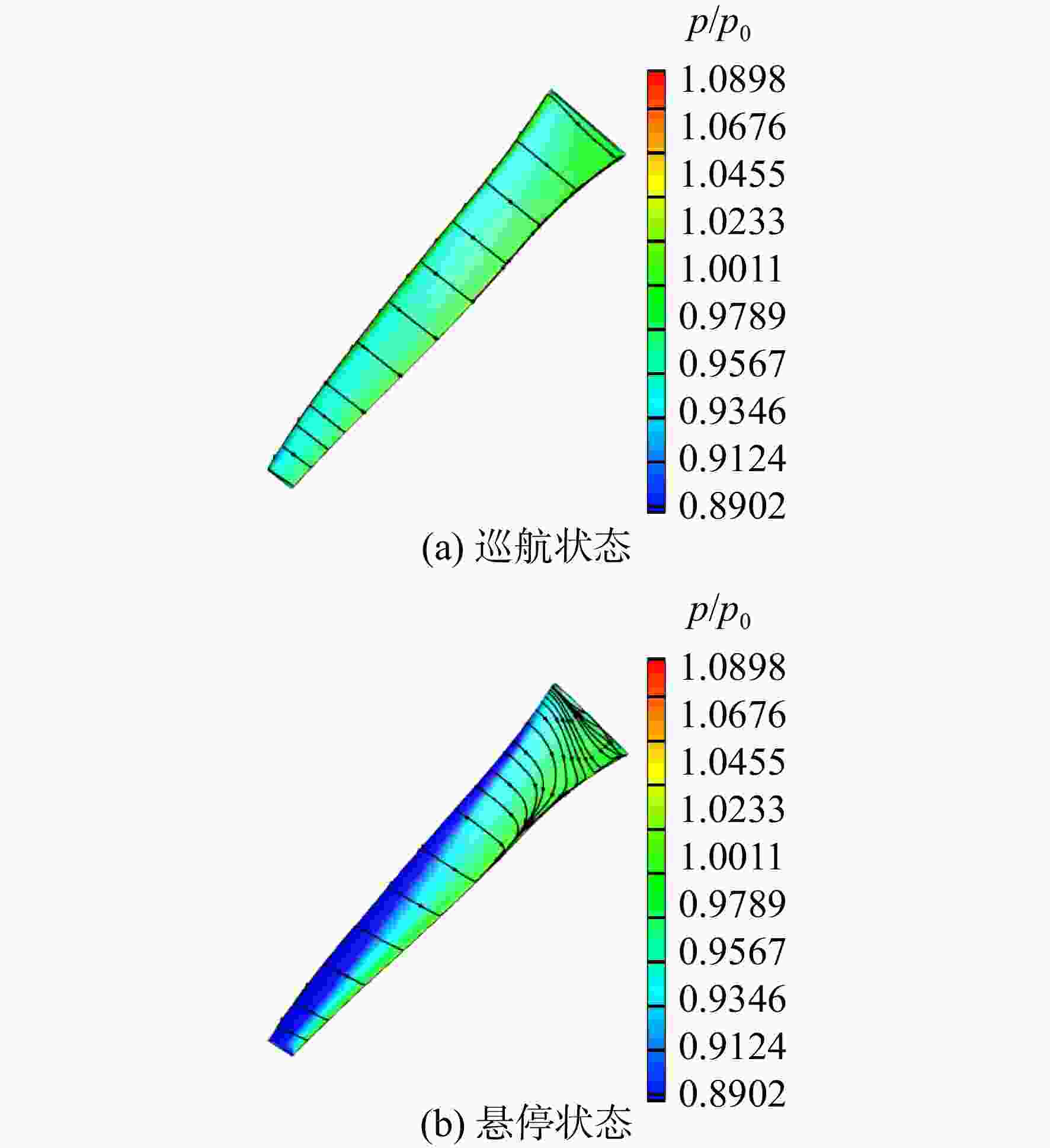
图 13 优化桨叶分别在巡航和悬停状态下的压力云图及流线(任务场景二)
Figure 13. Pressure contours and streamlines of the optimized blade in cruise and hover modes (mission scenario 2)
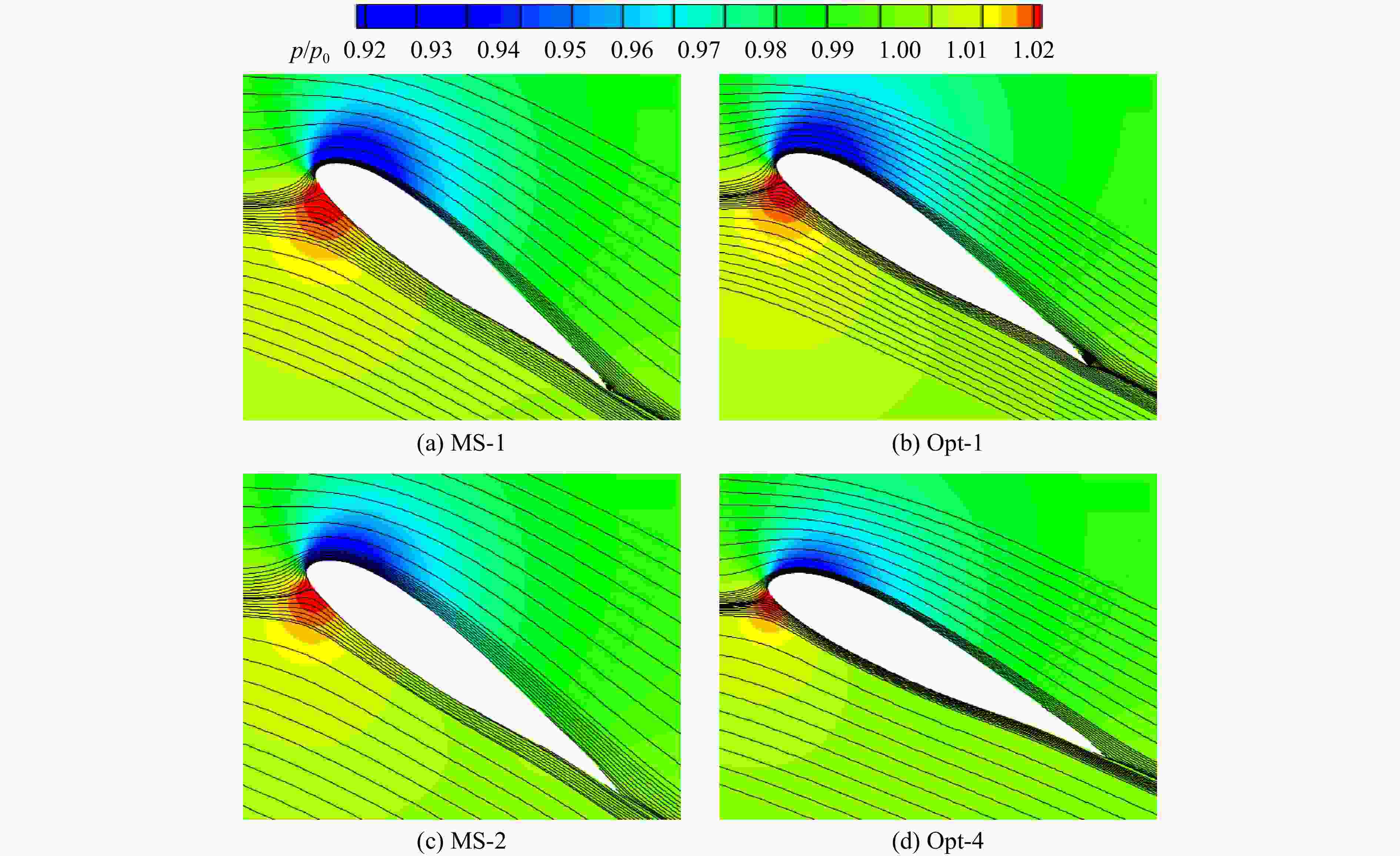
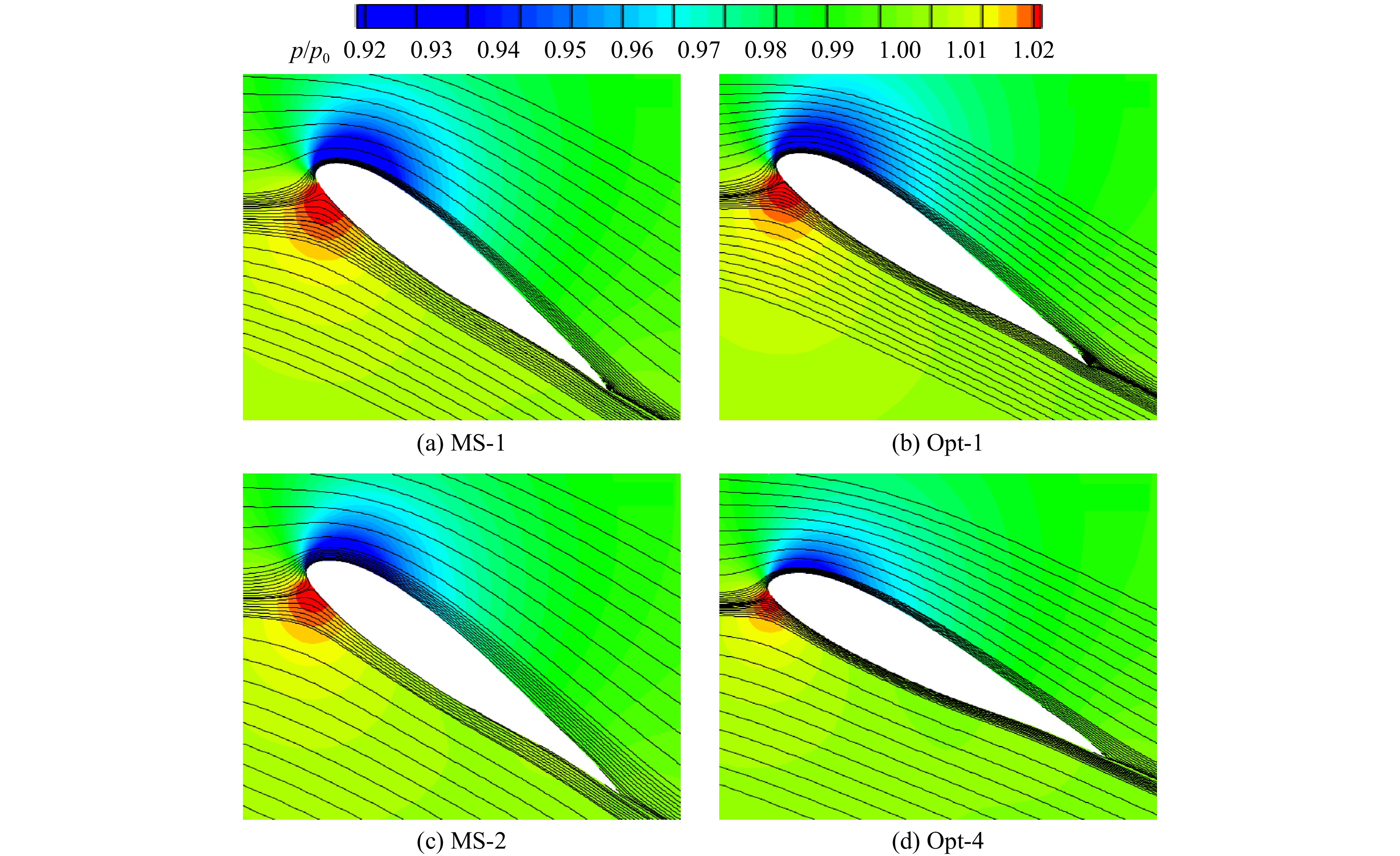
图 14 悬停状态任务场景驱动与多点多目标优化桨叶在r/R=0.3处的剖面压力云图
Figure 14. Pressure contour at r/R = 0.3 for mission-driven and multi-point multi-objective optimized blades in hover mode
表 1 设计变量范围及4种桨叶方案的设计变量取值
Table 1. Design variable range and values of design variables for the 4 blade schemes
设计变量 范围 取值 上界 下界 Opt-1 Opt-2 Opt-3 Opt-4 桨根处扭转角/(º) 70.00 30.00 39.00 38.44 36.00 32.21 桨尖处扭转角/(º) 40.00 0.00 2.36 2.68 3.51 4.54 扭转角函数极值位置r1/R 2.00 1.00 1.70 1.31 1.46 1.42 桨根处弦长C1/R 0.25 0.10 0.11 0.11 0.11 0.13 桨尖处弦长C2/R 0.15 0.05 0.10 0.11 0.11 0.11 最大弦长C3/R 0.25 0.08 0.11 0.12 0.12 0.13 最大弦长位置r2/R 0.50 0.20 0.20 0.30 0.30 0.20  下载: 导出CSV
表 2 优化桨叶在悬停状态下的气动特性(ROTNS)
Table 2. Aerodynamic characteristics of optimized rotor blades in hover mode (ROTNS)
参数 Opt-1 Opt-2 Opt-3 Opt-4 转速/(r/min) 754 761 743 749 拉力/N 20623.3 20608.8 20601.5 20604.3 扭矩/(N·m) 6307.1 6171.3 6255.6 6183.0 轴功率/kW 498.0 491.3 486.7 484.9 悬停效率/% 73.92 74.77 75.51 75.80
下载: 导出CSV
表 3 优化桨叶在巡航状态下的气动特性(ROTNS)
Table 3. Aerodynamic characteristics of optimized rotor blades in cruise mode (ROTNS)
参数 Opt-1 Opt-2 Opt-3 Opt-4 转速/(r/min) 400 400 408 429 拉力/N 1807.0 1803.0 1806.7 1805.1 扭矩/(N·m) 4398.2 4428.5 4410.4 4371.4 轴功率/kW 184.2 186.2 188.4 196.4 悬停效率/% 87.29 86.08 85.33 81.71
下载: 导出CSV
表 4 任务场景一(以巡航为主)的任务剖面参数
Table 4. Mission profile parameters for mission scenario 1 (cruise-focused)
飞行模式 高度/km 速度/(m/s) 拉力/N 工作时间/h 巡航 0.1 88.9 1800 2.80 垂直起飞 0 0 20600 0.14 悬停 0 0 19000 0.12
下载: 导出CSV
表 5 由ROTNS评估的优化桨叶在不同飞行模式下的气动特性(任务场景一)
Table 5. Aerodynamic characteristics of the optimized blade at different flight modes evaluated by ROTNS(mission scenario 1)
气动特性 数值 巡航 垂直起飞 悬停 桨距角/(°) 42.43 11.43 11.43 转速/(r/min) 412.2 751.0 723.0 拉力/N 1800.5 20602.0 19000.3 扭矩/(N·m) 4242.4 6297.7 5785.9 轴功率/kW 183.1 495.2 438.1 效率/% 87.41 74.21 74.30
下载: 导出CSV
表 6 优化桨叶在各任务阶段的轴功率及总能耗(任务场景一)
Table 6. Shaft power and total energy consumption of the optimized blade across mission phases(mission scenario 1)
参数 巡航 垂直起飞 悬停 总能耗/(kW·h) 轴功率/kW 183.1 495.2 438.1 时间/h 2.80 0.14 0.12 能耗/(kW·h) 512.7 69.3 52.6 634.6
下载: 导出CSV
表 7 任务场景二(以悬停为主)的任务剖面参数
Table 7. Mission profile parameters for mission scenario 2 (hover-focused)
飞行模式 高度/km 速度/(m/s) 拉力/N 工作时间/h 巡航 0.1 88.9 1800 0.50 垂直起飞 0 0 20600 0.14 悬停 0 0 19000 2.42
下载: 导出CSV
表 8 由ROTNS评估的优化桨叶在不同飞行模式下的气动特性(任务场景二)
Table 8. Aerodynamic characteristics of the optimized blade at different flight modes evaluated by ROTNS(mission scenario 2)
气动特性 数值 巡航 垂直起飞 悬停 桨距角/(°) 41.84 9.83 9.83 转速/(r/min) 416.2 753.0 725.0 拉力/N 1808.4 20603.2 19003.3 扭矩/(N·m) 4319.3 6203.9 5704.6 轴功率/kW 188.2 489.2 433.1 效率/% 85.44 75.13 75.18
下载: 导出CSV
表 9 优化桨叶在各任务阶段的轴功率及总能耗(任务场景二)
Table 9. Shaft power and total energy consumption of the optimized blade across mission phases(mission scenario 2)
参数 巡航 垂直起飞 悬停 总能耗/(kW·h) 轴功率/kW 188.2 489.2 433.1 时间/h 0.50 0.14 2.42 能耗/(kW·h) 94.1 68.5 1048.1 1210.7
下载: 导出CSV
表 10 任务场景驱动与多点多目标优化结果对比
Table 10. Comparison of mission-driven and multi-point multi-objective optimization results %
工况 推进效率 悬停效率 任务场景驱动MS-1 巡航 87.41 垂直起飞 74.21 多目标优化Opt-1 巡航 87.29 / 垂直起飞 73.92 任务场景驱动MS-2 巡航 85.44 垂直起飞 75.13 多目标优化Opt-4 巡航 81.71 垂直起飞 75.80
下载: 导出CSV
-
[1] 邓景辉. 高速直升机关键技术与发展[J]. 航空学报, 2024, 45(9): 529085. Deng Jinghui. Key technologies and development for high-speed helicopters[J]. Acta Aeronautica et Astronautica Sinica, 2024, 45(9): 529085. (in ChineseDeng Jinghui. Key technologies and development for high-speed helicopters[J]. Acta Aeronautica et Astronautica Sinica, 2024, 45(9): 529085. (in Chinese) [2] 谭米, 刘英杰. SPRINT项目推动高速垂直起降飞机发展[J]. 航空动力, 2024(1): 47-49. Tan Mi, Liu Yingjie. SPRINT promotes the development of HSVTOL aircraft[J]. Aerospace Power, 2024(1): 47-49. (in ChineseTan Mi, Liu Yingjie. SPRINT promotes the development of HSVTOL aircraft[J]. Aerospace Power, 2024(1): 47-49. (in Chinese) [3] 王宗辉, 杨云军, 赵佳祥. 倾转旋翼机气动设计研究进展[J]. 航空工程进展, 2025, 16(4): 1-12. Wang Zonghui, Yang Yunjun, Zhao Jiaxiang. Development in aerodynamic design of tiltrotor aircraft[J]. Advances in Aeronautical Science and Engineering, 2025, 16(4): 1-12. (in ChineseWang Zonghui, Yang Yunjun, Zhao Jiaxiang. Development in aerodynamic design of tiltrotor aircraft[J]. Advances in Aeronautical Science and Engineering, 2025, 16(4): 1-12. (in Chinese) [4] Le Pape A, Beaumier P. Numerical optimization of helicopter rotor aerodynamic performance in hover[J]. Aerospace Science and Technology, 2005, 9(3): 191-201. [5] 李鹏. 倾转旋翼机非定常气动特性分析及气动设计研究[D]. 南京: 南京航空航天大学, 2016. Li Peng. Researches on aerodynamic design and analyses on unsteady aerodynamic characteristics of the tiltrotor aircraft[D]. Nanjing: Nanjing University of Aeronautics and Astronautics, 2016. (in ChineseLi Peng. Researches on aerodynamic design and analyses on unsteady aerodynamic characteristics of the tiltrotor aircraft[D]. Nanjing: Nanjing University of Aeronautics and Astronautics, 2016. (in Chinese) [6] Jimenez-garcia A, Biava M, Barakos G N, et al. Tiltrotor CFD Part II - aerodynamic optimisation of tiltrotor blades[J]. The Aeronautical Journal, 2017, 121(1239): 611-636. [7] Huang Yinqiang, Chen Haixin. Rapid aerodynamic optimization design of tiltrotor propeller blades[J]. Wind Turbine Technology, 2019, 61(5): 19-27. [8] 王宗辉, 杨云军, 赵弘睿, 等. 多飞行状态倾转旋翼气动优化设计[J]. 航空学报, 2024, 45(9): 529024. Wang Zonghui, Yang Yunjun, Zhao Hongrui, et al. Aerodynamic optimization design of tiltrotor under multiple flight conditions[J]. Acta Aeronautica et Astronautica Sinica, 2024, 45(9): 529024. (in ChineseWang Zonghui, Yang Yunjun, Zhao Hongrui, et al. Aerodynamic optimization design of tiltrotor under multiple flight conditions[J]. Acta Aeronautica et Astronautica Sinica, 2024, 45(9): 529024. (in Chinese) [9] Stanley O. Integrated aerodynamic and dynamic optimization of tilt-rotor wing and rotor system[D]. Troy, US: Rensselaer Polytechnic Institute, 2004. [10] 朱秋娴. 基于非定常动量源方法的倾转旋翼机气动分析及性能优化[D]. 南京: 南京航空航天大学, 2016. Zhu Qiuxian. Aerodynamic analysis and optimal design of tilt-rotor aircraft based on an unsteady momentum source method[D]. Nanjing: Nanjing University of Aeronautics and Astronautics, 2016. (in ChineseZhu Qiuxian. Aerodynamic analysis and optimal design of tilt-rotor aircraft based on an unsteady momentum source method[D]. Nanjing: Nanjing University of Aeronautics and Astronautics, 2016. (in Chinese) [11] Leusink D, Alfano D, Cinnella P, et al. Aerodynamic rotor blade optimization at Eurocopter - a new way of industrial rotor blade design[R]. AIAA-2013-0779, 2013. [12] Drela M. QPROP formulation[R]. Cambridge, US: Massachusetts Institute of Technology, 2006. [13] 许建华. 基于雷诺平均N-S方程的螺旋桨气动特性研究[D]. 西安: 西北工业大学, 2009. Xu Jianhua. Aerodynamic characteristics of propellers based on Reynolds-averaged Navier-Stokes equations [D]. Xi'an: Northwestern Polytechnical University, 2009. (in ChineseXu Jianhua. Aerodynamic characteristics of propellers based on Reynolds-averaged Navier-Stokes equations [D]. Xi'an: Northwestern Polytechnical University, 2009. (in Chinese) [14] Yoon S, Jameson A. Lower-upper symmetric-Gauss-seidel method for the Euler and navier-stokes equations[J]. AIAA Journal, 1988, 26(9): 1025-1026. [15] Jameson A, Schmidt W, Turkel E. Numerical solution of the Euler equations by finite volume methods using Runge Kutta time stepping schemes[R]. AIAA-1981-1259, 1981. [16] Spalart P, Allmaras S. A one-equation turbulence model for aerodynamic flows[R]. AIAA-1992-0439, 1992. [17] Benek J, Buning P, Steger J. A 3-D chimera grid embedding technique[R]. AIAA-1985-1523, 1985. [18] 刘超群. 多重网格法及其在计算流体力学中的应用[M]. 北京: 清华大学出版社, 1995. [19] Leishman J G, Rosen K M. Challenges in the aerodynamic optimization of high-efficiency proprotors[J]. Journal of the American Helicopter Society, 2011, 56(1): 12004. [20] 刘沛清. 空气螺旋桨理论及其应用[M]. 北京: 北京航空航天大学出版社, 2006. [21] Ghoddoussi A, Miller L S. A more comprehensive database for low Reynolds number propeller performance validations[R]. AIAA-2016-3422, 2016. [22] Jewel J W. Compressibility effects on the hovering performance of a two-blade 10-foot-diameter helicopter rotor operating at tip Mach numbers up to 0.98[R]. NASA-TN-D-245, 1960. [23] 韩忠华, 许晨舟, 乔建领, 等. 基于代理模型的高效全局气动优化设计方法研究进展[J]. 航空学报, 2020, 41(5): 623344. Han Zhonghua, Xu Chenzhou, Qiao Jianling, et al. Recent progress of efficient global aerodynamic shape optimization using surrogate-based approach[J]. Acta Aeronautica et Astronautica Sinica, 2020, 41(5): 623344. (in ChineseHan Zhonghua, Xu Chenzhou, Qiao Jianling, et al. Recent progress of efficient global aerodynamic shape optimization using surrogate-based approach[J]. Acta Aeronautica et Astronautica Sinica, 2020, 41(5): 623344. (in Chinese) [24] Krige D G. A statistical approach to some basic mine valuation problems on the Witwatersrand[J]. Journal of the Southern African Institute of Mining and Metallurgy, 1951, 52(6): 119-139. [25] Sacks J, Welch W J, Mitchell T J, et al. Design and analysis of computer experiments[J]. Statistical Science, 1989, 4(4): 409-423. [26] Jones D R, Schonlau M, Welch W J. Efficient global optimization of expensive black-box functions[J]. Journal of Global Optimization, 1998, 13(4): 455-492. [27] Han Z H, Zhang K S. Surrogate-based optimization[M]//Real-world applications of genetic algorithms. Rijeka, Croatia: InTech Book, 2012: 343-362. [28] 刘俊. 基于代理模型的高效气动优化设计方法及应用[D]. 西安: 西北工业大学, 2015. Liu Jun. Efficient surrogate-based optimization method and its application in aerodynamic design[D]. Xi’an: Northwestern Polytechnical University, 2015. (in ChineseLiu Jun. Efficient surrogate-based optimization method and its application in aerodynamic design[D]. Xi’an: Northwestern Polytechnical University, 2015. (in Chinese) -

 点击查看大图
计量
- 文章访问数: 47
- HTML浏览量: 60
- PDF量: 1
- 被引次数: 0