






Key technologies in engineering applications of converting automotive piston engines for aviation use
-
摘要:
航空活塞发动机凭借其低成本、低速性能优良等优点,在各类“低空经济”应用场景中被广泛采用。以汽车用活塞发动机为基础进行航空适用性改造,可进一步降低该类航空发动机的开发与使用成本。基于某型车用自然吸气汽油活塞发动机,探讨了活塞发动机“汽改航”工程应用中的关键技术。提出并建立了该型发动机电子控制系统物理模型及可靠性评估模型,控制系统双冗余设计可将系统平均无故障时间由单系统的3 103.02 h大幅提升至
9508.23 h;依据飞机端载荷、巡航质量及速度等对发动机的动力需求及其动力传递路径,提出了一种涵盖飞机-螺旋桨-减速器-发动机的四维度“飞-桨-发匹配”流程。依据该匹配流程动态设定发动机转速及功率、螺旋桨桨叶角及减速器速比,可获得最大巡航航程;为了满足7 000 m高空的动力输出需求,提出了高空使用环境下的废气涡轮增压器选型与适配计算方法,所选型增压器与发动机匹配工况下可工作在高效区间。研究结果可为车用活塞发动机“汽改航”工程应用提供参考。Abstract:Aviation piston engines are widely adopted in various “low-altitude economy” application scenarios due to their advantages such as low cost and excellent low-speed performance. The adaptation of automotive piston engines for aviation purposes will further reduce the development and usage costs of such aviation engines. Based on a certain type of naturally aspirated gasoline piston engine for automobiles, the key technologies in the “car-to-aircraft” conversion of piston engines were discussed. The physical model and reliability assessment model for this engine’s electronic control system were proposed and established. The dual-redundant design of the control system can significantly increase the system’s mean time between failures from
3103.02 h for a single system to9508.23 h. According to the power requirements of the aircraft and the power transmission path, an aircraft-propeller-engine matching process was proposed, which included the aircraft, propeller, reducer, and engine. By dynamically setting the engine speed and power, propeller blade angle, and reducer speed ratio in accordance with this matching process, the maximum cruise range can be obtained. To meet the power output requirements at an altitude of7000 m, a method for selecting and matching a turbocharger suitable for high-altitude operating environments was developed. The selected turbocharger can operate within an efficient range under matched conditions with the engine. The research results can provide a reference for the “car-to-aircraft” conversion of automotive piston engines. -
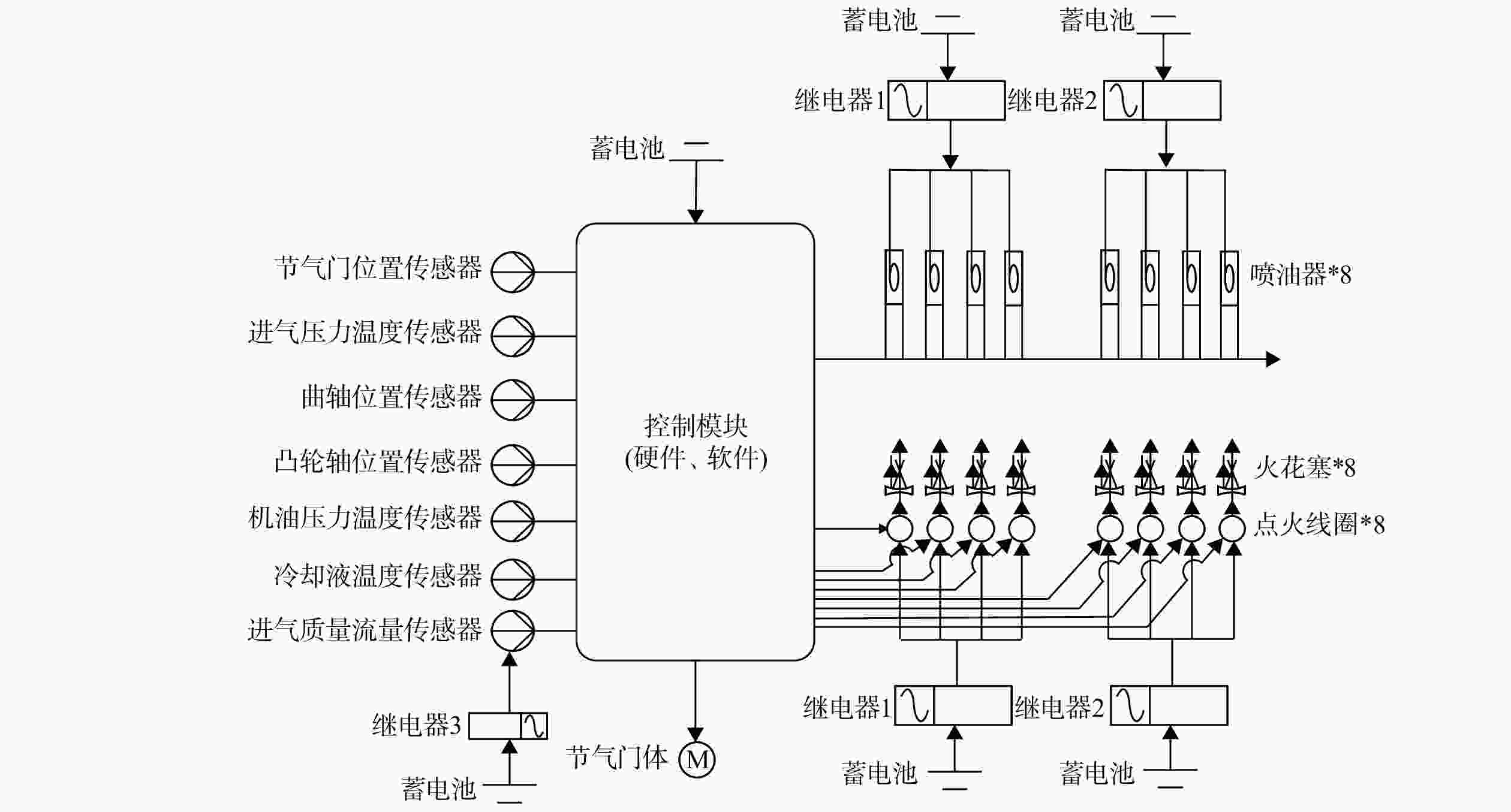
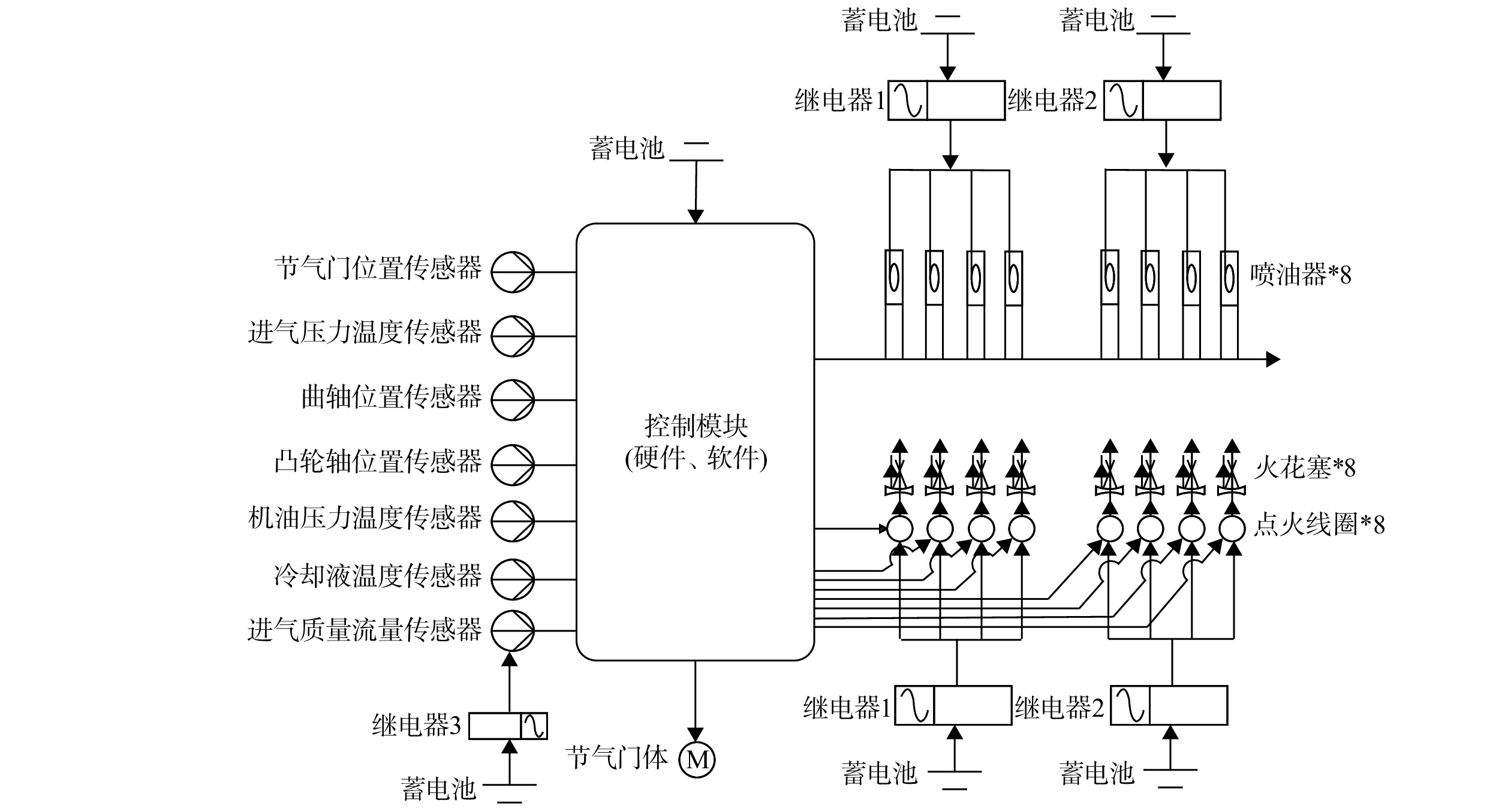
图 1 某型发动机电子控制系统简化物理模型
Figure 1. Simplified physical model of the electronic control system for a certain type of piston engine
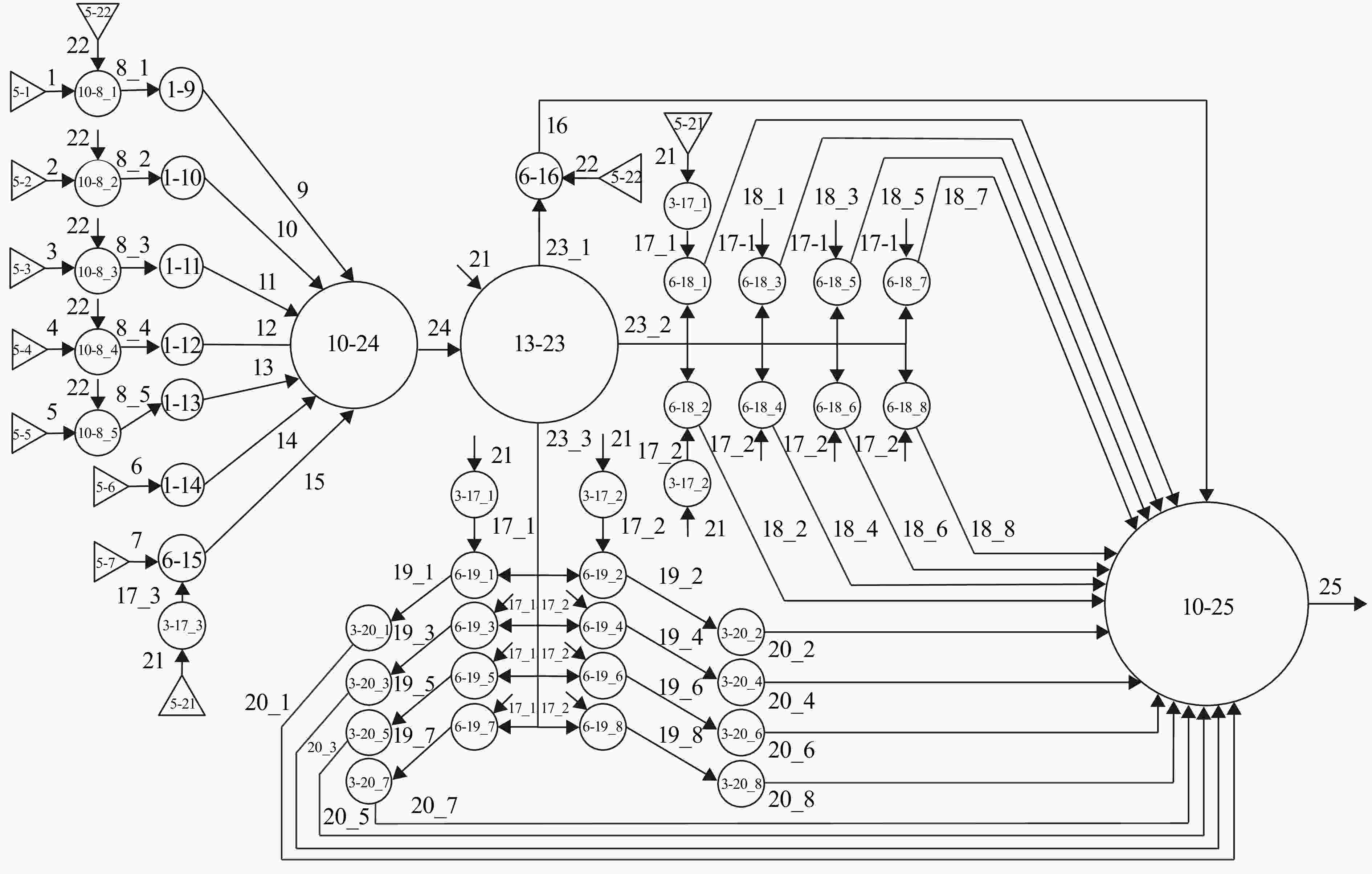
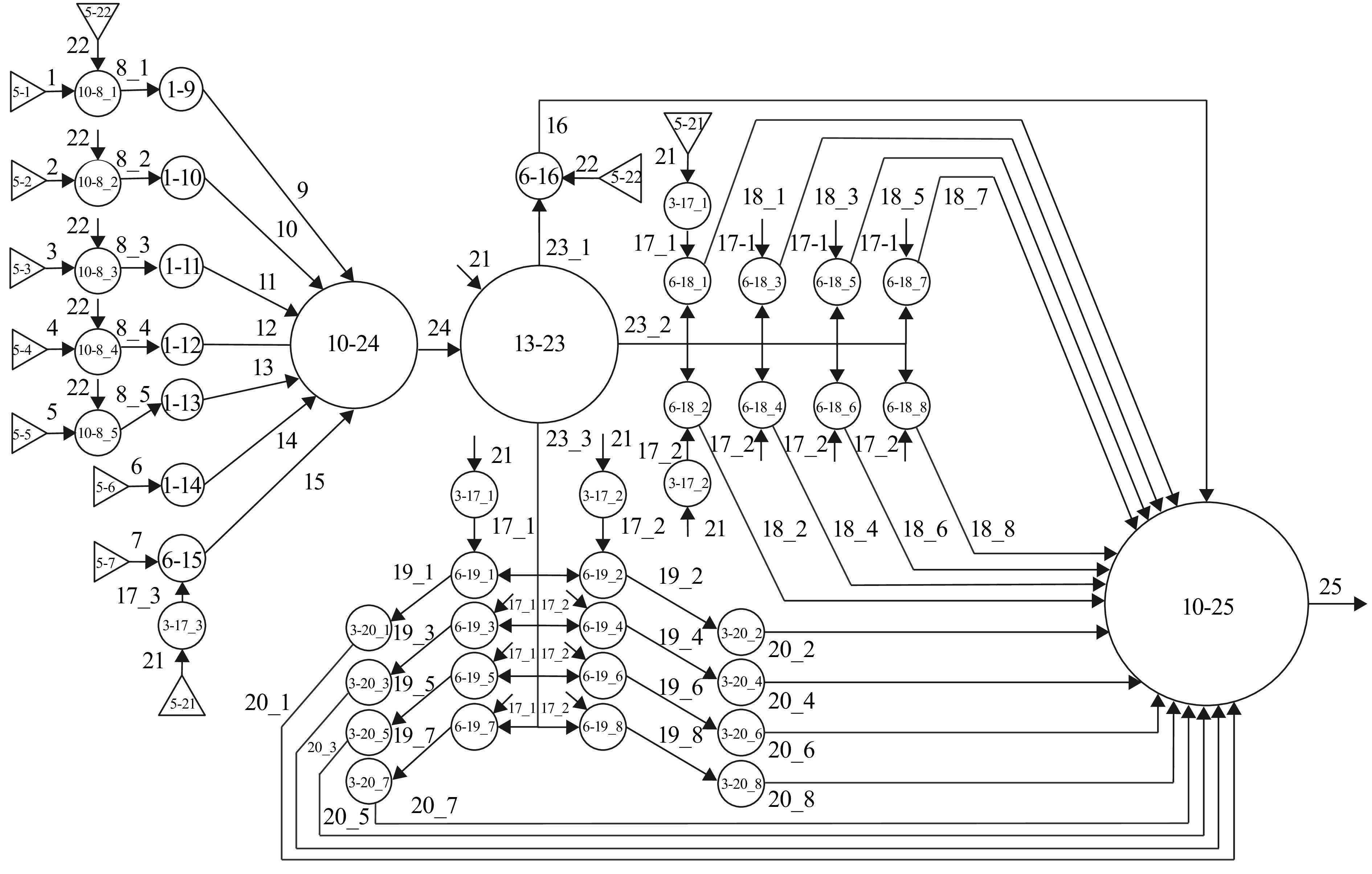
图 2 某型发动机电子控制系统GO图
Figure 2. GO chart of the electronic control system for a certain type of piston engine
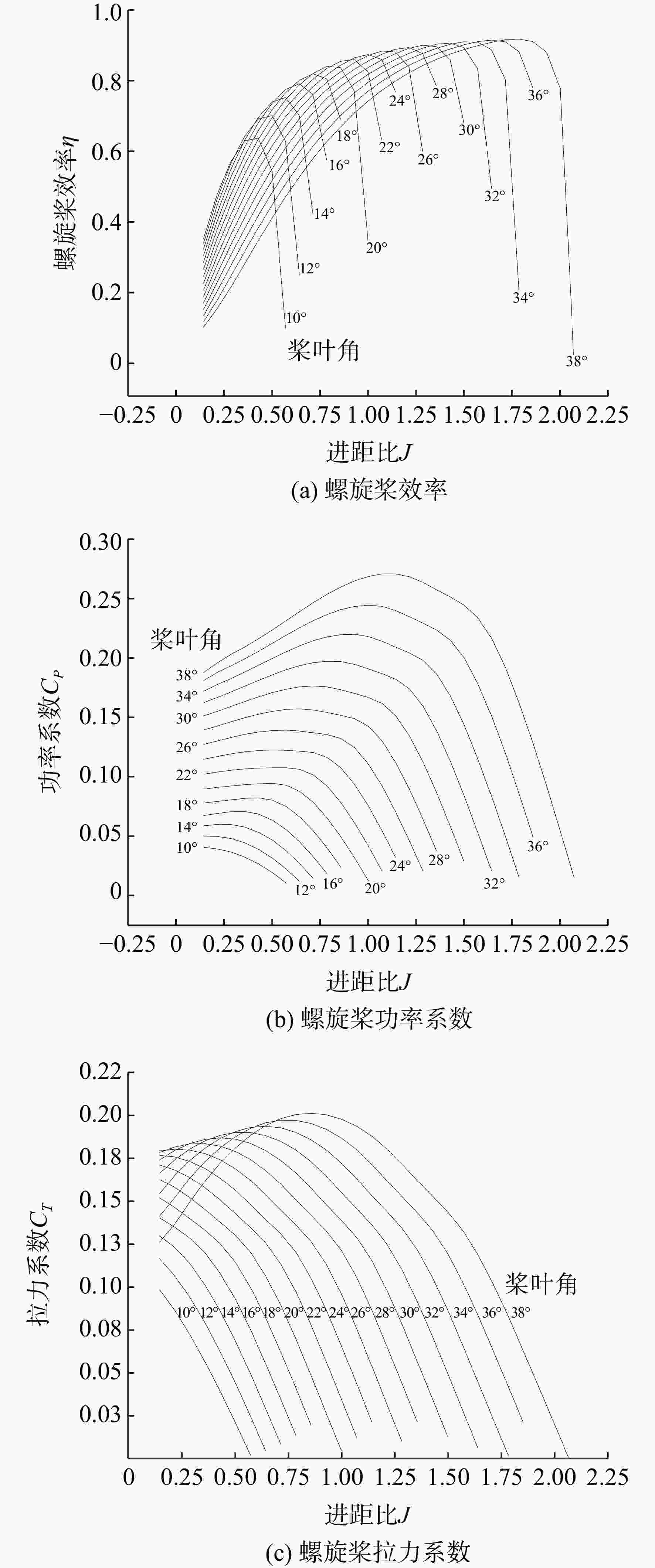
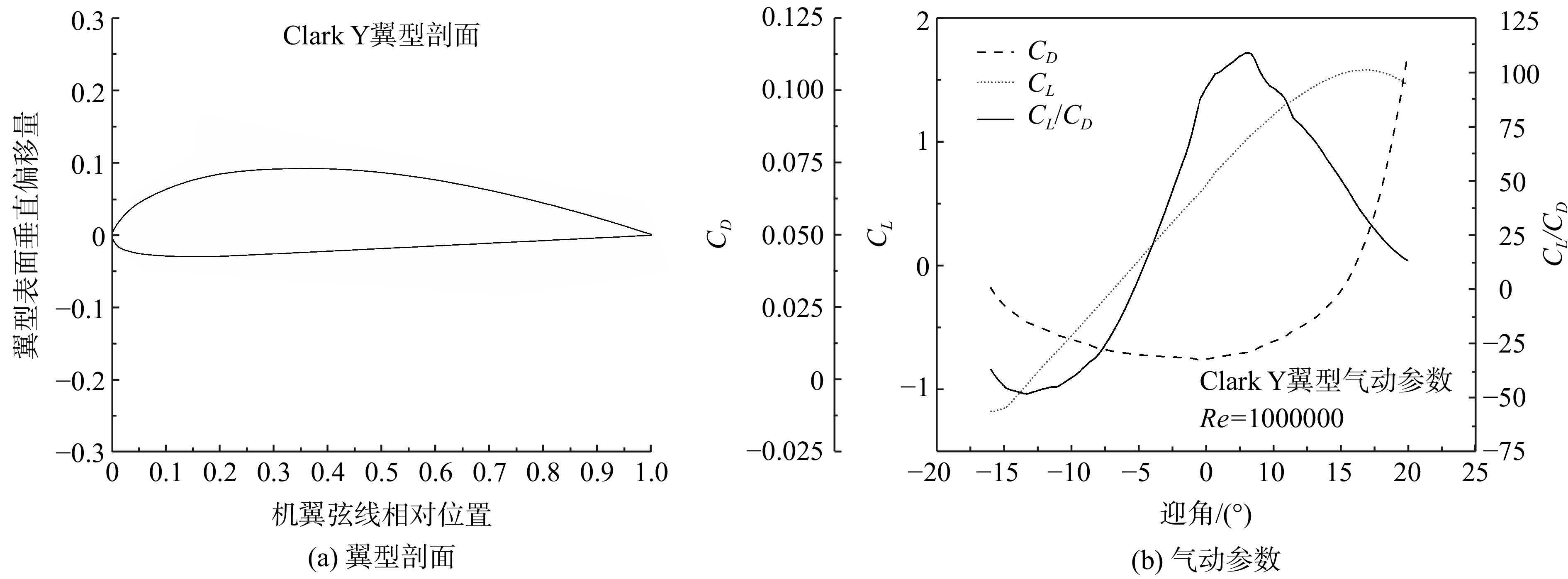
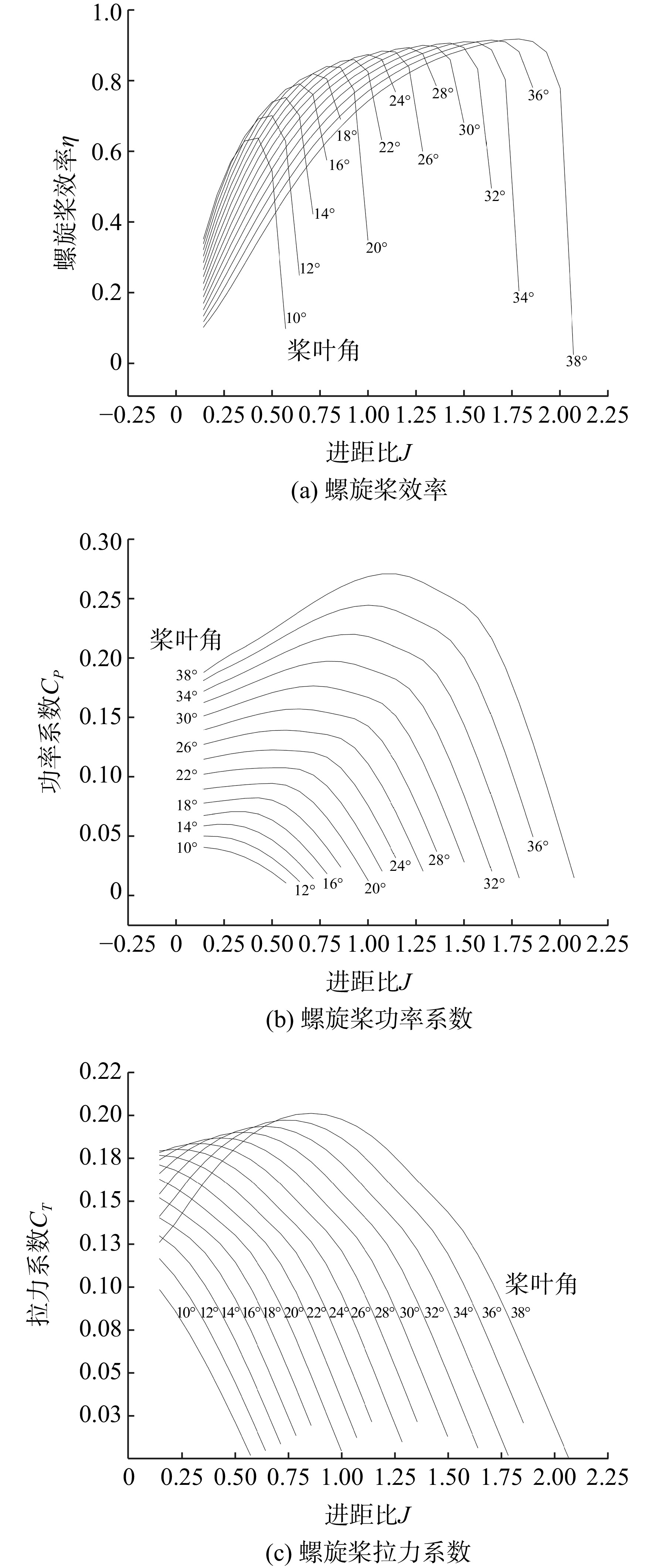
图 4 不同桨叶角下螺旋桨效率、功率系数、拉力系数与进距比的特性关系
Figure 4. Characteristics relationship between propeller efficiency, power coefficient, thrust coefficient and pitch ratio under different blade angles
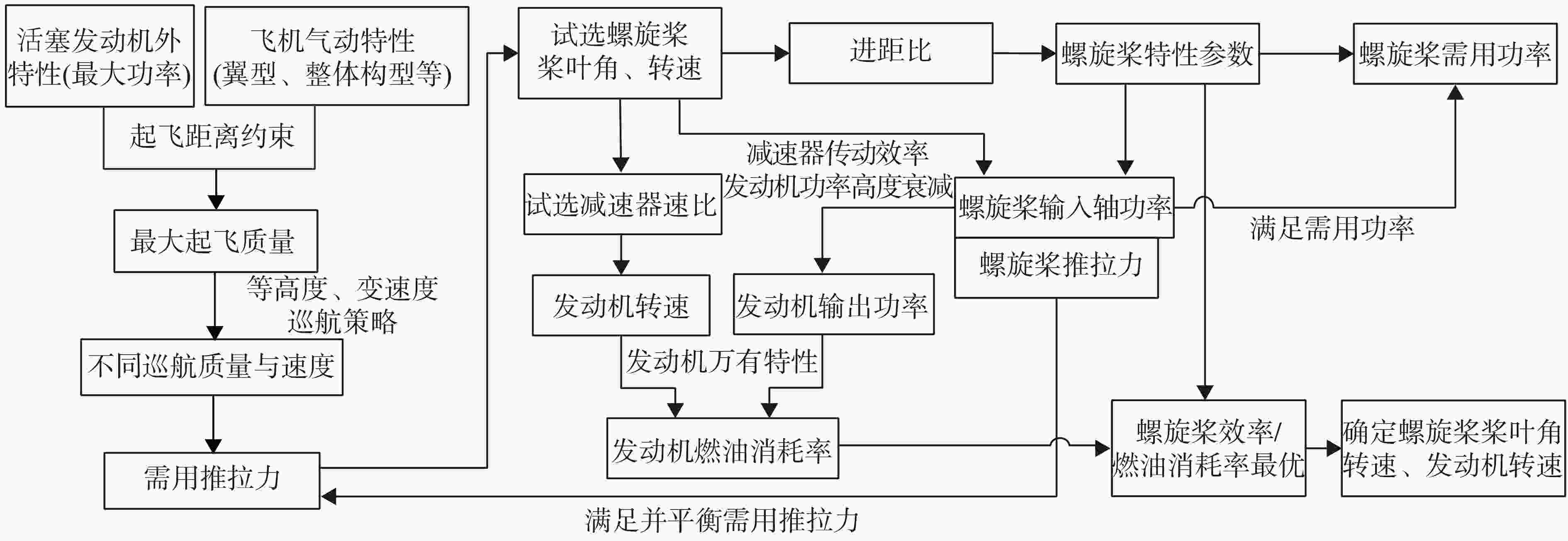
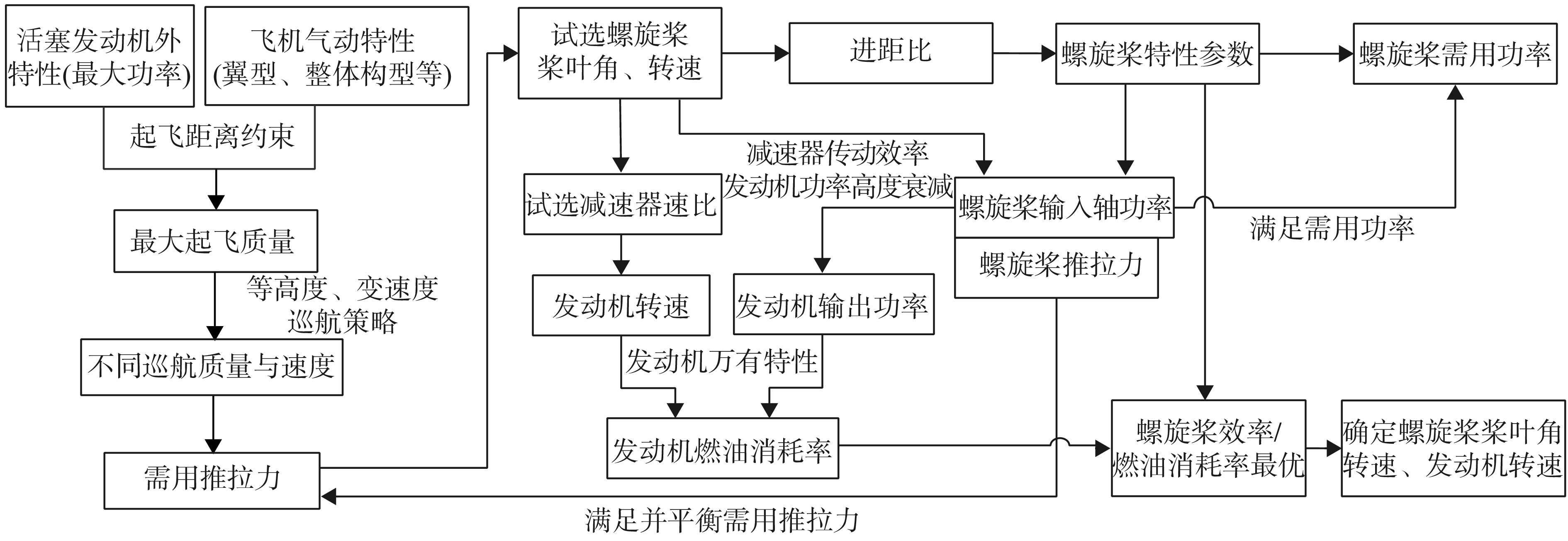
图 5 飞机、螺旋桨、减速器及发动机性能系统化匹配流程
Figure 5. Systematic matching process of aircraft, propeller, reducer and engine performance
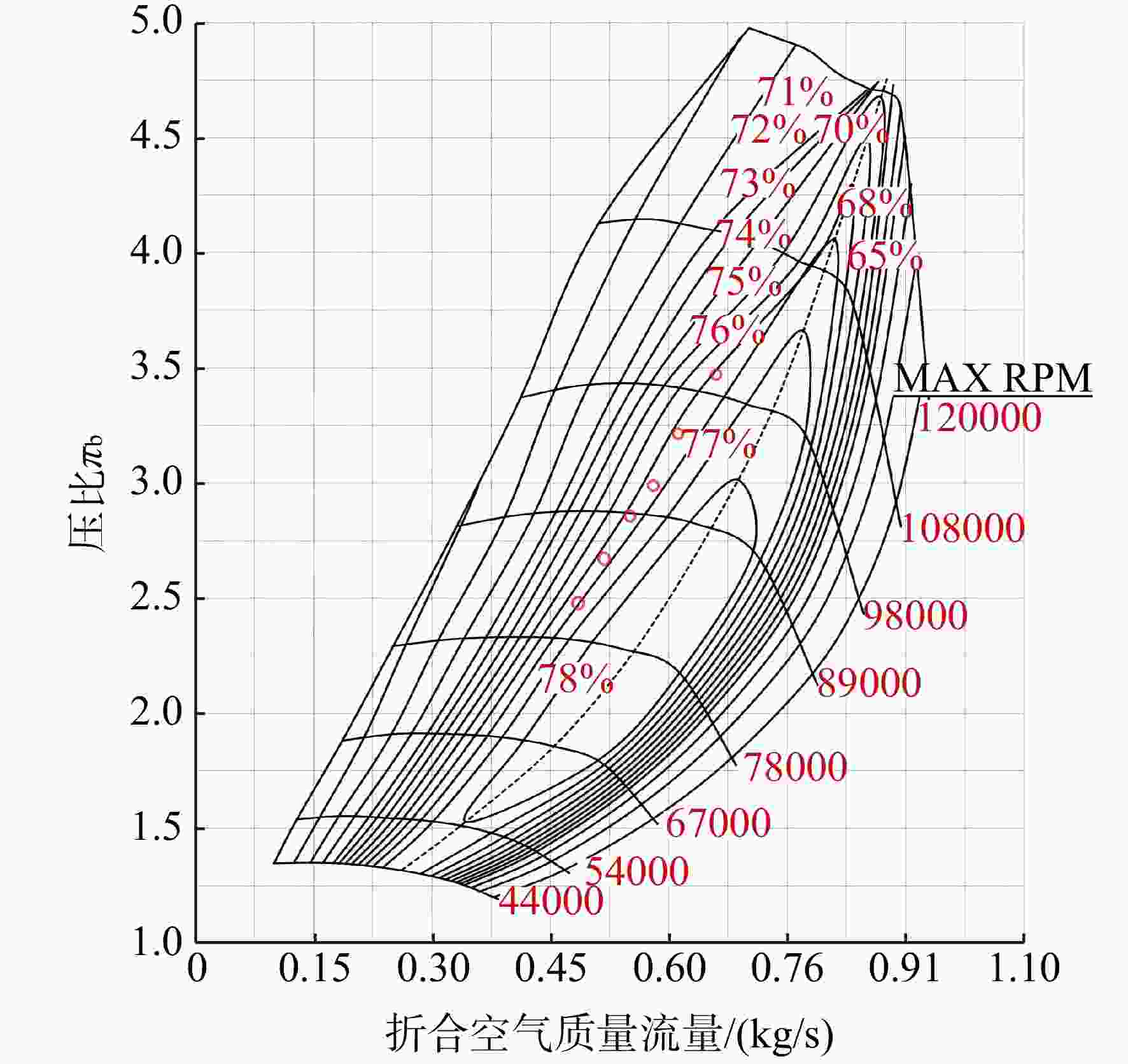
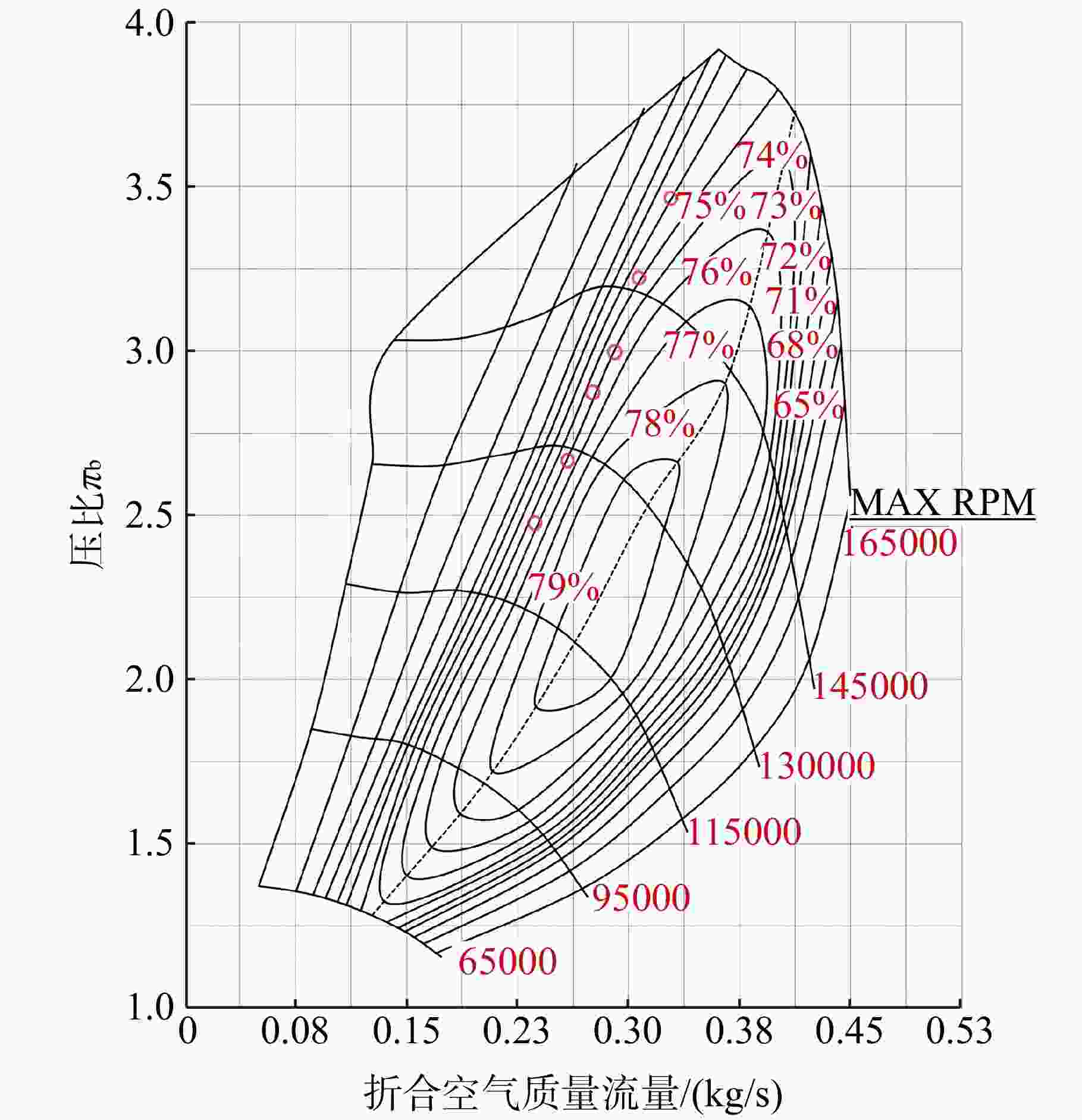
表 1 发动机单控制系统操作符数据
Table 1. Operator data of the single control system of the engine
编号 操作符类型 单元/零部件名称 成功概率 1 5,信号发生器 节气门位置信号 1 2 5,信号发生器 进气压力温度信号 1 3 5,信号发生器 曲轴位置信号 1 4 5,信号发生器 凸轮轴位置信号 1 5 5,信号发生器 机油压力温度信号 1 6 5,信号发生器 冷却液温度信号 1 7 5,信号发生器 进气质量流量温度信号 1 8_1~8_5 10,逻辑操作符“与门” 9 1,两状态单元 节气门位置传感器 0.9999985 10 1,两状态单元 进气压力温度传感器 0.9999985 11 1,两状态单元 曲轴位置传感器 0.9999985 12 1,两状态单元 凸轮轴位置传感器 0.9999985 13 1,两状态单元 机油压力温度传感器 0.9999985 14 1,两状态单元 冷却液温度传感器 0.9999985 15 1,两状态单元 进气质量流量温度传感器 0.9999985 16 6,有信号而导通的元件 节气门体 0.9999988 17_1~17_3 3,触发发生器 控制开关继电器 0.999999932 18_1~18_8 6,有信号而导通的元件 喷油器 0.9999875 19_1~19_8 6,有信号而导通的元件 点火线圈 0.99999988 20_1~20_8 3,触发发生器 火花塞 0.999999873 21 5,信号发生器 蓄电池供电 0.99999973 22 5,信号发生器 控制模块供电 0.9999978668 23 13,多路输入输出器 控制模块(硬件、软件) 0.9999978668 24 10,逻辑操作符与门 25 10,逻辑操作符与门  下载: 导出CSV
表 2 某型发动机控制系统相关零部件冗余设计必要性和可行性分析
Table 2. Analysis of the necessity and feasibility of redundancy design for relevant components of a certain type of engine control system
单元名称 必要性 可行性 进气压力温度传感器 整车负荷判断来源,
其信号直接决定喷油量进气歧管开孔布置,
靠近原机进气压力传感器曲轴位置传感器 提供曲轴旋转位置和转速信号,控制模块以此为基础计算点火、
喷油时间及喷油量等霍尔传感器,面向飞轮盘,
L型角码安装支架方案冷却液温度传感器 为喷油量修正、点火正时调整、
怠速控制等发动机关键功能提供温度基准主流道缸体适当位置开孔 发动机控制开关继电器 安全启动发动机并管理
点火系统、燃油喷射等关键电路控制系统电气盒集成 喷油器 为发动机精准、稳定喷油 进气道开孔布置,靠近原机喷油器位置 蓄电池供电 为模块及传感器供电 控制系统电气盒集成 控制模块供电 为相关传感器供电 同控制模块 控制模块(硬件、软件) 控制系统的中枢 控制系统电气盒集成
下载: 导出CSV
表 3 某型发动机冗余控制系统操作符数据
Table 3. Operator data of redundant control system for a certain type of engine
编号 操作符类型 单元名称 成功概率 10 1,两状态单元 进气压力传感器 0.99999999999775 11 1,两状态单元 曲轴位置传感器 0.99999999999775 14 1,两状态单元 冷却液温度传感器 0.99999999999775 17_1~17_3 3,触发发生器 发动机控制开关继电器 0.999999999999995 18_1~18_8 6,有信号而导通的元件 喷油器 0.99999999984375 21 5,信号发生器 蓄电池供电 0.999999999999927 22 5,信号发生器 控制模块供电 0.999999999995449 23 13,多路输入输出器 控制模块(硬件、软件) 0.999999999995449
下载: 导出CSV
表 4 系统基本特征及匹配优化目标
Table 4. Basic characteristics of the system and matching optimization objectives
系统 飞机 发动机 减速器 螺旋桨 特征描述 翼型Clark Y
机翼面积为18 m2外特性最大功率为
320 kW@5 000 r/min齿轮传动效率为0.98 三叶桨直径为2.1 m 设计目标 1) 起飞滑跑距离不大于500 m;
2) 能达到的巡航航程最远工作在低油耗率区间 匹配发动机与螺旋桨转速 工作在高效率区域 优化选项 工作转速及功率选择 减速比选择 转速及桨叶角选择
下载: 导出CSV
表 5 桨叶角为17°、19°、21°时不同进距比下螺旋桨吸收功率、发动机输出功率、螺旋桨推拉力
Table 5. Propeller absorbed power, engine output power, and propeller thrust at different advance ratios when the blade angle is 17°, 19°, and 21°
进距比 飞机
速度/(m/s)桨叶角为17° 桨叶角为19° 桨叶角为21° 螺旋桨
功率/kW发动机
功率/kW推拉力/
N螺旋桨
功率/kW发动机
功率/kW推拉力/
N螺旋桨
功率/kW发动机
功率/kW推拉力/
N0.1429 12.50 255.62 260.83 5939.87 295.31 301.34 6405.72 338.58 345.49 6802.89 0.2143 18.75 261.29 266.62 5704.87 300.27 306.40 6190.98 344.60 351.64 6644.87 0.2857 25.00 266.61 272.05 5453.66 304.88 311.10 5931.67 349.21 356.34 6430.13 0.3571 31.25 270.51 276.03 5165.98 308.78 315.08 5648.05 352.76 359.96 6162.72 0.4286 37.50 267.67 273.13 4772.96 311.97 318.34 5356.33 354.89 362.13 5854.78 0.5000 43.75 254.91 260.11 4230.03 308.43 314.72 4999.78 356.30 363.58 5542.80 0.5714 50.00 231.15 235.87 3561.49 297.79 303.87 4497.37 355.24 362.49 5206.50 0.6429 56.25 196.76 200.78 2795.71 272.62 278.18 3849.10 344.60 351.64 4756.76 0.7143 62.50 152.80 155.92 1961.05 234.69 239.48 3087.39 319.08 325.59 4144.94 0.7857 68.75 101.75 103.83 1089.92 185.41 189.19 2240.58 278.66 284.35 3399.42 0.8571 75.00 45.38 46.31 218.79 128.33 130.95 1357.32 225.48 230.08 2560.71 0.9286 81.25 65.59 66.92 672.58 162.73 166.05 1669.32 1.0000 87.50 93.60 95.51 769.83
下载: 导出CSV
表 6 不同巡航阶段飞机巡航速度与需用推力
Table 6. Aircraft cruise speed and required thrust at different cruise stages
巡航工况 质量/
kg飞机
升阻比巡航速度/
(m/s)需用推力/
N工况1 2900 15.16 85.66 1875.08 工况2 2800 15.16 84.17 1810.43 工况3 2700 15.16 82.65 1745.77 工况4 2600 15.16 81.11 1681.11 工况5 2500 15.16 79.53 1616.45 工况6 2400 15.16 77.93 1551.79
下载: 导出CSV
表 7 飞机质量为2 900 kg、巡航速度为85.66 m/s时的进距比
Table 7. Advance ratio at an aircraft weight of
2900 kg and a cruise speed of 85.66 m/s参数 螺旋桨转速/(r/min) 1000 1200 1400 1600 1800 2000 2200 2400 2500 发动机转速/
(r/min)减速比为1.7 1700 2040 2380 2720 3060 3400 3740 4080 4250 减速比为2.0 2000 2400 2800 3200 3600 4000 4400 4800 5000 减速比为2.3 2300 2760 3220 3680 4140 4600 5060 5520 5750 进距比 2.4474 2.0395 1.7482 1.5296 1.3597 1.2237 1.1125 1.0198 0.9790
下载: 导出CSV
表 8 飞行质量为2 900 kg、巡航速度为85.66 m/s时的匹配参数
Table 8. Matching parameters at a flight weight of
2900 kg and a cruise speed of 85.66 m/s参数 桨叶角/(°) 38 36 34 32 30 匹配螺旋桨转速/(r/min) 1550 1630 1720 1820 1940 进距比 1.5790 1.5015 1.4229 1.3447 1.2616 螺旋桨特性数据 CP 0.2316 0.1992 0.1691 0.1417 0.1194 CT 0.1318 0.1195 0.1071 0.0950 0.0851 η 0.8991 0.9008 0.9013 0.9002 0.8965 螺旋桨需用功率/kW 178.63 178.30 178.21 178.41 179.16 螺旋桨提供推拉力/N 1902.41 1908.07 1903.28 1890.41 1923.93 螺旋桨输入轴功率/kW 181.13 181.43 180.88 179.65 183.31 发动机输出轴功率/kW 208.61 208.95 208.32 206.91 211.11 发动机转速/
(r/min)减速比2.0 3100 3260 3440 3640 3880 减速比2.3 3565 3749 3956 4186 4462 减速比2.5 3875 4075 4300 4550 4850 燃油消耗率/
(kg/(kW·h))减速比2.0 功率无法达到 功率无法达到 0.285 0.288 0.291 减速比2.3 0.285 0.290 0.290 0.288 0.289 减速比2.5 0.290 0.289 0.288 0.288 0.293 η/C
1/(kg/(kW·h))减速比2.0 功率无法达到 功率无法达到 3.1625 3.1257 3.0808 减速比2.3 3.1547 3.1062 3.1079 3.1257 3.1021 减速比2.5 3.1003 3.1170 3.1295 3.1257 3.0597
下载: 导出CSV
表 9 不同巡航工况下的最佳螺旋桨桨叶角、发动机转速及功率点匹配参数
Table 9. Optimal propeller blade angles, engine speeds, and power point matching parameters for different cruise stages
工况
编号质量/
kg速度/
(m/s)需用
推力/N桨叶角/
(°)螺旋桨转速/
(r/min)进距比 螺旋桨
推力/N发动机
转速/(r/min)发动机
功率/kW减速比 (η/C)/
(kg/(kW·h))1 2900 85.66 1875.08 34 1720 1.4229 1903.28 3440 208.32 2.0 3.1625 2 2800 84.17 1810.43 36 1600 1.5030 1843.91 3200 198.07 2.0 3.2280 3 2700 82.65 1745.77 36 1570 1.5041 1761.06 3140 185.97 2.0 3.2887 4 2600 81.11 1681.11 38 1470 1.5765 1717.38 2940 178.43 2.0 3.3413 5-1 2500 79.53 1616.45 38 1440 1.5780 1644.33 2880 167.46 2.3 3.4577 5-2 2500 79.53 1616.45 34 1600 1.4202 1656.59 3200 168.40 2.0 3.3487 6 2400 77.93 1551.79 38 1410 1.5791 1573.81 2820 157.02 2.0 3.4853
下载: 导出CSV
表 10 最佳螺旋桨桨叶角、发动机转速匹配下的巡航航程及航时
Table 10. Cruise range and flight time under the matching of optimal propeller blade angle and engine speed
巡航工况 质量/kg 巡航速度/(m/s) 桨叶角/(°) (η/C)/
(kg/(kW·h))航程/km 航时/h 工况1 2900 85.66 34 3.1625 618.02 2.00 工况2 2800 84.17 36 3.2280 653.77 2.16 工况3 2700 82.65 36 3.2887 691.20 2.32 工况4 2600 81.11 38 3.3413 729.80 2.50 工况5 2500 79.53 34 3.3487 761.28 2.66 工况6 2400 77.93 38 3.4853 826.06 2.94 合计 4280.15 14.59
下载: 导出CSV
表 11 固定桨叶角34°不同巡航工况的转速、功率匹配及航程、航时
Table 11. Speed, power matching, flight range and time for different cruise stages with a fixed blade angle of 34°
工况
编号质量/
kg巡航
速度/(m/s)需用
推力/N桨叶角/
(°)螺旋桨
转速/(r/min)螺旋桨
推力/N发动机
转速/(r/min)发动机
功率/kW(η/C)/
(kg/(kW·h))航程/
km航时/
h1 2900 85.66 1875.08 34 1720 1903.28 3440 208.32 3.1625 618.02 2.00 2 2800 84.17 1810.43 34 1690 1837.19 3380 197.59 3.1961 647.31 2.14 3 2700 82.65 1745.77 34 1660 1774.23 3320 187.38 3.2301 678.89 2.28 4 2600 81.11 1681.11 34 1630 1713.63 3260 177.62 3.2887 718.32 2.46 5 2500 79.53 1616.45 34 1600 1656.59 3200 168.40 3.3487 761.28 2.66 6 2400 77.93 1551.79 34 1560 1551.10 3120 154.39 3.4560 819.12 2.92 合计 4242.94 14.46
下载: 导出CSV
表 12
7000 m高空桨叶角38°不同巡航工况的转速与功率匹配Table 12. speed and power matching at
7000 meters altitude with 38° blade angle for different cruise stages巡航工况 螺旋桨吸收
功率/kW发动机
功率/kW发动机
转速/(r/min)缸内平均
有效压力/MPa飞行质量/kg 巡航速度/(m/s) 2900 118.20 250.60 255.71 4280 1.156 2800 116.15 236.27 241.09 4200 1.111 2700 114.05 222.66 227.20 4120 1.067 2600 111.92 209.67 213.95 4040 1.025 2500 109.75 197.32 201.35 3960 0.984 2400 107.53 185.61 189.40 3880 0.945
下载: 导出CSV
表 13 不同巡航工况的增压参数
Table 13. Boost parameters for different cruise stages
巡航工况 空气流量/
(kg/s)增压后密度/
(kg/m3)压比 增压后
压力/MPa增压后
温度/℃目标进气
温度/℃飞行质量/kg 巡航速度/(m/s) 2 900 118.20 0.293 1.204 3.39 0.129 103.60 ≤50 2 800 116.15 0.276 1.157 3.19 0.121 95.54 2 700 114.05 0.260 1.111 2.99 0.114 87.60 2 600 111.92 0.245 1.067 2.81 0.107 79.73 2 500 109.75 0.231 1.025 2.64 0.101 71.96 2 400 107.53 0.217 0.984 2.48 0.094 64.32
下载: 导出CSV
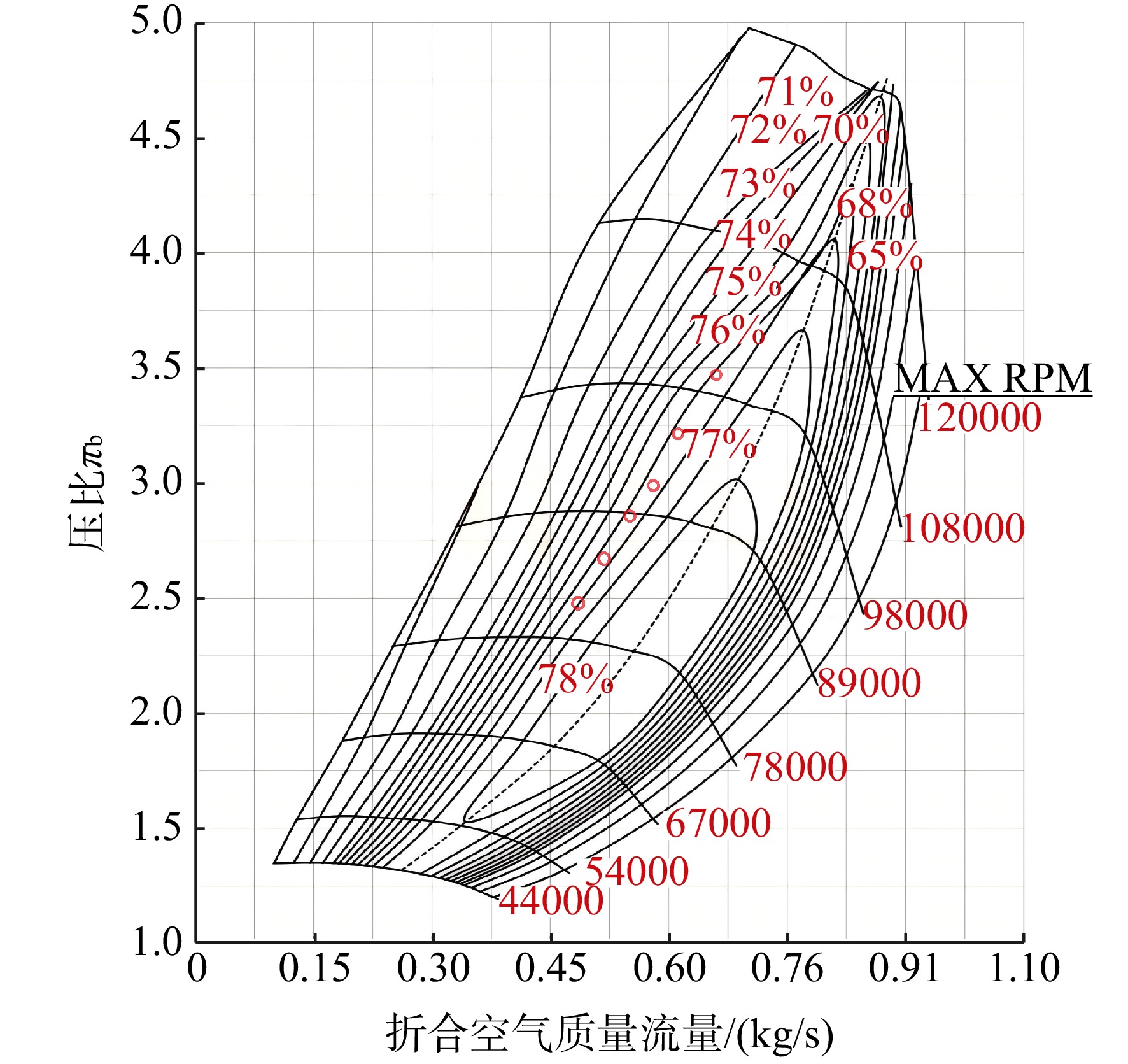
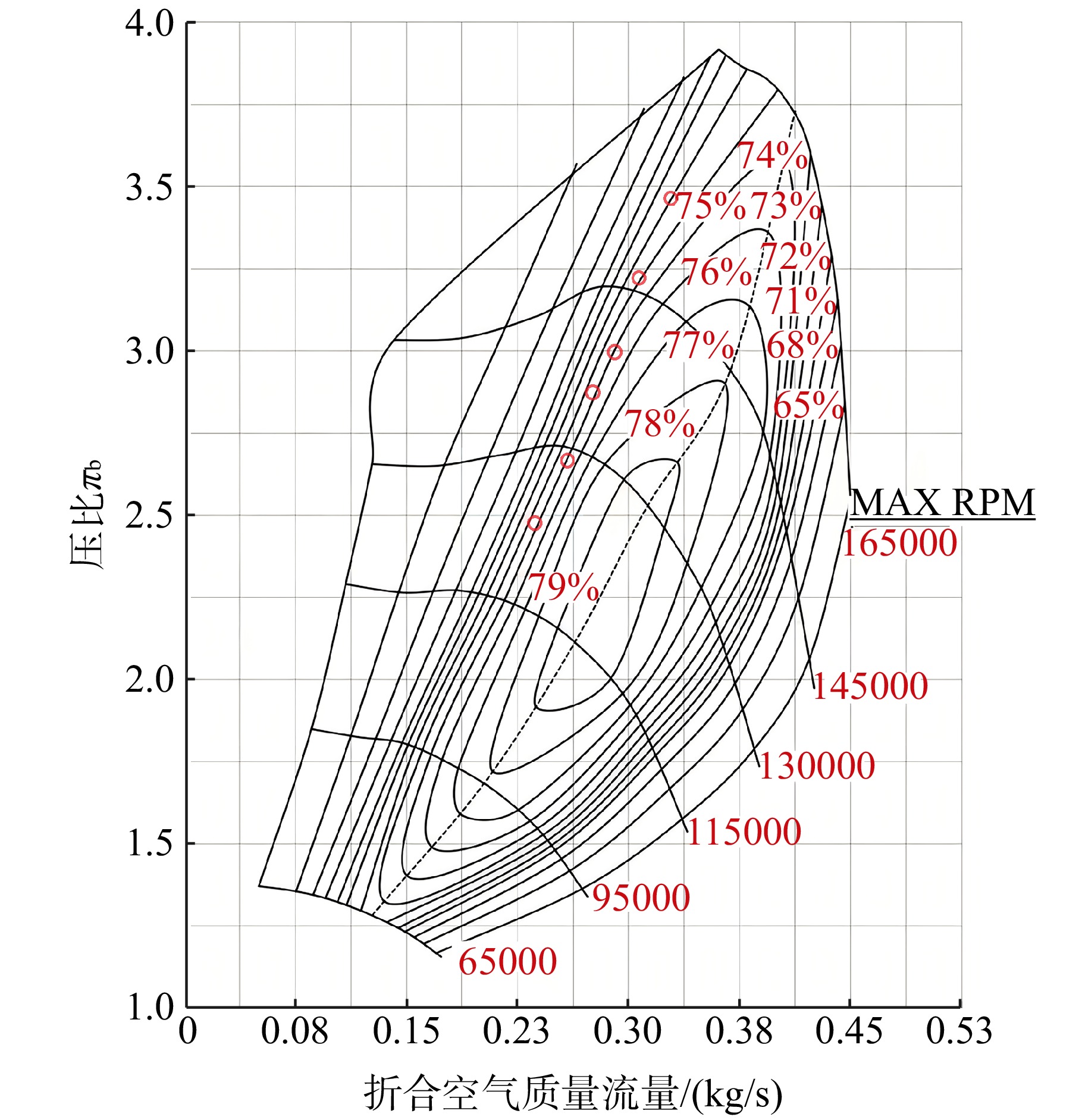
表 14 不同巡航工况点的压气机折合流量
Table 14. Corrected air flow of the compressor for different cruise stages
巡航工况 压比 空气流量/
(kg/s)单级压气机折合
空气流量/(kg/s)两级并联单个压气机
折合空气流量/(kg/s)飞行质量/kg 巡航速度/(m/s) 2 900 118.20 3.39 0.293 0.656 0.328 2 800 116.15 3.19 0.276 0.619 0.310 2 700 114.05 2.99 0.260 0.583 0.292 2 600 111.92 2.81 0.245 0.549 0.275 2 500 109.75 2.64 0.231 0.517 0.259 2 400 107.53 2.48 0.217 0.486 0.243
下载: 导出CSV
-
[1] 郑君. 通用航空活塞发动机现状及发展趋势探讨[J]. 内燃机与配件, 2020(19): 196-198. Zheng Jun. Discussion on the present situation and development trend of general aviation piston engine[J]. Internal Combustion Engine & Parts, 2020(19): 196-198. (in Chinese doi: 10.19475/j.cnki.issn1674-957x.2020.19.092Zheng Jun. Discussion on the present situation and development trend of general aviation piston engine[J]. Internal Combustion Engine & Parts, 2020(19): 196-198. (in Chinese) doi: 10.19475/j.cnki.issn1674-957x.2020.19.092 [2] 沈祖培, 黄祥瑞. GO法原理及应用: 一种系统可靠性分析方法[M]. 北京: 清华大学出版社, 2004. Shen Zupei, Huang Xiangrui. Principle and application of GO methodology: a system reliability analysis method[M]. Beijing: Tsinghua University Press, 2004. (in ChineseShen Zupei, Huang Xiangrui. Principle and application of GO methodology: a system reliability analysis method[M]. Beijing: Tsinghua University Press, 2004. (in Chinese) [3] Shen Zupei, Gao Jia, Huang Xiangrui. An exact algorithm dealing with shared signals in the GO methodology[J]. Reliability Engineering & System Safety, 2001, 73(2): 177-181. [4] 马骏, 段富海. 基于GO法的航空发动机控制系统可靠性分析[J]. 机电工程技术, 2019, 48(5): 147-150. Ma Jun, Duan Fuhai. Reliability analysis of aeroengine control system based on GO methodology[J]. Mechanical & Electrical Engineering Technology, 2019, 48(5): 147-150. (in Chinese doi: 10.3969/j.issn.1009-9492.2019.05.043Ma Jun, Duan Fuhai. Reliability analysis of aeroengine control system based on GO methodology[J]. Mechanical & Electrical Engineering Technology, 2019, 48(5): 147-150. (in Chinese) doi: 10.3969/j.issn.1009-9492.2019.05.043 [5] 李景奎, 林文杰, 江秀红, 等. 基于GO-Markov的飞机燃油闭环控制系统可靠性分析[J]. 兵工学报, 2022, 43(6): 1447-1455. Li Jingkui, Lin Wenjie, Jiang Xiuhong, et al. Reliability analysis of aircraft fuel closed-loop control system based on GO methodology and Markov process[J]. Acta Armamentarii, 2022, 43(6): 1447-1455. (in Chinese doi: 10.12382/bgxb.2021.0288Li Jingkui, Lin Wenjie, Jiang Xiuhong, et al. Reliability analysis of aircraft fuel closed-loop control system based on GO methodology and Markov process[J]. Acta Armamentarii, 2022, 43(6): 1447-1455. (in Chinese) doi: 10.12382/bgxb.2021.0288 [6] 林文杰. 基于GO法的某型航空发动机控制系统可靠性研究[D]. 沈阳: 沈阳航空航天大学, 2022. Lin Wenjie. Research on the reliability of an aeroengine control system based on go methodology[D]. Shenyang: Shenyang Aerospace University, 2022. (in ChineseLin Wenjie. Research on the reliability of an aeroengine control system based on go methodology[D]. Shenyang: Shenyang Aerospace University, 2022. (in Chinese) [7] GJB/Z299c-2006 电子设备可靠性预计手册[S]. GJB/Z 299c-2006 Handbook for predicting the reliability of electronic equipment[S]. (in ChineseGJB/Z 299c-2006 Handbook for predicting the reliability of electronic equipment[S]. (in Chinese) [8] GB/T 37963-2019 电子设备可靠性预计模型及数据手册[S]. GB/T 37963-2019 Electronic equipment reliability prediction model and data manual [S]. (in ChineseGB/T 37963-2019 Electronic equipment reliability prediction model and data manual [S]. (in Chinese) [9] 丁松滨. 飞行性能与飞行计划[M]. 2版. 北京: 科学出版社, 2023. Ding Songbin. Flight performance and flight plan[M]. 2nd ed. Beijing: Science Press, 2023. (in ChineseDing Songbin. Flight performance and flight plan[M]. 2nd ed. Beijing: Science Press, 2023. (in Chinese) [10] John A. Fundamentals of aerodynamics[M]. 6th ed. New York: McGraw-Hill Education, 2017. [11] 《飞机设计手册》总编委会. 飞机设计手册: 第6册 气动设计[M]. 北京: 航空工业出版社, 2002. General Editorial Board of Aircraft Design Manual. Aircraft design manual: Volume 6 aerodynamic design [M]. Beijing: Aviation Industry Press, 2002. (in ChineseGeneral Editorial Board of Aircraft Design Manual. Aircraft design manual: Volume 6 aerodynamic design [M]. Beijing: Aviation Industry Press, 2002. (in Chinese) [12] 魏宝泽, 杨勇, 张新榃, 等. 自动变桨距螺旋桨电推进系统能效优化方法[J]. 航空动力学报, 2023, 38(3): 717-727 Wei Baoze, Yang Yong, Zhang Xintan, et al. Energy efficiency optimization method of automatic variable pitch propeller electric propulsion system[J].Journal of Aerospace Power, 2023, 38(3): 717-727.(in ChineseWei Baoze, Yang Yong, Zhang Xintan, et al. Energy efficiency optimization method of automatic variable pitch propeller electric propulsion system[J].Journal of Aerospace Power, 2023, 38(3): 717-727.(in Chinese) [13] 刘沛清. 空气螺旋桨理论及其应用[M]. 北京: 北京航空航天大学出版社, 2006. Liu Peiqing. Air propeller theory and its application[M]. Beijing: Beijing University of Aeronautics & Astronautics Press, 2006. (in ChineseLiu Peiqing. Air propeller theory and its application[M]. Beijing: Beijing University of Aeronautics & Astronautics Press, 2006. (in Chinese) [14] 张轶. 螺旋桨式小型无人机可用功率计算研究[J]. 科学技术与工程, 2011, 11(8): 1876-1880. Zhang Yi. A study on the available power of propeller-driven small UAV[J]. Science Technology and Engineering, 2011, 11(8): 1876-1880. (in Chinese doi: 10.3969/j.issn.1671-1815.2011.08.052Zhang Yi. A study on the available power of propeller-driven small UAV[J]. Science Technology and Engineering, 2011, 11(8): 1876-1880. (in Chinese) doi: 10.3969/j.issn.1671-1815.2011.08.052 [15] 南京航空航天大学航空宇航学院飞机设计研究所. 飞行原理(飞机的升力和阻力)[EB/OL]. (2020-07-01)[2025-04-20]. https://aircraftdesign.nuaa.edu.cn/5078/list.htm. Aviation and Astronautics college, school of Aircraft Design, Nanjing University of Aeronautics and Astronautics. Flight Principles (Aircraft Lift and Drag) [EB/OL]. (2020-07-01)[2025-04-20]. https://aircraftdesign.nuaa.edu.cn/5078/list.htm. (in ChineseAviation and Astronautics college, school of Aircraft Design, Nanjing University of Aeronautics and Astronautics. Flight Principles (Aircraft Lift and Drag) [EB/OL]. (2020-07-01)[2025-04-20]. https://aircraftdesign.nuaa.edu.cn/5078/list.htm. (in Chinese) [16] Biermann D, Conway R N. Propeller charts for the determination of the rotational speed for the maximum ratio of the propulsive efficiency to the specific fuel consumption: NACA Report No. 749 1940[R]. Hampton, US: National Advisory Committee for Aeronautics, 1940. [17] 刘圣华, 周龙保. 内燃机学[M]. 4版. 北京: 机械工业出版社, 2017. Liu Shenghua, Zhou Longbao. Internal combustion engine science [M]. 4th ed. Beijing: China Machine Press, 2017. (in ChineseLiu Shenghua, Zhou Longbao. Internal combustion engine science [M]. 4th ed. Beijing: China Machine Press, 2017. (in Chinese) [18] 朱仙鼎. 中国内燃机工程师手册[M]. 上海: 上海科学技术出版社, 2000. Zhu Xianding. Handbook for ICE engineers[M]. Shanghai: Shanghai Scientific and Technical Publishers, 2000. (in ChineseZhu Xianding. Handbook for ICE engineers[M]. Shanghai: Shanghai Scientific and Technical Publishers, 2000. (in Chinese) [19] 安士杰, 刘振明, 杨昆, 等. 柴油机增压技术[M]. 北京: 国防工业出版社, 2019. An Shijie, Liu Zhenming, Yang Kun, et al. Diesel engine turbocharging technology [M]. Beijing: National Defense Industry Press, 2019. (in ChineseAn Shijie, Liu Zhenming, Yang Kun, et al. Diesel engine turbocharging technology [M]. Beijing: National Defense Industry Press, 2019. (in Chinese) [20] 宗立君. DA465Q汽油机涡轮增压技术研究[D]. 哈尔滨: 哈尔滨工程大学, 2006. Zong Lijun. Turbocharged system technology study of DA465Q engine[D]. Harbin: Harbin Engineering University, 2006. (in ChineseZong Lijun. Turbocharged system technology study of DA465Q engine[D]. Harbin: Harbin Engineering University, 2006. (in Chinese) [21] 纪民举, 李超, 刘振全. 车用涡旋增压器与发动机匹配的理论研究[J]. 压缩机技术, 2008(3): 14-18. Ji Minju, Li Chao, Liu Zhenquan. Theoretical study on matching of scroll supercharger and engine[J]. Compressor Technology, 2008(3): 14-18. (in Chinese doi: 10.3969/j.issn.1006-2971.2008.03.005Ji Minju, Li Chao, Liu Zhenquan. Theoretical study on matching of scroll supercharger and engine[J]. Compressor Technology, 2008(3): 14-18. (in Chinese) doi: 10.3969/j.issn.1006-2971.2008.03.005 [22] 陆家祥. 柴油机涡轮增压技术[M]. 2版. 北京: 机械工业出版社, 2018. Lu Jiaxiang. Engine turbocharging technology [M]. 2nd ed. Beijing: China Machine Press, 2018. (in ChineseLu Jiaxiang. Engine turbocharging technology [M]. 2nd ed. Beijing: China Machine Press, 2018. (in Chinese) [23] Garrett Motion Incorporation. Performance catalog/garrett original performance turbo [EB/OL]. (2022-07-15) [2025-06-01]. https://www.garrettmotion.com/racing-and-performance/performance-turbos/. [24] 孙美瑶. 航空活塞发动机空冷换热器高空流动换热特性及强化研究[D]. 杭州: 浙江大学, 2023. Sun Meiyao. Research on high-altitude flow and heat transfer characteristics and enhancement of air-cooled heat exchangers for aviation piston engines[D]. Hangzhou: Zhejiang University, 2023. (in ChineseSun Meiyao. Research on high-altitude flow and heat transfer characteristics and enhancement of air-cooled heat exchangers for aviation piston engines[D]. Hangzhou: Zhejiang University, 2023. (in Chinese) [25] 张毅. 涡轮增压汽油机数值模拟与性能优化研究[D]. 武汉: 华中科技大学, 2008. Zhang Yi. Study on simulation and optimization of turbocharing gasoline engine[D]. Wuhan: Huazhong University of Science and Technology, 2008. (in ChineseZhang Yi. Study on simulation and optimization of turbocharing gasoline engine[D]. Wuhan: Huazhong University of Science and Technology, 2008. (in Chinese) -

 点击查看大图
计量
- 文章访问数: 599
- HTML浏览量: 336
- PDF量: 40
- 被引次数: 0