






Evolution of deposition morphology and its influence on heat transfer of the target surface subject to micro-particles entrained by hole matrix jets
-
摘要:
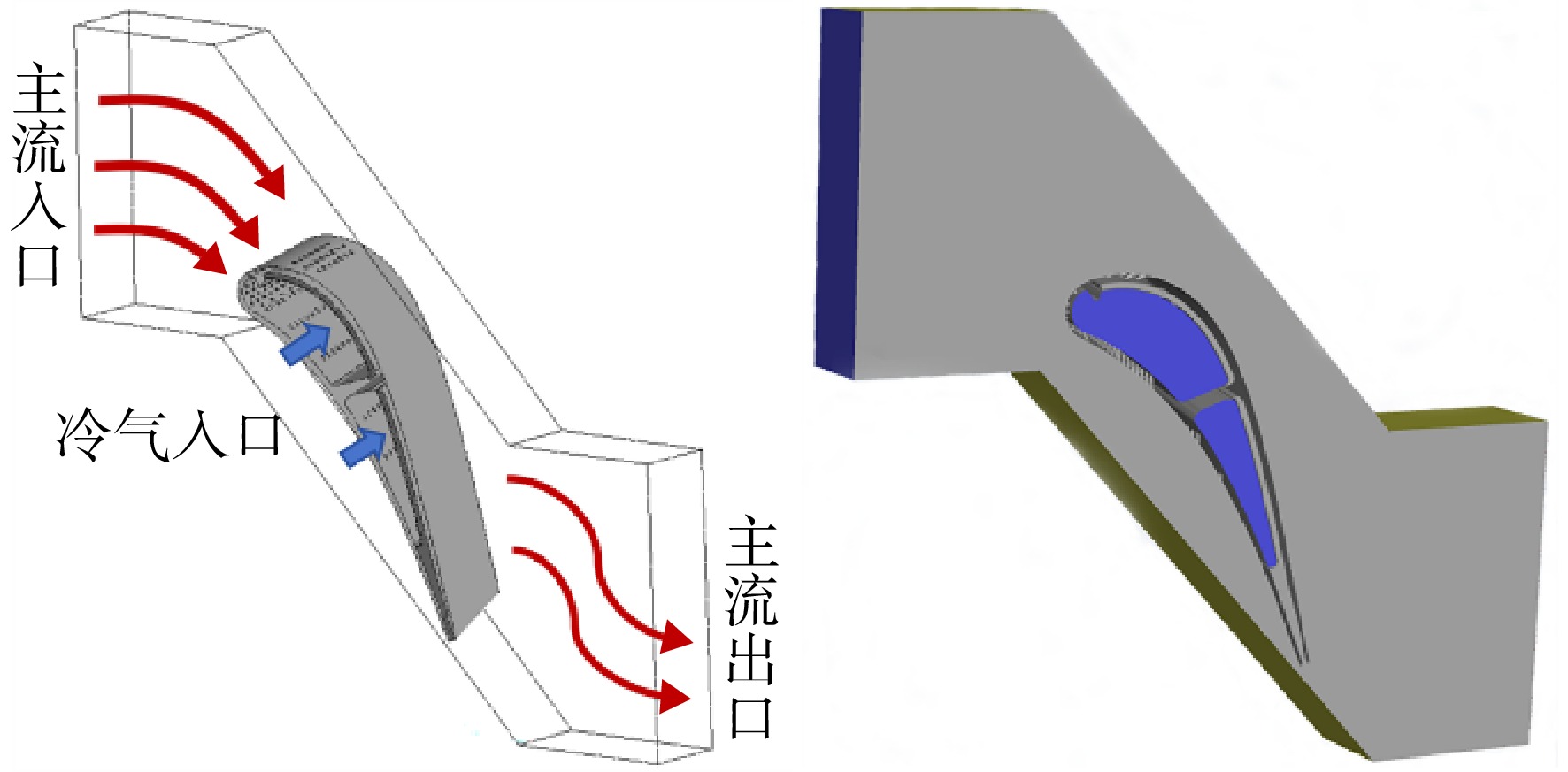
为探究航空发动机涡轮导向叶片内部颗粒沉积动力学特性及沉积形貌对传热特性的影响,针对压力面为单层气膜孔壁、吸力面为冲击-气膜孔溢流组合冷却结构进行数值仿真。叶栅主流入口总压为3.09 MPa,出口静压为1.52 MPa,主流入口总温为
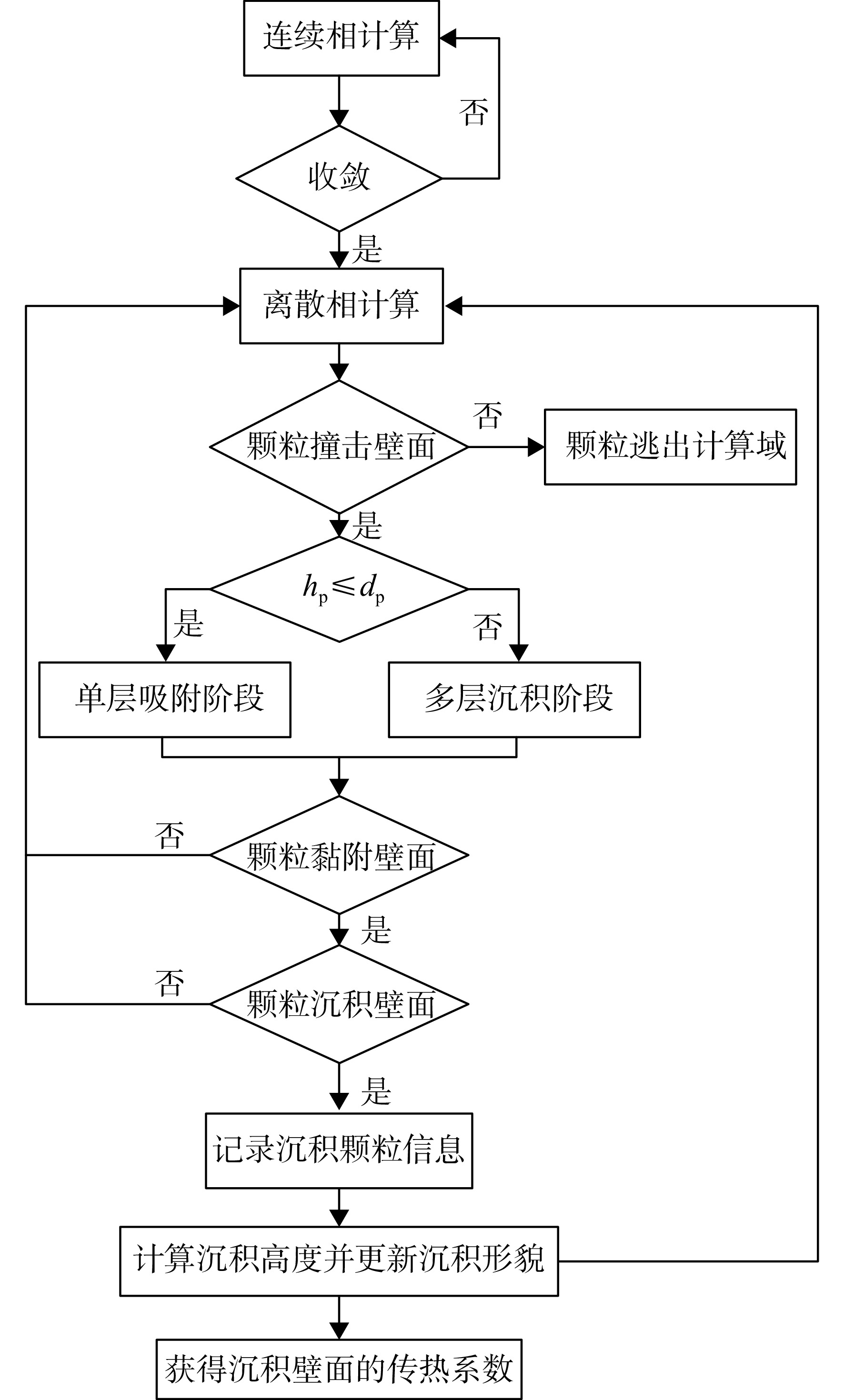
1800 K,冷气入口温度为800 K,压力范围设定3.11~3.58 MPa。基于修正后的临界速度沉积模型,采用欧拉-拉格朗日方法预测颗粒在叶片内部迁移轨迹。结合动网格技术动态重构了沉积界面,定量分析了不同沉积阶段靶面沉积形貌特征及对应位置传热系数变化规律。研究表明:沉积层的形成是一个动态演化过程且呈现阶段性变化规律。随着吞砂量的持续增加,丘顶处的传热系数呈现局部最大值,较沉积前最大增幅达97.1%;部分相邻沉积丘之间“鞍部”位置传热系数呈现先减小后增大的变化趋势,较沉积前传热系数最大降幅达55.6%,当“鞍部”逐渐被新沉积的颗粒物填平时,该位置传热系数逐渐增大,但仍小于沉积前该位置的传热系数。Abstract:In order to explore the dynamic characteristics of particle deposition in the turbine guide vane of aero-engine and the influence of deposition morphology on heat transfer characteristics, numerical simulation was carried out for the combined cooling structure of single-layer film hole wall on the pressure surface and impingement-film hole overflow on the suction surface. The total pressure of the mainstream inlet of the cascade was 3.09 MPa, the static pressure of the outlet was 1.52 MPa, and the total temperature of the mainstream inlet was
1800 K. The inlet temperature of the cooling air was 800 K, and the pressure range was set to 3.11 to 3.58 MPa. Based on the modified critical velocity deposition model, the Euler-Lagrangian method was used to predict the particle migration trajectory inside the blade. The deposition interface was dynamically reconstructed by dynamic mesh technology, and the deposition morphology characteristics of the target surface at different deposition stages and the change law of the heat transfer coefficient at the corresponding position were quantitatively analyzed. The research showed that the formation of the sedimentary layer exhibited a dynamic evolution process and presented a phased change rule. With the continuous increase of the amount of sand swallowed, the heat transfer coefficient at the top of the mound showed a local maximum, which was 97.1% higher than that before deposition. The heat transfer coefficient at the ‘saddle’ position between some adjacent sedimentary mounds showed a trend of decreasing first and then increasing. The maximum decrease of heat transfer coefficient was 55.6% compared with that before deposition. When the ‘saddle’ was gradually filled with newly deposited particles, the heat transfer coefficient at this position gradually increased, but was still smaller than the heat transfer coefficient at this position before deposition. -
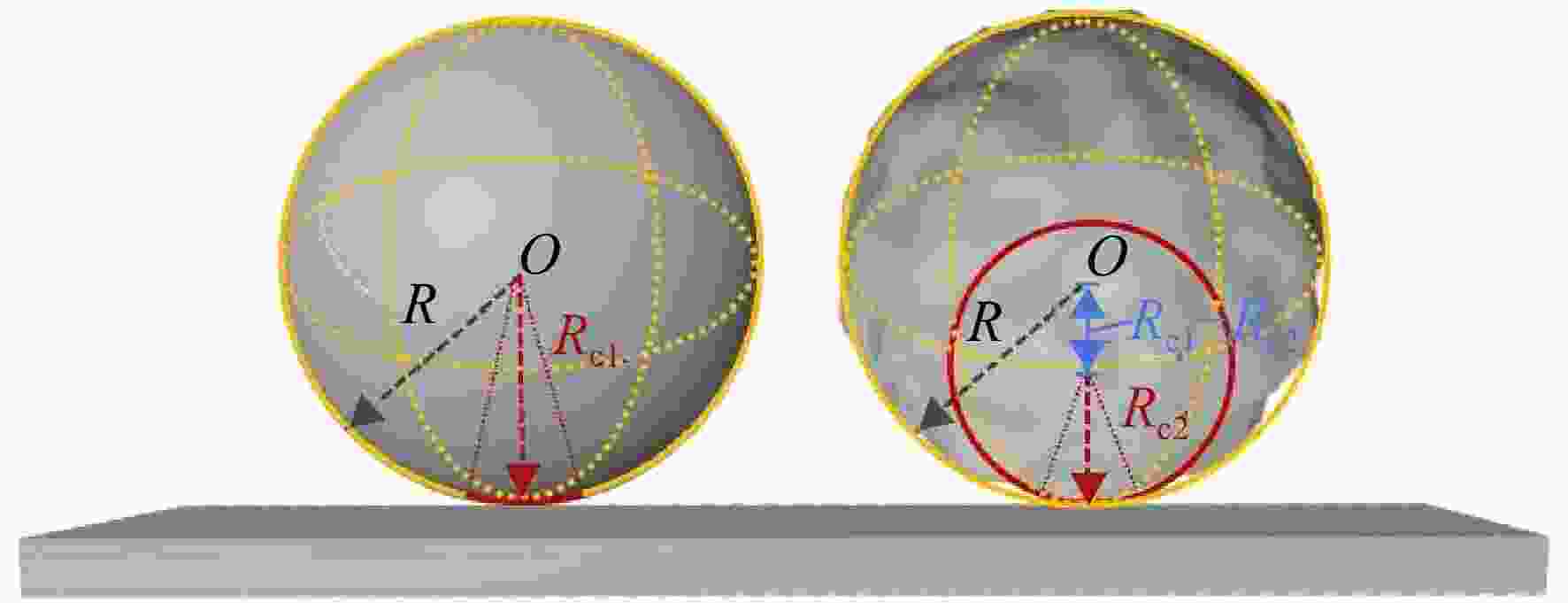
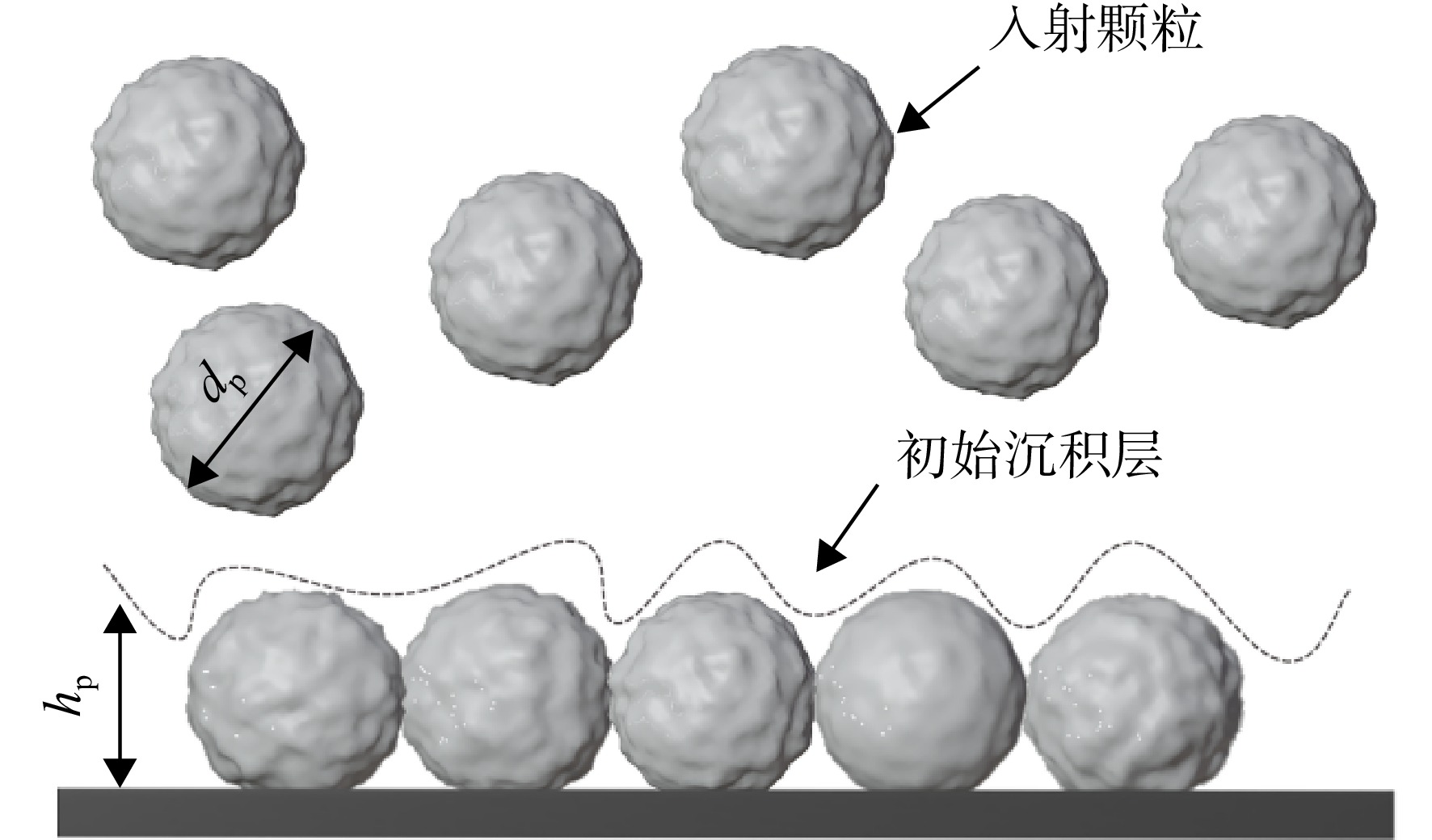
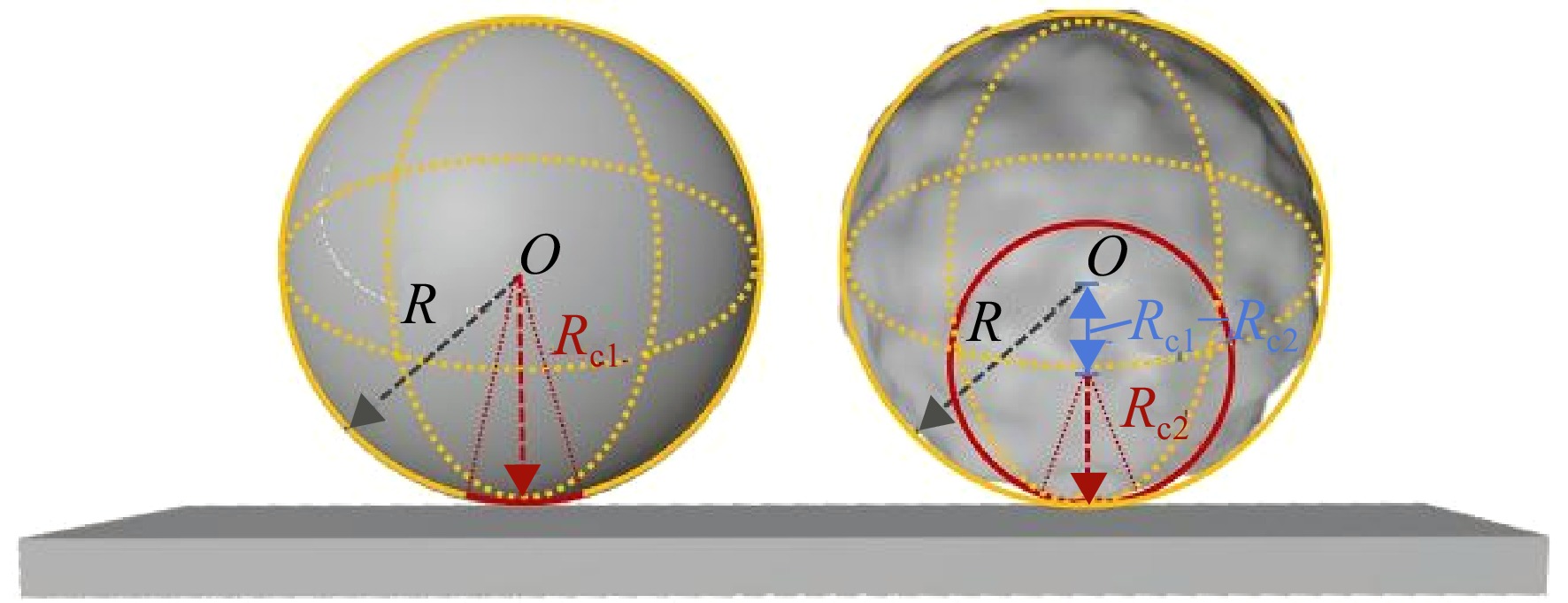
图 1 光滑理想球体与粗糙球形颗粒接触点局部曲率半径
Figure 1. Local curvature radius of contact point between smooth ideal sphere and rough spherical particles
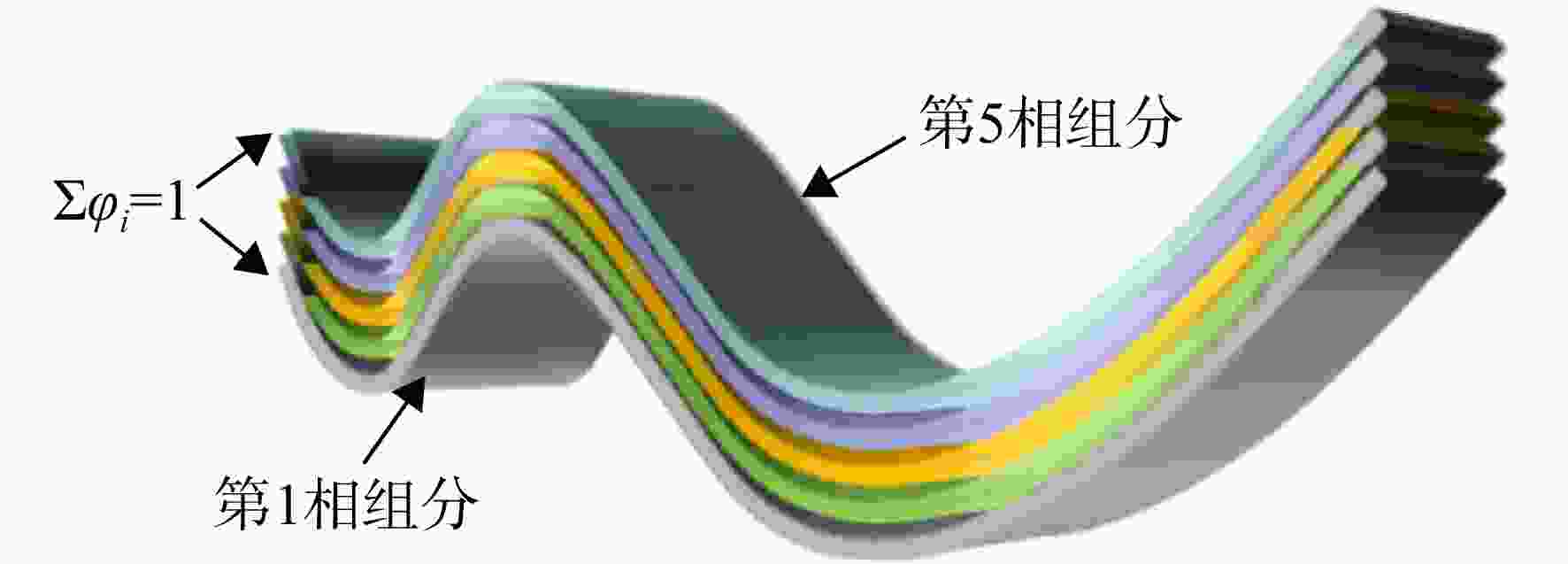
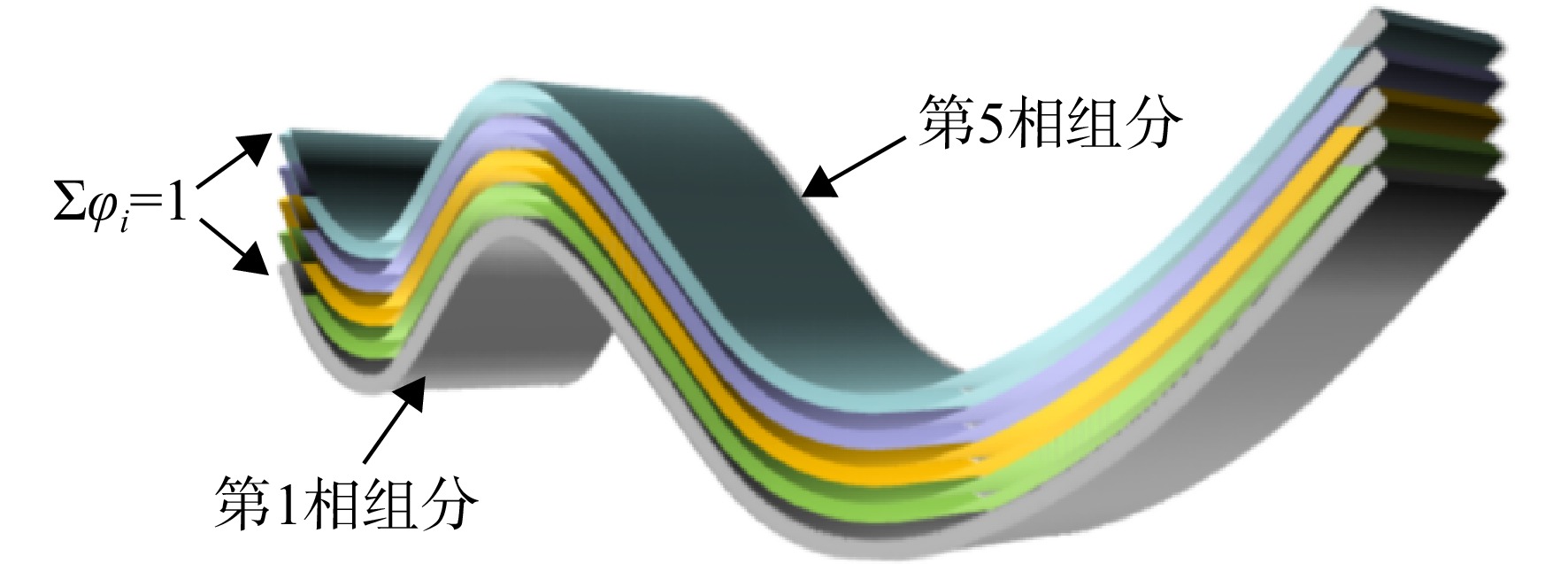
图 3 复合材料中各组分体积分数的加权和
Figure 3. Weighted sum of the volume fraction of each component in the composite material
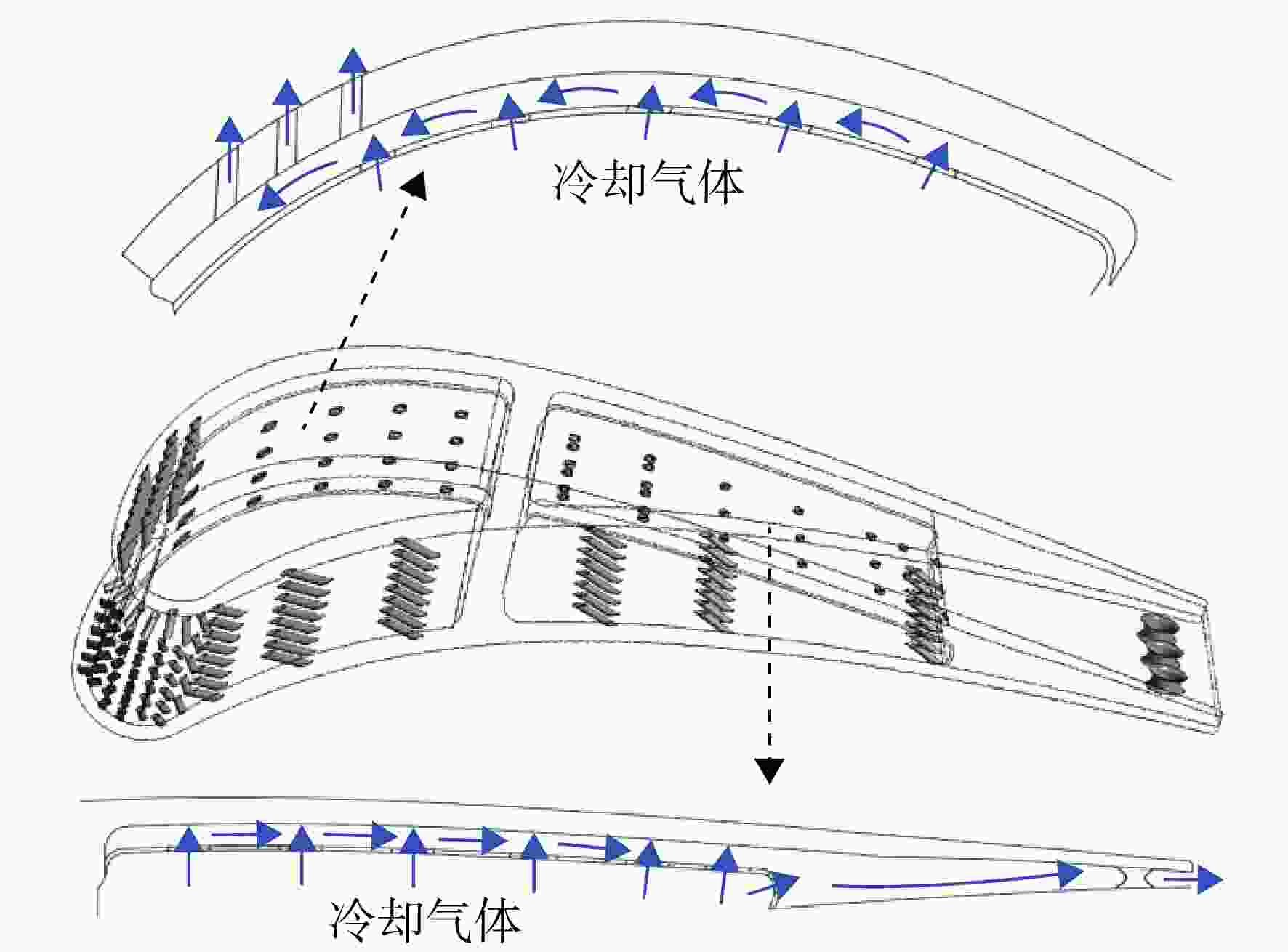
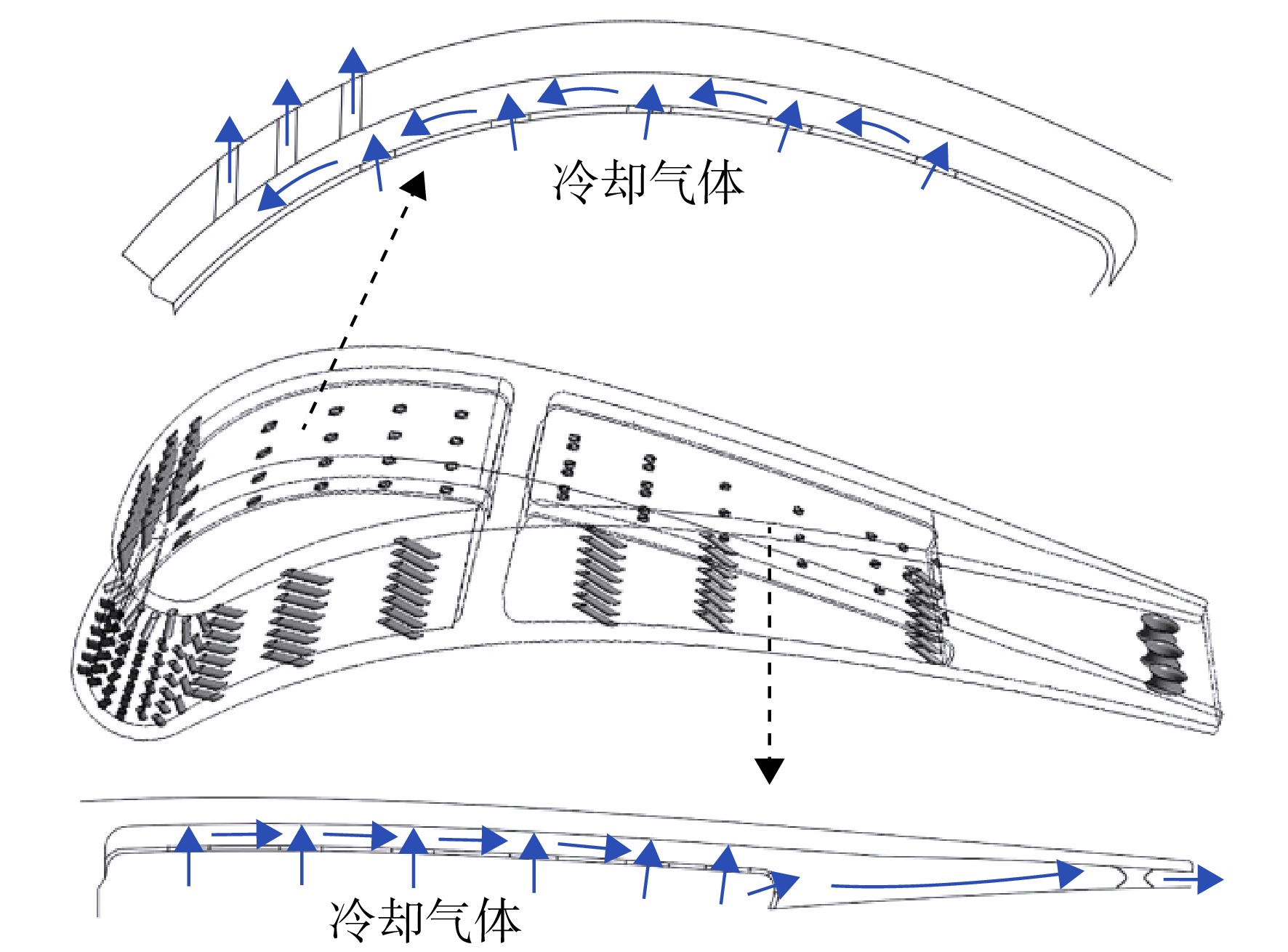
图 5 冷气在叶片前、后腔吸力面的流动轨迹
Figure 5. Flow trajectory of cooling air on the suction surface of the front and rear cavities of the blade

图 10 冷却单元携带颗粒的冷气流运动轨迹
Figure 10. Cooling flow trajectory of the particles carried by the cooling unit

图 13 不同冲击雷诺数下靶面切应力分布
Figure 13. Shear stress distribution of target surface with different impact Reynolds numbers

图 14 前、后腔靶面颗粒沉积率密度云图(Re=3×10⁴)
Figure 14. Front and rear cavity target surface particle deposition rate density cloud diagram (Re=3×10⁴)

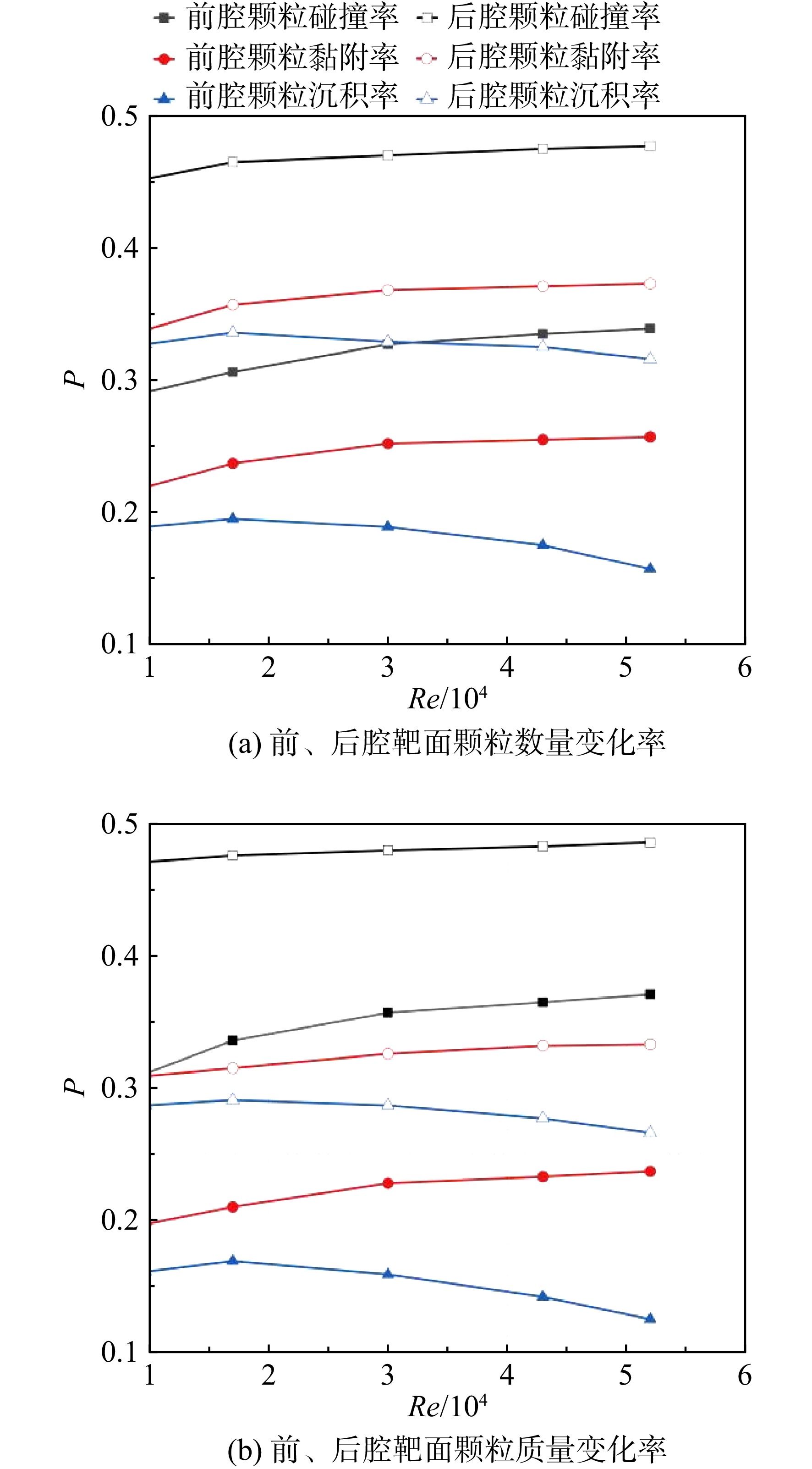
图 15 靶面颗粒数量(质量)碰撞率、黏附率及沉积率随Re的变化
Figure 15. Number (mass) deposition, adhesion and collision rate of target surface change with Re

图 17 靶面切应力分布及冲击射流矩阵A3,5所对应冷却单元位置(Re=3×10⁴)
Figure 17. Target surface shear stress distribution and impingement jet matrix A3,5 corresponding to the cooling unit position (Re=3×10⁴)
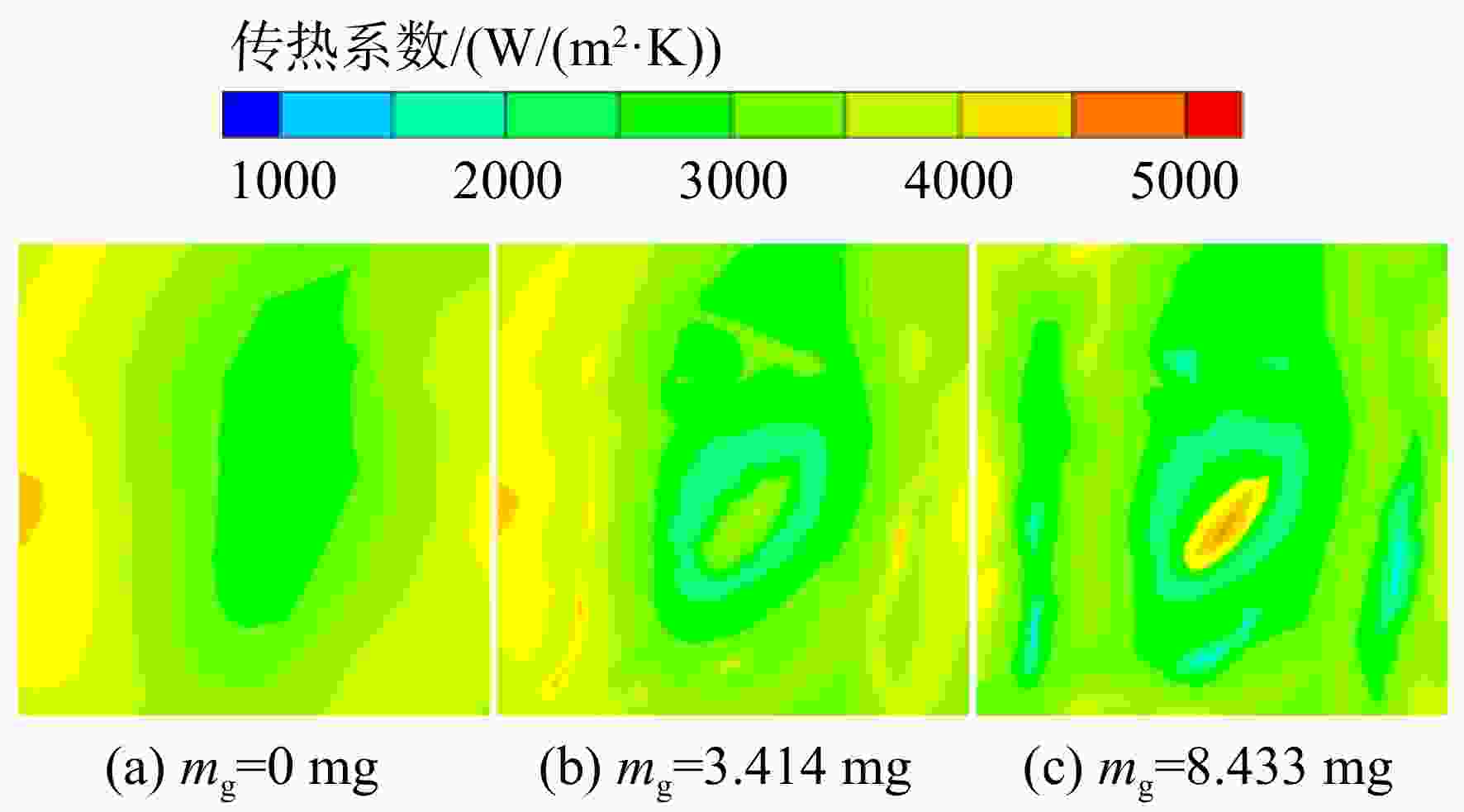
图 20 冲击射流矩阵$ {{{\boldsymbol{A}}}}_{\text{3,5}} $对应靶面局部传热系数云图
Figure 20. Impact jet matrix $ {{{\boldsymbol{A}}}}_{\text{3,5}} $ corresponding to the target surface local heat transfer coefficient cloud map

图 21 不同沉积阶段截面位置处传热系数的变化
Figure 21. Change of heat transfer coefficient at the cross section in different deposition stages
表 1 黏附过程及剥离过程中颗粒行为判定条件
Table 1. Judgment conditions of particle behavior in adhesion process and stripping process
过程 条件 颗粒行为 黏附过程 $ {{V}}_{\text{p,n}}<{u}_{\text{cr}}^{\text{*}} $ 颗粒黏附 $ {{V}}_{\text{p,n}}>u_{\text{cr}}^{\text{*}} $ 颗粒反弹 剥离过程 $ {{u}}_{\text{f}}>u_{\text{τc}}^{\text{*}} $ 颗粒剥离壁面 $ {{u}}_{\text{f}}<{u}_{\text{τc}}^{\text{*}} $ 颗粒沉积  下载: 导出CSV
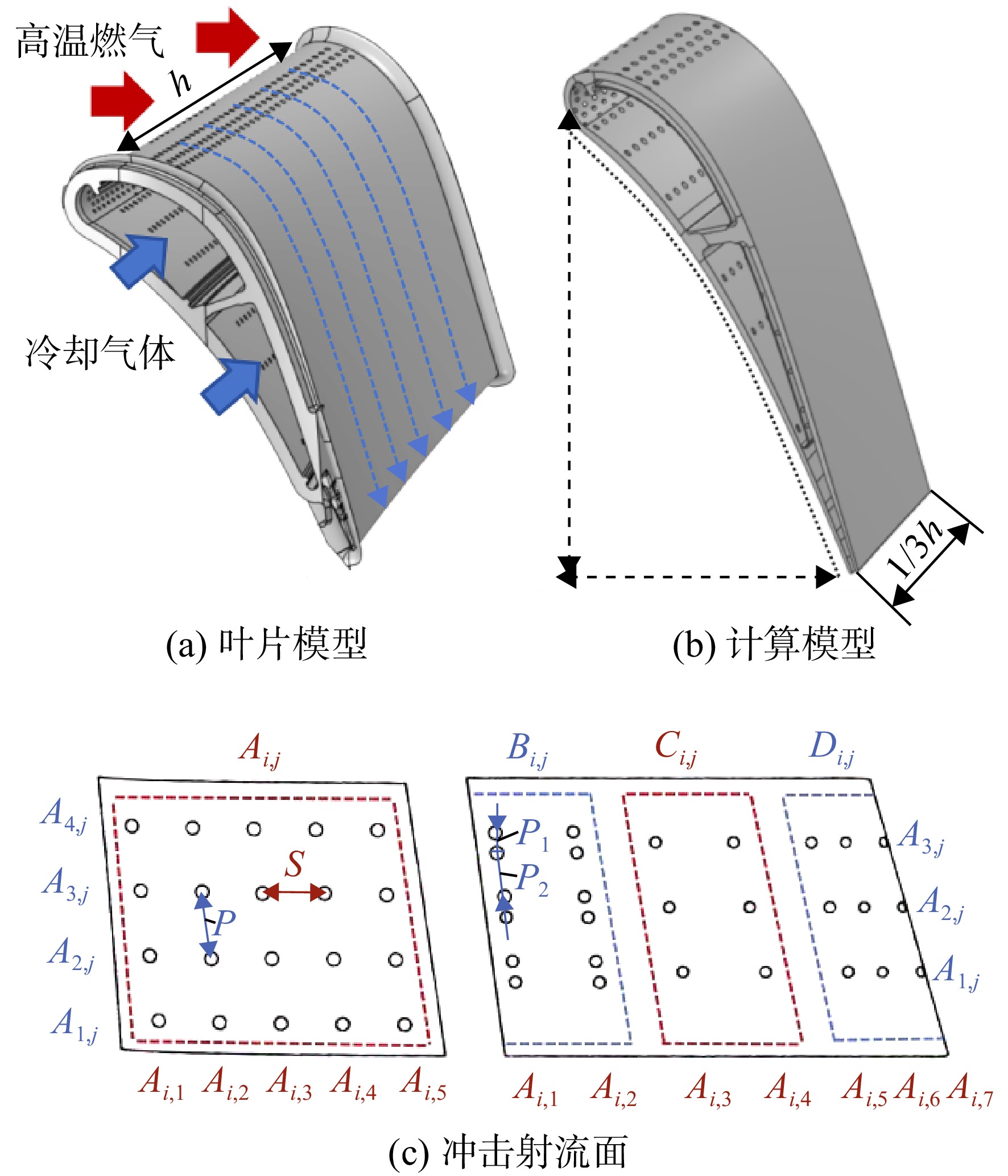
表 2 矩阵孔轴向截距比与展向截距比
Table 2. Axial intercept ratio and spanwise intercept ratio of each matrix holes
冲击射流阵列 S/L P/L $ {{A}}_{{i,j}} $ 4.2 4.2 $ {{B}}_{{i,j}} $ 5.2 P1/L=1.8 P2/L=3.2 $ {{C}}_{{i,j}} $ 5.6 5.0 $ {{D}}_{{i,j}} $ 2.4 5.0
下载: 导出CSV
表 3 颗粒相关参数
Table 3. Particle related parameters
参数 数值 颗粒密度/(kg/m3) 1 980 颗粒比热容/(J/(kg·K)) 984 颗粒导热系数/(W/(m·K)) 0.5 颗粒粒径范围/μm [0.2, 10.0] 颗粒磨圆度 0.7
下载: 导出CSV
表 4 不同冲击雷诺数下颗粒群斯托克斯数数值范围
Table 4. Numerical range of Stokes number of particle group under different impact Reynolds number
Re V/(m/s) St Stave 9700 34.0 [5.05×10⁻³, 12.64] 3.16 17000 59.5 [8.84×10⁻³, 22.11] 5.53 30000 105.0 [1.56×10⁻², 39.02] 9.76 43000 150.5 [2.23×10⁻², 55.74] 13.99 52000 182.1 [2.71×10⁻², 67.67] 16.92
下载: 导出CSV
-
[1] Land C C, Thole K A, Joe C. Considerations of a double-wall cooling design to reduce sand blockage[R]. ASME Papaer GT2008-50160, 2008. [2] Cardwell N D, Thole K A, Burd S W. Investigation of sand blocking within impingement and film-cooling holes[J]. Journal of Turbomachinery, 2010, 132(2): 021020. doi: 10.1115/1.3106702 [3] Jiang Leiyong, Han Yinghua, Patnaik P. Characteristics of volcanic ash in a gas turbine combustor and nozzle guide vanes[J]. Journal of Engineering for Gas Turbines and Power, 2018, 140(7): 071502. doi: 10.1115/1.4038523 [4] 杨星, 郝子晗, 丰镇平. 考虑进口旋流的涡轮静叶流动传热的颗粒物沉积效应[J]. 西安交通大学学报, 2021, 55(7): 61-70. Yang Xing, Hao Zihan, Feng Zhenping. Particle deposition effect of the flow and heat transfer in a turbine vane passage with inlet swirl[J]. Journal of Xi’an Jiaotong University, 2021, 55(7): 61-70. (in Chinese doi: 10.7652/xjtuxb202107007Yang Xing, Hao Zihan, Feng Zhenping. Particle deposition effect of the flow and heat transfer in a turbine vane passage with inlet swirl[J]. Journal of Xi’an Jiaotong University, 2021, 55(7): 61-70. (in Chinese) doi: 10.7652/xjtuxb202107007 [5] 赵传鹏. 叶片气膜冷却结构对微细颗粒沉积特性影响研究[D]. 南京: 南京航空航天大学, 2022. Zhao Chuanpeng. Research on the influence of blade film cooling structure on the deposition characteristics of micro-particles[D]. Nanjing: Nanjing University of Aeronautics and Astronautics, 2022. (in ChineseZhao Chuanpeng. Research on the influence of blade film cooling structure on the deposition characteristics of micro-particles[D]. Nanjing: Nanjing University of Aeronautics and Astronautics, 2022. (in Chinese) [6] 赵静宇. 颗粒在平板气膜冷却壁面沉积机理研究[D]. 西安: 西北工业大学, 2017. Zhao Jingyu. Investigations of particle deposition mechanism on the flat plate wall with film cooling holes[D]. Xi’an: Northwestern Polytechnical University, 2017. (in ChineseZhao Jingyu. Investigations of particle deposition mechanism on the flat plate wall with film cooling holes[D]. Xi’an: Northwestern Polytechnical University, 2017. (in Chinese) [7] Liu Zhengang, Diao Weinan, Liu Zhenxia, et al. A numerical study of the effect of particle size on particle deposition on turbine vanes and blades[J]. Advances in Mechanical Engineering, 2021, 13(5): 16878140211017812. [8] Sun Wenjing, Zheng Yuqiu, Zhang Jingzhou, et al. Numerical study on particle deposition characteristics of turbine blade with cooling film[J]. Powder Technology, 2024, 439: 119679. doi: 10.1016/j.powtec.2024.119679 [9] 陈文彬, 蒋康河, 余泽宇, 等. 涡轮叶片内部冷却通道颗粒沉积的实验[J]. 航空动力学报, 2025, 40(1): 20230126. Chen Wenbin, Jiang Kanghe, Yu Zeyu, et al. Experiment for particle deposition in turbine blade cooling channel[J]. Journal of Aerospace Power, 2025, 40(1): 20230126. (in ChineseChen Wenbin, Jiang Kanghe, Yu Zeyu, et al. Experiment for particle deposition in turbine blade cooling channel[J]. Journal of Aerospace Power, 2025, 40(1): 20230126. (in Chinese) [10] Casaday B, Prenter R, Bonilla C, et al. Deposition with hot streaks in an uncooled turbine vane passage[J]. Journal of Turbomachinery, 2014, 136(4): 041017. doi: 10.1115/1.4025215 [11] Yang Xing, Hao Zihan, Feng Zhenping. Particle deposition patterns on high-pressure turbine vanes with aggressive inlet swirl[J]. Chinese Journal of Aeronautics, 2022, 35(3): 75-89. doi: 10.1016/j.cja.2021.06.005 [12] Liu Zhengang, Ruan Rongsheng, Zhang Yixuan, et al. Particles deposition on plates with different film cooling hole shapes for different blowing ratios and angles of attack[J]. Physics of Fluids, 2024, 36(8): 083343. doi: 10.1063/5.0220889 [13] Agati G, Borello D, Rispoli F, et al. Numerical simulation of a particle-laden impinging jet: effect of wall curvature on particle deposition[R]. ASME Paper GT2017-64629, 2017. [14] Rao Yu, Chen Peng, Wan Chaoyi. Experimental and numerical investigation of impingement heat transfer on the surface with micro W-shaped ribs[J]. International Journal of Heat and Mass Transfer, 2016, 93: 683-694. doi: 10.1016/j.ijheatmasstransfer.2015.10.022 [15] Rao Yu, Liu Yuyang, Wan Chaoyi. Multiple-jet impingement heat transfer in double-wall cooling structures with pin fins and effusion holes[J]. International Journal of Thermal Sciences, 2018, 133: 106-119. doi: 10.1016/j.ijthermalsci.2018.07.021 [16] Lu Xunfeng, Li Weihong, Li Xueying, et al. Flow and heat transfer characteristics of micro pin-fins under jet impingement arrays[J]. International Journal of Heat and Mass Transfer, 2019, 143: 118416. doi: 10.1016/j.ijheatmasstransfer.2019.07.066 [17] 李广超, 蒋蔚, 刘永泉, 等. 粗糙度对不同尺度的双层壁结构冲击换热特性影响[J]. 推进技术, 2017, 38(7): 1563-1571. Li Guangchao, Jiang Wei, Liu Yongquan, et al. Effects of roughness on impacting heat transfer in different scale double-wall[J]. Journal of Propulsion Technology, 2017, 38(7): 1563-1571. (in Chinese doi: 10.13675/j.cnki.tjjs.2017.07.016Li Guangchao, Jiang Wei, Liu Yongquan, et al. Effects of roughness on impacting heat transfer in different scale double-wall[J]. Journal of Propulsion Technology, 2017, 38(7): 1563-1571. (in Chinese) doi: 10.13675/j.cnki.tjjs.2017.07.016 [18] Bowen C P, Libertowski N D, Mortazavi M, et al. Modeling deposition in turbine cooling passages with temperature-dependent adhesion and mesh morphing[J]. Journal of Engineering for Gas Turbines and Power, 2019, 141(7): 071010. doi: 10.1115/1.4042287 [19] Wammack J E, Crosby J, Fletcher D, et al. Evolution of surface deposits on a high-pressure turbine blade: Part Ⅰ physical characteristics[J]. Journal of Turbomachinery, 2008, 130(2): 021020. doi: 10.1115/1.2752182 [20] Bons J P, Wammack J E, Crosby J, et al. Evolution of surface deposits on a high-pressure turbine blade: Part Ⅱ convective heat transfer[J]. Journal of Turbomachinery, 2008, 130(2): 021021. doi: 10.1115/1.2752183 [21] Brach R M, Dunn P F. A mathematical model of the impact and adhesion of microsphers[J]. Aerosol Science and Technology, 1992, 16(1): 51-64. doi: 10.1080/02786829208959537 [22] Soltani M, Ahmadi G. On particle adhesion and removal mechanisms in turbulent flows[J]. Journal of Adhesion Science and Technology, 1994, 8(7): 763-785. doi: 10.1163/156856194X00799 [23] El-Batsh H, Haselbacher H. Numerical investigation of the effect of ash particle deposition on the flow field through turbine cascades[R]. ASME Paper GT2002-30600, 2002. [24] Bachrach R, Dvorkin J, Nur A M. Seismic velocities and Poisson’s ratio of shallow unconsolidated sands[J]. Geophysics, 2000, 65(2): 559-564. doi: 10.1190/1.1444751 [25] 琚宏昌, 陈玲玲, 张璇. 估计复合材料有效弹性常数界限的综合方法[J]. 郑州大学学报(工学版), 2012, 33(3): 33-35, 39. Ju Hongchang, Chen Lingling, Zhang Xuan. An approach to predicting bounds of effective properties of composite materials[J]. Journal of Zhengzhou University (Engineering Science), 2012, 33(3): 33-35, 39. (in Chinese doi: 10.3969/j.issn.1671-6833.2012.03.008Ju Hongchang, Chen Lingling, Zhang Xuan. An approach to predicting bounds of effective properties of composite materials[J]. Journal of Zhengzhou University (Engineering Science), 2012, 33(3): 33-35, 39. (in Chinese) doi: 10.3969/j.issn.1671-6833.2012.03.008 [26] Tabakoff W, Hamed A, Murugan D M. Effect of target materials on the particle restitution characteristics for turbomachinery application[R]. AIAA-1994-0143, 1994. [27] 张鹏. 冲击溢流结构内颗粒沉积过程传热特性研究[D]. 沈阳: 沈阳航空航天大学, 2023. Zhang Peng. Investigation on heat transfer characteristics during deposition of particles in impingement effusion structures[D]. Shenyang: Shenyang Aerospace University, 2023. (in ChineseZhang Peng. Investigation on heat transfer characteristics during deposition of particles in impingement effusion structures[D]. Shenyang: Shenyang Aerospace University, 2023. (in Chinese) [28] Wang Y, Li G C, Zhang W, et al. Effect of baffle structure for the particle deposition characteristics of in the novel cavity upstream of the pre-swirl nozzles[J]. Journal of Applied Fluid Mechanics, 2025, 18(9): 2309. doi: 10.47176/jafm.18.9.3322 [29] 钱广强, 董治宝, 罗万银, 等. 基于数字图像的中国西北地区戈壁表面砾石形貌特征研究[J]. 中国沙漠, 2014, 34(3): 625-633. Qian Guangqiang, Dong Zhibao, Luo Wanyin, et al. Gravel morphometric analysis based on digital images of different Gobi surfaces in northwestern China[J]. Journal of Desert Research, 2014, 34(3): 625-633. (in Chinese doi: 10.7522/j.issn.1000-694X.2013.00365Qian Guangqiang, Dong Zhibao, Luo Wanyin, et al. Gravel morphometric analysis based on digital images of different Gobi surfaces in northwestern China[J]. Journal of Desert Research, 2014, 34(3): 625-633. (in Chinese) doi: 10.7522/j.issn.1000-694X.2013.00365 [30] 马登辉, 姚华彦, 王新志, 等. 珊瑚砂颗粒形状特征分析[J]. 工程地质学报, 2021, 29(5): 1452-1459. Ma Denghui, Yao Huayan, Wang Xinzhi, et al. Particle shape characteristics of coral sands[J]. Journal of Engineering Geology, 2021, 29(5): 1452-1459. (in Chinese doi: 10.13544/j.cnki.jeg.2021-0300Ma Denghui, Yao Huayan, Wang Xinzhi, et al. Particle shape characteristics of coral sands[J]. Journal of Engineering Geology, 2021, 29(5): 1452-1459. (in Chinese) doi: 10.13544/j.cnki.jeg.2021-0300 -







 点击查看大图
计量
- 文章访问数: 345
- HTML浏览量: 295
- PDF量: 24
- 被引次数: 0