






Decoupled optimization of underplatform dampers based on parametric equivalent model
-
摘要:
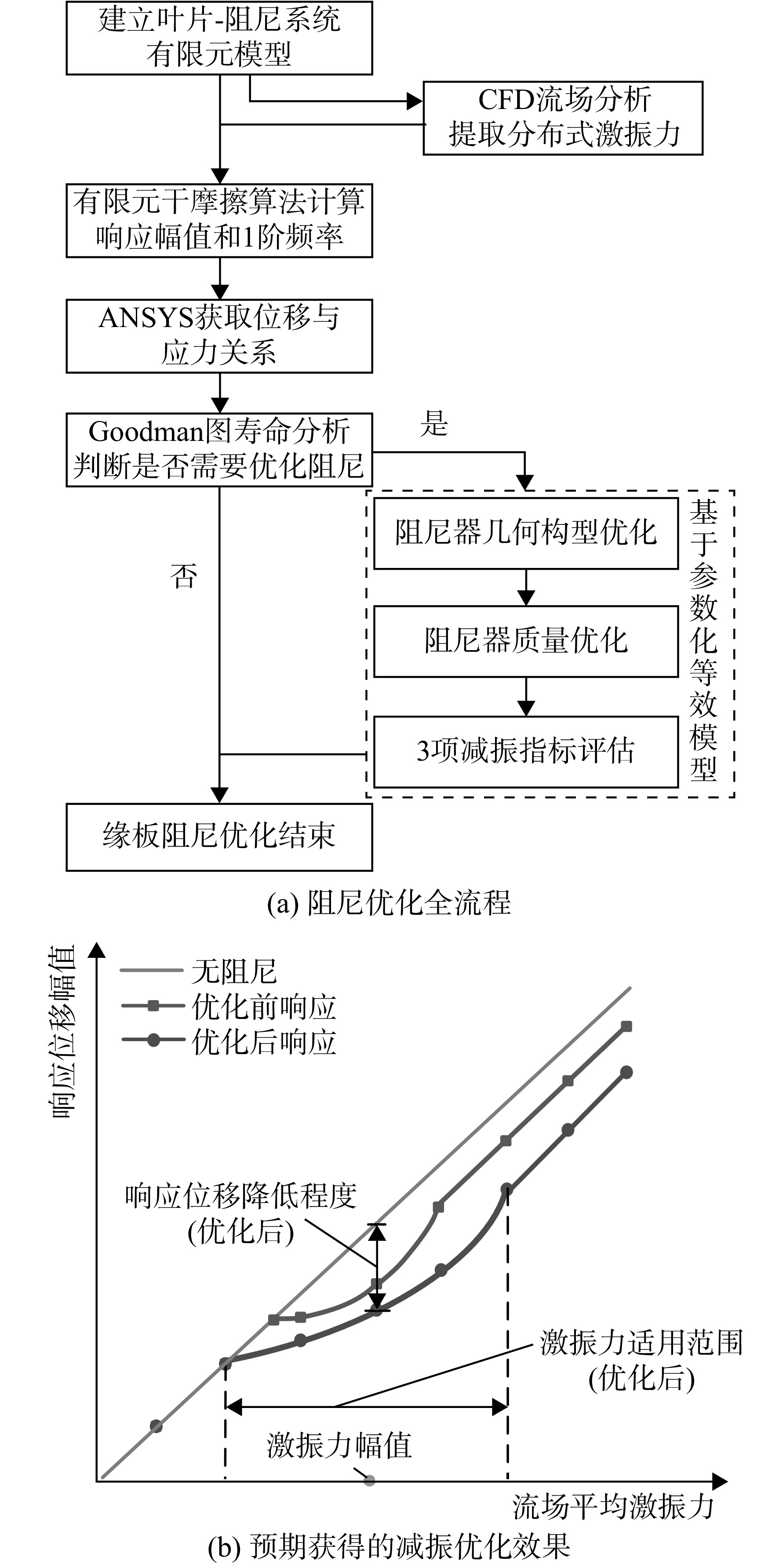
针对涡轮叶片缘板阻尼(UPD)结构设计中存在的多目标优化机理缺失及迭代建模计算成本高昂的问题,提出了一种基于参数化等效模型的阻尼器质量-几何解耦优化设计方法。建立了叶片-缘板阻尼的等效梁模型,在准确复现其1阶弯曲模态动力学特性与非线性强迫响应的基础上,显著降低了模型自由度与计算成本。在阐明缘板阻尼关键设计参数对减振效果影响规律的基础上,提出了减振幅度、适用激振域宽度与重合度3个无量纲指标,多维度定量表征阻尼器的减振性能。研究揭示了接触倾角主要决定减振性能的“深度”与“适用宽度”,而阻尼器质量则调控其工作域与发动机流场激励的重合度。基于此,提出了先利用帕累托多目标遗传算法优化几何参数,再根据激励信息优化阻尼质量的解耦优化策略。以非对称缘板阻尼器为算例验证表明,优化后阻尼器的相对减振幅度、适用激振域宽度及重合度分别提升了13%、38%和114.6%;在目标工况激励下,叶片的一弯共振响应幅值降低了43.8%。
Abstract:A decoupled optimization method was proposed for underplatform damper (UPD) design to address the lack of multi-objective mechanism insight and the high cost of iterative blade-damper modeling. A parameterized equivalent beam model of the blade-UPD system was developed, which accurately reproduced the first bending-mode dynamics and the nonlinear forced response, while keeping the model size and computational cost modest. The influences of key UPD design parameters on vibra-tion attenuation were characterized, and three dimensionless metrics—reduction degree, domain width, and coincidence degree were introduced to quantify the damper performance. The results showed that the contact angle primarily set the attenuation “depth” and applicability “width,” where-as the damper mass tuned the operating domain’s overlap with engine flow-field excitation. Based on these insights, a decoupled strategy was adopted: which first optimized geometric parameters using a Pareto multi-objective genetic algorithm, then set the damper mass according to the excitation char-acteristics. For a non-symmetric UPD case, the optimized design increased the reduction degree by 13%, the domain width by 38%, and the coincidence degree by 114.6%, yielding a 43.8% decrease in the first-bending resonance amplitude under the target operating condition.
-
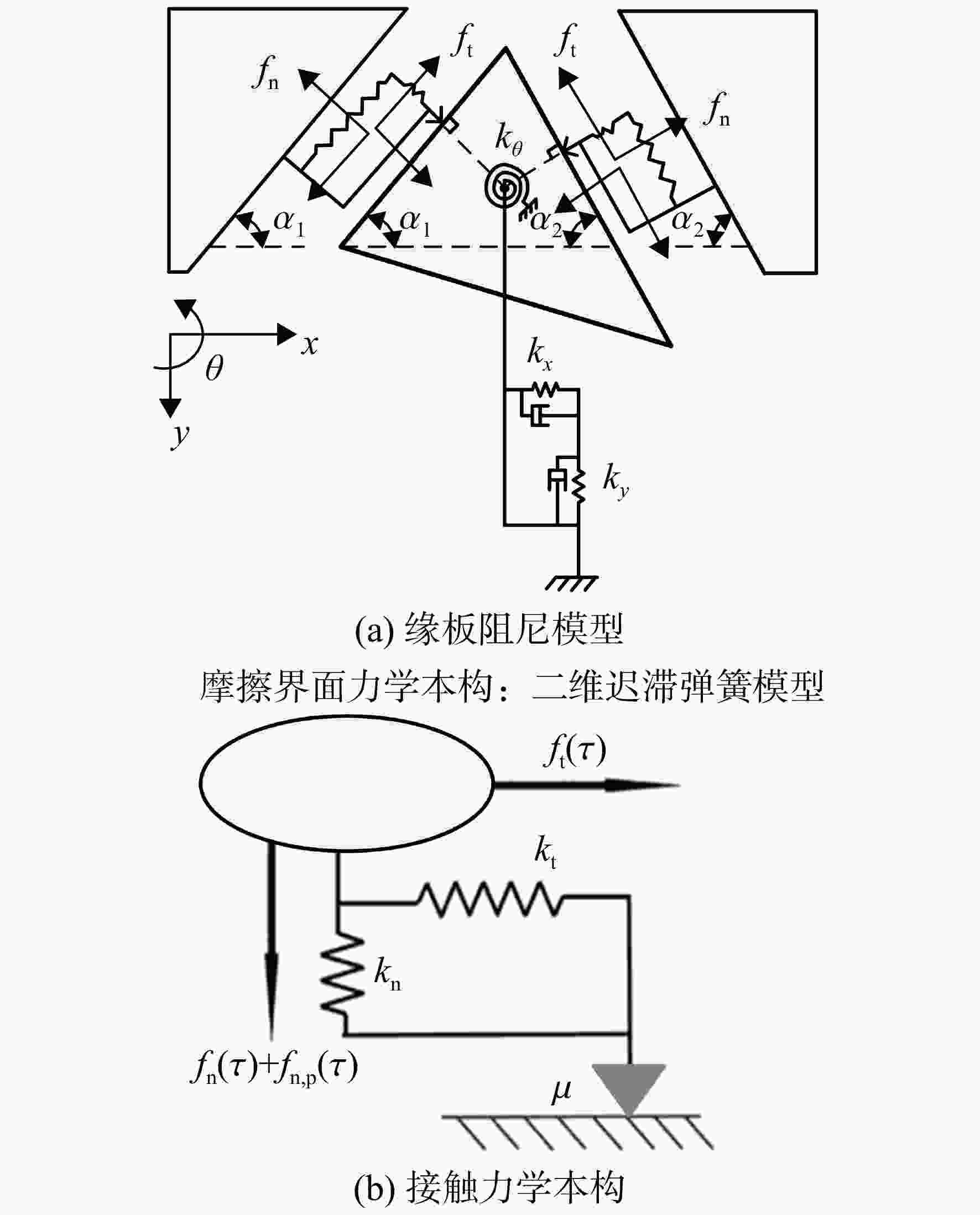
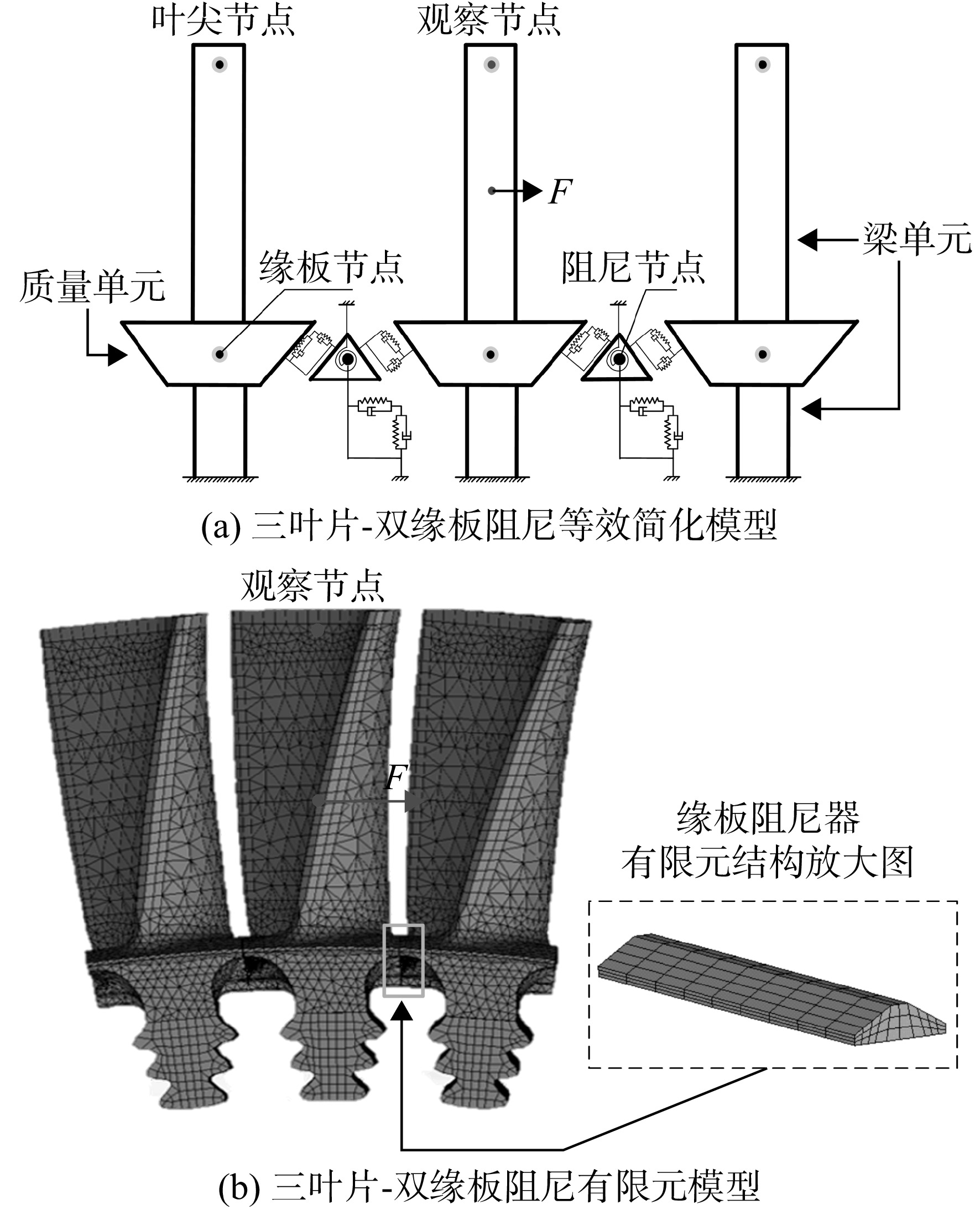
图 3 缘版阻尼器模型及接触力学本构
Figure 3. Model of underplatform damper with its frictional constitutive relationship
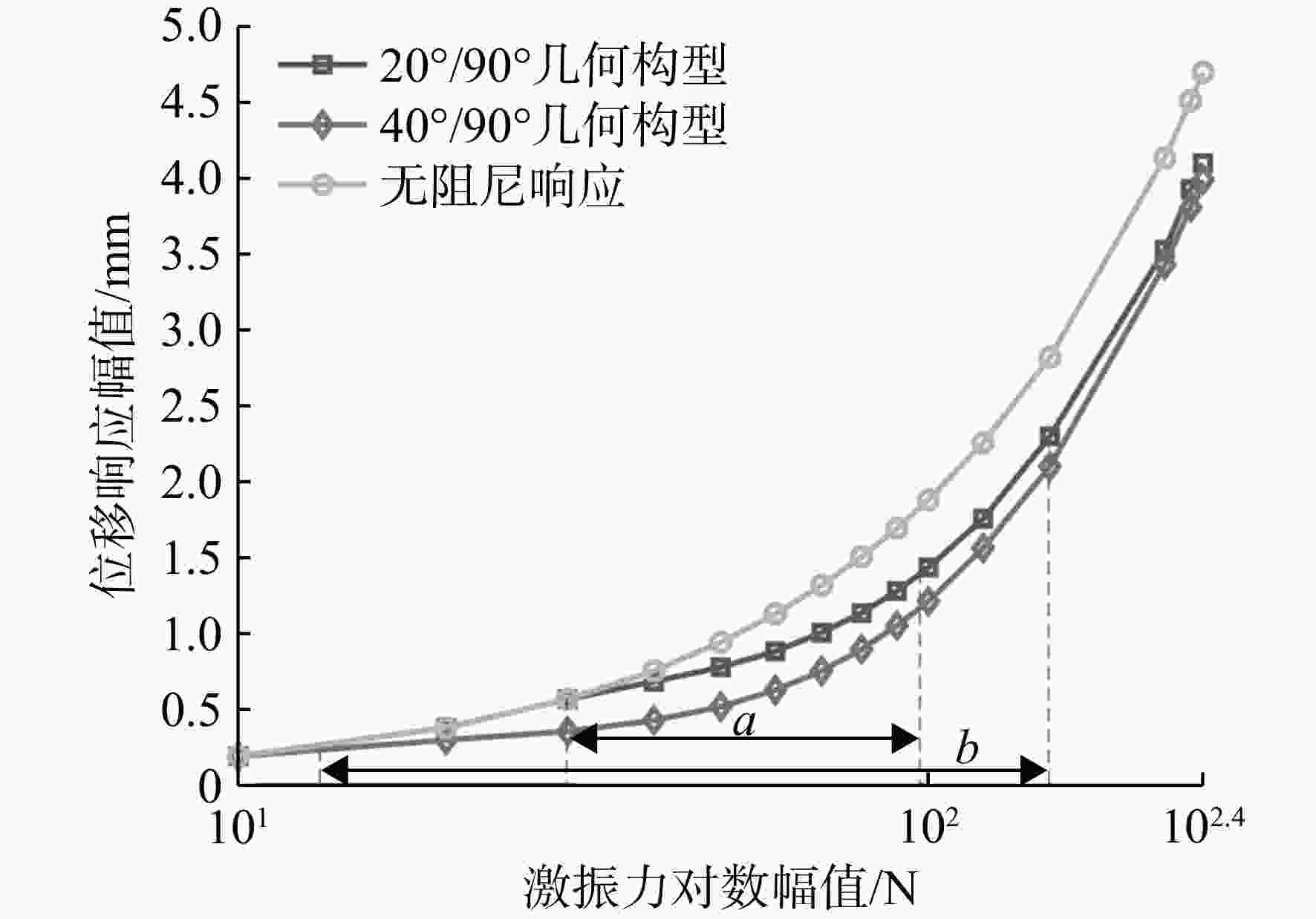
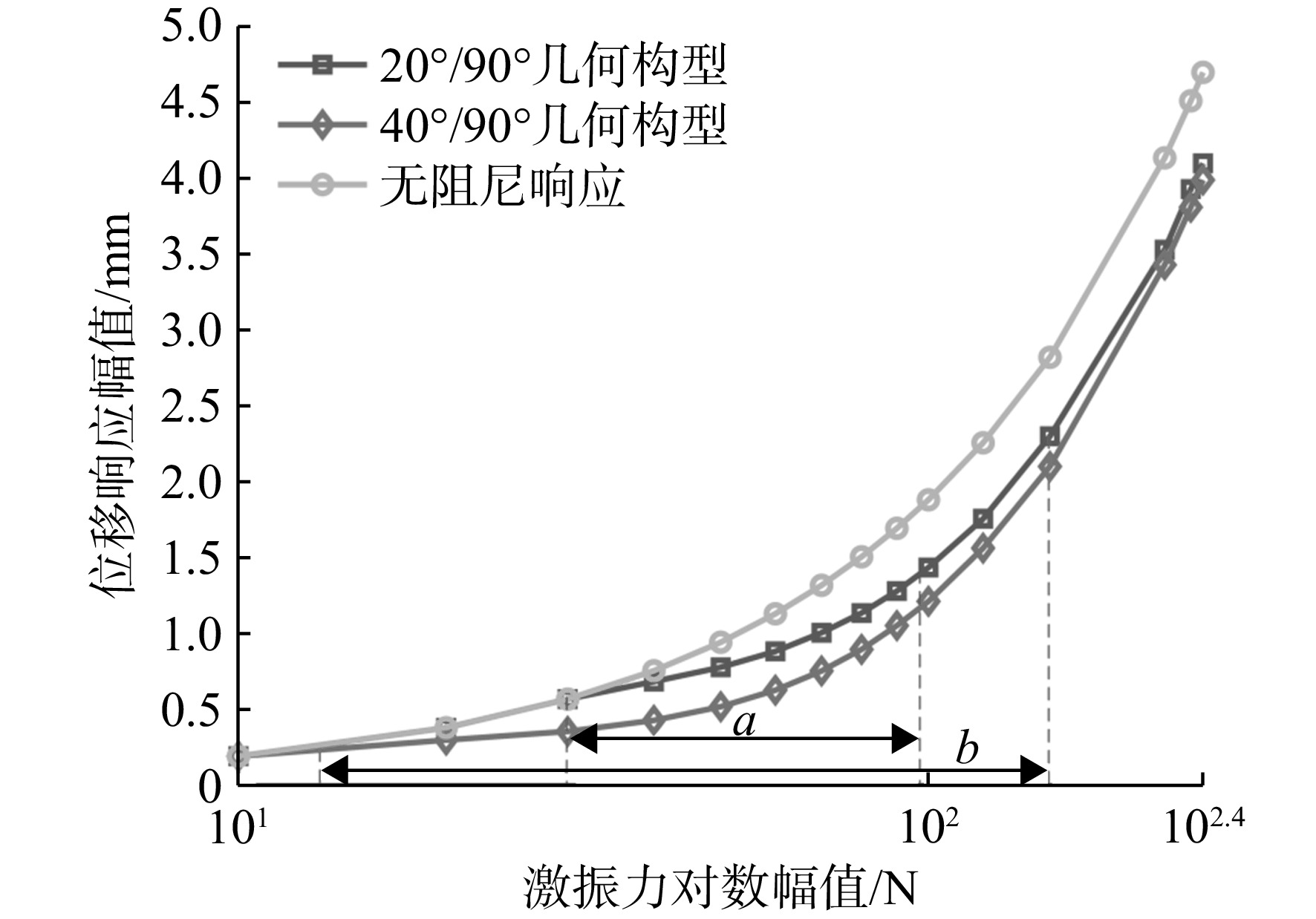
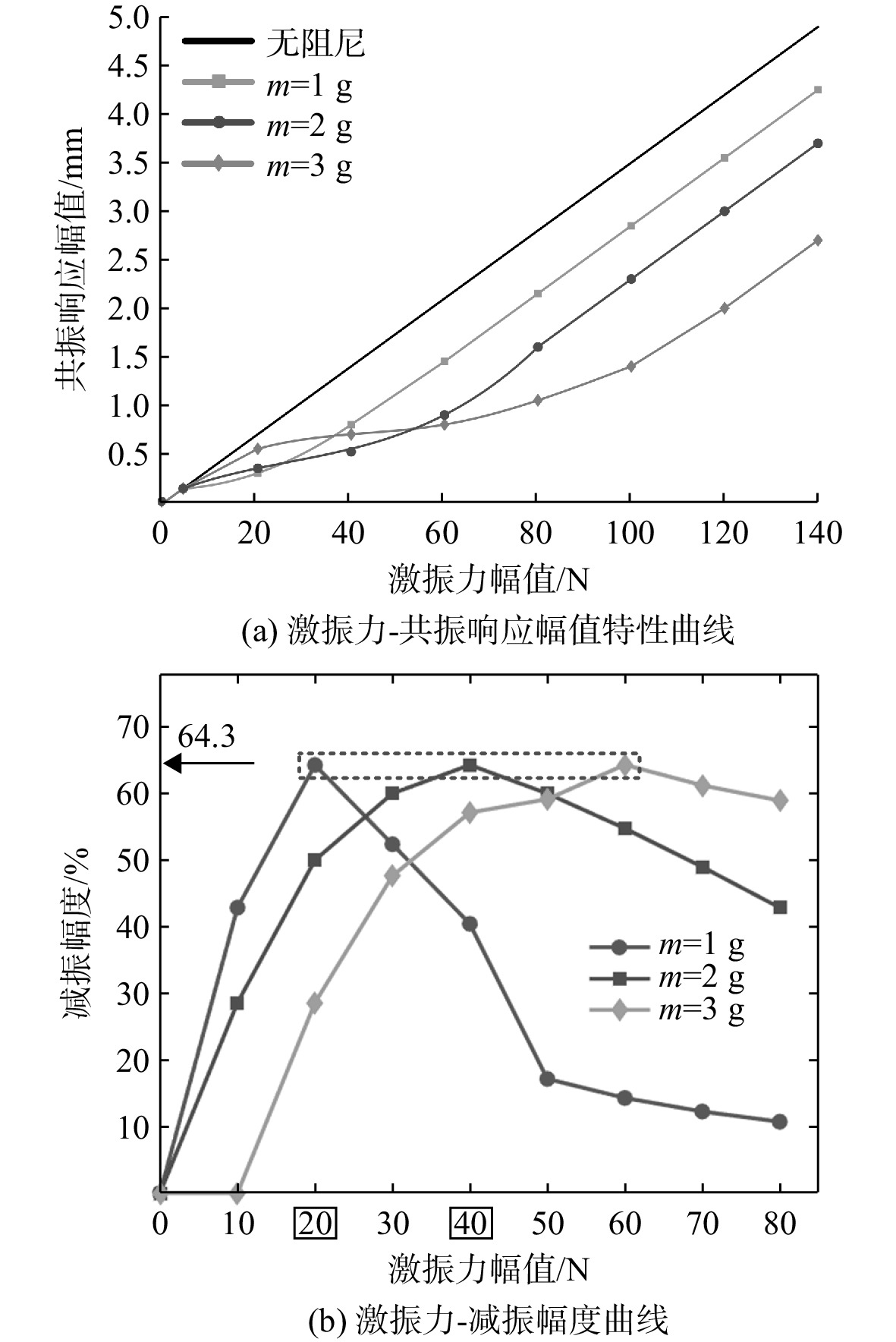
图 7 缘板倾斜角对减振效果影响
Figure 7. Influence of the contact angle on vibration reduction effectiveness
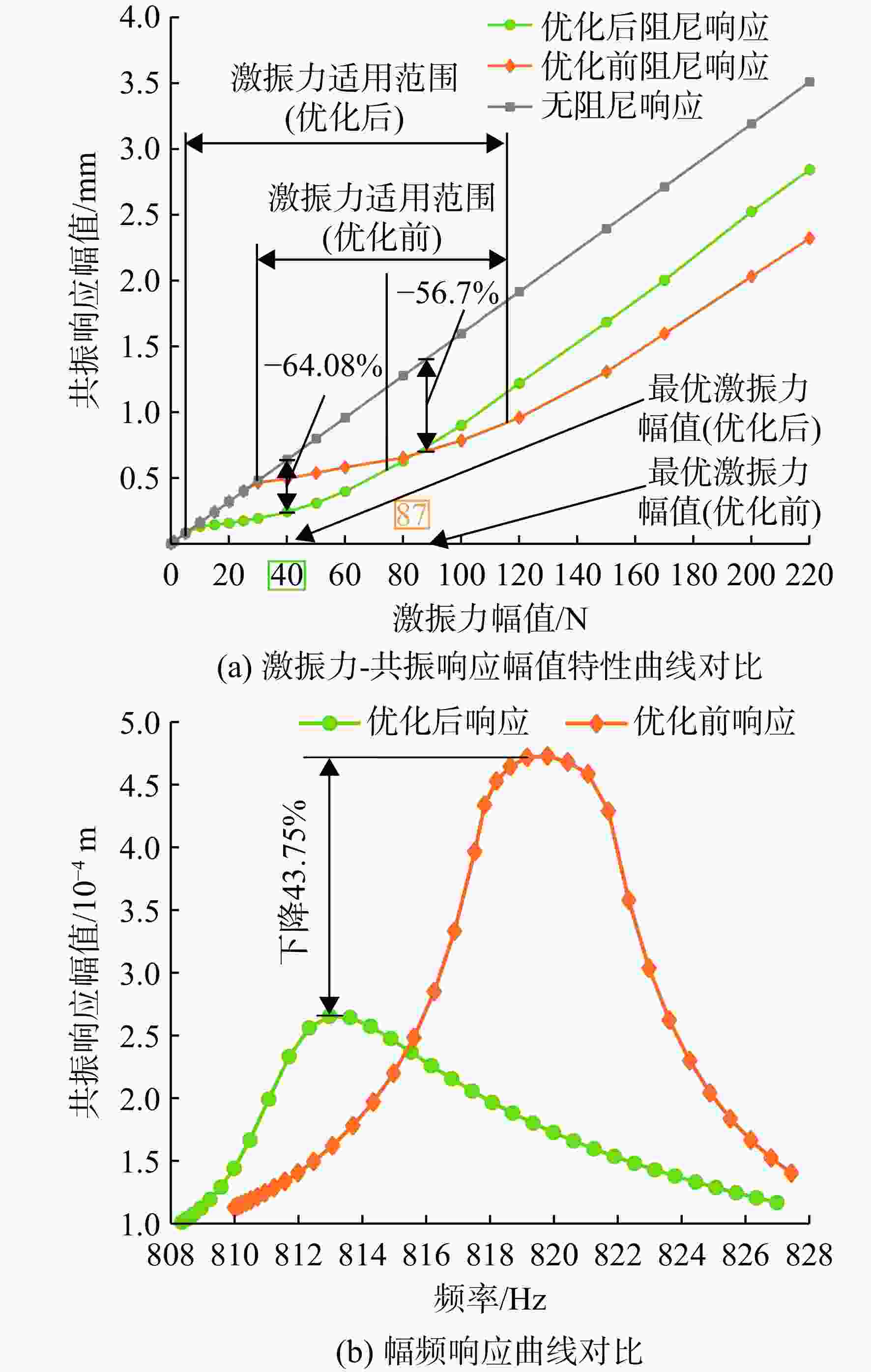
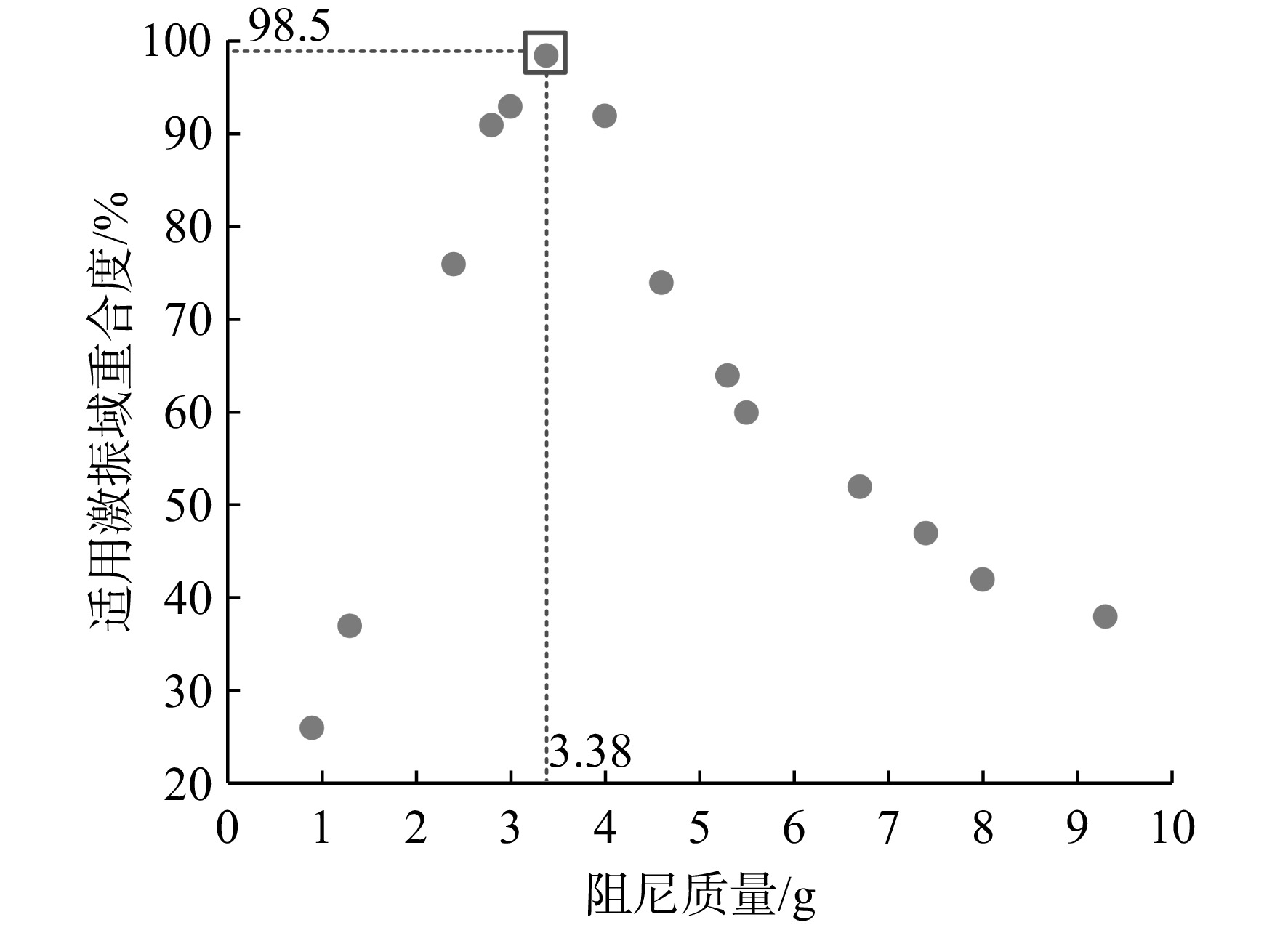
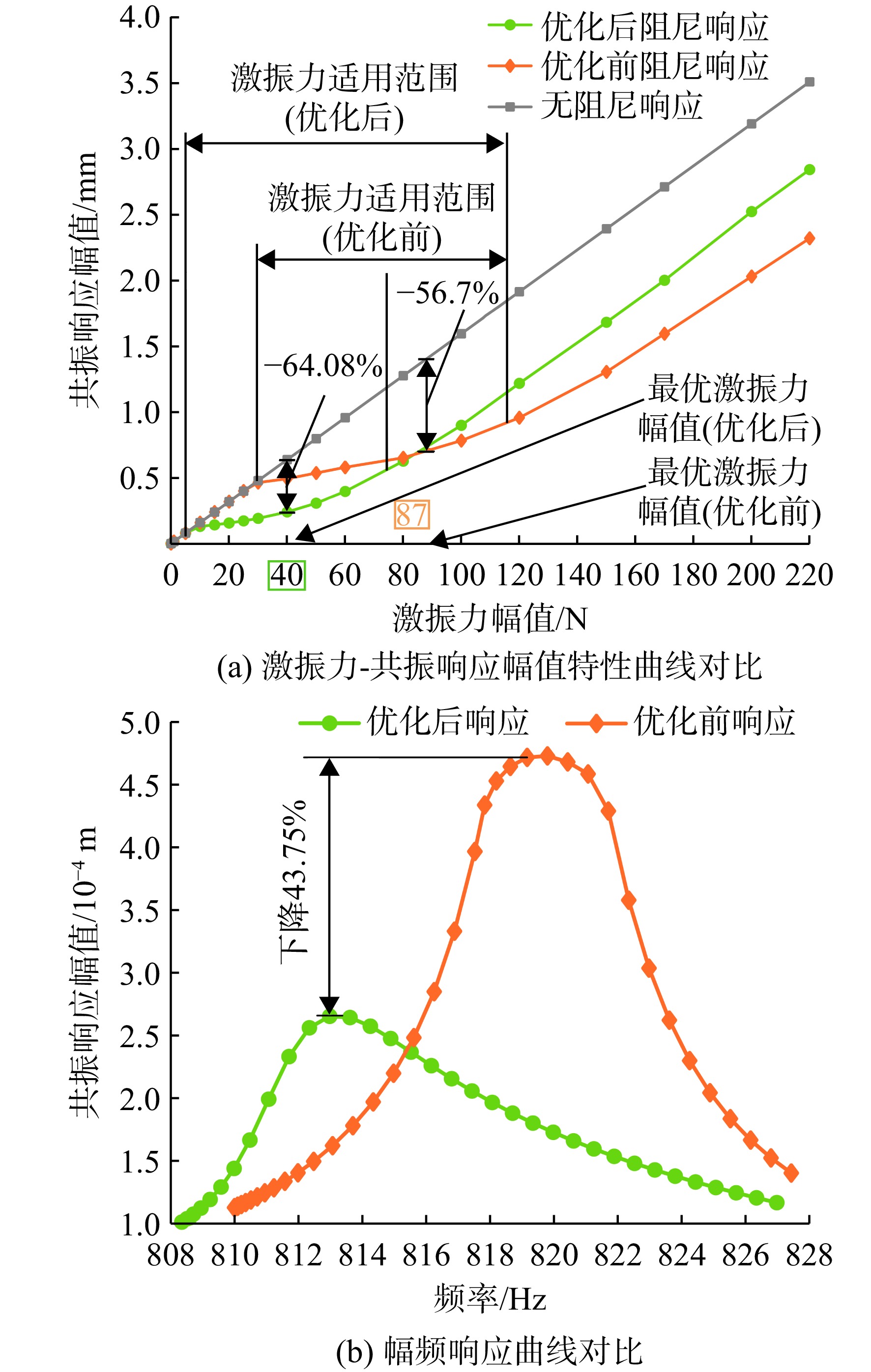
图 12 优化前后减振效果对比
Figure 12. Comparison of vibration reduction performance before and after optimization
表 1 算例参数
Table 1. Case parameters
参数 数值 $ \nu $ 0.344 $ E $/1011 $ \text{Pa} $ 1.315 $ \rho $/$ ({\text{kg/m}}^{3}) $ 8780 $ {k}_{\text{t}} $/107 $ \text{(N/m}) $ 1 $ {k}_{\text{n}} $/107 $ \text{(N/m}) $ 1.4 $ \mu $ 0.2  下载: 导出CSV
表 2 多目标参数优化方法
Table 2. Multi-objective optimization method
优化参数名称 目标函数 缘板倾斜角 减振幅度、适用激振域宽度 阻尼器质量 适用激振域重合度
下载: 导出CSV
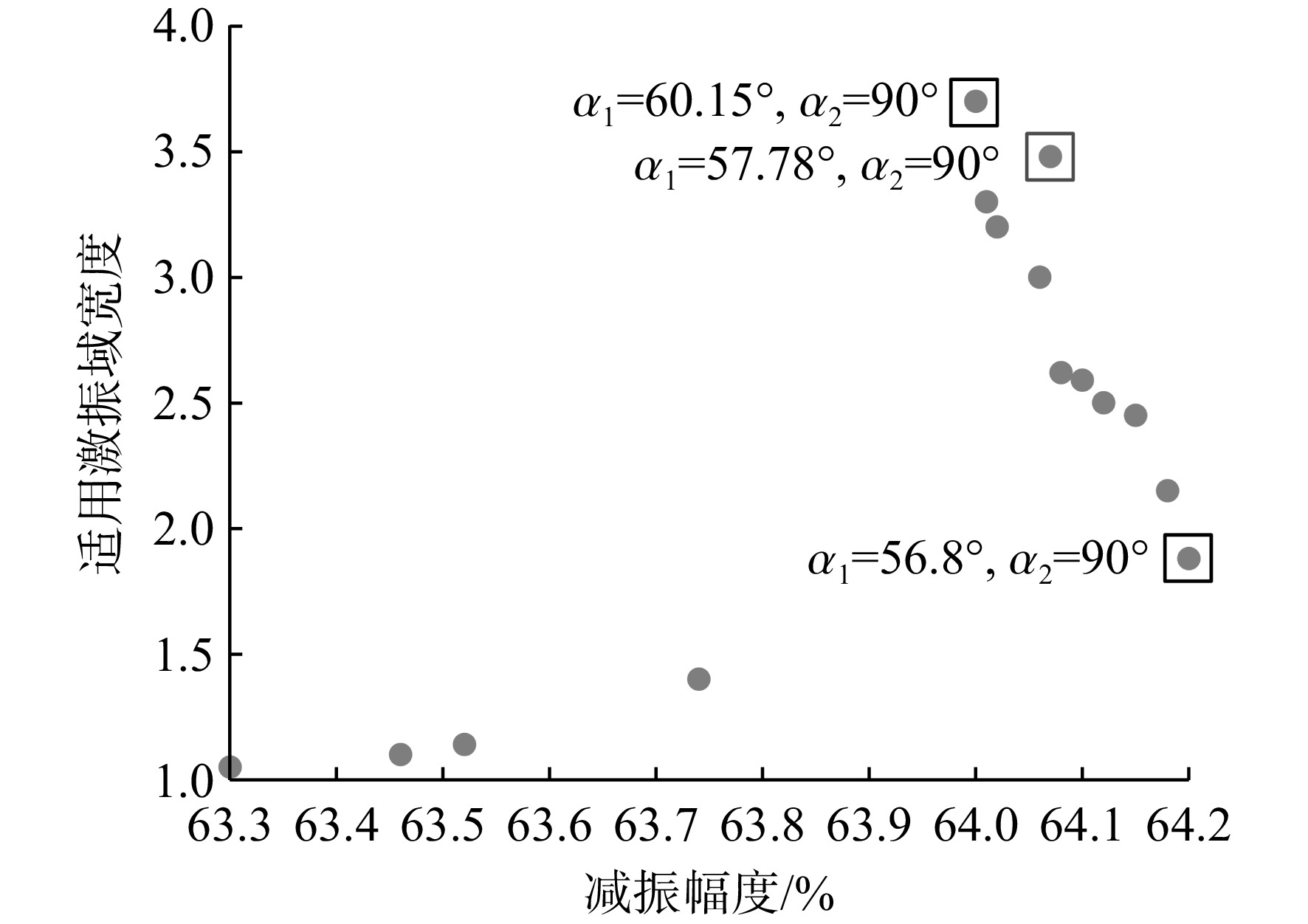
表 3 几何优化结果
Table 3. Geometric optimization results
缘板接触面倾斜角
帕累托解集/(°)减振幅度/% 适用激振域
宽度56.8 64.20 1.88 59.78 64.08 3.48 60.15 64.01 3.70
下载: 导出CSV
-
[1] 王培屹. 航空发动机叶盘结构流致振动抑制的理论研究[D]. 北京: 北京航空航天大学, 2014. WANG Peiyi. Research on vibration suppression theory of bladed disk of aeroengine under fluid excitation[D]. Beijing: Beihang University, 2014. (in ChineseWANG Peiyi. Research on vibration suppression theory of bladed disk of aeroengine under fluid excitation[D]. Beijing: Beihang University, 2014. (in Chinese) [2] SRINIVASAN A V. Flutter and resonant vibration characteristics of engine blades[J]. Journal of Engineering for Gas Turbines and Power, 1997, 119(4): 742-775. doi: 10.1115/1.2817053 [3] FATHYUNES L, MOHTADI-BONAB M A. A review on the corrosion and fatigue failure of gas turbines[J]. Metals, 2023, 13(4): 701-727. doi: 10.3390/met13040701 [4] YANG Xiaoguang, WANG Menglei, SHI Duoqi, et al. A multi-scale framework for life reduction assessment of turbine blade caused by microstructural degradation[J]. Chinese Journal of Aeronautics, 2024, 37(1): 186-200. doi: 10.1016/j.cja.2023.07.021 [5] 李其汉, 王延荣, 王建军. 航空发动机叶片高循环疲劳失效研究[J]. 航空发动机, 2003, 29(4): 16-18, 41. LI Qihan, WANG Yanrong, WANG Jianjun. Investigation of high cycle fatigue failures for the aero engine blades[J]. Aeroengine, 2003, 29(4): 16-18, 41. (in Chinese doi: 10.3969/j.issn.1672-3147.2003.04.004LI Qihan, WANG Yanrong, WANG Jianjun. Investigation of high cycle fatigue failures for the aero engine blades[J]. Aeroengine, 2003, 29(4): 16-18, 41. (in Chinese) doi: 10.3969/j.issn.1672-3147.2003.04.004 [6] 李琳, 刘久周, 李超. 航空发动机中的干摩擦阻尼器及其设计技术研究进展[J]. 航空动力学报, 2016, 31(10): 2305-2317. LI Lin, LIU Jiuzhou, LI Chao. Review of the dry friction dampers in aero-engine and their design technologies[J]. Journal of Aerospace Power, 2016, 31(10): 2305-2317. (in Chinese doi: 10.13224/j.cnki.jasp.2016.10.001LI Lin, LIU Jiuzhou, LI Chao. Review of the dry friction dampers in aero-engine and their design technologies[J]. Journal of Aerospace Power, 2016, 31(10): 2305-2317. (in Chinese) doi: 10.13224/j.cnki.jasp.2016.10.001 [7] QIN Fei, CHEN Liming, LI Ying, et al. Fundamental frequencies of turbine blades with geometry mismatch in fir-tree attachments[J]. Journal of Turbomachinery, 2006, 128(3): 512-516. doi: 10.1115/1.2187523 [8] GOLA M M, GASTALDI C. Understanding complexities in underplatform damper mechanics[C]//V Proceedings of SME Turbo Expo: Power for Land, Sea and Air. Düsseldorf, Germany: ASME, 2014: V07AT34A002. [9] SANLITURK K Y, EWINS D J. Modelling two-dimensional friction contact and its application using harmonic balance method[J]. Journal of Sound and Vibration, 1996, 193(2): 511-523. doi: 10.1006/jsvi.1996.0299 [10] SANLITURK K Y, EWINS D J, STANBRIDGE A B. Underplatform dampers for turbine blades: theoretical modeling, analysis, and comparison with experimental data[J]. Journal of Engineering for Gas Turbines and Power, 2001, 123(4): 919-929. doi: 10.1115/1.1385830 [11] PESARESI L, SALLES L, JONES A, et al. Modelling the nonlinear behaviour of an underplatform damper test rig for turbine applications[J]. Mechanical Systems and Signal Processing, 2017, 85: 662-679. doi: 10.1016/j.ymssp.2016.09.007 [12] 李琳, 高钱, 吴亚光, 等. 考虑参数关联的缘板阻尼器减振性能分析[J]. 航空动力学报, 2021, 36(8): 1657-1668. LI Lin, GAO Qian, WU Yaguang, et al. On the vibration reduction performance of underplatform dampers considering parameter correlation[J]. Journal of Aerospace Power, 2021, 36(8): 1657-1668. (in ChineseLI Lin, GAO Qian, WU Yaguang, et al. On the vibration reduction performance of underplatform dampers considering parameter correlation[J]. Journal of Aerospace Power, 2021, 36(8): 1657-1668. (in Chinese) [13] 阳刚, 周标, 臧朝平, 等. 缘板阻尼结构减振特性的影响因素分析[J]. 航空动力学报, 2019, 34(1): 115-124. YANG Gang, ZHOU Biao, ZANG Chaoping, et al. Analysis of effect factors on damping characteristics for underplatform dampers[J]. Journal of Aerospace Power, 2019, 34(1): 115-124. (in Chinese doi: 10.13224/j.cnki.jasp.2019.01.014YANG Gang, ZHOU Biao, ZANG Chaoping, et al. Analysis of effect factors on damping characteristics for underplatform dampers[J]. Journal of Aerospace Power, 2019, 34(1): 115-124. (in Chinese) doi: 10.13224/j.cnki.jasp.2019.01.014 [14] PETROV E P, EWINS D J. Advanced modeling of underplatform friction dampers for analysis of bladed disk vibration[J]. Journal of Turbomachinery, 2007, 129(1): 143-150. doi: 10.1115/1.2372775 [15] GAO Q, FAN Y, WU Y G, et al. Insight into the influence of frictional heat on the modal characteristics and interface temperature of frictionally damped turbine blades[J]. Journal of Sound and Vibration, 2024, 581: 118410. doi: 10.1016/j.jsv.2024.118410 [16] GAO Qian, FAN Yu, WU Yaguang, et al. A harmonic balance-based method to predict nonlinear forced response and temperature rise of dry friction systems including frictional heat transfer[J]. Nonlinear Dynamics, 2023, 111(15): 14263-14291. doi: 10.1007/s11071-023-08607-3 [17] POUDOU O J. Modeling and analysis of the dynamics of dry-friction-damped structural systems [D]. Ann Arbor, US: University of Michigan, 2007. [18] AMSALLEM D, HAASDONK B. PEBL-ROM: Projection-error based local reduced-order models[J]. Advanced Modeling and Simulation in Engineering Sciences, 2016, 3(1): 1-25. [19] 高钱, 李琳, 吴亚光, 等. 考虑盘片耦合的缘板阻尼器减振性能分析方法[J]. 推进技术, 2022, 43(7): 210034. GAO Qian, LI Lin, WU Yaguang, et al. Vibration reduction performance of underplatform dampers considering blade-disk coupling[J]. Journal of Propulsion Technology, 2022, 43(7): 210034. (in Chinese doi: 10.13675/j.cnki.tjjs.210034GAO Qian, LI Lin, WU Yaguang, et al. Vibration reduction performance of underplatform dampers considering blade-disk coupling[J]. Journal of Propulsion Technology, 2022, 43(7): 210034. (in Chinese) doi: 10.13675/j.cnki.tjjs.210034 [20] GOODMAN L E, KLUMPP J H. Analysis of slip damping with reference to turbine-blade vibration[J]. Journal of Applied Mechanics, 1956, 23(3): 421-429. doi: 10.1115/1.4011348 [21] 孙业凯, 吴亚光, 王兴, 等. 叶片/叶盘摩擦阻尼结构的非线性模态分析综述[J]. 航空动力学报, 2022, 37(10): 2167-2187. SUN Yekai, WU Yaguang, WANG Xing, et al. Review of nonlinear modal analysis in friction damping structures of blades/blade disks[J]. Journal of Aerospace Power, 2022, 37(10): 2167-2187. (in Chinese doi: 10.13224/j.cnki.jasp.20220264SUN Yekai, WU Yaguang, WANG Xing, et al. Review of nonlinear modal analysis in friction damping structures of blades/blade disks[J]. Journal of Aerospace Power, 2022, 37(10): 2167-2187. (in Chinese) doi: 10.13224/j.cnki.jasp.20220264 [22] DOKAINISH M A, SUBBARAJ K. A survey of direct time-integration methods in computational structural dynamics: Ⅰ explicit methods[J]. Computers and Structures, 1989, 32(6): 1371-1386. doi: 10.1016/0045-7949(89)90314-3 [23] FAN Yu, LIU Jiale, WU Yaguang, et al. A static/dynamic coupled harmonic balance method for dry friction systems containing rigid body modes[J]. Journal of Engineering for Gas Turbines and Power, 2025, 147(4): 041014. doi: 10.1115/1.4066824 [24] SUN He, ZHANG Dayi, WU Yaguang, et al. A semi-analytical multi-harmonic balance method on full-3D contact model for dynamic analysis of dry friction systems[J]. Chinese Journal of Aeronautics, 2024, 37(2): 309-329. doi: 10.1016/j.cja.2023.11.026 [25] YUAN Jie, FANTETTI A, DENIMAL E, et al. Propagation of friction parameter uncertainties in the nonlinear dynamic response of turbine blades with underplatform dampers[J]. Mechanical Systems and Signal Processing, 2021, 156: 107673. doi: 10.1016/j.ymssp.2021.107673 [26] SCHWINGSHACKL C W, PETROV E P, EWINS D J. Effects of contact interface parameters on vibration of turbine bladed disks with underplatform dampers[J]. Journal of Engineering for Gas Turbines and Power, 2012, 134(3): 032507. doi: 10.1115/1.4004721 [27] MARIA C, ZUCC S. Modelling friction contacts in structural dynamics and its application to turbine bladed disks[J] Numerical Analysis-Theory and Application, 2011, 14: 301-334. [28] FIRRONE C M, ZUCCA S, GOLA M M. The effect of underplatform dampers on the forced response of bladed disks by a coupled static/dynamic harmonic balance method[J]. International Journal of Non-Linear Mechanics, 2011, 46(2): 363-375. doi: 10.1016/j.ijnonlinmec.2010.10.001 [29] FIRRONE C M, ZUCCA S. Underplatform dampers for turbine blades: The effect of damper static balance on the blade dynamics[J]. Mechanics Research Communications, 2009, 36(4): 515-522. doi: 10.1016/j.mechrescom.2009.01.002 [30] YUAN Jie, GASTALDI C, DENIMAL GOY E, et al. Friction damping for turbomachinery: a comprehensive review of modelling, design strategies, and testing capabilities[J]. Progress in Aerospace Sciences, 2024, 147: 101018. doi: 10.1016/j.paerosci.2024.101018 [31] CHA D, SINHA A. Computation of the optimal normal load of a friction damper under different types of excitation[J]. Journal of Engineering for Gas Turbines and Power, 2003, 125(4): 1042-1049. doi: 10.1115/1.1584474 [32] WU Y G, CHEN J B, FAN Y, et al. An MFC-based friction damper with adjustable normal force: conception, modelling, and experiment[J]. Mechanical Systems and Signal Processing, 2024, 215: 111450. doi: 10.1016/j.ymssp.2024.111450 [33] WU Y G, LI L, FAN Y, et al. Design of semi-active dry friction dampers for steady-state vibration: sensitivity analysis and experimental studies[J]. Journal of Sound and Vibration, 2019, 459: 114850. doi: 10.1016/j.jsv.2019.114850 [34] MA H Y, LI L, WU Y G, et al. Design of dry friction dampers for thin-walled structures by an accelerated dynamic Lagrange method[J]. Journal of Sound and Vibration, 2020, 489: 115550. doi: 10.1016/j.jsv.2020.115550 [35] SUN Yekai, YUAN Jie, PESARESI L, et al. Parametric study and uncertainty quantification of the nonlinear modal properties of frictional dampers[J]. Journal of Vibration and Acoustics, 2020, 142(5): 051102. doi: 10.1115/1.4046953 [36] GAO Q, FAN Y, WU Y G, et al. A novel test apparatus to study the mechanism of harmonic normal force on fretting wear[J]. Tribology International, 2024, 191: 109091. doi: 10.1016/j.triboint.2023.109091 [37] FAN Yu, WANG Jing, FAN Huiru, et al. A fretting wear test rig with time-varying normal force based on closed-loop controlled piezoelectric actuator[C]//Proceedings of ASME Turbo Expo: Power for Land, Sea, and Air. London, UK: ASME, 2024: V10BT27A017. [38] PESARESI L, ARMAND J, SCHWINGSHACKL C W, et al. An advanced underplatform damper modelling approach based on a microslip contact model[J]. Journal of Sound and Vibration, 2018, 436: 327-340. doi: 10.1016/j.jsv.2018.08.014 [39] PANNING L, SEXTRO W, POPP K. Optimization of the contact geometry between turbine blades and underplatform dampers with respect to friction damping[C]//Proceedings of ASME Turbo Expo: Power for Land, Sea, and Air. New York, US: ASME, 2002: 991-1002. [40] DENIMAL E, WONG C, SALLES L, et al. On the efficiency of a conical underplatform damper for turbines[J]. Journal of Engineering for Gas Turbines and Power, 2021, 143(2): 021020. doi: 10.1115/1.4049665 [41] GAGNON L, MORANDINI M, GHIRINGHELLI G L. A review of friction damping modeling and testing[J]. Archive of Applied Mechanics, 2020, 90(1): 107-126. doi: 10.1007/s00419-019-01600-6 [42] PANNING L, SEXTRO W, POPP K. Optimization of interblade friction damper design[C]//Proceedings of ASME Turbo Expo: Power for Land, Sea, and Air. Tampa, US: ASME, 2000: V004T03A068. [43] PETROV E P, EWINS D J. Analytical formulation of friction interface elements for analysis of nonlinear multi-harmonic vibrations of bladed disks[J]. Journal of Turbomachinery, 2003, 125(2): 364-371. doi: 10.1115/1.1539868 [44] DENIMAL E, RENSON L, WONG C, et al. Topology optimisation of friction under-platform dampers using moving morphable components and the efficient global optimization algorithm[J]. Structural and Multidisciplinary Optimization, 2022, 65(2): 56. doi: 10.1007/s00158-021-03158-w [45] CAMERON T M, GRIFFIN J H. An alternating frequency/time domain method for calculating the steady-state response of nonlinear dynamic systems[J]. Journal of Applied Mechanics, 1989, 56(1): 149-154. doi: 10.1115/1.3176036 [46] GOLA M M. A general geometrical theory of turbine blade underplatform asymmetric dampers[J]. Mechanical Systems and Signal Processing, 2023, 191: 110167. doi: 10.1016/j.ymssp.2023.110167 [47] ZHANG Dayi, GAO Bin, HONG Jie, et al. Experimental investigation on dynamic response of flat blades with underplatform dampers[J]. Chinese Journal of Aeronautics, 2019, 32(12): 2667-2678. doi: 10.1016/j.cja.2019.04.022 [48] ELLIOT R D, SAYMA A I, IMREGUN M. Aeromechanical design of damped high pressure turbine blades subject to low engine order forcing: RTO-MP-AVT-121[R]. [S. l. ]: RTO 2005. [49] MAYORCA M A. Numerical methods for turbomachinery aeromechanical predictions[D]. Stockholm, Sweden: Royal Institute of Technology, 2011. [50] AFZAL M, ARTEAGA I L, KARI L. An analytical calculation of the Jacobian matrix for 3D friction contact model applied to turbine blade shroud contact[J]. Computers & Structures, 2016, 177: 204-217. doi: 10.1016/j.compstruc.2016.08.014 [51] GASTALDI C, GROSSI E, BERRUTI T M. On the choice of contact parameters for the forced response calculation of a bladed disk with underplatform dampers[J]. Journal of the Global Power and Propulsion Society, 2017, 1: 1-15. [52] GASTALDI C, GOLA M M. Criteria for best performance of pre-optimized solid dampers[C]//Proceedings of ASME Turbo Expo: Power for Land, Sea, and Air. Oslo, Norway: ASME, 2018: V07CT35A019. [53] KRACK M, HERZOG A, PANNING-VON SCHEIDT L, et al. Multiharmonic analysis and design of shroud friction joints of bladed disks subject to microslip[C]//Proceedings of International Design Engineering Technical Conferences and Computers and Information in Engineering Conference. Washington, US: ASME, 2012: 1083-1092. [54] DEB K, PRATAP A, AGARWAL S, et al. A fast and elitist multiobjective genetic algorithm: NSGA-Ⅱ[J]. IEEE Transactions on Evolutionary Computation, 2002, 6(2): 182-197. doi: 10.1109/4235.996017 [55] PANNING L, POPP K, SEXTRO W, et al. Asymmetrical underplatform dampers in gas turbine bladings: theory and application[C]//Proceedings of ASME Turbo Expo: Power for Land, Sea, and Air. New Orleans, US: ASME, 2004: 269-280. -


 点击查看大图
计量
- 文章访问数: 199
- HTML浏览量: 141
- PDF量: 8
- 被引次数: 0