






Three-dimensional turbulent field characteristics in a constant-volume combustion chamber and quantification of two-dimensional observation errors
-
摘要:
为了量化定容燃烧弹(CVCC)内三维(3D)湍流场特性与二维(2D)观测结果之间的差异,采用基于滑移网格的大涡模拟(LES)方法,对不同初始压强与风扇转速组合条件下的三维瞬态流场进行数值模拟,分析火焰发展区域的速度分布、湍流强度、湍流积分尺度、流场均匀性及各向同性等关键参数,并与实验数据对比验证。研究目的在于通过定量比较二维与三维湍流流场的特征差异,揭示其差异的形成机理,为提升定容燃烧弹内湍流场调控及燃烧稳定性优化提供理论支撑。研究结果表明:与实验监测面相比,与其正交的两个监测面的湍流强度拟合公式系数的最大相对误差达到17%,湍流尺度拟合公式系数的最大相对误差达到5%,经线尺度与纬线尺度比值与其理论各向同性湍流中的2倍相差较远,表明其各向同性相比实验监测面更差。这一显著差异证实了传统基于二维投影的火焰面观测方法会引入不可忽略的测量误差,凸显了三维流场分析在燃烧诊断中的重要性。
Abstract:In order to quantify the discrepancies between the characteristics of the three-dimensional (3D) turbulent flow field and the two-dimensional (2D) observational results within a constant-volume combustion chamber (CVCC), a numerical study was conducted using the large-eddy simulation (LES) method based on a sliding mesh technique. Simulations were performed for the 3D transient flow fields under various combinations of initial pressure and fan rotational speed. Key parameters in the flame development region, including velocity distribution, turbulence intensity, turbulence integral length scale, flow uniformity, and isotropy, were analyzed and compared with experimental data for validation. The objective of this research is to reveal the underlying mechanisms responsible for the characteristic differences between 2D and 3D turbulent flow fields through quantitative comparison, thereby providing theoretical support for enhancing turbulence control and optimizing combustion stability within CVCCs. The results indicate significant differences between the fully 3D simulated field and the 2D projection typically available from experiments. Compared to the experimentally monitored plane, the maximum relative error in the fitted formula coefficients for turbulence intensity reached 17% on the two orthogonal monitoring planes. Similarly, the maximum relative error for the turbulence length scale coefficients reached 5%. Furthermore, the ratio of the meridional to circumferential length scales deviated substantially from the theoretical value of 2 for isotropic turbulence, indicating a worse degree of isotropy compared to the experimental plane. These significant discrepancies confirm that traditional flame observation methods based on 2D projections introduce non-negligible measurement errors, highlighting the critical importance of 3D flow field analysis in combustion diagnostics.
-
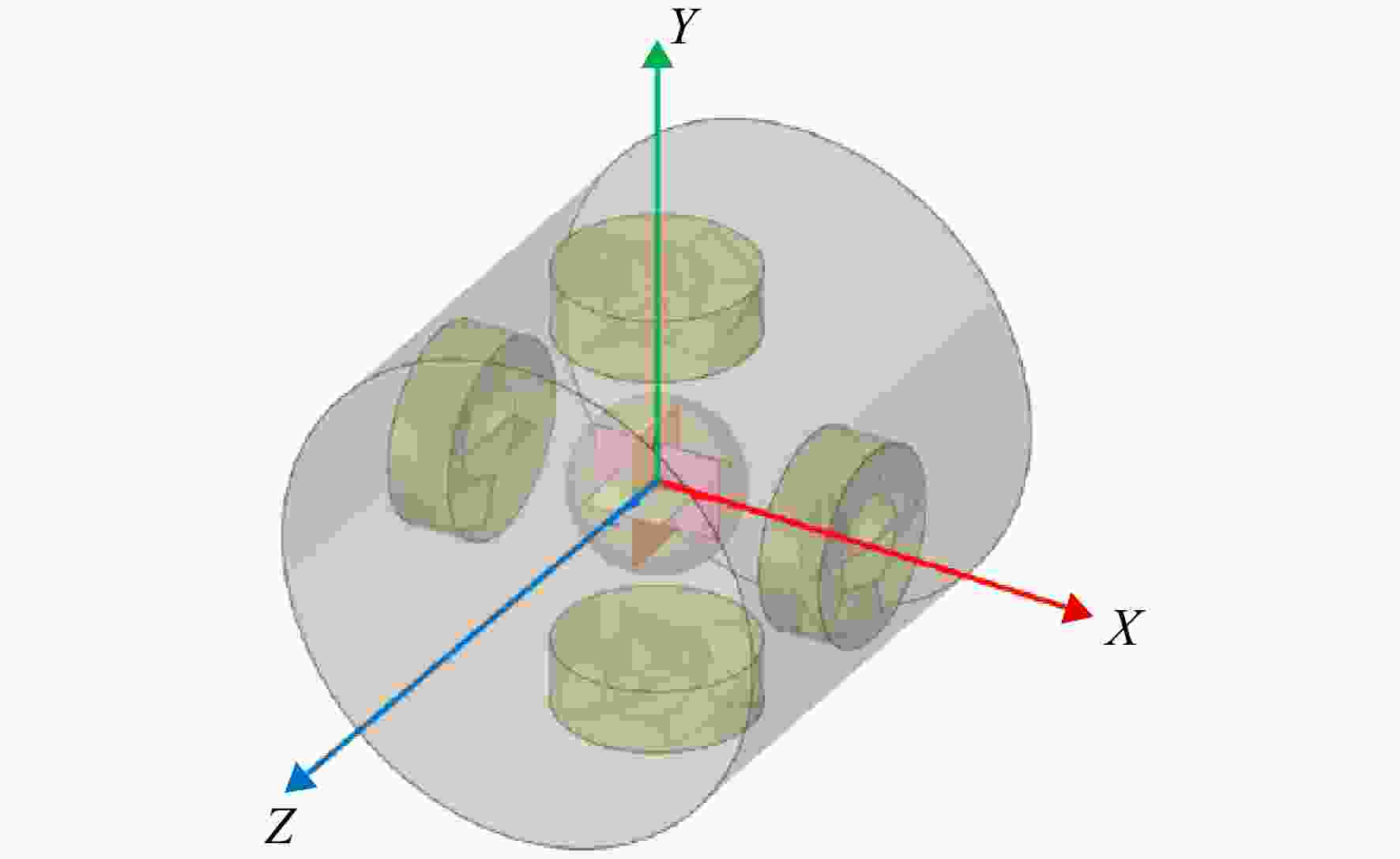
图 5 XY、XZ与YZ三个正交监测面示例图
Figure 5. Schematic of the three orthogonal monitoring planes(XY, XZ, and YZ)
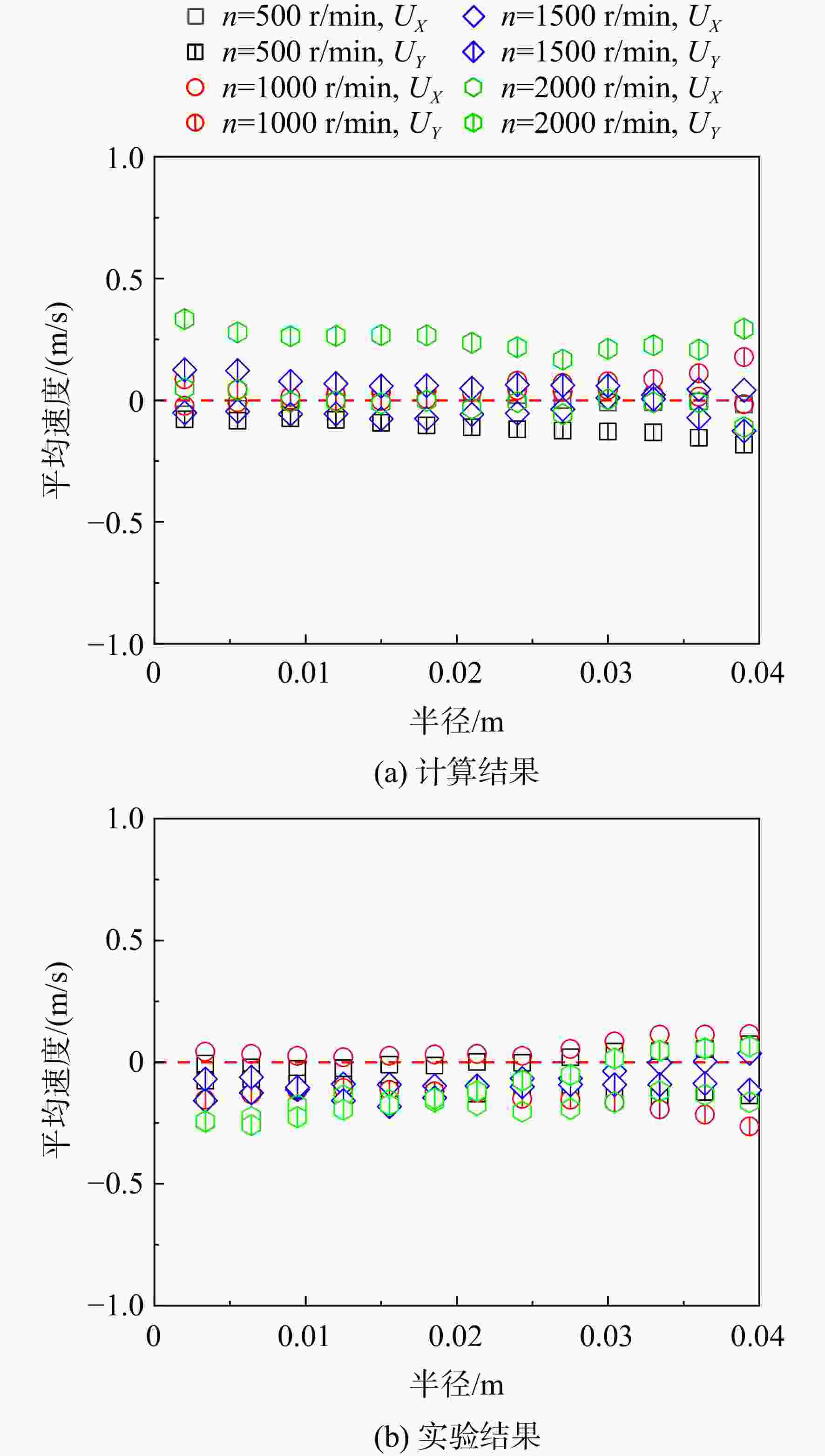
图 6 X方向与Y方向平均速度随半径的变化规律
Figure 6. Variation of the mean X- and Y-velocity components with radius
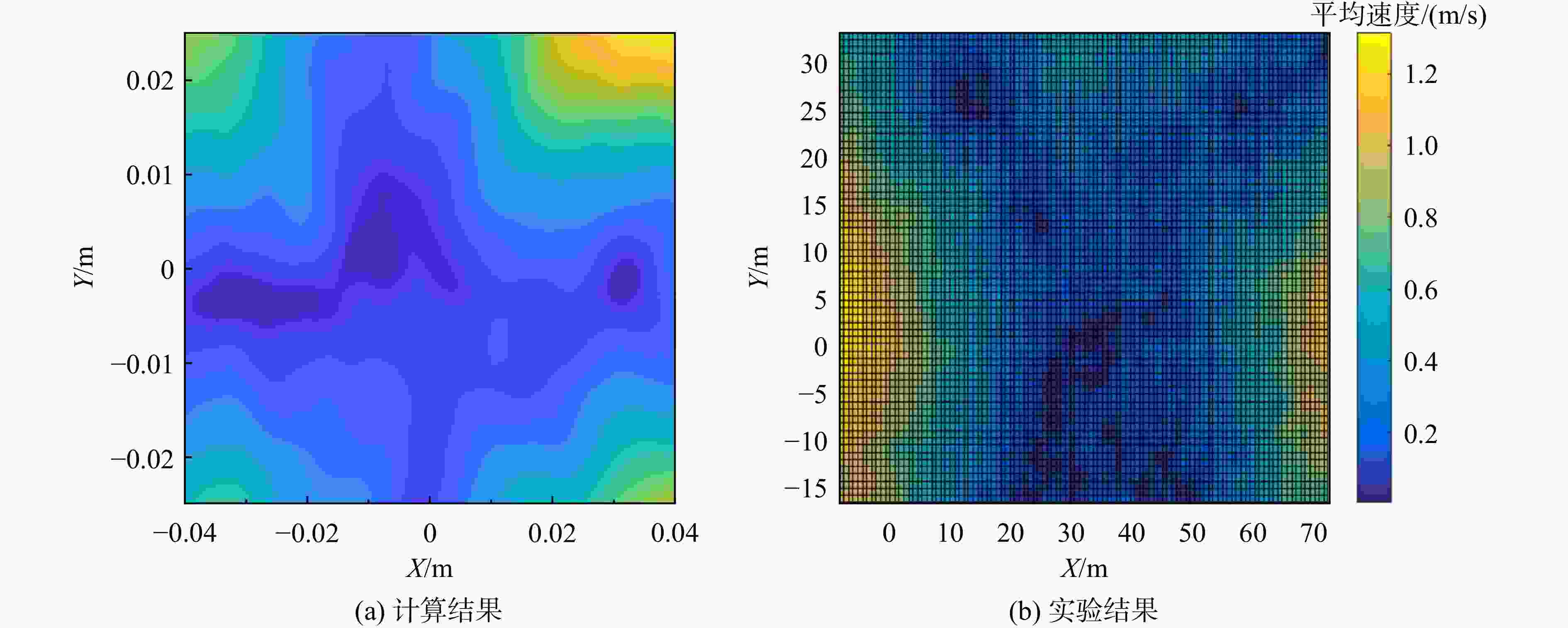
图 7 定容燃烧弹中心监测平面的平均速度分布云图
Figure 7. Contour plot of mean velocity on the central monitoring plane of the constant-volume combustion chamber
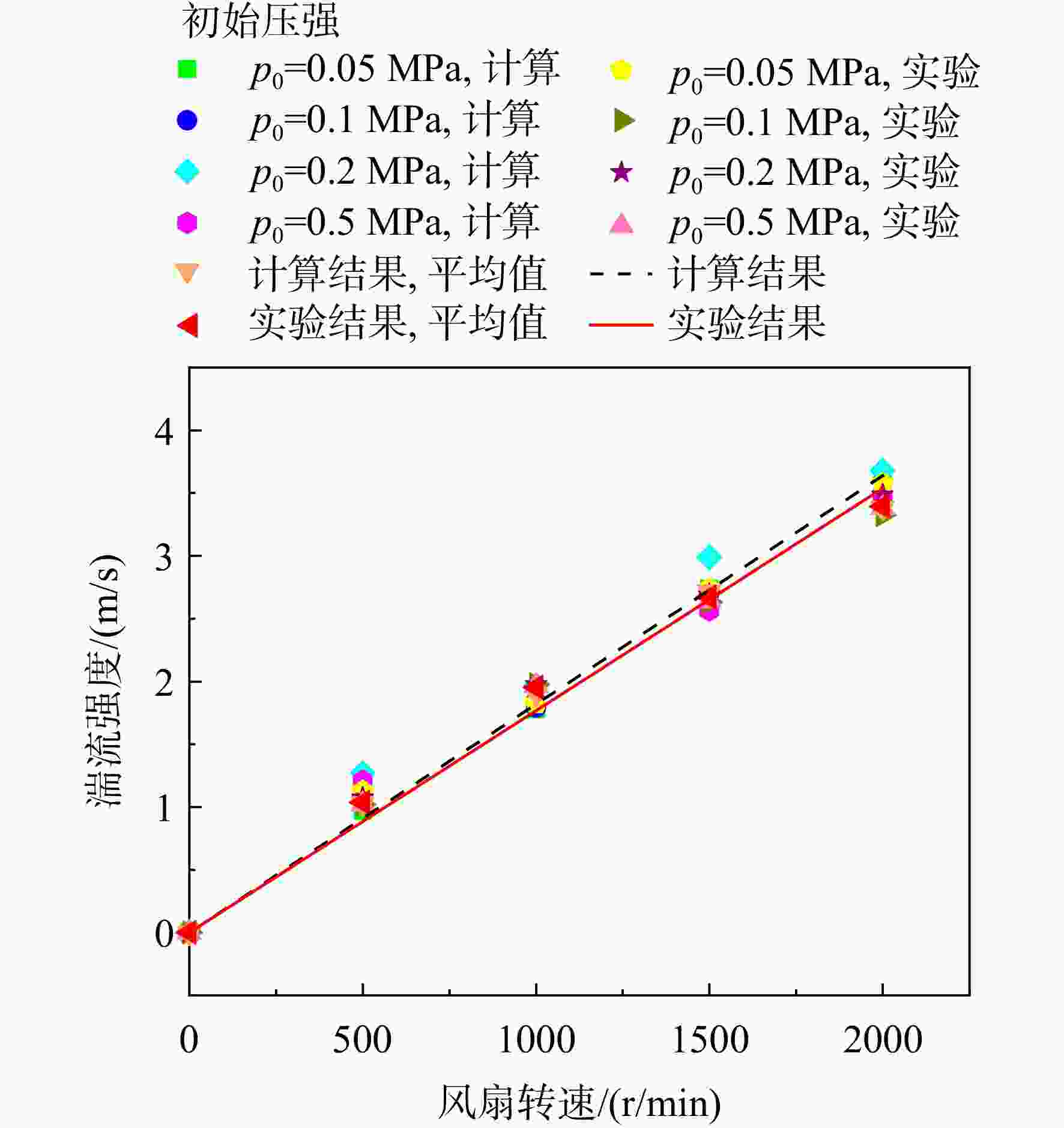
图 8 湍流强度随风扇转速的变化规律
Figure 8. Variation of turbulence intensity with fan rotational speed
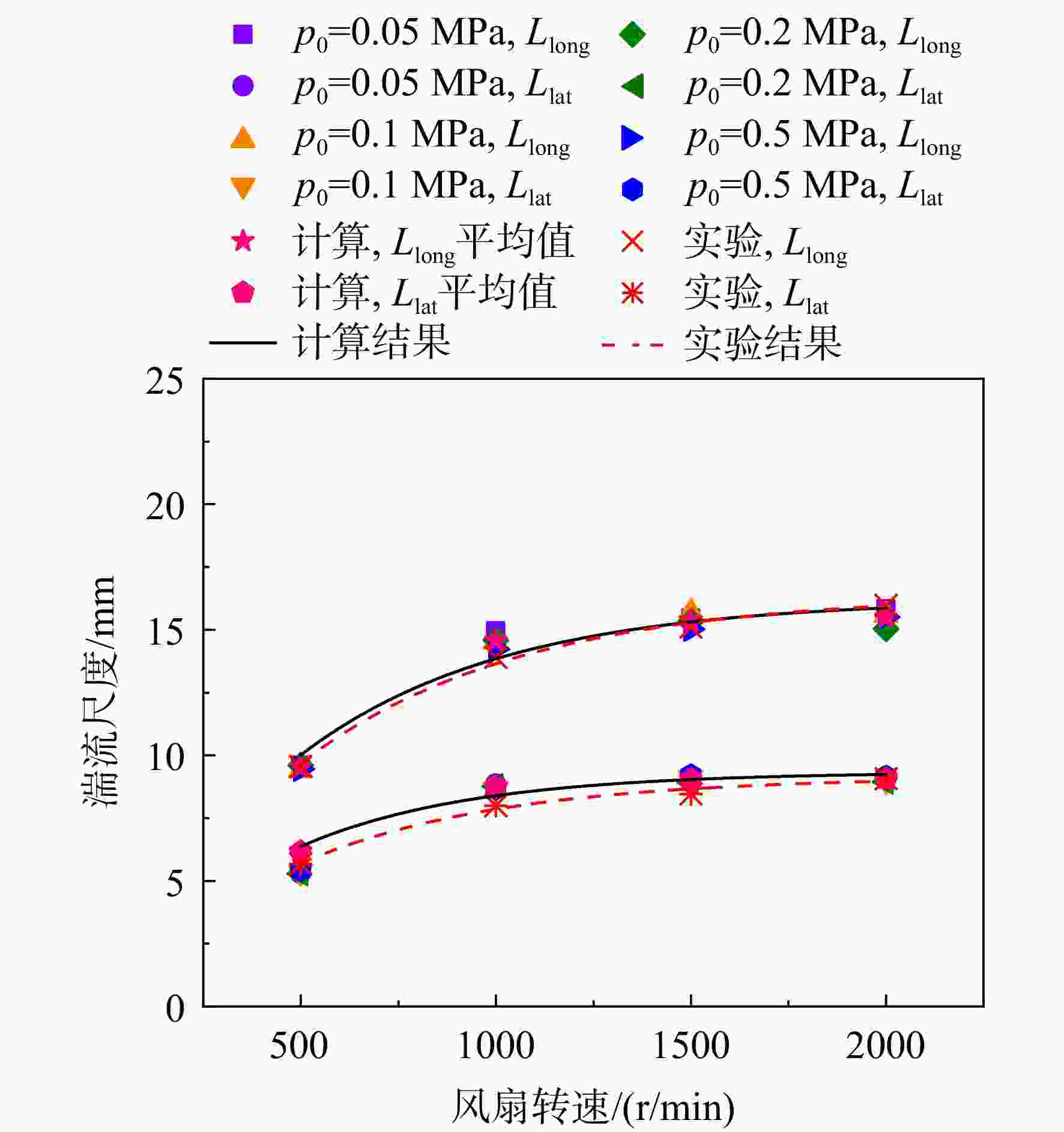
图 9 经线方向与纬线方向积分尺度随风扇转速的变化规律
Figure 9. Variation of the meridional and circumferential integral length scales with fan rotational speed
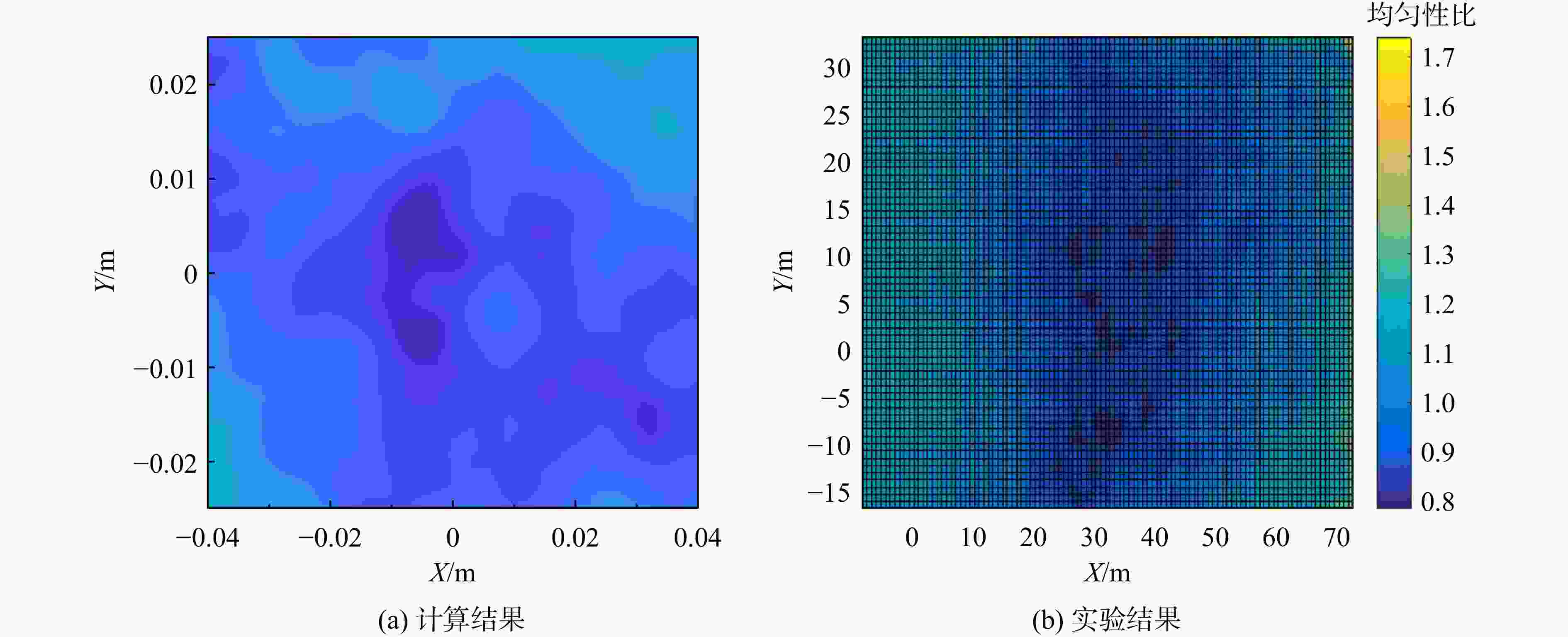
图 10 定容燃烧弹中心监测平面X方向均匀性
Figure 10. Uniformity in the X-direction on the central measurement plane of a constant volume combustion chamber
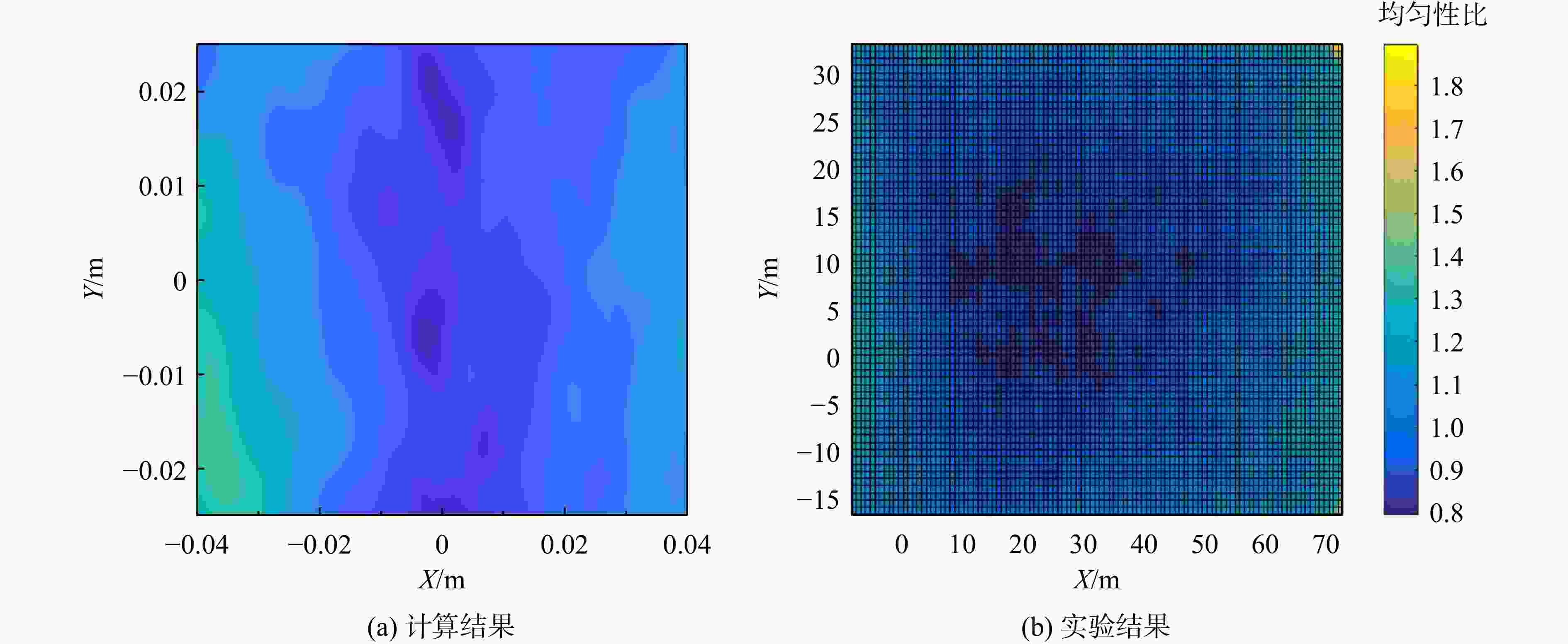
图 11 定容燃烧弹中心监测平面Y方向均匀性
Figure 11. Uniformity in the Y-direction on the central measurement plane of a constant volume combustion chamber
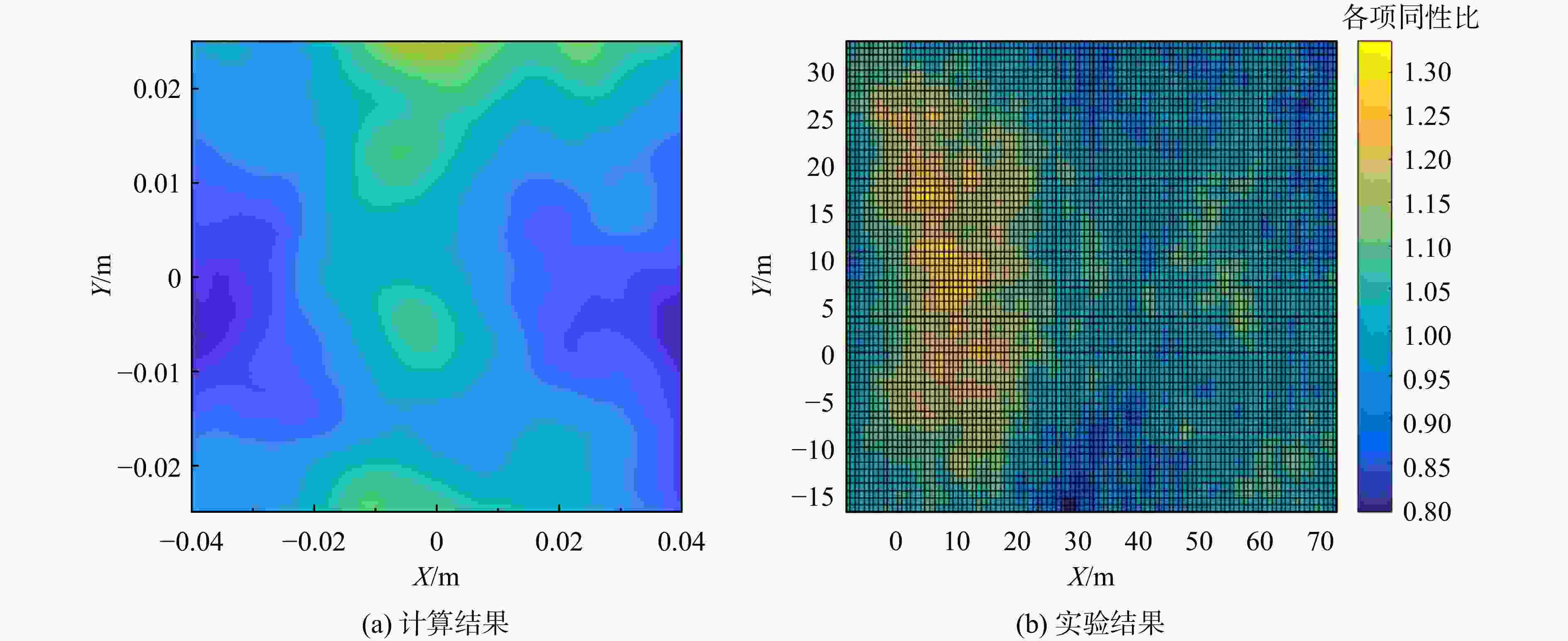
图 12 定容燃烧弹中心监测平面各向同性
Figure 12. Isotropy on the central measurement plane of a constant volume combustion chamber
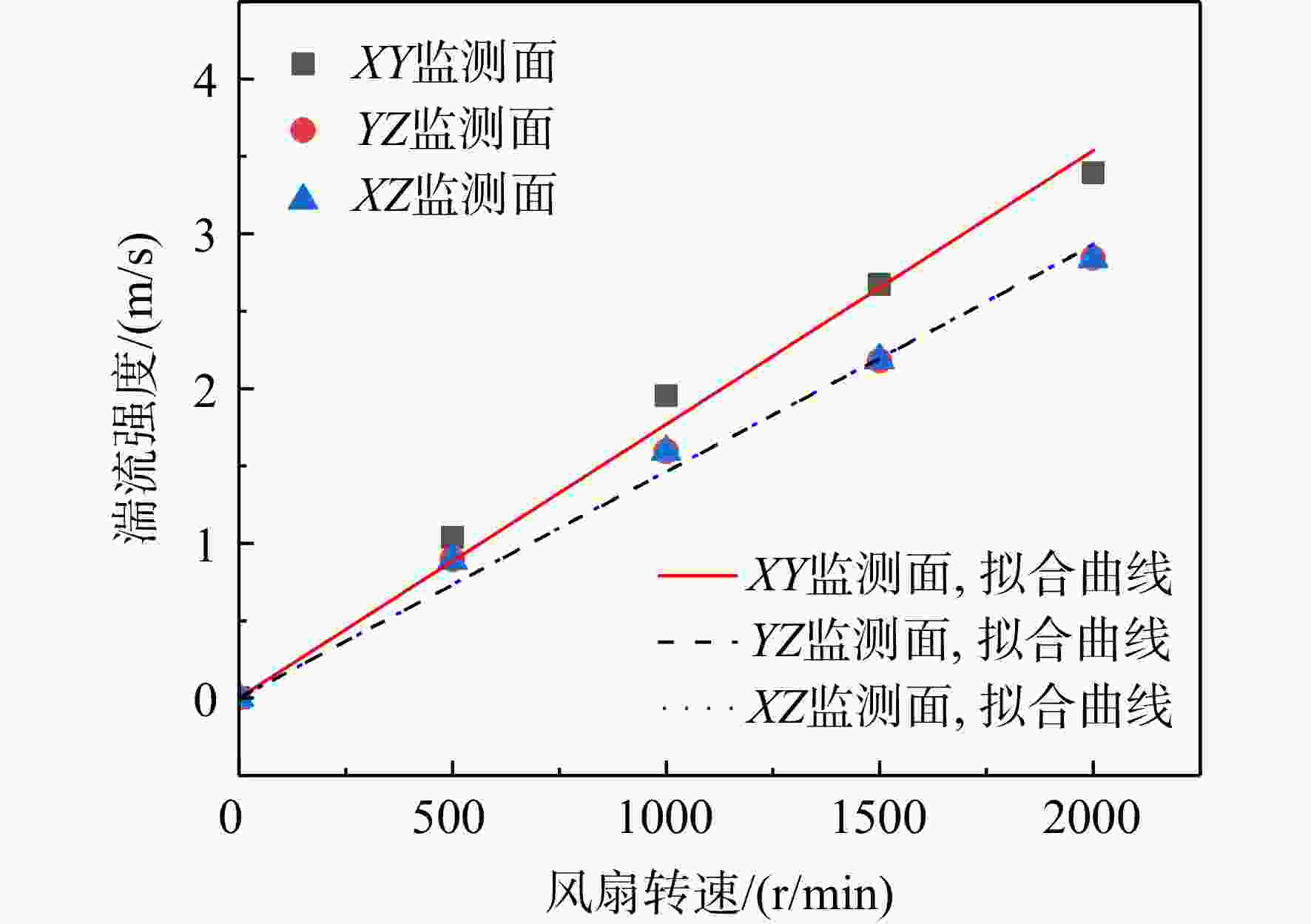
图 14 3个监测面不同初始压强下的湍流强度平均值随风扇转速变化
Figure 14. Variation of the mean turbulence intensity with fan rotational speed for the three monitoring planes under different initial pressures
-
[1] 马凡华, 许忠厚, 蒋德明, 等. 一种定容燃烧弹内的湍流发生系统[J]. 内燃机工程, 2000, 21(2): 42-44, 50. MA Fanhua, XU Zhonghou, JIANG Deming, et al. A new system to generate turbulence in constant volume combustion bomb[J]. Chinese Internal Combustion Engine Engineering, 2000, 21(2): 42-44, 50. (in Chinese doi: 10.3969/j.issn.1000-0925.2000.02.009MA Fanhua, XU Zhonghou, JIANG Deming, et al. A new system to generate turbulence in constant volume combustion bomb[J]. Chinese Internal Combustion Engine Engineering, 2000, 21(2): 42-44, 50. (in Chinese) doi: 10.3969/j.issn.1000-0925.2000.02.009 [2] 张衍, 孙文强, 王筱蓉, 等. 定容燃烧弹内湍流特性的仿真研究[J]. 中国水运, 2024(10): 31-33. ZHANG Yan, SUN Wenqiang, WANG Xiaorong, et al. Simulation study on turbulent characteristics in constant volume combustion bomb[J]. China Water Transport, 2024(10): 31-33. (in ChineseZHANG Yan, SUN Wenqiang, WANG Xiaorong, et al. Simulation study on turbulent characteristics in constant volume combustion bomb[J]. China Water Transport, 2024(10): 31-33. (in Chinese) [3] 秦思雨, 张欣, 王跃. 新型湍流定容燃烧弹湍流场数值分析[J]. 车用发动机, 2019(6): 15-21. QIN Siyu, ZHANG Xin, WANG Yue. Numerical simulation of turbulent flow field inside turbulent constant volume combustion bomb[J]. Vehicle Engine, 2019(6): 15-21. (in Chinese doi: 10.3969/j.issn.1001-2222.2019.06.003QIN Siyu, ZHANG Xin, WANG Yue. Numerical simulation of turbulent flow field inside turbulent constant volume combustion bomb[J]. Vehicle Engine, 2019(6): 15-21. (in Chinese) doi: 10.3969/j.issn.1001-2222.2019.06.003 [4] XU Shijie, HUANG Sheng, HUANG Ronghua, et al. Estimation of turbulence characteristics from PIV in a high-pressure fan-stirred constant volume combustion chamber[J]. Applied Thermal Engineering, 2017, 110: 346-355. doi: 10.1016/j.applthermaleng.2016.08.149 [5] CAI Xiao, FAN Qingshuang, BAI Xuesong, et al. Turbulent burning velocity and its related statistics of ammonia-hydrogen-air jet flames at high Karlovitz number: Effect of differential diffusion[J]. Proceedings of the Combustion Institute, 2023, 39(4): 4215-4226. doi: 10.1016/j.proci.2022.07.016 [6] 边志坚, 王金华, 赵浩然, 等. 氨/氢气湍流预混火焰传播特性实验研究[J]. 燃烧科学与技术, 2020, 26(6): 551-557. BIAN Zhijian, WANG Jinhua, ZHAO Haoran, et al. Experimental study on turbulent premixed flame propagation characteristics of ammonia/hydrogen mixtures[J]. Journal of Combustion Science and Technology, 2020, 26(6): 551-557. (in Chinese doi: 10.11715/rskxjs.R202002010BIAN Zhijian, WANG Jinhua, ZHAO Haoran, et al. Experimental study on turbulent premixed flame propagation characteristics of ammonia/hydrogen mixtures[J]. Journal of Combustion Science and Technology, 2020, 26(6): 551-557. (in Chinese) doi: 10.11715/rskxjs.R202002010 [7] 蔡骁. 层流/湍流预混球形火焰燃烧速度与火焰加速动力学研究[D]. 西安: 西安交通大学, 2020. CAI Xiao. Study on combustion velocity and flame acceleration dynamics of laminar/turbulent premixed spherical flame[D]. Xi’an: XI’an Jiaotong University, 2020. (in ChineseCAI Xiao. Study on combustion velocity and flame acceleration dynamics of laminar/turbulent premixed spherical flame[D]. Xi’an: XI’an Jiaotong University, 2020. (in Chinese) [8] CAI Xiao, WANG Jinhua, BIAN Zhijian, et al. Propagation of Darrieus-Landau unstable laminar and turbulent expanding flames[J]. Proceedings of the Combustion Institute, 2021, 38(2): 2013-2021. doi: 10.1016/j.proci.2020.06.247 [9] CAI Xiao, WANG Jinhua, BIAN Zhijian, et al. Self-similar propagation and turbulent burning velocity of CH4/H2/air expanding flames: Effect of Lewis number[J]. Combustion and Flame, 2020, 212: 1-12. doi: 10.1016/j.combustflame.2019.10.019 [10] 蔡骁, 王金华, 赵浩然, 等. 稀甲烷/氢气预混湍流传播火焰实验研究[J]. 工程热物理学报, 2020, 41(2): 514-519. CAI Xiao, WANG Jinhua, ZHAO Haoran, et al. Experimental research on expanding turbulent flames of lean methane/hydrogen/air mixtures[J]. Journal of Engineering Thermophysics, 2020, 41(2): 514-519. (in ChineseCAI Xiao, WANG Jinhua, ZHAO Haoran, et al. Experimental research on expanding turbulent flames of lean methane/hydrogen/air mixtures[J]. Journal of Engineering Thermophysics, 2020, 41(2): 514-519. (in Chinese) [11] ZHAO Haoran, WANG Jinhua, CAI Xiao, et al. Development of a fan-stirred constant volume combustion chamber and turbulence measurement with PIV[J]. Frontiers in Energy, 2022, 16(6): 973-987. doi: 10.1007/s11708-021-0762-z [12] ZHAO Haoran, WANG Jinhua, CAI Xiao, et al. Flame structure, turbulent burning velocity and its unified scaling for lean syngas/air turbulent expanding flames[J]. International Journal of Hydrogen Energy, 2021, 46(50): 25699-25711. doi: 10.1016/j.ijhydene.2021.05.090 [13] ZHAO Haoran, WANG Jinhua, CAI Xiao, et al. Turbulent burning velocity and its unified scaling of butanol isomers/air mixtures[J]. Fuel, 2021, 306: 121738. doi: 10.1016/j.fuel.2021.121738 [14] ZHAO Haoran, LI Gang, WANG Jinhua, et al. Effects of density ratio and differential diffusion on flame accelerative propagation of H2/O2/N2 mixtures[J]. International Journal of Hydrogen Energy, 2023, 48(24): 9071-9081. doi: 10.1016/j.ijhydene.2022.11.351 [15] 王跃. 基于湍流定容燃烧弹气体燃料喷射混合及分层燃烧特性研究[D]. 北京: 北京交通大学, 2024. WANG Yue. Study of gas-fuel injection mixing and stratified combustion characteristics based on turbulent constant volume combustion chamber[D]. Beijing: Beijing Jiaotong University, 2024. (in ChineseWANG Yue. Study of gas-fuel injection mixing and stratified combustion characteristics based on turbulent constant volume combustion chamber[D]. Beijing: Beijing Jiaotong University, 2024. (in Chinese) [16] SHY S S, WEI K I, LIN M L. A new cruciform burner and its turbulence measurements for premixed turbulent combustion study[J]. Experimental Thermal and Fluid Science, 2000, 20(3/4): 105-114. doi: 10.1016/s0894-1777(99)00035-7 [17] LIU C C, SHY S S, CHEN H C, et al. On interaction of centrally-ignited, outwardly-propagating premixed flames with fully-developed isotropic turbulence at elevated pressure[J]. Proceedings of the Combustion Institute, 2011, 33(1): 1293-1299. doi: 10.1016/j.proci.2010.06.083 [18] SHY S S, LIU C C, LIN J Y, et al. Correlations of high-pressure lean methane and syngas turbulent burning velocities: Effects of turbulent Reynolds, Damköhler, and Karlovitz numbers[J]. Proceedings of the Combustion Institute, 2015, 35(2): 1509-1516. doi: 10.1016/j.proci.2014.07.026 [19] GE Haiwen, NORCONK M, LEE S Y, et al. PIV measurement and numerical simulation of fan-driven flow in a constant volume combustion vessel[J]. Applied Thermal Engineering, 2014, 64(1/2): 19-31. doi: 10.1016/j.applthermaleng.2013.11.073 [20] BRADLEY D, LAWES M, MORSY M E. Measurement of turbulence characteristics in a large scale fan-stirred spherical vessel[J]. Journal of Turbulence, 2019, 20(3): 195-213. doi: 10.1080/14685248.2019.1610566 [21] GALMICHE B, MAZELLIER N, HALTER F, et al. Turbulence characterization of a high-pressure high-temperature fan-stirred combustion vessel using LDV, PIV and TR-PIV measurements[J]. Experiments in Fluids, 2013, 55(1): 1-20. doi: 10.1007/s00348-013-1636-x [22] MANNAA O A, MANSOUR M S, CHUNG S H, et al. Characterization of turbulence in an optically accessible fan-stirred spherical combustion chamber[J]. Combustion Science and Technology, 2021, 193(7): 1231-1257. doi: 10.1080/00102202.2019.1686629 [23] KITAGAWA T, NAKAHARA T, MARUYAMA K, et al. Turbulent burning velocity of hydrogen-air premixed propagating flames at elevated pressures[J]. International Journal of Hydrogen Energy, 2008, 33(20): 5842-5849. doi: 10.1016/j.ijhydene.2008.06.013 [24] HAYAKAWA A, MIKI Y, NAGANO Y, et al. Analysis of turbulent burning velocity of spherically propagating premixed flame with effective turbulence intensity[J]. Journal of Thermal Science and Technology, 2012, 7(4): 507-521. doi: 10.1299/jtst.7.507 [25] 肖刚. 基于线性涡模型的部分预混燃烧大涡模拟研究[D]. 天津: 天津大学, 2016. XIAO Gang. Large eddy simulation of partially premixed combustion regime with linear eddy model[D]. Tianjin: Tianjin University, 2016. (in ChineseXIAO Gang. Large eddy simulation of partially premixed combustion regime with linear eddy model[D]. Tianjin: Tianjin University, 2016. (in Chinese) [26] MORSY M E, YANG J. Numerical and experimental study on turbulence statistics in a large fan-stirred combustion vessel[J]. Experiments in Fluids, 2021, 62(5): 1-18 doi: 10.1007/s00348-021-03212-9 [27] ABDEL-GAYED R G, BRADLEY D, LAWES M. Turbulent burning velocities: a general correlation in terms of straining rates[J]. Proceedings of the Royal Society of London A: Mathematical and Physical Sciences, 1987, 414(1847): 389-413. doi: 10.1098/rspa.1987.0150 -

 下载:
下载:


 点击查看大图

计量
- 文章访问数: 150
- HTML浏览量: 114
- PDF量: 15
- 被引次数: 0