






Optimal design of micro-ejector anti-icing based on thermal calculation and genetic algorithm
-
摘要:
飞机穿越含有过冷水滴的云层时易发生结冰现象,严重威胁飞行安全,高效的防冰系统是飞机应对结冰环境、保障飞行安全的关键。微引射式热气防冰是运输类飞机常用的防冰手段,具有用气量少、防冰效率高等优点。基于自主研发的NNW-ICE软件,实现了微引射特性计算、防冰通道换热计算及沿程压降计算,建立了微引射防冰系统热力计算方法,可获得特定几何结构下引射比、被引射气体温度及蒙皮外表面温度、溢流水分布等参数;基于该热力计算方法,结合遗传算法建立微引射热气防冰系统优化设计框架,以蒙皮外表面平均温度最优为目标,对防冰单元宽度、双蒙皮通道高度及通道内部宽度等结构设计参数进行优化。优化后微引射热气防冰系统蒙皮外表面平均温度较优化前提升3.01 K,溢流水质量流量降低39.00%。结果表明基于热力计算和遗传算法的防冰优化设计框架可以应用于微引射热气防冰系统,并能够取得良好的应用效果。
Abstract:When aircraft fly through clouds containing supercooled water droplets, ice can accrete on the surfaces, posing a serious risk to flight safety. Effective anti-icing systems are therefore essential to ensure safe operation under such conditions. The micro-ejector hot-air anti-icing system, as a common anti-icing method for transport aircraft, features low hot air consumption and high anti-icing efficiency. Based on the self-developed NNW-ICE software, the computational methodologies for characterizing the micro-ejector, modeling heat transfer, and estimating pressure drop within the anti-icing channel were developed. These methodologies established a thermal calculation framework for the micro-ejector anti-icing system, yielding key parameters, including the entrainment ratio, temperature of the entrained air, external skin temperature distribution, and runback water distribution for a given geometric configuration. Based on this framework and combined with the genetic algorithm, an optimization design framework for the micro-ejector hot-air anti-icing system was established to maximize the average external skin surface temperature by adjusting the structural design parameters such as the width of the anti-icing unit, the height of the double-skin channel and the internal width of the channel. The optimized design achieved significant performance improvements: the average external surface temperature increased by 3.01 K, and the mass flow rate of runback water decreased by 39.00%. The results showed that the anti-icing optimization design framework based on thermal calculation and genetic algorithm can be applied to the micro-ejector hot-air anti-icing system with satisfactory performance.
-
Key words:
- hot-air anti-icing /
- micro-ejector /
- thermal calculation /
- genetic algorithm /
- optimum structural design
-
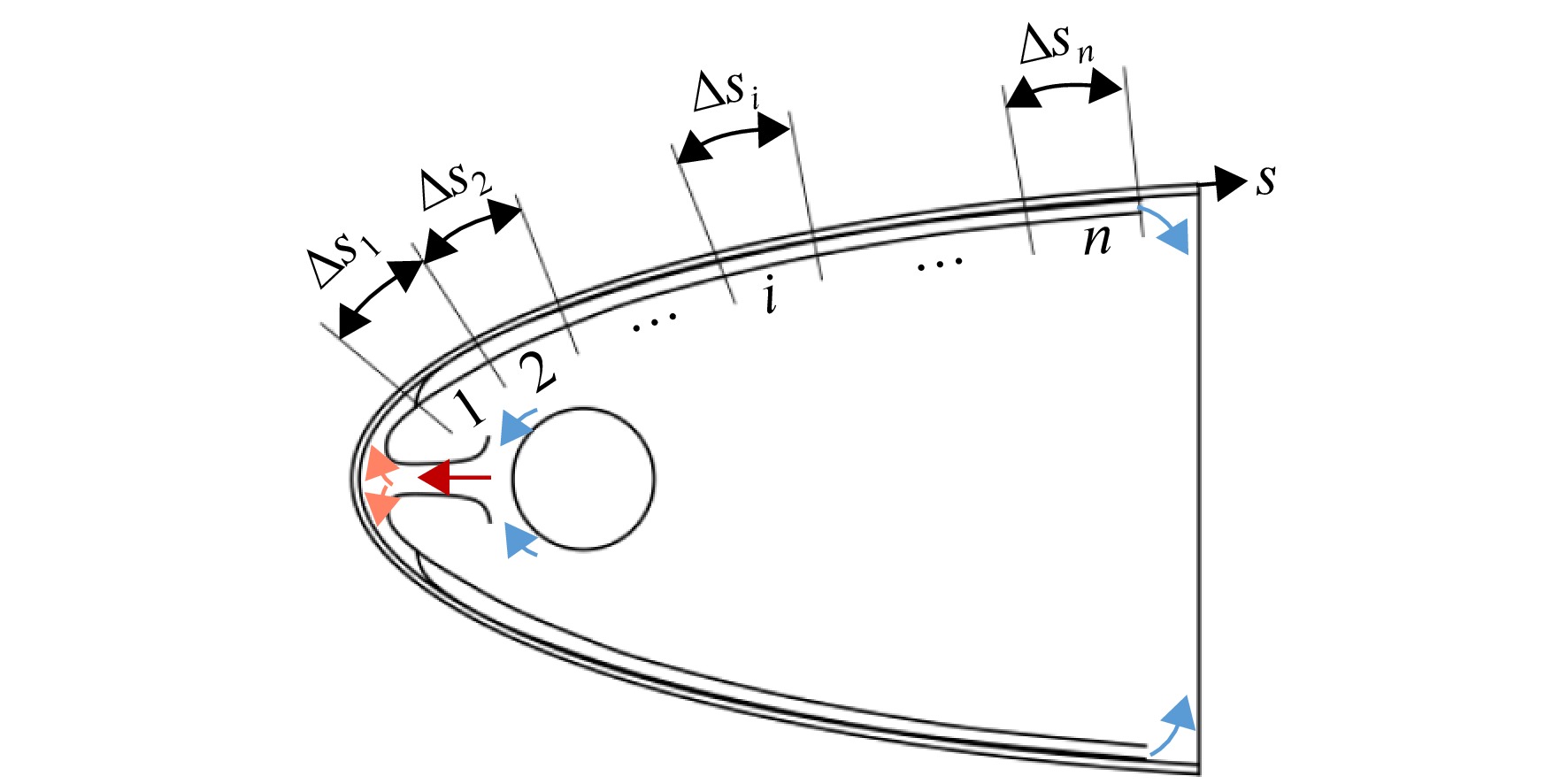
图 3 微引射防冰通道沿s坐标分区
Figure 3. Sections of micro-ejector anti-icing channel along the s direction
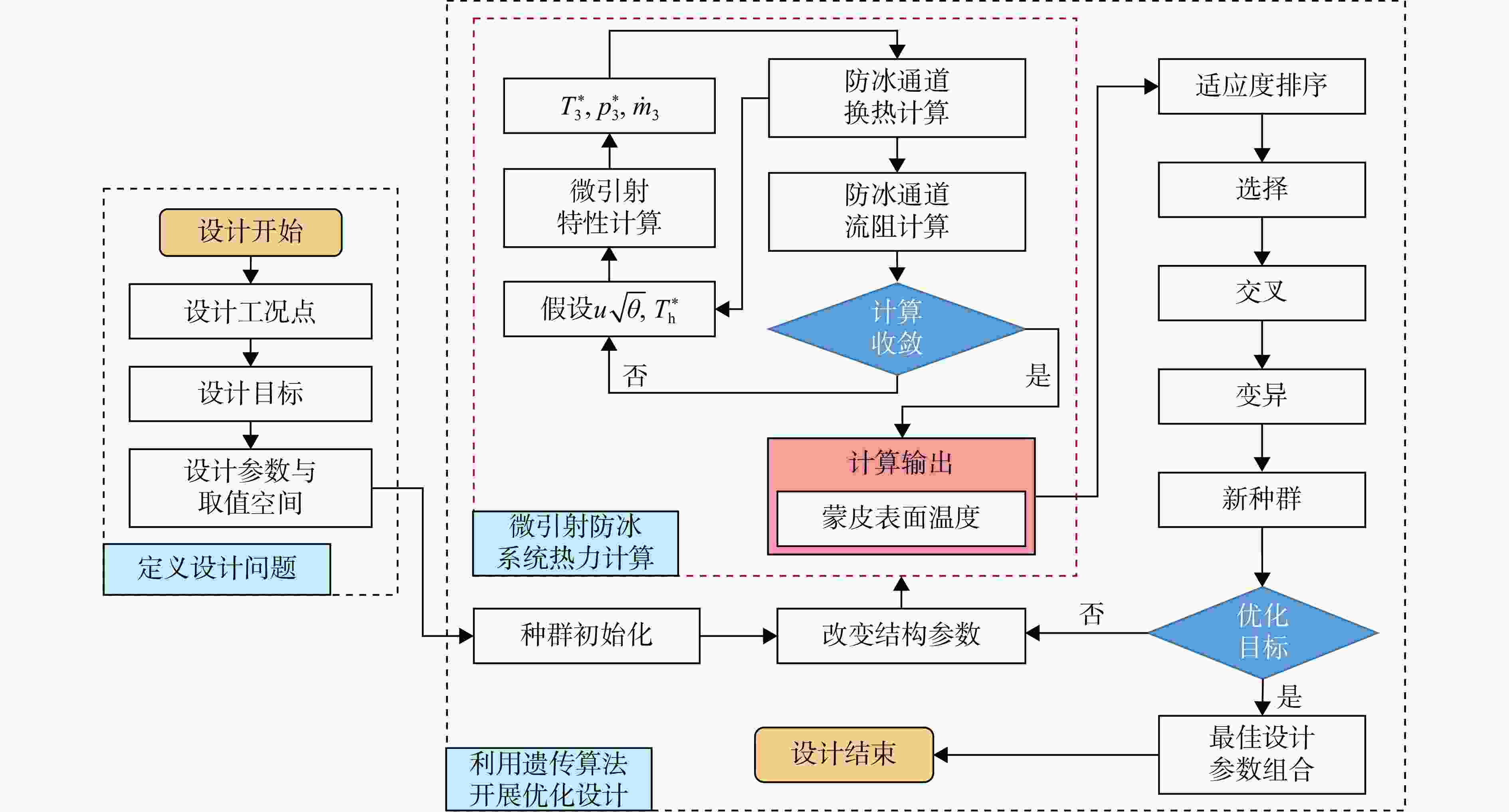
图 6 基于热力计算及遗传算法的微引射防冰系统优化设计
Figure 6. Optimization design based on micro-ejector anti-icing thermal calculation and Genetic Algorithm
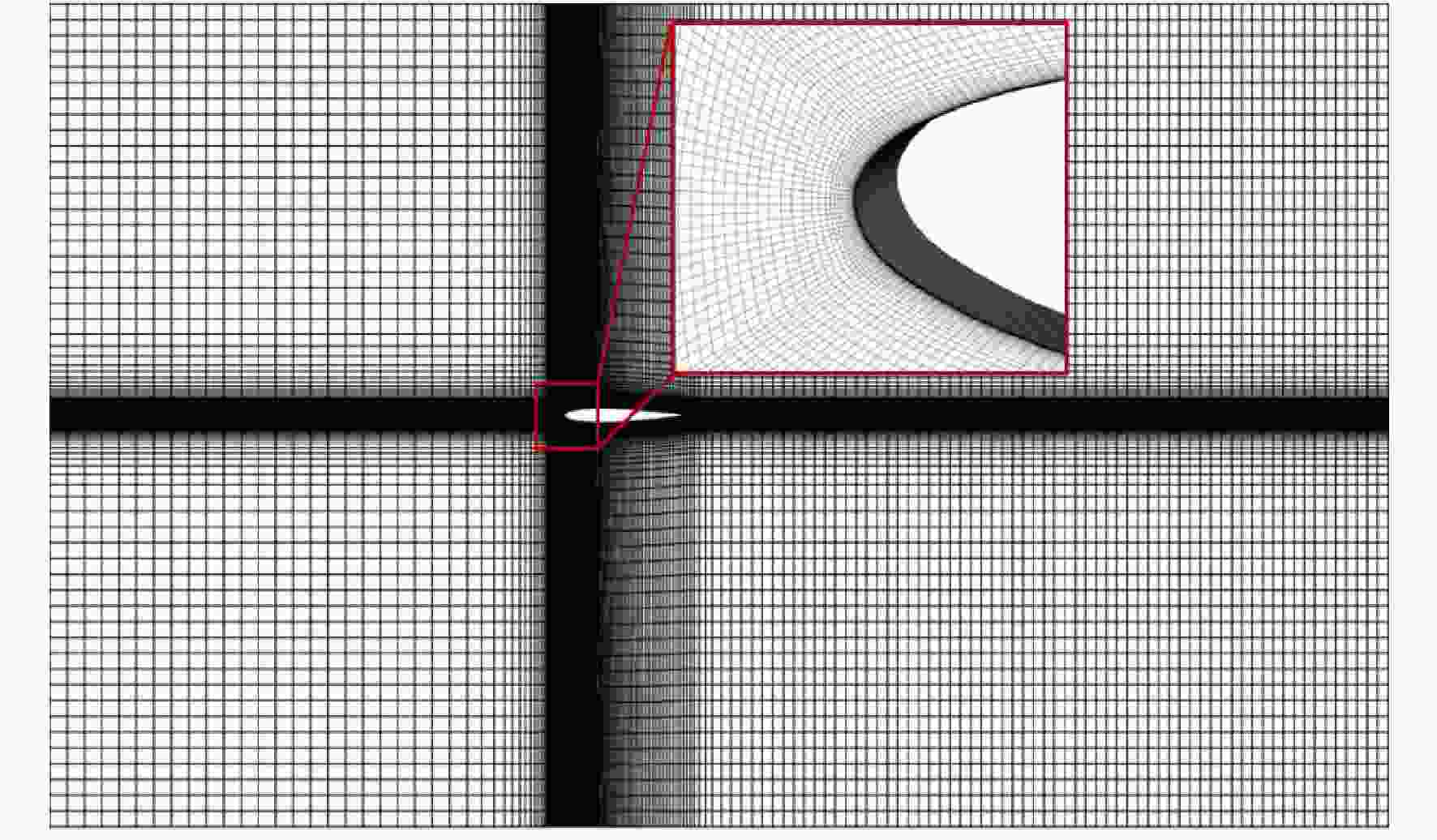
图 8 冷空气流场及水滴撞击特性计算模型
Figure 8. Mesh used for cold air flow field and collection efficiency calculations
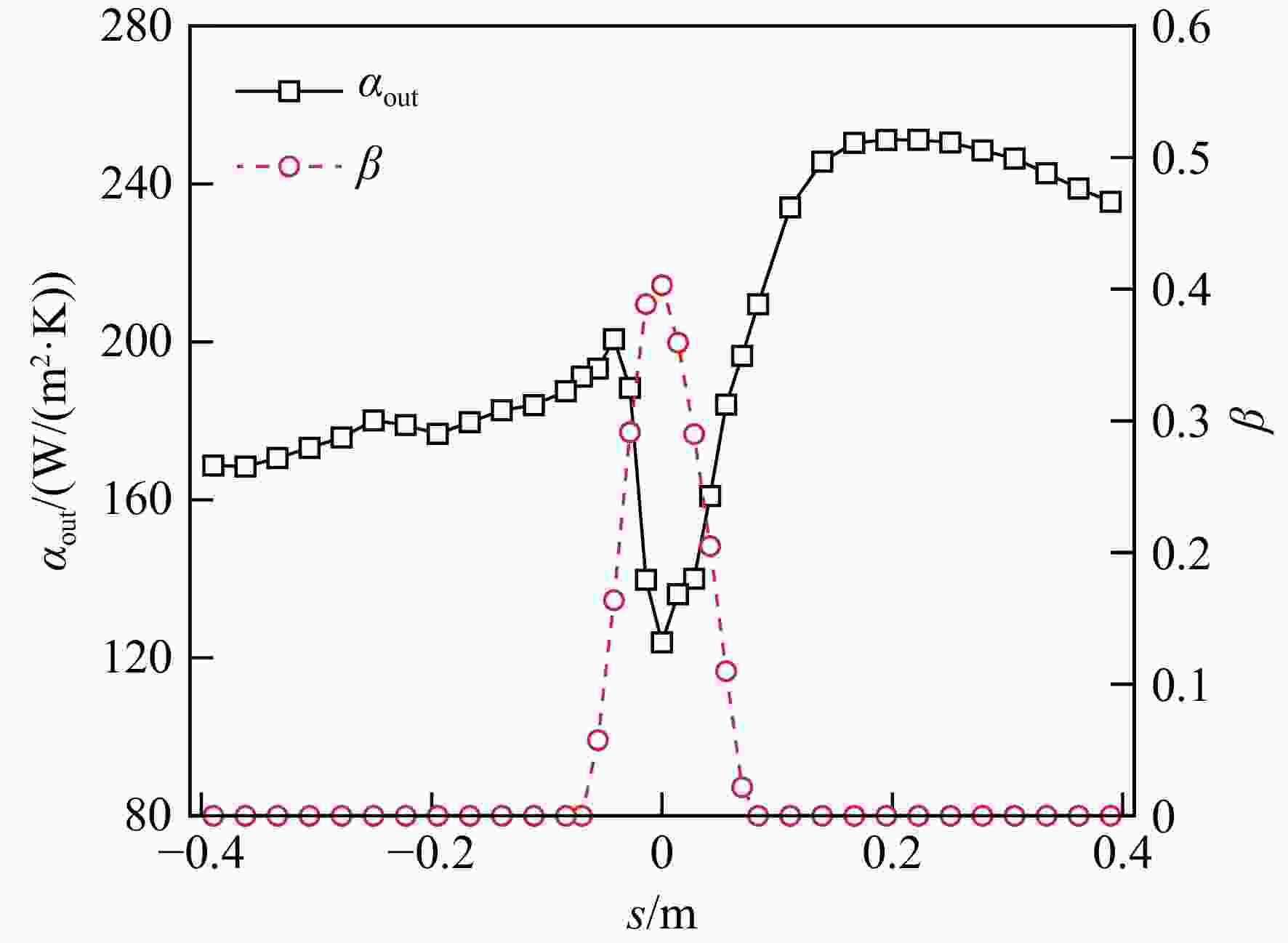
图 9 蒙皮表面的表面传热系数和局部水滴收集系数
Figure 9. Surface heat transfer coefficient and local water collection efficiency on the skin surface
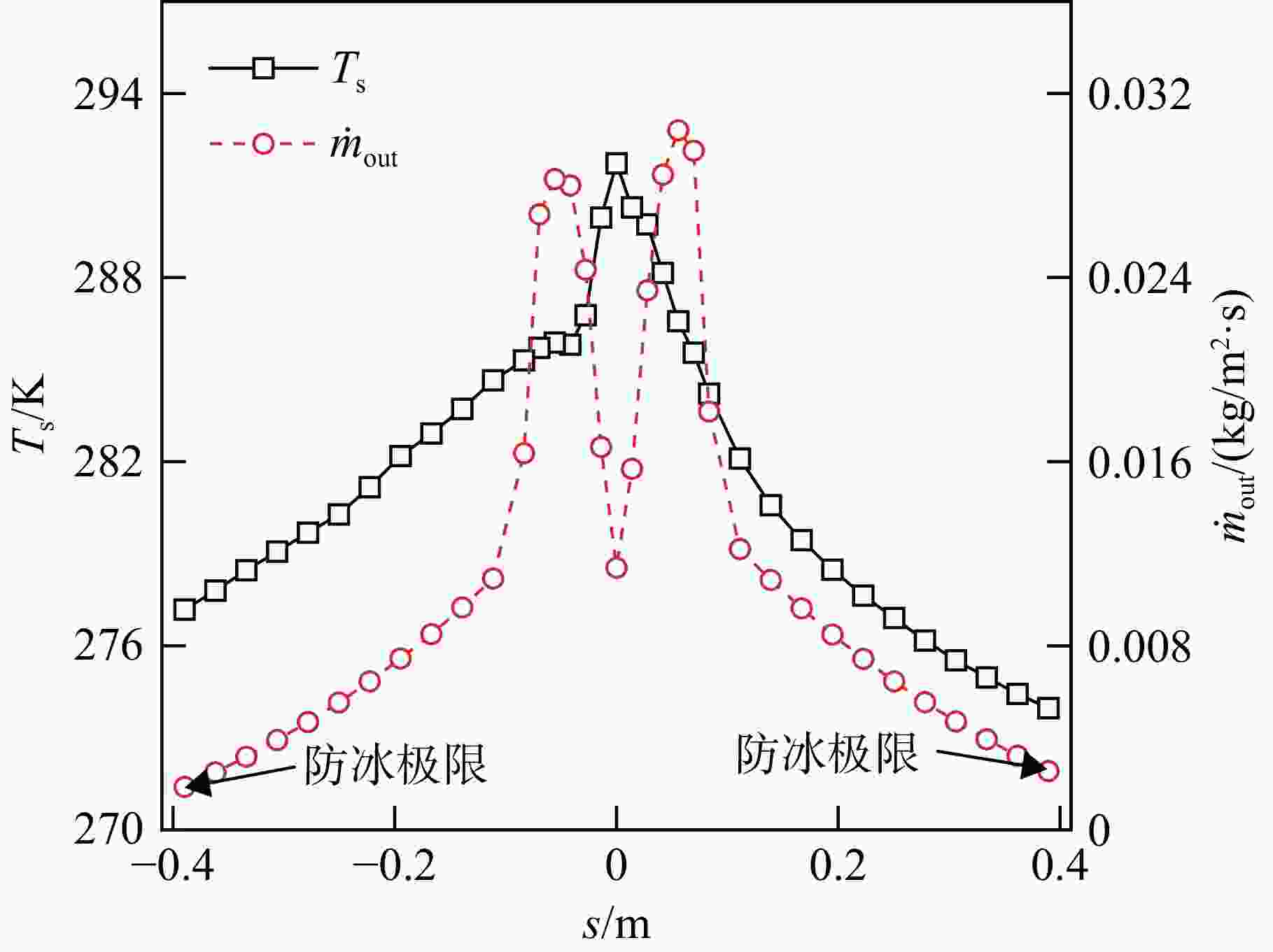
图 10 基础设计蒙皮外表面温度和溢流水分布
Figure 10. Temperature and runback water on the skin surface of the baseline design
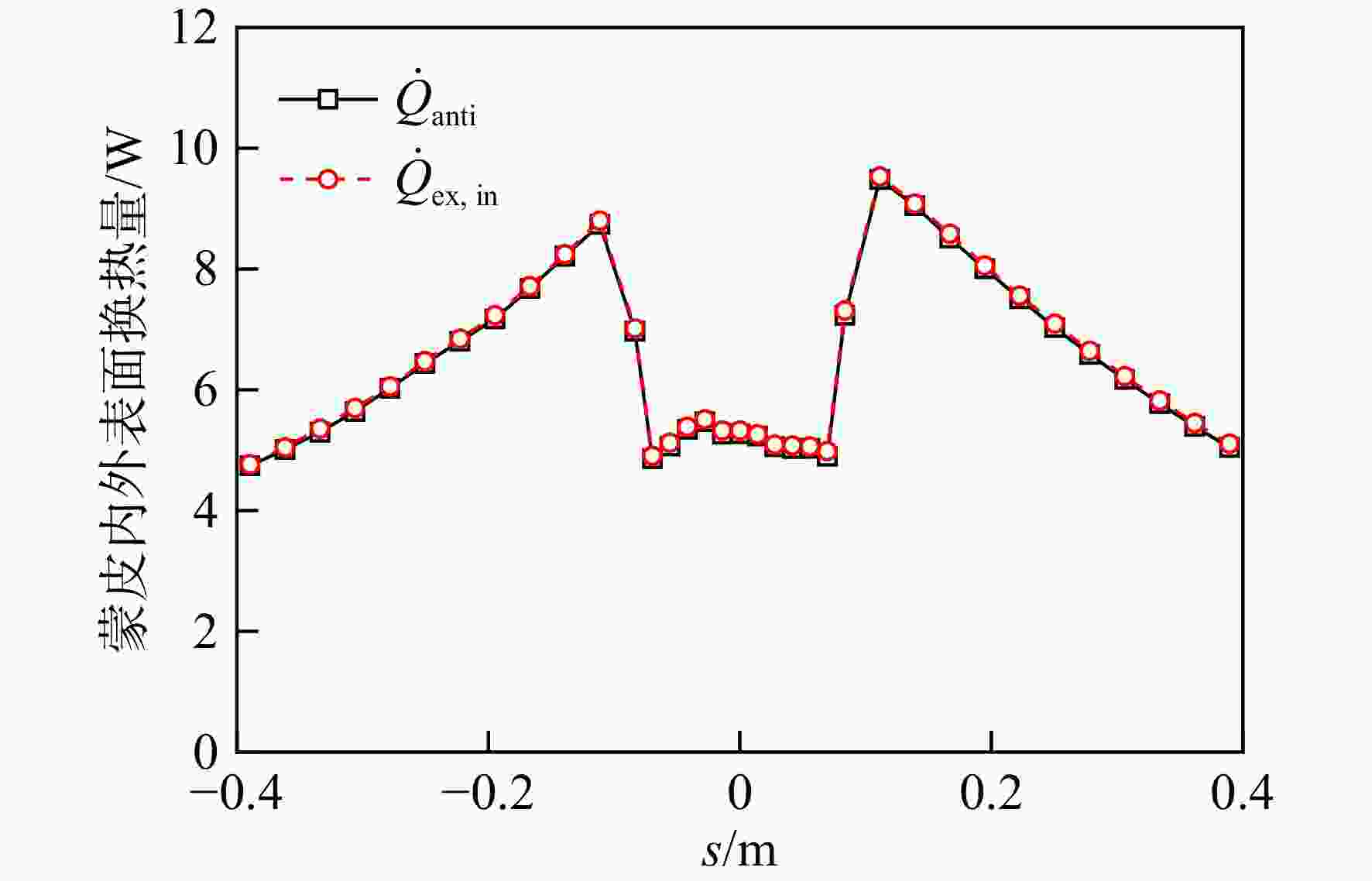
图 11 基础设计防冰载荷及热气传给蒙皮的能量
Figure 11. Anti-icing heat load and heat exchange by hot air flow to skin with the baseline design
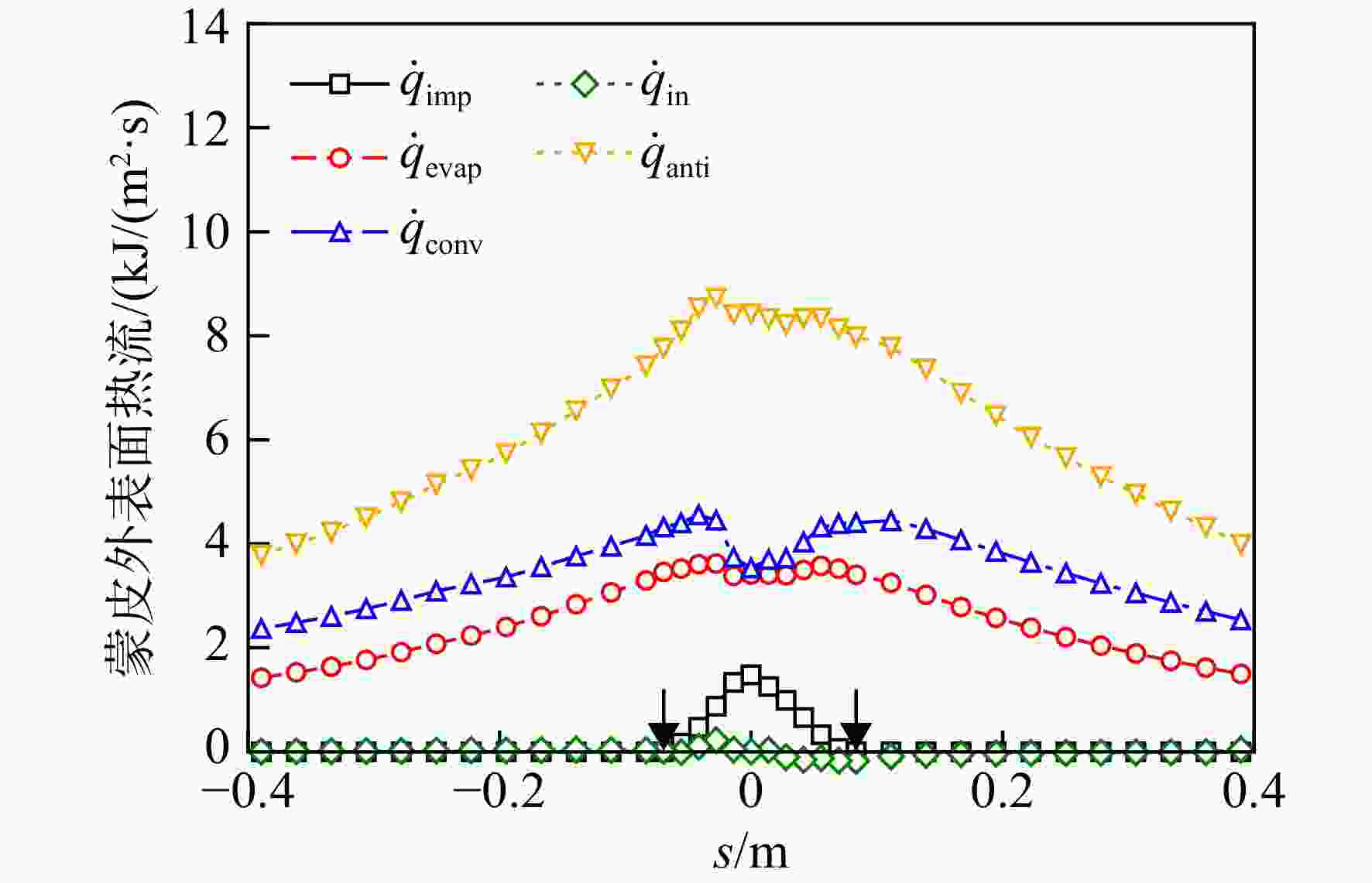
图 12 基础设计蒙皮外表面热流项
Figure 12. Heat transfer rate distributions on the skin surface of the baseline design
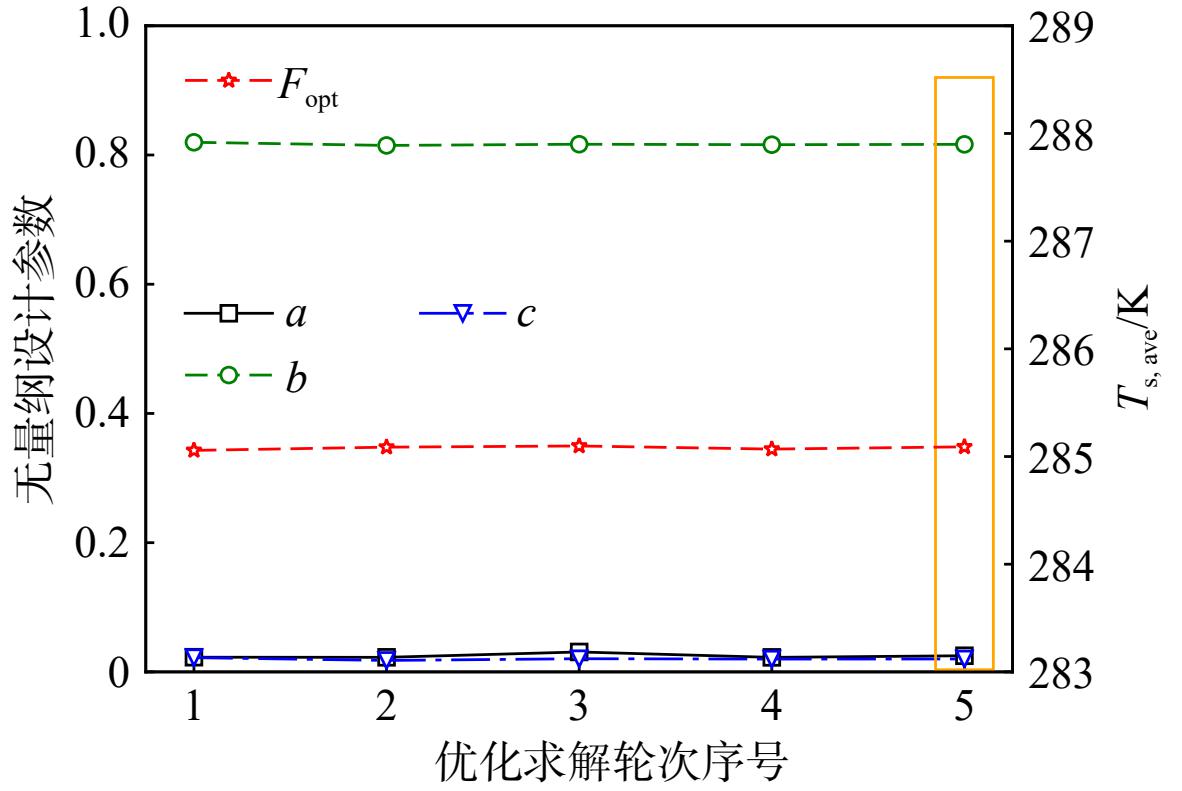
图 13 优化结果和对应目标函数值
Figure 13. Solutions and objective function values of optimization runs
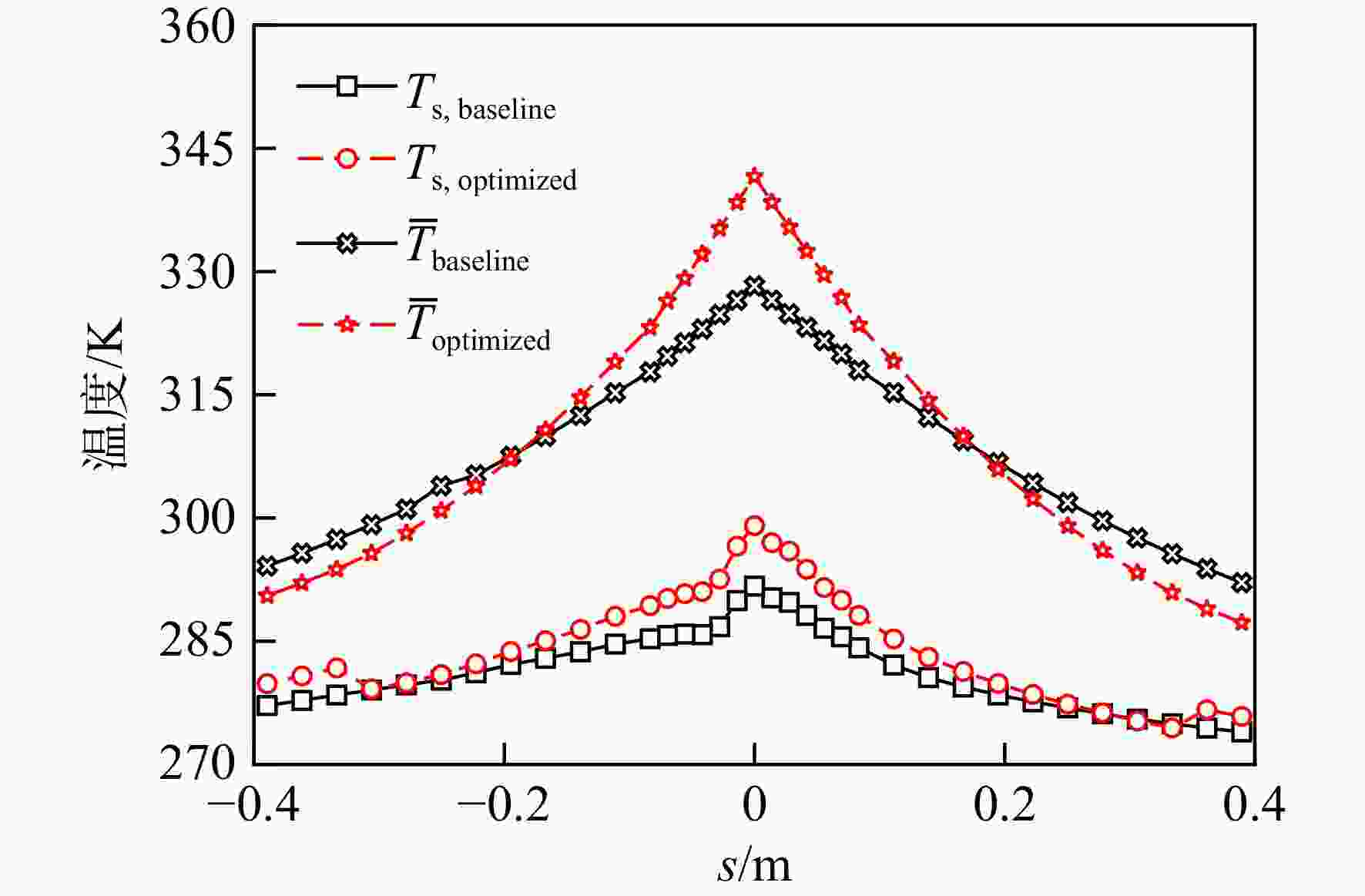
图 15 微通道内温度及蒙皮表面温度分布对比
Figure 15. Comparison of temperature distributions on the skin surface
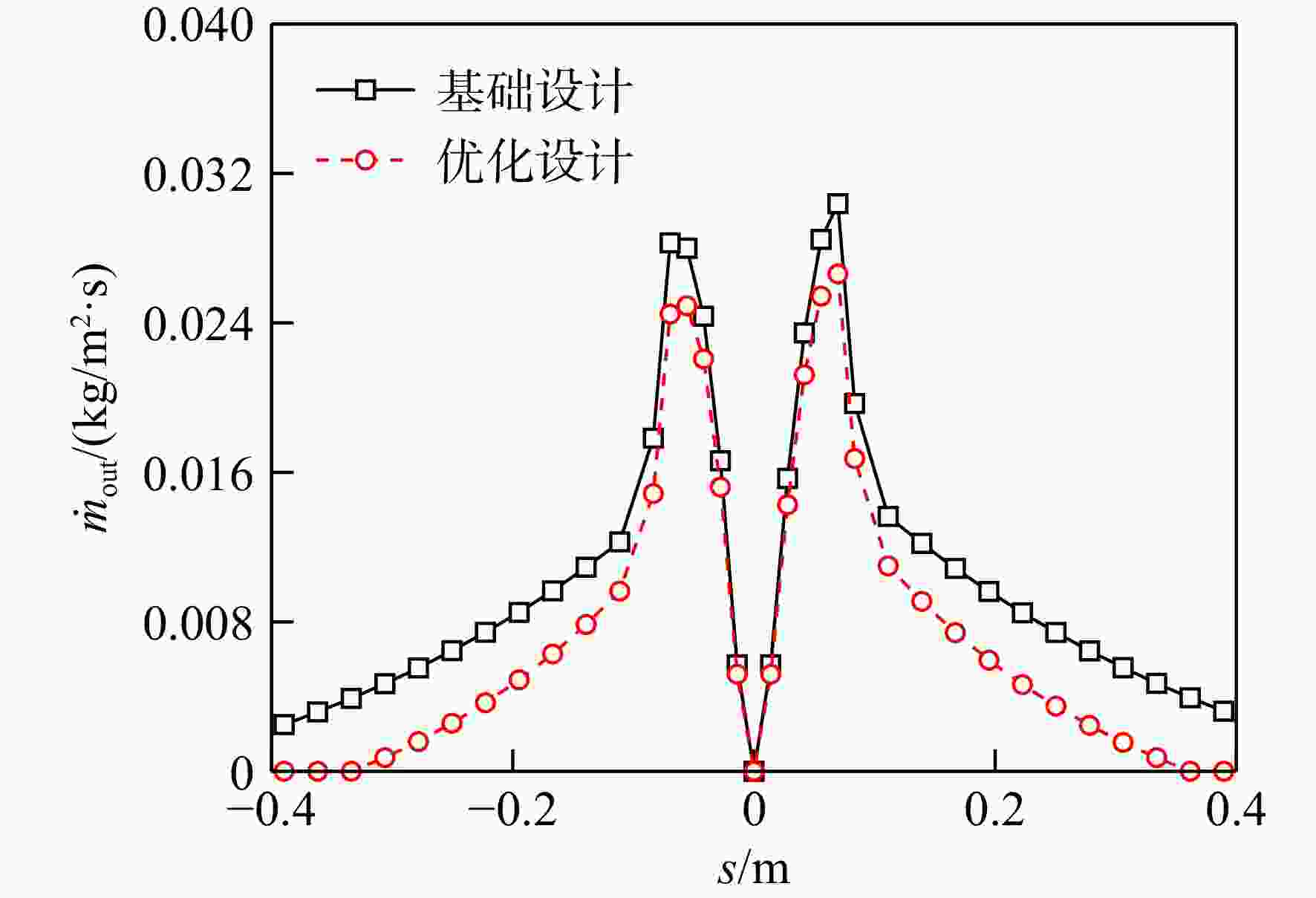
图 16 蒙皮表面溢流水质量流量分布对比
Figure 16. Comparison of the mass flow rate distributions of runback water on the skin surface
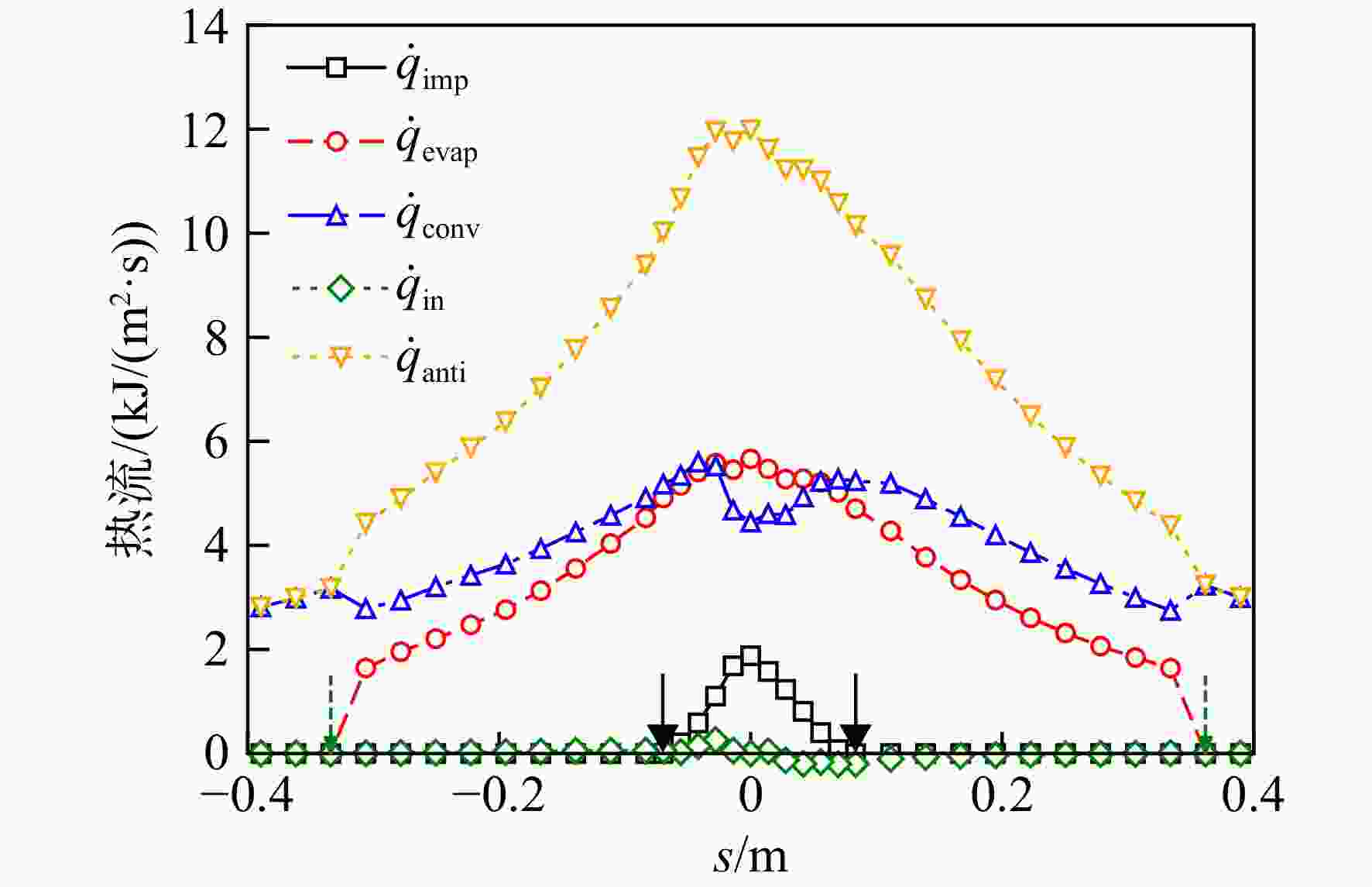
图 17 优化设计蒙皮表面热流项
Figure 17. Heat transfer rate distributions on the skin surface of the optimized design
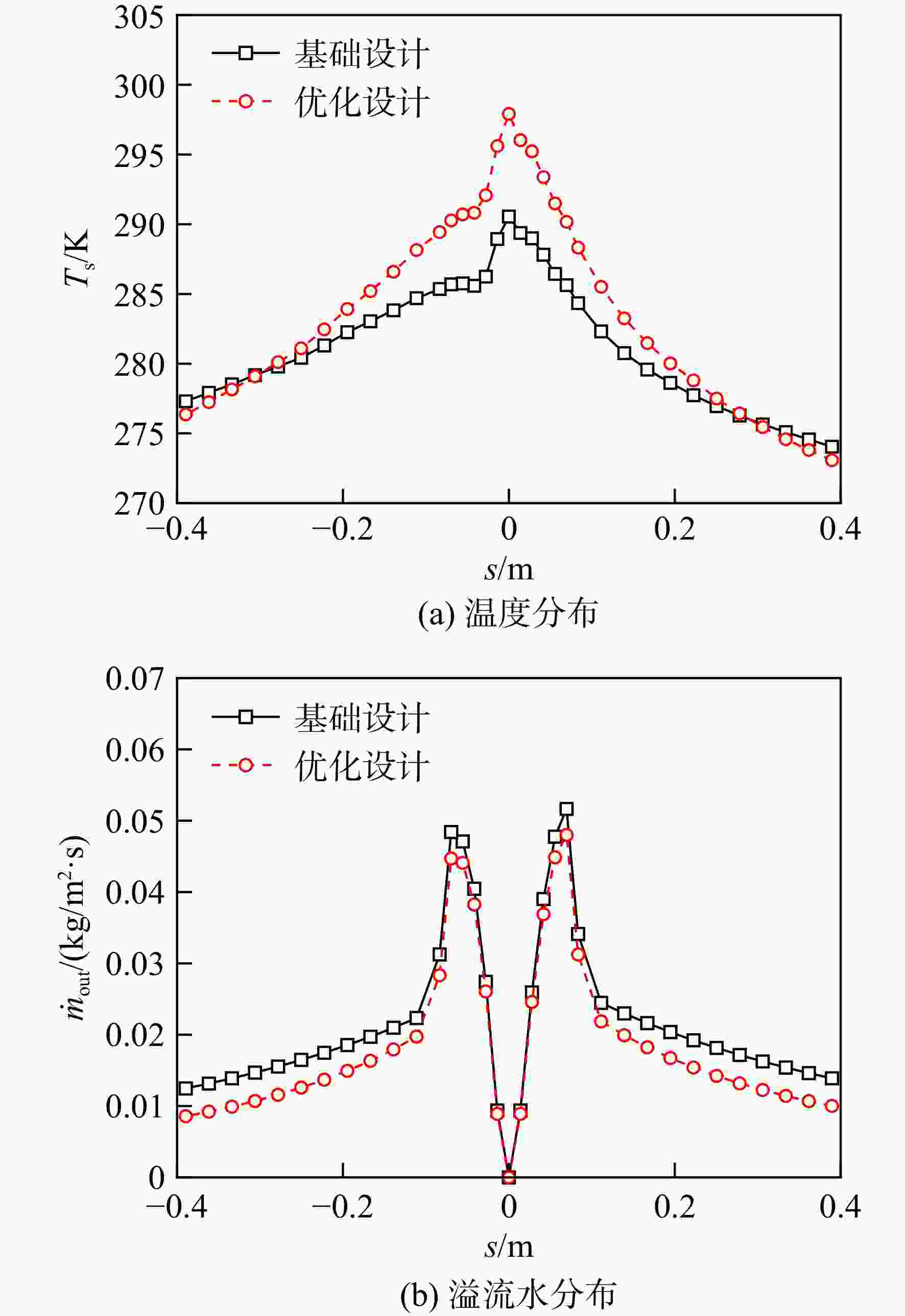
图 18 工况1下基础设计与优化设计对比
Figure 18. Comparison between the baseline and the optimized under condition 1
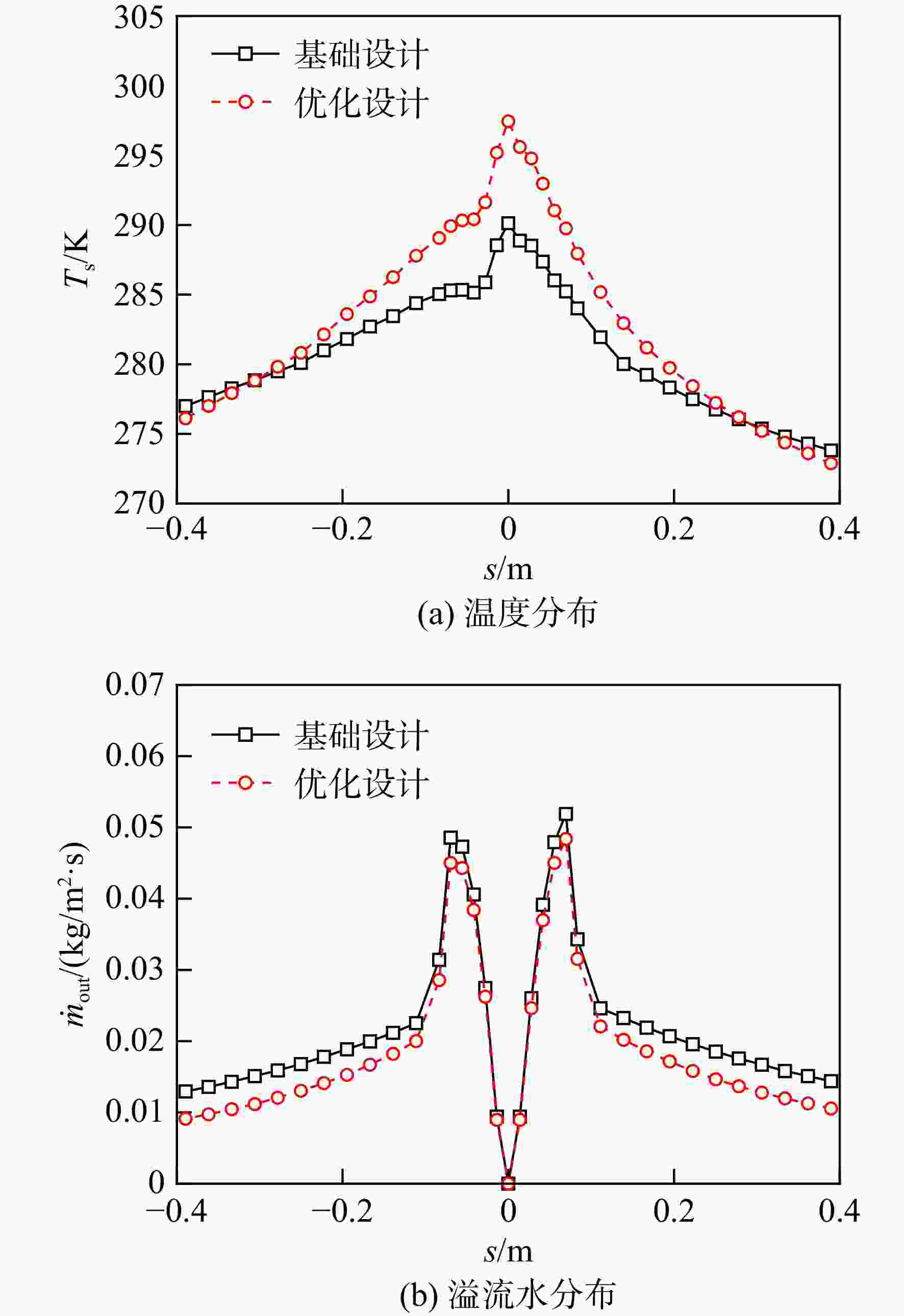
图 19 工况2下基础设计与优化设计对比
Figure 19. Comparison between the baseline and the optimized under condition 2
表 1 基础设计和设计参数区间
Table 1. Baseline design and the ranges of design variables
mm 设计变量 基础设计 取值范围 a 45 40~50 b 35 20~40 h 3 2~4  下载: 导出CSV
表 2 微引射优化设计结构参数
Table 2. Optimized design and baseline design
mm 设计变量 优化设计 a 40.25 b 36.33 h 2.04
下载: 导出CSV
-
[1] 杨升科, 郭奇灵, 罗振兵, 等. 基于合成射流的机翼溢流冰防护实验[J]. 航空动力学报, 2020, 35(11): 2364-2370. Yang Shengke, Guo Qiling, Luo Zhenbing, et al. Experiment on airfoil runback ice protection based on synthetic jet[J]. Journal of Aerospace Power, 2020, 35(11): 2364-2370. (in Chinese doi: 10.13224/j.cnki.jasp.2020.11.013Yang Shengke, Guo Qiling, Luo Zhenbing, et al. Experiment on airfoil runback ice protection based on synthetic jet[J]. Journal of Aerospace Power, 2020, 35(11): 2364-2370. (in Chinese) doi: 10.13224/j.cnki.jasp.2020.11.013 [2] Kim Y, Yee K. Target temperature-based simulation method for predicting performance and designing aircraft thermal anti-icing systems[J]. International Journal of Heat and Mass Transfer, 2024, 229: 125688. doi: 10.1016/j.ijheatmasstransfer.2024.125688 [3] 丁媛媛, 任哲钒. 机翼热气防冰流量分配模型设计及试验验证方法[J]. 民用飞机设计与研究, 2023(3): 96-103. Ding Yuanyuan, Ren Zhefan. Design and experimental verification method of flow distribution model of wing bleed air anti-icing[J]. Civil Aircraft Design and Research, 2023(3): 96-103. (in Chinese doi: 10.19416/j.cnki.1674-9804.2023.03.015Ding Yuanyuan, Ren Zhefan. Design and experimental verification method of flow distribution model of wing bleed air anti-icing[J]. Civil Aircraft Design and Research, 2023(3): 96-103. (in Chinese) doi: 10.19416/j.cnki.1674-9804.2023.03.015 [4] Farghaly M B, Aldabesh A, Aljohani B S, et al. Studying the effect of geometric parameters of anti-icing system on the performance characteristics of airplane Wing: Computational analysis[J]. Case Studies in Thermal Engineering, 2025, 73: 106733. doi: 10.1016/j.csite.2025.106733 [5] 郑梅, 冯丽娟, 秦娜, 等. 短舱防冰系统三维内外流耦合计算方法[J]. 航空学报, 2023, 44(1): 627425. Zheng Mei, Feng Lijuan, Qin Na, et al. 3D computational method for conjugate heat transfer between internal and external flow of nacelle anti-icing system[J]. Acta Aeronautica et Astronautica Sinica, 2023, 44(1): 627425. (in ChineseZheng Mei, Feng Lijuan, Qin Na, et al. 3D computational method for conjugate heat transfer between internal and external flow of nacelle anti-icing system[J]. Acta Aeronautica et Astronautica Sinica, 2023, 44(1): 627425. (in Chinese) [6] 刘晓林, 朱彦瞳, 王泽林澜, 等. 飞行器仿生防冰涂层技术现状与趋势[J]. 航空学报, 2022, 43(10): 527331. Liu Xiaolin, Zhu Yantong, Wang Zelinlan, et al. Research progress and development trend of bio-inspired anti-icing coatings for aircraft[J]. Acta Aeronautica et Astronautica Sinica, 2022, 43(10): 527331. (in ChineseLiu Xiaolin, Zhu Yantong, Wang Zelinlan, et al. Research progress and development trend of bio-inspired anti-icing coatings for aircraft[J]. Acta Aeronautica et Astronautica Sinica, 2022, 43(10): 527331. (in Chinese) [7] Guo Zhiqiang, Zheng Mei, Yang Qian, et al. Effects of flow parameters on thermal performance of an inner-liner anti-icing system with jets impingement heat transfer[J]. Chinese Journal of Aeronautics, 2021, 34(9): 119-132. doi: 10.1016/j.cja.2021.01.015 [8] 潘旭云. 某型飞机防冰系统机翼防冰腔性能研究[D]. 南京: 南京航空航天大学, 2006: 3-4. Pan Xuyun. Performance analysis of micro-ejector anti-icing tunnel[D]. Nanjing: Nanjing University of Aeronautics and Astronautics, 2006: 3-4. (in ChinesePan Xuyun. Performance analysis of micro-ejector anti-icing tunnel[D]. Nanjing: Nanjing University of Aeronautics and Astronautics, 2006: 3-4. (in Chinese) [9] 梁青森, 陈维建, 马辉, 等. 微引射热气除冰腔引射性能分析[J]. 南京航空航天大学学报, 2013, 45(3): 341-346. Liang Qingsen, Chen Weijian, Ma Hui, et al. Injection performance of hot-air de-icer with micro-injector[J]. Journal of Nanjing University of Aeronautics & Astronautics, 2013, 45(3): 341-346. (in ChineseLiang Qingsen, Chen Weijian, Ma Hui, et al. Injection performance of hot-air de-icer with micro-injector[J]. Journal of Nanjing University of Aeronautics & Astronautics, 2013, 45(3): 341-346. (in Chinese) [10] 裘燮纲, 余小章. 微引射防冰腔热力计算[J]. 航空学报, 1994, 15(9): 1110-1113. Qiu Xiegang, Yu Xiaozhang. Thermal calculation for anti-icer with micro-ejector[J]. Acta Aeronautica et Astronautica Sinica, 1994, 15(9): 1110-1113. (in ChineseQiu Xiegang, Yu Xiaozhang. Thermal calculation for anti-icer with micro-ejector[J]. Acta Aeronautica et Astronautica Sinica, 1994, 15(9): 1110-1113. (in Chinese) [11] Liu Yu, Wang Qiang, Yi Xian, et al. An anti-icing scaling method for wind tunnel tests of aircraft thermal ice protection system[J]. Chinese Journal of Aeronautics, 2024, 37(6): 1-6. doi: 10.1016/j.cja.2024.03.051 [12] 杨倩. 飞机结防冰数值模拟及热气防冰优化设计方法研究[D]. 上海: 上海交通大学, 2023: 52-53. Yang Qian. Research on numerical simulation of aircraft and anti-icing and hot air anti-icing optimization design method[D]. Shanghai Jiao Tong University, 2023: 52-53. (in ChineseYang Qian. Research on numerical simulation of aircraft and anti-icing and hot air anti-icing optimization design method[D]. Shanghai Jiao Tong University, 2023: 52-53. (in Chinese) [13] 顾鹏程. 基于自适应遗传算法的多目标优化研究[D]. 南京: 南京航空航天大学, 2016: 6-7. Gu Pengcheng. Multi-objective optimization with adaptive genetic algorithms[D]. Nanjing: Nanjing University of Aeronautics and Astronautics, 2016: 6-7. (in ChineseGu Pengcheng. Multi-objective optimization with adaptive genetic algorithms[D]. Nanjing: Nanjing University of Aeronautics and Astronautics, 2016: 6-7. (in Chinese) [14] Yang Qian, Guo Xiaofeng, Zheng Haoran, et al. Single- and multi-objective optimization of an aircraft hot-air anti-icing system based on Reduced Order Method[J]. Applied Thermal Engineering, 2023, 219: 119543. doi: 10.1016/j.applthermaleng.2022.119543 [15] 杨倩, 郑皓冉, 程显达, 等. 基于引气控制的热气防冰优化设计方法[J]. 航空学报, 2023, 44(增刊2): 729285. Yang Qian, Zheng Haoran, Cheng Xianda, et al. Optimization design method for hot air anti-icing system based on bleed air control[J]. Acta Aeronautica et Astronautica Sinica, 2023, 44(Suppl.2): 729285. (in ChineseYang Qian, Zheng Haoran, Cheng Xianda, et al. Optimization design method for hot air anti-icing system based on bleed air control[J]. Acta Aeronautica et Astronautica Sinica, 2023, 44(Suppl.2): 729285. (in Chinese) [16] Guo Xiaofeng, Yang Qian, Zheng Haoran, et al. Optimization of power distribution for electrothermal anti-icing systems by differential evolution algorithm[J]. Applied Thermal Engineering, 2023, 221: 119875. doi: 10.1016/j.applthermaleng.2022.119875 [17] Targui A, Habashi W G. On a reduced-order model-based optimization of rotor electro-thermal anti-icing systems[J]. International Journal of Numerical Methods for Heat & Fluid Flow, 2022, 32(8): 2885-2913. doi: 10.1108/HFF-06-2021-0417 [18] Arizmendi G B, Della N A, Gallia M, et al. Optimization of a thermal ice protection system by means of a genetic algorithm[C]// Proceedings of International Conference on Bioinspired Methods and Their Applications. Brussels, Belgium: Springer, 2020: 189-200. [19] 唐宇豪, 柴得林, 易贤, 等. 含盐水滴撞击特性及结冰相变计算[J]. 西北工业大学学报, 2025, 43(1): 31-39. Tang Yuhao, Chai Delin, Yi Xian, et al. Calculation of impact characteristics and icing phase transitions of salty droplets[J]. Journal of Northwestern Polytechnical University, 2025, 43(1): 31-39. (in Chinese doi: 10.1051/jnwpu/20254310031Tang Yuhao, Chai Delin, Yi Xian, et al. Calculation of impact characteristics and icing phase transitions of salty droplets[J]. Journal of Northwestern Polytechnical University, 2025, 43(1): 31-39. (in Chinese) doi: 10.1051/jnwpu/20254310031 [20] 陈宁立, 易贤, 王强, 等. NNW-ICE软件的三维结冰模型及精度验证[J]. 航空学报, 2024, 45(12): 129188. Chen Ningli, Yi Xian, Wang Qiang, et al. Three-dimensional model for ice accretion in NNW-ICE software and validation of its precision[J]. Acta Aeronautica et Astronautica Sinica, 2024, 45(12): 129188. (in Chinese doi: 10.7527/S1000-6893.2023.29188Chen Ningli, Yi Xian, Wang Qiang, et al. Three-dimensional model for ice accretion in NNW-ICE software and validation of its precision[J]. Acta Aeronautica et Astronautica Sinica, 2024, 45(12): 129188. (in Chinese) doi: 10.7527/S1000-6893.2023.29188 [21] 胡金源, 金志光, 田维康. 微引射式防冰腔结构参数对换热性能的影响[J]. 机械制造与自动化, 2022, 51(1): 49-52. Hu Jinyuan, Jin Zhiguang, Tian Weikang. Influence of structural parameters of micro-ejection anti-icing cavity on hot air anti-icing performance[J]. Machine Building & Automation, 2022, 51(1): 49-52. (in Chinese doi: 10.19344/j.cnki.issn1671-5276.2022.01.013Hu Jinyuan, Jin Zhiguang, Tian Weikang. Influence of structural parameters of micro-ejection anti-icing cavity on hot air anti-icing performance[J]. Machine Building & Automation, 2022, 51(1): 49-52. (in Chinese) doi: 10.19344/j.cnki.issn1671-5276.2022.01.013 [22] 索科洛夫 E Я, 津格尔 H M. 喷射器[M]. 黄秋云, 译. 北京: 科学出版社, 1977: 19-22. Sokolov E Y, Zinger N M. Ejectors[M]. Translated by Huang Qiuyun. Beijing: Science Press, 1977: 19-22. (in ChineseSokolov E Y, Zinger N M. Ejectors[M]. Translated by Huang Qiuyun. Beijing: Science Press, 1977: 19-22. (in Chinese) [23] 韩凤华. 飞机防冰系统[M]. 北京: 国防工业出版社, 2004: 46-58. Han Fenghua. Aircraft anti-icing system[M]. Beijing: National Defense Industry Press, 2004: 46-58. (in ChineseHan Fenghua. Aircraft anti-icing system[M]. Beijing: National Defense Industry Press, 2004: 46-58. (in Chinese) [24] Holland J H. Adaptation in Natural and Artificial Systems: an introductory analysis with applications to biology, control, and artificial intelligence[M]. Cambridge, US: The MIT Press, 1992. [25] 王清, 陆波, 王亮权. 基于RBF神经网络的旋翼桨叶气动外形优化[J]. 航空动力学报, 2026, 41(1): 20240182. Wang Qing, Lu Bo, Wang Liangquan. Rotor blade aerodynamic shape optimization based on RBF neural network[J]. Journal of Aerospace Power, 2026, 41(1): 20240182. (in Chinese doi: 10.13224/j.cnki.jasp.20240182Wang Qing, Lu Bo, Wang Liangquan. Rotor blade aerodynamic shape optimization based on RBF neural network[J]. Journal of Aerospace Power, 2026, 41(1): 20240182. (in Chinese) doi: 10.13224/j.cnki.jasp.20240182 [26] Nayak S. Fundamentals of optimization techniques with algorithms [M]. Amsterdam: Elsevier, 2020: 253-270. -


 点击查看大图

计量
- 文章访问数: 139
- HTML浏览量: 154
- PDF量: 4
- 被引次数: 0