






Effect of effusion hole arrangement pattern on combustion liner cooling performance
-
摘要:
针对某中心分级旋流燃烧室火焰筒切向发散冷却中的壁温不均匀性问题,通过数值模拟方法研究了发散小孔排布对冷却性能的影响规律。基于单管燃烧室近壁流场特性,提出了分区精细化排布策略:在高温热斑区(轴向1/4~2/3处)设置加密区,在其前后分别布置稀疏区和过渡区。在保持总冷却气量不变的前提下,通过减小加密区孔间距(从基准方案的11倍孔间距优化至8倍孔间距),并相应调整稀疏区和过渡区的孔间距分布。研究结果表明,加密区孔间距缩小可显著降低壁温峰值(最高降幅达50 K)并减小高温区面积;过渡区采用渐缩孔间距设计能有效增强气膜连续性,使壁温梯度降低至44 K/cm以下,满足火焰筒的热防护要求。优化后的排布方案使综合冷却效率提升至74%,为旋流燃烧室火焰筒冷却结构设计提供了重要的理论依据和技术支撑。
Abstract:The wall temperature non-uniformity issue in tangential effusion cooling for a swirl combustor flame tube was addressed. Numerical simulations were employed to investigate the influence of effusion hole arrangement on cooling performance. A zoned refinement strategy was proposed based on near-wall flow characteristics: establishing a dense zone in the high-temperature hotspot region (axial 1/4—2/3 position) with sparse and transition zones at both ends. While maintaining constant total coolant flow rate, the hole spacing in the intensified cooling zone was reduced from 11 times the hole diameter in the baseline configuration to 8 times the hole diameter in the optimized configuration, with corresponding adjustments made to the hole spacing distribution in both the sparse and transition zones. Results demonstrated that the reduced hole spacing in the dense zone significantly decreased the peak wall temperature (up to 50 K reduction) and the high-temperature area, while the tapered hole spacing in transition zones enhanced film-cooling continuity, lowering wall temperature gradient below 44 K/cm to meet thermal protection requirements. The optimized configuration achieved 74% overall cooling efficiency, providing both theoretical foundation and technical support for swirl combustor liner cooling design.
-
Key words:
- effusion cooling /
- combustor liner /
- hole arrangement /
- cooling efficiency /
- swirl combustor
-
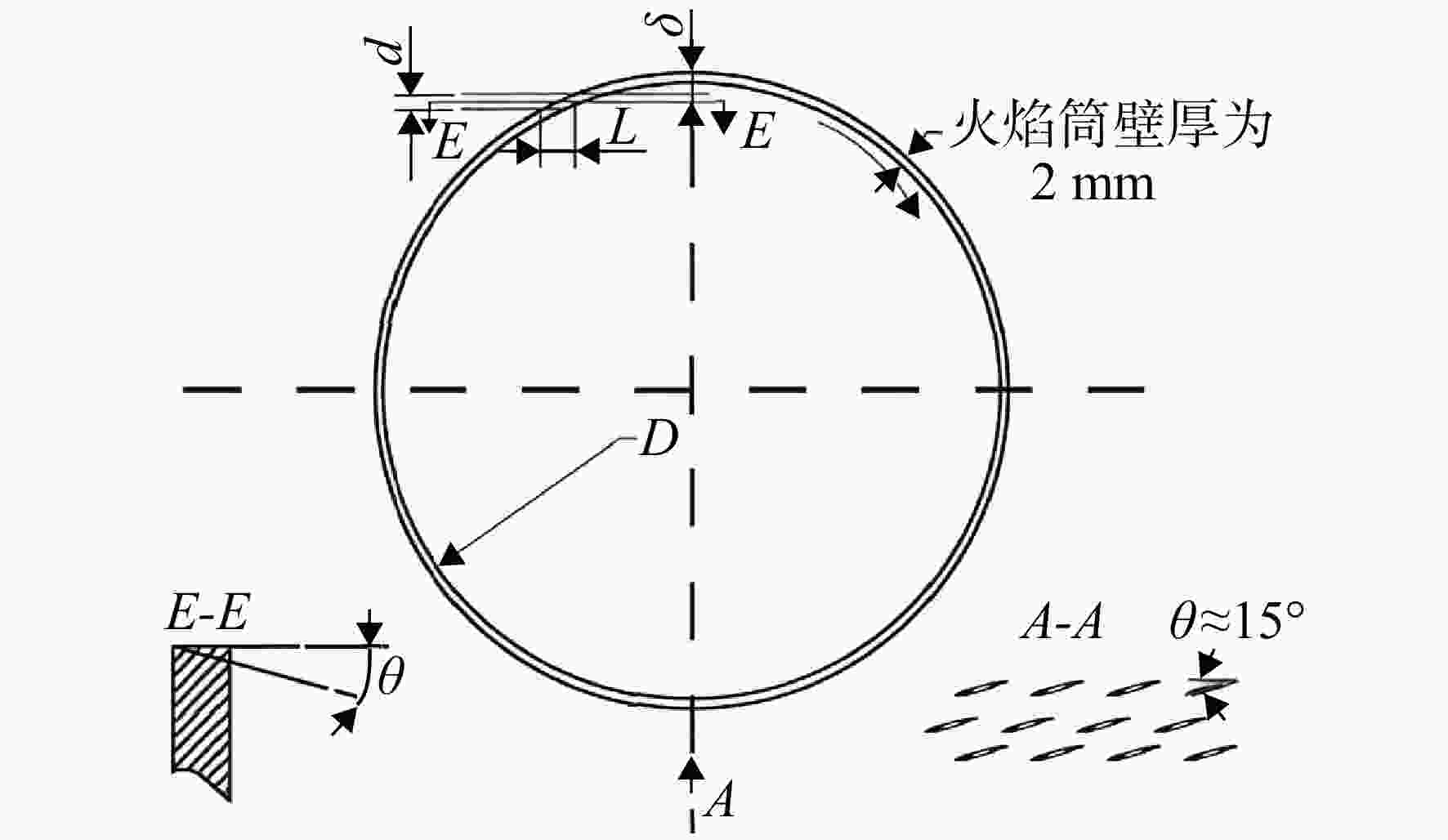
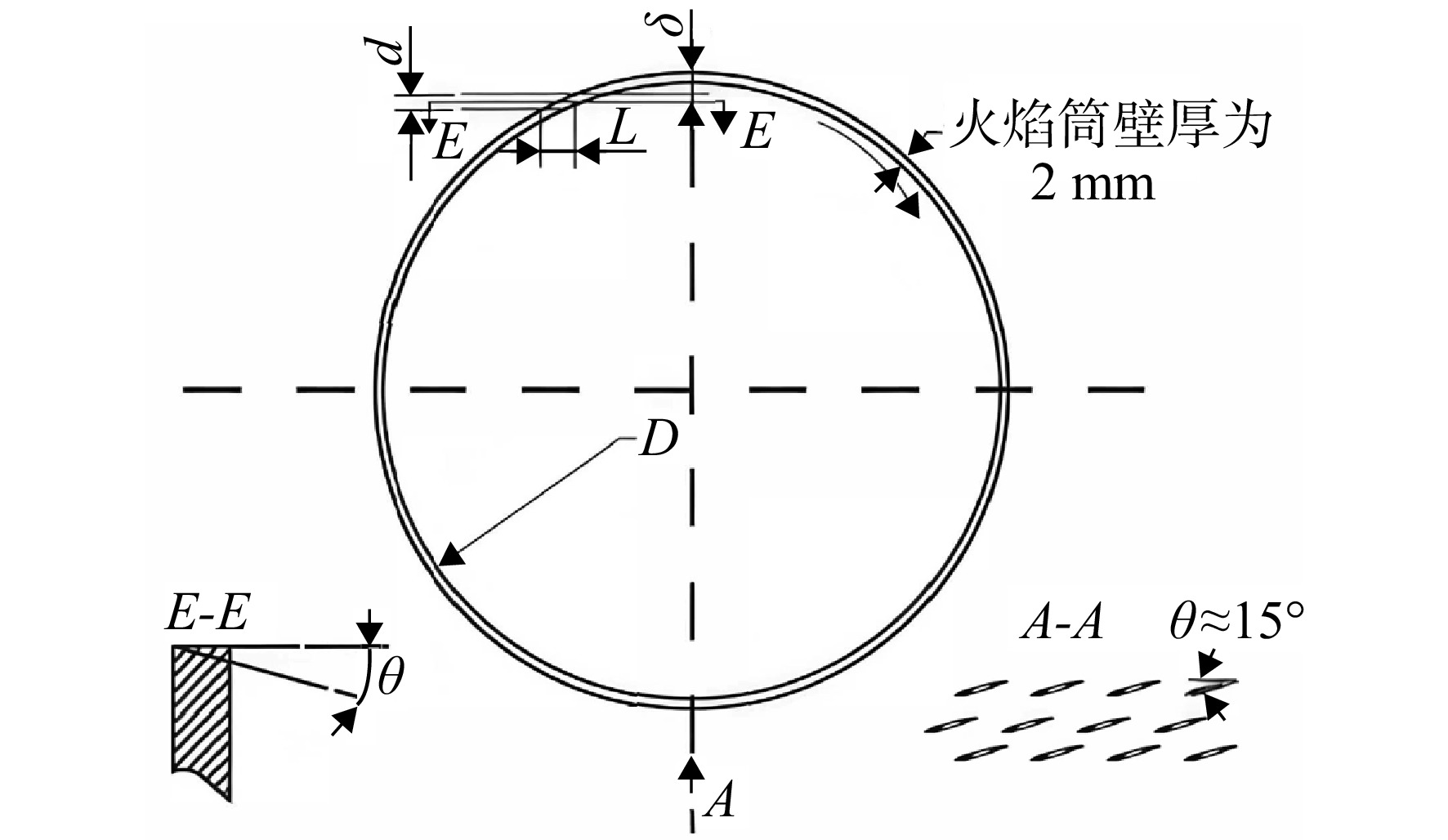
图 3 切向发散冷却孔结构示意图
Figure 3. Schematic diagram of tangential effusion cooling hole configuration
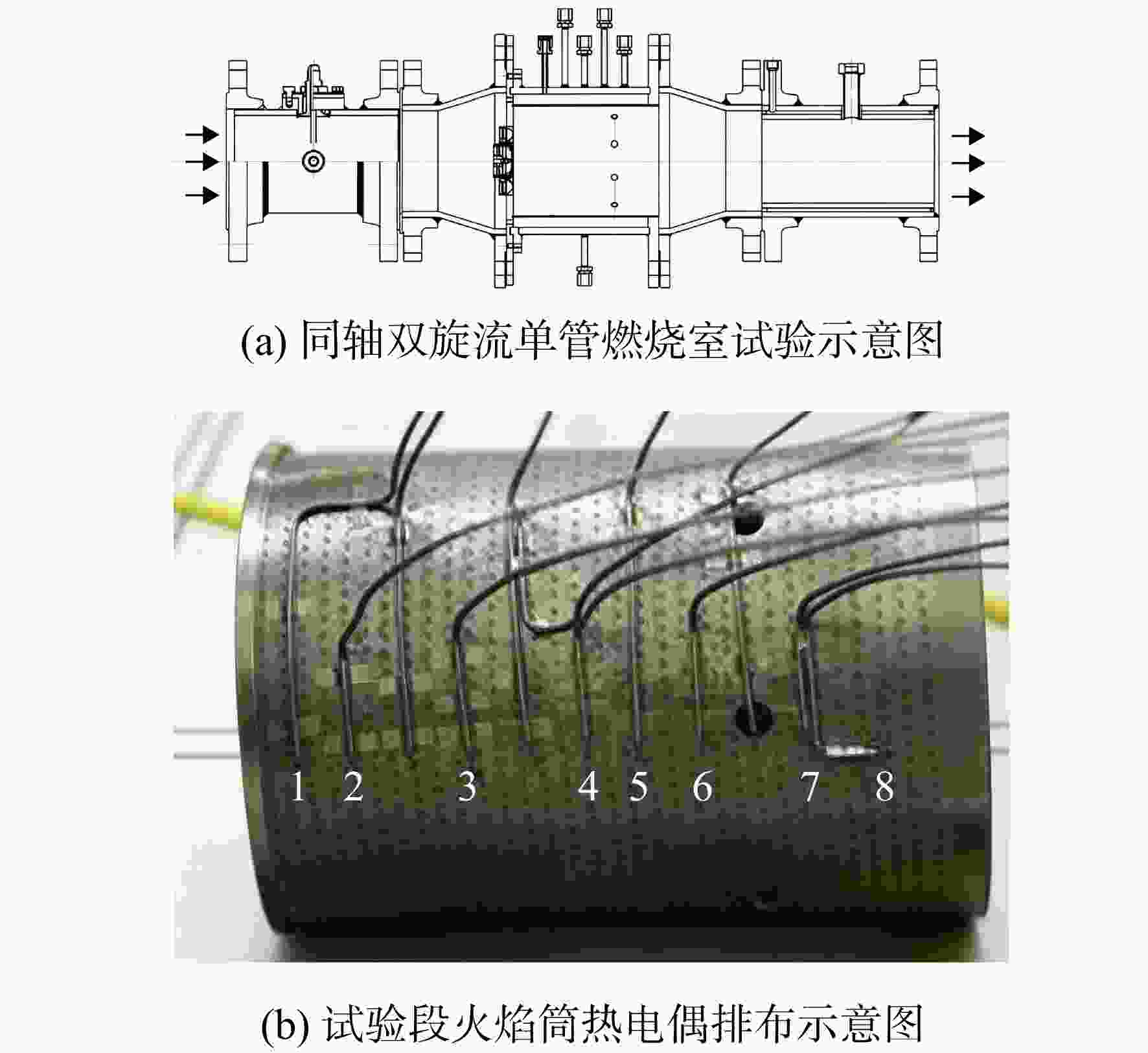
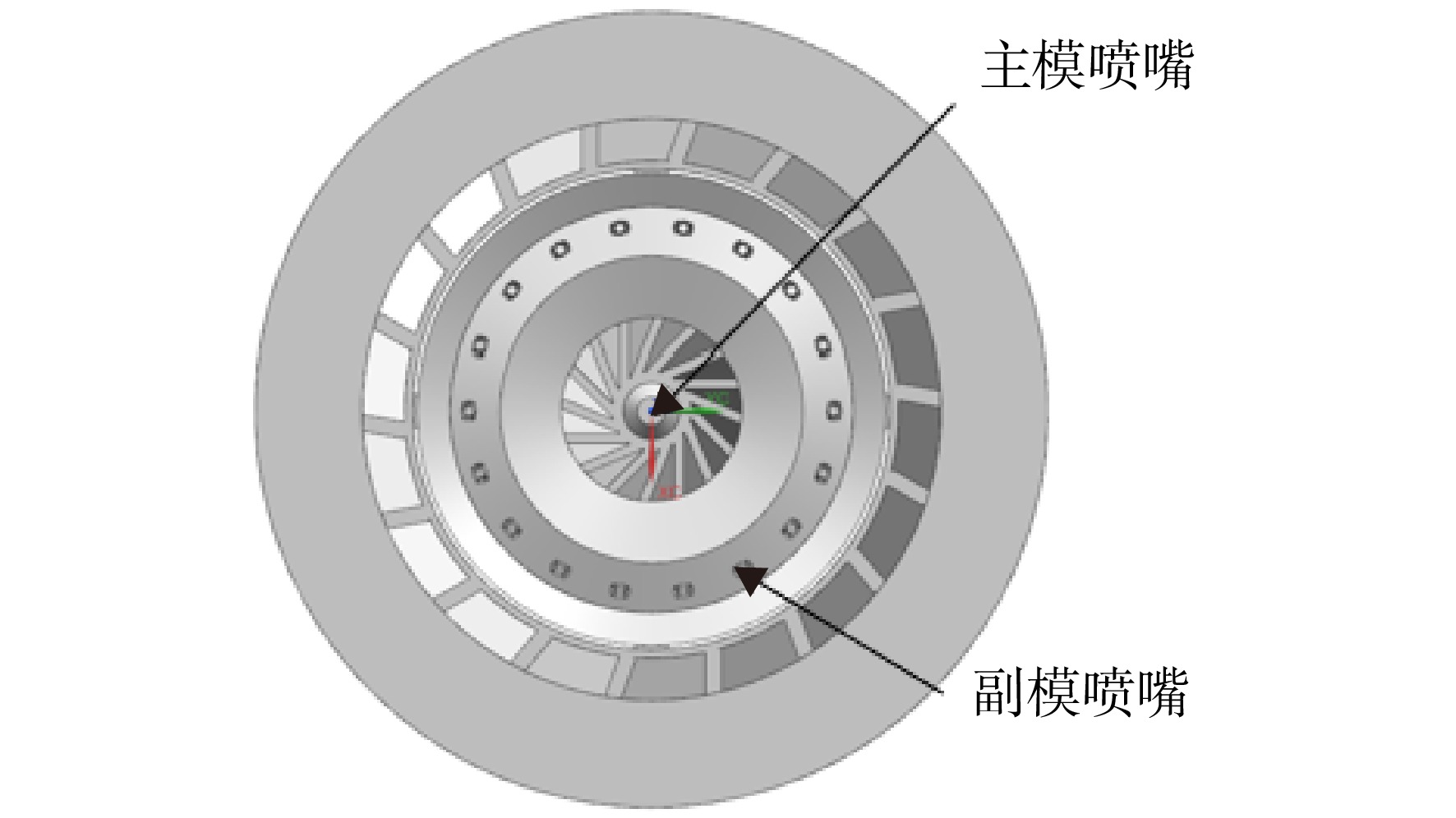
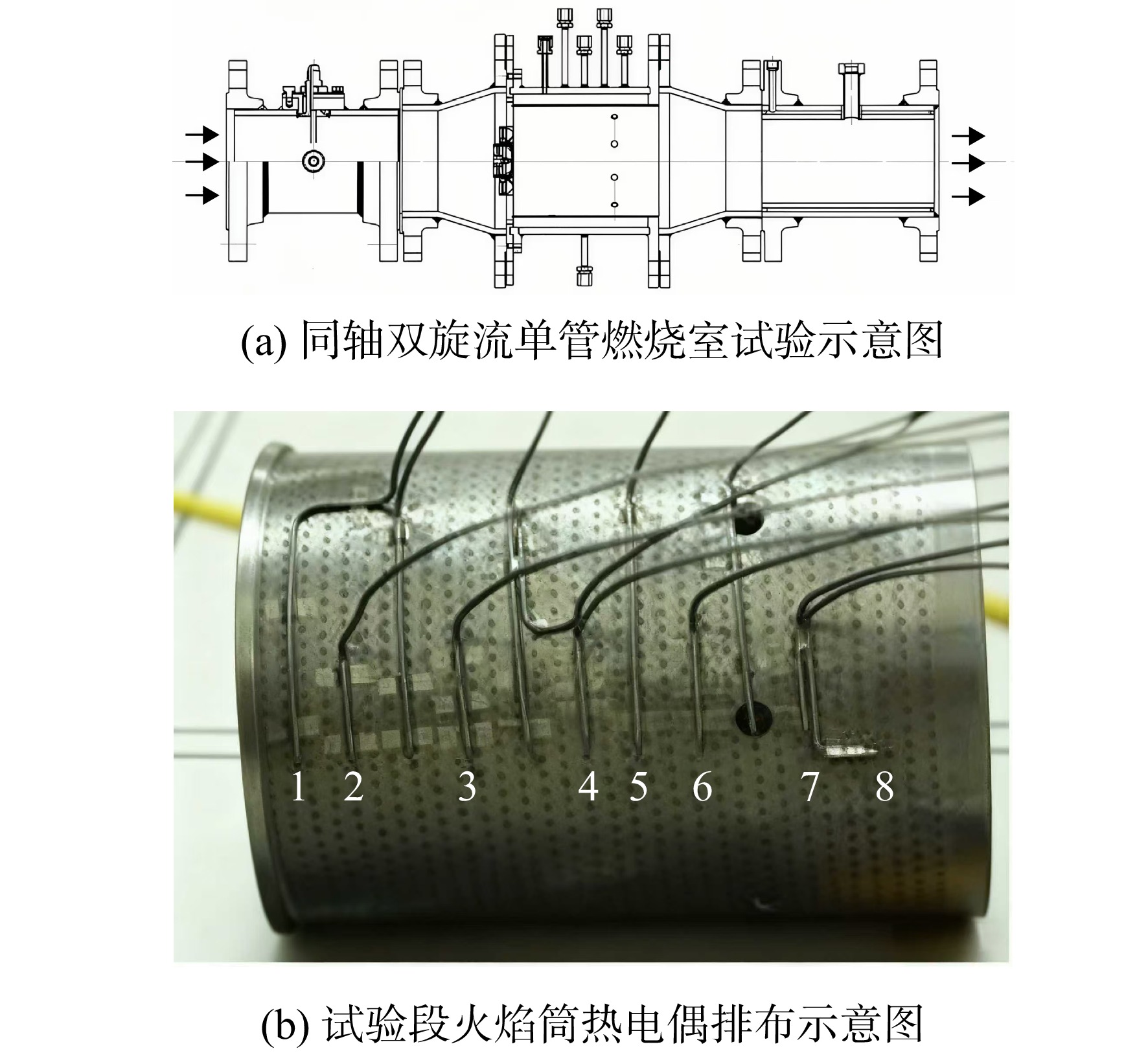
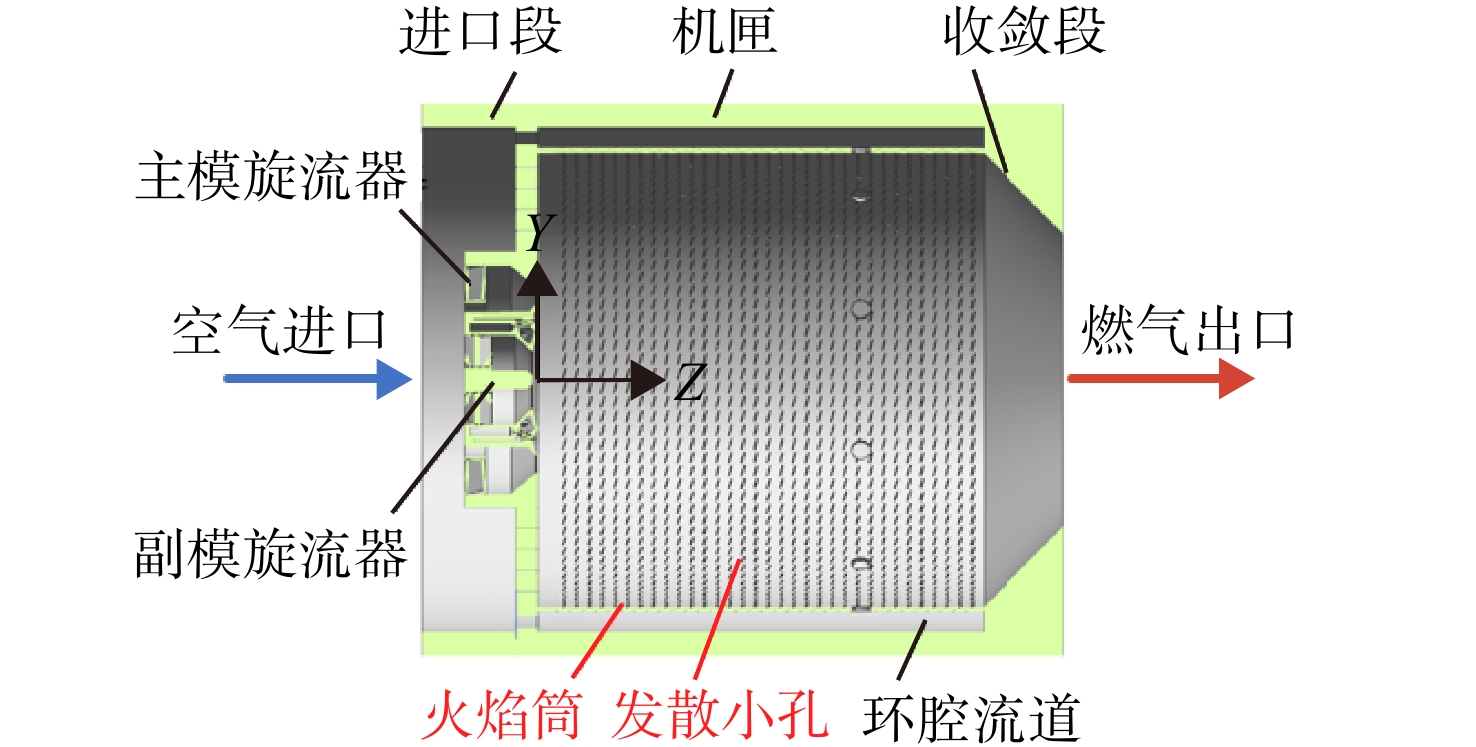
图 6 同轴双旋流单管燃烧室试验系统示意图
Figure 6. Schematic diagram of the co-axial dual-swirl single-can combustor experimental system
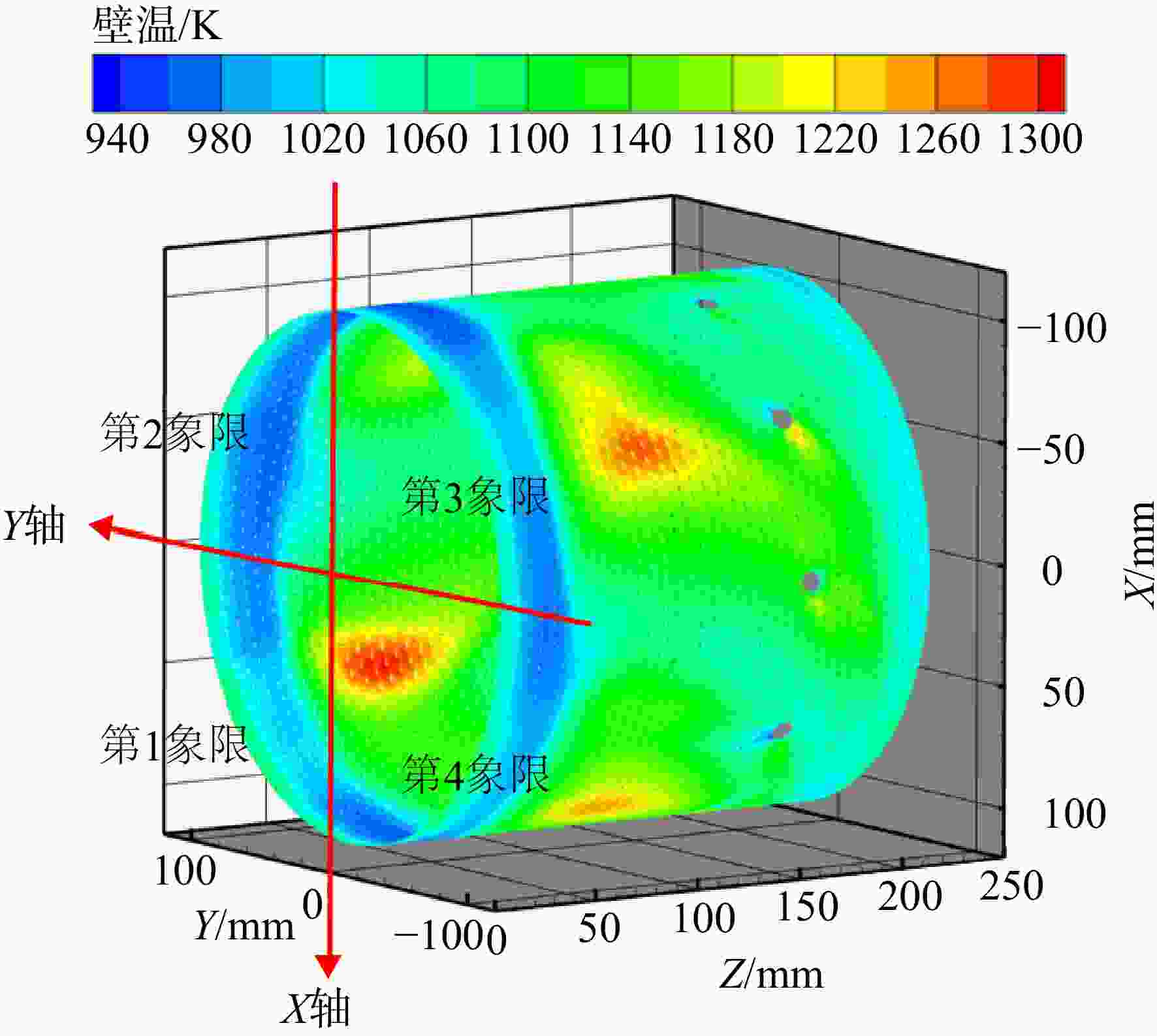
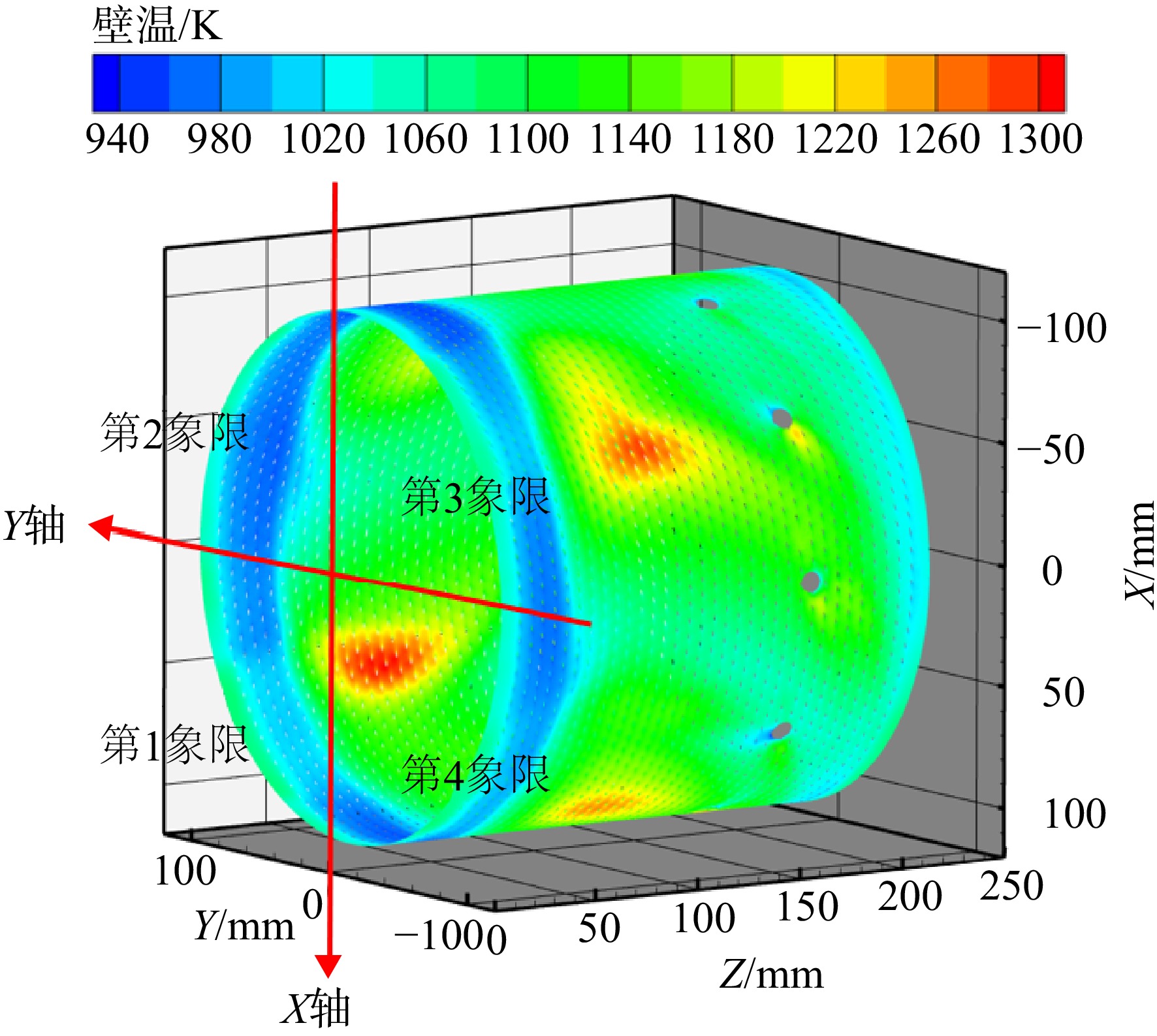
图 8 在900 K进气条件下的壁温分布
Figure 8. Wall temperature distribution at 900 K inlet air temperature
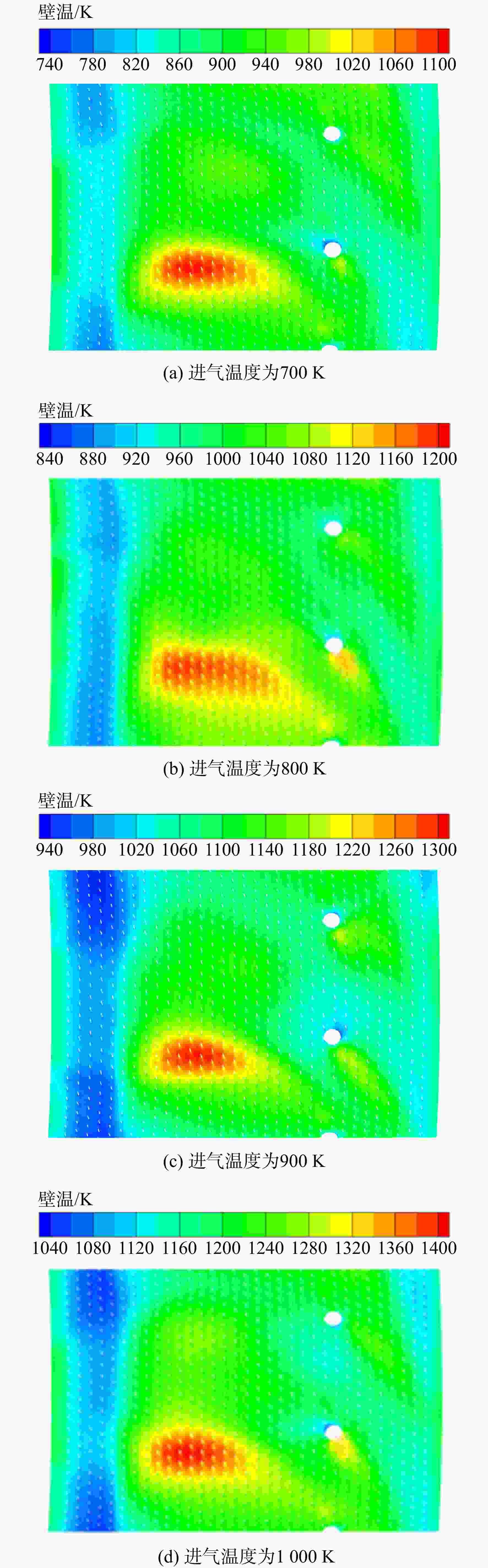
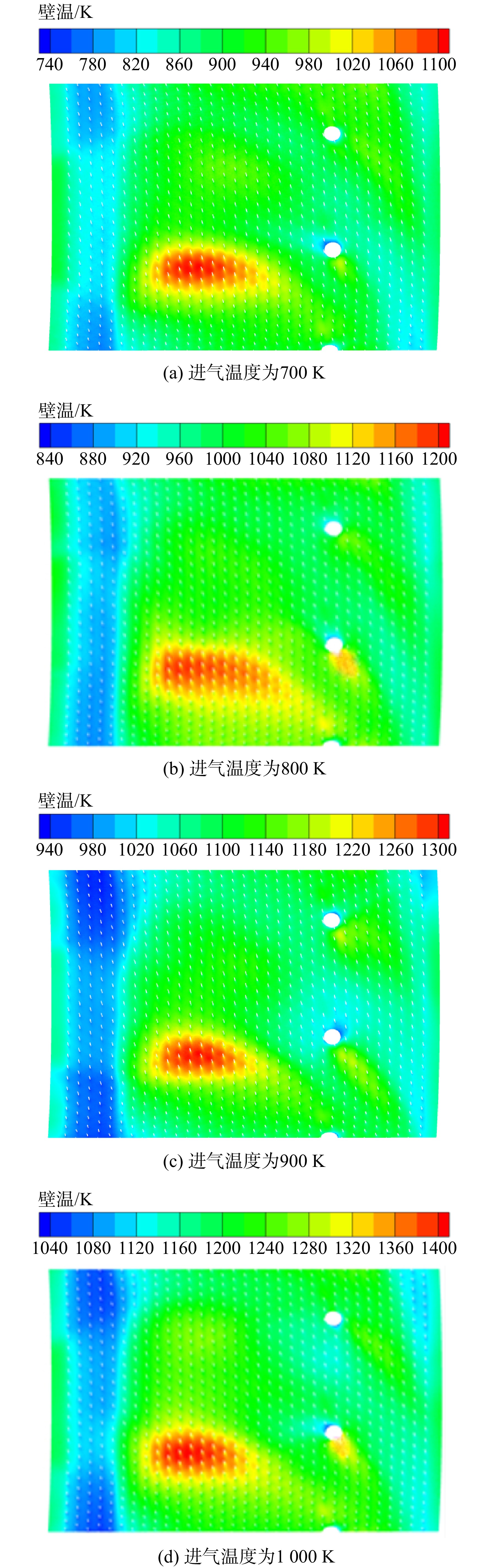
图 9 不同进气温度下的火焰筒壁温分布云图
Figure 9. Contour plots of wall temperature distribution under different inlet air temperatures
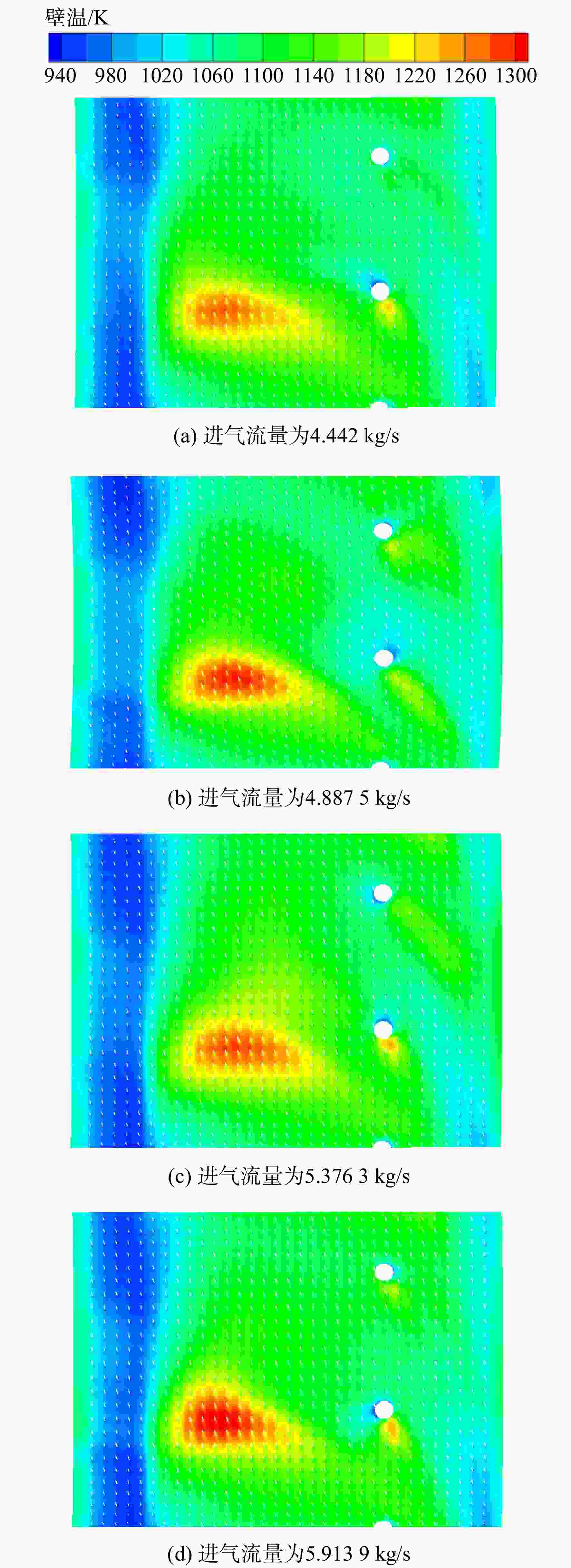
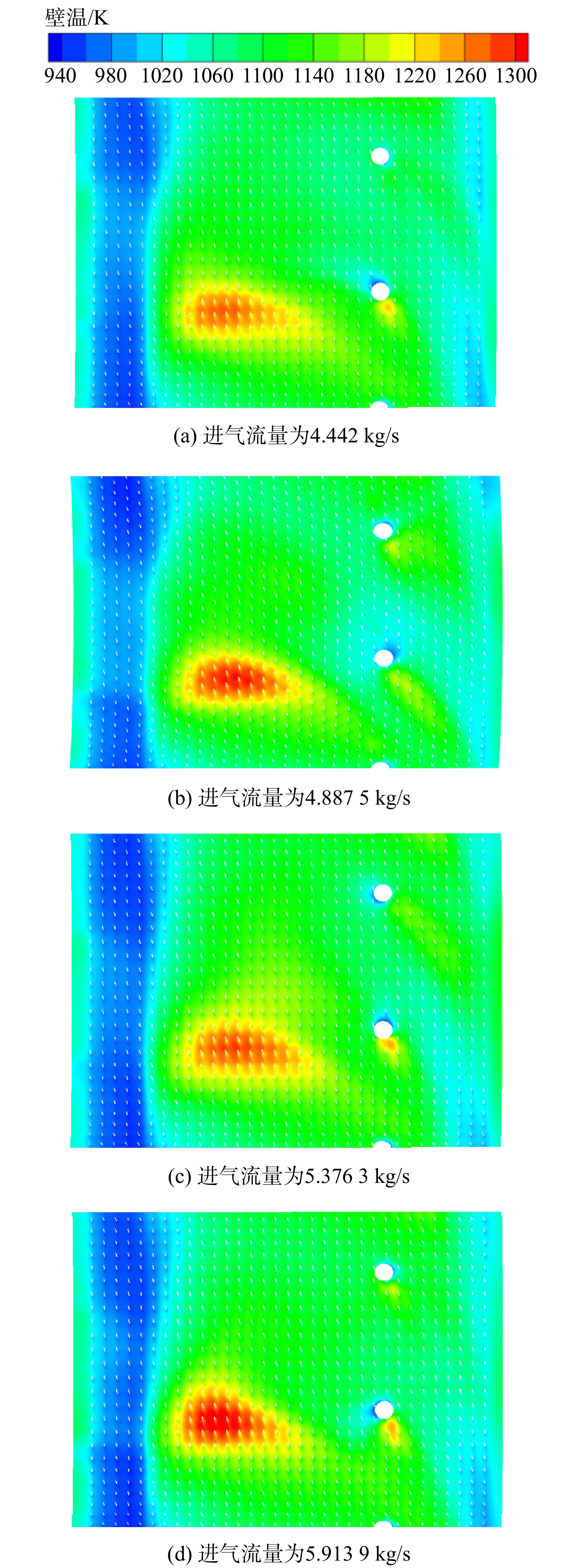
图 10 不同进气流量下的火焰筒壁温分布云图
Figure 10. Contour plots of wall temperature distribution under different air mass flow rates
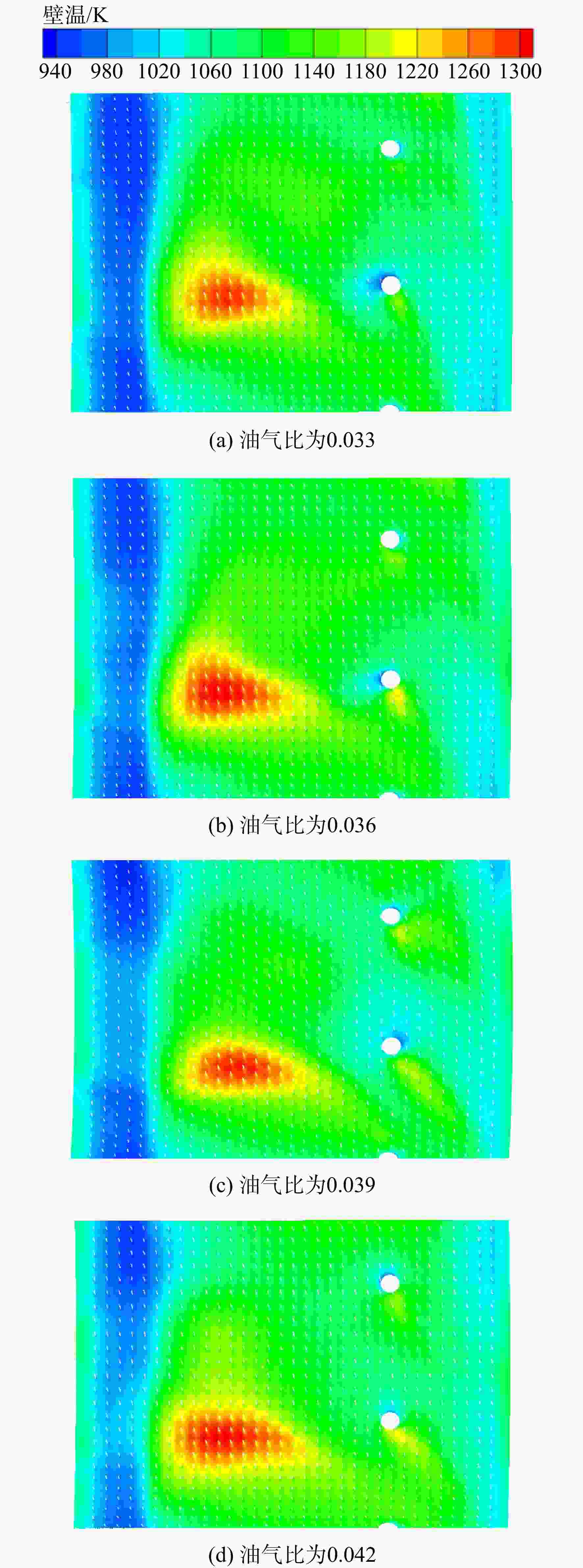
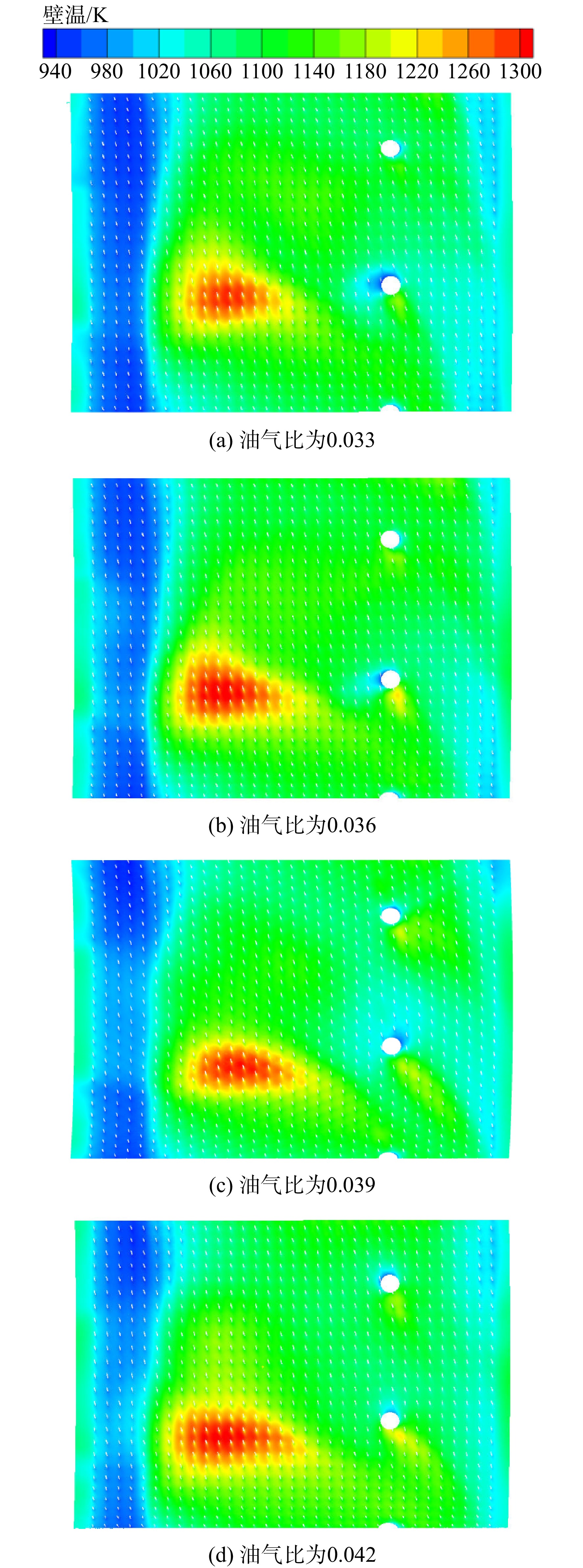
图 11 不同油气比下的火焰筒壁温分布云图
Figure 11. Contour plots of wall temperature distribution under different fuel-air ratios
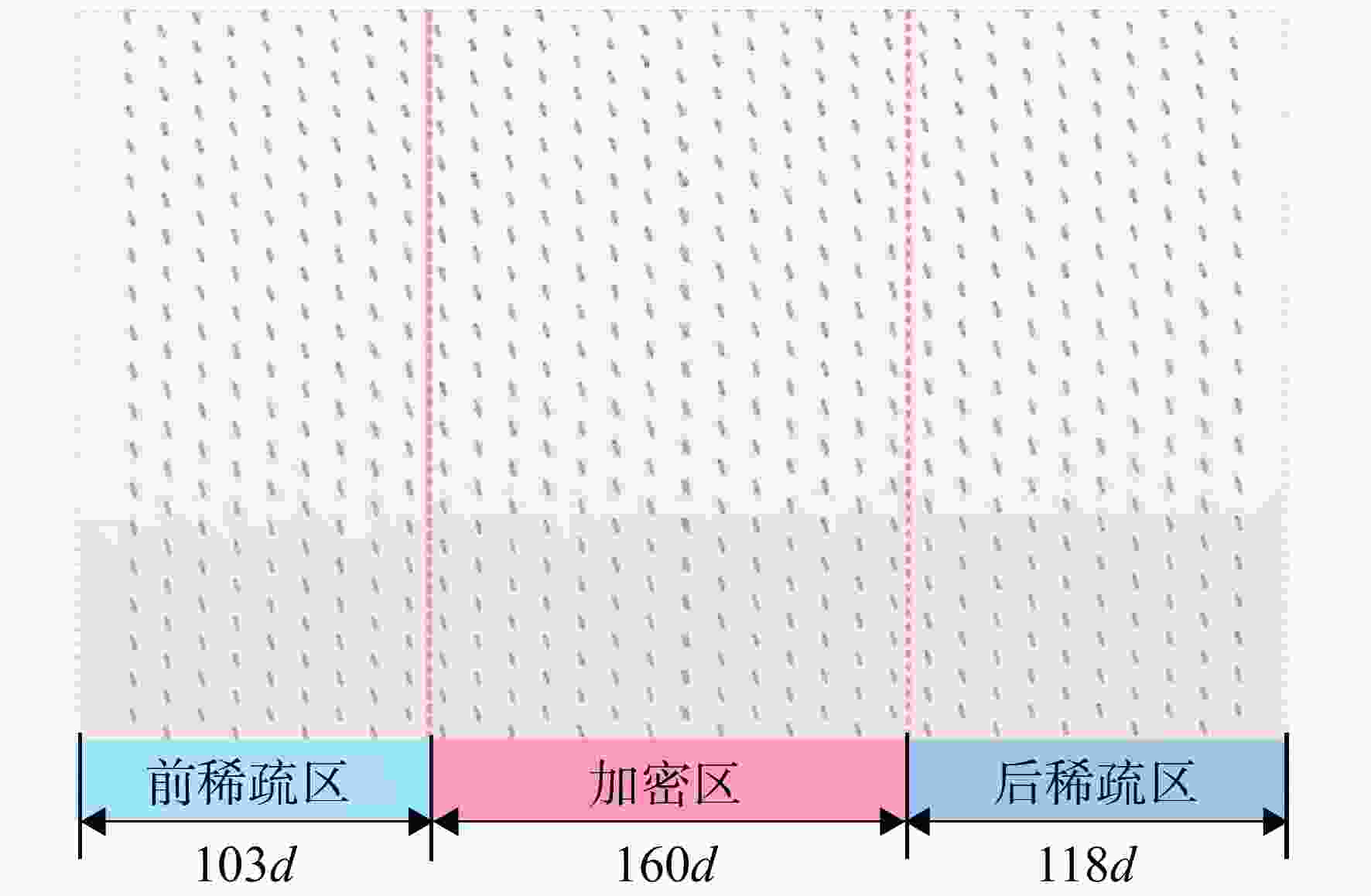
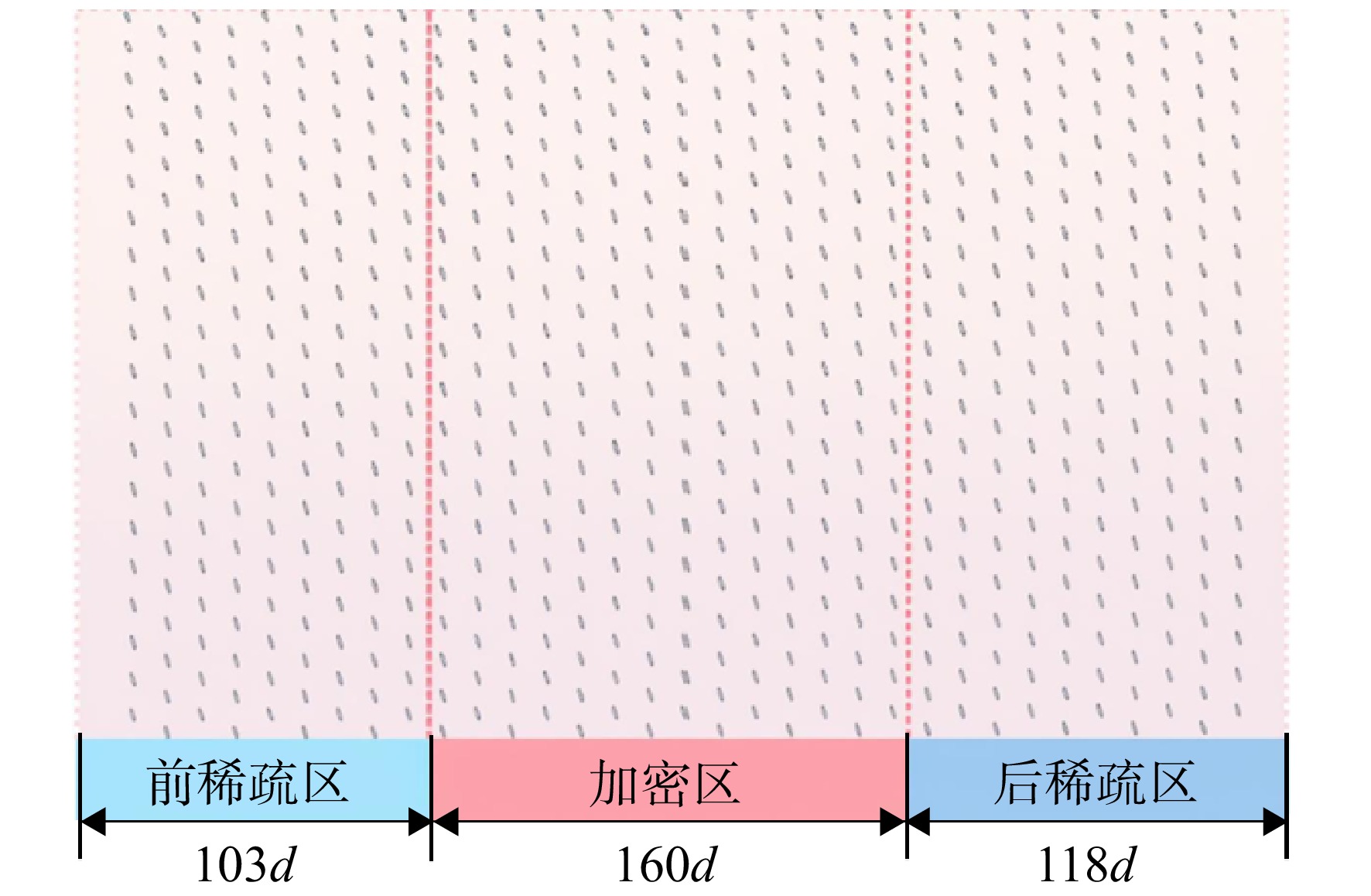
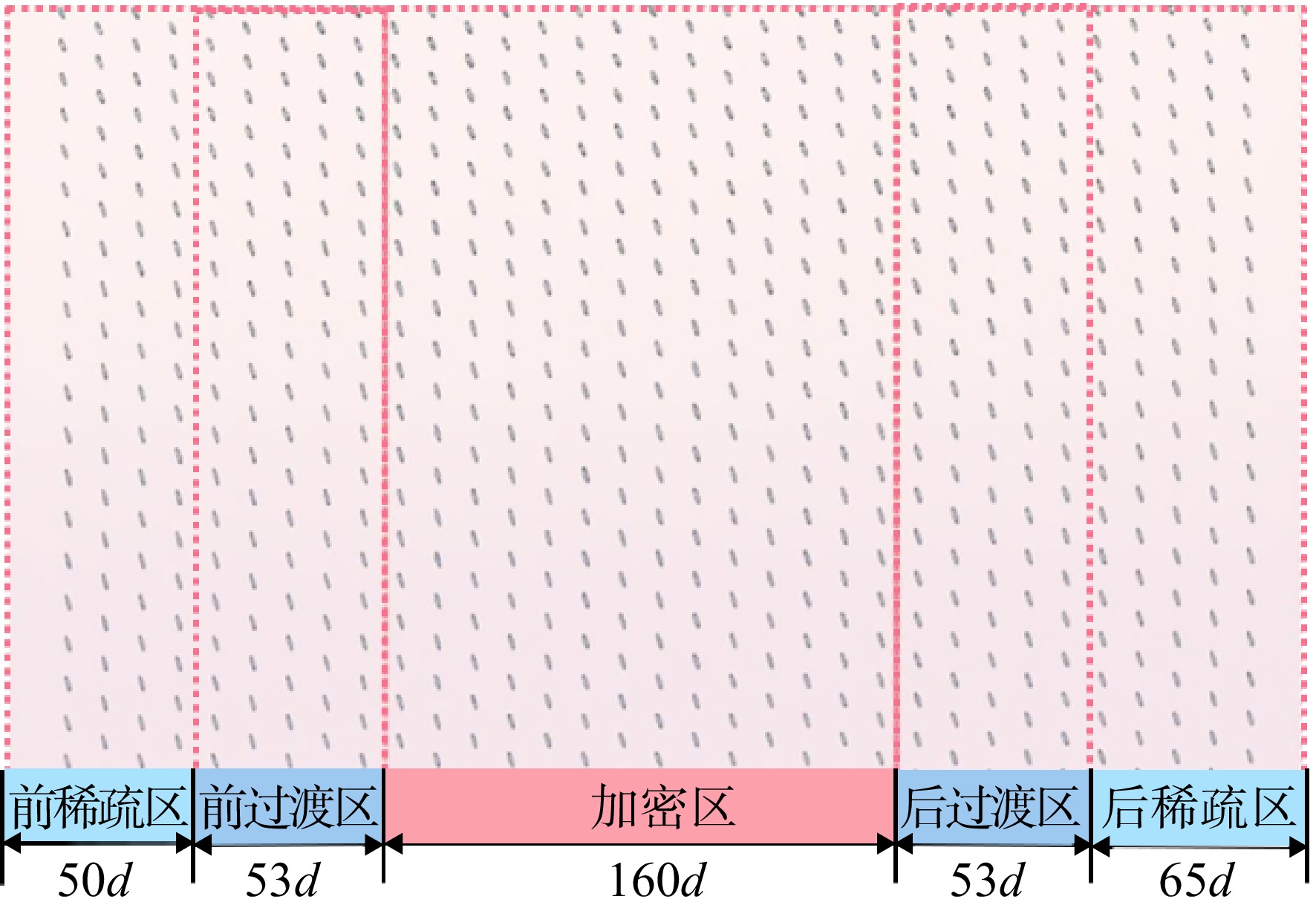
图 12 发散小孔排布轴向分区示意图
Figure 12. Schematic of axial zoning range for effusion hole arrangement
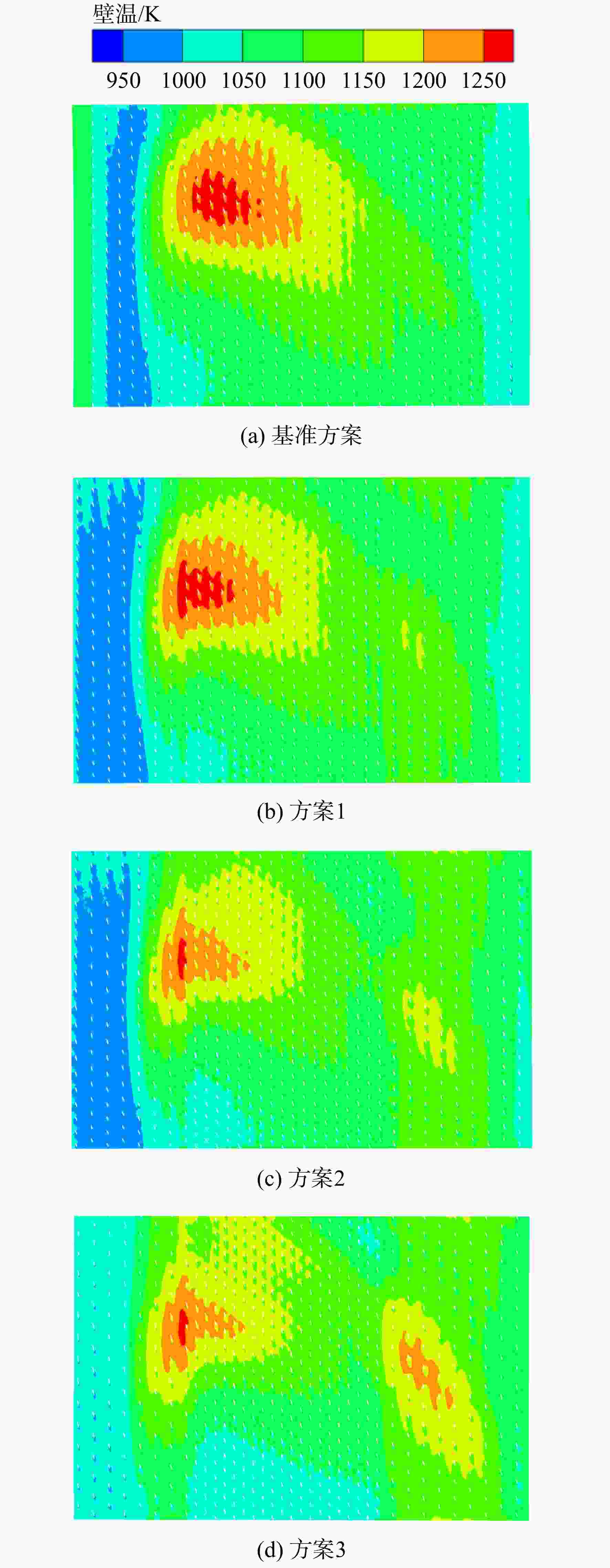
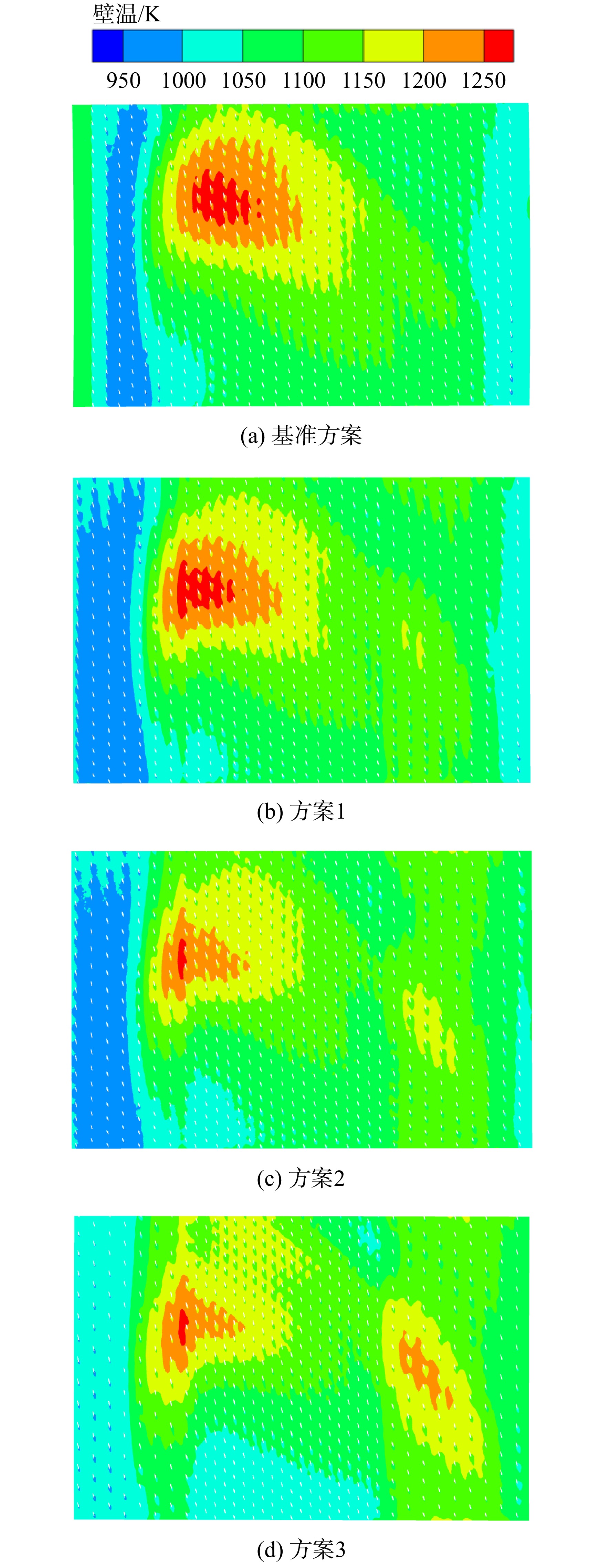
图 13 不同设计方案的壁温分布云图
Figure 13. Contour plots of wall temperature distribution for different design schemes
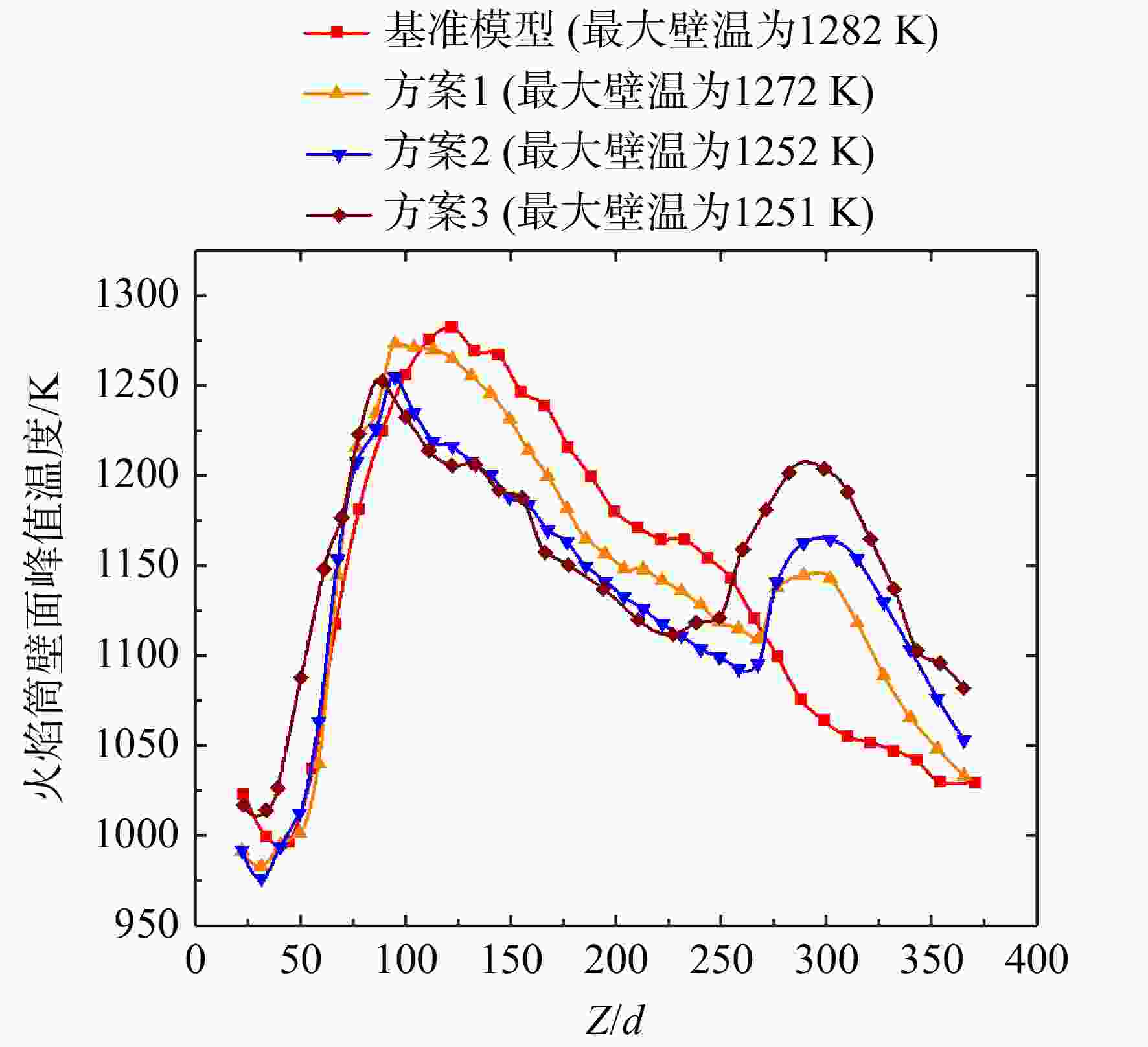
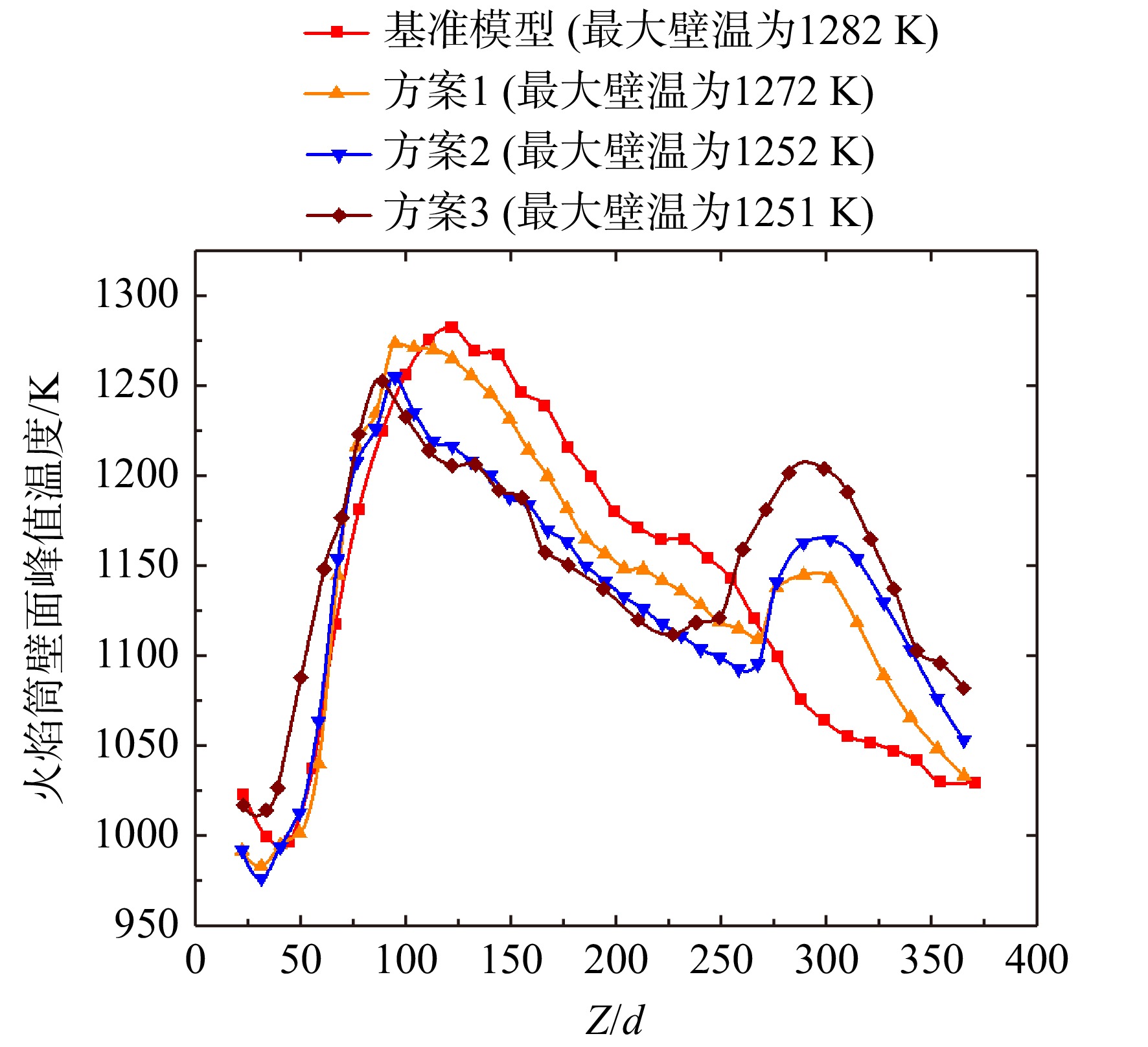
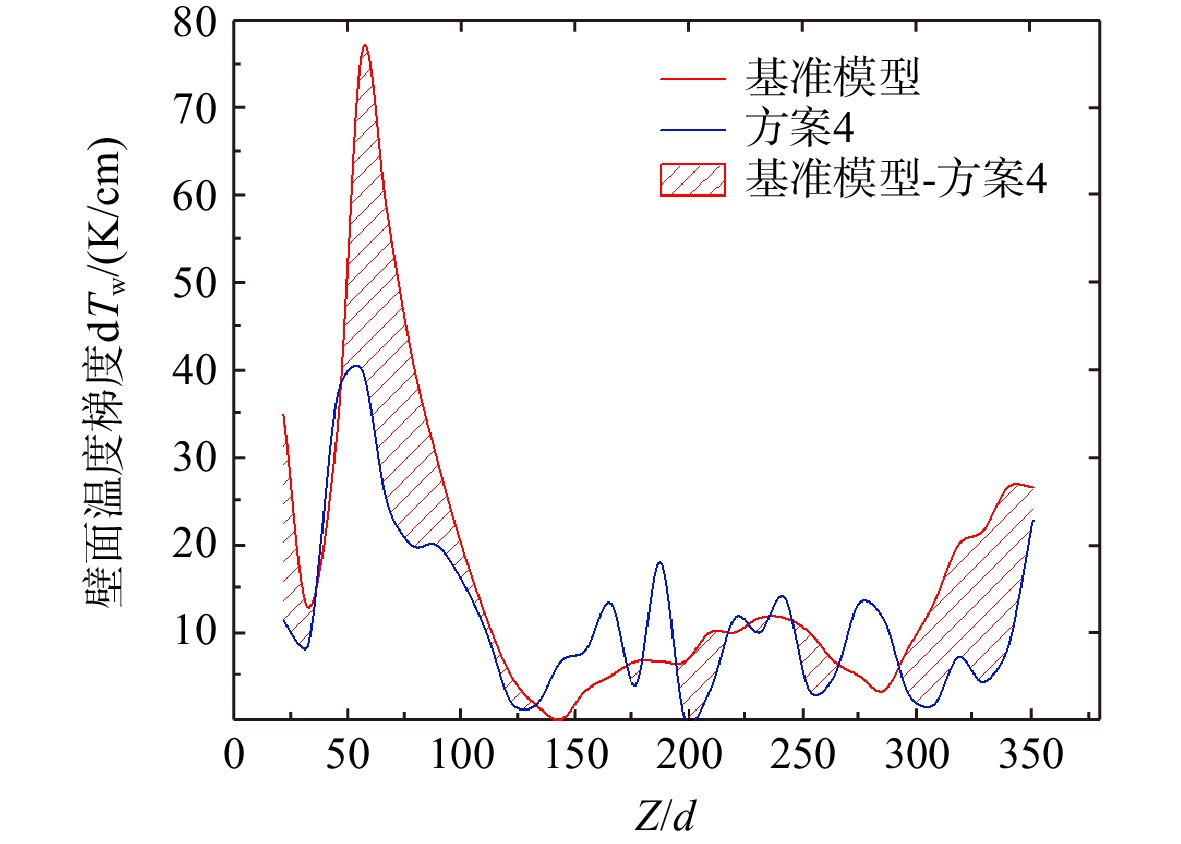
图 14 不同设计方案壁温分布曲线图
Figure 14. Wall temperature distribution curves for different design schemes
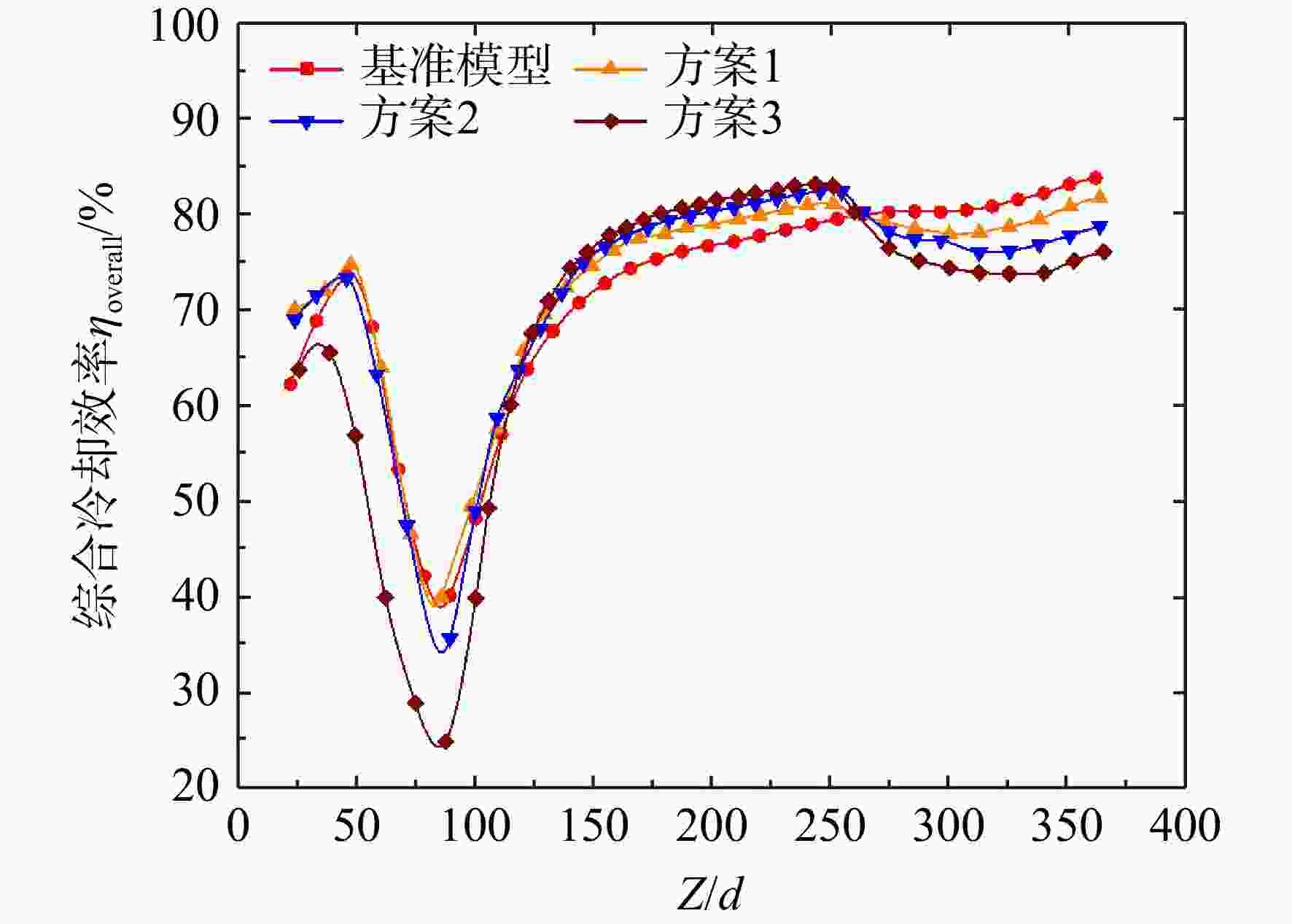
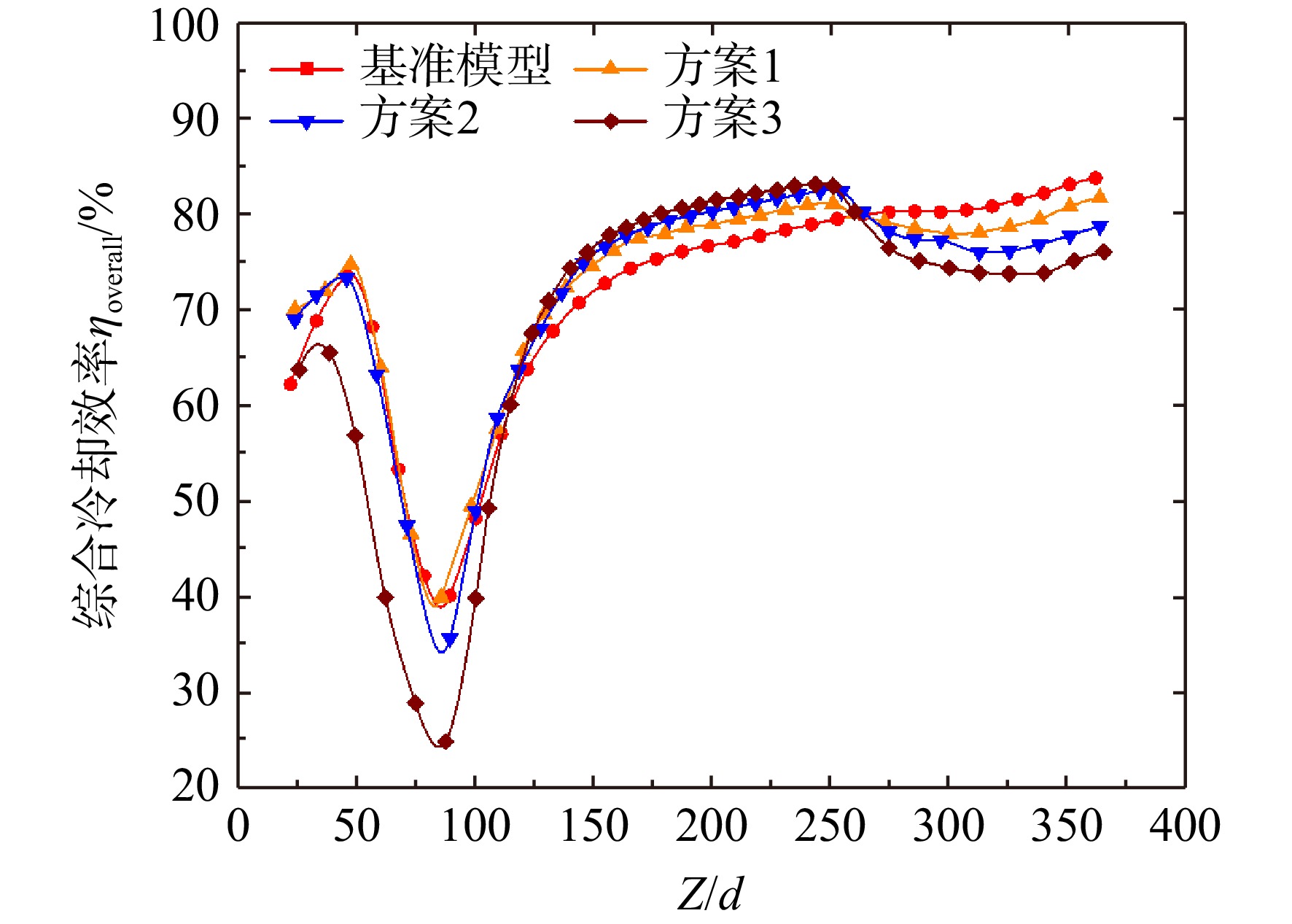
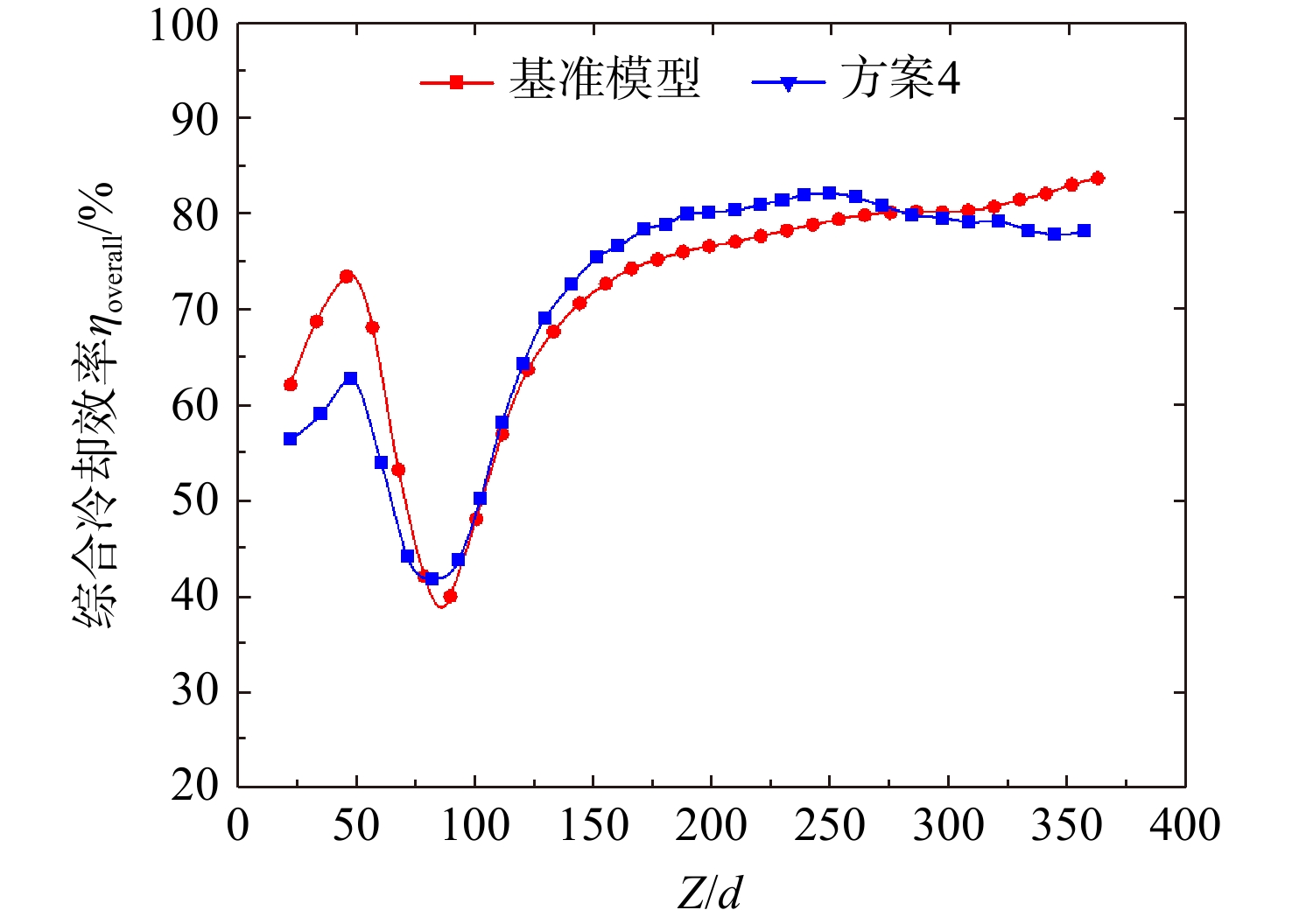
图 15 不同设计方案的综合冷却效率
Figure 15. Overall cooling efficiency curves for different design schemes
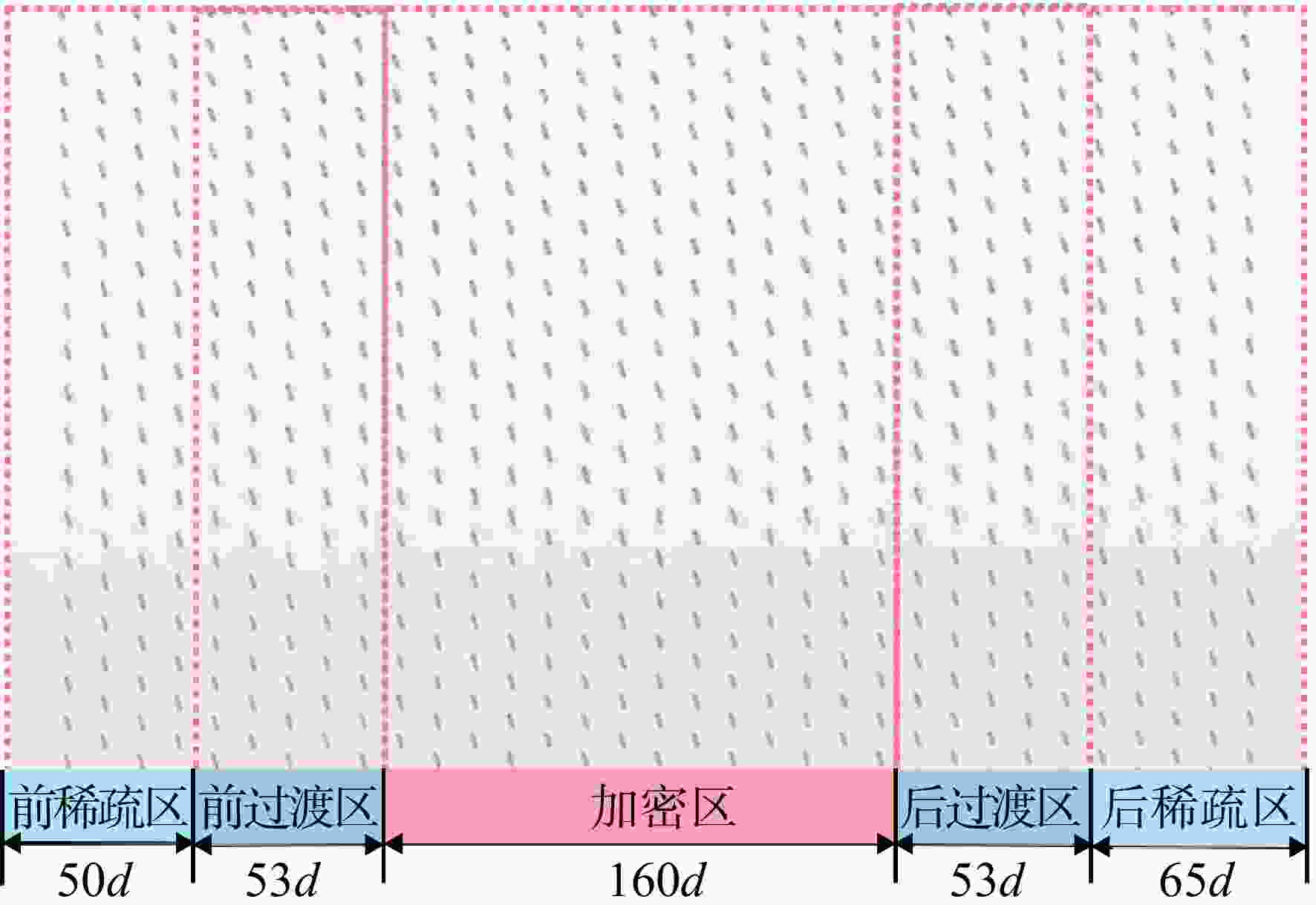
图 16 方案4的发散小孔排布分区示意图
Figure 16. Zoning configuration of effusion cooling holes for project 4
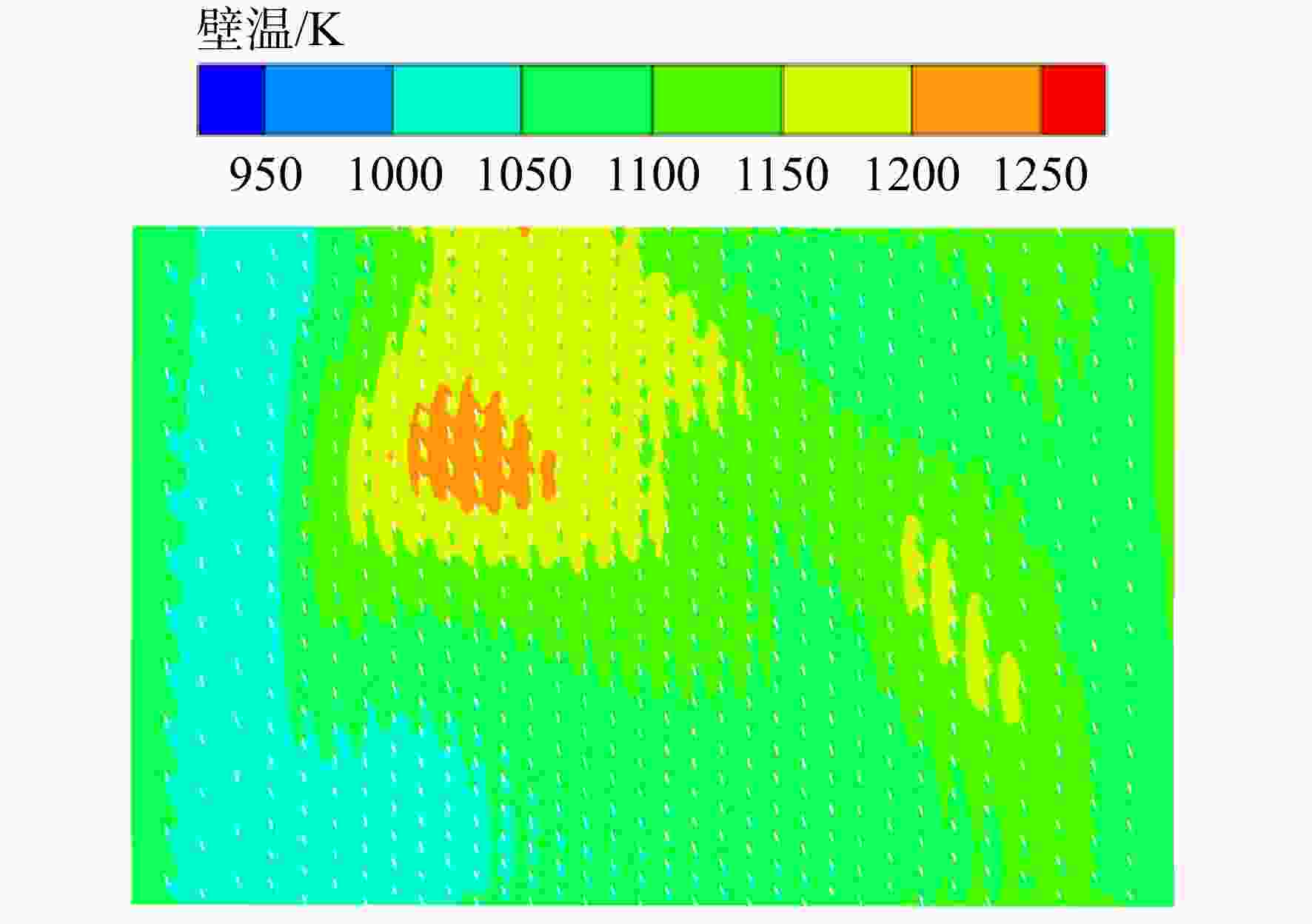
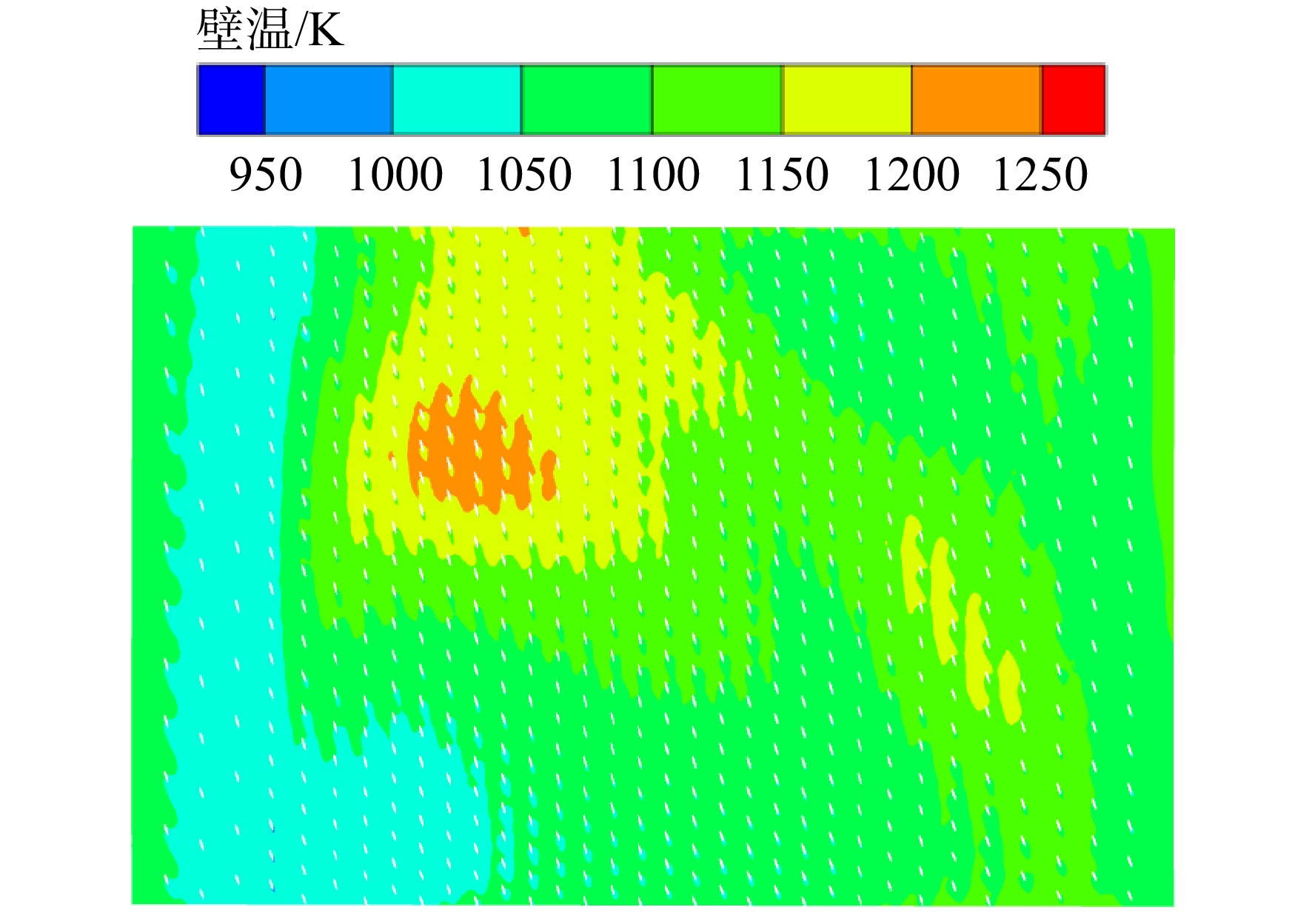
图 17 方案4的壁温分布云图
Figure 17. Temperature contour plot for project 4 cooling configuration
表 1 工况条件
Table 1. Boundary conditions
参数 数值 空气流量/(kg/s) 4.8875 燃油流量/(kg/s) 0.19061 进气温度/K 900 进气压力/MPa 3.0424 主模燃油占比/% 86 副模燃油占比/% 14  下载: 导出CSV
表 2 不同进气流量下的燃烧室运行工况参数
Table 2. Combustor operating conditions at different air mass flow rates
进气流量/(kg/s) 进口压力/MPa 燃油流量/(kg/s) 4.4420 2.7658 0.17328 4.8875 3.0424 0.19061 5.3763 3.3466 0.20967 5.9139 3.6813 0.23064
下载: 导出CSV
表 3 不同油气比下的燃烧室运行工况参数
Table 3. Combustor operating conditions at different fuel-air ratios
油气比 燃油
总流量/(kg/s)主模燃油
流量/(kg/s)副模燃油
流量/(kg/s)计算
当量比0.033 0.16129 0.13871 0.02258 0.485 0.036 0.17595 0.15132 0.02463 0.529 0.039 0.19061 0.16392 0.02669 0.574 0.042 0.20528 0.17654 0.02874 0.618
下载: 导出CSV
表 4 发散小孔排布方案设计参数
Table 4. Design parameters of effusion hole arrangement
设计方案 轴向孔间距比(s/d) 轴向排数 每排周向孔数 基准方案 11 14 100 方案1 10 16 100 方案2 9 18 100 方案3 8 20 100
下载: 导出CSV
-
[1] 刘大响, 陈光. 航空发动机——飞机的心脏[M]. 北京: 航空工业出版社, 2003. Liu Daxiang, Chen Guang. Aeroengine-the heart of an airplane[M]. Beijing: Aviation Industry Press, 2003. (in ChineseLiu Daxiang, Chen Guang. Aeroengine-the heart of an airplane[M]. Beijing: Aviation Industry Press, 2003. (in Chinese) [2] 刘长福, 邓明. 航空发动机结构分析[M]. 西安: 西北工业大学出版社, 2006. Liu Changfu, Deng Ming. Structural analysis of aero-engine[M]. Xi’an: Northwestern Polytechnical University Press, 2006. (in ChineseLiu Changfu, Deng Ming. Structural analysis of aero-engine[M]. Xi’an: Northwestern Polytechnical University Press, 2006. (in Chinese) [3] 金如山, 索建秦. 先进燃气轮机燃烧室[M]. 北京: 航空工业出版社, 2016. Jin Rushan, Suo Jianqin. Advanced gas turbine combustor[M]. Beijing: Aviation Industry Press, 2016. (in ChineseJin Rushan, Suo Jianqin. Advanced gas turbine combustor[M]. Beijing: Aviation Industry Press, 2016. (in Chinese) [4] Jiang Peixue, Huang Gan, Zhu Yinhai, et al. Experimental investigation of biomimetic self-pumping and self-adaptive transpiration cooling[J]. Bioinspiration & Biomimetics, 2017, 12(5): 056002. [5] 林宏军, 迟雪. 火焰筒先进热防护技术发展及工程应用分析[J]. 航空动力, 2020(3): 66-70. Lin Hongjun, Chi Xue. Development and engineering application analysis of advanced thermal protection technology of flame tube[J]. Aerospace Power, 2020(3): 66-70. (in ChineseLin Hongjun, Chi Xue. Development and engineering application analysis of advanced thermal protection technology of flame tube[J]. Aerospace Power, 2020(3): 66-70. (in Chinese) [6] Lucca-negro O, O’Doherty T. Vortex breakdown: a review[J]. Progress in Energy and Combustion Science, 2001, 27(4): 431-481. doi: 10.1016/S0360-1285(00)00022-8 [7] Syred N. A review of oscillation mechanisms and the role of the precessing vortex core (PVC) in swirl combustion systems[J]. Progress in Energy and Combustion Science, 2006, 32(2): 93-161. doi: 10.1016/j.pecs.2005.10.002 [8] Kianpour E, Sidik N A C, Bozorg M A S M. Thermodynamic analysis of flow field at the end of combustor simulator[J]. International Journal of Heat and Mass Transfer, 2013, 61: 389-396. doi: 10.1016/j.ijheatmasstransfer.2013.02.031 [9] Wurm B, Schulz A, Bauer H J. A new test facility for investigating the interaction between swirl flow and wall cooling films in combustors[C]//Proceedings of ASME Turbo Expo: Power for Land, Sea, and Air. Orlando, US: ASME, 2009: 1397-1408. [10] Wurm B, Schulz A, Bauer H J, et al. Cooling efficiency for assessing the cooling performance of an effusion cooled combustor liner[C]//Proceedings of ASME Turbo Expo: Turbine Technical Conference and Exposition. San Antonio, US: ASME, 2013: V03BT13A010. [11] Wurm B, Schulz A, Bauer H J, et al. Impact of swirl flow on the penetration behavior and cooling performance of a starter cooling film in modern lean operating combustion chambers[C]// Proceedings of ASME Turbo Expo: Turbine Technical Conference and Exposition. Düsseldorf, Germany: ASME, 2014: V05CT18A007. [12] Lu Yiping, Esposito E, Ekkad S V. Predictions of flow and heat transfer in low emission combustors[J]. Heat Transfer Engineering, 2008, 29(4): 375-384. doi: 10.1080/01457630701825515 [13] Patil S, Abraham S, Tafti D, et al. Experimental and numerical investigation of convective heat transfer in a gas turbine can combustor[C]// Proceedings of ASME Turbo Expo: Power for Land, Sea, and Air. Orlando, US: ASME, 2009: 1363-1371. [14] Sedalor T, Patil S, Ekkad S, et al. Study of flow and convective heat transfer in a simulated scaled up low emission annular combustor[C]//Proceedings of ASME Turbo Expo 2010: Power for Land, Sea, and Air. Glasgow, UK: ASME, 2010: 787-794. [15] Andreini A, Caciolli G, Facchini B, et al. Experimental investigation of the flow field and the heat transfer on a scaled cooled combustor liner with realistic swirling flow generated by a lean-burn injection system[J]. Journal of Turbomachinery, 2015, 137(3): 031012. doi: 10.1115/1.4028330 [16] Andreini A, Becchi R, Facchini B, et al. The effect of effusion holes inclination angle on the adiabatic film cooling effectiveness in a three-sector gas turbine combustor rig with a realistic swirling flow[J]. International Journal of Thermal Sciences, 2017, 121: 75-88. doi: 10.1016/j.ijthermalsci.2017.07.003 [17] Dong Gengyi, Liu Yingjie, Wang Min, et al. Experimental and numerical investigation of swirling flow on the conjugate cooling efficiency of an effusion-cooled combustor[J]. International Journal of Thermal Sciences, 2024, 198: 108846. doi: 10.1016/j.ijthermalsci.2023.108846 [18] 芦翔, 贾玉良, 葛冰, 等. 旋流冲击下不同孔型发散冷却壁面耦合传热特性对比[J]. 动力工程学报, 2024, 44(11): 1811-1818. Lu Xiang, Jia Yuliang, Ge Bing, et al. Comparison of coupled heat transfer characteristics of effusion cooling walls with different hole types under swirl impact[J]. Journal of Chinese Society of Power Engineering, 2024, 44(11): 1811-1818. (in Chinese doi: 10.19805/j.cnki.jcspe.2024.240196Lu Xiang, Jia Yuliang, Ge Bing, et al. Comparison of coupled heat transfer characteristics of effusion cooling walls with different hole types under swirl impact[J]. Journal of Chinese Society of Power Engineering, 2024, 44(11): 1811-1818. (in Chinese) doi: 10.19805/j.cnki.jcspe.2024.240196 [19] Ji Yongbin, Ge Bing, Zang Shusheng. Analysis of effusion cooling under realistic swirl reacting flow in gas turbine combustor[J]. Applied Thermal Engineering, 2022, 216: 119101. doi: 10.1016/j.applthermaleng.2022.119101 [20] Andreini A, Becchi R, Facchini B, et al. Effusion cooling system optimization for modern lean burn combustor[C]//ASME Turbo Expo 2016: Turbomachinery Technical Conference and Exposition. Seoul, South Korea: ASME, 2016: V05BT17A015. [21] Lu Xiang, Xiao Yunlai, Ge Bing, et al. Numerical investigation on the influence of local porosity on effusion cooling characteristics in a swirl-stabilized combustor[J]. Applied Thermal Engineering, 2025, 268: 125952. doi: 10.1016/j.applthermaleng.2025.125952 [22] Launder B E, Spalding D B. The numerical computation of turbulent flows[J]. Computer Methods in Applied Mechanics and Engineering, 1974, 3(2): 269-289. doi: 10.1016/0045-7825(74)90029-2 [23] Jin Yi, He Xiaomin, Jiang Bo, et al. Effect of cavity-injector/radial-strut relative position on performance of a trapped vortex combustor[J]. Aerospace Science and Technology, 2014, 32(1): 10-18. doi: 10.1016/j.ast.2013.12.014 [24] Dai Huwei, Zhang Junhong, Ren Yanyan, et al. Effect of cooling hole configurations on combustion and heat transfer in an aero-engine combustor[J]. Applied Thermal Engineering, 2021, 182: 115664. doi: 10.1016/j.applthermaleng.2020.115664 [25] 赵传亮, 呼姚, 马宏宇, 等. 燃气轮机燃烧室火焰筒耐温技术的发展与应用[J]. 航空发动机, 2016, 42(4): 47-54. Zhao Chuanliang, Hu Yao, Ma Hongyu, et al. Development and application of heat resisting techniques for gas turbine combustor liner[J]. Aeroengine, 2016, 42(4): 47-54. (in Chinese doi: 10.13477/j.cnki.aeroengine.2016.04.010Zhao Chuanliang, Hu Yao, Ma Hongyu, et al. Development and application of heat resisting techniques for gas turbine combustor liner[J]. Aeroengine, 2016, 42(4): 47-54. (in Chinese) doi: 10.13477/j.cnki.aeroengine.2016.04.010 [26] 吉雍彬. 燃气轮机燃烧室发散冷却耦合传热特性研究[D]. 上海: 上海交通大学, 2019. Ji Yongbin. Conjugate heat transfer characteristics of gas turbine combustor effusion cooling[D]. Shanghai: Shanghai Jiao Tong University, 2019. (in ChineseJi Yongbin. Conjugate heat transfer characteristics of gas turbine combustor effusion cooling[D]. Shanghai: Shanghai Jiao Tong University, 2019. (in Chinese) -

 点击查看大图
计量
- 文章访问数: 546
- HTML浏览量: 313
- PDF量: 39
- 被引次数: 0