






Knock intensity identification of piston aviation kerosene engine based on dual-domain feature analysis
-
摘要:
为了提升对活塞式航空煤油发动机中爆震强度的识别准确性,搭建了专用试验台架并开展燃烧试验,采集了多种工况下的缸内压力信号,从中提取爆震信息。采用小波包变换对缸压信号进行分解,并通过能量熵分析提取了表征爆震等级的子频带分量,发现爆震特征频带集中在7.5~18.75 kHz。基于此频带重构爆震信息,从时域和频域中提取了22个爆震特征指标,形成双域爆震特征图像。为精准识别爆震强度,分别构建了多层感知机(MLP)和卷积神经网络(CNN)模型,以双域爆震特征指标和图像作为输入参数,并在4组工况下进行验证。结果表明:两种模型均具有较高的识别精度,其中CNN模型的平均识别精度达93.46%,较MLP模型的88.50%高出4.96%,验证了CNN模型在爆震强度识别中的准确性与合理性。
-
关键词:
- 活塞式航空煤油发动机 /
- 爆震强度识别 /
- 小波包理论 /
- 双域特征分析 /
- 卷积神经网络
Abstract:To improve the accuracy of recognizing knock intensity in aviation kerosene piston engines, a dedicated test bench was built, combustion tests were conducted, and cylinder pressure signals under various operating conditions were collected to extract knock information. Wavelet packet transform was applied to decompose the pressure signals, and energy entropy analysis was used to identify sub-band components effectively characterizing knock levels. The knock feature sub-band for this engine was found to be concentrated within the 7.5—18.75 kHz range. Knock information within this band was reconstructed, and 22 knock feature indicators were extracted from the time and frequency domains, forming a bi-domain knock feature image. To accurately identify and analyze knock intensity, both a multilayer perceptron (MLP) model and a convolutional neural network (CNN) model were developed. These models used the dual-domain knock feature indicators and images as input parameters and were validated under four different operating conditions. The results demonstrated high recognition accuracy for both models, with the CNN model achieving an average accuracy of 93.46%, surpassing the MLP model’s 88.50% by 4.96%. This highlighted the CNN model’s superior accuracy and generalization capability for knock intensity recognition in aviation kerosene engines.
-
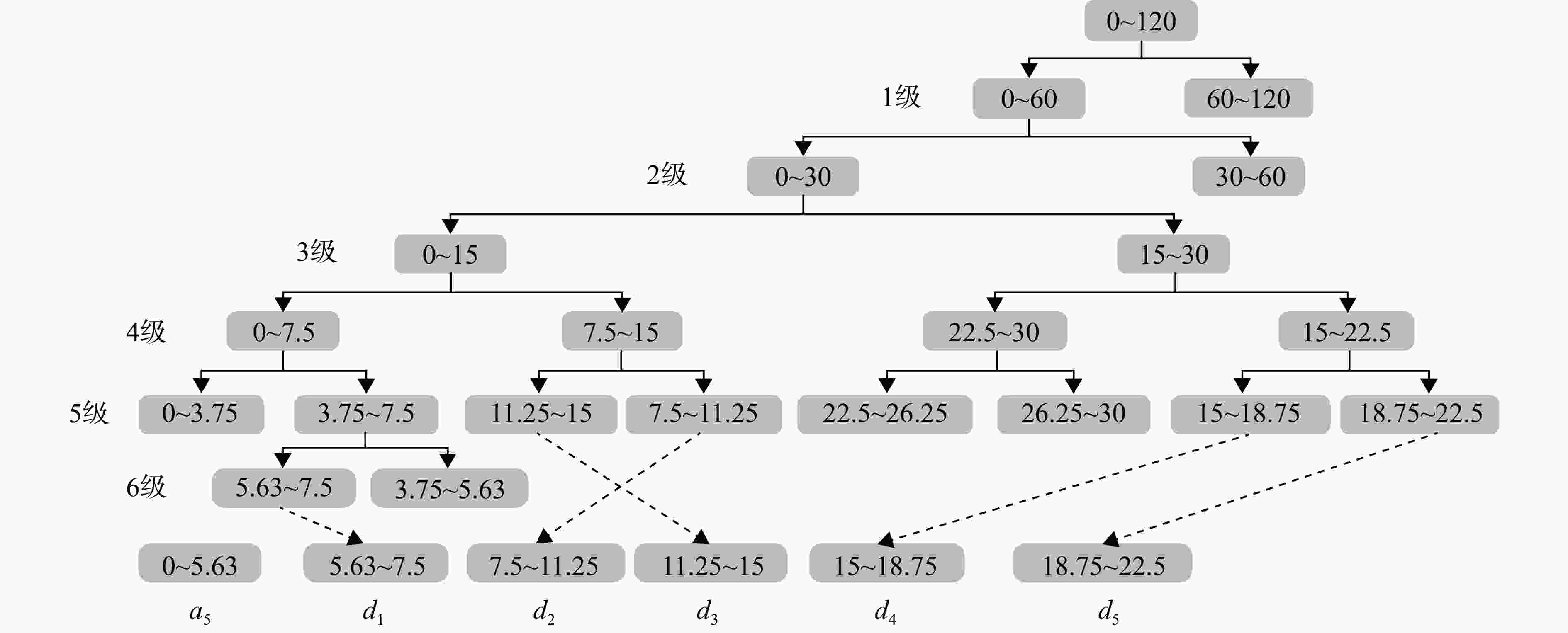
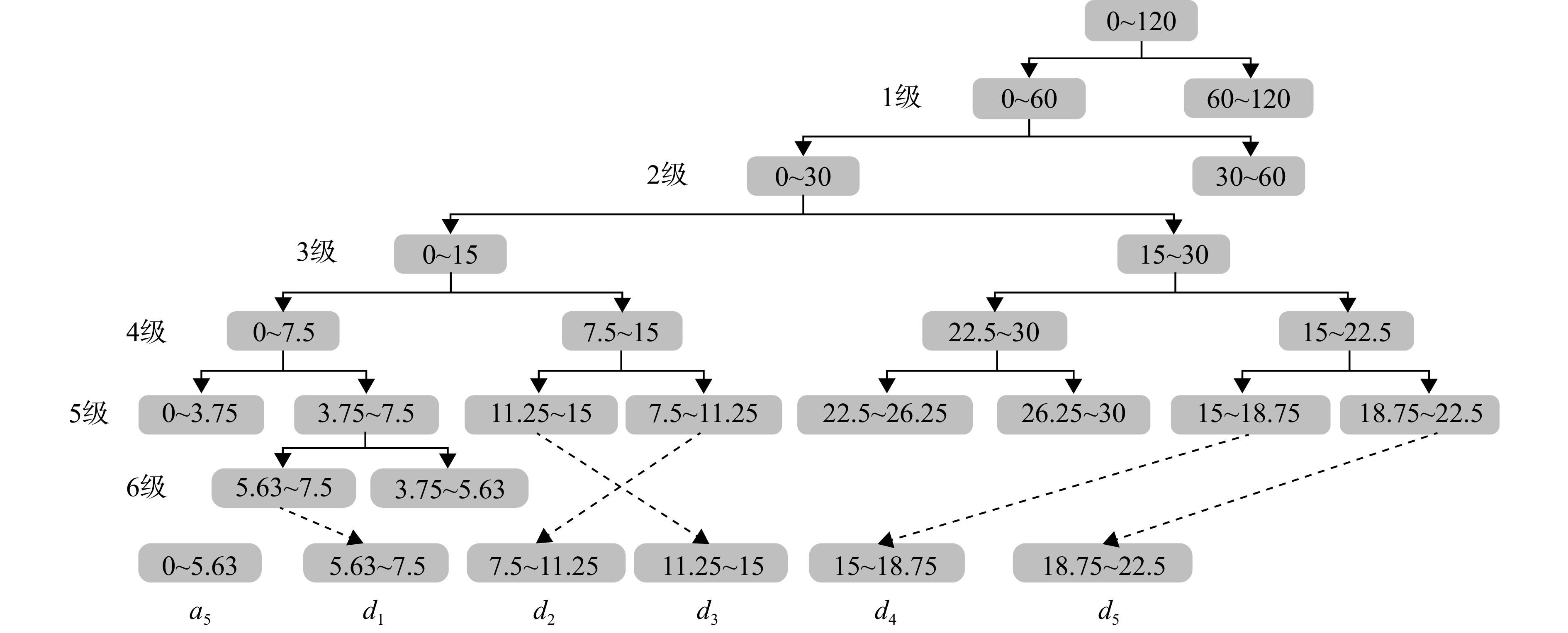
图 3 6级小波包分解频带结构图(单位:kHz)
Figure 3. Six-level wavelet packet decomposition band structure diagrams (unit:kHz)
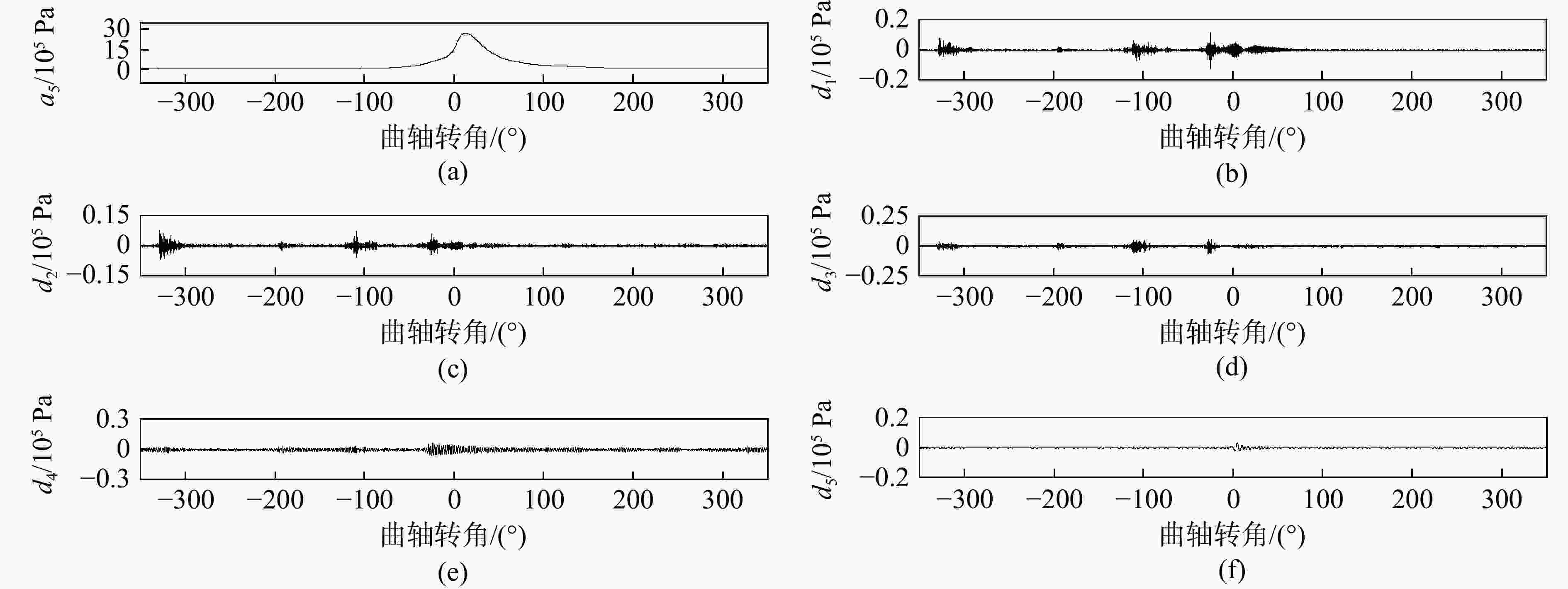
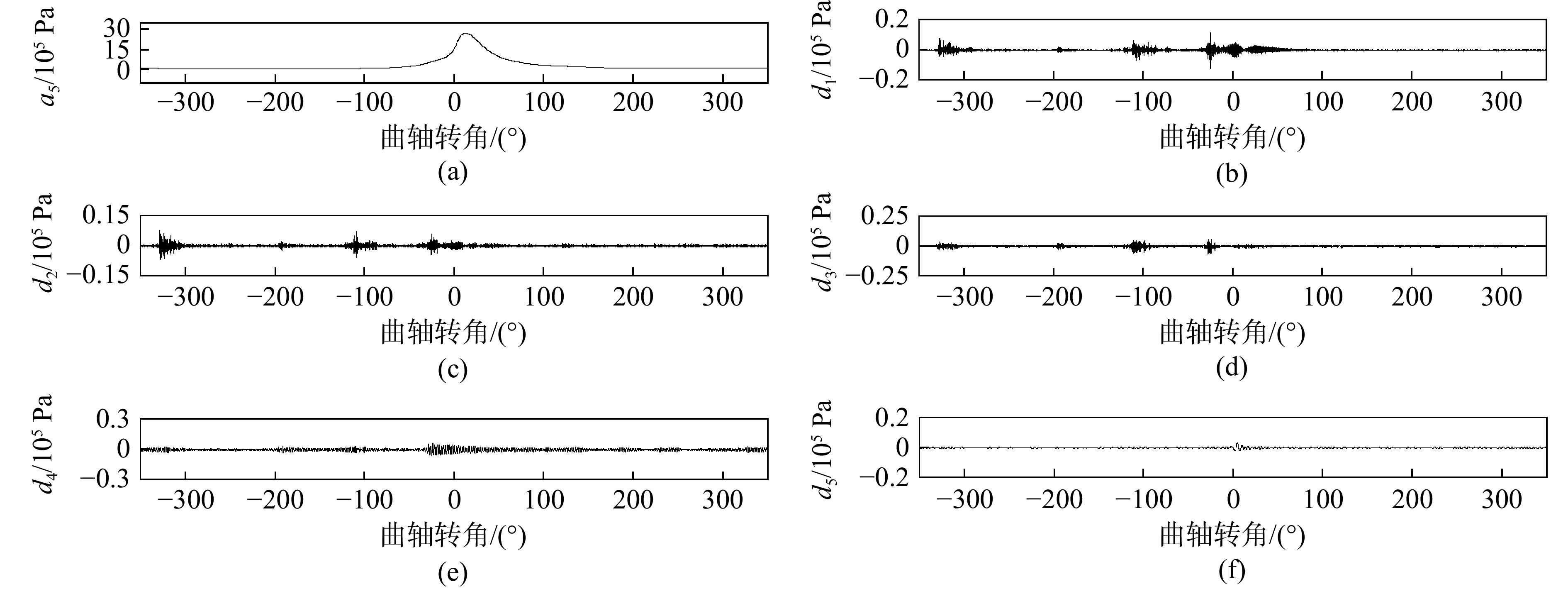
图 4 非爆震工况下的小波包变换子频带信号
Figure 4. Wavelet packet transform subband signals for non-knock conditions
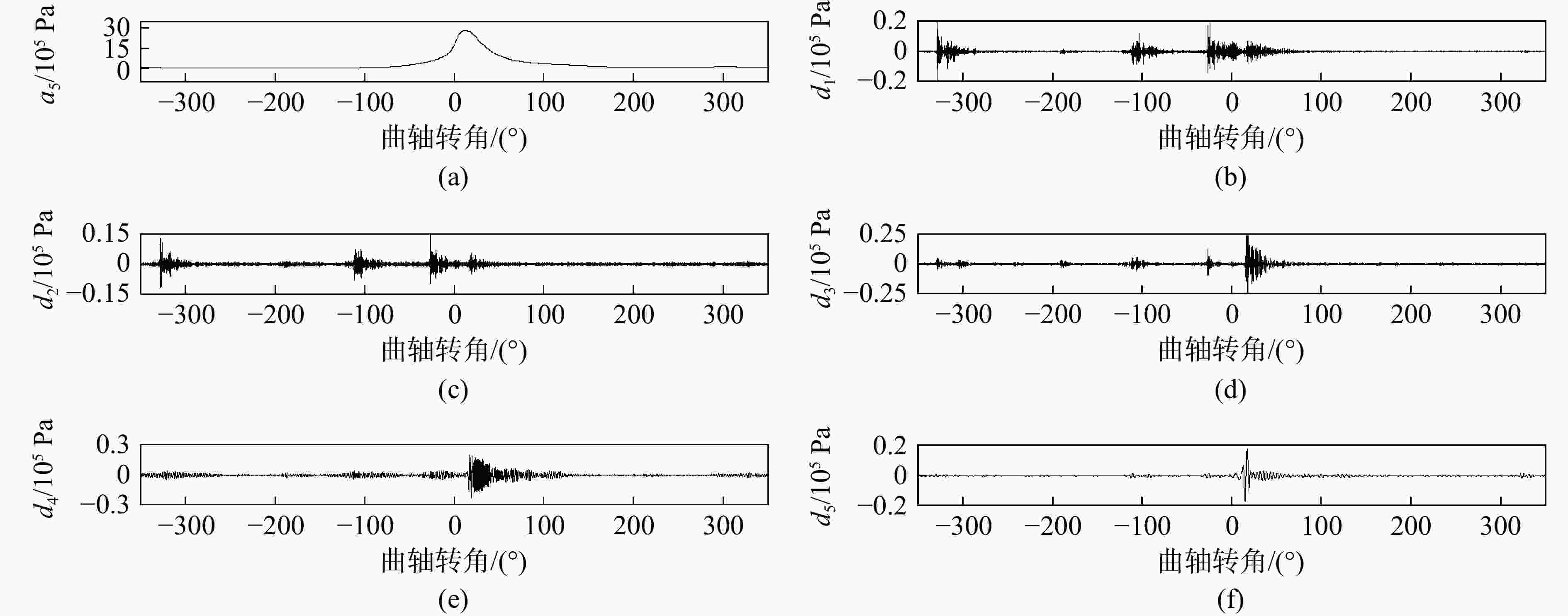
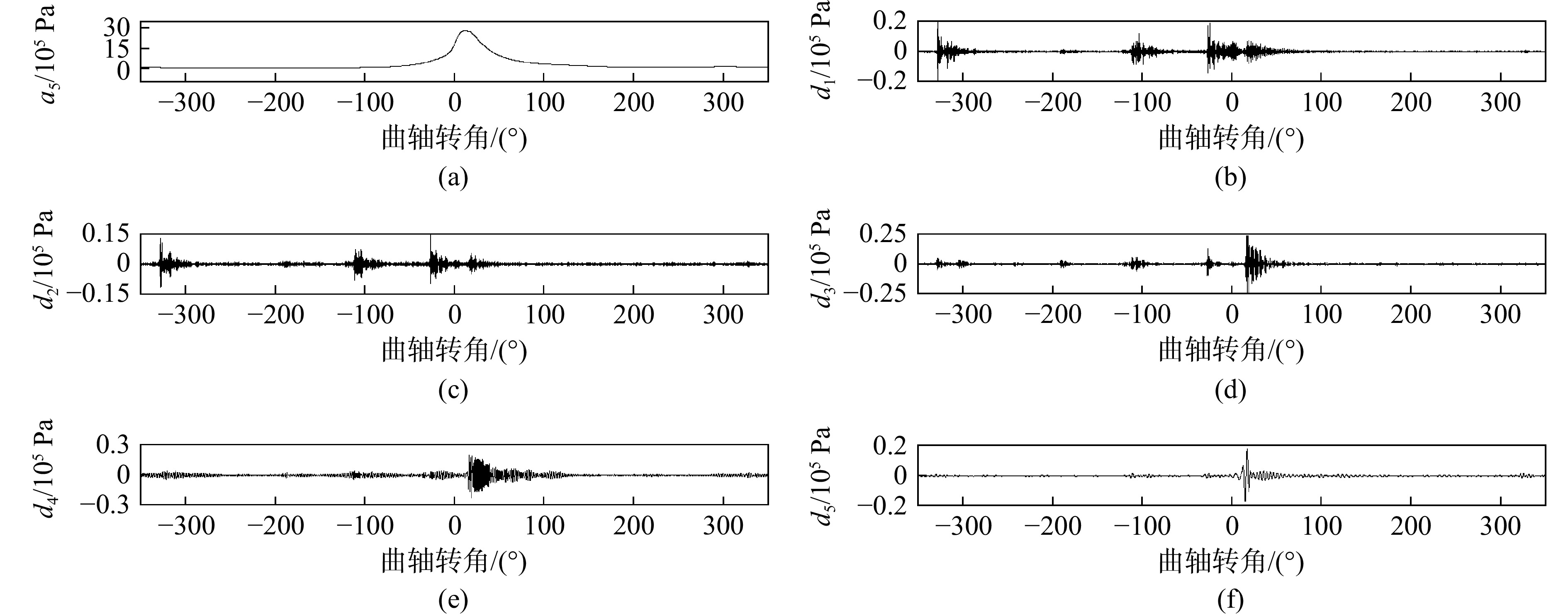
图 5 轻度爆震工况下的小波包变换子频带信号
Figure 5. Wavelet packet transformed sub-band signals under mild knock conditions
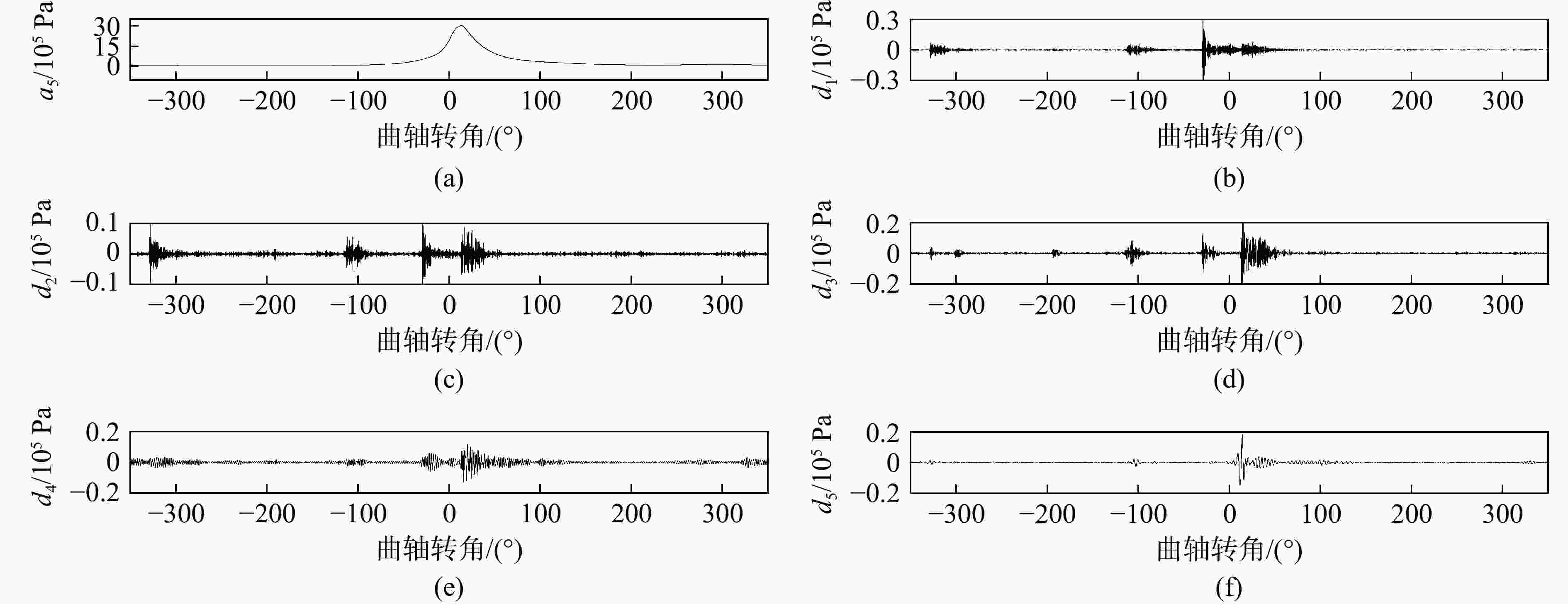
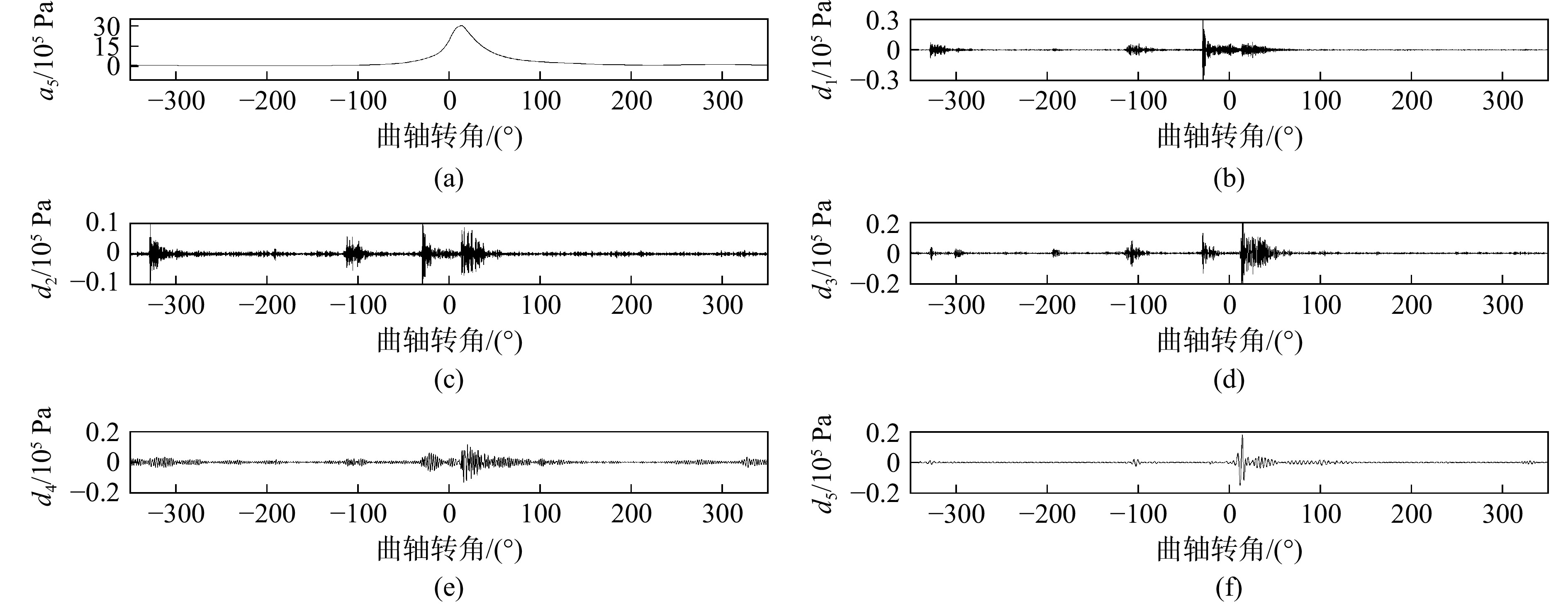
图 6 中度爆震工况下的小波包变换子频带信号
Figure 6. Wavelet packet transformed subband signals for moderate knock conditions
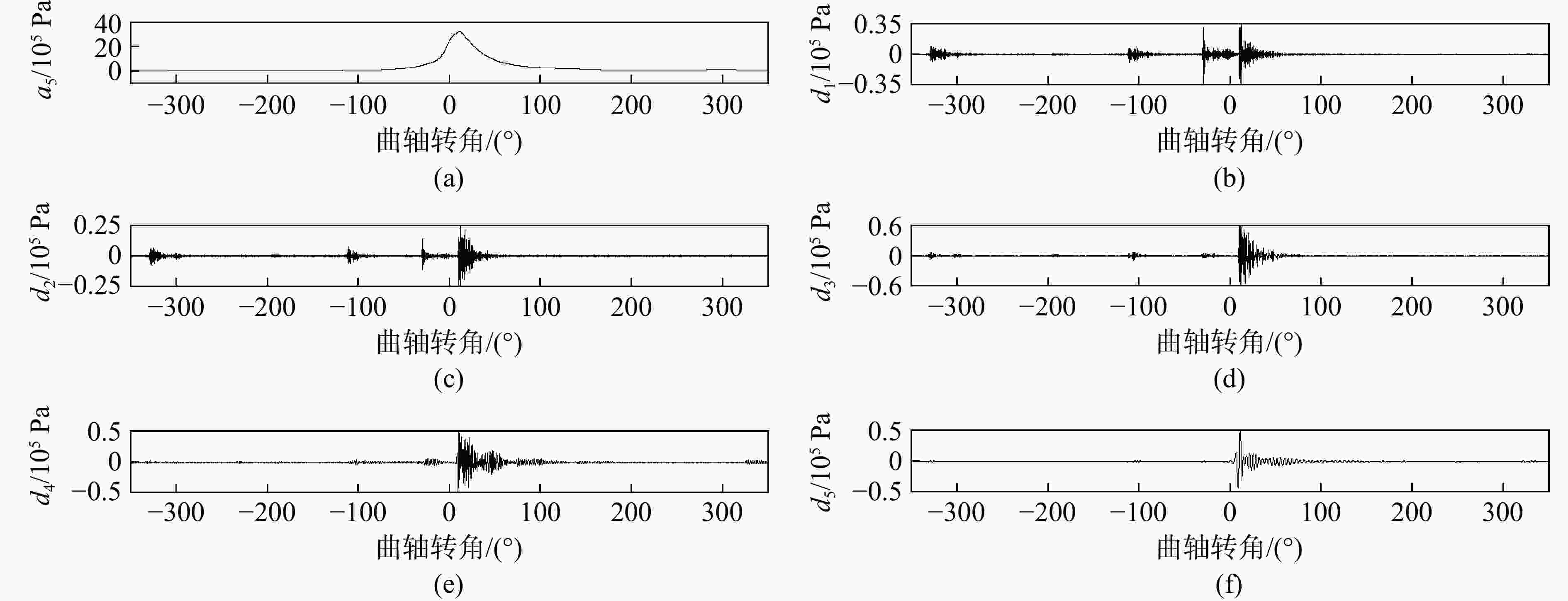
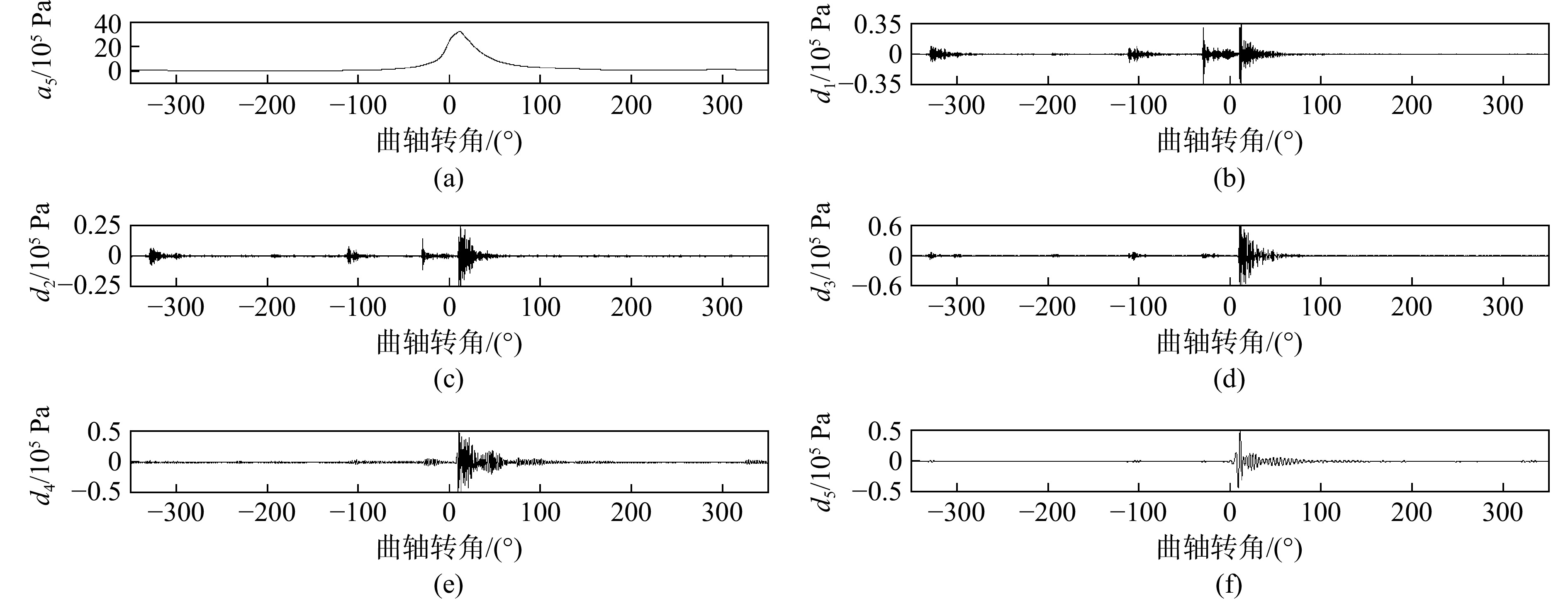
图 7 严重爆震工况下的小波包变换子频带信号
Figure 7. Wavelet packet transformed subband signals under severe knock conditions
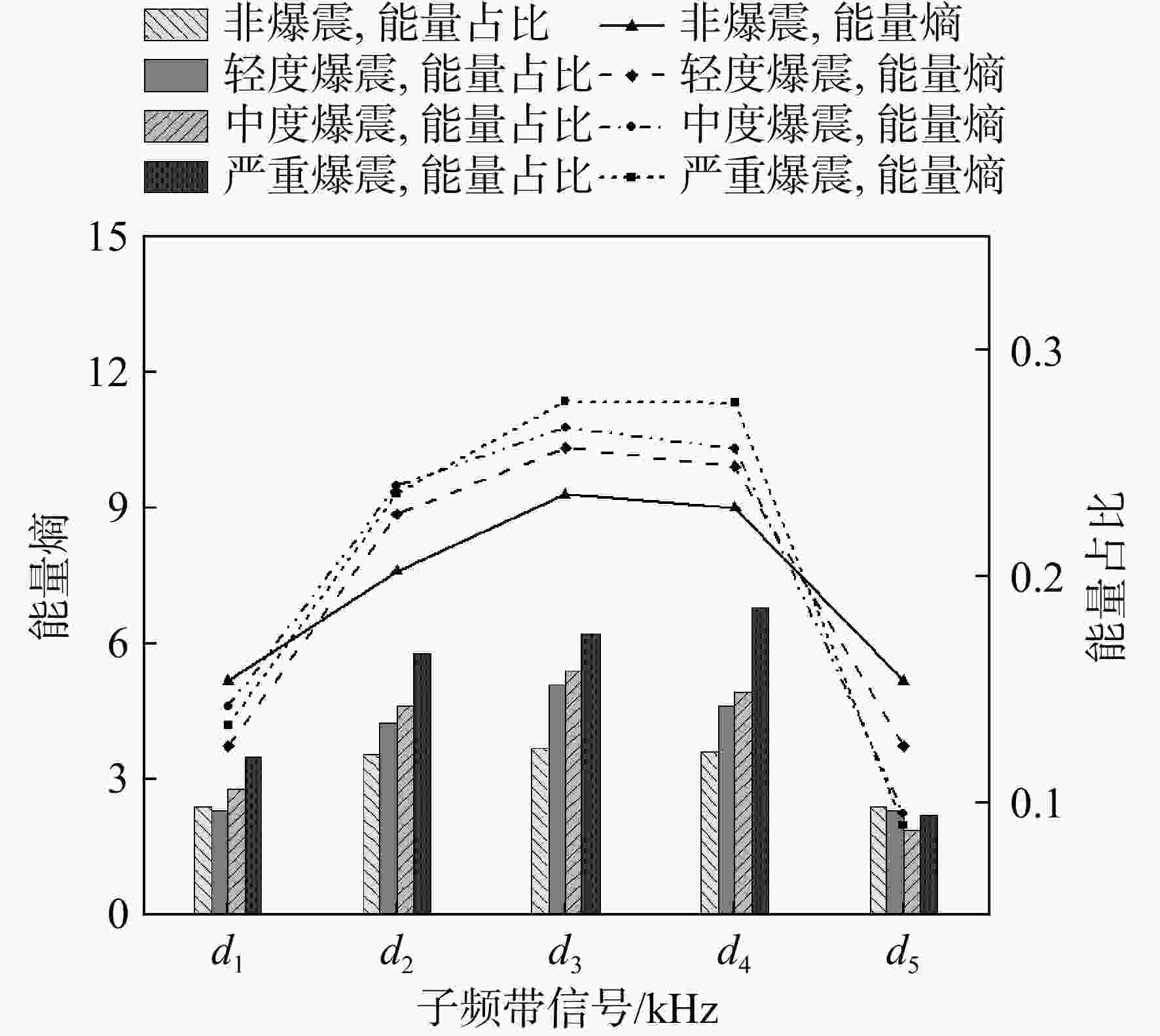
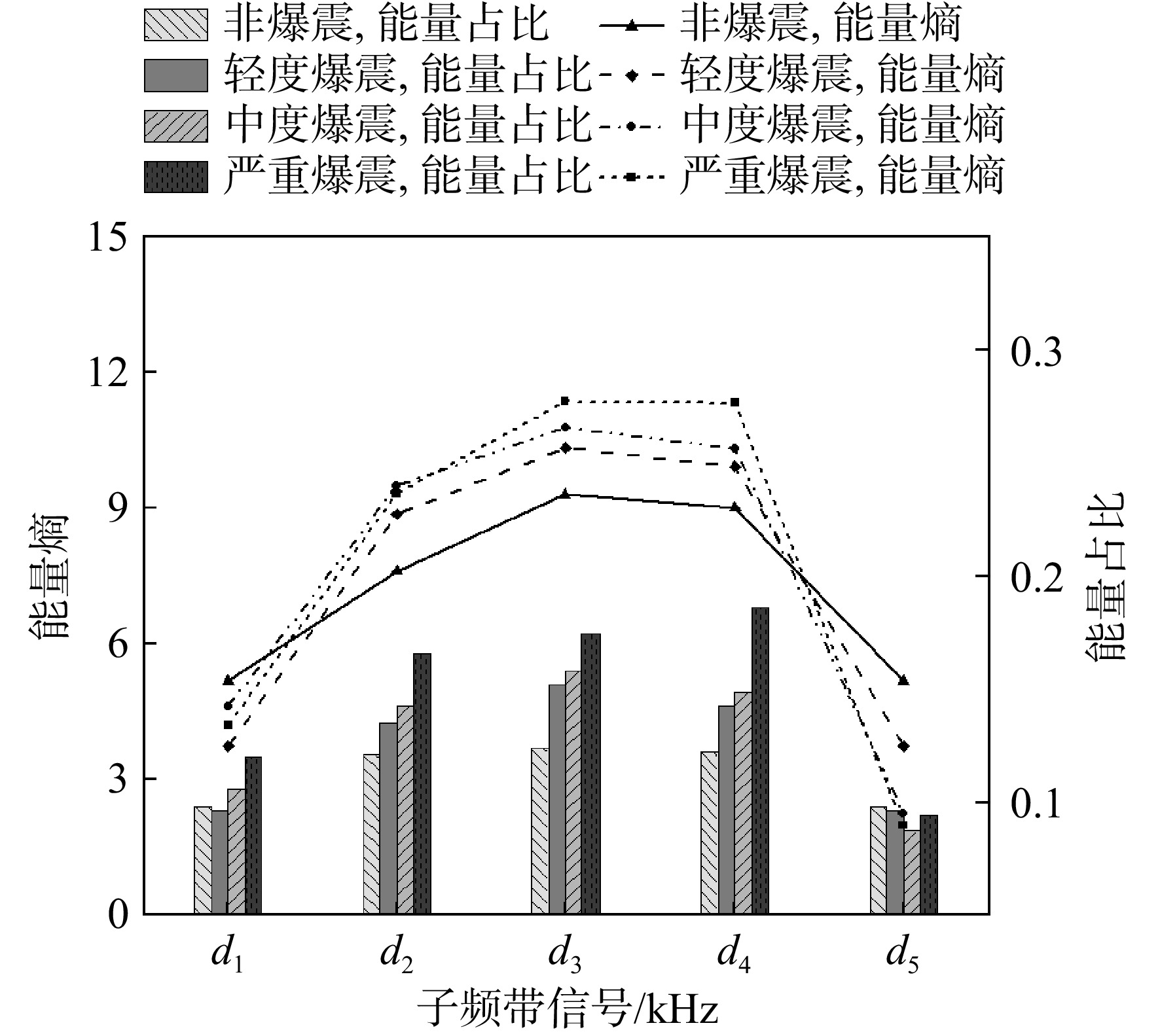
图 8 不同爆震等级下各子频带能量熵分布及能量占比
Figure 8. Distribution of energy entropy and energy share of each subband under different knock levels
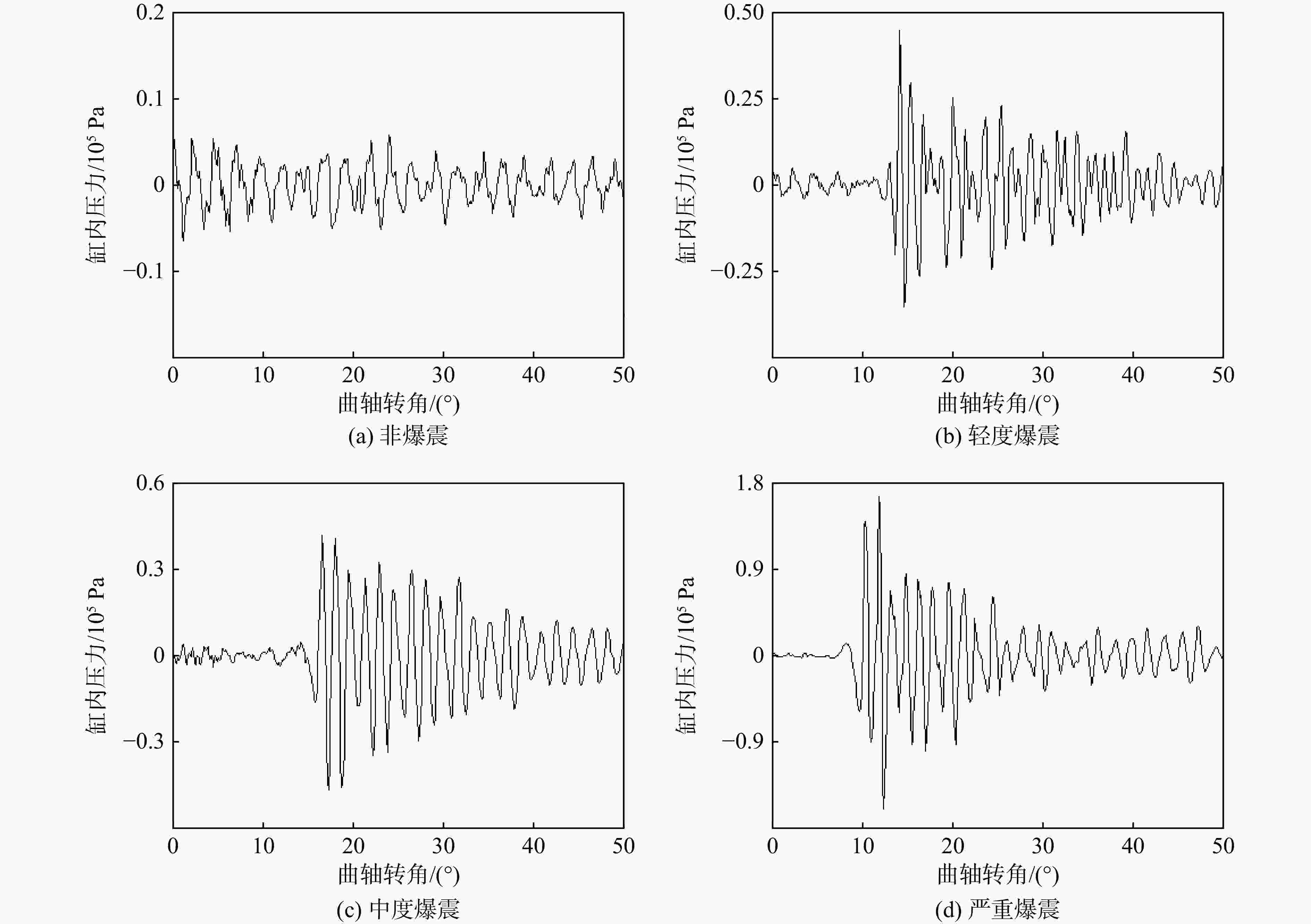
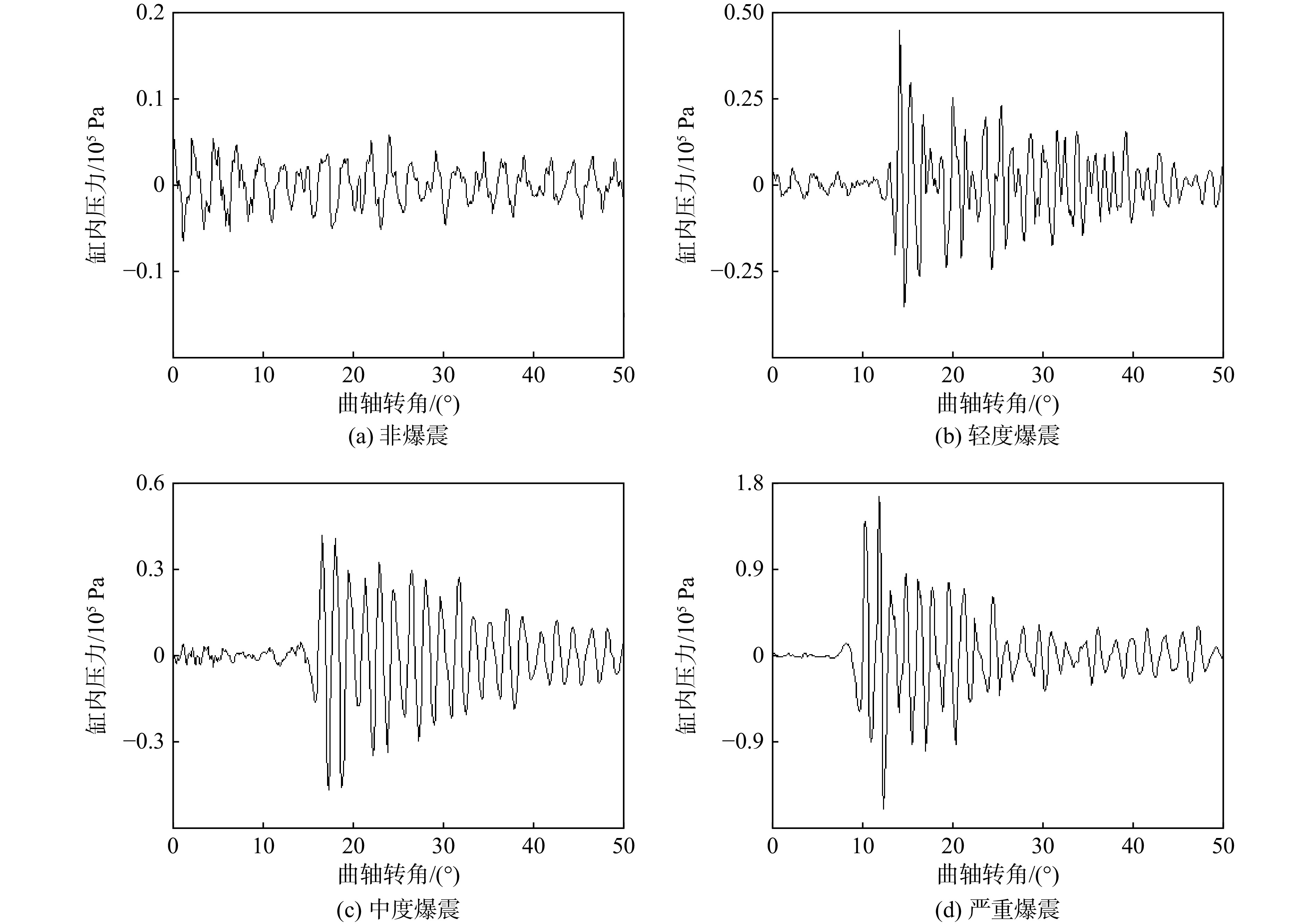
图 9 不同爆震等级经爆震窗口处理后爆震特征频带时域图
Figure 9. Time-domain plots of the characteristic frequency bands of the knock processed by the knock window at different knock levels
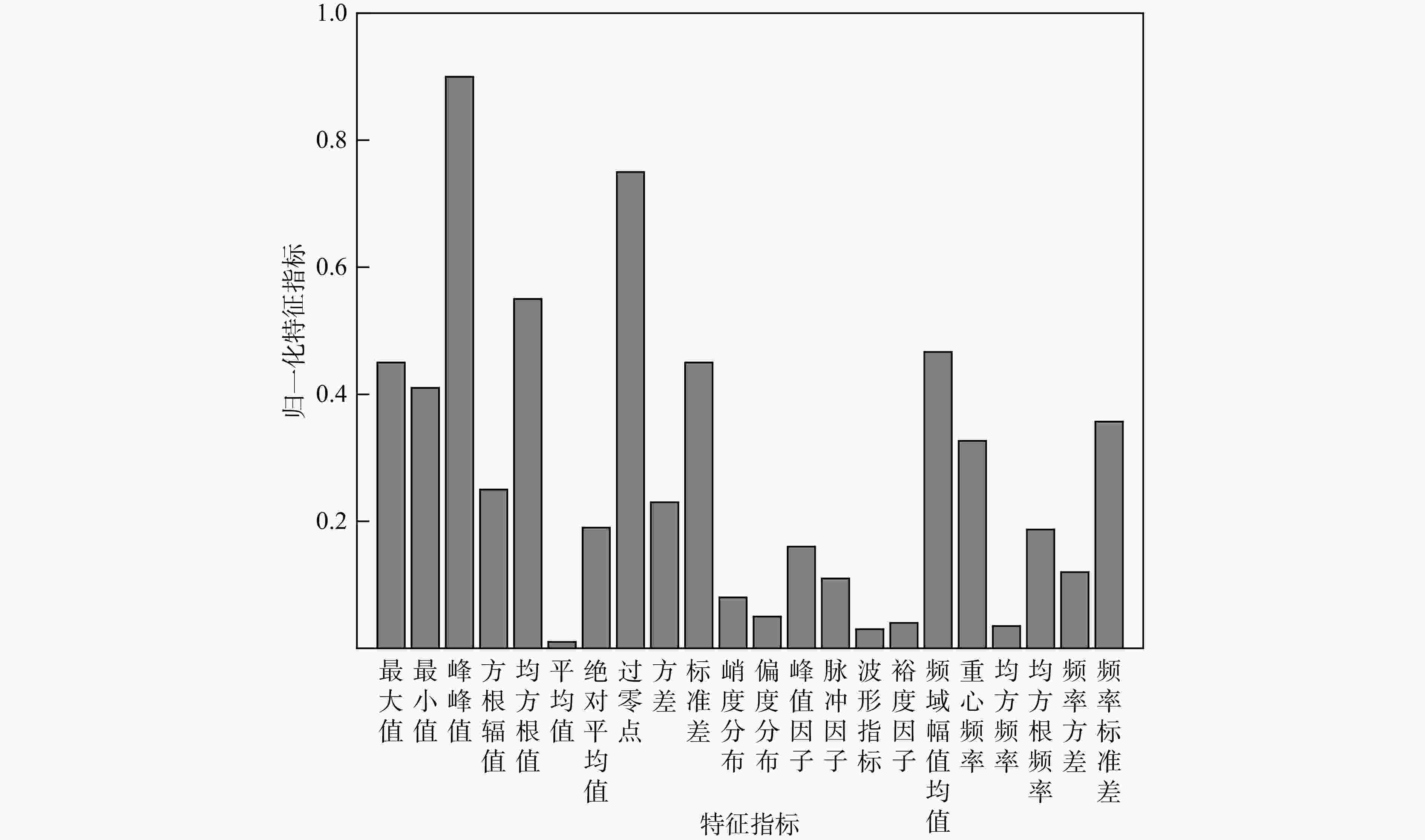
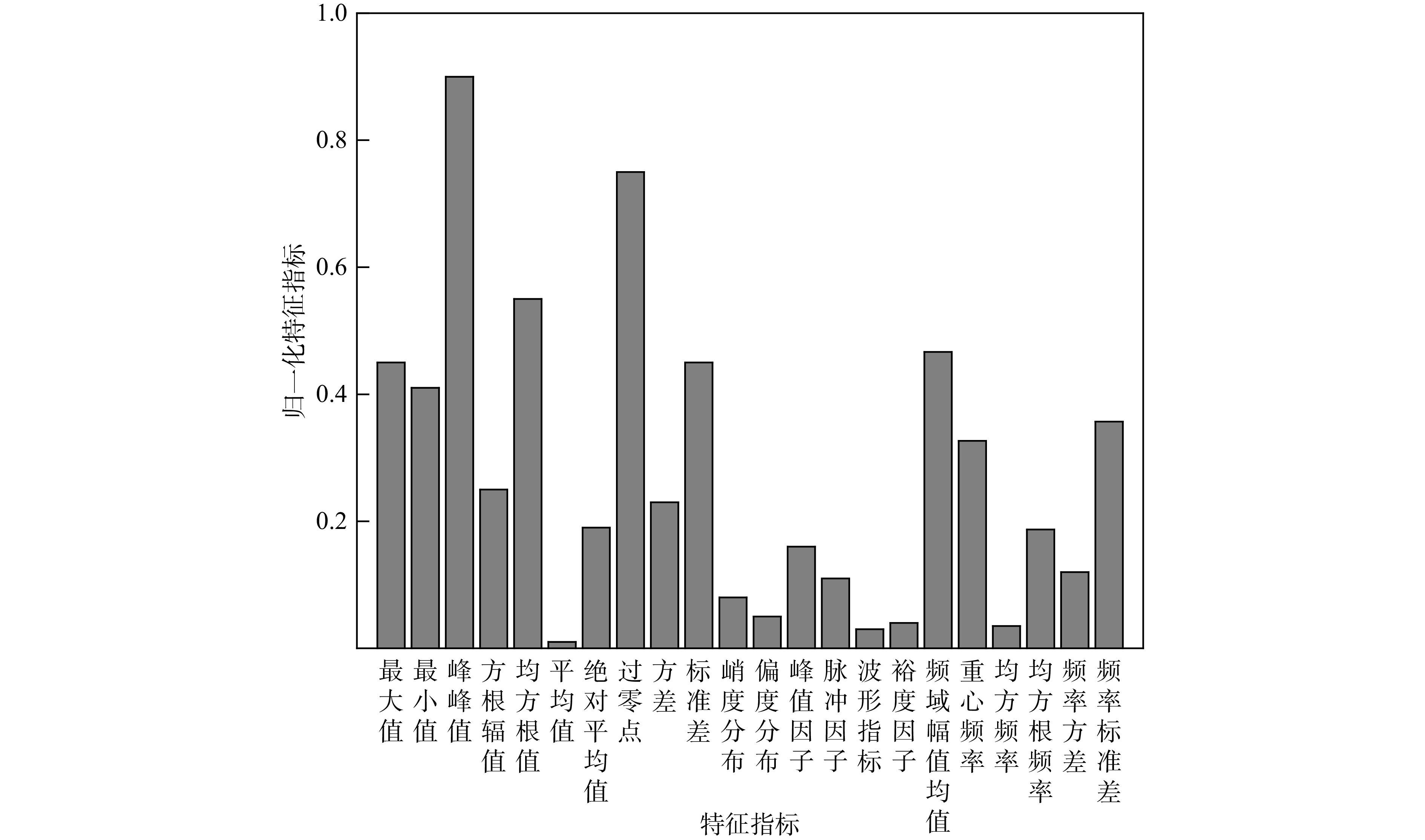
图 10 爆震循环下的时频域特征指标
Figure 10. Time-frequency domain characterization metrics under knock cycling
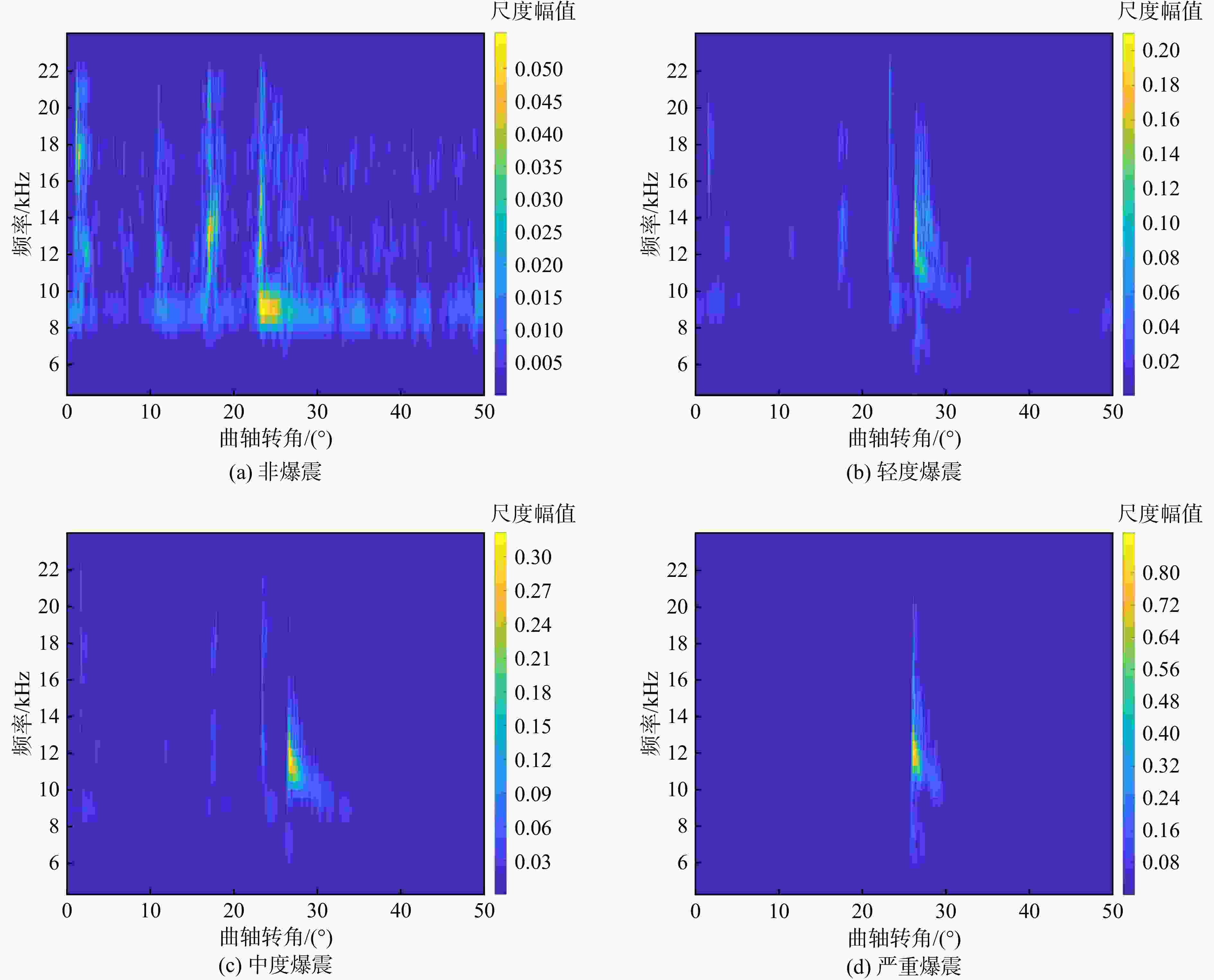
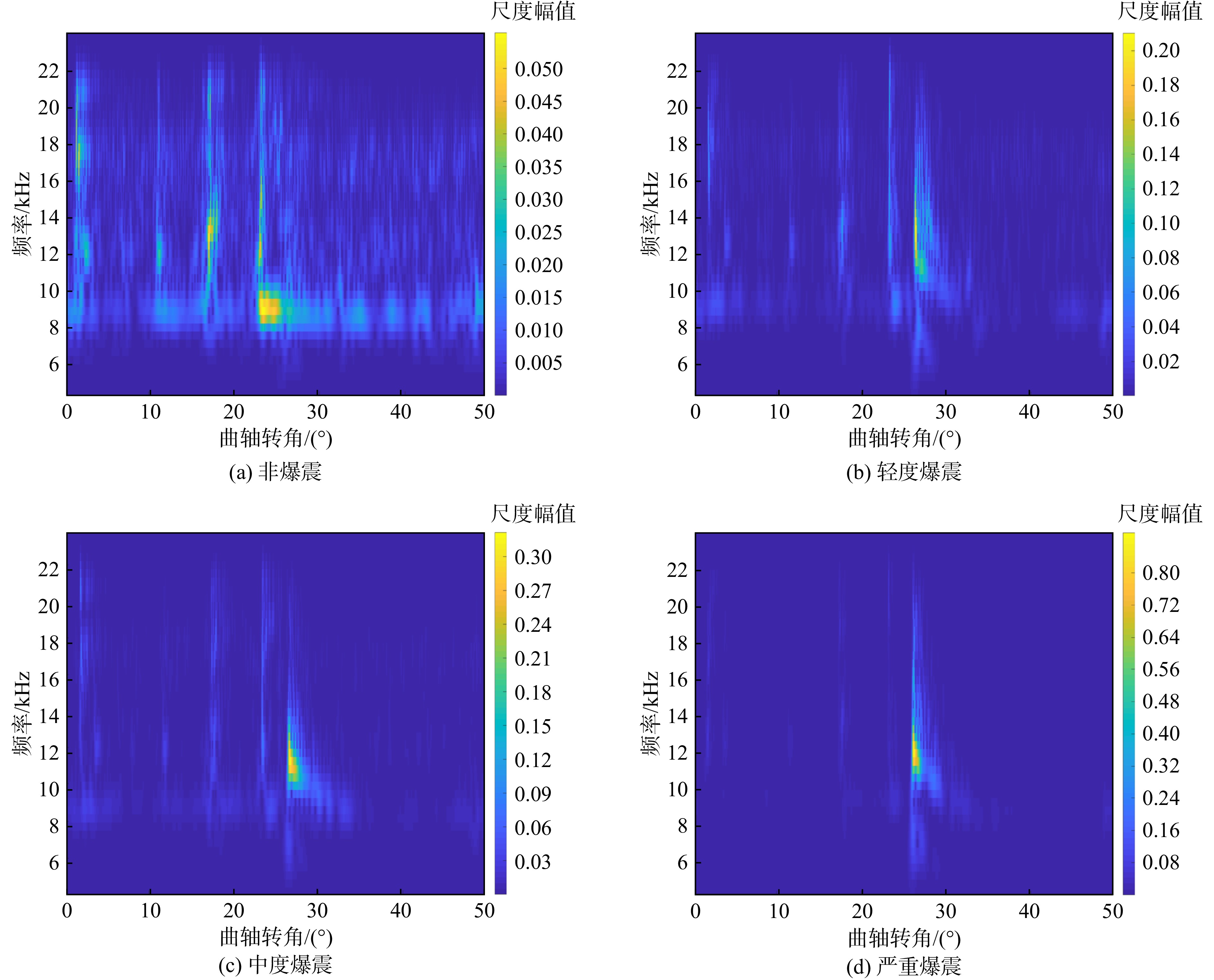
图 11 不同爆震等级下的双域特征时频图
Figure 11. Time-frequency plots of dual-domain features at different knock levels
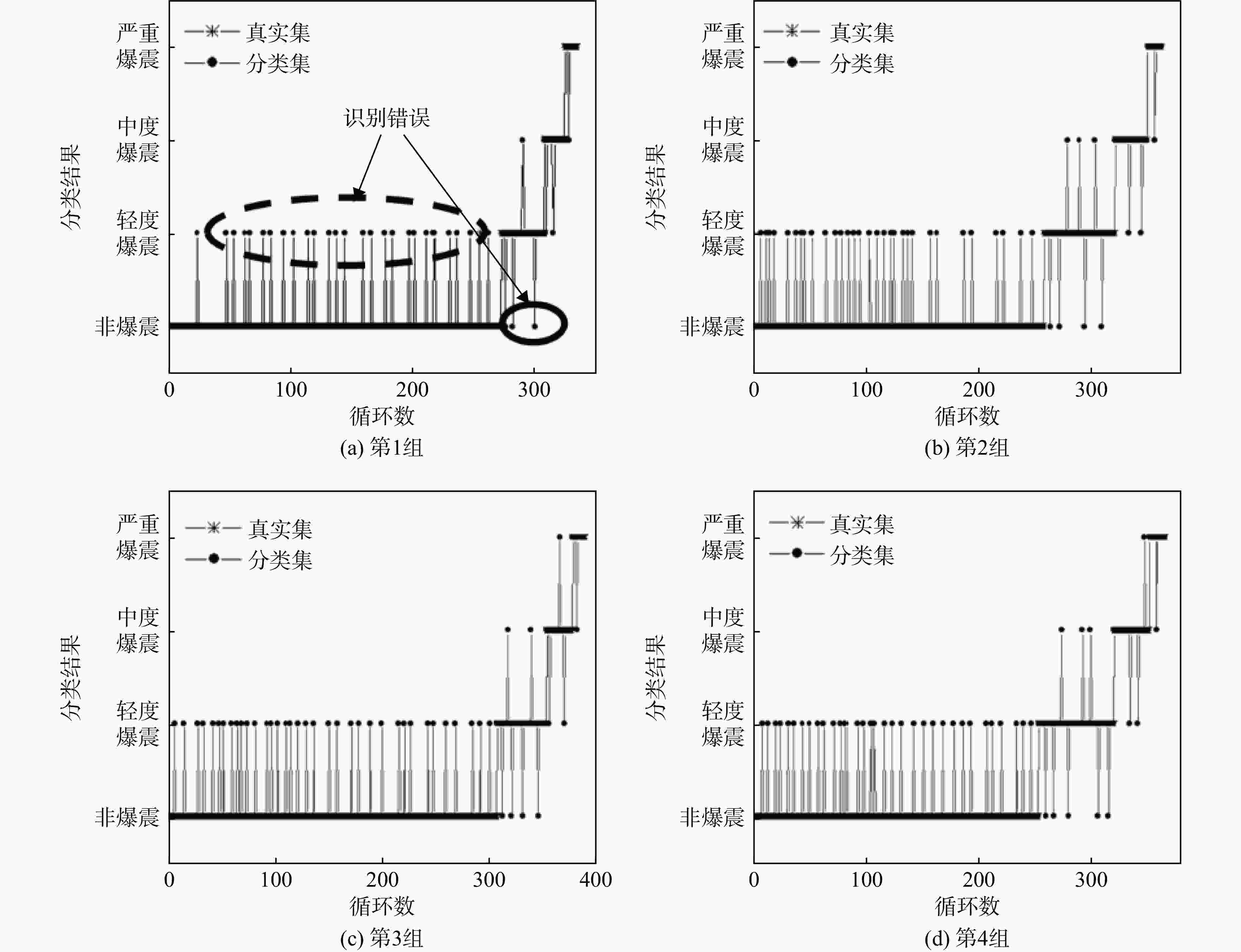
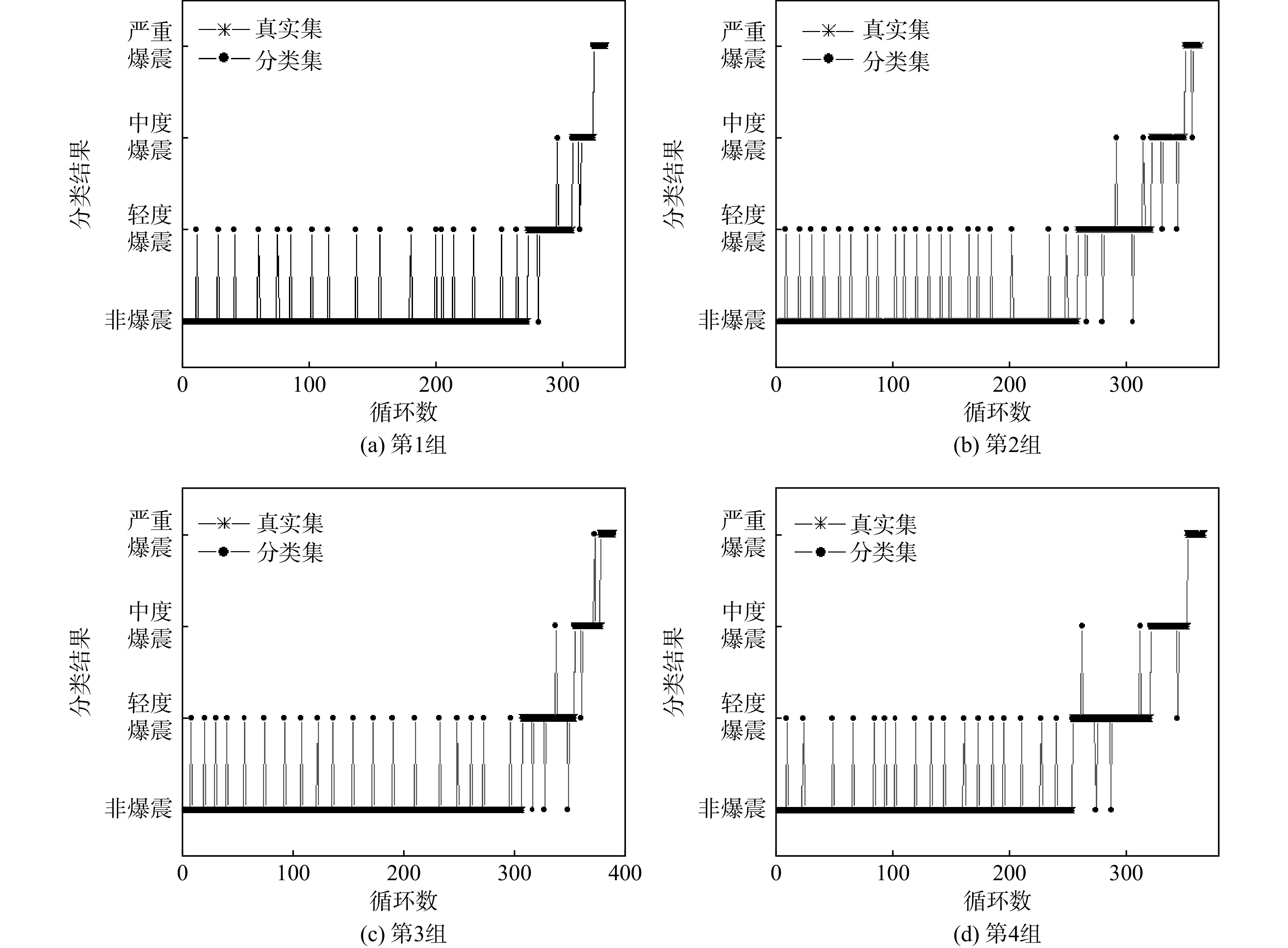
图 18 MLP模型对不同工况样本的爆震强度识别结果
Figure 18. Knock intensity identification results of MLP model for different operating condition samples
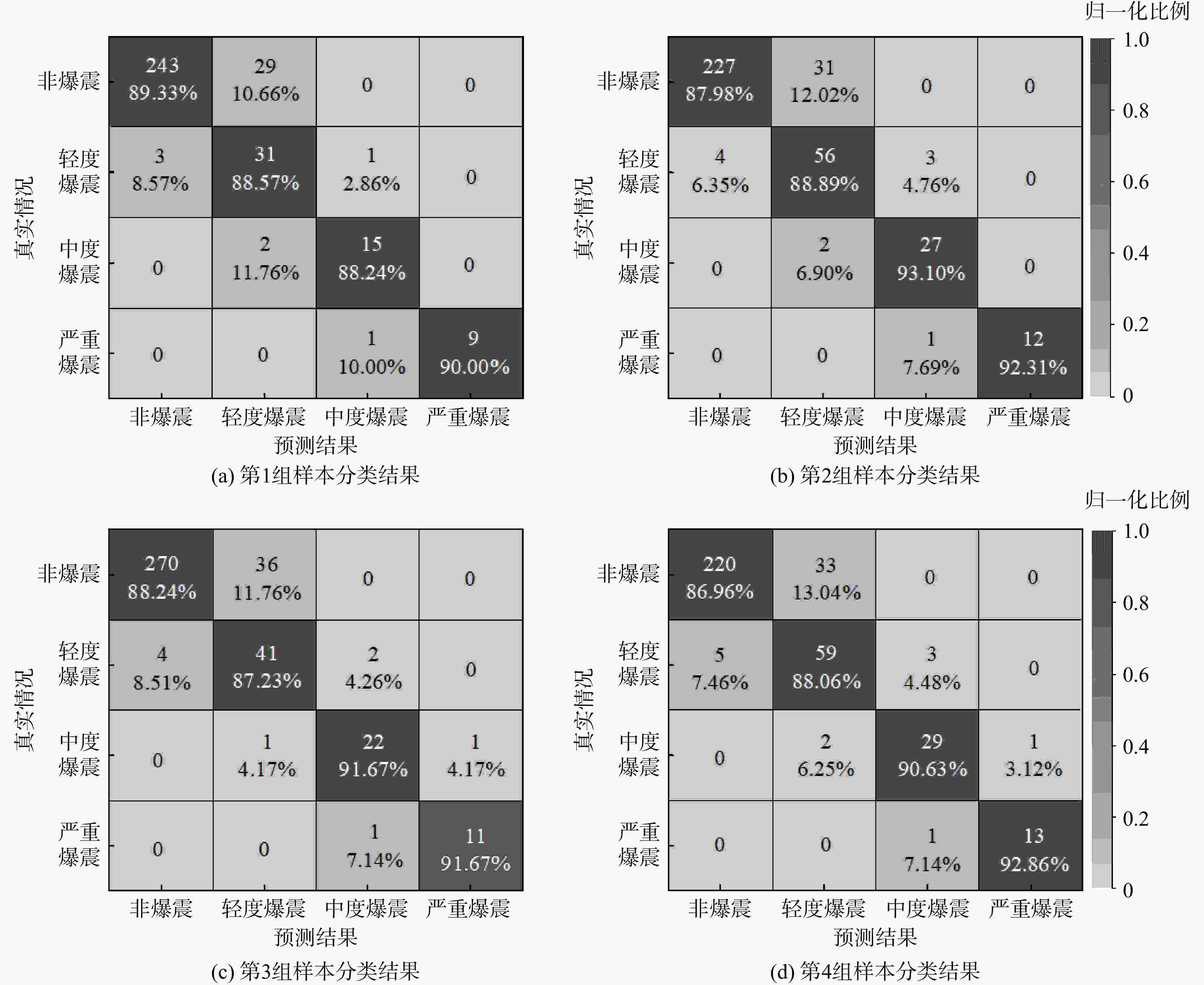
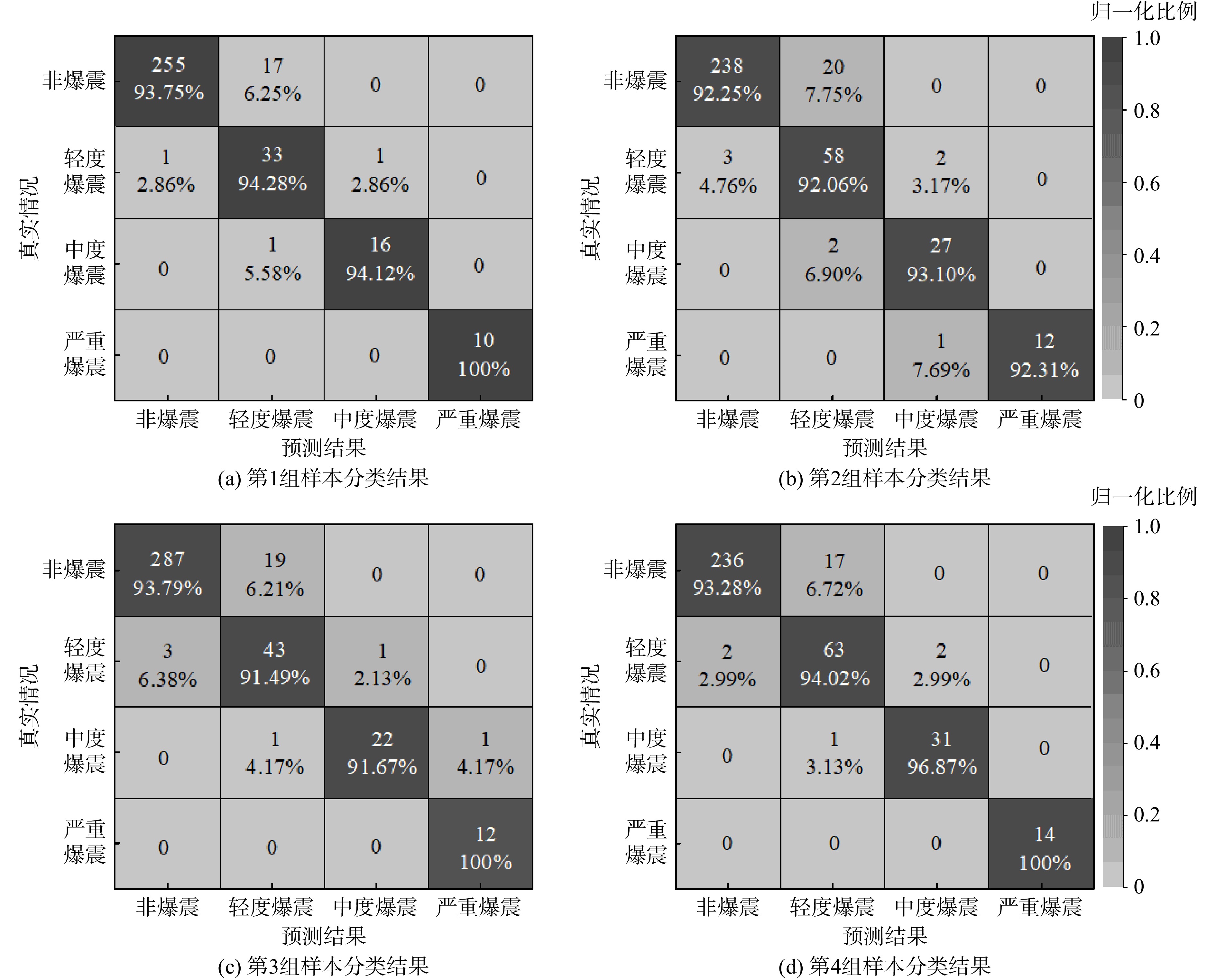
图 19 MLP模型对不同工况样本爆震强度识别的混淆矩阵
Figure 19. Confusion matrix of MLP model for knock intensity identification of samples under different operating conditions
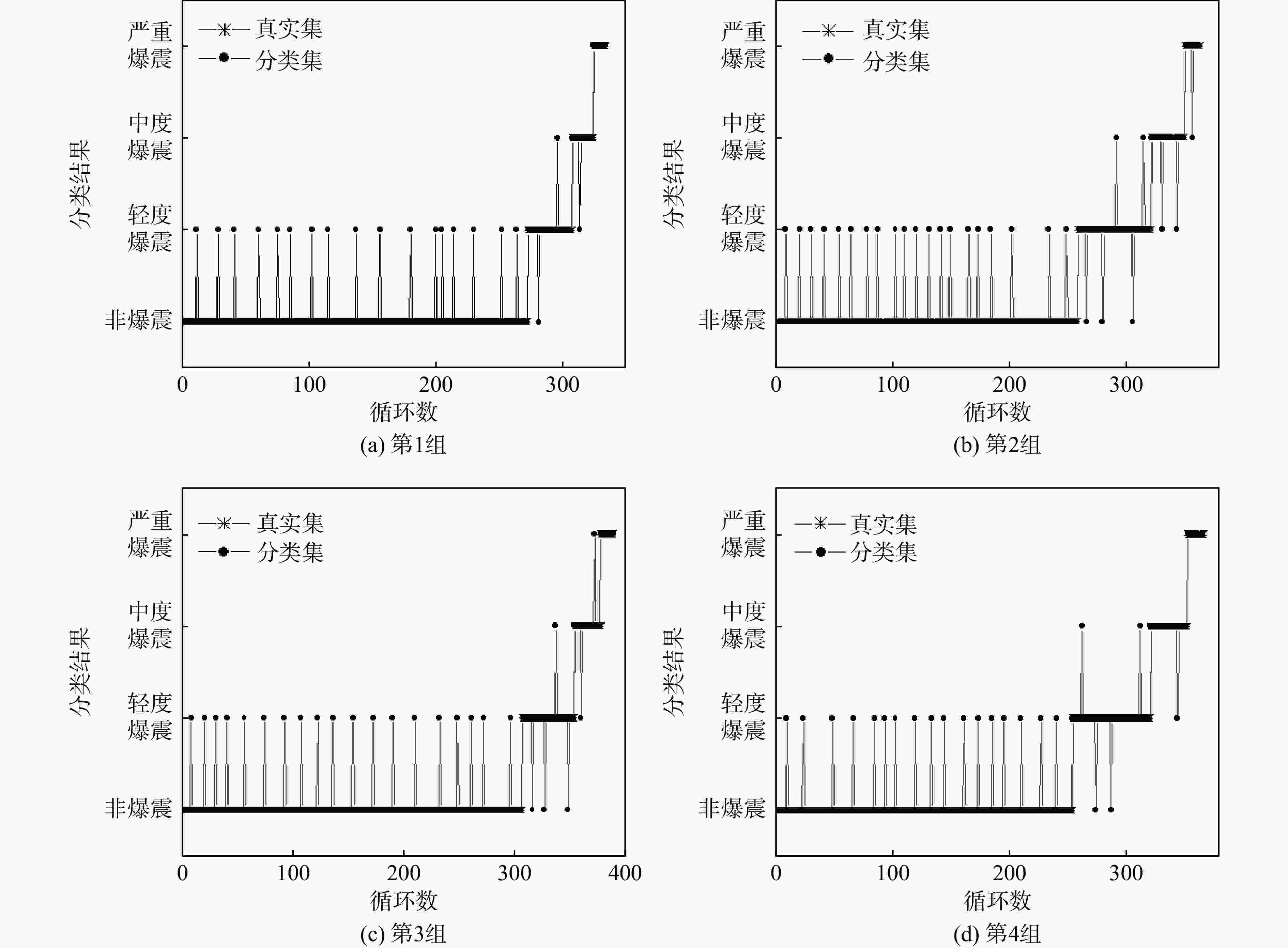
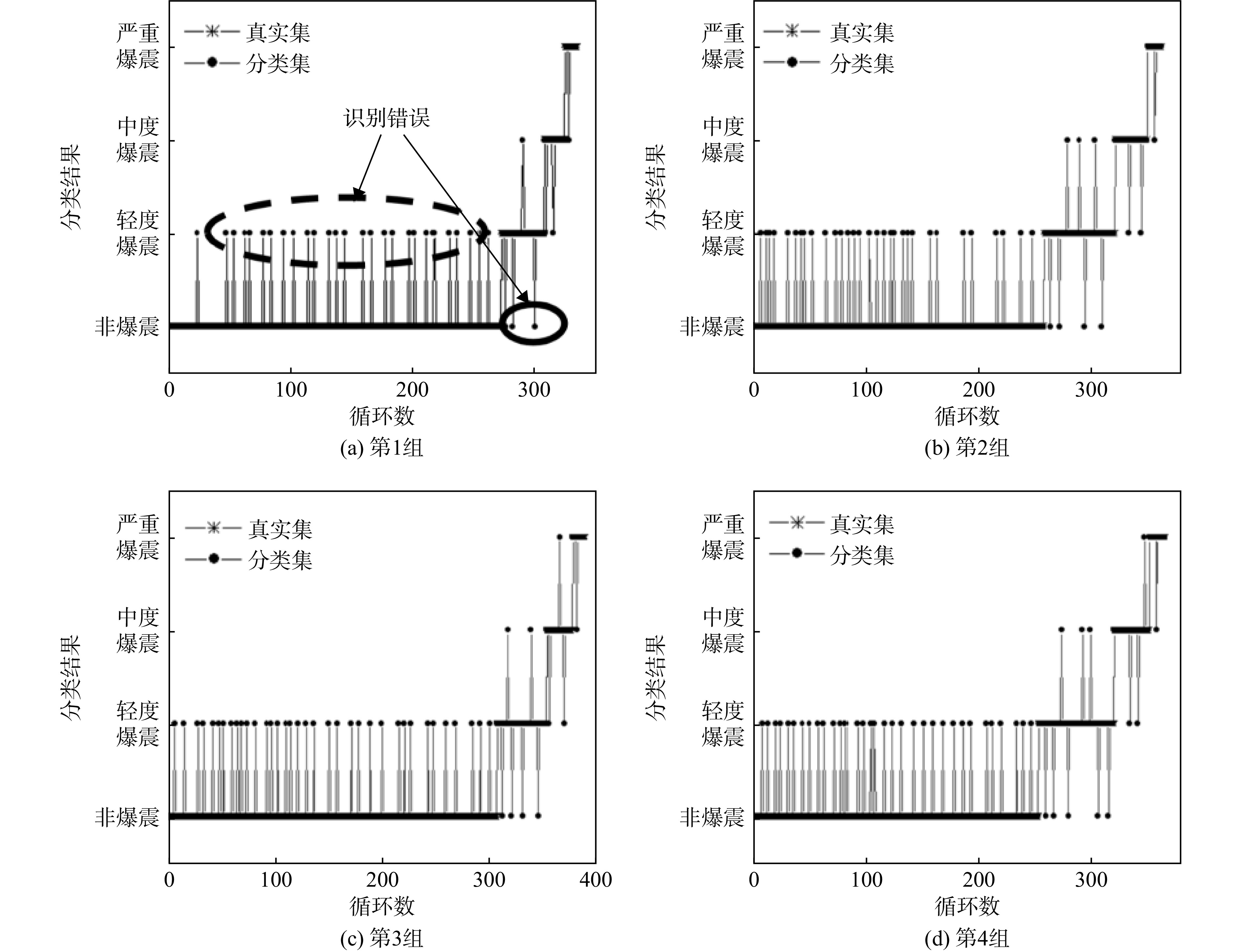
图 20 CNN模型对不同工况样本的爆震强度识别结果
Figure 20. Knock intensity identification results of CNN model for different operating condition samples
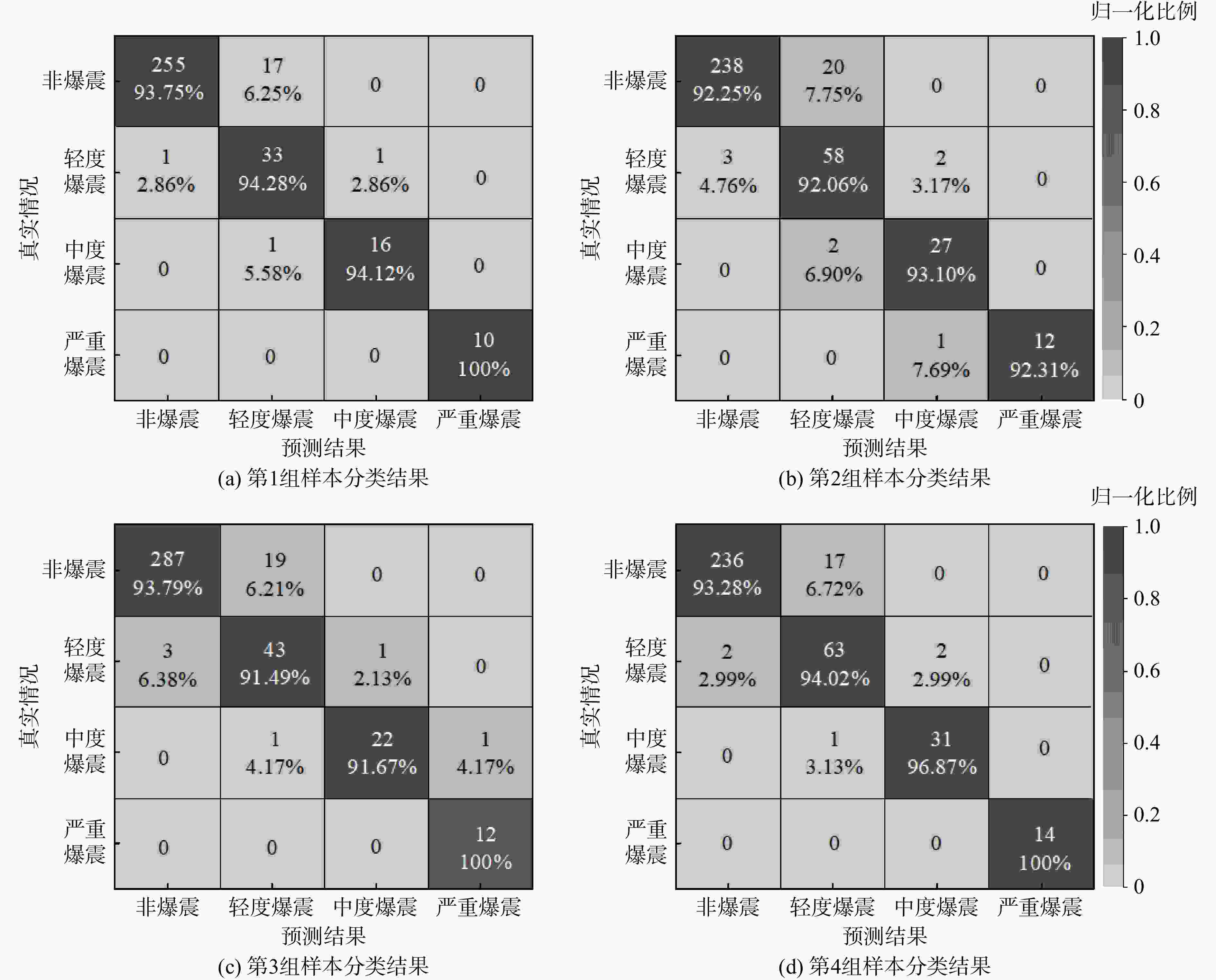
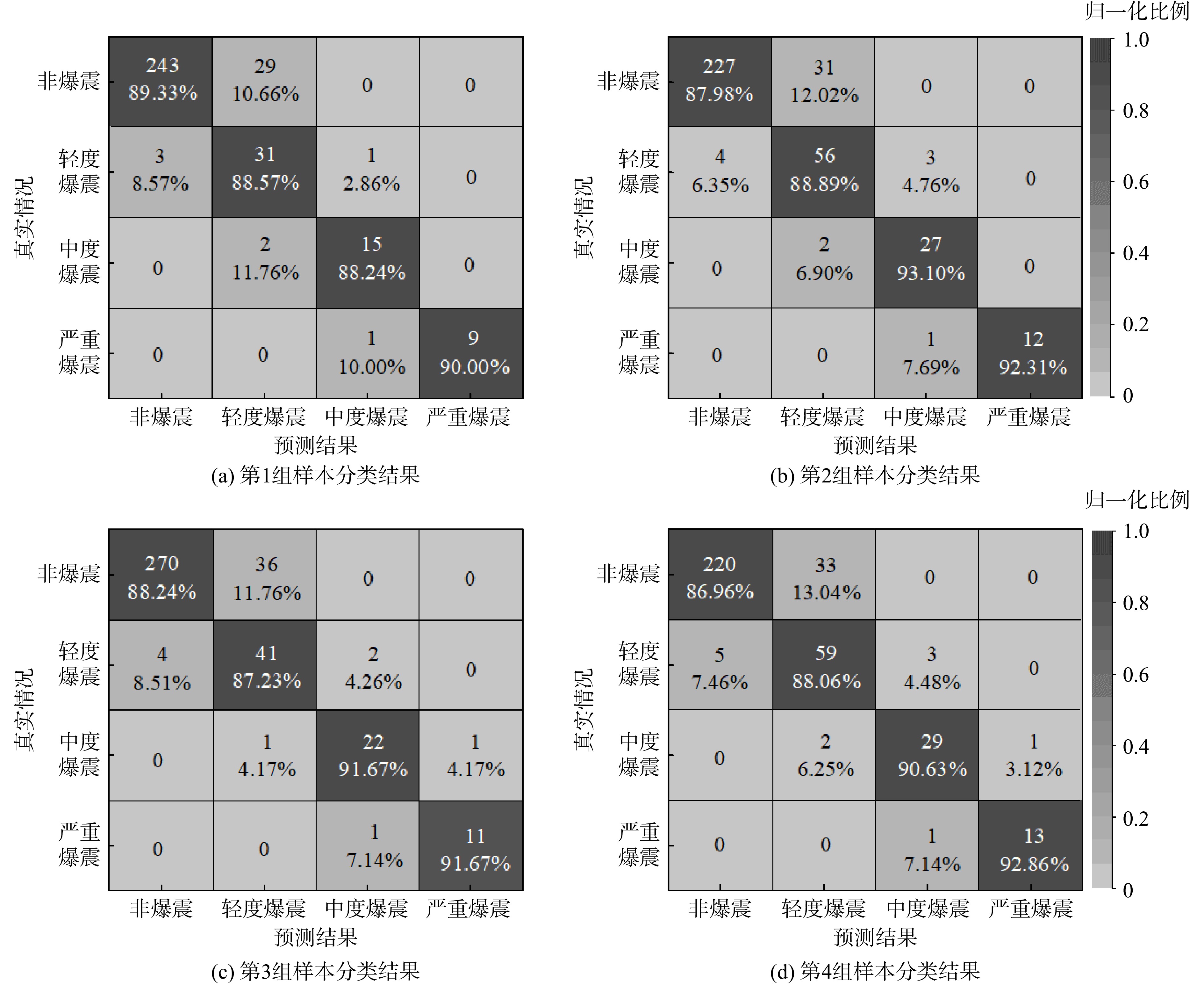
图 21 CNN模型对不同工况样本爆震强度识别的混淆矩阵
Figure 21. Confusion matrix of CNN model for knock intensity identification of samples under different operating conditions
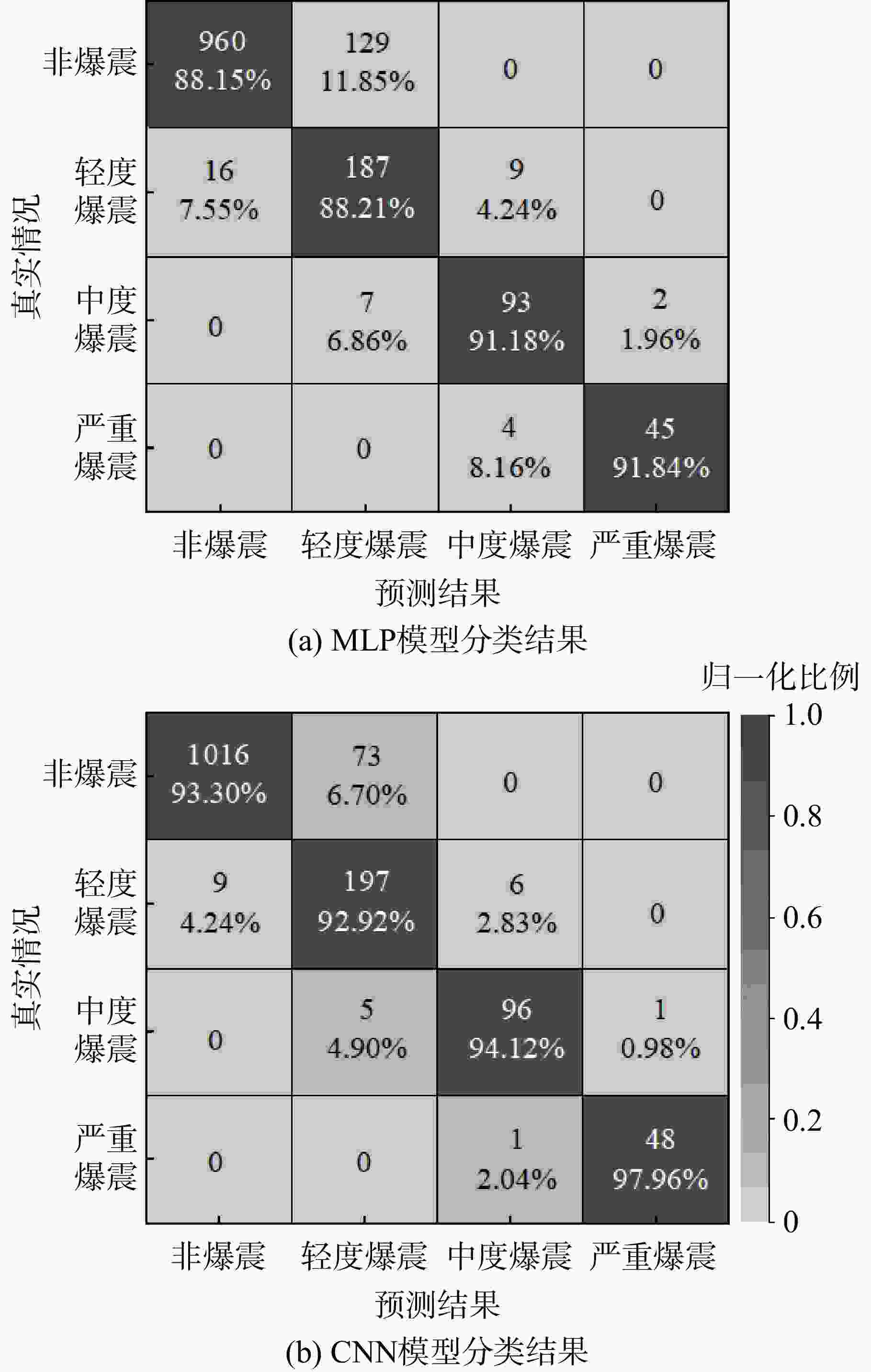
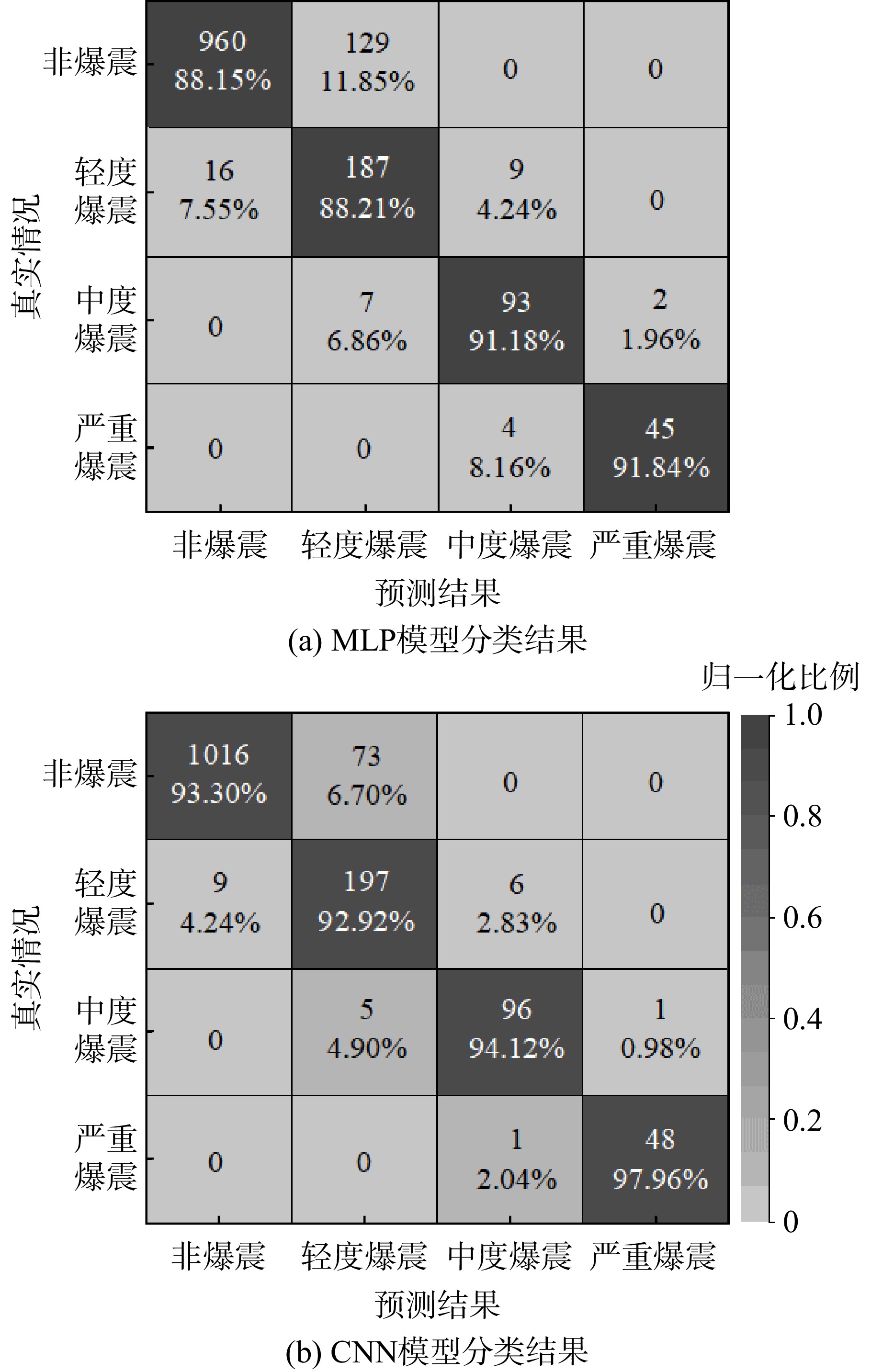
图 22 不同模型爆震强度识别混淆矩阵
Figure 22. Confusion matrix of different models knock intensity identification
表 1 航空煤油发动机基本结构参数
Table 1. Basic structural parameters of aviation kerosene engine
参数 数值或说明 活塞行程/mm 83 气缸直径/mm 100 排量/mL 650 压缩比 9∶1 曲柄连杆长度/mm 142.56 气门最大升程/mm 9 气门数 4 火花塞数 2 活塞形状 偏心碗形状 燃料类型 航空煤油(RP-3) 喷油方式 压缩空气辅助直喷  下载: 导出CSV
表 2 发动机爆震试验工况基本参数
Table 2. Basic parameters of the engine knock test conditions
参数 数值或说明 转速/(r/min) 2500 ~6500 节气门开度/% 20~50 点火提前角/(°) 上止点前22~39 喷油时刻/(°) −60 喷油脉宽/ms 4~7 喷射策略 油气同步喷射 点火策略 双火花塞同步点火 过量空气系数 0.85 冷却水温/℃ 90
下载: 导出CSV
表 3 不同工况下爆震试验中各爆震等级数量
Table 3. Number of each knock level in the knock test under different operating conditions
参数 数值 工况1 工况2 工况3 工况4 工况5 转速/(r/min) 3500 3500 3500 3500 3500 点火角/(°) 27 30 33 36 39 采样频率/kHz 240 240 240 240 240 轻度爆震循环数 15 31 79 101 112 中度爆震循环数 5 12 33 46 54 严重爆震循环数 3 9 25 32 38 总计循环数 23 52 137 179 204
下载: 导出CSV
表 4 圆柱形燃烧室不同共振模态下的对照频率
Table 4. Control frequencies of cylindrical combustion chambers in different resonant modes
共振模态 (m,n) αm,n fm,n/kHz 1阶切向 (1,0) 1.84 5.86 2阶切向 (2,0) 3.05 9.72 3阶切向 (3,0) 4.20 13.30 4阶切向 (4,0) 5.33 16.90 5阶切向 (5,0) 6.42 20.40 1阶径向 (0,1) 3.83 12.20
下载: 导出CSV
表 5 不同发动机负荷工况下的爆震试验测试集样本
Table 5. Sample test set of knock tests under different engine loading conditions
组别 转速/(r/min) 点火角/(°) 节气门开度/% 循环数 爆震数 爆震率/% 1 2500 30 20 334 62 18.56 2 2500 33 20 363 105 28.93 3 4500 30 40 389 83 21.34 4 6500 32 50 366 113 30.87
下载: 导出CSV
表 6 不同模型爆震强度识别精度
Table 6. Knock intensity identification accuracy of different models
% 爆震等级 MLP CNN 非爆震 88.15 93.30 轻度爆震 88.21 92.92 中度爆震 91.18 94.12 严重爆震 91.84 97.96 平均识别精度 88.50 93.46
下载: 导出CSV
-
[1] 王宝义. 我国低空经济的技术经济范式分析与发展对策[J]. 中国流通经济, 2024, 38(9): 14-26. Wang Baoyi. The technological and economic paradigm analysis and countermeasures for developing low altitude economy in China[J]. China Business and Market, 2024, 38(9): 14-26. (in Chinese doi: 10.14089/j.cnki.cn11-3664/f.2024.09.002Wang Baoyi. The technological and economic paradigm analysis and countermeasures for developing low altitude economy in China[J]. China Business and Market, 2024, 38(9): 14-26. (in Chinese) doi: 10.14089/j.cnki.cn11-3664/f.2024.09.002 [2] 张红兴. 对置活塞二冲程内燃机用于无人机的研究[D]. 哈尔滨: 哈尔滨工业大学, 2018. Zhang Hongxing. Study on an opposed piston two stroke internal combustion engine for unmanned aerial vehicle[D]. Harbin: Harbin Institute of Technology, 2018. (in ChineseZhang Hongxing. Study on an opposed piston two stroke internal combustion engine for unmanned aerial vehicle[D]. Harbin: Harbin Institute of Technology, 2018. (in Chinese) [3] 胡强, 余双, 史开源, 等. 浅谈航空重油活塞式发动机[J]. 航空动力, 2020(5): 32-35. Hu Qiang, Yu Shuang, Shi Kaiyuan, et al. Discussion on the aviation heavy fuel piston engines[J]. Aerospace Power, 2020(5): 32-35. (in ChineseHu Qiang, Yu Shuang, Shi Kaiyuan, et al. Discussion on the aviation heavy fuel piston engines[J]. Aerospace Power, 2020(5): 32-35. (in Chinese) [4] Ding Shuiting, Ma Qinglin, Qiu Tian, et al. An engine-level safety assessment approach of sustainable aviation fuel based on a multi-fidelity aerodynamic model[J]. Sustainability, 2024, 16(9): 3814. doi: 10.3390/su16093814 [5] Napolitano P, Jimenez I, Pla B, et al. Knock recognition based on vibration signal and Wiebe function in a heavy-duty spark ignited engine fueled with Methane[J]. Fuel, 2022, 315: 122957. doi: 10.1016/j.fuel.2021.122957 [6] 周浩. 直喷发动机的爆震分析研究[D]. 天津: 天津大学, 2014. Zhou Hao. Investigation on knock analysis of direct injection engine[D]. Tianjin: Tianjin University, 2014. (in ChineseZhou Hao. Investigation on knock analysis of direct injection engine[D]. Tianjin: Tianjin University, 2014. (in Chinese) [7] Pla B, De La Morena J, Bares P, et al. An unsupervised machine learning technique to identify knock from a knock signal time-frequency analysis[J]. Measurement, 2023, 211: 112669. doi: 10.1016/j.measurement.2023.112669 [8] Borg J M, Cheok K C, Saikalis G, et al. Wavelet-based knock detection with fuzzy logic[C]//2005 IEEE International Conference on Computational Intelligence for Measurement Systems and Applications. Piscataway, US: IEEE, 2005: 26-31. [9] 李宁, 周瑞. 基于非线性小波变换的汽油机爆震强度识别[J]. 内燃机学报, 2018, 36(1): 83-89. Li Ning, Zhou Rui. Knock intensity identification for a gasoline engine based on nonlinear wavelet transform[J]. Transactions of Csice, 2018, 36(1): 83-89. (in Chinese doi: 10.16236/j.cnki.nrjxb.201801011Li Ning, Zhou Rui. Knock intensity identification for a gasoline engine based on nonlinear wavelet transform[J]. Transactions of Csice, 2018, 36(1): 83-89. (in Chinese) doi: 10.16236/j.cnki.nrjxb.201801011 [10] 孙久岭. 天然气发动机爆震燃烧特性及识别算法研究[D]. 北京: 北京交通大学, 2022. Sun Jiuling. Research on knock combustion characteristics and identification algorithm of natural gas engine[D]. Beijing: Beijing Jiaotong University, 2022. (in ChineseSun Jiuling. Research on knock combustion characteristics and identification algorithm of natural gas engine[D]. Beijing: Beijing Jiaotong University, 2022. (in Chinese) [11] Kefalas A, Ofner A B, Pirker G, et al. Detection of knocking combustion using the continuous wavelet transformation and a convolutional neural network[J]. Energies, 2021, 14(2): 439. doi: 10.3390/en14020439 [12] Hosseini M, Chitsaz I. Knock probability determination employing convolutional neural network and IGTD algorithm[J]. Energy, 2023, 284: 129282. doi: 10.1016/j.energy.2023.129282 [13] Pla B N, Bares P, Jiménez I, et al. A fuzzy logic map-based knock control for spark ignition engines[J]. Applied Energy, 2020, 280: 116036. doi: 10.1016/j.apenergy.2020.116036 [14] 杨建国, 刘晓峰, 林波. 基于DWT的汽油机爆震特征提取及爆震强度的判定[J]. 内燃机学报, 2003, 21(3): 233-238. Yang Jianguo, Liu Xiaofeng, Lin Bo. DWT based knock detection and knock intensity judgment for a gasoline engine[J]. Transactions of Csice, 2003, 21(3): 233-238. (in Chinese doi: 10.3321/j.issn:1000-0909.2003.03.008Yang Jianguo, Liu Xiaofeng, Lin Bo. DWT based knock detection and knock intensity judgment for a gasoline engine[J]. Transactions of Csice, 2003, 21(3): 233-238. (in Chinese) doi: 10.3321/j.issn:1000-0909.2003.03.008 [15] Molinaro F, Castanie F, Denjean A. Knocking recognition in engine vibration signal using the wavelet transform[C]//Proceedings of the IEEE-SP International Symposium on Time-Frequency and Time-Scale Analysis. Piscataway, US: IEEE, 1992: 353-356. [16] 薛劲梓, 胡春明, 刘娜, 等. 基于小波包能熵谱的爆震特征频带及强度分析[J]. 中南大学学报(自然科学版), 2022, 53(6): 2092-2101. Xue Jinzi, Hu Chunming, Liu Na, et al. Frequency band and intensity analysis of knock characteristics based on wavelet packet energy entropy spectrum[J]. Journal of Central South University (Science and Technology), 2022, 53(6): 2092-2101. (in Chinese doi: 10.11817/j.issn.1672-7207.2022.06.011Xue Jinzi, Hu Chunming, Liu Na, et al. Frequency band and intensity analysis of knock characteristics based on wavelet packet energy entropy spectrum[J]. Journal of Central South University (Science and Technology), 2022, 53(6): 2092-2101. (in Chinese) doi: 10.11817/j.issn.1672-7207.2022.06.011 [17] Naber J, Blough J R, Frankowski D, et al. Analysis of combustion knock metrics in spark-ignition engines[R]. Detroit, US: Sae World Congress and Exhibition, 2006. [18] 盛敬, 魏民祥, 刘锐. 基于经验模态分解的煤油发动机爆震因子计算[J]. 内燃机工程, 2013, 34(5): 29-32, 37. Sheng Jing, Wei Minxiang, Liu Rui. Research on knocking factor calculating method based on empirical mode decomposition algorithm for kerosene engine[J]. Chinese Internal Combustion Engine Engineering, 2013, 34(5): 29-32, 37. (in Chinese doi: 10.13949/j.cnki.nrjgc.2013.05.009Sheng Jing, Wei Minxiang, Liu Rui. Research on knocking factor calculating method based on empirical mode decomposition algorithm for kerosene engine[J]. Chinese Internal Combustion Engine Engineering, 2013, 34(5): 29-32, 37. (in Chinese) doi: 10.13949/j.cnki.nrjgc.2013.05.009 [19] 张德丰. MATLAB小波分析[M]. 北京: 机械工业出版社, 2009. [20] Pan Yue, Zhang Limao, Wu Xianguo, et al. Structural health monitoring and assessment using wavelet packet energy spectrum[J]. Safety Science, 2019, 120: 652-665. doi: 10.1016/j.ssci.2019.08.015 [21] Hudson C, Gao X, Stone R. Knock measurement for fuel evaluation in spark ignition engines[J]. Fuel, 2001, 80(3): 395-407. doi: 10.1016/S0016-2361(00)00080-6 [22] 何正友, 蔡玉梅, 钱清泉. 小波熵理论及其在电力系统故障检测中的应用研究[J]. 中国电机工程学报, 2005, 25(5): 38-43. He Zhengyou, Cai Yumei, Qian Qingquan. A study of wavelet entropy theory and its application in electric power system fault detection[J]. Proceedings of the CSEE, 2005, 25(5): 38-43. (in Chinese doi: 10.3321/j.issn:0258-8013.2005.05.007He Zhengyou, Cai Yumei, Qian Qingquan. A study of wavelet entropy theory and its application in electric power system fault detection[J]. Proceedings of the CSEE, 2005, 25(5): 38-43. (in Chinese) doi: 10.3321/j.issn:0258-8013.2005.05.007 [23] 张炜博. 基于时频分析与非线性熵的水电机组智能故障诊断与状态趋势预测研究[D]. 武汉: 华中科技大学, 2019. Zhang Weibo. Study on intelligent fault diagnosis and state tendency prediction of hydroelectric generator units based on time-frequency analysis and nonlinear entropy[D]. Wuhan: Huazhong University of Science and Technology, 2019. (in ChineseZhang Weibo. Study on intelligent fault diagnosis and state tendency prediction of hydroelectric generator units based on time-frequency analysis and nonlinear entropy[D]. Wuhan: Huazhong University of Science and Technology, 2019. (in Chinese) [24] Donahue J, Jia Y, Vinyals O, et al. DeCAF: a deep convolutional activation feature for generic visual recognition[R]. Beijing: 31st International Conference on Machine Learning, 2014. [25] Krizhevsky A, Sutskever I, Hinton G E. ImageNet classification with deep convolutional neural networks[J]. Communications of the ACM, 2017, 60(6): 84-90. doi: 10.1145/3065386 [26] 吴正文. 卷积神经网络在图像分类中的应用研究[D]. 成都: 电子科技大学, 2015. Wu Zhengwen. Application research of convolution neural network in image classification[D]. Chengdu: University of Electronic Science and Technology of China, 2015. (in ChineseWu Zhengwen. Application research of convolution neural network in image classification[D]. Chengdu: University of Electronic Science and Technology of China, 2015. (in Chinese) [27] 周志华. 机器学习[M]. 北京: 清华大学出版社, 2016. -

 点击查看大图
计量
- 文章访问数: 542
- HTML浏览量: 297
- PDF量: 93
- 被引次数: 0