2023 Vol. 38, No. 9

Combustion,Heat and Mass Transfer
Ablation mechanism and coupling pyrolysis/conduction model of a silicone rubber matrix thermal protection coating
SHI Shengbo, ZHANG Yuntian, HU Li, FANG Guangqiang, CUI Xinfang
2023, 38(9): 2049-2061. doi: 10.13224/j.cnki.jasp.20220897
Abstract:

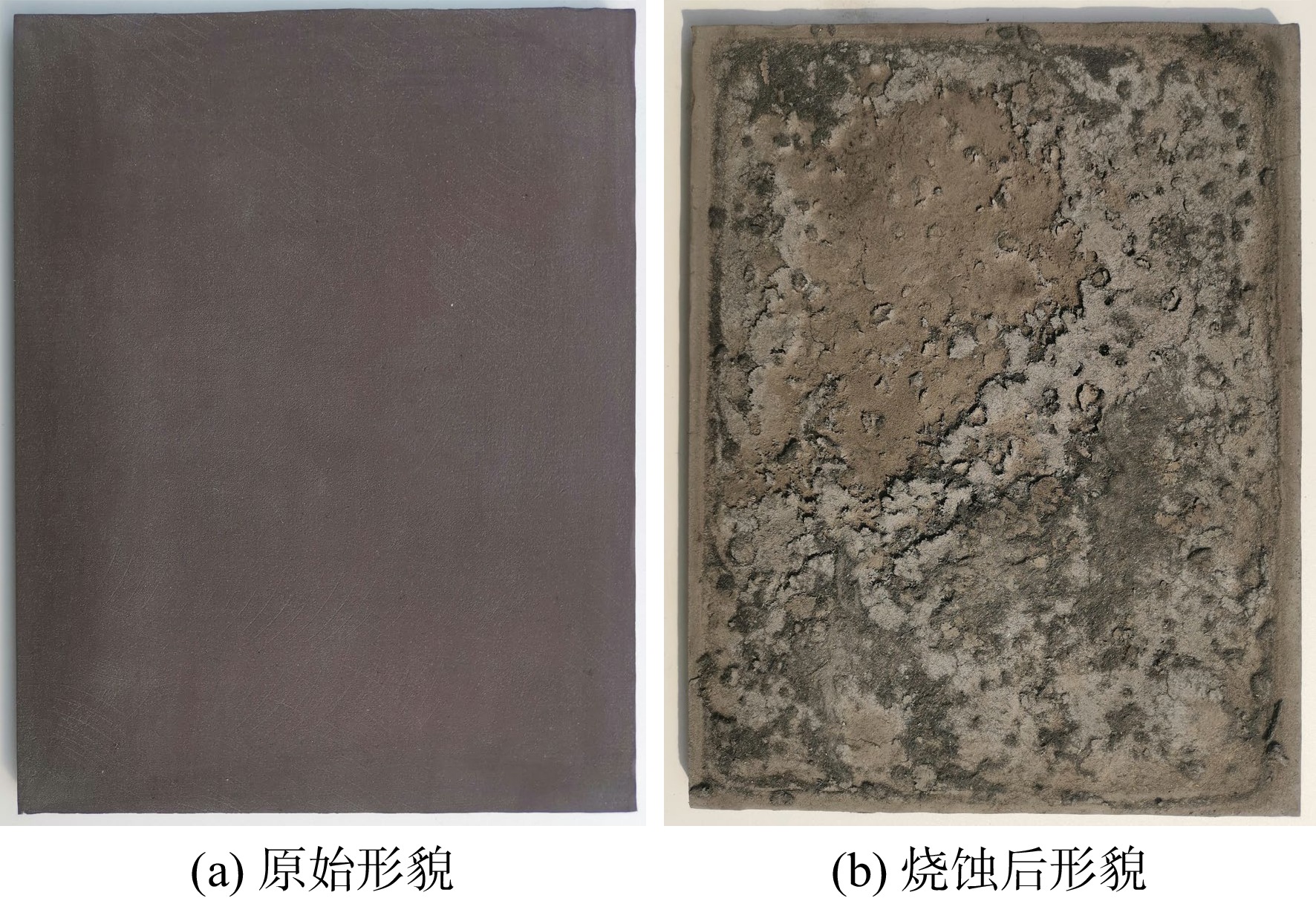
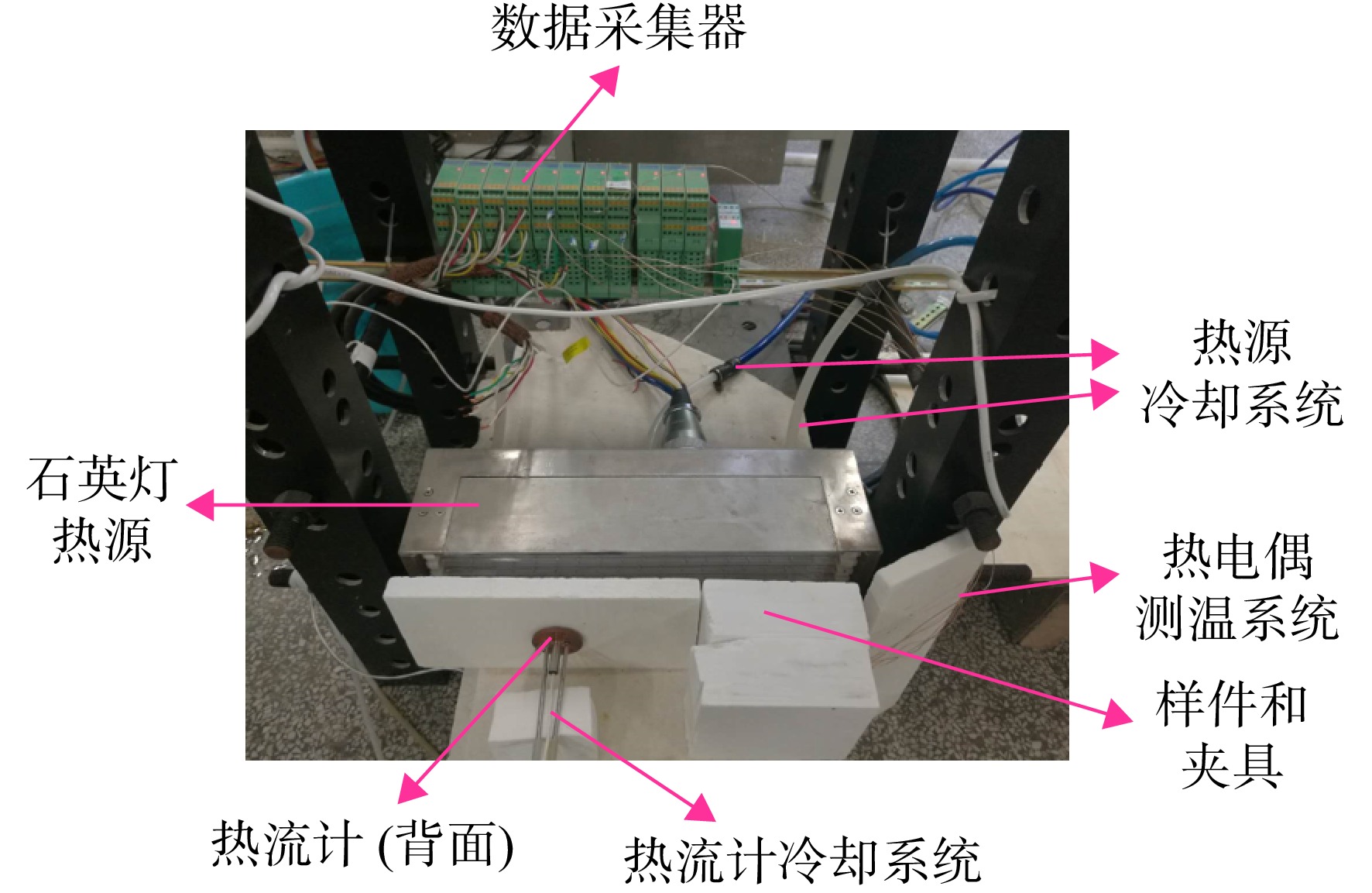
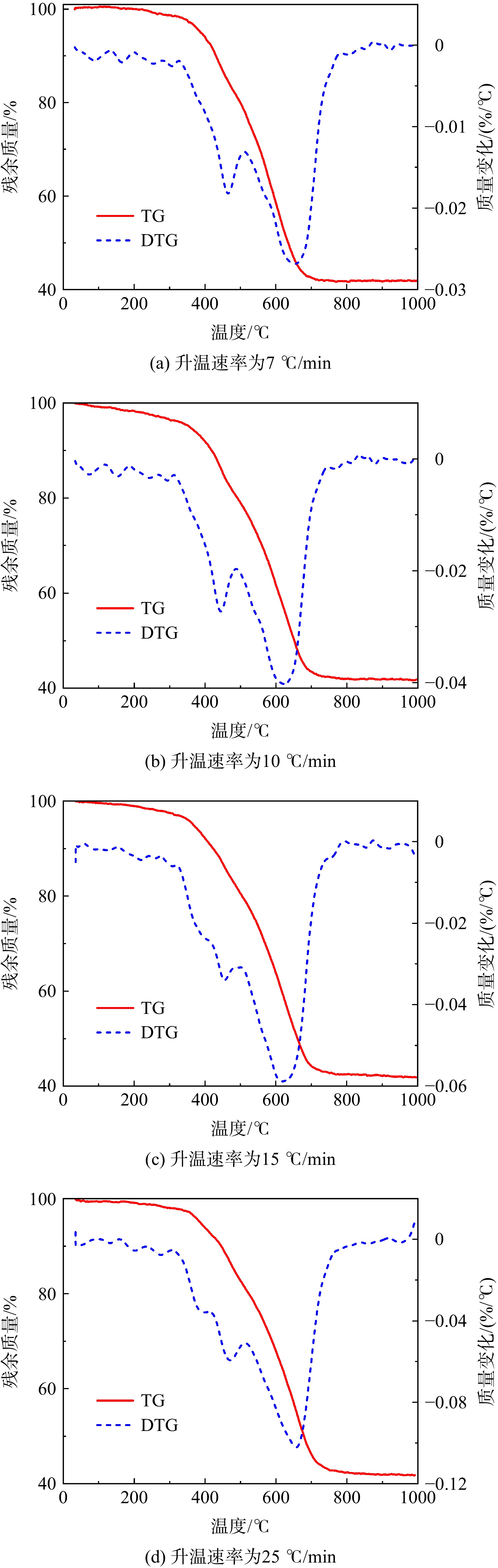
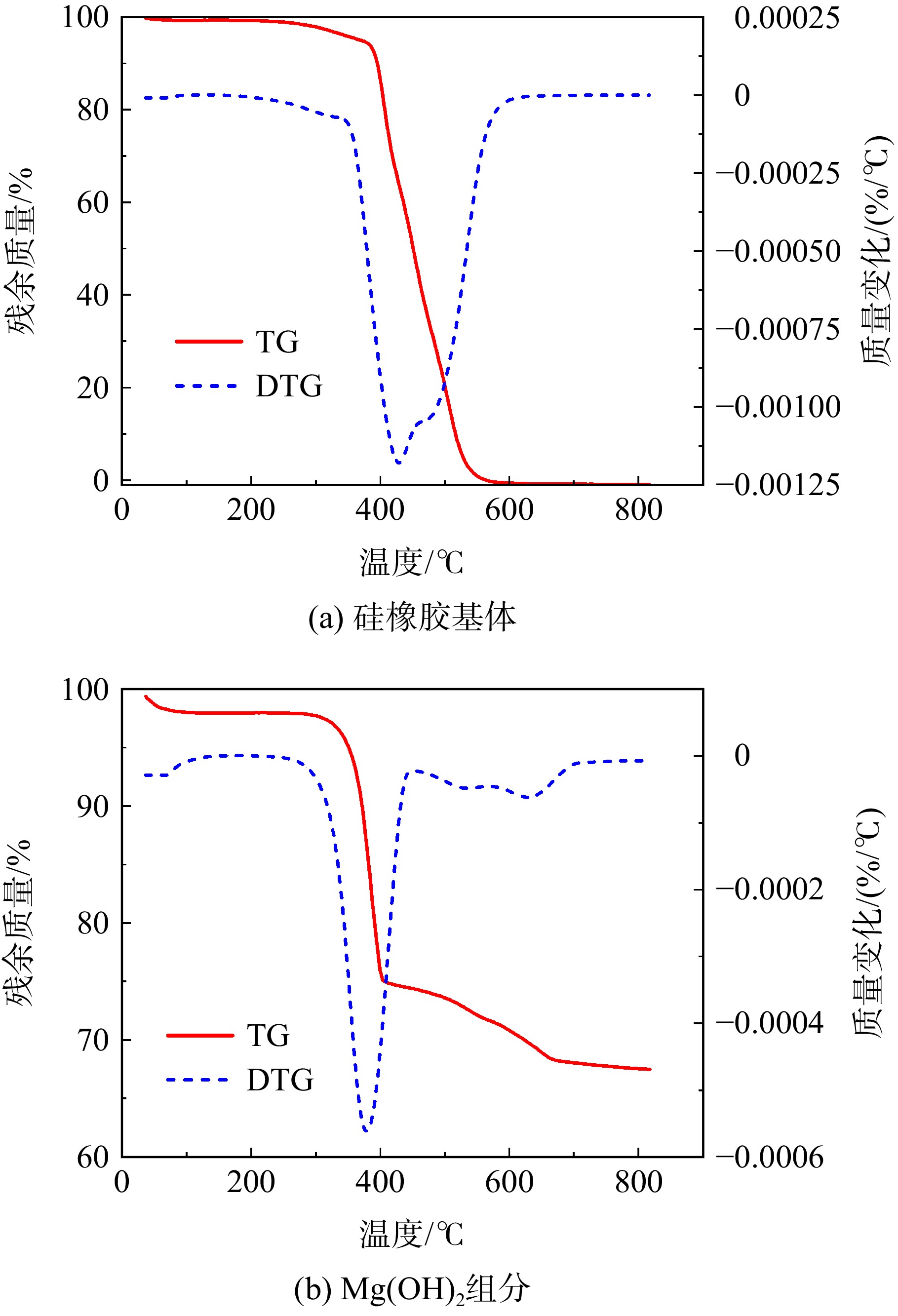
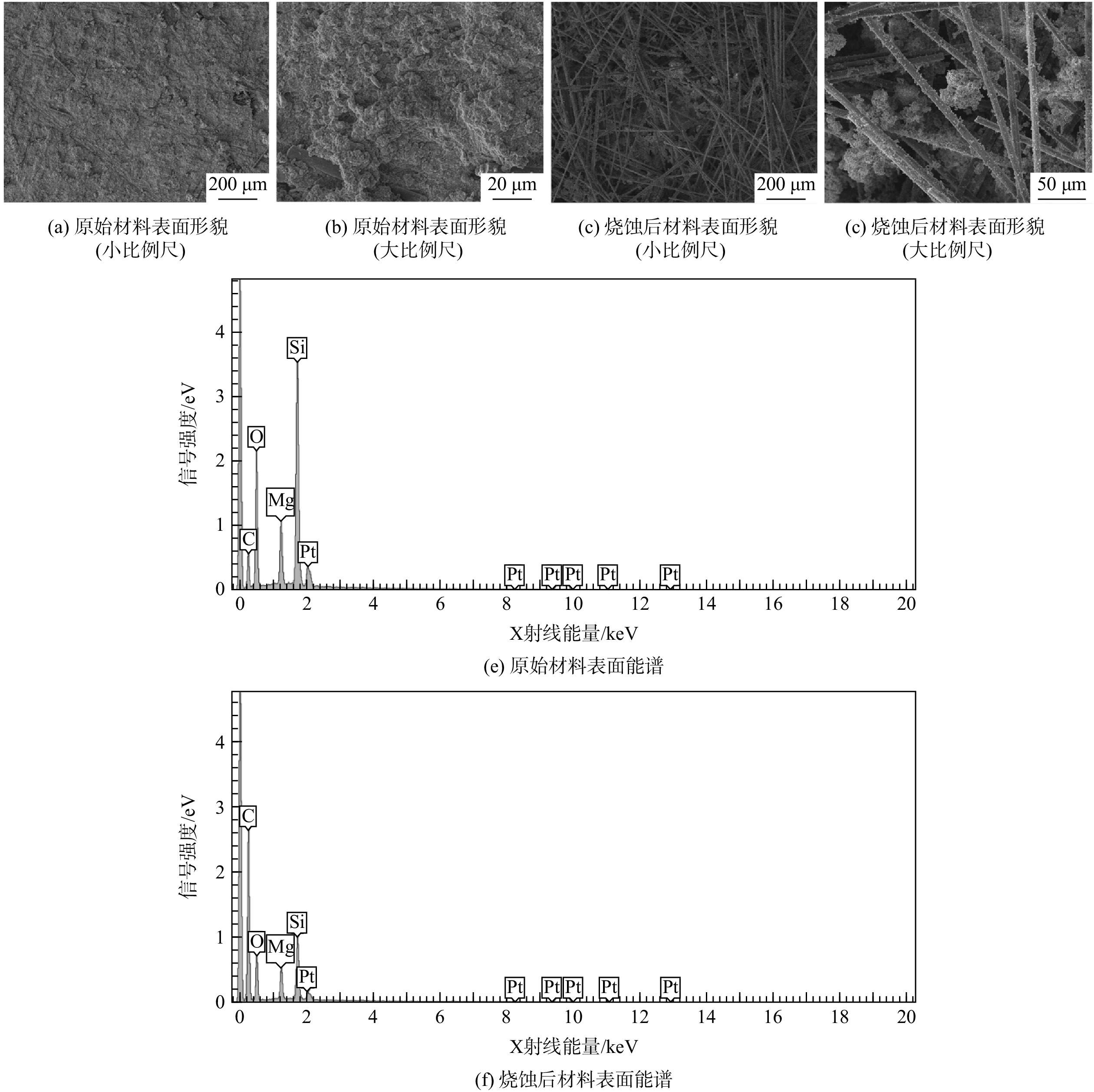
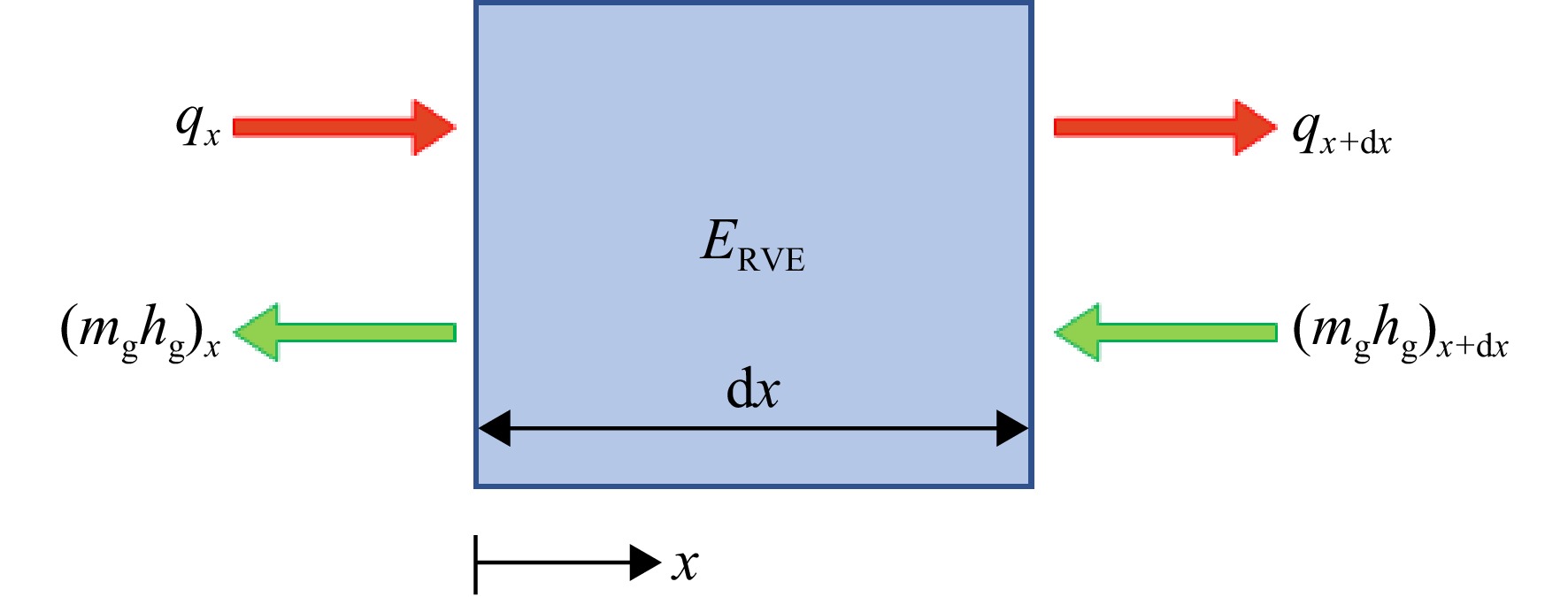
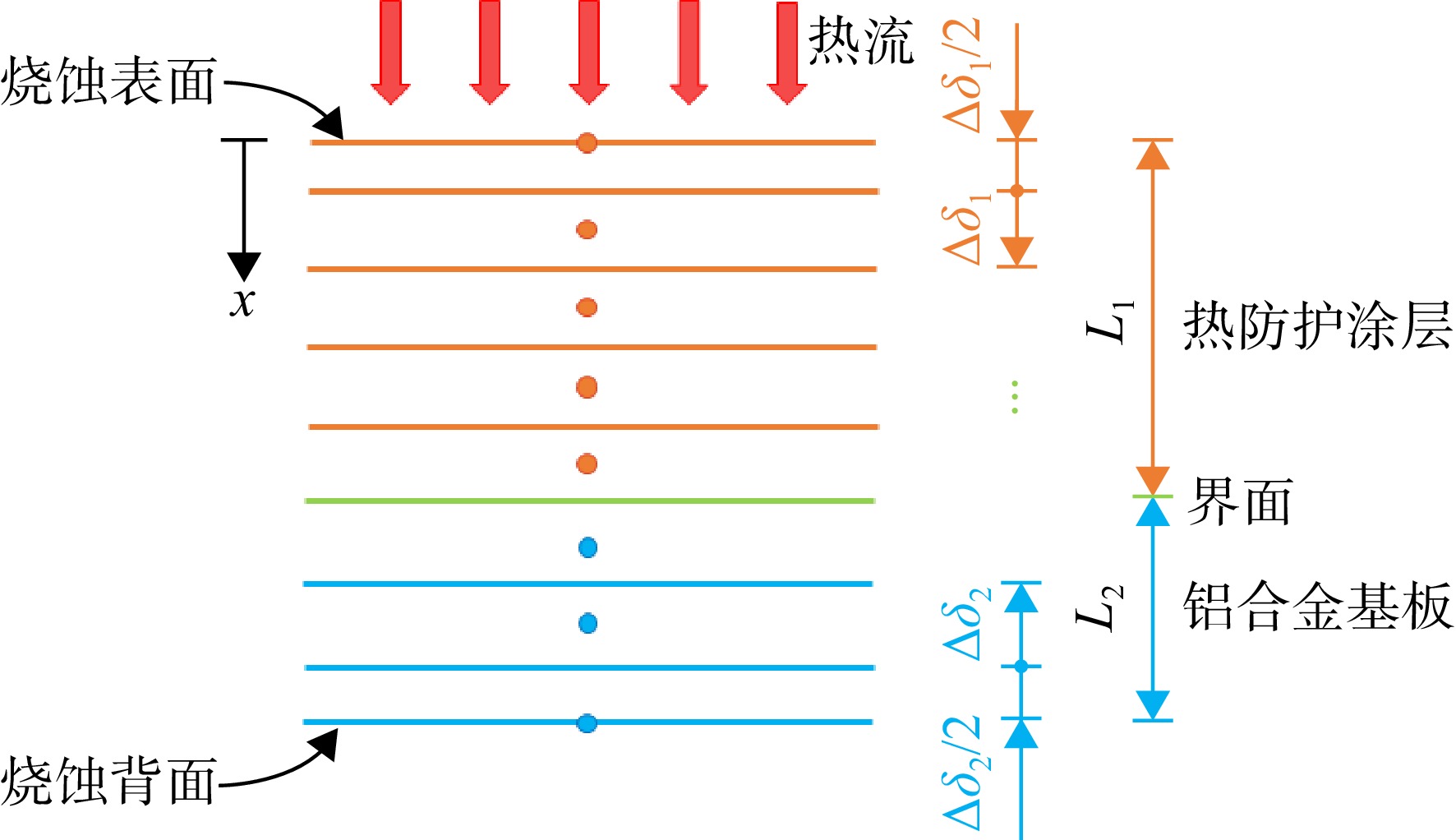
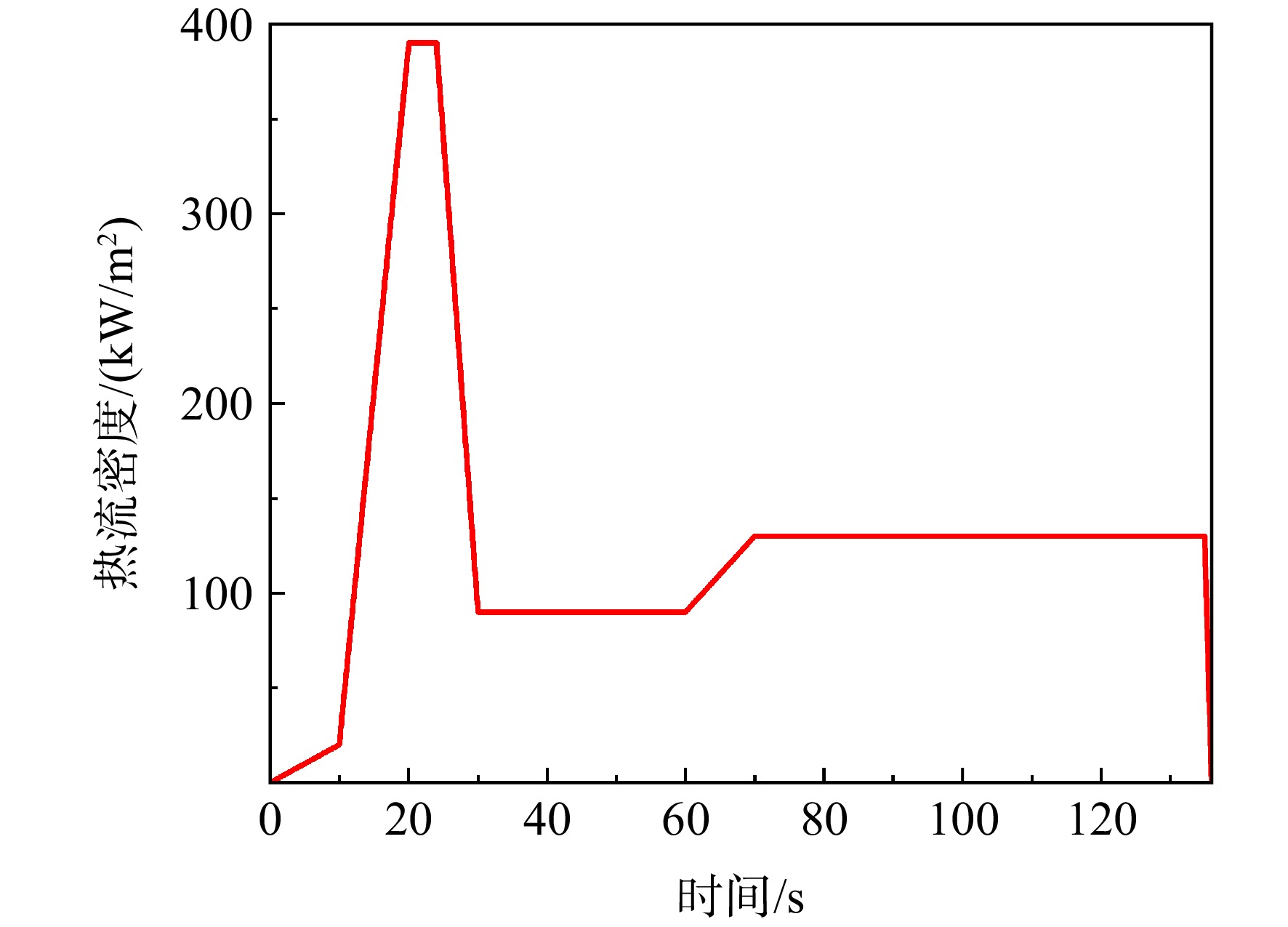
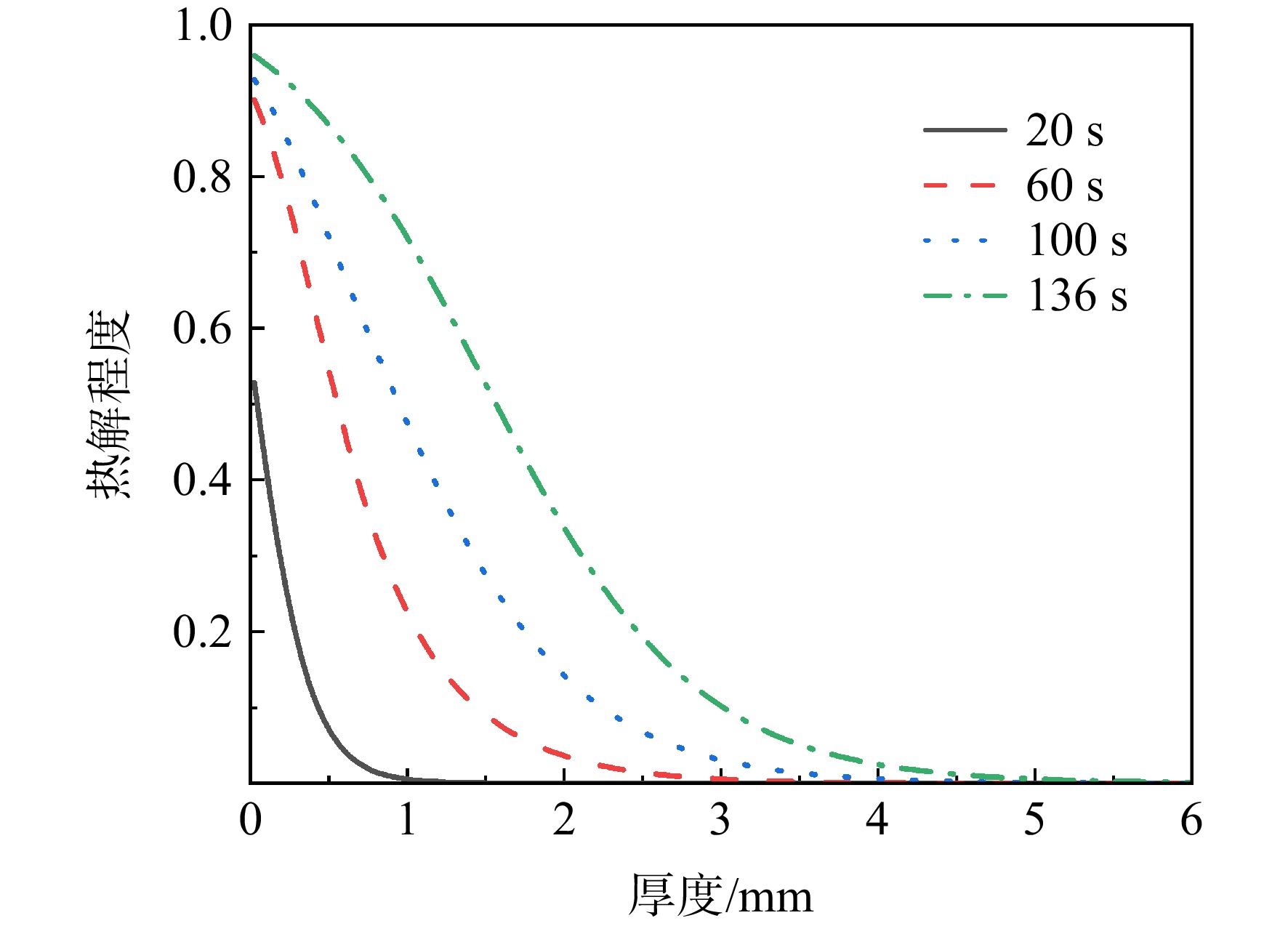
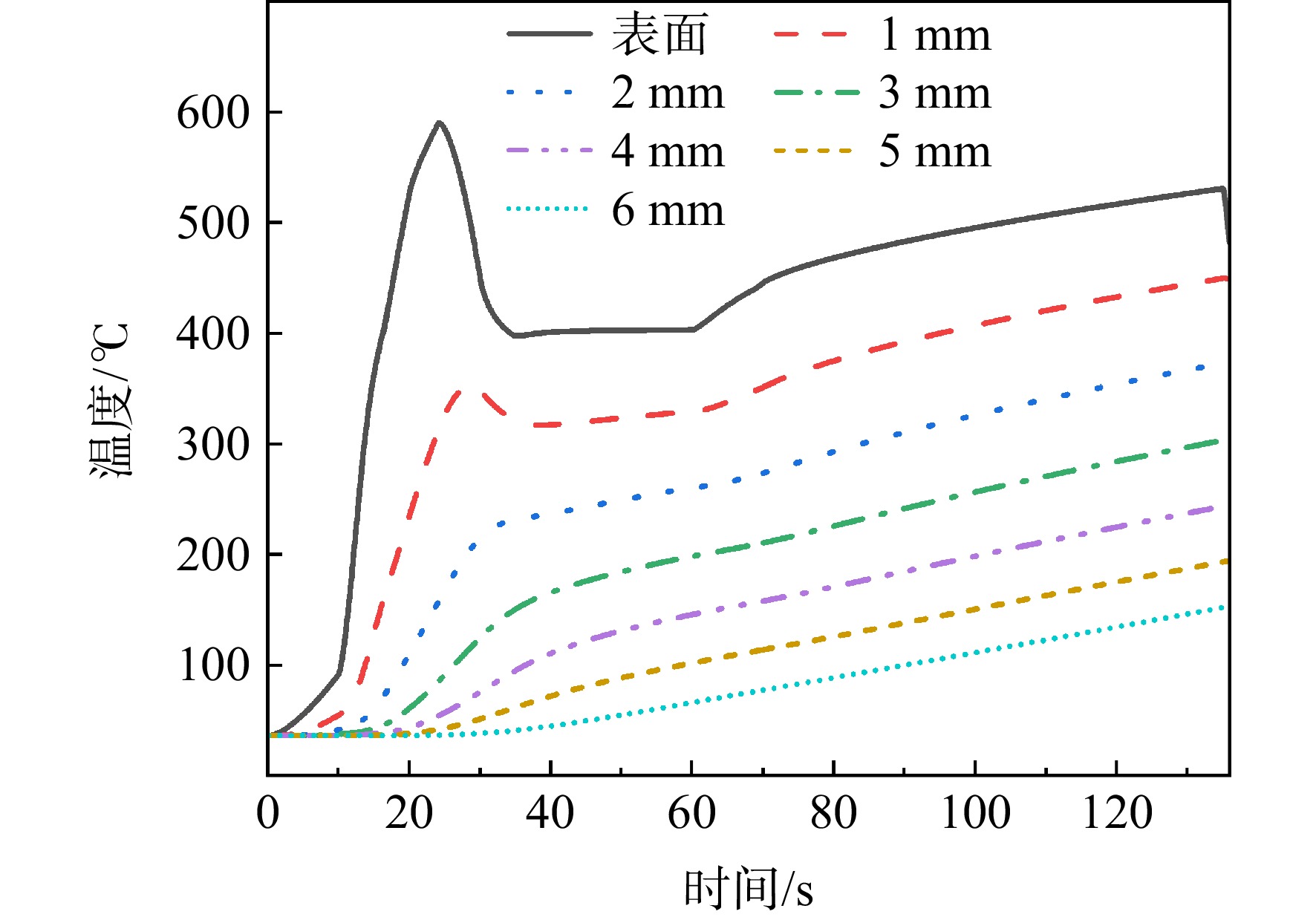
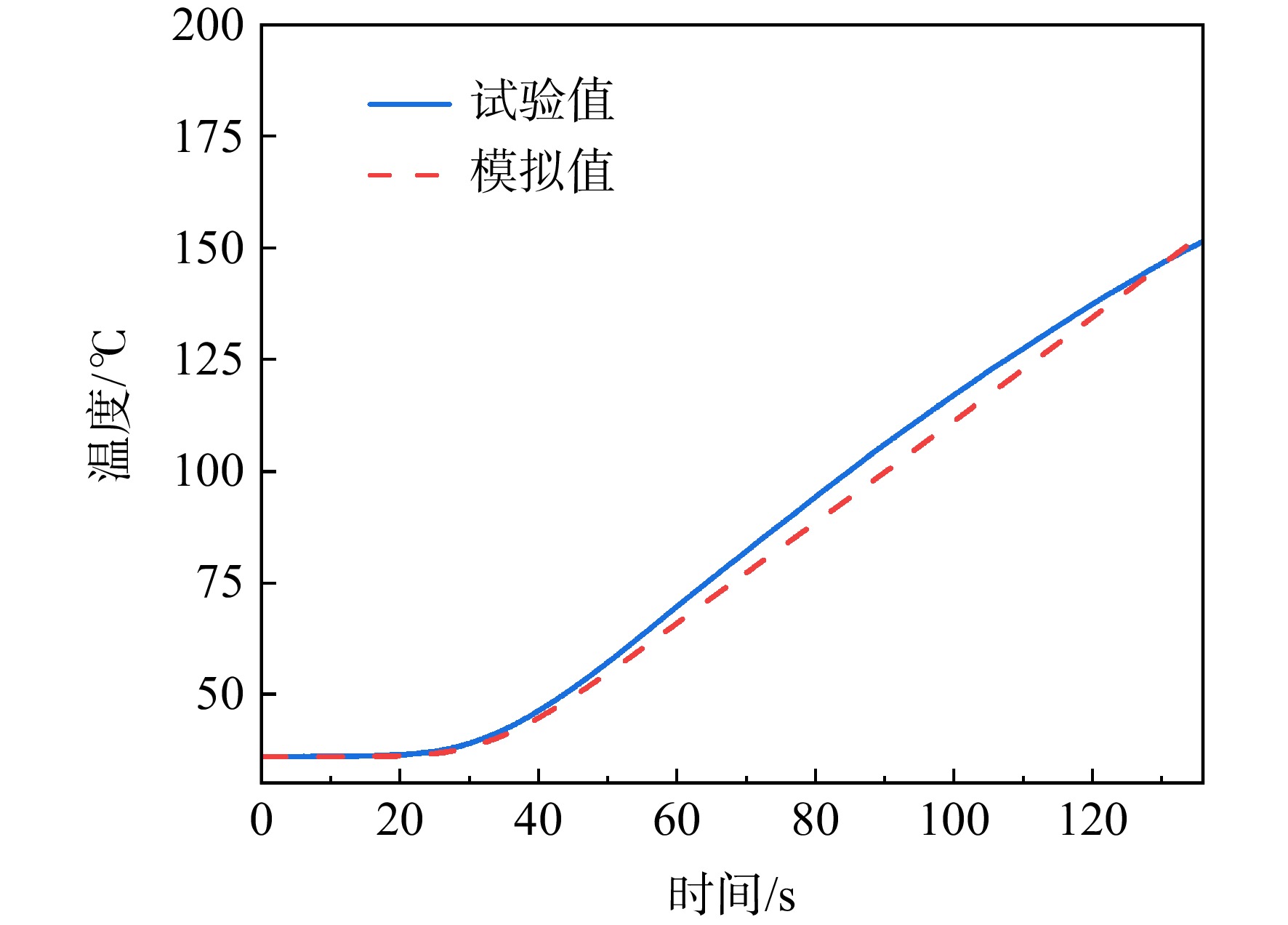
Thermogravimetric analysis was carried out by using synchronous thermal analyzer. The temperature range, activation energy and reaction mechanism function for the thermal decomposition reaction of the coating were determined. Thermal exposure experimental tests were conducted using a quartz lamp radiant heating platform. The mechanism of microstructure evolution and energy dissipation of thermal protection coating at high temperatures were revealed. Based on the principle of energy conservation, a coupling model for predicting the pyrolysis and thermal conduction of the thermal protection coating was established. The energy conversion relationships, which were caused by pyrolysis reaction, thermal diffusion of decomposition gas and mass ejection effect, were considered. The mass loss and temperature response of the silicone rubber matrix thermal protection coating under a typical thermal environment were calculated. After thermal exposure, the specimen surface remained basically flat, and the temperature at back surface was 151.4 ℃ while the mass loss rate was 0.28 g/s. The deviation between the calculated mass loss rate and its measured value was only 7.1%. This can meet the requirements of thermal protection design in engineering applications. The results showed that the silicone rubber matrix thermal protection coating has good ablation resistance and thermal insulation properties in medium heat flux environment, so it has excellent potential for the large area thermal protection application of aerospace vehicles.

Effect of gliding arc plasma ignition and assisted combustion dome actuation on ignition and blowout characteristics of combustor chamber
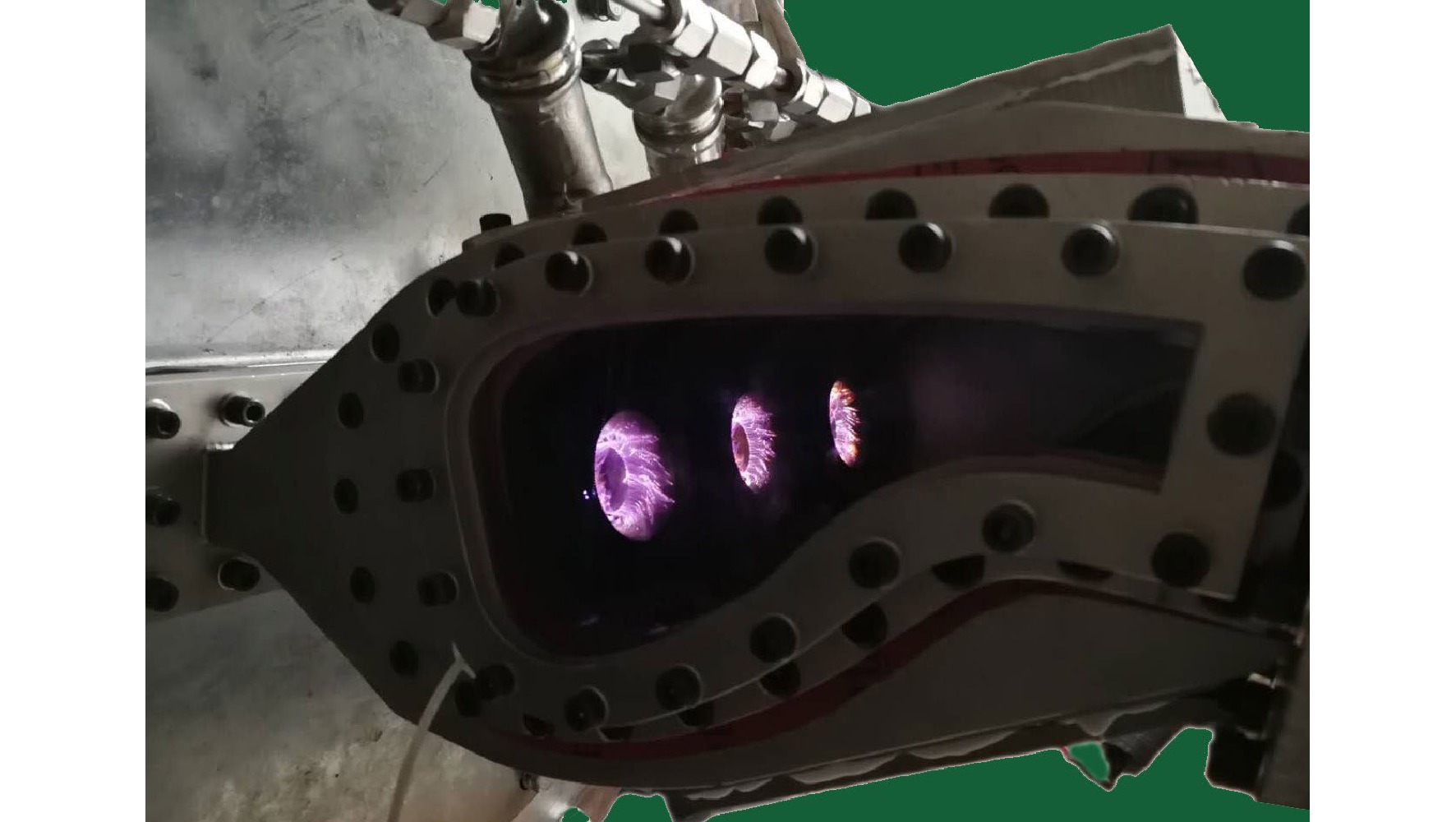
QU Meijiao, WANG Yu, CHEN Yi, WU Yun, HU Changhuai, XU Shuying
2023, 38(9): 2062-2072. doi: 10.13224/j.cnki.jasp.20210681
Abstract:

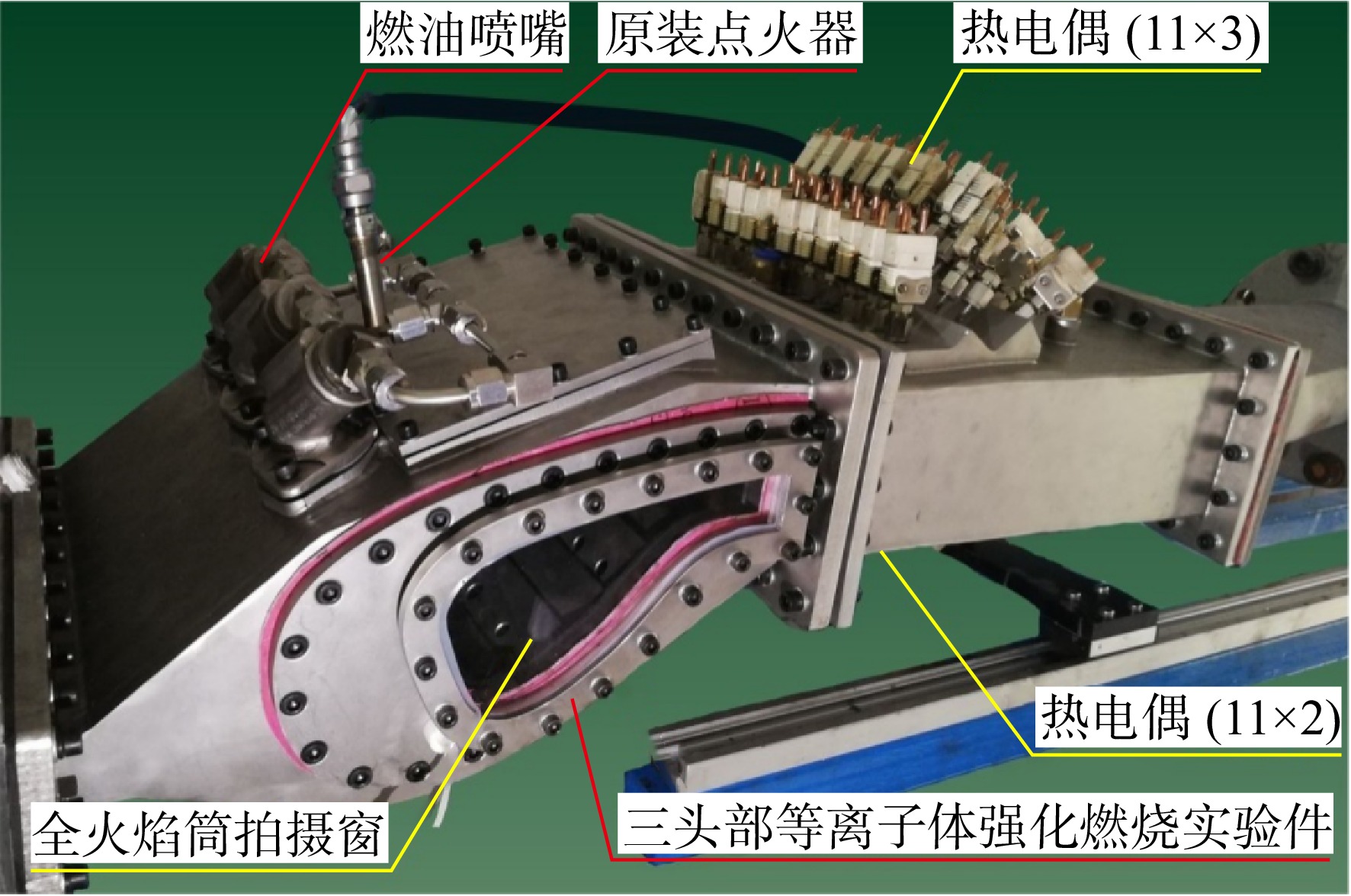
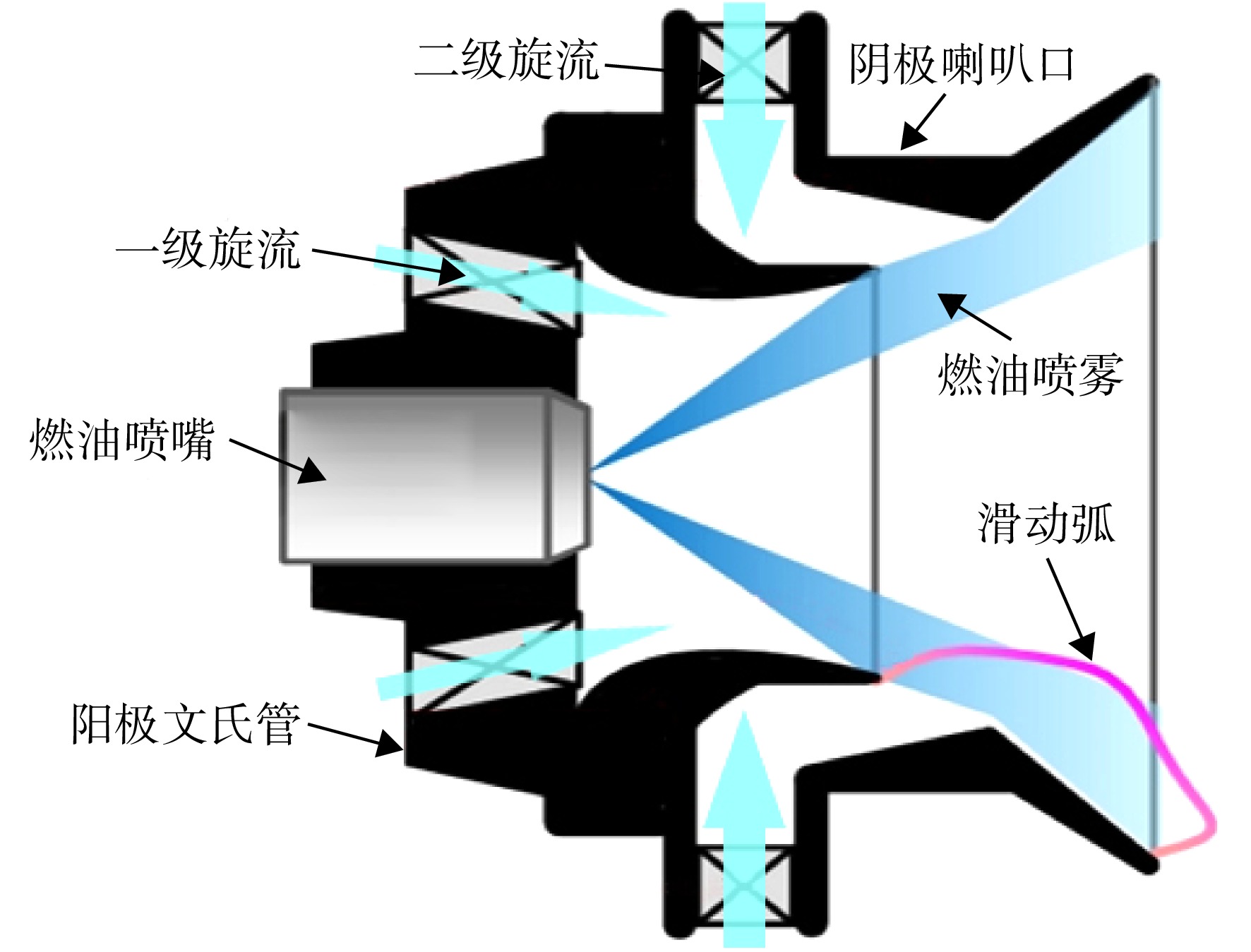
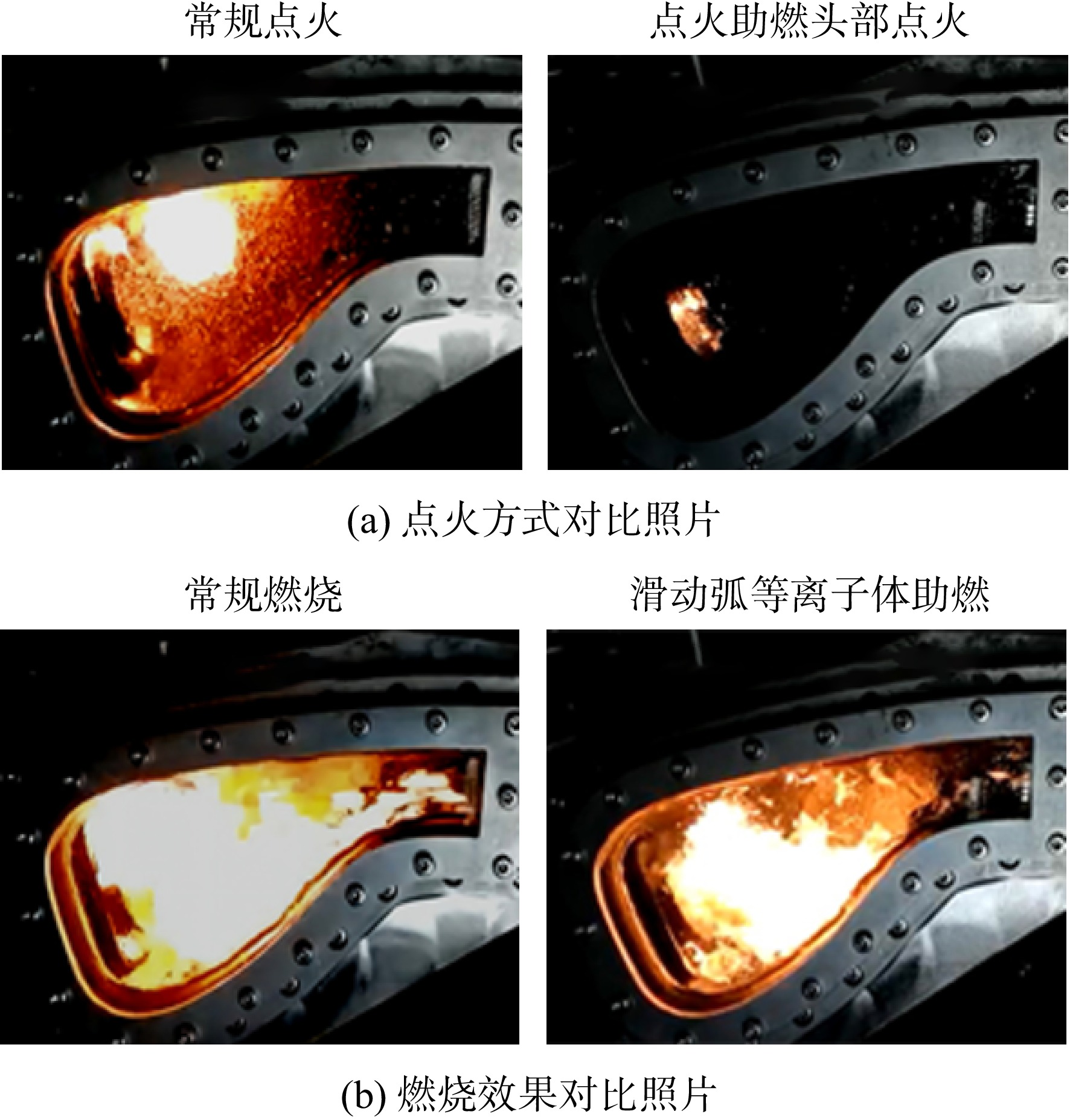
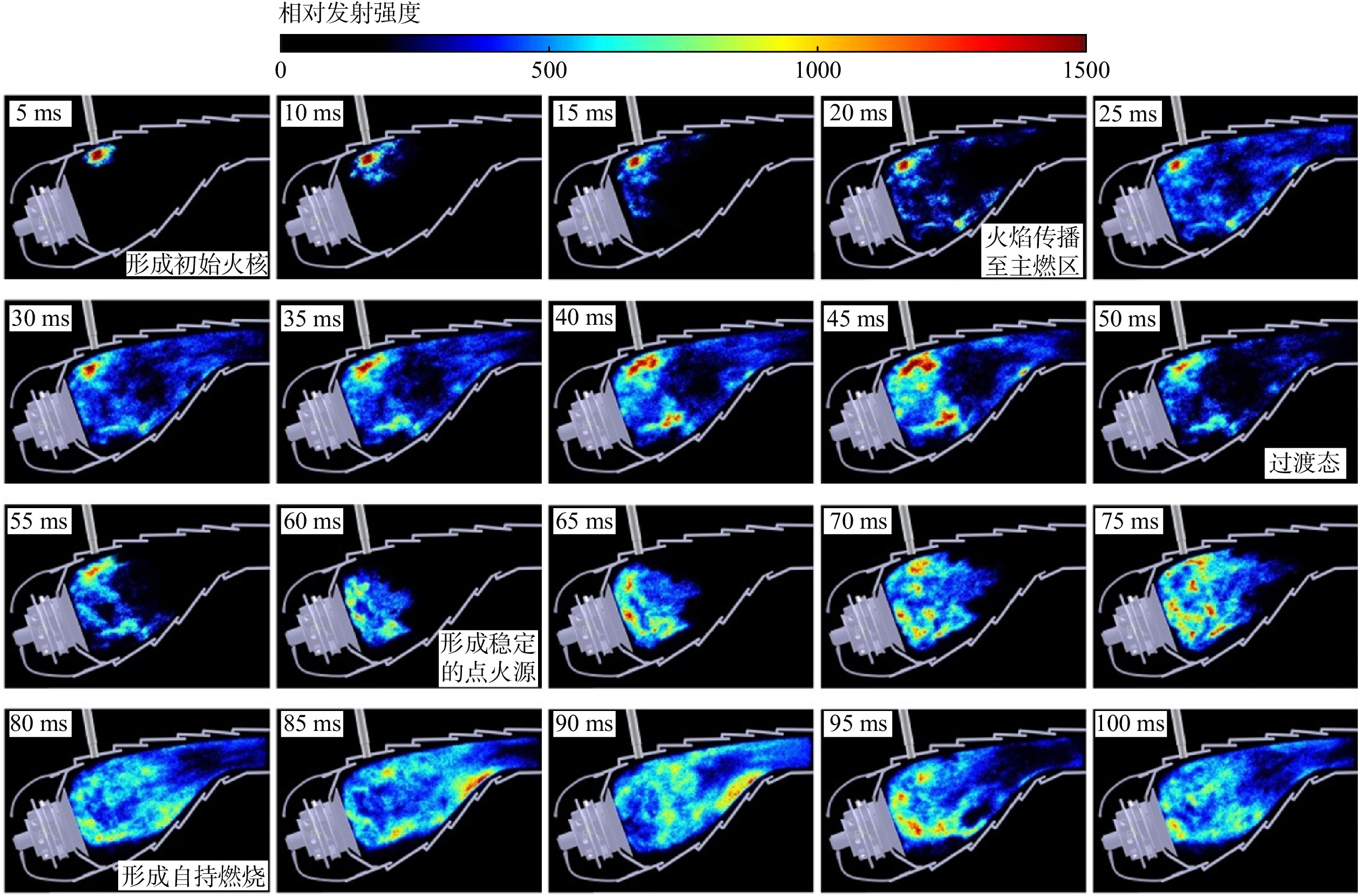
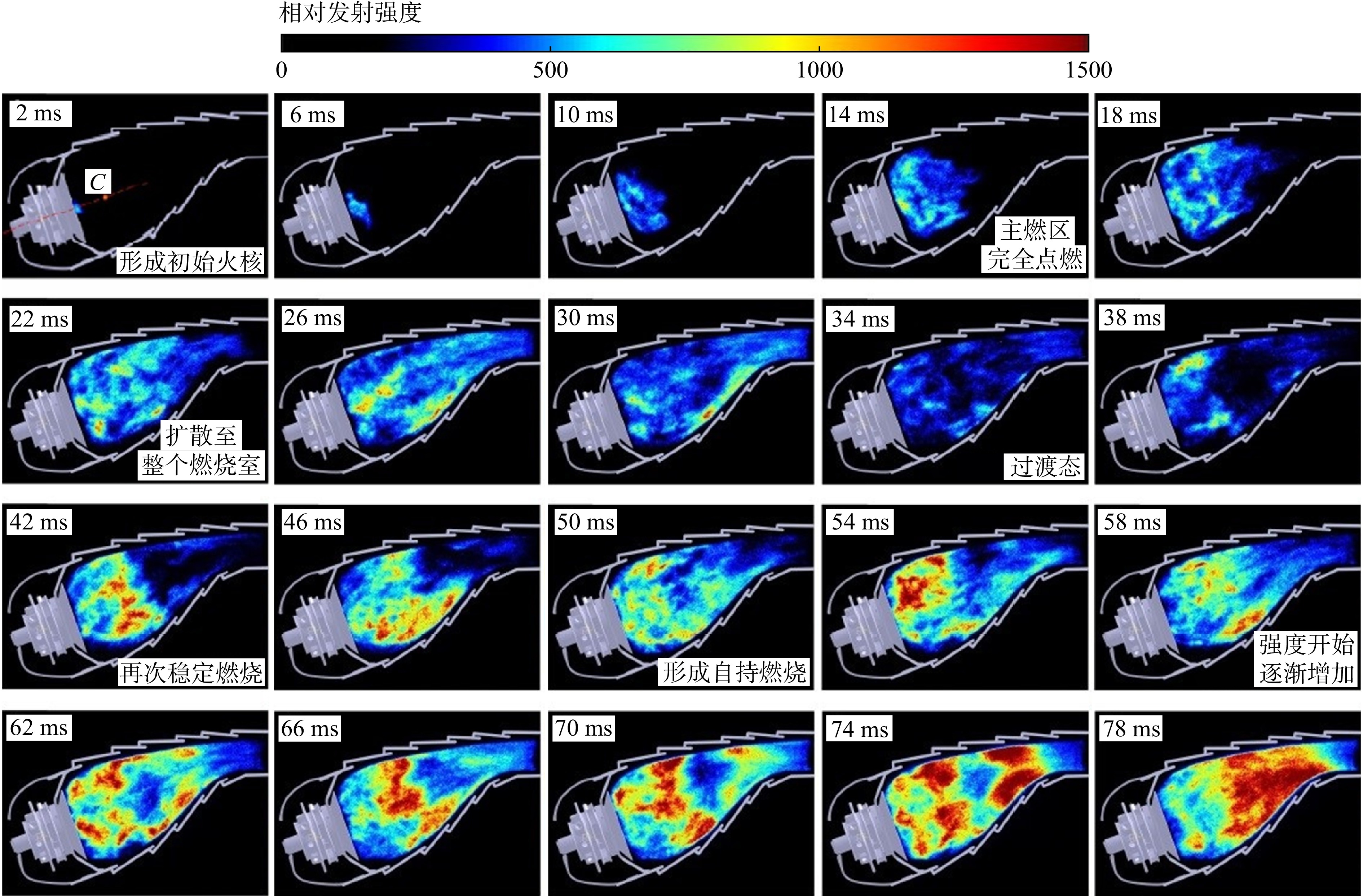
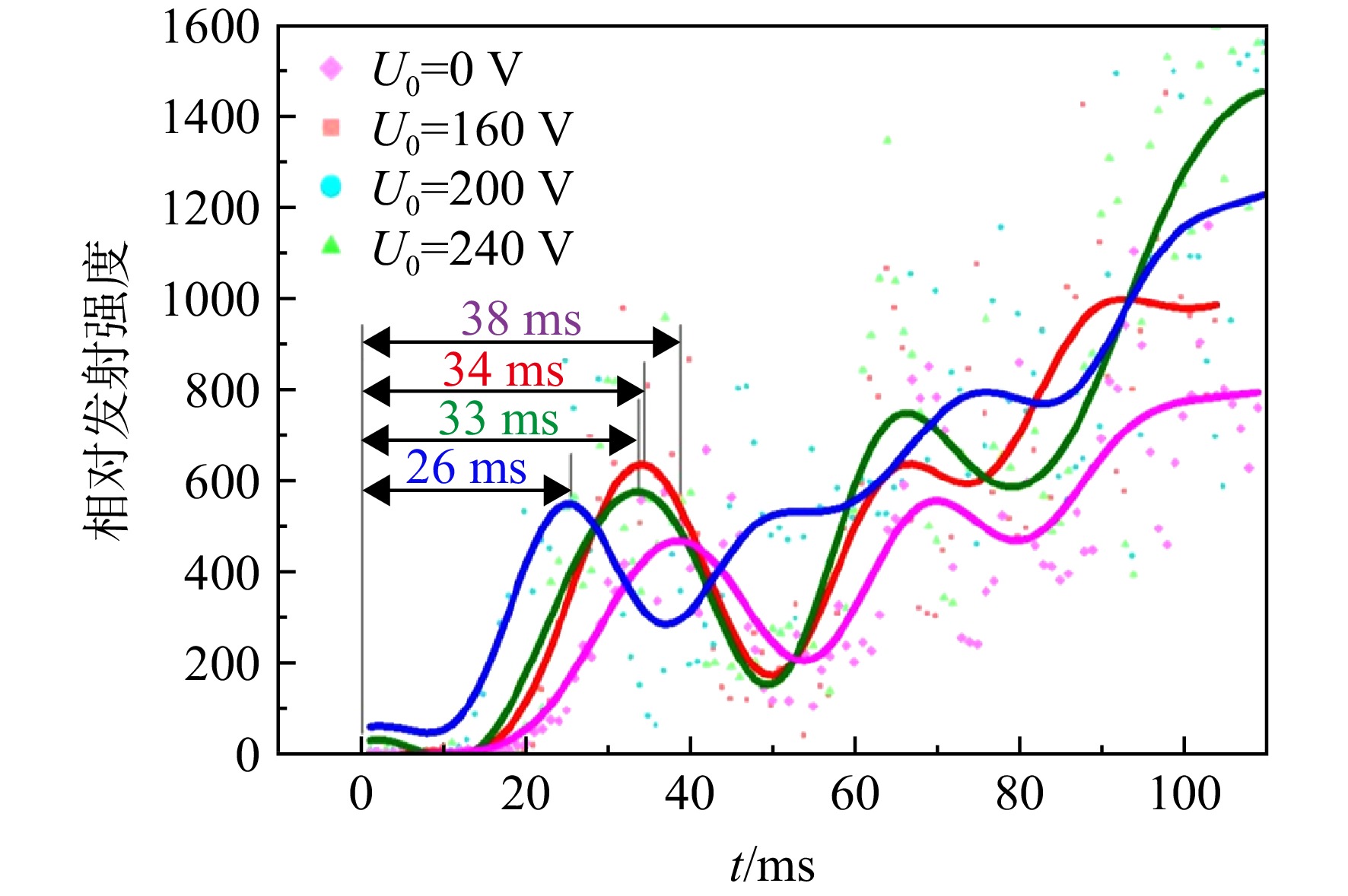
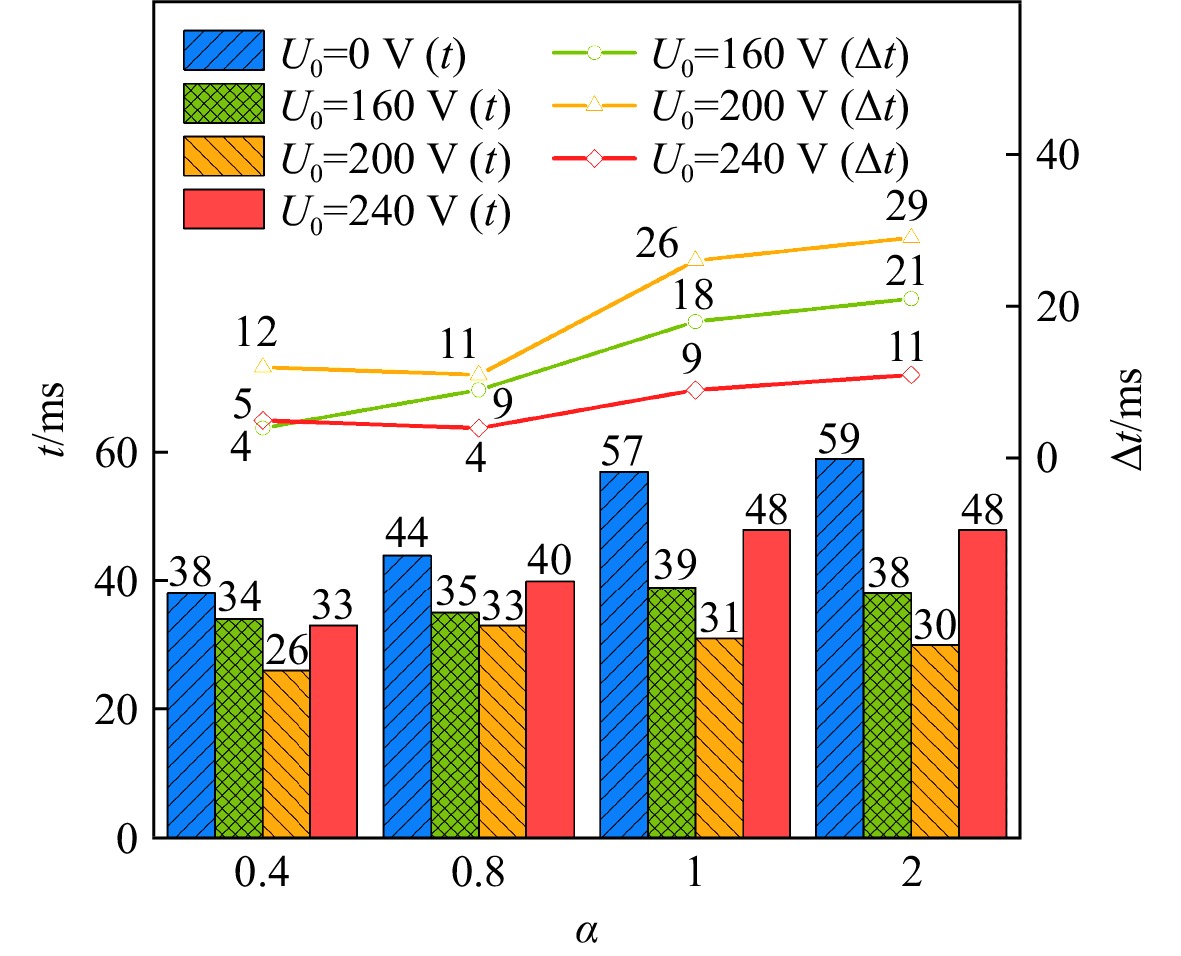
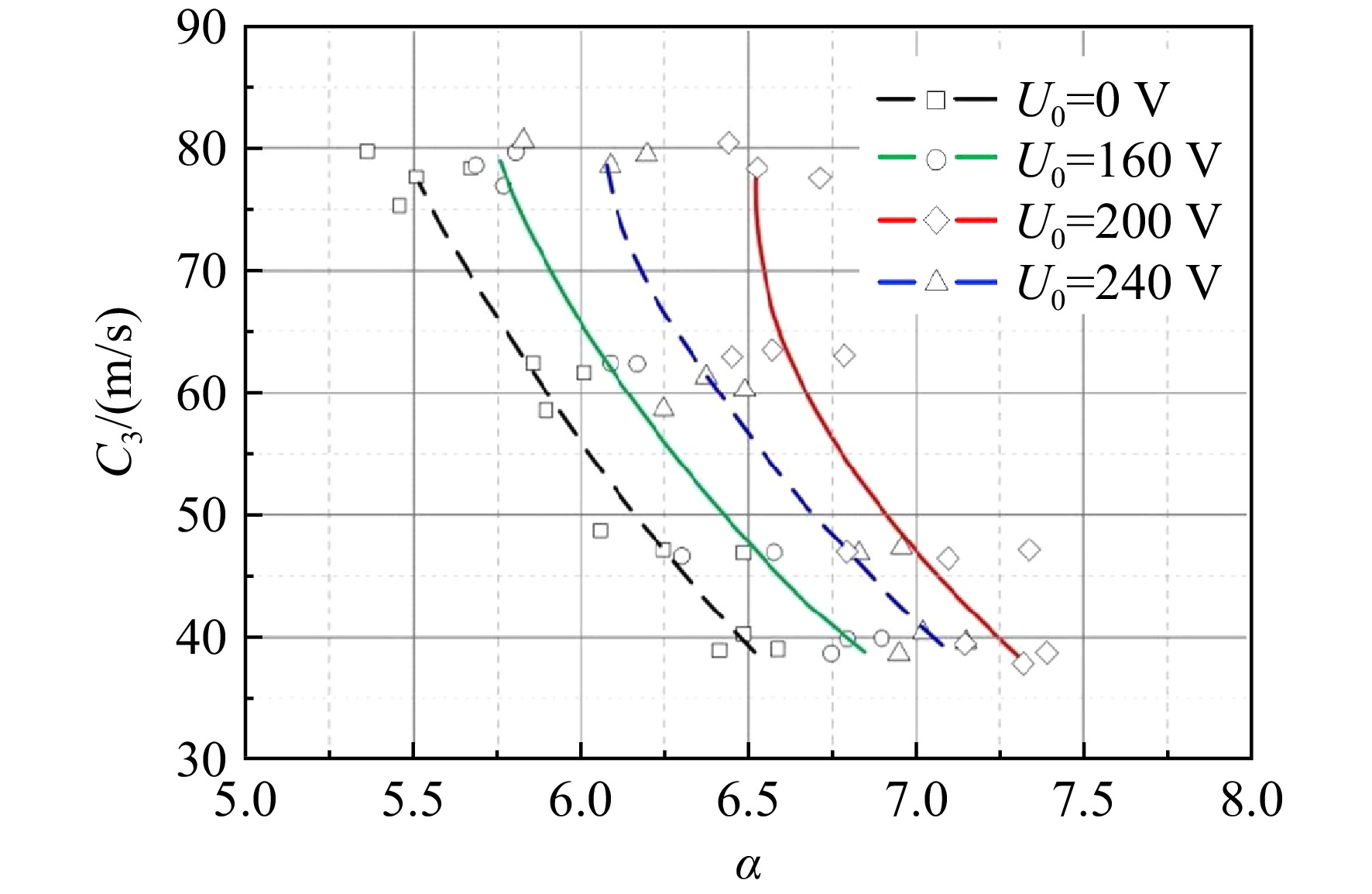
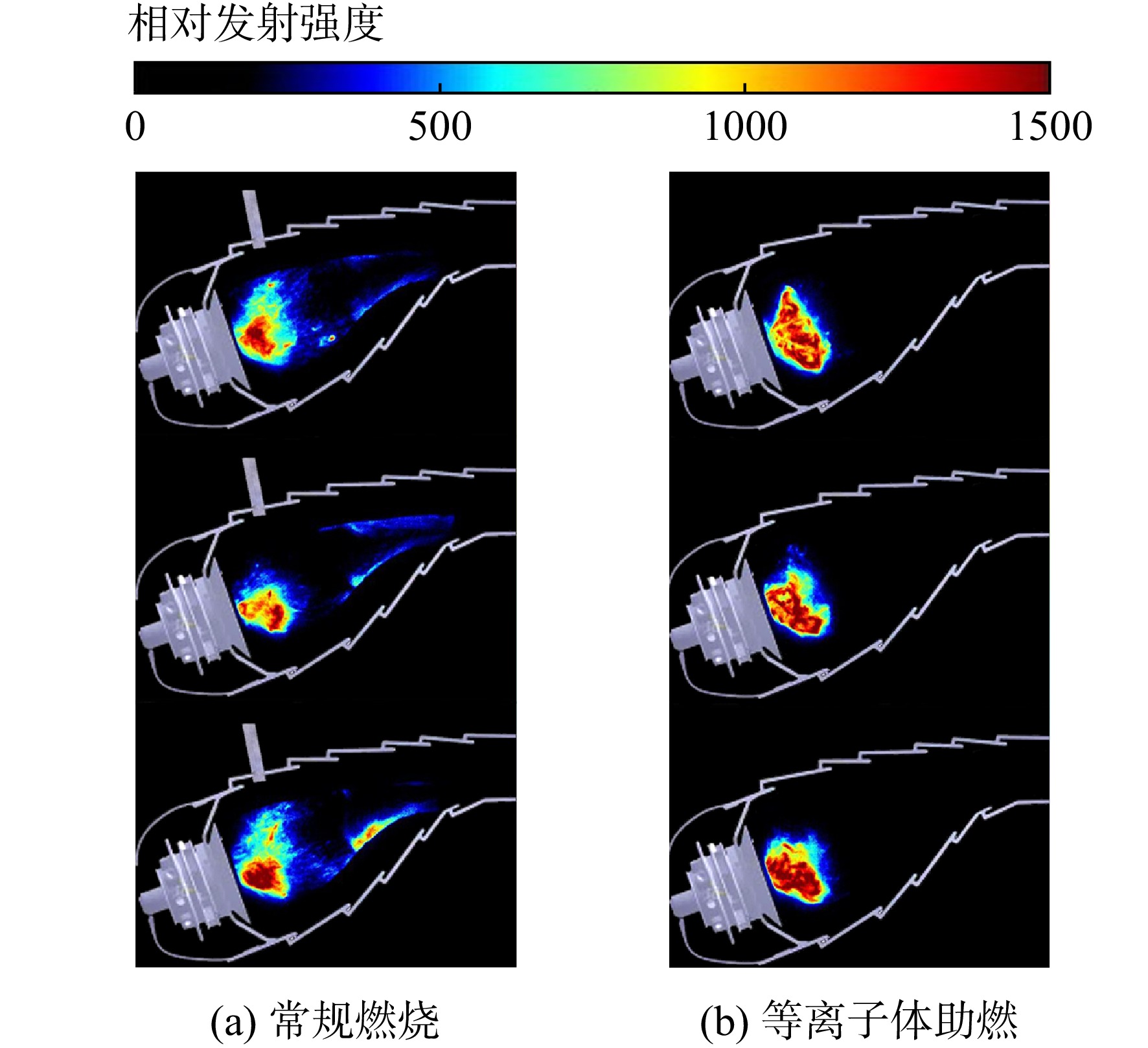
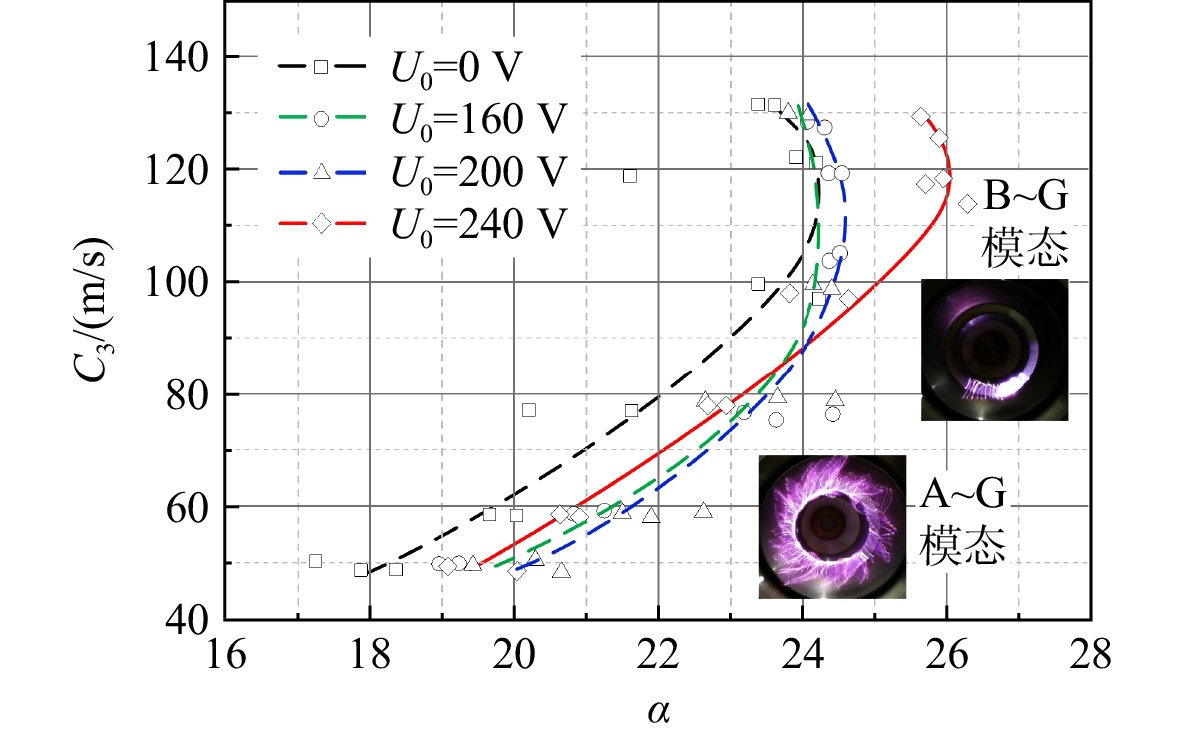
The ignition and assisted combustion dome was developed based on rotating gliding arc discharge plasma, and it was preliminarily validated that the ignition and assisted combustion dome can widen the ignition and flameout performance of combustor. Experiments were carried out on the combustion experiment platform with three combustion domes to analyze the effect law of rotating gliding arc plasma actuation on the combustion of aero-engine, including igniting fire process, lean ignition limit and lean blowout limit. Results showed that rotating gliding arc plasma actuation can significantly broaden ignition and lean blowout limit and shorten the delay time of ignition. Compared with conventional electric spark igniter, the delay time was reduced by 49.2% when the input voltage was 200 V and excess air coefficient was 2. The ignition limit under lean oil condition was widened by 18.2% when the input voltage was 200 V, and lean flameout limit was widened by 7.41% when the input voltage was 240 V.

Numerical study on condensation of moist jet in Laval nozzle
FU Debin, YANG Junfan, LIU Haotian, CHENG Honggang
2023, 38(9): 2073-2083. doi: 10.13224/j.cnki.jasp.20210309
Abstract:

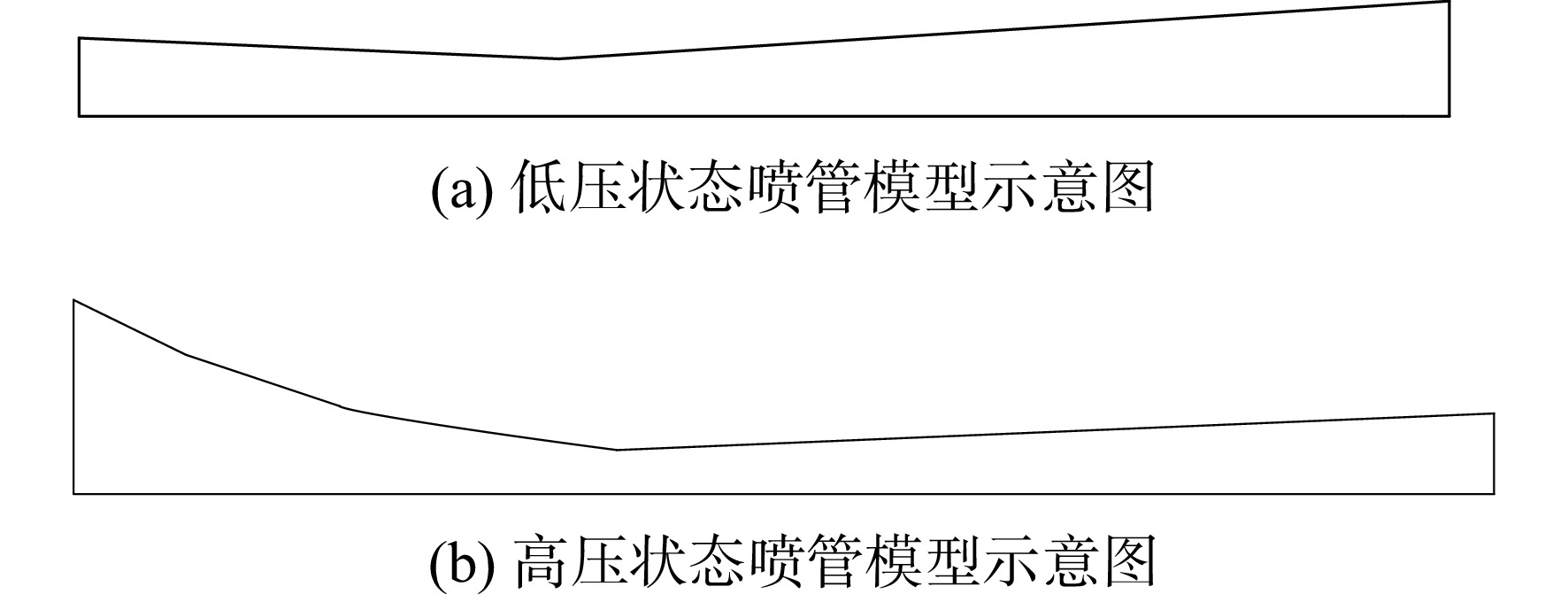
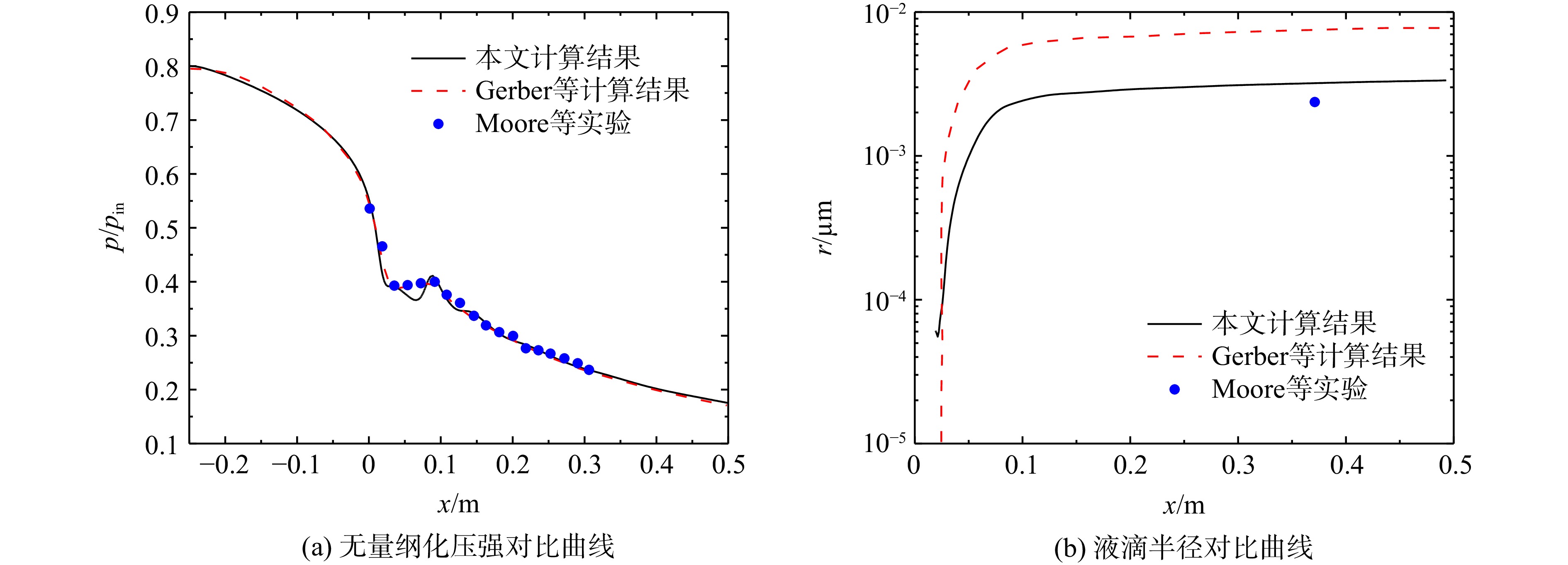
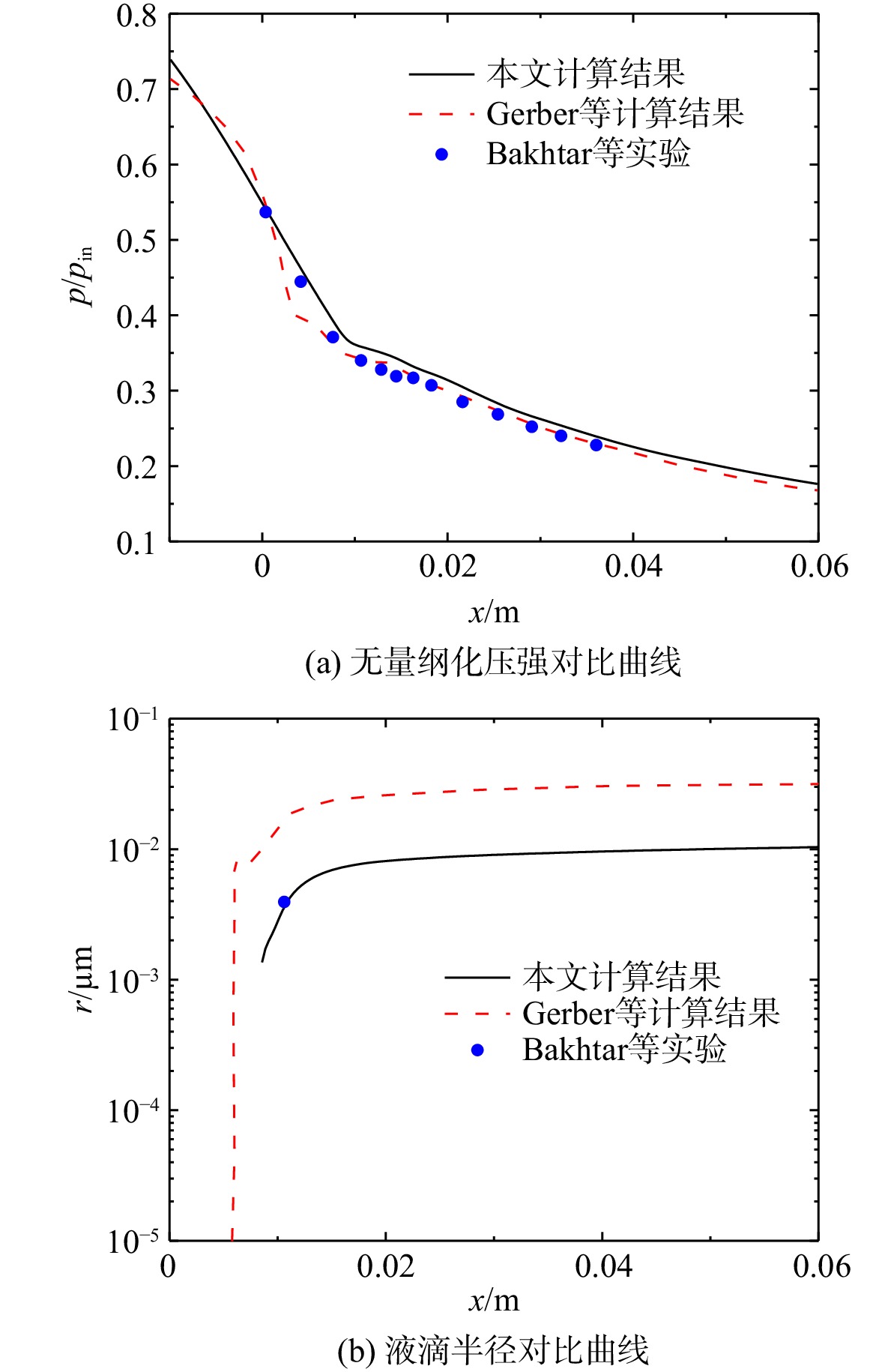
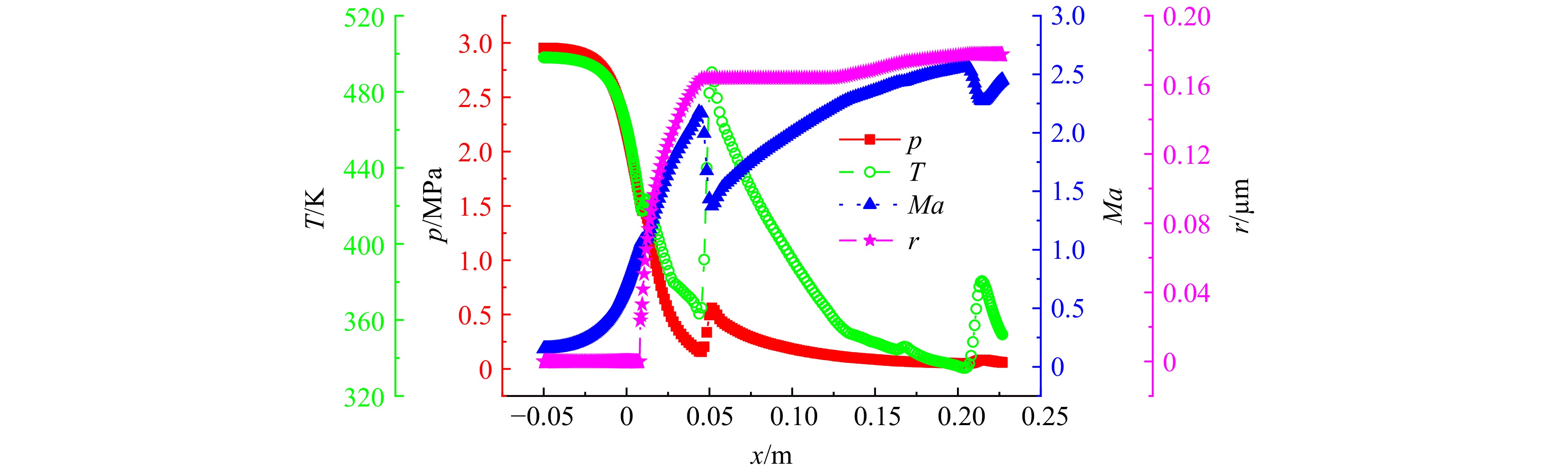
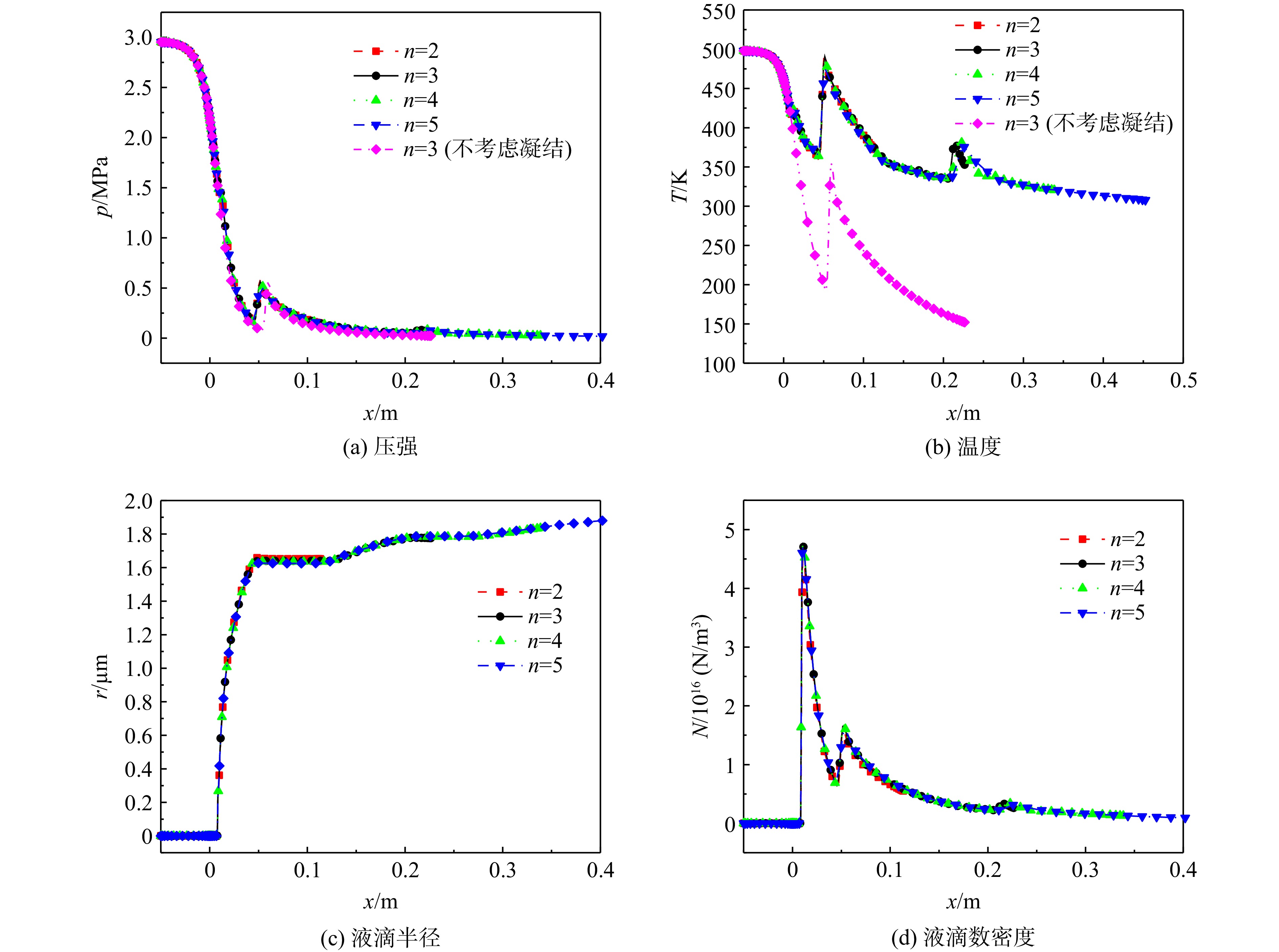
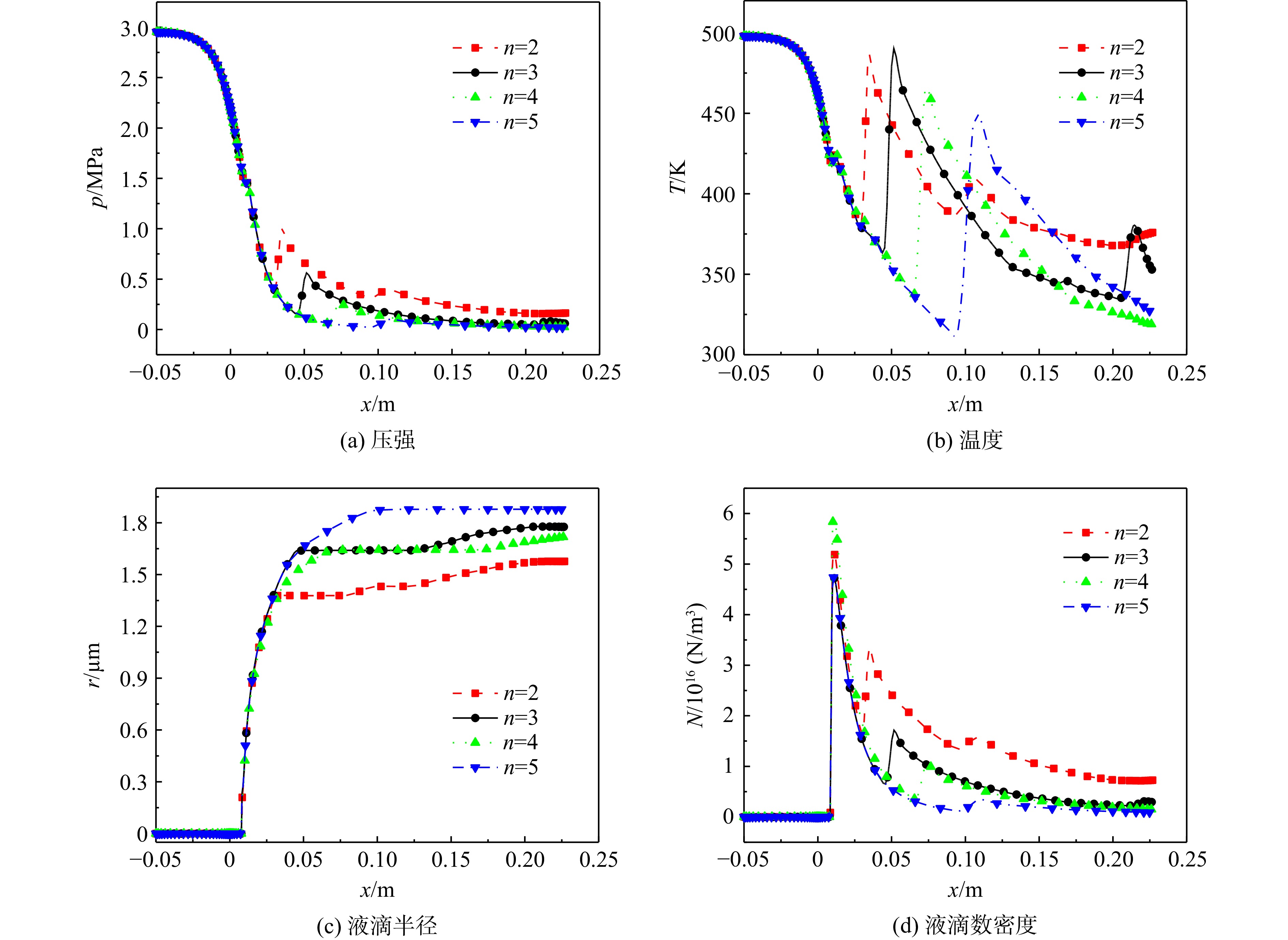
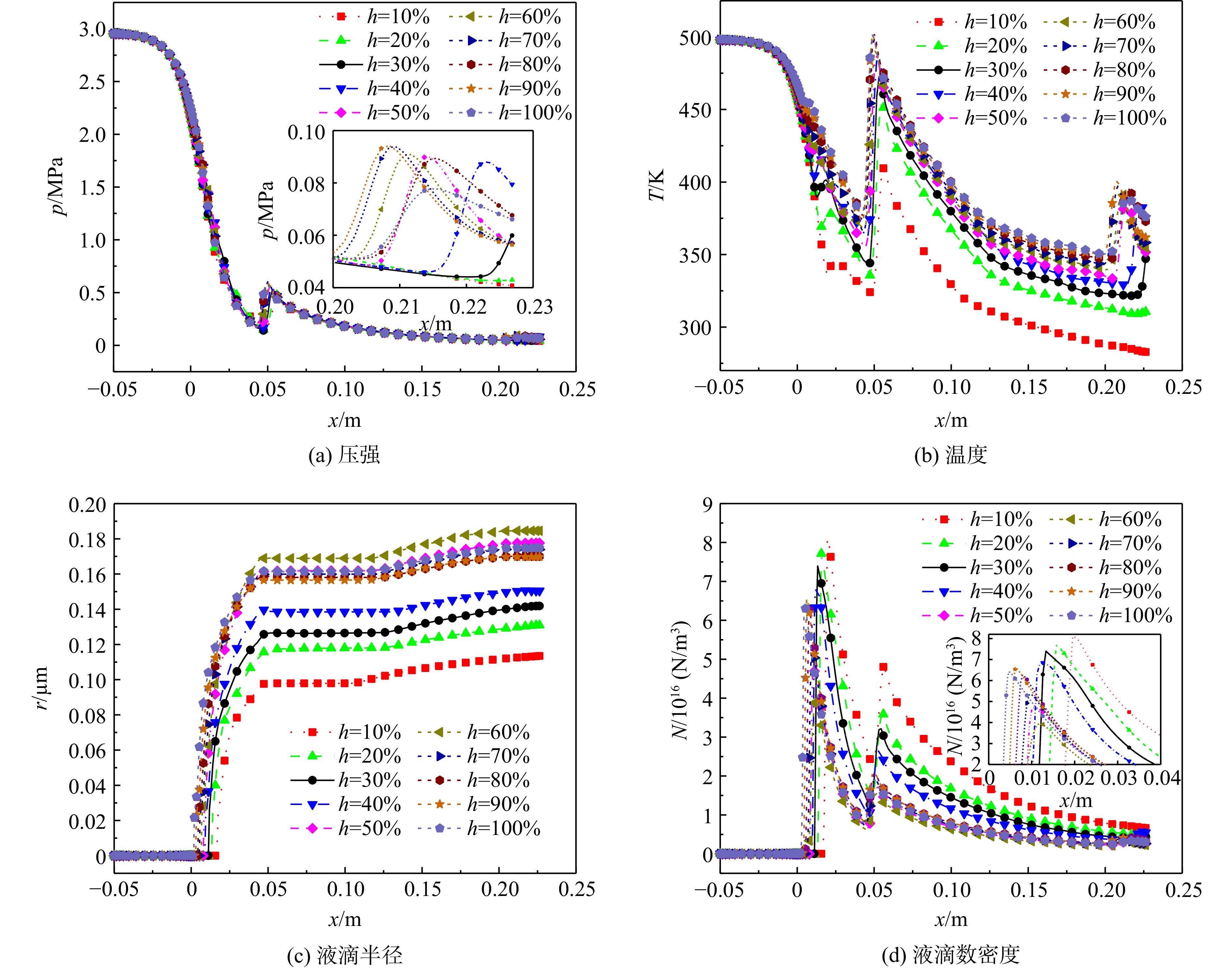
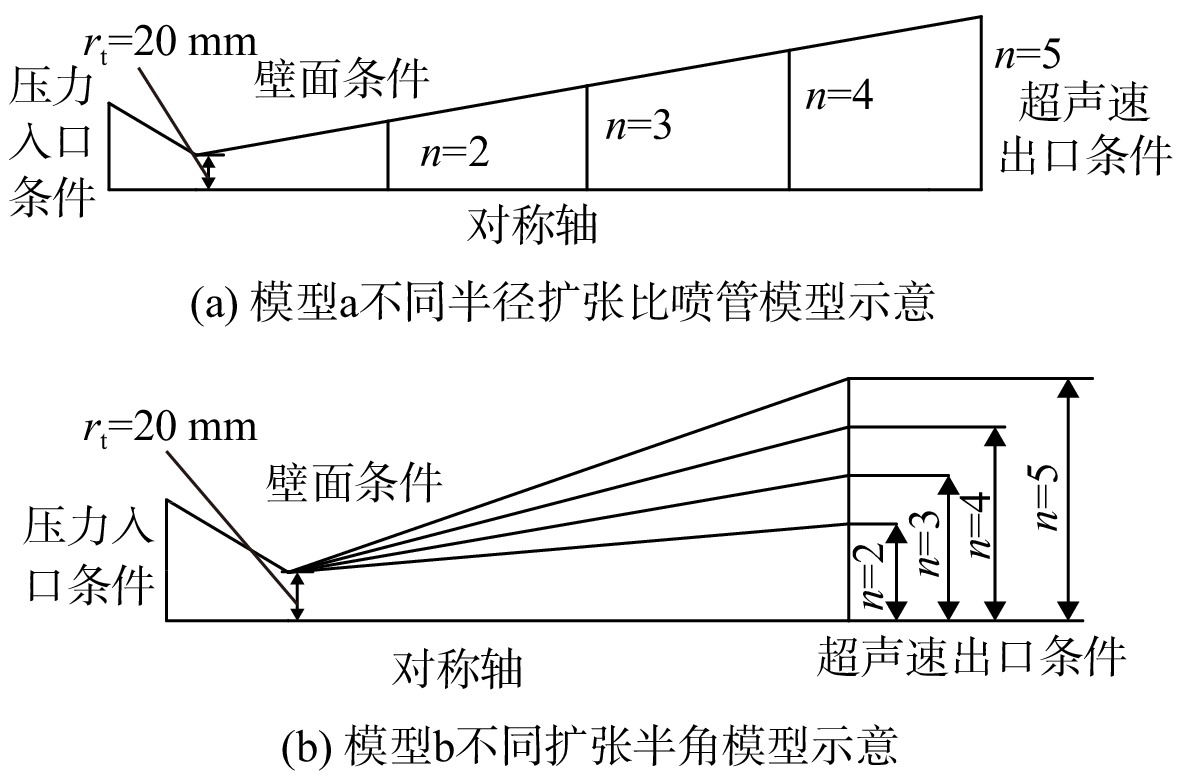
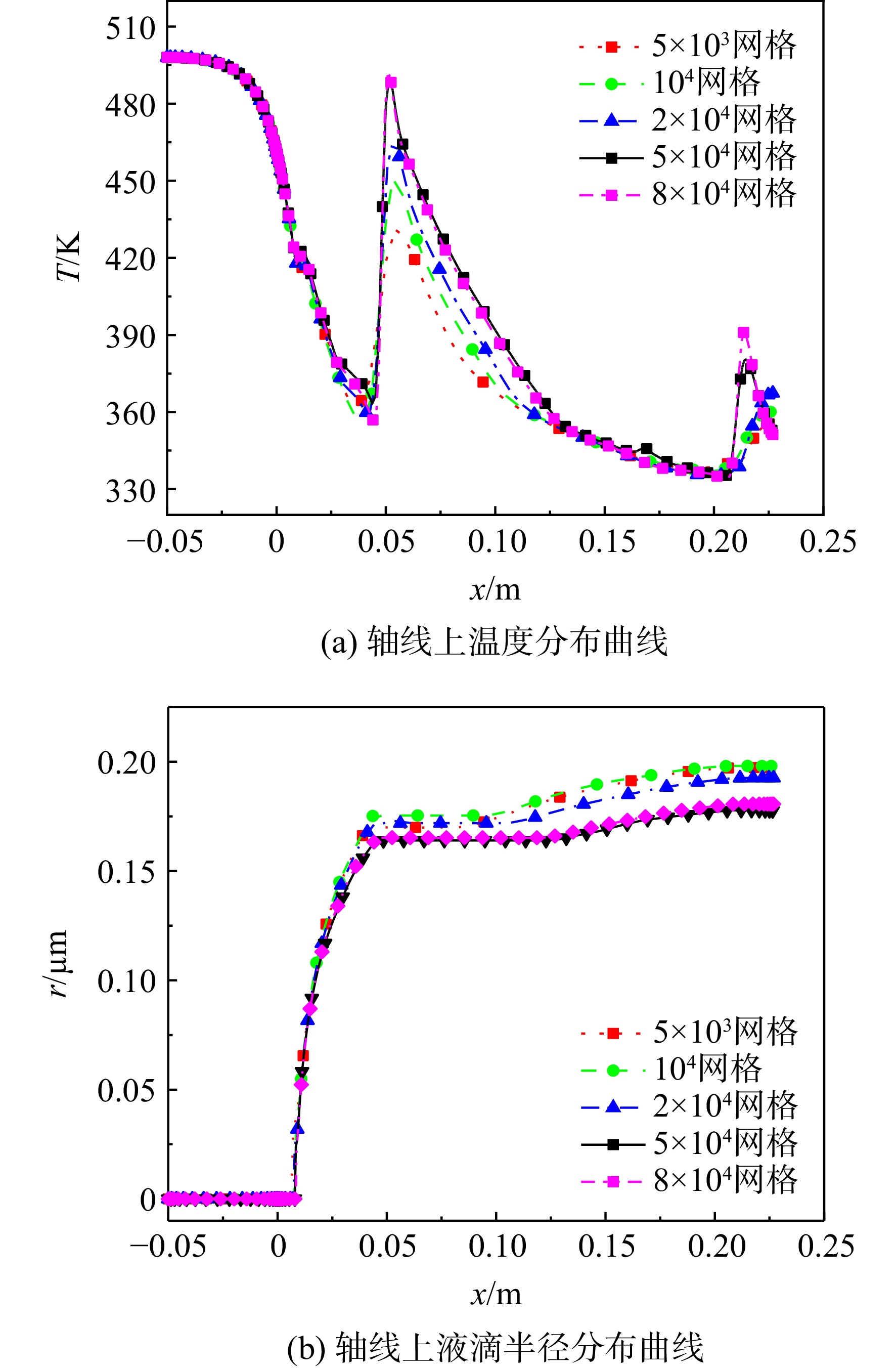
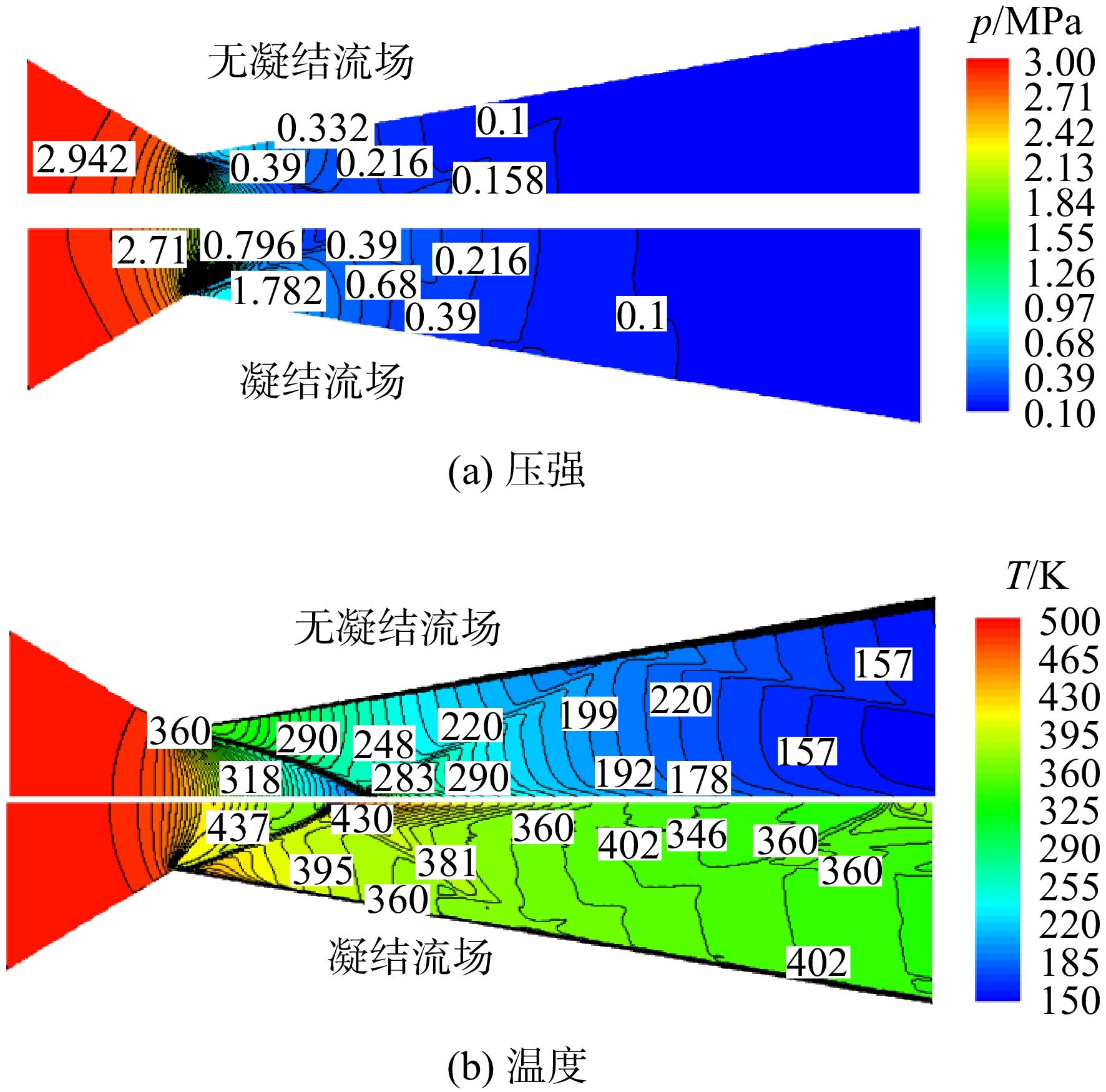
The Eulerian dispersed phase method combining the flow governing equations, nucleation model and droplet growth model was adopted to clarify the influence of condensation on the flow field, and the influence of nozzle geometry and gas humidity on the condensation state. The models with nozzle radius ratio of 2, 3, 4, 5 and gas humidities of 10%, 30%, 50%, 70%, 90%, 100% were numerically simulated. The results showed that the influences of condensation effect no the flow field were obvious and the temperature of condensation flow field was higher than non-condensation condition because of the latent heat released by vapor condensation. With the increase of the nozzle radius ratio, the droplet radius at the exit of nozzle axis increased. The droplet appeared closer to the throat and the droplet radius at the exit of axis was larger with the increase of nozzle half angle. The relationship between gas humidity and droplet size was nonlinear, and the droplets appeared closer to throat with higher gas humidity.

Investigation on the flow field characteristics of typical flameholder with non-uniform inflow
LIU Yunpeng, DUAN Zhengliang, DI Dong, YAN Yingwen
2023, 38(9): 2084-2096. doi: 10.13224/j.cnki.jasp.20220188
Abstract:

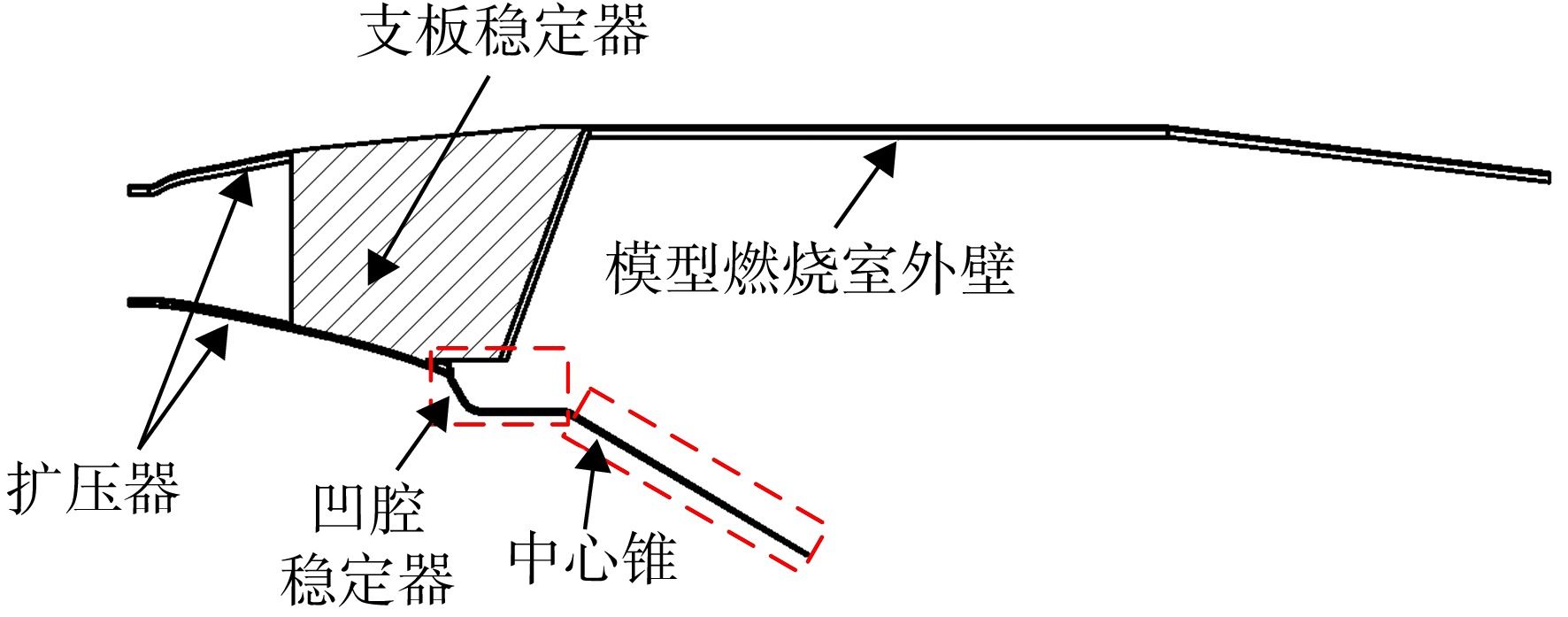
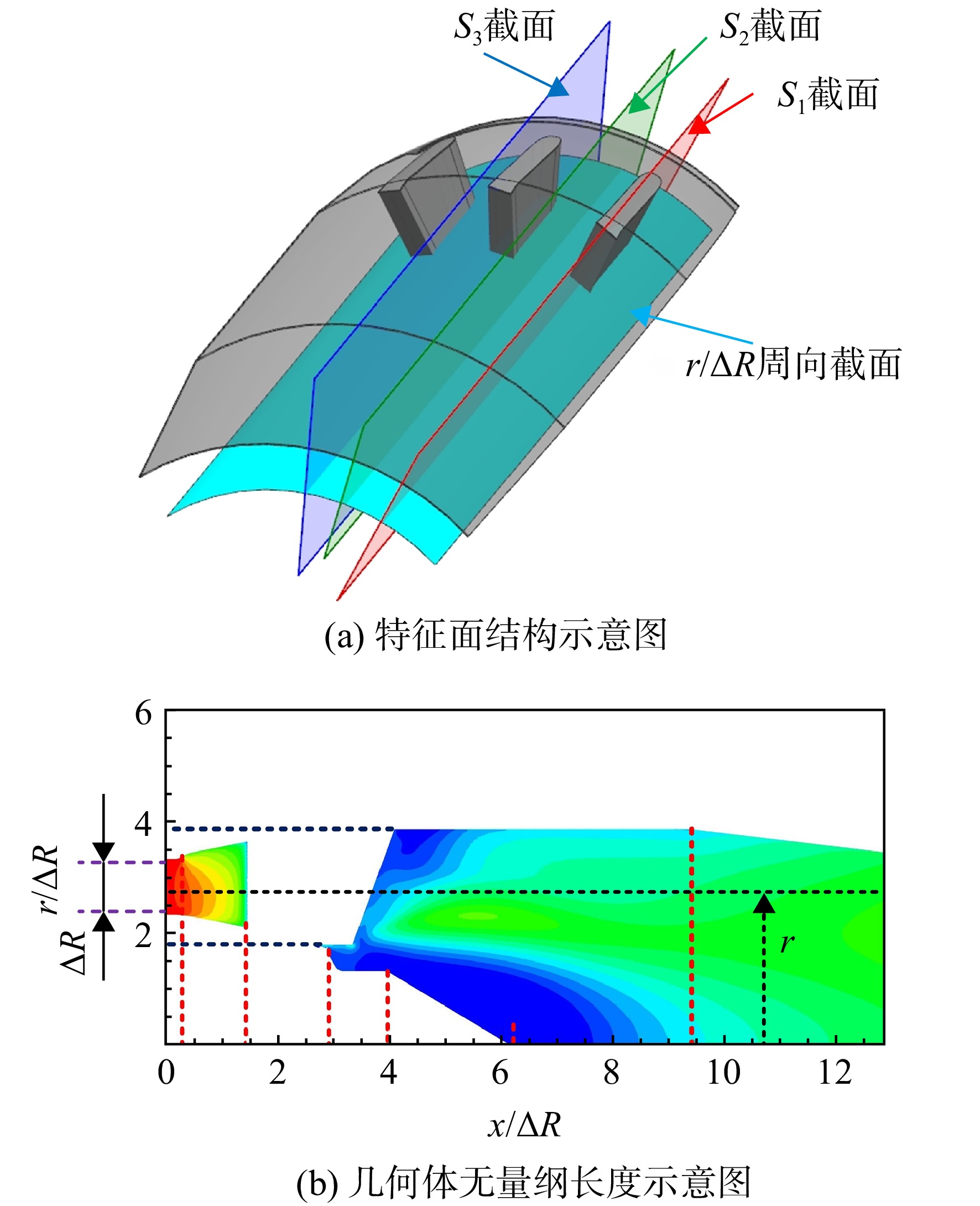
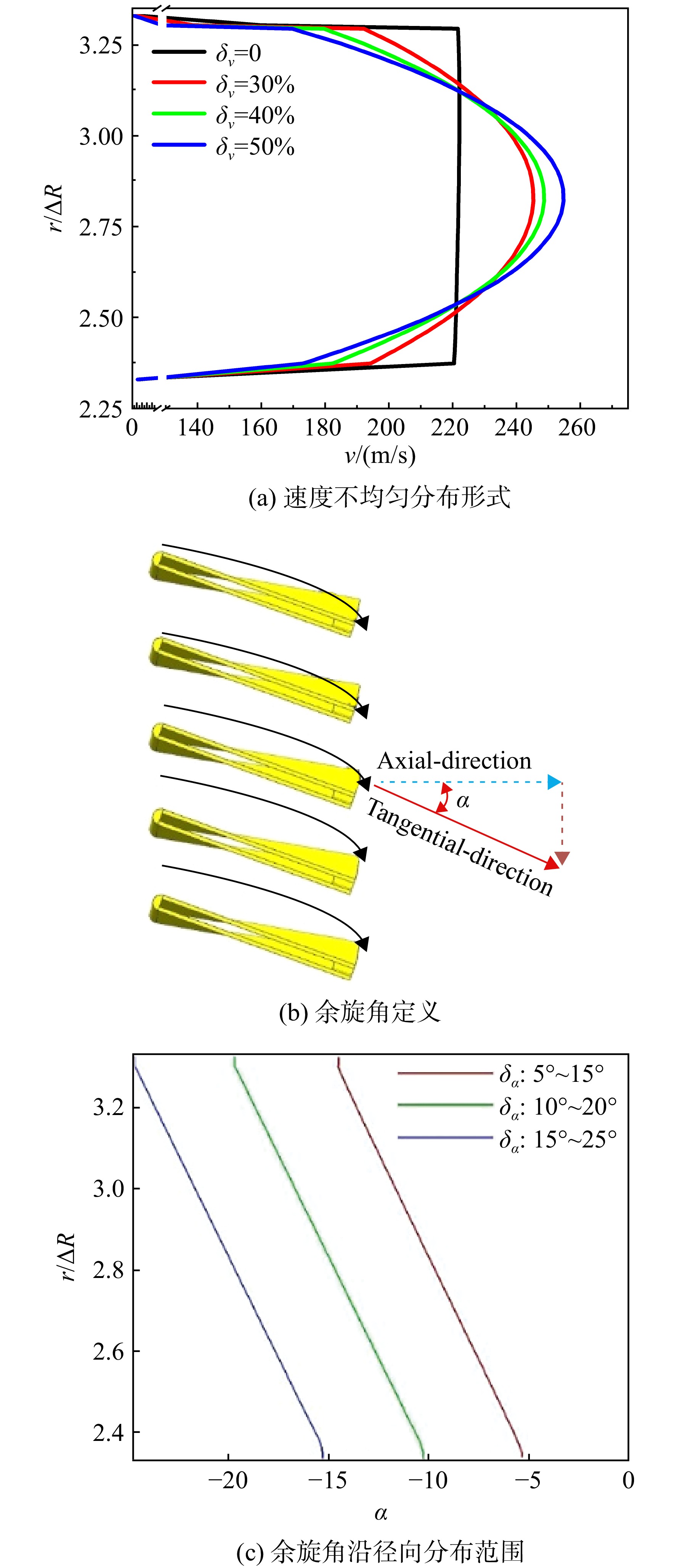
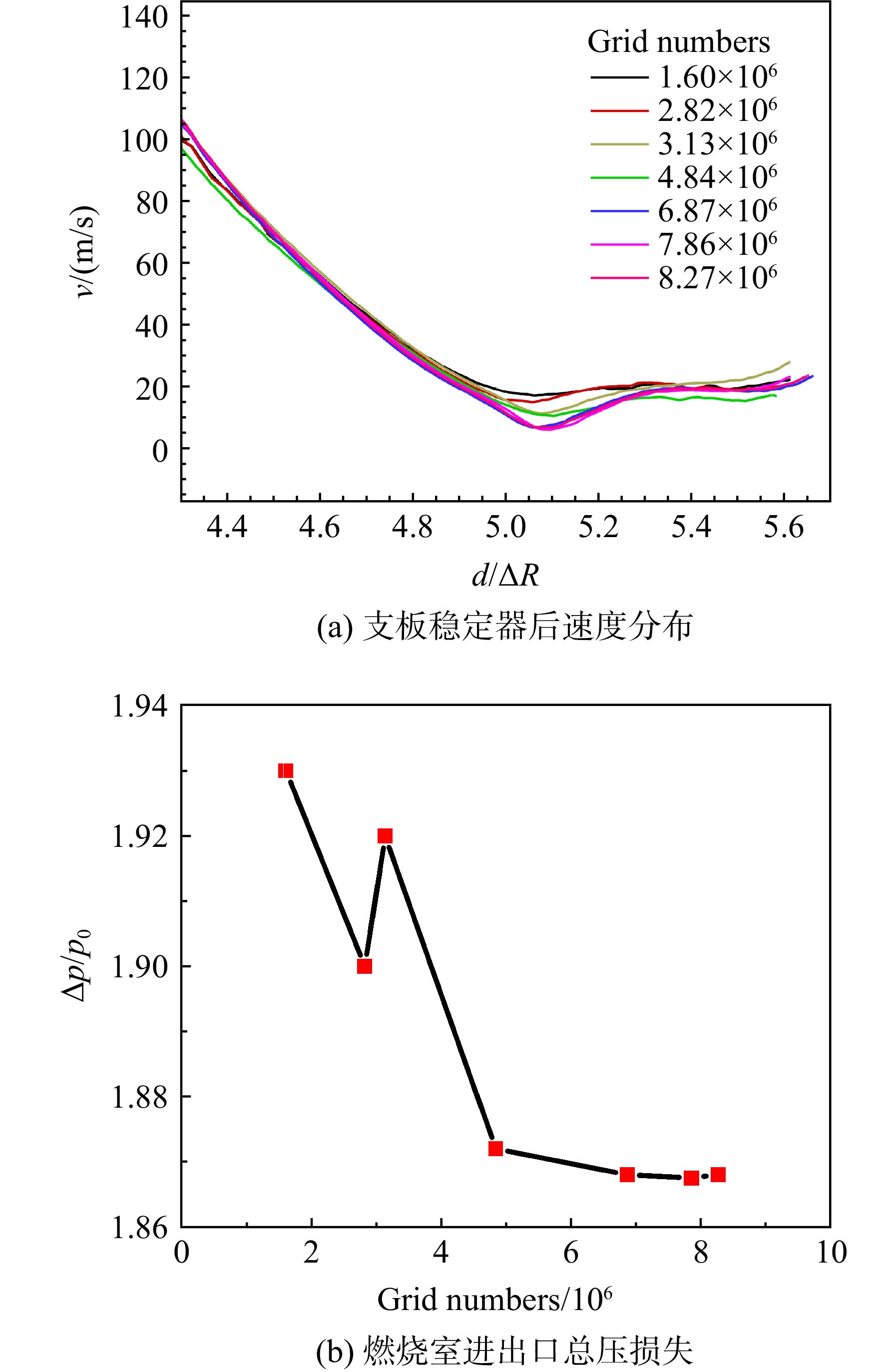
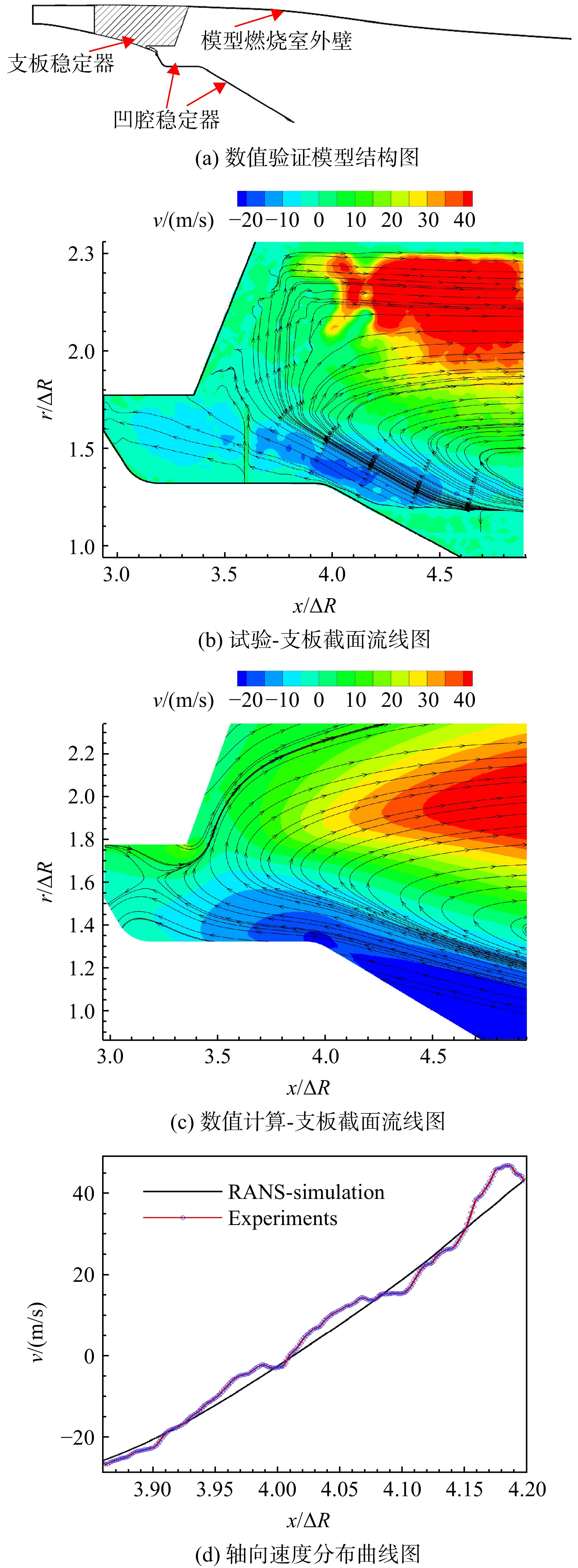
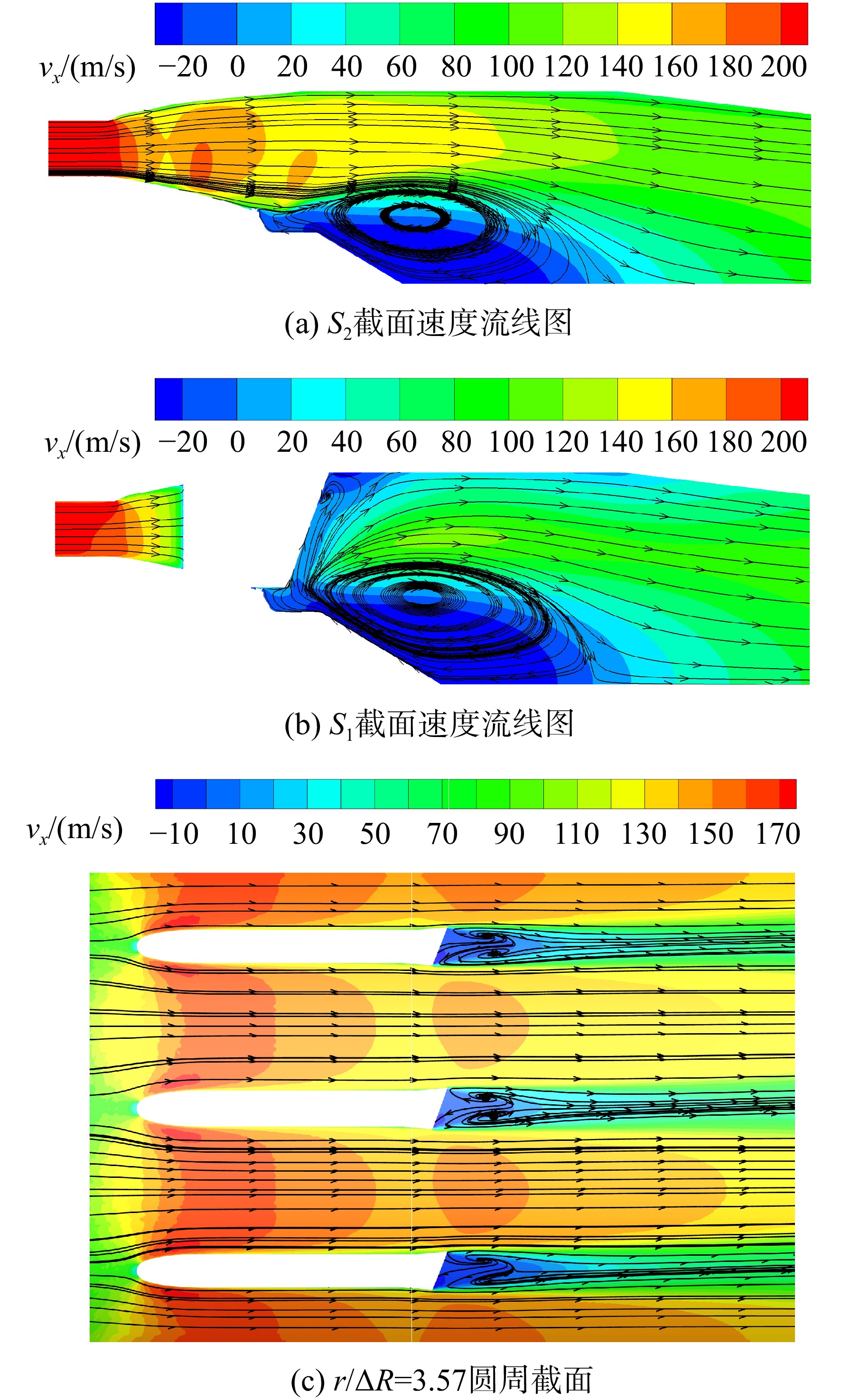
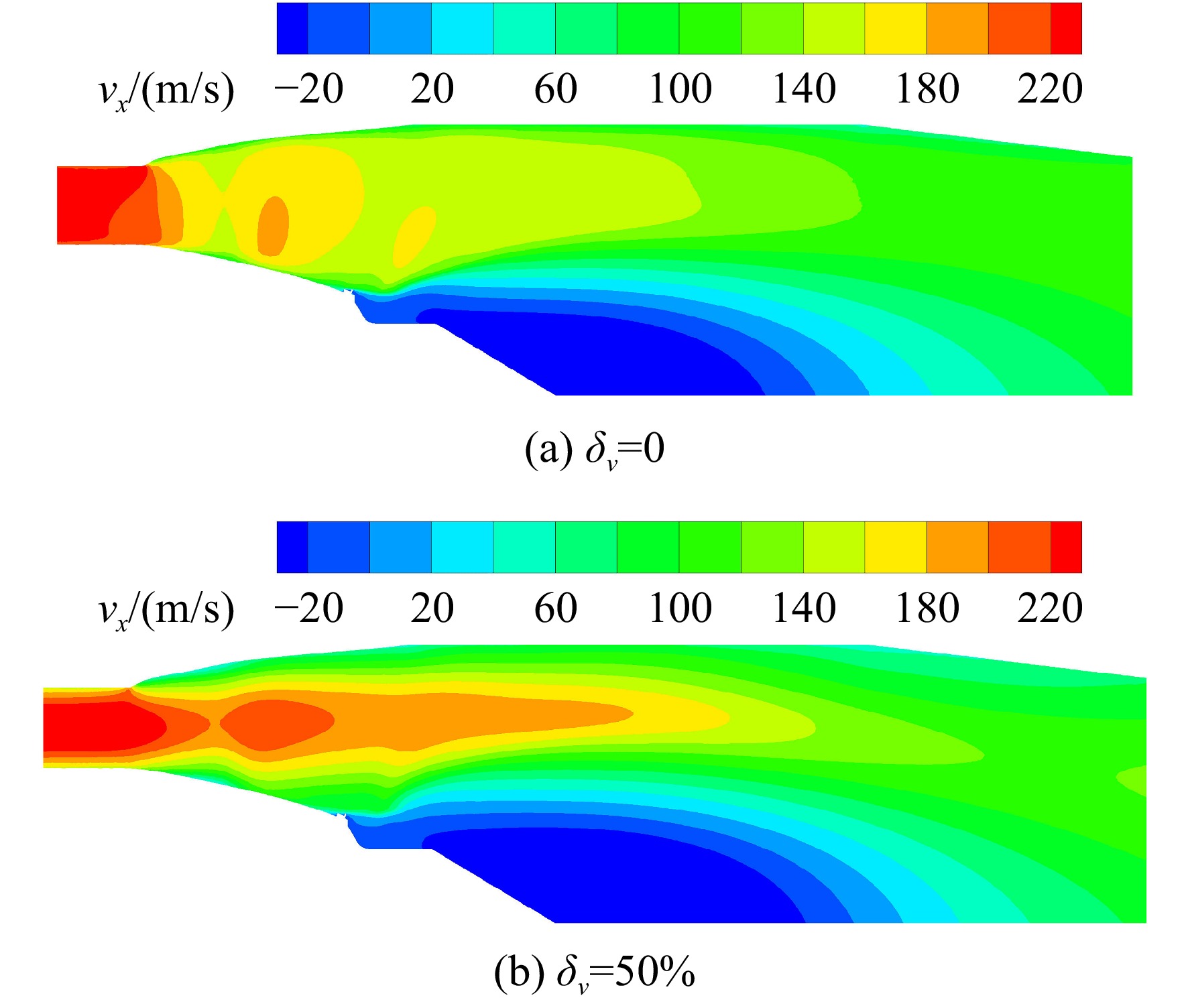
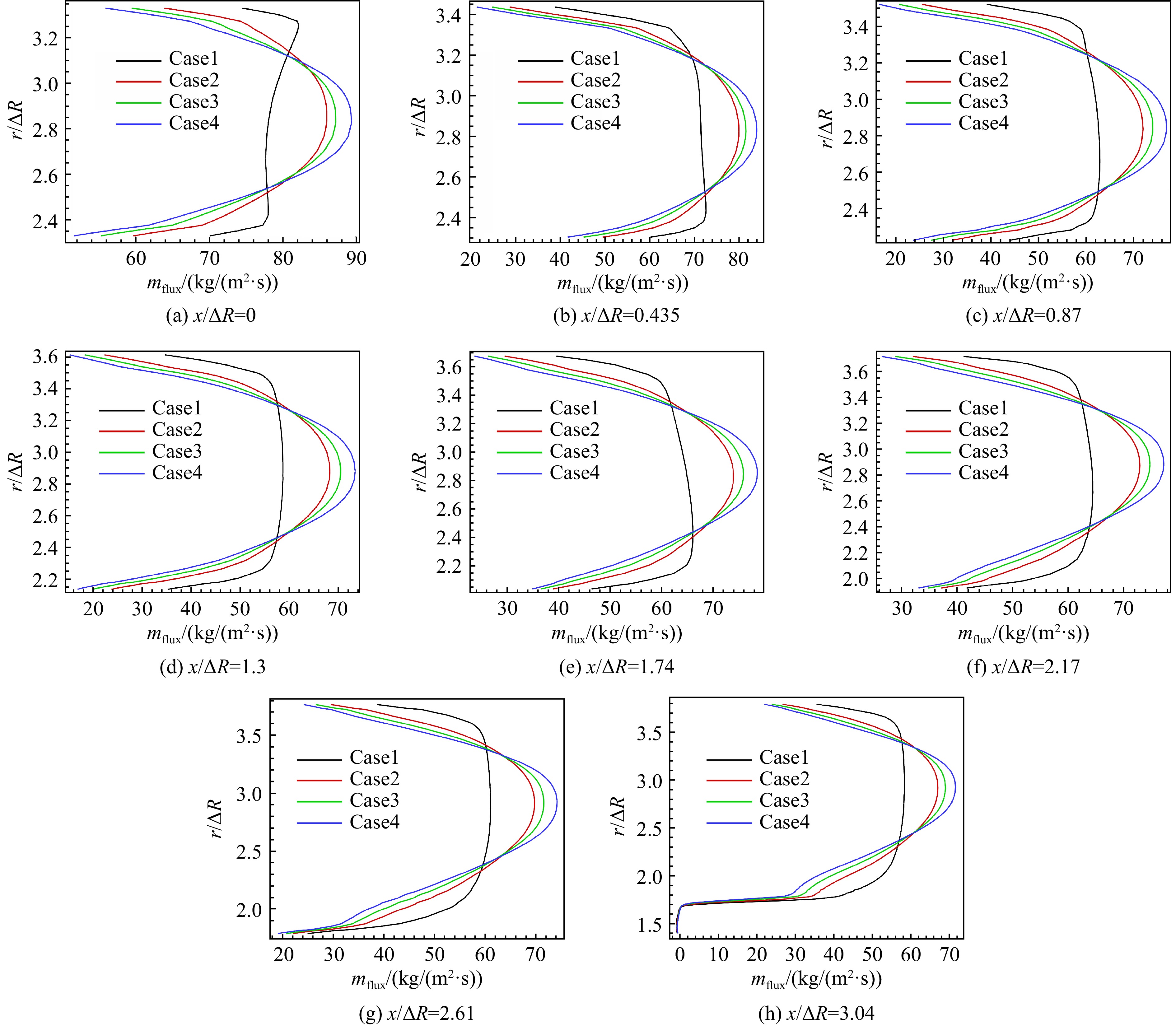
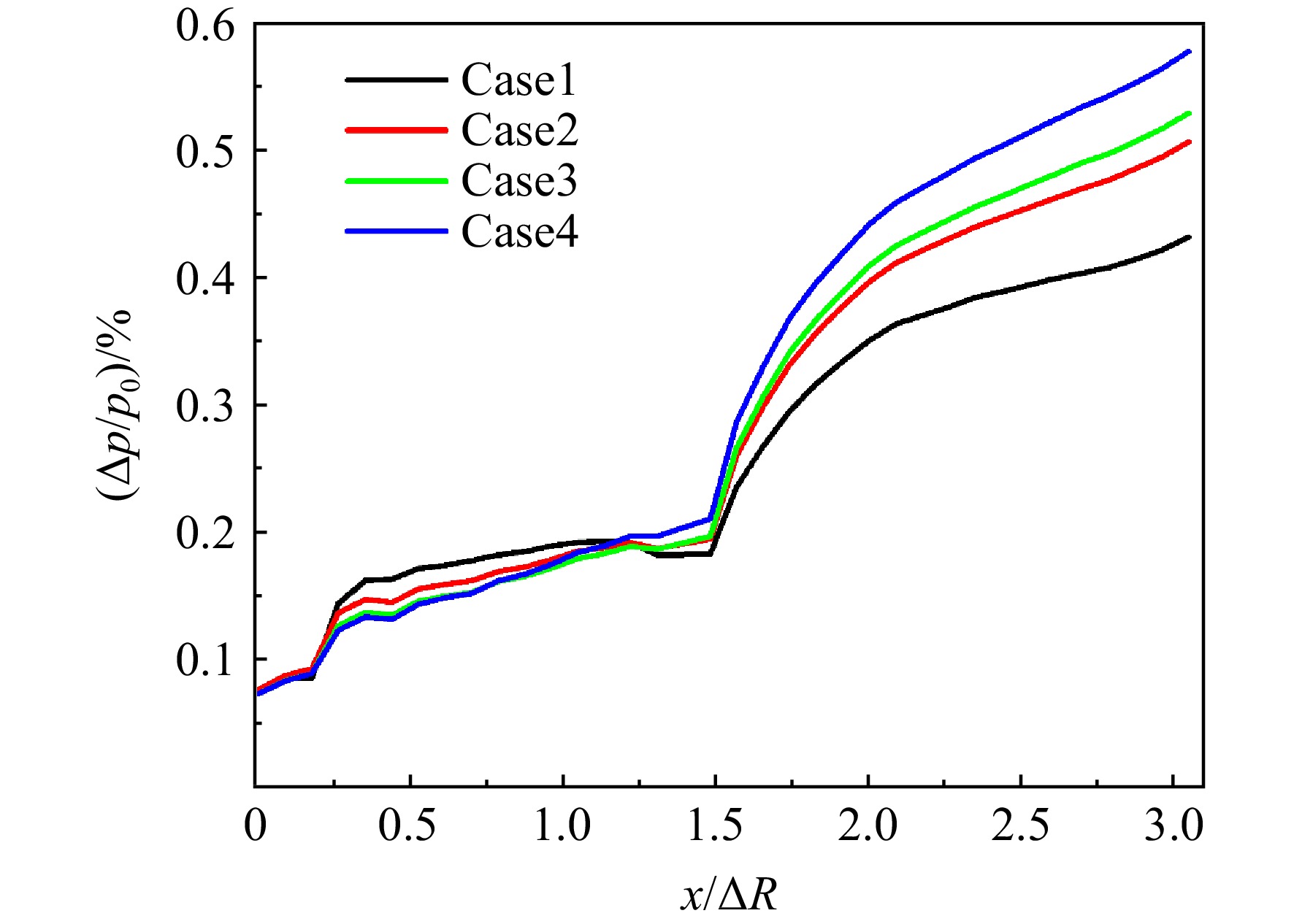
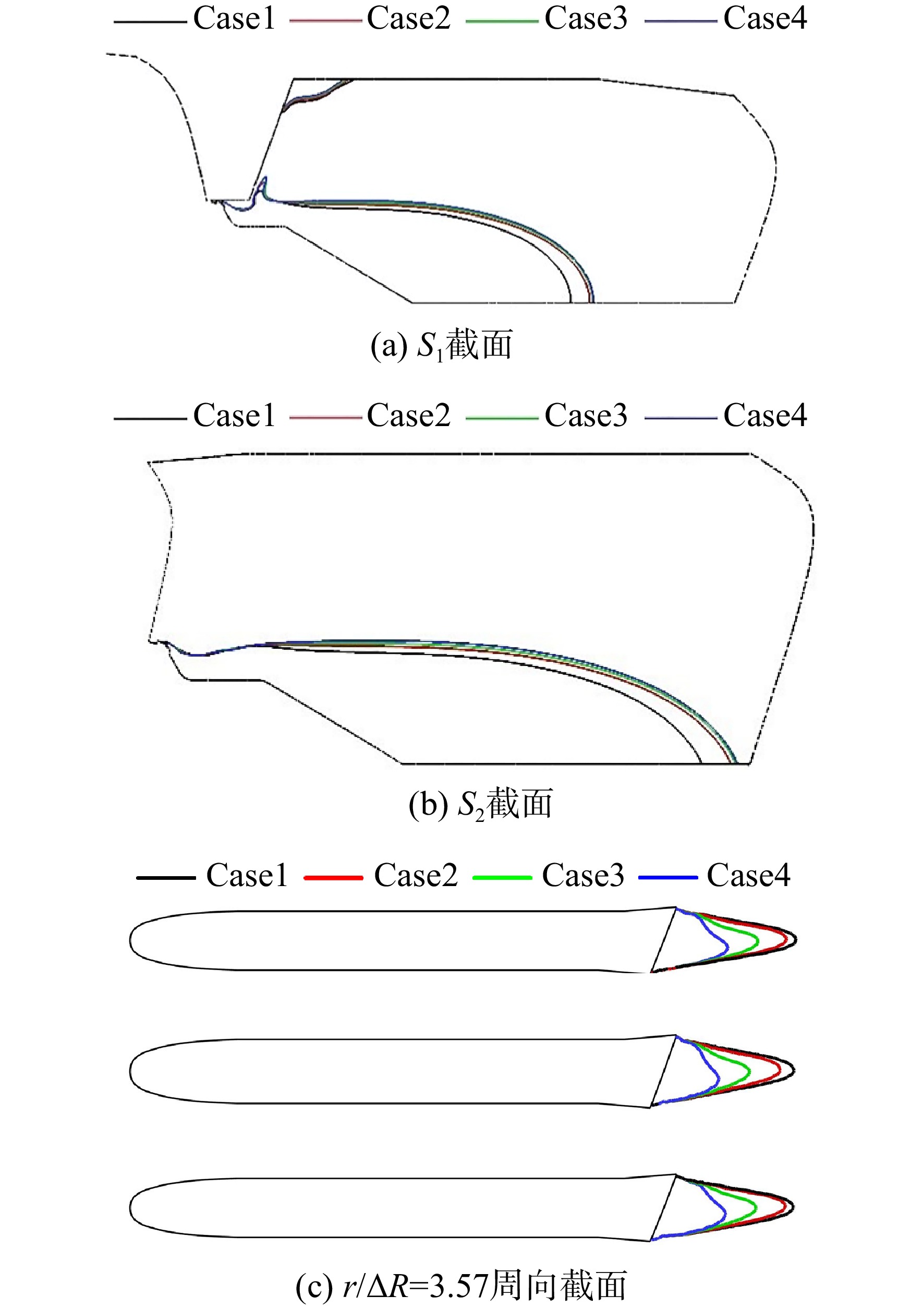
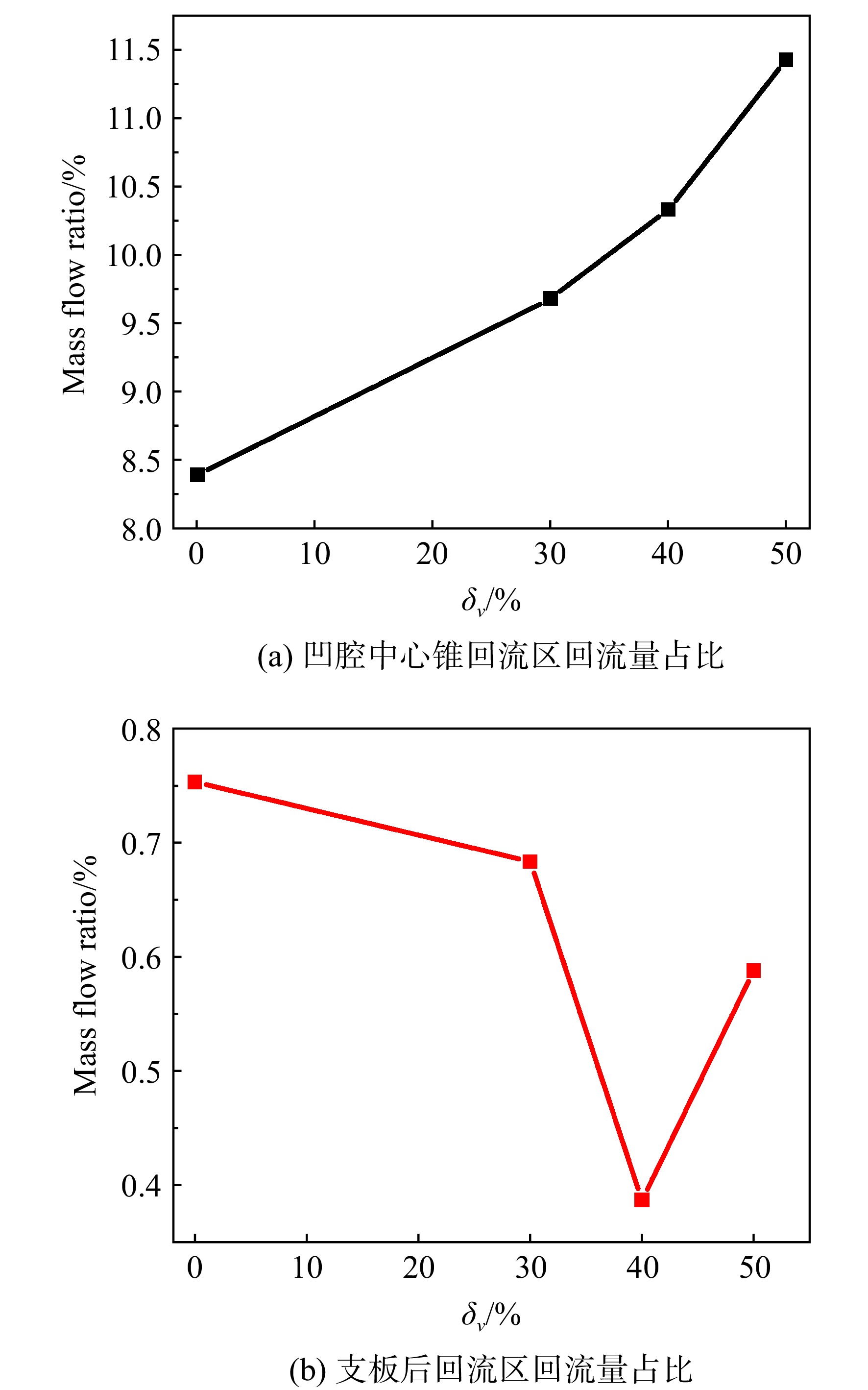
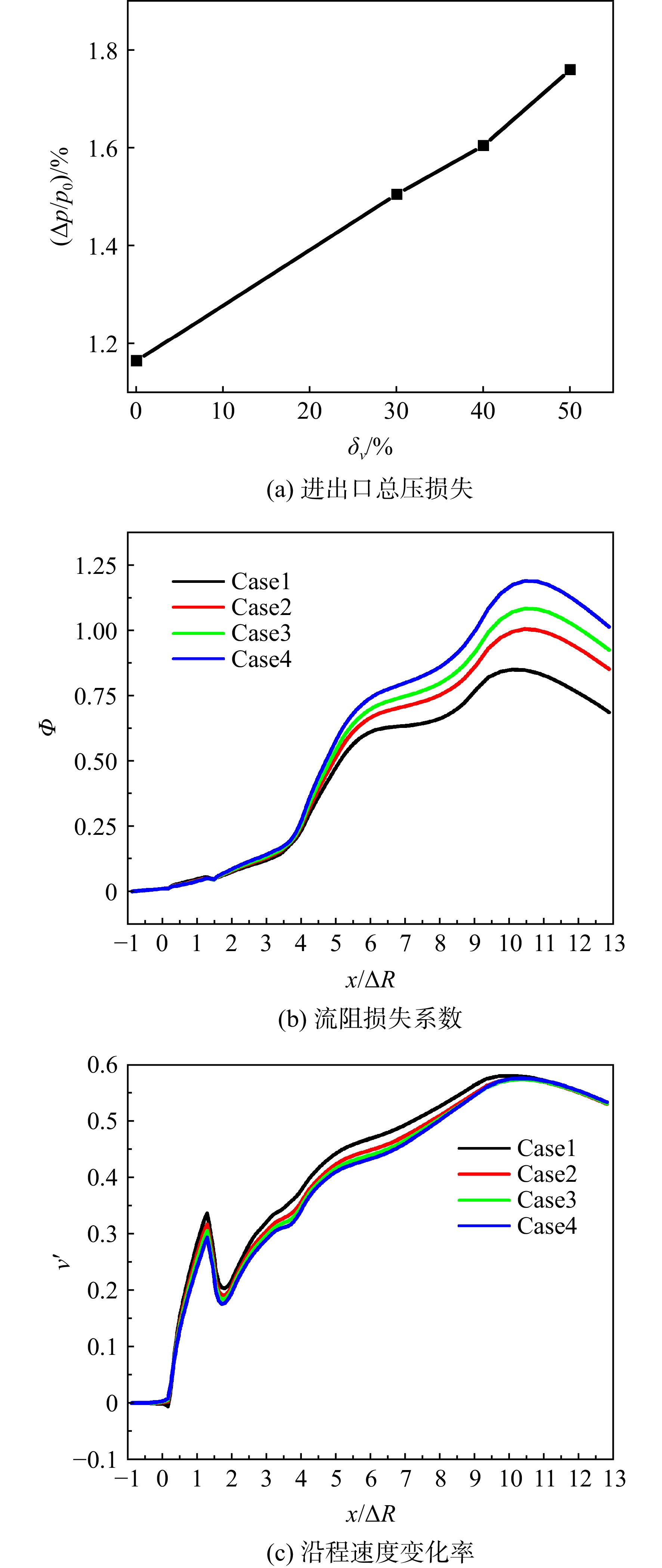
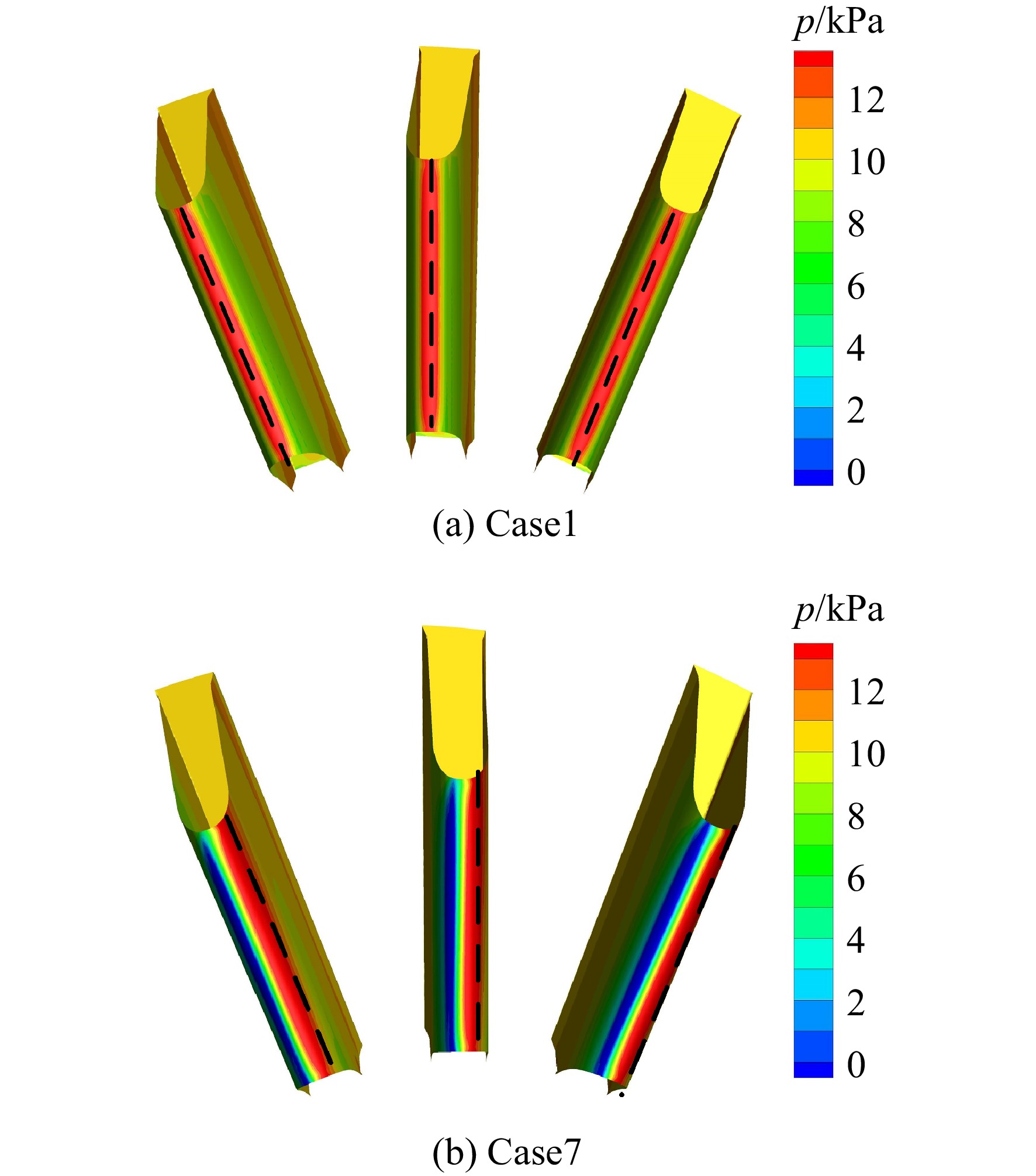
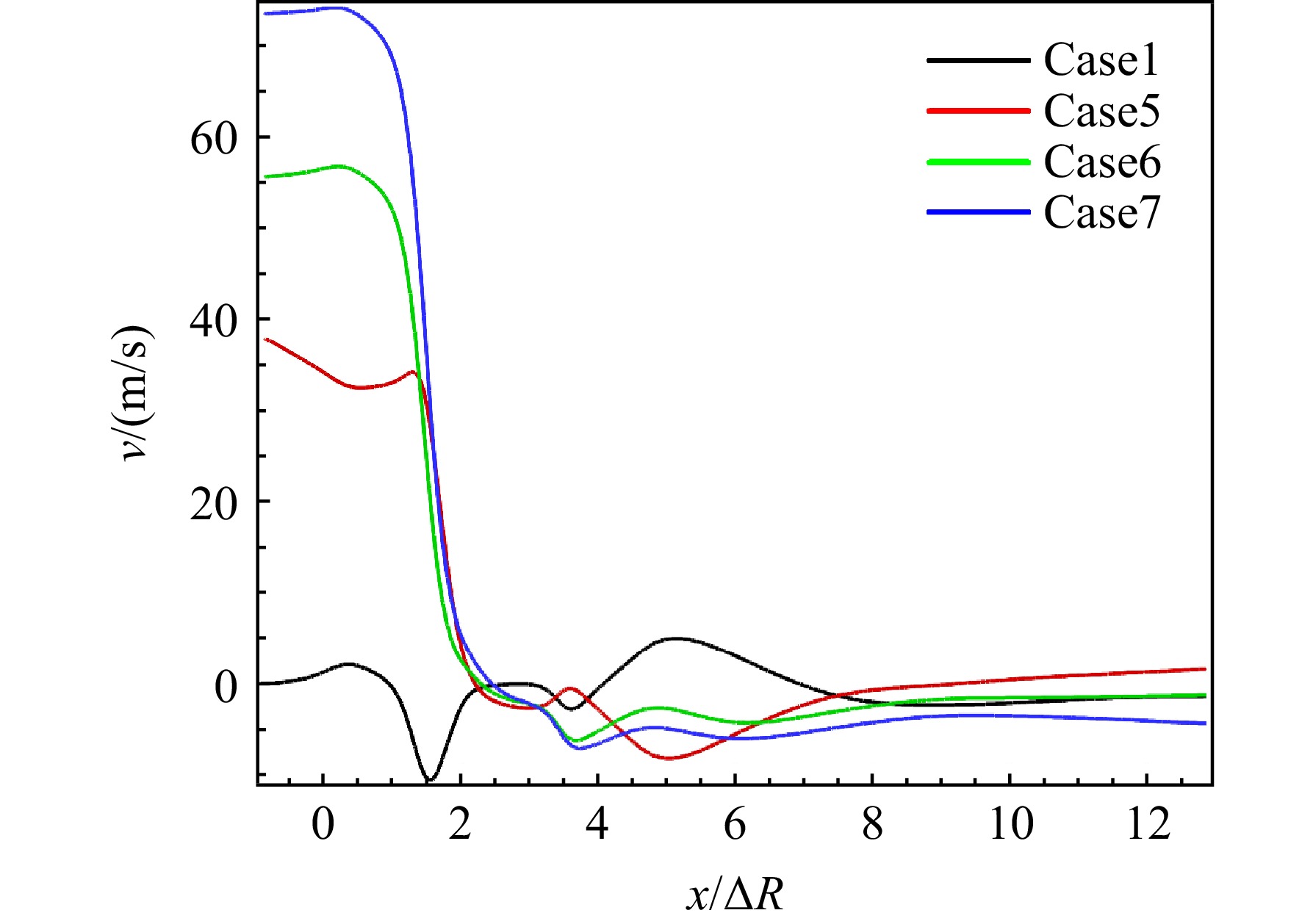
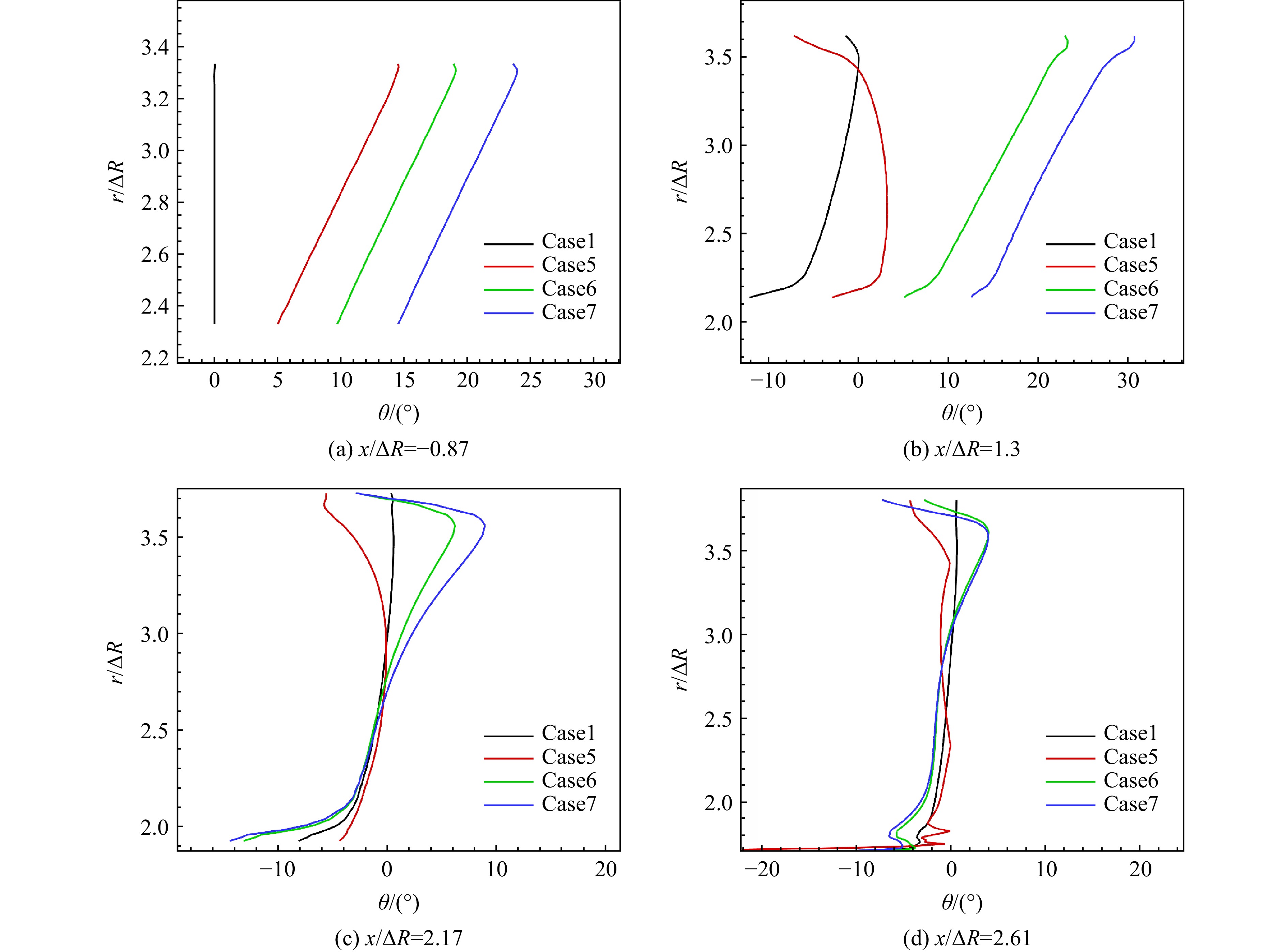
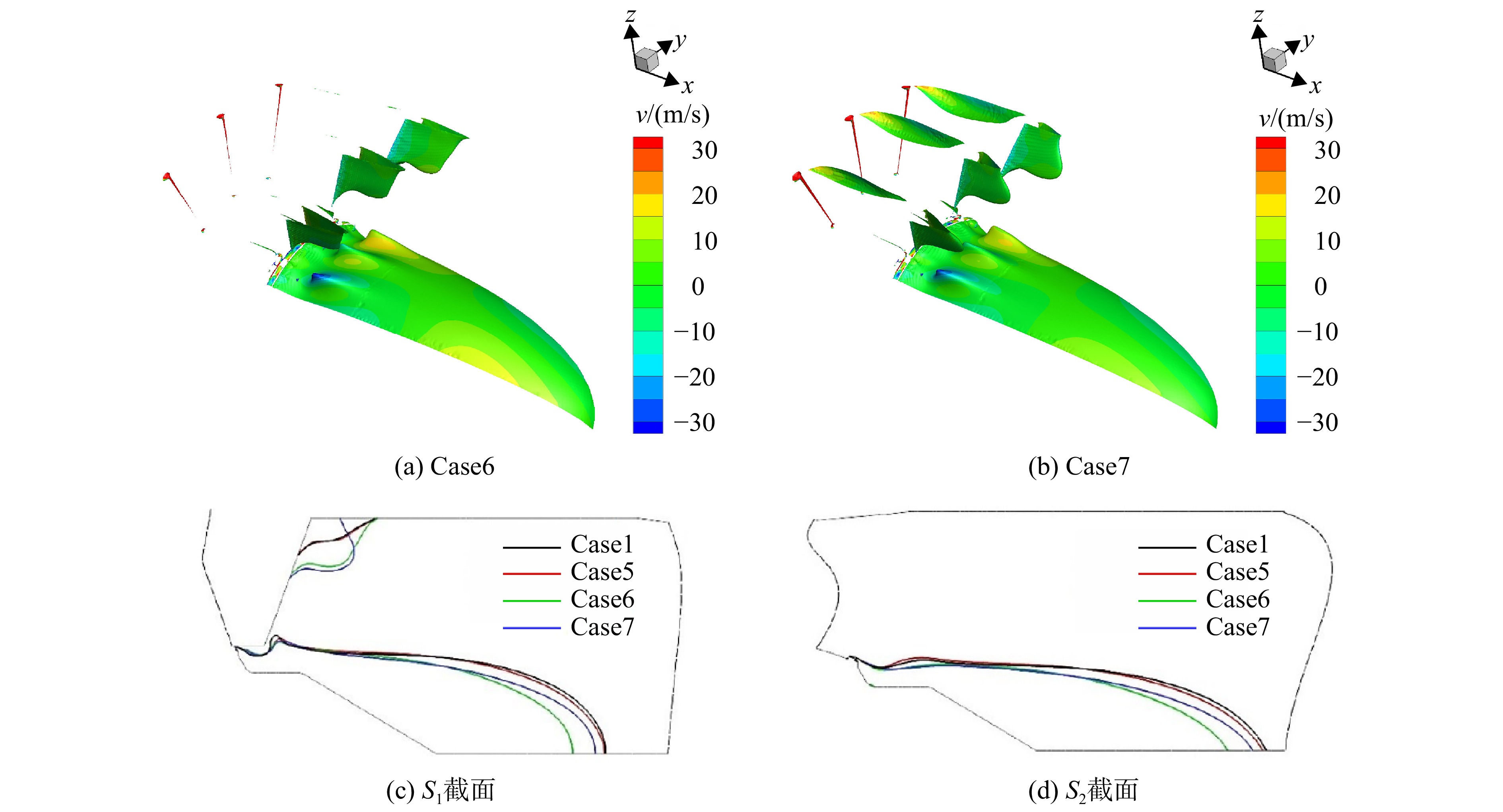
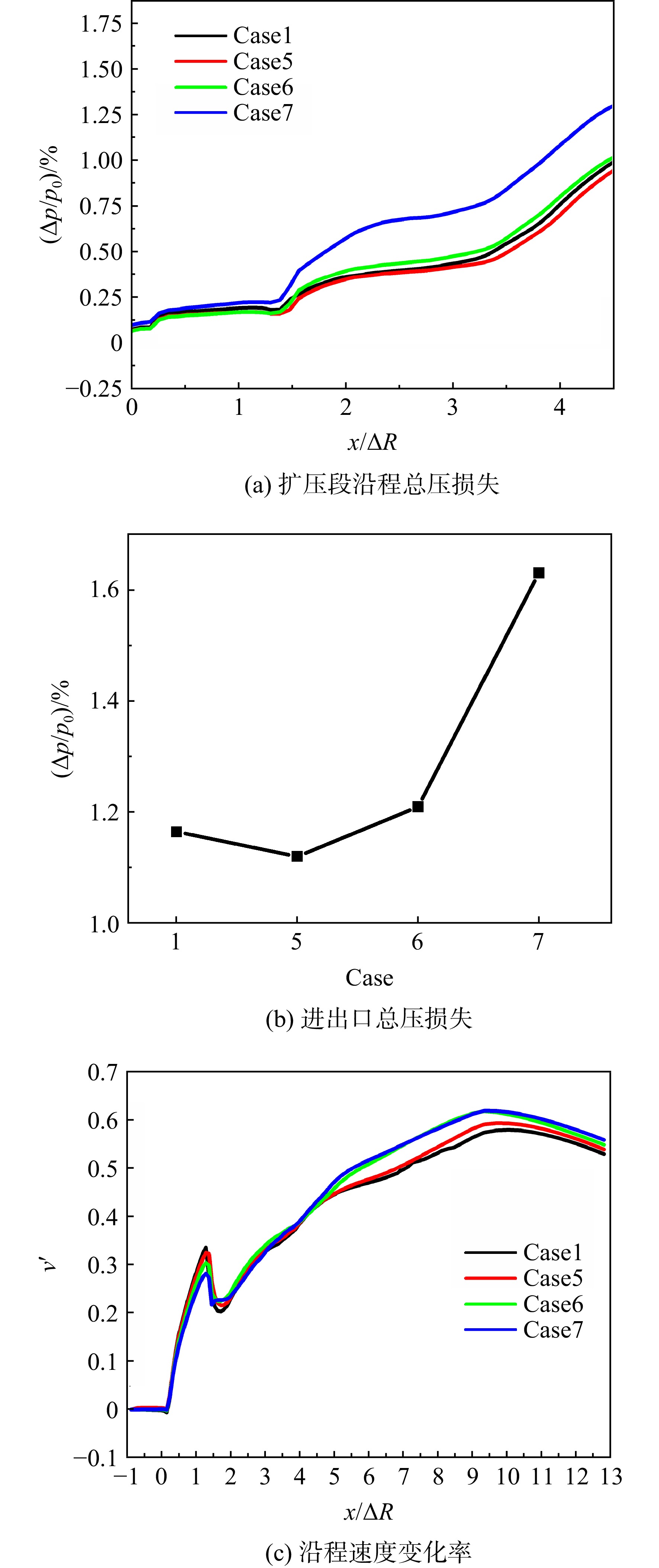
In order to investigate the flow field characteristics of the typical stabilizer of afterburner under the inlet conditions similar to the actual incoming flow, the non-uniform inlet conditions (including non-uniform velocity and non-uniform cosine rotation angle) were given through the user-defined function. Then the cold flow field of the typical stabilizer of an integrated model was numerically simulated using the Reynolds average method. The flow field, total pressure loss and flow resistance loss coefficient were studied. The numerical results showed that: 1) The recirculation zone of the cavity on central cone wall increased gradually with the increase of the velocity non-uniformity, while the recirculation zone of stabilizer decreased. With the increase of non-uniform cosine rotation angle, the reflux flow of the cavity of central cone decreased inward, while the reflux flow of stabilizer increased radially inward. 2) When the cosine rotation angle was greater than 15 °, the flow rectification performance of the stabilizer was significantly weakened, and the flow separation on the pressure surface formed a reflux zone, which increased the flow loss of afterburner. 3) The total pressure loss and flow resistance loss coefficient increased with the increase of velocity nonuniformity and cosine rotation angle nonuniformity. In addition, the cosine rotation angle could increase the velocity variation rate.

Parameter optimization of dual gas flow combined thermal test based on surrogate model
A Rong, QI Bin, CHEN Xin, WANG Ri, DONG Sujun, ZHOU Yinjia
2023, 38(9): 2097-2106. doi: 10.13224/j.cnki.jasp.20210658
Abstract:

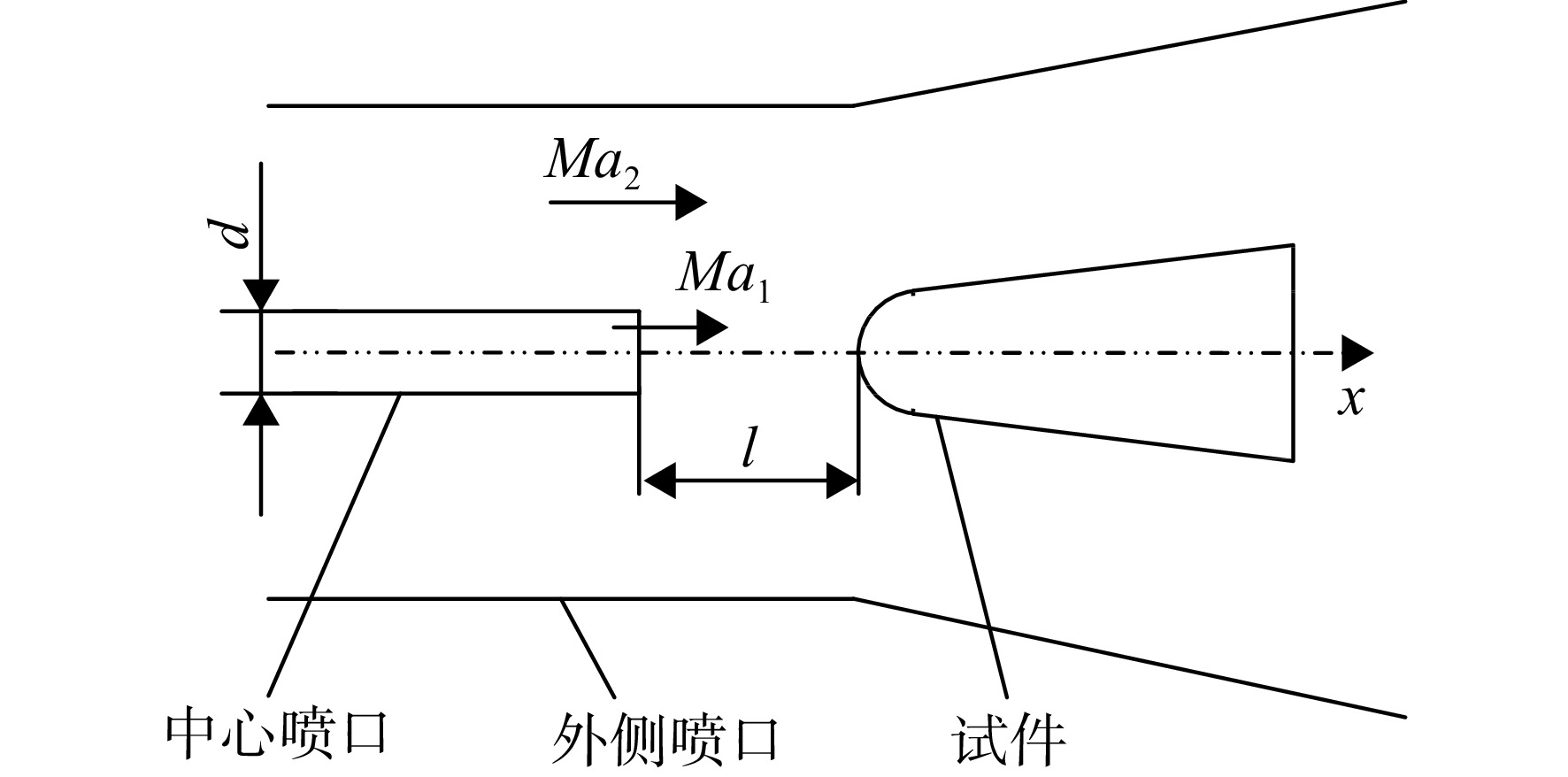
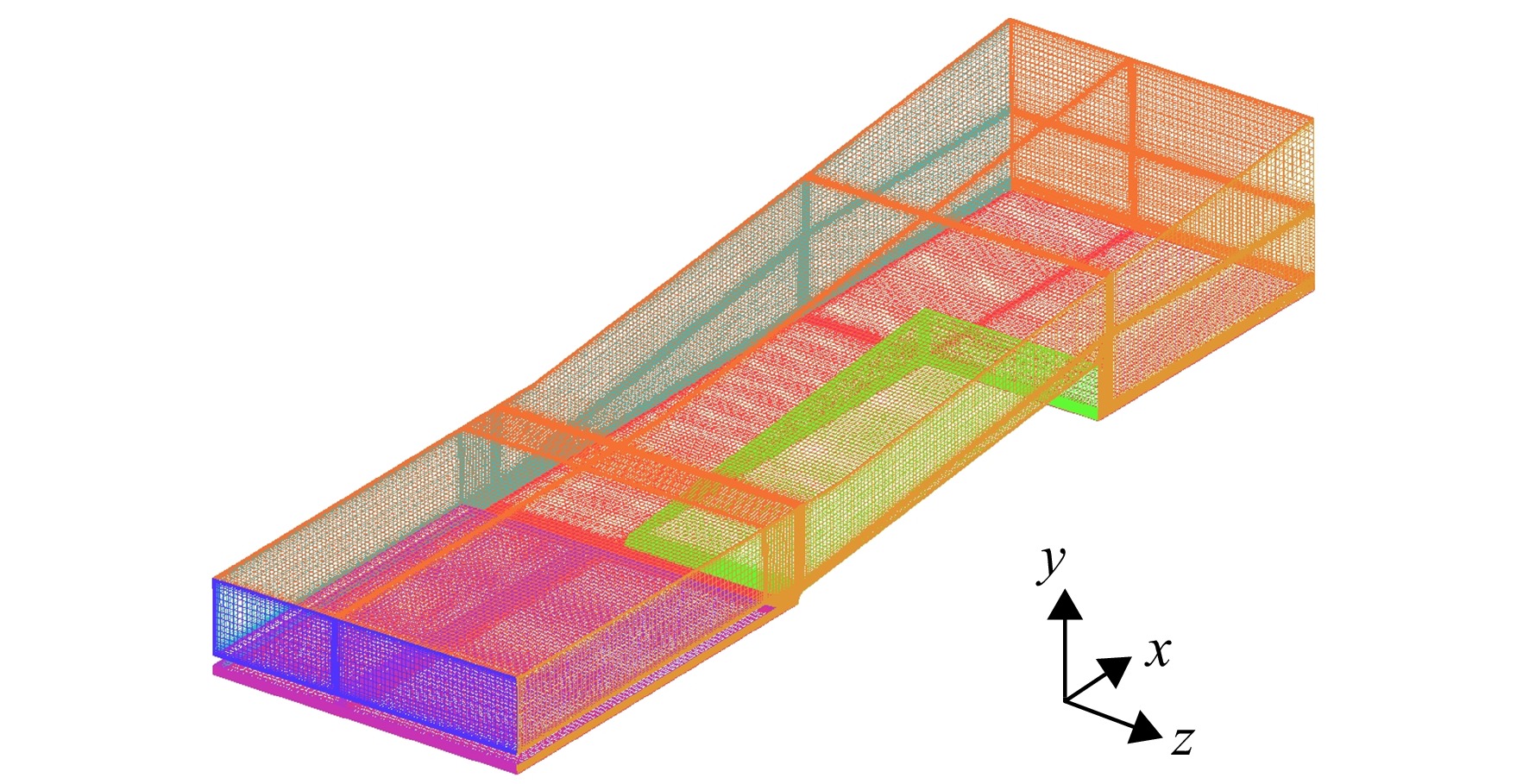
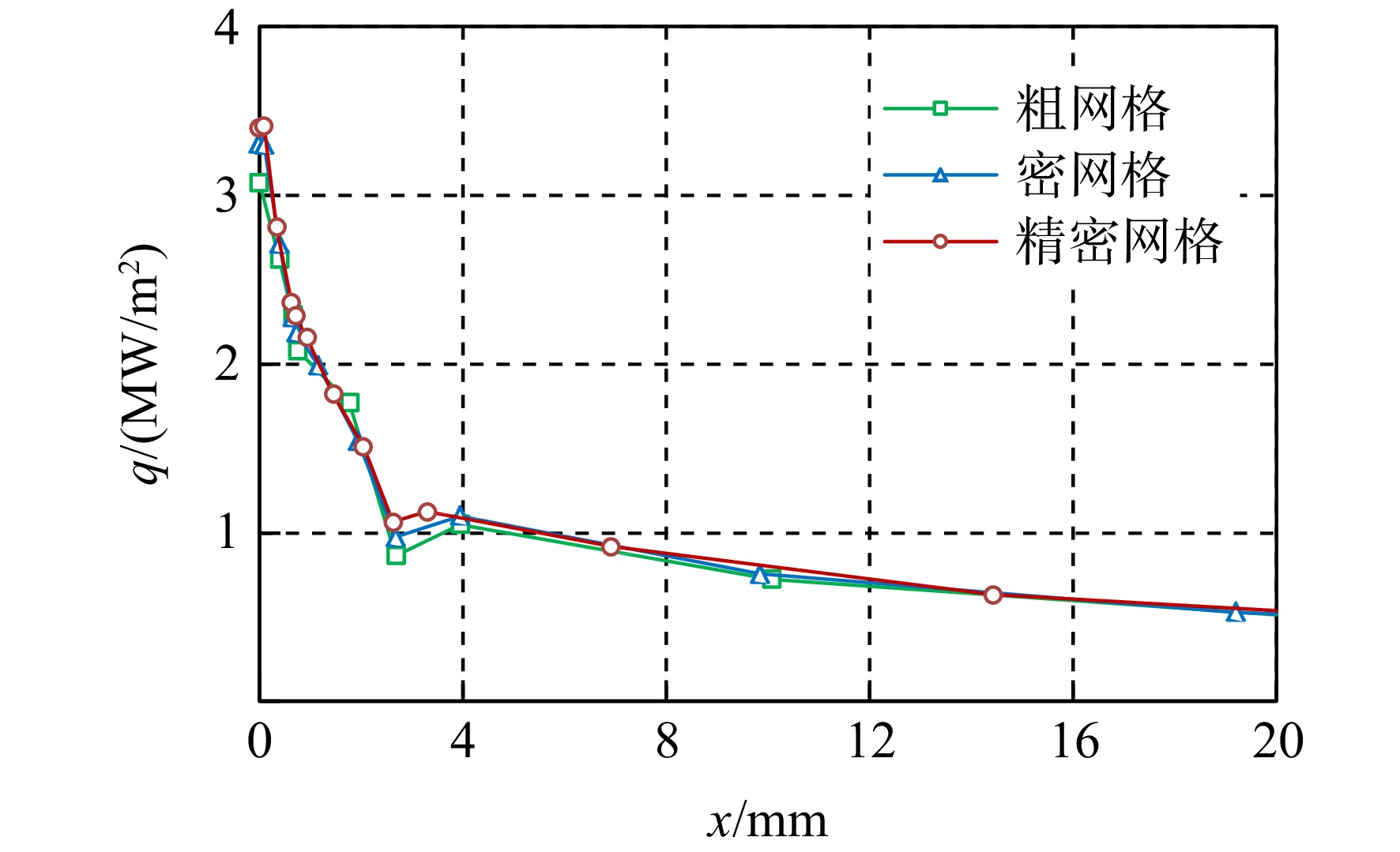
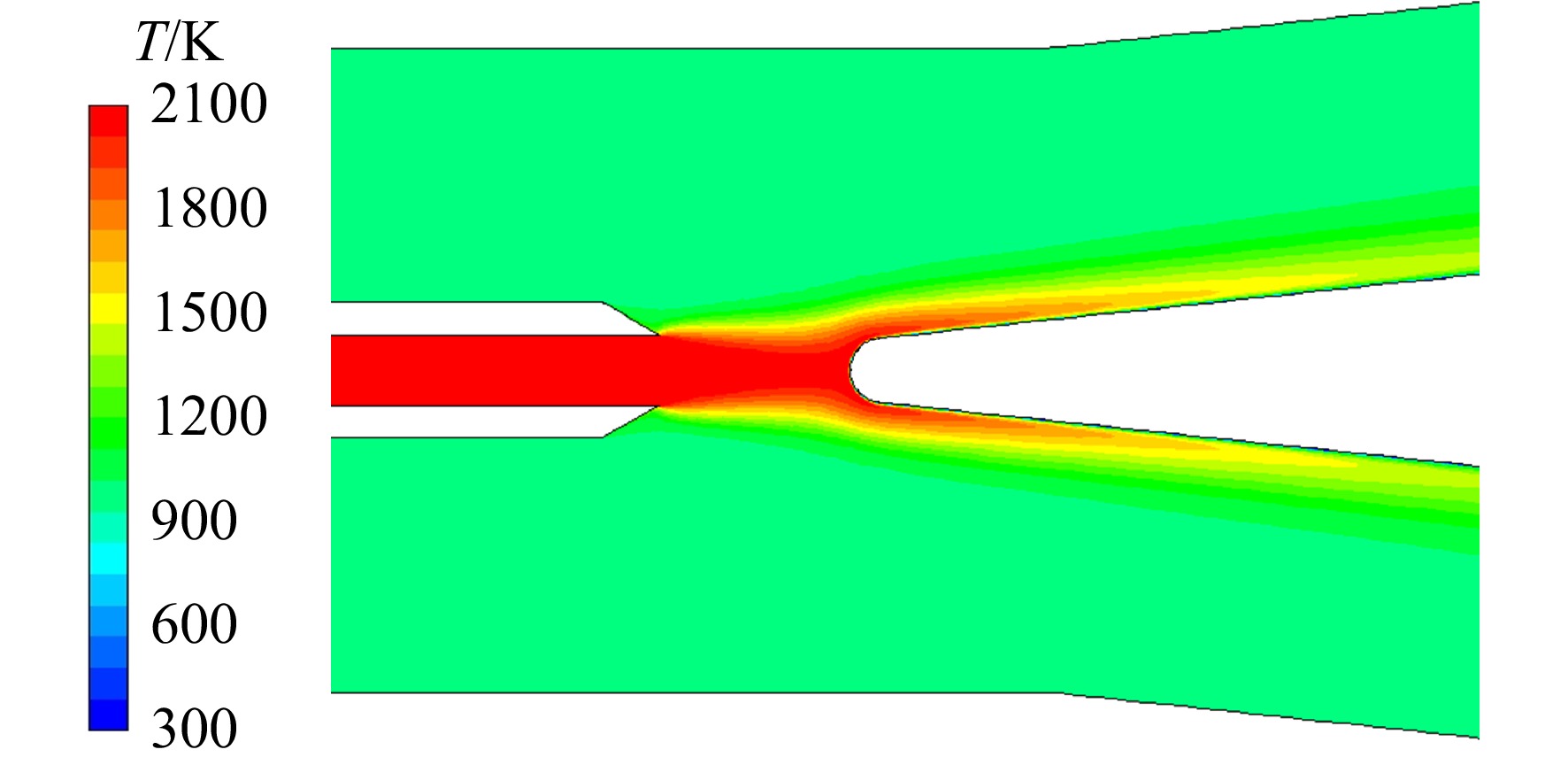
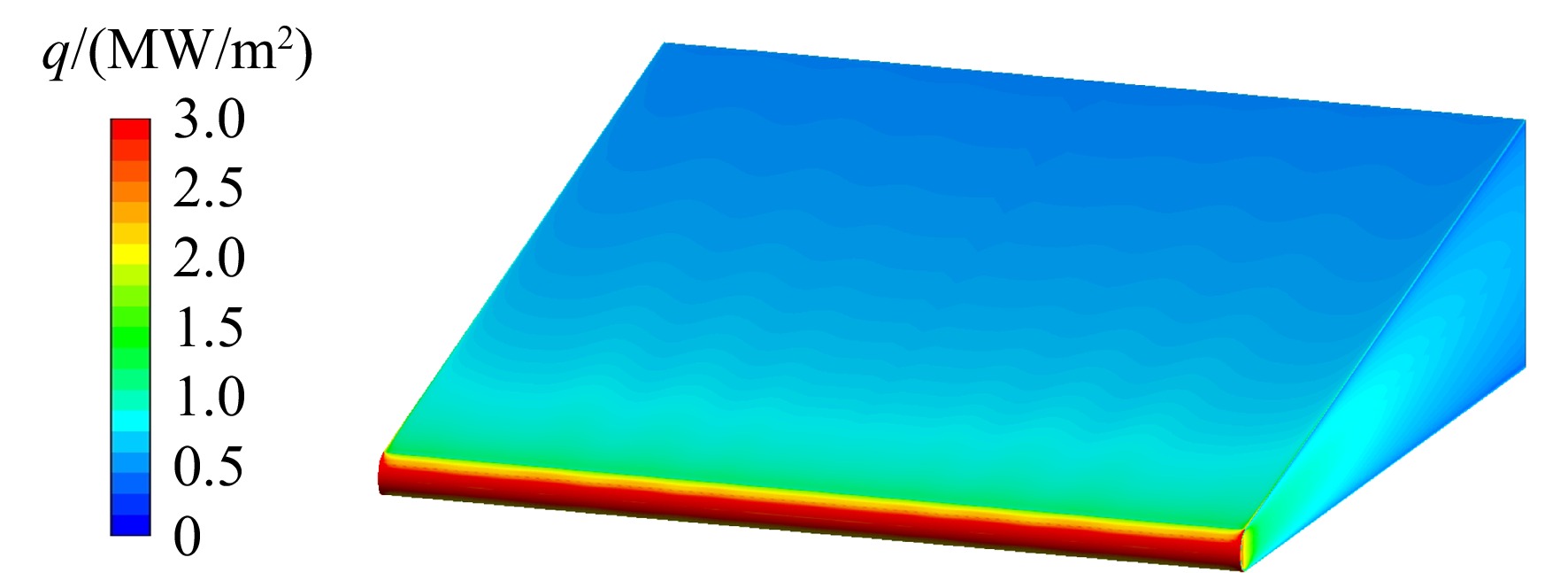
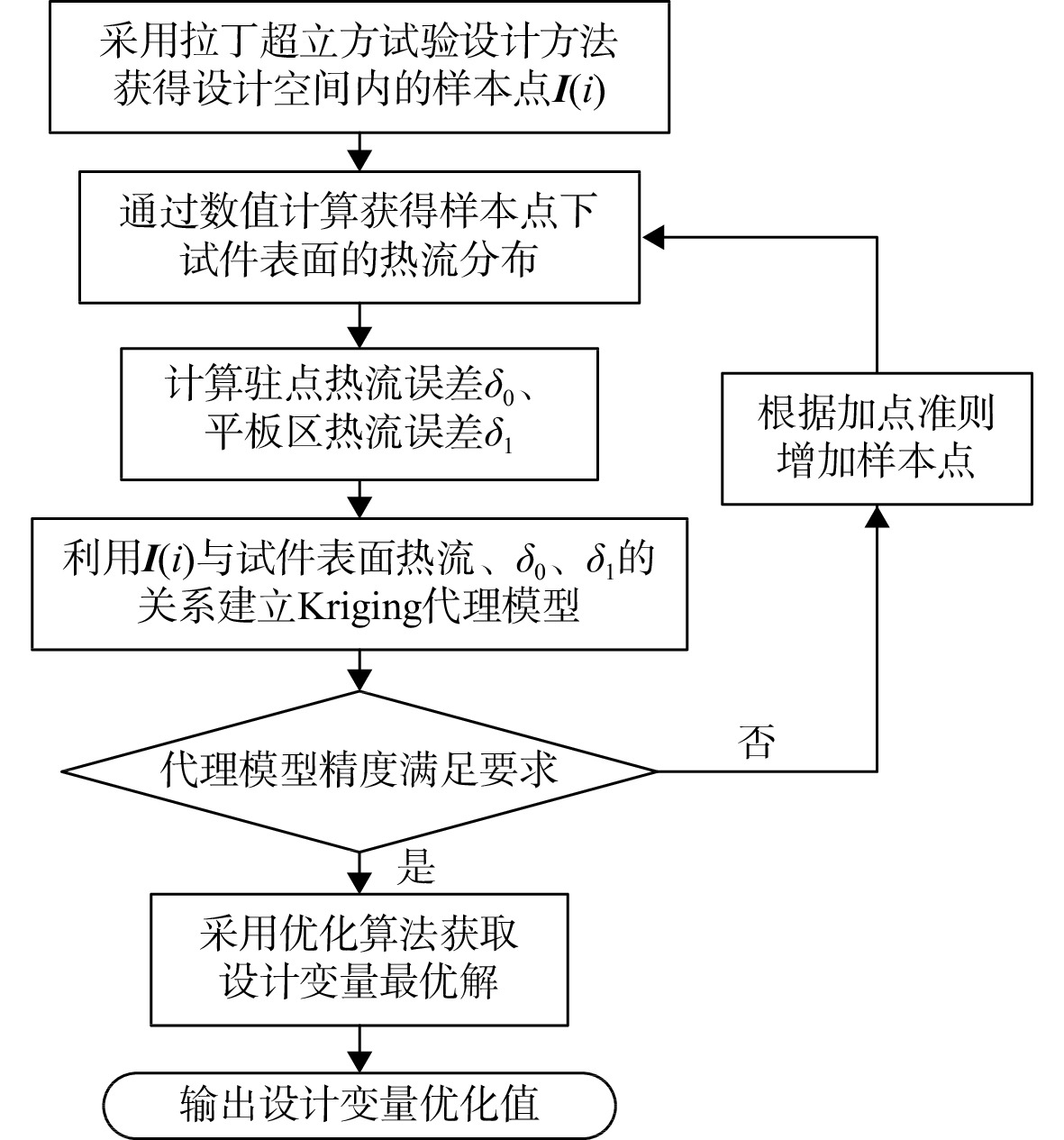
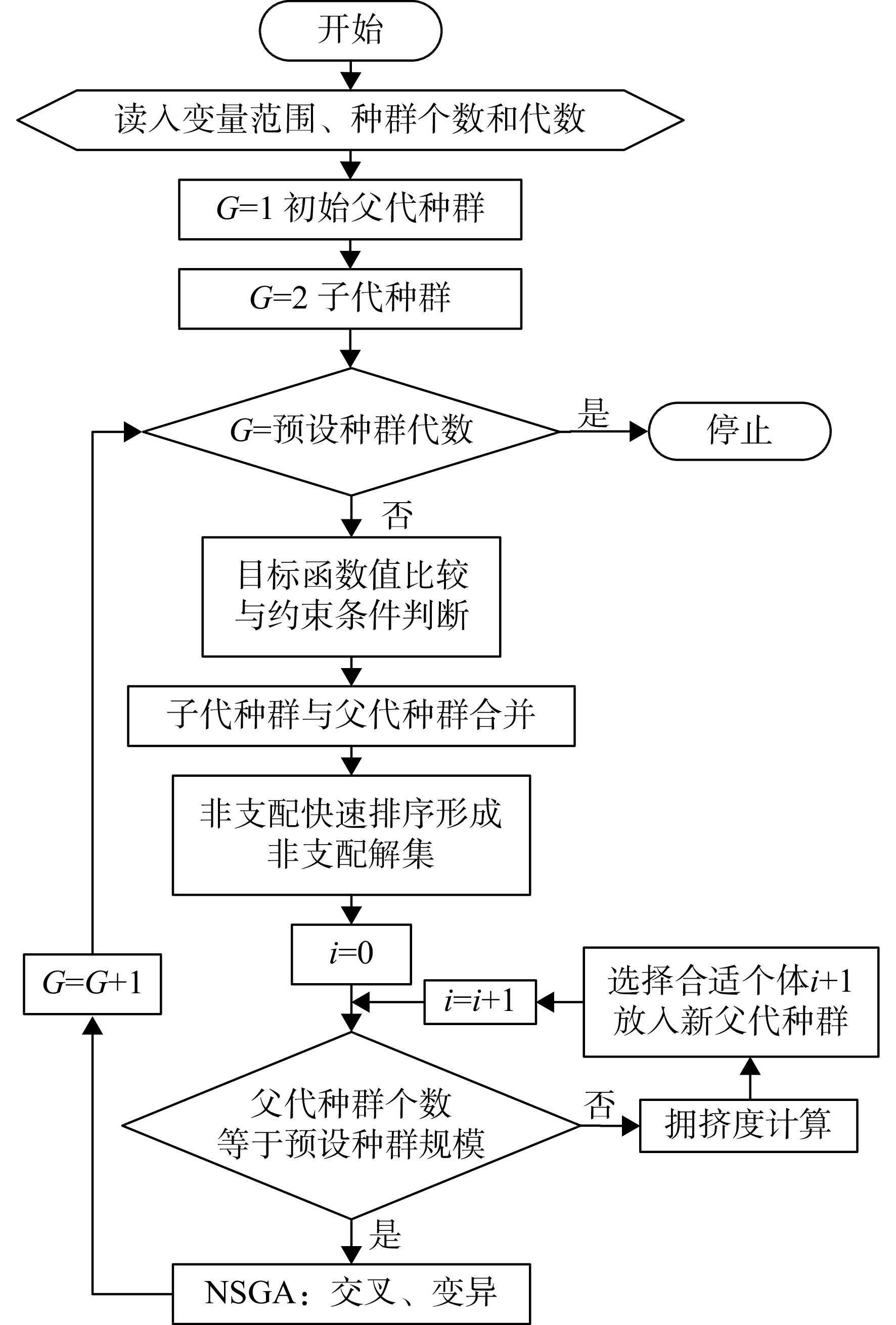
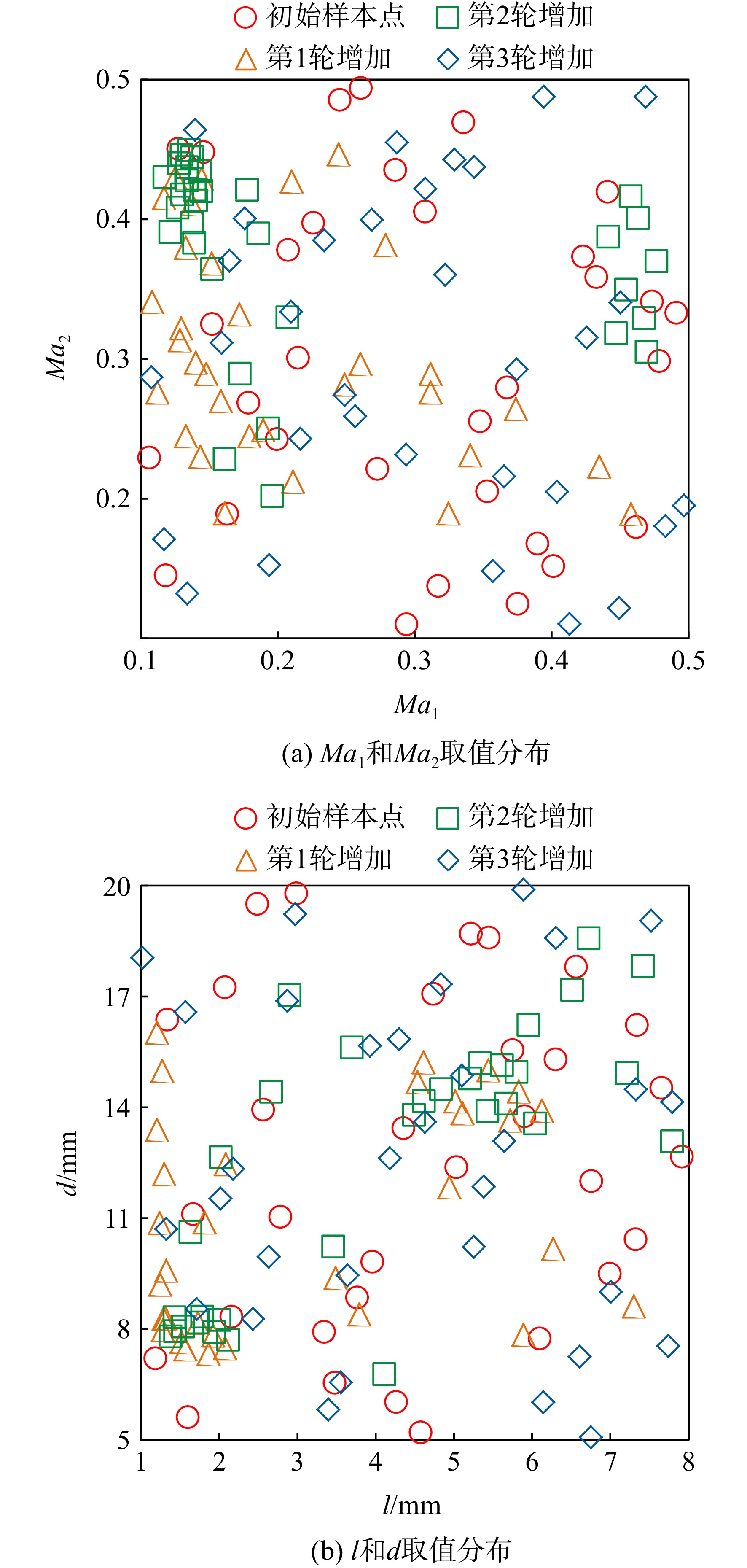
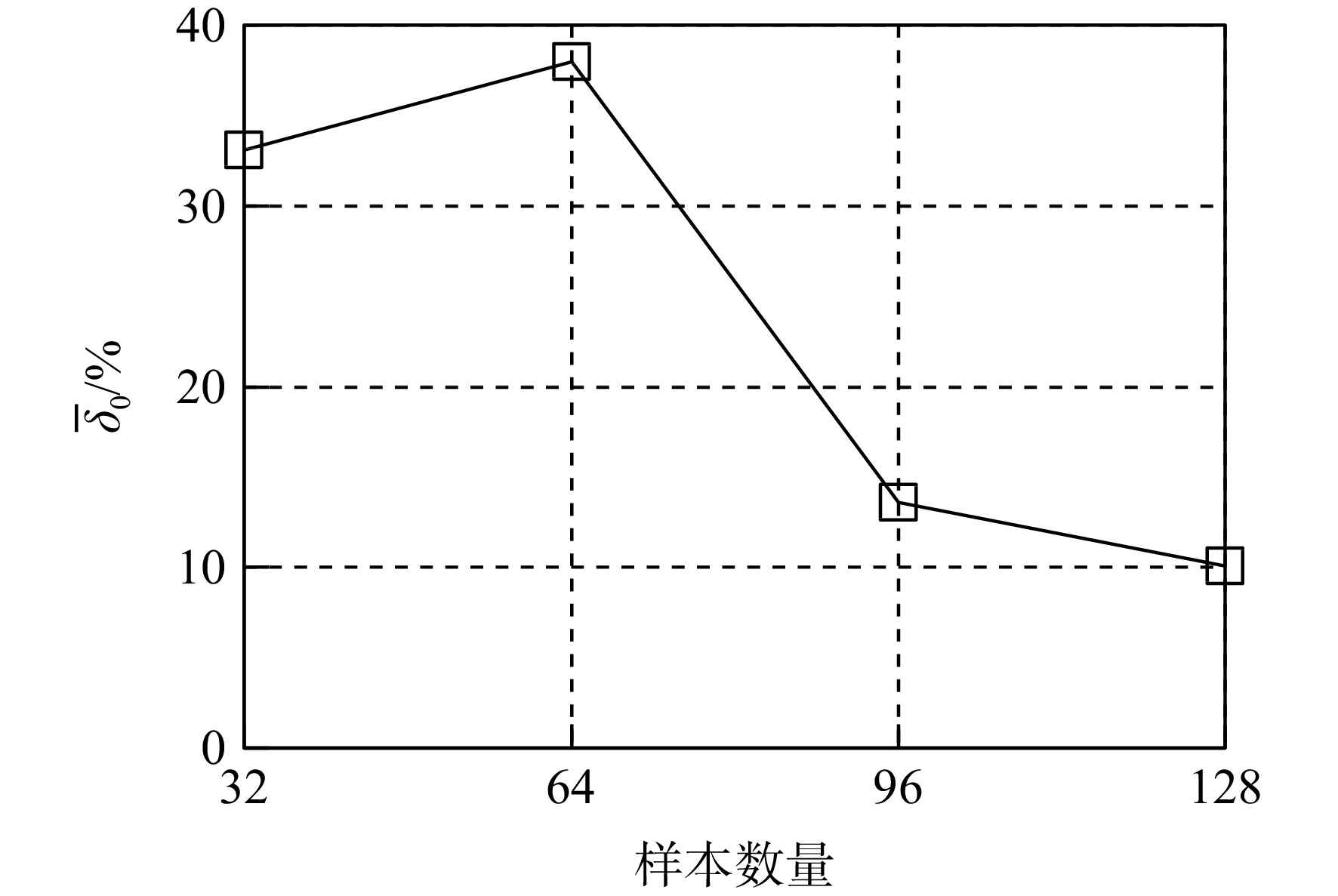
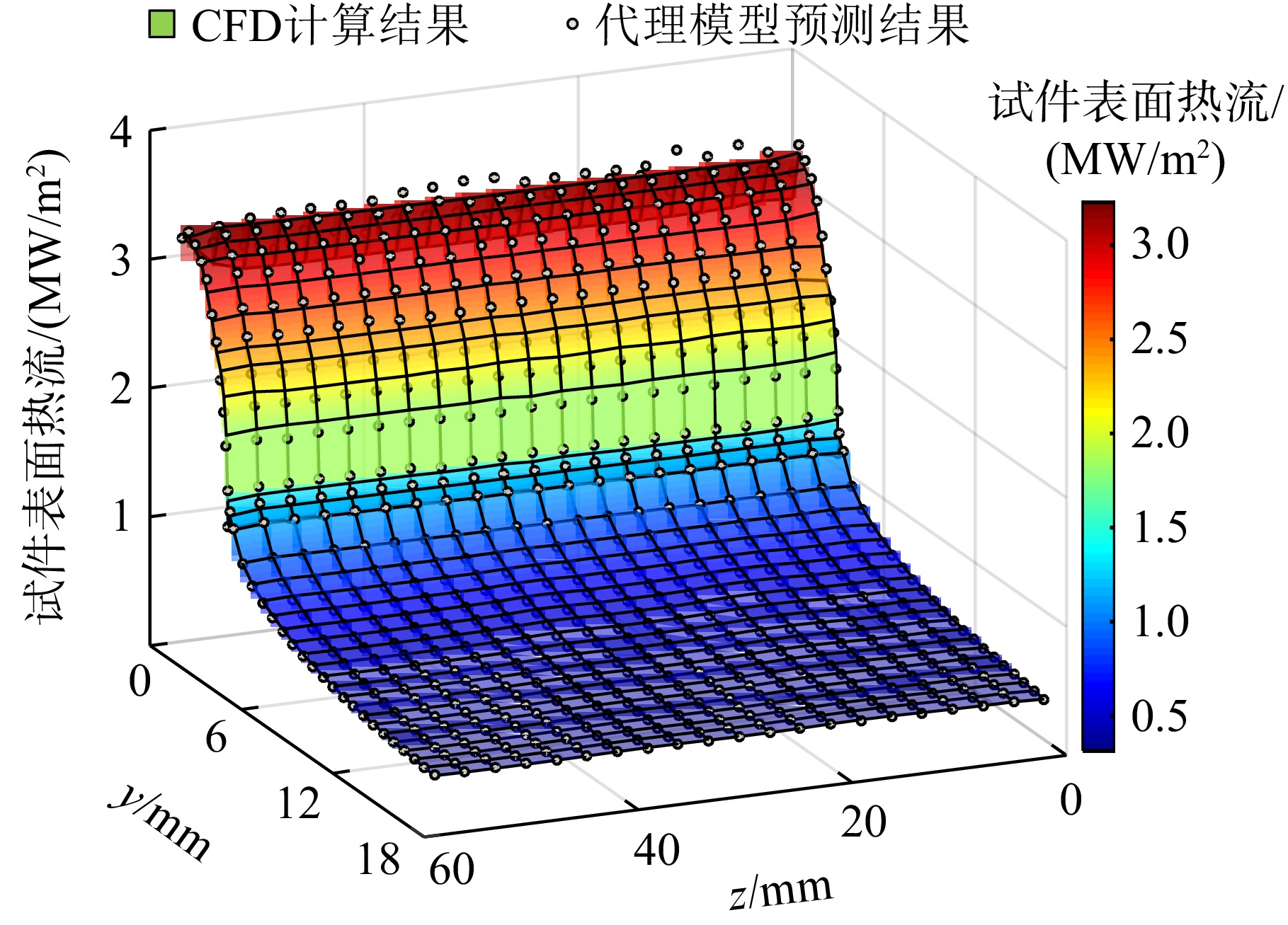
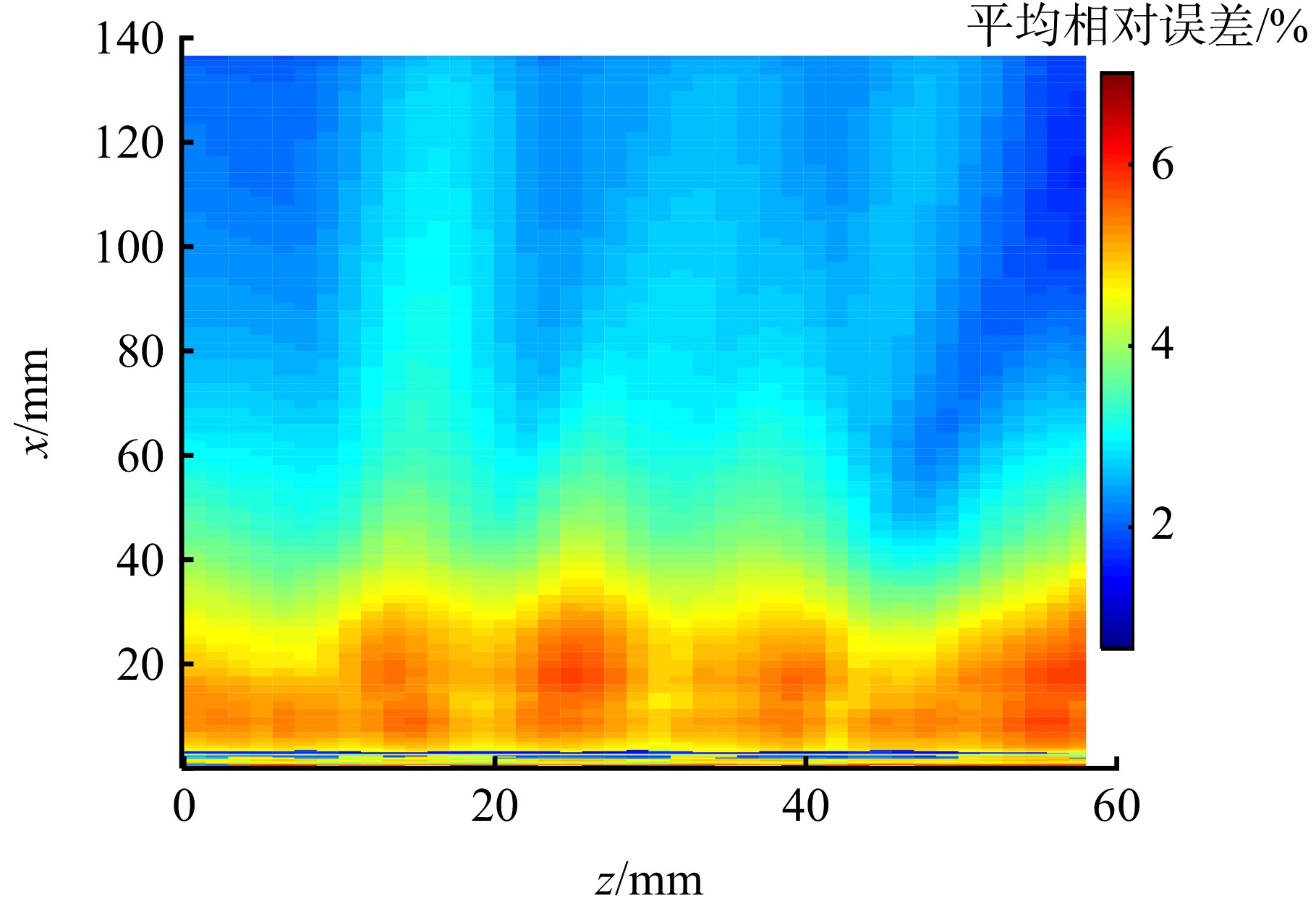
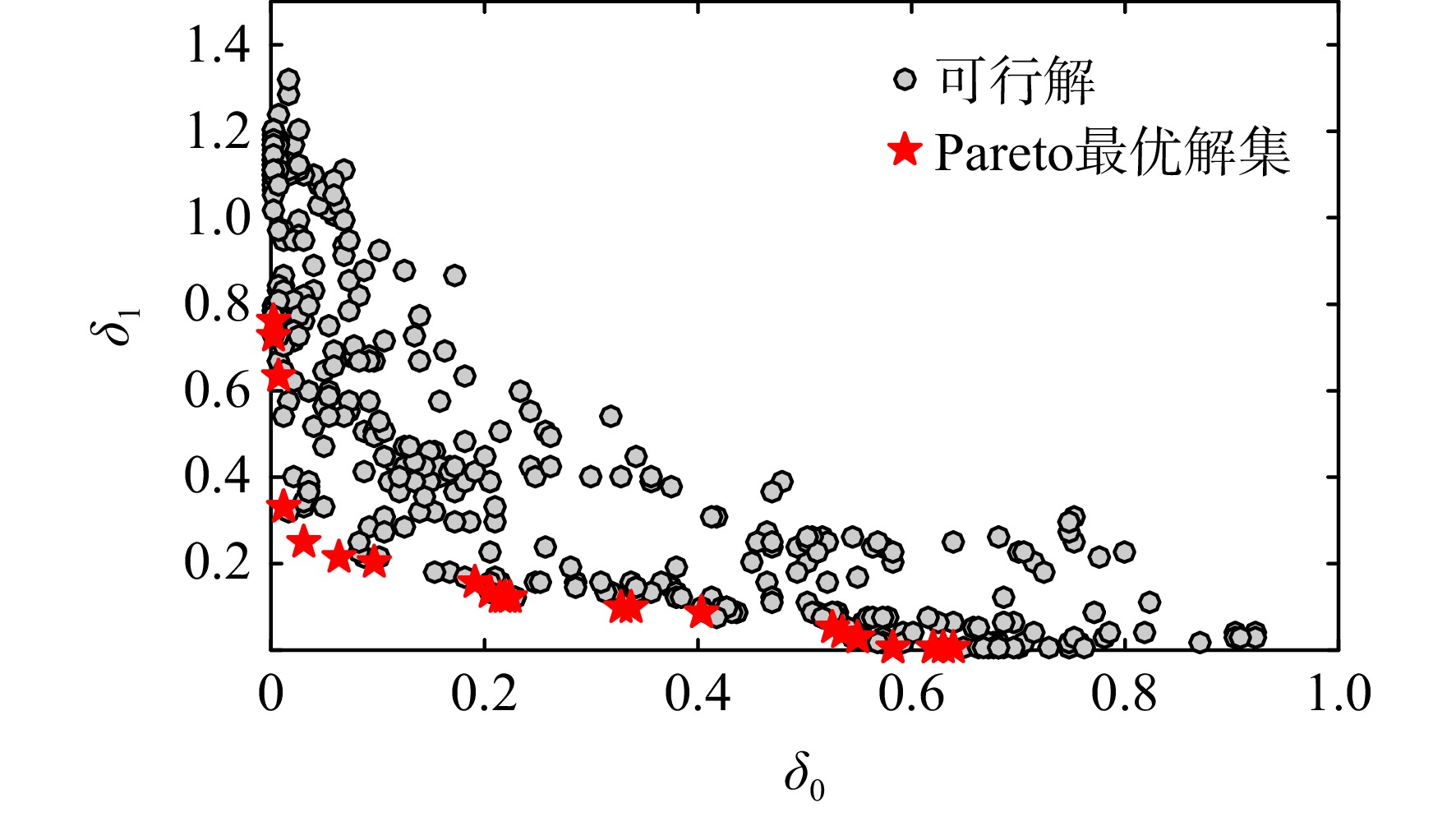
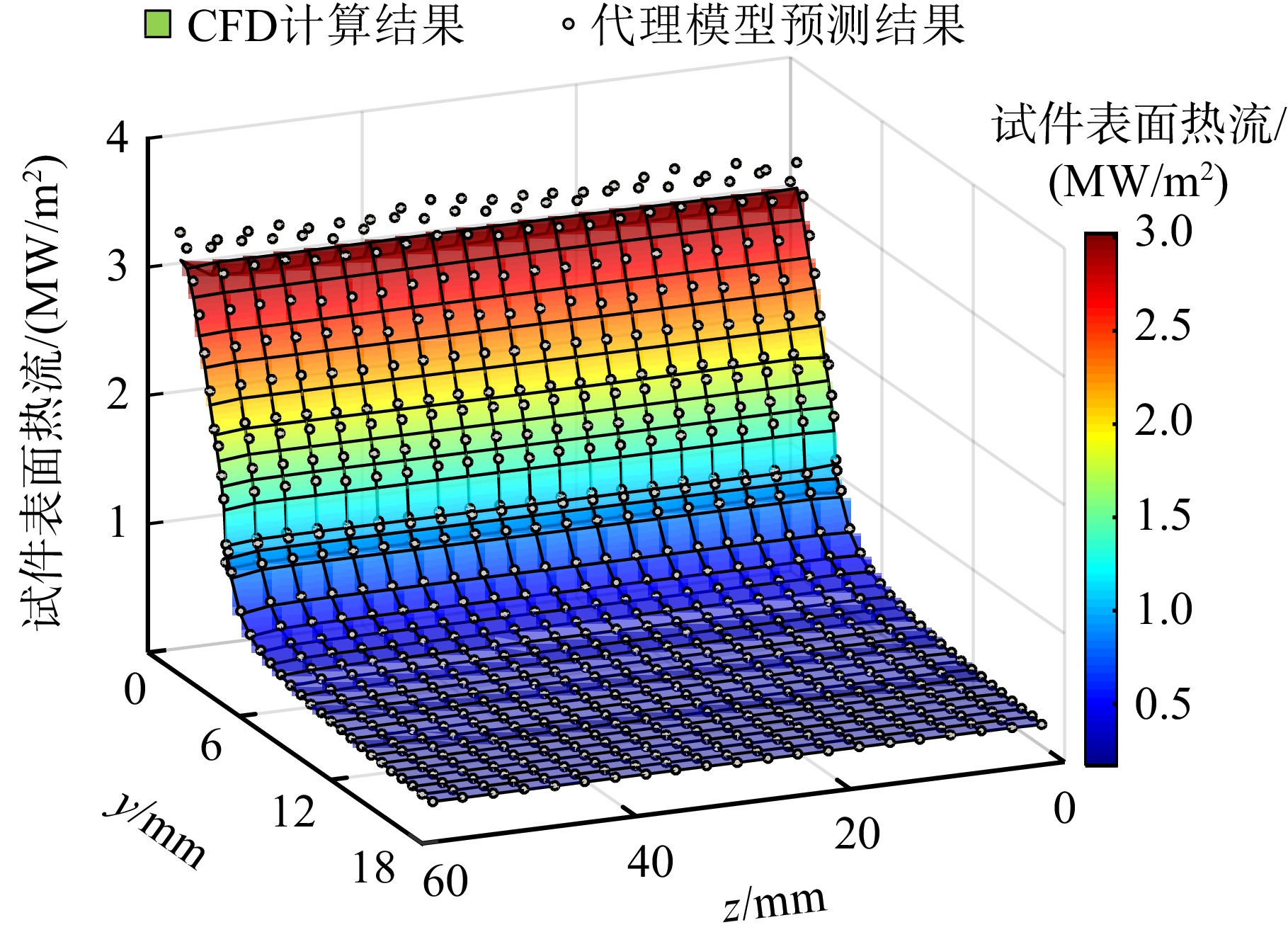
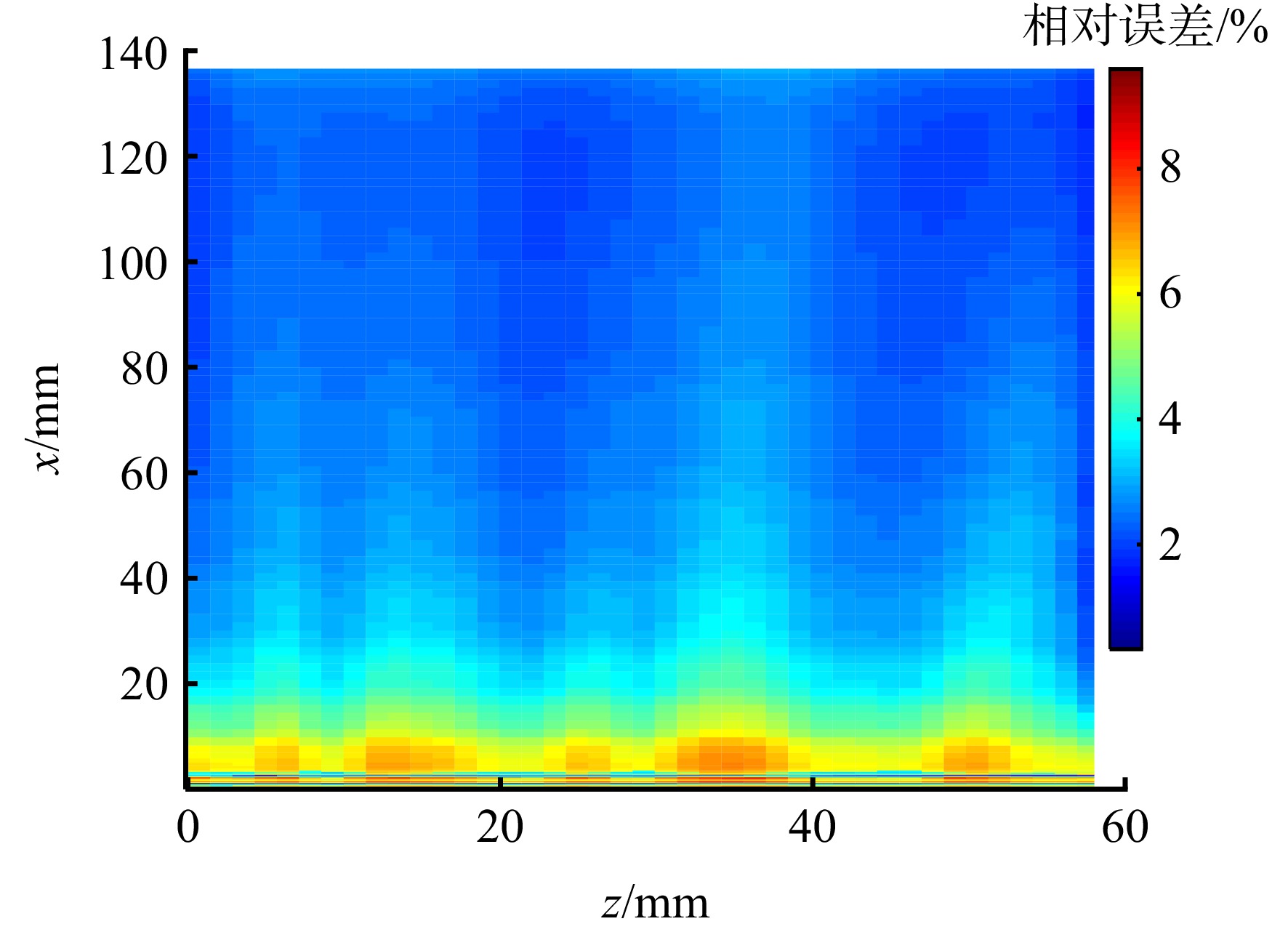
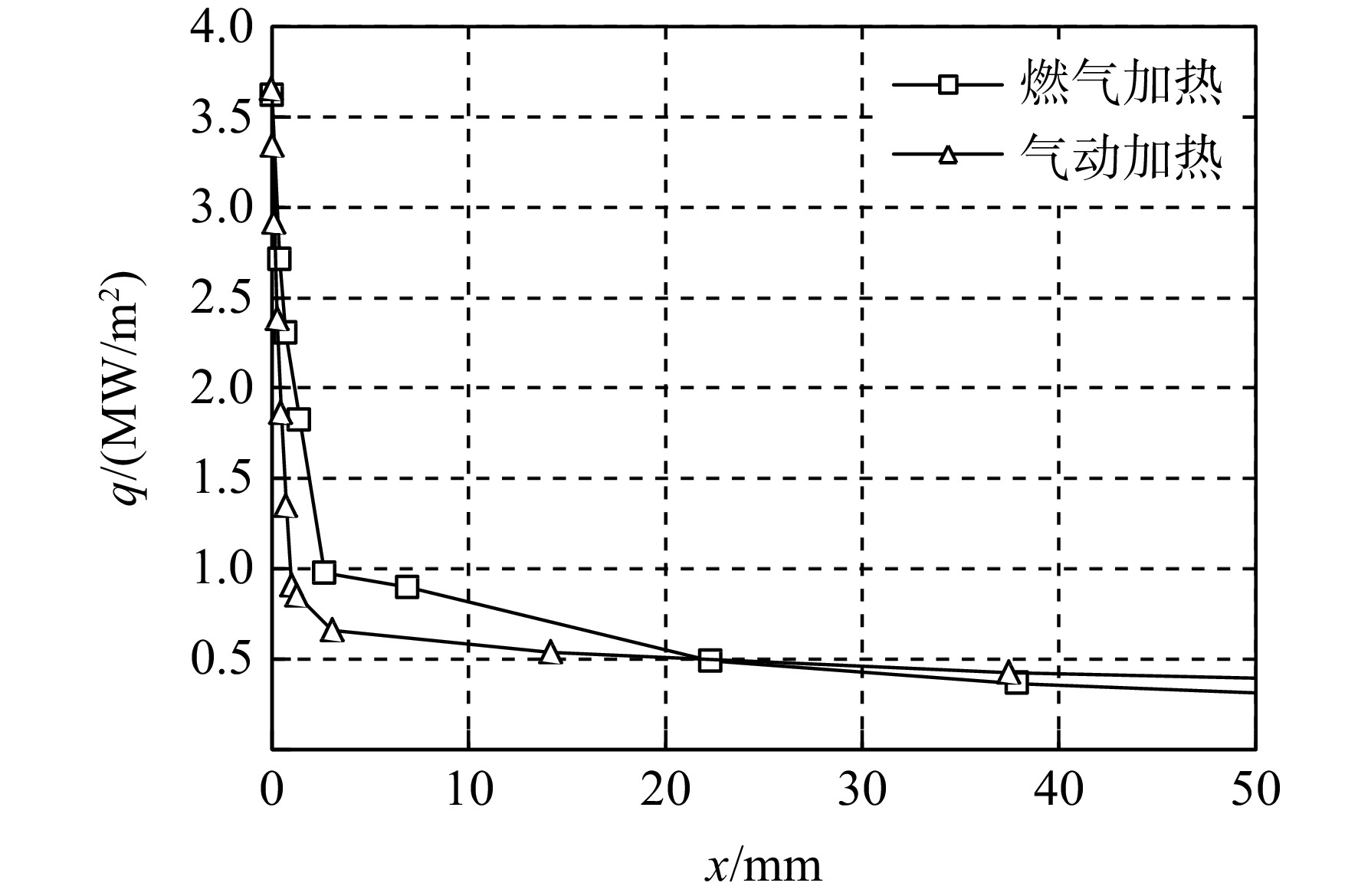
In order to ensure the coincidence between heat flux on the surface of the specimen during the dual gas flow combined thermal test and hypersonic aerodynamic heat flow, the test parameters were optimized. Numerical model of the dual gas flow combined heating for typical tip wedge structure was built, 128 samples were selected via the Latin Hypercube sampling method and the adding-point strategy based on fuzzy clustering, and numerical simulation was carried out. Then, Kriging surrogate model and elitist non-dominated sorting generic algorithm were applied in multi-objective optimization, which aimed at minimizing the difference between gas flow heating and hypersonic aerodynamic heating. The results showed that the error of surrogate model was significantly reduced by increasing samples. The maximum of mean relative errors of surface heat flux of 8 test samples was about 7%, and less than 5% in most areas, while the mean value of root mean square errors and the peak value of maximum errors were 1.72% and 13.6%, respectively, indicating that the Kriging surrogate model had high prediction accuracy. What’s more, through optimization, the distribution of surface heat flux by gas flow heating was in good agreement with that of hypersonic aerodynamic heat flow. The relative error of heat flux at stagnation was less than 1%, and no more than 10% at the flat plate area, which showed the effectiveness of parameters optimization of dual gas flow combined thermal test based on Kriging surrogate model.

Analysis of flow entropy generation in aero-engine grate and construction of low entropy generation grate
LIU Xiaojing, DING Shuiting, QIU Tian, LIU Chuankai, LI Guo, ZHAO Zhigao
2023, 38(9): 2107-2115. doi: 10.13224/j.cnki.jasp.20210730
Abstract:

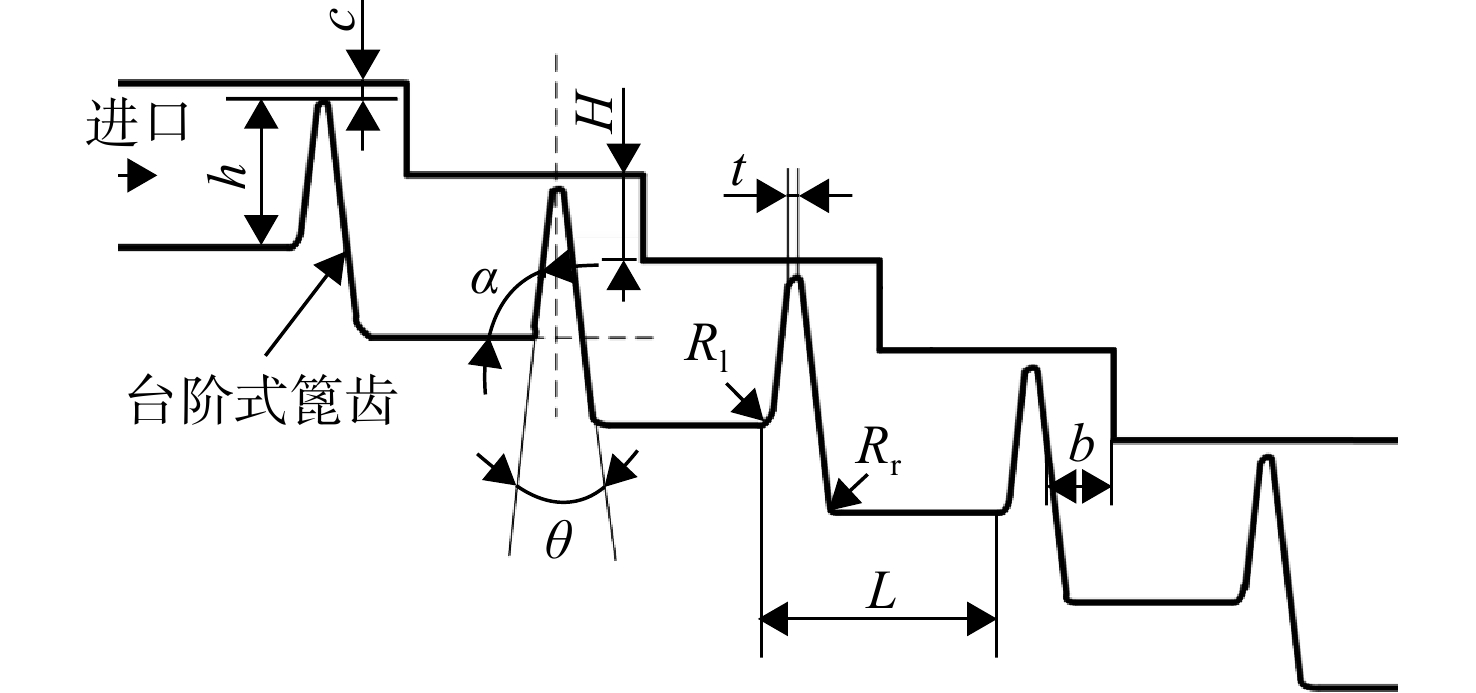
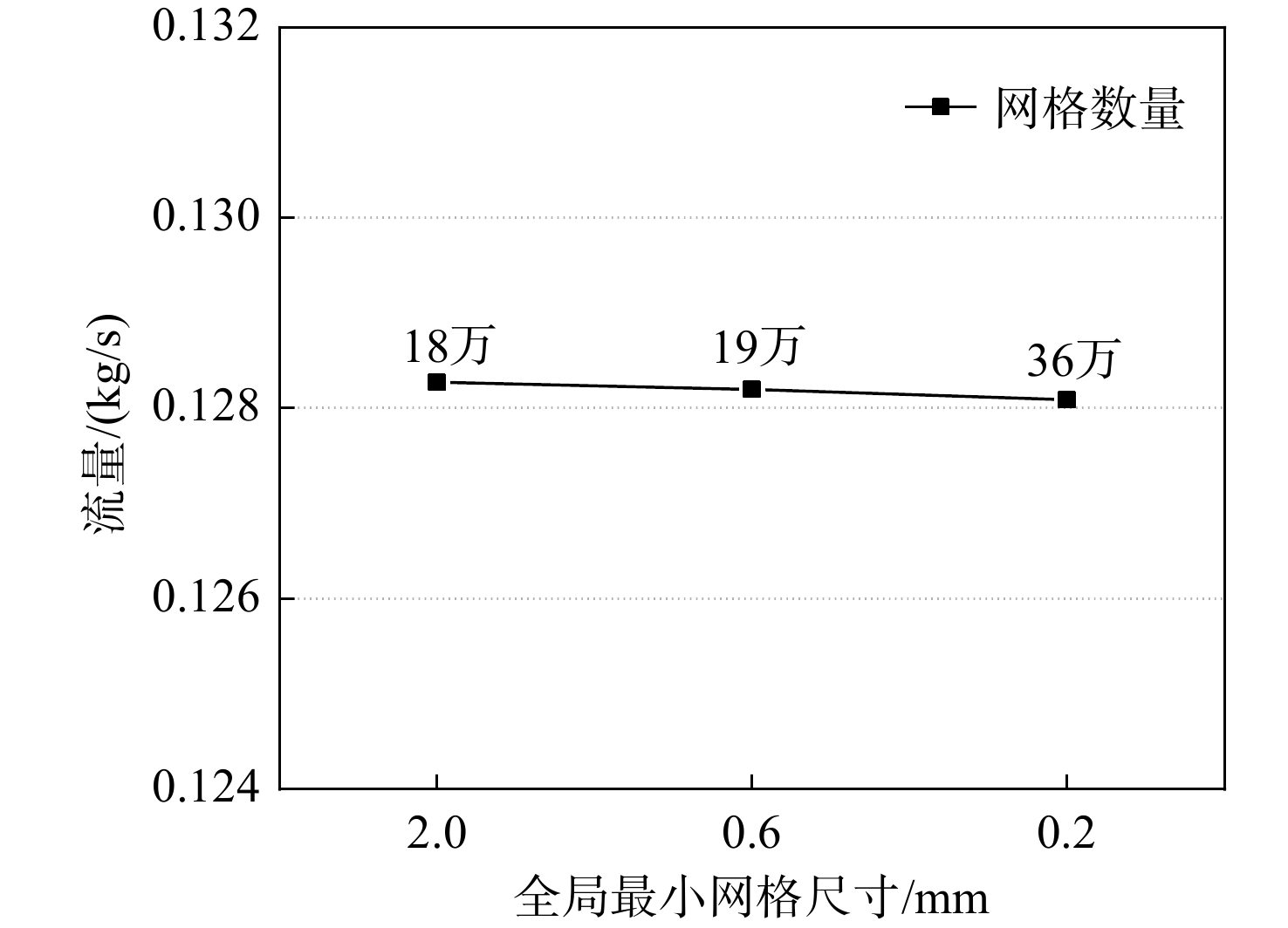
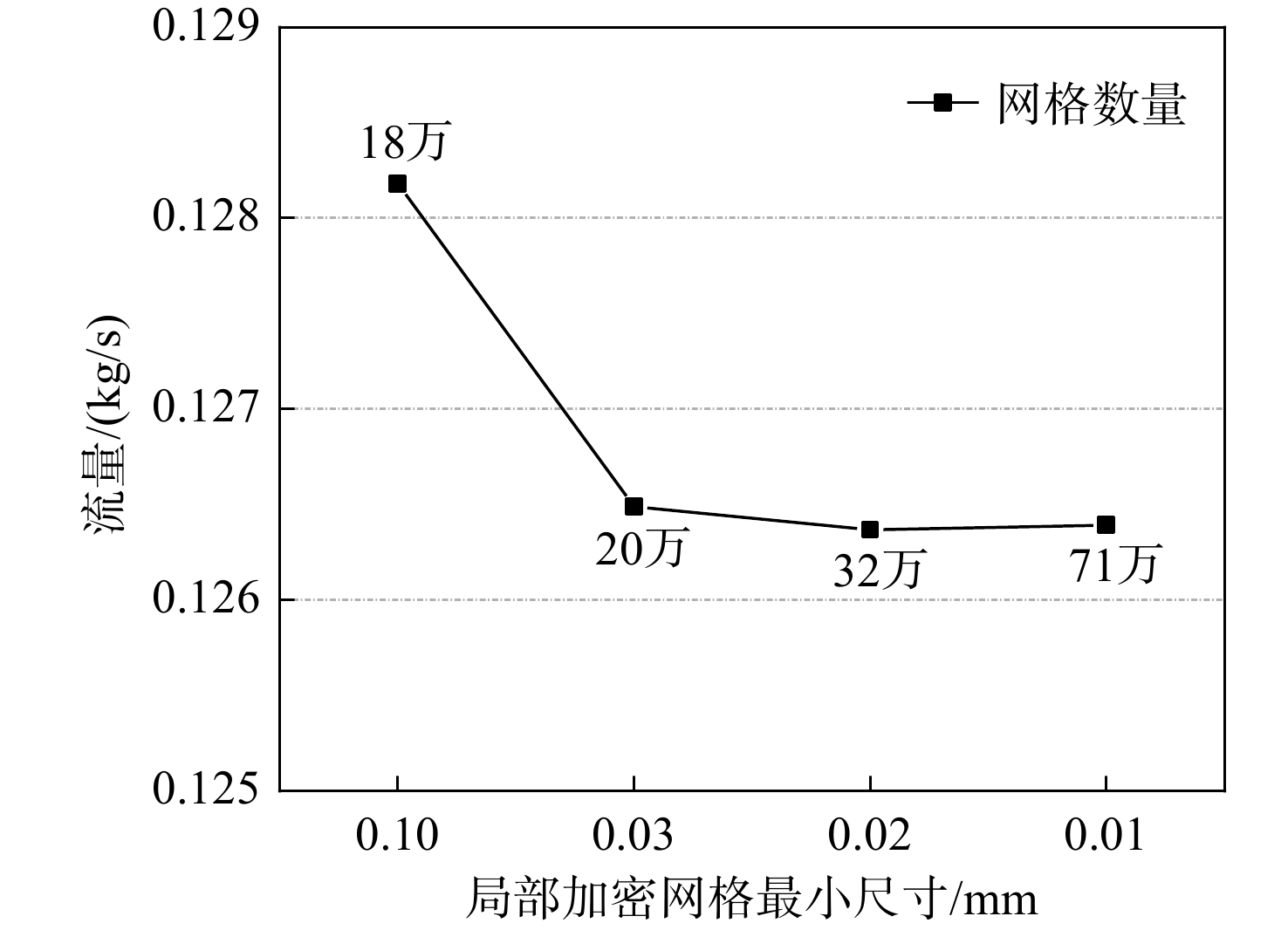
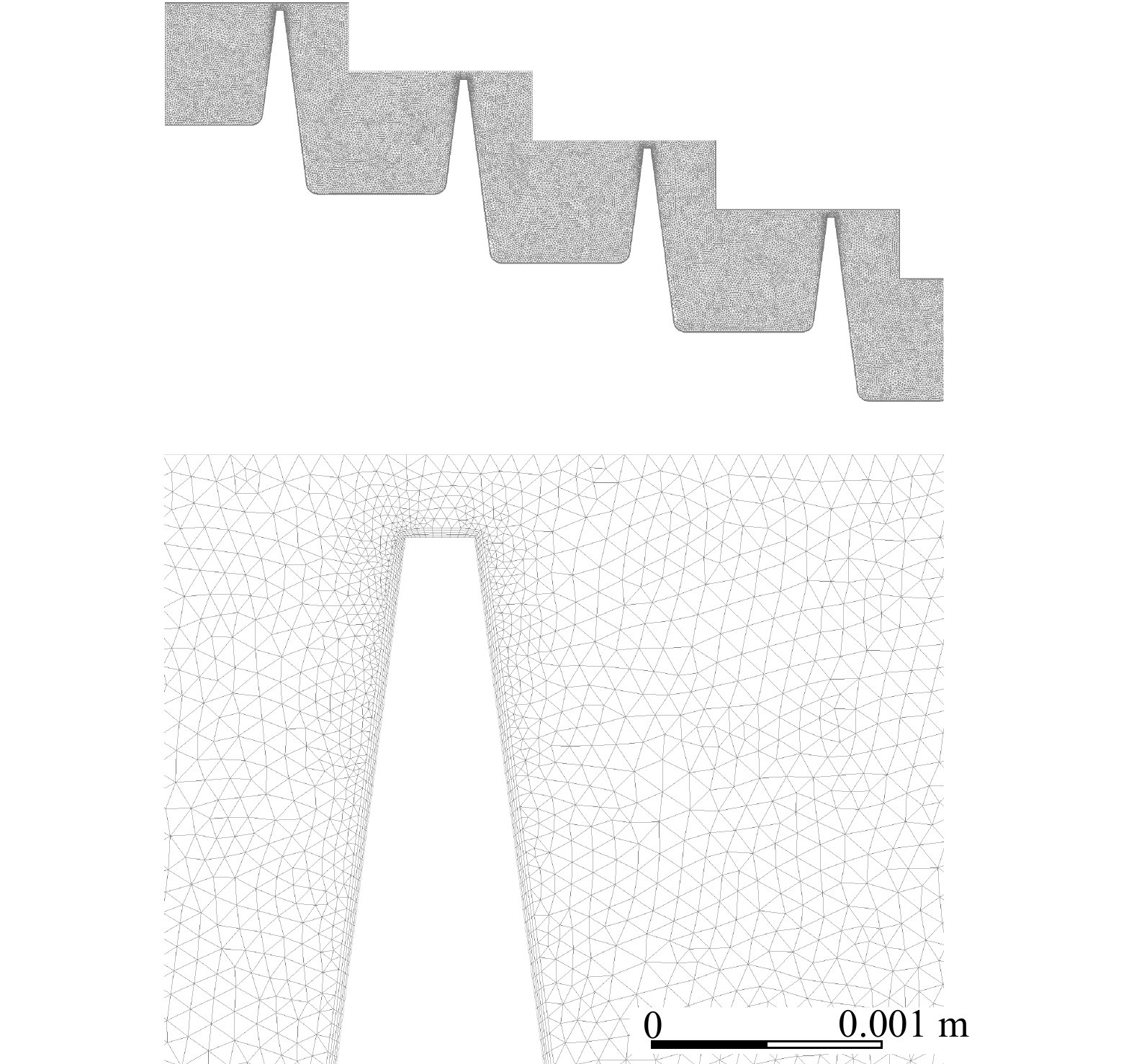
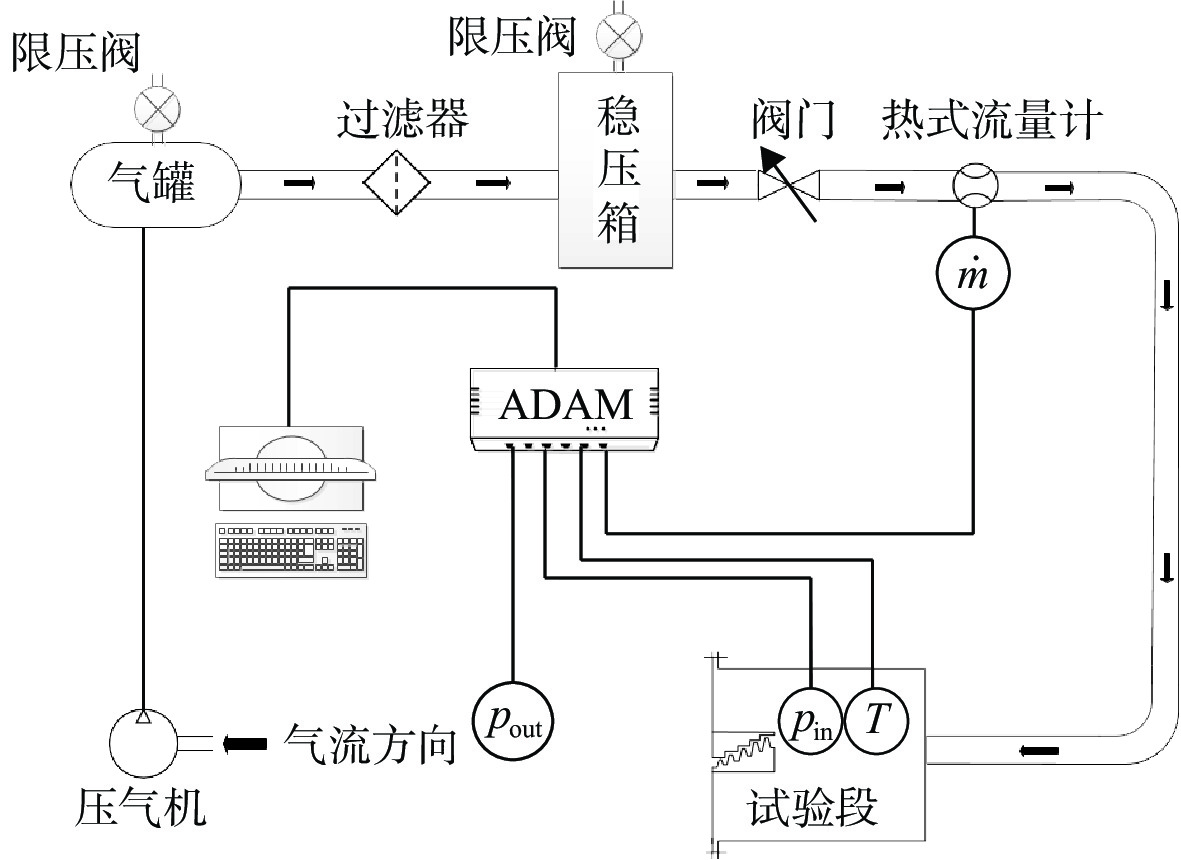
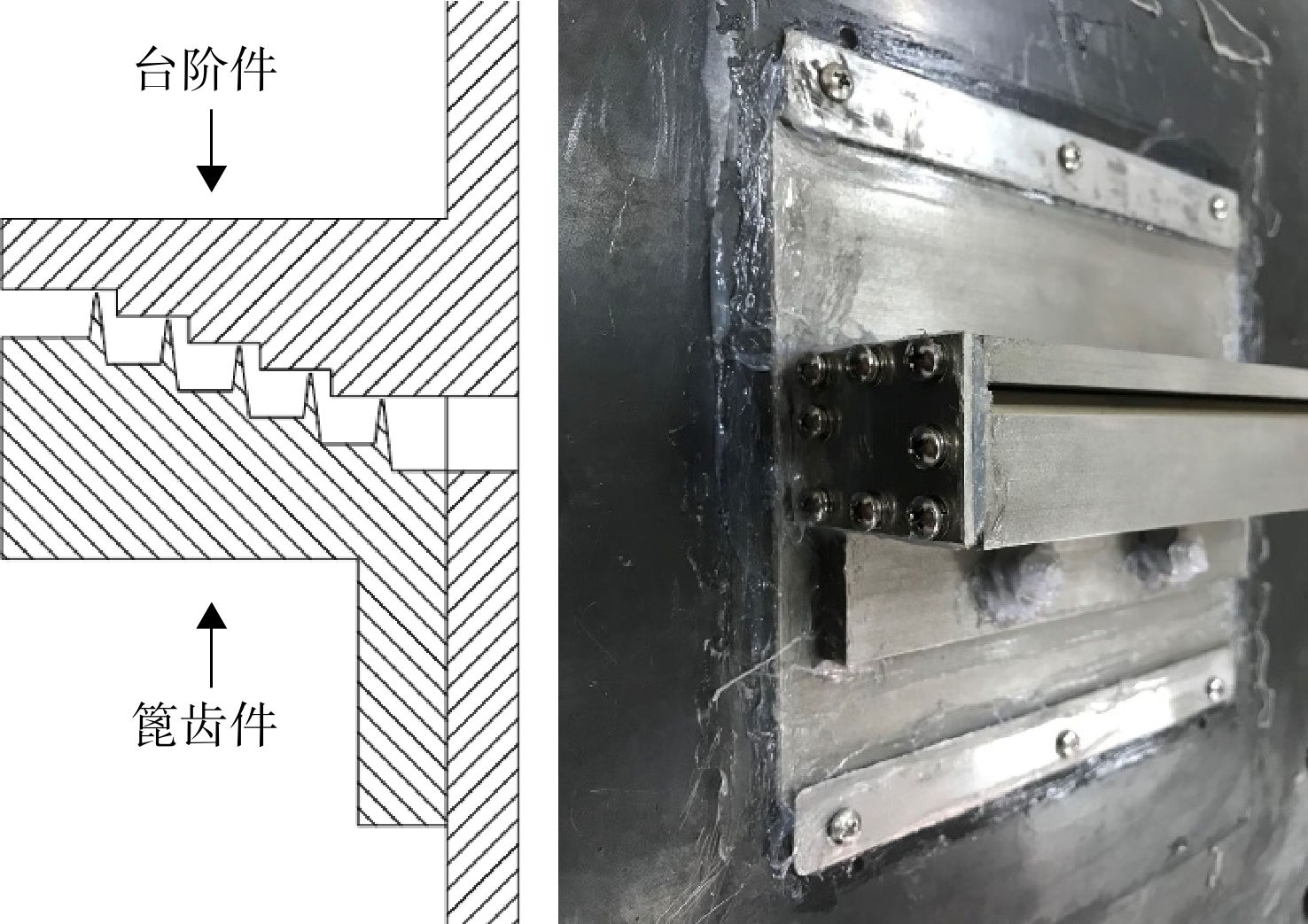
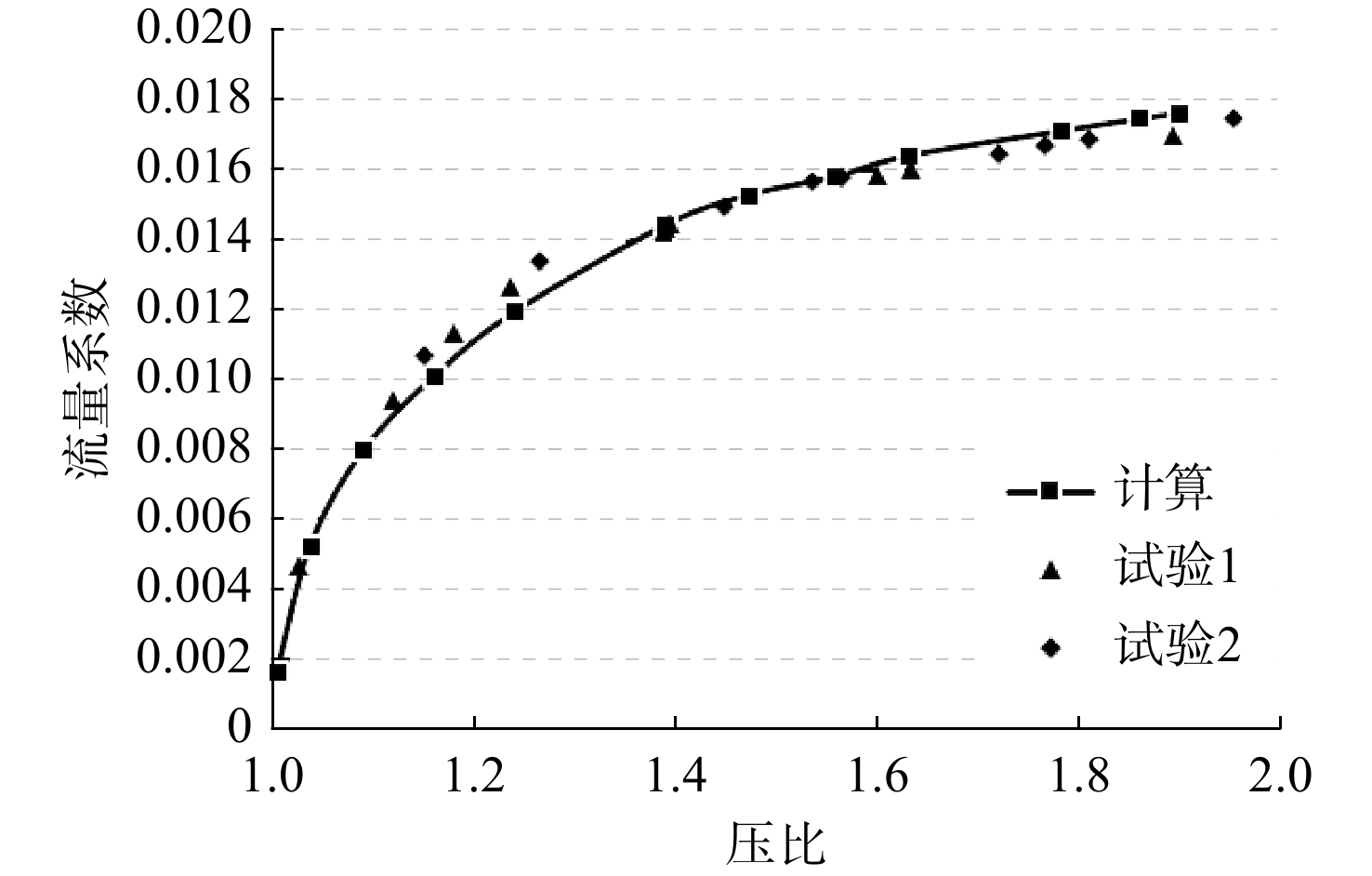
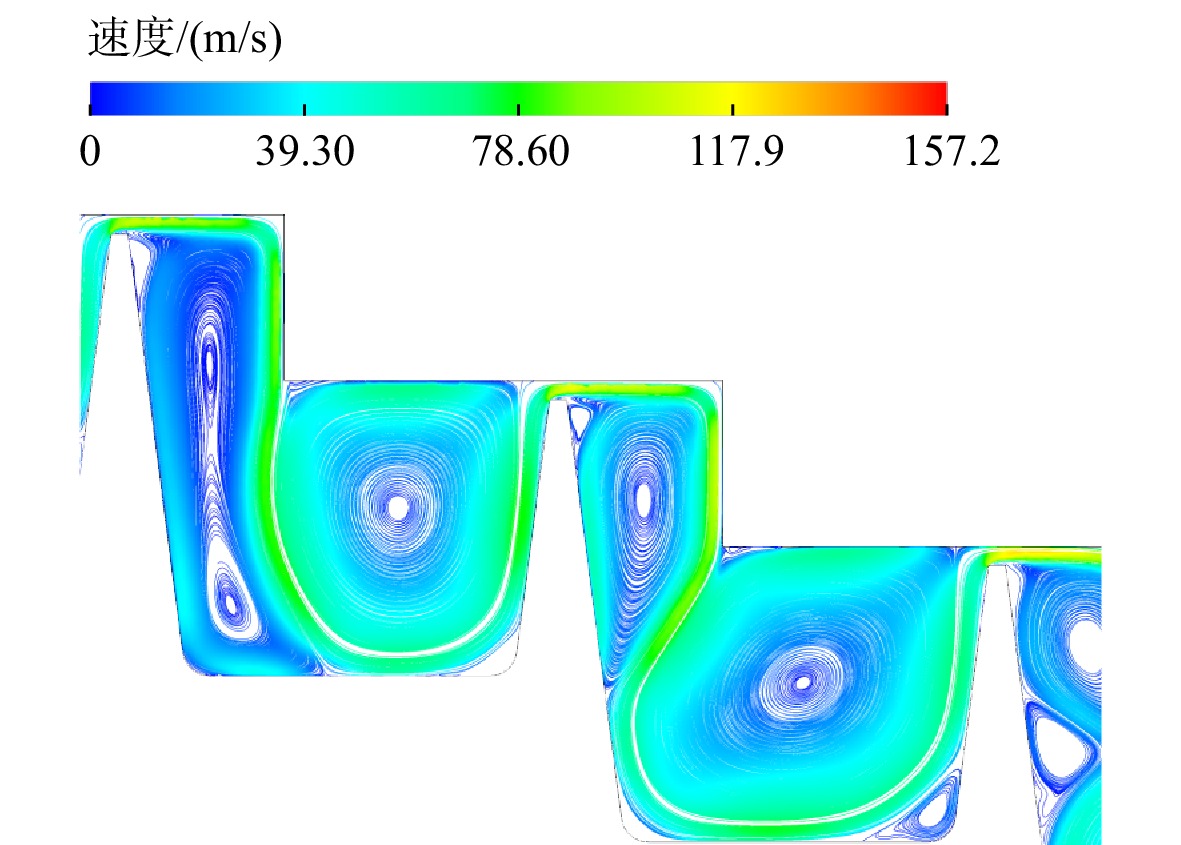
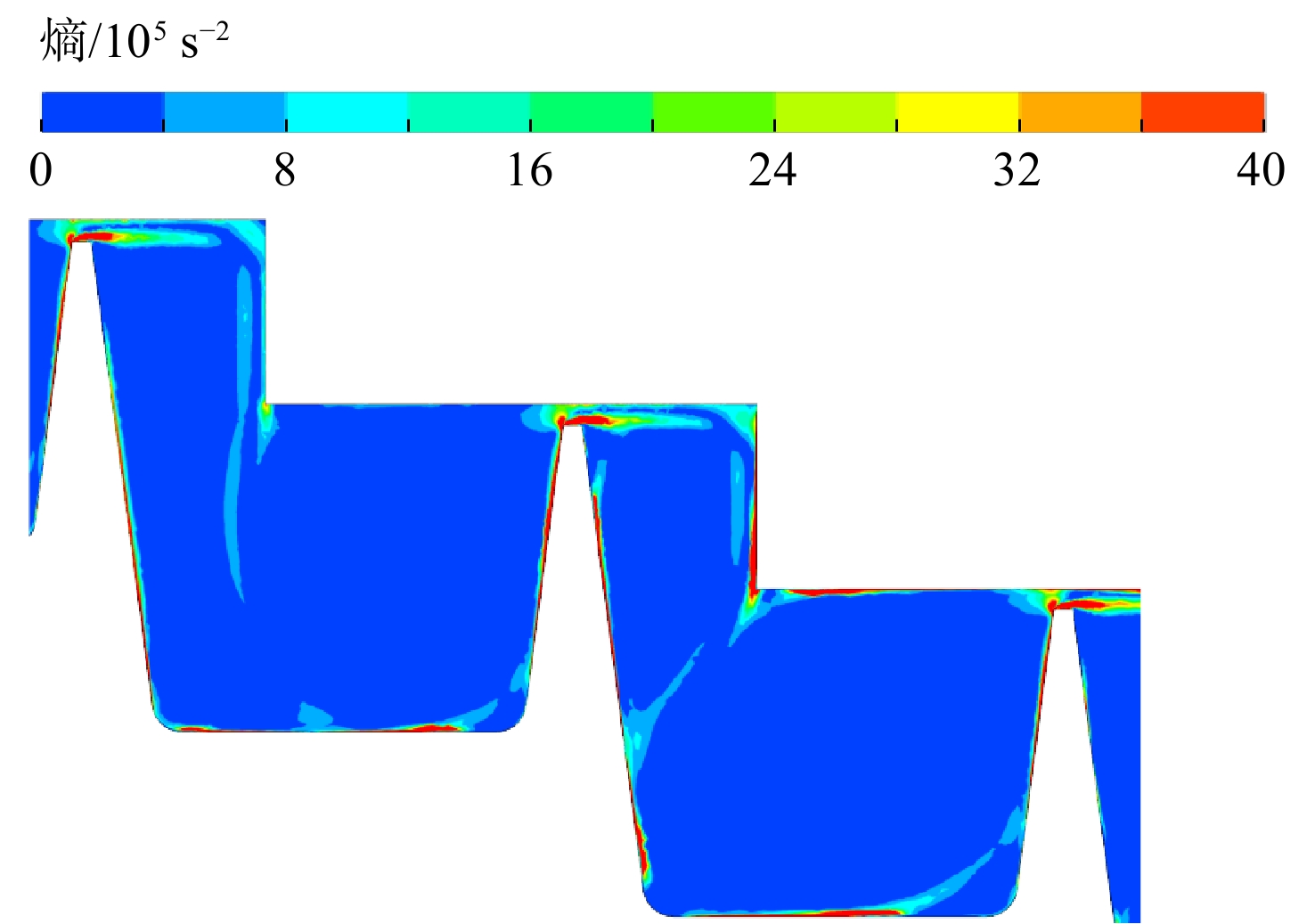
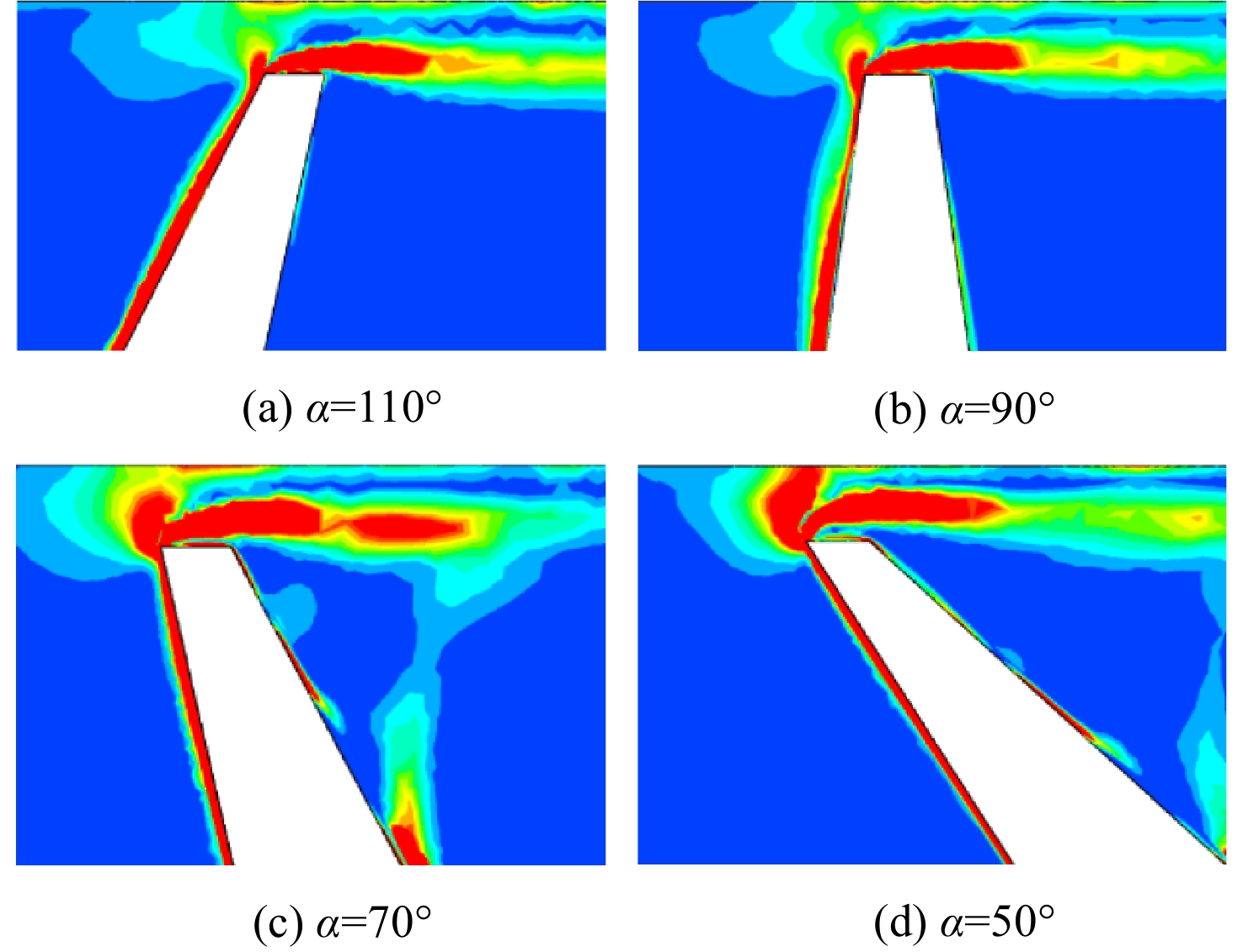
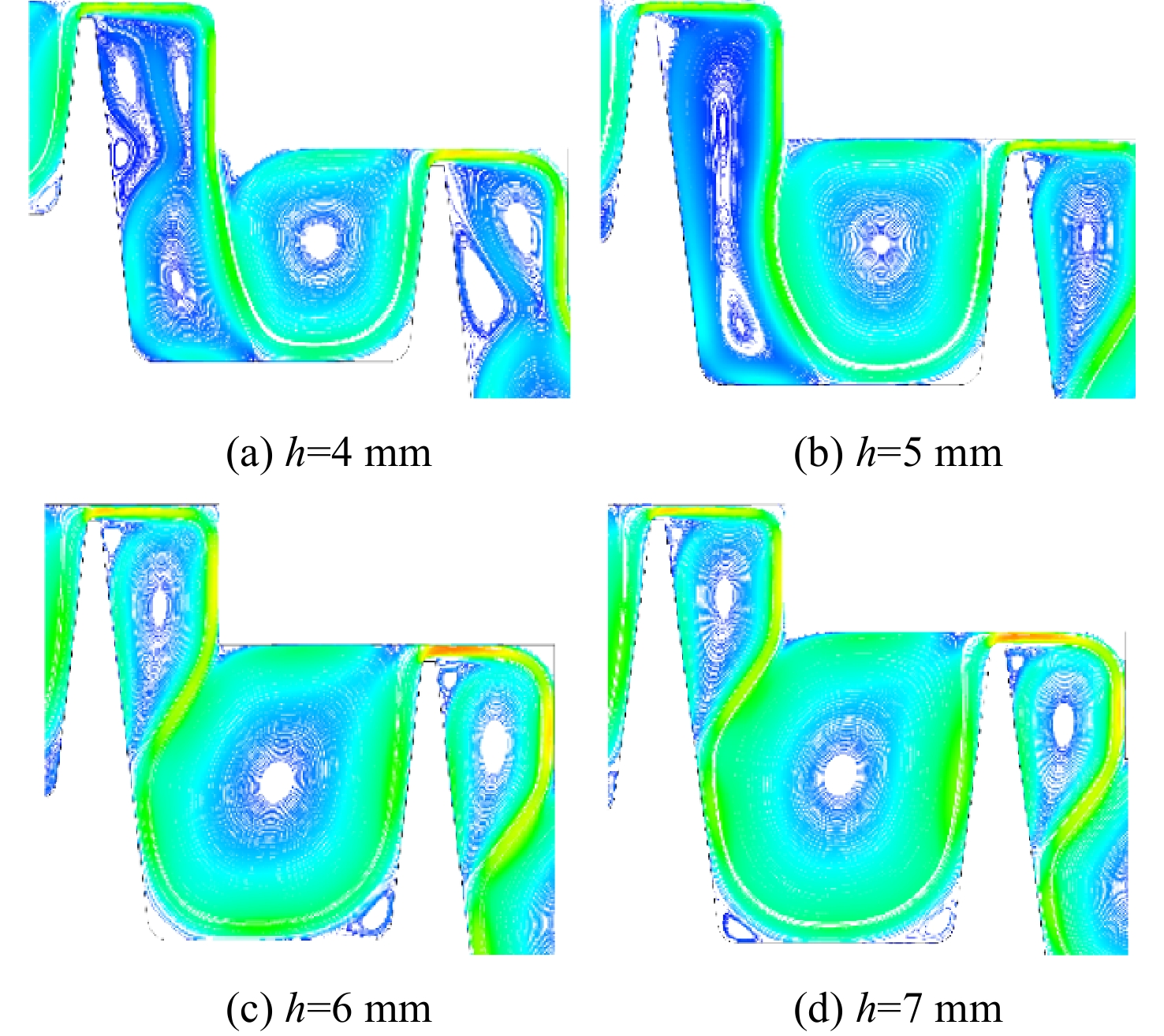
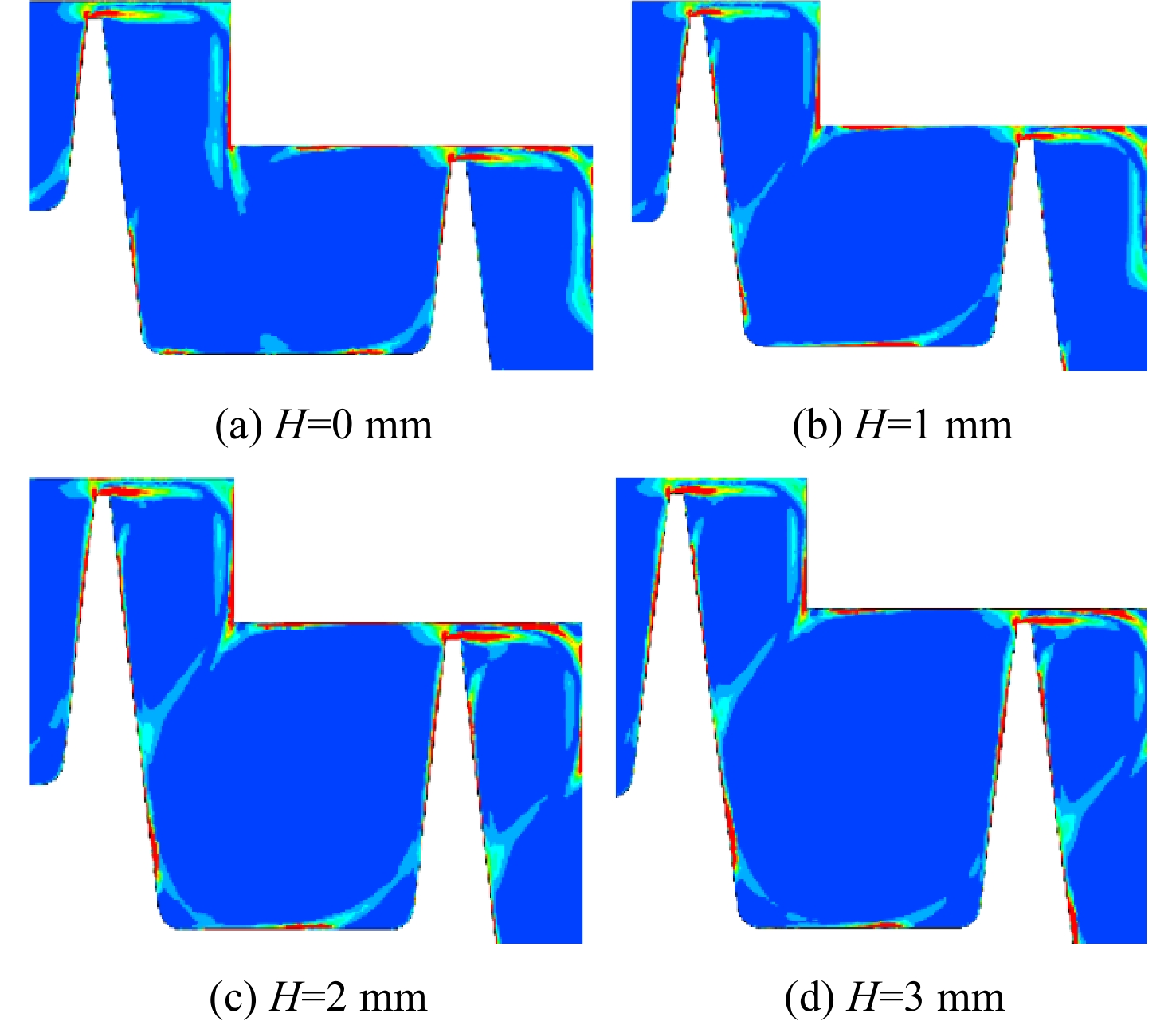
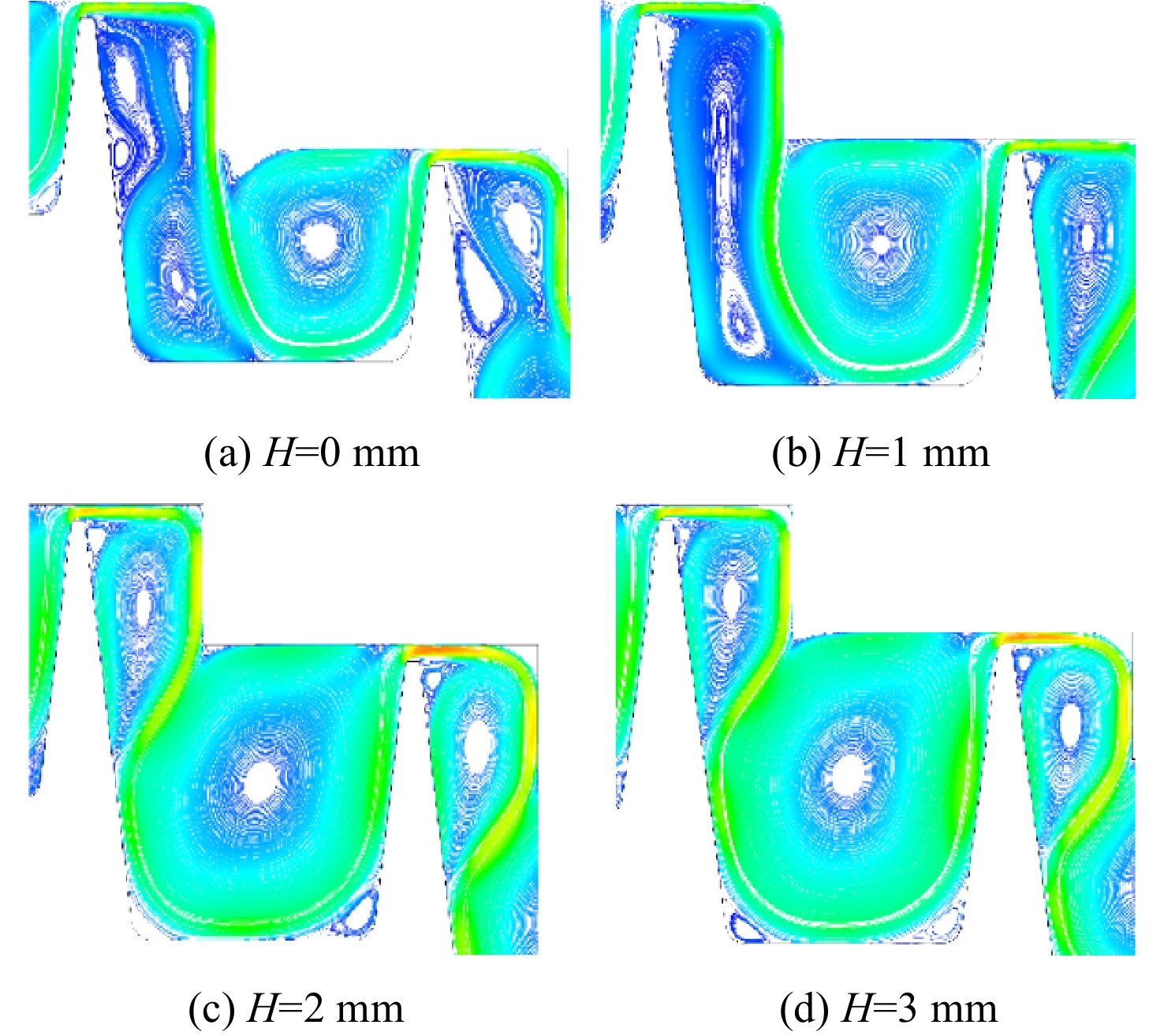
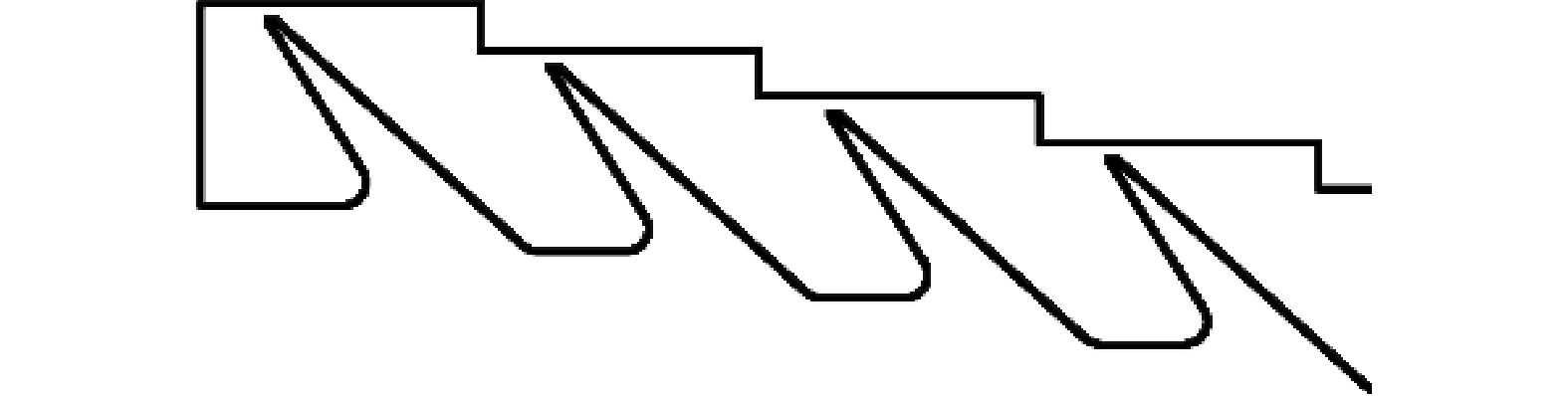
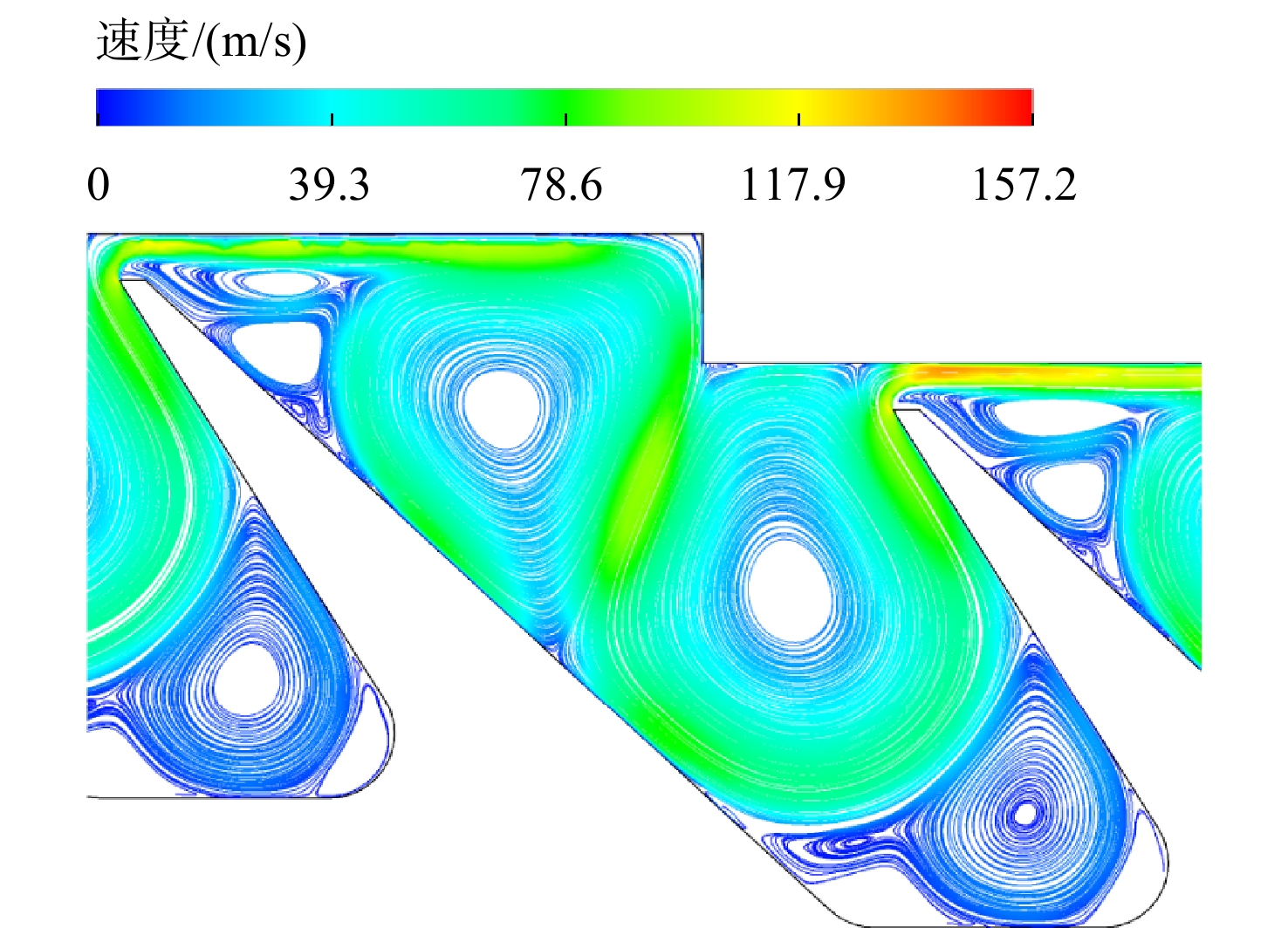
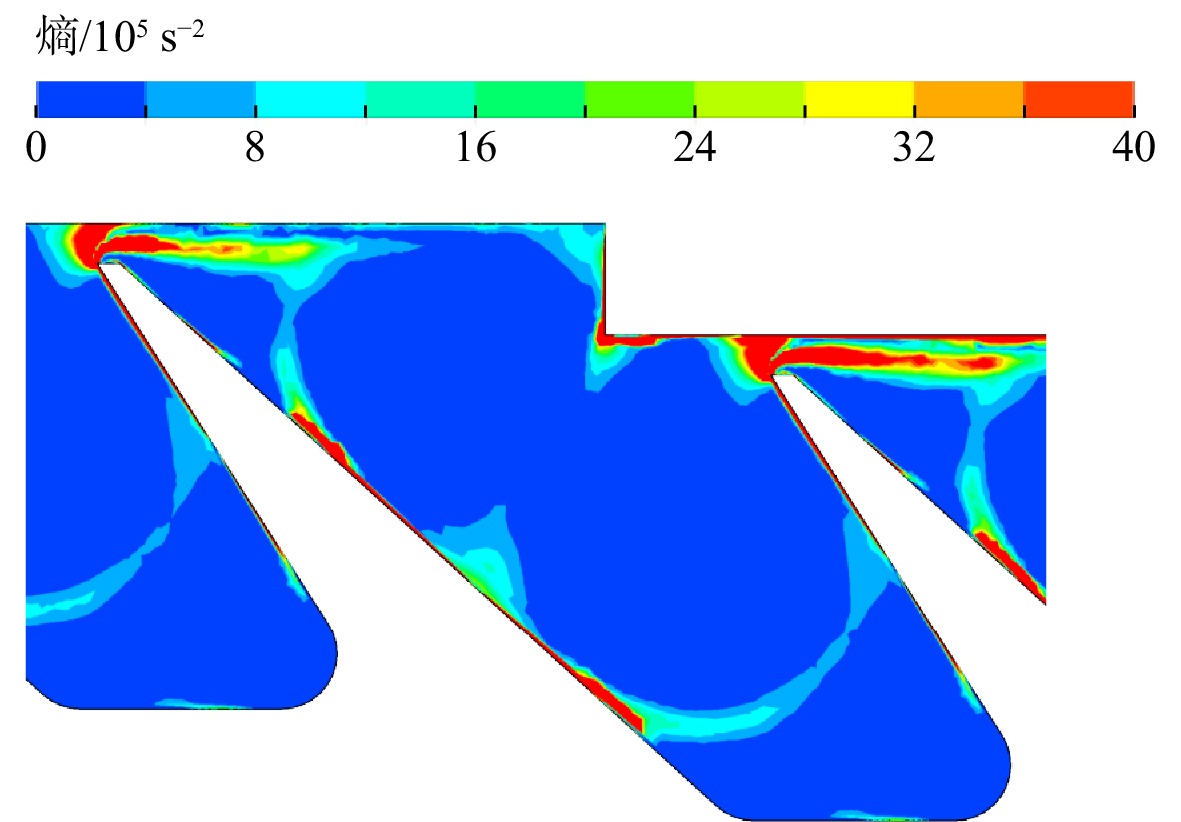
The numerical simulation method of grate entropy generation analysis was established, and the accuracy of the method was verified by tests. Then, the flow entropy generation mechanism and the main flow characteristics leading to entropy generation under the changes of inclination angle, tooth top width, tooth height and step height of stepped grate were revealed. On this basis, the grate was optimized and analyzed from the perspective of system entropy generation. The results showed that the relative dissipation intensity in the top region of the grate was large, resulting in strong drag increasing effect of the top vortex in this region, and contributing a lot to improving the local entropy generation of the grate and reducing the system entropy generation. The design goal of enhancing the local entropy generation of the grate and reducing the leakage can be achieved by actively constructing the tooth top vortex (drag increasing vortex); the sealing performance of the optimized stepped grate structure was 24% higher than that of the initial stepped teeth.

Multi-scale kurtosis index diagnosis method of unstable combustion states
LIU Chongyang, ZHANG Xiang, LIU Yong
2023, 38(9): 2116-2128. doi: 10.13224/j.cnki.jasp.20210727
Abstract:

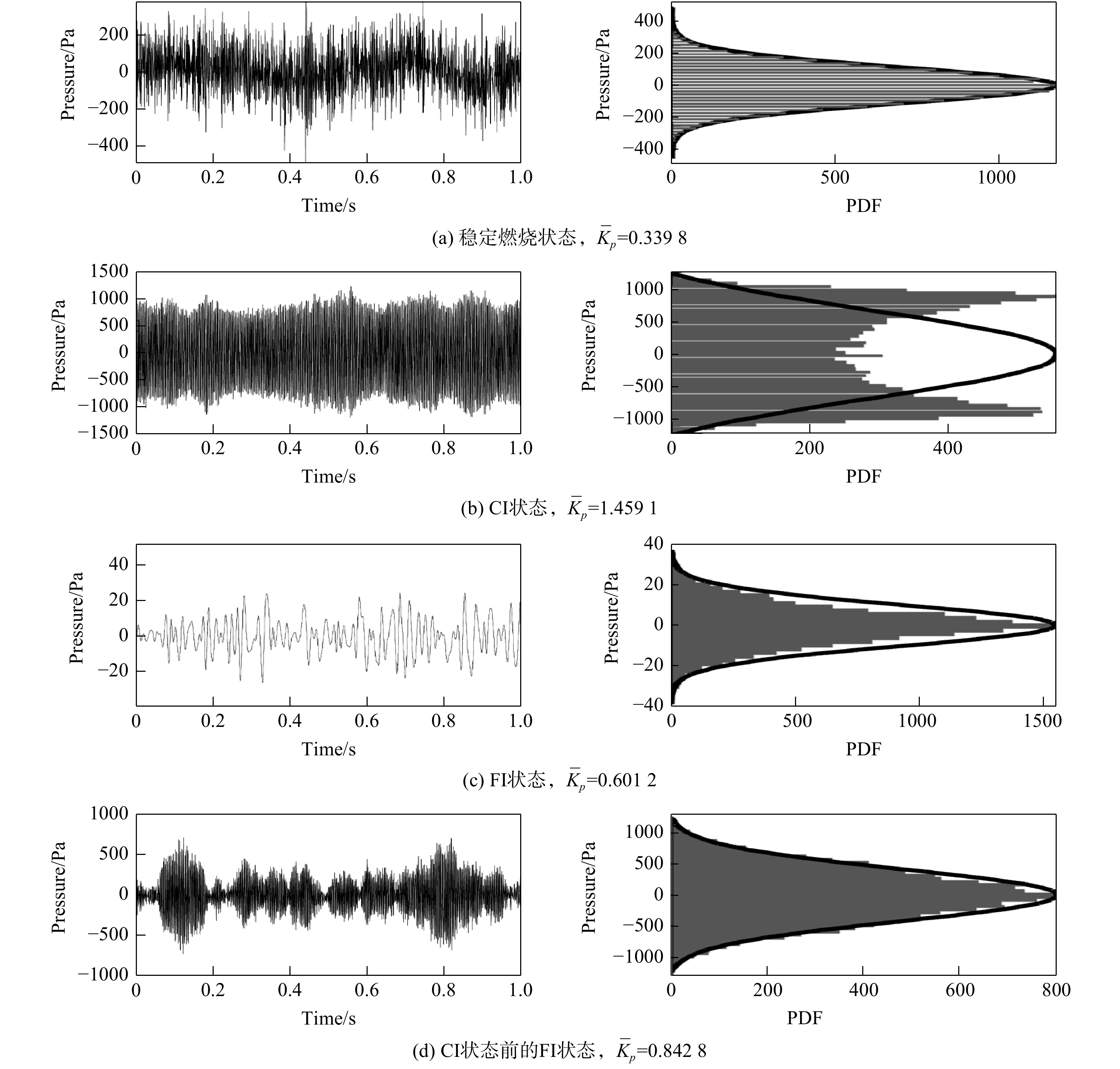
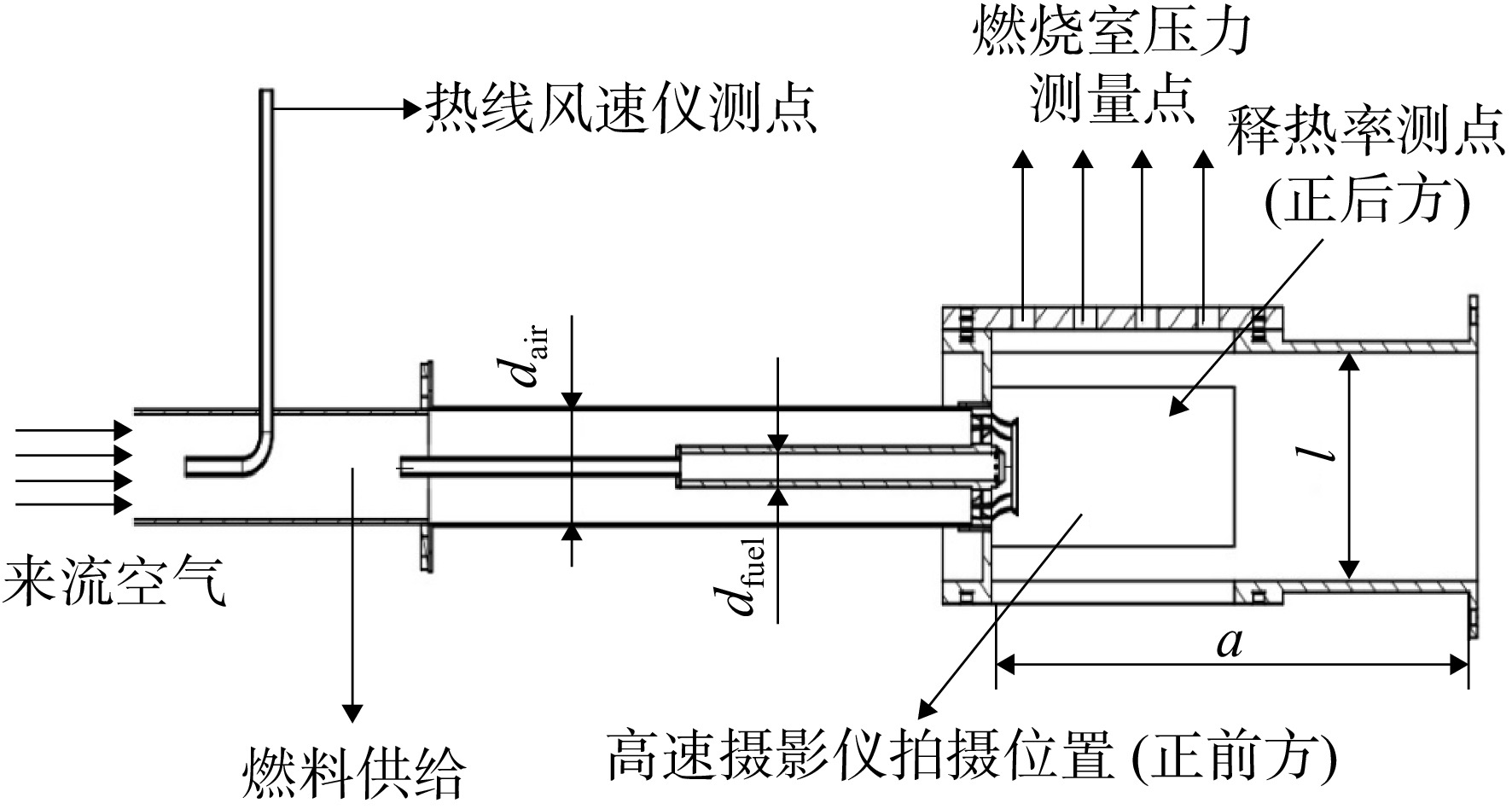
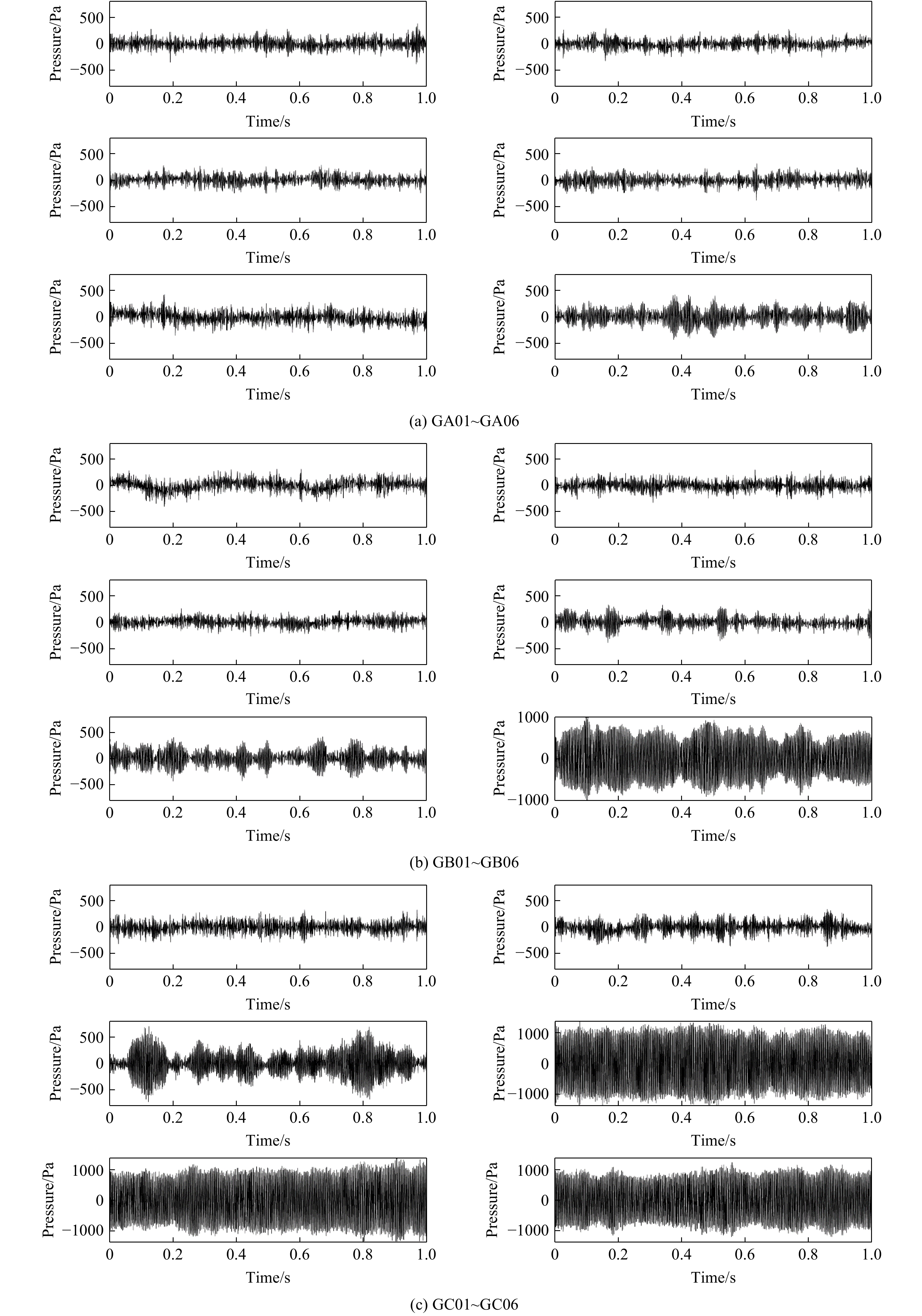
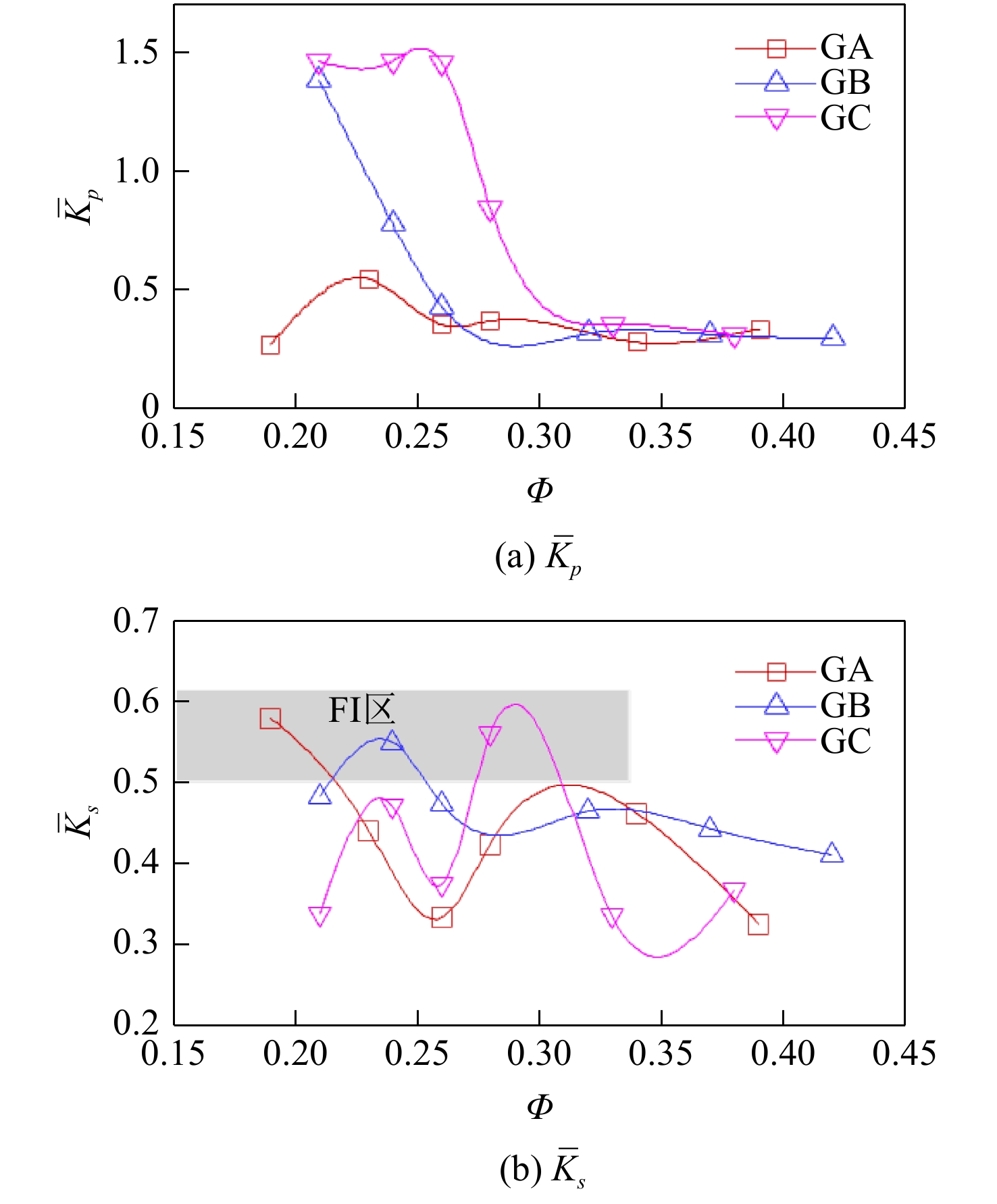
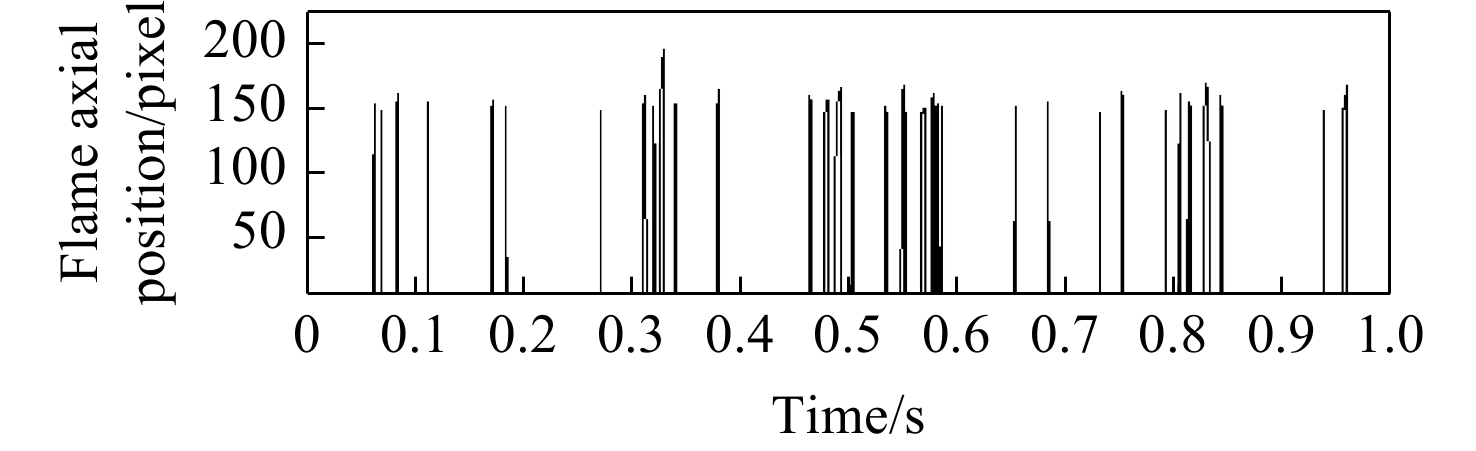
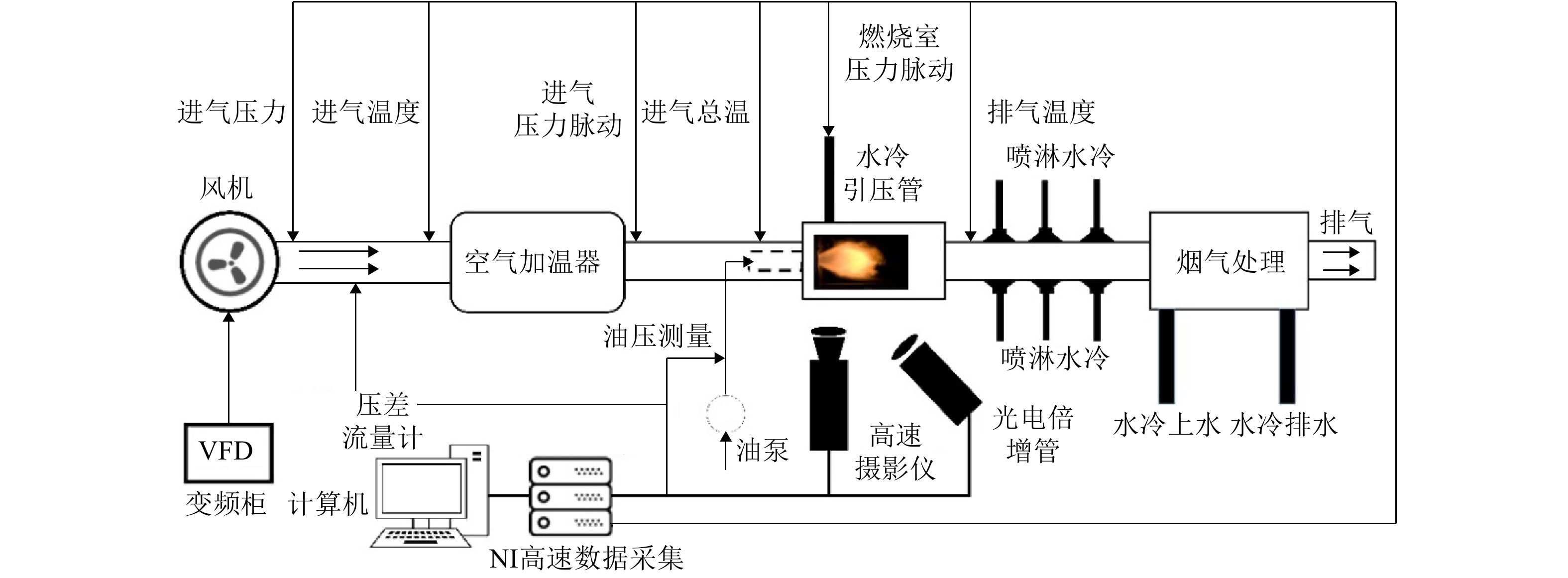
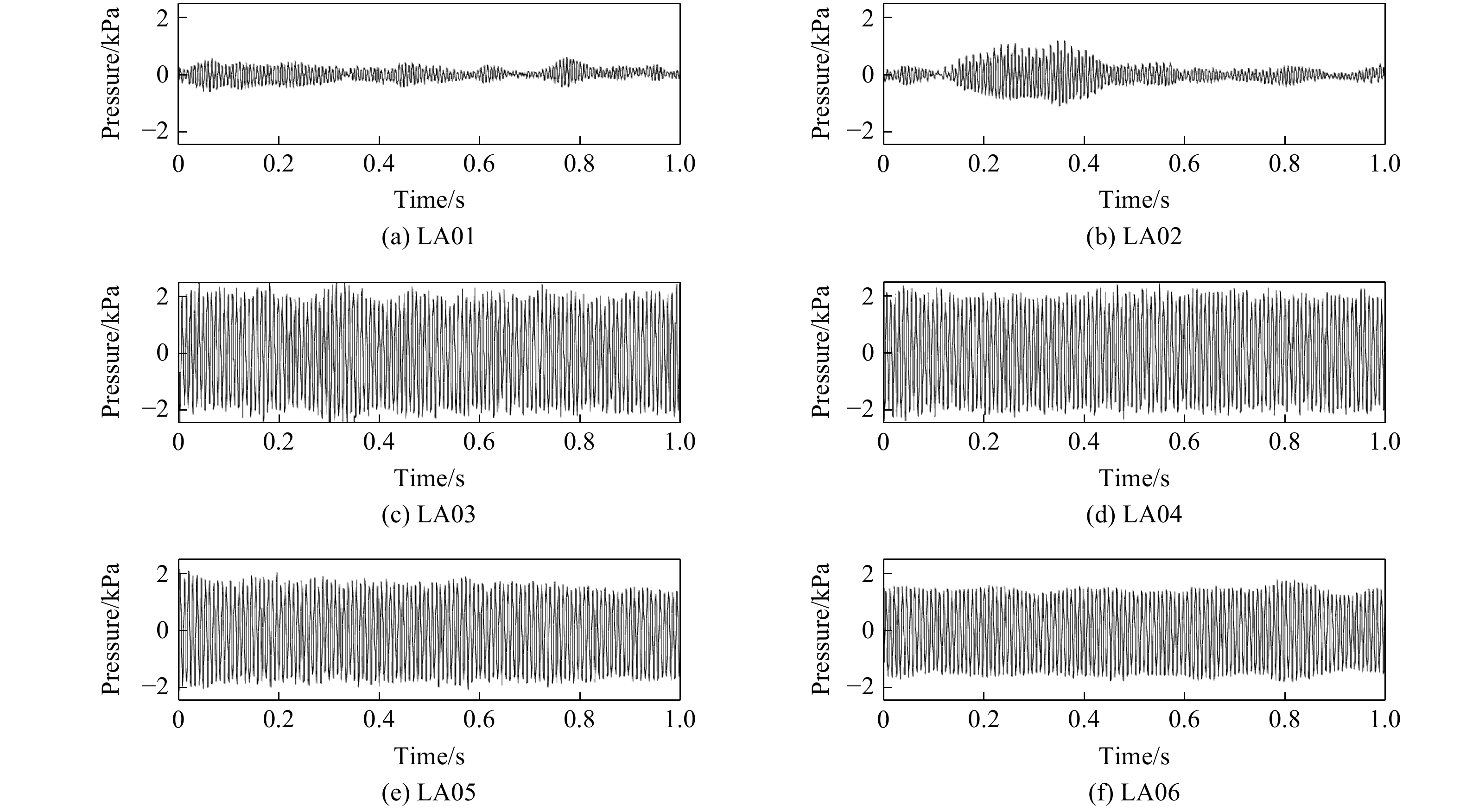
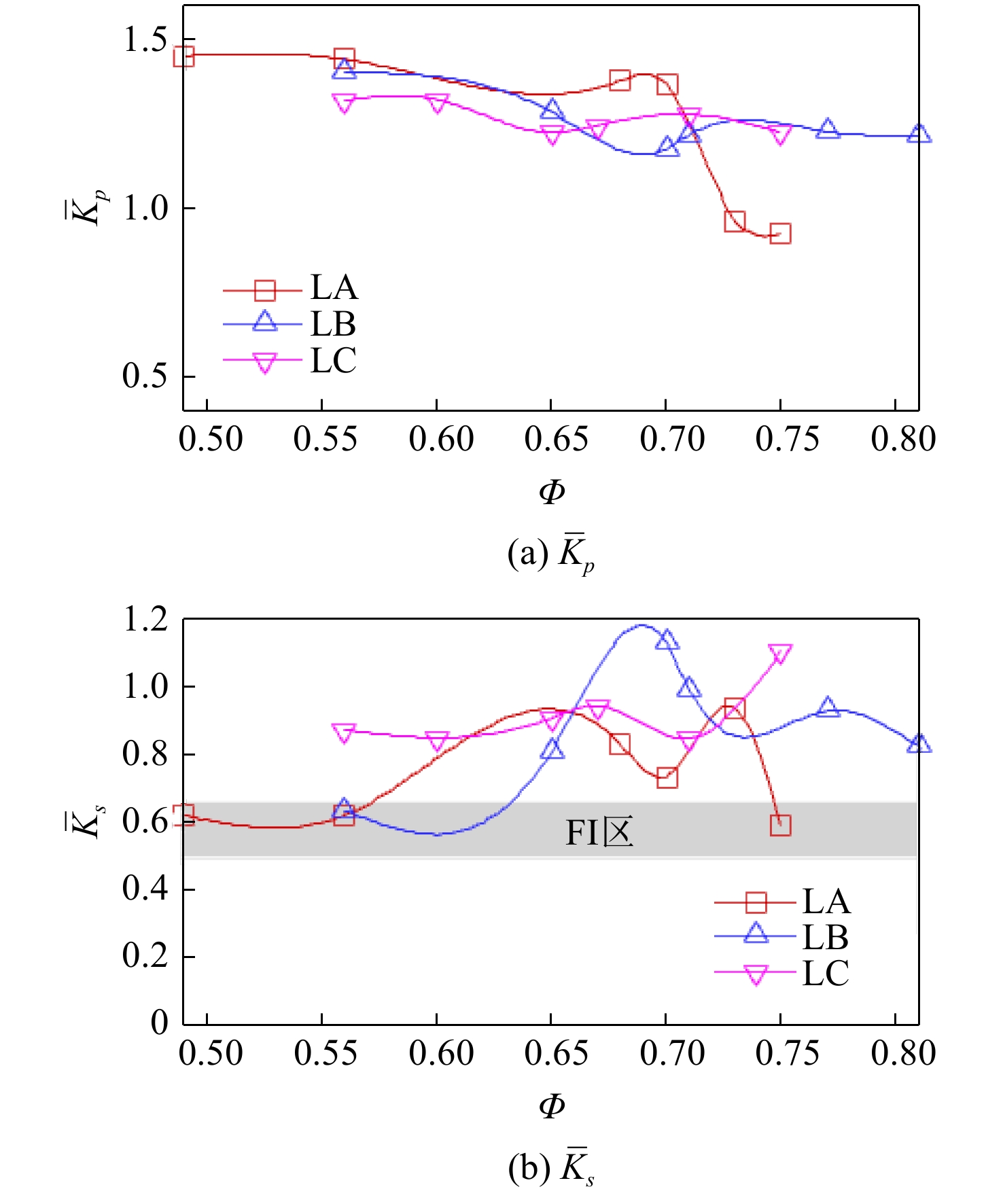
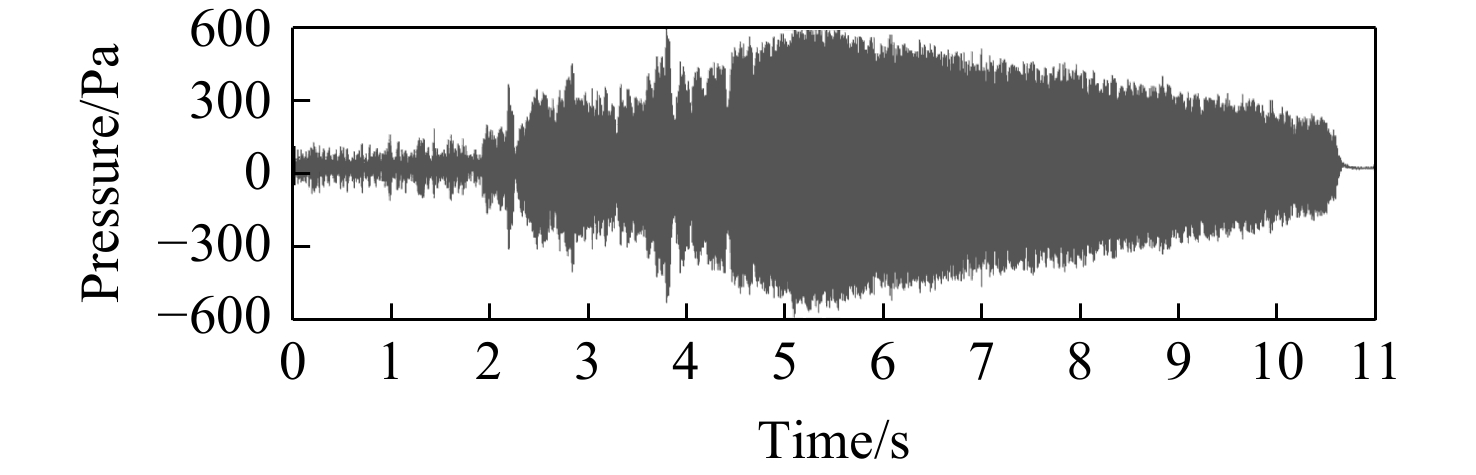
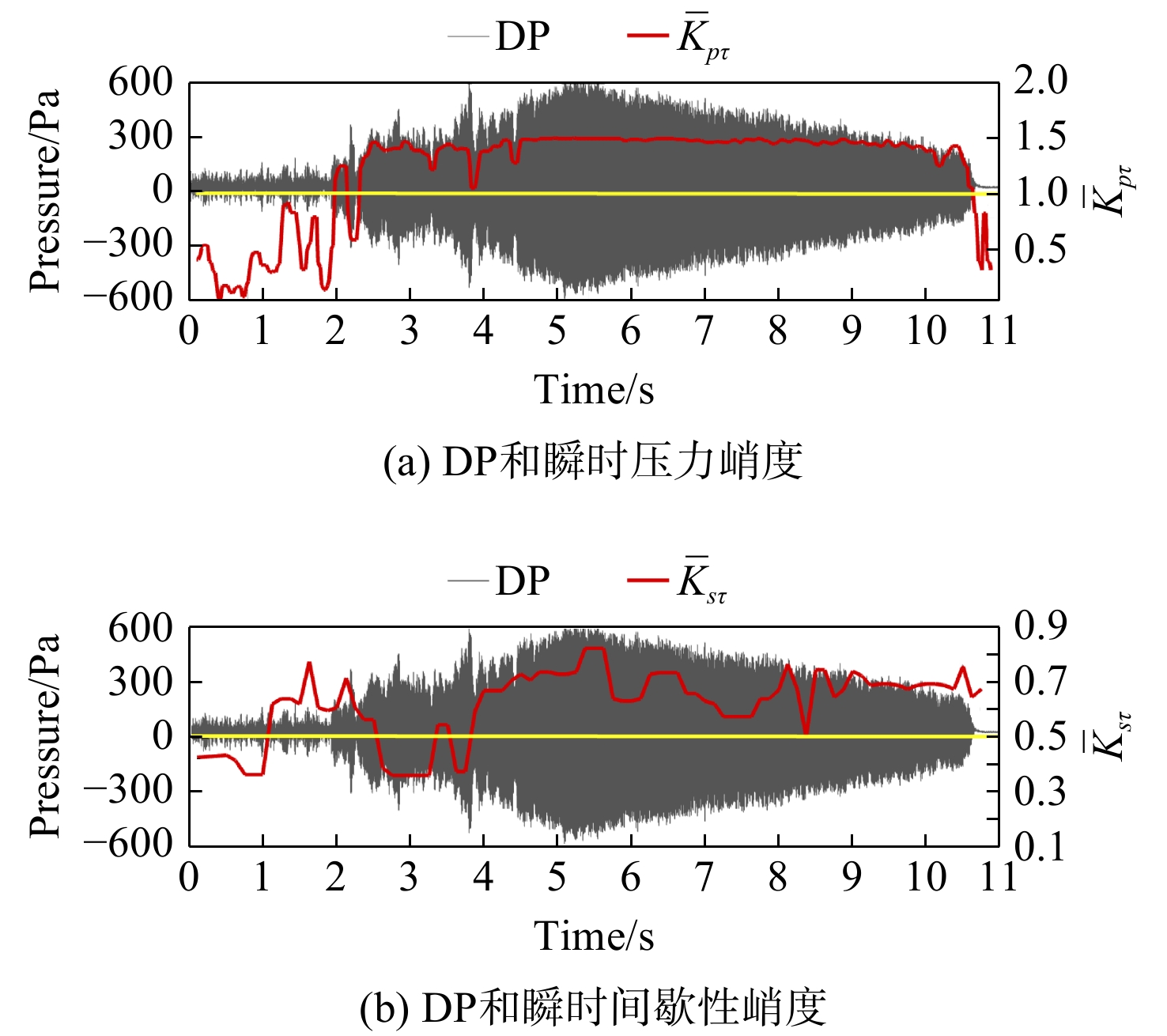
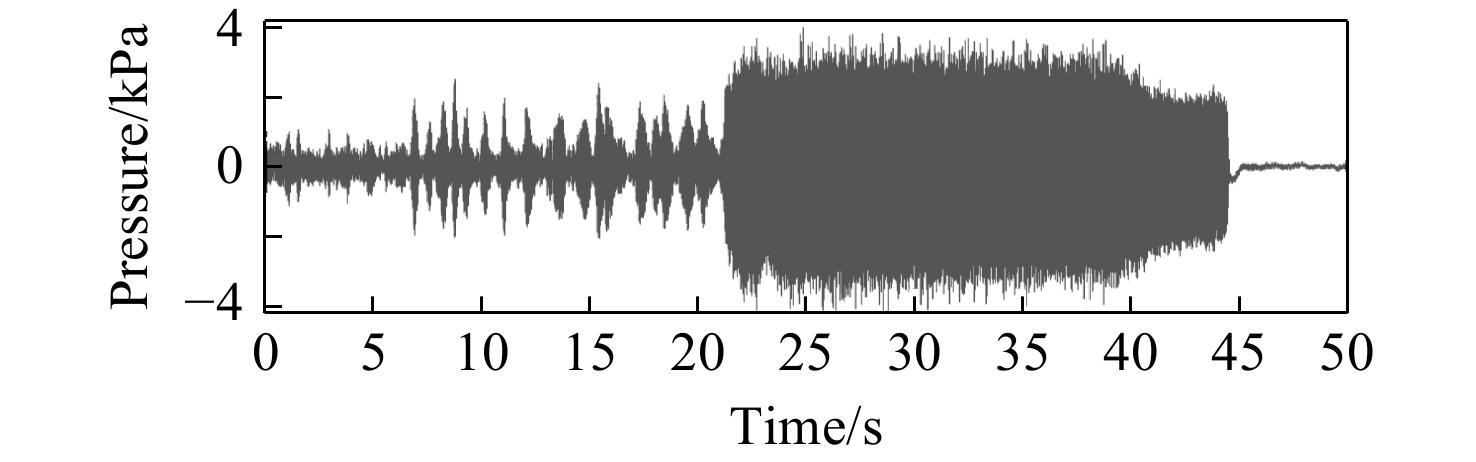
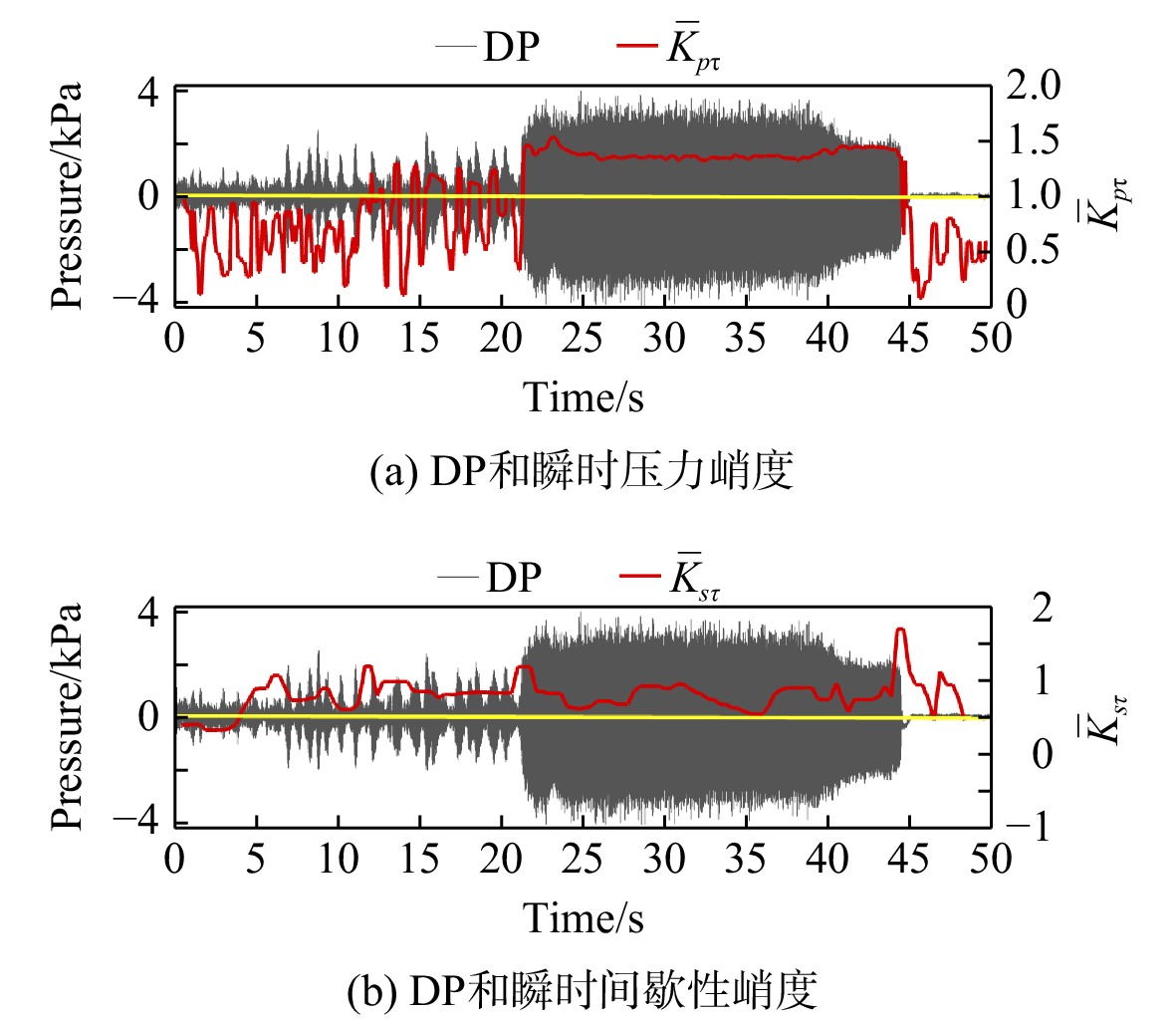
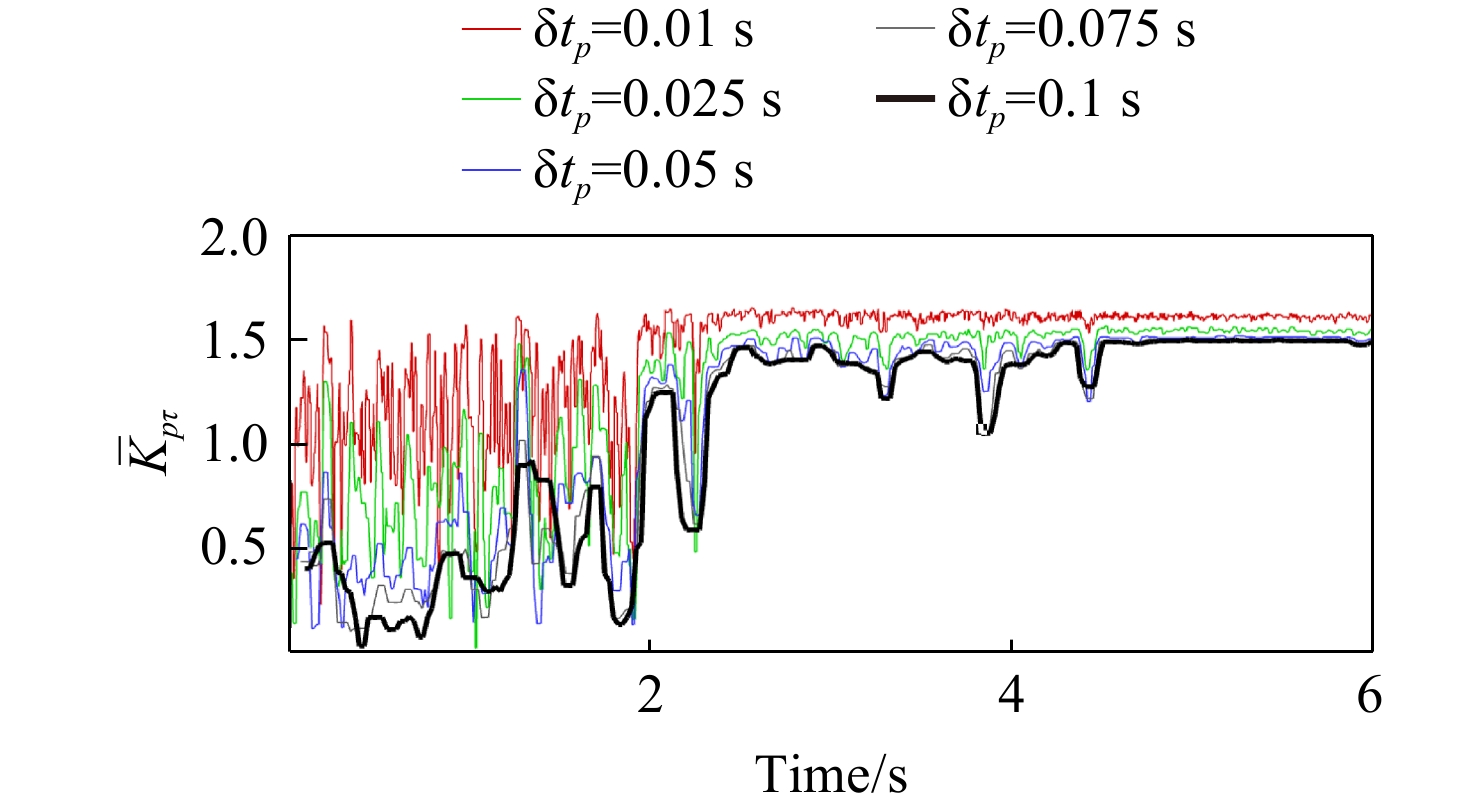
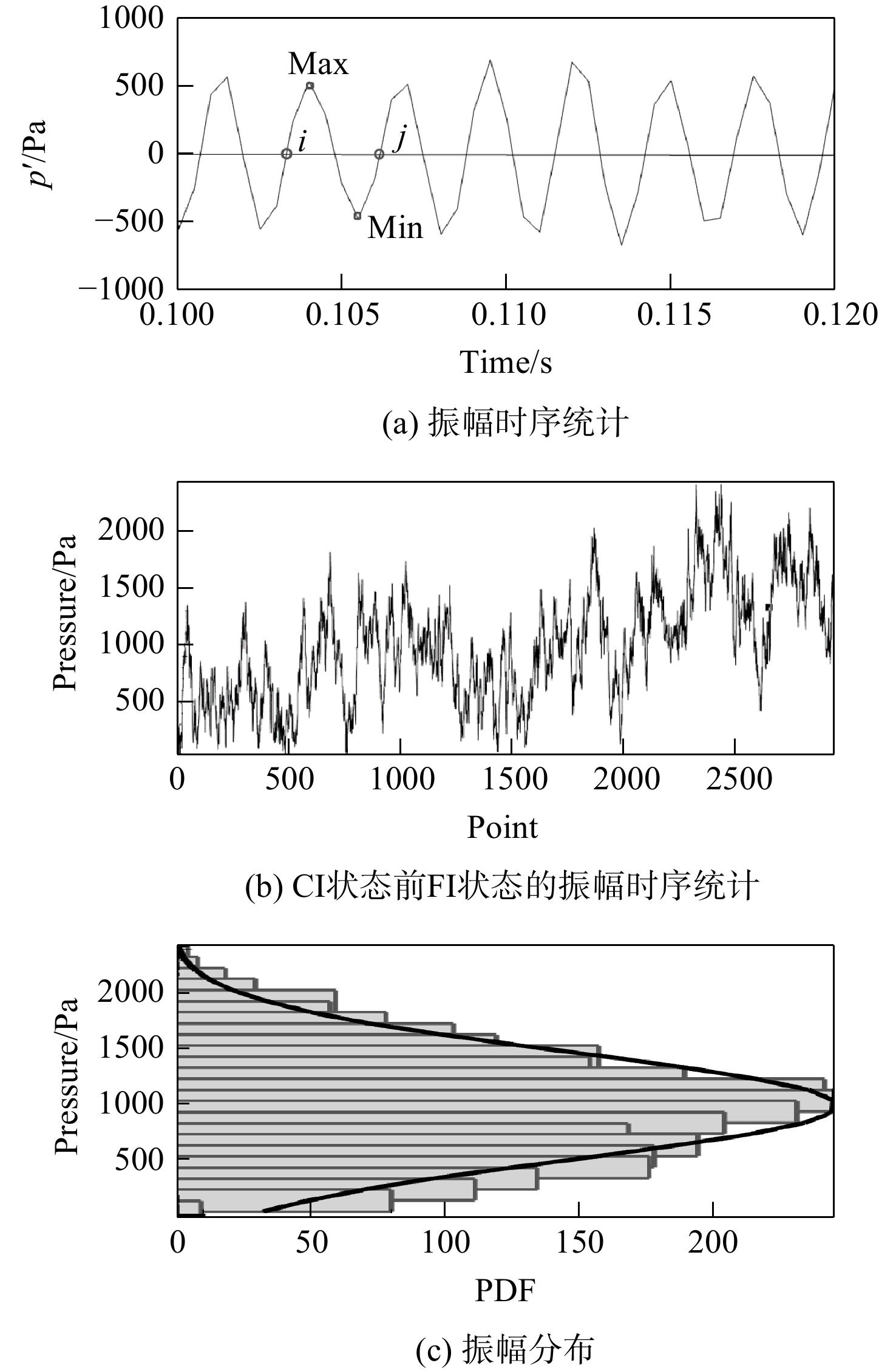
In order to establish a method of evaluating unstable combustion states in advanced aeroengine and gas turbine combustion chamber engineering tests, a diagnosis method based on the multi-scale kurtosis index of the combustion chamber pressure pulsation signal was proposed, two unstable combustion states: combustion instabilities (CI) and flame instabilities (FI), were diagnosed, and the test and analysis were carried out in the gas fuel swirl combustor and liquid kerosene lean premixed pre-vaporized combustor. The results of the study showed that the normalized mean kurtosis index can be used as a CI status criterion, but it is not suitable for FI diagnosis; the CI and FI kurtosis indexes defined by the optimal time scale based on time scale independence can indicate the pressure oscillation level and the intermittent feature of pressure sequence, and the parameters have an increasing relationship with the CI and FI degree correspondingly; the established comprehensive judgment norm based on instantaneous pressure kurtosis and intermittent kurtosis can provide a criterion for online evaluation of combustion instability.

Effect of in-cylinder flow on gas exchange efficiency of opposed-piston 2-stroke engines
WANG Sufei, ZHANG Zhenyu, ZHANG Fujun
2023, 38(9): 2129-2141. doi: 10.13224/j.cnki.jasp.20220094
Abstract:

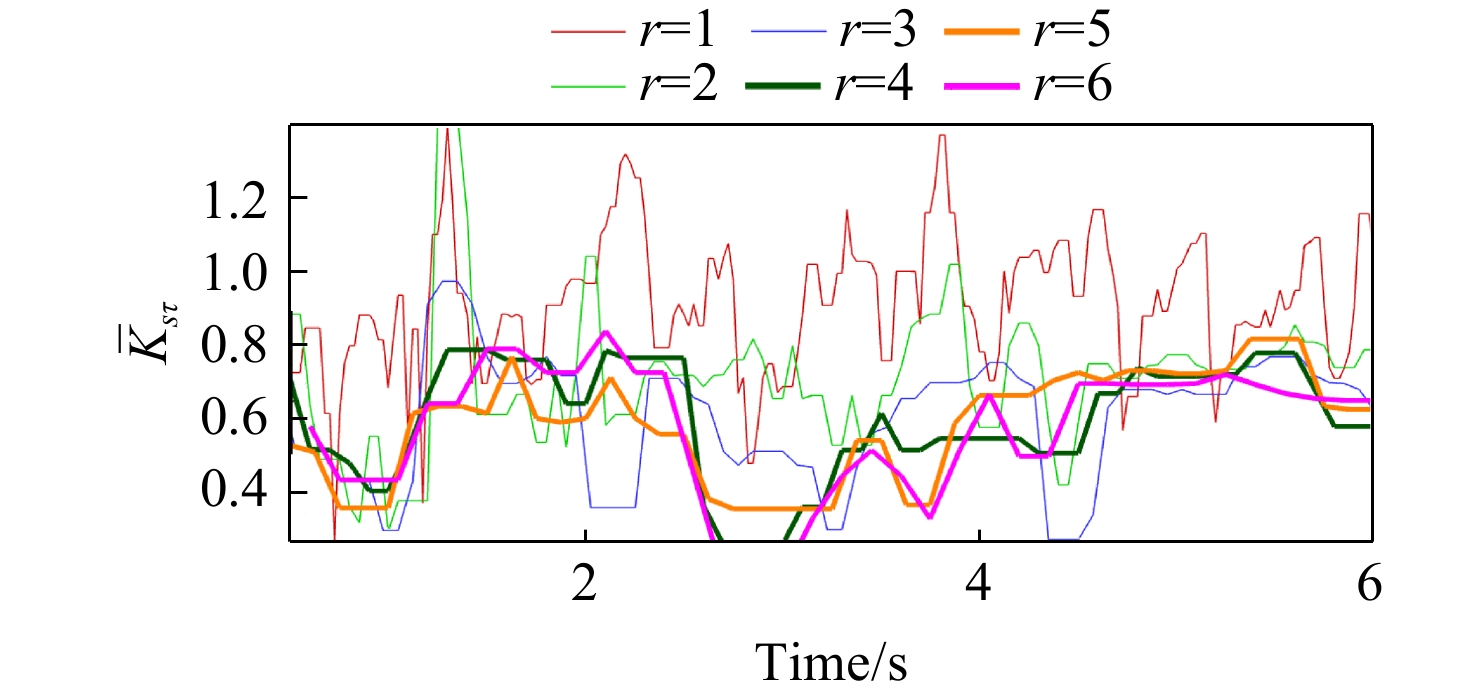
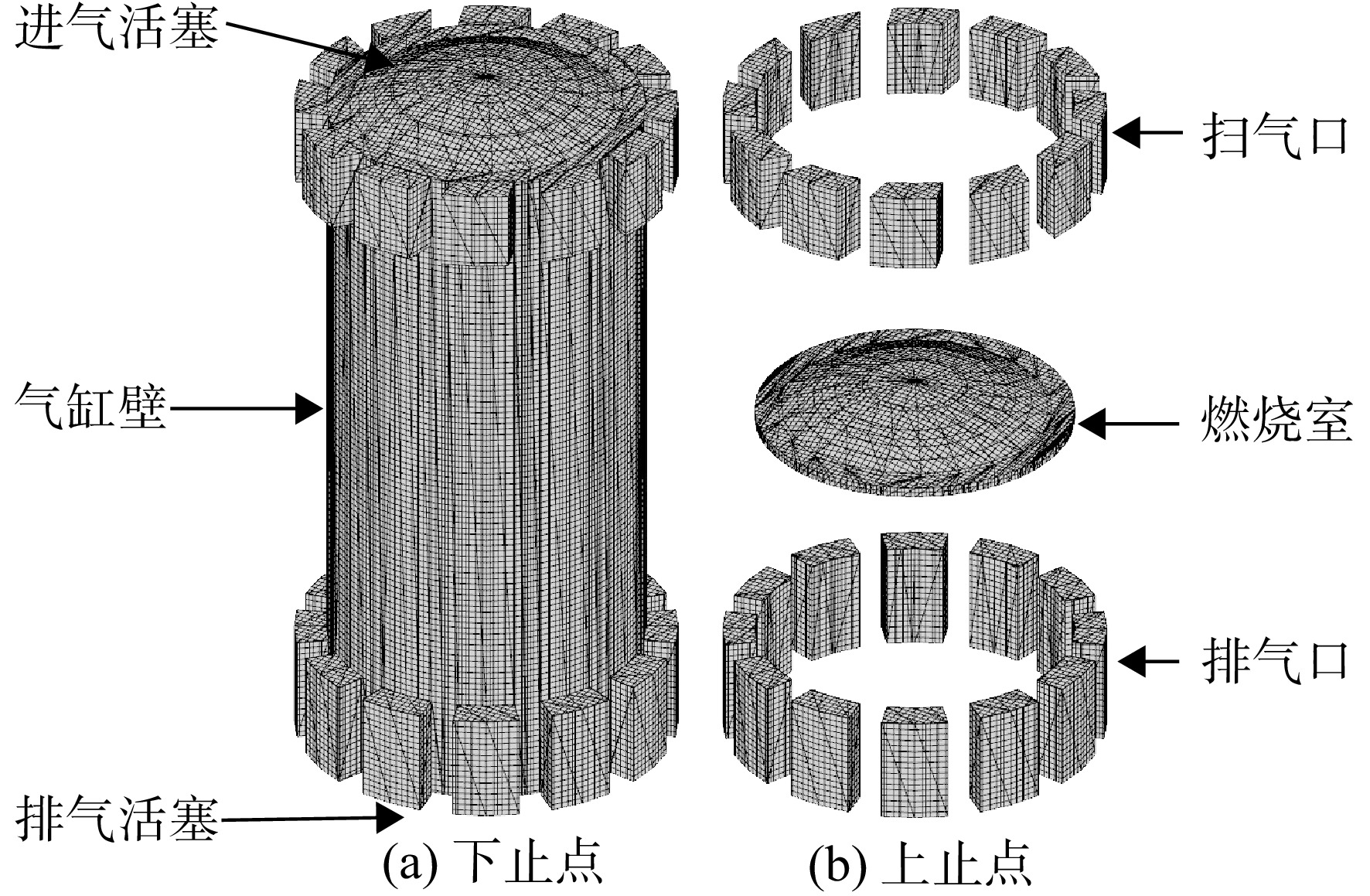
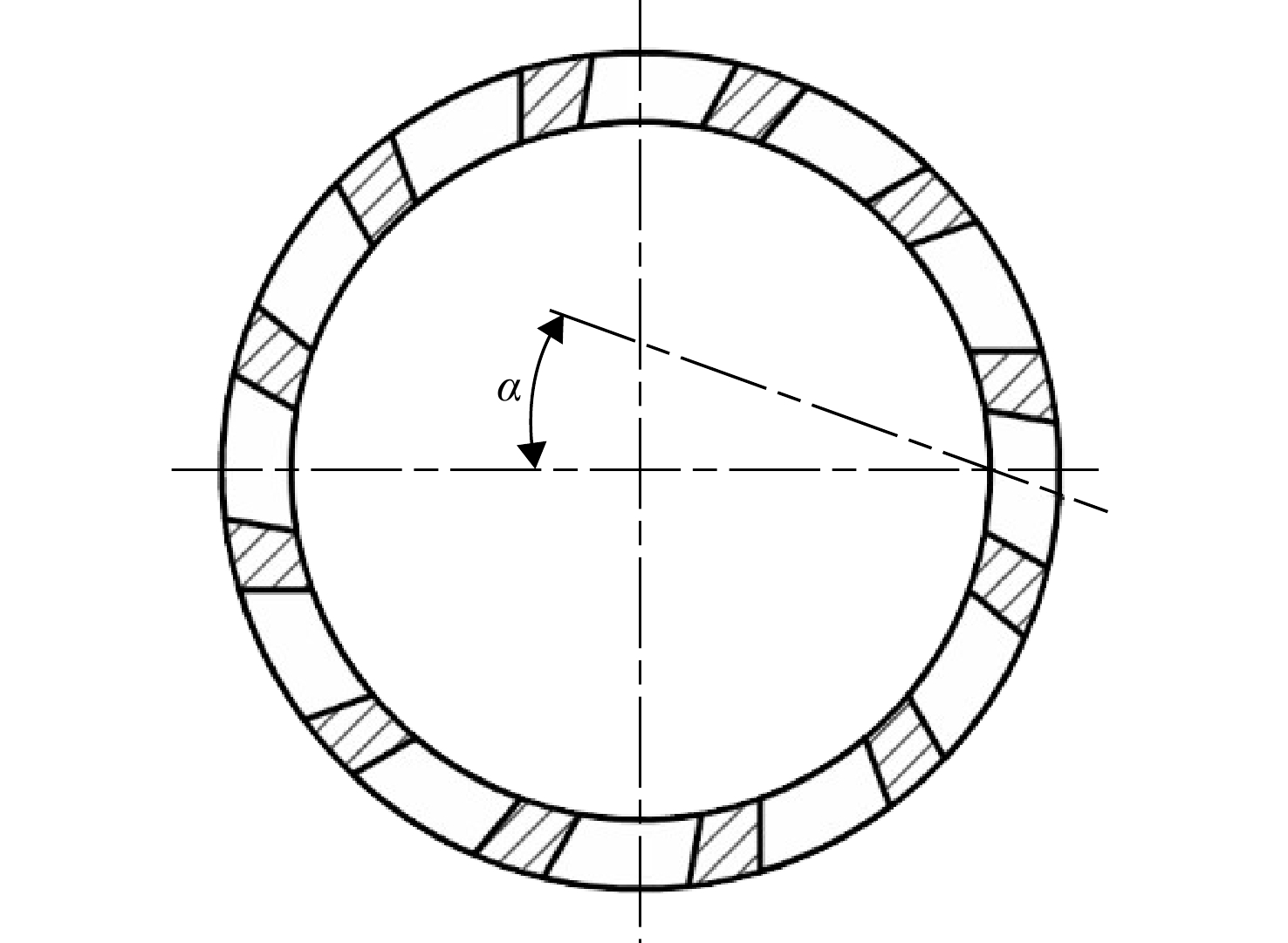
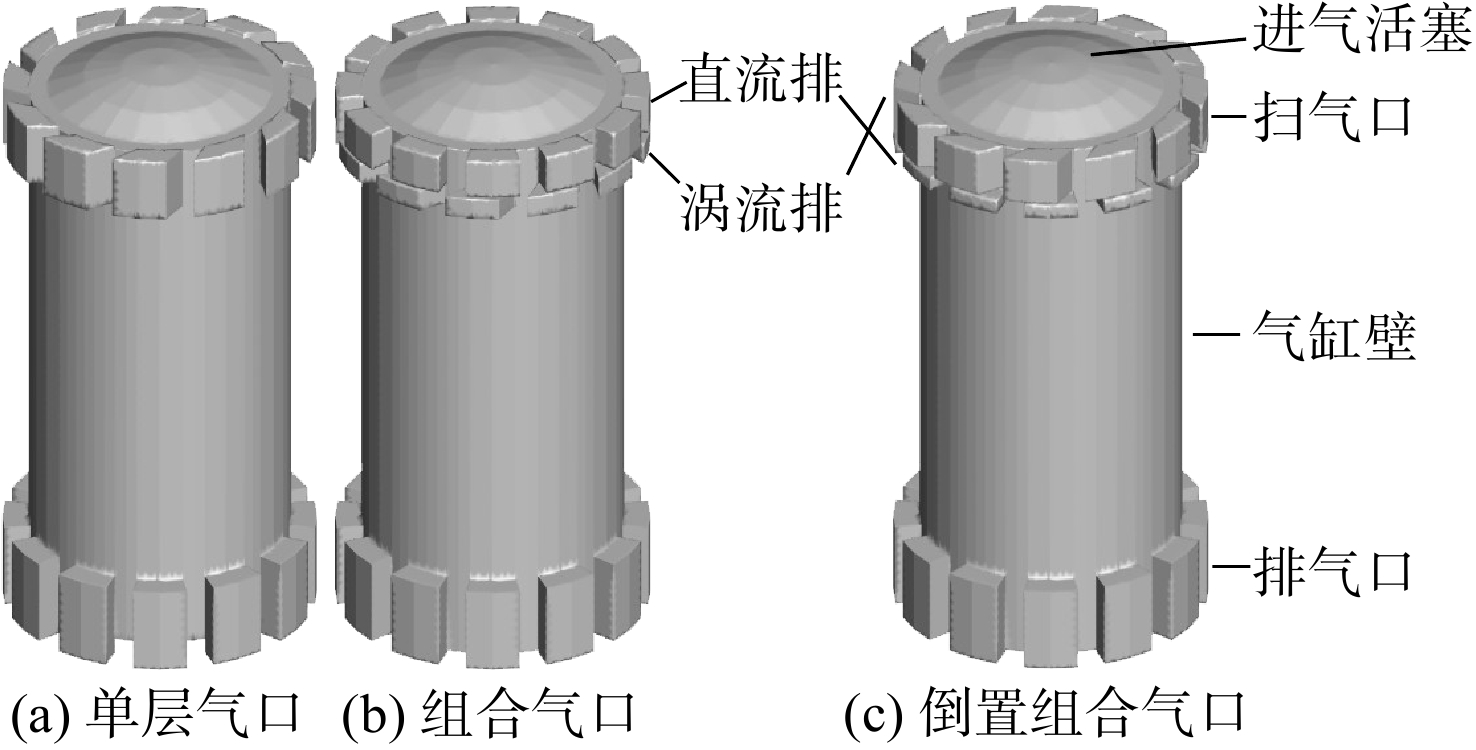
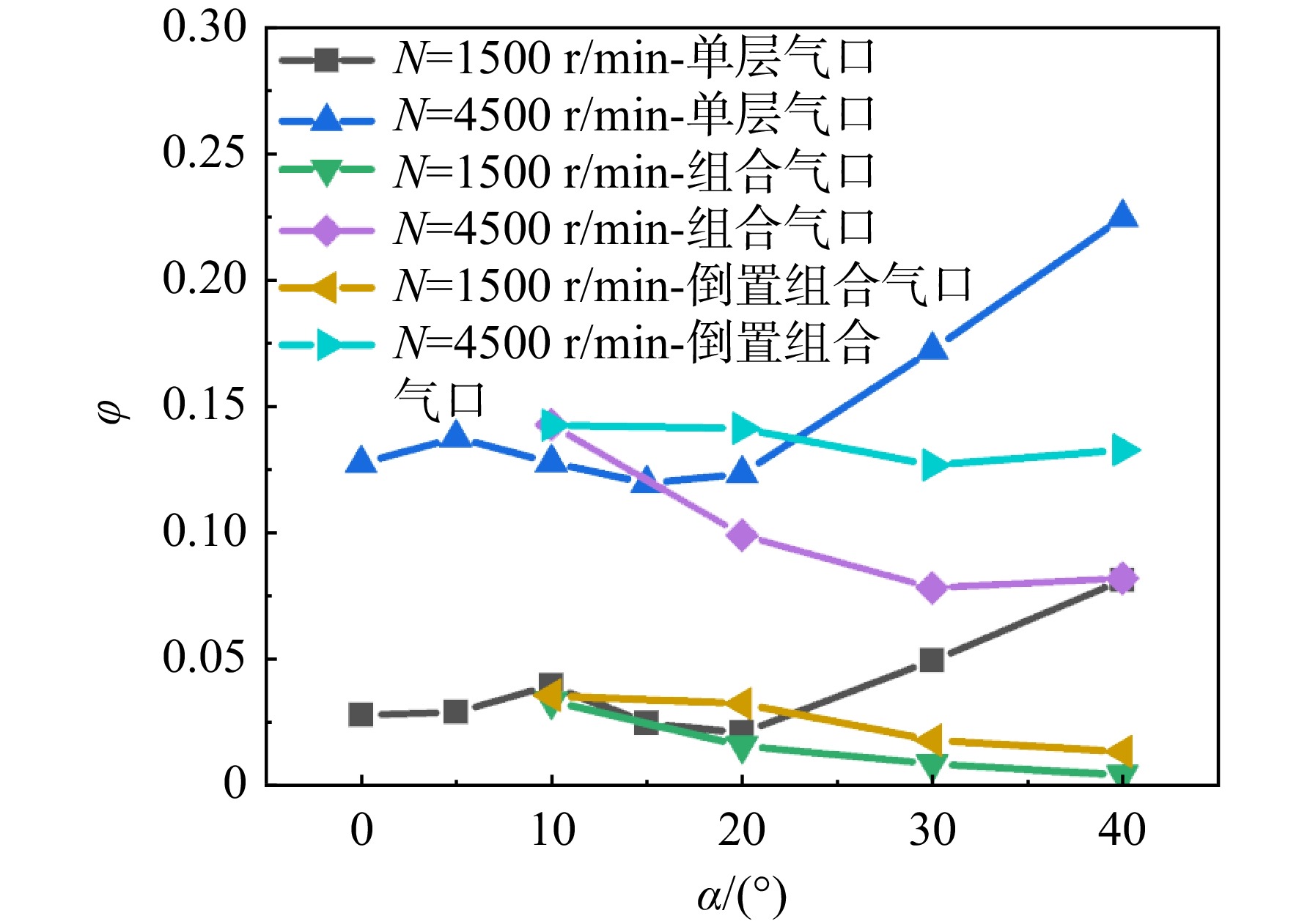
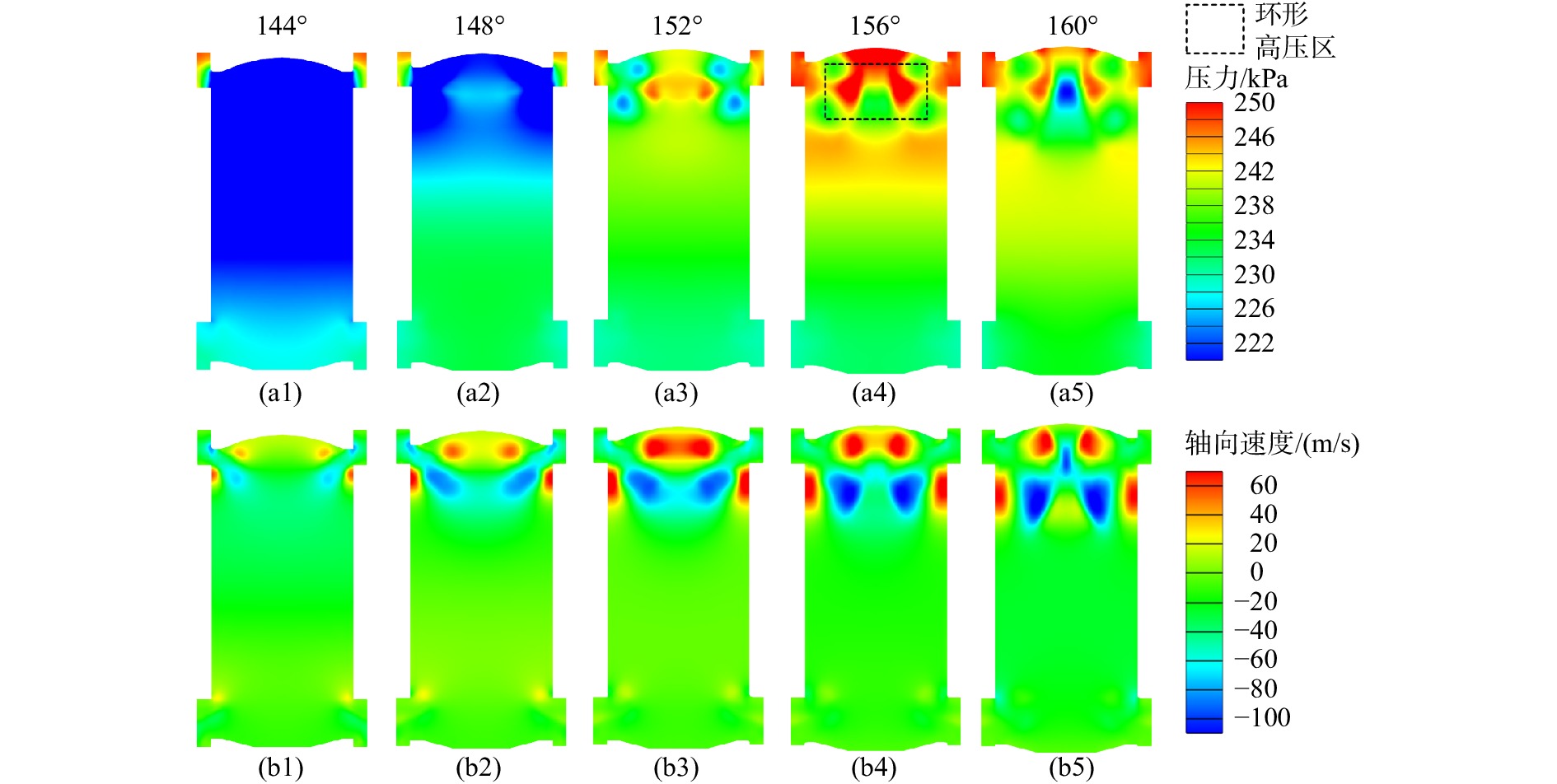
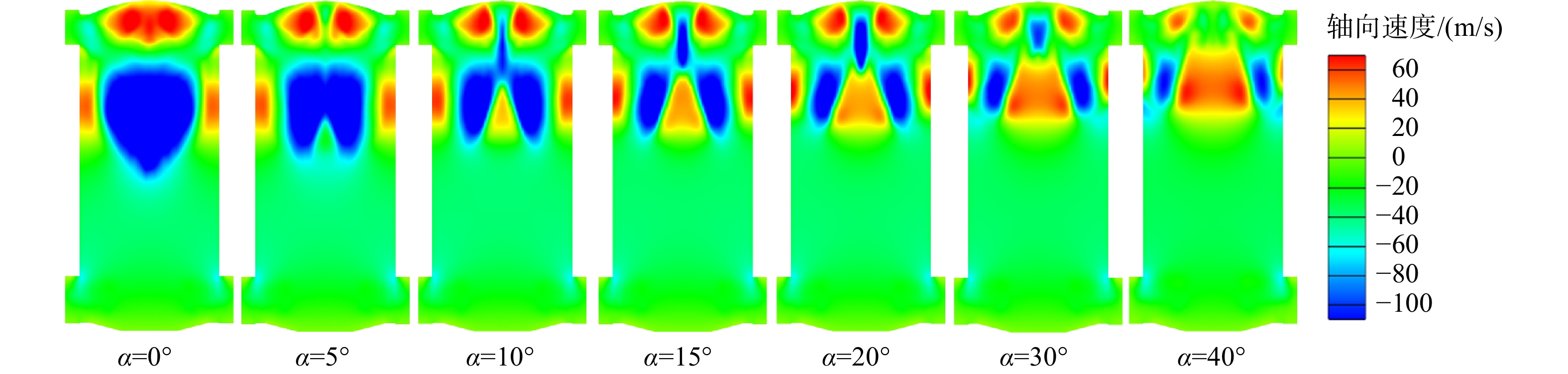
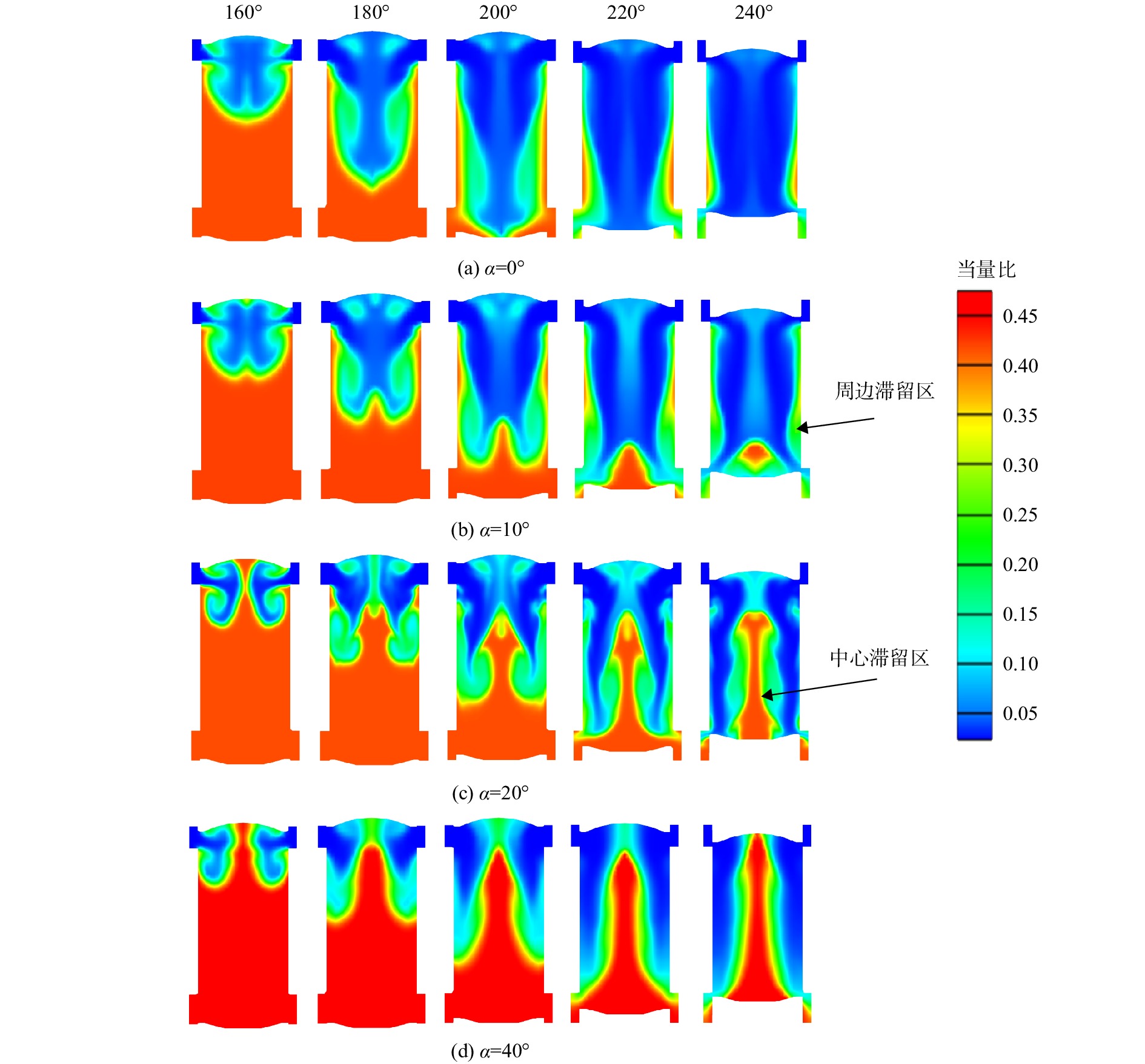
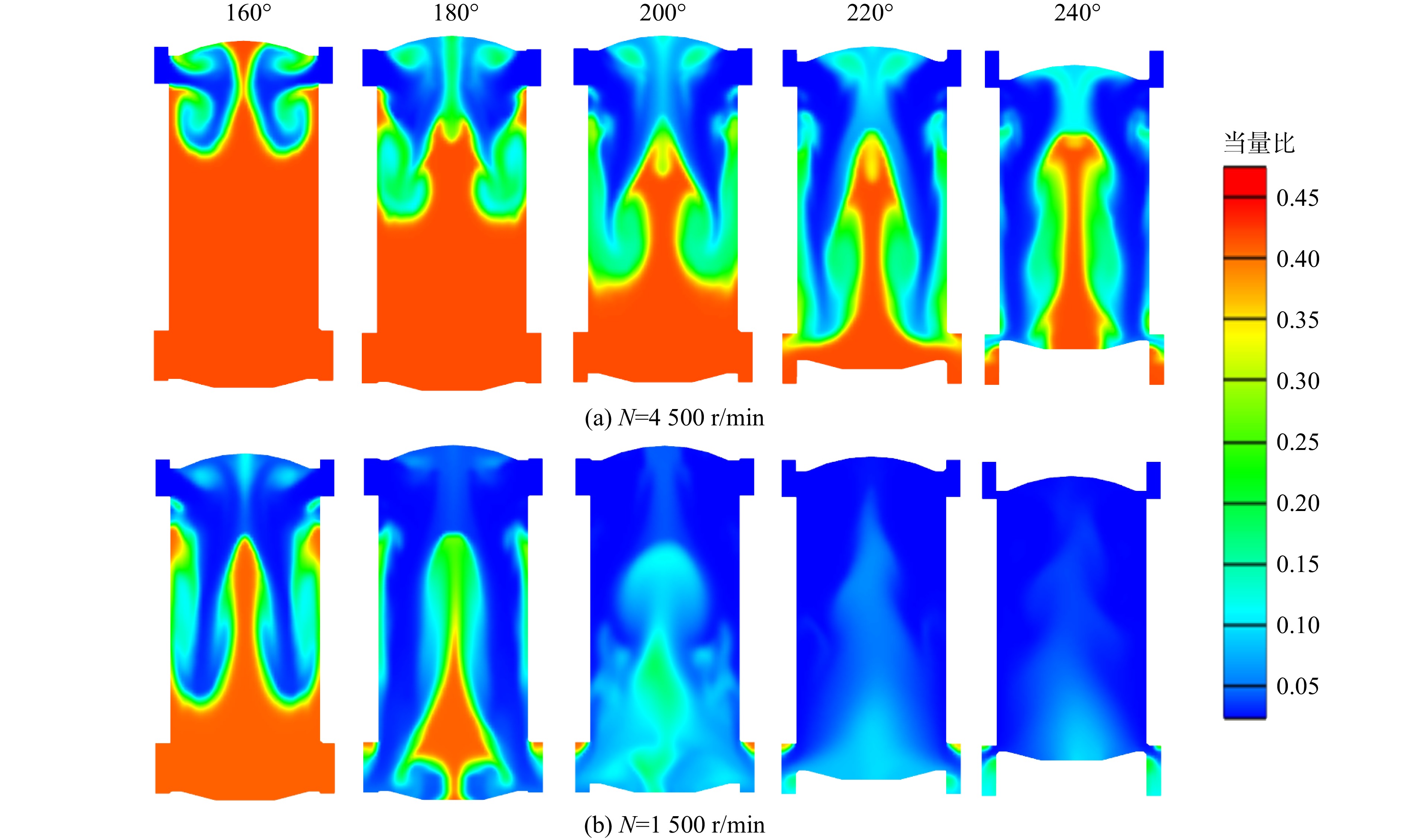
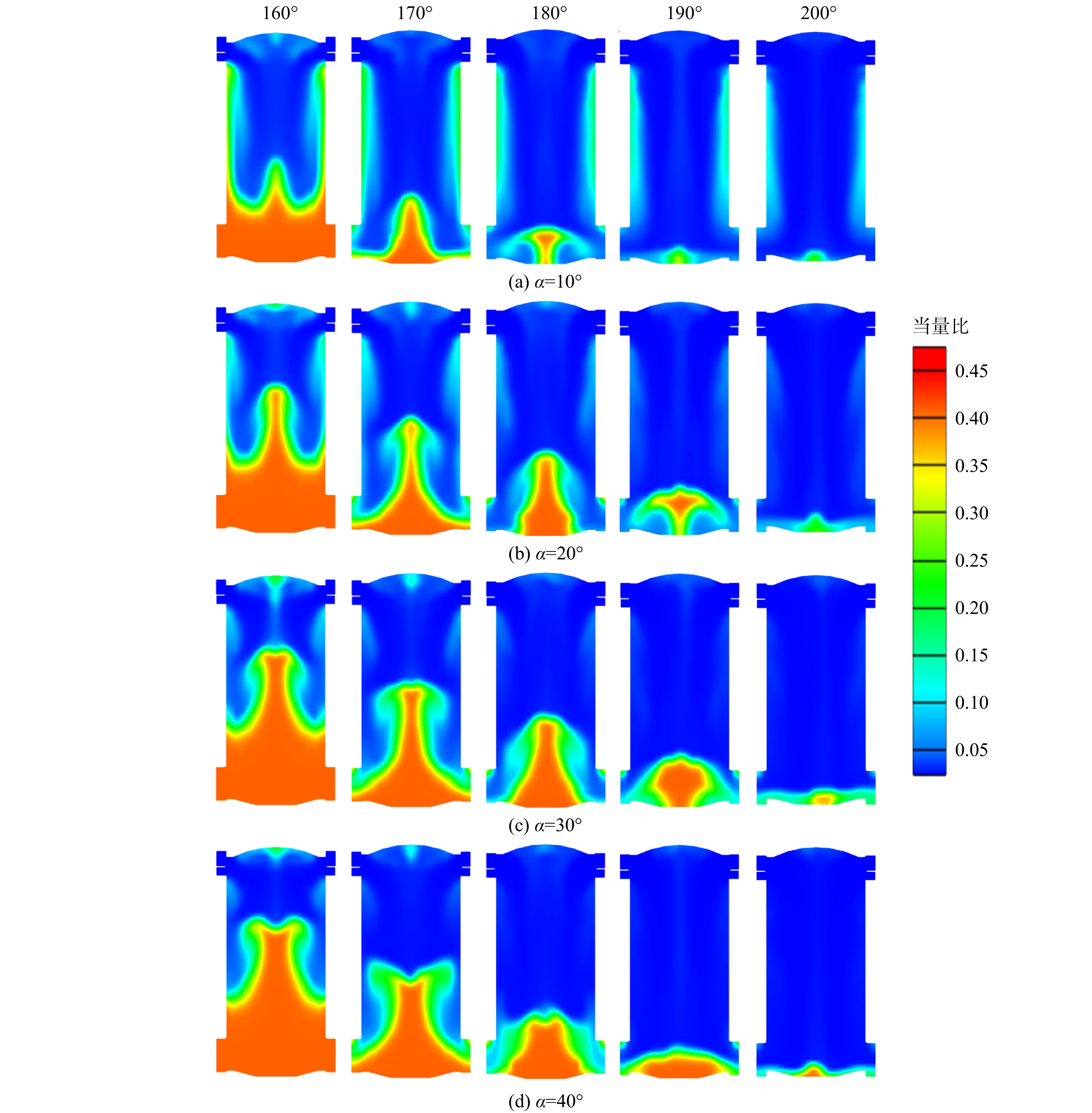
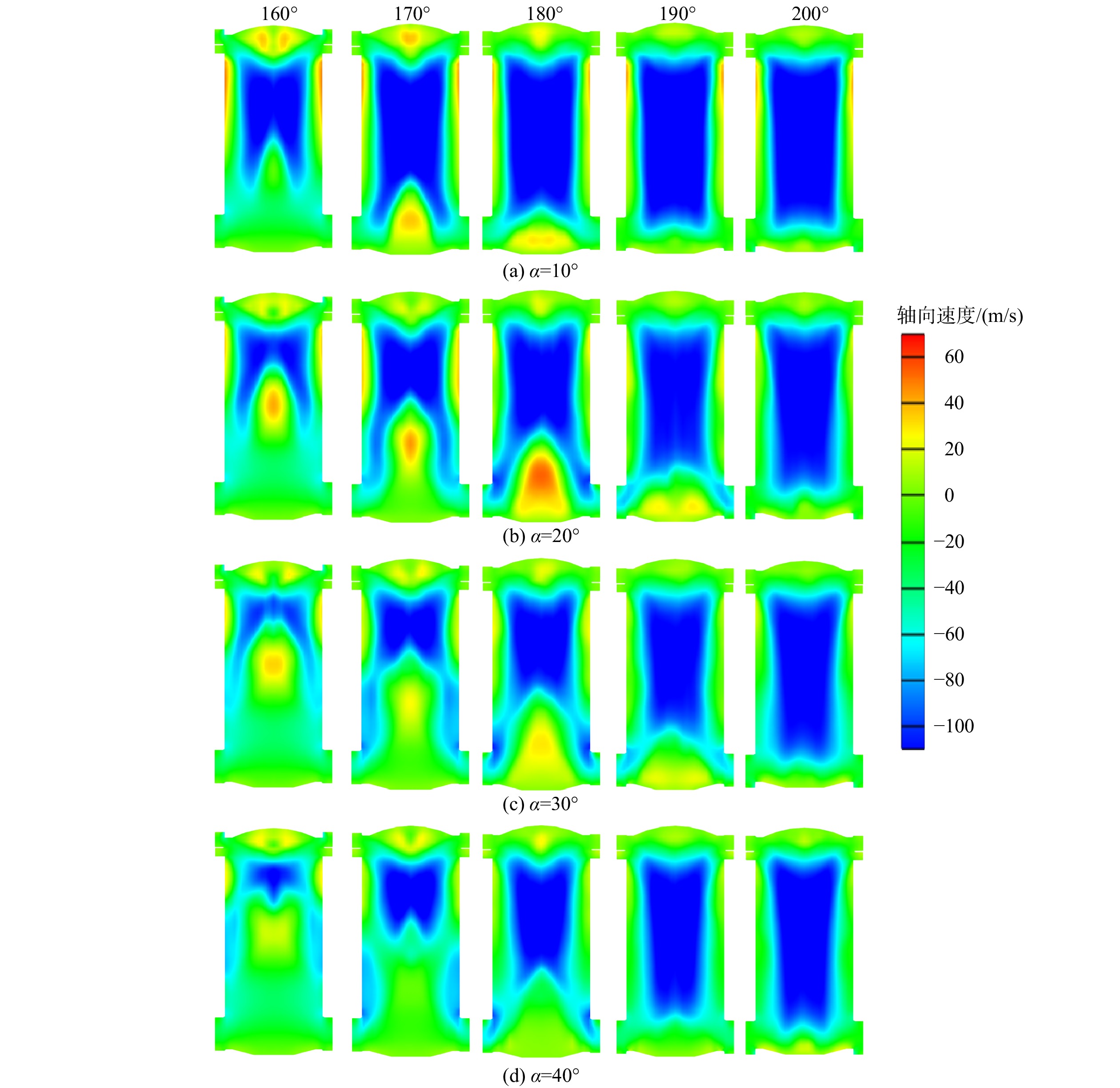
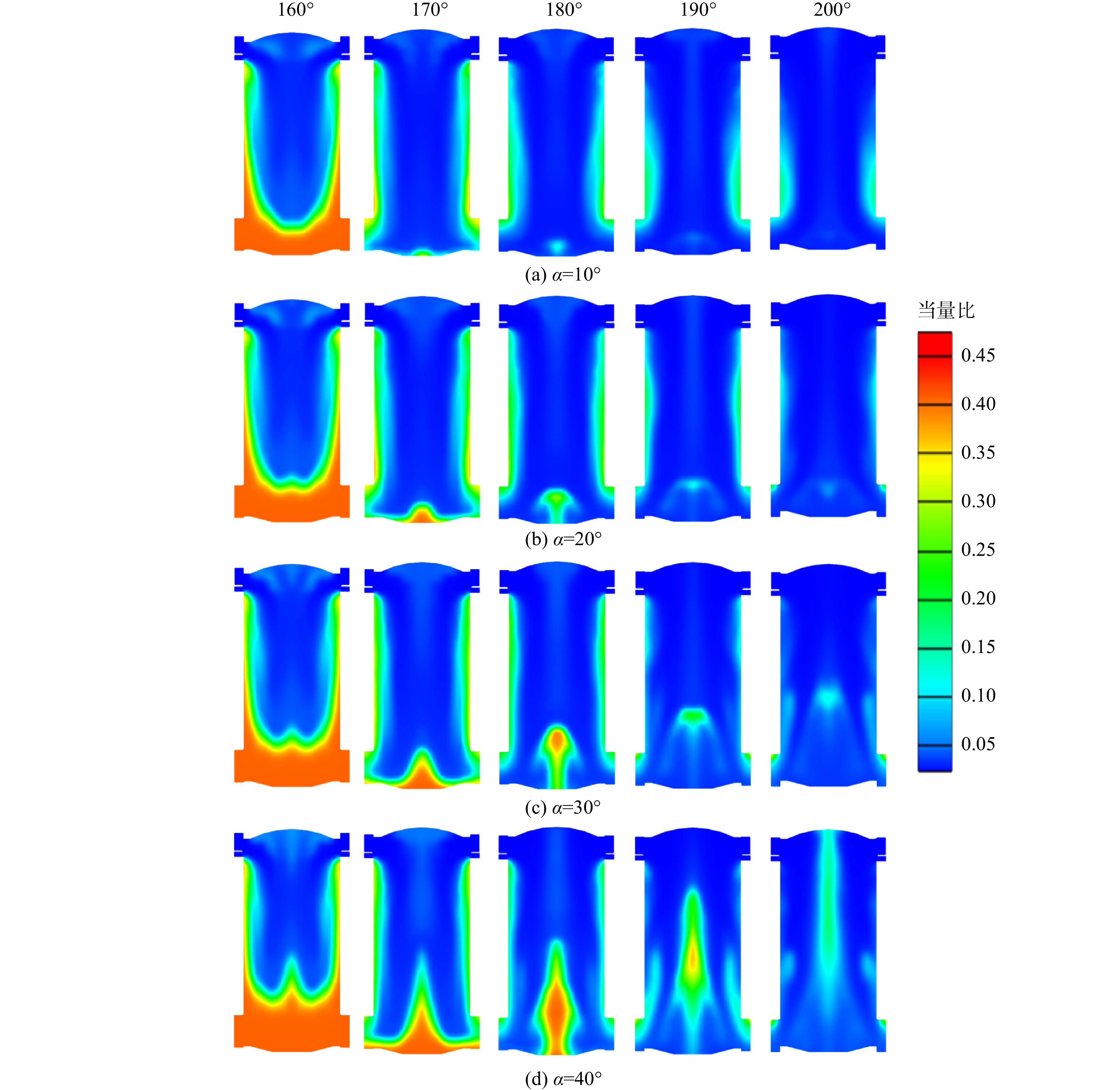
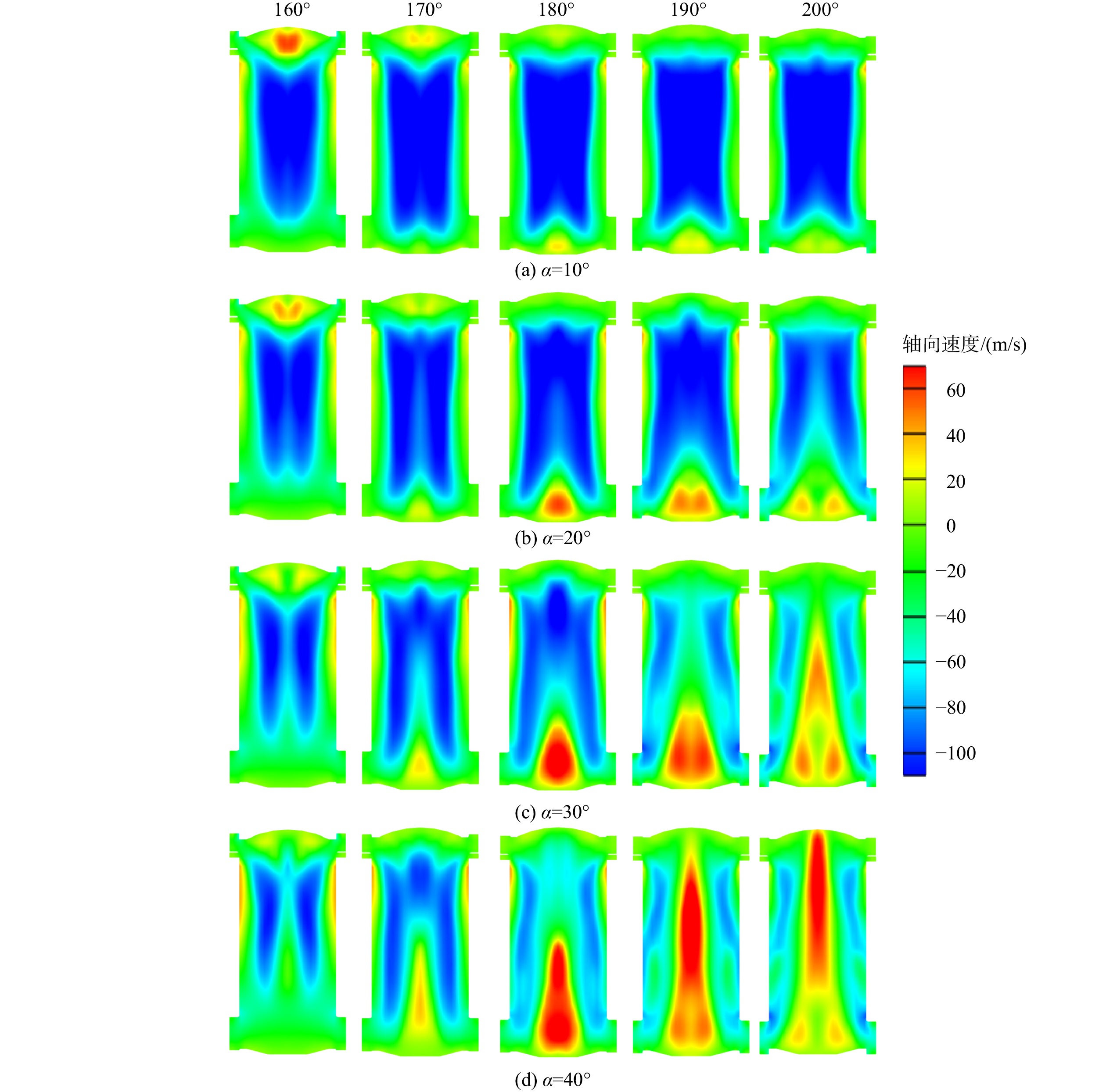
The effect of in-cylinder flow and residual distribution on gas exchange of opposed-piston 2-stroke (OP2S) engines is yet to be thoroughly studied. The effects of scavenge port angle, scavenge port structure and engine speed on scavenge efficiency by directing scavenge flow in OP2S engine were investigated by modeling and CFD simulation with CONVERGE software. Result showed that scavenge port angle had significant and non-monotonic effect on in-cylinder flow. For scavenge port angle $ \mathrm{\alpha } $≤5°, scavenge flow was collected around cylinder axis and a border residual area appeared next to liner; for scavenge port angle $ \mathrm{\alpha } $>5°, scavenging flow formed a circular downward flow around cylinder axis at the early stage of scavenging. A low-pressure area was induced by this circular flow at its center and drew nearby gas upwards, forming a column of central residual area along cylinder axis. As scavenge port angle increased, the border residual area declined and disappeared while central residual area came into being and got strengthened. The combined effects of both residual areas resulted in the non-monotonic trend in residual ratio. Composite scavenge port produced drastically lower residual ratio than simple port at relatively larger scavenge port angle, since uniform scavenge flow suppressed the low-pressure area, weakening central residual area. This effect was less prominent for reversed composite scavenge port, rendering it less effective than composite scavenge port.

Very-large eddy simulation of hydrogen flames in strut-based supersonic combustor
YAN Chong, PIAO Ying
2023, 38(9): 2142-2152. doi: 10.13224/j.cnki.jasp.20210739
Abstract:

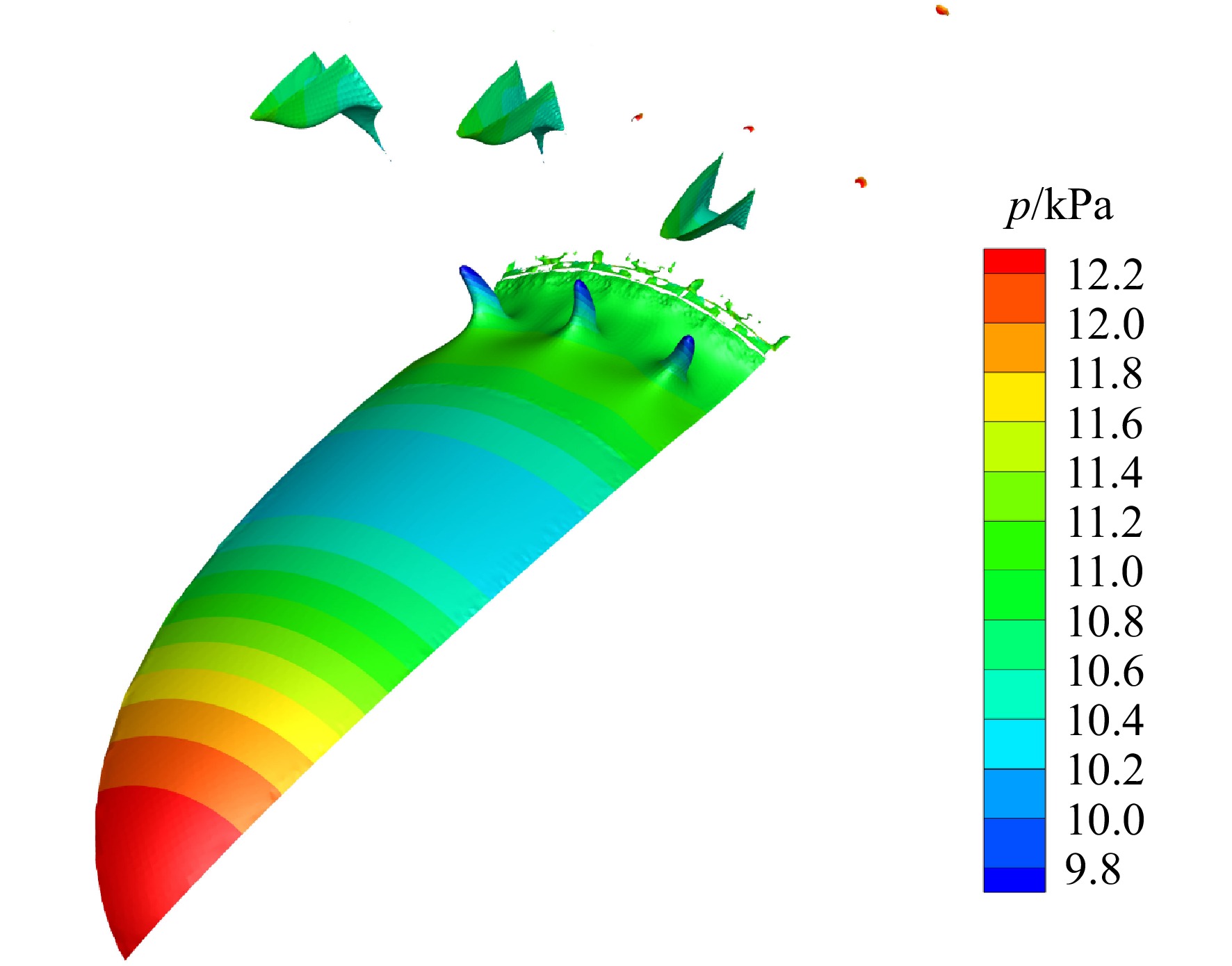
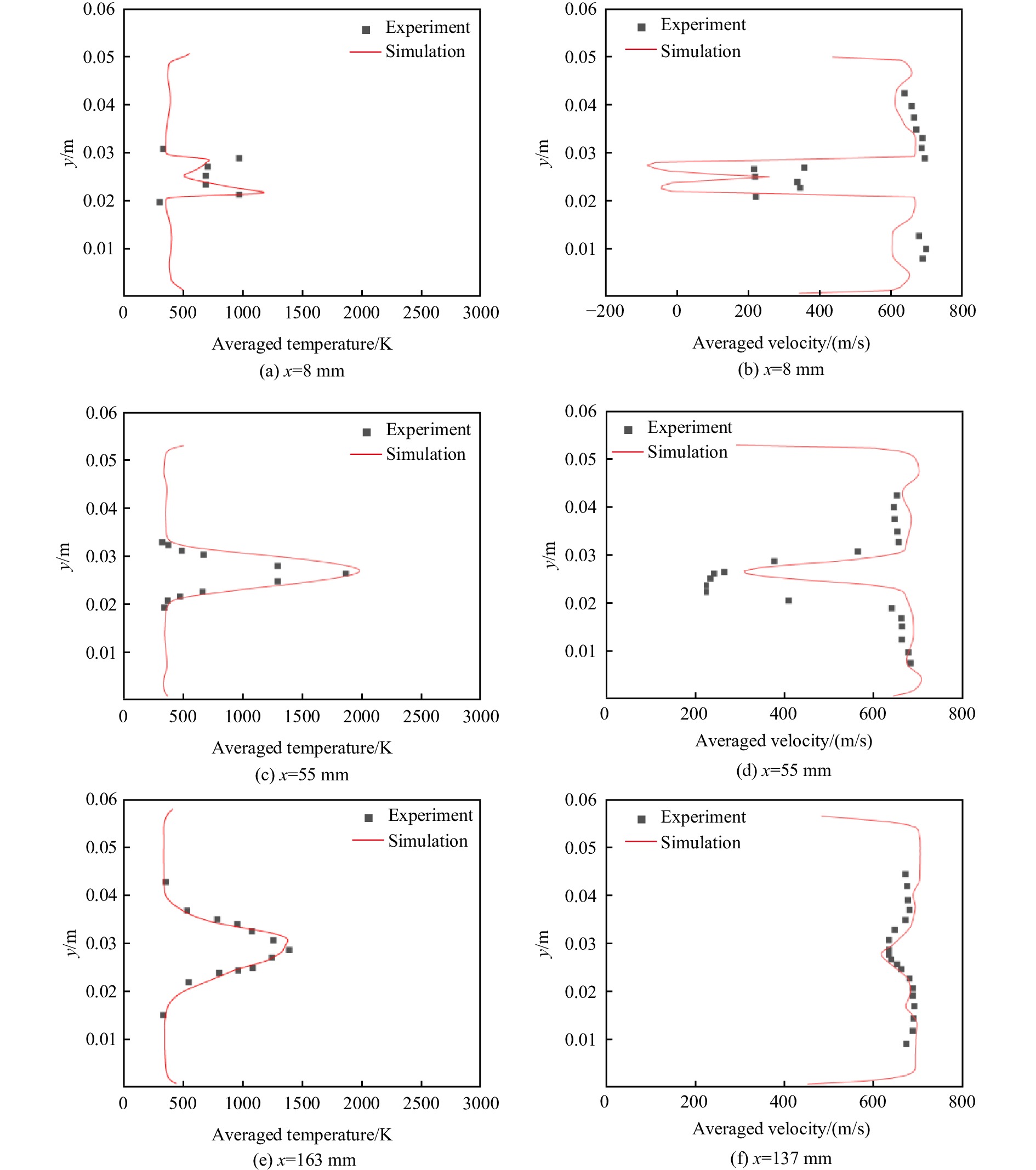
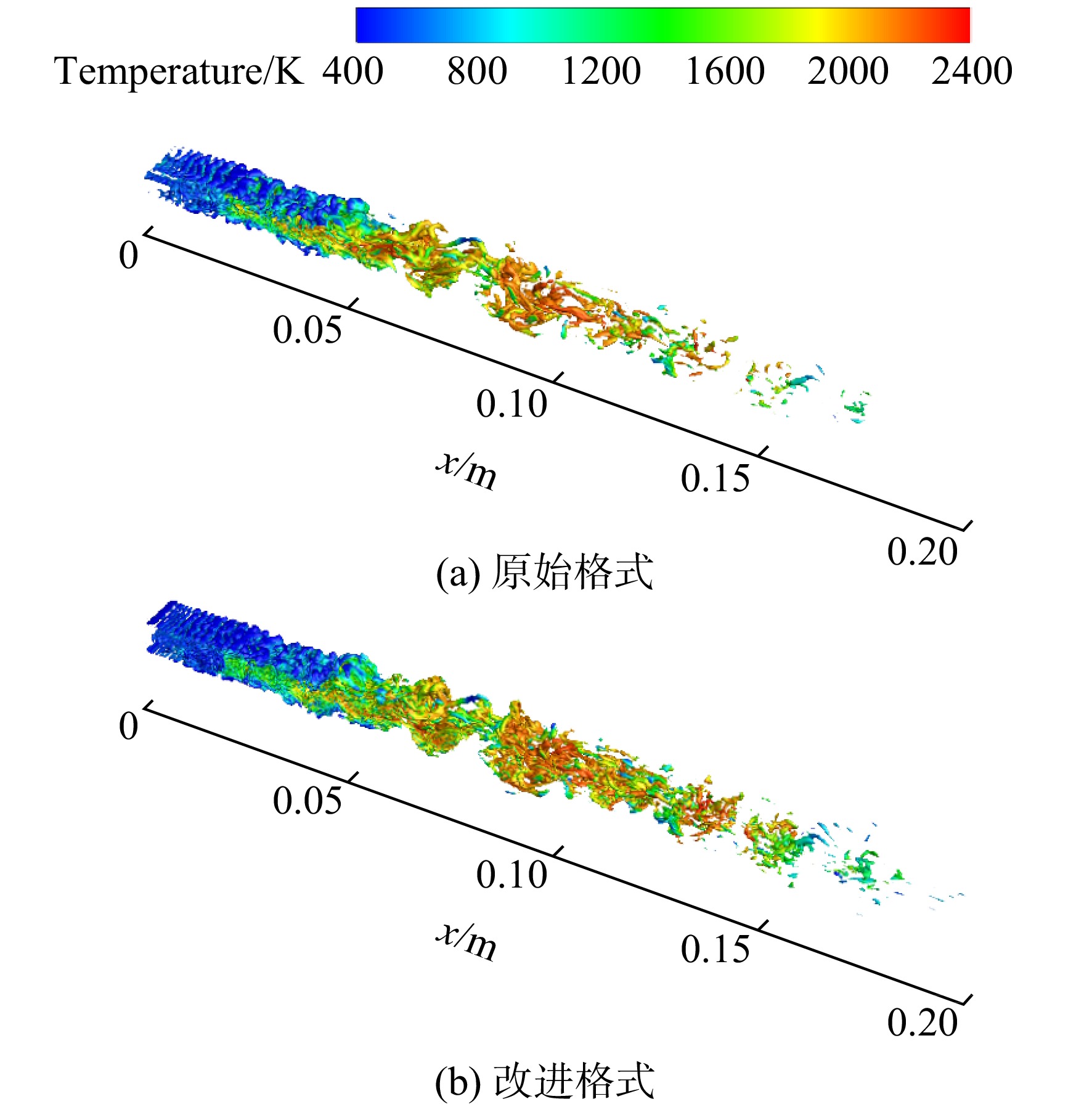
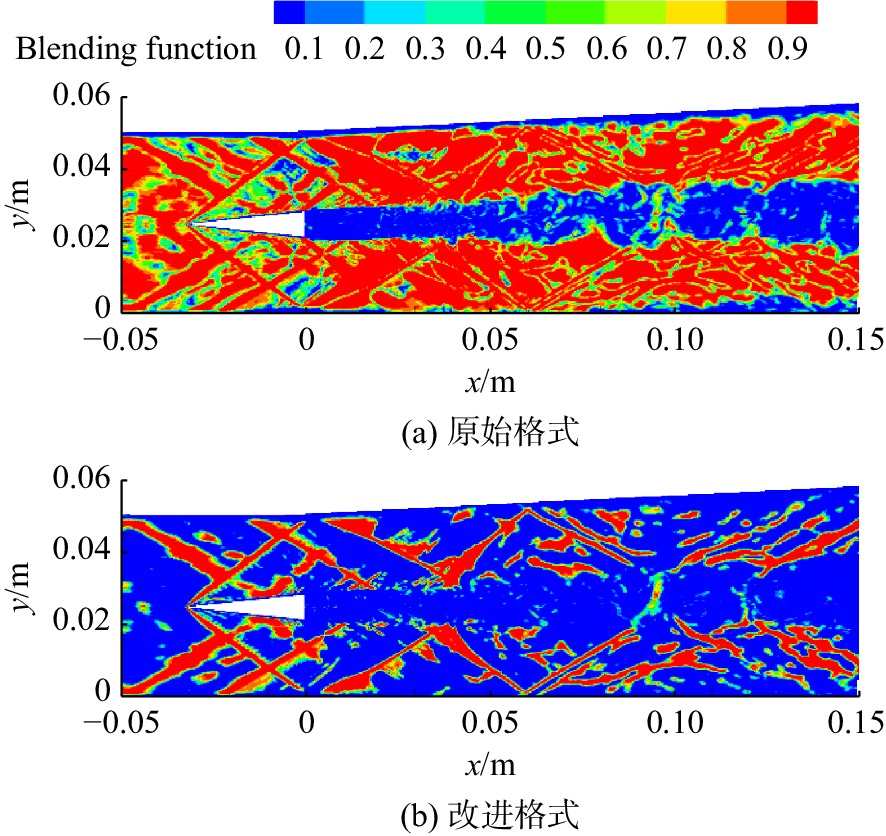
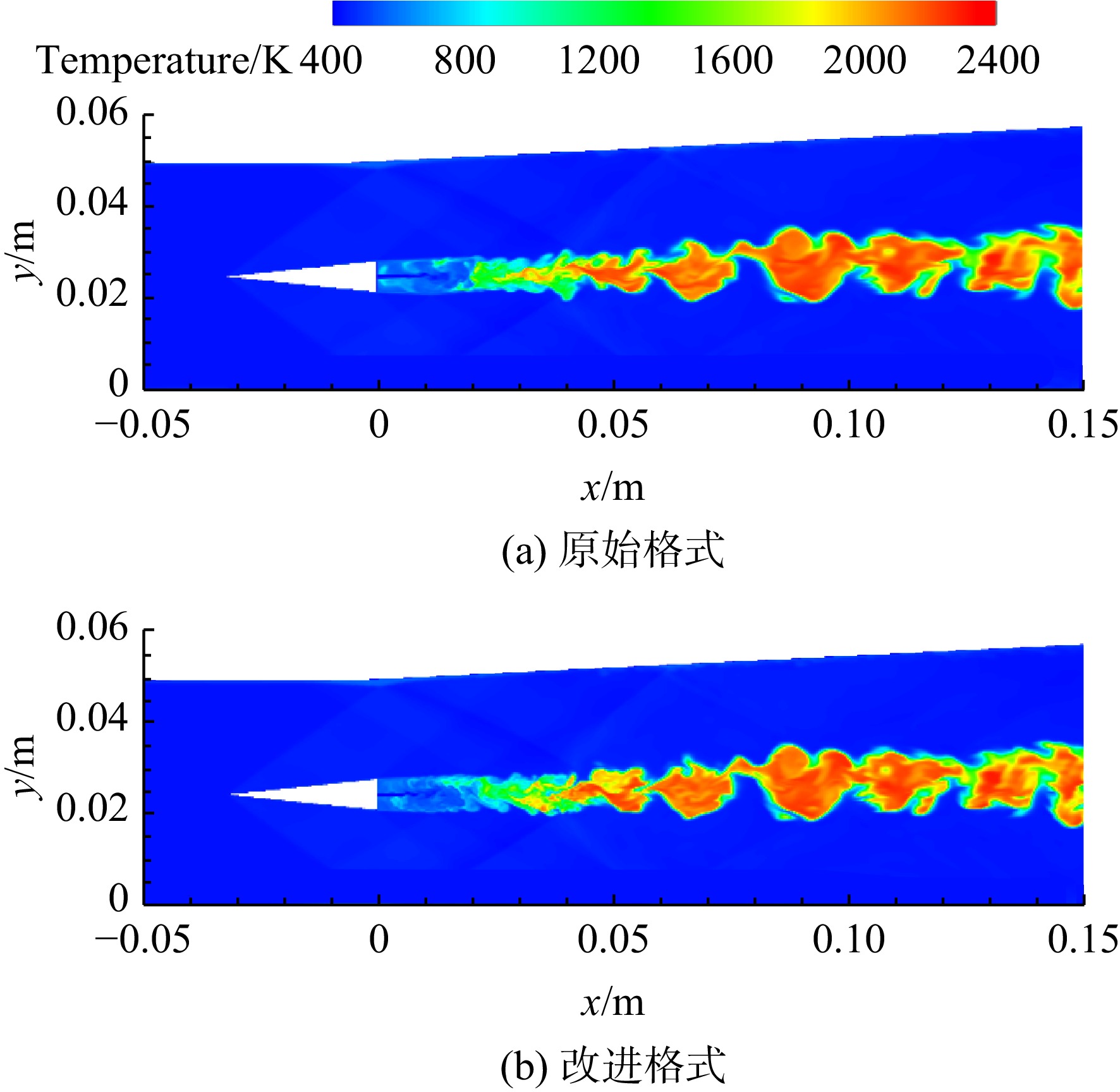
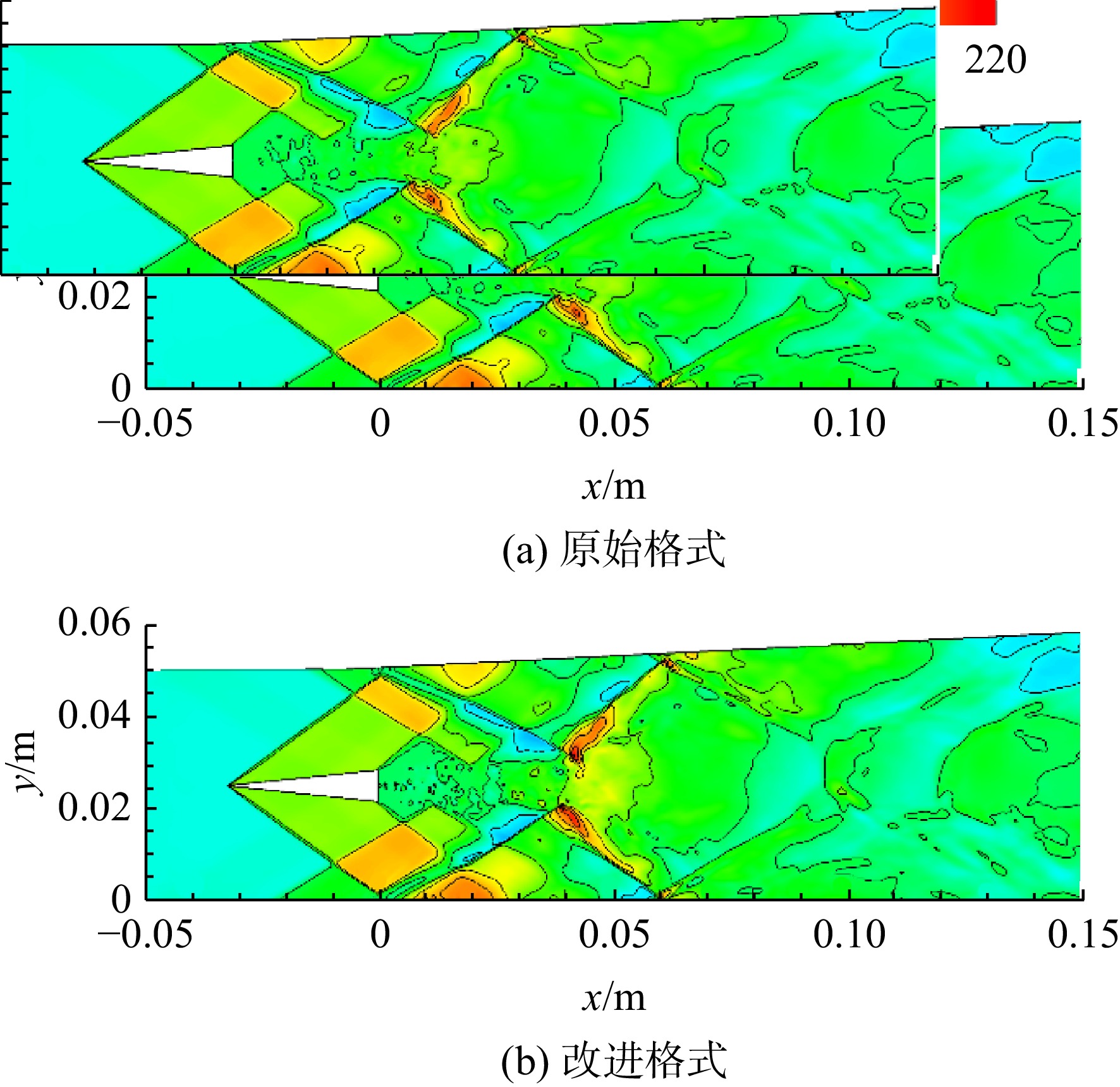
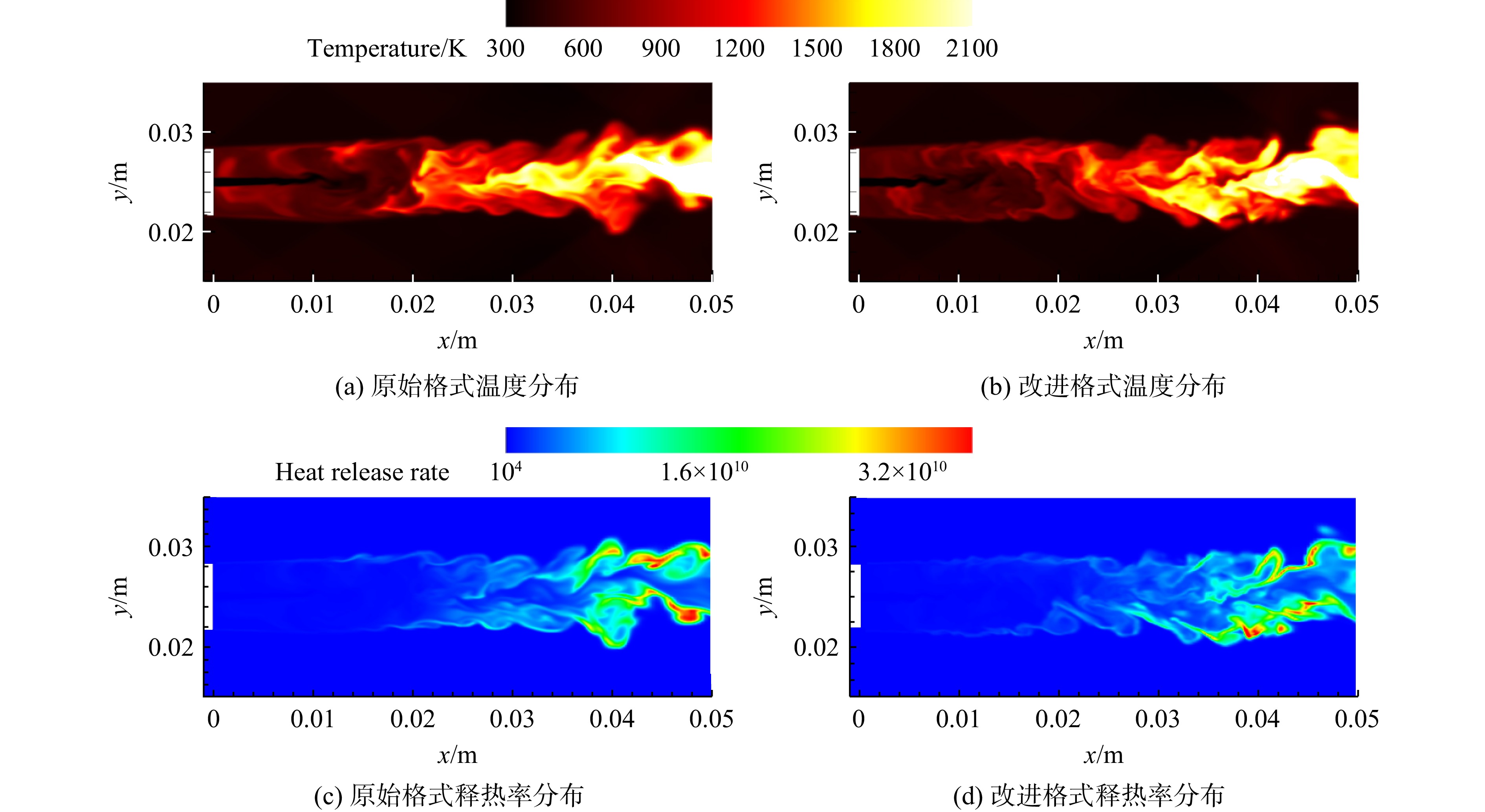
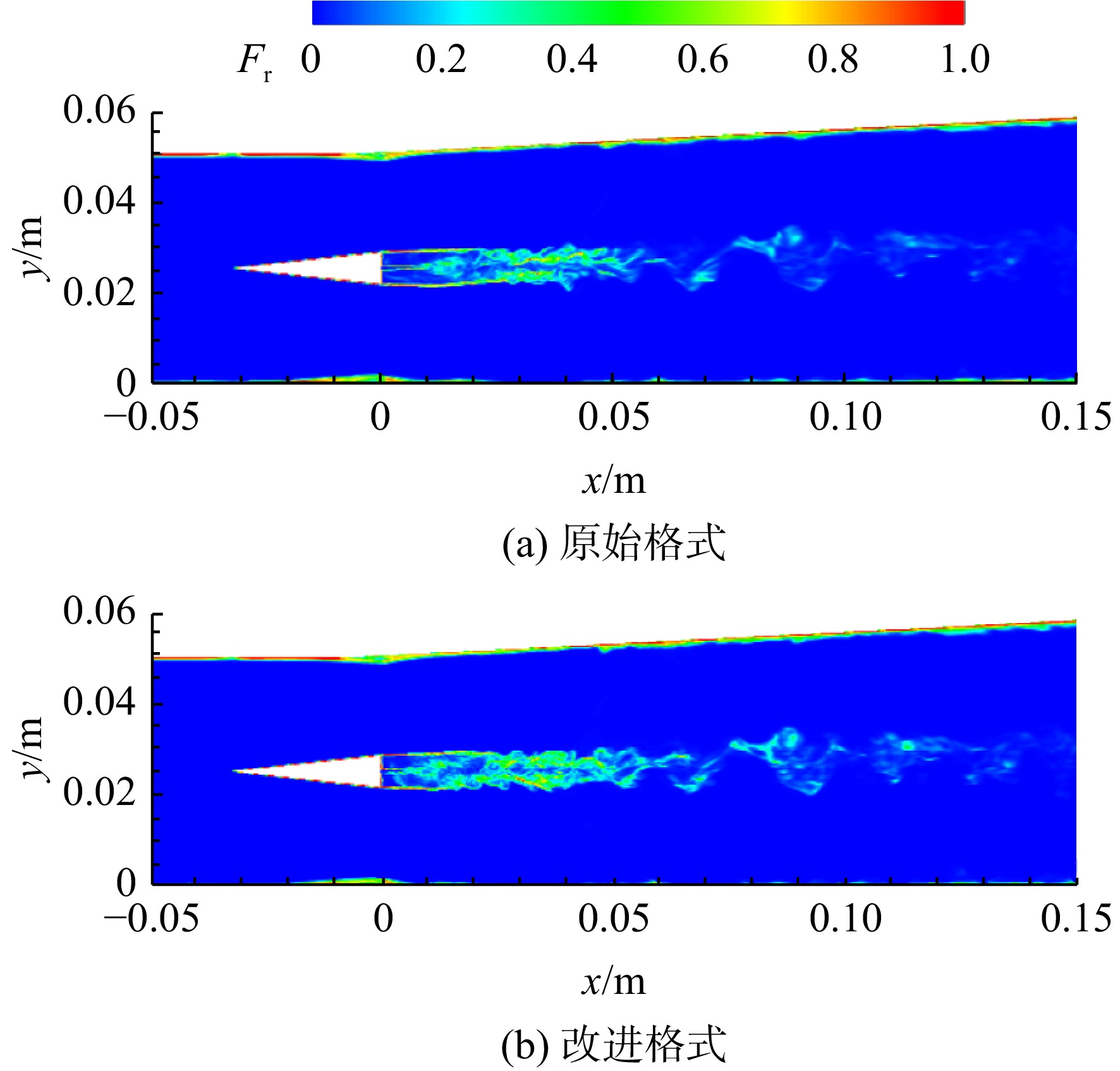
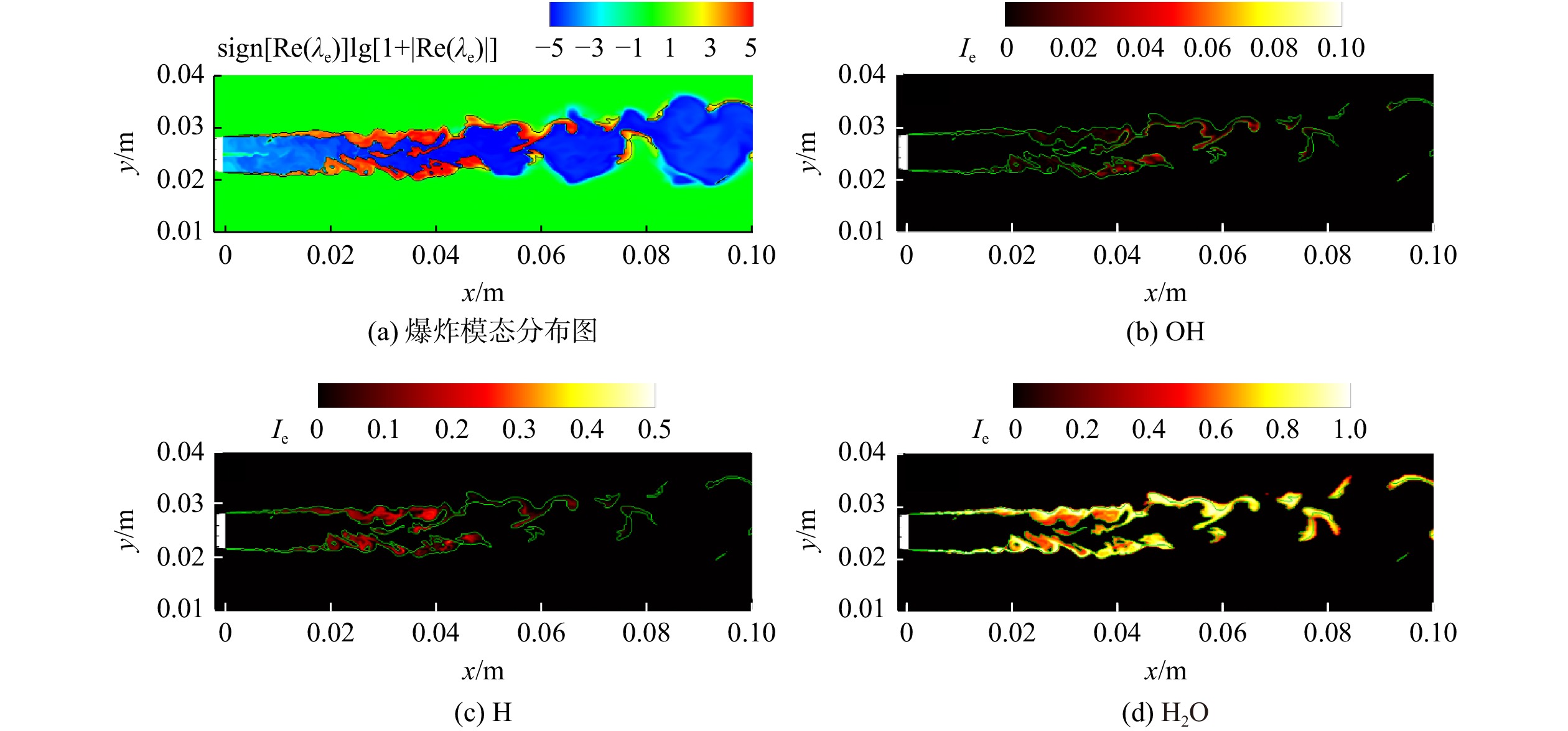
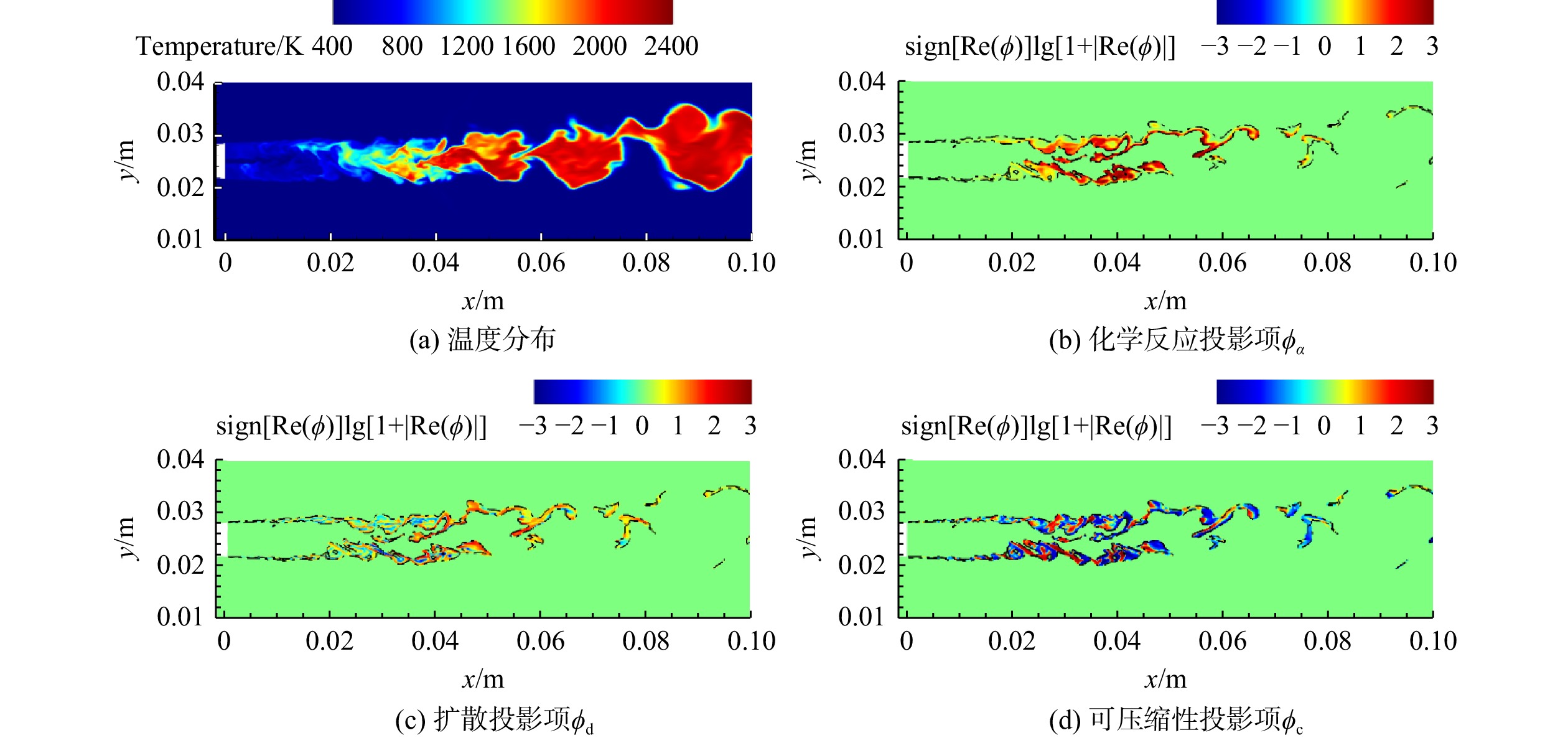
The very-large eddy simulation (VLES) method was used to simulate the supersonic flames in the strut-injection hydrogen combustor of Germany’s Aerospace Centre (DLR), and the flame stabilization mechanism was analyzed by the conservative representation of chemical explosive mode analysis (CCEMA) method. The VLES turbulent model based on the k-ω shear stress transport (SST) model and the hybrid turbulent combustion model based on the Ingenito supersonic combustion model (ISCM) along with the partially stirred reactor (PaSR) model were adopted in this study. The time-averaged temperature and streamwise velocity profiles predicted by the numerical methods were in good agreement with the experiment. In terms of discretization method, a modified low dissipation shock-capturing scheme with better shock-capturing ability was proposed. Compared with the original scheme, the simulation fidelity of turbulence/flame structures in the ignition zone was further improved by the modified shock-capturing scheme. The flame diagnostic also showed that the component diffusion, chemical reaction and shock compression effects played positive roles in promoting the explosion mode before the flame onset location. In addition, the thermal explosion effect was more intensive than the radical explosion, indicating that the flame stability mode in the DLR combustor is a diffusion and compression effects assisted-ignition mode.

Numerical simulation of non-gray gaseous radiative heat transfer in 3D aero-engine combustor
HE Junyi, ZHANG Jin, WANG Xiying
2023, 38(9): 2153-2166. doi: 10.13224/j.cnki.jasp.20210469
Abstract:

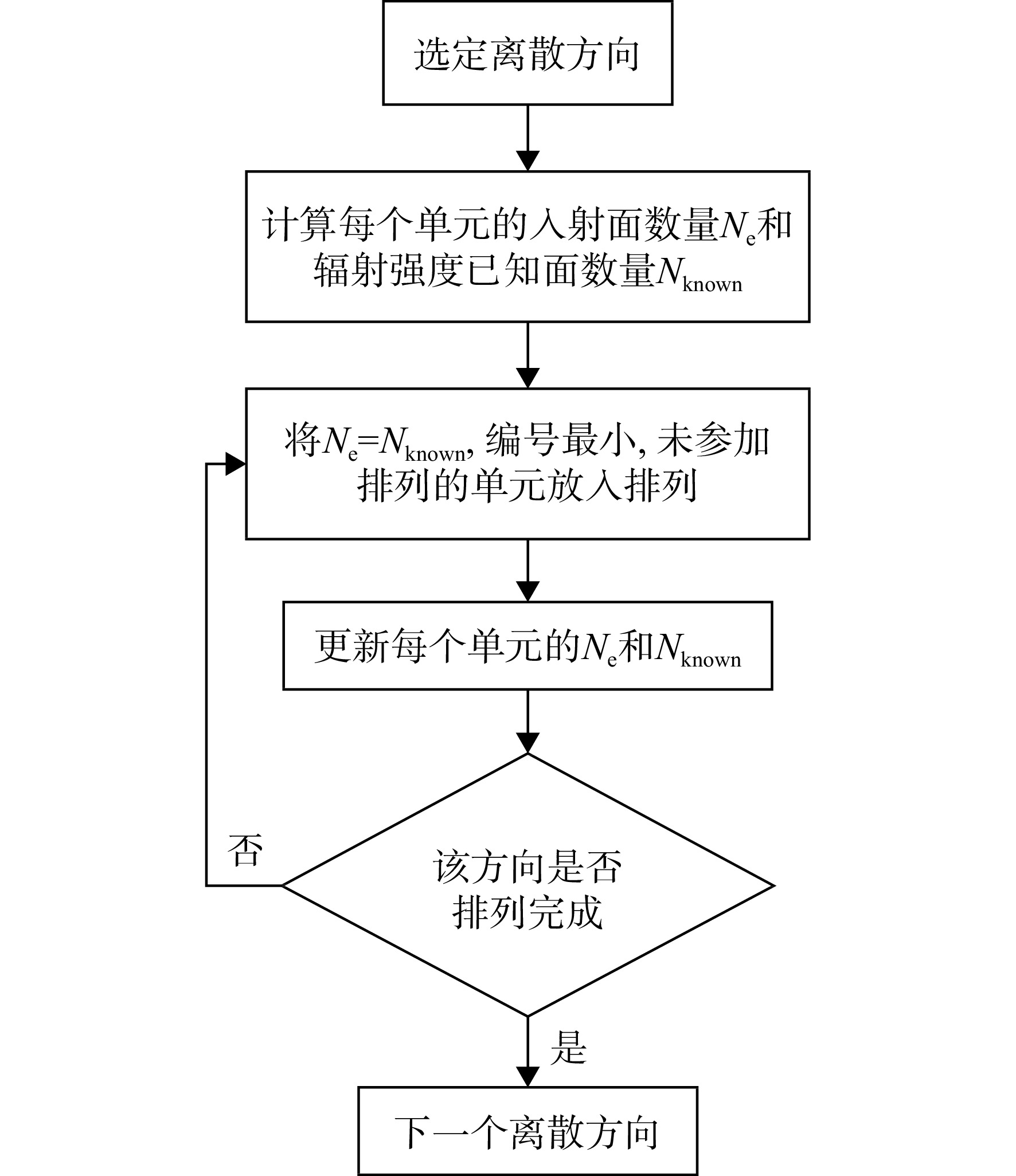
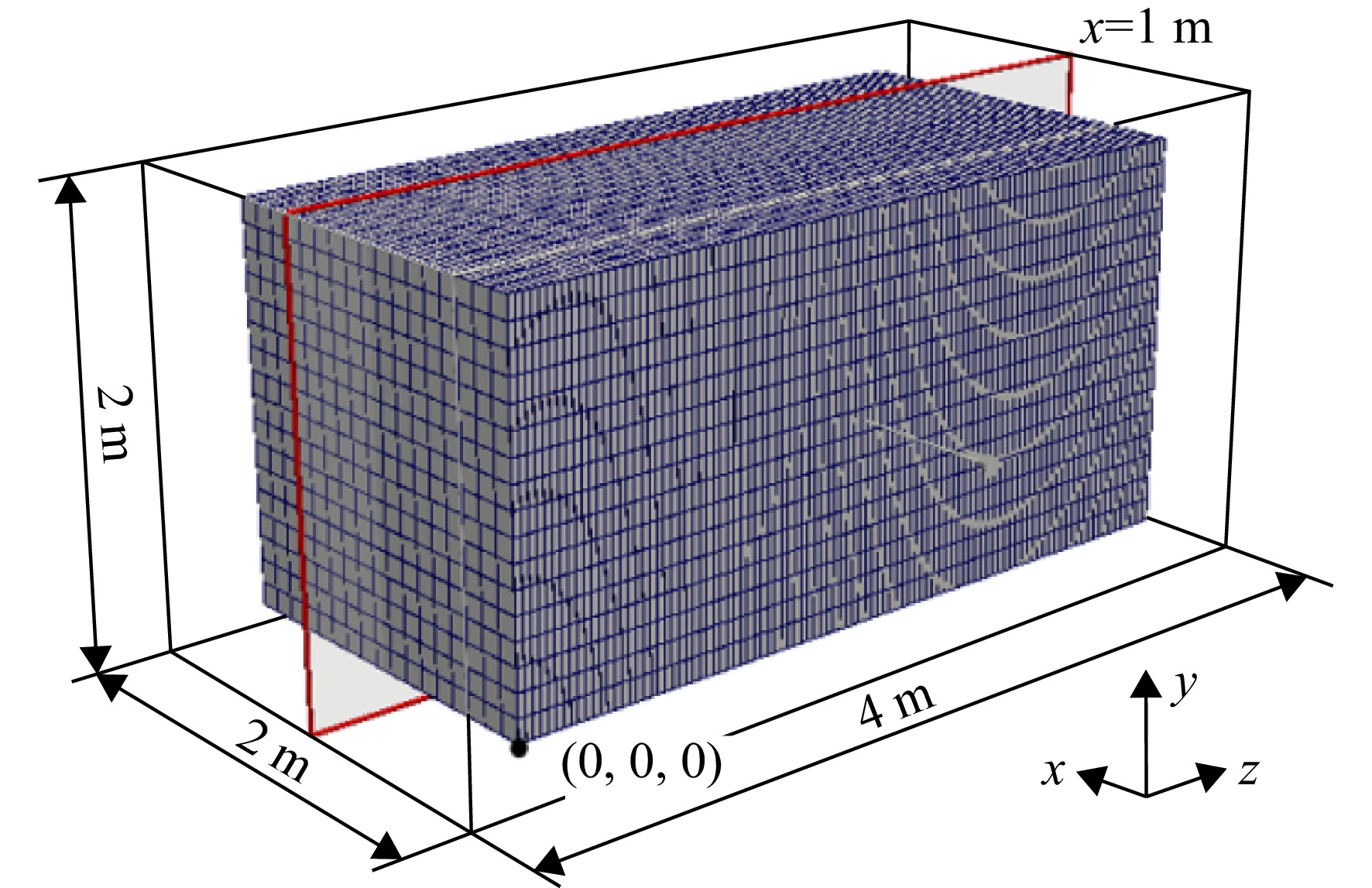
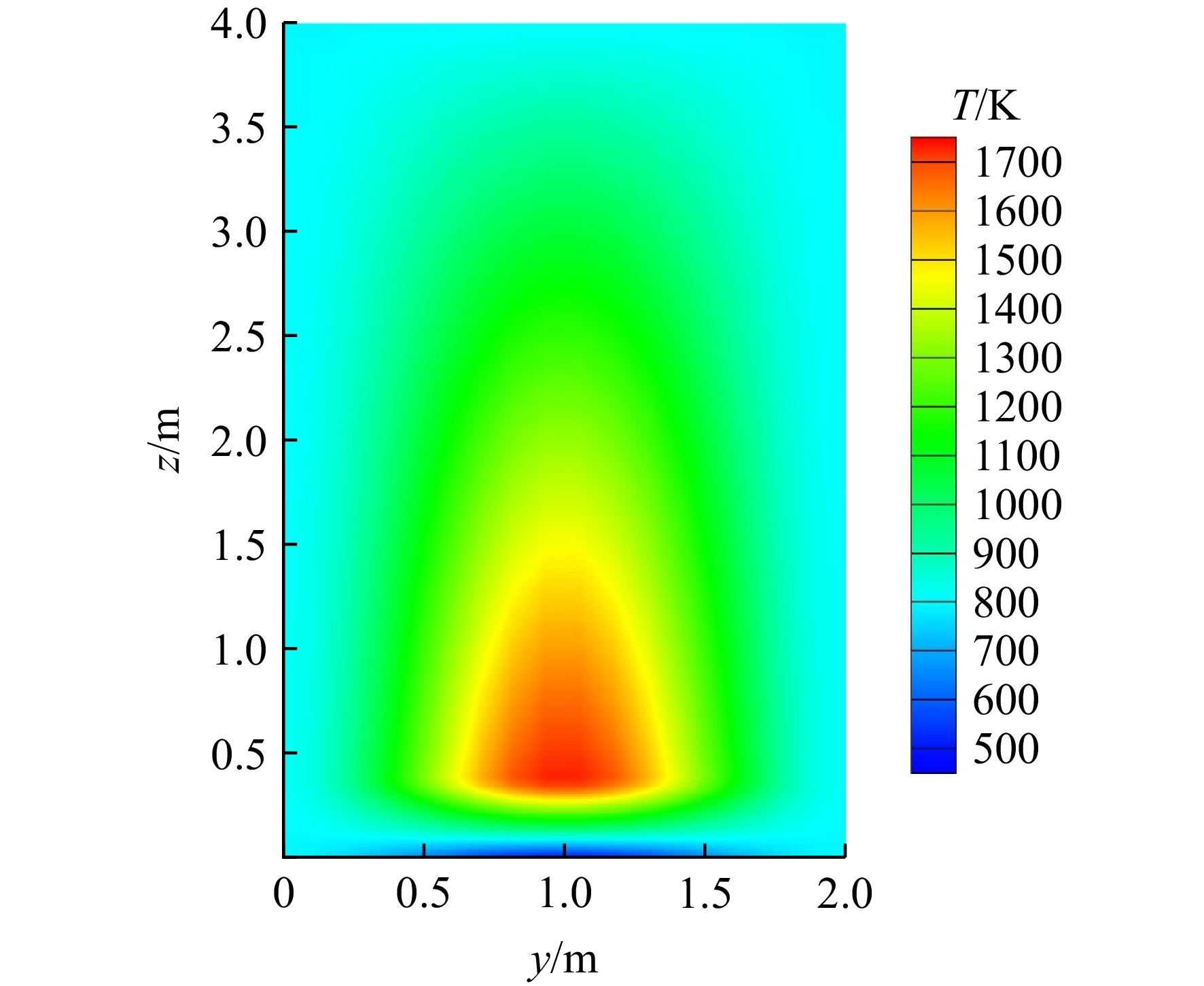
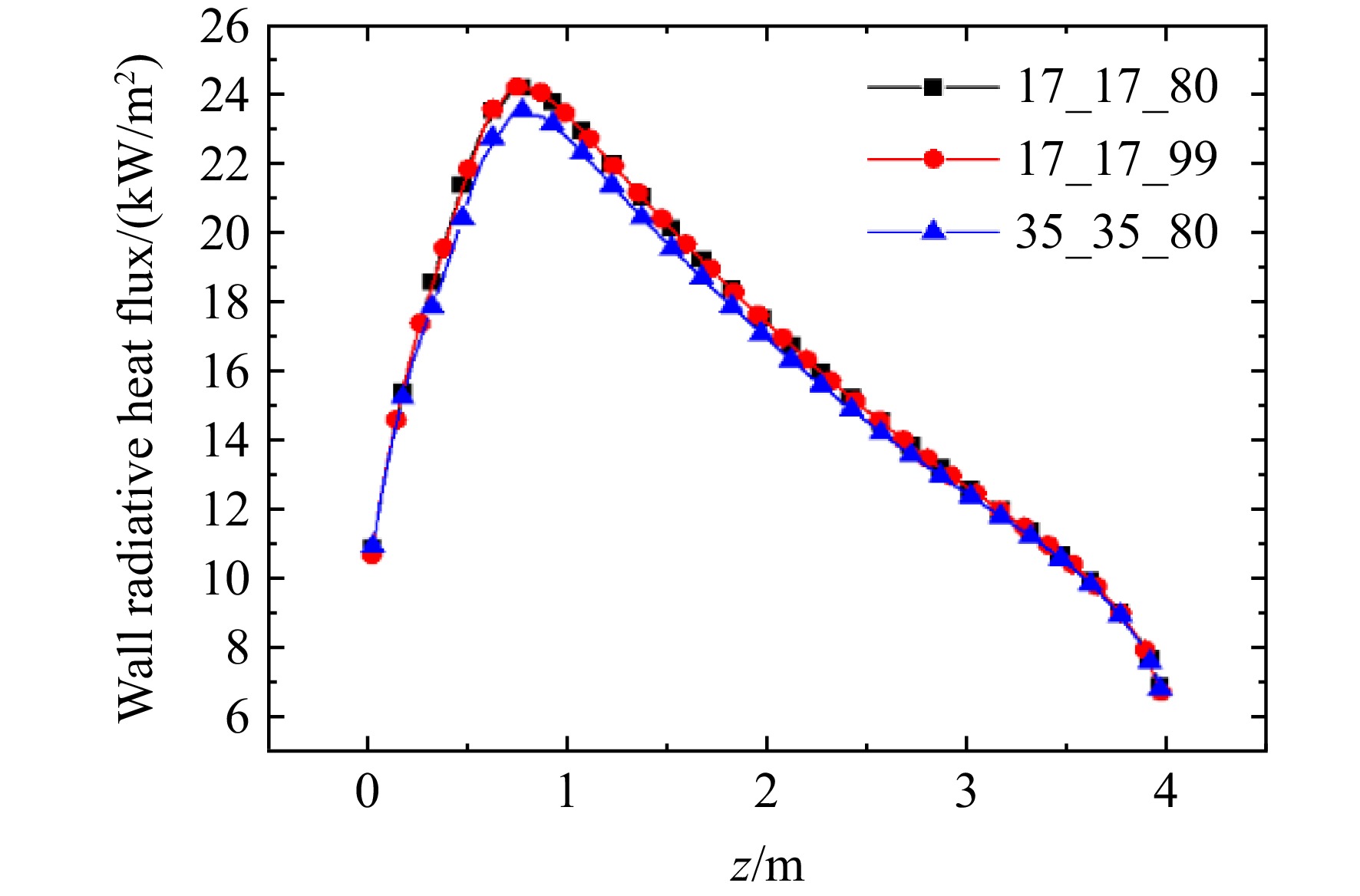
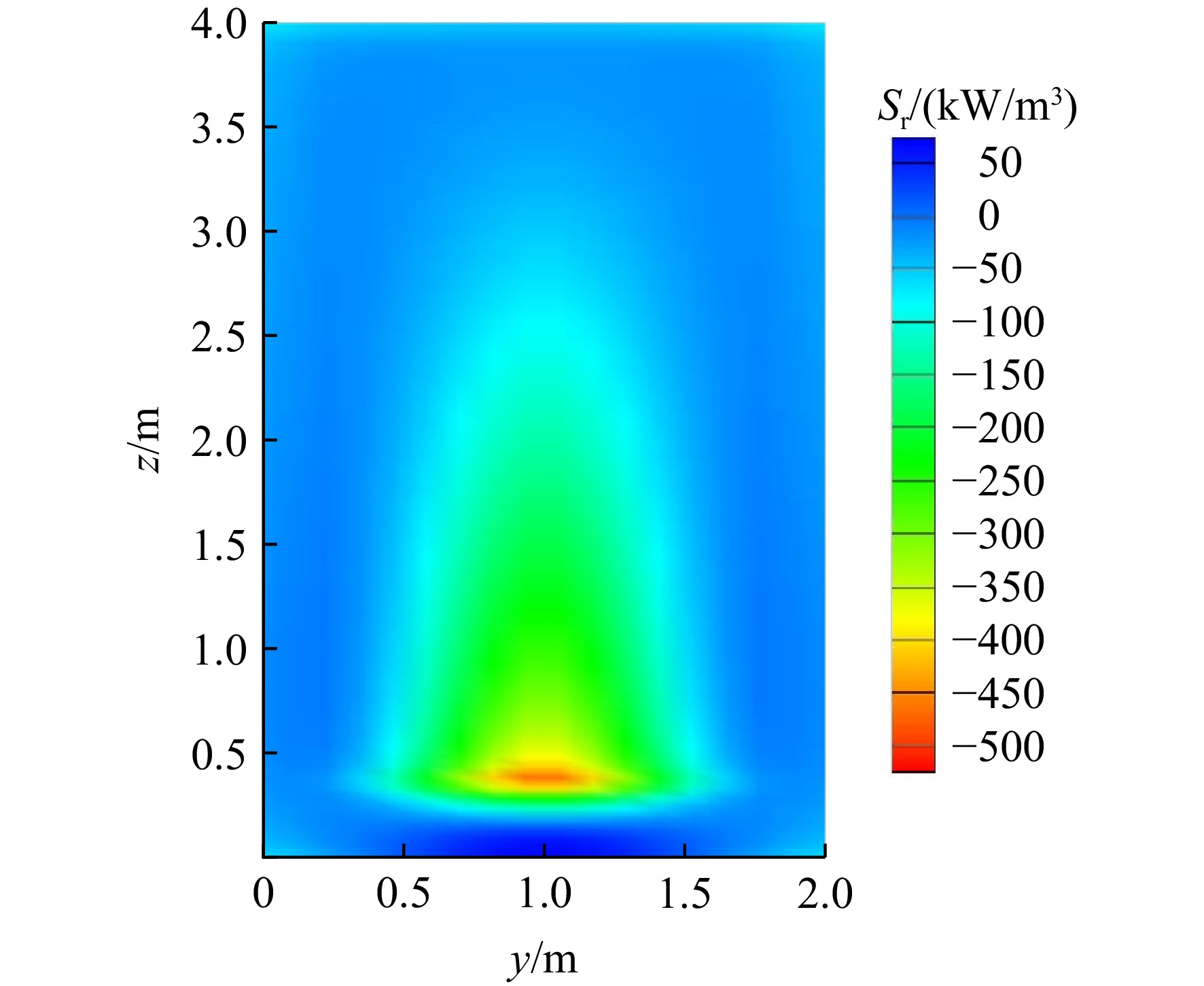
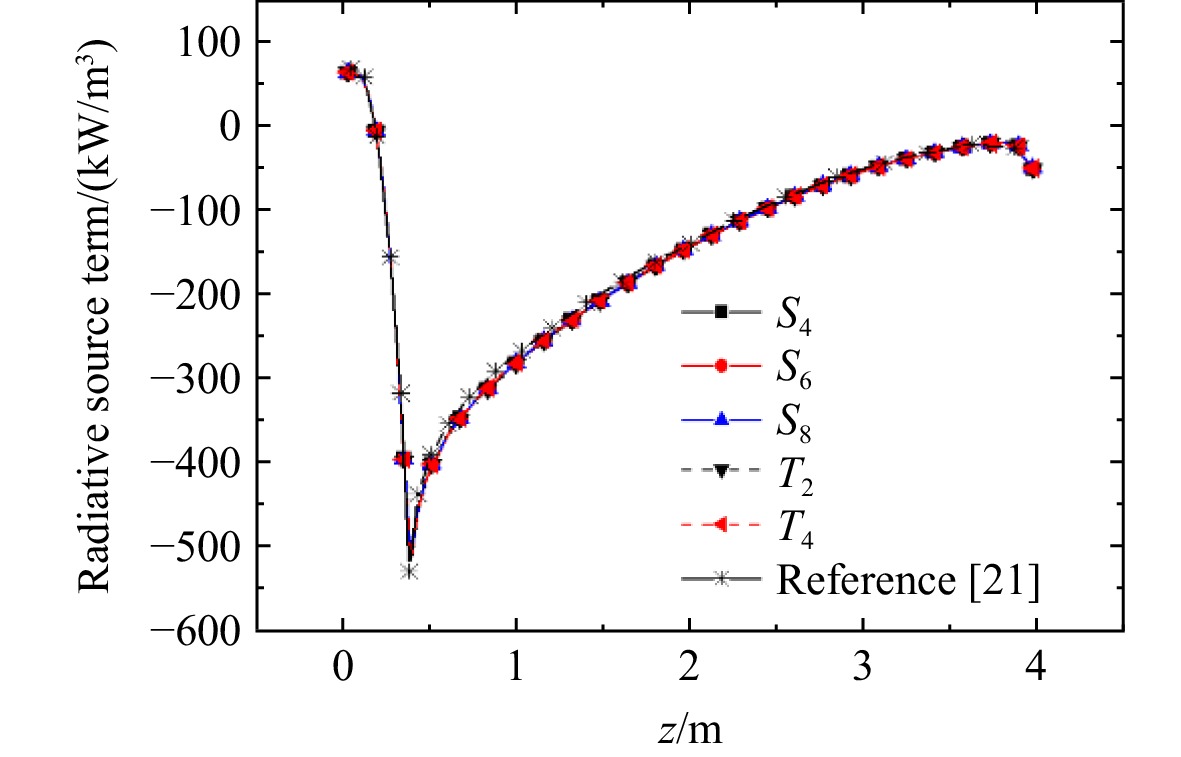
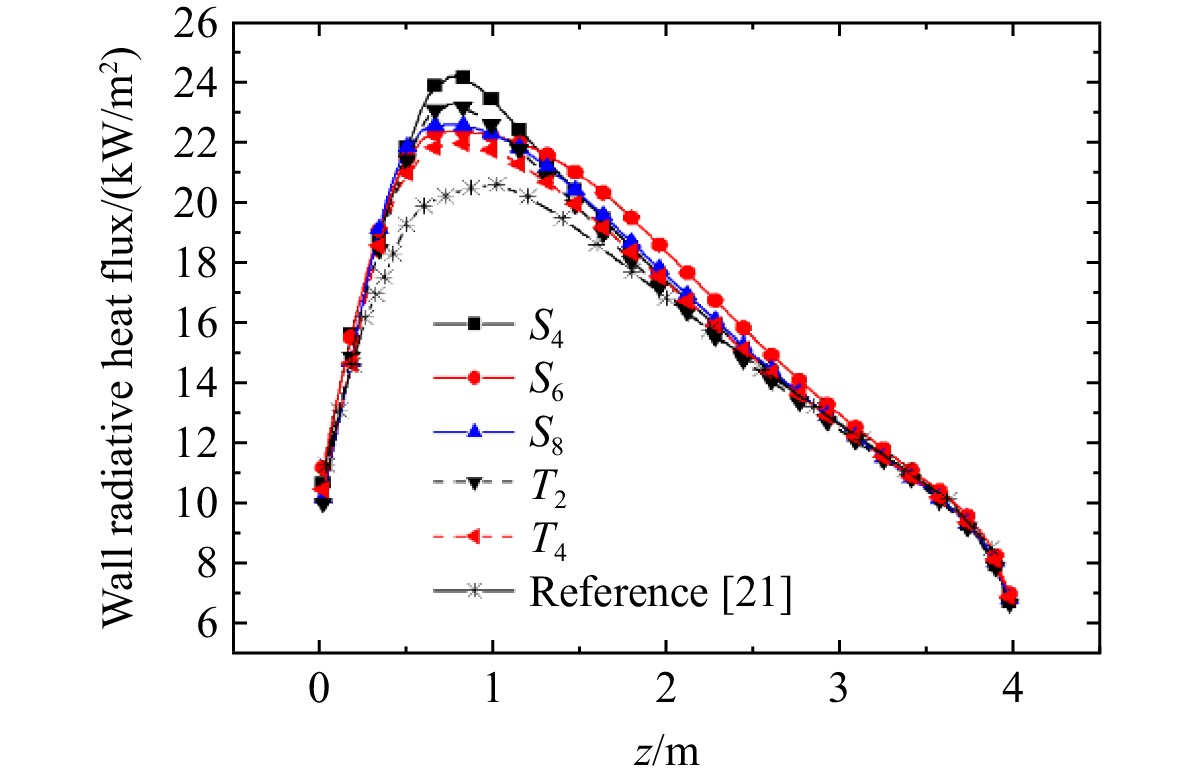
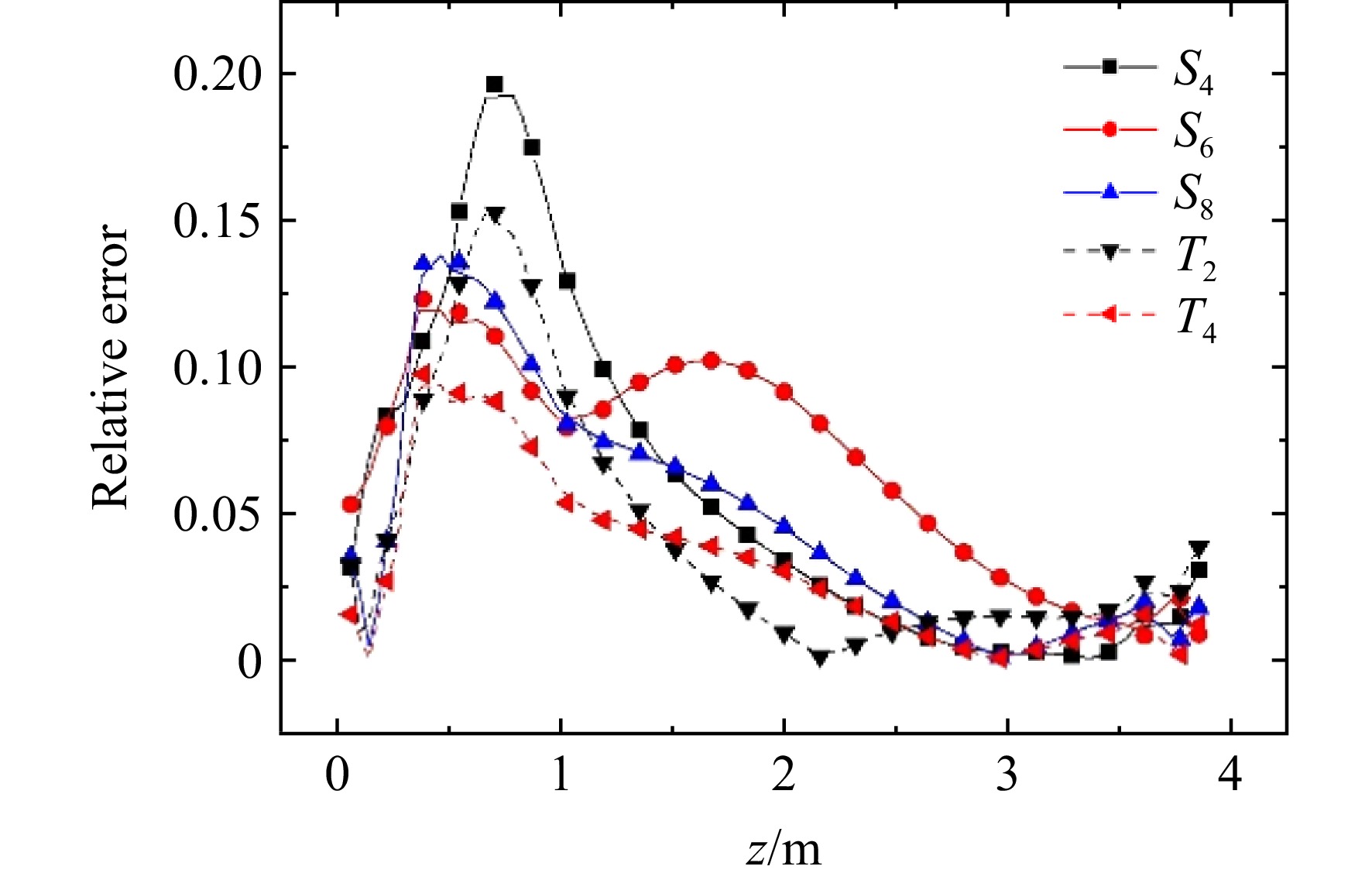
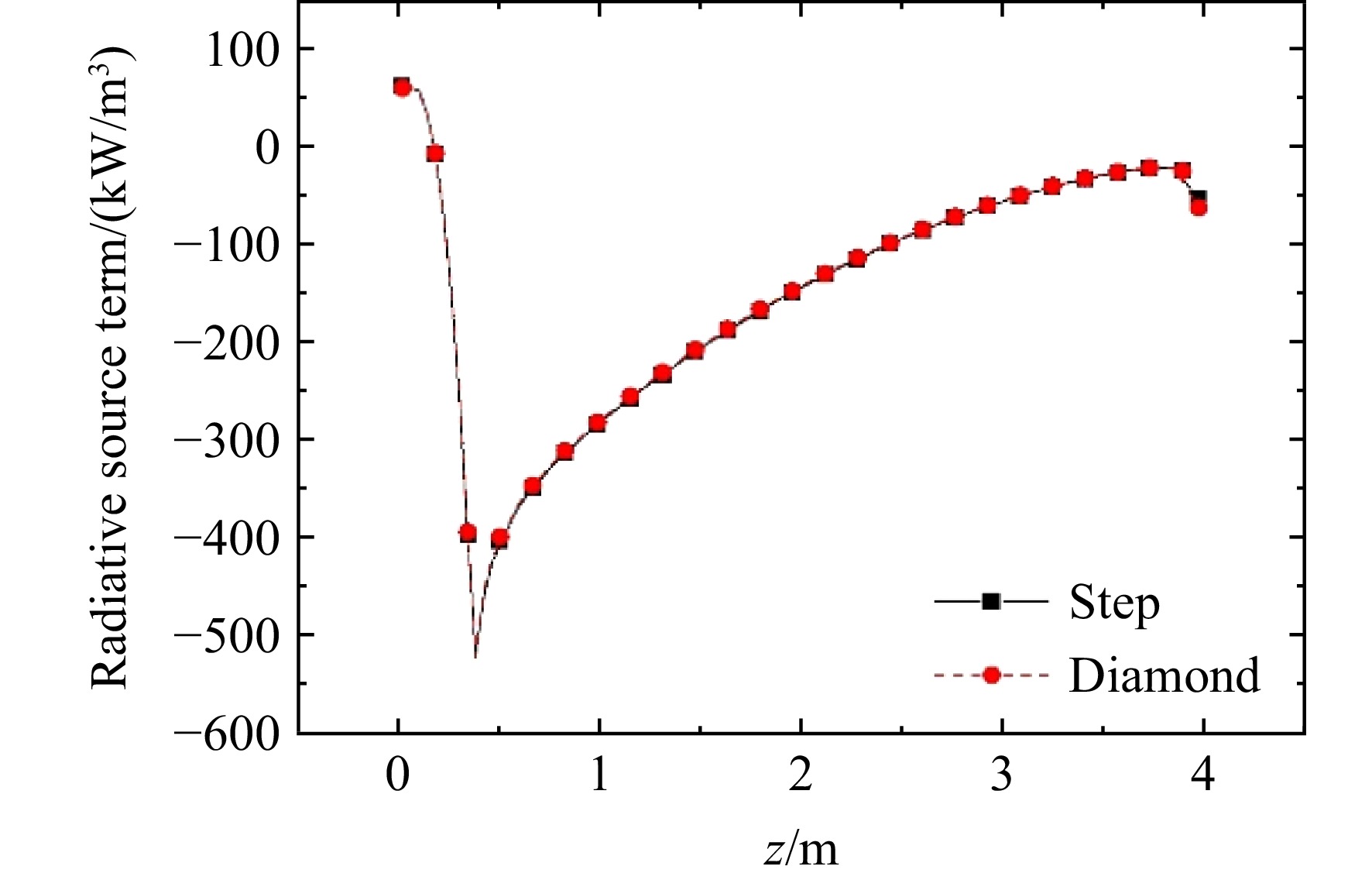
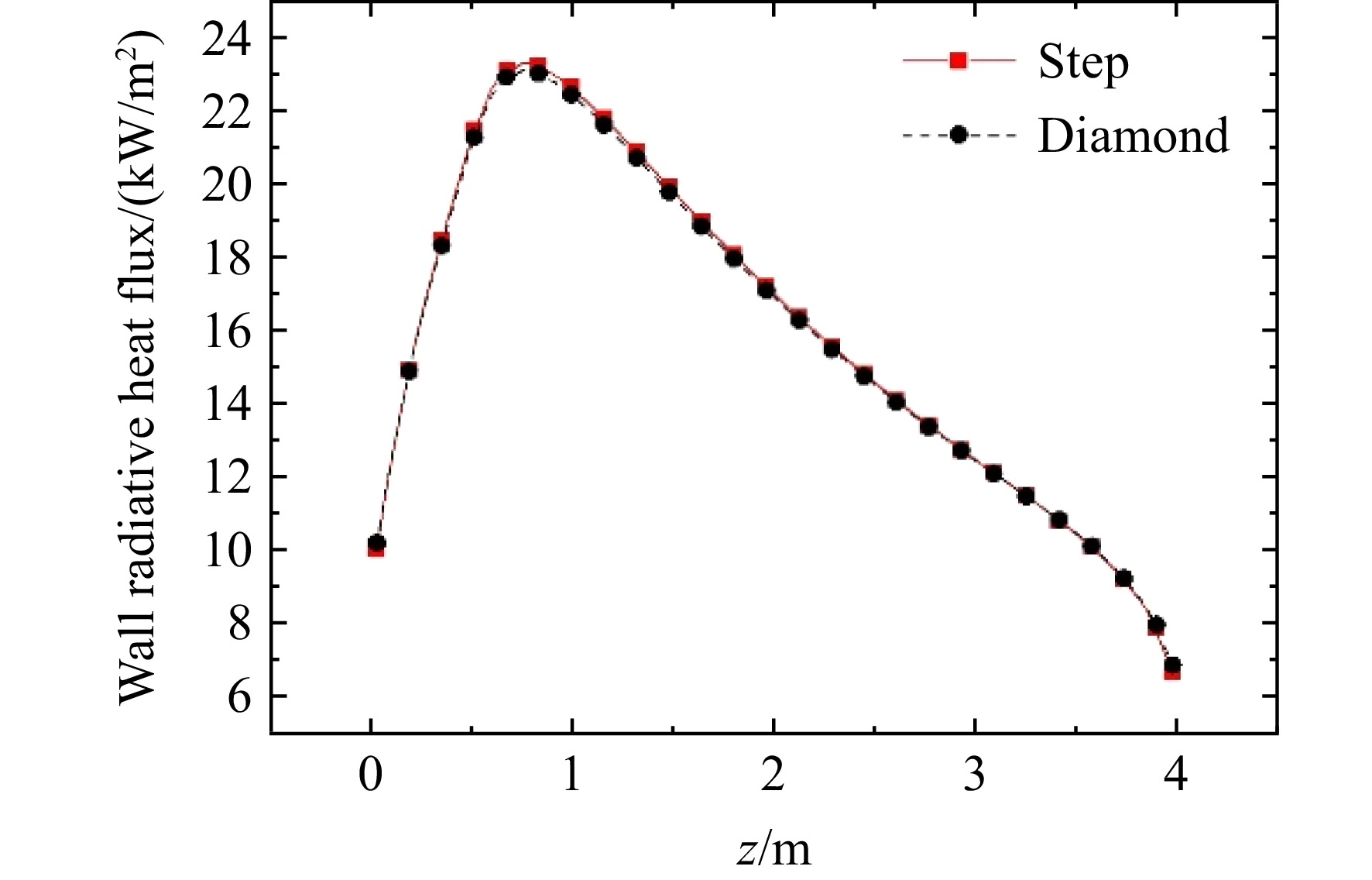
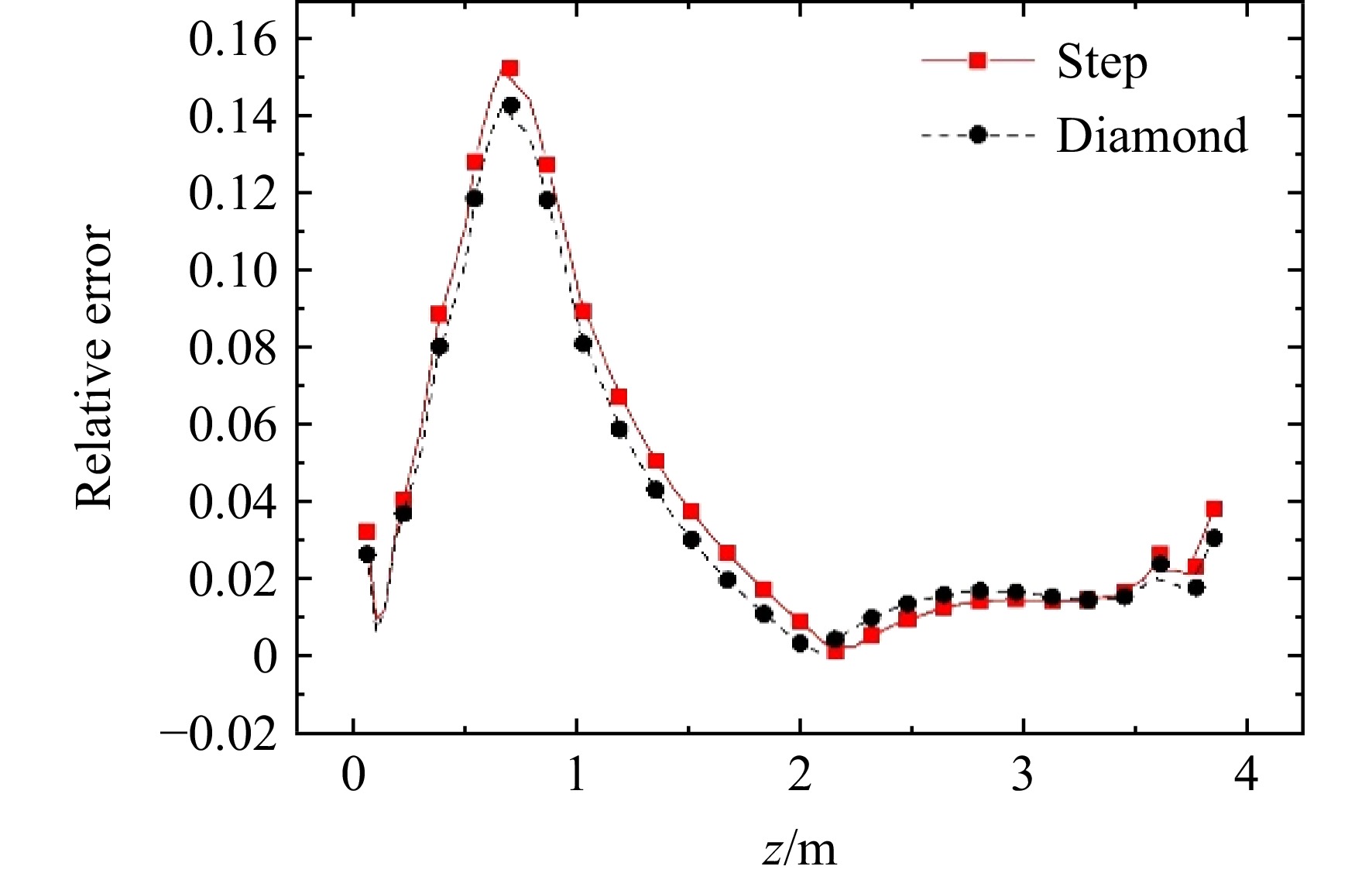
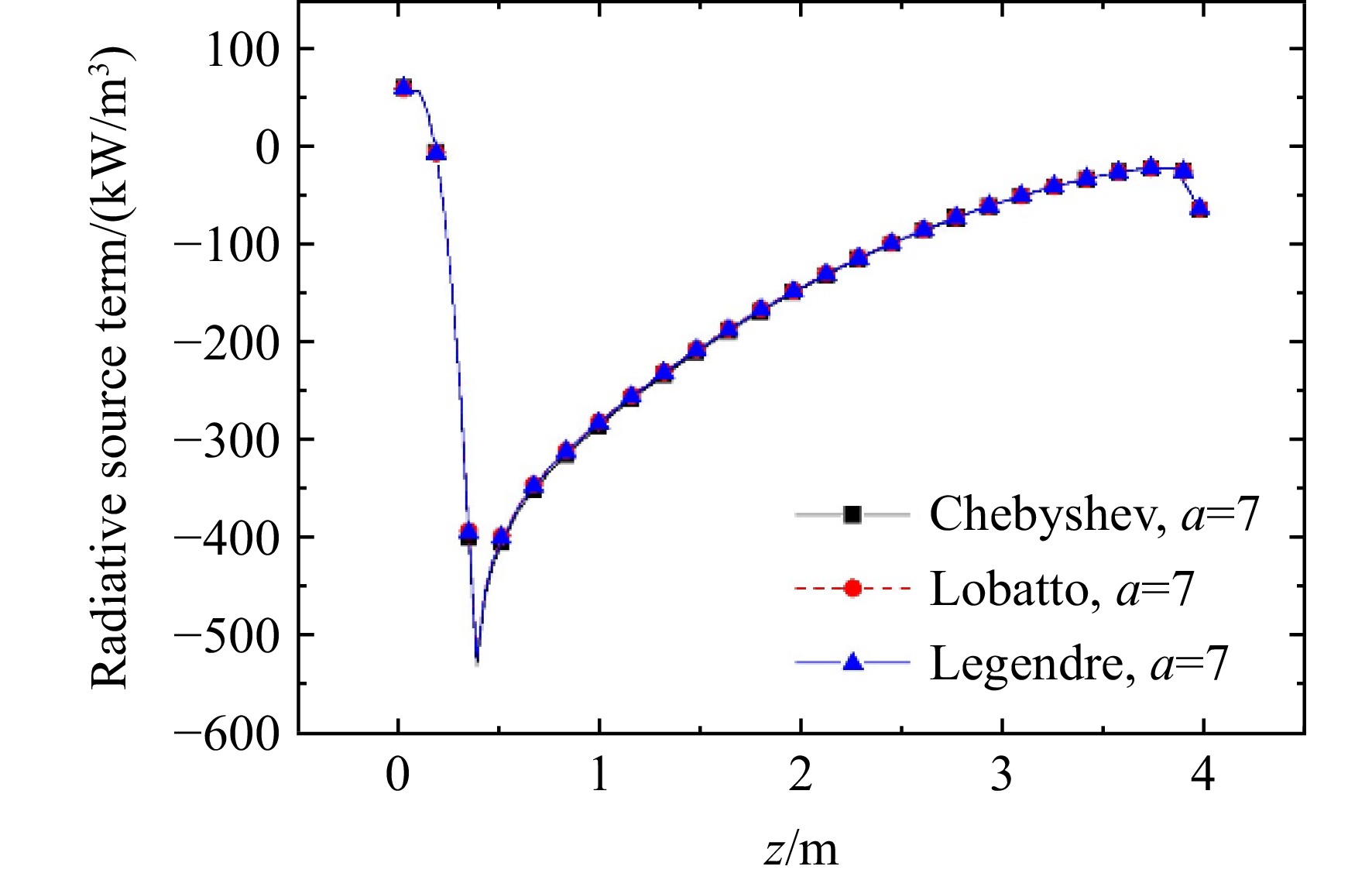
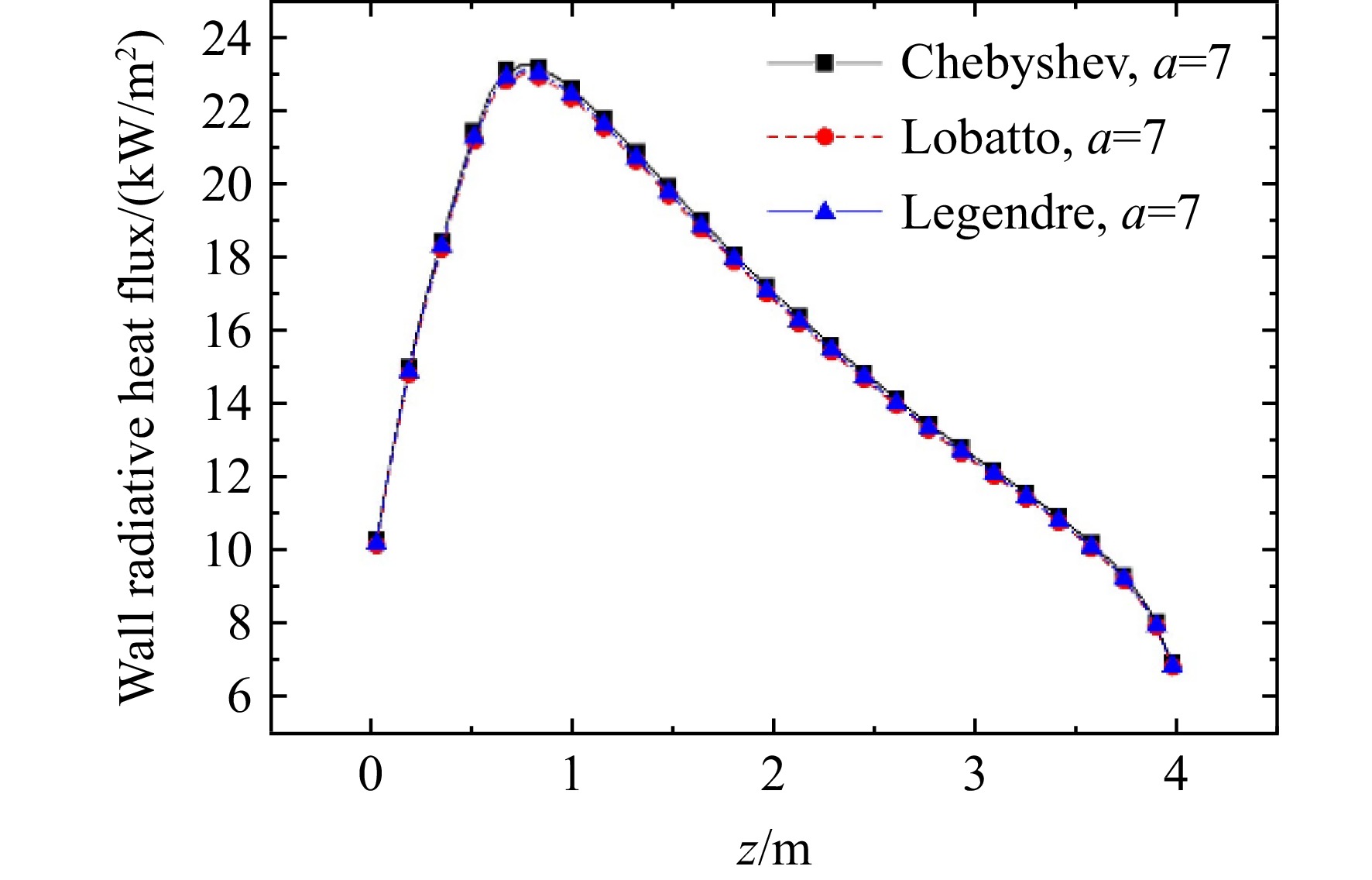
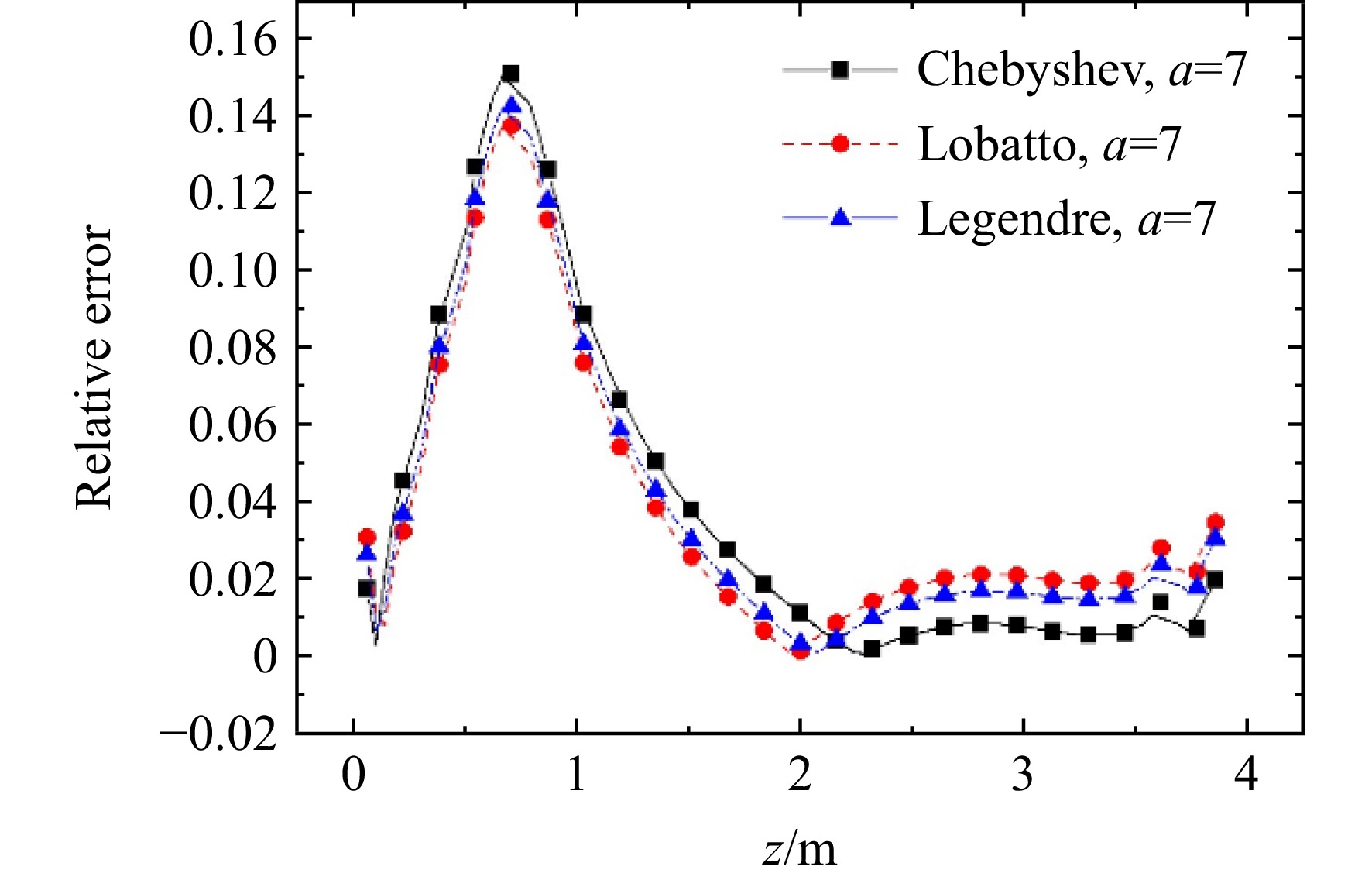
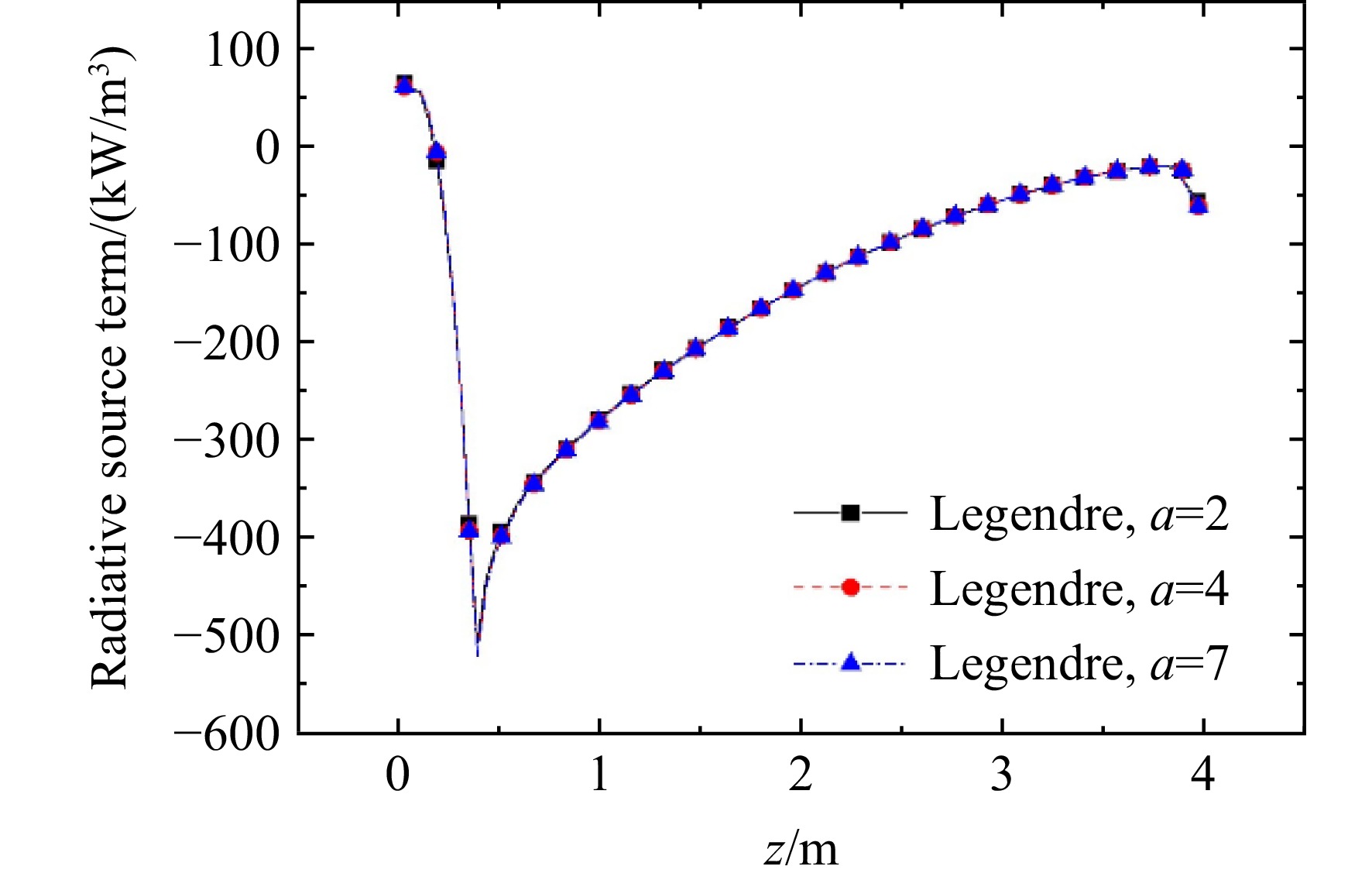
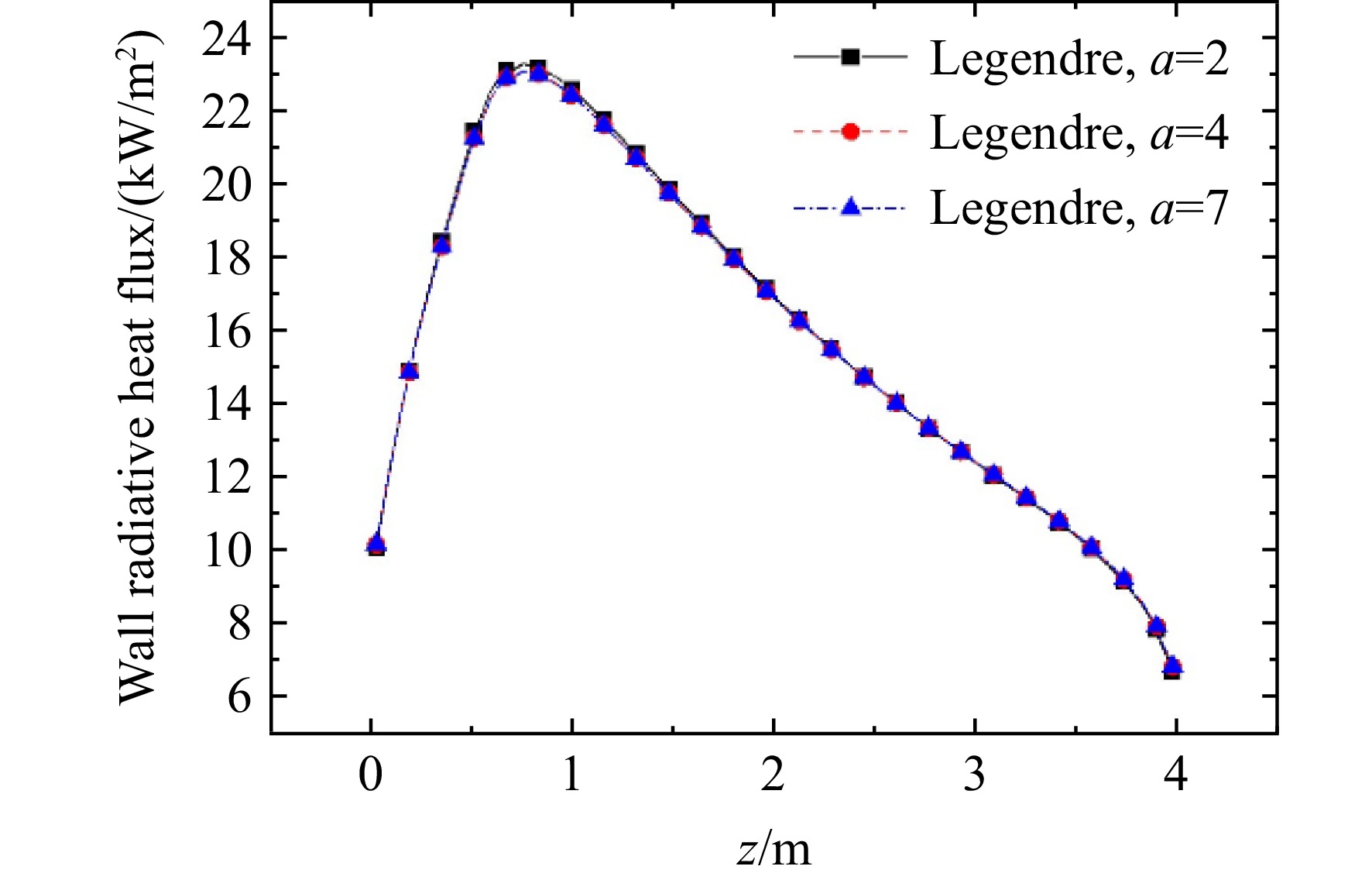
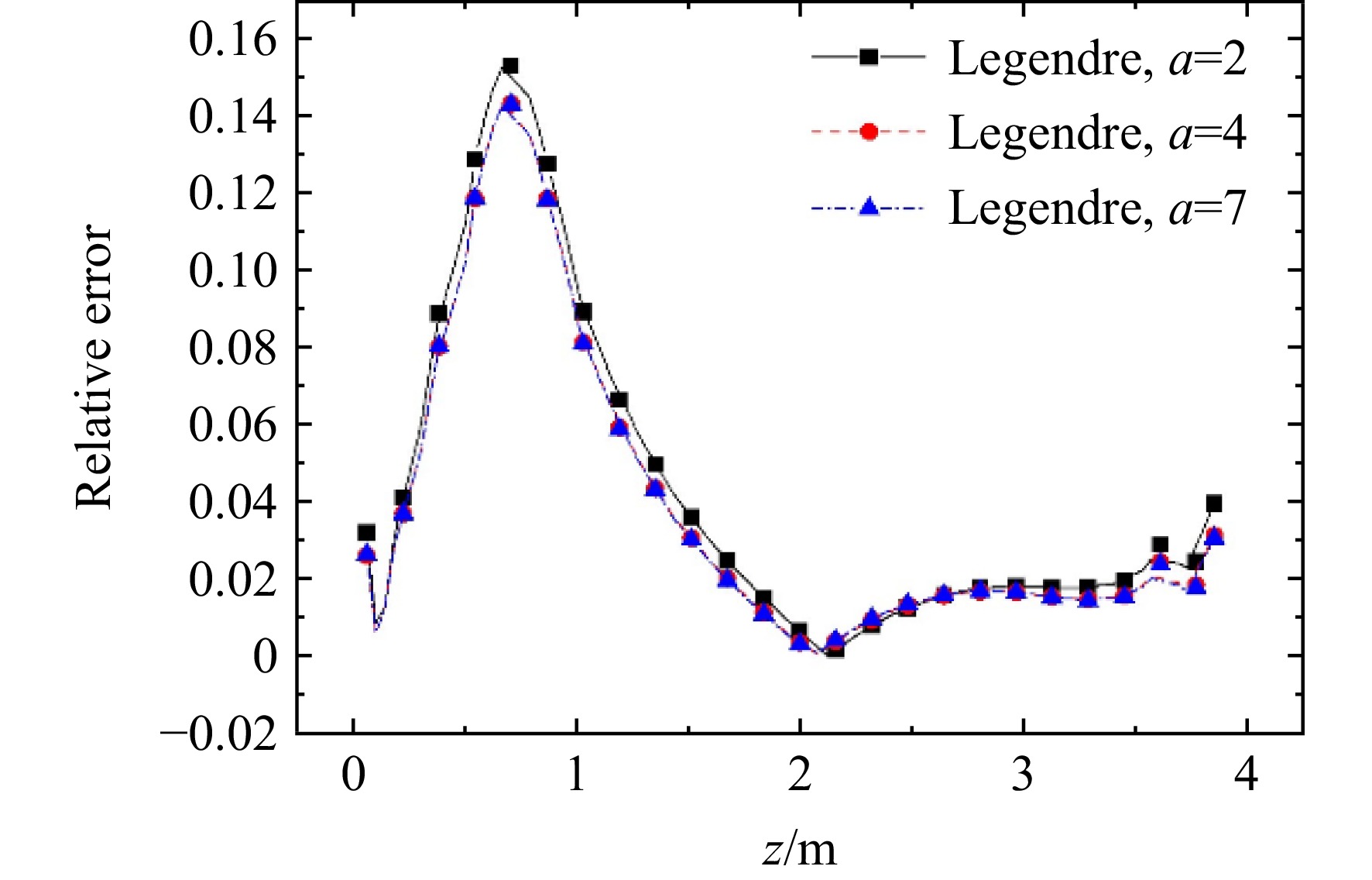
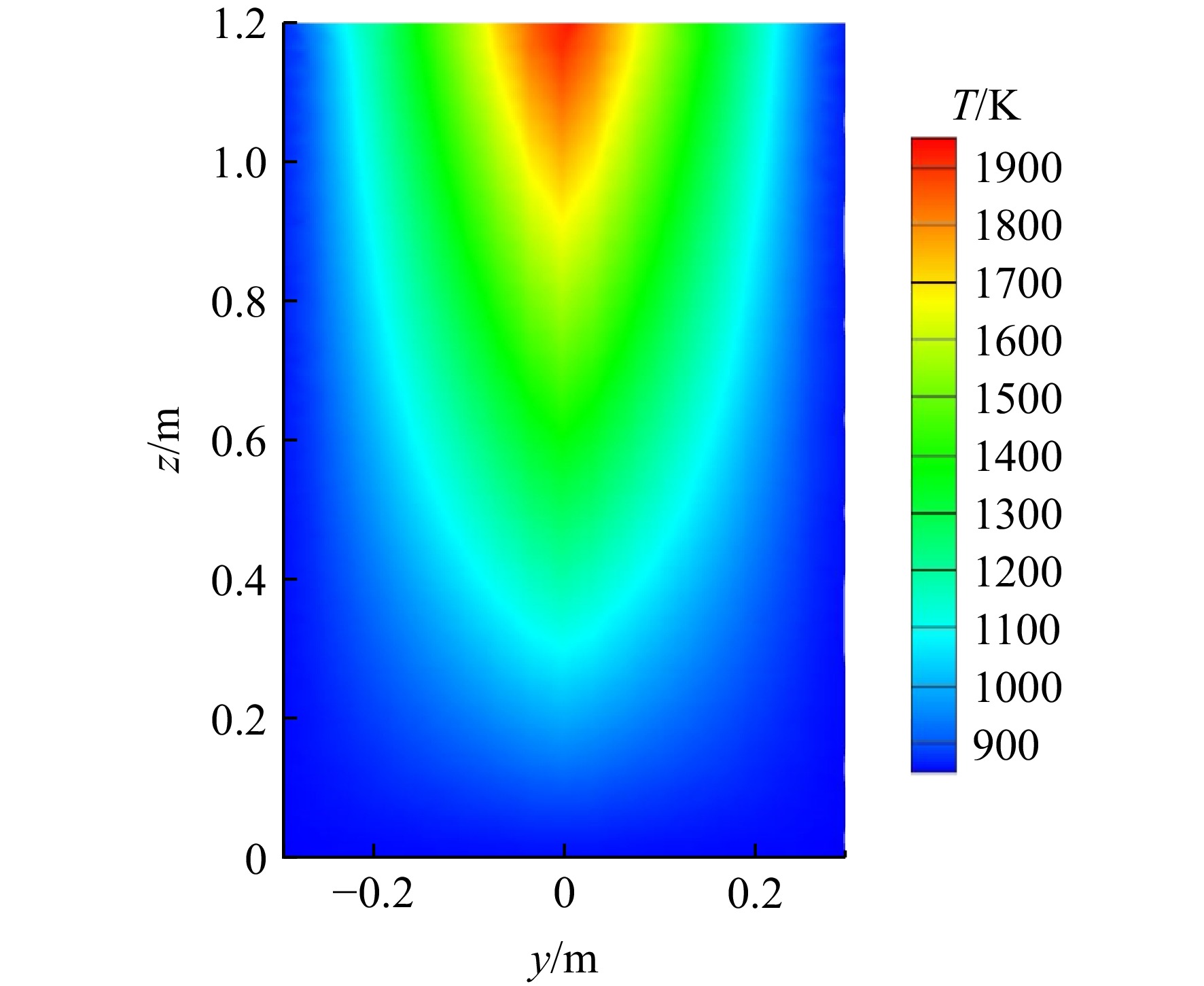
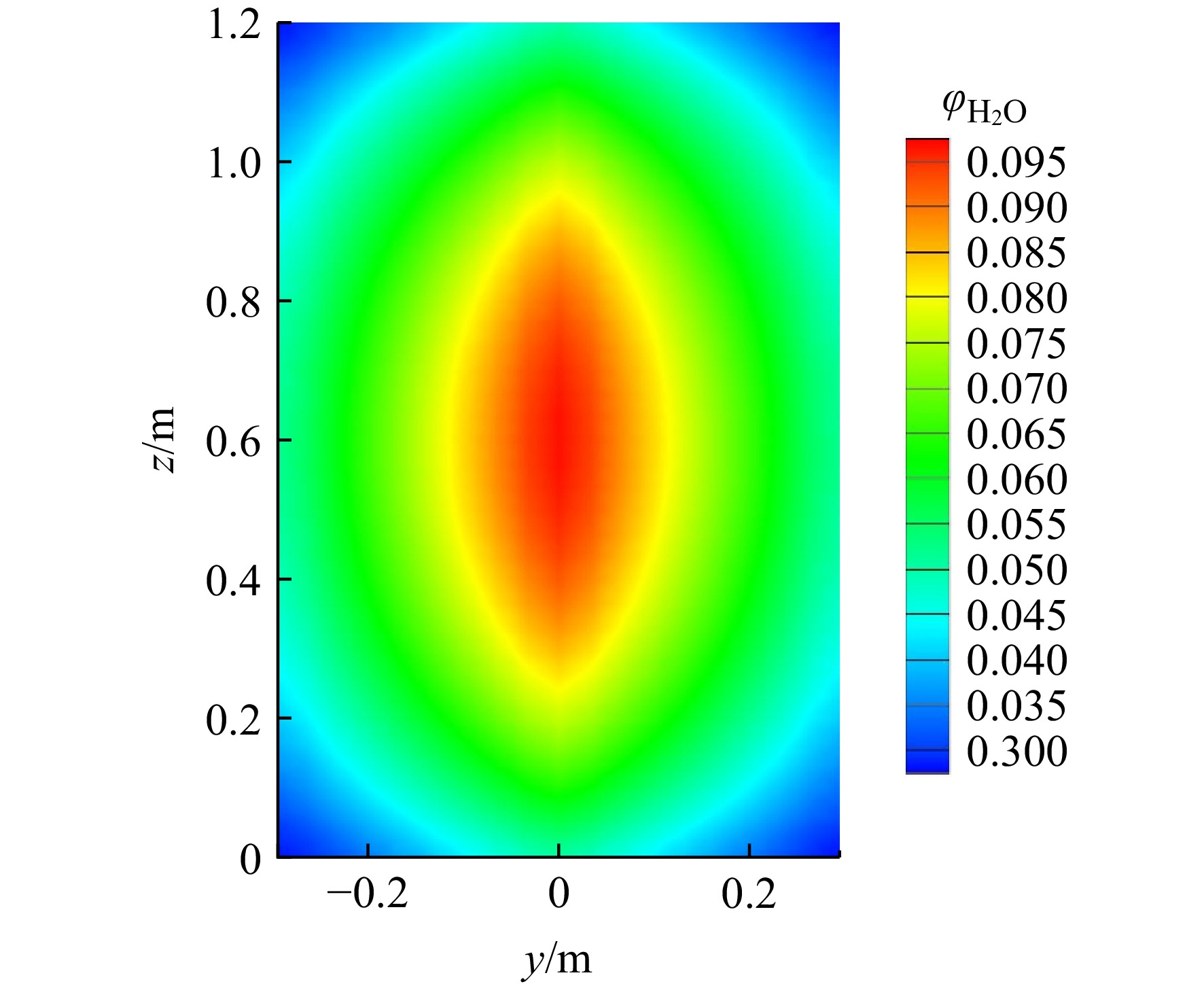
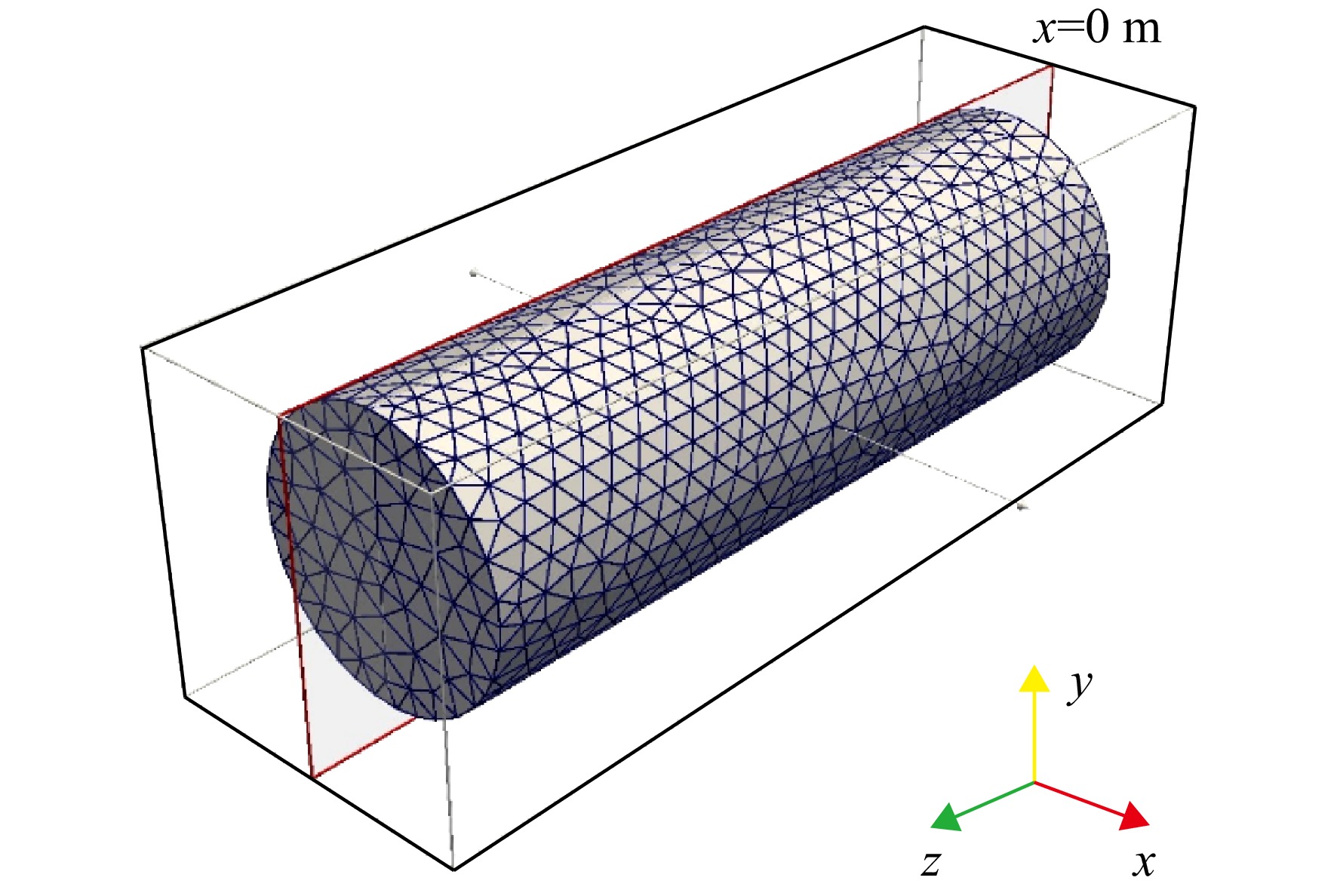
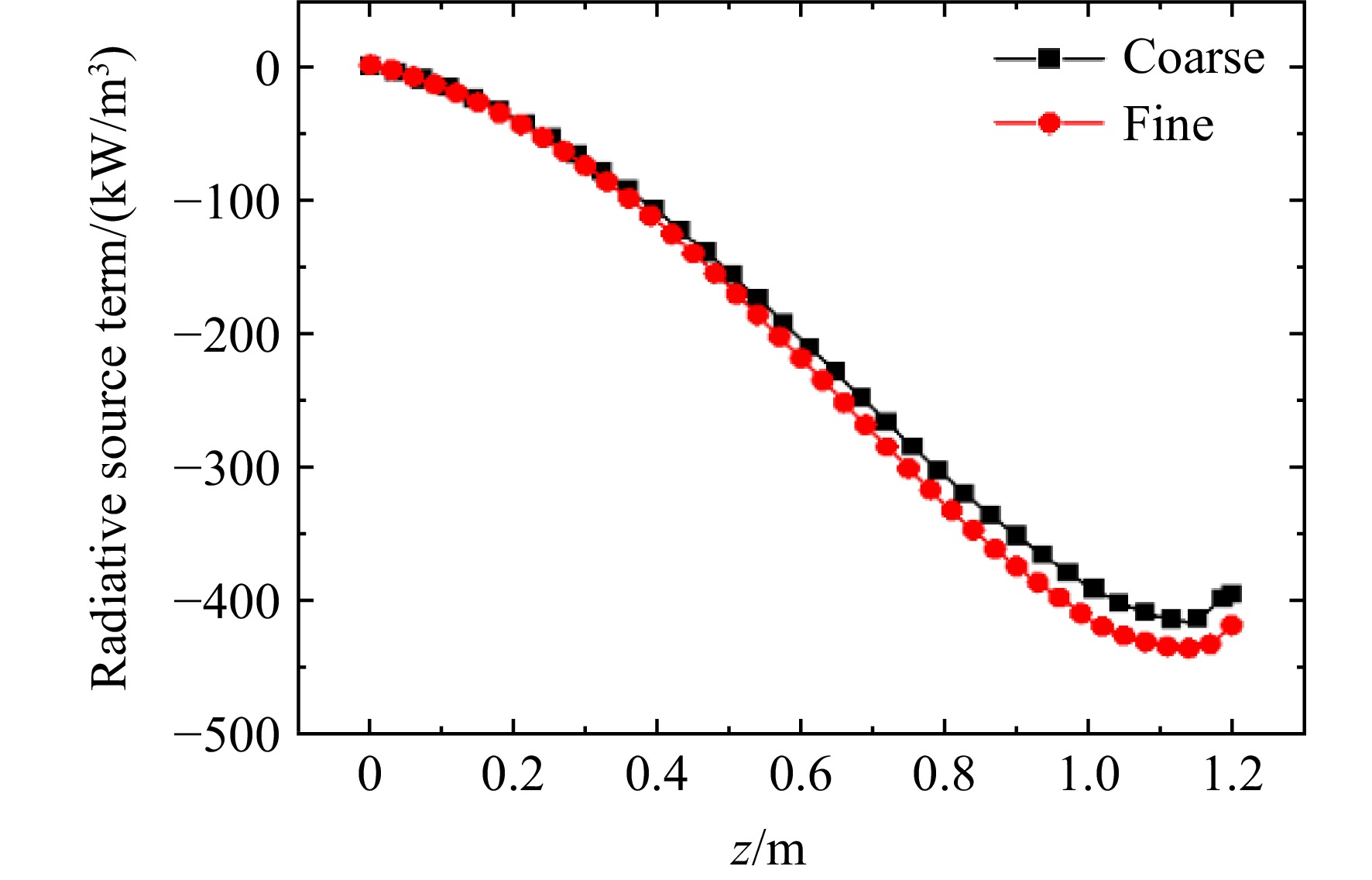
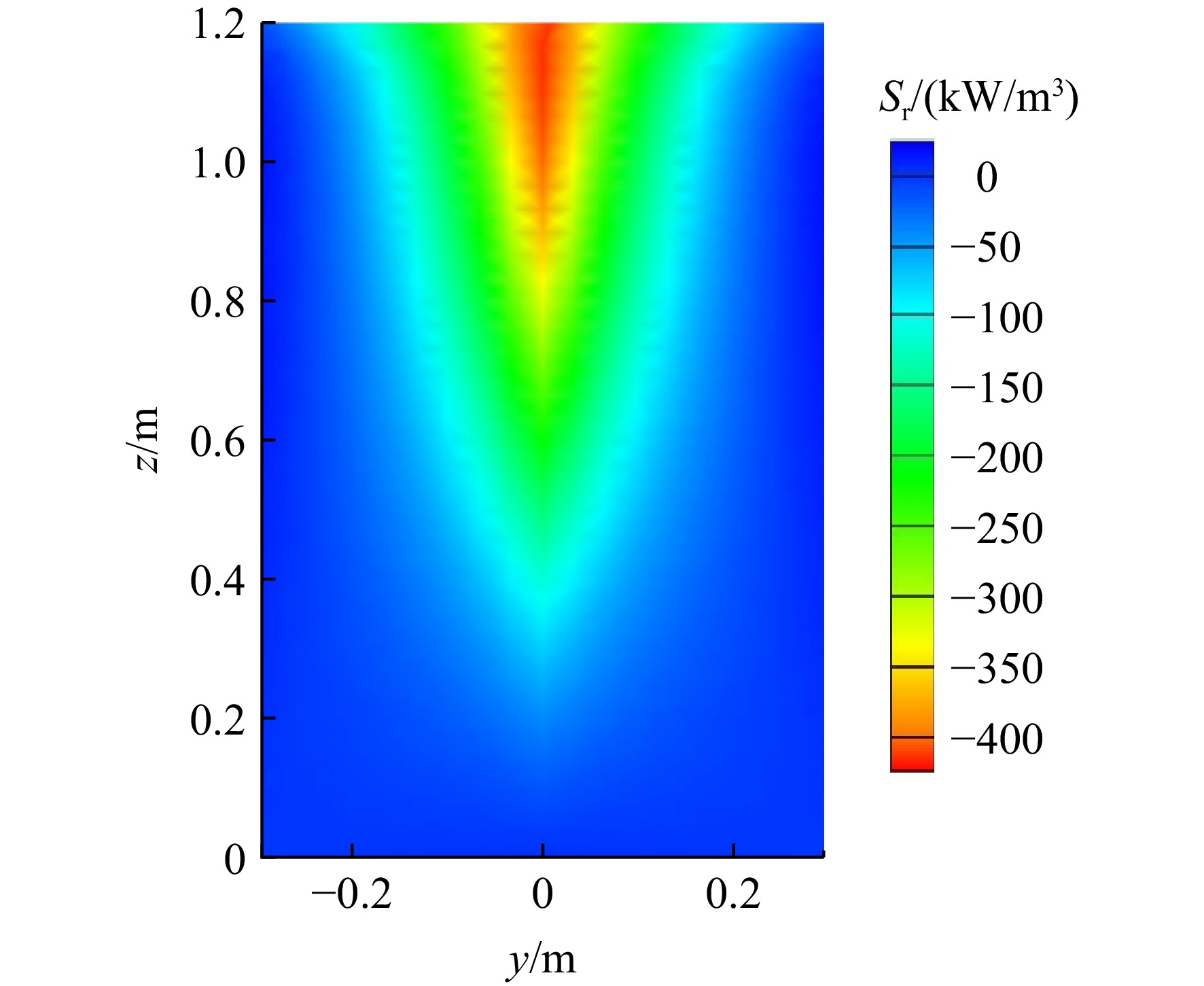
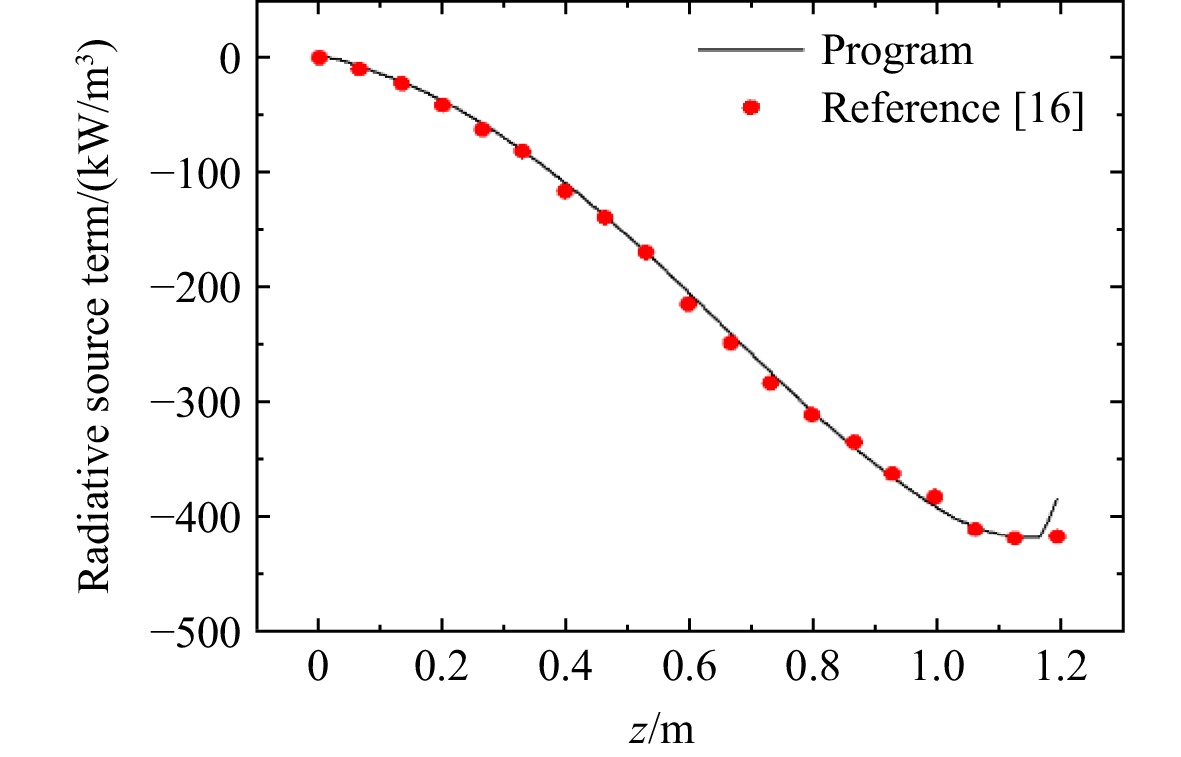
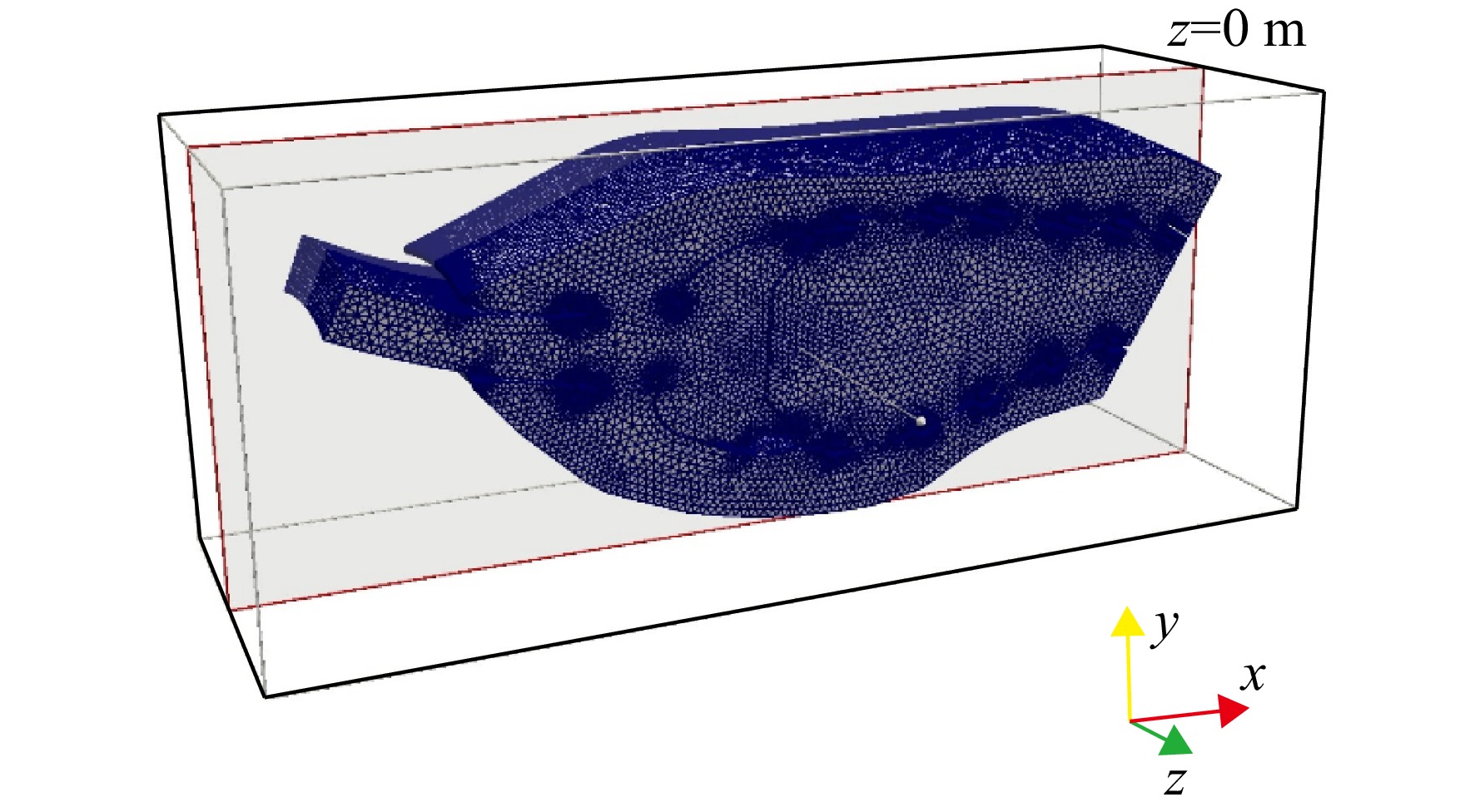
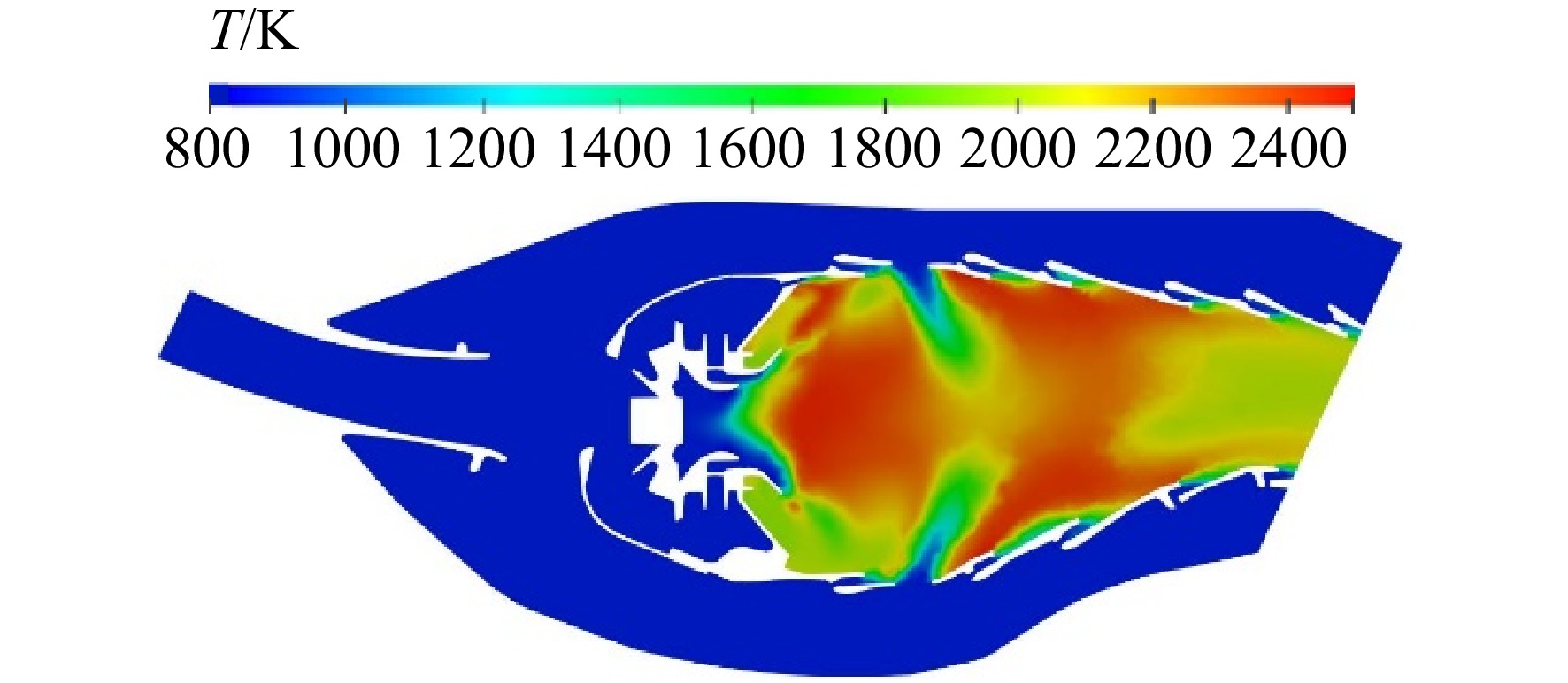
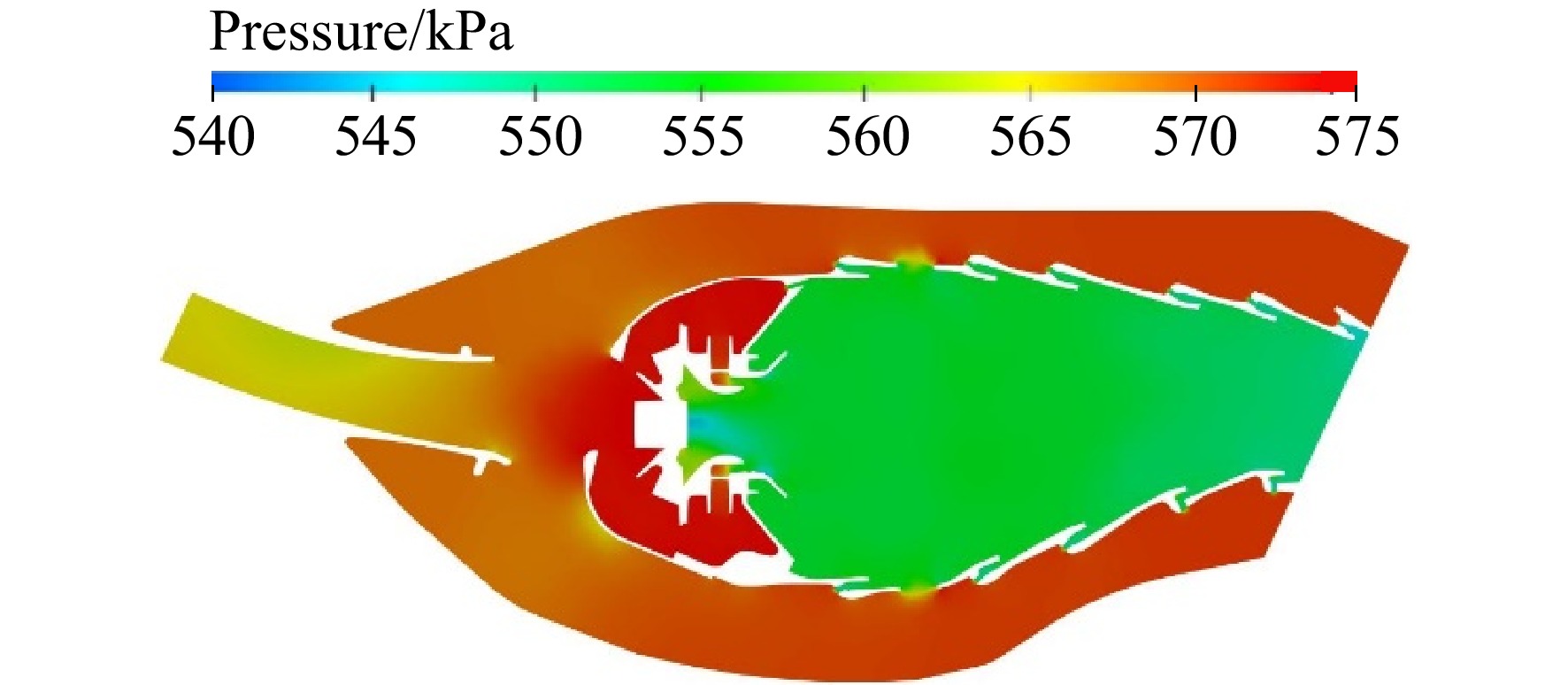
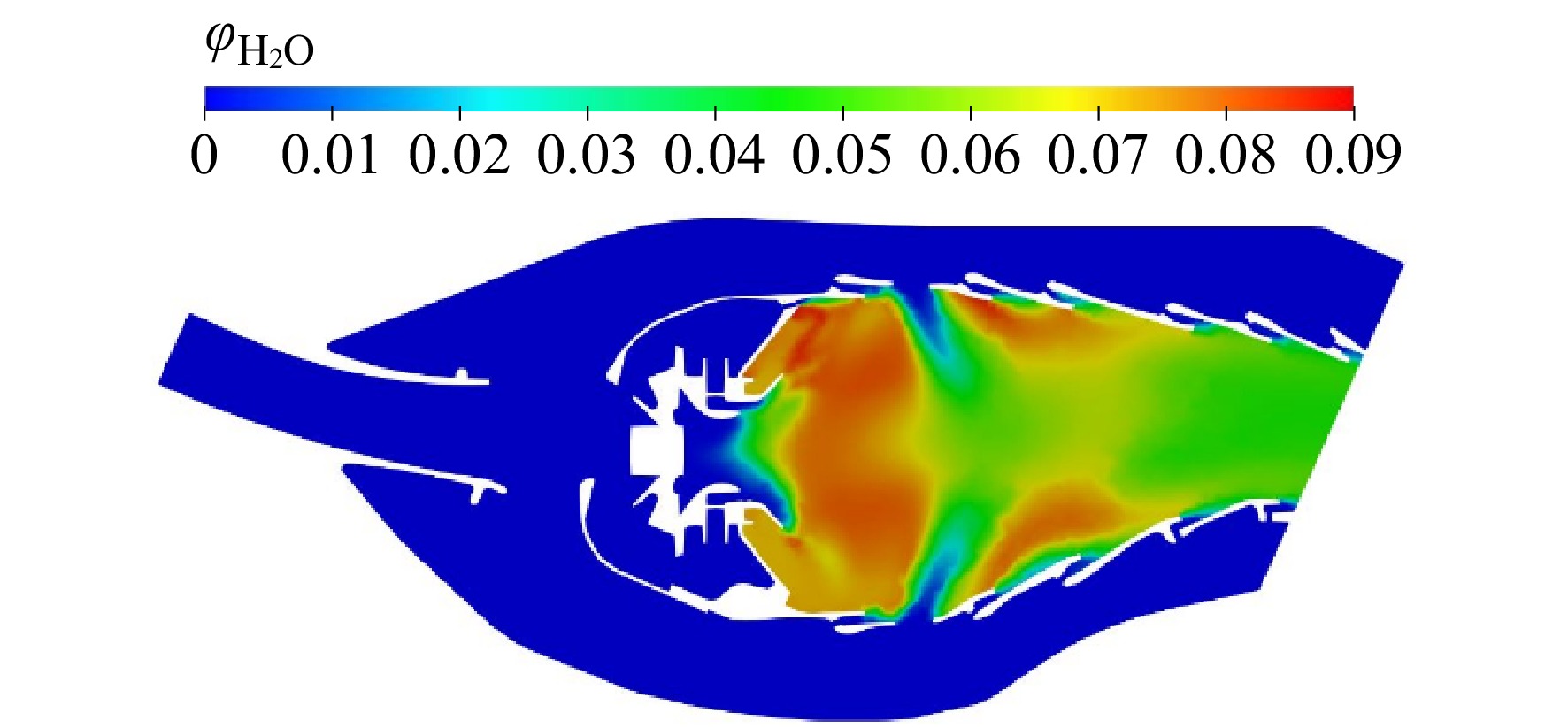
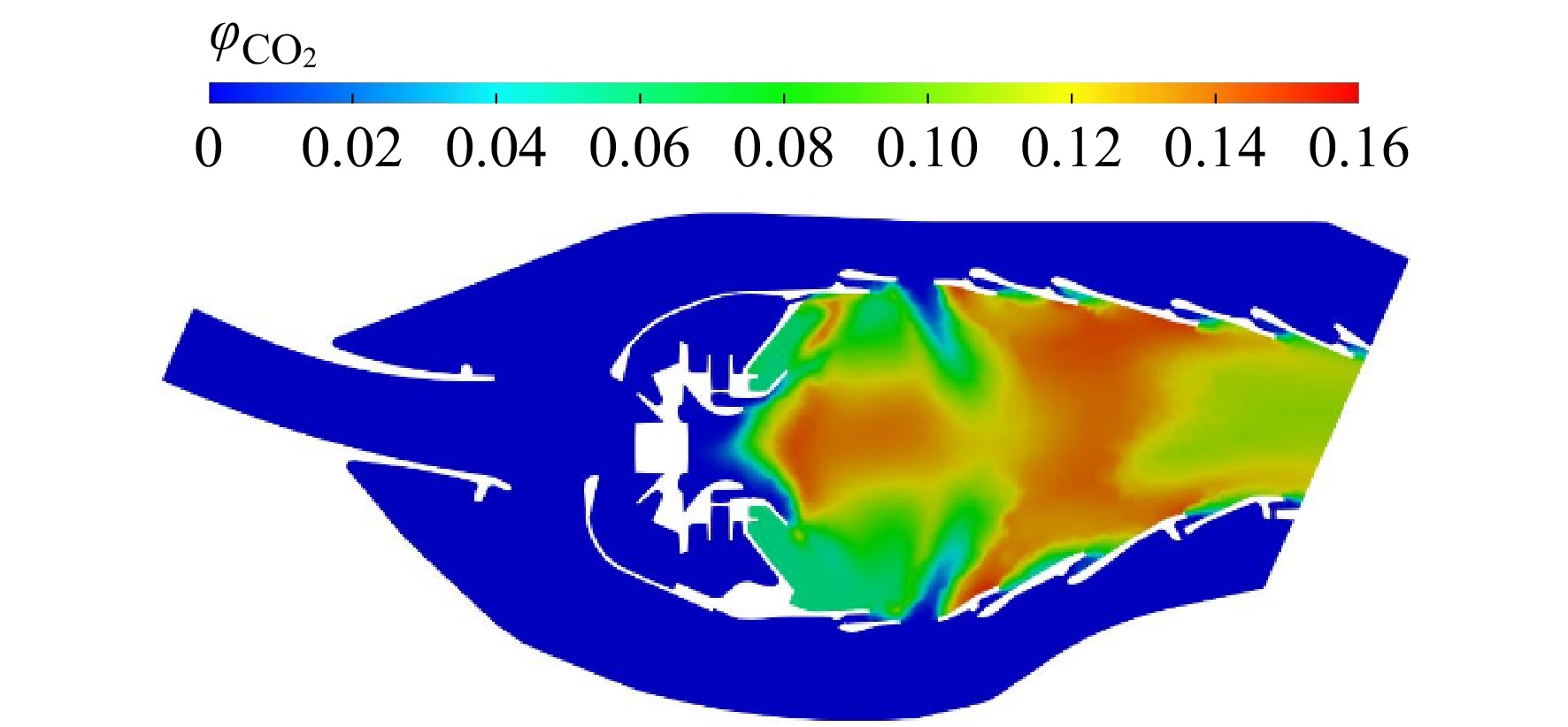
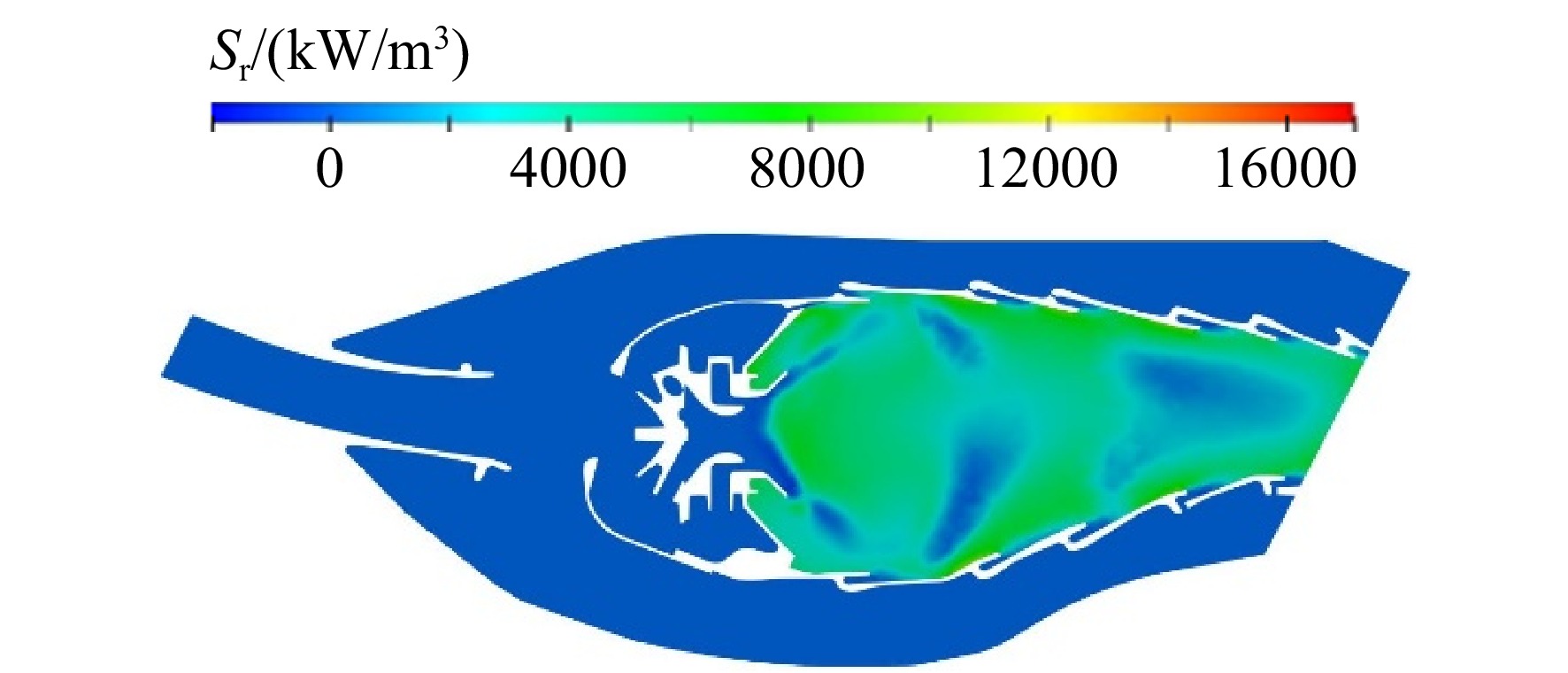
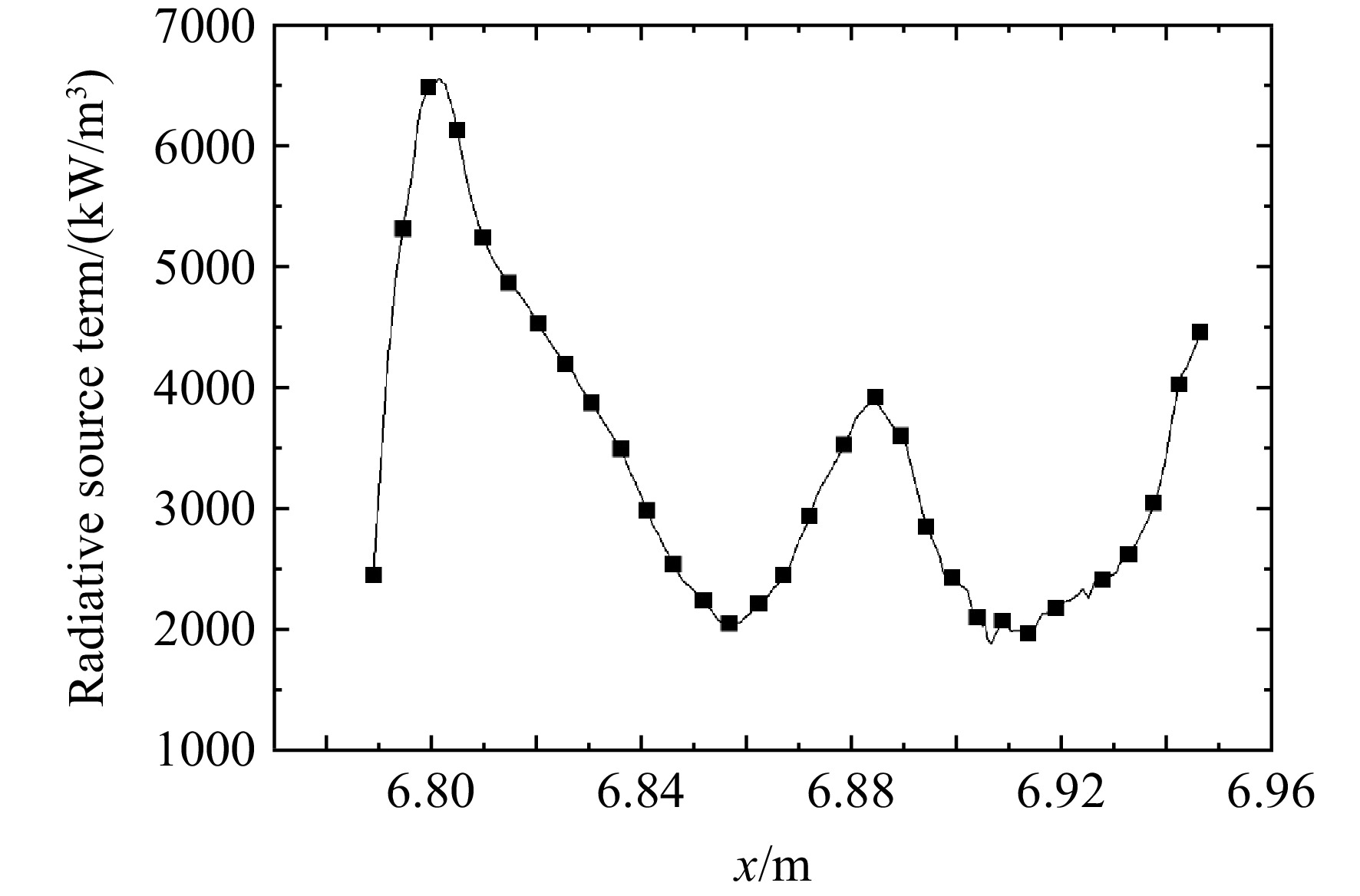
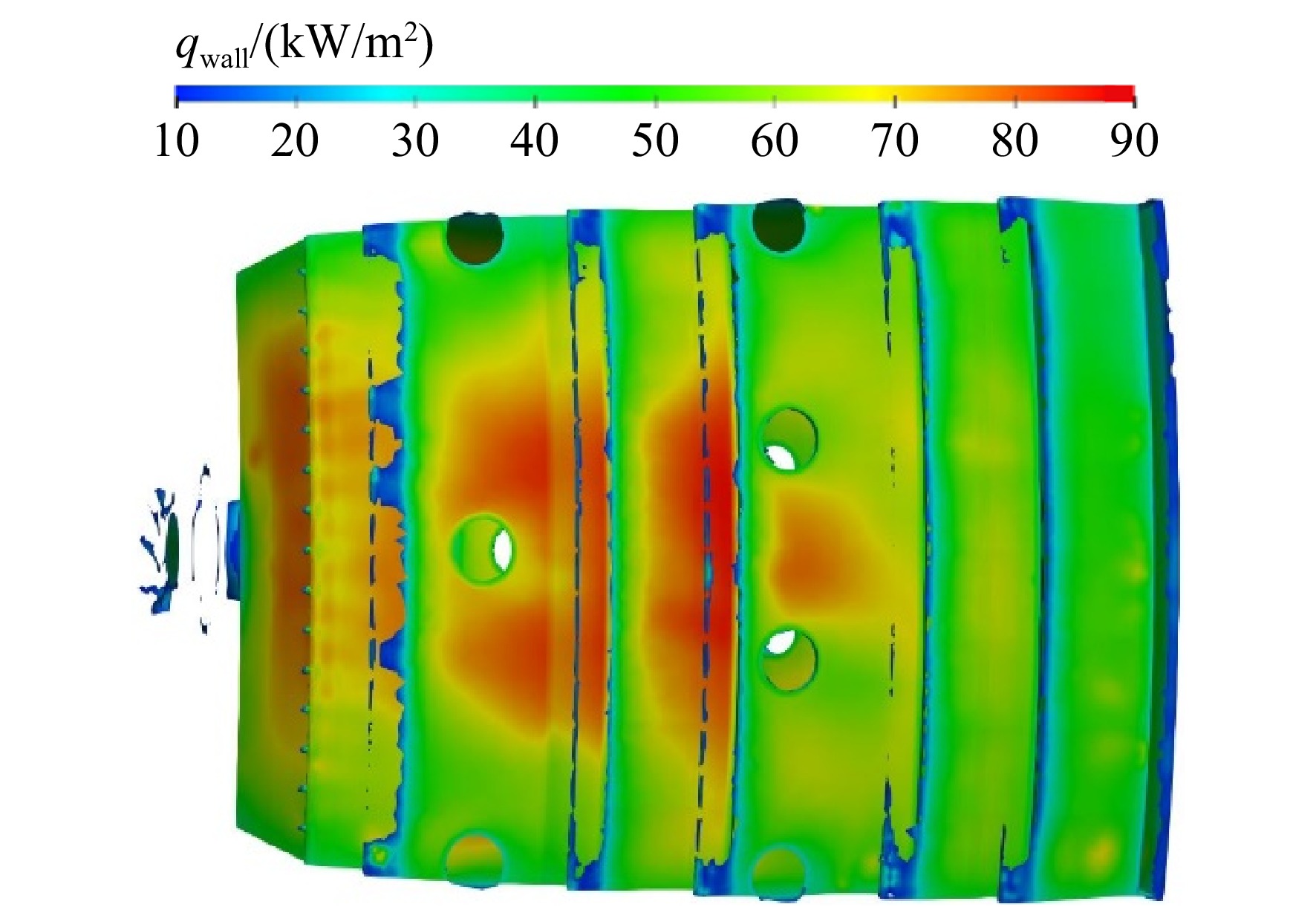
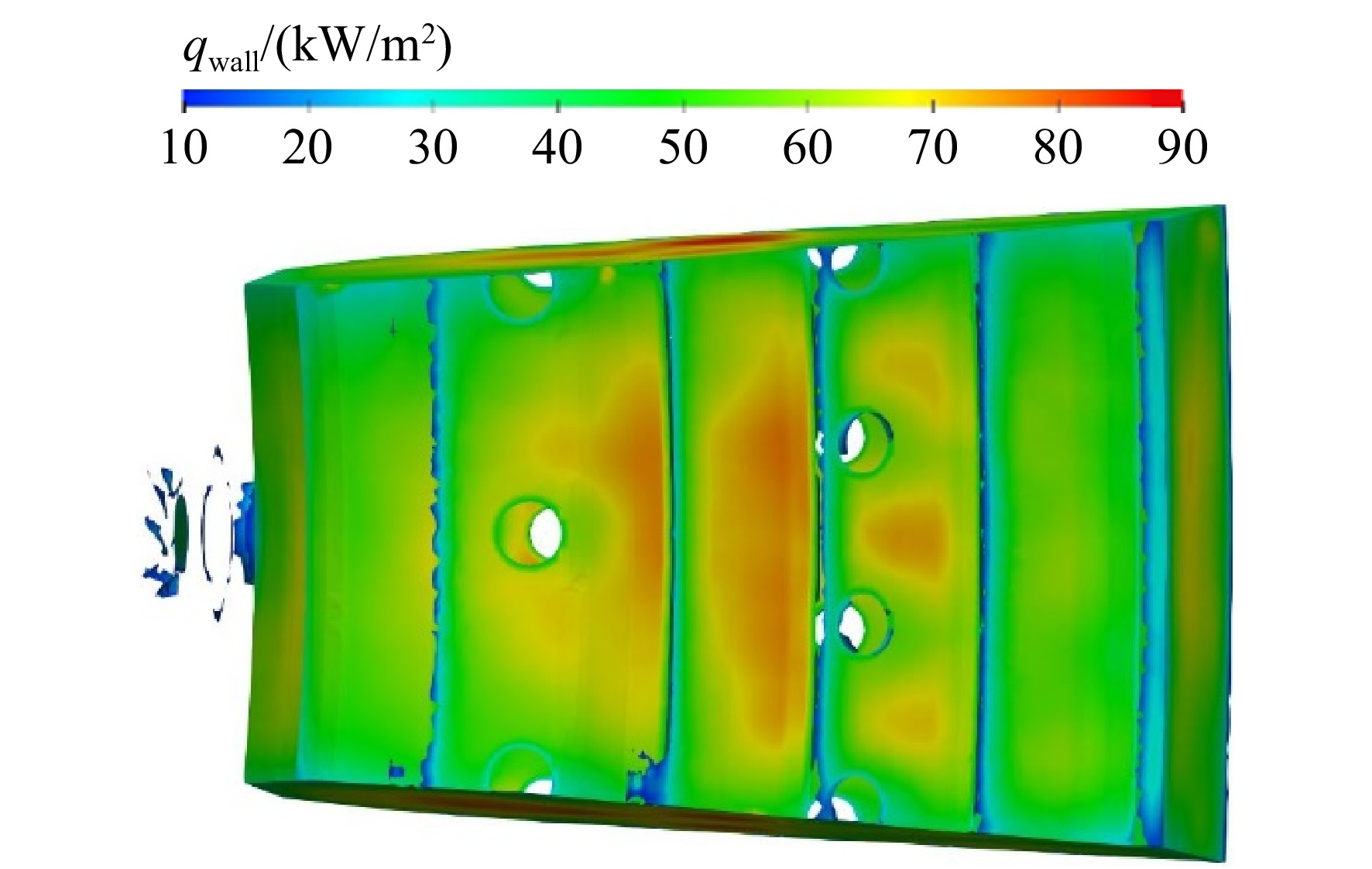
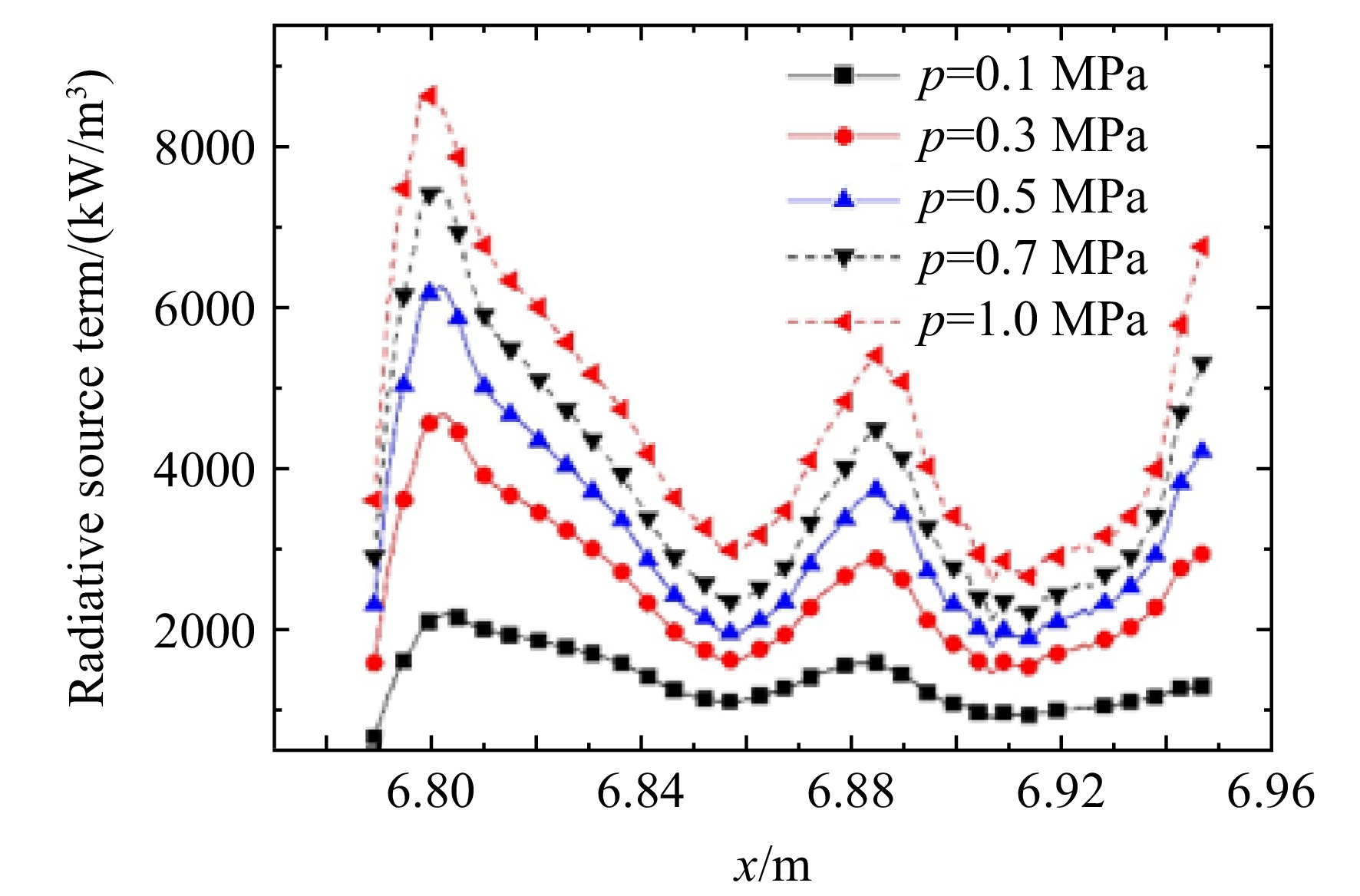
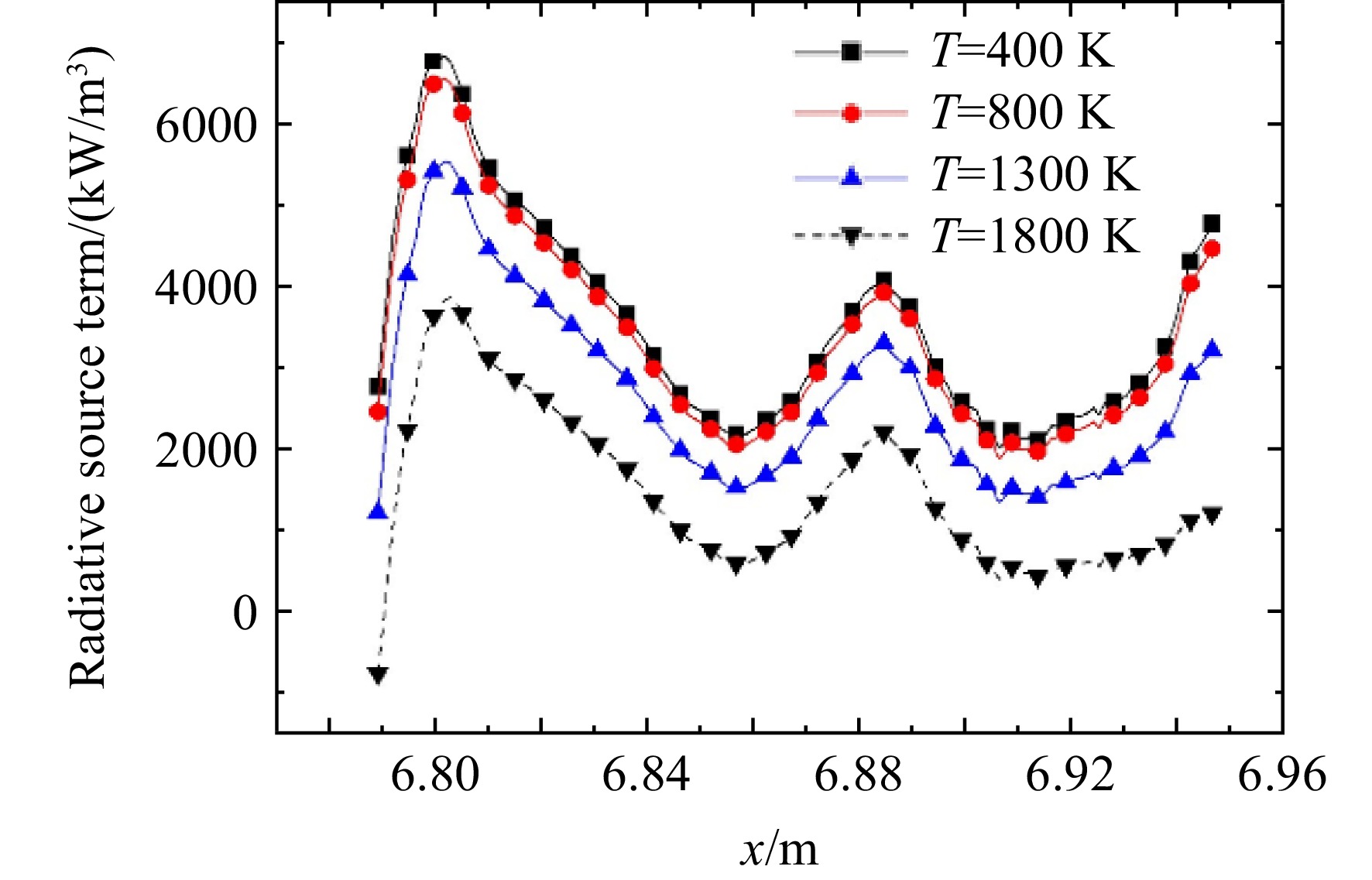
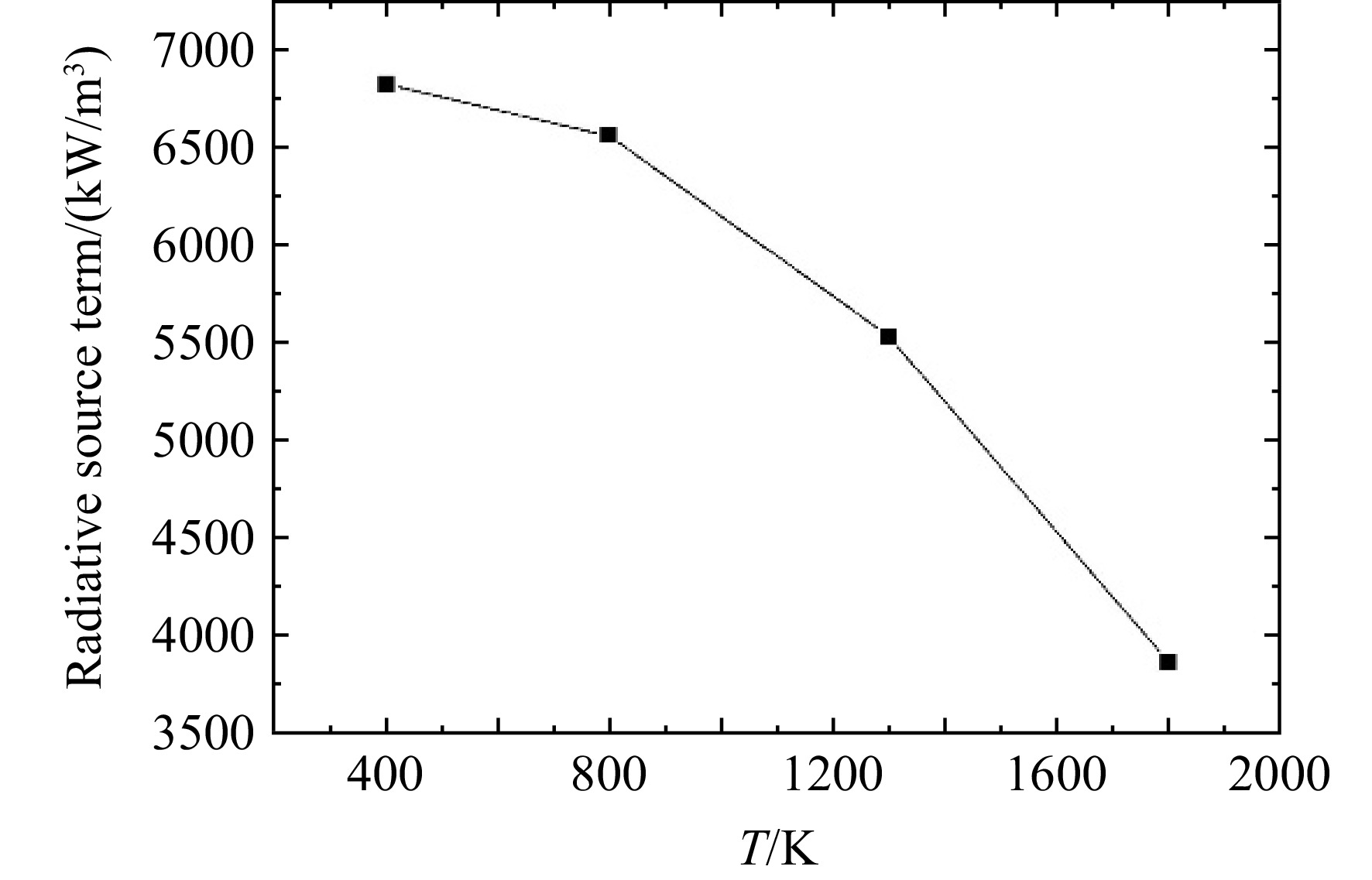
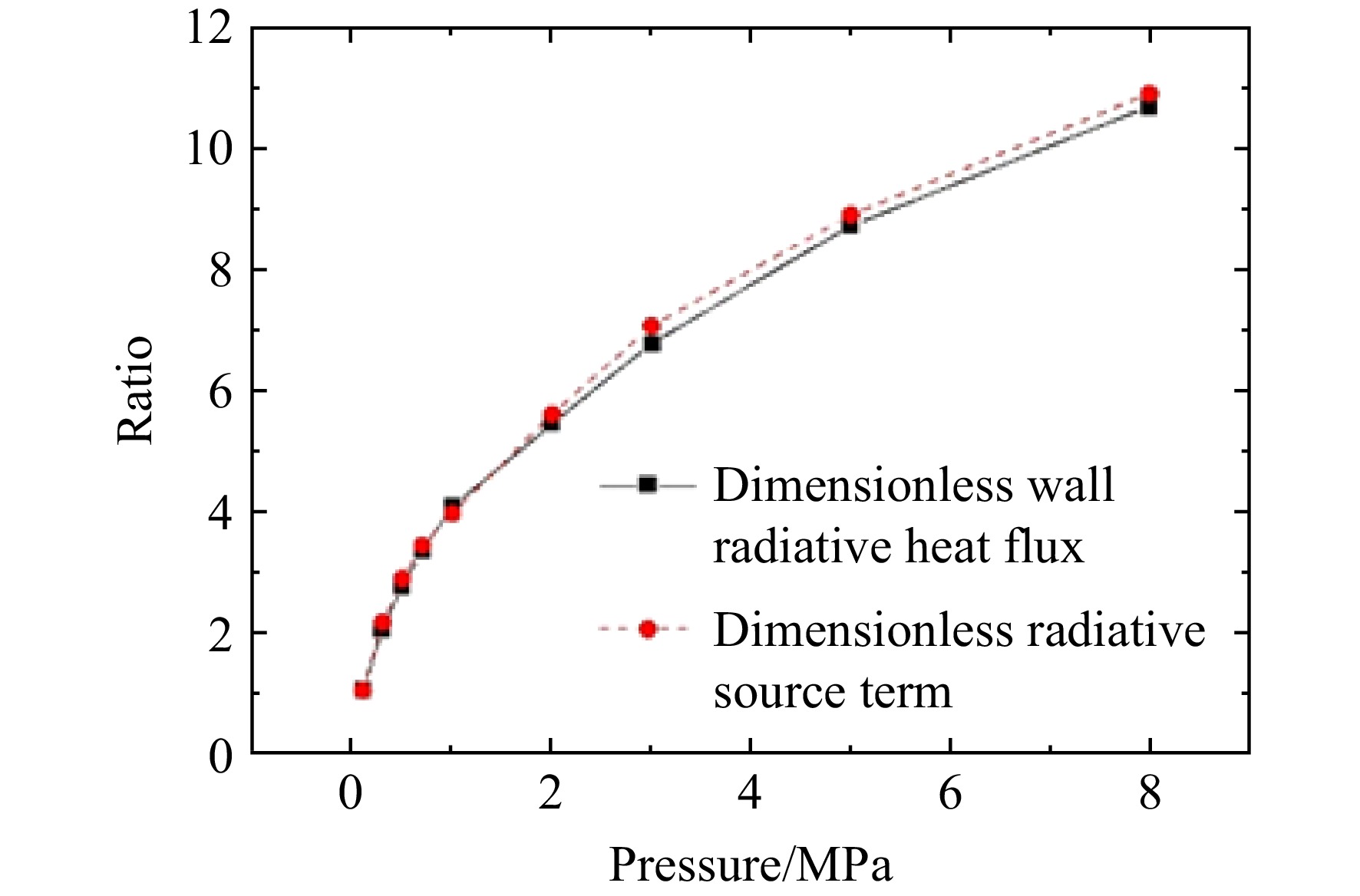
An in-house radiative heat transfer code using discrete ordinates method (DOM) and statistical narrow bands correlated-K (SNBCK) model was demonstrated to be able to calculate the gaseous radiative heat transfer in complex 3D combustion systems accurately and efficiently. After validation by using the benchmark models, the impact of the directional quadrature scheme, spatial differencing scheme, gauss quadrature type and number of quadrature points were studied. The results showed that the accuracy of the directional quadrature scheme with 24 discrete directions was low, and the Thurgood scheme with 32 discrete directions was recommended. Spatial differencing scheme and gauss quadrature type had little effect on results. Finally, the gaseous radiative heat transfer in the combustion chamber of the aero-engine under different pressures and wall temperatures was calculated. It showed that the maximum values of radiative source term in the flame zone and next to the wall were about 6000 kW/m3 and 17000 kW/m3, respectively, the maximum wall radiative heat flux can reach to 88 kW/m2. Radiative heat transfer increased with higher pressure, and the increasing rate decreased, which was significantly affected by the concentration of the participating medium.

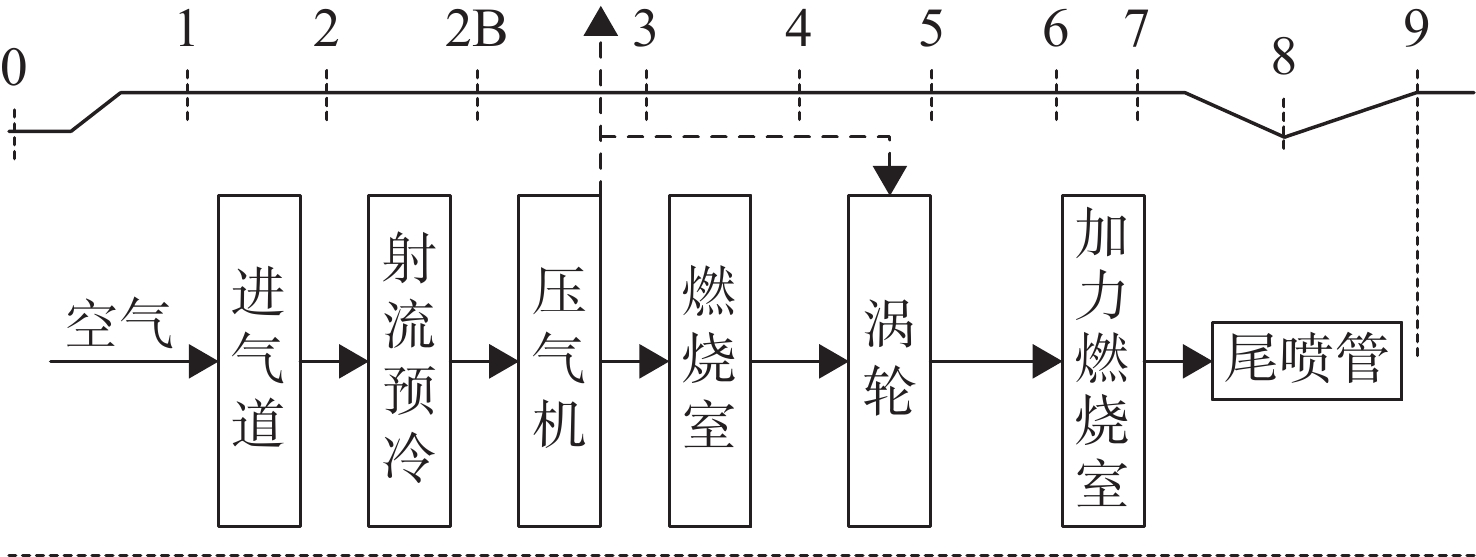
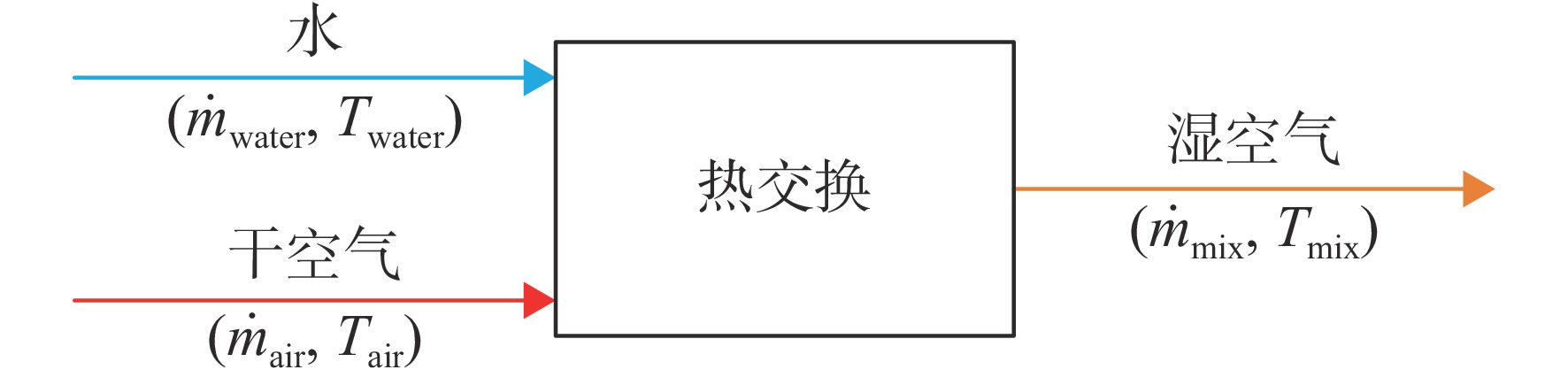
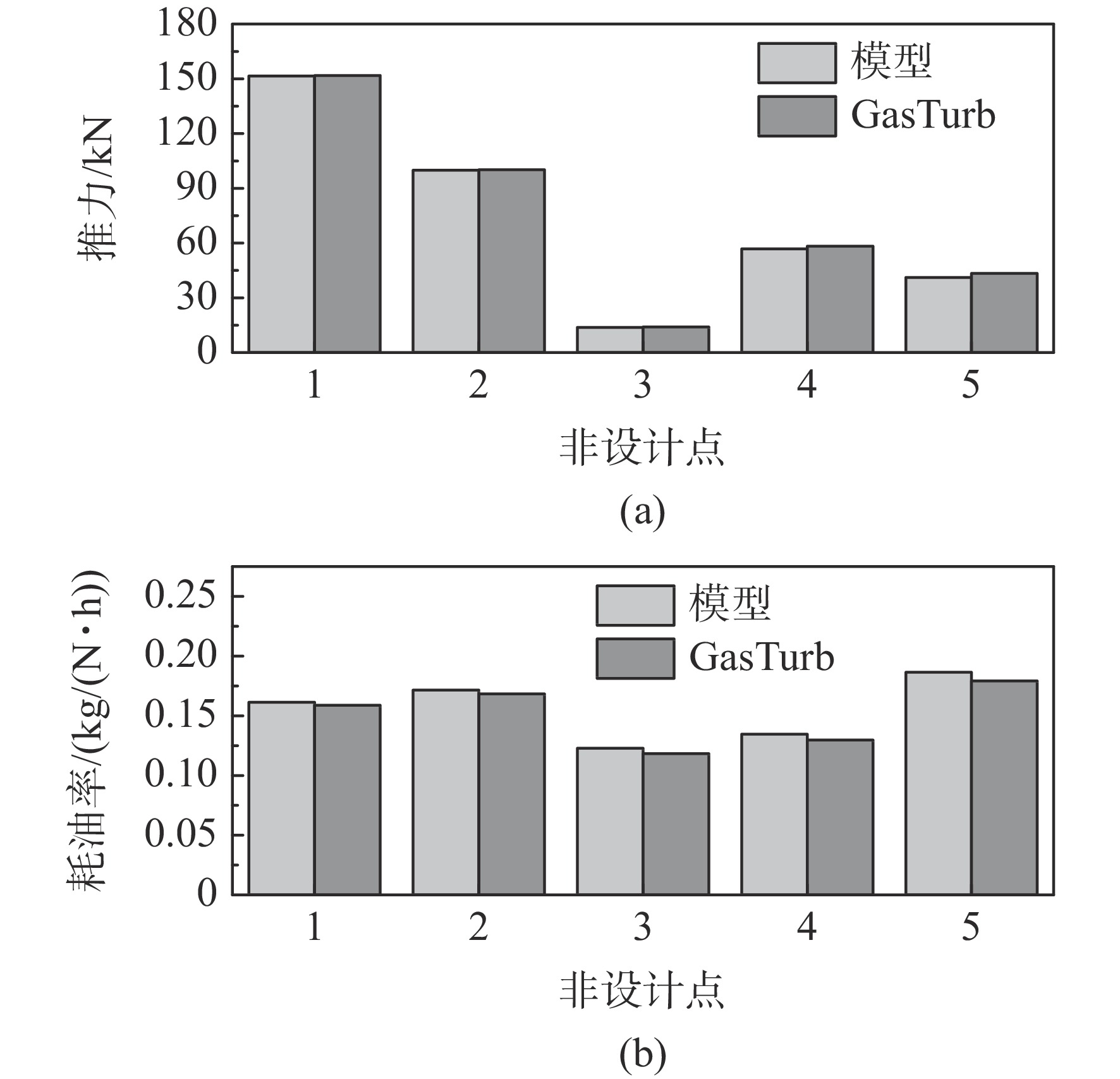
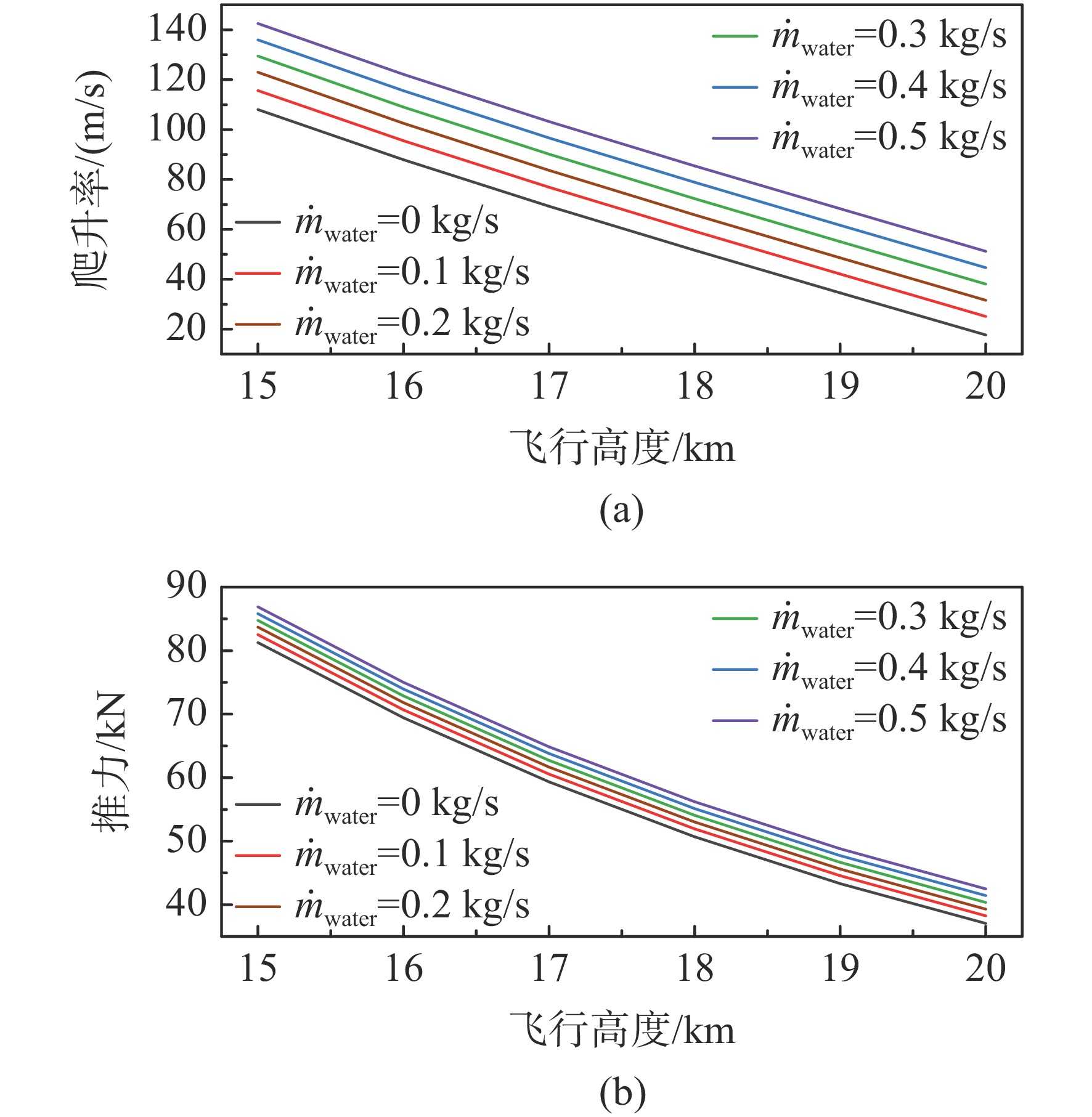
Superiority analysis of mass injection pre-compressor cooling technology based on aircraft-engine integration model
LI Mengchen, XU Guoqiang, WEN Jie, ZHUANG Laihe, HUANG Congcong
2023, 38(9): 2167-2176. doi: 10.13224/j.cnki.jasp.20220095
Abstract:

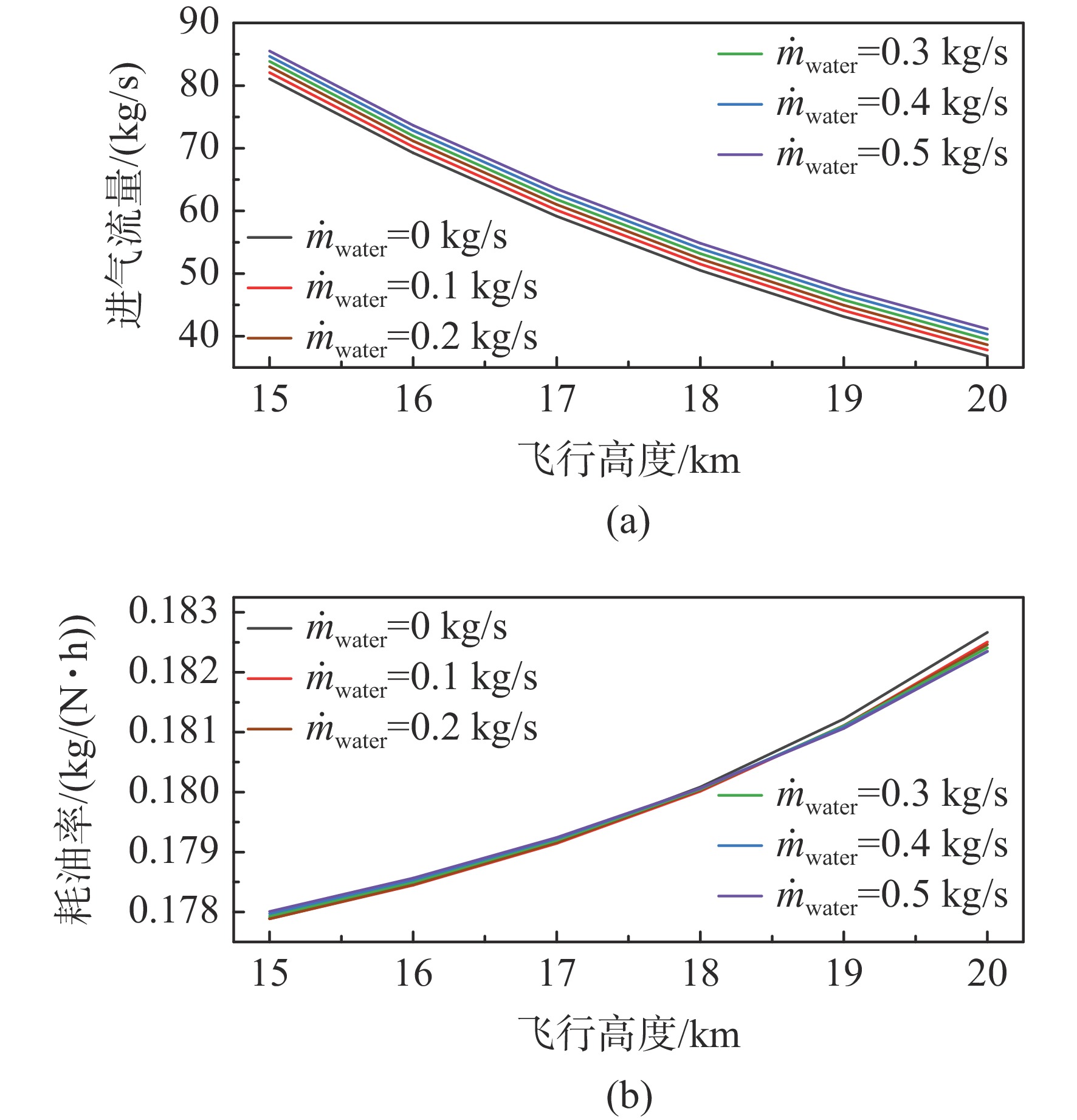
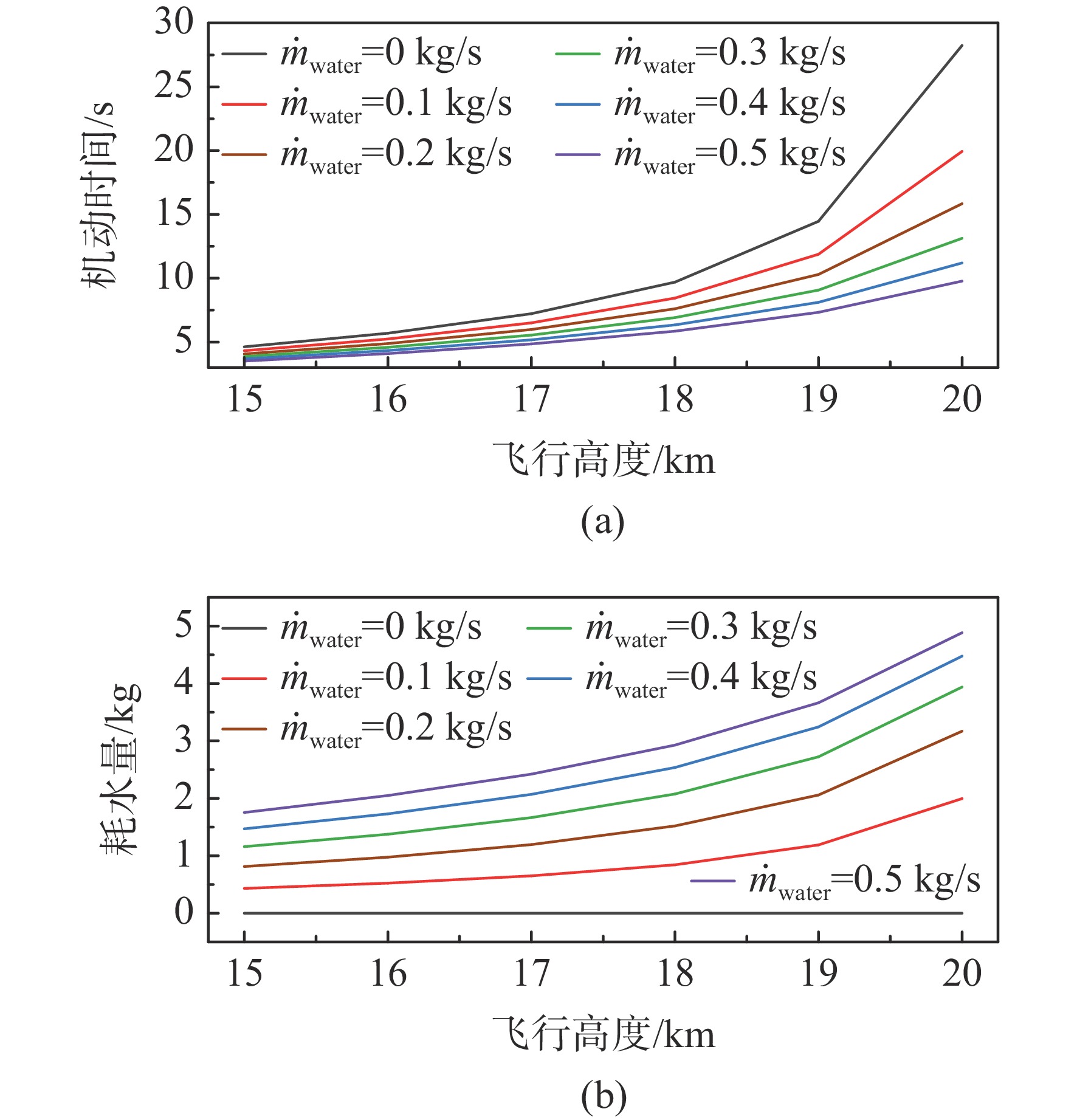
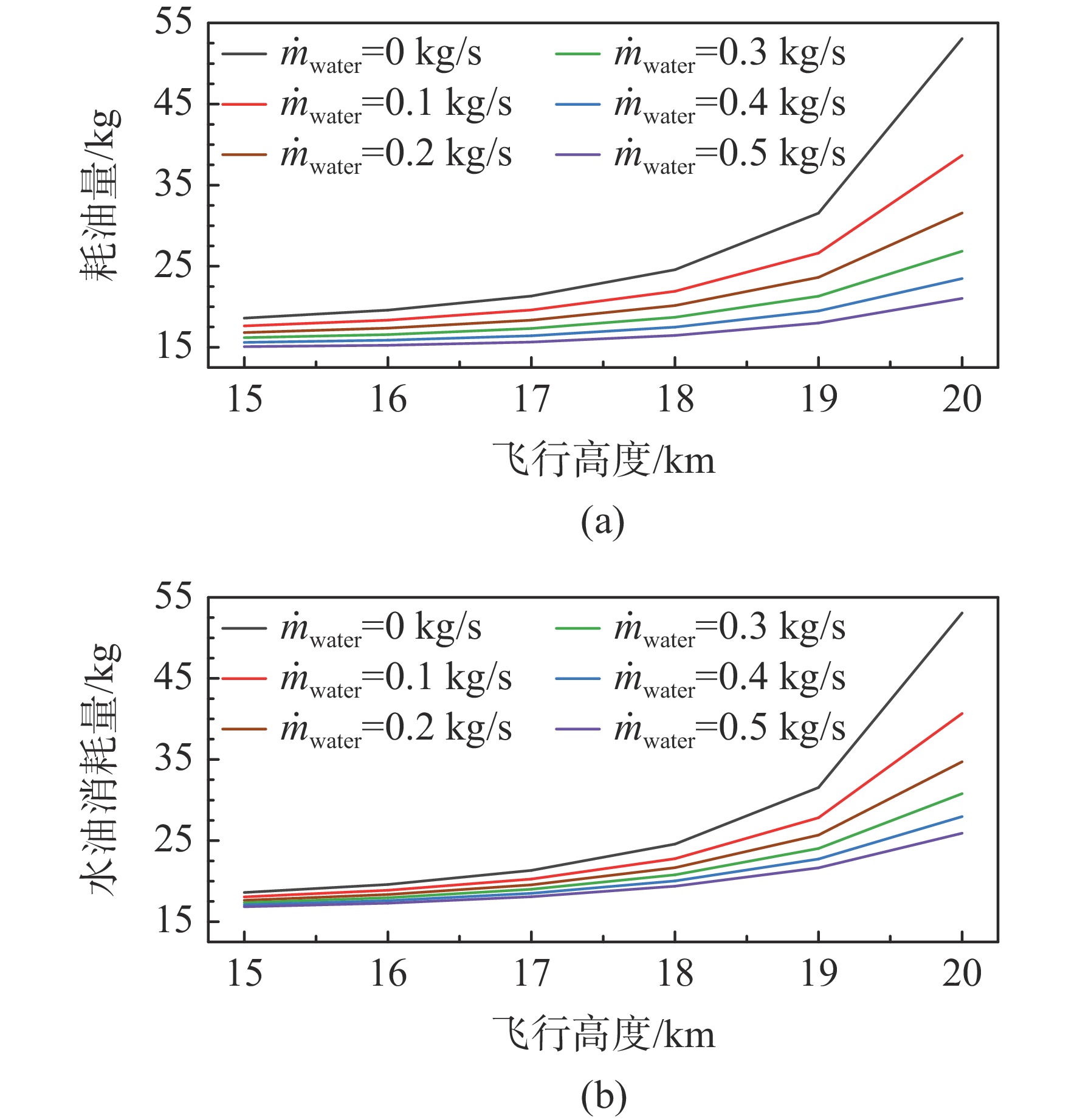
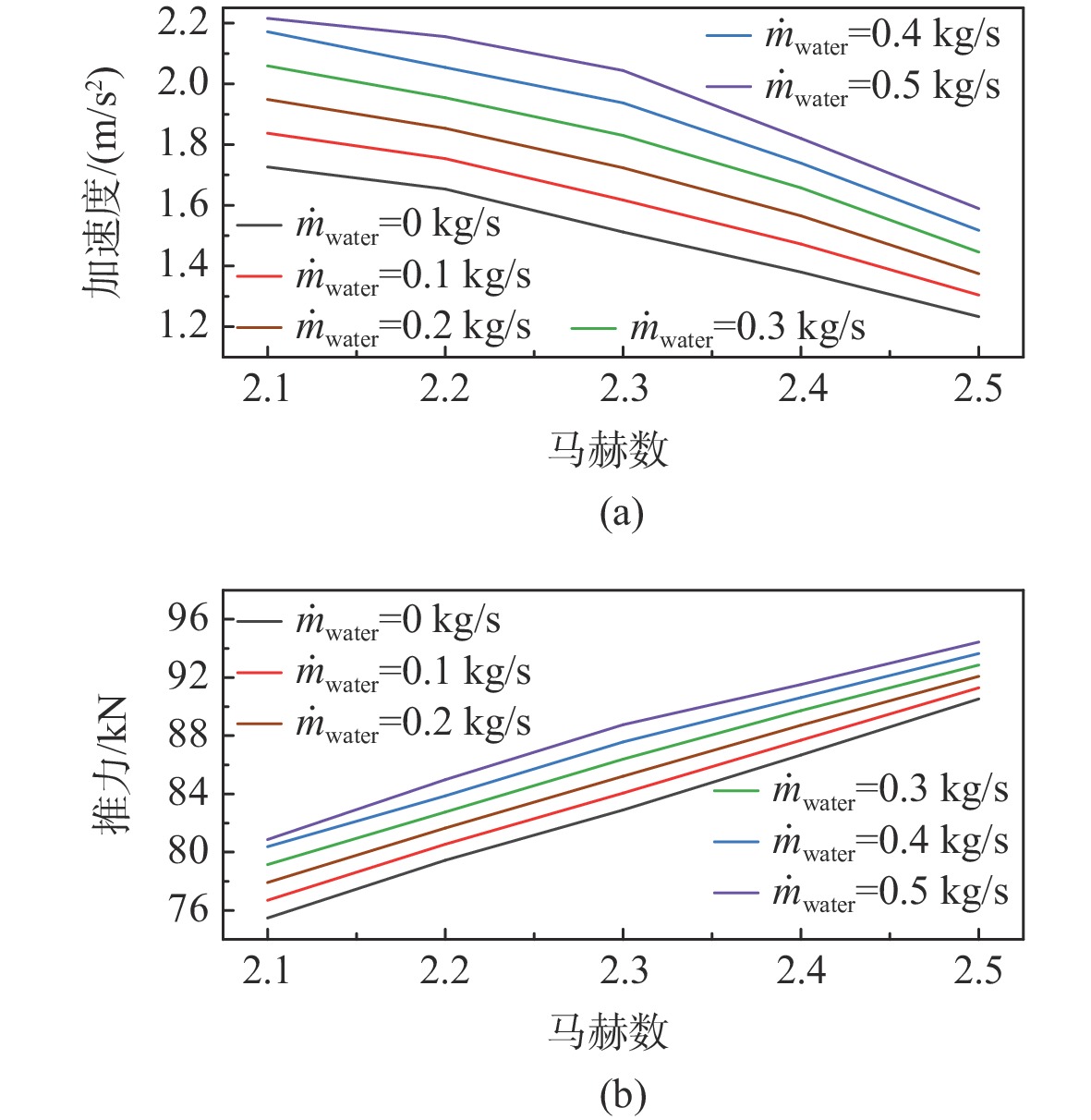
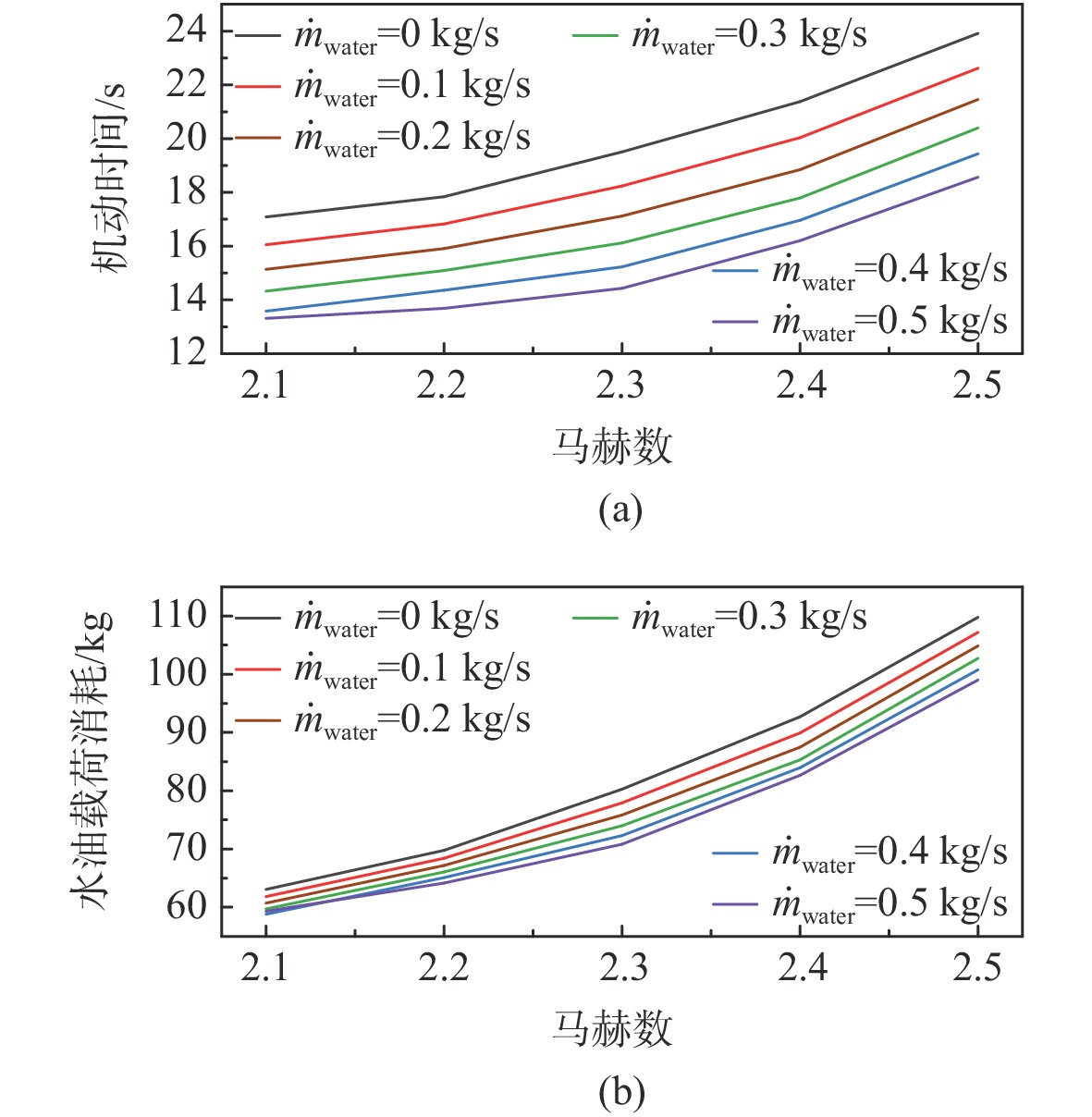
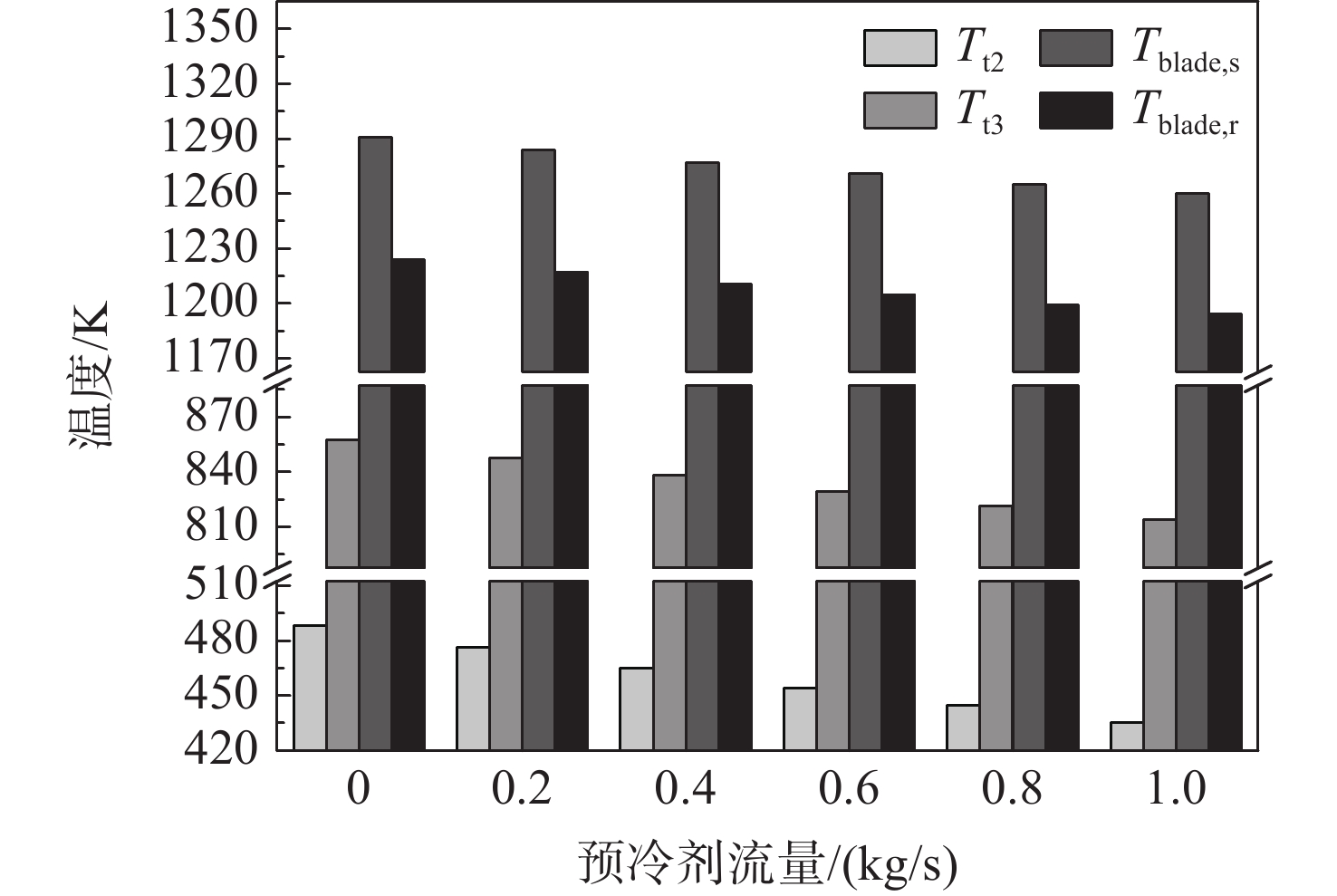
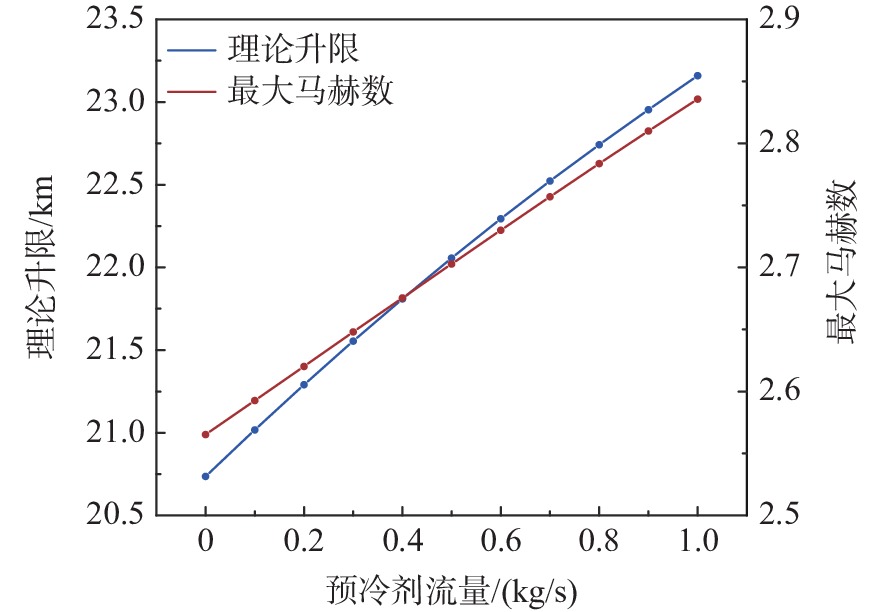
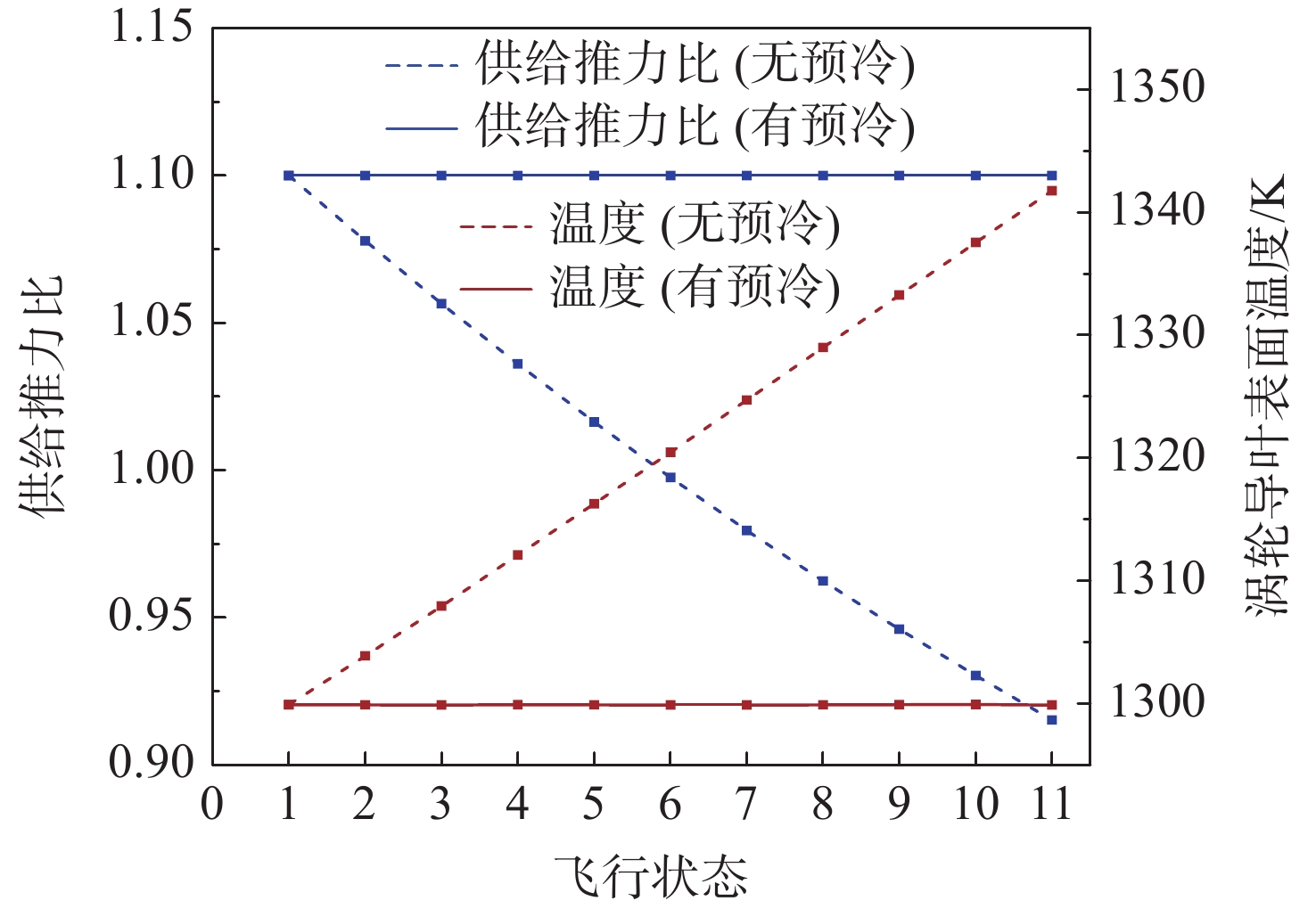
In order to explore the application prospect of mass injection pre-compressor cooling technology in advanced aero-engines in the future, a simulation model of aircraft-engine integration was built based on turbojet engine, water was selected as the coolant, and the effects of different flight conditions and precooling schemes on aircraft combat capability, engine performance and temperature of hot end component were analyzed. The results showed that the thrust of aero-engine can be increased by mass injection pre-compressor cooling technology, which can improve the climbing and acceleration performance of aircraft and reduce the mission time and load consumption within the assigned task. The surface temperature of turbine blade can be also decreased with the reduction of the temperature of bleed air due to mass injection pre-compressor cooling technology. Given the matching principle of aircraft-engine thrust and the constraint of the surface temperature of turbine blade, the ultimate flight performance of aircraft can be improved effectively by mass injection pre-compressor cooling technology. If the flow rate of coolant was 1 kg/s, the theoretical ceiling and maximum Mach number of aircraft can be increased by 11.67% and 10.51%, respectively.

Combustion flow field structure and performance in hydrogen-fueled scramjet
HUANG Gang, LI Lang, TIAN Ye, ZHANG Wei
2023, 38(9): 2177-2185. doi: 10.13224/j.cnki.jasp.20210725
Abstract:

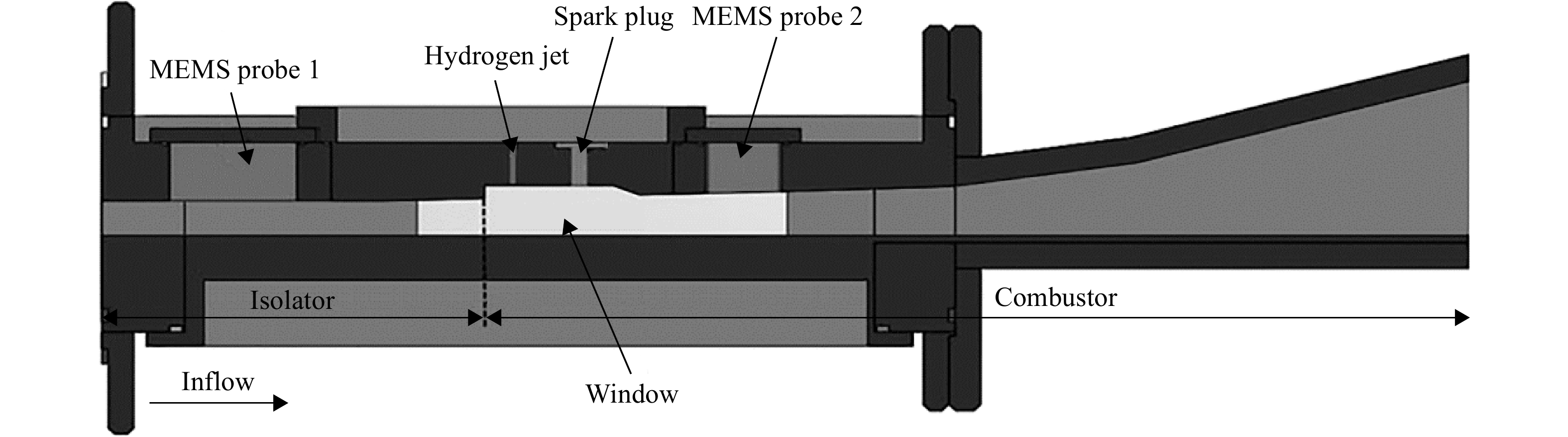
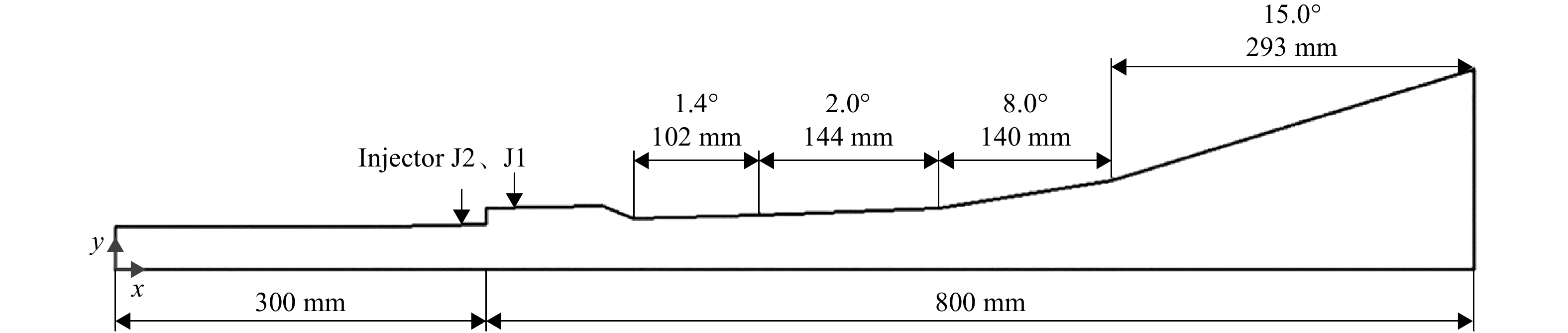
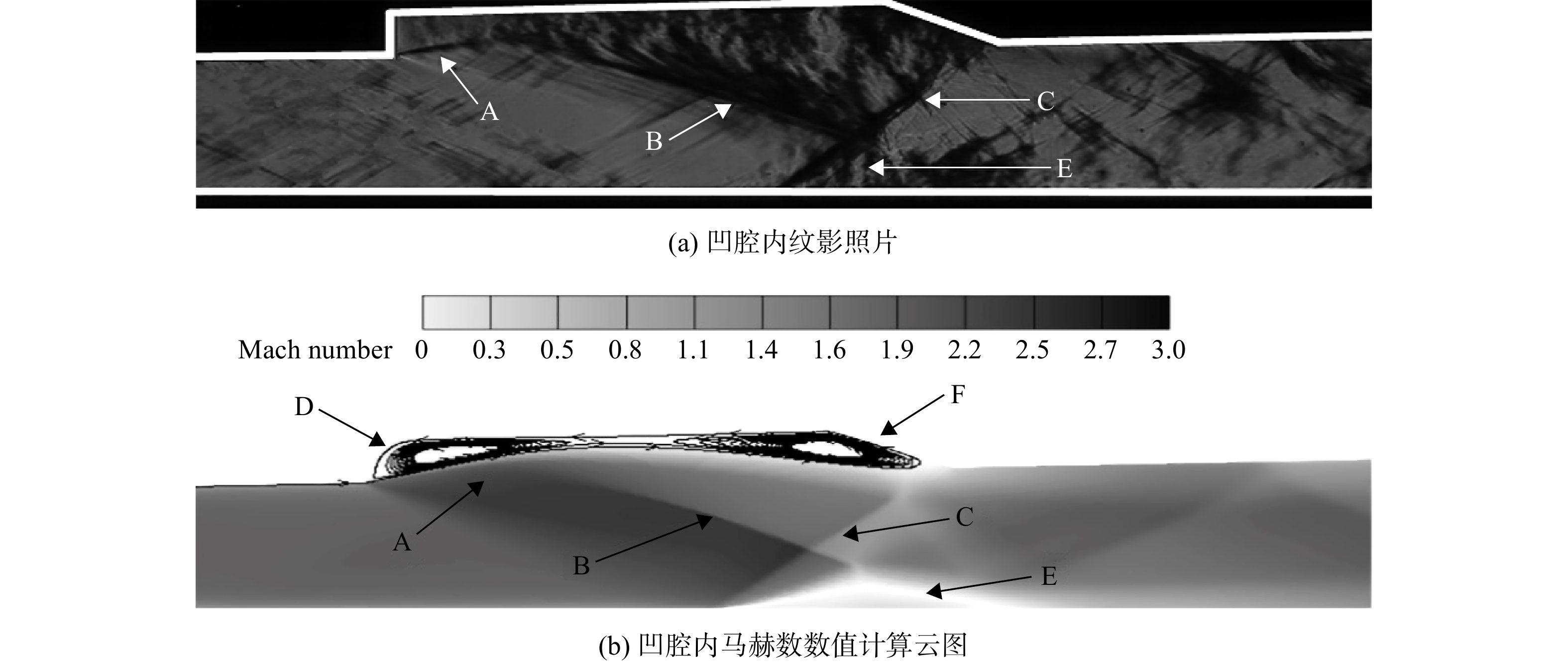
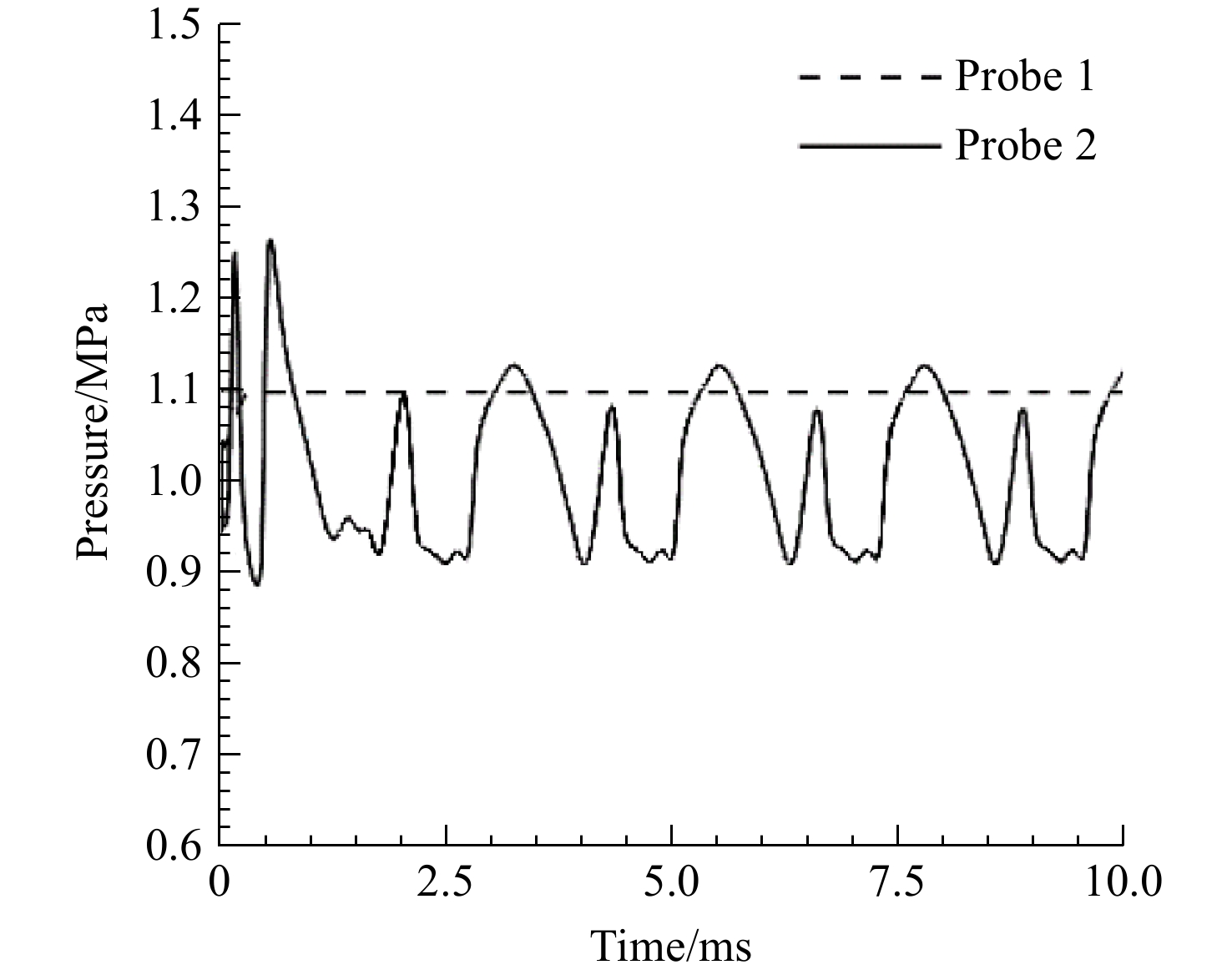
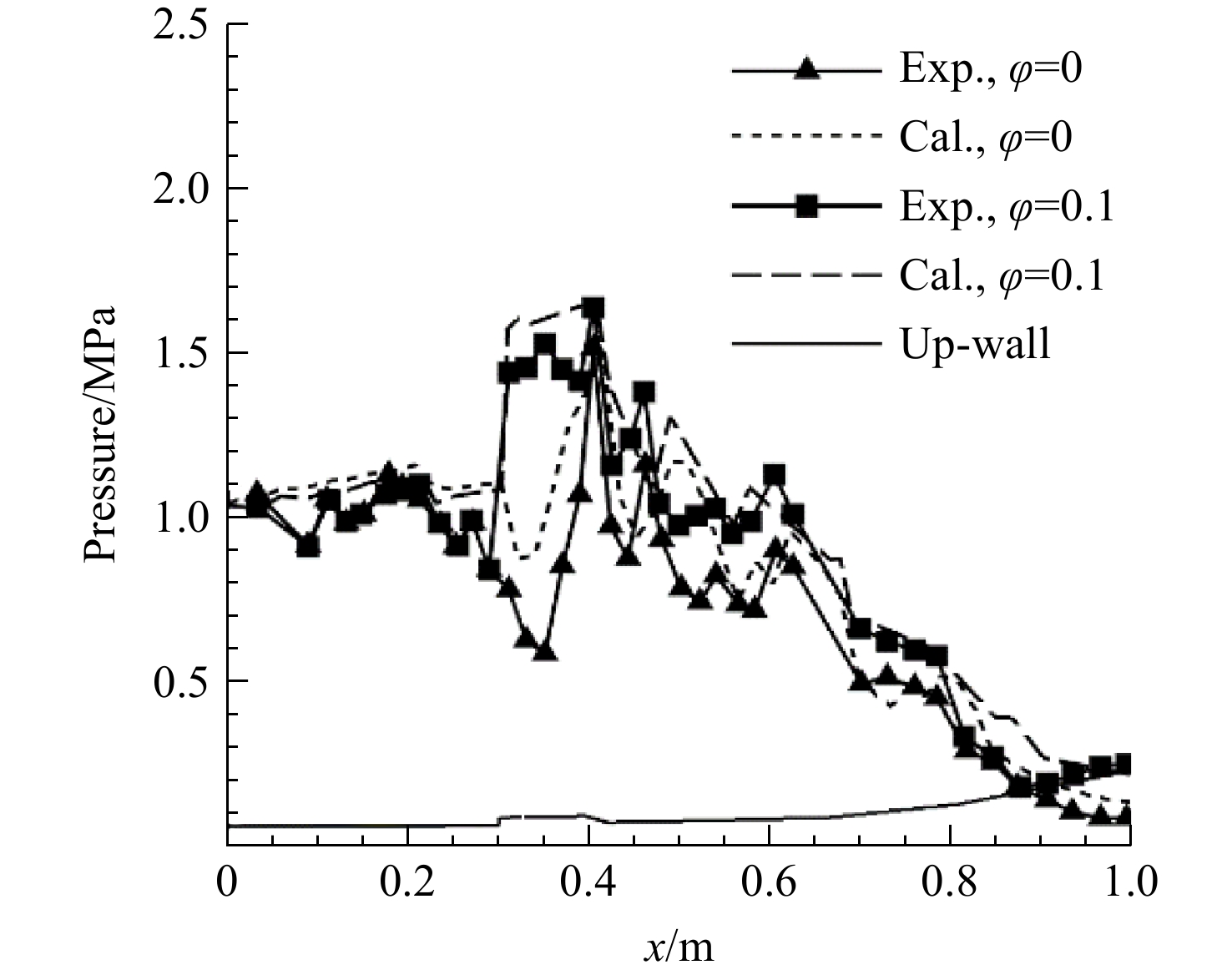
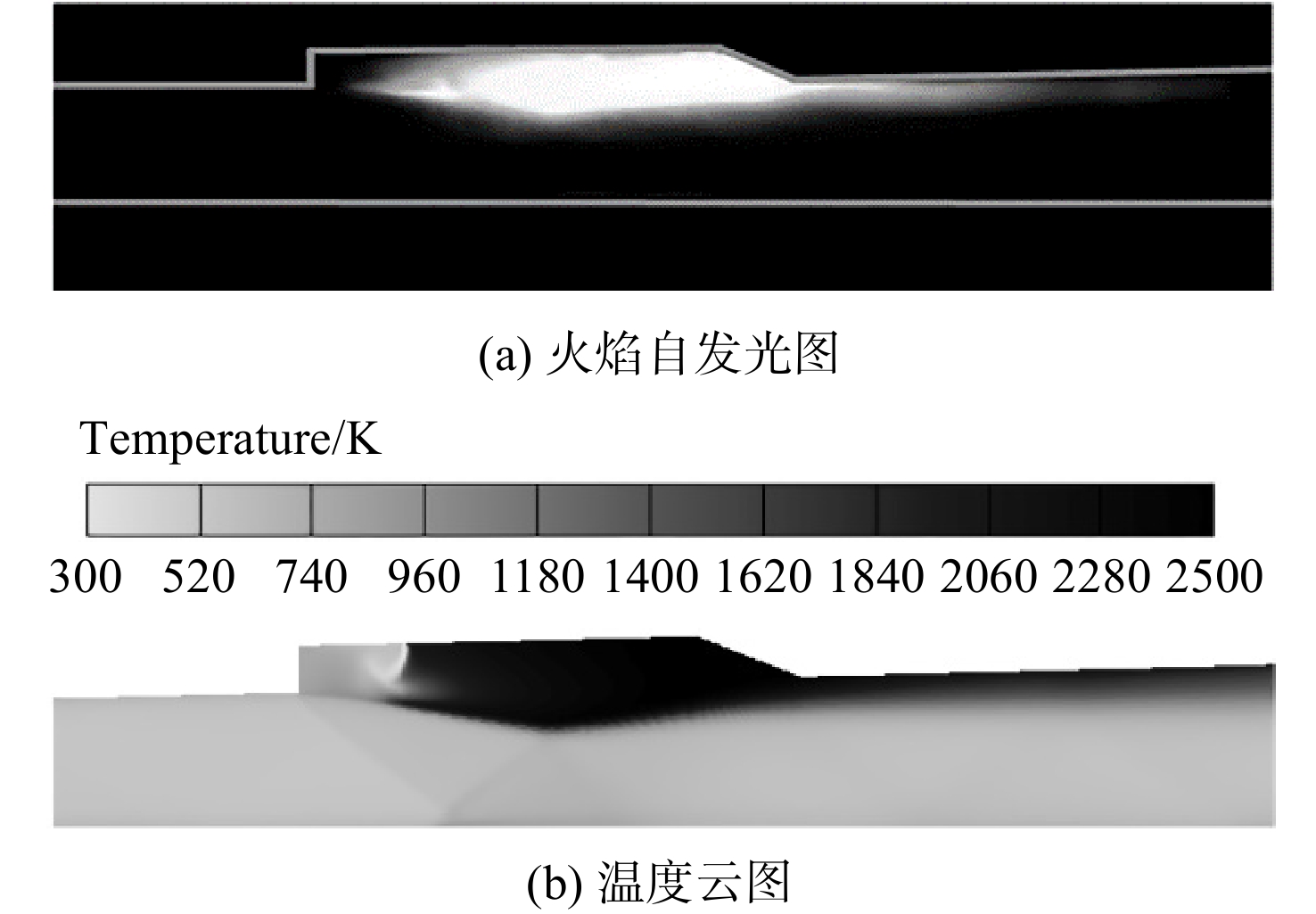
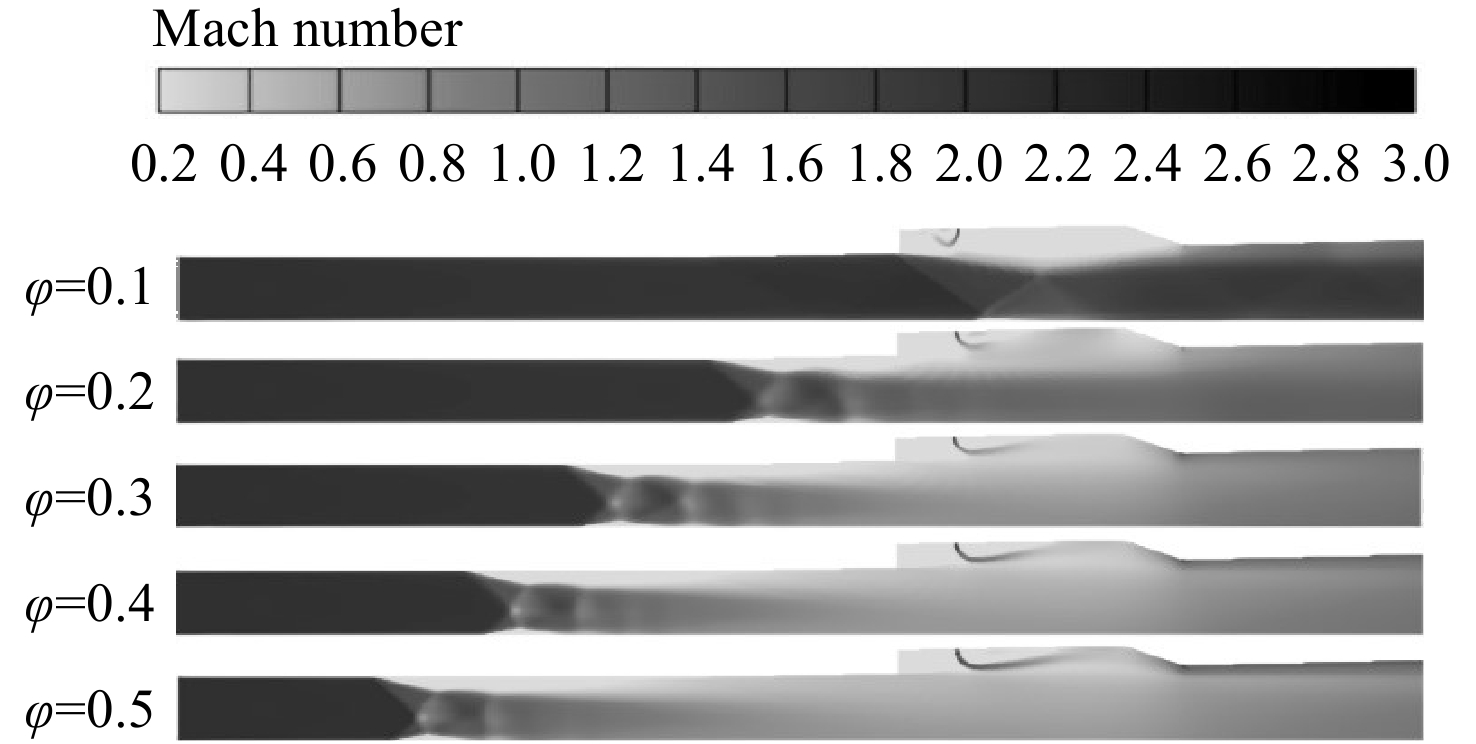
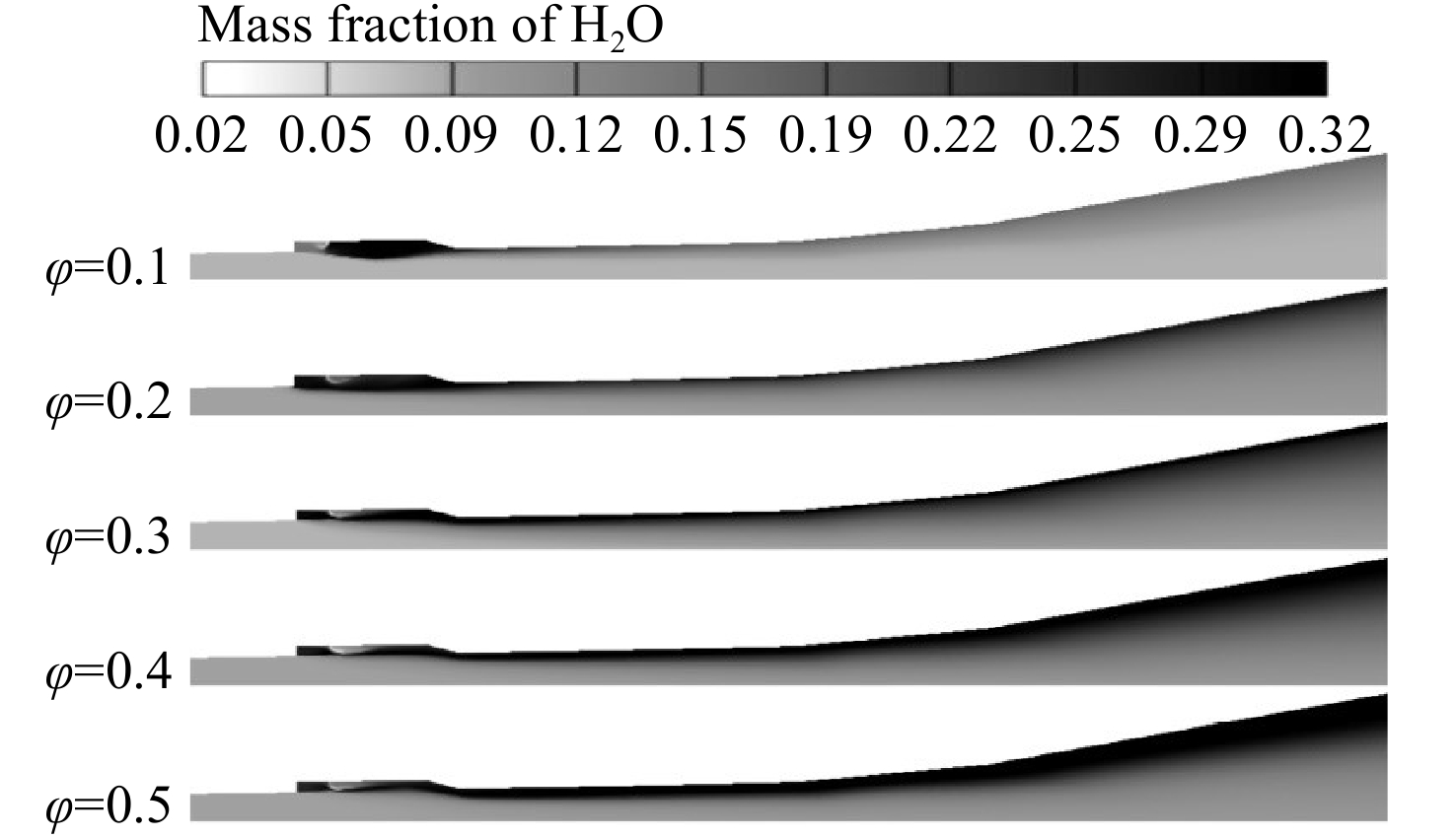
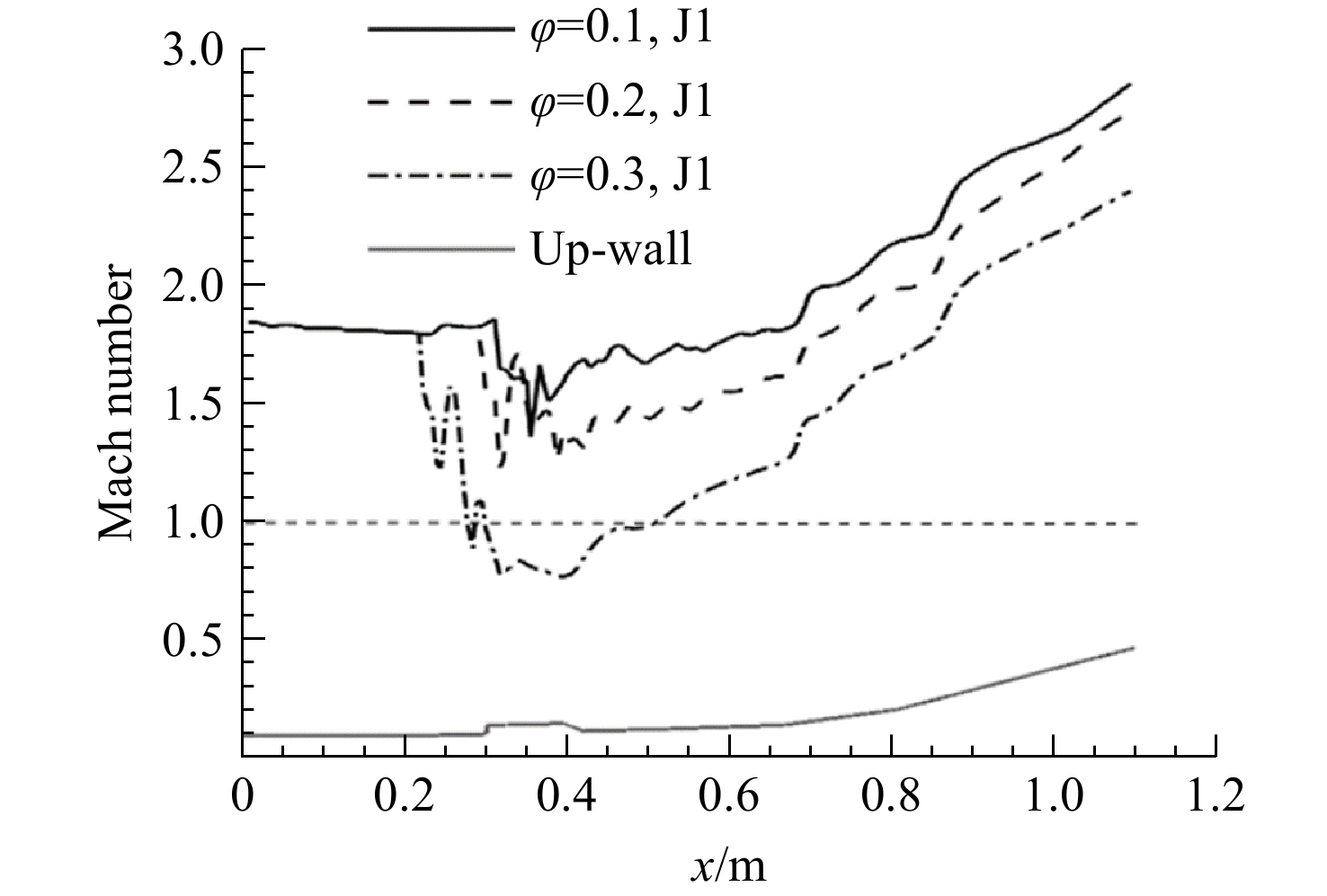
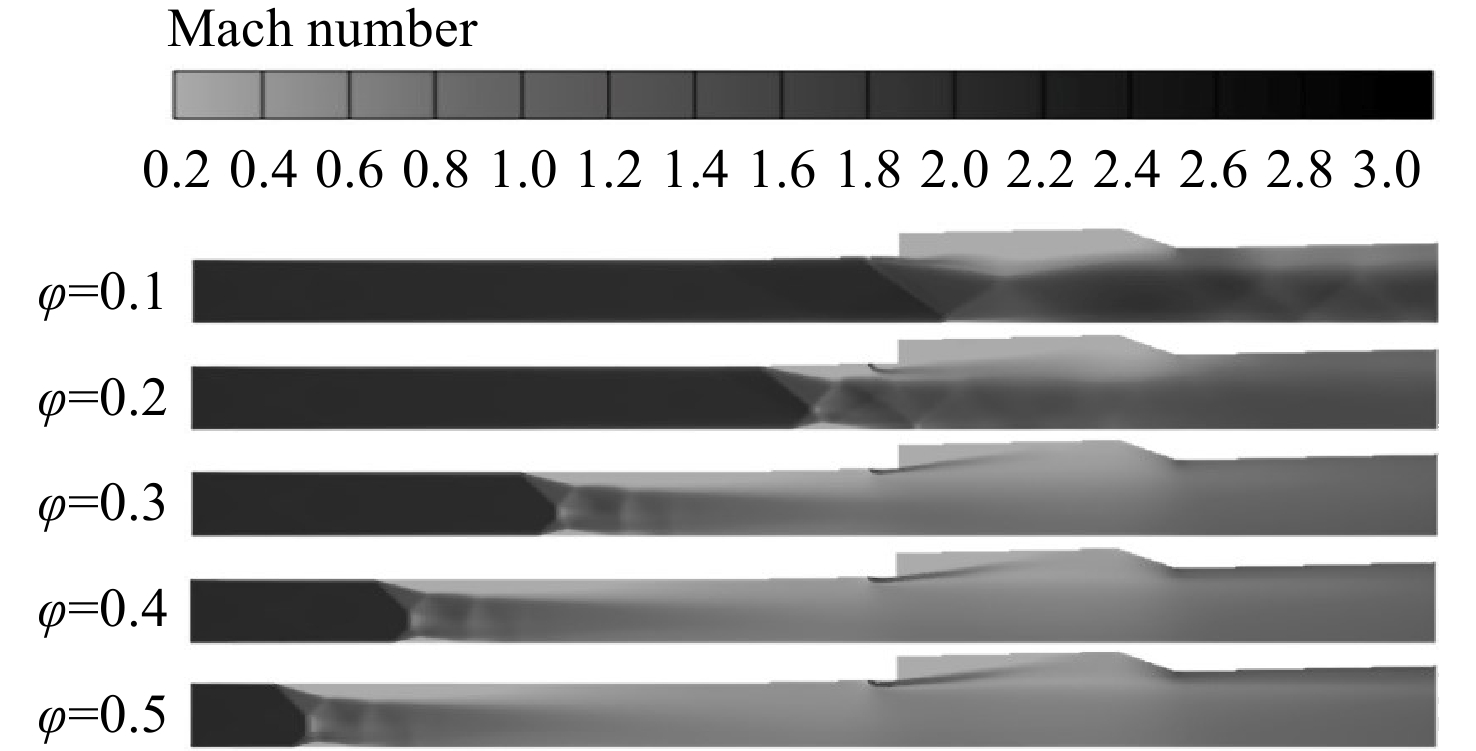
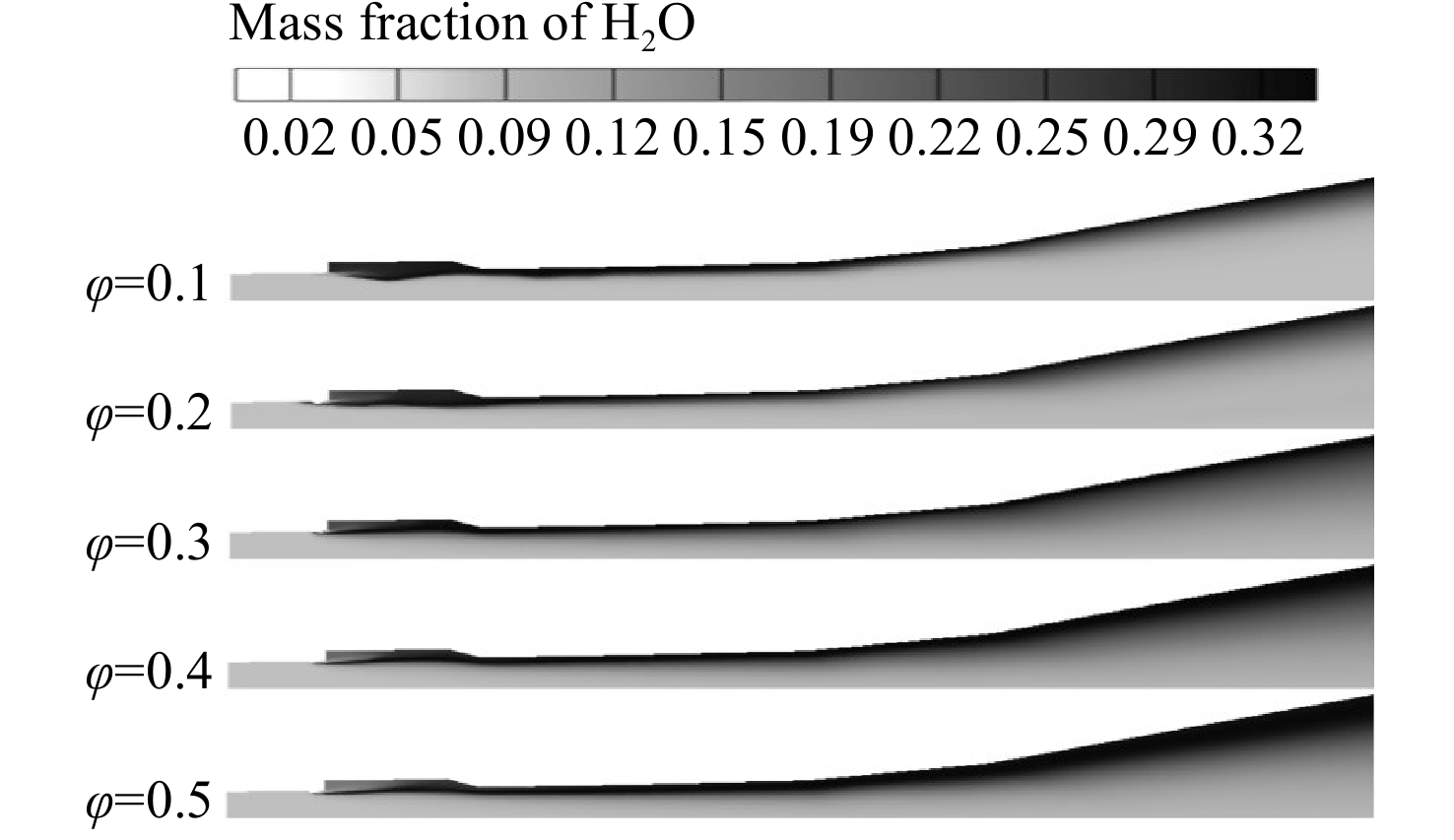
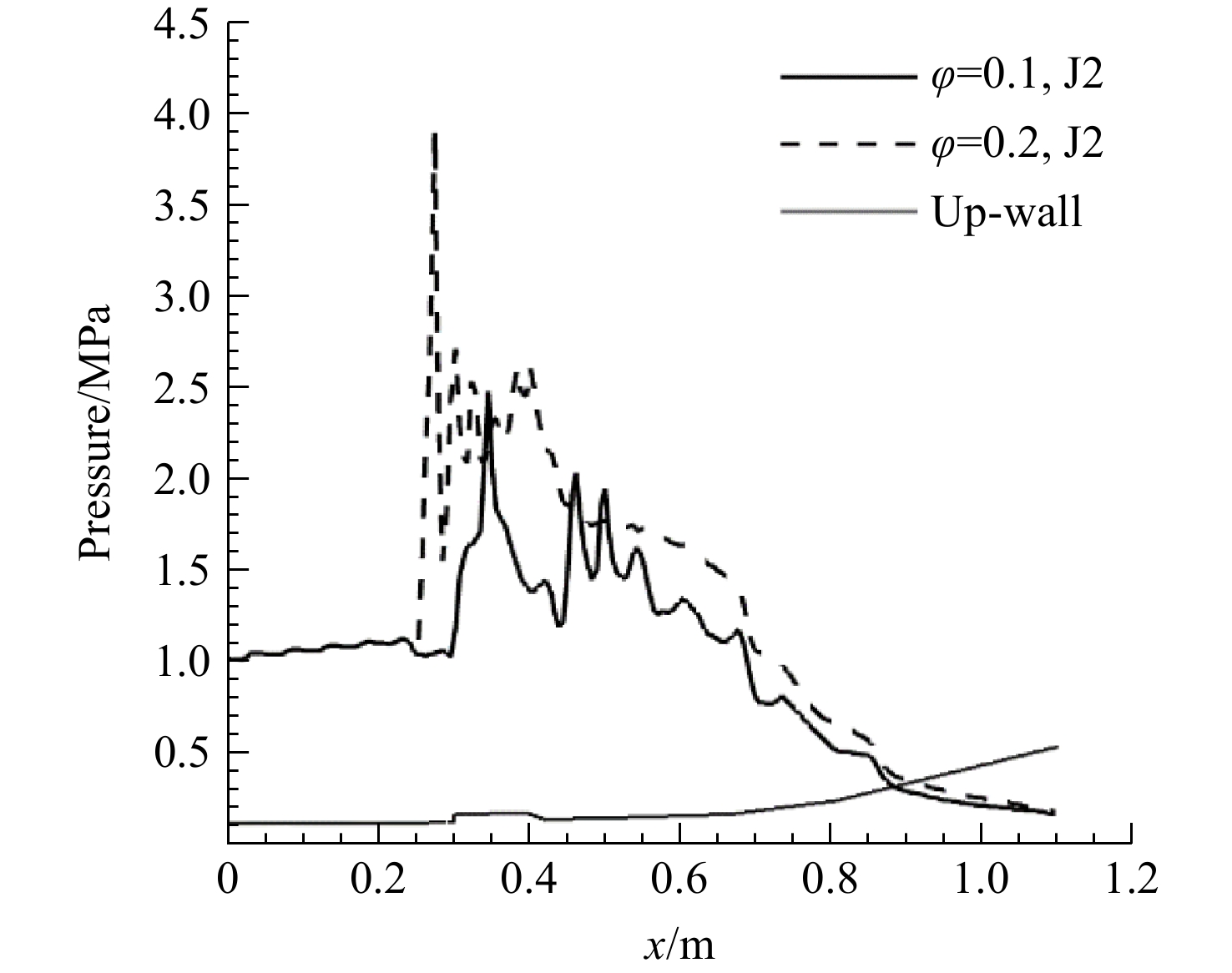
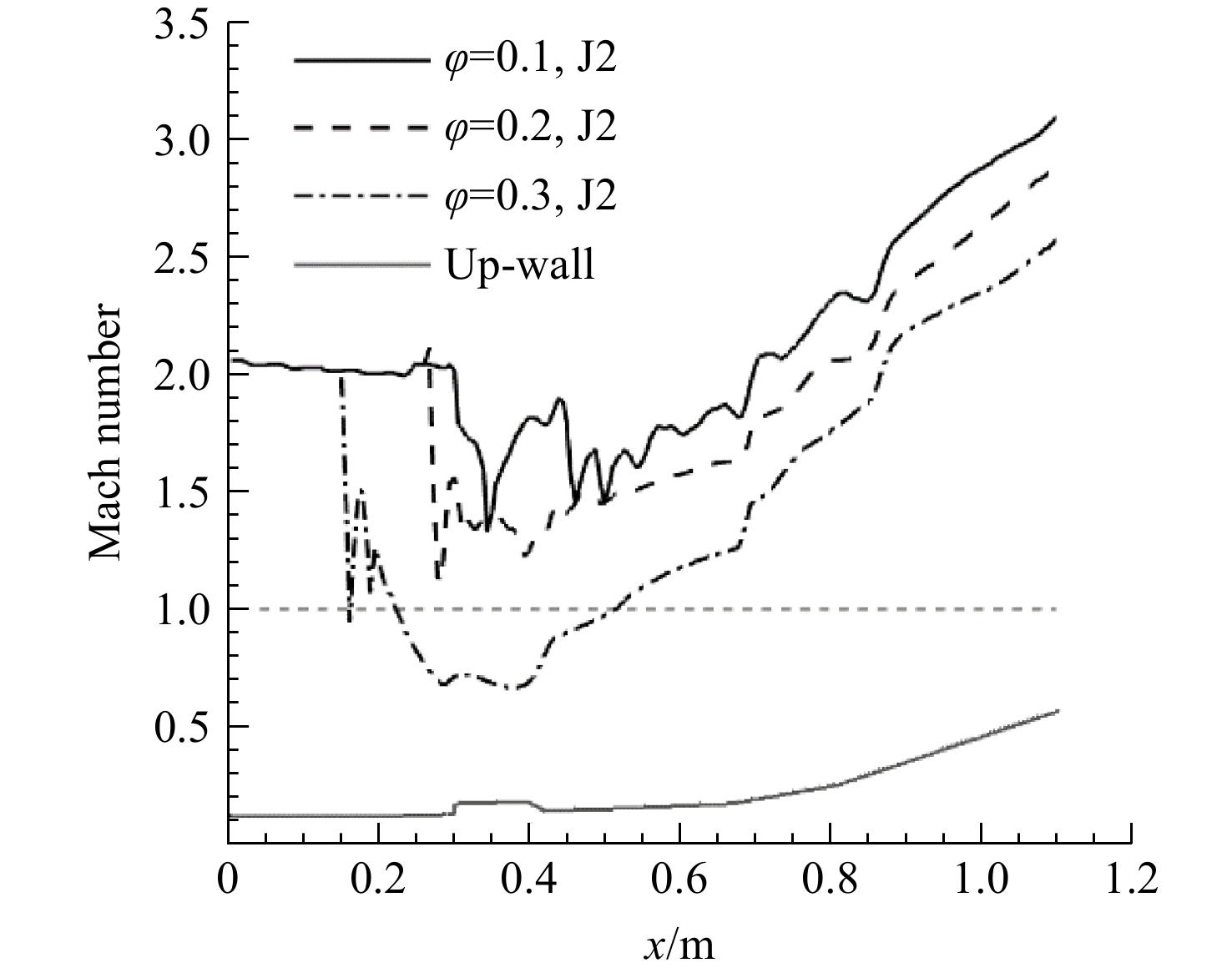
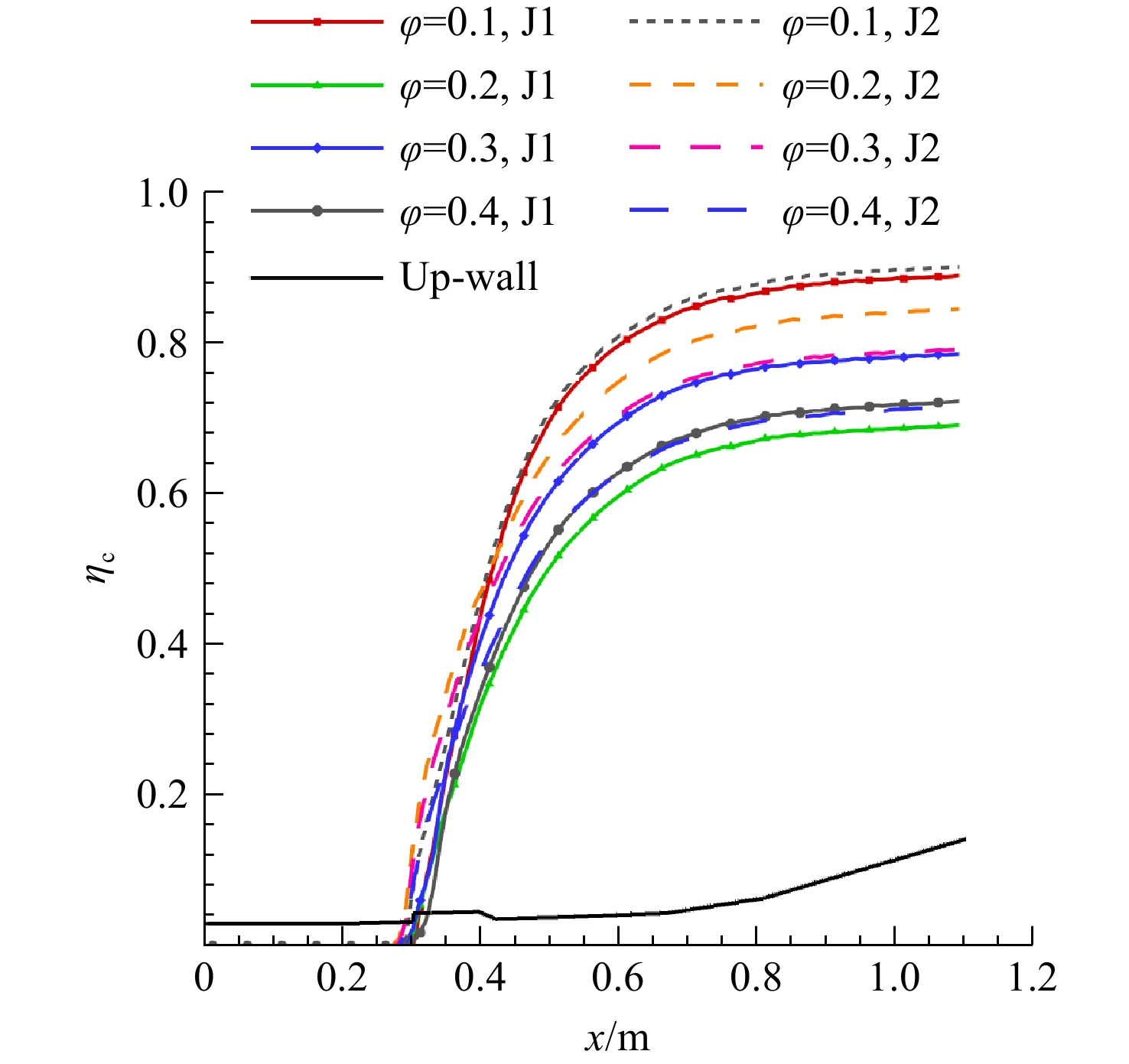
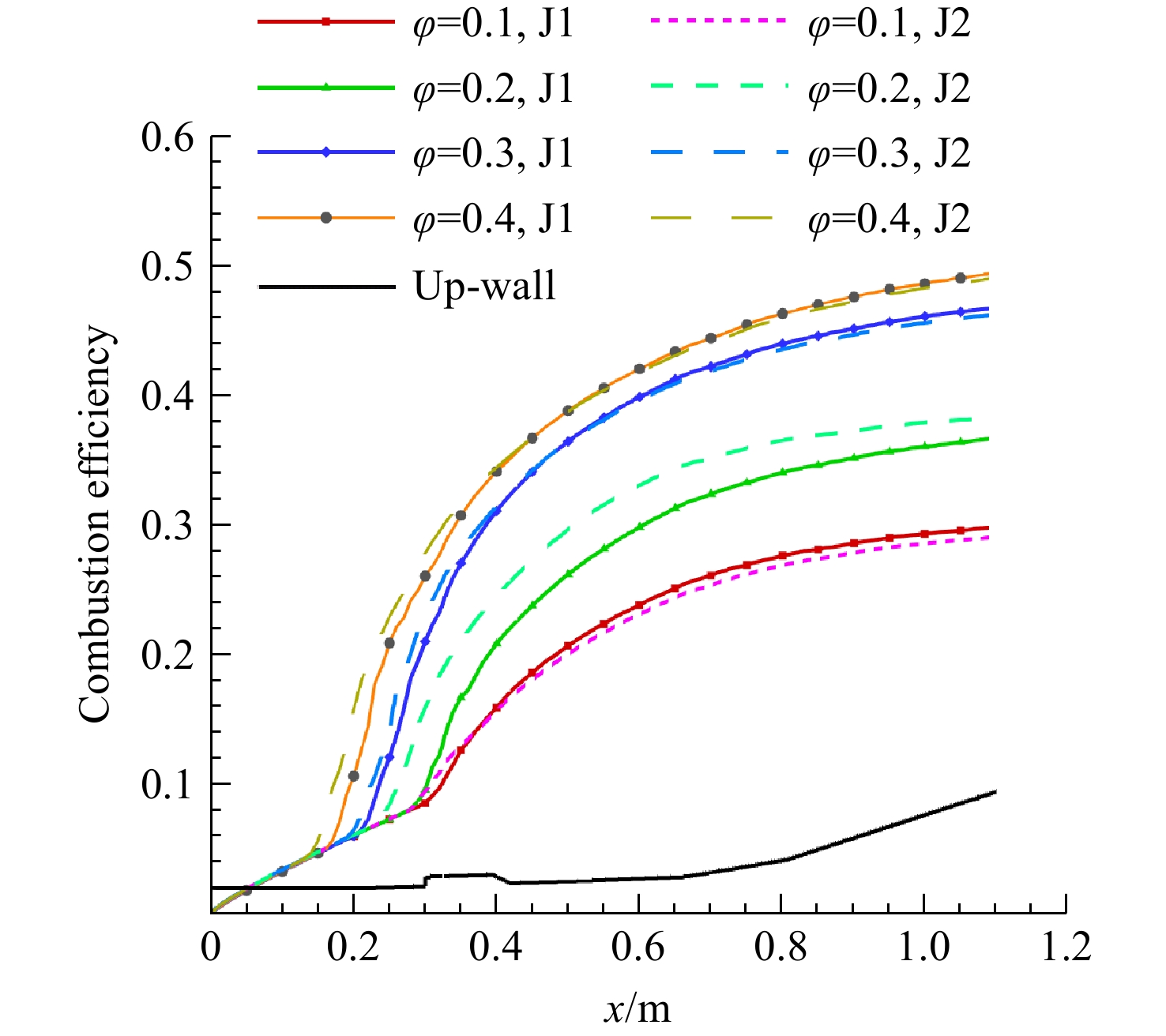
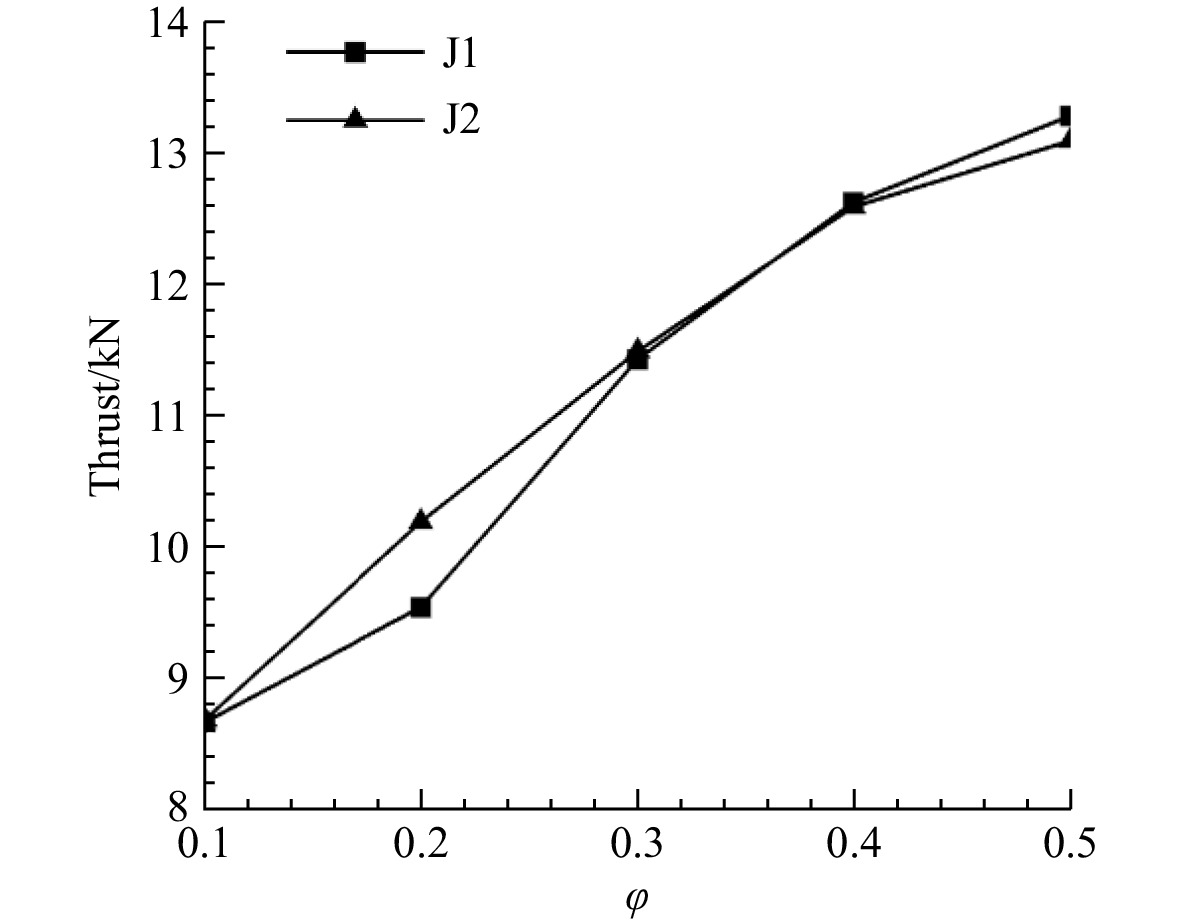
Based on the hydrogen-fueled single cavity rectangular cross-section scramjet, under the inflow condition of Mach number 2, the RANS (Reynolds-averaged Navier Stokes) method was used to solve the chemical mechanism model (10 species and 21 reactions), while the finite-rate combustion model was used to finish numerical simulation, and compared with the experimental data. The flow field structure of the combustor under nonreacting and reacting flow conditions was analyzed, then the effects of different equivalence ratios on the combustion performance of the combustor were discussed, and the combustion flow field characteristics of hydrogen injection at different injection positions were investigated. Results demonstrated that the distribution of combustion products was expanded and also moved back with the increase of equivalence ratio, changed the engine combustion mode from supersonic combustion to subsonic combustion, increased the total pressure loss, decreased the combustion efficiency and augment the thrust. At 0.1 to 0.3 equivalent ratios, the scramjet combustion performance of fuel injected at the front of the cavity was better than that injected in the cavity, which was contrary to 0.4 to 0.5 equivalent ratios.

Numerical simulation of fuel temperature change in aircraft fuel tank
WANG Liqun, FAN Juli, LIU Guannan, LIU Haozheng, WANG Yangyang, FENG Shiyu
2023, 38(9): 2186-2192. doi: 10.13224/j.cnki.jasp.20220105
Abstract:

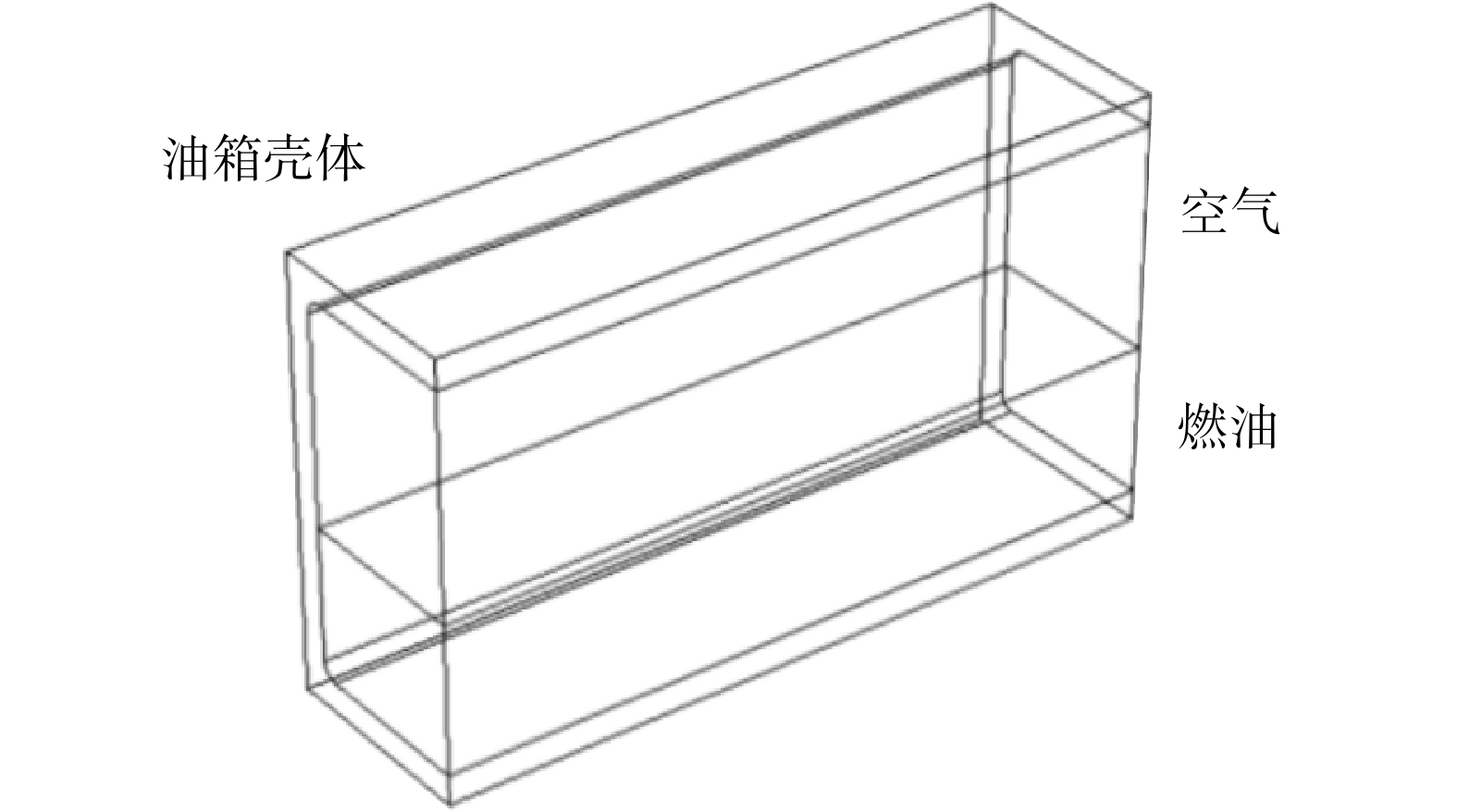
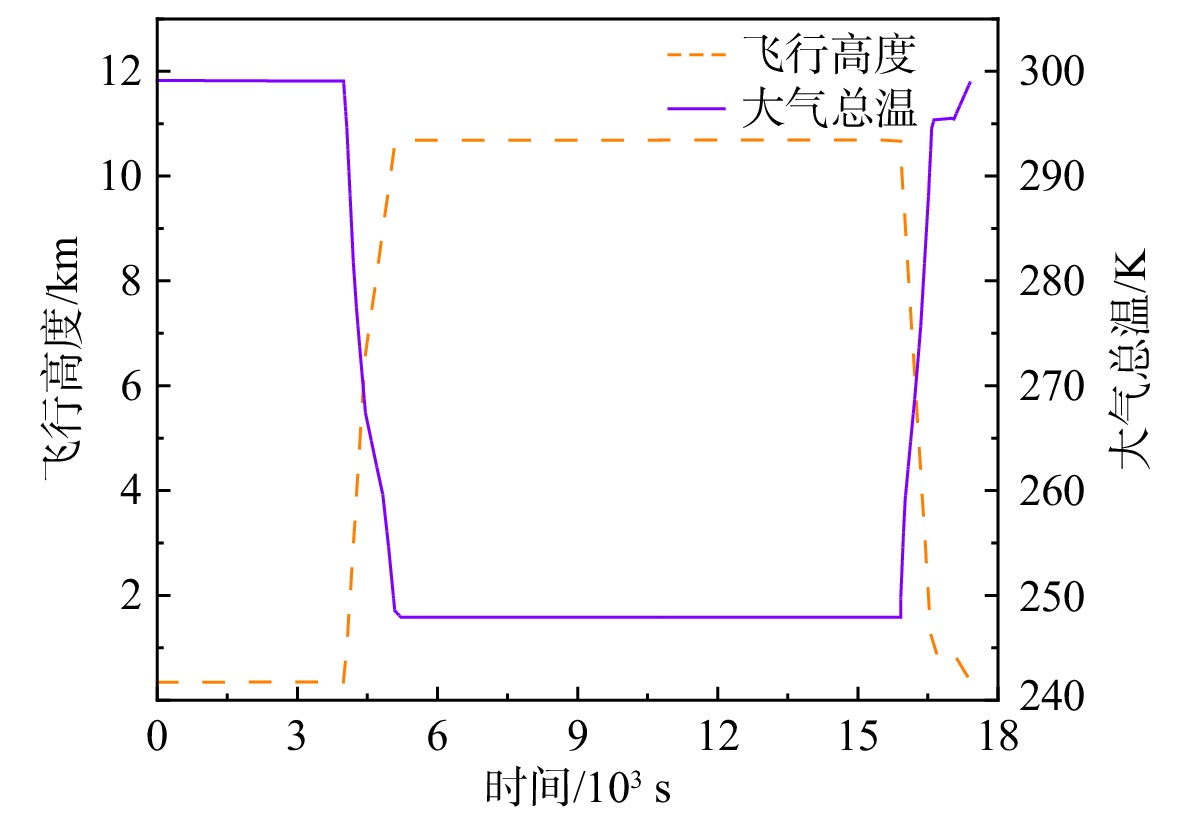
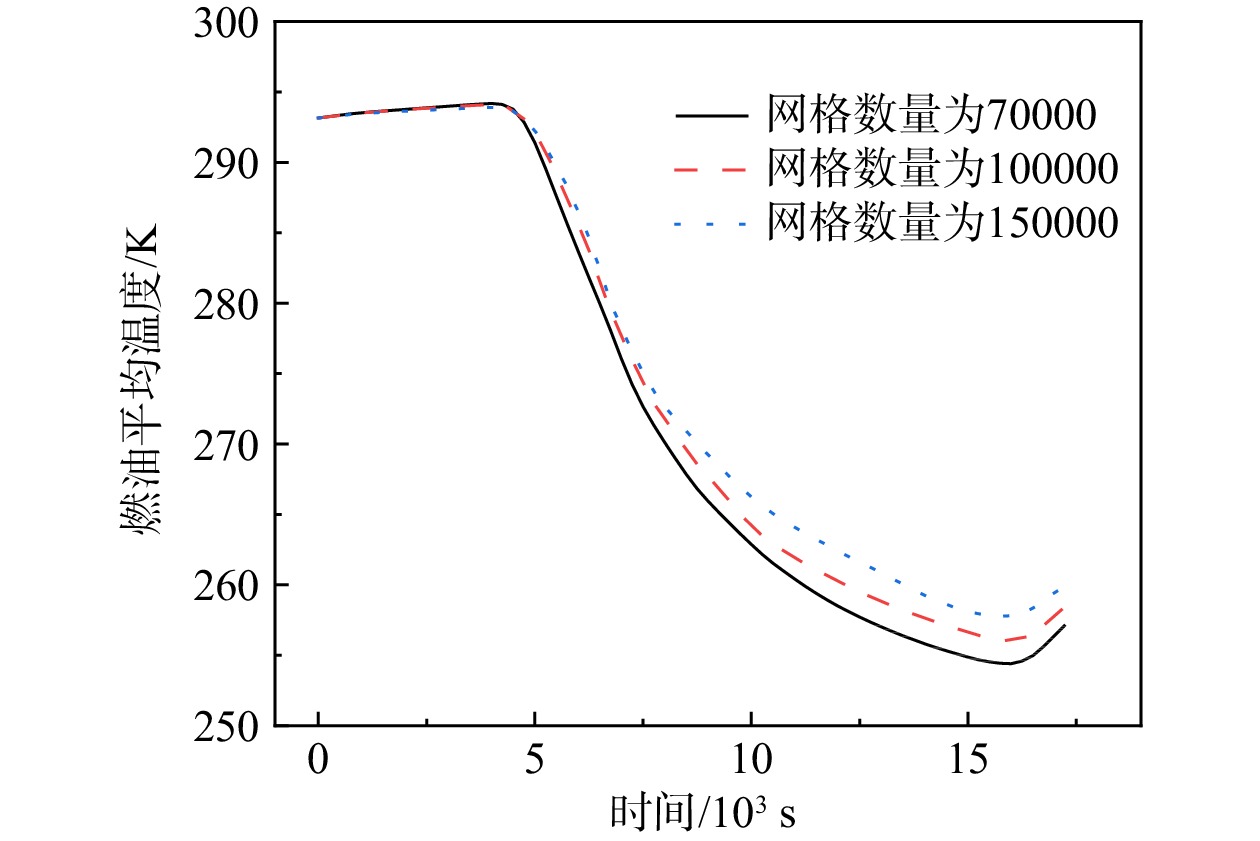
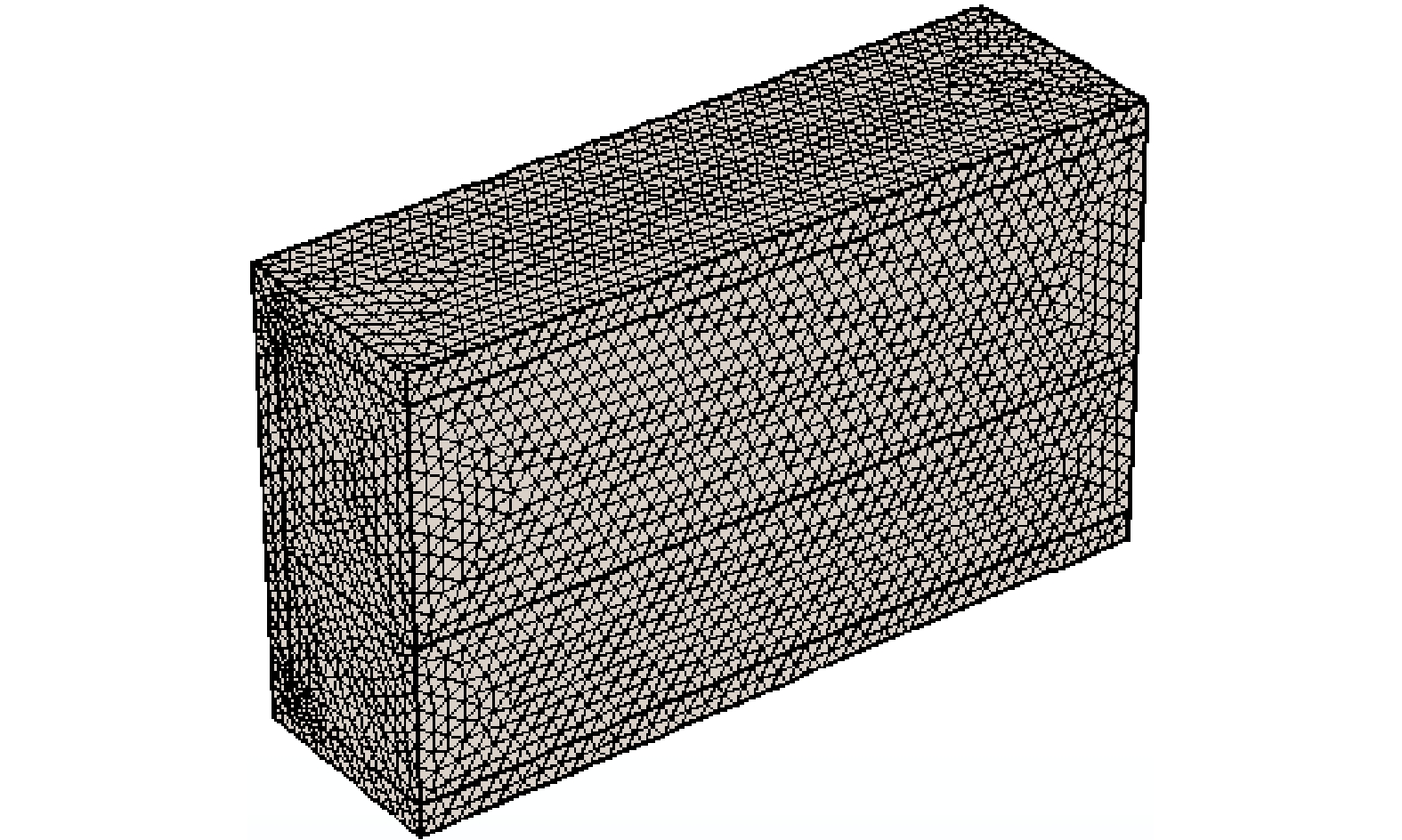
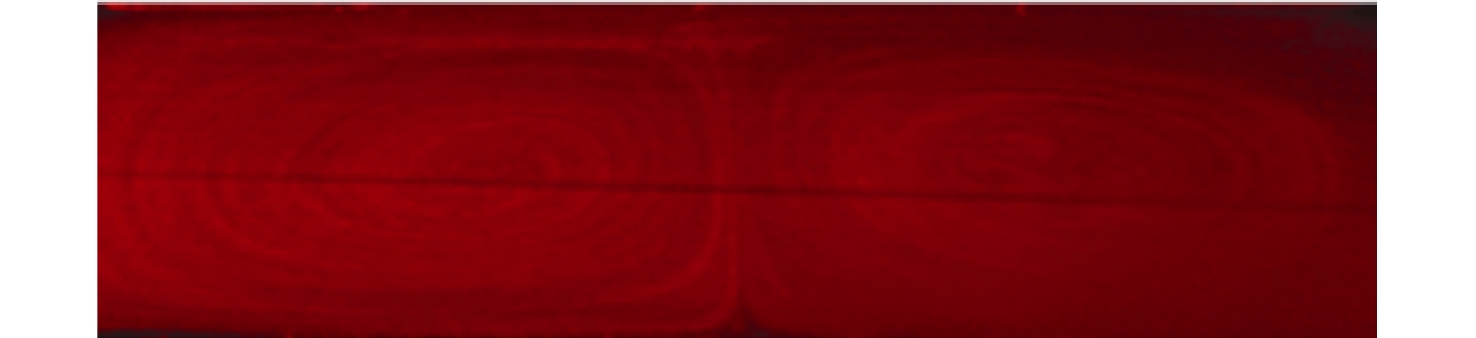
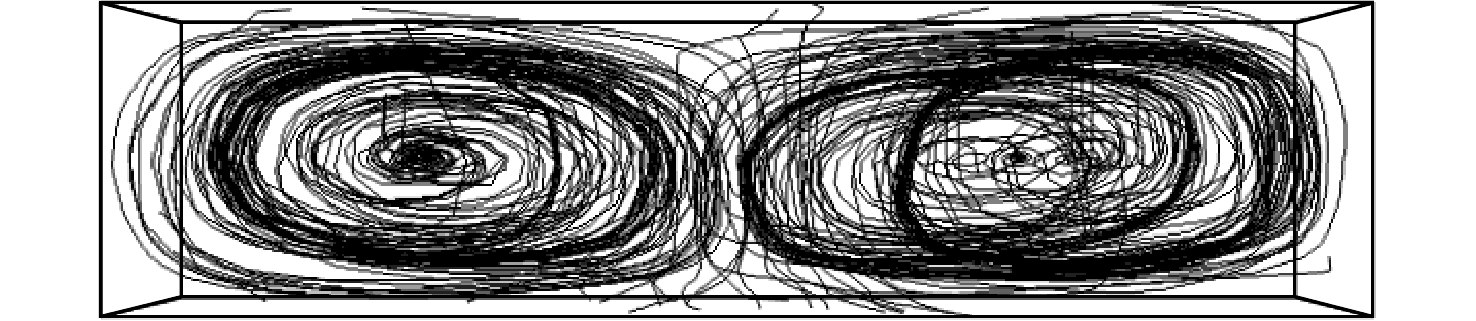
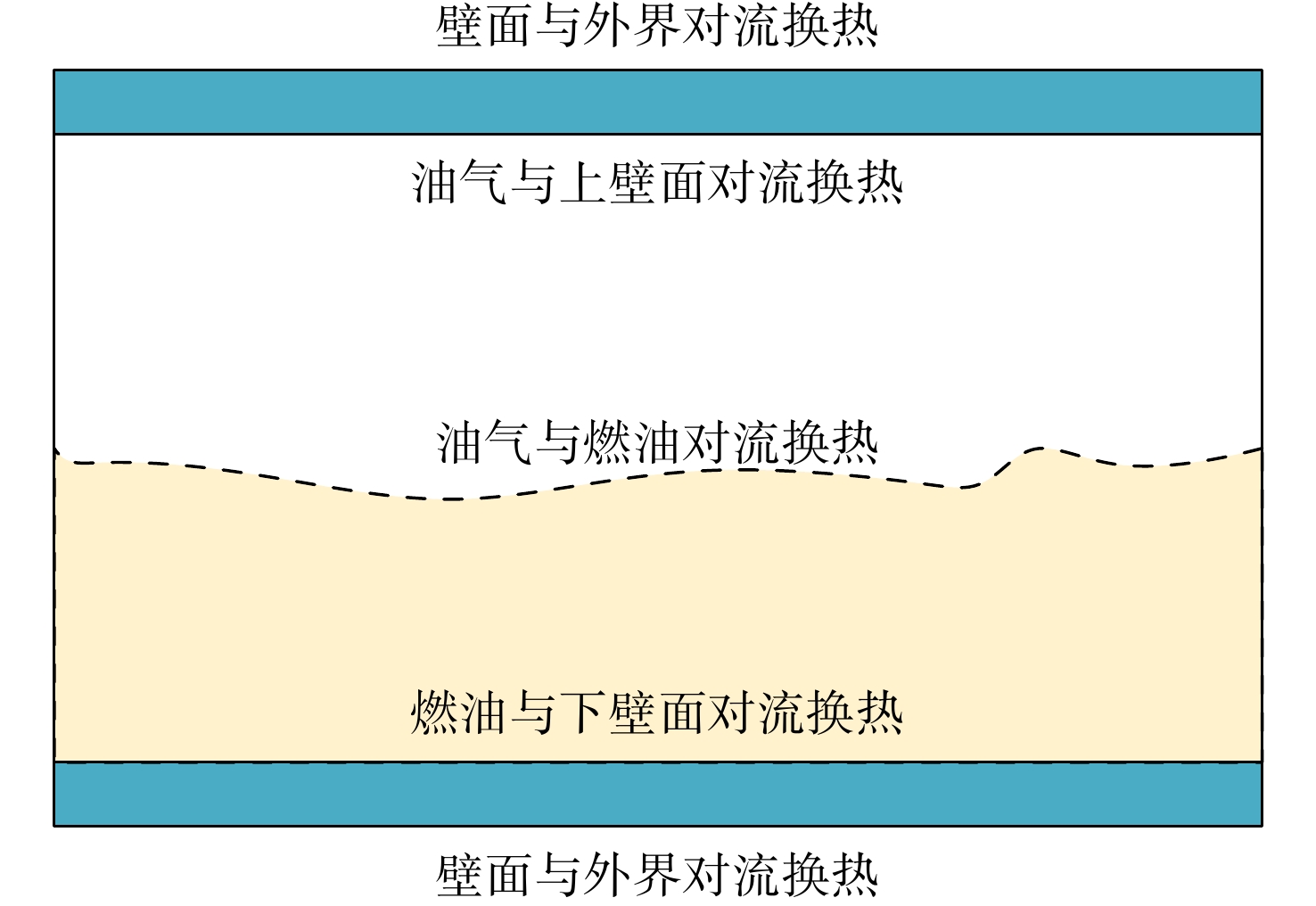
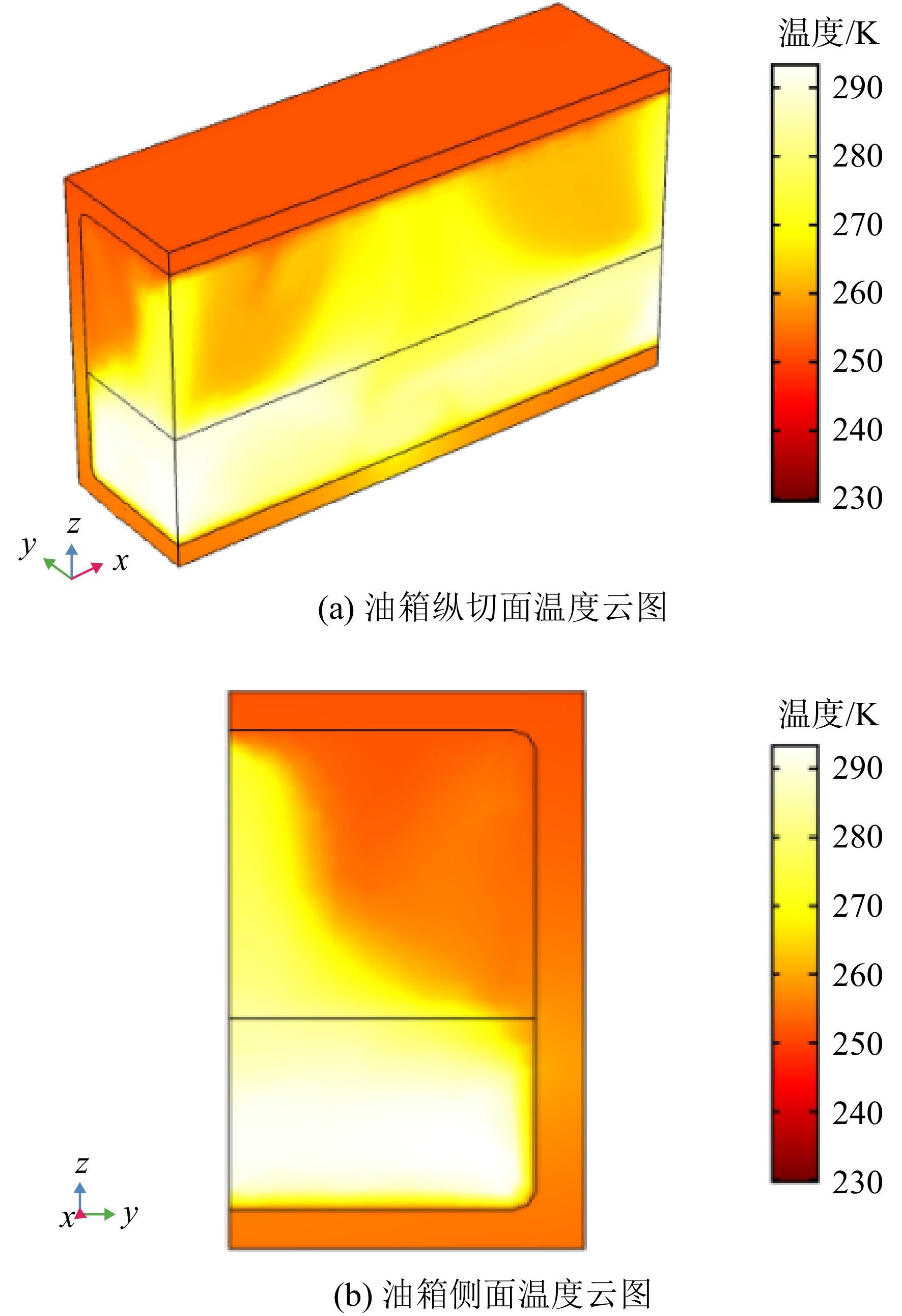
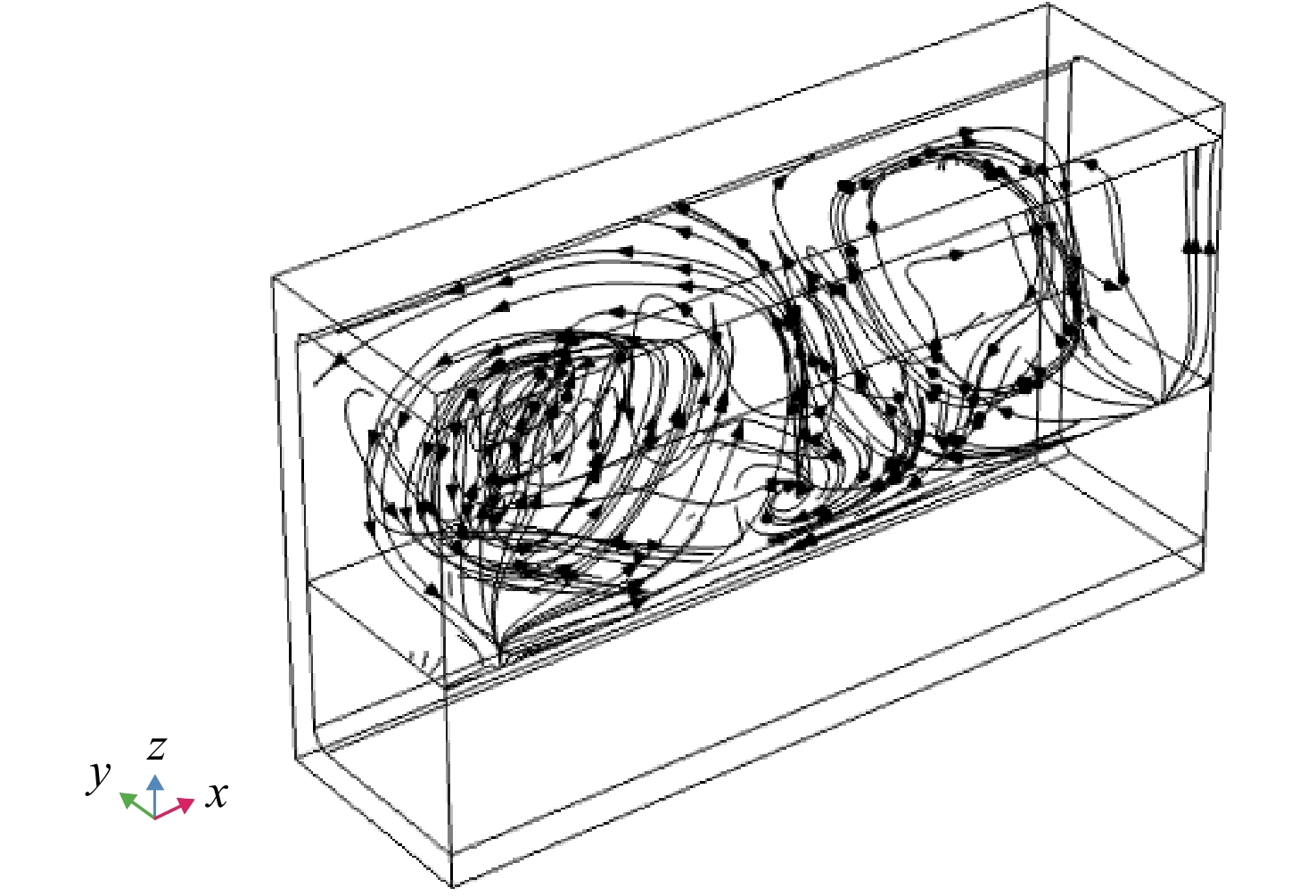
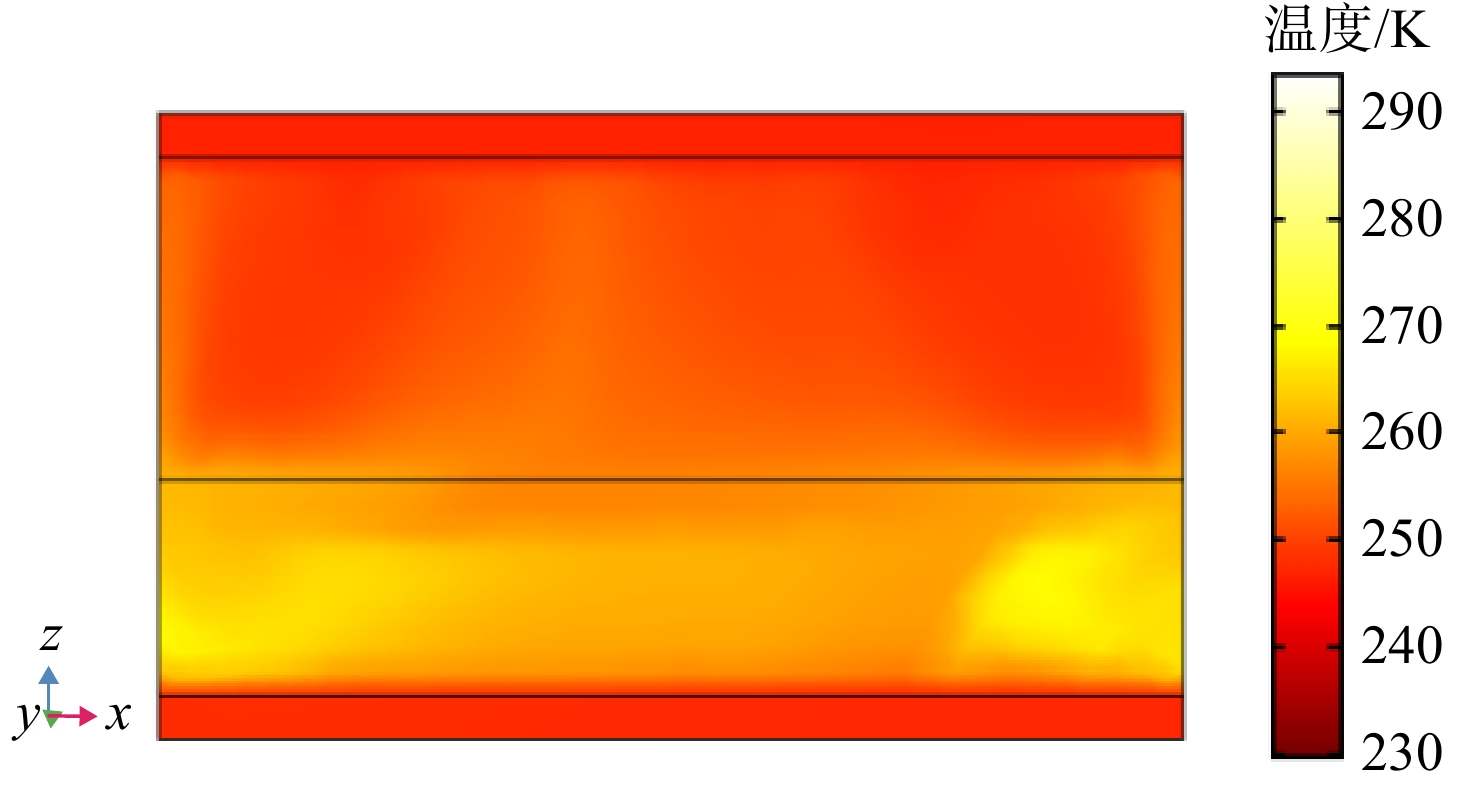
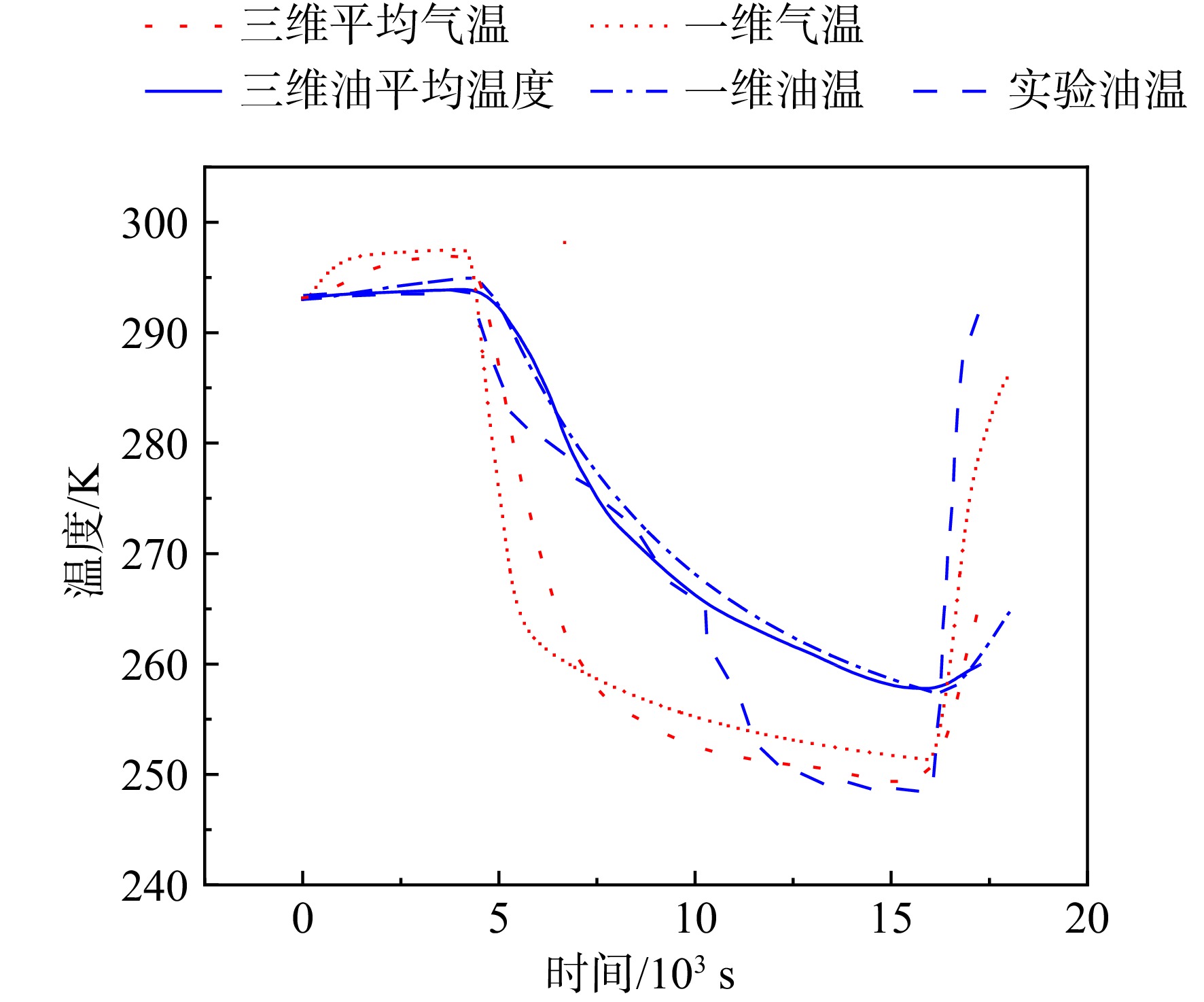
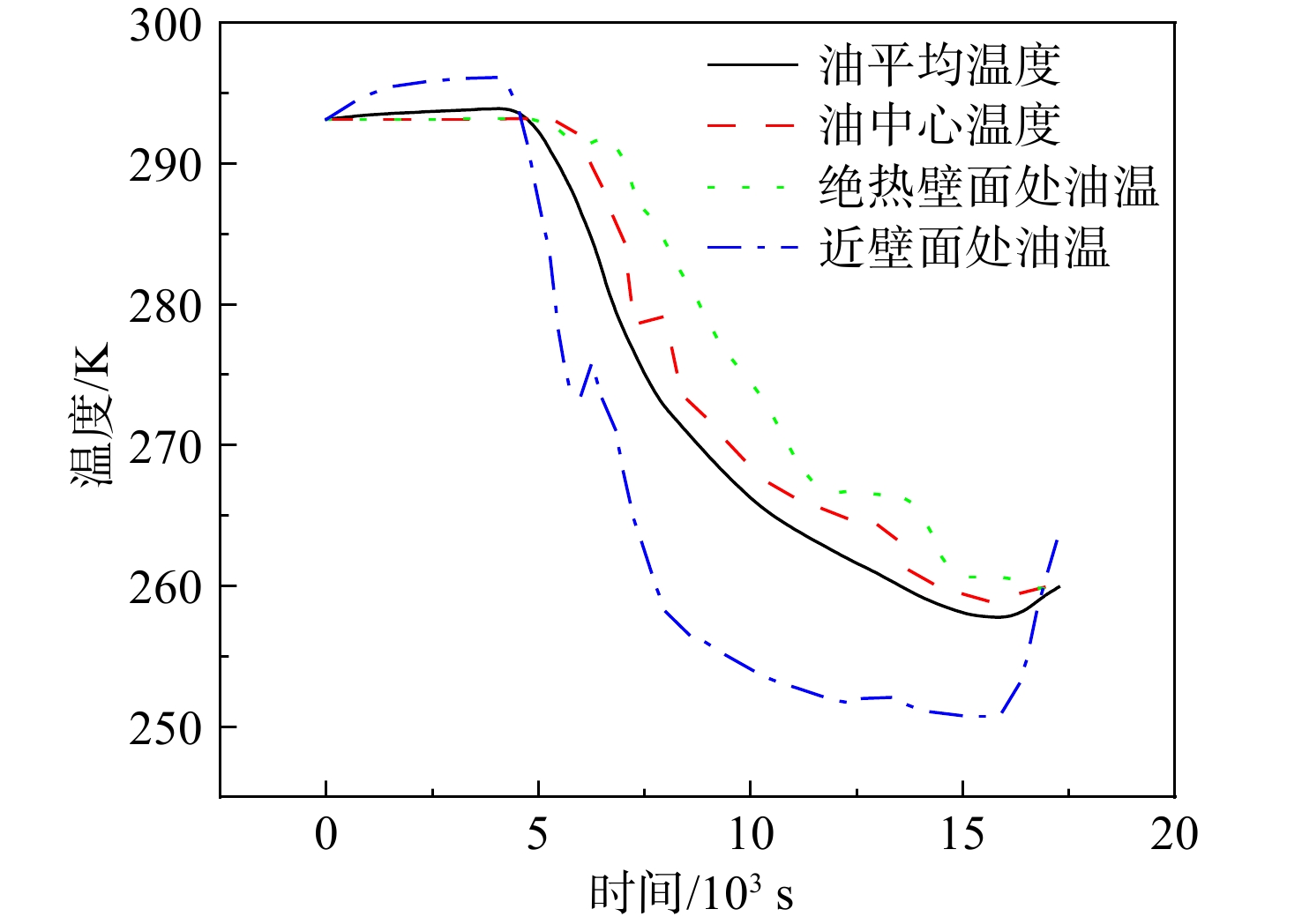
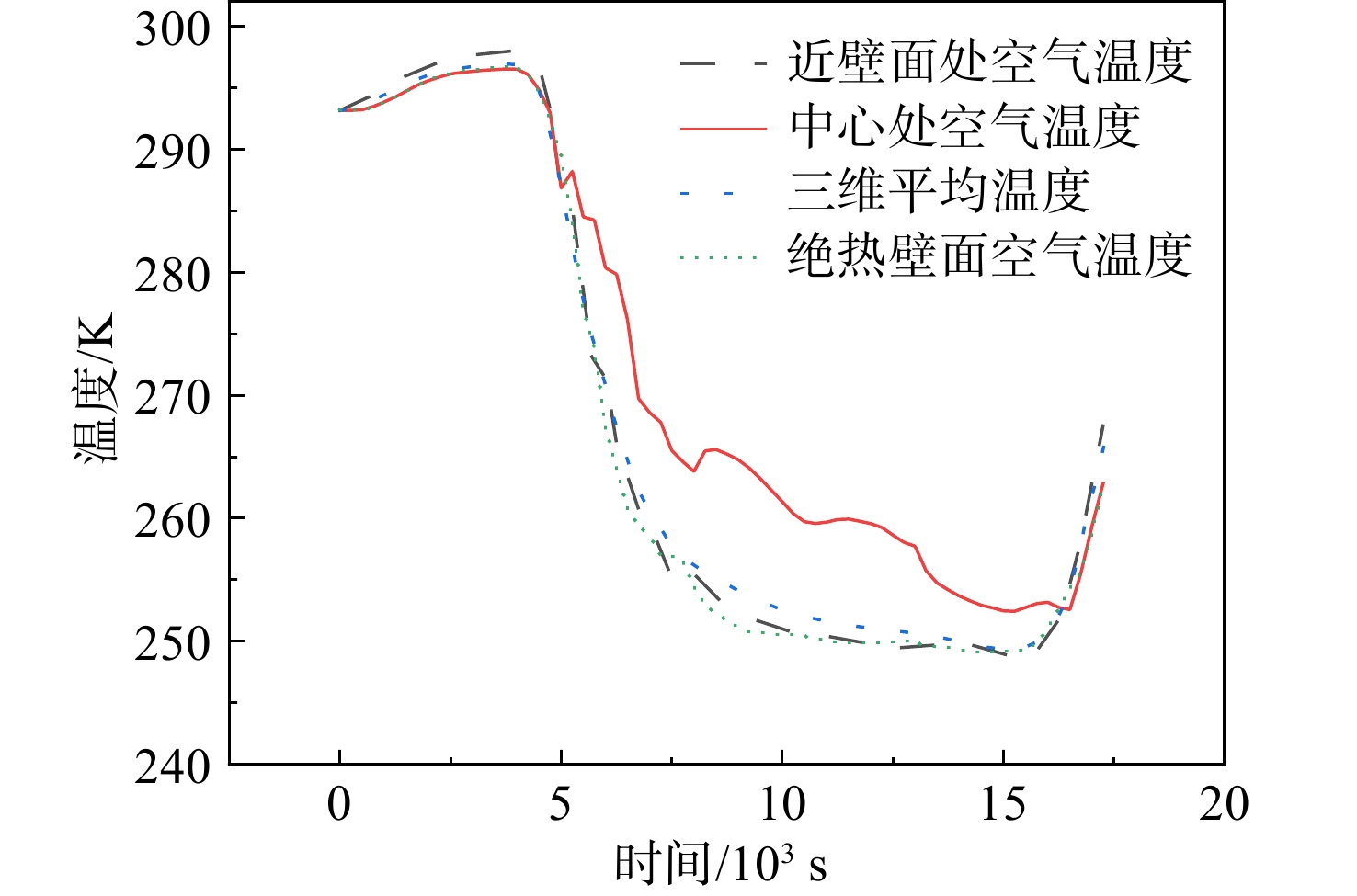
Considering aerodynamic heating of the skin by the outside air during flight, a three-dimensional simulation of the heat transfer process of fuel and gas inside the aircraft fuel tank was carried out, and the distribution of the temperature field and velocity field in the fuel tank was obtained. The lumped parameter method was used. A one-dimensional thermal model of aircraft fuel tank was established, and solved by programming in Modelica language. The fuel, gas space and wall temperatures calculated by the three-dimensional model and the one-dimensional model were compared with the flight test data. The results showed that the average gas and fuel temperatures of the two models were in good agreement with the measurement results of the sensors arranged in the middle of the fuel tank. The three-dimensional simulation results indicated that the temperature of the fuel tank varied greatly. The maximum temperature difference between each point of the fuel can reach 17 K, and the maximum temperature difference between each point in the gas phase space can reach 30 K, so due attention shall be paid to the sensor position in the test. In addition, the three-dimensional simulation model can also provide a basis for the selection of relevant heat transfer parameters in the one-dimensional model.
Structure,Strength and Vibration
Numerical simulation and experimental validation for erosion wear of TC4 plates
YANG Xiaojun, LIU Xiaohan, LIU Wenbo, YUAN Zhongnan
2023, 38(9): 2193-2203. doi: 10.13224/j.cnki.jasp.20210647
Abstract:

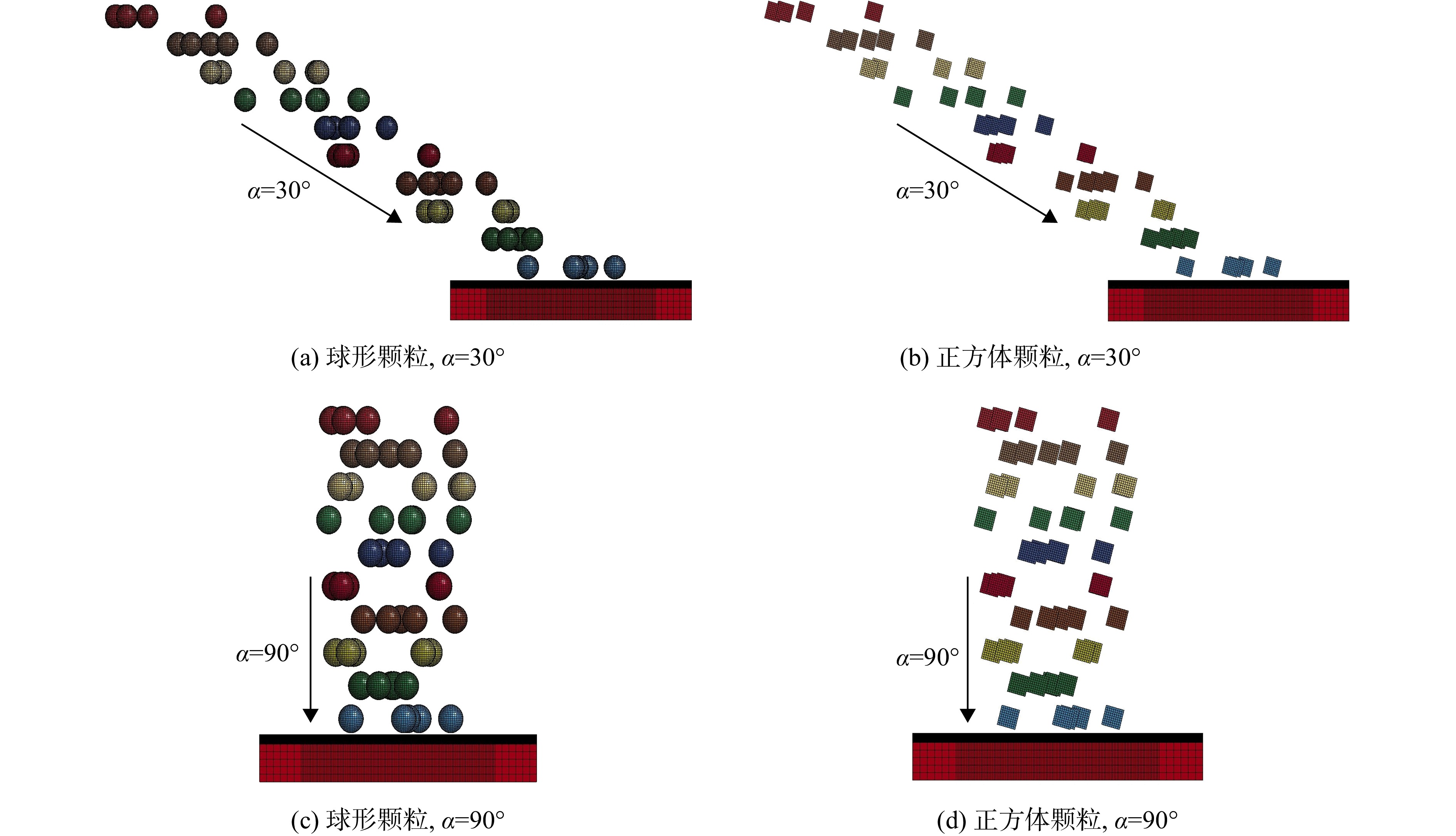
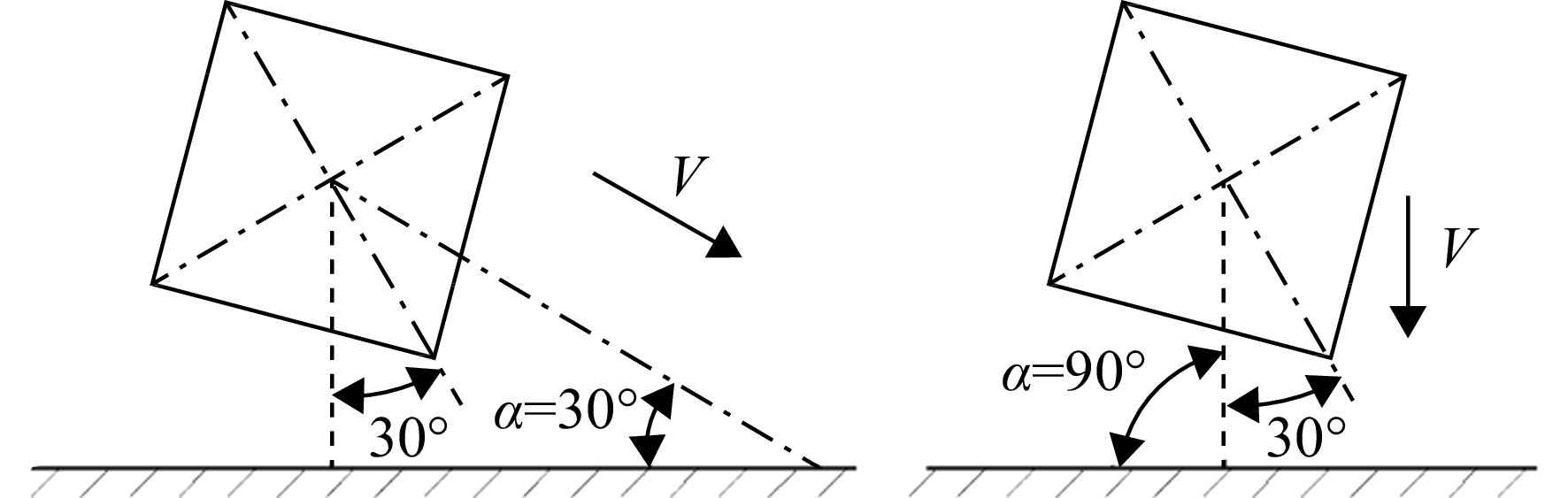
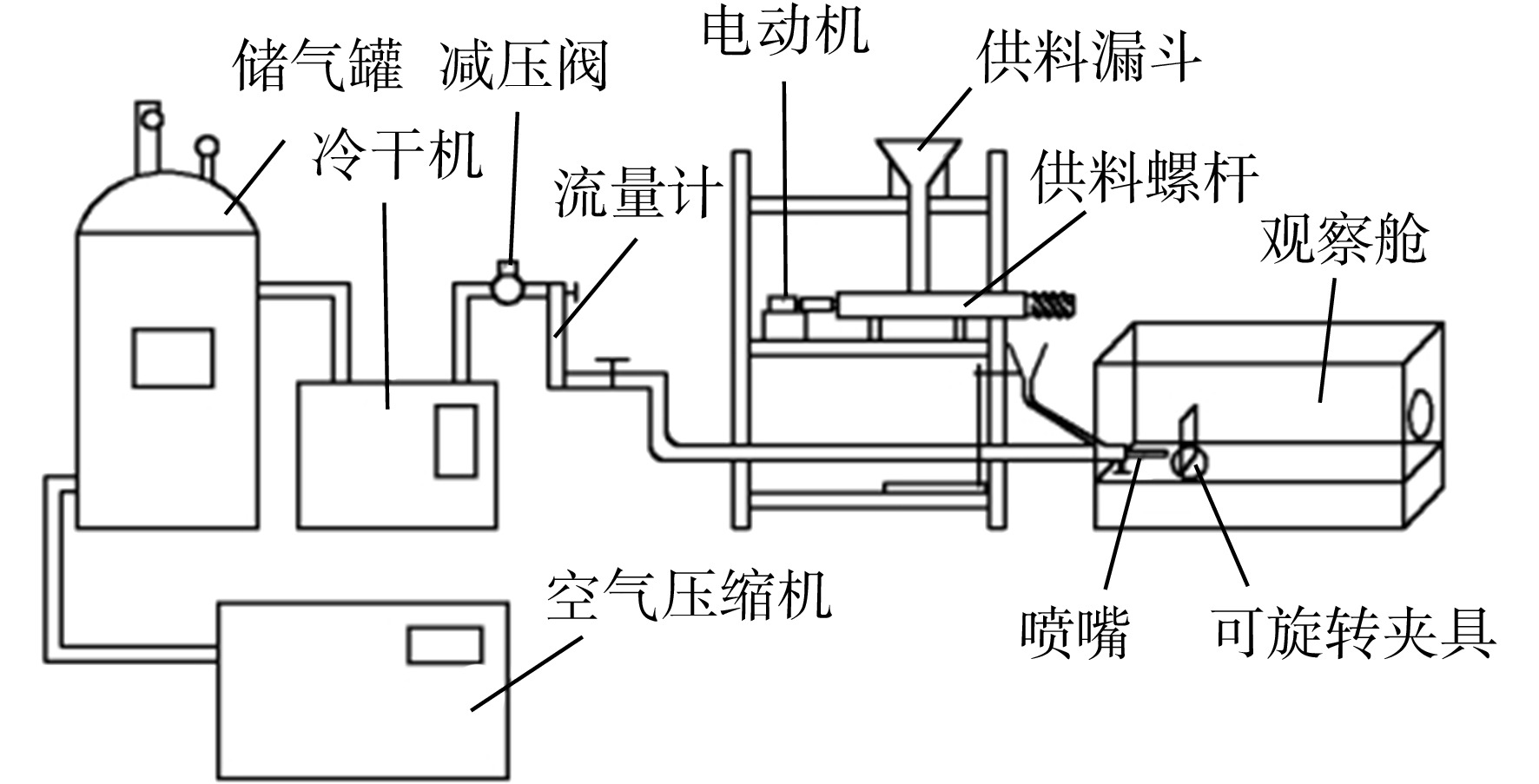
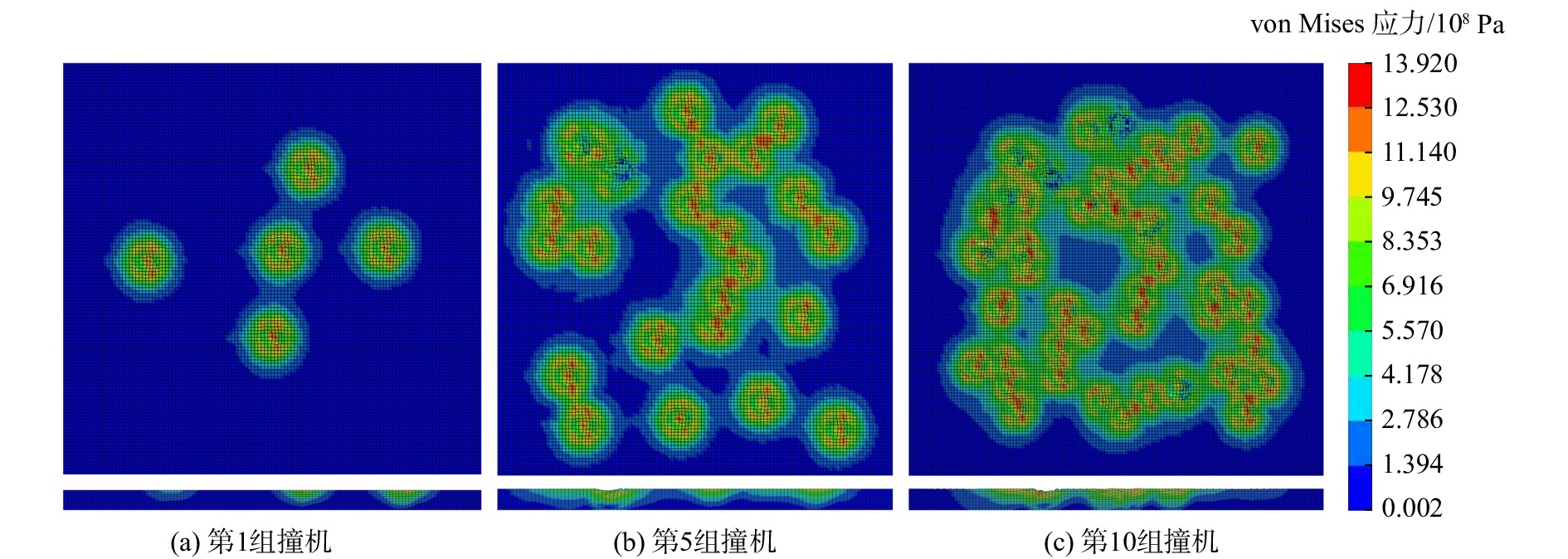
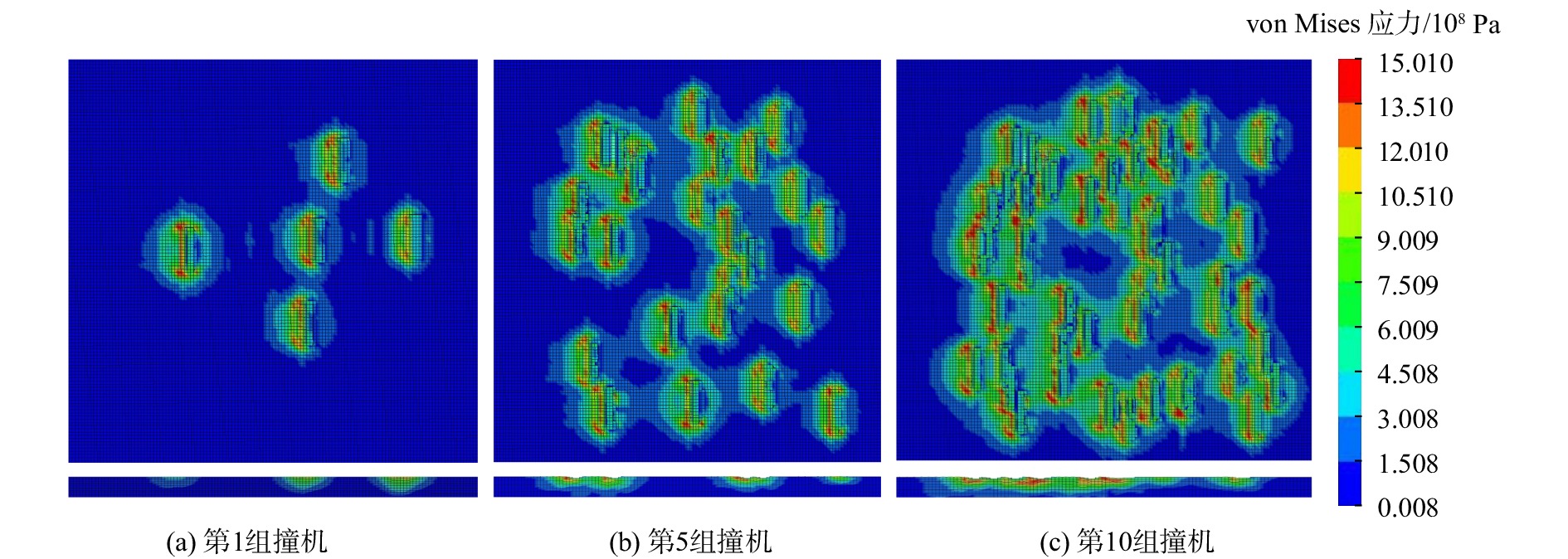
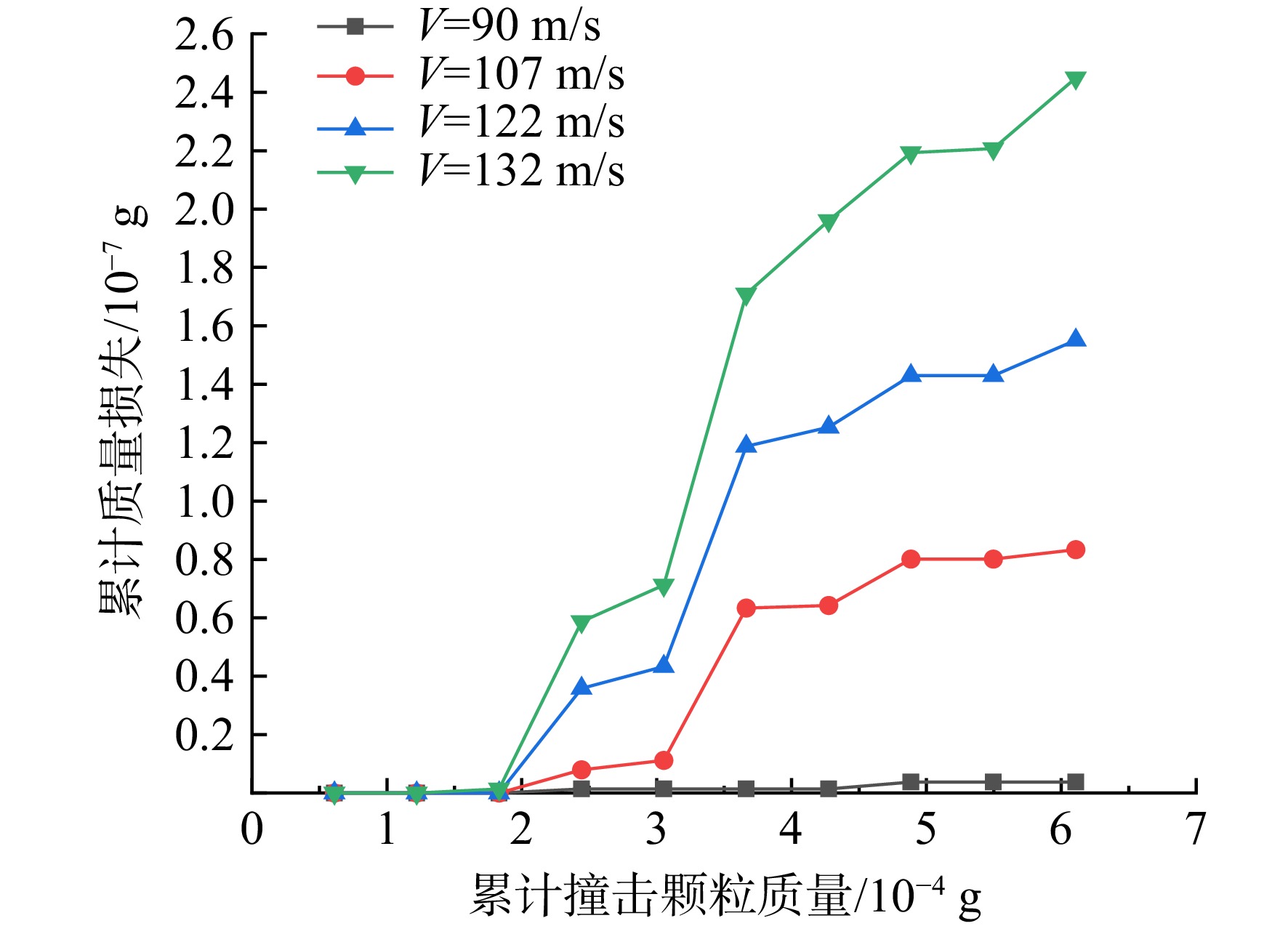
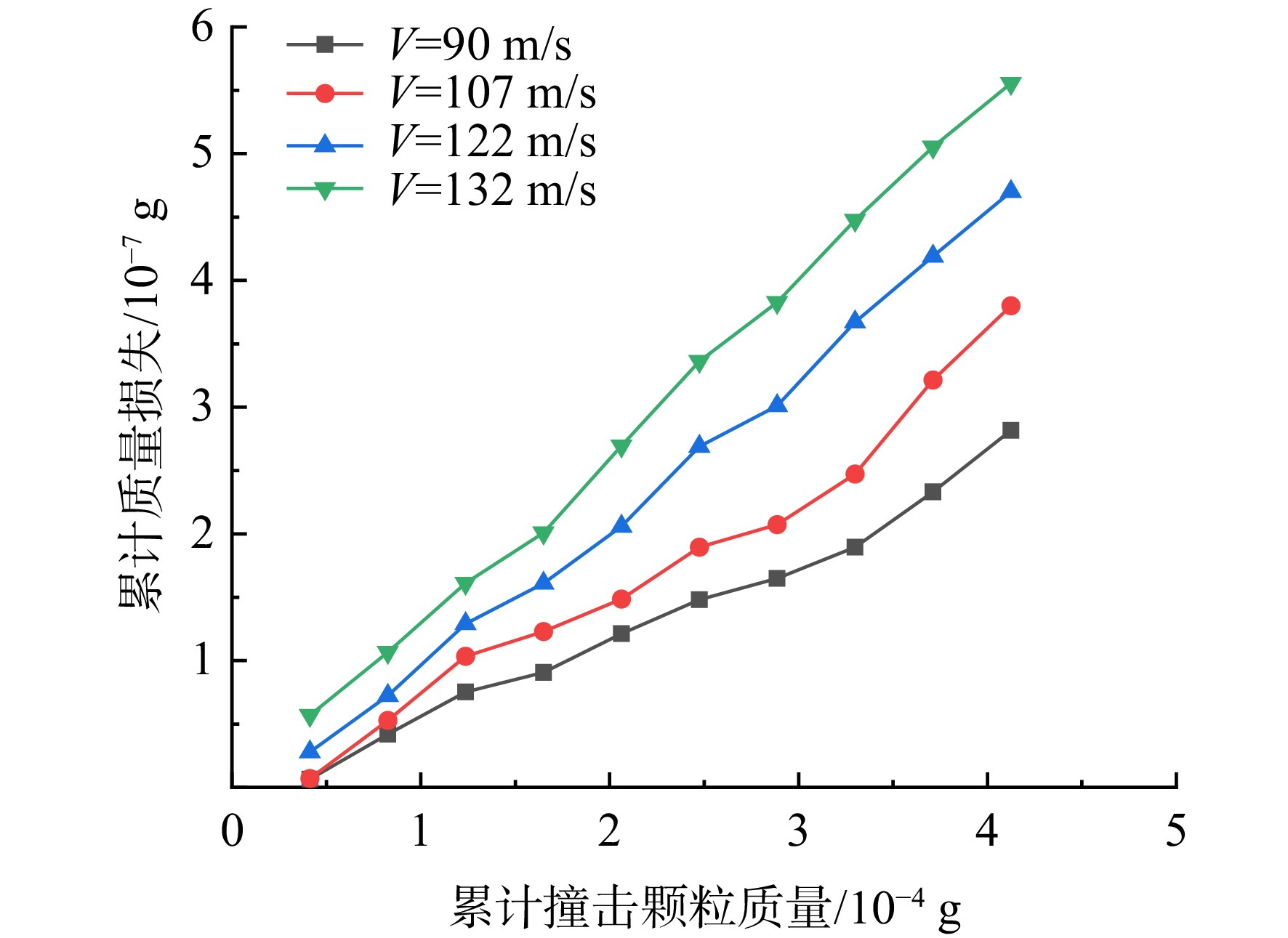
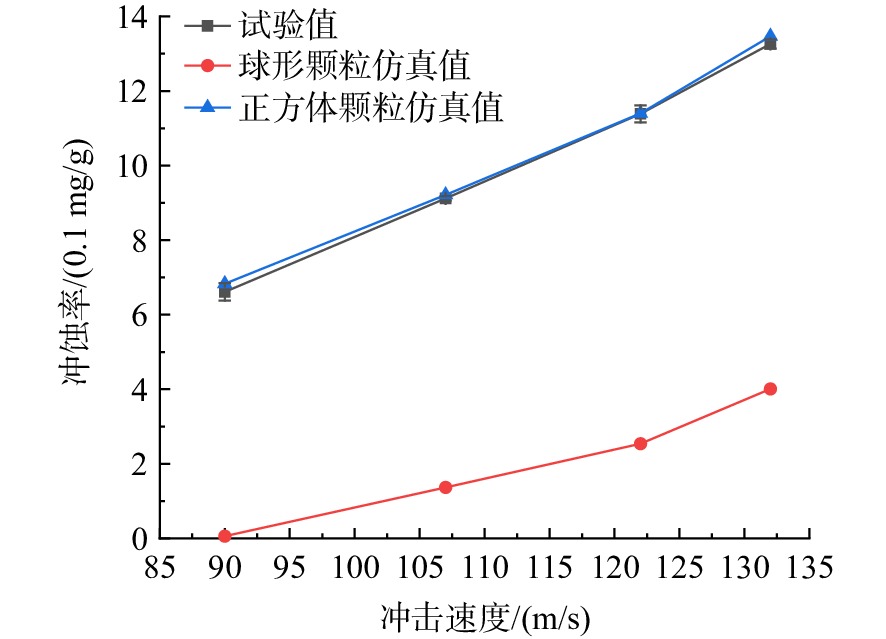
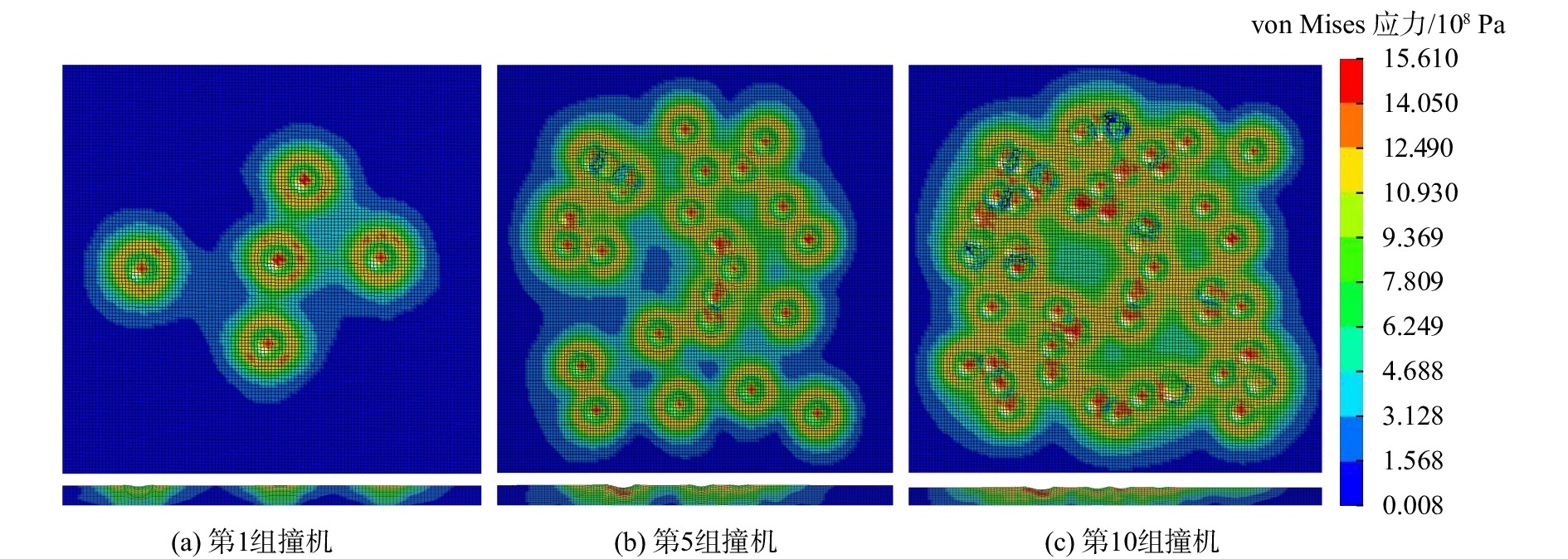
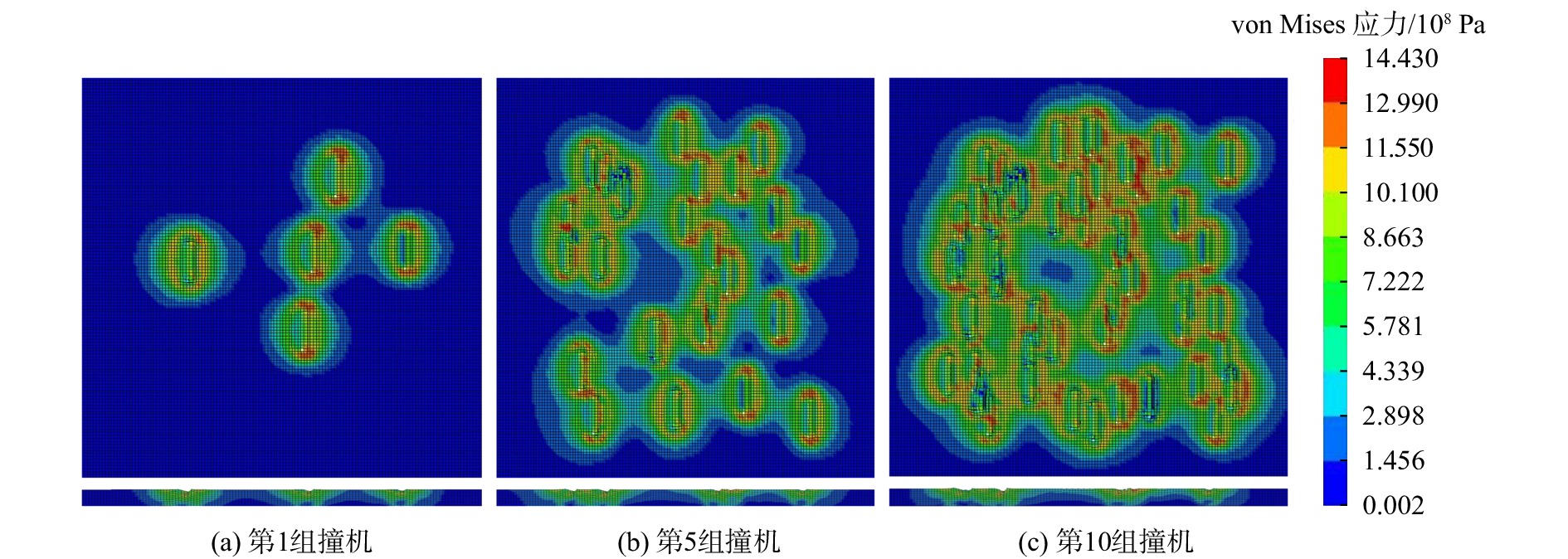
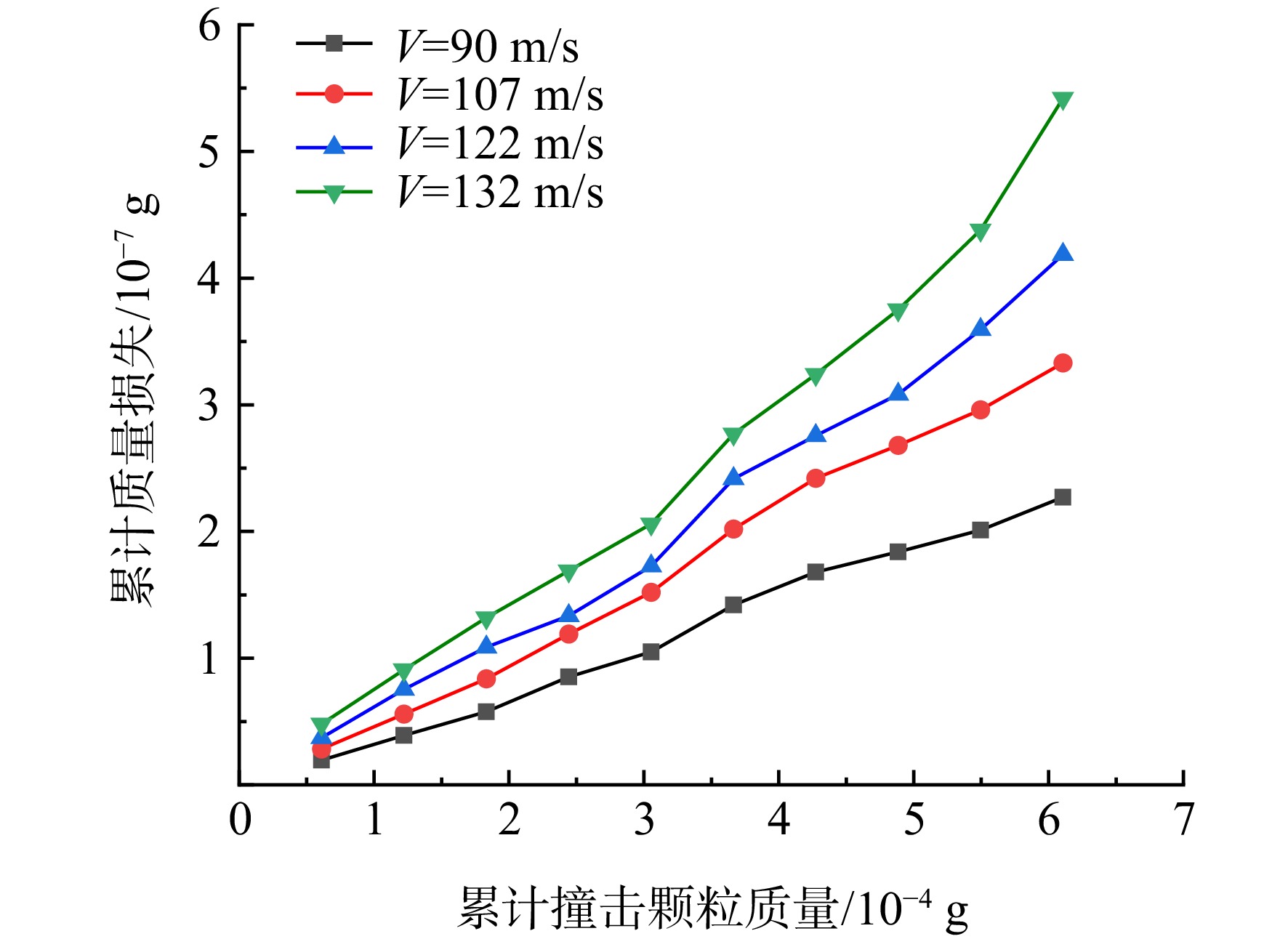
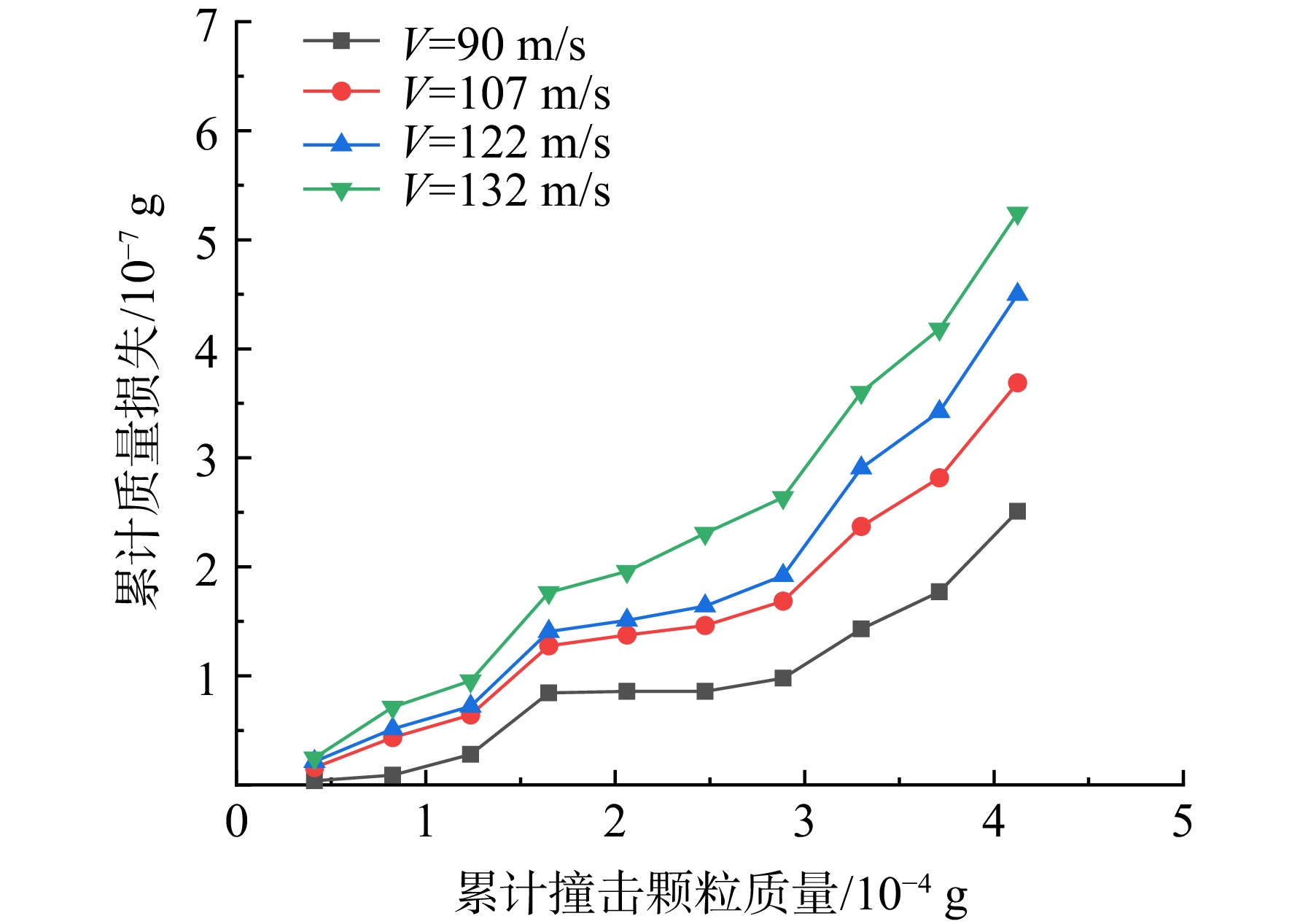
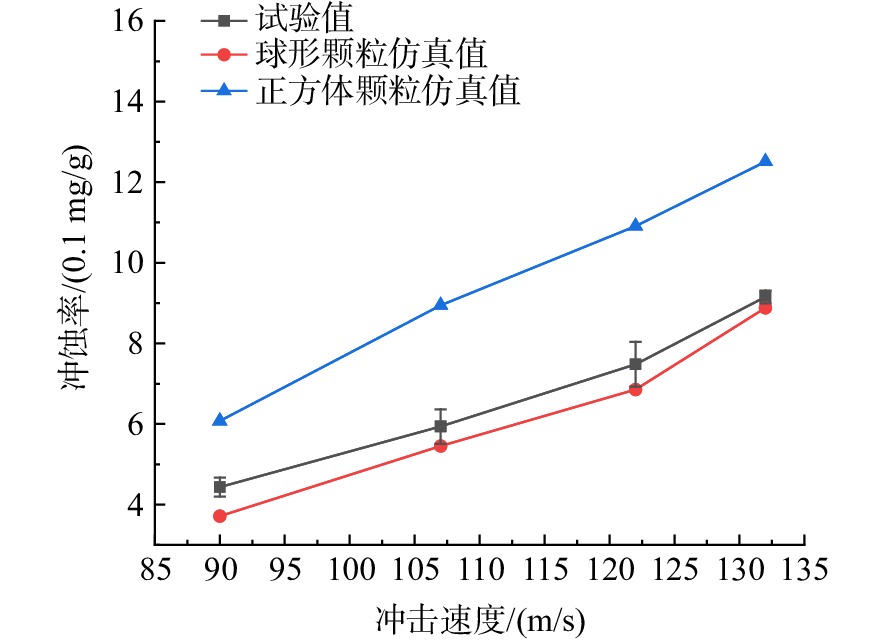
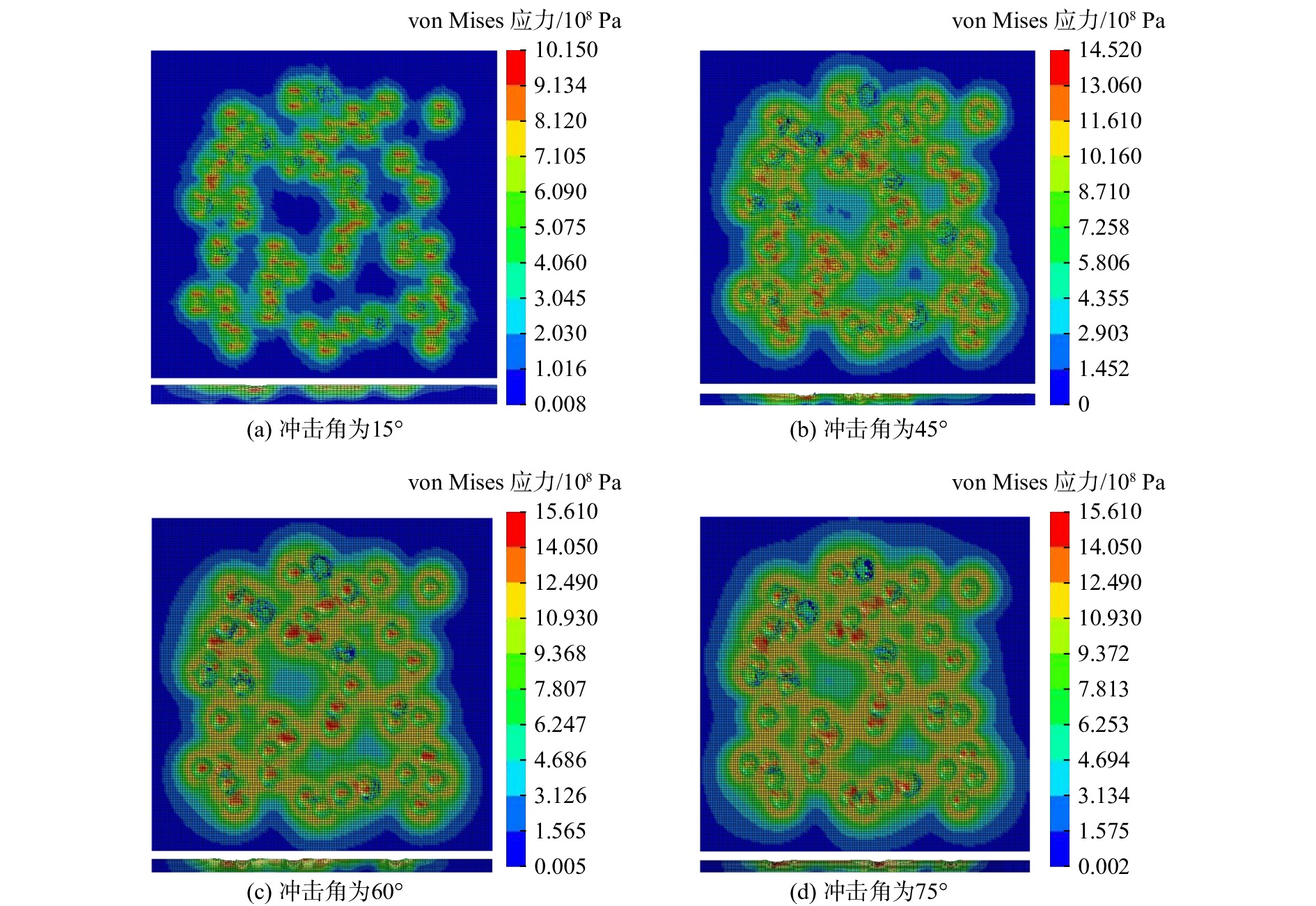
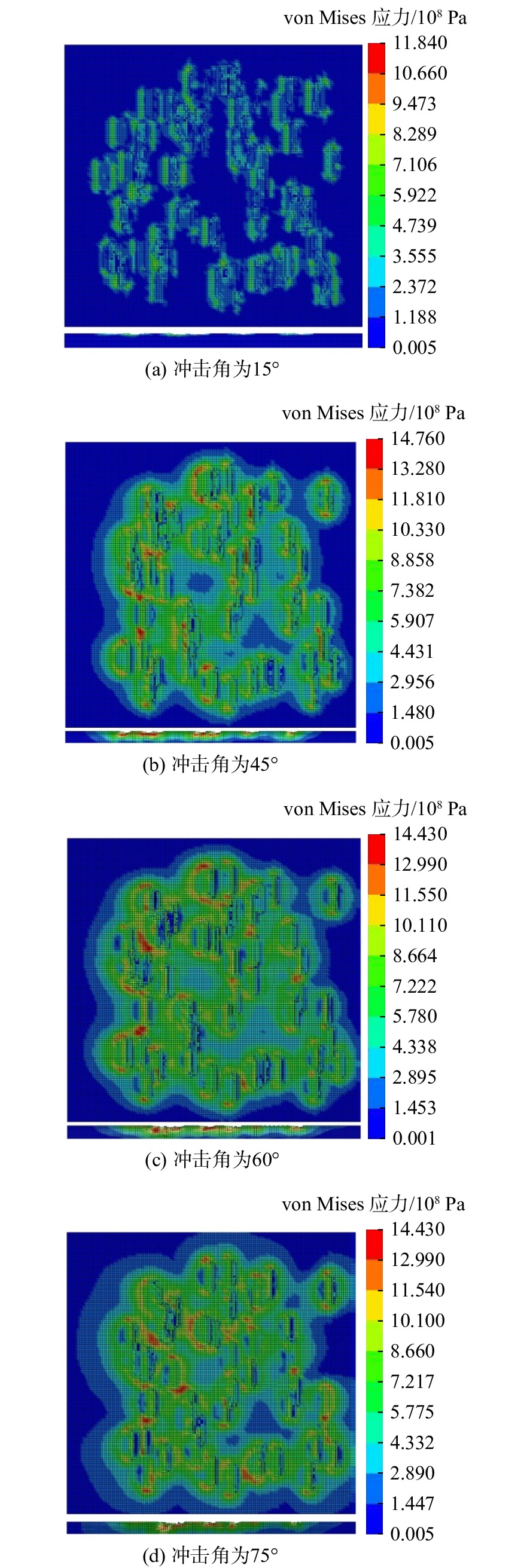
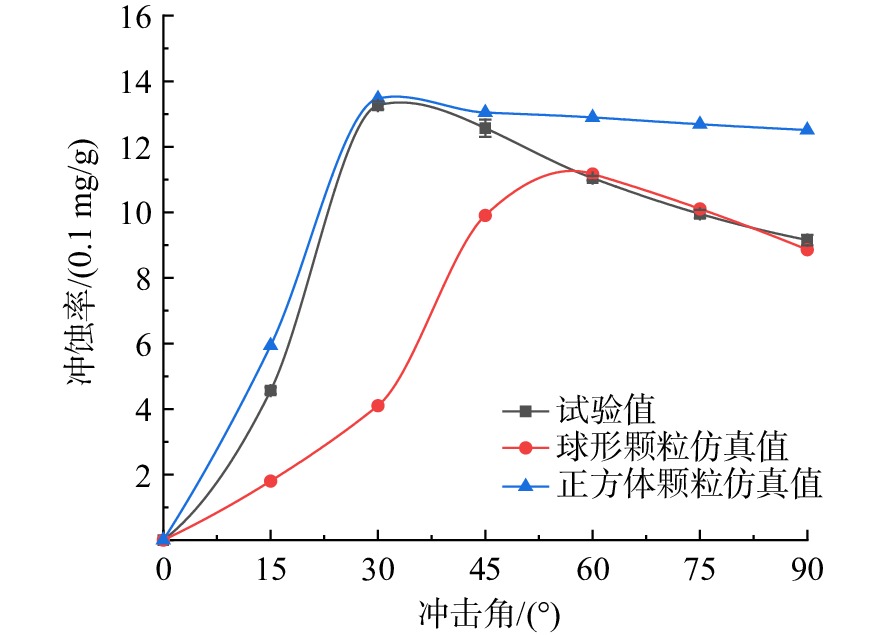
In order to accurately predict the erosion rate of TC4 material under different erosion mechanisms, a multi-particle random erosion model was established by finite element method, and the erosion mechanism and erosion rate of TC4 plate under the erosion of Al2O3 particles with different particle shapes, impact angles and impact velocities were studied. Compared with the erosion rate obtained by erosion test under the same conditions, the rationality and authenticity of the numerical simulation model were verified. Results showed that cubic particles should be used in the simulation of low-angle erosion at 30 degrees, and the relative movement between edges and materials was more in line with the cutting process. Spherical particles should be used in the simulation of 90 degrees high-angle erosion, which can reflect the shearing and squeezing effects on the contact surface of pits during erosion. Under the same conditions, the greater the impact velocity of particles was, the faster the erosion rate increased, the faster the erosion rate increased at 30 degrees, and the more gentle the erosion rate increased at 90 degrees.

Prediction for aerodynamic drag of piezoelectric fan in confined space
LI Na, LIU Yang, GAO Jigang, HUANG Zaixing, LI Hengchao
2023, 38(9): 2204-2213. doi: 10.13224/j.cnki.jasp.20210715
Abstract:

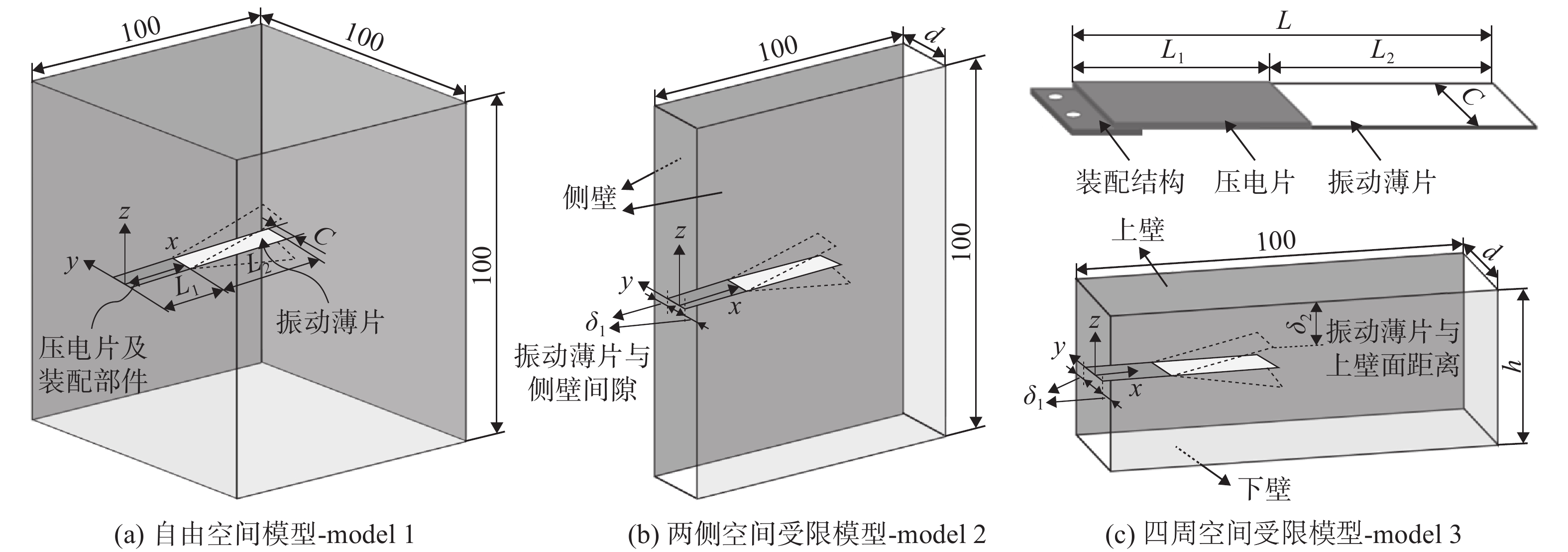
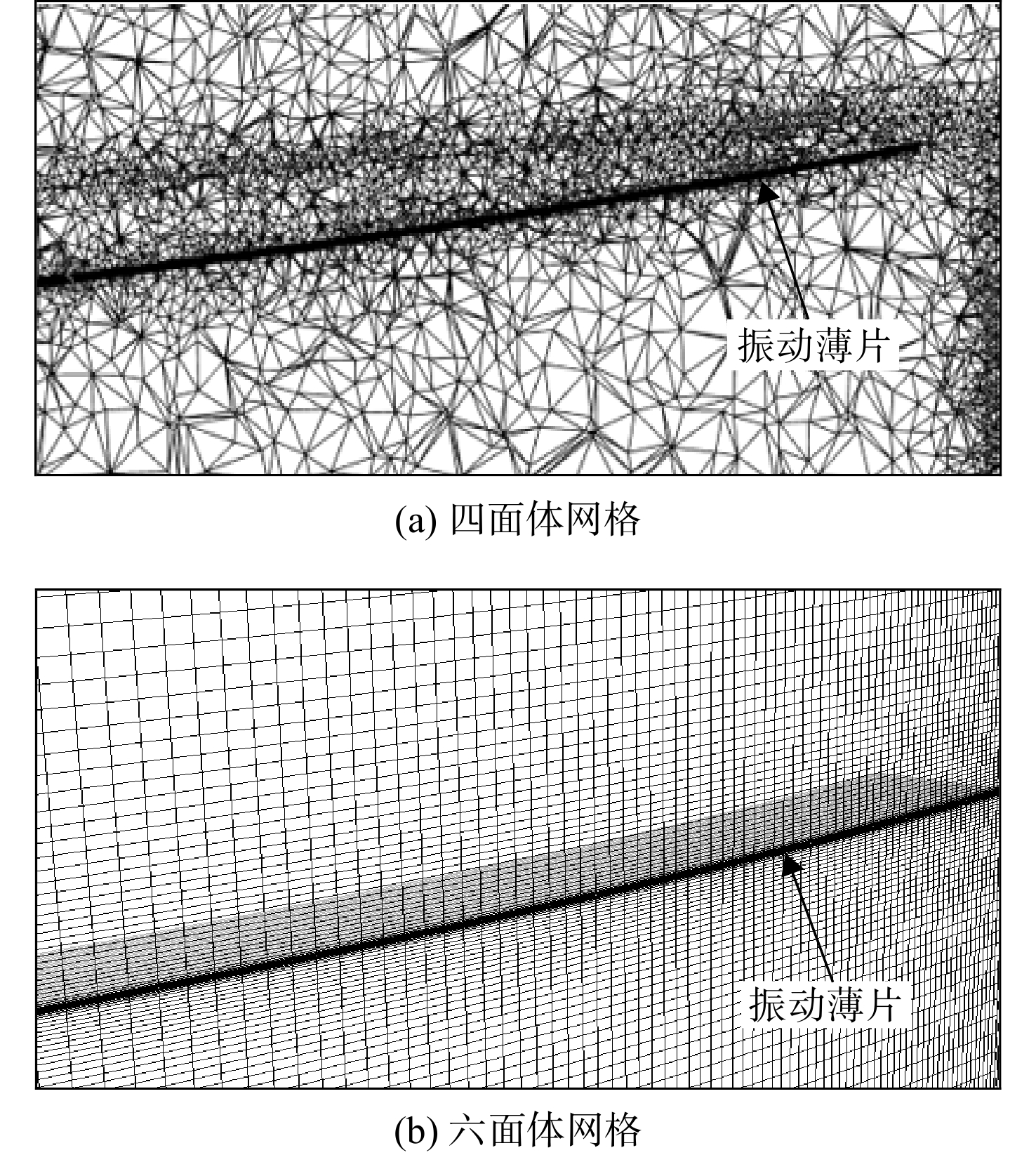
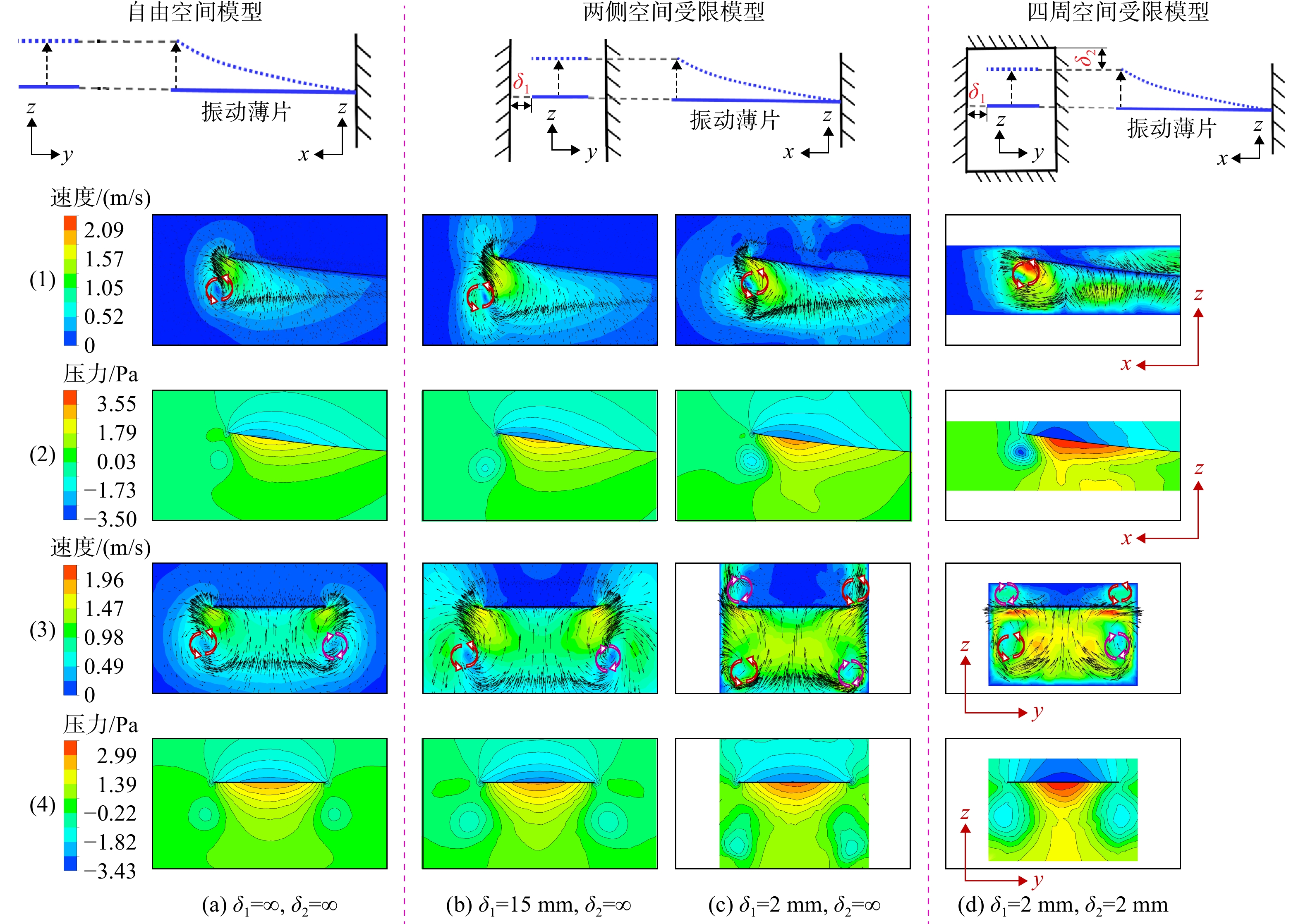
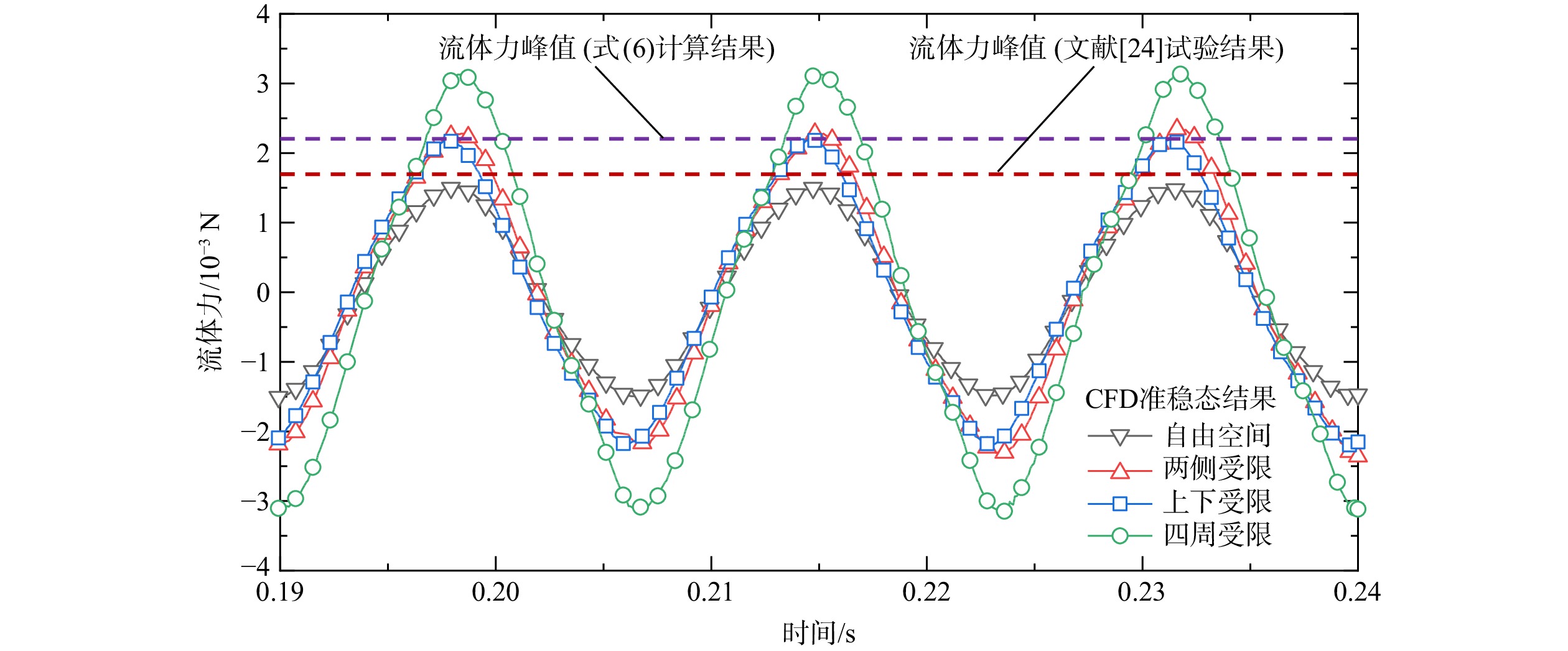
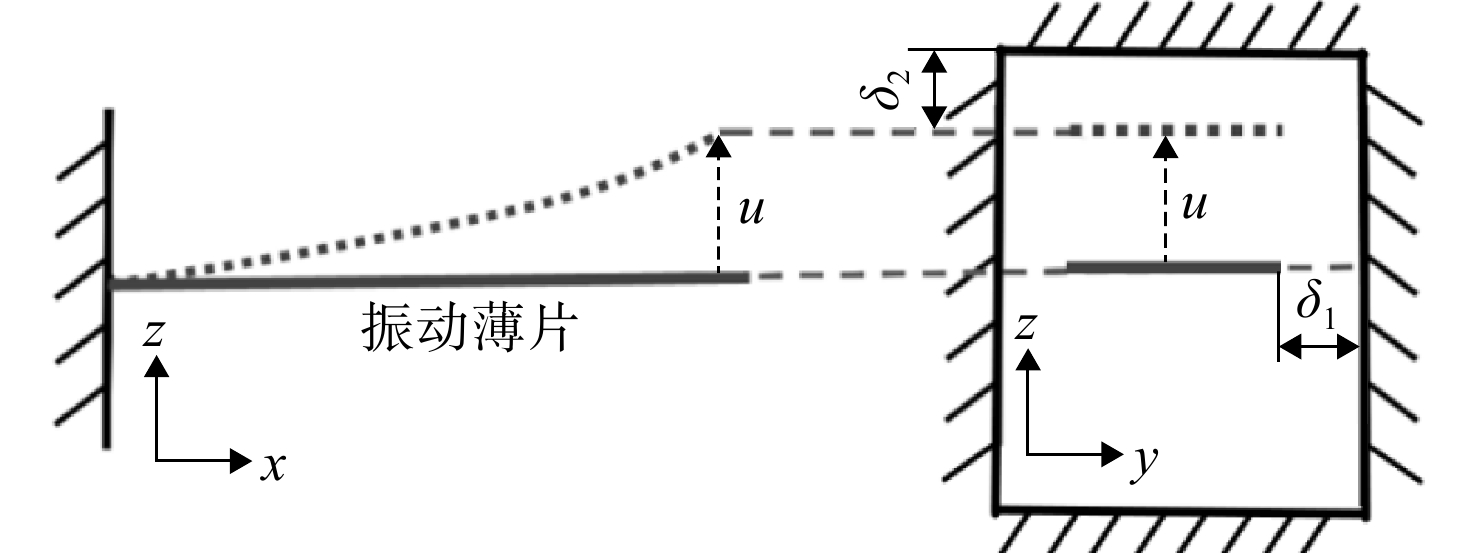
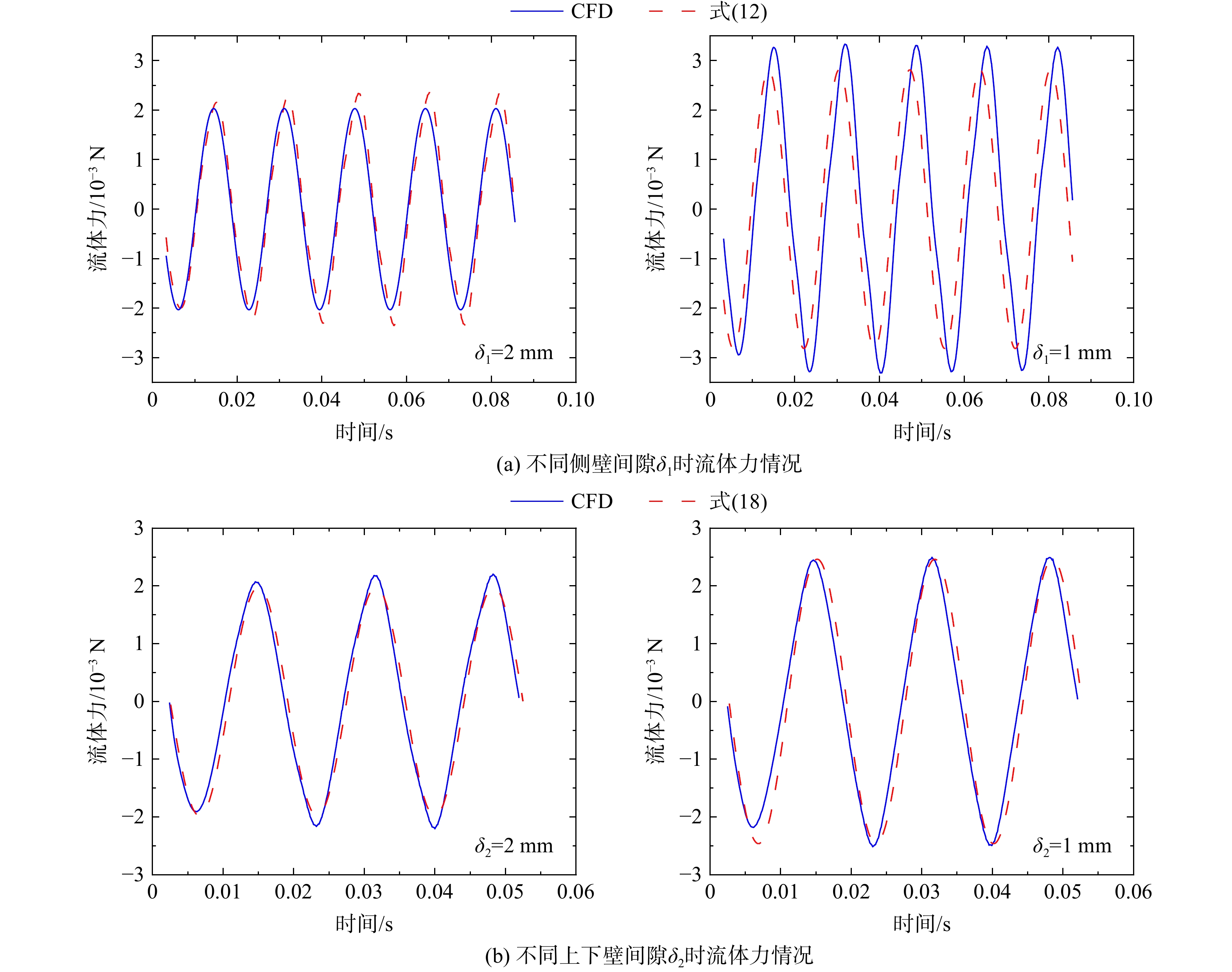
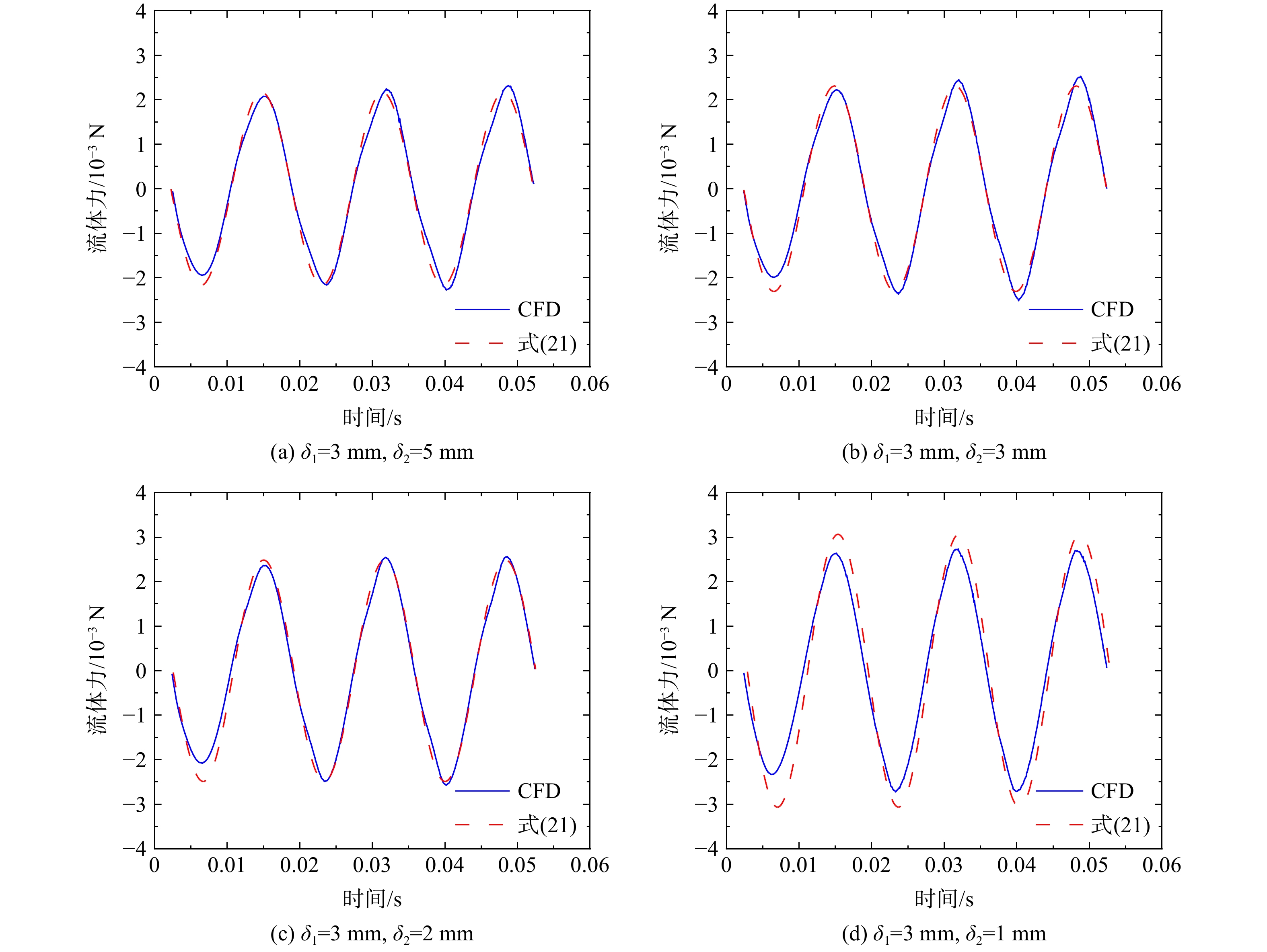
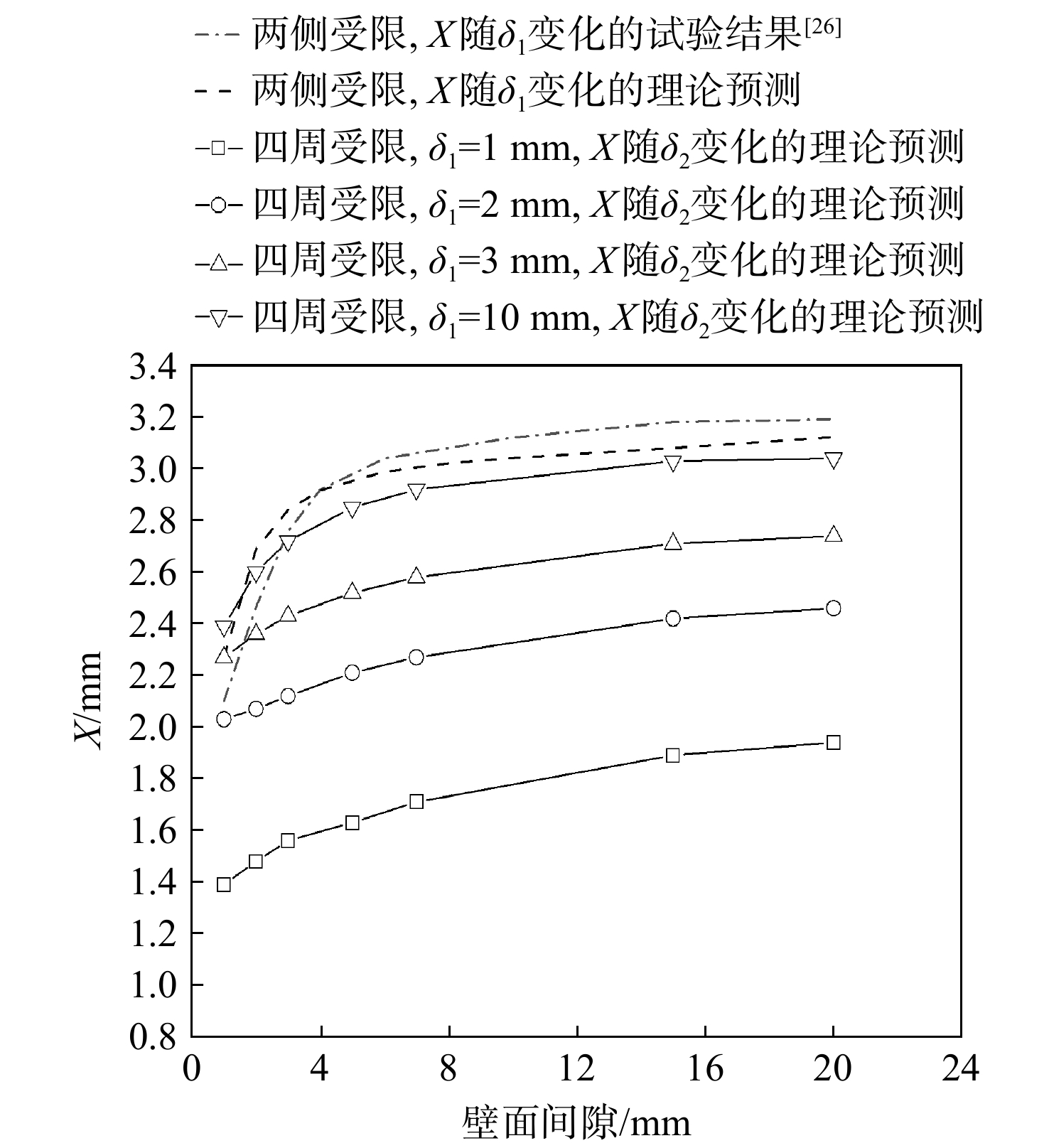
The study focused on the correlation mechanisms and laws between the aerodynamic drag, resonance response, and the unsteady flow field of the piezoelectric fans in confined space by theoretical analysis and numerical simulation. Based on Newton’s law and added-mass mechanism of viscous fluid, the model and prediction method were established for transient aerodynamic drag and 1st order bending amplitude response of piezoelectric fan in the confined space around. The developed predictive models were validated, and the results showed that there was a good agreement with the experimental results. The amplitude response decreased sharply when the gap was smaller than 5 mm. The space-limited effects can be ignored when the gap was about 20 mm.

Vibration and acoustics characteristics of fiber/resin sandwich sheet with porous foam core
ZU Xudong, REN Xuhui, ZOU Zeyu, LI Hui
2023, 38(9): 2214-2220. doi: 10.13224/j.cnki.jasp.20210632
Abstract:

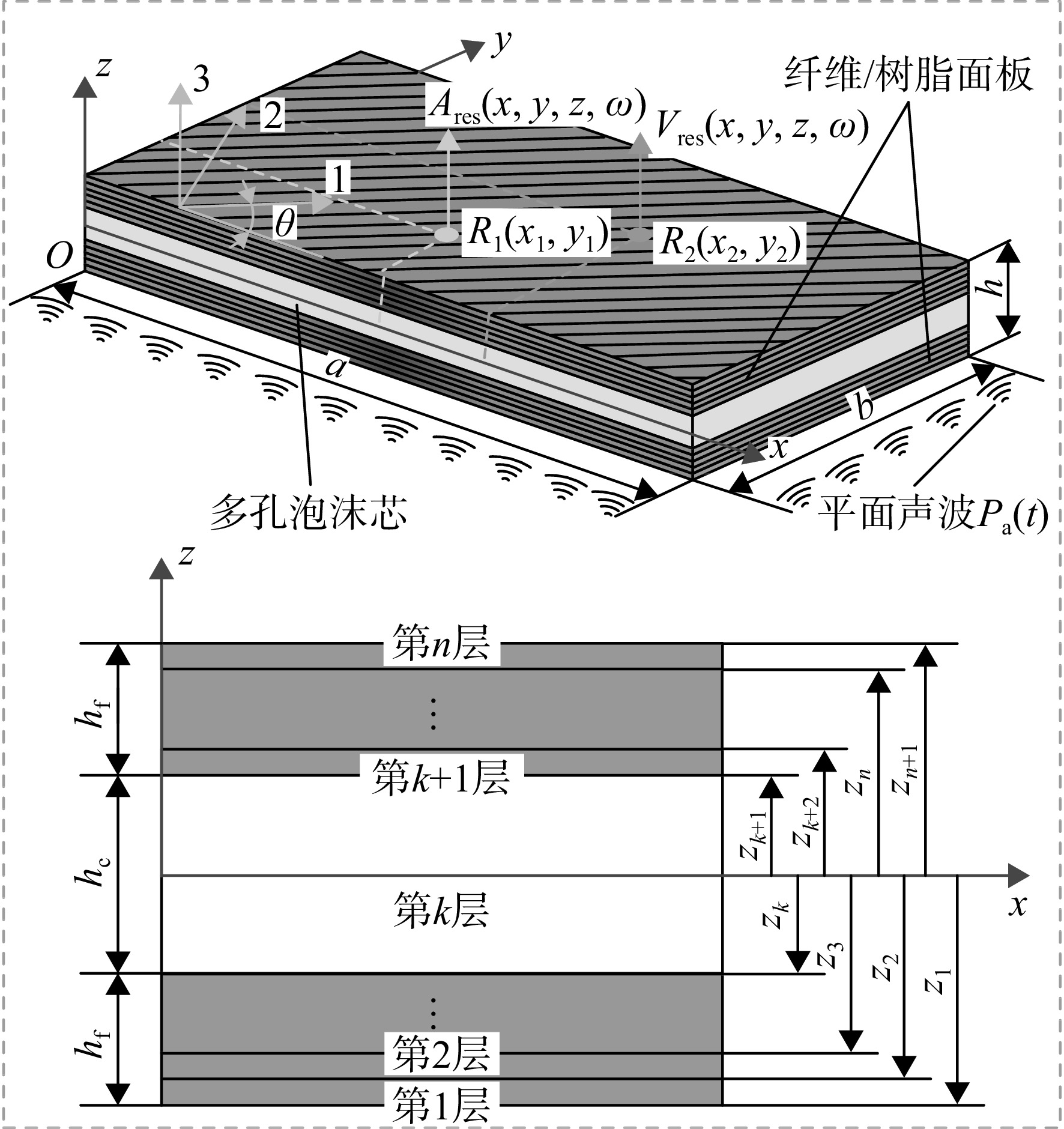
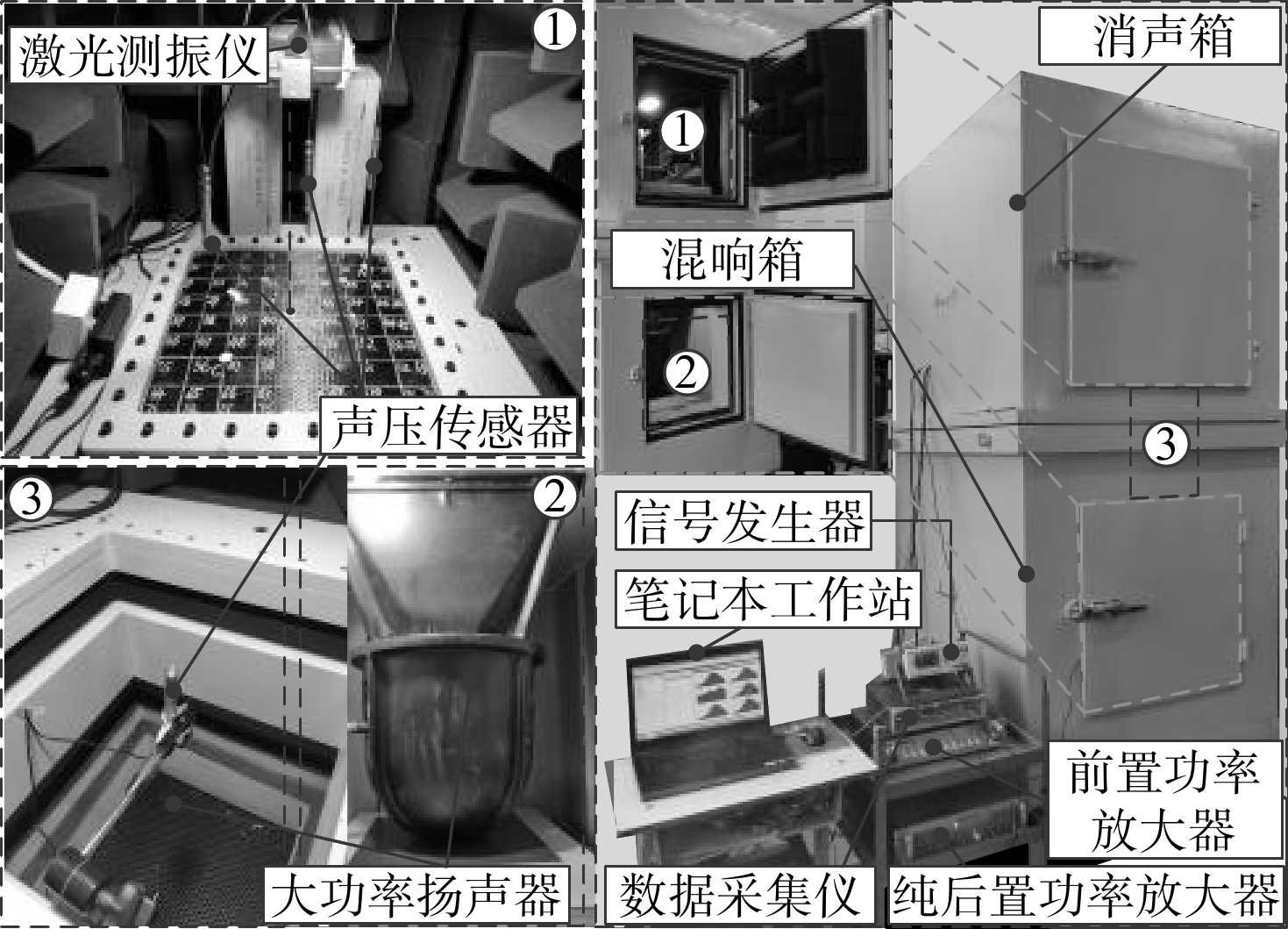
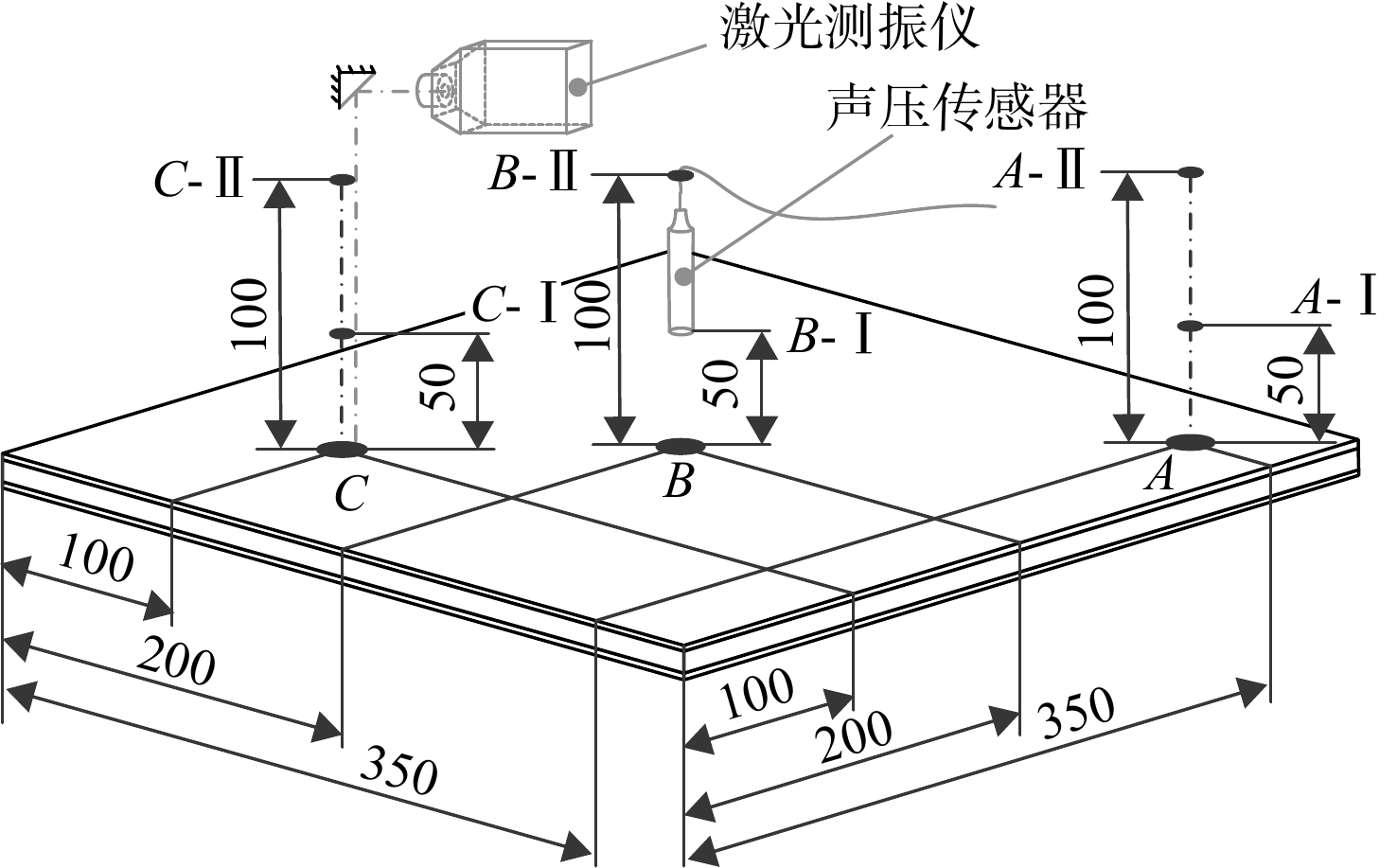
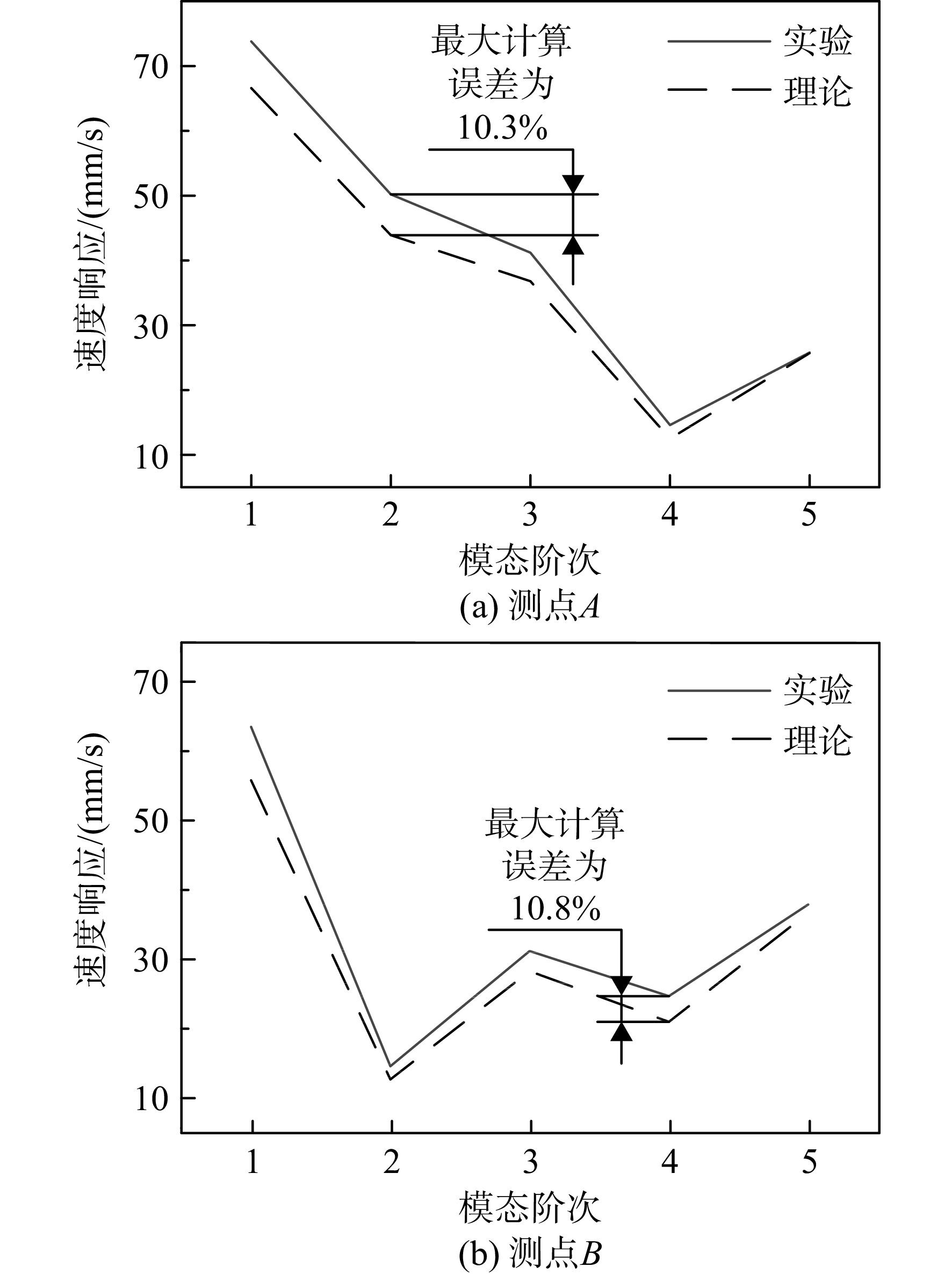
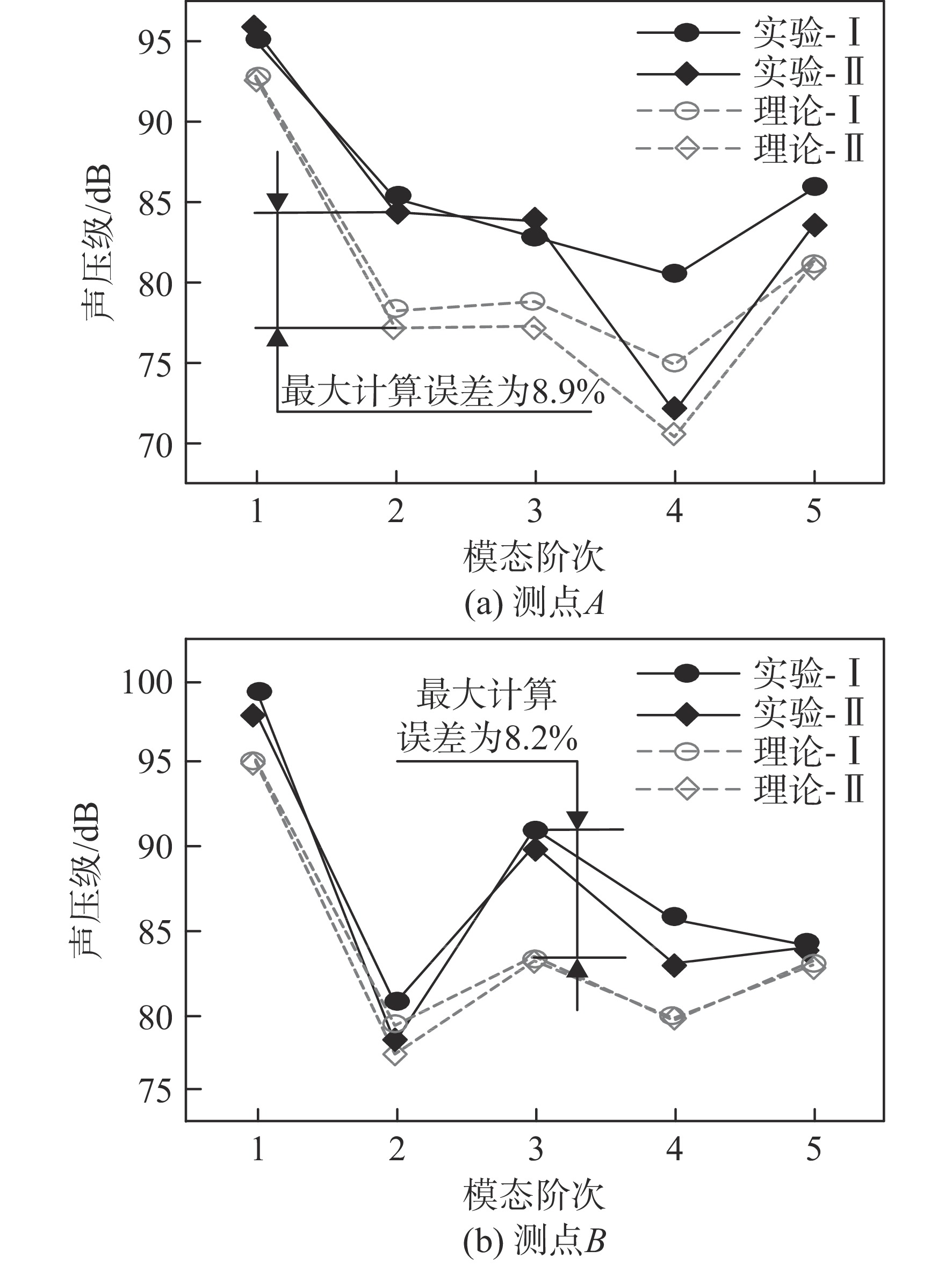
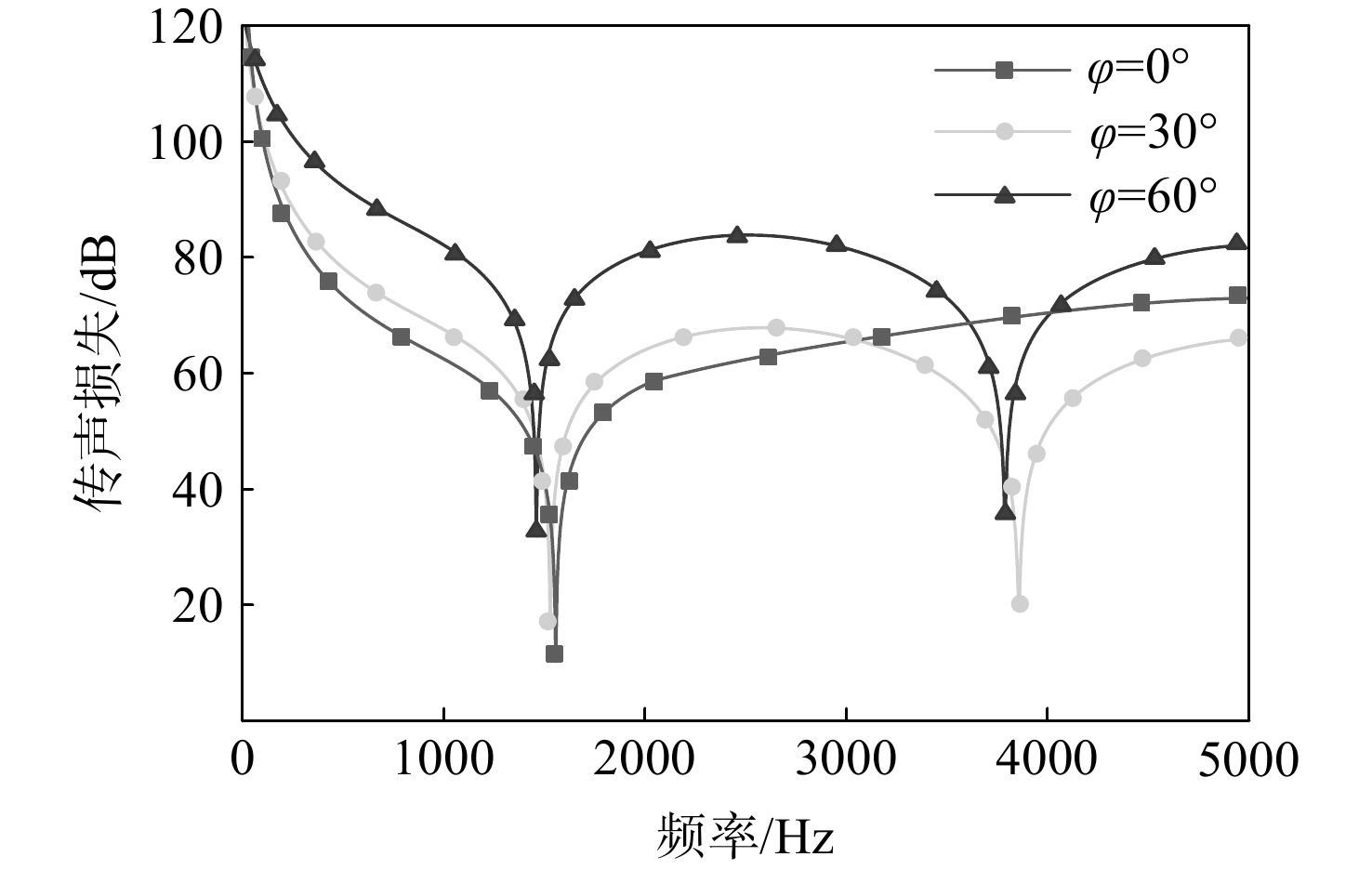
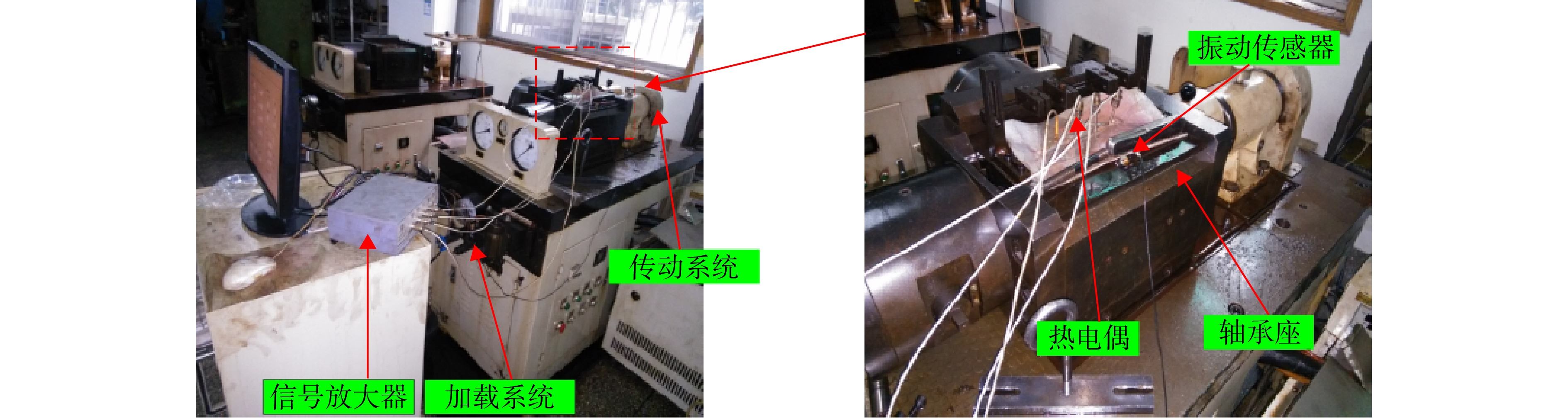
A theoretical analysis model of vibration and acoustic characteristics for fiber-reinforced polymer sandwich sheet with a porous foam core subjecting to planar acoustic wave was established. First of all, based on the first-order shear deformation theory and the four-node quadrilateral isoperimetric finite element approach, the free and forced vibration equations of the sandwich sheet subjecting to planar acoustic wave were derived to solve natural frequencies, modal shape and vibration velocity response. Furthermore, to obtain the sound radiation power of the sandwich sheet, the Rayleigh integral approach was used to determine the quantitative relationships between the vibration velocity response and acoustic radiation pressures, and the sound transmission loss was obtained by defining the radiation and incident acoustic power. An experimental verification study was performed using a self-built integrated vibration and noise test system. It was found that the calculation errors of natural frequency, resonance response and sound pressure response obtained by theoretical analysis were less than 4.9%, 10.8% and 8.9%, respectively, proving the effectiveness of the established model in predicting the structural vibration and acoustics responses.

Degradation trend prediction of rolling bearing vibration performance based on fusion grey entropy and bootstrap Markov chain
CHENG Li, MA Wensuo, XIA Xintao, WANG Liangwen
2023, 38(9): 2221-2230. doi: 10.13224/j.cnki.jasp.20220038
Abstract:

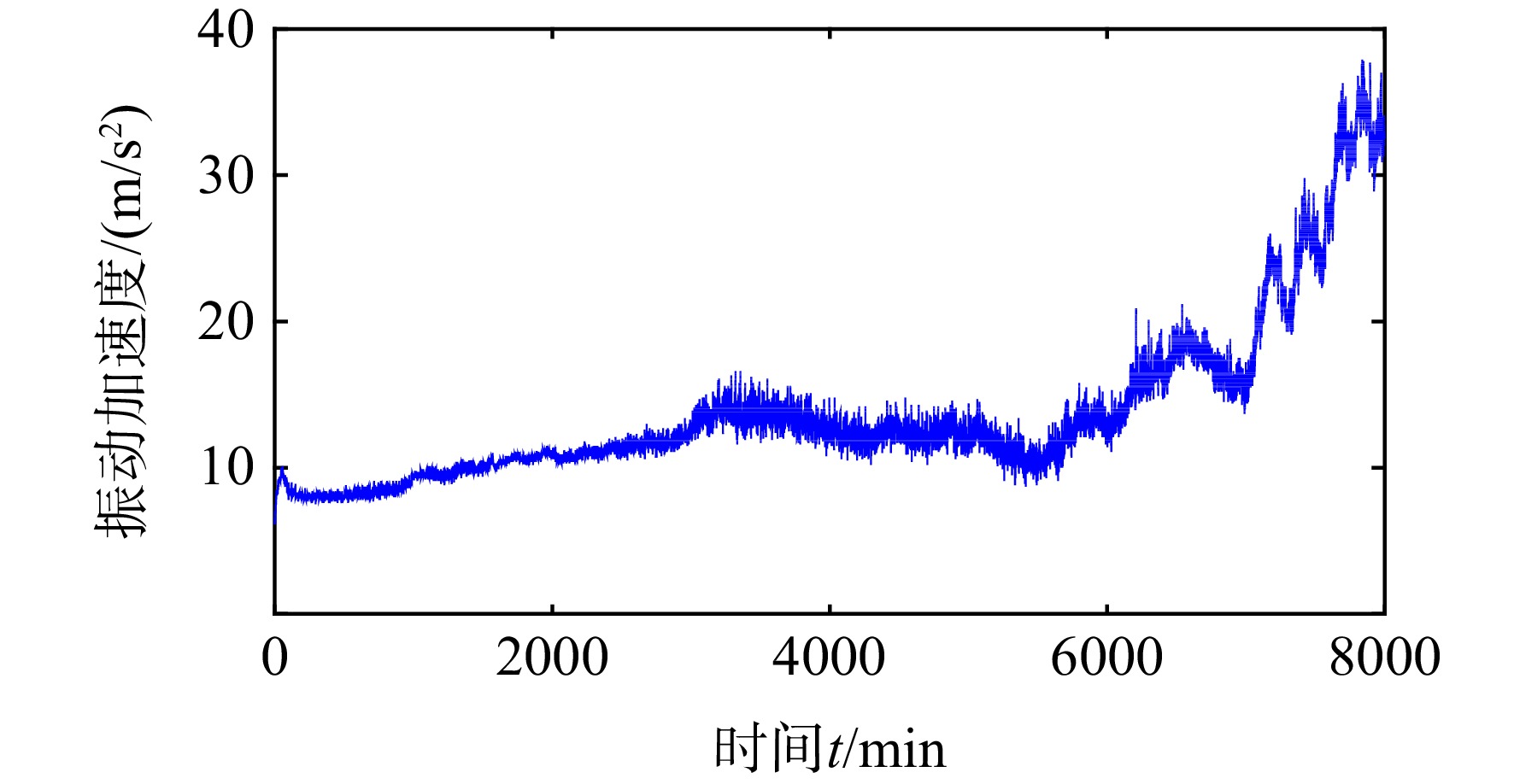
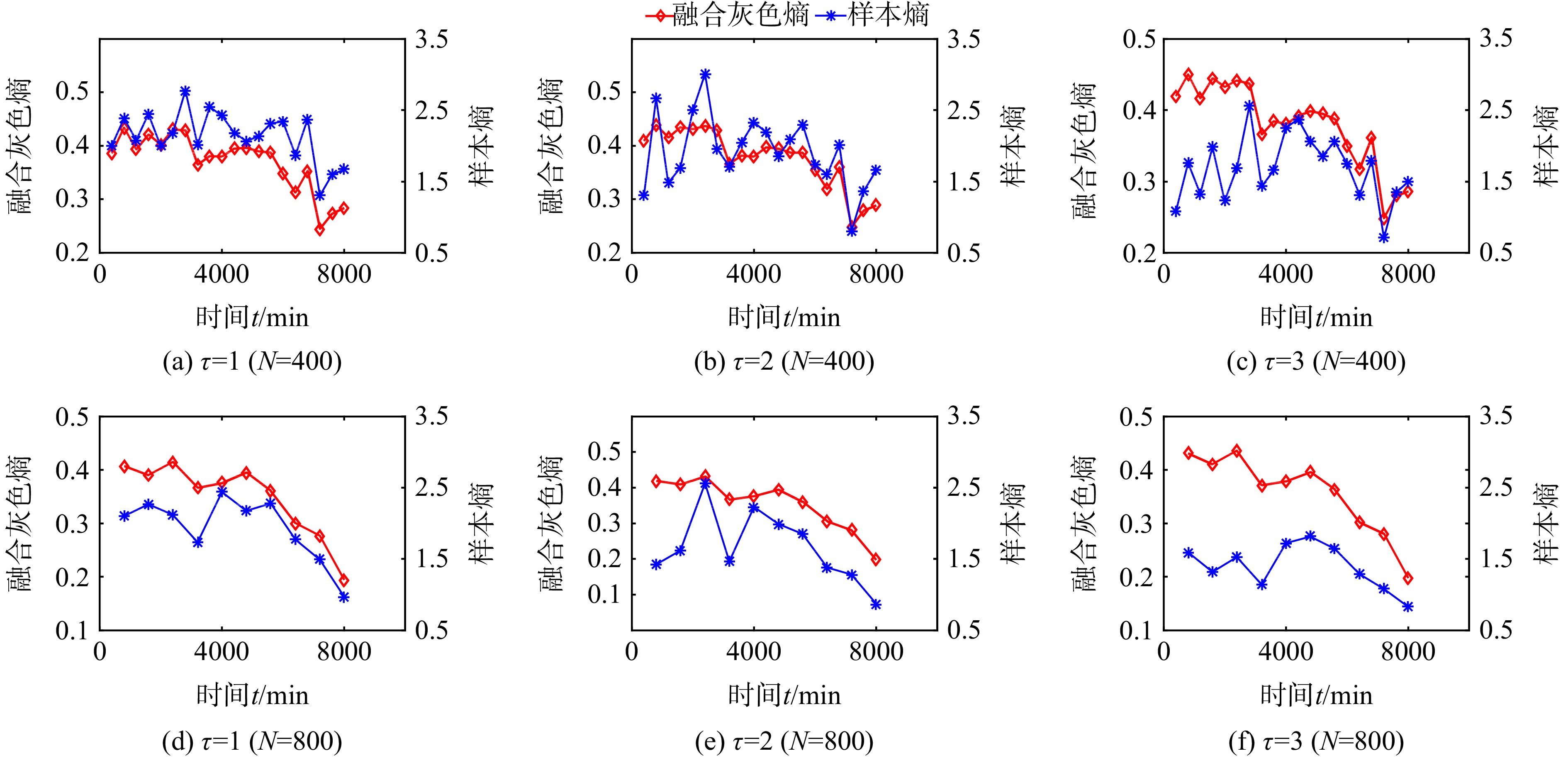
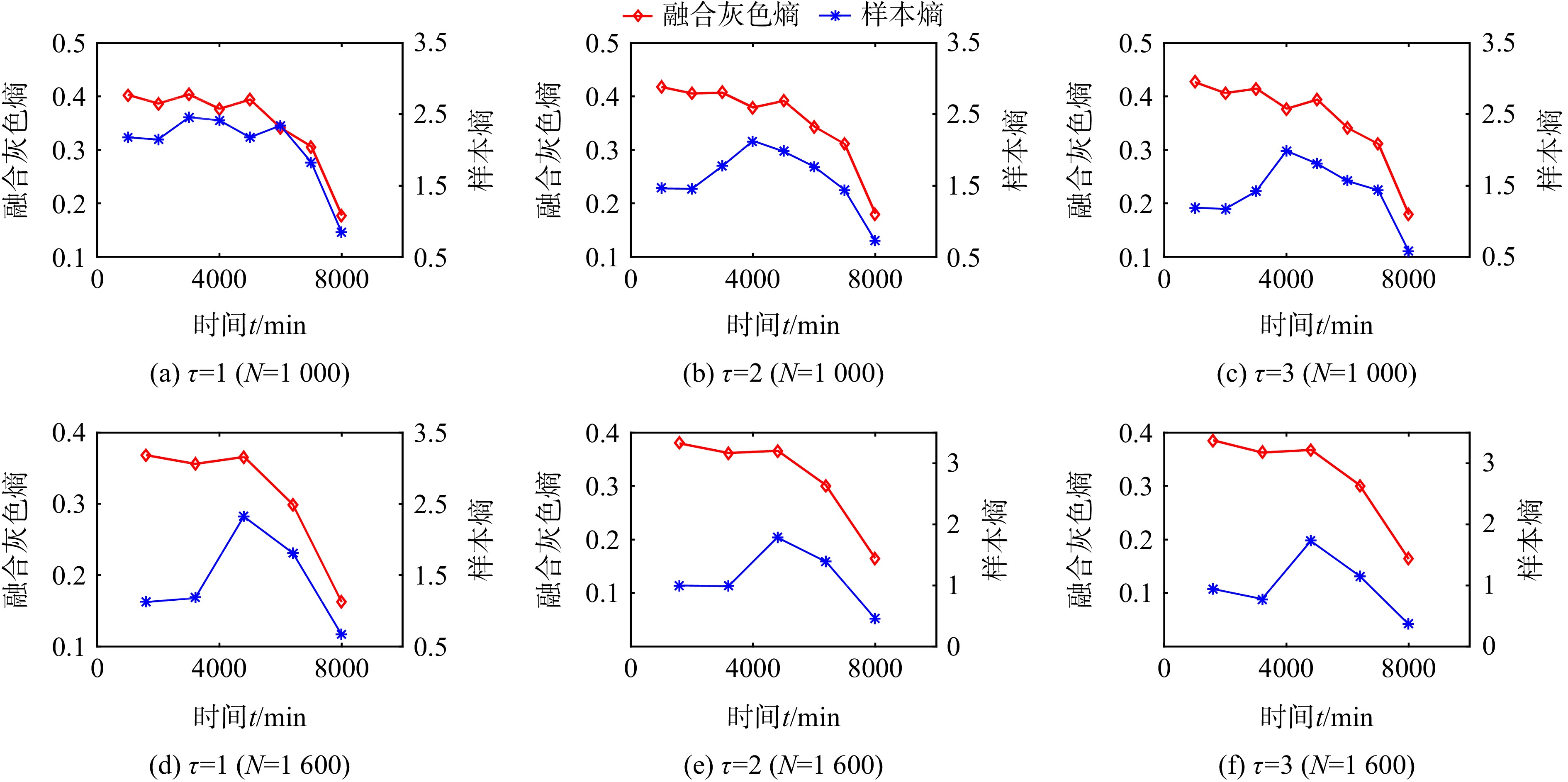
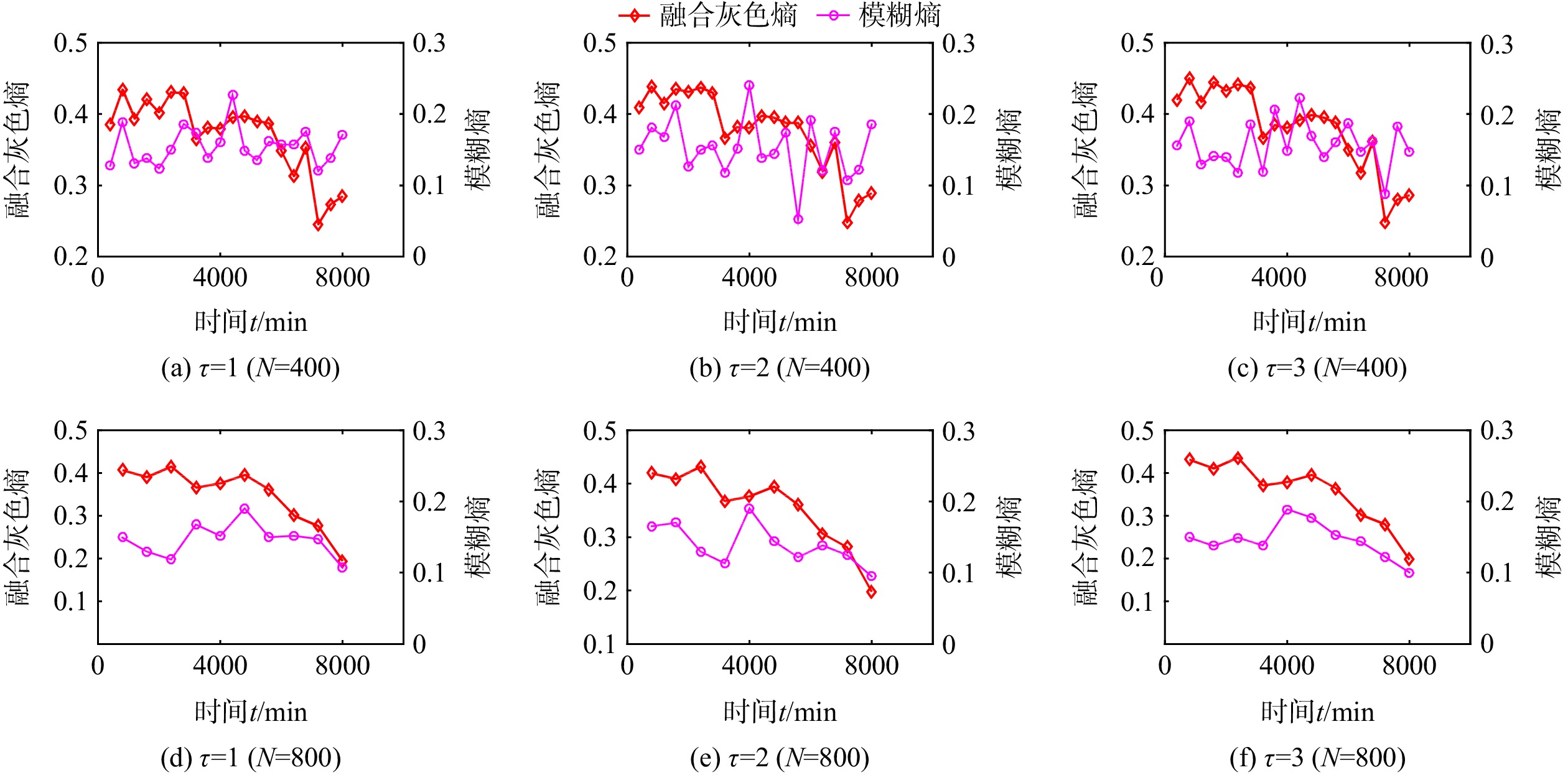
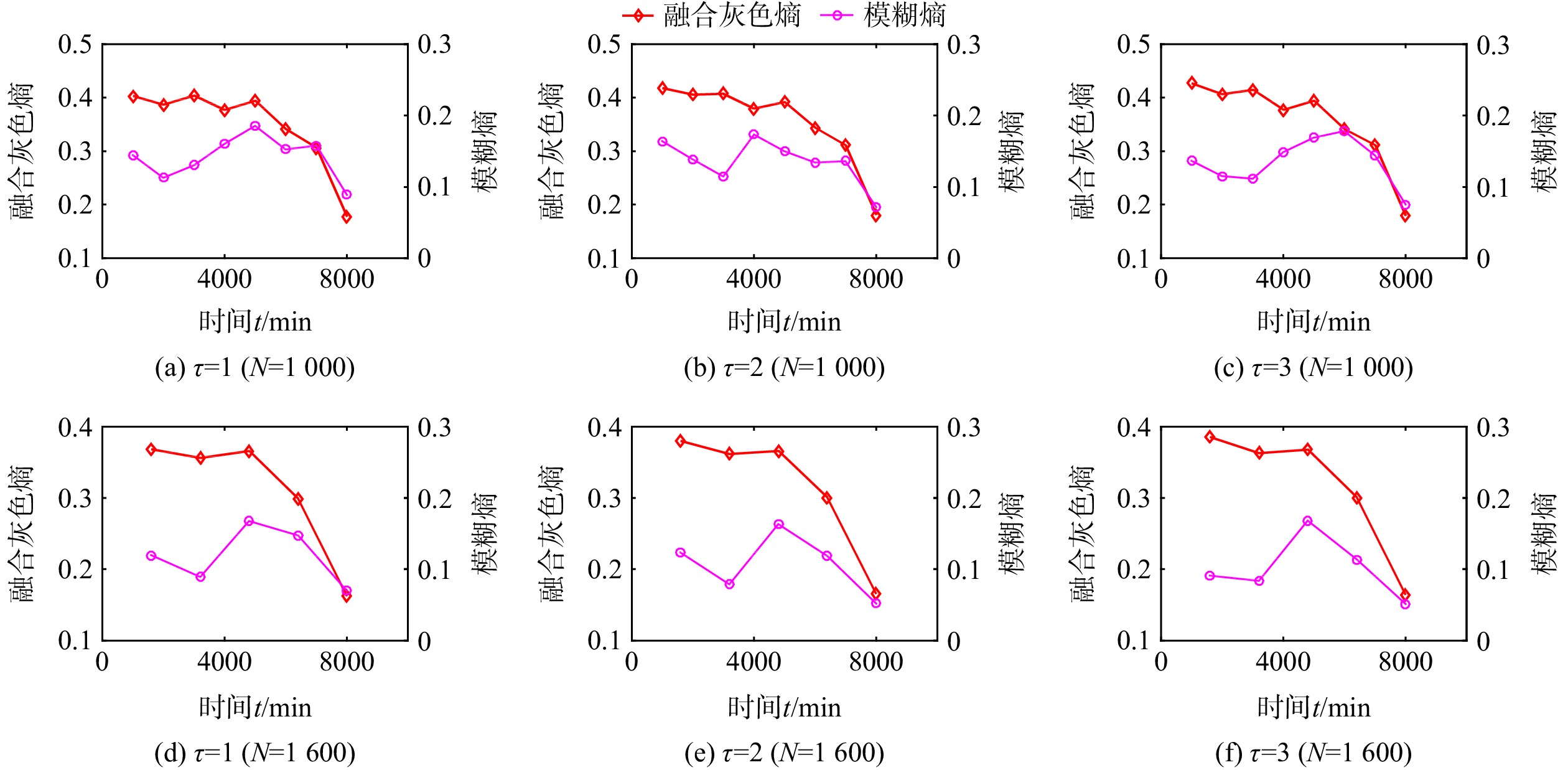
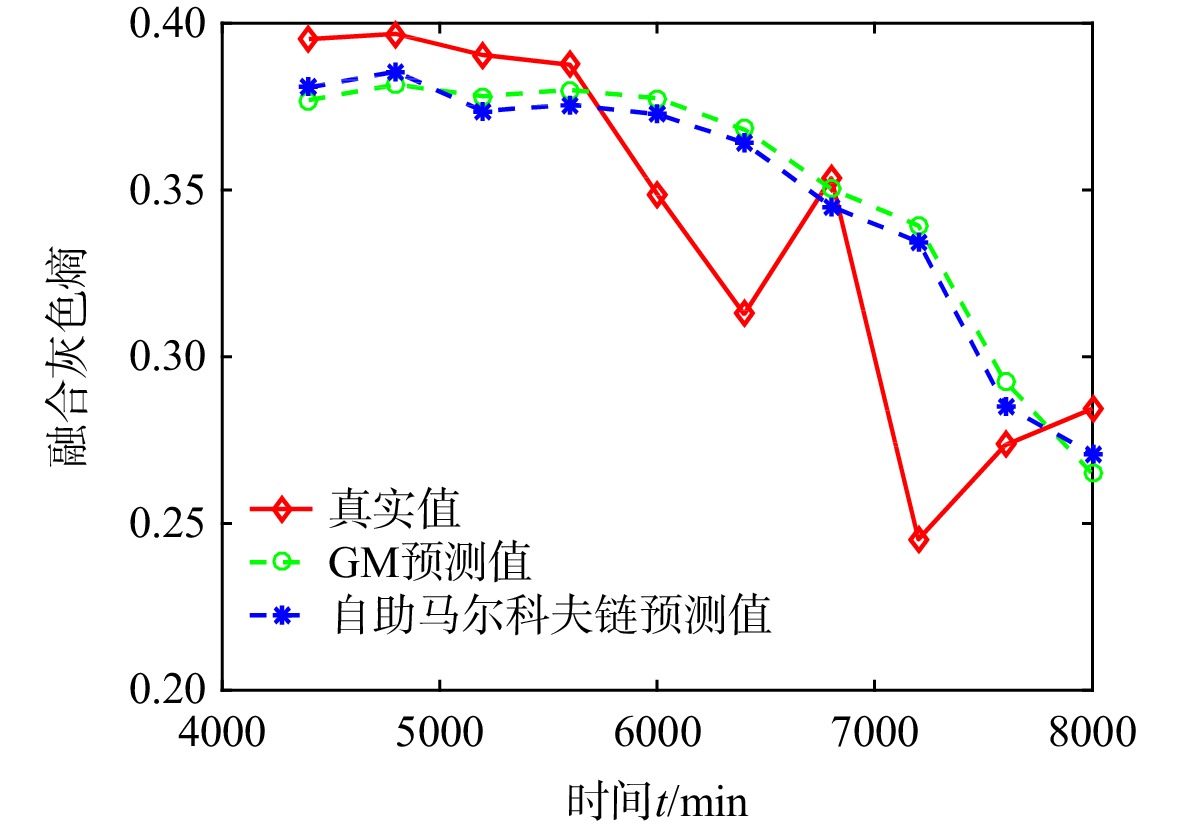
In view of the shortcomings of existing entropy-based nonlinear dynamics methods that the calculation results are inconsistent with the nonlinear dynamics system at different scales and the data length required for the calculation is long, the fusion gray entropy algorithm, a new measure of nonlinear time series complexity, was proposed and then used to extract the degradation features of rolling bearing. Considering the problems of very short data length of the rolling bearing degradation trend sequence that it is difficult for prediction, Bootstrap Markov chain prediction model was proposed. The experimental results showed that the data length requirement of fusion gray entropy was low, and the calculation results of the fusion gray entropy at different scales were consistent. Meanwhile, the average relative error of the proposed bootstap Markov chain prediction model was only 8.4973%, which was lower than that of the GM model. This showed that the proposed model can effectively predict the vibration performance degradation trend of rolling bearings.
Moisture absorption performance of composite stiffened panels in hygrothermal environment
LIU Songjing, FENG Yu, ZHANG Teng, BI Yaping, ZHANG Tiejun
2023, 38(9): 2231-2240. doi: 10.13224/j.cnki.jasp.20210724
Abstract:

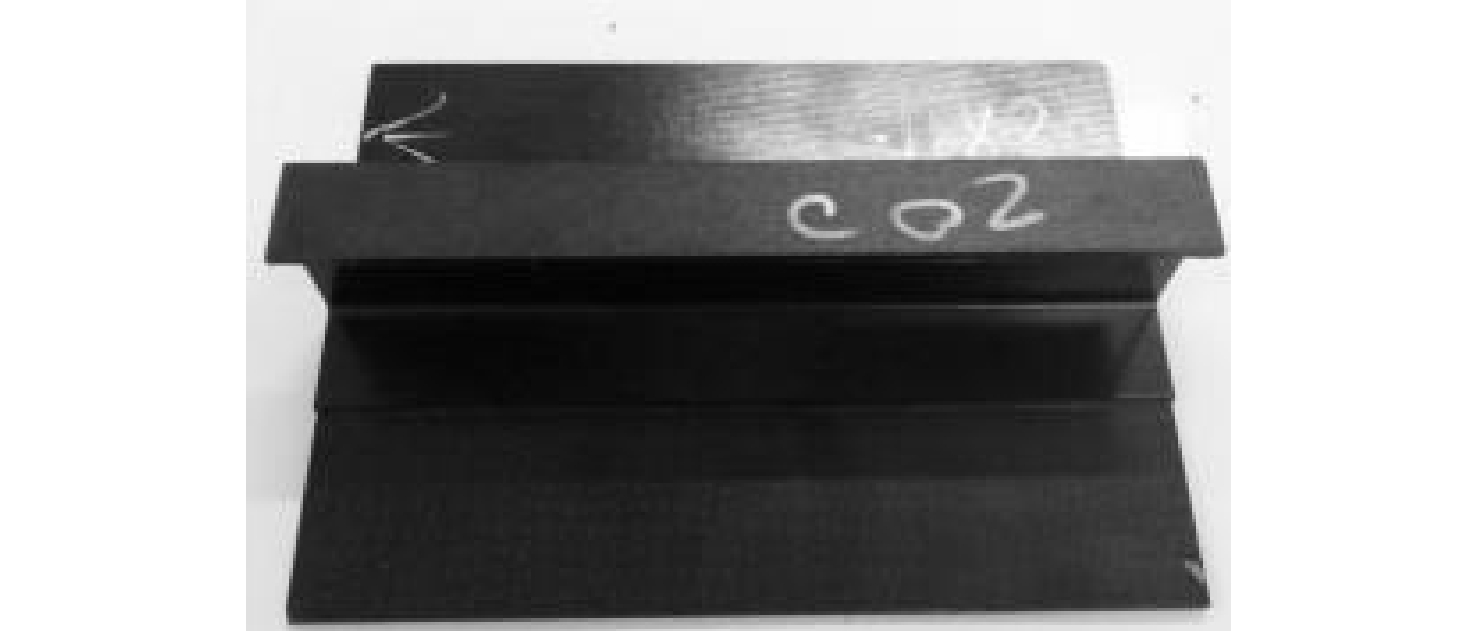
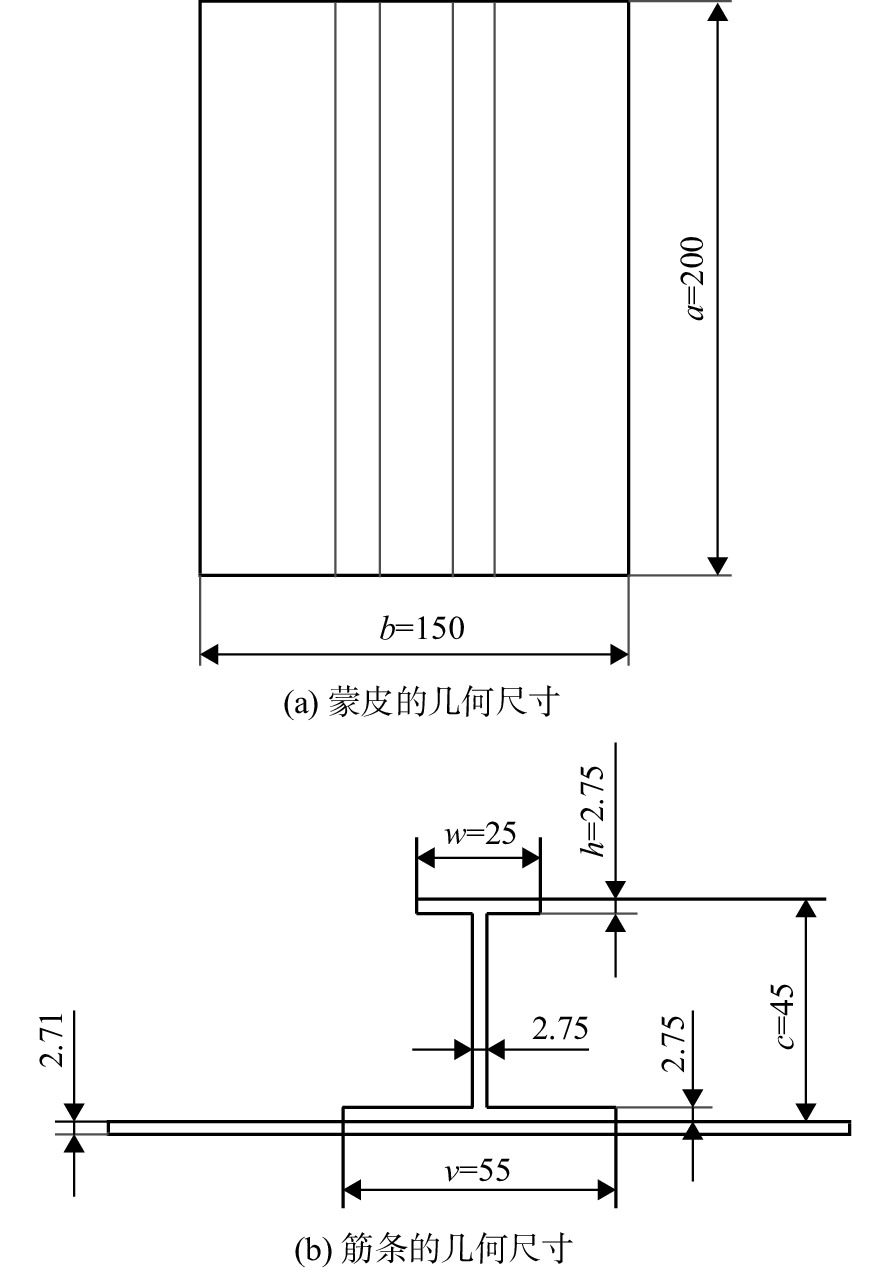
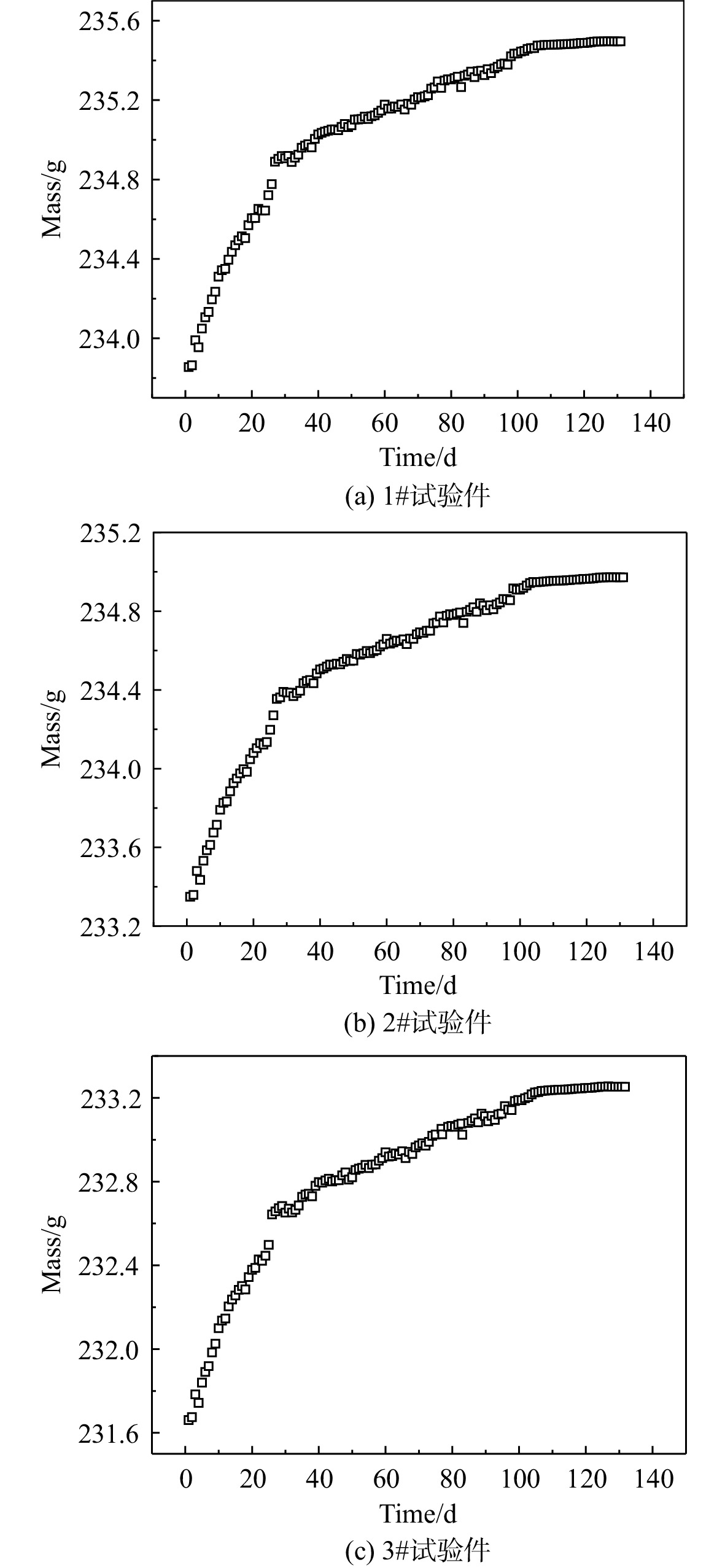
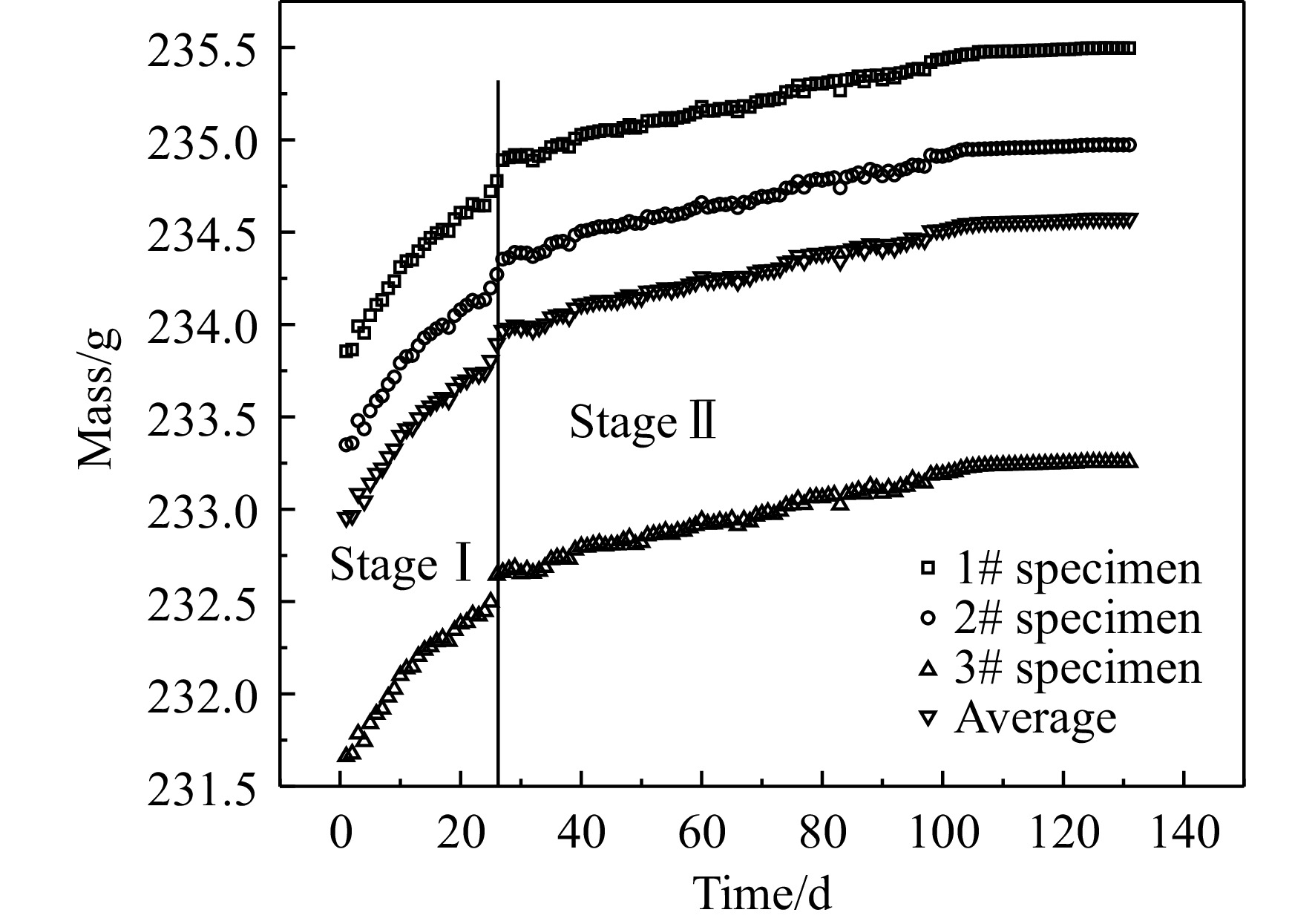
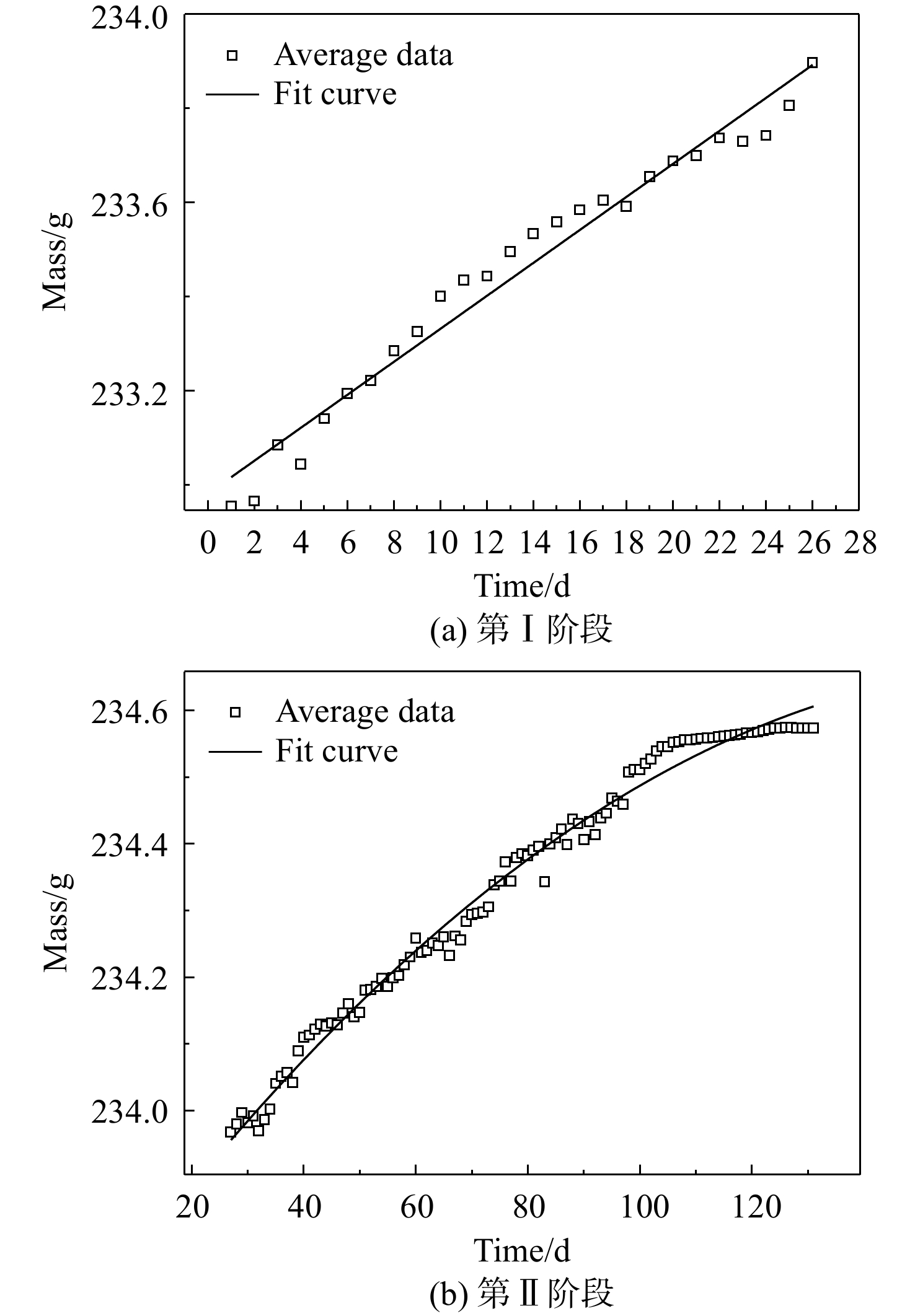
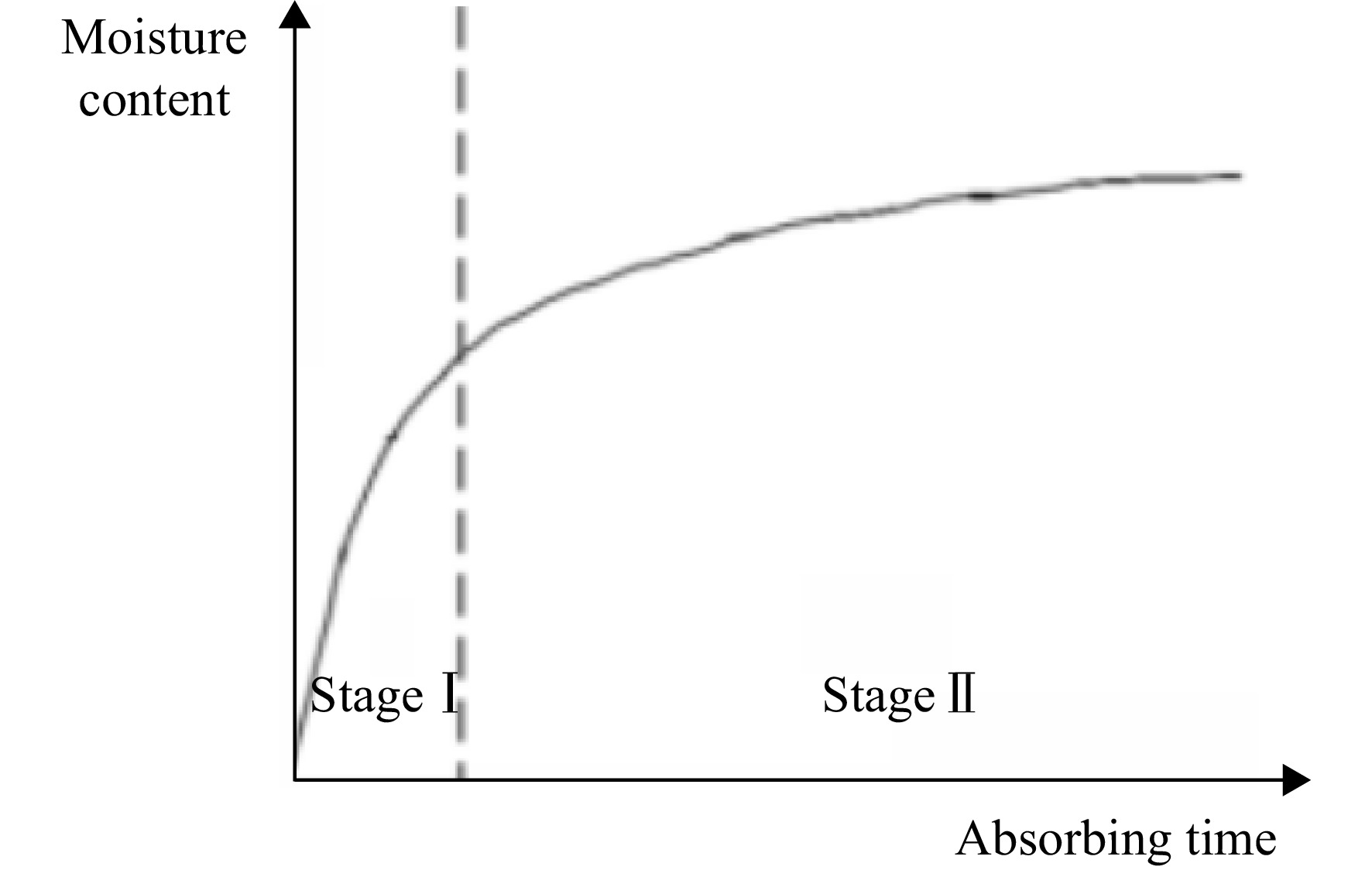
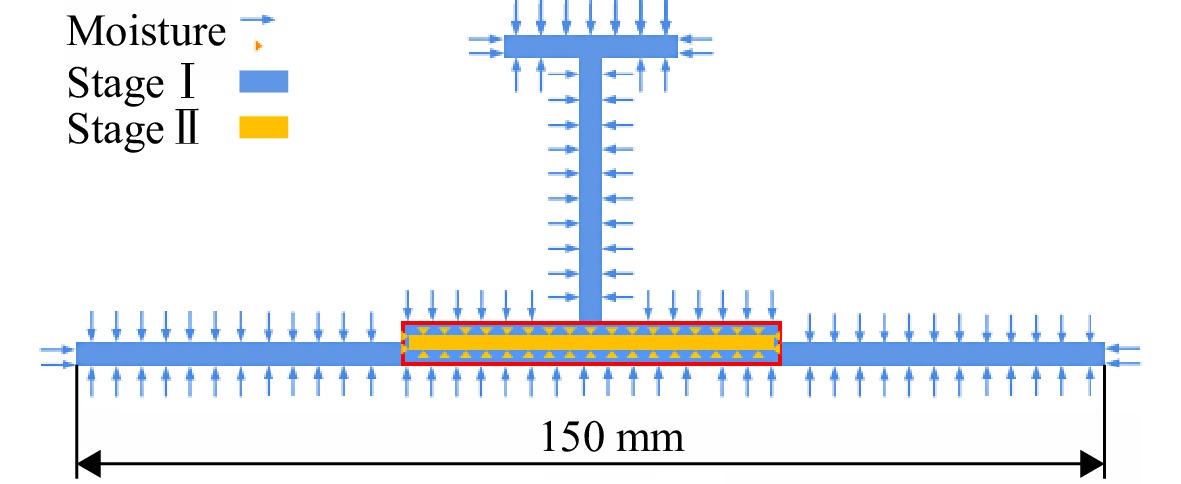
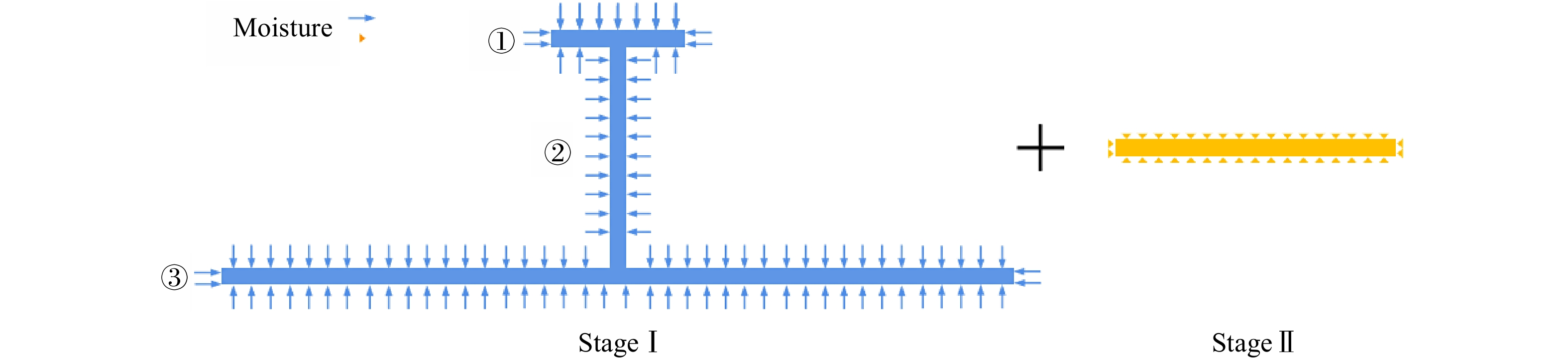
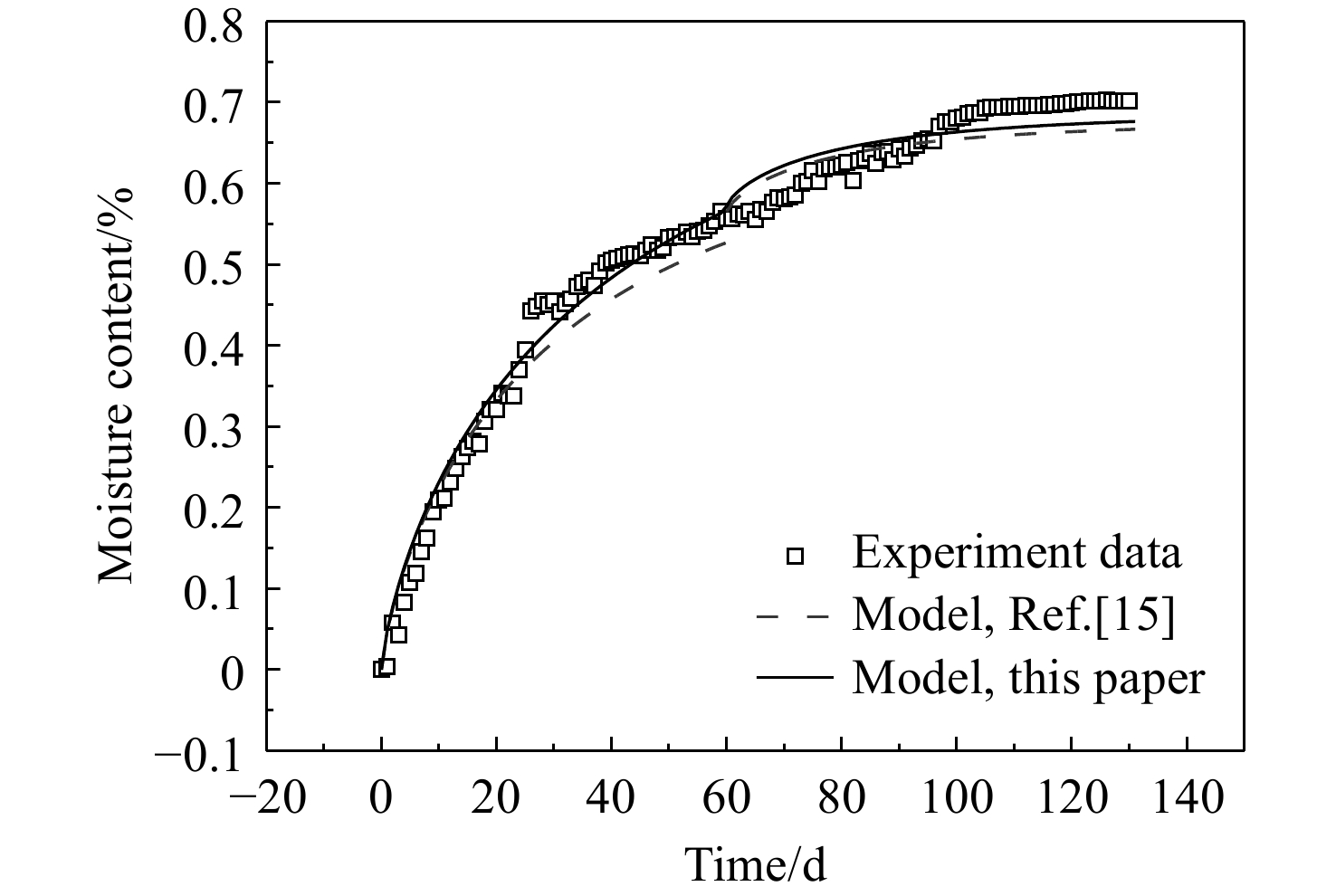
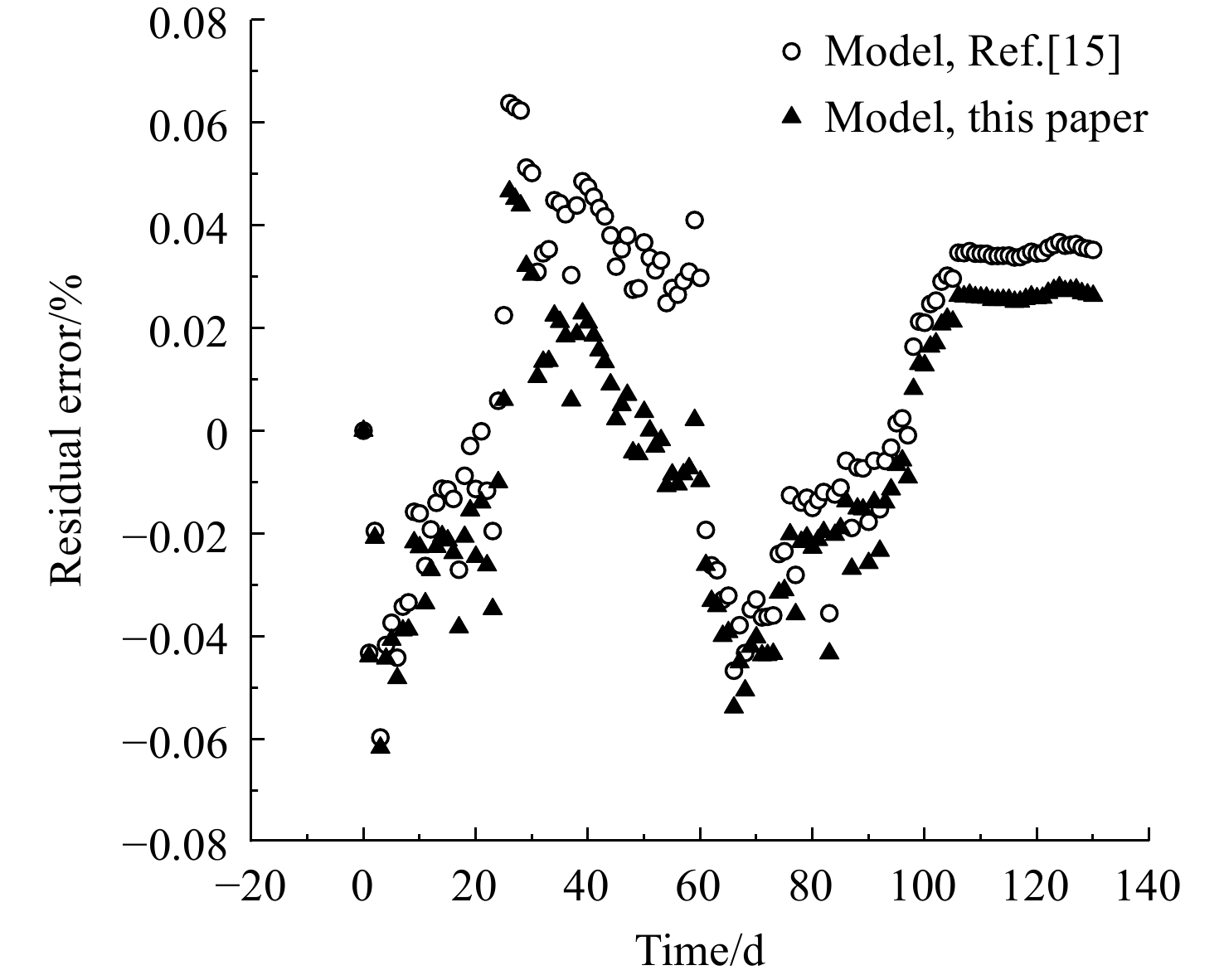
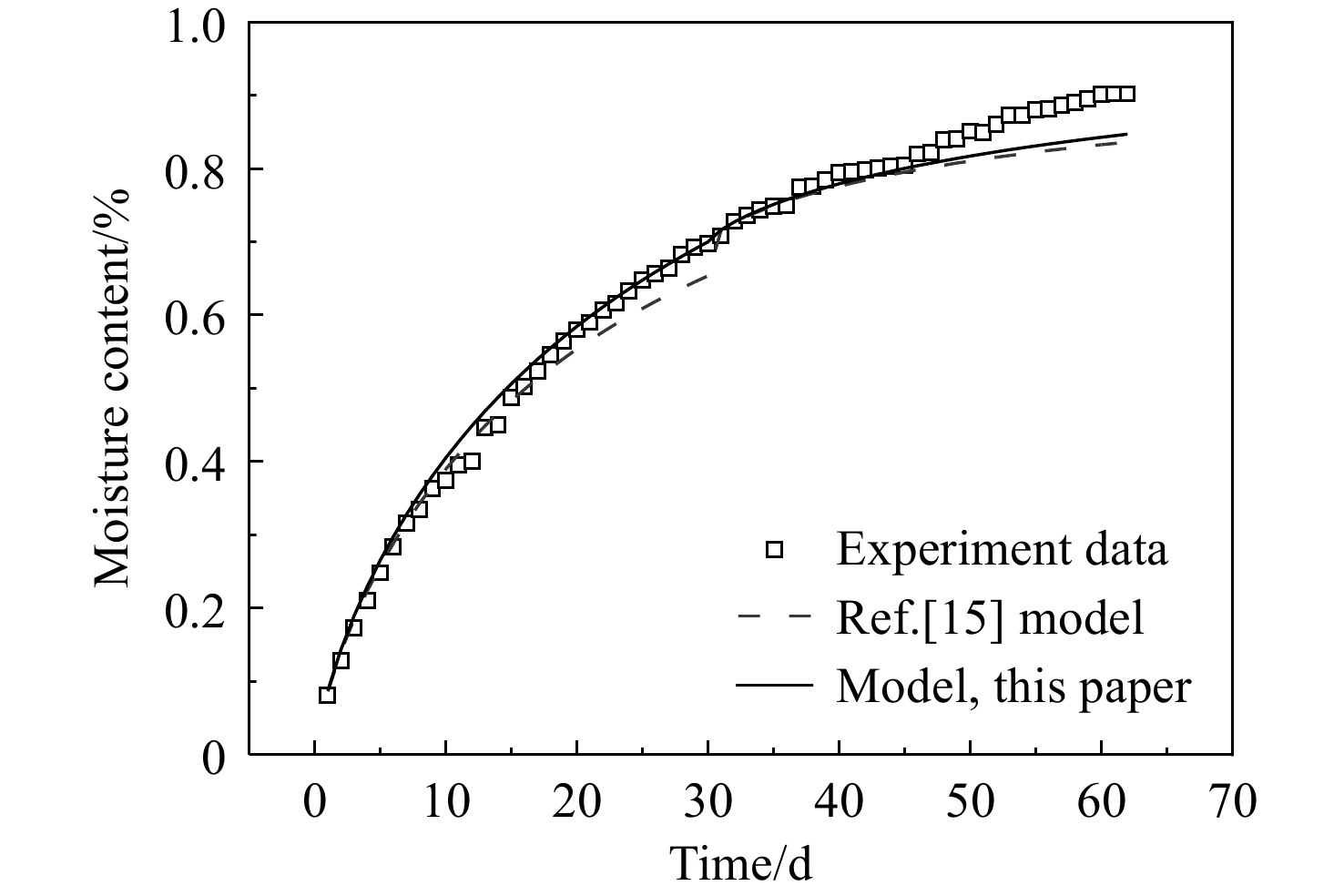
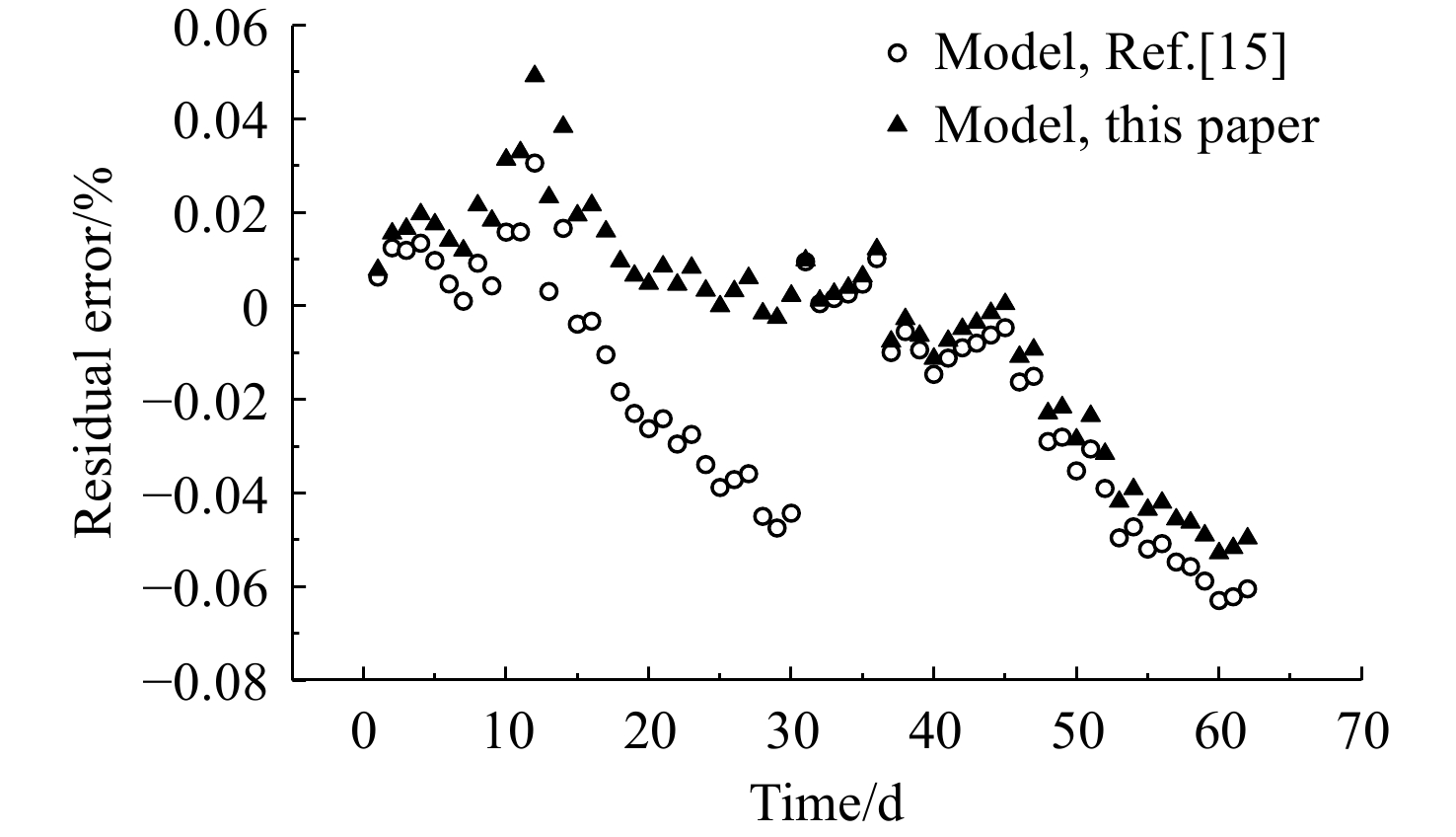
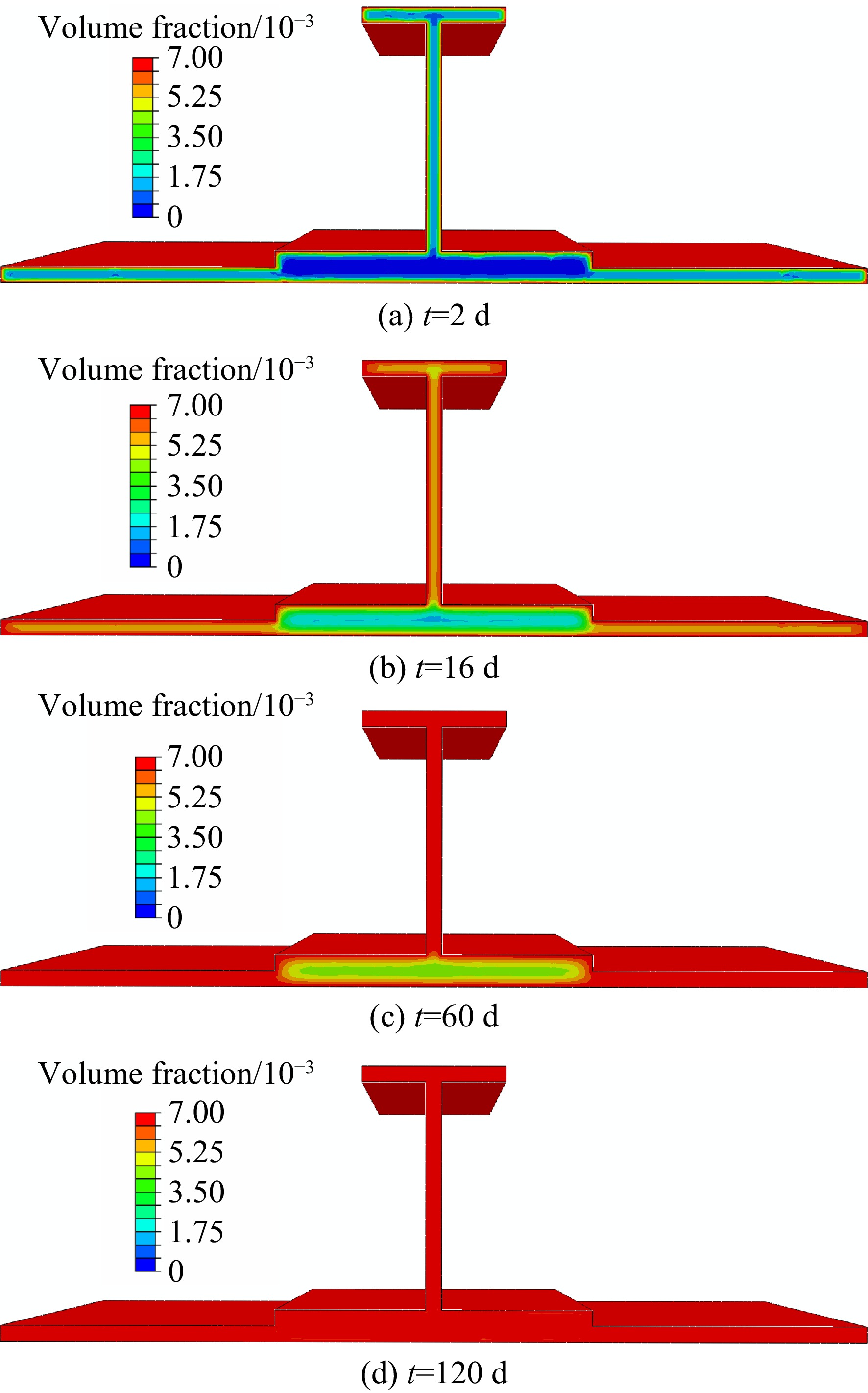
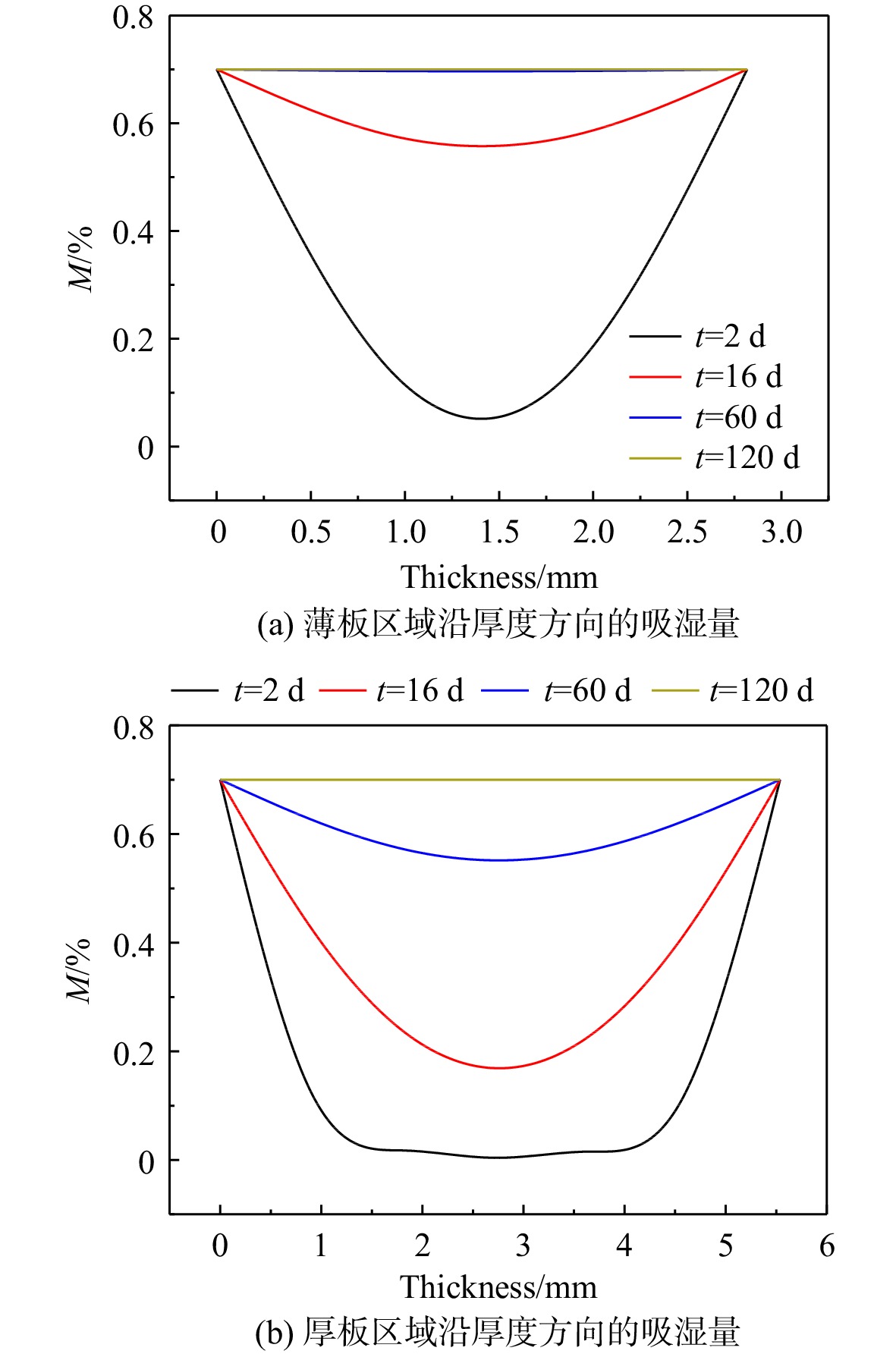
In order to investigate the moisture absorption performance of composite stiffened panels in hygrothermal environment, the moisture absorption experiment of composite stiffened panels under 70 ℃ and water bath environment was carried out to analyze the law of moisture absorption, and verified by data fitting. In view of the limitations of the Fick moisture absorption model, a modified two-stage moisture absorption model considering the side moisture absorption effect was proposed. At the same time, based on the finite element method, the analysis model of the moisture absorption performance of the stiffened panels was established to simulate the diffusion and distribution of moisture in the moisture absorption process. The results showed that the saturated moisture absorption of the three experiment specimens was 0.702%, 0.696% and 0.687%, respectively, and the moisture absorption process can be divided into two stages: linear rapid moisture absorption in the early stage and lower absorption rate until equilibrium in the later stage. The accuracy of the calculation results of the model was verified by using the experimental data, and comparison with the literature proved that the model can improve the prediction accuracy. Through the finite element model, the results exhibited that the surface of the specimen reached moisture absorption equilibrium rapidly, and the thin plate area reached moisture absorption equilibrium faster than the thick plate area.

Turbomachinery
Influence of endwall profiling on purge flow and mainstream flow in the high-pressure turbine
XIE Bosen, ZHANG Yanfeng, ZHANG Ziqing
2023, 38(9): 2241-2250. doi: 10.13224/j.cnki.jasp.20210721
Abstract:

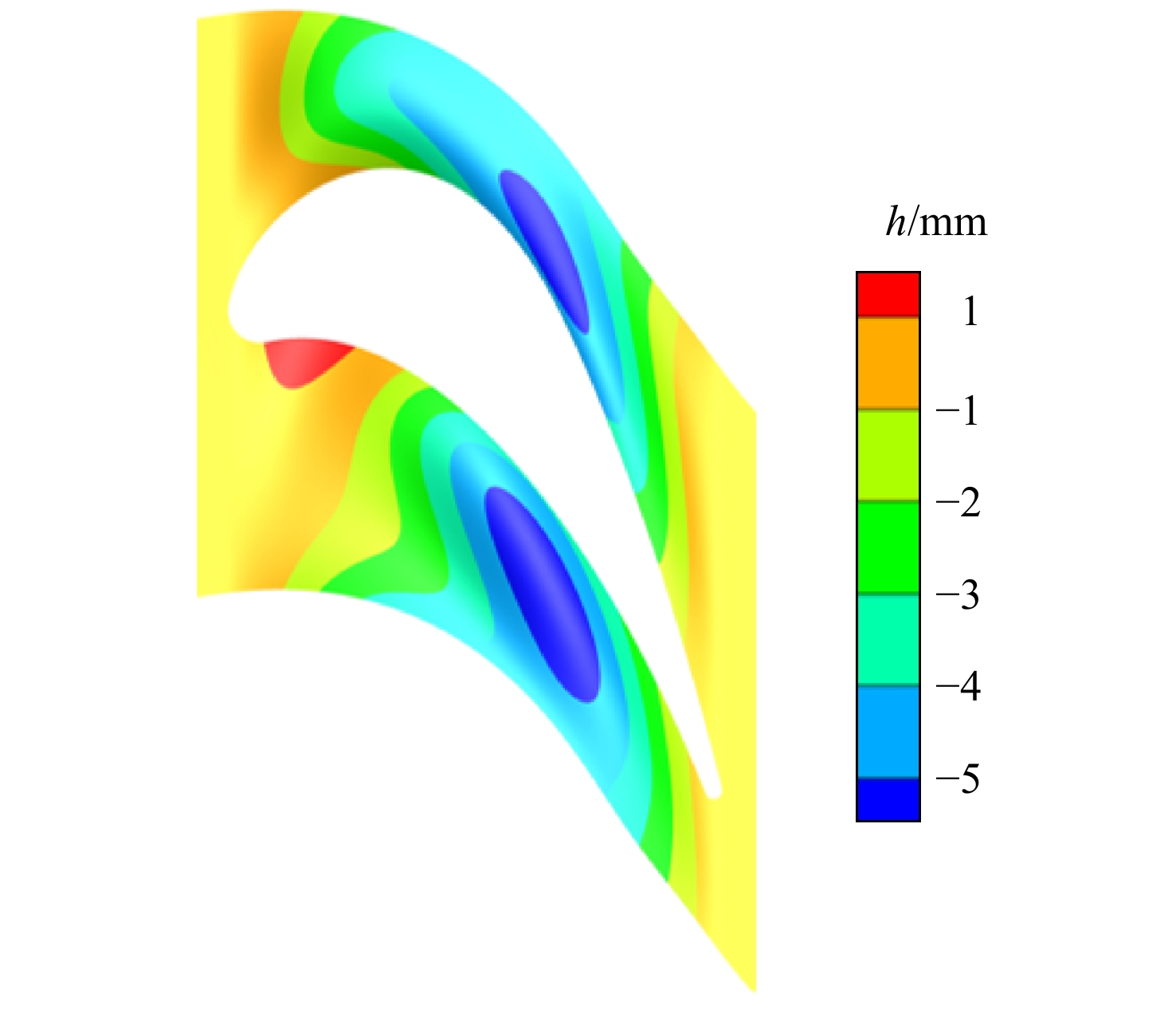
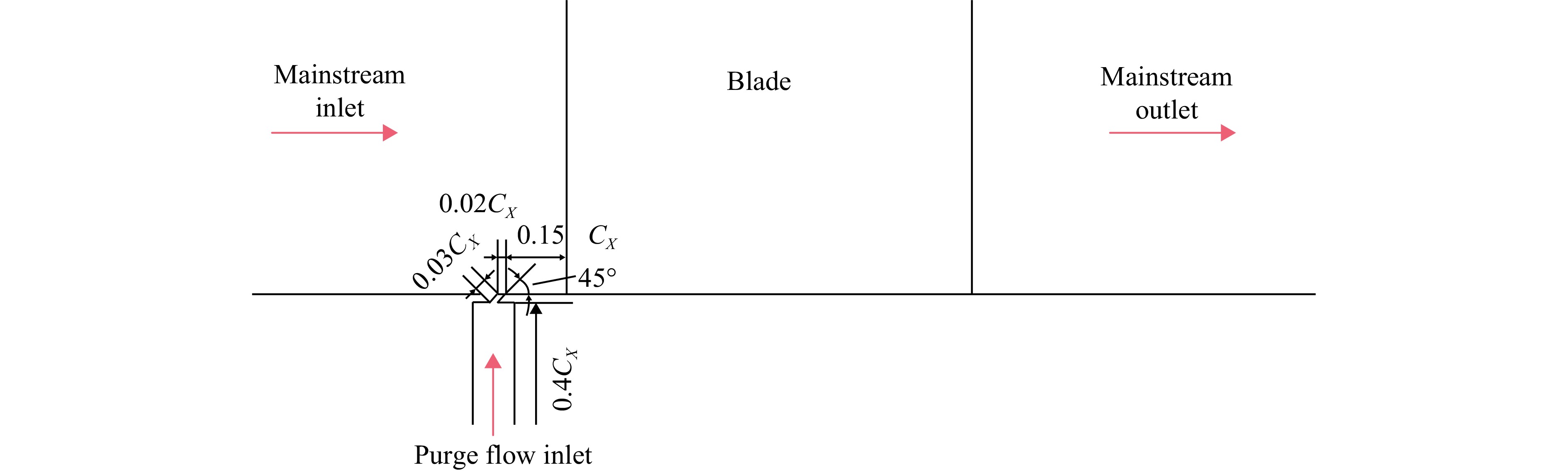
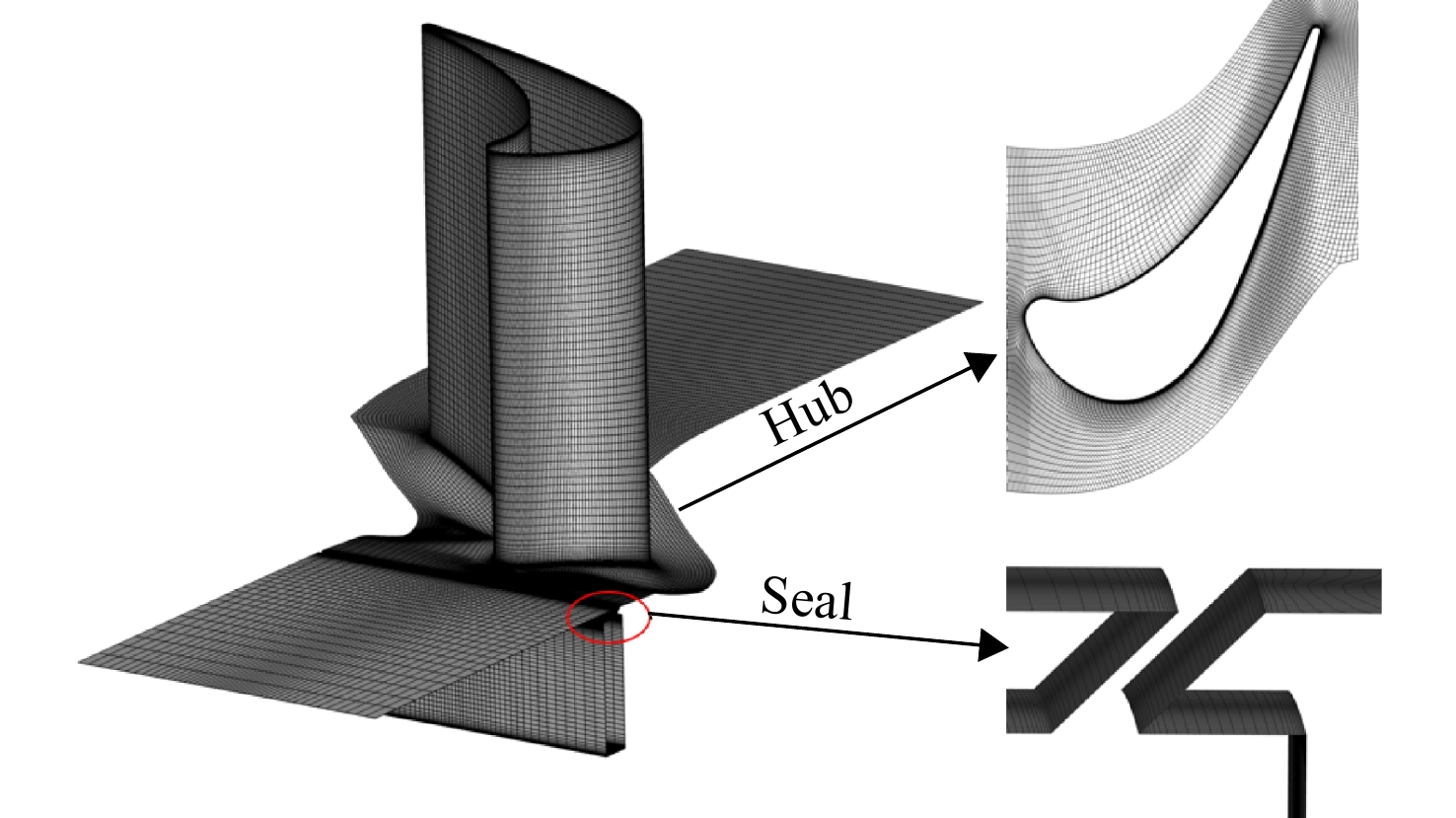
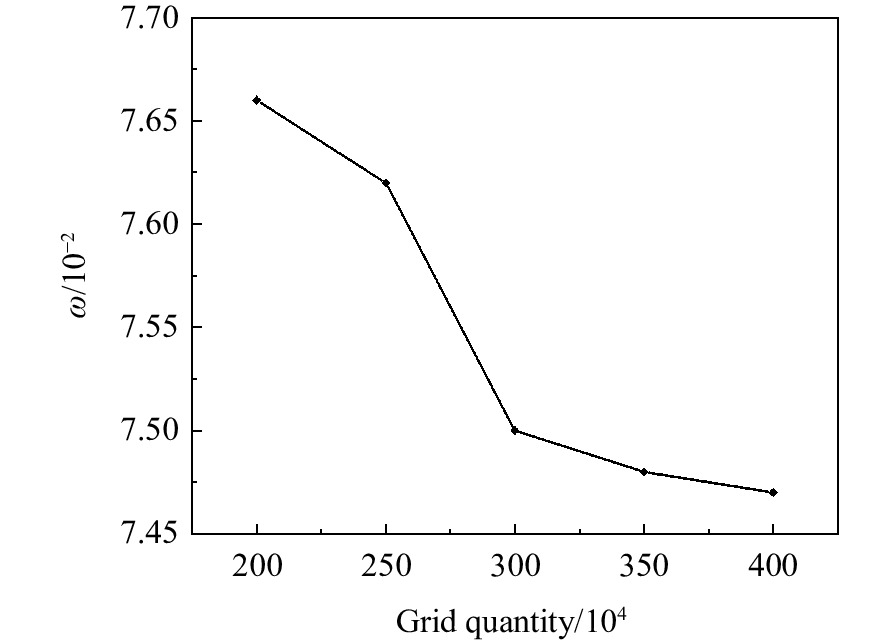
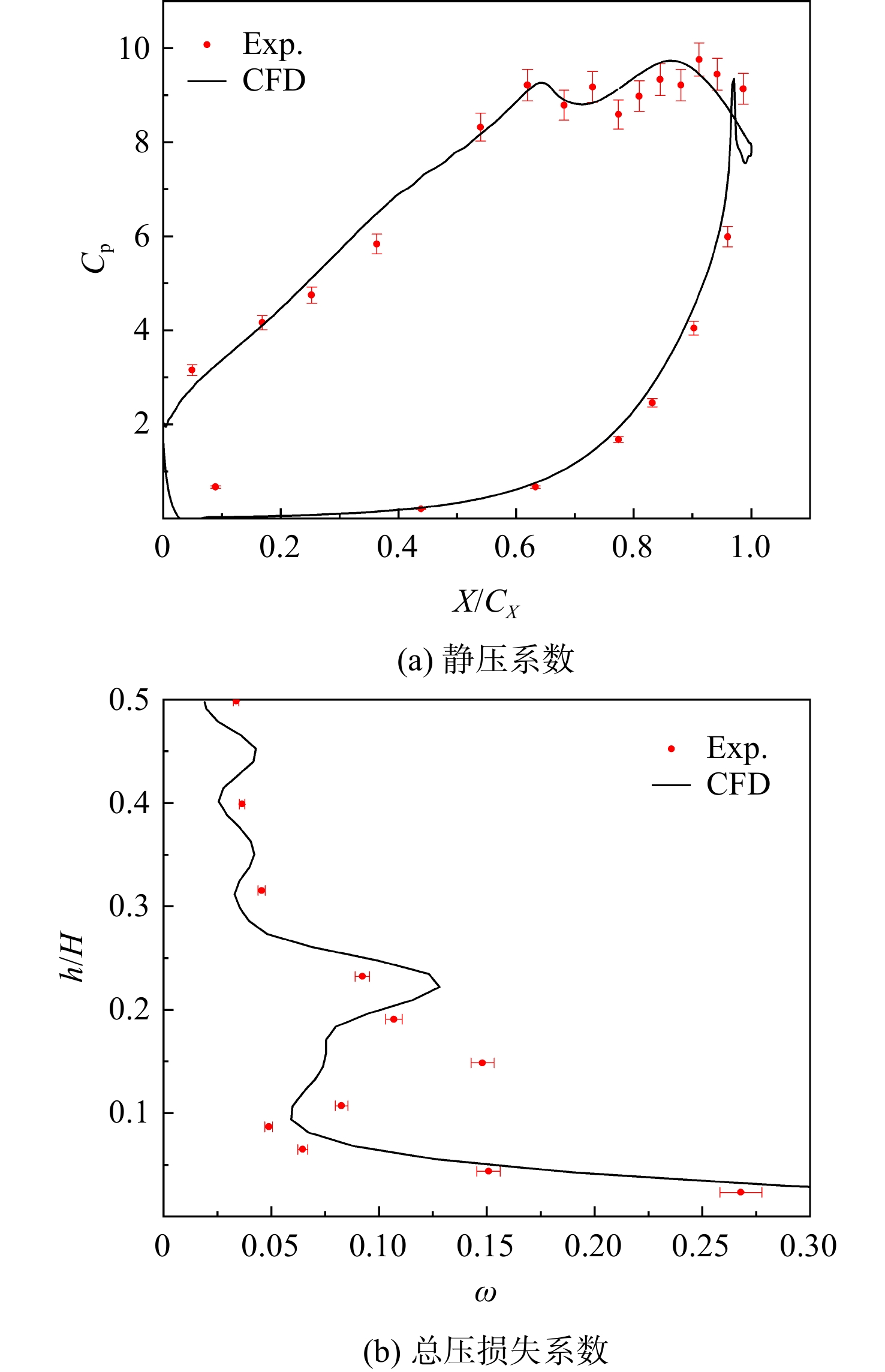
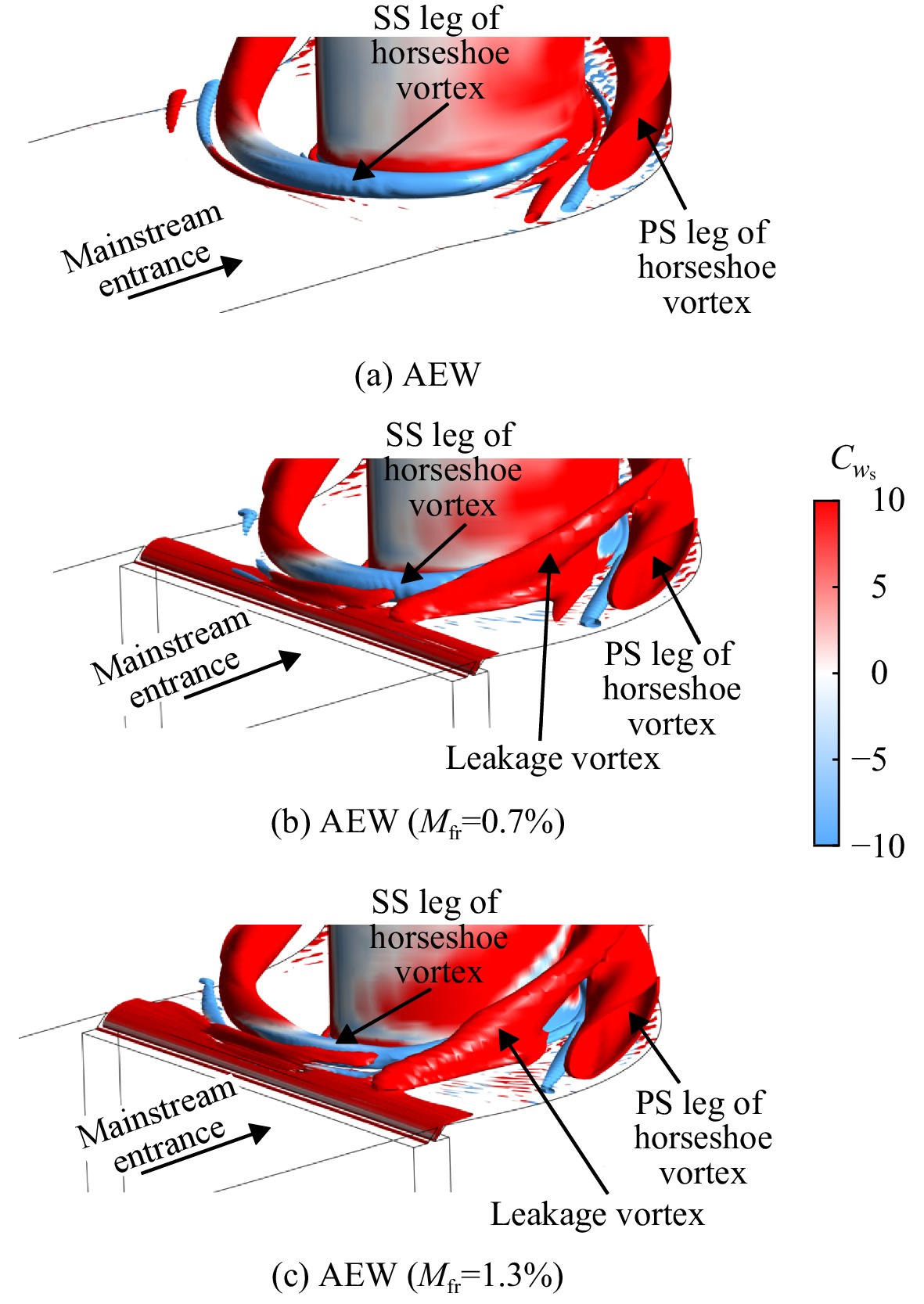
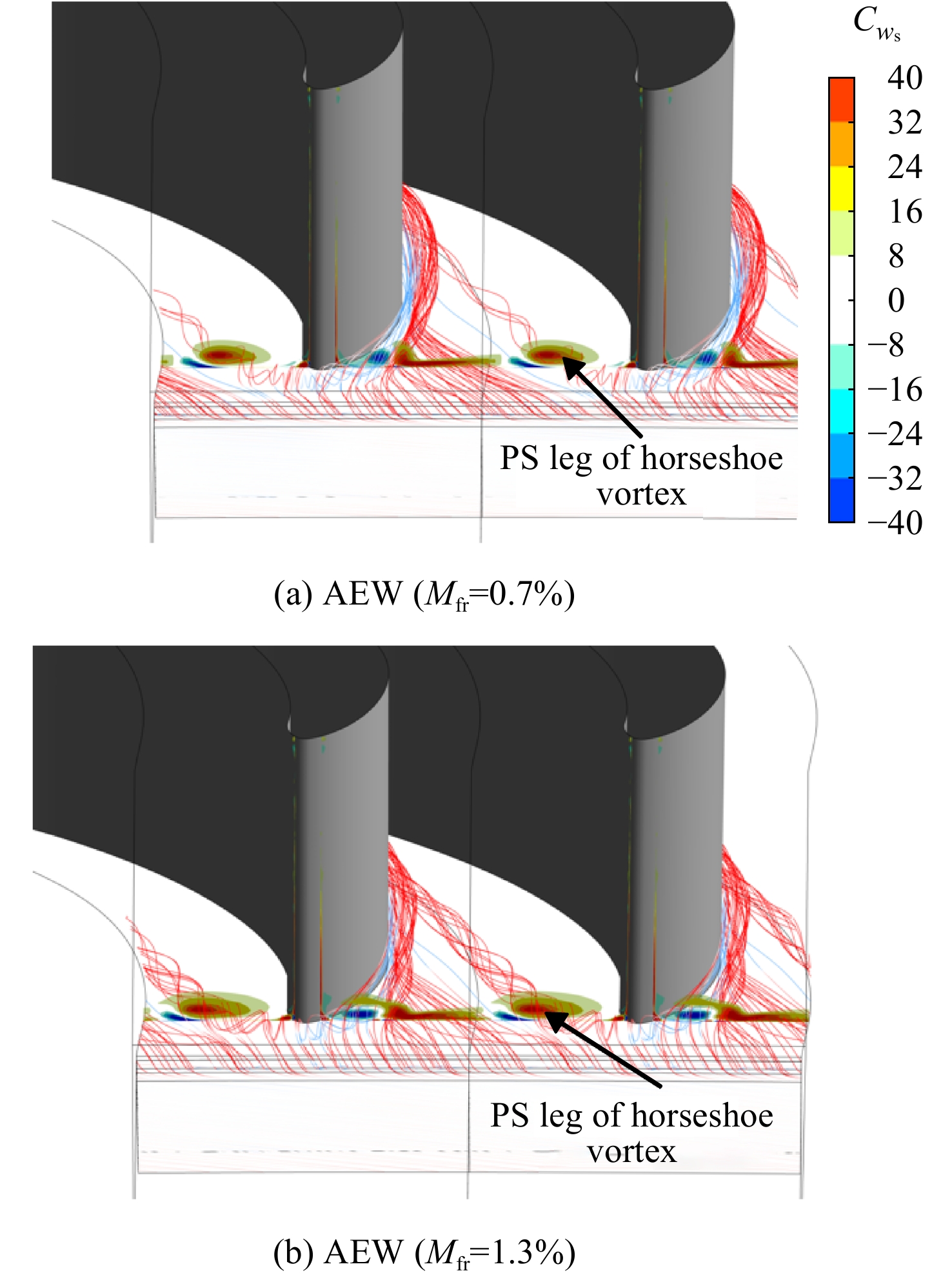
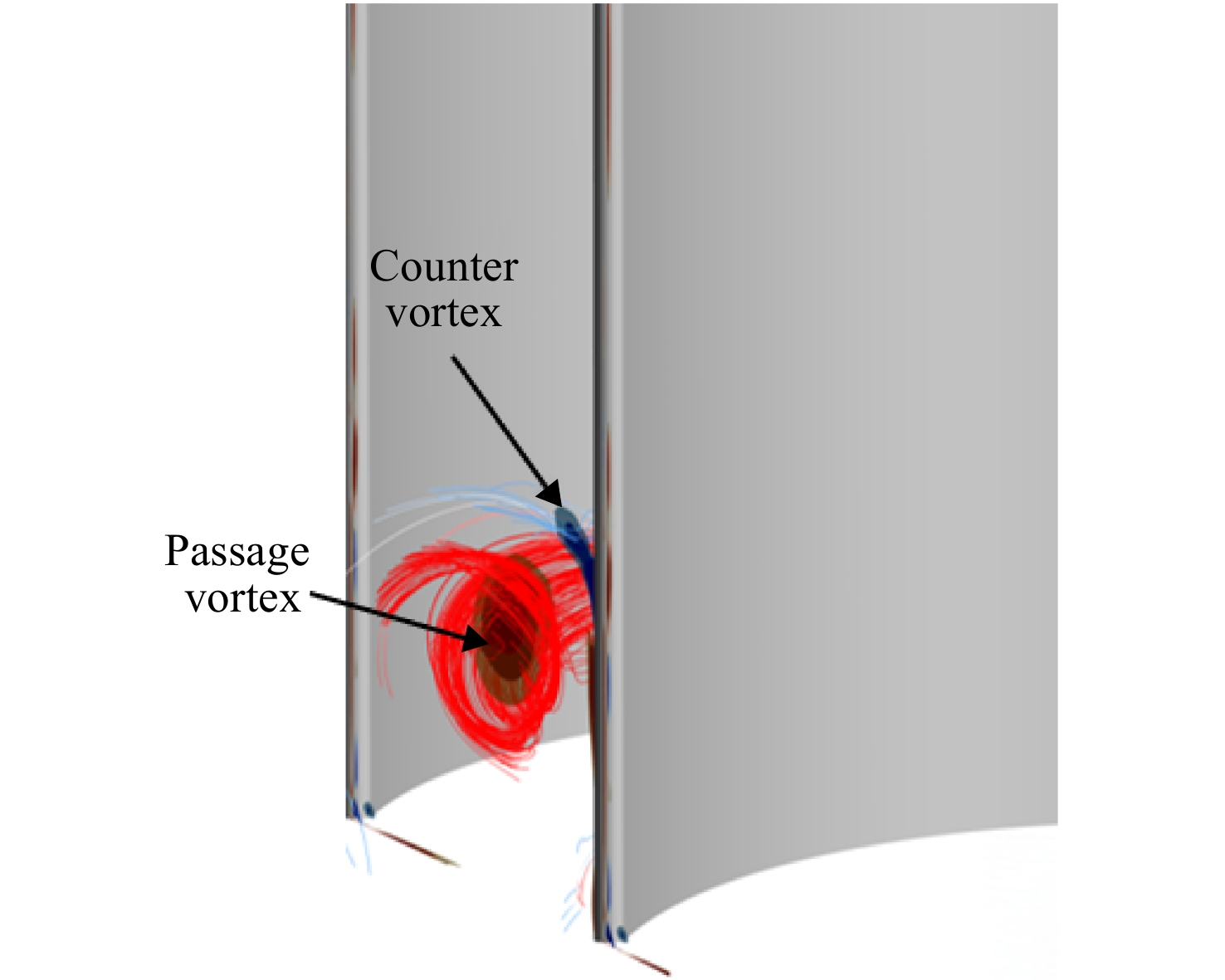
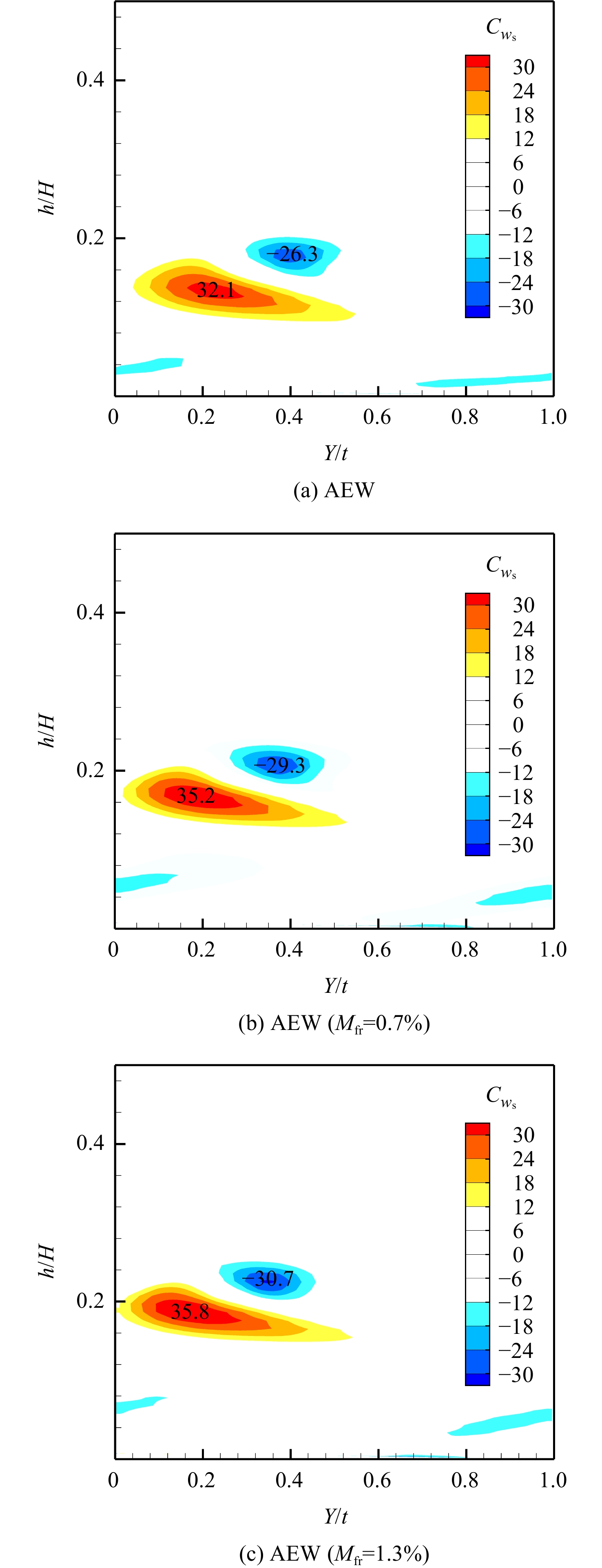
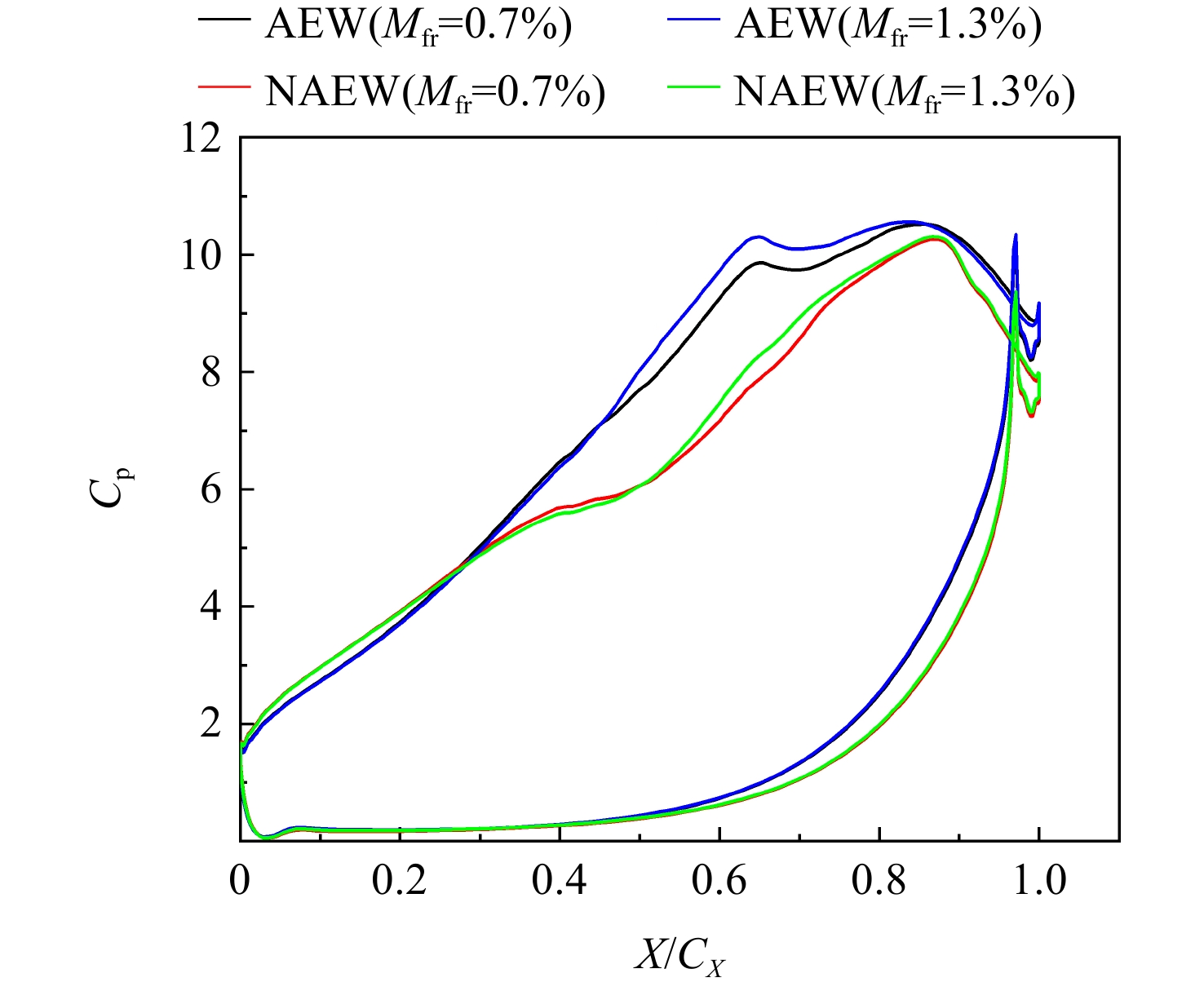
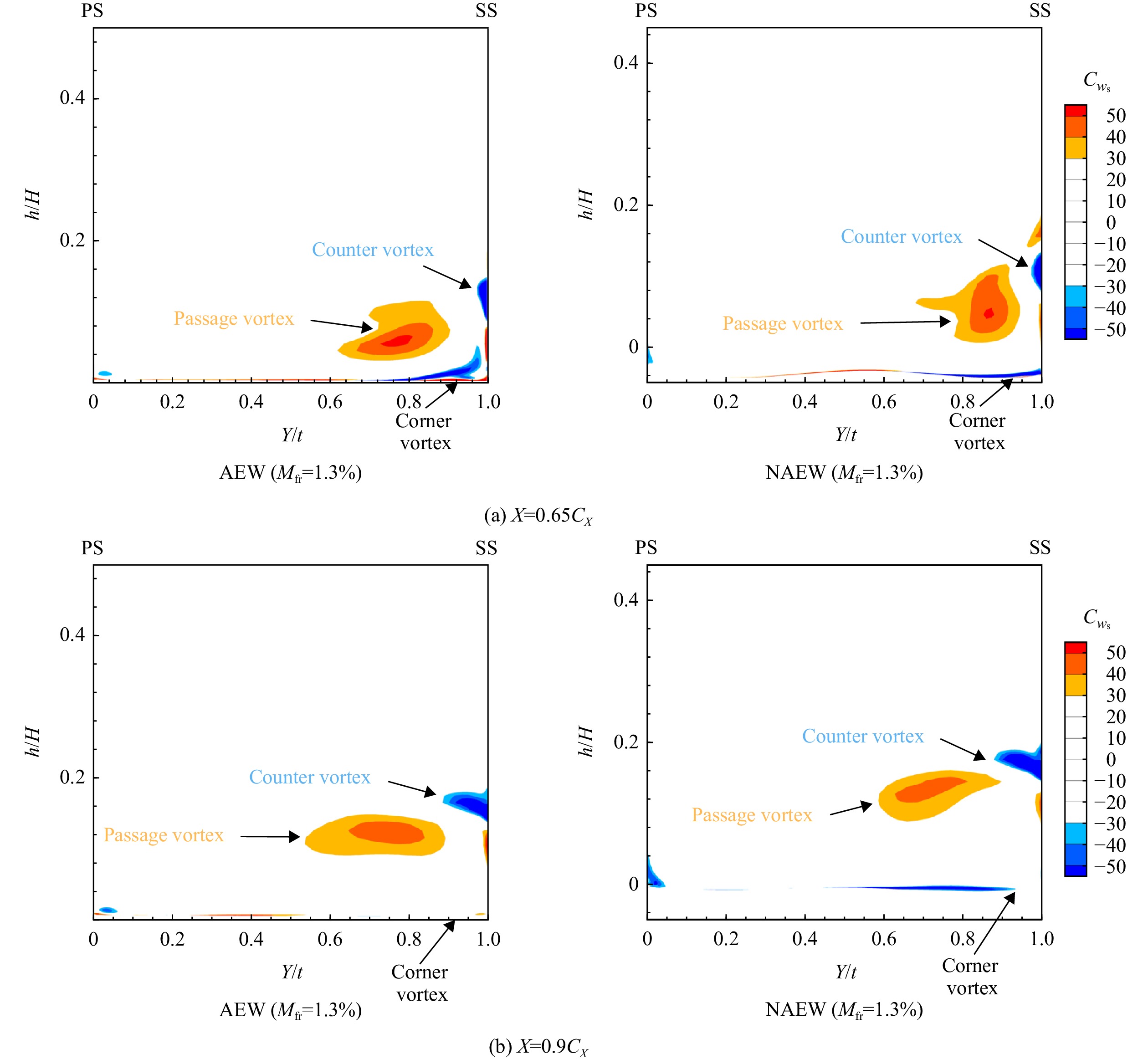
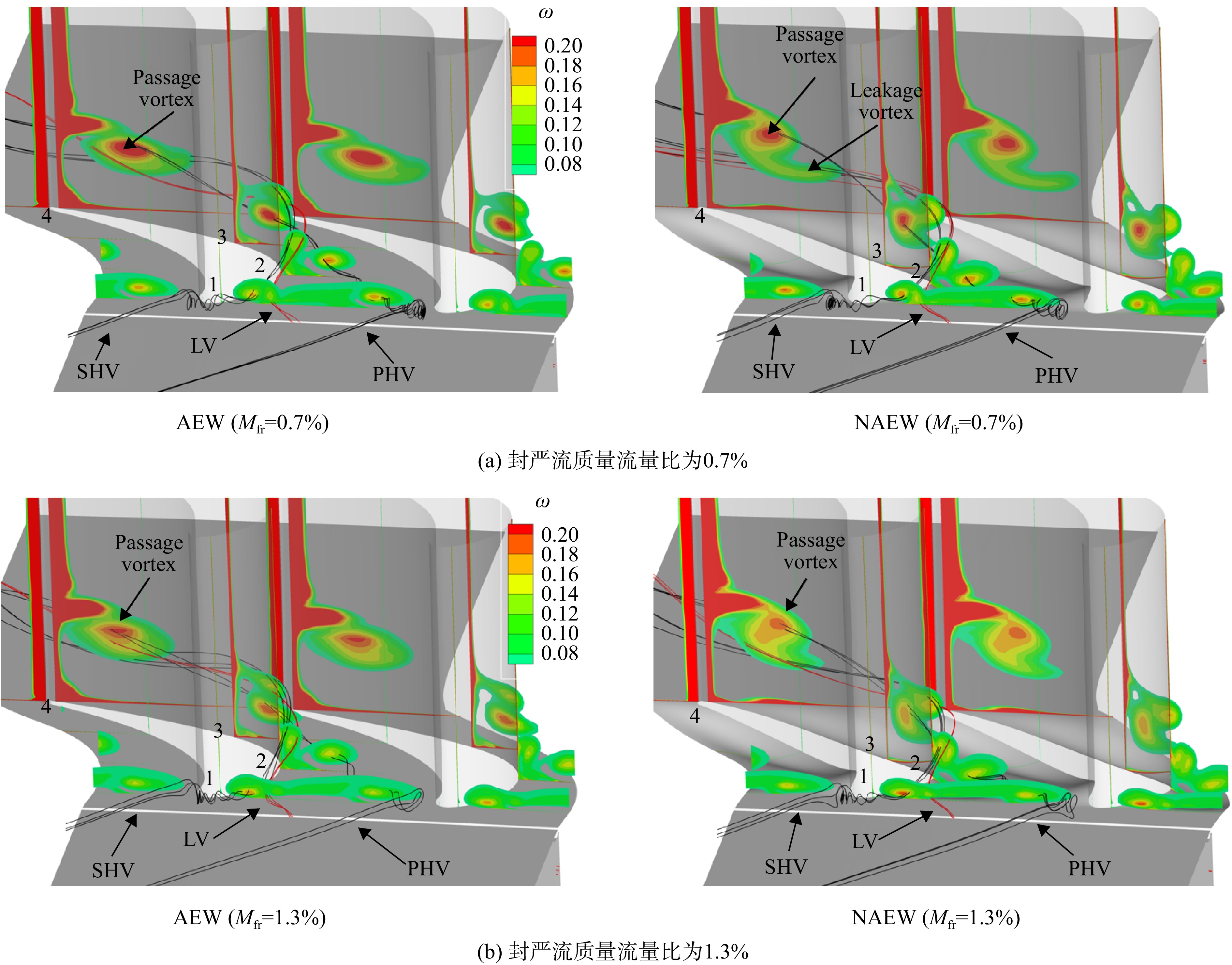
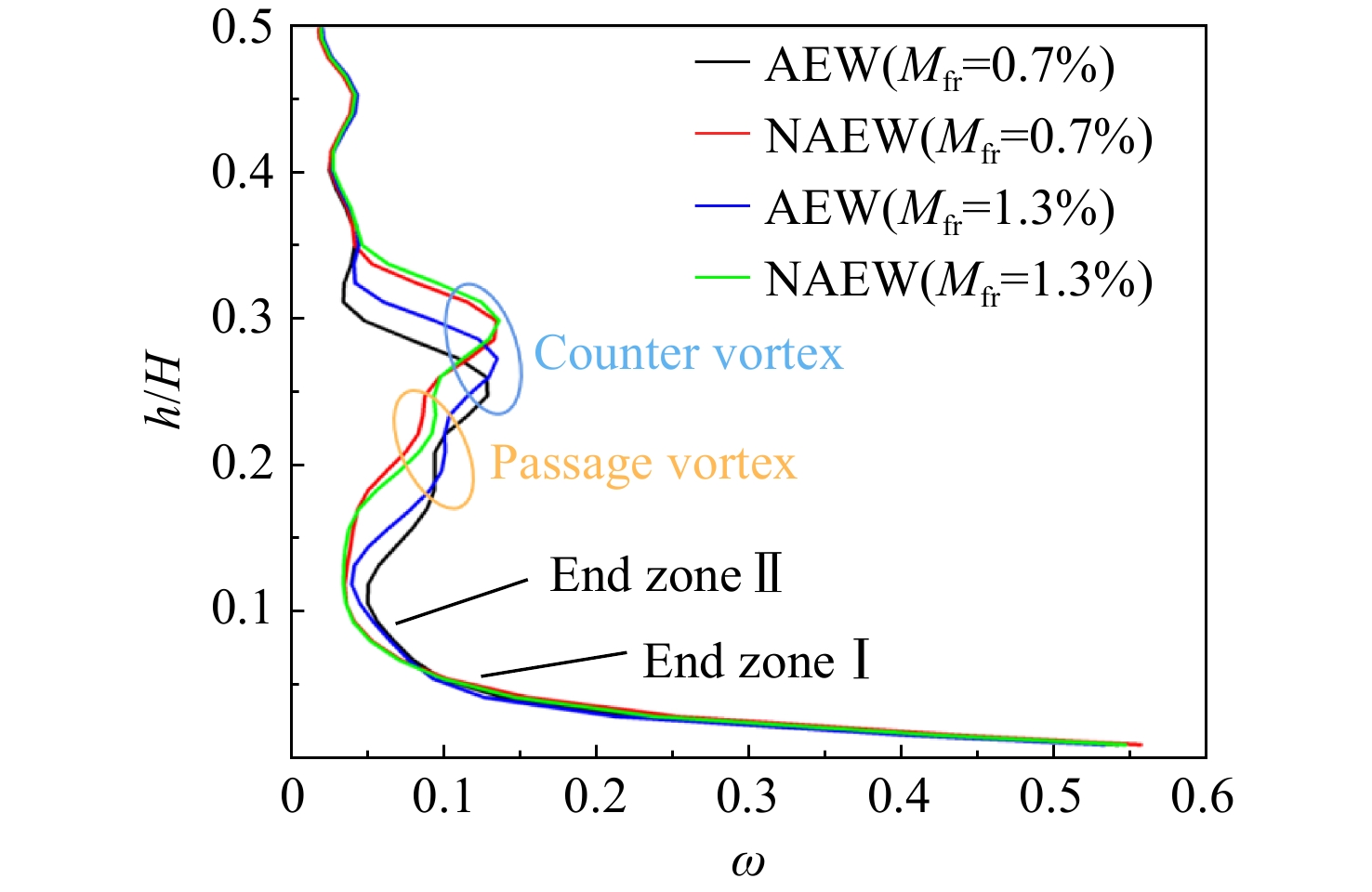
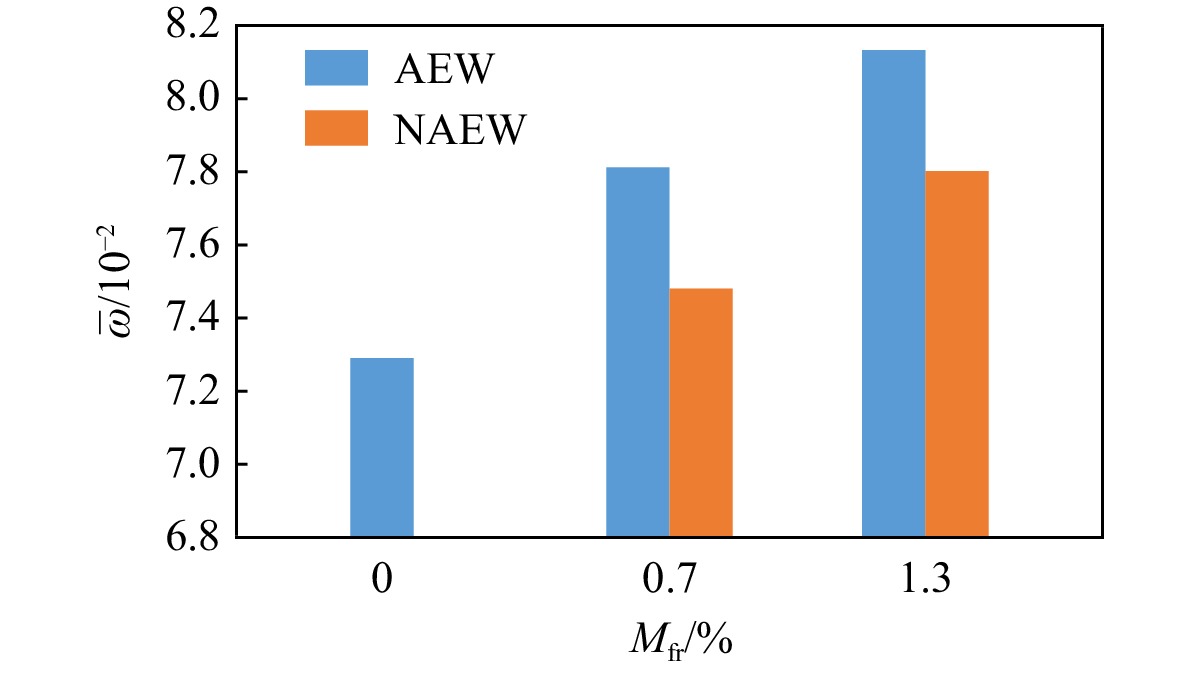
Because of the interaction between mainstream flow and the purge flow that can ensure the security of the engine, the flow loss increased accordingly. The typical high-pressure turbine cascade was selected, and the interaction mechanism between the purge flow and mainstream flow in the high-pressure turbine was studied by numerical simulation. On this basis, the influence of non-axisymmetric endwall on secondary flow was deeply discussed and the variation of the flow loss of turbine was analyzed in detail under two different purge flow conditions. When the mass flow ratio of the purge flow was 0.7%, the non-axisymmetrical endwall weakened the transverse pressure gradient near the hub and the driving force of the migration of the pressure side leg of horseshoe vortex and leakage vortex, and delayed the passage vortex formation. When the mass flow ratio of the purge flow increased to 1.3%, the intensity of secondary flow near the hub became stronger, but the non-axisymmetric endwall still had great effect on decreasing the flow loss. It must be noted that the non-axisymmetrical endwall can also weaken the local adverse pressure gradient on the blade suction side and inhibit flow separation in the corner area.

Prediction of aerodynamic characteristics of compressor blade profile based on deep learning
DU Zhou, XU Quanyong, SONG Zhenshou, WANG Handing, MA Yulin
2023, 38(9): 2251-2260. doi: 10.13224/j.cnki.jasp.20210741
Abstract:

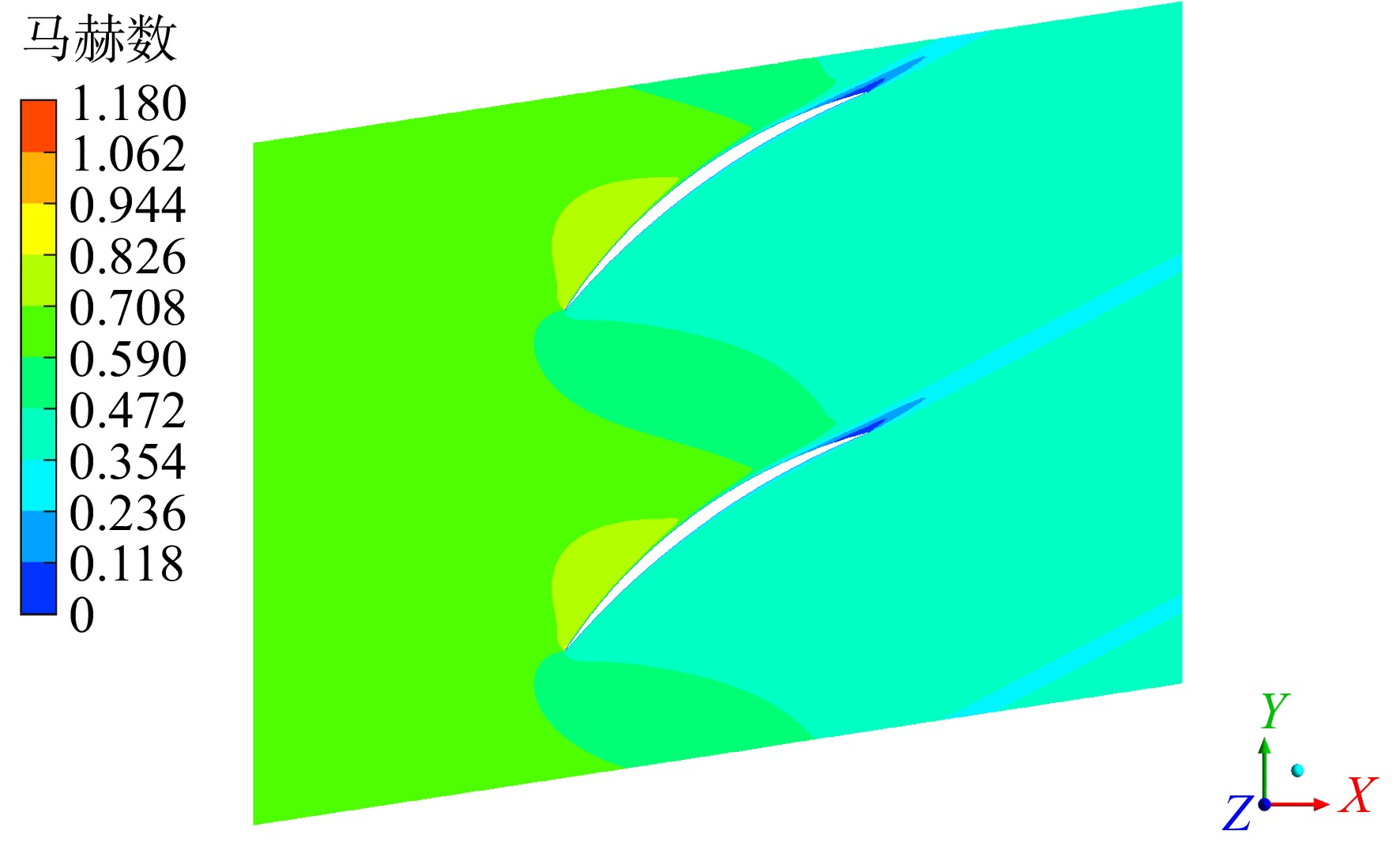
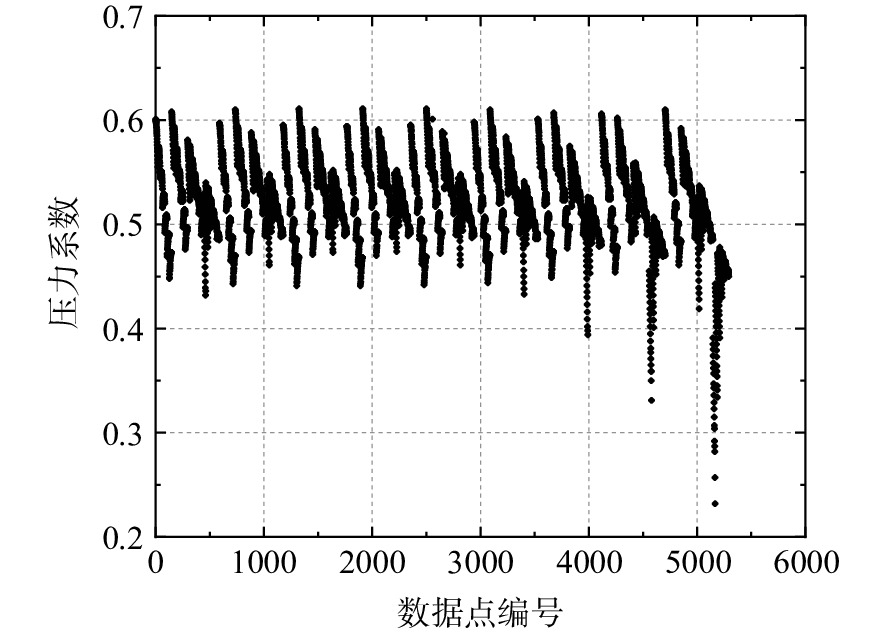
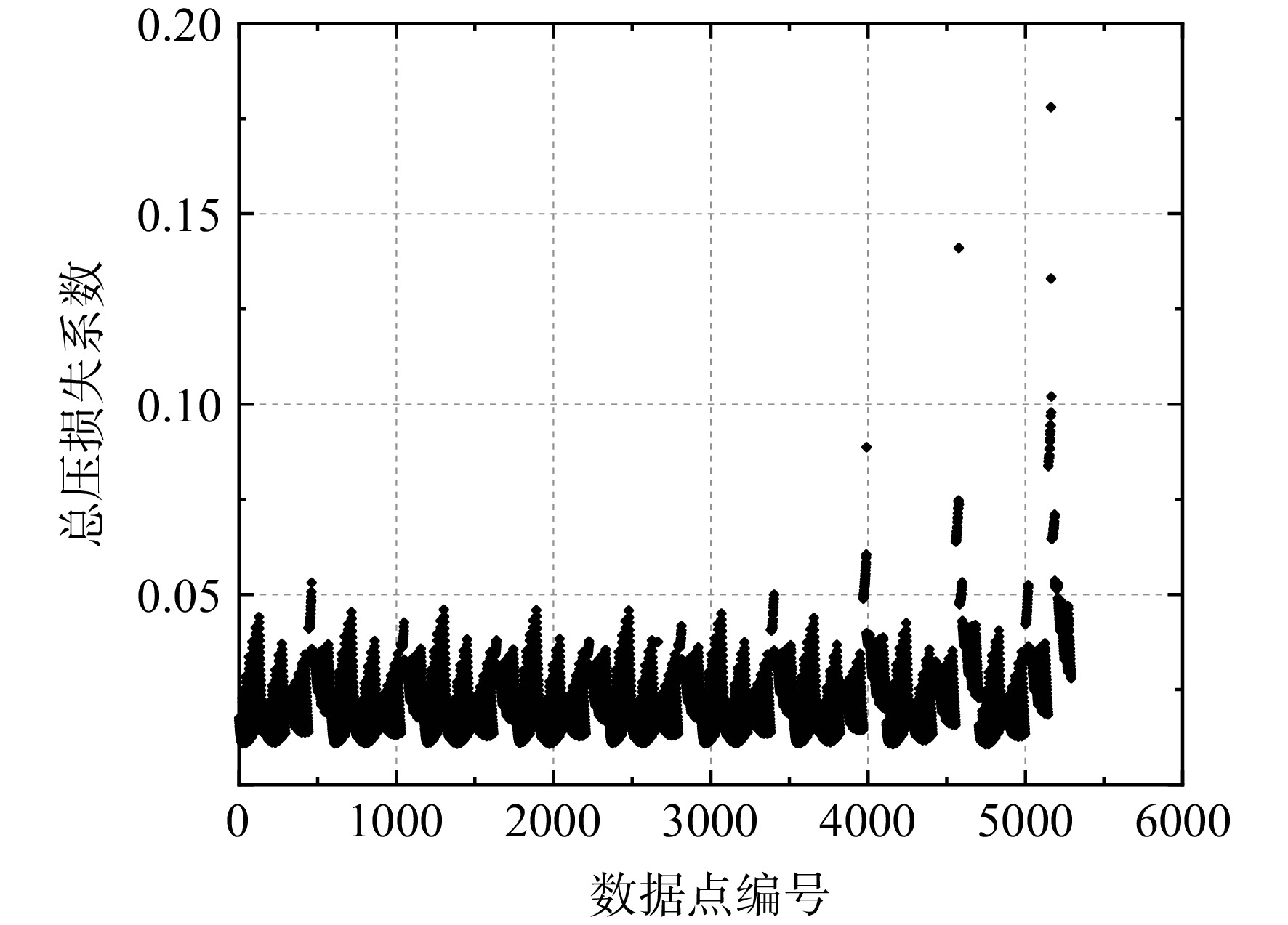
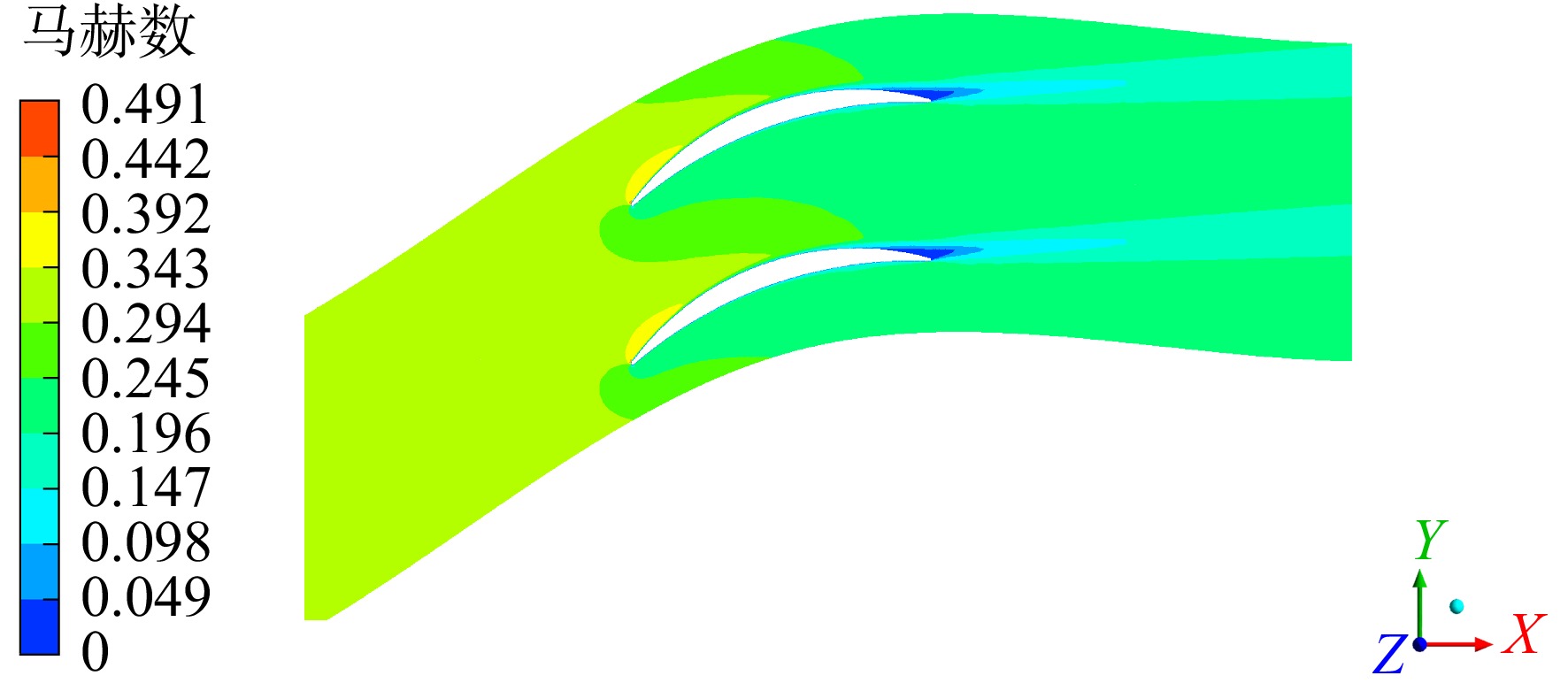
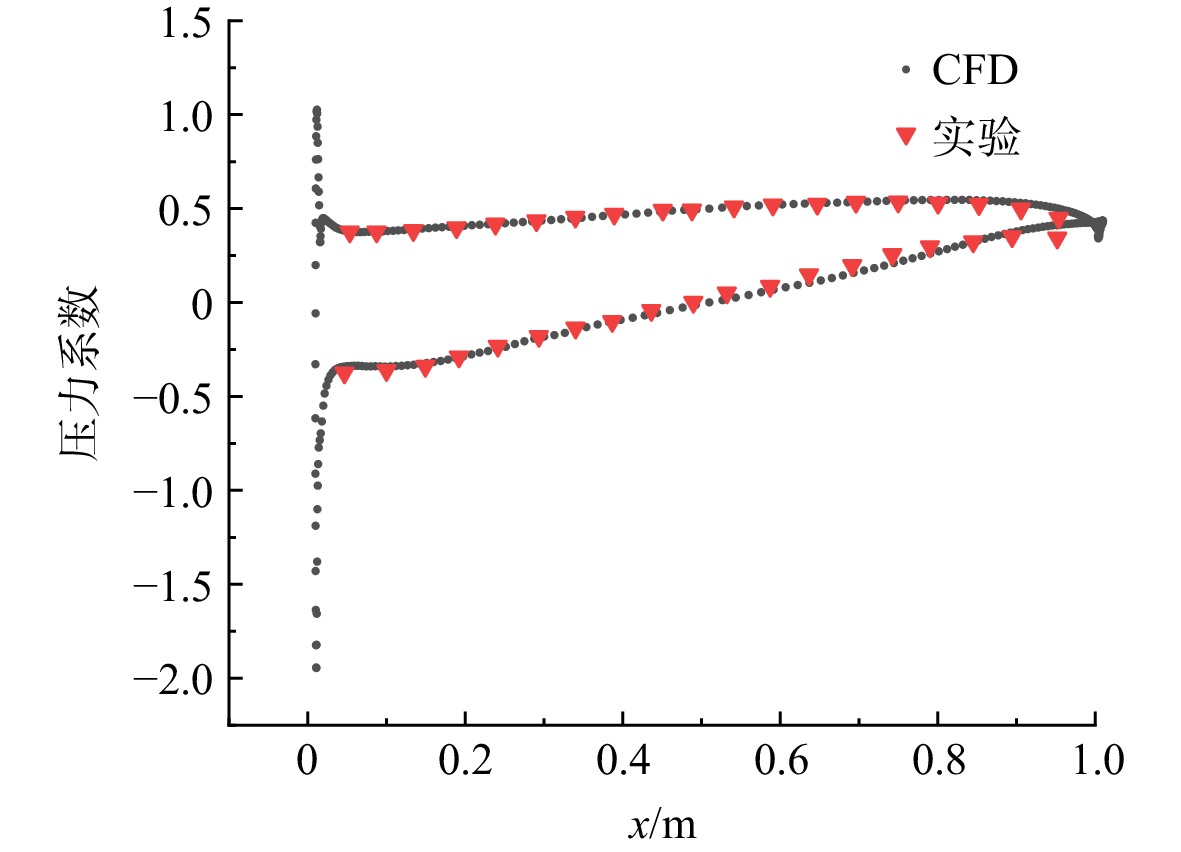
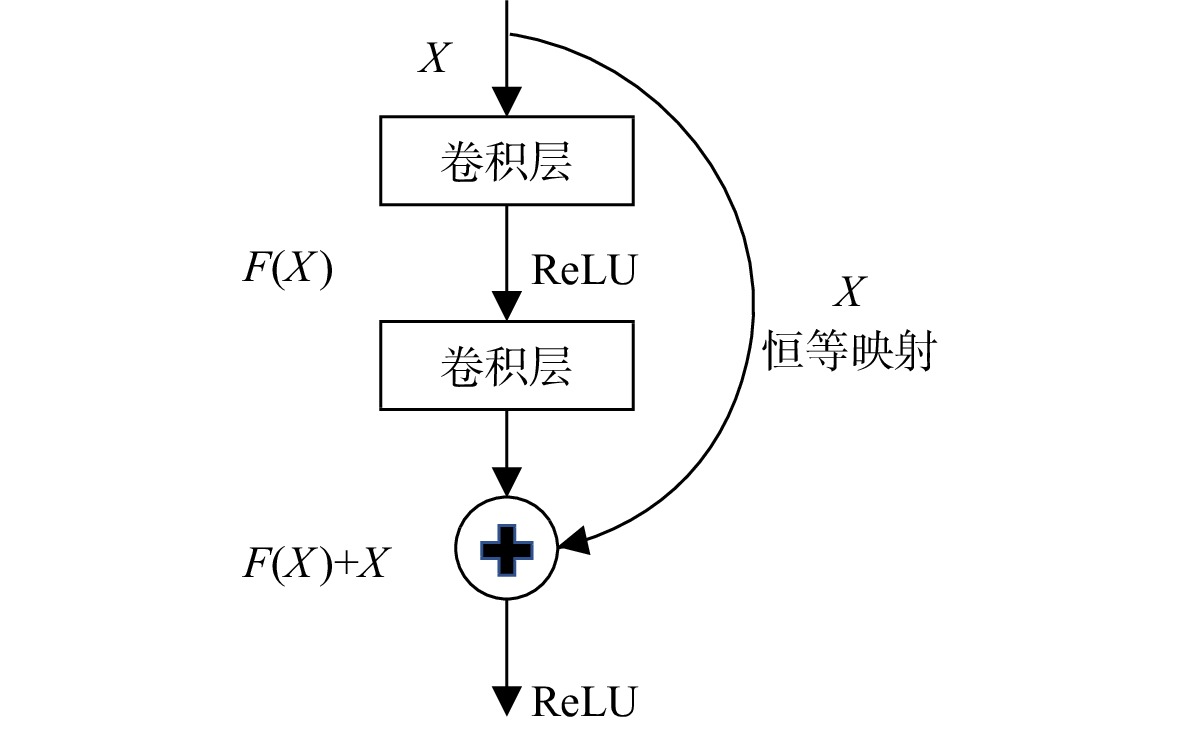
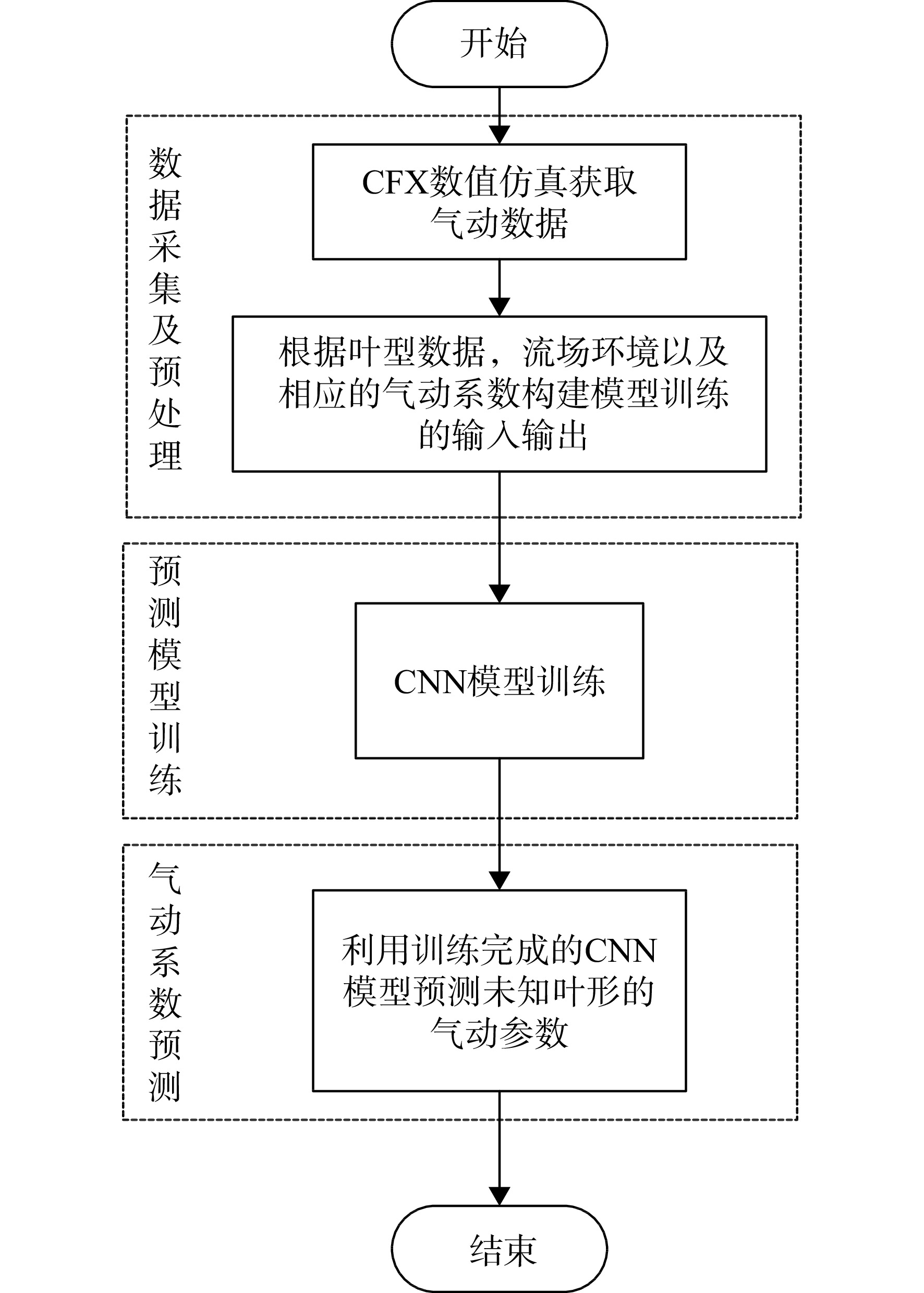
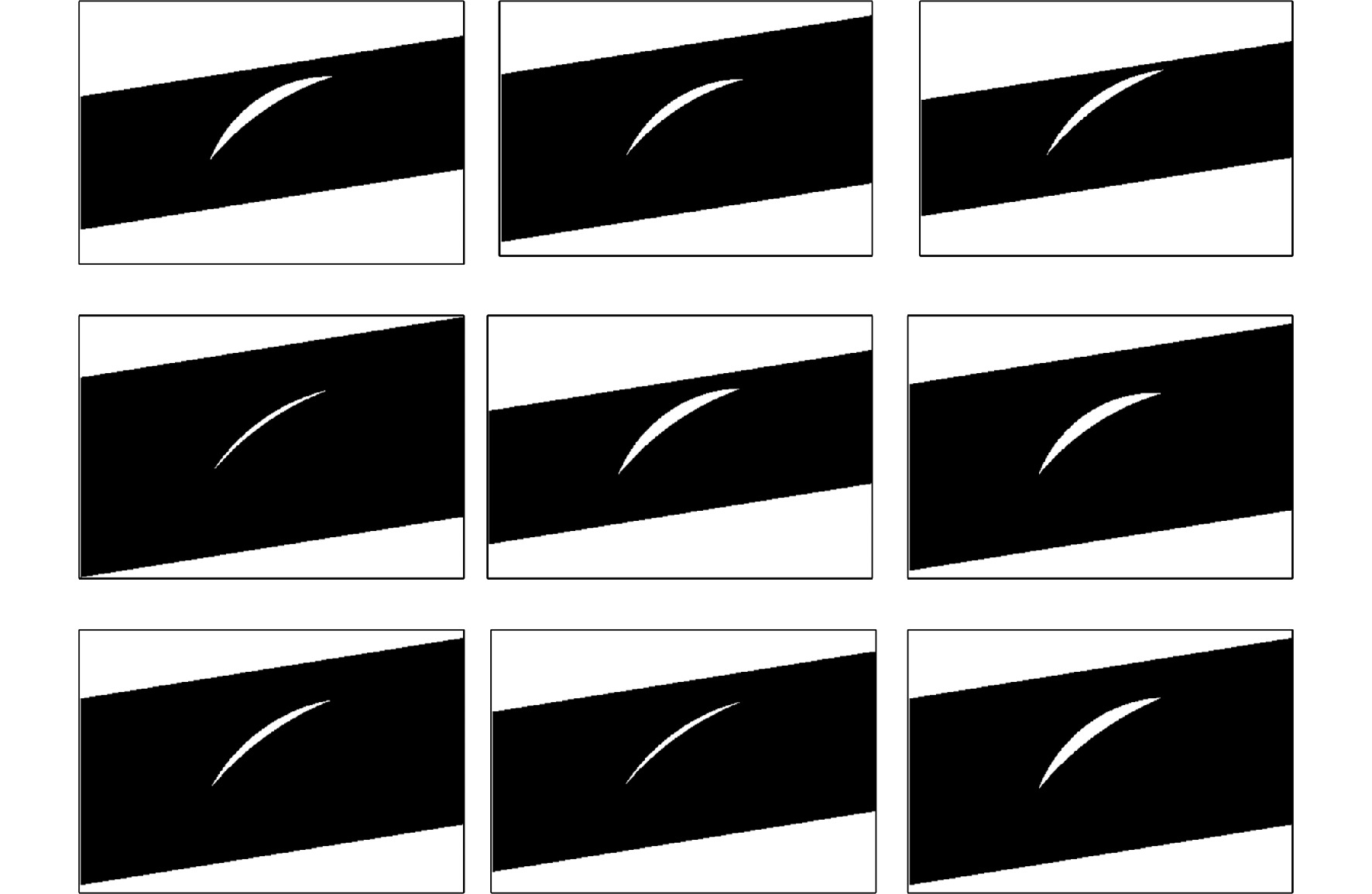
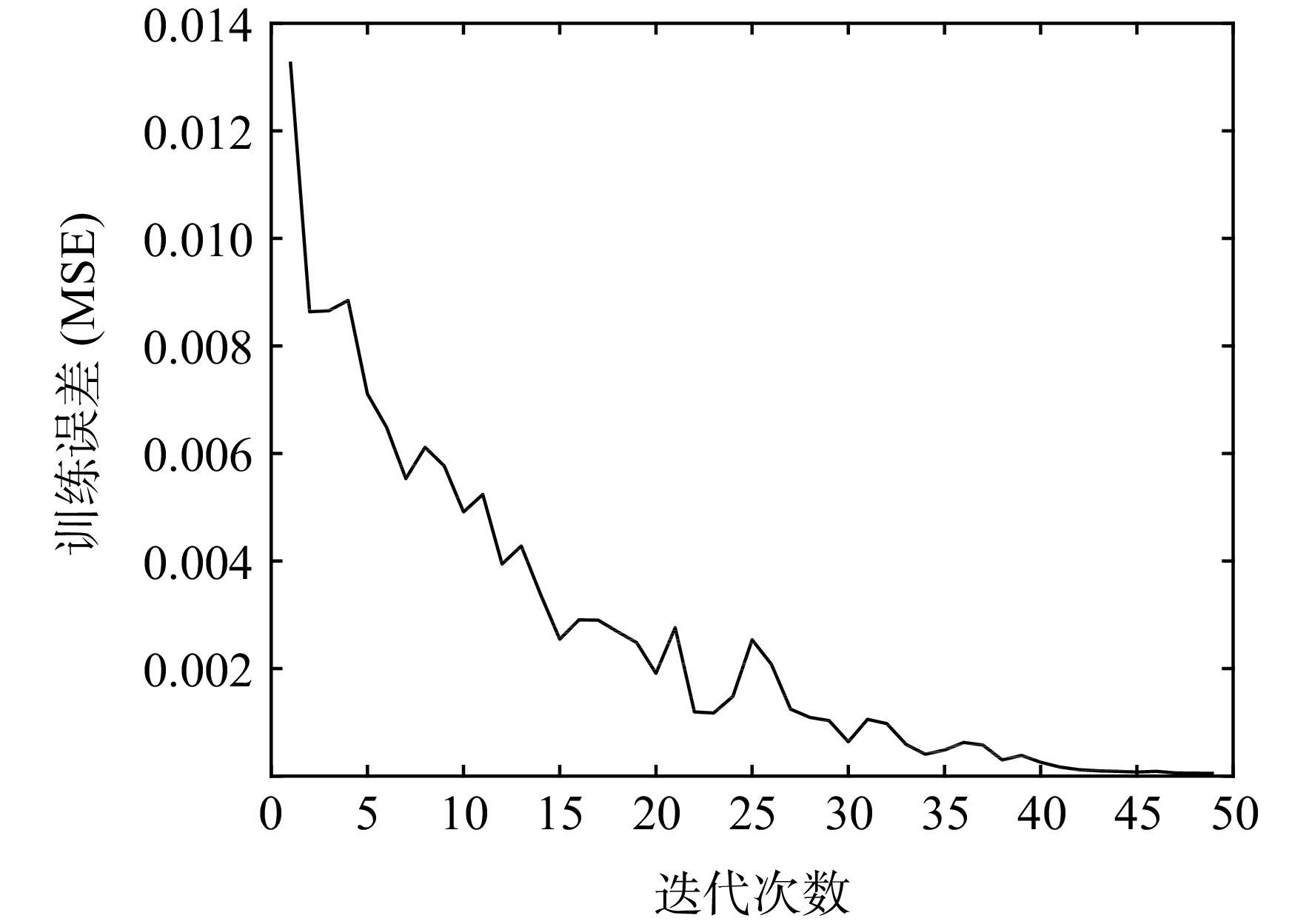
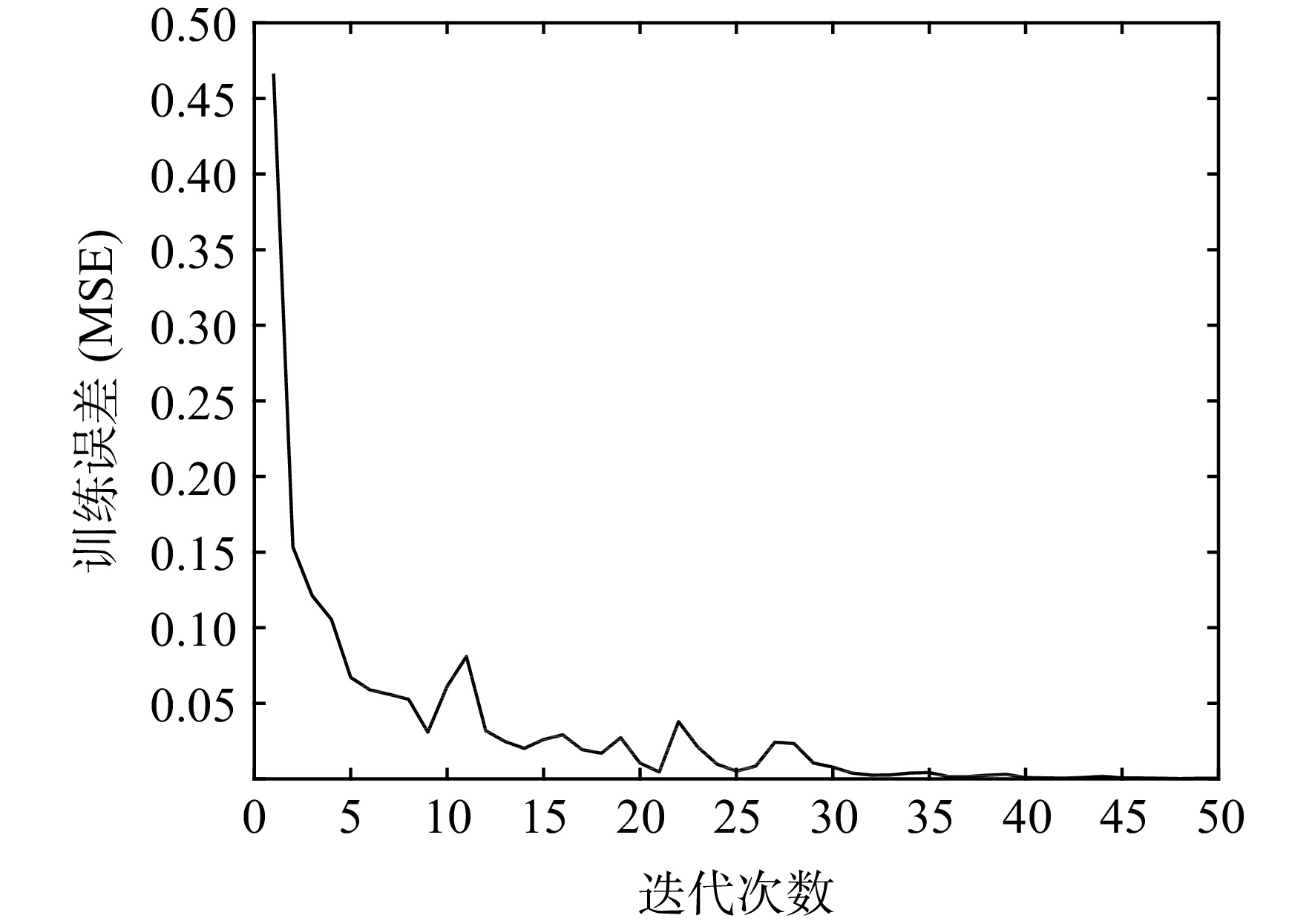
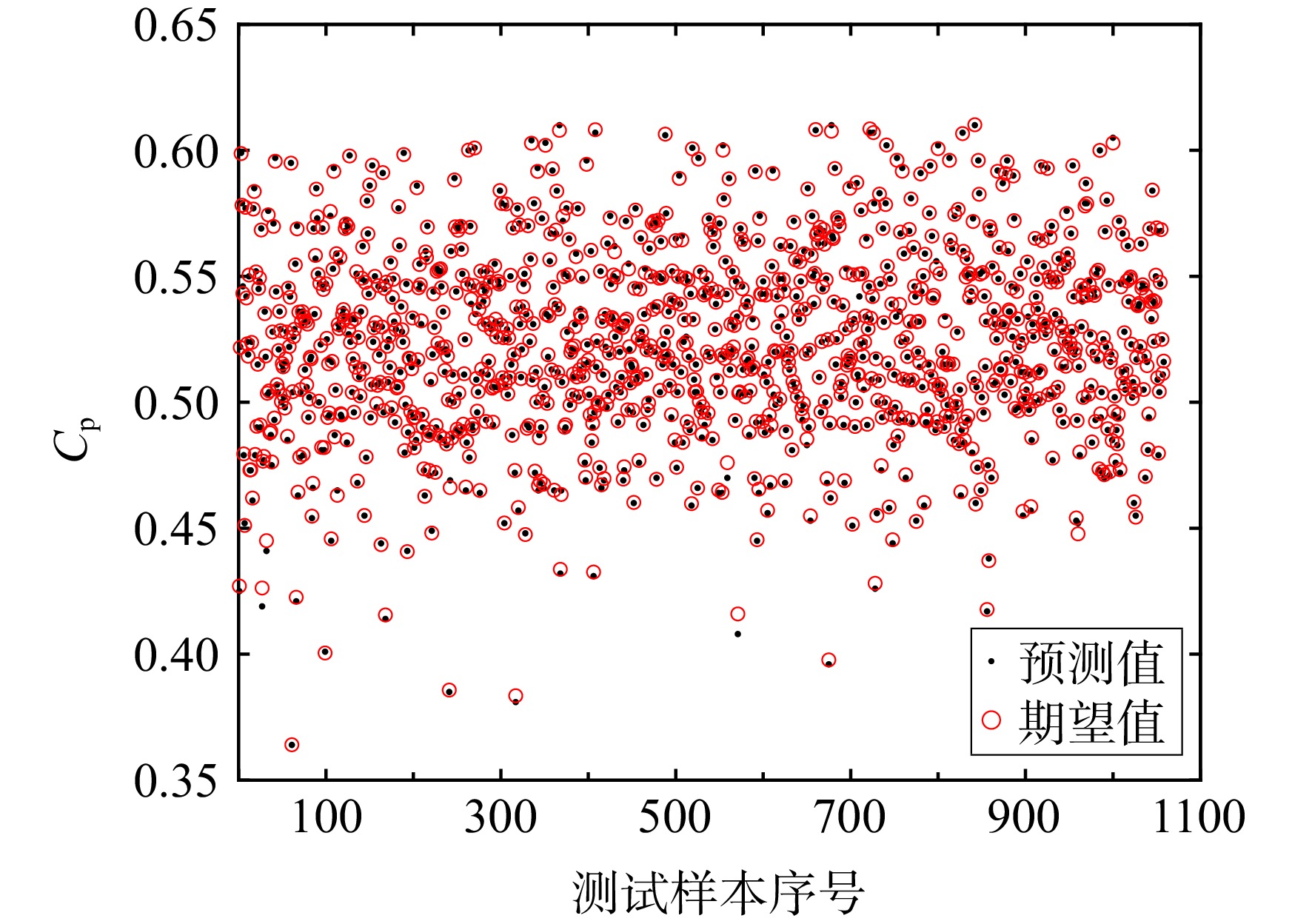
A combination of numerical simulation and machine learning was used to investigate the prediction of aerodynamic coefficients in the flow field of a double-circular-arc leaf shape of a compressor. Parametric batch modeling of the double-arc impeller shape was carried out, and numerical simulation was performed by computational fluid dynamics. The mapping of model data from numerical simulation to aerodynamic performance was provided to multilayer neural network (MLP) and convolutional neural network (CNN) for learning, and the accuracy of the prediction models was tested and compared respectively. It was found that the accurate prediction of the impeller mechanical internal flow field aerodynamic coefficients can be effectively performed by deep learning, and the error rate of the model predicted pressure coefficient was less than 0.2% and the error rate of loss coefficient was less than 1.2%, proving that CNN was better than traditional fully connected neural network in the accuracy of aerodynamic coefficient prediction.

Numerical study using DES for inserting plate with variable distortion ratio of dynamic to steady
YANG Guang, TU Baofeng, FANG Rui, ZHANG Xinyu, REN Zhibo, PAN Baojun
2023, 38(9): 2261-2270. doi: 10.13224/j.cnki.jasp.20220021
Abstract:

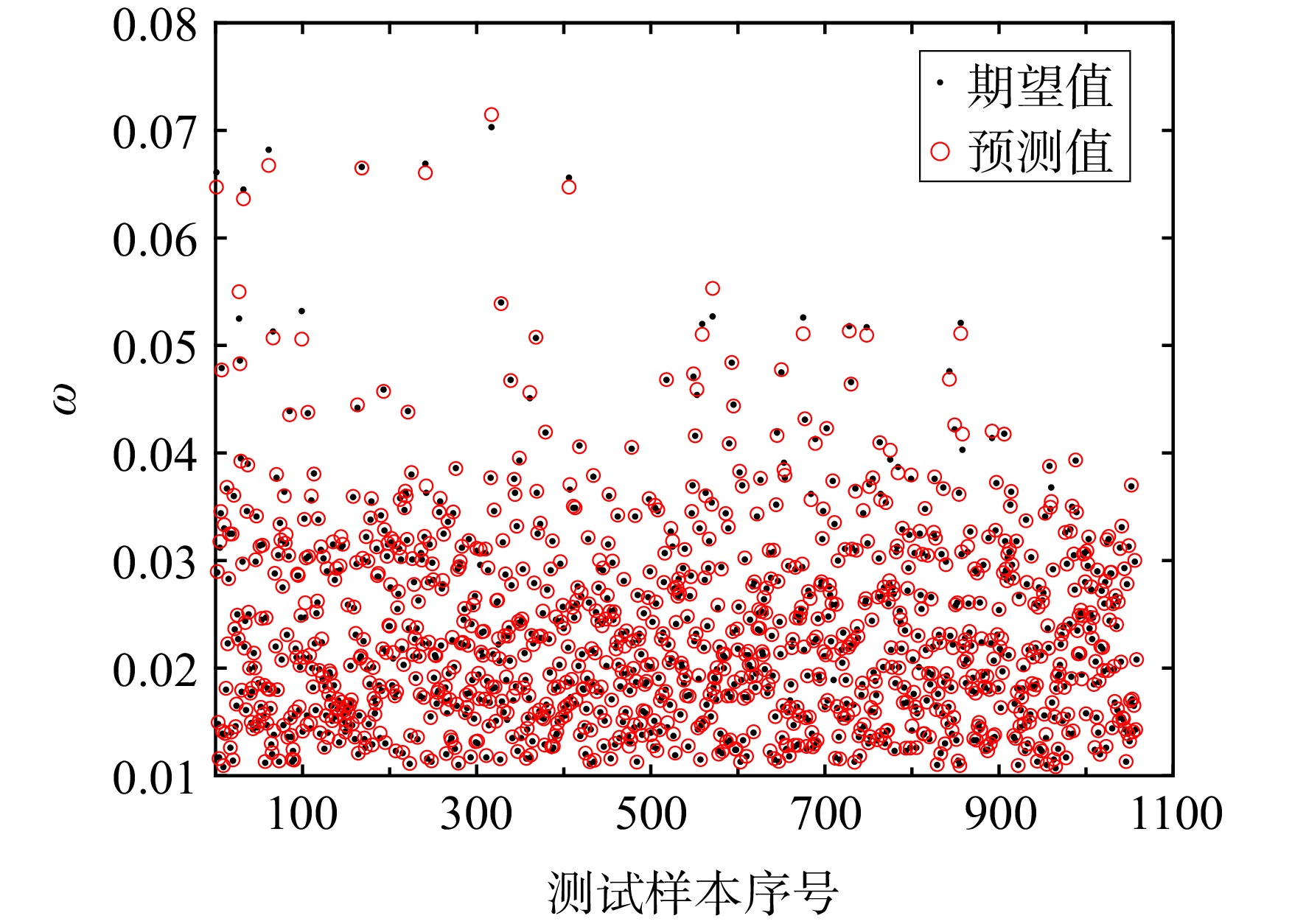
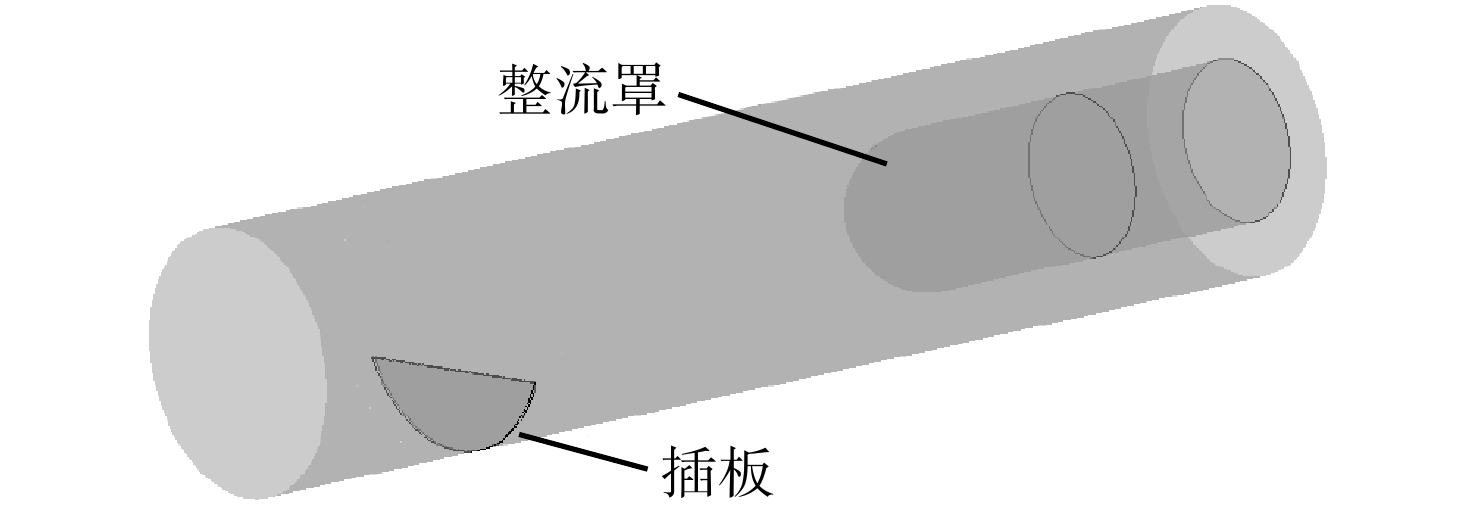
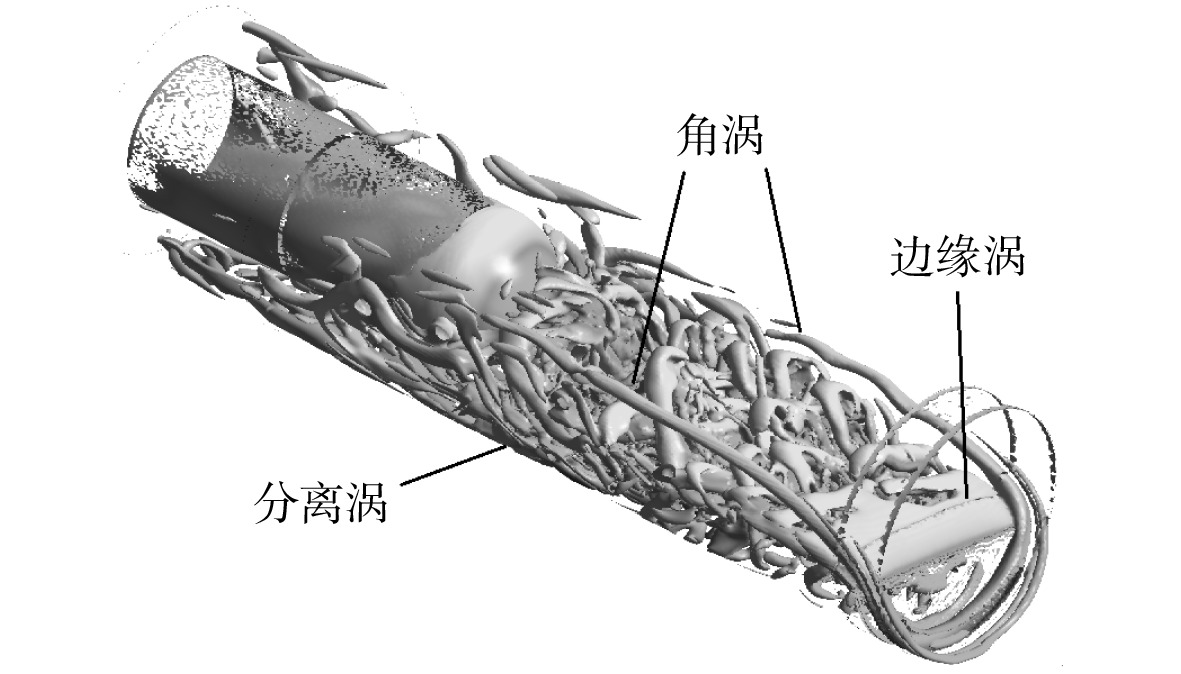
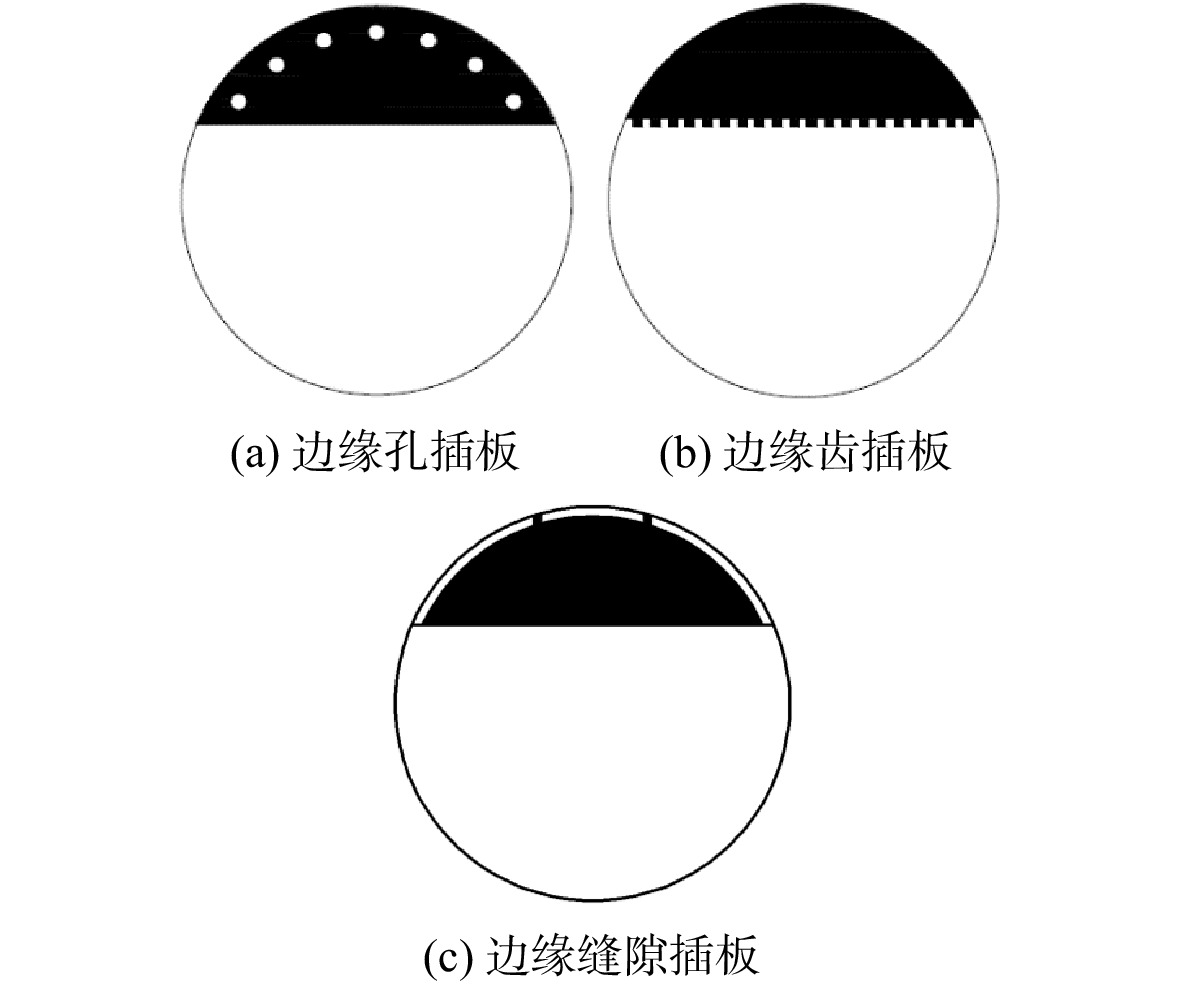
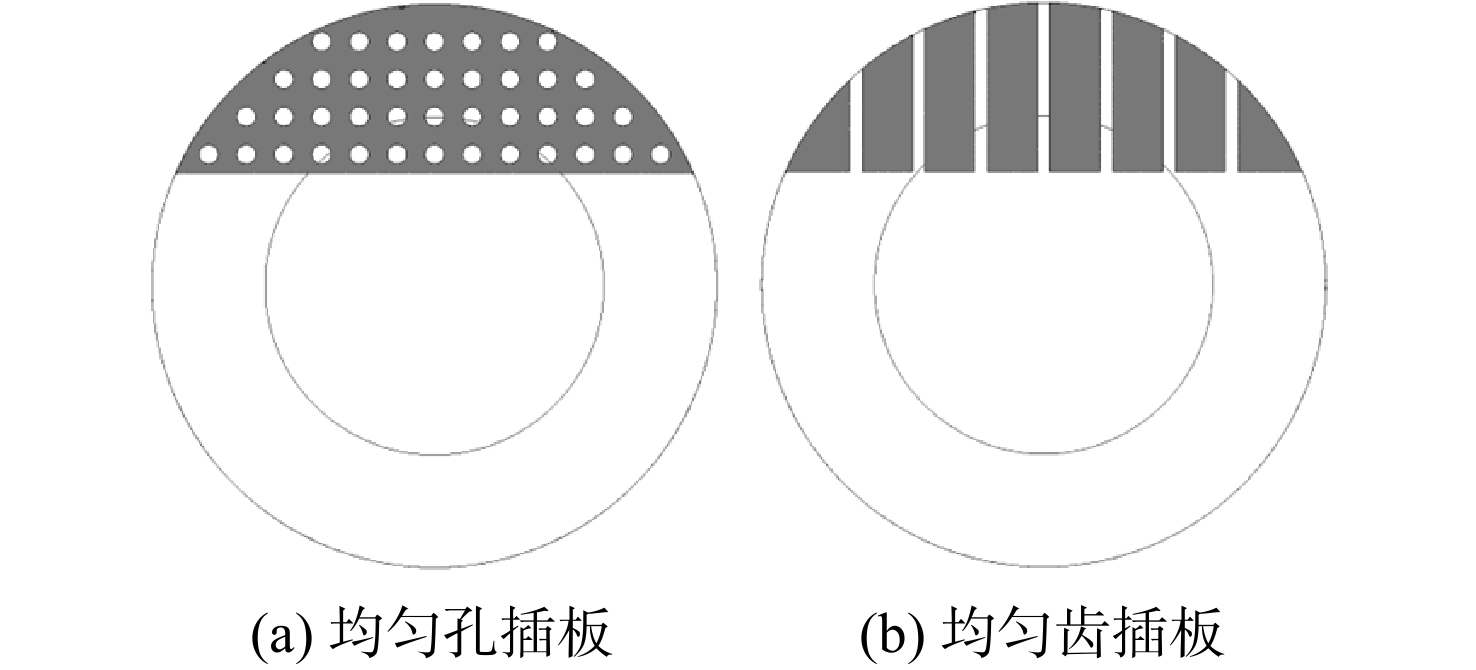
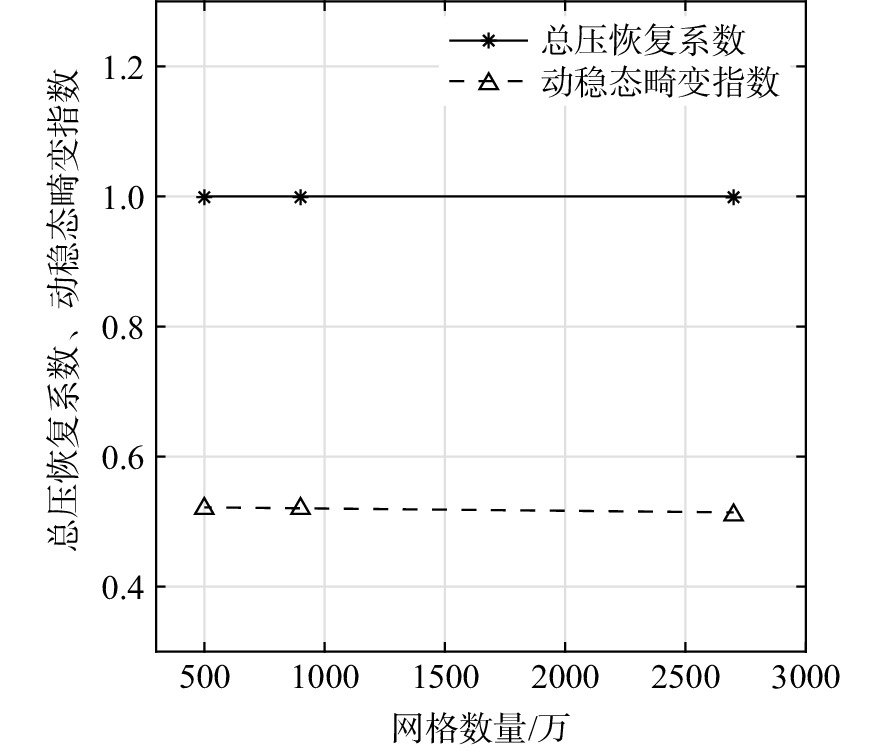
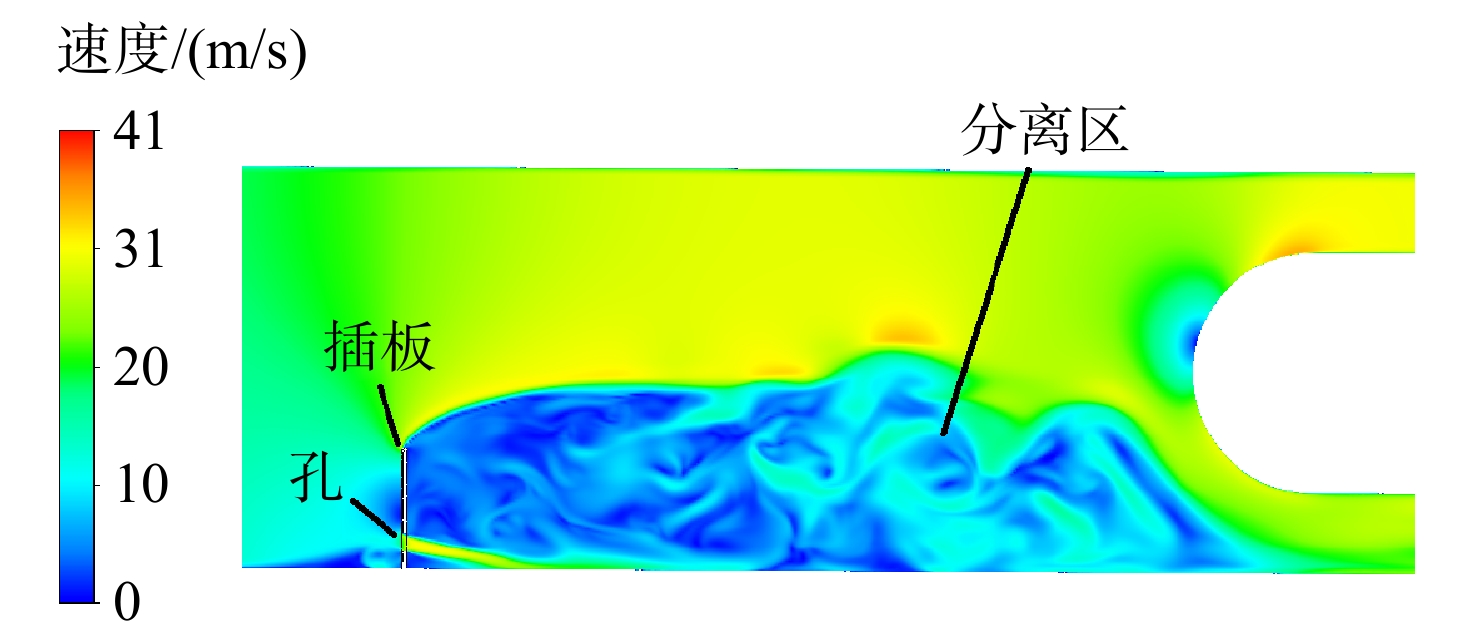
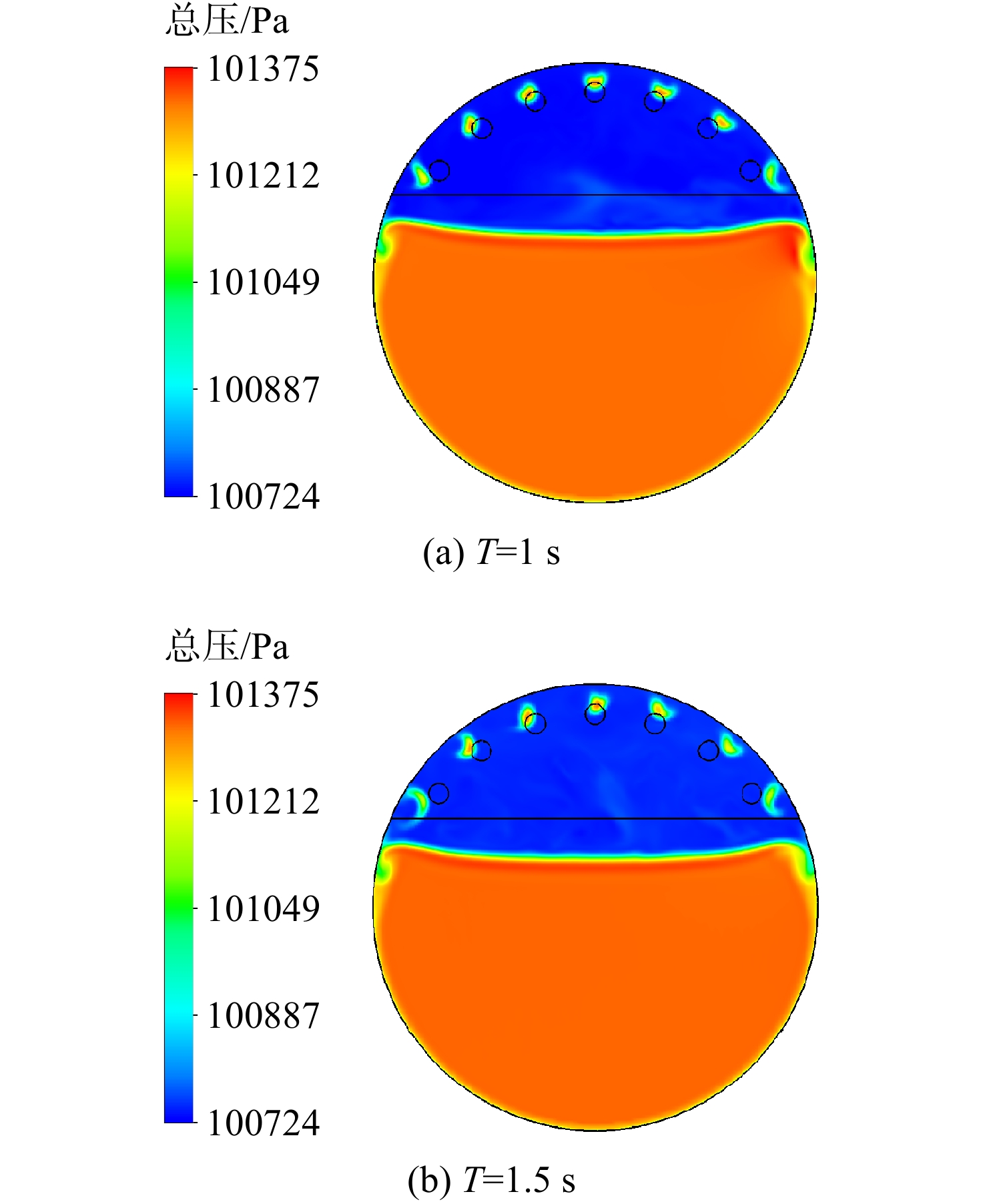
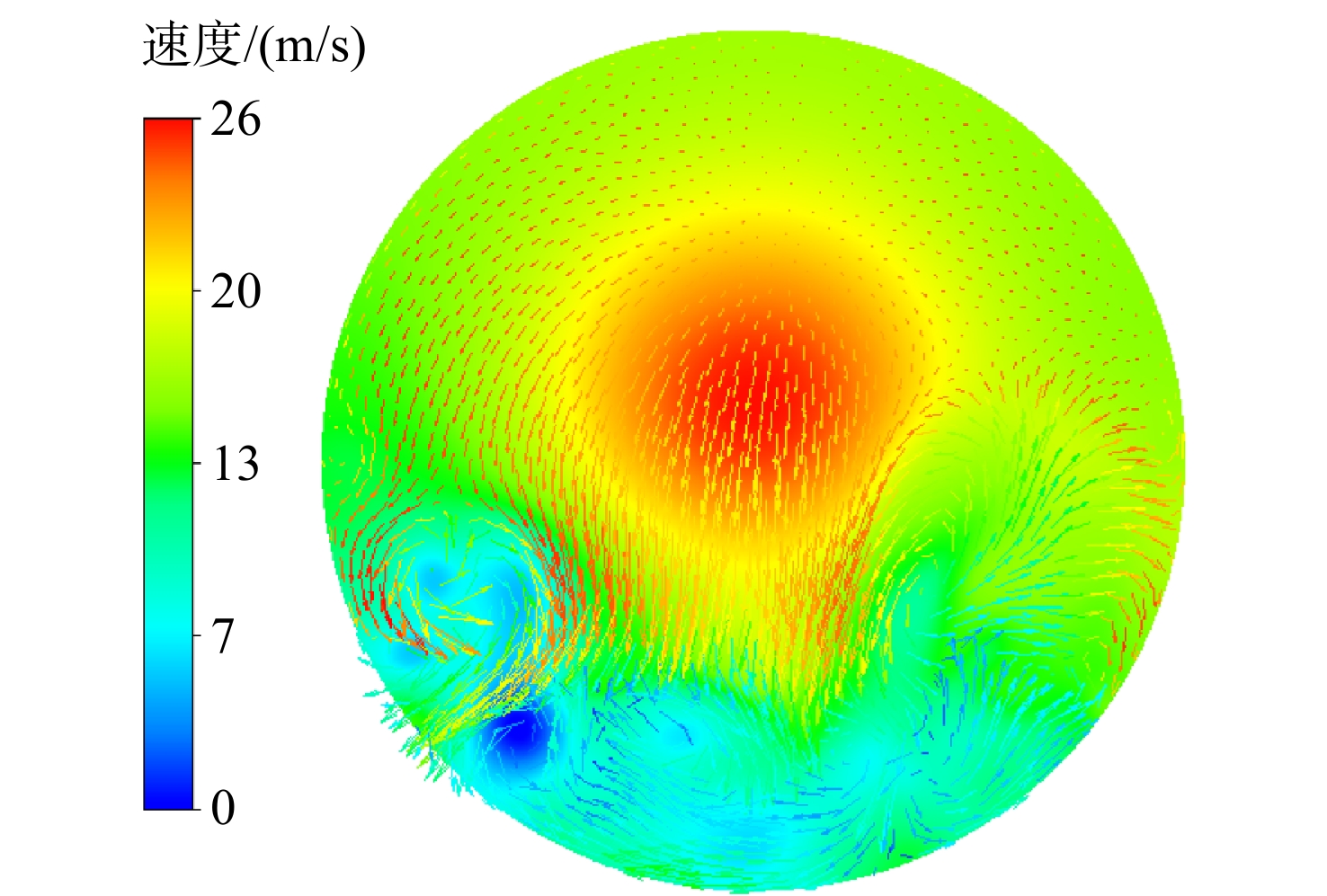
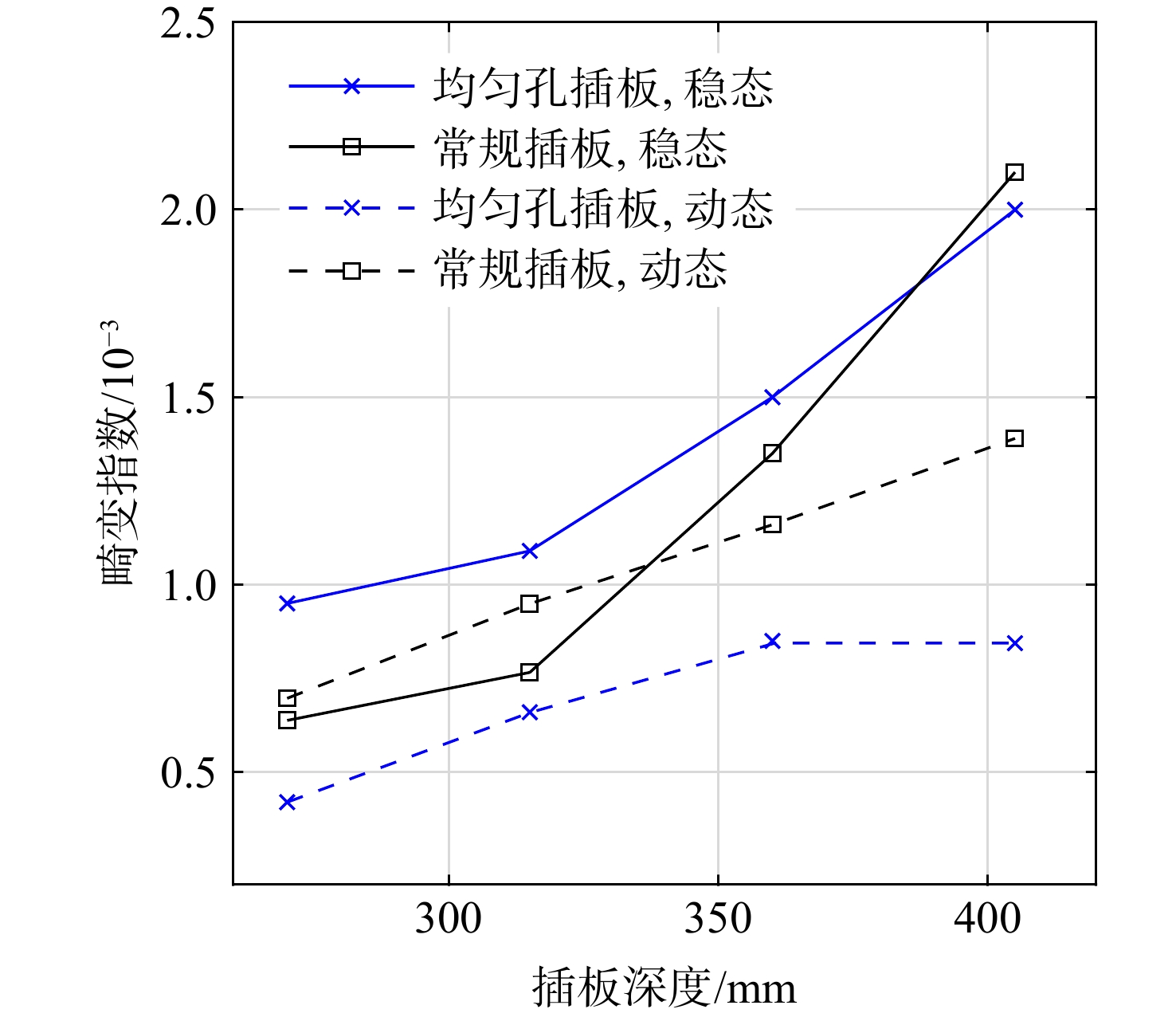
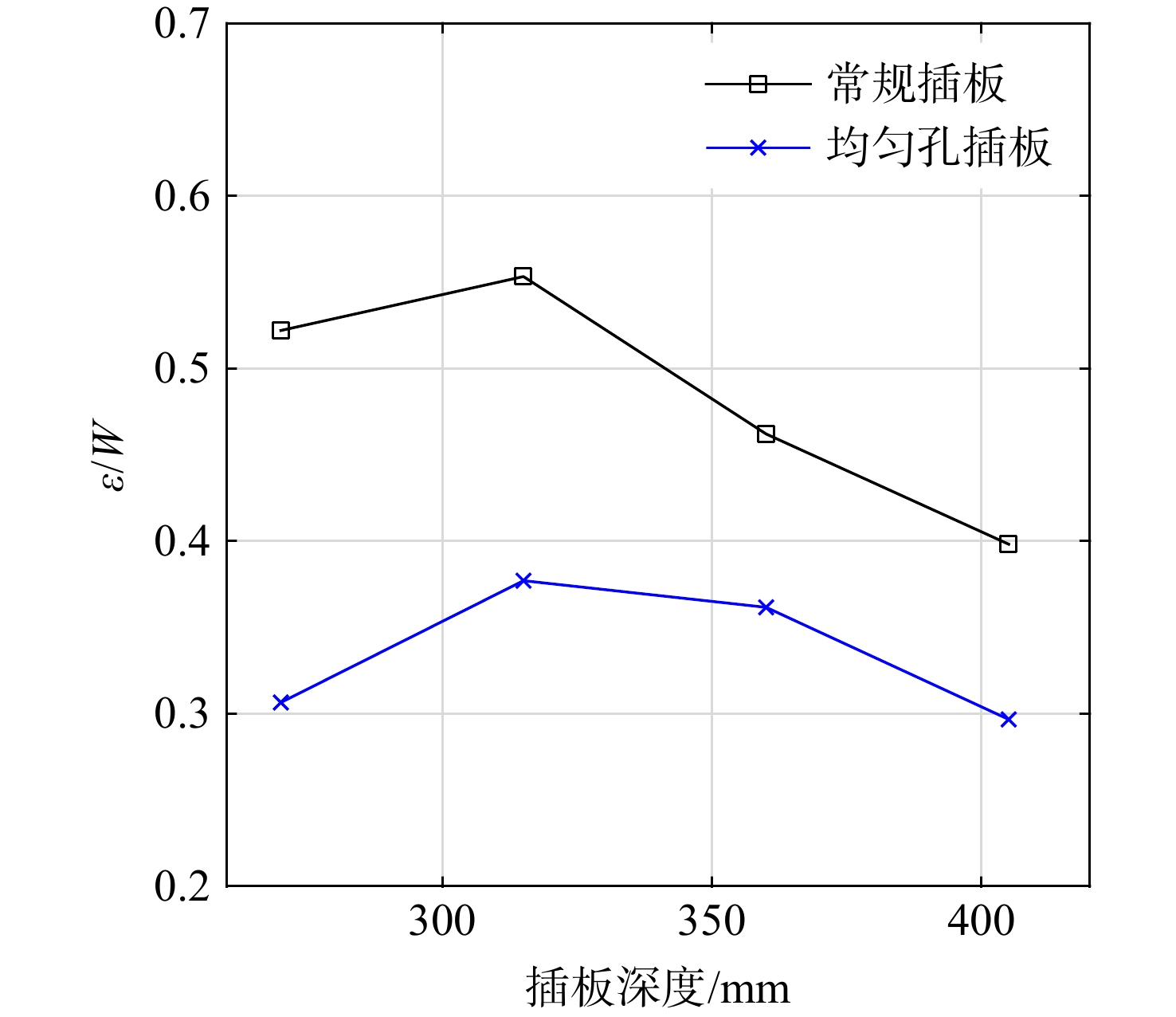
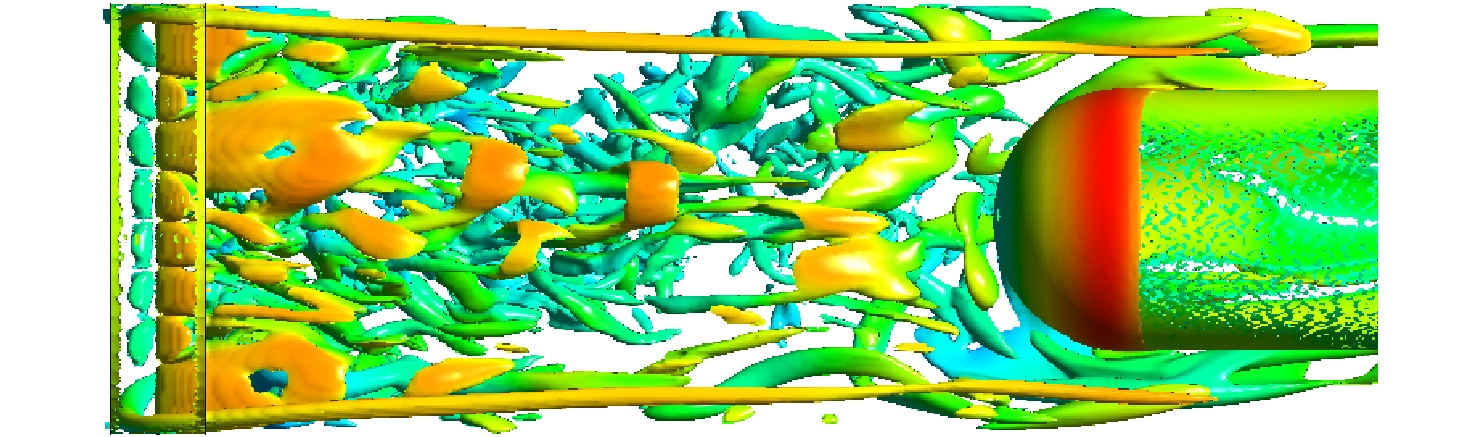
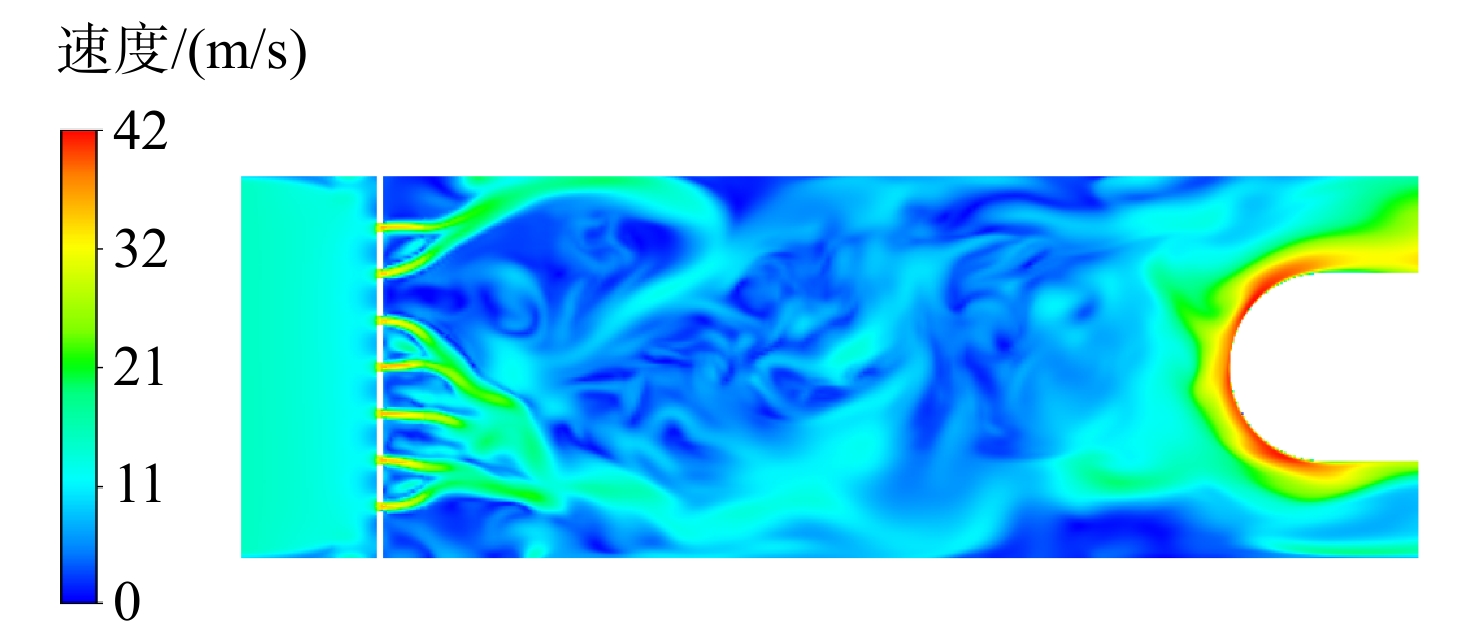
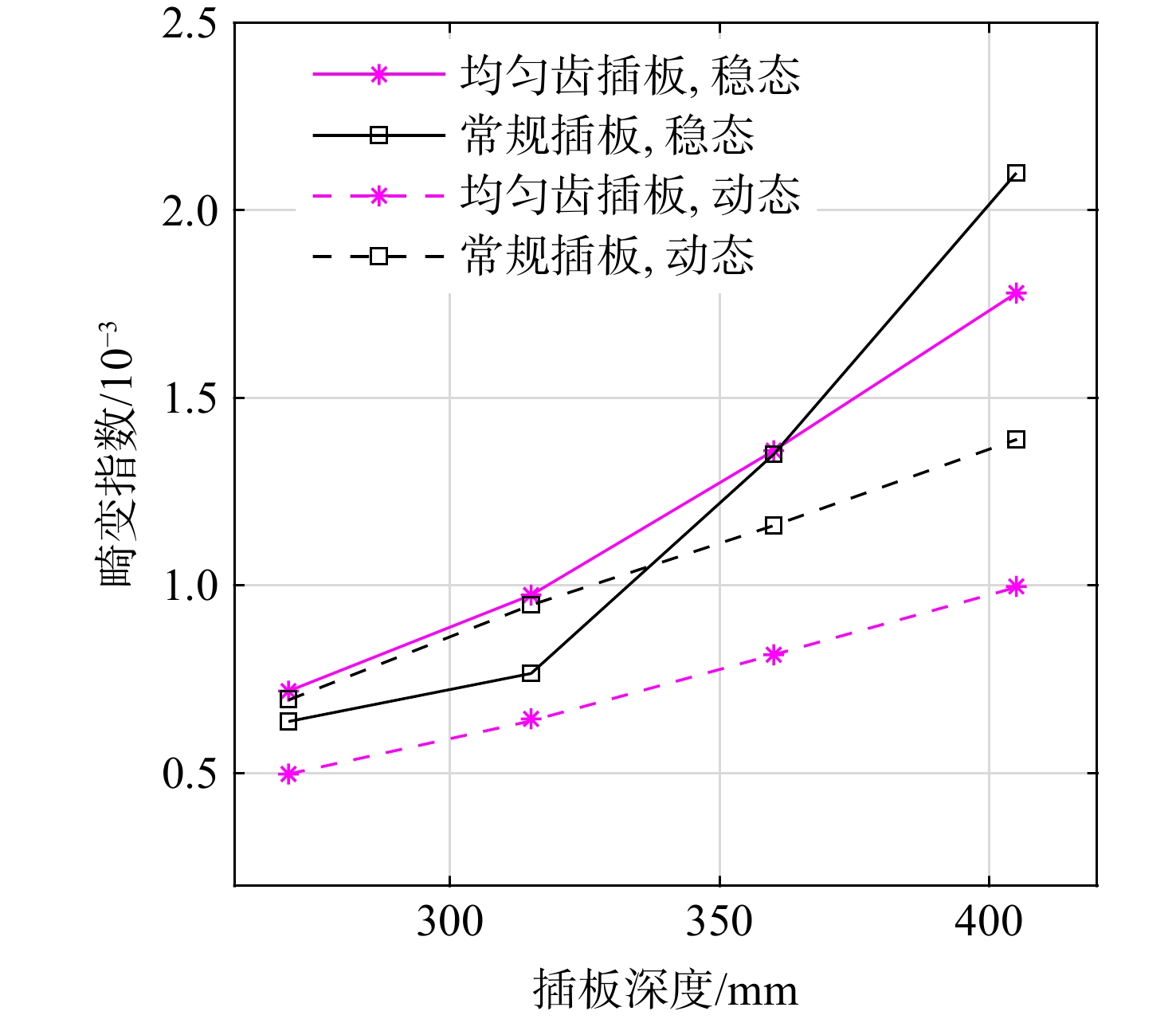
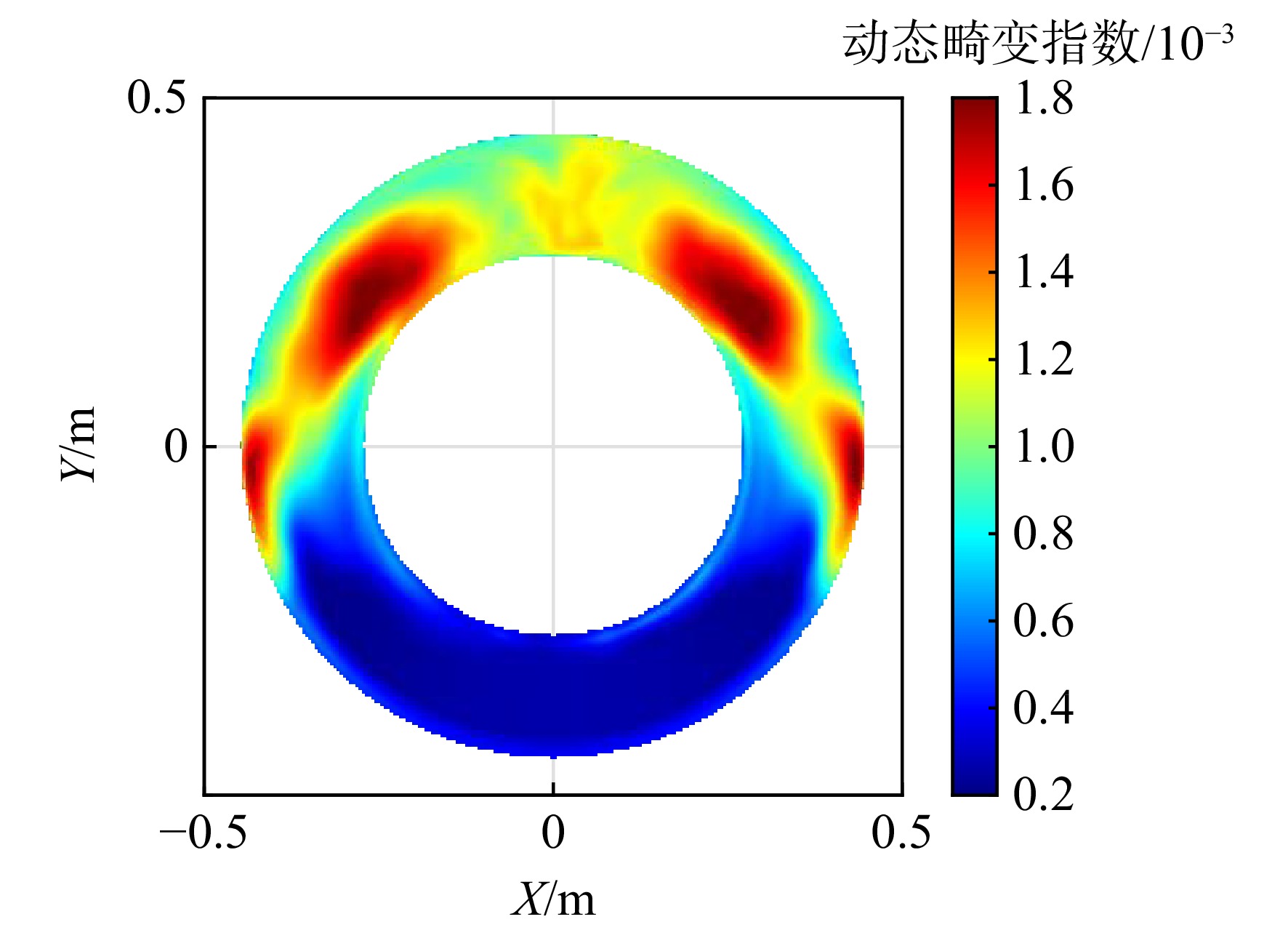
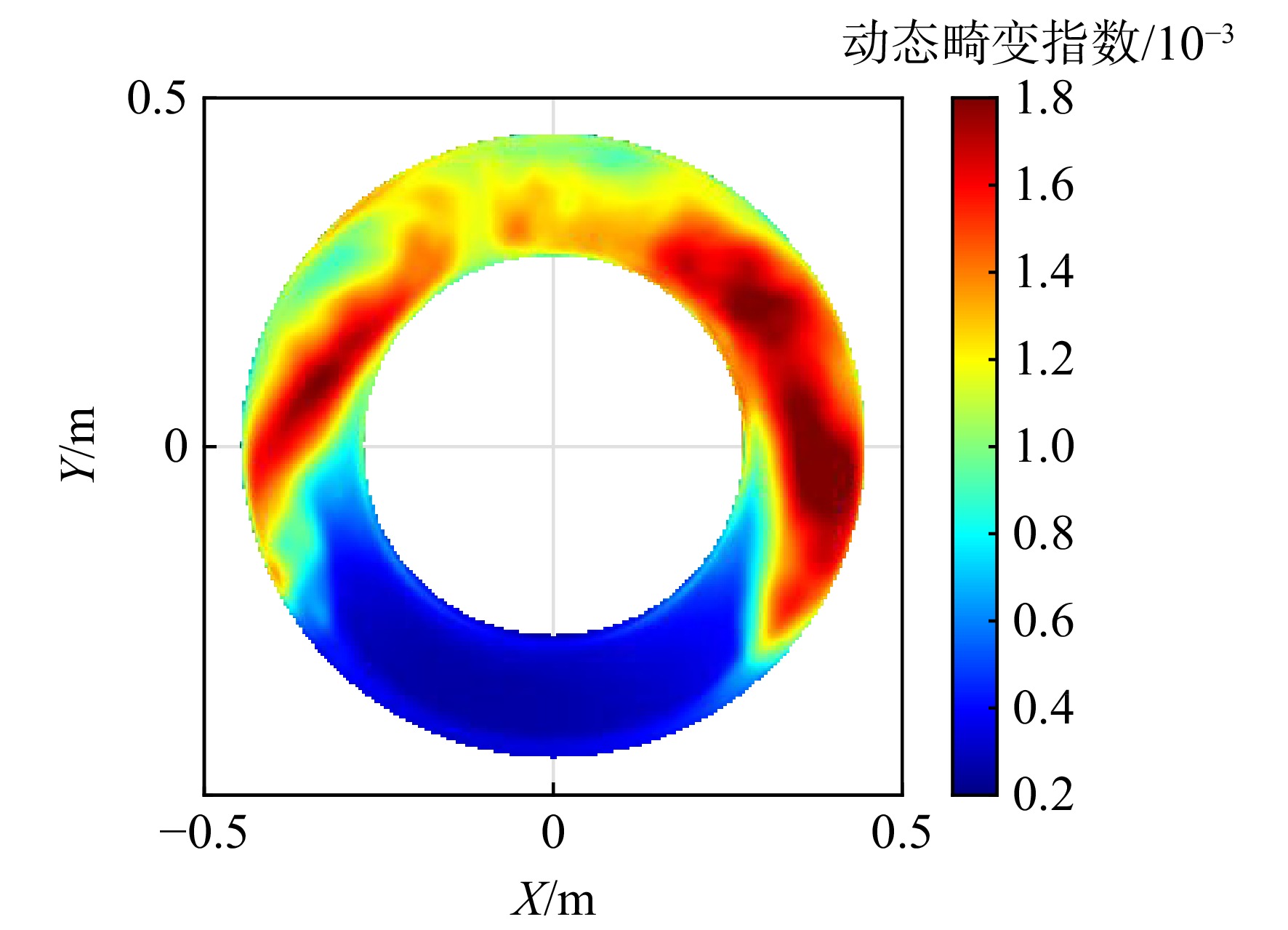
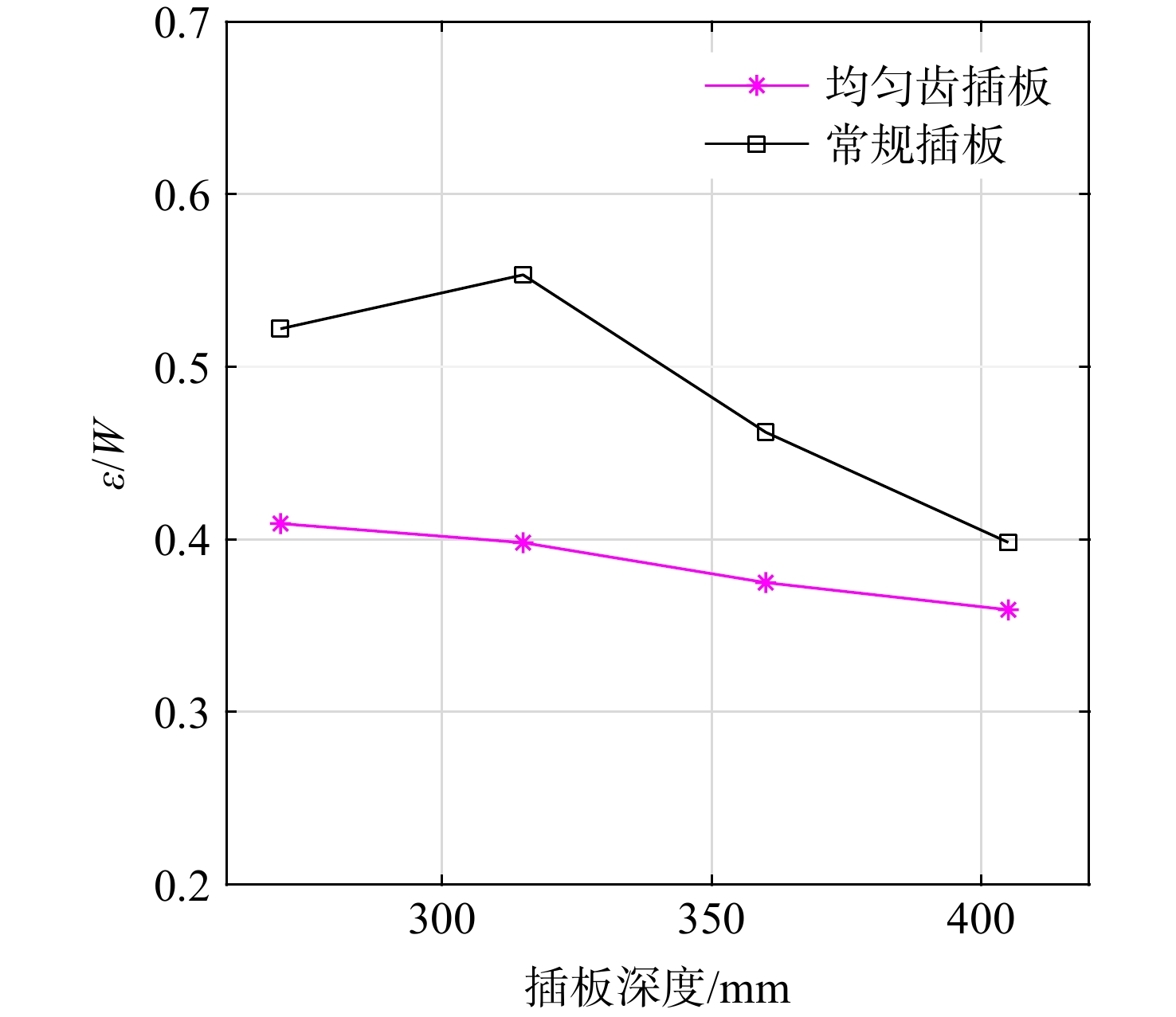
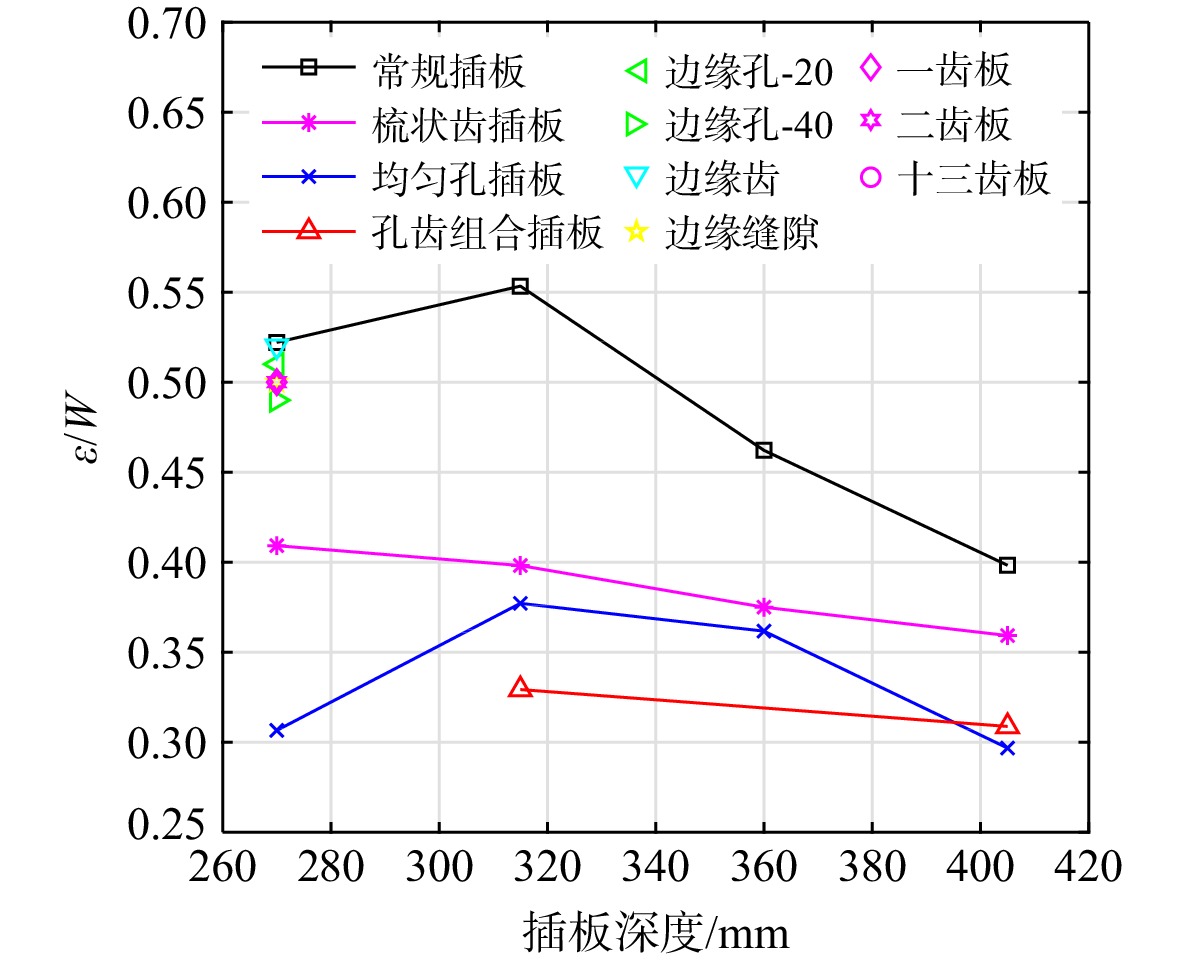
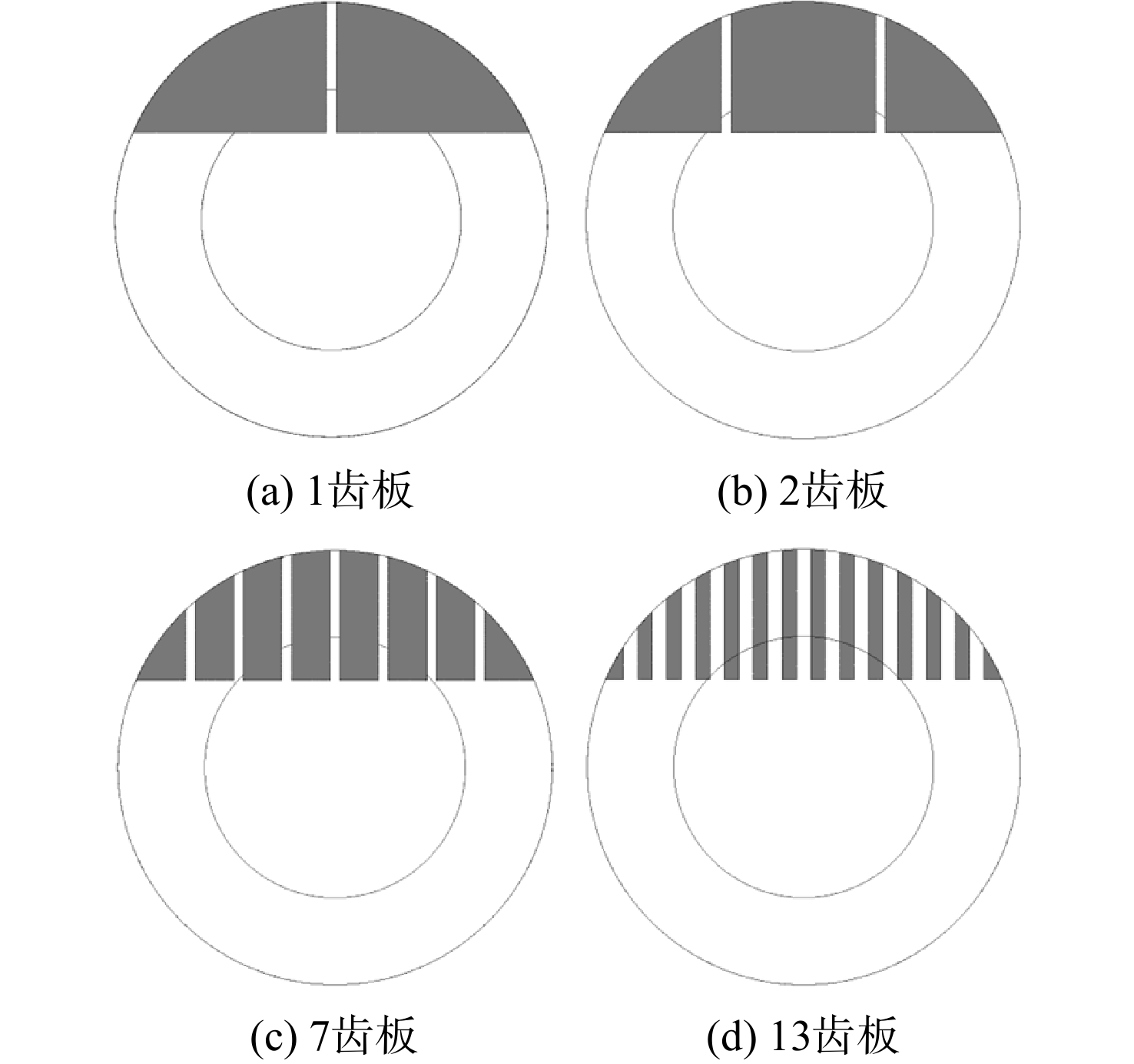
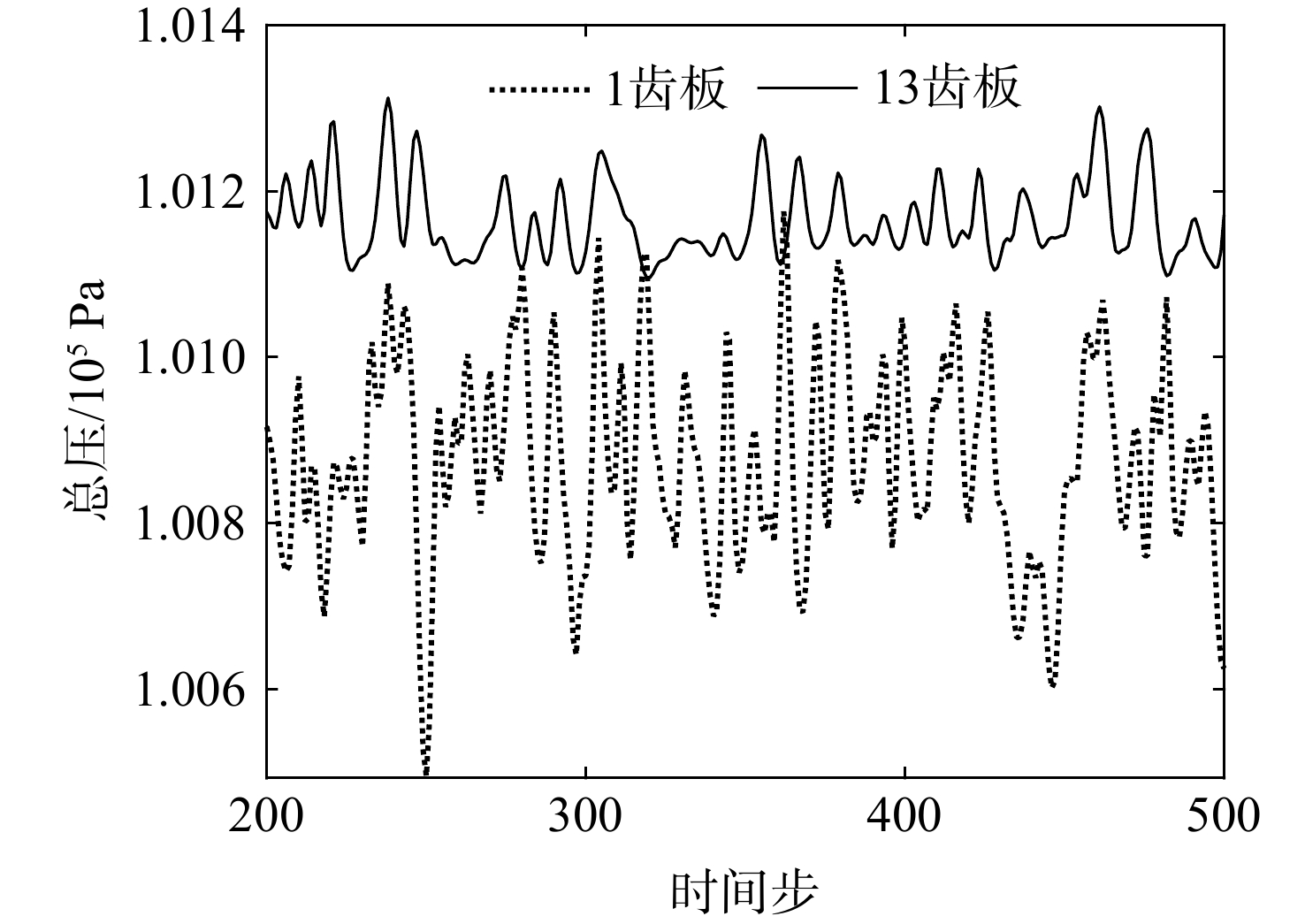
In view of the problems of conventional inserting plate, including: producing the total pressure distortion of steady and dynamic components ratio was relatively fixed, not adjustable, cannot really reflect the different inlet conditions and complex total pressure distortion ratio of the status quo. An improved inserting plate, using the opening holes and jags method was proposed, inserted through different parametric design, by changing the inserting plate on the engine inlet. The total pressure distortion with different dynamic and steady distortion ratio was generated by using the delayed-eddy-simulation method. Results showed that the fringe holes and the fringe jags can change the vortex behind the plate but cannot change the ratio of dynamic to steady distortion. The uniform holes and jags changed the vortex topology and the ratio, and as the size of hole and jags increased, the energy from the jet and the ratio of dynamic to steady distortion decreased. Therefore, the distortion ratio of the variable number of jags can vary from 0.14 to 0.50.

Aerothermodynamics and Aeroengine Design
Design and experimental research of Mach number range 0—4 2D mixed parallel-type curved compression inlet
ZHU Wei, WANG Xiao, HUA Zhengxu, ZHANG Kunyuan, LIANG Jianhan, WANG Junwei
2023, 38(9): 2271-2278. doi: 10.13224/j.cnki.jasp.20220449
Abstract:

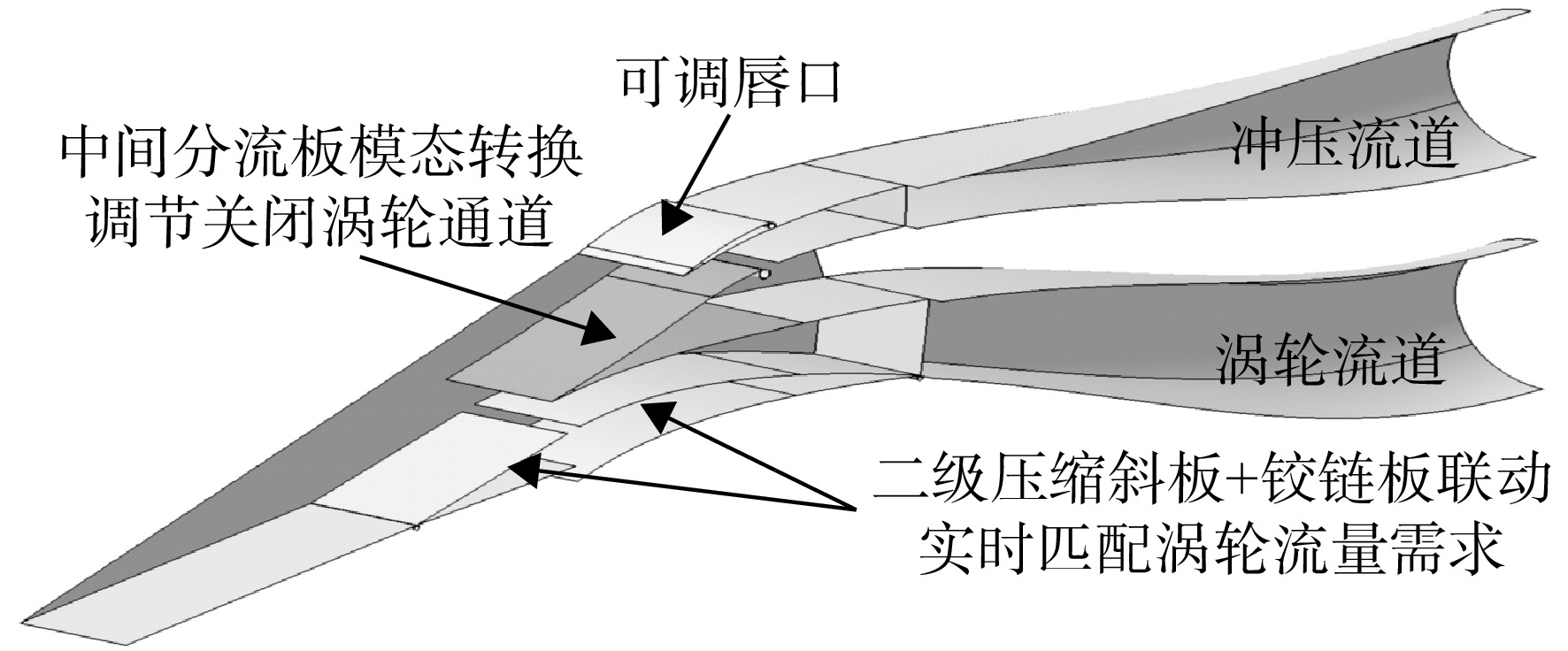
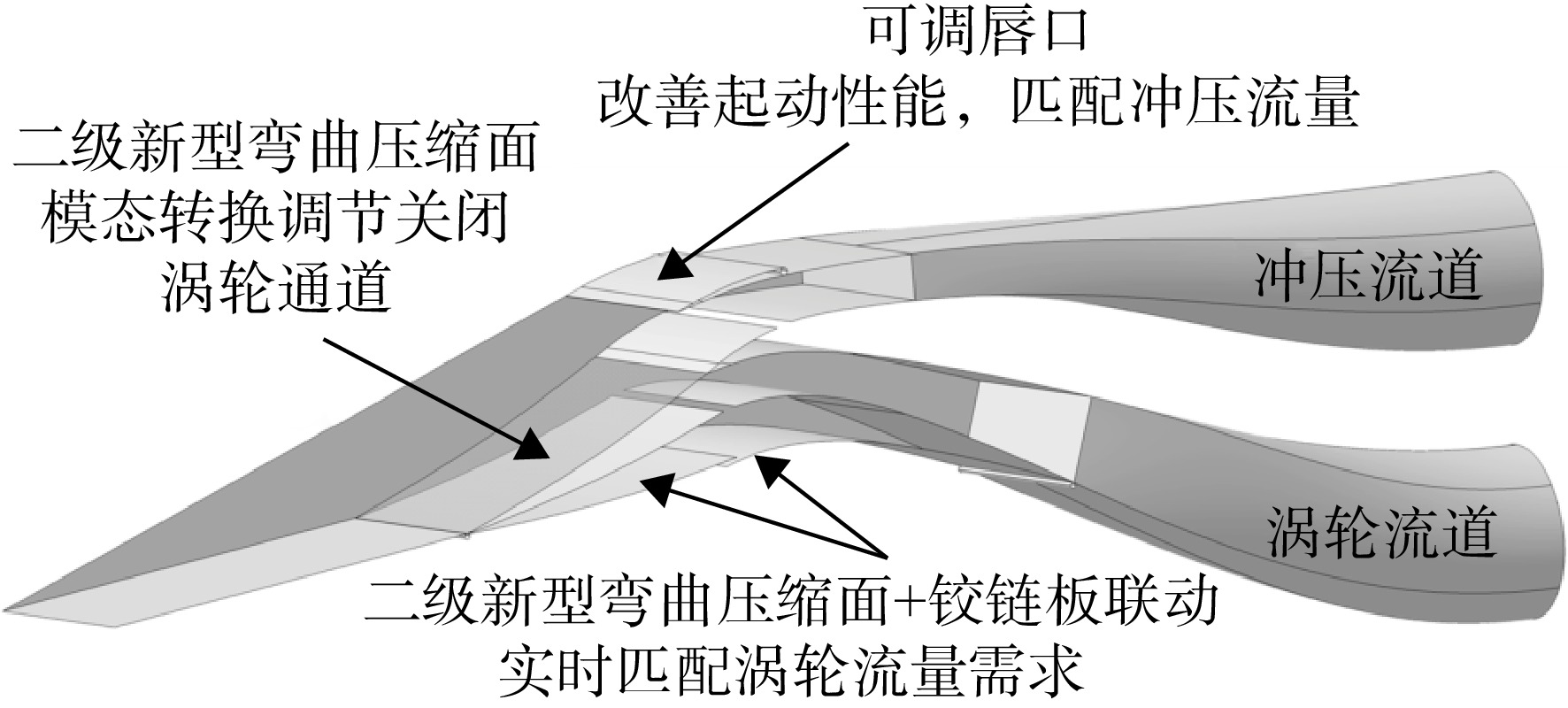
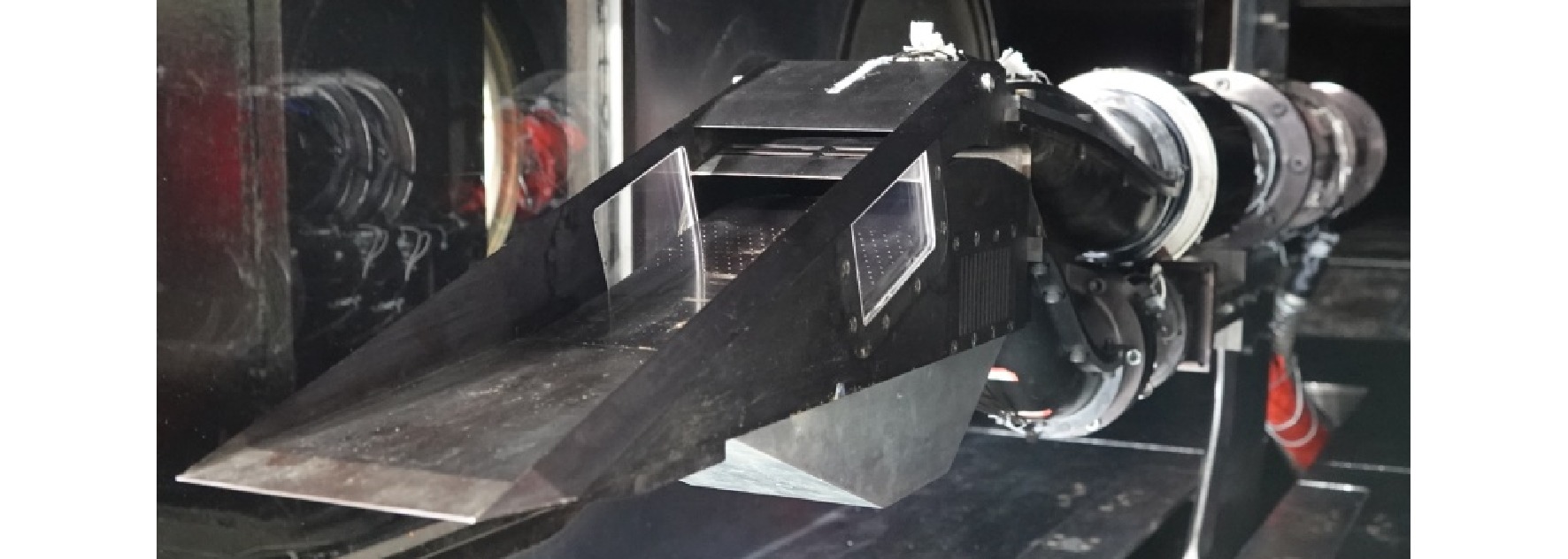
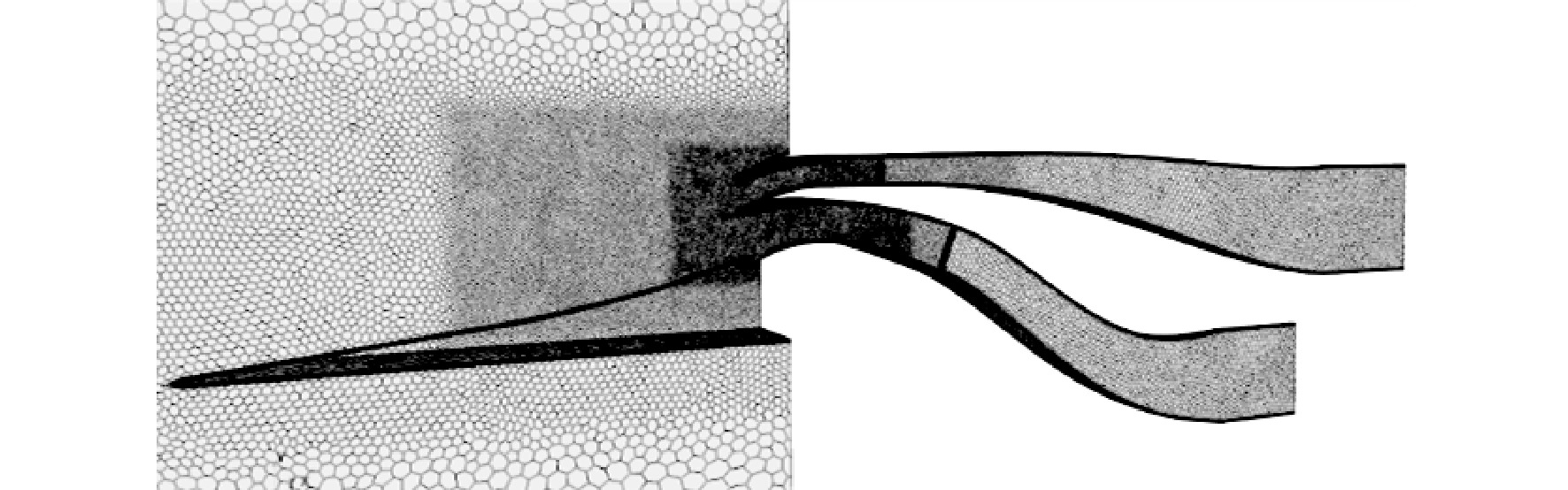
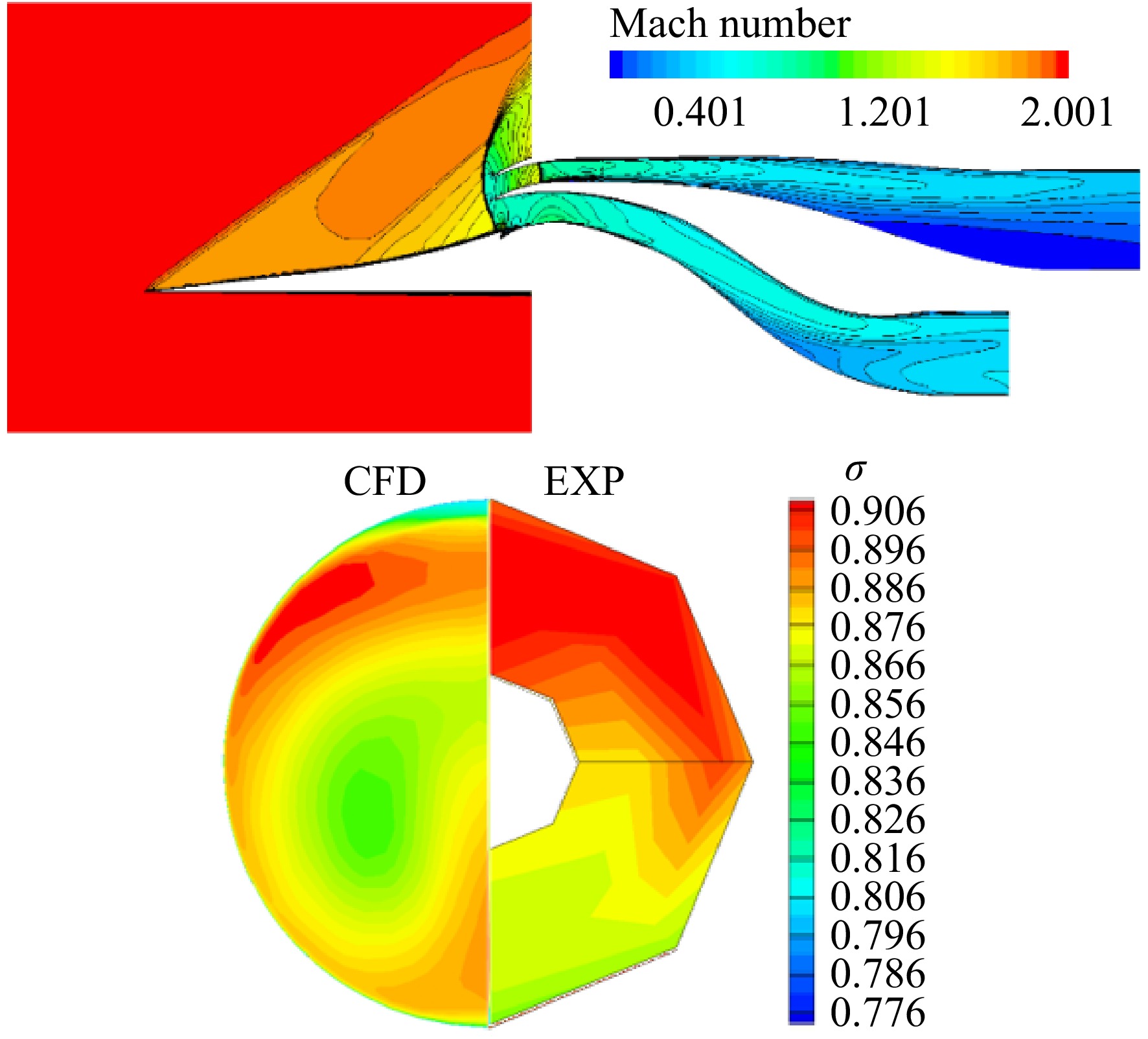
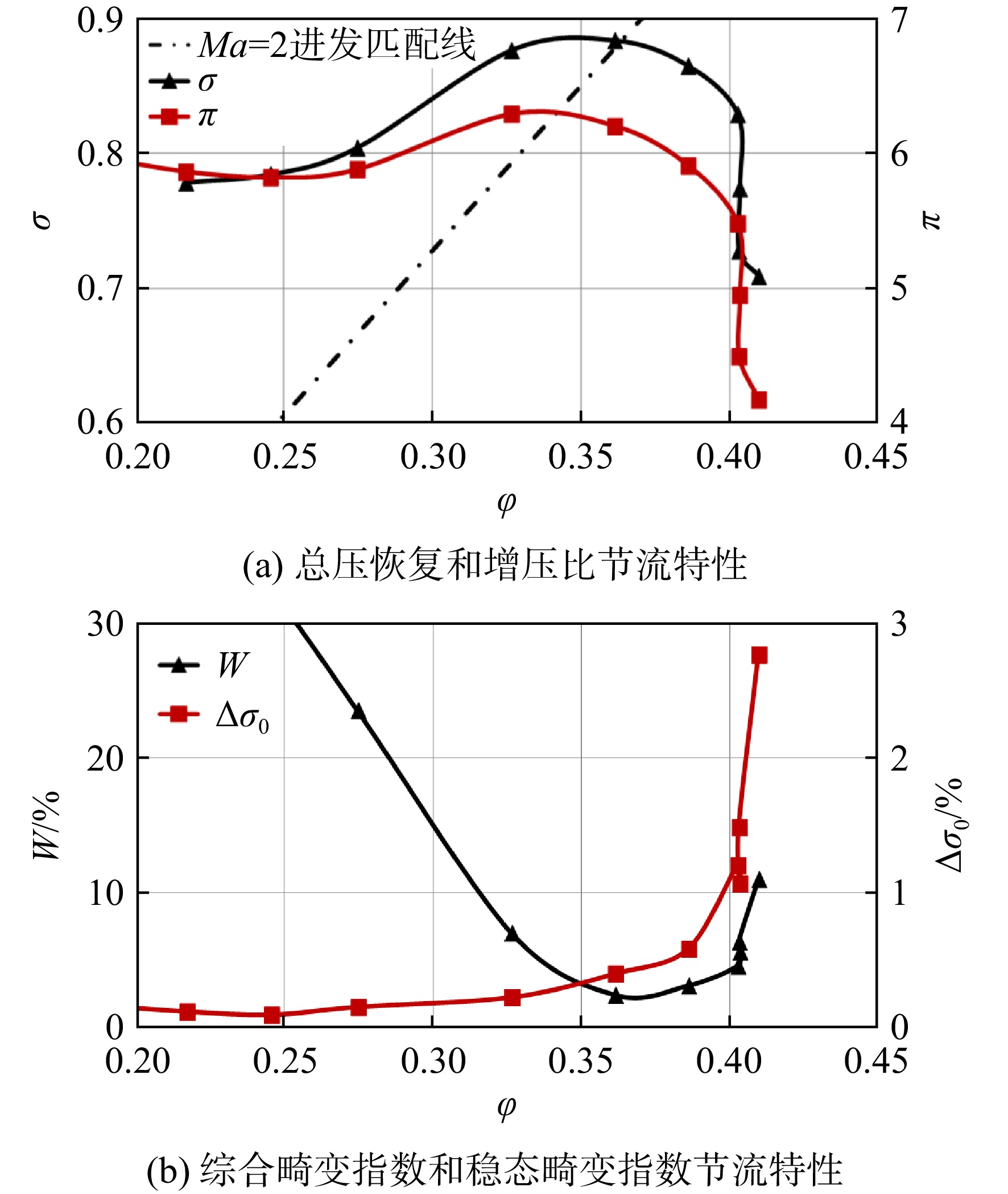
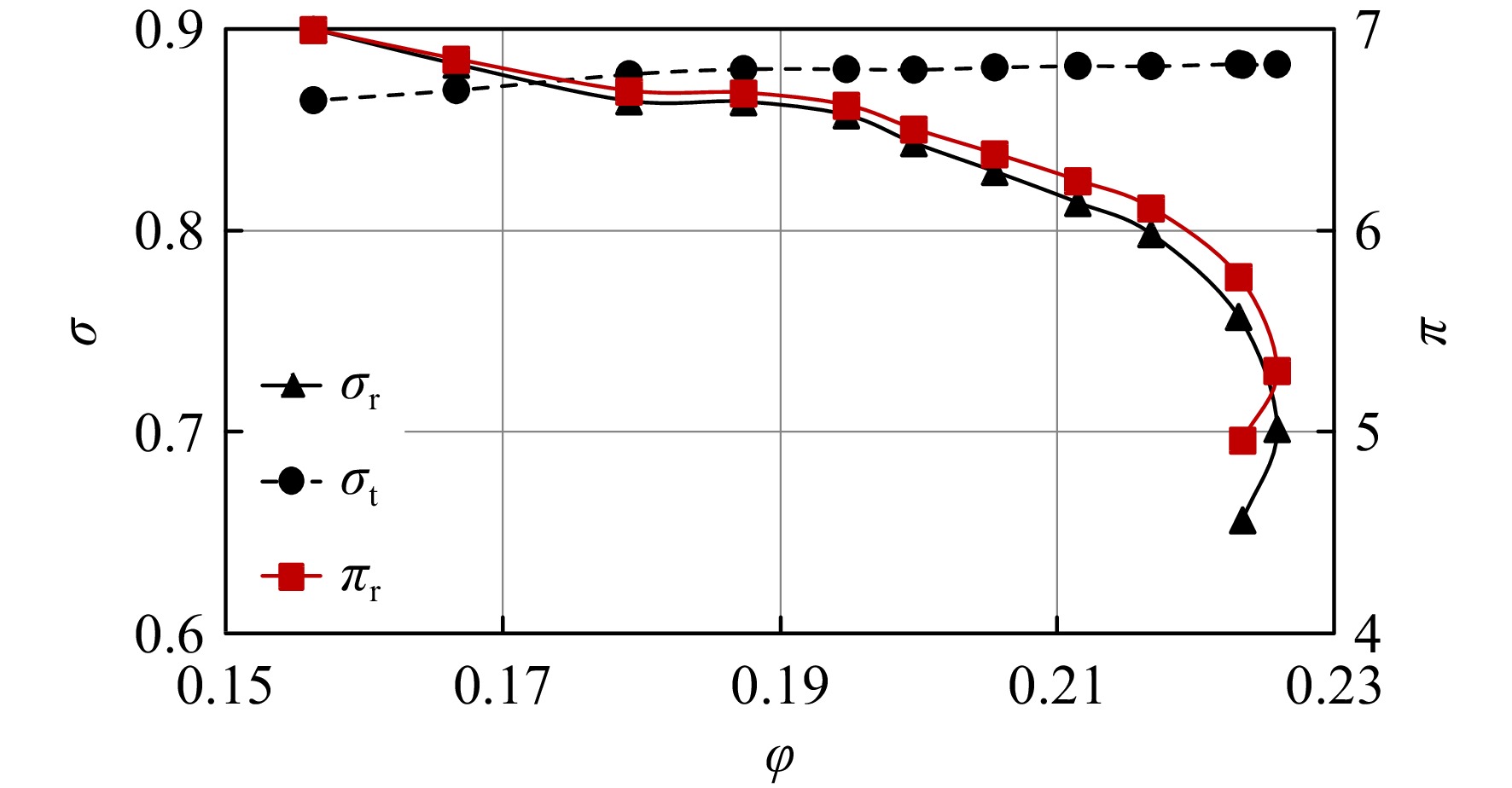
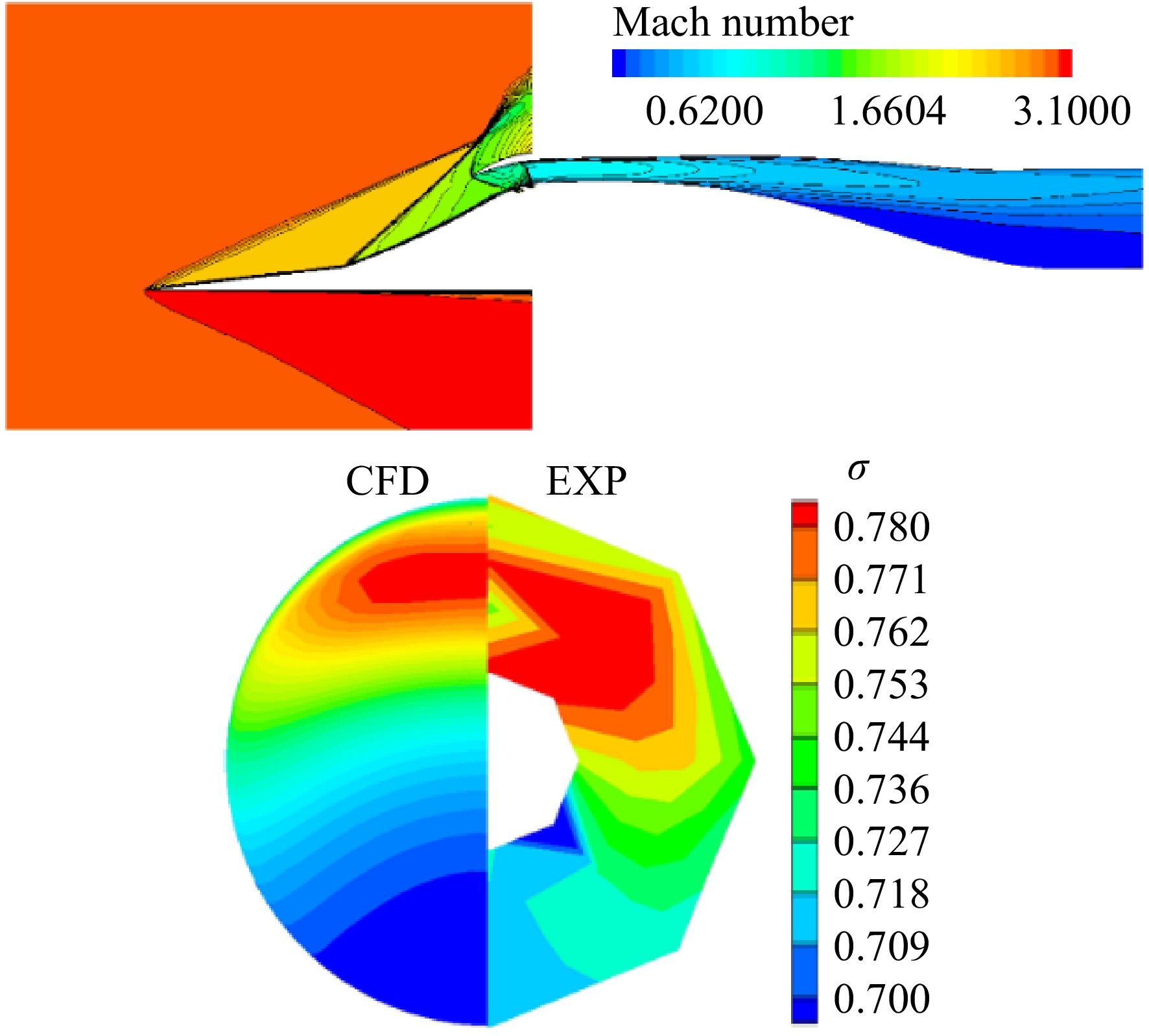
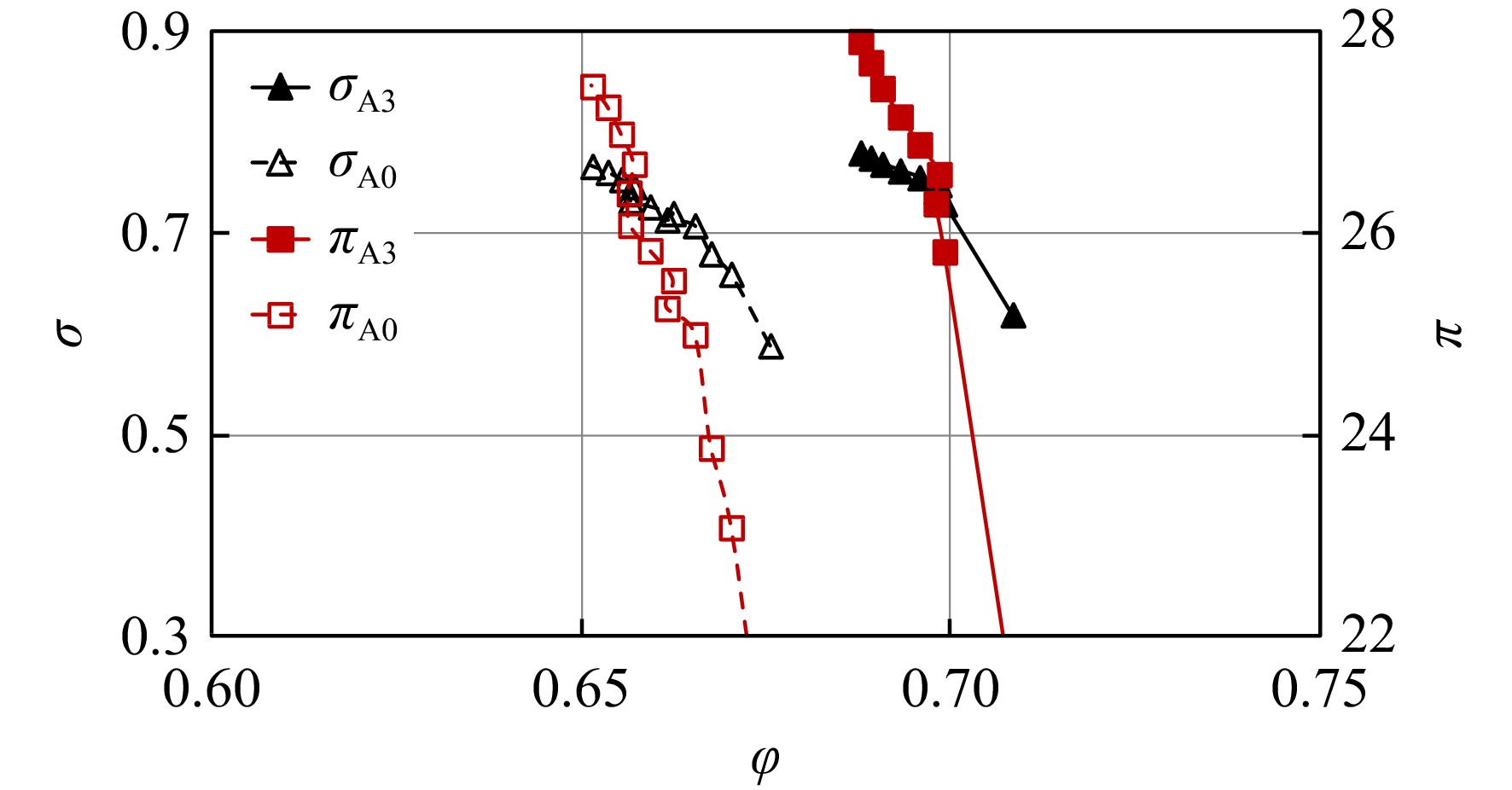
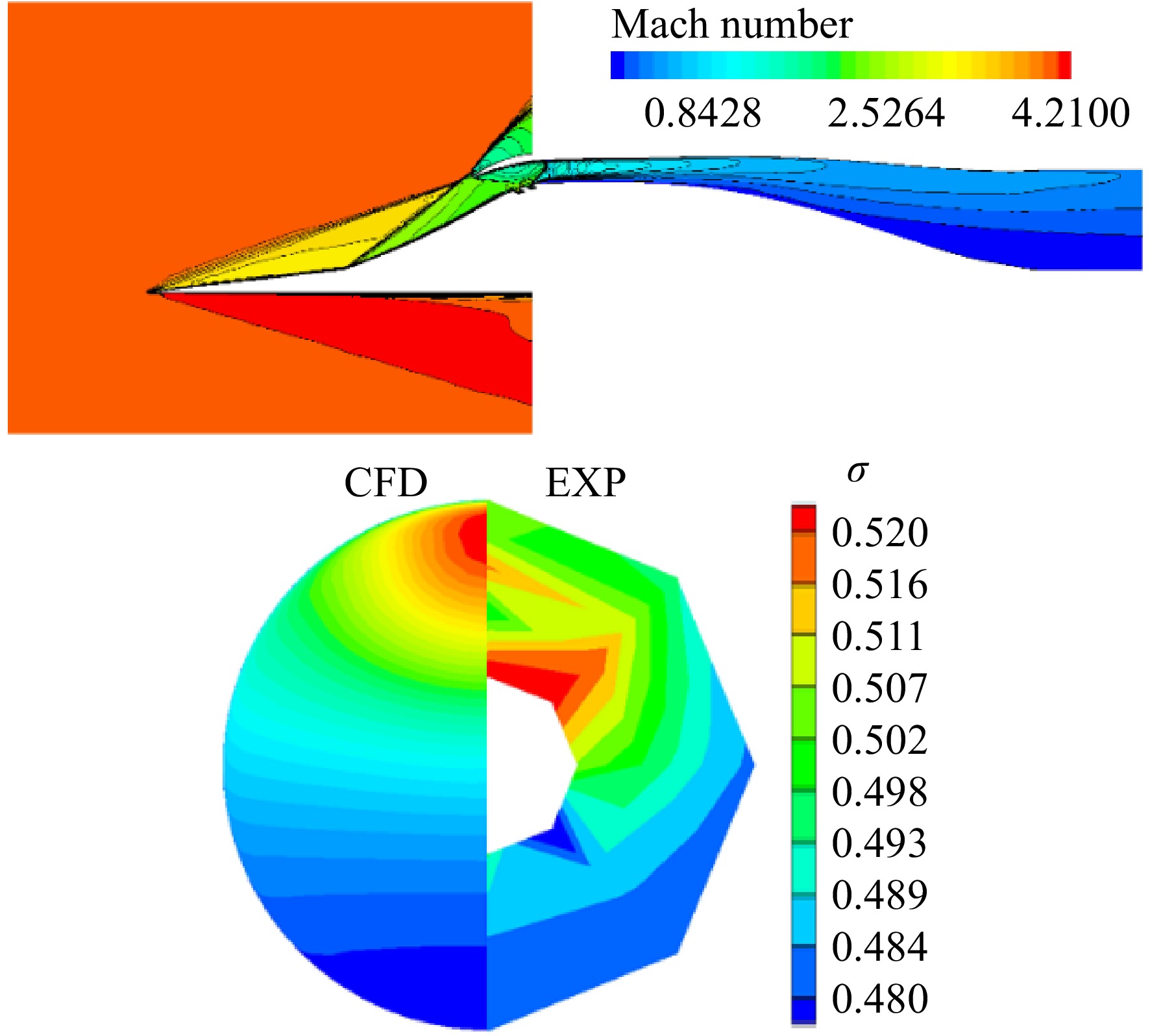
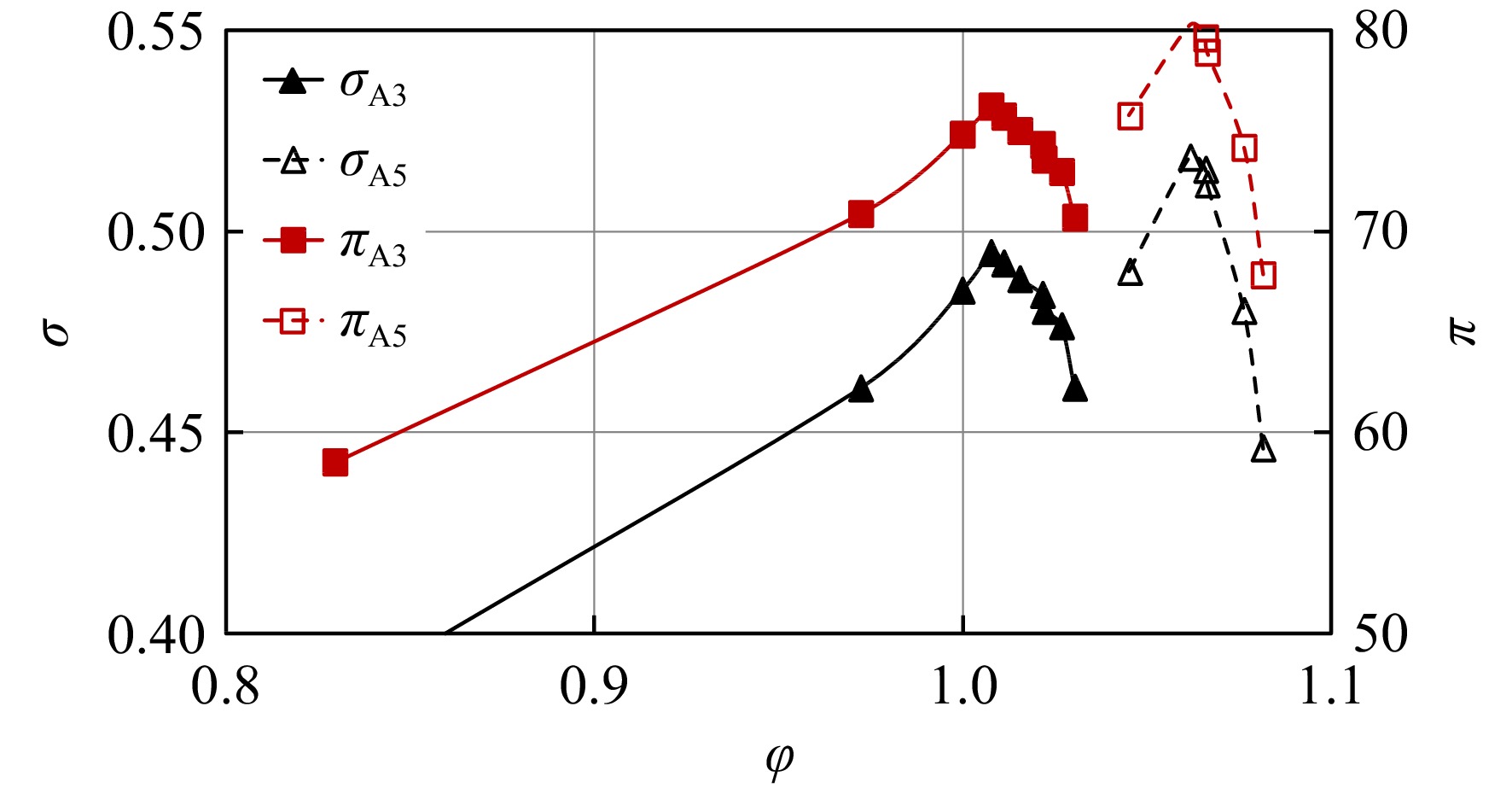
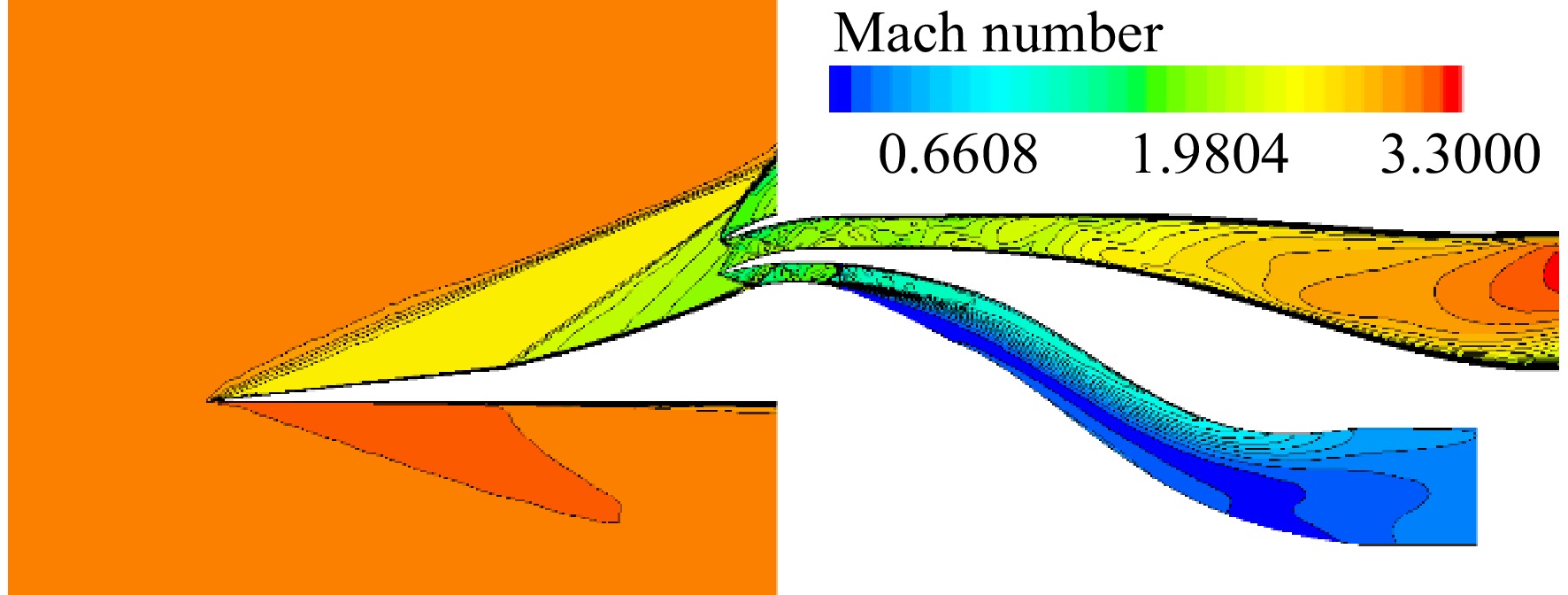
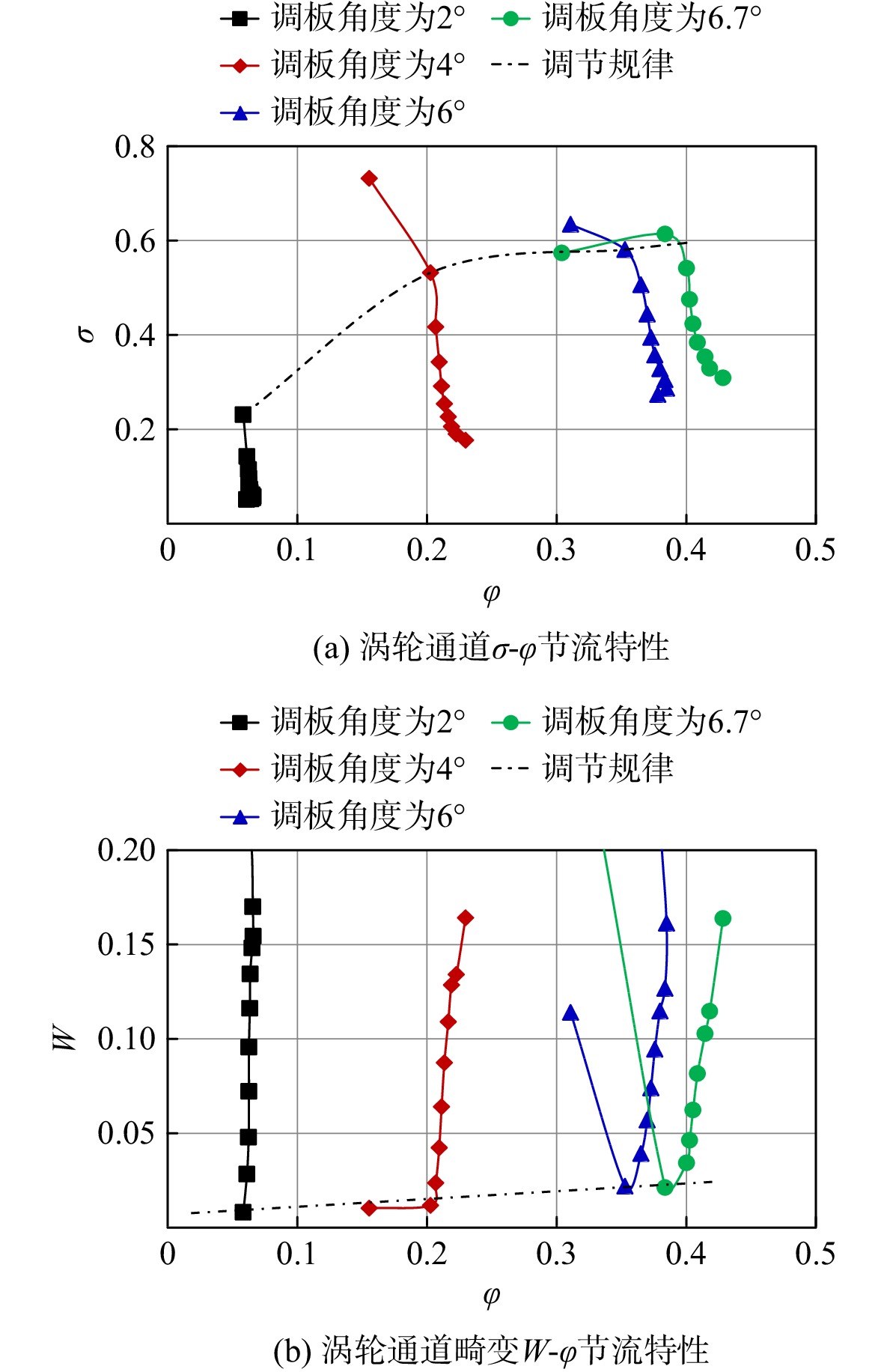
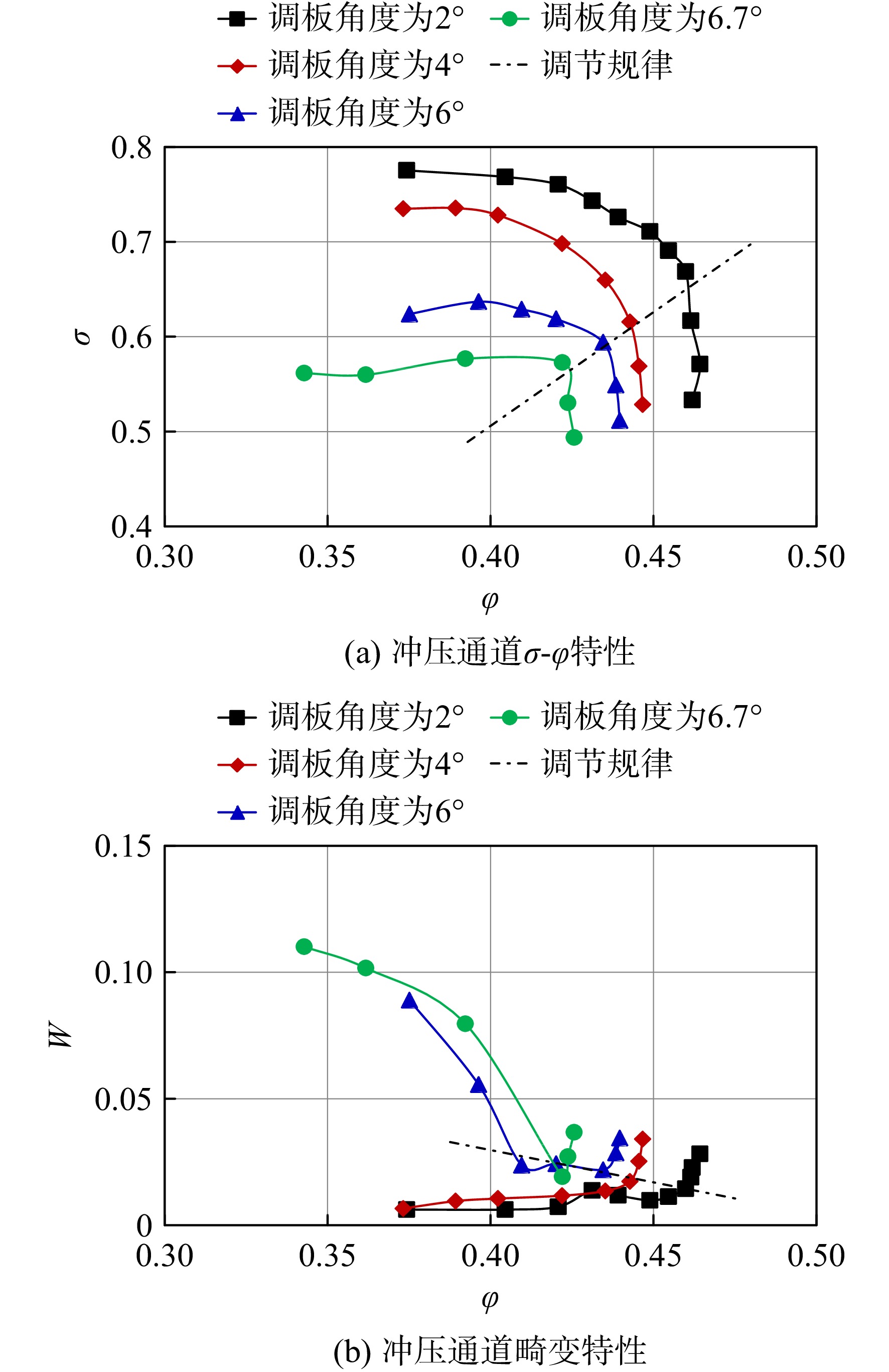
Based on the internal and external compression surface controllable curved compression inlet reverse design method, a mixed parallel-type curved compression inlet was designed, numerical simulation and experiment research were conducted focusing on inlet model transition process and ramjet work alone, and wide speed performance of inlet was obtained. The result showed that, the new type parallel curved compression inlet had high comprehensive aerodynamic characteristics, at ramjet work alone state Mach number 4、Angle of attack 3° total pressure recovery coefficient was above 0.5, at Mach number 3、Angle of attack 3° total pressure recovery coefficient was above 0.75, at turbine work state Mach number 2、Angle of attack 3° total pressure recovery coefficient was above 0.88, composite distortion factor was under 5%, meeting the matching requirements of wide speed domain.

Shock reflection characteristics in single expansion ramp nozzle under flow separation condition
LI Yaohua, LI Jianqiang, HE Chengjun, MIAO Lei, LIANG Jinmin, GAO Rongzhao
2023, 38(9): 2279-2287. doi: 10.13224/j.cnki.jasp.20210624
Abstract:

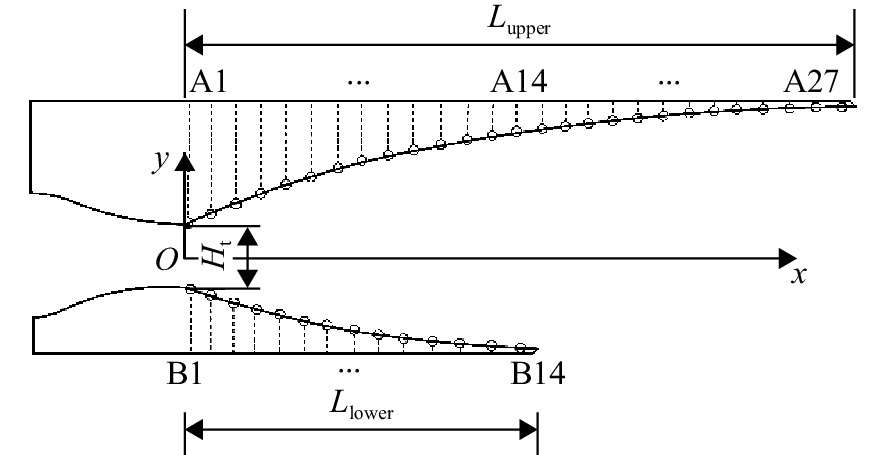
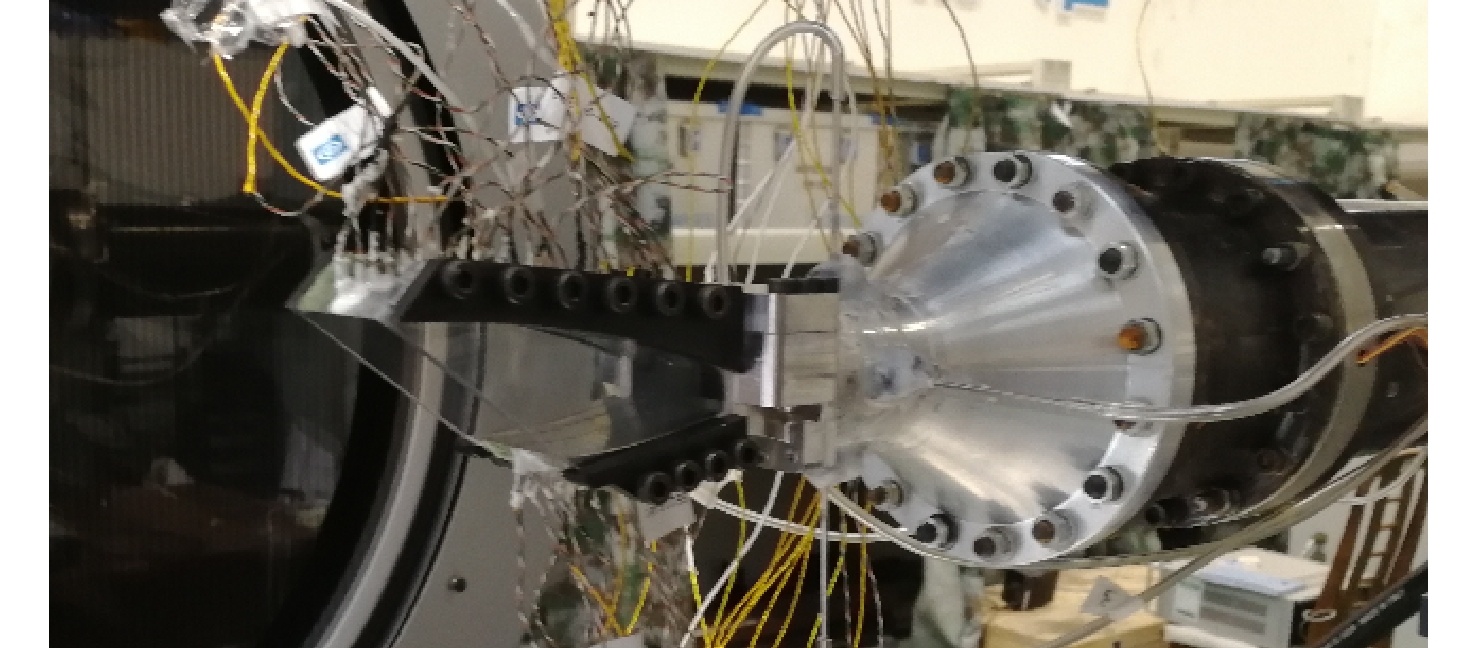
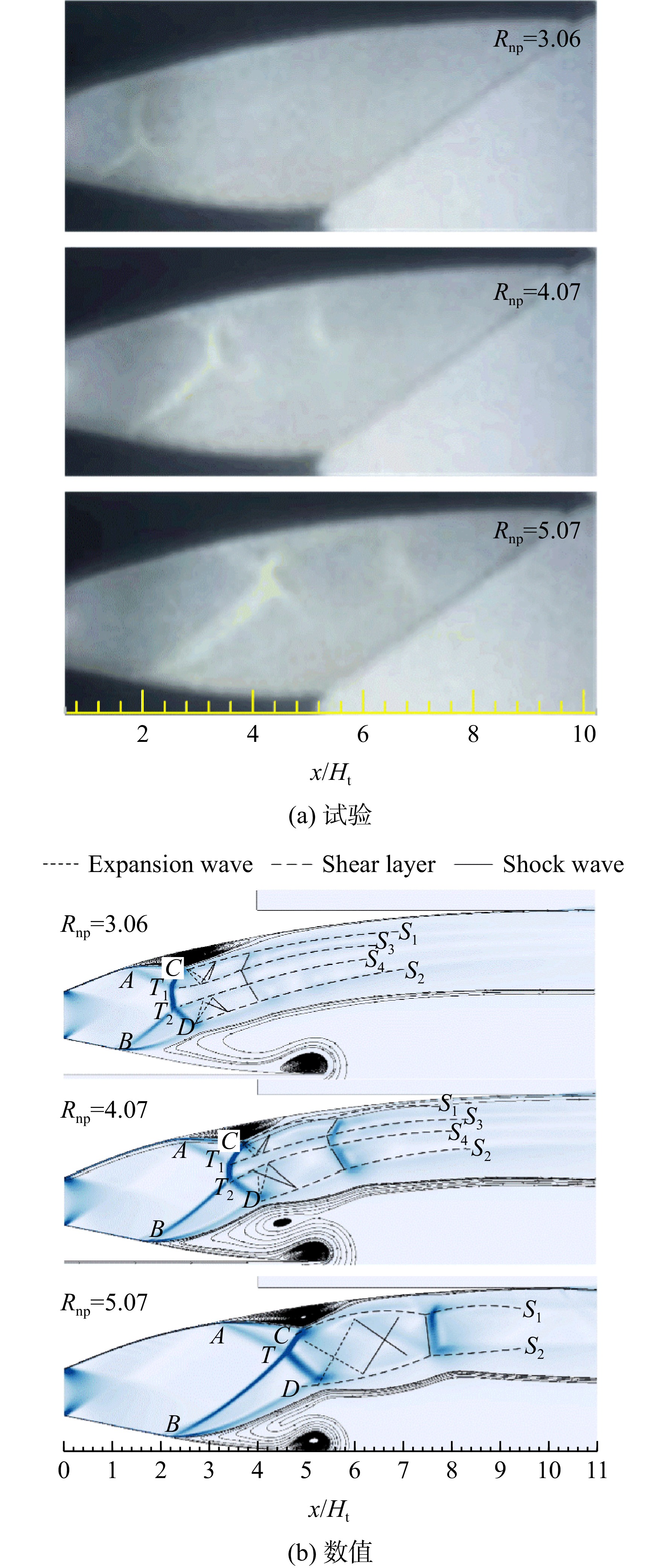
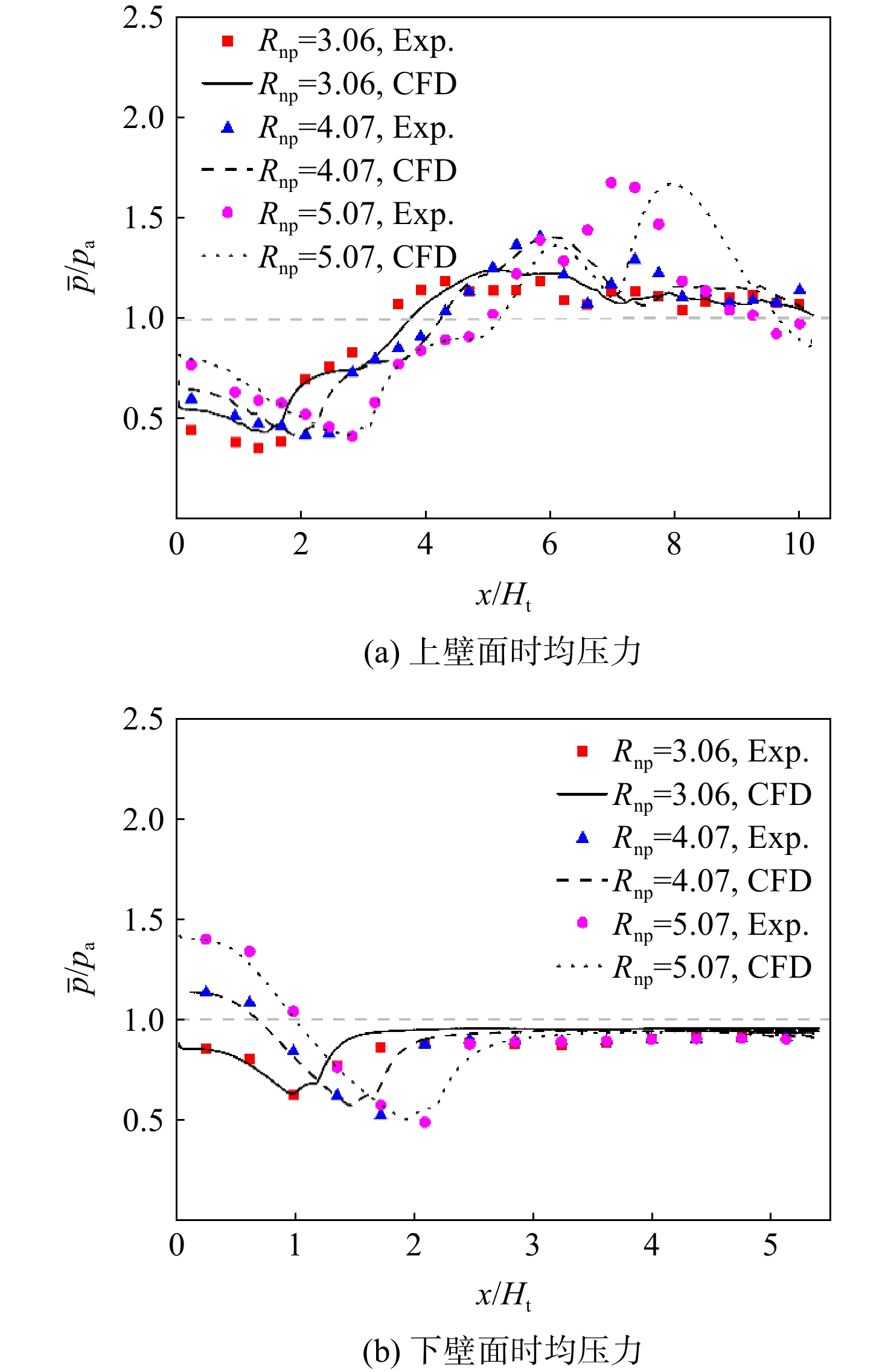
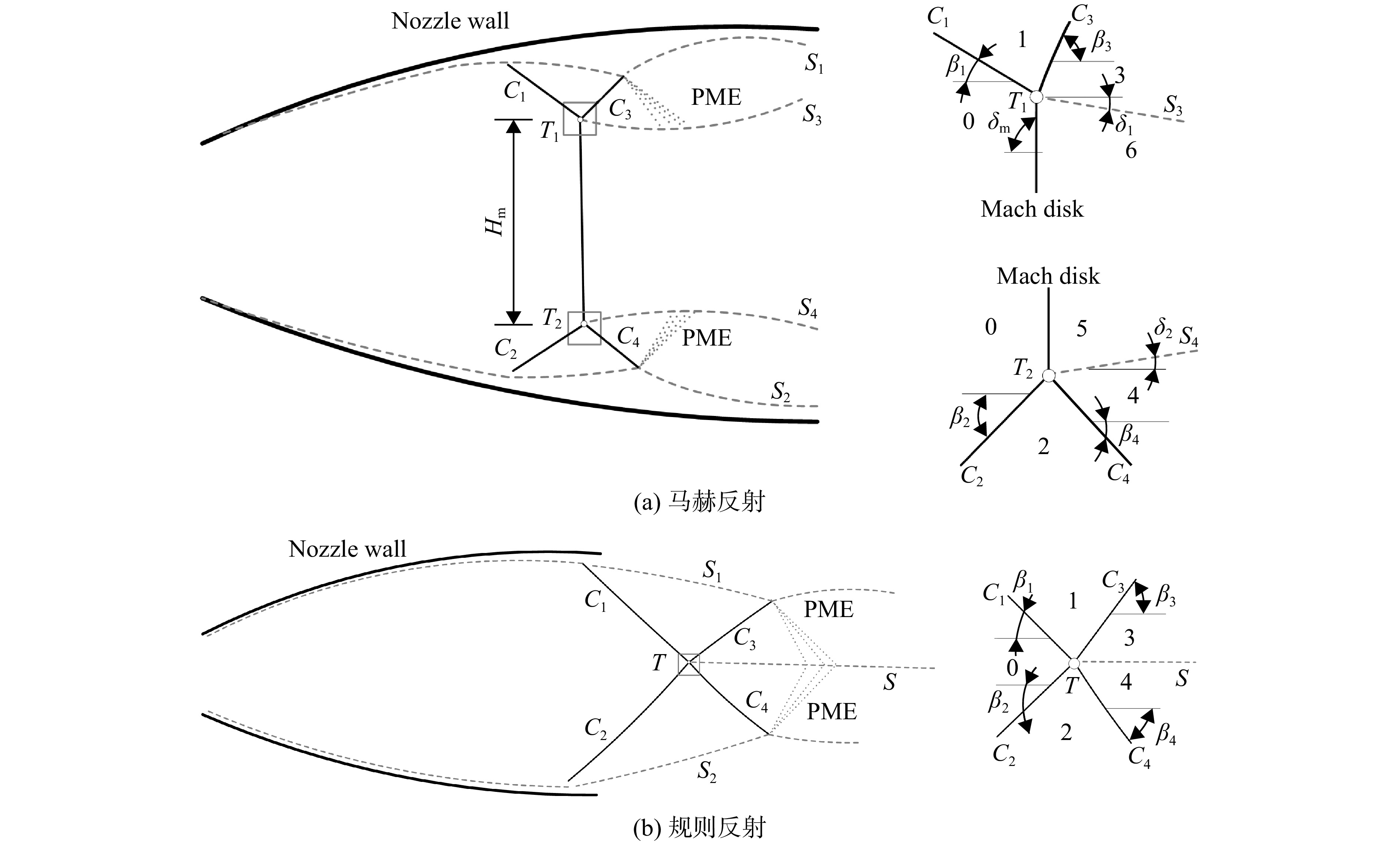
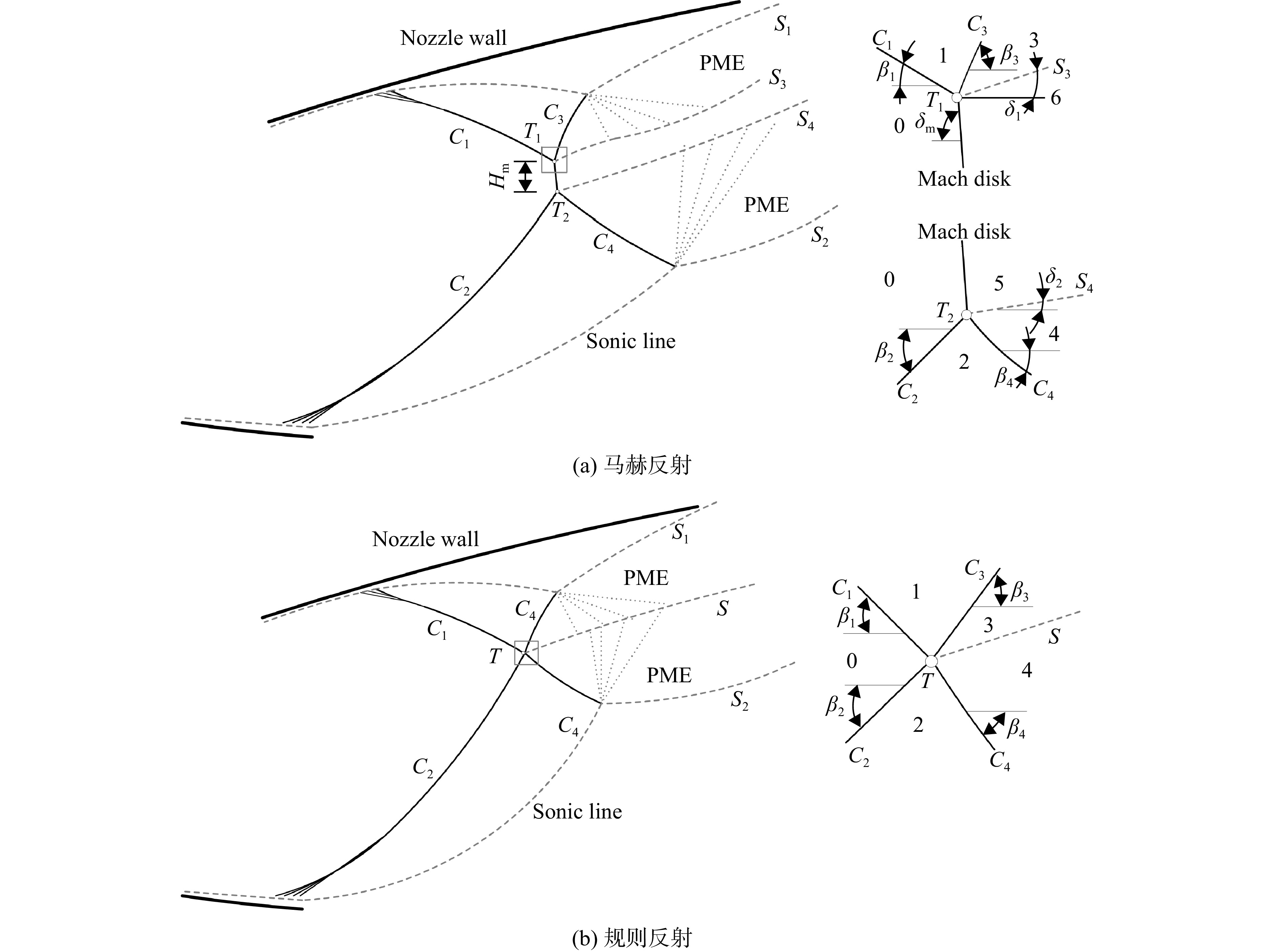
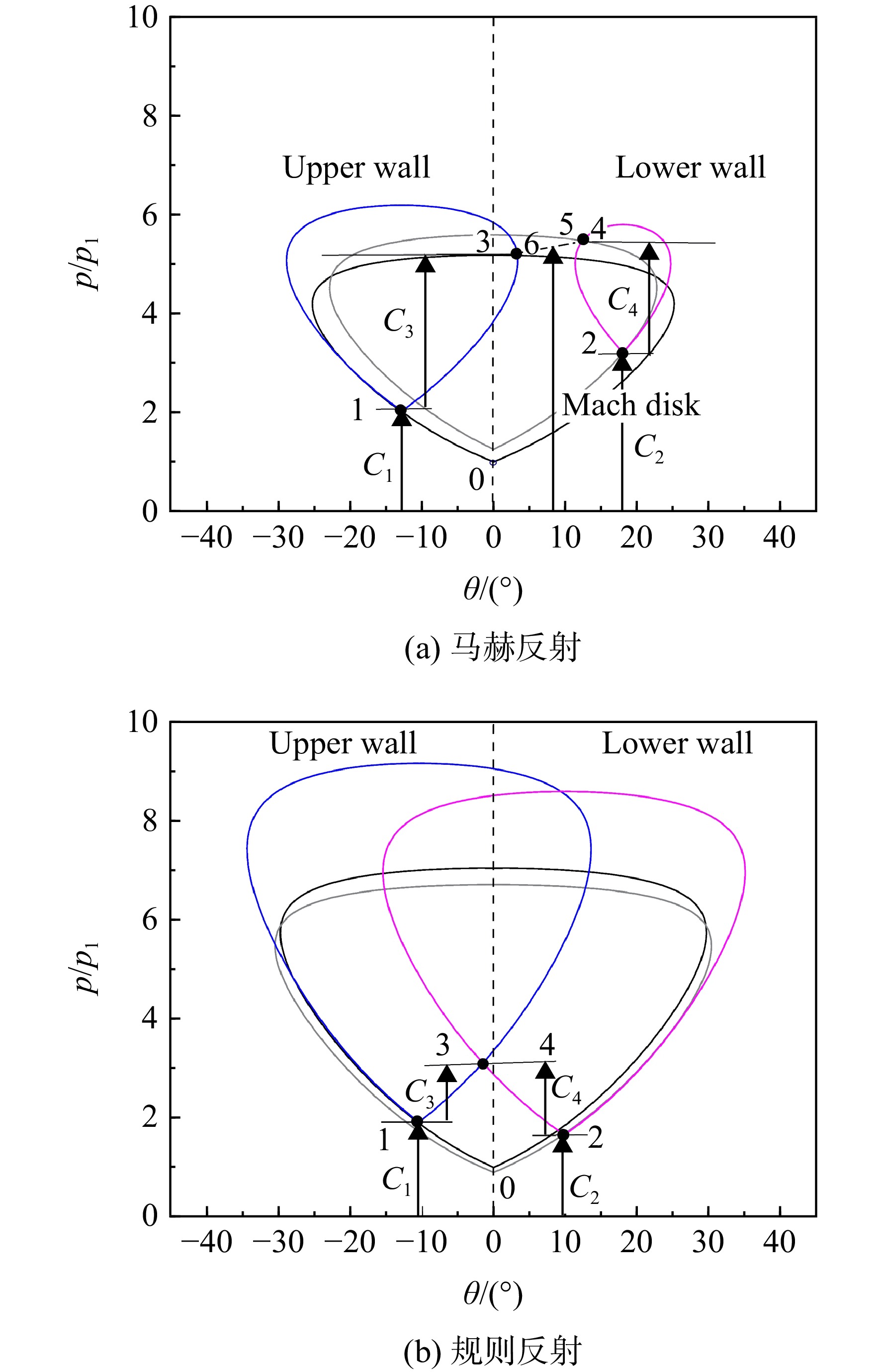
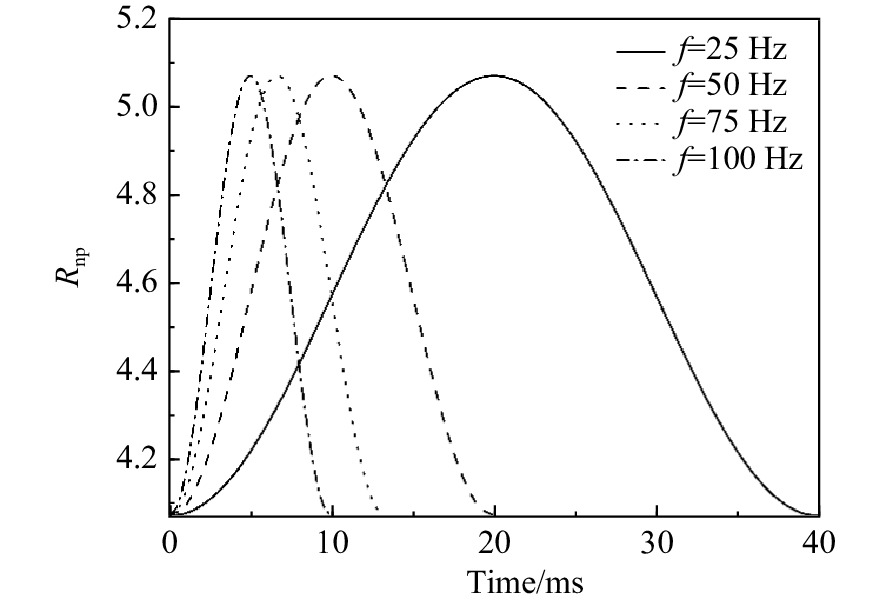
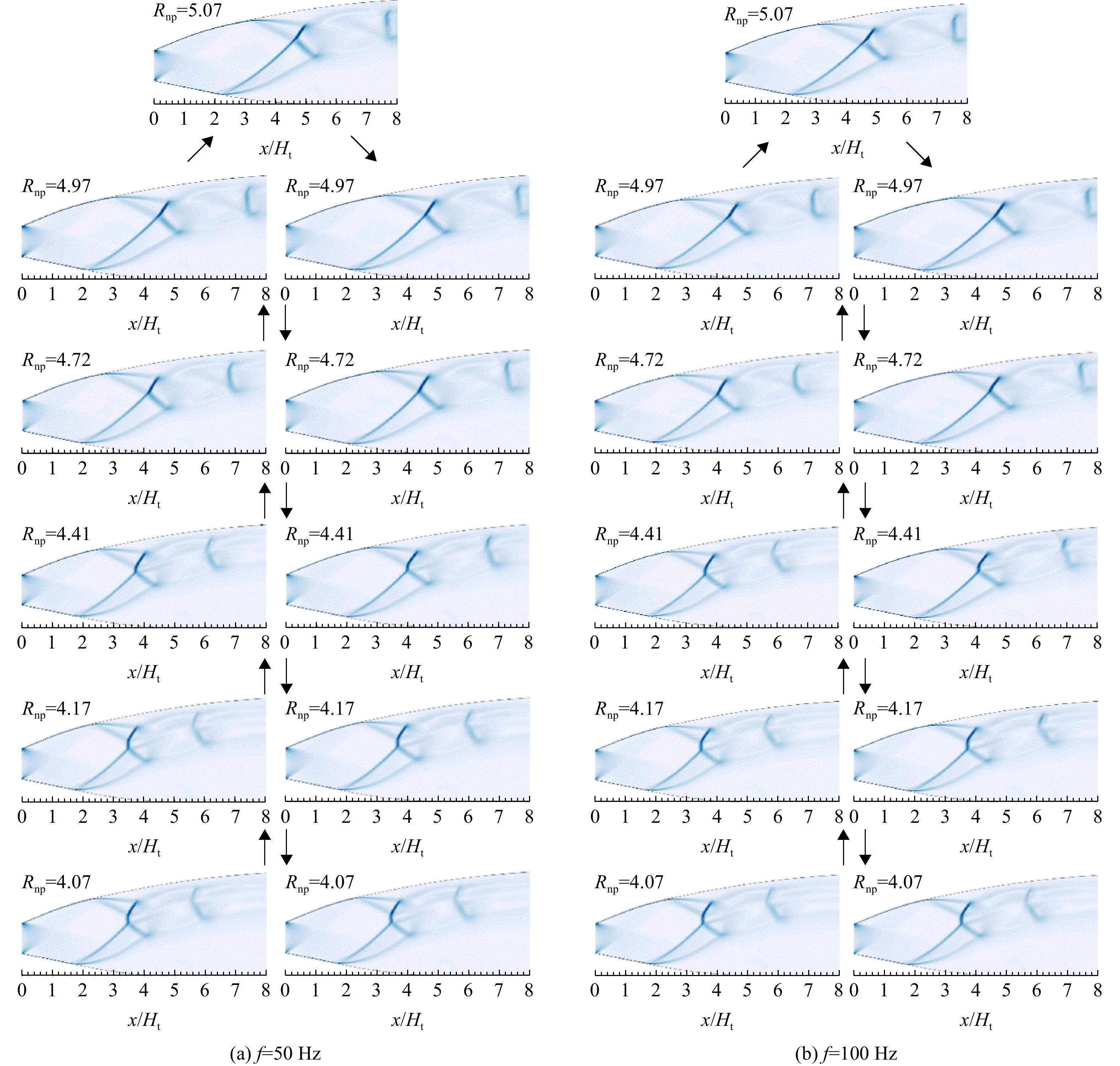
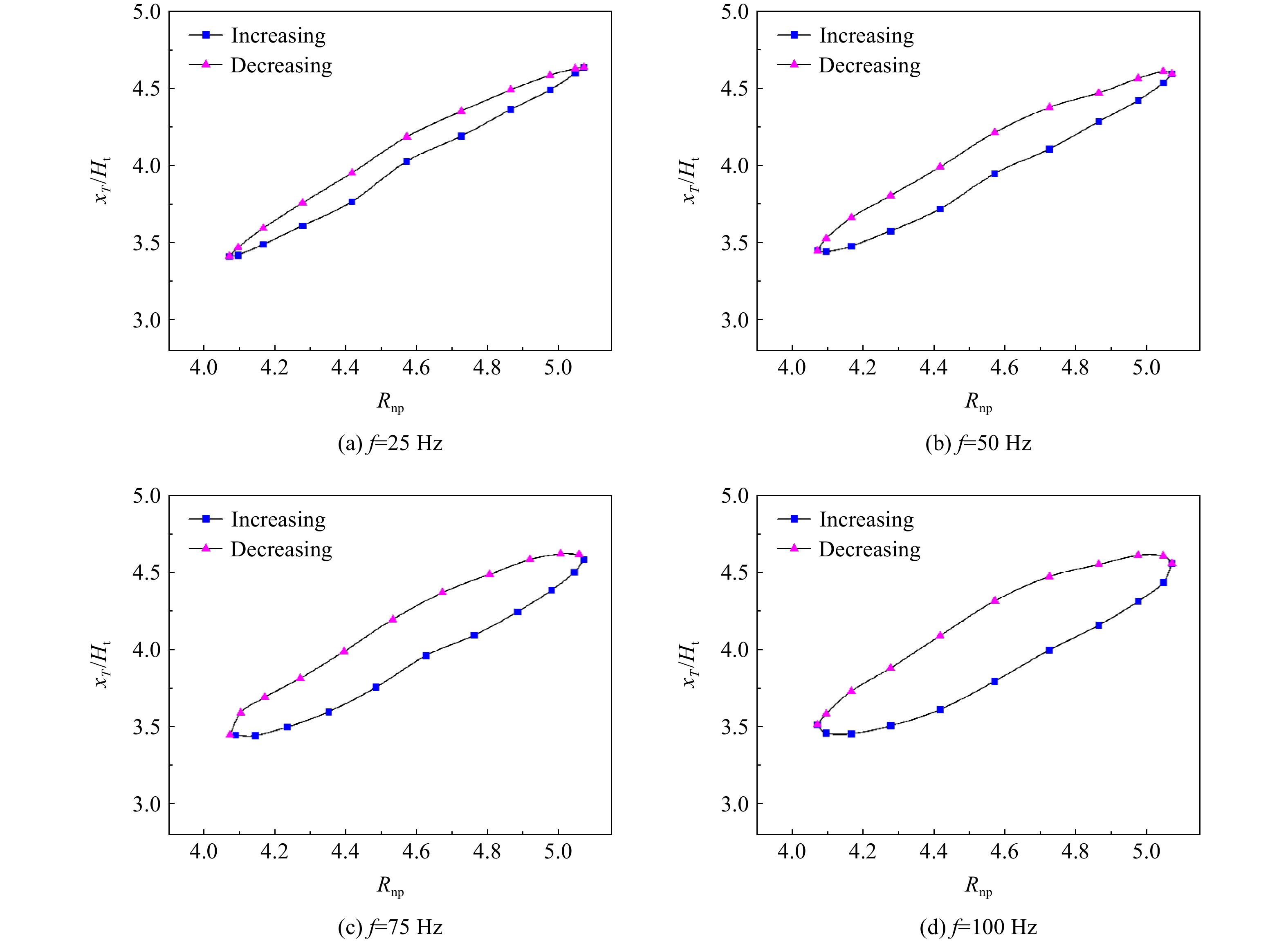
Combined with the focus schlieren and dynamic pressure measurement technology, the shock reflection inside a single expansion ramp nozzle (SERN) was investigated under the condition of flow separation. The flow characteristics of shock reflection were analyzed, and the flow separation characteristics were compared for different wave configurations of shock reflection. Results showed that the shock reflection configuration transitioned from Mach reflection (MR) to regular reflection (RR), during the change of nozzle pressure ratio (NPR) from 3.06 to 5.07. The MR structure inside SERN was obviously asymmetrical duo to the asymmetric upper and lower walls. Based on shock polar representation, the mechanism of asymmetric MR was analyzed. The pressure gradient in the vertical flow direction upstream the Mach stem was the source of asymmetric MR. A hysteresis did not exist in the transition process between RR and MR, during increasing and decreasing processes of NPR, but the shock position experienced a hysteresis effect. The percentage deviation of shock position increased with the increasing oscillation frequency, during increasing and decreasing processes of NPR. The lower oscillation frequency of NPR indicated the larger oscillation amplitude of shock position.

Autocontrol
Improved APF missile route planning based on circulation repulsion potential field
LU Faxing, DAI Qiuyang, XU Junfei, JIA Zhengrong
2023, 38(9): 2288-2298. doi: 10.13224/j.cnki.jasp.20210722
Abstract:

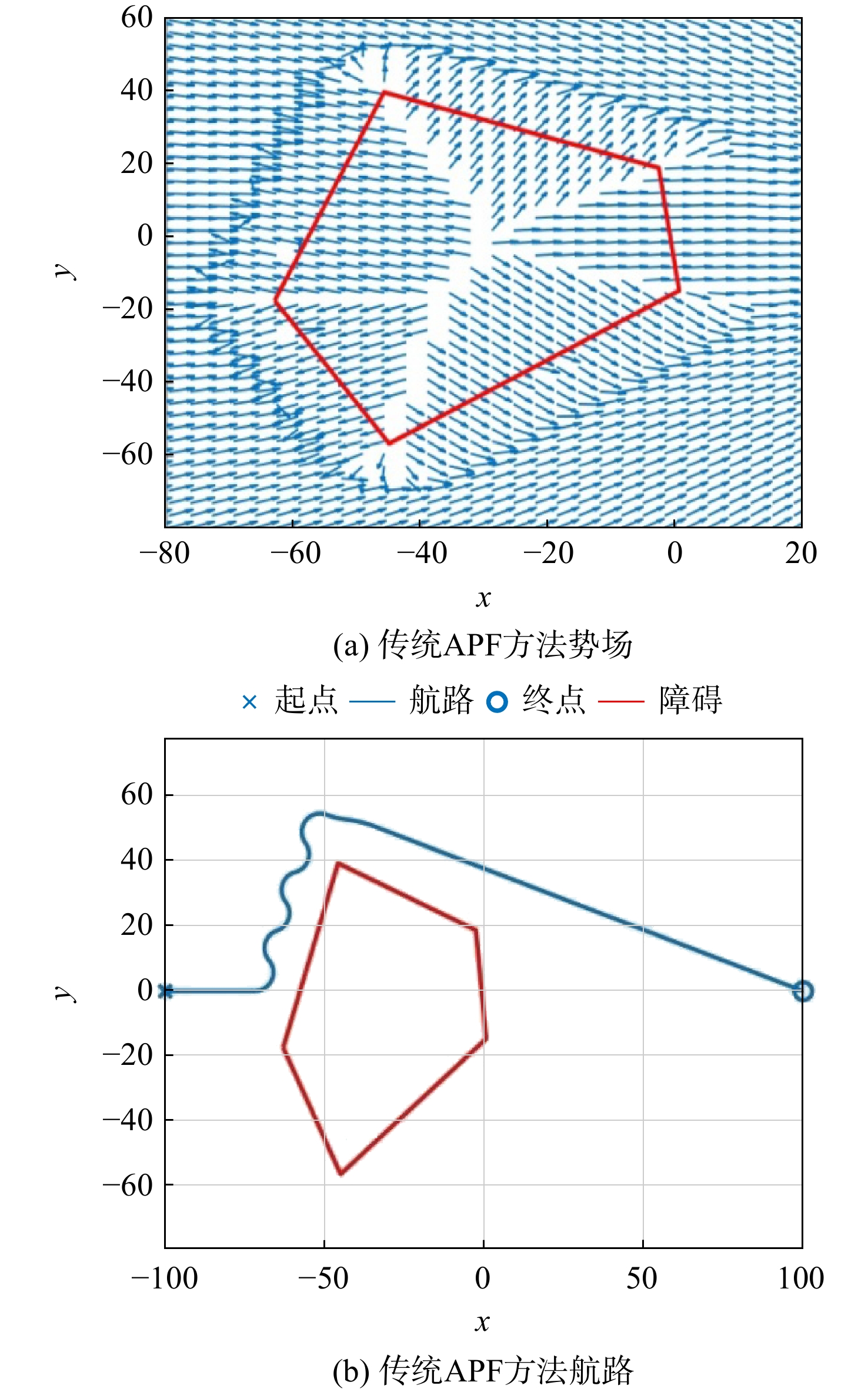
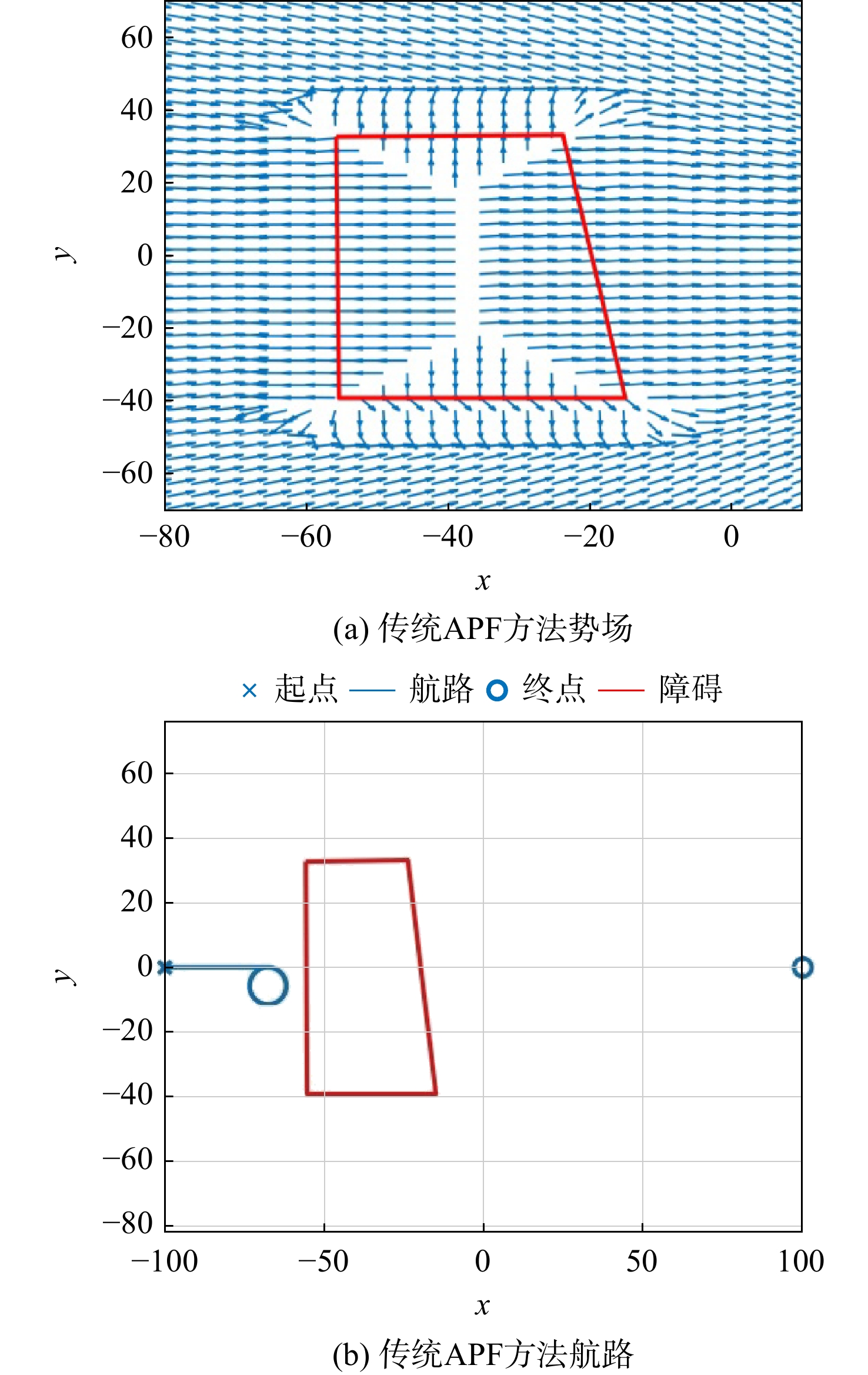
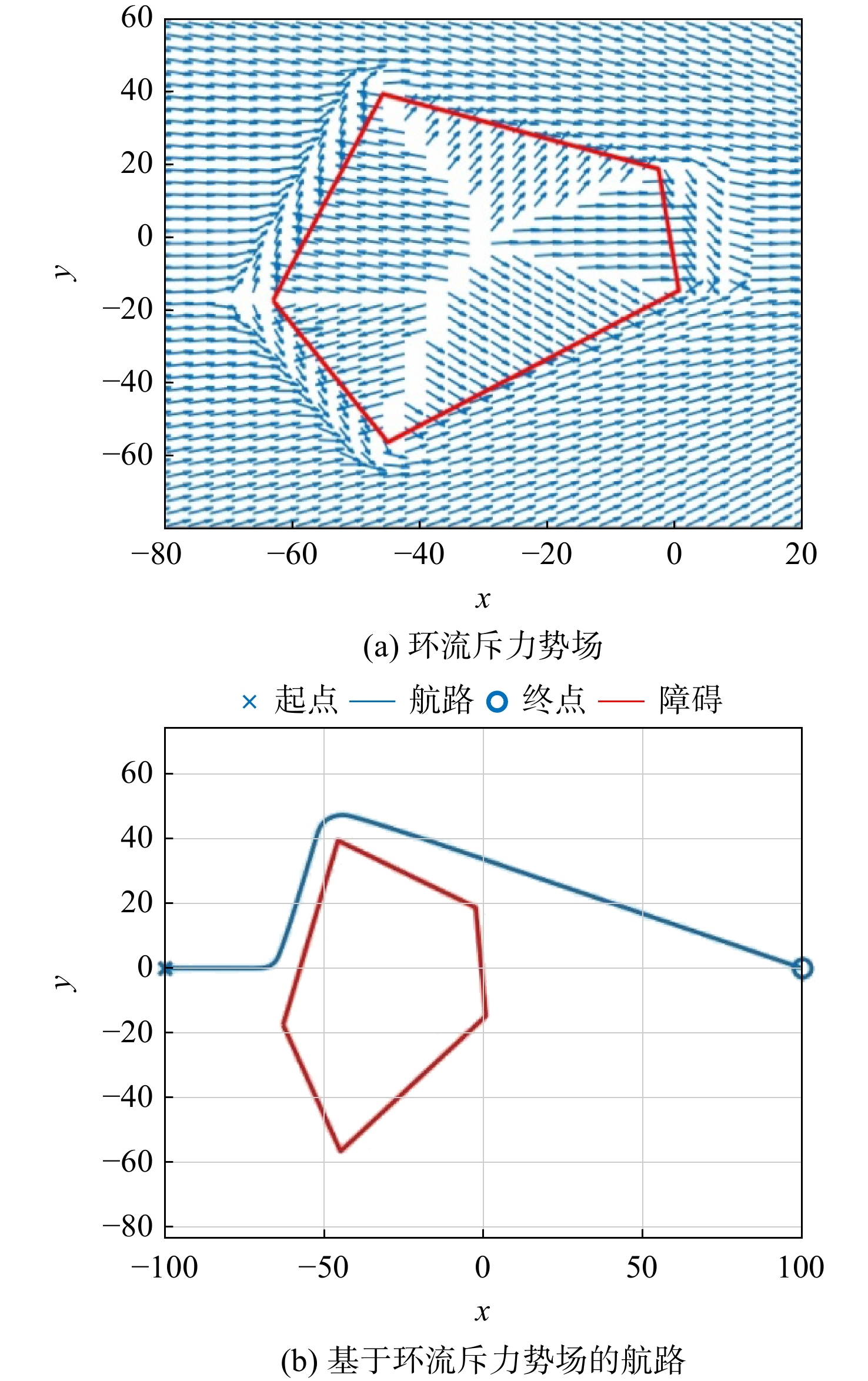
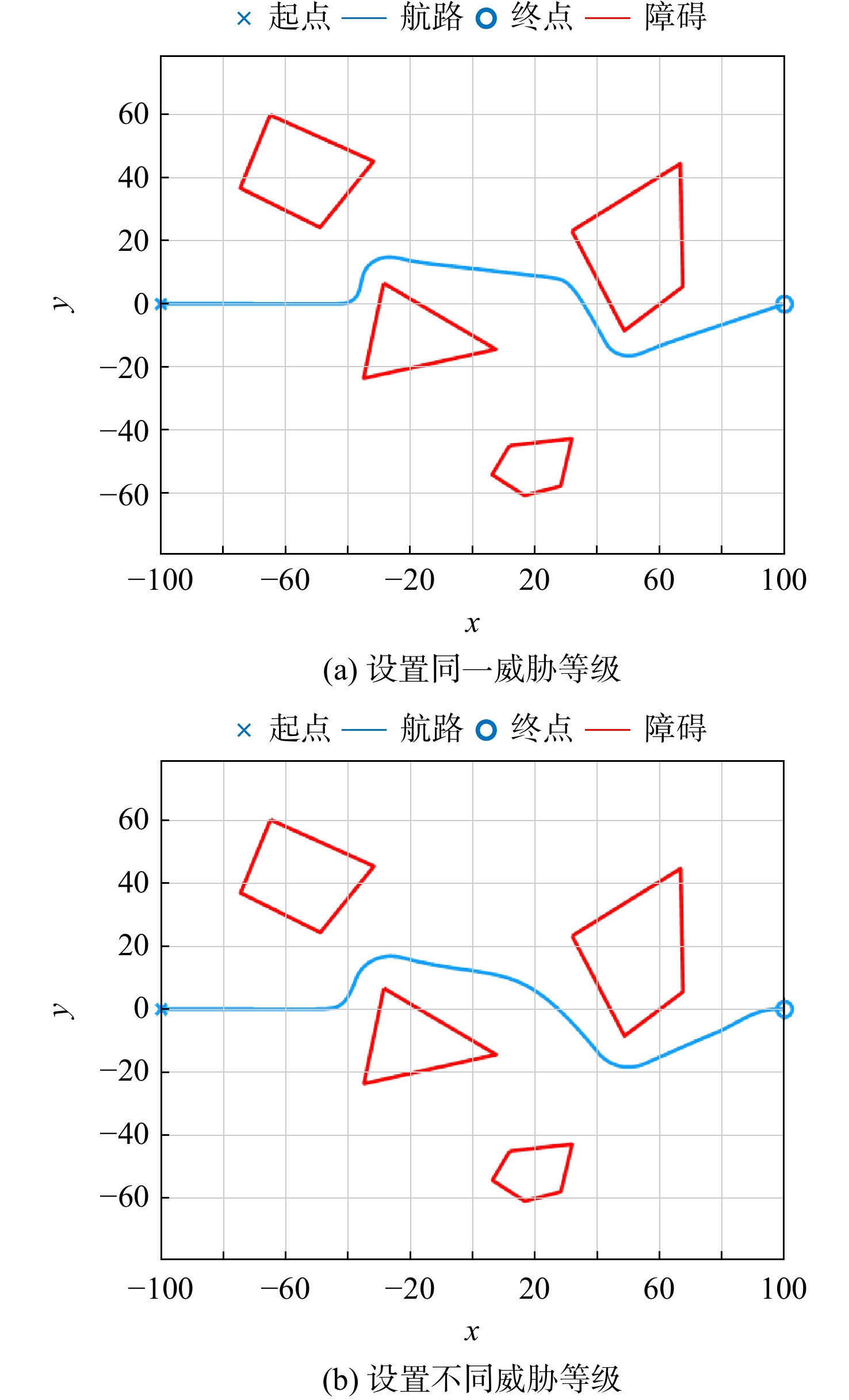
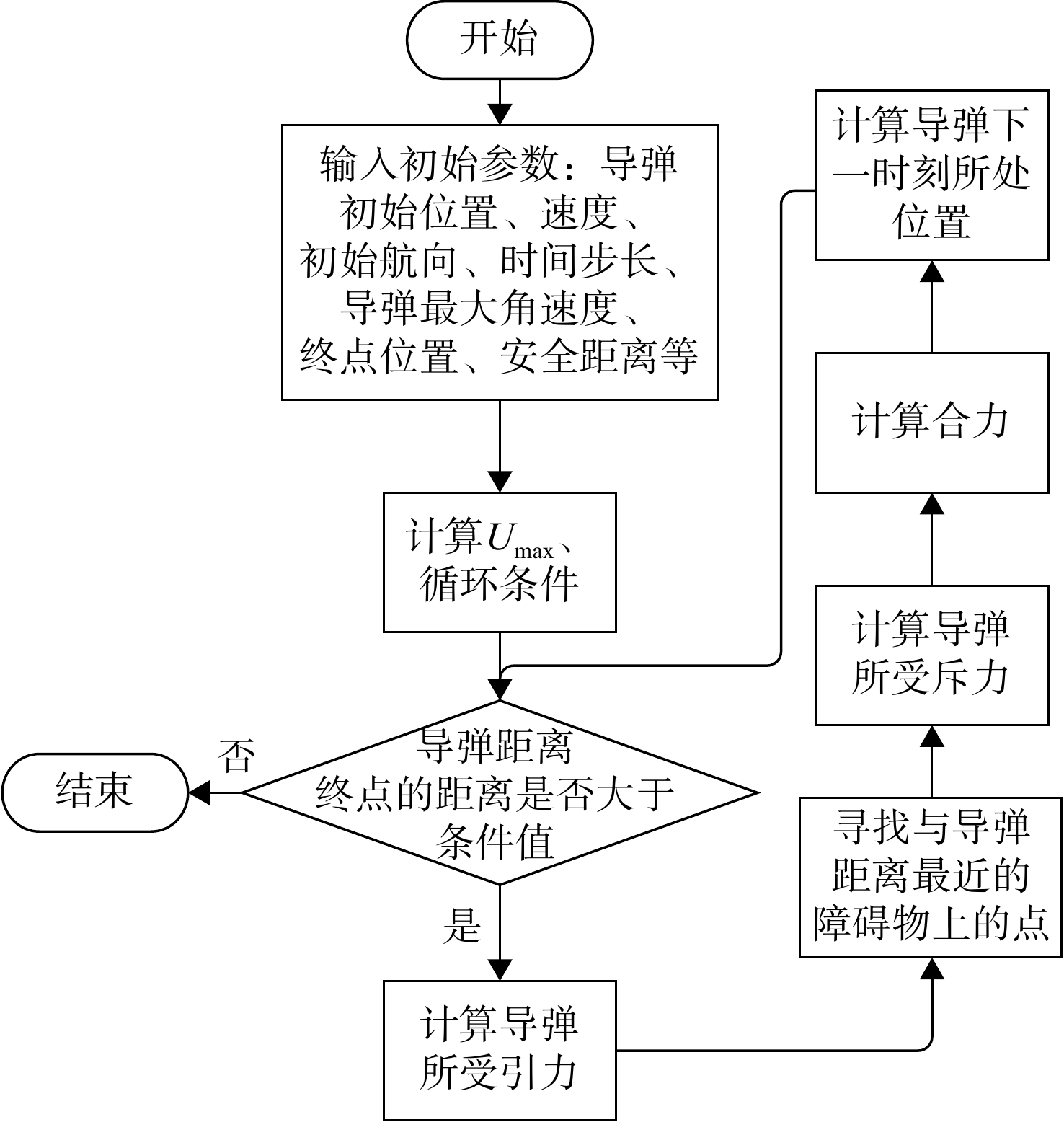
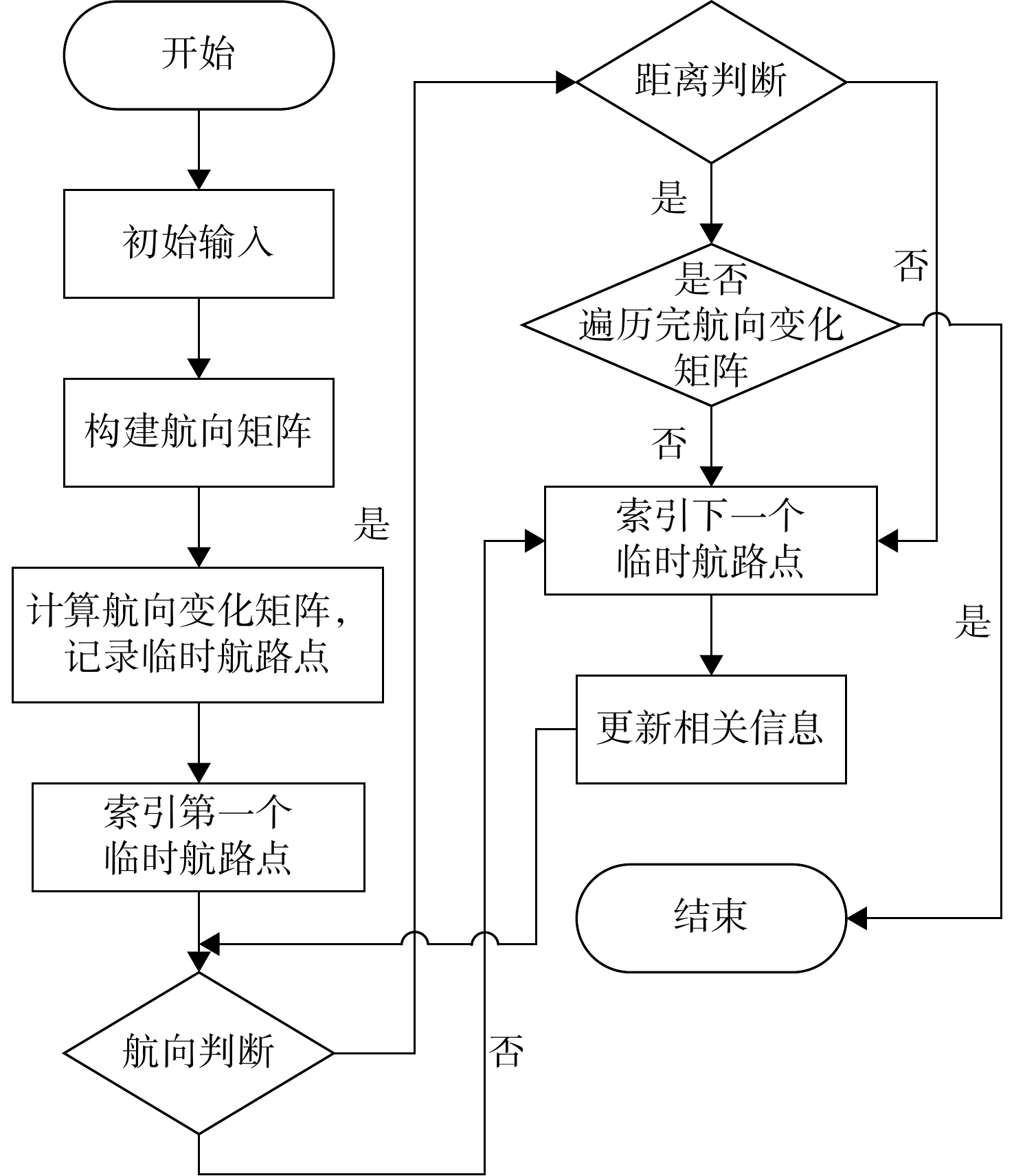
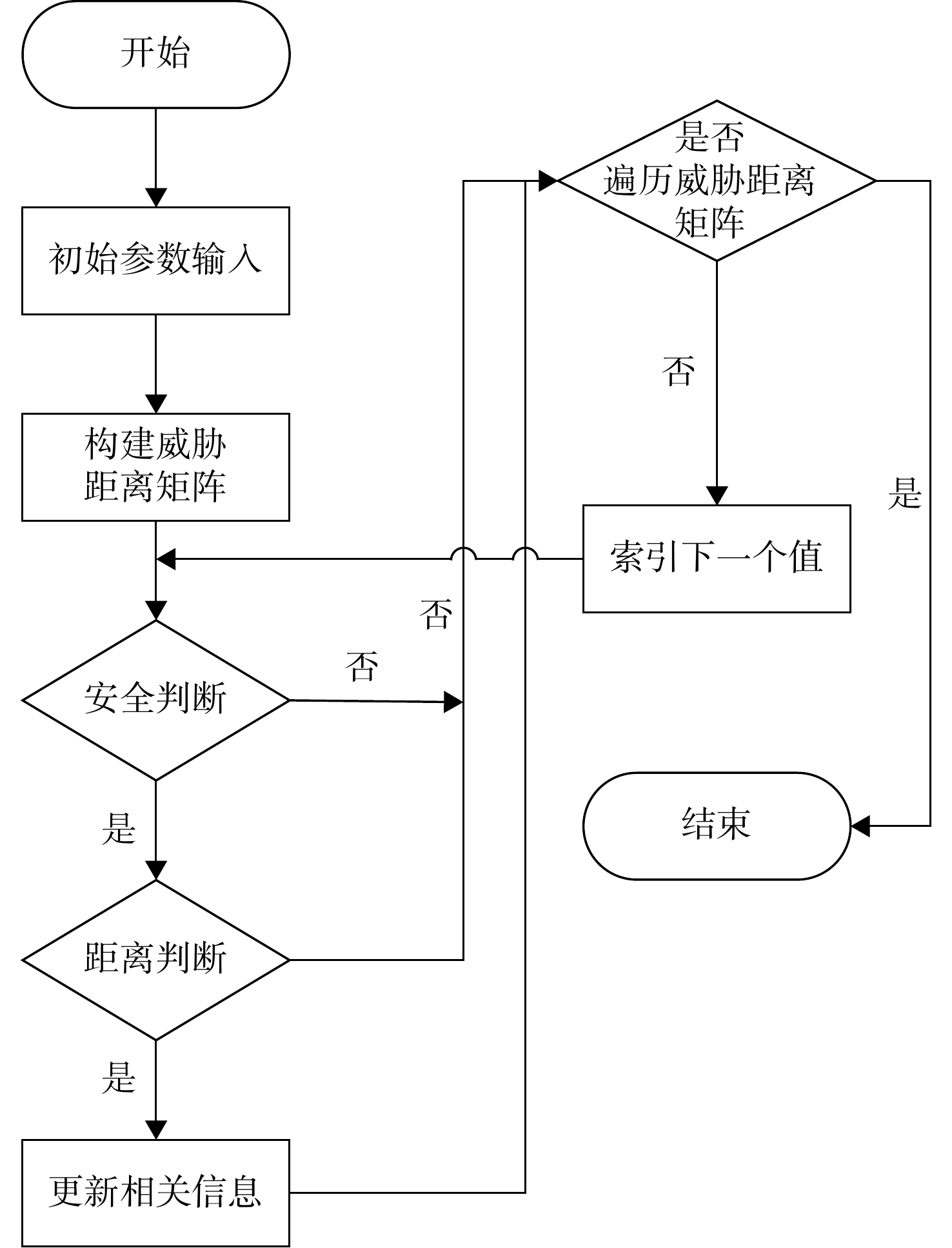
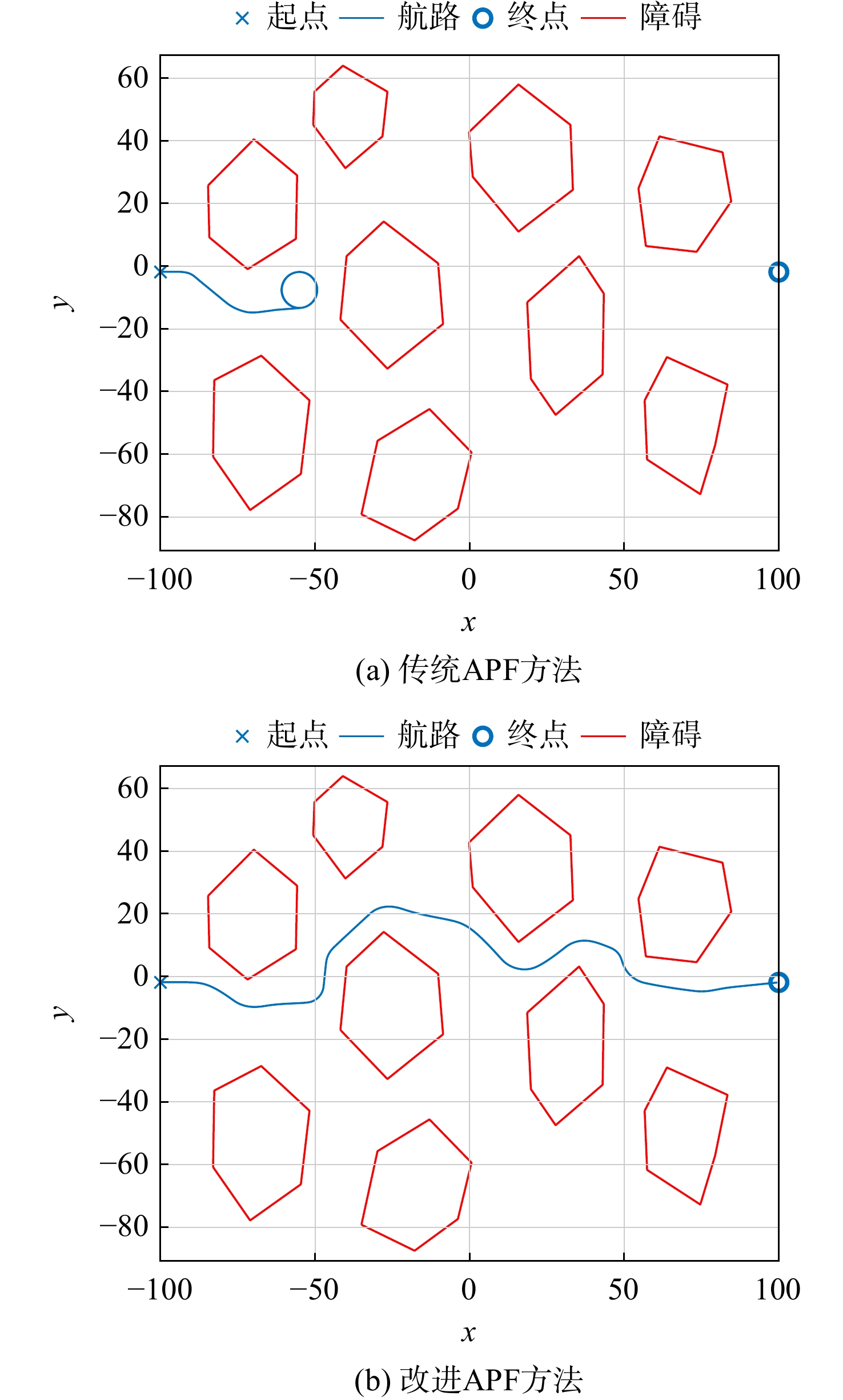
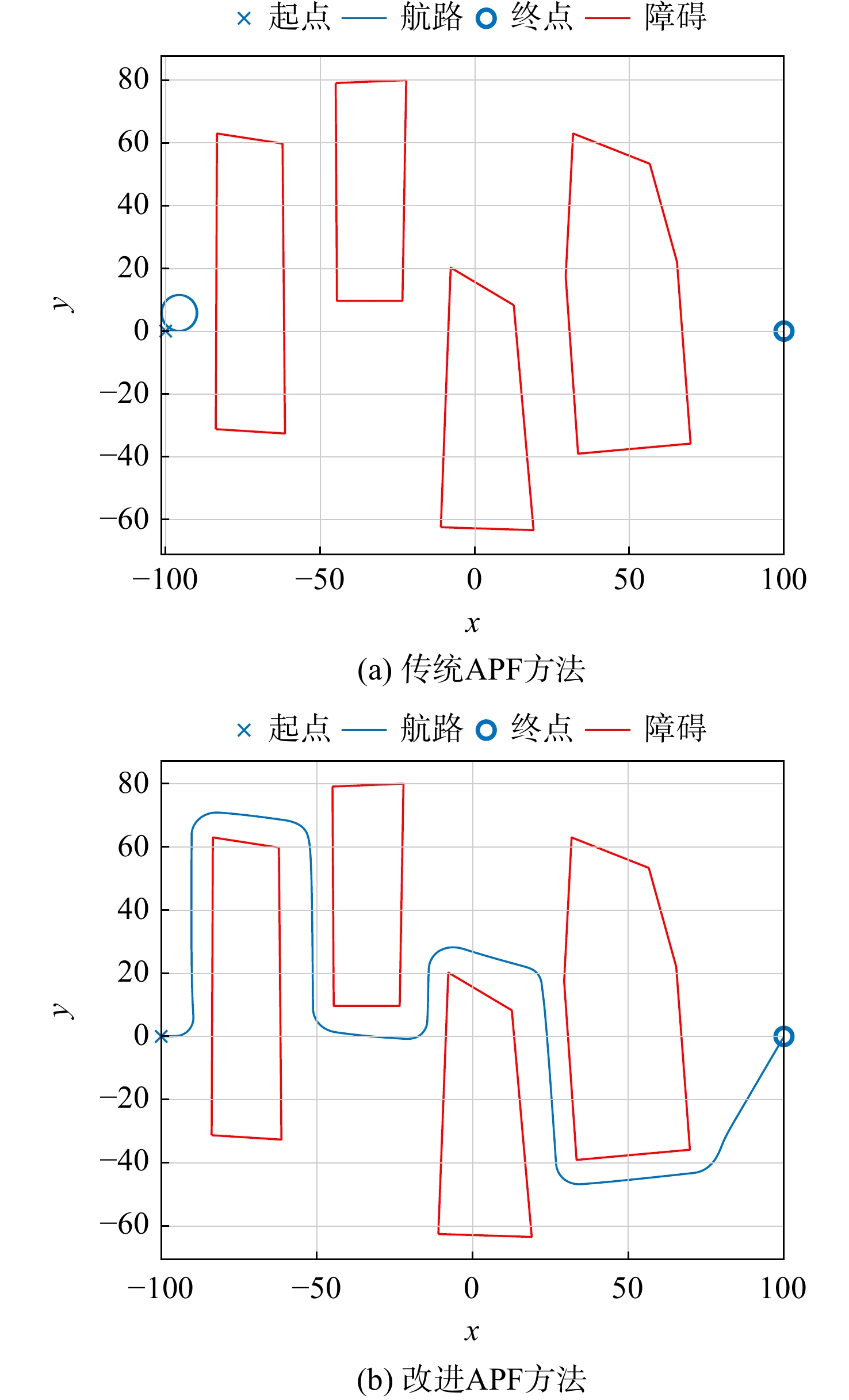
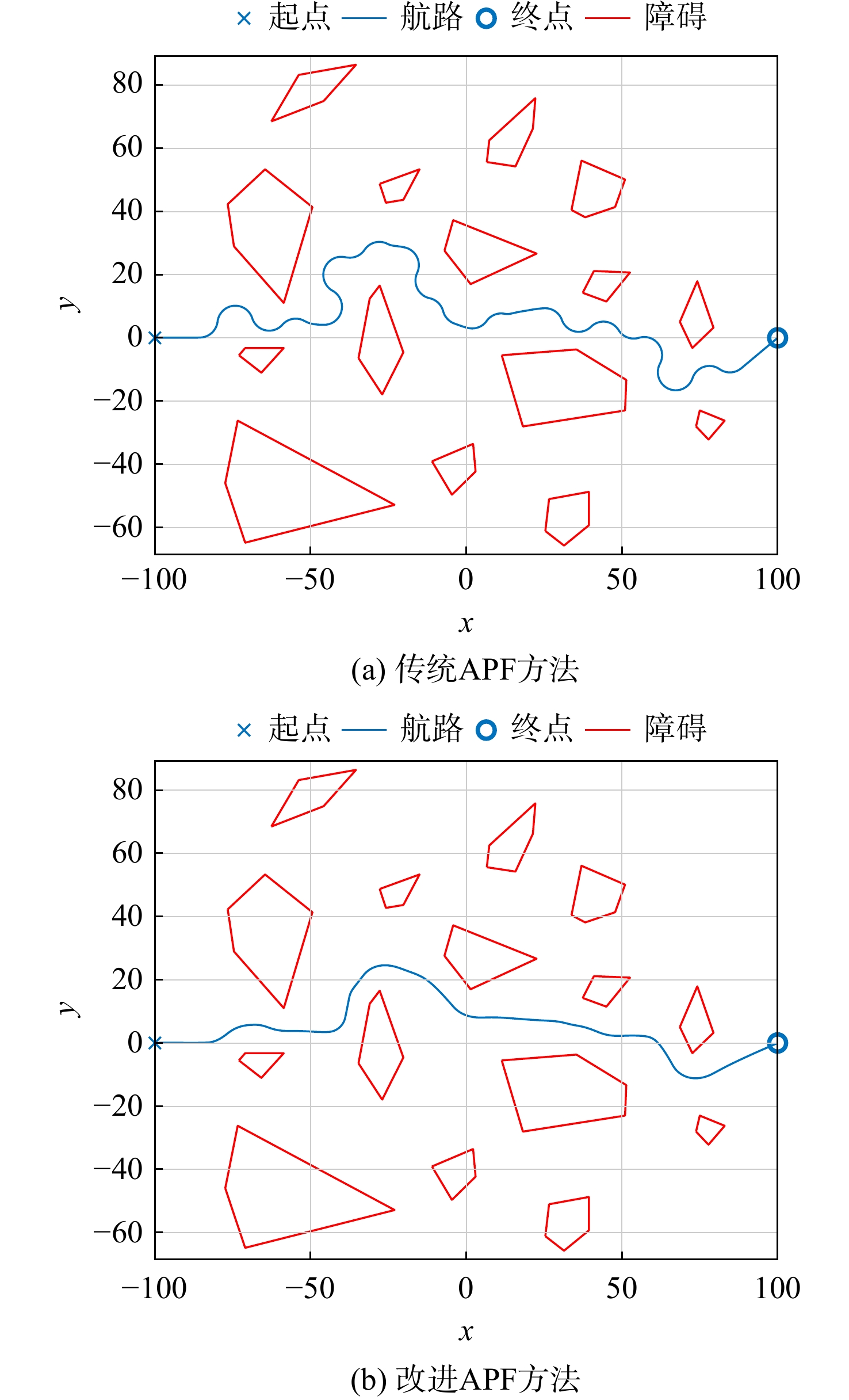
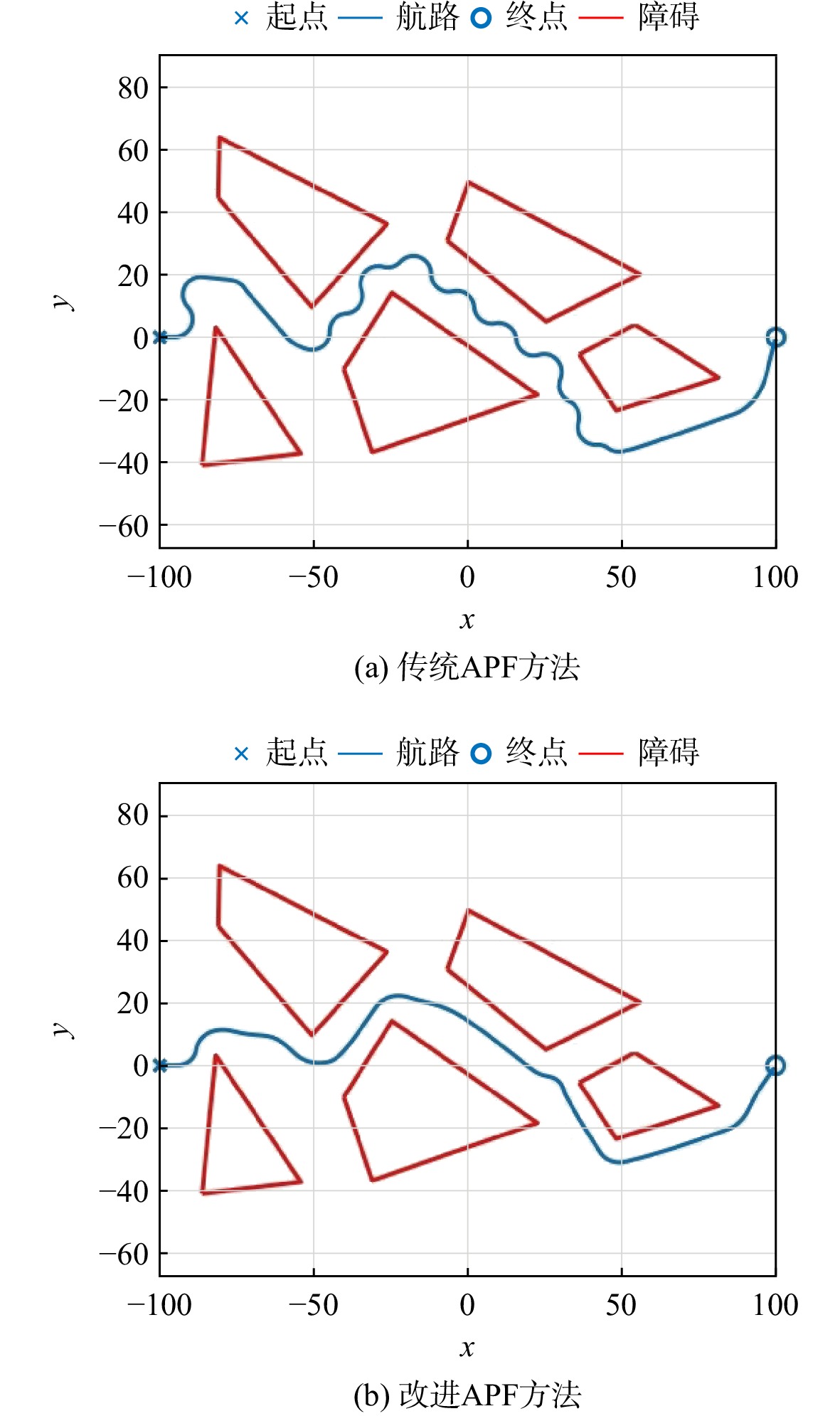
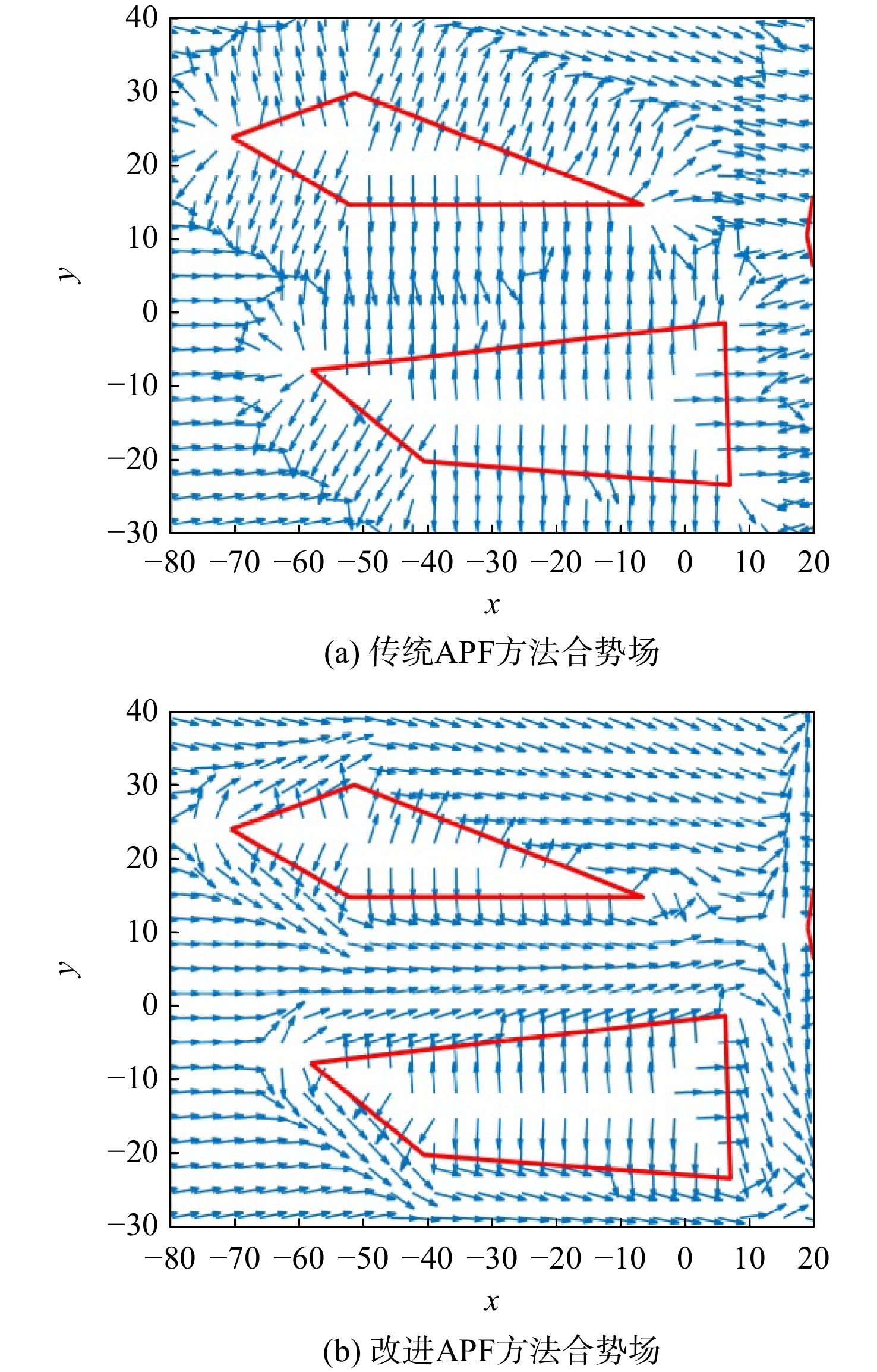
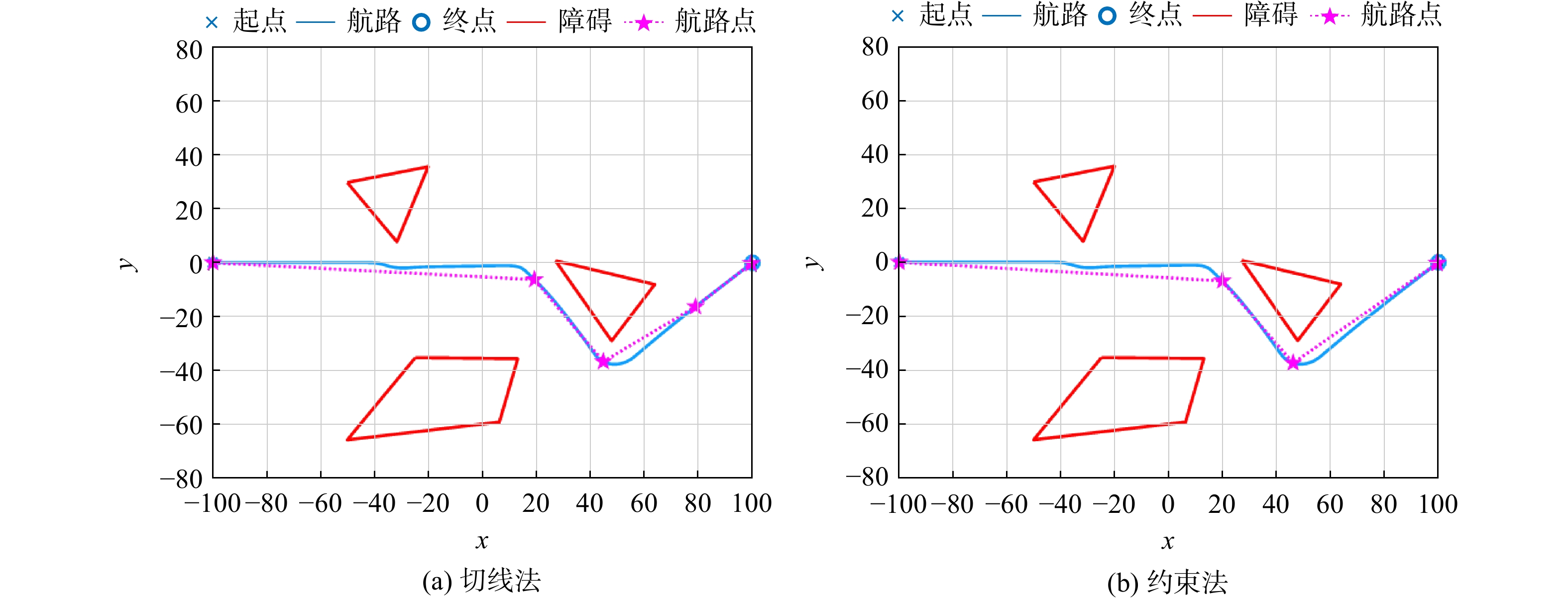
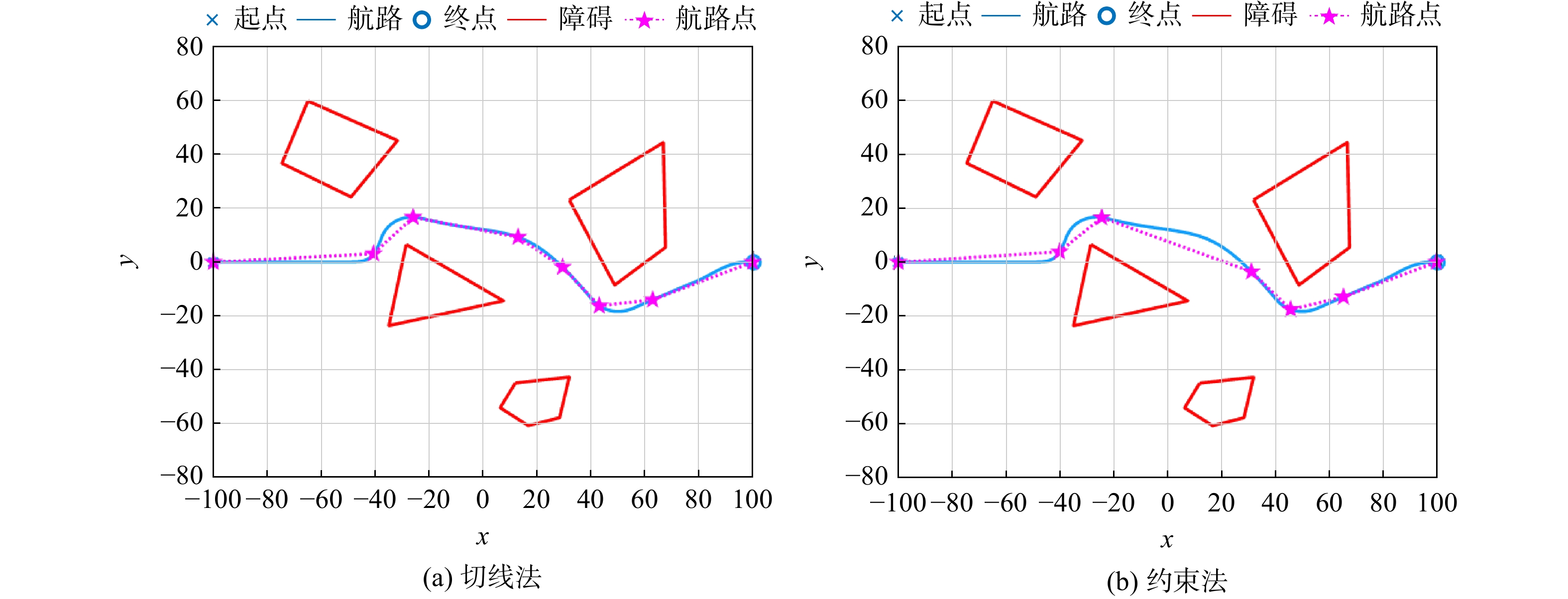
Given the proneness of artificial potential field (APF) method to fall into the local minimum, an improved APF route planning based on circulation repulsion potential field (improved APF) method was proposed. This method changed the direction of repulsion potential field into a circulation around the obstacle. The waypoints of missile flight were obtained by constraint method and tangent method. In different scenarios, traditional APF method and improved APF method were used to solve route planning, and the tangent method and constraint method were adopted to solve the missile route point. The results showed that the improved APF method can effectively improve solvable probability, the route can be obtained under the condition of dense polygonal obstacles, and the obstacle boundary ran perpendicular to platform course. At the same time, the route generated by the improved APF method was smoother than traditional APF method. For the missile waypoint solution, there was little difference between the tangent method and the constraint method, but the constraint method had a shorter solution time and fewer waypoints, while the tangent method had better safety performance.

Rocket Engine
Characteristics of pumping-back and propellant-refilling processes for diaphragm tank of space station
SUN Wei, ZUO Suihan
2023, 38(9): 2299-2304. doi: 10.13224/j.cnki.jasp.20210625
Abstract:

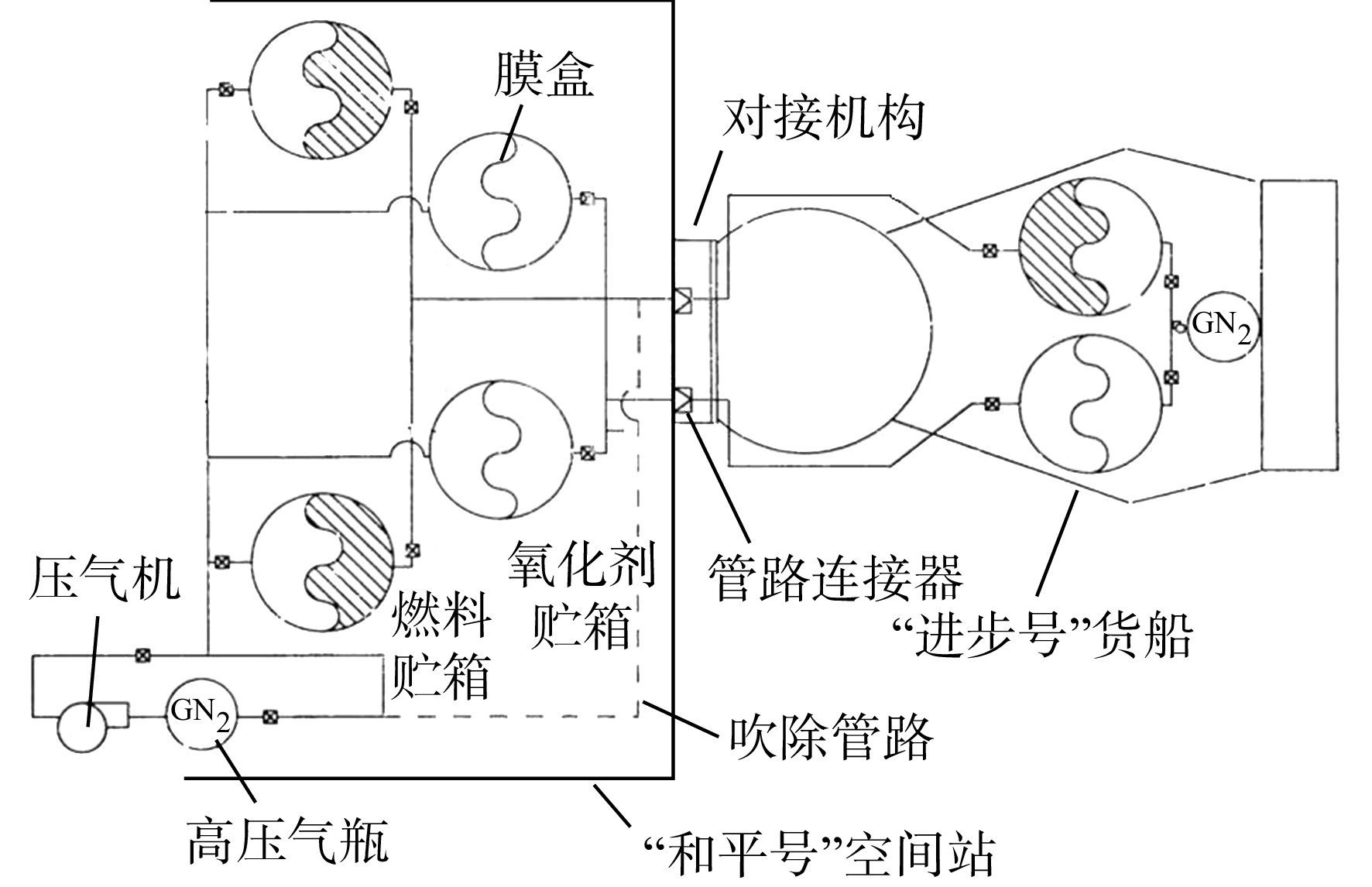
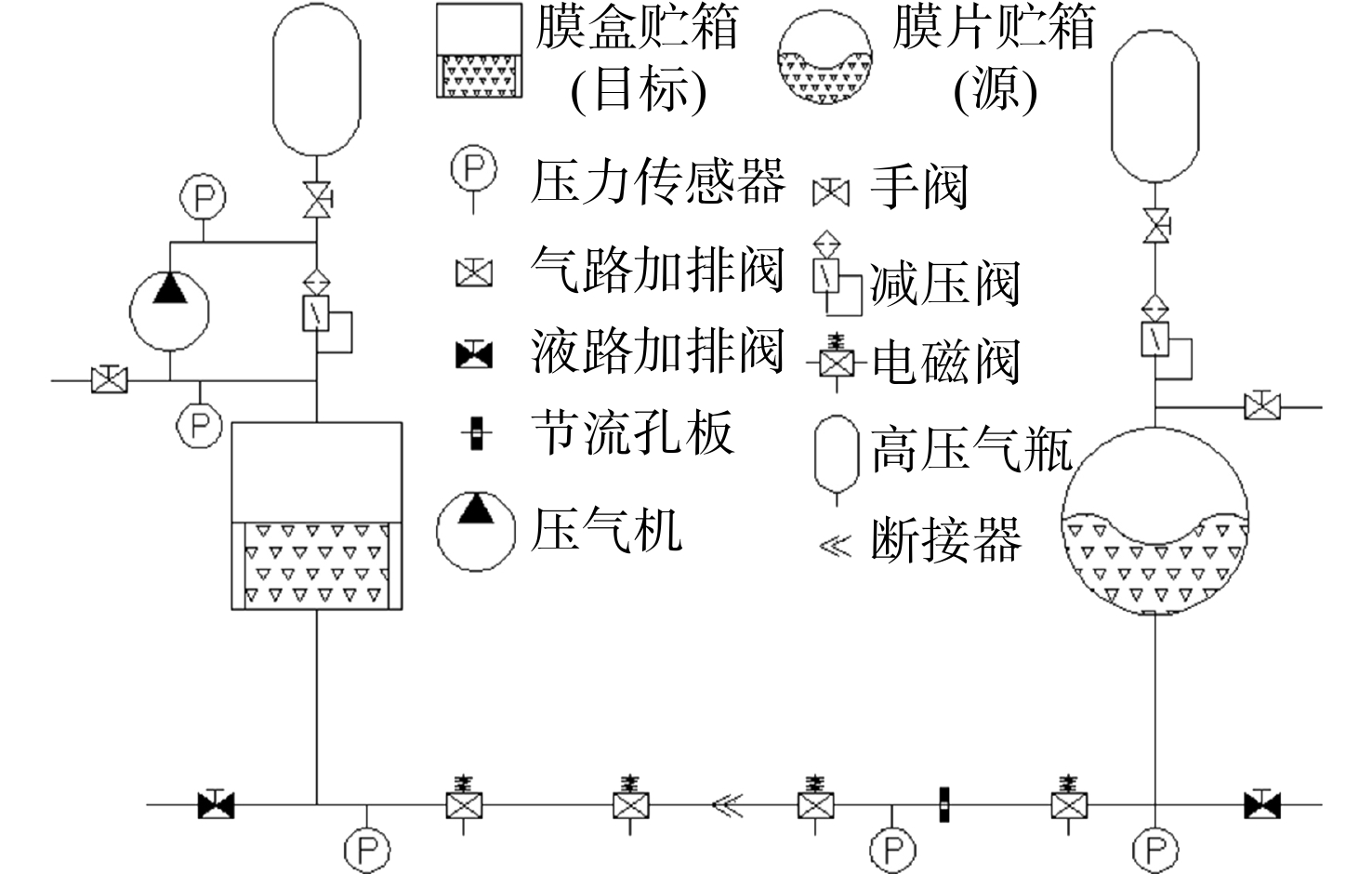
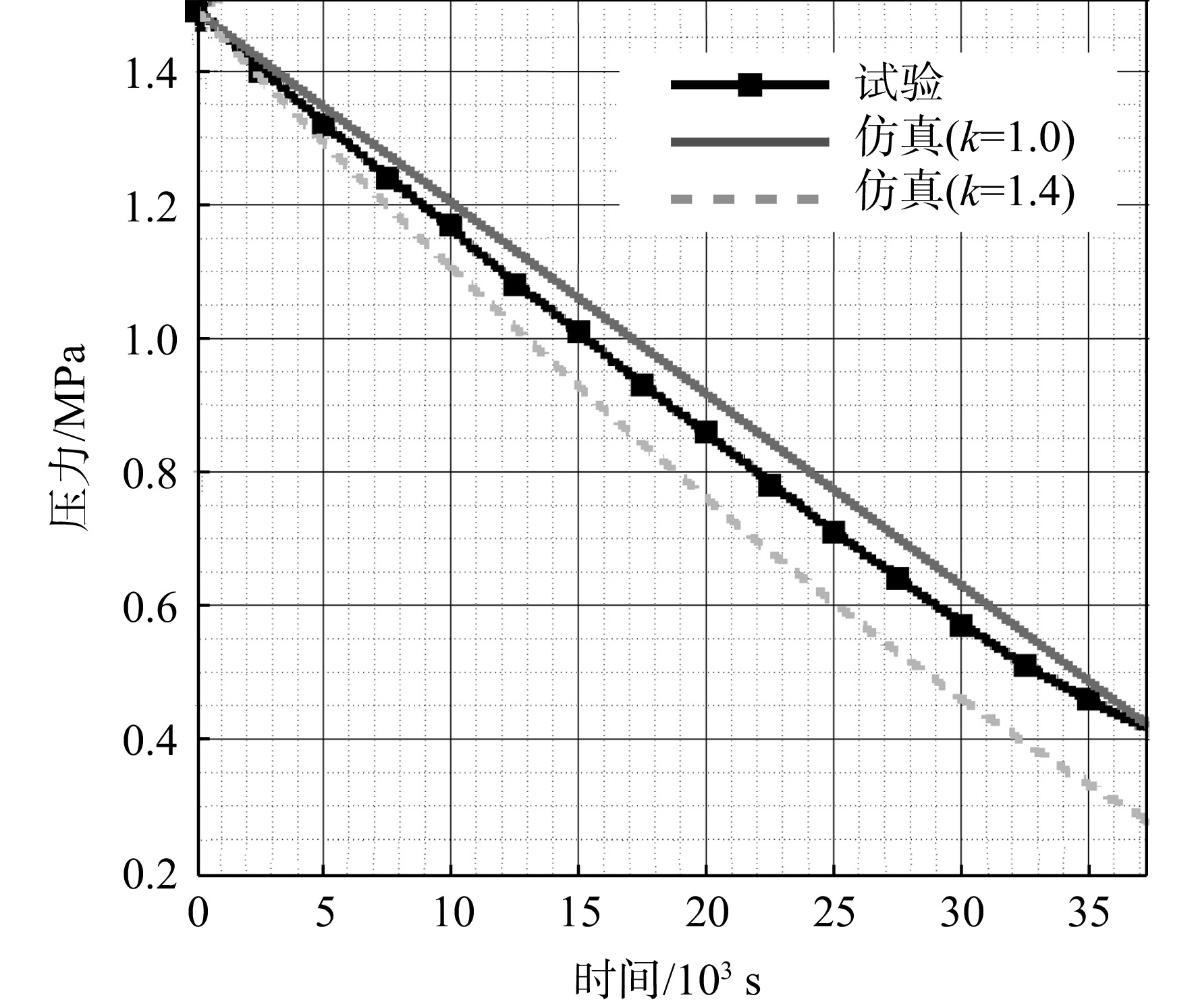
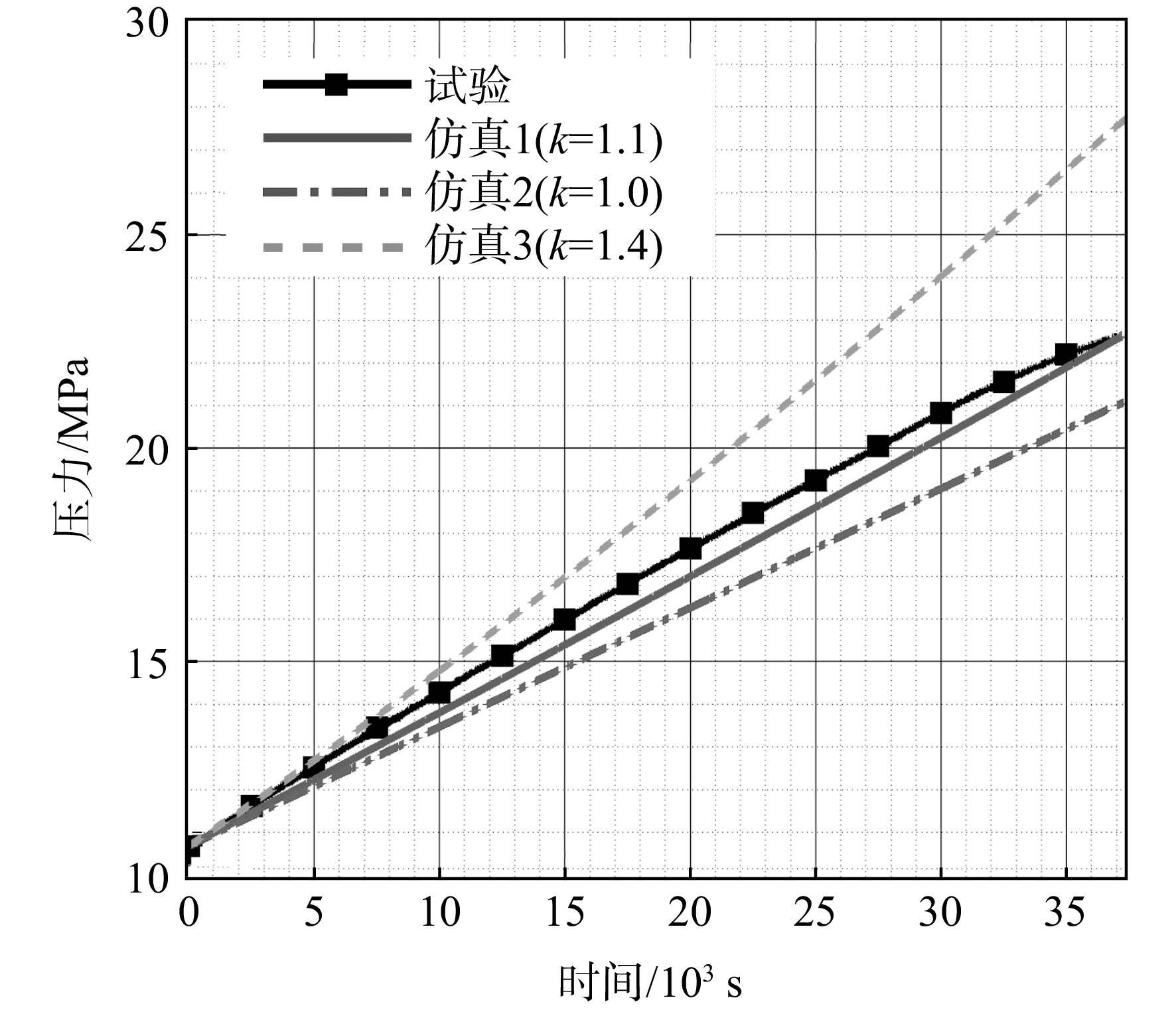
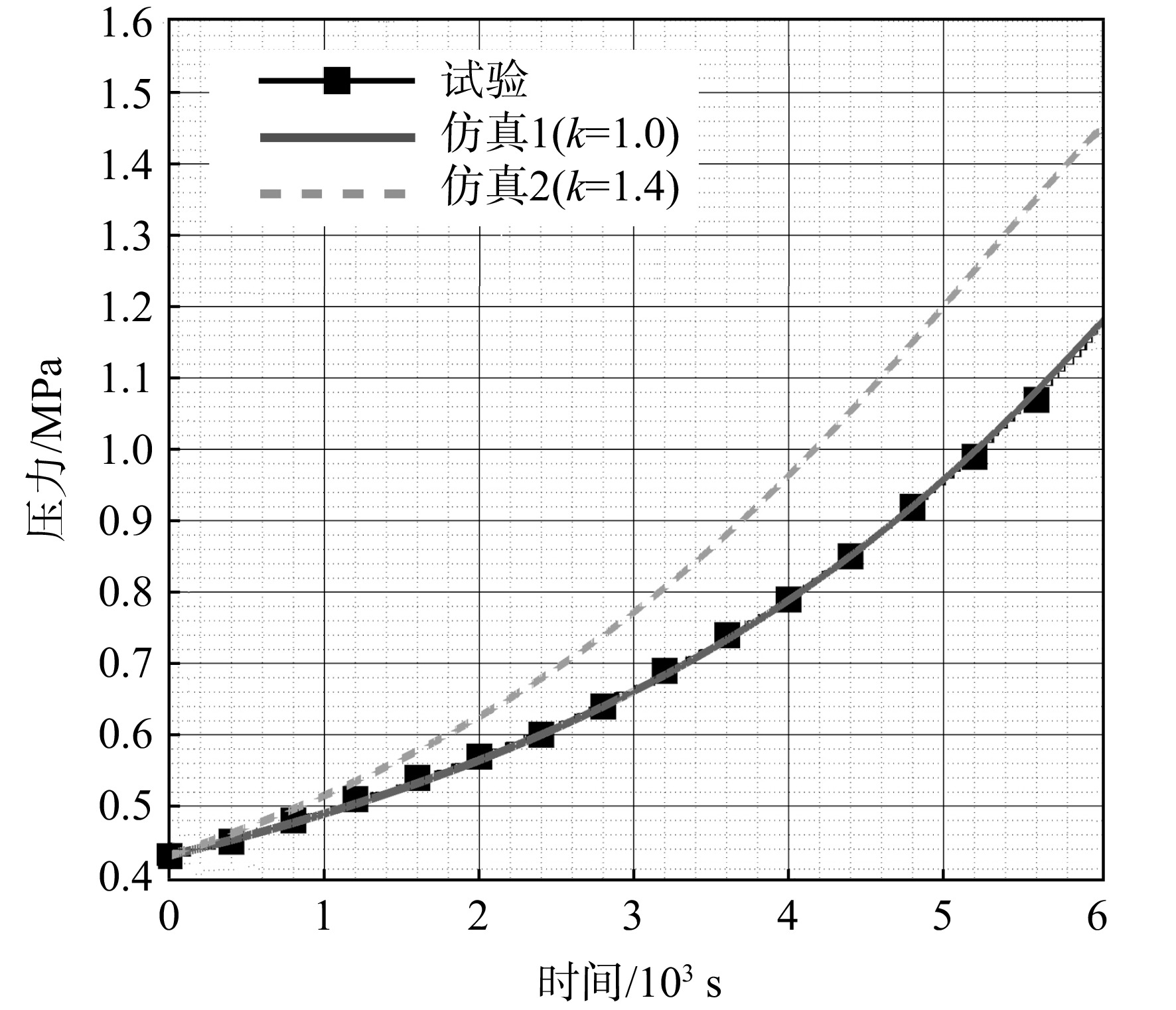
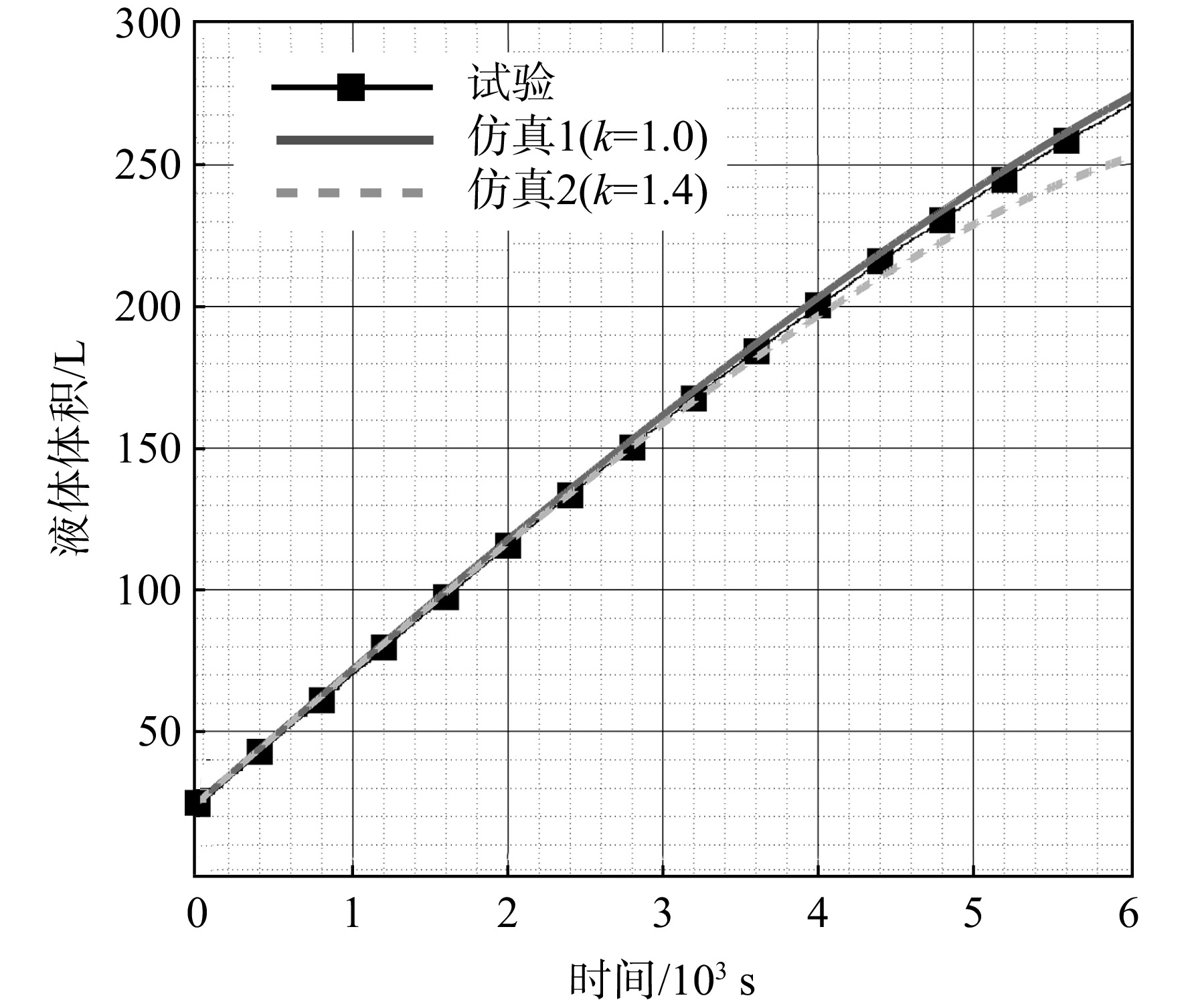
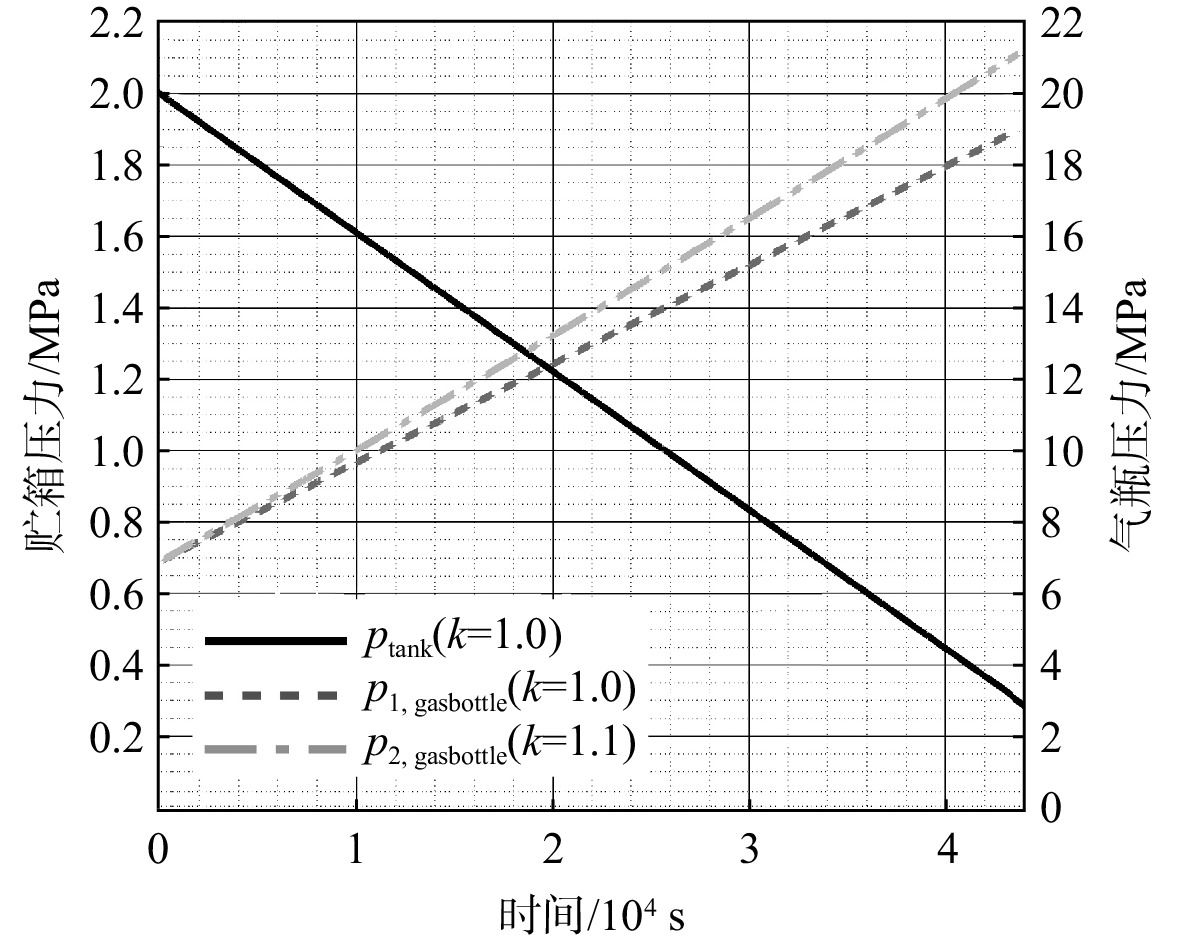
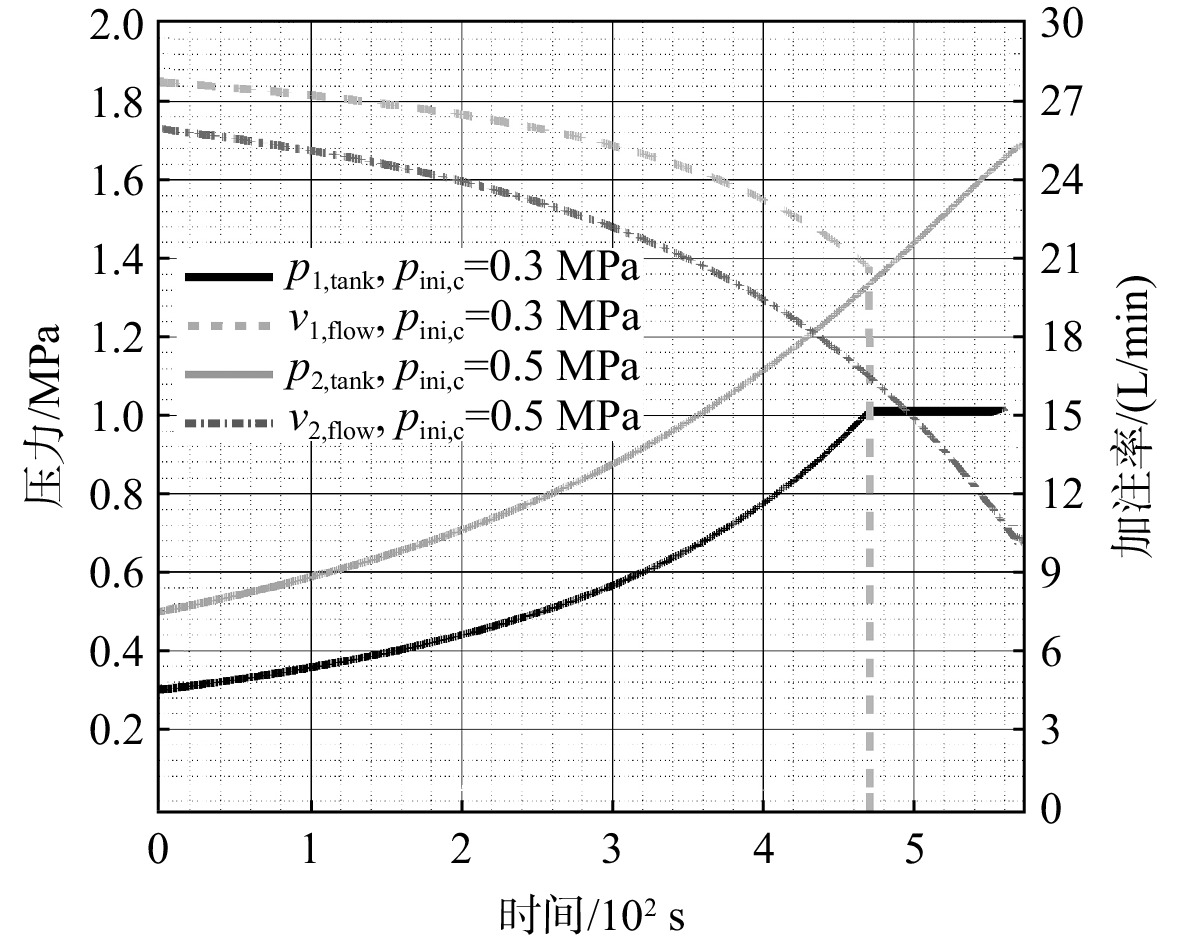
Numerical models for a pumping-back process of pressurized gas and a propellant-refilling process of propellant tank were built, and the simulation results were compared with experimental data using pure water. It was found that the pressure variation of propellant tank in the pumping-back process and the refilling proces was similar to an isothermal process, and the pressure variation of pressurized gas-bottle in the pumping-back process was similar to a polytropic process with polytropic exponent of 1.1. Further simulation analysis was carried out with the developed model to investigate a typical propellant refueling process of the Mir Space Station, indicating that the pressure-rising rate of a pressurized gas-bottle in pumping-back proces was significantly influenced by heat dissipation of the pressurized gas-bottle, and the propellant-refilling rate of a tank descended gradually due to increase of the back pressure of the tank in a propellant-refilling process.