Structure,Strength and Vibration
Method for extracting signal of lubricating oil wear debris based on fluxgate sensor and CEEMDAN-DWT
Xue Qian, Wu Zhipeng, Yin Haicheng
2026, 41(8): 20240785. doi: 10.13224/j.cnki.jasp.20240785
Abstract:

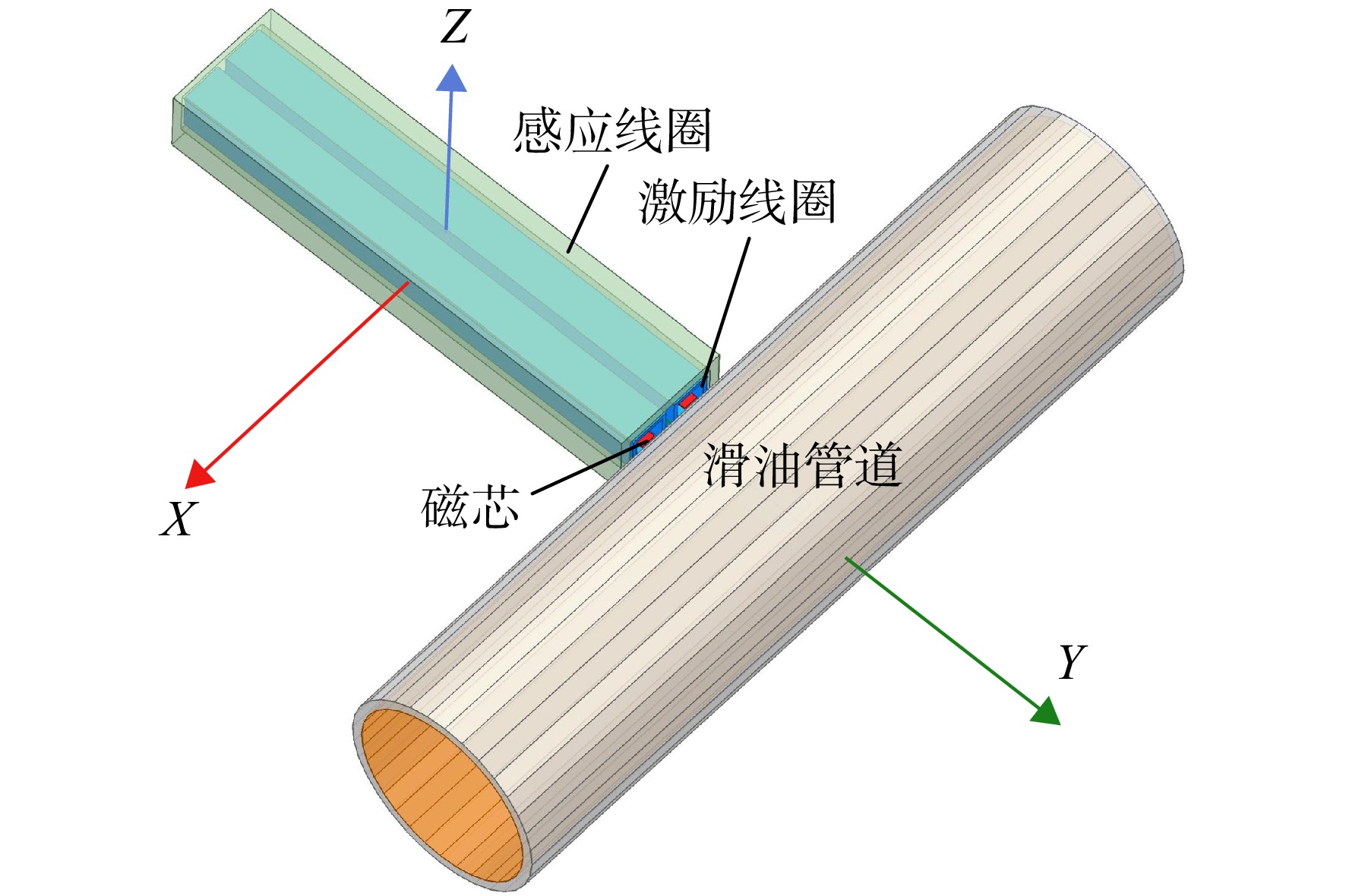
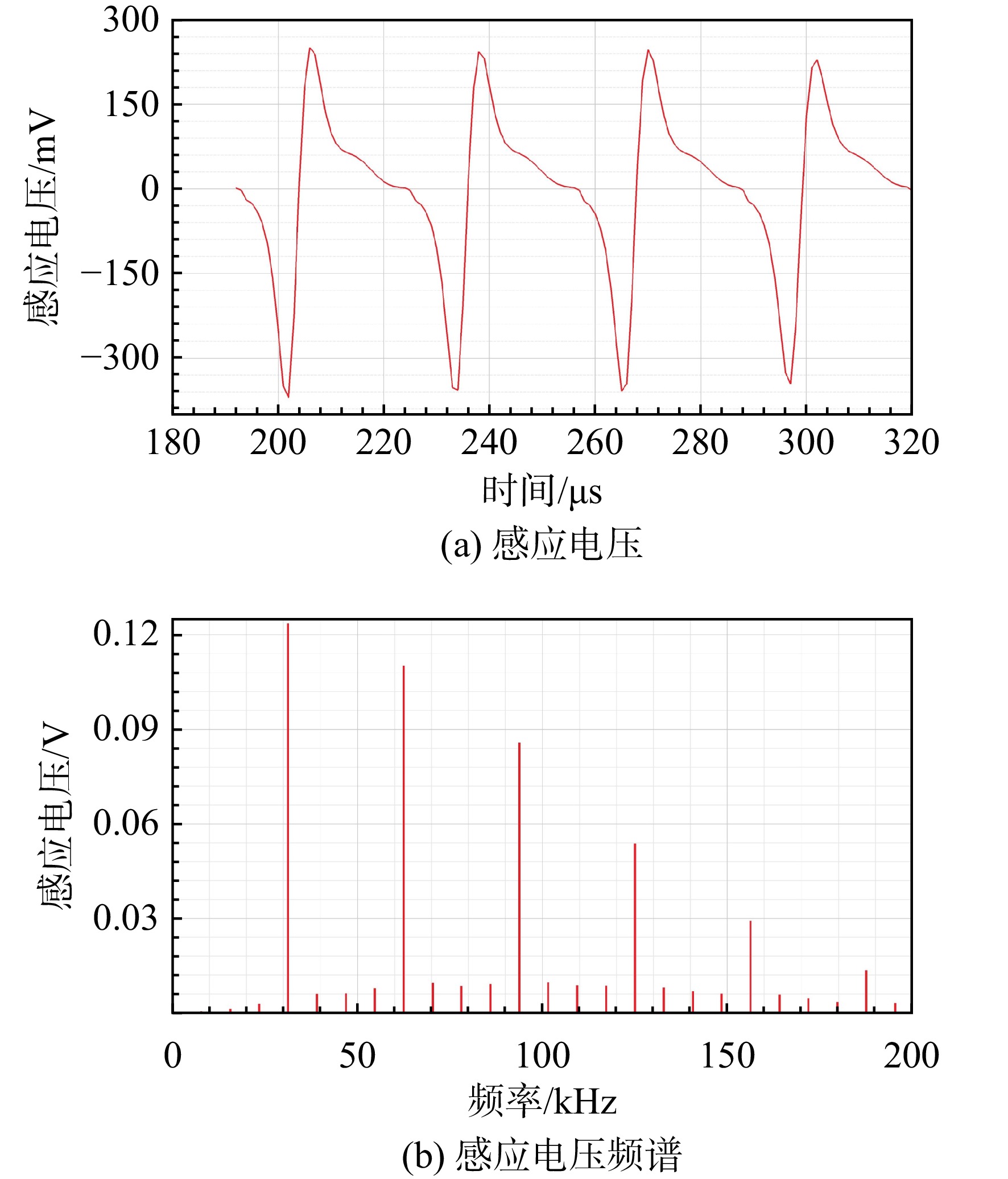
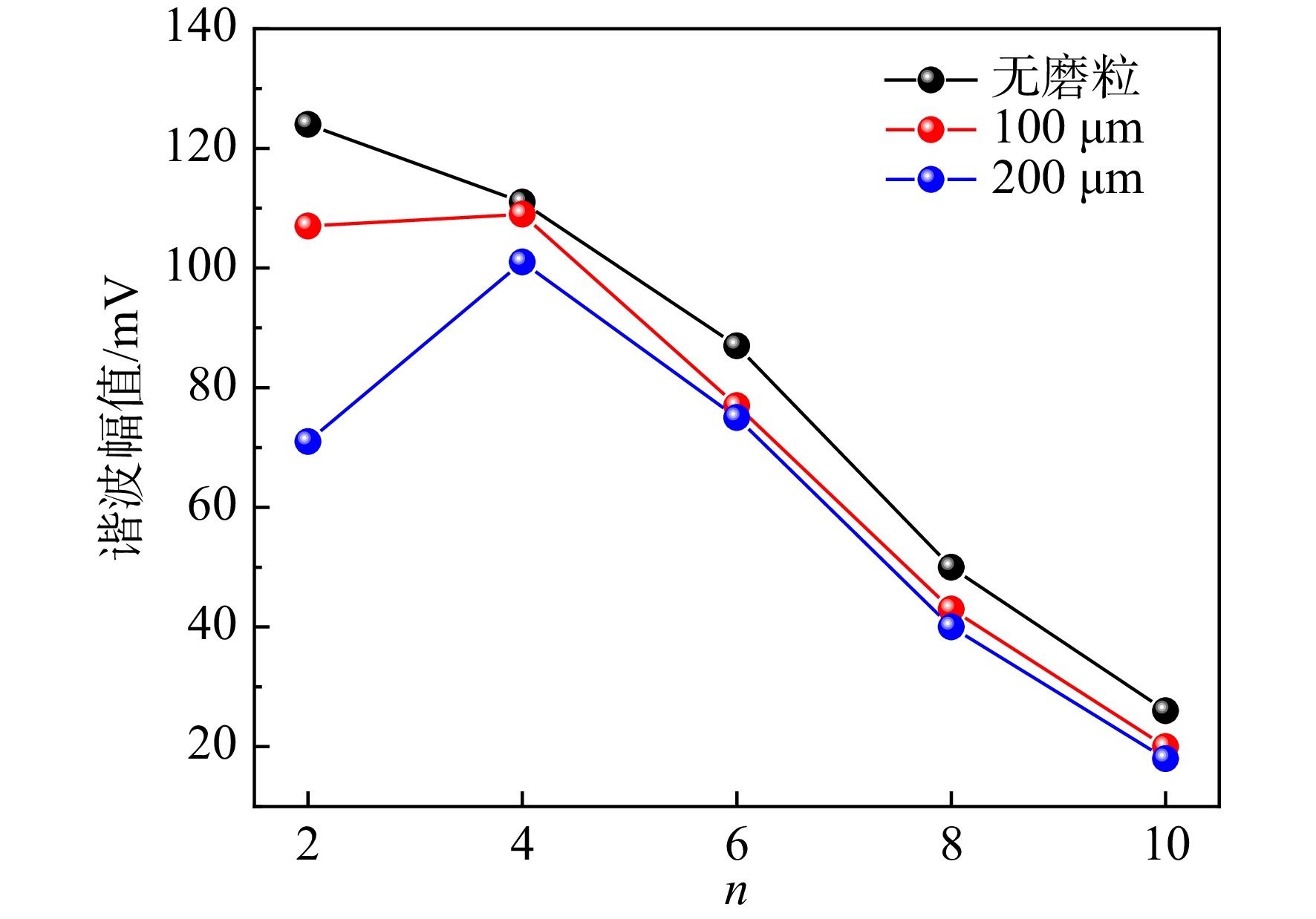
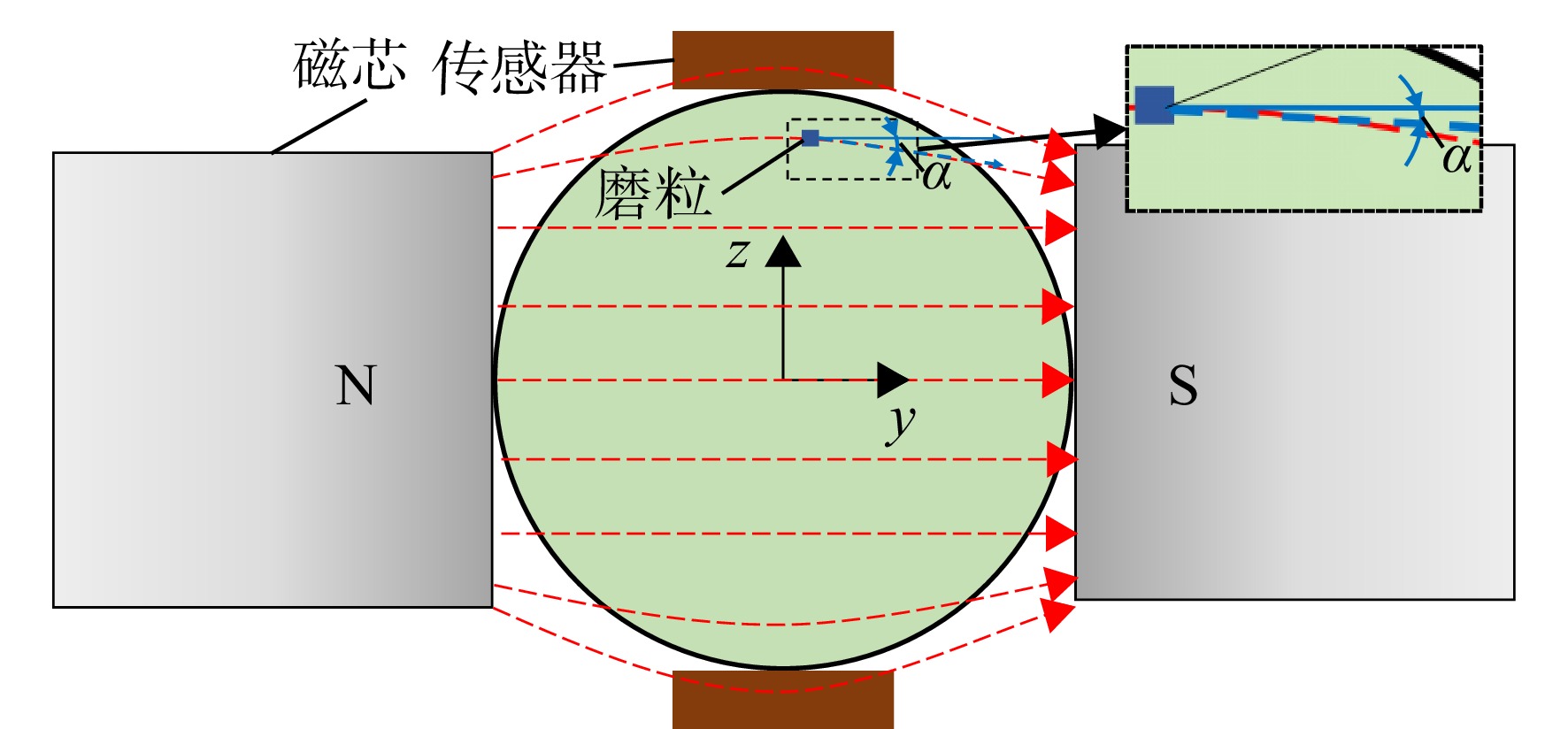
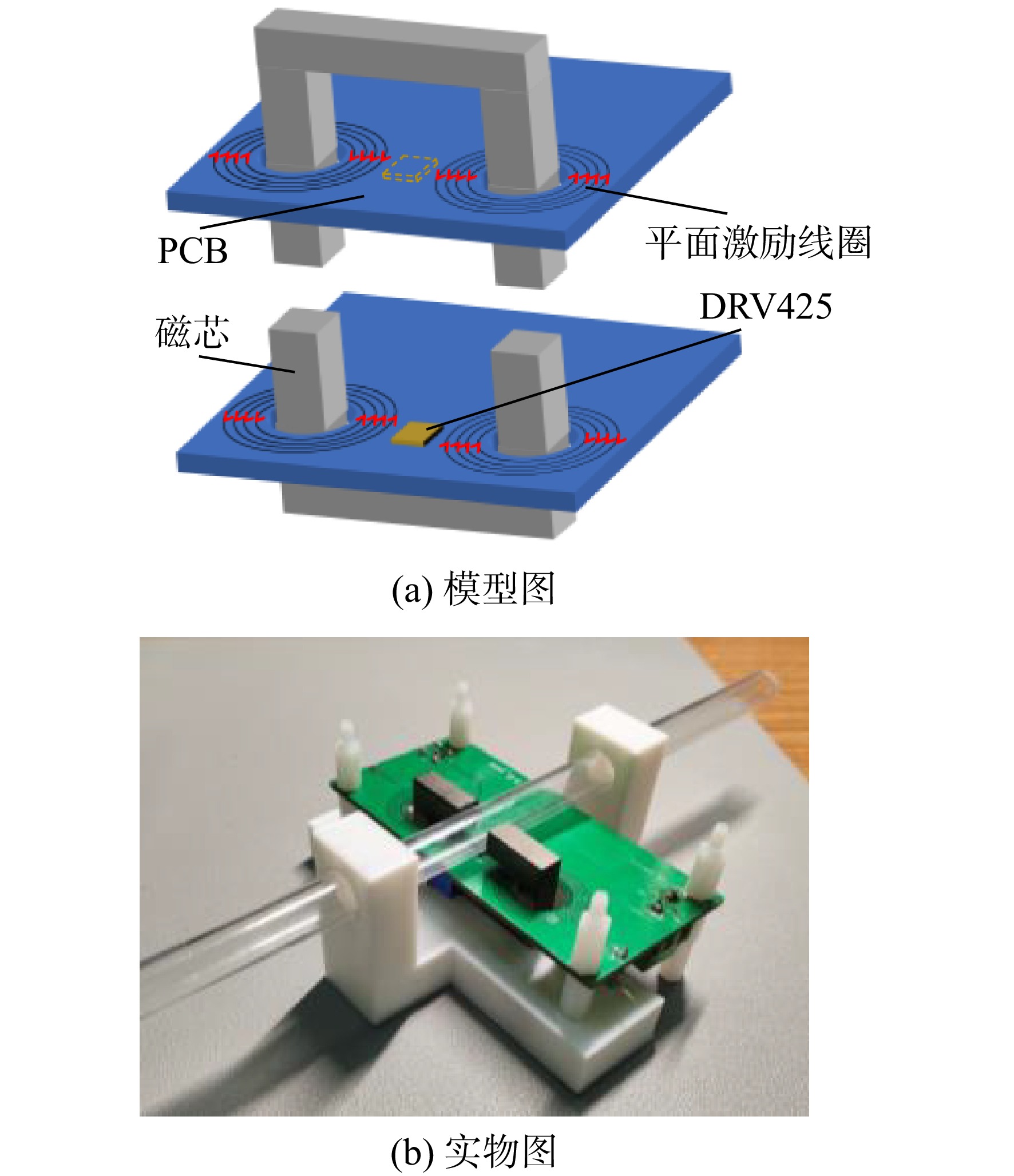
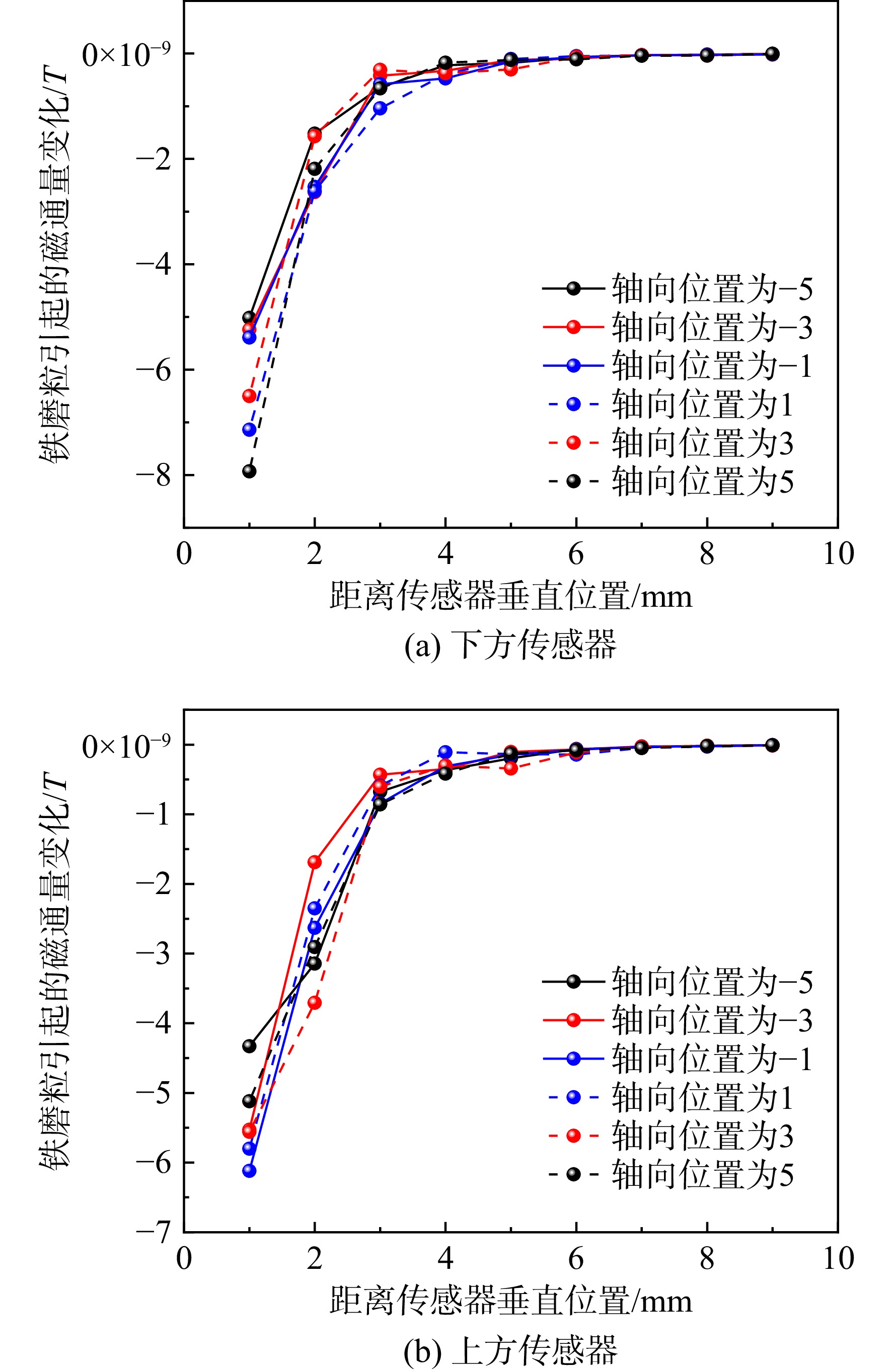
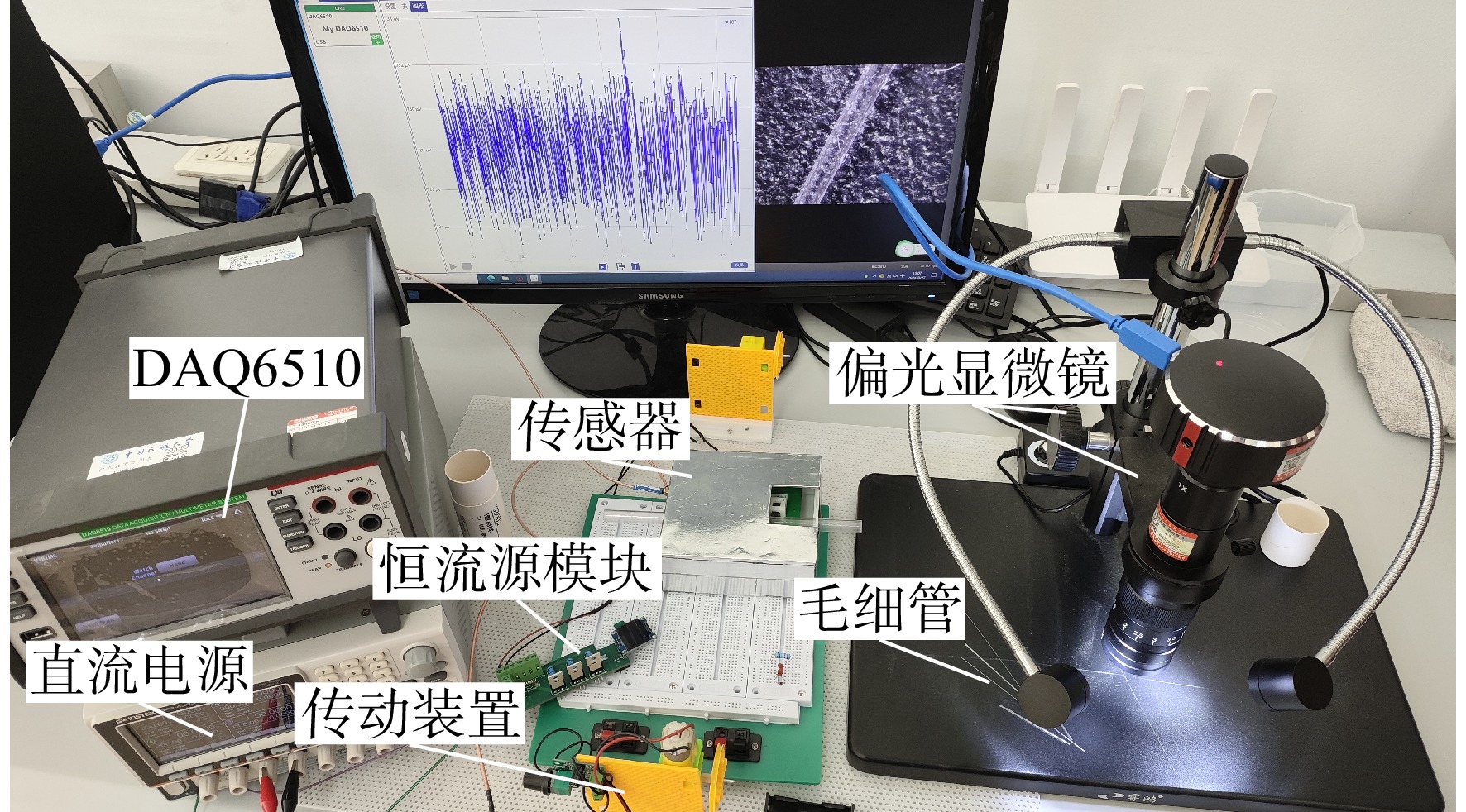
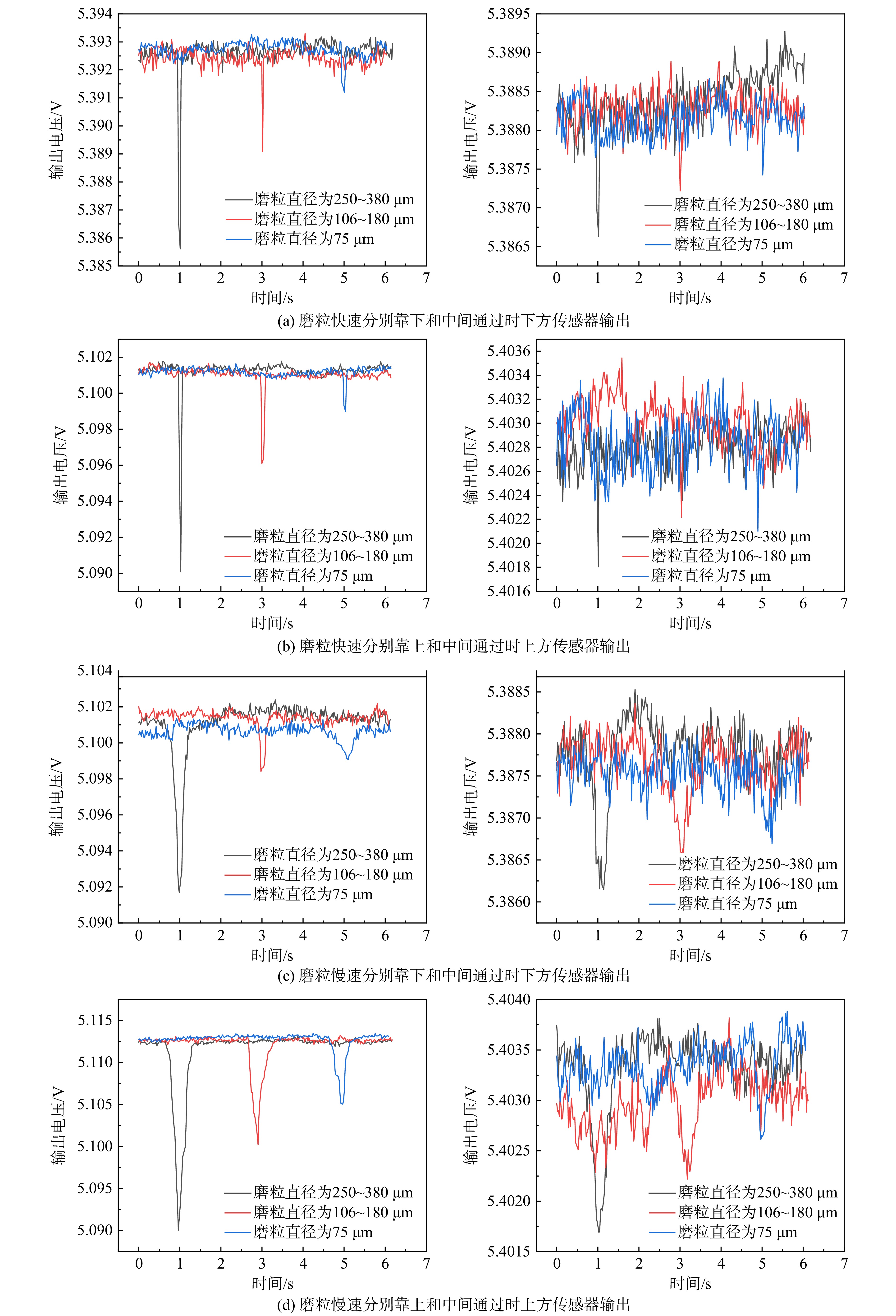
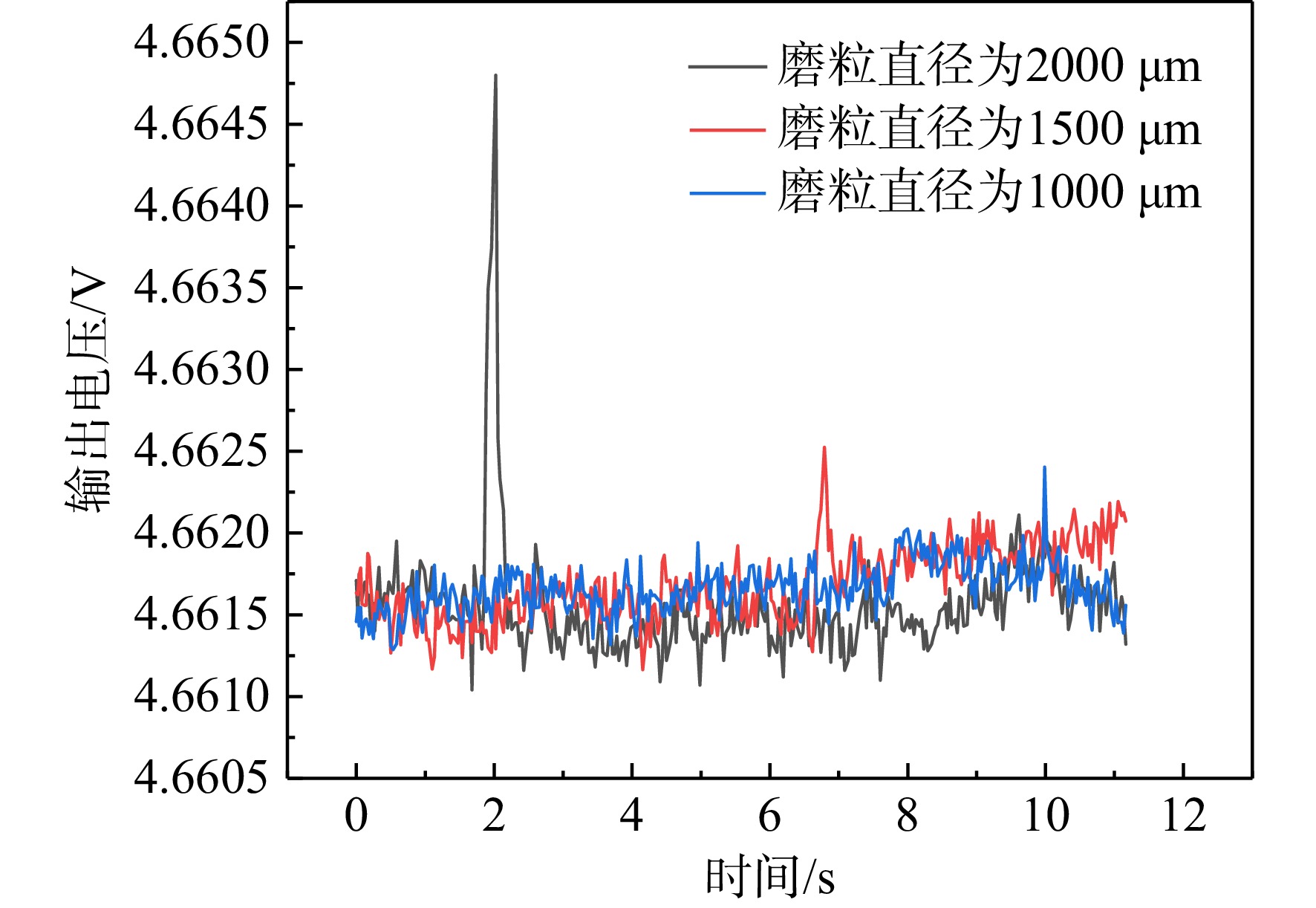
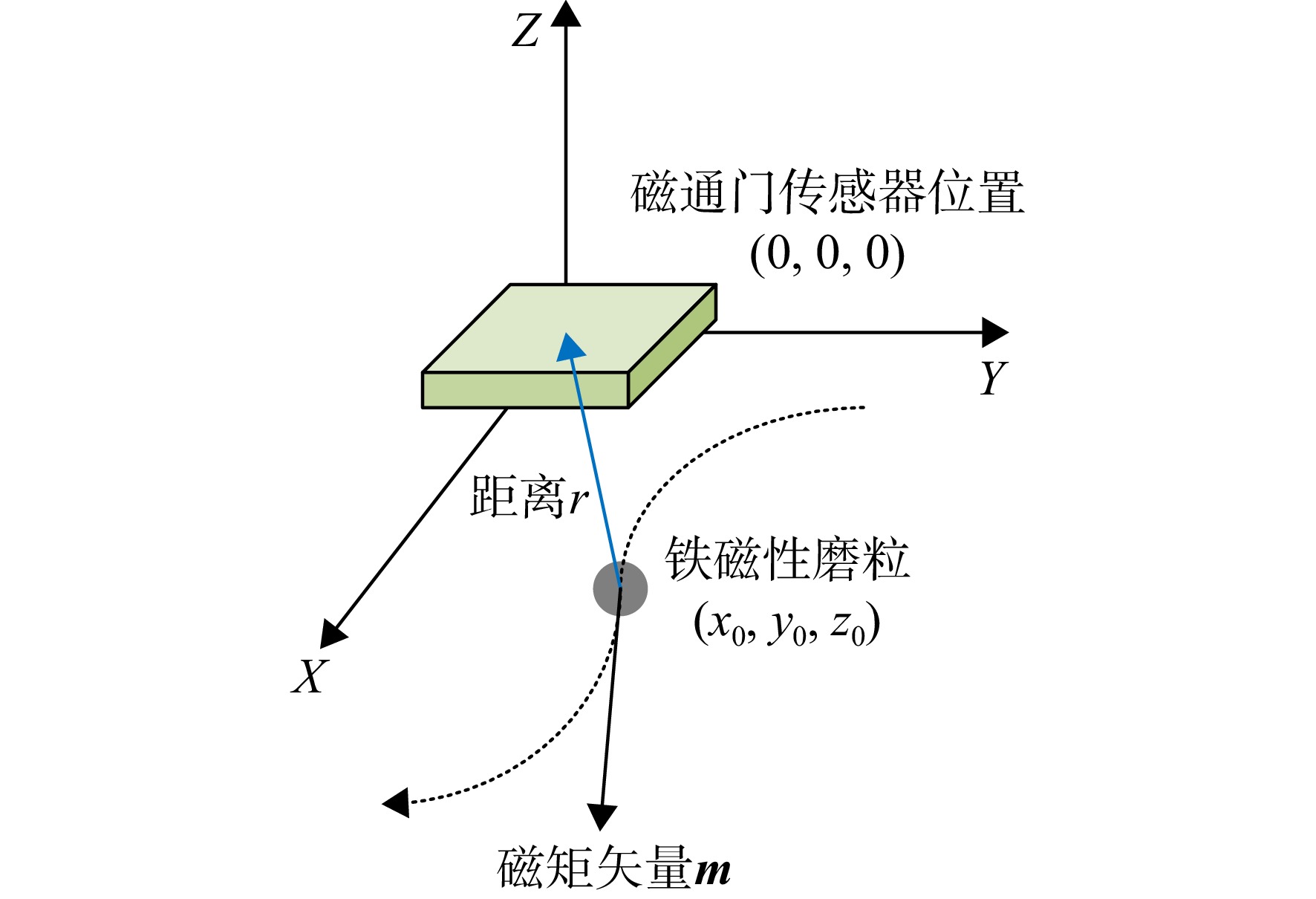
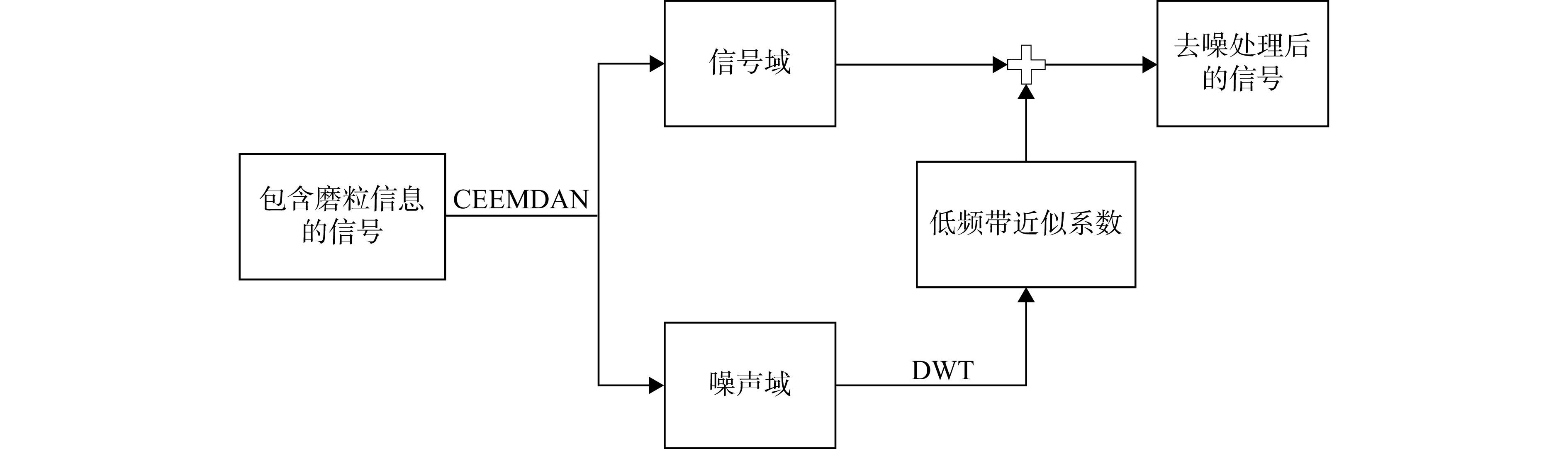
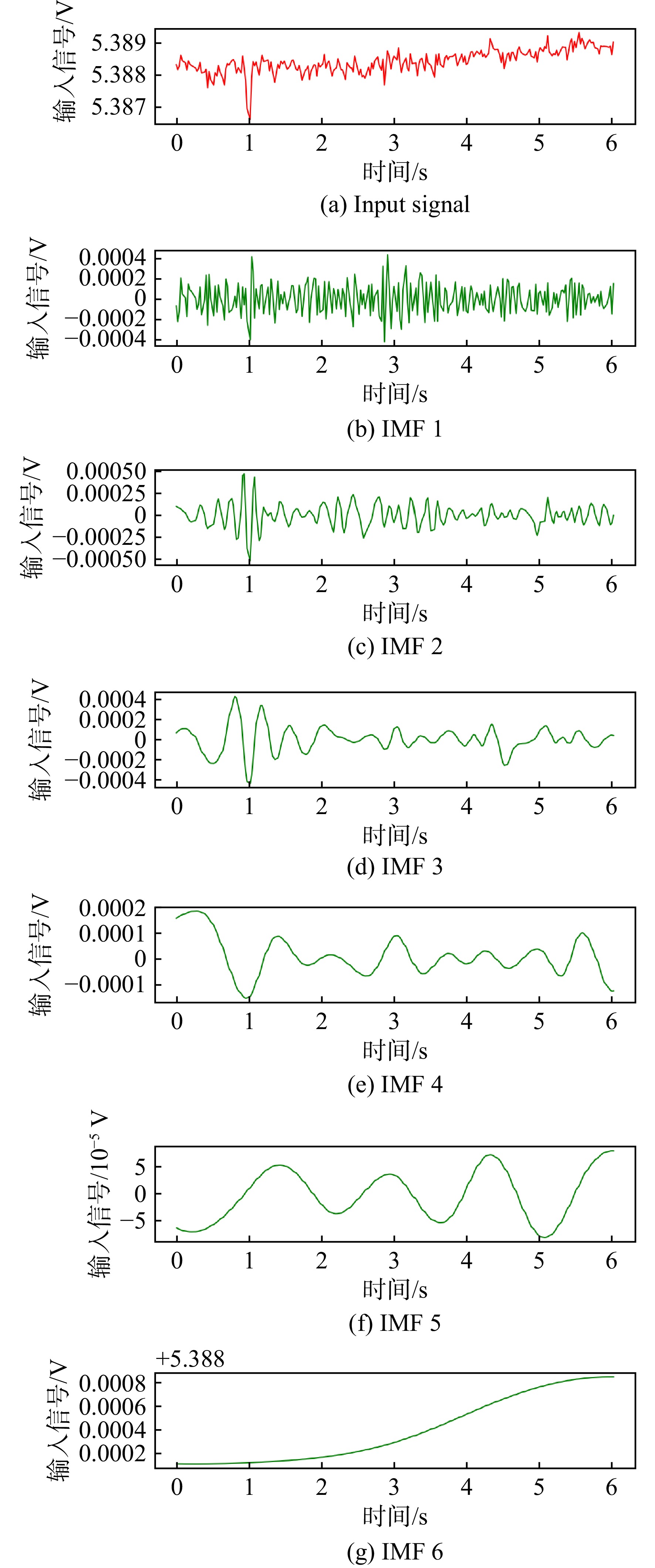
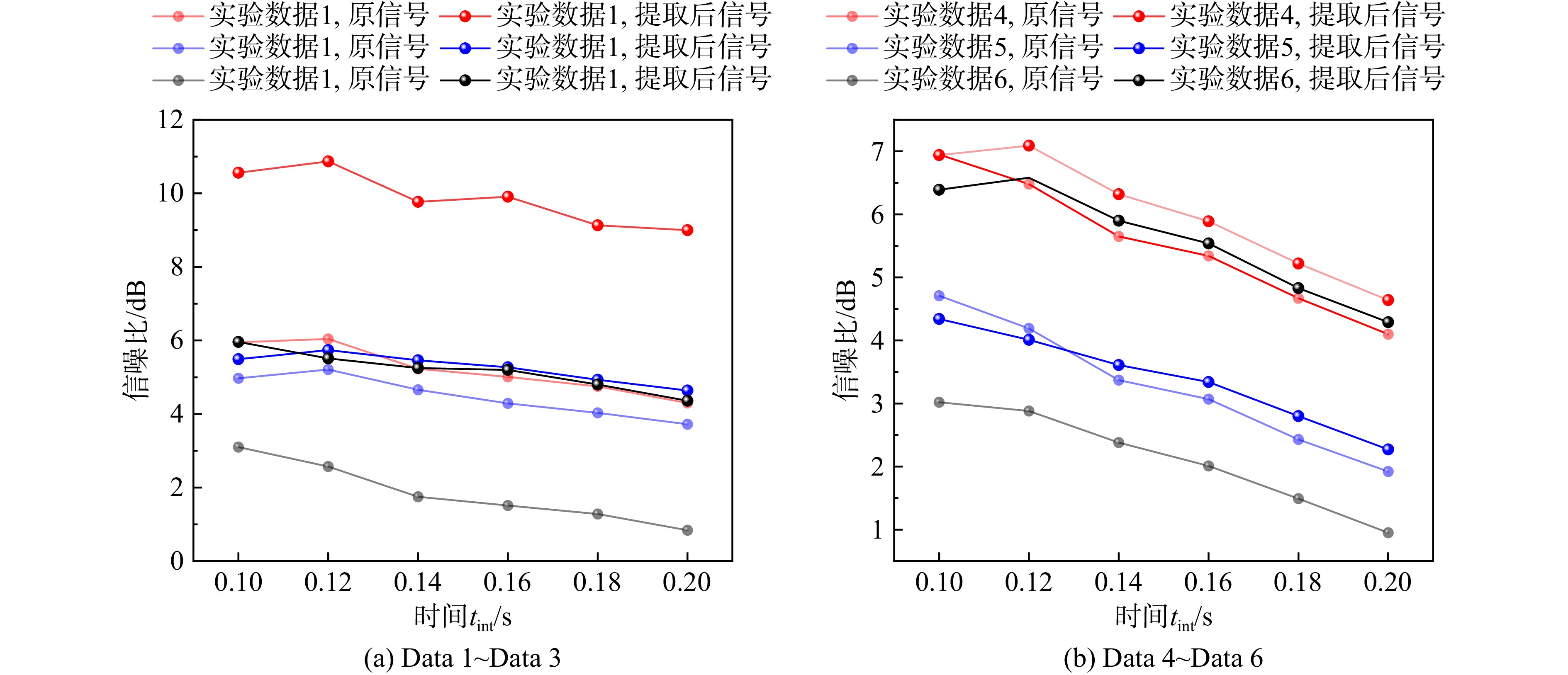
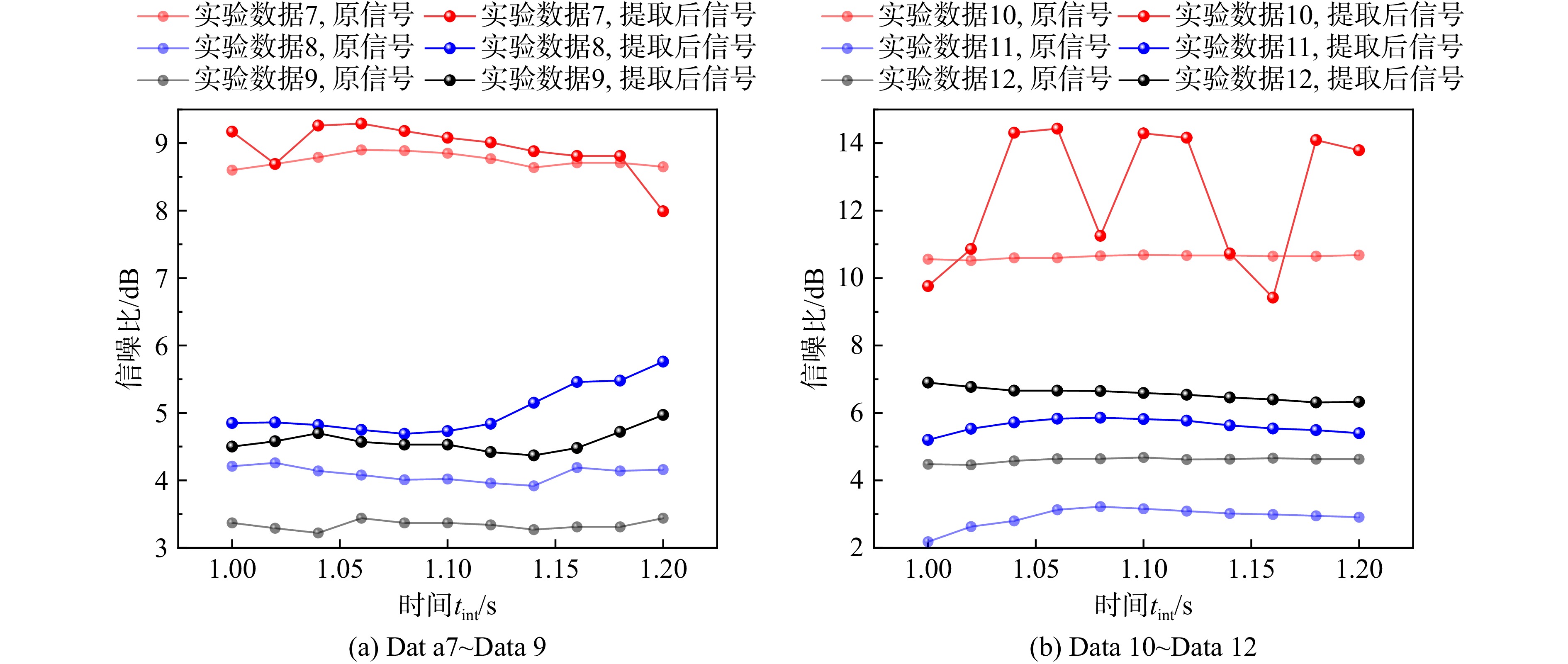
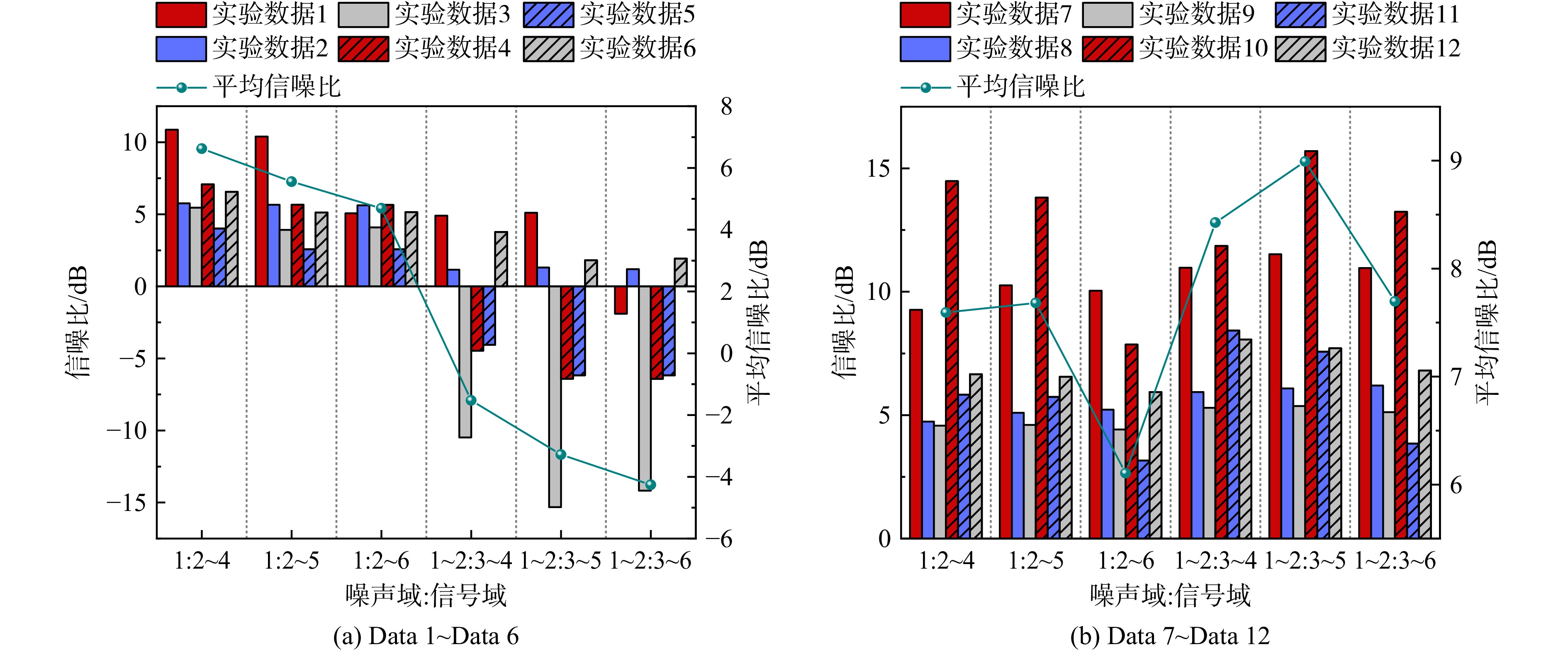
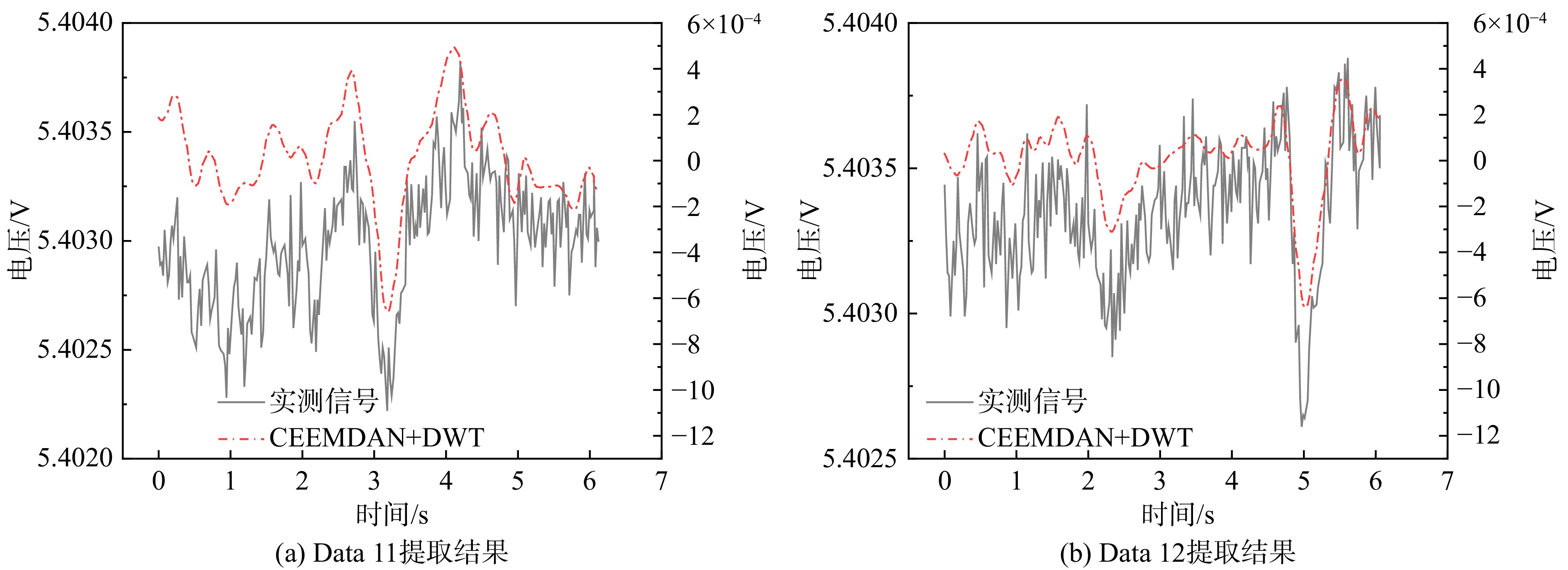
Online monitoring technology for oil debris is crucial for predicting and assessing wear failures in engine components. This paper designed a novel magnetic inductive sensor based on the principle of fluxgate. It converted the minute magnetic disturbances caused by wear debris into magnetic induction intensity variations, and further into measurable induced voltage signals. To detect the weak debris signals effectively, we proposed a method combining complete ensemble empirical mode decomposition with adaptive noise (CEEMDAN) and discrete wavelet transform (DWT) for extracting weak magnetic anomaly signals of debris. The CEEMDAN algorithm addressed the mode mixing issue in empirical mode decomposition (EMD) by adding adaptive white noise, thereby enhanced the accuracy and stability of decomposition. In addition, with the multi-scale analysis capability of DWT, the weak magnetic anomaly signals buried in noise were captured and extracted effectively. Prototype experiment results indicated that after extraction, the measured data of wear debris passing near the center of the pipeline (which is further from the sensor and has lower SNR) exhibited SNR enhancements ranging from 1 to 10 dB. With a signal fidelity range of 0.6 to 0.9, the denoising gain ranges from 0.5 to 1.

Load/environment spectrum driven hybrid life prediction approach for in-service HPT blades
SHI Lizhong, ZHANG Qian
2026, 41(8): 20250318. doi: 10.13224/j.cnki.jasp.20250318
Abstract:

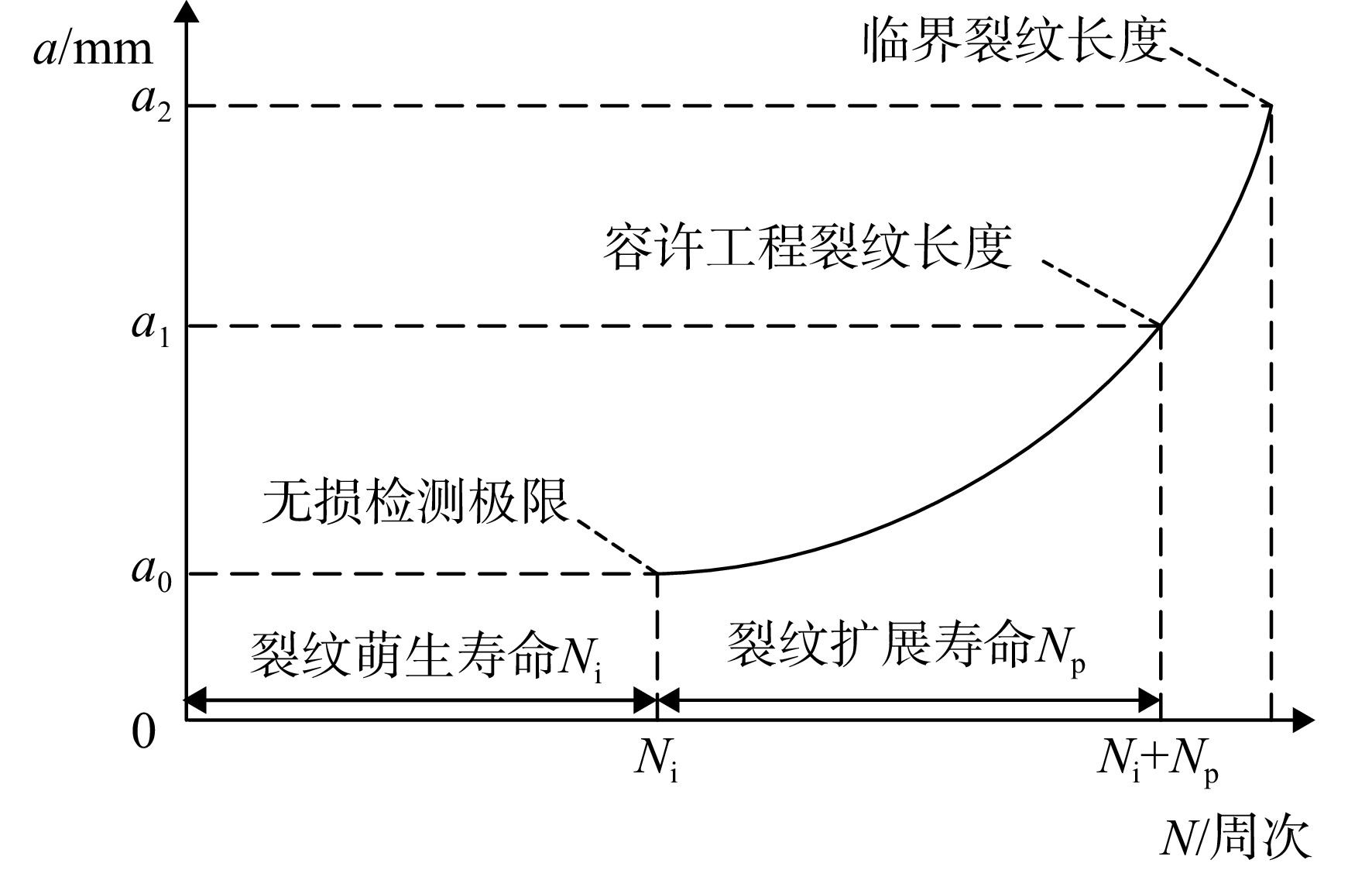
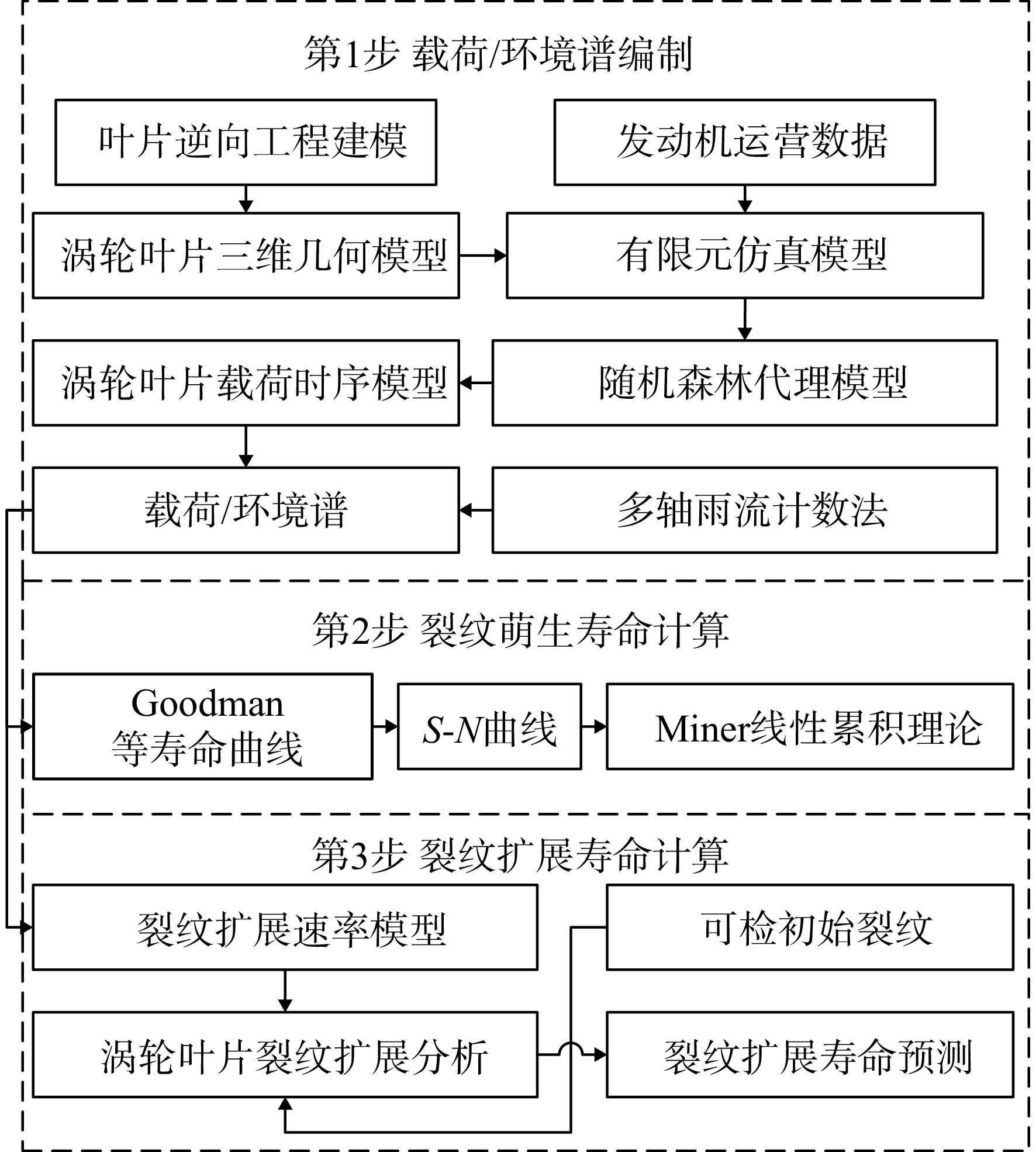
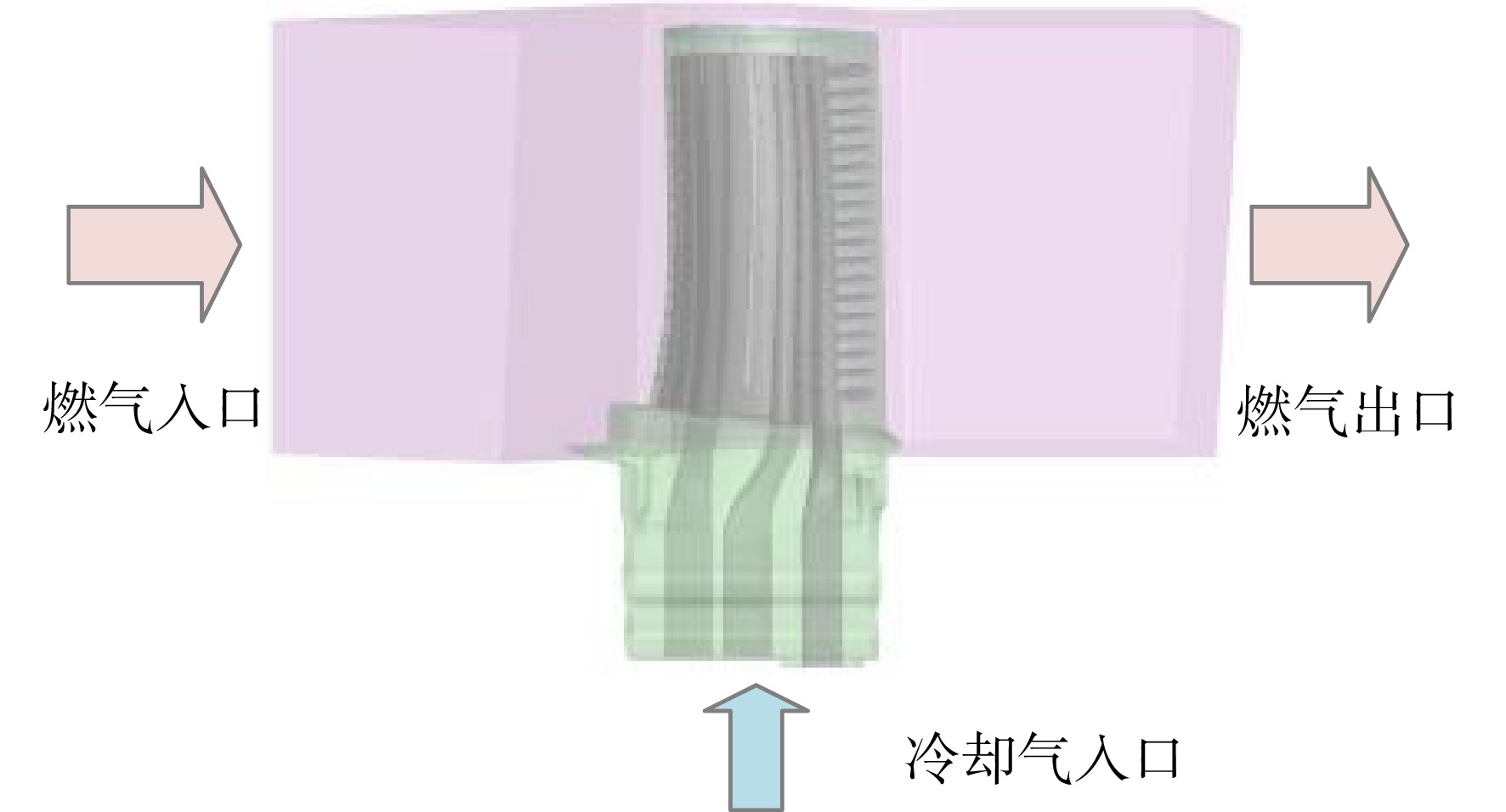
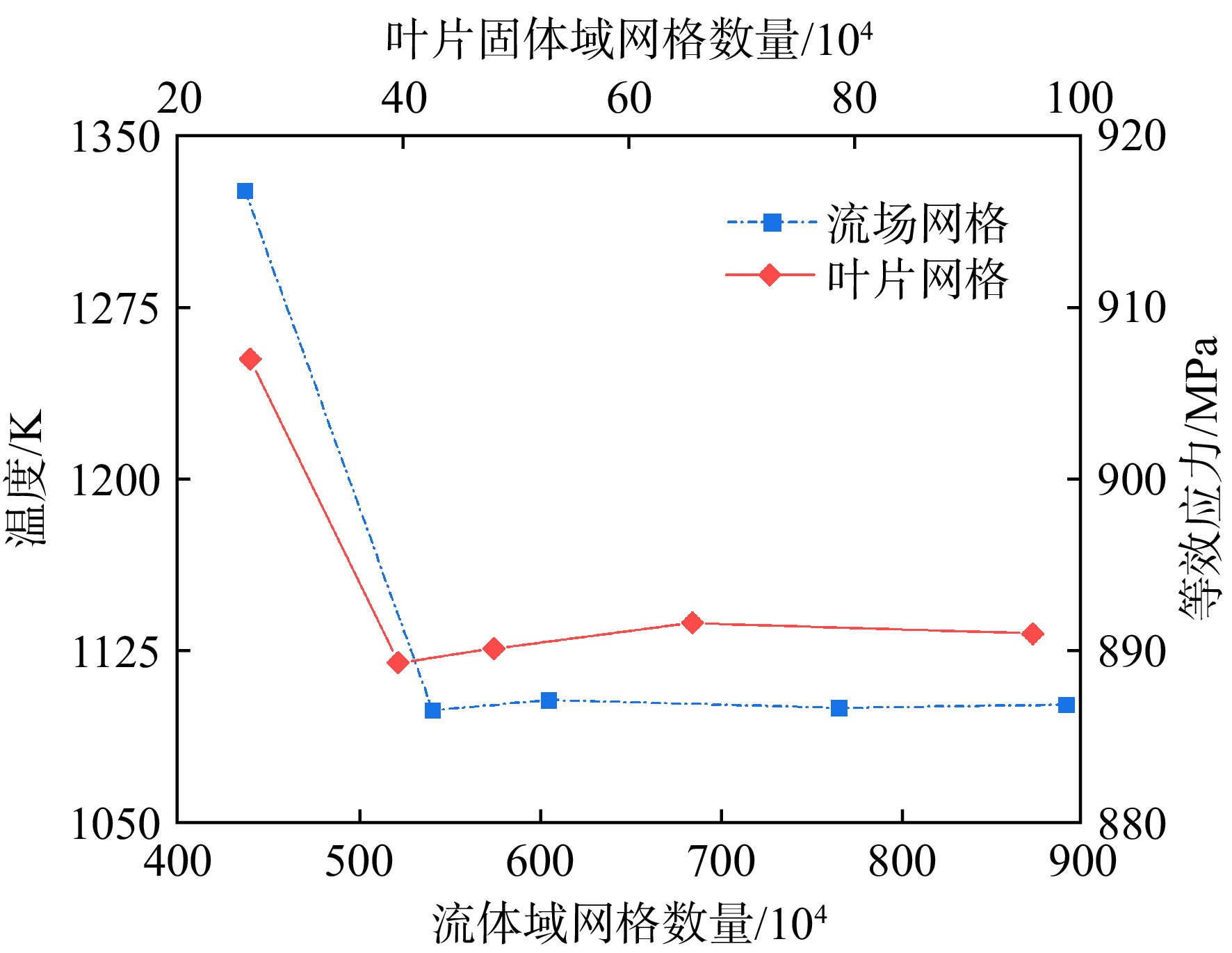
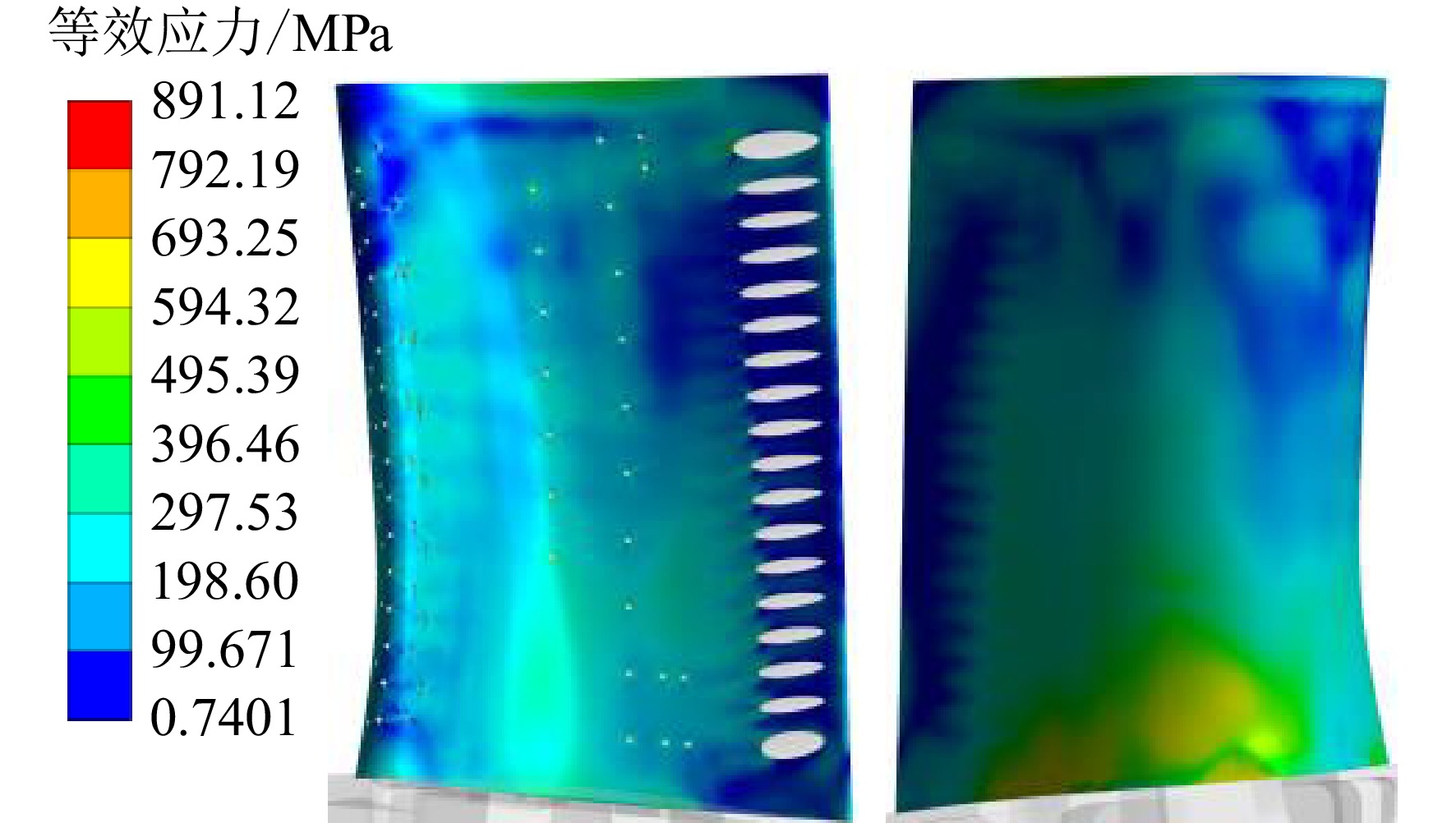
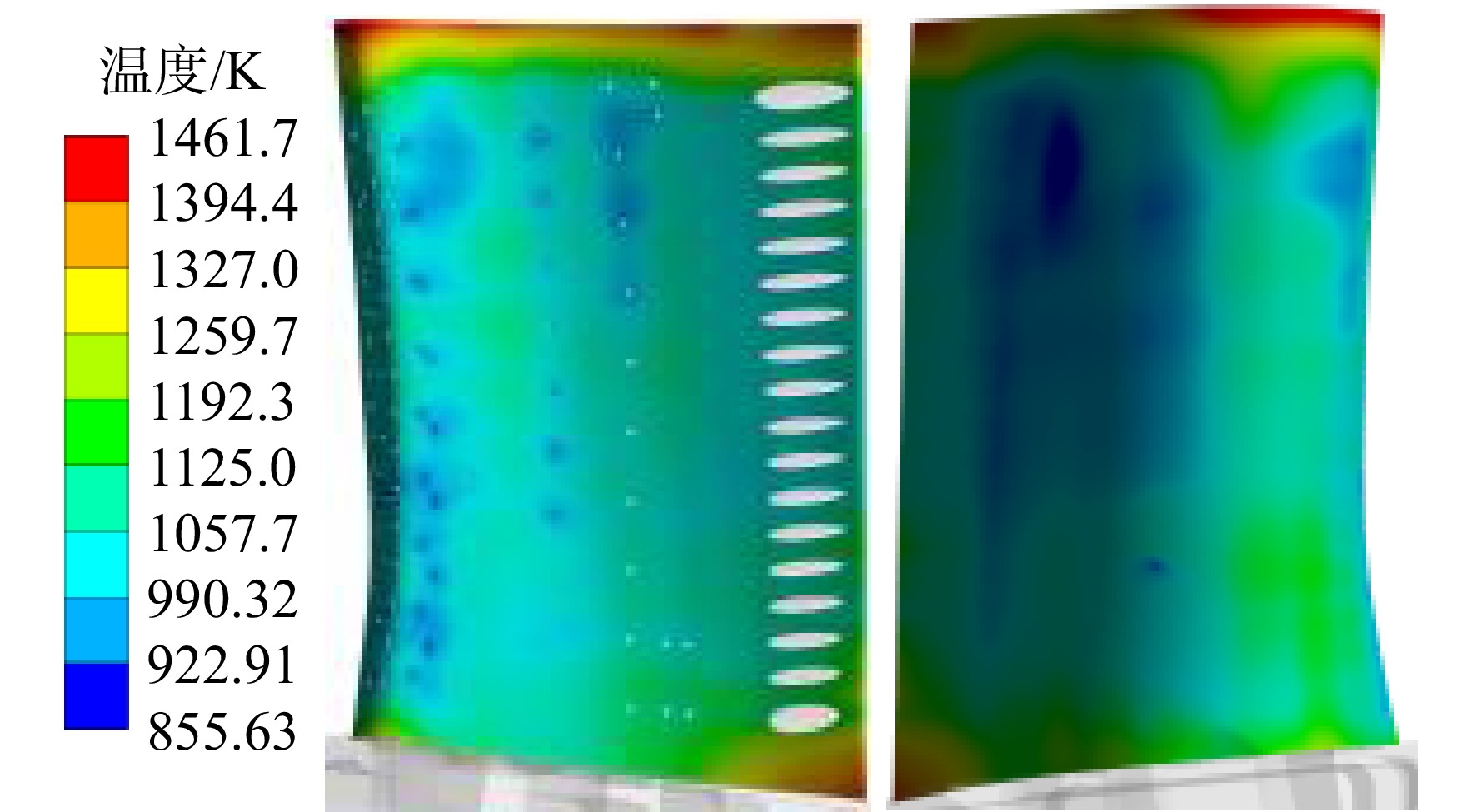
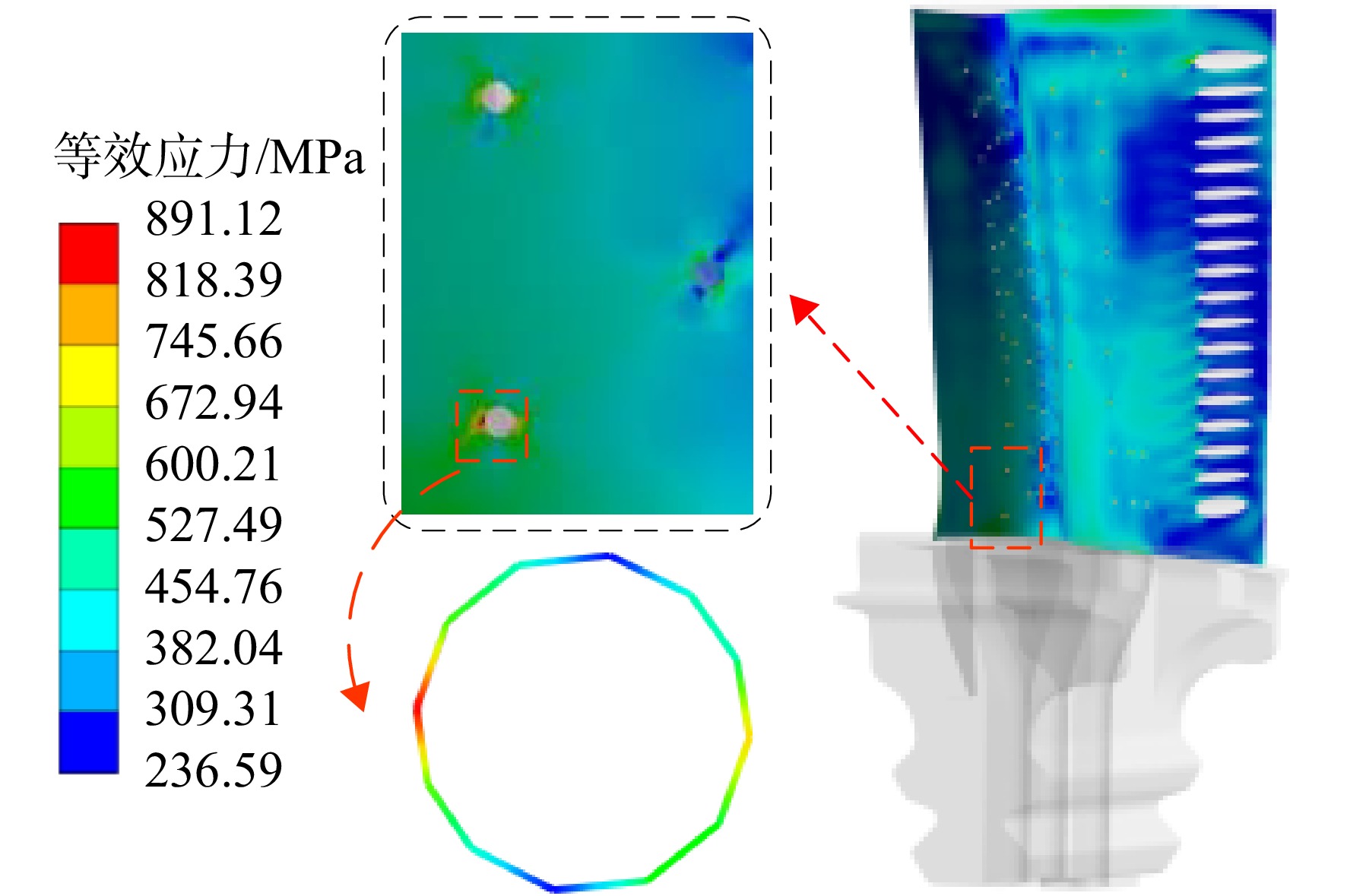
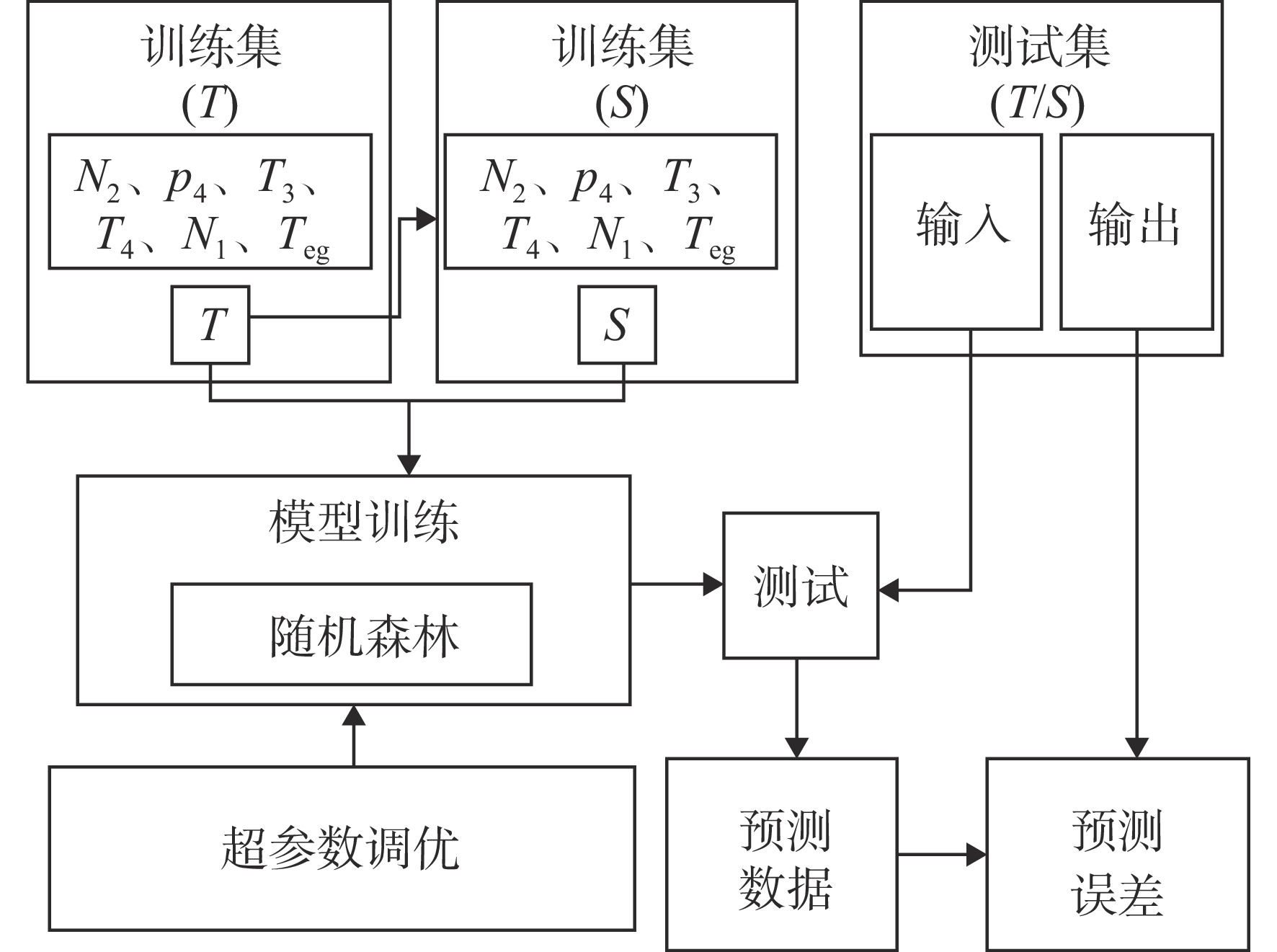
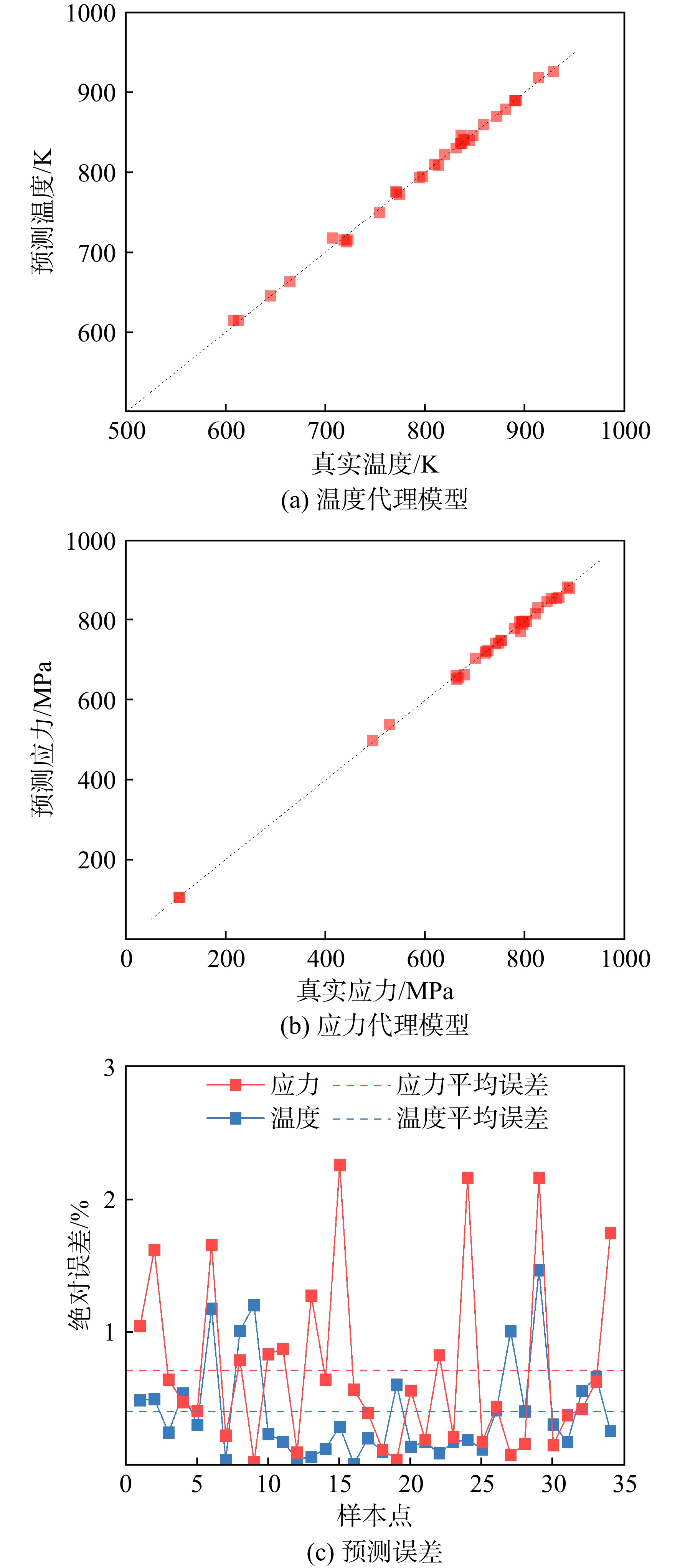
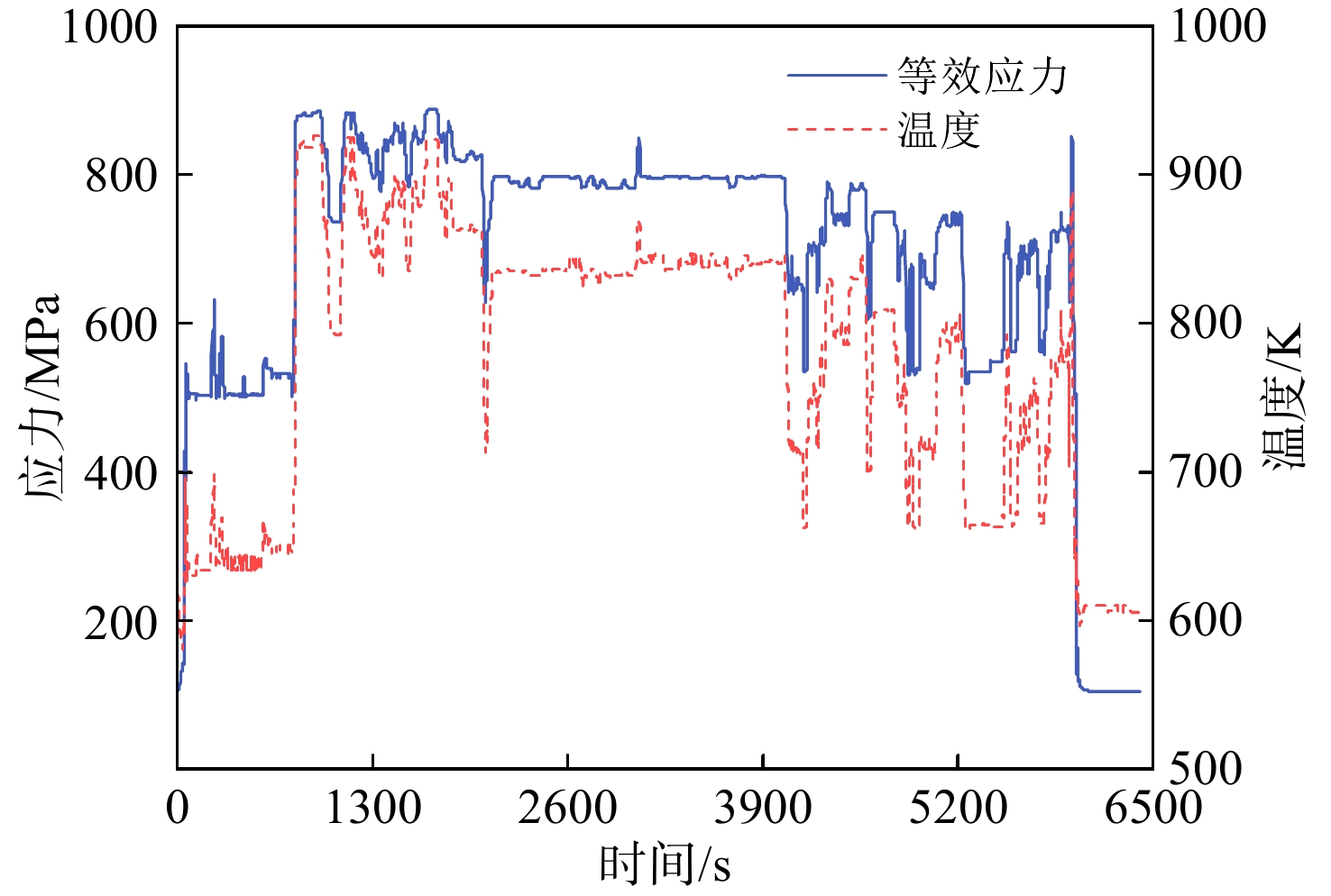
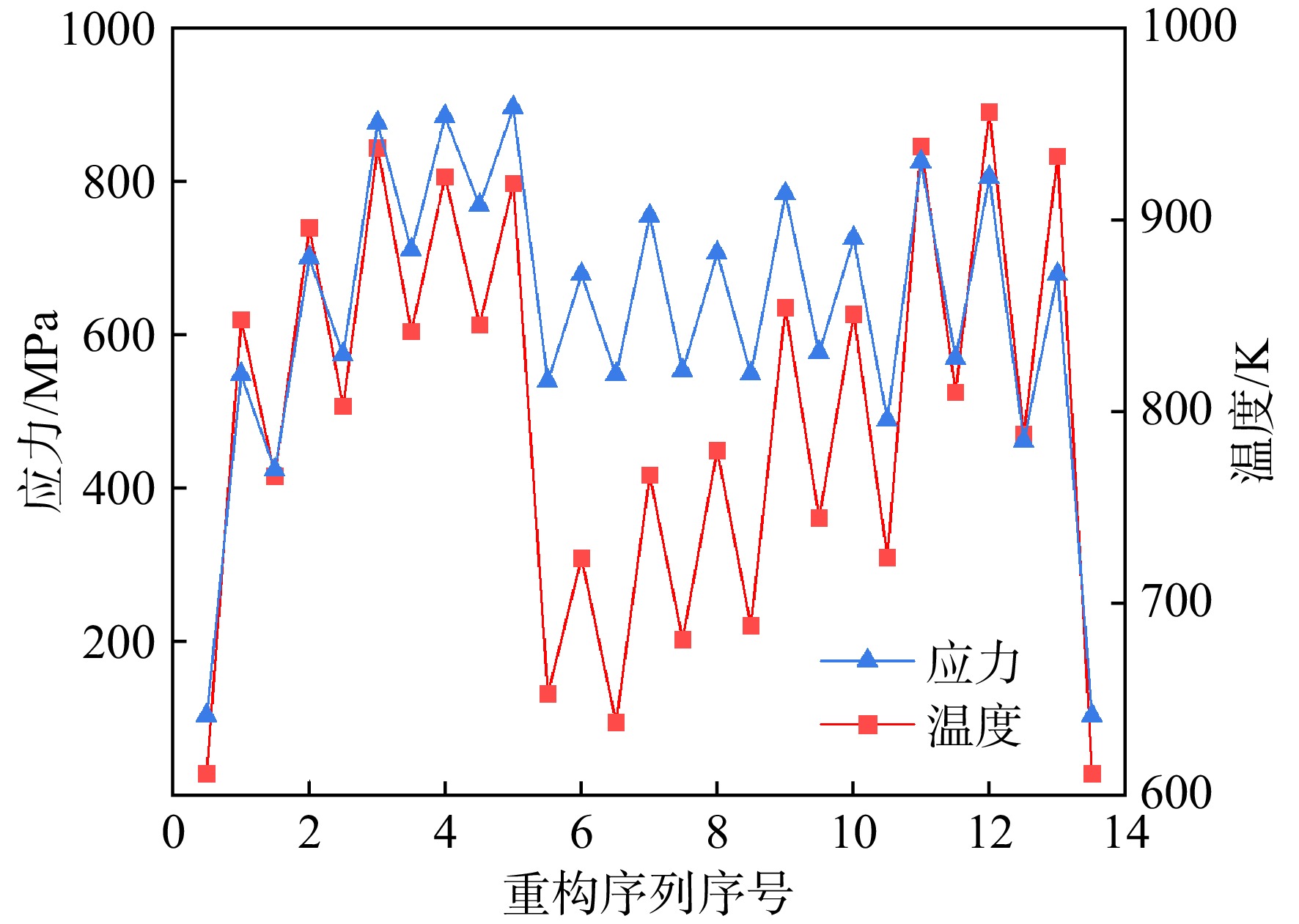
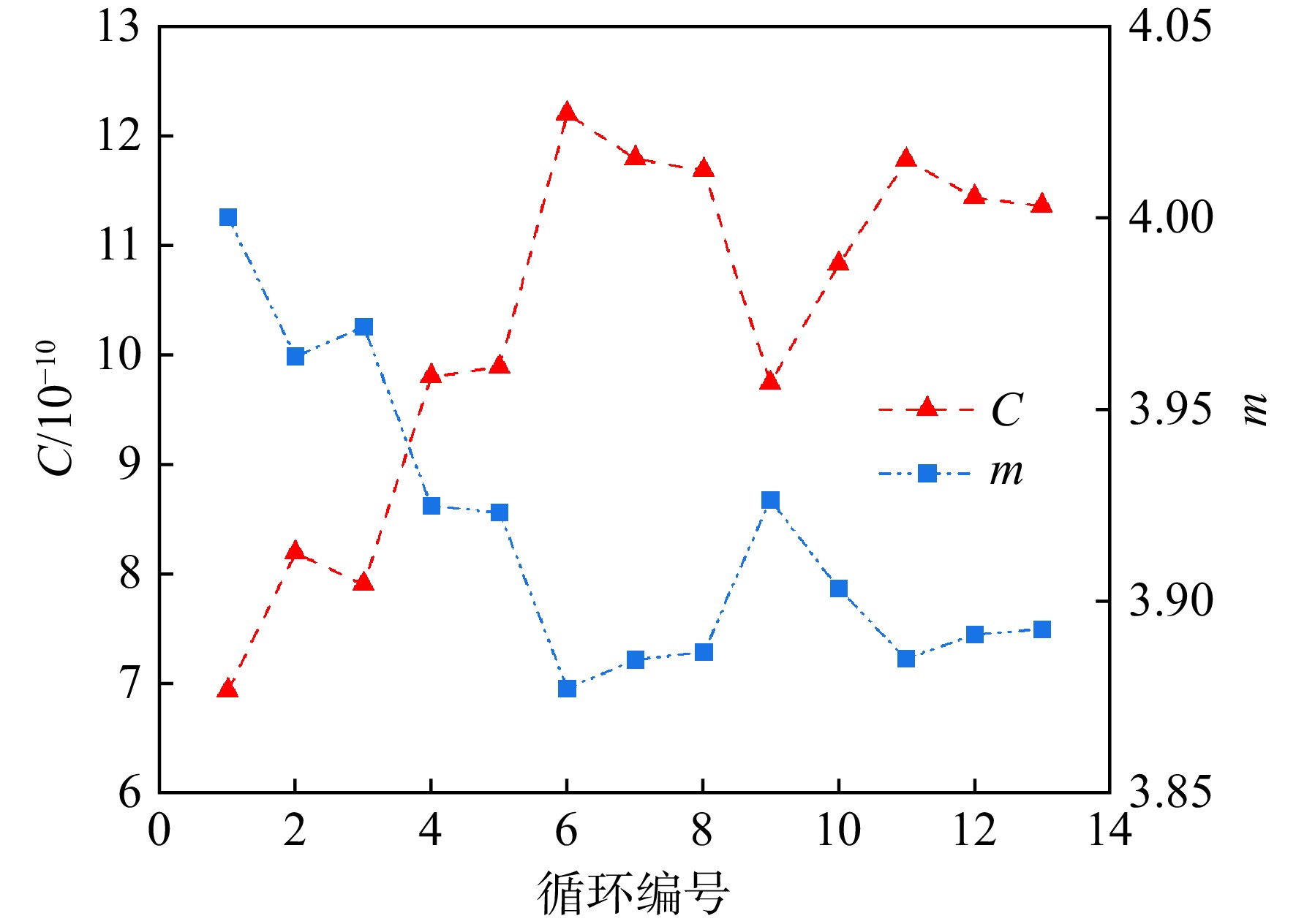
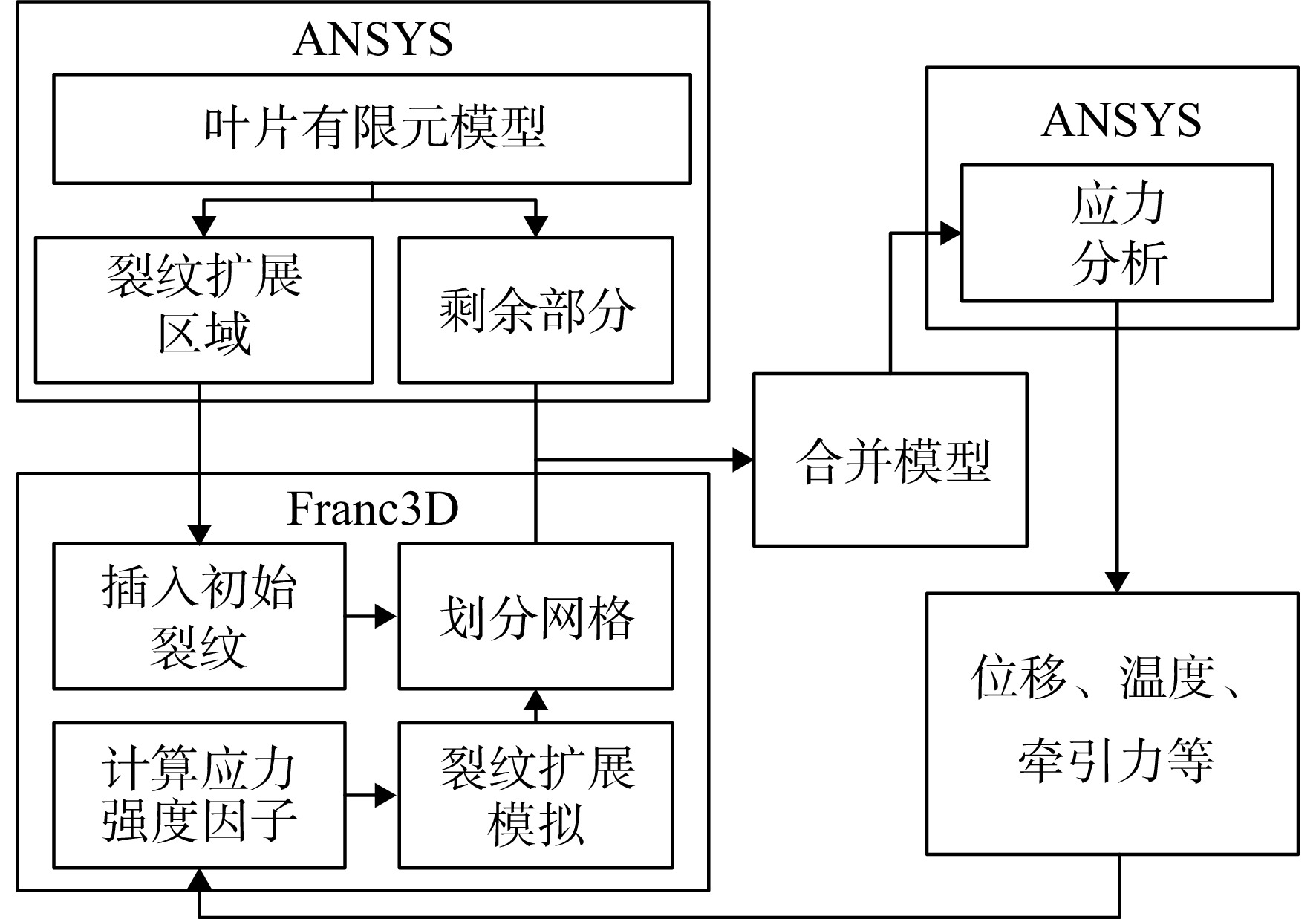
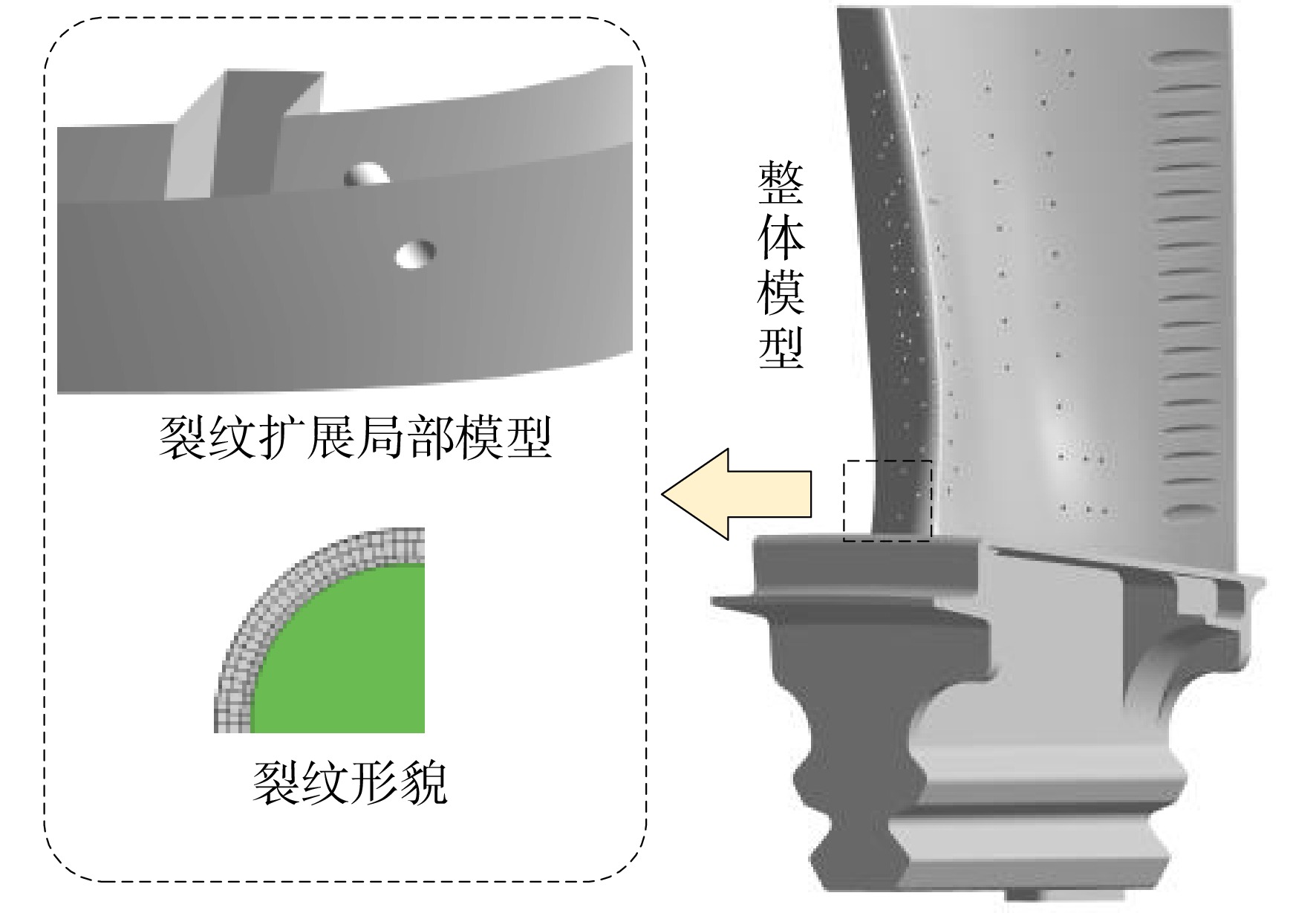
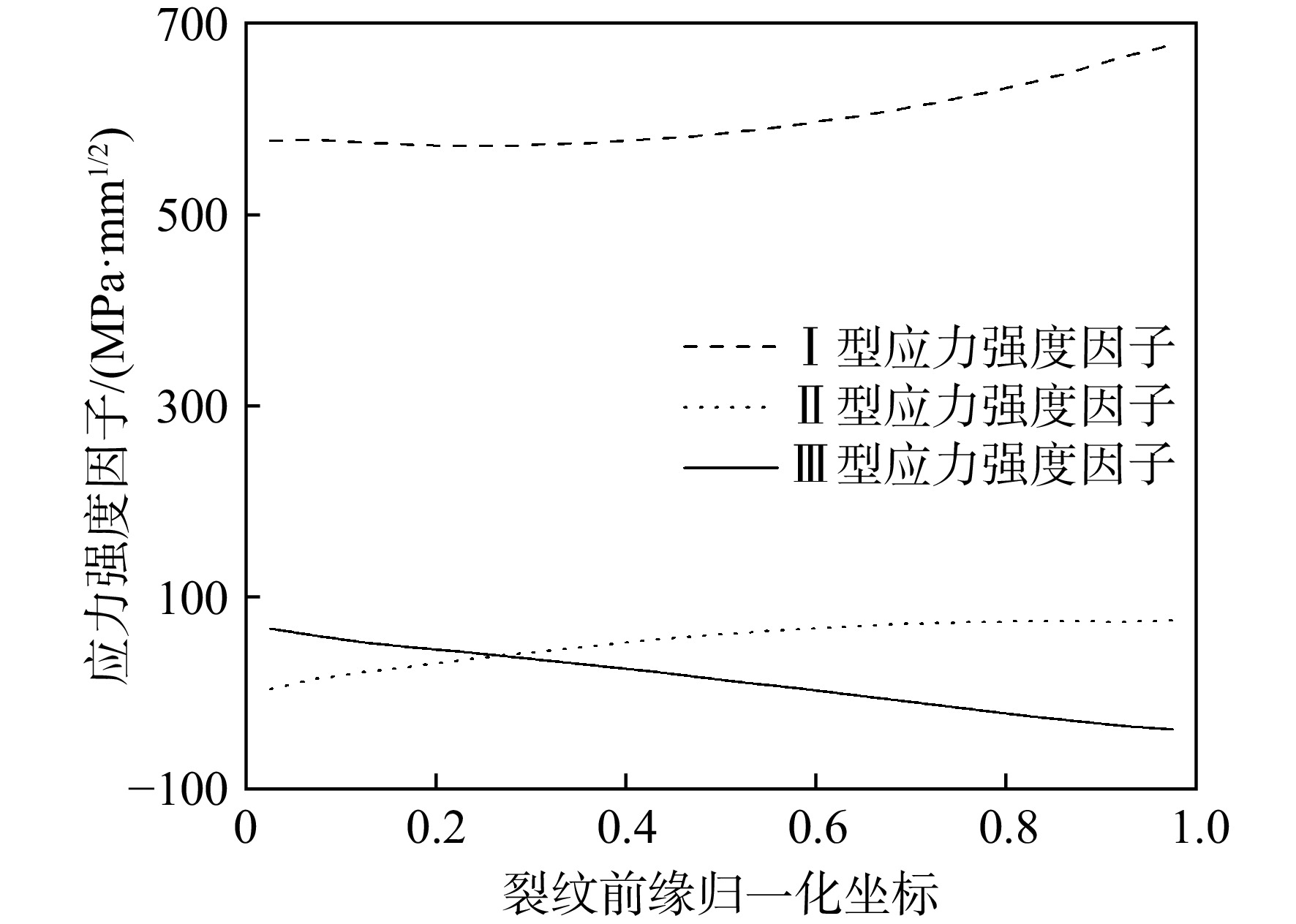
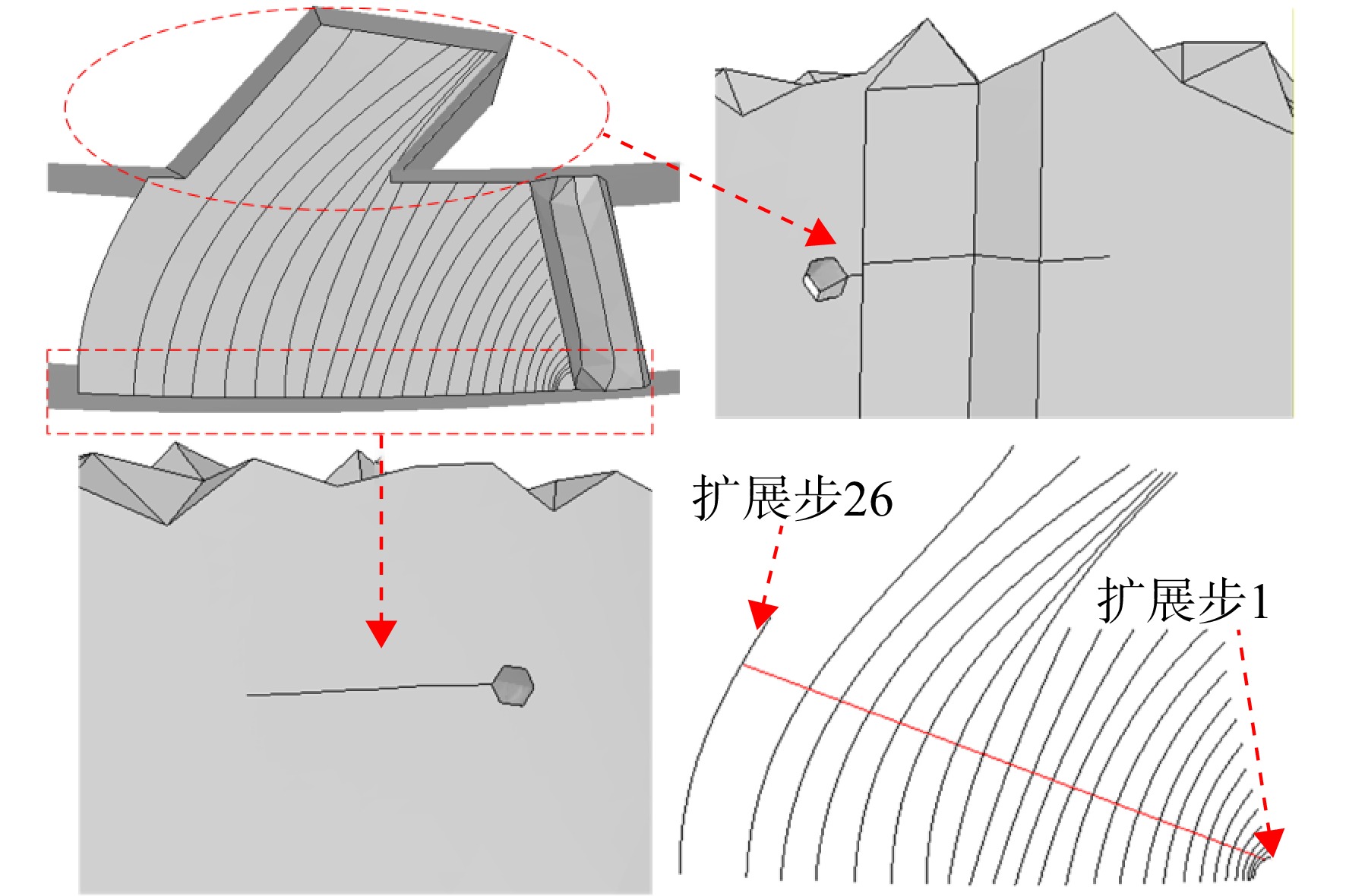
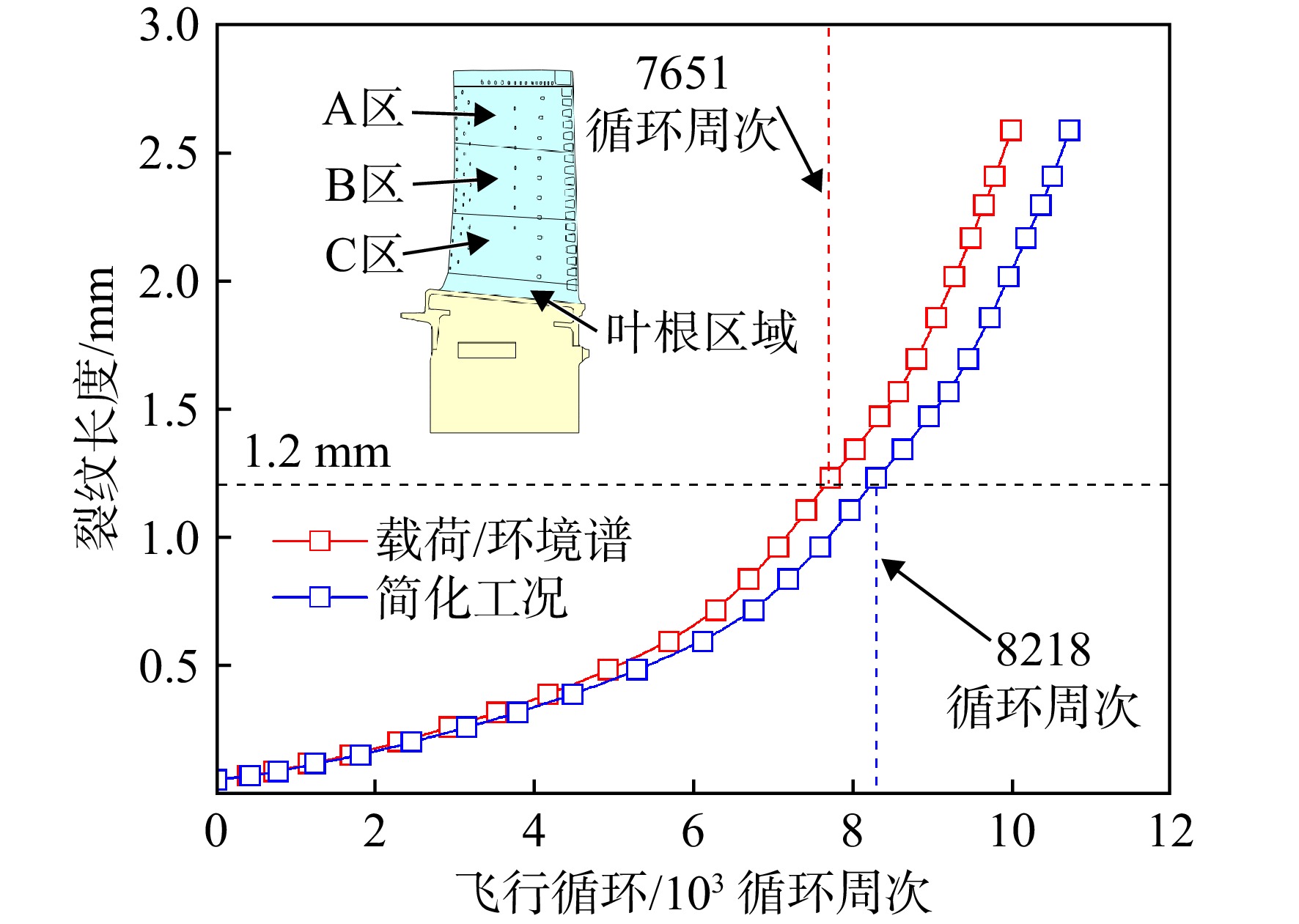
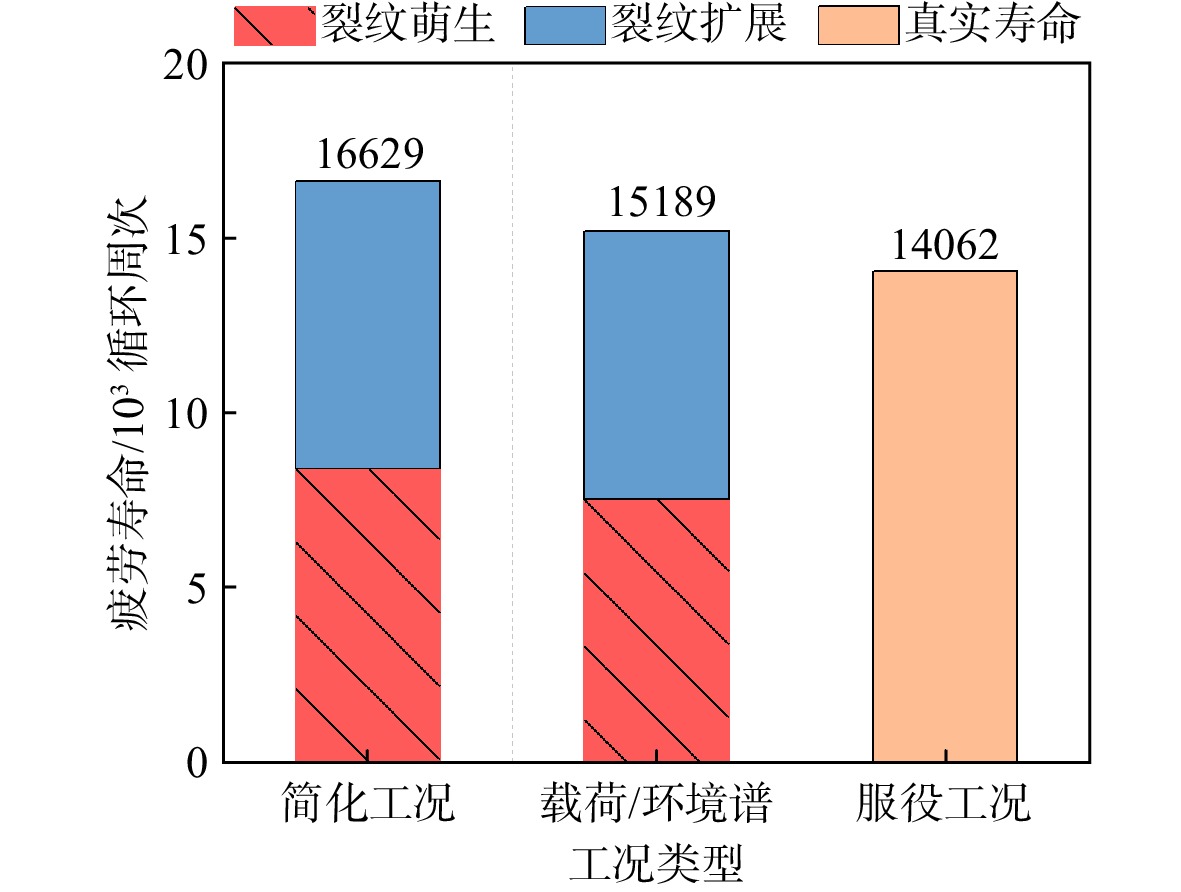
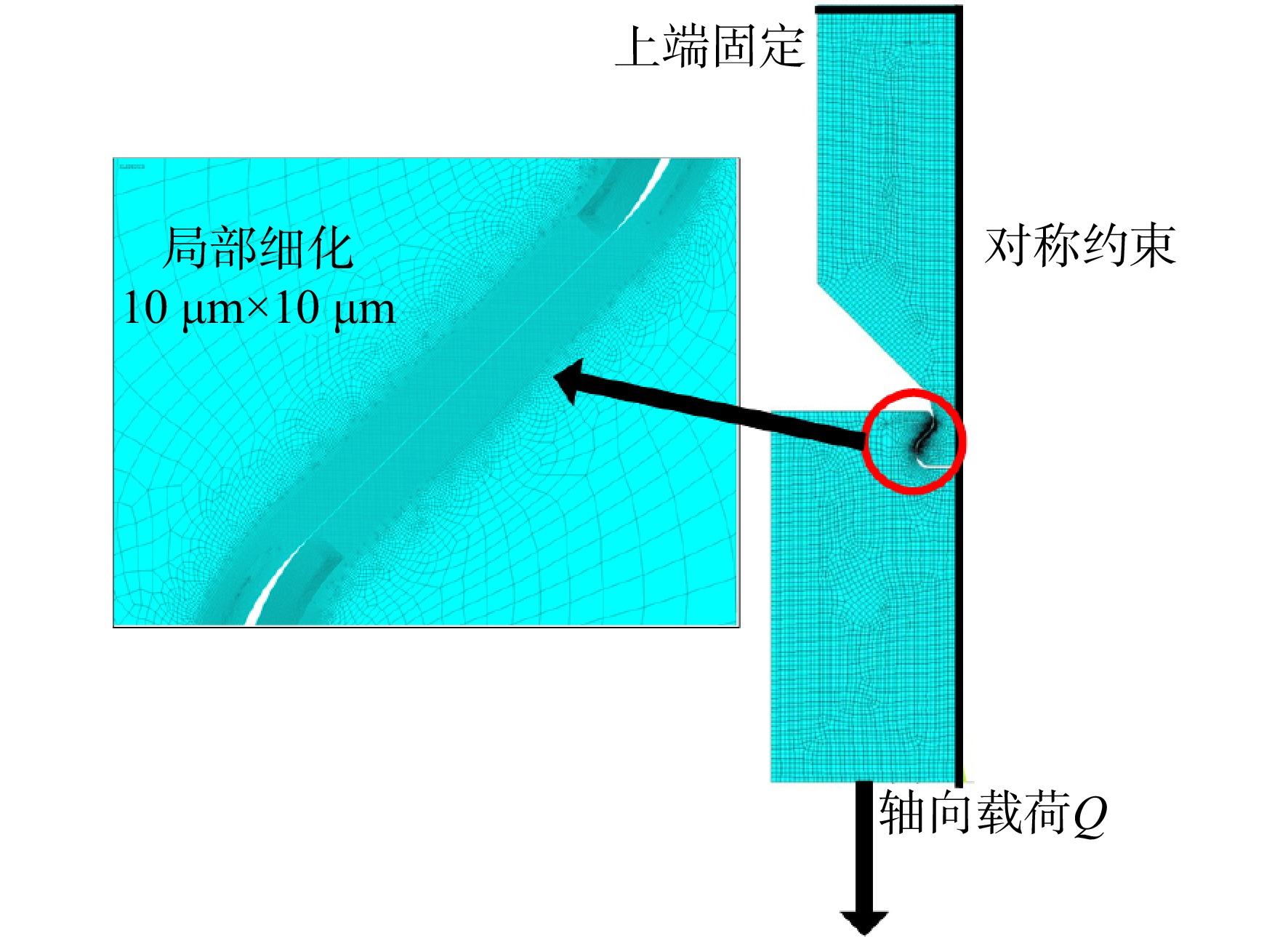
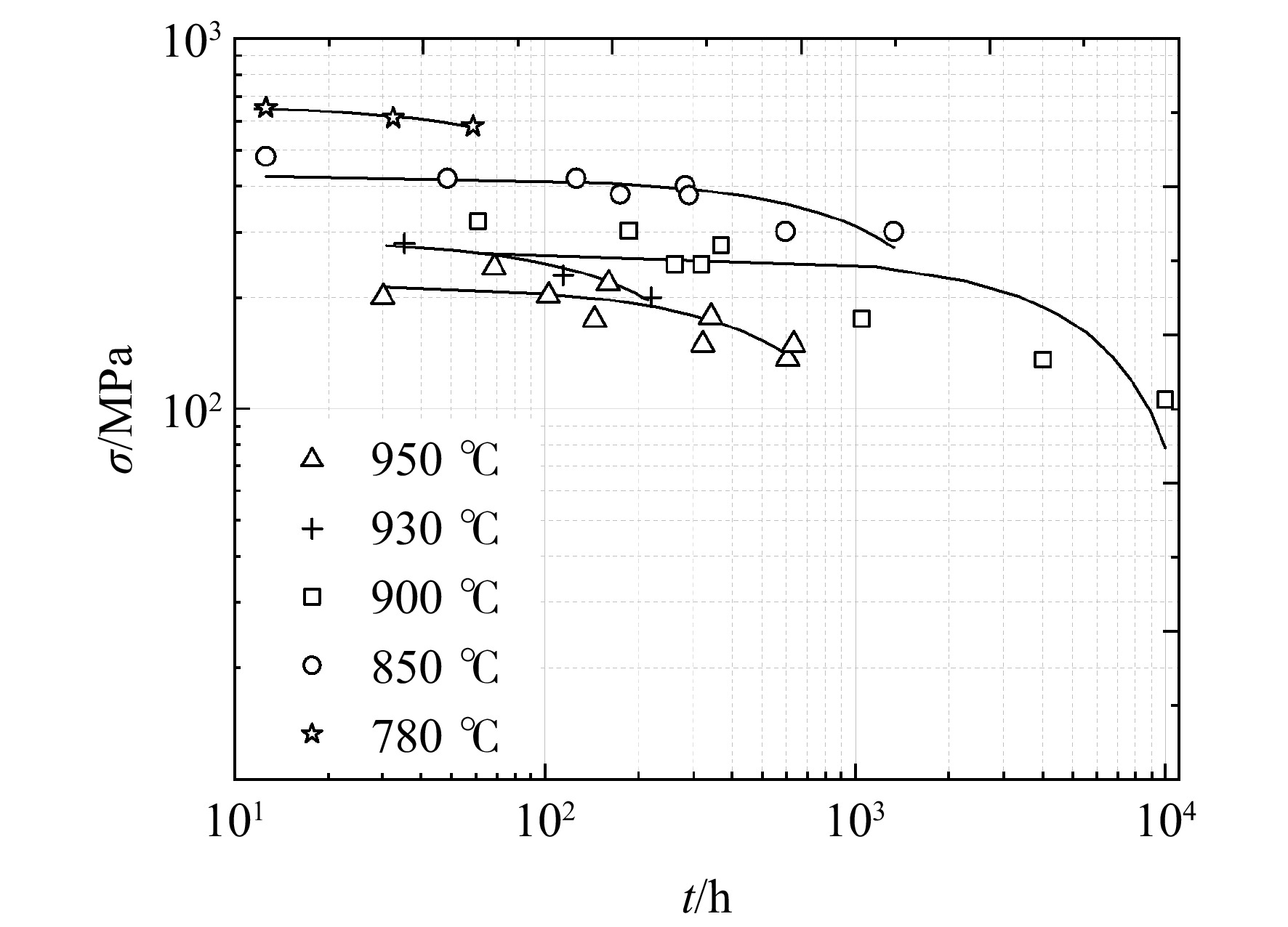
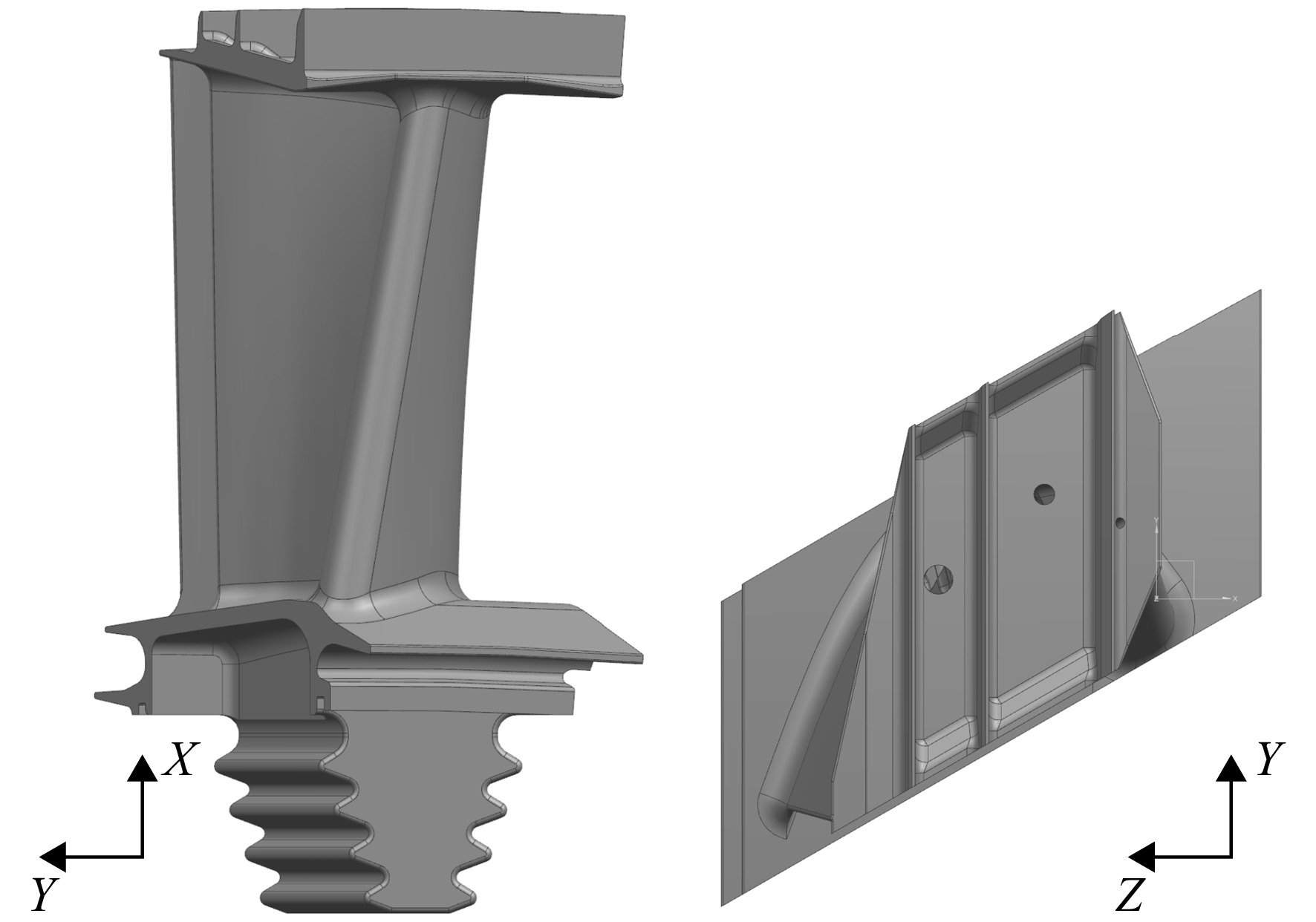
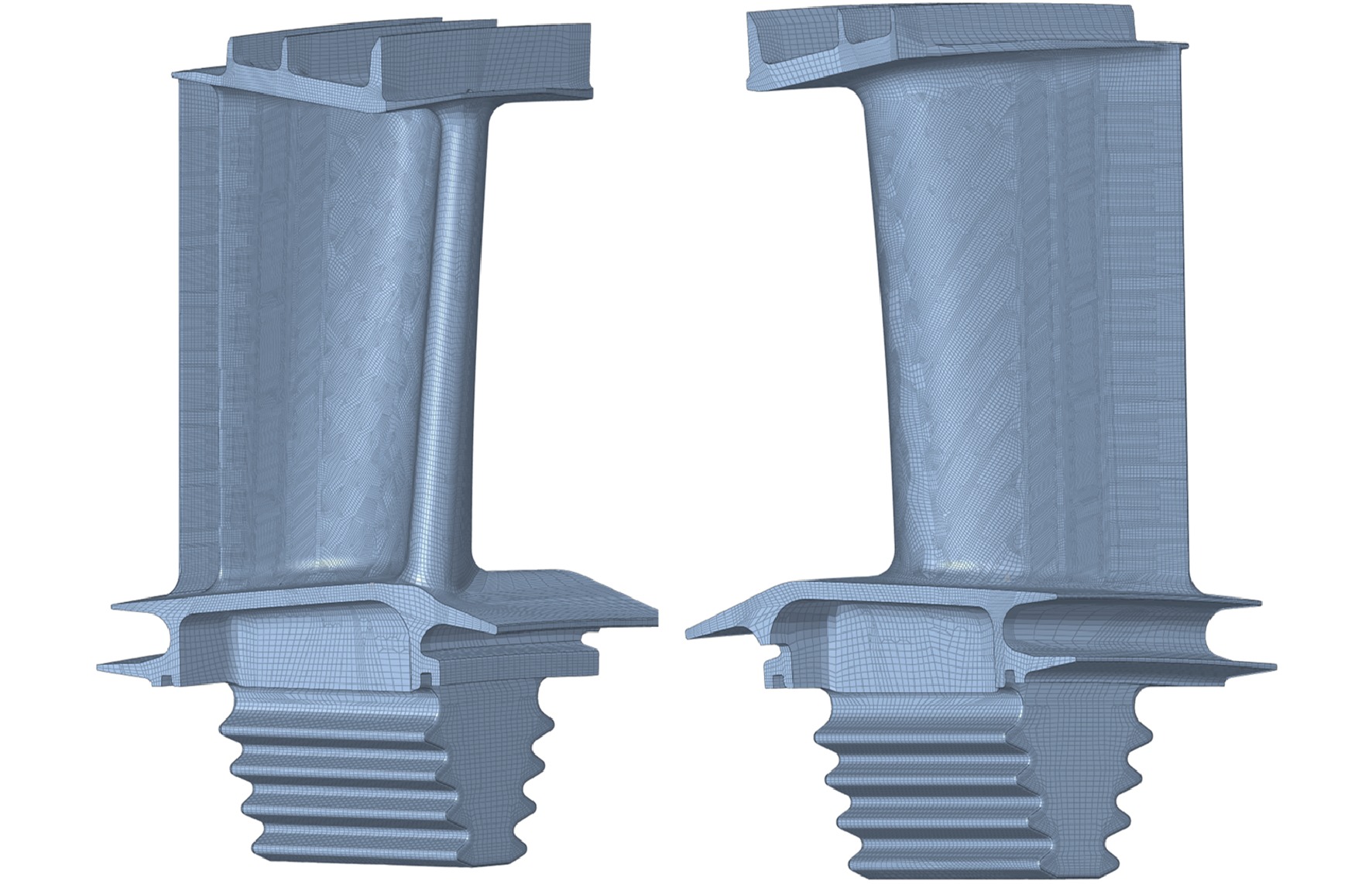
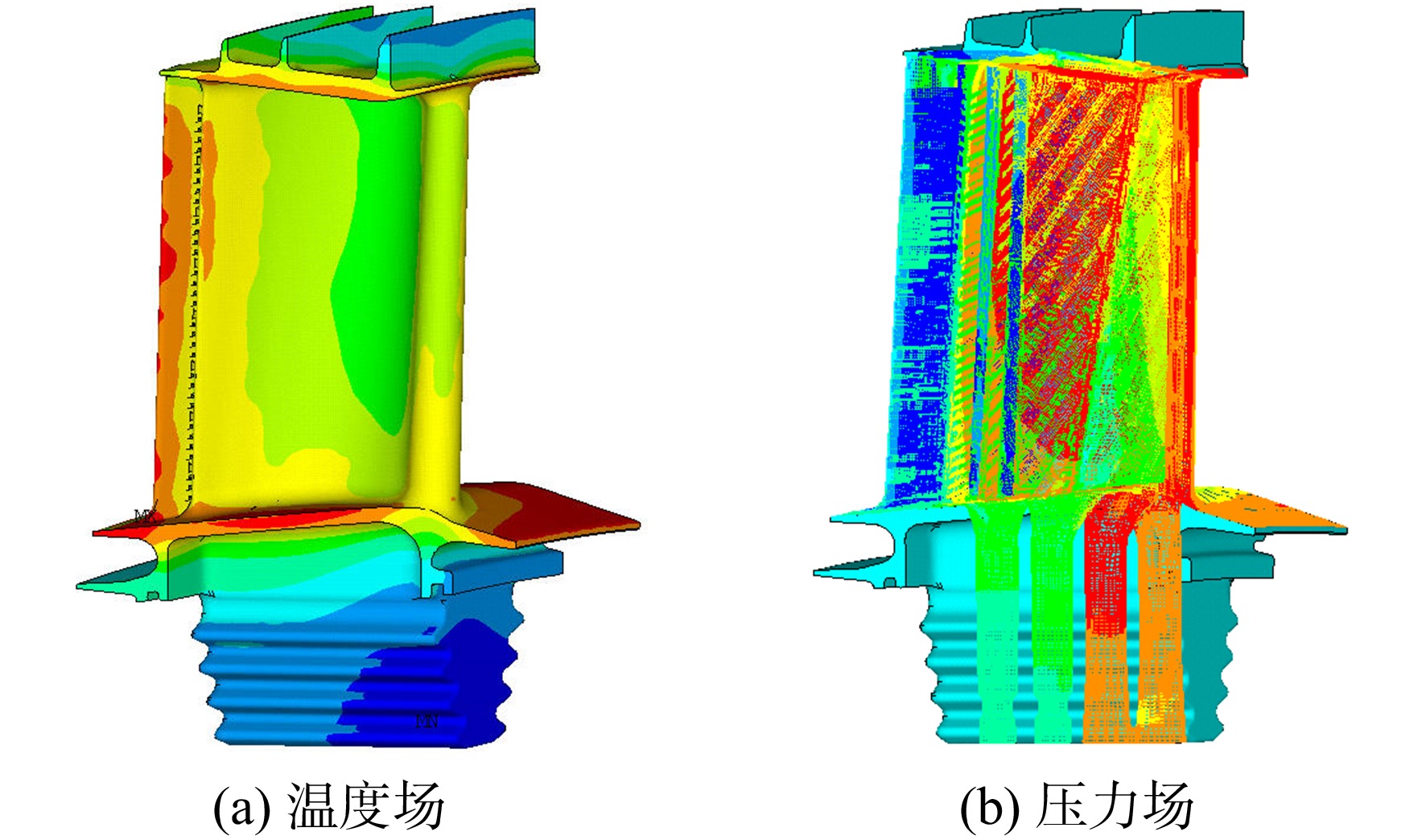
To address the difficulty in predicting the fatigue life of aero-engine high-pressure turbine blades during service, a stress- and temperature-correlated service load/environment spectrum was developed. The blade low-cycle fatigue life was assessed based on durability and damage tolerance theories. The stress-temperature time histories at critical fatigue locations were computed using a fluid-thermal-structural coupled simulation model combined with a random forest surrogate model. The load/environment spectrum was compiled via the multiaxial rain-flow counting method. The crack initiation life was evaluated using a semi-empirical approach based on the detail fatigue rating method. The crack propagation life was calculated by constructing a physical model on the Franc3D platform grounded in damage tolerance theory. The results demonstrated that the critical fatigue location of the blade was at the film-cooling hole near the leading-edge root. At this location, the prediction errors for stress and temperature were 0.4% and 0.71%, respectively, and their time histories exhibited a strong correlation, with a Pearson coefficient of 0.902. The established semi-empirical-physical hybrid model predicted the blade life with an error of about 8% compared with the average statistical life of actual blades. This approach could provide a valuable reference for predicting the life of aero-engine turbine blades and determining maintenance intervals.

Prediction of fretting fatigue life with consideration of stress gradient and relative slip amplitude
YANG Xufeng, SHEN Shidian, WEN Changlong, MI Dong, AI Xing
2026, 41(8): 20250319. doi: 10.13224/j.cnki.jasp.20250319
Abstract:

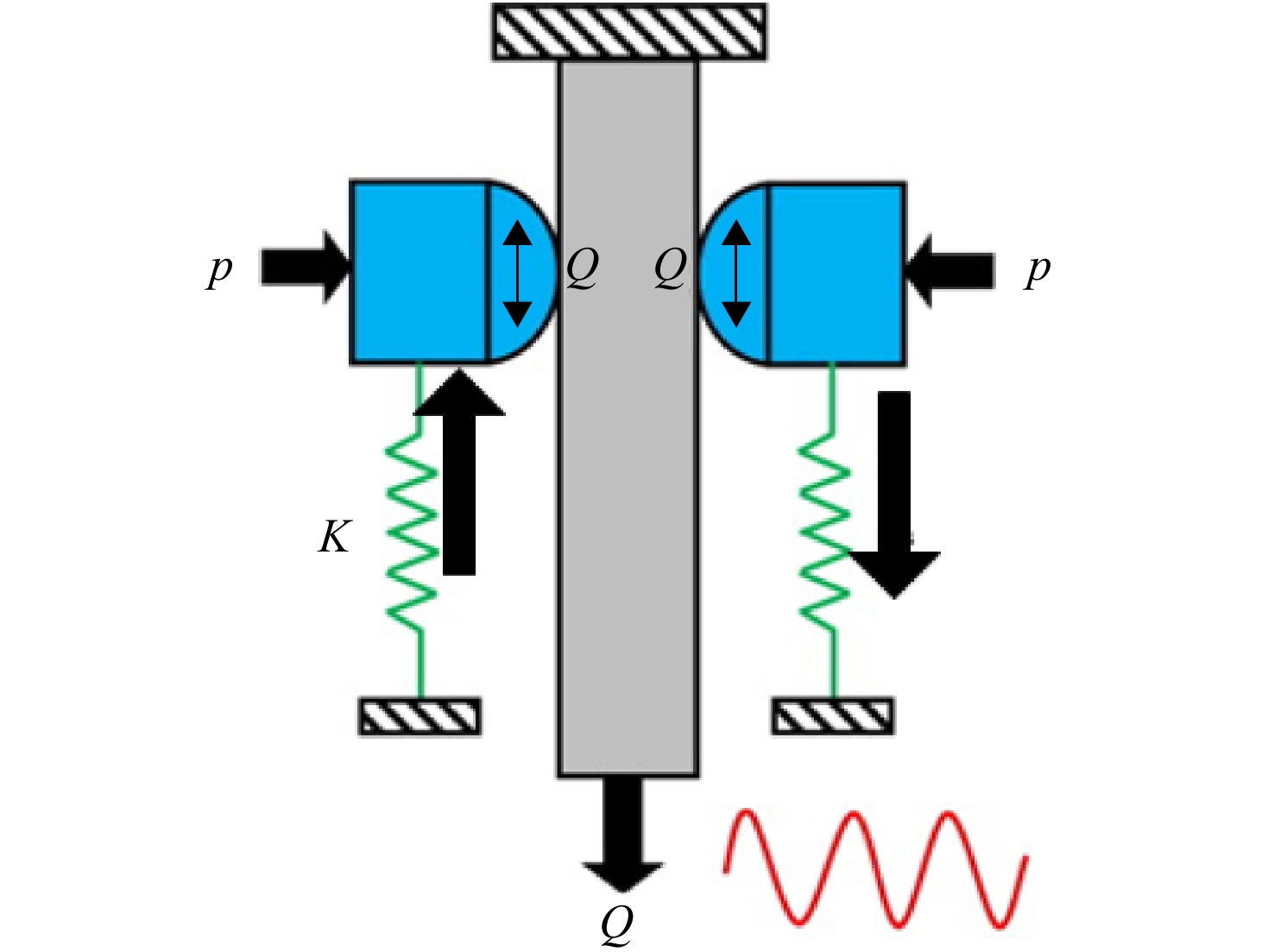
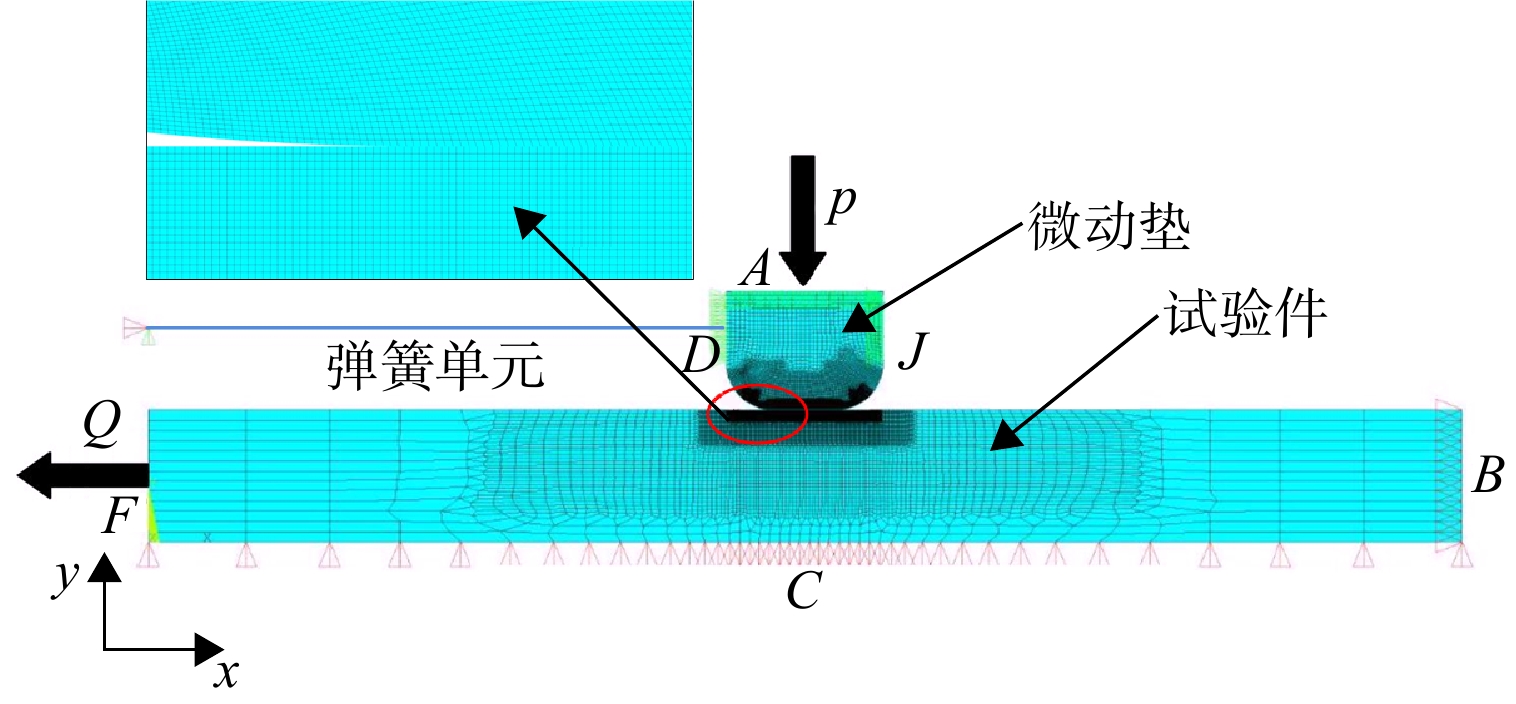
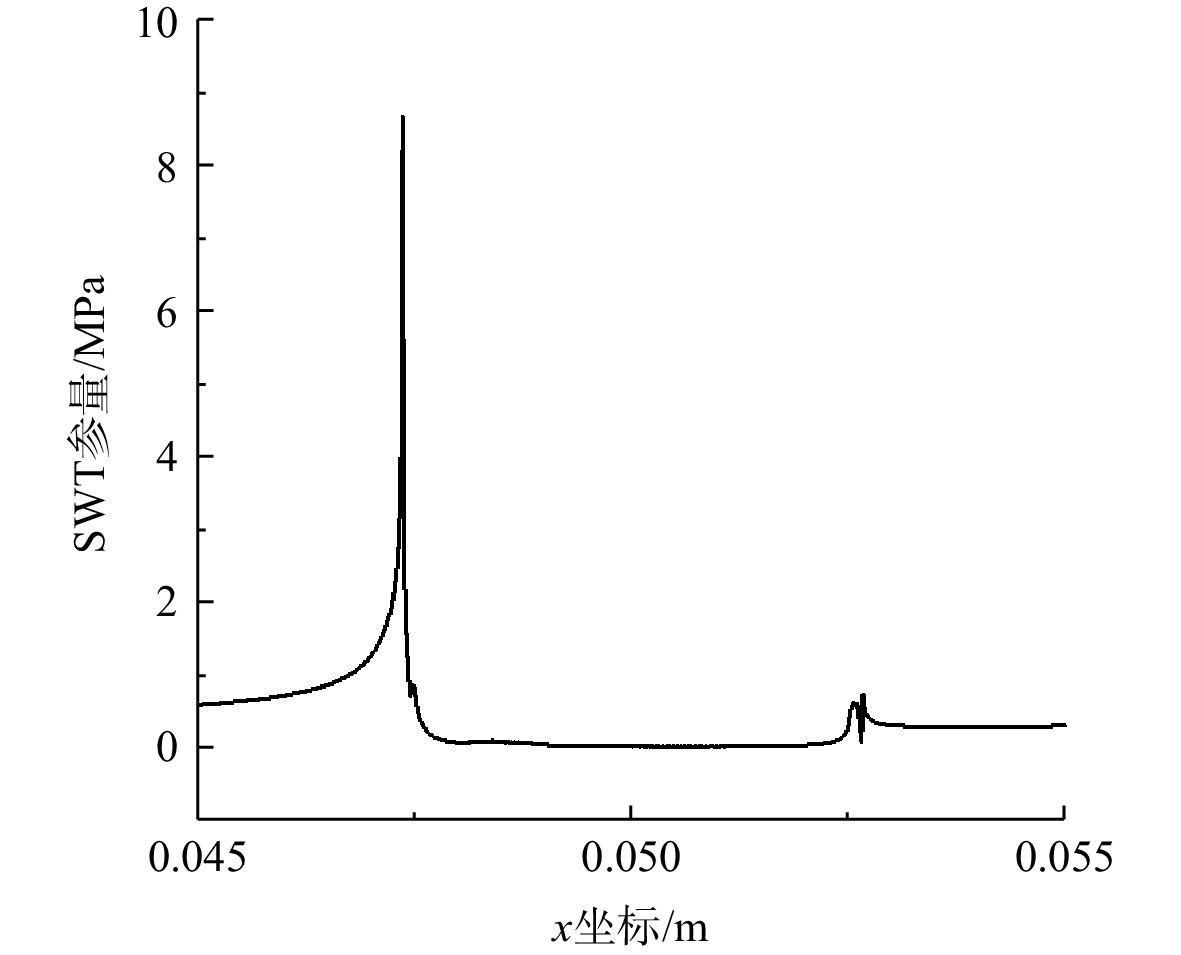
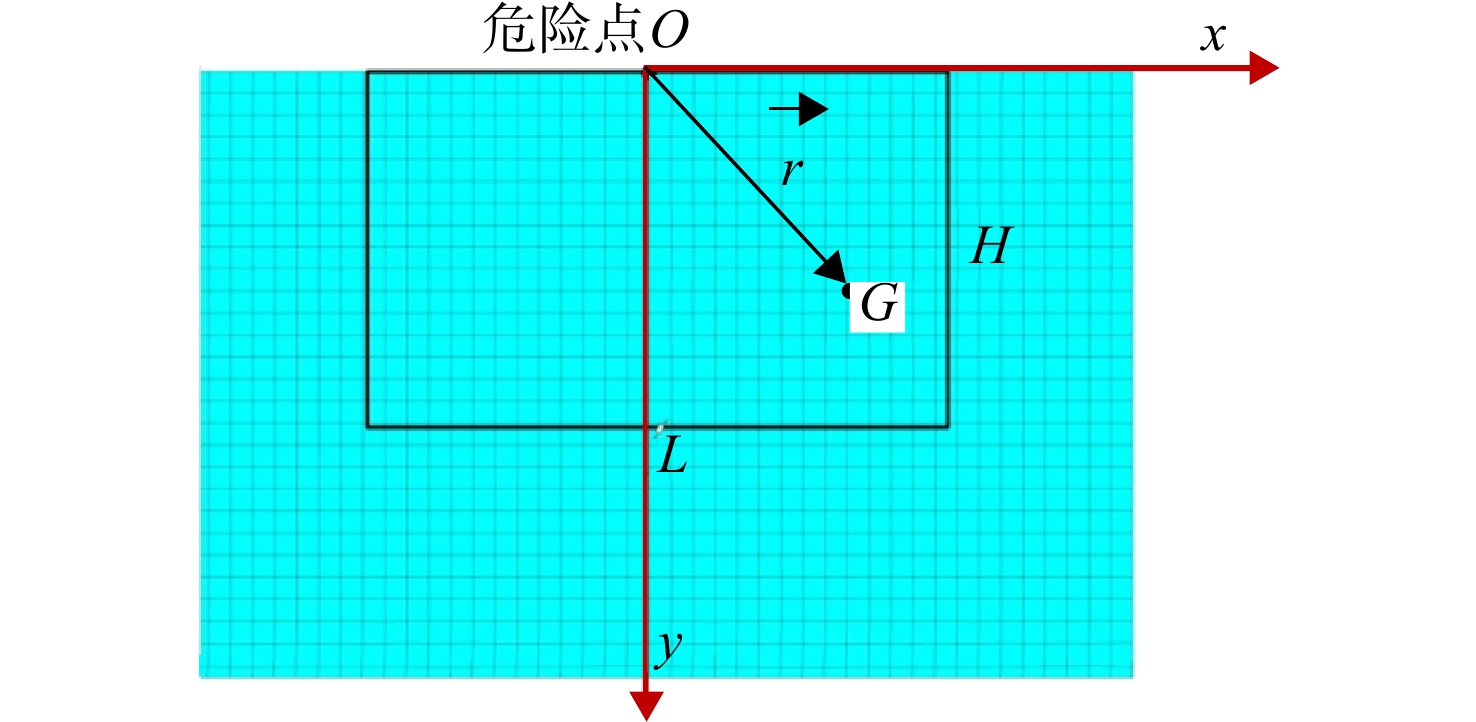
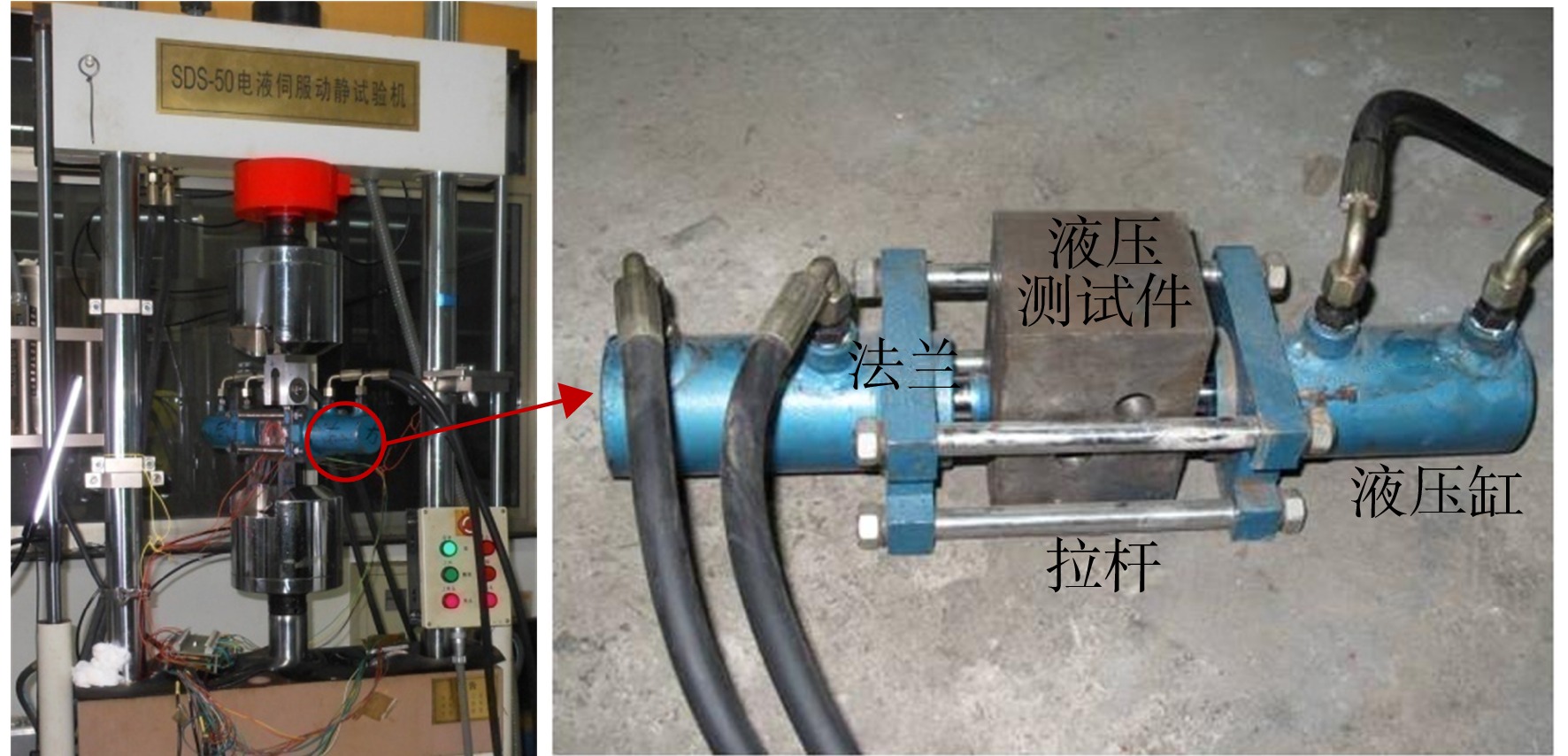
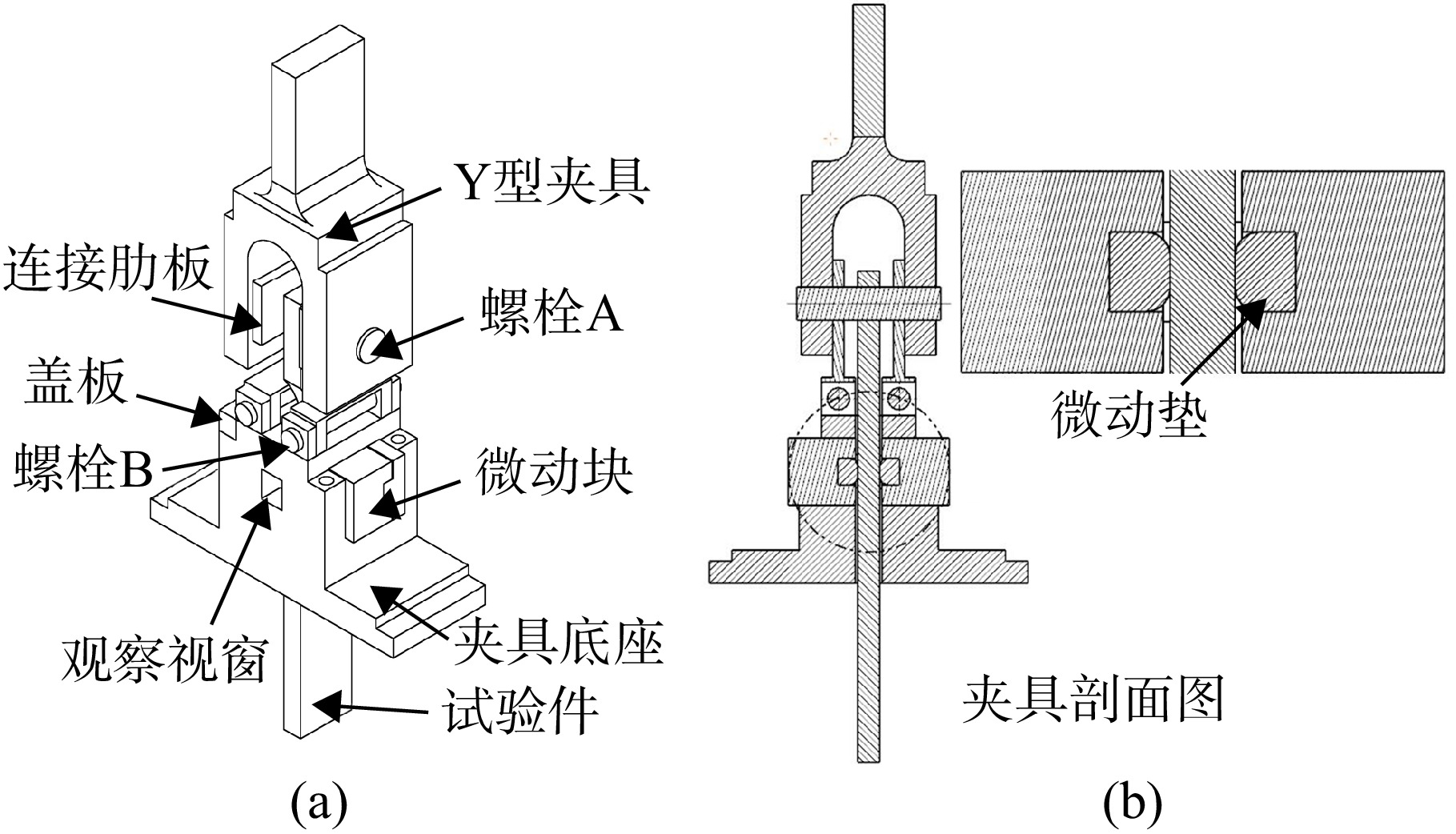
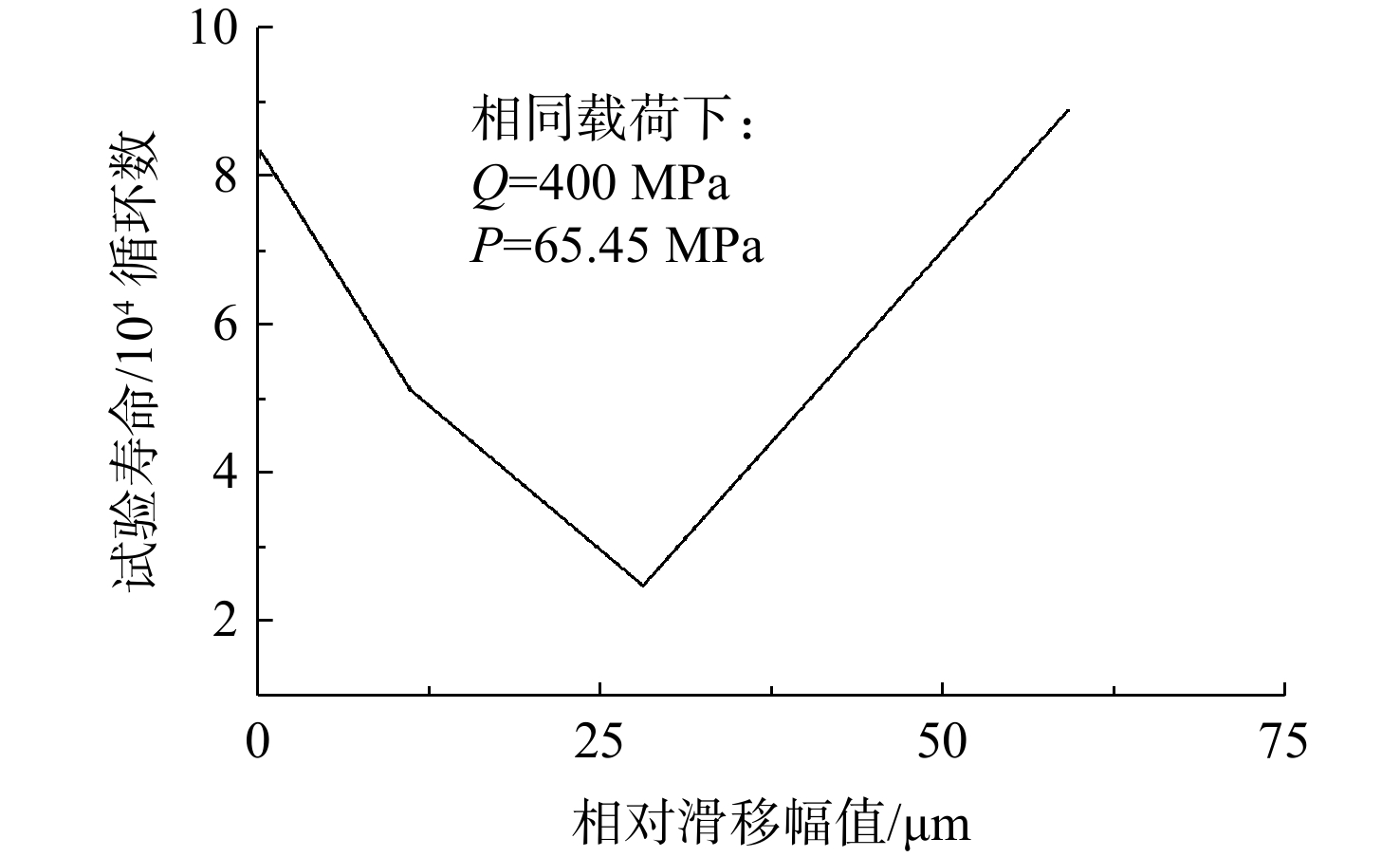
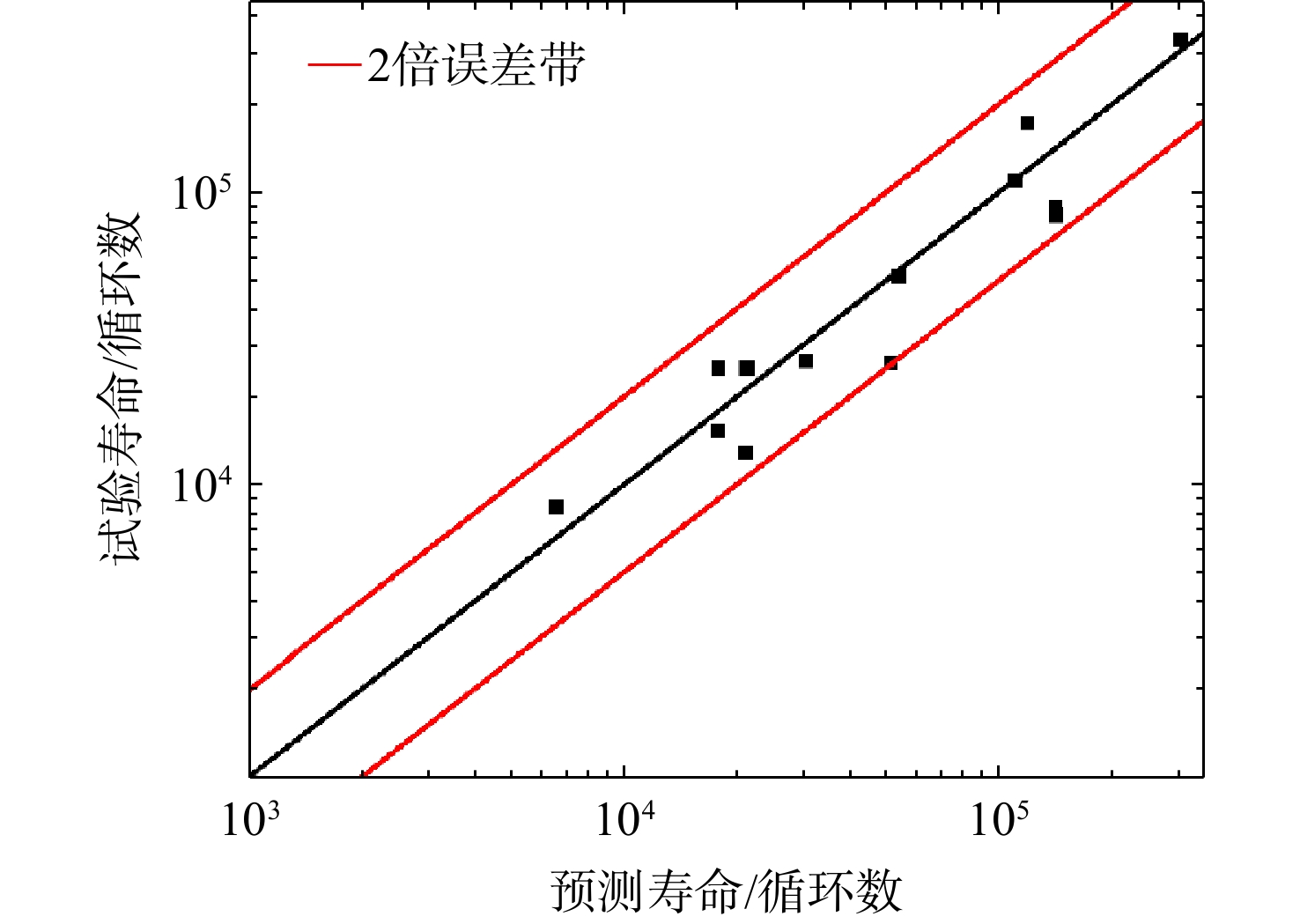
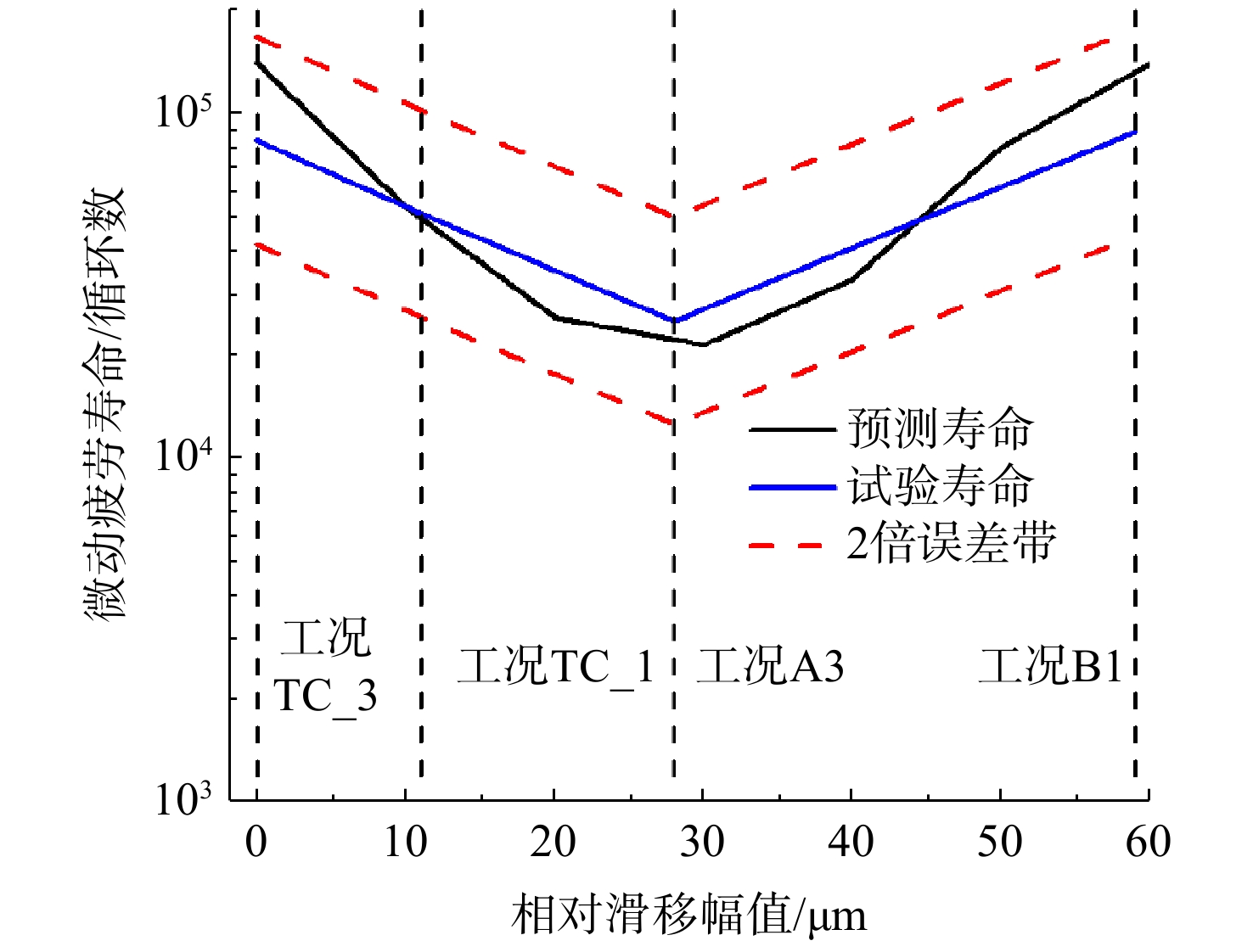
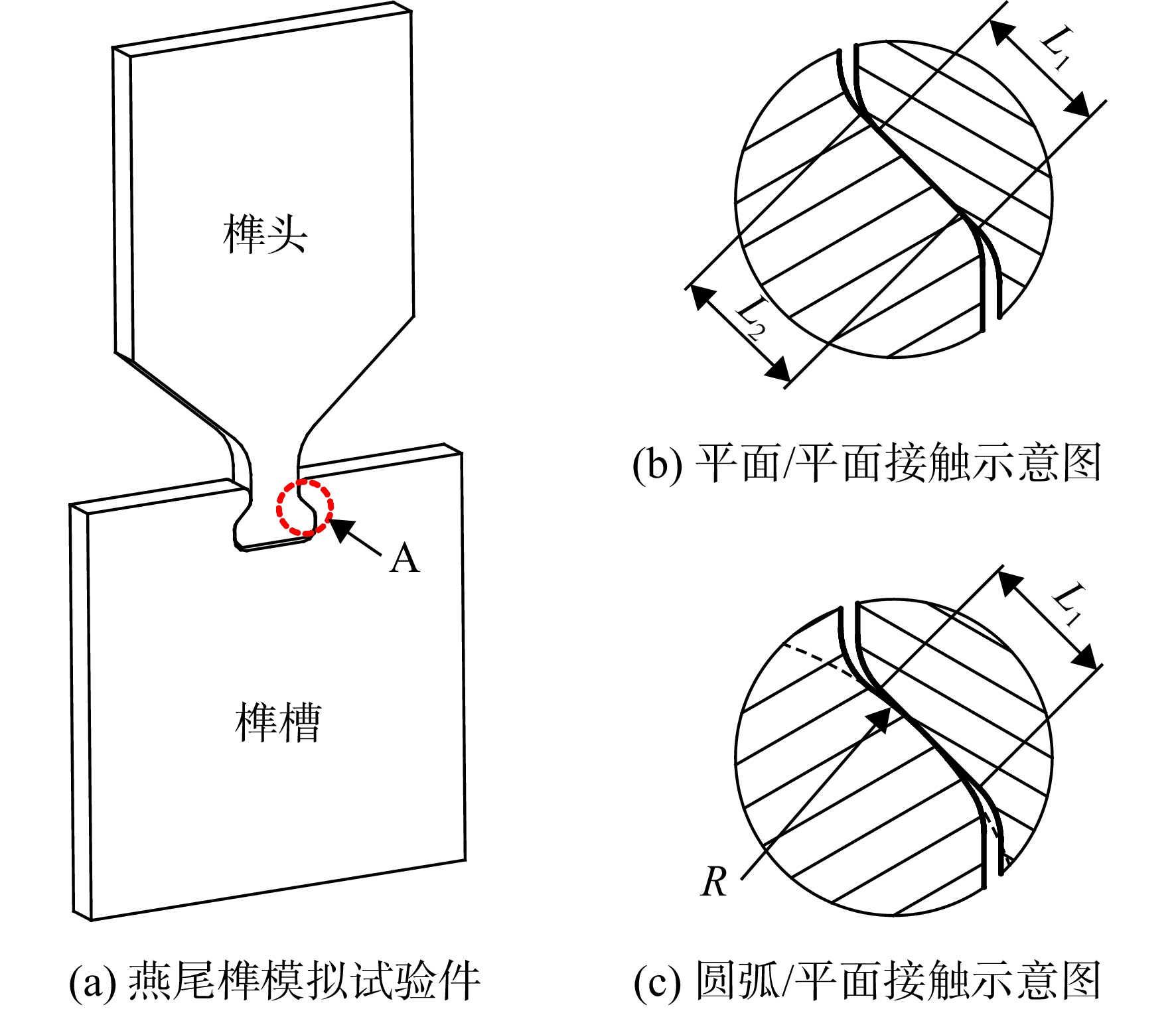
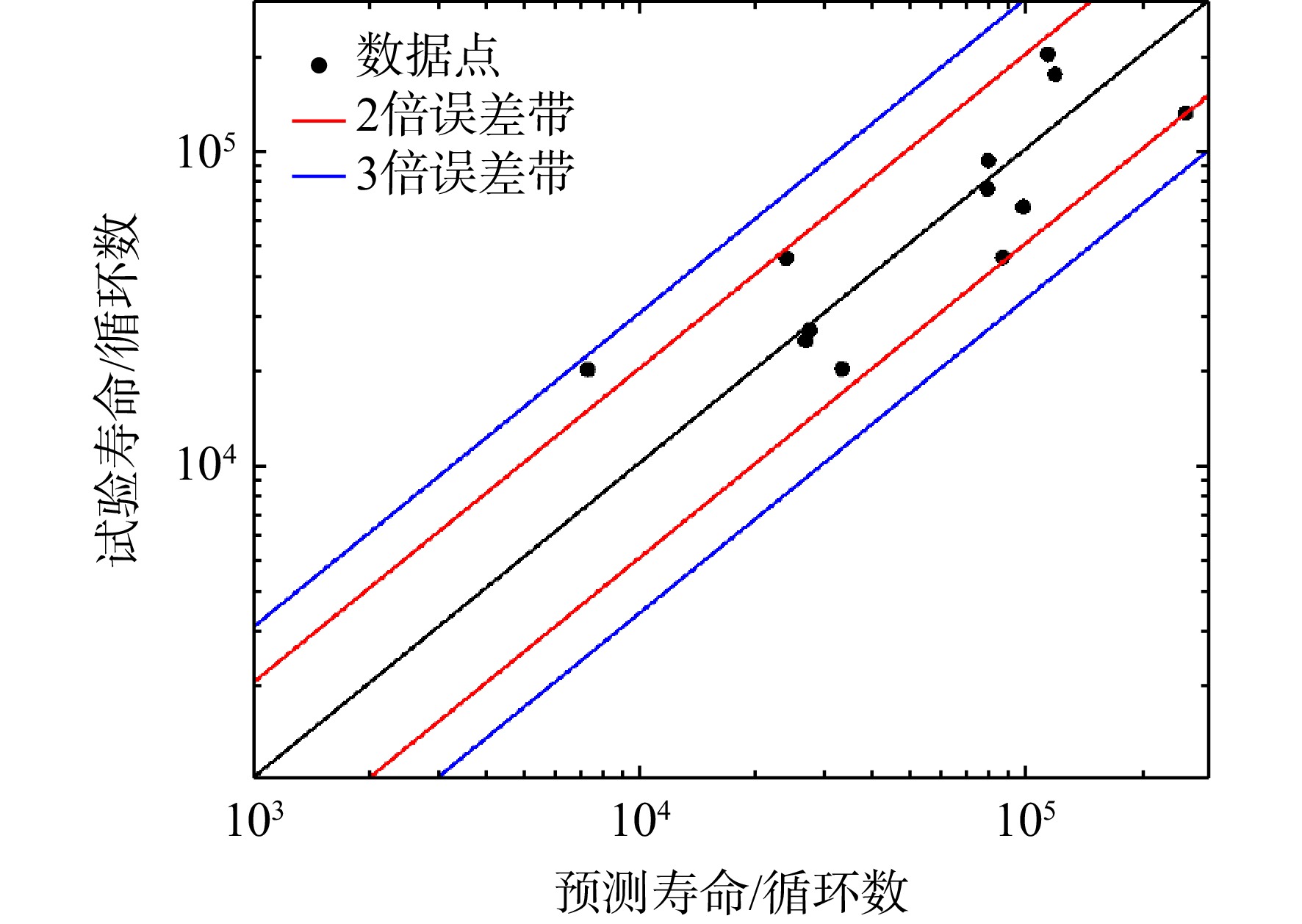
Focusing on TC11 titanium alloy, a fretting fatigue life prediction method considering stress gradients was established by employing the critical plane method and stress field intensity approach. This life prediction model could predict fretting fatigue life by forecasting the stress field intensity of the SWT (Smith-Watson-Topper) critical plane damage parameter within the fatigue-affected region. Using a conventional uniaxial fatigue testing machine and a transverse hydraulic loading device, a tunable tangential stiffness clamping device was designed, and fretting fatigue tests considering the influence of relative slip amplitude were conducted. The tests indicated that under the same force load, the fretting fatigue life initially decreased and then increased with the increase of relative slip amplitude. The model parameters were fitted by combining fretting fatigue test data, and the relative slip amplitude parameter was introduced into the life model, which resulted in a fretting fatigue life prediction method considering the effects of stress gradients and relative slip amplitude. The validity of the proposed method was verified using fretting fatigue test results of dovetail joint structure, with a prediction error within a 3 times dispersion band compared with testing average life.

Study on influence of particle kinematics on fan blade erosion
Shi Lei, Lu Zhiqiang, Peng Hongbo, Yuan Tanglong, Jiang Qi
2026, 41(8): 20250025. doi: 10.13224/j.cnki.jasp.20250025
Abstract:
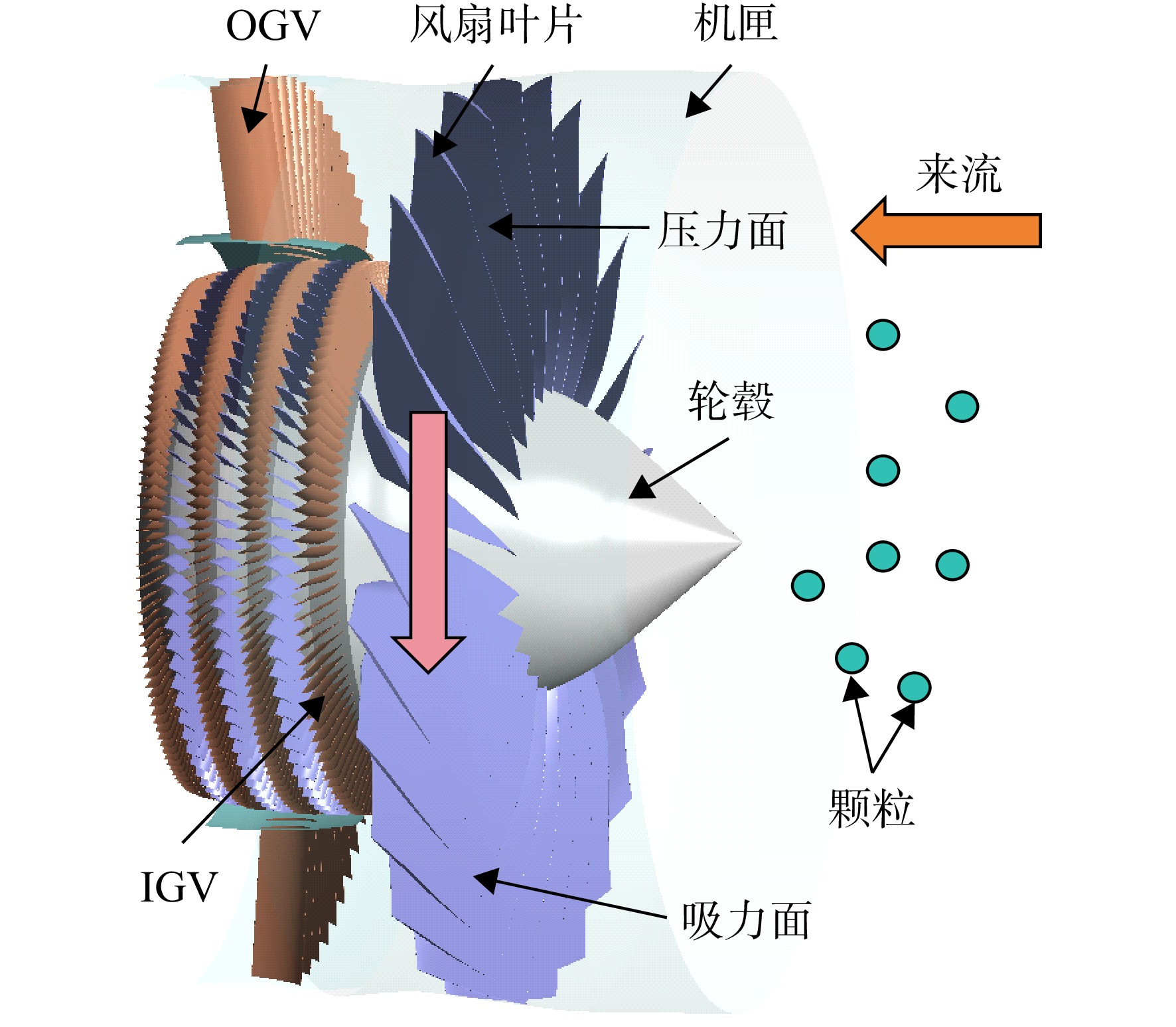
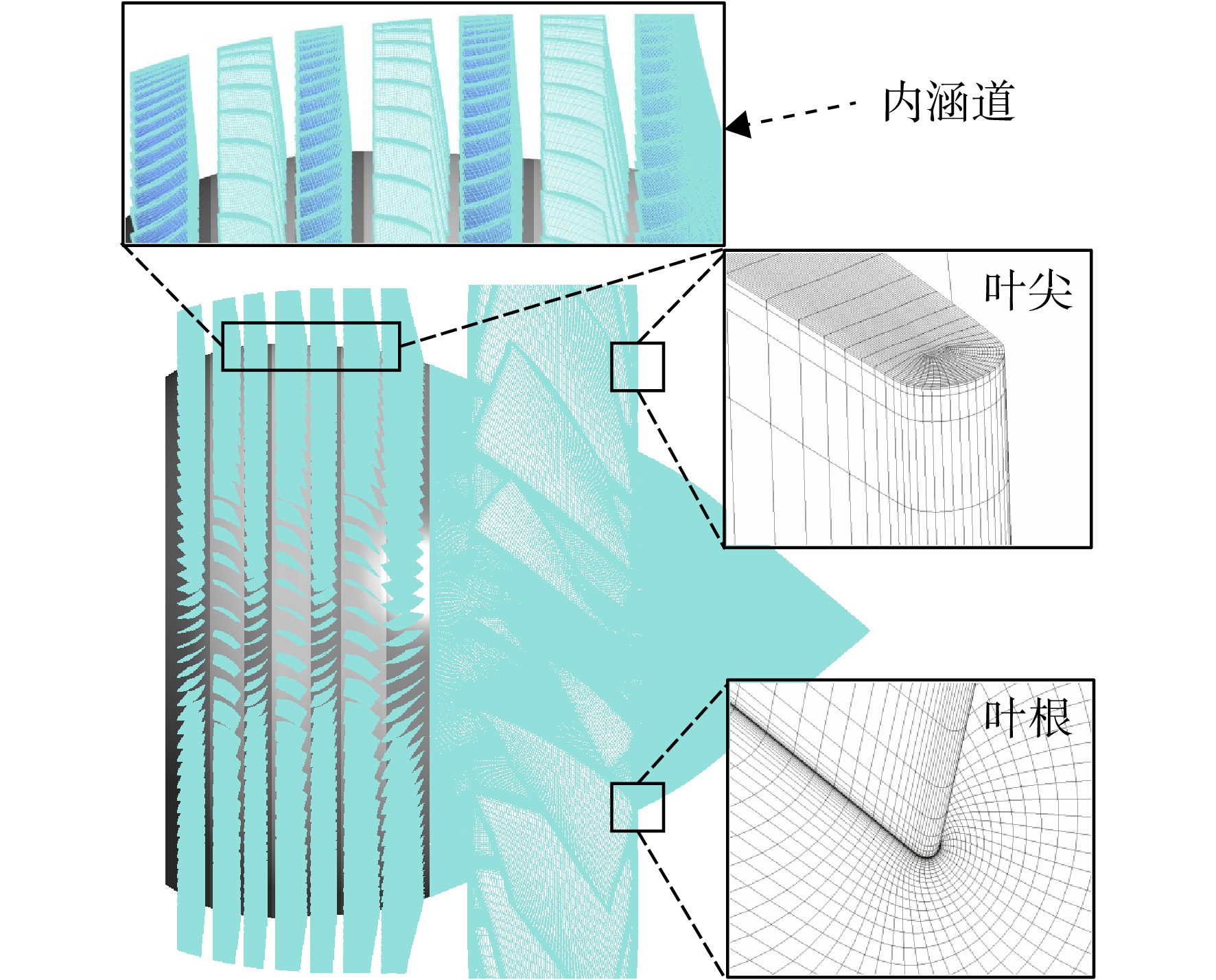
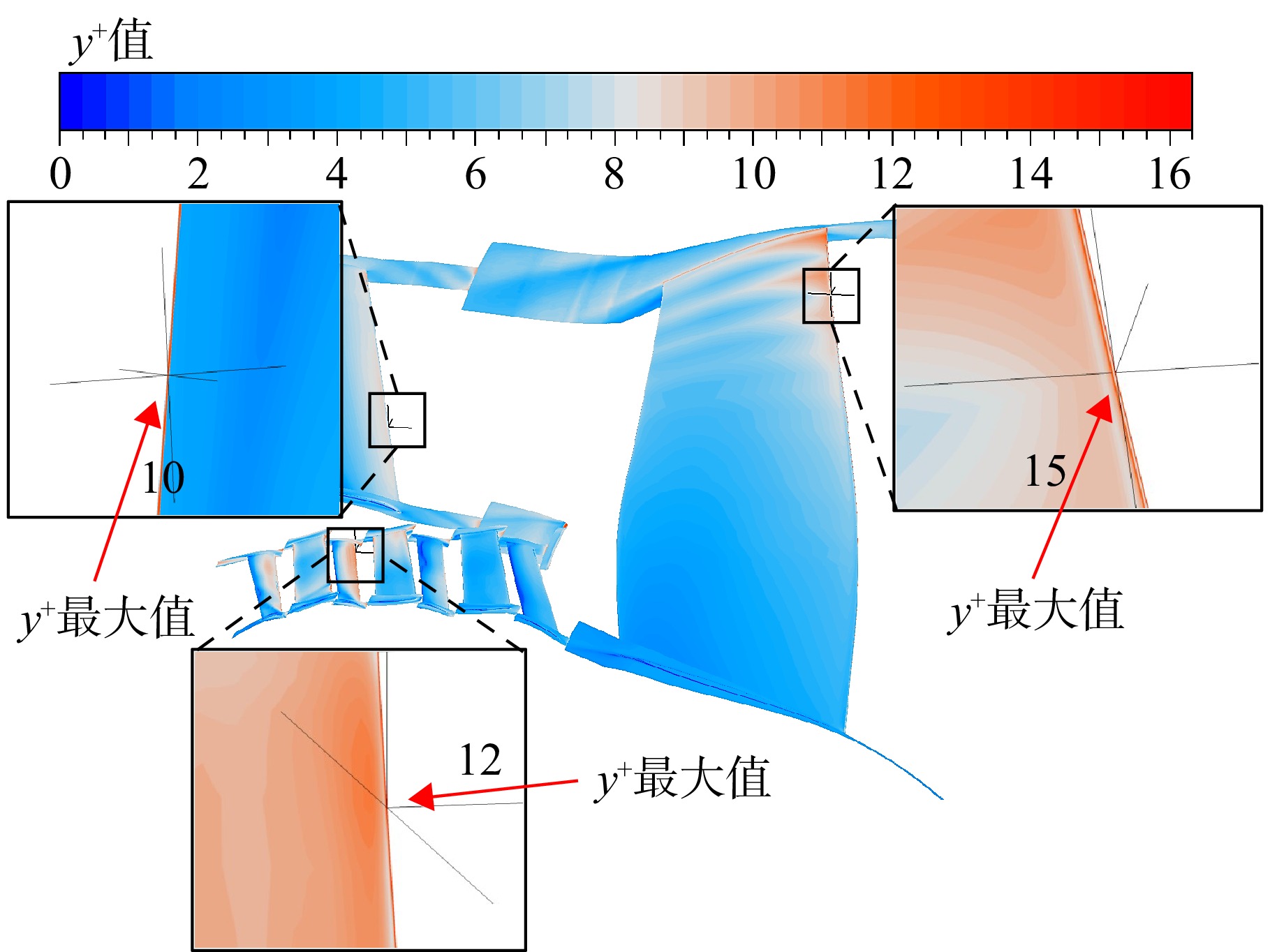
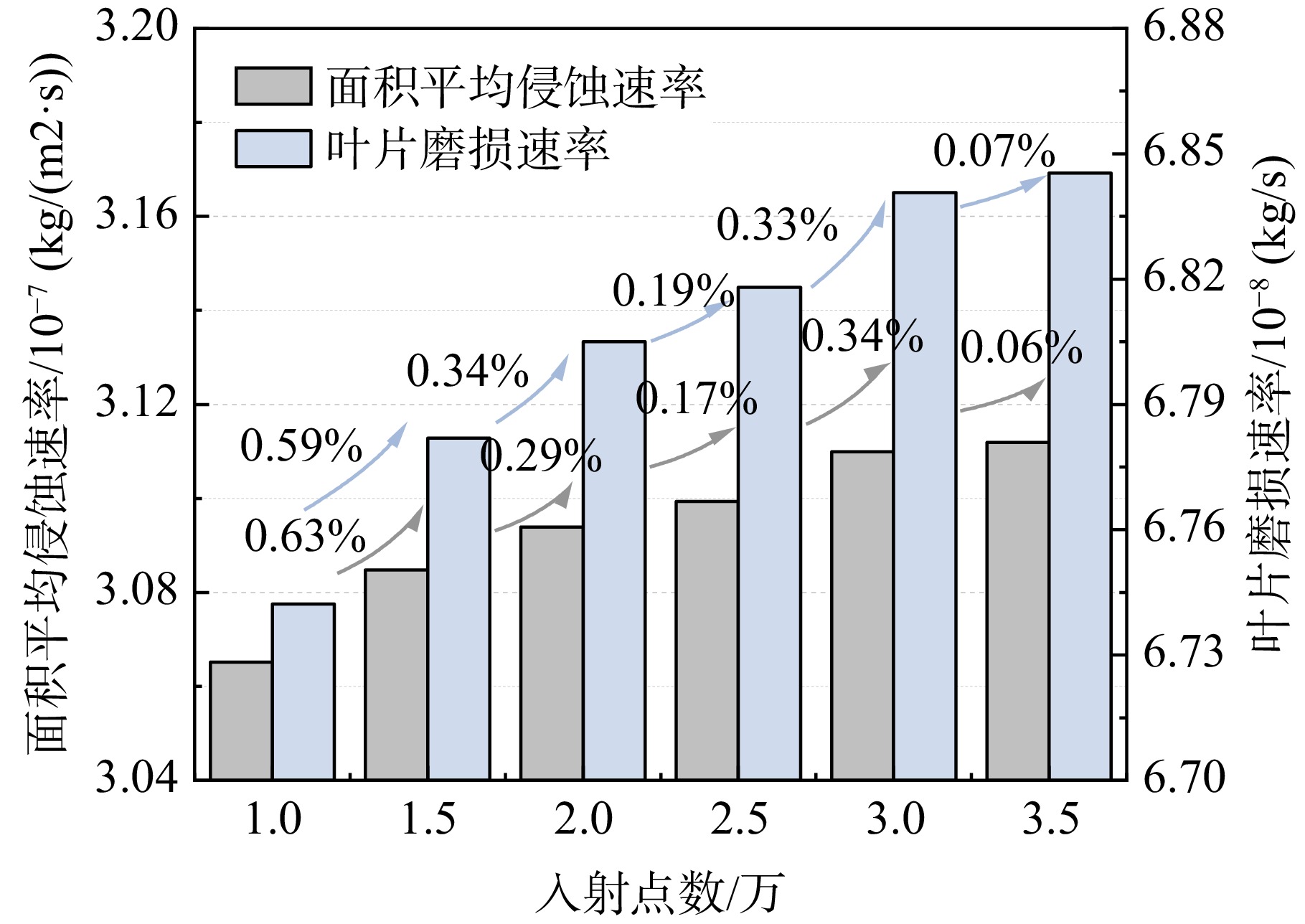
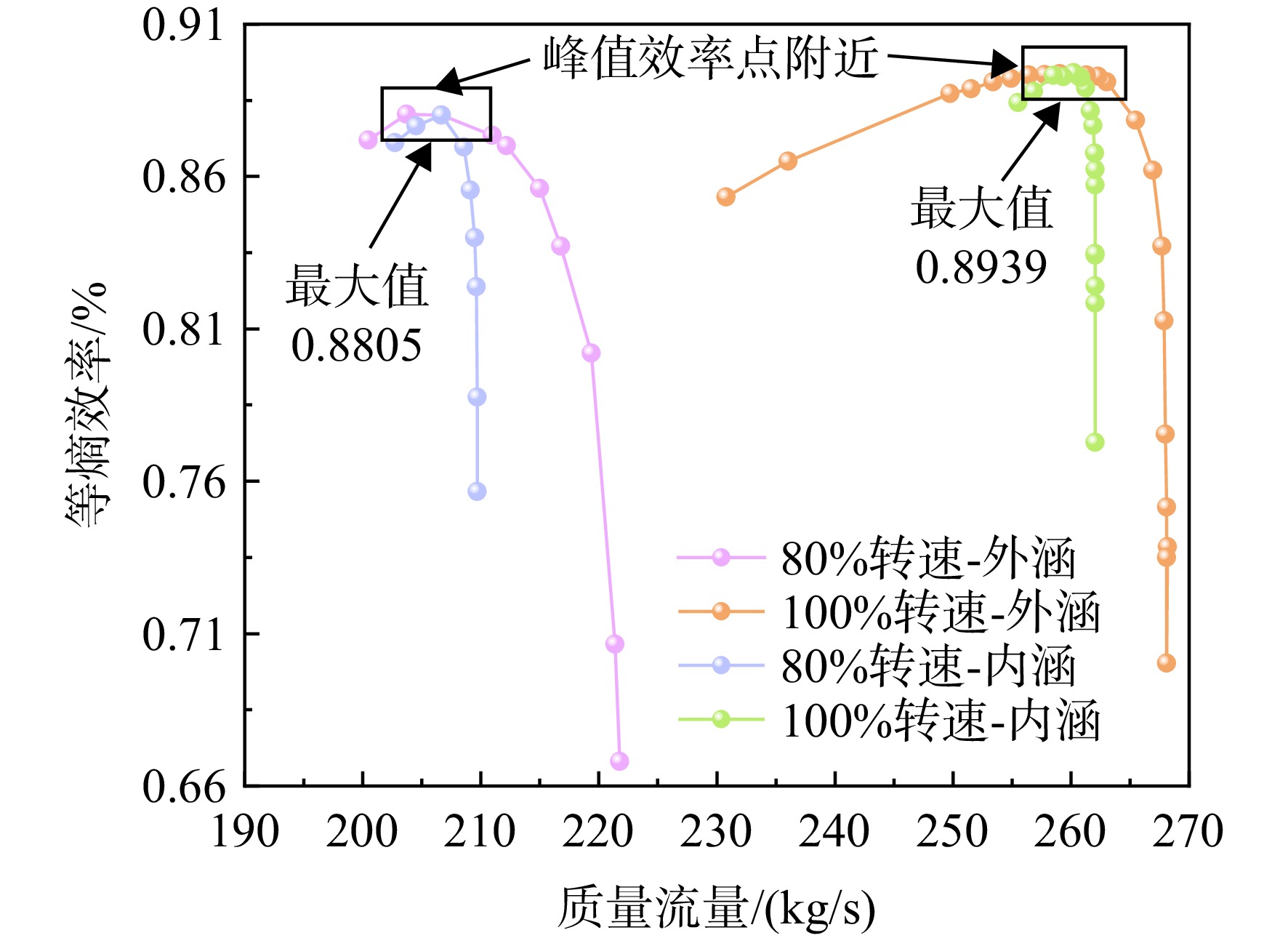
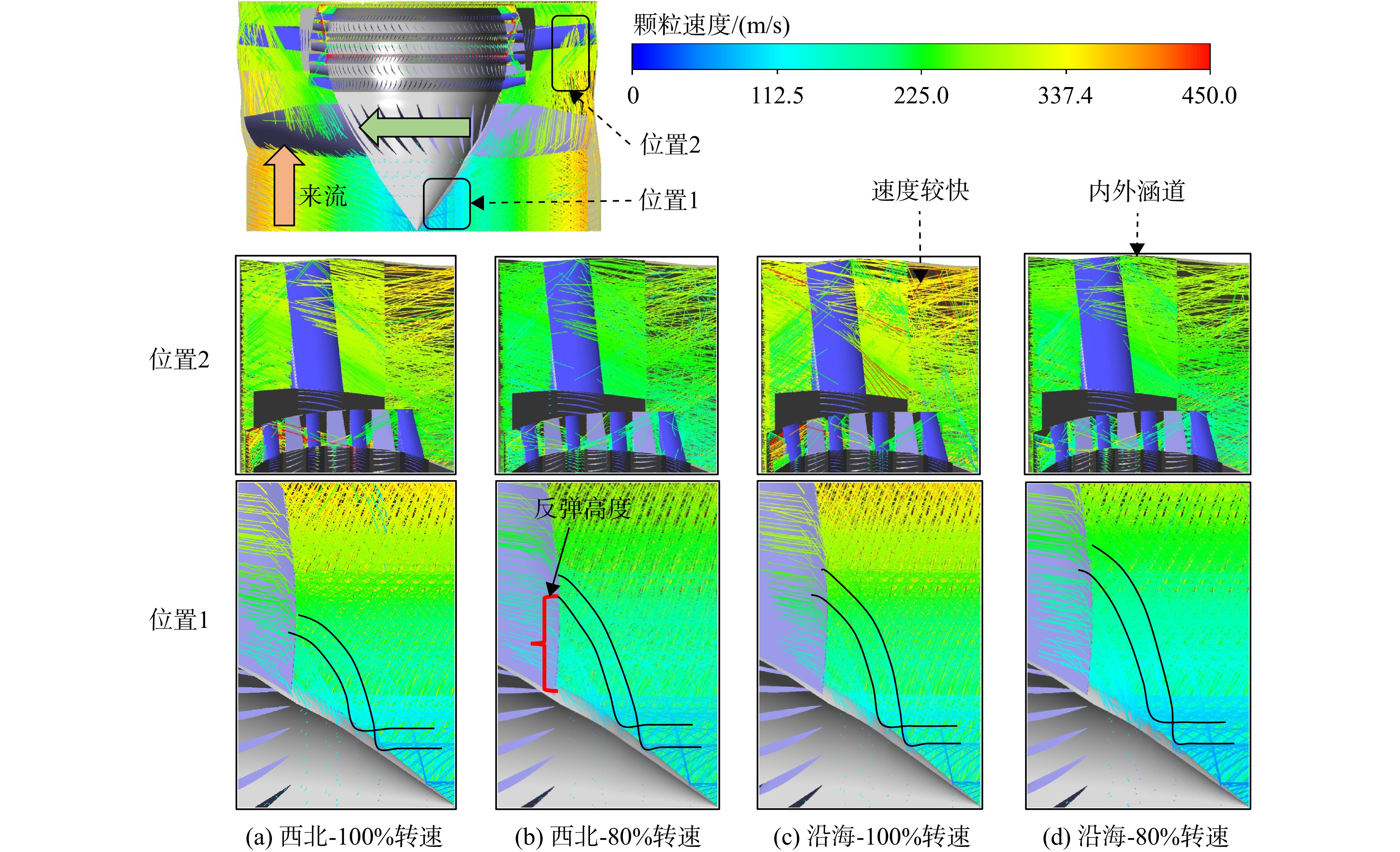
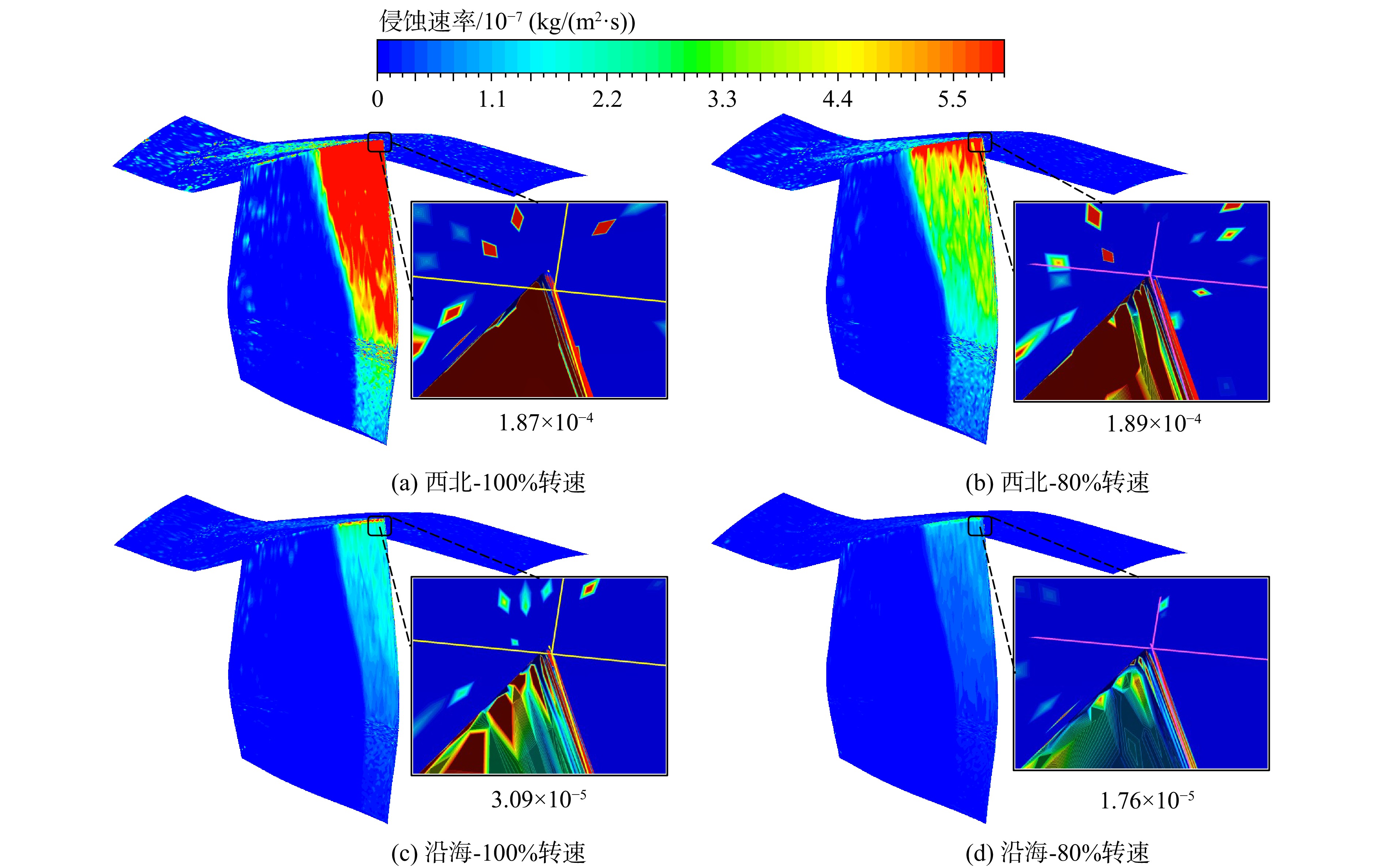
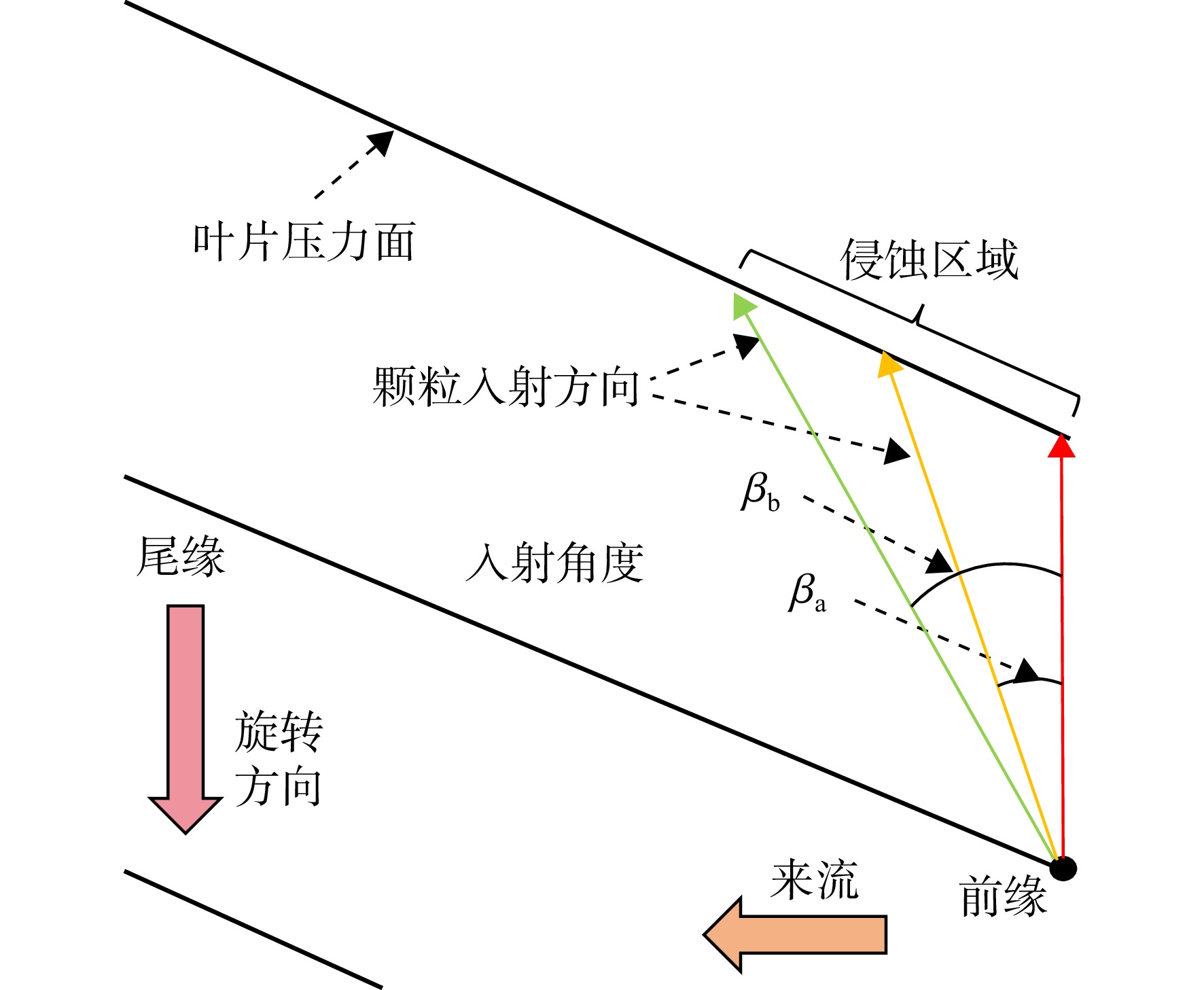
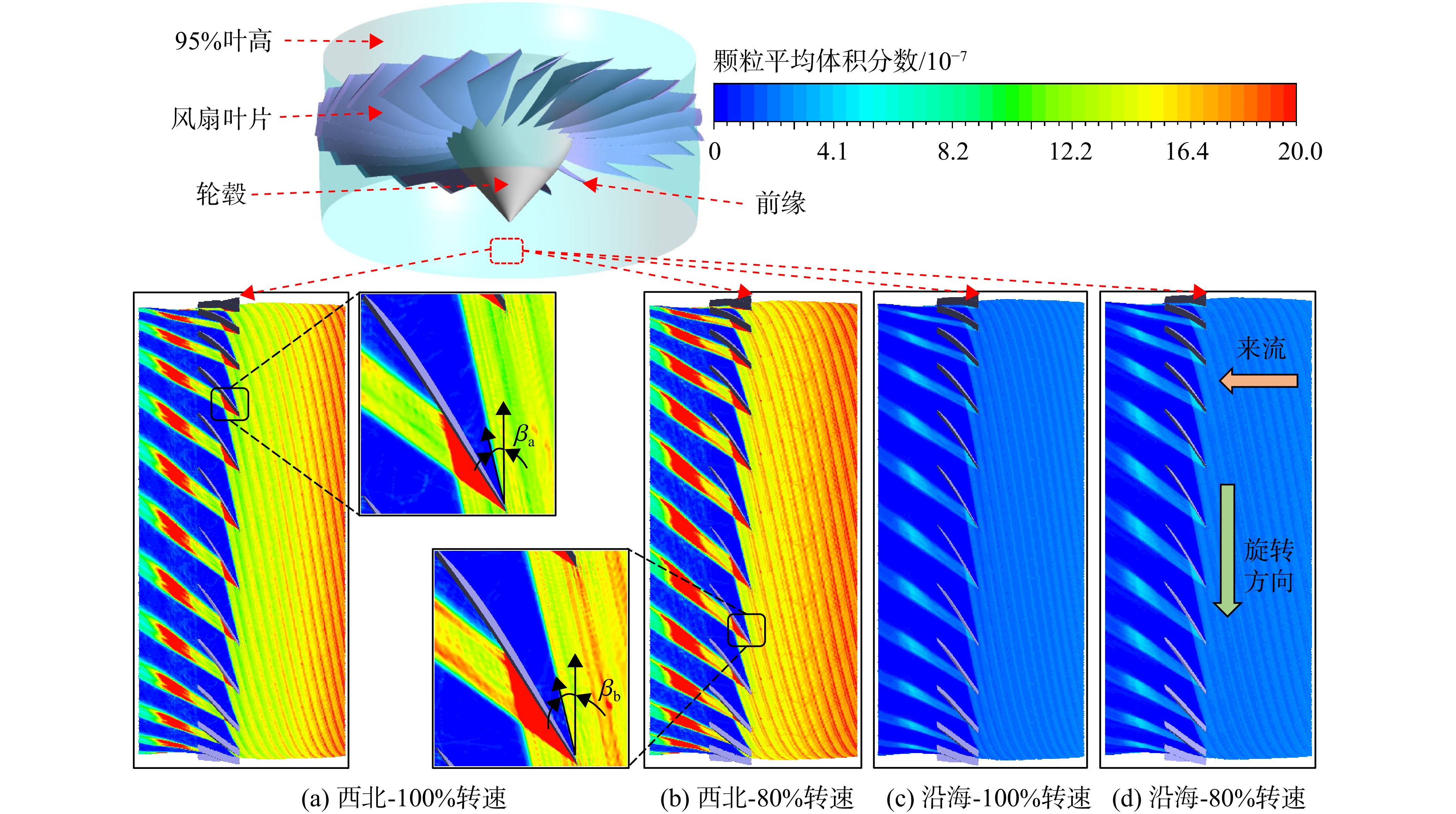
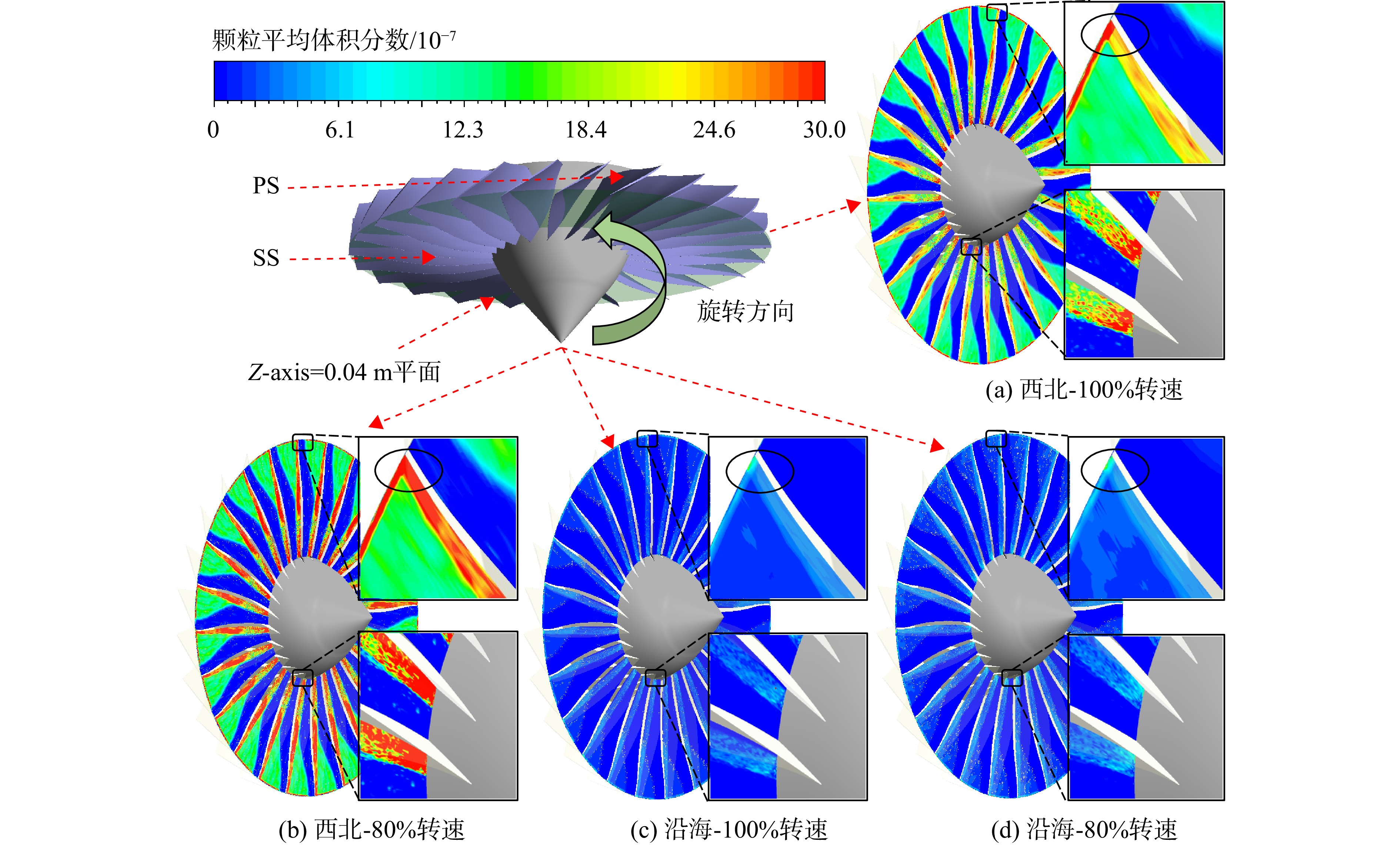
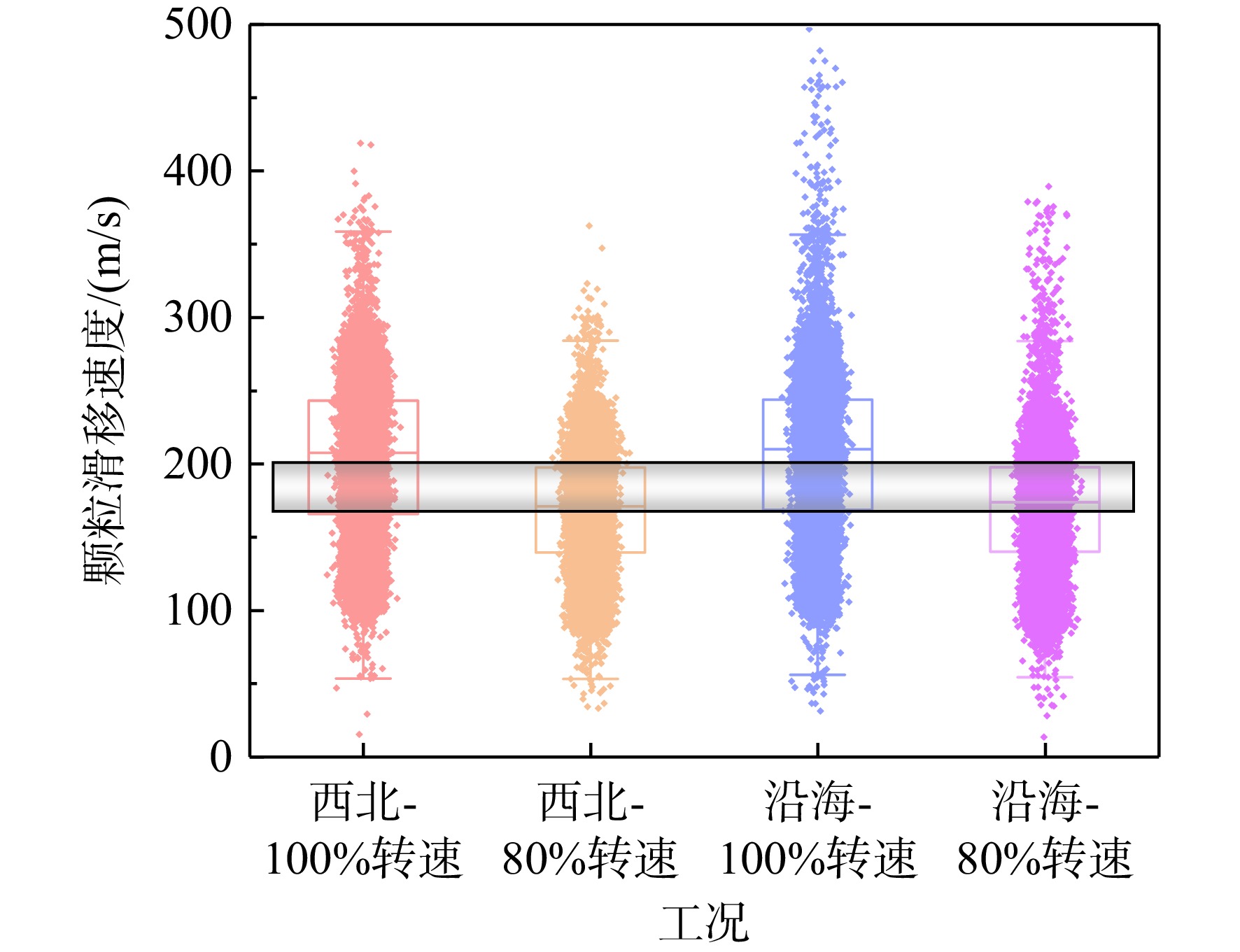
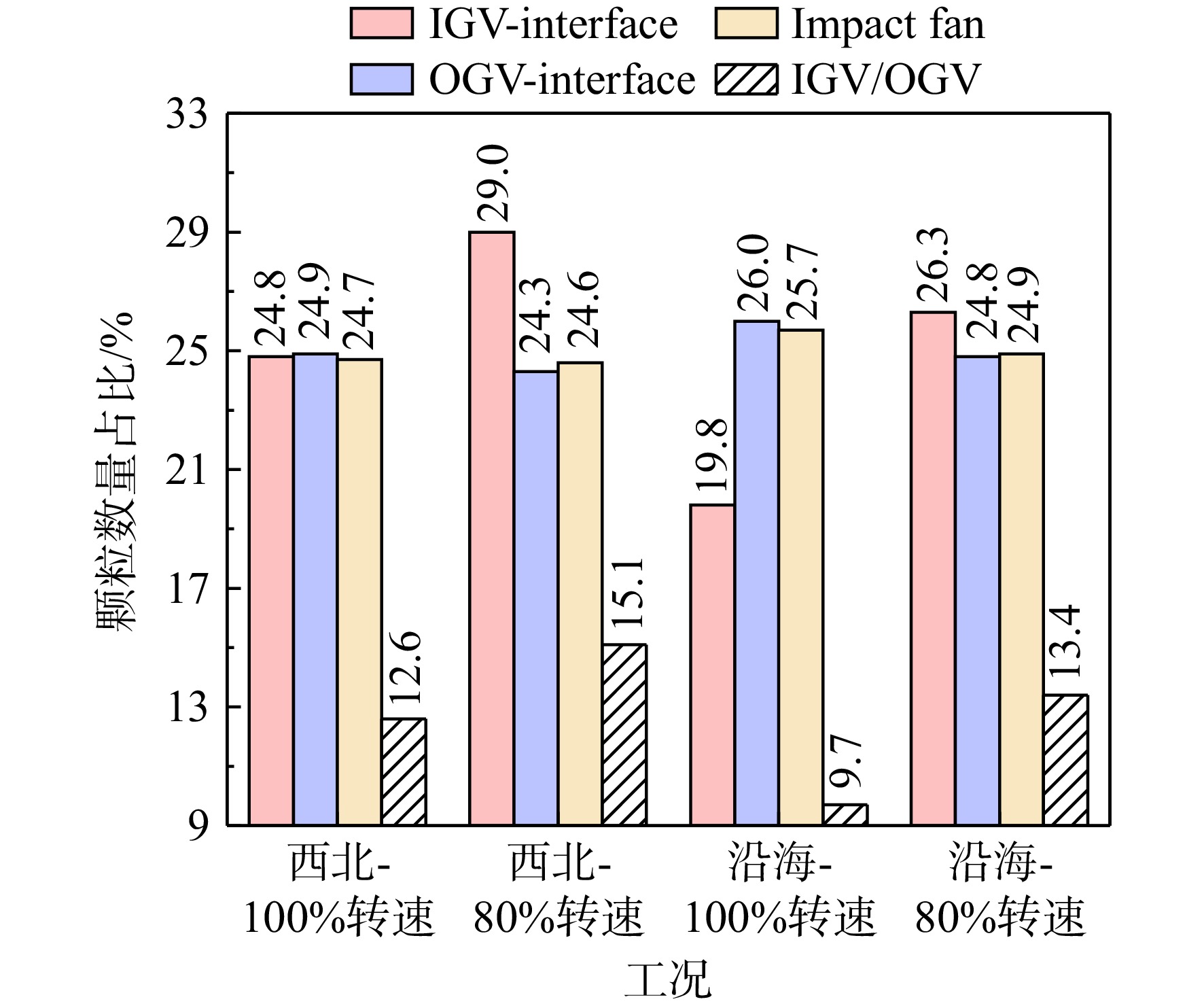
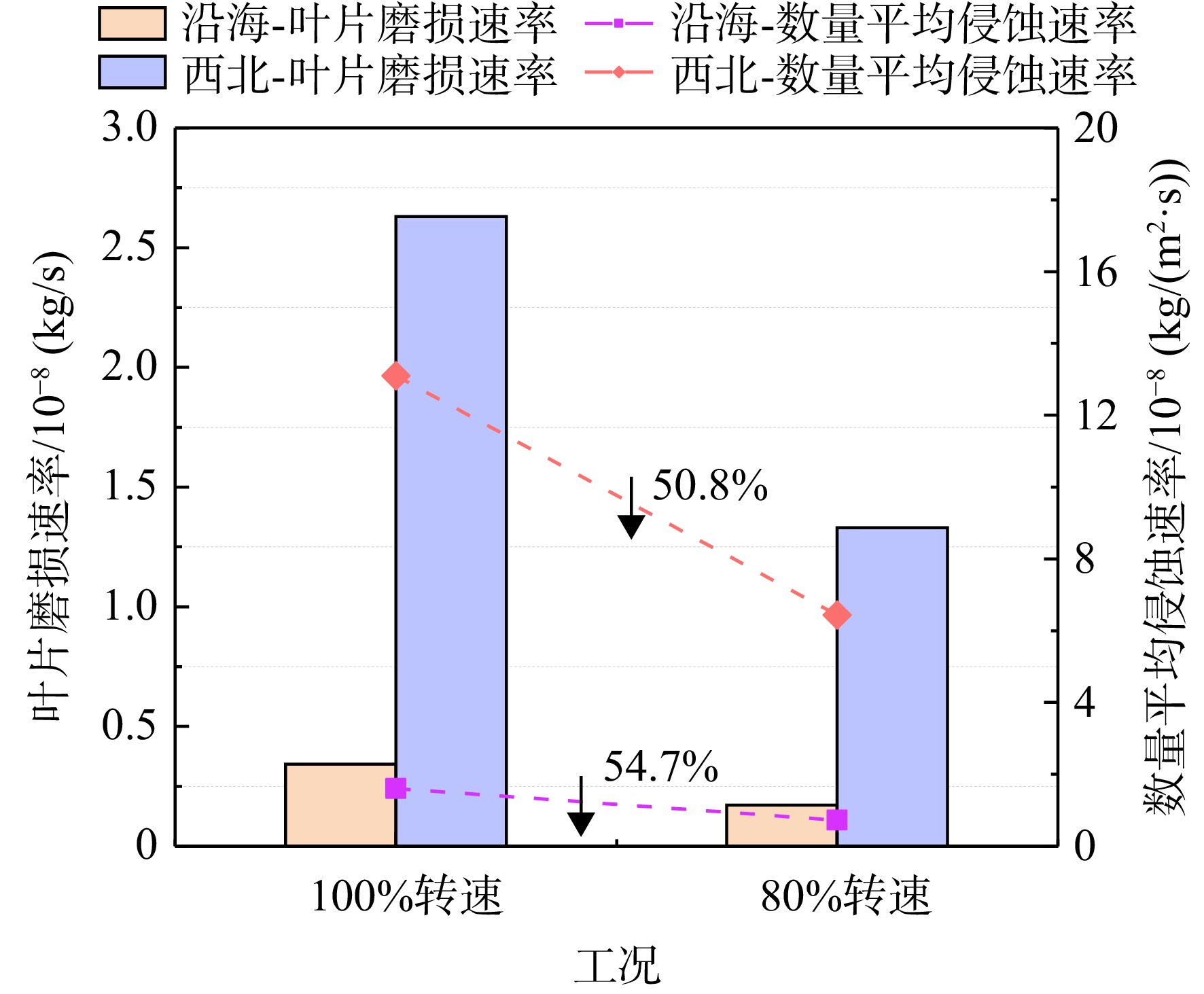
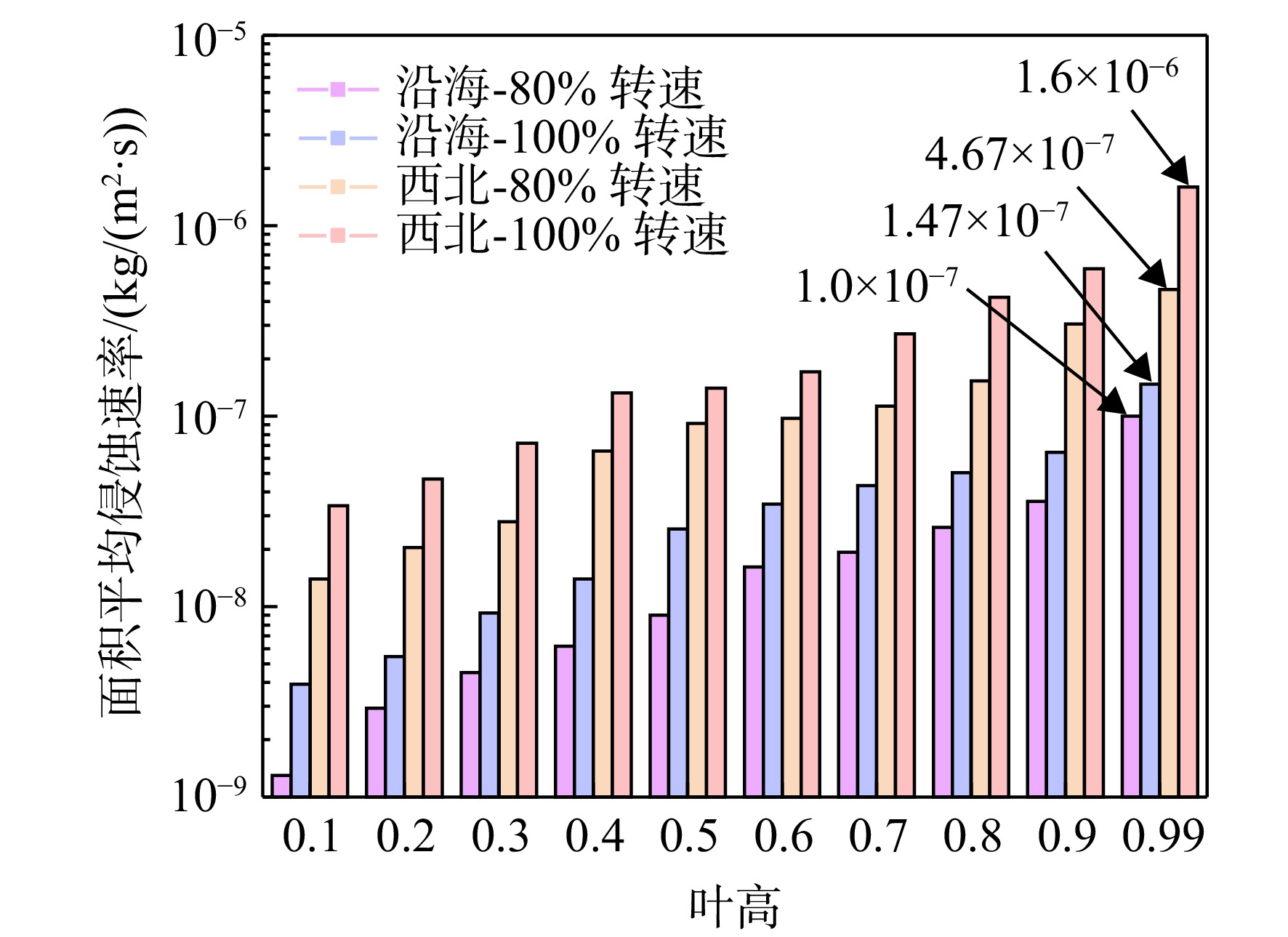
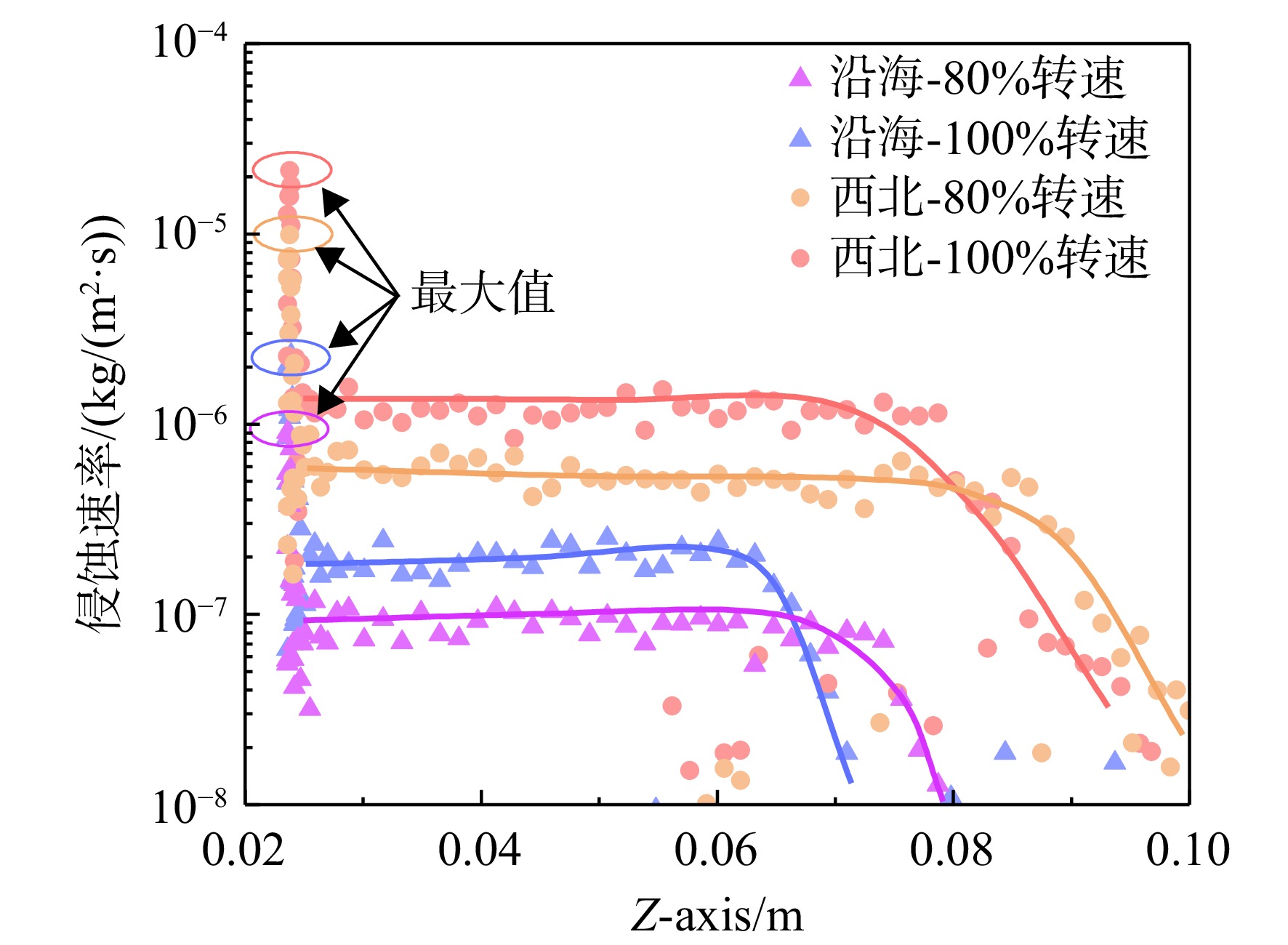
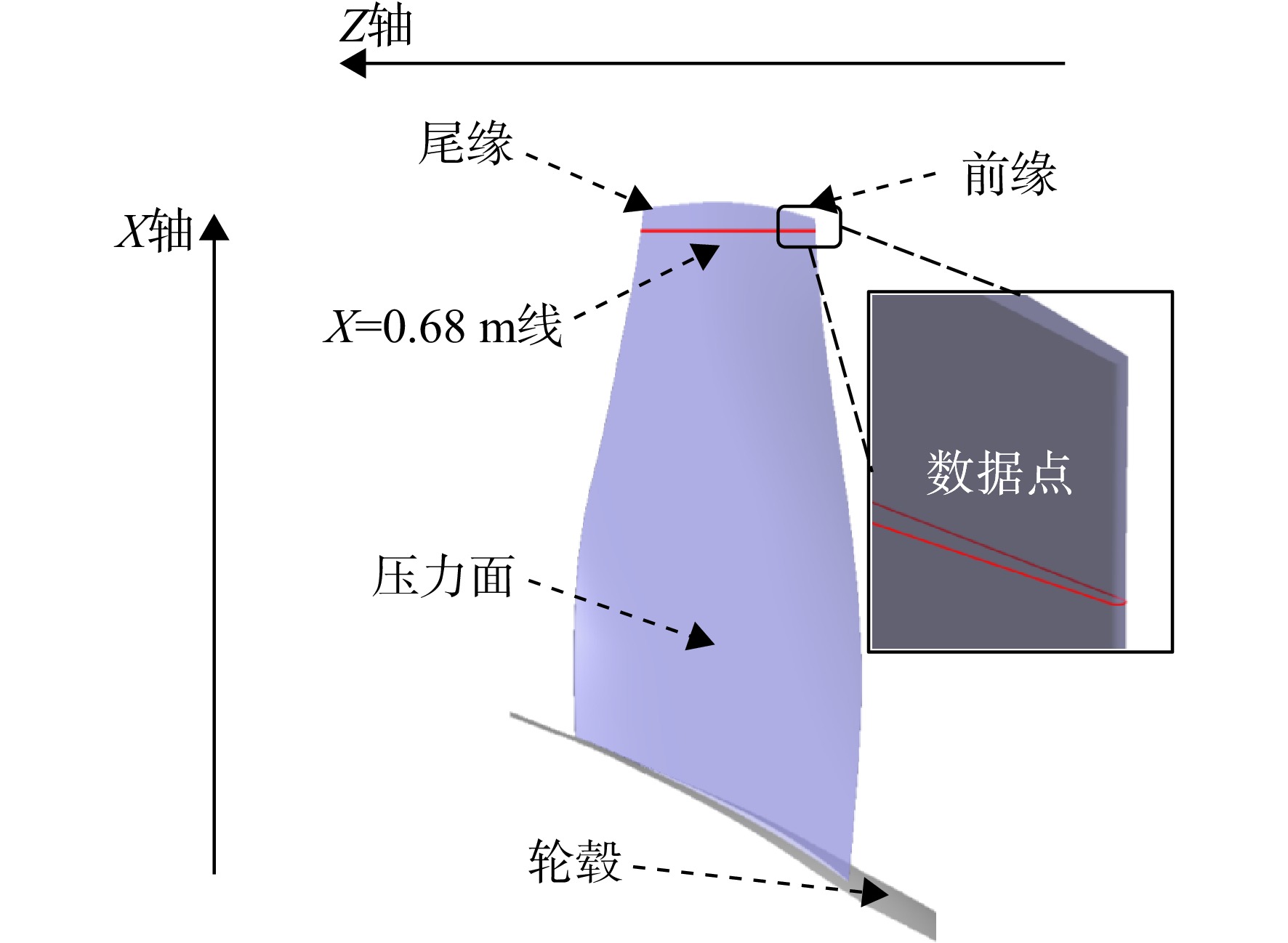
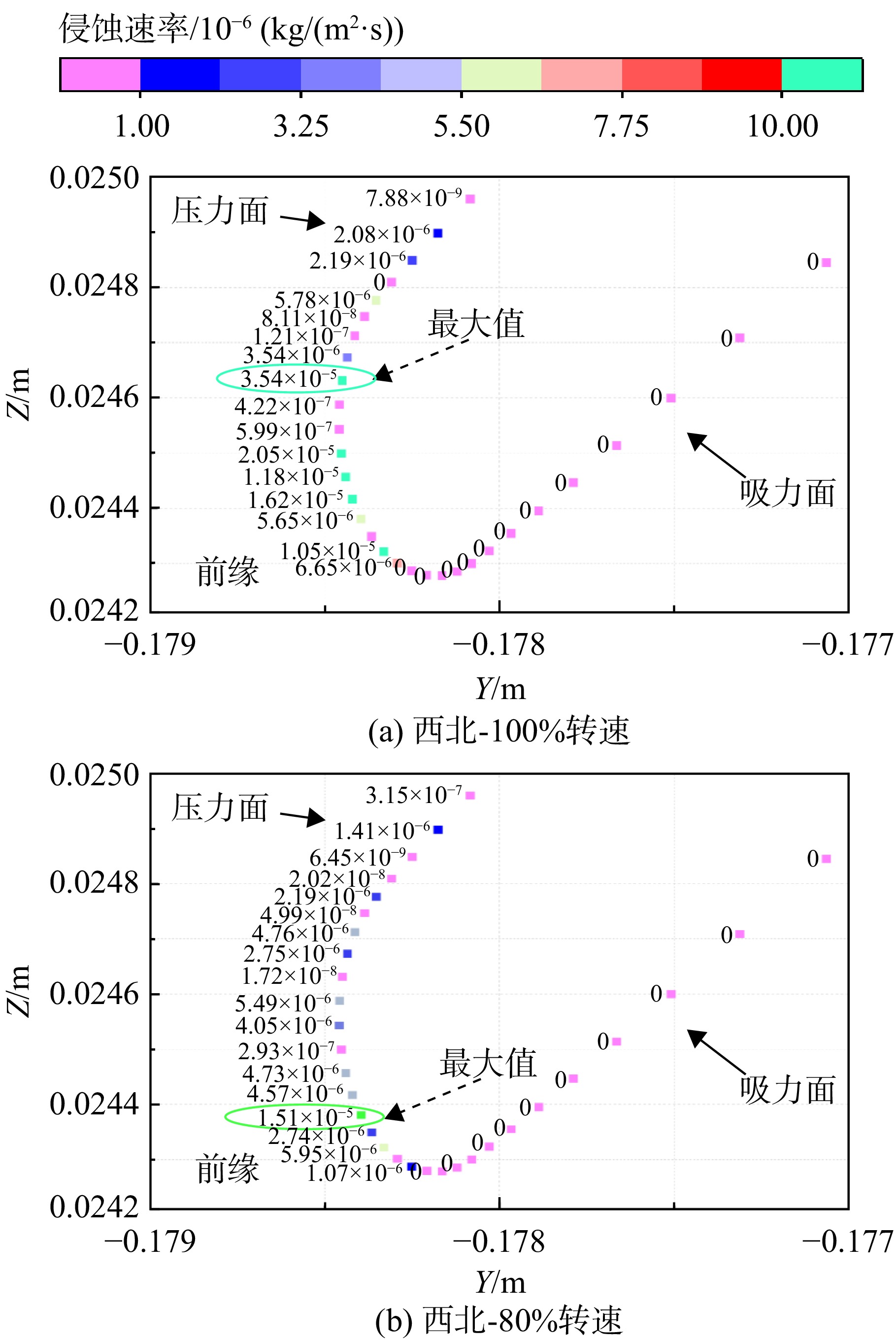
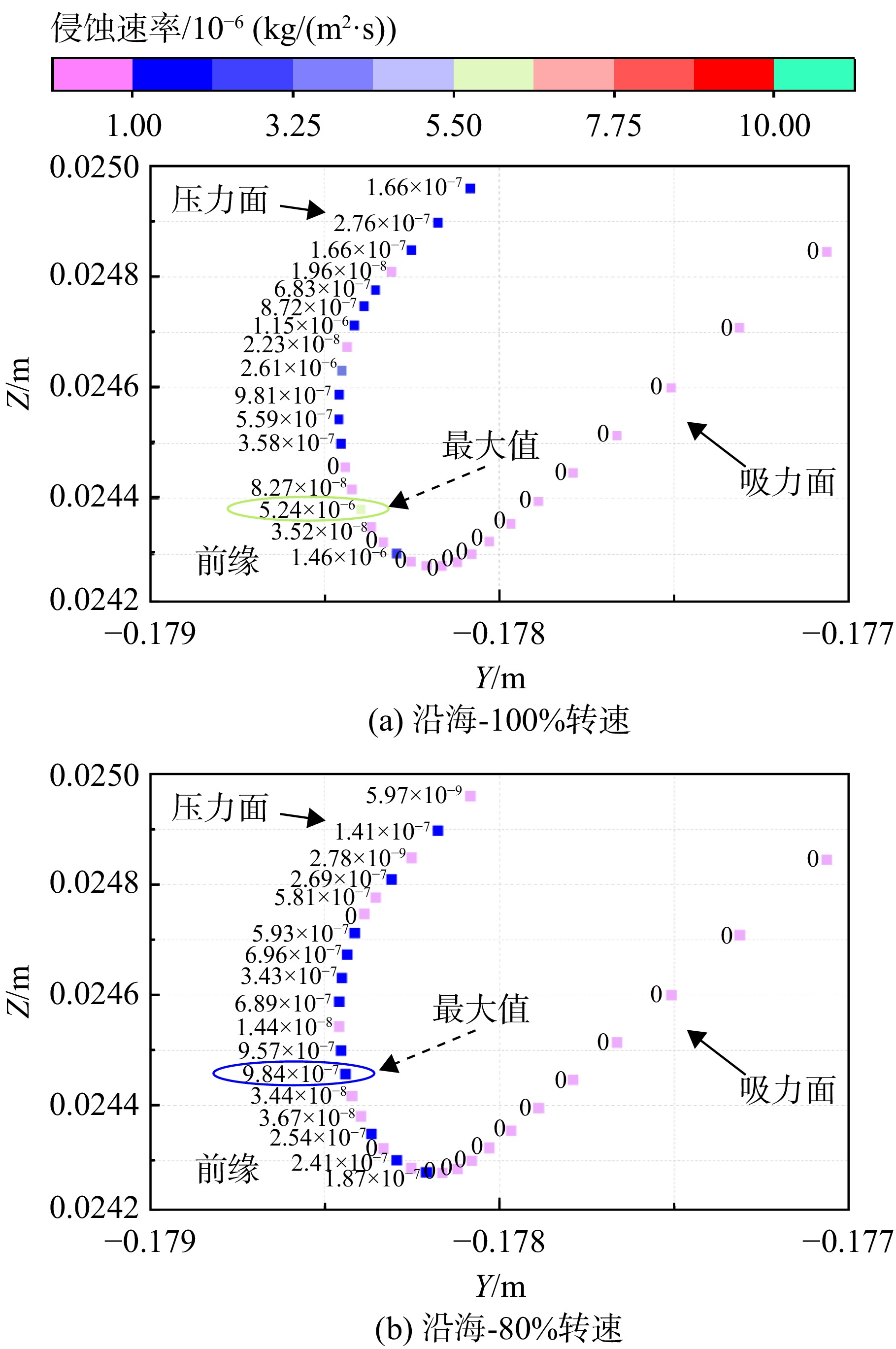
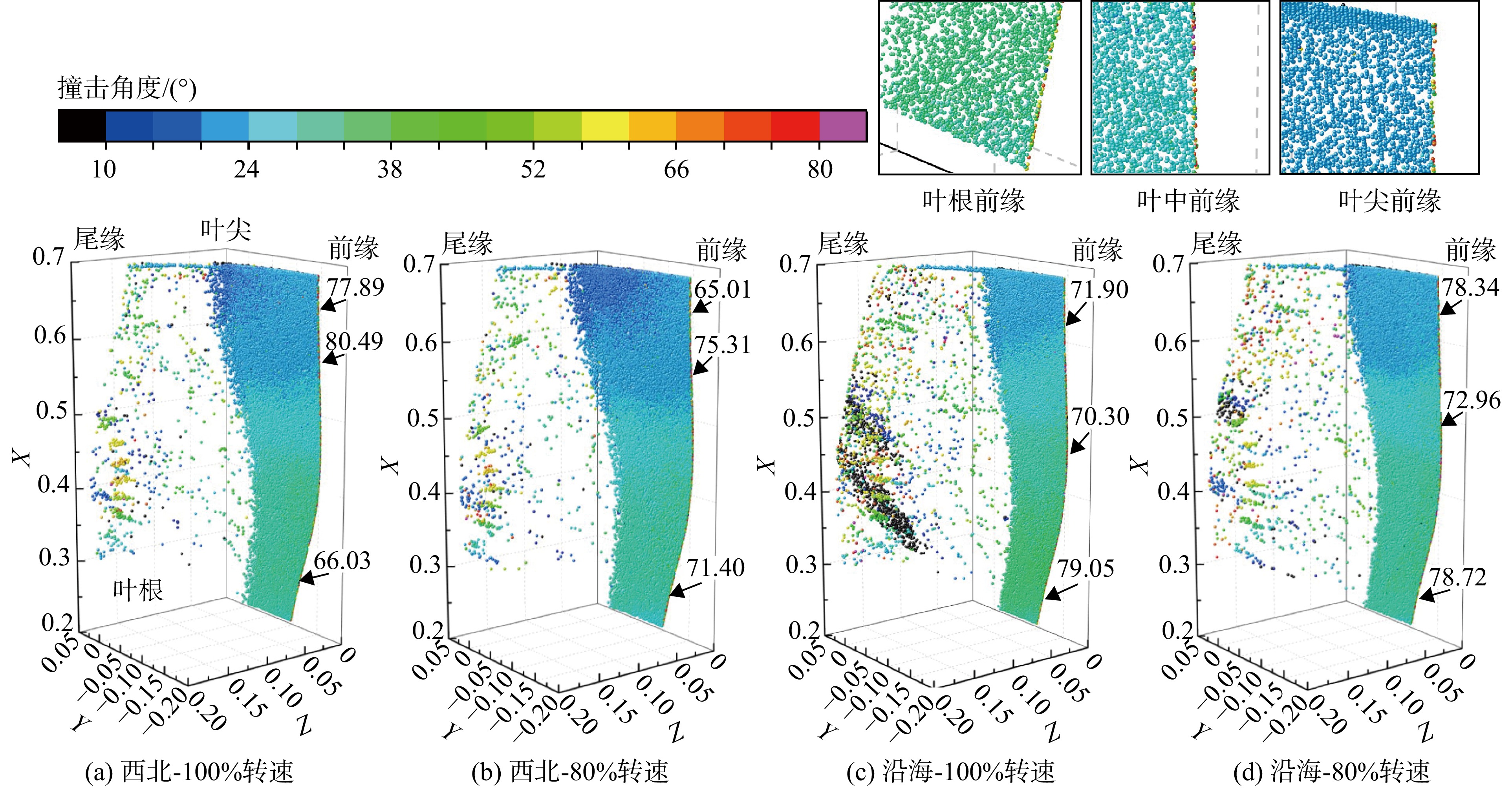
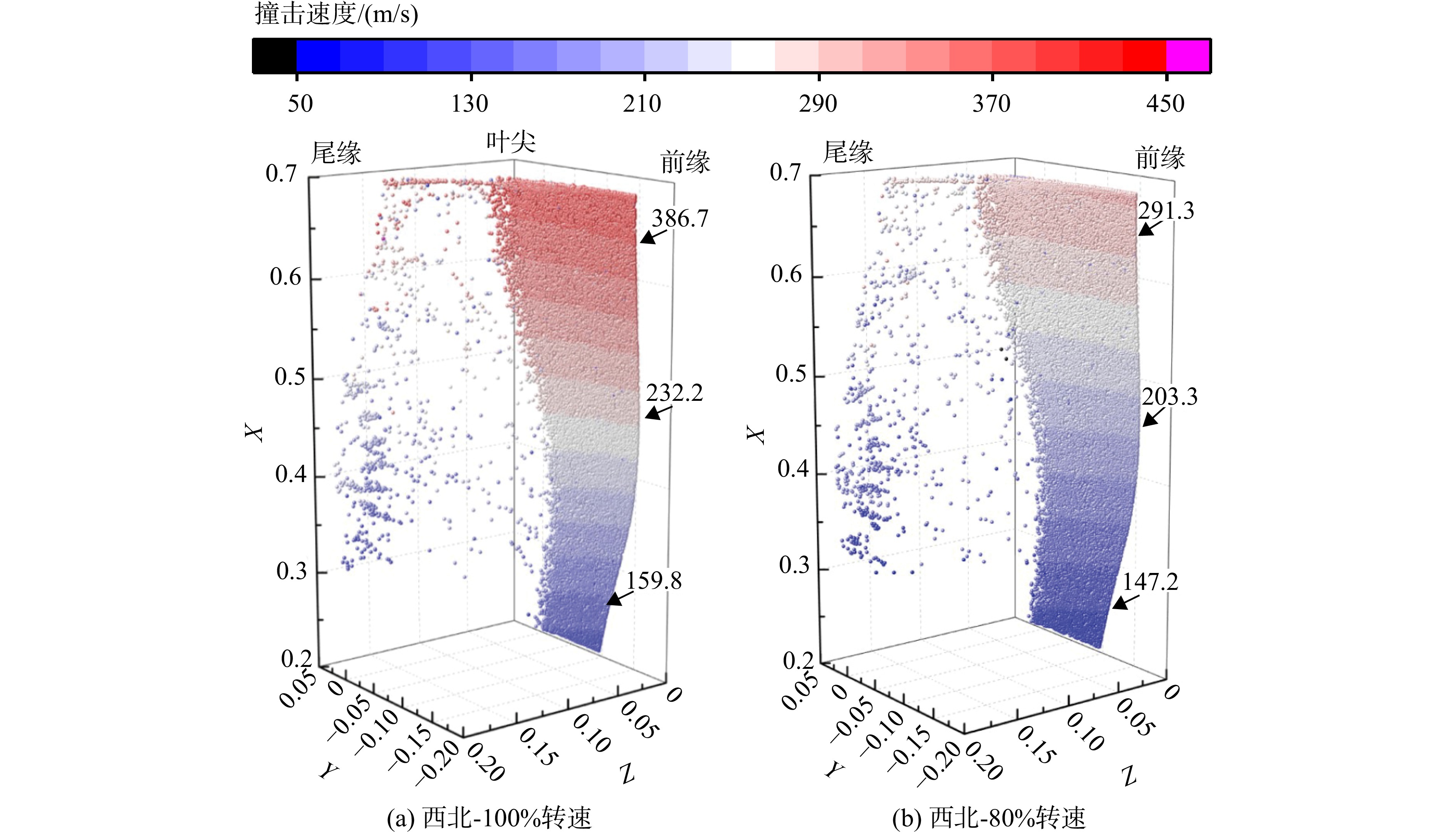
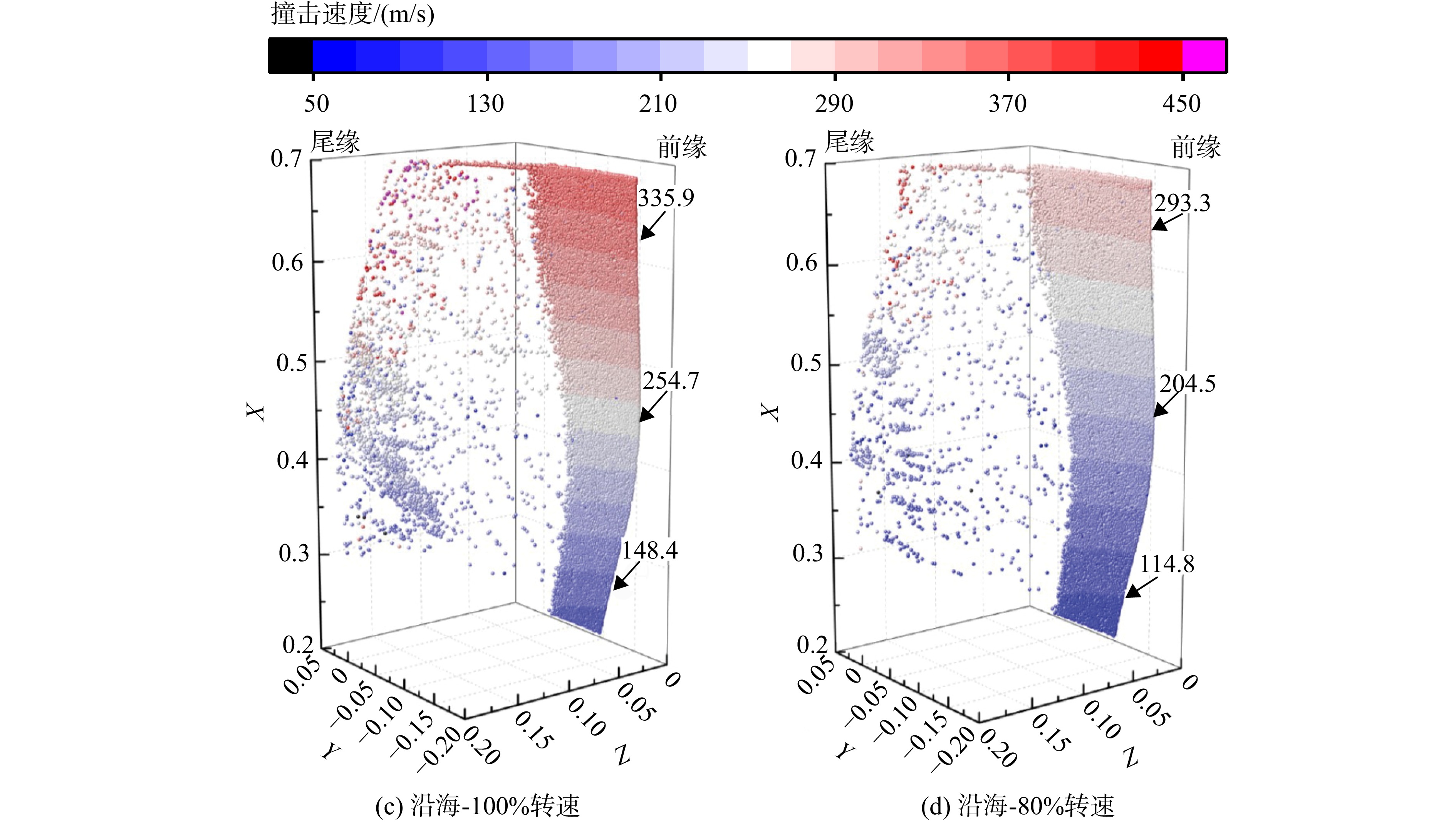
The fan boost stage components of high bypass ratio turbofan engines were taken as the research object to conduct a simulation study on the particle erosion phenomenon that occurs during aircraft takeoff and landing in the northwest and southeast coastal regions of China. The Lagrangian particle tracking theory was employed to precisely capture the positional parameters and kinematic characteristics of particle-wall collision dynamics. The results showed that the erosion rate on the pressure side of the blade in the northwest region was much higher than that in the coastal region. As the rotational speed decreased, the erosion area expanded and extended towards the trailing edge, the number of particles entering the core passage increased, the number of particles entering the bypass passage and the number of particles impacting the fan blade decreased. The increase or decrease in the number of larger particles was more significant. When the full speed condition was reduced to 80% speed condition, the blade wear rate in the northwest region decreased by approximately 49.4%, the maximum erosion rate at the 95% blade height section decreased by approximately 54.1%, and the particle impact velocity on the pressure side decreased by approximately 7.5% to 24.6%. In the coastal region, the blade wear rate decreased by approximately 45.8%, the maximum erosion rate at the 95% blade height section decreased by approximately 60.6%, and the particle impact velocity on the pressure side decreased by approximately 12.5% to 22.9%.

Damage analysis of turbine blade considering creep and fatigue under load spectrum
Zhou Yuhang, Zhang Tong, Wang Yanrong, Sun Jingguo, Jiang Xianghua
2026, 41(8): 20250015. doi: 10.13224/j.cnki.jasp.20250015
Abstract:
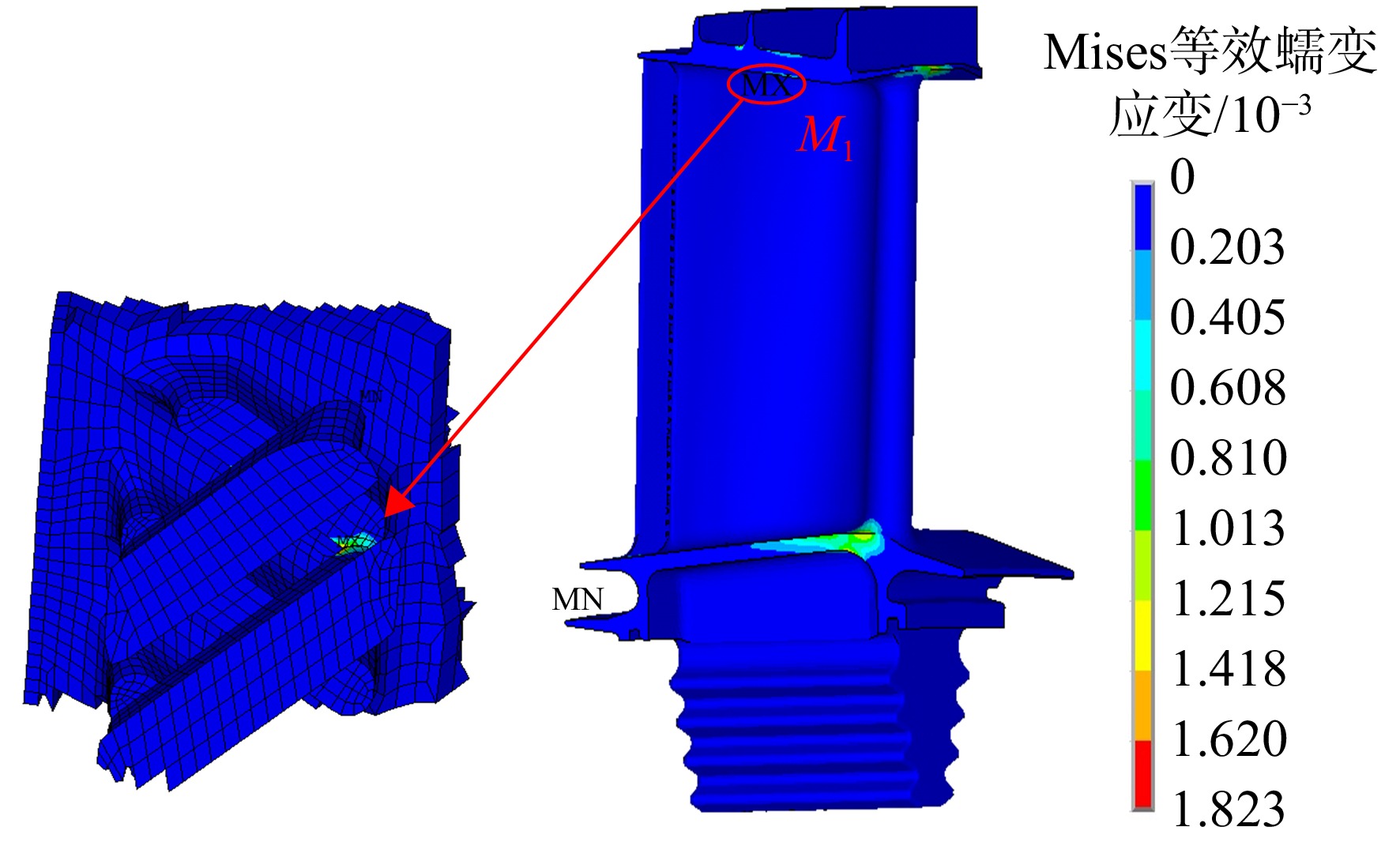
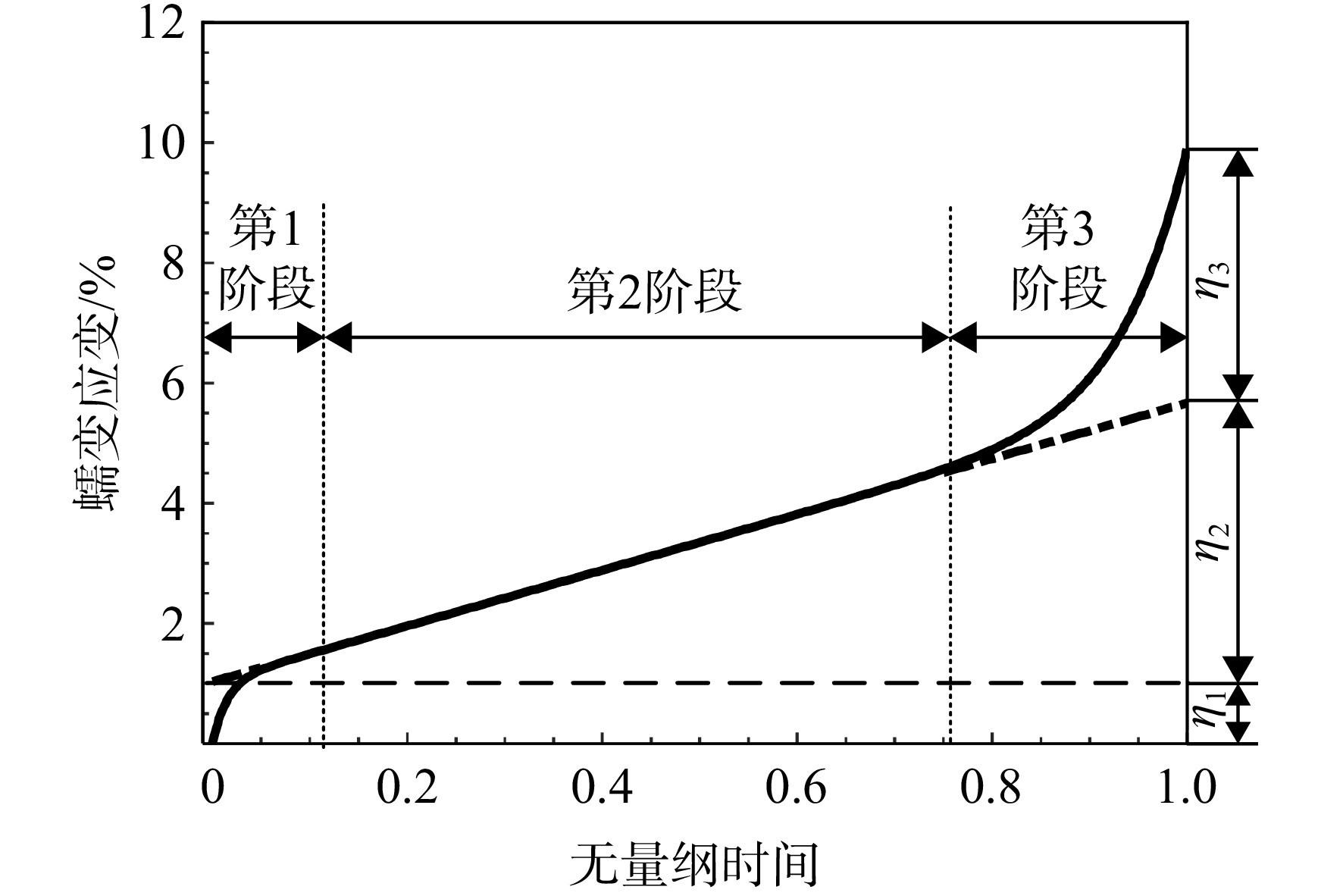
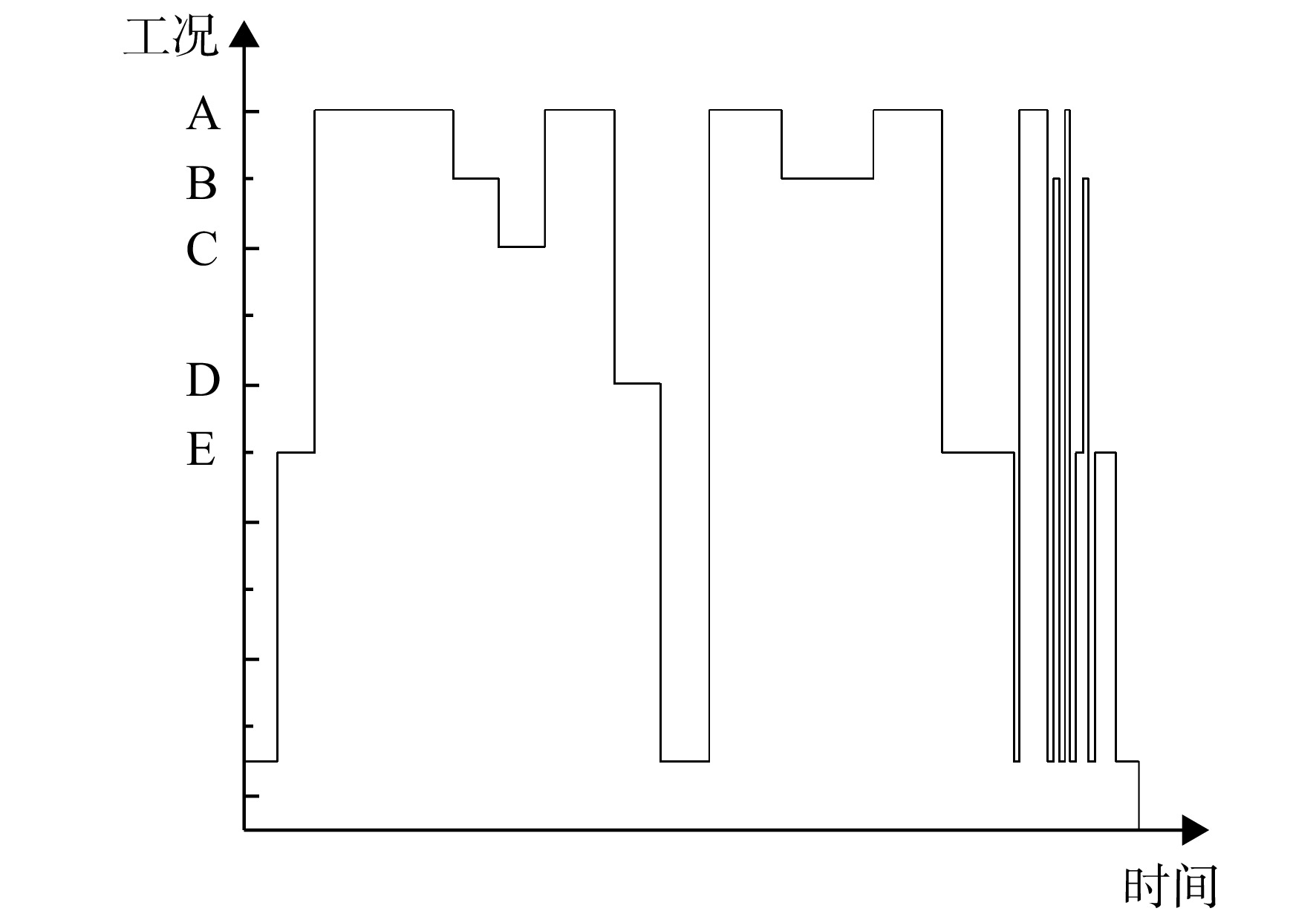
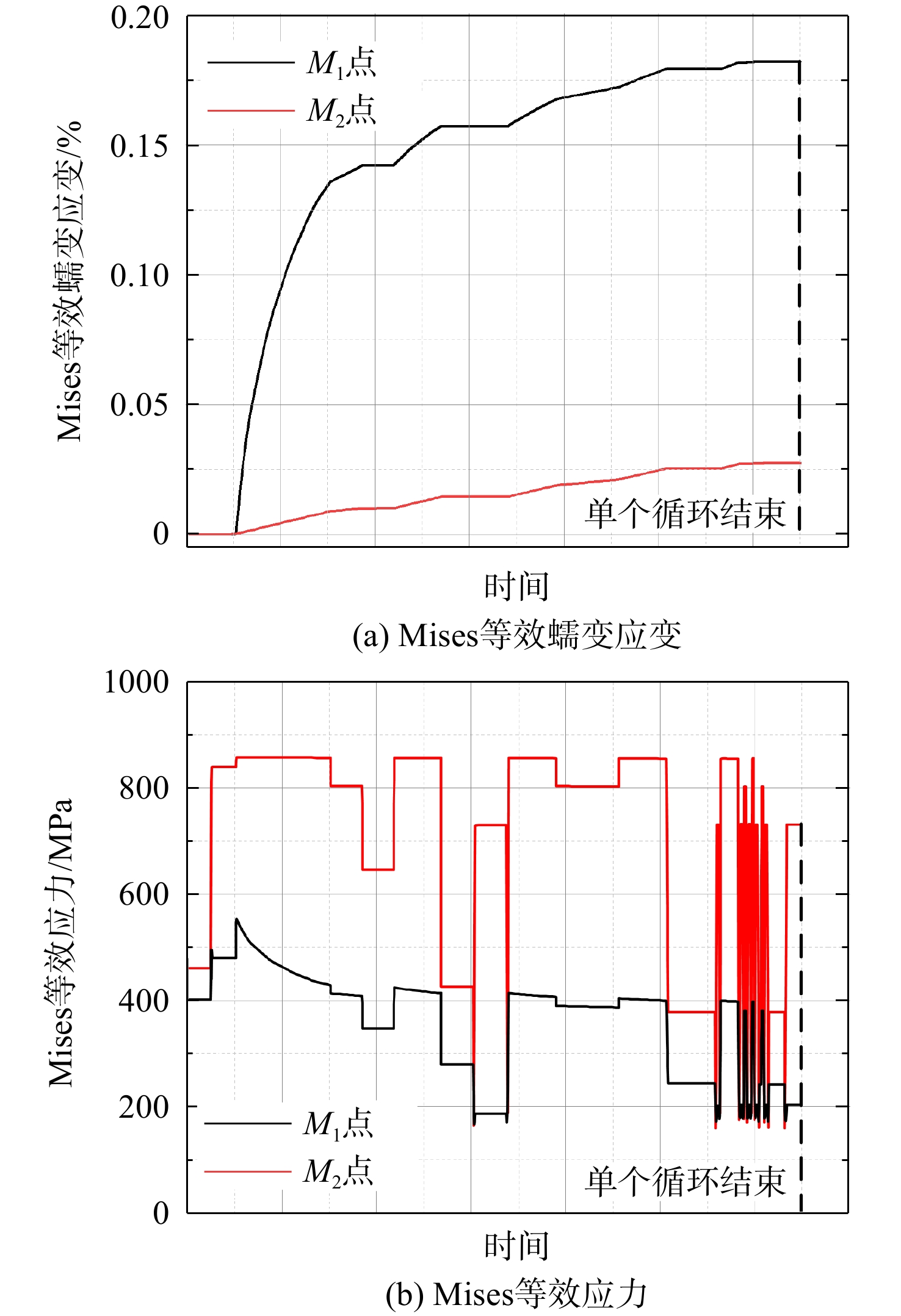
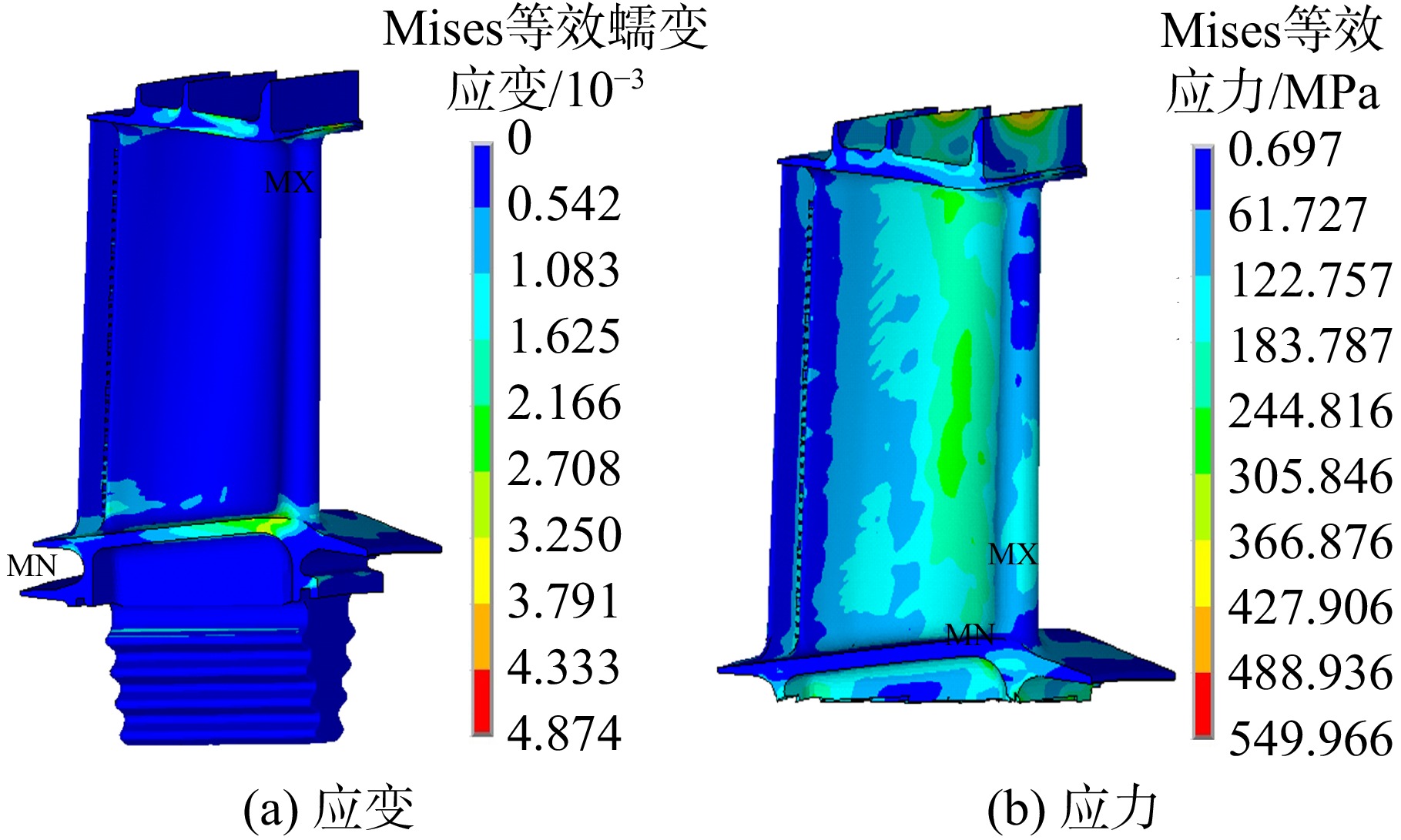
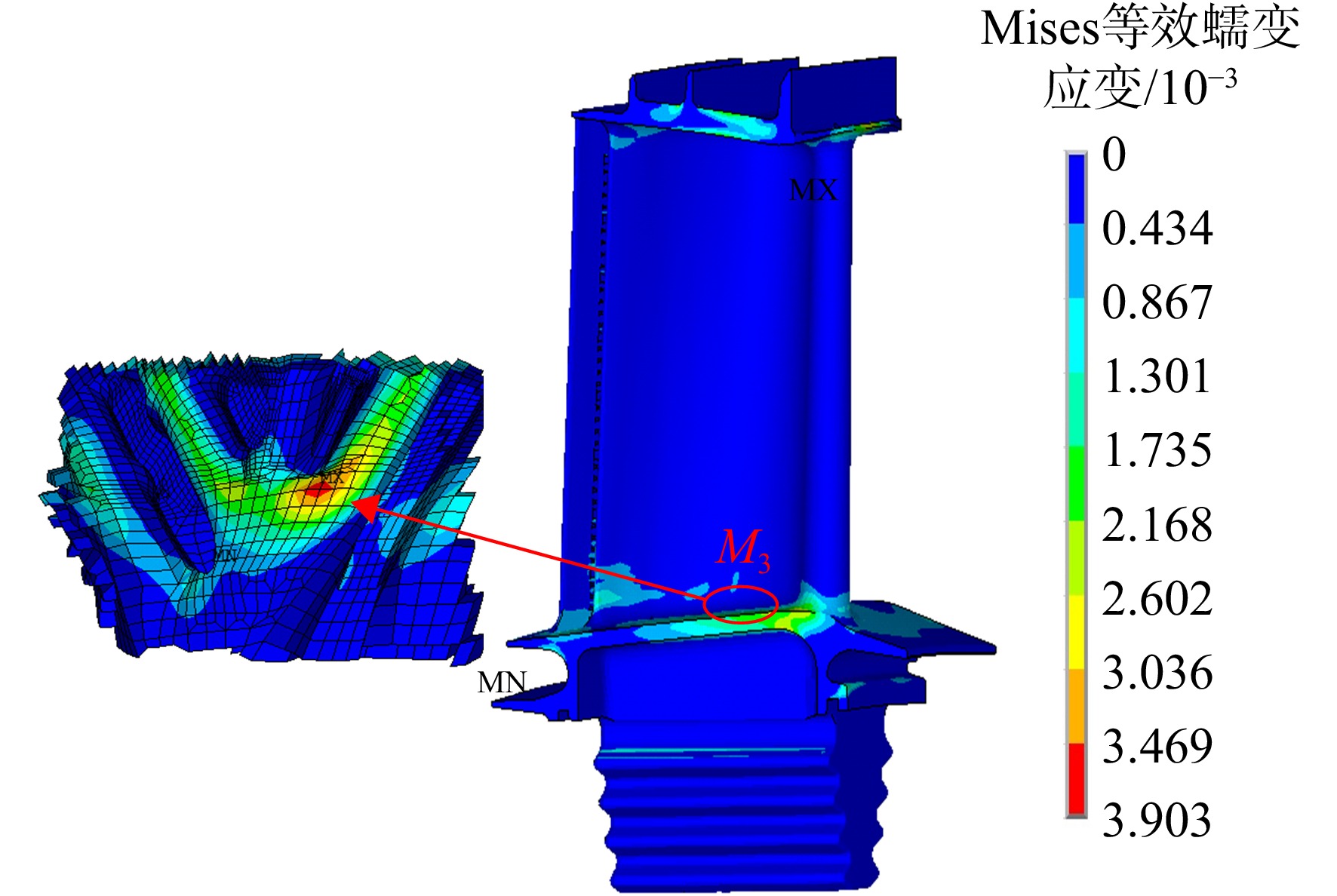
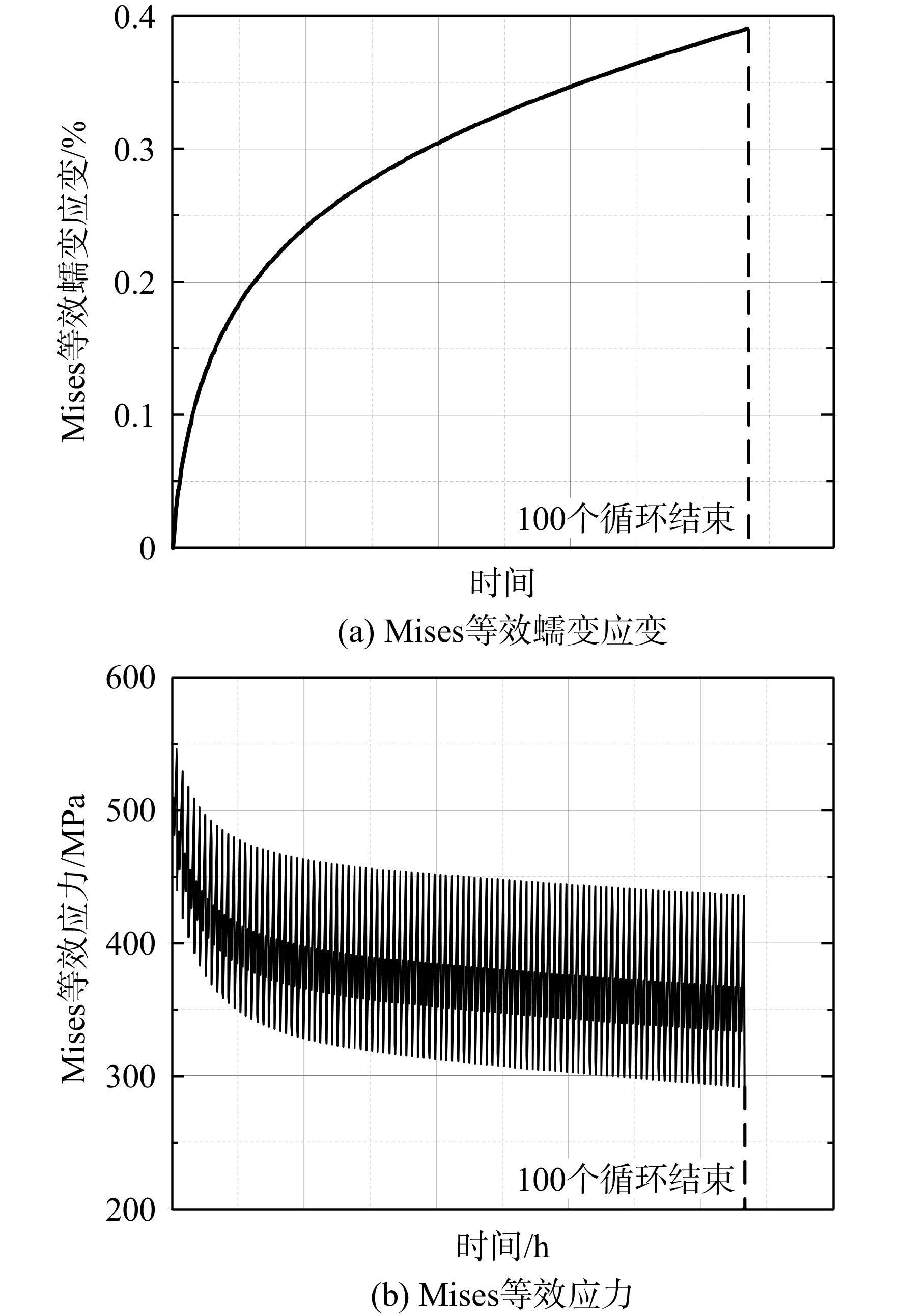
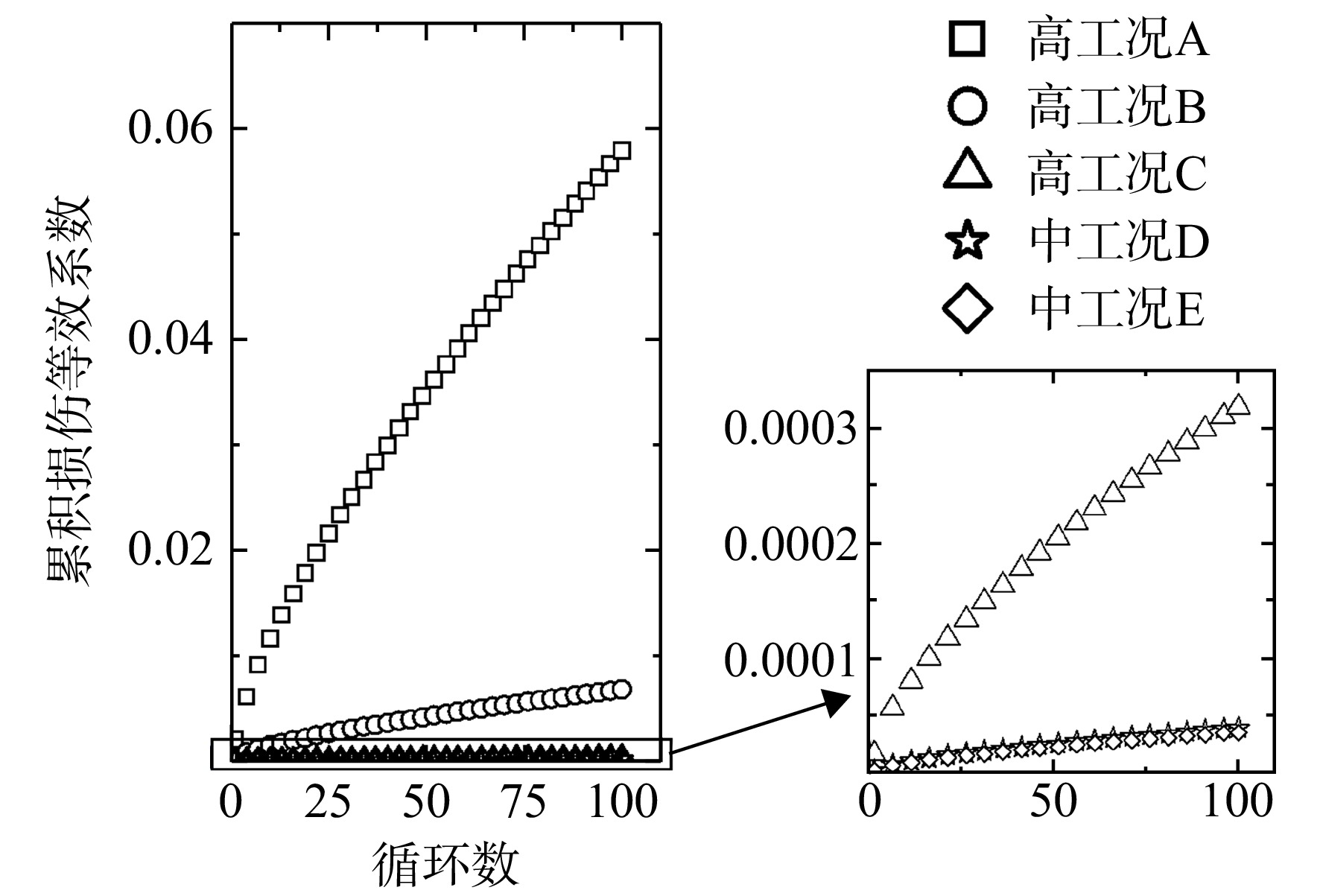
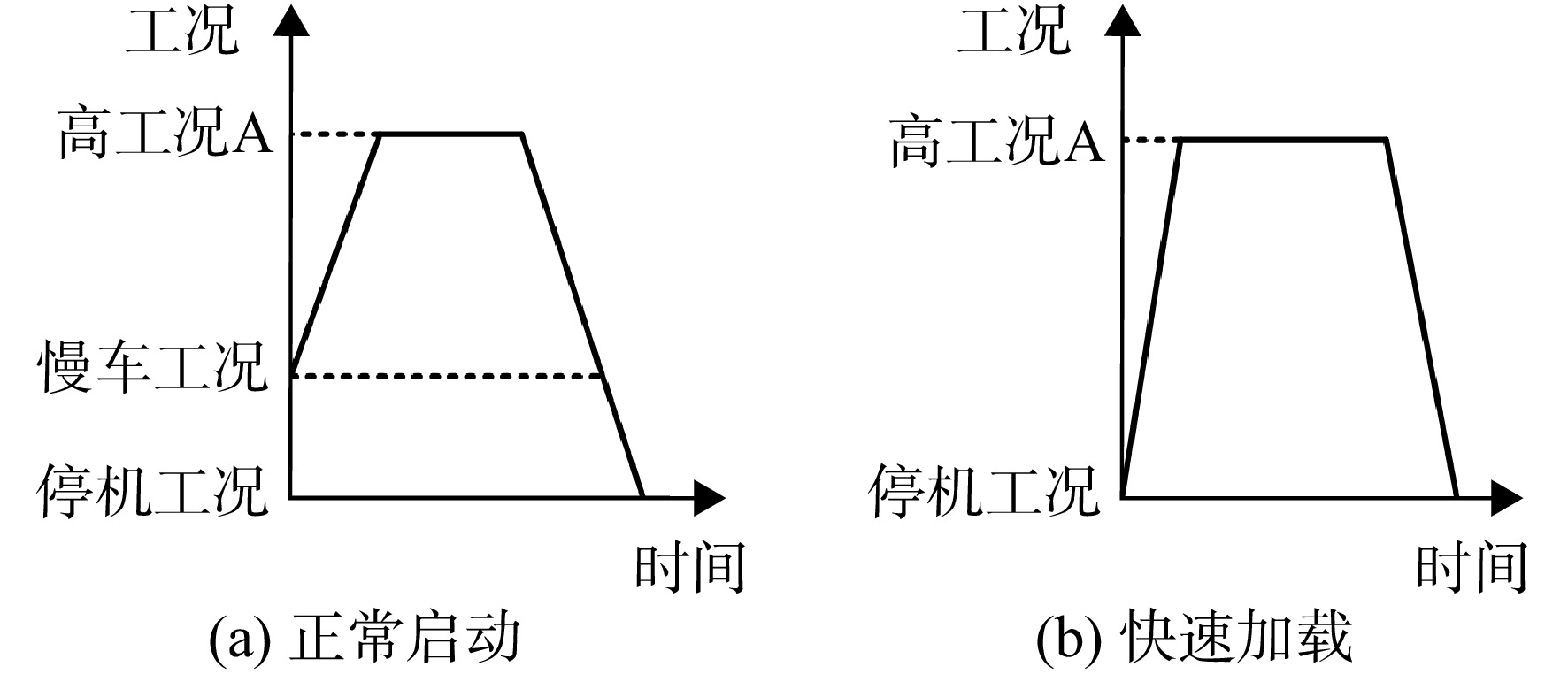
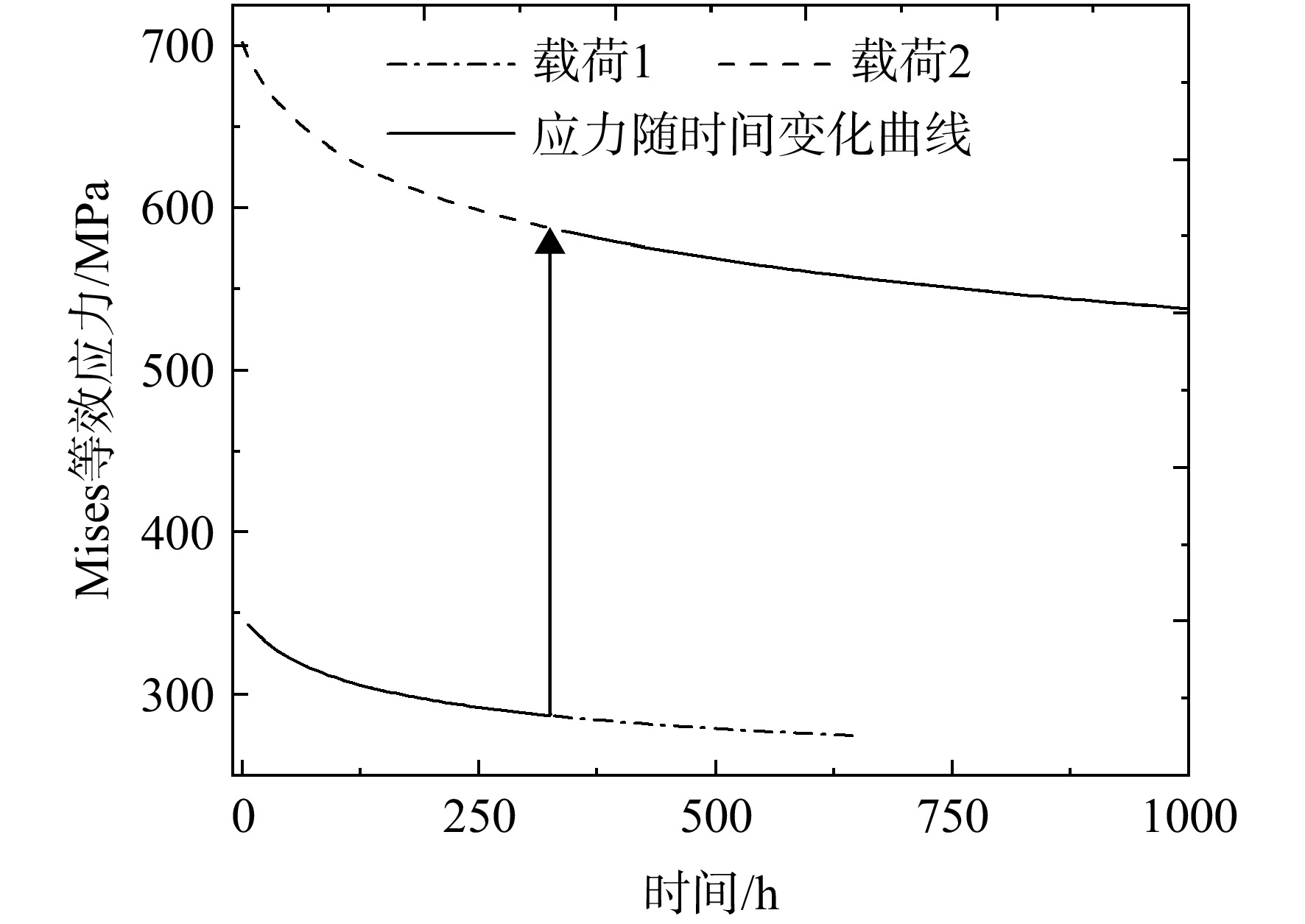
Using the three-stage normalized parametric creep model, the creep behavior of a turbine blade under a typical multi-condition test load spectrum was simulated through the usercreep subroutine. The results indicated that as creep strain increased, stress relaxation occurred in stress concentration regions. Under high operating conditions, significant creep strain accumulation and stress relaxation were observed. Under a single load spectrum cycle, the creep strain induced by high operating conditions accounted for more than 90%. Based on Miner’s linear damage accumulation rule, a damage analysis of the turbine blade was conducted as part of the life prediction process. In practical applications, the test load was significantly higher than the actual operating intensity. Therefore, to more accurately evaluate the mean time to failure (MTTF) of the blade, an equivalent damage factor was employed to assess the equivalent operating time of the blade and establish an estimation process. For the turbine blade and test load spectrum, the equivalent duration under actual operating conditions was calculated to be 26 283.6 h.

Effect of excitation frequency on frequency response characteristics of mistuned blisk
FANG Mingchang, HAN Le, WU Yaguang
2026, 41(8): 20250313. doi: 10.13224/j.cnki.jasp.20250313
Abstract:
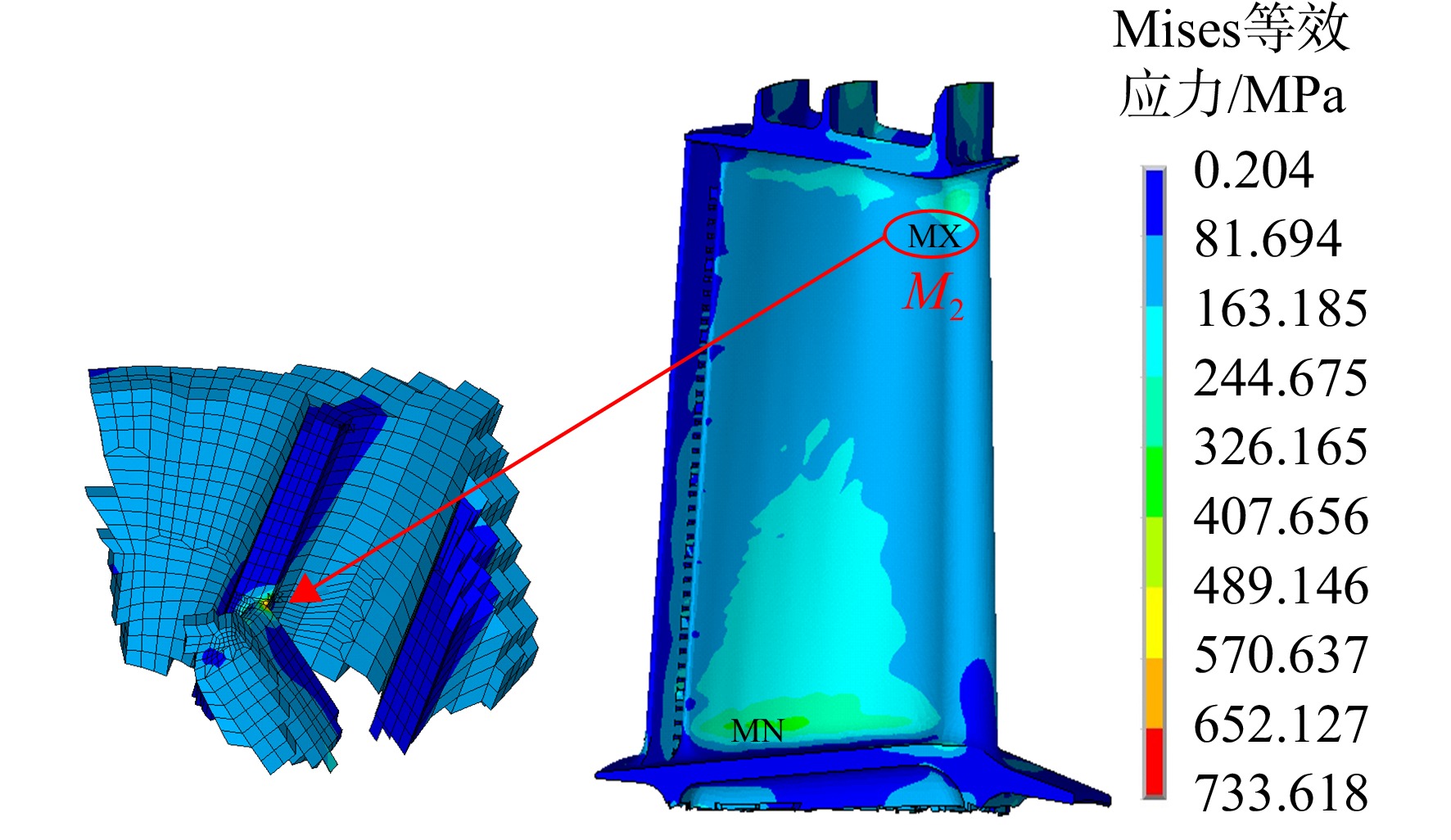
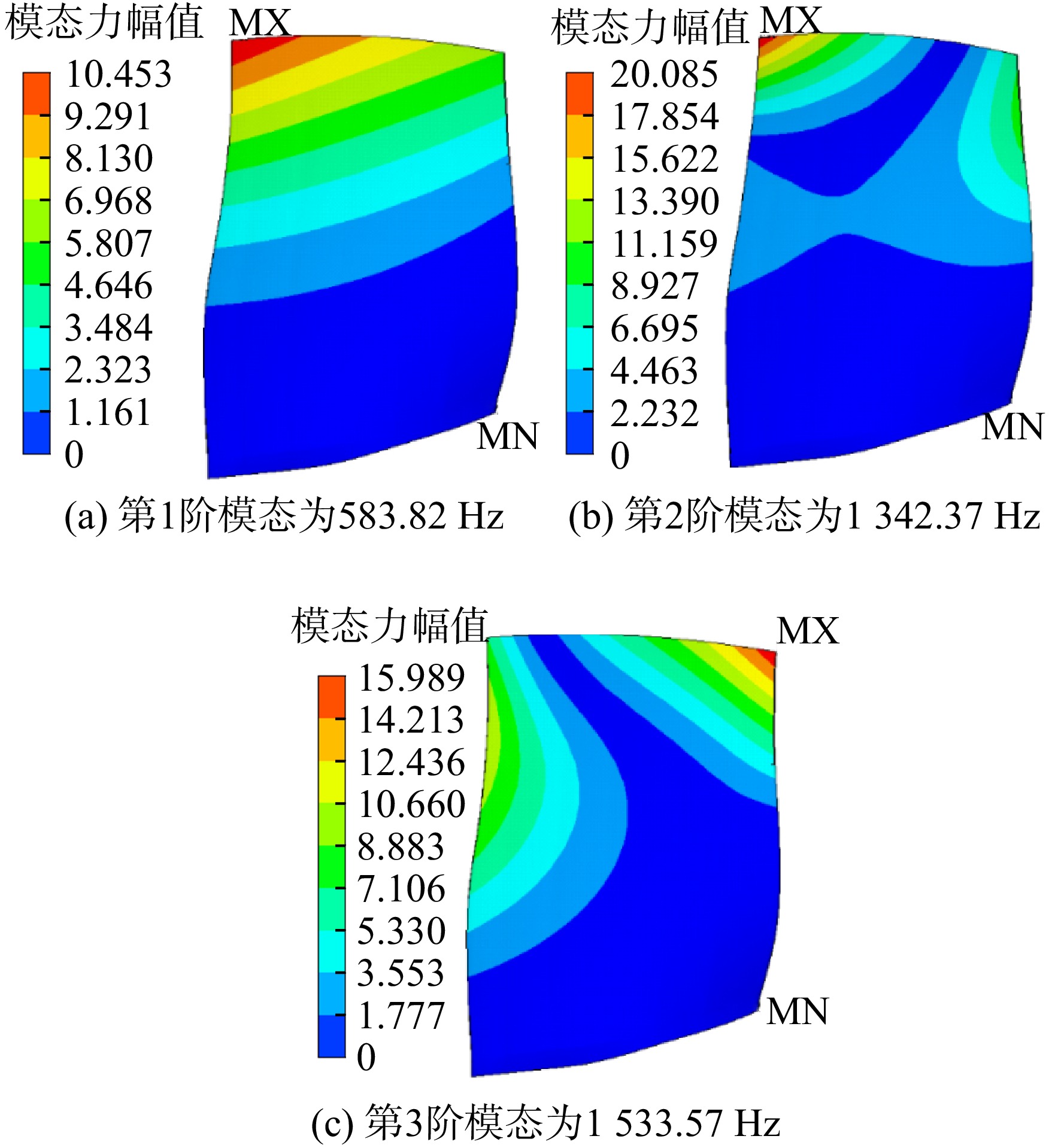
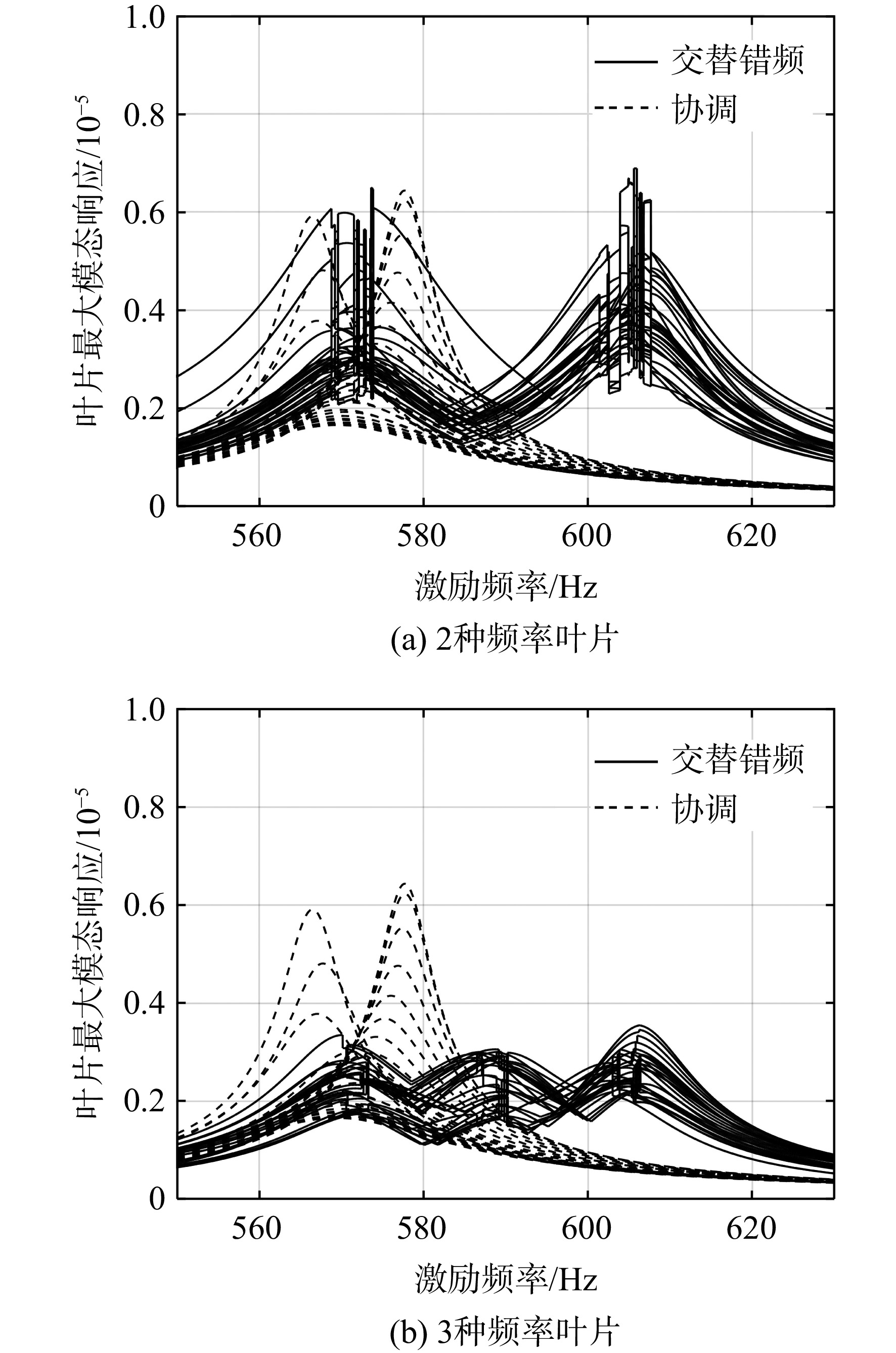
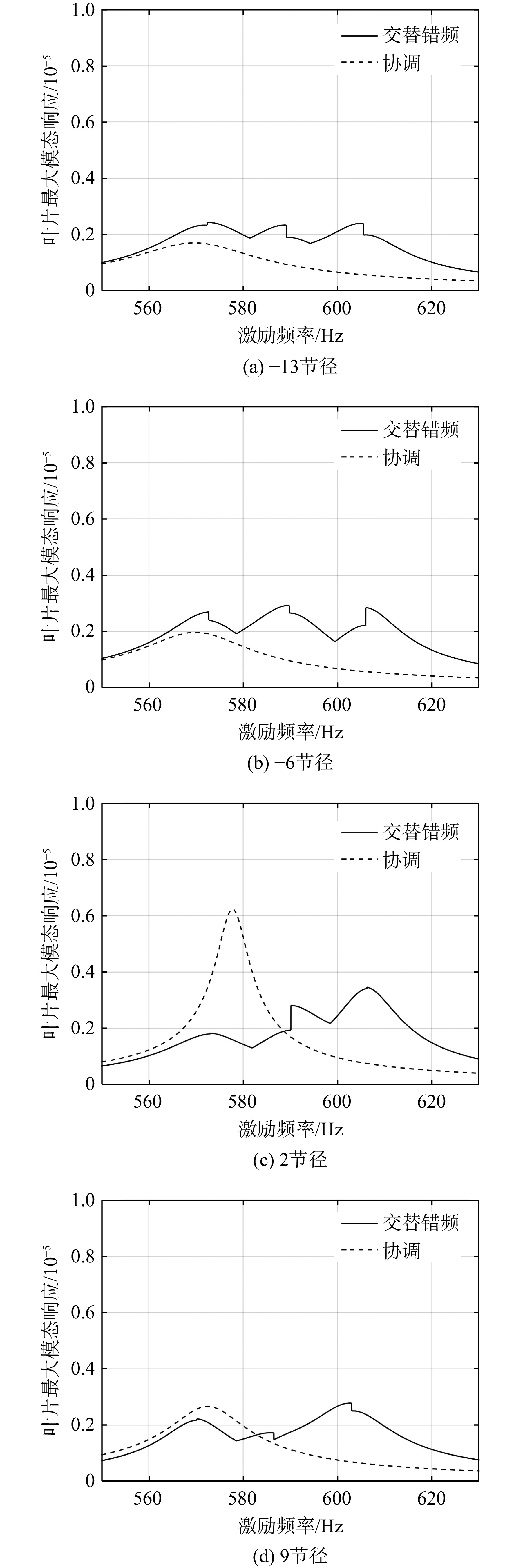
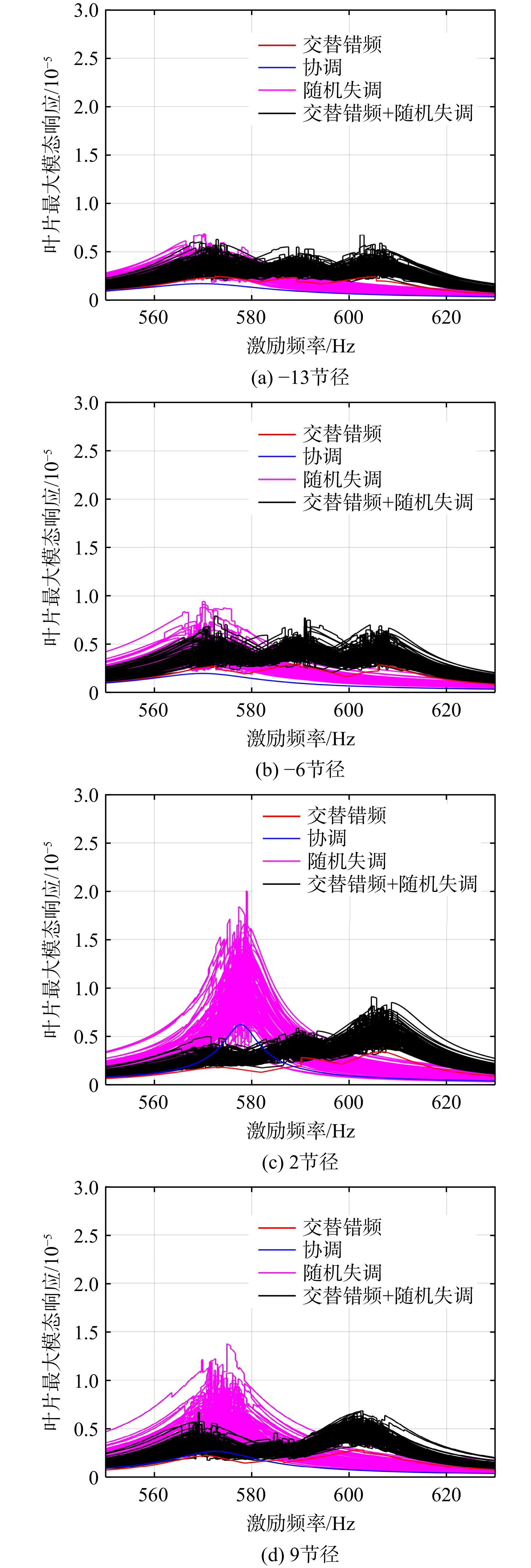
The blisk forced response analysis method combining fundamental mistuning model (FMM), influence coefficient method, and modal superposition method was adopted. Considering the influence of aerodynamic damping, the method was used to study the frequency response characteristics of various mistuning blisks under traveling wave excitation. The influence of traveling wave excitation frequency on the forced responses of mistuning blisks was summarized by analyzing the frequency response curves of different mistuning blisks. The results showed that the forced response of tune blisk generally increased after the superposition of random mistuning under traveling wave excitation in typical frequency range, and there was a “response jump” near the peak. After further superposition of alternating mistuning, the forced response significantly decreased, and frequency response curves exhibited “multi peak” and “response jump”.

High-temperature oxidation mechanism of aluminide coatings on the surface of nickel-based single crystal superalloys
Li Yanming, Wang Quan, Liu Huan, Hu Peng, Gao Zhikun
2026, 41(8): 20250331. doi: 10.13224/j.cnki.jasp.20250331
Abstract:
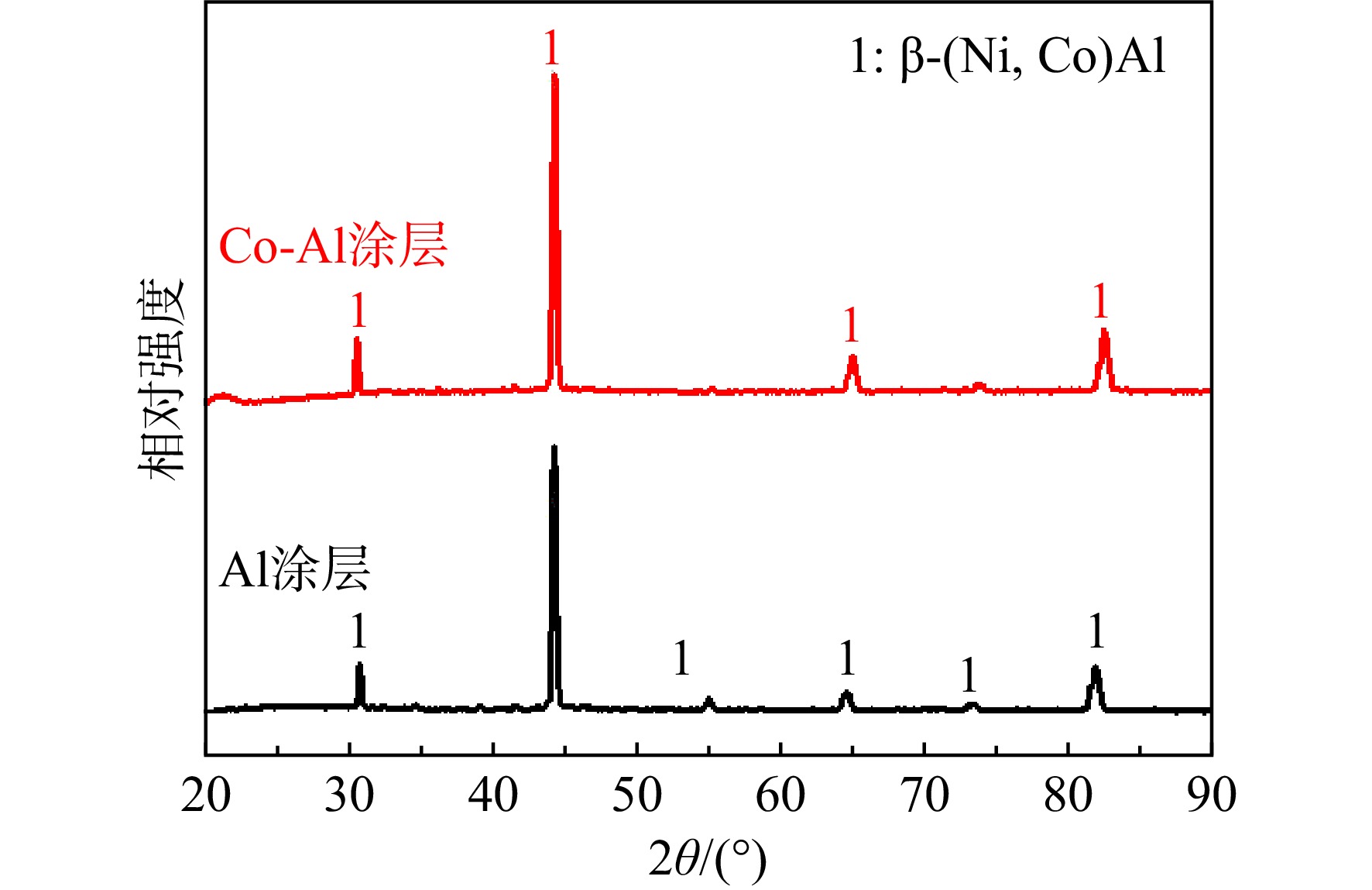
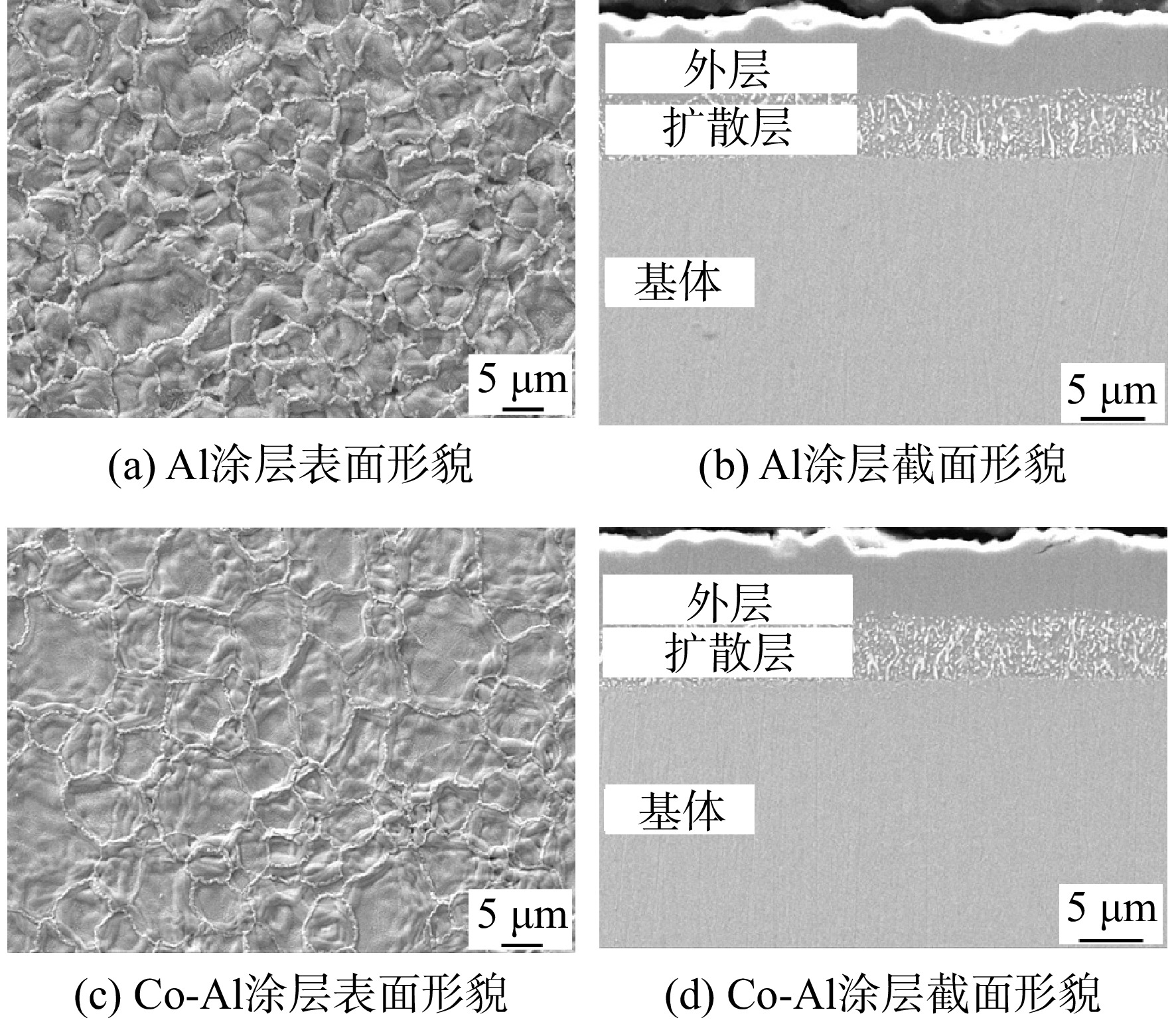
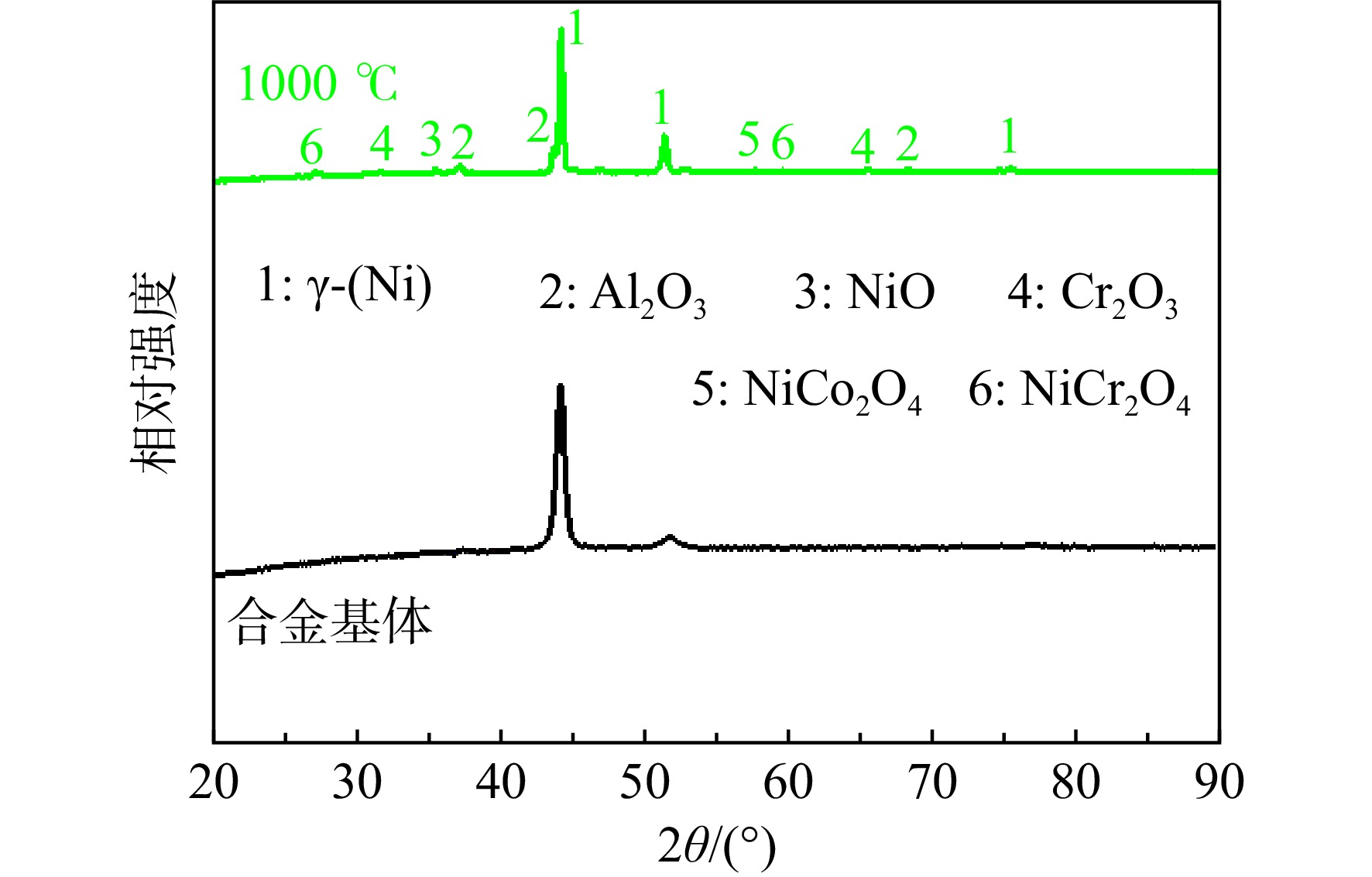
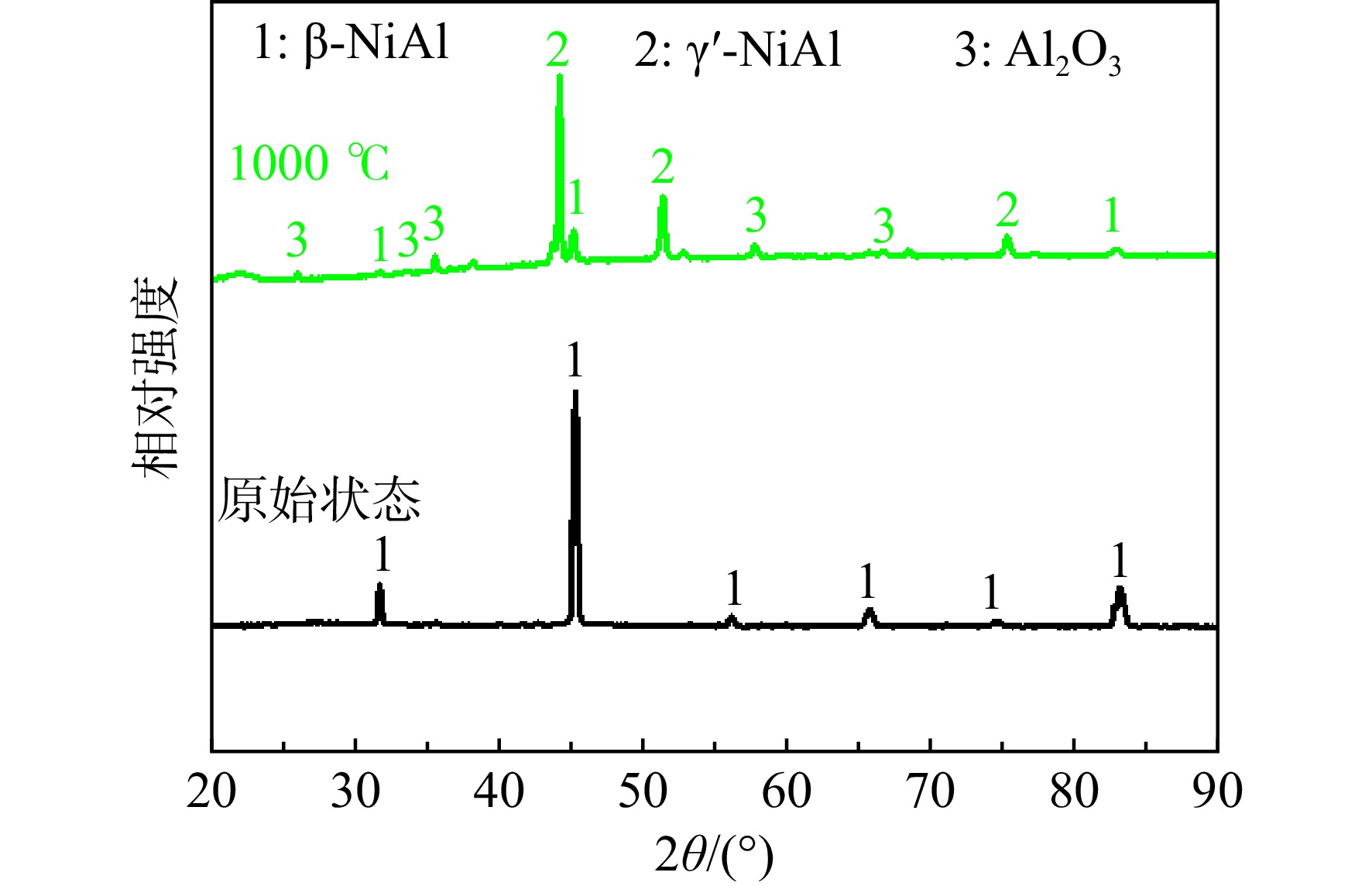
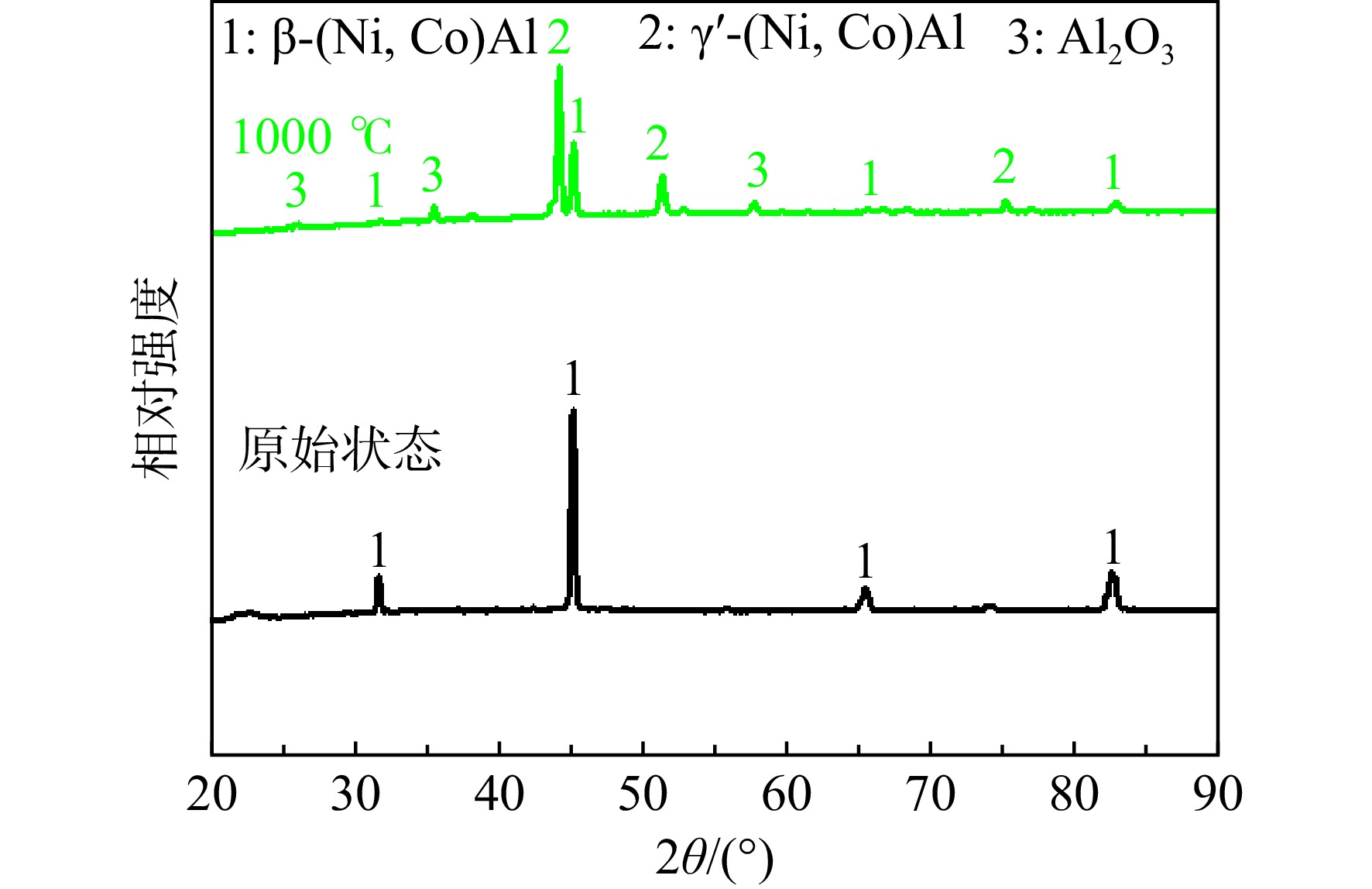
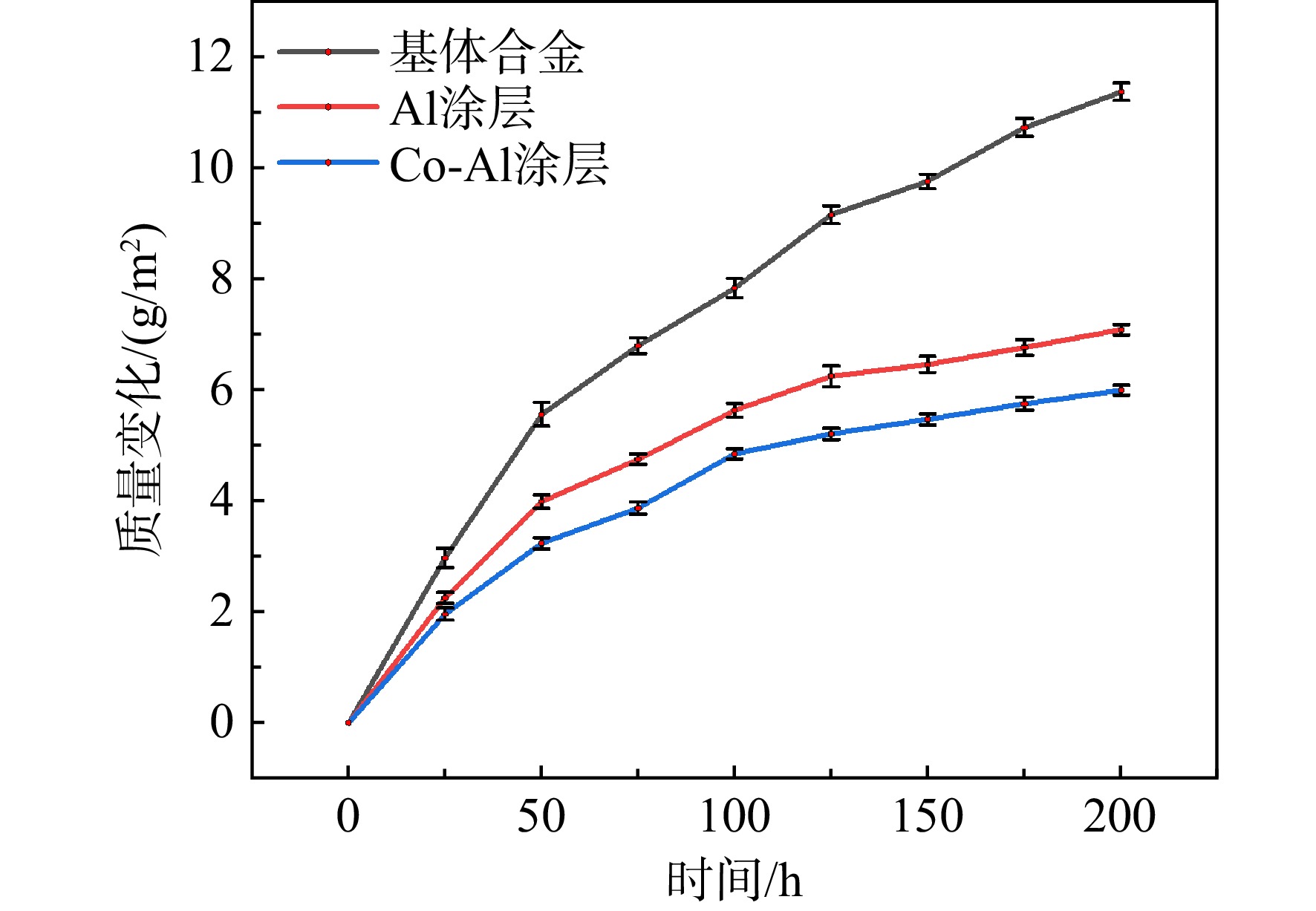
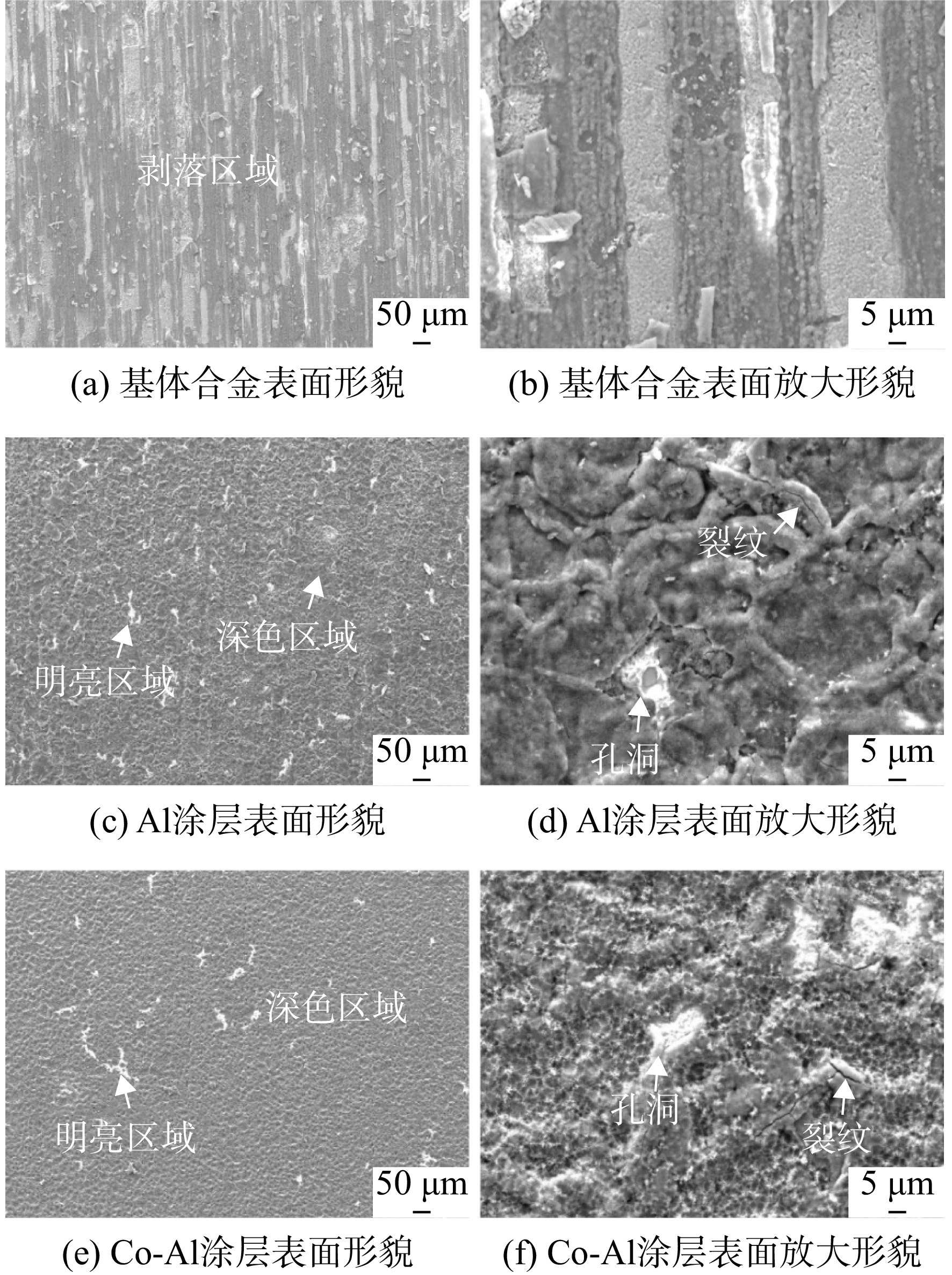
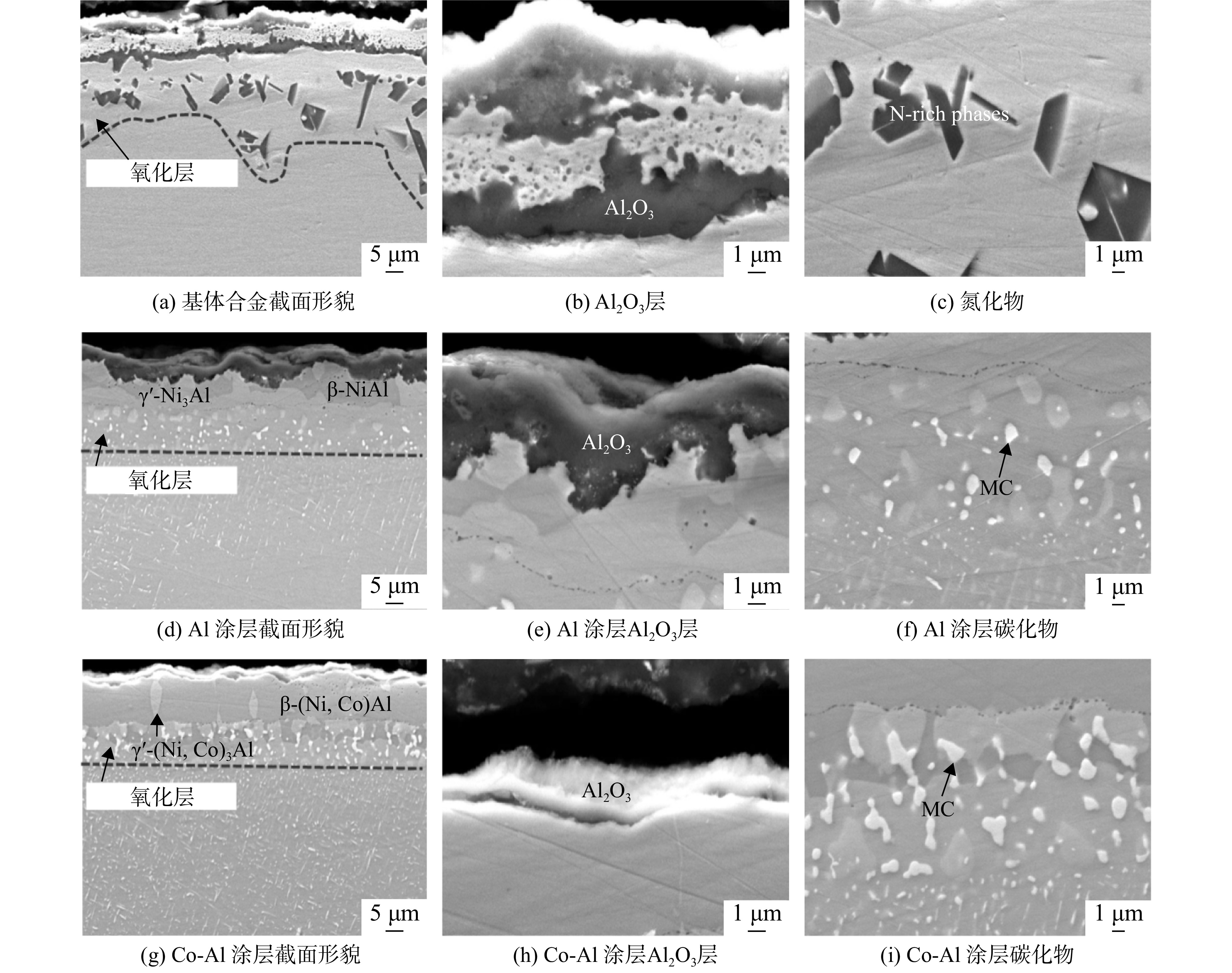
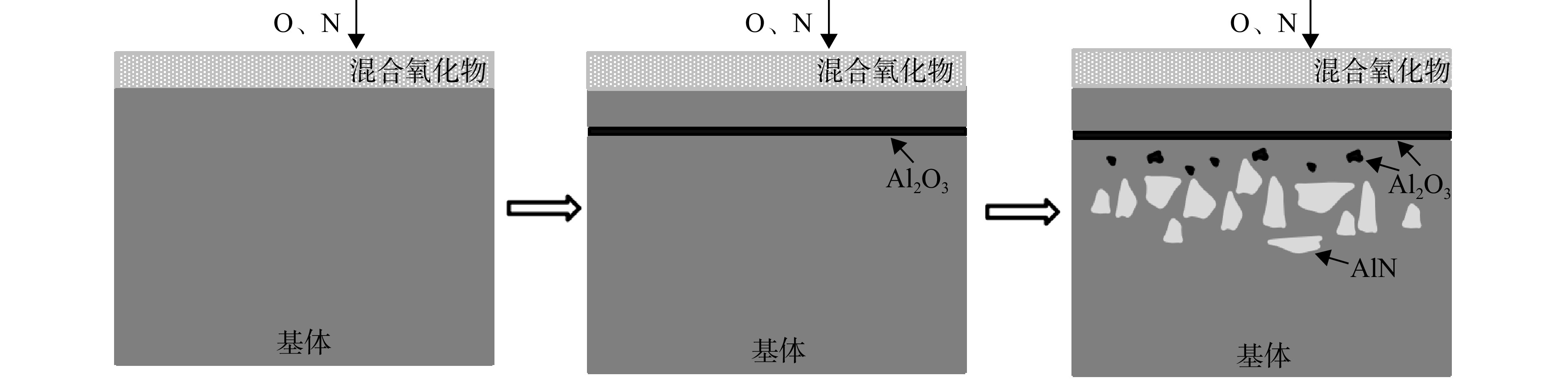
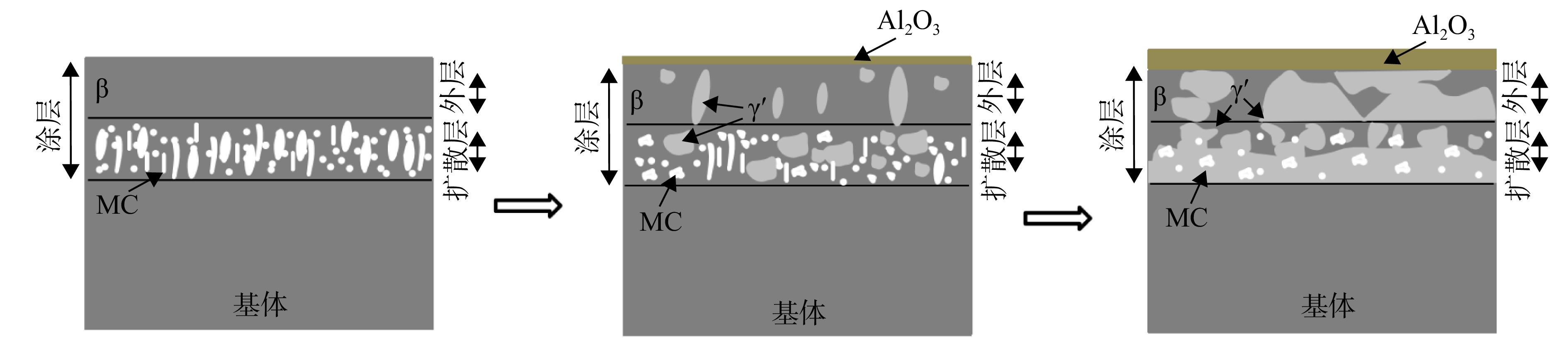
Al coatings and Co-Al coatings are generally deposited on the substrate of nickel-based single crystal superalloys. A systematic study was conducted on the experimental samples after 200 h of oxidation in a high-temperature environment at 1000 ℃. The experimental data showed that the oxidation kinetics of both the alloy substrate and the two coatings materials exhibited a typical parabolic variation trend. Compared with the alloy substrate and Al coating, the oxidation rate of the Co-Al coating was significantly reduced. After the high-temperature oxidation experiment, a large number of hole structures and crack defects can be observed on the surface of the alloy substrate. The occurrence of internal oxidation and internal nitridation reactions significantly reduced the oxidation resistance of the material. Compared with the Al coating, the Al2O3 protective film formed by the Co-Al coating after high-temperature oxidation exhibited more excellent high-temperature resistance, with lower defect density, higher purity, and a denser structure. The experiment also found that the introduction of Co effectively delayed the phase transformation process from β-NiAl phase to γ'-Ni3Al phase, and the outward diffusion behavior of refractory metal elements was significantly inhibited, providing favorable conditions for the formation of a continuous and dense Al2O3 protective film.

Modeling and verification of assembly angle error of force measuring components in vector thrust testing system
Li Xinyang, Ren Zongjin, Liu Wei, Lin Shan, Zhang Jun
2026, 41(8): 20240783. doi: 10.13224/j.cnki.jasp.20240783
Abstract:
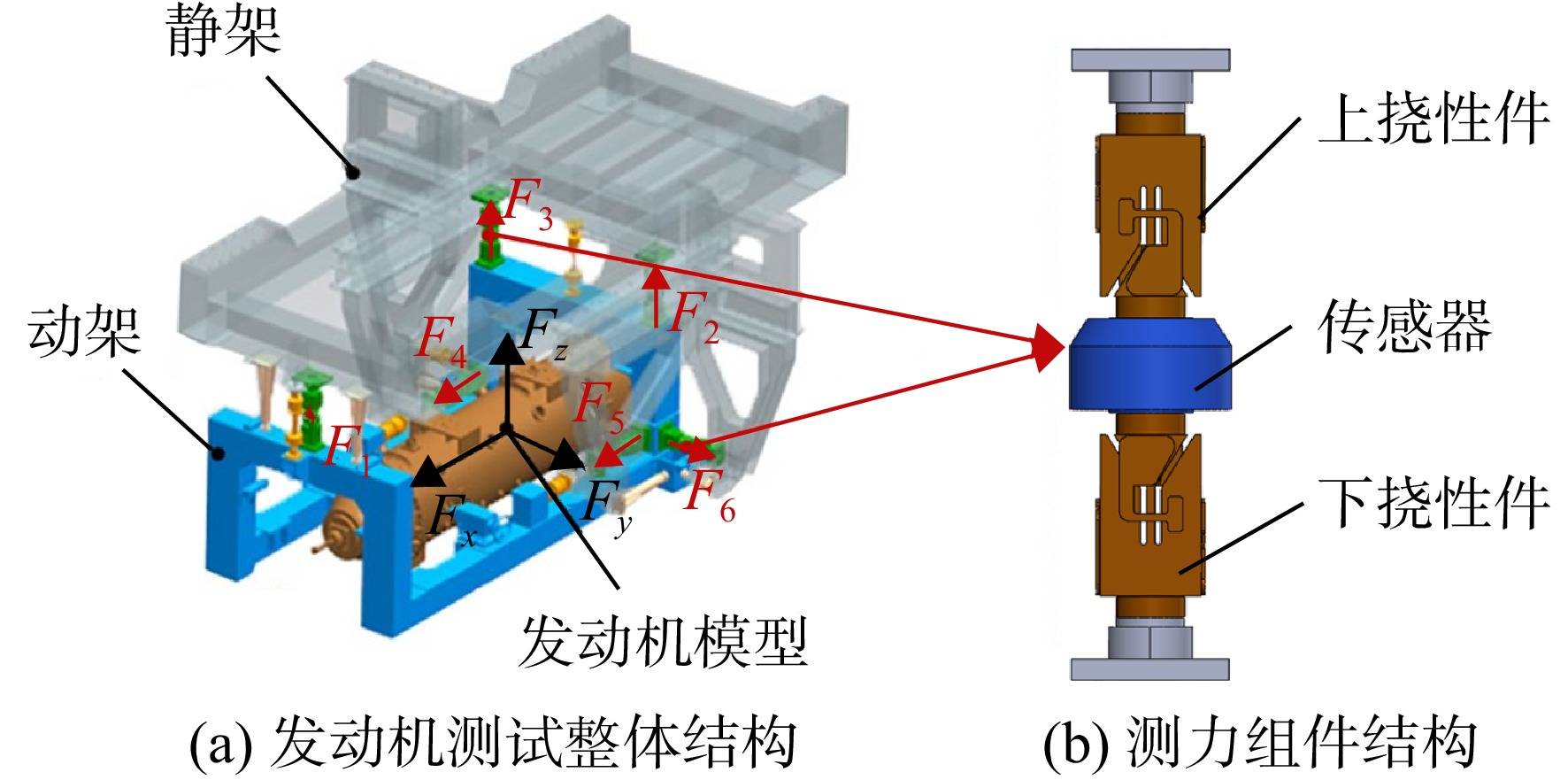
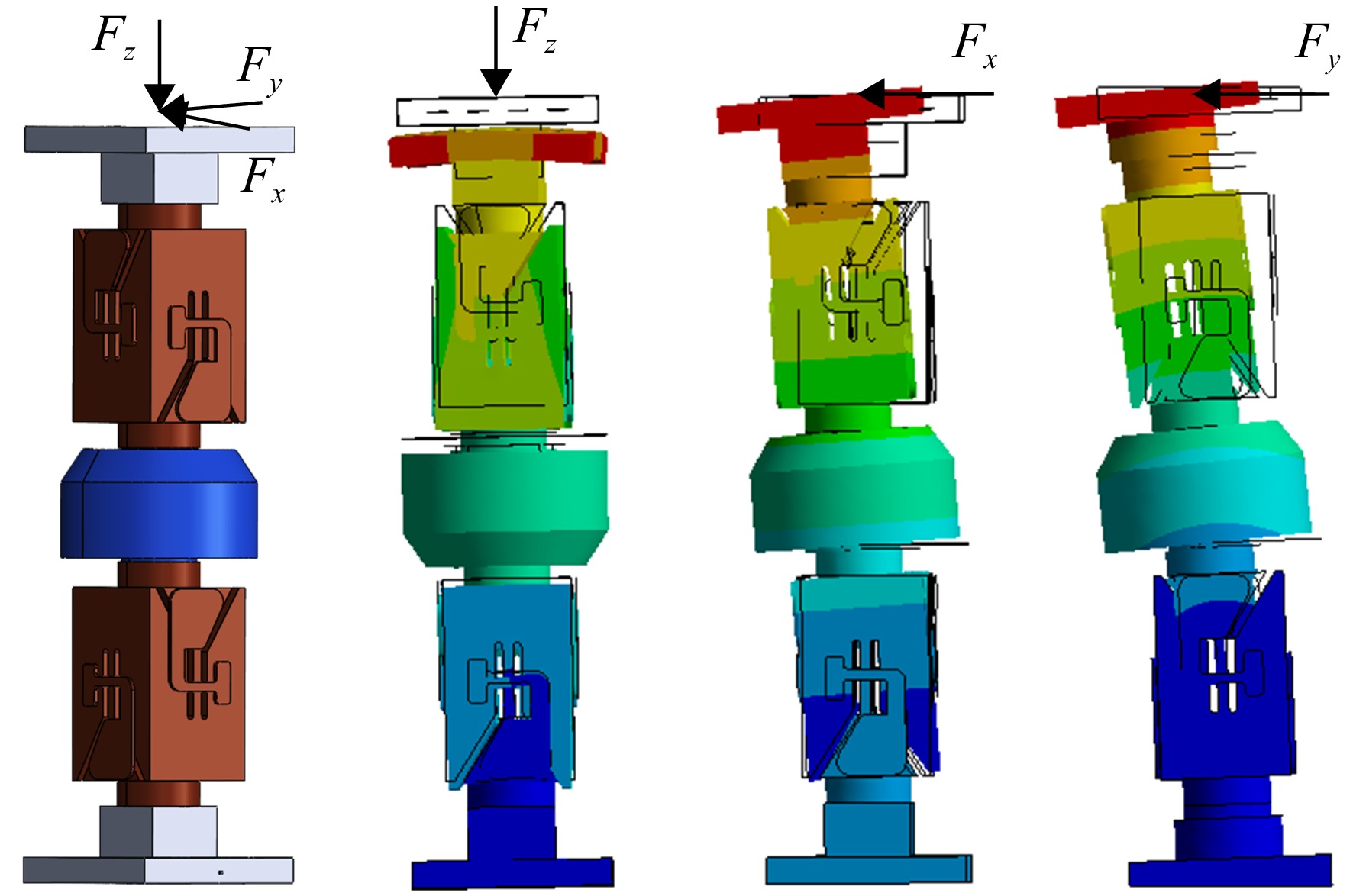
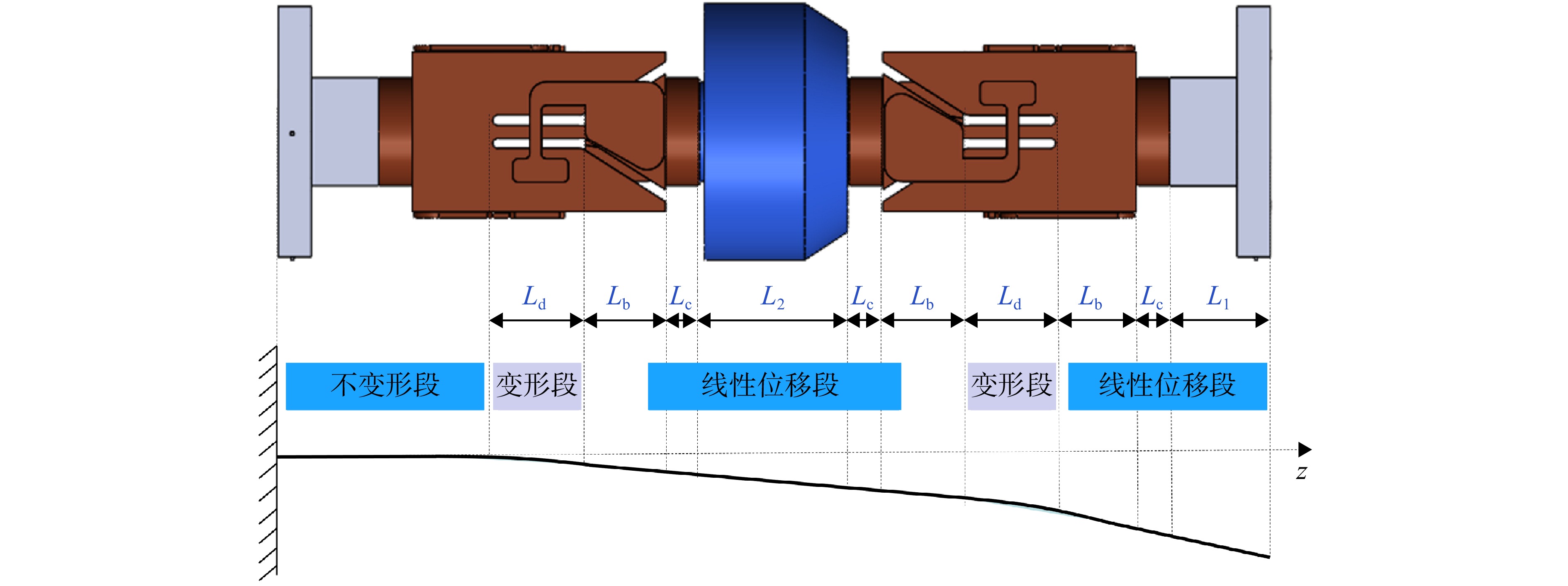
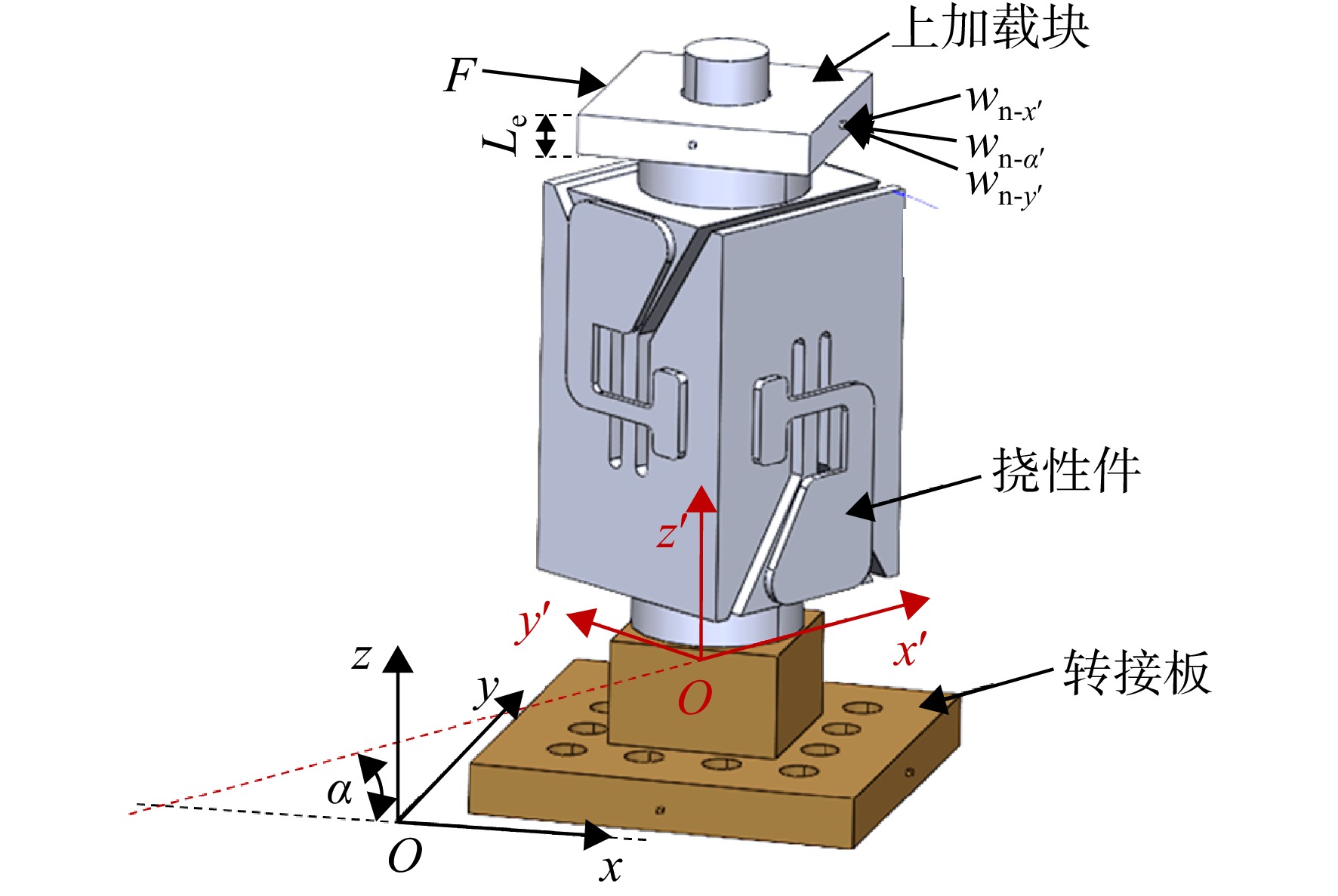
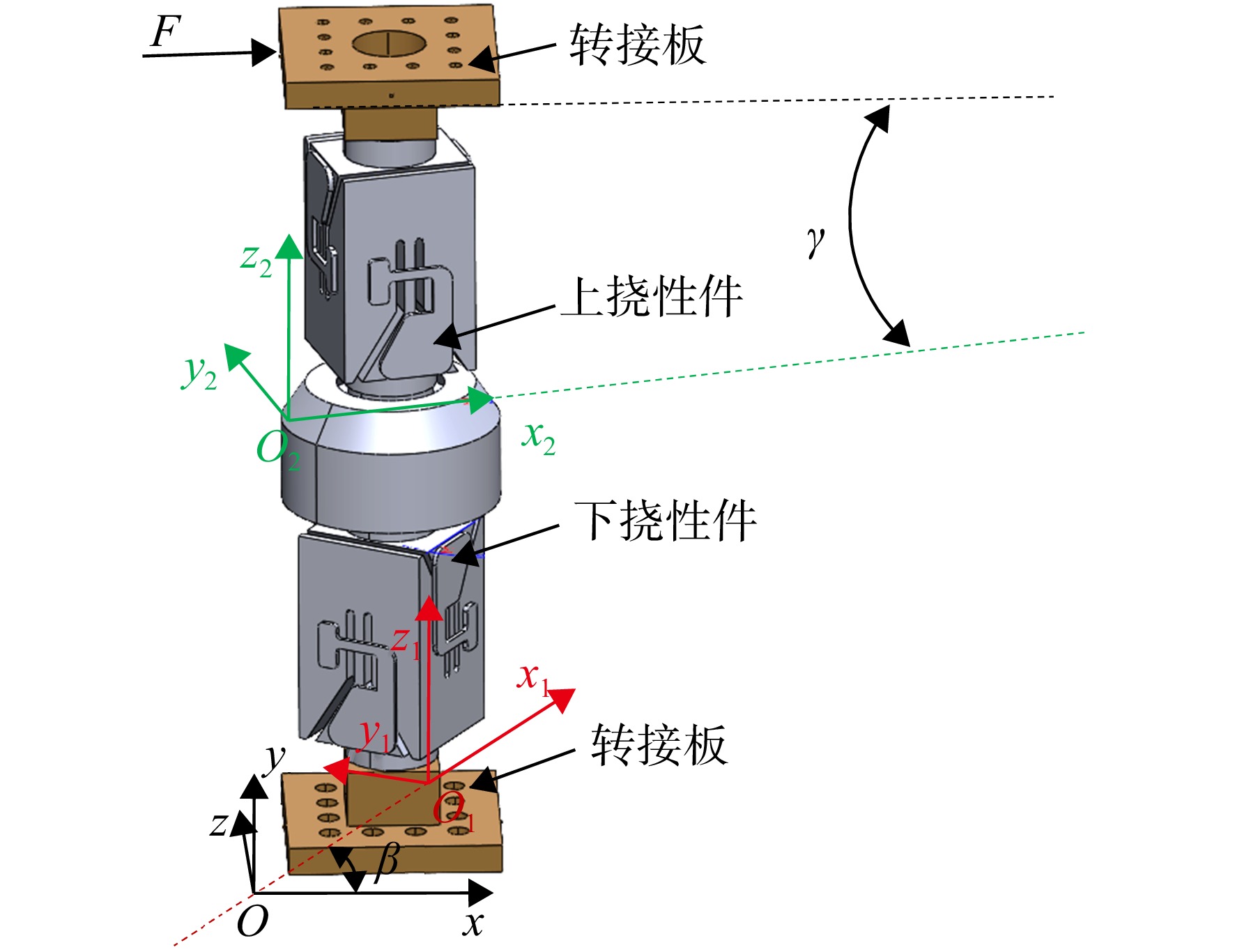
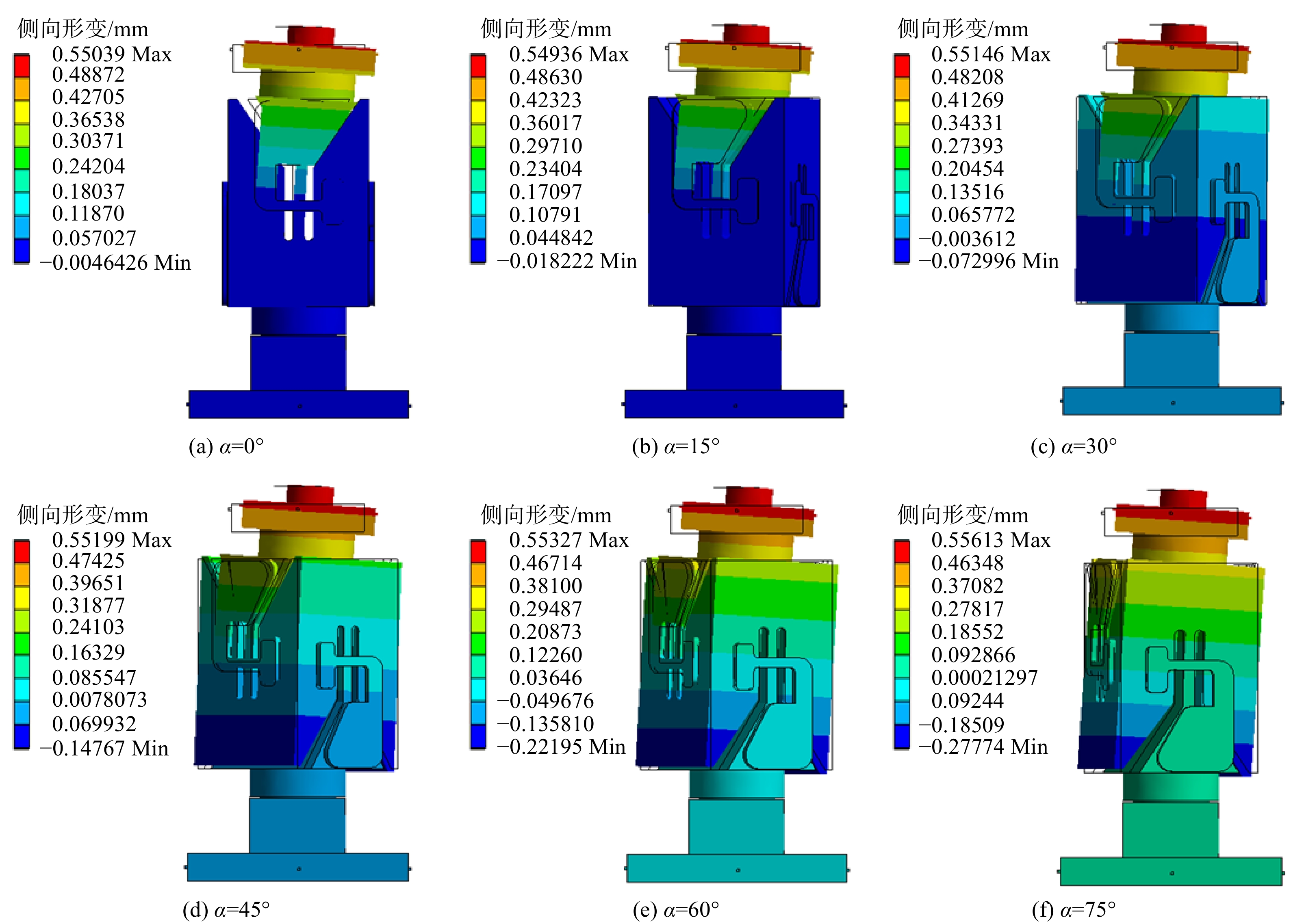
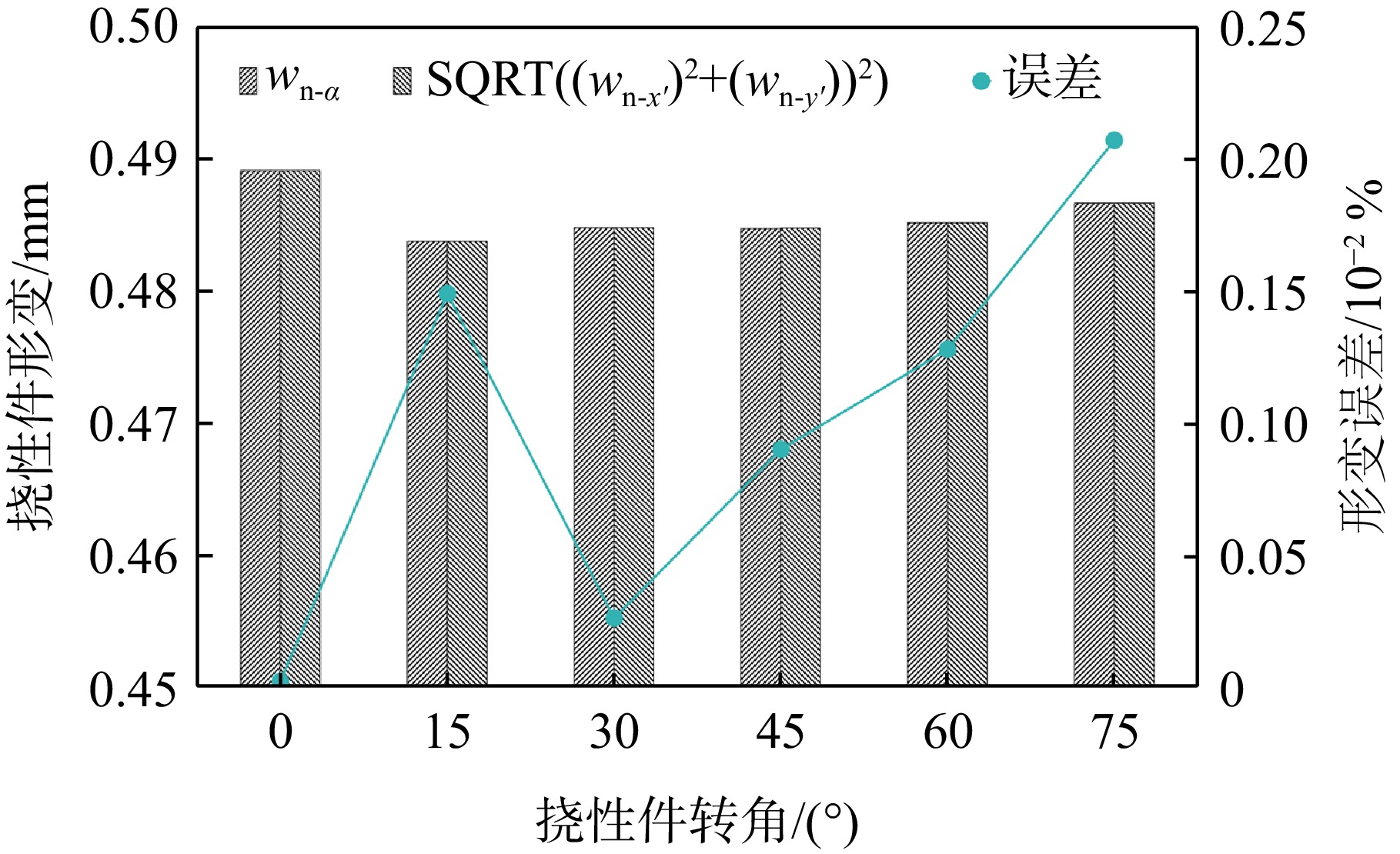
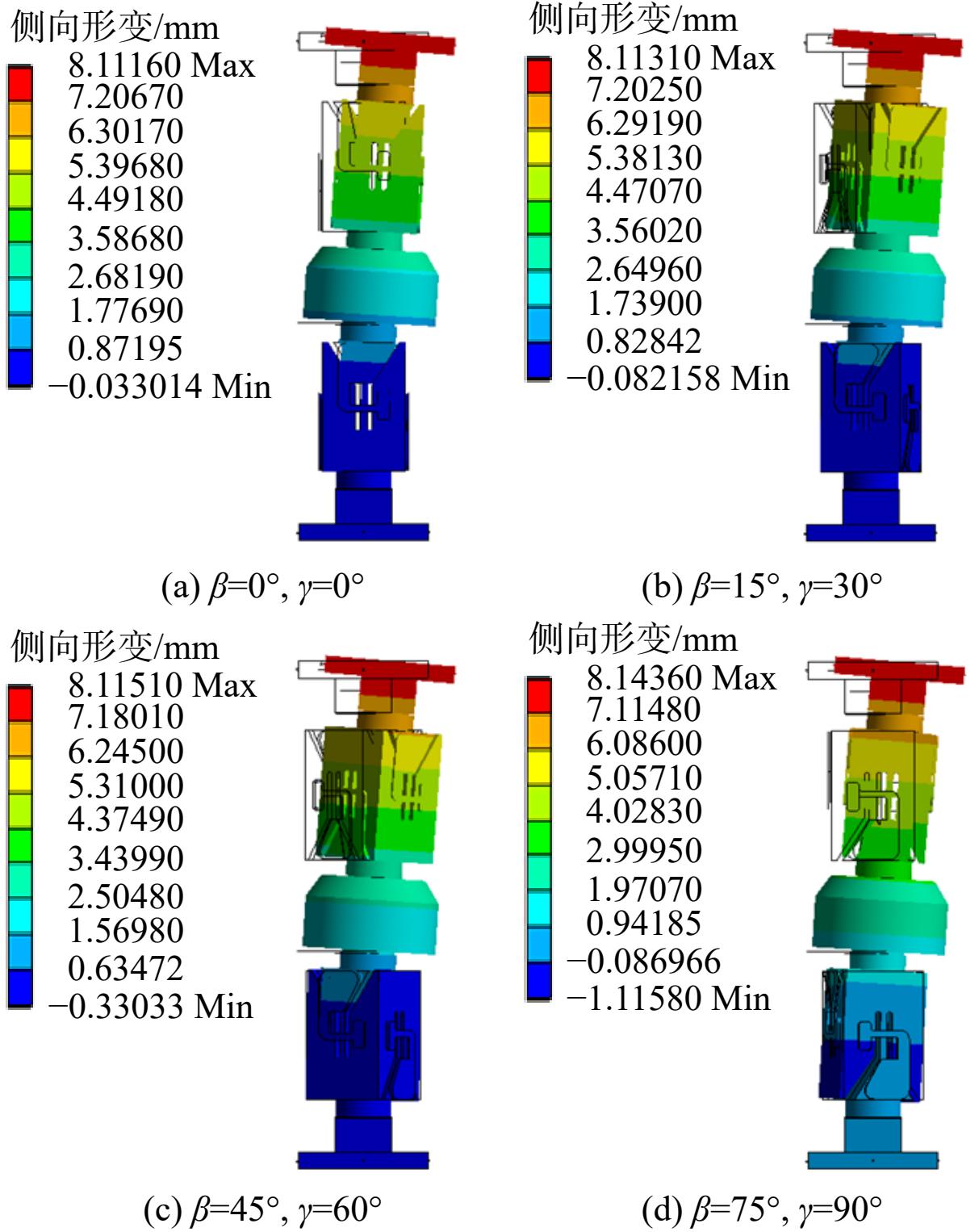
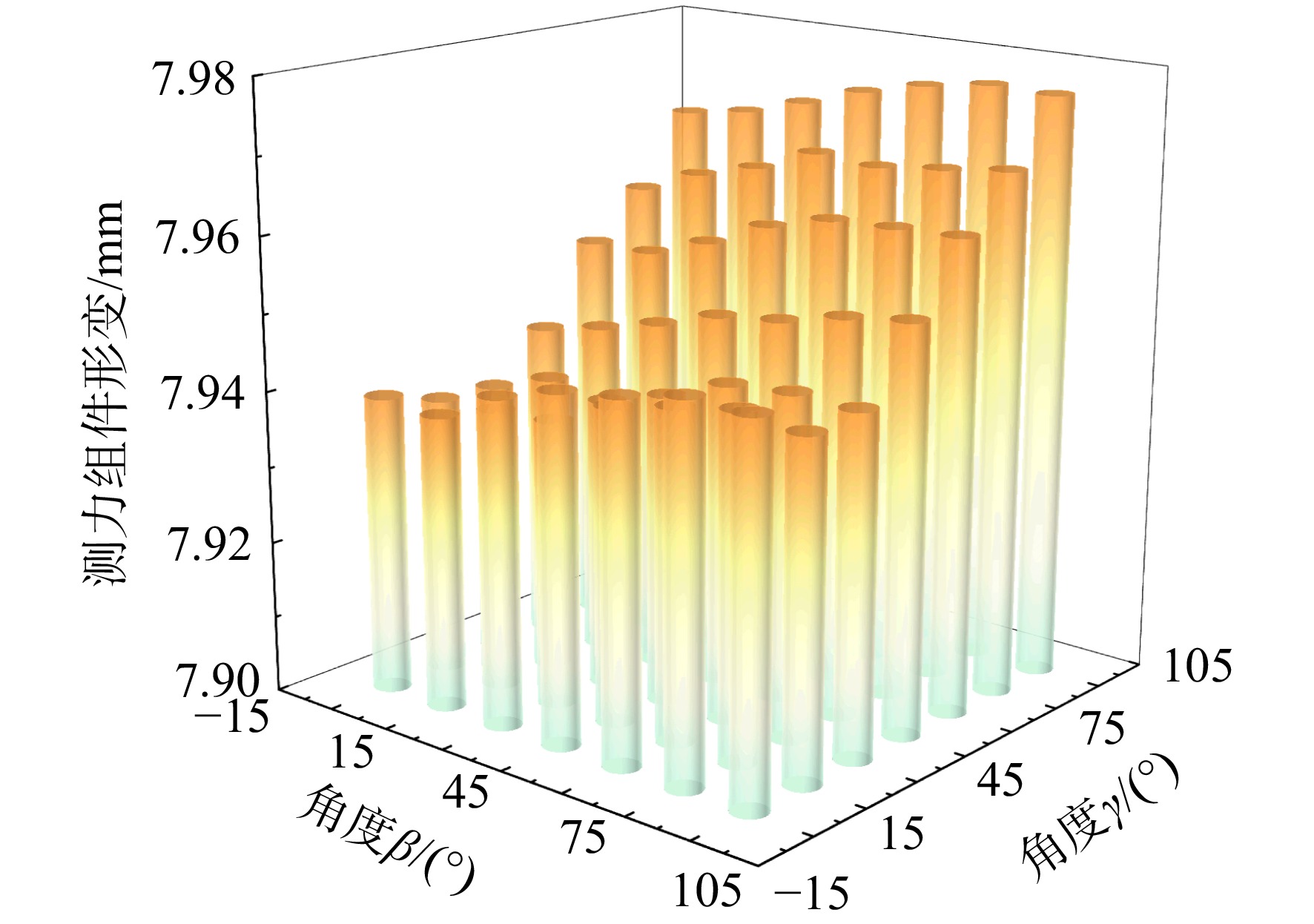
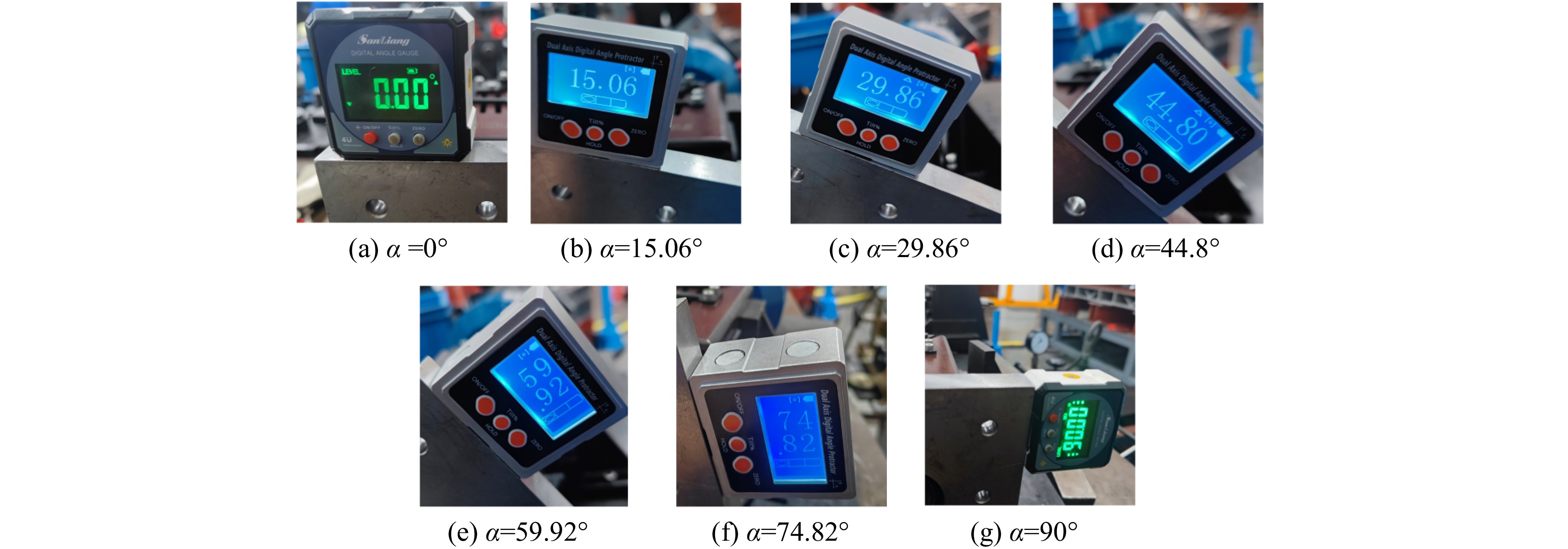
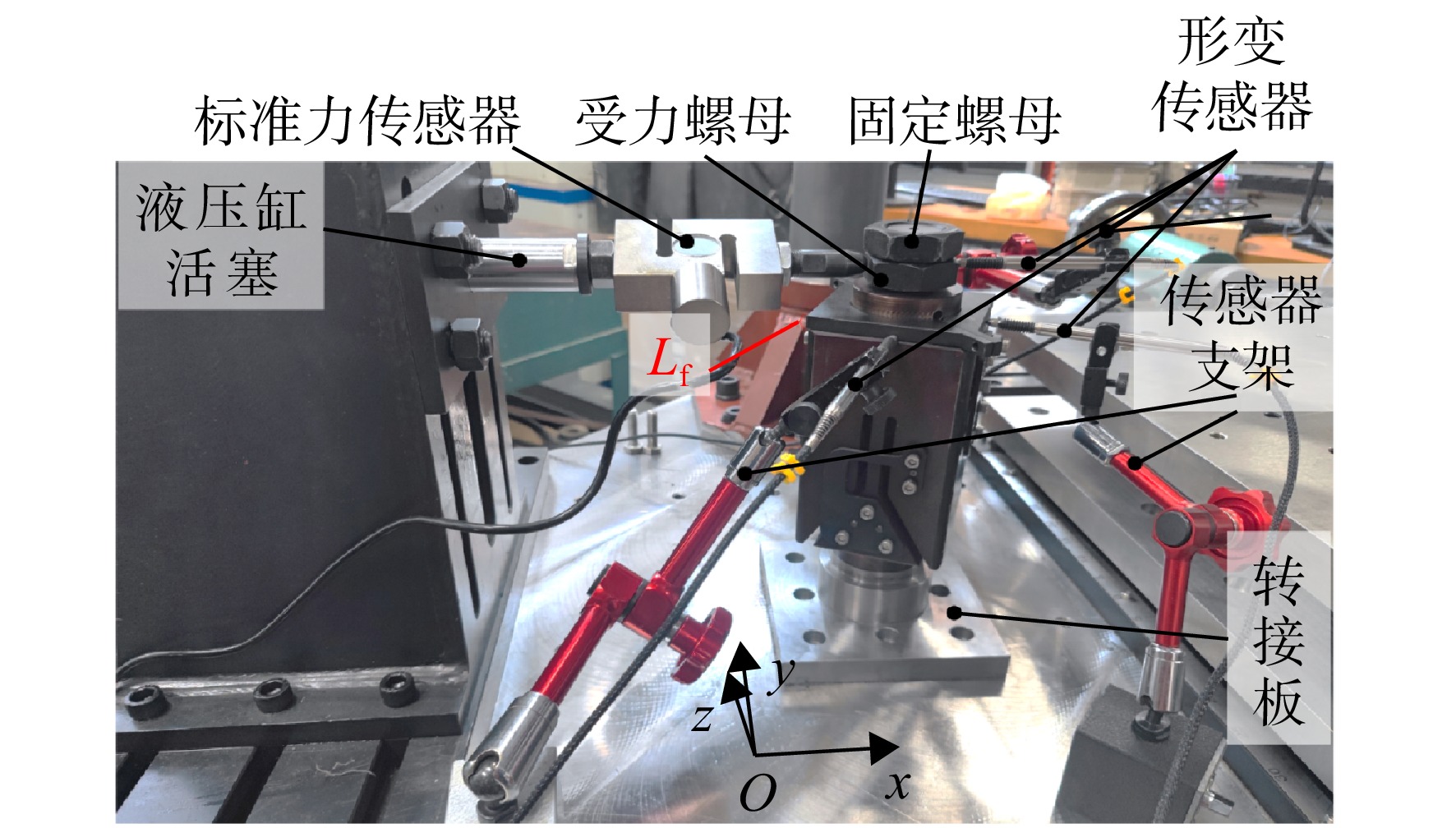
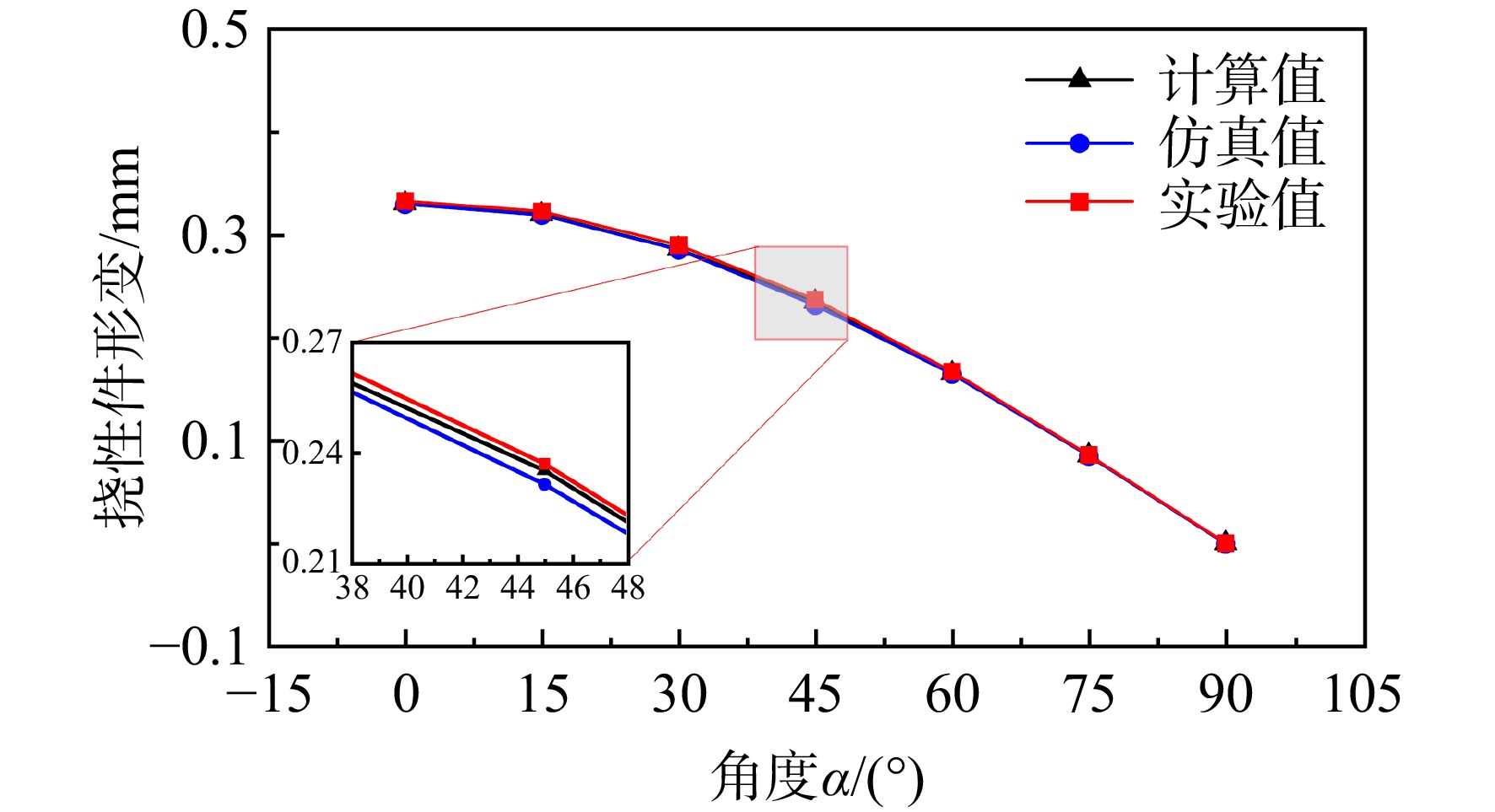
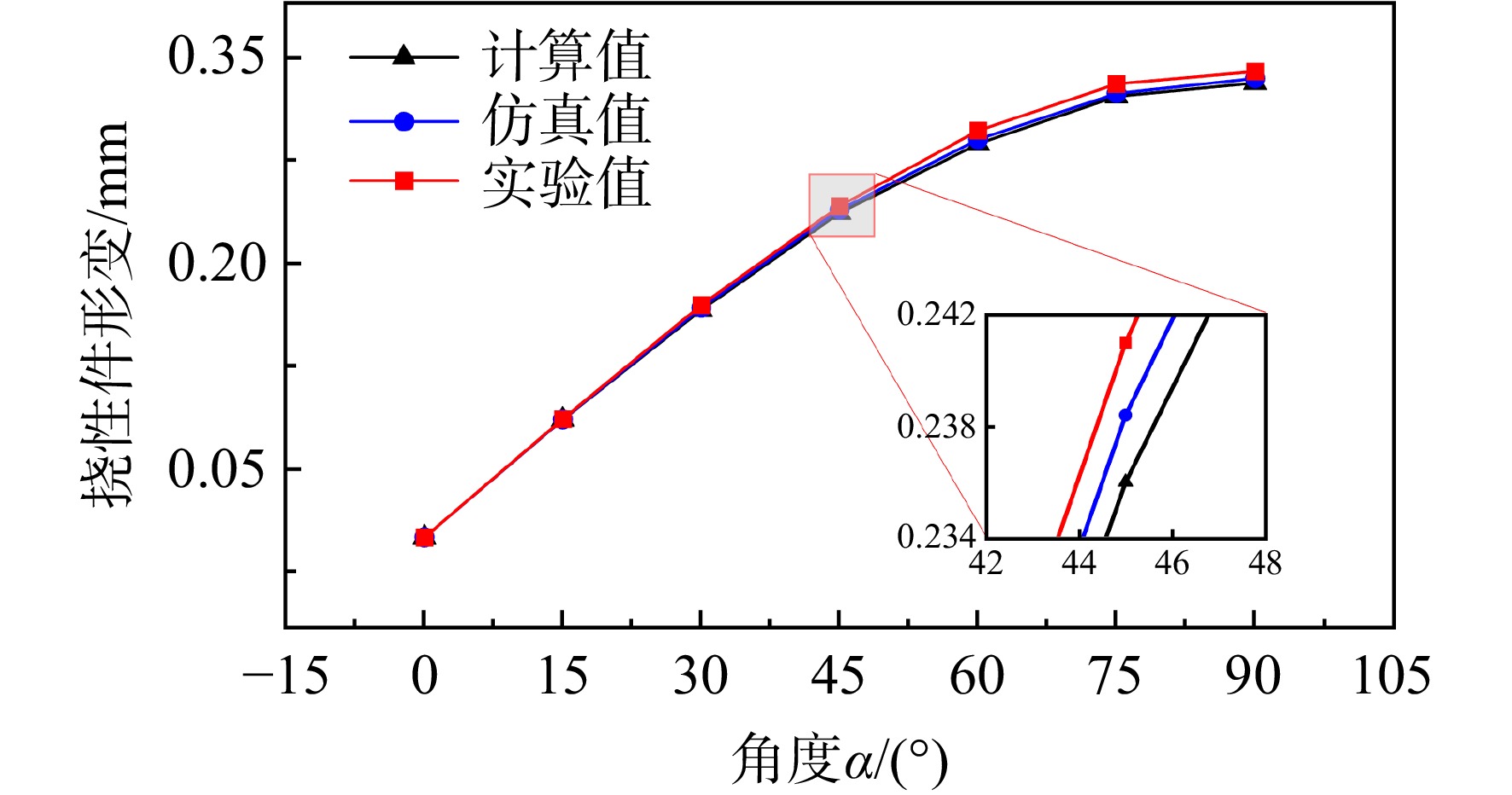
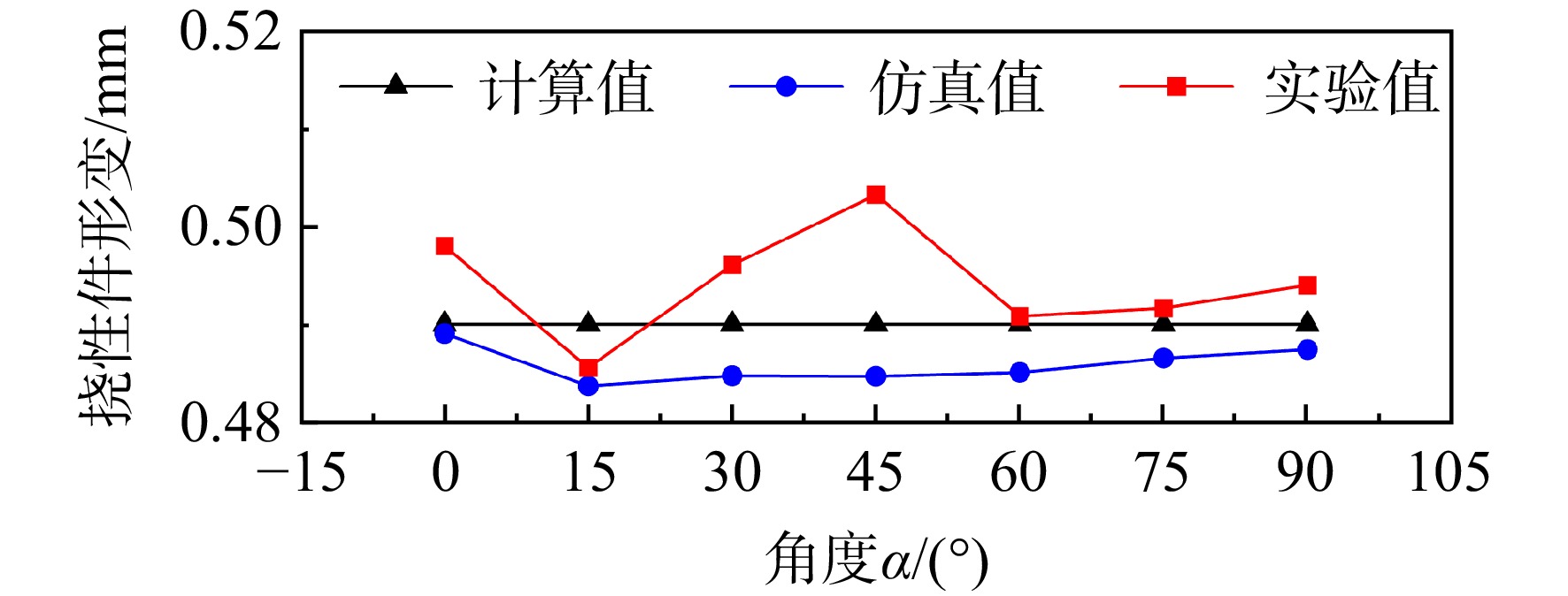
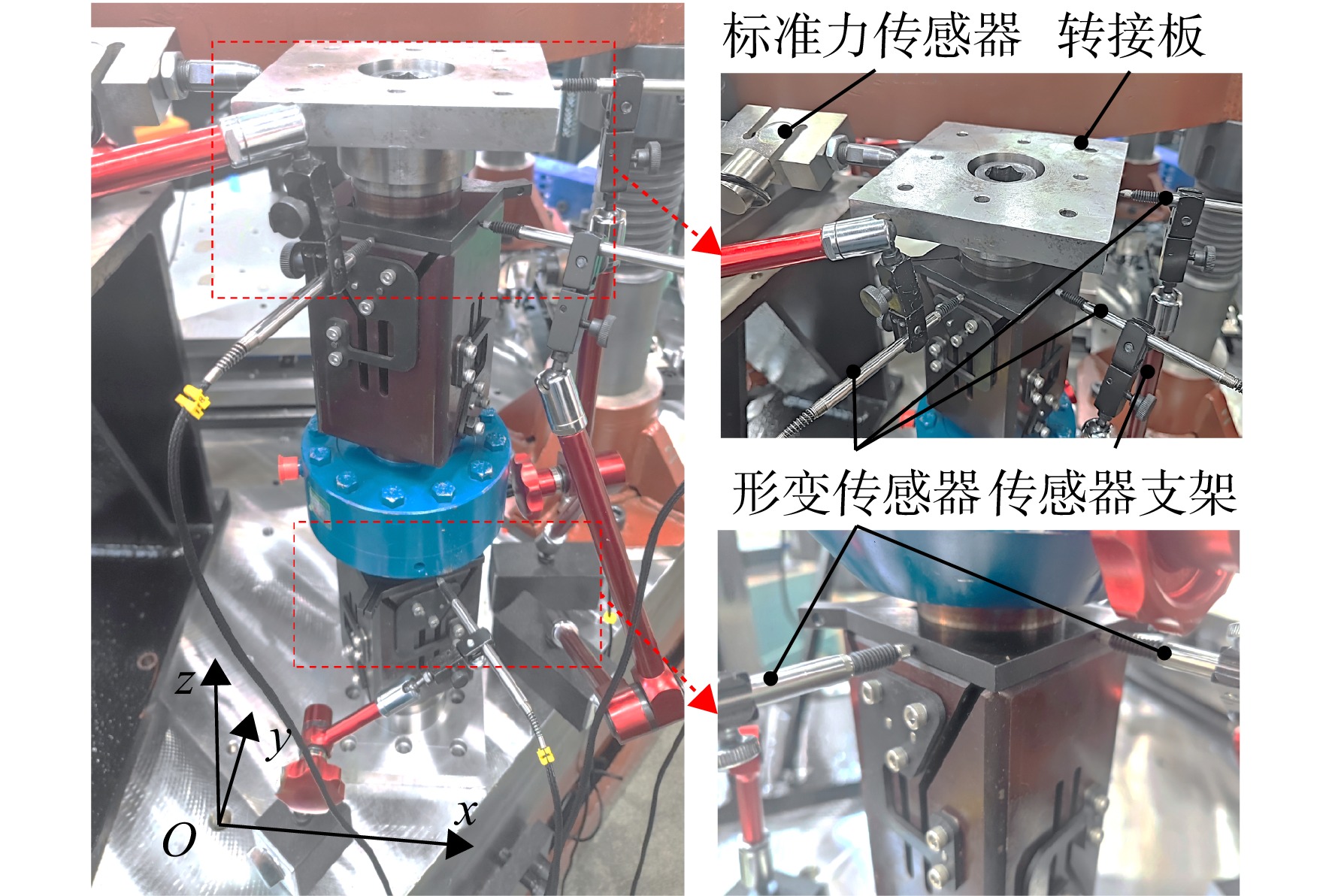
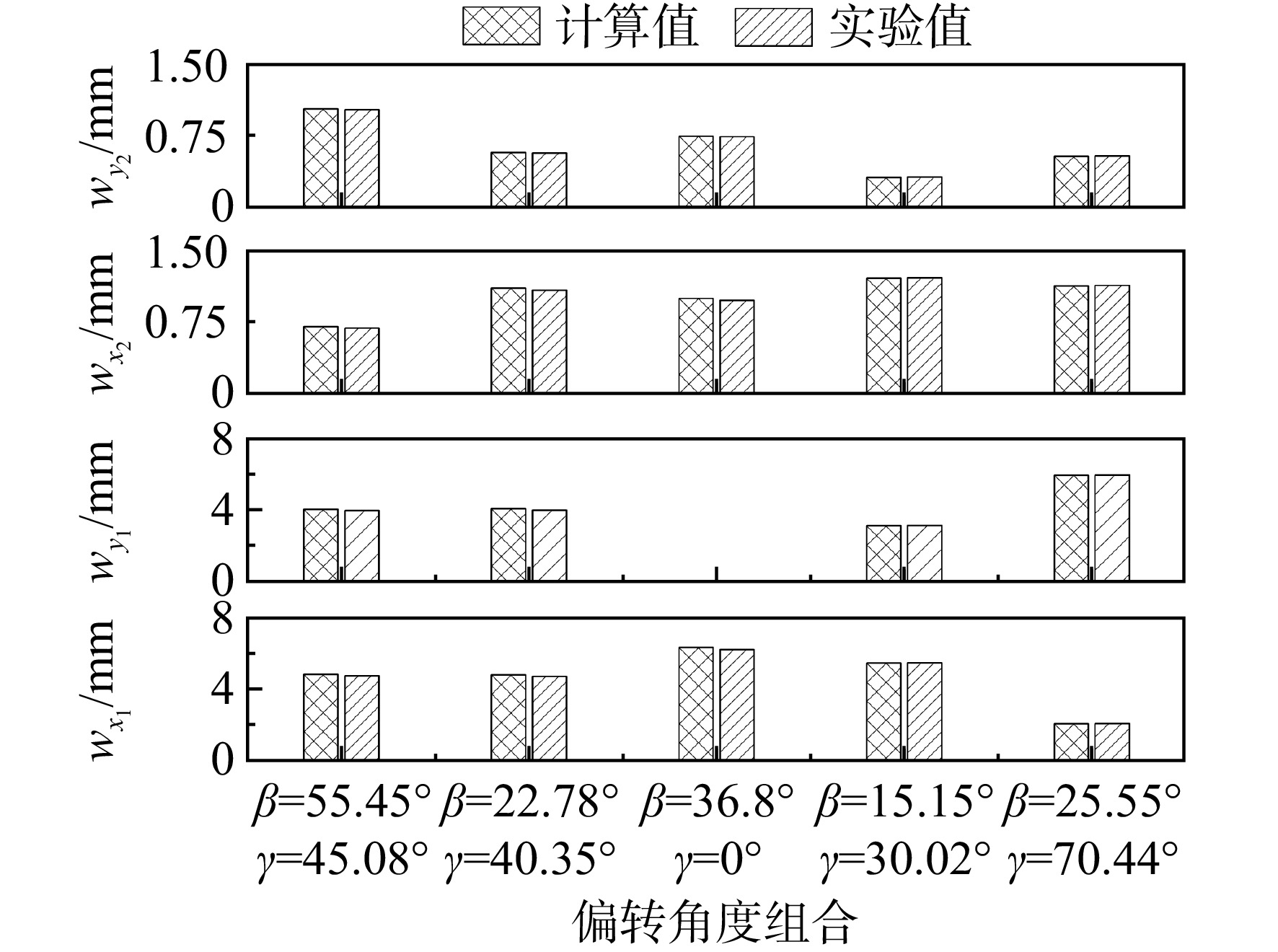
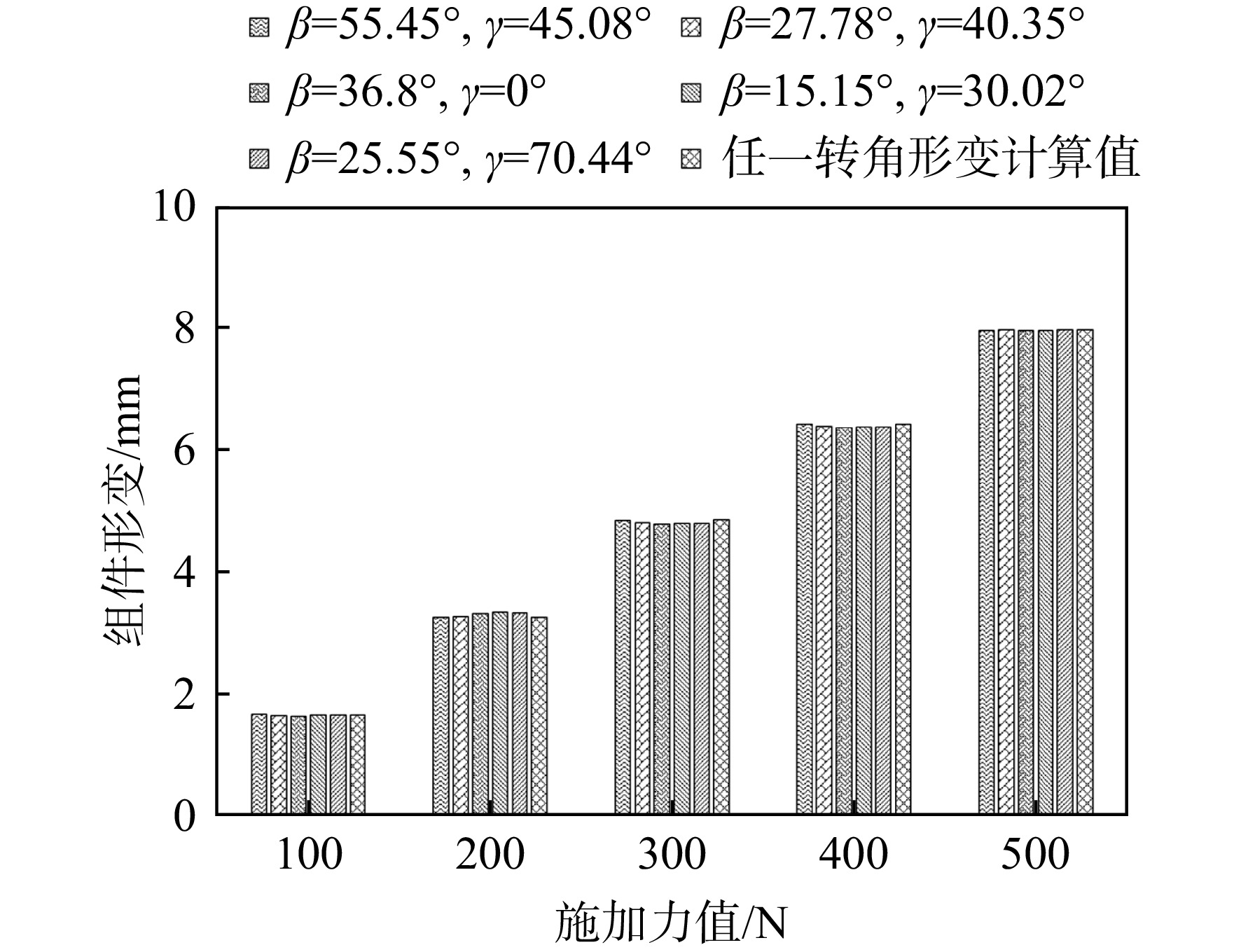
To address the unknown influence mechanism of force component assembly error on test accuracy in the vector thrust testing system, a method for analyzing and modeling the influence rule of force component angle error was proposed. Firstly, the deformation direction mainly affected by the angle error was analyzed. Next, the local analytical deformation model for flexible parts was established to drive the influence law of the angular error on the force measuring components' deformations. The numerical model of the flexible part and the force measuring component was simulated and analyzed. The deformation was calculated with the angle of rotation as the variable. Angular errors on the structure’s mechanical properties were obtained. Finally, the verification experiments of flexible parts and force measuring components were carried out. The deformation properties under different angular errors were analyzed experimentally. Through theoretical analysis, numerical calculation, and experiment, it can be seen that the assembly angular error had little influence on the structural deformation performance. The maximum performance error at different angles was only 4.09%. It showed that the angular error between components can be ignored during the assembly of force measuring components. The research results provide a basis for simplifying the assembly process of the test device.

Bearability of cross-excitation modes of aero-engine dual-rotor system and its experimental verification
Cheng Chi, Liao Mingfu, Lei Xinliang, Shi Bin, Wang Rui, Kuang Junyao
2026, 41(8): 20240782. doi: 10.13224/j.cnki.jasp.20240782
Abstract:
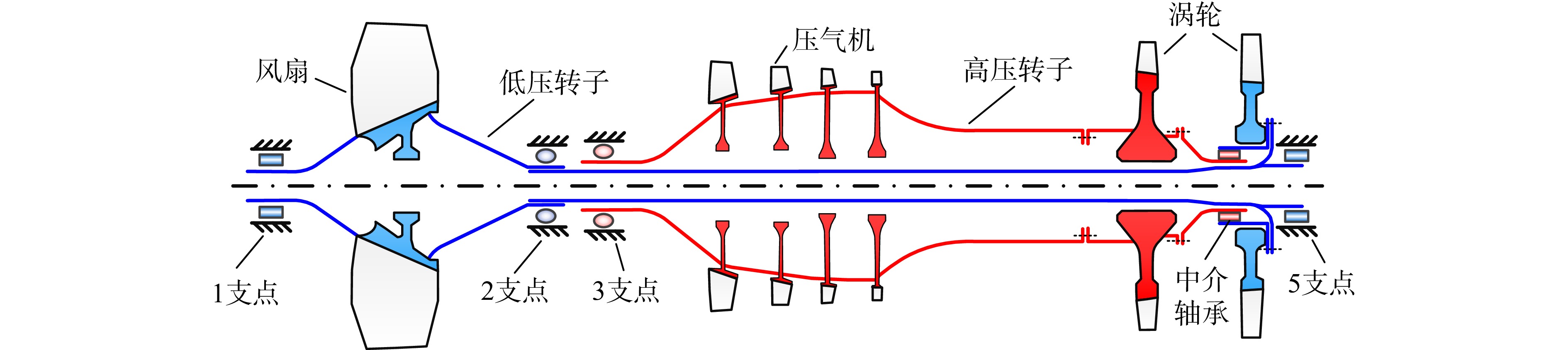
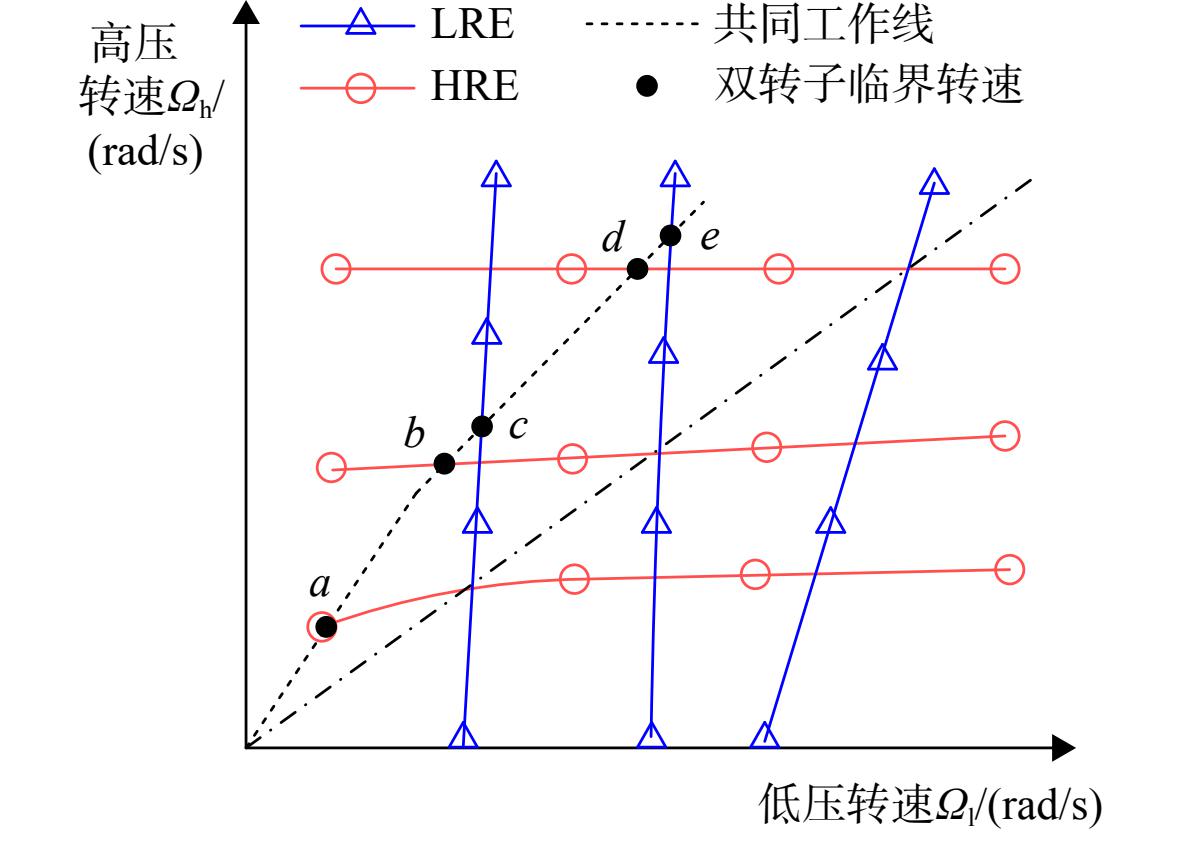
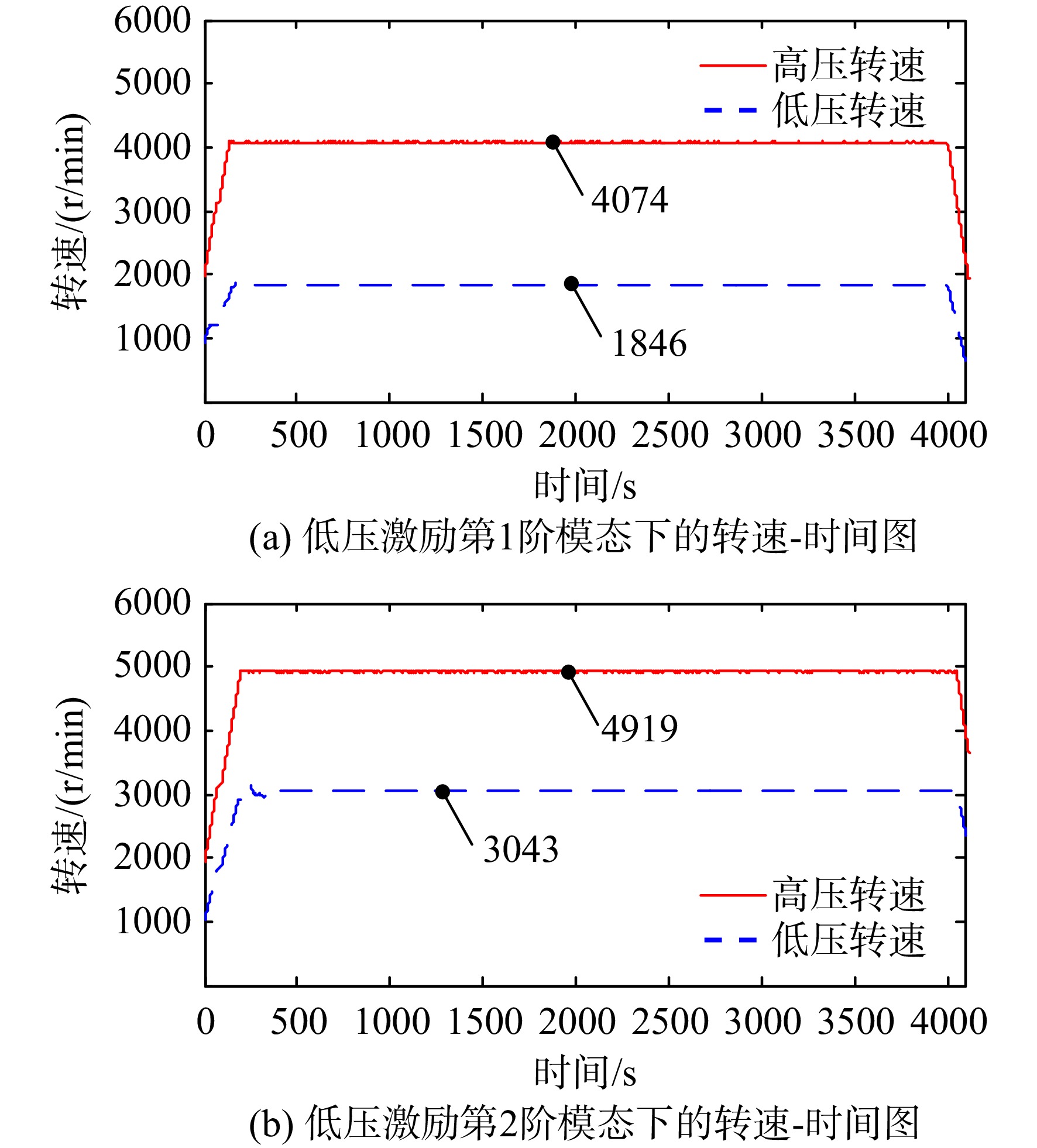
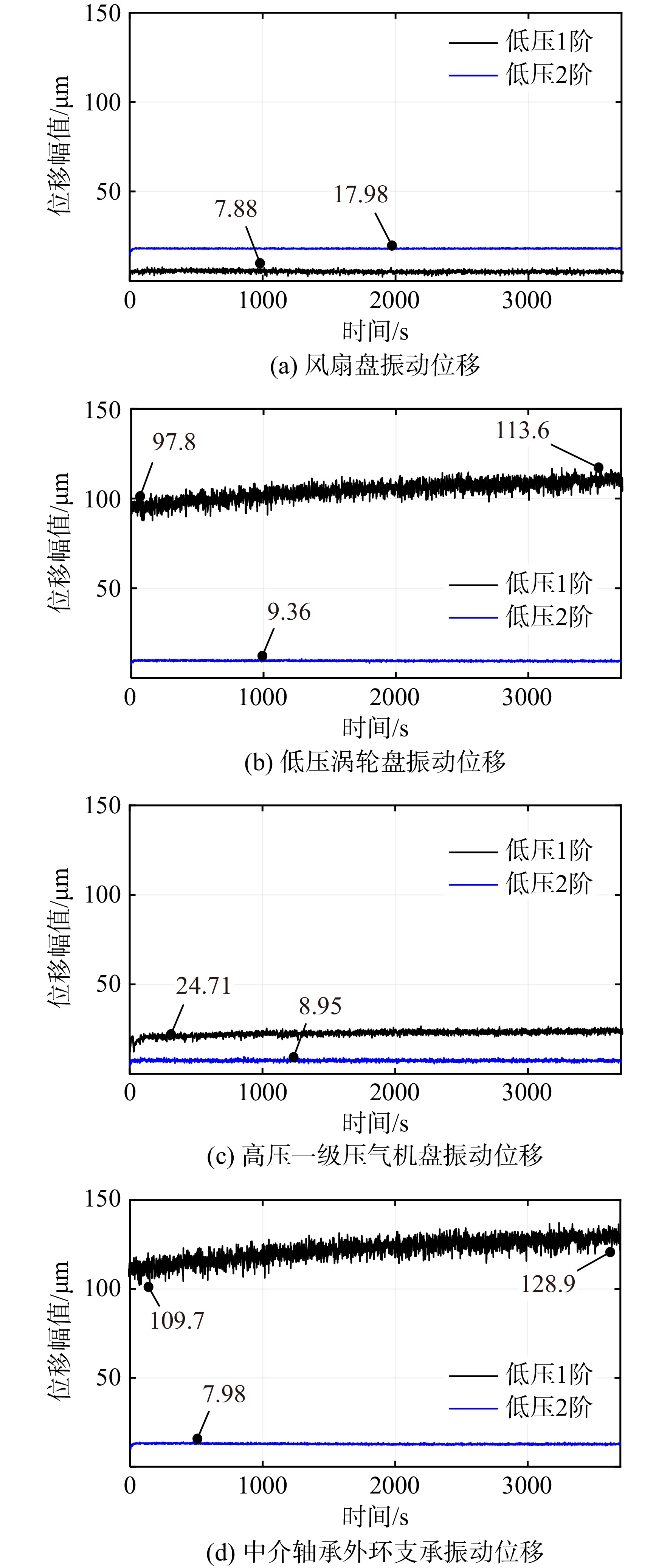
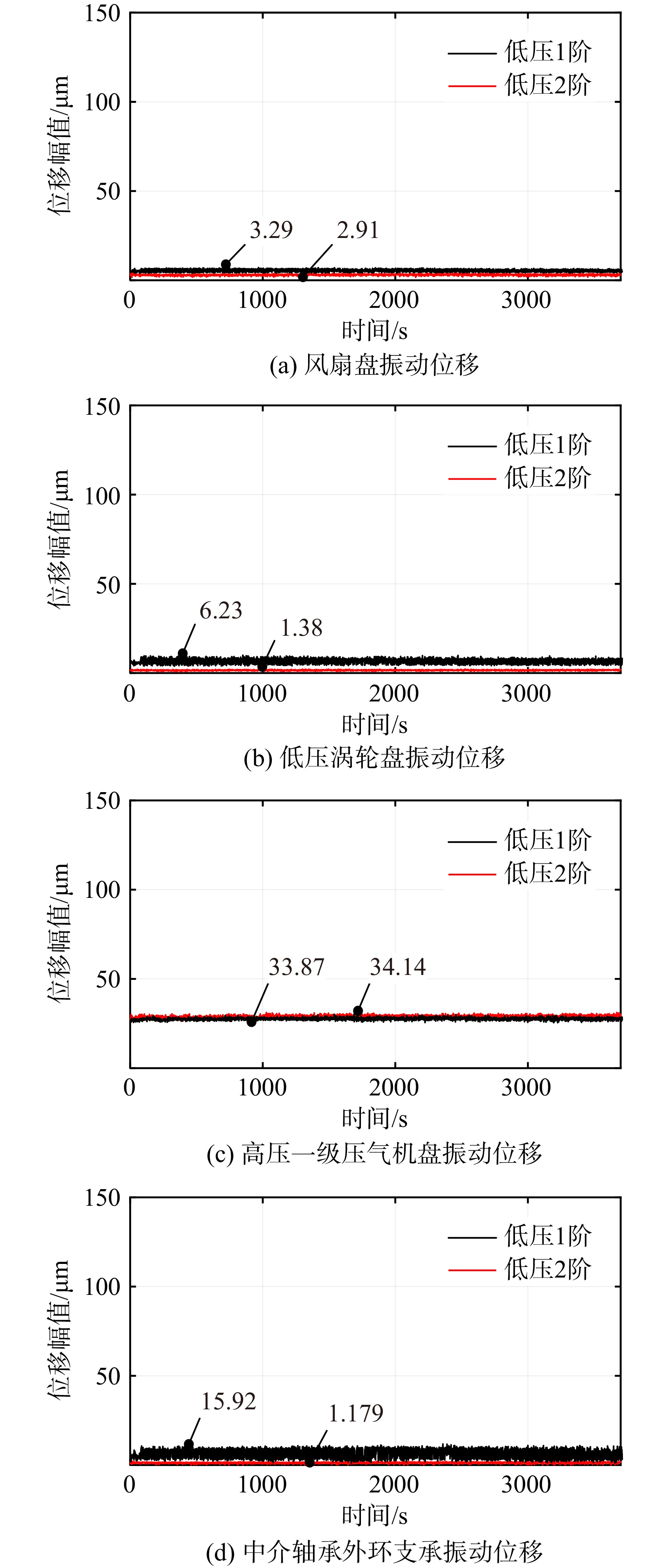
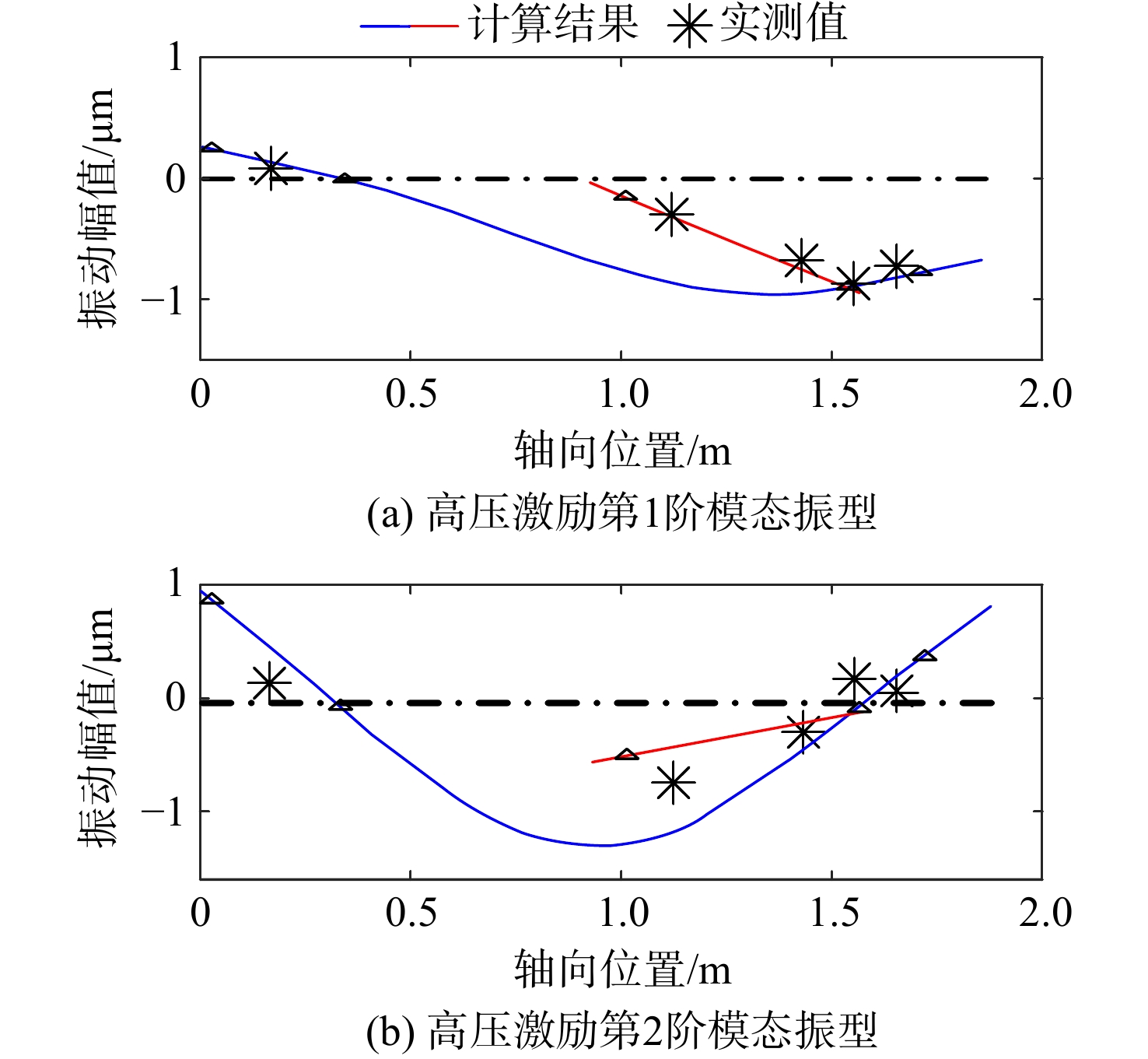
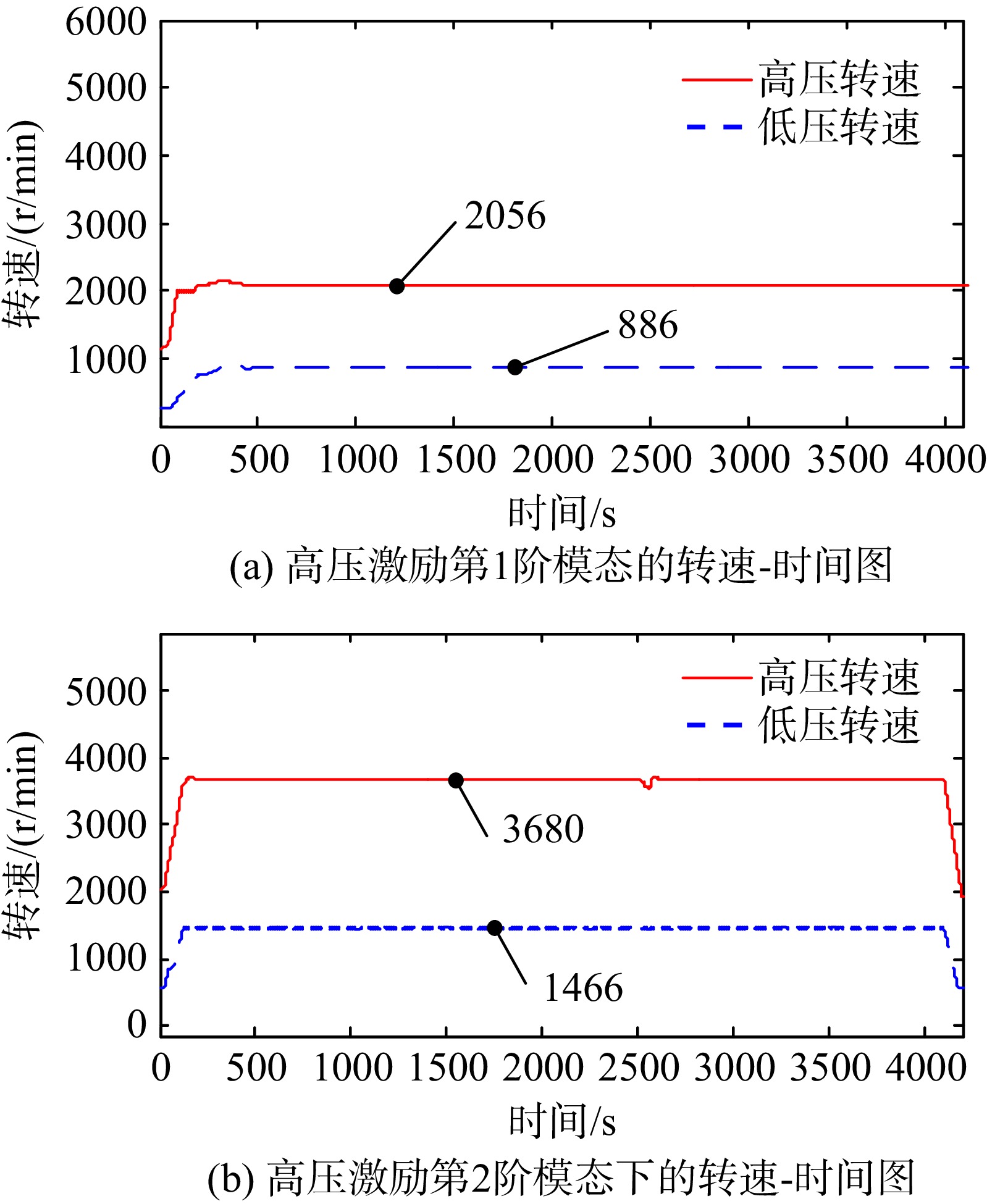
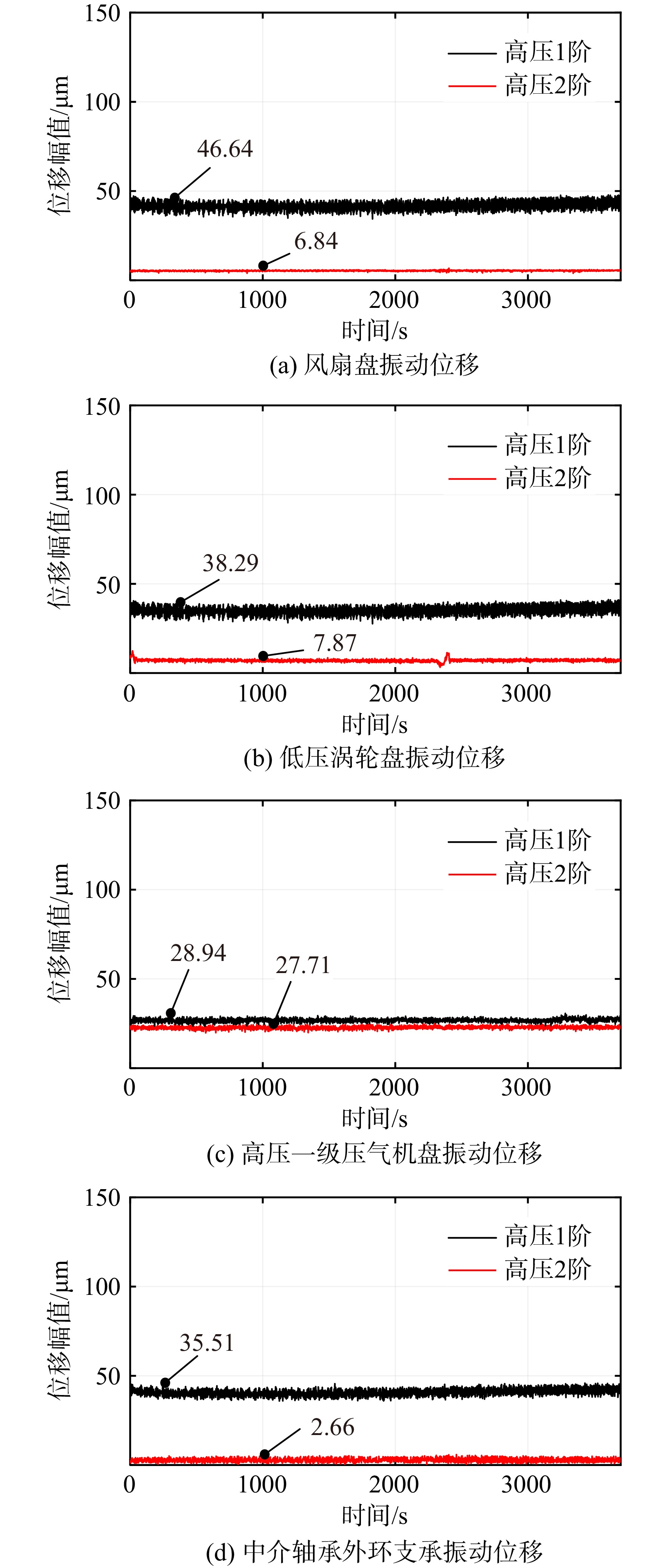
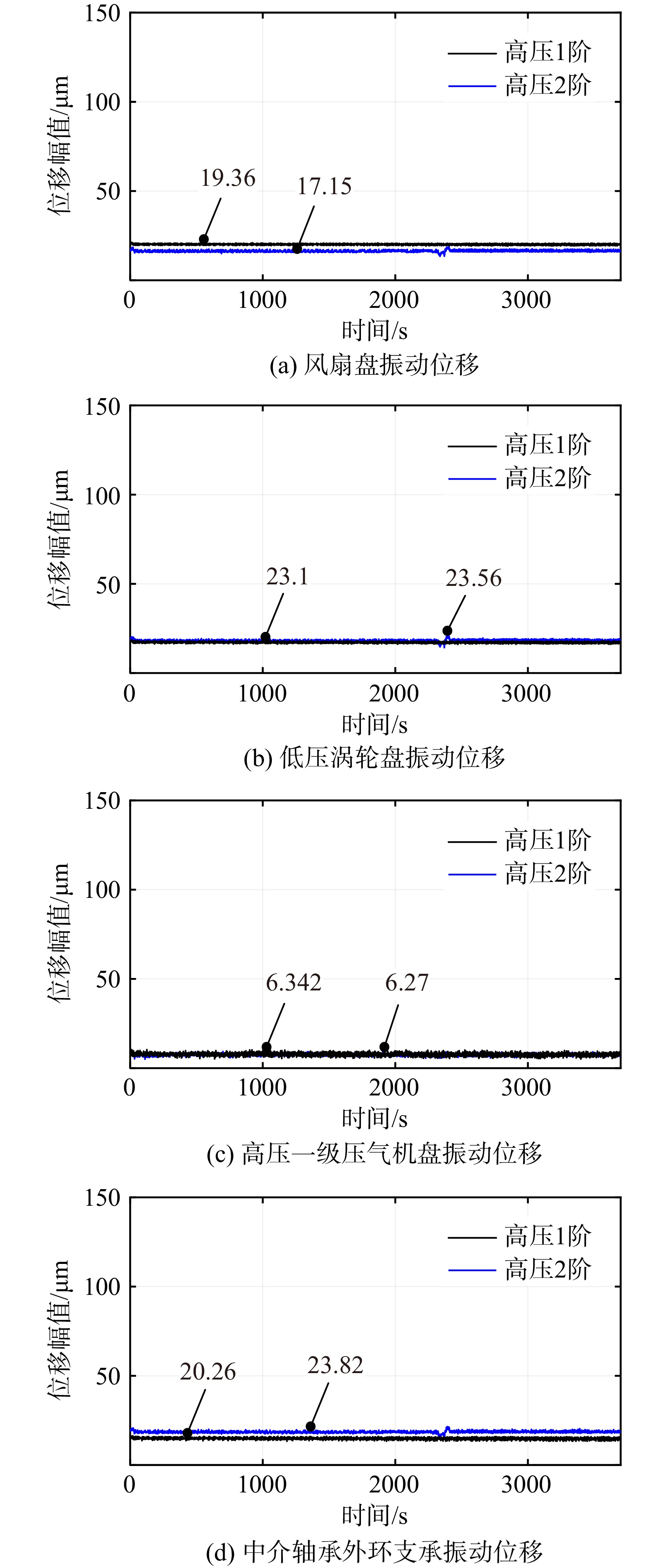
To elucidate the contradictory phenomenon of the cross-excitation mode that the displacement or deformation of the excitation source rotor is very small while that of the excited rotor is absolutely dominant, the orthogonality between the force and the vibration mode is analyzed based on rotor modal analysis method and a dual-rotor model with inter-shaft bearing. A dual-rotor experimental setup was built, and modal experiment, response experiment and long-term resonance experiment were carried out. The experimental results showed that the critical speed error between the experimental results and the calculation results of the dual-rotor experimental setup was up to 3.7%, and the modal shape error was up to 9.5%. The unbalanced response during the acceleration and deceleration process had no peak at the cross-excitation mode. A long-time resonance exceeding 62 minutes was performed under the cross-excitation mode. Even if the maximum amount of applied imbalance was 145% of the coupling mode, the peak response was still less than 25% of the coupling mode. The research results fully prove that the cross-excitation mode is a mode with high acceptability, presenting vey low risk of severe vibration.

Analysis of vibration reduction in engine rotors using elastic-support dry friction dampers with time-varying normal force
Wang Shengshuo, Fan Yu, Hu Yu, Gao Qian, Wu Yaguang
2026, 41(8): 20250023. doi: 10.13224/j.cnki.jasp.20250023
Abstract:
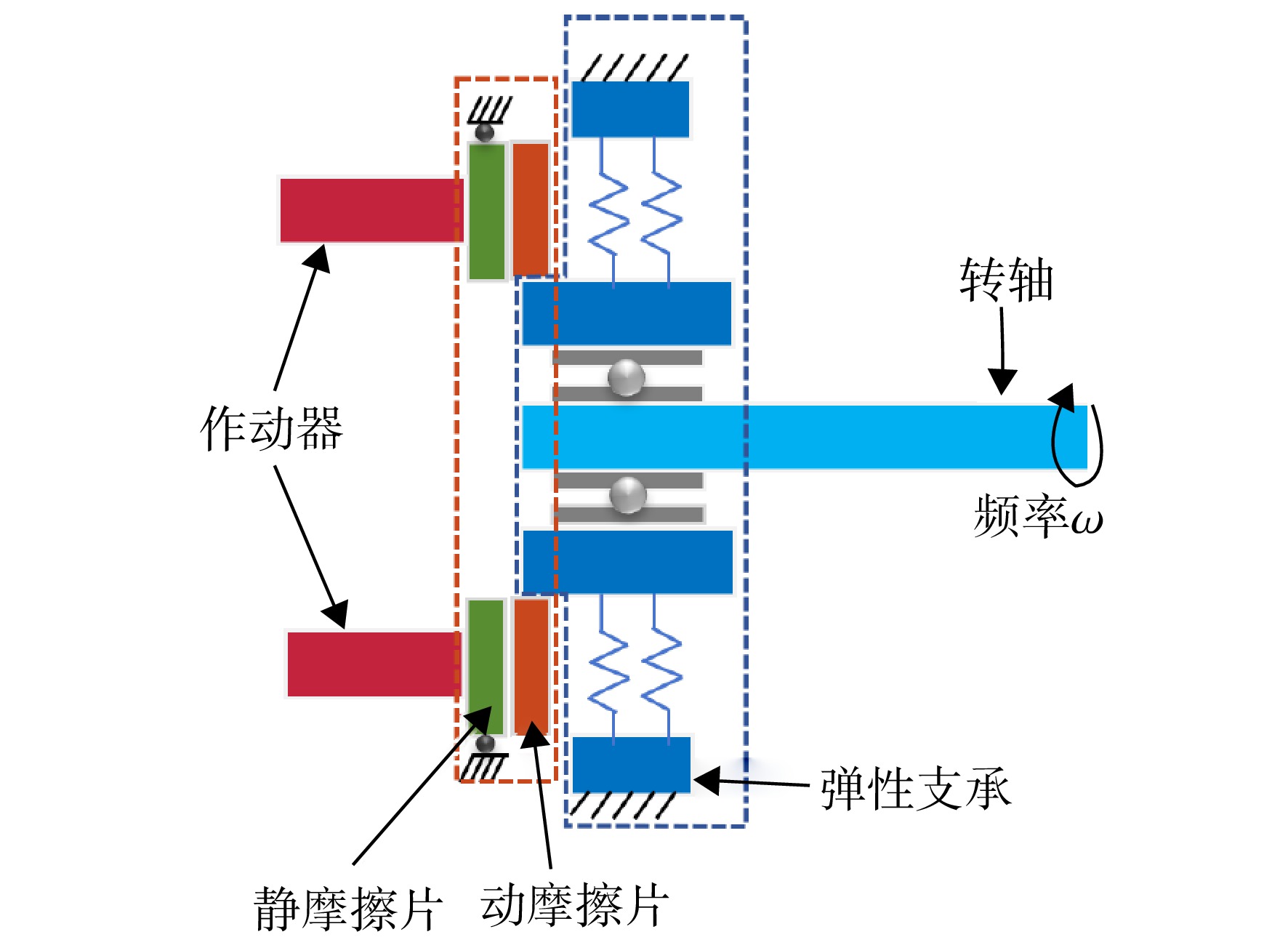
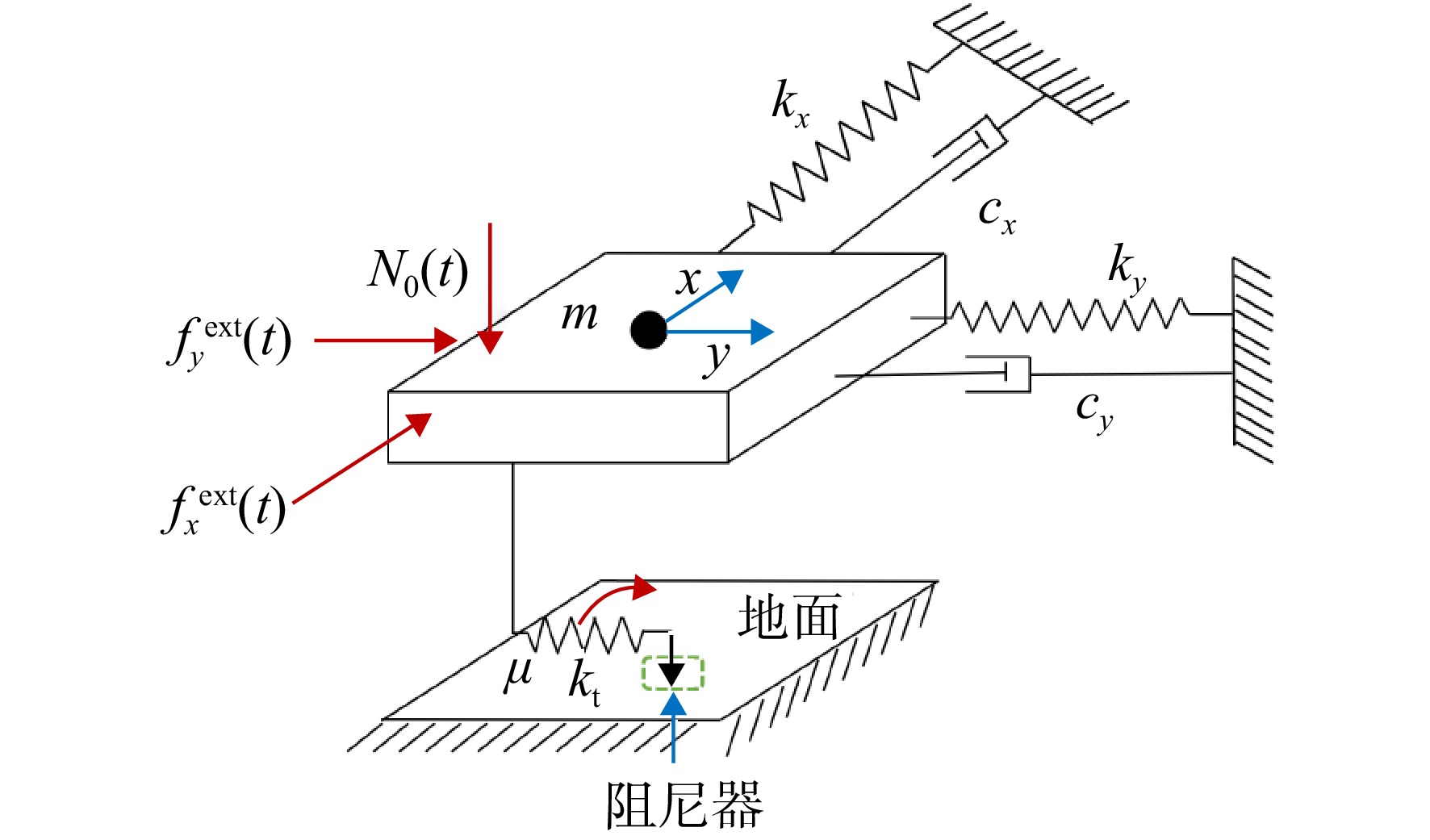
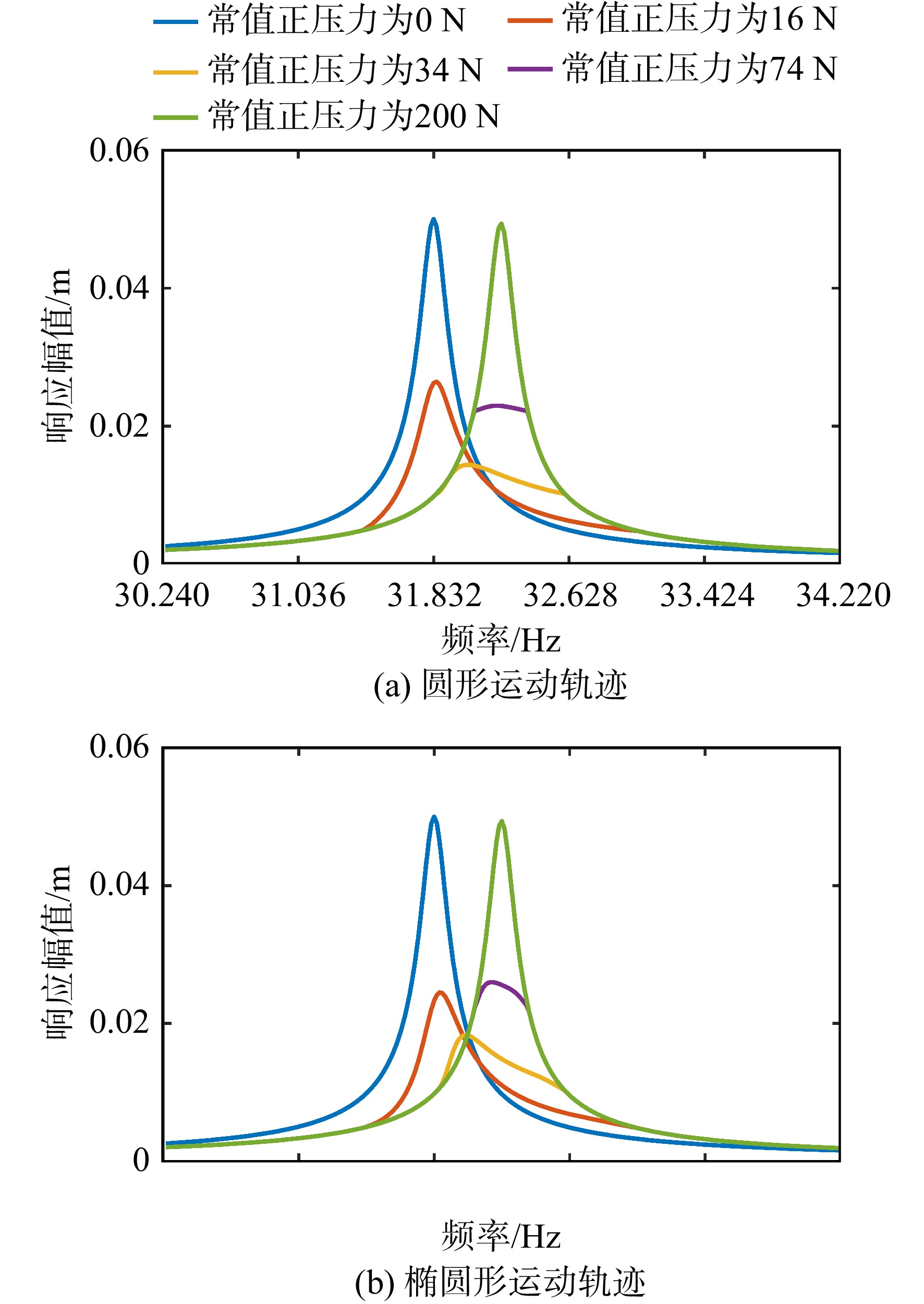
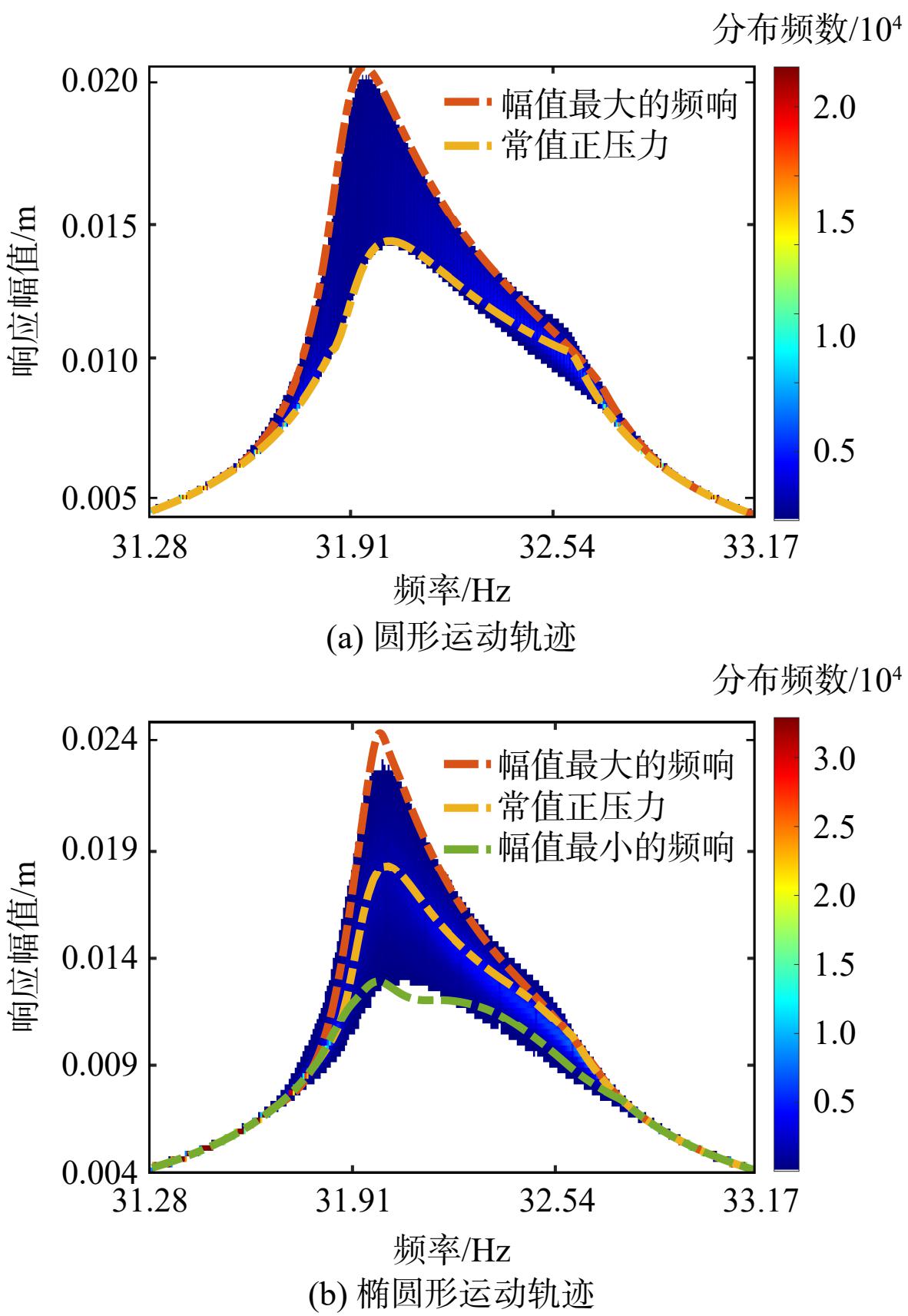
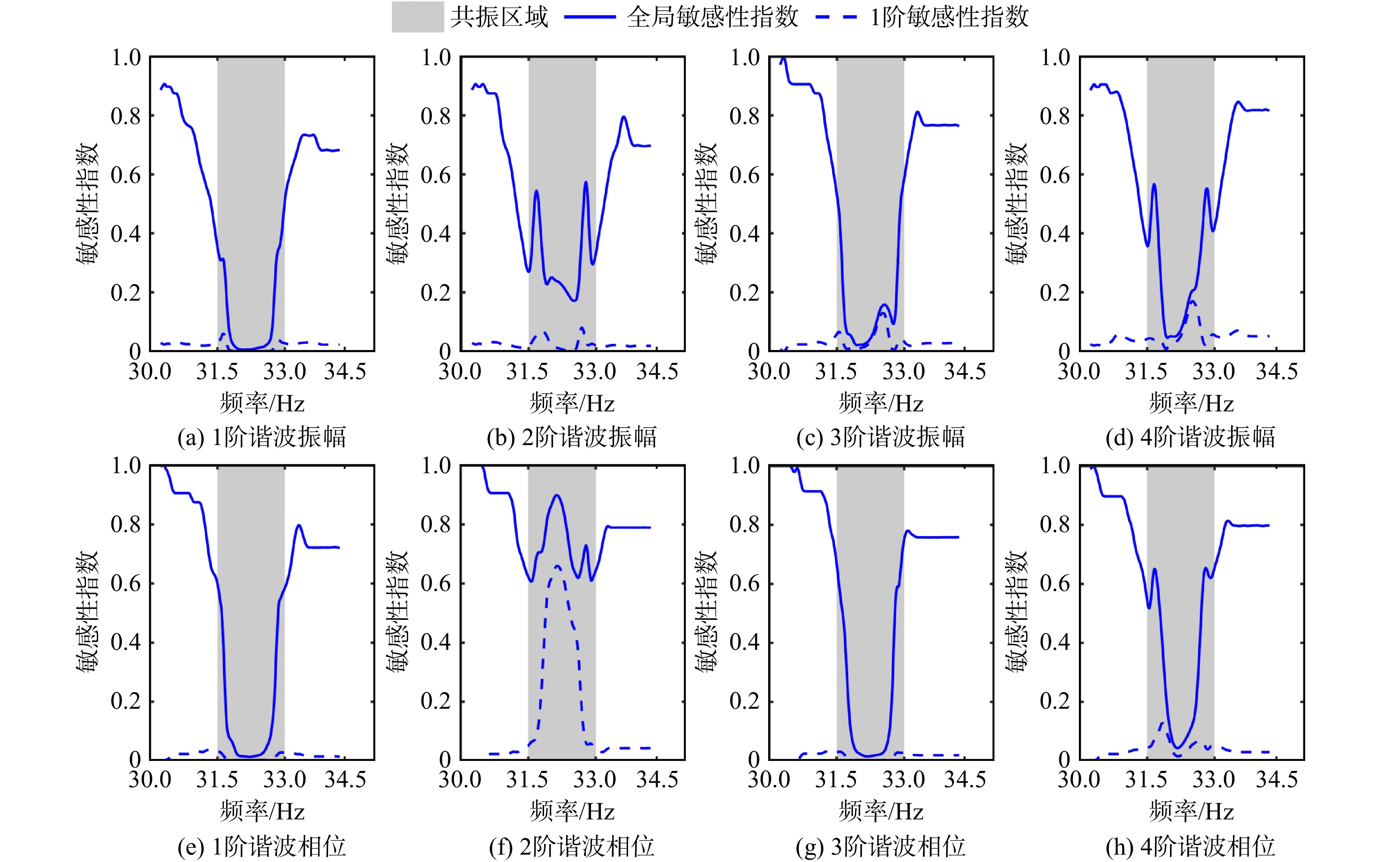
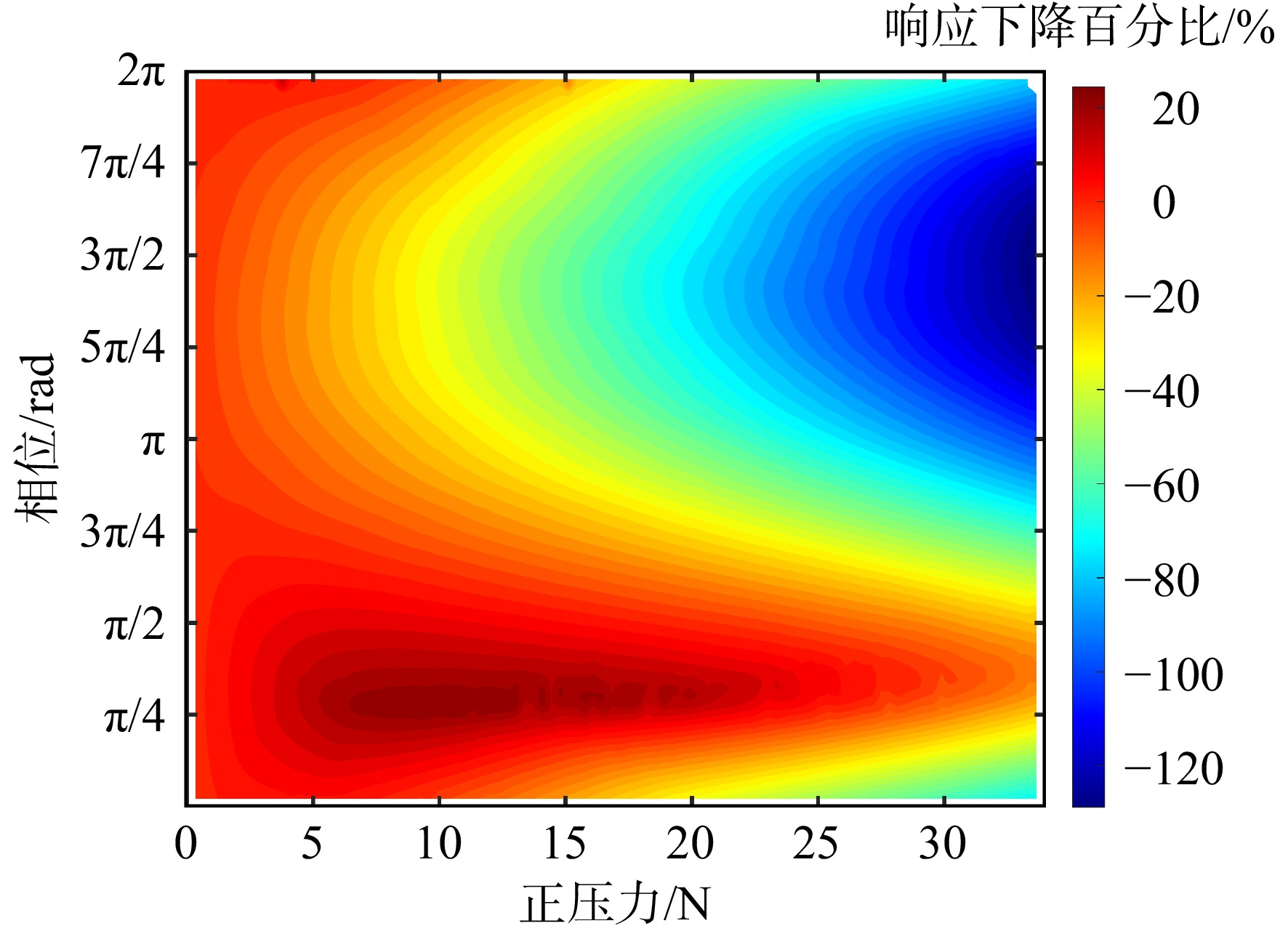
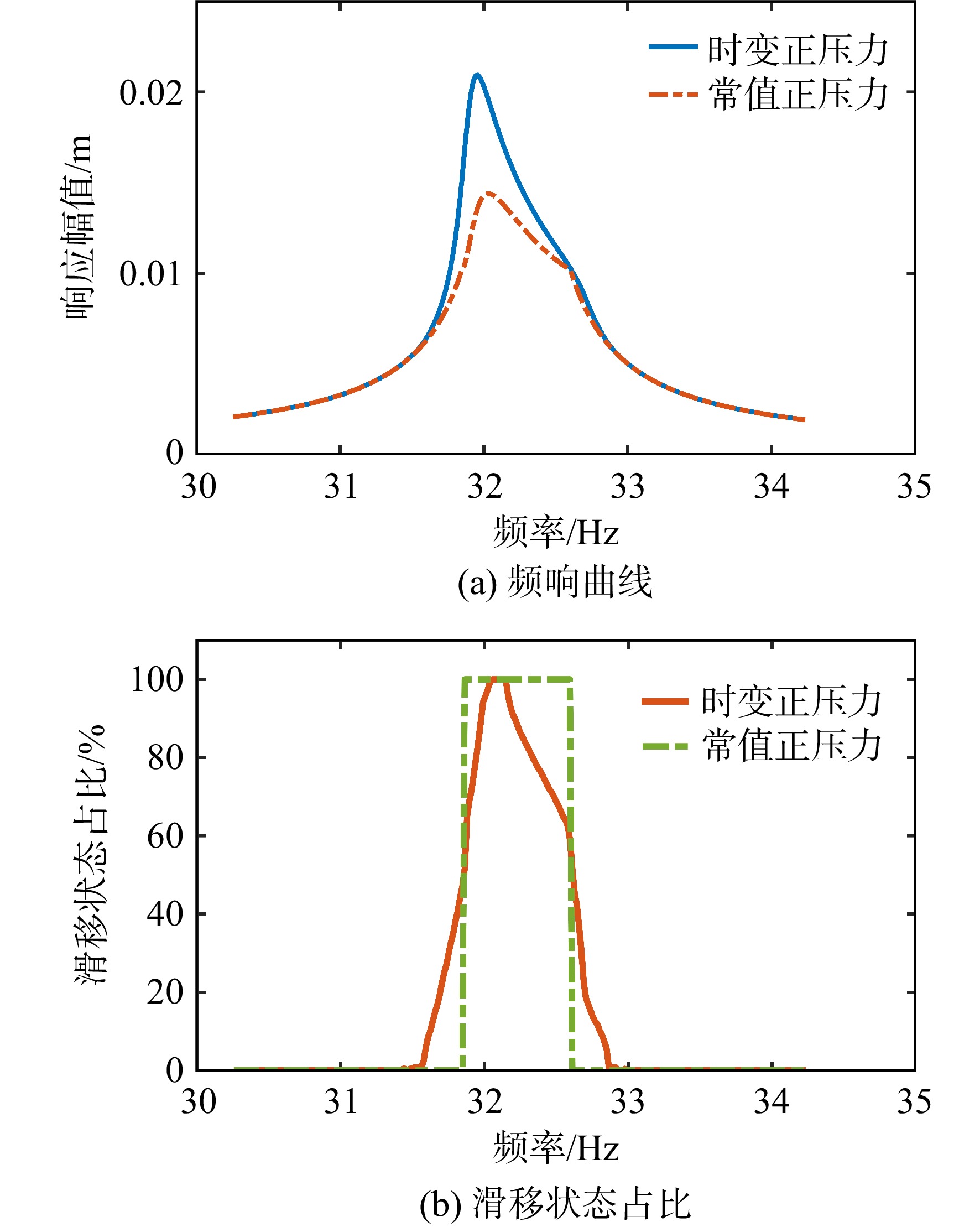
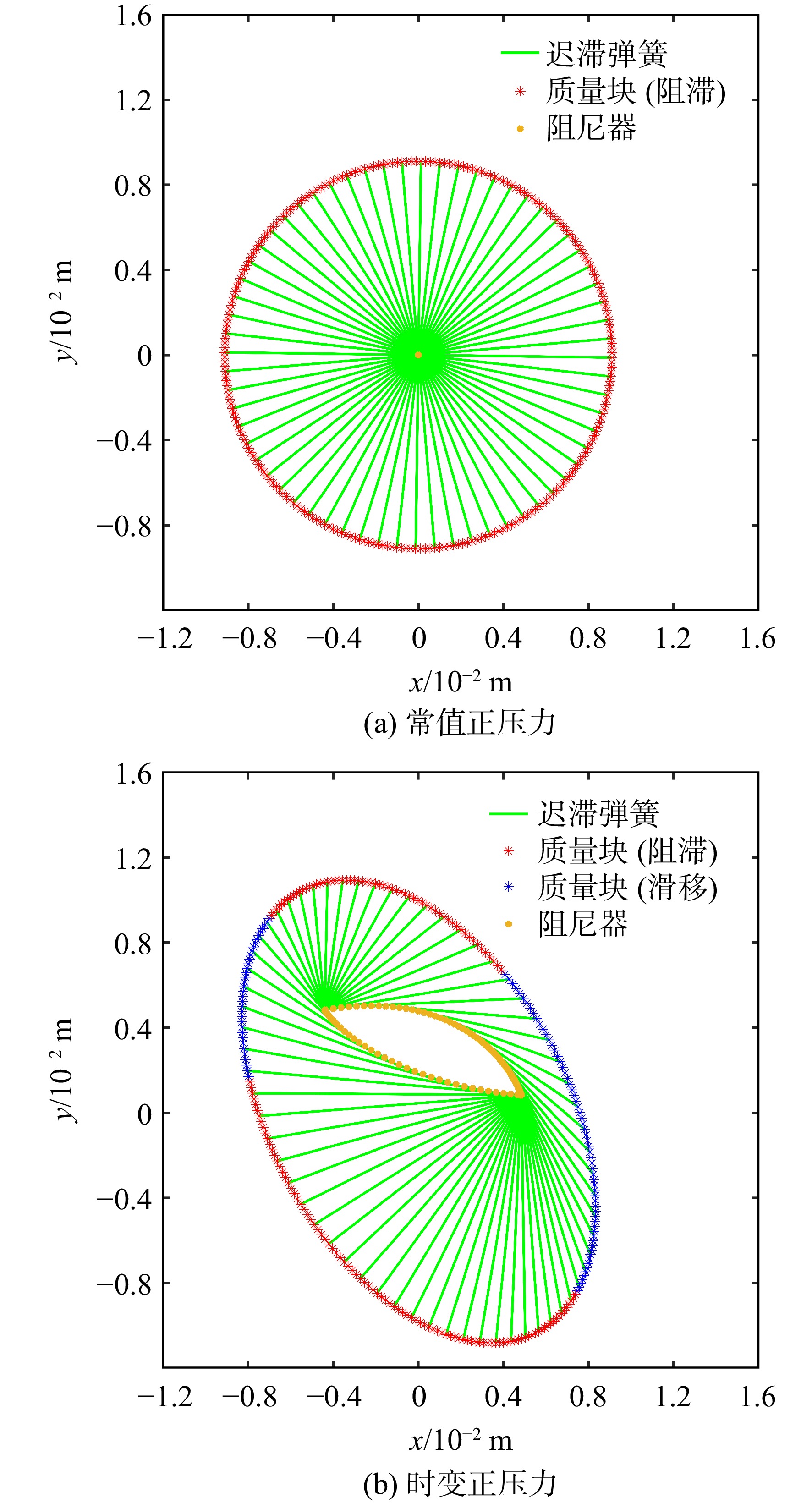
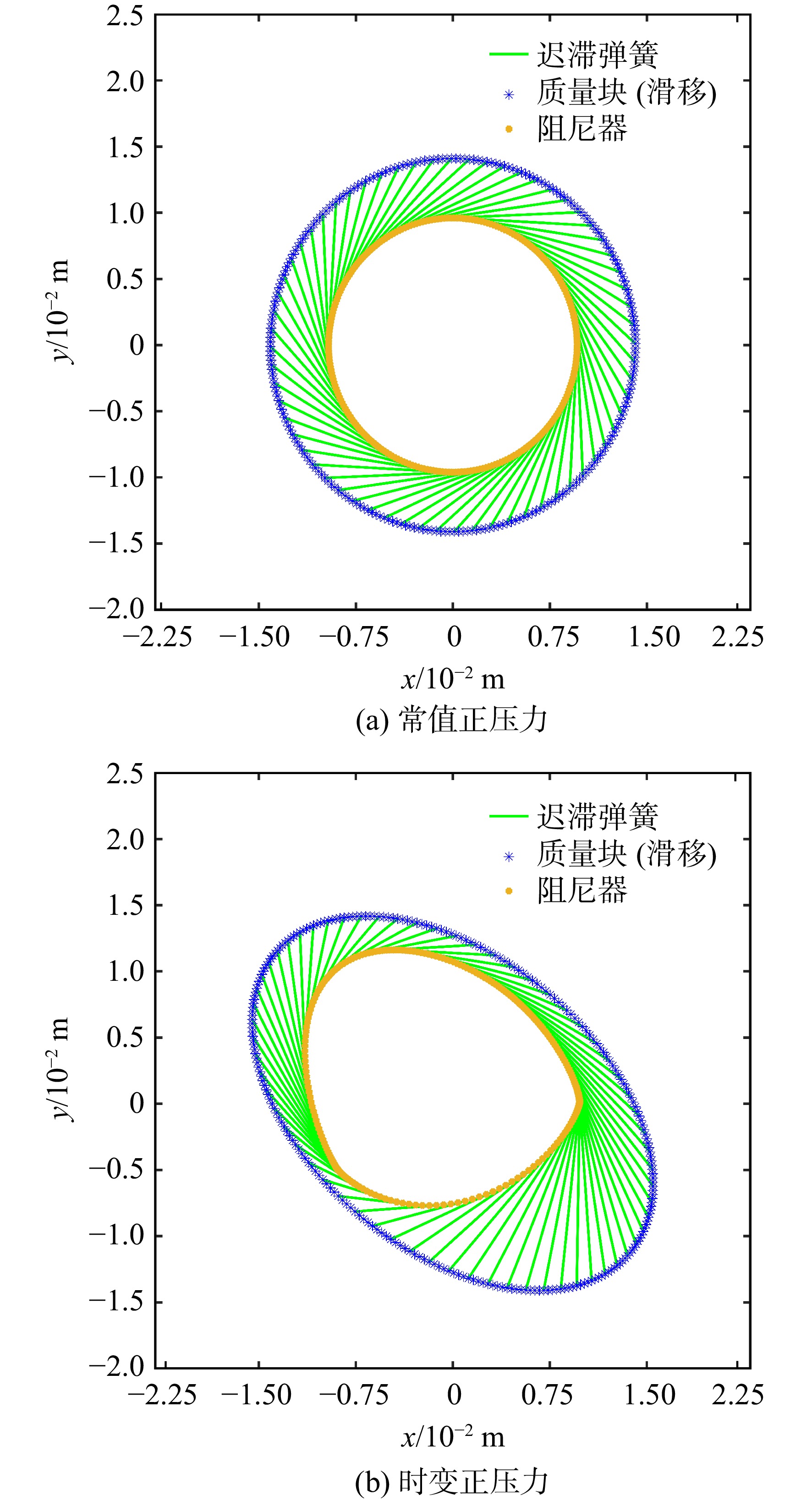
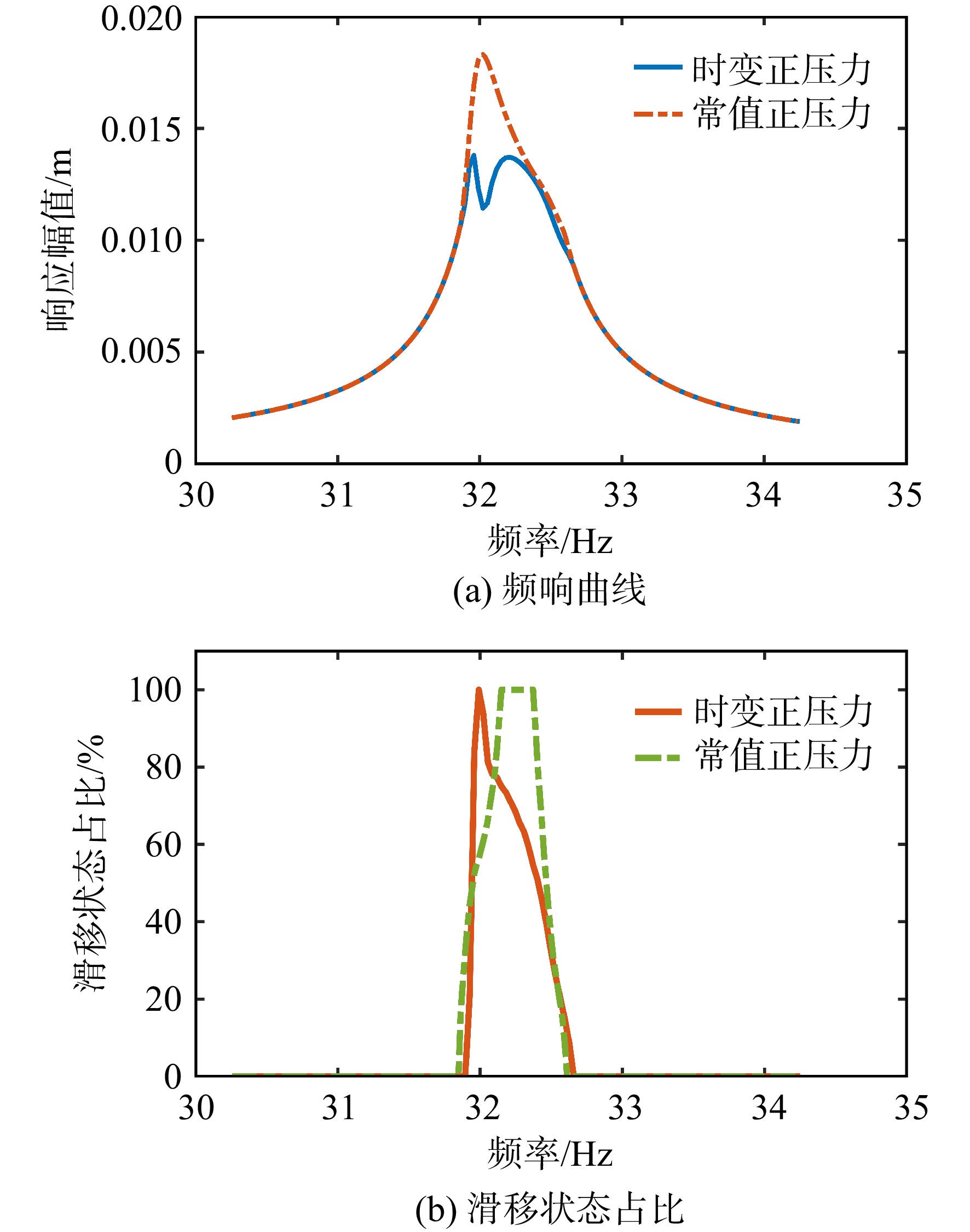
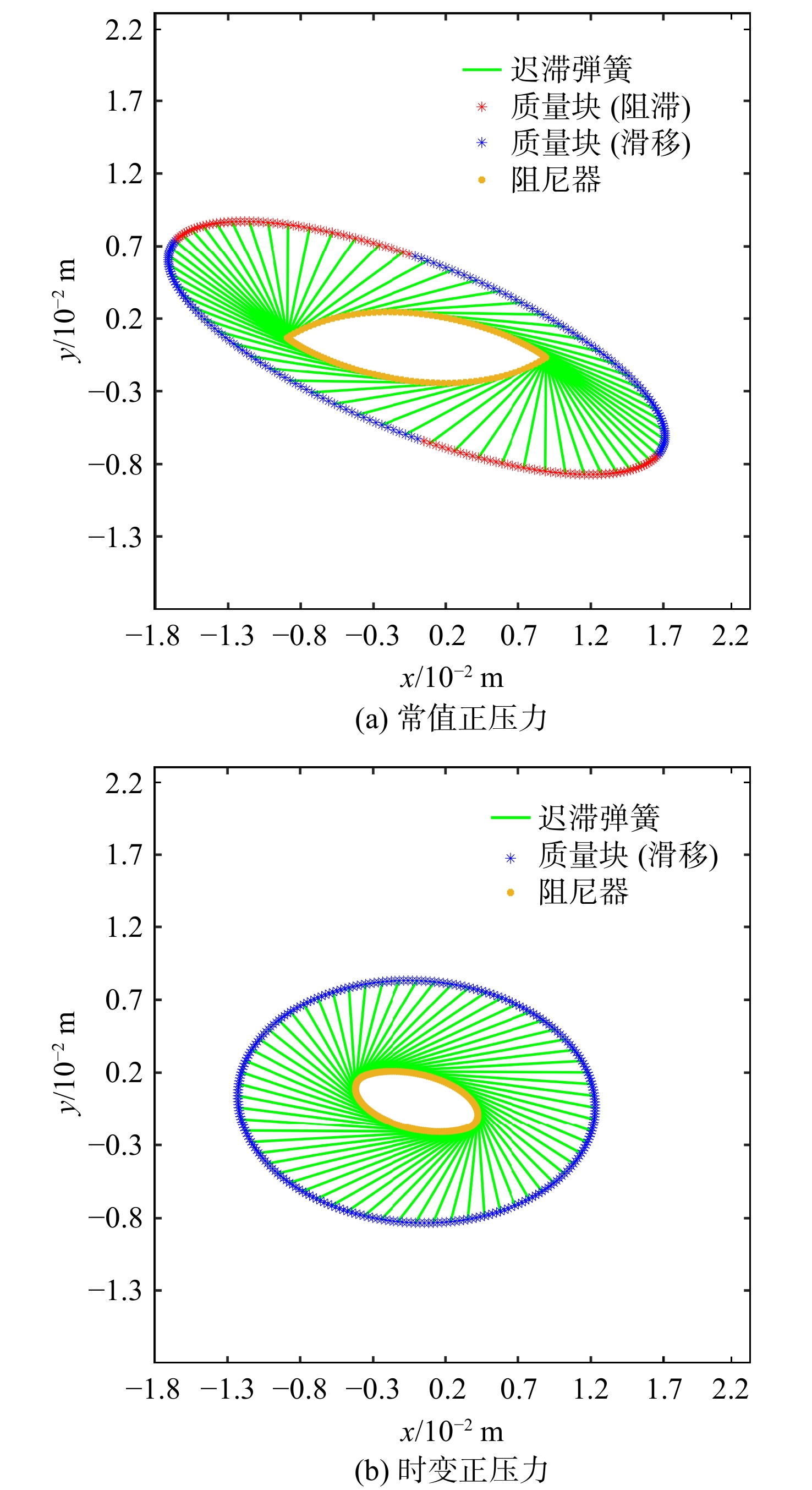
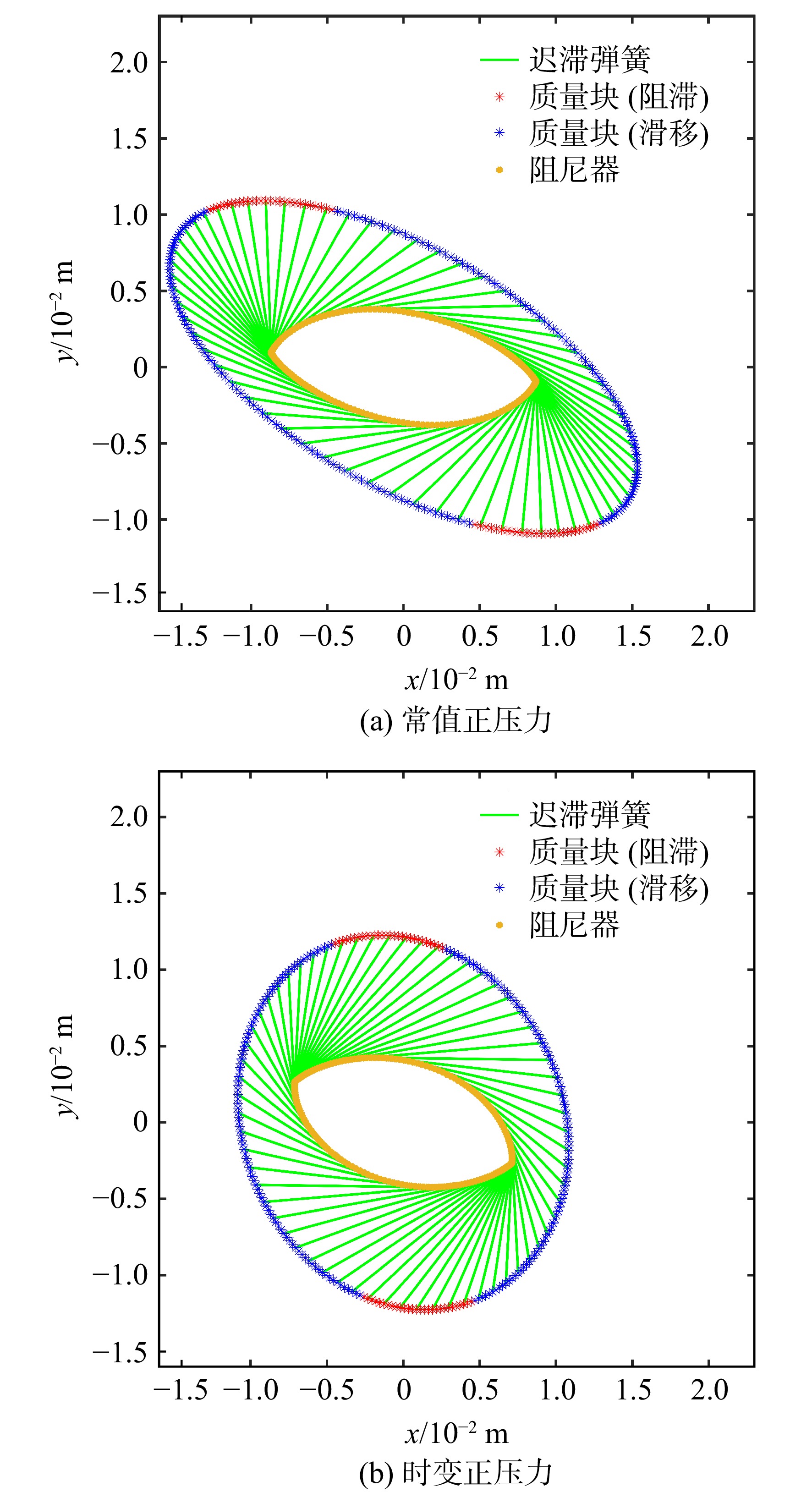
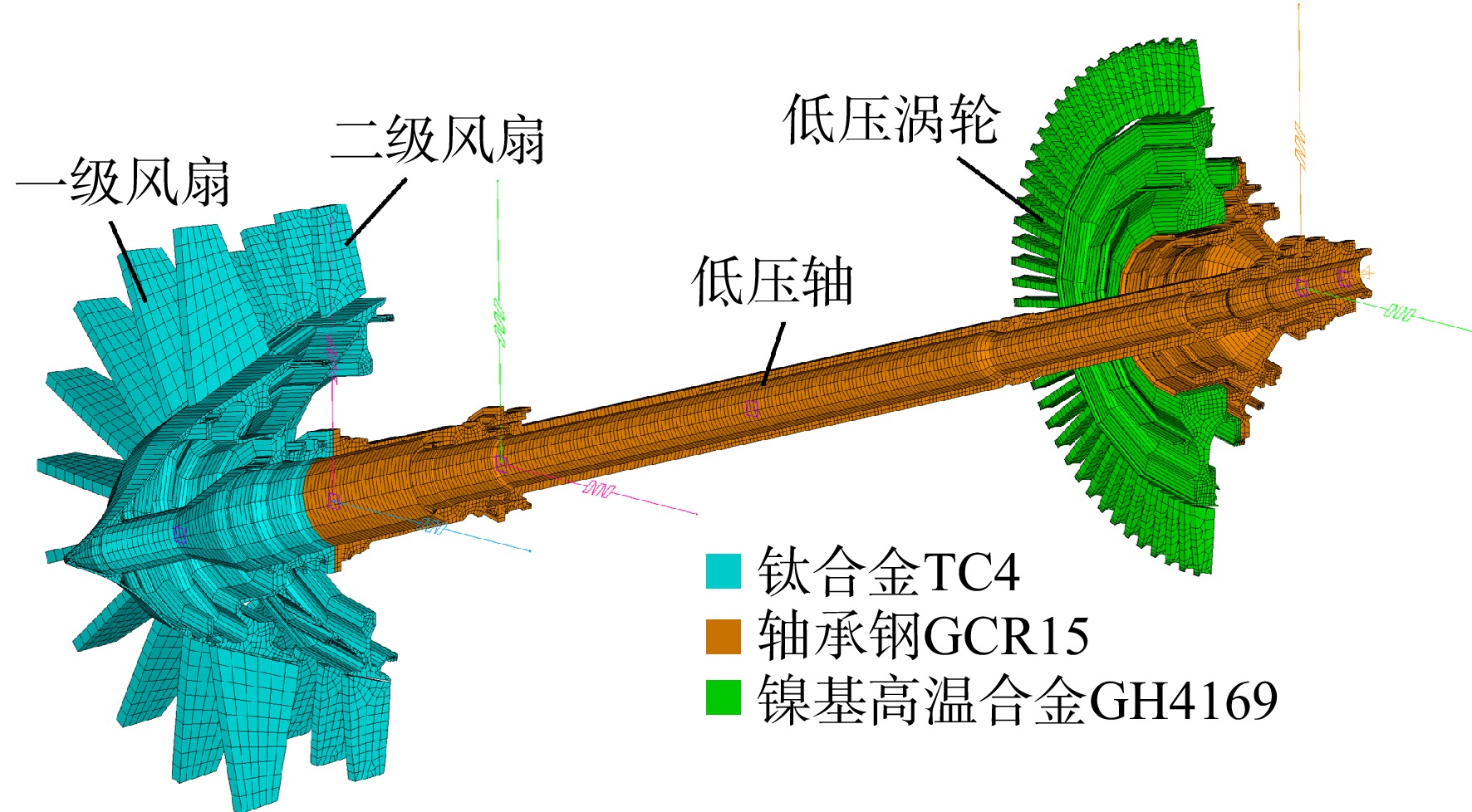
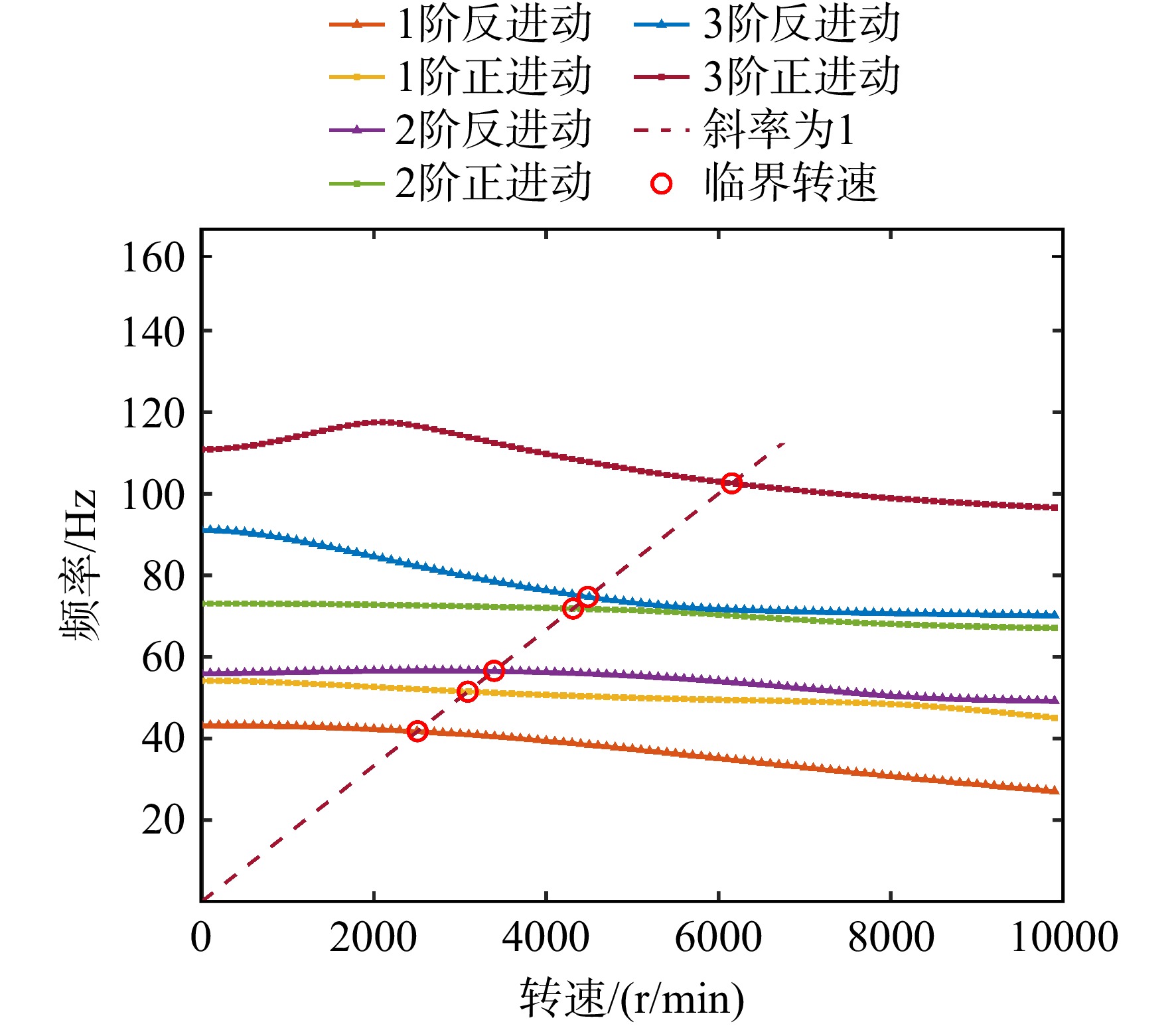
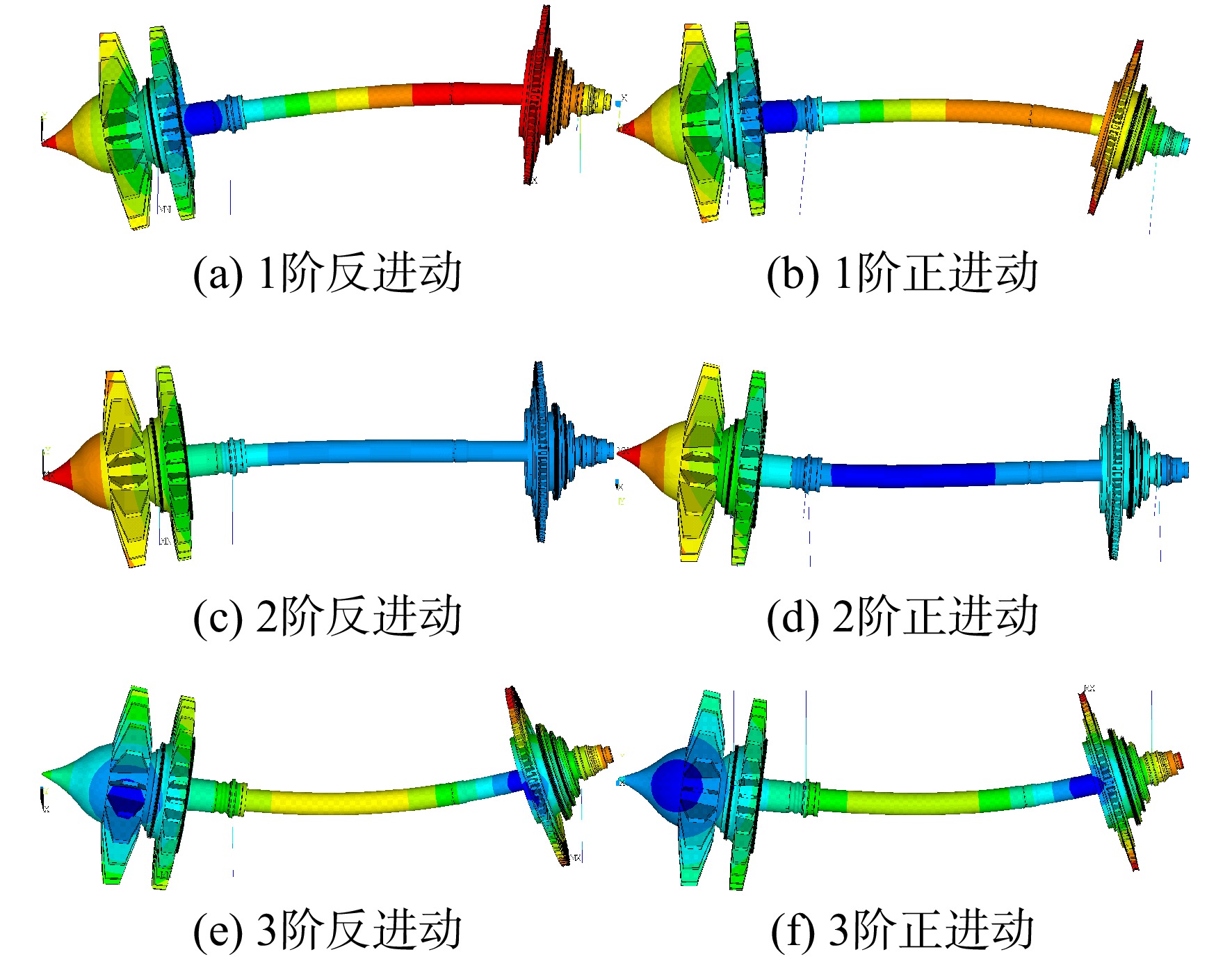
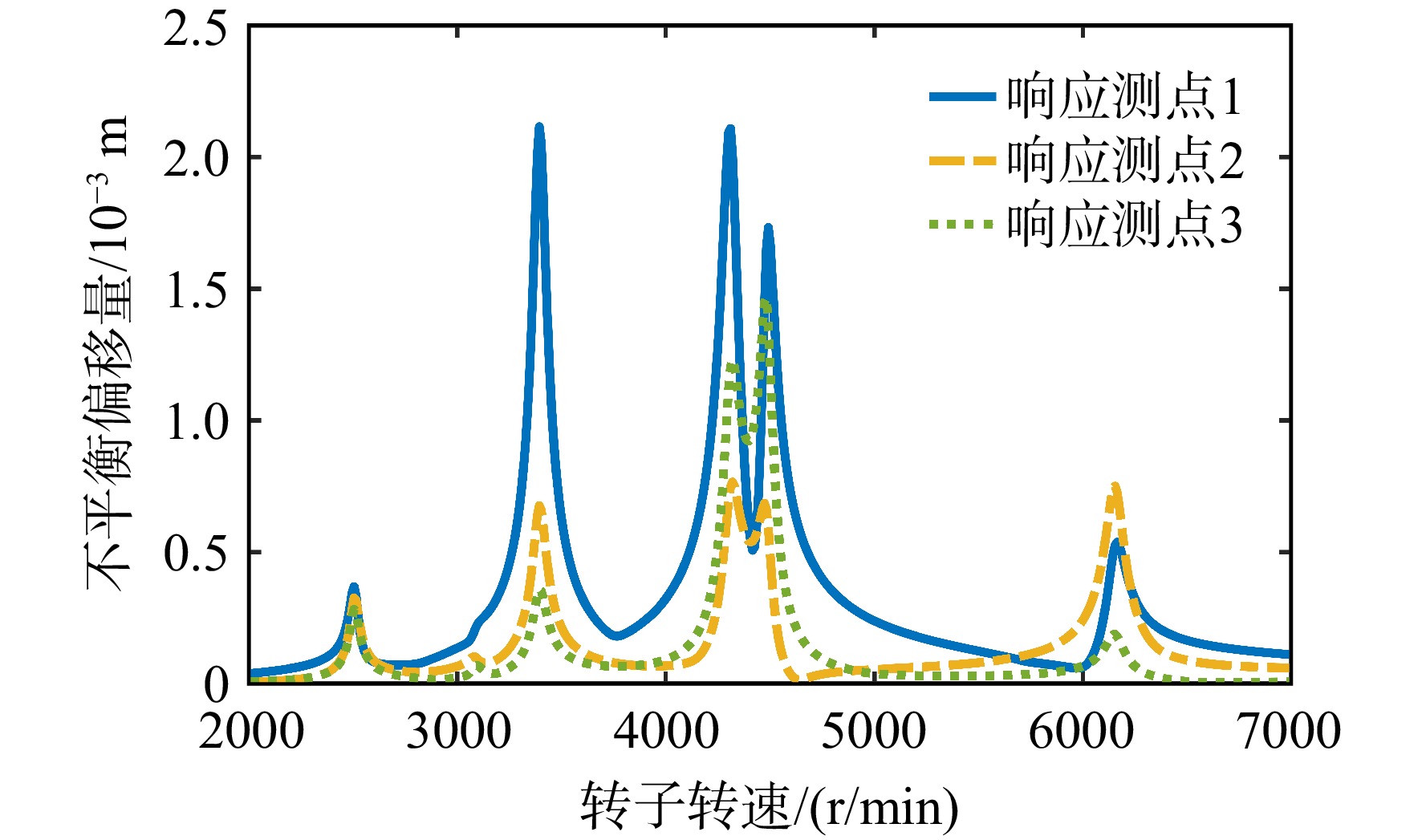
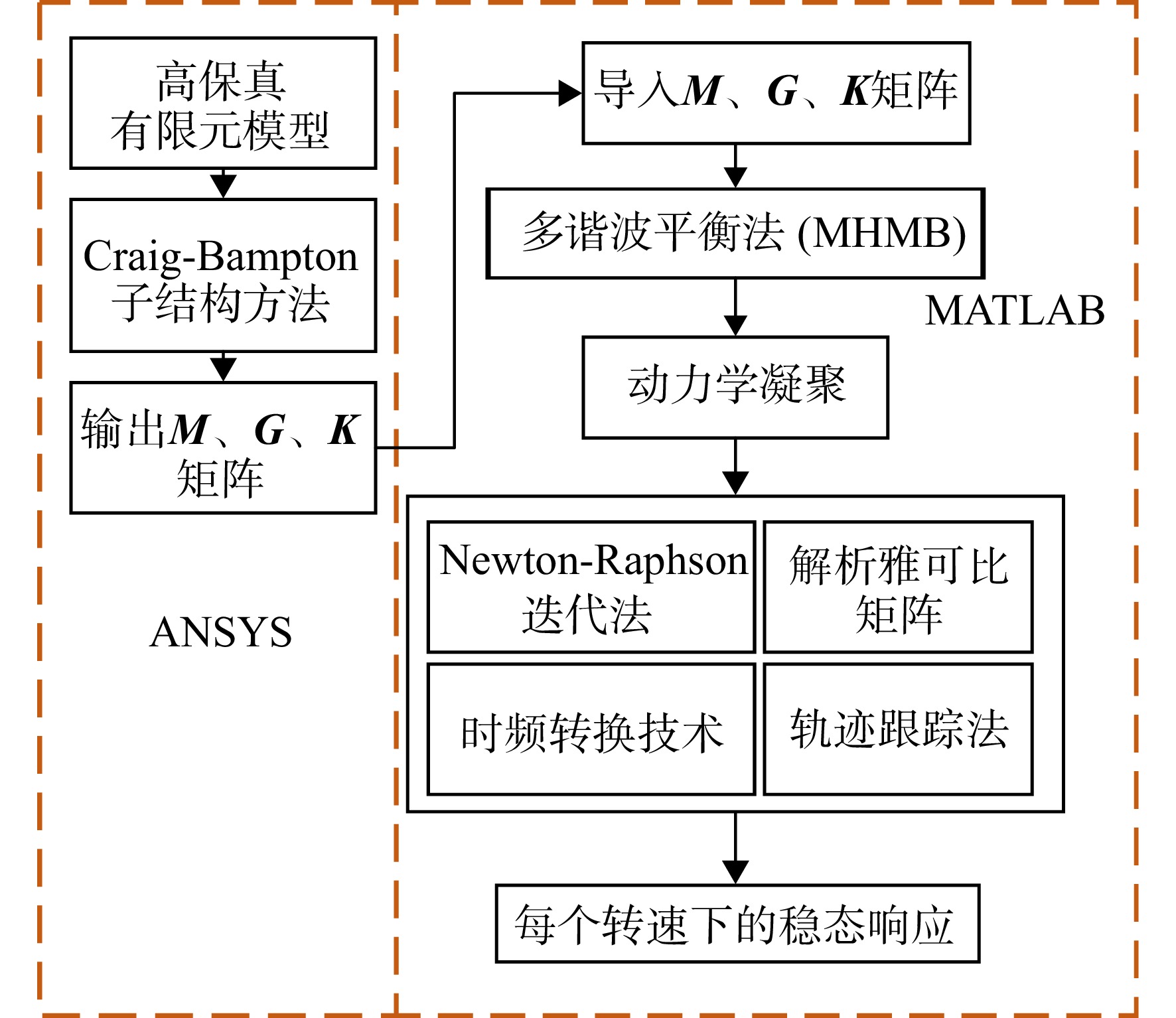
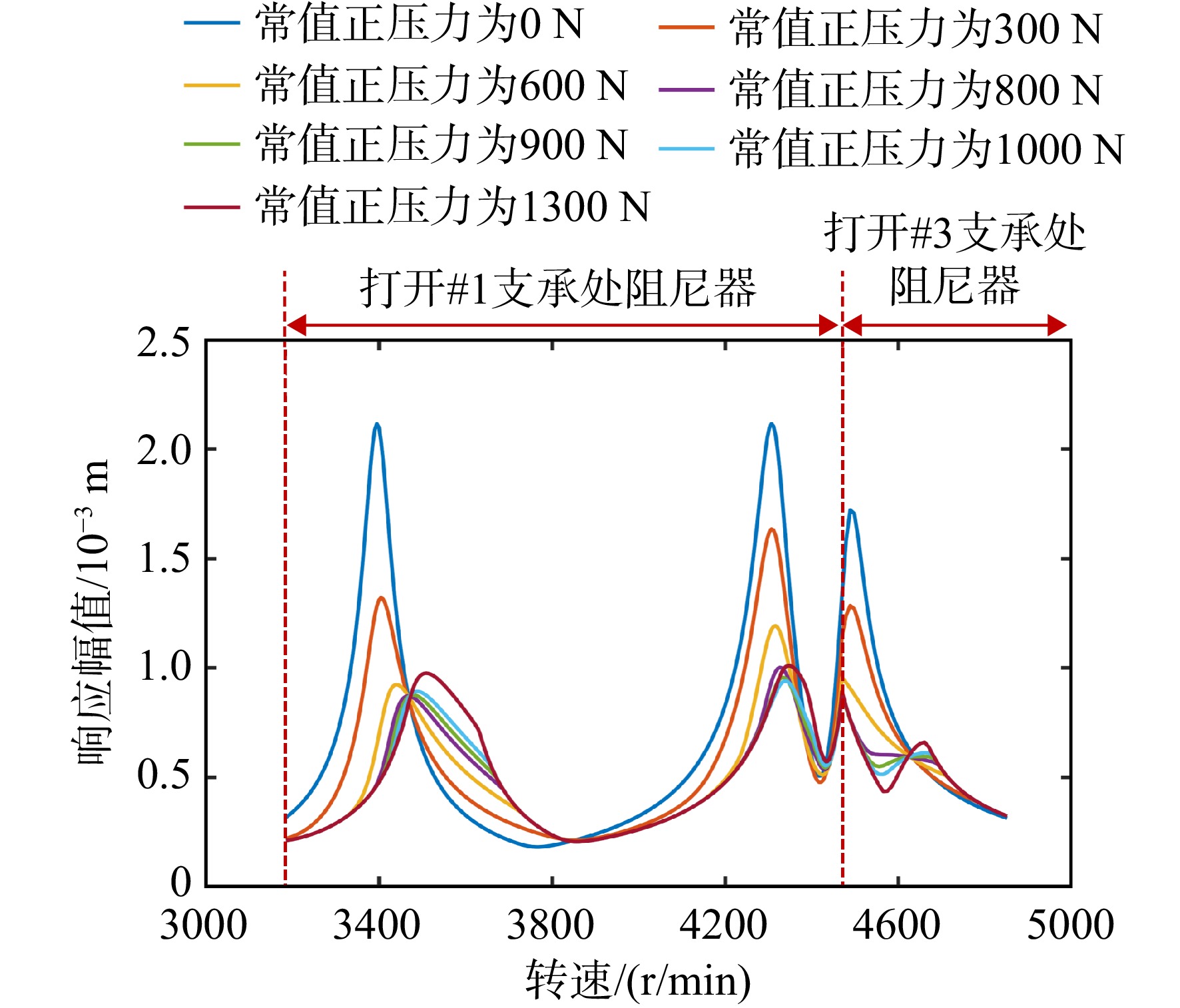
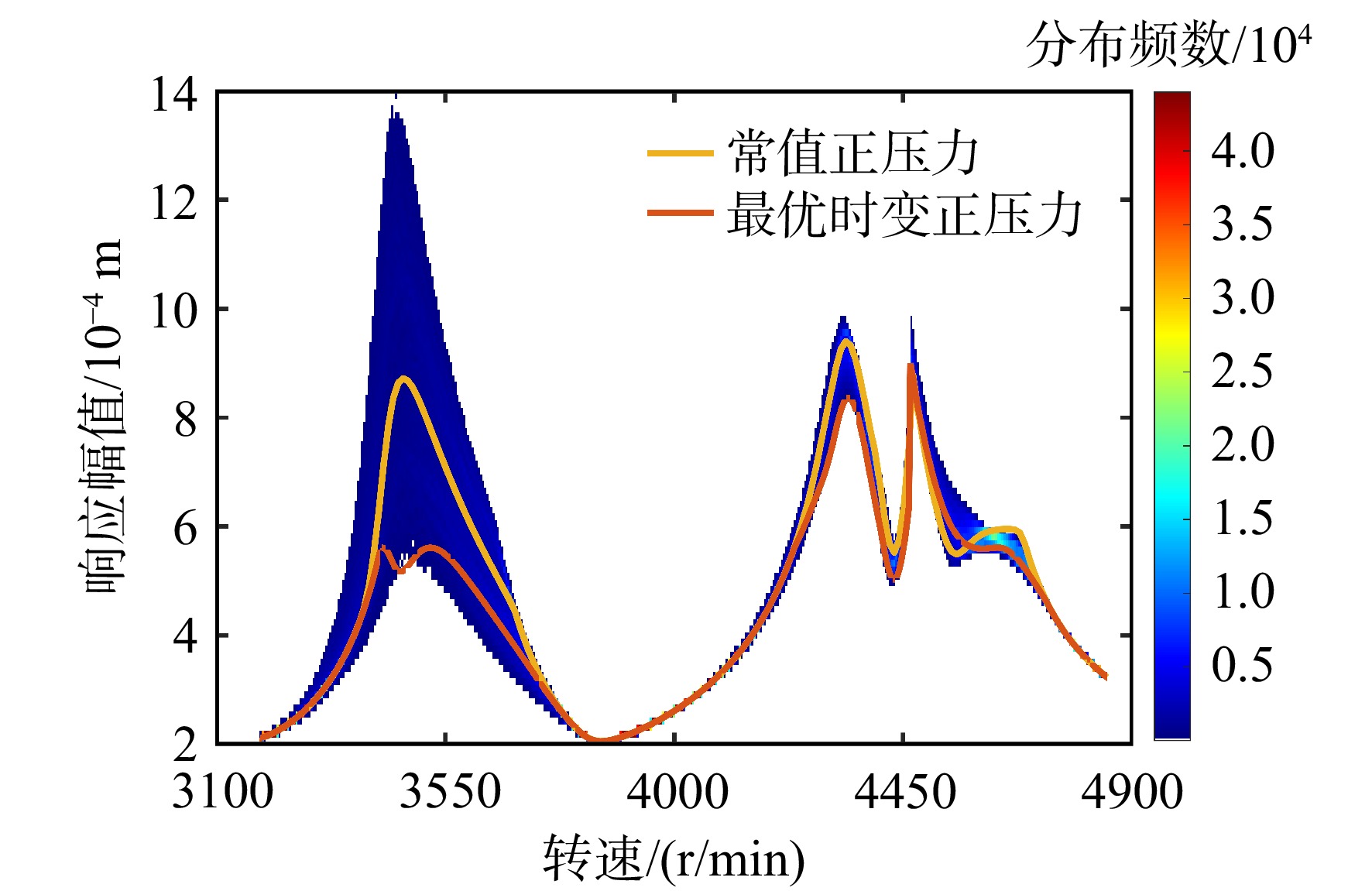
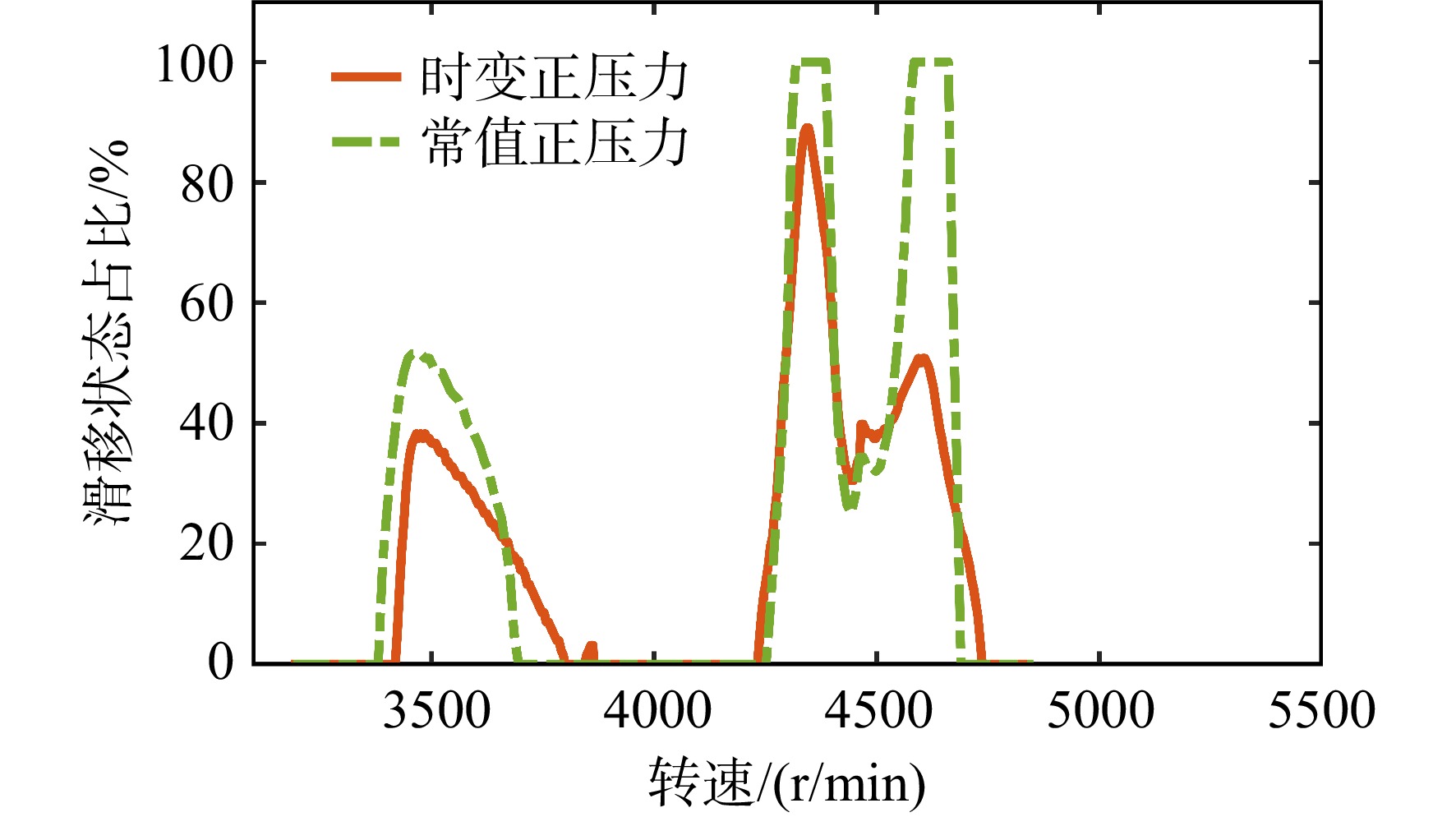
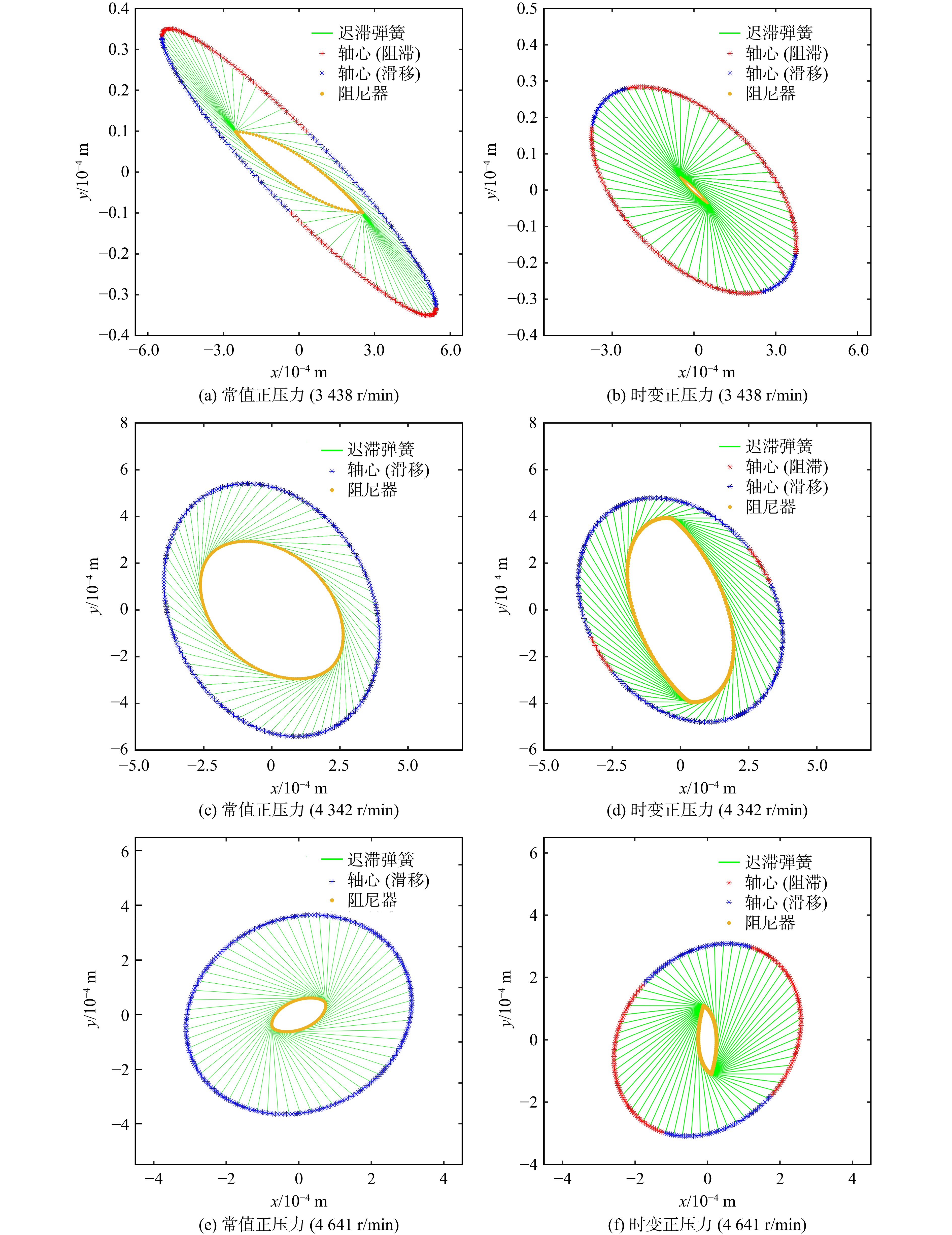
To address the vibration issues encountered by aero-engine rotors when passing through critical speeds, a time-varying normal force elastic-support dry friction damper, incorporating a harmonic component alongside a constant normal force, was proposed. A simplified two-dimensional dry friction dynamic model, representing the rotor system's motion characteristics, was analyzed. Using an extended Fourier global parameter sensitivity analysis method, the influence of time-varying normal force on dry friction damping under typical two-dimensional motion trajectories was investigated. The results indicated that for circular motion trajectories, time-varying normal force diminished the vibration reduction performance compared with constant normal force. In contrast, for elliptical motion trajectories, the inclusion of a second-order harmonic component enhanced vibration reduction, achieving a 24.7% reduction in peak vibration response. Based on these findings, the elastic-support dry friction damper was applied to the low-pressure rotor system of an aero-engine, utilizing a second-order harmonic time-varying normal force control strategy. Dynamic simulations were conducted using a high-fidelity finite element model and harmonic balance method, revealing significant improvements. Compared with constant normal force, the proposed damper reduced the resonance peak values of the second-order backward whirl, second-order forward whirl, and third-order backward whirl of the rotor system by 35.6%, 10.6%, and 5.1%, respectively.

Damage assessment and dynamic characteristics analysis of rotor systems with multi-stage curvic couplings connection
FU Jie, LI Chao, WU Changyao, MIAO Haoming, HONG Jie, WANG Yongfeng
2026, 41(8): 20250244. doi: 10.13224/j.cnki.jasp.20250244
Abstract:
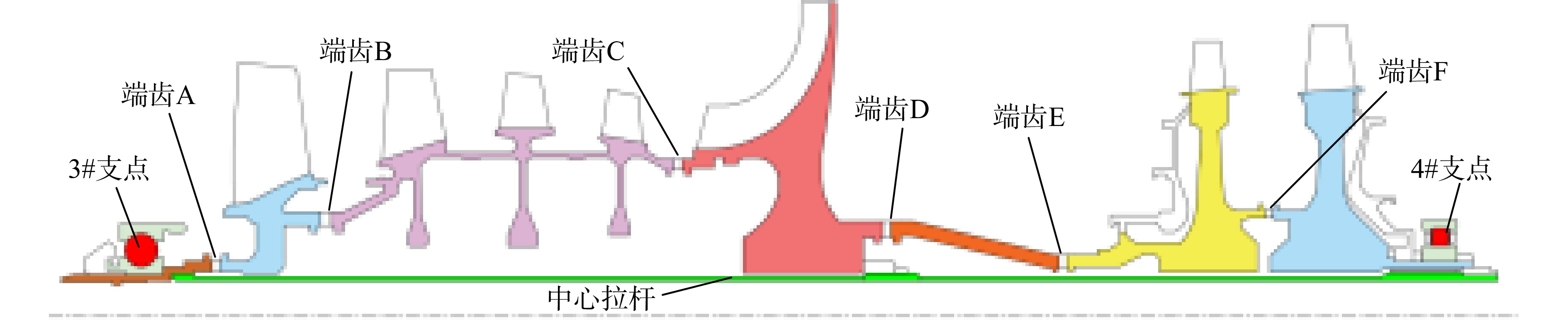
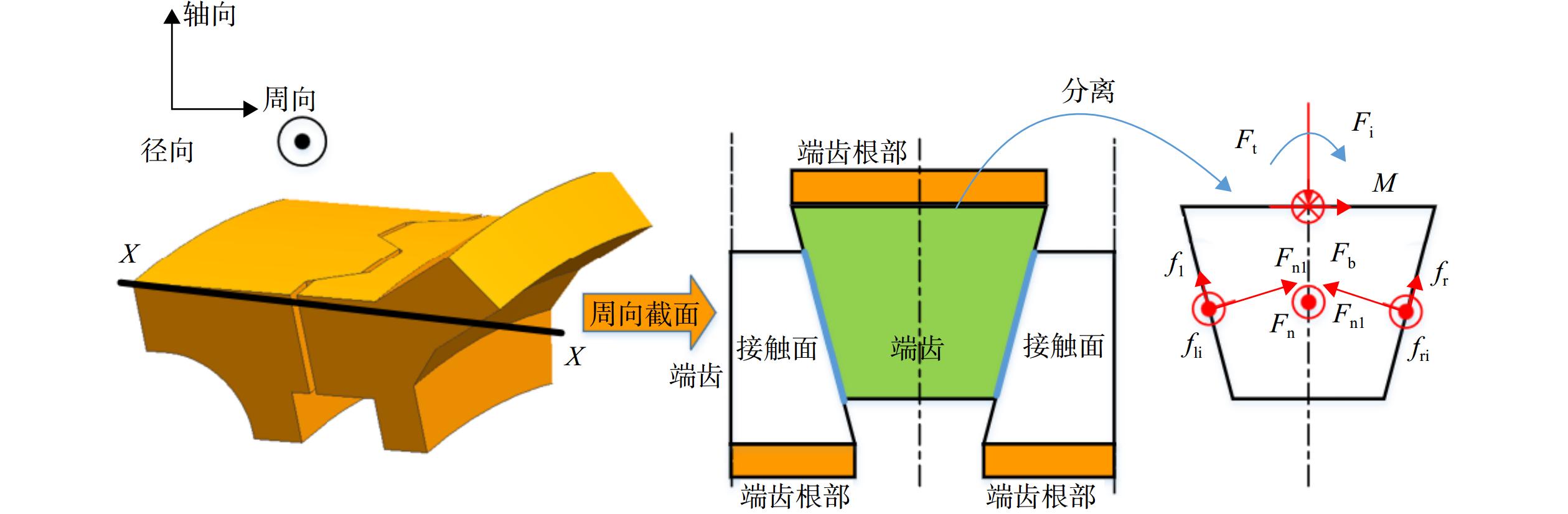
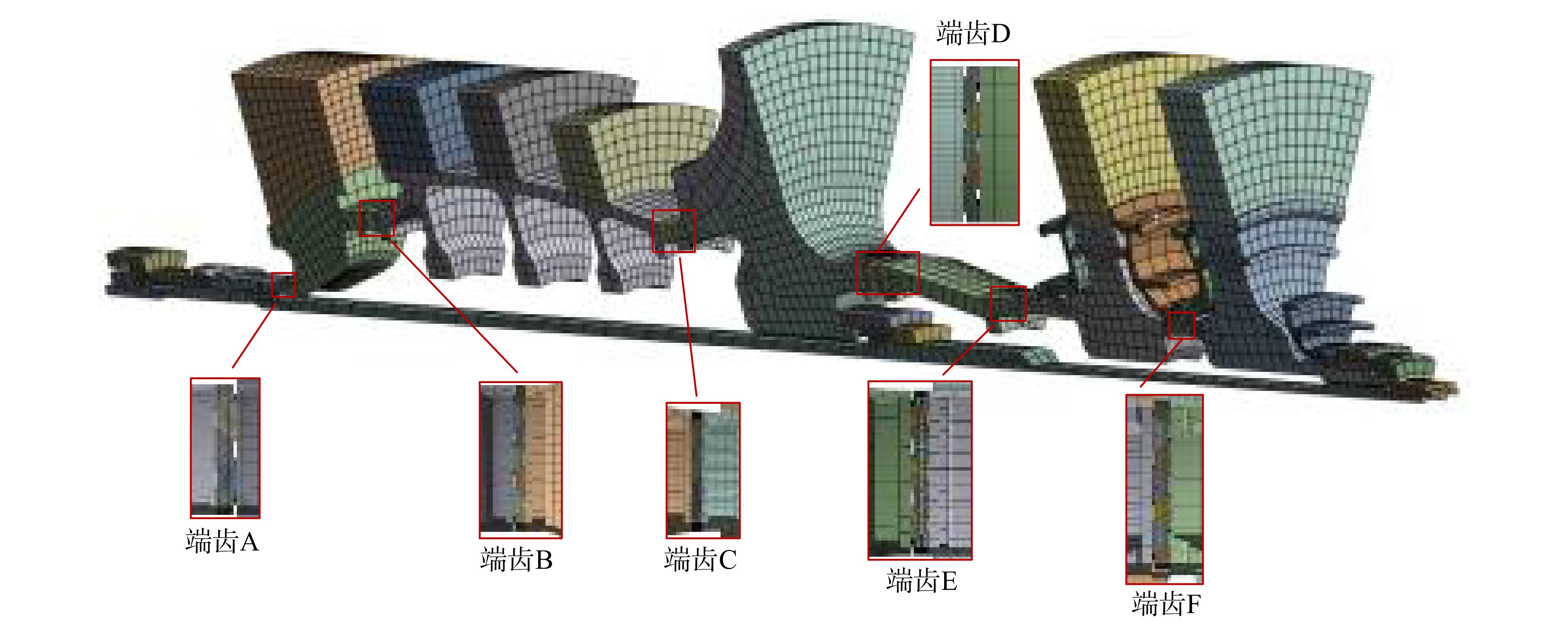
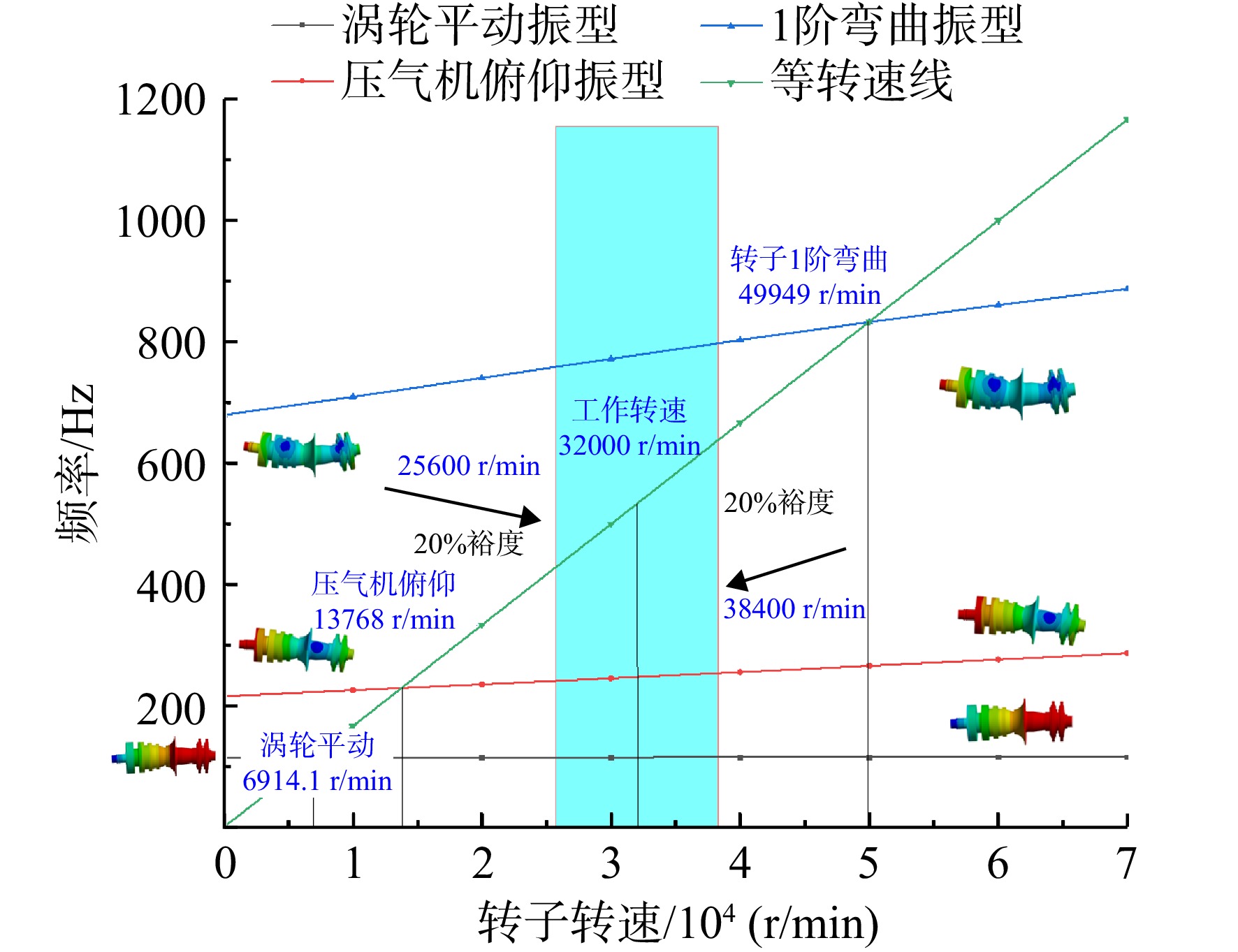
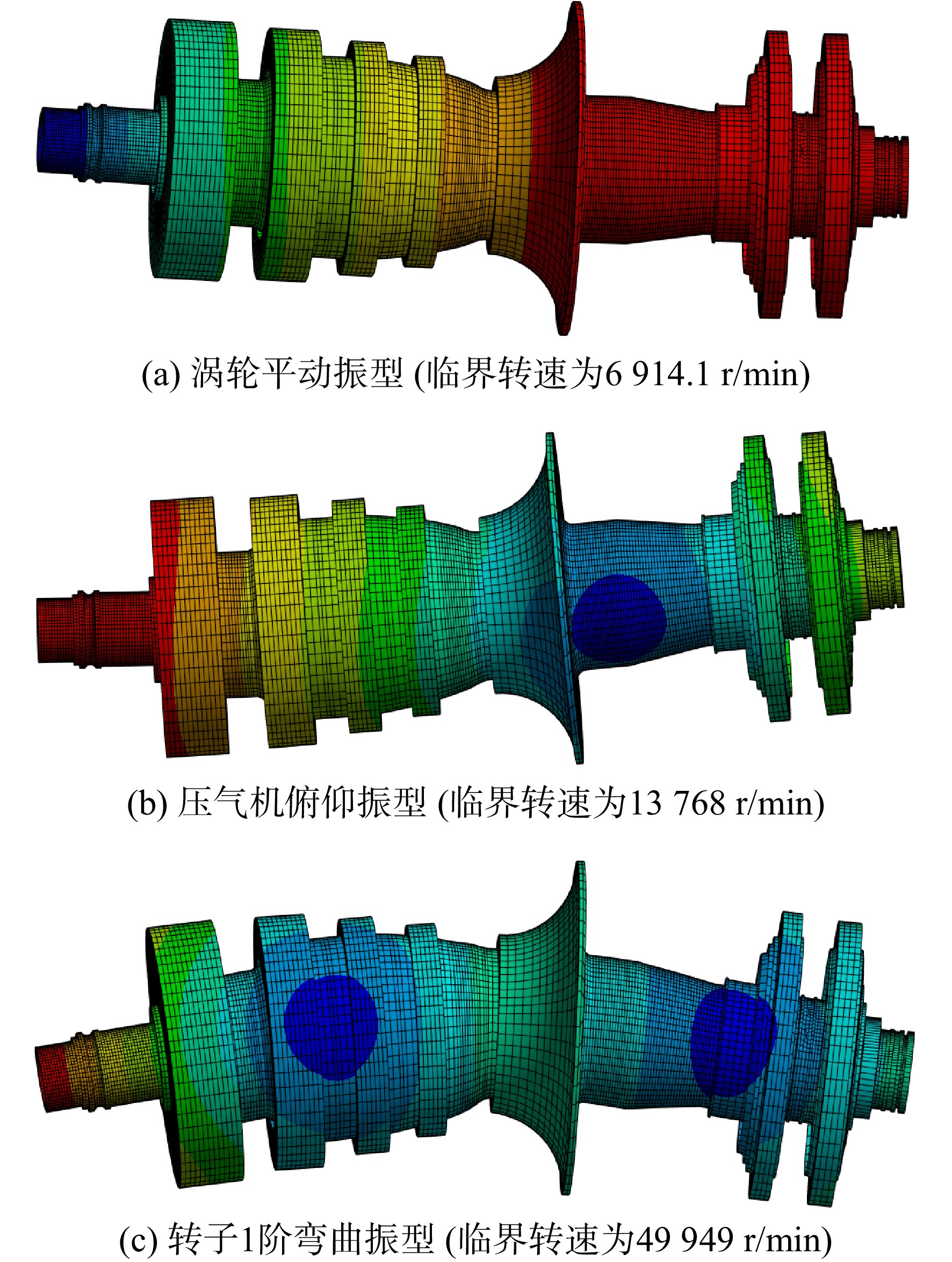
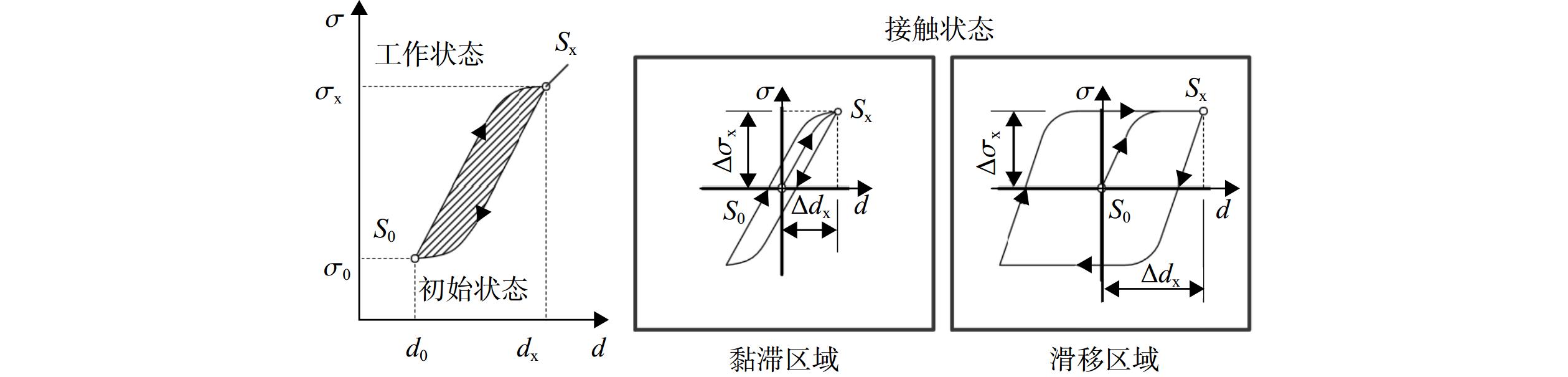
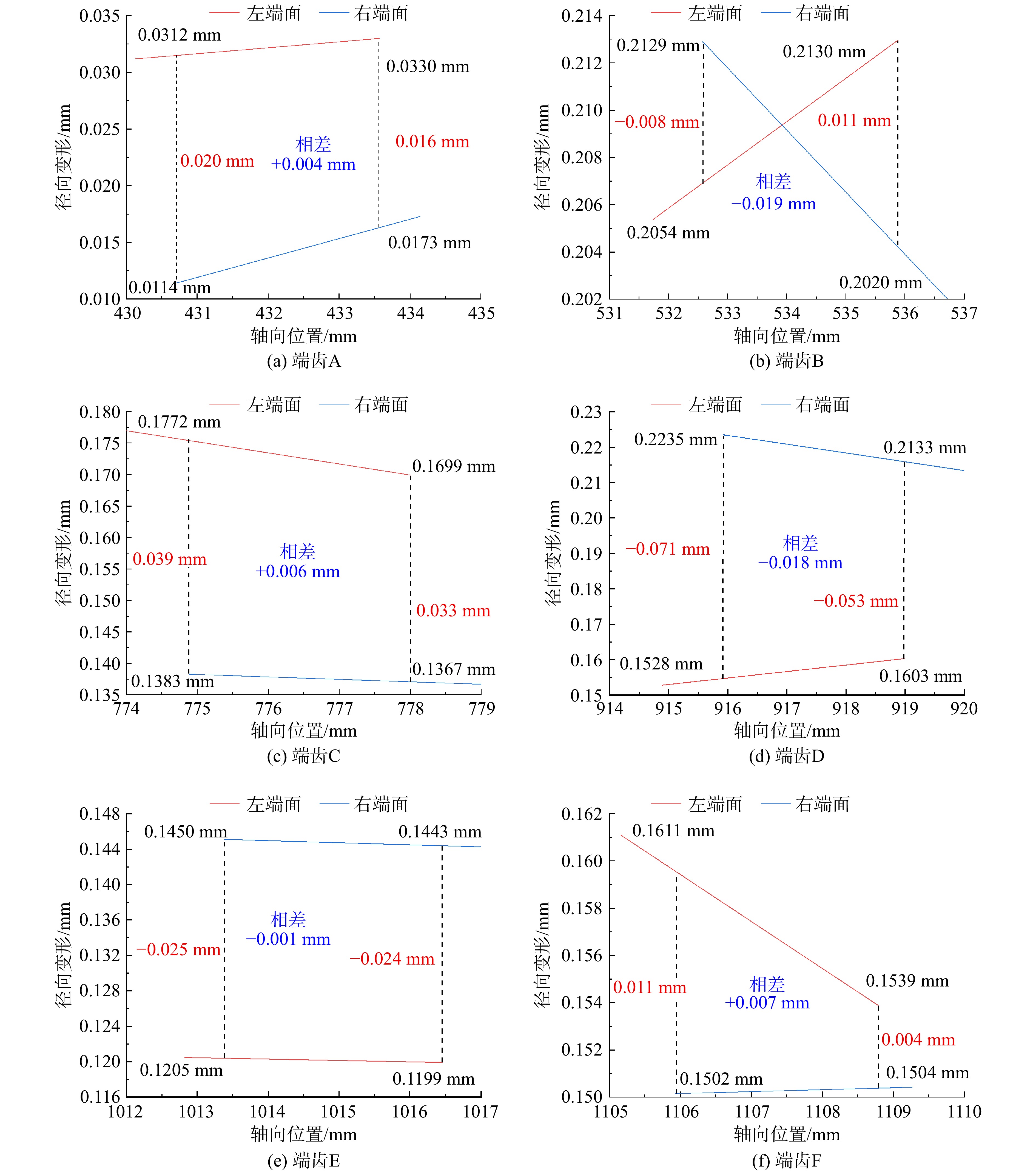
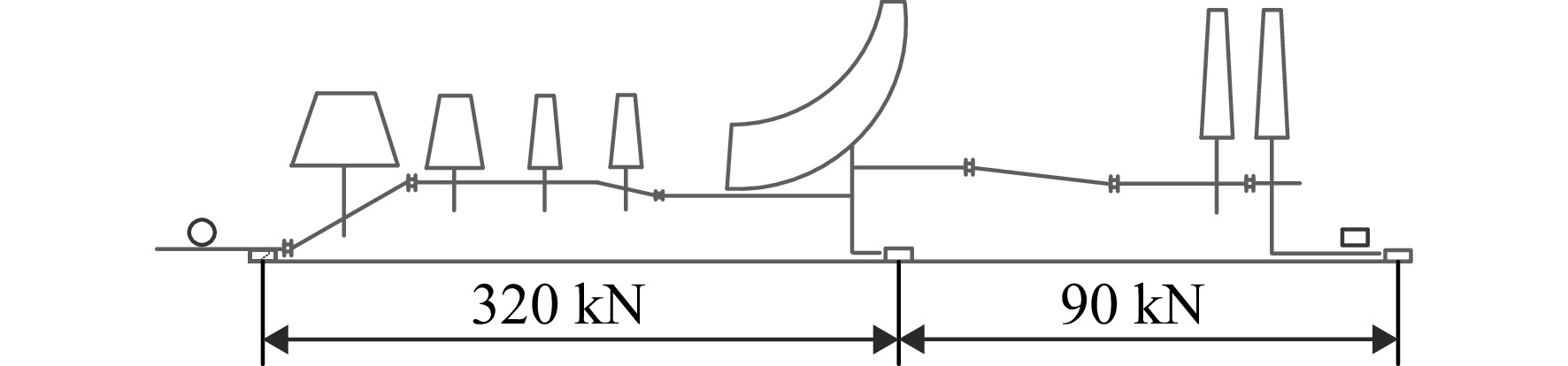
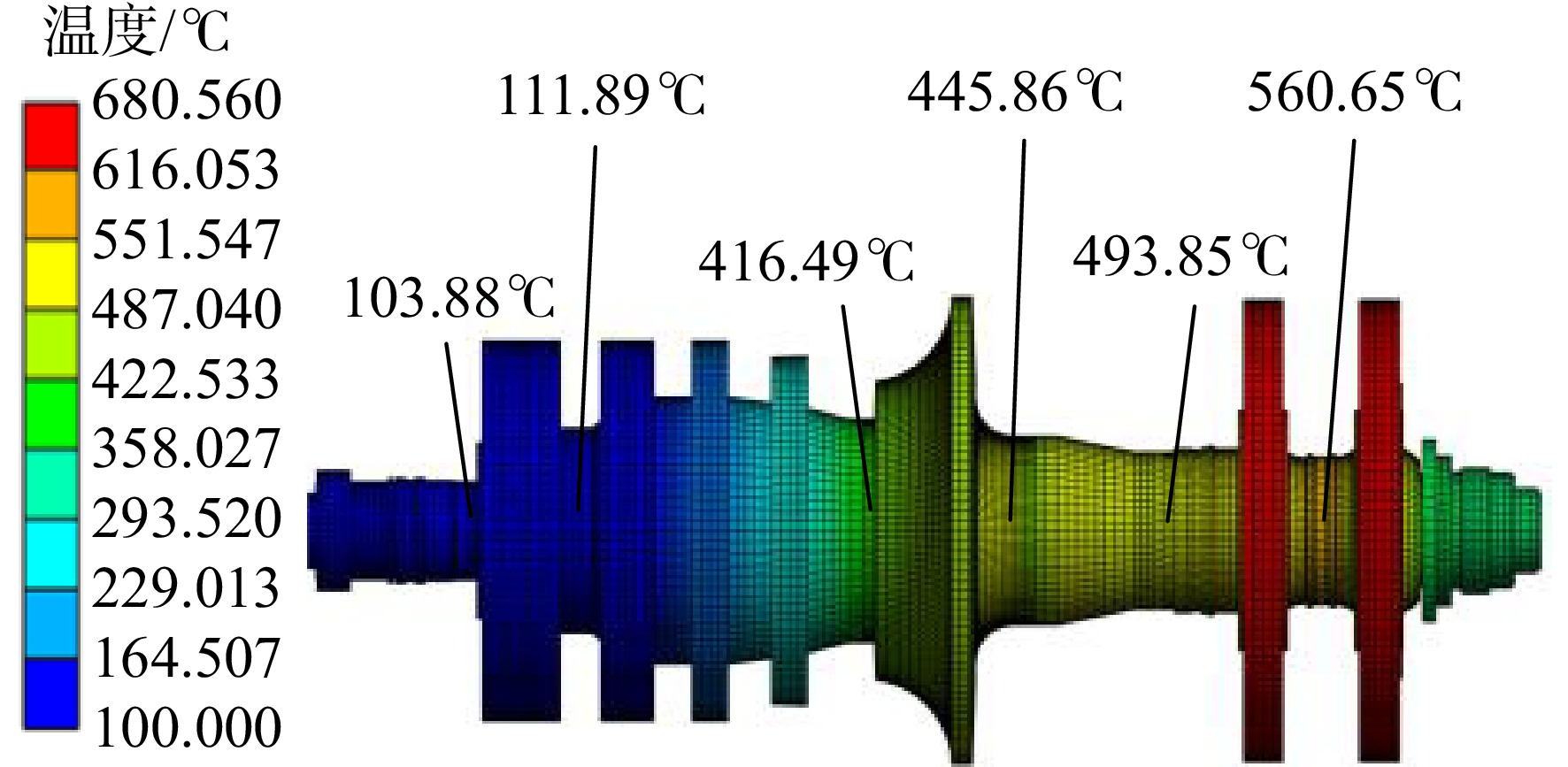
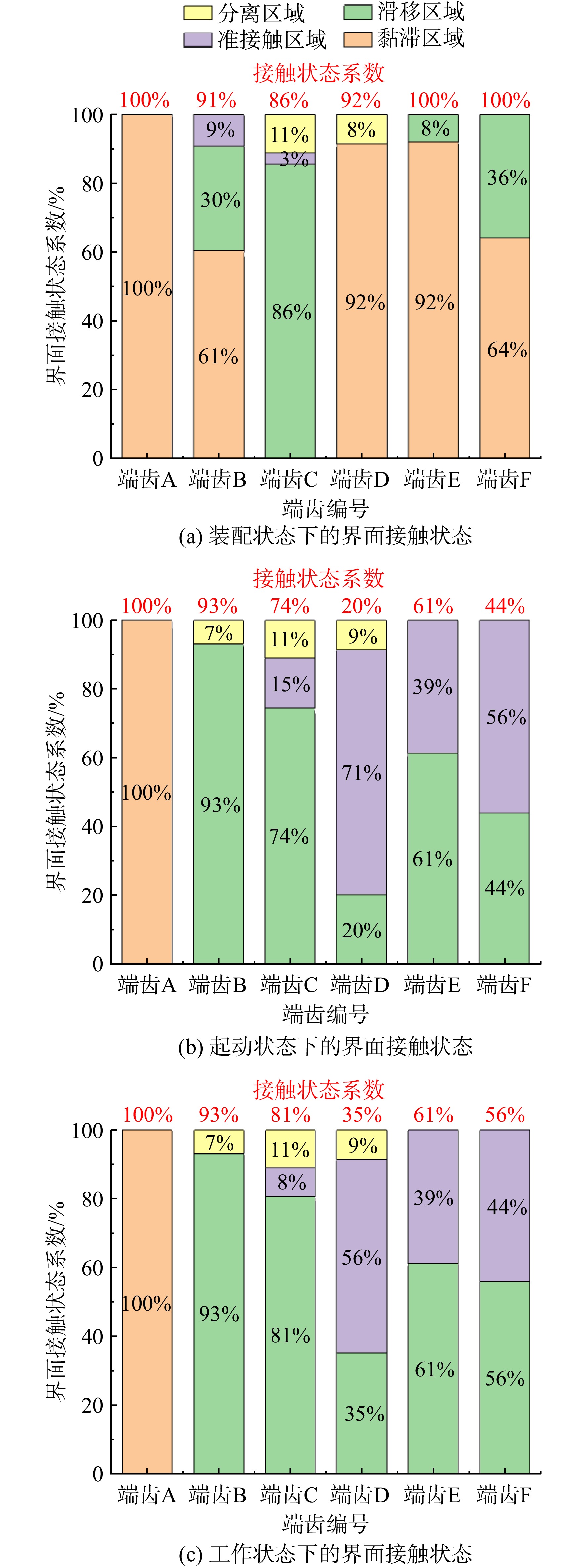
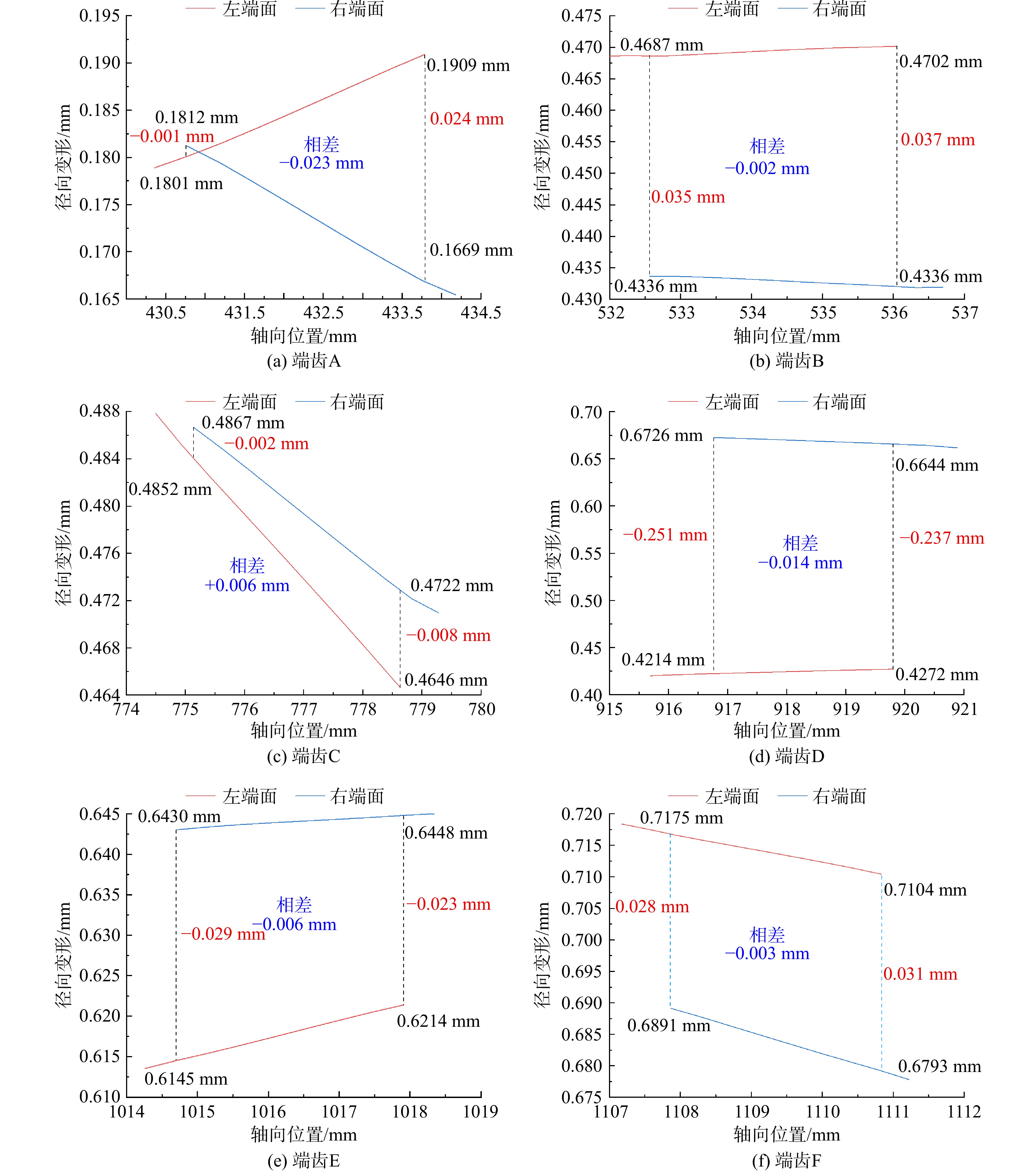
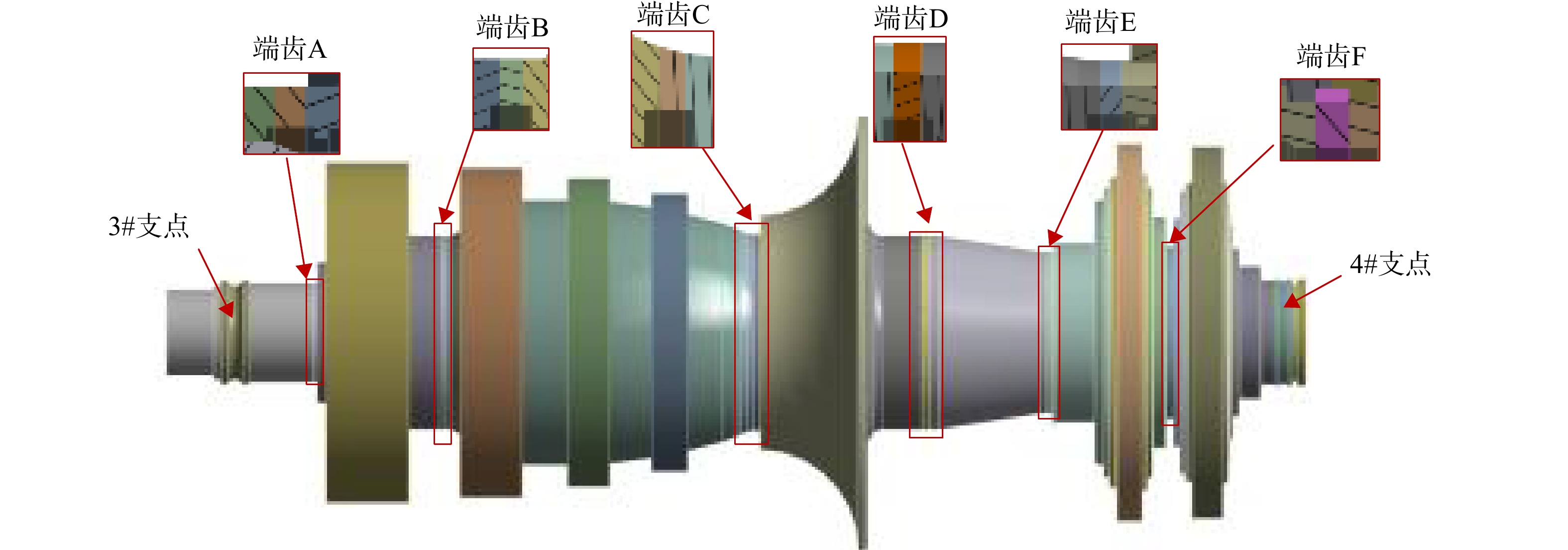
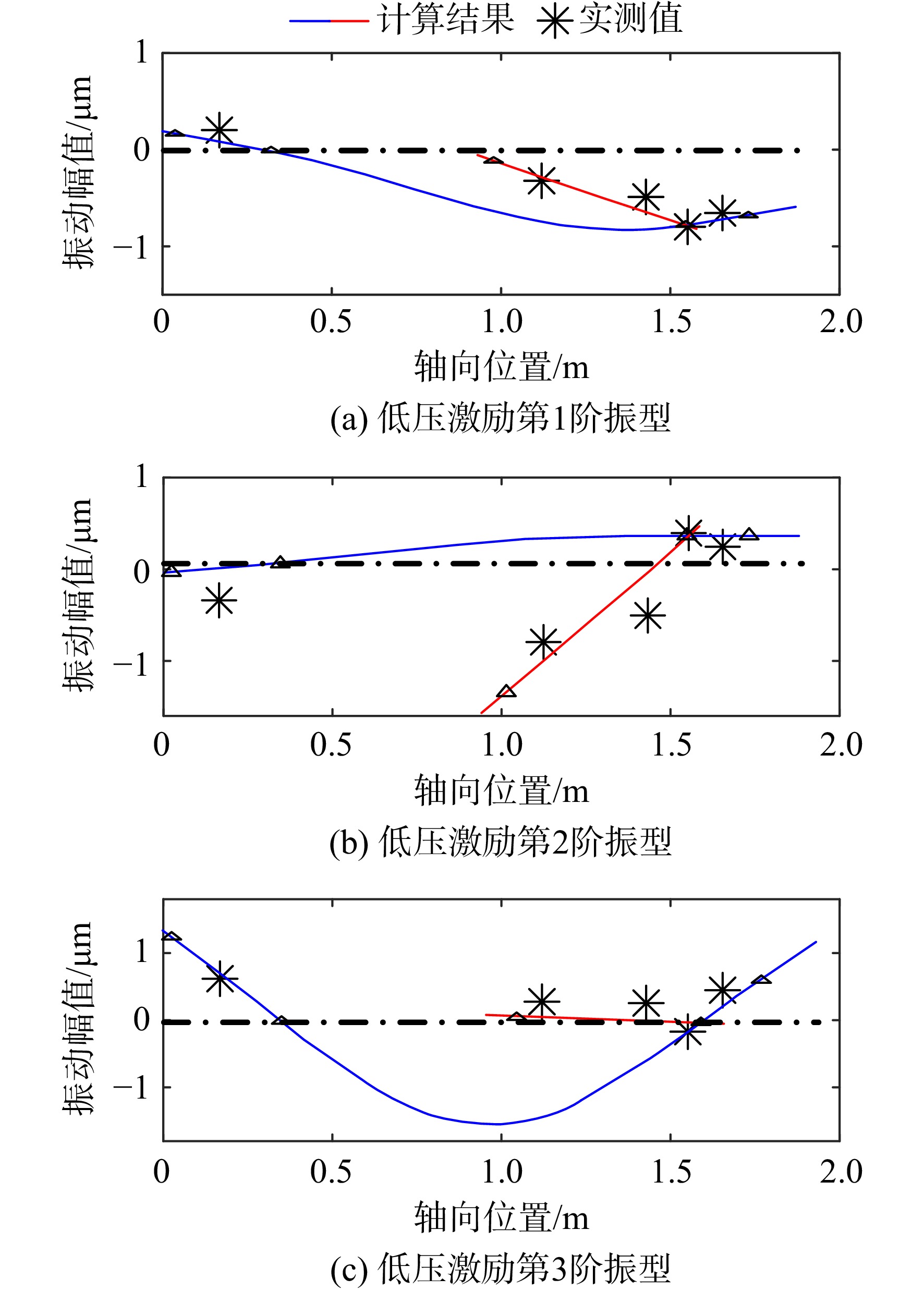
Taking the typical multi-stage curvic couplings of a gas generator rotor as the research object, the dynamic characteristics of the rotor system were analyzed, and the strain energy distribution of the rotor and curvic couplings at critical speeds was examined. An interface damage assessment methodology was developed to evaluate the contact damage of the rotor structure system under different operational conditions, including the assembly state, start-up state, and working state. The evaluation incorporated parameters such as the interface contact state coefficient, interface contact stress, and friction work. Finally, the dynamic characteristics of the rotor considering interface damage were analyzed. The results indicated that the interface damage of curvic couplings D was relatively severe. During the start-up state, the effective contact area ratio of curvic couplings D was approximately 20%. Under working conditions subjected to multiple loads (assembly load, centrifugal load, and thermal load), the effective contact area ratio of curvic couplings D increased to 34.67%, representing an improvement compared with the start-up state. However, the friction work of curvic couplings D rose significantly by 231.6%, and the relative radial deformation between curvic couplings D and its adjacent teeth reached 0.23—0.25 mm, resulting in substantial interface sliding. This phenomenon had a considerable impact on the robustness of the rotor system. Furthermore, considering the effects of interface contact damage, the first and second critical speeds of the rotor changed by 3.11% and 0.55%, respectively, while the bending critical speed decreased by 7.77%.

Experimental study on impact damage and residual strength of composite tail drive shaft for helicopter
Ye Fei, Cai Yifei, Yin Ling, Liu Zhiyang, Long Junmi, Wang Xi, Nie Huiyang, Wang Dan
2026, 41(8): 20250006. doi: 10.13224/j.cnki.jasp.20250006
Abstract:
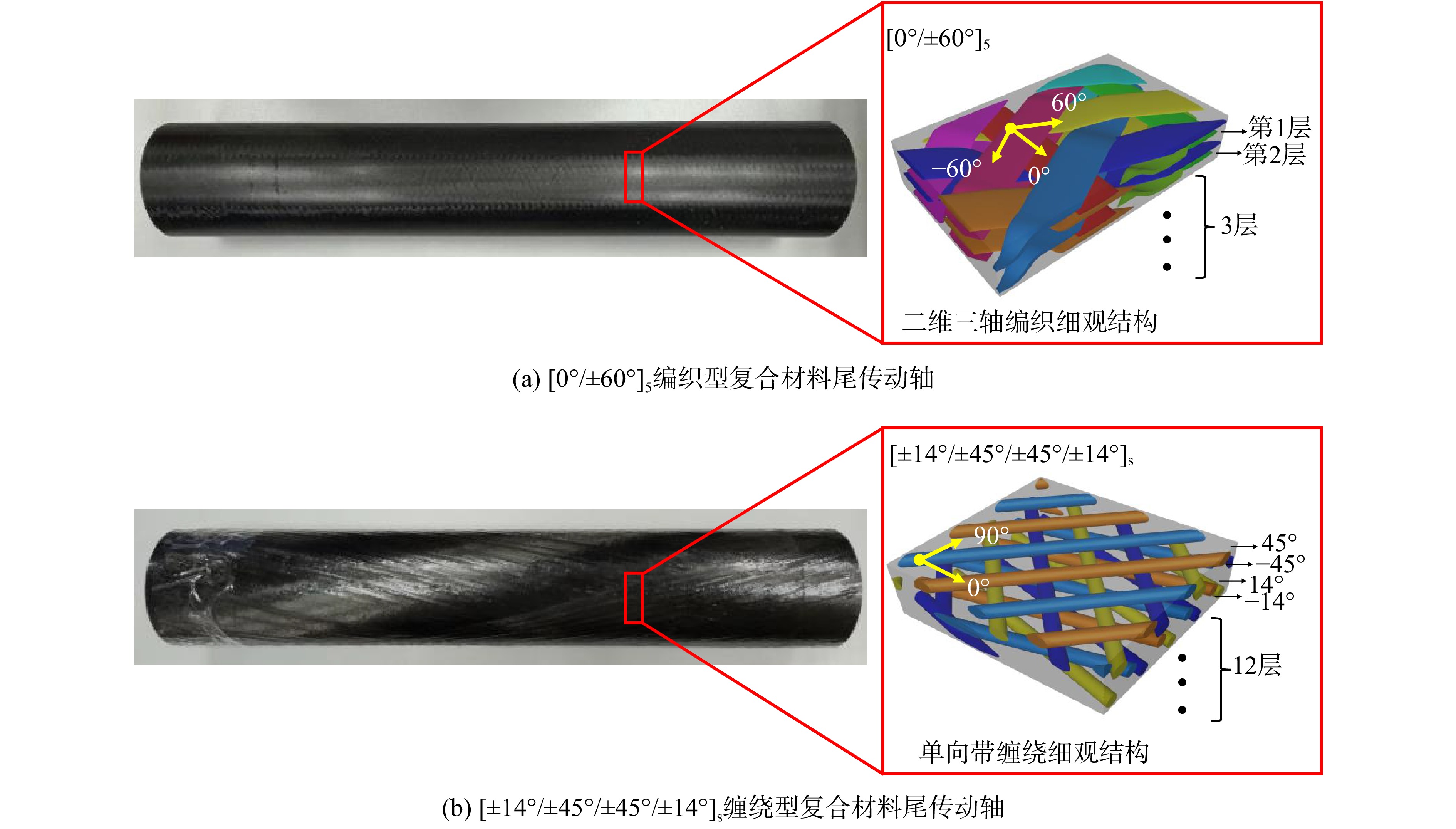
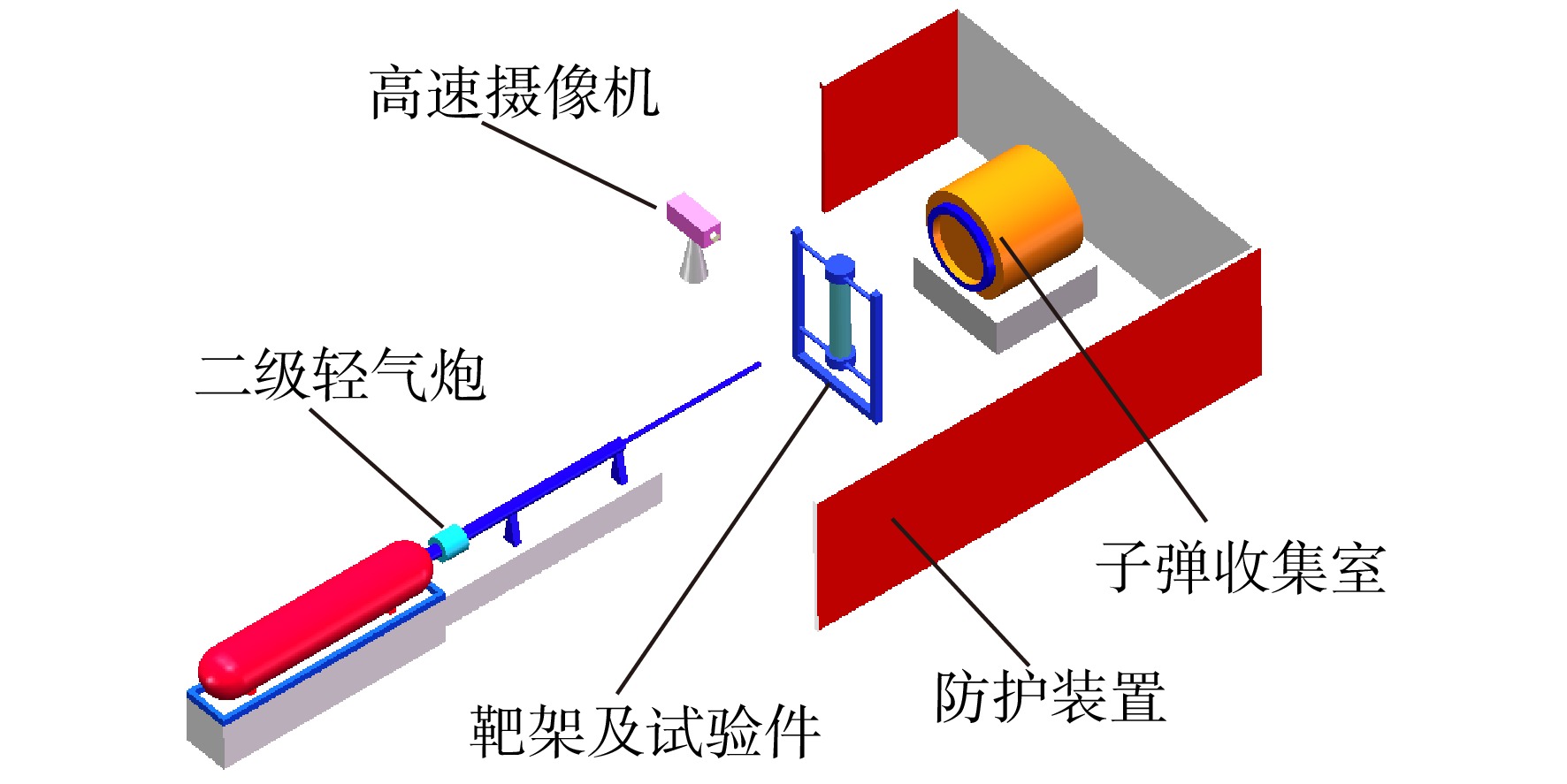
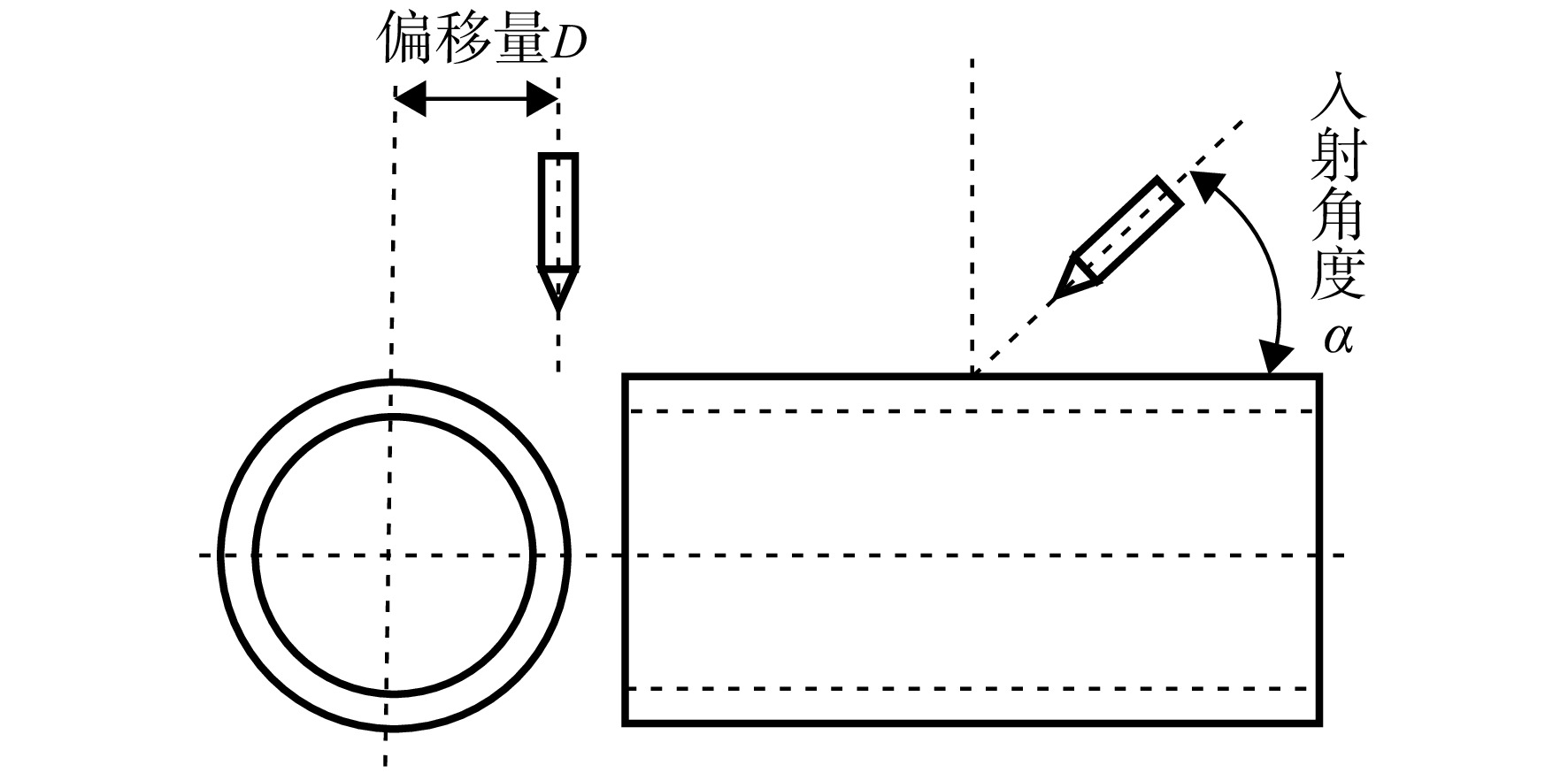
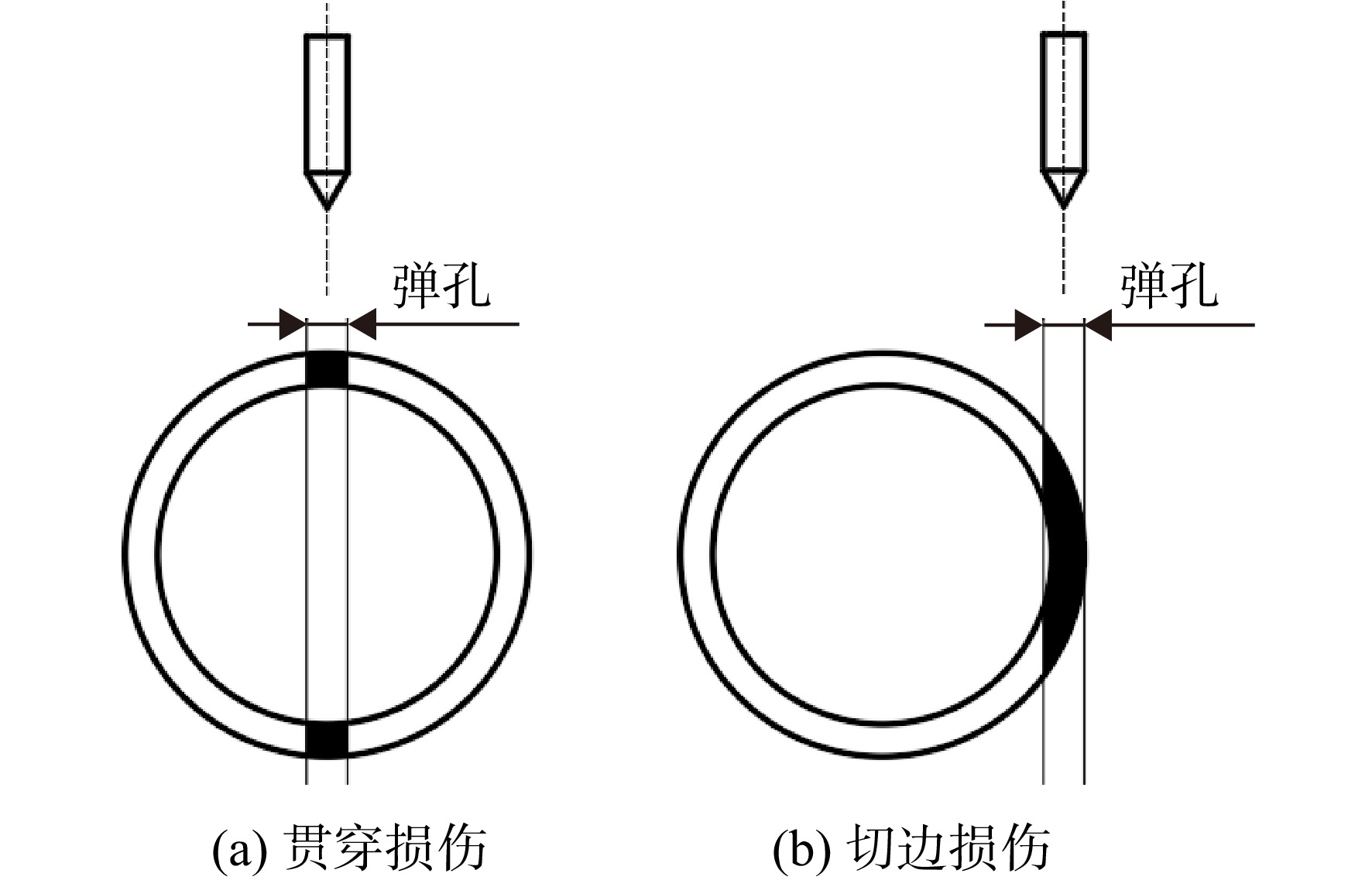
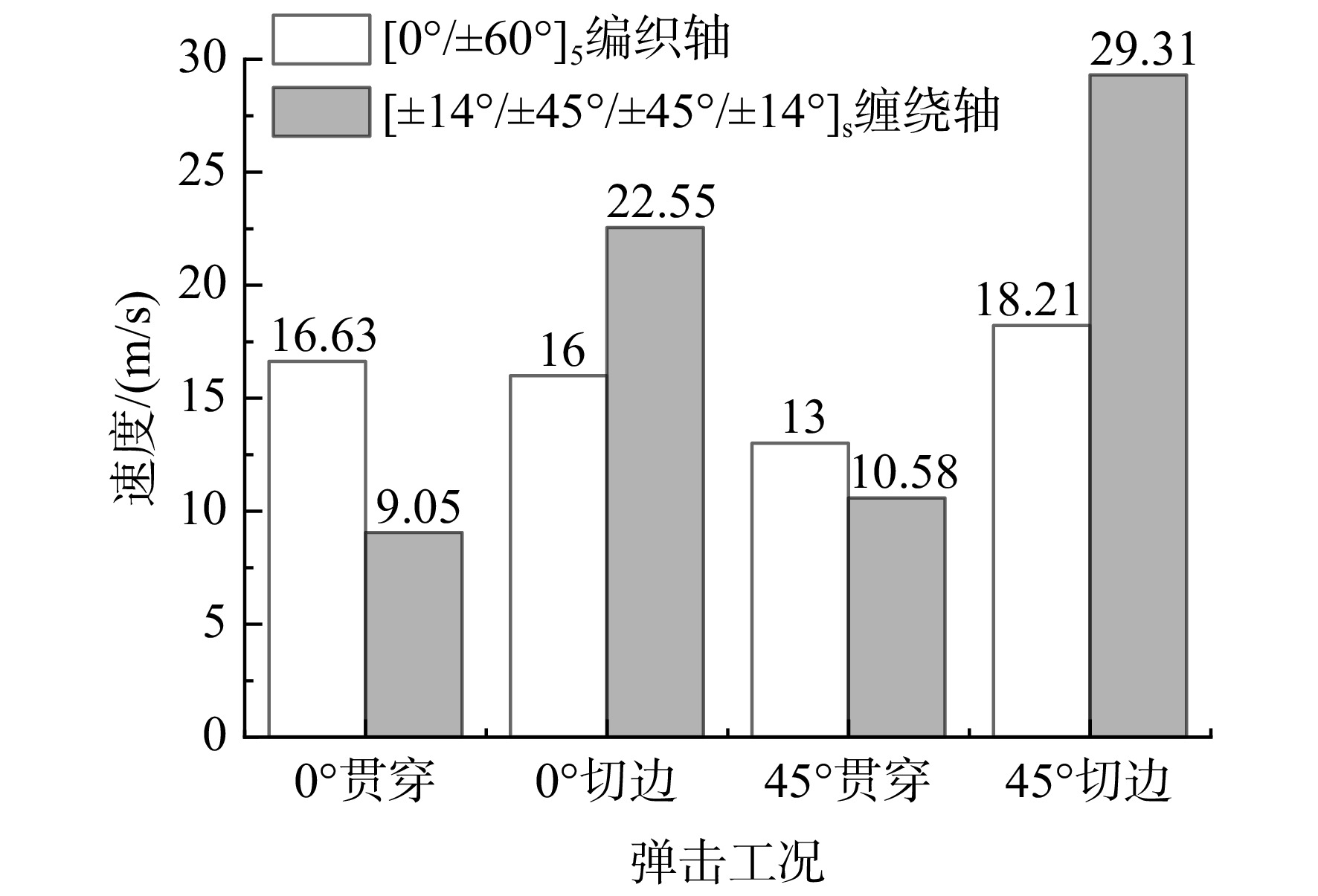
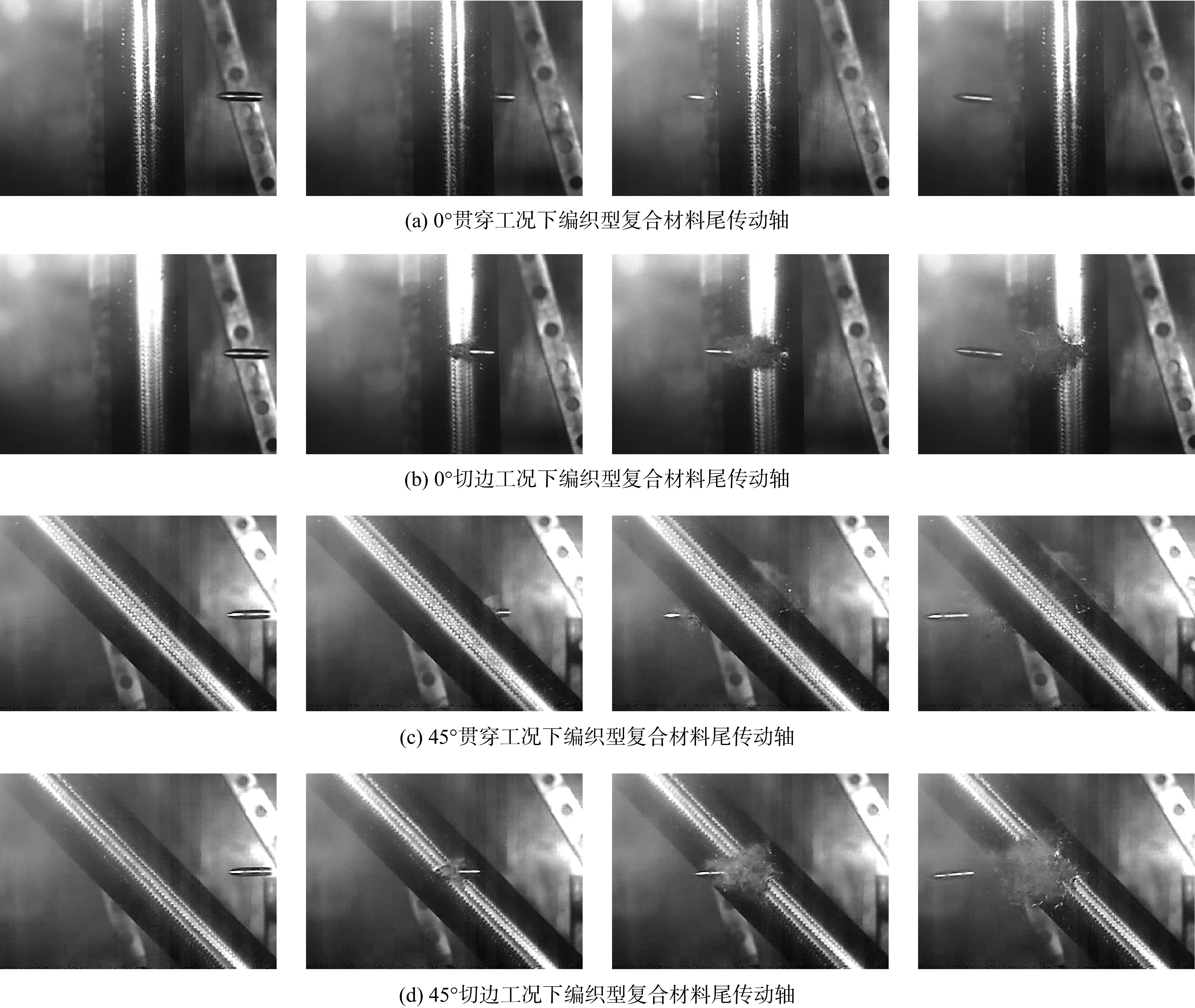
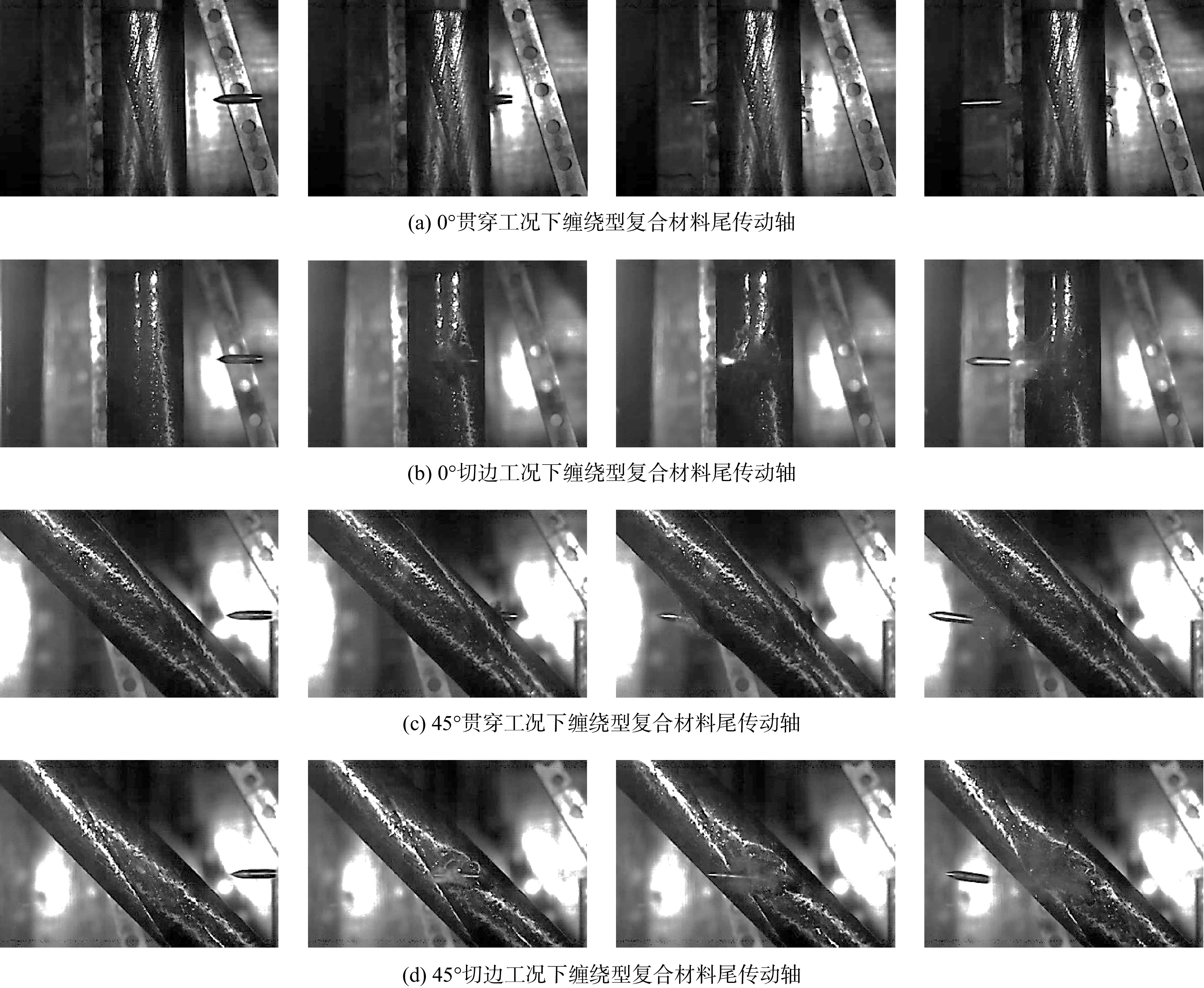
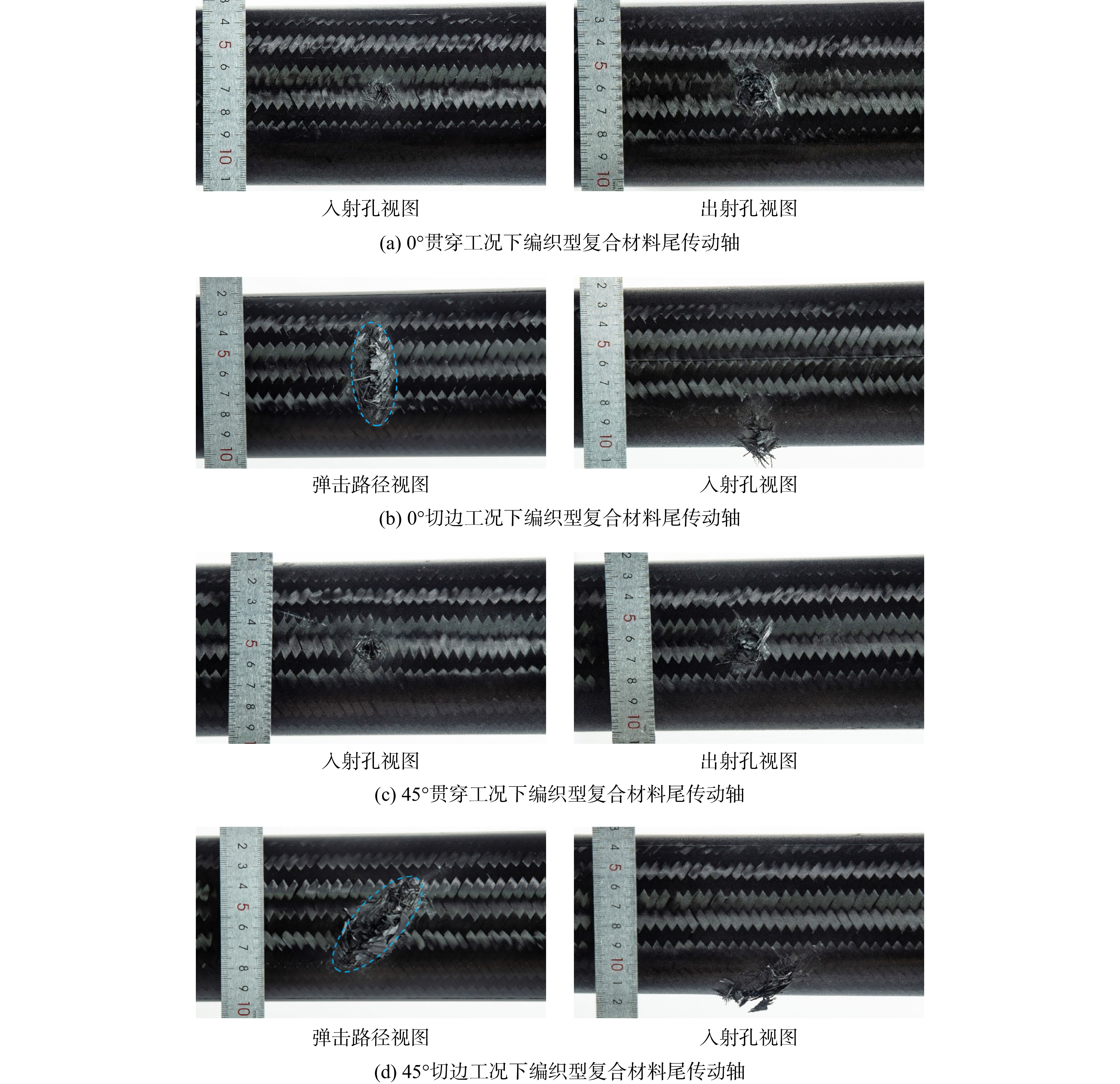
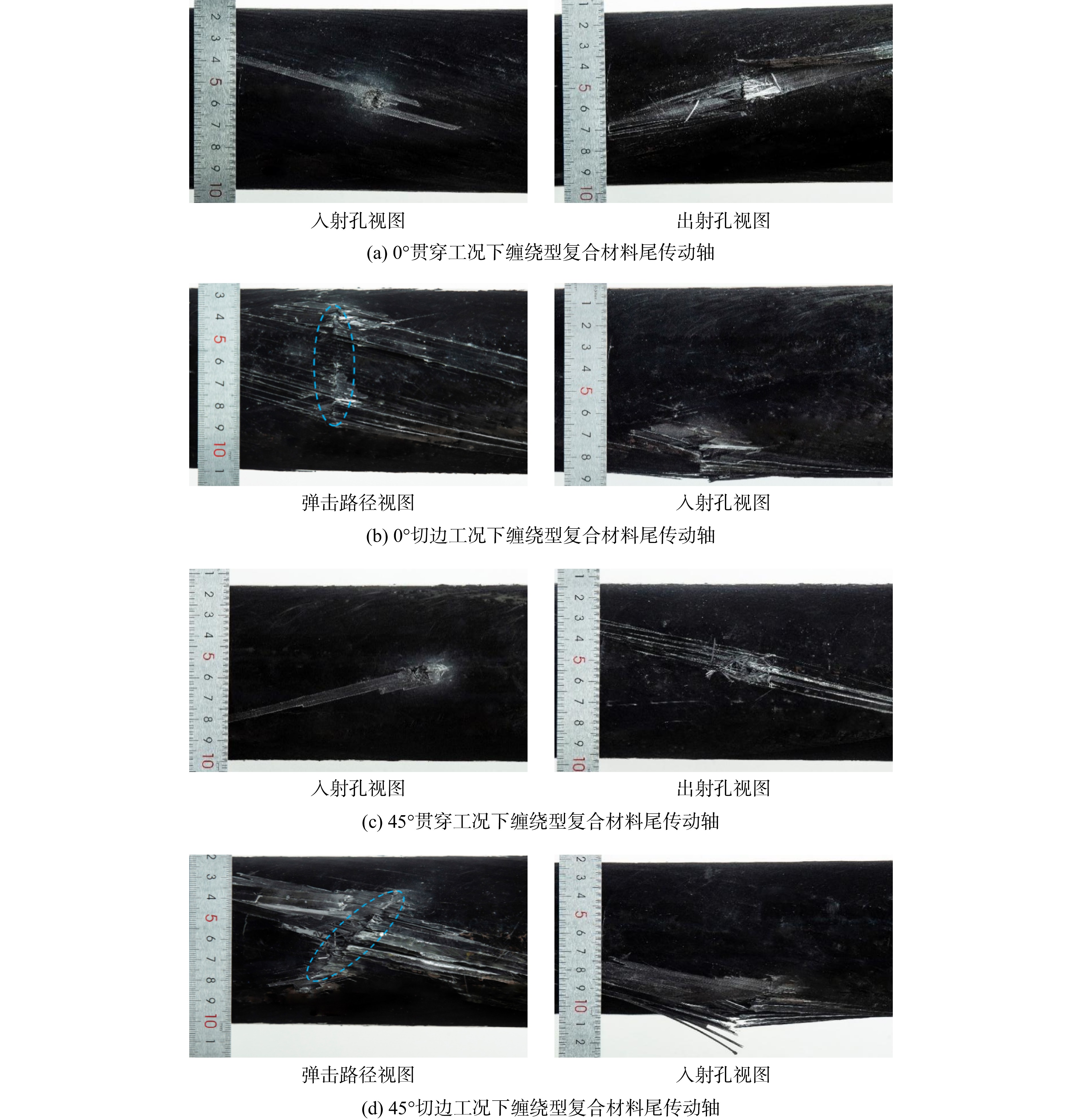
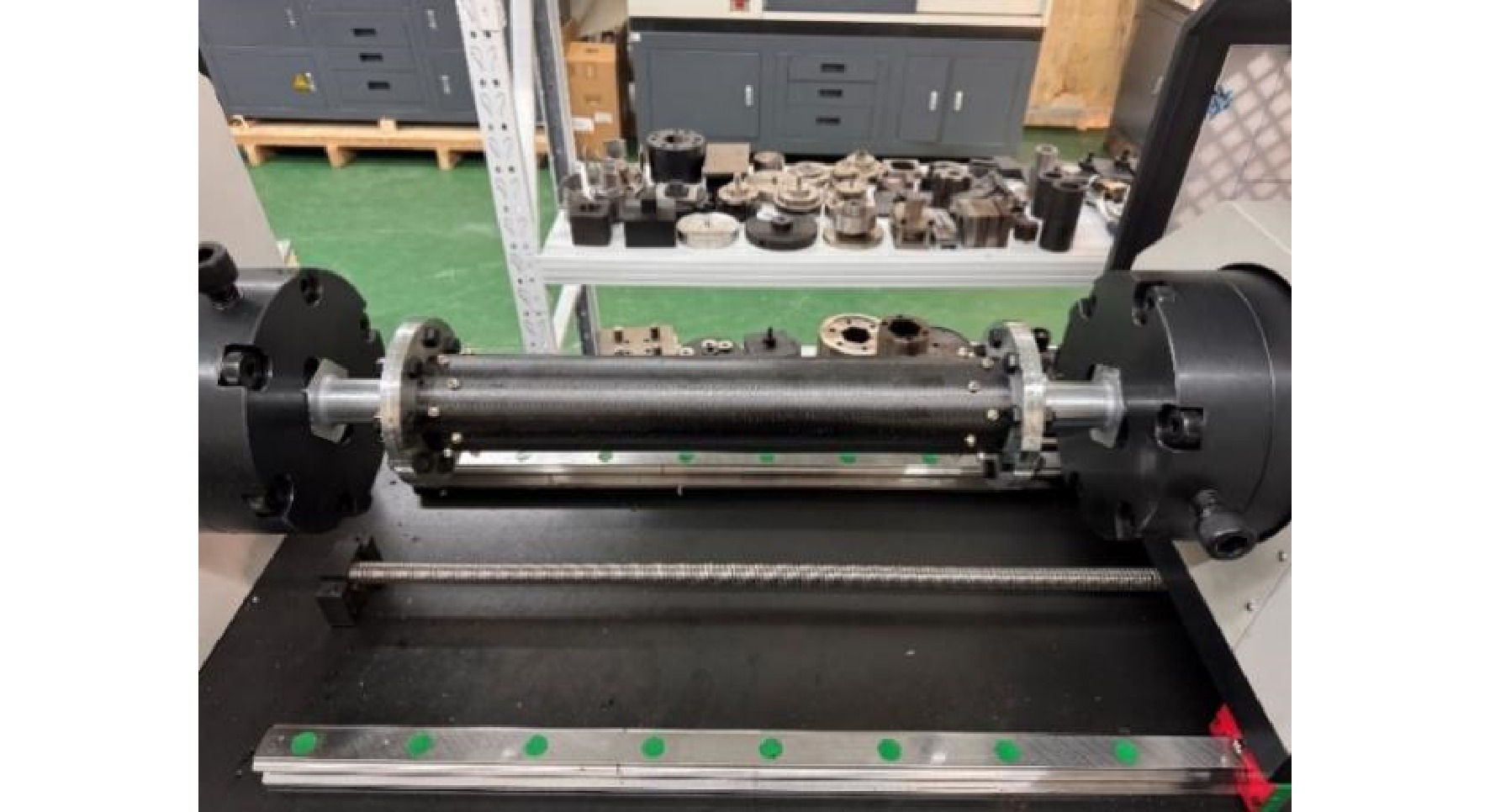
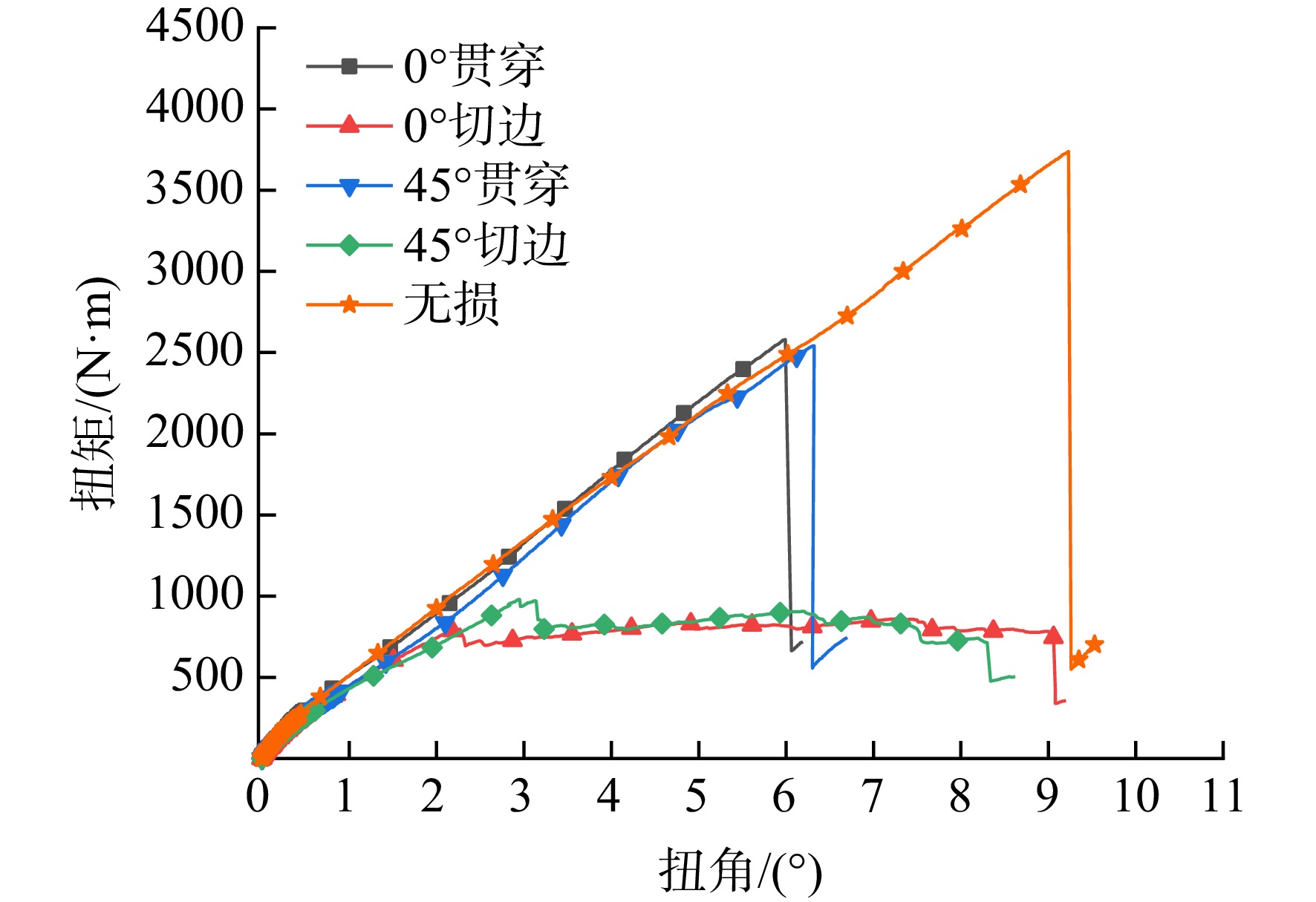
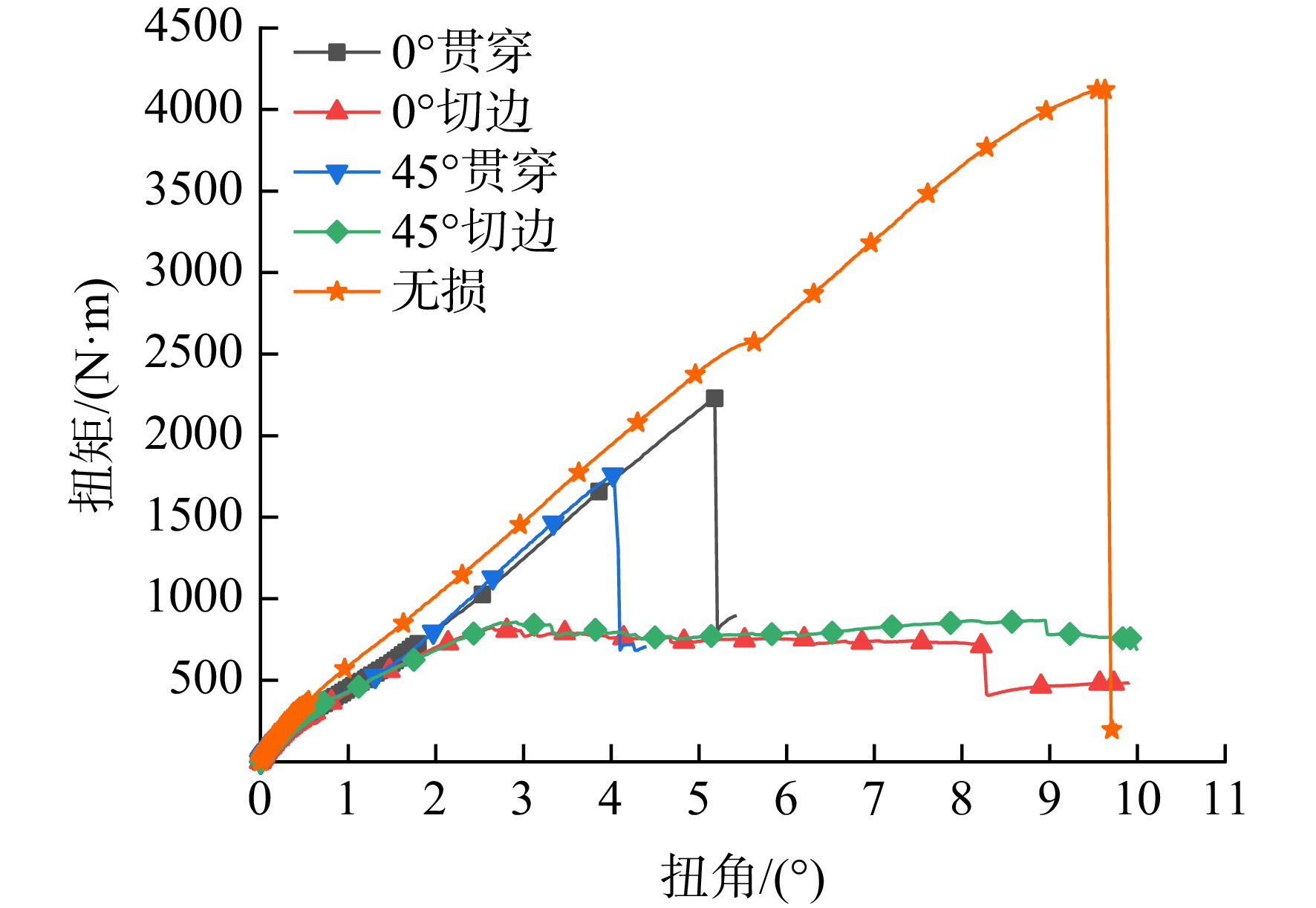
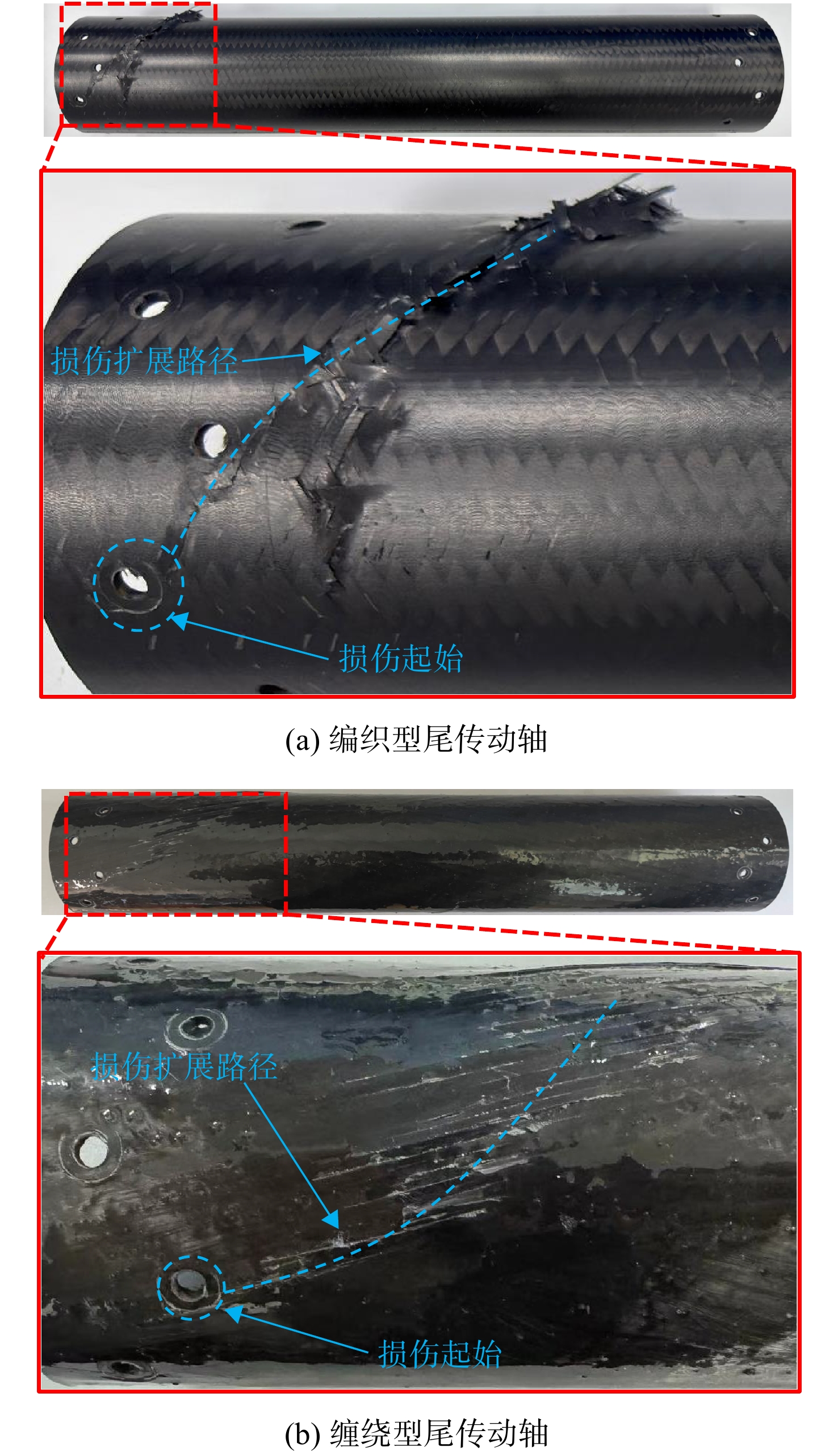
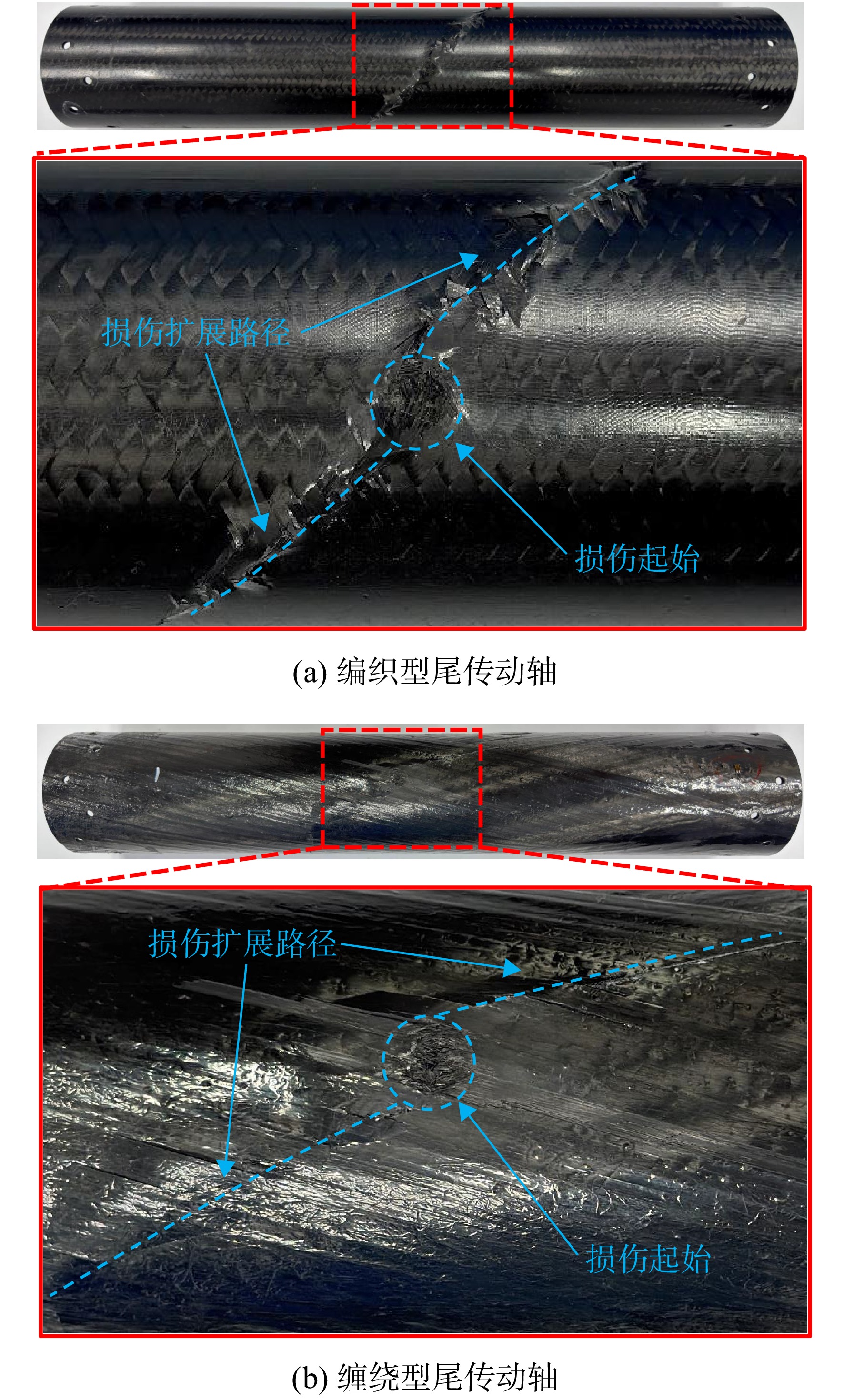
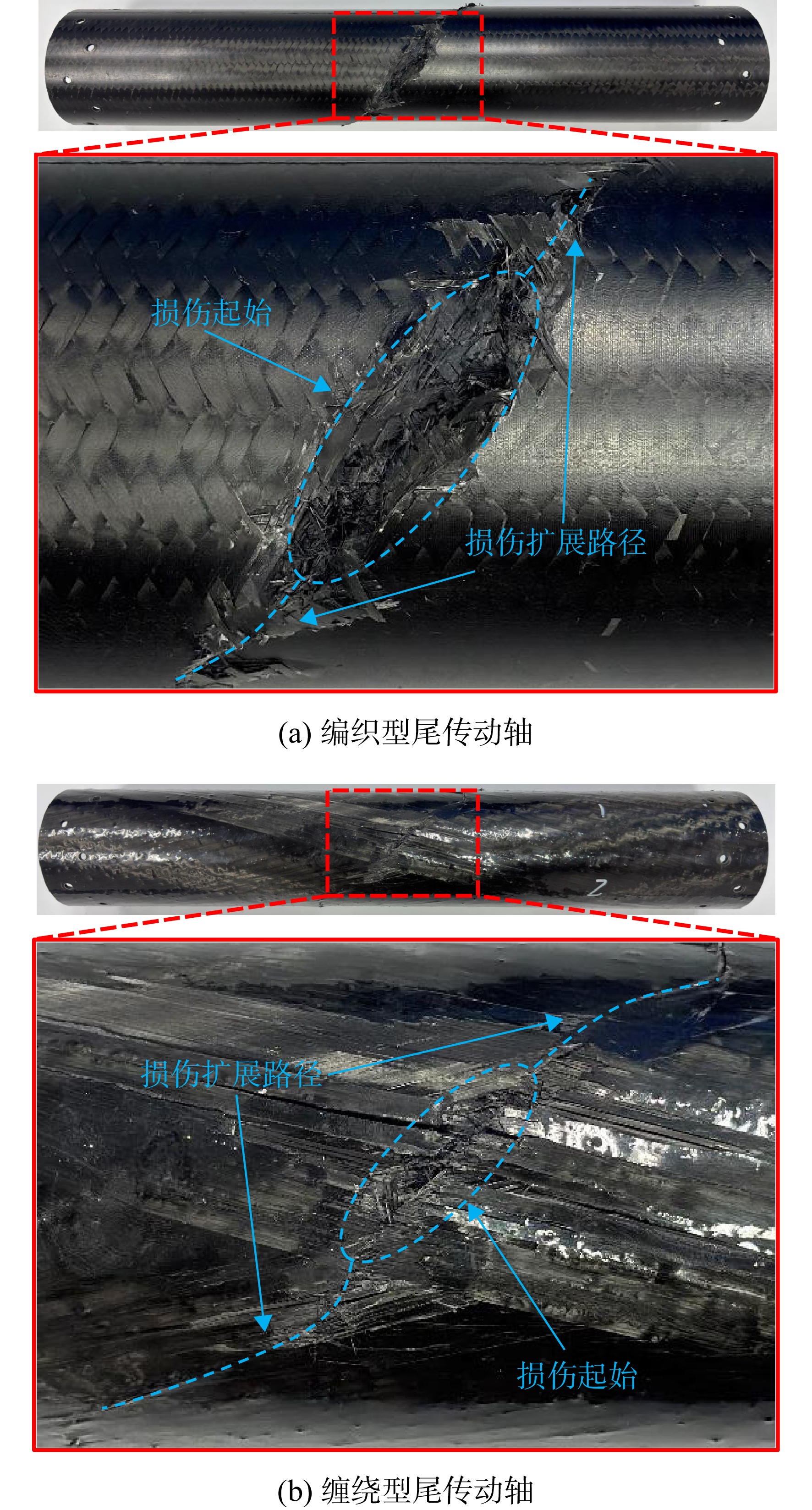
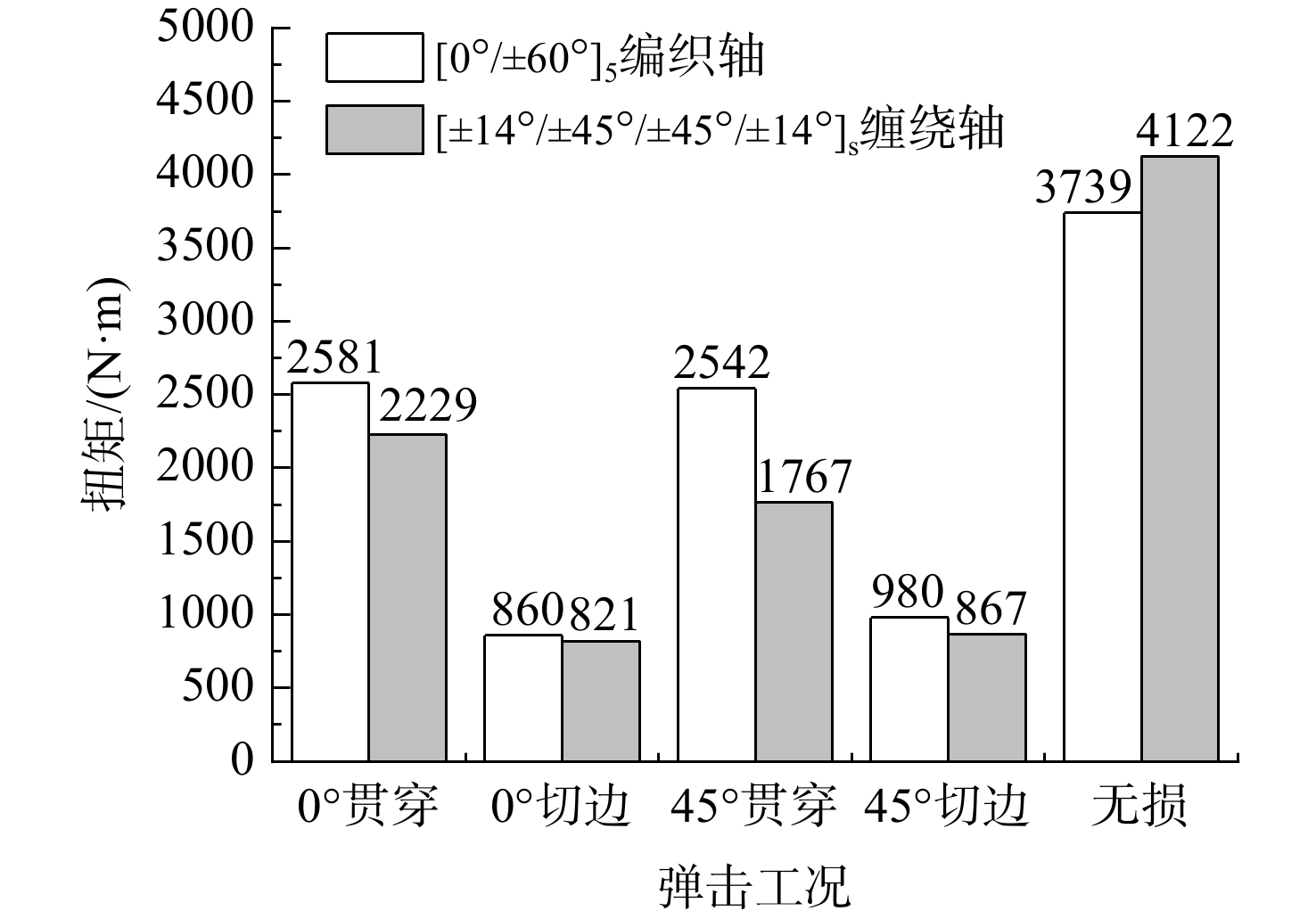
To investigate the effects of different manufacturing processes and impact conditions on the impact damage and residual strength of helicopter tail drive shafts, braided and filament-wound composite tail drive shafts were fabricated, and impact and torsion tests under typical conditions were conducted using a light gas gun device and a torsion testing machine. The results showed that, compared with the bullet's incident angle, the bullet's offset had a more significant effect on the damage degree of the tail drive shaft. From the perspective of manufacturing processes, the braided composite tail drive shaft exhibited superior impact damage resistance compared with the filament-wound tail drive shaft. From the perspective of failure modes, under non-damaging and through-penetration impact conditions, the failure mode of the composite tail drive shaft in torsion tests was characterized by instantaneous fracture, whereas under edge-cutting impact conditions, the failure mode in torsion tests was characterized by progressive fracture.

Aerothermodynamics and Aeroengine Design
Research on the effect of leading edge shape on the performance of variable inlet guide vanes
Yu Yang, Yu Jinlu, Zhang Xiaobo, Kang Zhankai, Lin Wujun
2026, 41(8): 20240784. doi: 10.13224/j.cnki.jasp.20240784
Abstract:
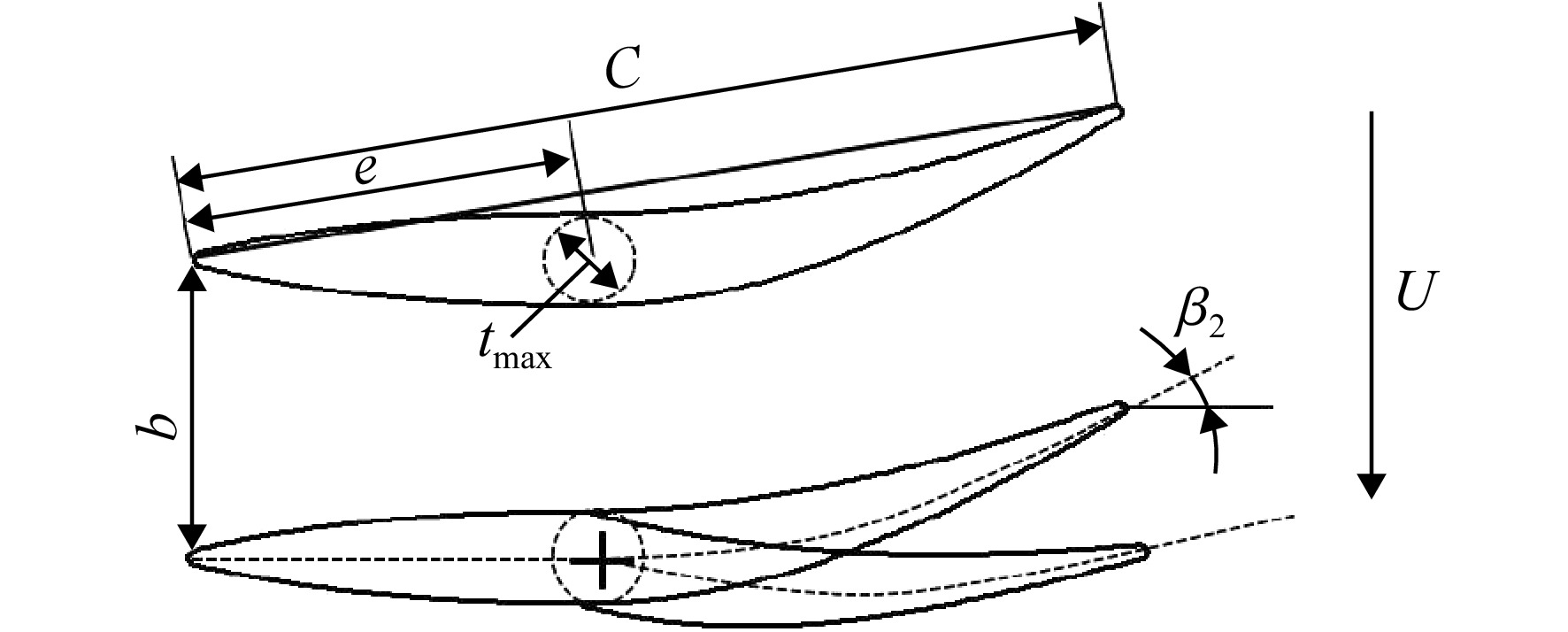
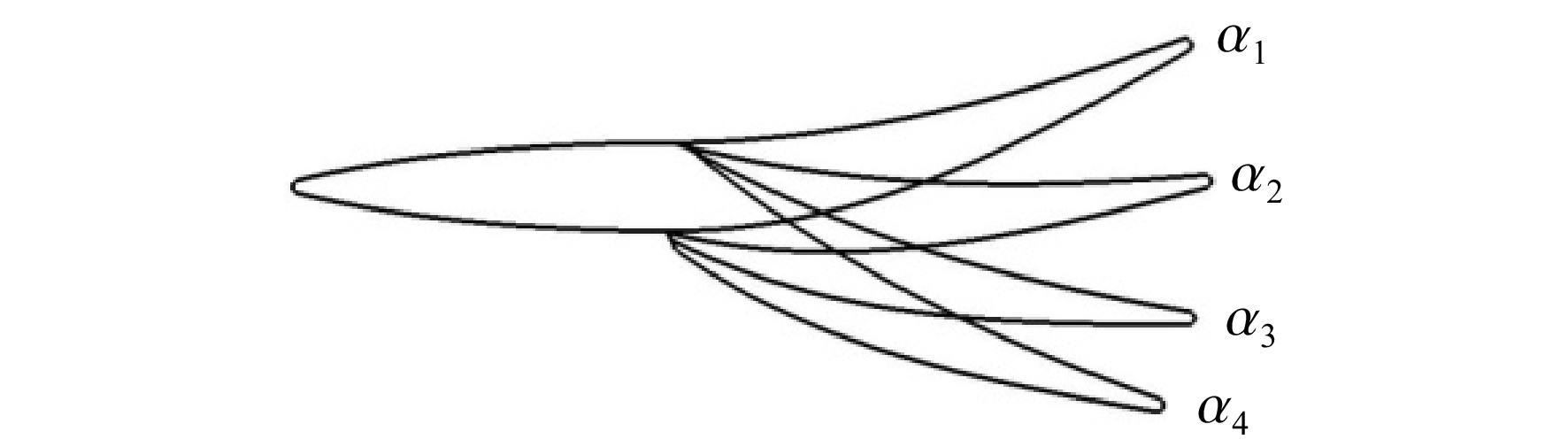
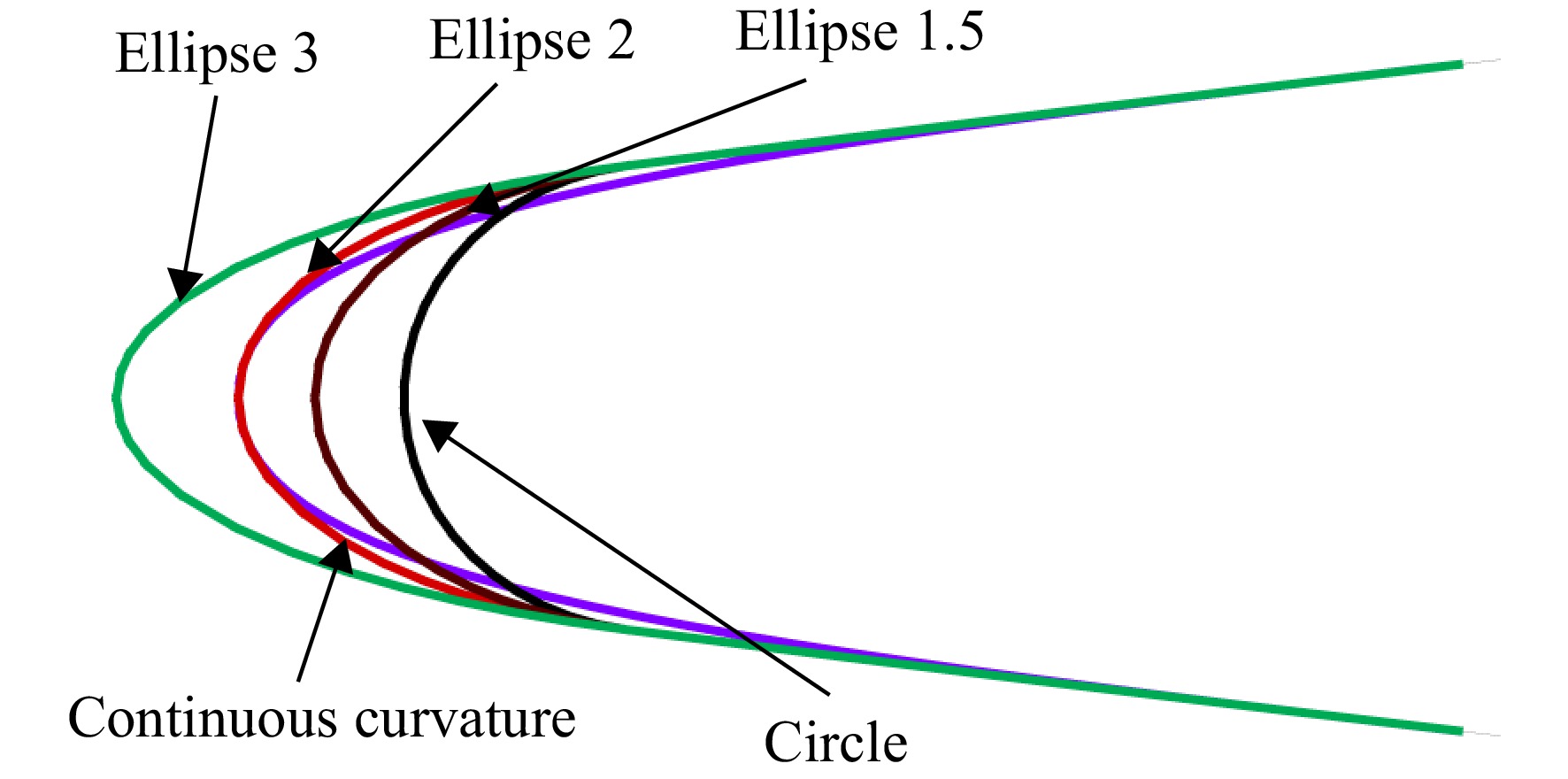
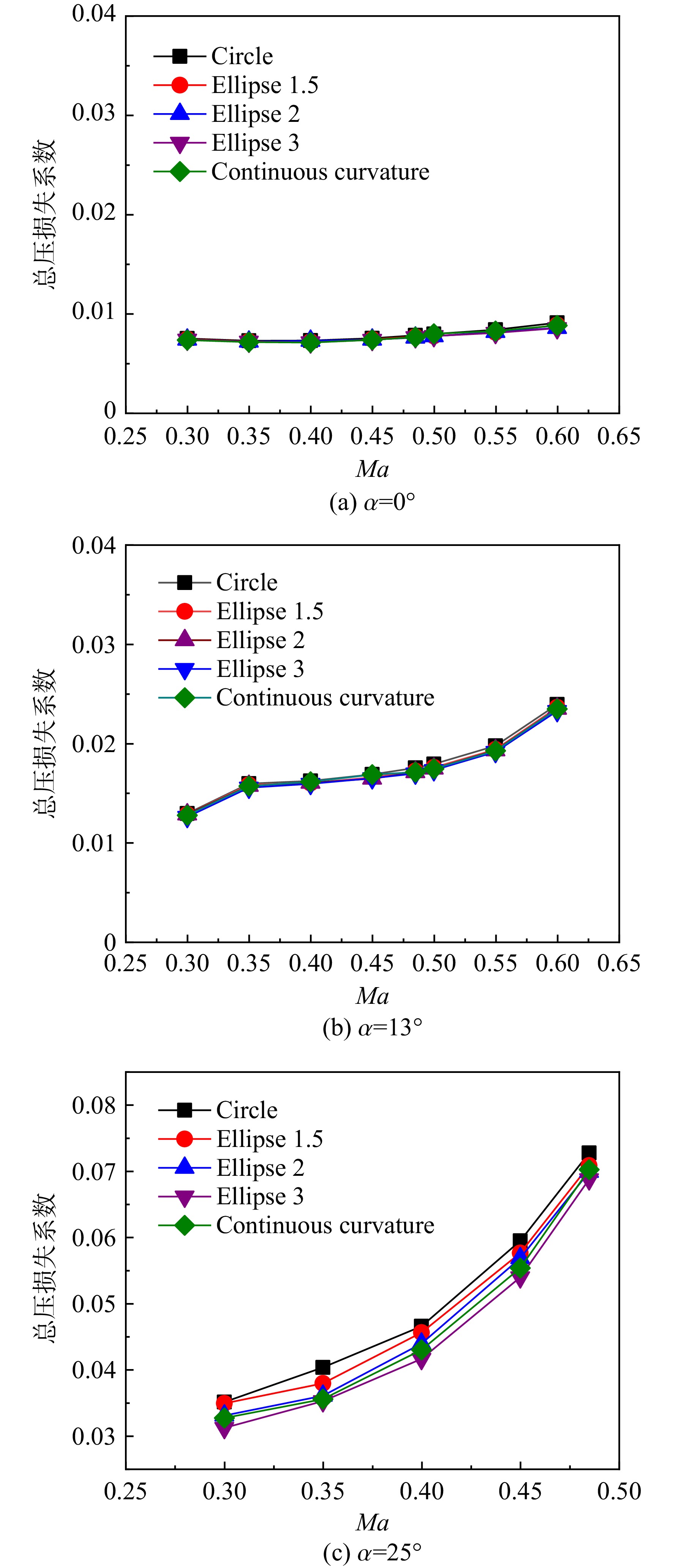
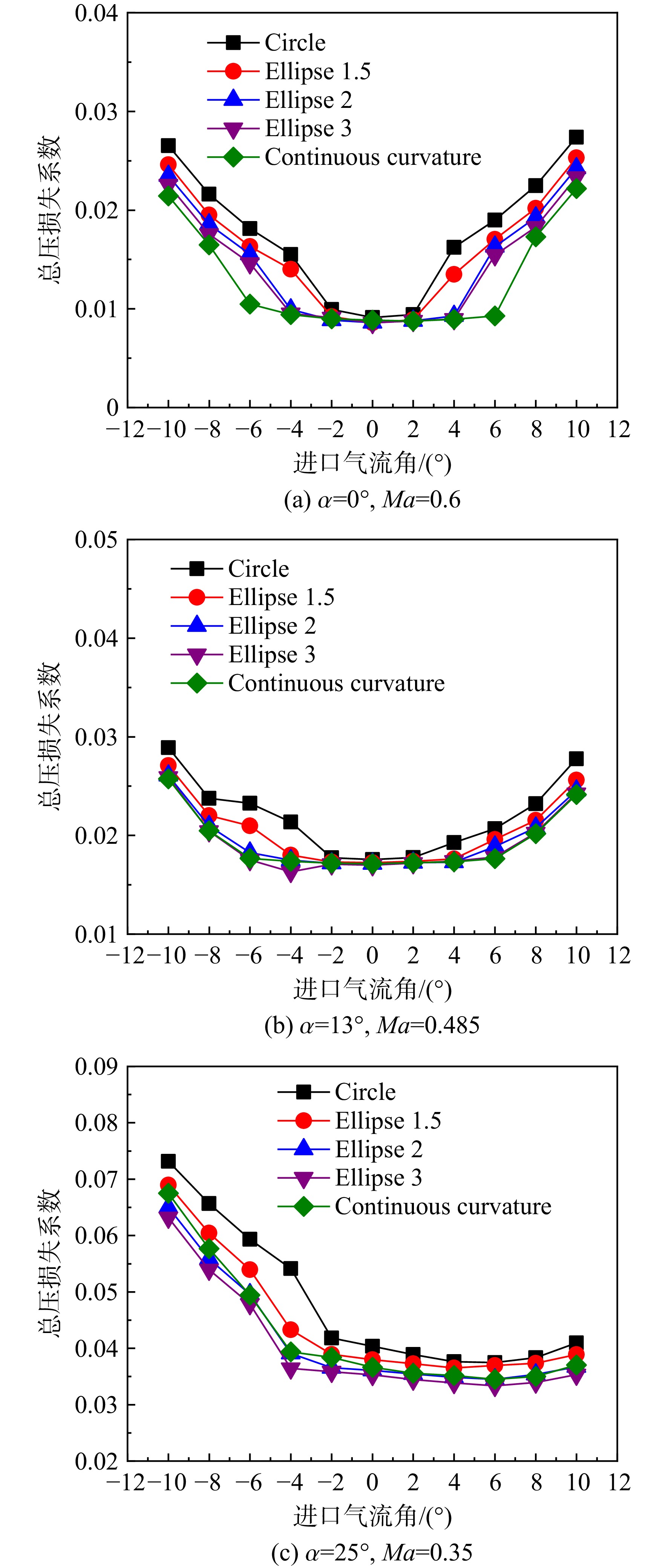
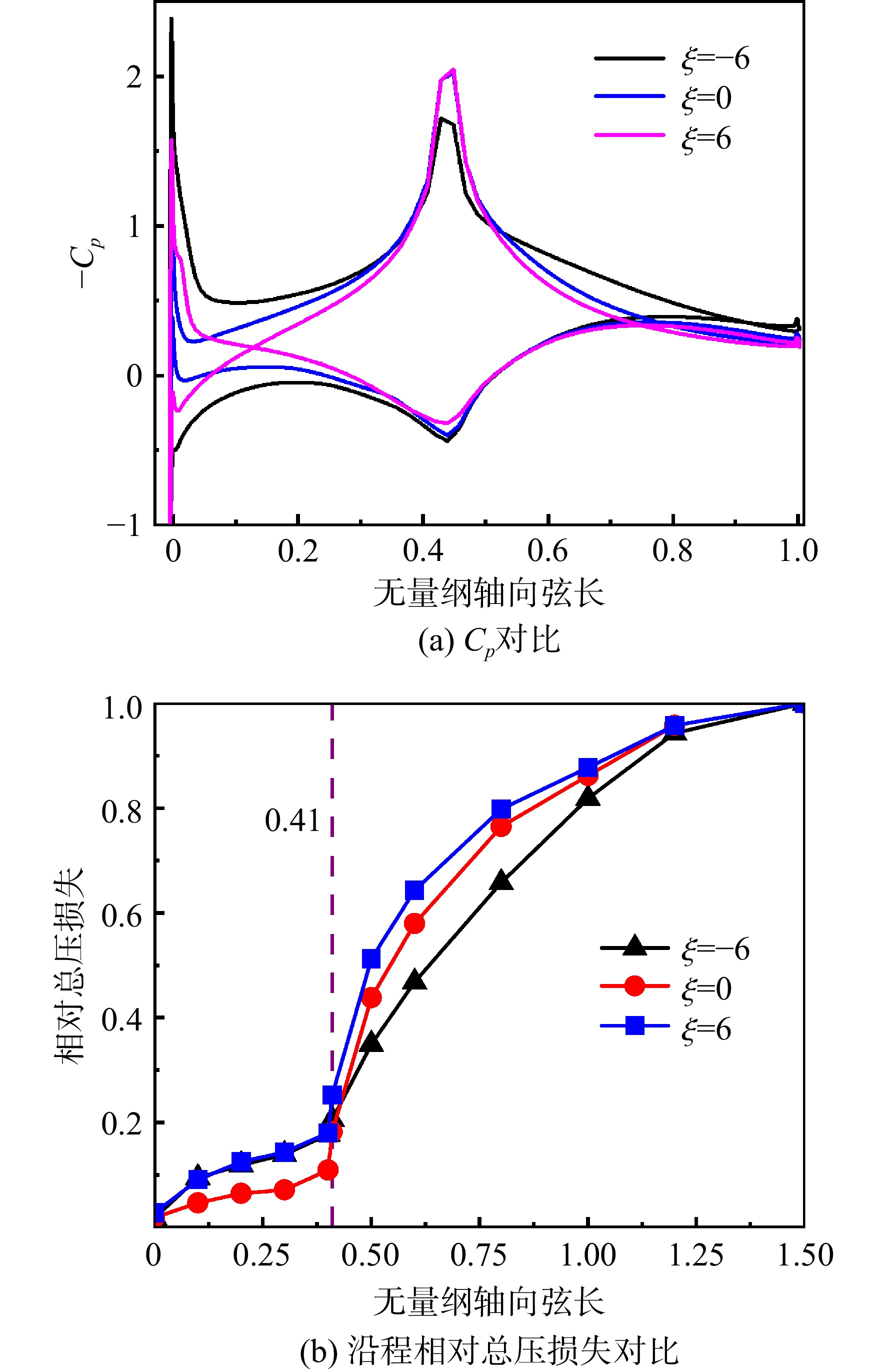
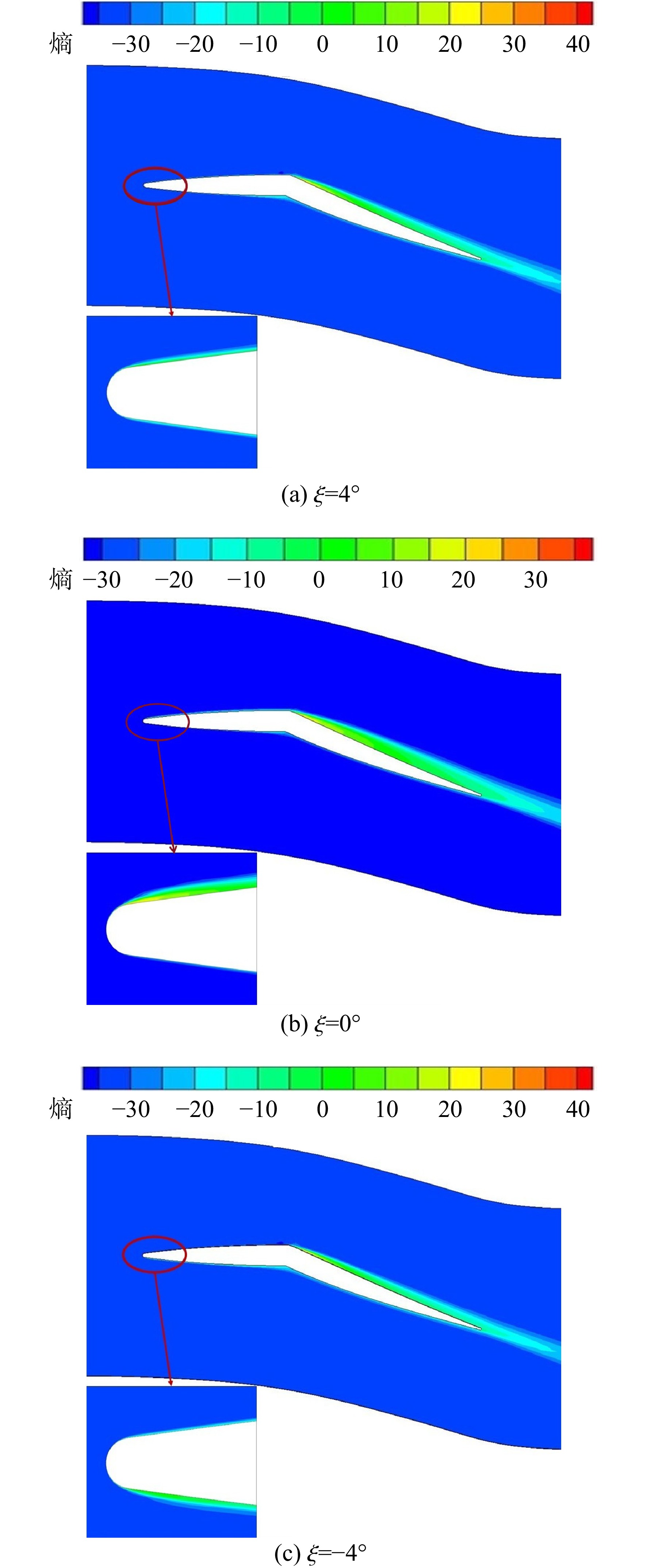
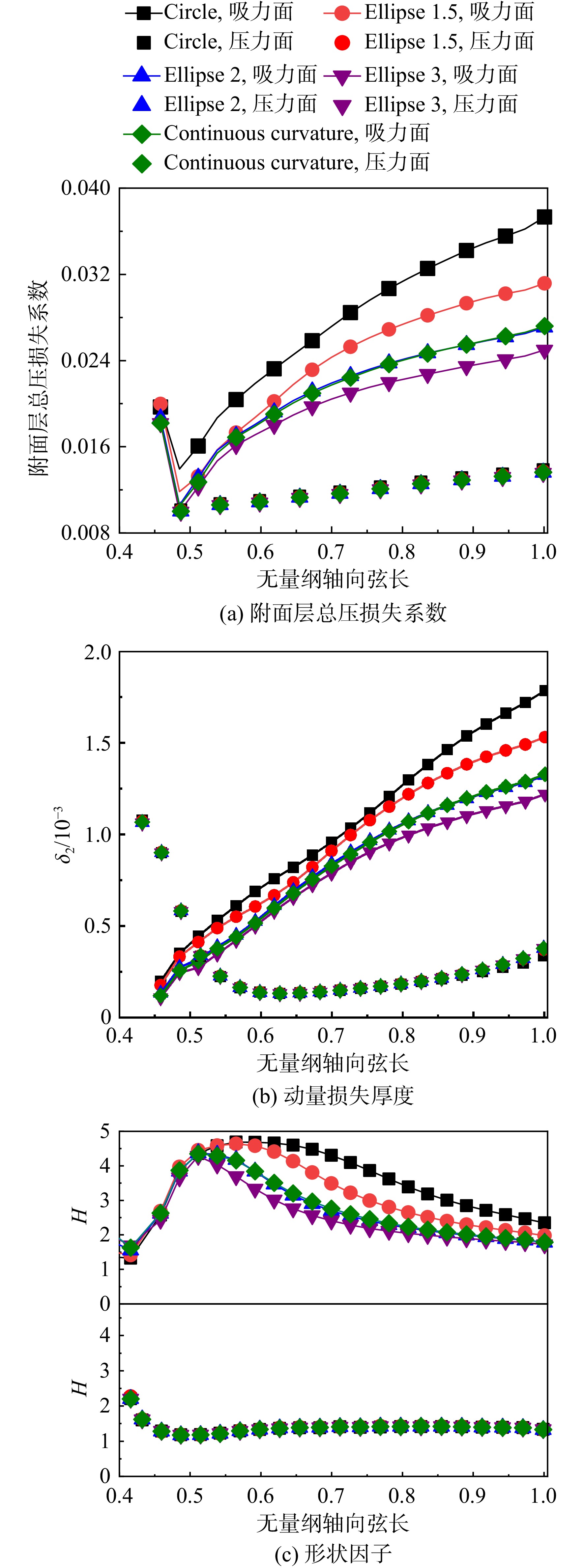
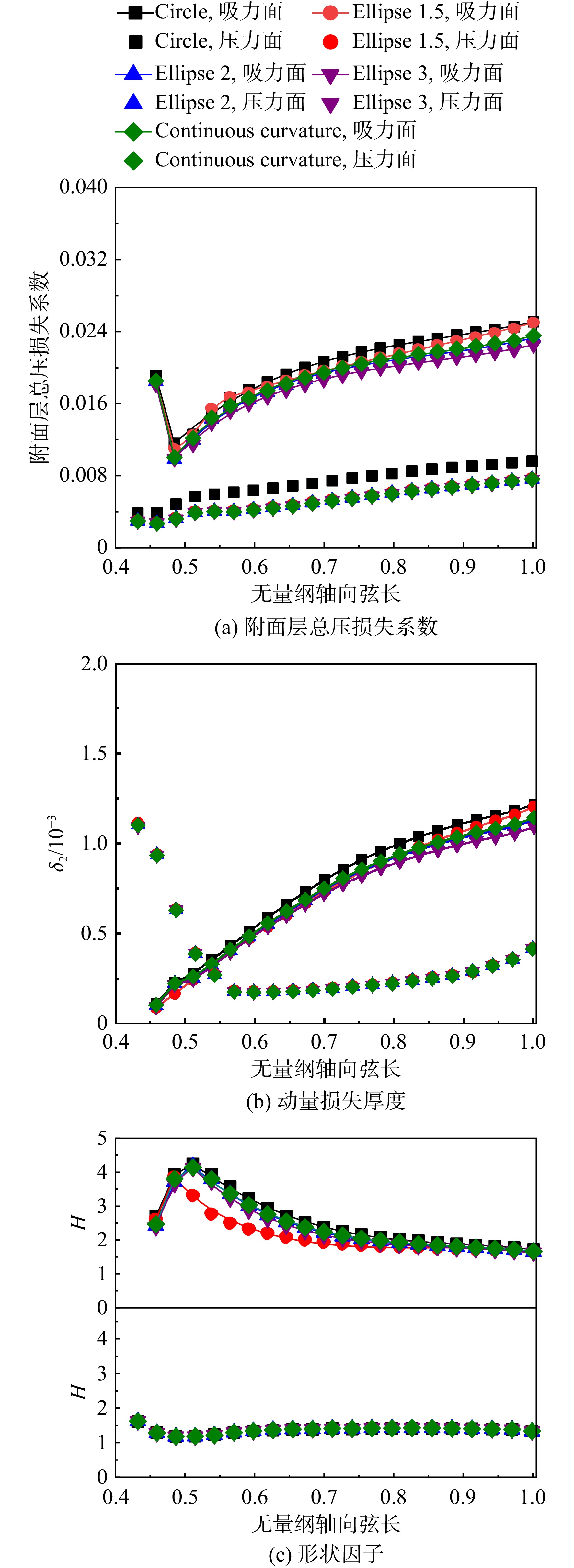
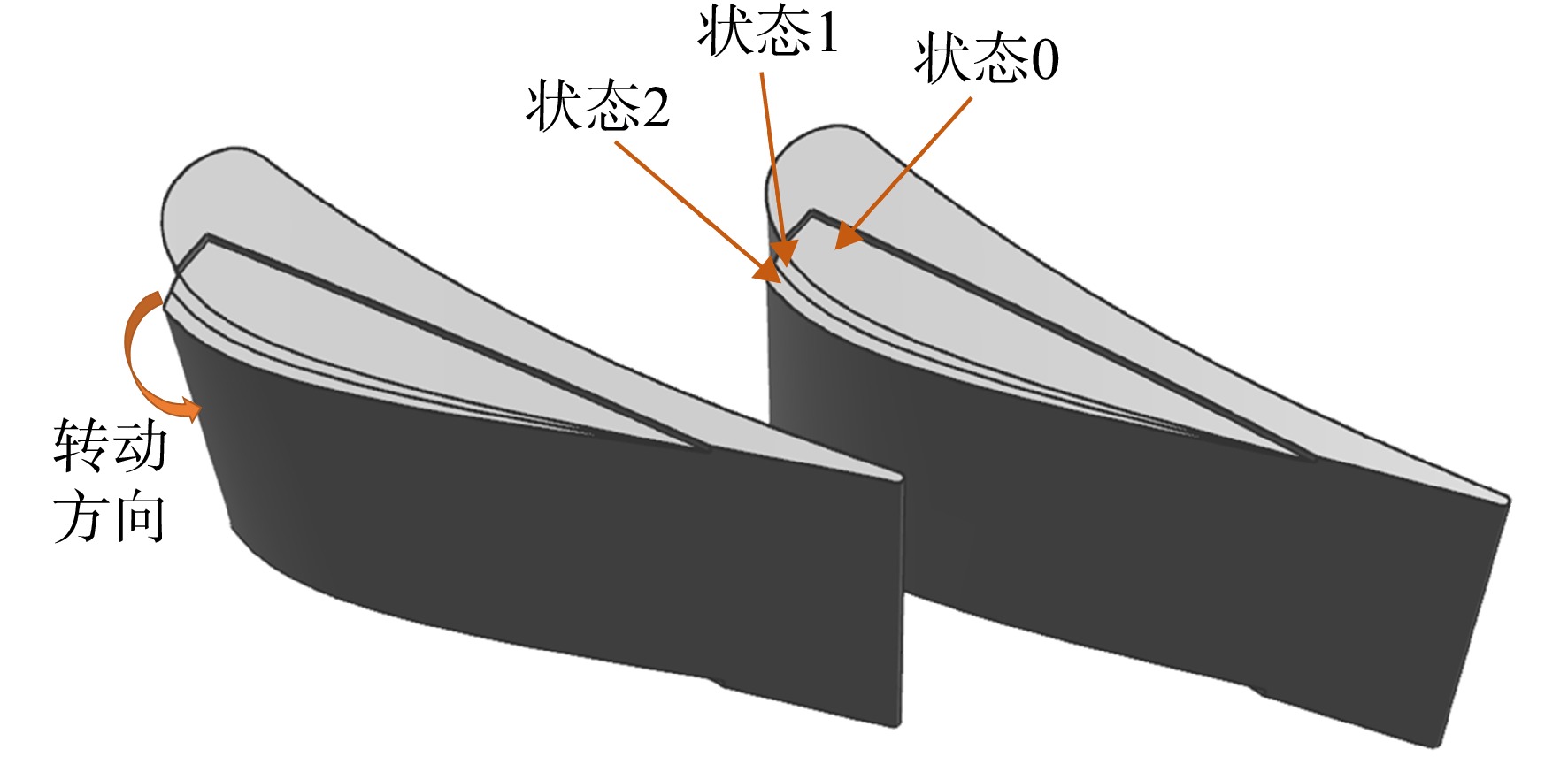
To optimize the aerodynamic performance of variable-camber guide vanes with leading-edge modifications, the circular leading edges were redesigned into elliptical and continuously curved leading edges. Numerical simulations were conducted to analyze and compare the performance of these modified vanes under various operating conditions. The results showed that the modified leading edges generated lower suction peak intensity on the leading edge, leading to better boundary layer flow and consequently lower total pressure loss. The impact of leading-edge shape varied with changes in the rear leaf deflection angle. At small deflection angles, the modified leading edge can effectively increase the range of low-loss attack angles. At large deflection angles, the optimization effect of the modified leading edge was significant at positive attack angles. The total pressure loss of the modified leading-edge guide vane was reduced by up to 32.6% at an incoming attack angle of 4°, while the effect was less impactful at negative attack angles, with a maximum reduction of 9.9% at an incoming attack angle of −4°. The results indicate that the modification of the leading edge can effectively enhance the performance of variable-camber guide vanes.

Coupling design method for thermodynamic cycle and flow path geometric parameters of turbine engine
Wang Jiajun, Liu Chuankai, Ding Shuiting, Wei Zhiyuan, Zhang Fan, Guo Jiafan, Du Huipeng, Huang Xiangqin
2026, 41(8): 20250520. doi: 10.13224/j.cnki.jasp.20250520
Abstract:

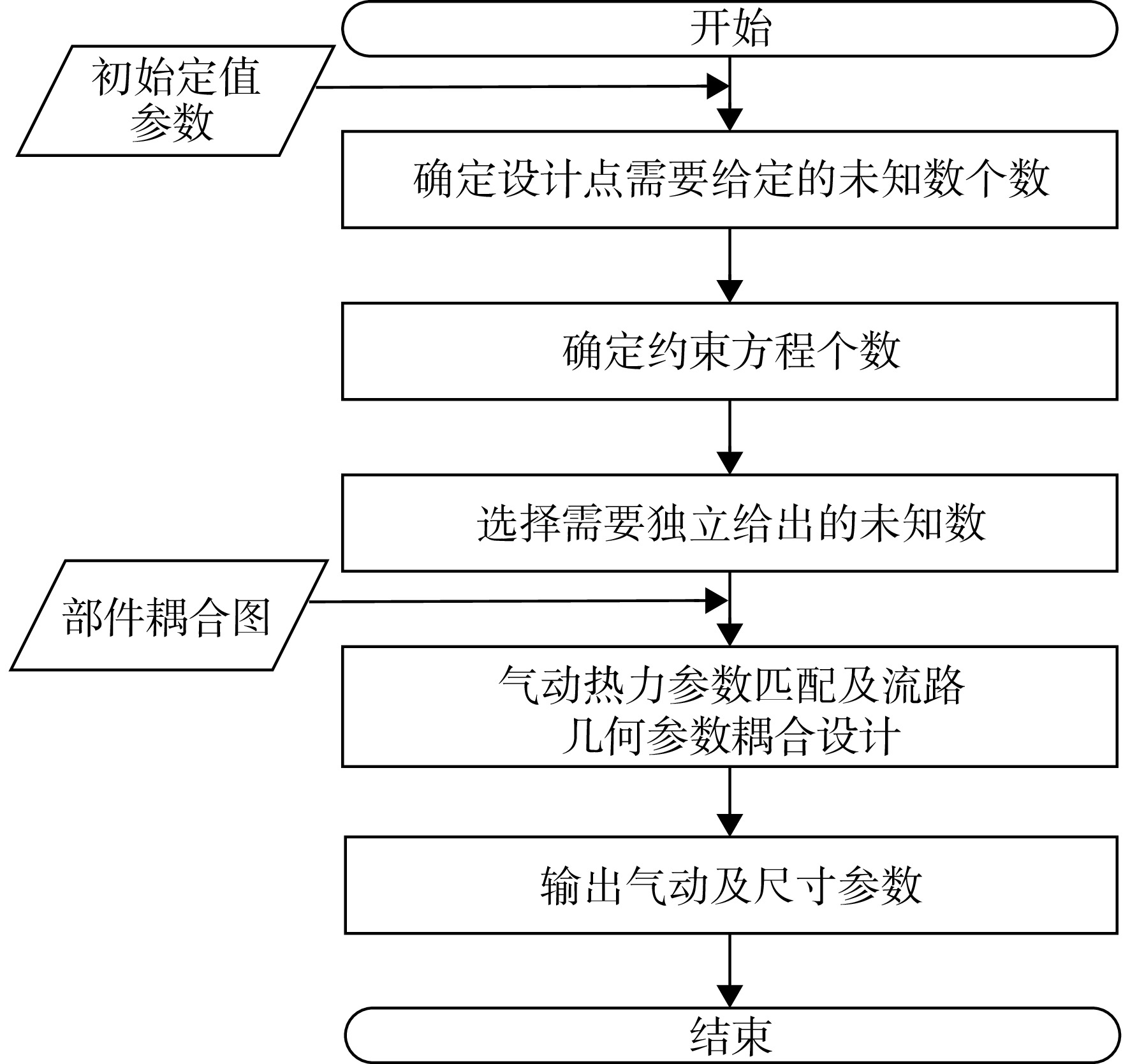
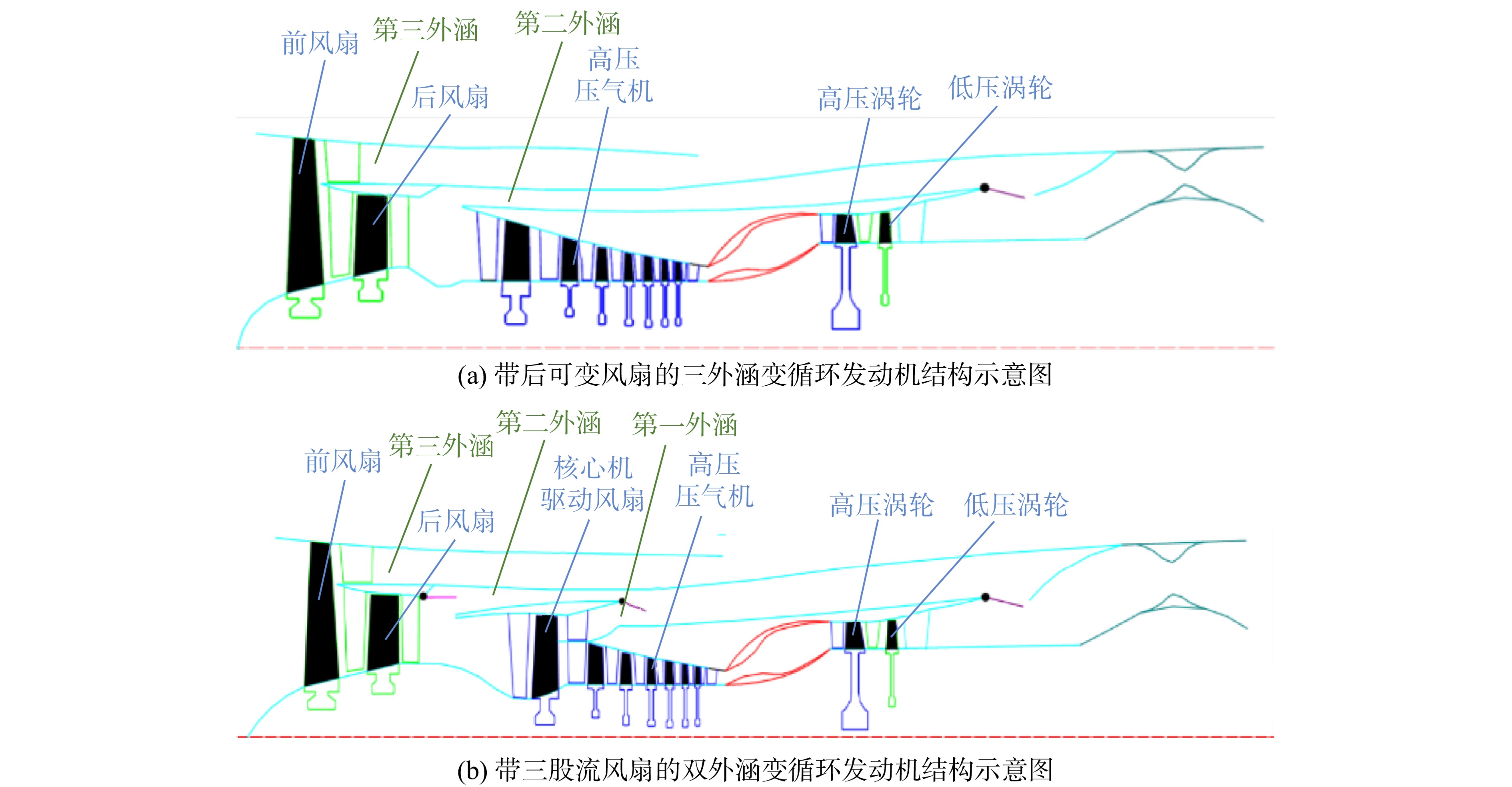
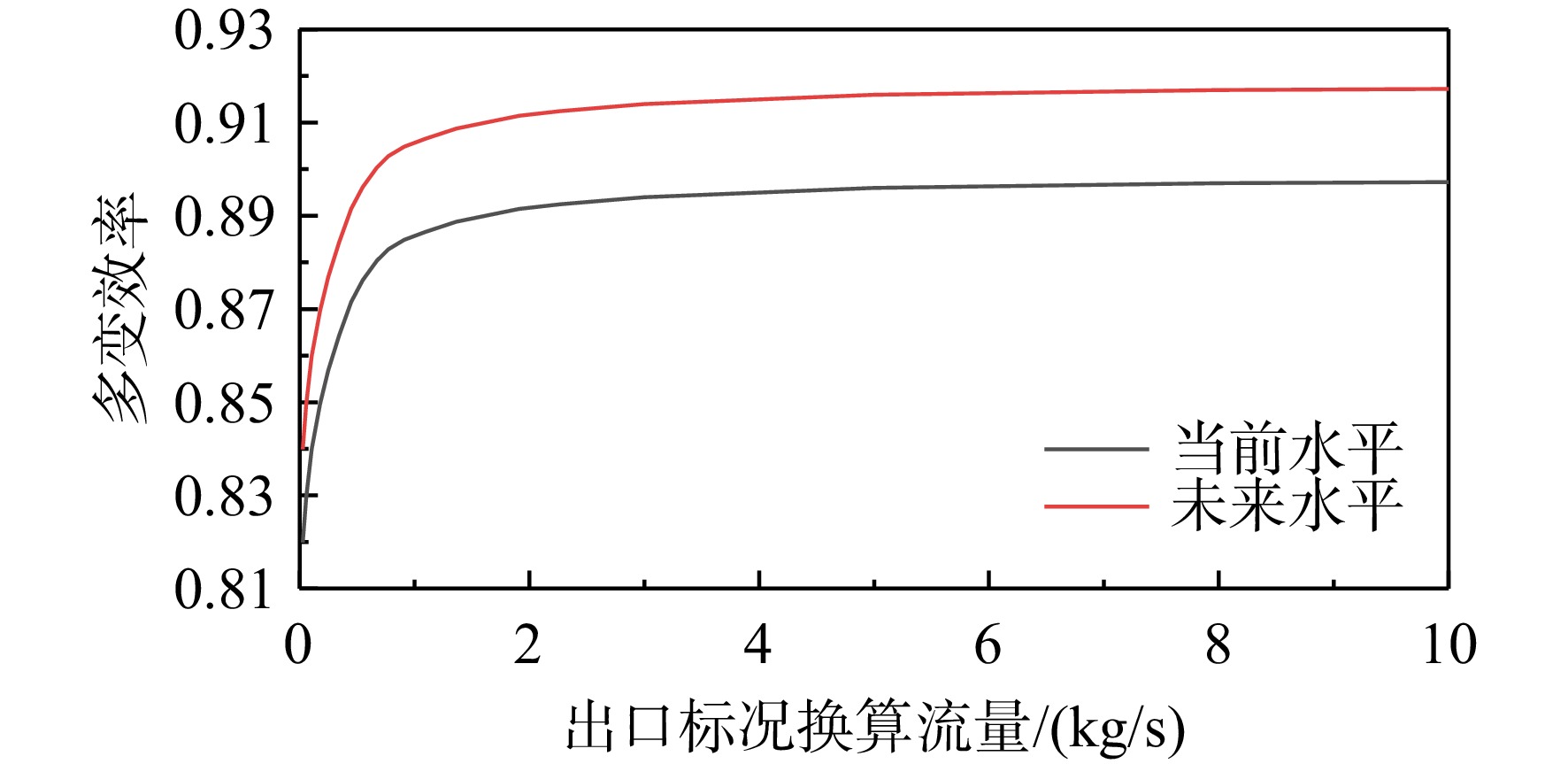
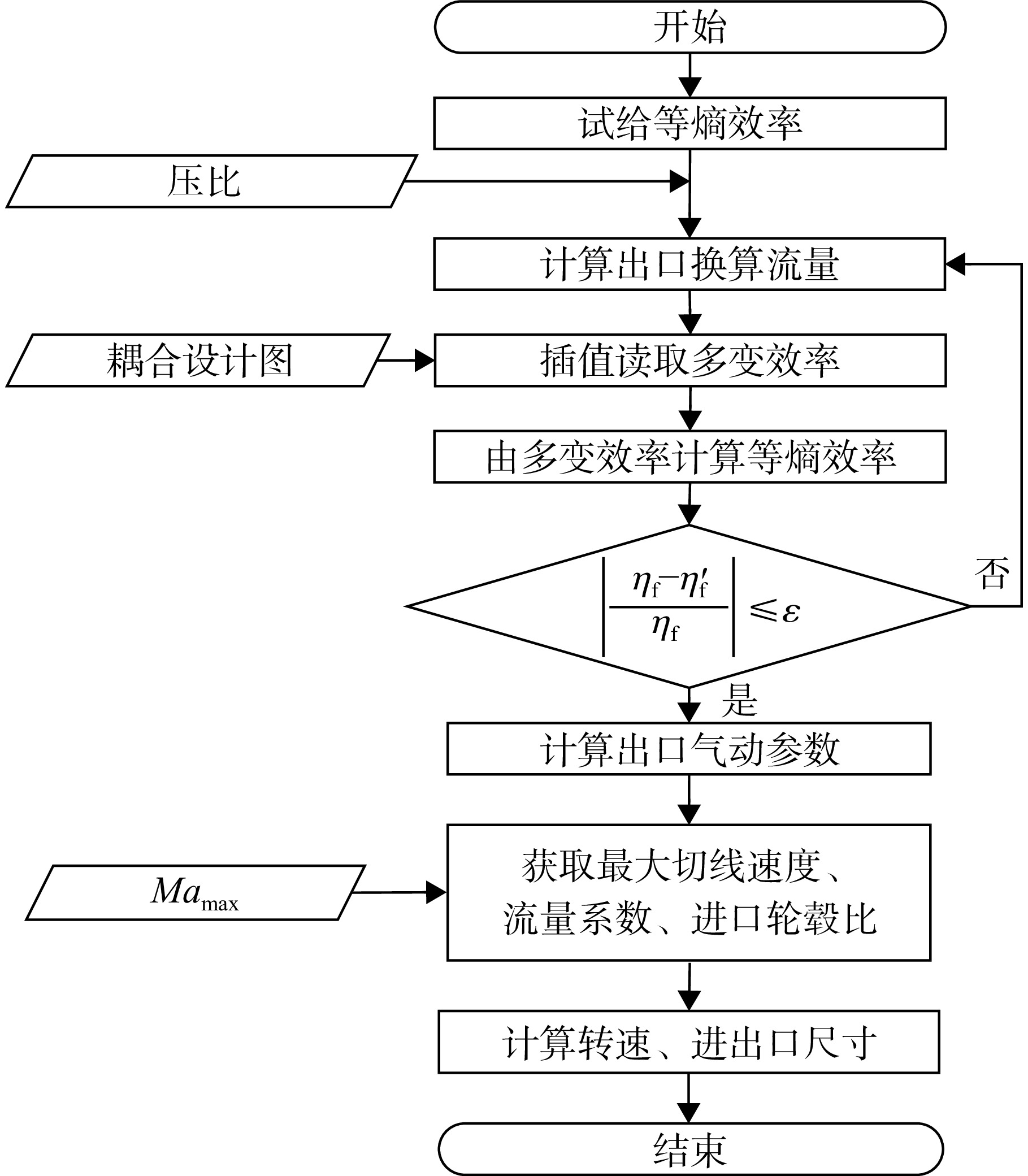
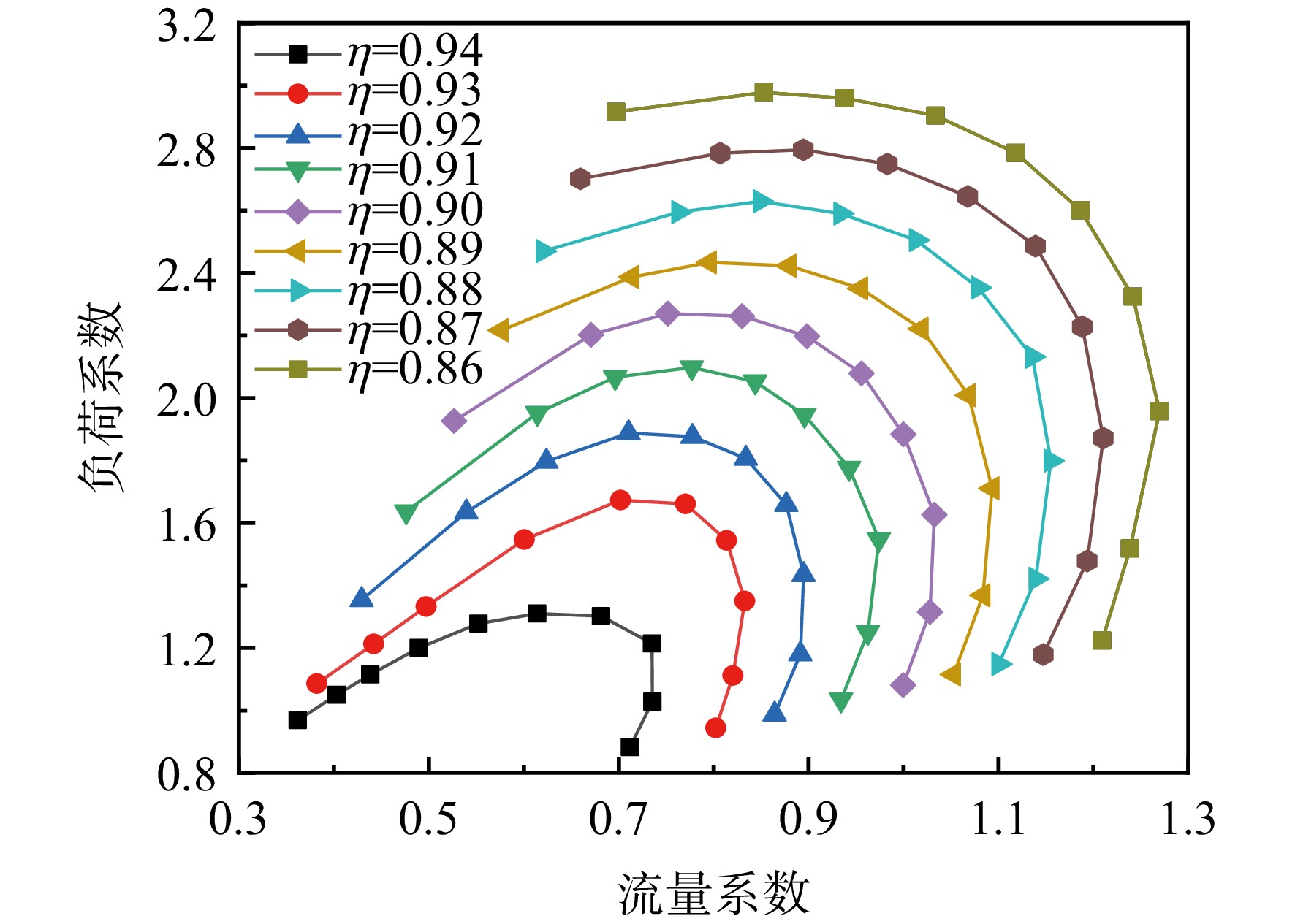
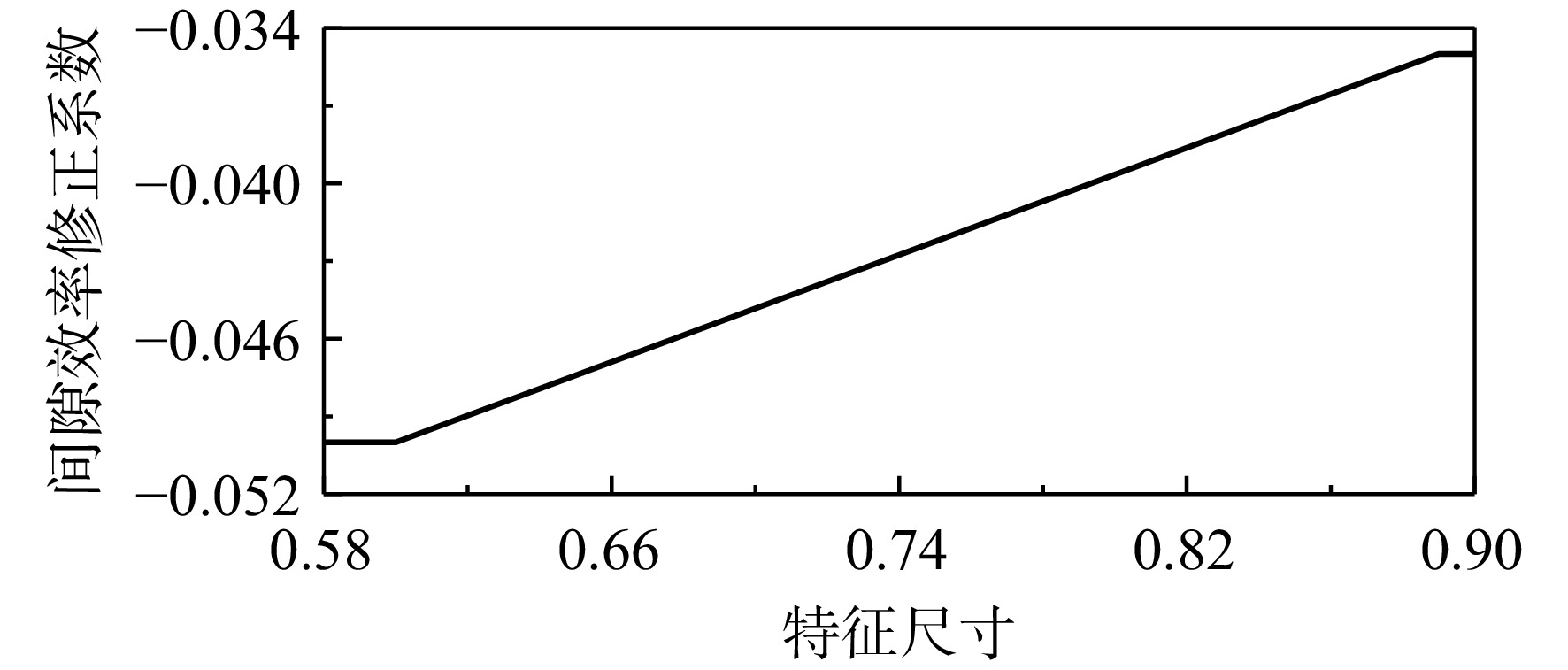
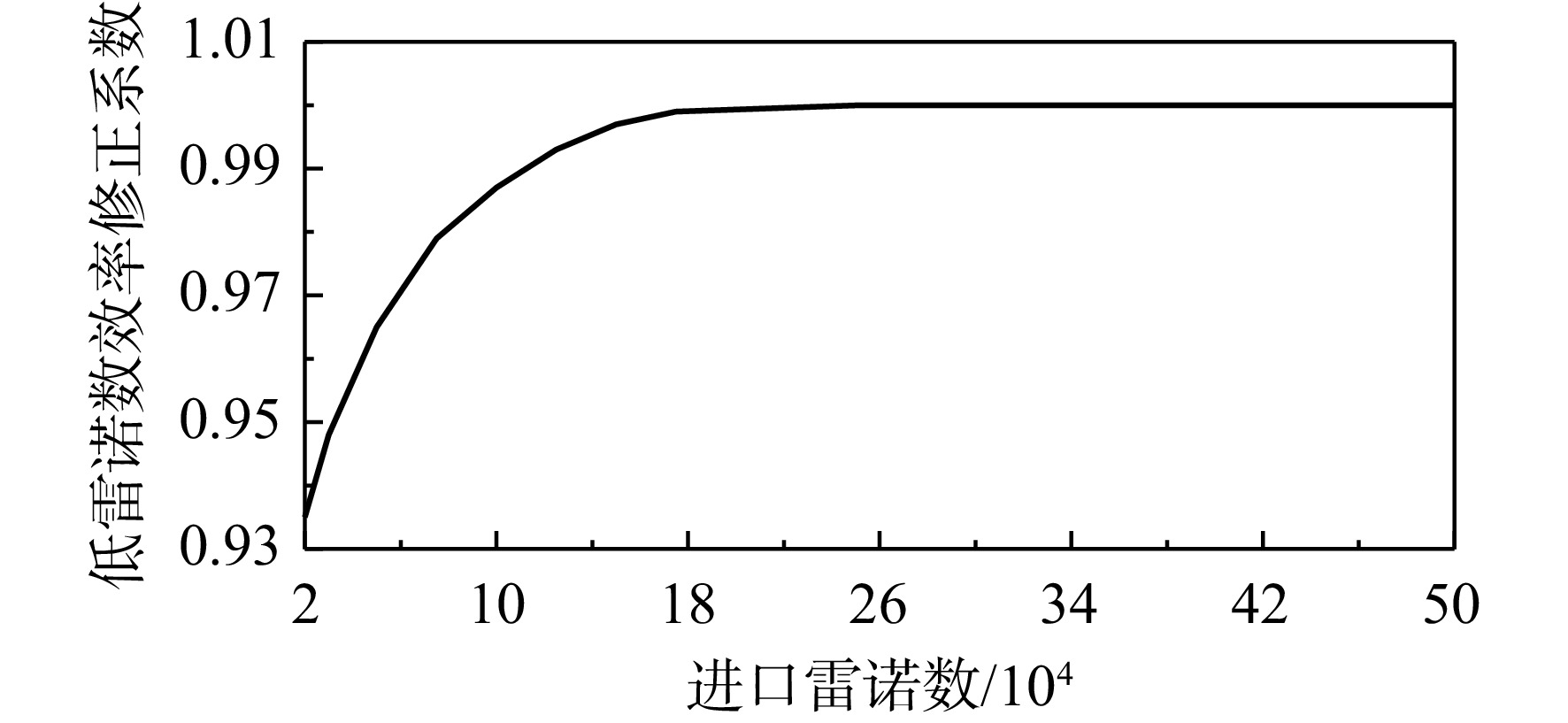
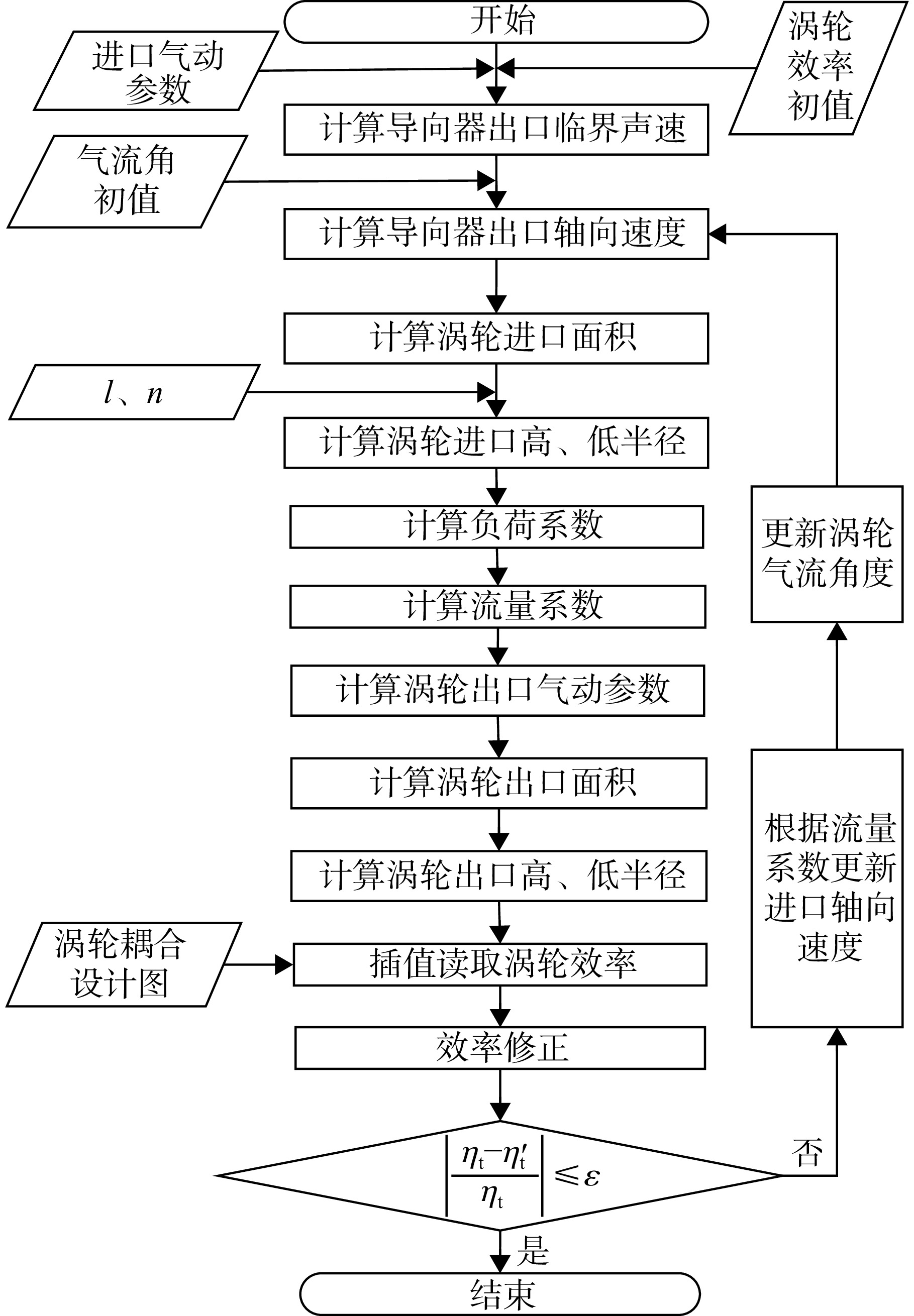
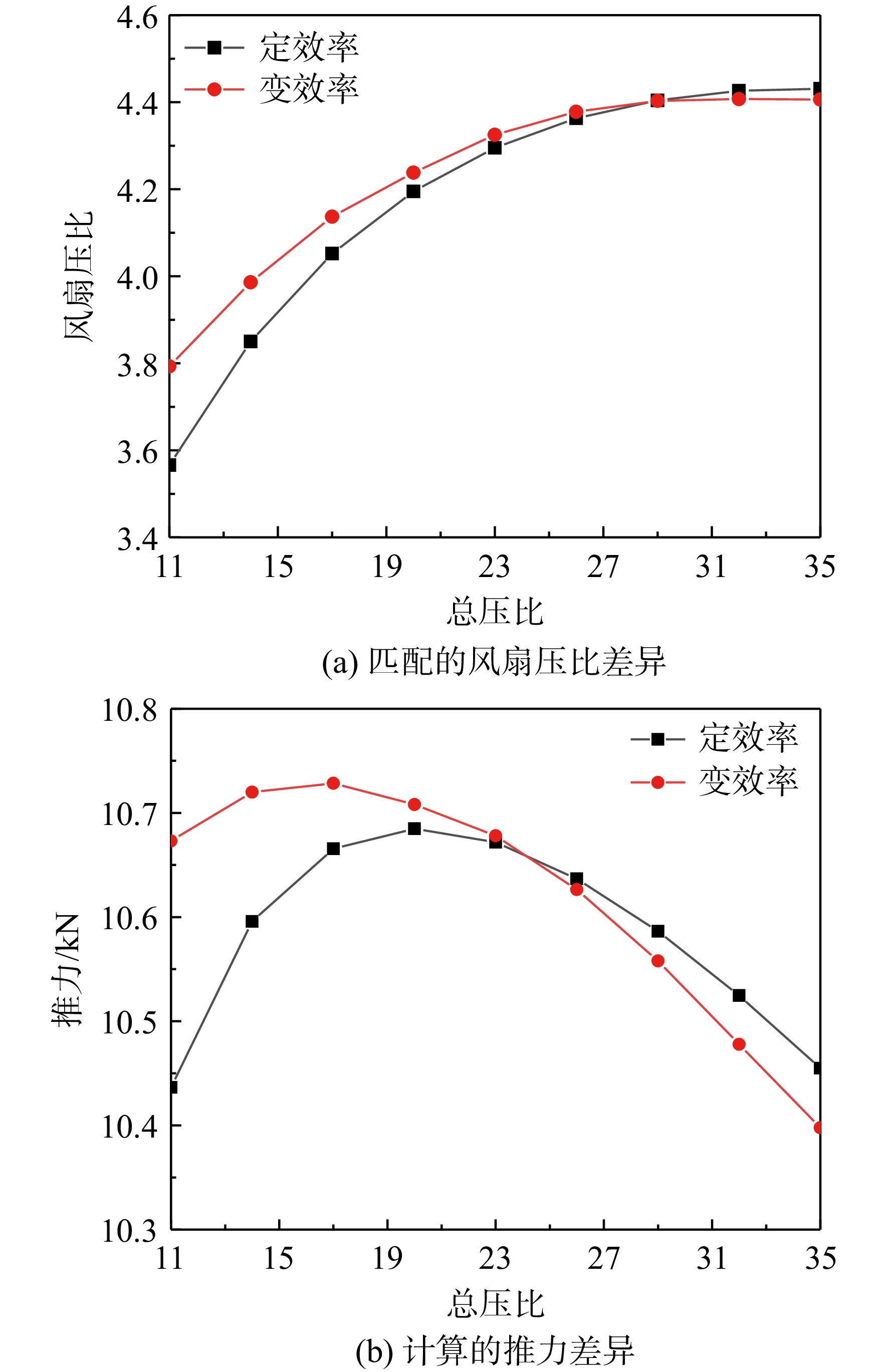
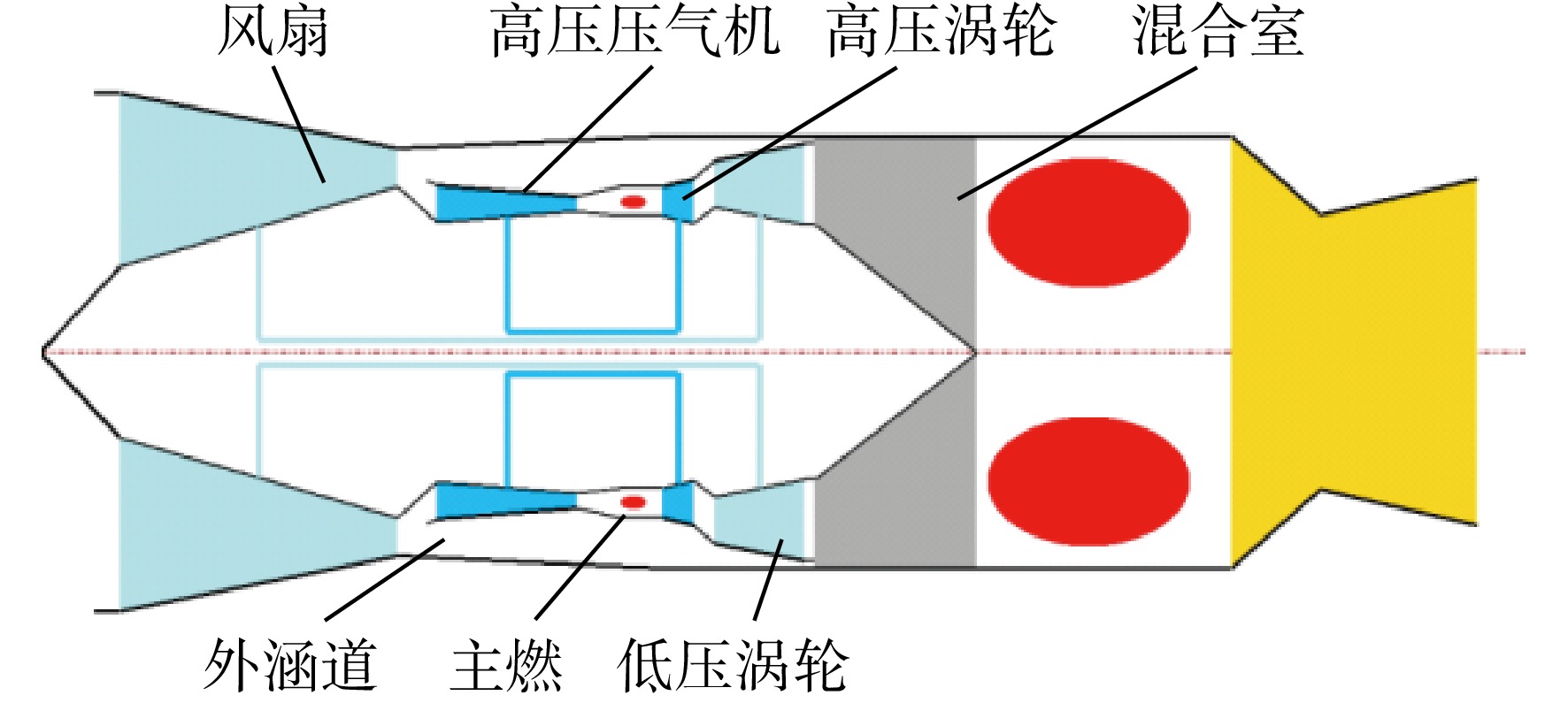
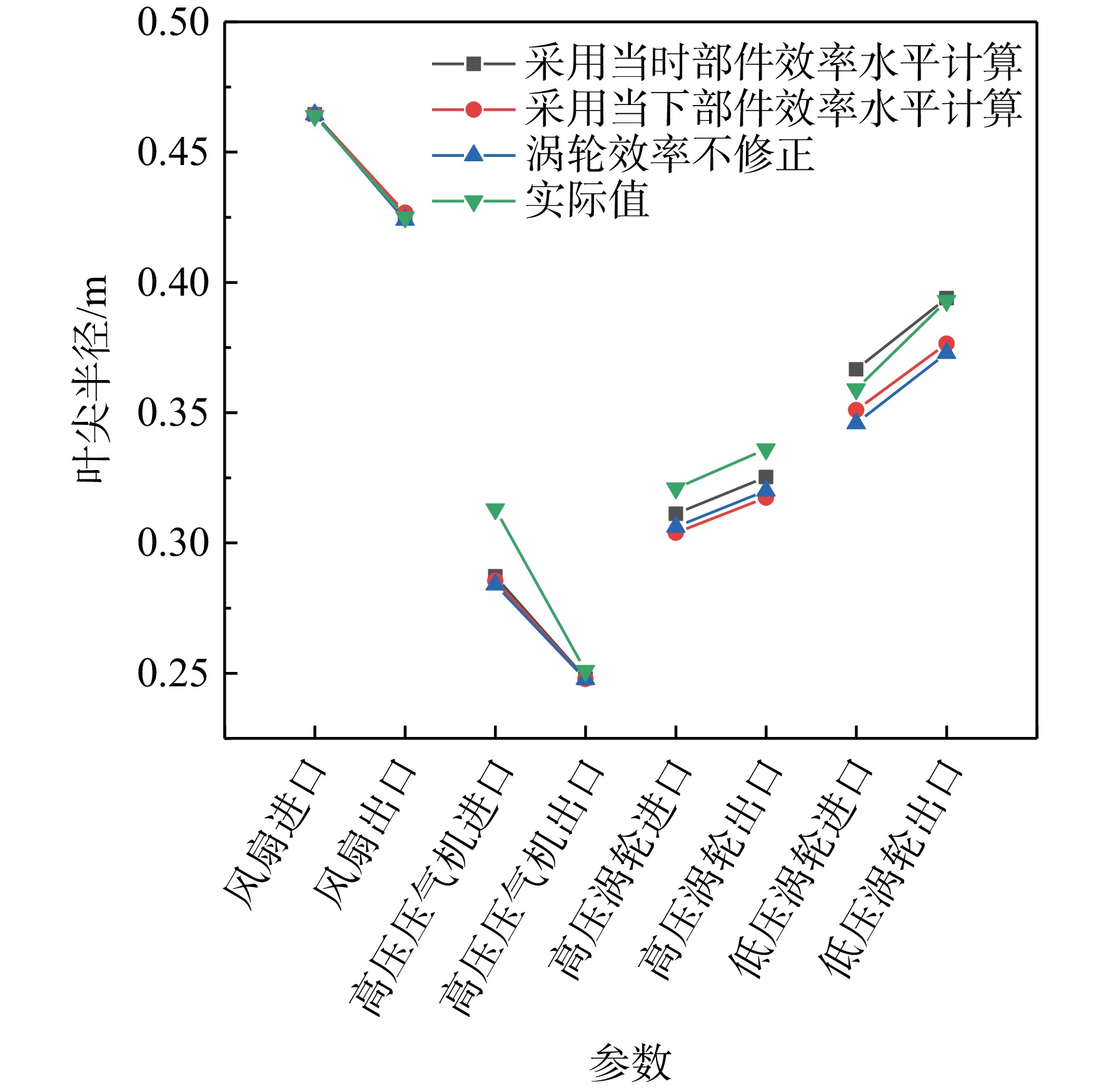
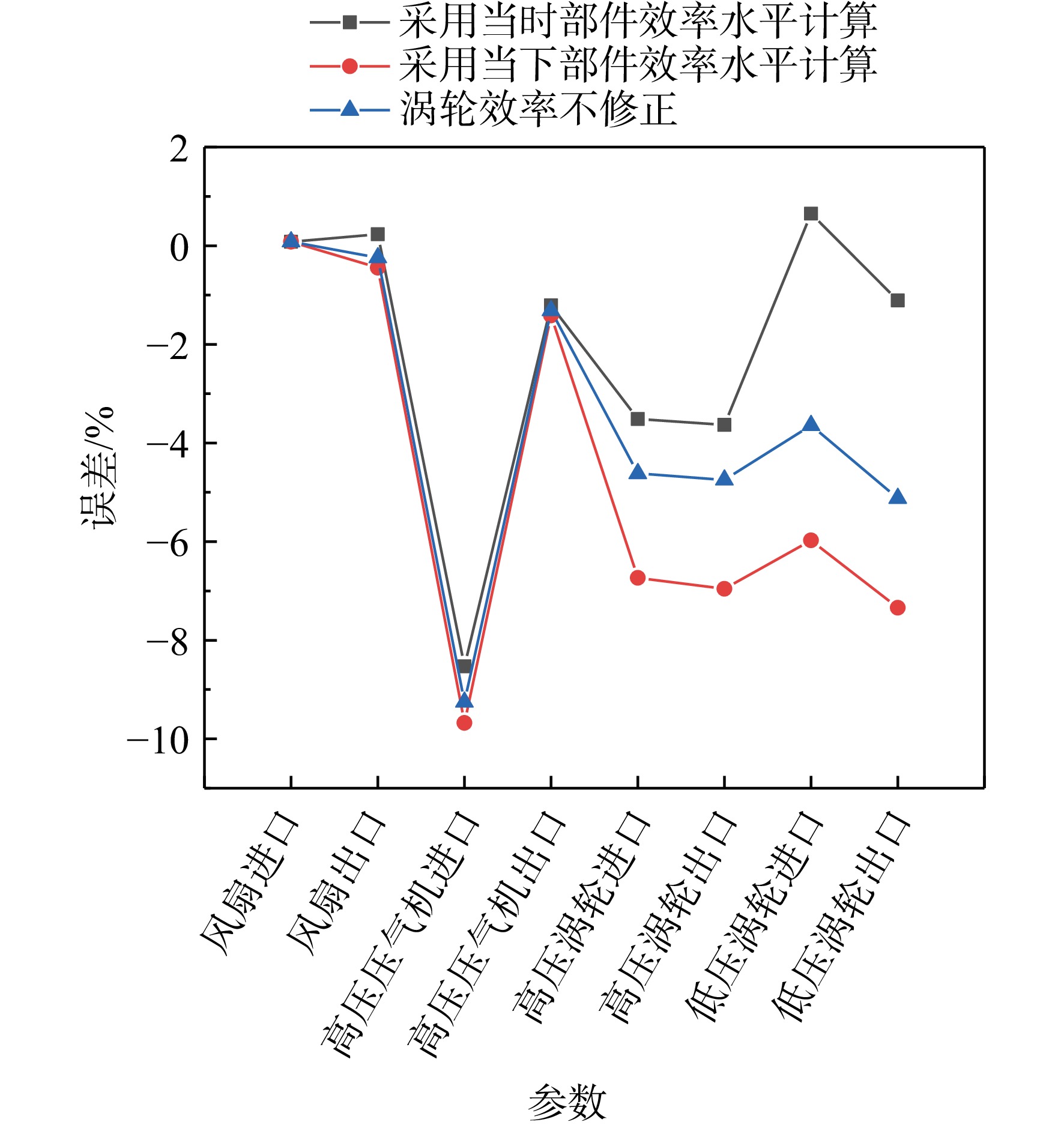
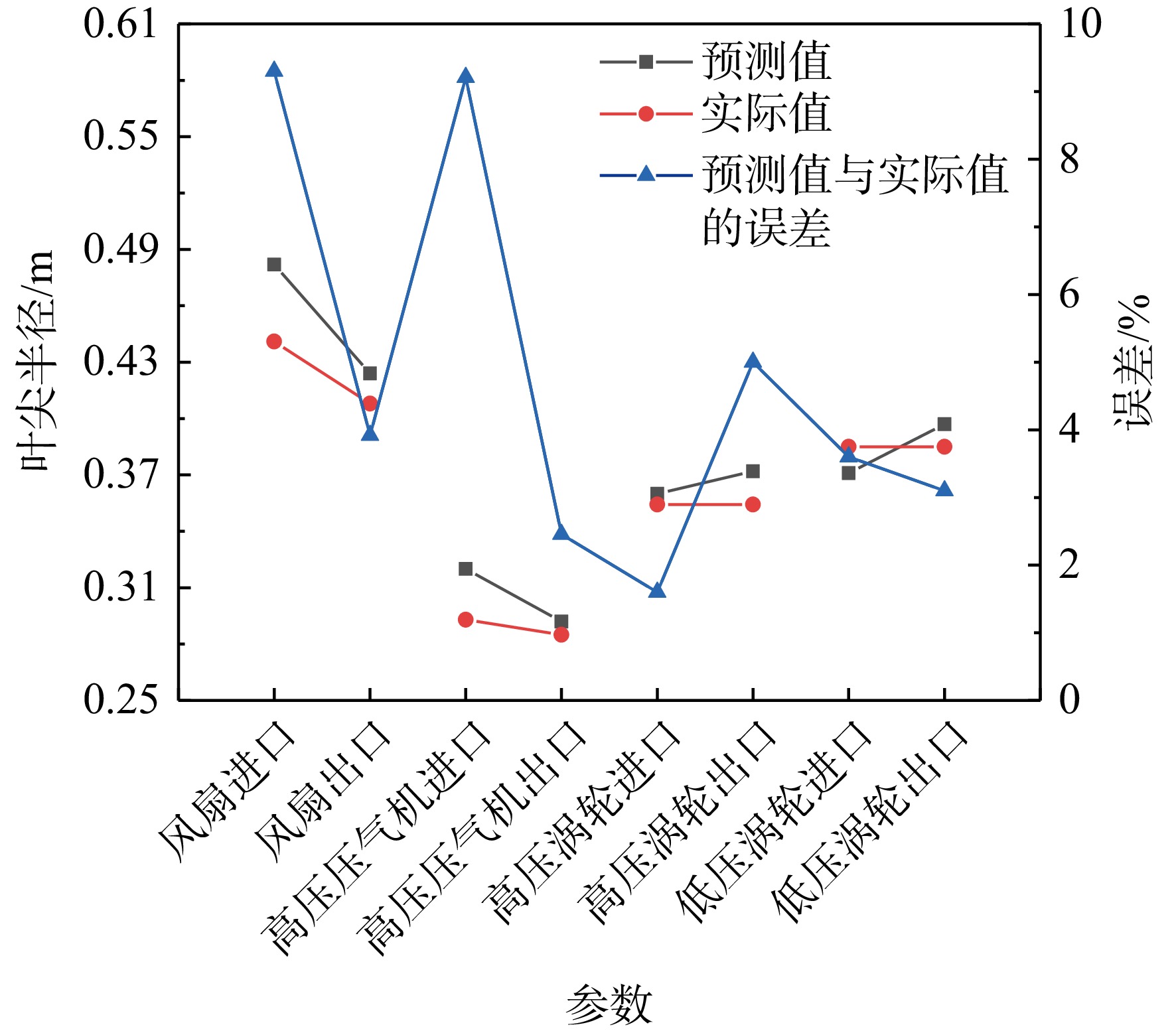
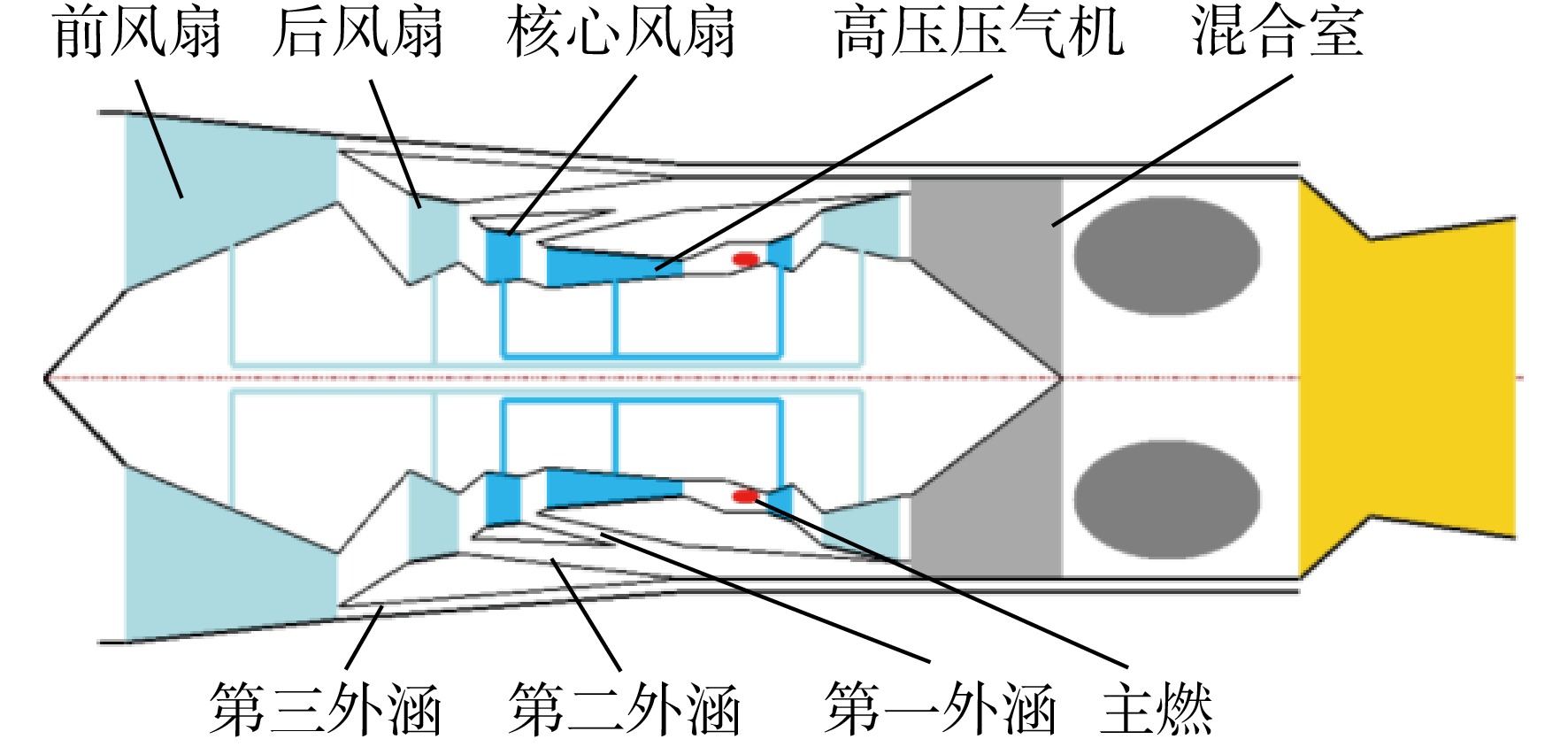
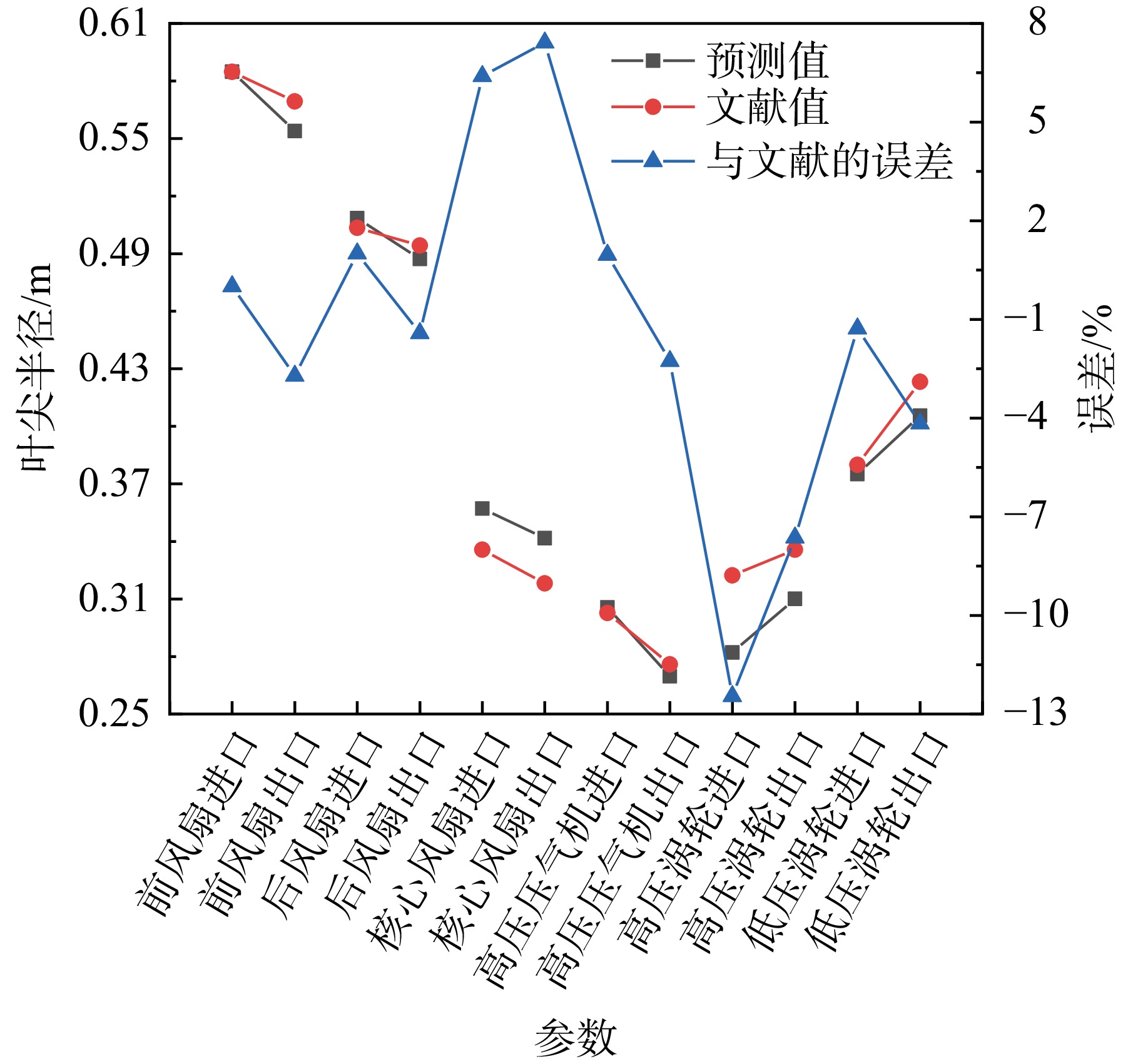
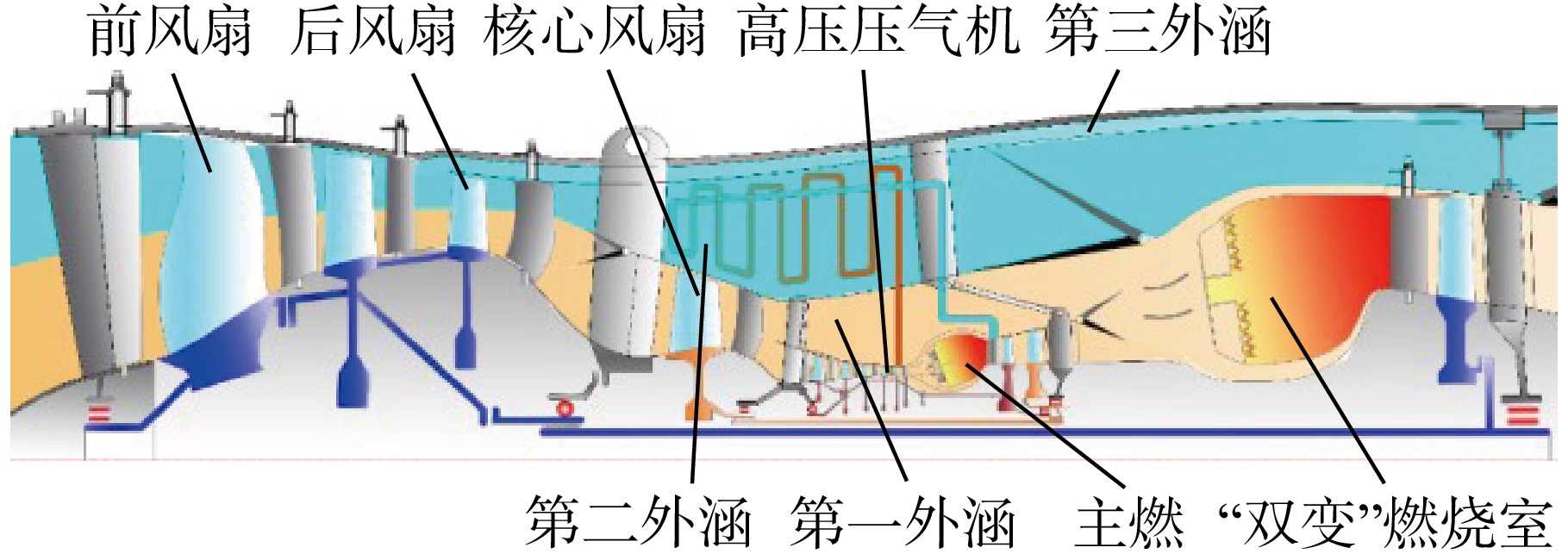
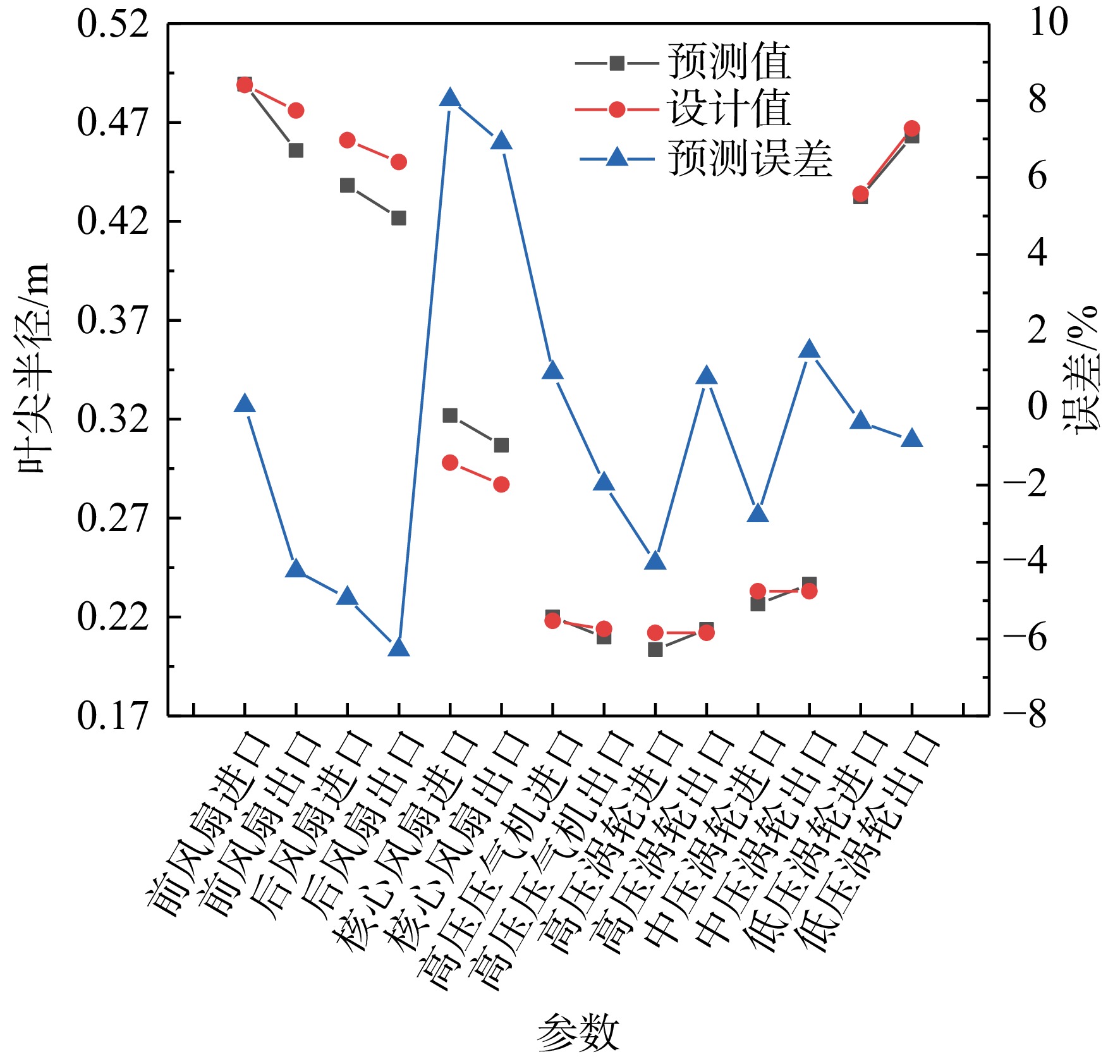
Future advanced engines face challenges such as complex matching mechanisms, and a high degree of coupling between thermodynamic cycle parameters, component performance, and flow path geometry. Additionally, the conceptual design phase offer suffers from a lack of input parameters. To address these issues, a general-purpose coupled simulation architecture and process were established. Based on empirical correlations and component coupling diagrams, a coupled design method for thermodynamic cycle parameters and flow path geometric parameters was developed. This method enabled the prediction of component efficiency levels under different thermodynamic cycle parameters and yielded the inlet and outlet dimensions of key impeller components. Using the proposed method, simulation validations were carried out on three engine models: a mixed-flow turbofan engine, an adaptive variable-cycle engine, and a “dual variable” cycle engine. The results showed that the estimated flow path geometric parameters of rotating components obtained by this method had errors within 10% compared with actual design values or values reported in the literature, achieving a level of prediction accuracy for engine flow path dimensions comparable with that of NASA. This approach effectively shortens the iteration cycle in the scheme design phase, reduces the risk of major design changes in subsequent stages, and provides valuable reference for detailed engine design.

Experimental study and structural improvement of leakage characteristics of variable stator vane pivot
Liu Jiahuan, Kong Xiaozhi, Chen Yan, Liu Gaowen
2026, 41(8): 20250126. doi: 10.13224/j.cnki.jasp.20250126
Abstract:

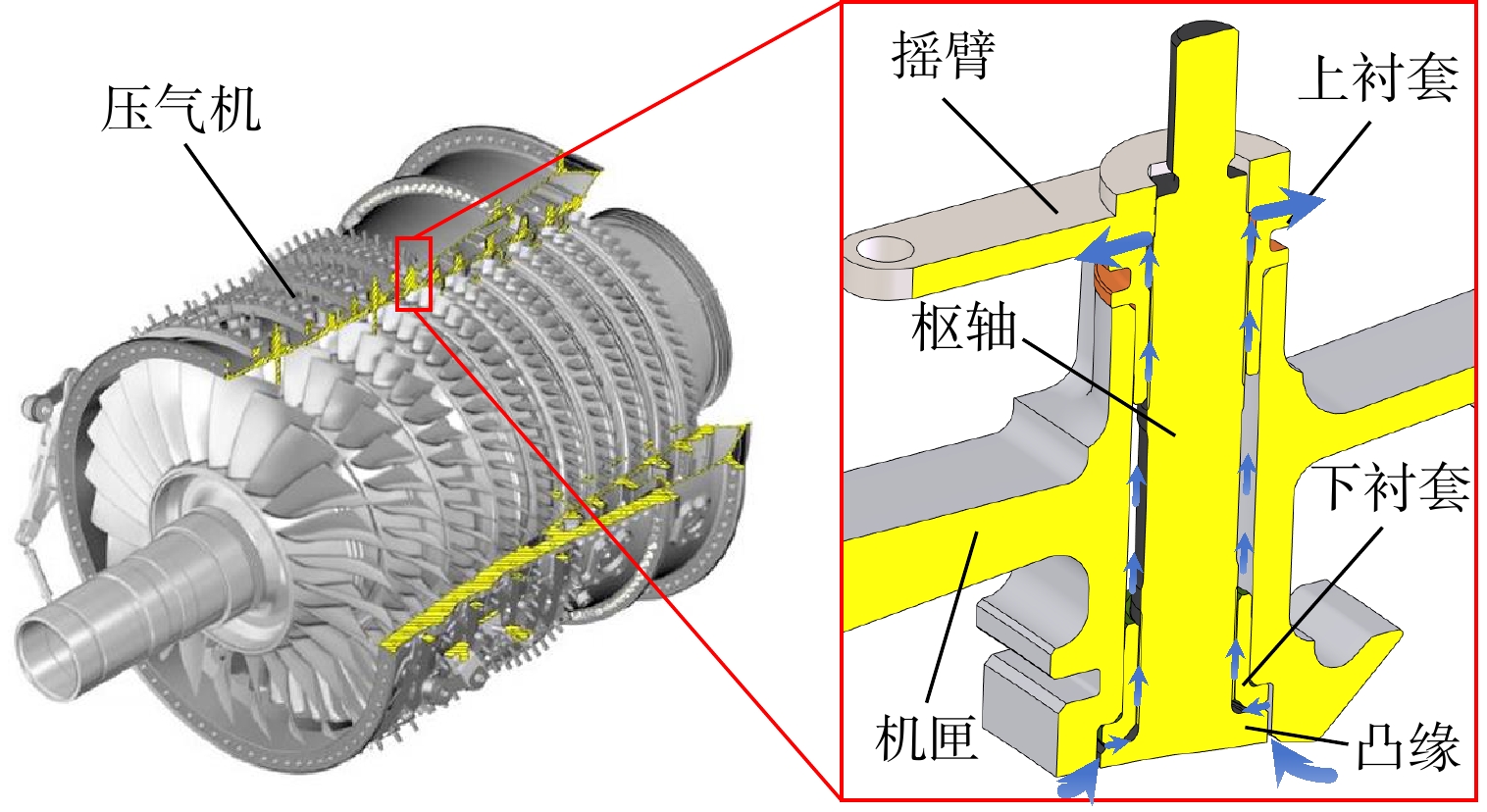
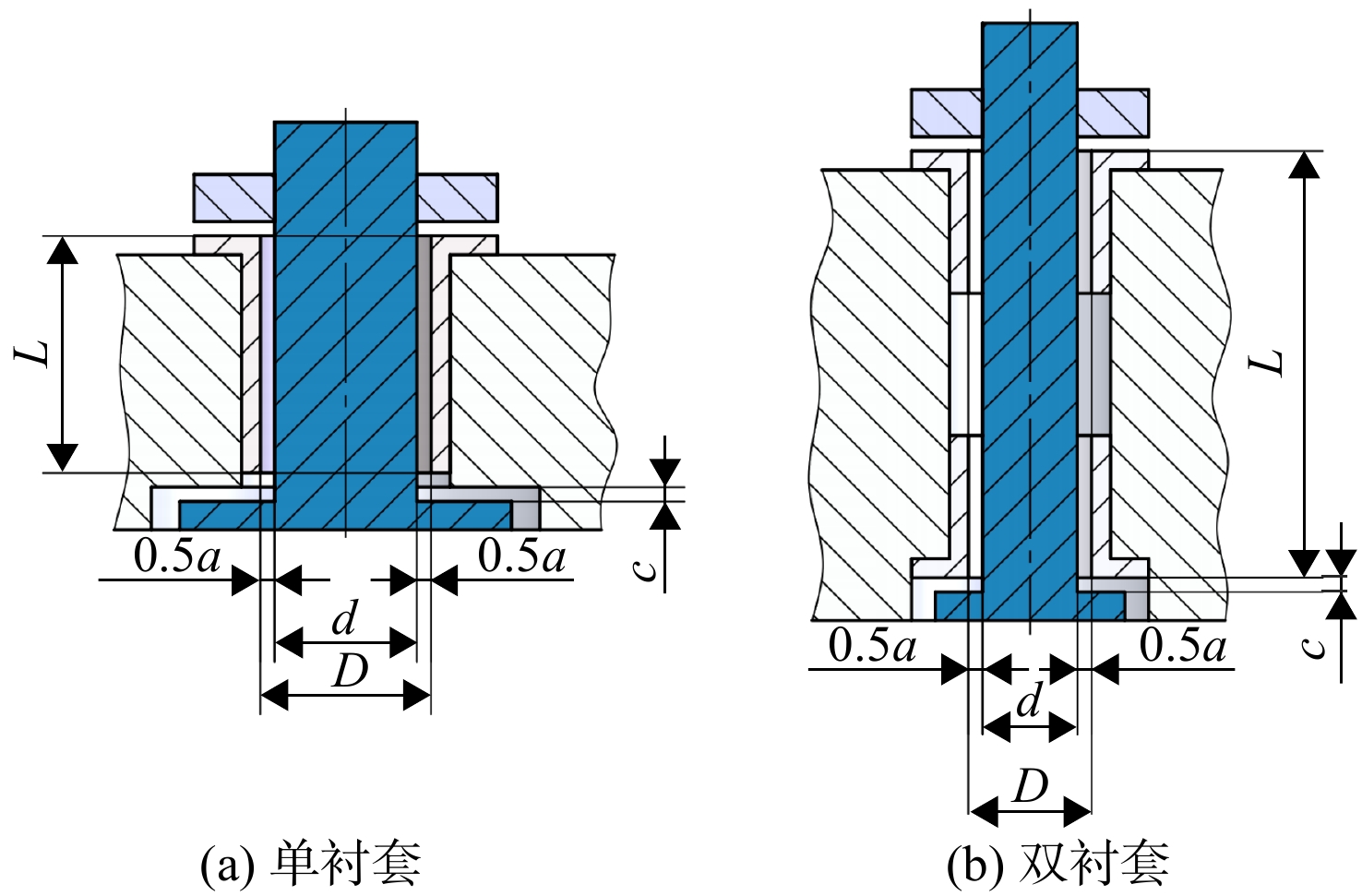
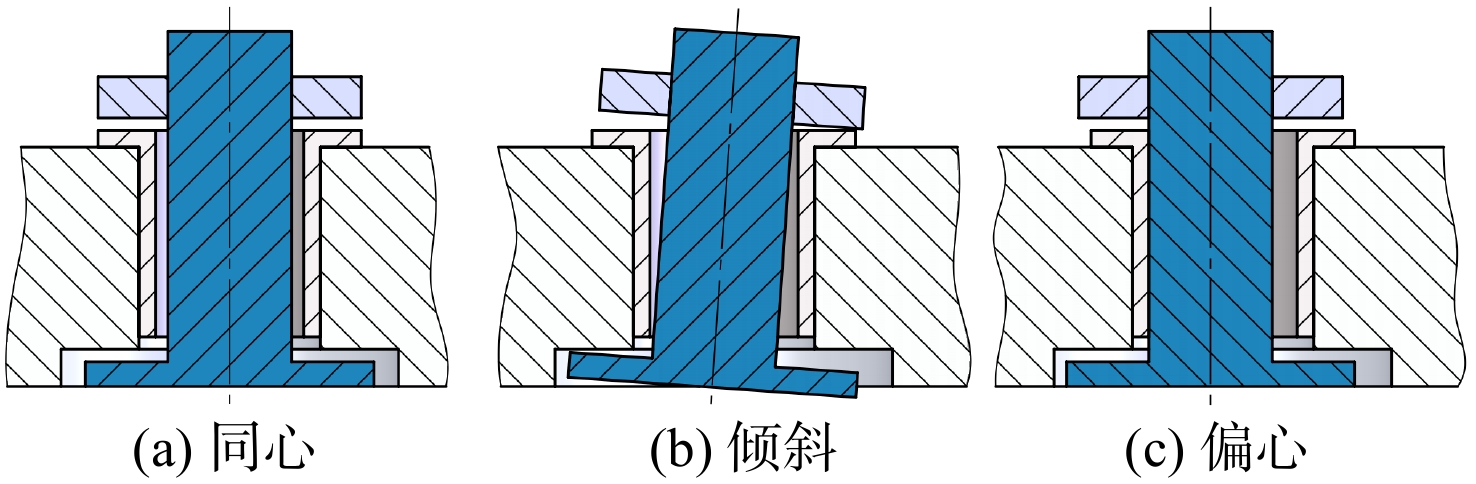
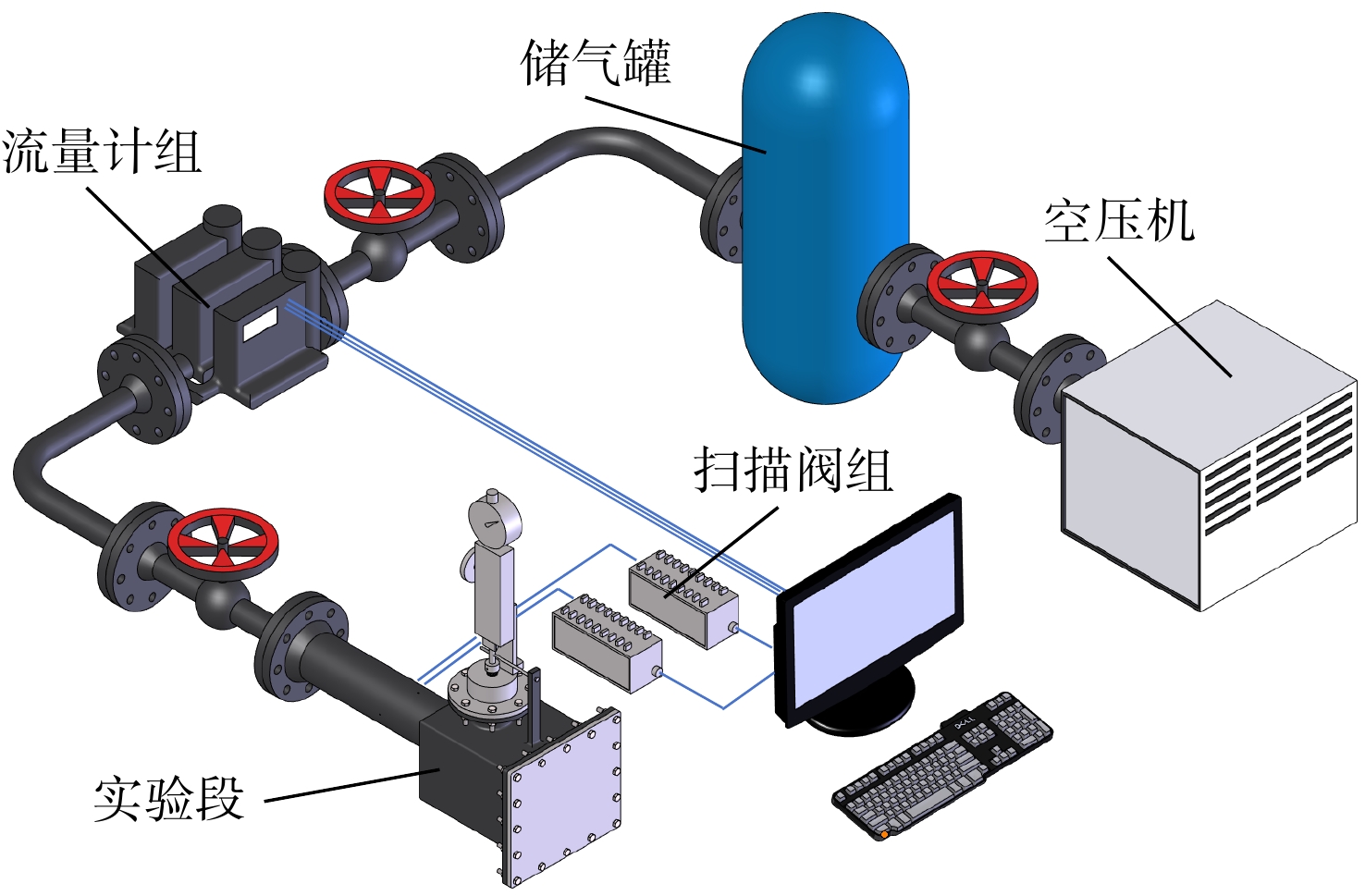
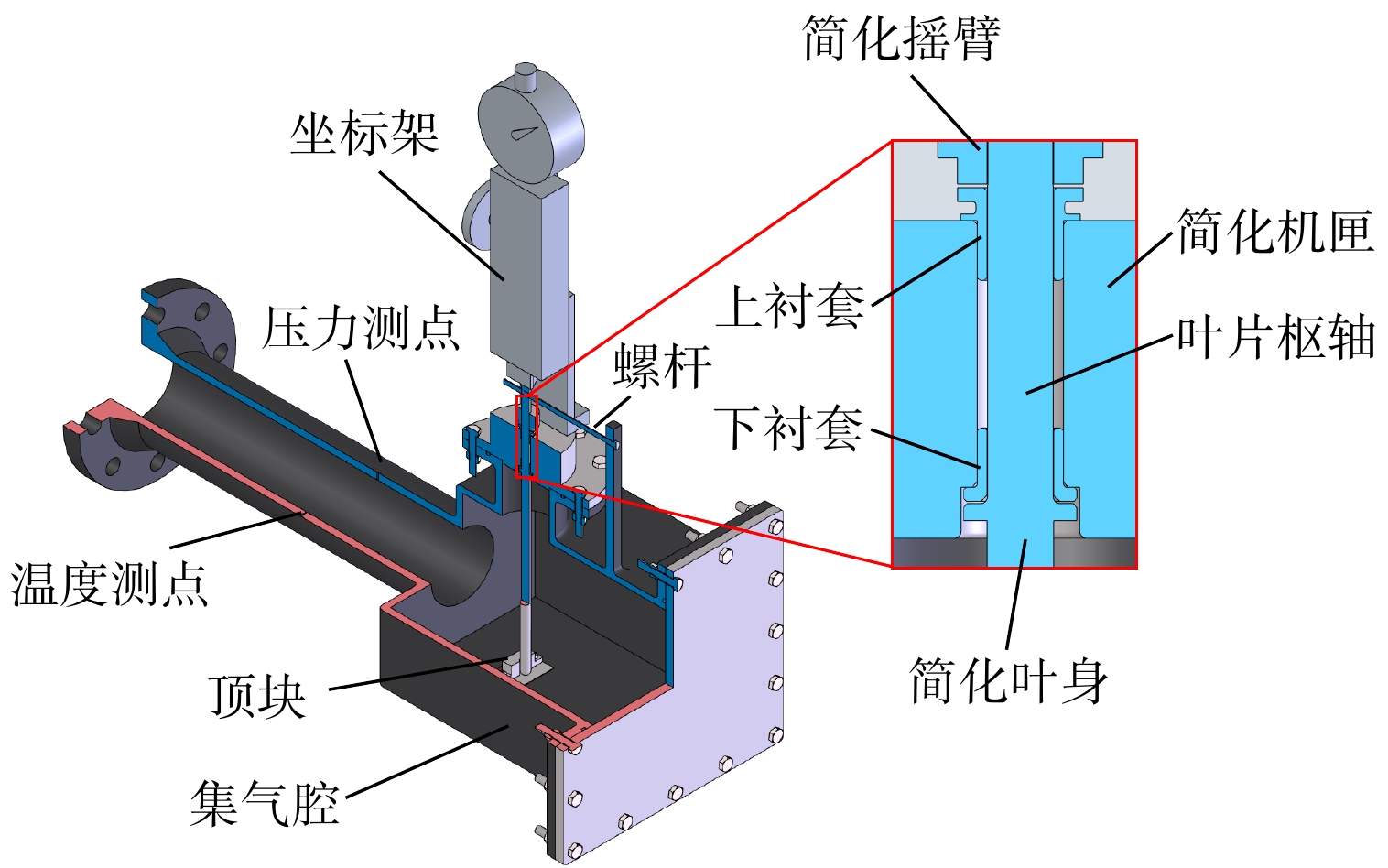
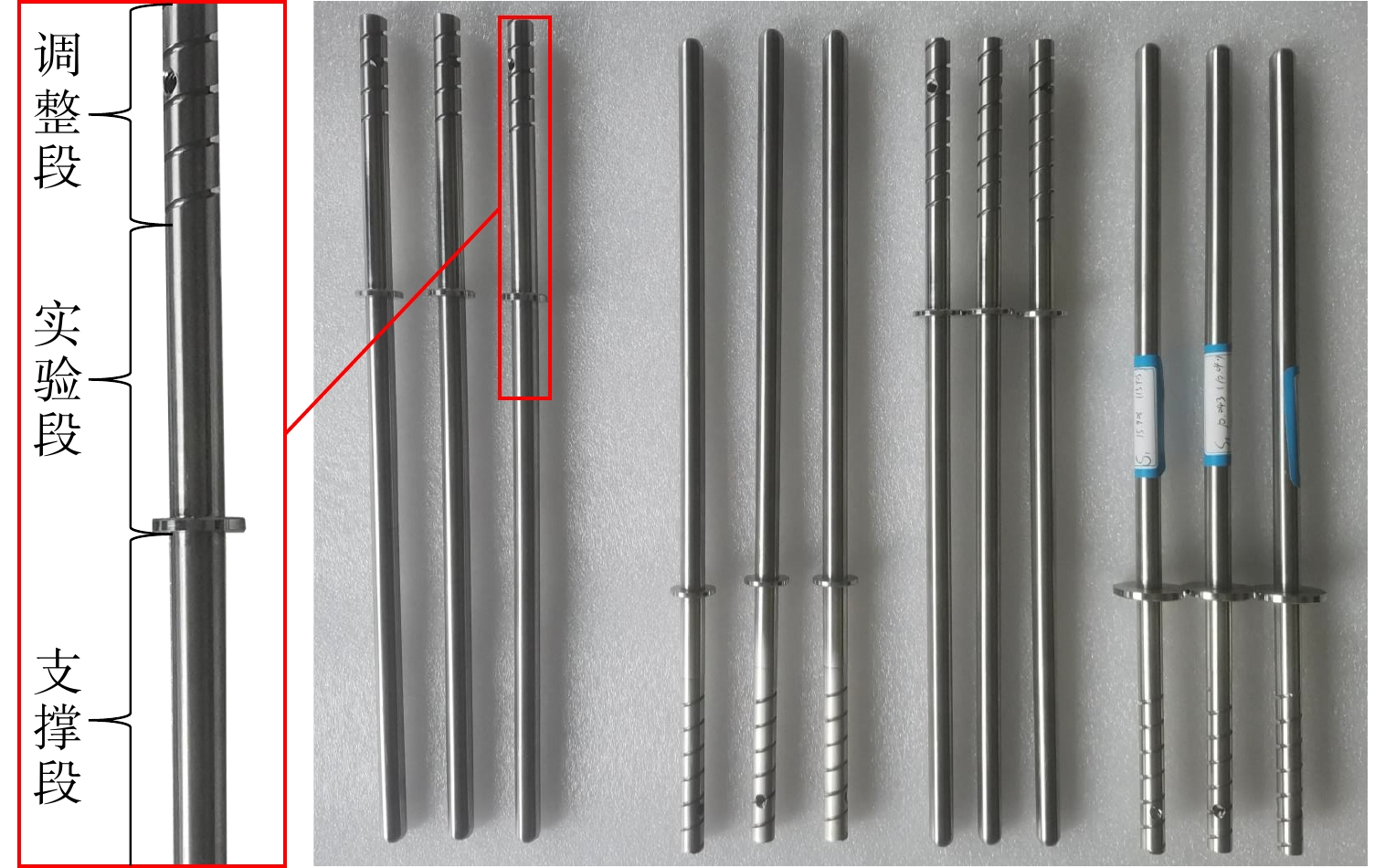
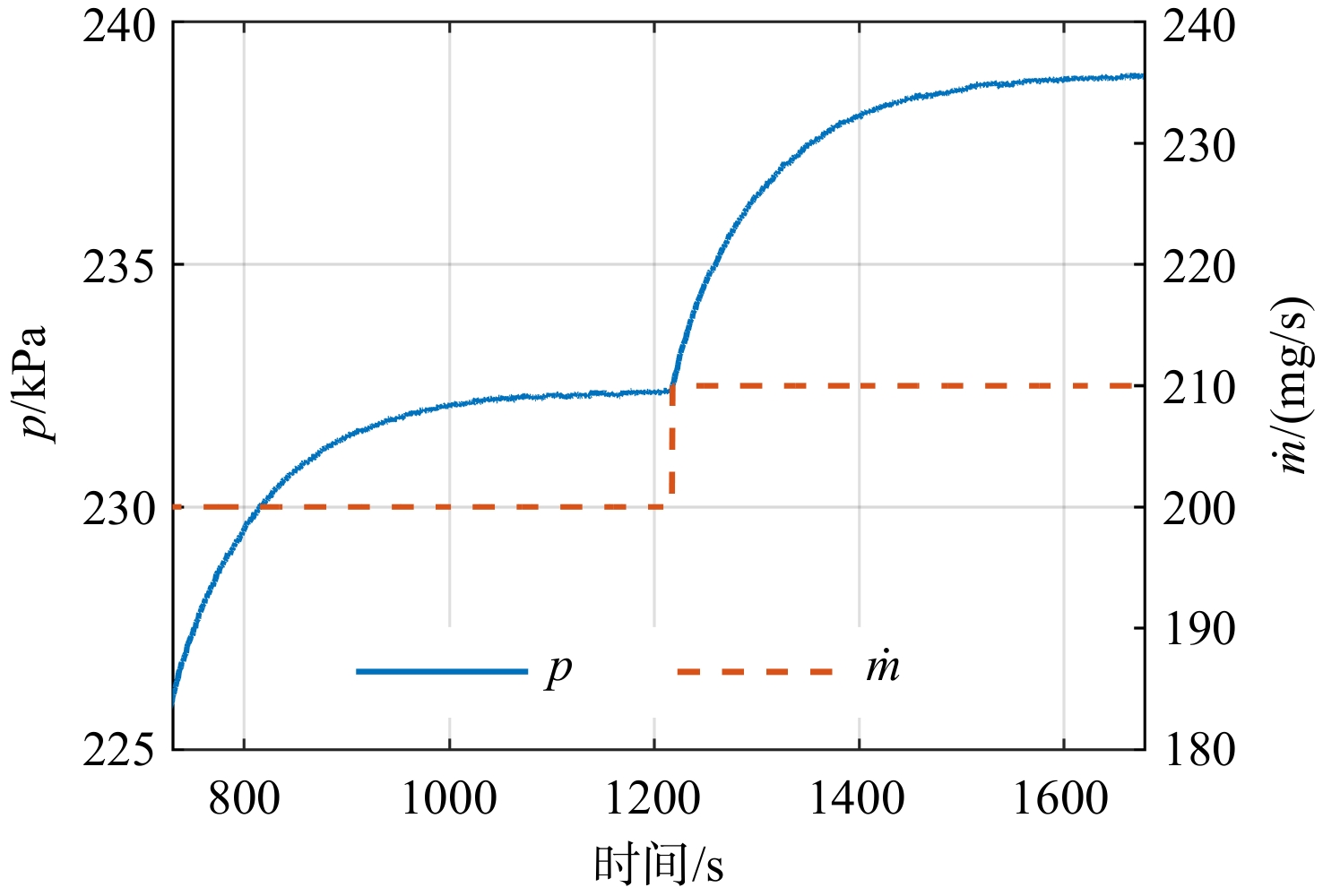
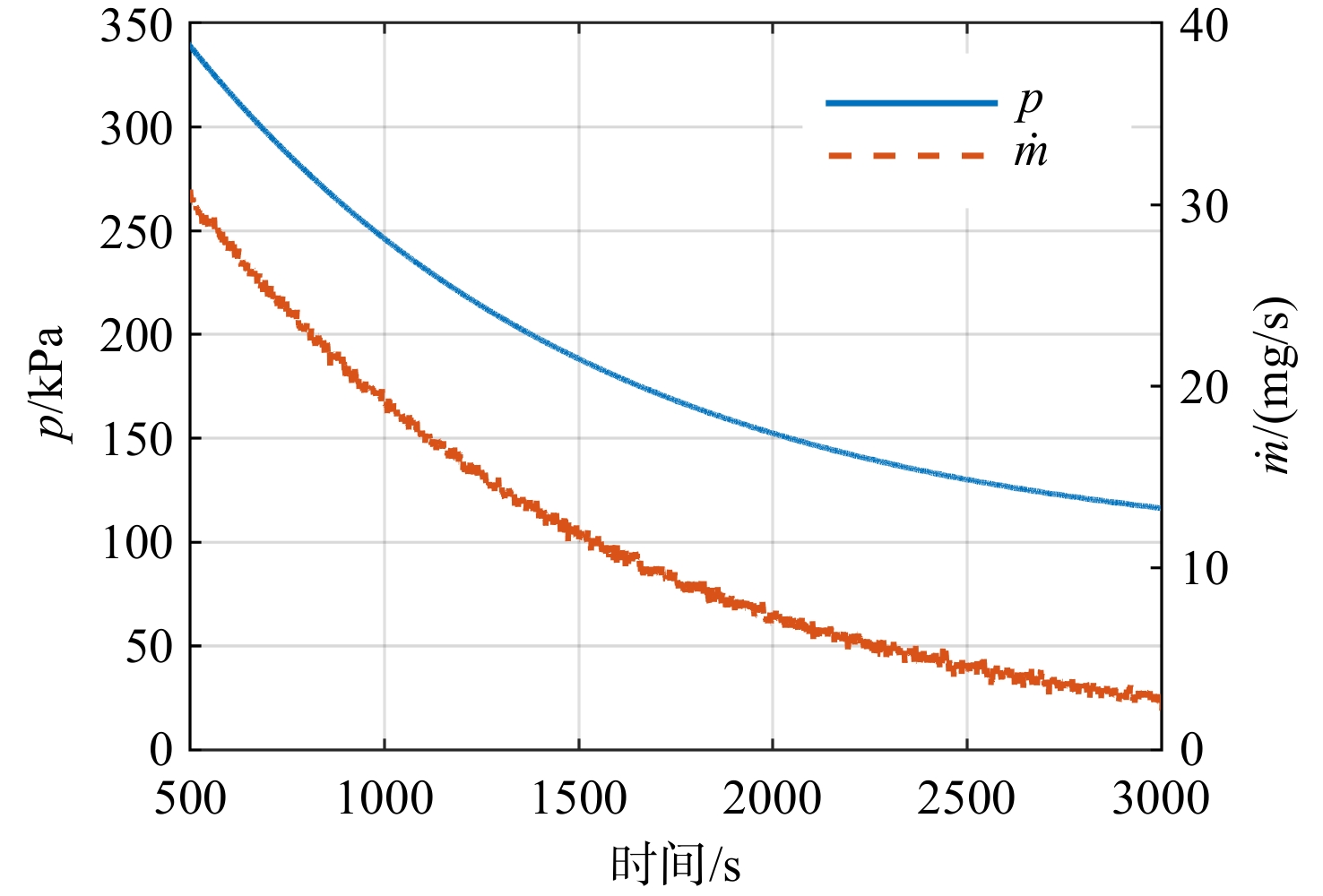
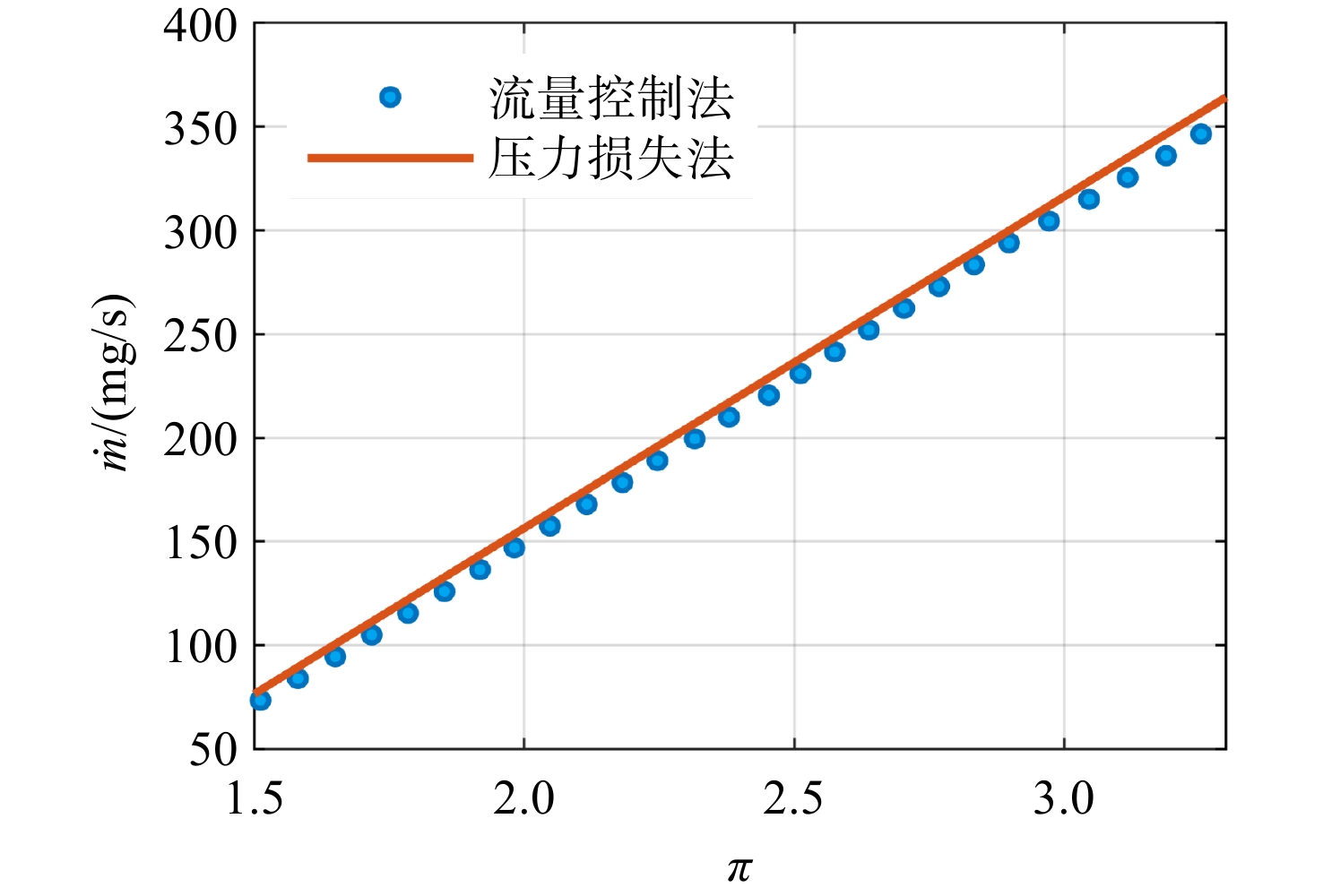
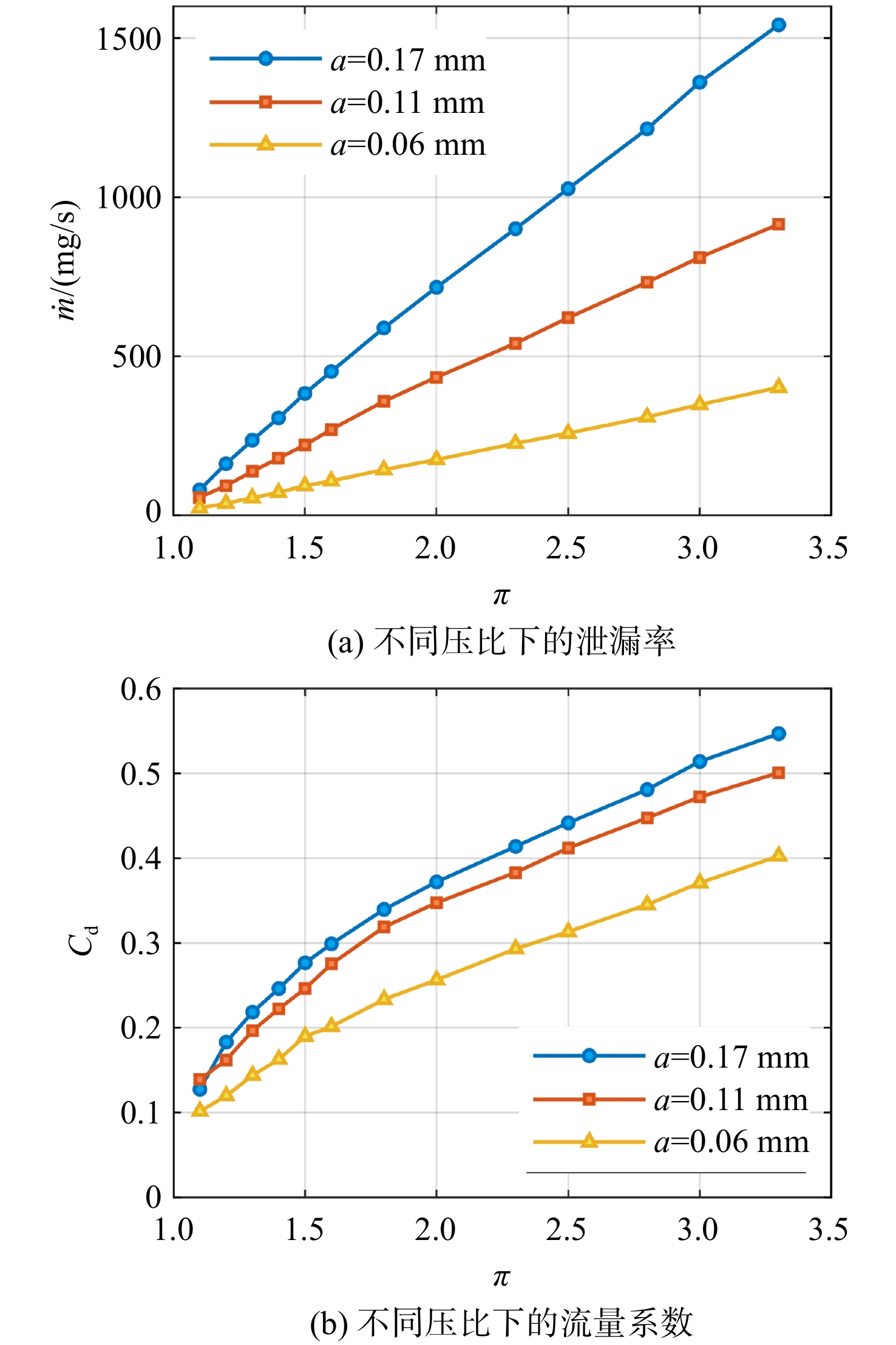
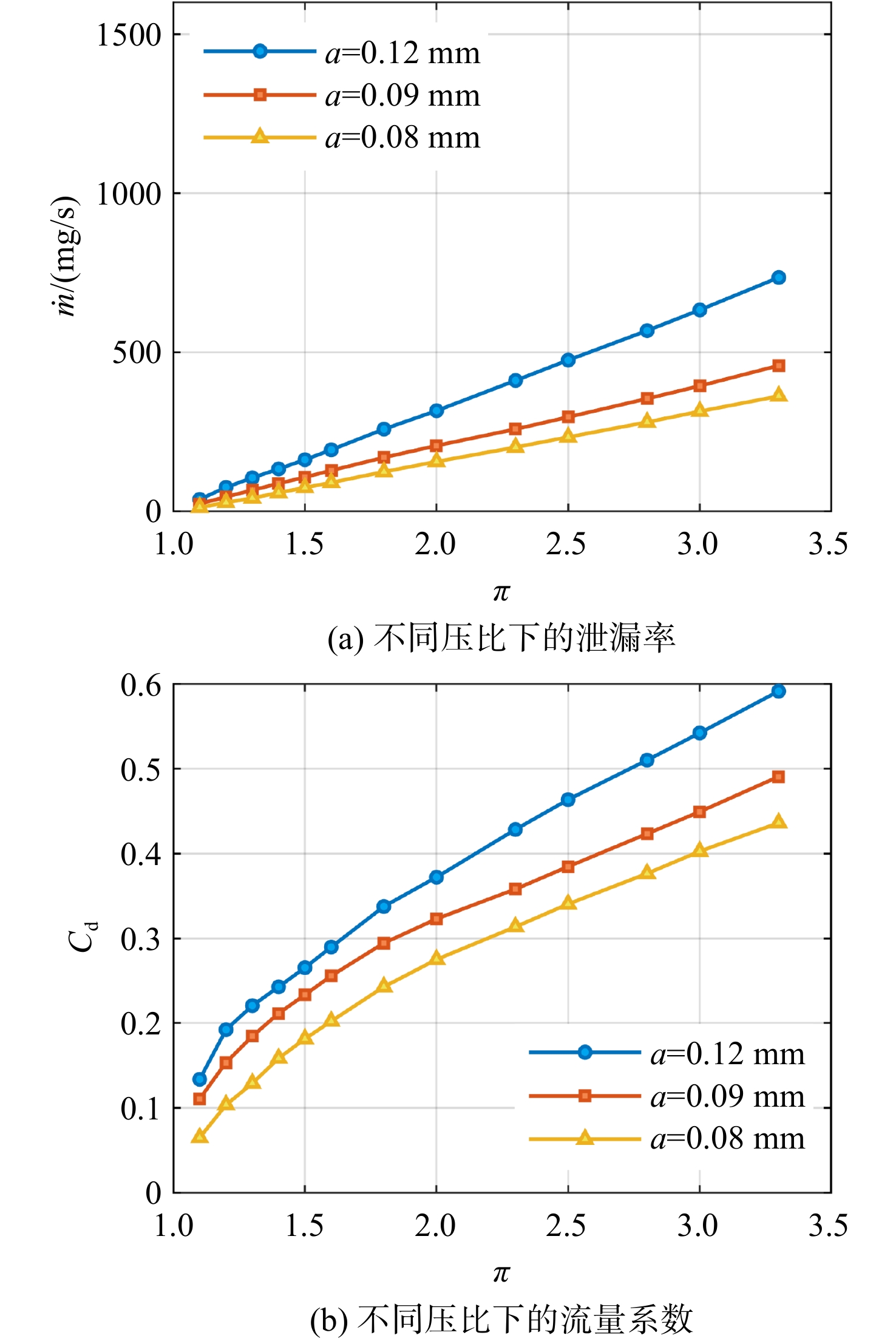
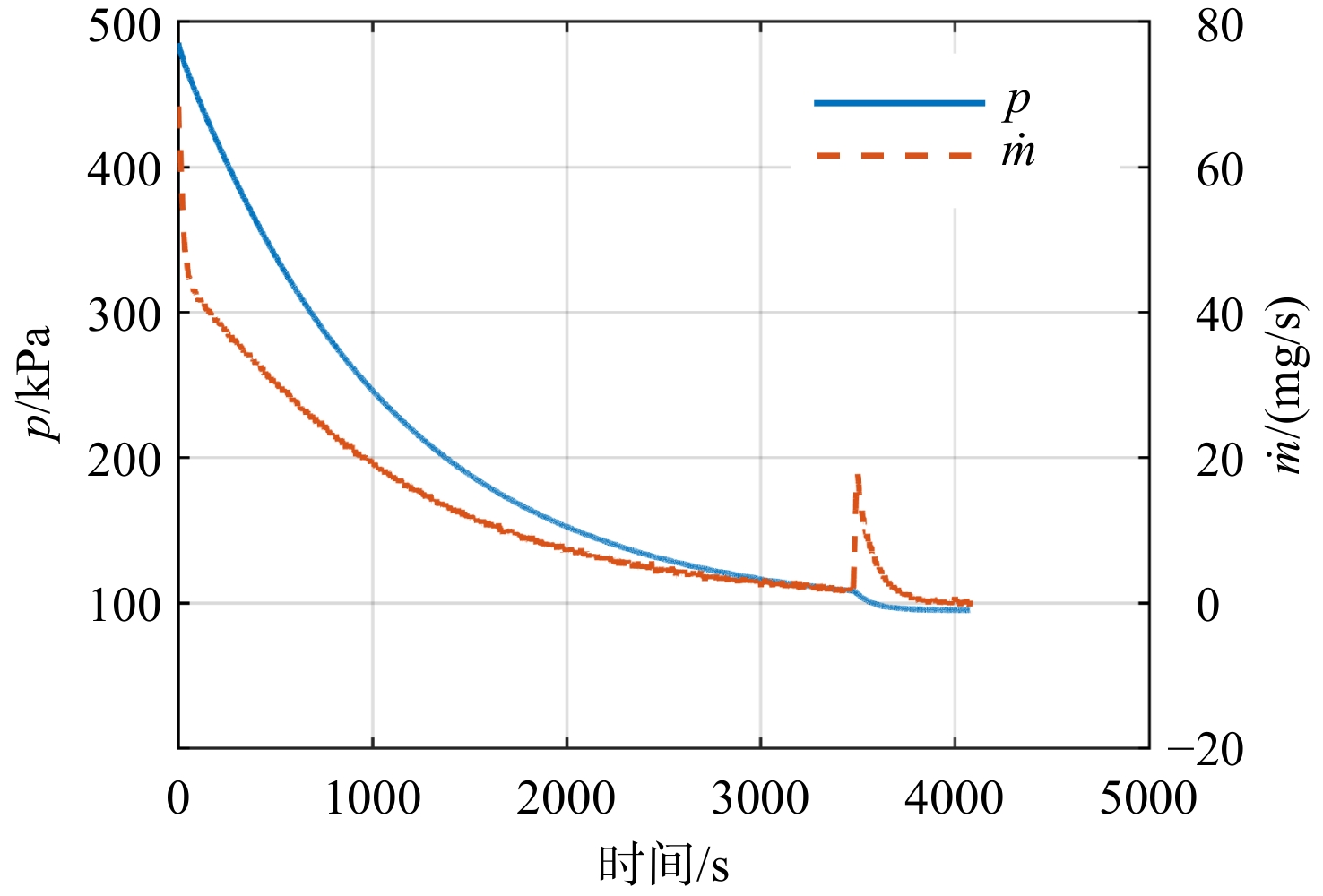
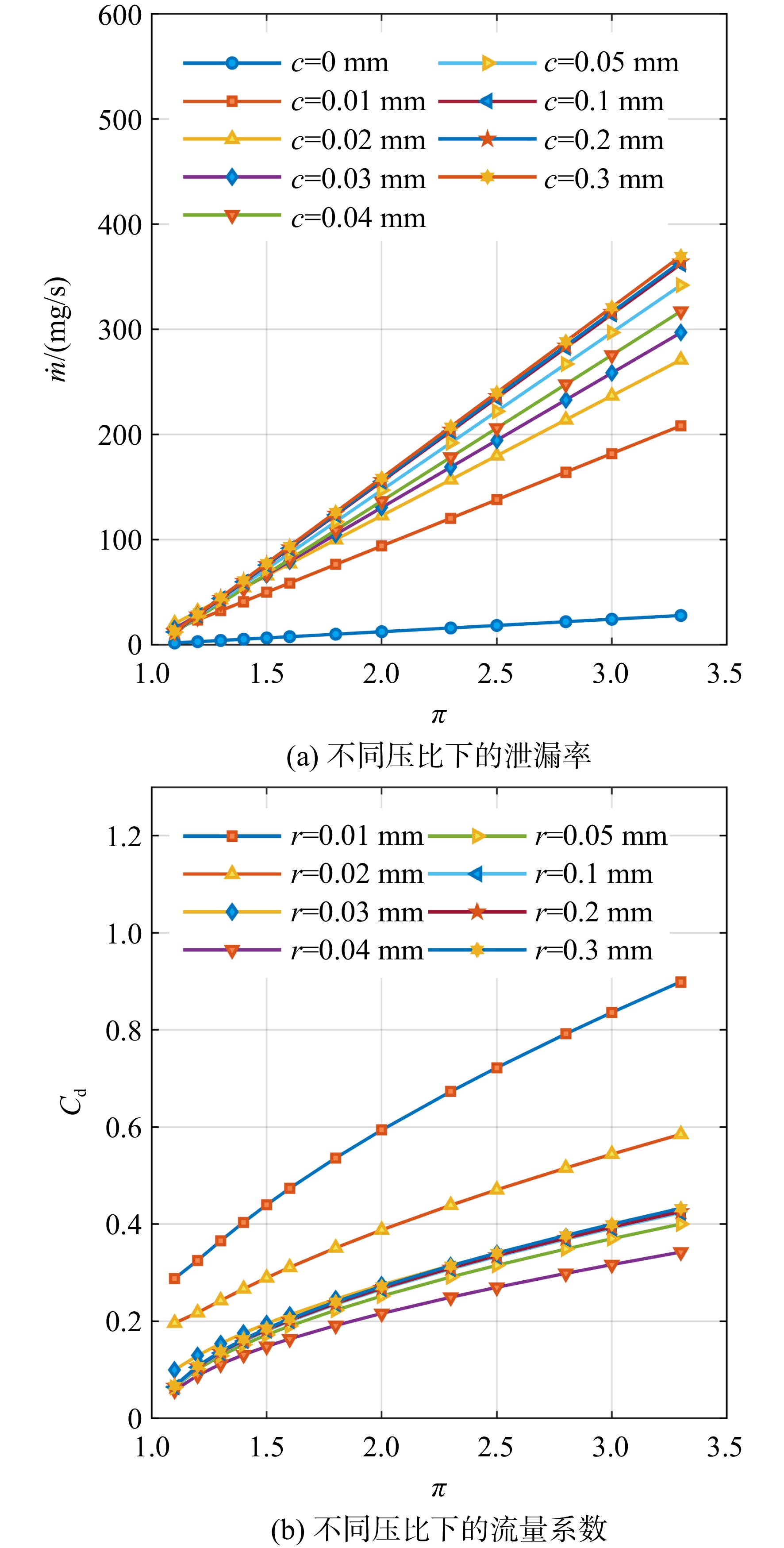
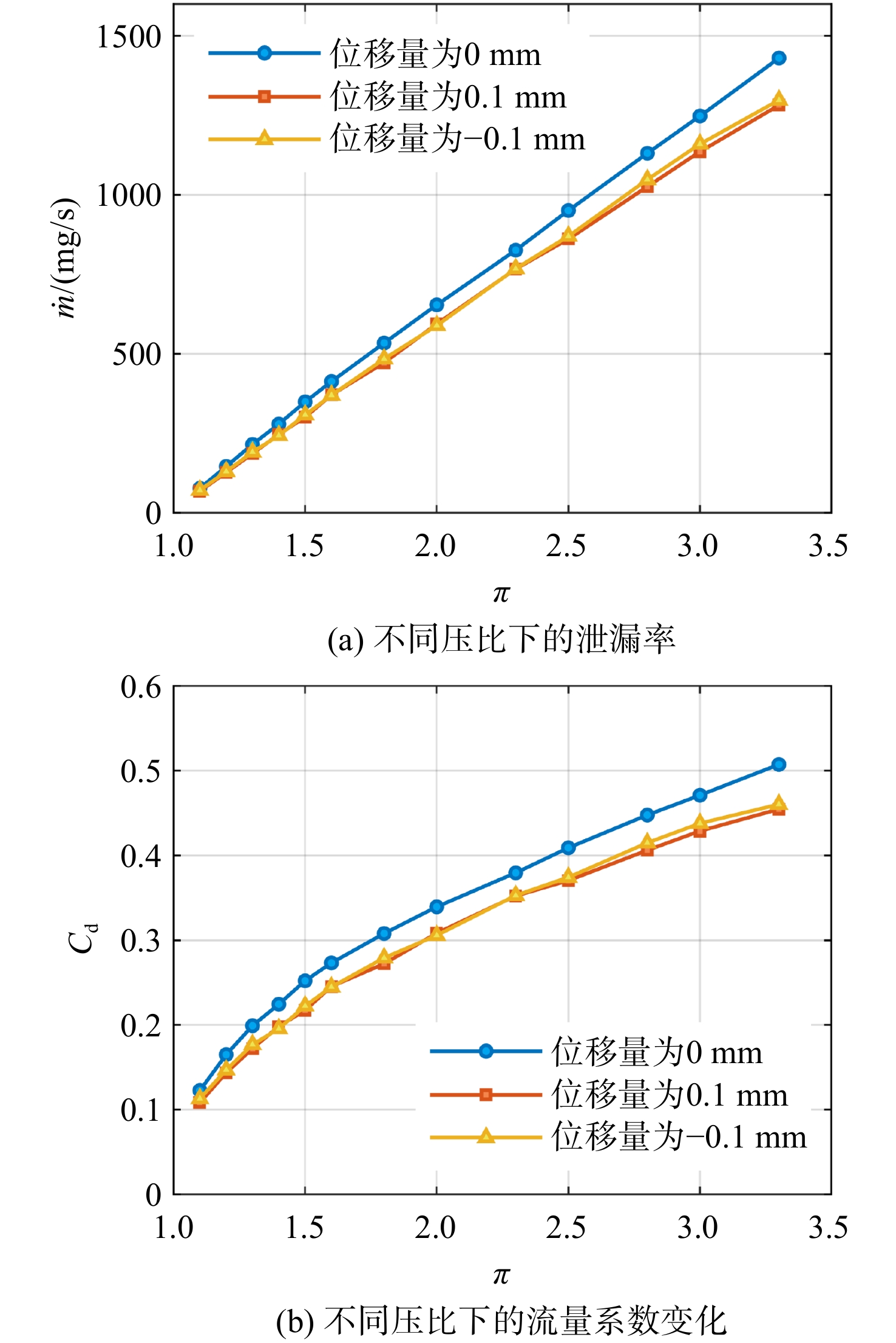
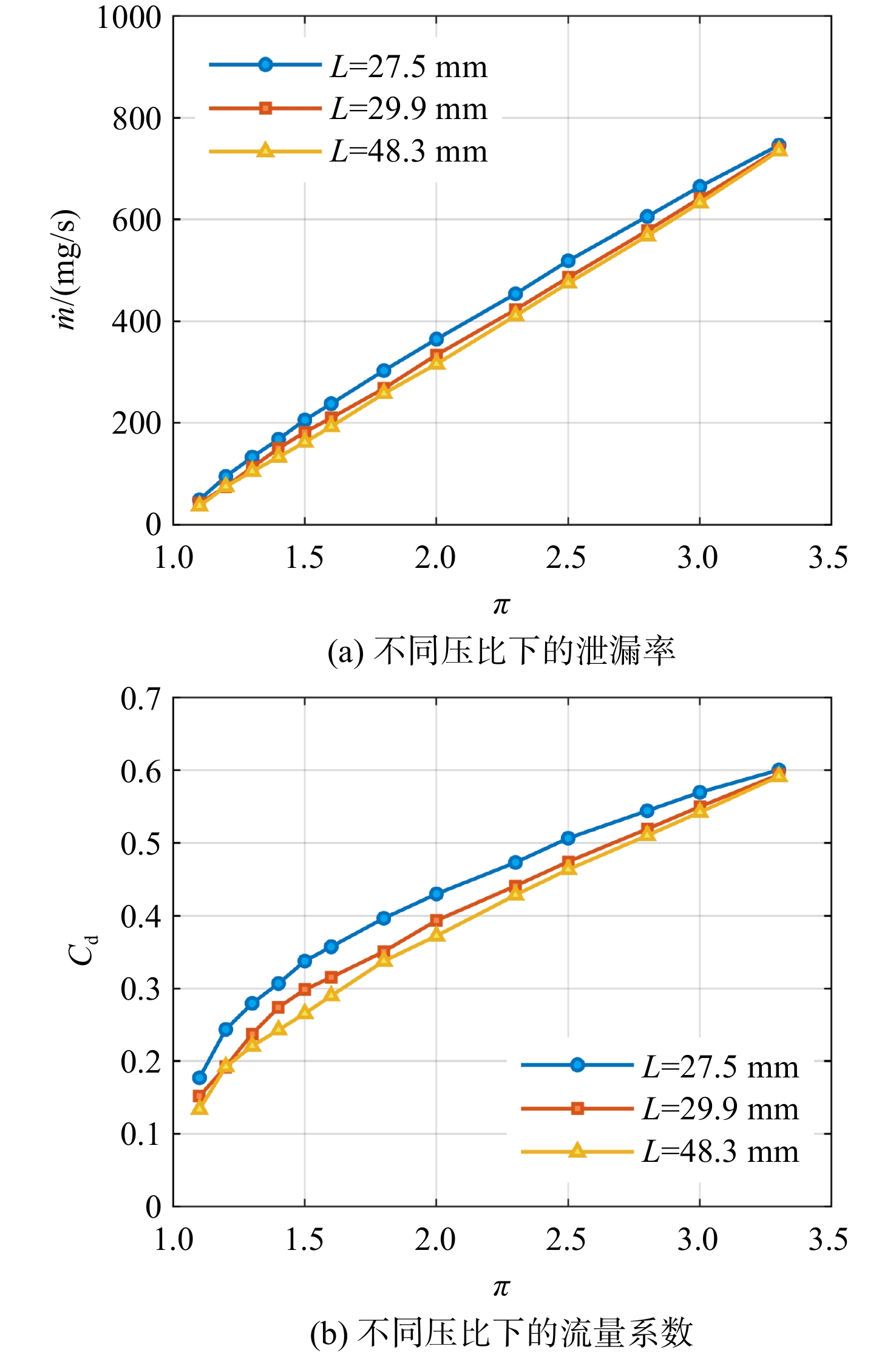
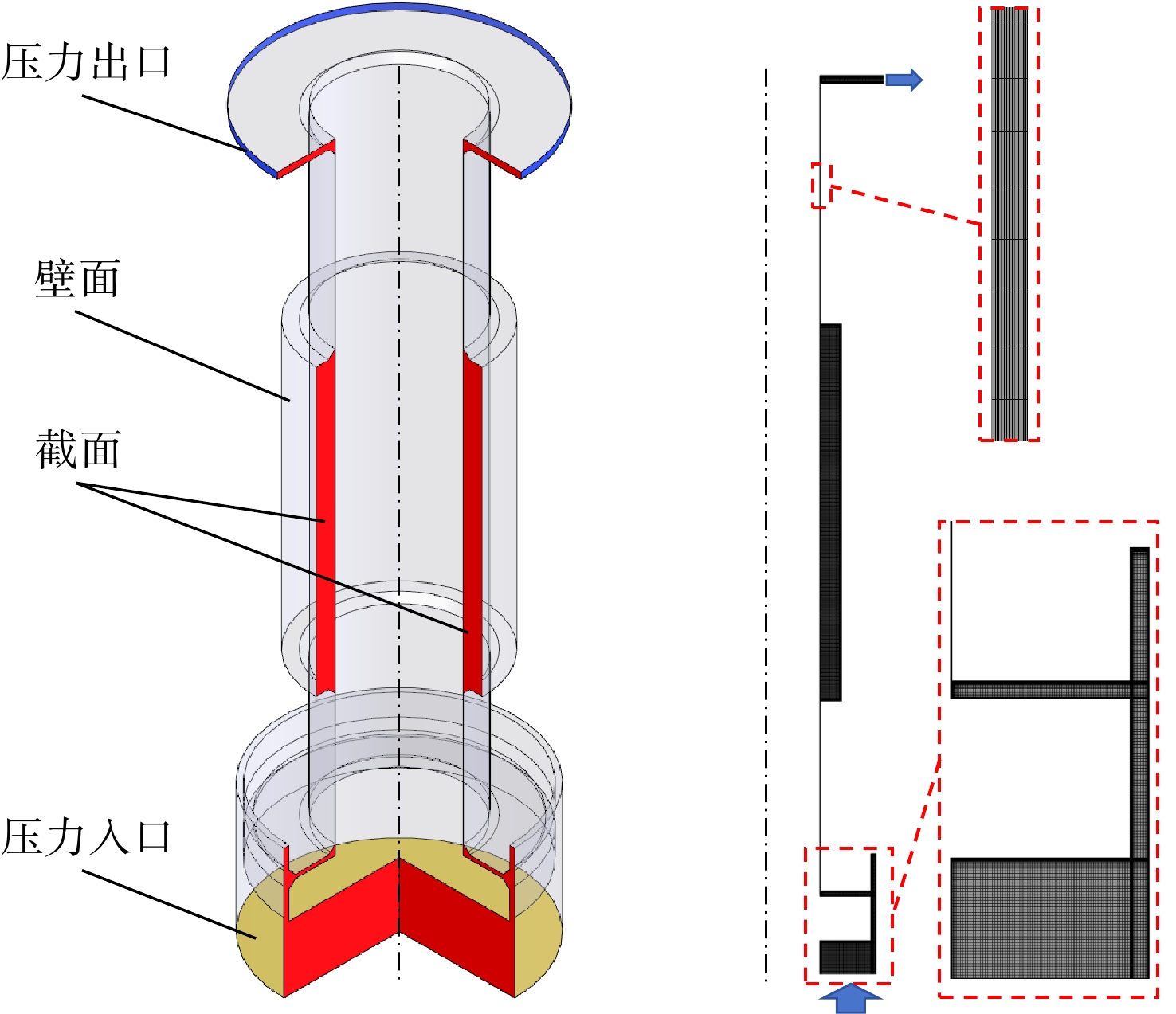
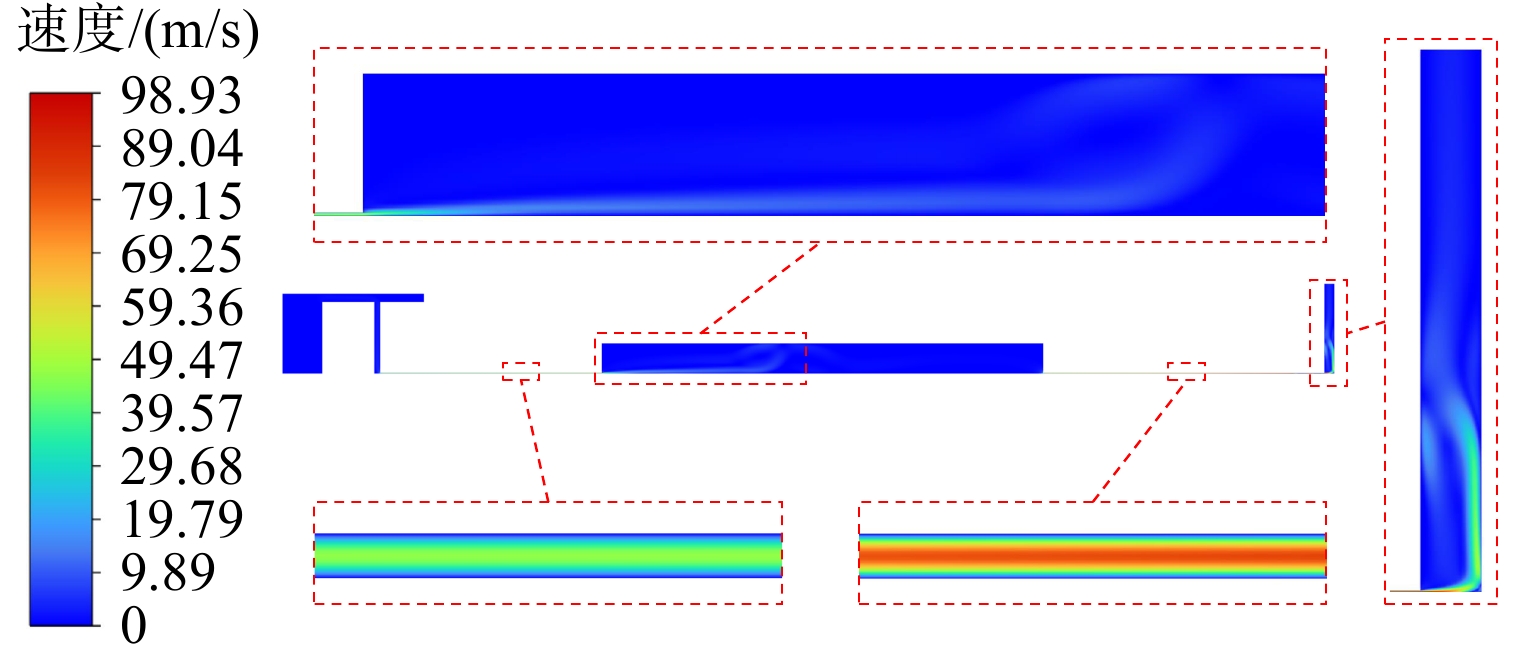
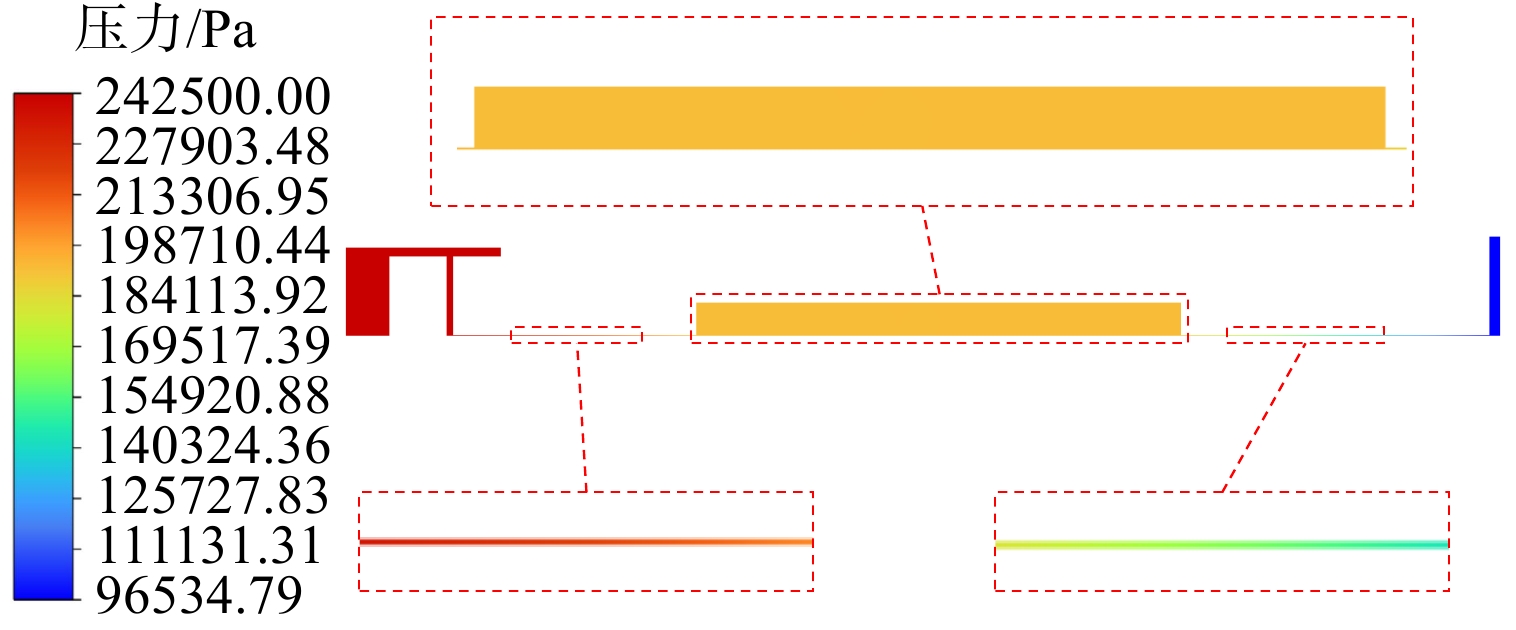
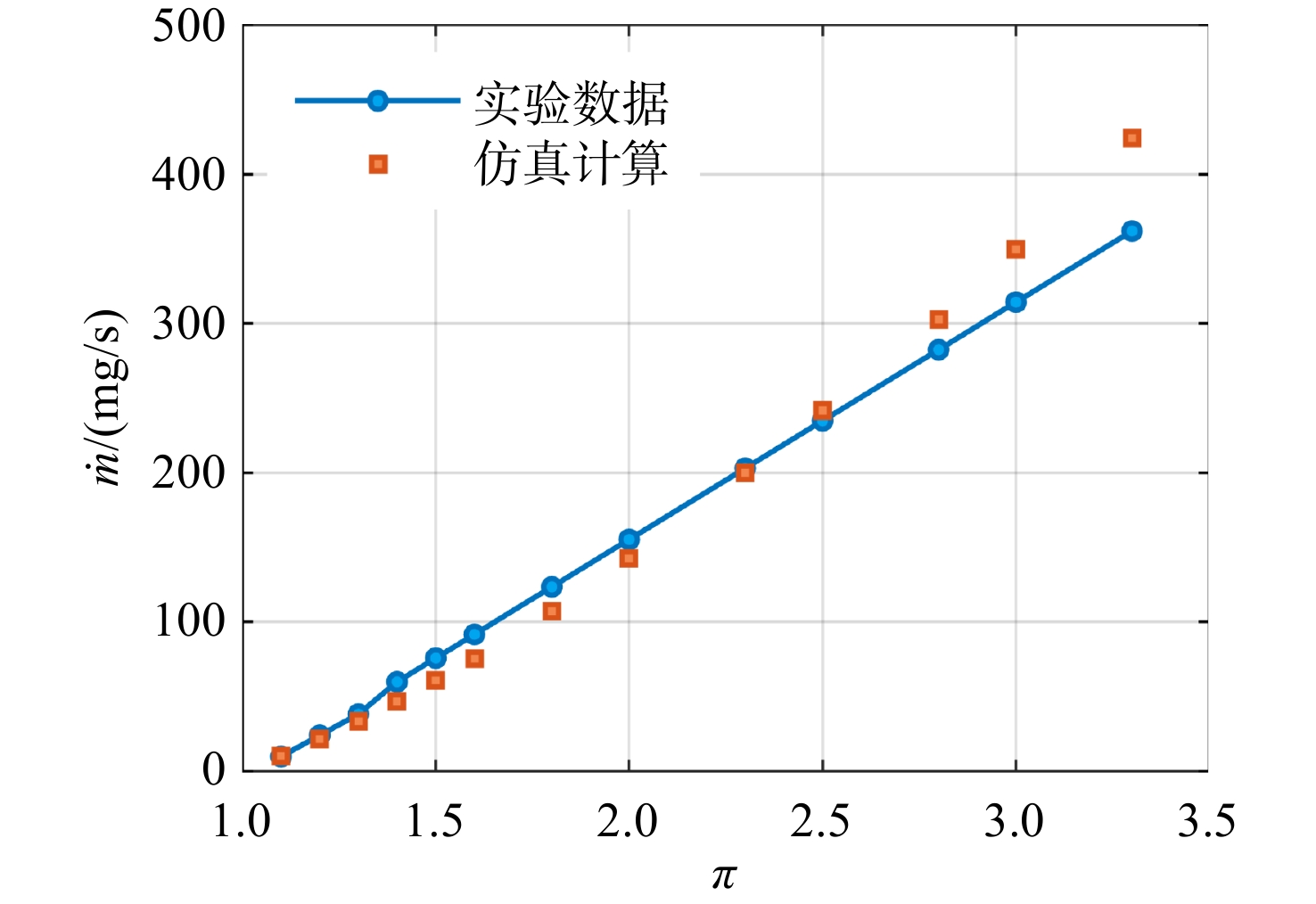
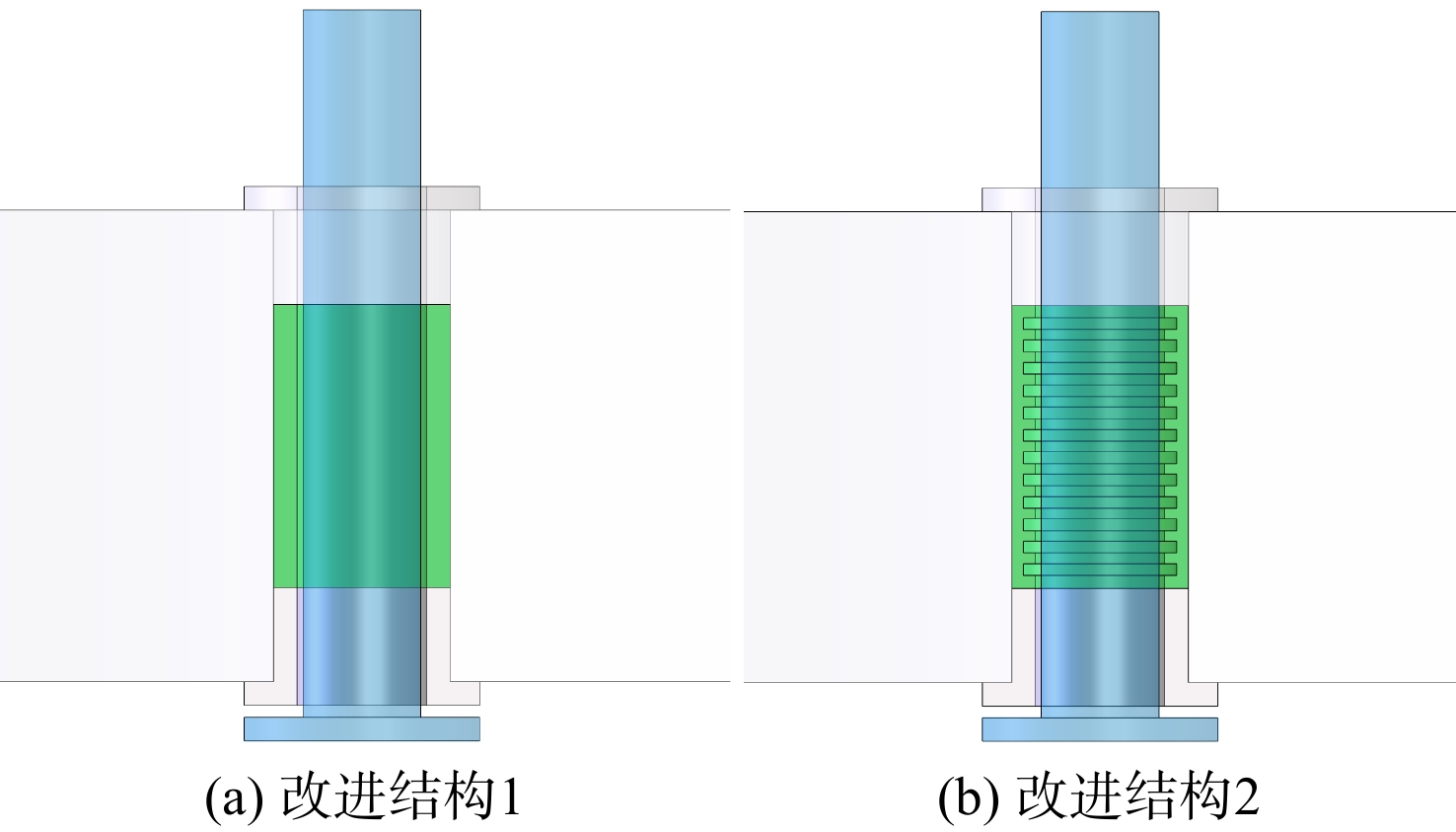
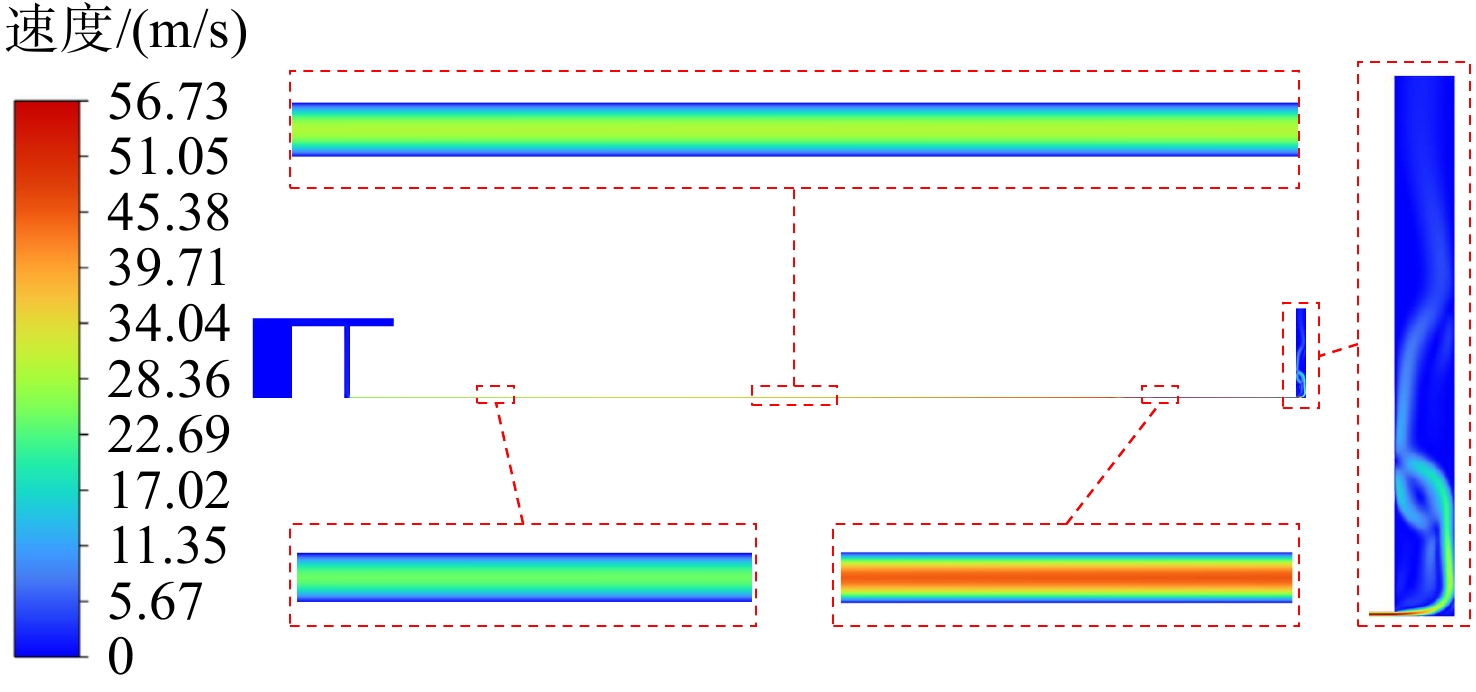
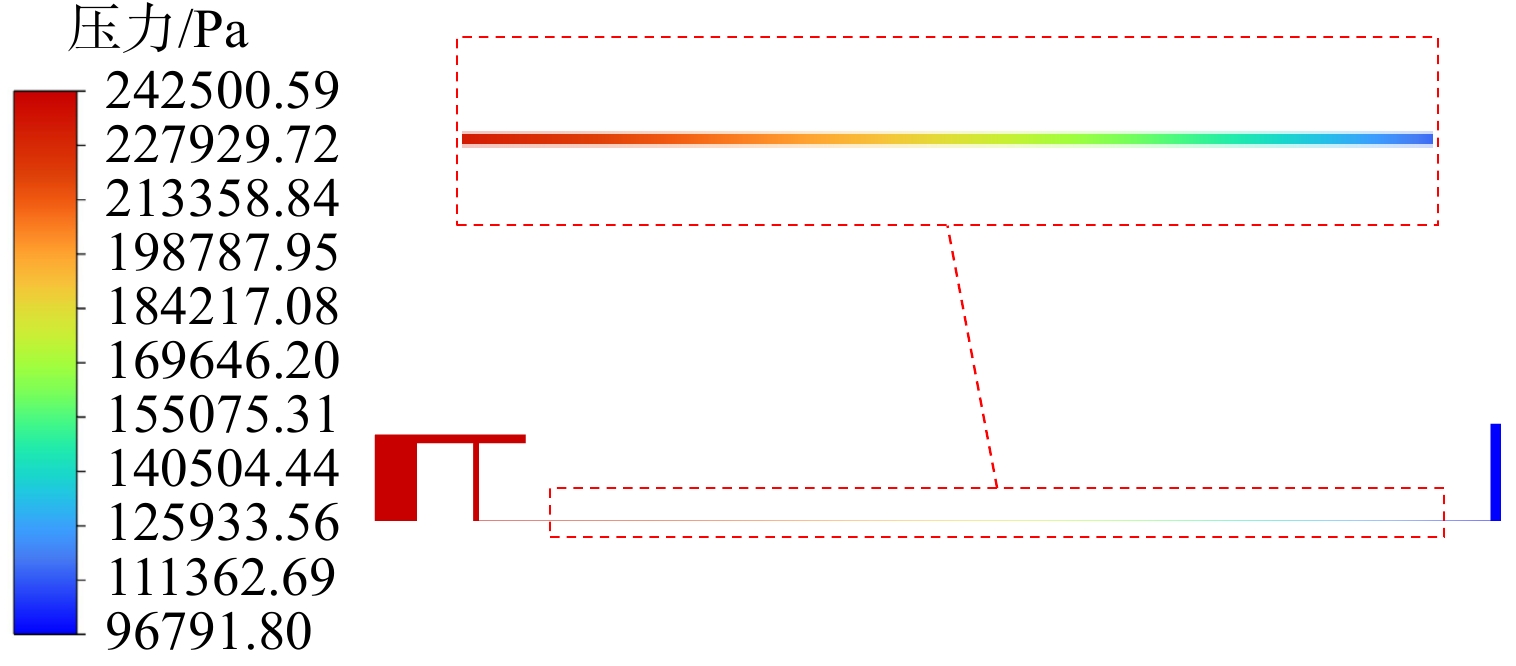
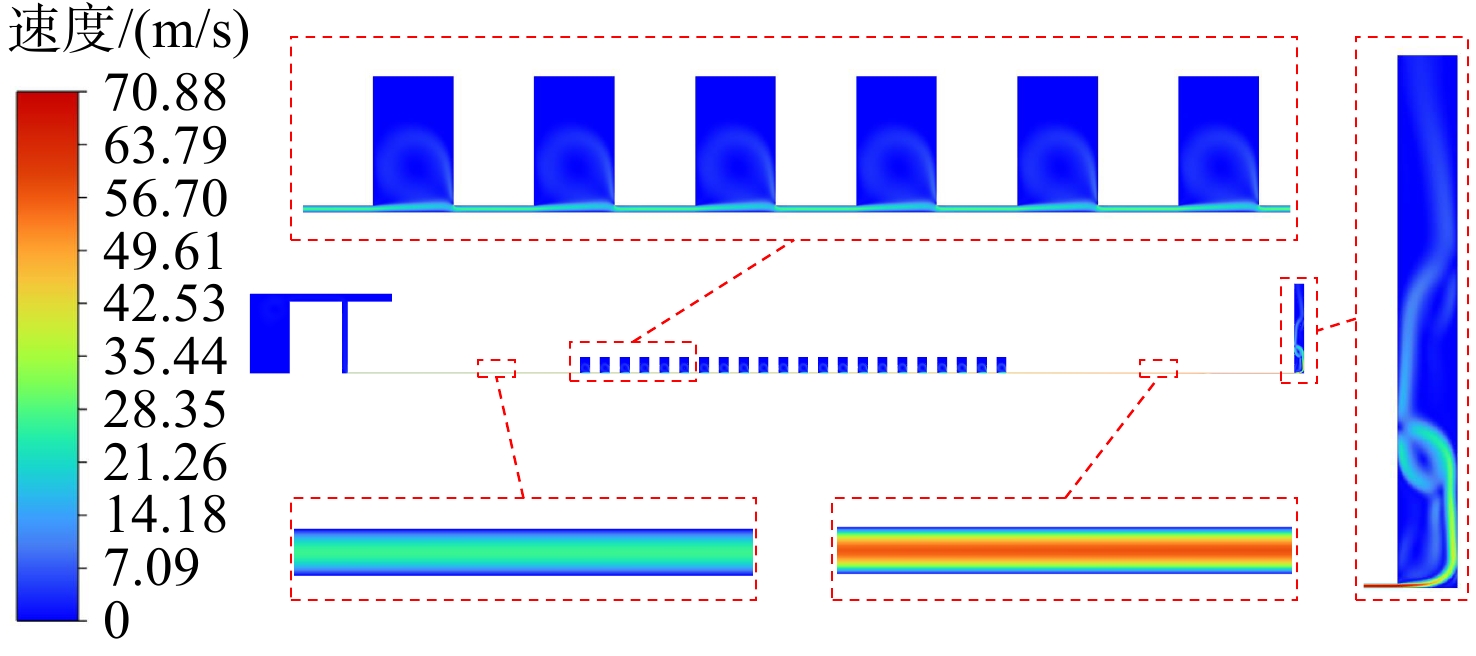
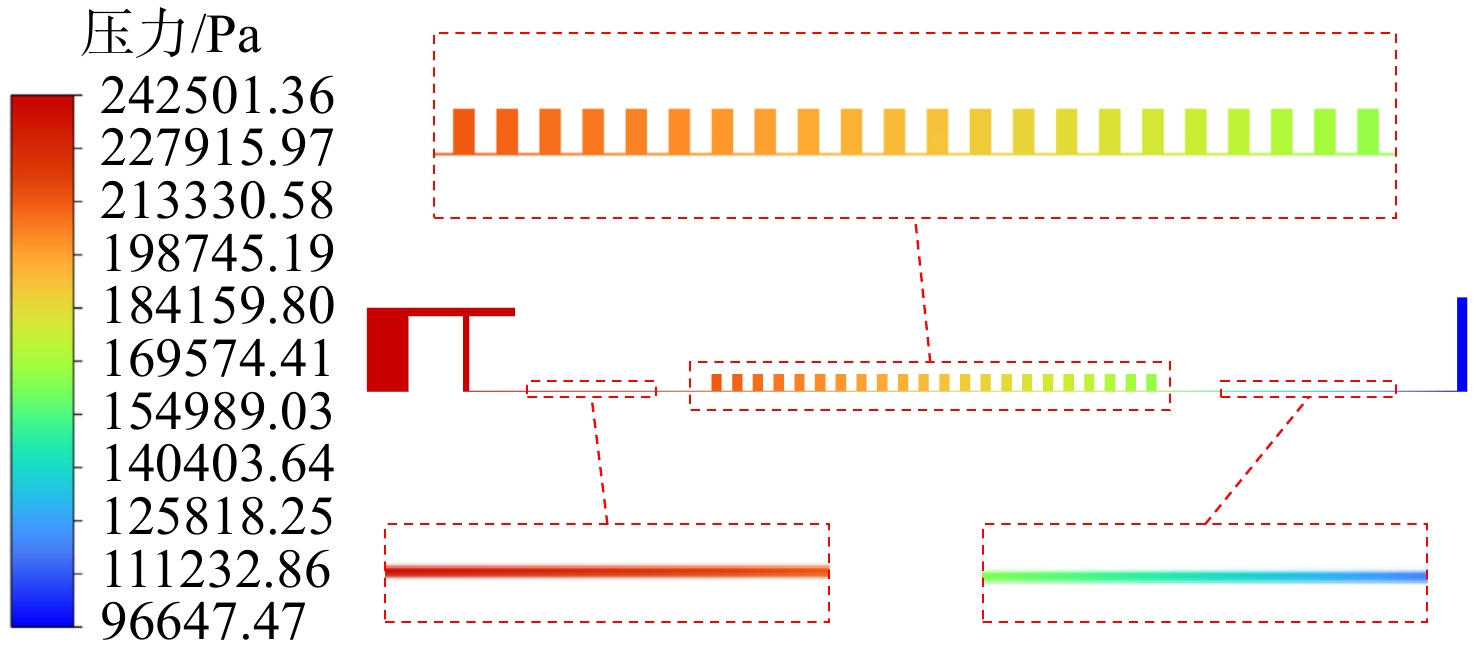
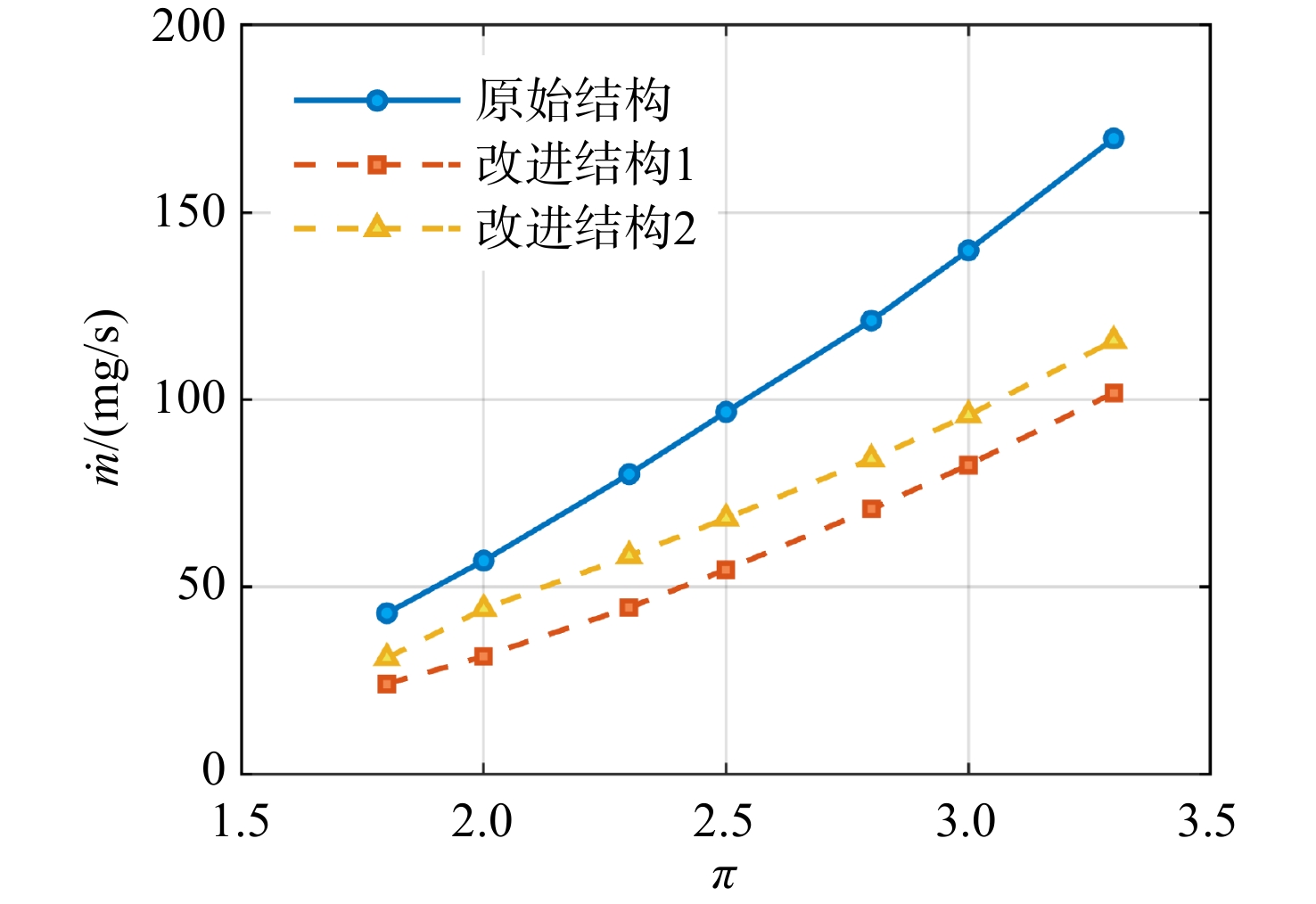
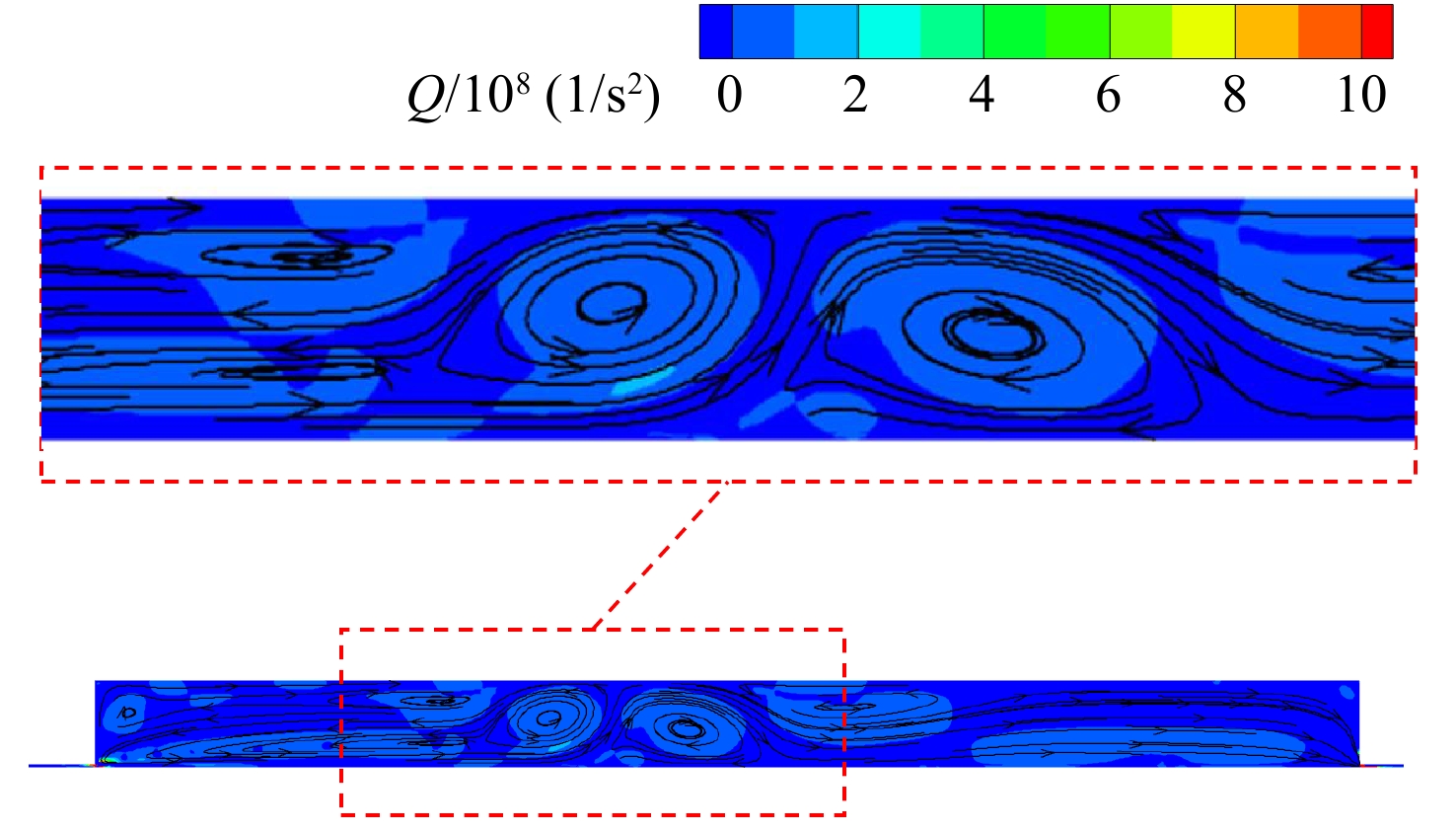
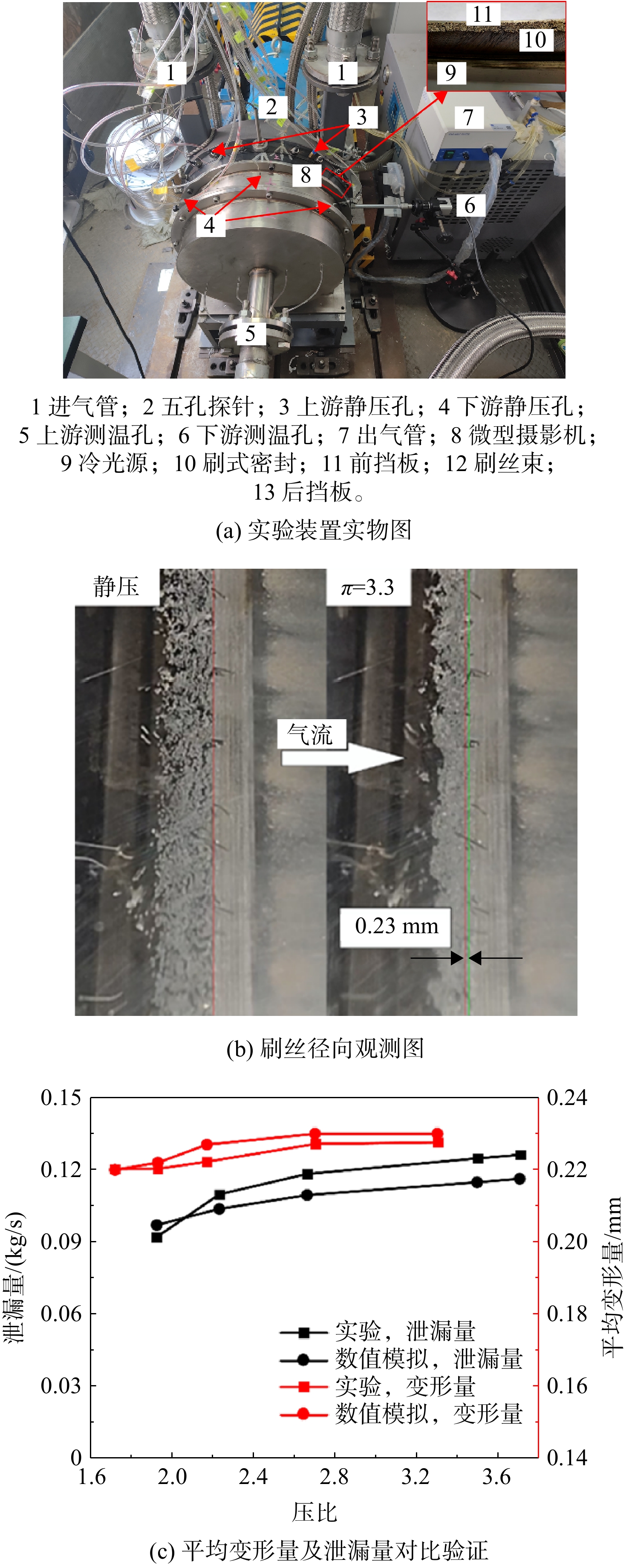
There is a gap leakage between the variable stator vane pivot of the compressor and the casing, which has a direct impact on the efficiency of the compressor. To obtain the leakage characteristics of the pivot gap, a high-pressure ratio pivot leakage experimental platform was established. Using flow control and pressure loss methods, the air leakage rates under various gaps and inlet-outlet pressure ratios were measured, and the effects of the mating condition between the pivot and casing, as well as axial and radial gaps, on the leakage rate were analyzed. Experimental results indicated that increases in pressure ratio, axial, and radial gaps led to an increase in both the leakage rate and the flow coefficient; under operating conditions with a pressure ratio of 3.3, the leakage rate in a radial contact state was reduced by 86.54% compared with a 0.01 mm gap state. Eccentricity of the pivot can lead to an increase in leakage rate, whereas tilt can decrease it. To reduce leakage, simulation analysis on the flow characteristics of the leakage was conducted, and a sealing structure using simple bushings or splined bushings for cavity filling was proposed. The simulation results indicated that under operating conditions with a pressure ratio of 3.3, the leakage rate decreased by approximately 40.04% with the addition of simple bushings, and by approximately 31.8% with the addition of splined bushings.

Unsteady aerodynamic characterization computation and analysis of an airfoil based on TDDES model
Xing Haonan, Zhao Huan, Gao Zhenghong, Gong Zhiyuan, Wang Xuehe
2026, 41(8): 20240792. doi: 10.13224/j.cnki.jasp.20240792
Abstract:

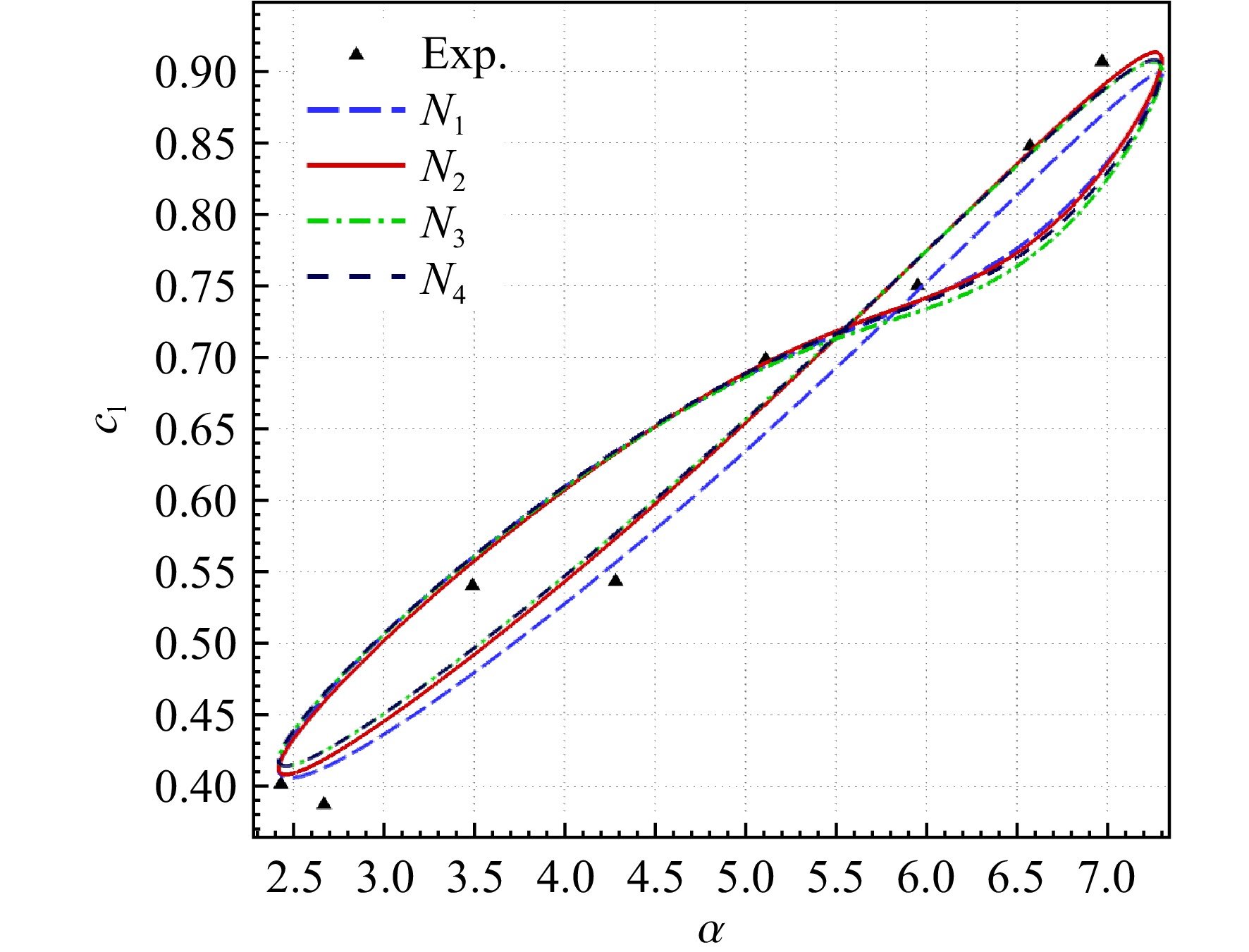
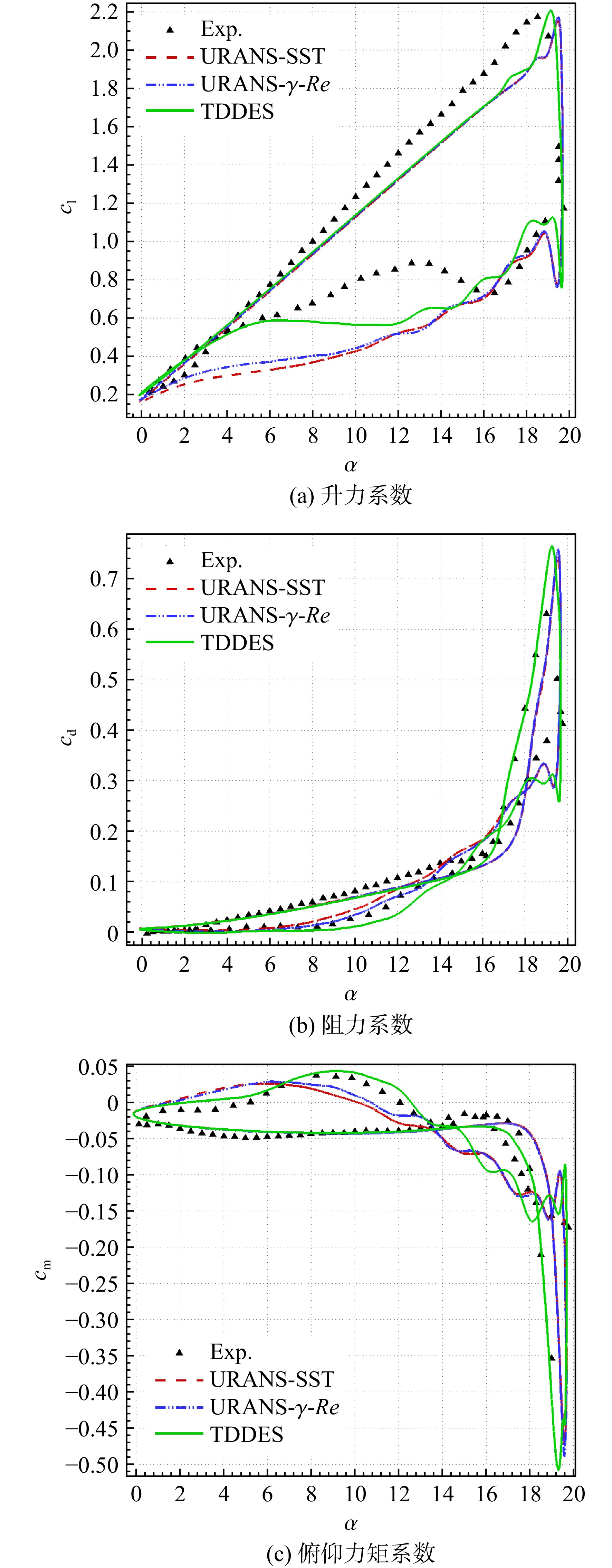
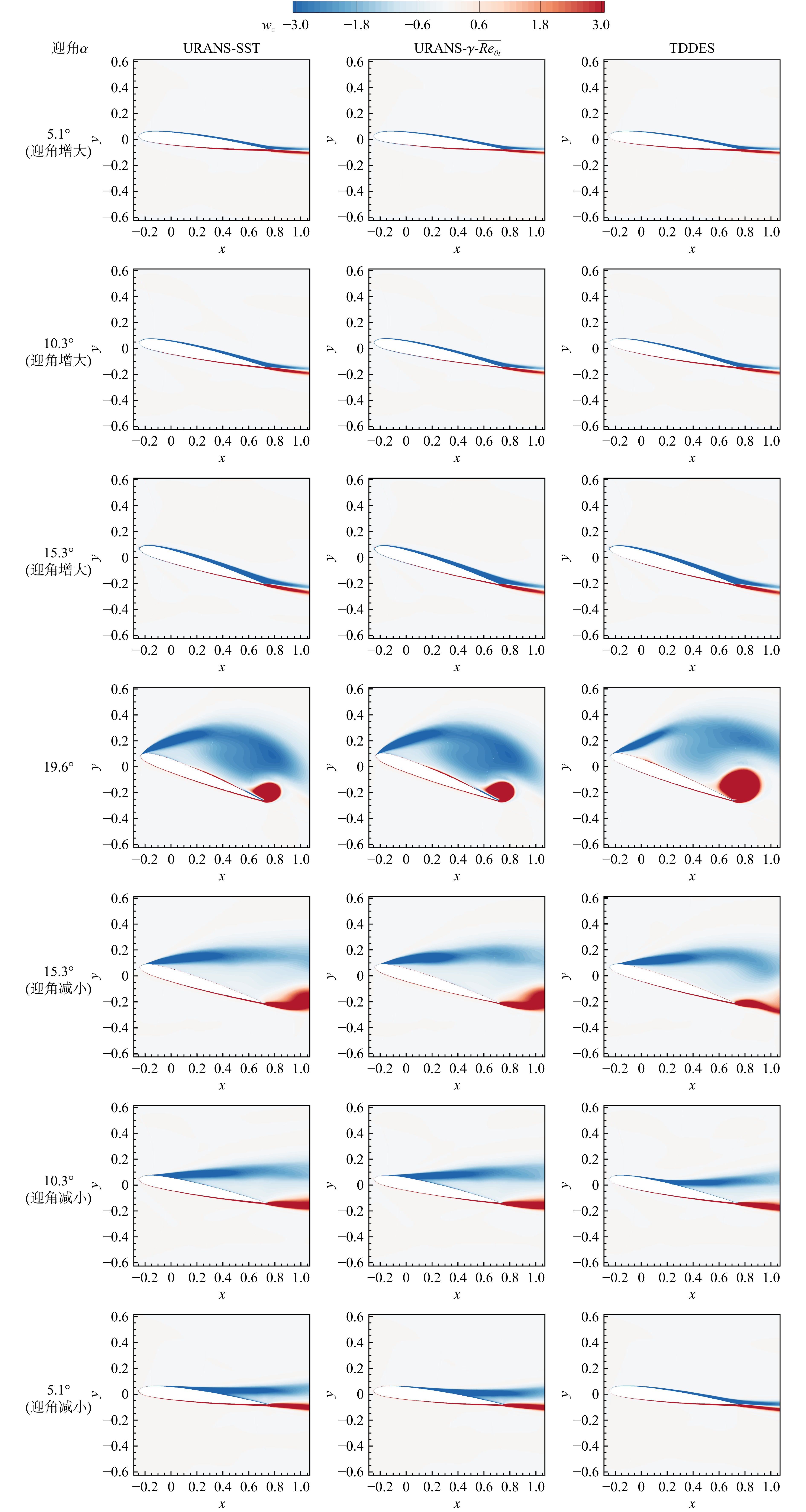
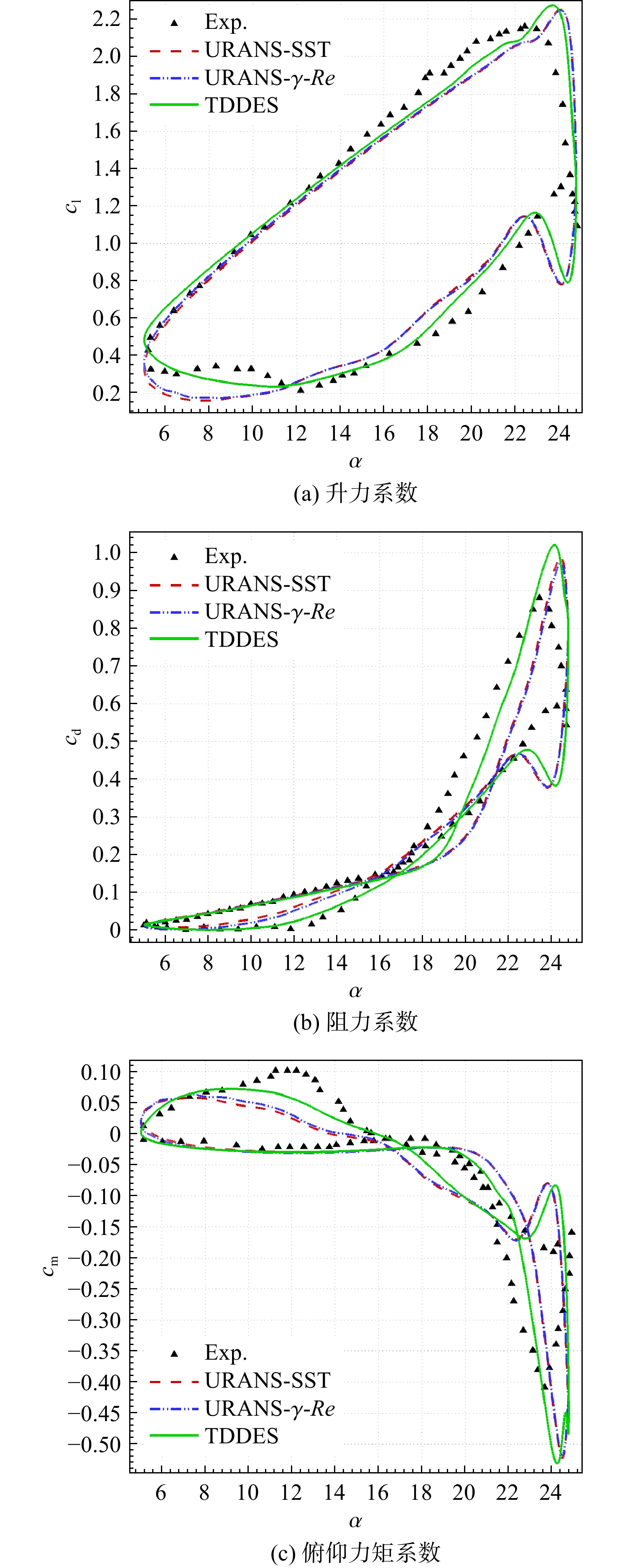
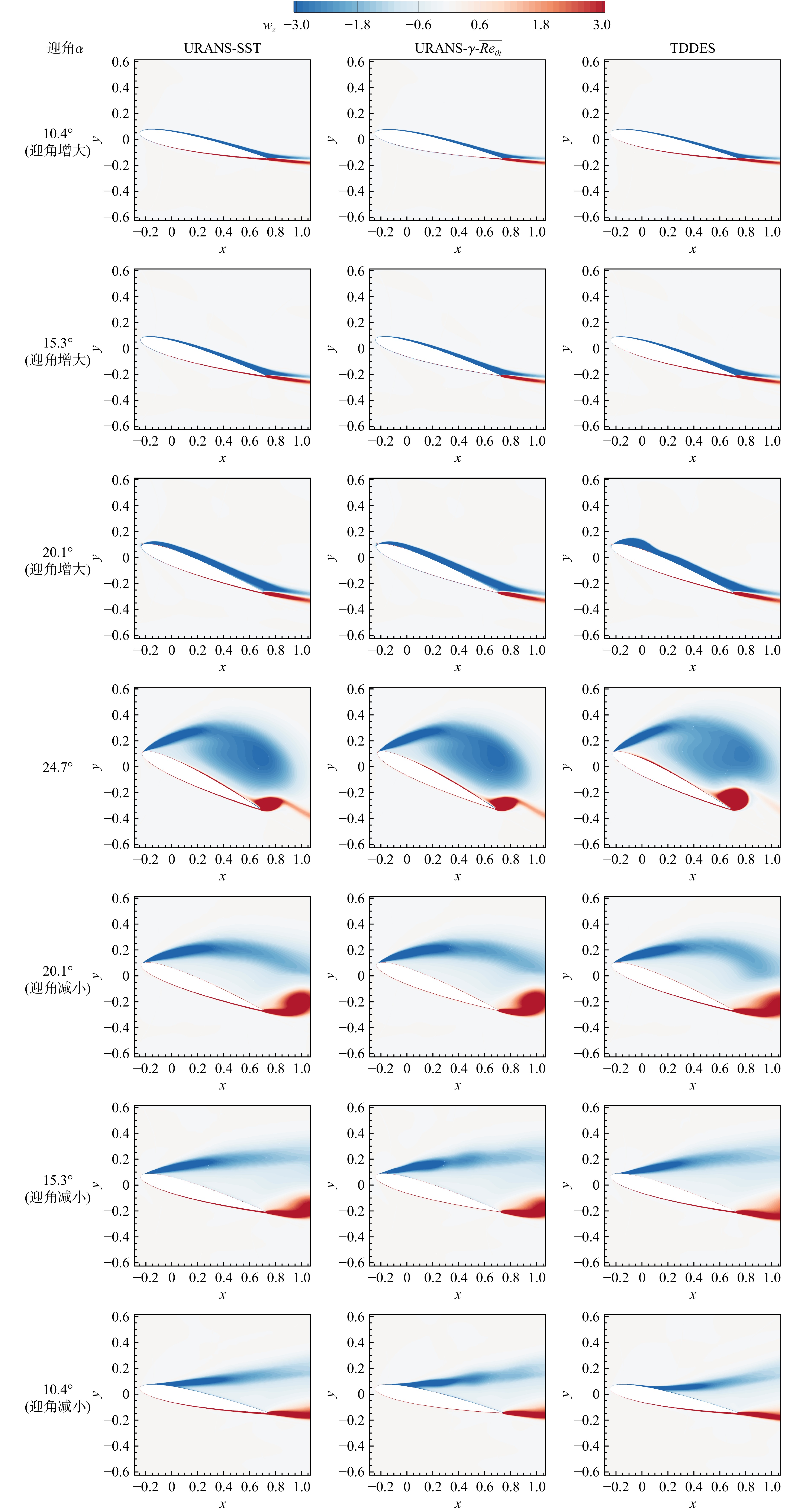
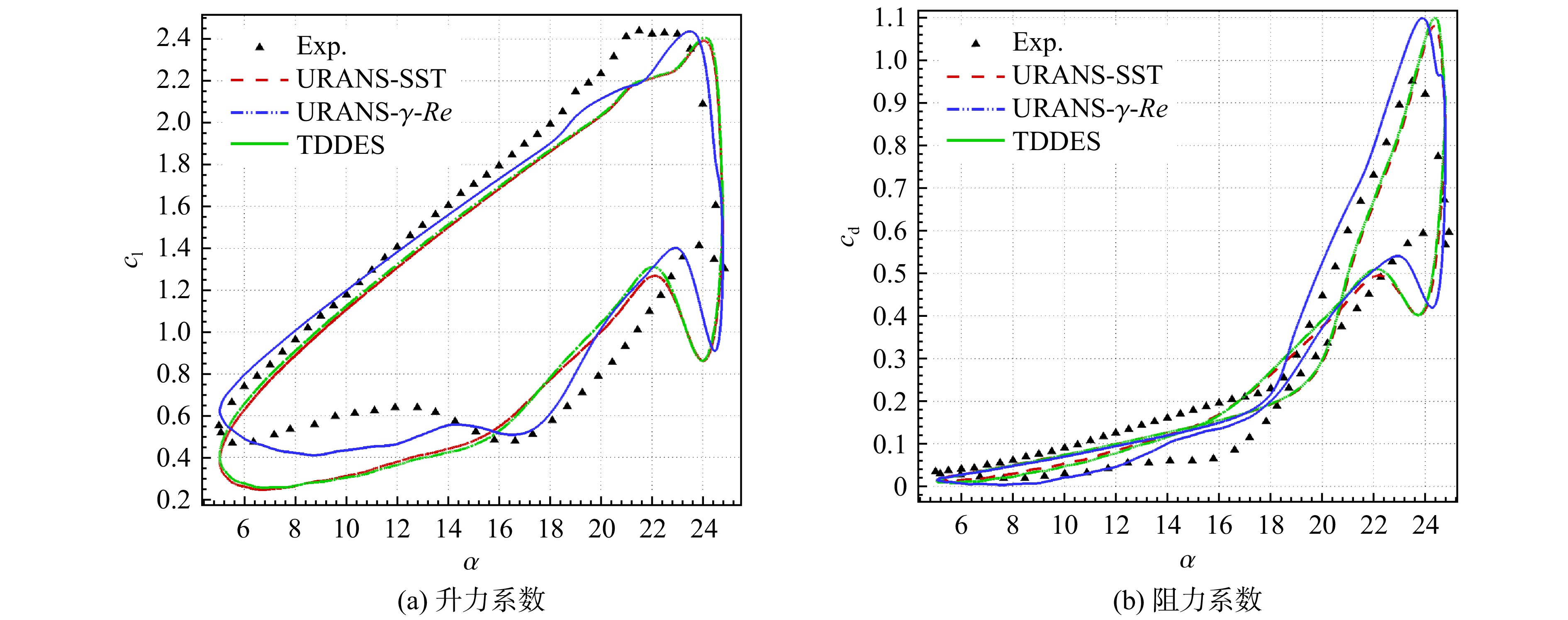
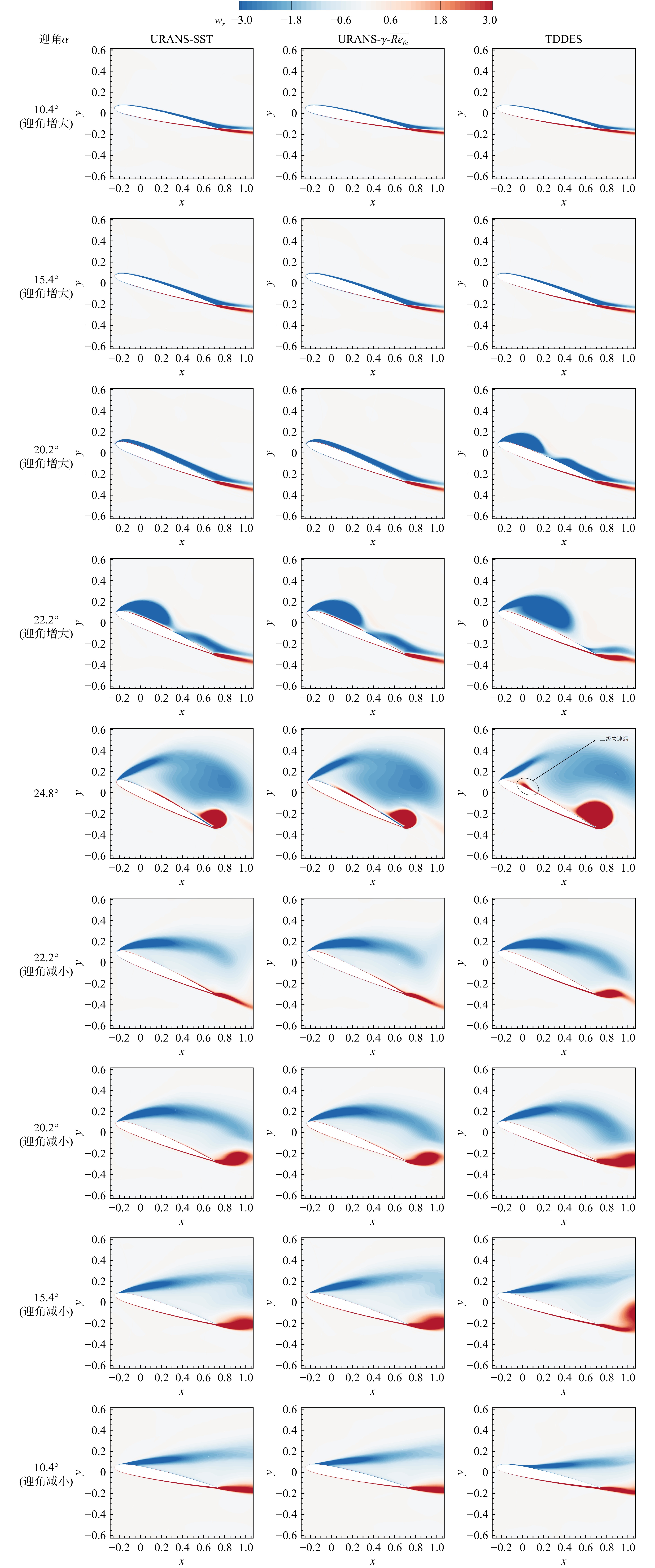
To address the issue of poor simulation accuracy for the dynamic stall of rotor wing airfoils, this study employed the delay detached eddy simulation (DDES) model and the $ \gamma {\text{-}}\overline{{{Re}}_{\theta t}} $ coupled model (TDDES) models developed by the research group to investigate the unsteady aerodynamic characteristics. It introduced a new RANS(Reynolds-averaged Navier-Stokes equation)/LES (large eddy simulation)switching function to reduce the uncertainty caused by the grid-dependence of the LES model. Unsteady simulations were conducted on the NACA0012 and SC1095 airfoils. The results were compared with those from URANS-SST (unsteady Reynolds-averaged Navier-Stokes with shear stress transport) and URANS-$ \gamma {\text{-}}\overline{{{Re}}_{\theta t}} $ models to systematically verify the capability of the TDDES model in simulating unsteady aerodynamic characteristics. The results showed that, compared to URANS methods, the TDDES model achieved higher accuracy in predicting lift/drag coefficient hysteresis loops and the evolution of dynamic stall vortices, as well as the separation flow of the airfoil more accurately. Furthermore, it retained the higher transition prediction accuracy of the $ \gamma {\text{-}}\overline{{{Re}}_{\theta t}} $ transition model and the simulation capability of the DDES model for the separation flow.

Coupled two-phase flow solver based on entropy viscosity within DGSEM framework
Zhang Tianyi, Hao Shixi, Zhao Ming, Liu Zhengxian
2026, 41(8): 20250022. doi: 10.13224/j.cnki.jasp.20250022
Abstract:

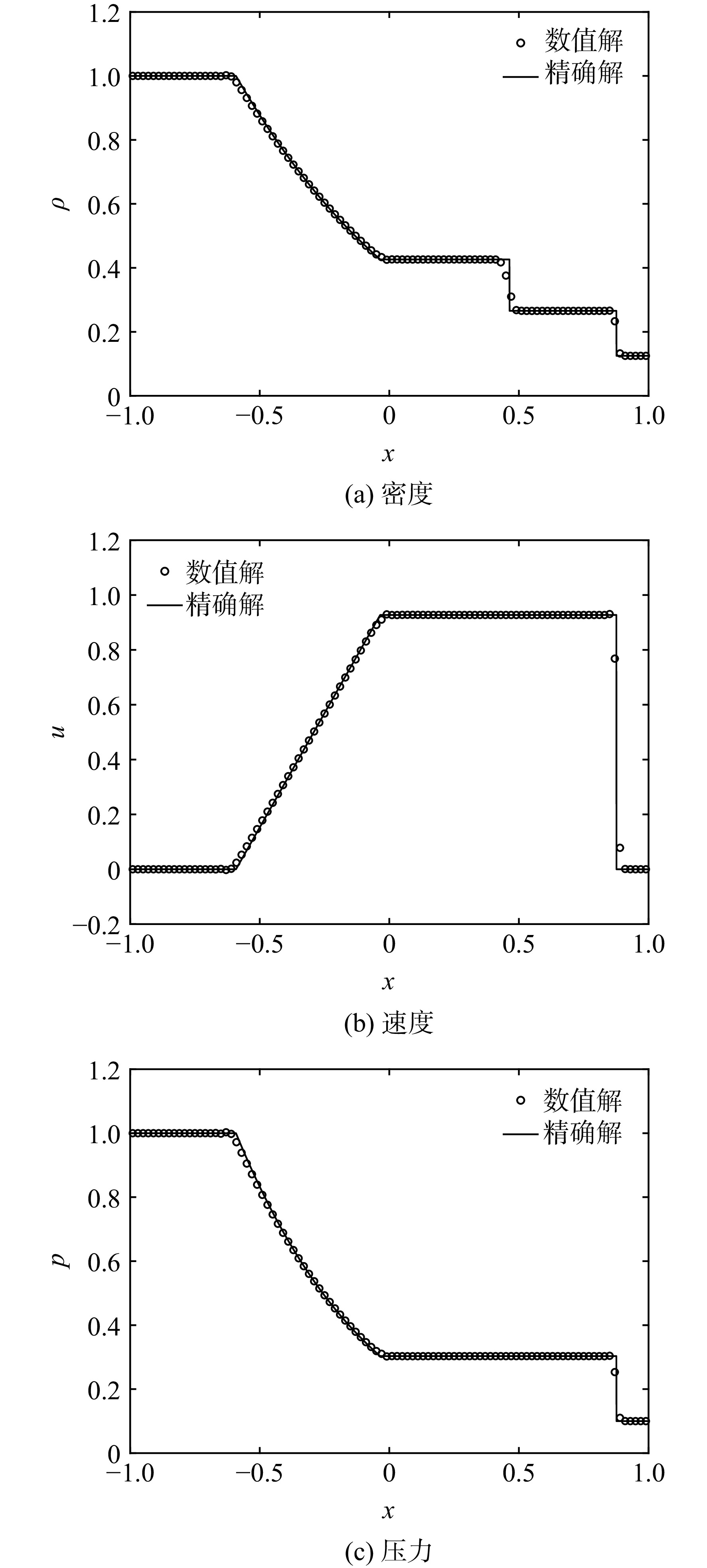
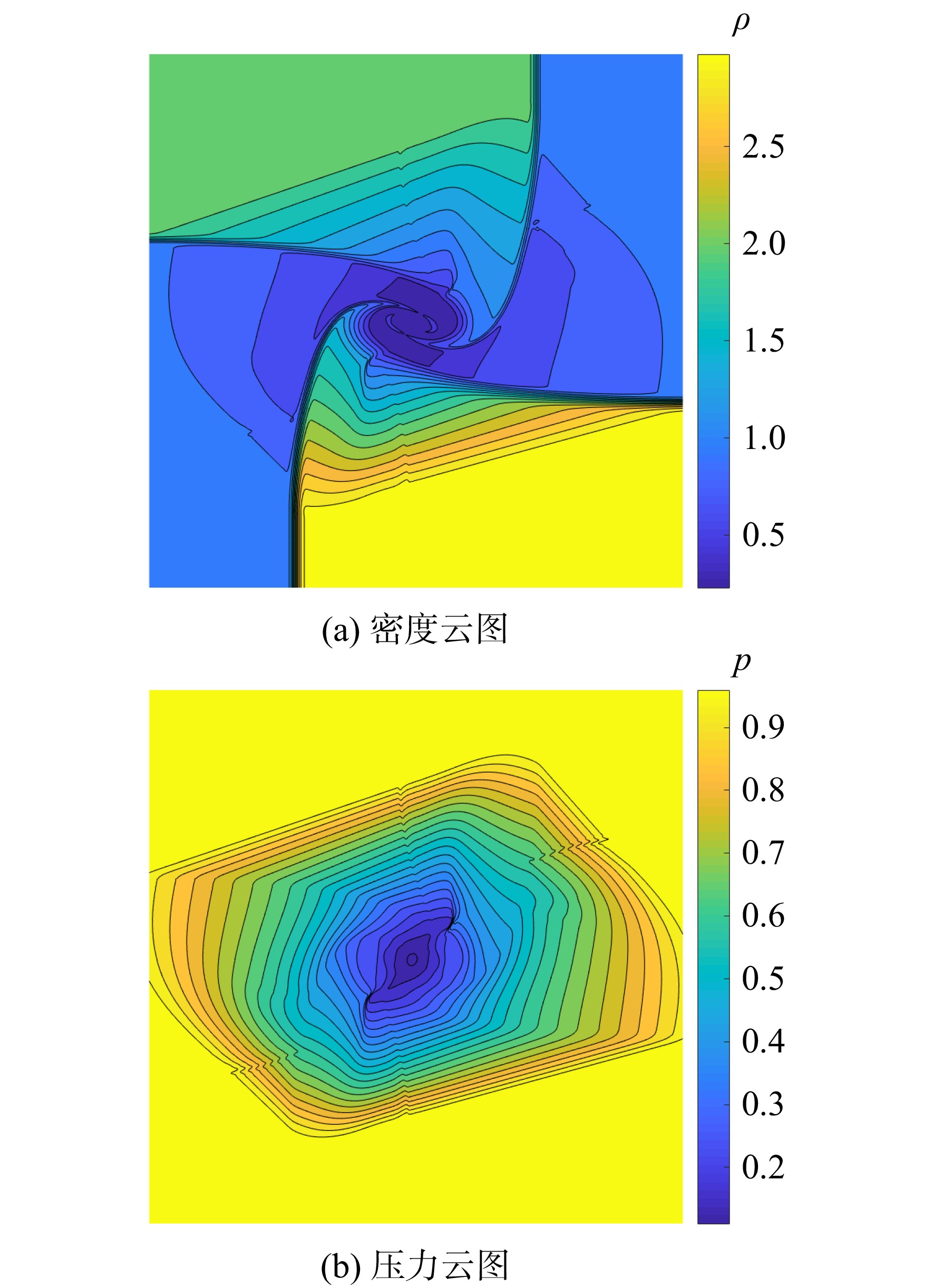
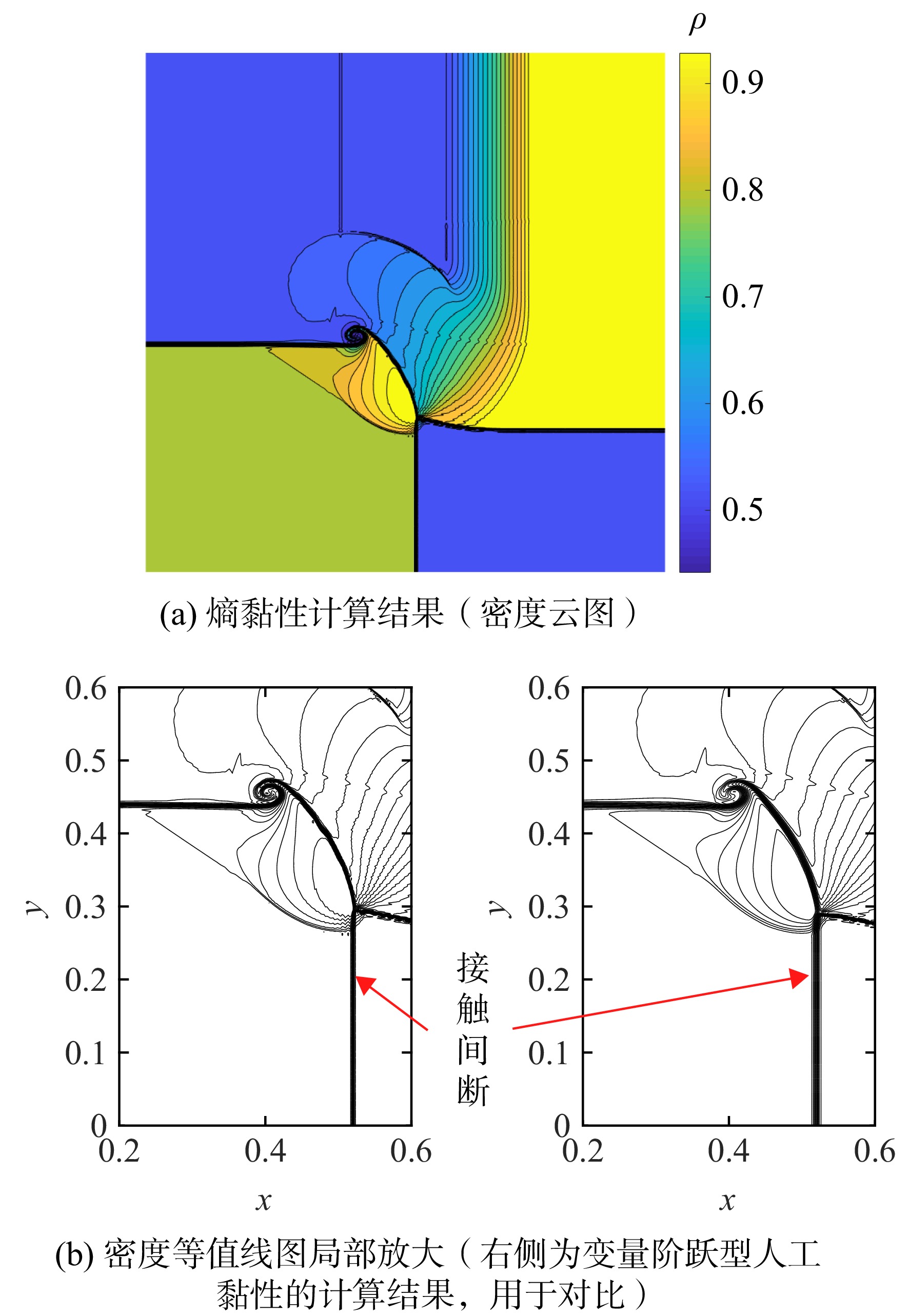
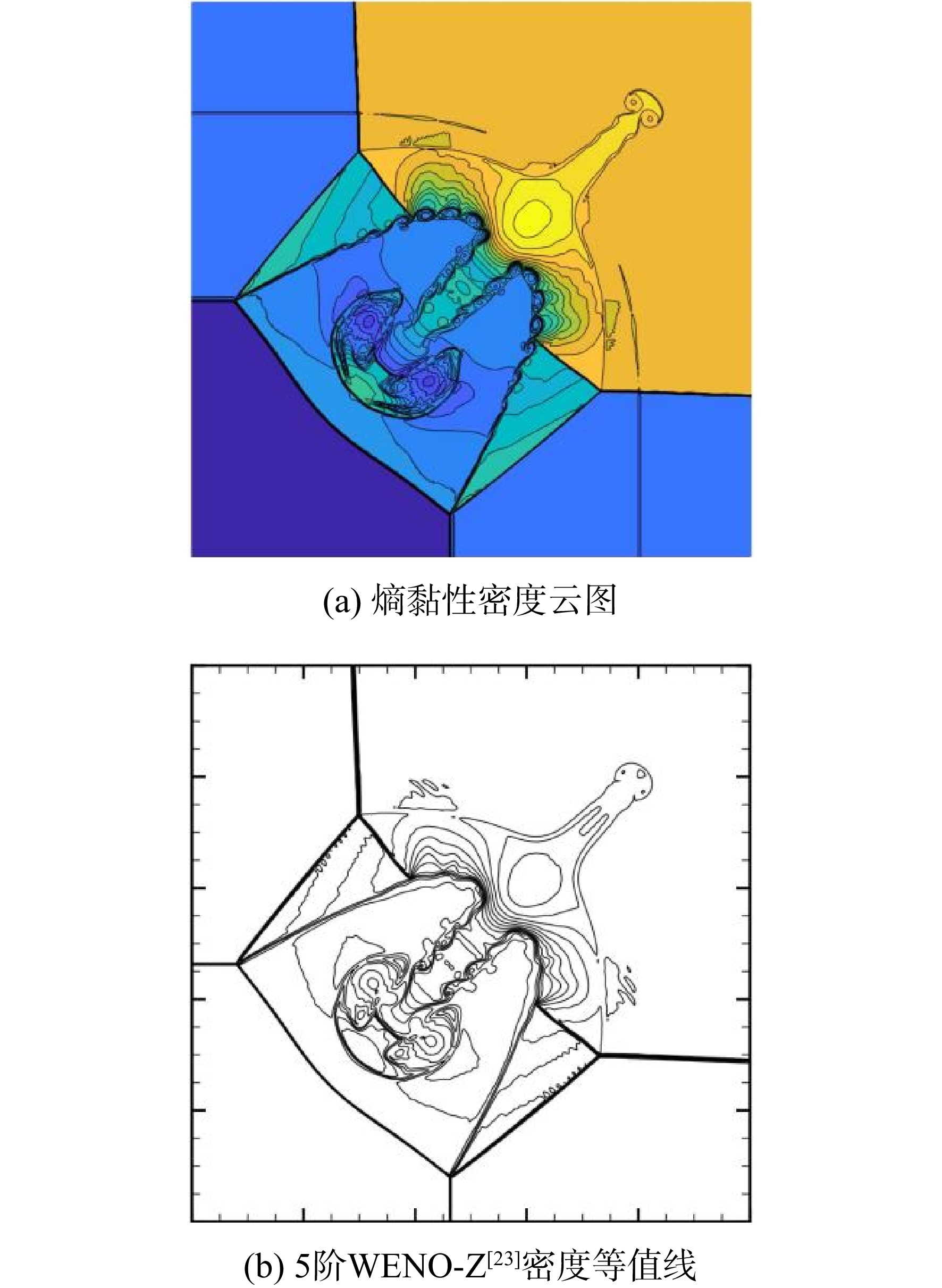
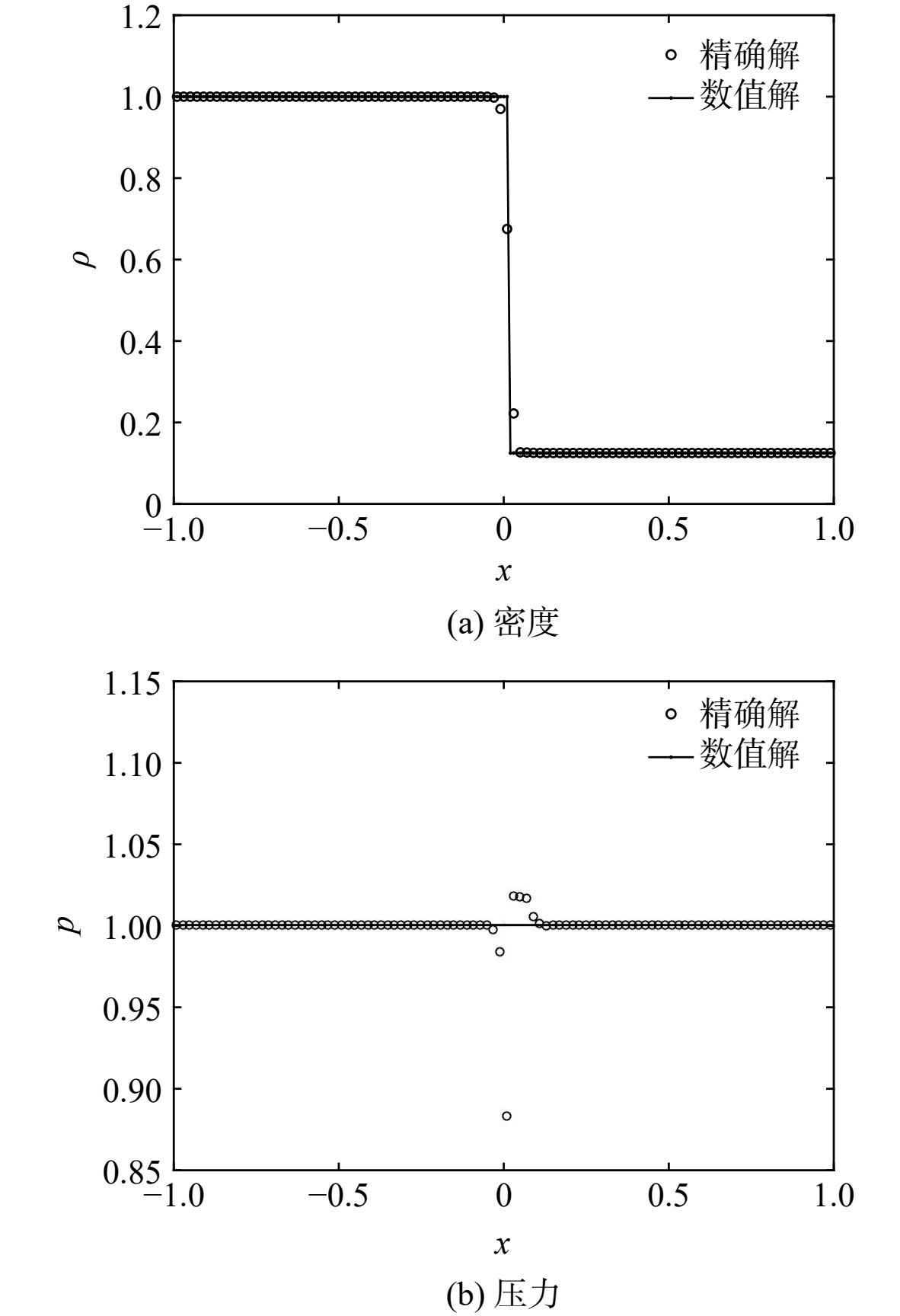
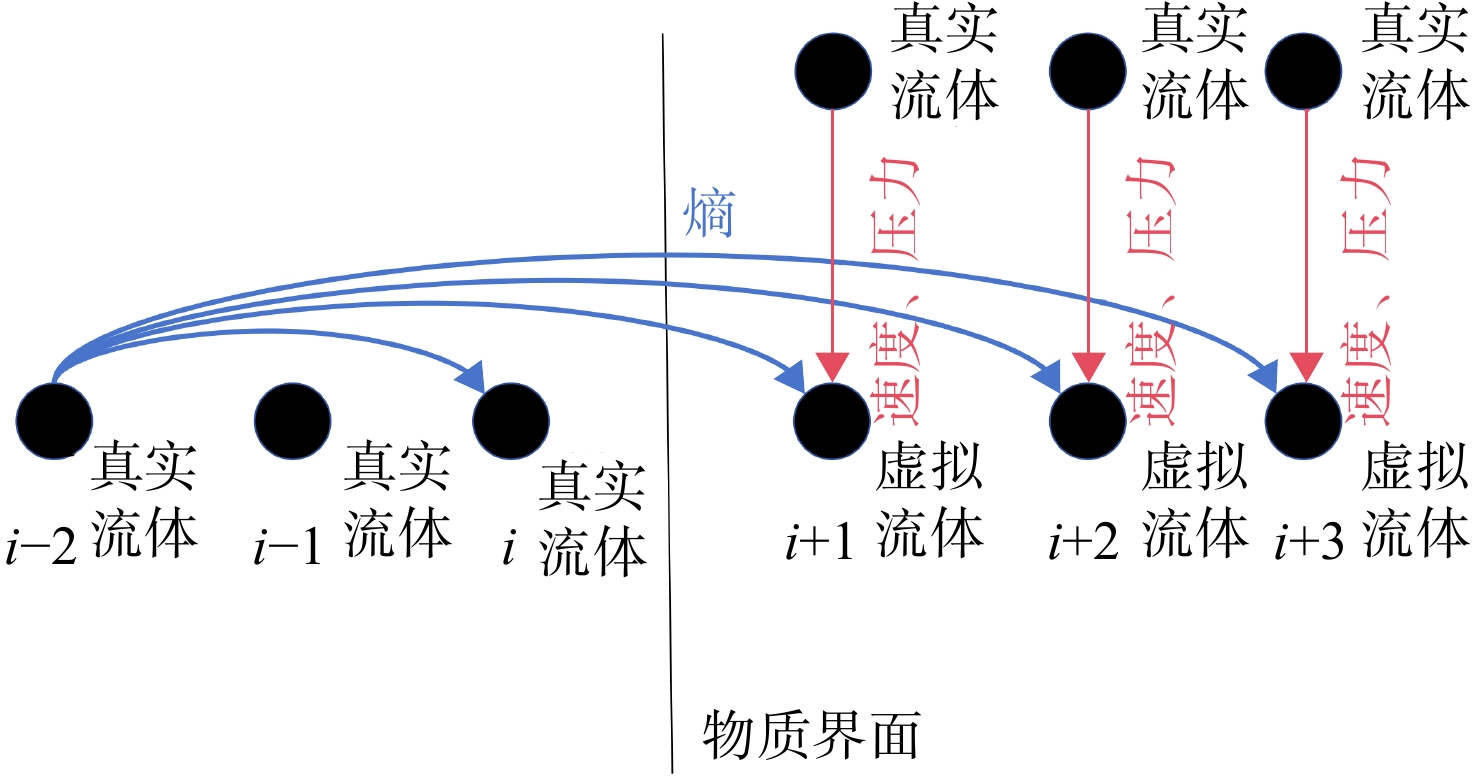
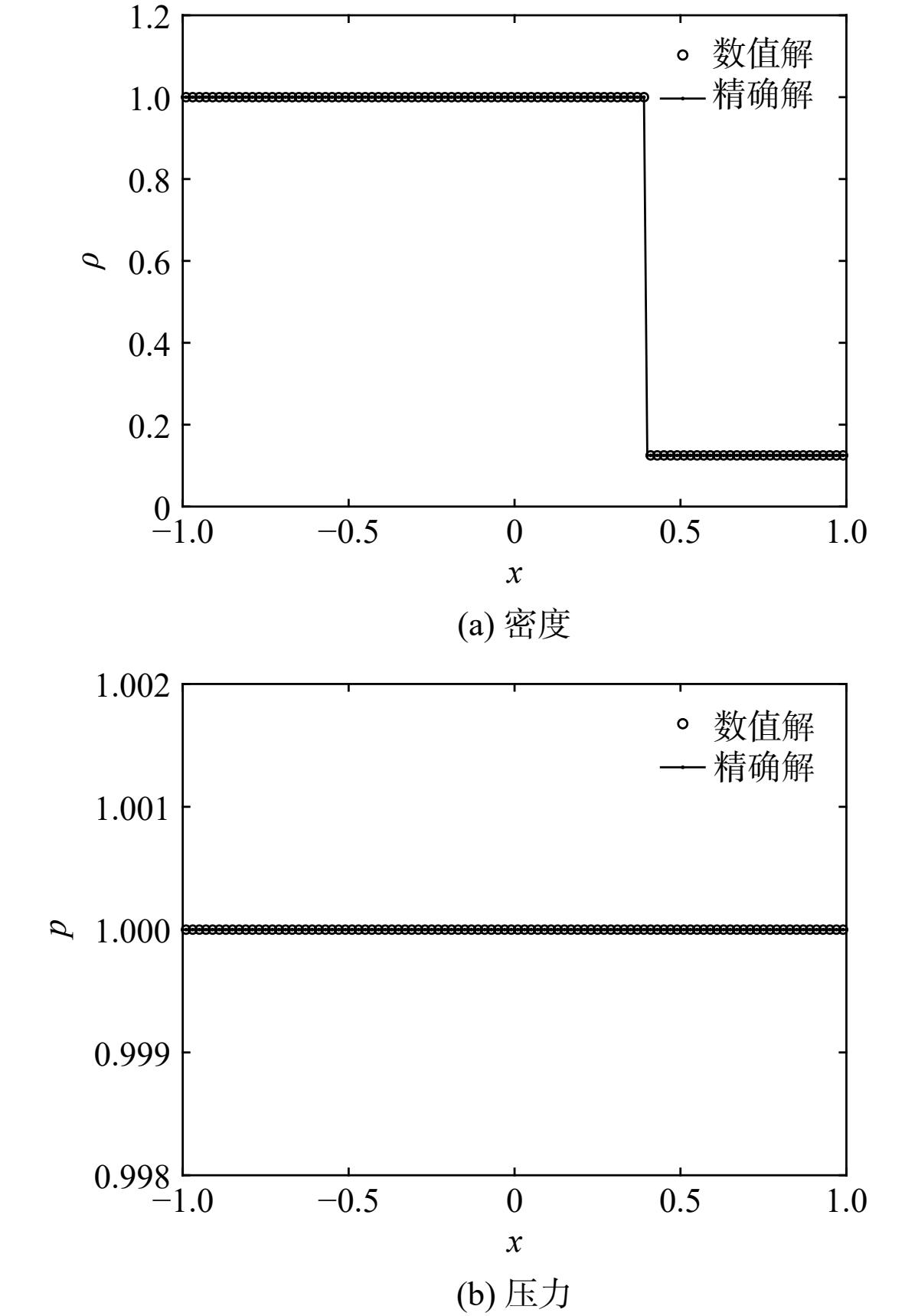
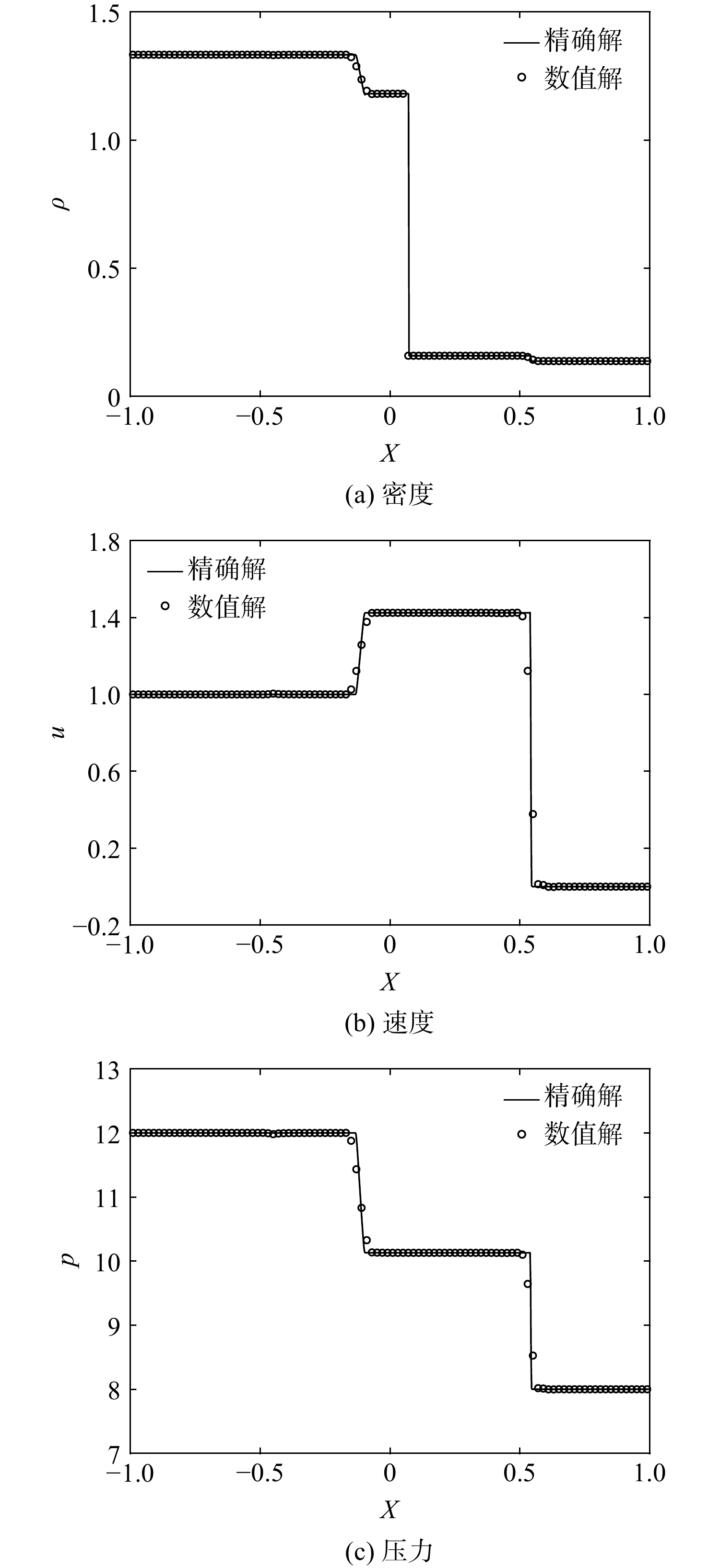
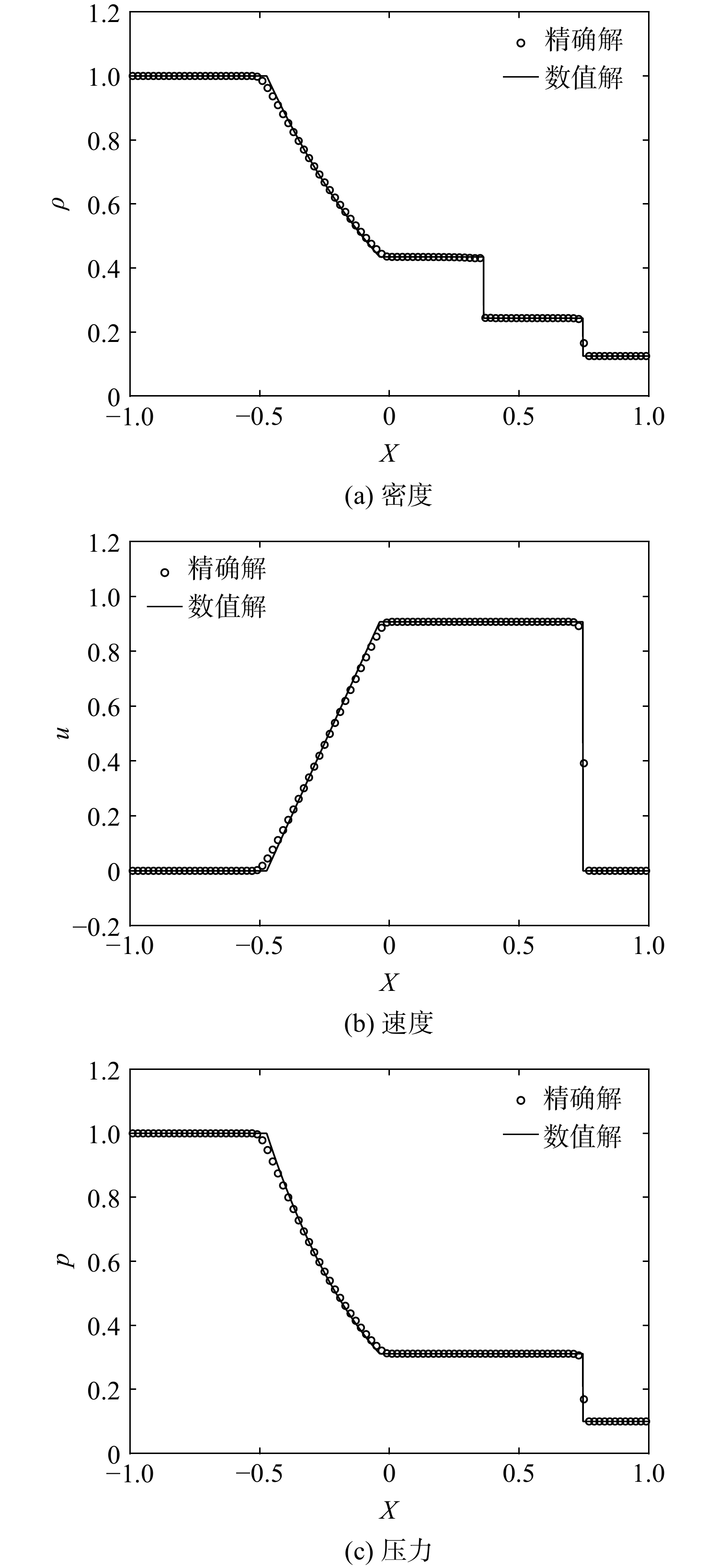
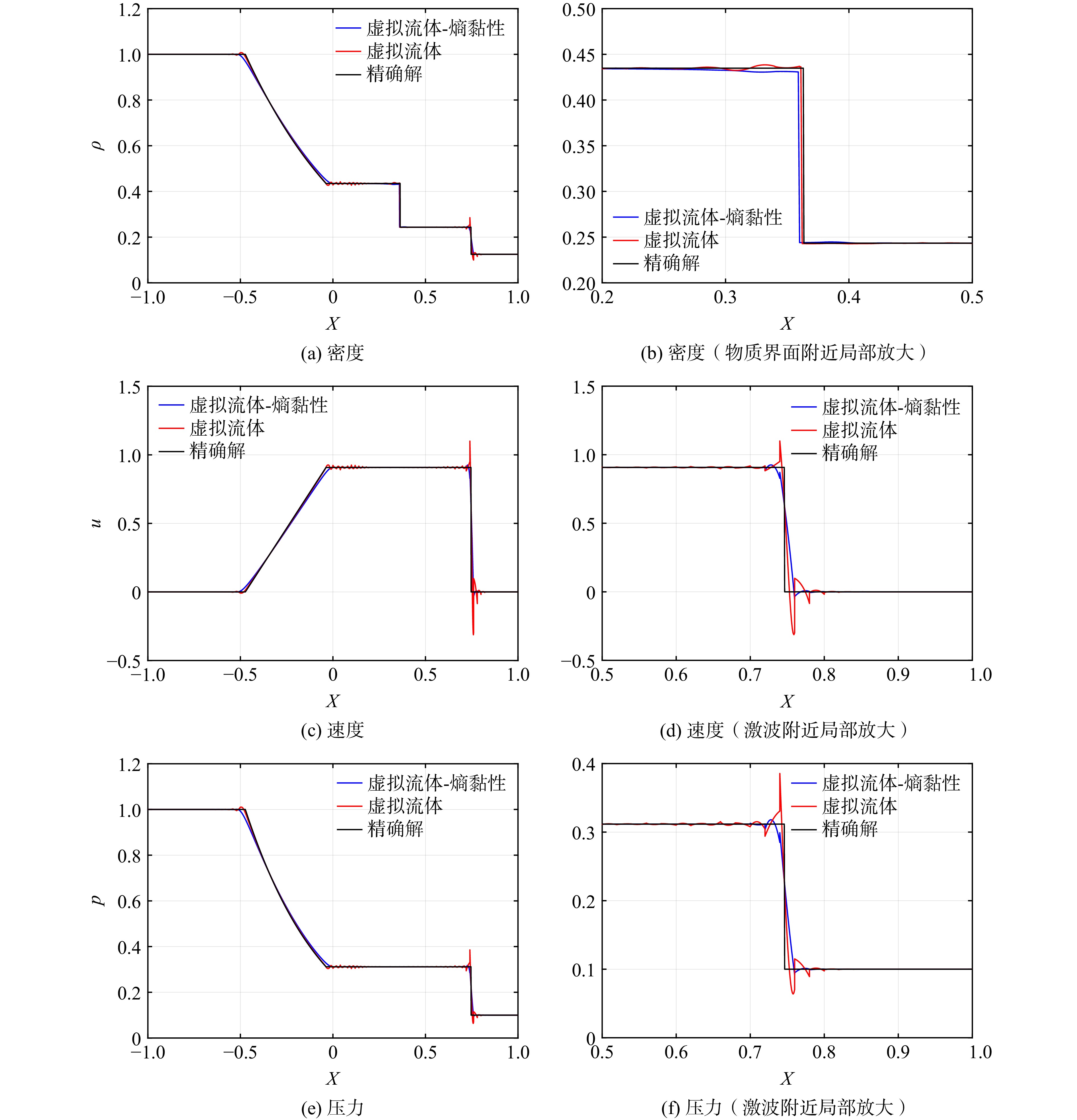
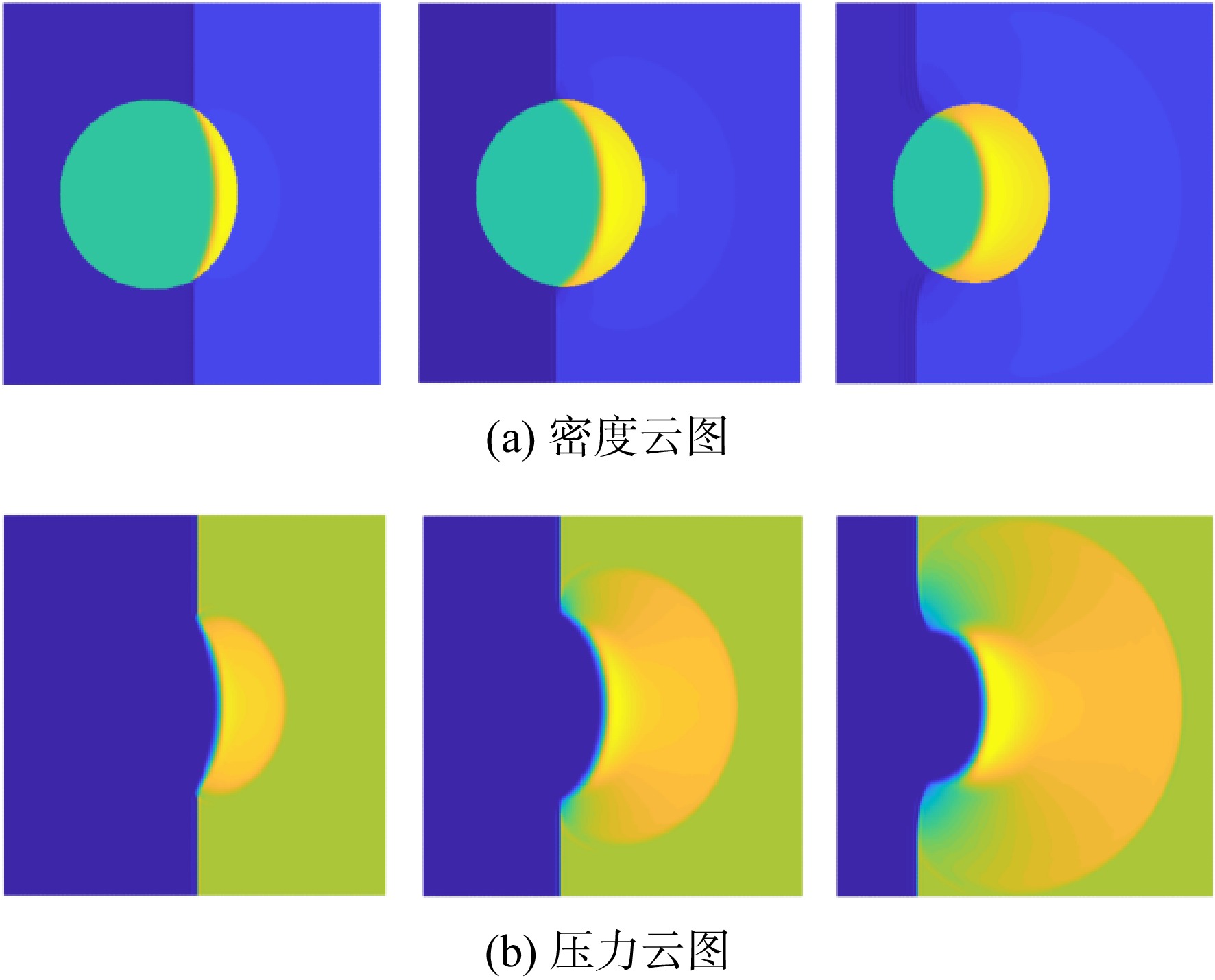
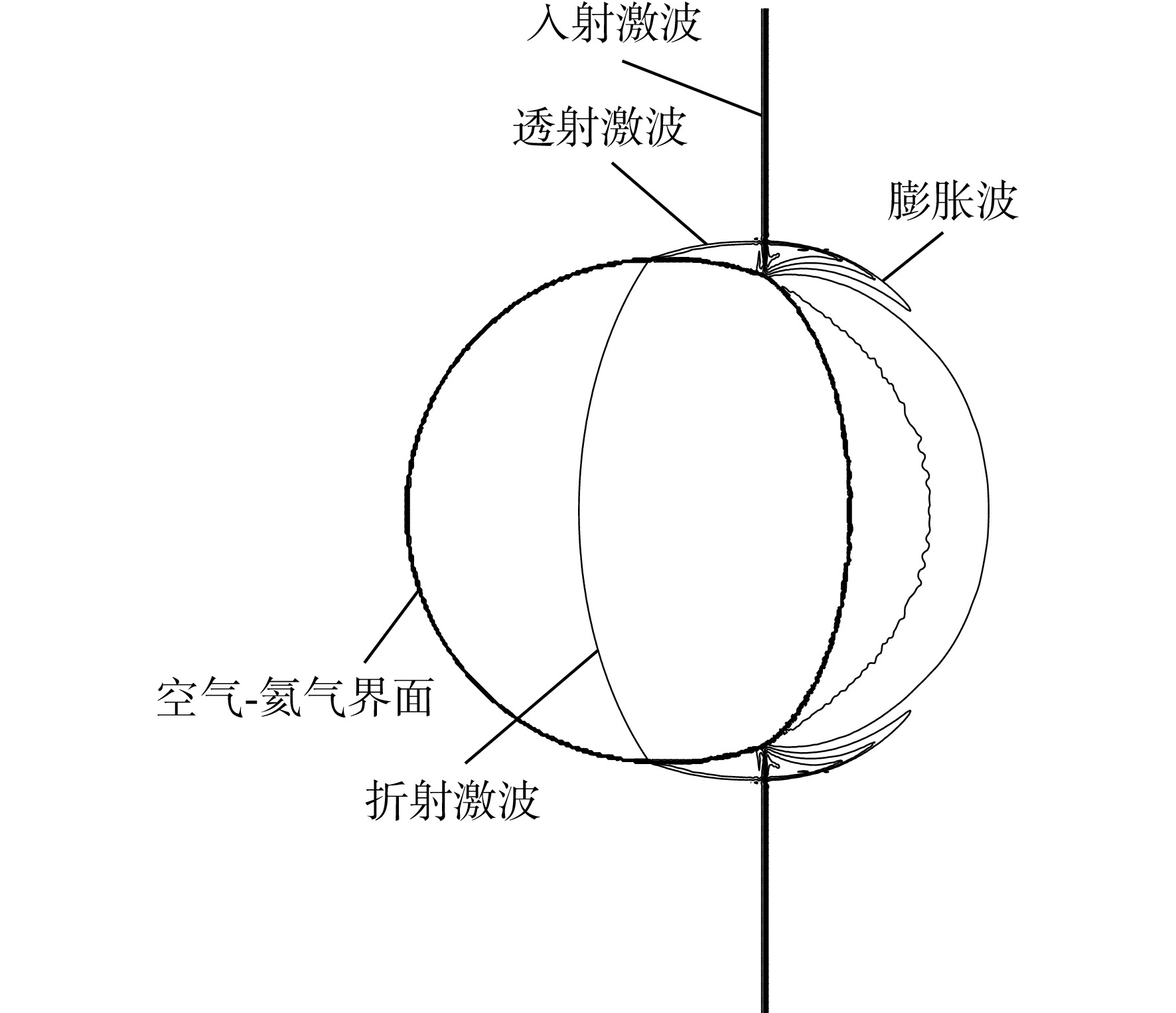
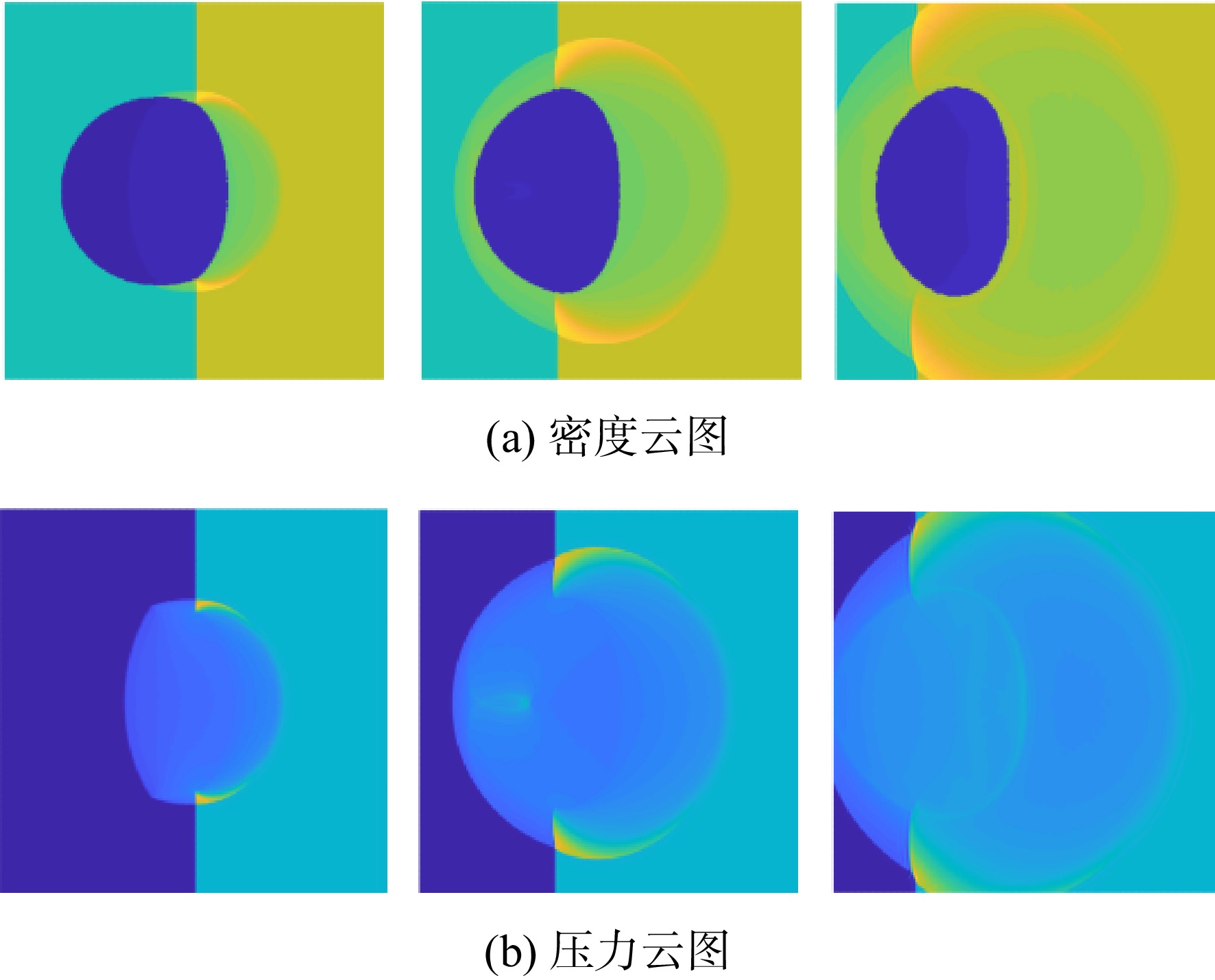
To deal with the issues of accuracy degradation and Gibbs phenomena caused by discontinuities such as shock waves, contact discontinuities, and free interfaces in the numerical simulation of compressible two-phase flows, a coupled solution method was developed based on the discontinuous Galerkin spectral element method (DGSEM) framework. To address the issue of discontinuities in single phase, an entropy viscosity model that can automatically distinguish shocks from contact discontinuities and adaptively add artificial viscosity was introduced. The solution method was also coupled with the level-set method, which was discretized by the DGSEM framework and combined with the ghost fluid approach to accurately track the material interface and solve the flow field simultaneously. Numerical results showed that this method can achieve the designed accuracy in smooth regions. Compared with the variable-step artificial viscosity and the fifth-order weighted essentially non-oscillatory-Z (WENO-Z) scheme, it reduced over-dissipation and obtained more flow-field details. Compared with calculations using the same discontinuous Galerkin method but with dissipative interface models, this method reduced the error at monitoring points by up to 6.4% compared with experimental results when using only one-fourth of the grid density. This proved that the method can effectively improve the accuracy of discontinuity capture and material interface tracking.

Restart control in two-dimensional twin-duct supersonic inlet through rotating cowl
LI Longhao, XIE Wenzhong, ZHANG Xifeng, LI Tengfei
2026, 41(8): 20250307. doi: 10.13224/j.cnki.jasp.20250307
Abstract:

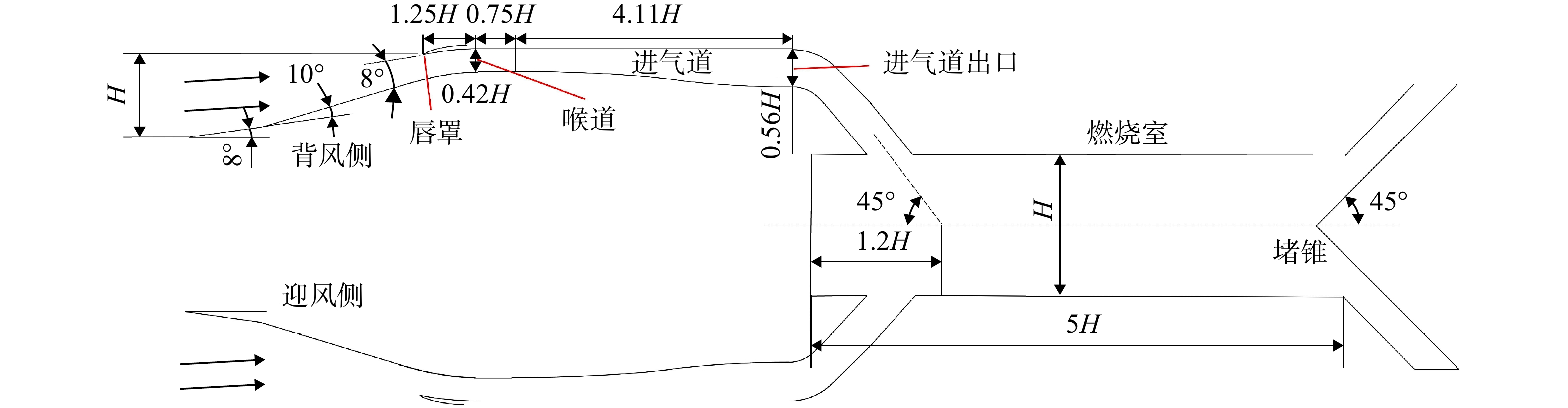
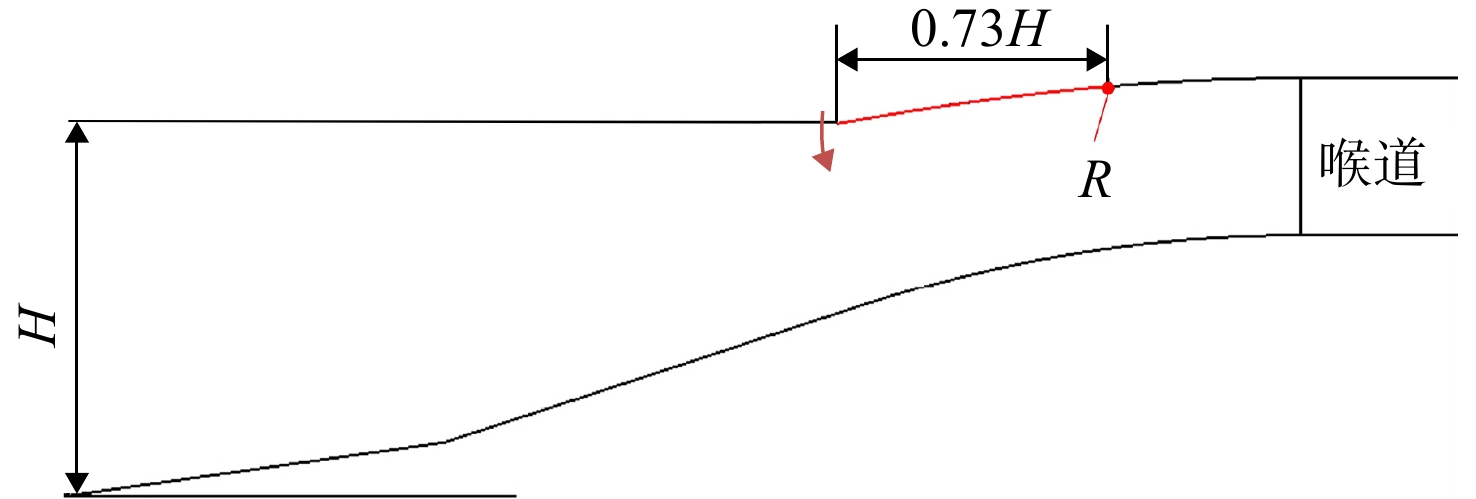
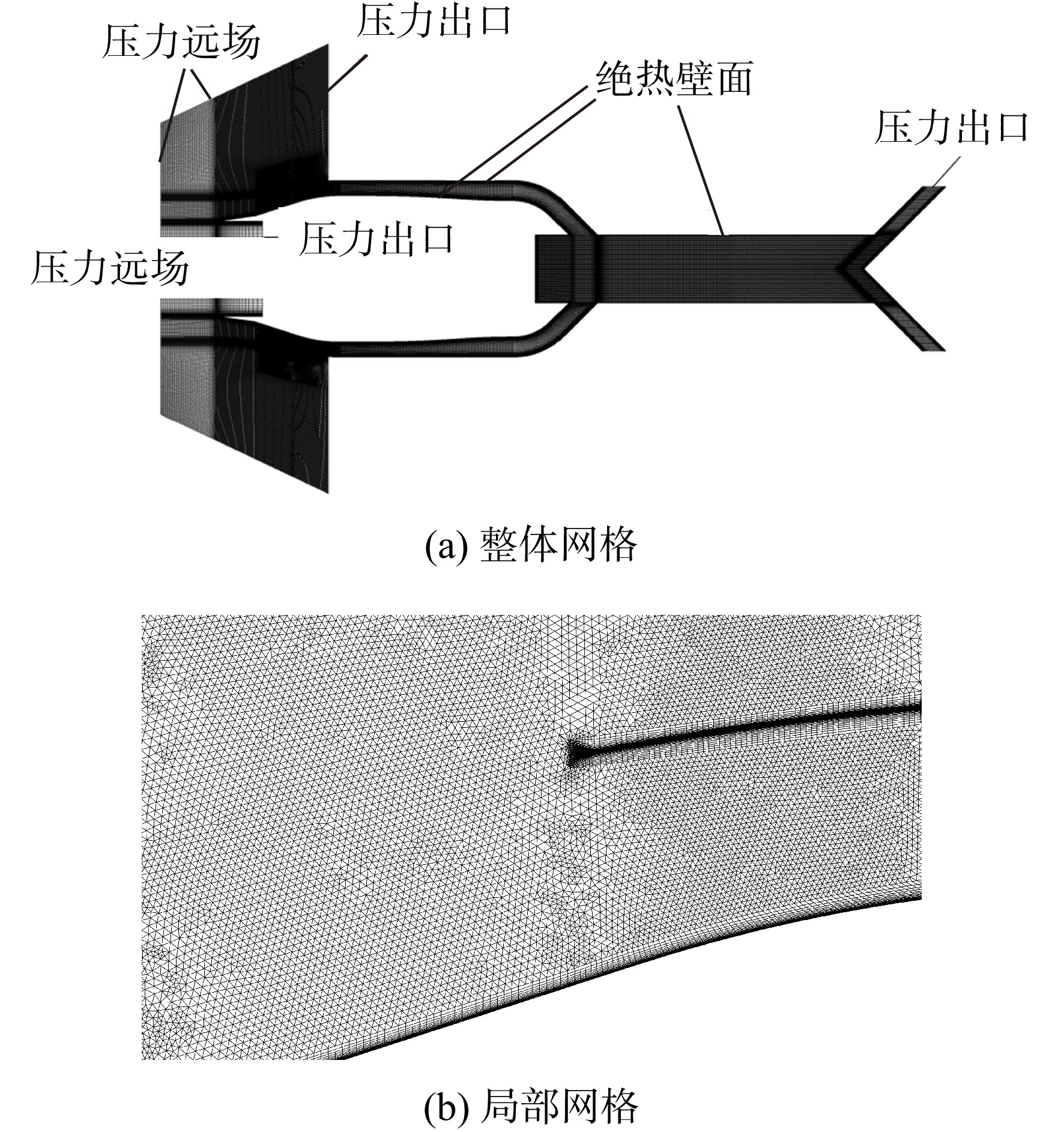
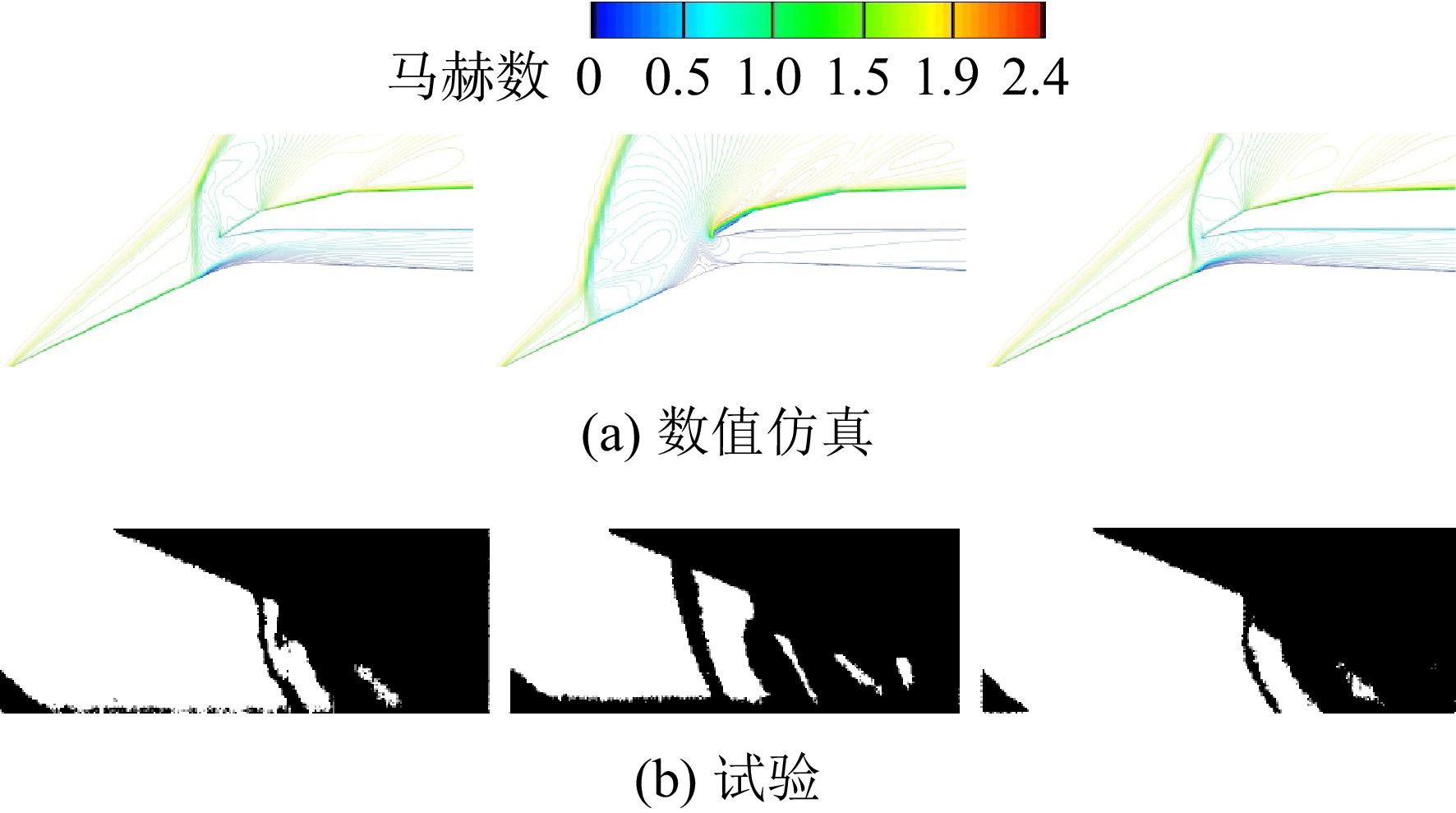
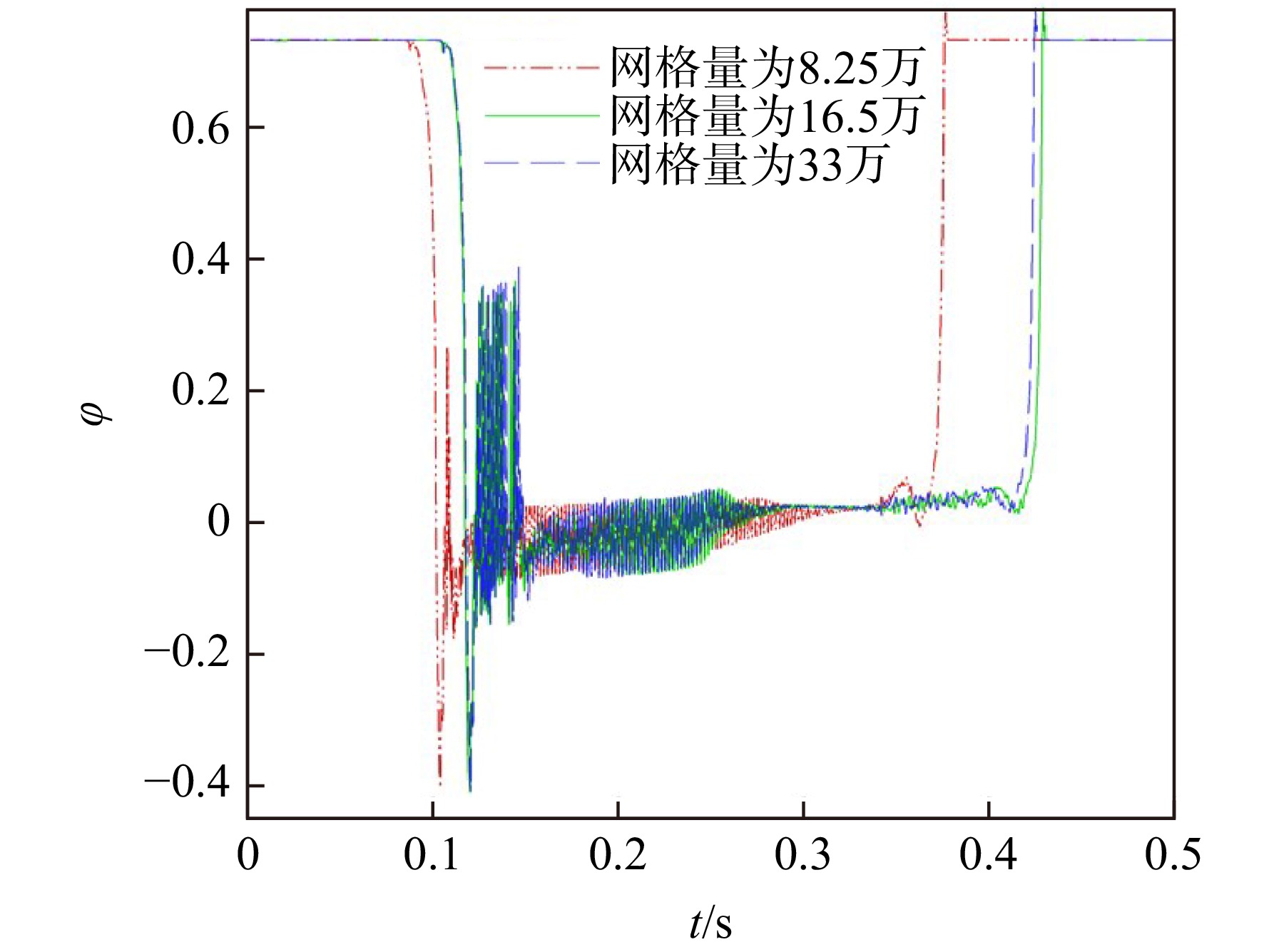
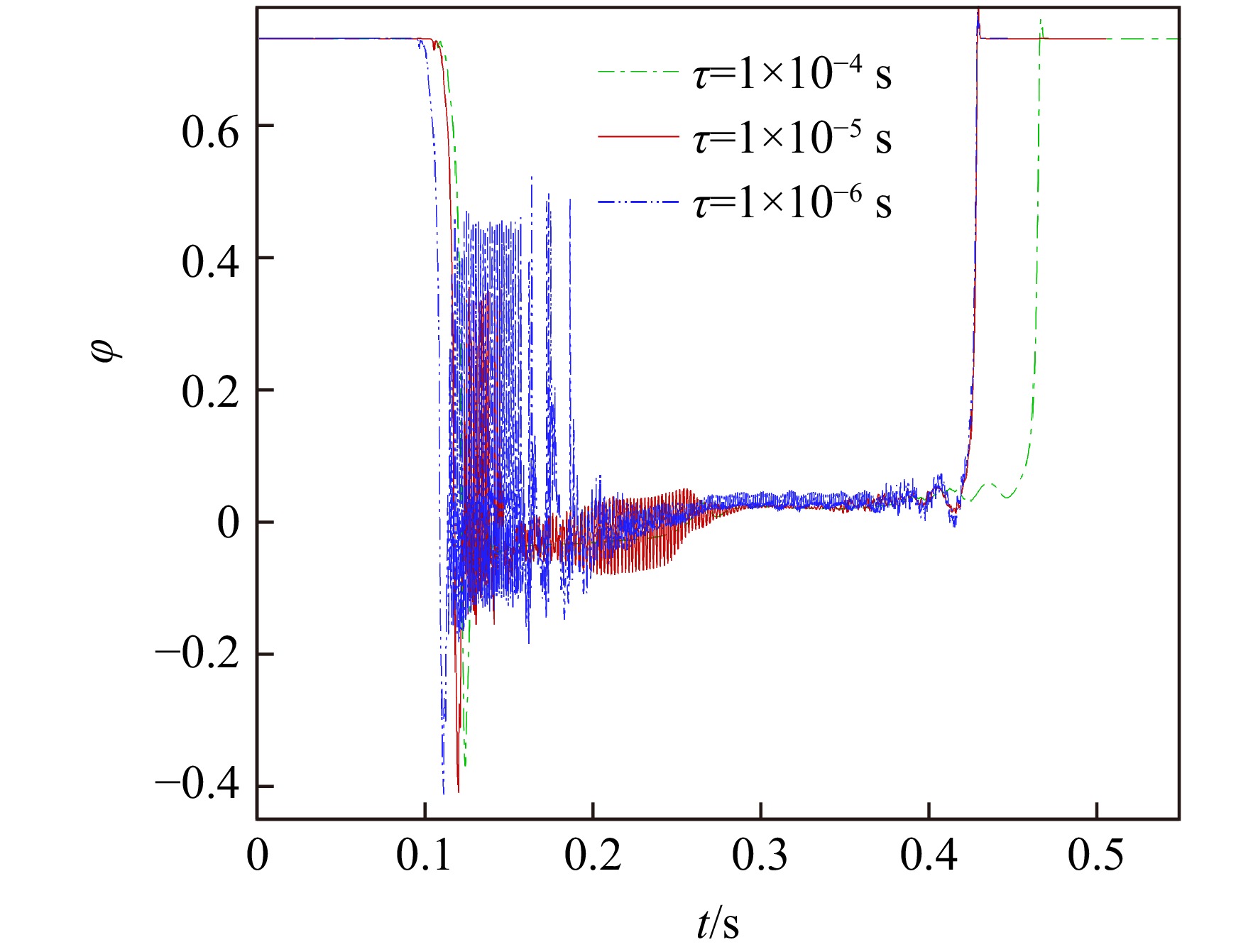
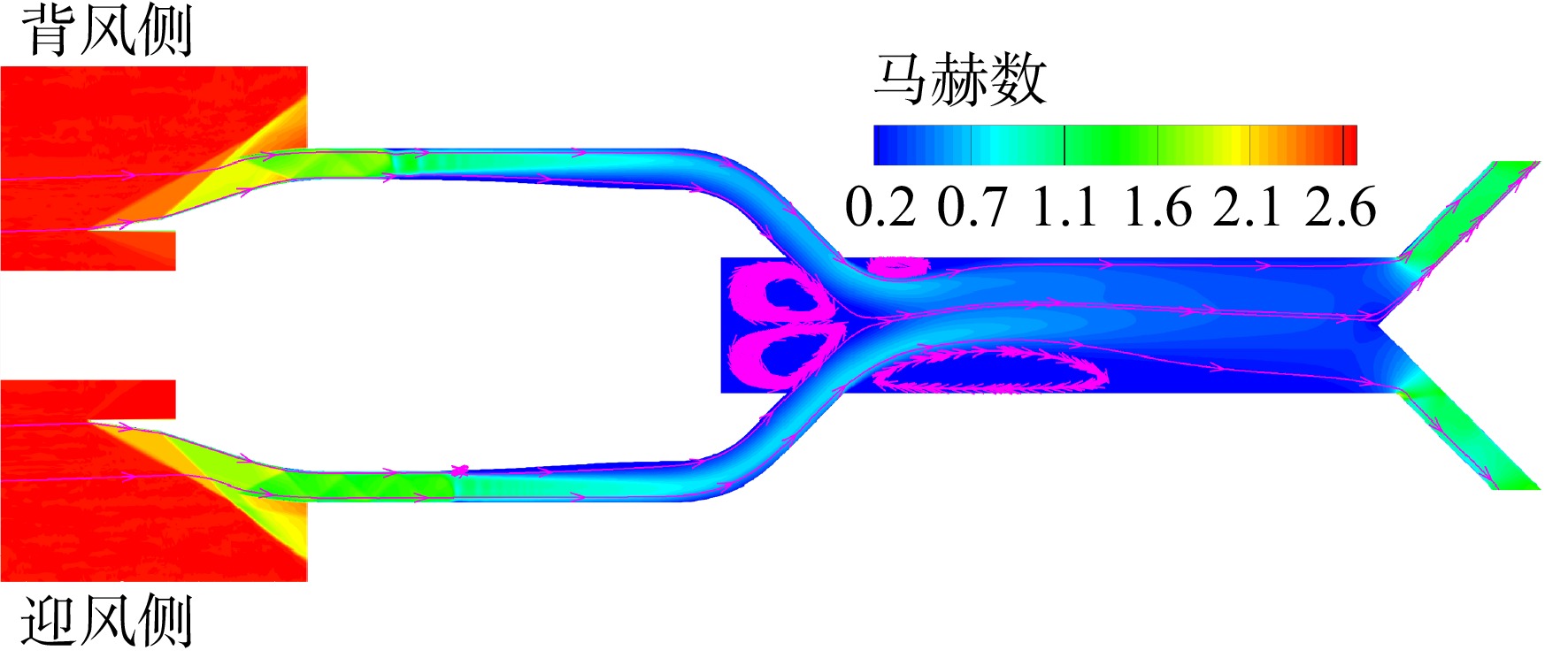
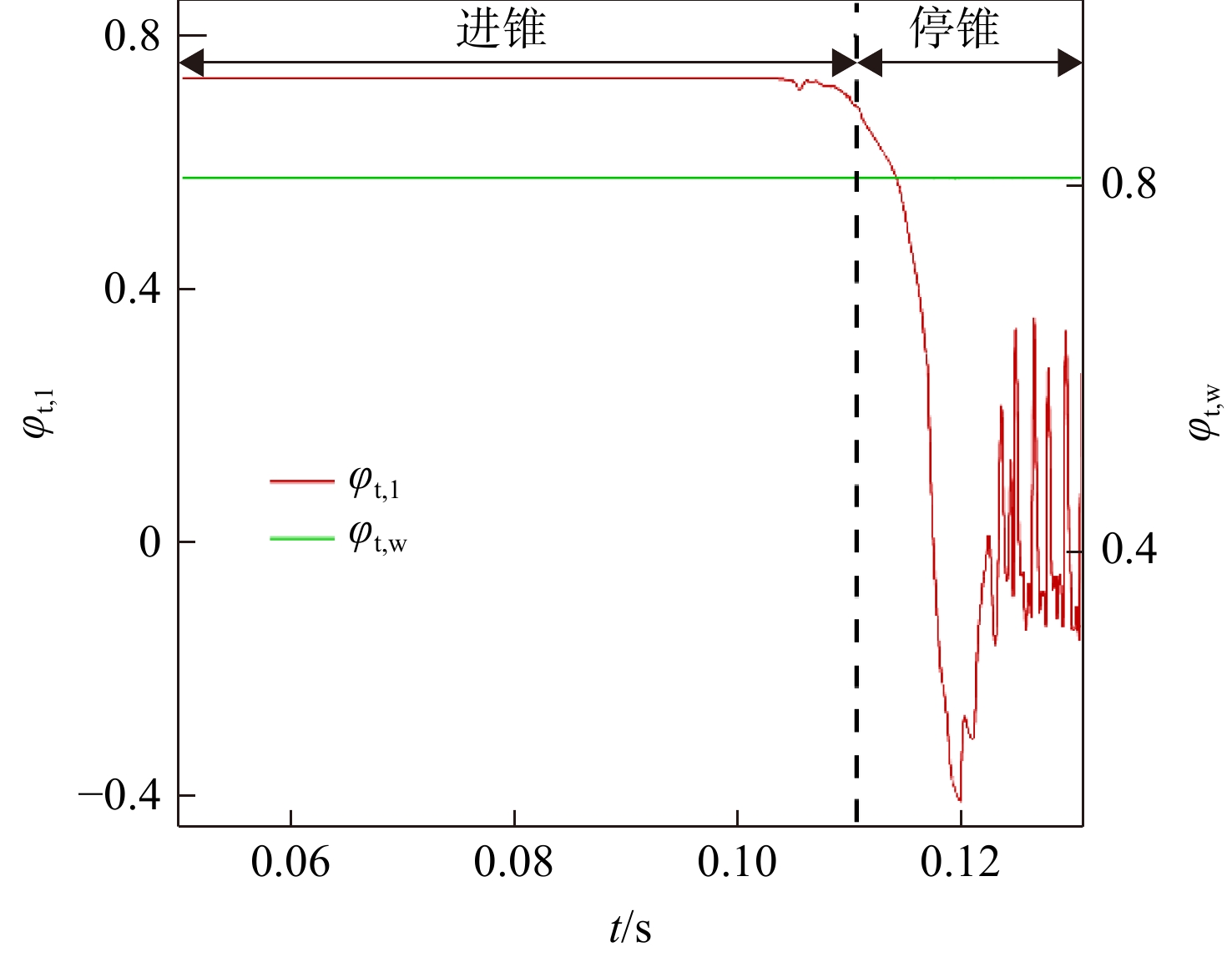
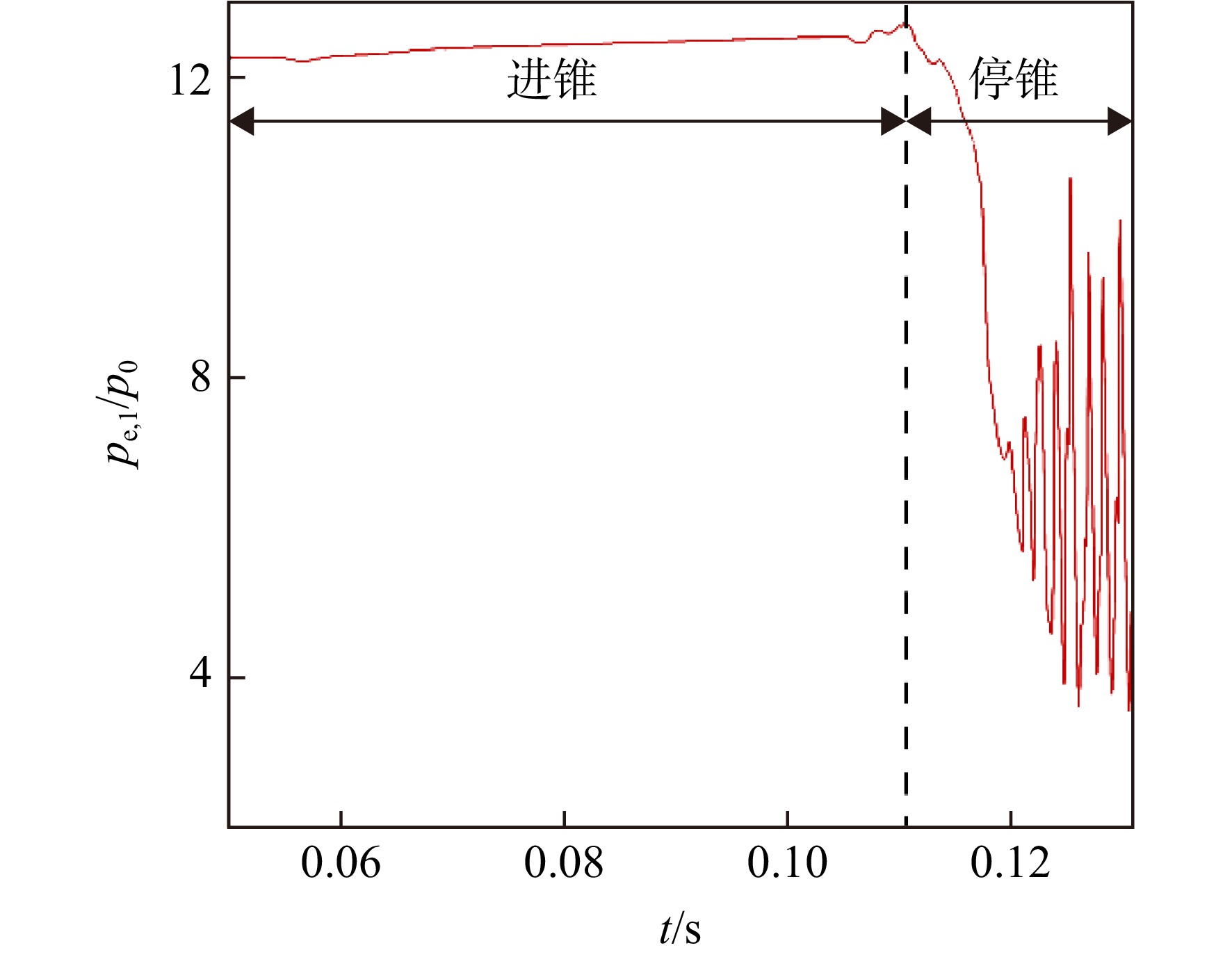
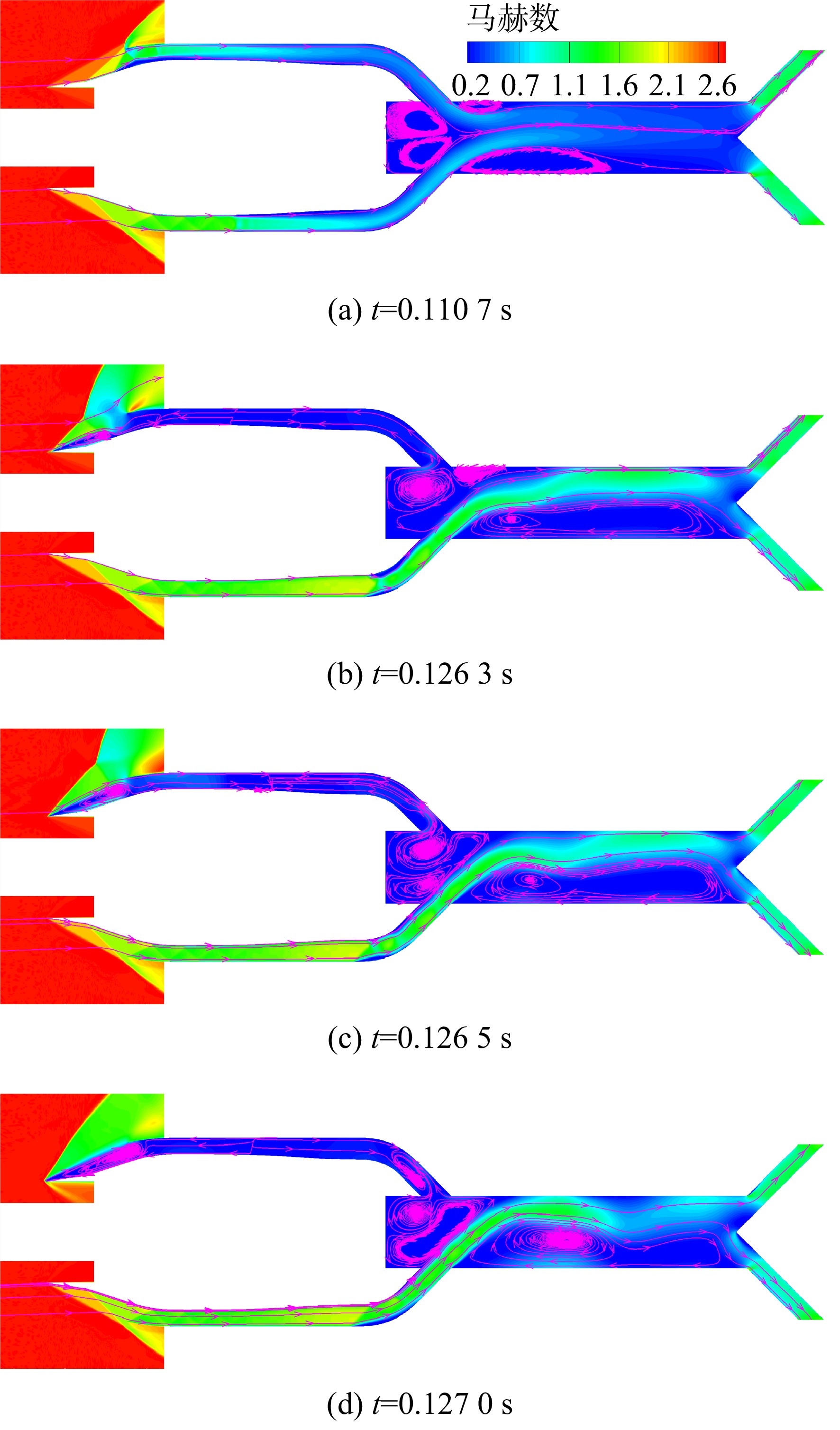
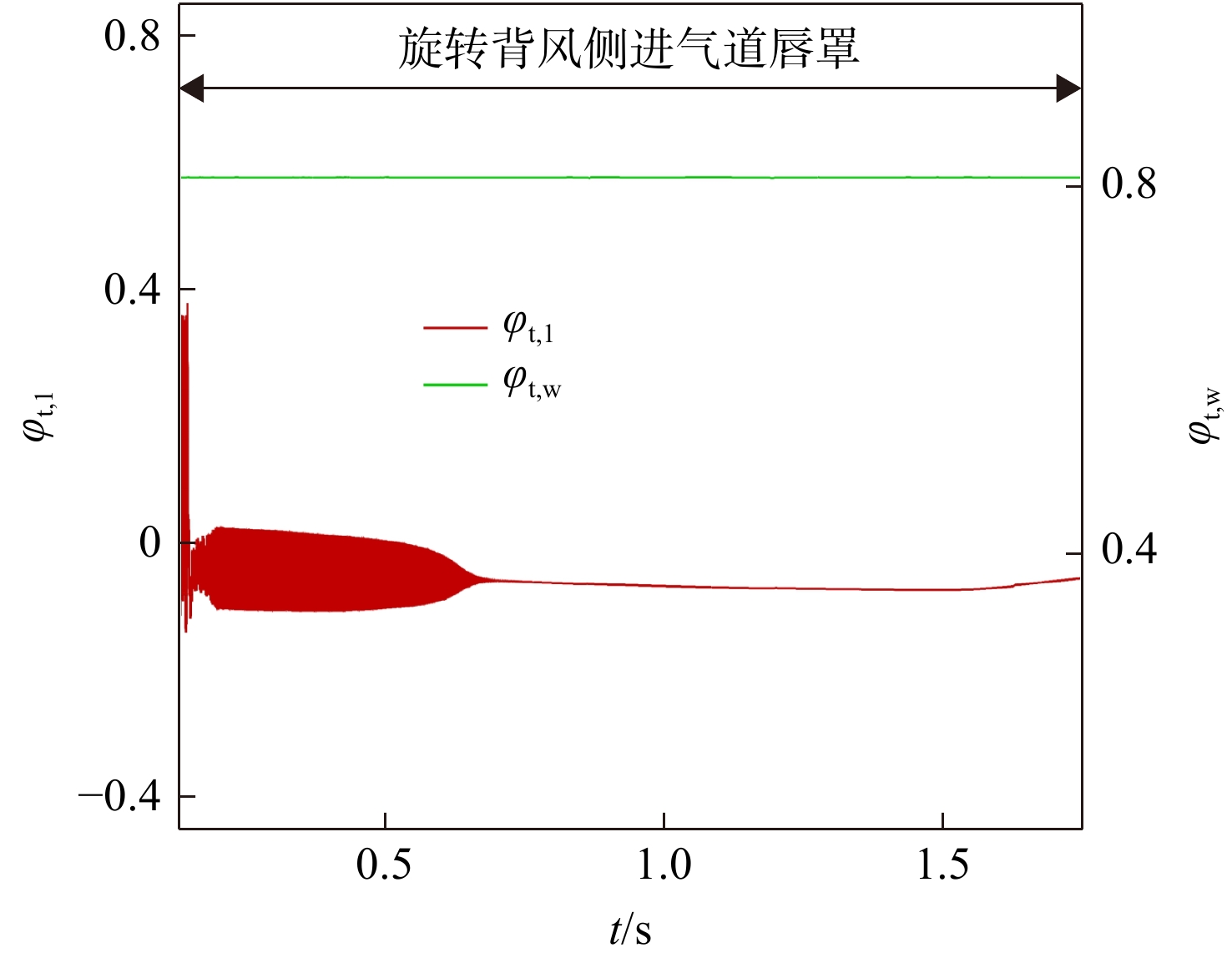
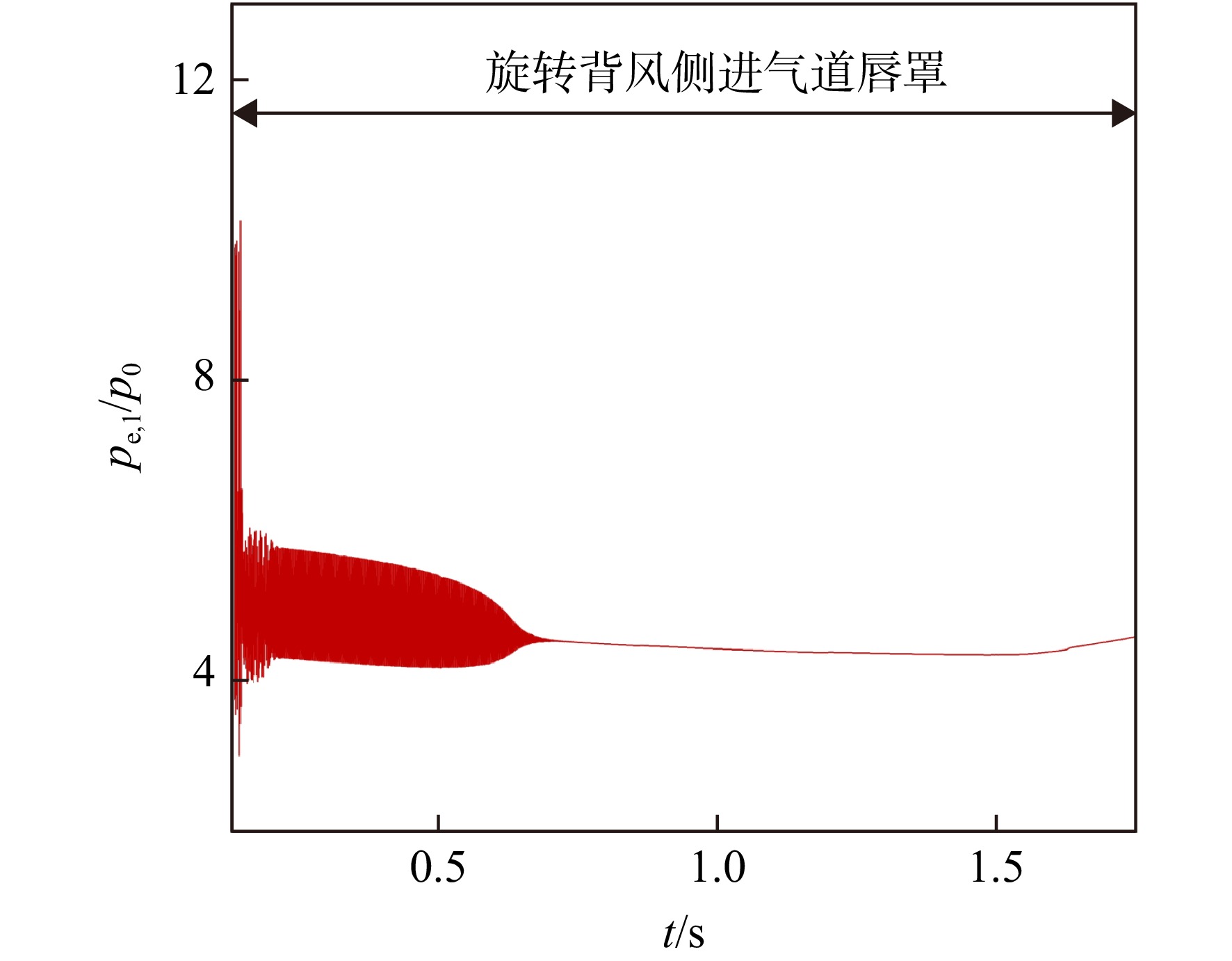
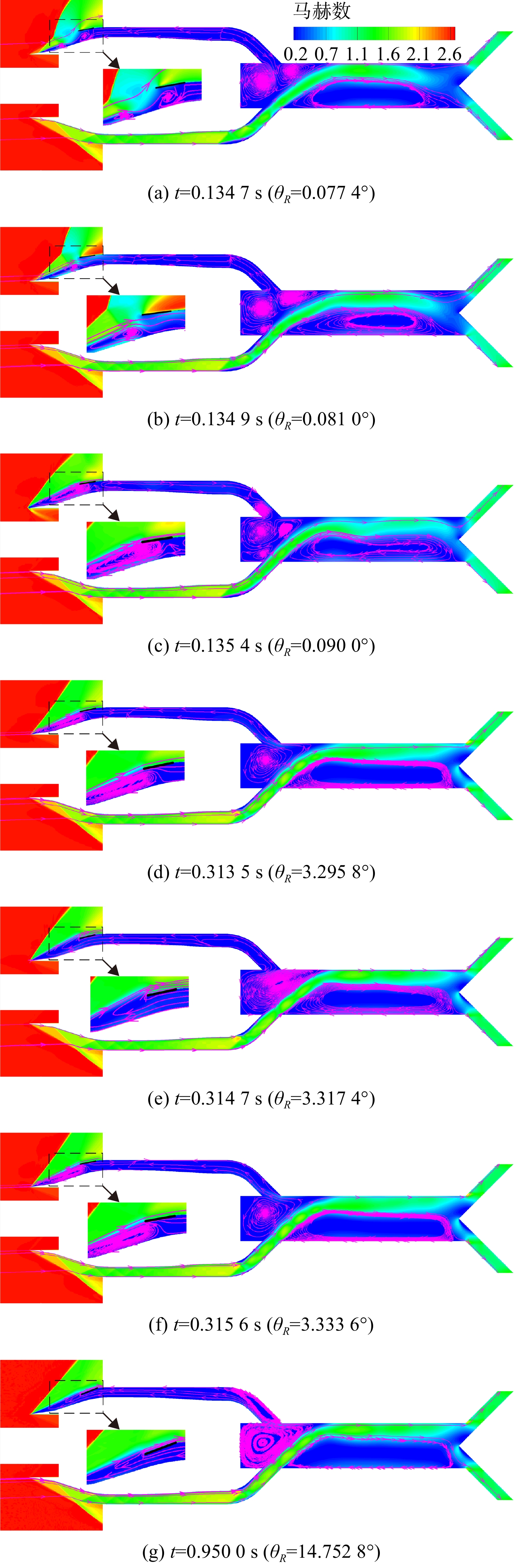
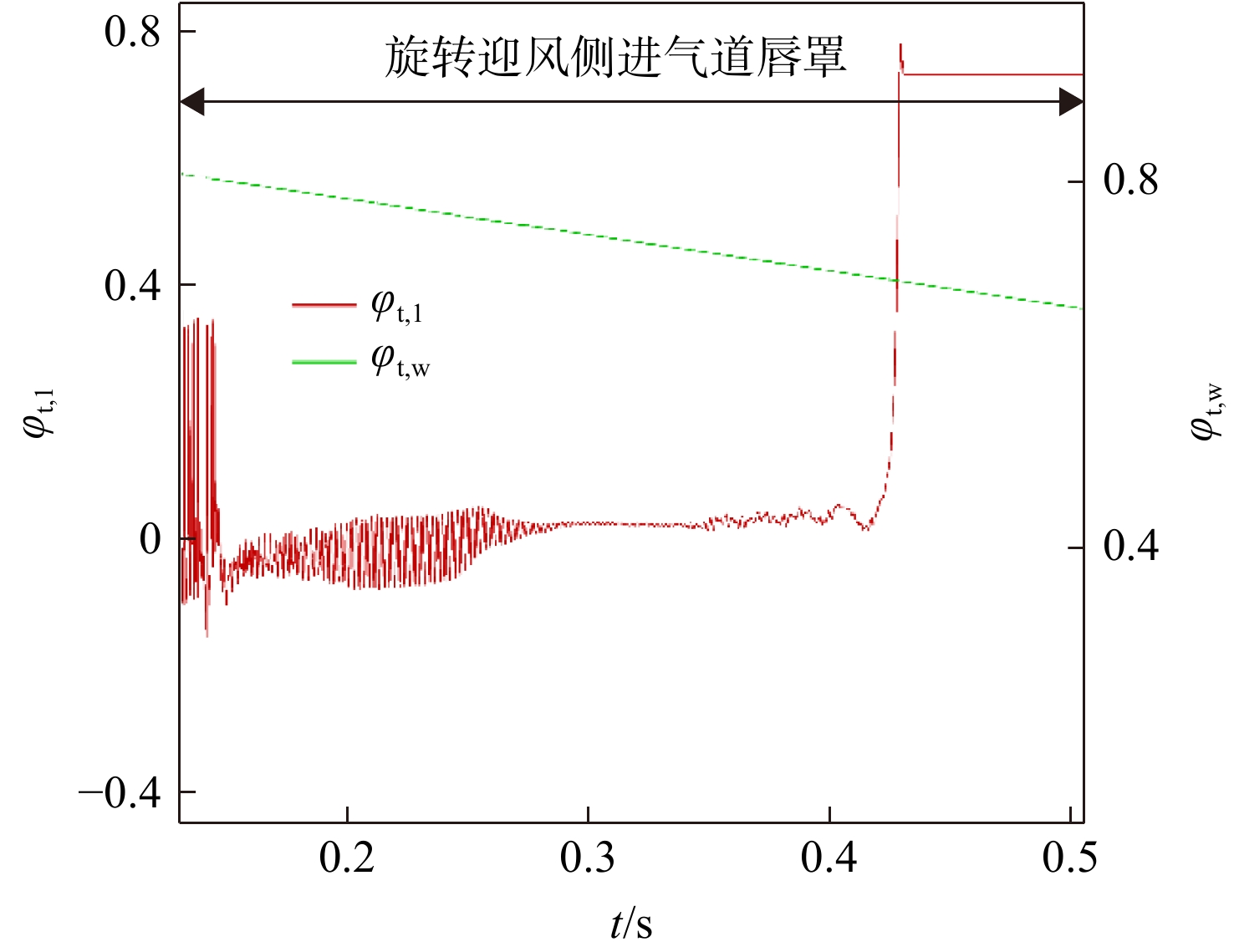
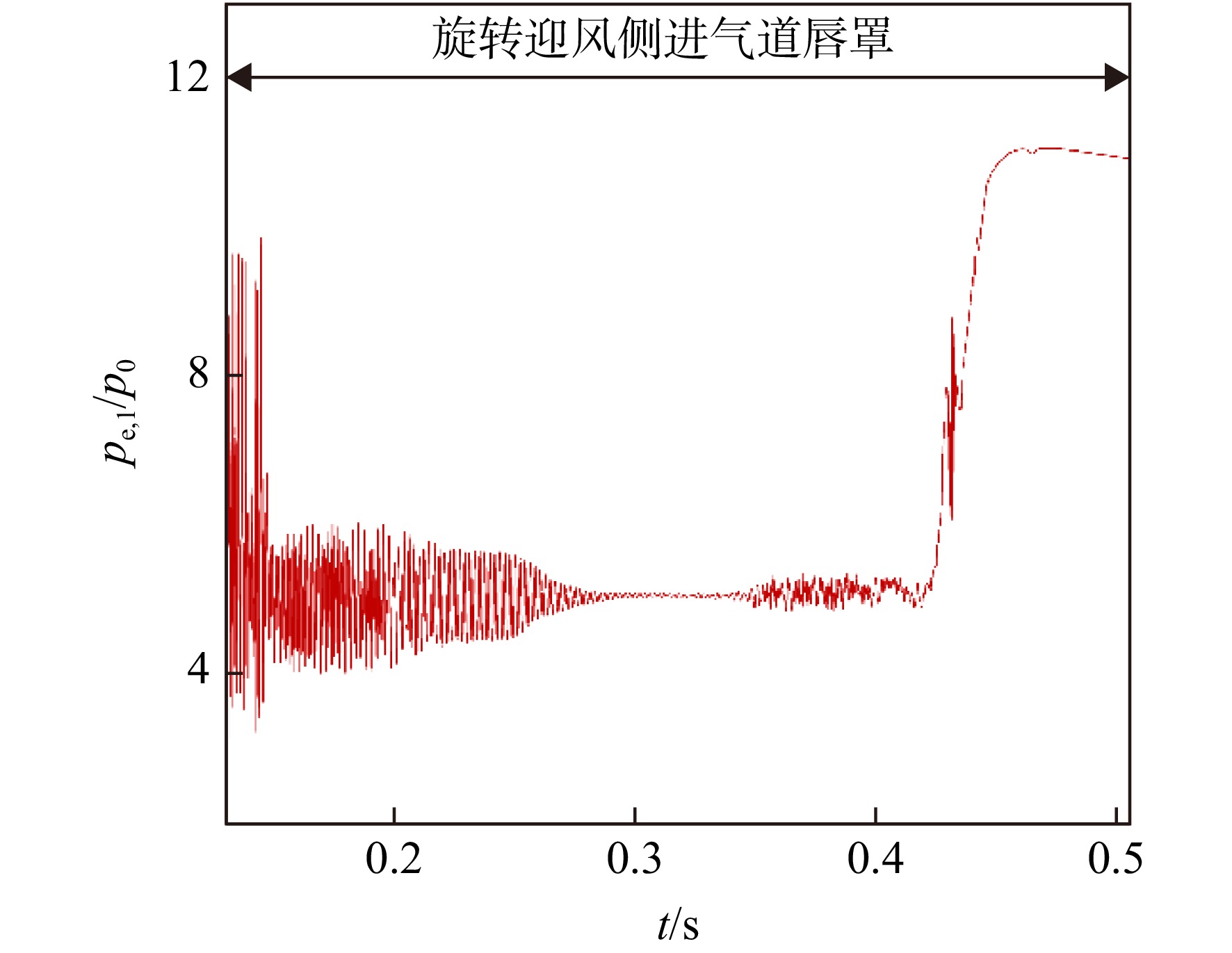
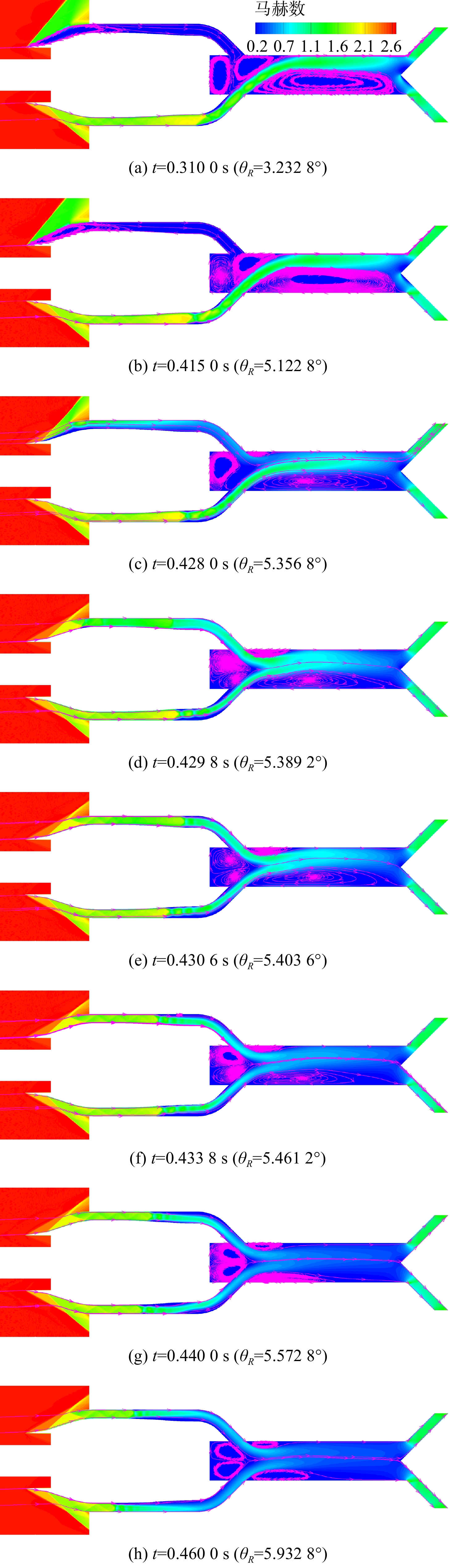
An investigation into restart control strategies for a two-dimensional twin-duct supersonic inlet under asymmetric incoming flow conditions was conducted. The cowl was rotated on the windward and leeward sides to evaluate the efficacy in mitigating unstart. Unsteady numerical simulations were employed to capture the inlet’s unstart flow field under plug throttling-induced backpressure loading. The restart processes initiated by rotating the leeward-side and windward-side cowls were comparatively analyzed. The findings revealed that progressive plug throttling induced asymmetric inlet operation, characterized by a deep unstart condition in the leeward inlet, while the windward inlet maintained a started state. Following plug-throttling-induced unstart, leeward cowl rotation failed to achieve leeward inlet restart. This failure was attributed fundamentally to excessive flow blockage resulting from the predominance of windward outlet flow. In contrast, windward cowl rotation reduced its captured mass flow, effectively mitigating the blockage effects imposed on the leeward side and thereby facilitating successful restart of the leeward inlet.

Combustion,Heat and Mass Transfer
Optimization and improvement of the cooling scheme for high pressure turbine blade
Luo Jianxia, Chen Dawei, Tan Zhiyong
2026, 41(8): 20240781. doi: 10.13224/j.cnki.jasp.20240781
Abstract:

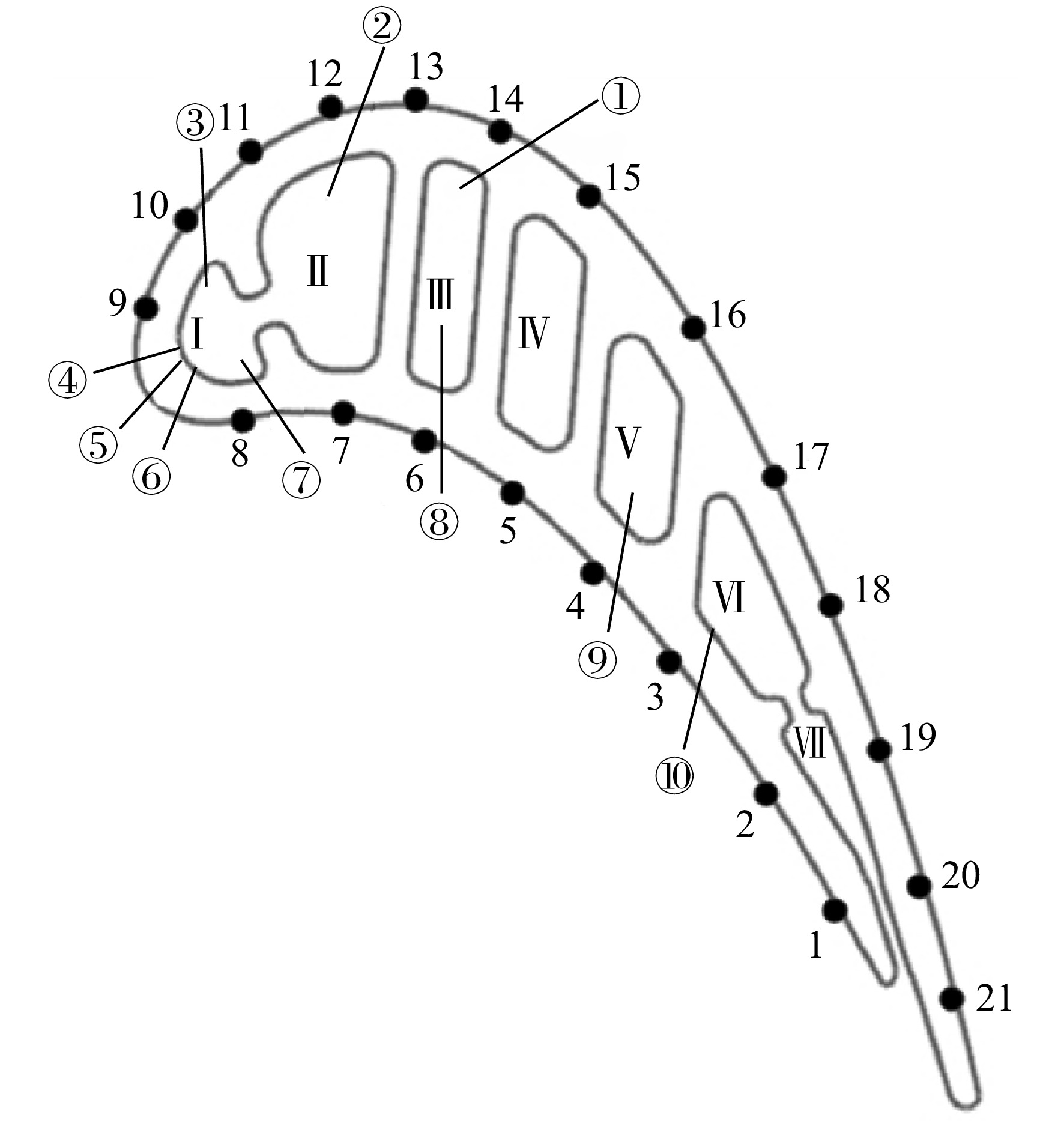
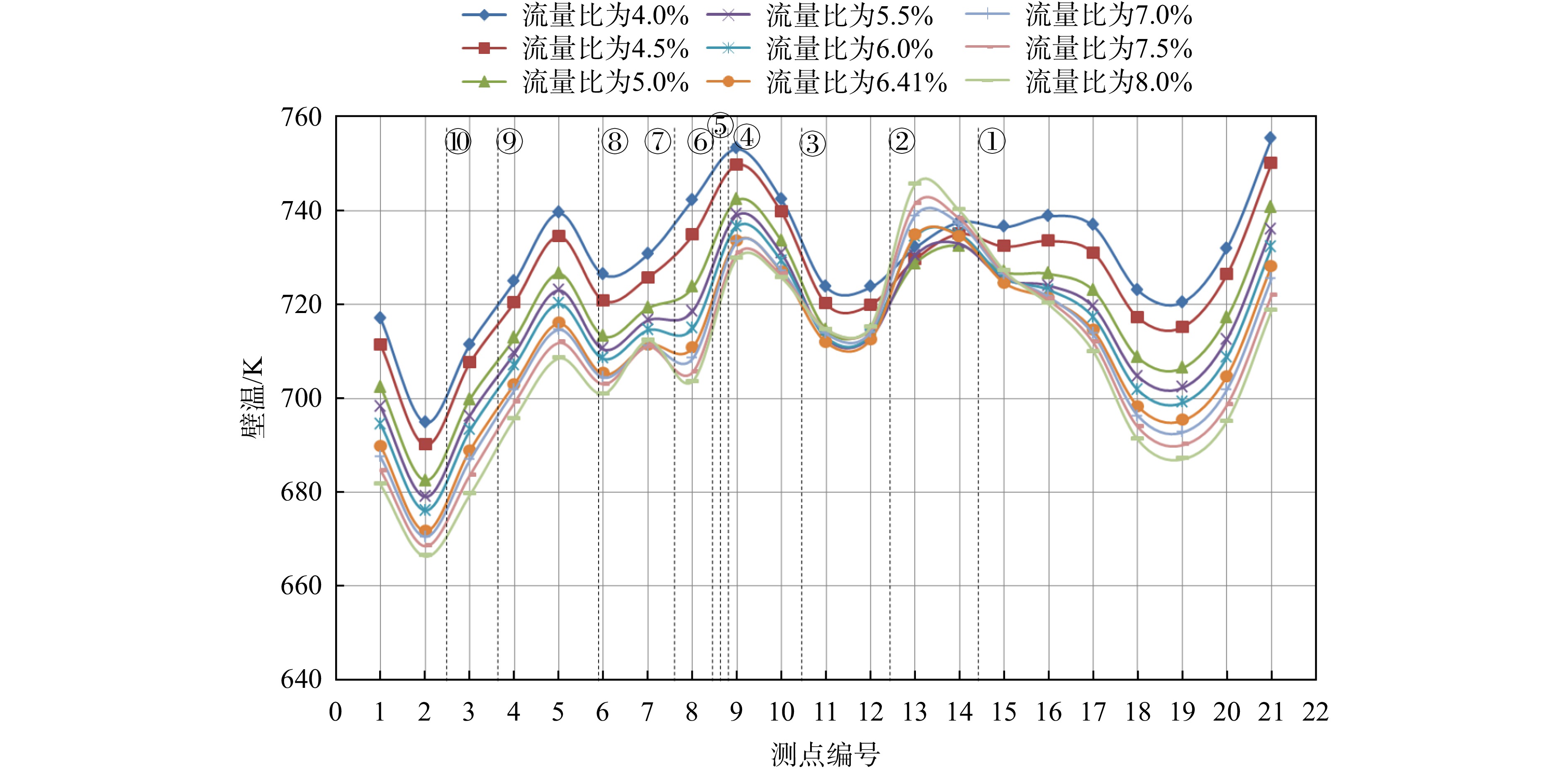
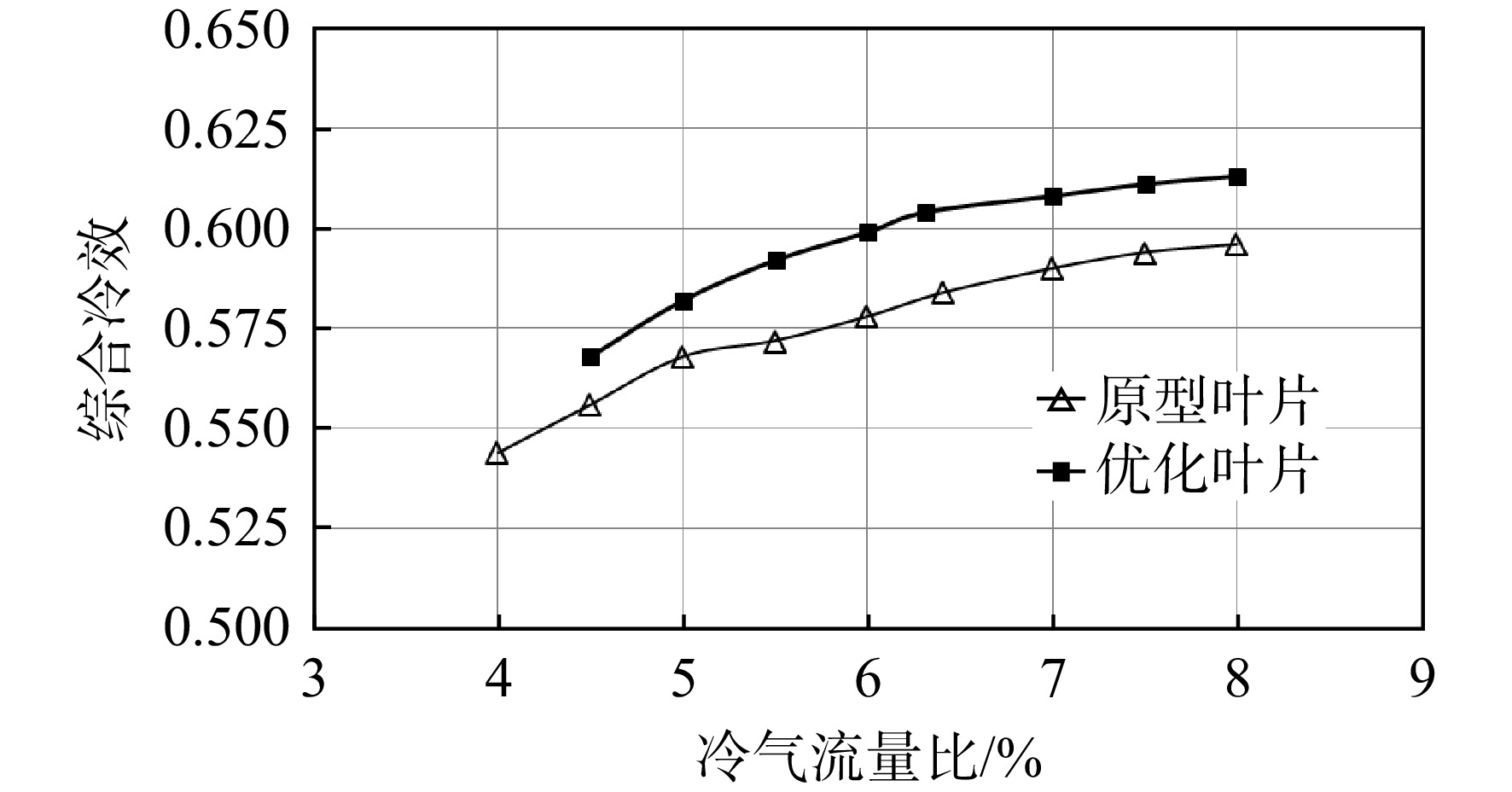
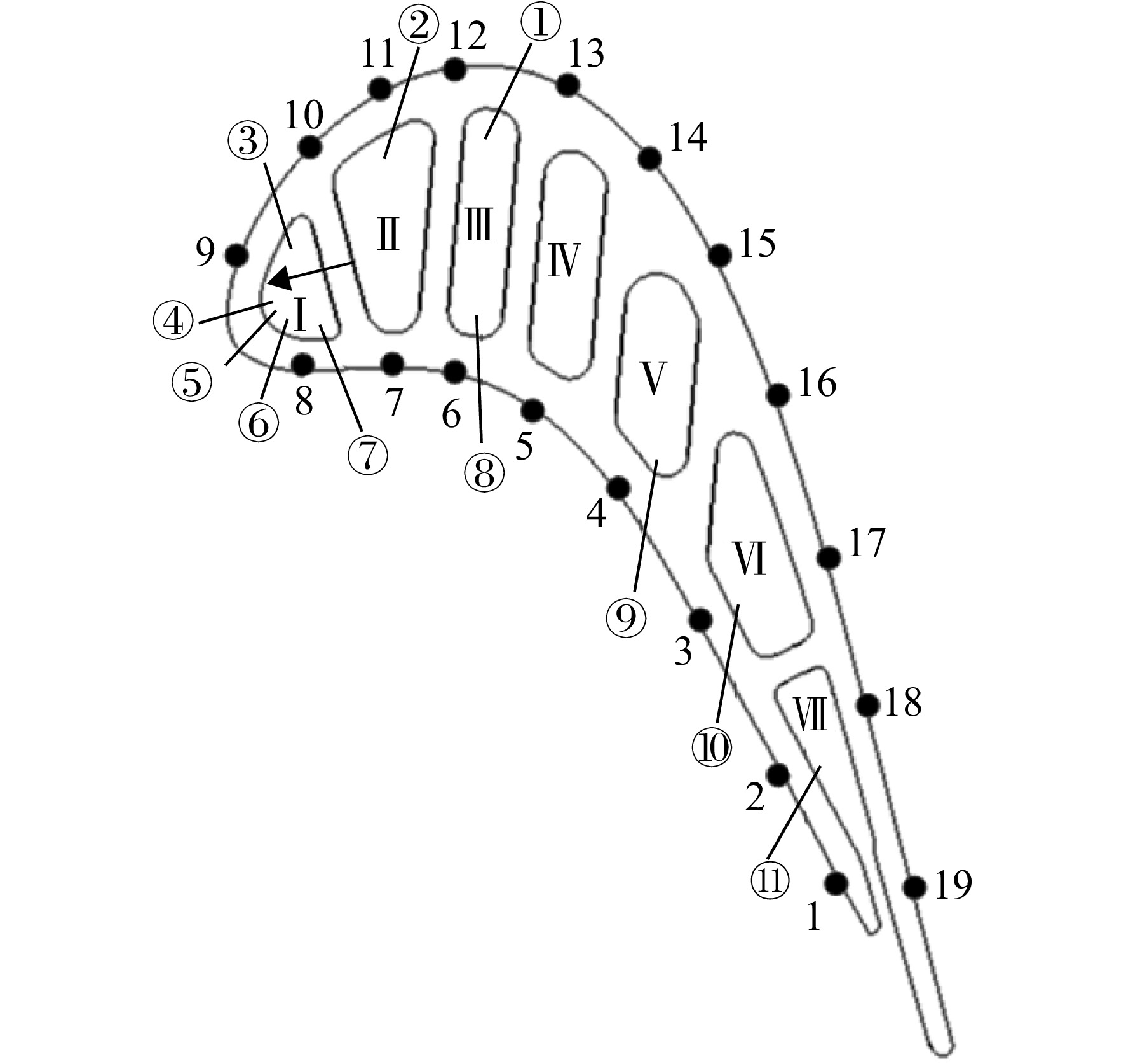
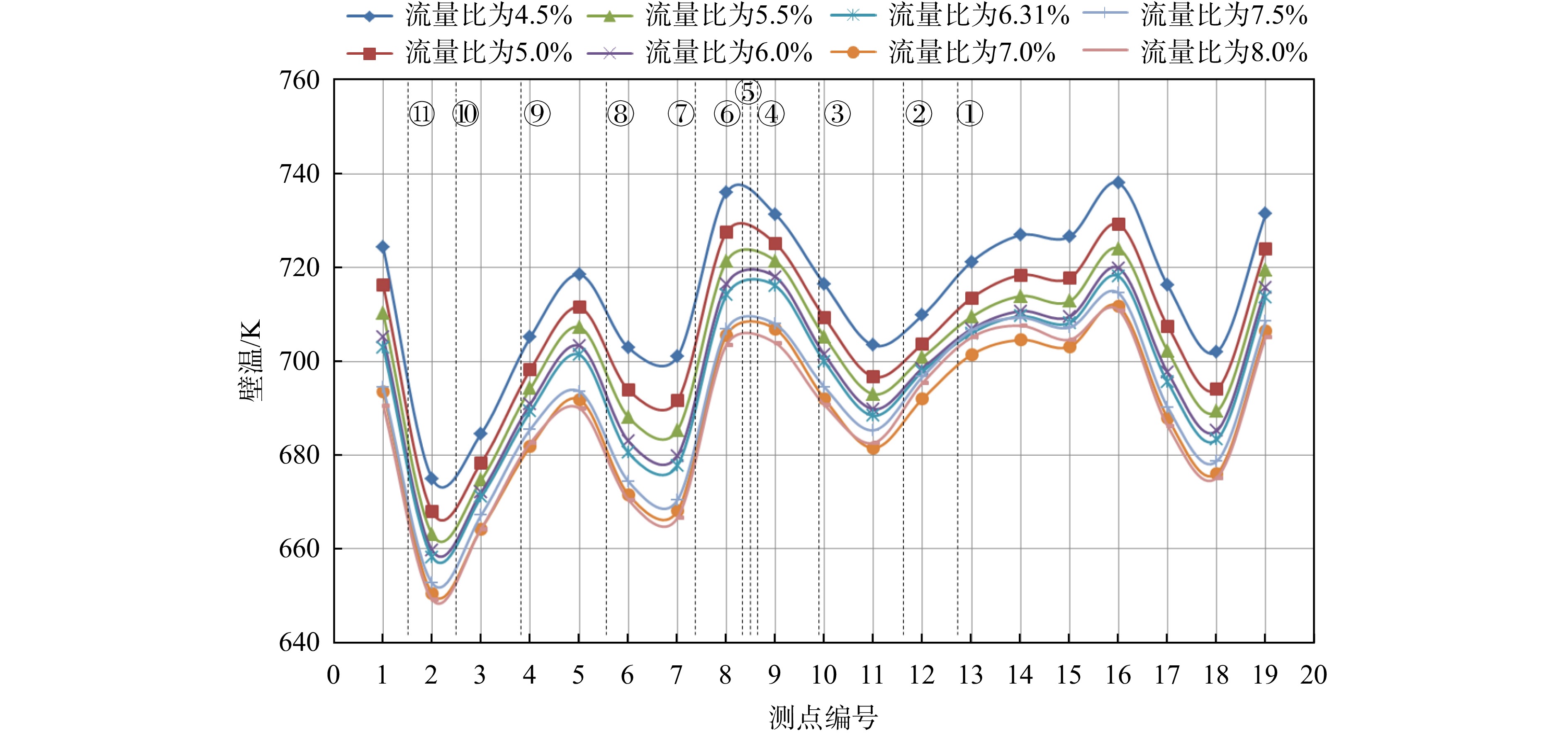
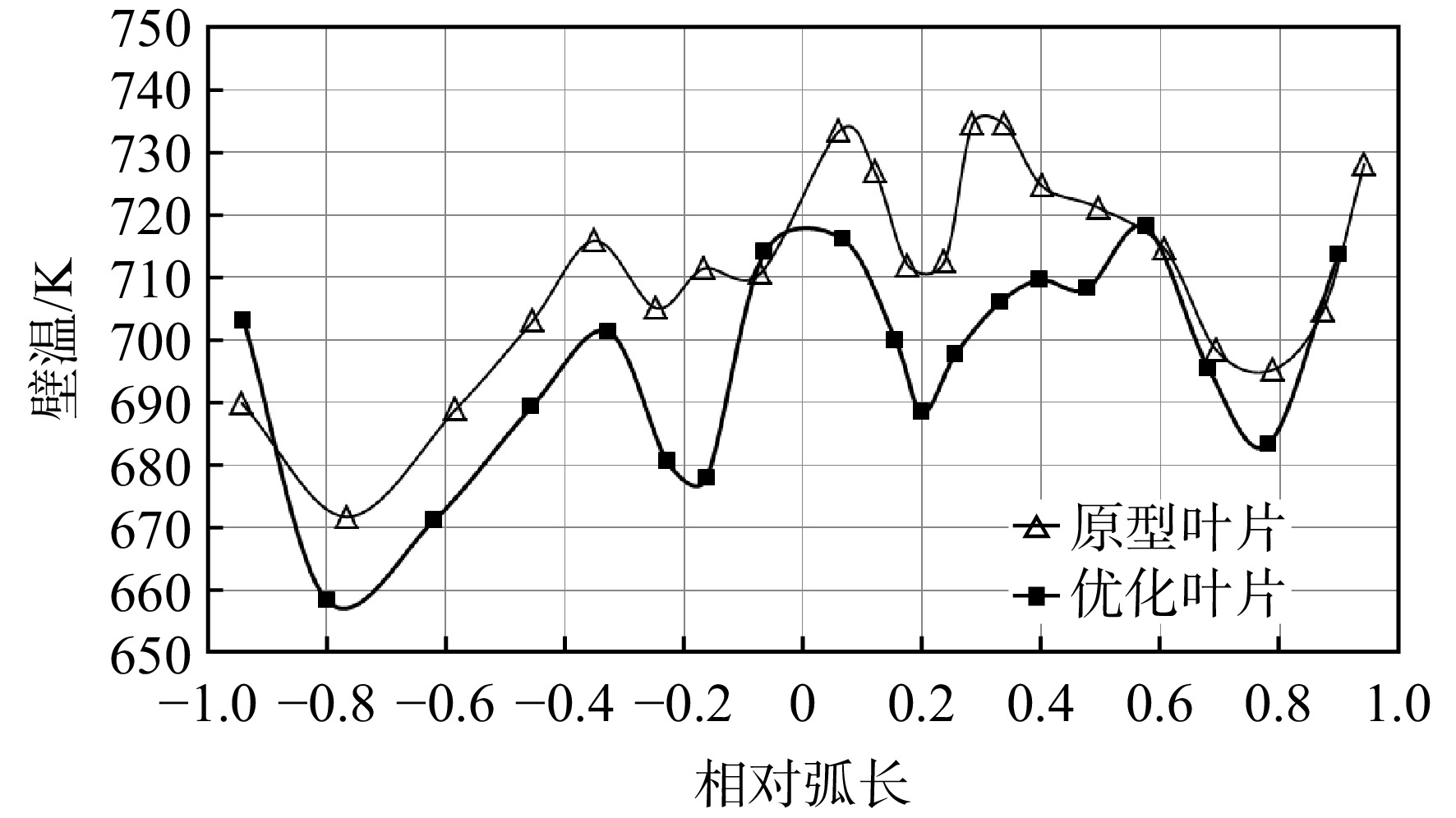
To enhance the cooling effect, an optimized cooling scheme for the rotor blade was developed, and overall cooling effectiveness of the blade was verified. For the prototype blade, elevated temperatures were observed at the leading edge, the trailing edge, and the mid-region of the suction side.. As the flow ratio increased to 5% and 7%, the film cooling effectiveness deteriorated on both the pressure and suction sides. This degradation led to a corresponding temperature rise at the measured points. The optimized blade design achieved a more uniform blade temperature distribution and enhanced overall cooling efficiency through optimization of the internal cavity and film hole design. At the same flow ratio, temperatures at the measurement points in the front regions of the pressure and suction sides dropped by about 30K compared to the prototype design, with an improvement of 0.02 in overall cooling effectiveness. As the flow ration increased, the optimized design consistently provided good film coverage, leading to a continuous decrease in blade measurement point temperatures with the overall cooling effectiveness increasing from 0.568 to 0.613.

Flow field prediction method integrating residual learning and physics-informed neural network
YOU Ruquan, LU Chunyuan, LIU Runzhou, SHI Jincheng, CHE Junxin, LI Haiwang
2026, 41(8): 20250324. doi: 10.13224/j.cnki.jasp.20250324
Abstract:

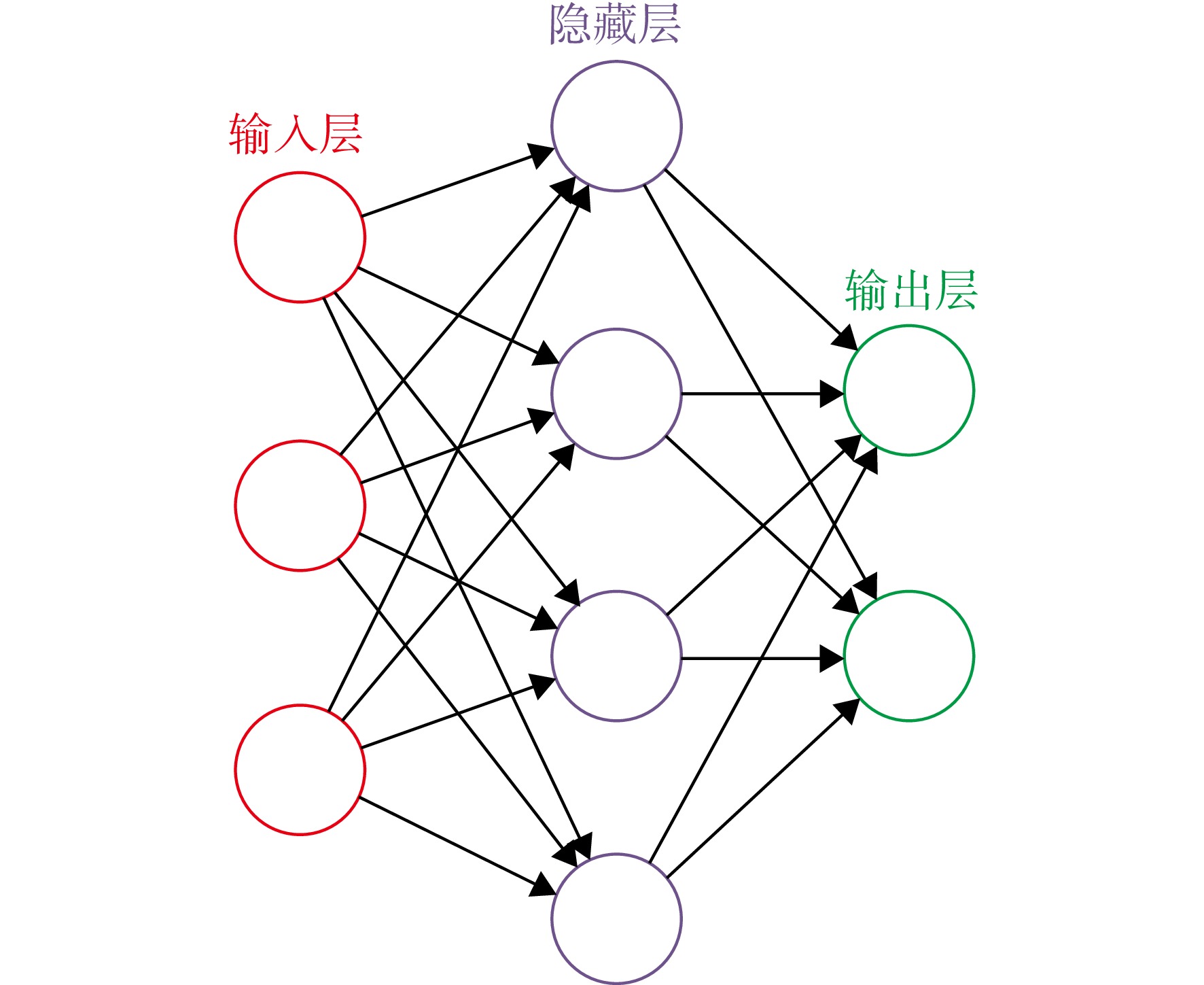
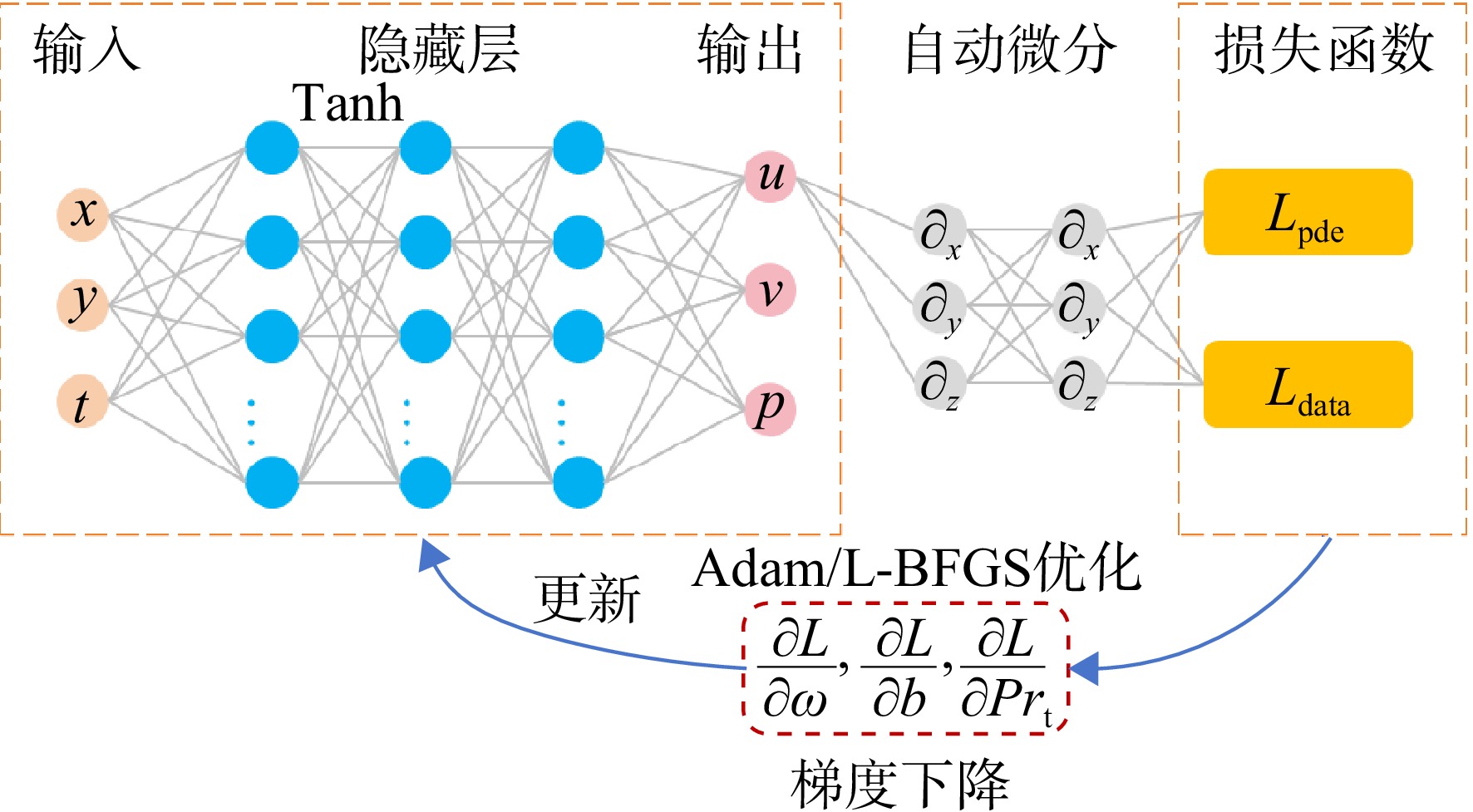
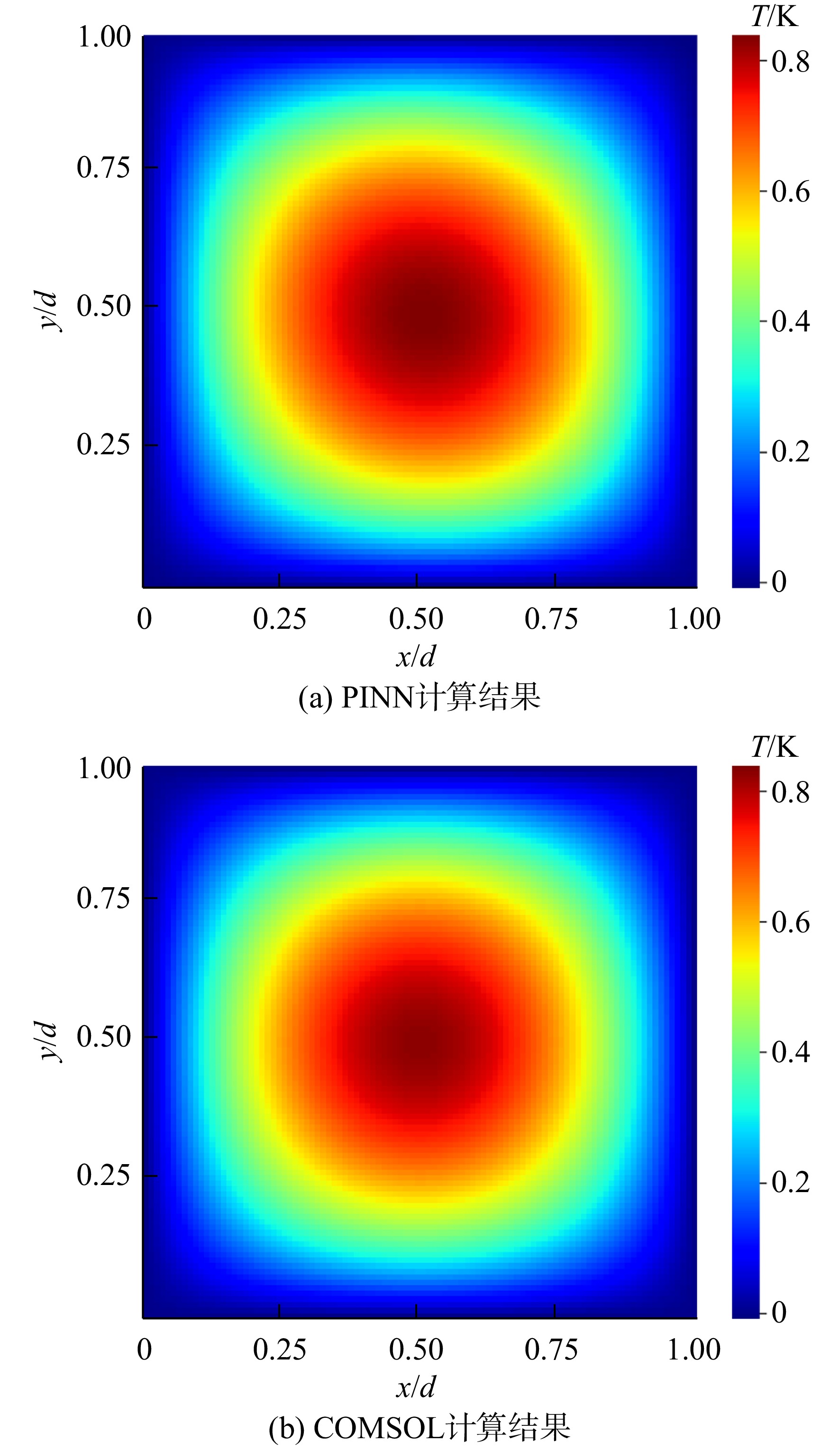
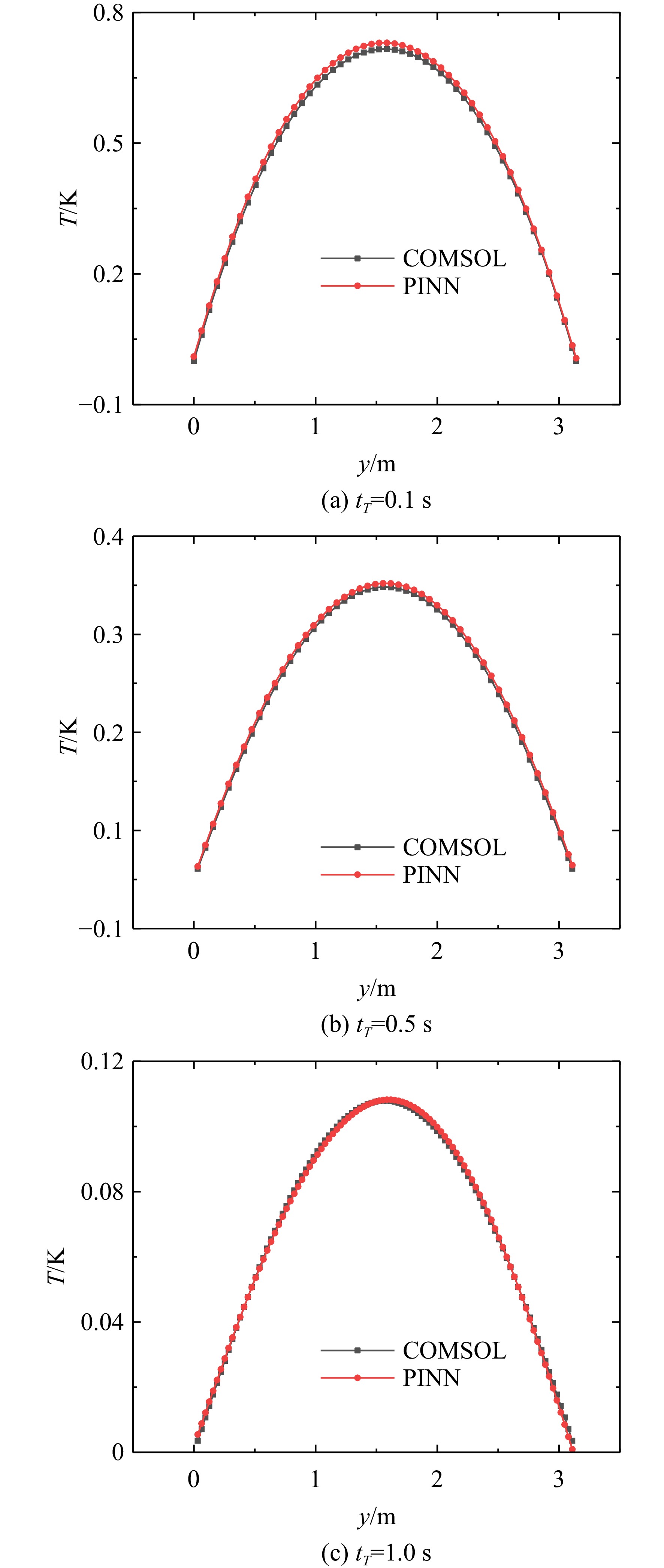
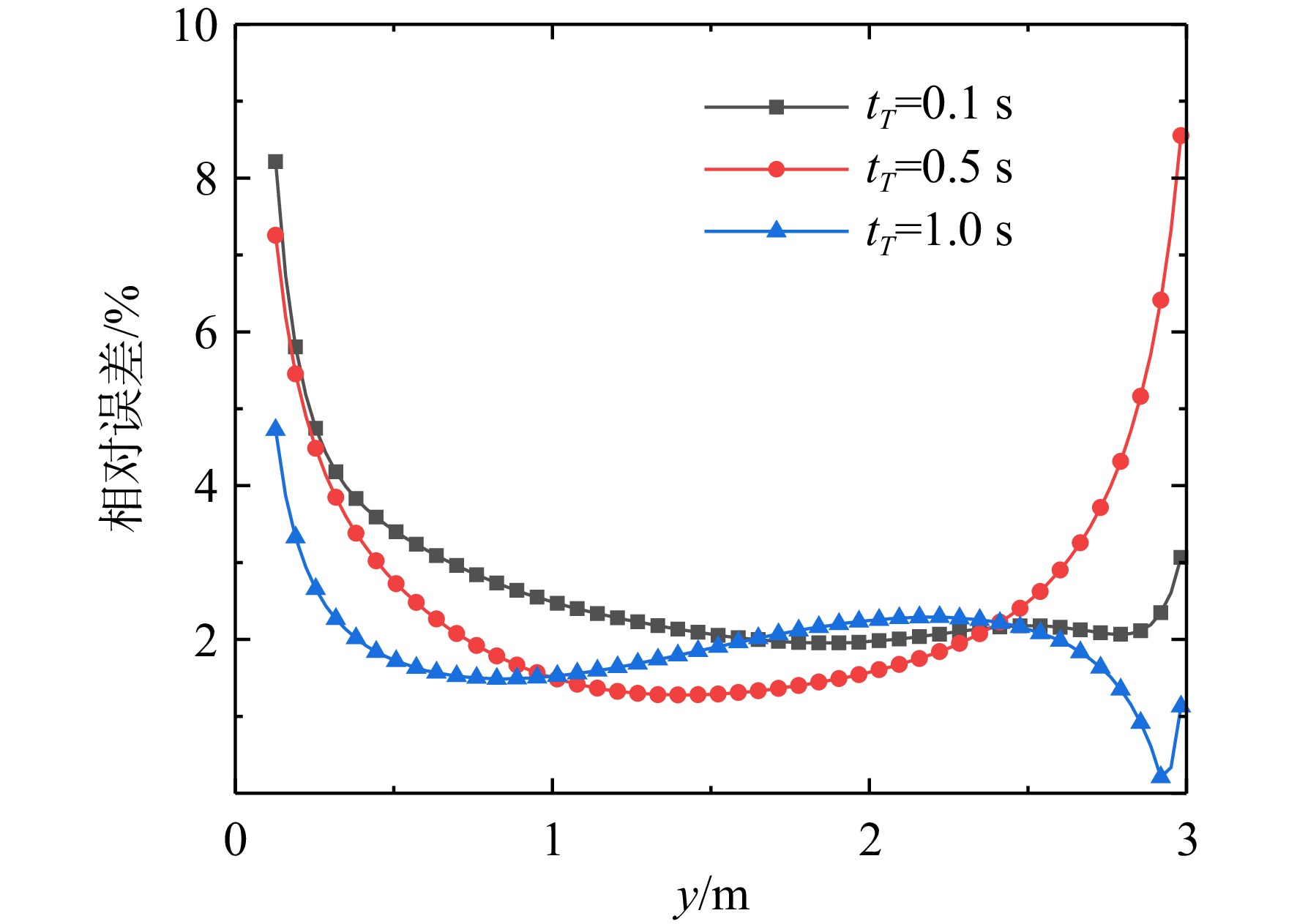
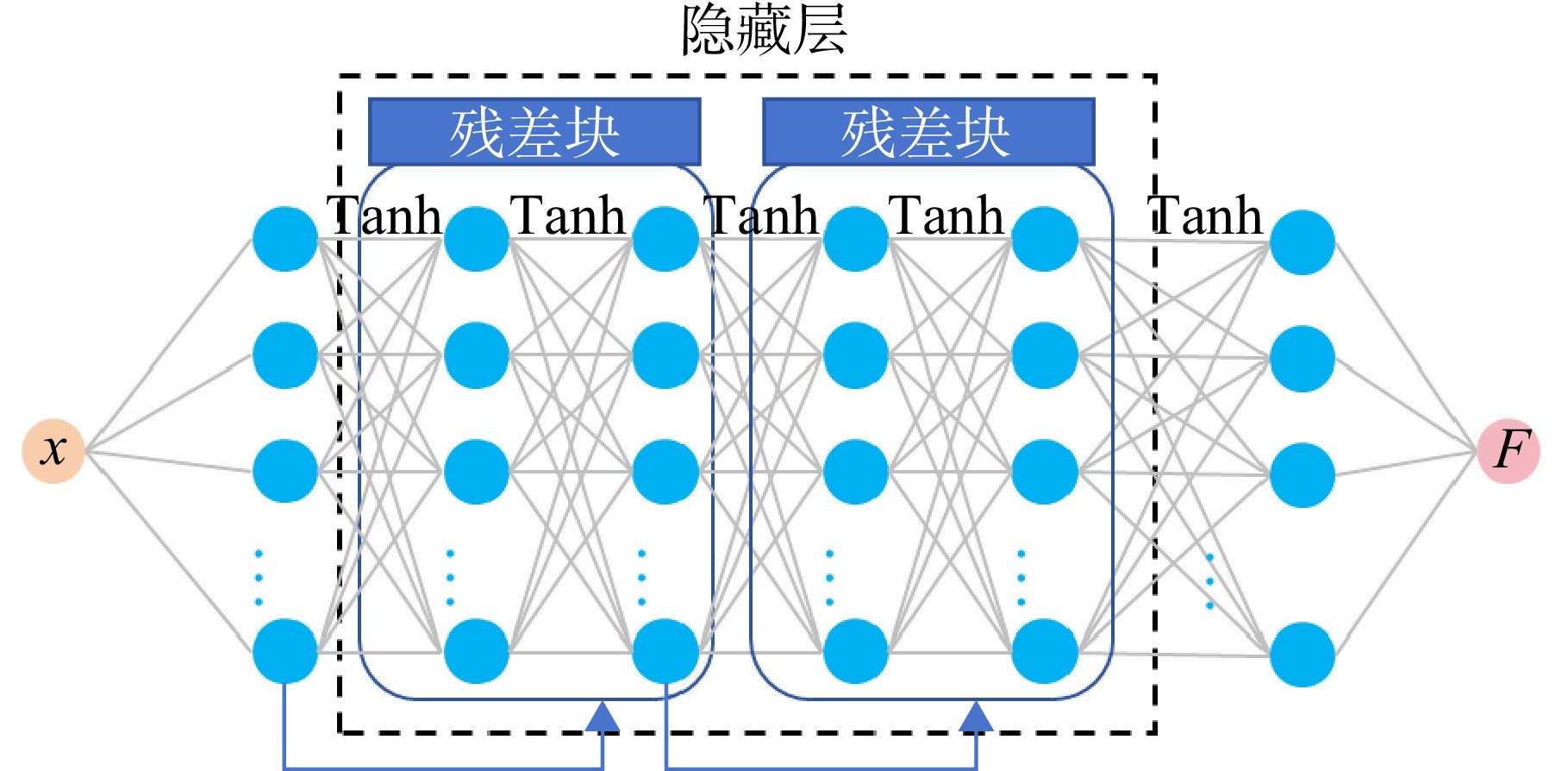
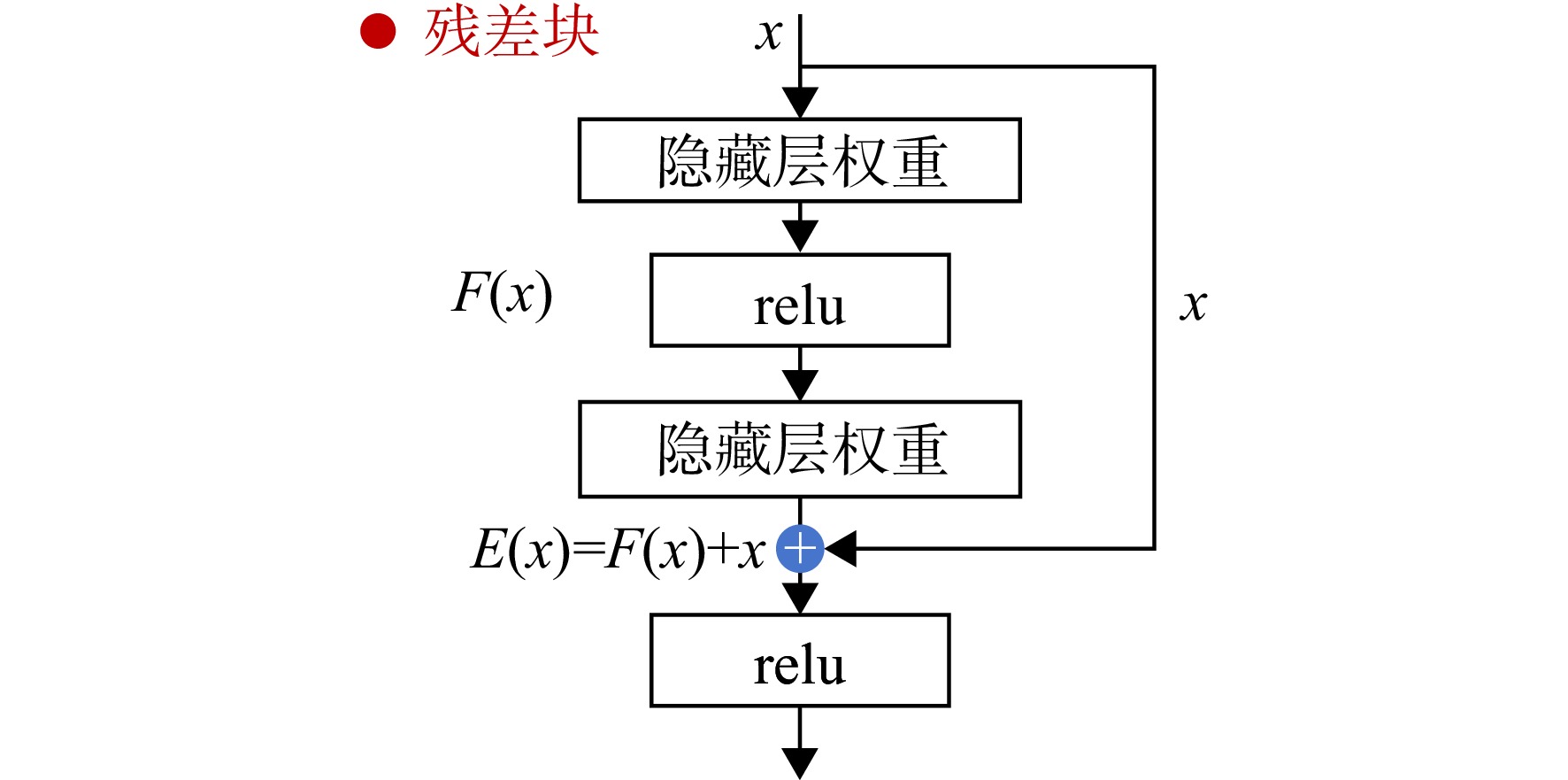
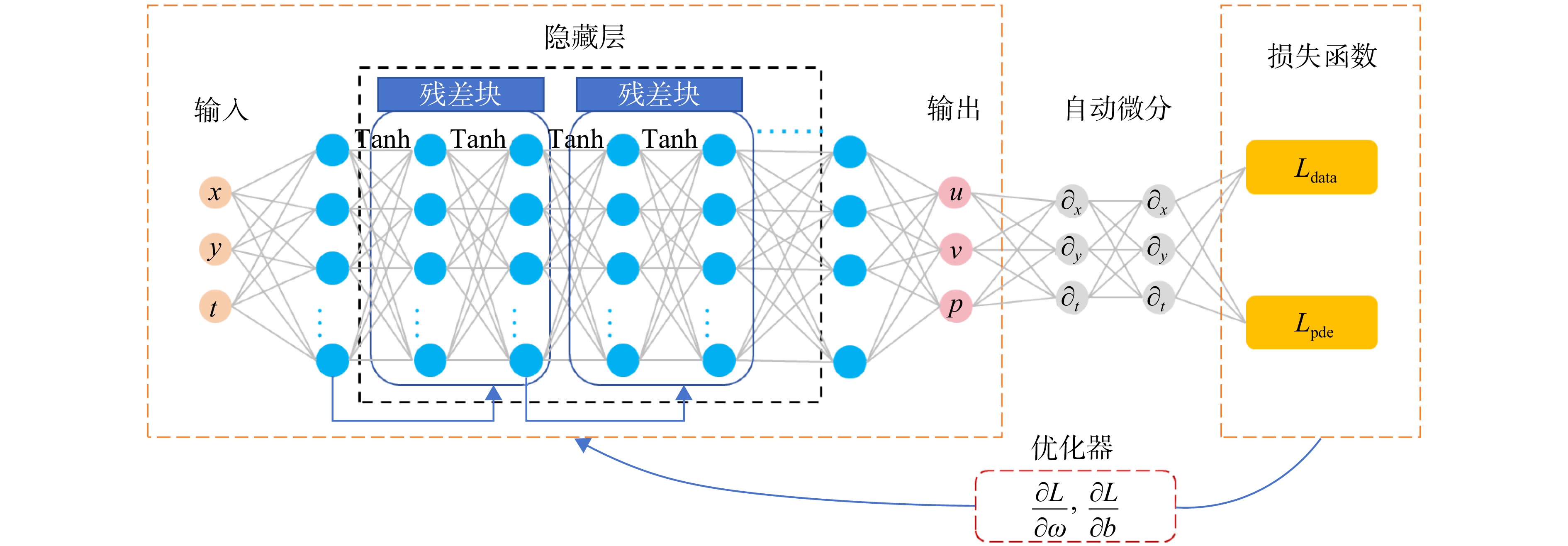
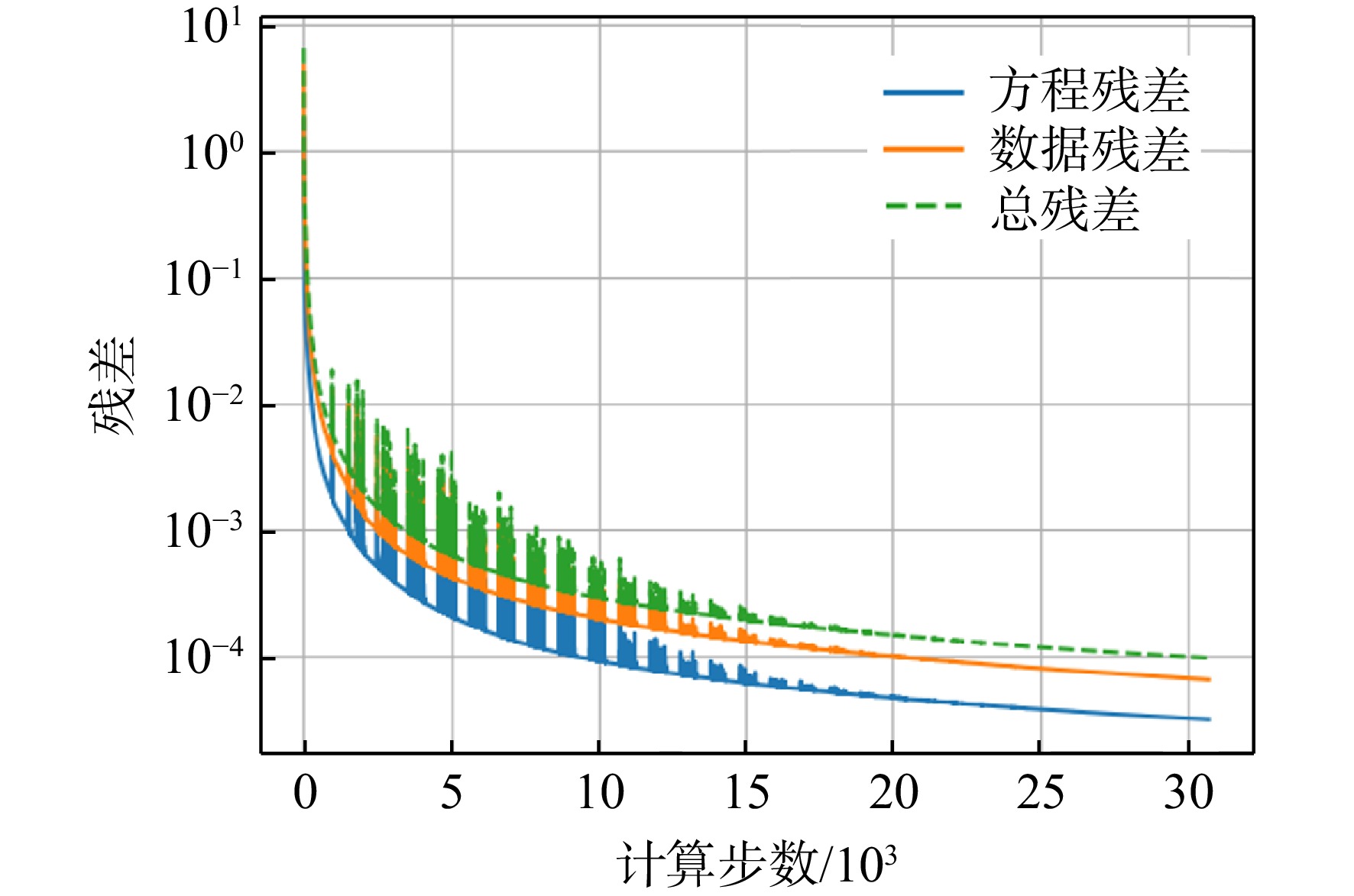
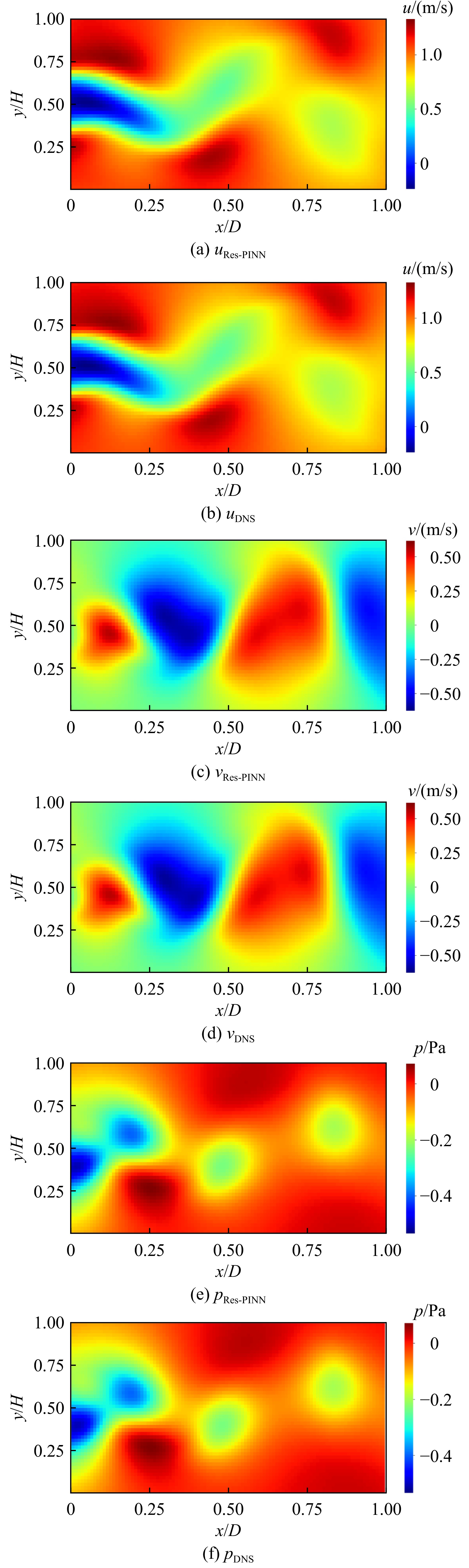
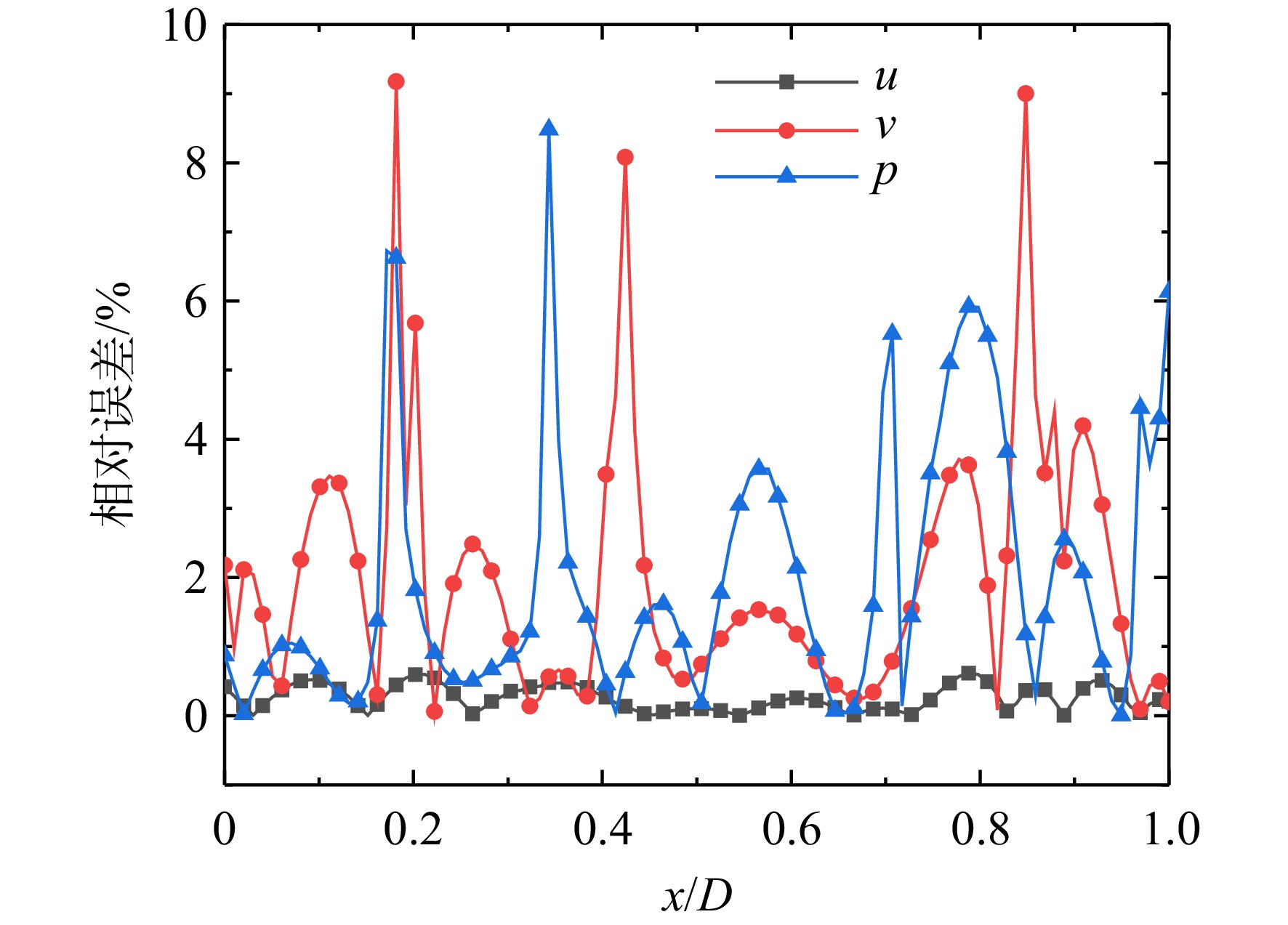
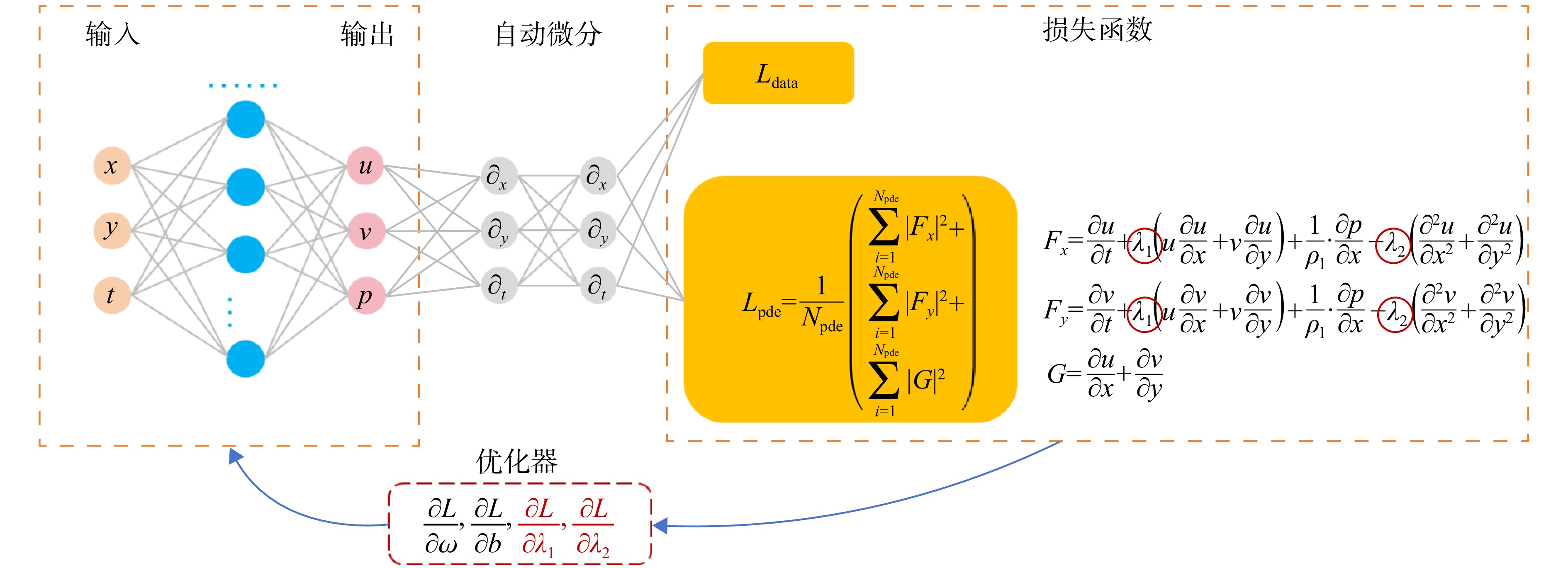
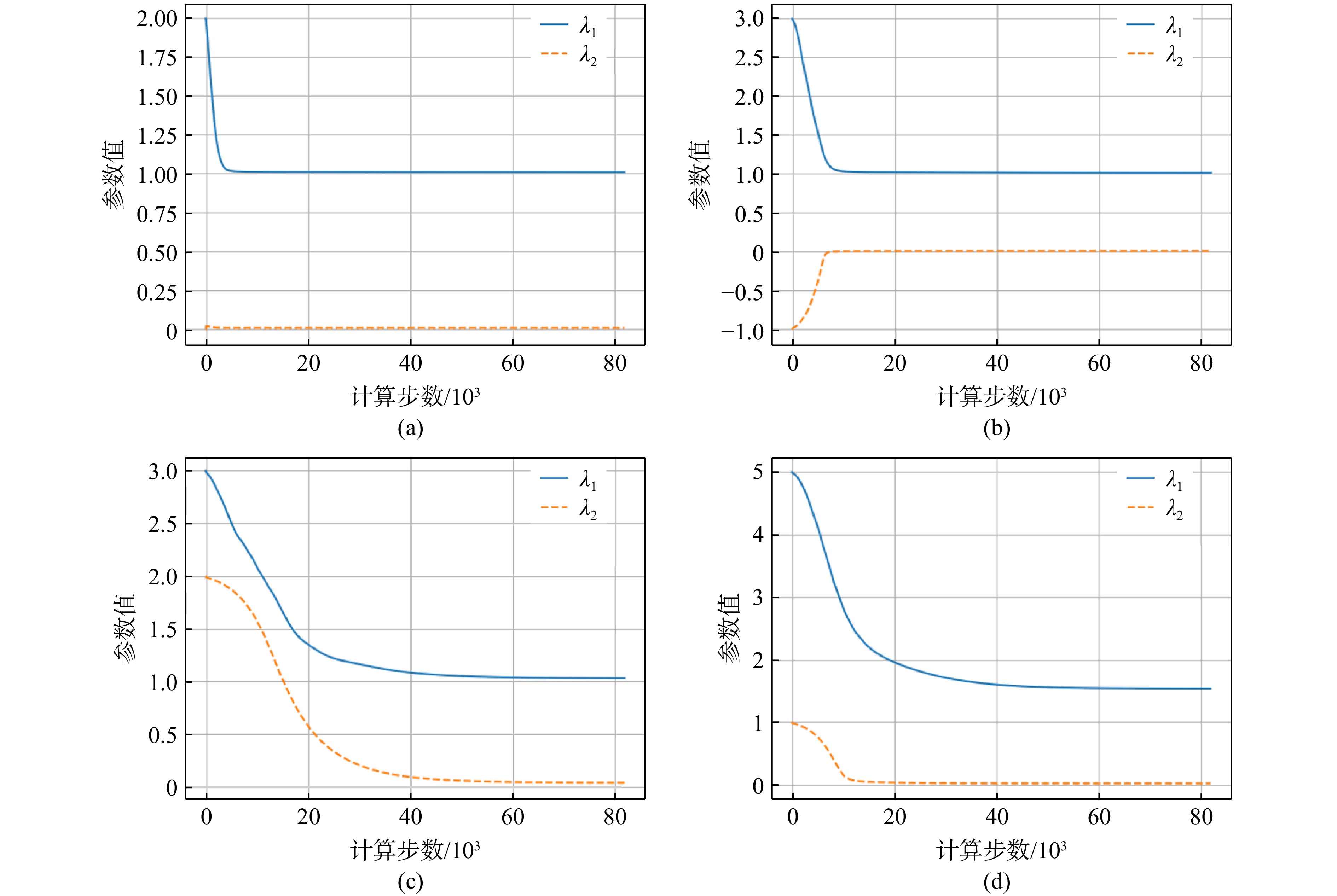
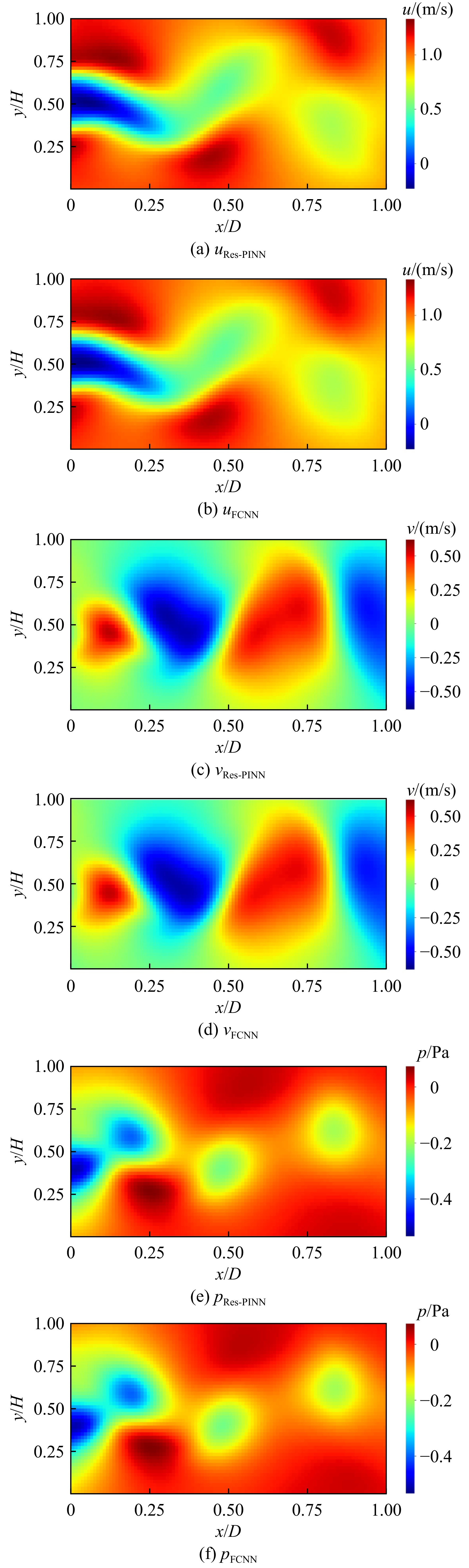
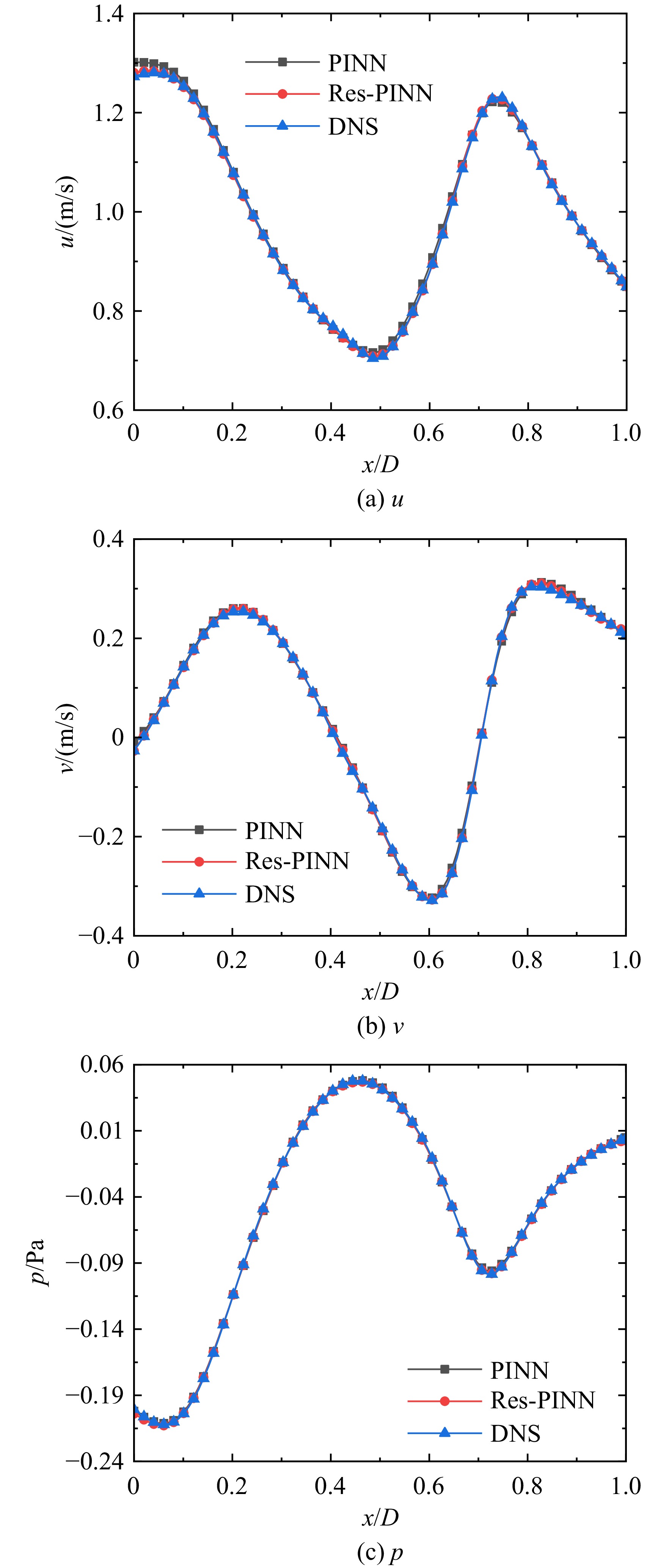
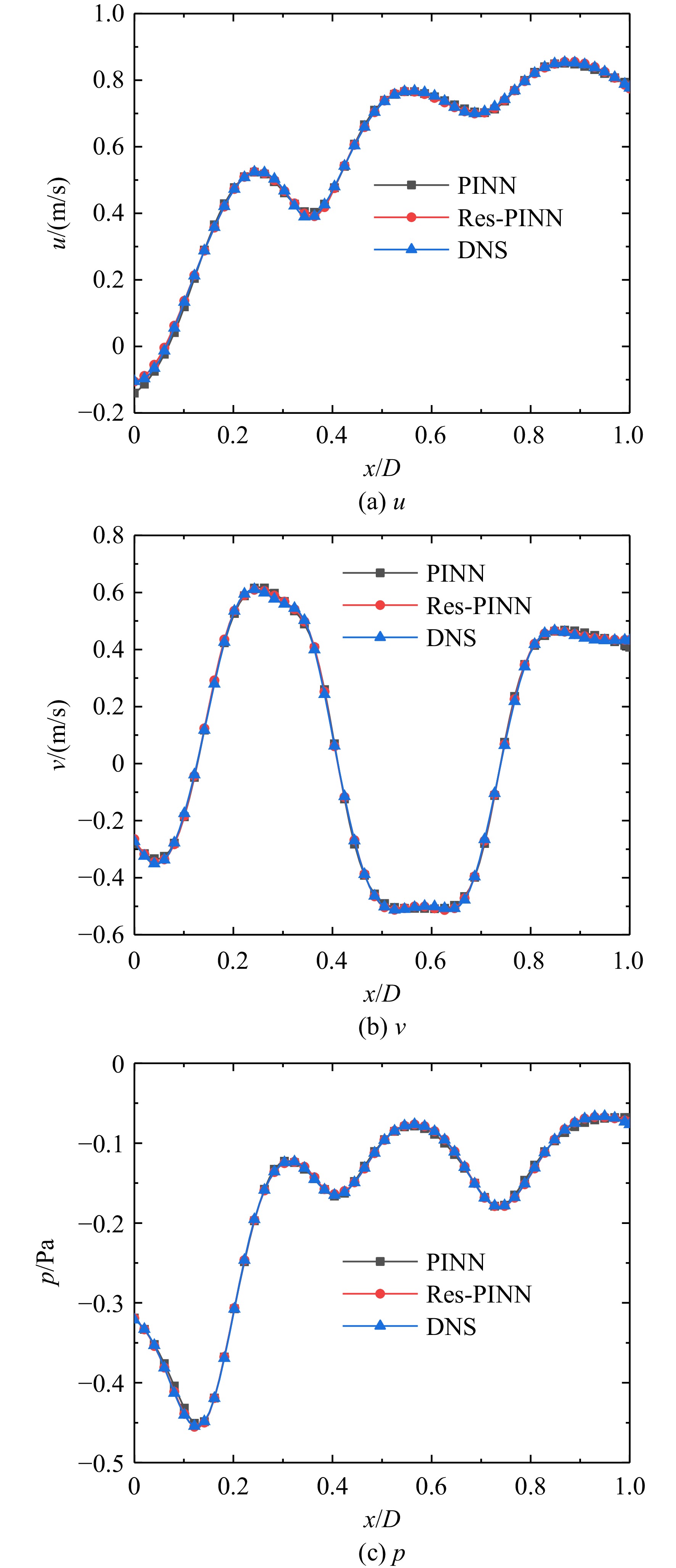
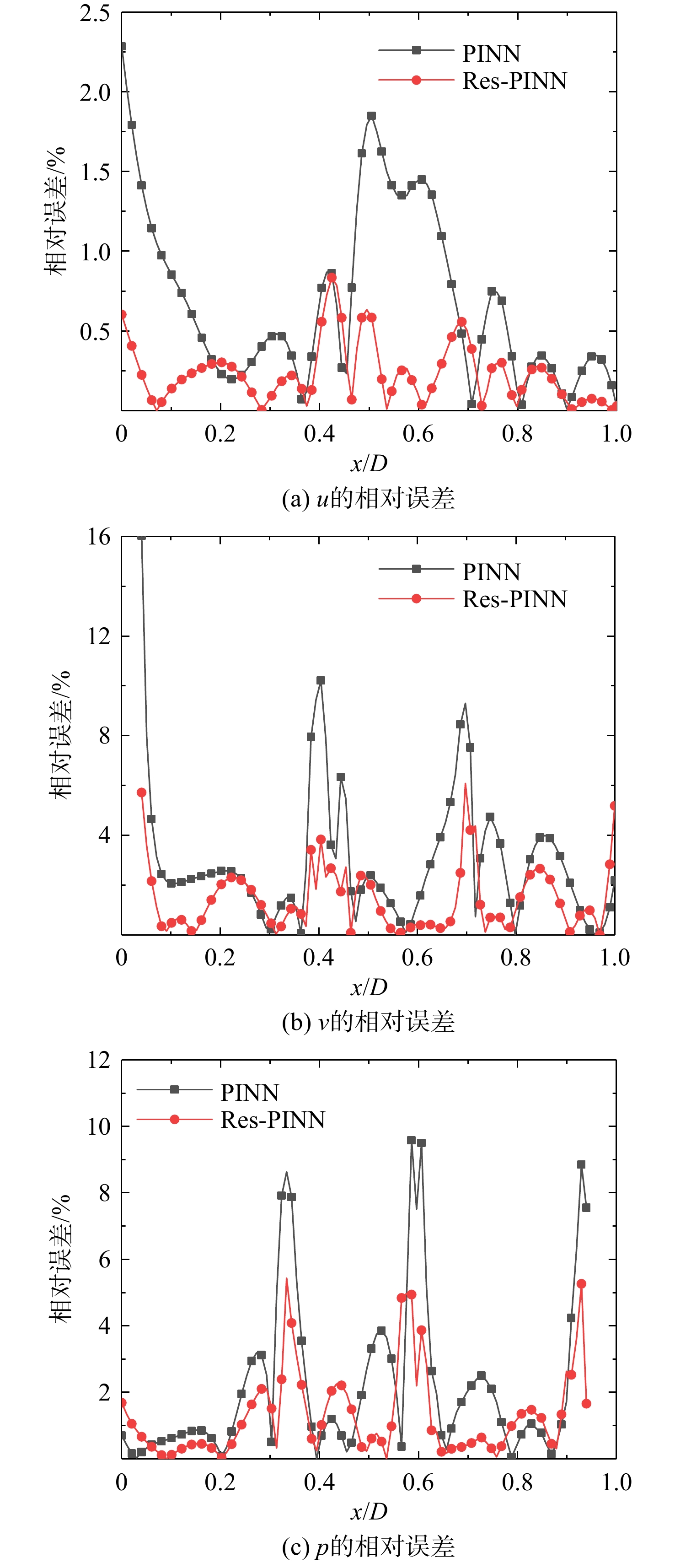
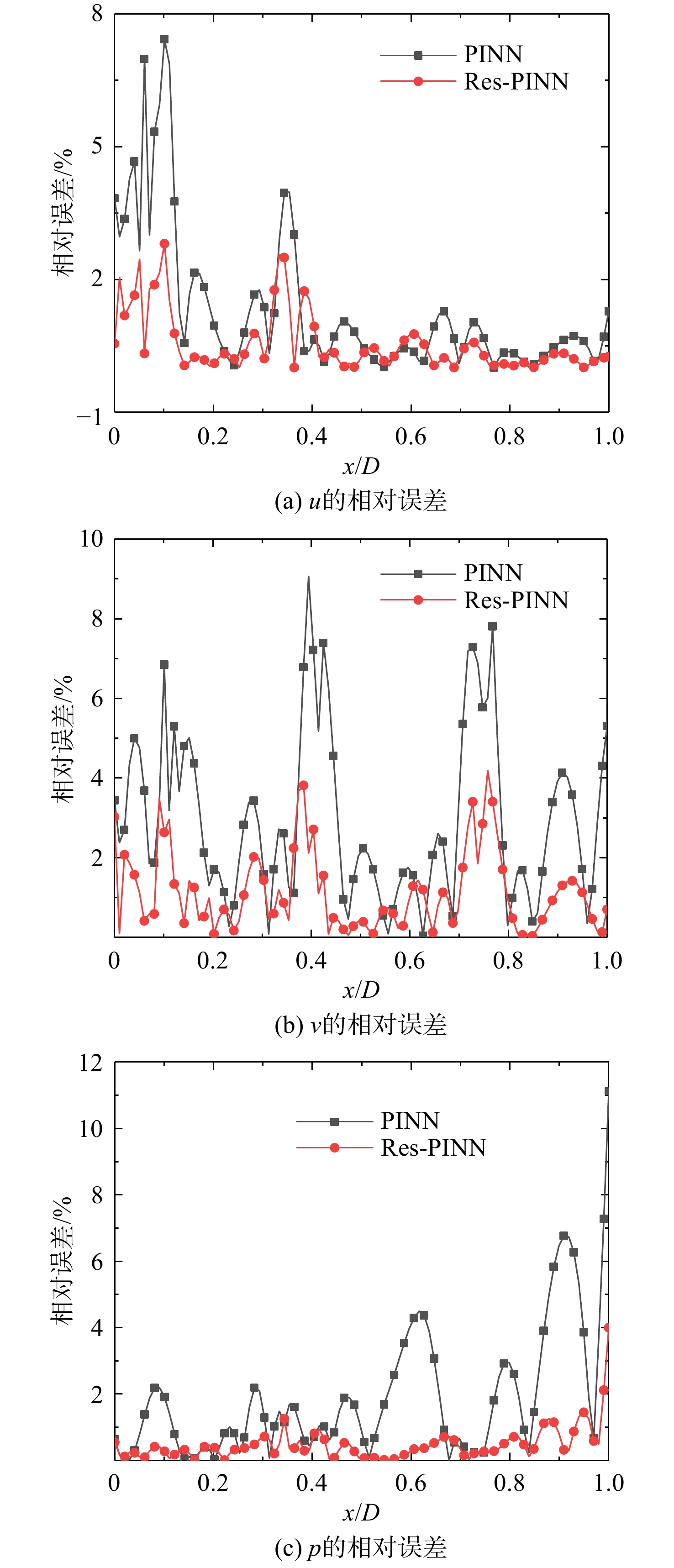
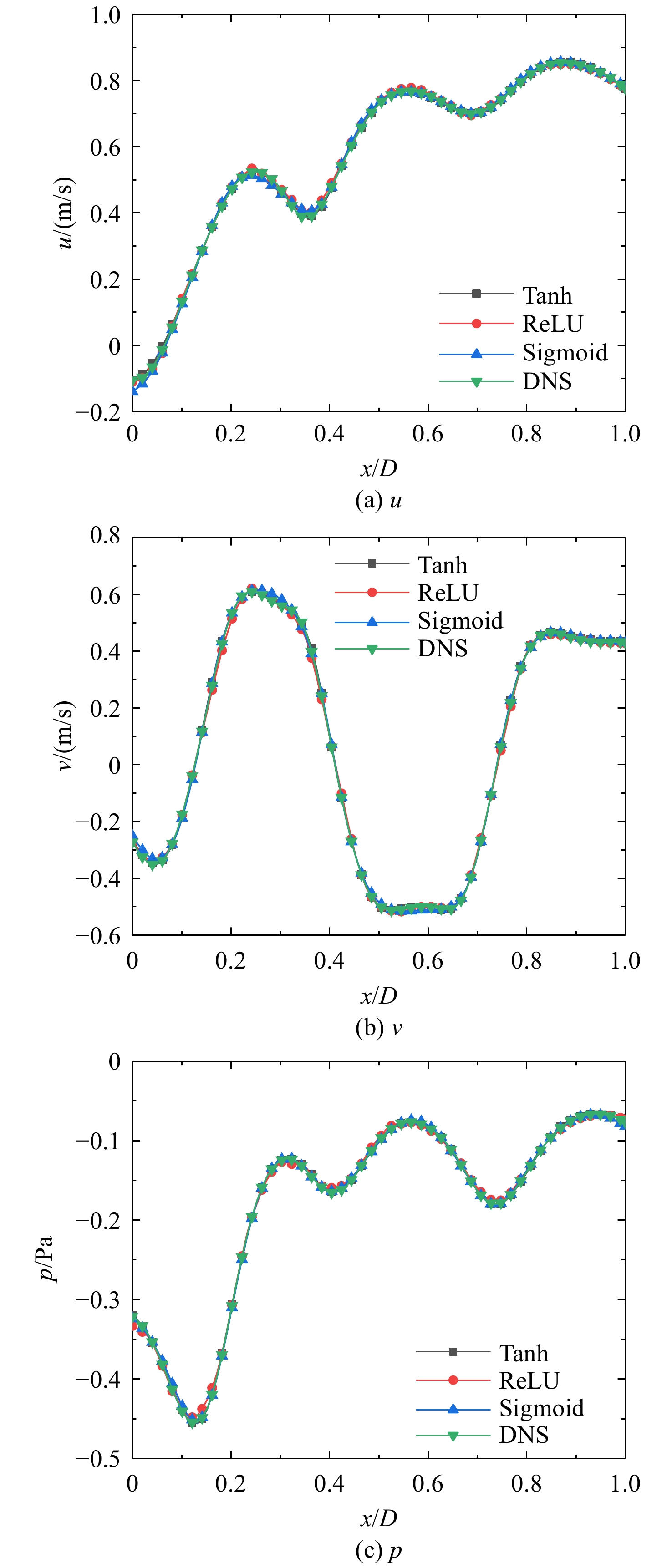
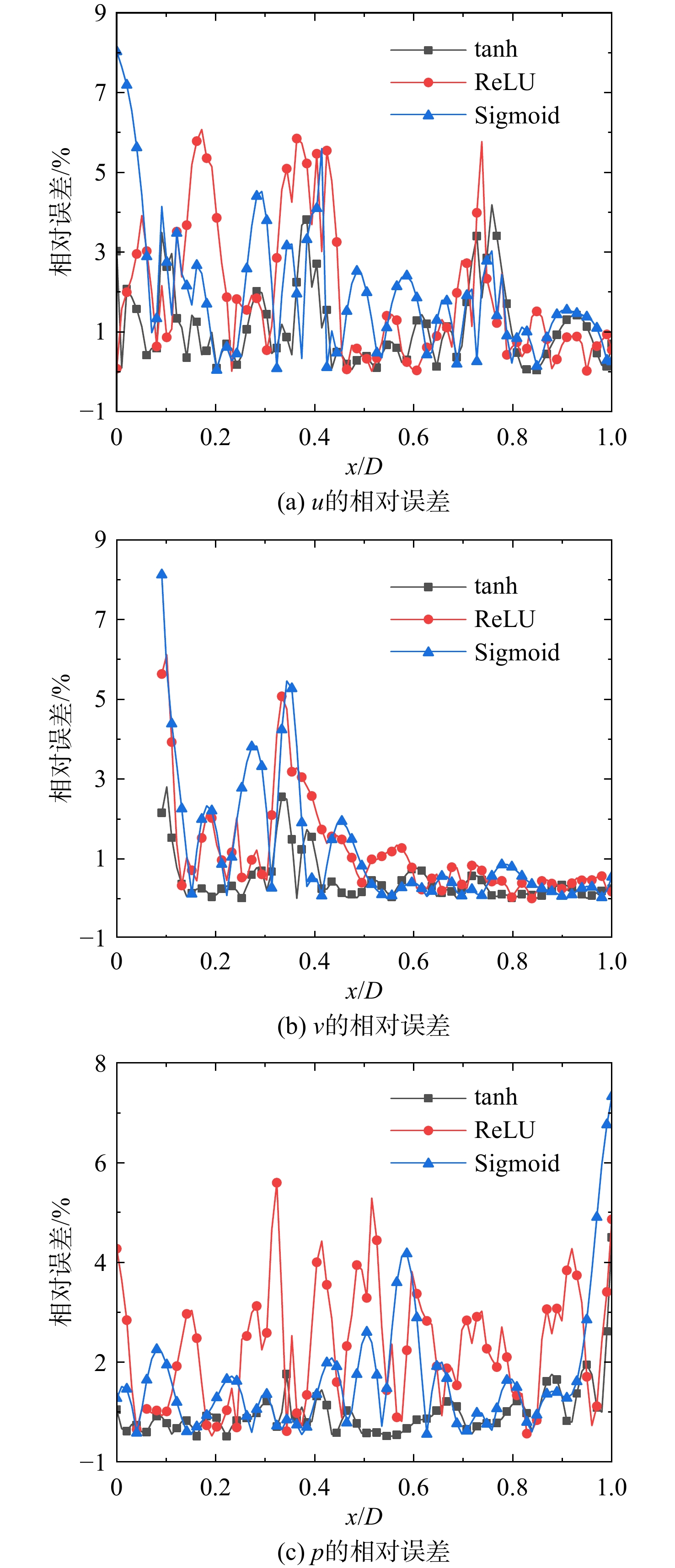
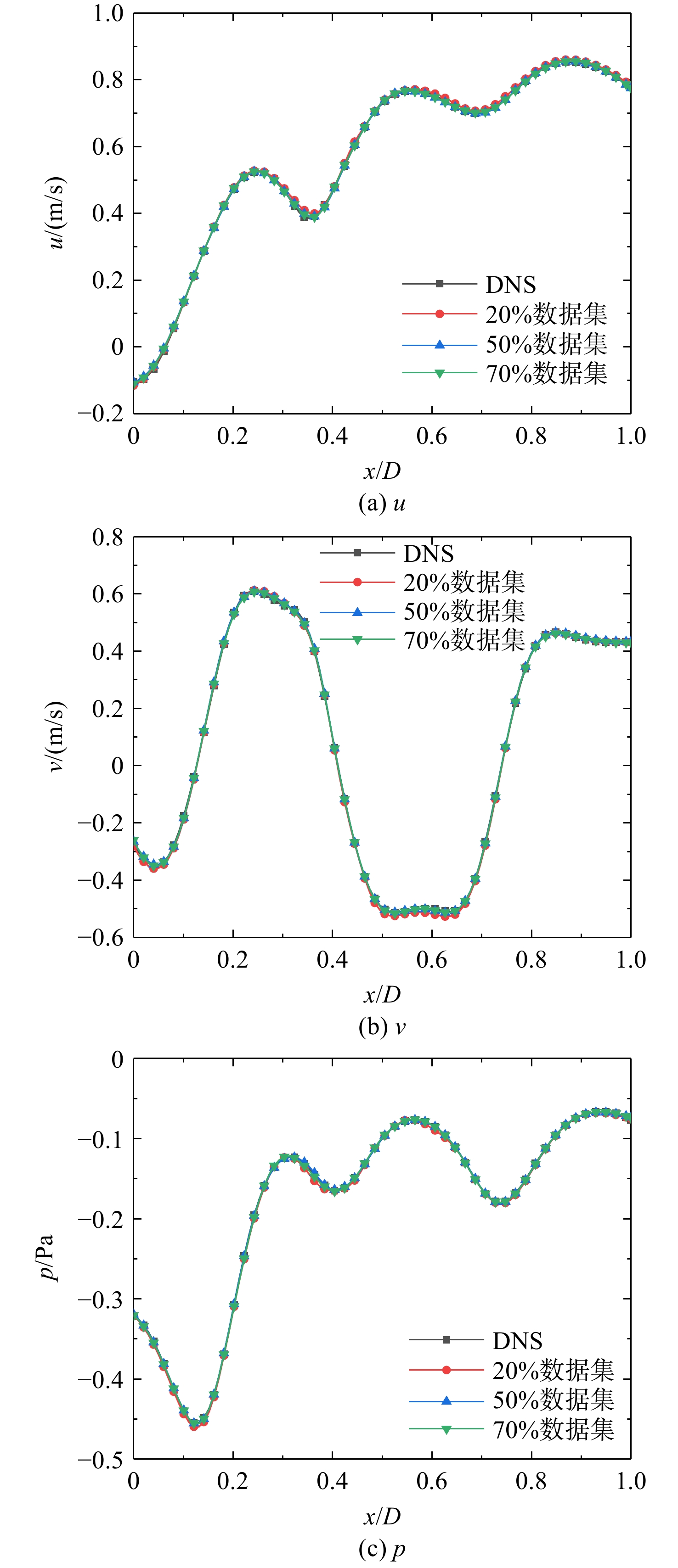
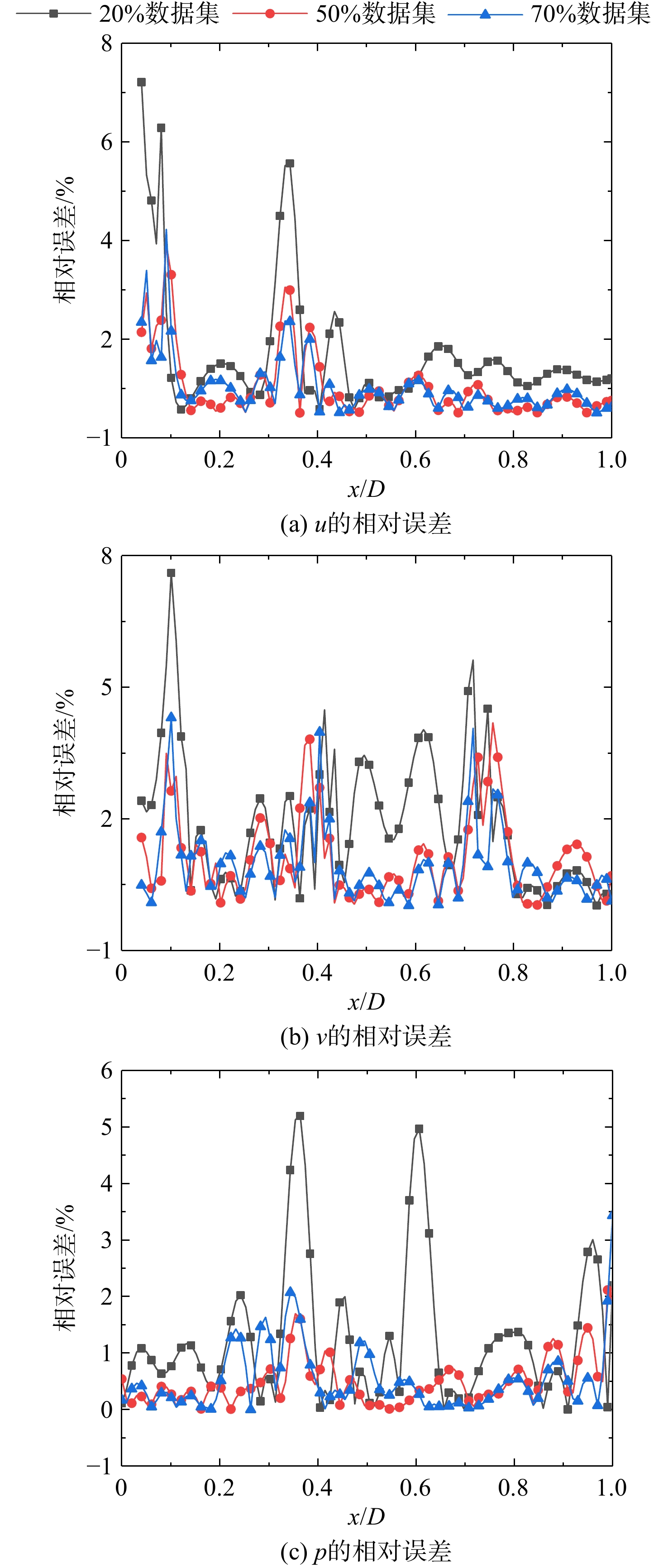
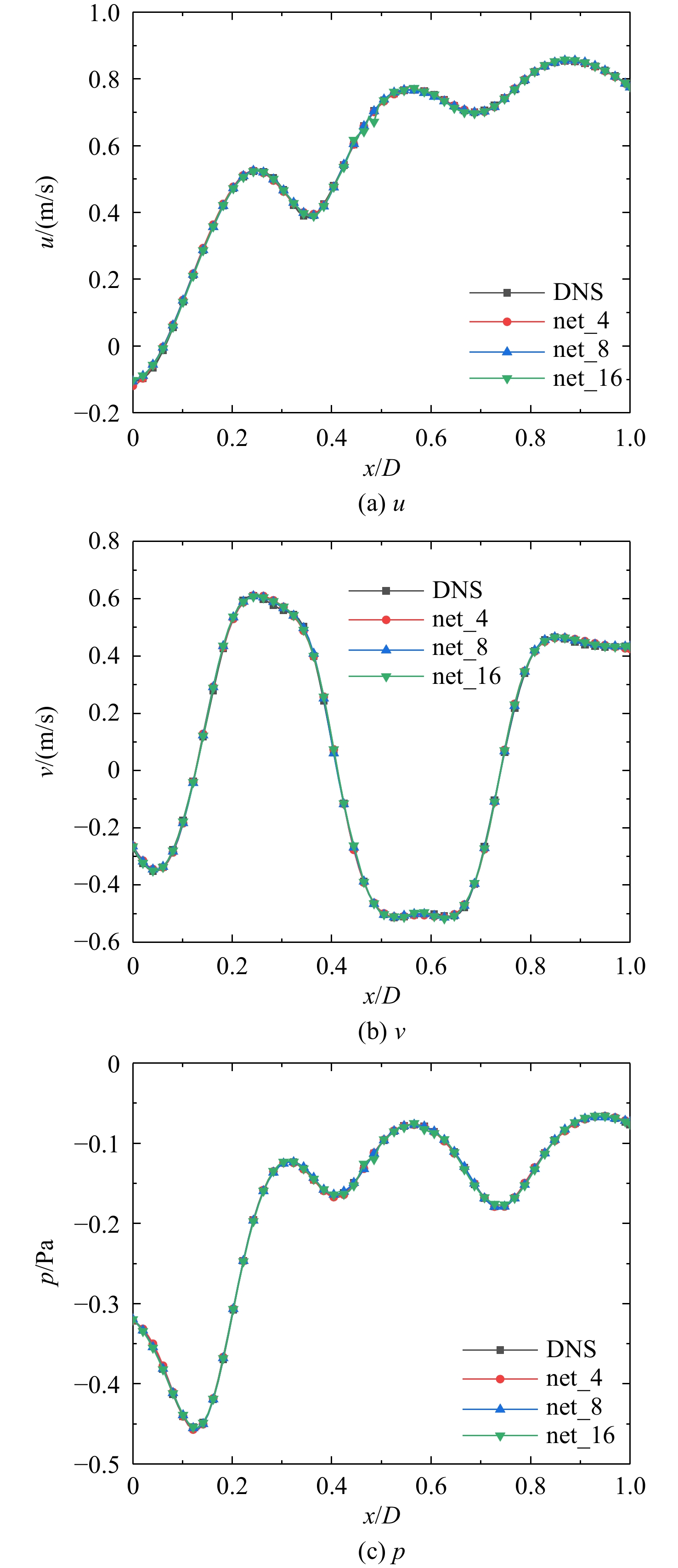
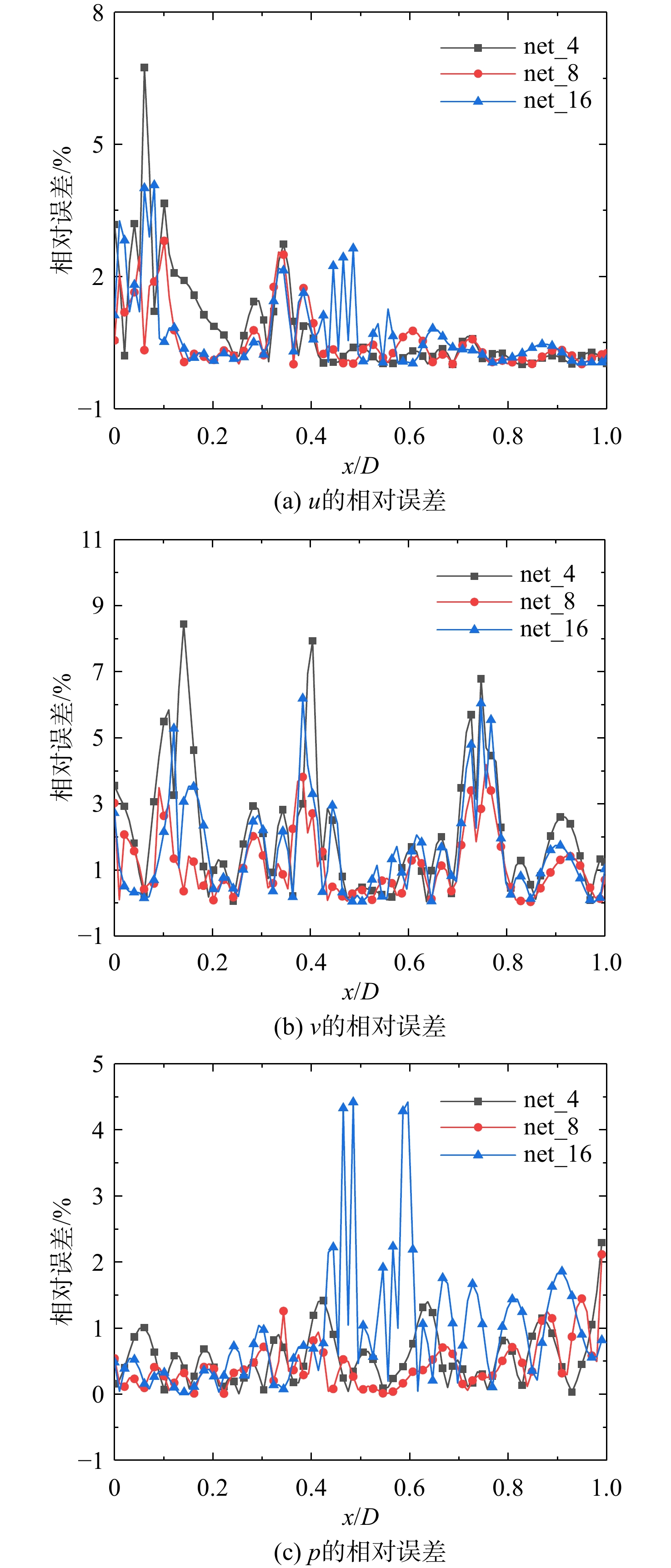
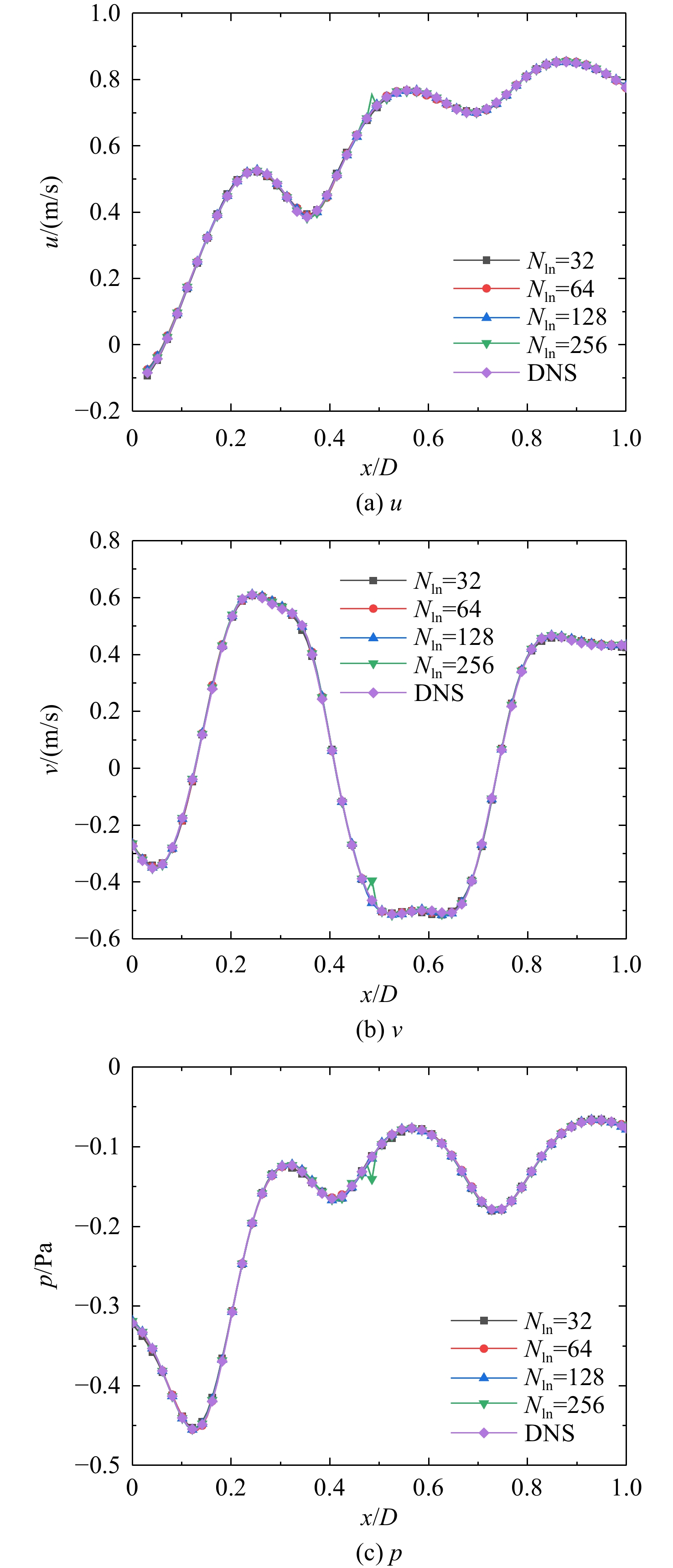
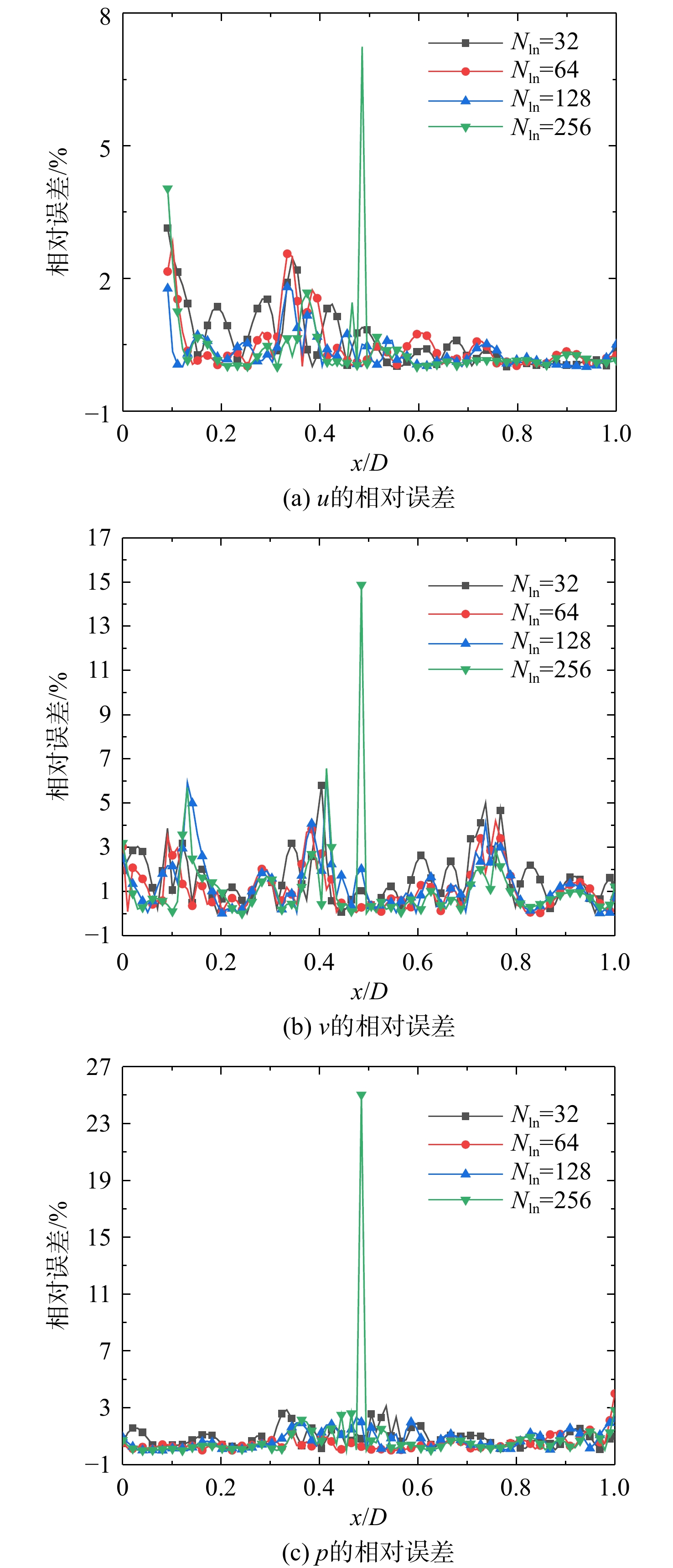
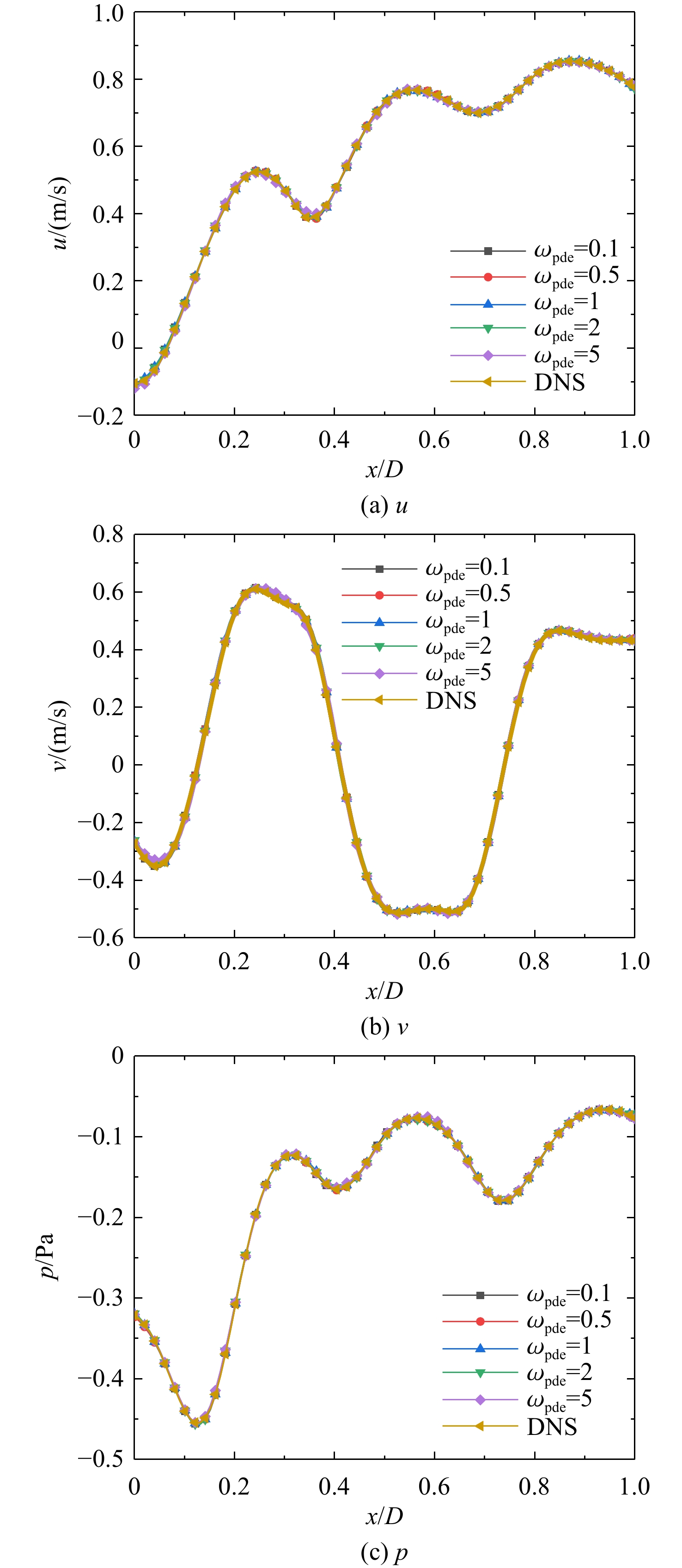
A high-precision prediction method for flow field was developed by integrating residual neural network (ResNet) with physics-informed neural network (PINN). Based on numerical simulation data, a PINN model integrating residual neural network (Res-PINN) solved the cylinder flow problem. The model used velocity and pressure data from sampled flow-field points to predict flow-field and pressure distributions in different regions. The influences of network type, activation function, dataset size, network layers, number of neurons and loss function weight on the prediction results were also explored. Results demonstrated that the Res-PINN effectively reconstructed flow-field velocity and pressure distributions. Its prediction accuracy was highly consistent with the direct numerical simulation results. The relative error of physical quantities was less than 5%. Comparative analysis showed that compared with traditional PINN, Res-PINN reduced prediction errors by over 45%, significantly improving the prediction accuracy and stability. Furthermore, multiple network hyperparameters had a significant impact on prediction performance, and optimization should be made to comprehensively consider and balance these parameters.

Film cooling characteristics of novel adjustable guide vane endwalls in variable geometry turbines
YAO Yunjia, YAN Yifei, TAO Zhi, SONG Liming
2026, 41(8): 20250315. doi: 10.13224/j.cnki.jasp.20250315
Abstract:

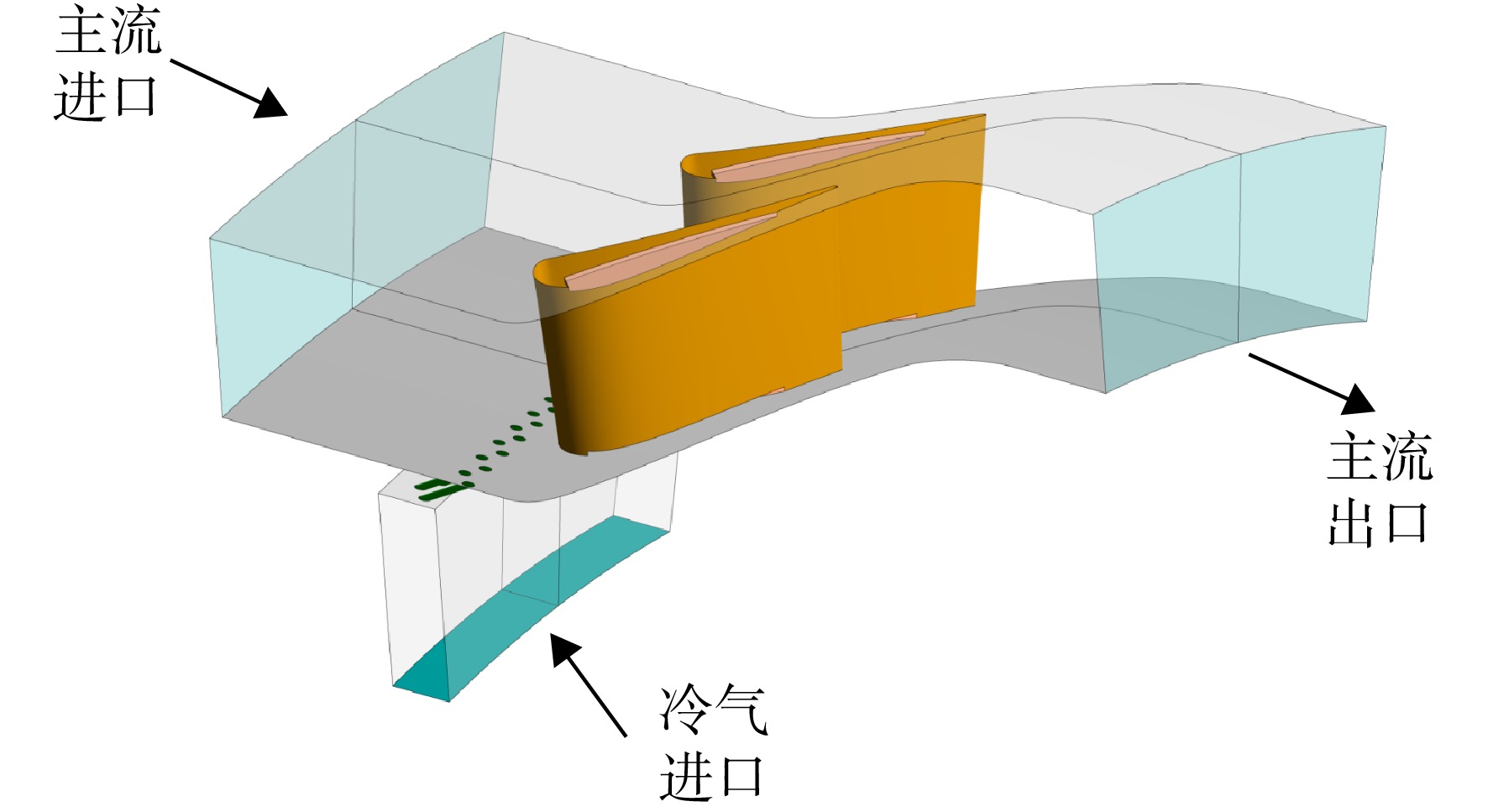
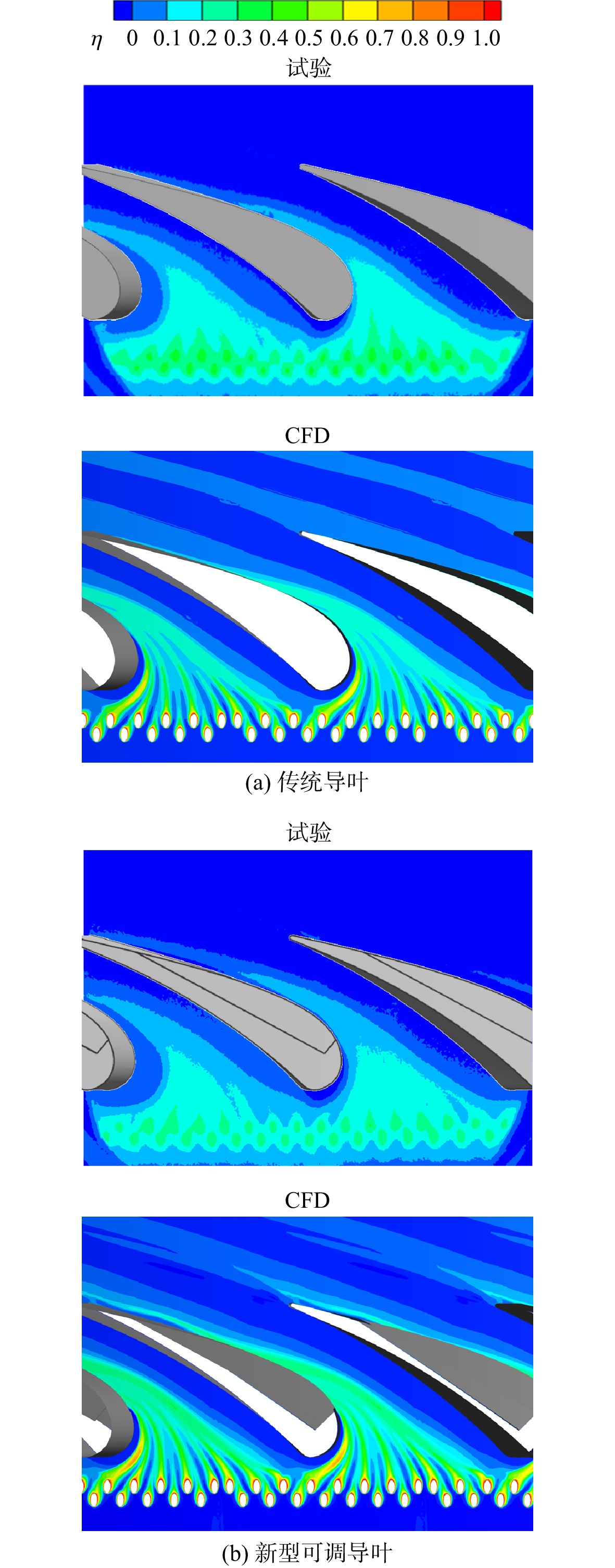
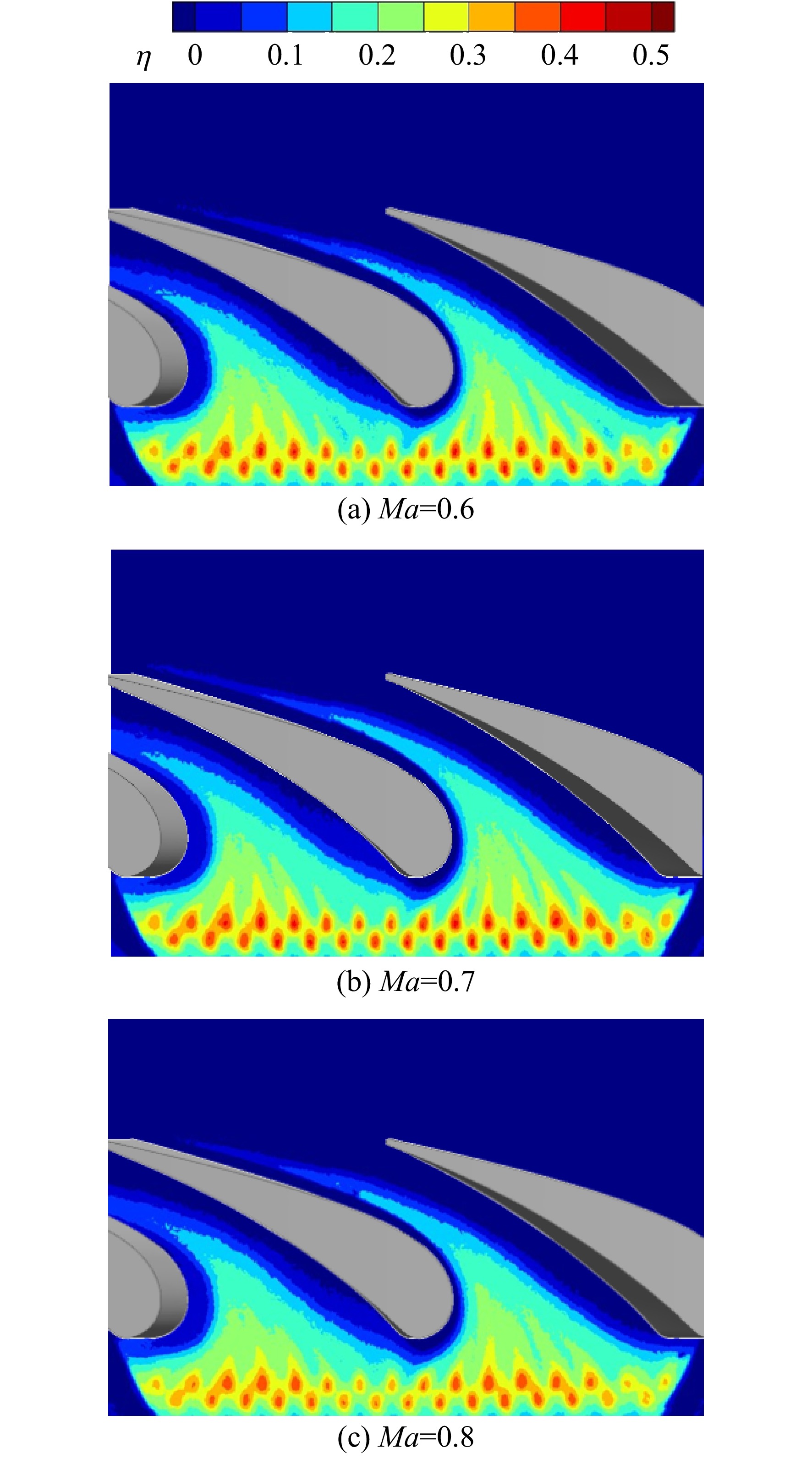
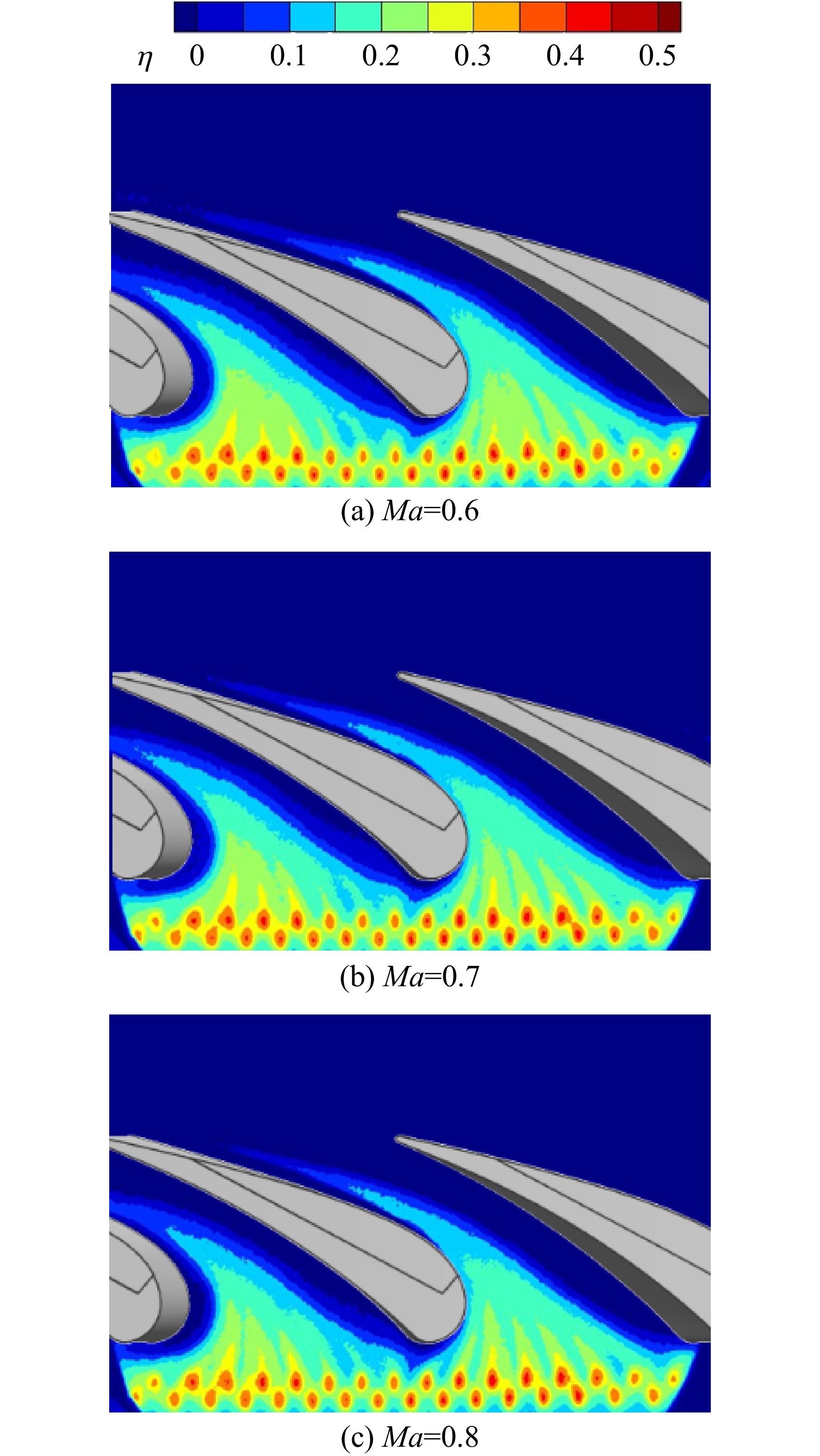
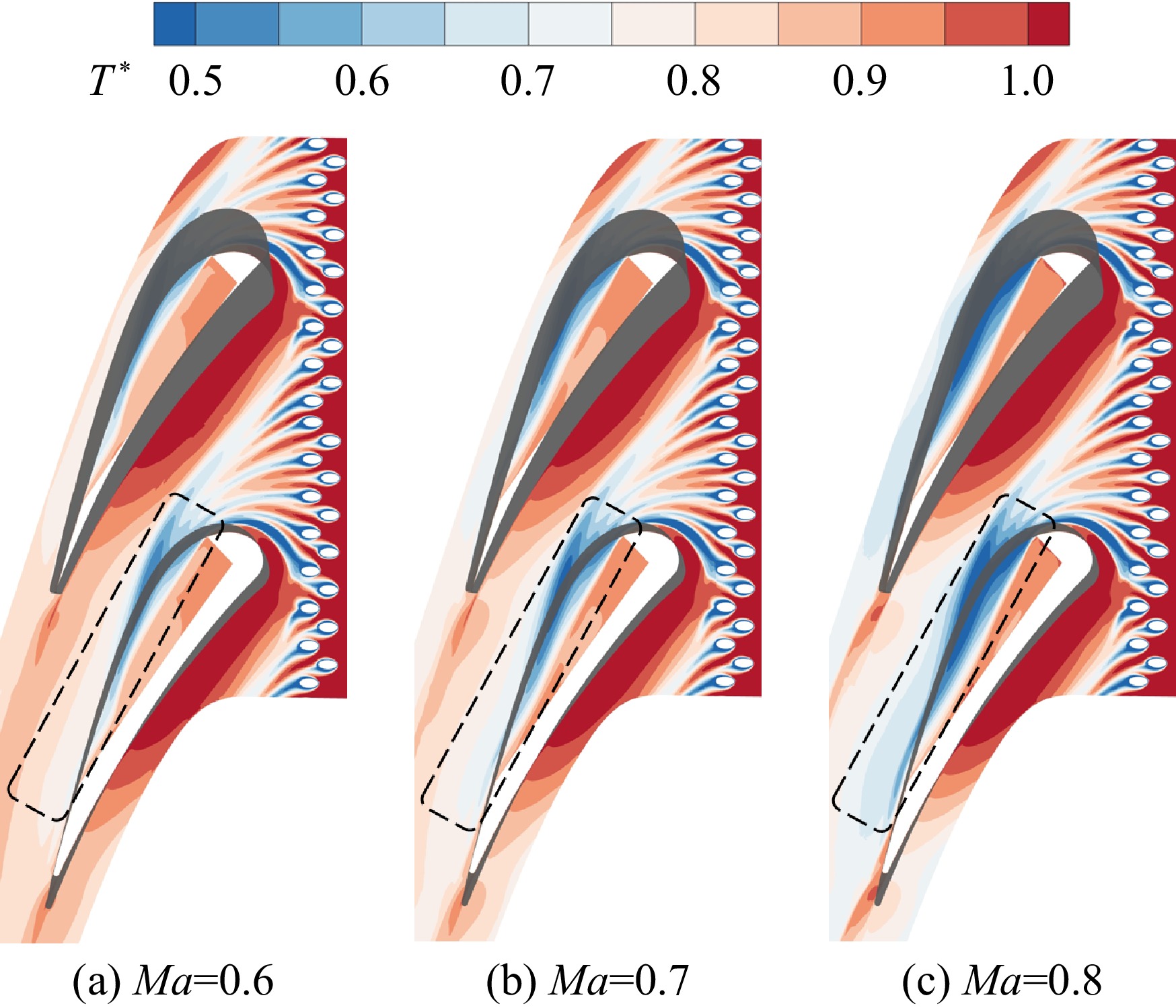
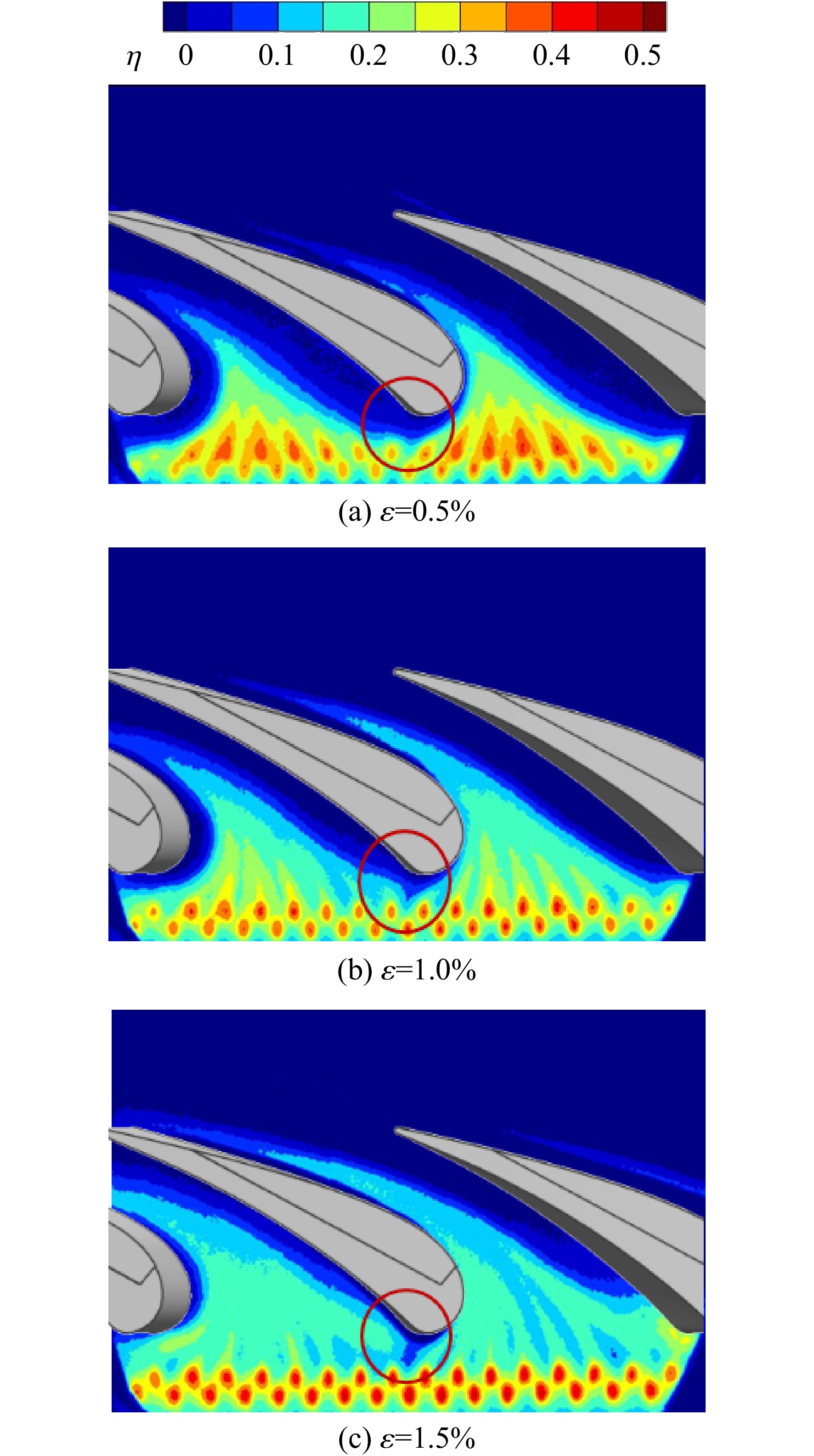
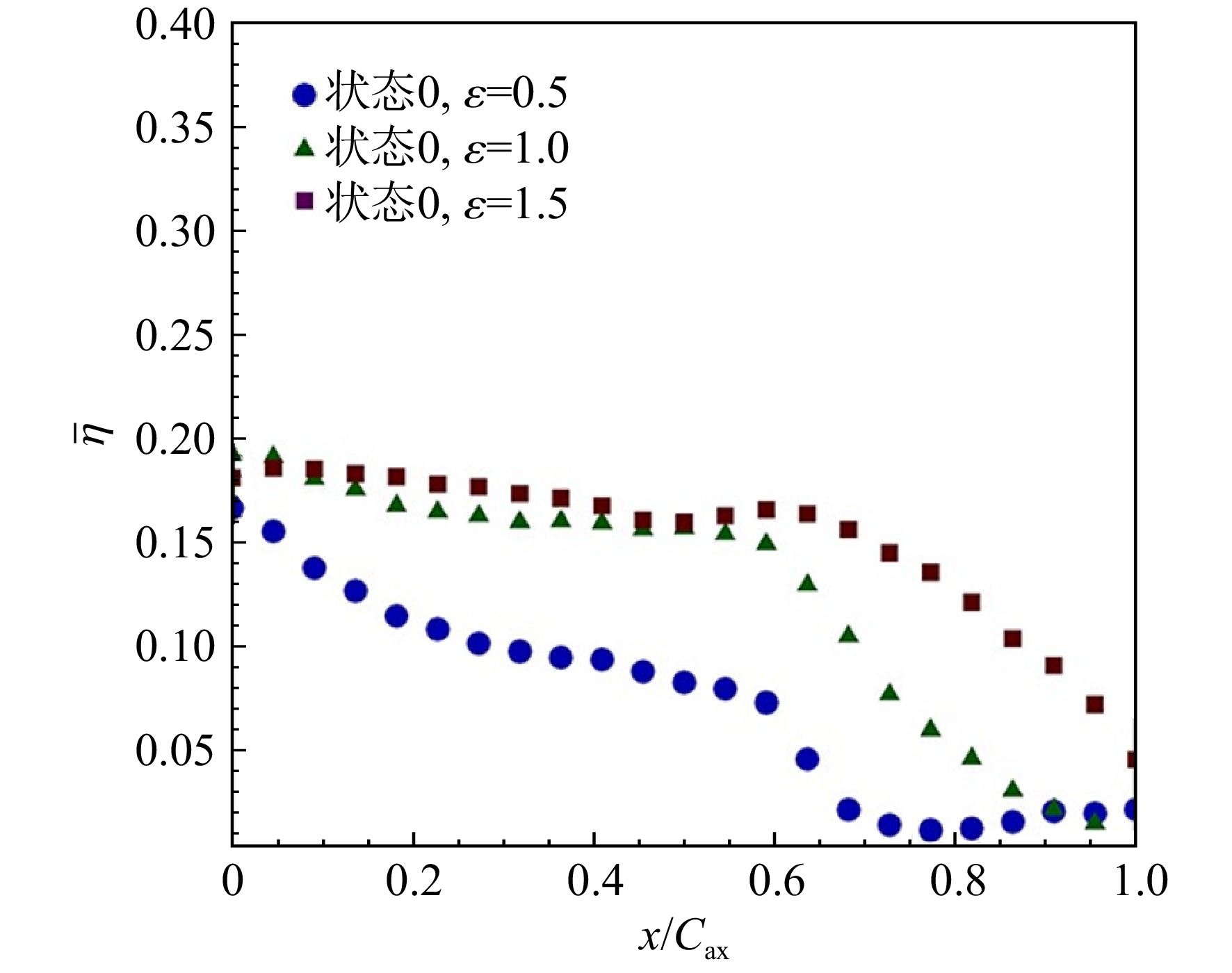
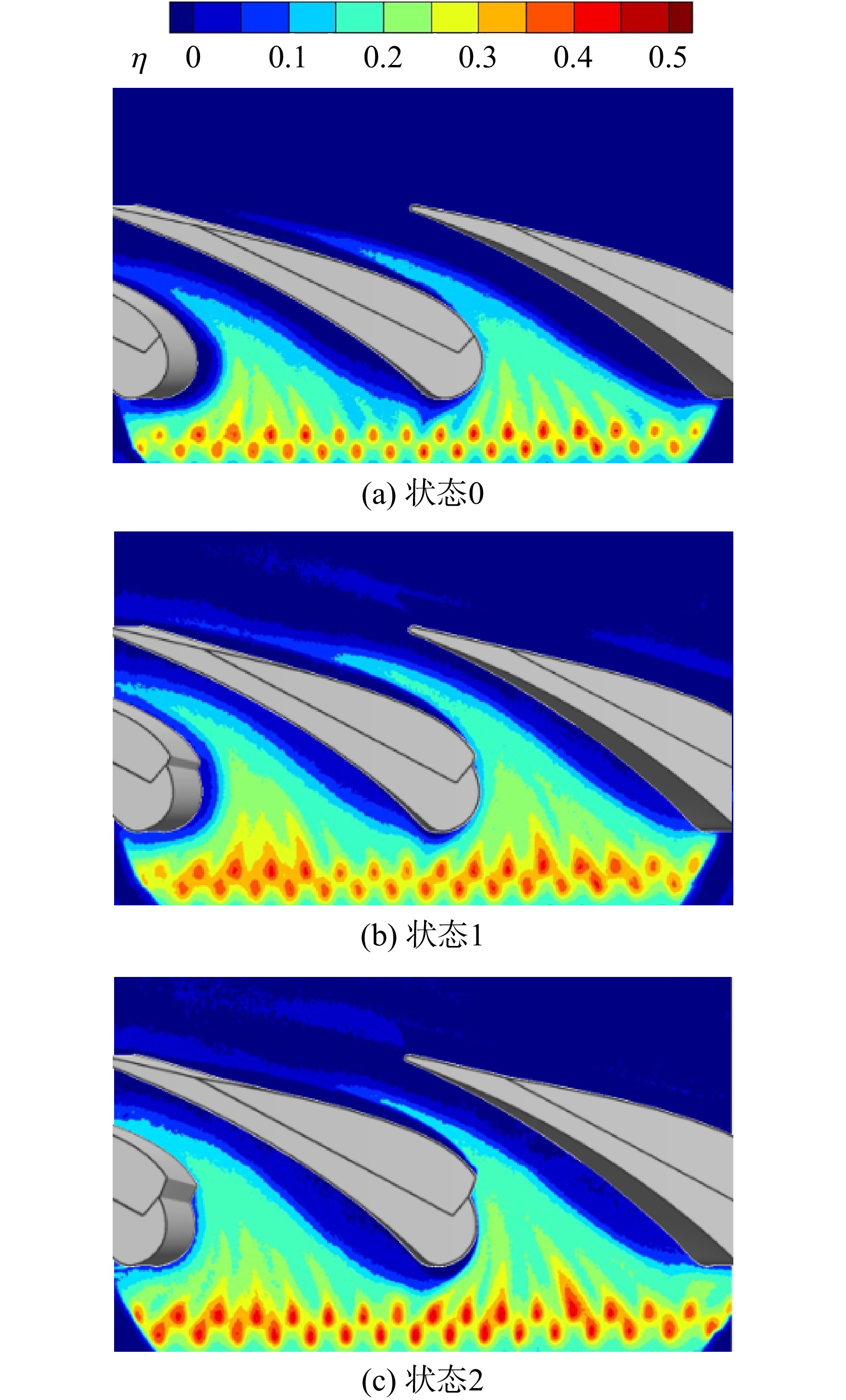
Combining experimental and numerical simulation, the endwall film cooling characteristics of novel variable guide vane were further examined. The film cooling characteristics on the endwalls of both the conventional vane and the novel variable guide vane were compared under different exit Mach number (Ma) conditions. The variations in film cooling effectiveness were investigated with respect to different coolant-to-mainstream mass flow ratios and different turning angles of the novel vane. The results indicated that, at the same coolant-to-mainstream mass flow ratios, variations in Ma had a minor impact on the endwall film cooling effectiveness of both the conventional and novel vanes, with the coverage and magnitude of the cooling film exhibiting minimal changes. As the coolant-to-mainstream mass flow ratios increased, the film cooling effectiveness on the endwalls of both vane types improved. The turning angle change of the novel variable guide vane altered the near-wall pressure distribution, thus causing a significant influence on the distribution of endwall film cooling effectiveness.

Study on wear characteristics of brush seal bristle tips based on fluid-structure interaction modeling
ZHAO Shengyang, LIU Yuxin, LIU Cunliang, WEI Yi
2026, 41(8): 20250223. doi: 10.13224/j.cnki.jasp.20250223
Abstract:
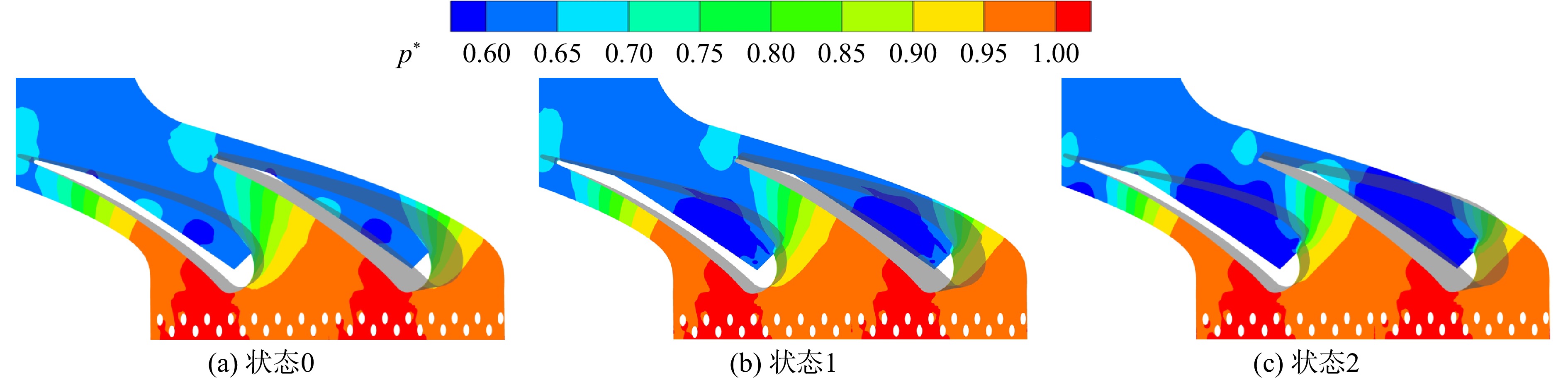
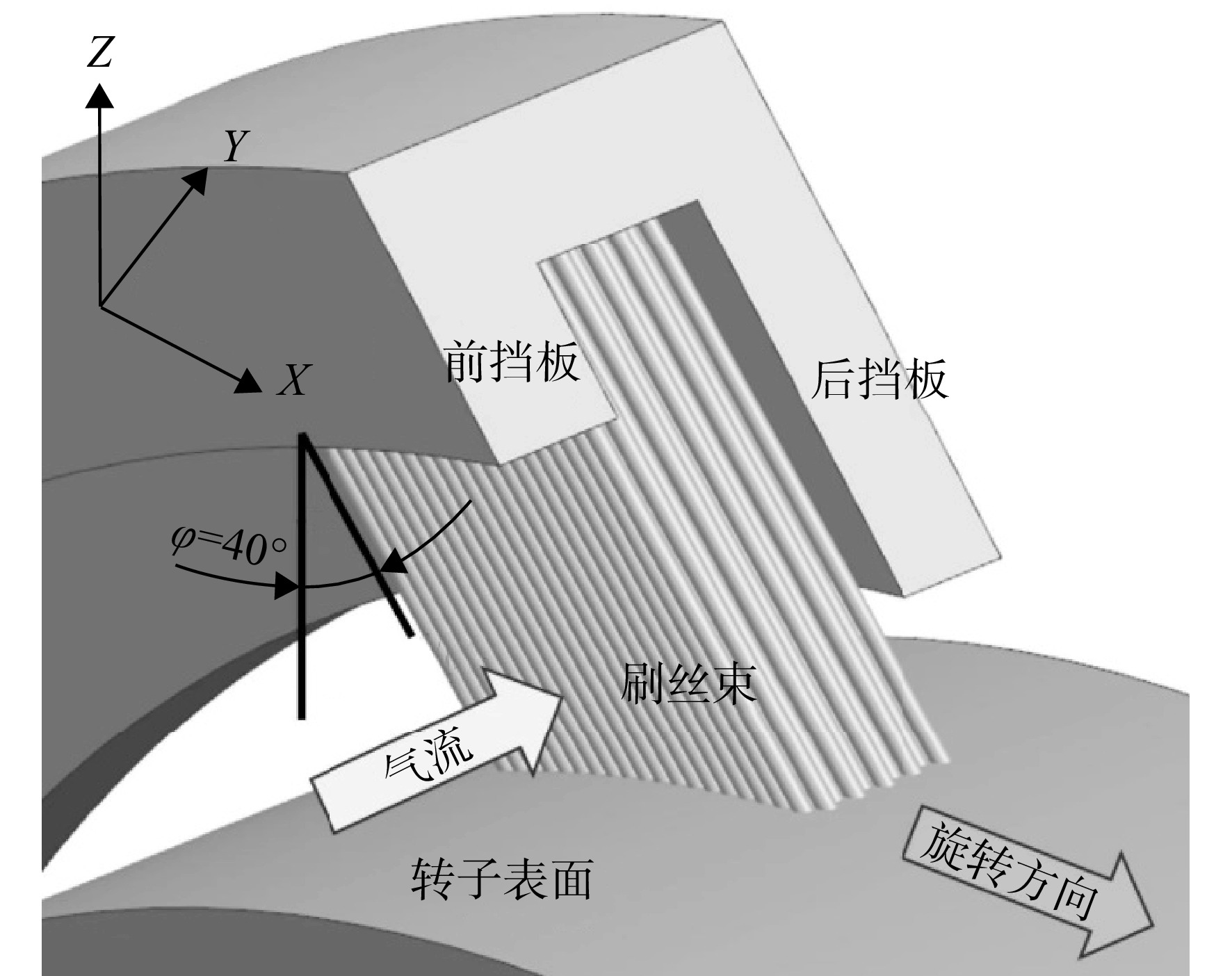
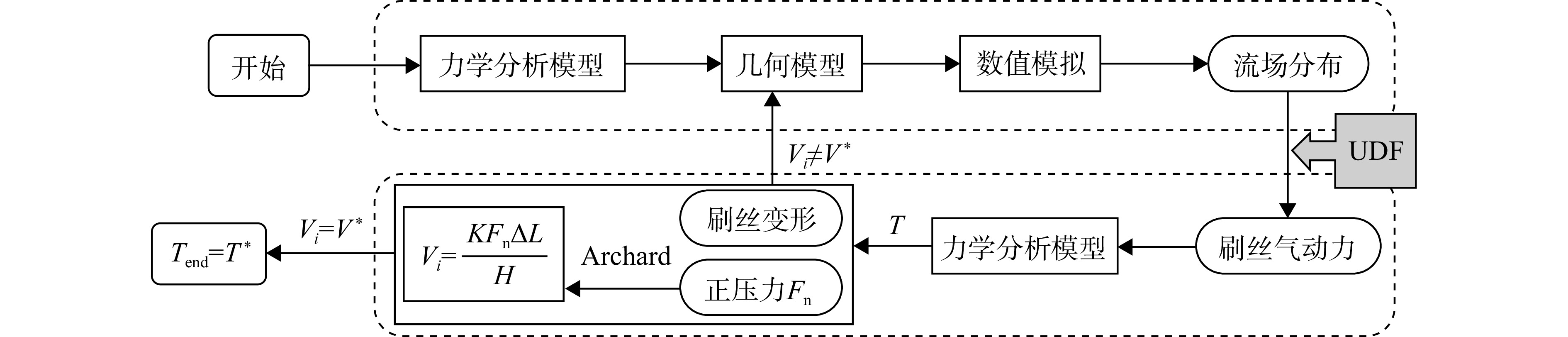
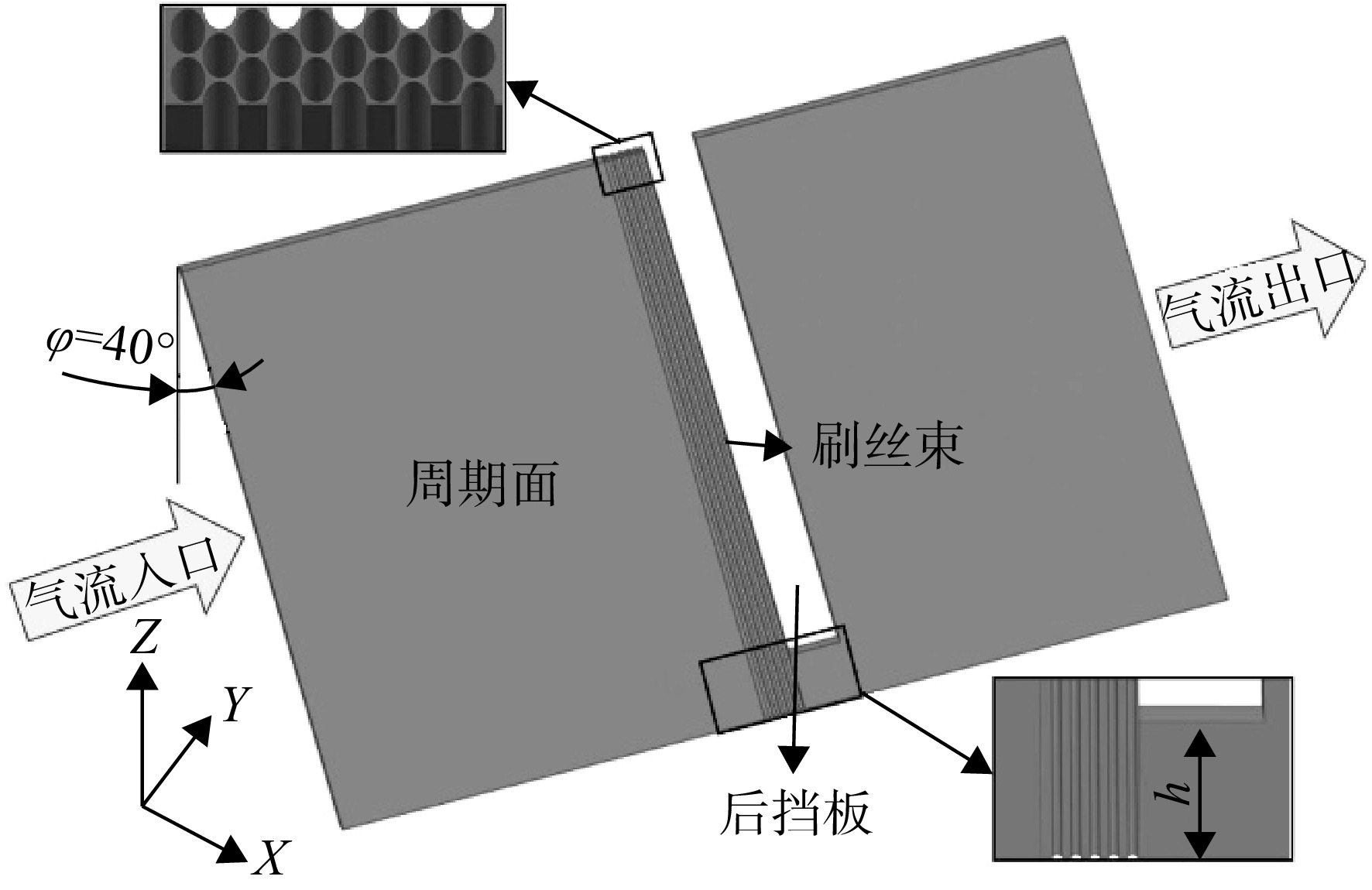
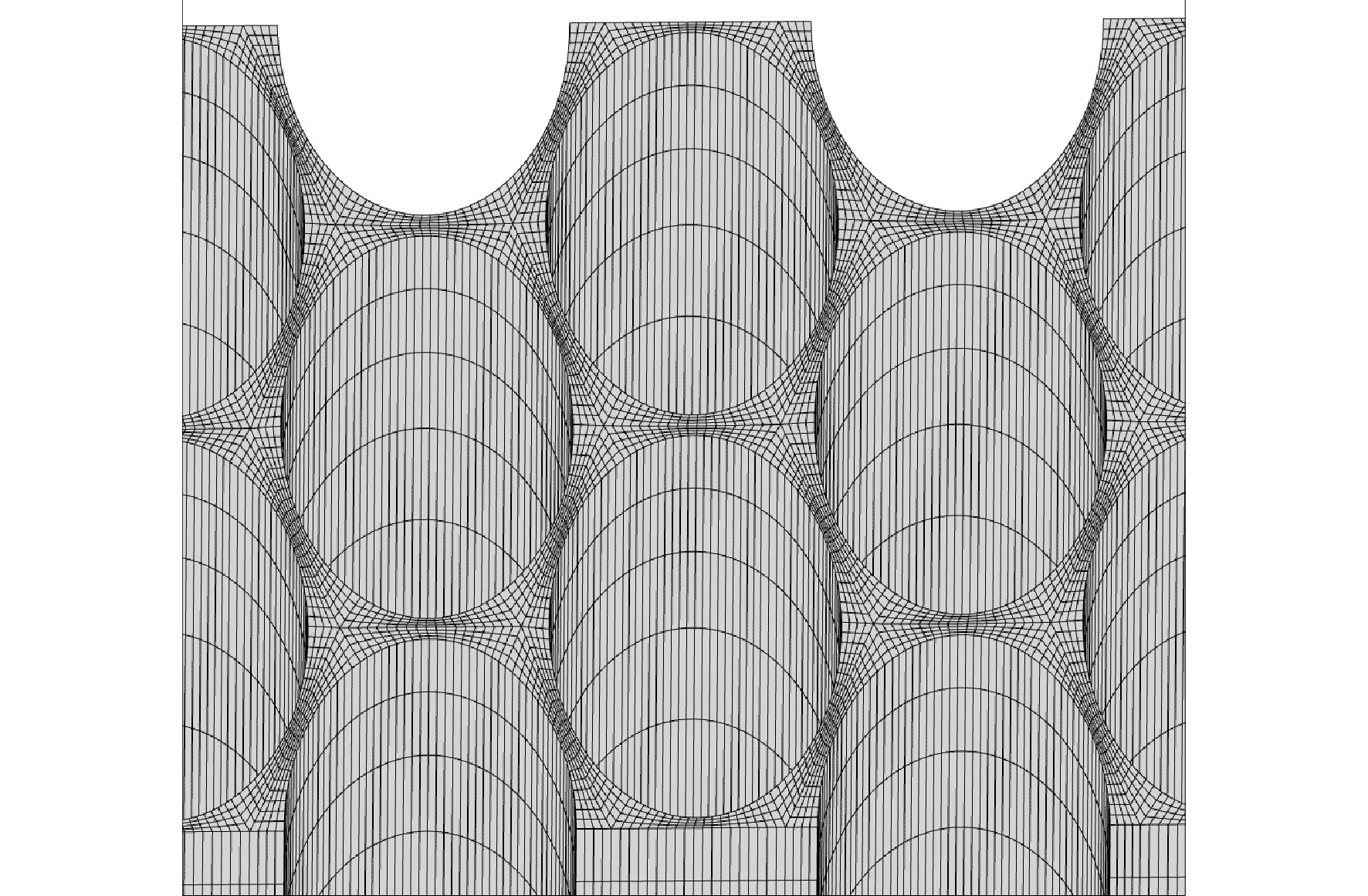
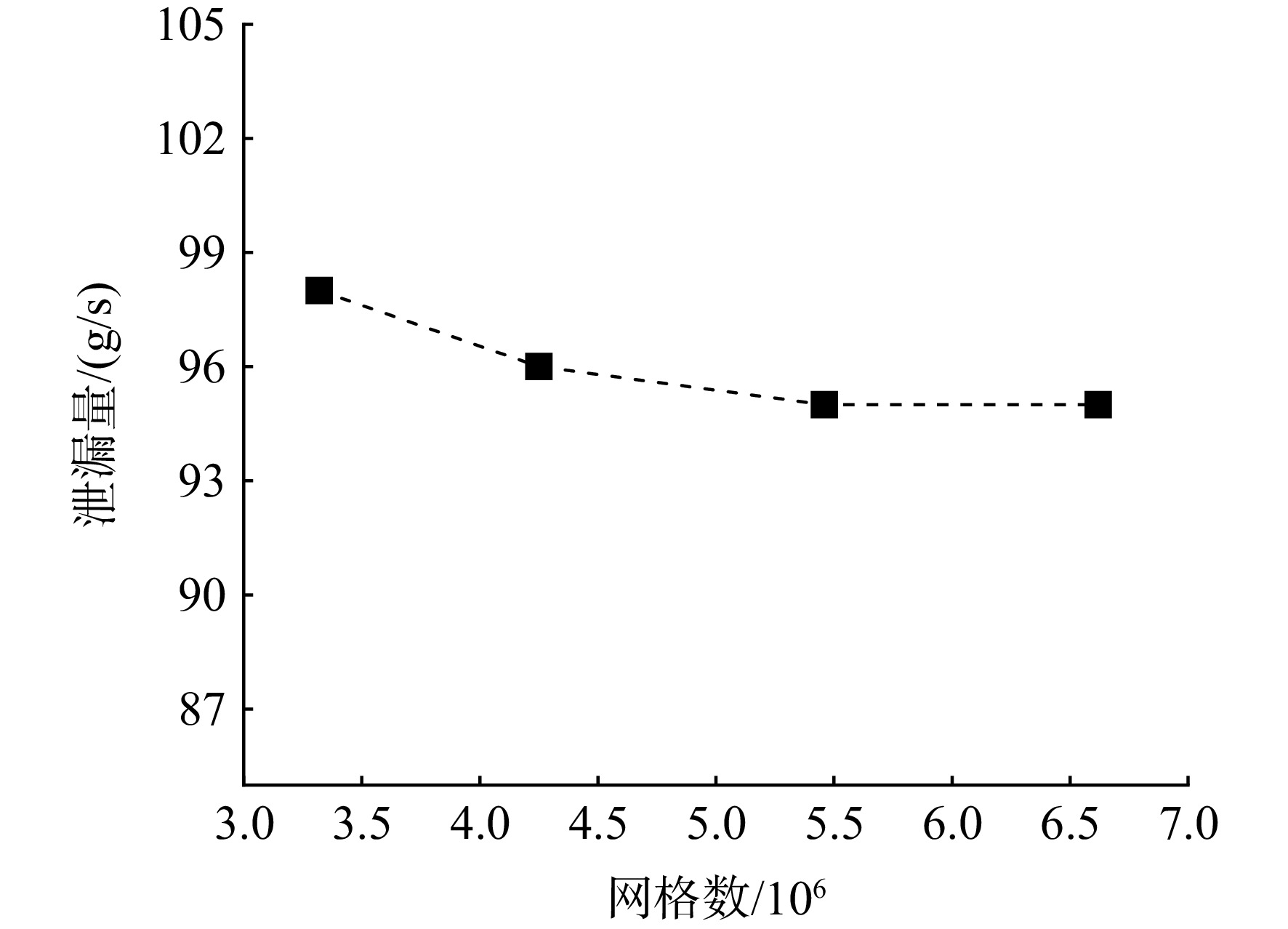
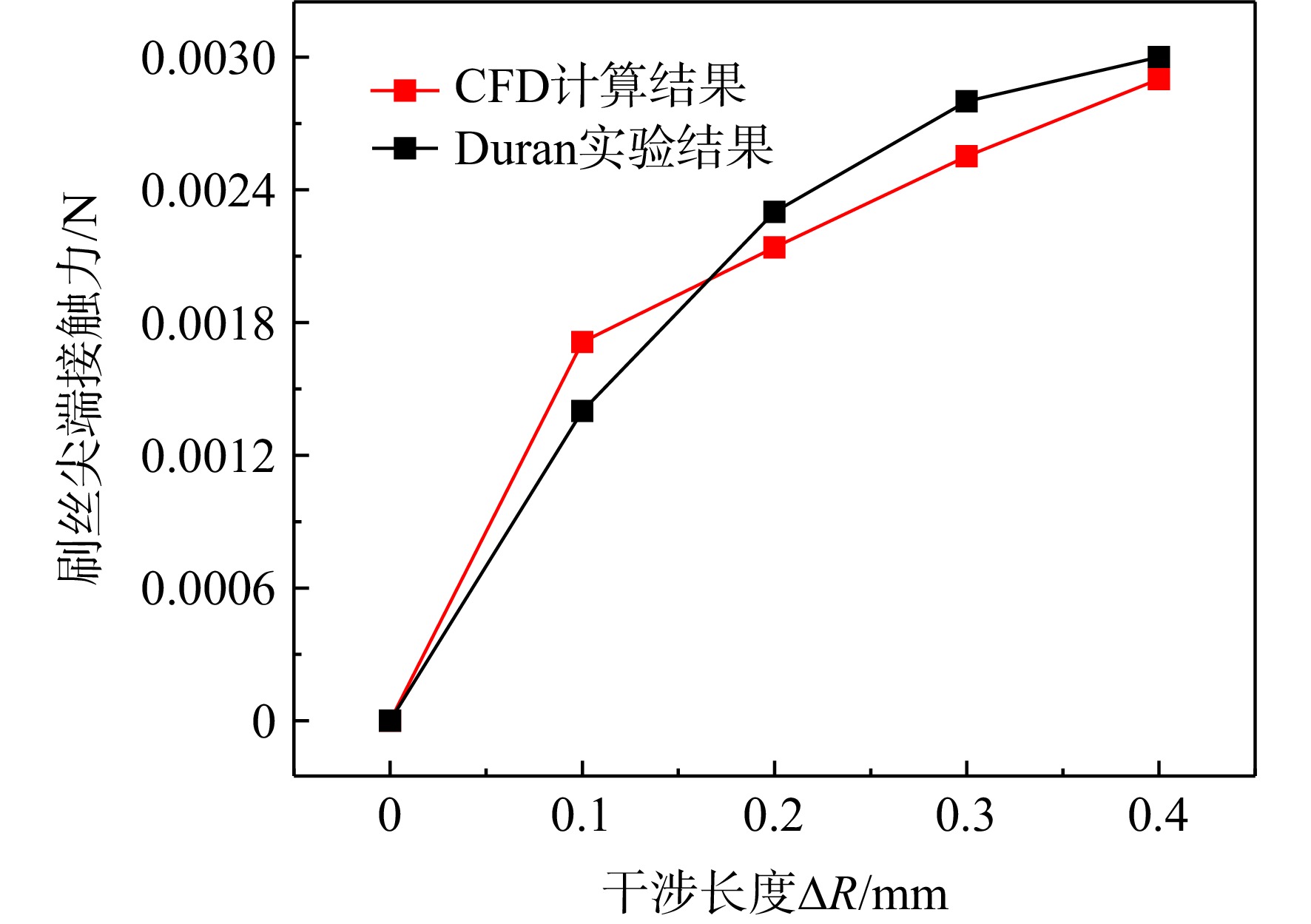
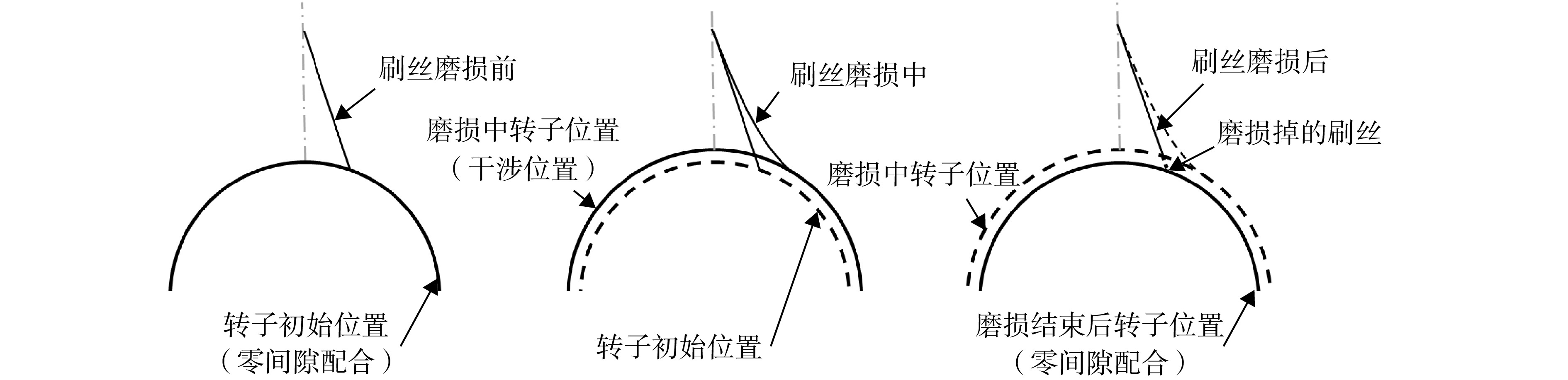
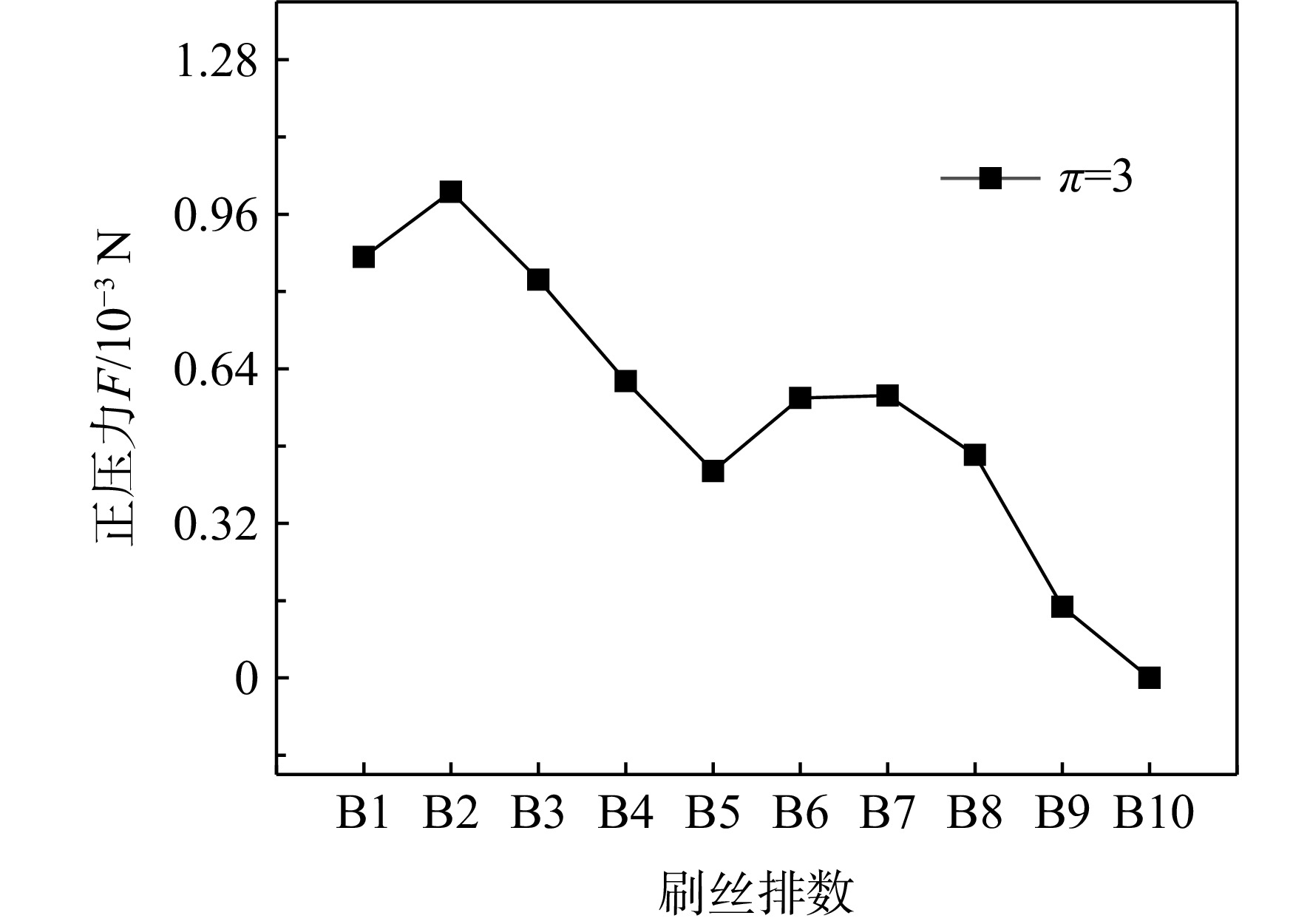
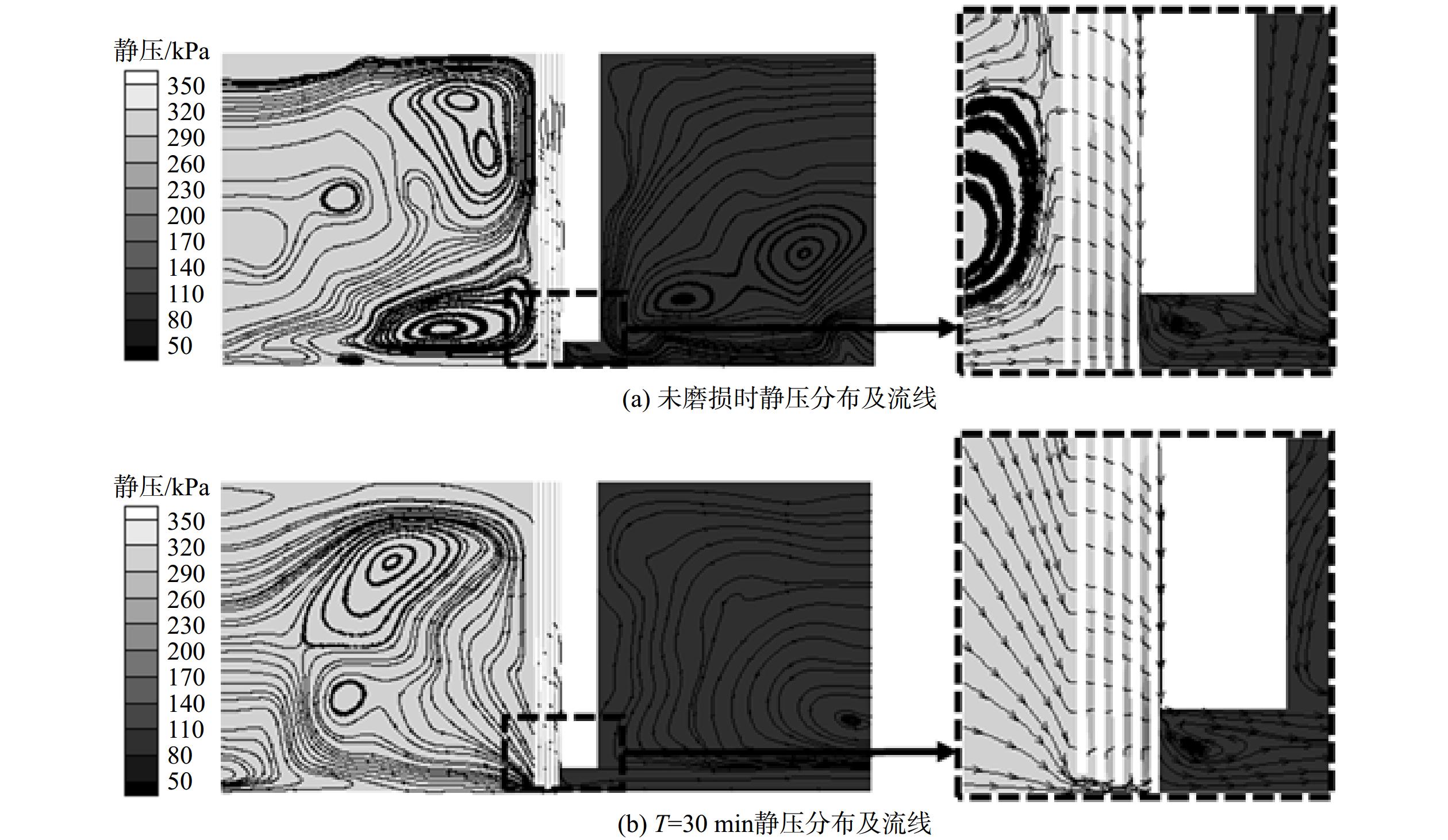
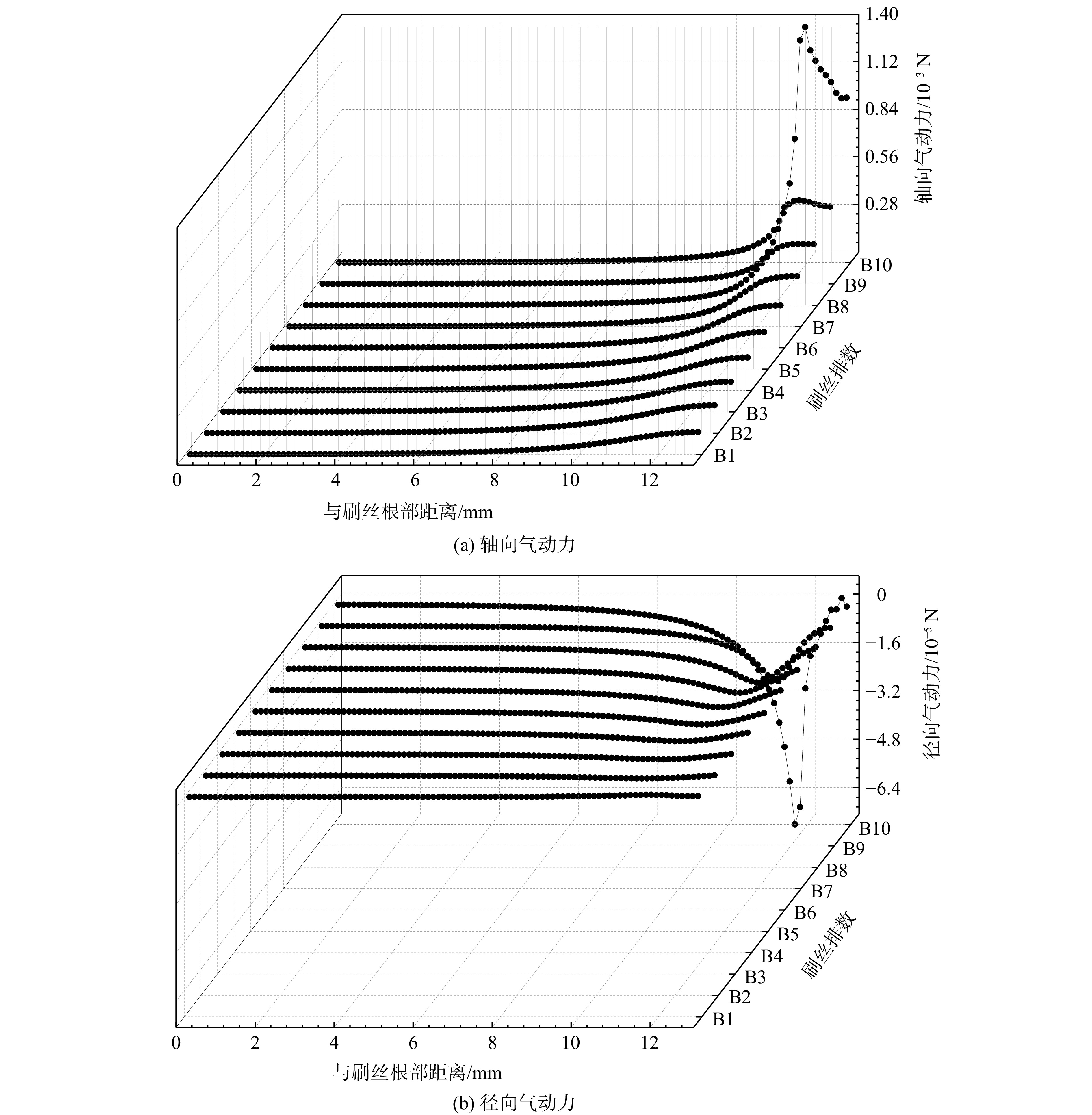
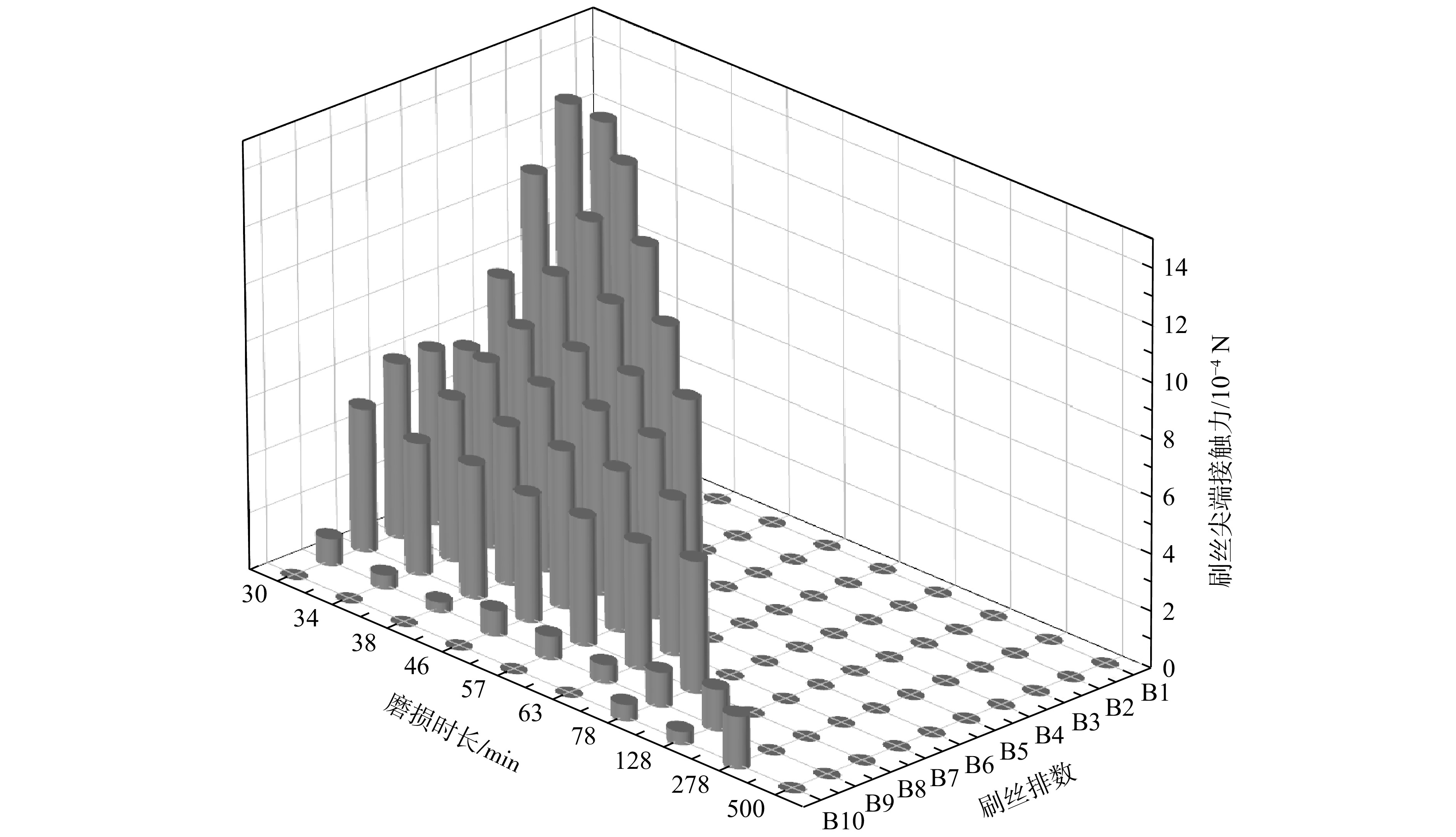
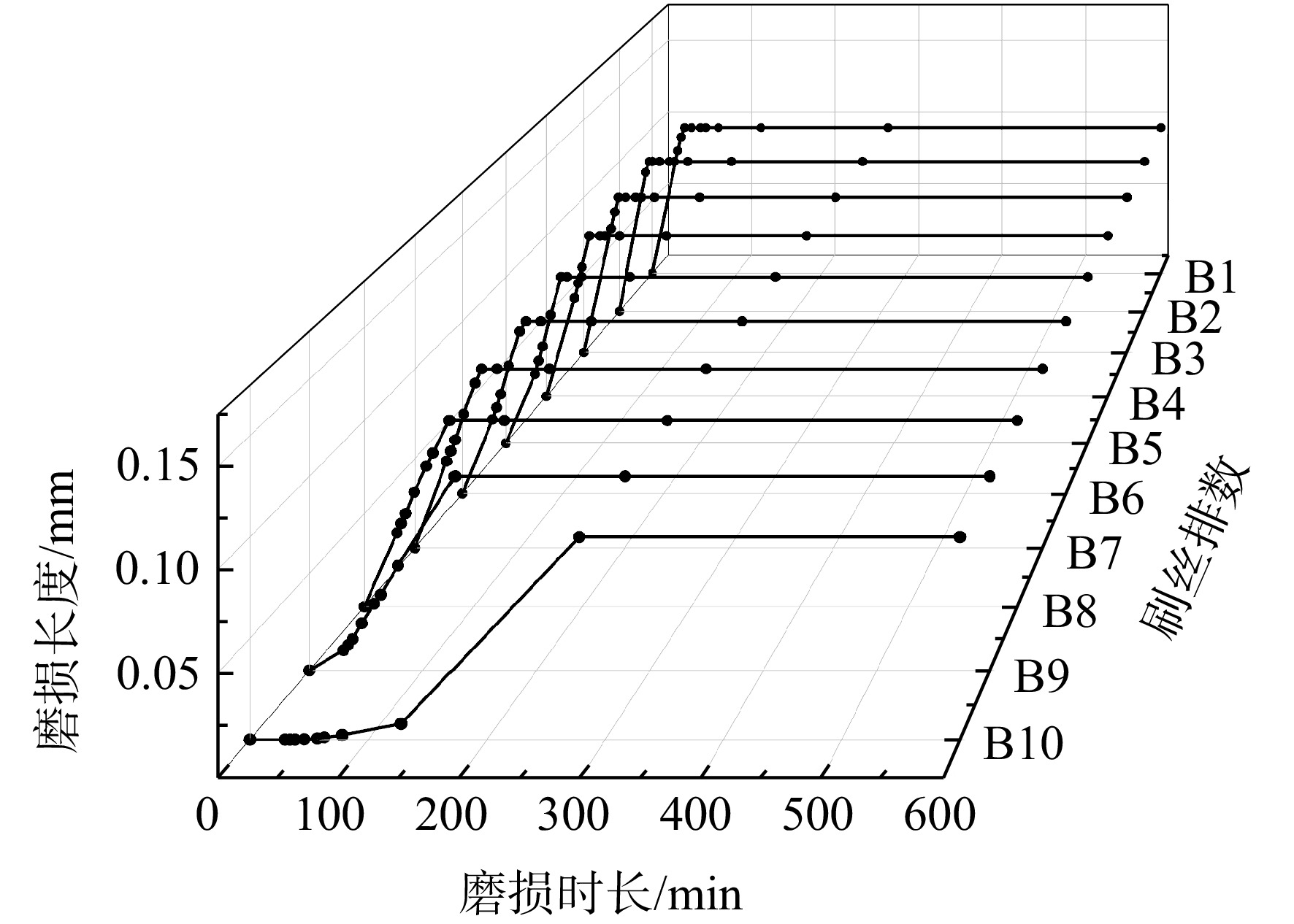
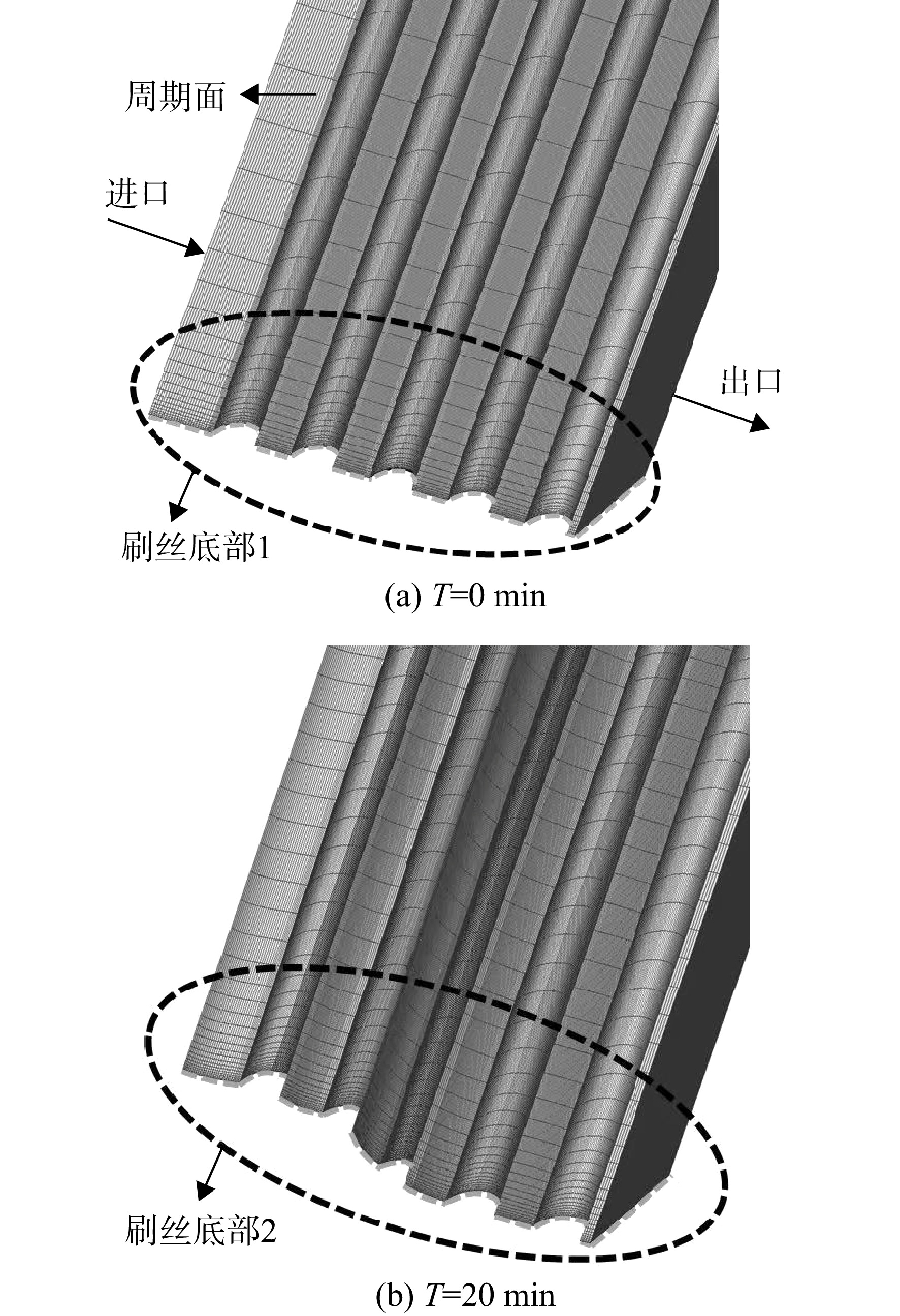
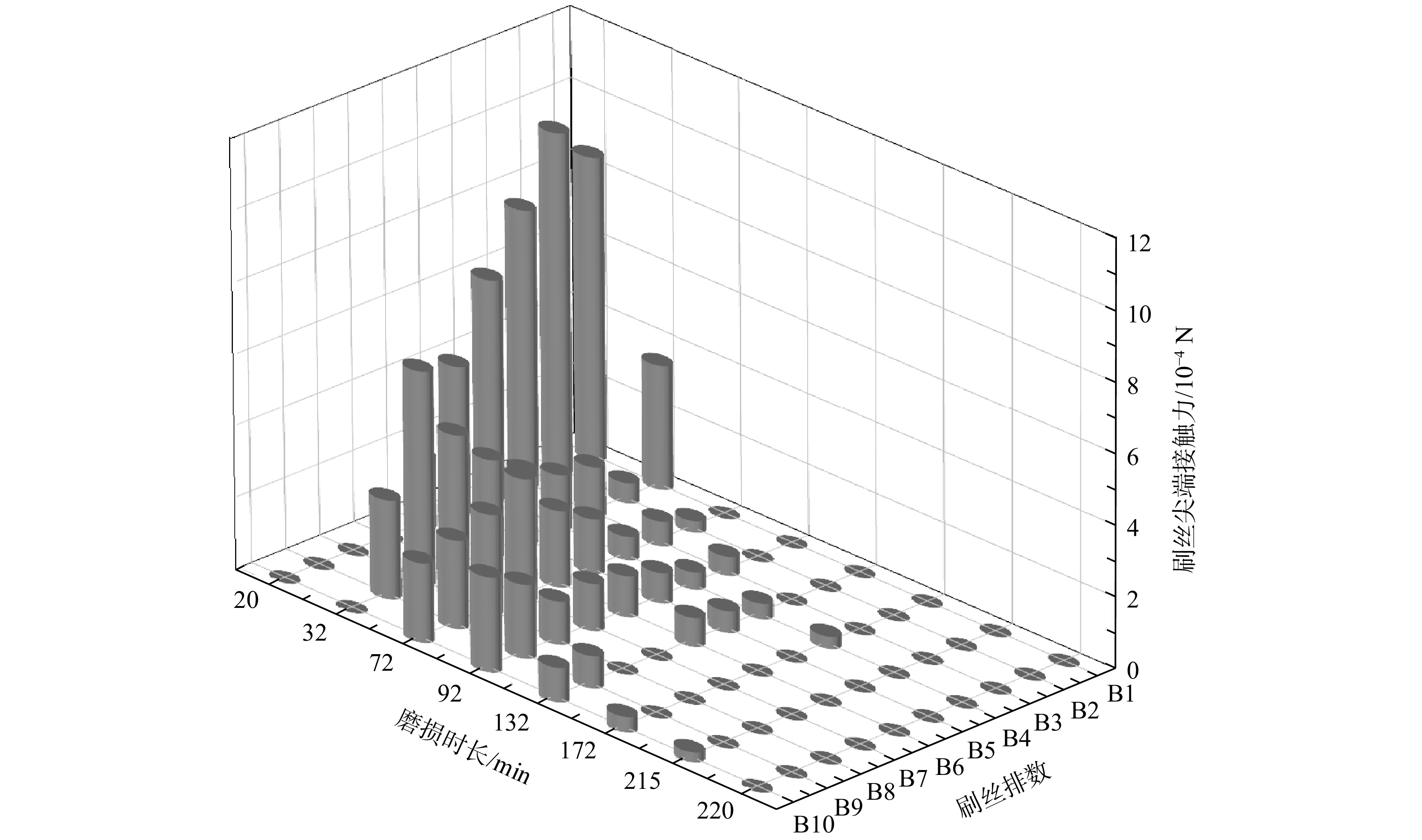
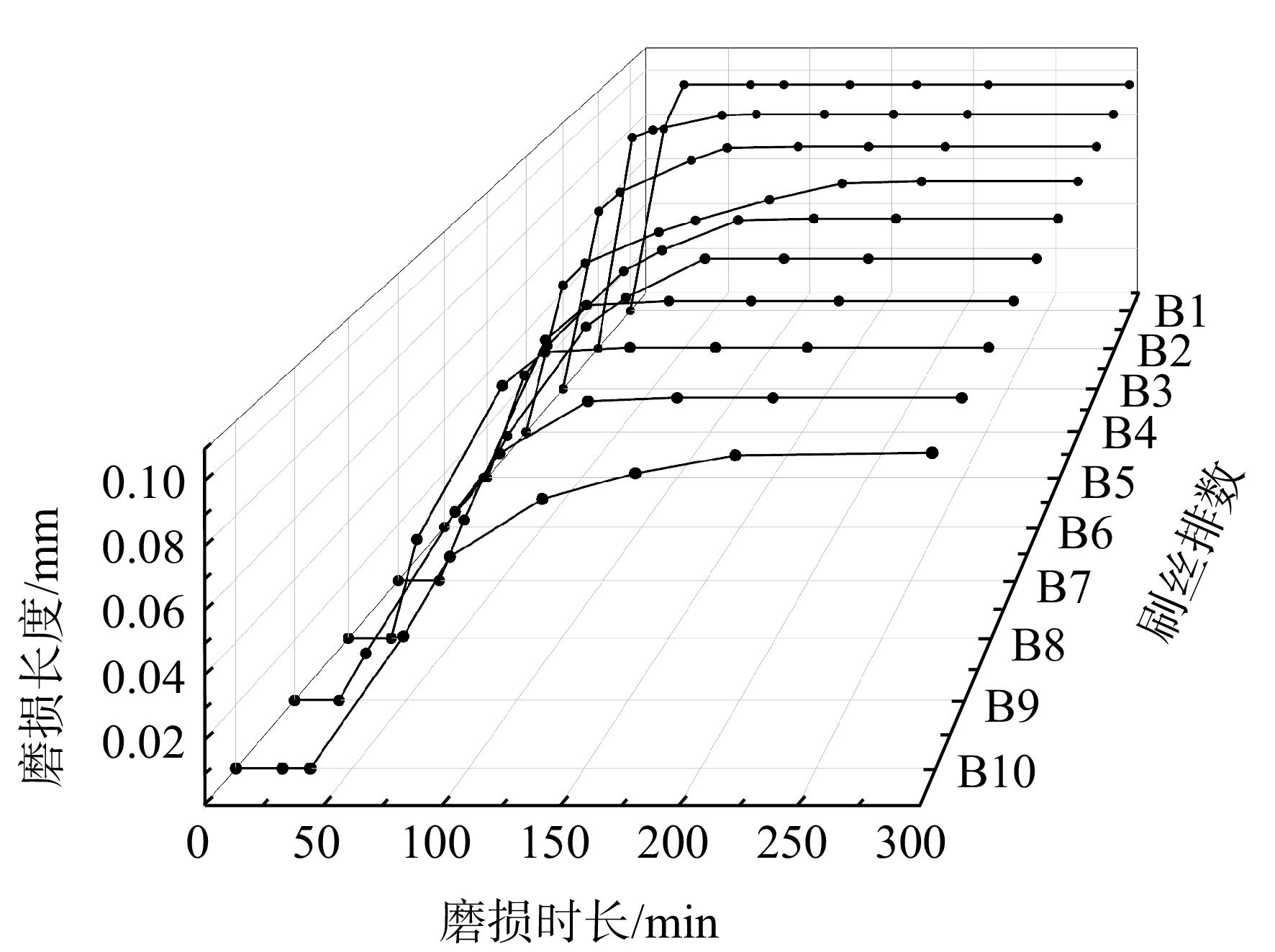
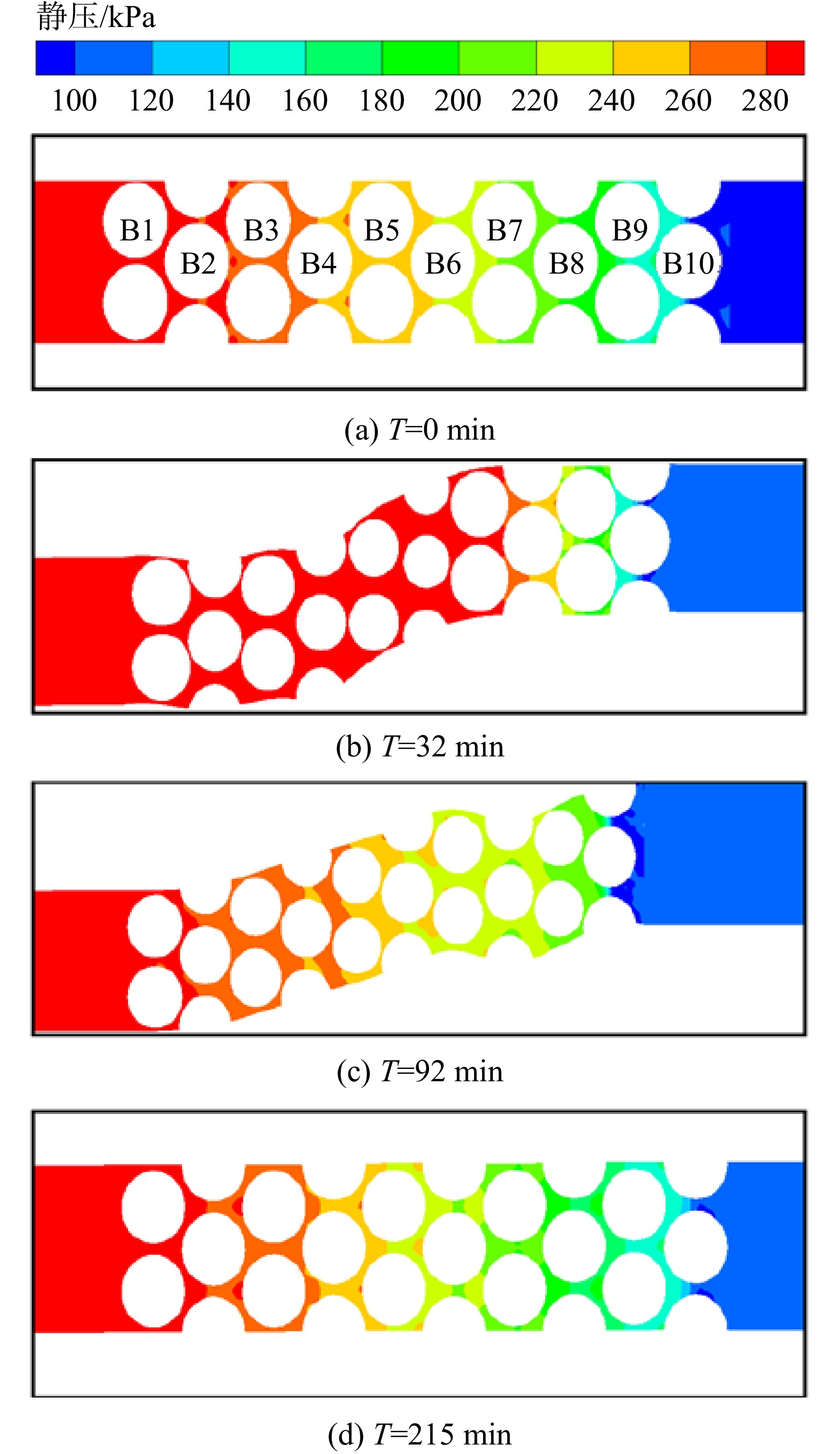
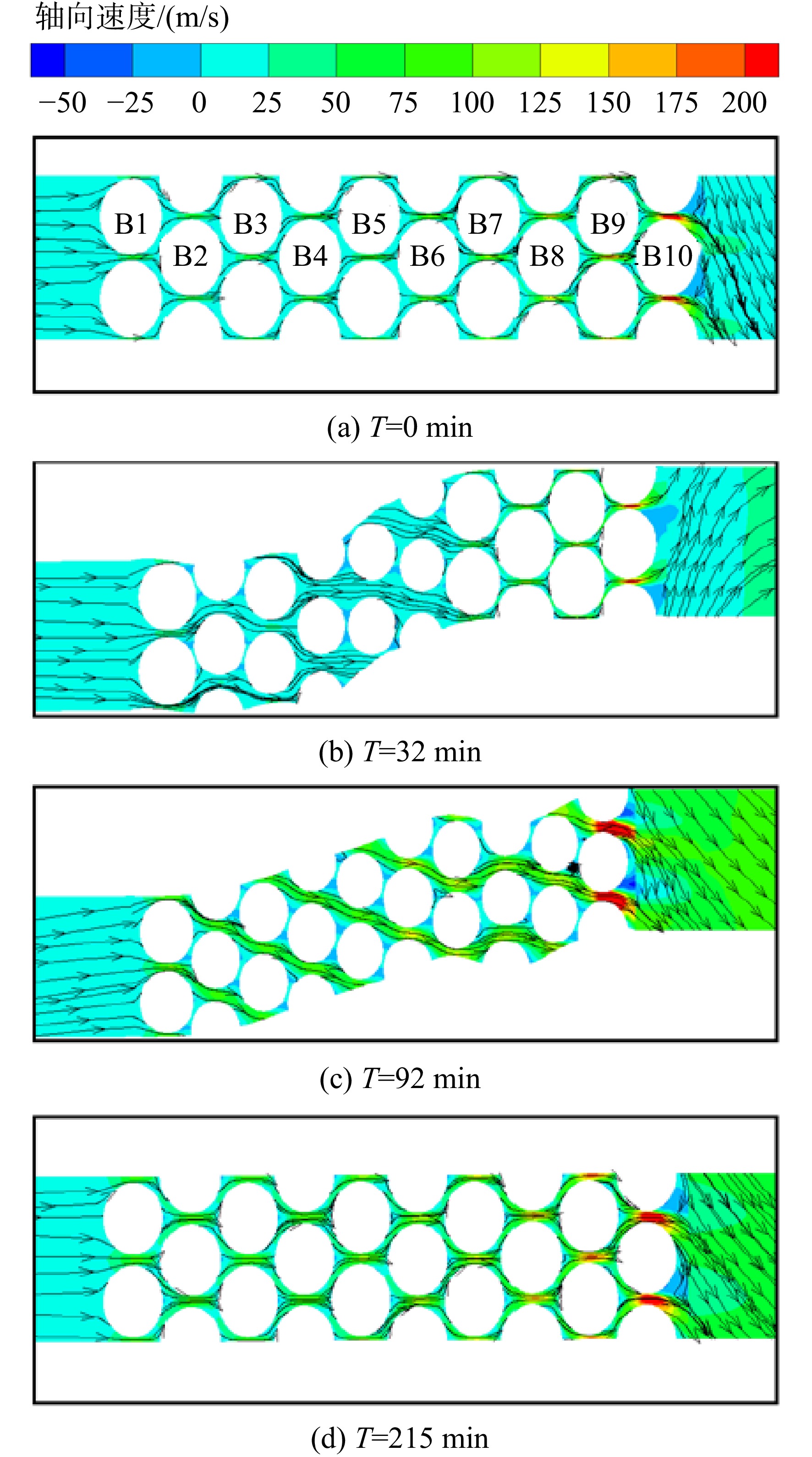
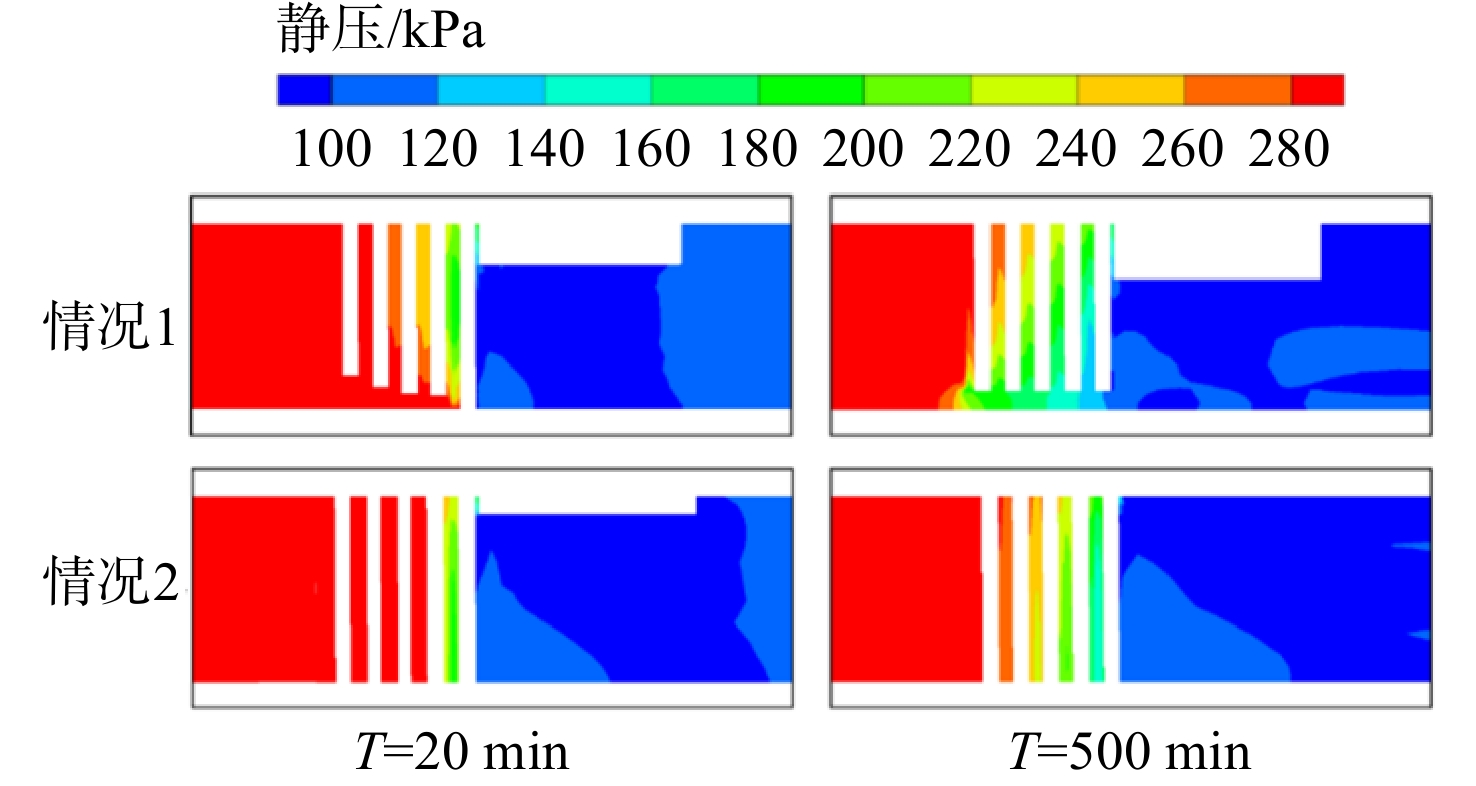
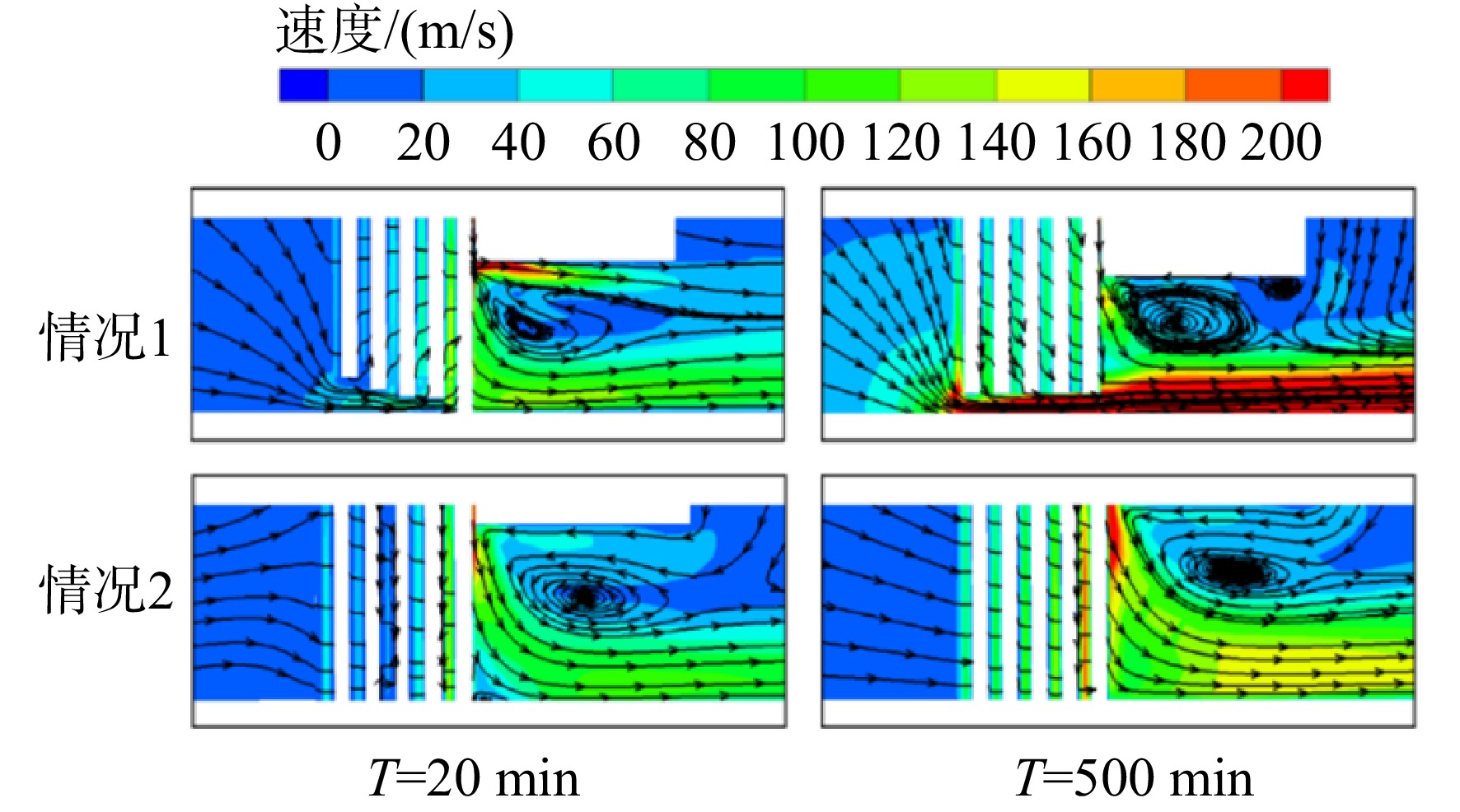
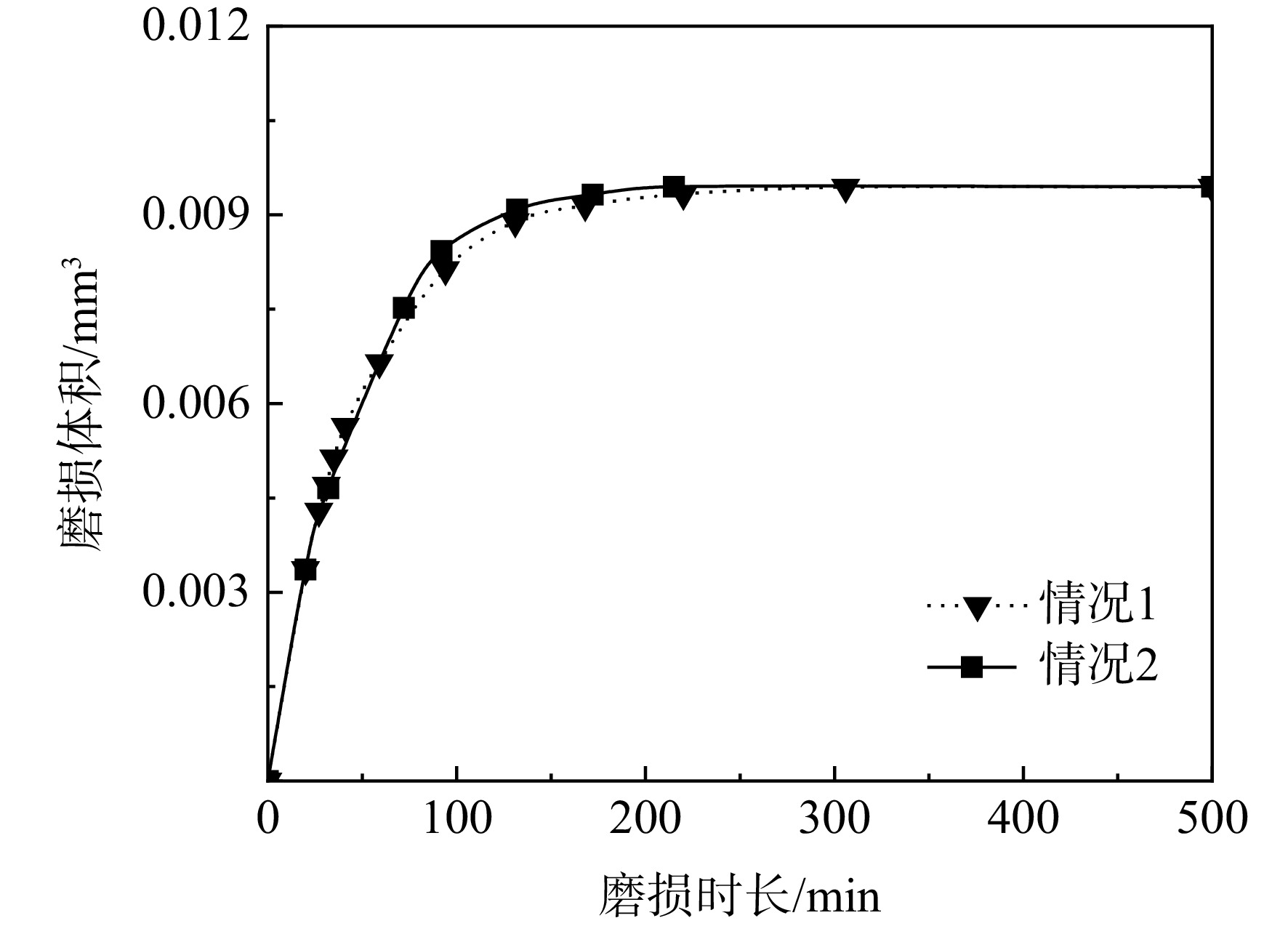
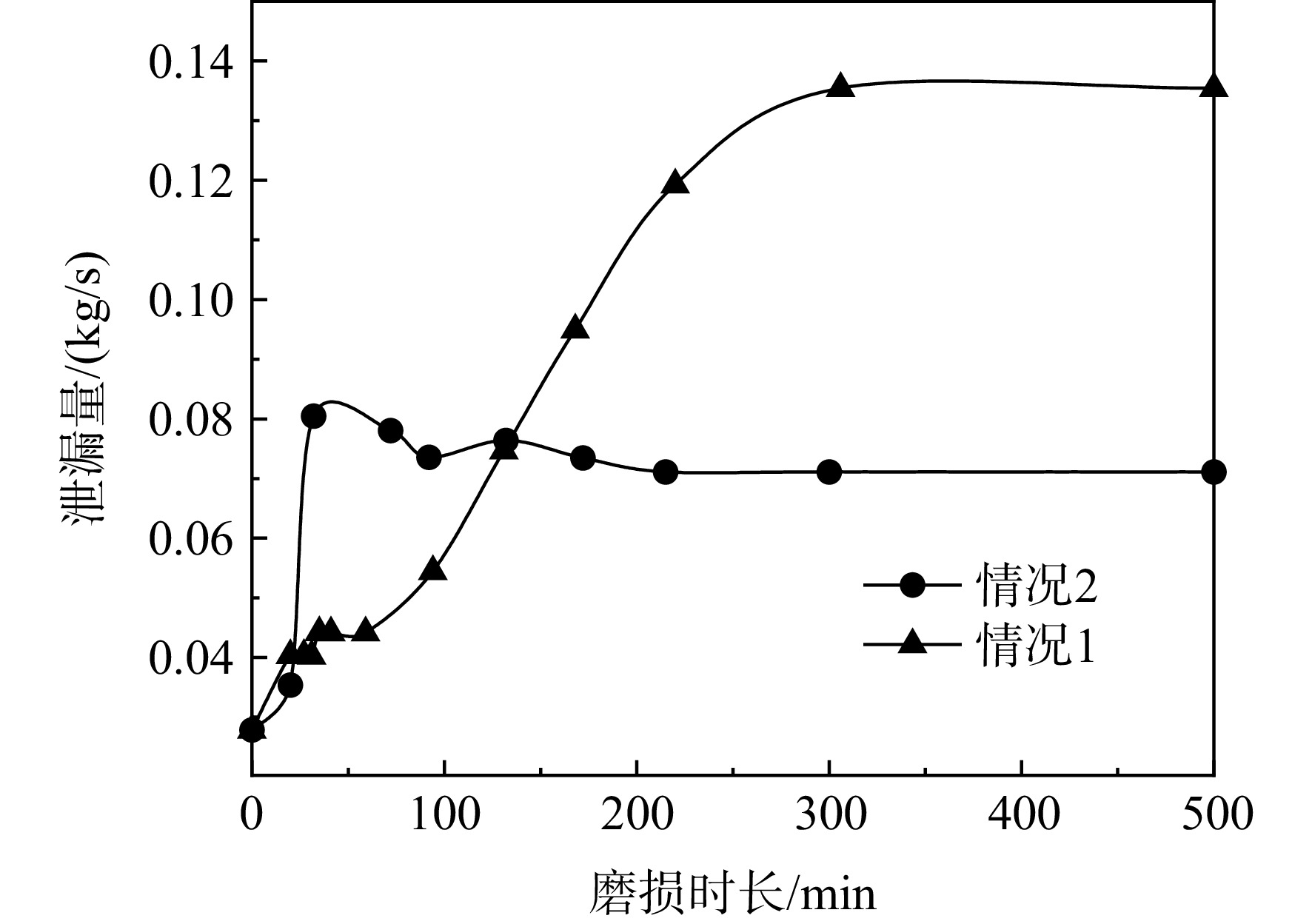
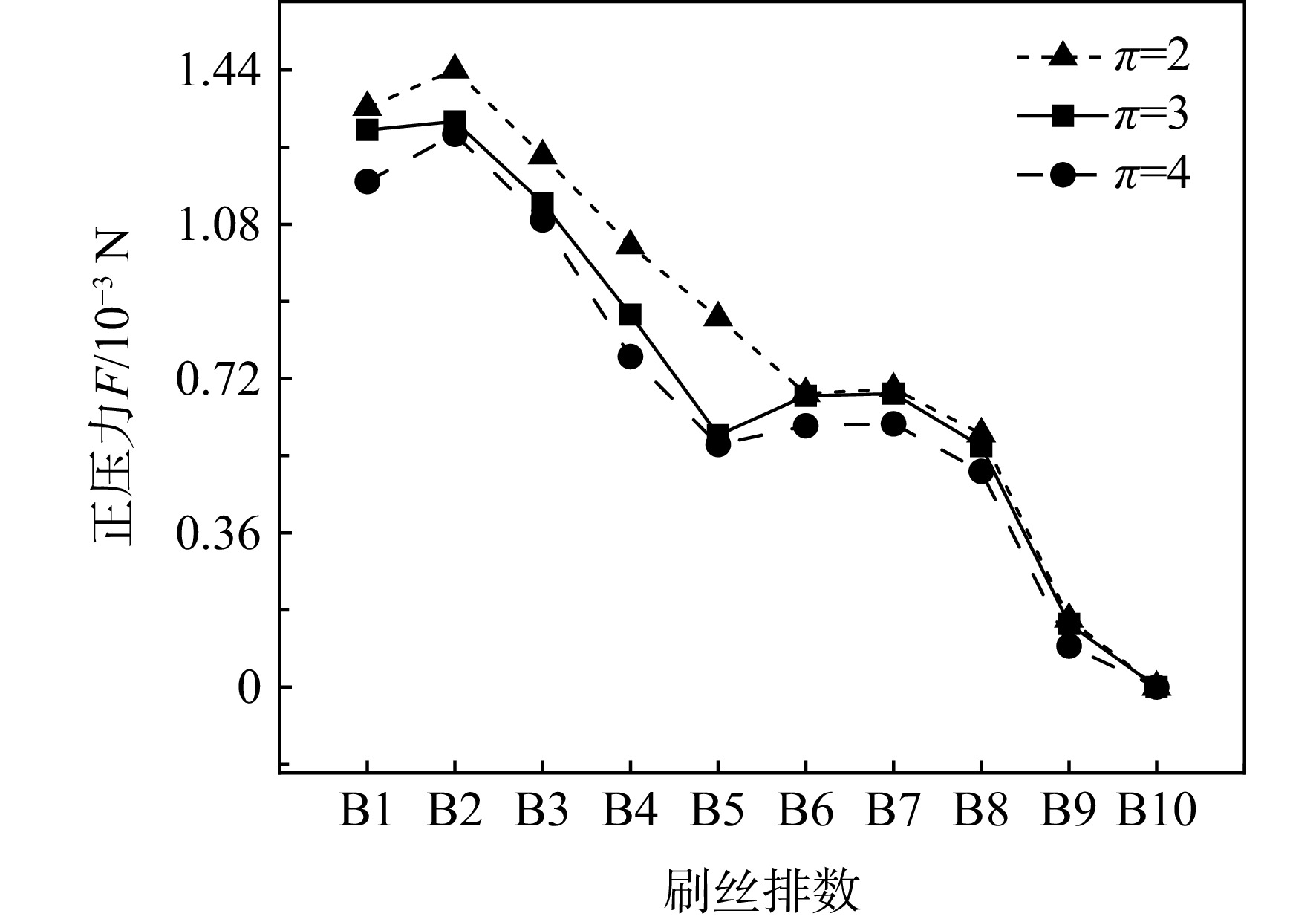
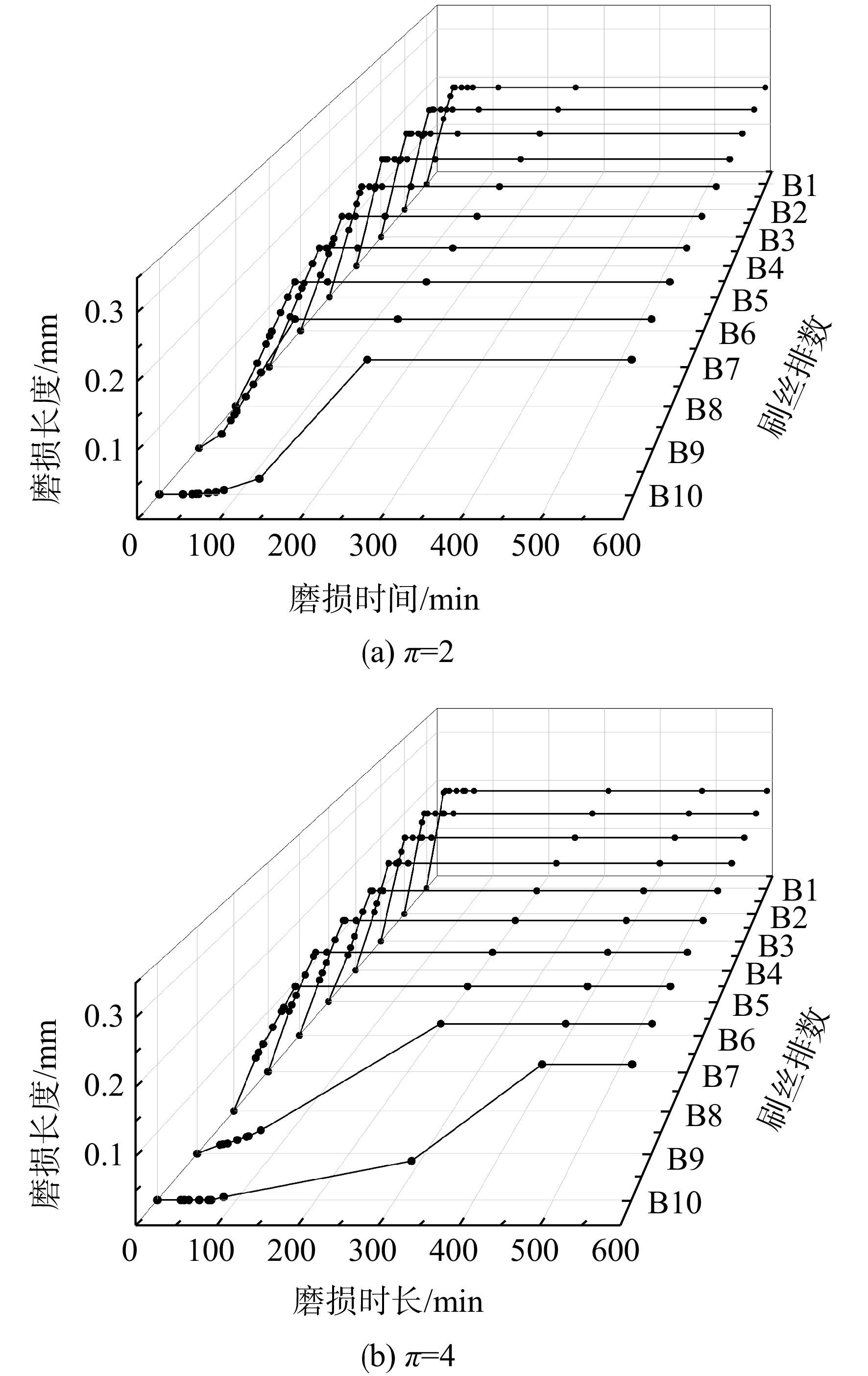
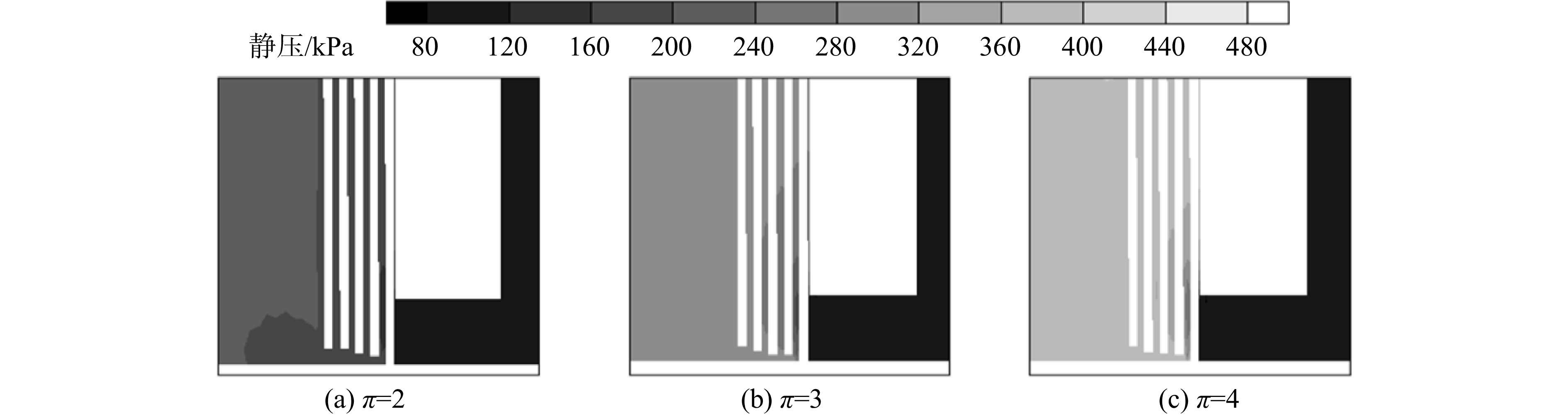
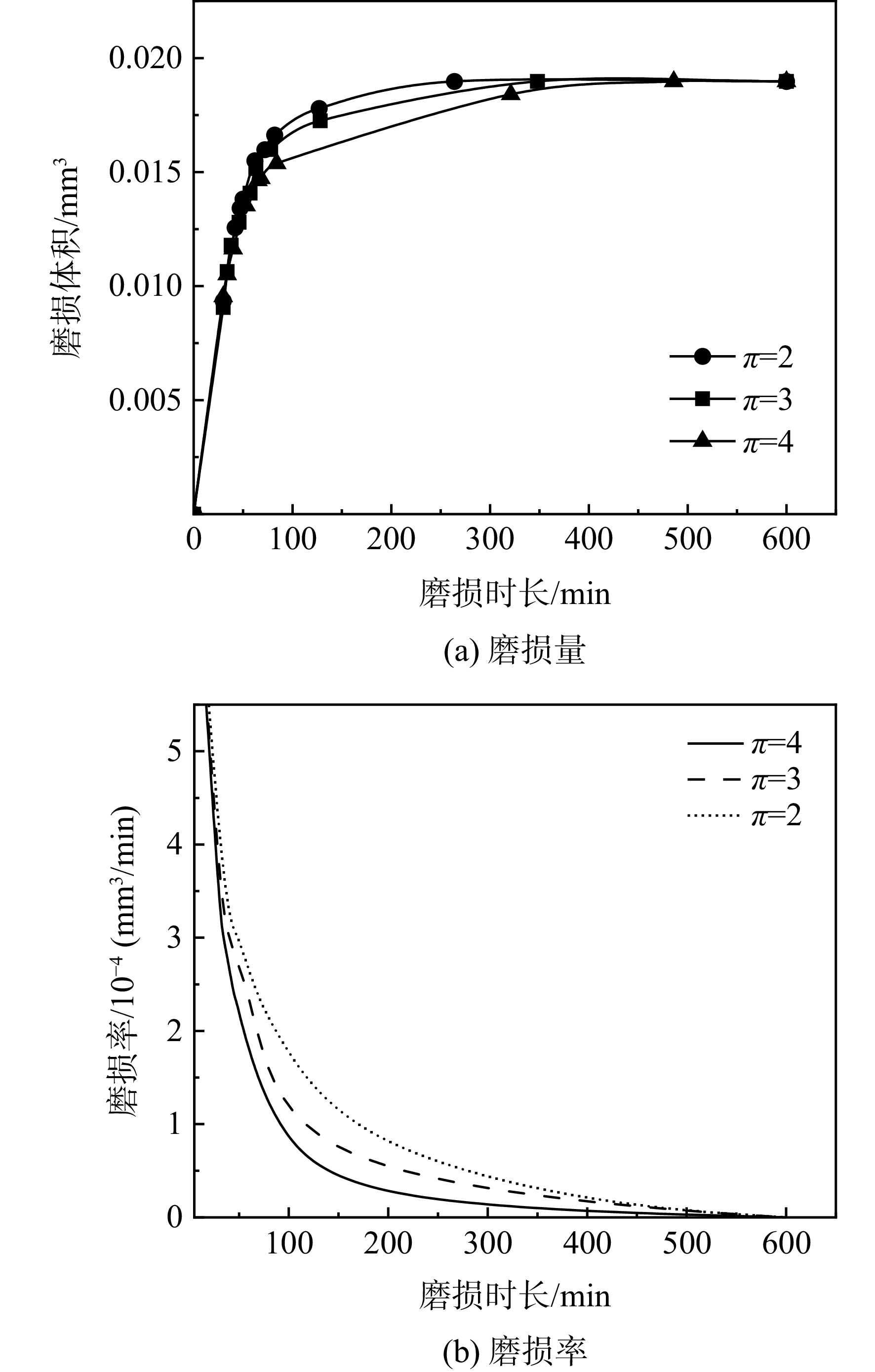
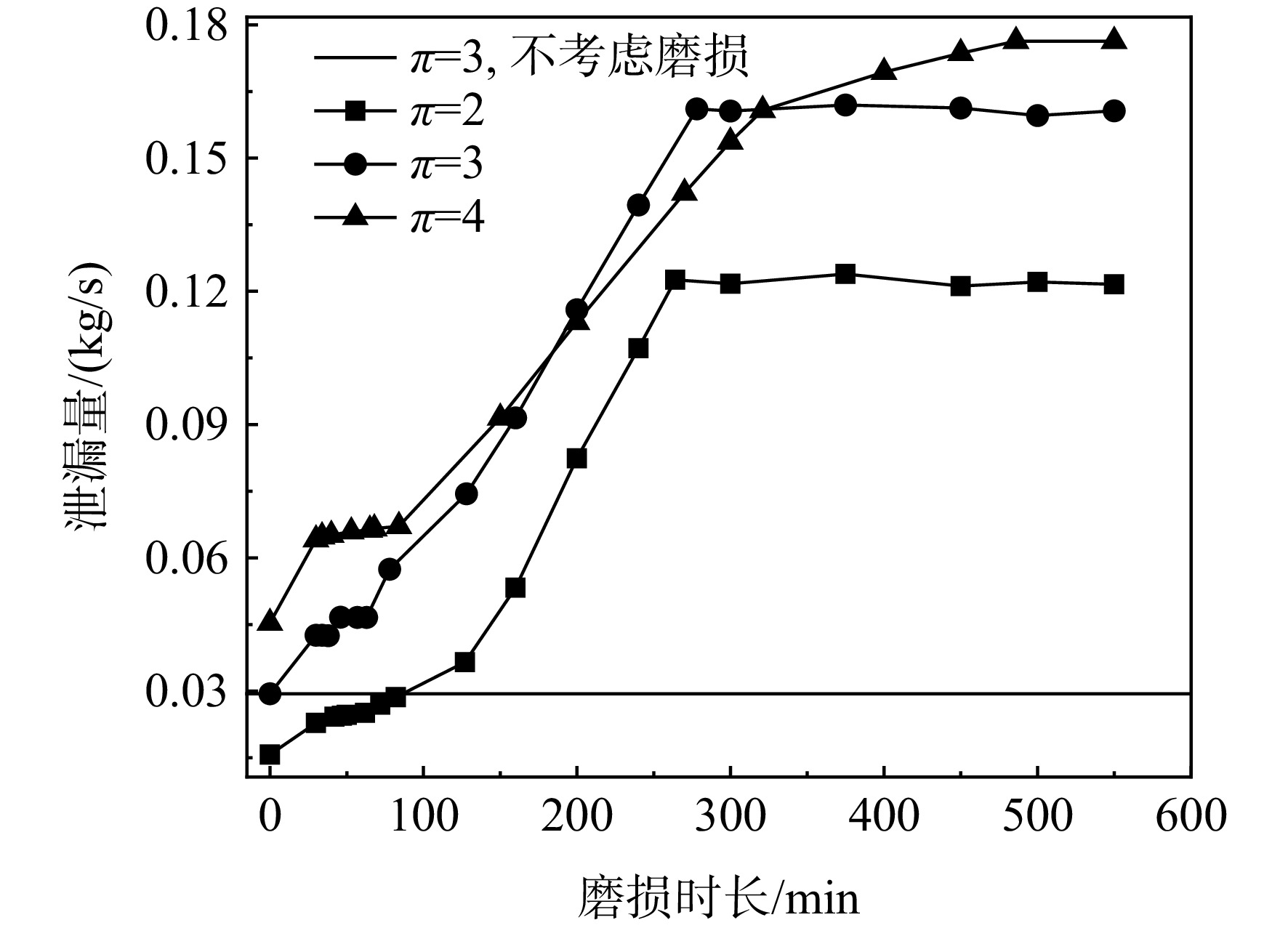
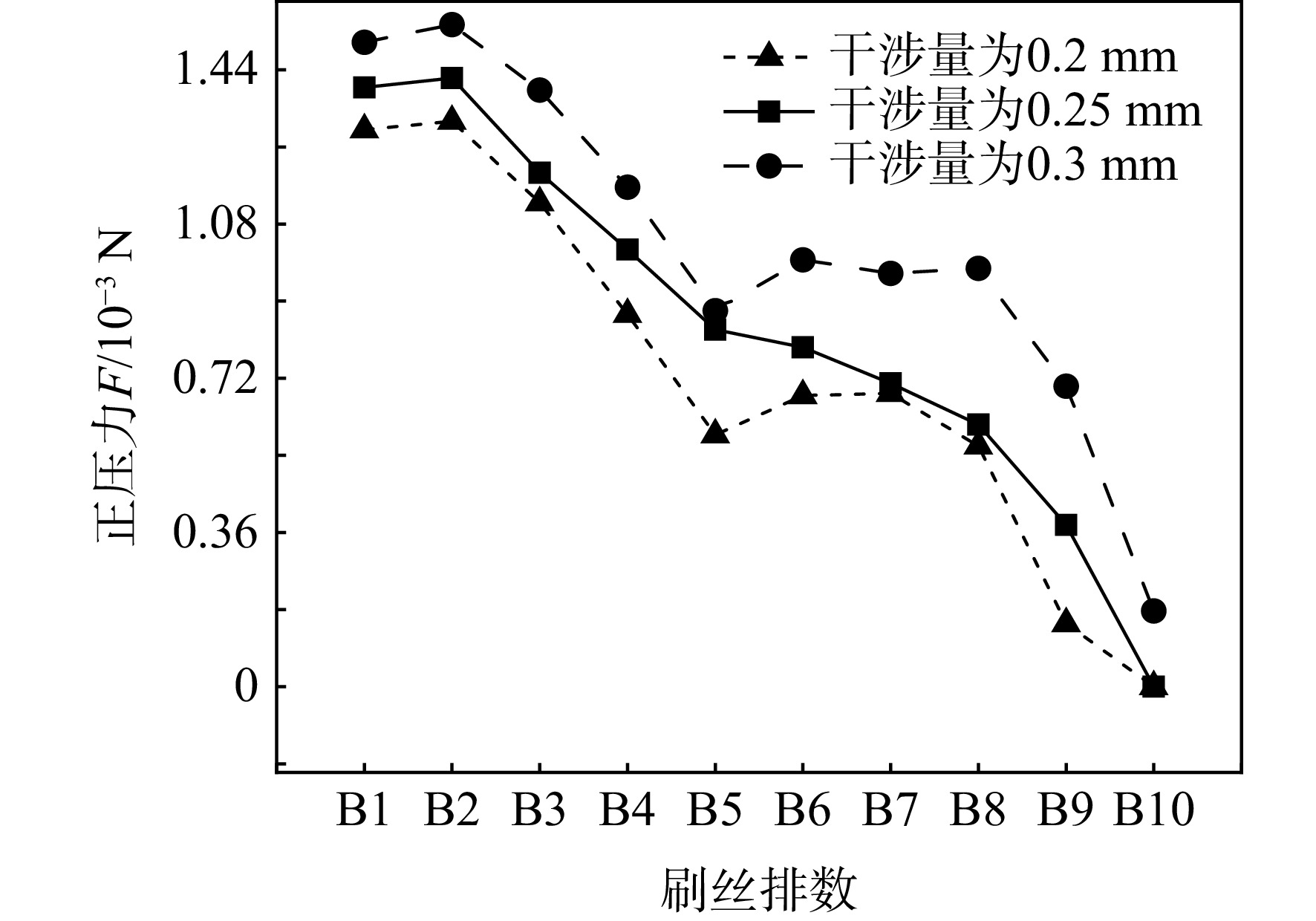
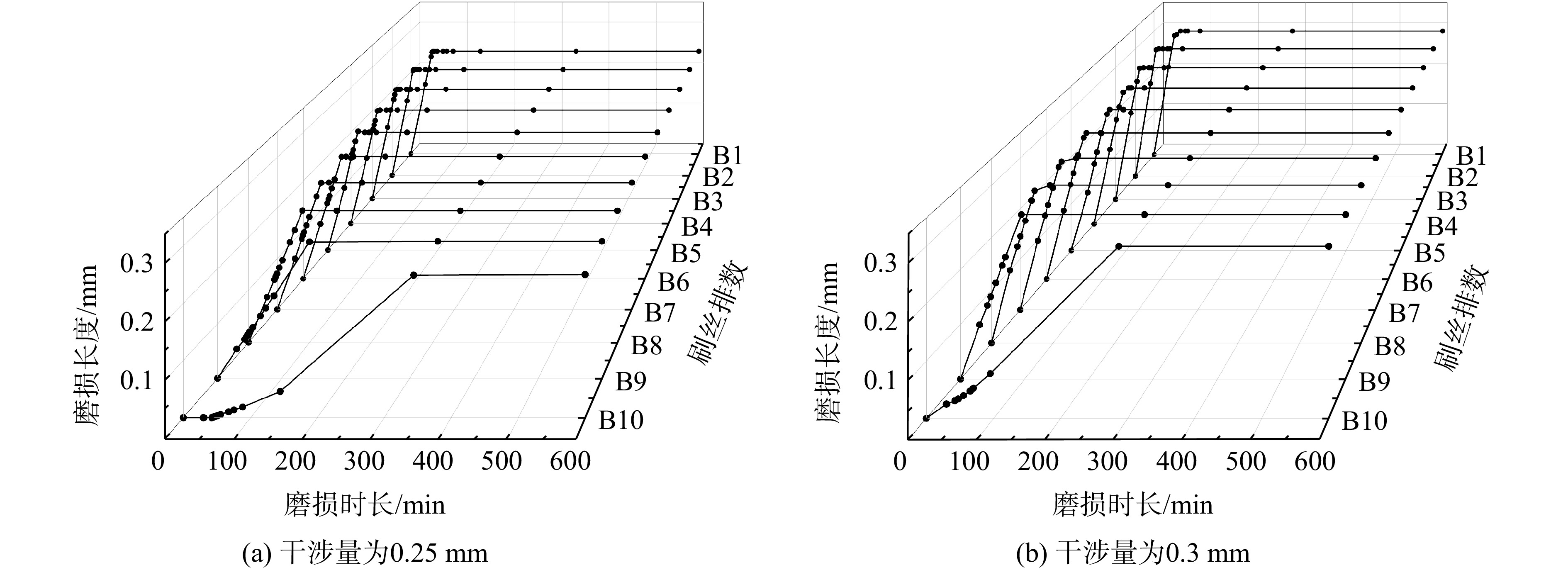
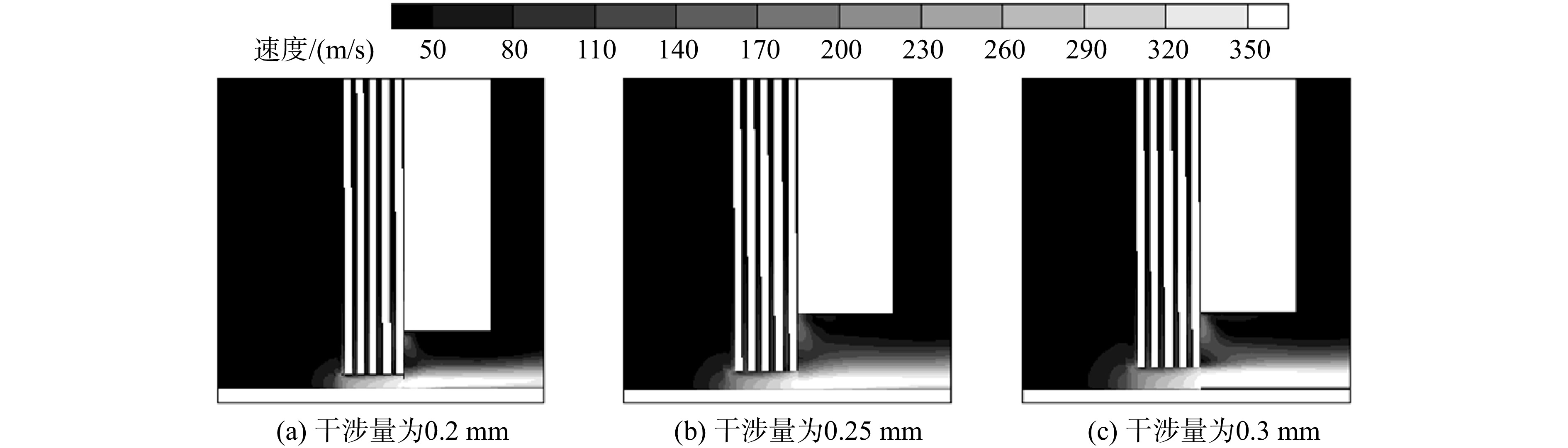
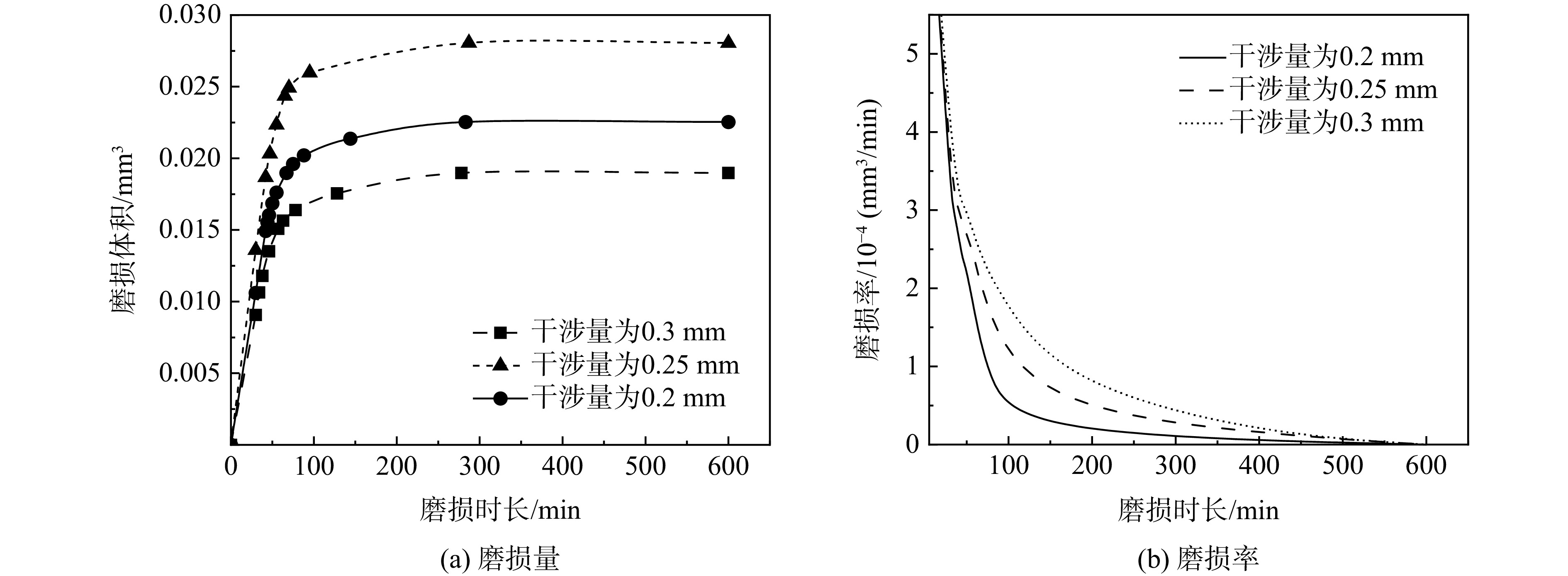
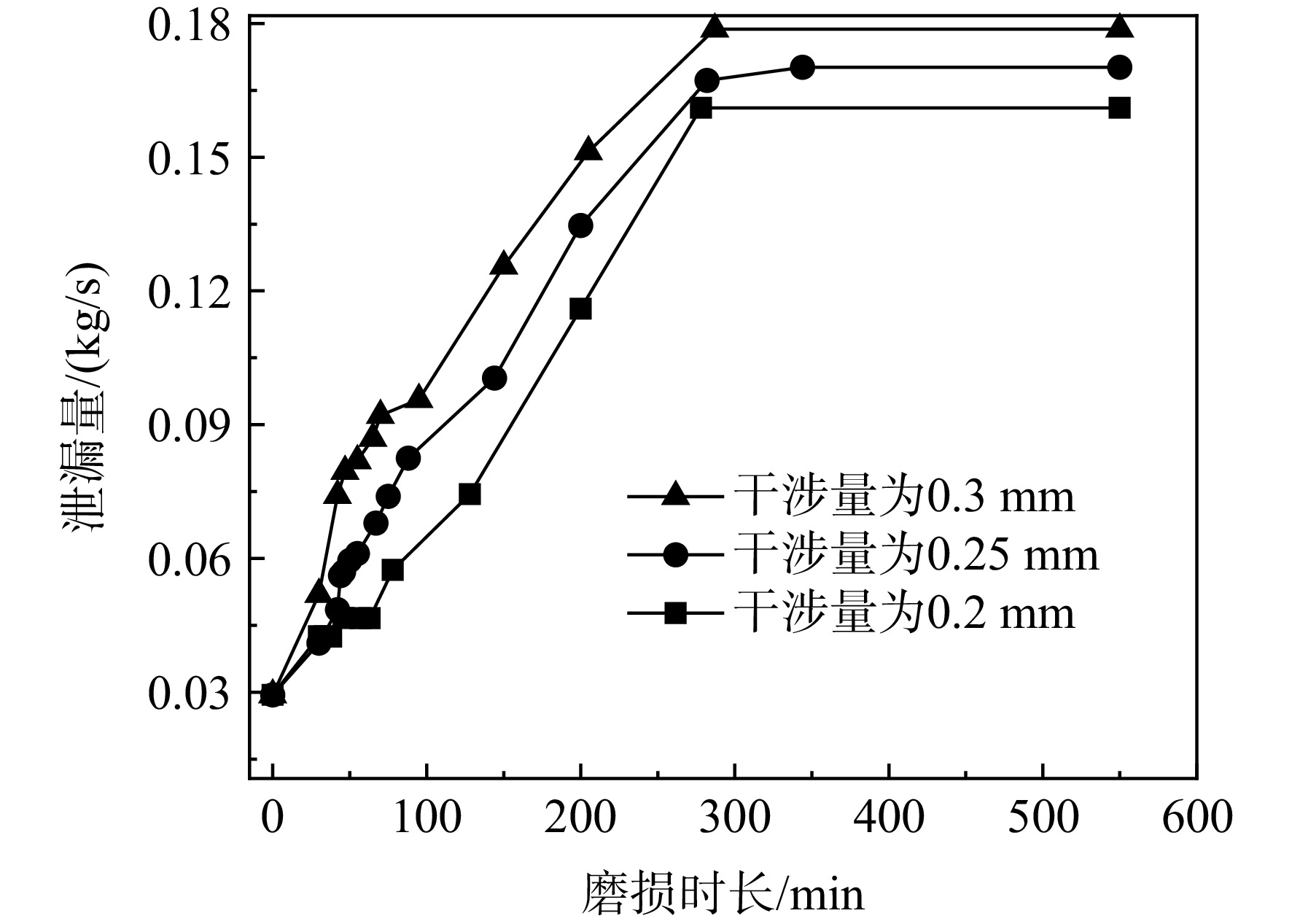
As aero-engines develop towards higher thrust-to-weight ratios and lower fuel consumption, the operating environment for brush seals has become increasingly harsh. Especially in high-pressure and high-speed environments, the tips of the brush filaments are prone to frictional wear against the rotor, which can lead to the failure of the entire sealing system. Based on a three-dimensional steady-state brush seal model and combined with the Archard adhesive wear theory, a fluid-solid coupling research method that can efficiently solve the frictional wear characteristics of brush filament tips under the condition of deforming brush filaments under multi-load effects was established. During actual operation, the rotor underwent thermal expansion/radial runout, causing severe interference with the brush filaments and thereby exacerbating the wear of the brush filament tips. Therefore, a detailed study was conducted on the wear characteristics of brush filaments under two scenarios: when the rotor’s radial position remained unchanged and when it returned to its original position. It revealed the influence of brush filament tip wear on the force, deformation, and leakage of the brush filaments, and compared the wear conditions under different pressure ratios and interference amounts. The research results showed that when the rotor’s radial position changed and returned to its original position, the contact force exerted by the rotor on the brush filaments in the upstream region was greater than that on the downstream brush filaments, resulting in faster wear. The wear amount increased most rapidly within the first 100 minutes and gradually stabilized after 300 minutes. When the rotor remained in the interference position, the wear rate of the brush filaments was 29.7% faster than when the rotor returned to its original position after wear. The sharp increase in leakage mainly occurred within 0—50 minutes from the start of wear. The reasons for the sharp increase in leakage were different under the two scenarios: in the case where the rotor returned to its original position, the leakage increased due to the enlargement of the radial gap; in the case where the rotor remained in the interference position, the increase in leakage depended on the arrangement state of the brush filaments.

Numerical simulation of flow-field regulation mechanisms in swirlers via bionic blades
BAN Runze, DONG Lin, RINOSHIKA Akira, PENG Haitao, DAI Jin, SUN Lei, WEI Jingwen
2026, 41(8): 20250335. doi: 10.13224/j.cnki.jasp.20250335
Abstract:
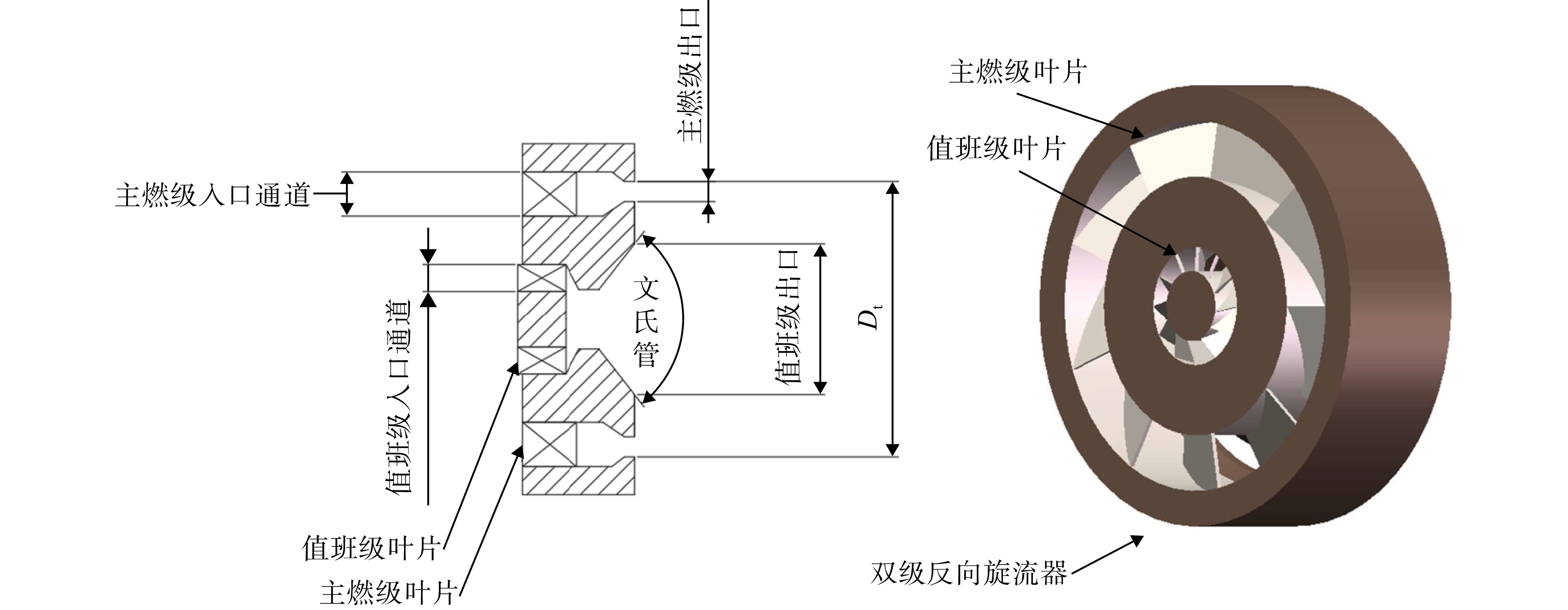
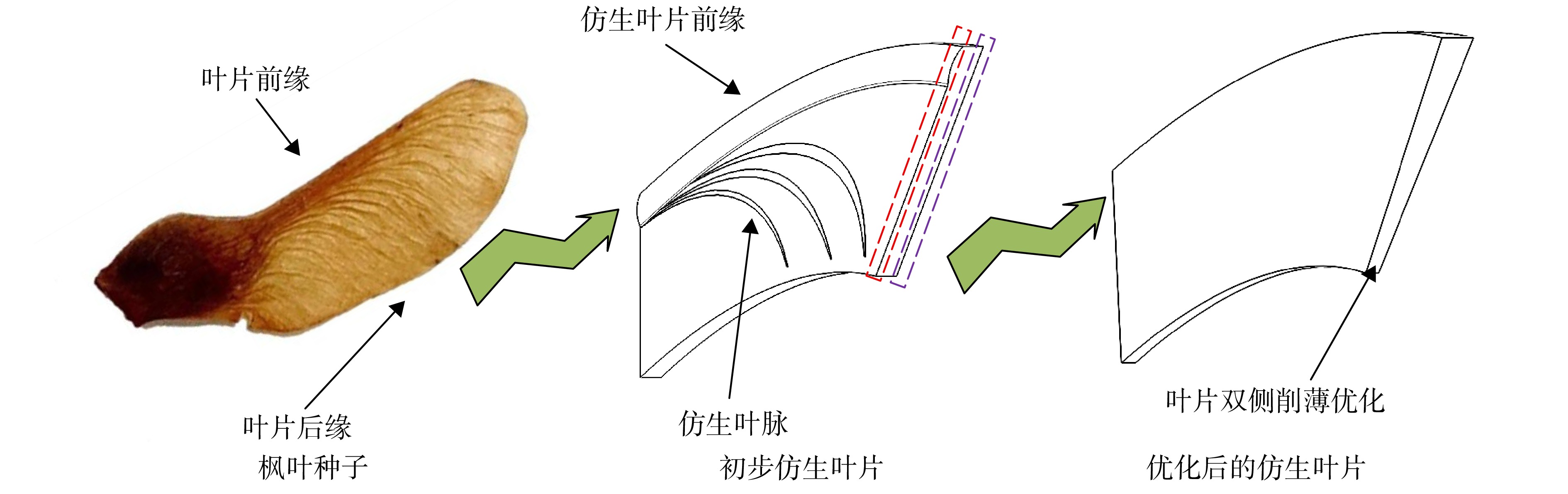
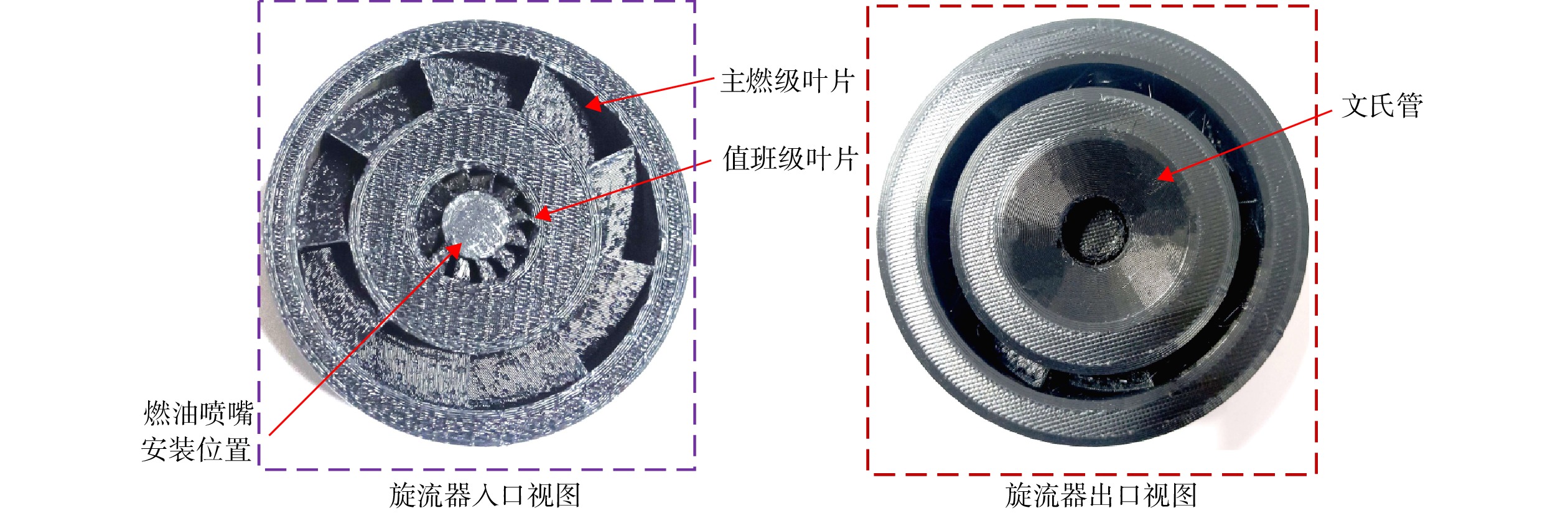
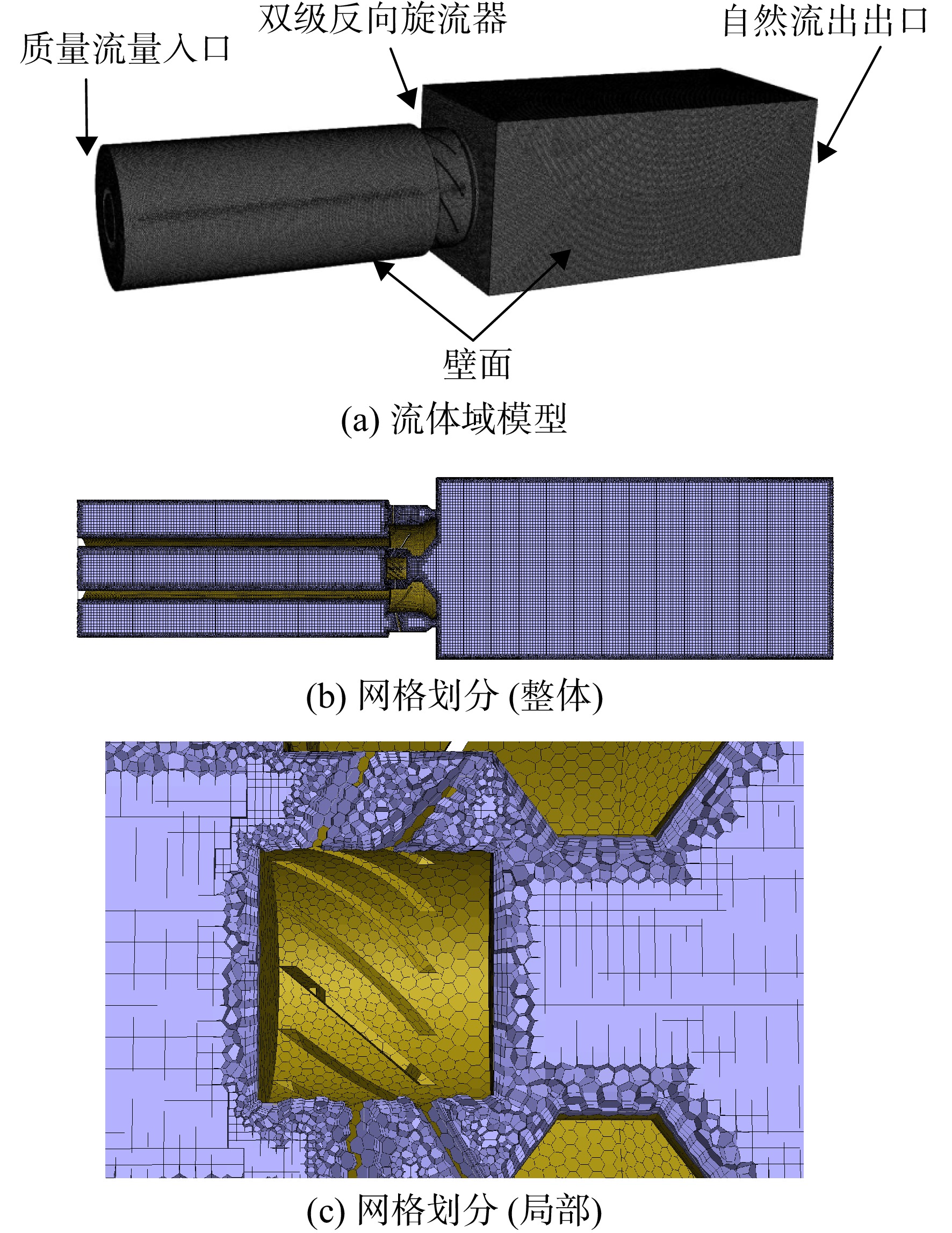
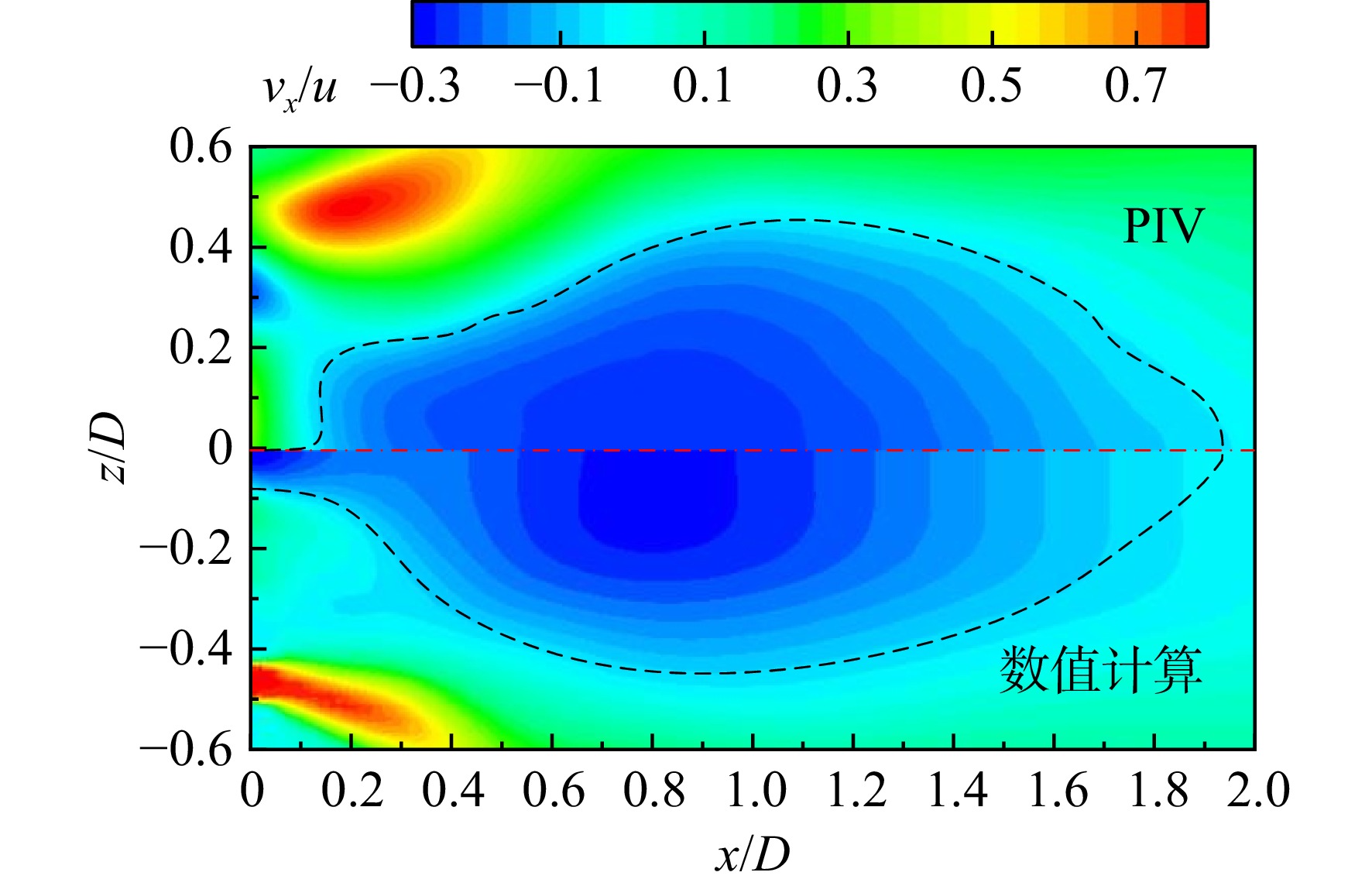
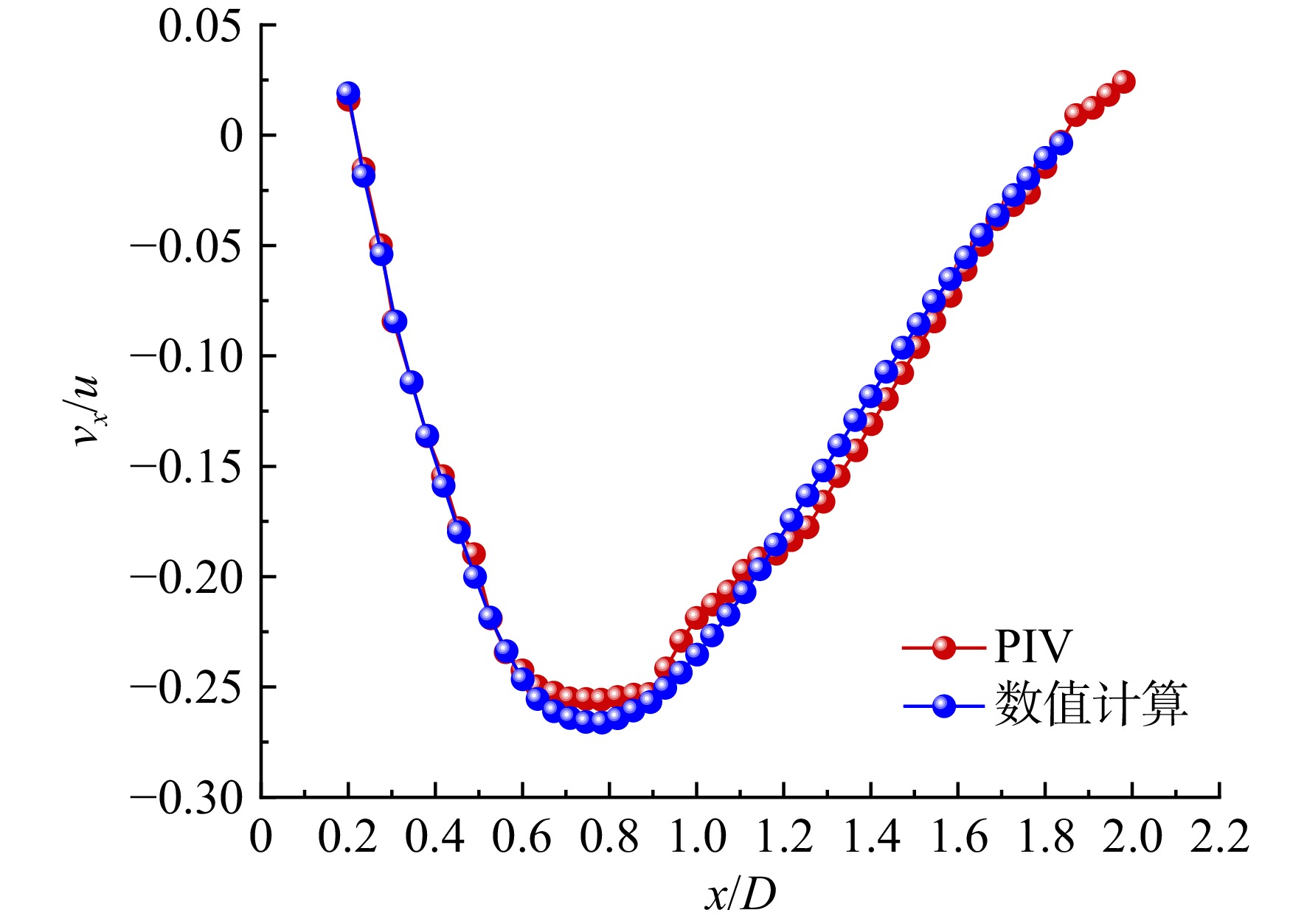
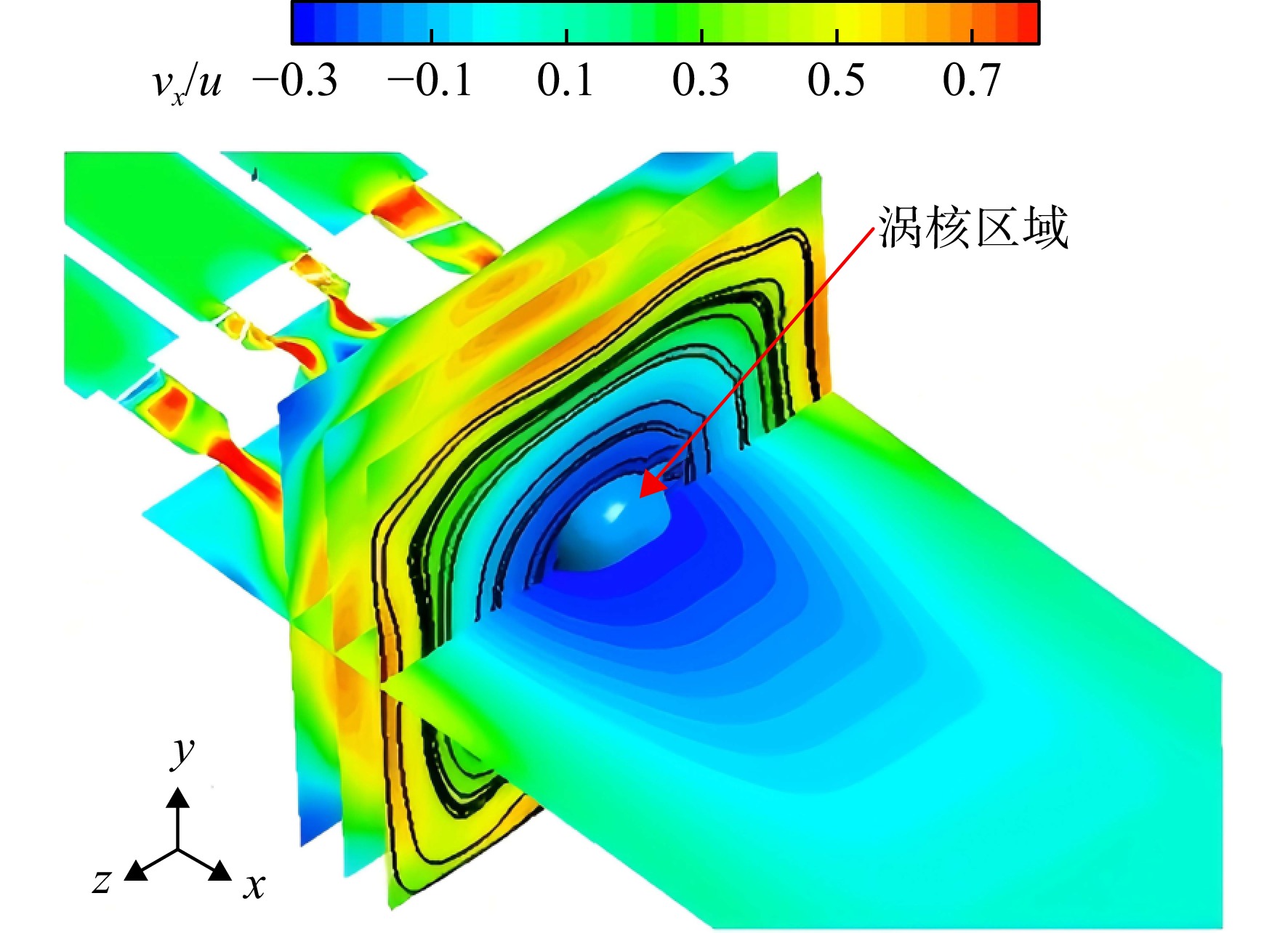
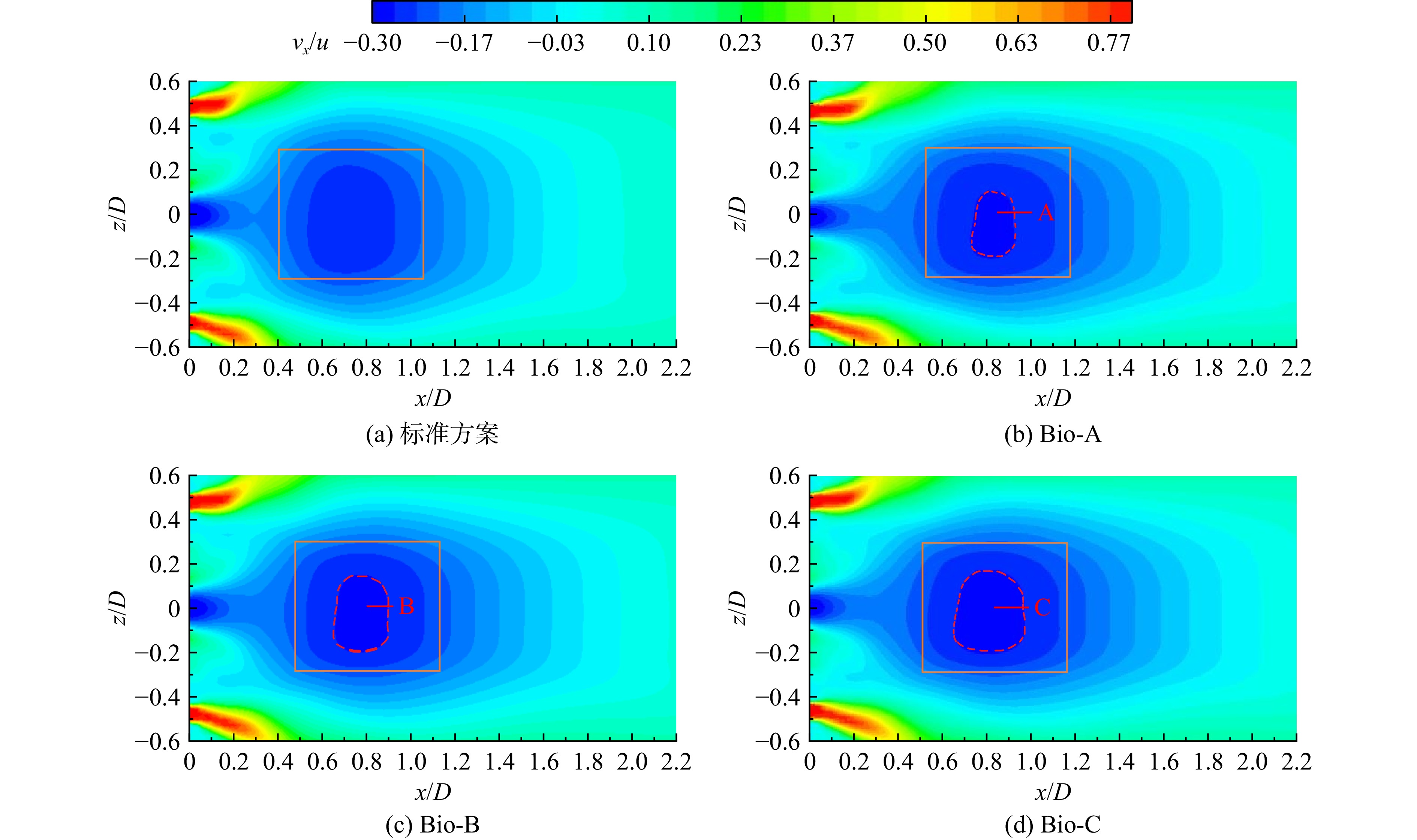
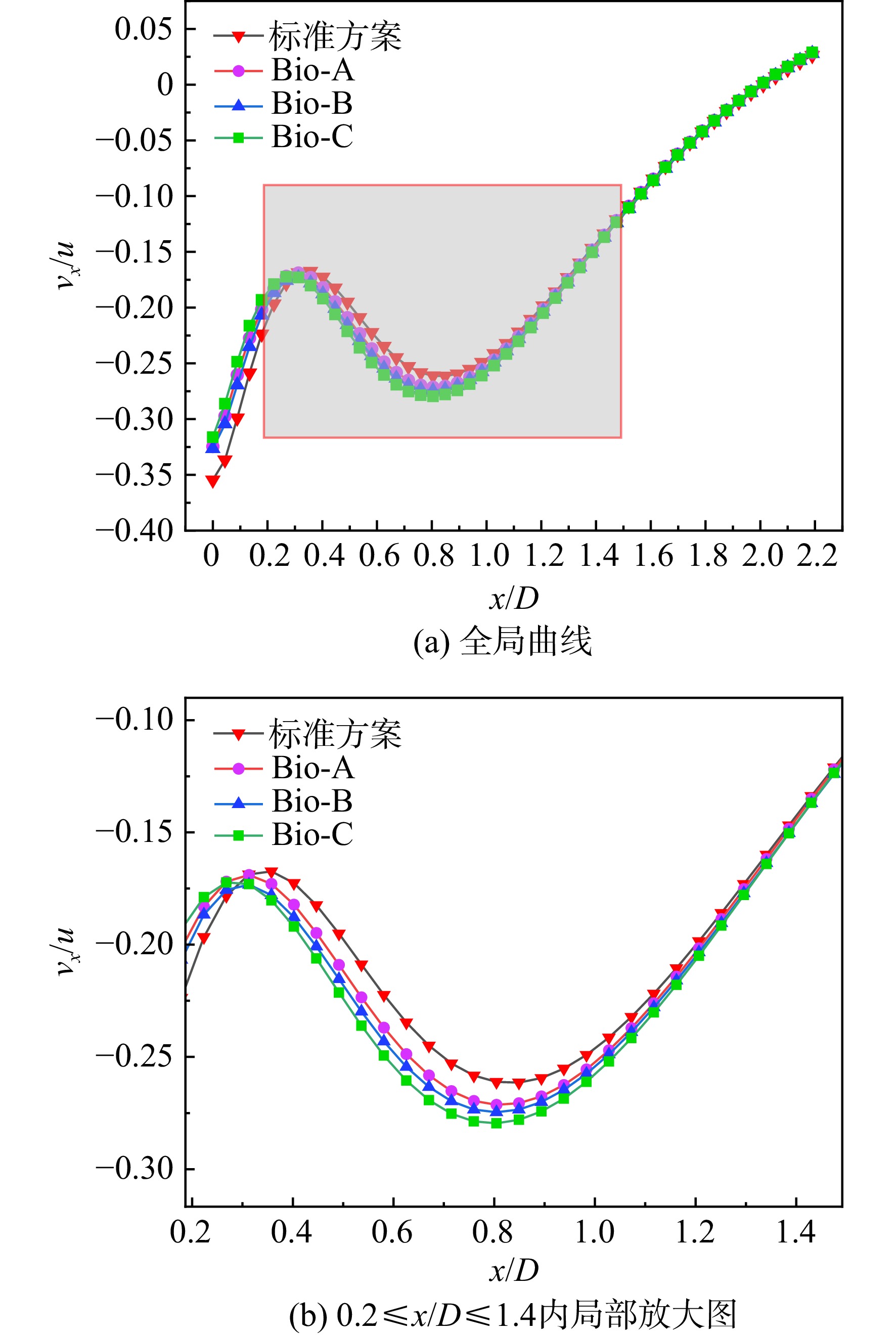
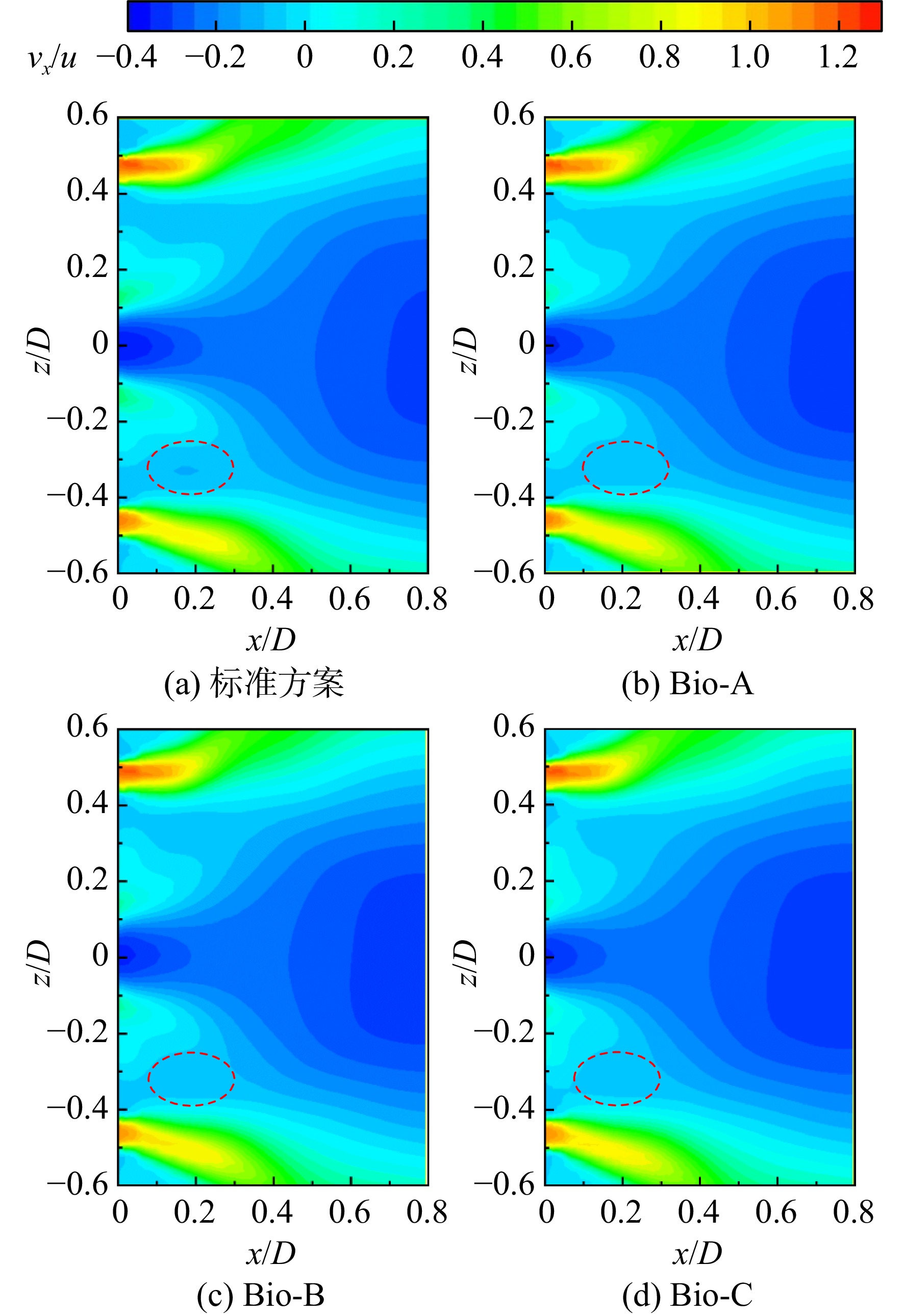
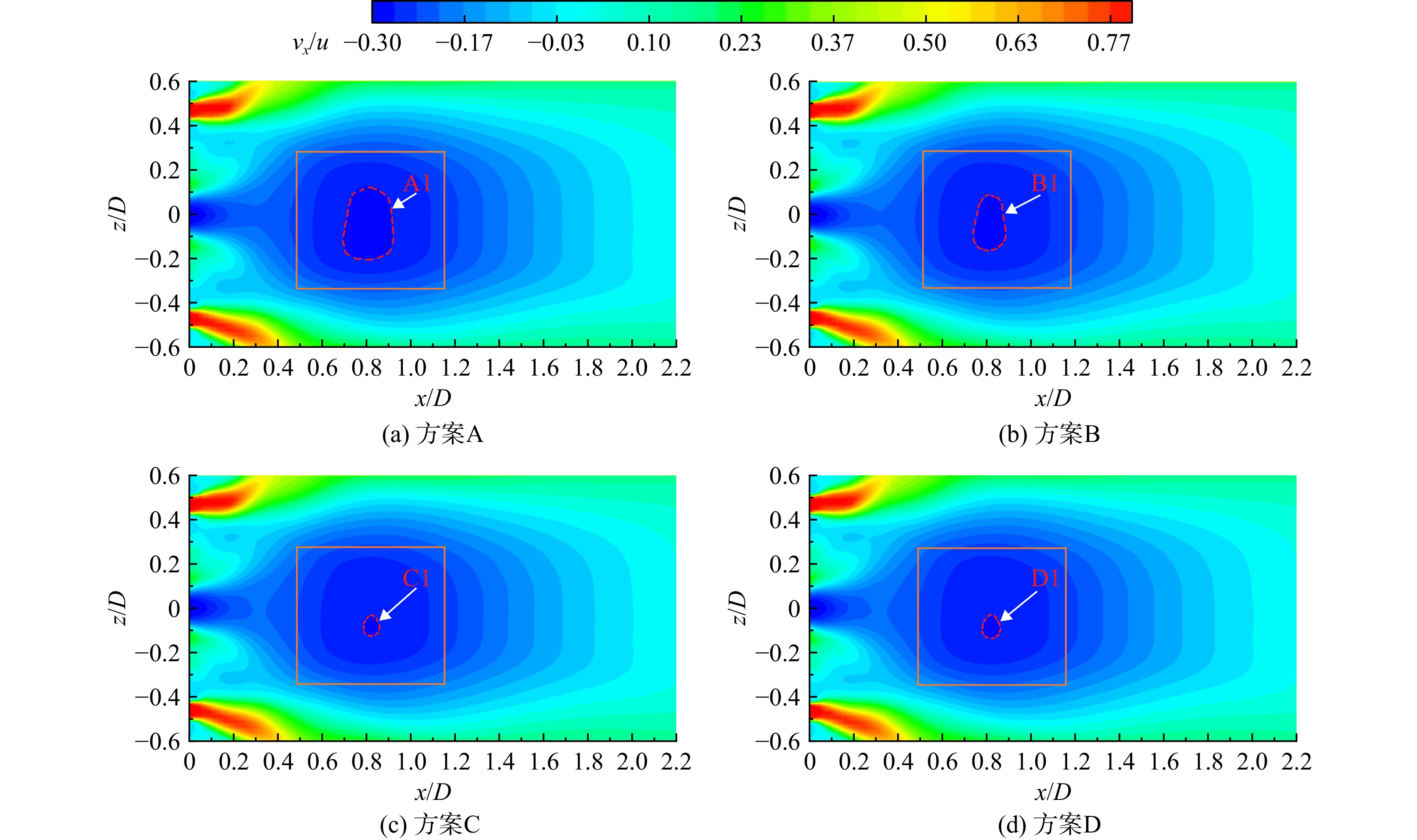
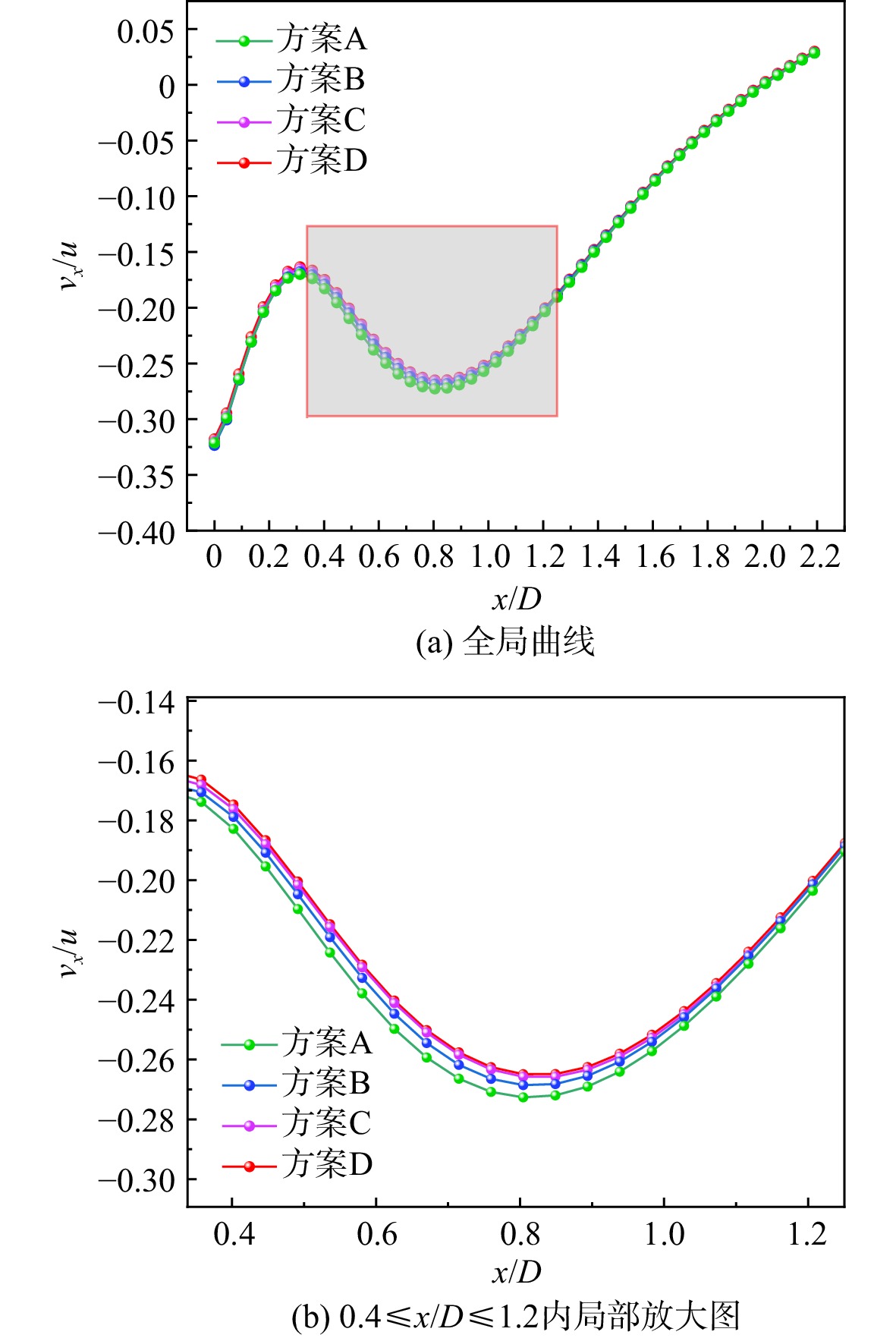
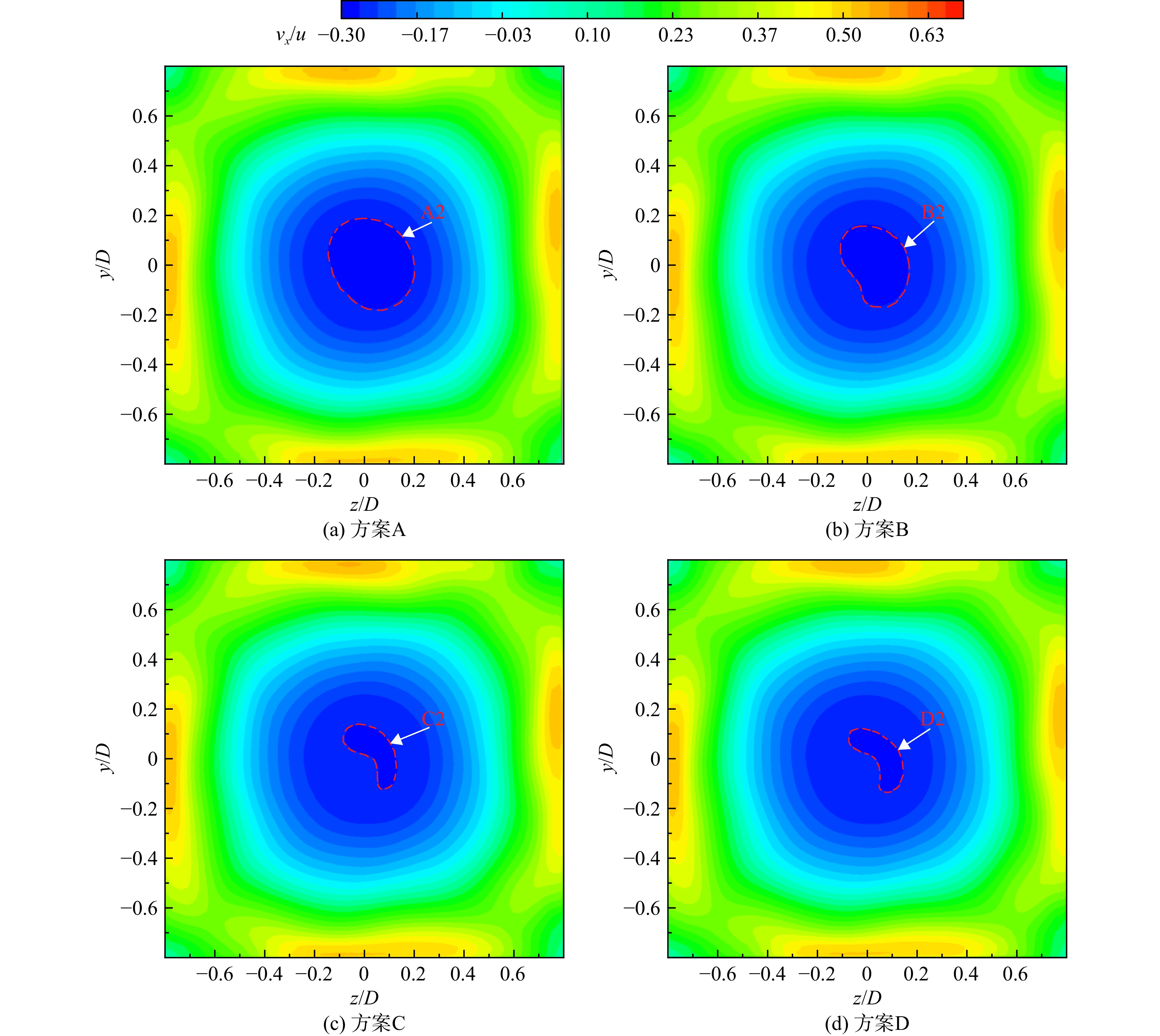
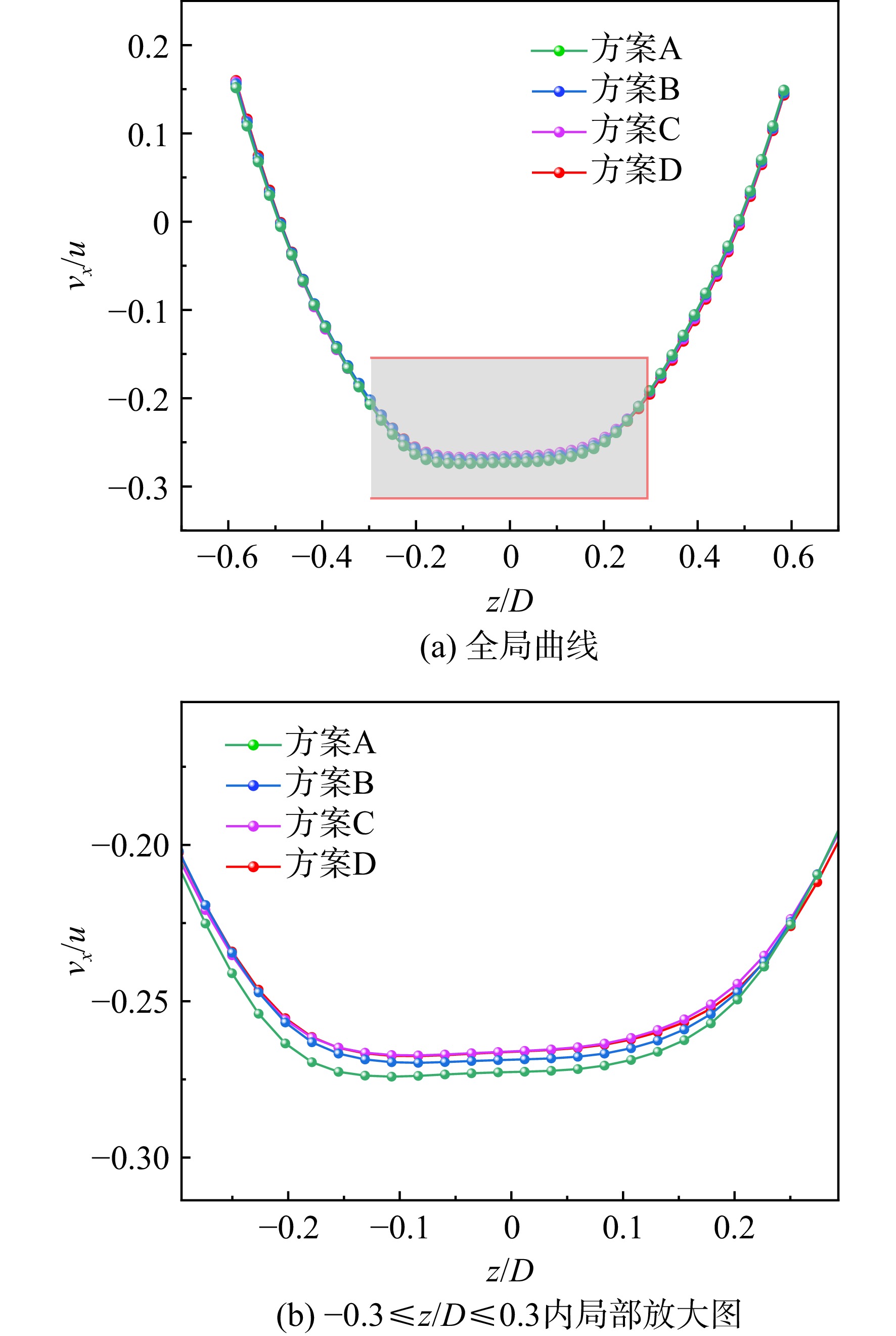
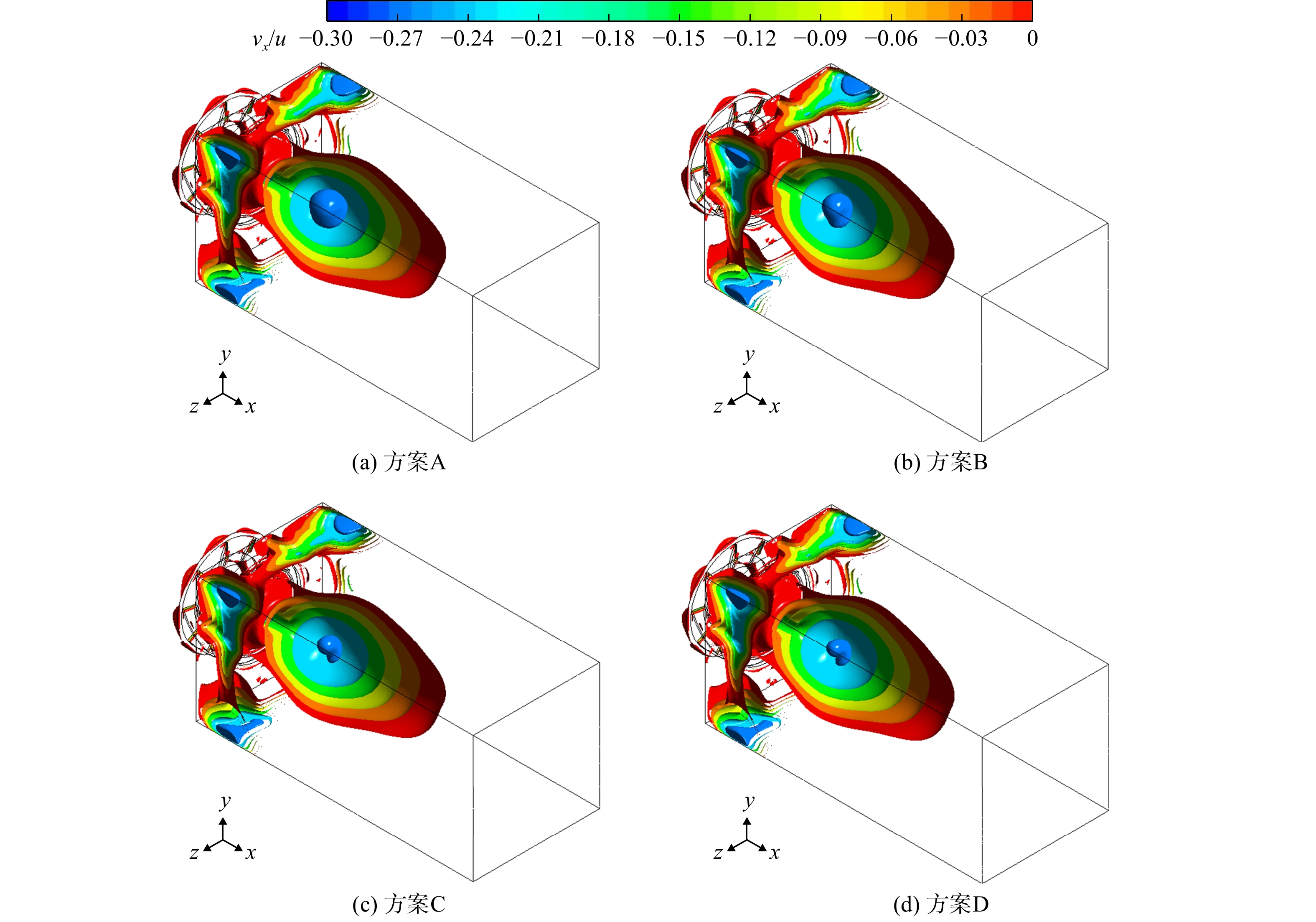
The development of novel swirlers represents a critical breakthrough for enhancing the lean blow-off limit of combustion chambers and optimizing flame stability under typical operating conditions. Based on a numerical approach, the characteristic evolution of a dual-stage counter-rotating swirler was systematically investigated by incorporating biomimetic features inspired by winged seeds within the cold-flow field of a combustor. By analyzing the control mechanisms of the main and pilot stage blade design types on the central recirculation zone (CRZ), the influences of different blade combinations and trailing-edge thickness variations on the topological characteristics of the cold flow field were revealed. Results indicated that the blade combination scheme of the main and pilot stages significantly affected the vortex core extent and velocity distribution within the CRZ. When the trailing-edge thinning ratio reached a critical value between 40% and 60%, the growth rates of both the vortex core area and the recirculation velocity exhibited a nonlinear decay trend with the increasing thinning ratio, yet maintained a positive correlation. Specifically, employing the biomimetic design for the main stage blades contributed to an expanded vortex core region and an increased recirculation velocity, with its dominant influence on the CRZ concentrated within the spatial domain of 0.3≤x/D≤1.2 and −0.3≤z/D≤0.3. Utilizing the biomimetic design for the pilot stage blades produced an enhancing effect on the expansion of the vortex core region.

Autocontrol
Mathematical modeling of piezoelectric bimorph actuated force motor assembly for electrohydraulic servo valve
LING Jie, PENG Hongtao, LI Yunqi, ZHANG Wenxing, KANG Jiahao, ZHU Yuchuan
2026, 41(8): 20250241. doi: 10.13224/j.cnki.jasp.20250241
Abstract:
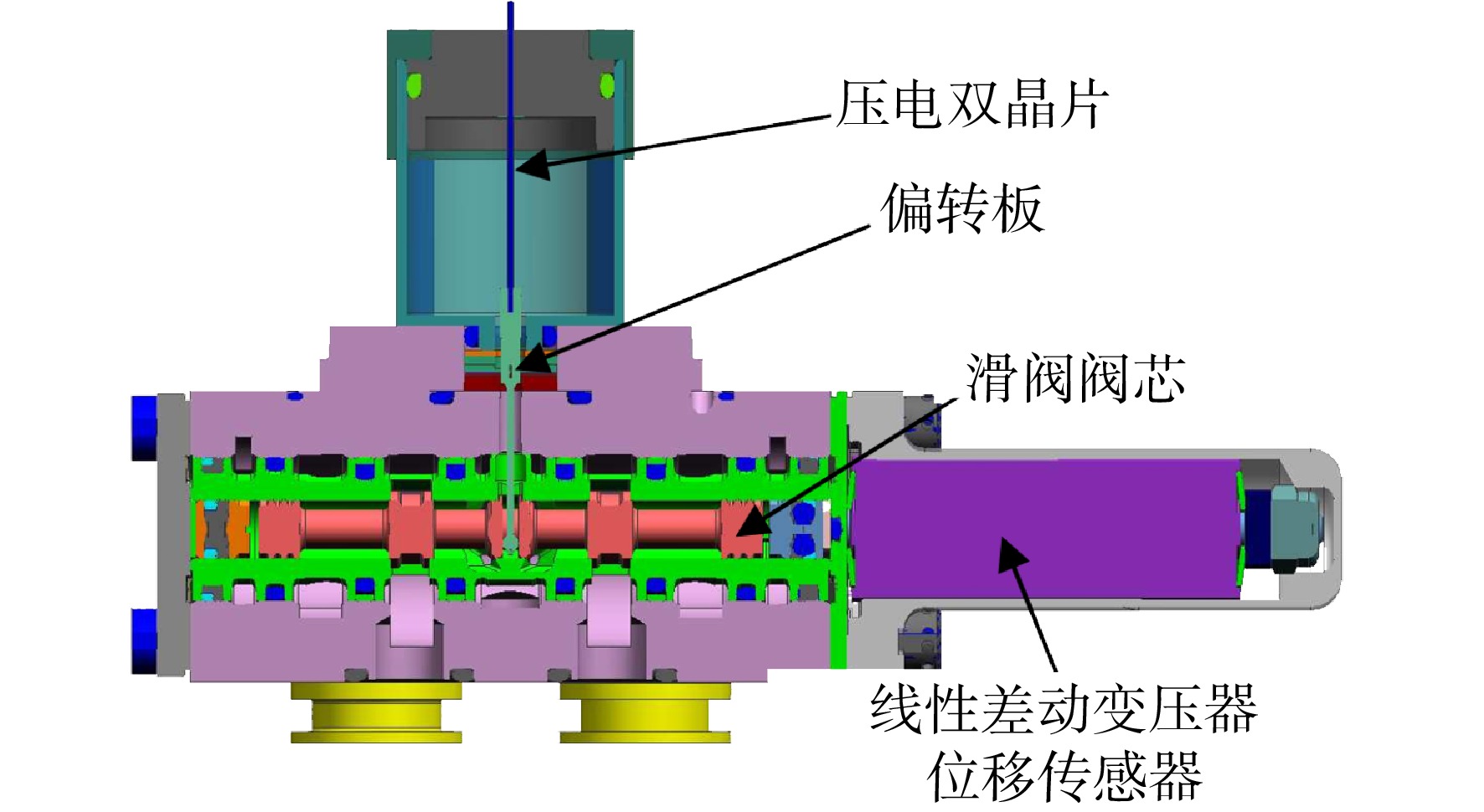
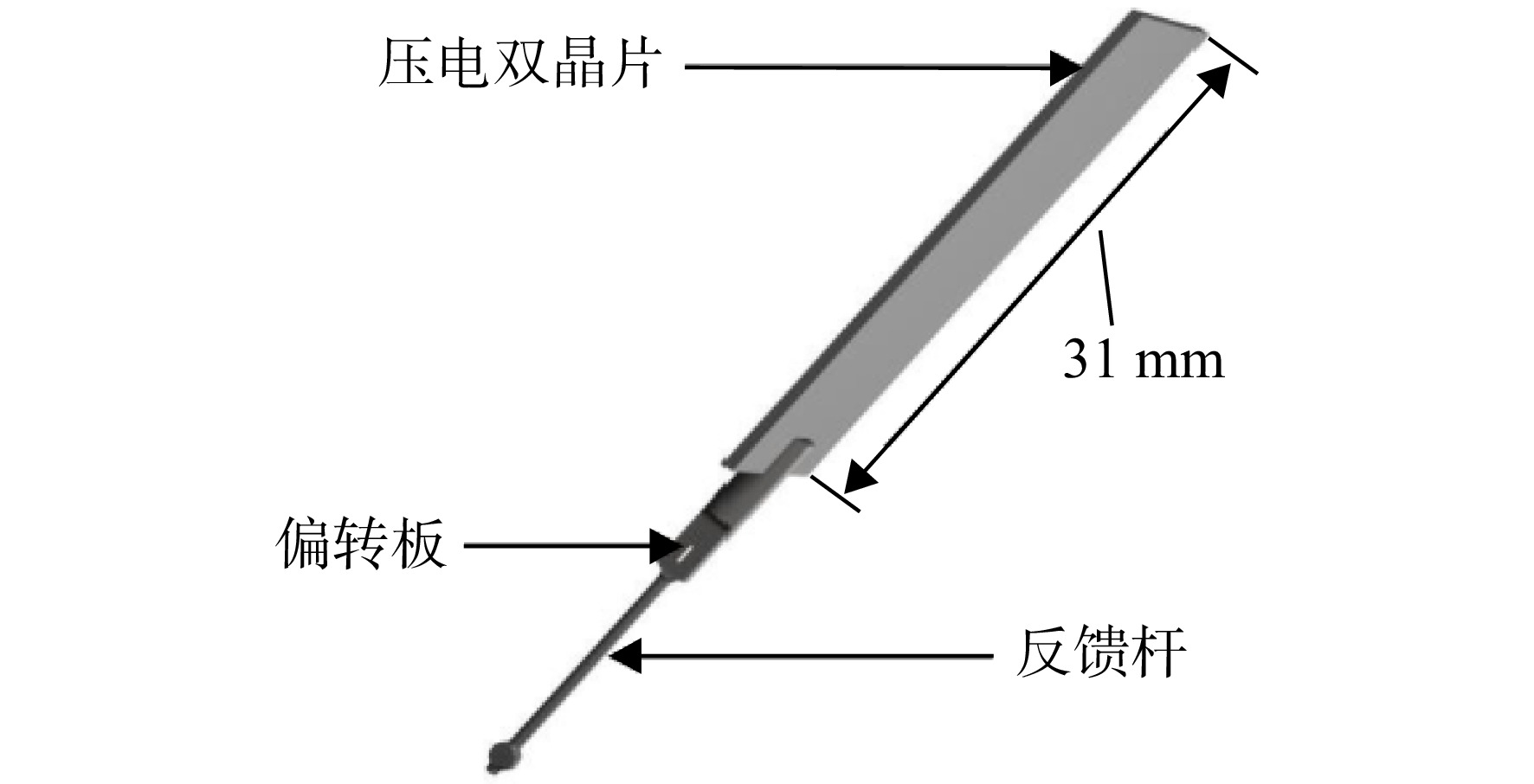
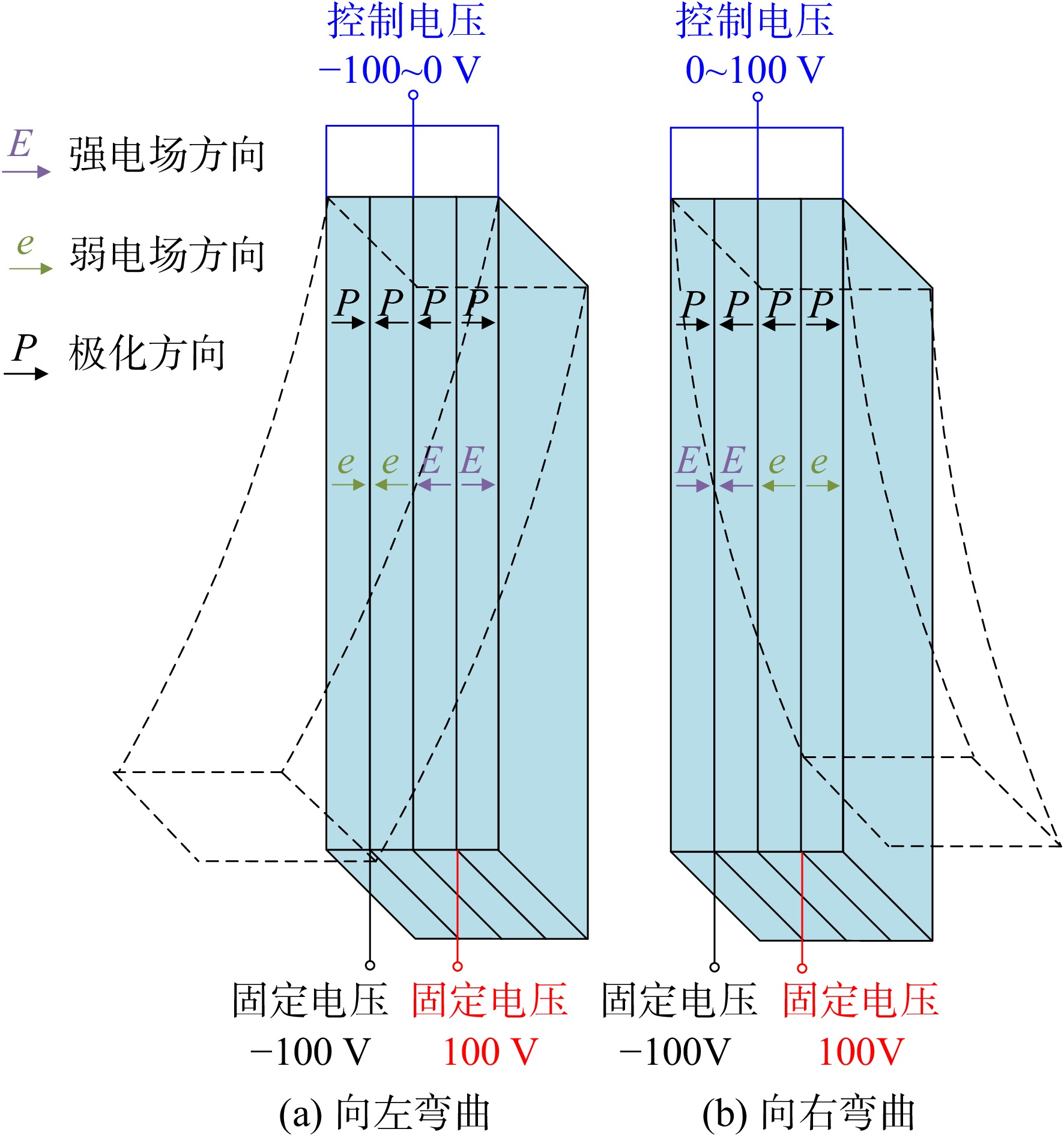
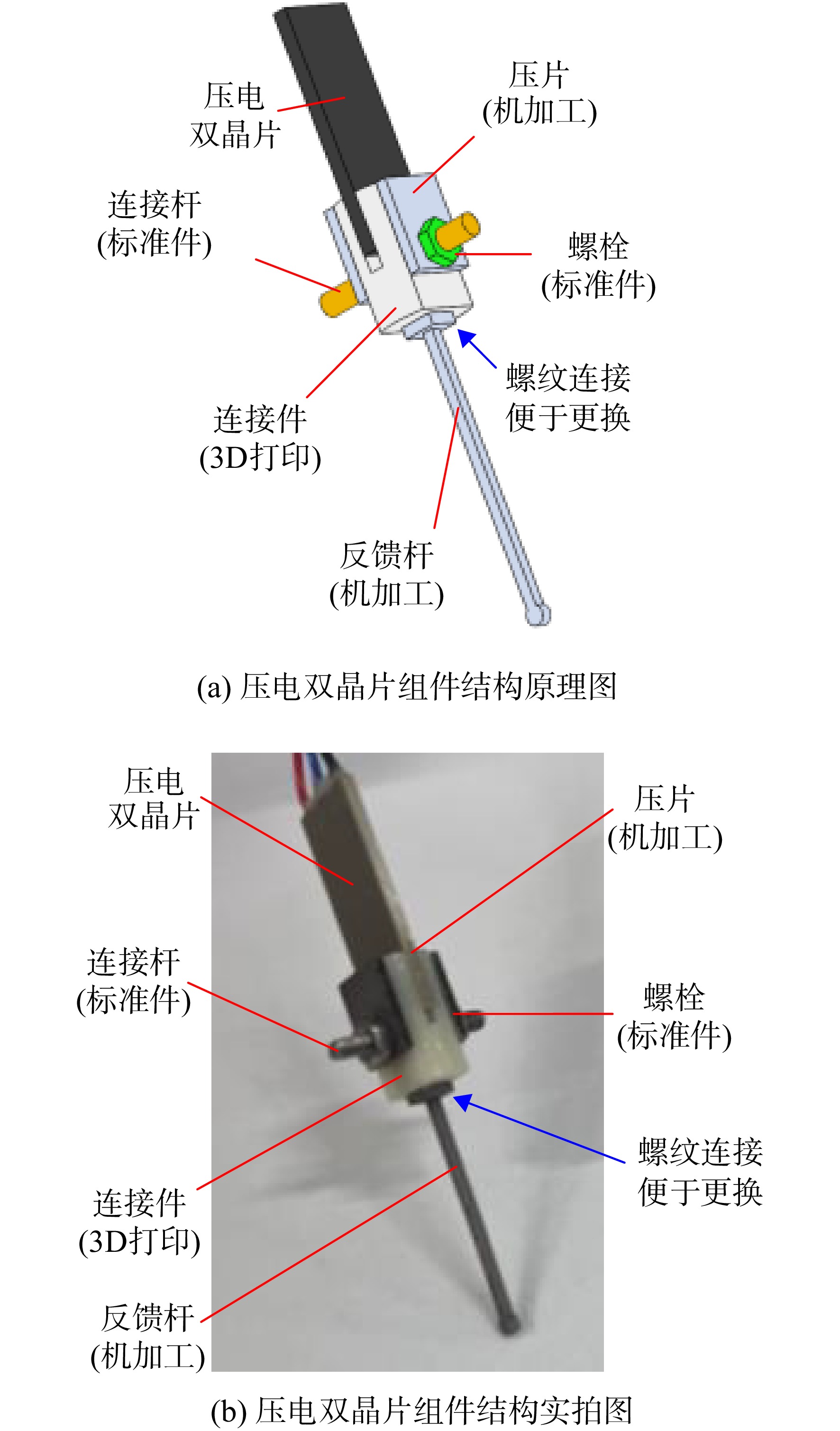
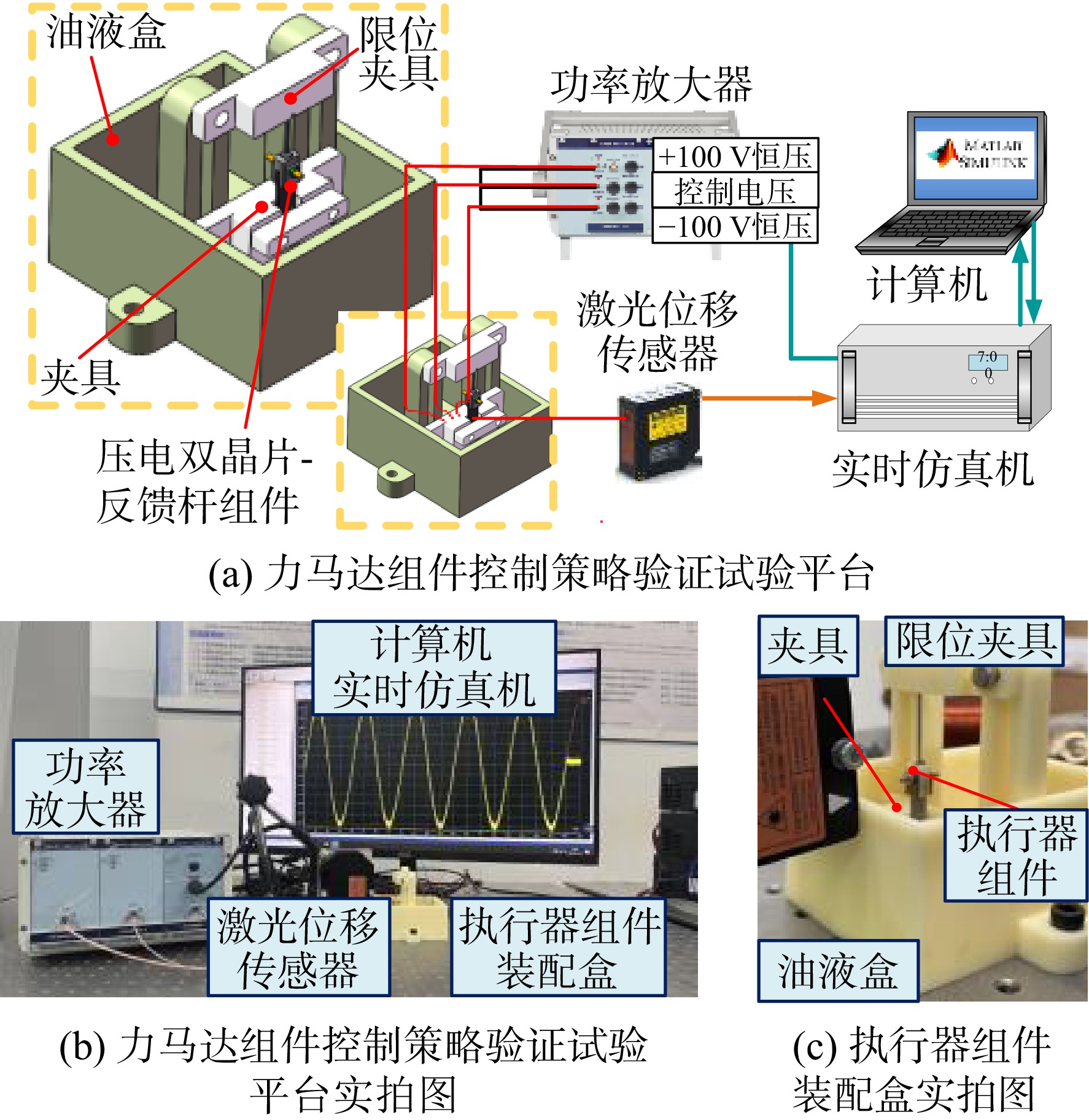
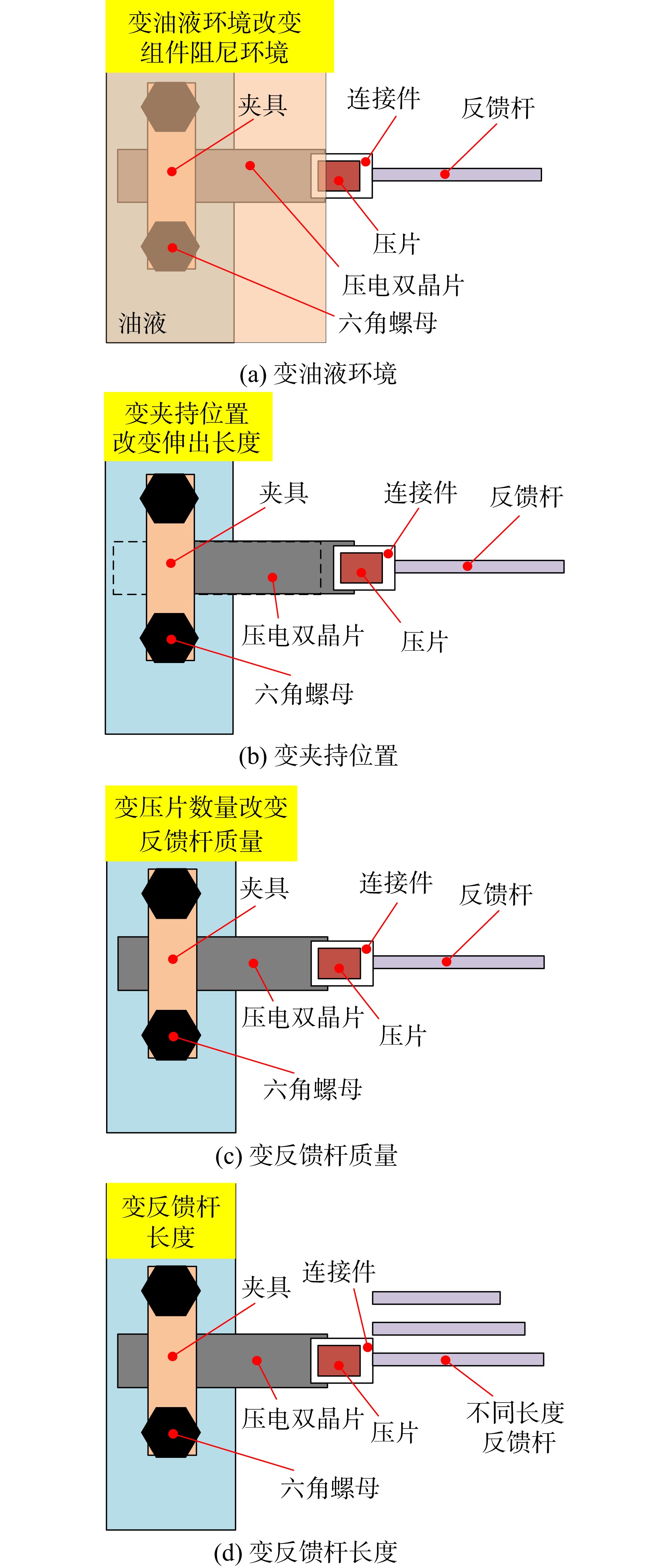
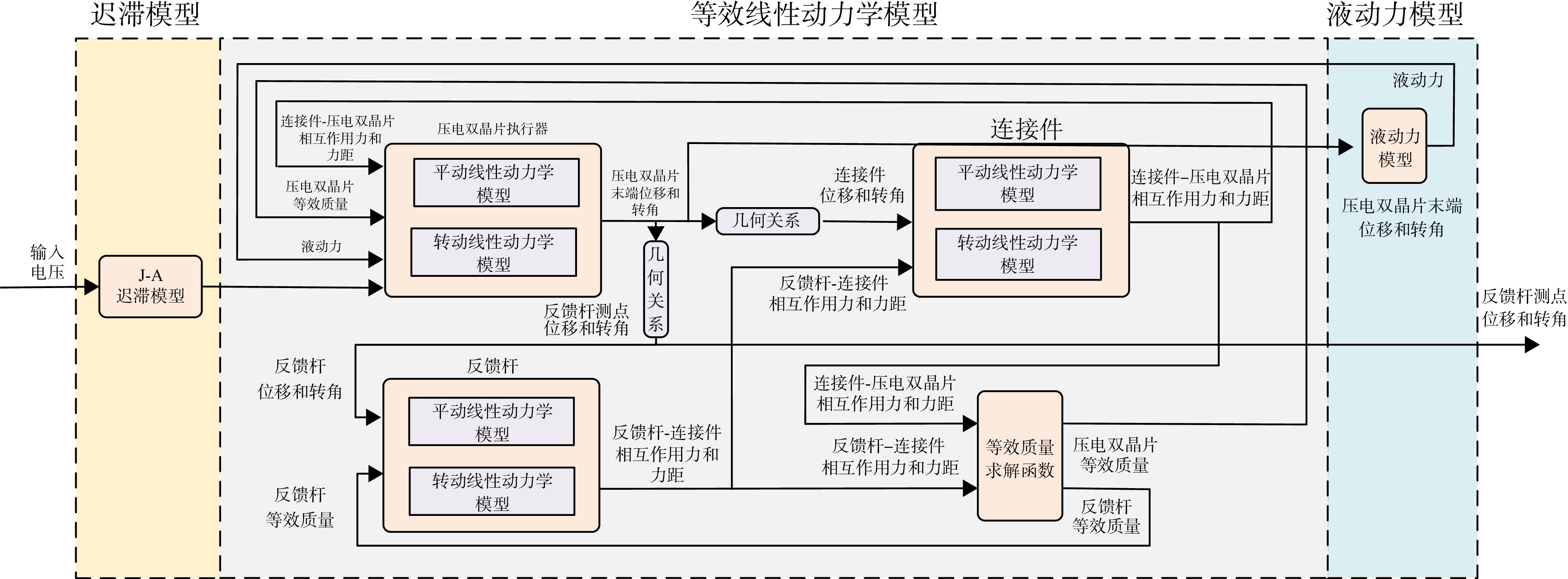
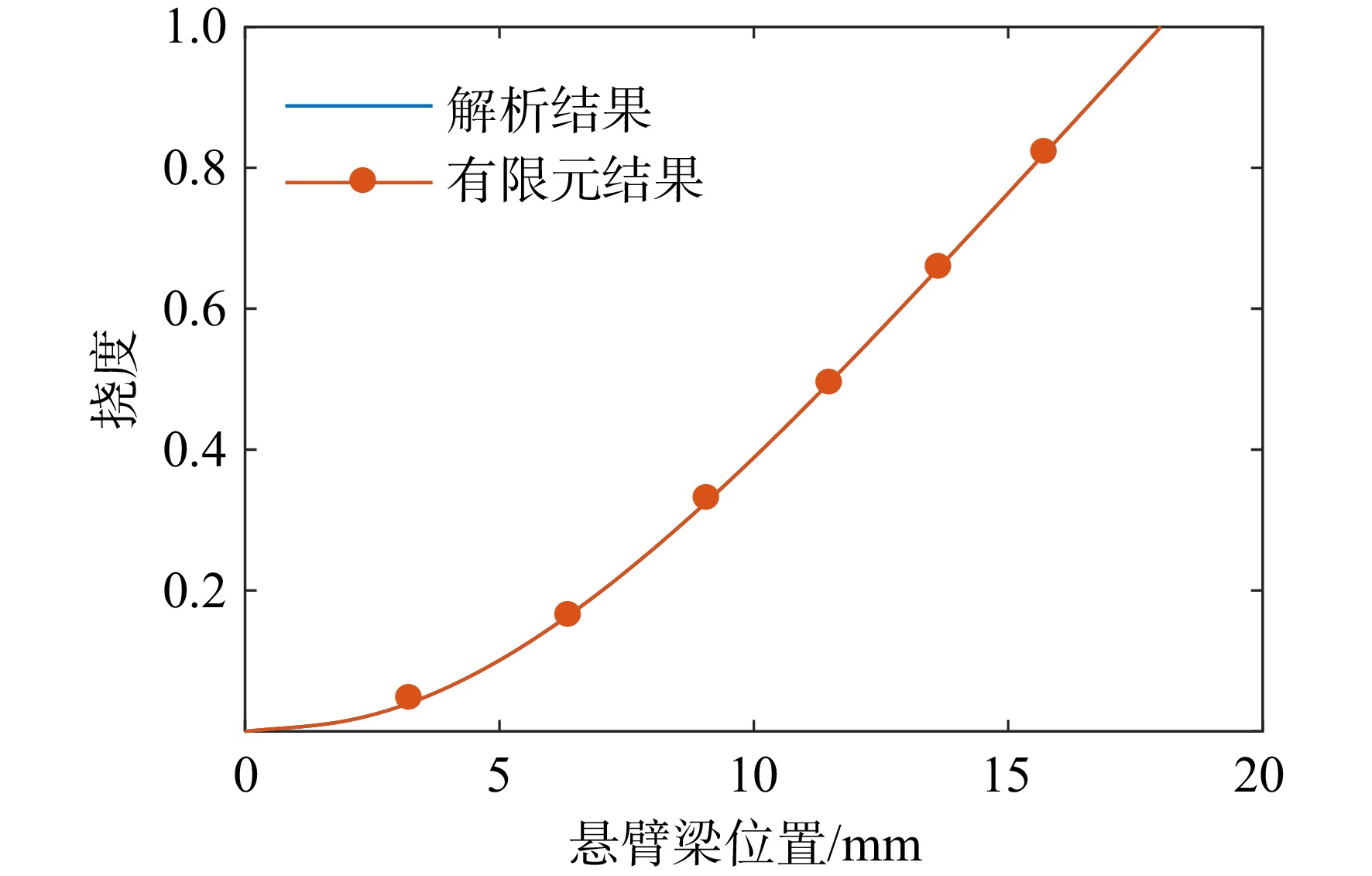
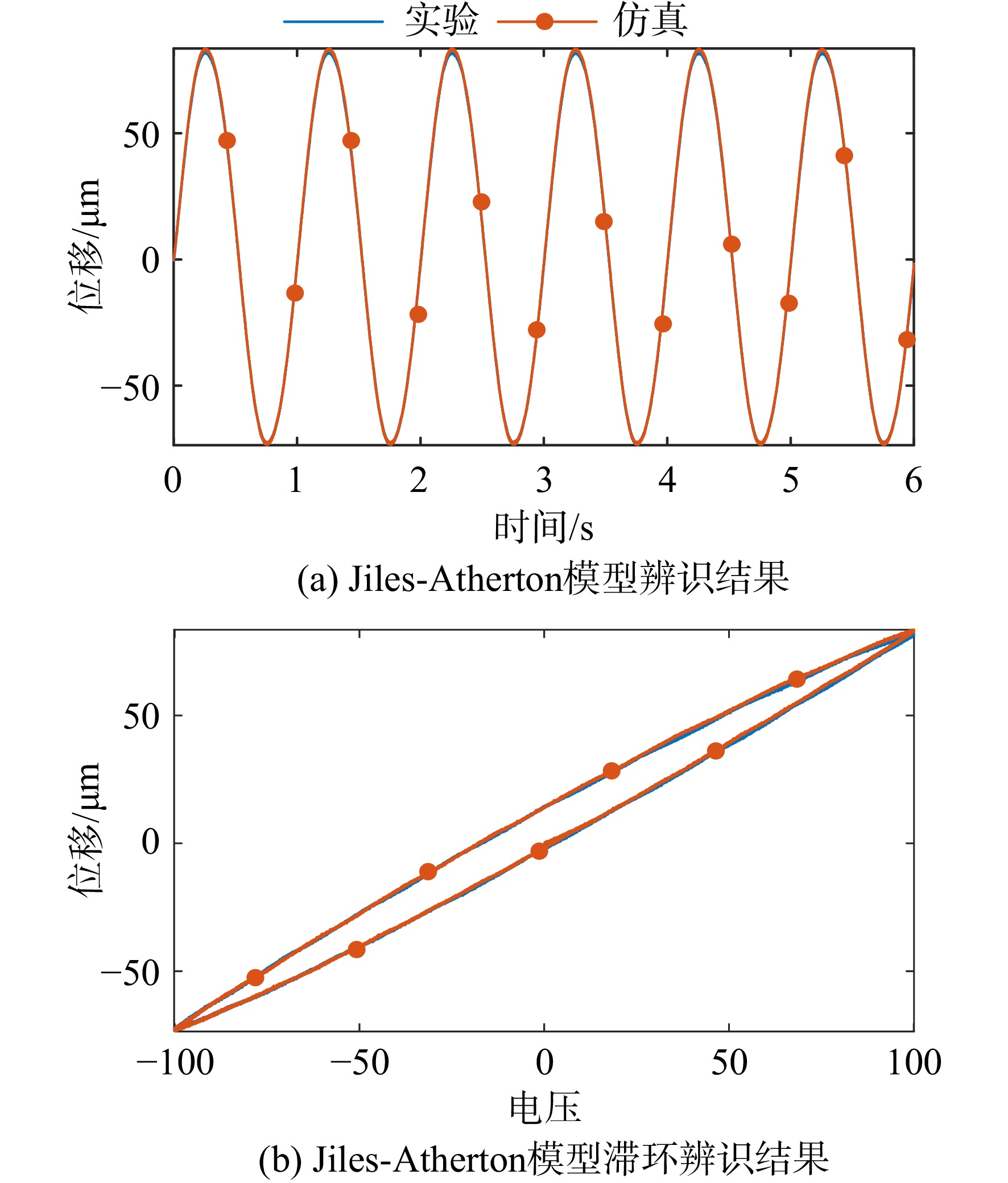
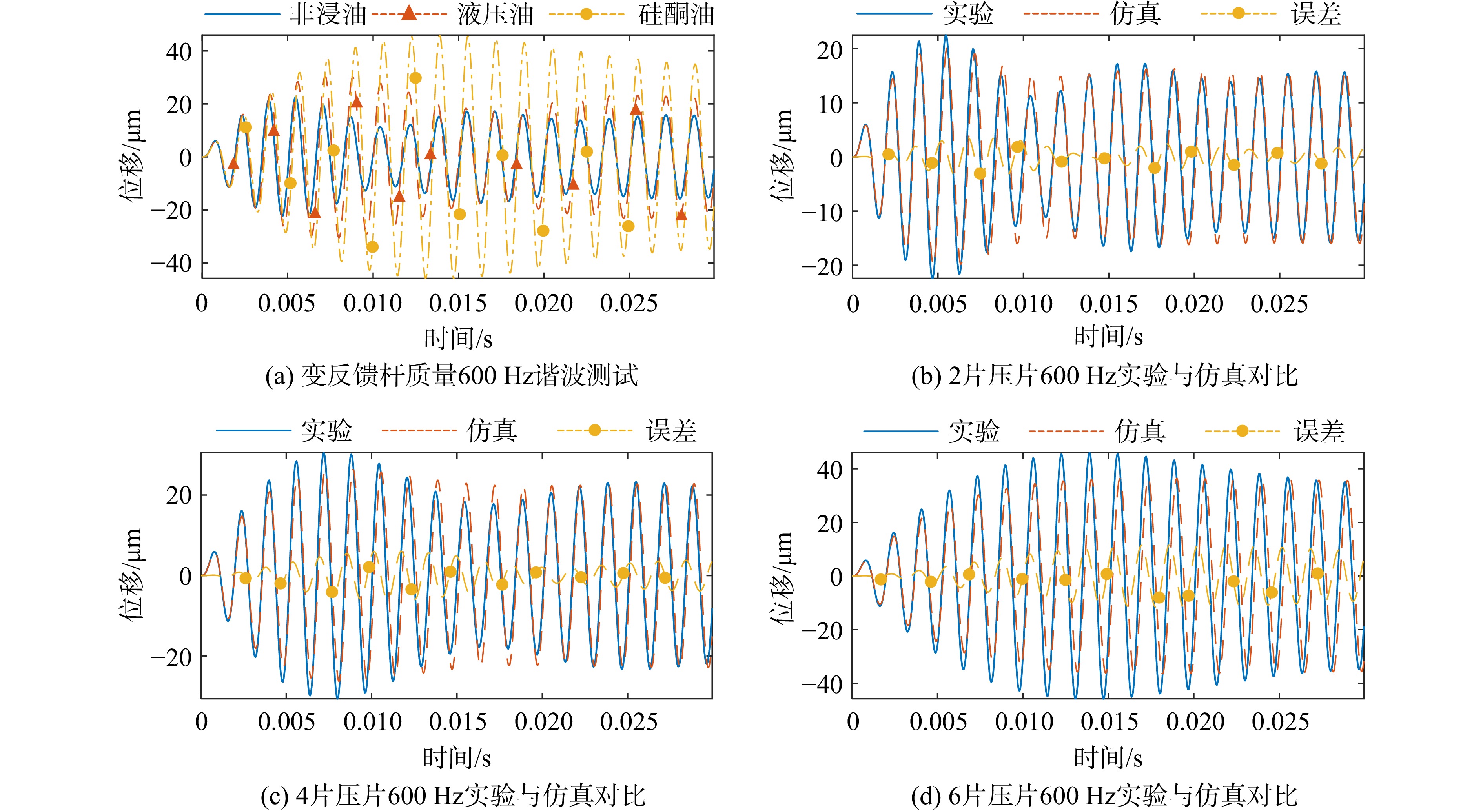
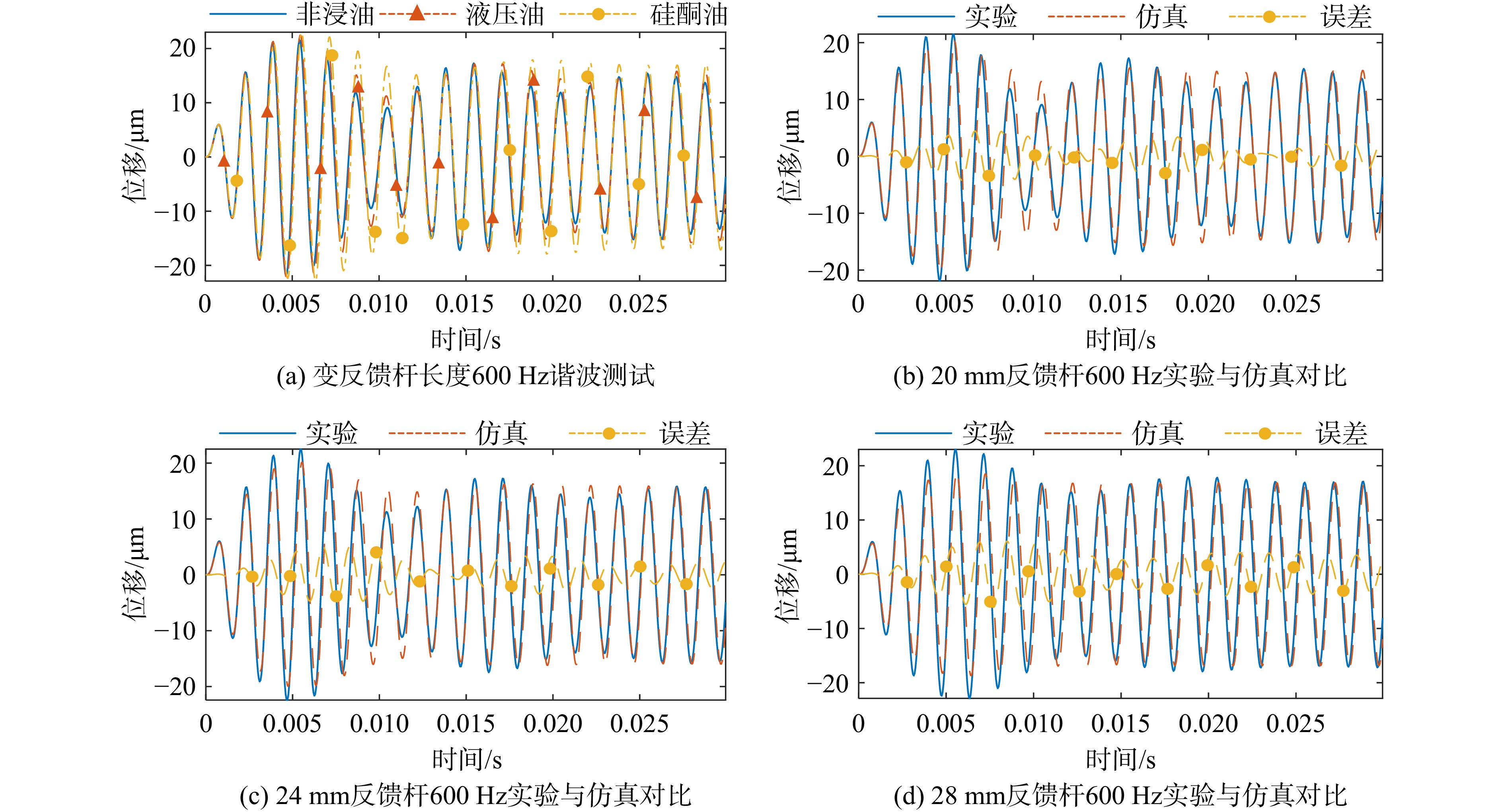
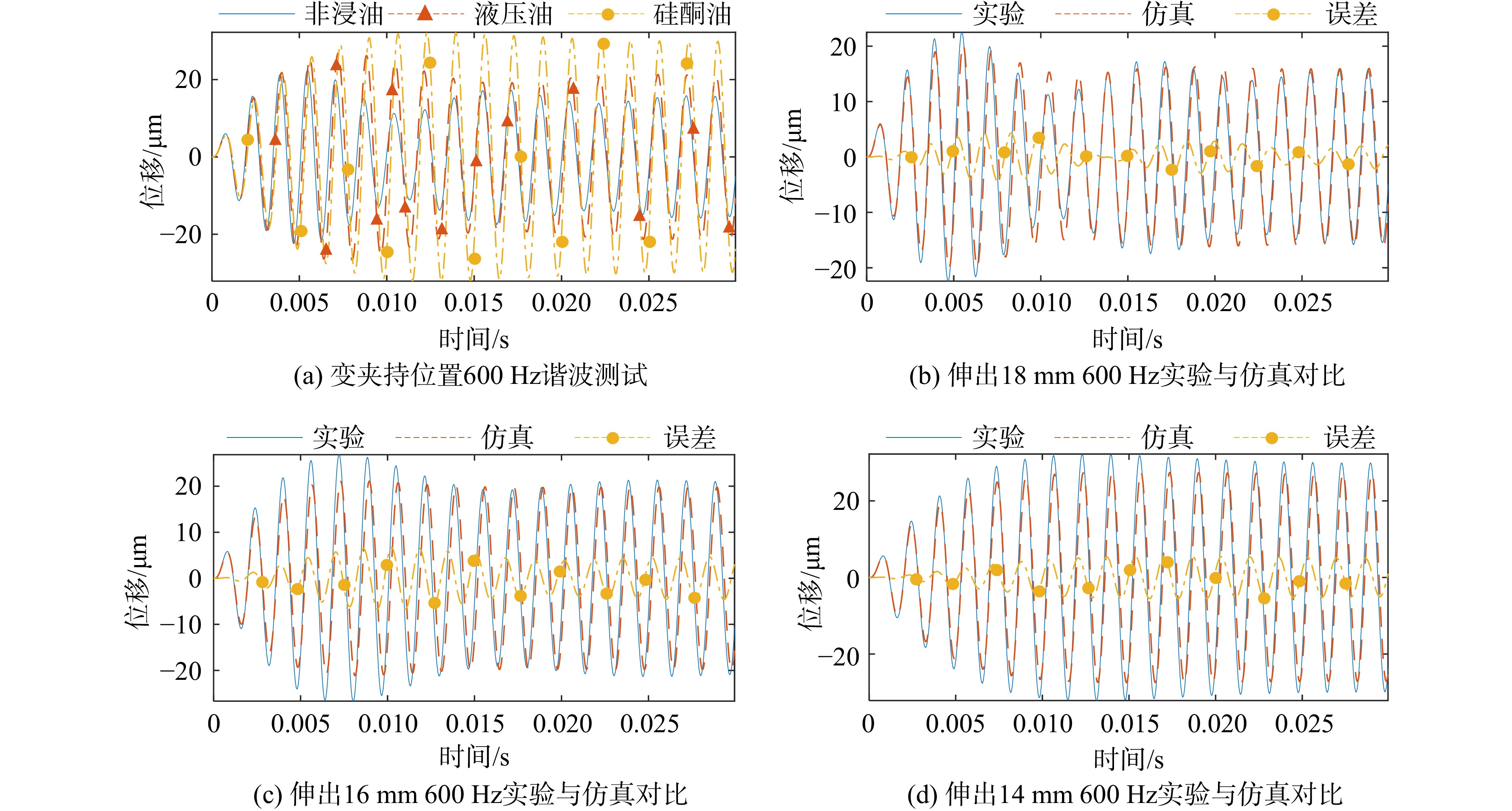
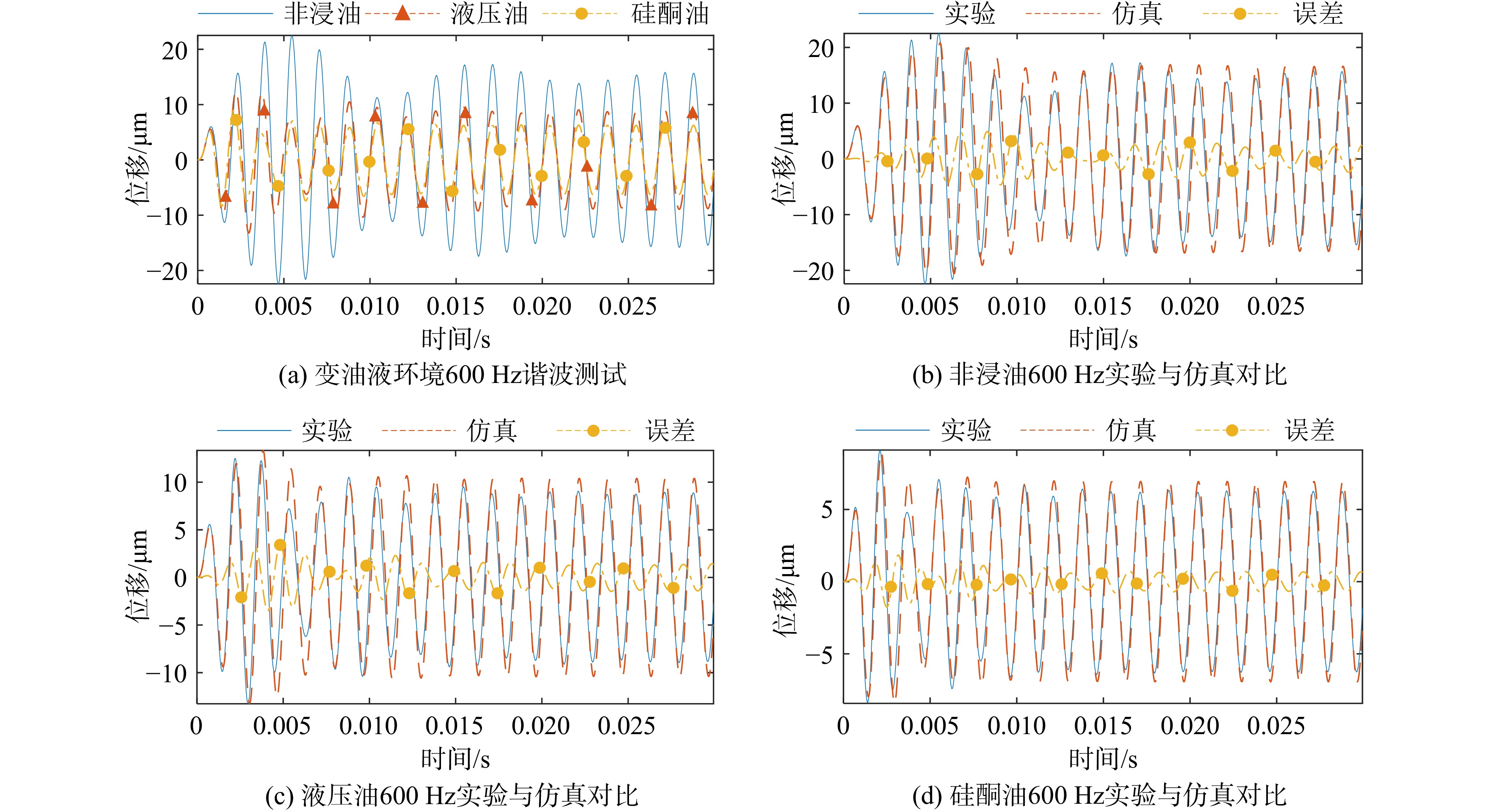
Replacing the torque motor with a piezoelectric bimorph can improve electrohydraulic servo valve response, simplify the pilot stage, and enhance the stability. Yet existing actuator models fail to explain constraint effects on output. A mathematical model using piecewise and equivalent principles was developed. An equivalent actuator was designed for the jet-deflector stage, and tests under different constraints were conducted. Results showed that a 4 mm reduction in extension led to the largest static displacement decrease of 27.7 μm, the maximum dynamic resonance amplitude drop of 1.9 dB, and resonance frequency increase of 15.9%. A model including hysteresis, linear dynamics, and hydrodynamics was then built, with static/dynamic simulations validated against experiments. In static output, simulated hysteresis was 11.6% vs. experimental hysteresis 11.2% (RMS error 2.5 μm); in dynamic output at 600 Hz, the maximum RMS error was 5.7 μm, confirming the accuracy. This study can offer theoretical guidance for actuator design and optimization.

Modeling approach for turbofan engines based on intelligent multi-feature extraction and interval type-2 fuzzy sets
Zhang Chenchen, Pan Muxuan
2026, 41(8): 20240753. doi: 10.13224/j.cnki.jasp.20240753
Abstract:
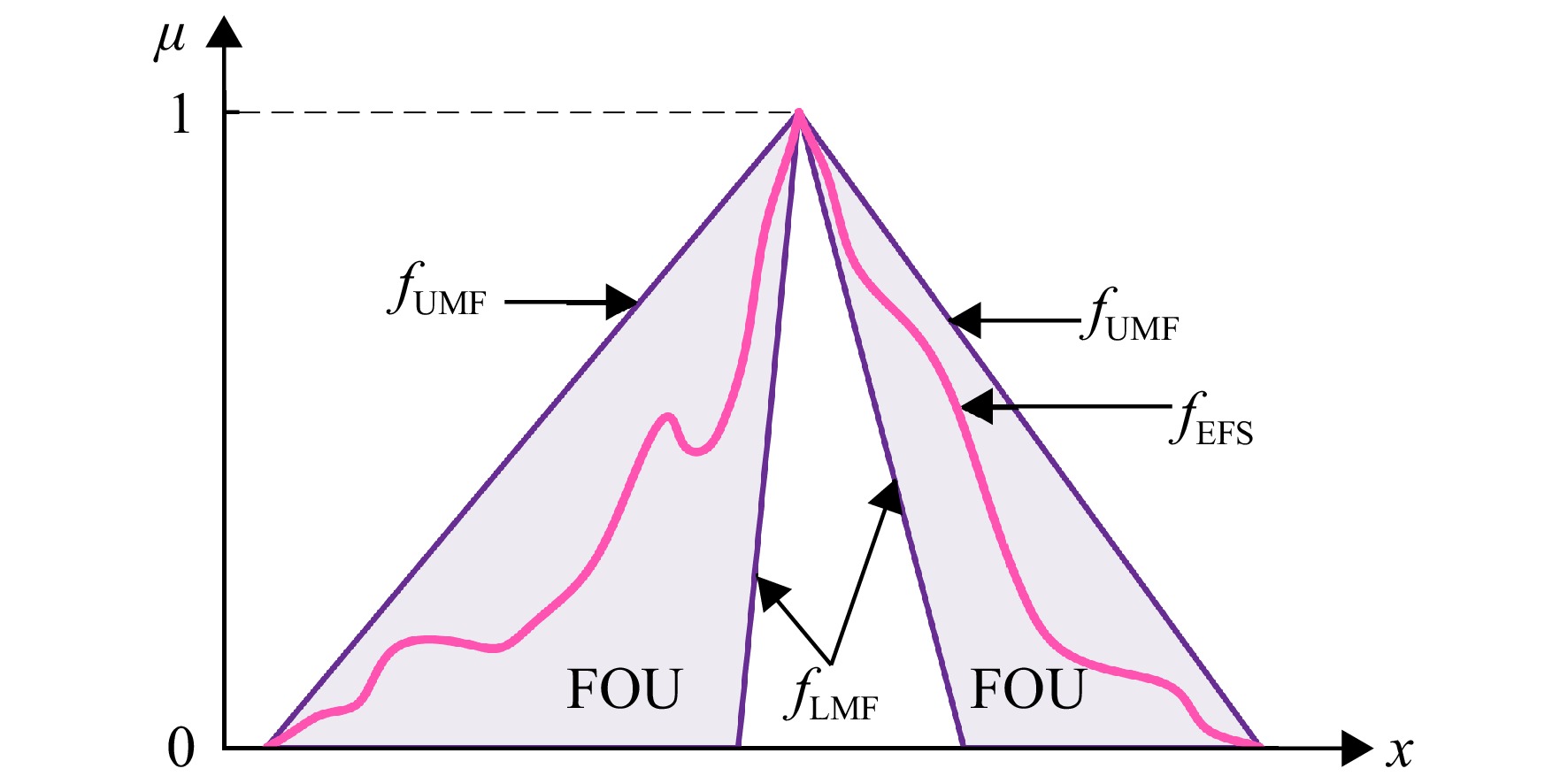
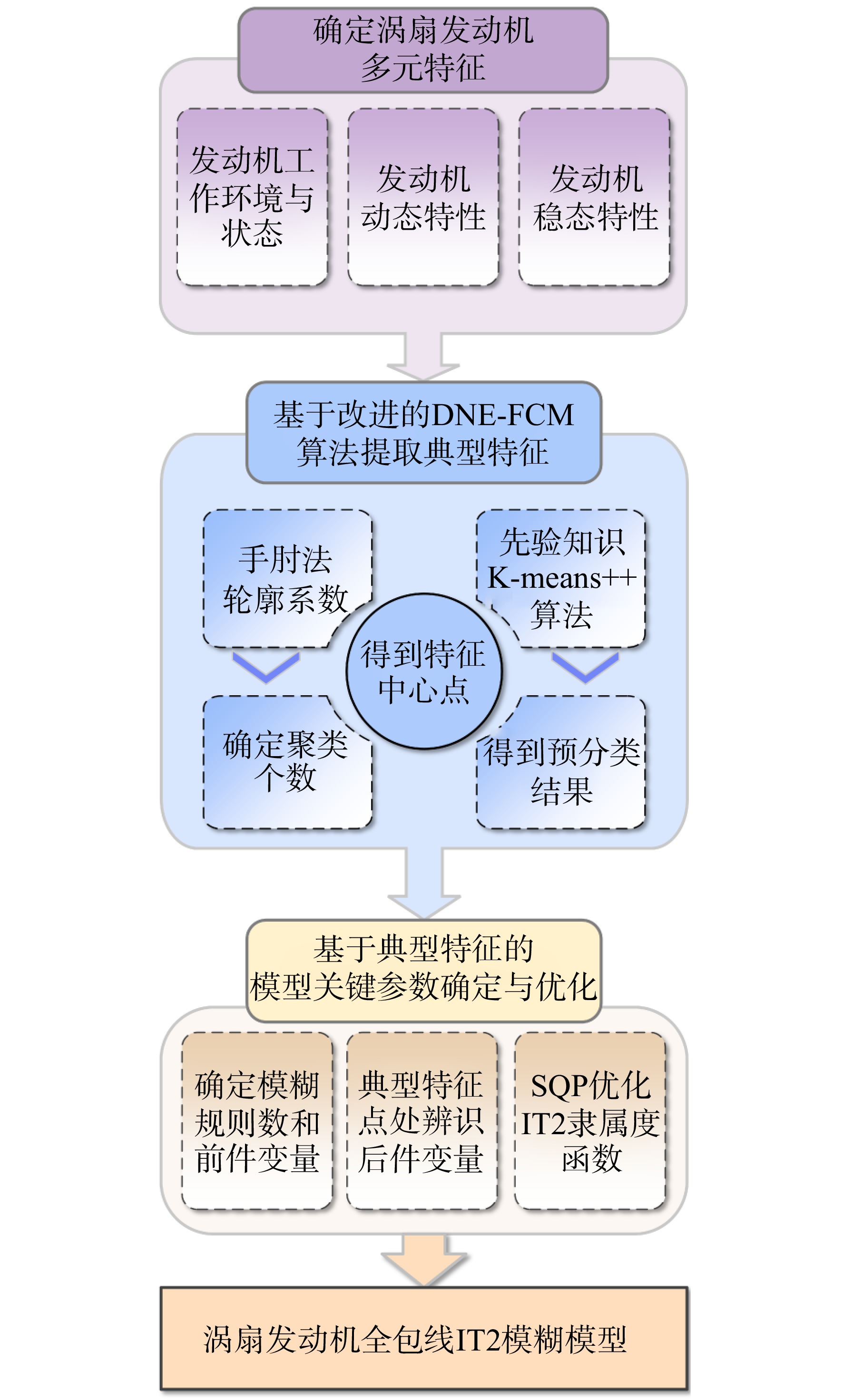
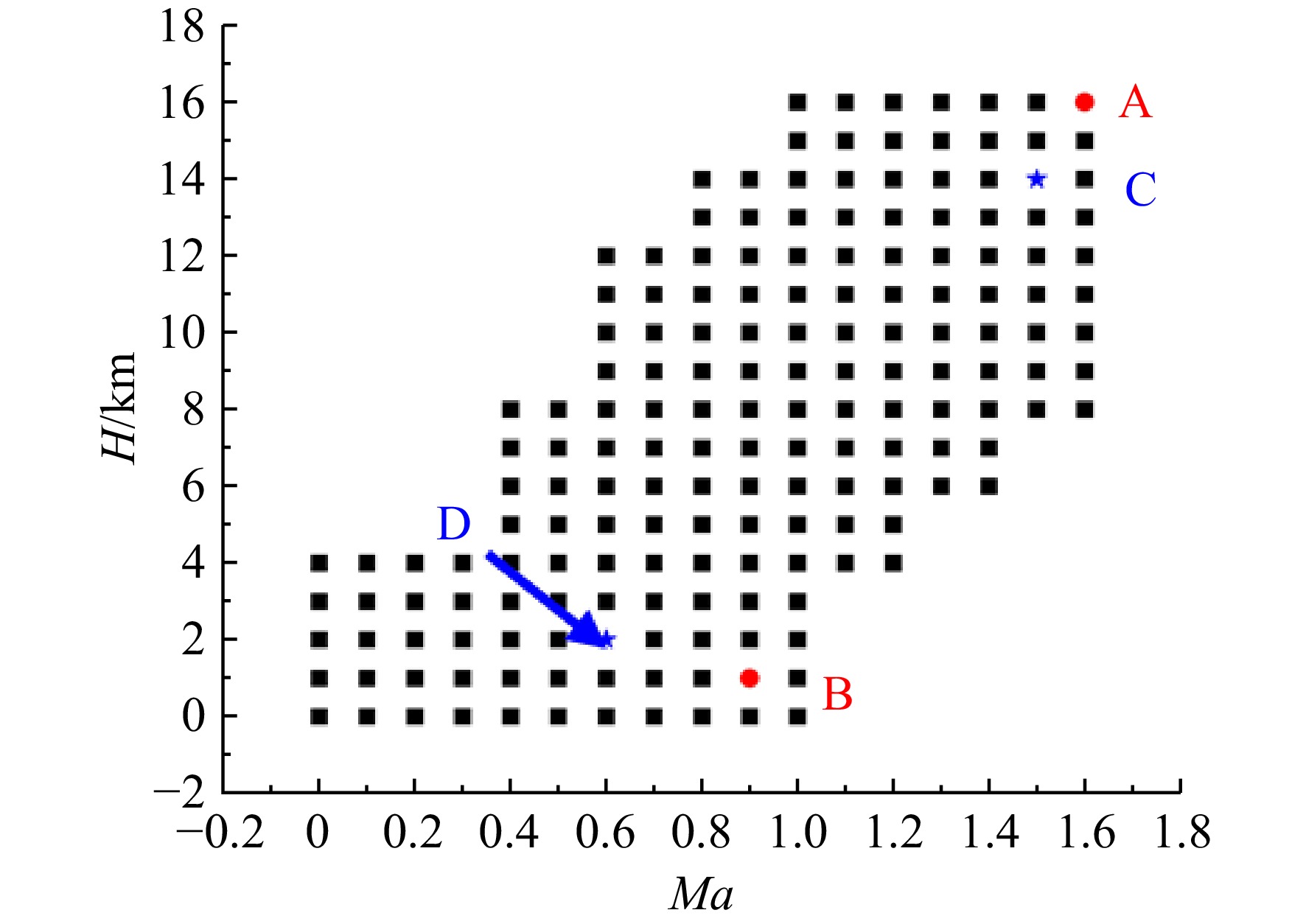
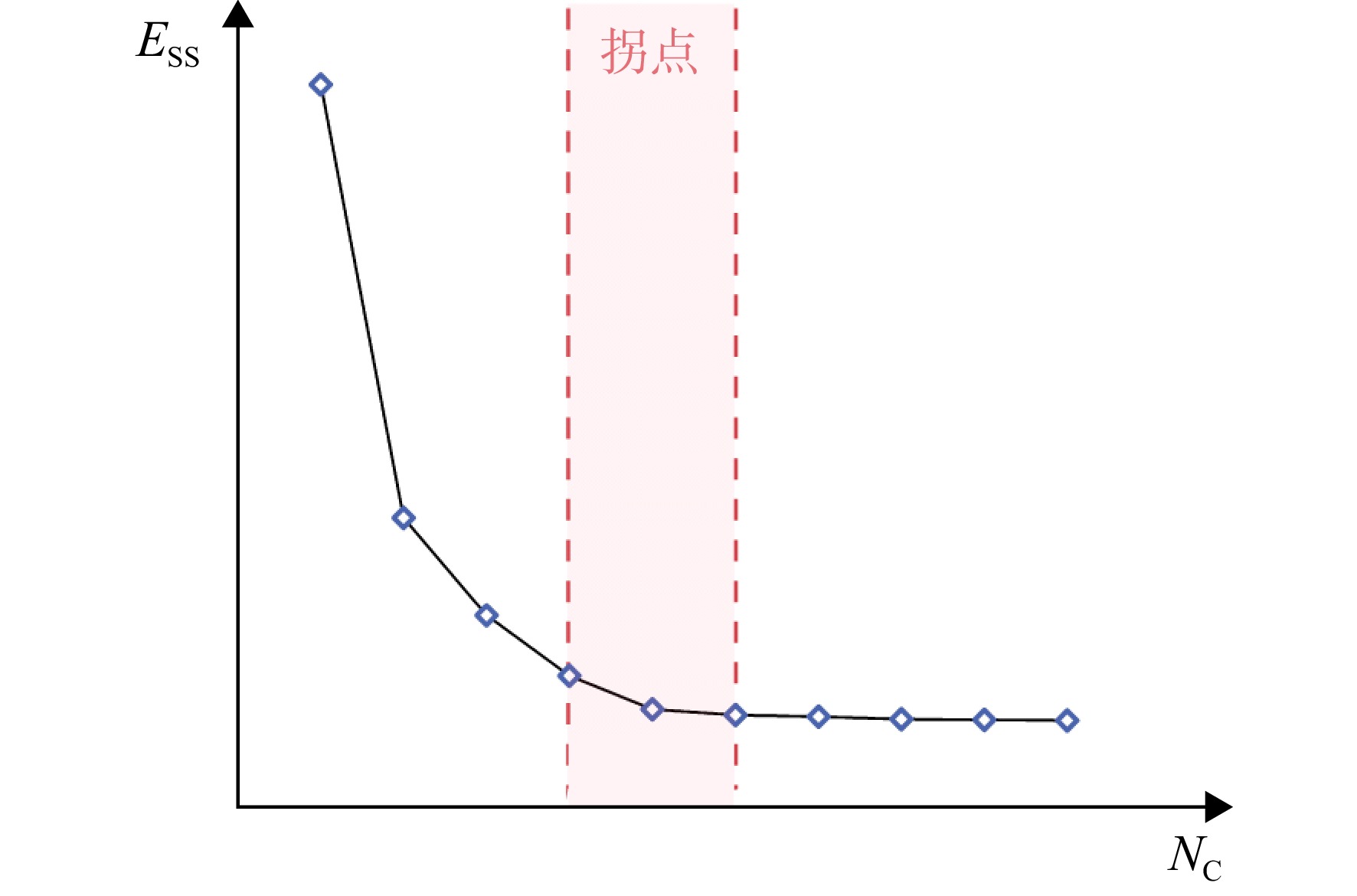
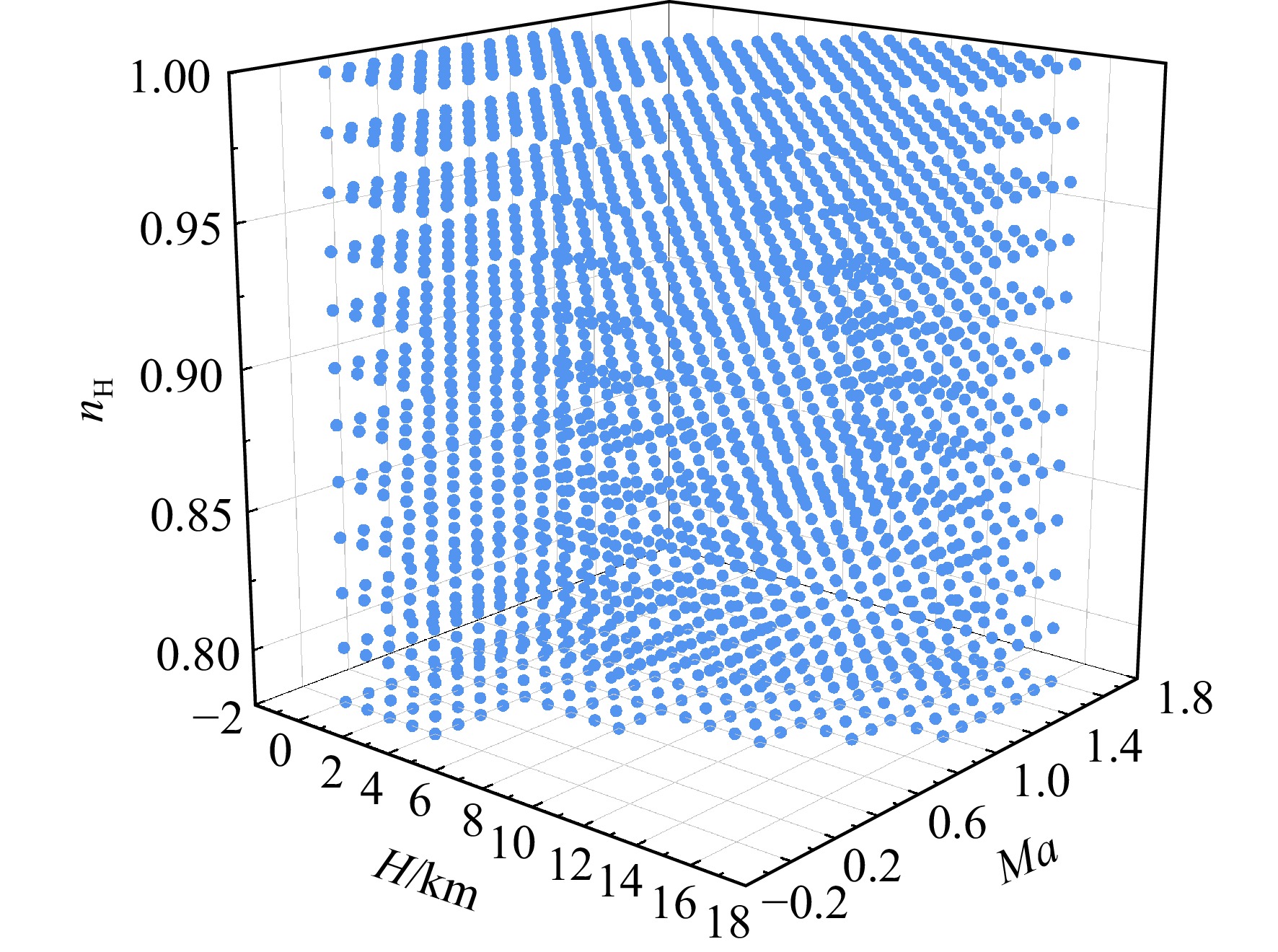
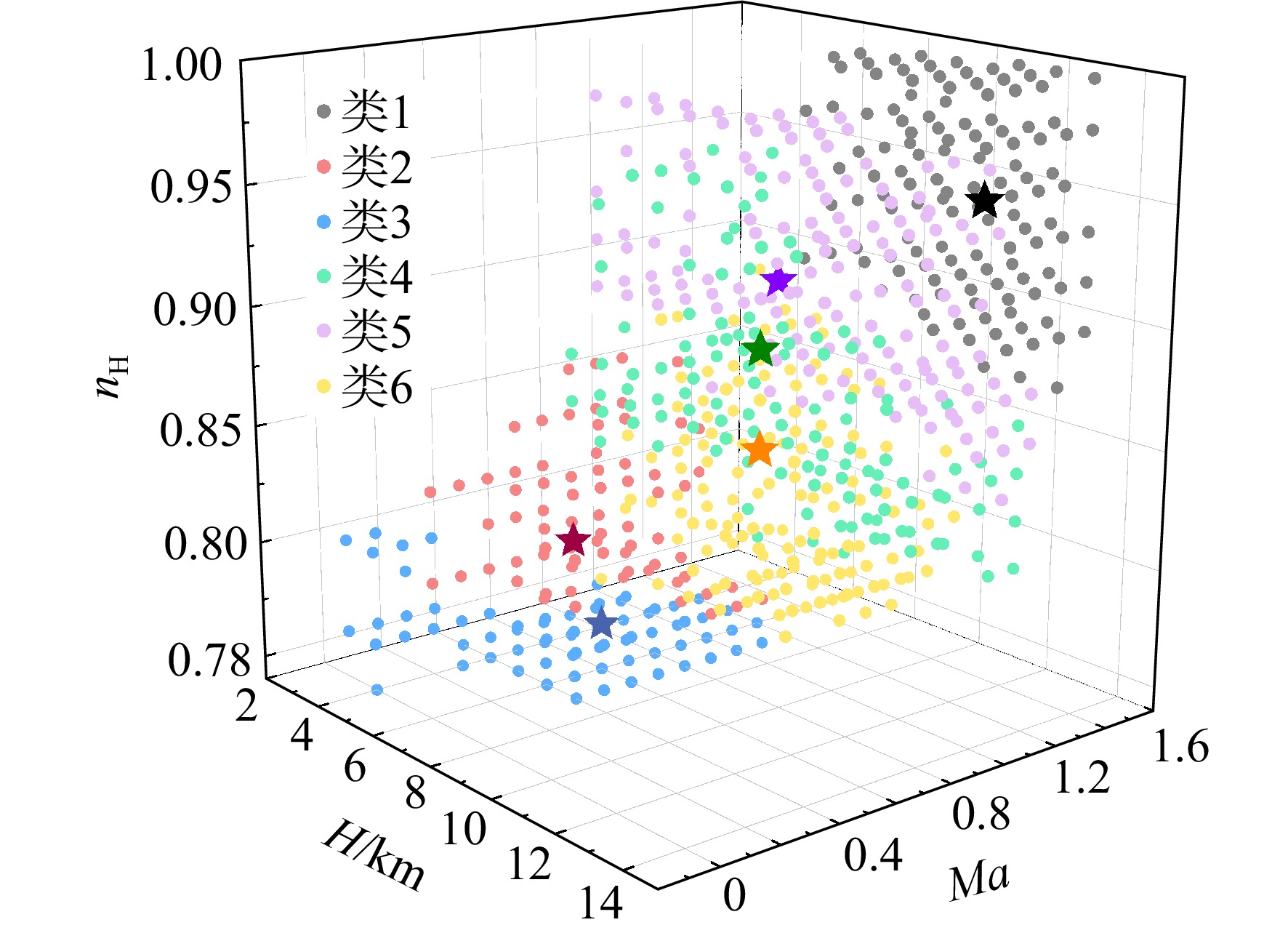
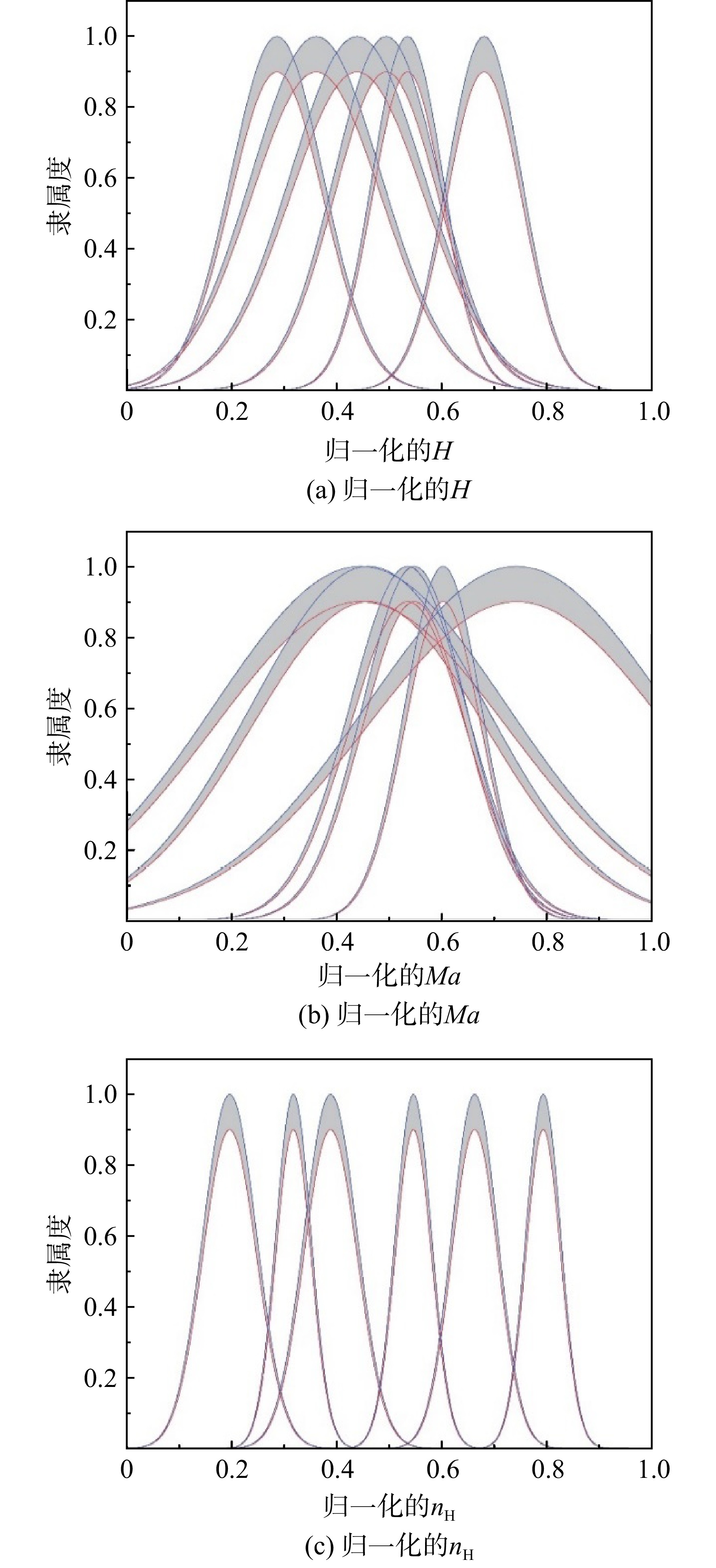
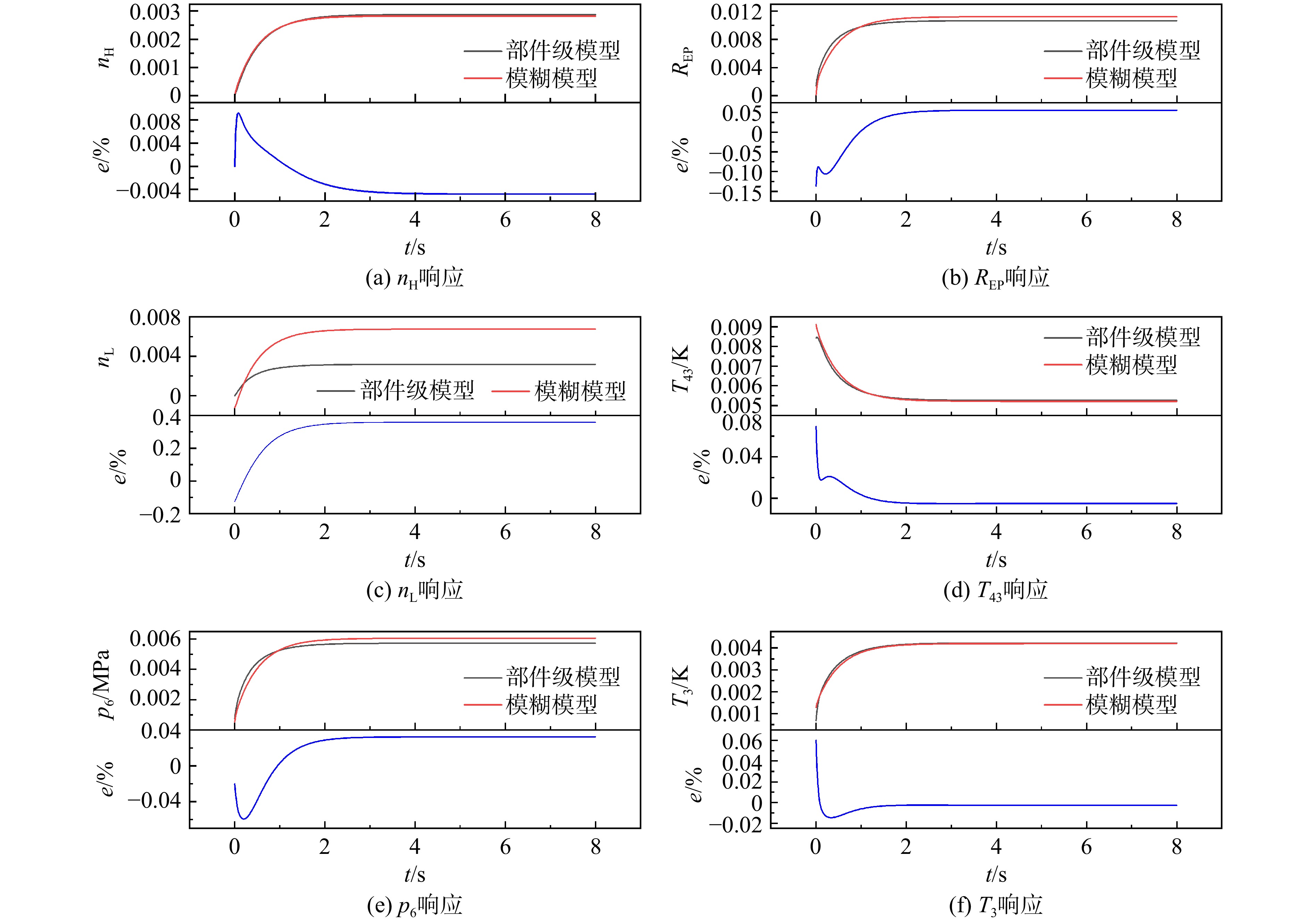
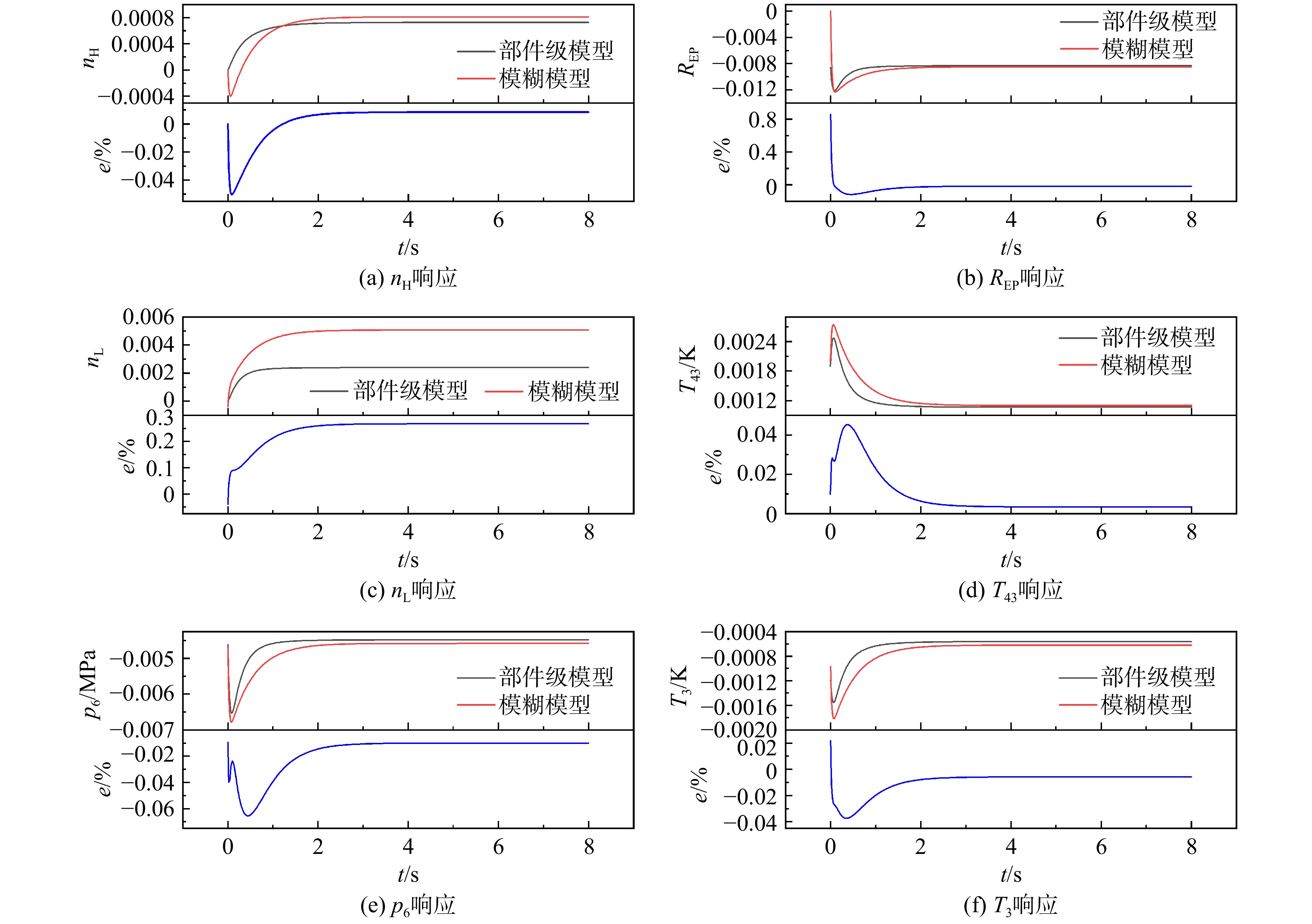
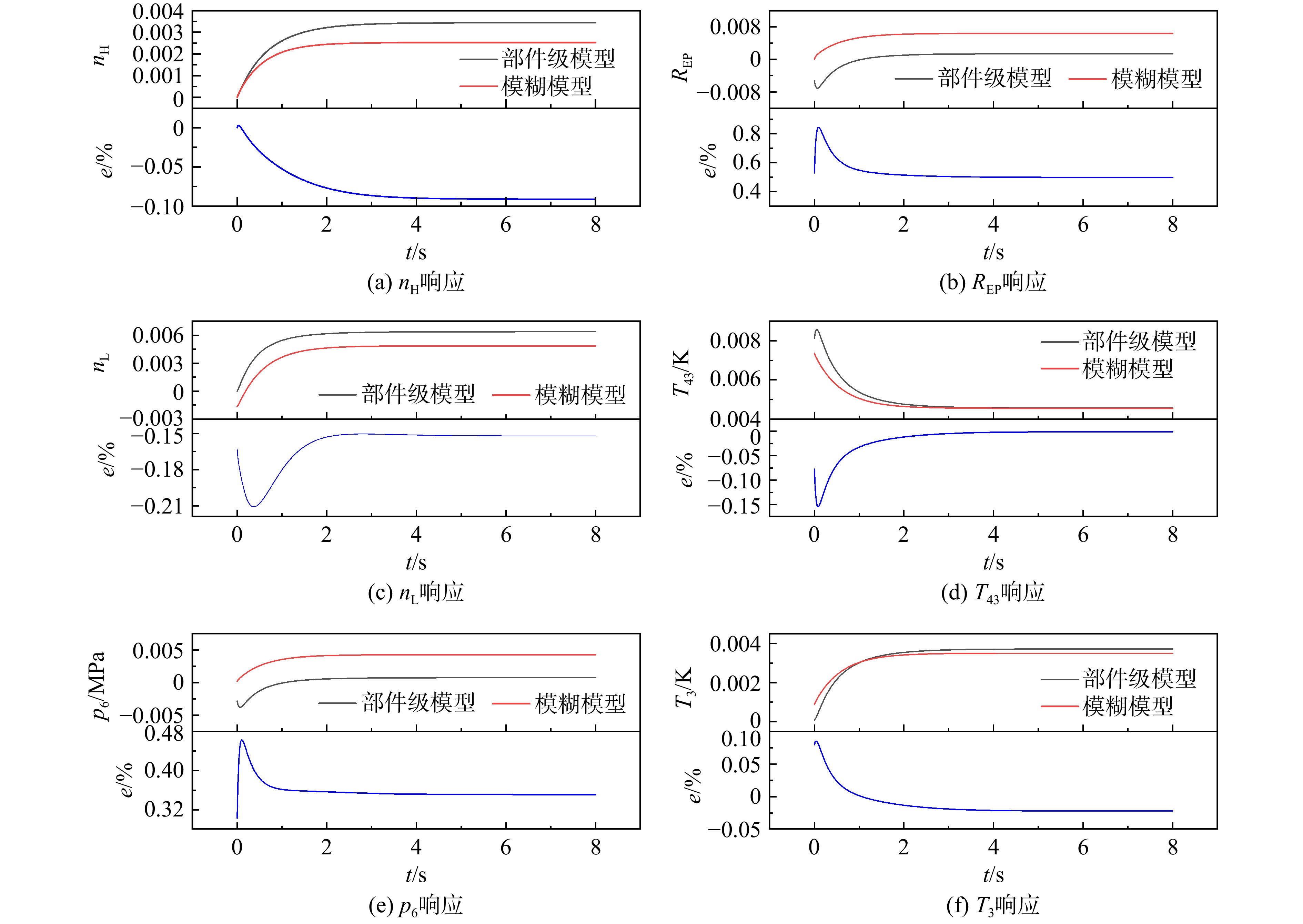
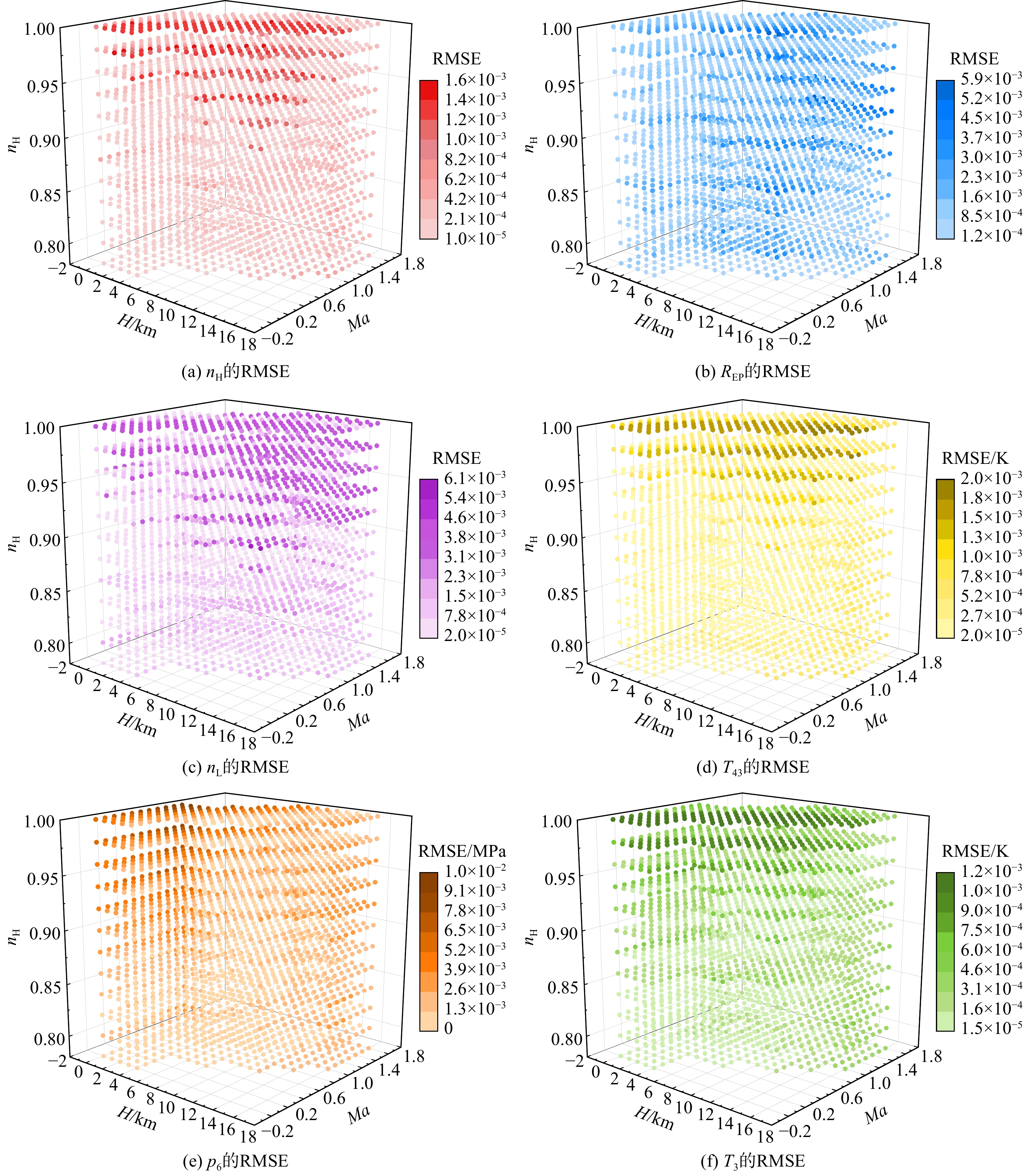
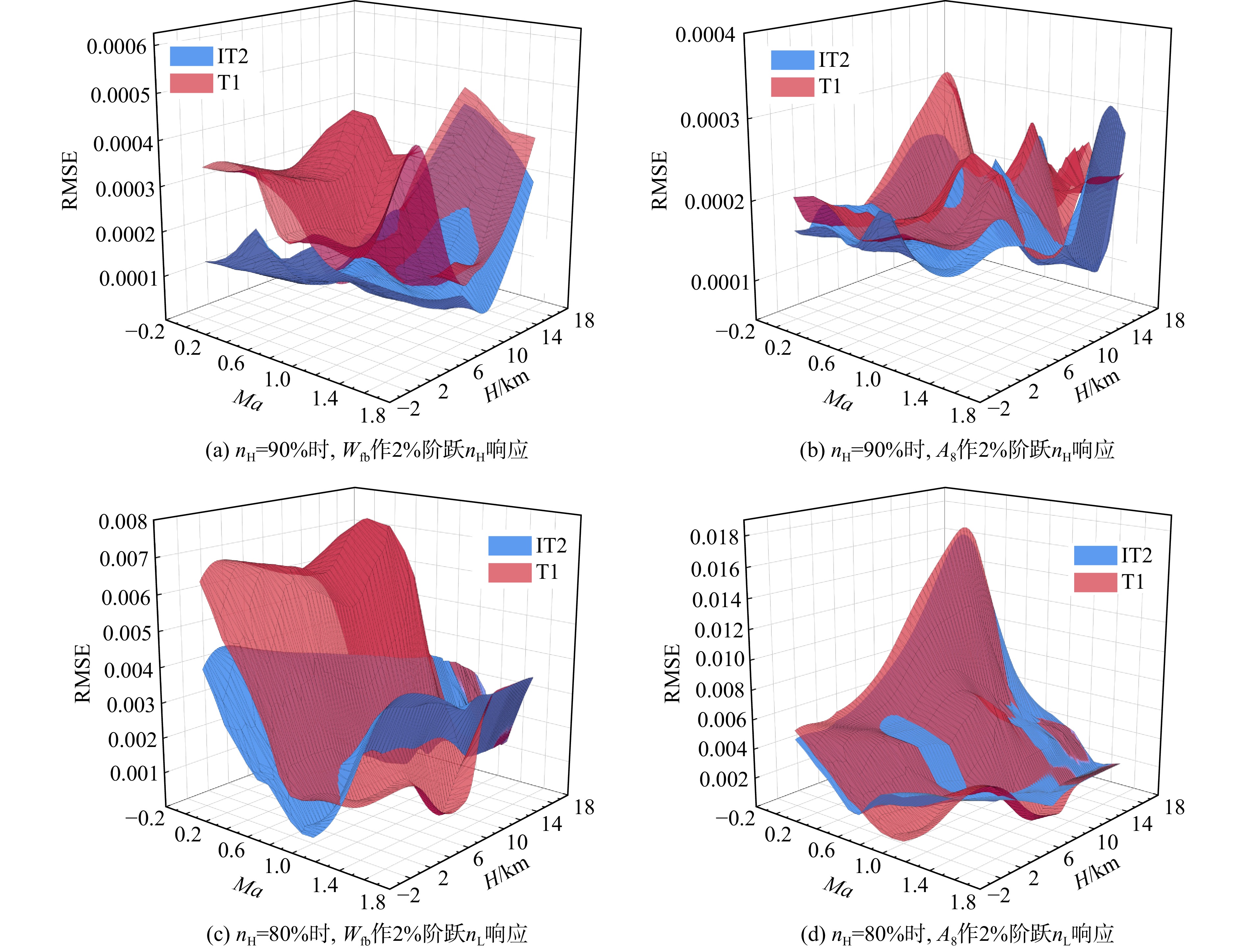
Considering turbofan engine’s strong nonlinearity and significant uncertainty within wide operational ranges, a new modeling approach for turbofan engines in the full flight envelope was proposed based on multi-feature extraction and interval type-2 (IT2) fuzzy sets. The engine multi-feature parameters were designed and extracted. To avoid the failure of traditional clustering algorithms in high-dimensional spaces, an improved discriminant neighborhood embedding algorithm (IDNE) was developed for dimensionality reduction of multi-feature parameters and collaborated with the fuzzy C-means algorithm (FCM) to extract the typical features. The consequent models were identified at typical feature points. The IT2 membership functions were optimized to improve the accuracy of the fuzzy model under uncertainty. Finally, an IT2 fuzzy model for a low bypass ratio turbofan engine was established. Model performance within the flight envelope was validated. The results showed that the model had high accuracy as the average root mean square error (ARMSE) was less than 0.20%. Under degradation uncertainties, the IT2 fuzzy model’s accuracy variation was less than 0.05%, significantly better than the type-1 fuzzy model, which showed a better uncertainty representation capability. The resulting model demonstrated an excellent real-time performance with around 3.9 ms for its average computation time per instance.

Turbomachinery
Numerical investigation of interaction between shock wave and tip leakage flow in transonic centrifugal compressors
Chen Yanlong, Zhang Chaowei, Li Guangyong
2026, 41(8): 20240788. doi: 10.13224/j.cnki.jasp.20240788
Abstract:
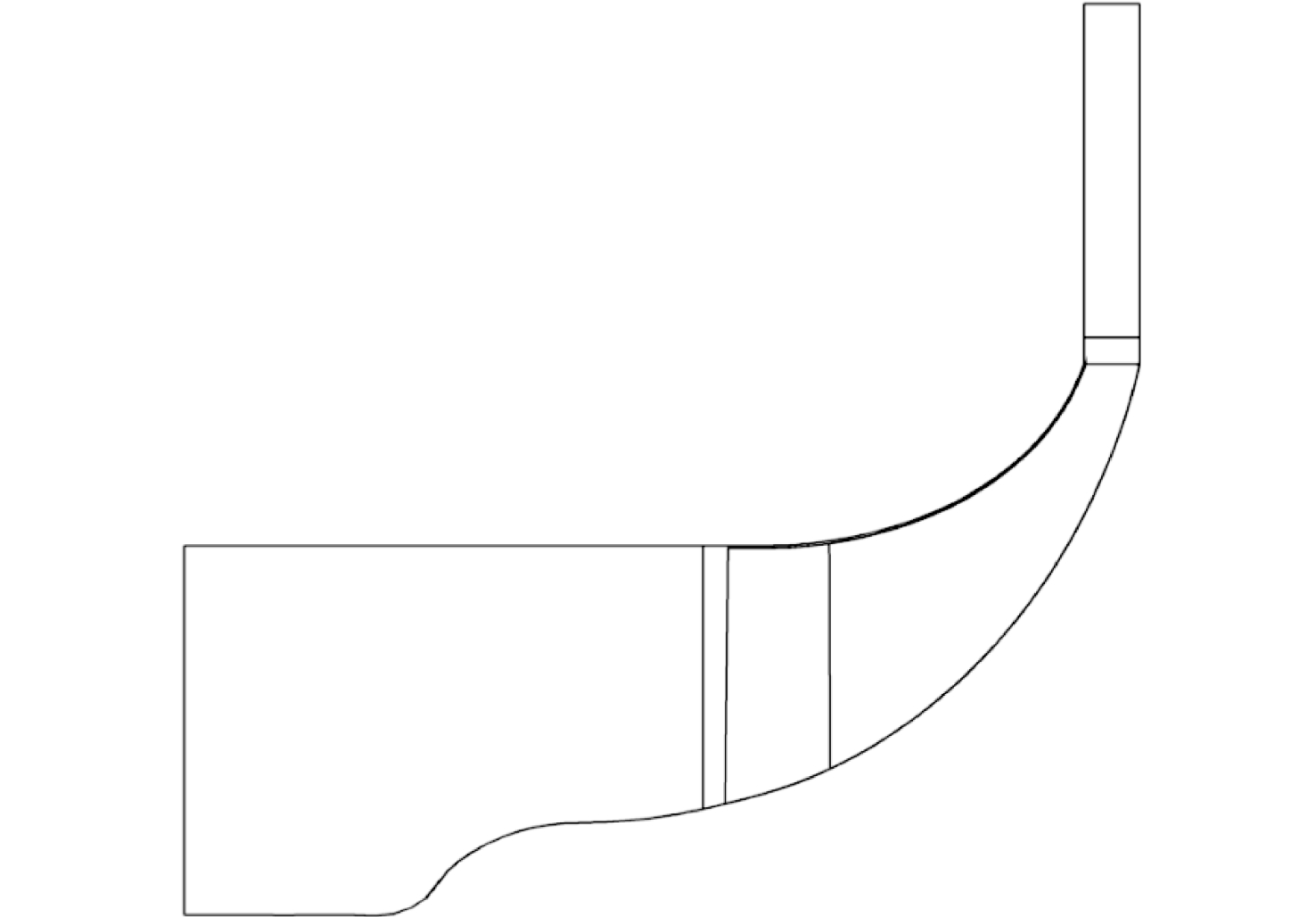
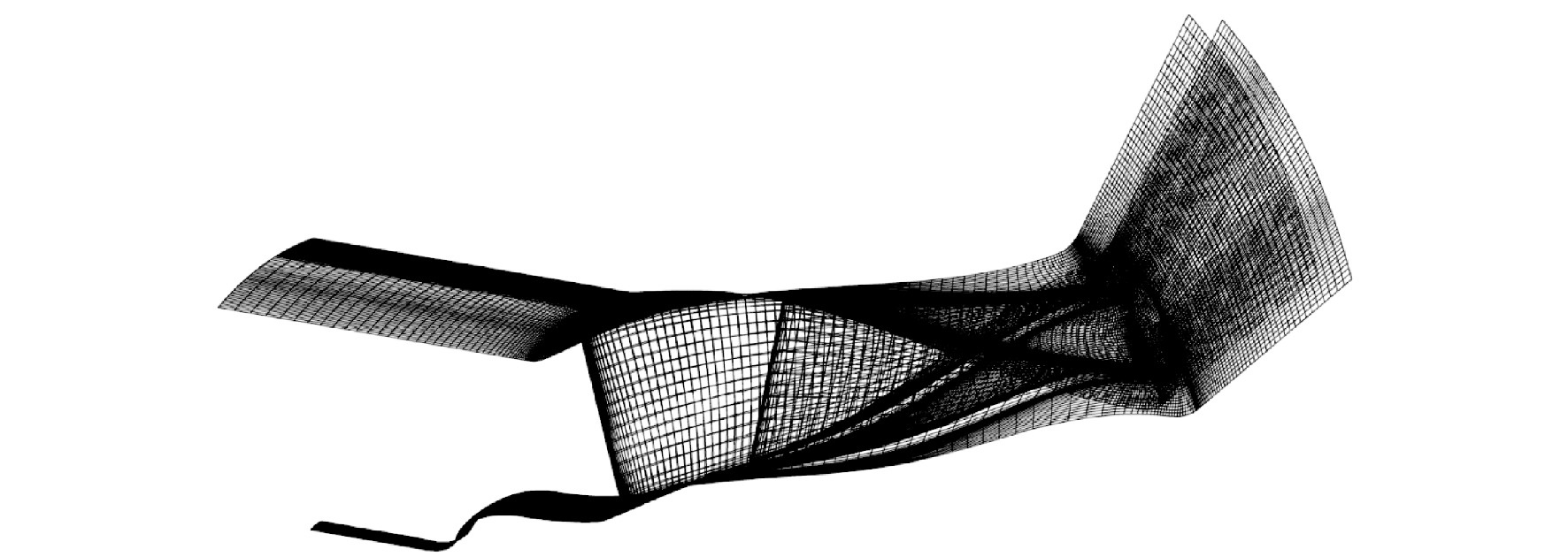
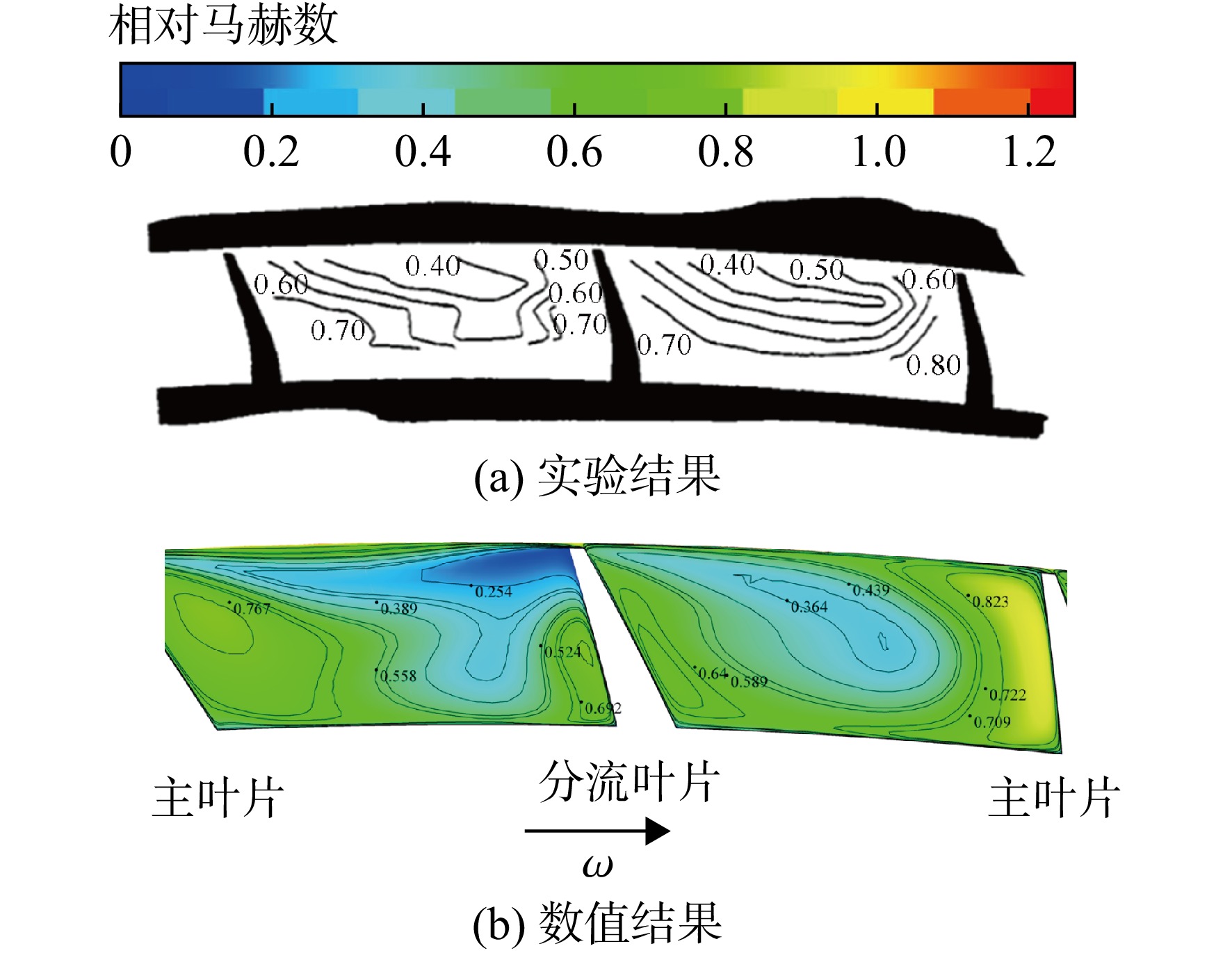
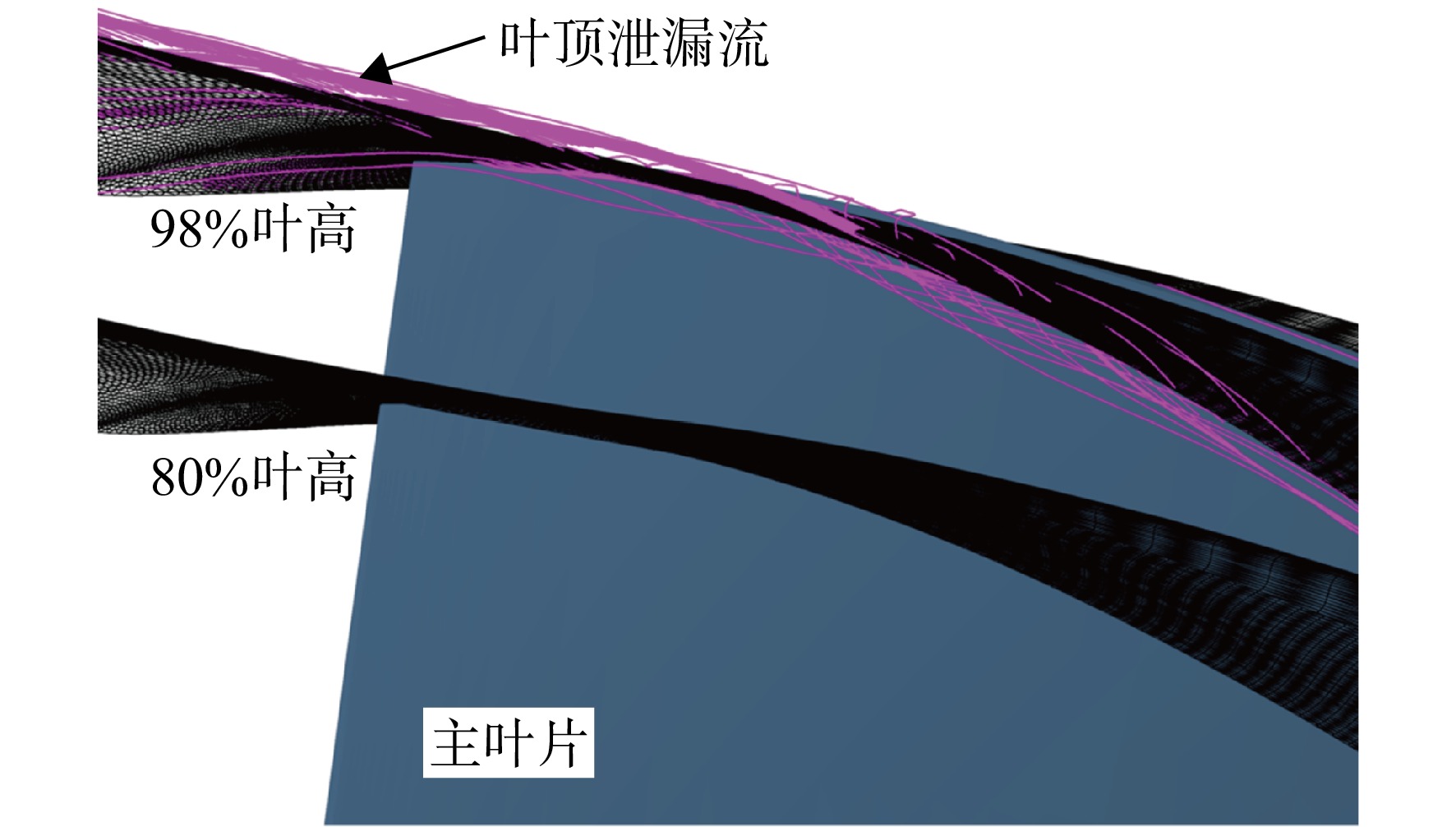
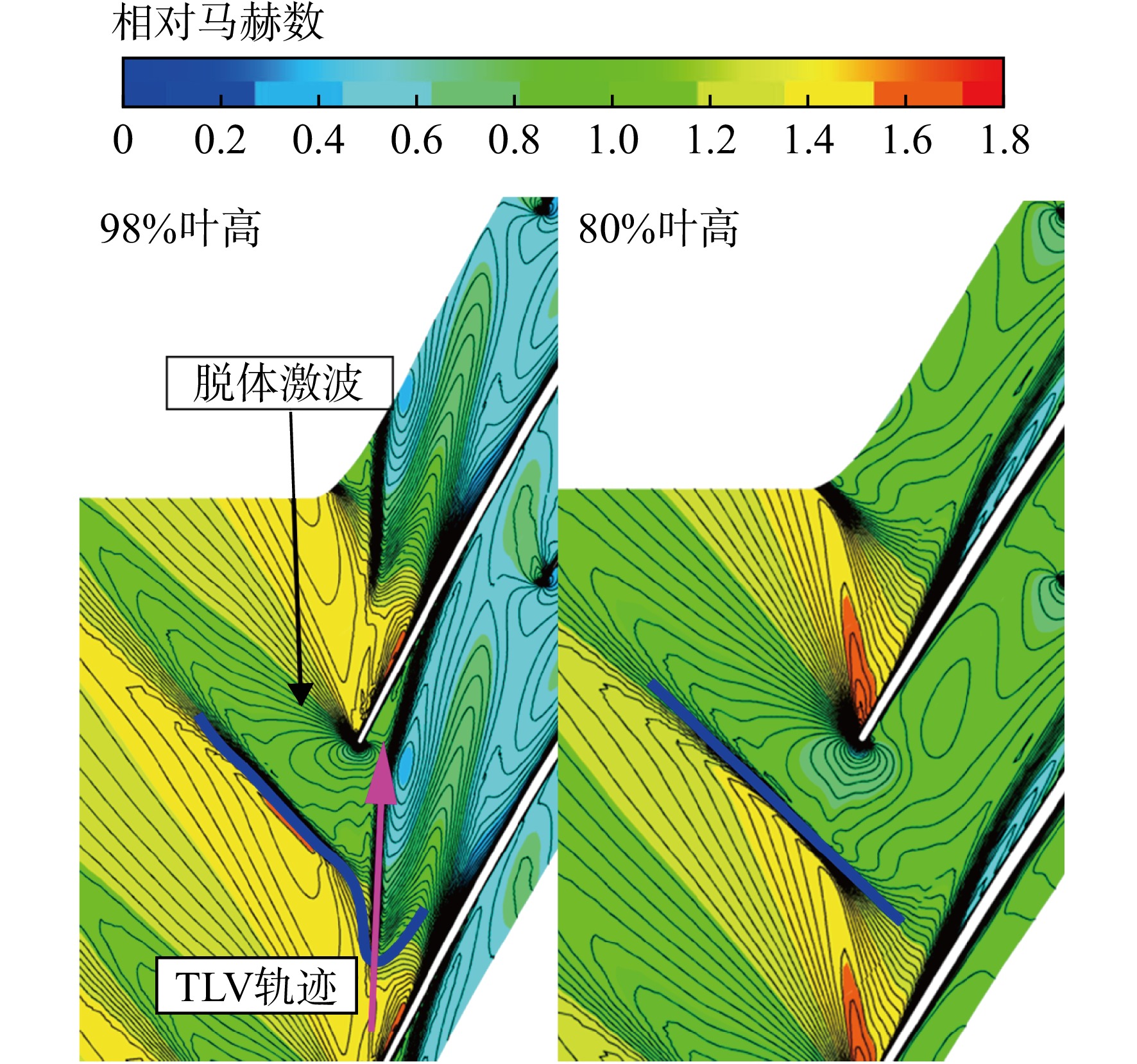
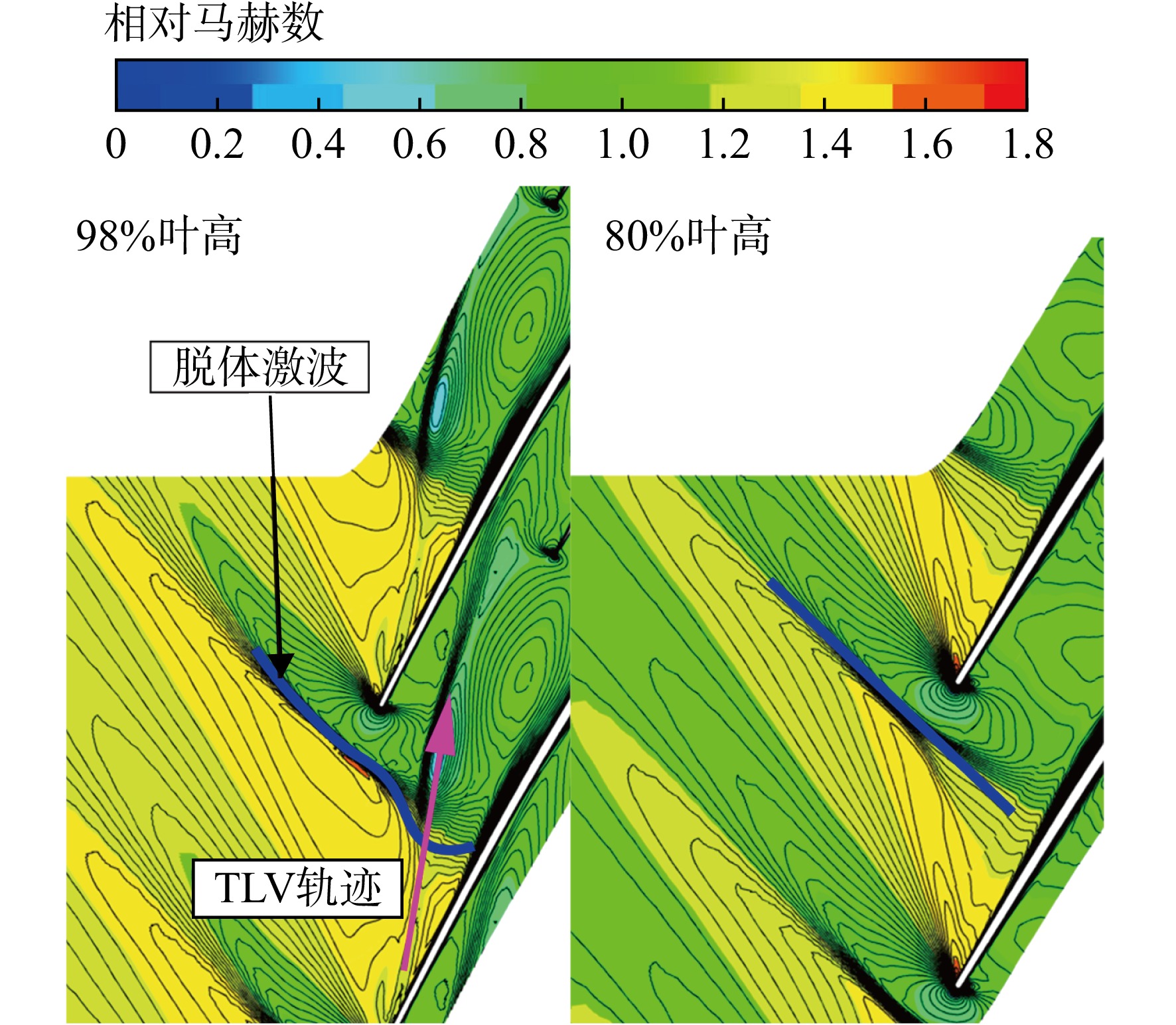
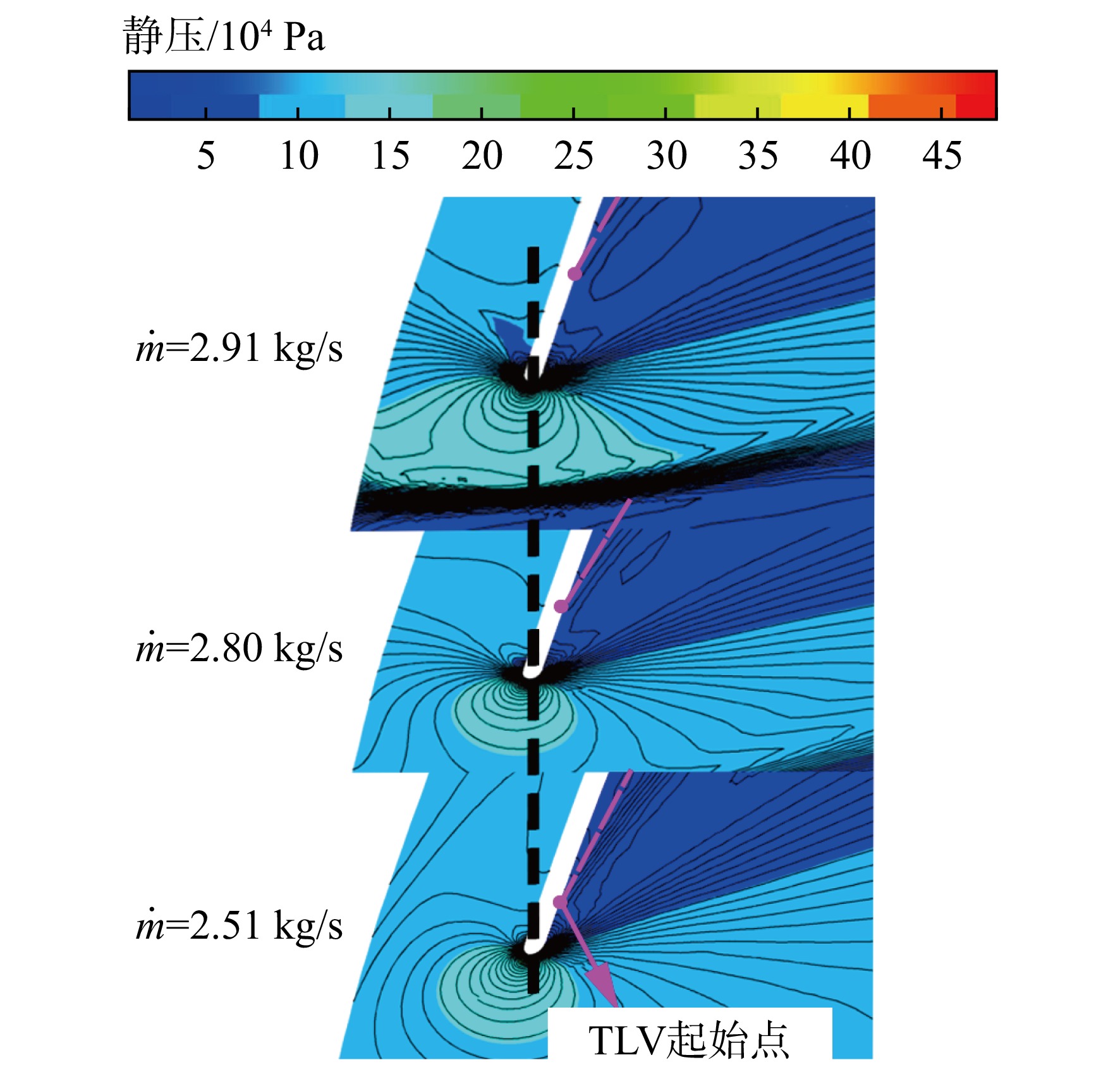
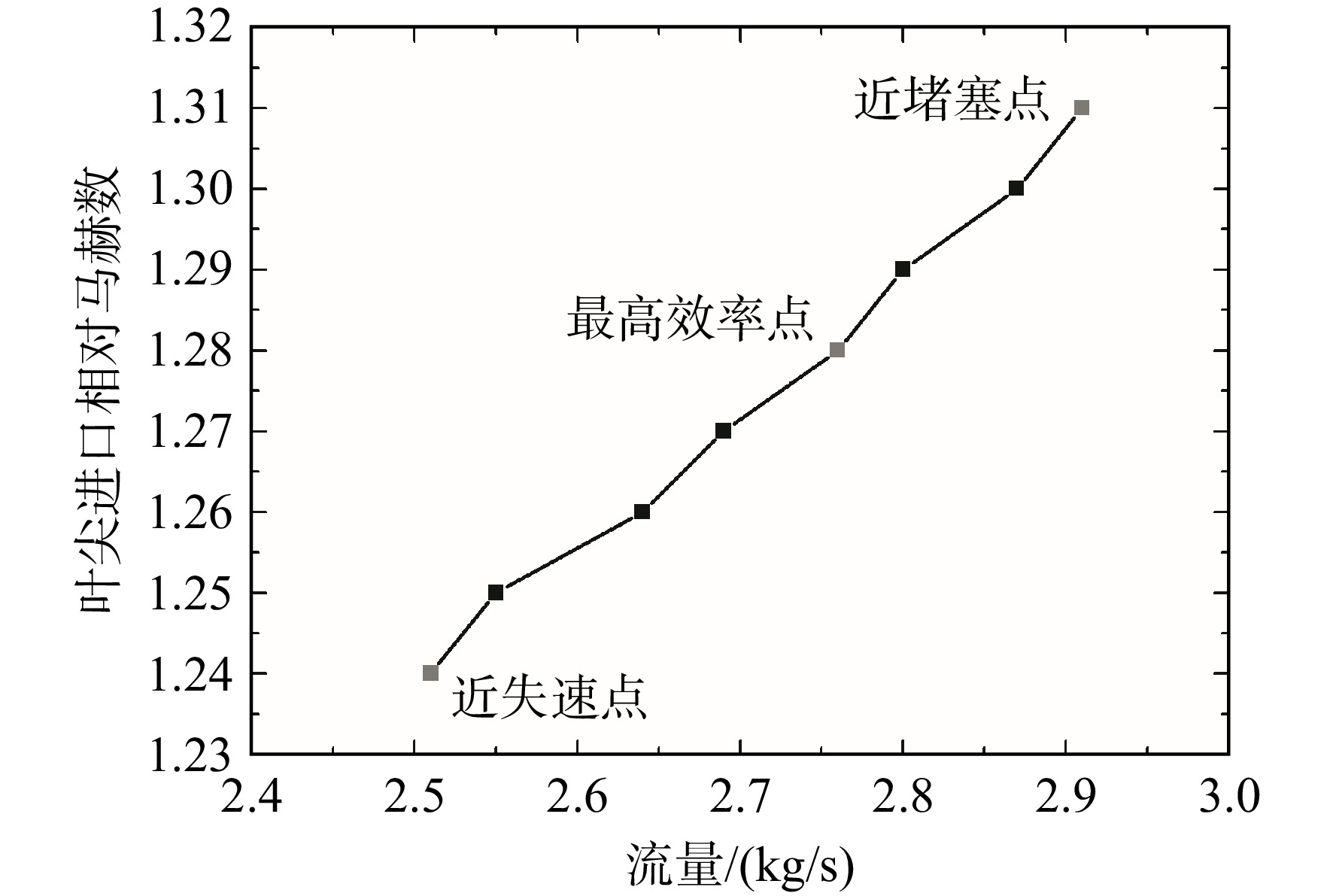
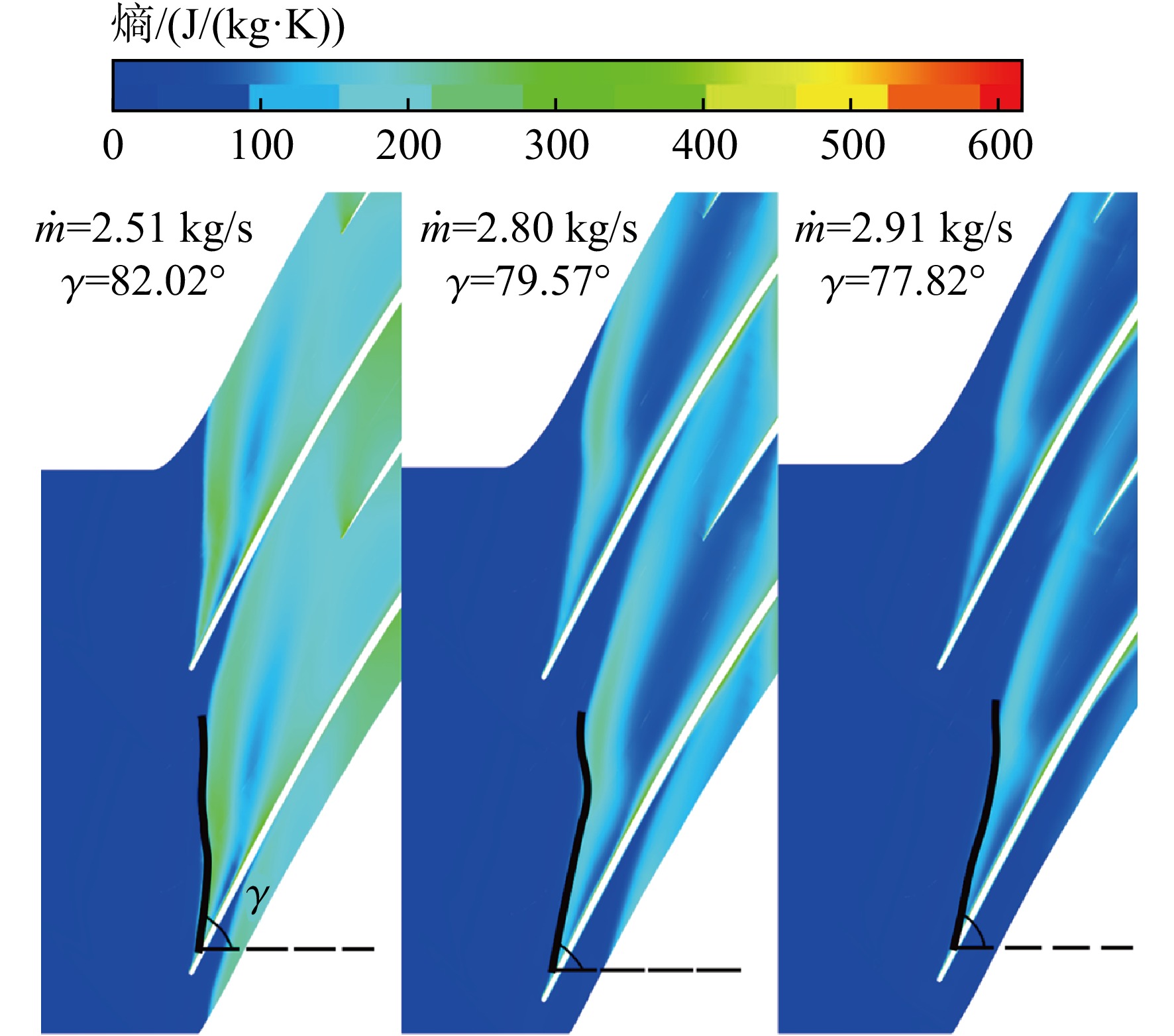
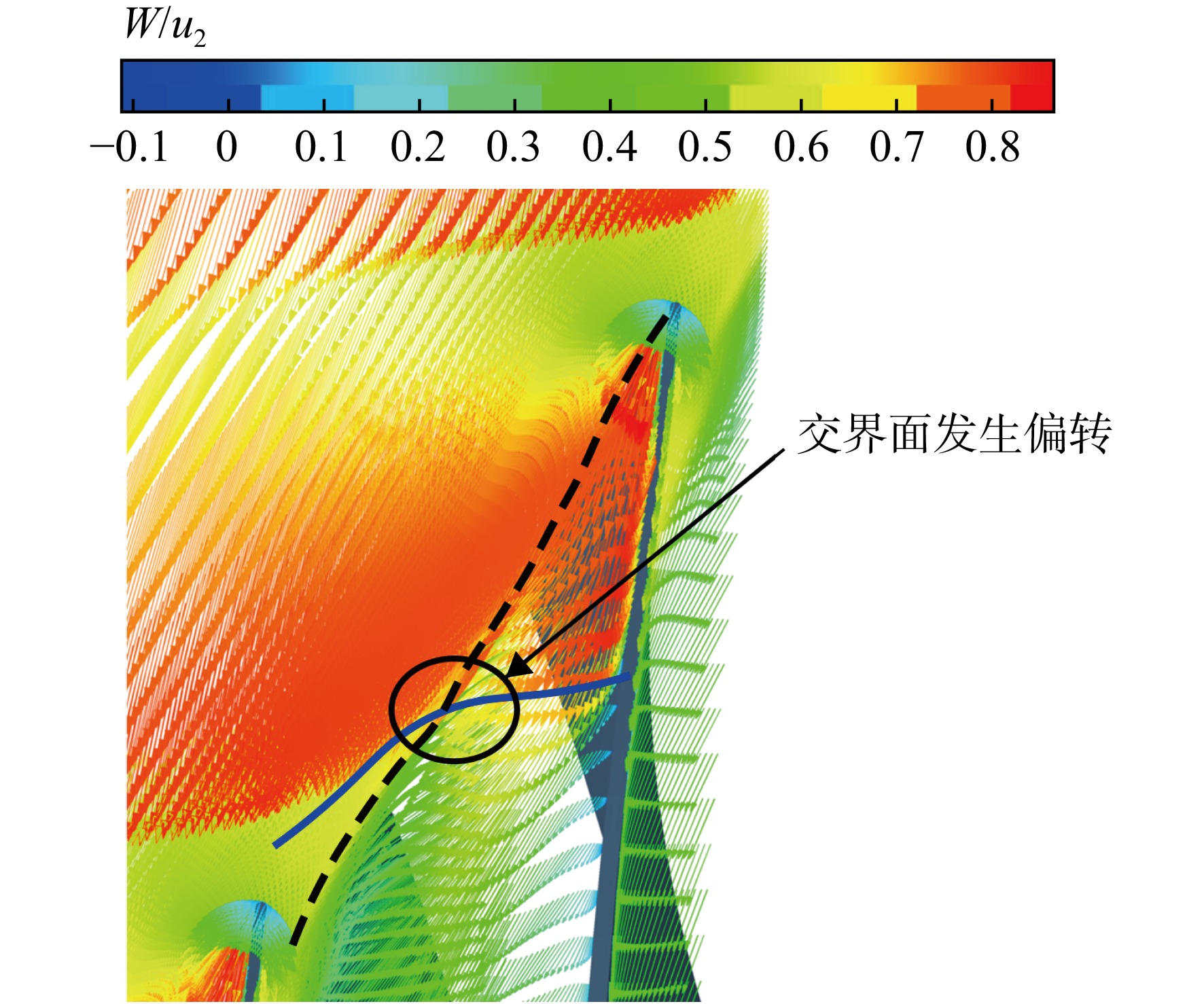
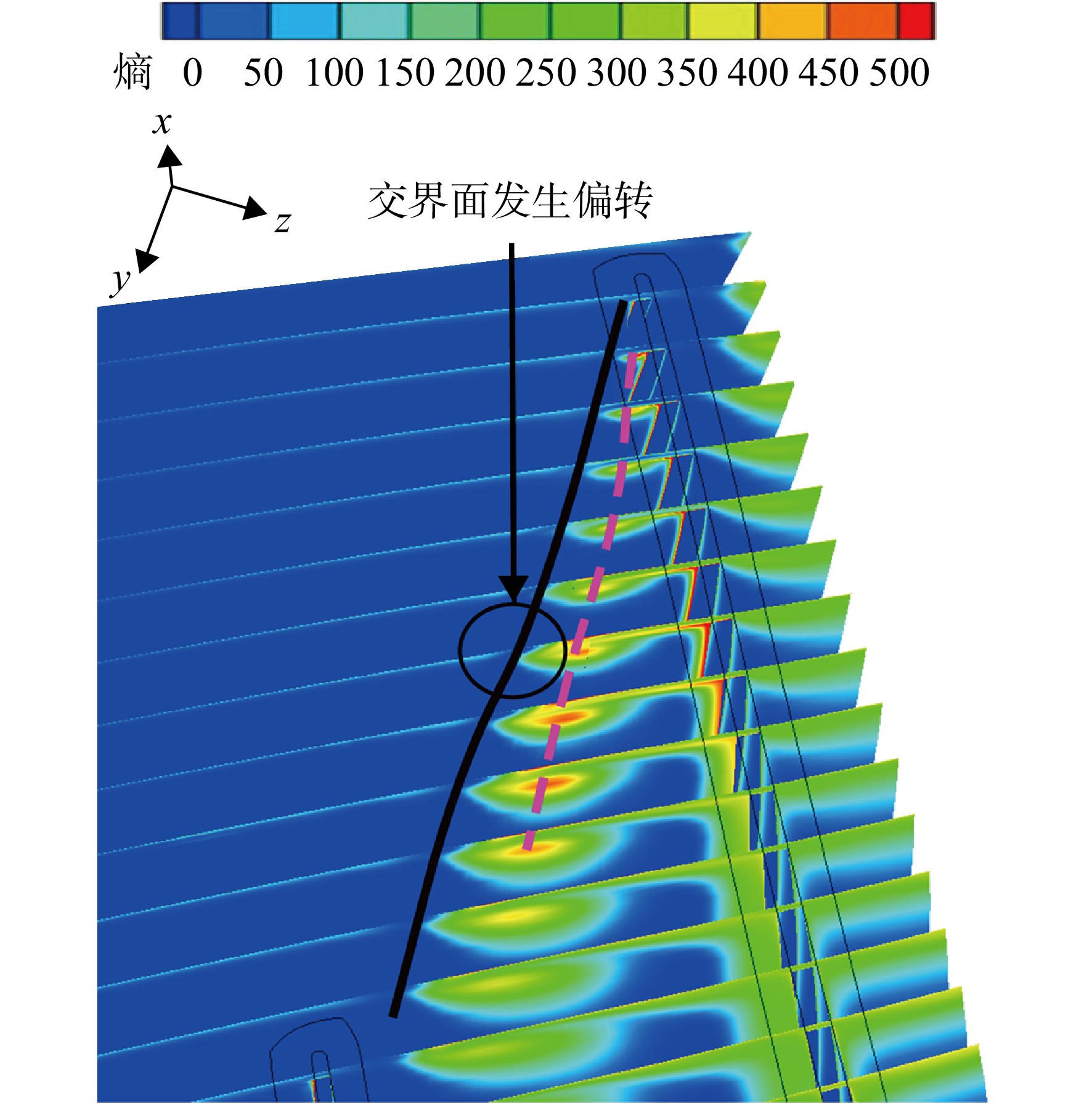
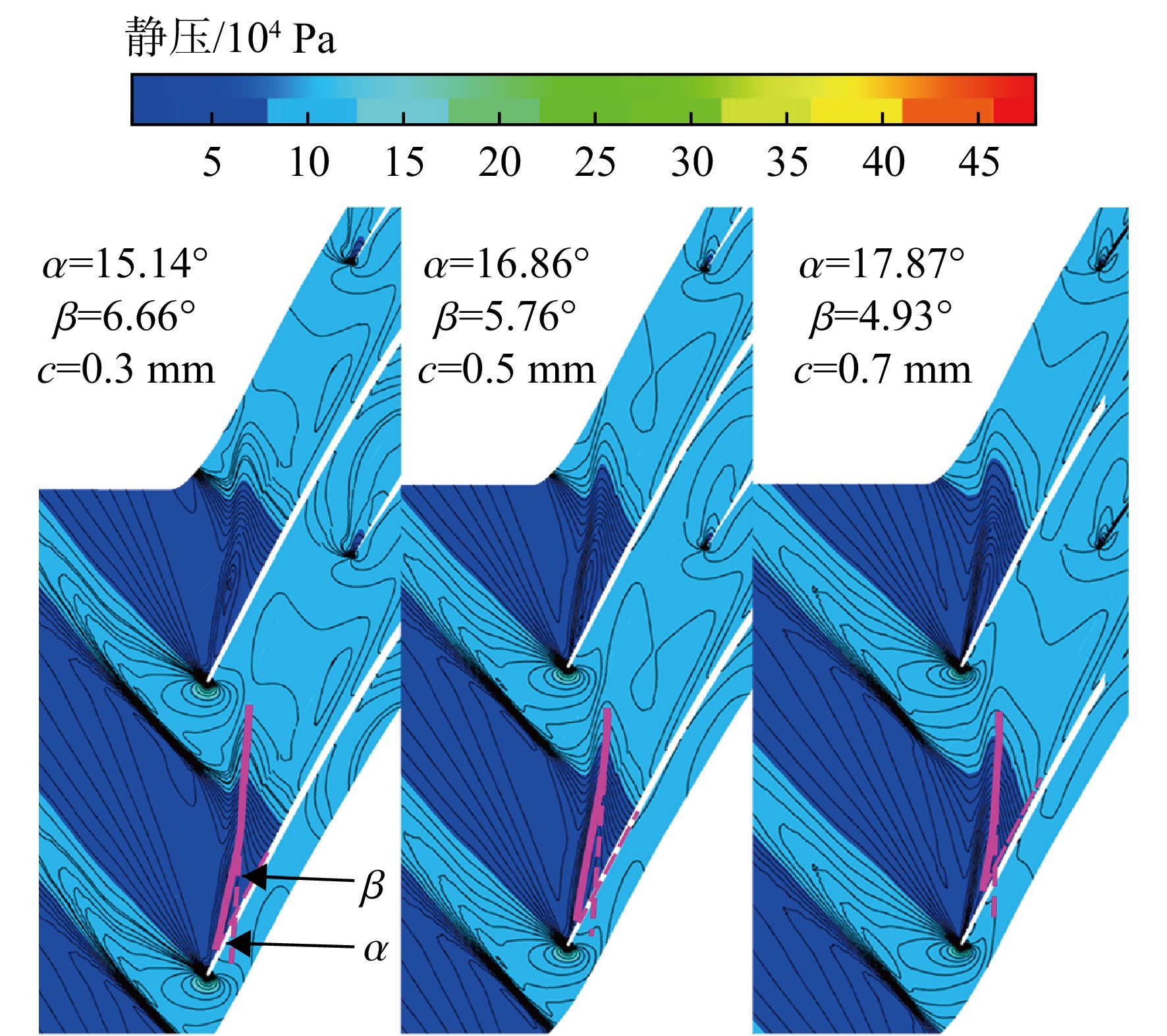
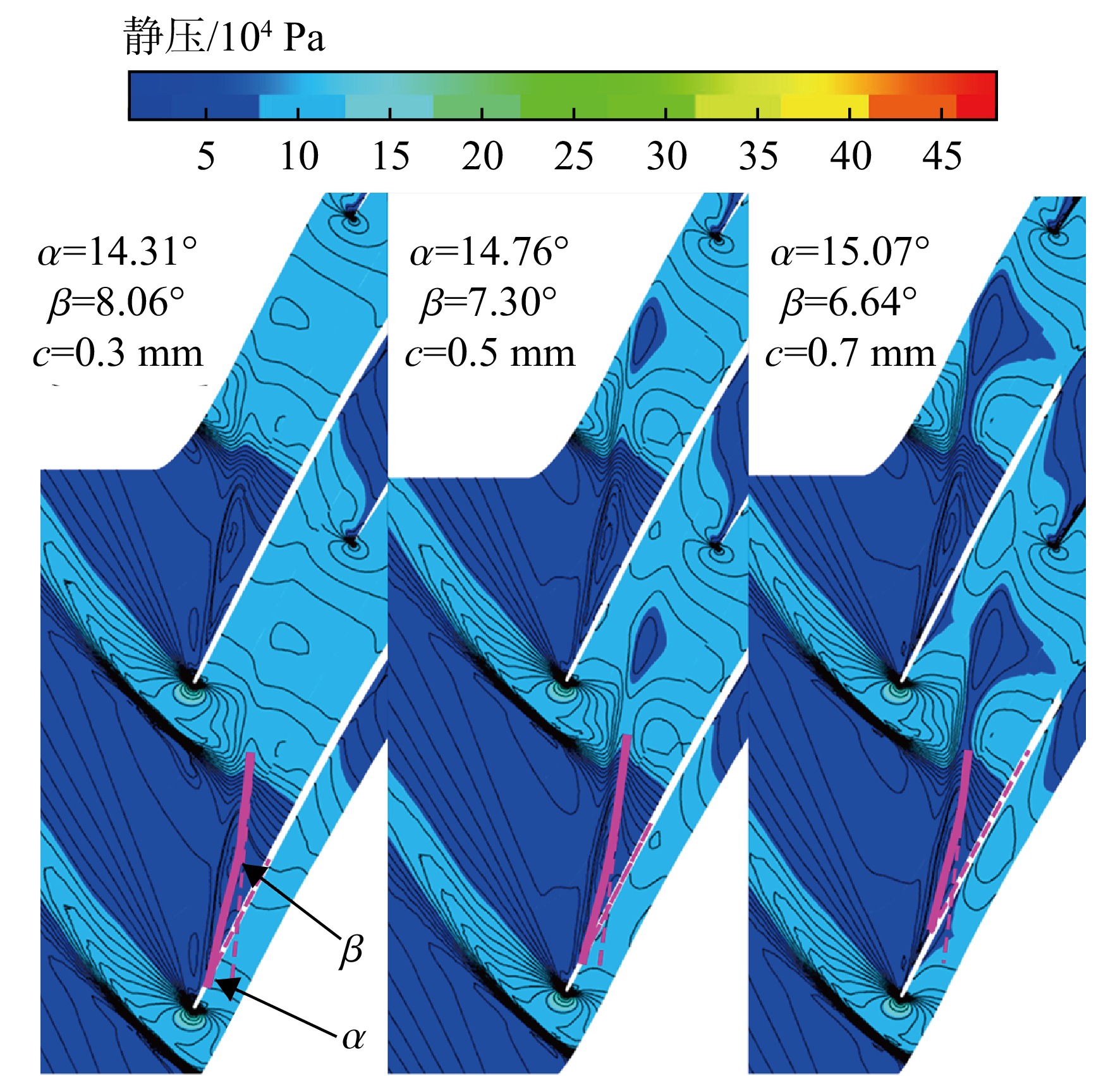
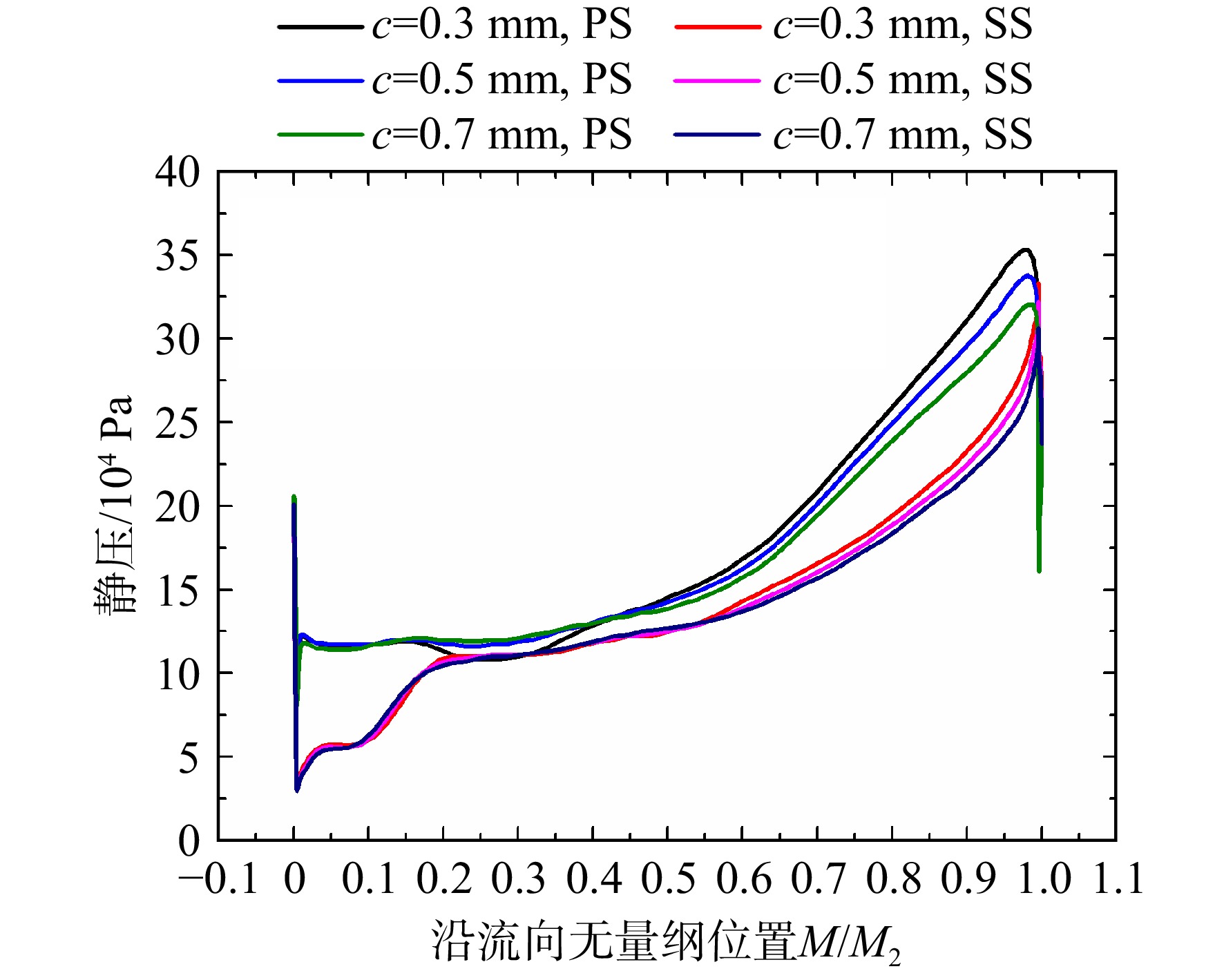
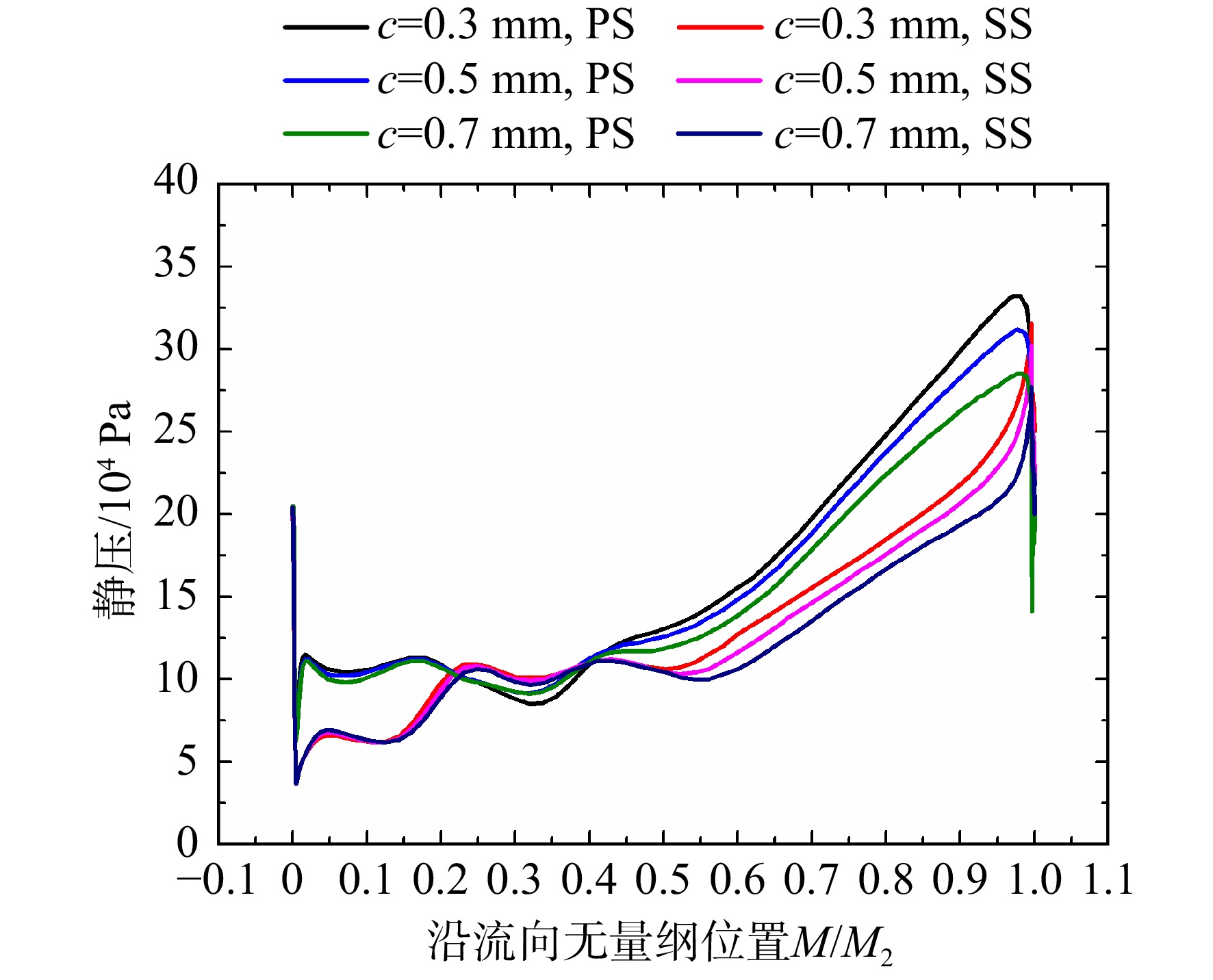
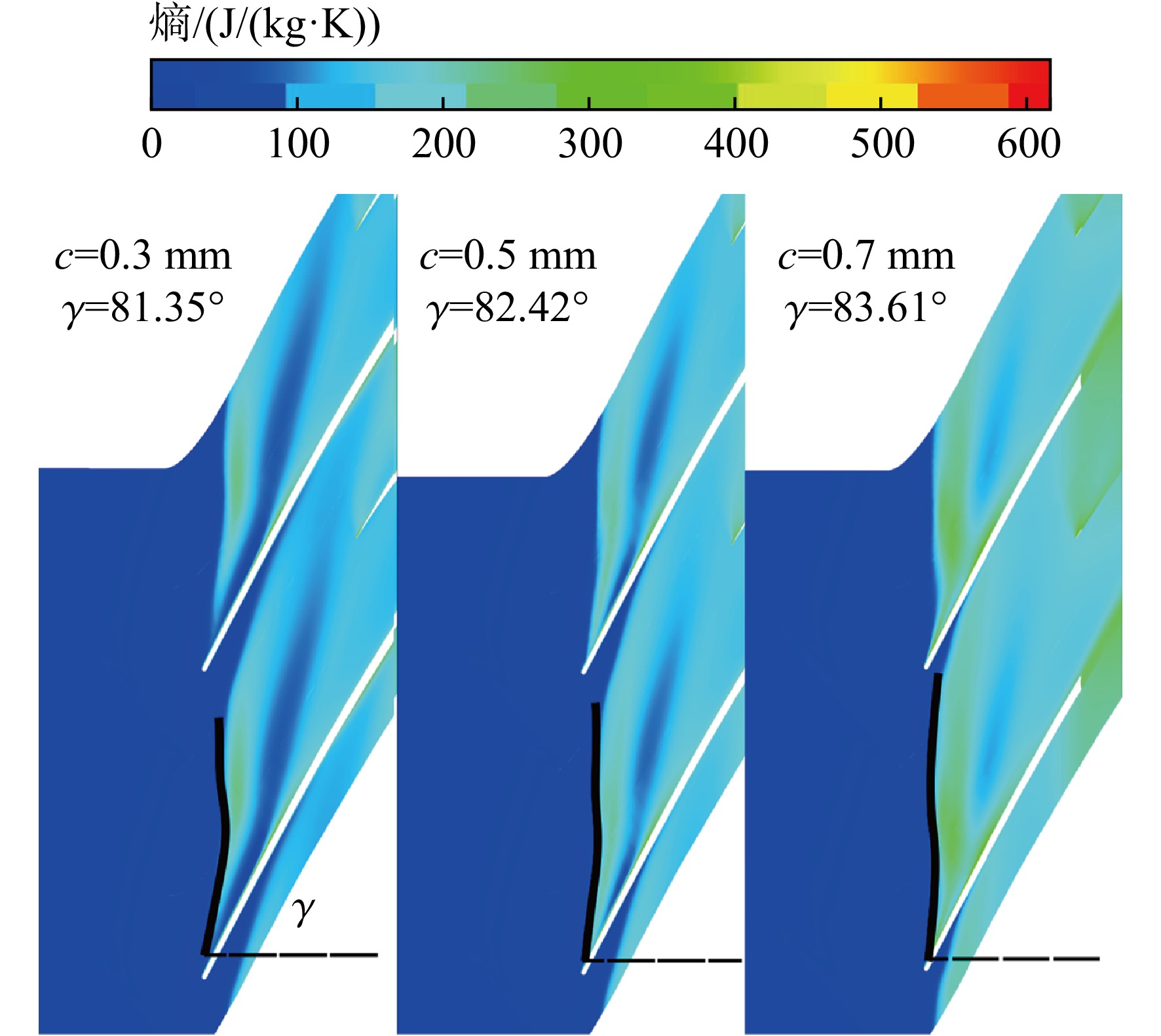
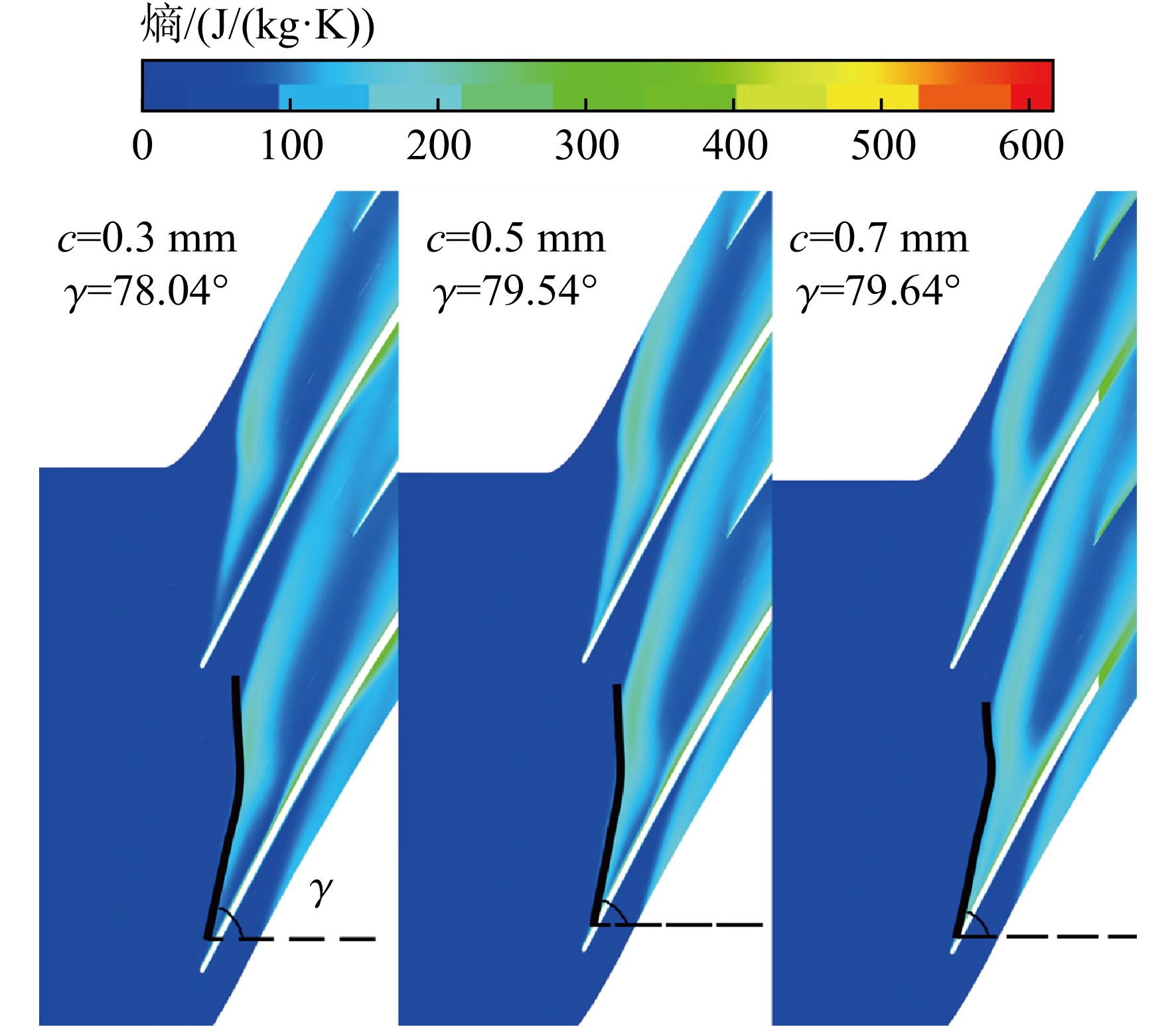
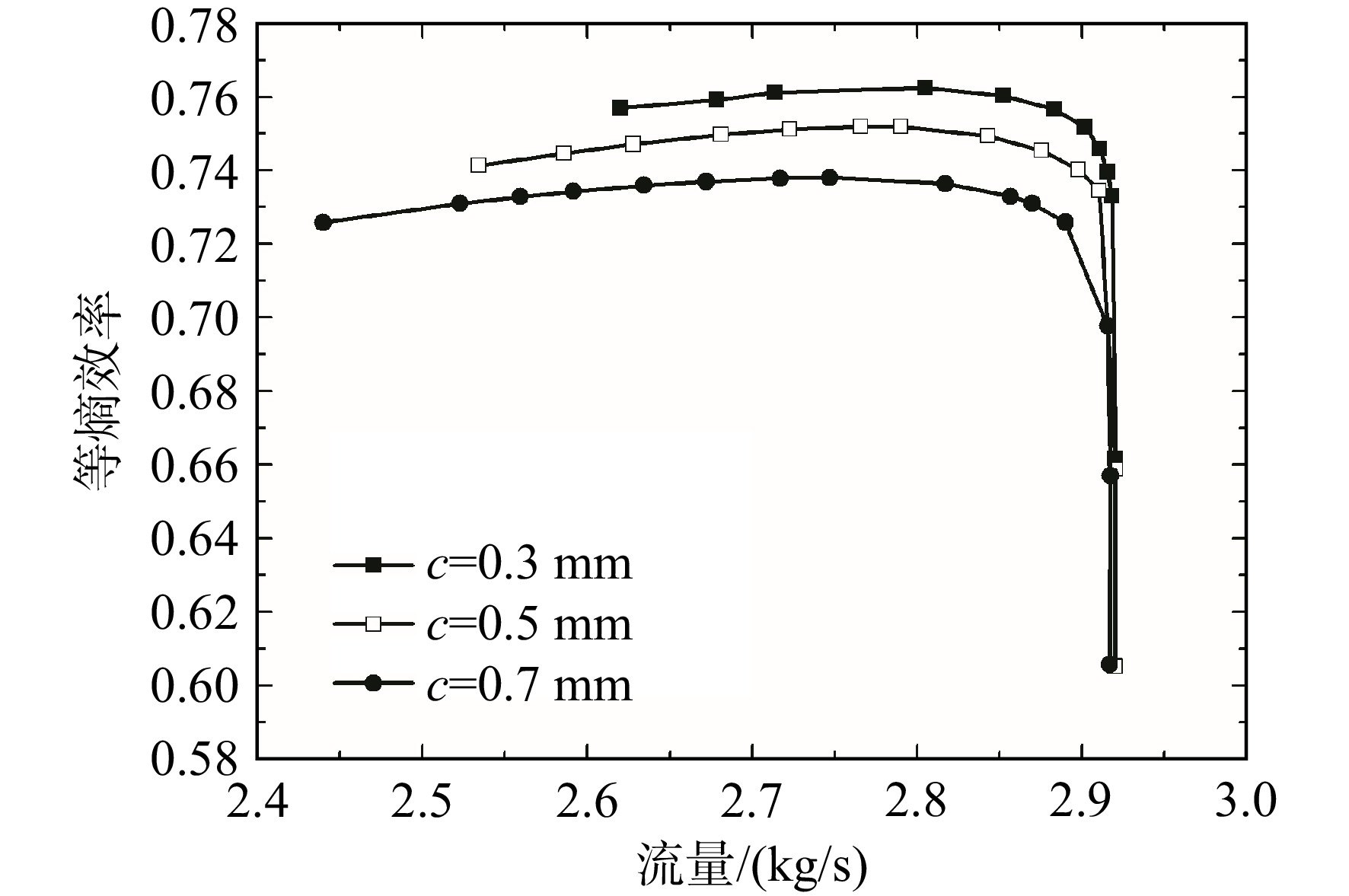
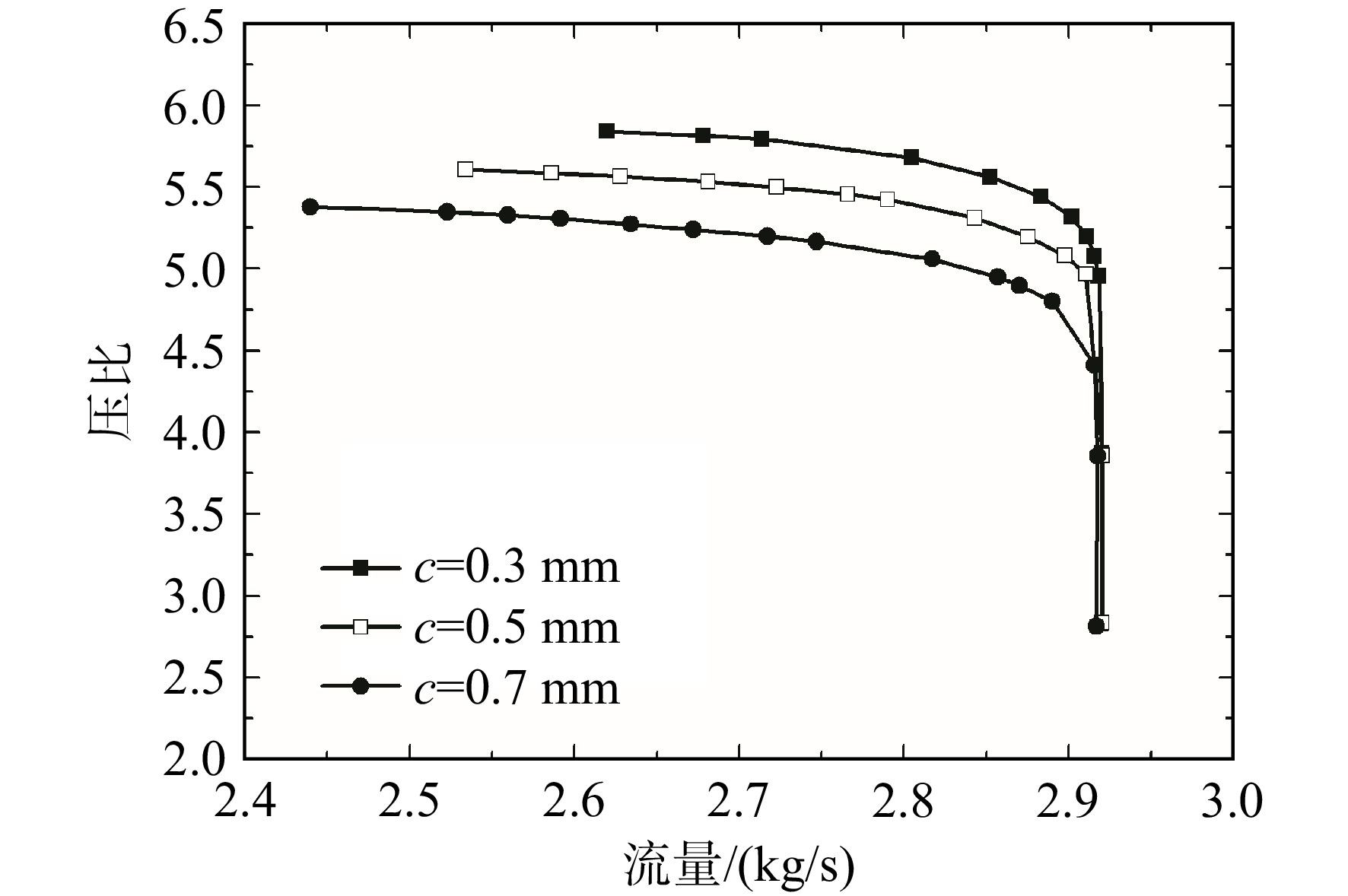
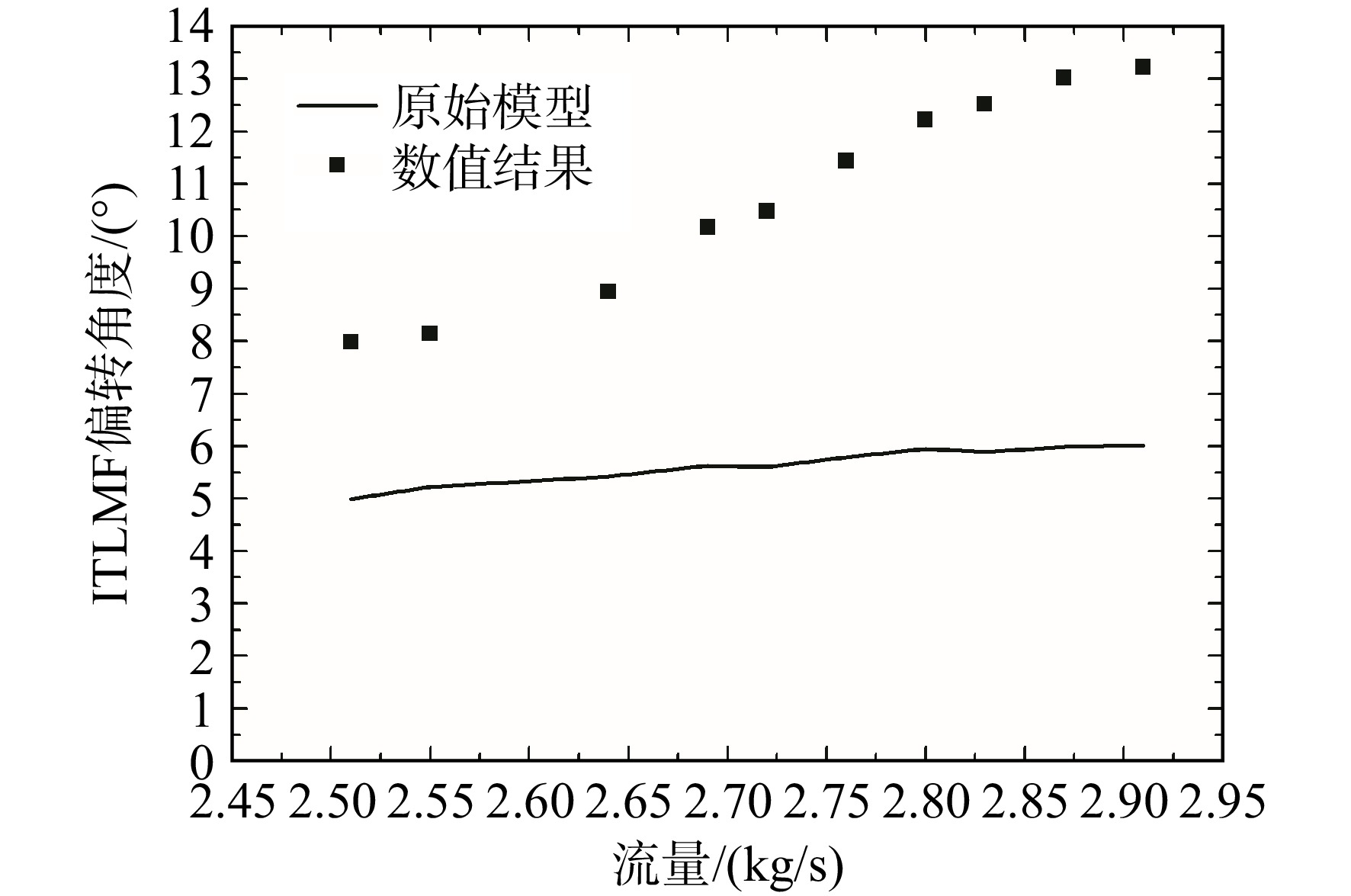
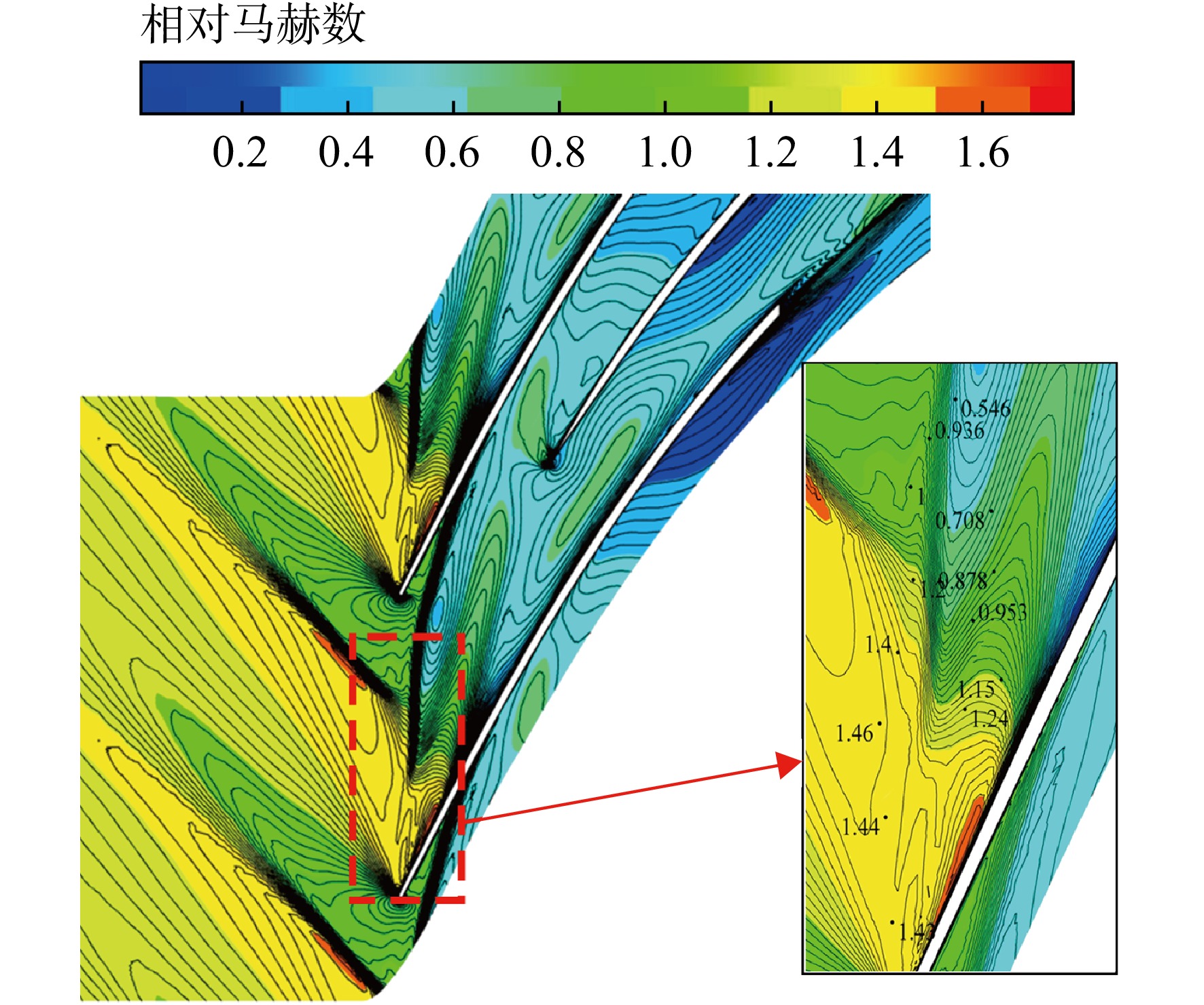
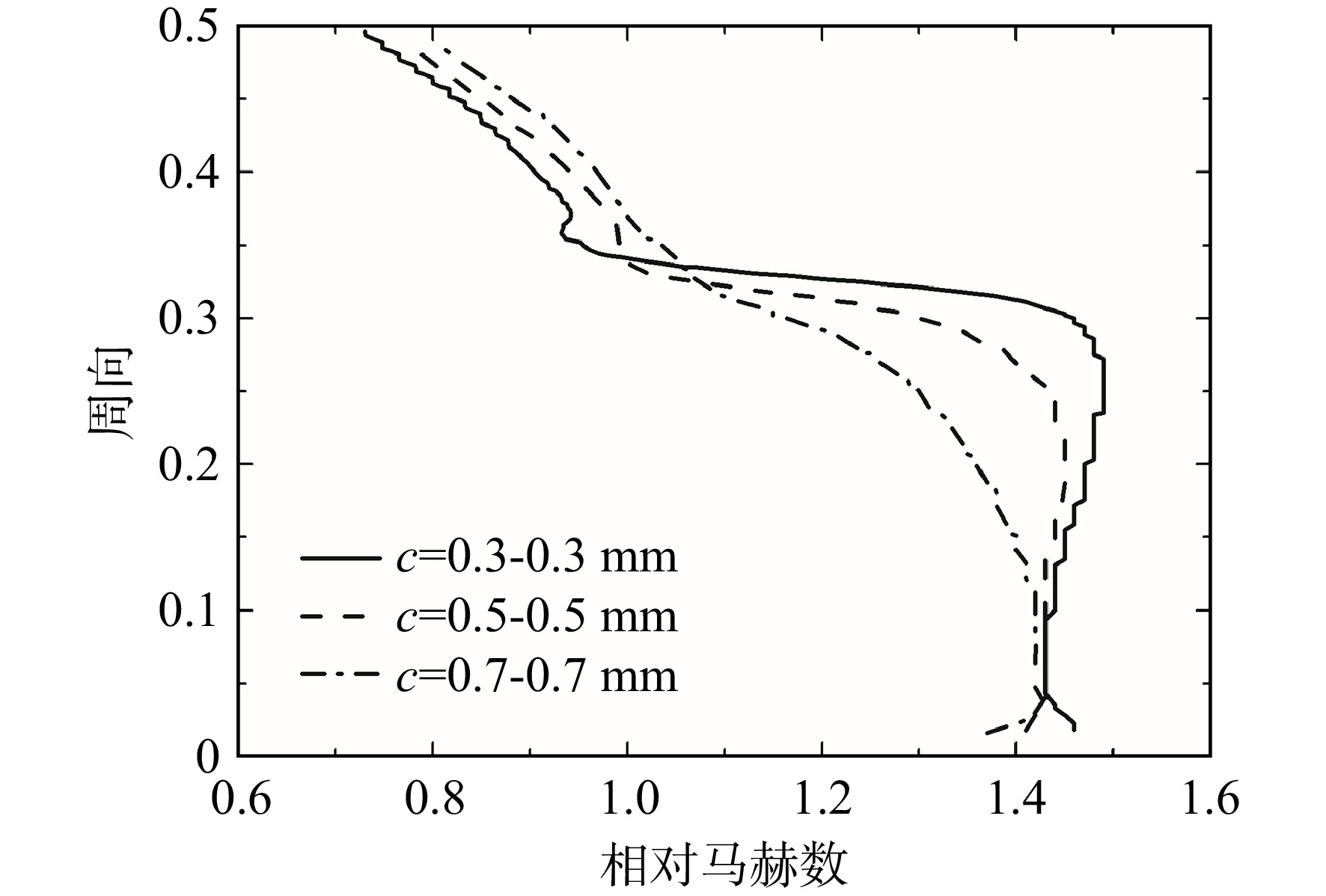
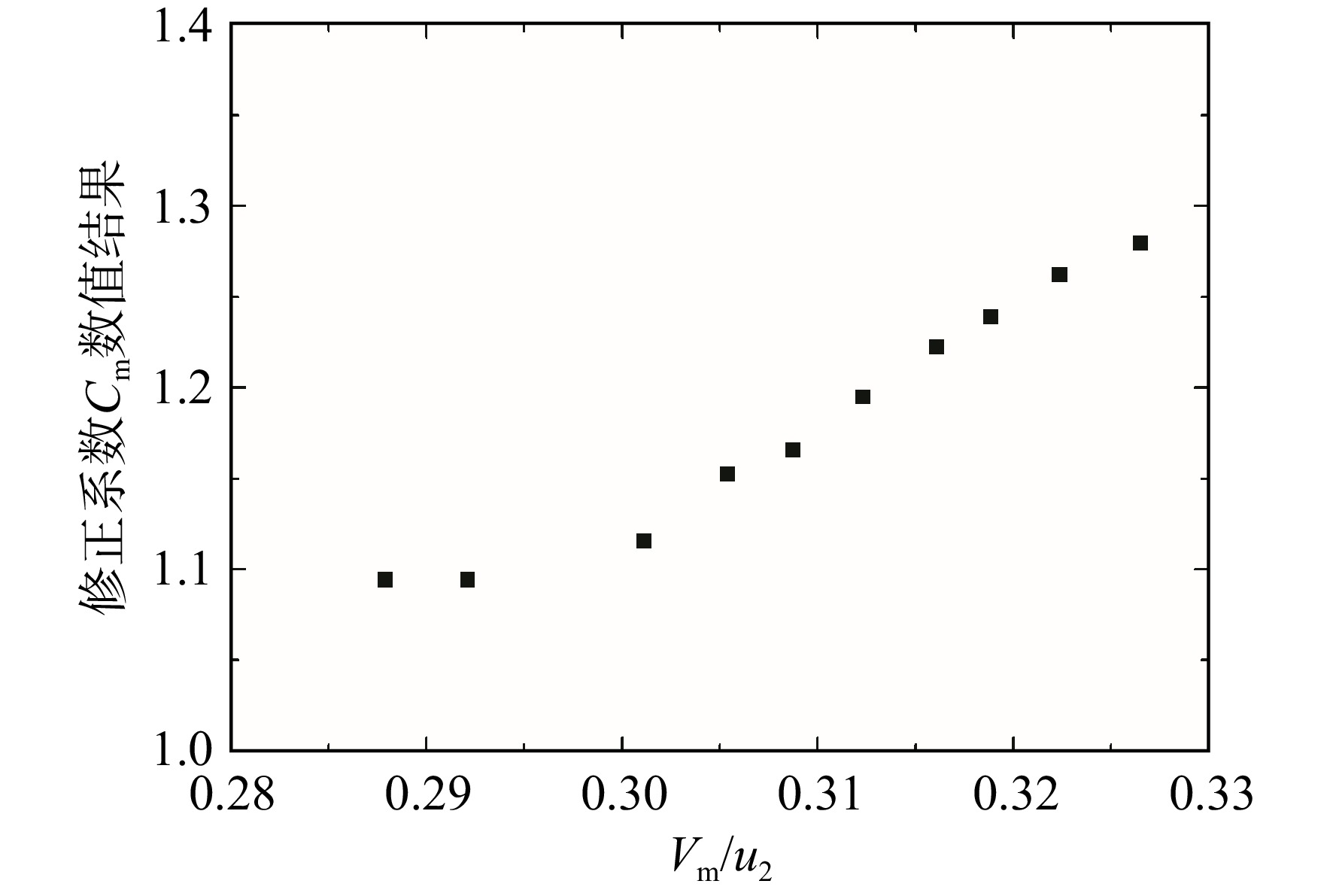
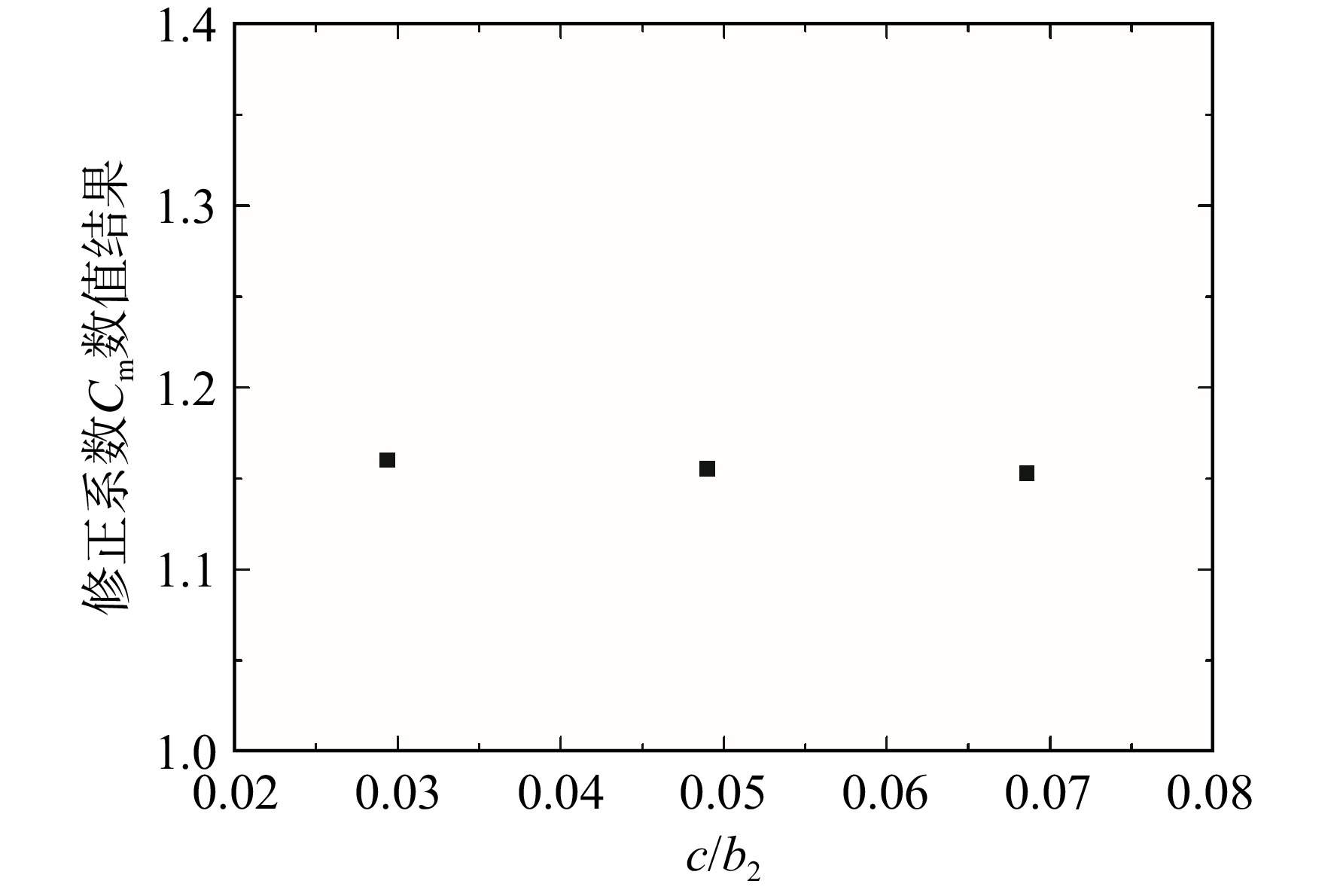
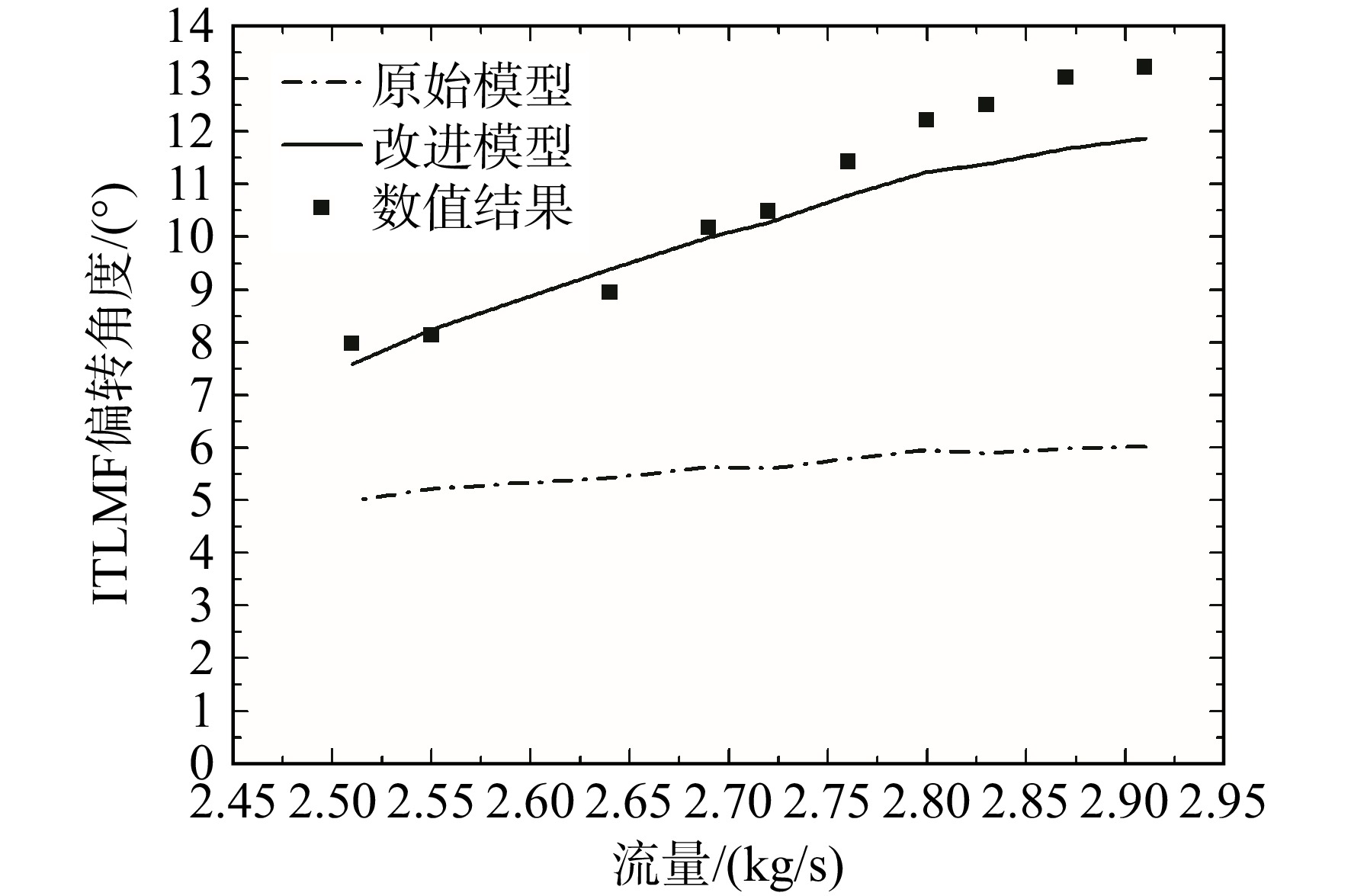
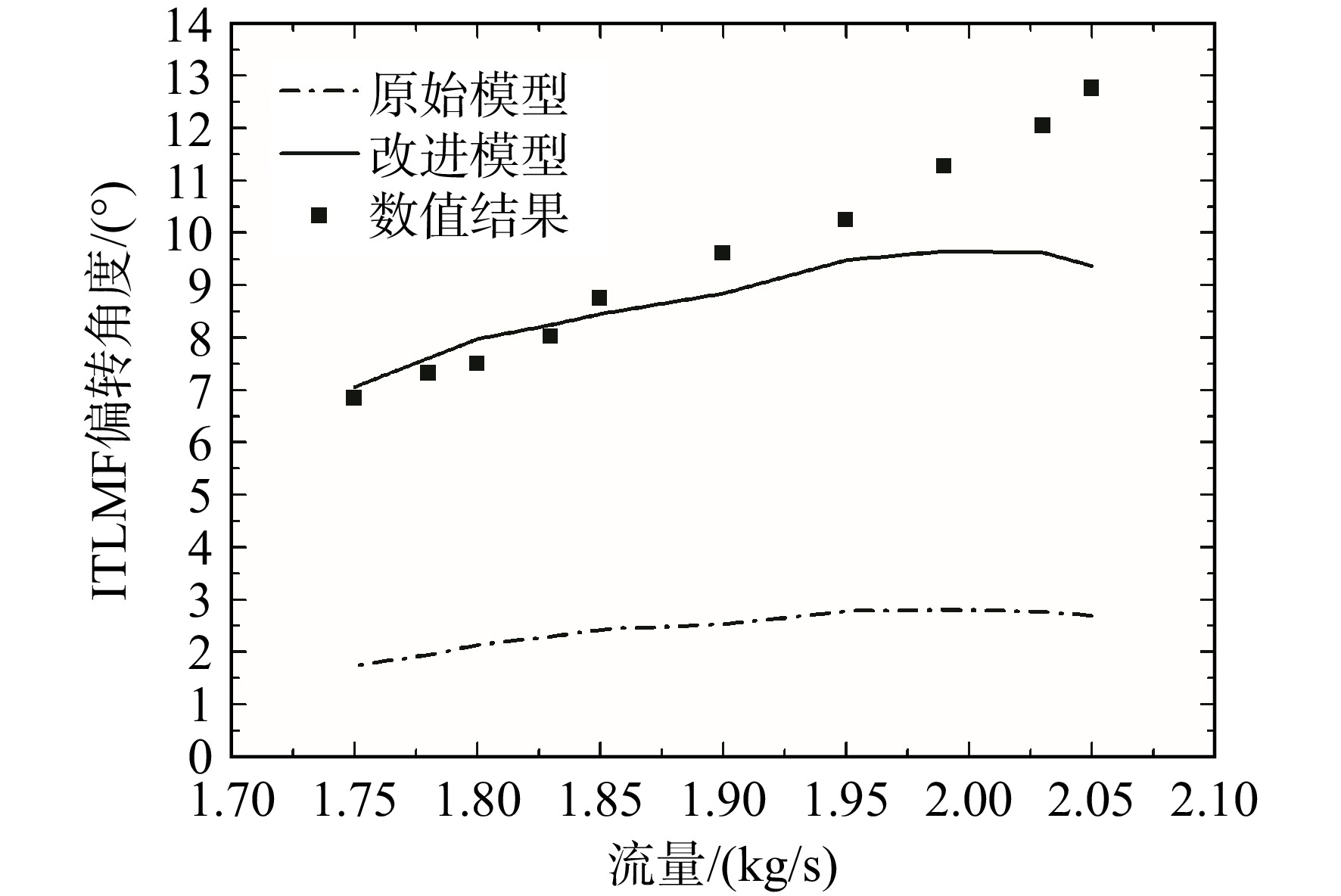
For transonic centrifugal compressors, the interaction between shock wave and leakage flow has an important effect on stall. In this paper, a Krain impeller with pressure ratio of 6.1 was taken as the research object. The interaction between shock wave and tip leakage flow under the different mass flow and tip clearance was numerically investigated, including the shock wave structure, tip leakage vortex trajectory and the interface between the tip leakage flow and main flow. The results shows that the shock wave interacted with the leakage vortex form a low speed region, and the shock wave is pushed upstream, showing a concave shape, and the concave amplitude increased with the decrease of the mass flow rate. The tip leakage vortex trajectory and the interface between the tip leakage flow and main flow(ITLMF) undergo deflection after passing through the shock wave. As the mass flow rate decreased, the tip leakage vortex trajectory is gradually close to the pressure surface, and the deflection amplitude under shock wave decreases. The ITLMF gradually moves upstream and reaches the leading edge of the adjacent blade at near-stall point. With the increase of tip clearance, the tip leakage vortex trajectory is close to the pressure surface of adjacent blades, and the deflection amplitude under shock wave decreases, and the ITLMF gradually moves upstream of adjacent blades. The ITLMF is deflected by shock wave, which causes the interface to overflow at the leading edge of adjacent blades in advance, which has an important effect on stall prediction. Based on original model, taking into account the effects of normalized meridian velocity and normalized tip clearance on inlet relative Mach number, an improved ITLMF deflection Angle prediction model under shock wave is established and verified numerically. After using the improved model, the average error decreases from 46.59% to 5.83% under different flow rates and from 27.21% to 4.69% under different tip clearance. The results show that the improved model has higher prediction accuracy.