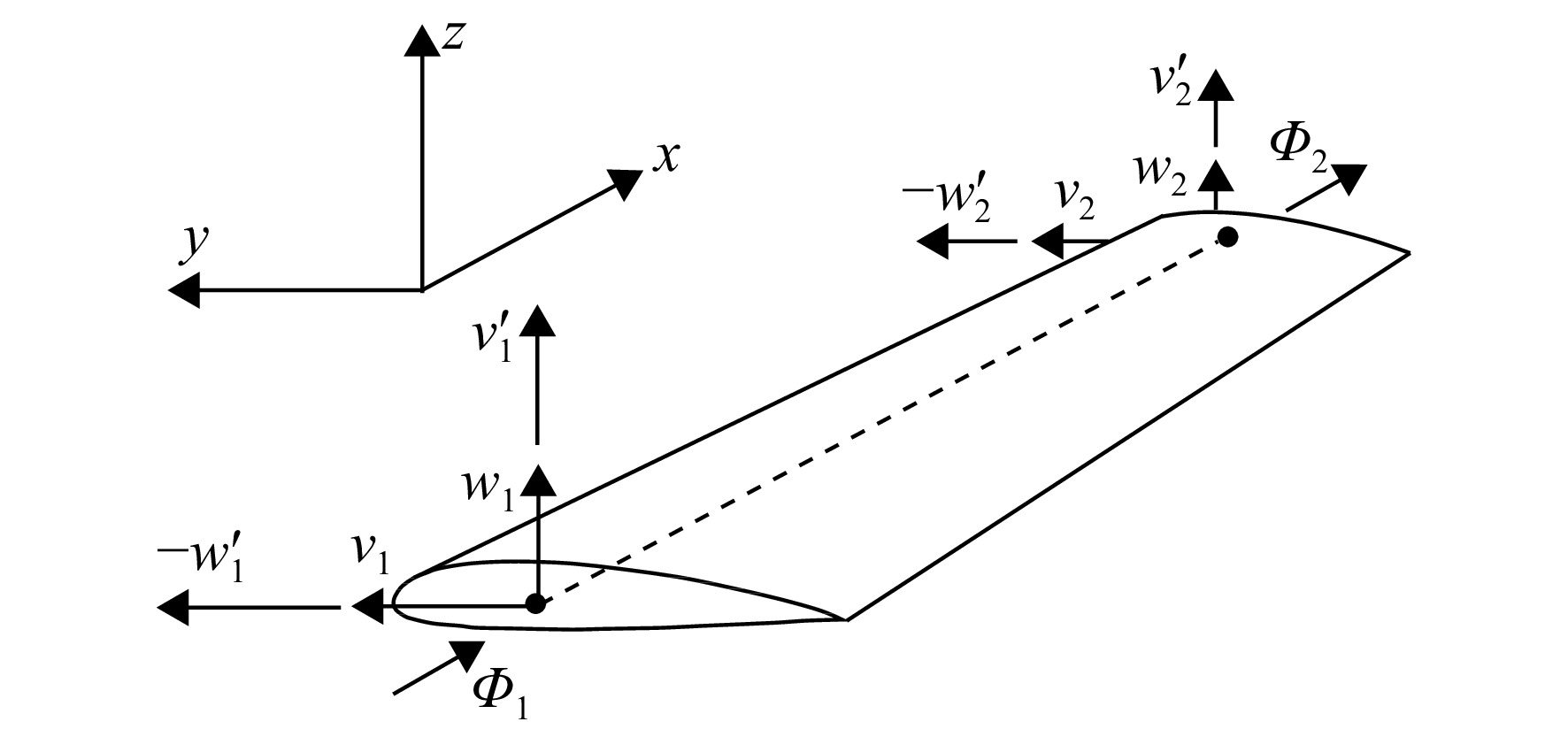
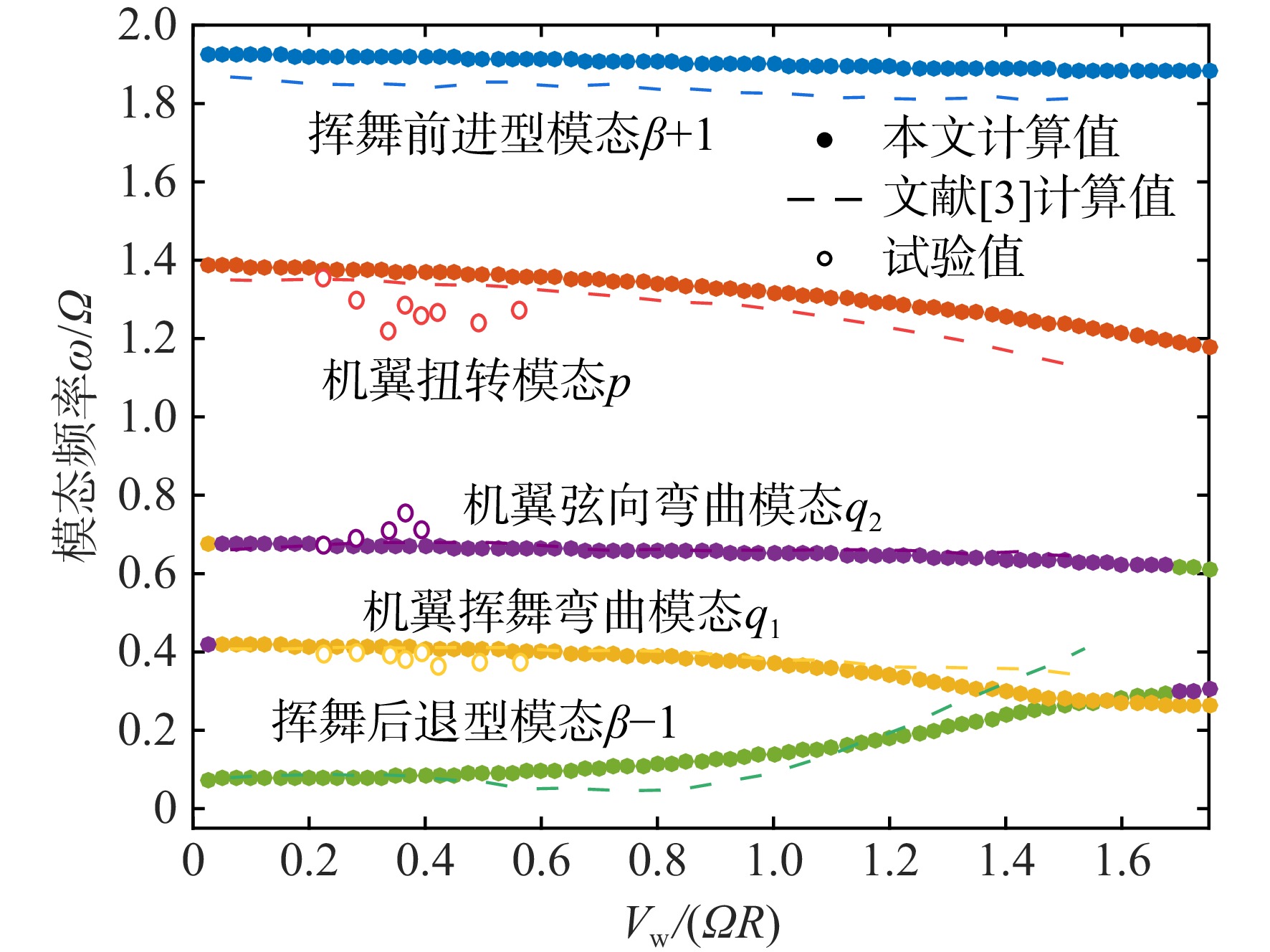
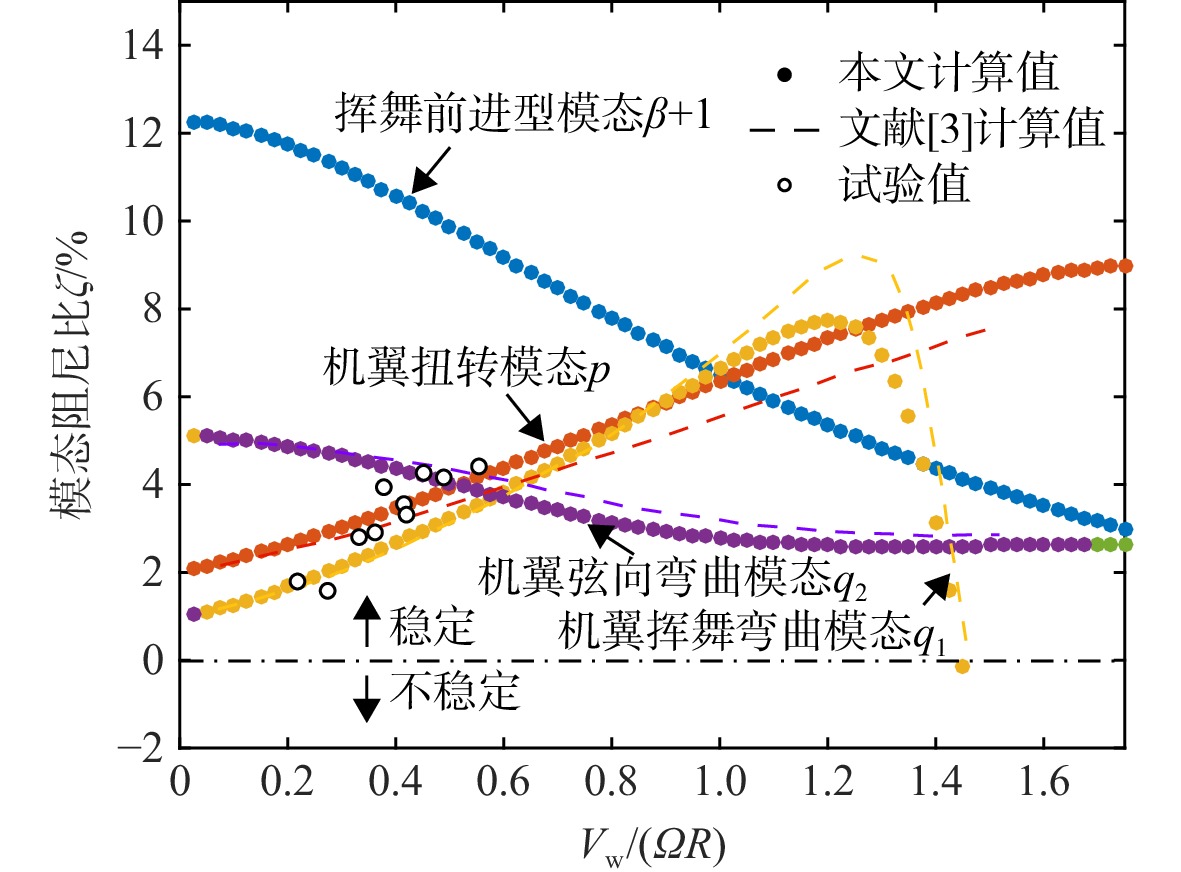
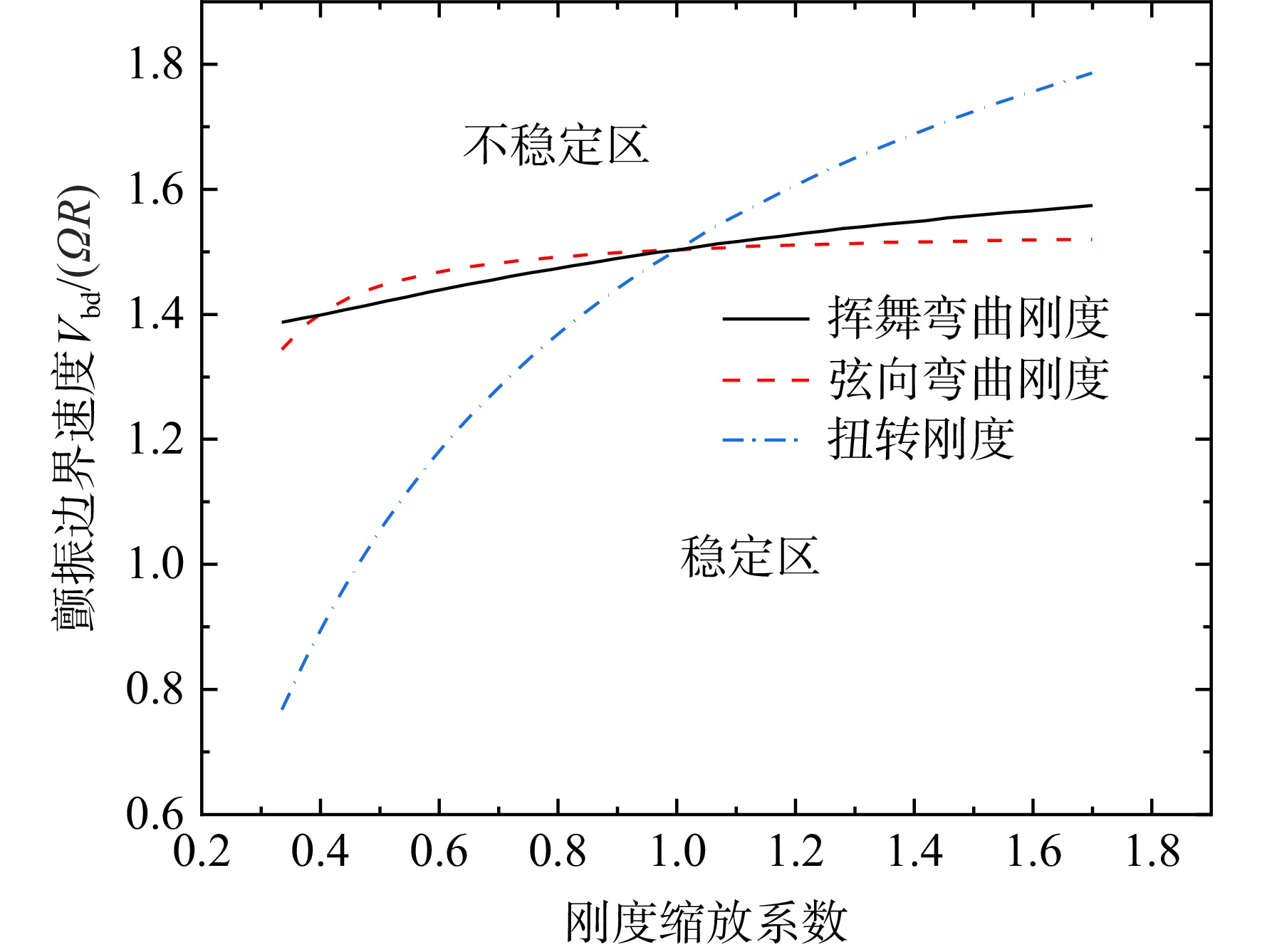
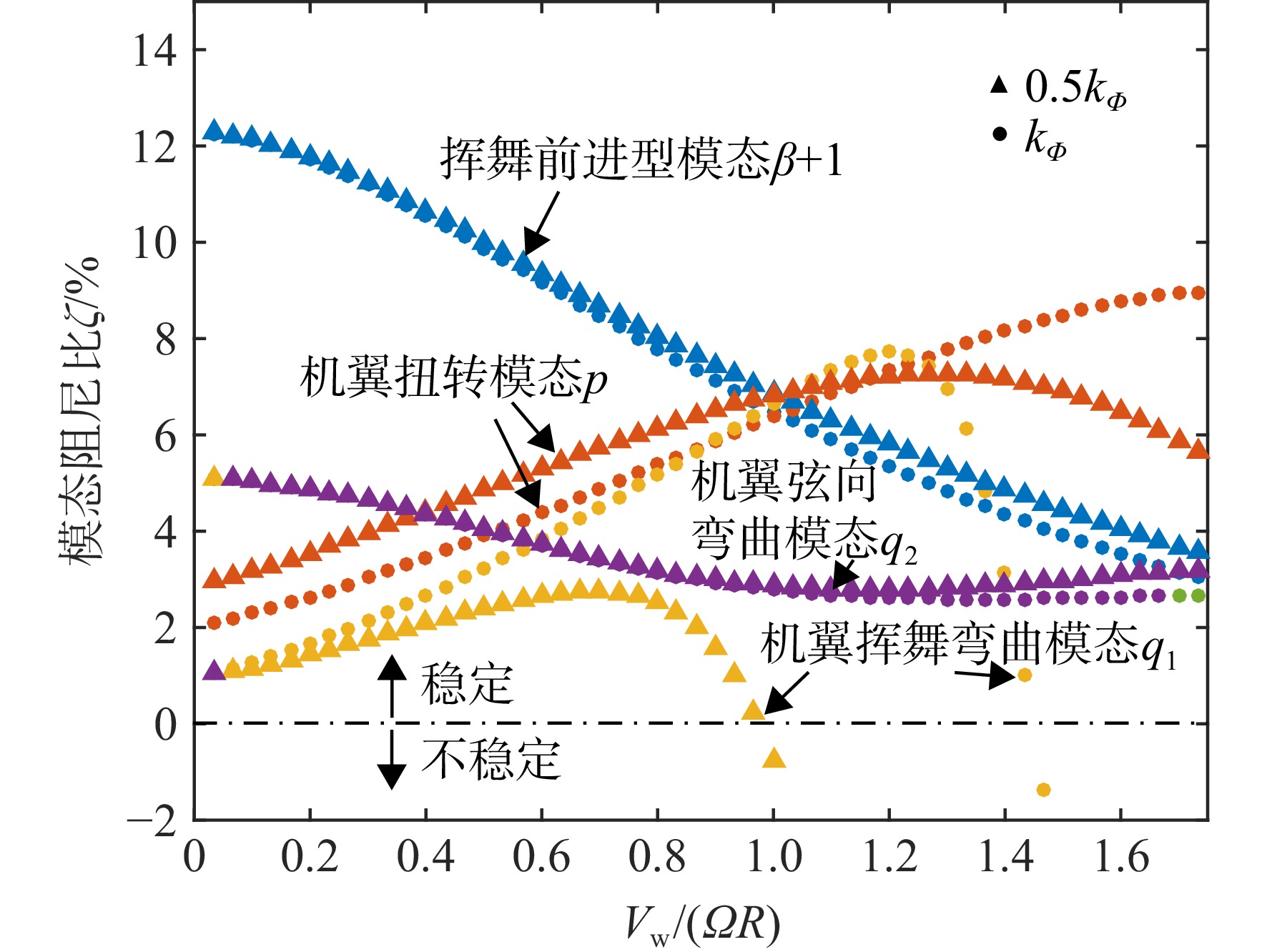
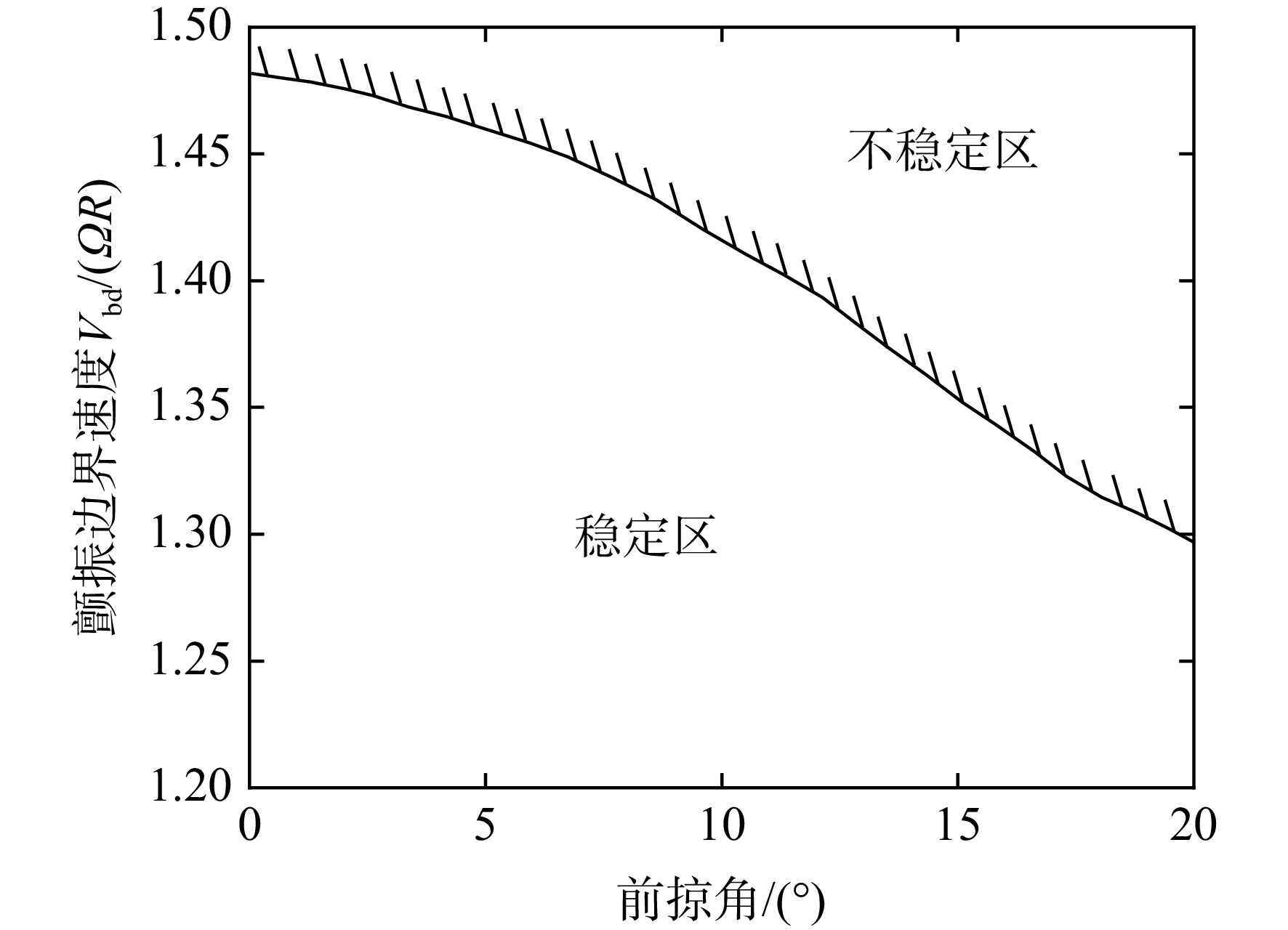
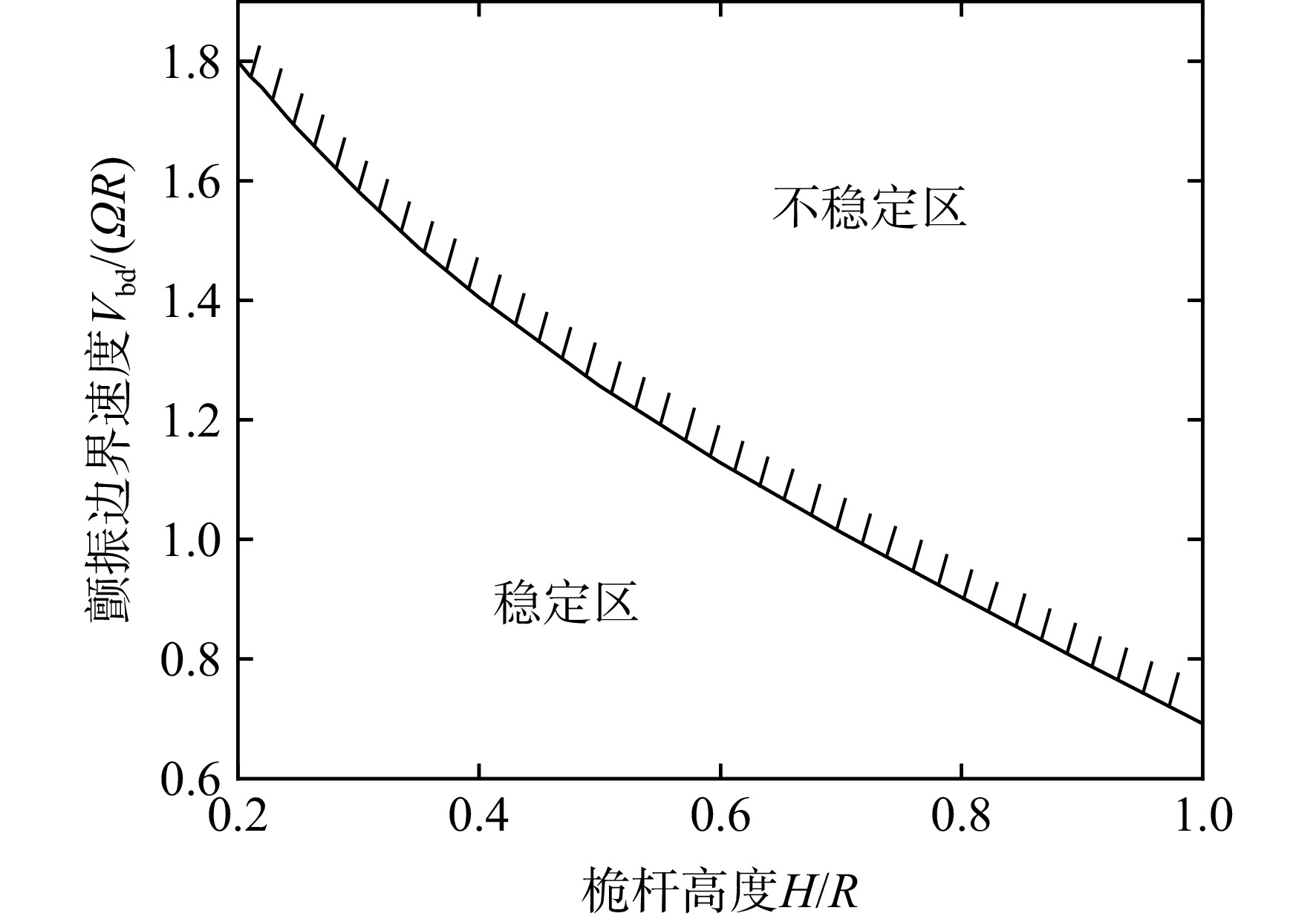
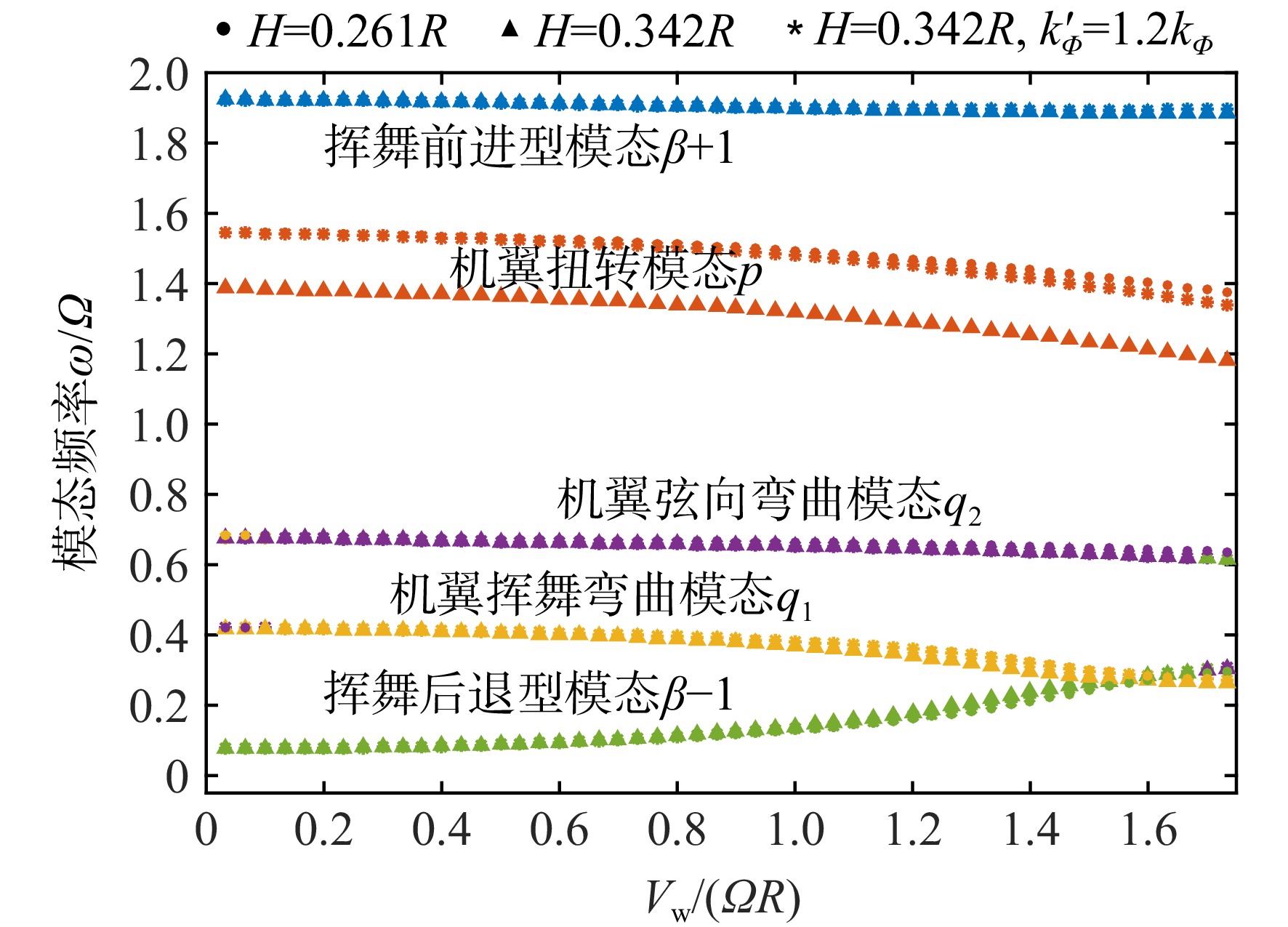
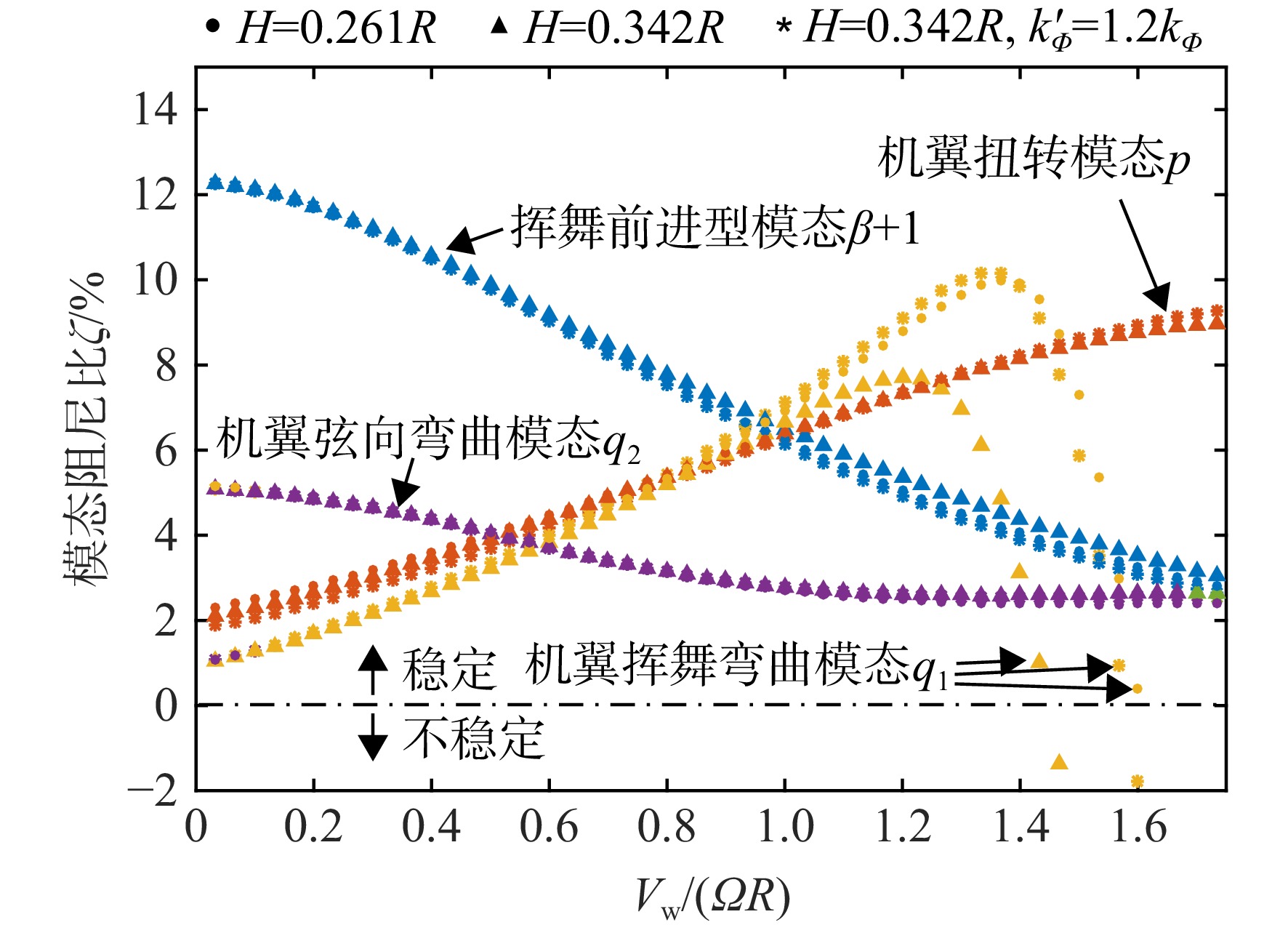
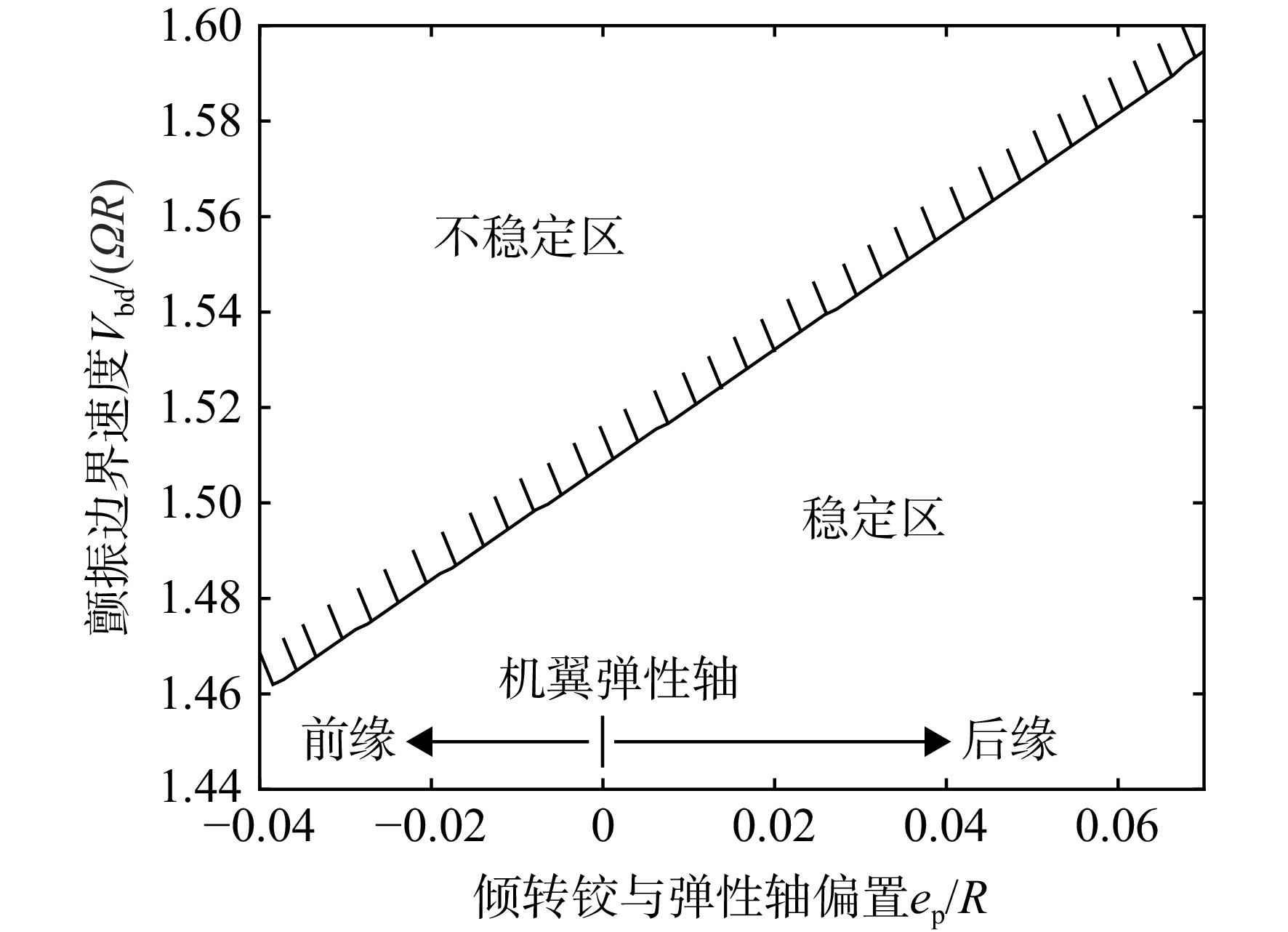
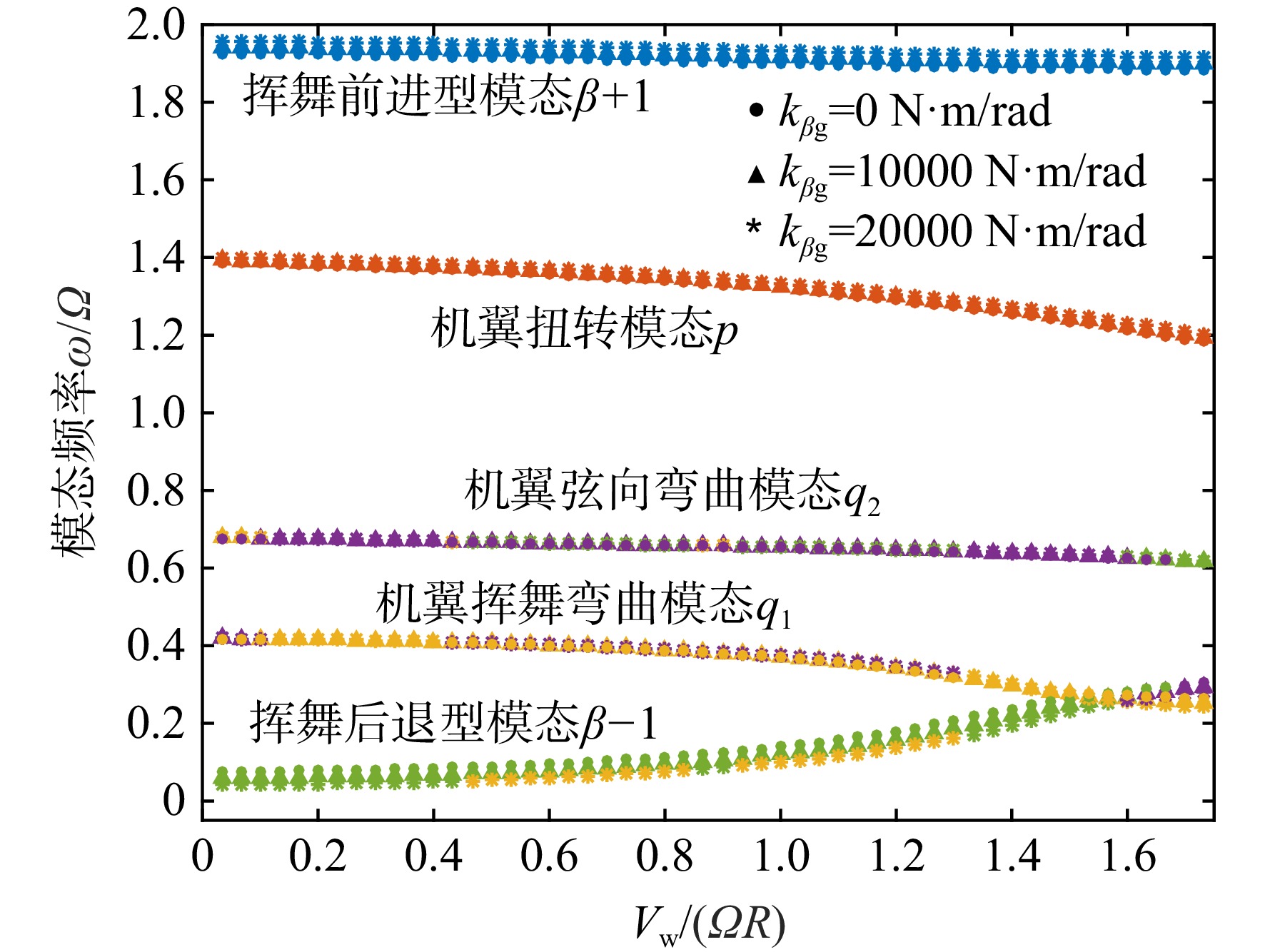
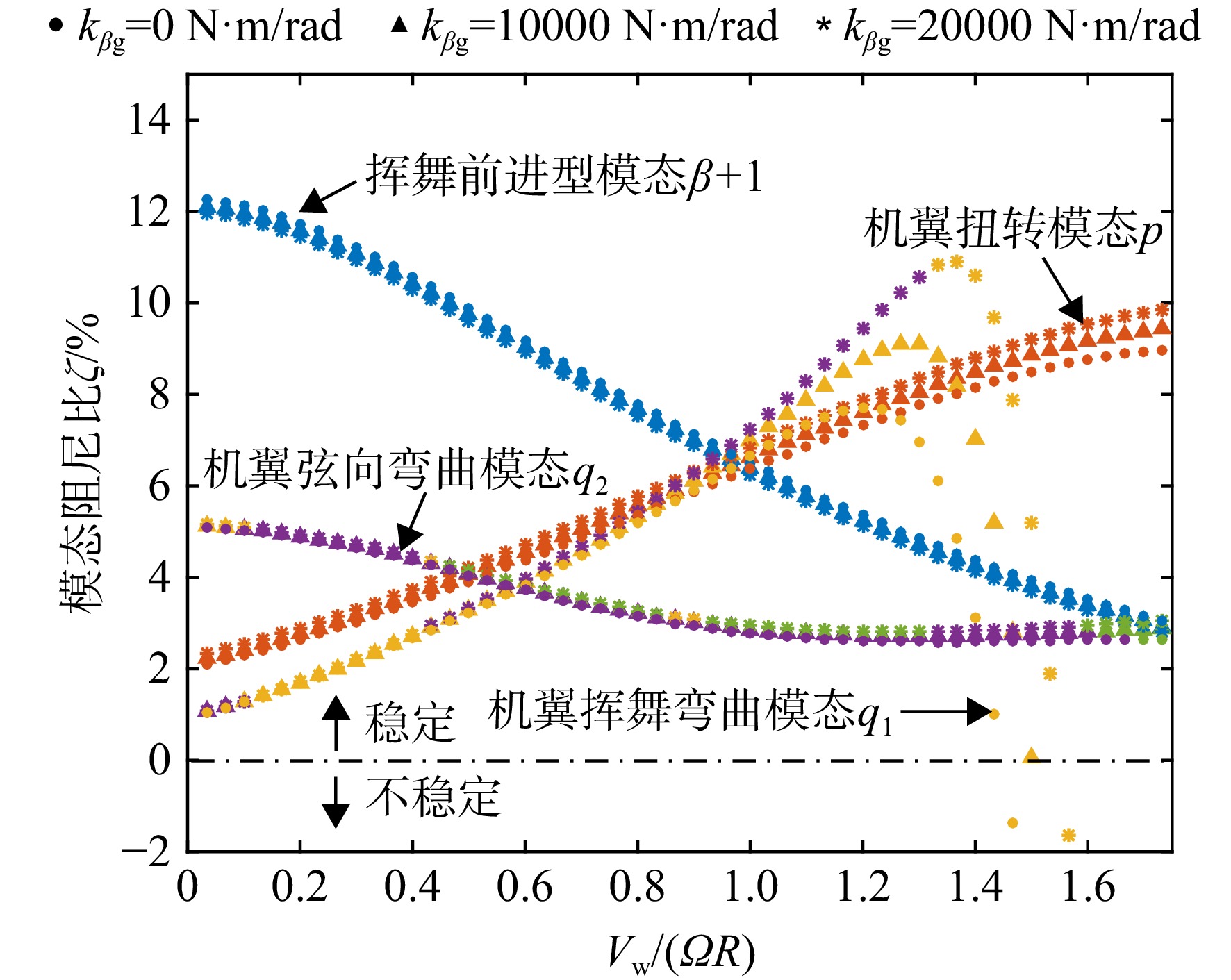
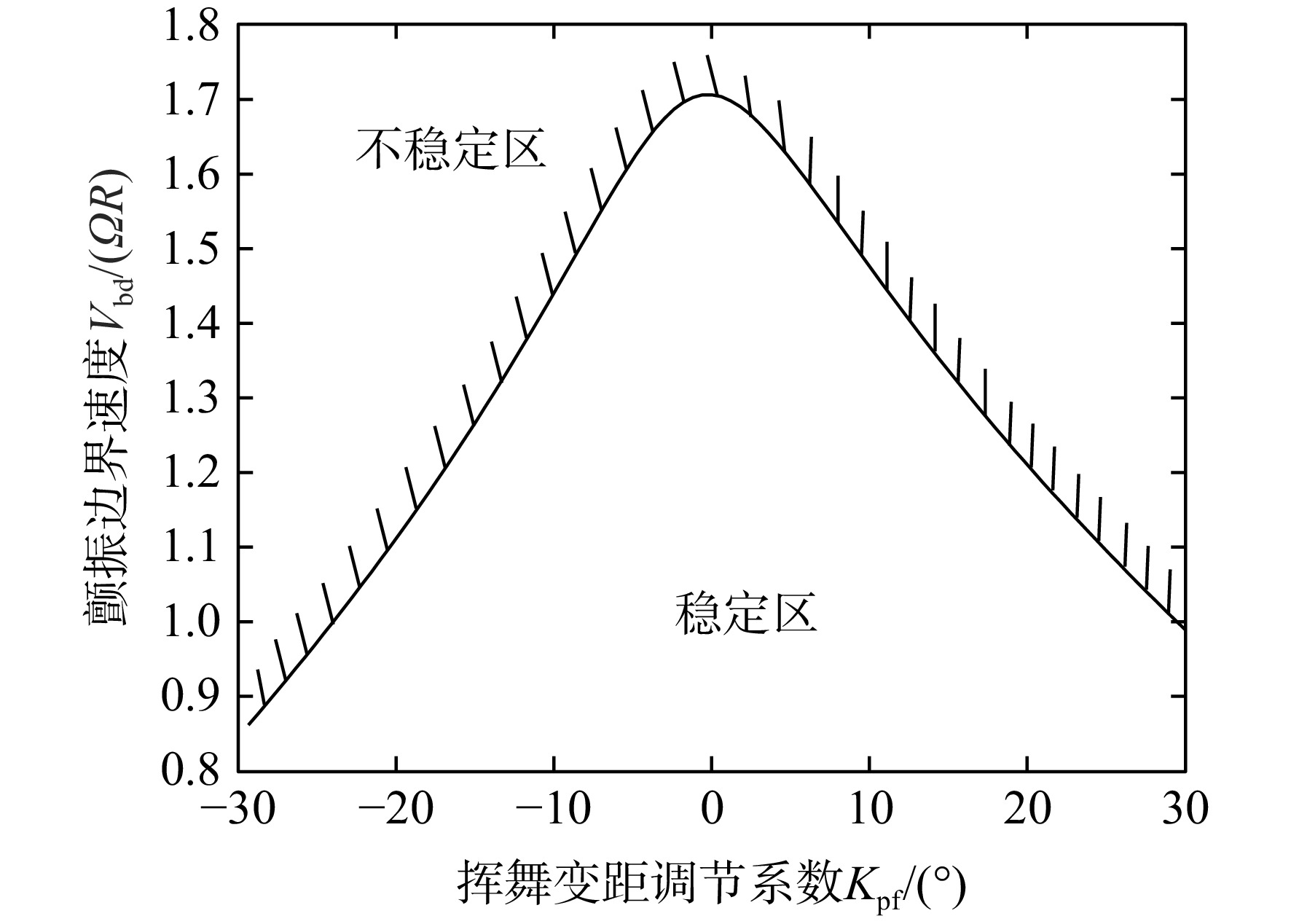
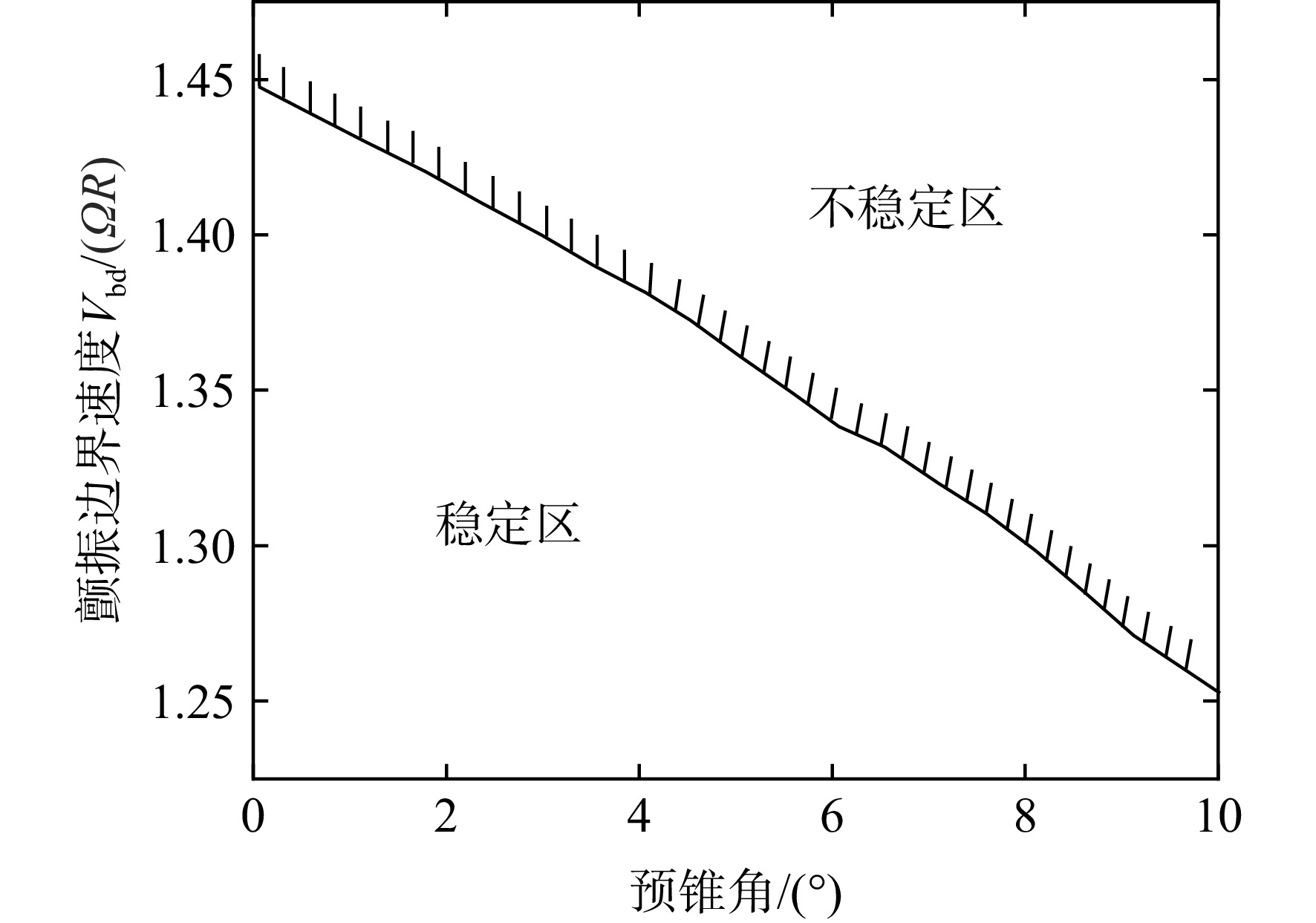
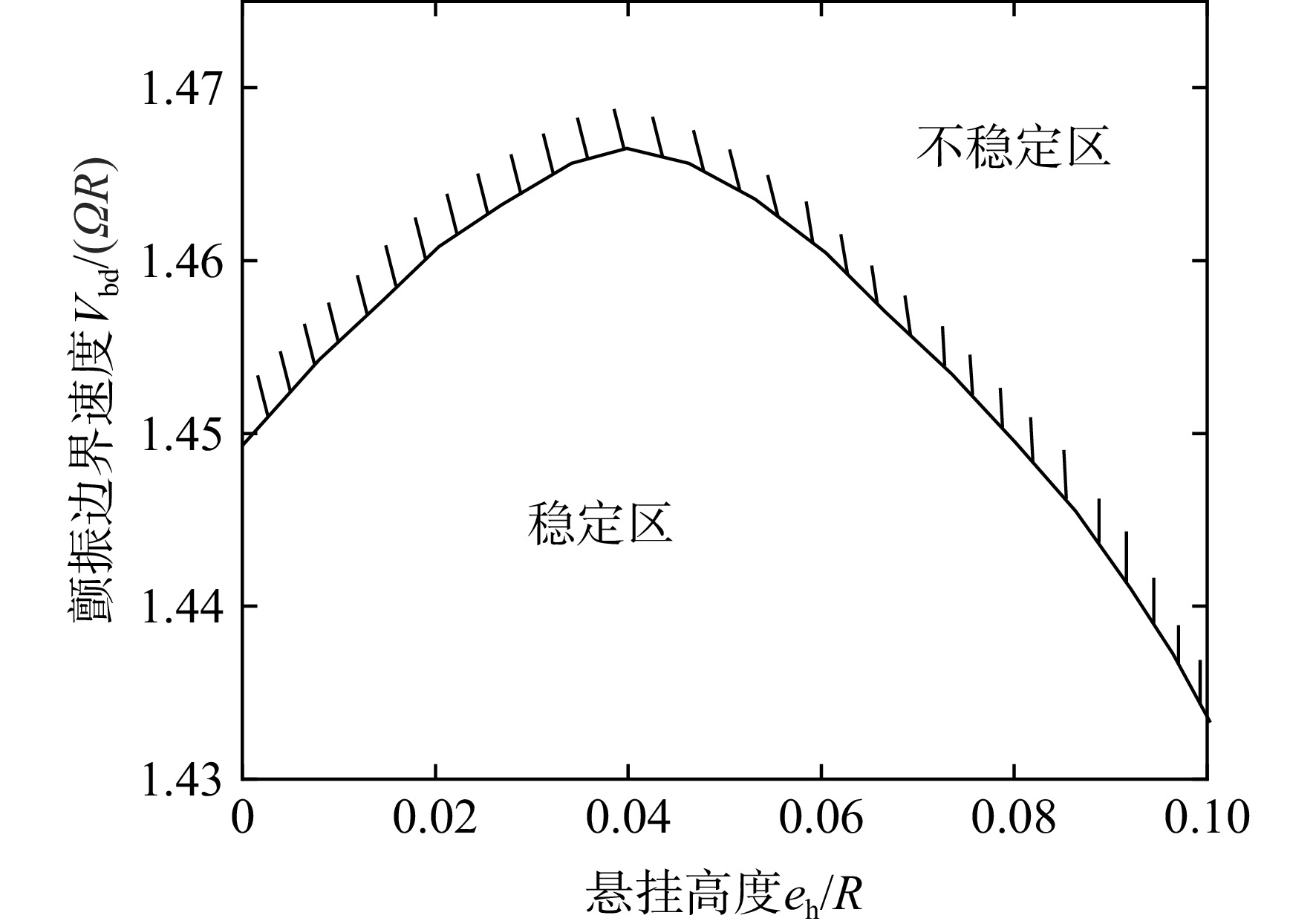
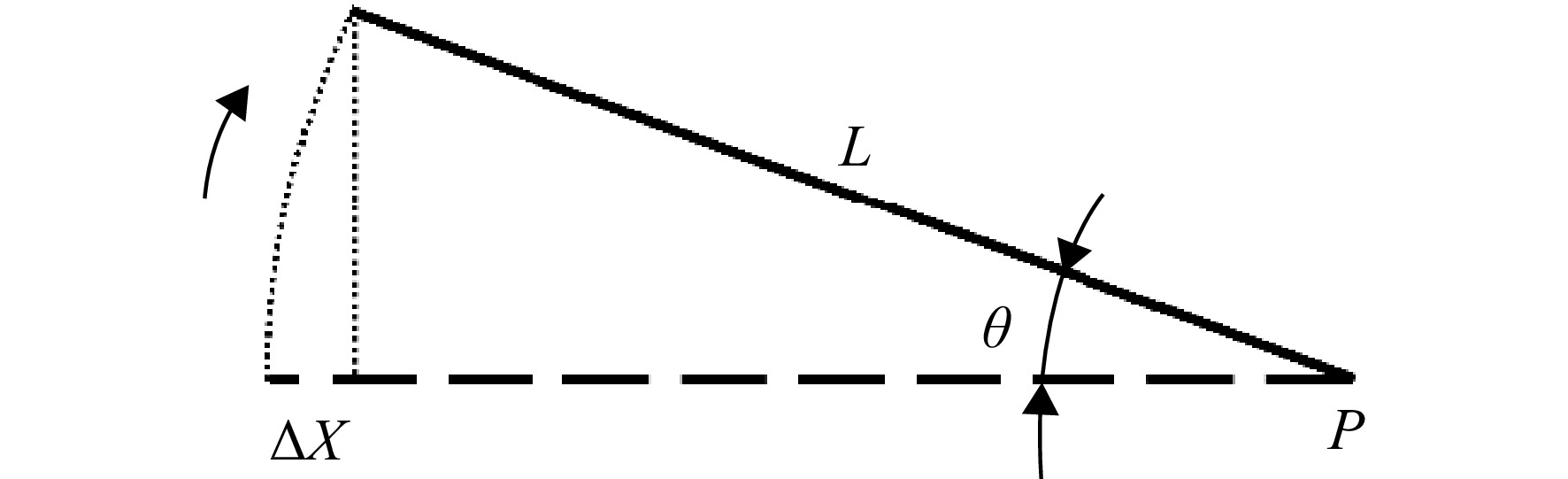
Based on Hamilton’s principle and the multi-body dynamics method, a coordinated system was established to accurately describe the spatial position and motion relationship of the rotor, wing, pylon, and other moving parts. Various offsets and the coupling effects of aerodynamics, structural deformations, and inertial forces were fully considered. The influence of the coupling effects resulting from the elastic deformation of components was retained. For the necessary analytical framework, mass, stiffness, and damping matrices were derived in non-rotating coordinates. Subsequently, a sophisticated rotor/wing multi-mode coupled aeroelastic stability analysis model for tiltrotor aircraft was formulated. Utilizing this model, the impact of various parameters on the multi-mode coupling aeroelastic stability of tiltrotor aircraft was analyzed. These parameters included vertical bending, chord bending, and torsional stiffness of the wing, as well as the wing forward sweep, mast height, hub pre-cone angle, rotor flapping stiffness, and pitch-flap coupling coefficient. The results indicated that the system’s stability was most sensitive to the torsional stiffness in three directions of wing stiffness. Furthermore, the wing forward sweep and the pitch-flap coupling coefficient did not effectively suppress whirl flutter. Increasing the mast height and the wing torsional stiffness can keep the whirl flutter boundary unchanged. Additionally, placing the tilting hinge closer to the rear of the elastic shaft and increasing the rotor flapping stiffness can enhance the whirl flutter stability margin. Moreover, comprehensive consideration of the hub pre-cone angle and suspension height can increase the whirl flutter stability margin in a more efficient manner.