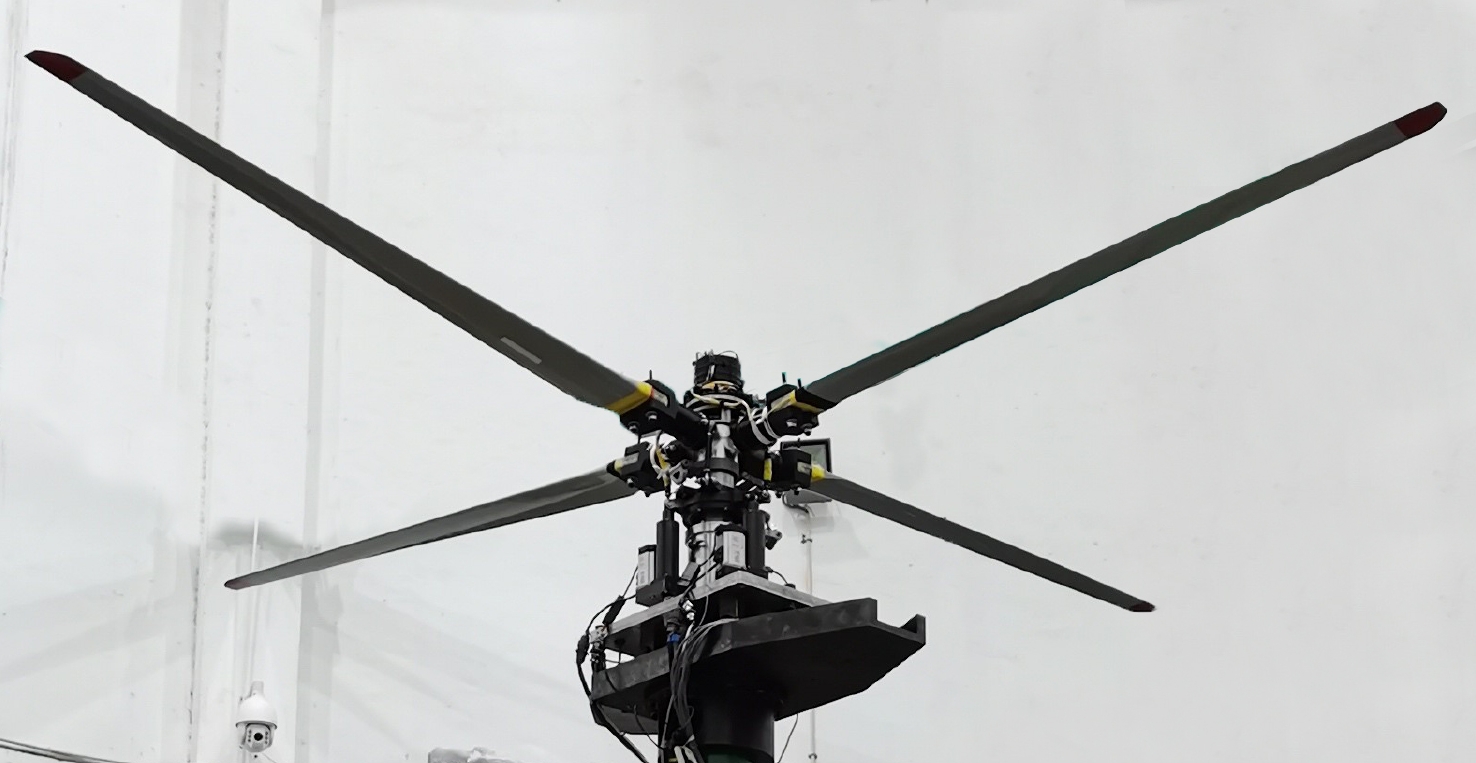
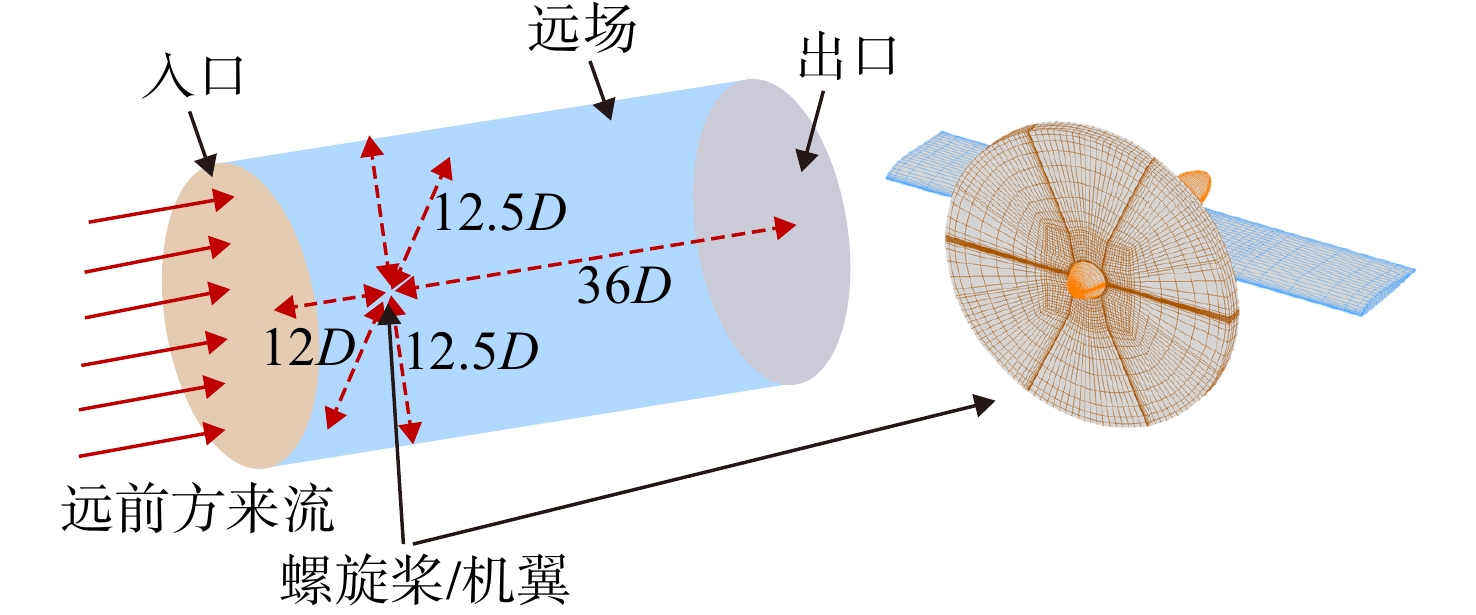
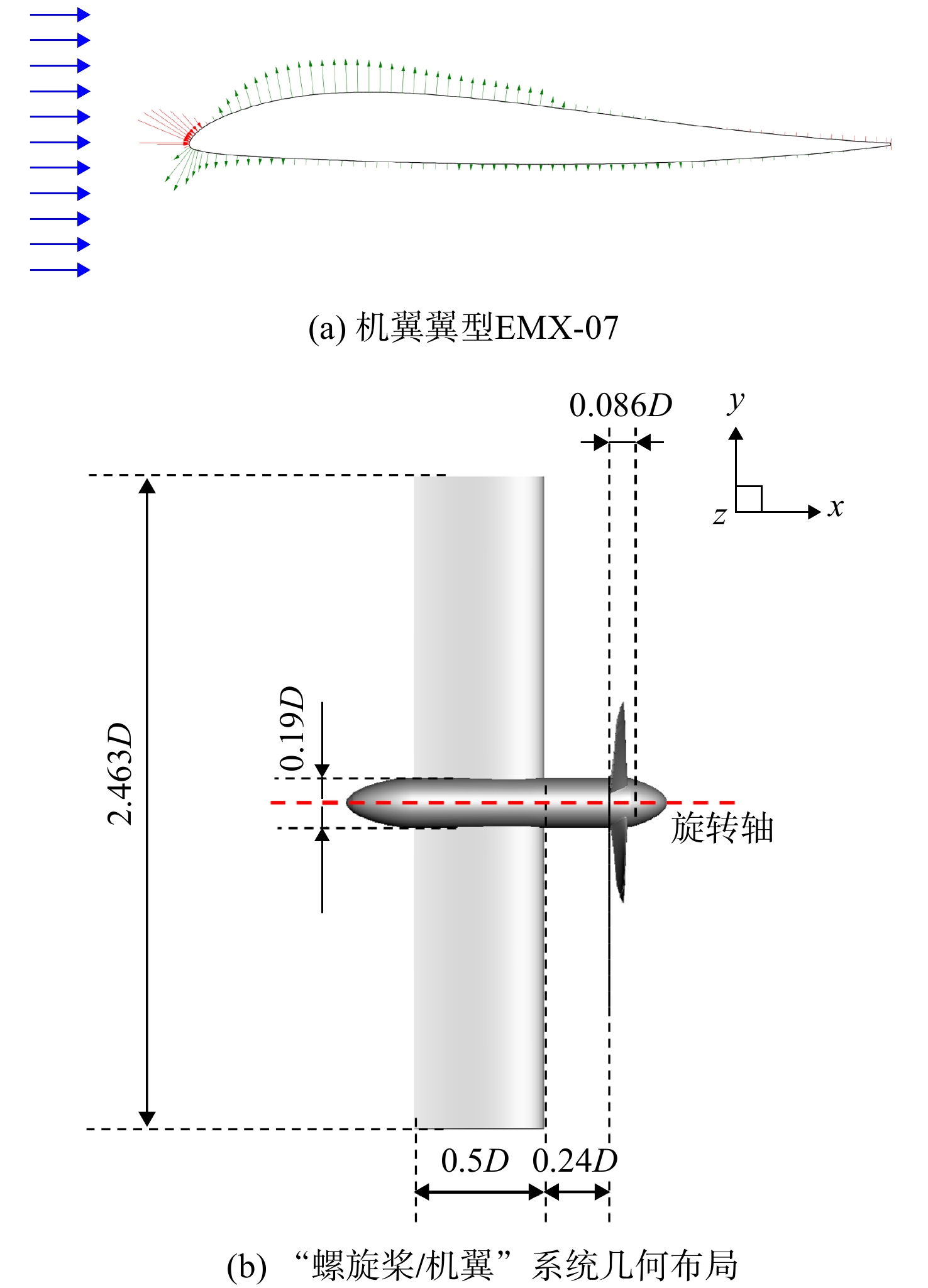
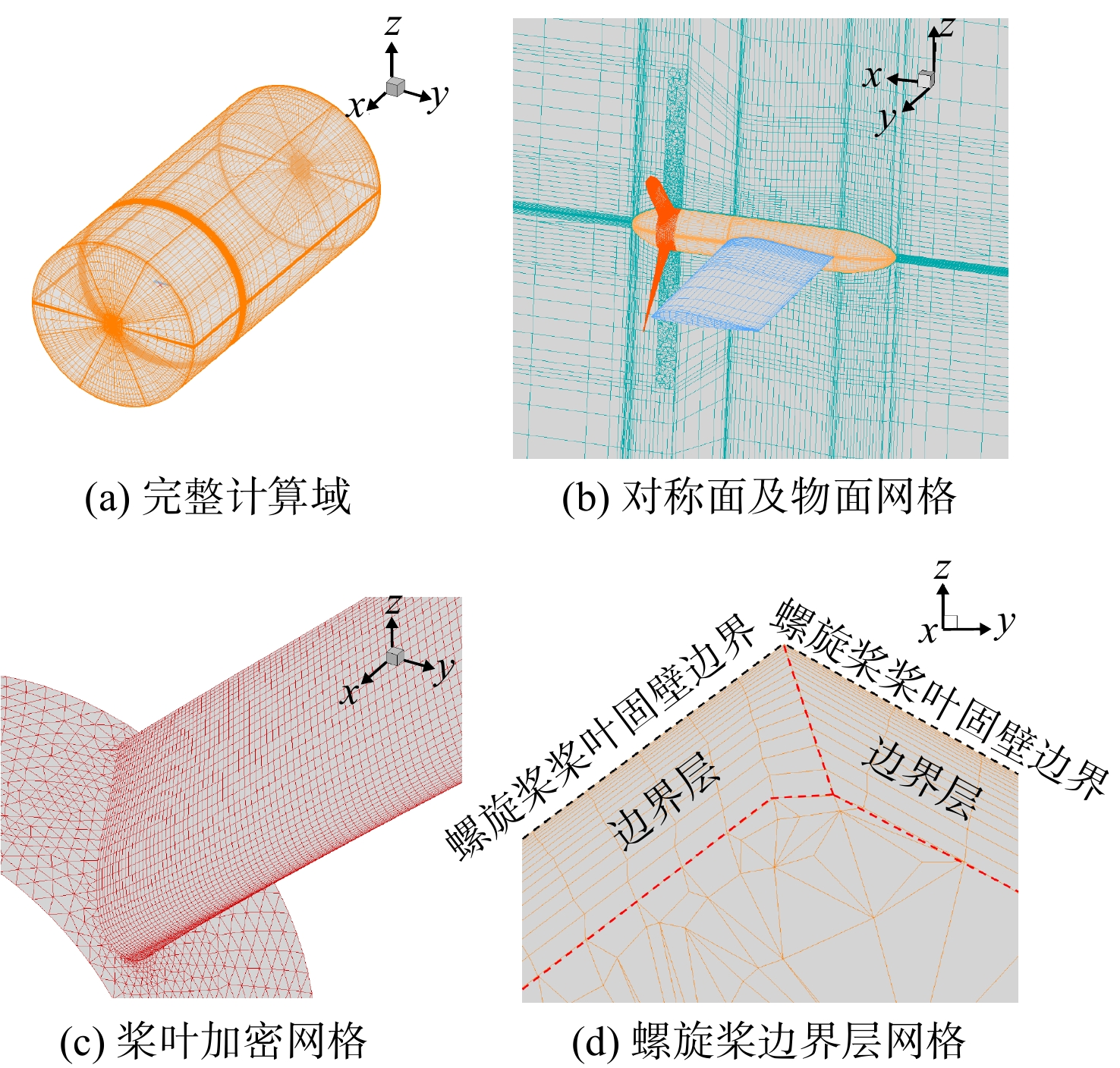
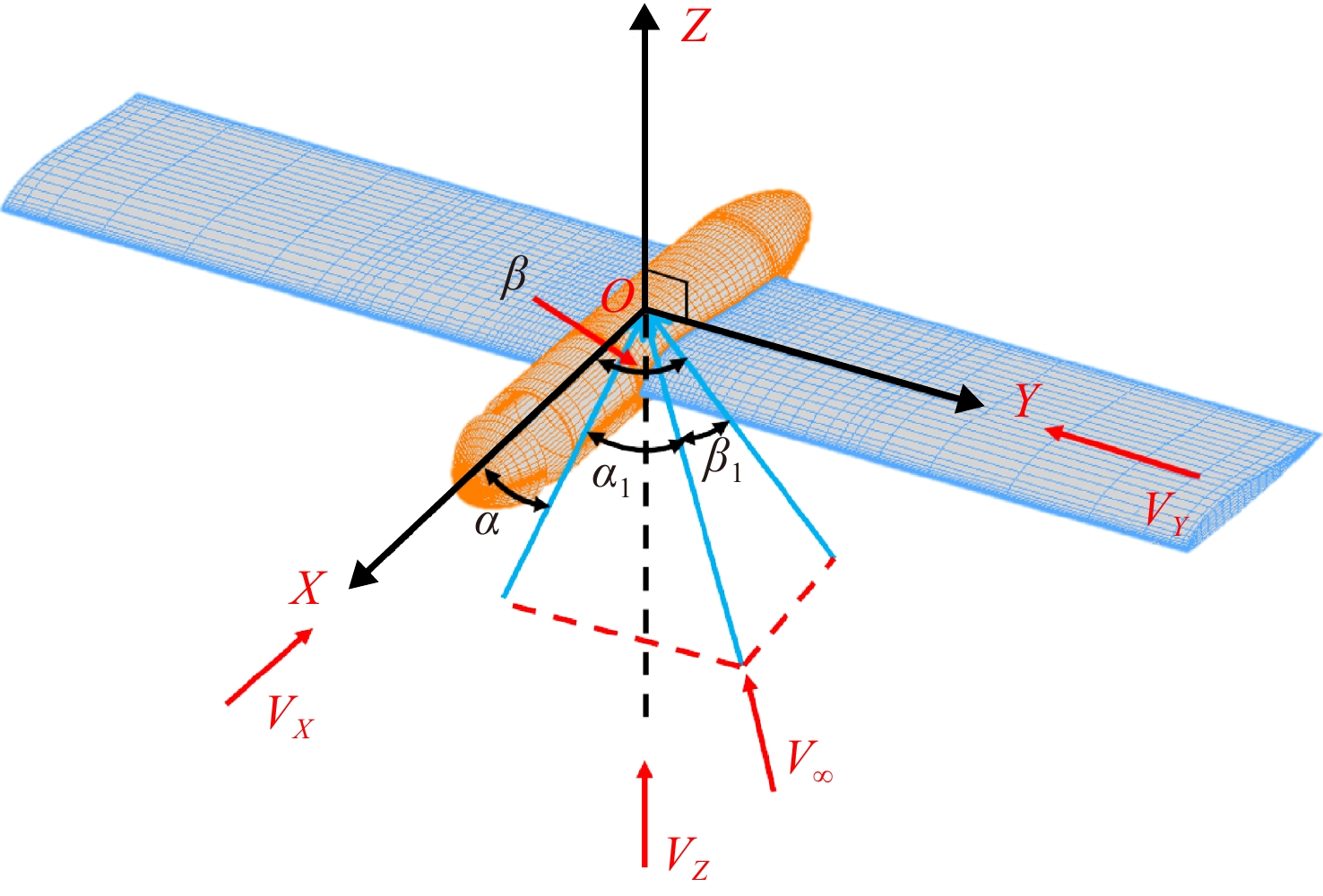
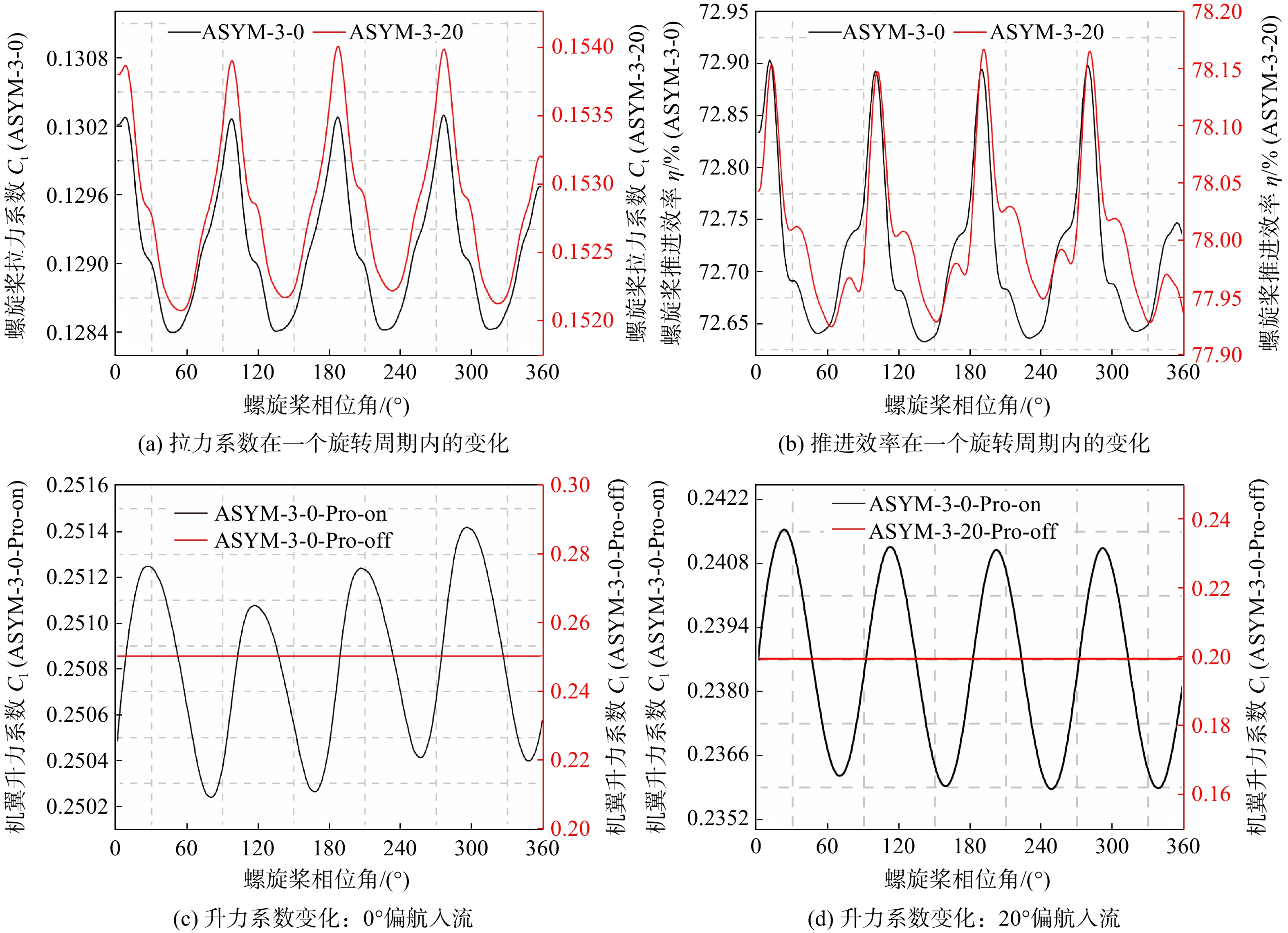
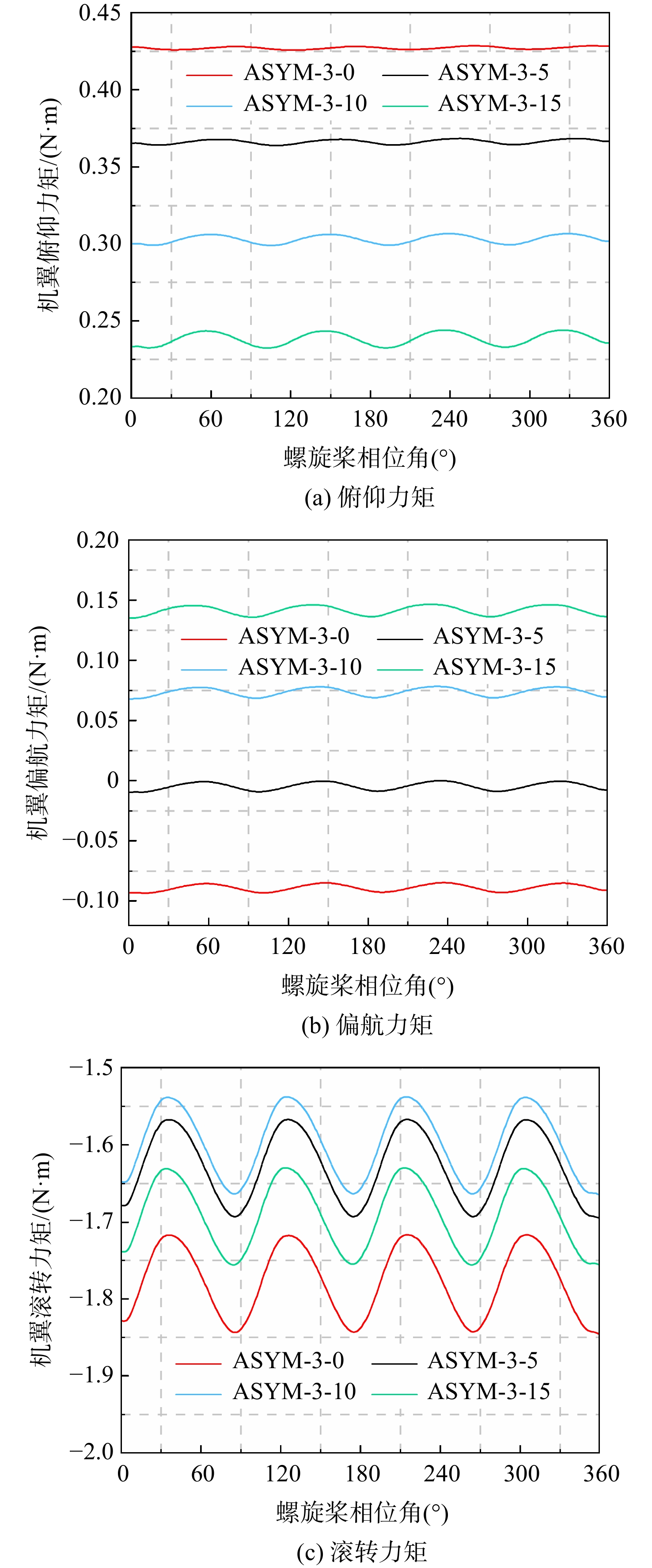
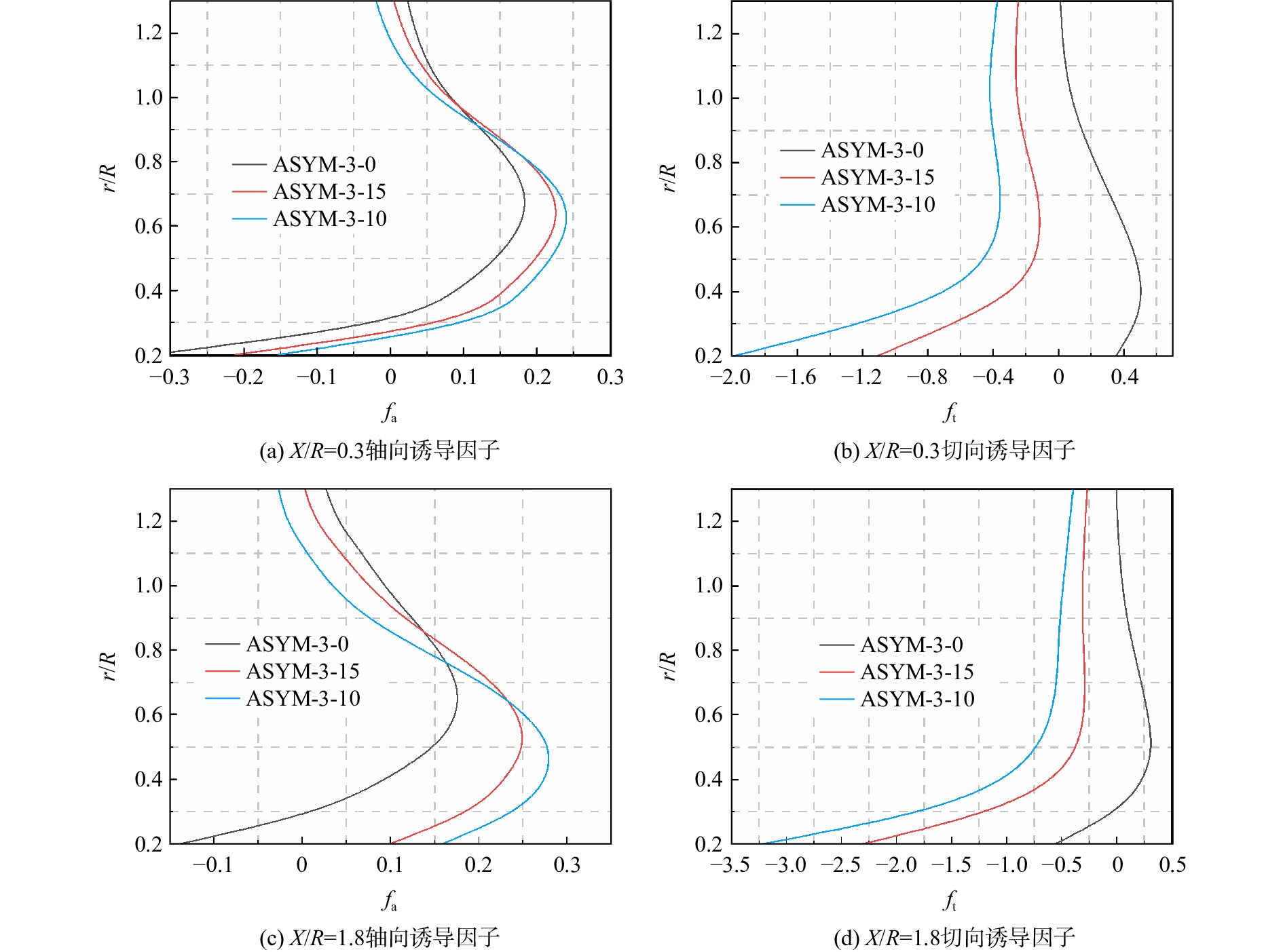
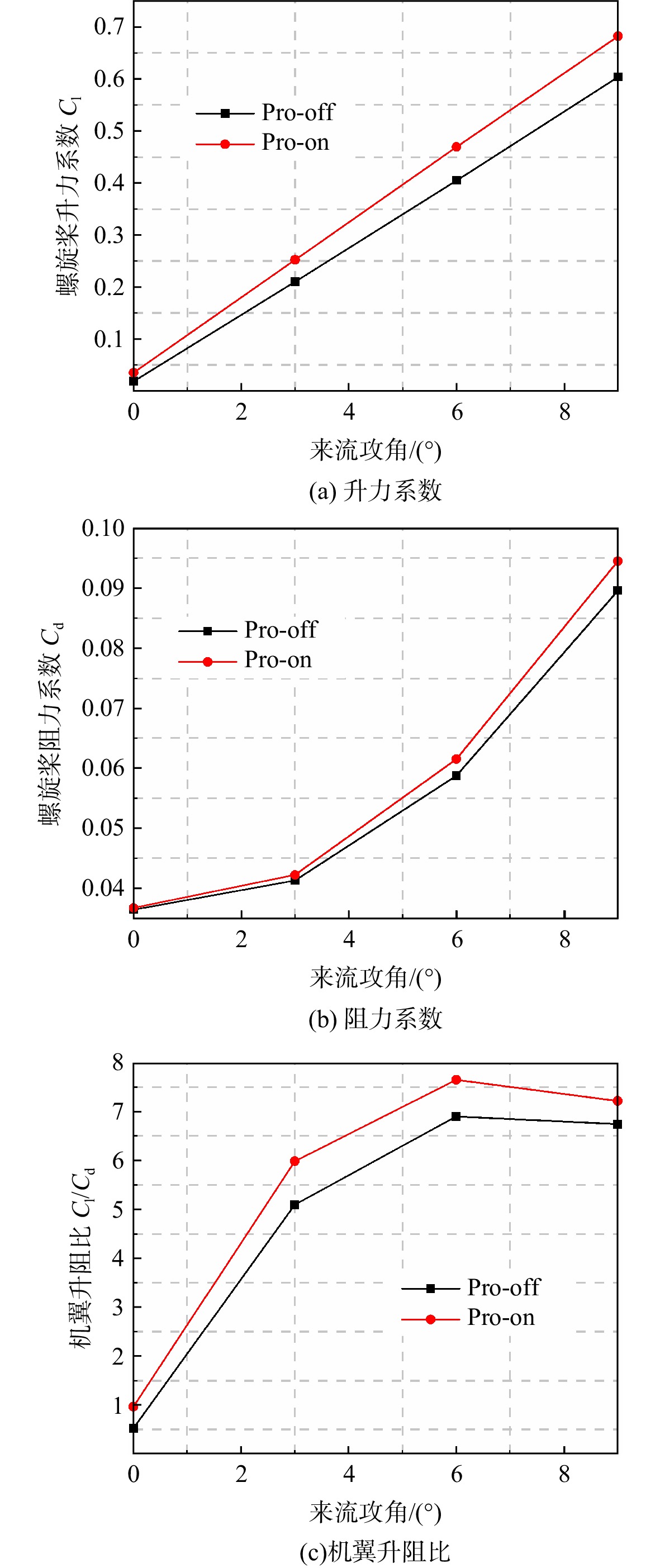
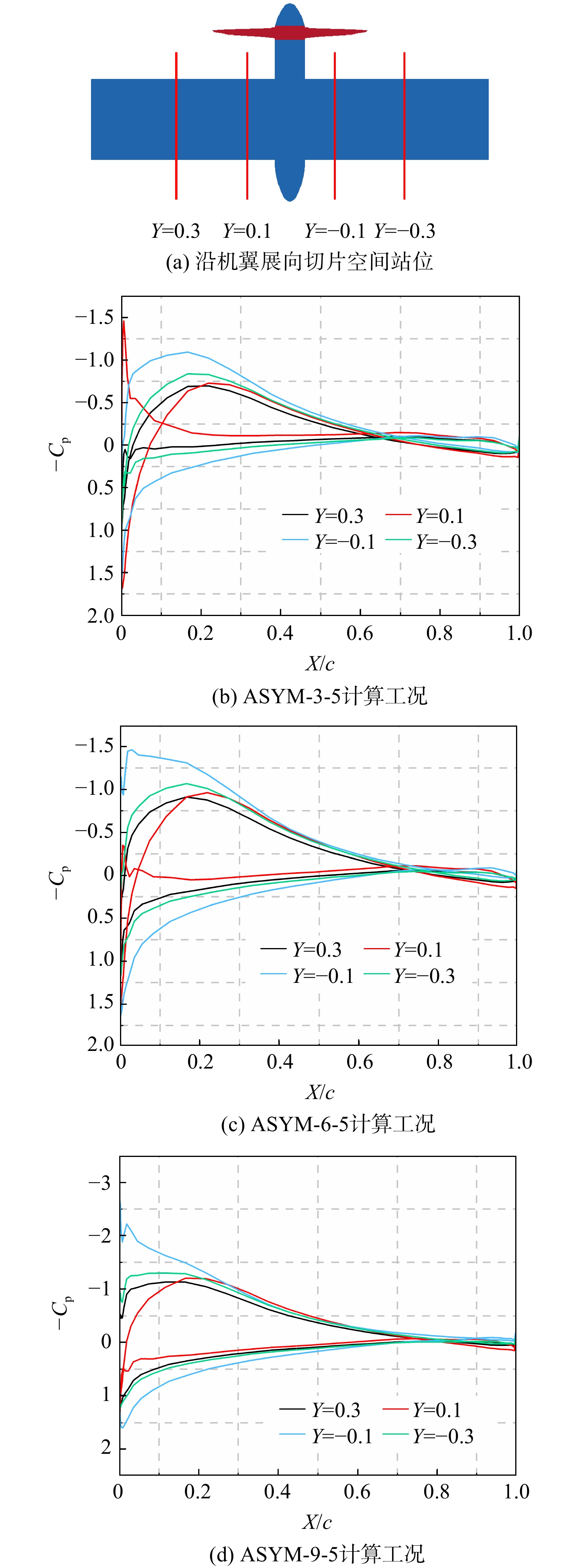
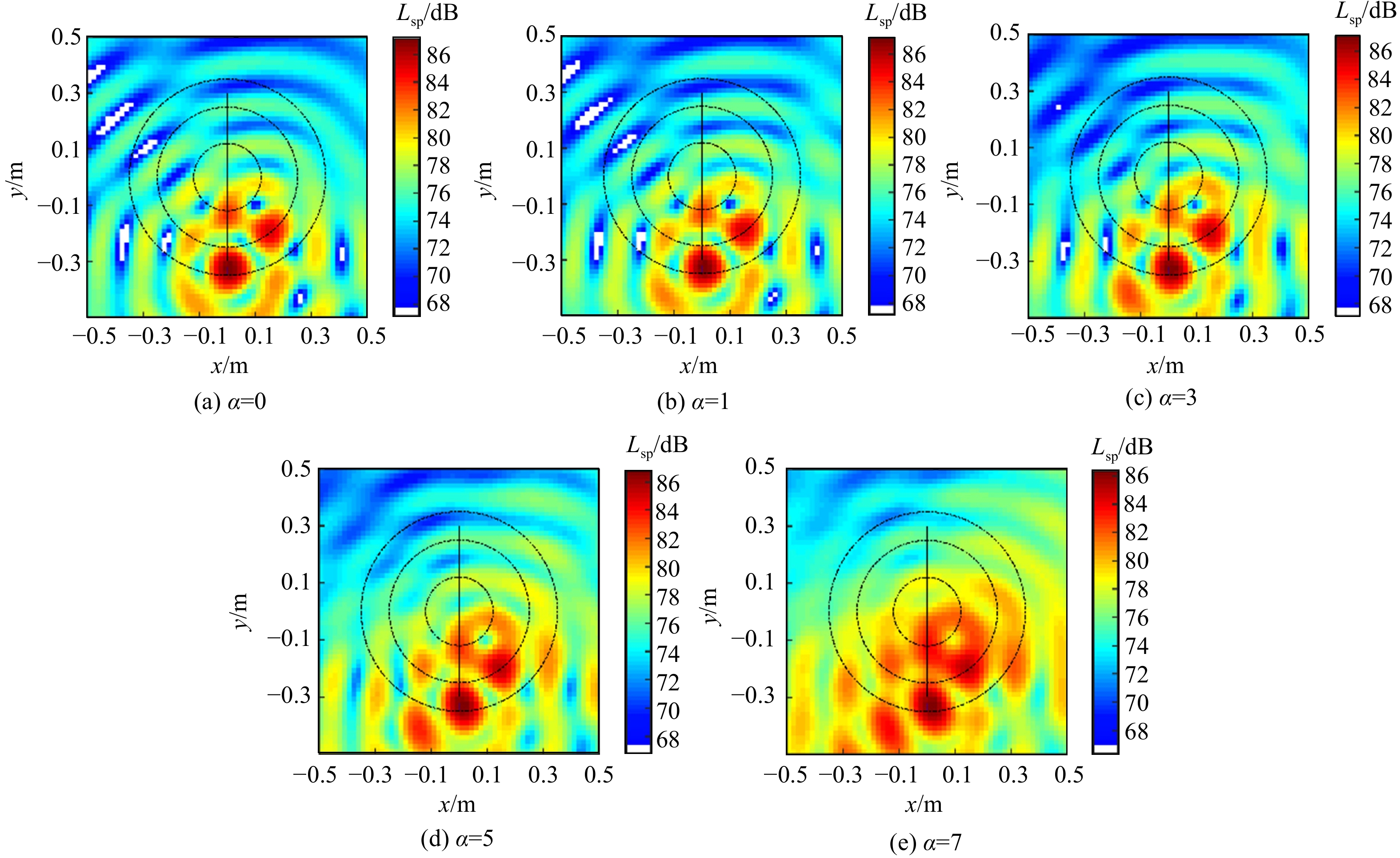
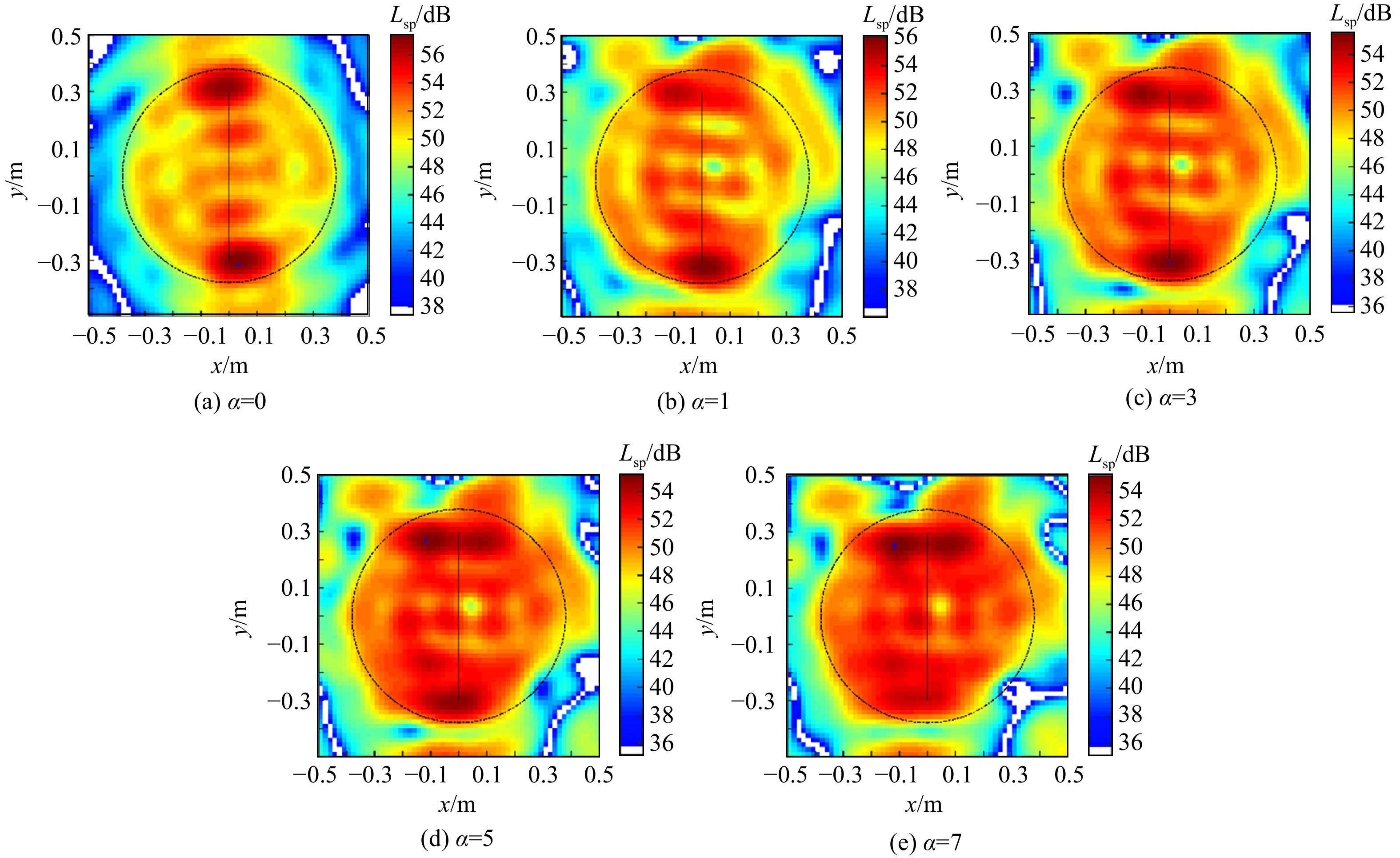
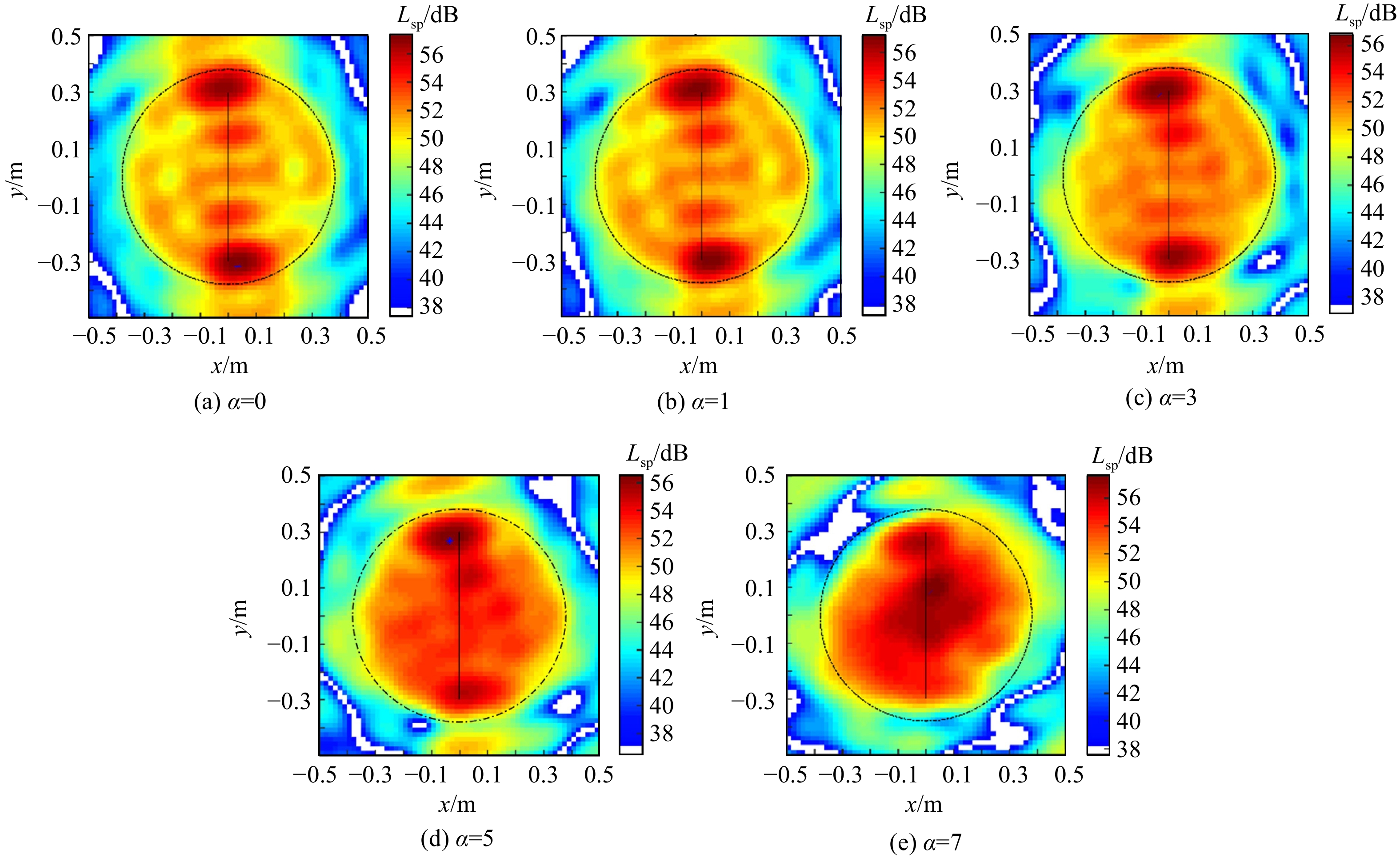
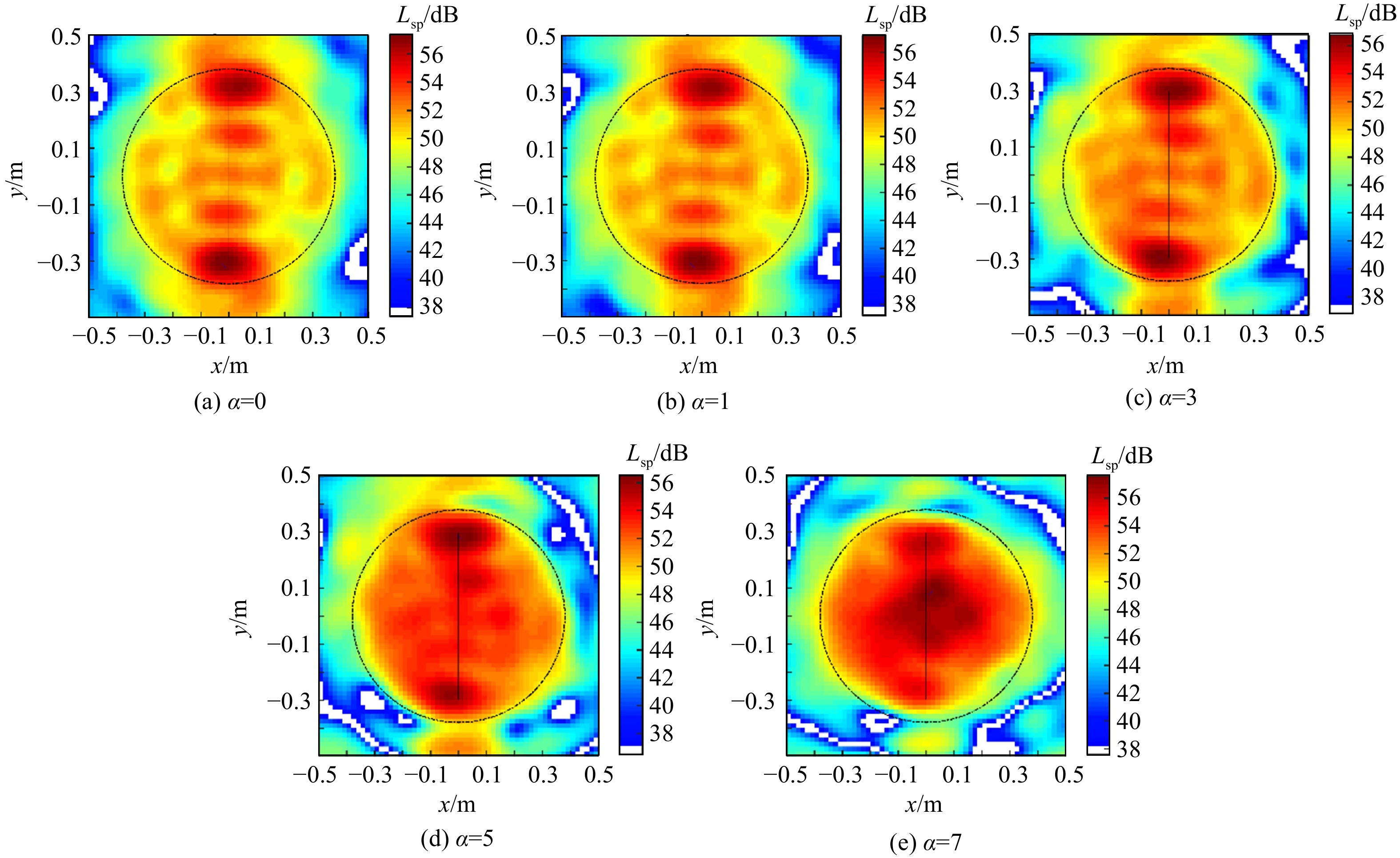
In order to address the problem of the unsteady aerodynamic mutual interference of propeller/wing system in cases of complex asymmetrical inflow, the hybrid structured-unstructured sliding mesh method combined with the unsteady Reynolds-averaged Navier-Stokes equation was used. This approach assessed the influences of yawed angel and inflow conditions (e.g., angle of attack and freestream velocity) on mutual aerodynamic interference of the propeller/wing and the propeller slipstream, and compared with the calculation results of the no-slipstream model. The results revealed that under the influence of three-dimensional asymmetric inflow, the wing lift coefficient and drag coefficient fell by 4.9% and 10.64%, respectively, when the yawed angle increased from 0° to 20°. However, the thrust coefficient and propulsion efficiency of the propeller improved significantly by 18.36% and 7.26%. Additionally, the fluctuation range of the lift coefficient of the asymmetrical inflow was four times that of the symmetrical inflow condition. When the angle of attack remained constant and the yawed angle changed, the propeller slipstream enhanced the stability margin of the wing pitching moment. Unfortunately, with a fluctuating angle of attack, the longitudinal instability of the wing gradually increased. Meanwhile, under the influence of the airflow behind the propeller disk, the suction peaks on the upper surface of the wing on both sides of the nacelle moved leftward and forward, while the absolute values of the peak on both the upper and lower surfaces increased considerably. With varying wing speed, the increase in wing lift performance with slipstream was around 20%, compared with the wing without the influence of slipstream. Besides, the lift performance continued to increase with wind speed.