2023 Vol. 38, No. 1

Structure,Strength and Vibration
Structural design and static strength evaluation of SiC/SiC-composite turbine blade
SHI Duoqi, LIU Changqi, CHENG Zhen, YANG Rui, LIANG Xianghua, LI Nina, YANG Xiaoguang, GUO Yiquan
2023, 38(1): 1-12. doi: 10.13224/j.cnki.jasp.20210531
Abstract:

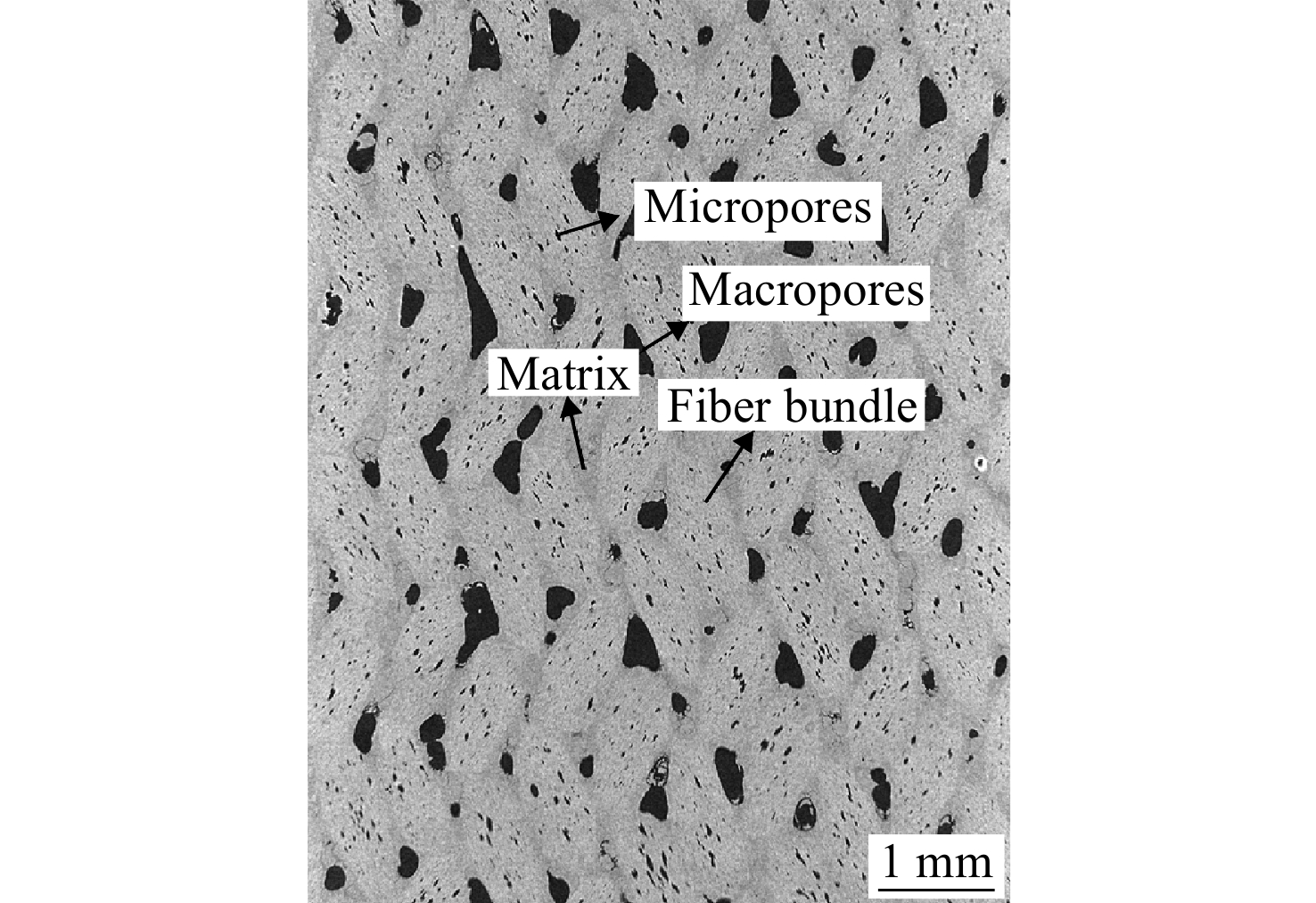
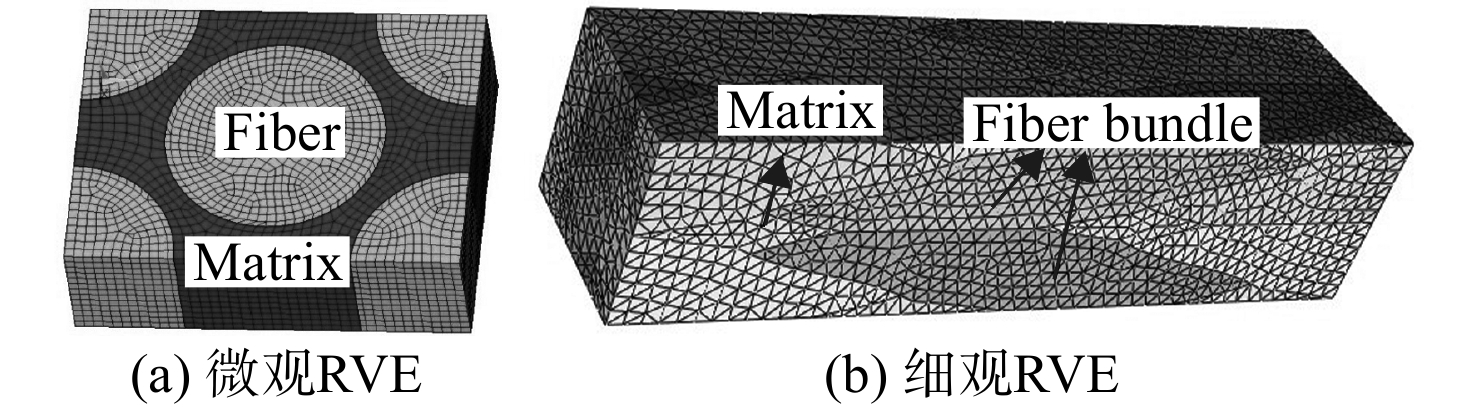
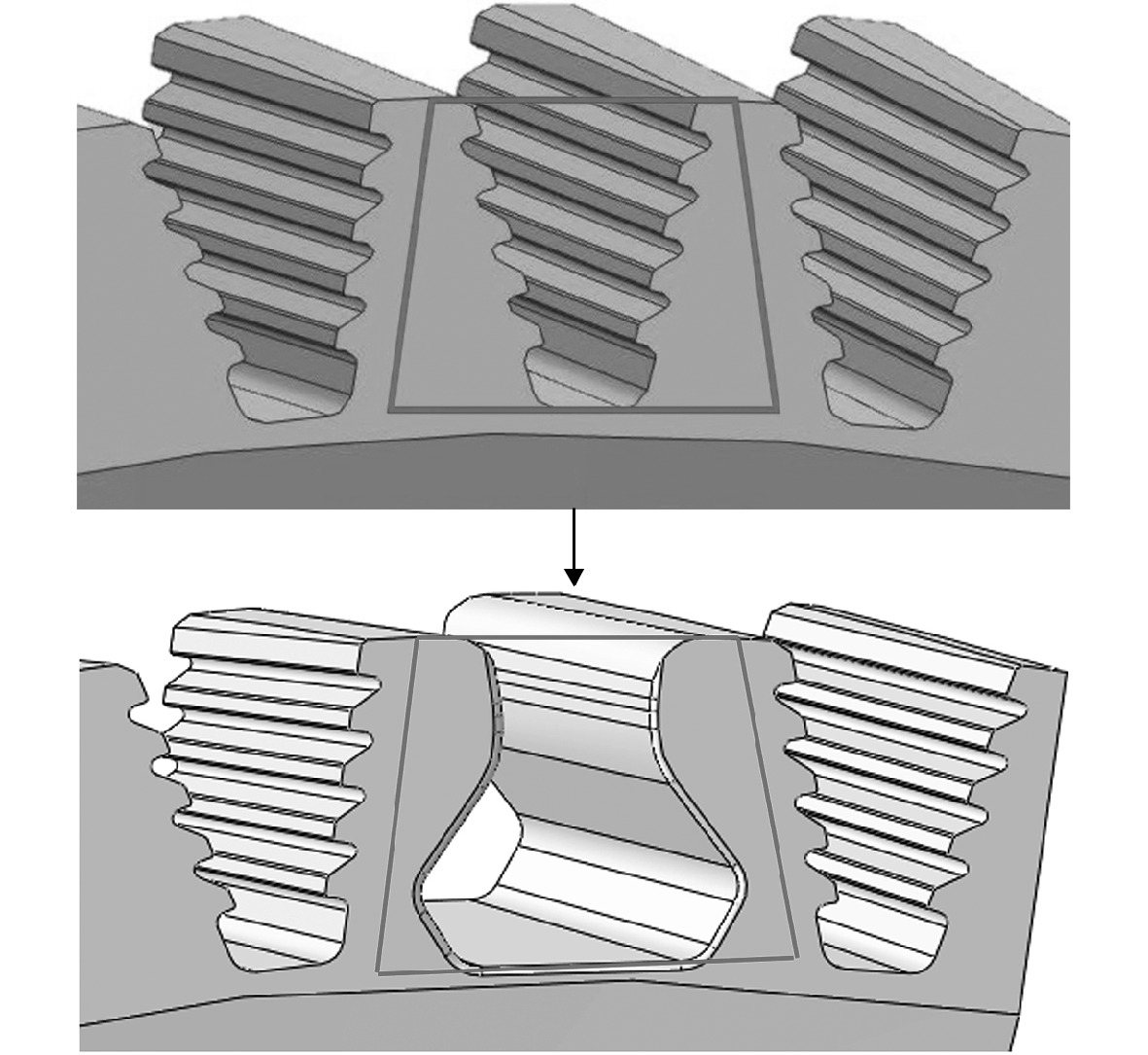
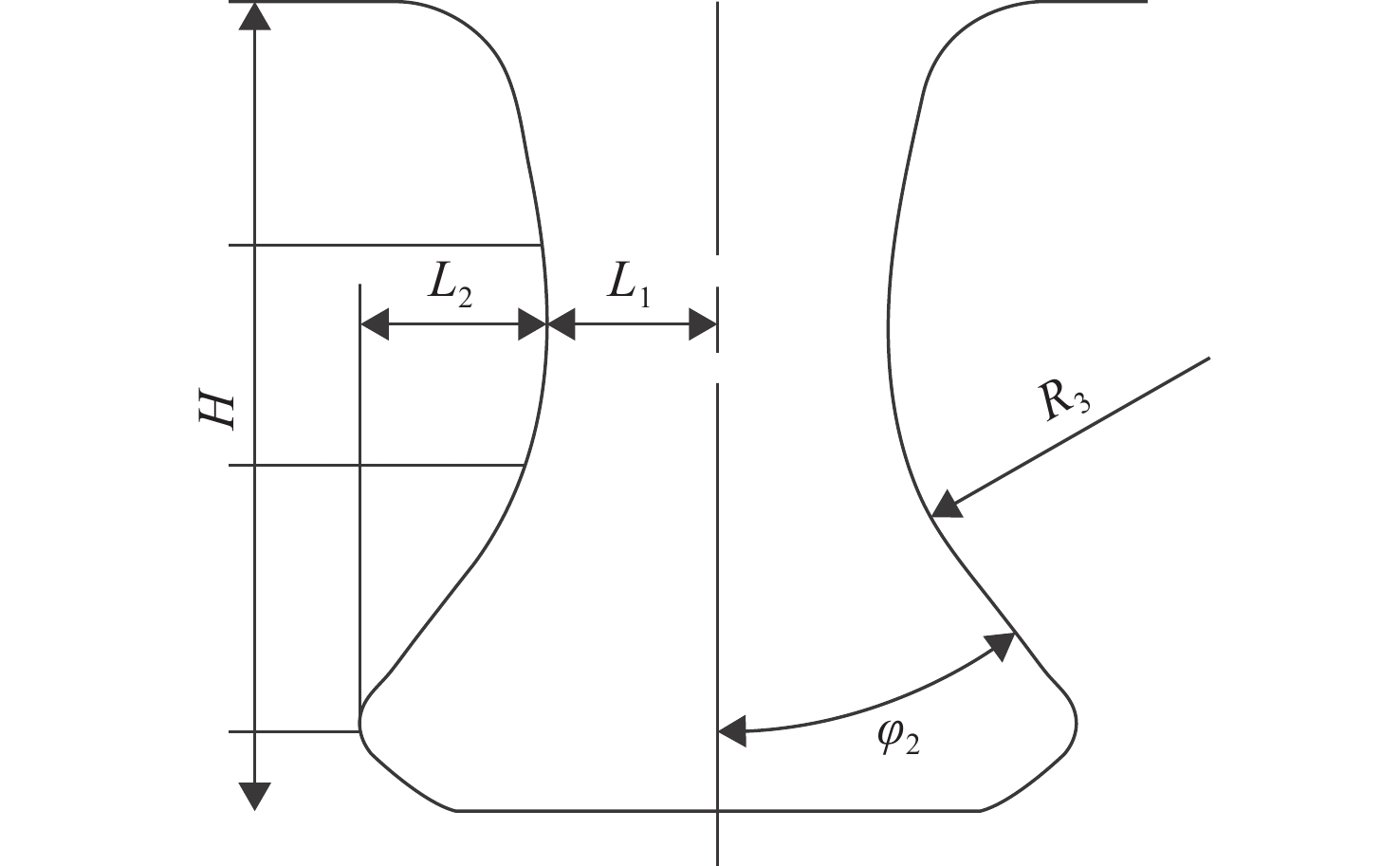
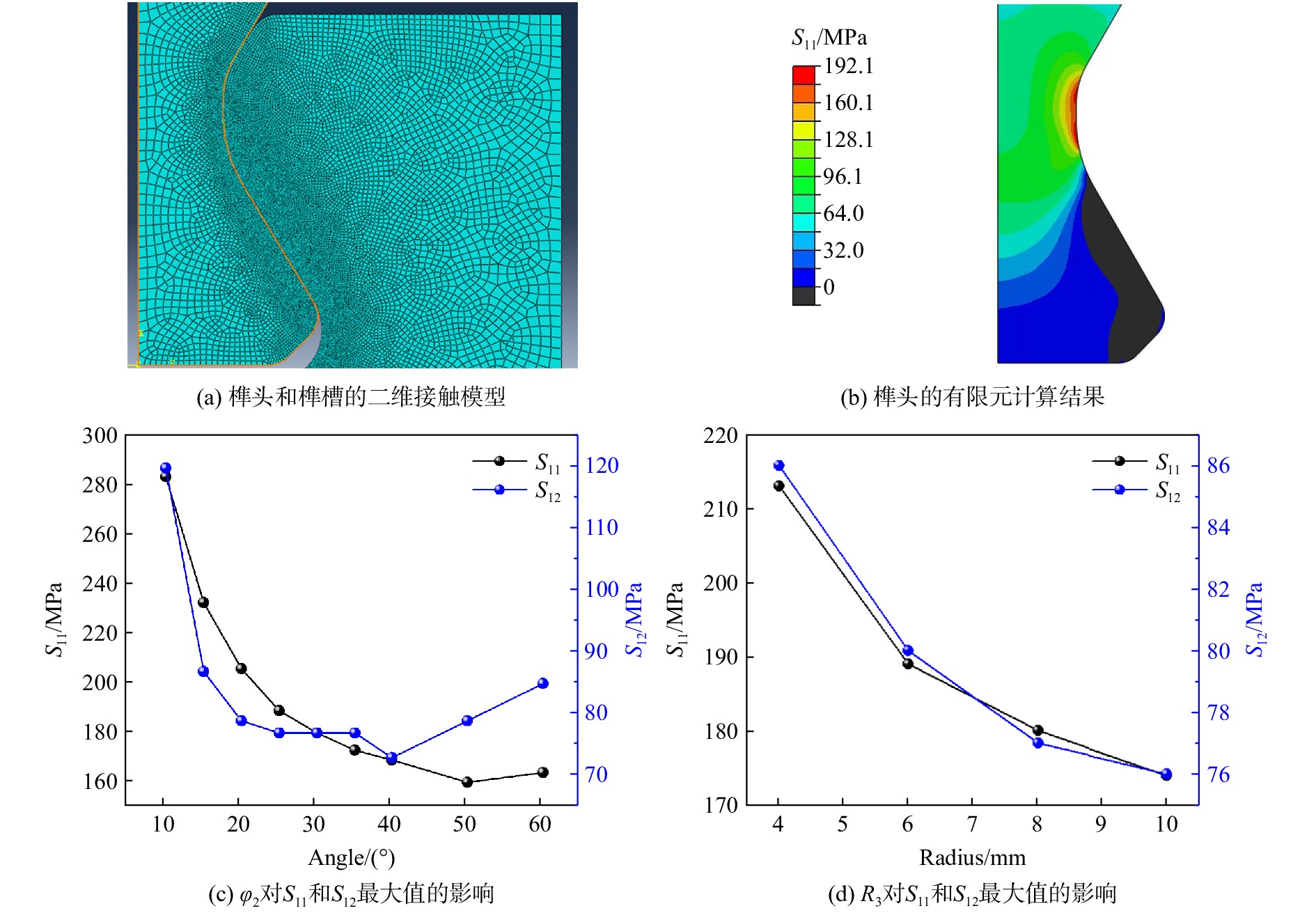
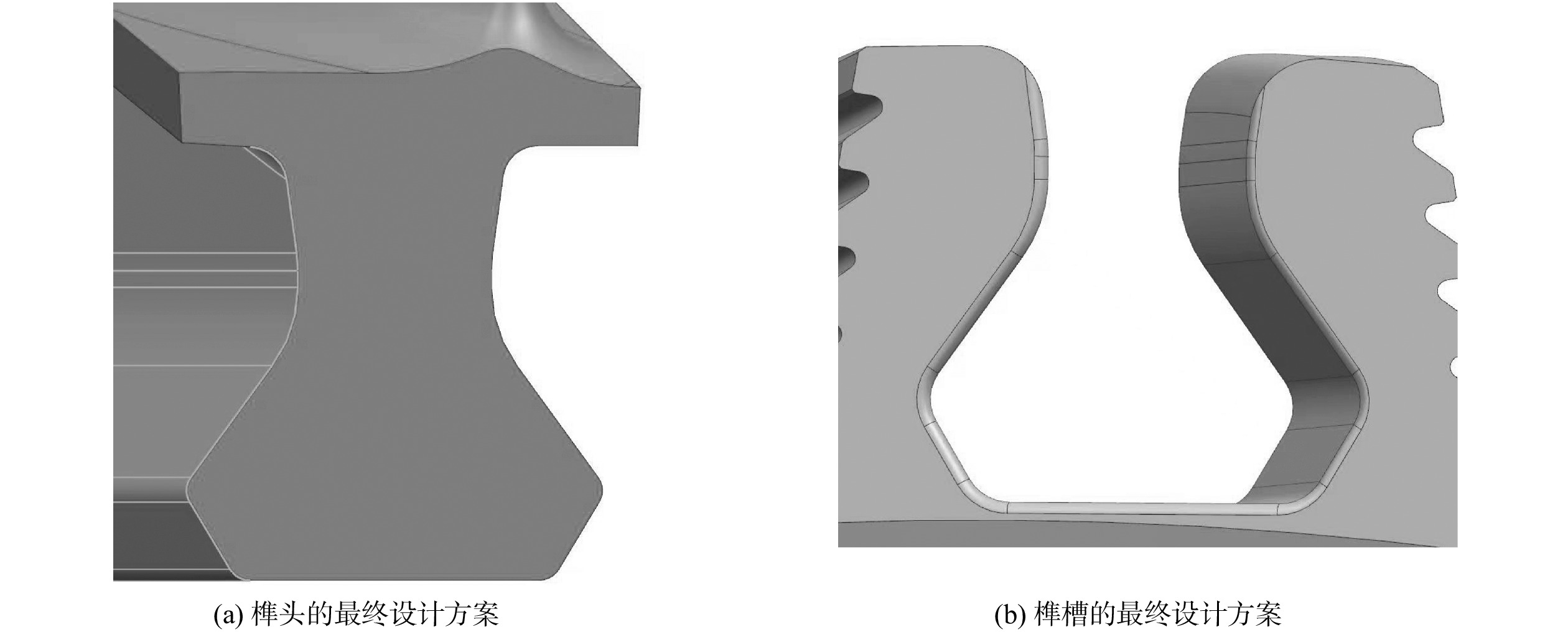
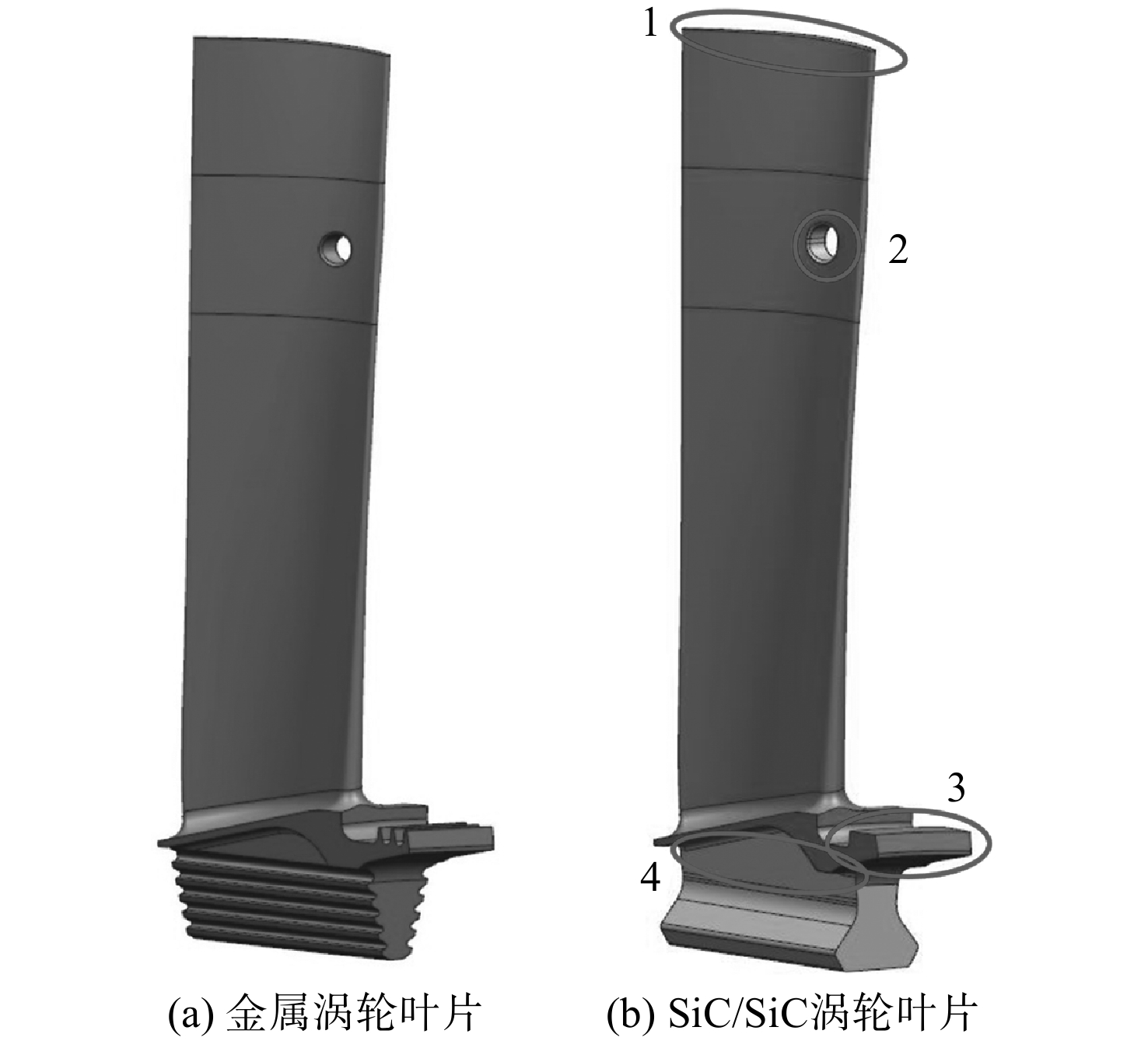
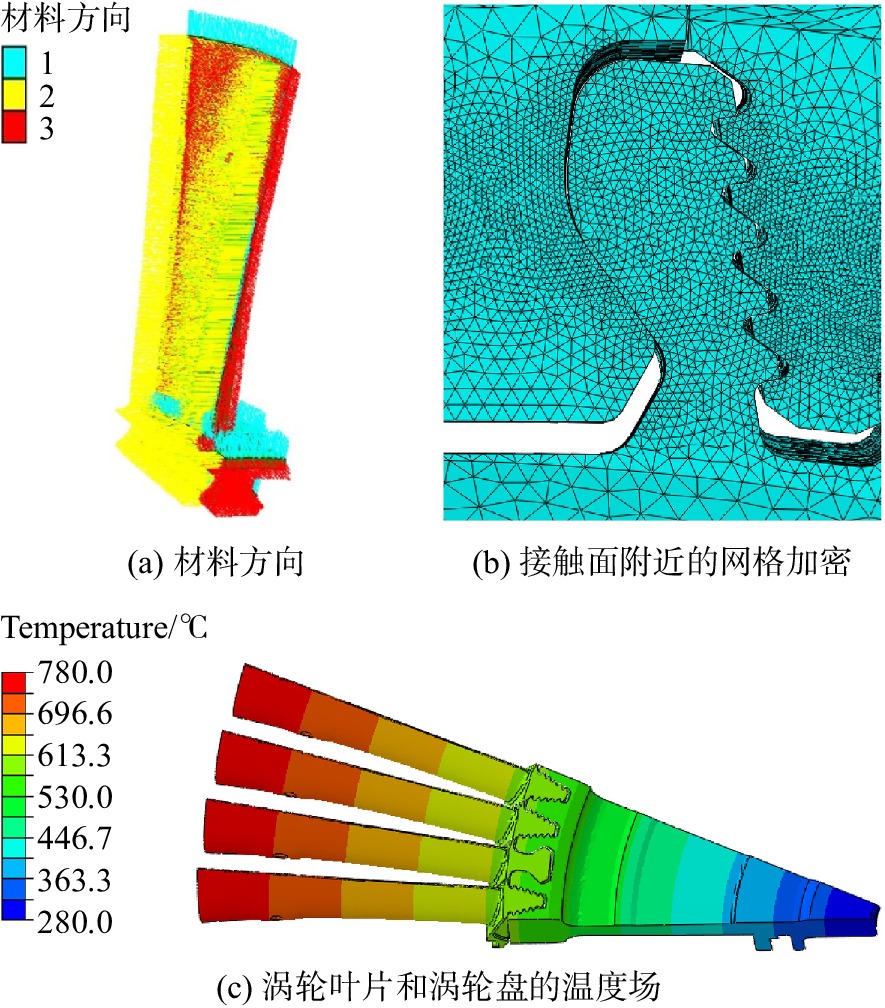
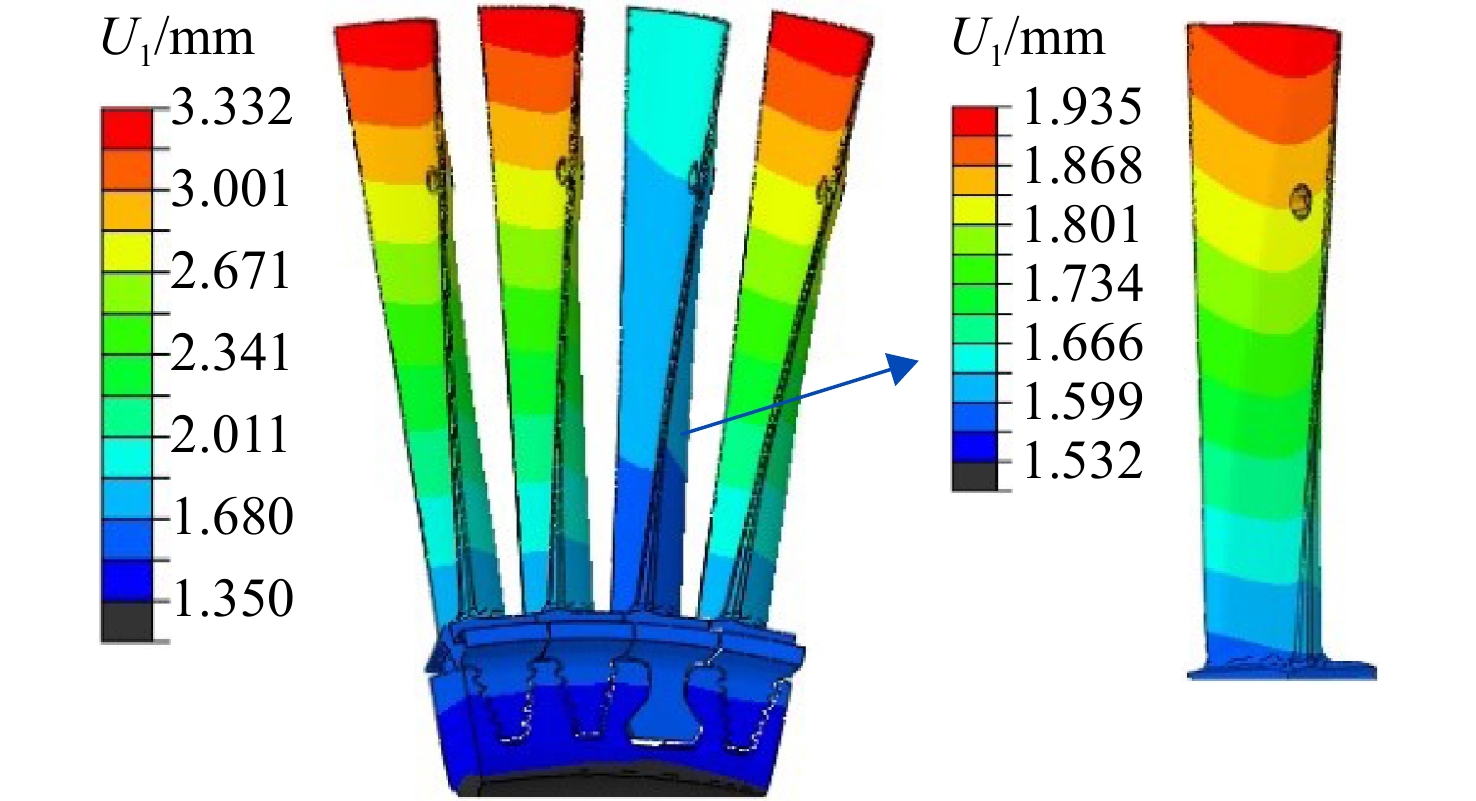
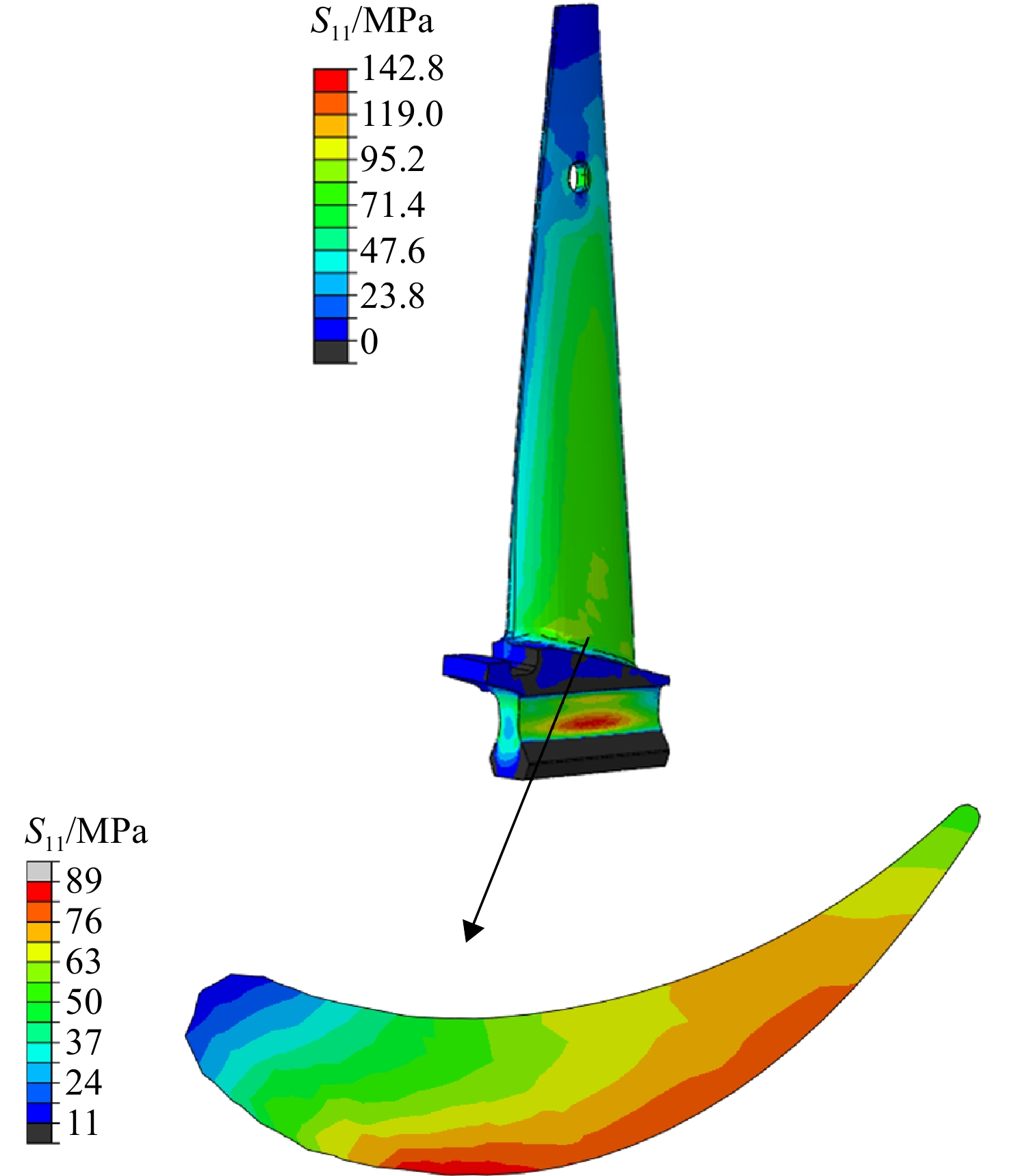
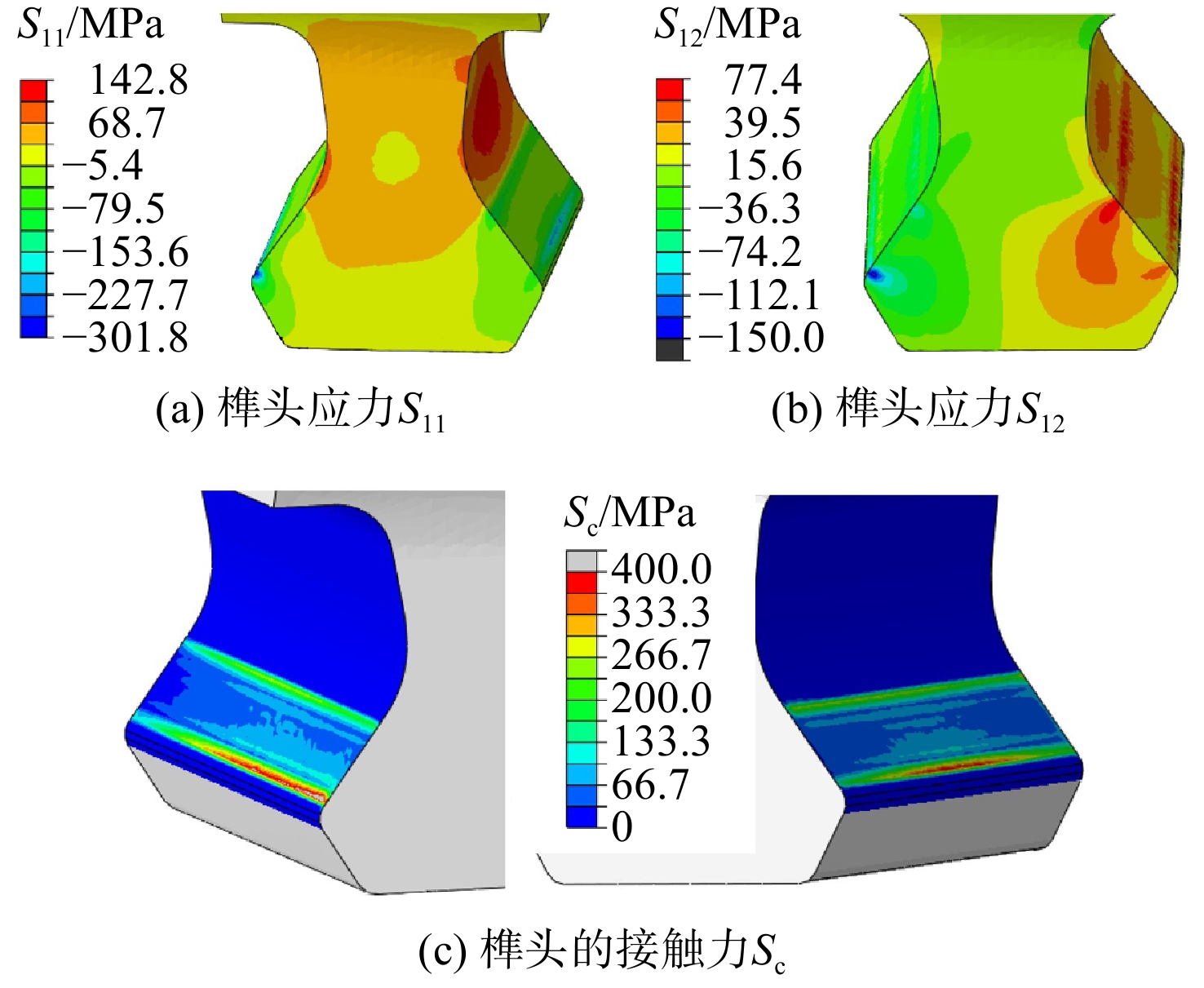
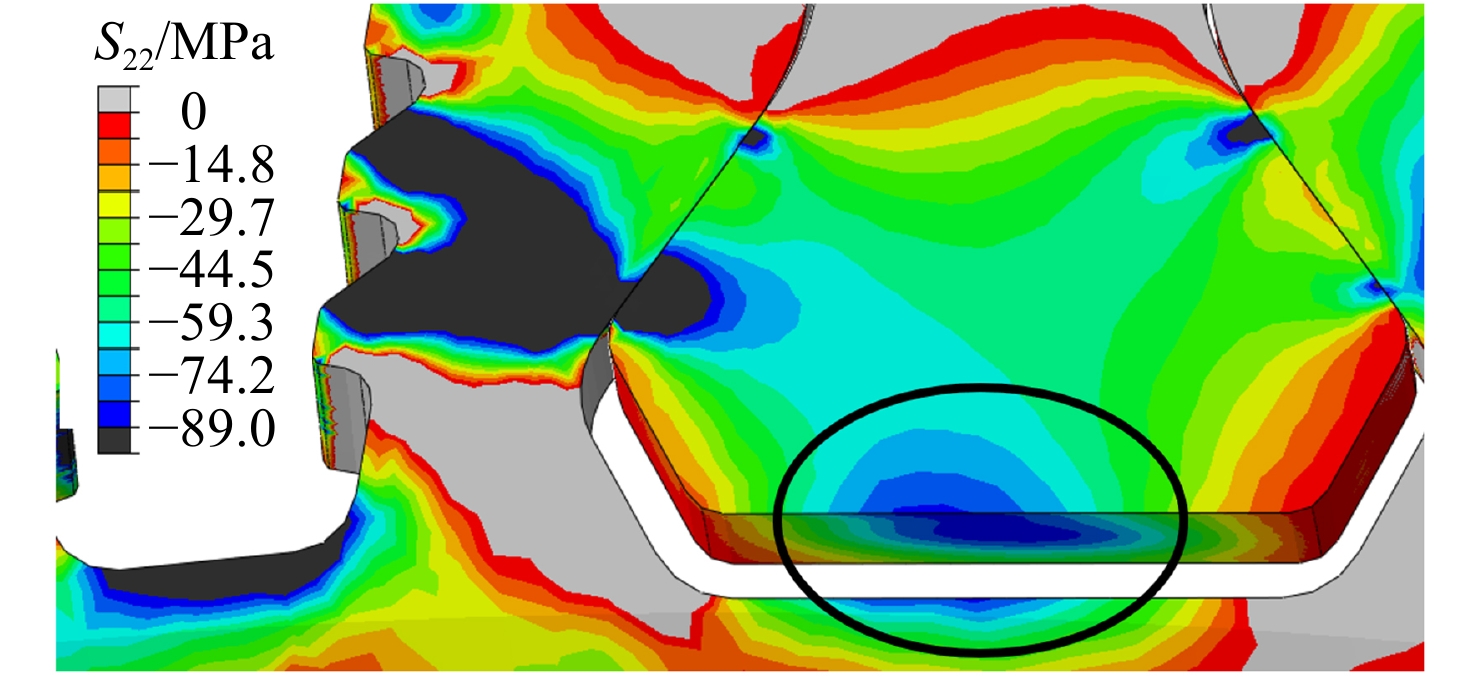
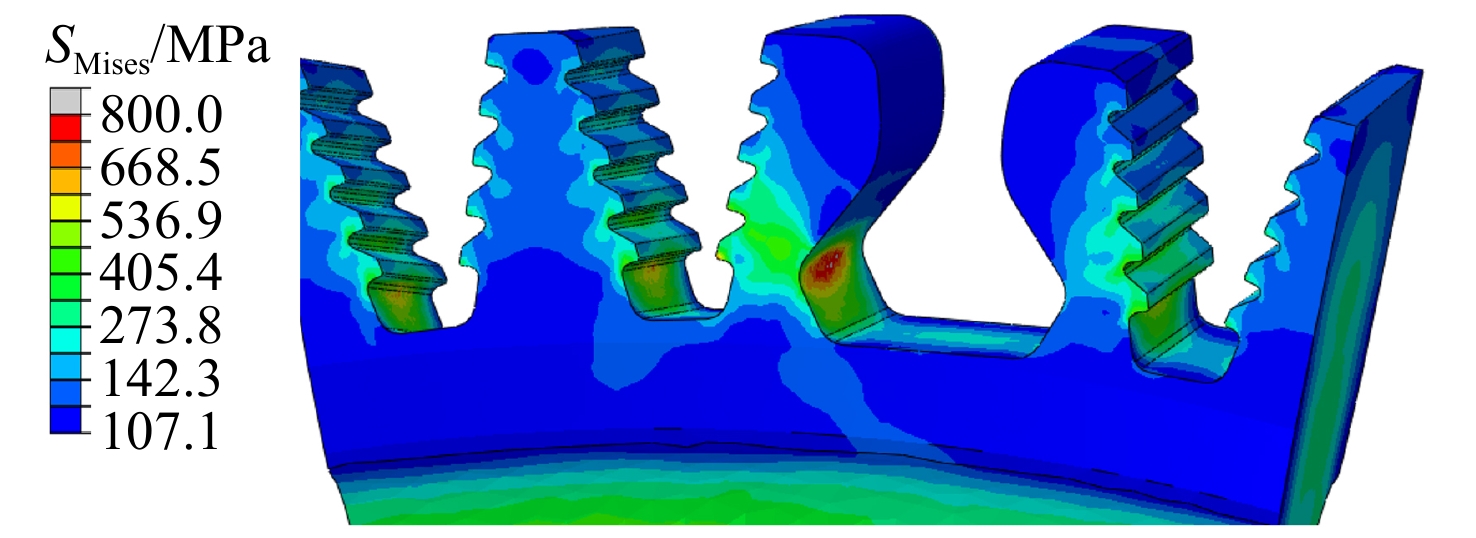
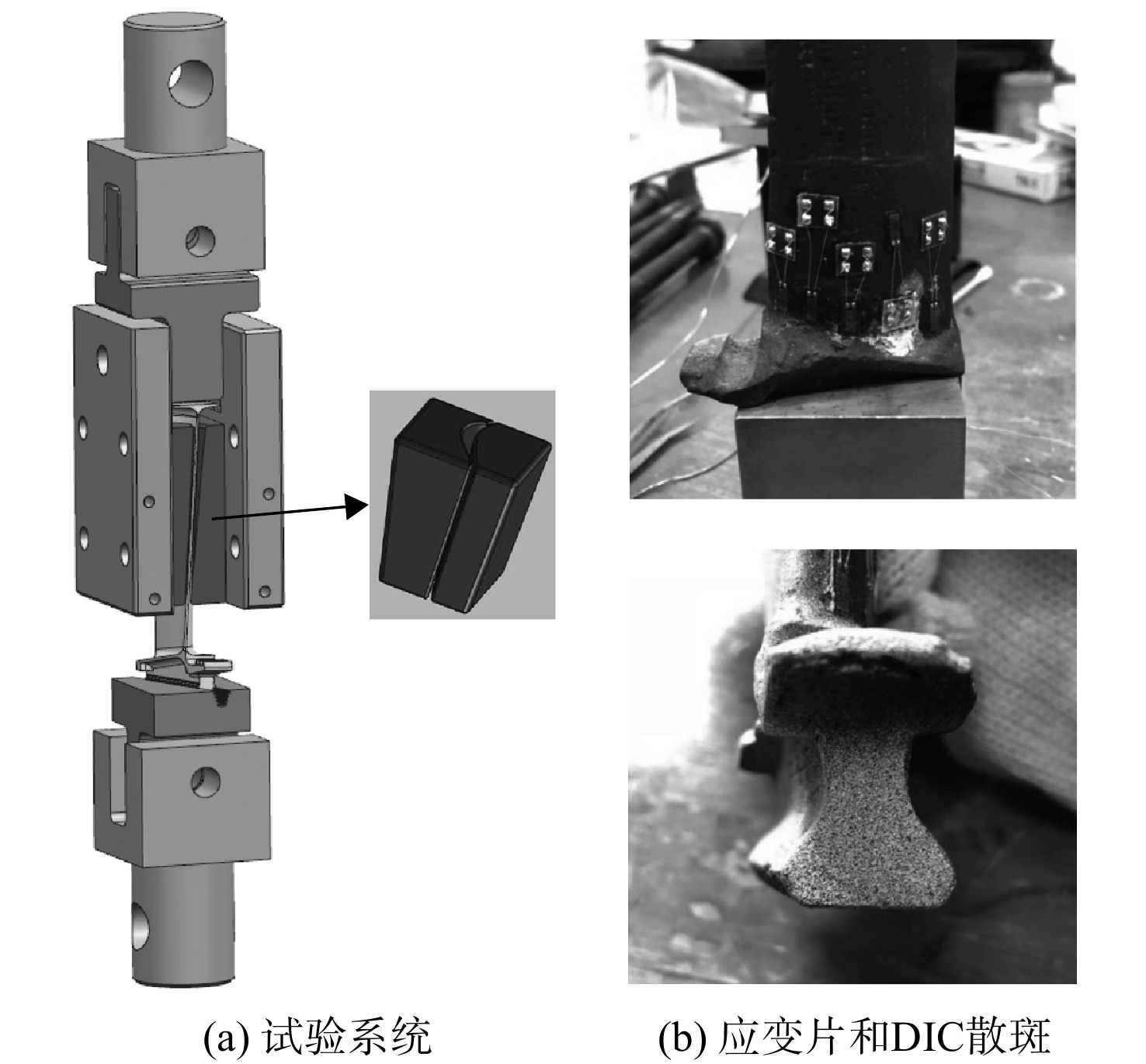
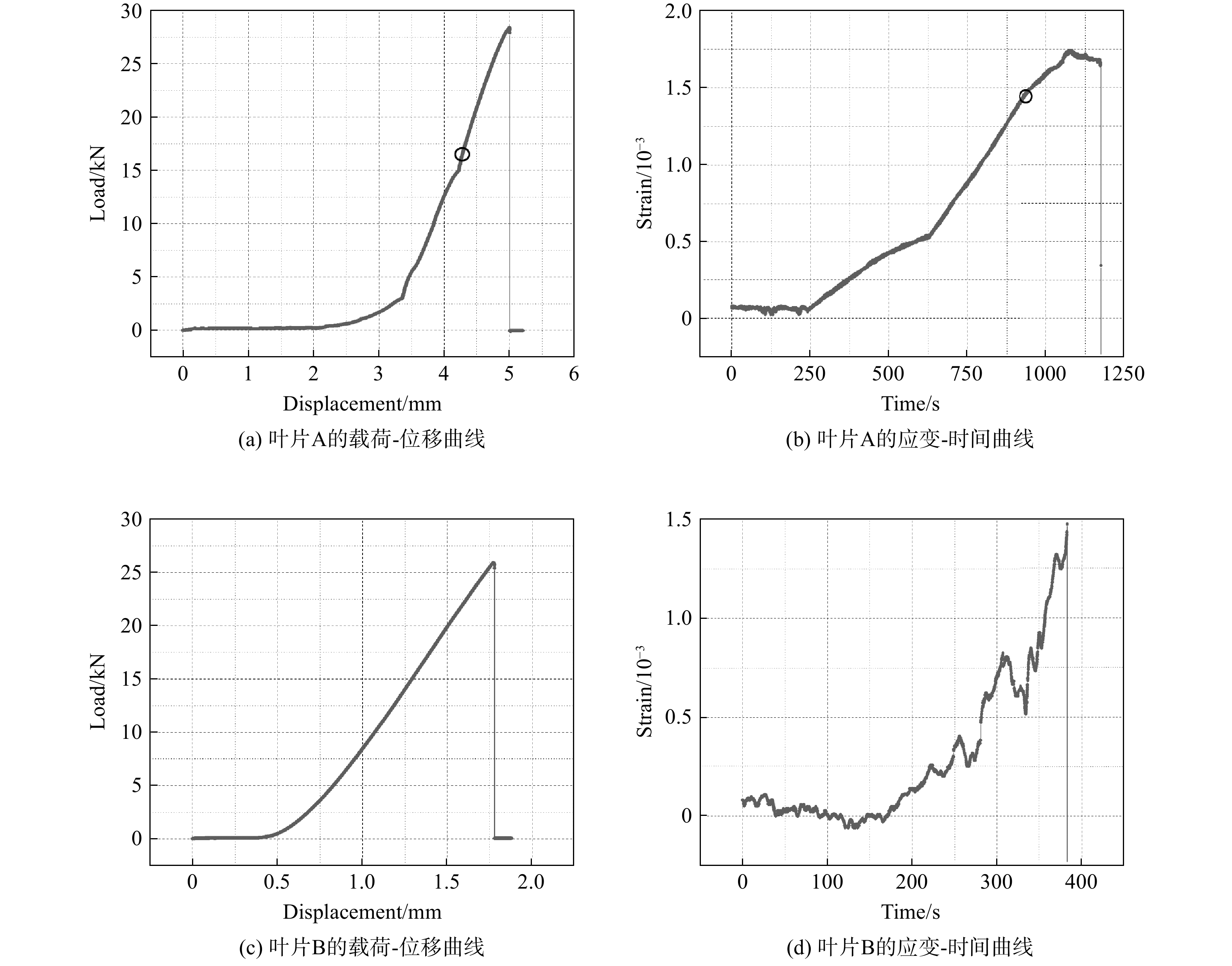
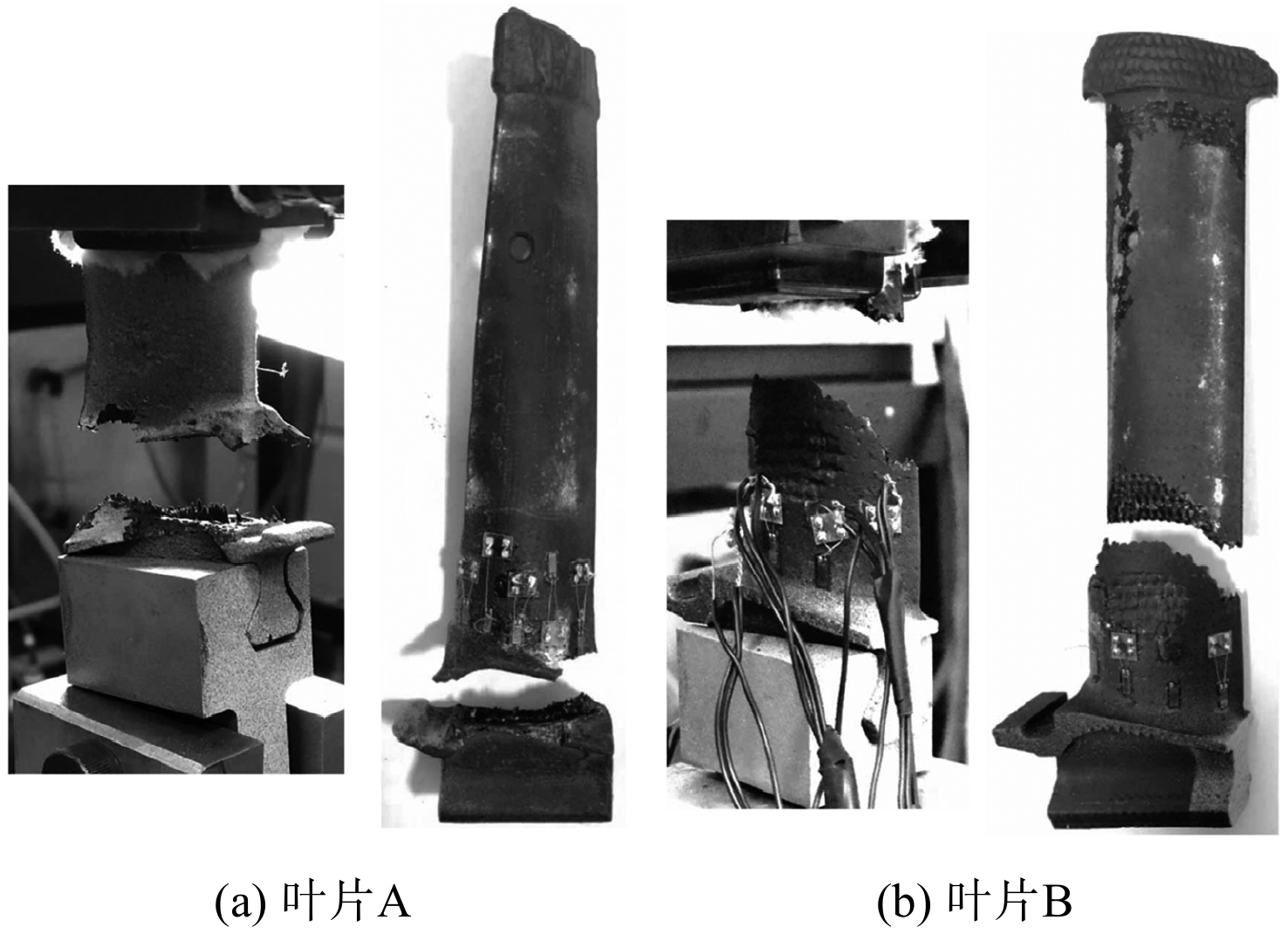
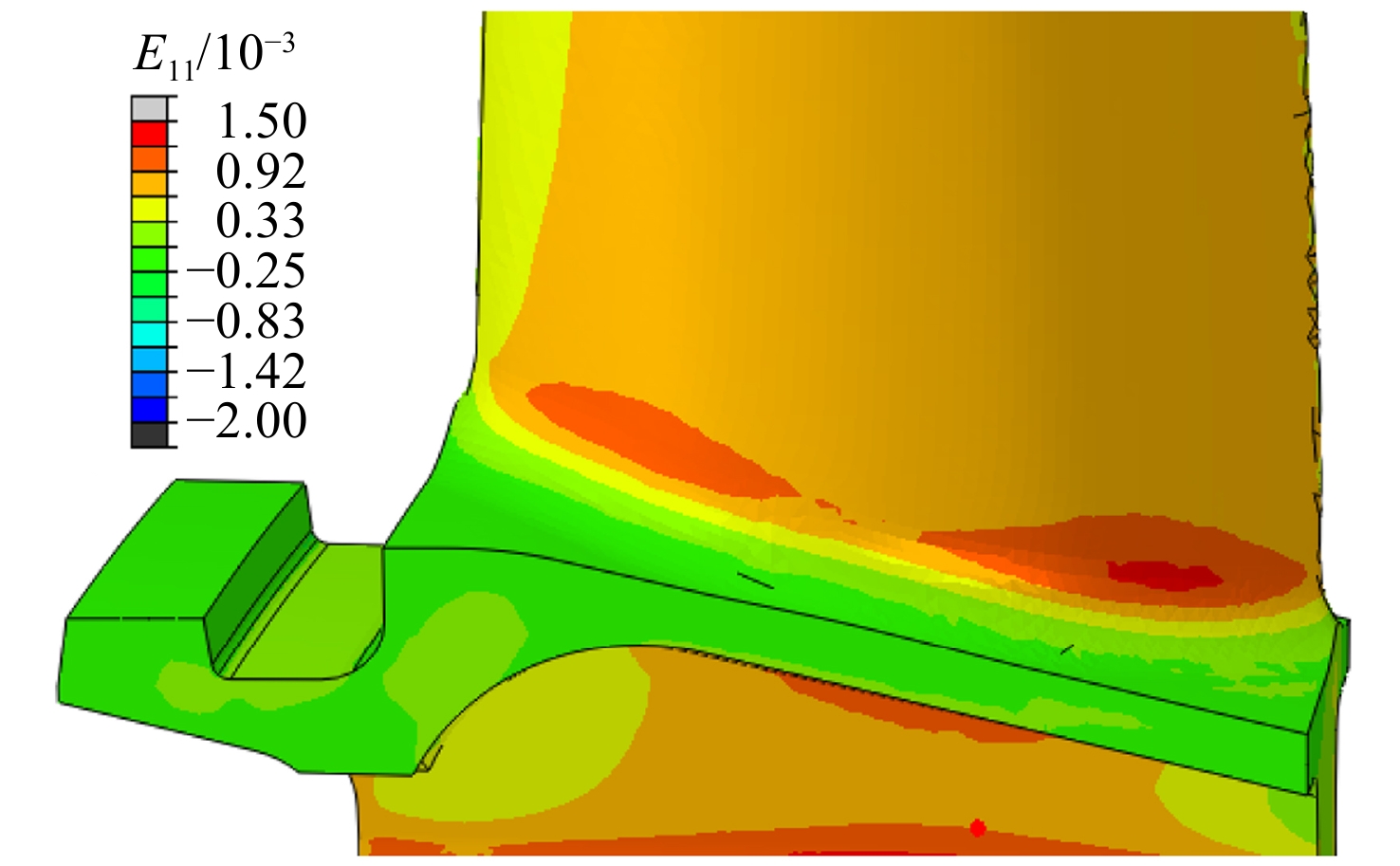
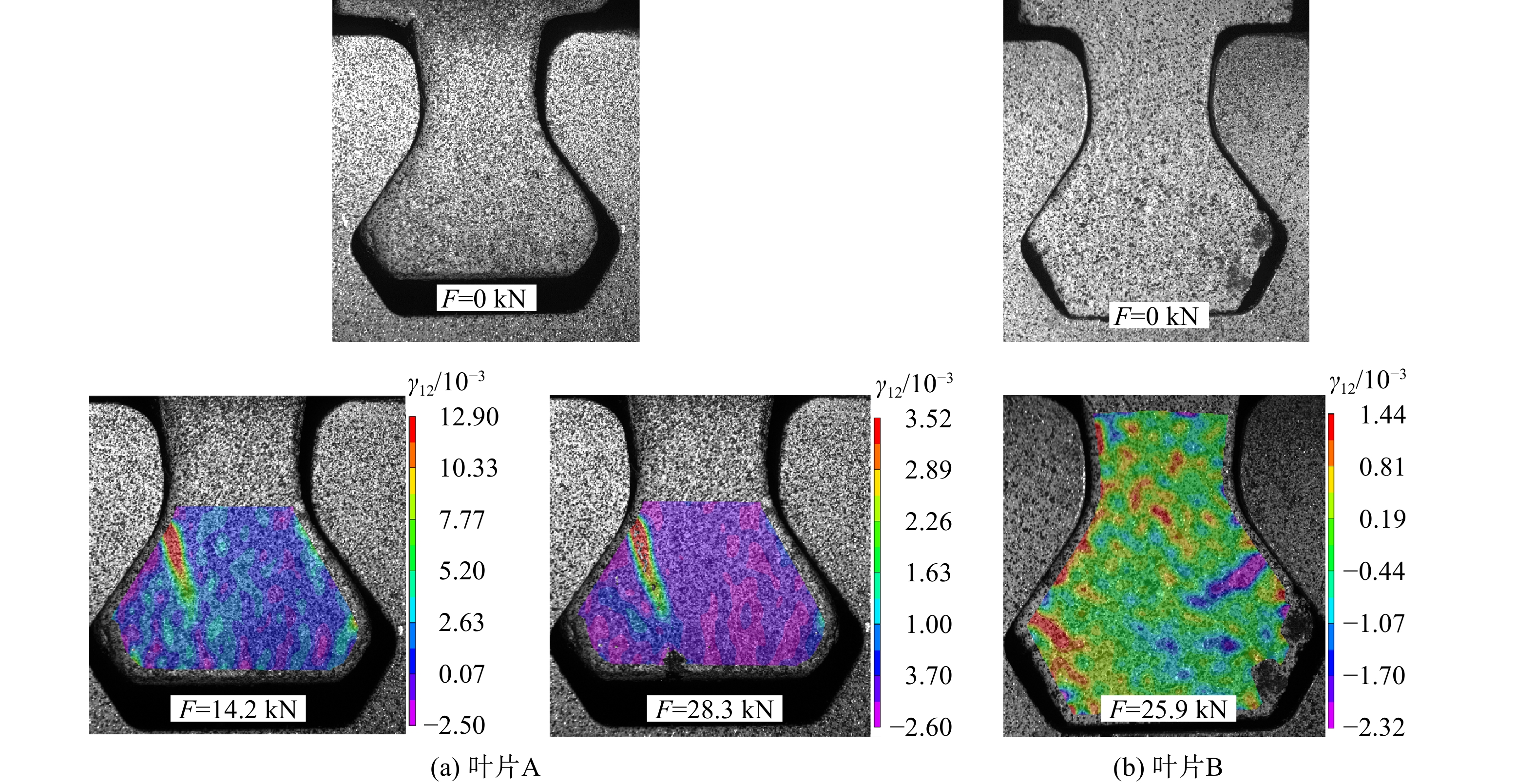
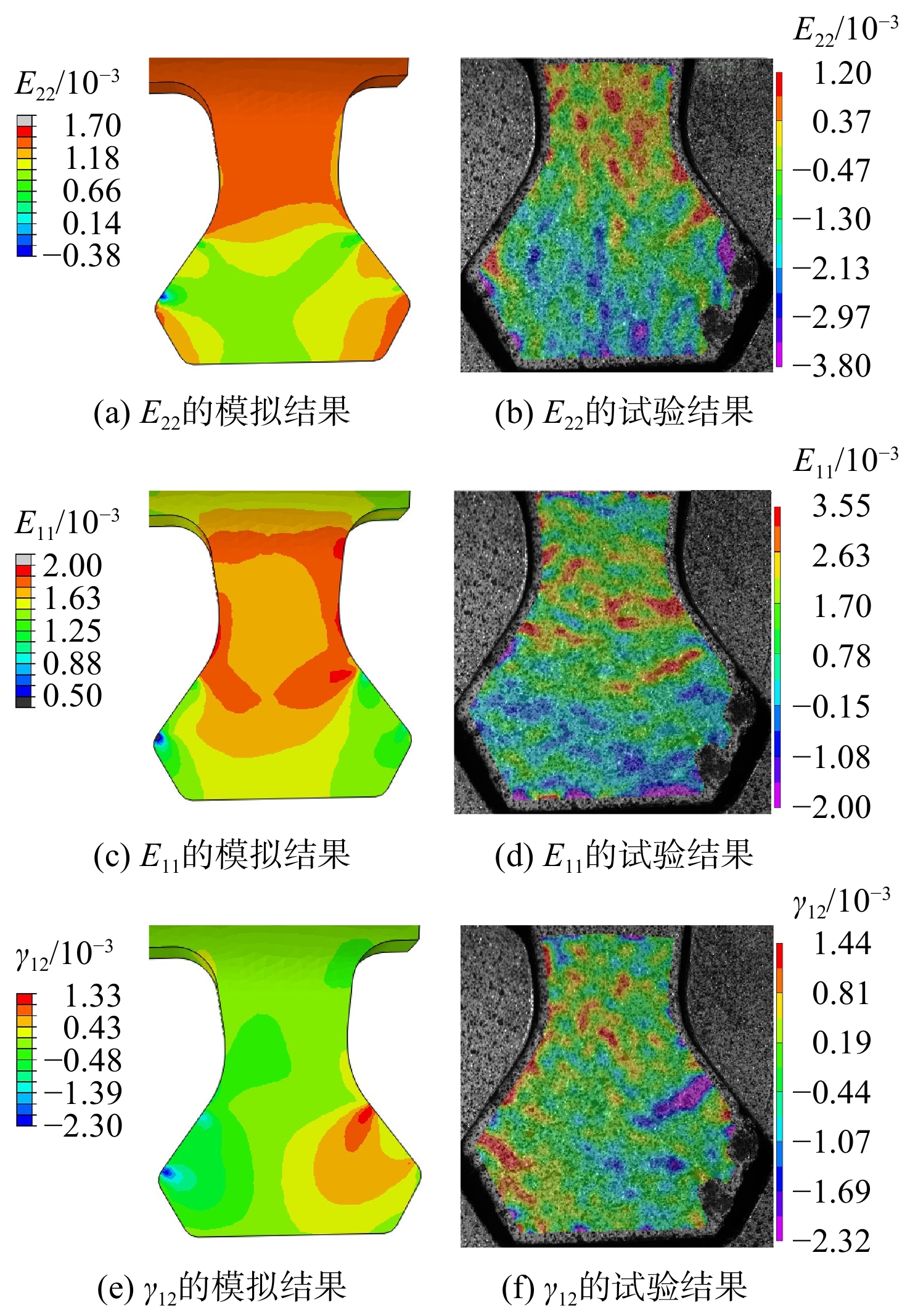
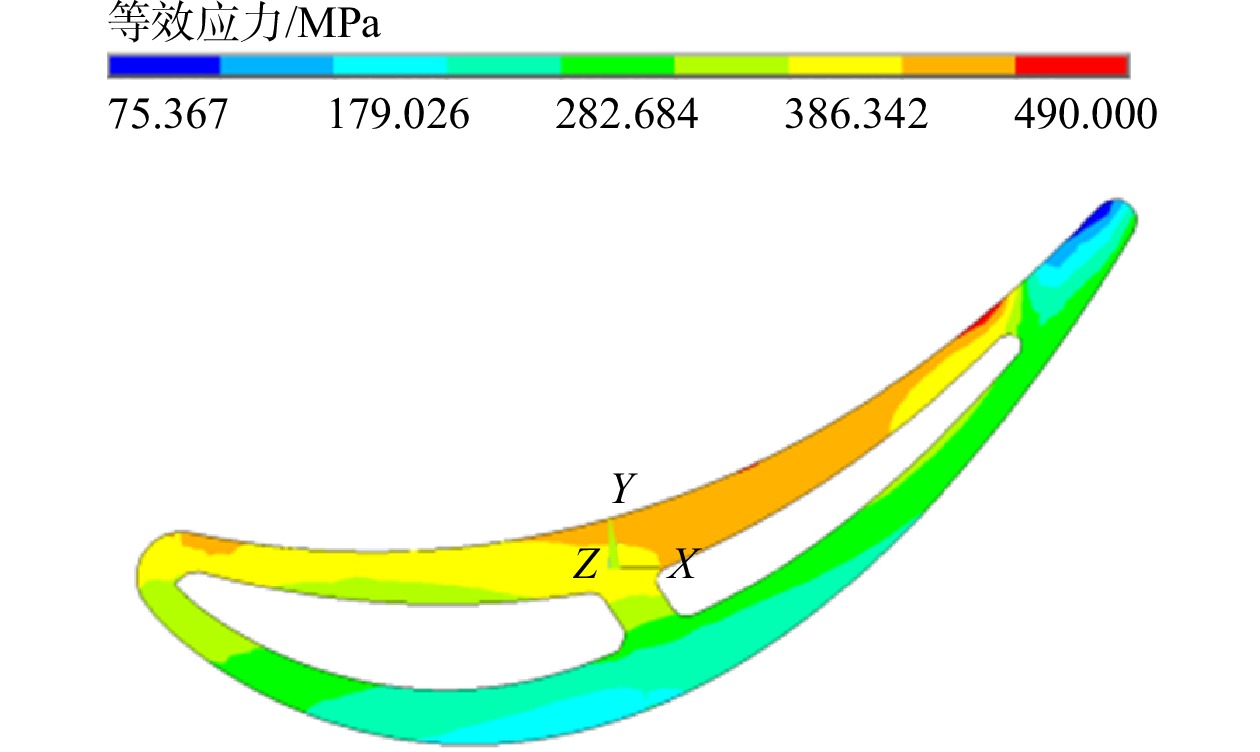
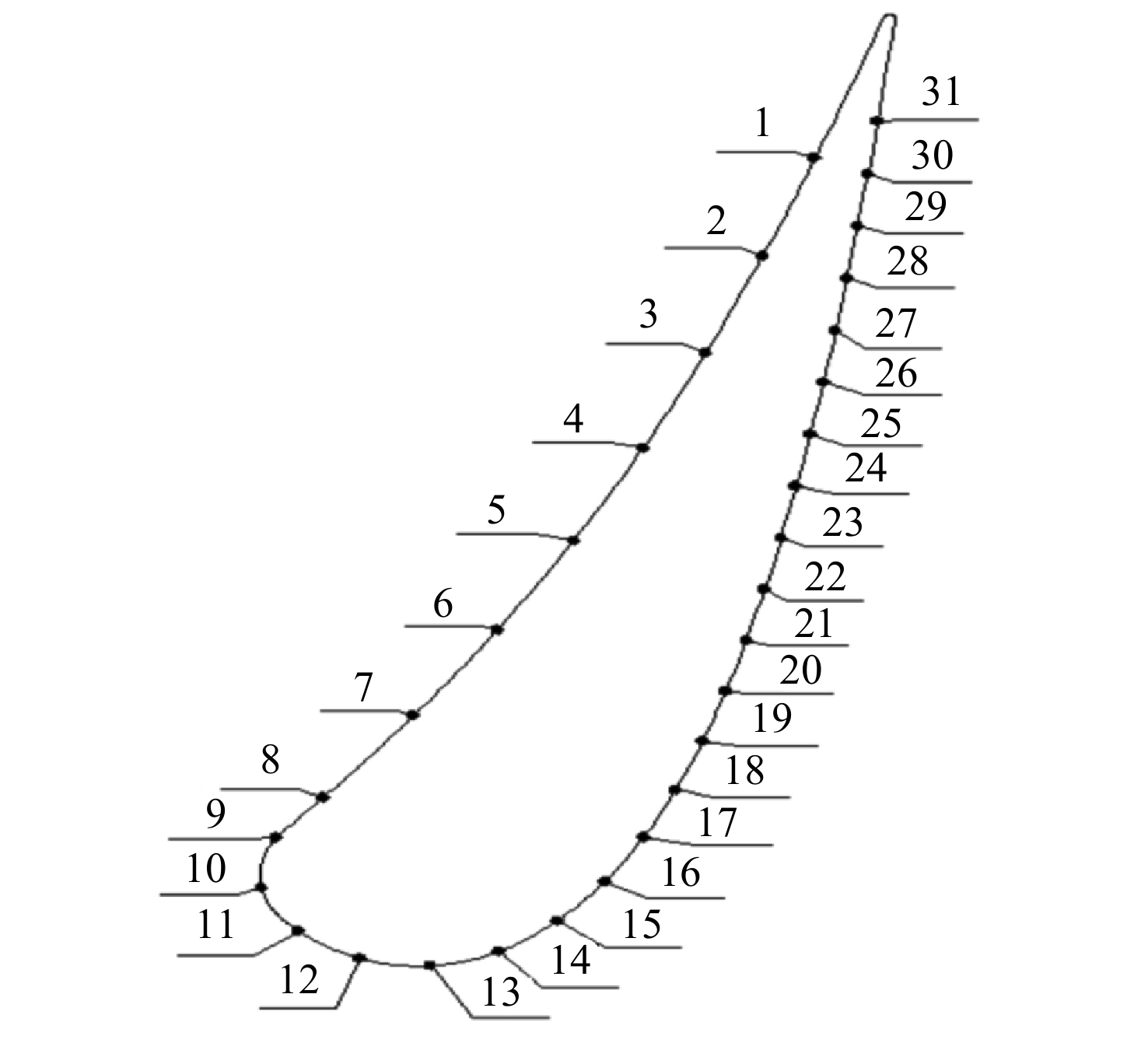
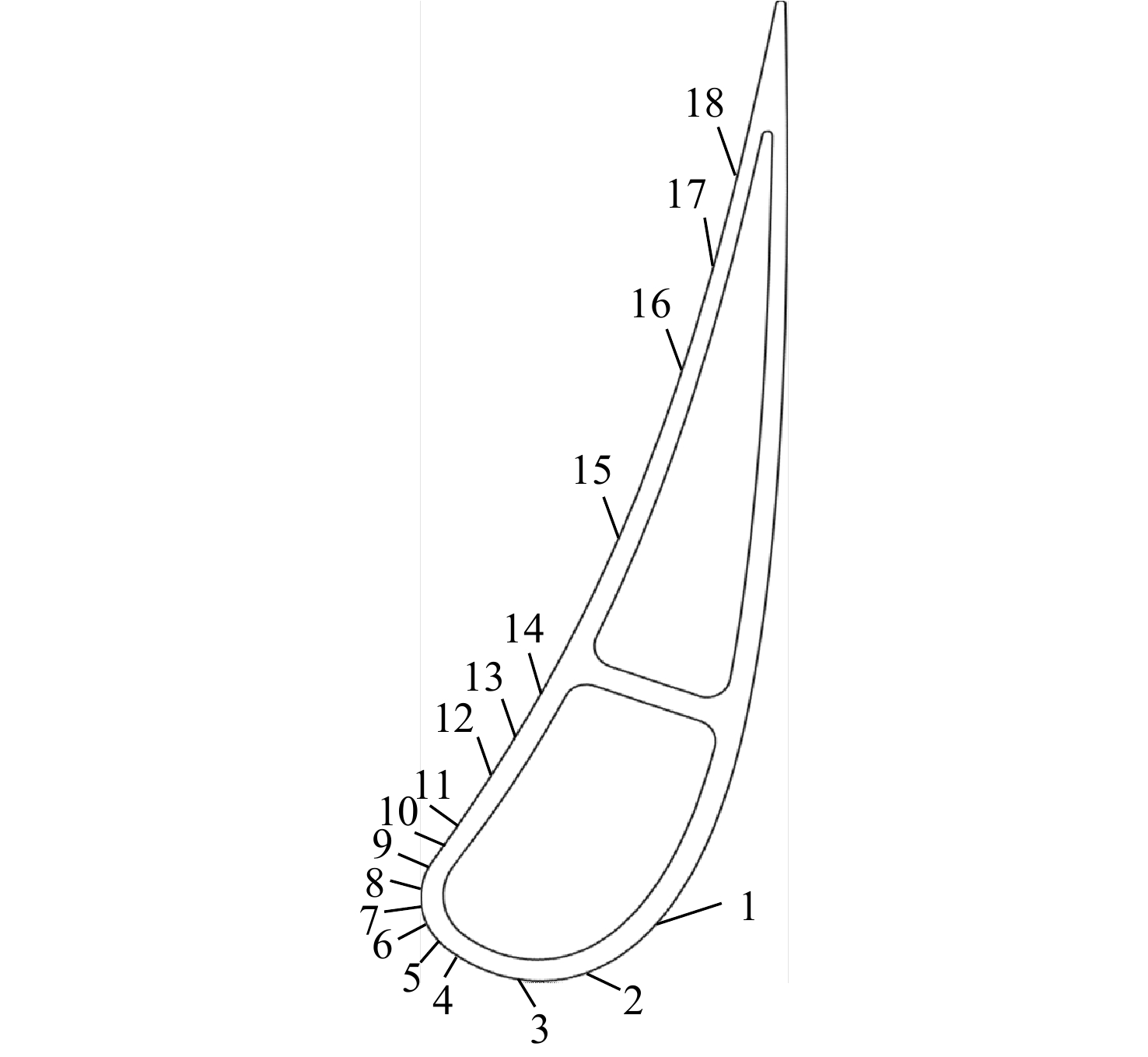
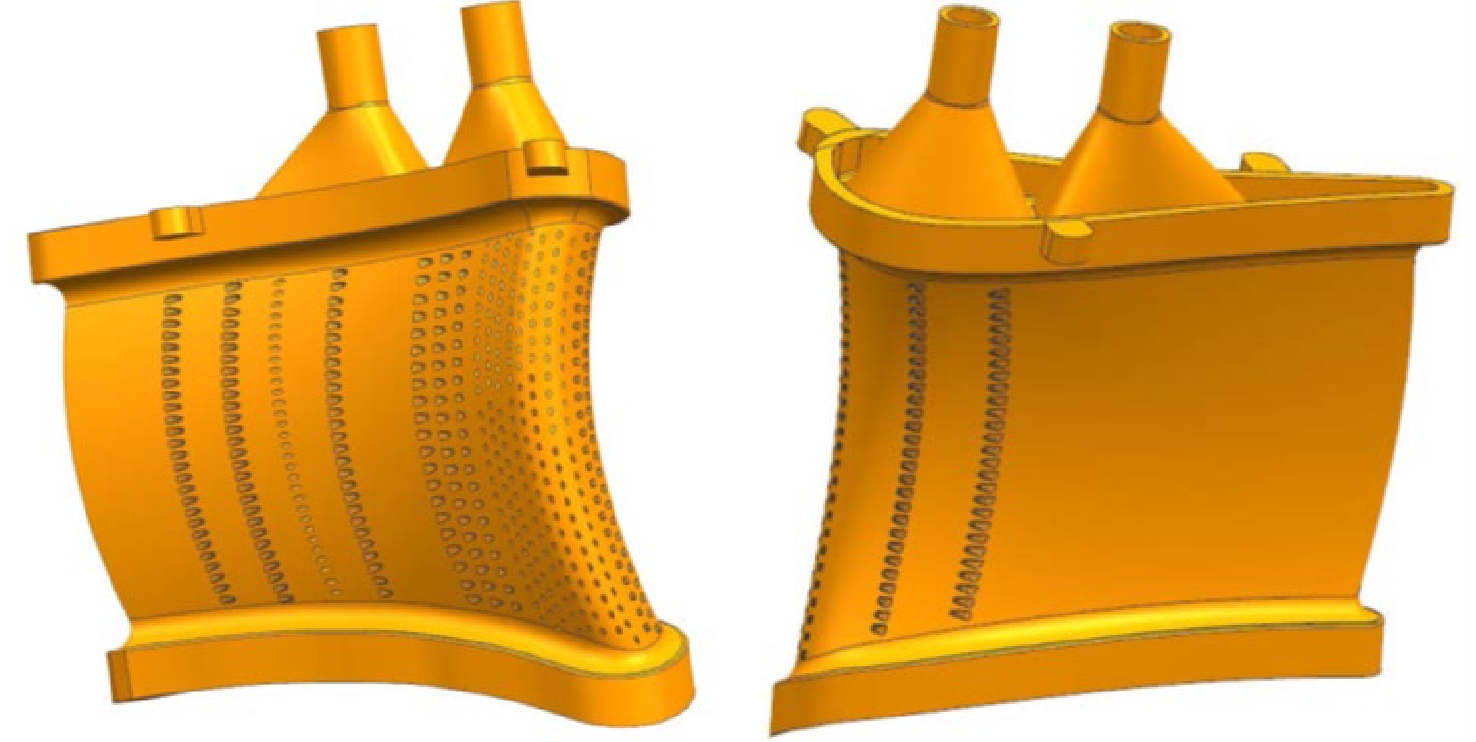
A superalloy low-pressure turbine blade was taken as a reference, and the feasibility of SiC/SiC composites for the structural design of this type of turbine blade was studied. The macro design, dovetail design and detail design of the blade were successively conducted. The deformation and stress characteristics of the metal and composite turbine blades were calculated. Tensile tests of the turbine blades prepared according to the above design were carried out, and the deformation of blade body and dovetail was monitored during the tests. The calculation results showed that the elongation of the SiC/SiC-composite blade was lower than that of original metal blades under rated condition. The stress level at the transition between blade root and listrium was relatively high, but lower than the ultimate tensile strength of the SiC/SiC composites. There was a risk of local shear failure at the neck of the dovetail. The results of the experiments indicated that the eventual failure of the blades distinctly exhibited a tensile failure mode, and the coefficient of the margin of strength calculated by the rotate speed at fracture was about 1.3. This structural design method adopted proved feasible, and the SiC/SiC-composite blades successfully passed the static strength tests under the laboratory condition.

Numerical study on fluid-structure interaction of critical pressure capacity of brush seal
SUN Dan, LIU Wei, JIAO Zhongze, ZHAO Huan, LI Yu
2023, 38(1): 13-22. doi: 10.13224/j.cnki.jasp.20210404
Abstract:

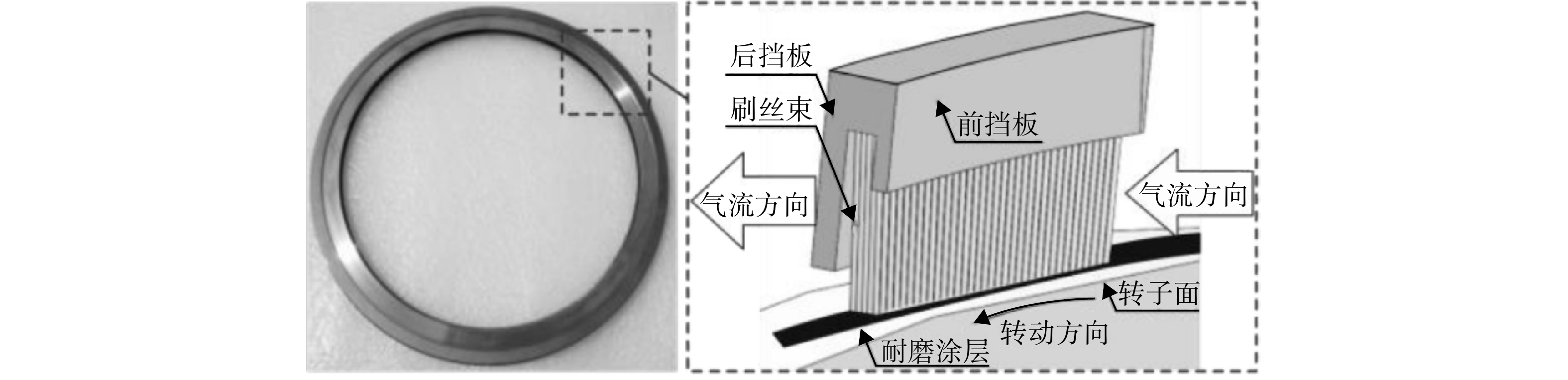
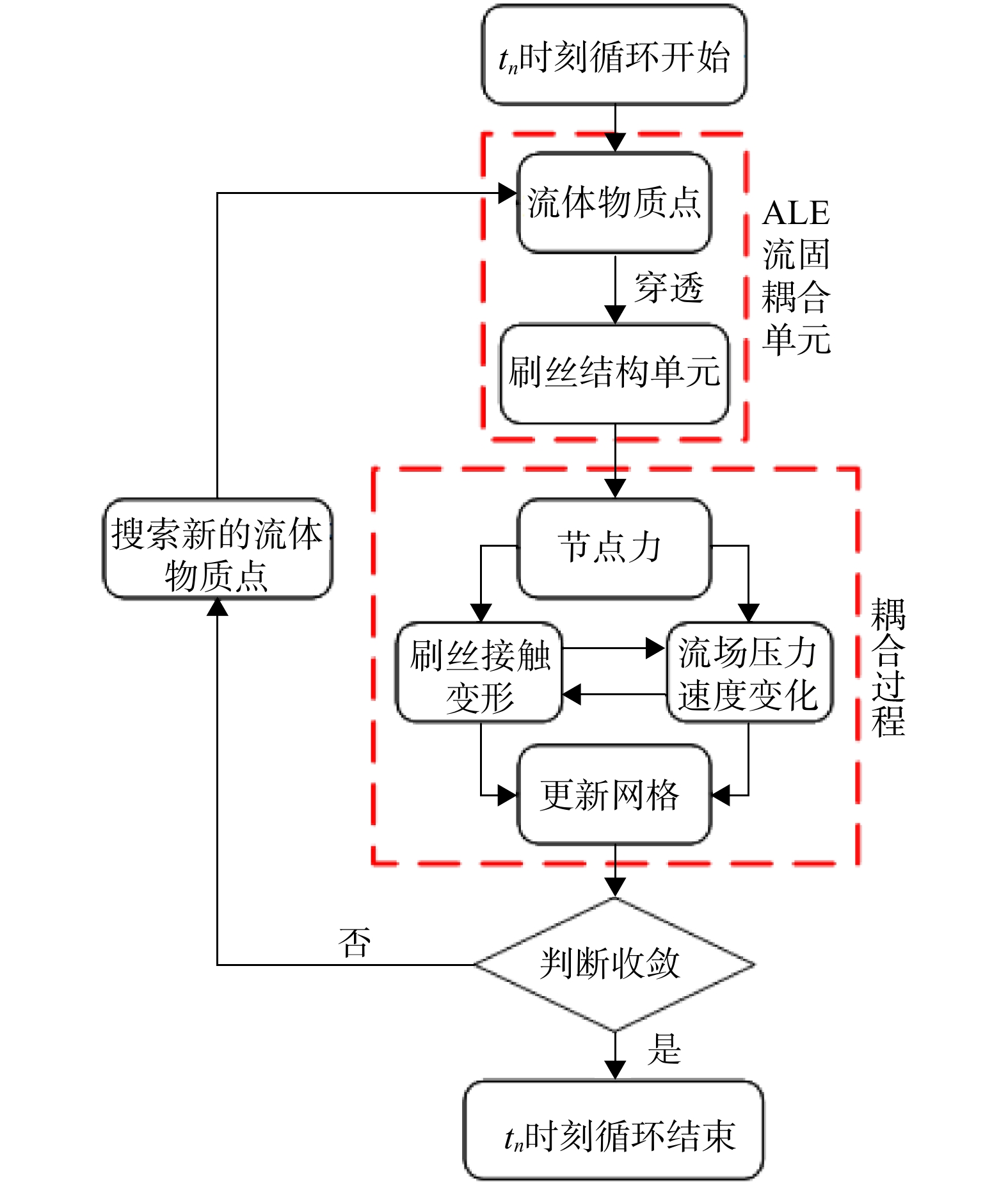
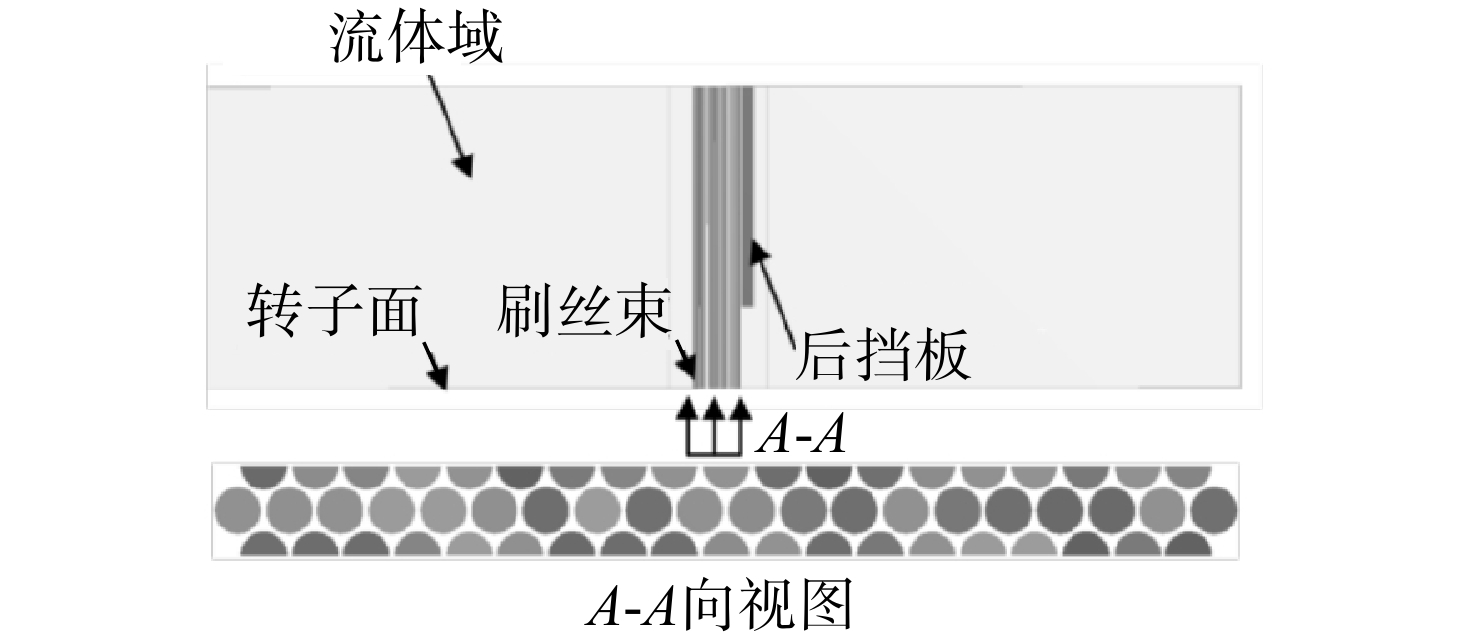
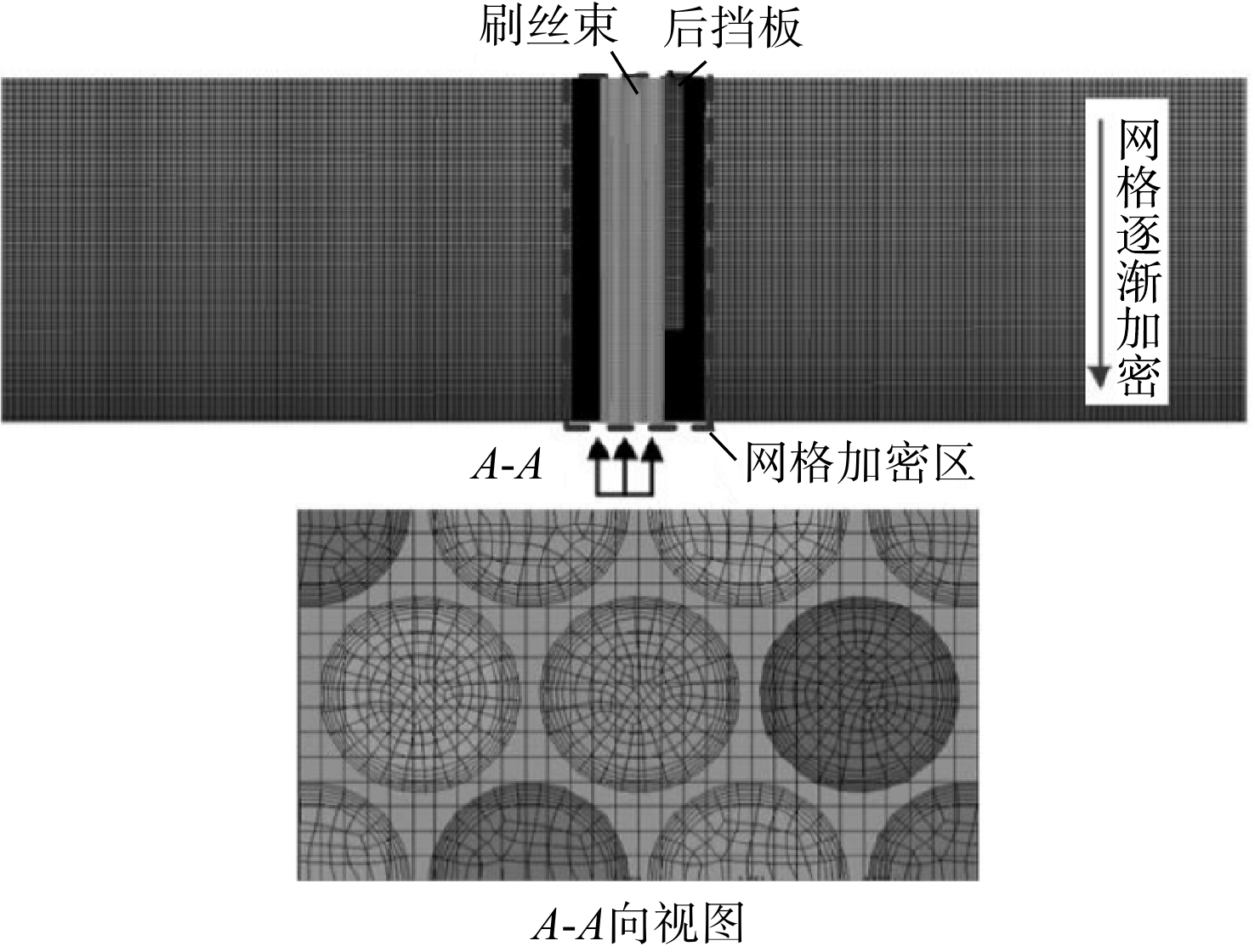
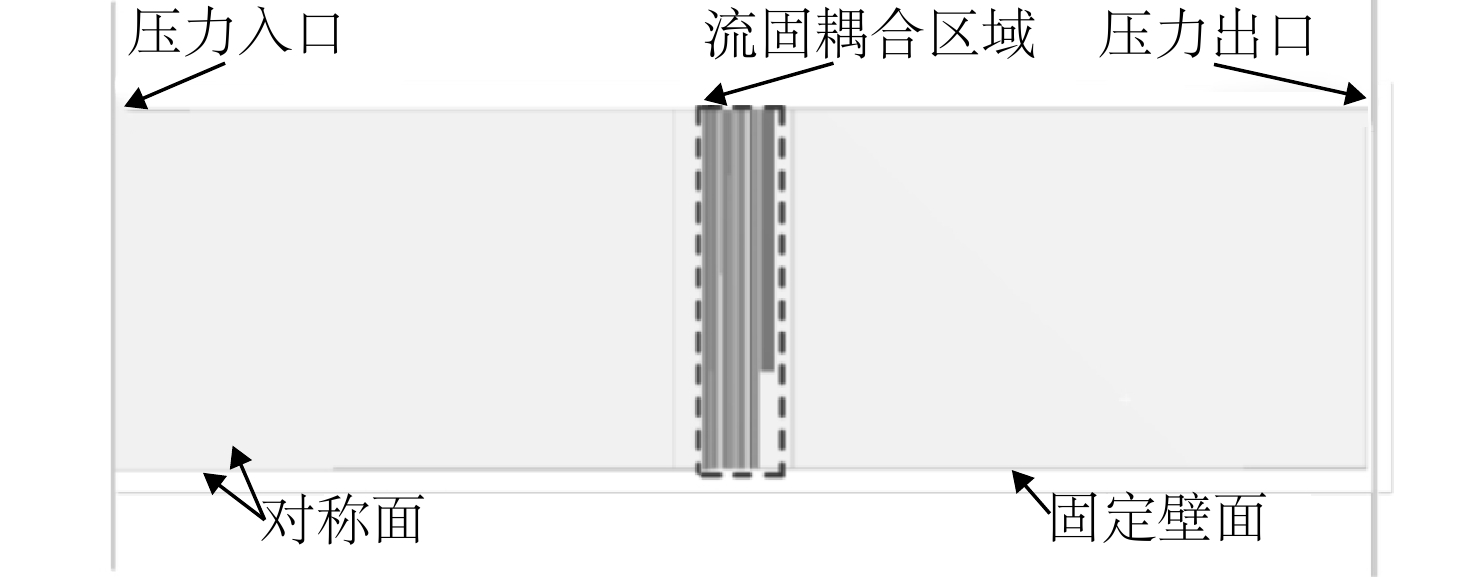
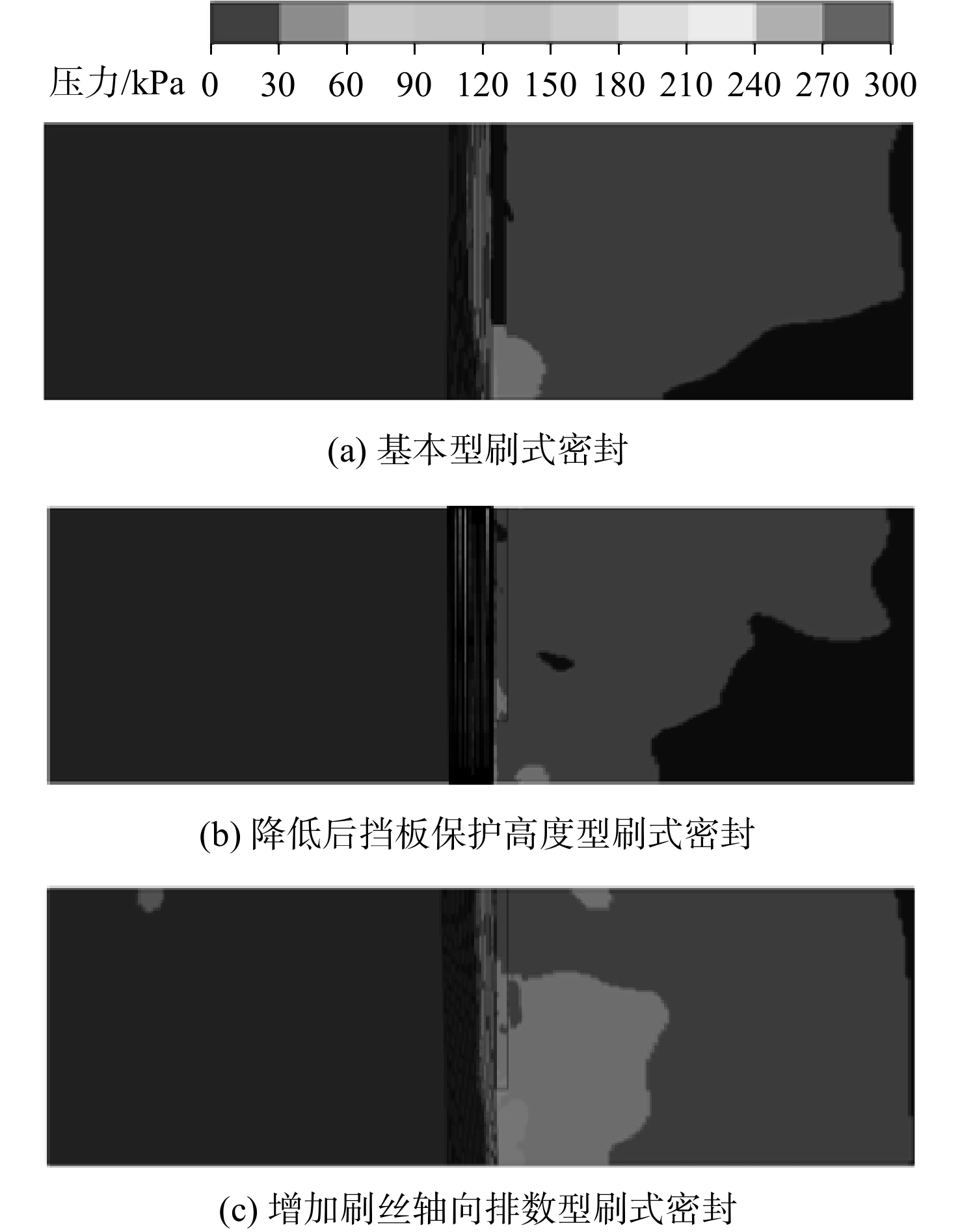
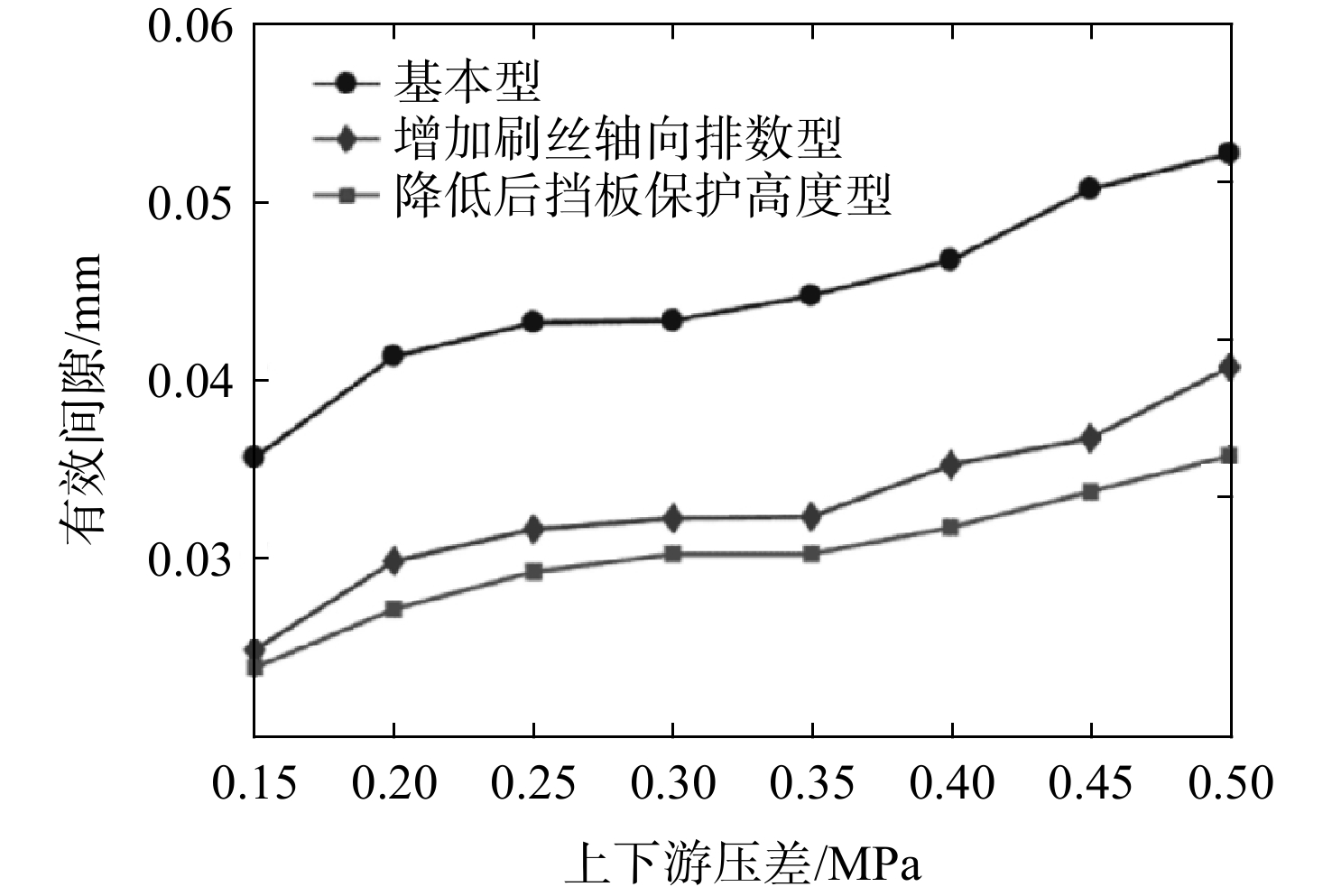
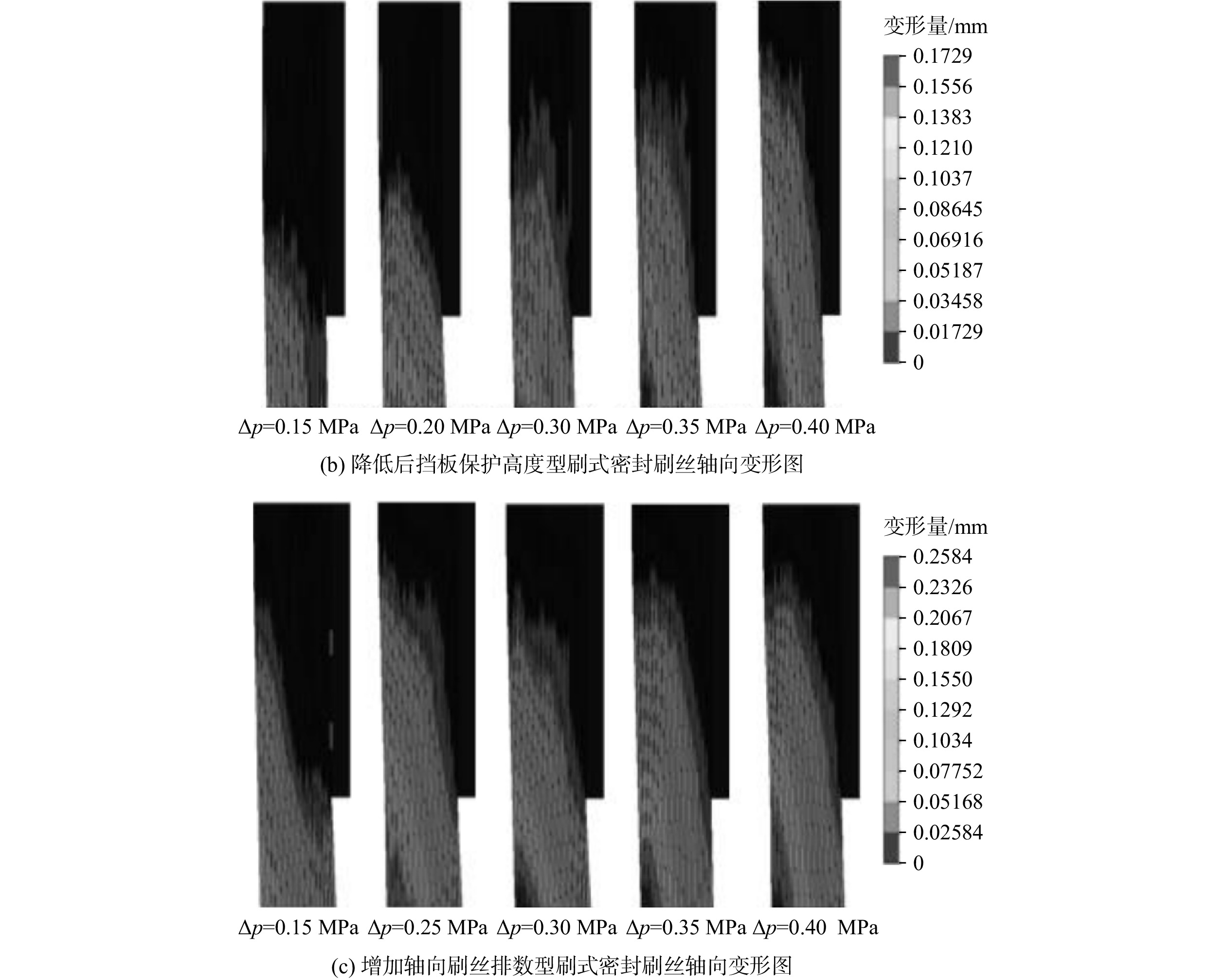
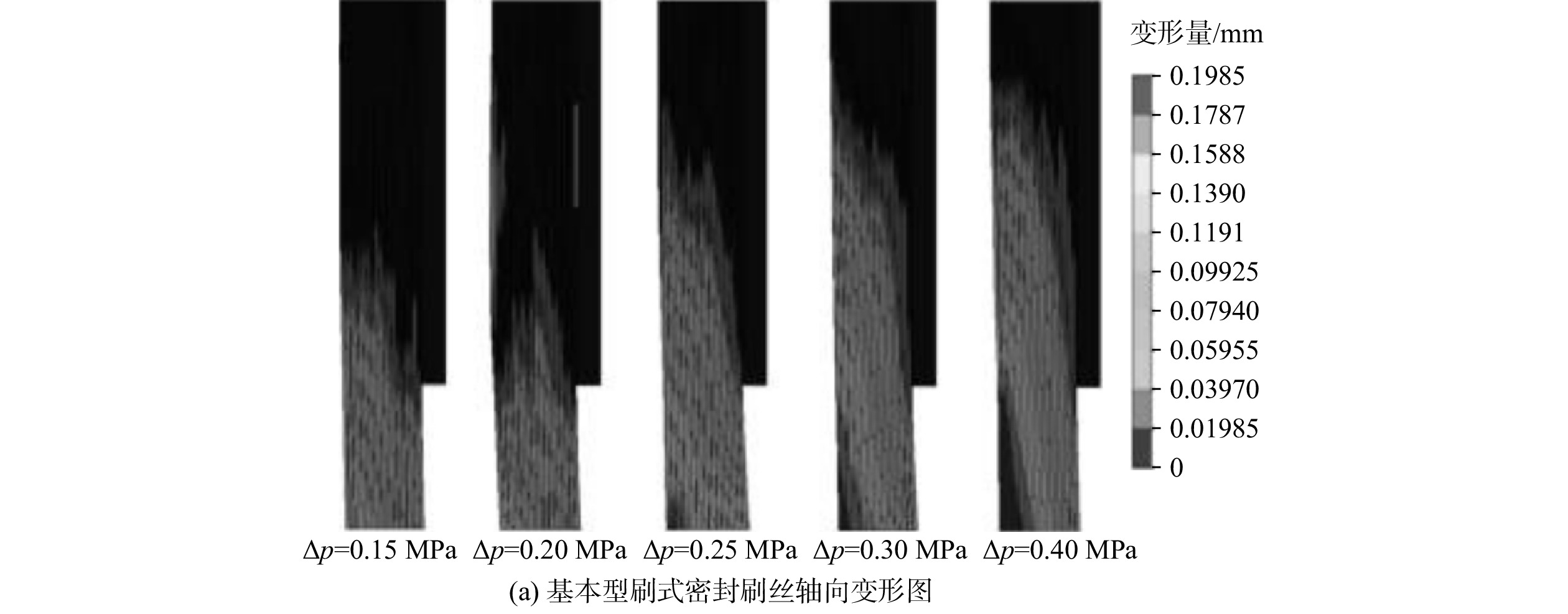
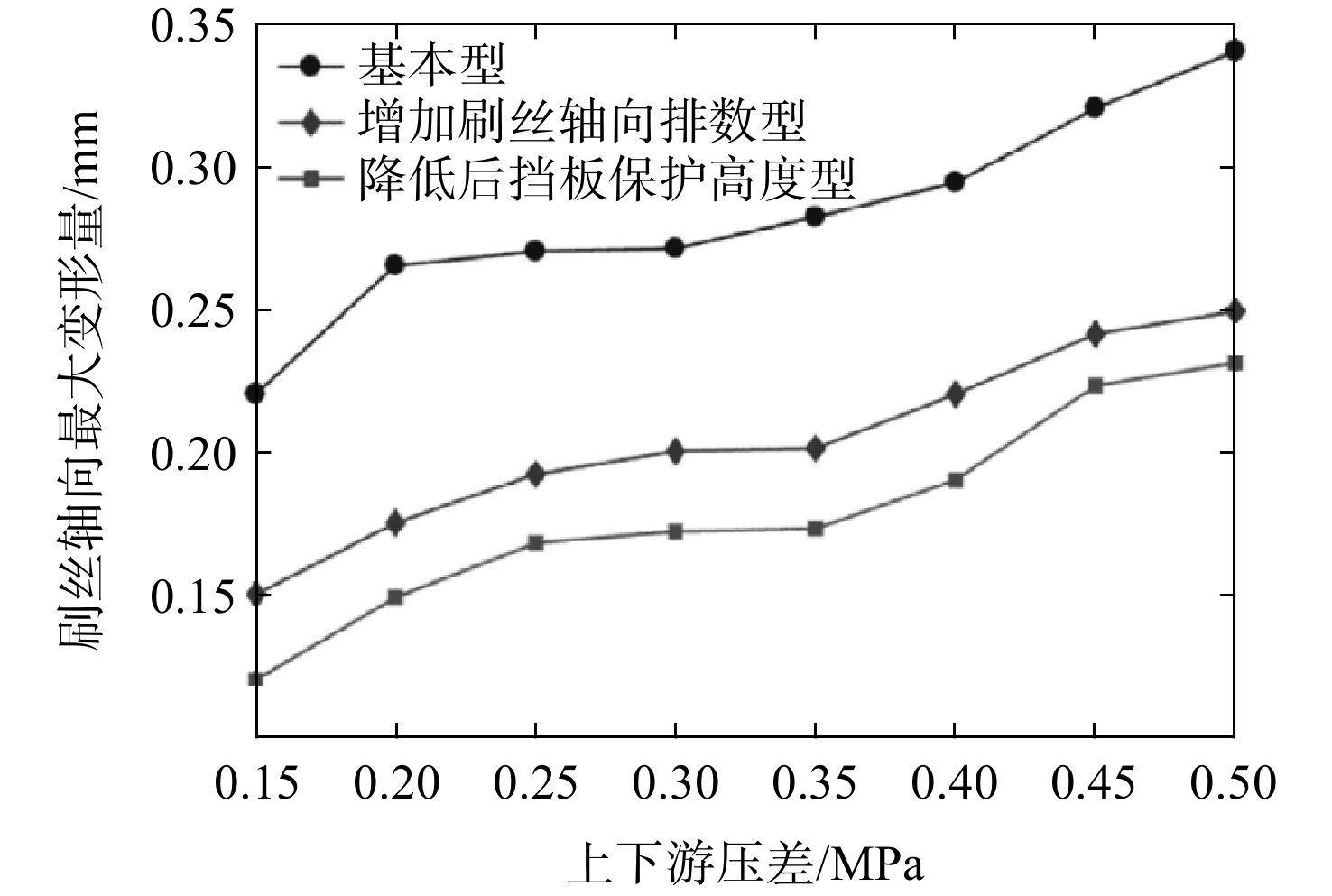
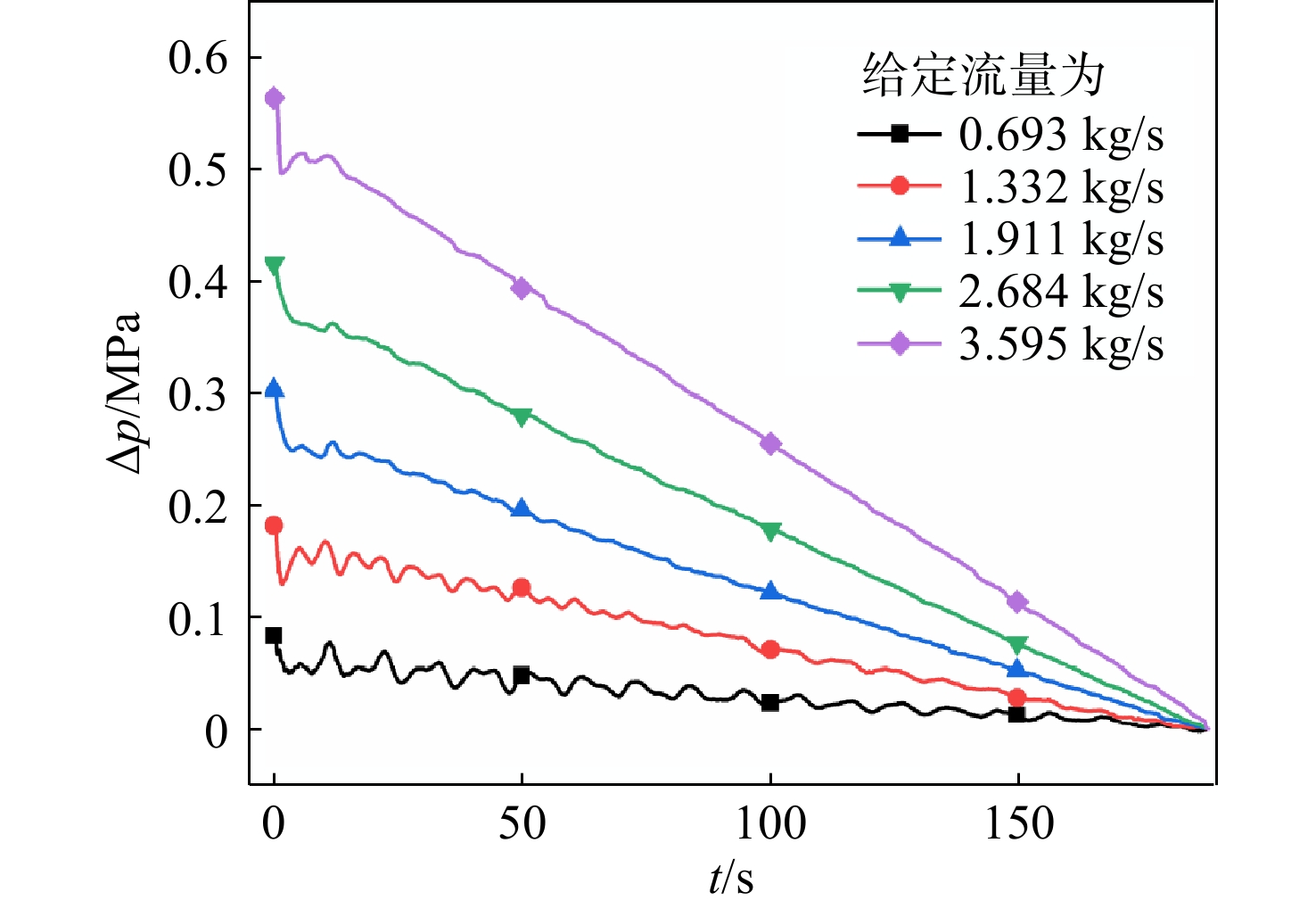
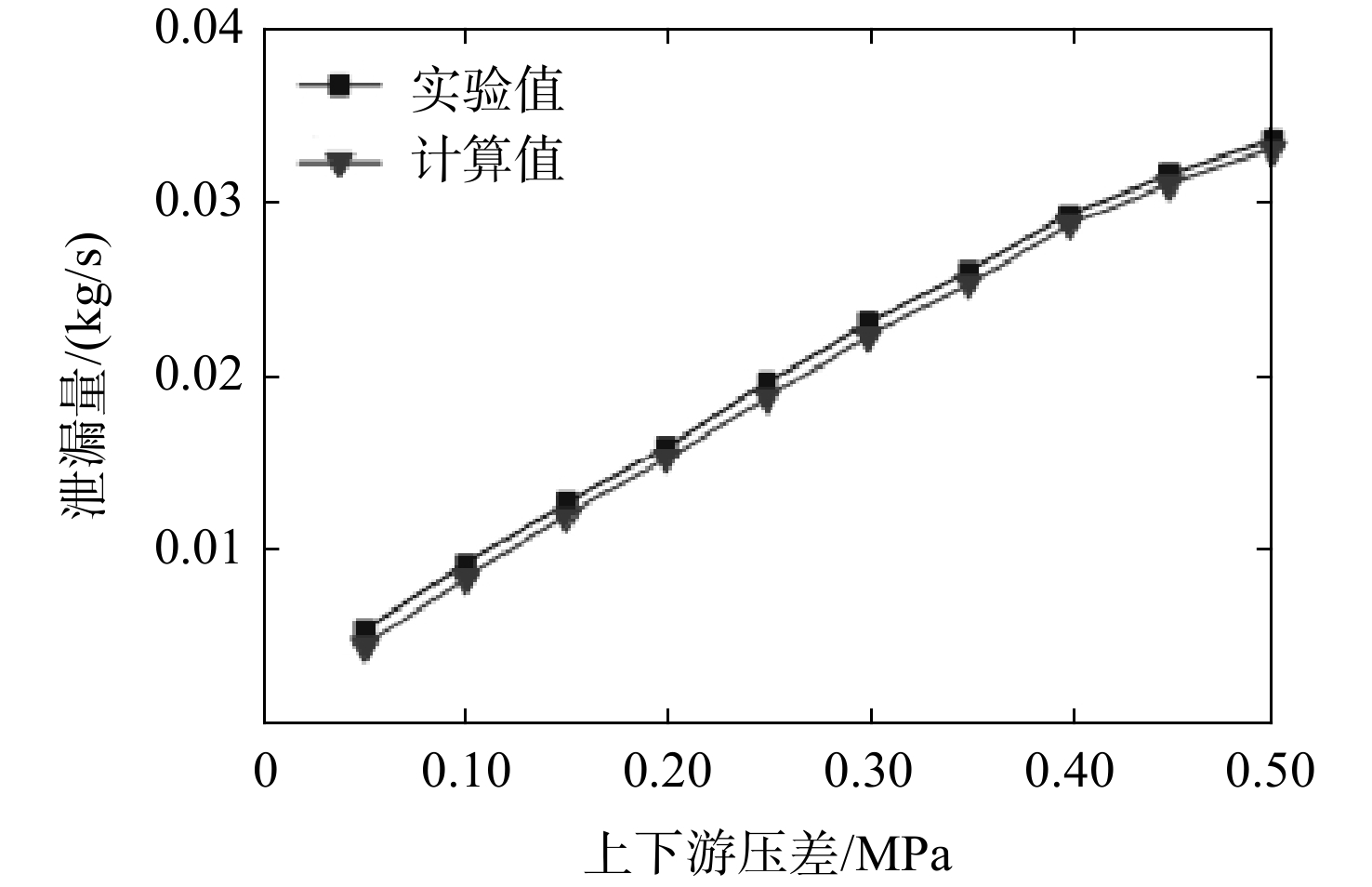
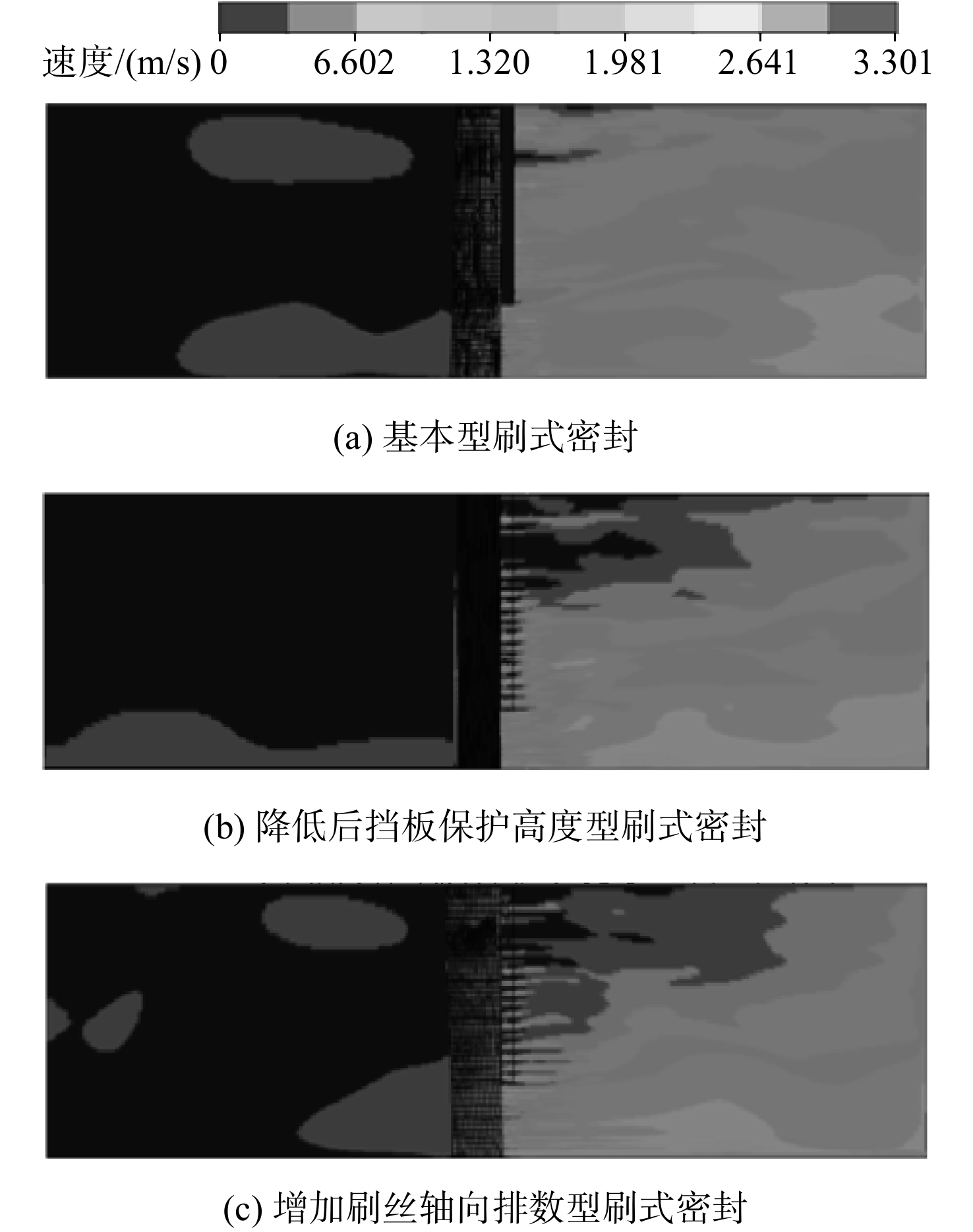
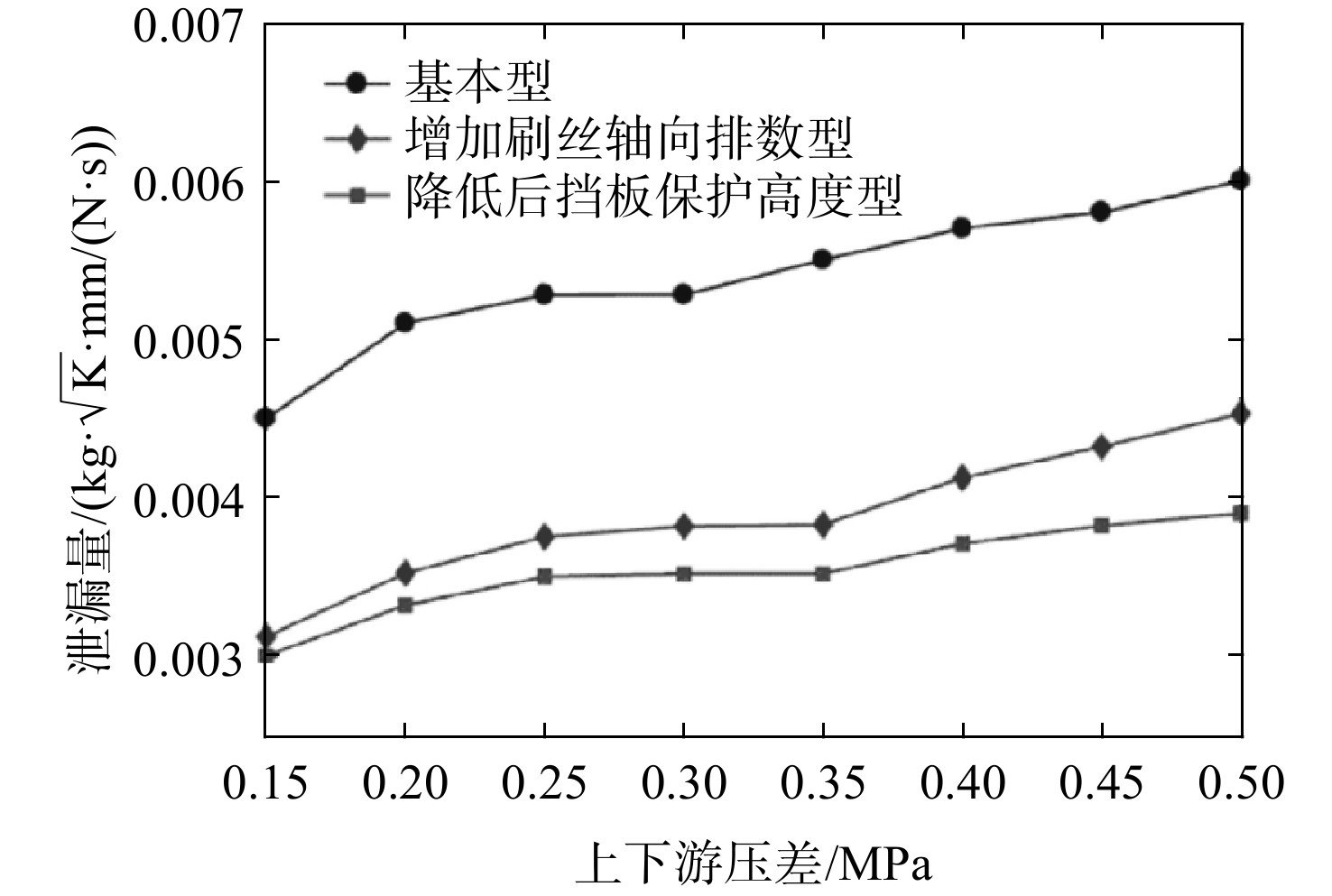
Leakage factor and effective clearance were used as the evaluation indexes of the critical pressure capacity of brush seals. A three-dimensional transient solution model of brush seals was established based on the ALE (arbitrary Lagrange-Euler) method. Three brush seal models with different structures were studied, and the brush wire deformation under different pressure differences was analyzed. The influence of critical pressure capacity on wire deformation was obtained. The results showed that with the increase of the pressure difference between the upstream and downstream, the maximum pressure difference between the leakage factor and the effective clearance was prone to be the critical pressure capacity. The critical pressure capacity of the basic brush seal was about 0.25—0.30 MPa. Compared with the basic brush seal, the critical pressure capacity of the brush seal with the rear damper protection height reduced by 0.5 mm, and that of the brush seal with the axial increase of 5 rows of brush wire increased by 16.7% to 20.0%. The critical pressure capacity of the brush seal can be improved by decreasing the rear damper protection height and increasing the number of axial rows of the brush wire. With the increase of the pressure difference between the upstream and downstream, the maximum axial deformation of the brush increased first. When the pressure difference between the upstream and downstream reached the critical pressure capacity of the brush seal, the gap between the brushes was compressed to the minimum, and the maximum axial deformation of the brush reached the maximum. The research results provide a theoretical basis for the structural design of brush seal.

Damage monitoring of engine fan blades based on EWT-entropy method
XU Jianxin, ZHAO Shujie, MA Chao, BA Xiang
2023, 38(1): 23-31. doi: 10.13224/j.cnki.jasp.20210365
Abstract:

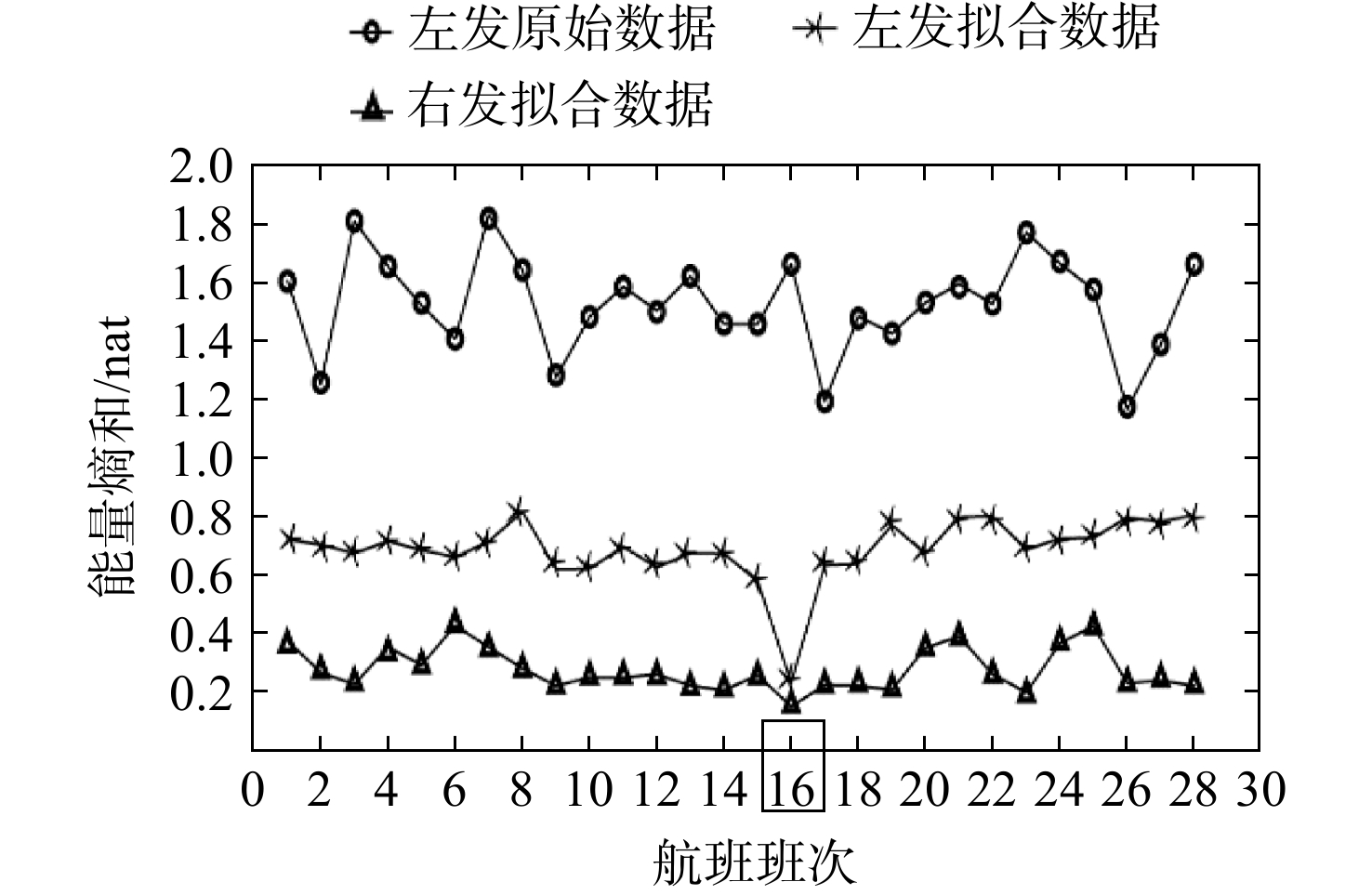
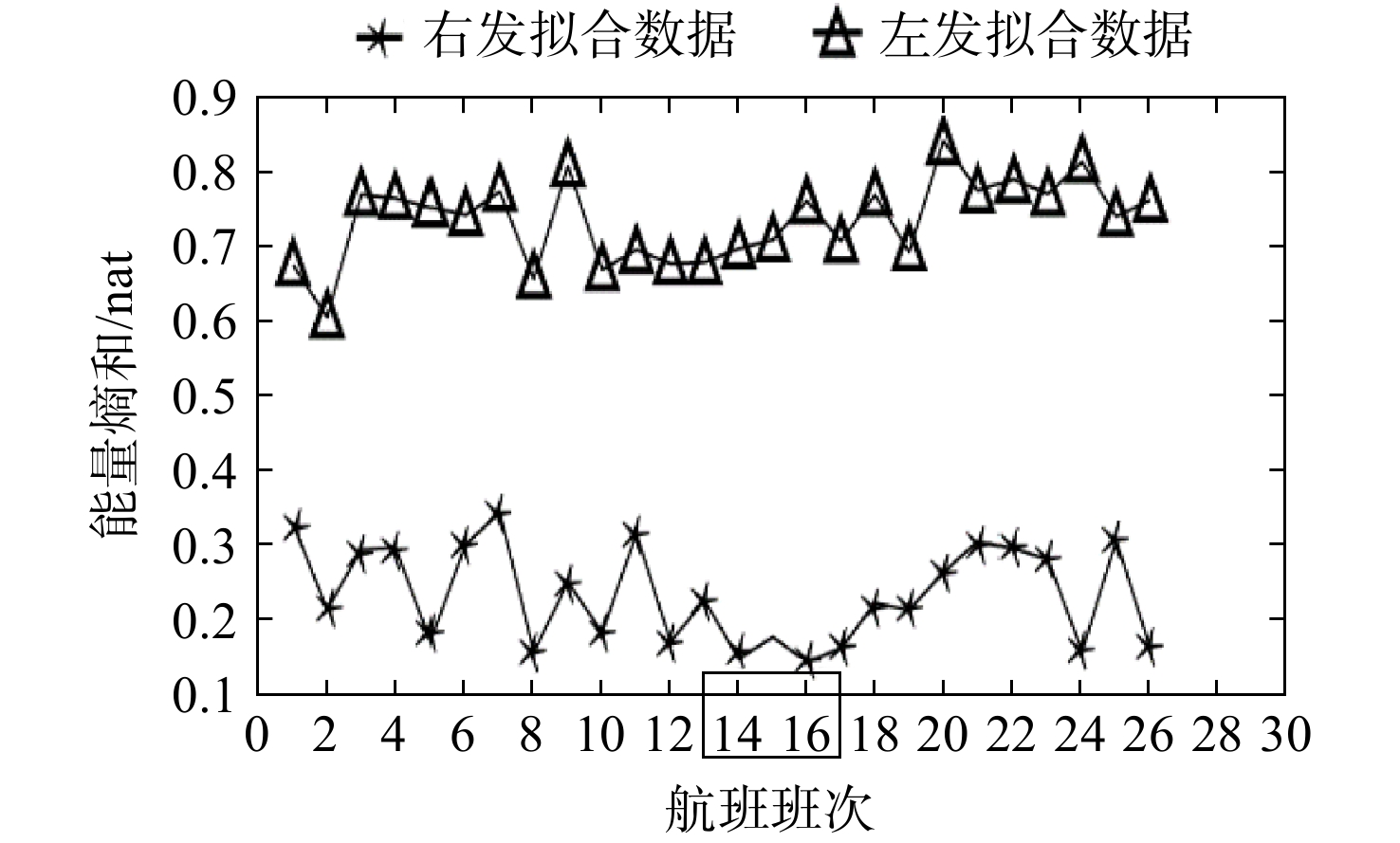
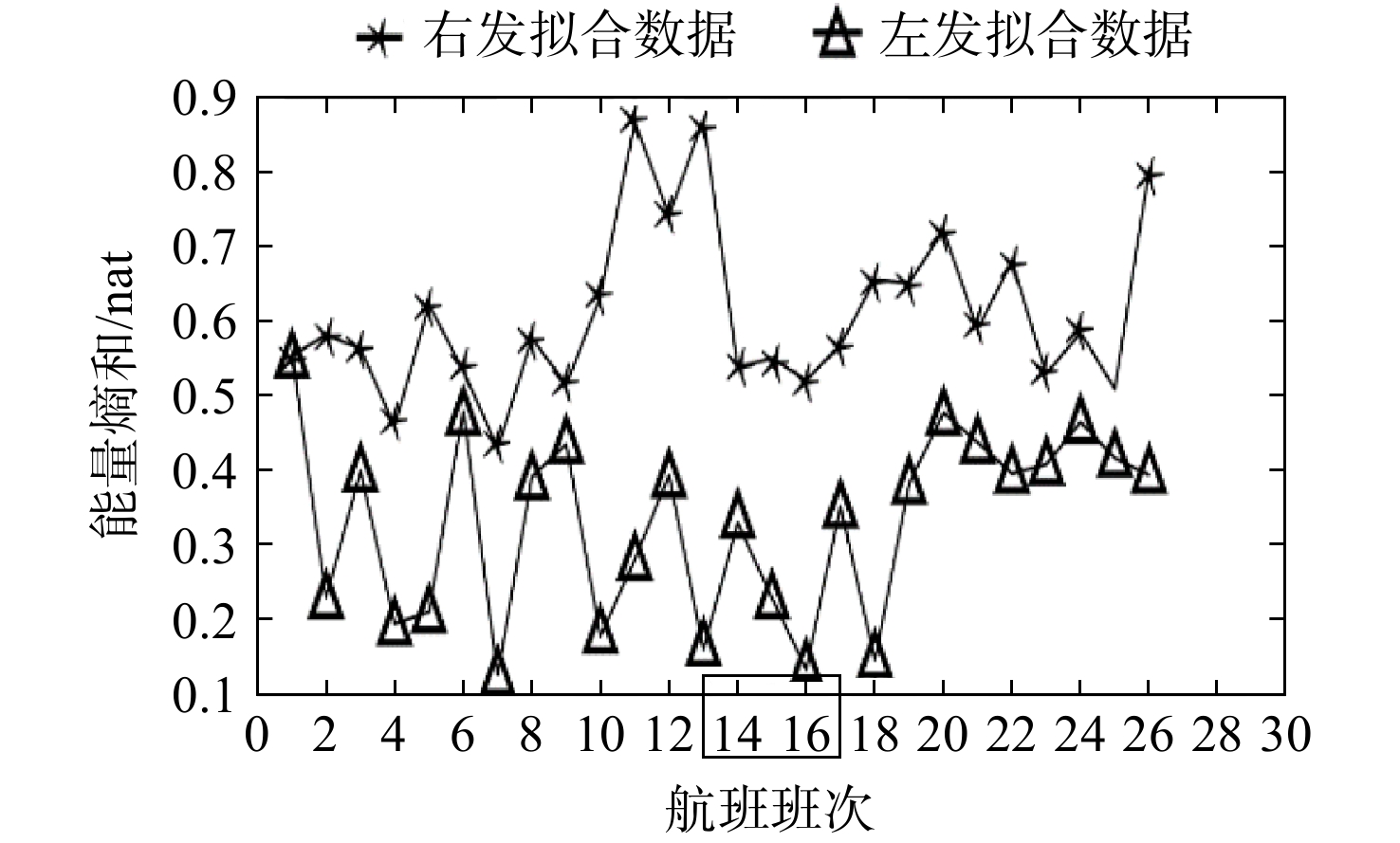
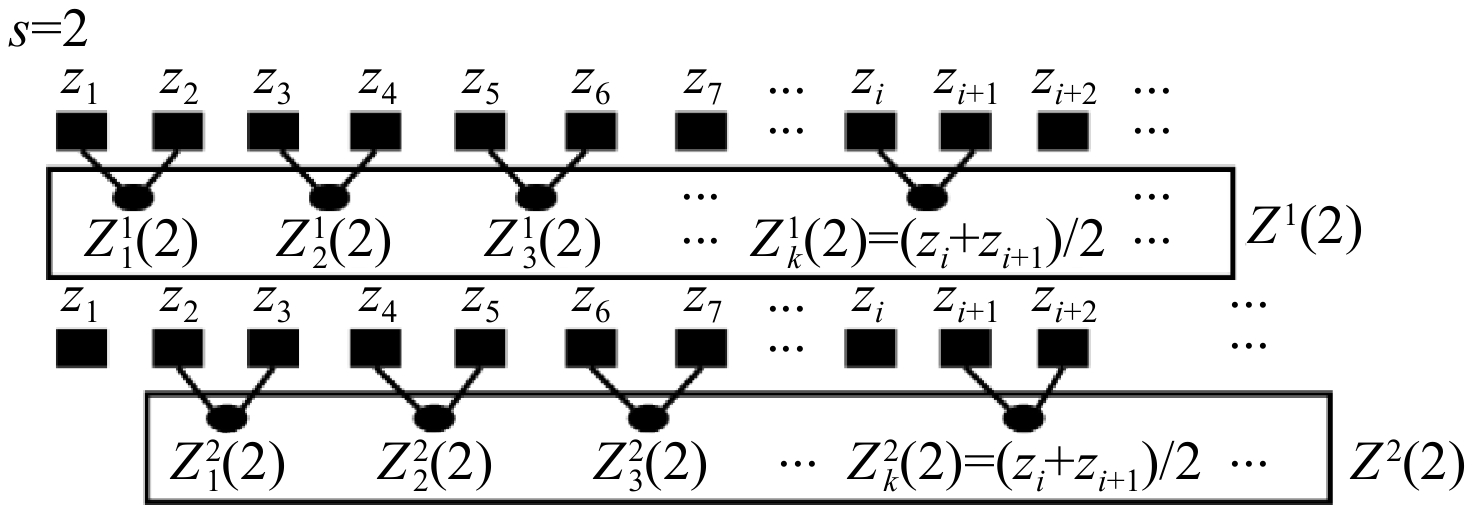
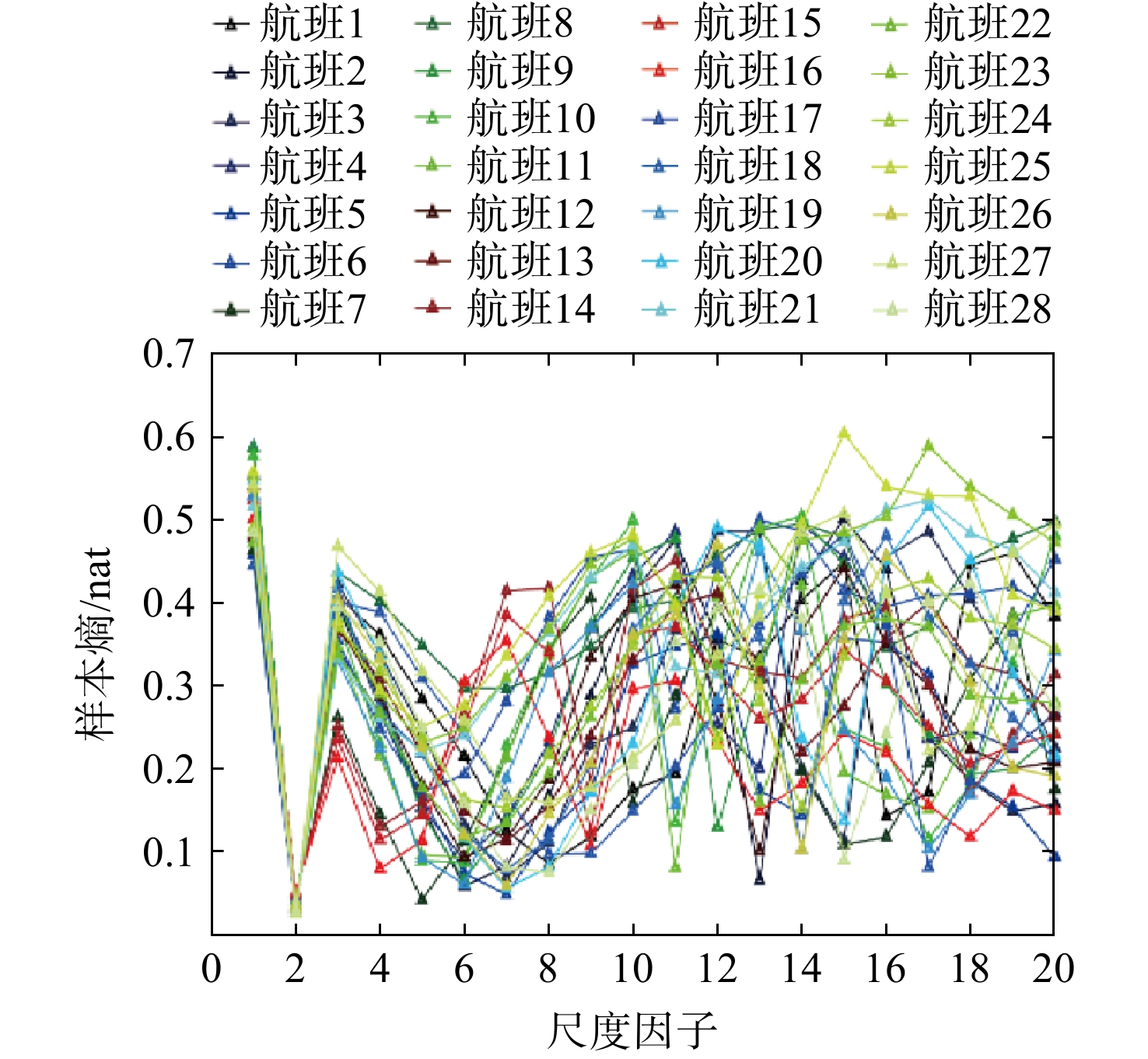
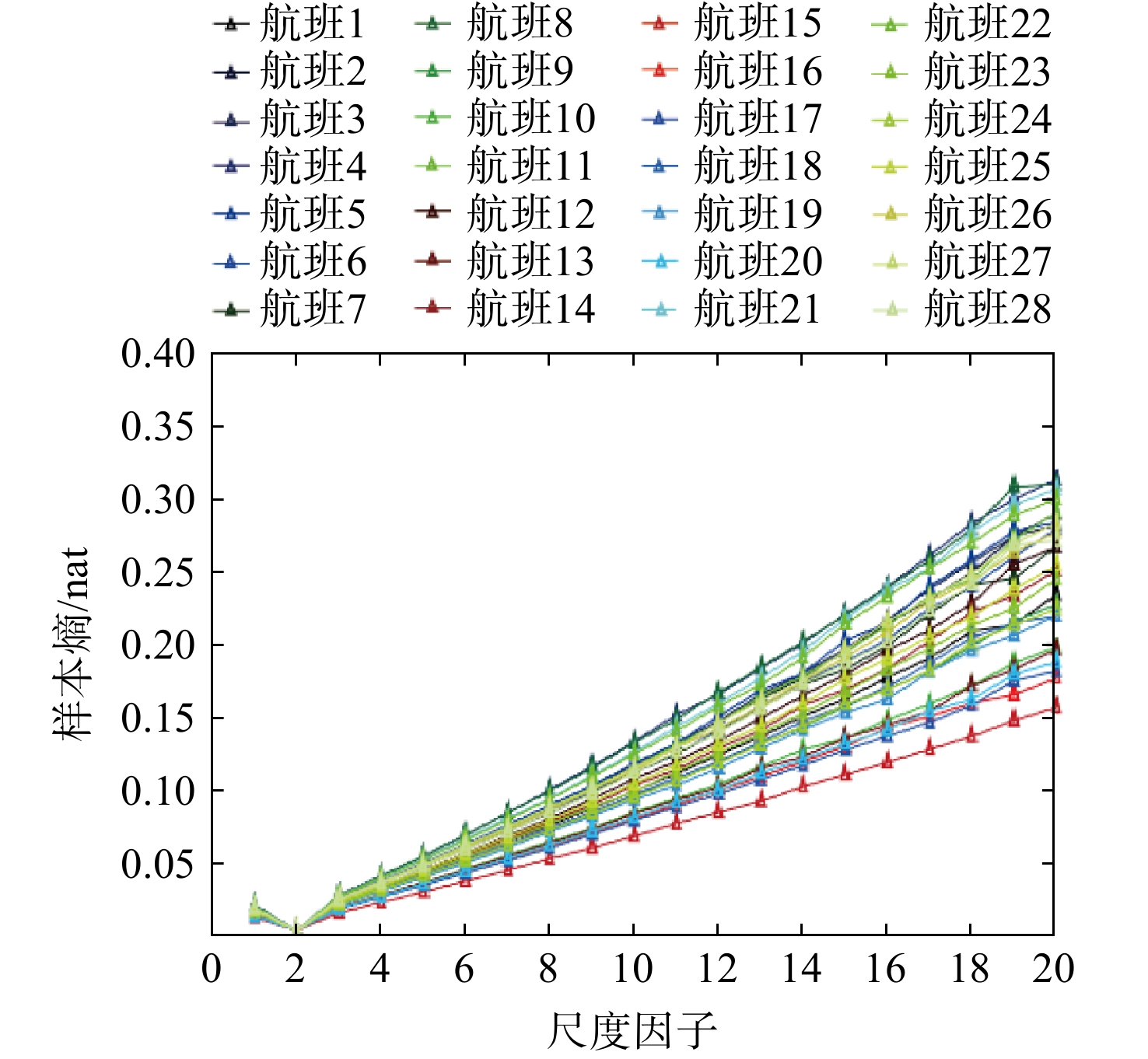
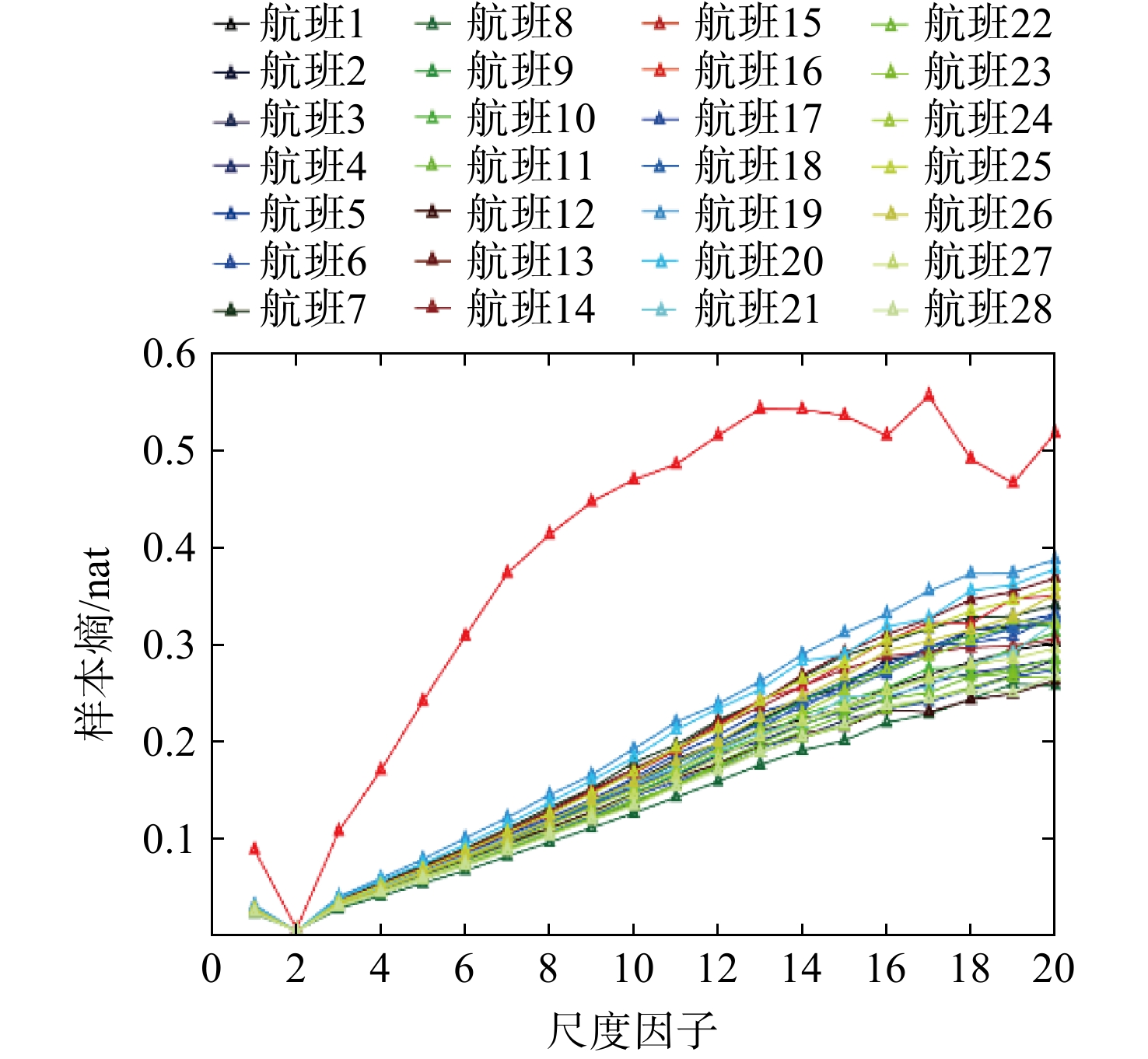
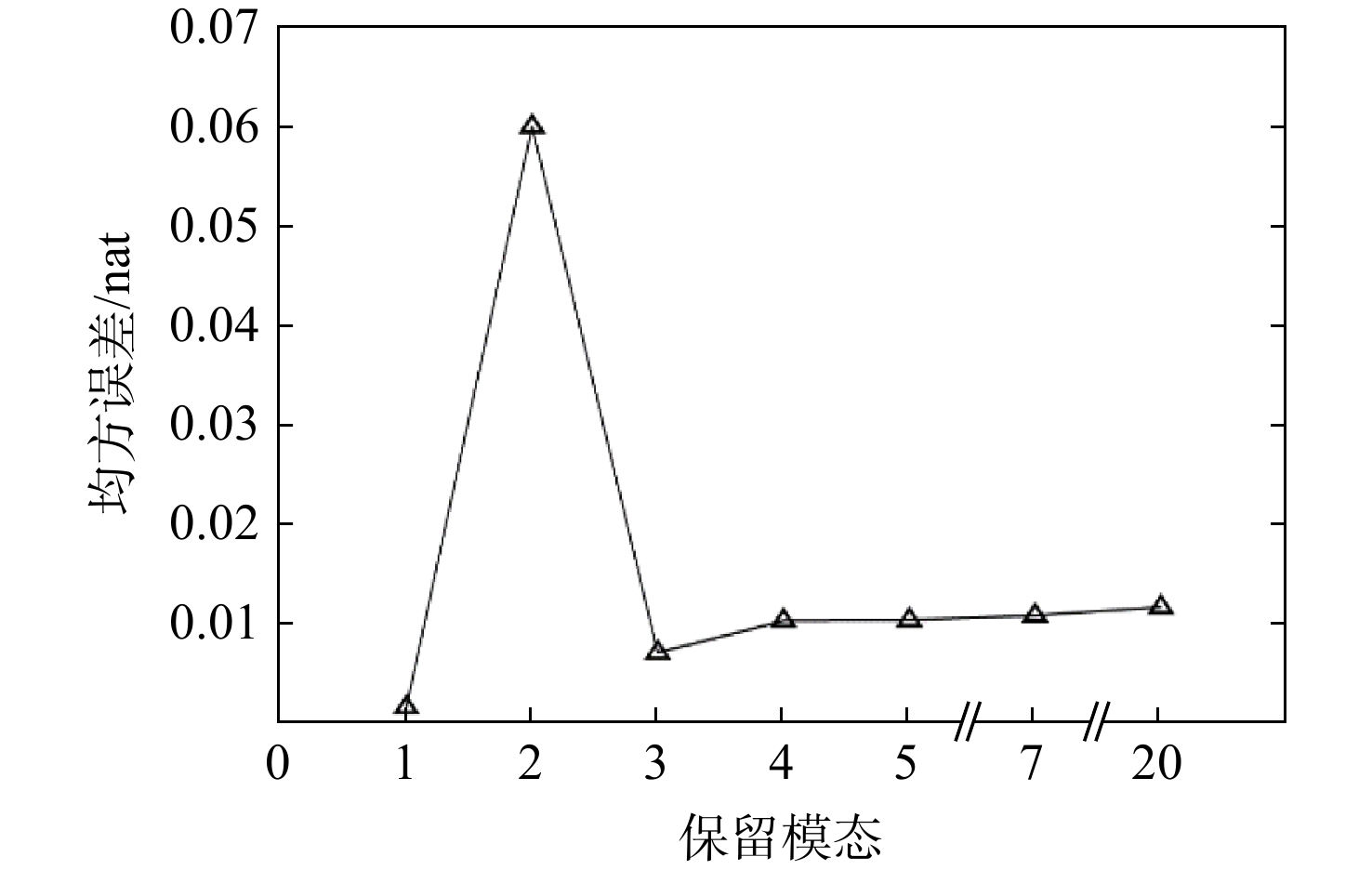
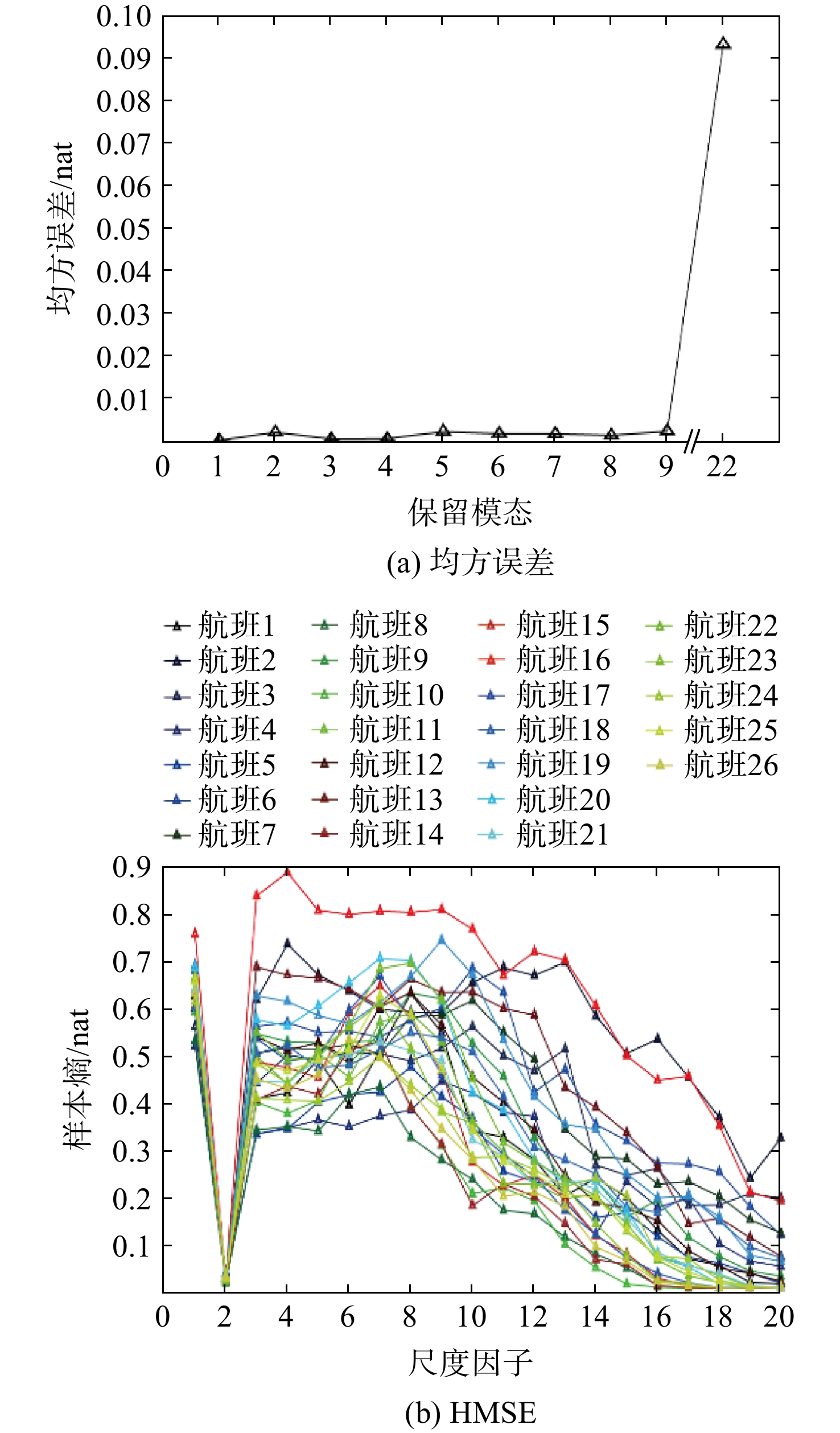
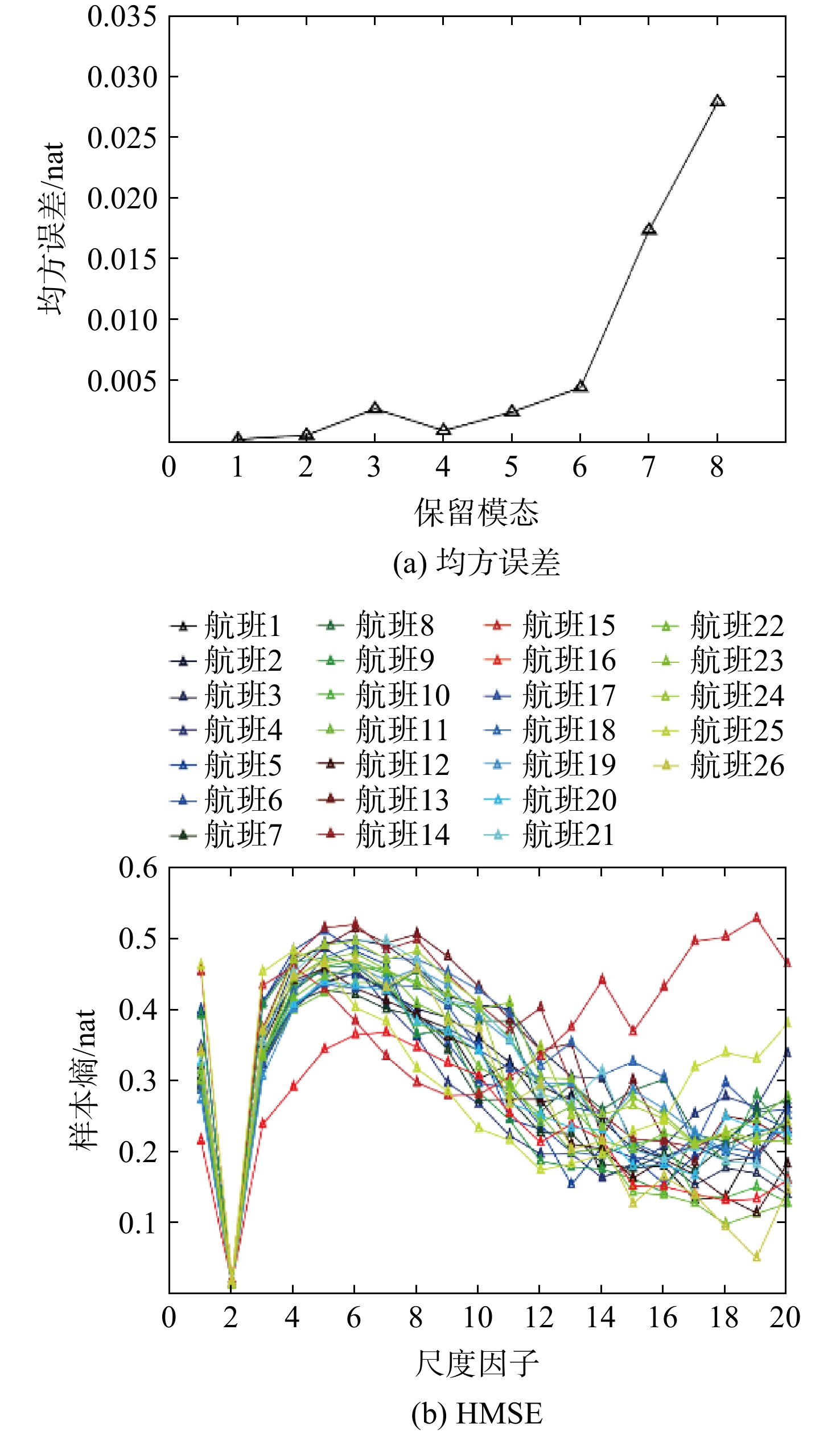
In order to find the characteristics of the flight damaged by foreign objects on the fan blades from the engine performance data, so as to distinguish the flights damaged by the foreign objects on the fan blades, a method combining empirical wavelet transform and information entropy was proposed in the airborne quick access recorder (QAR)data detection. Through the fitted and smoothed process and empirical wavelet transform of the original vibration data of each flight, the sum of the energy entropy of each intrinsic mode function after decomposition was extracted, and the multi-scale entropy of the added window function was analyzed. The result showed the entropy value of the fitted data changed more obviously, and the sum of the energy entropy of the flight with fan blades damaged by foreign objects had a decreasing trend of more than 10%, and the improved multi-scale entropy had an increasing trend of more than 40%, which was obviously different from other normal flights. It is proved that the EWT-entropy method can better monitor the damage by foreign objects of the engine fan blades.

Experiment on vibration reduction performance of elastic ring squeeze film damper under sudden unbalance
ZHANG Guanghui, HUANG Yanzhong, CHEN Yalong, WANG Zhenlin, XU Kefan, FENG Lei
2023, 38(1): 32-40. doi: 10.13224/j.cnki.jasp.20210371
Abstract:

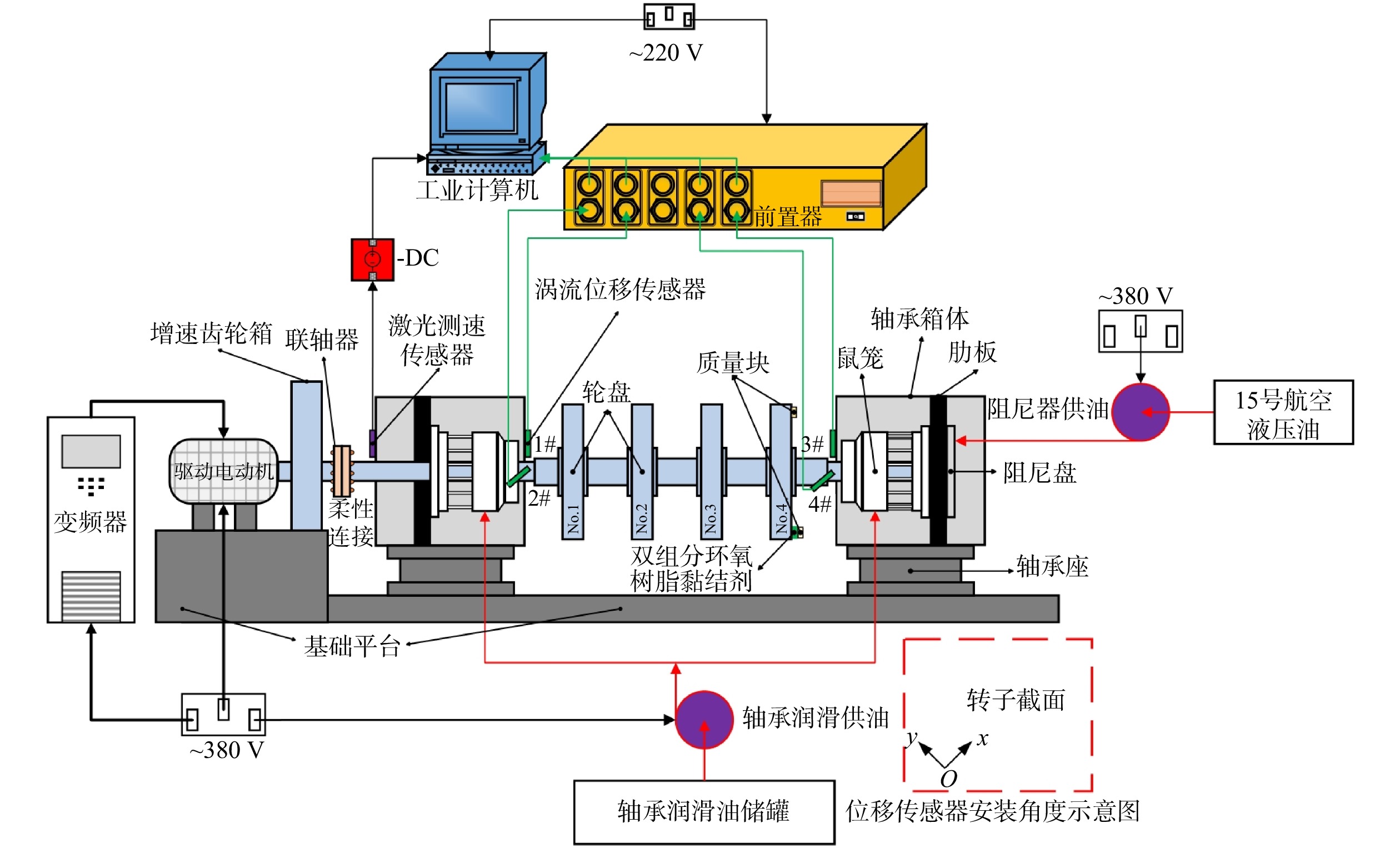
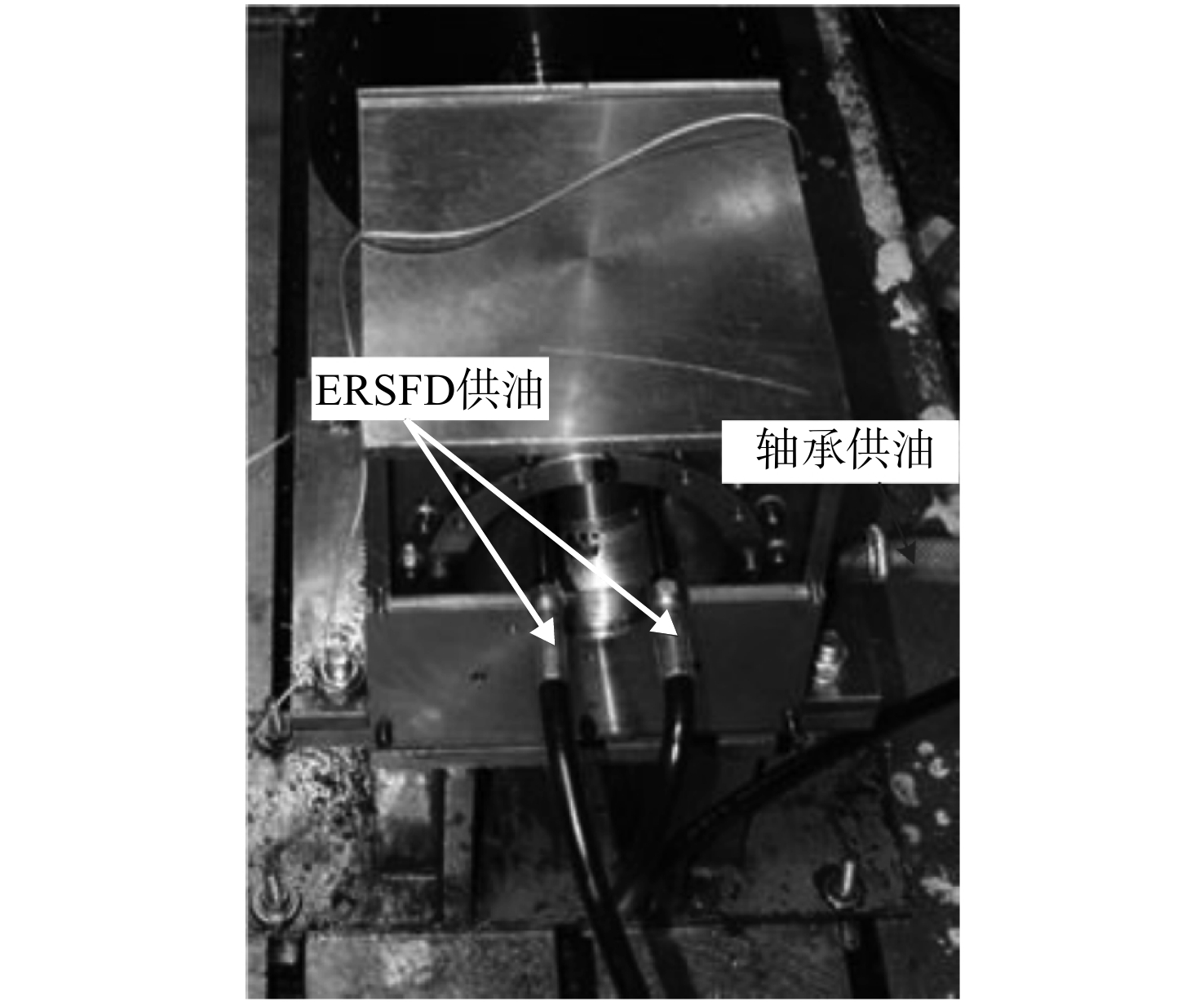
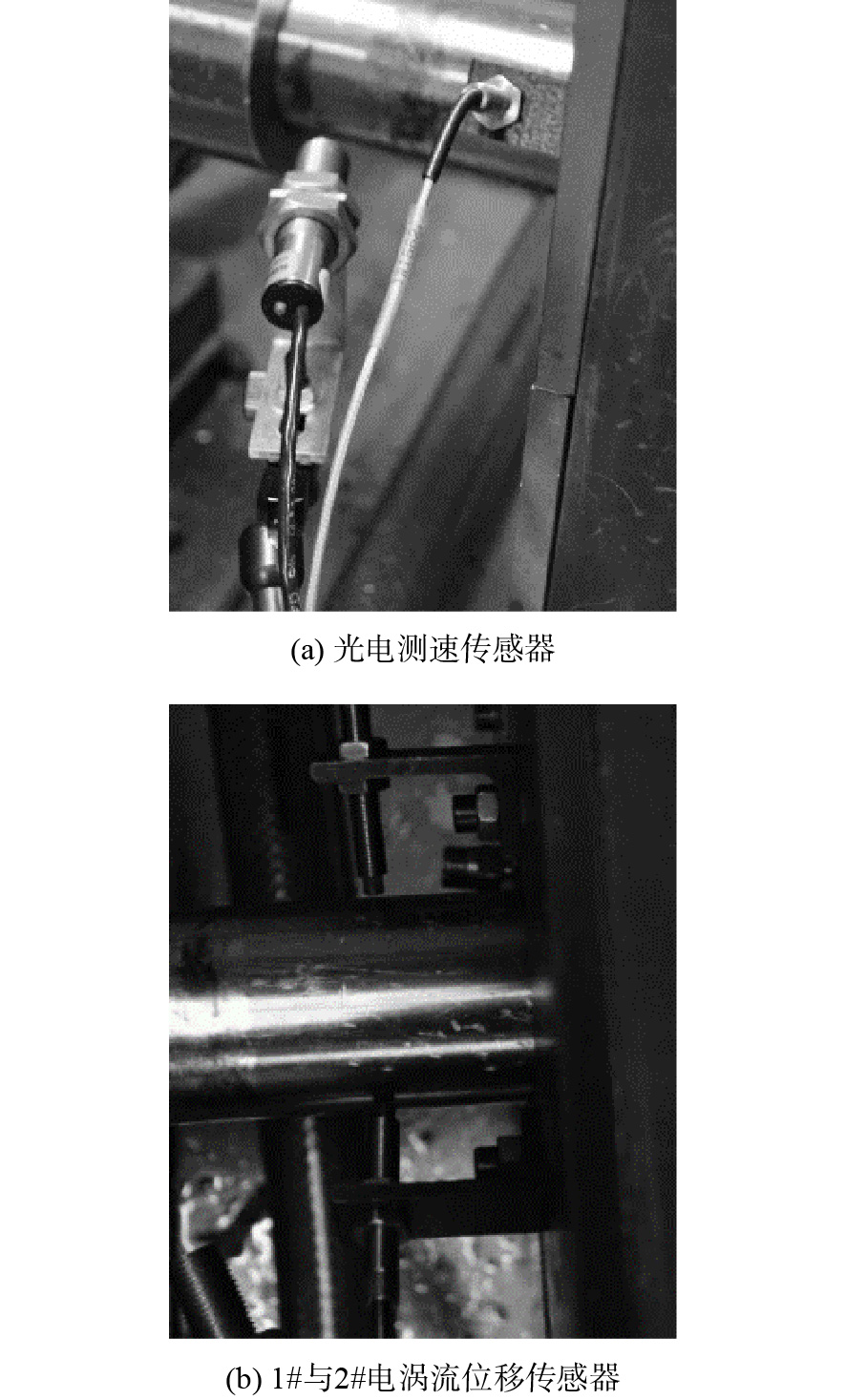
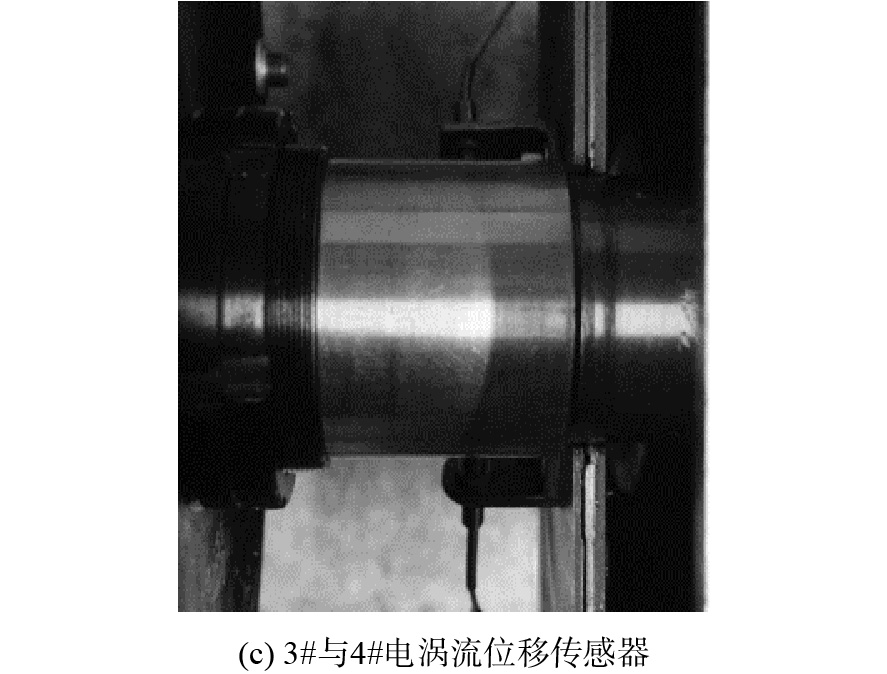
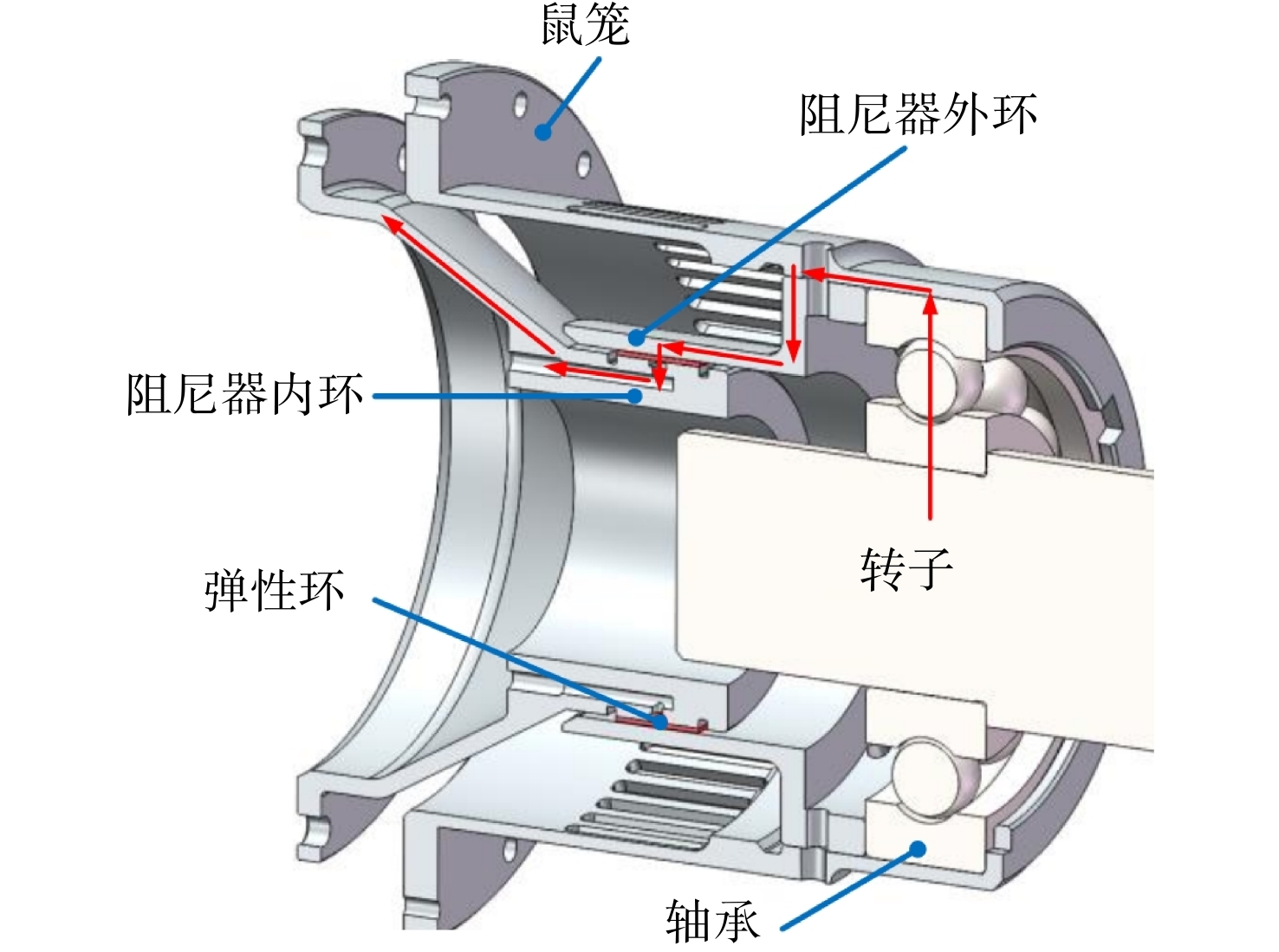
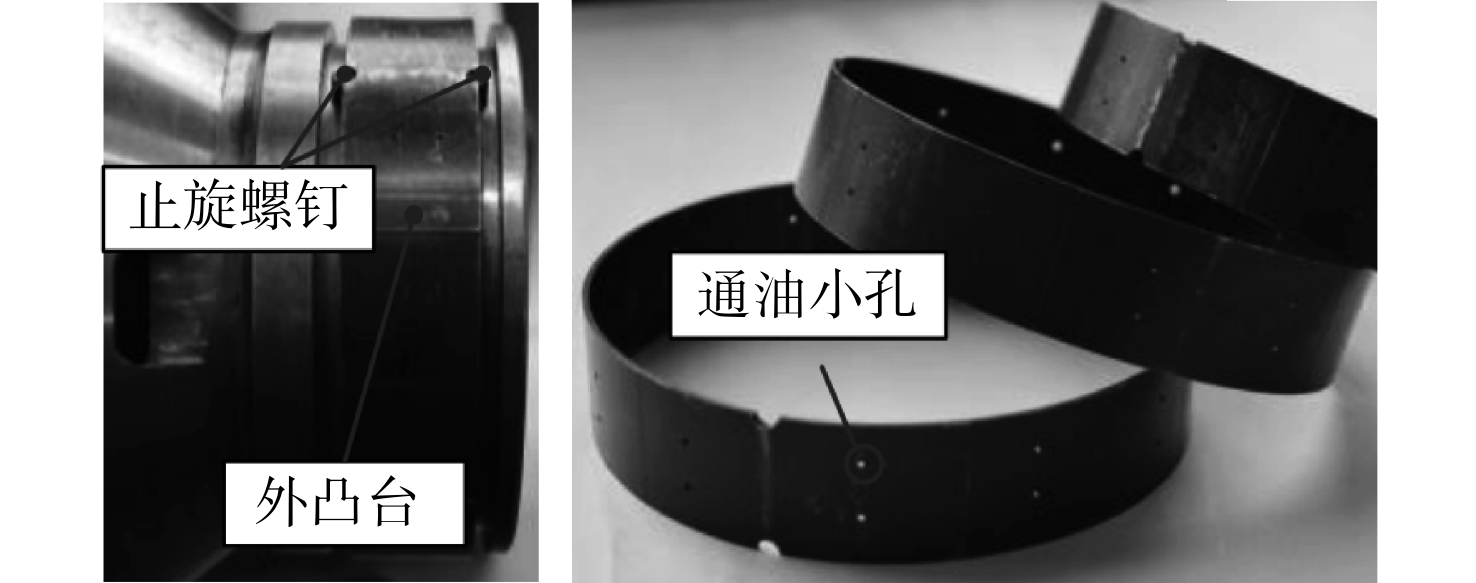
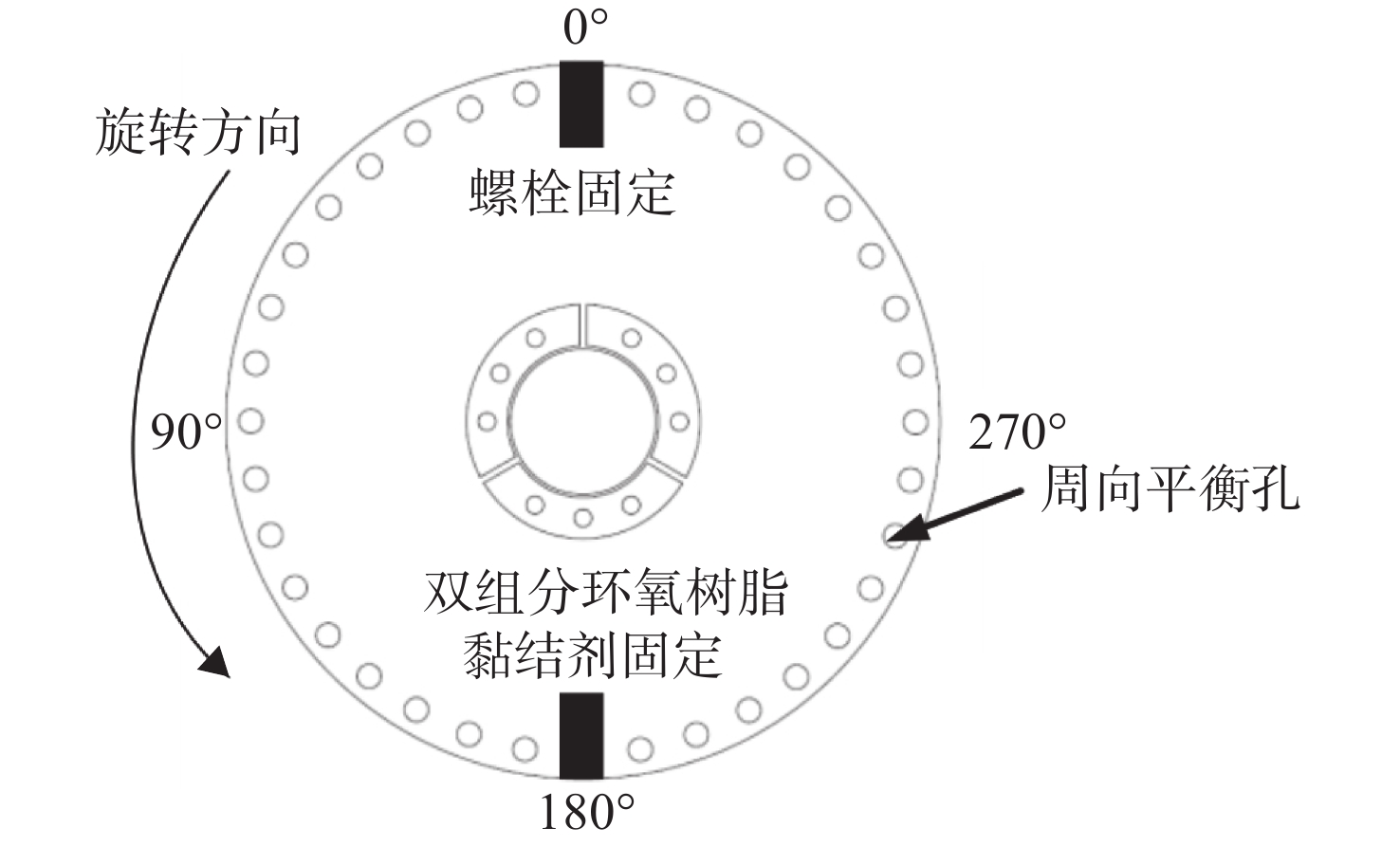
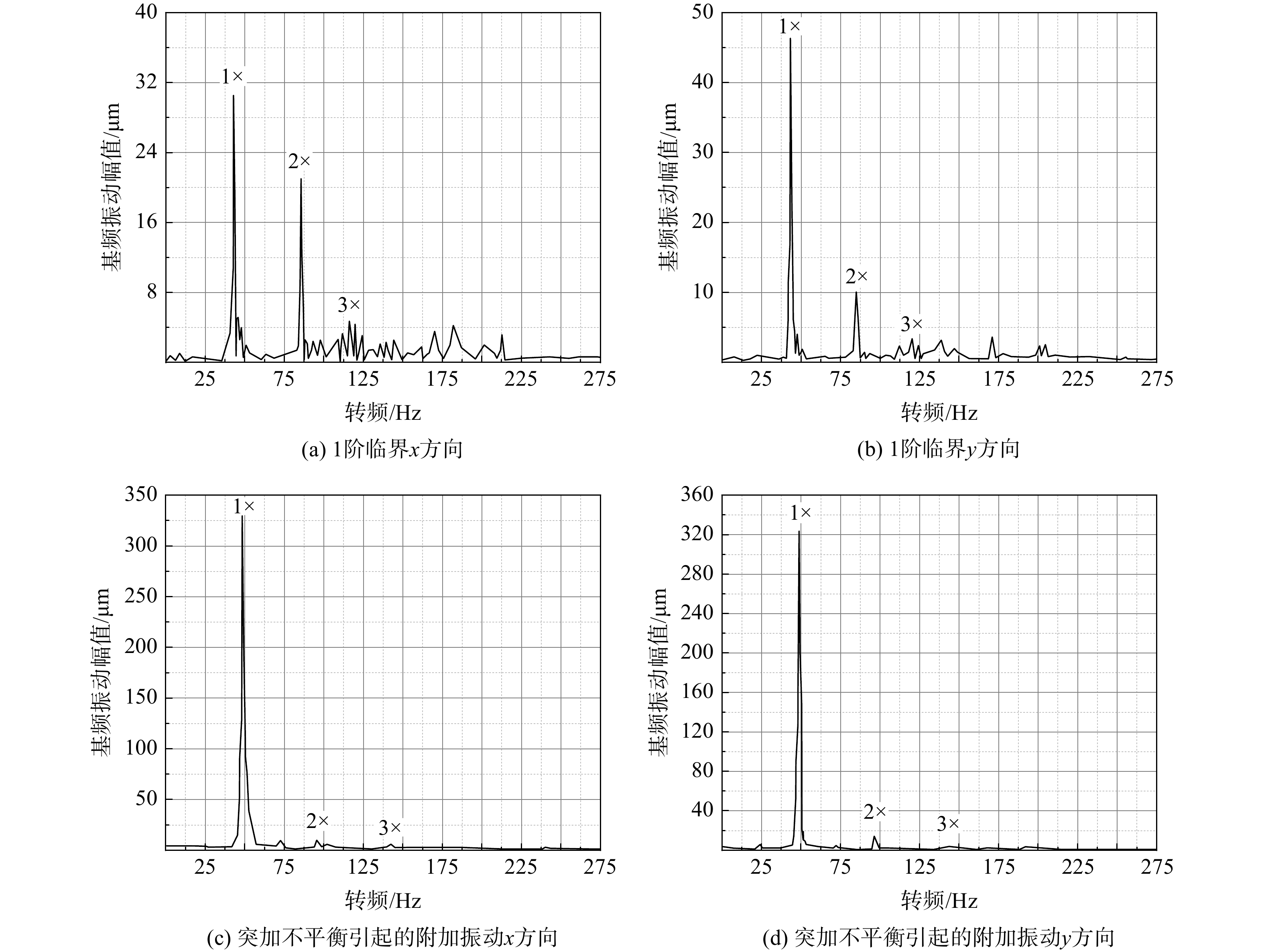
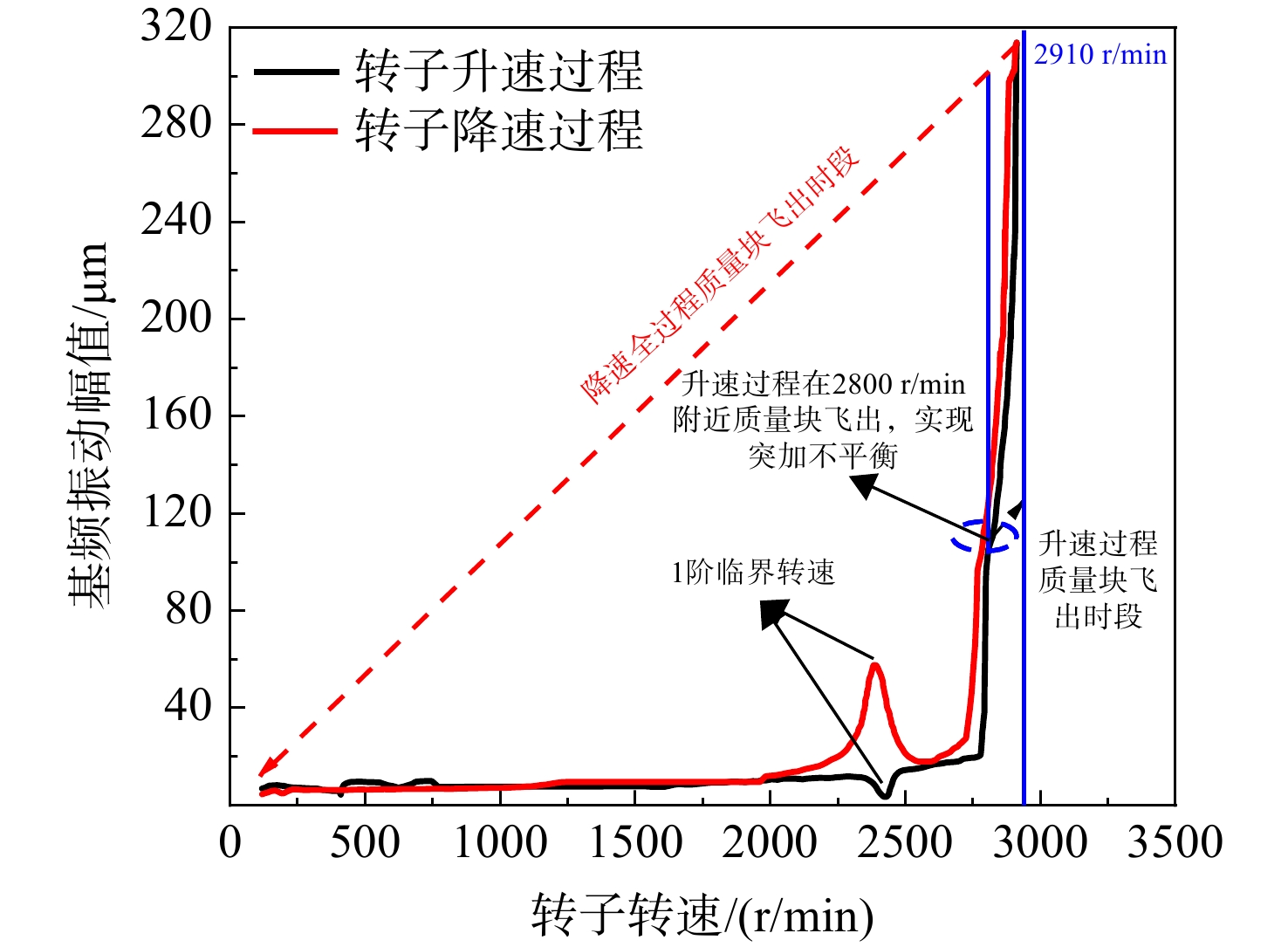
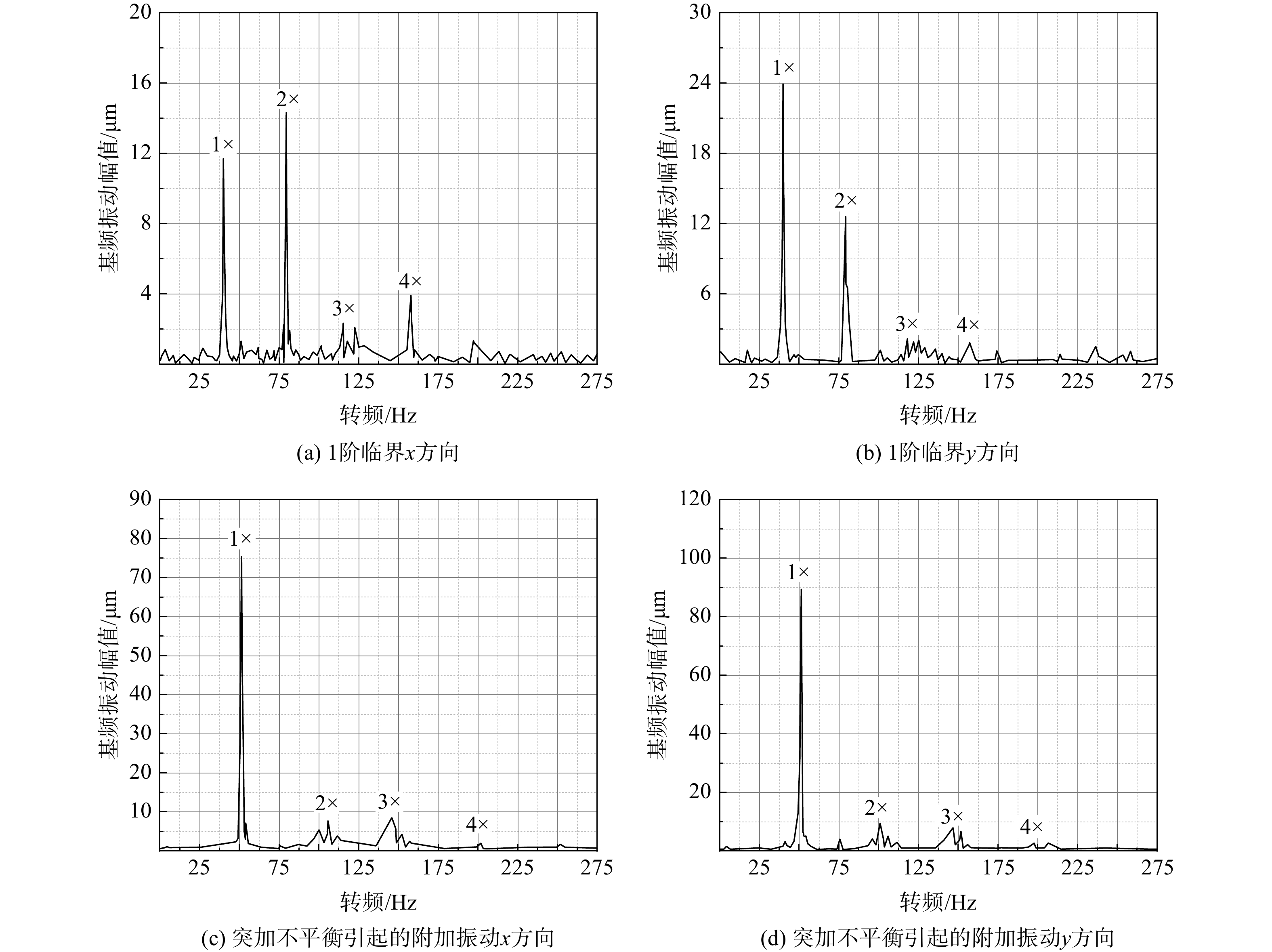
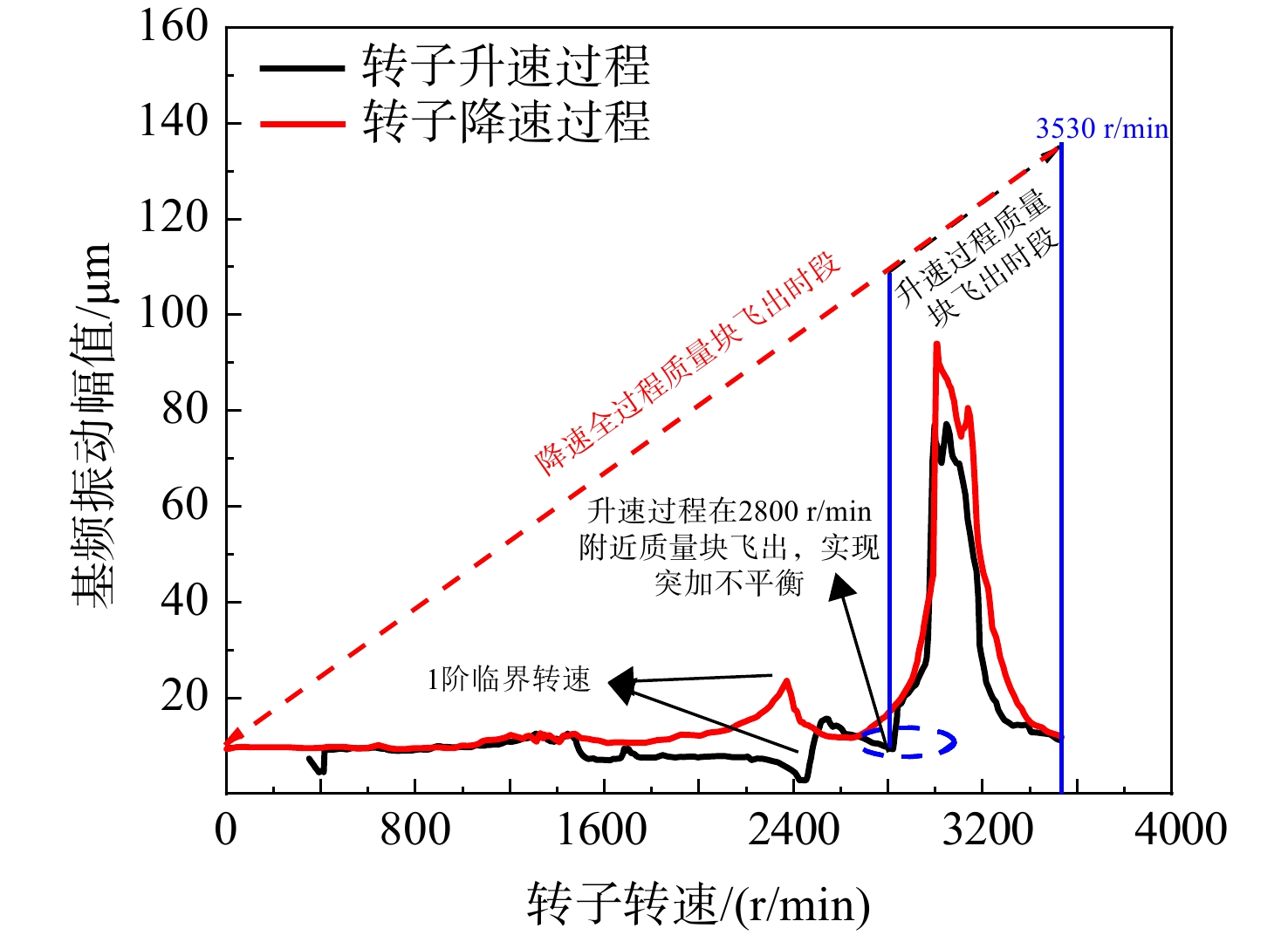
In order to study the suppression effect of elastic ring squeeze film damper (ERSFD) on vibration of rotor system under transient impact (sudden unbalance), the rotor dynamics experiment rig with ERSFD was designed and assembled to carry out the experiment of sudden unbalance and obtain the experimental results of the spectrum response at the speed up and down of the rotor under oil free and oil supply states. Results showed that ERSFD can effectively suppress the fundamental frequency vibration at the critical speed and transient response caused by sudden unbalance, and reduce the vibration amplitude at critical speed and additional vibration by 62.18% and 74.39% respectively; the combined effect indicated that the first critical speed of the rotor was 2.39% lower than that of the ERSFD oil free when additional stiffness and damping were introduced into the rotor system.

Influencing factors and control methods of surface microstructure transformation of single crystal blade
LI Shifeng, MA Husheng
2023, 38(1): 41-46. doi: 10.13224/j.cnki.jasp.20210438
Abstract:

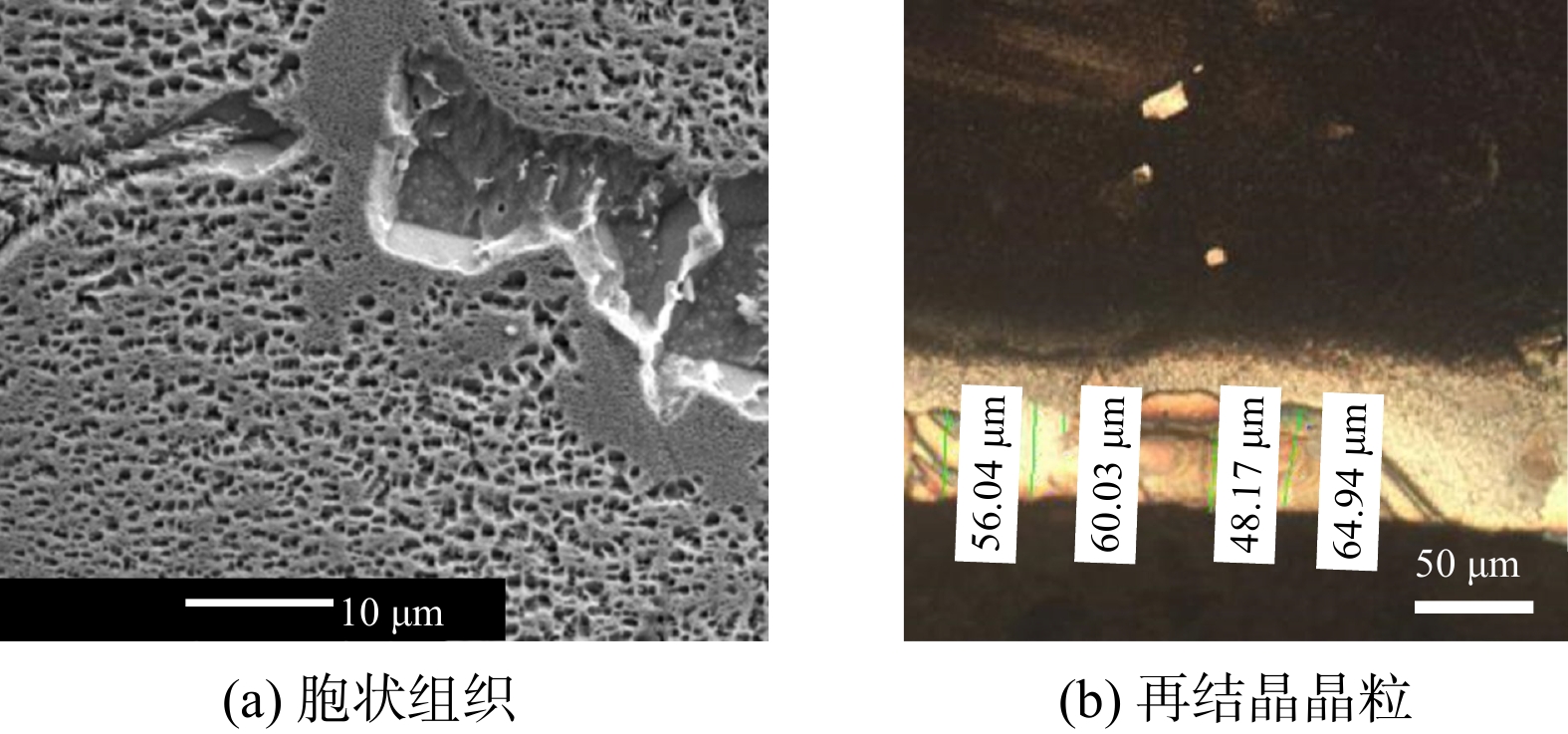
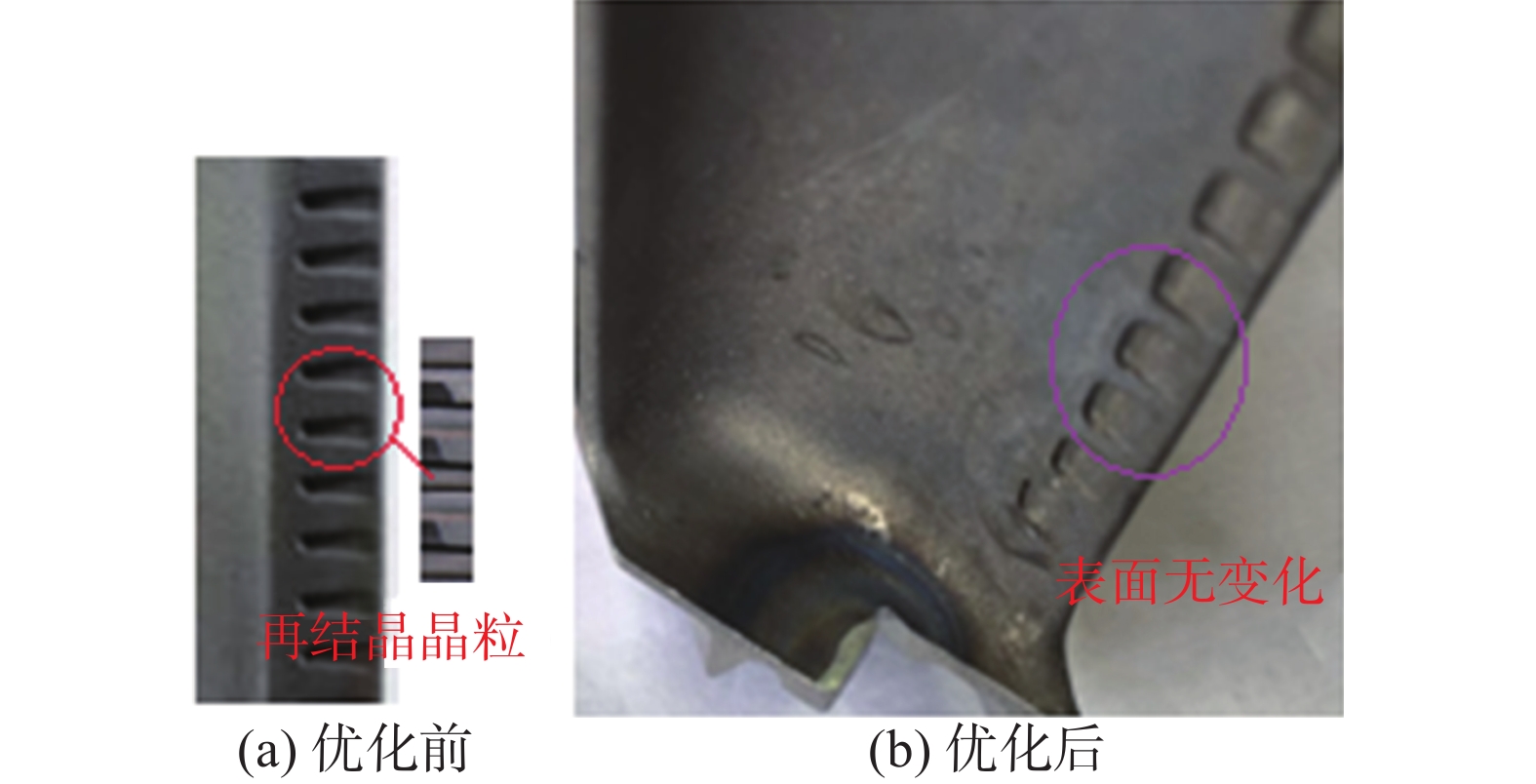
The problem of surface recrystallization was found on the structural distortion region of single crystal blade after the high temperature heat treating. To solve this problem, a method was proposed based on critical stress of recrystallization and residual stress of structure. With the help of structural optimization technology, the study showed that the critical stress happened justly under the recrystallization of the single crystal blade, and the residual stress level of structure was no more than the critical stress of recrystallization stress. Results showed that the temperature and stress concentration level were two major factors inducing structural recrystallization, and the recrystallization was originated from discontinuous cellular microstructure of the single crystal blade. Meanwhile, the critical stress of recrystallization was used to establish a relationship with the structure design parameters and the heat treatment temperature, then, the test validation work was completed for the real blade. This method is effective to restrain the structural recrystallization of single crystal blade and control the structural integrity and surface microstructure continuity.

Vibration fatigue life prediction of fiber reinforced composite thin plate under basic random excitation
XU Zhuo, XU Hesong, LI Hui, WANG Xiangping, ZHANG Haiyang, LIU Yang, SUN Wei, MA Hui, ZHAO Bingfeng, HAN Qingkai, JIA Pu, ZHOU Jin, WEN Bangchun
2023, 38(1): 47-54. doi: 10.13224/j.cnki.jasp.20220155
Abstract:

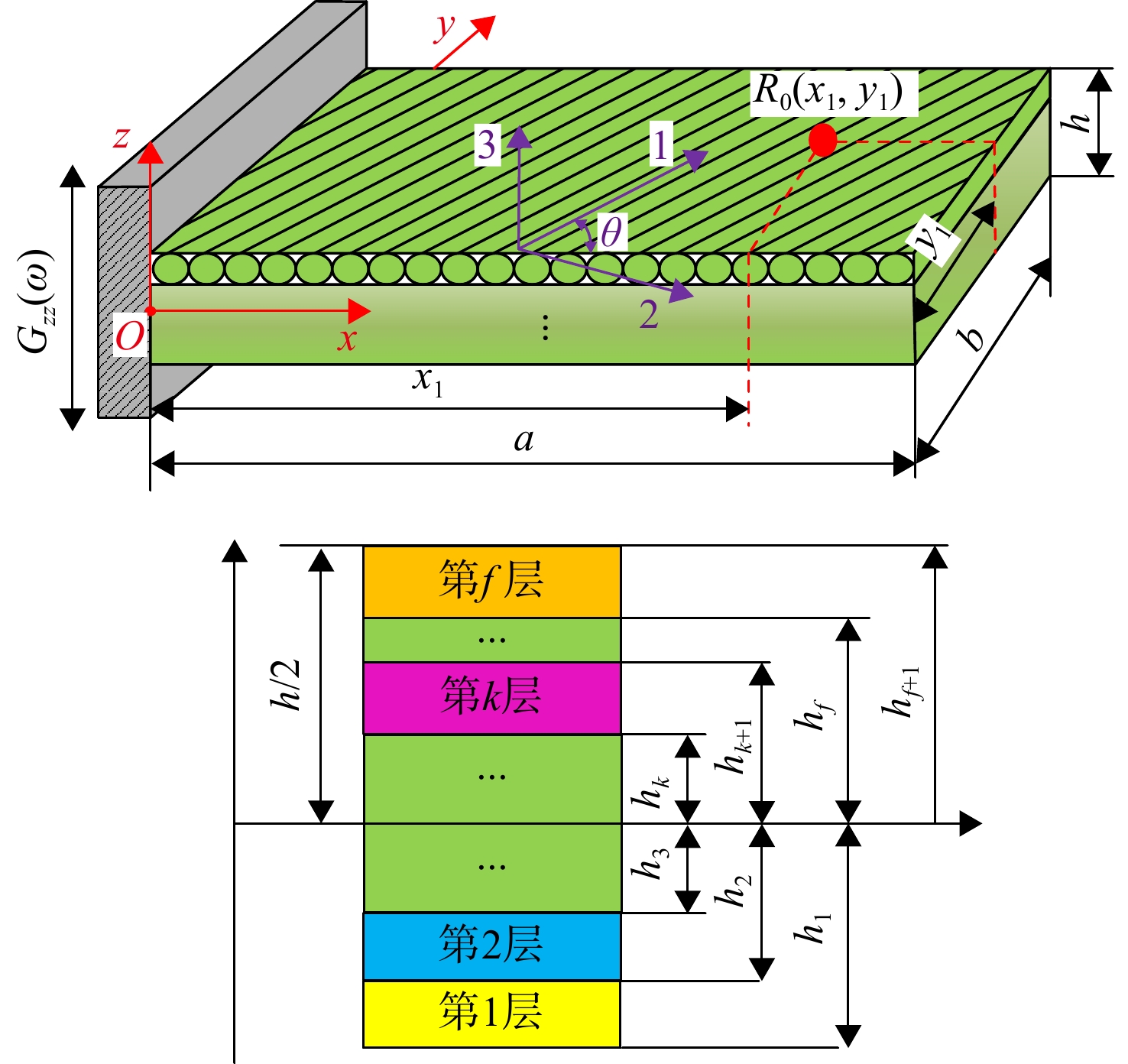
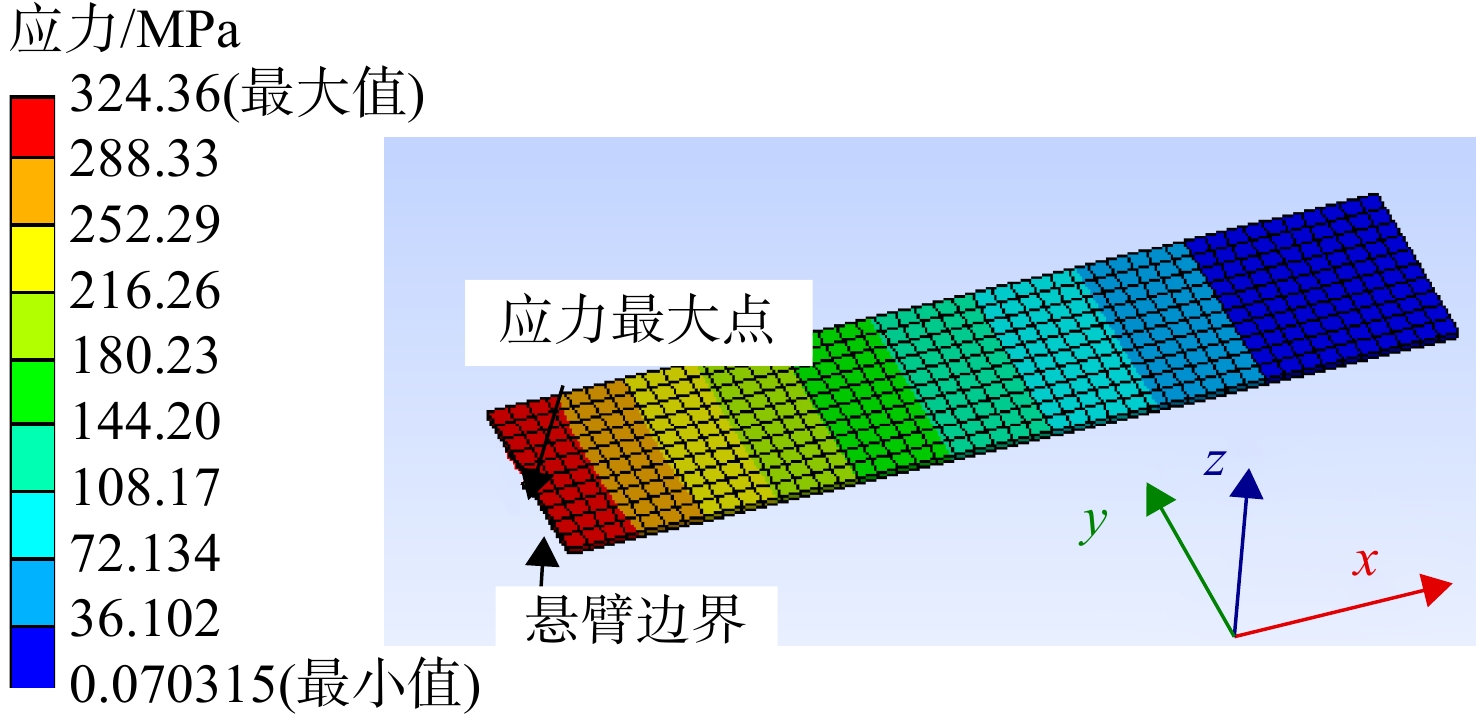
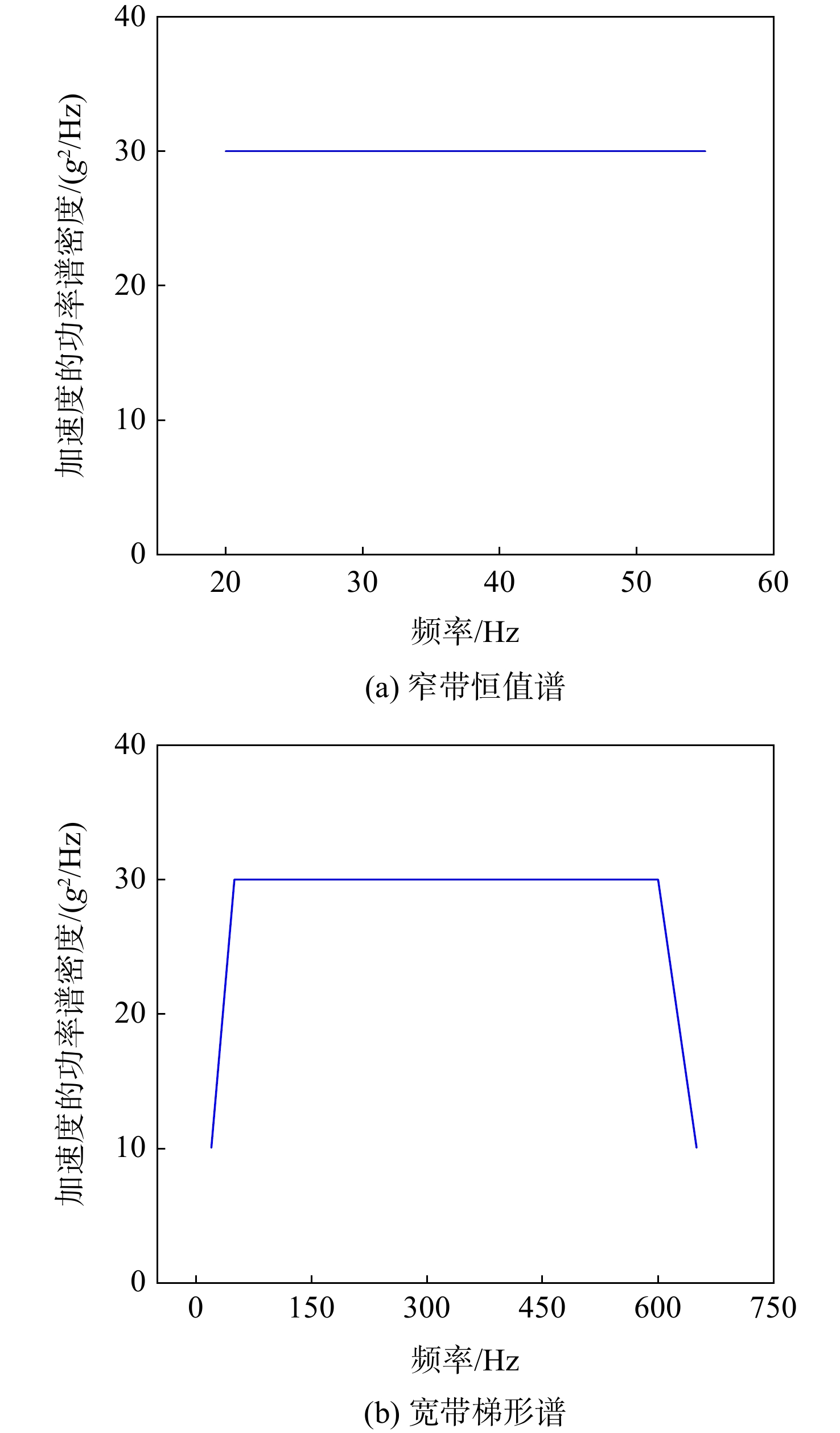
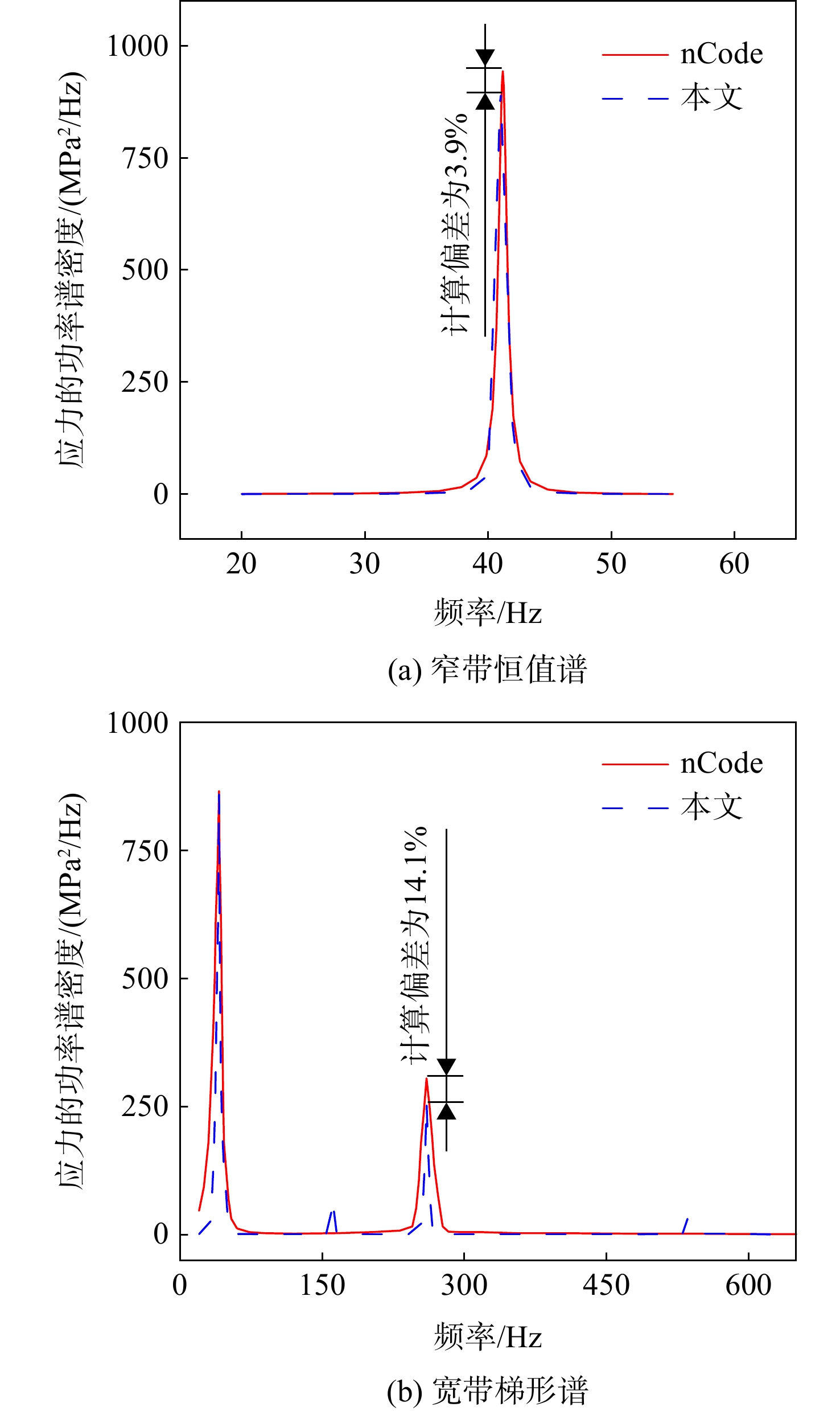
In order to solve the problems of traditional finite element modeling such as black box operation, high computational cost and lack of independent intellectual property rights, an analytical model for vibration fatigue life prediction of fiber reinforced composite thin plate under basic random excitation based on classical laminated plate theory, random vibration theory and Miner's linear accumulation damage criterion was established. Based on the stress modal method, the stress frequency response function of the fiber reinforced composite plate was deduced, and the random vibration equivalent stress power spectral density function of the structure was obtained considering the random excitation. Based on the probability density function corresponding to the Dirlik, Bendat and Benasciutti-Tovo frequency domain models, the corresponding vibration fatigue life was solved successfully. In addition, the correctness of the model and prediction results were verified by using ANSYS and nCode software. It was found that the deviations of life calculation results obtained by this model and the above commercial software were less than 14.8%. However, the calculation efficiency was improved by about 17% to 33%. Therefore, the model can provide an idea and a tool for predicting the vibration fatigue of anisotropic composite sheet under random excitation.

Fatigue life of titanium alloy thin-walled structure under thermal vibration environment
JIE Xiaoluo, LI Liyuan, HU Youhong, XIE Xueduo, WU Yanzeng
2023, 38(1): 55-60. doi: 10.13224/j.cnki.jasp.20210422
Abstract:

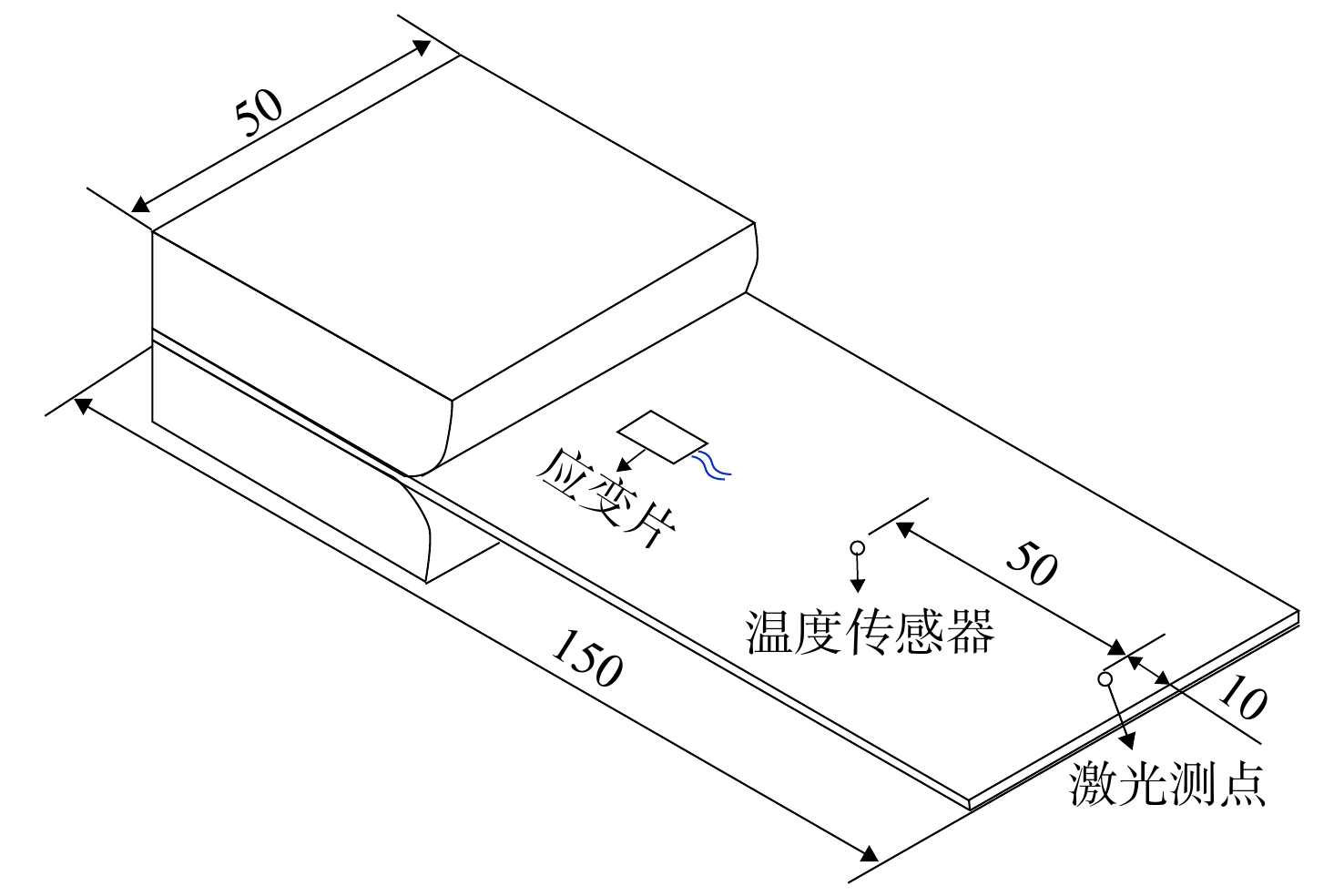
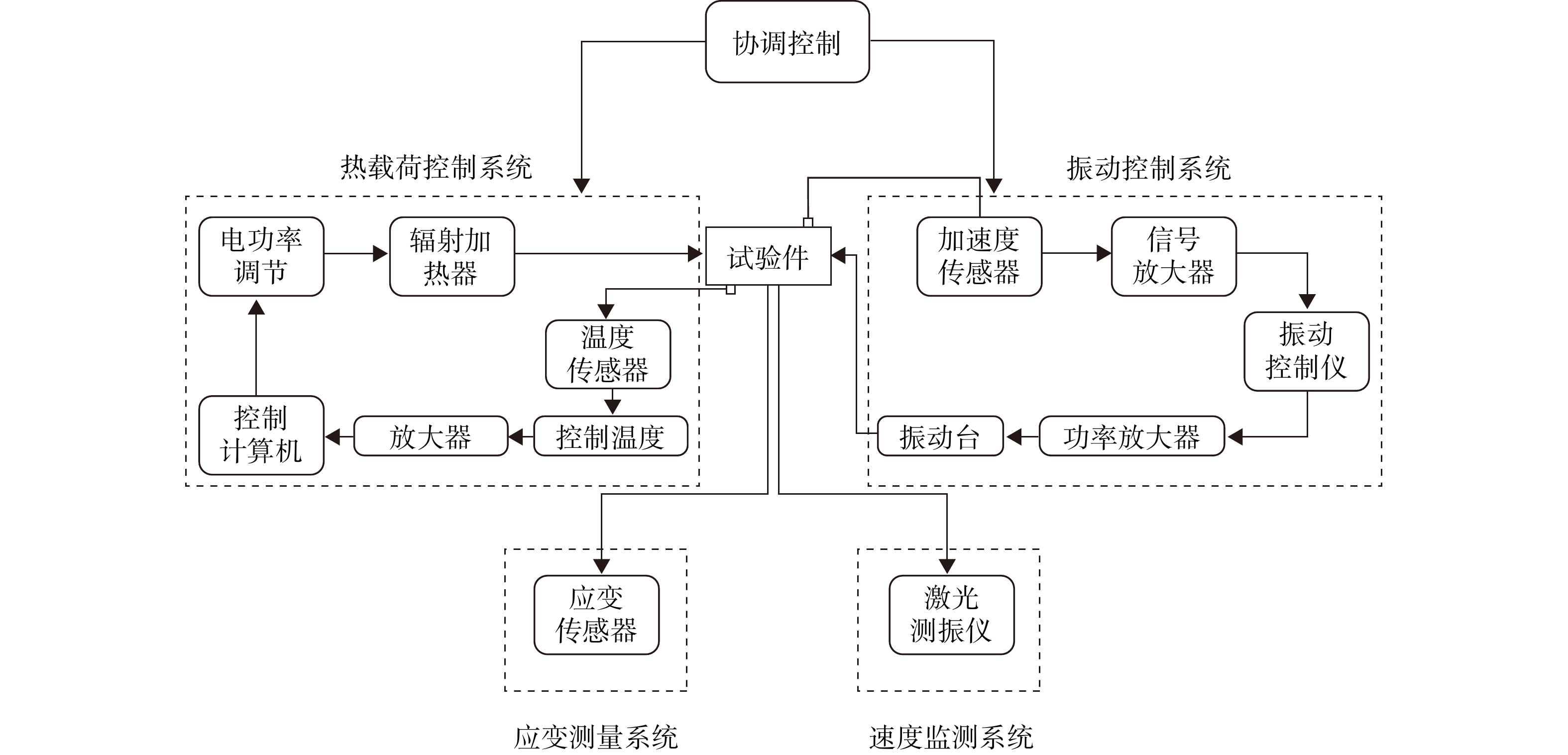
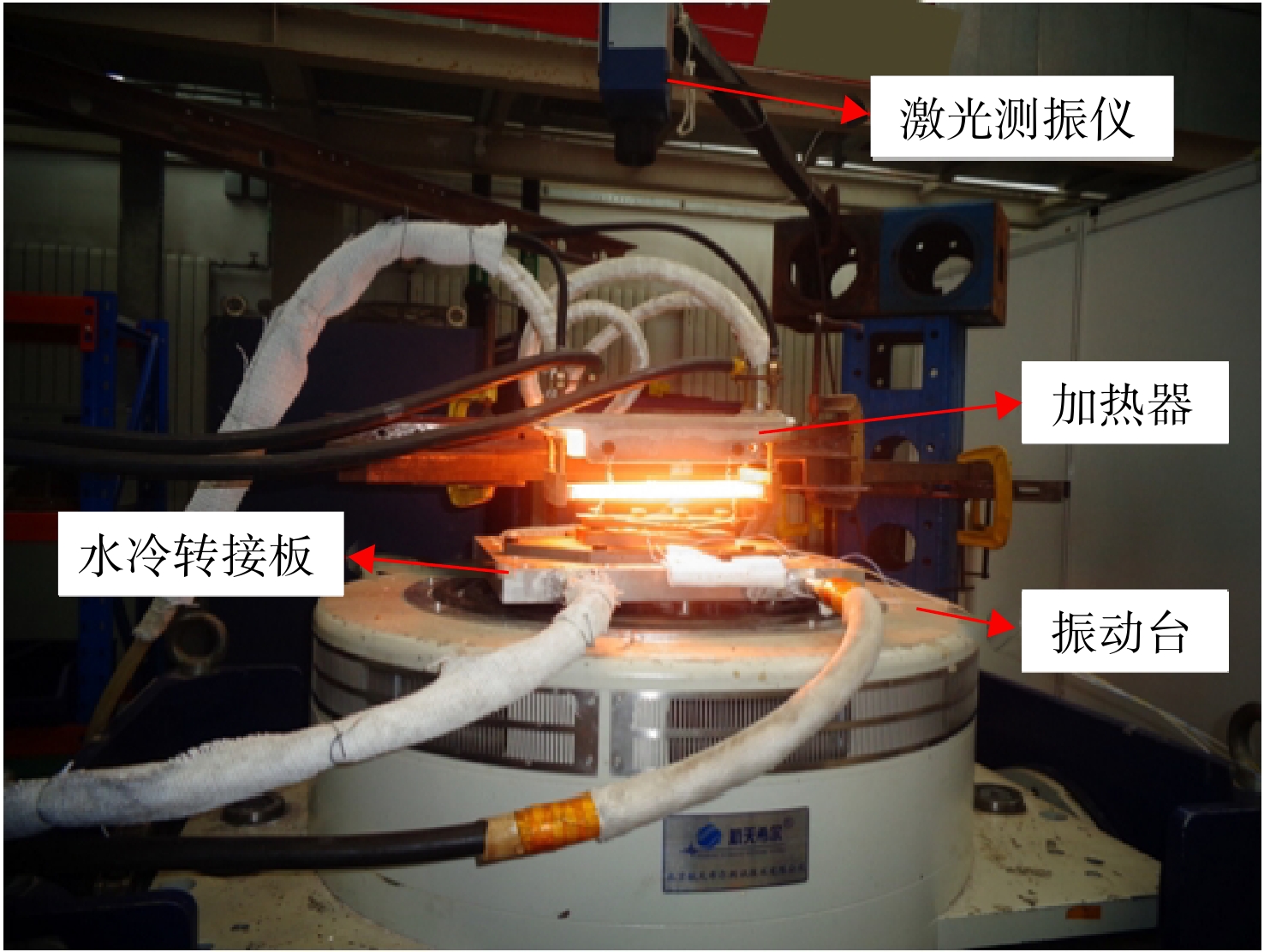
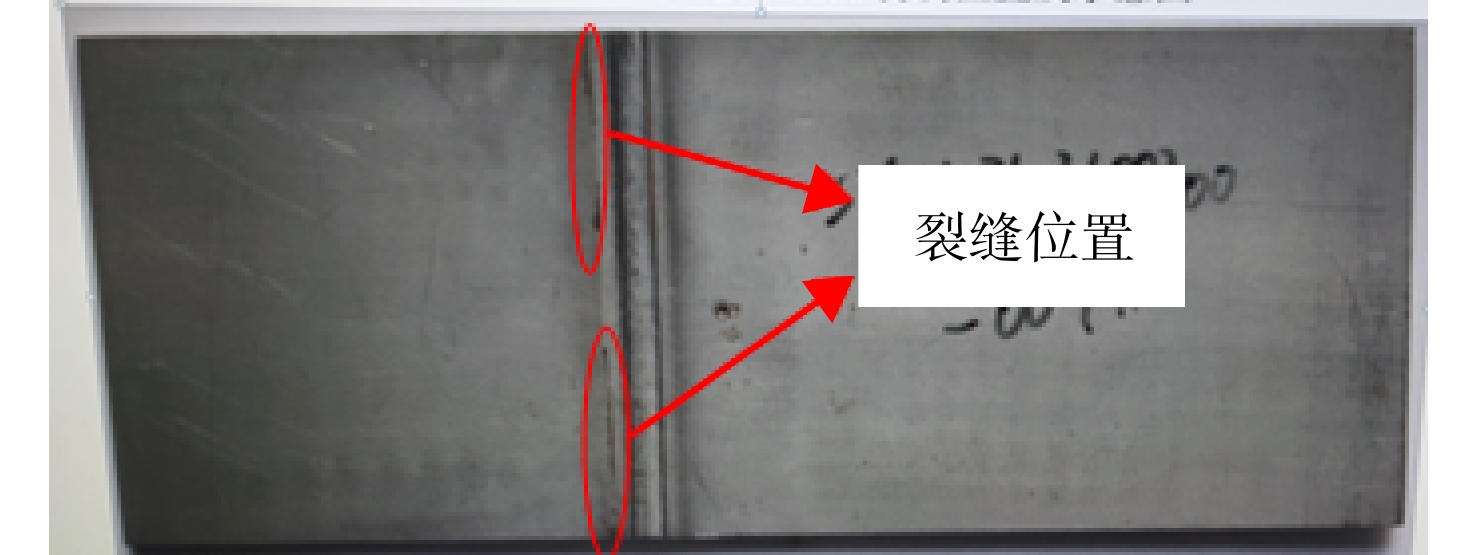
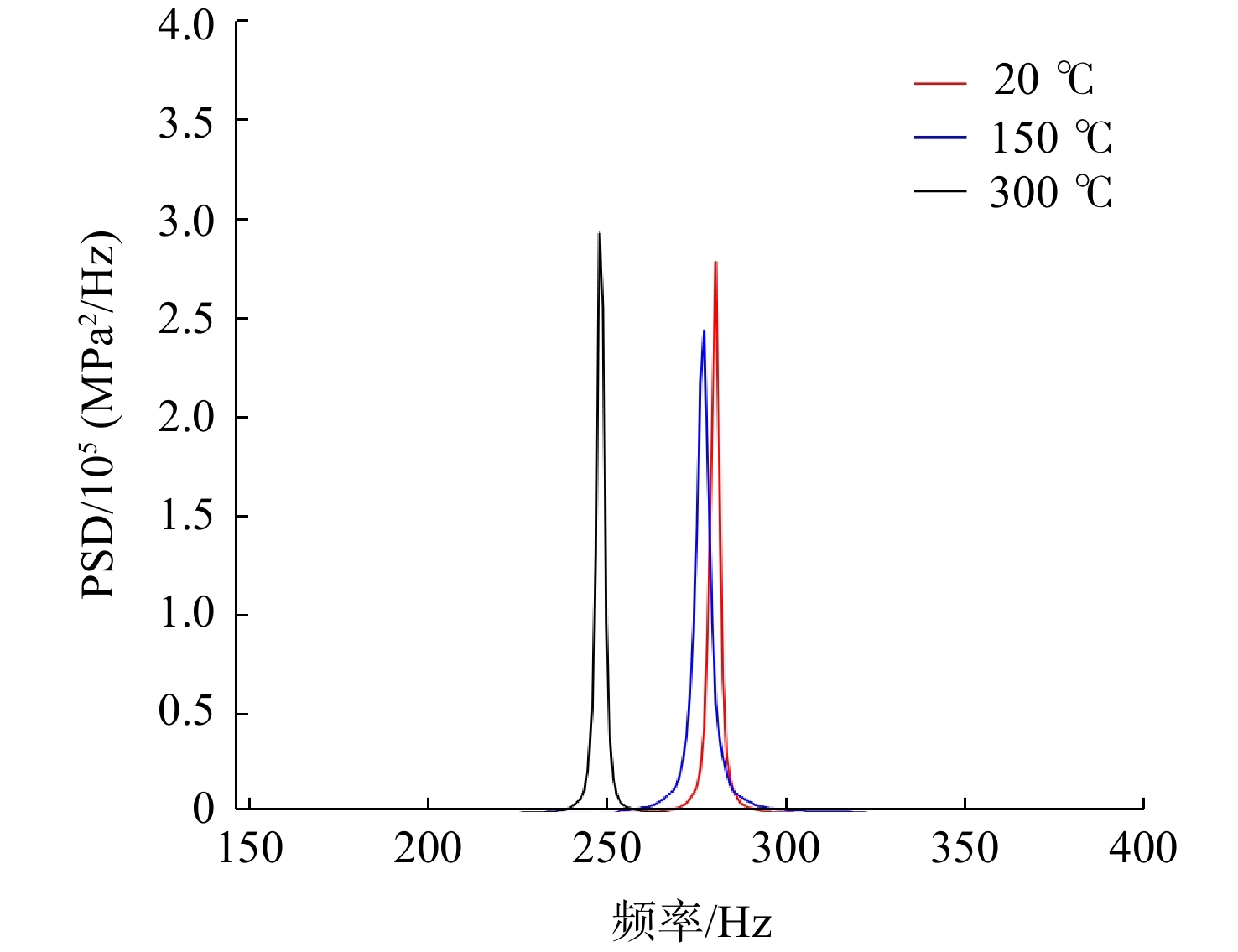
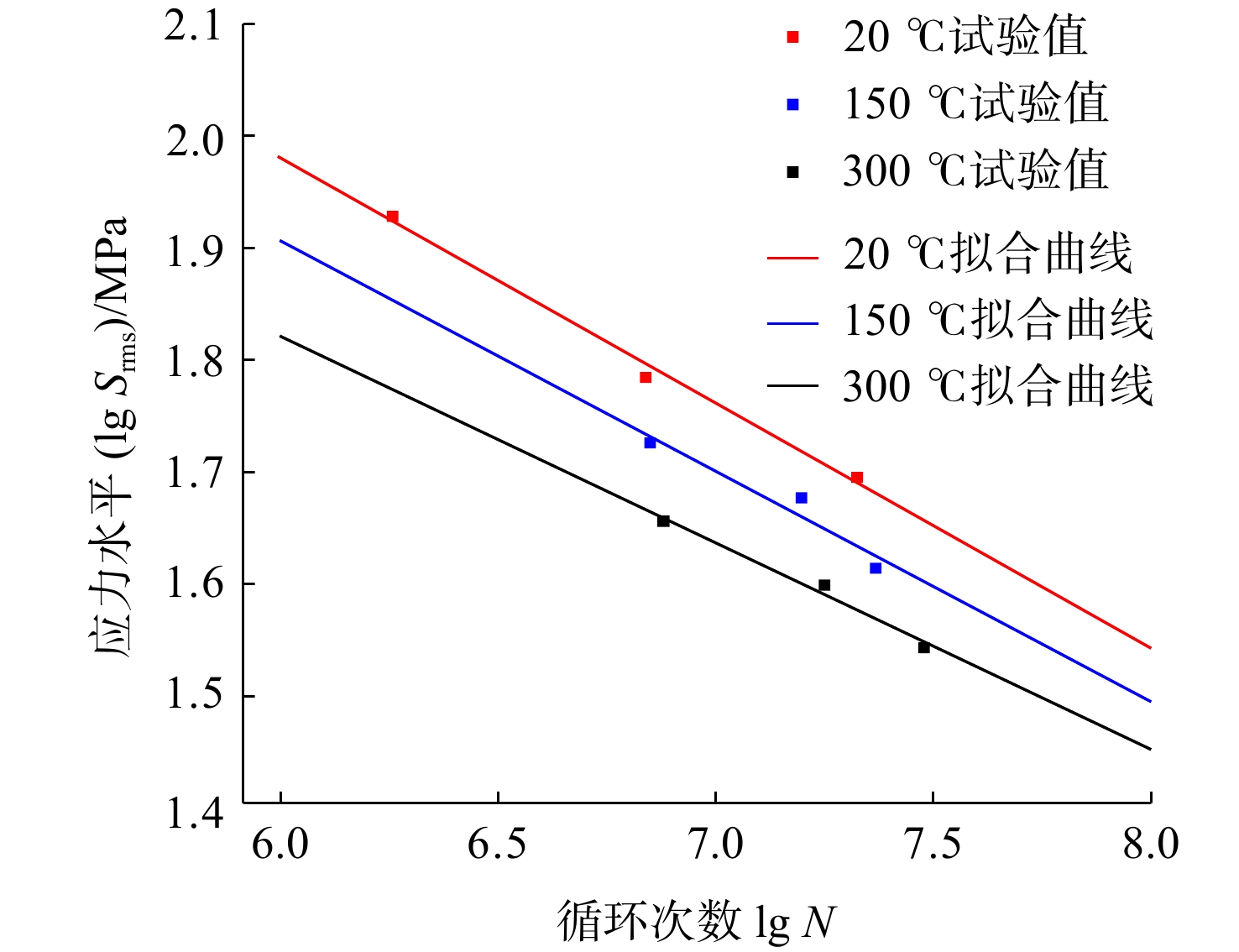
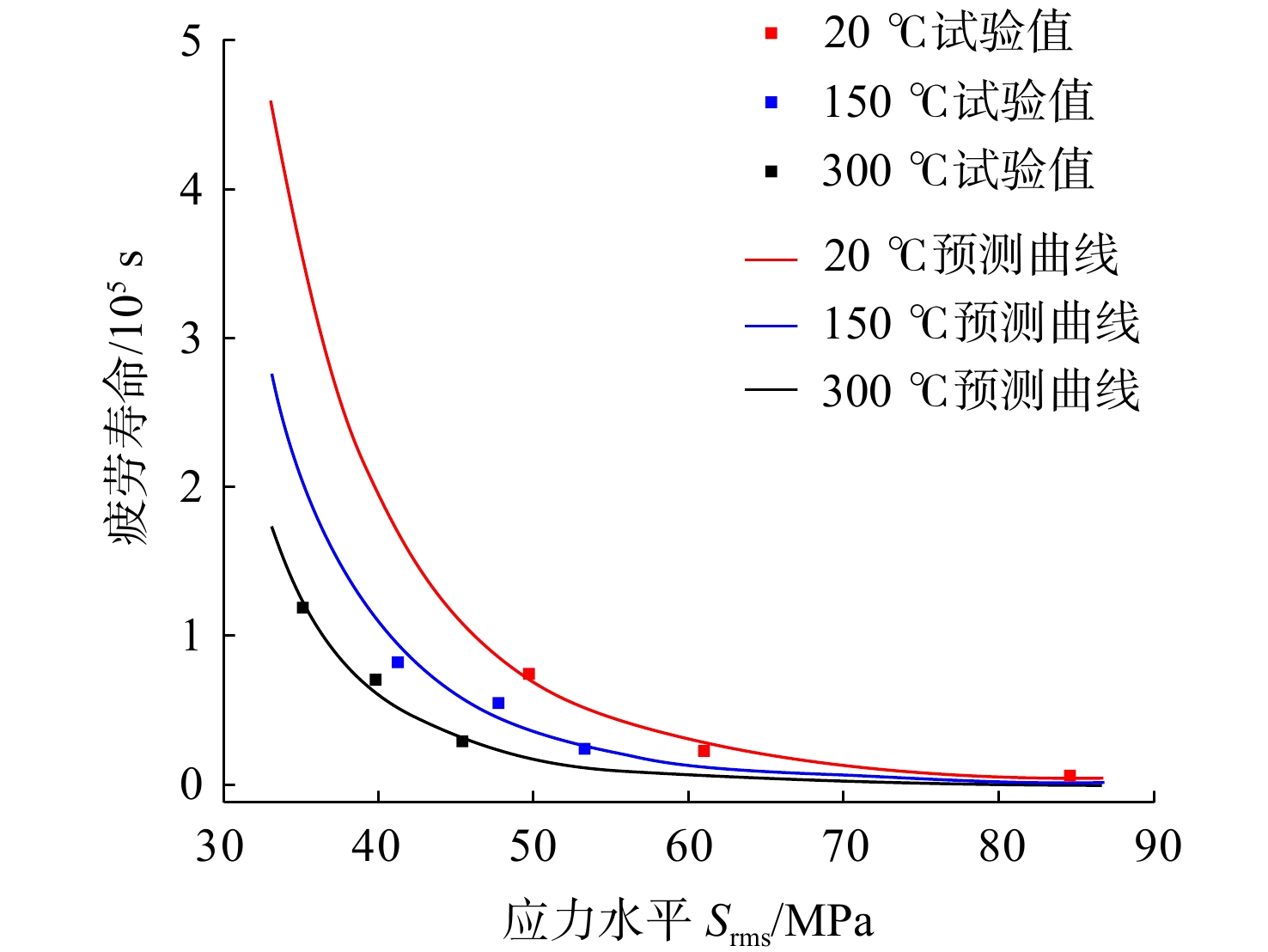
Titanium alloy thin-walled structures are in the thermal vibration environment for a long time. The constantly changing stress produced in the thermal vibration environment may cause structural fatigue failure. A high temperature vibration fatigue testing system was built with the help of vibration test bench, and the random vibration S-N fatigue curves of titanium alloy cantilever thin plate structure were obtained at 20, 150 ℃ and 300 ℃. The fatigue life prediction expression of titanium alloy cantilever thin plate structure at the above temperature was established, and the error between the predicted life and the actual life of the test piece was small, which was only 3.76% at the condition of 300 ℃, 45.36 MPa stress level. The method can be used to study the fatigue performance and life prediction of structures under high temperature random vibration loads.

Modeling and identification of geometric mistuning in blisks based on optical geometry measurement
ZHANG Yuan, ZHAO Jingchao, ZHOU Biao, LÜ Fuhui, JIN Yixuan
2023, 38(1): 61-69. doi: 10.13224/j.cnki.jasp.20210407
Abstract:

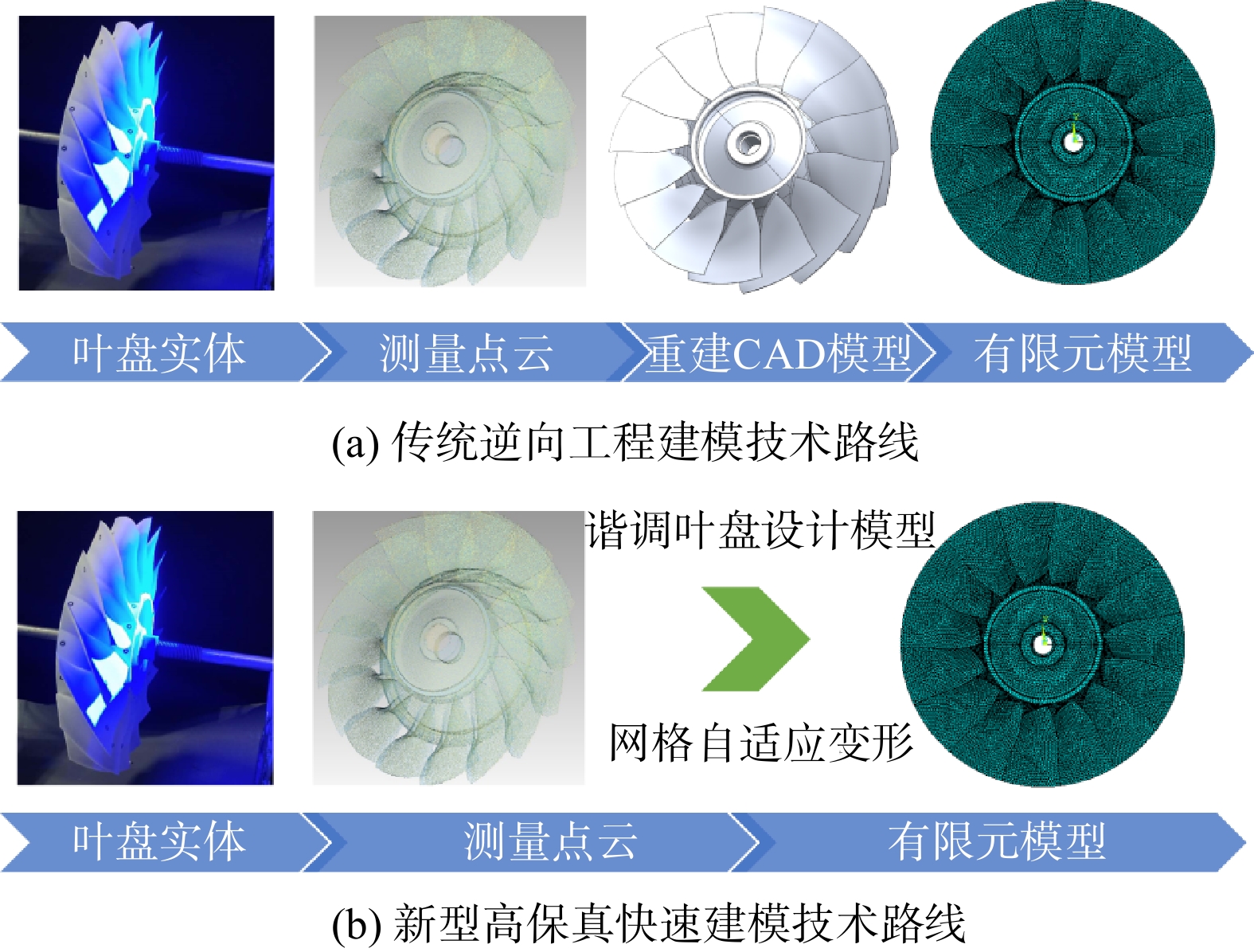
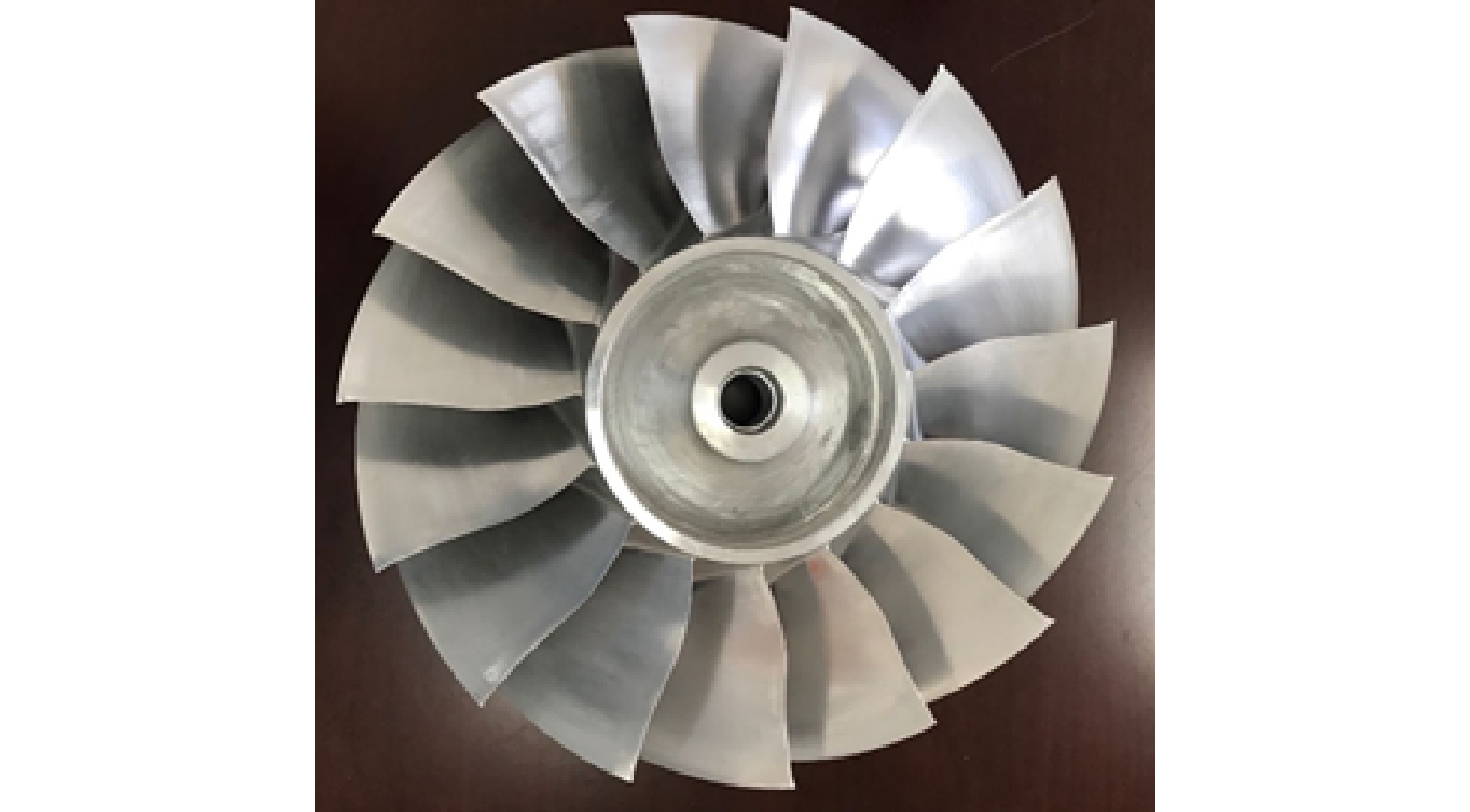
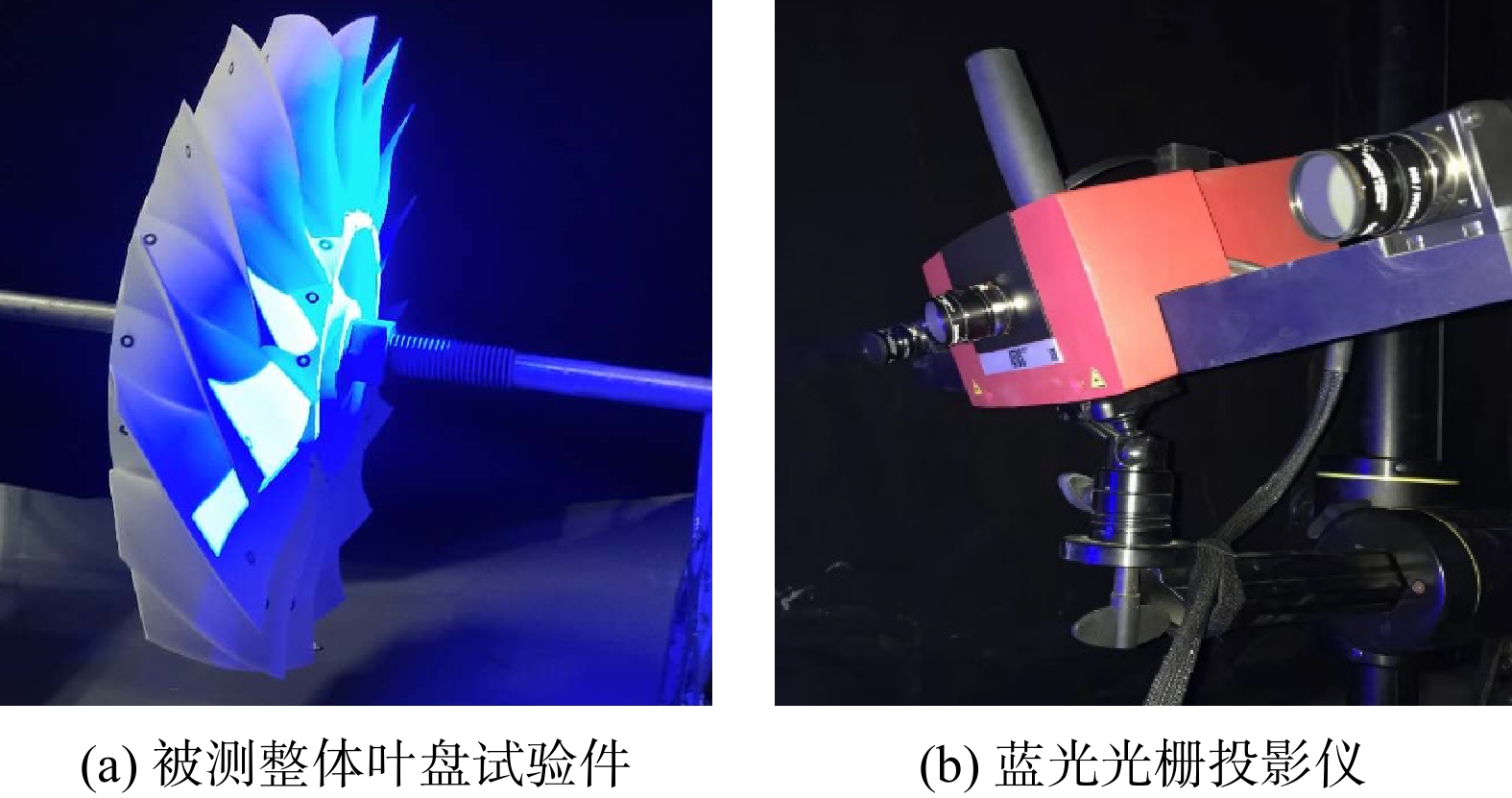
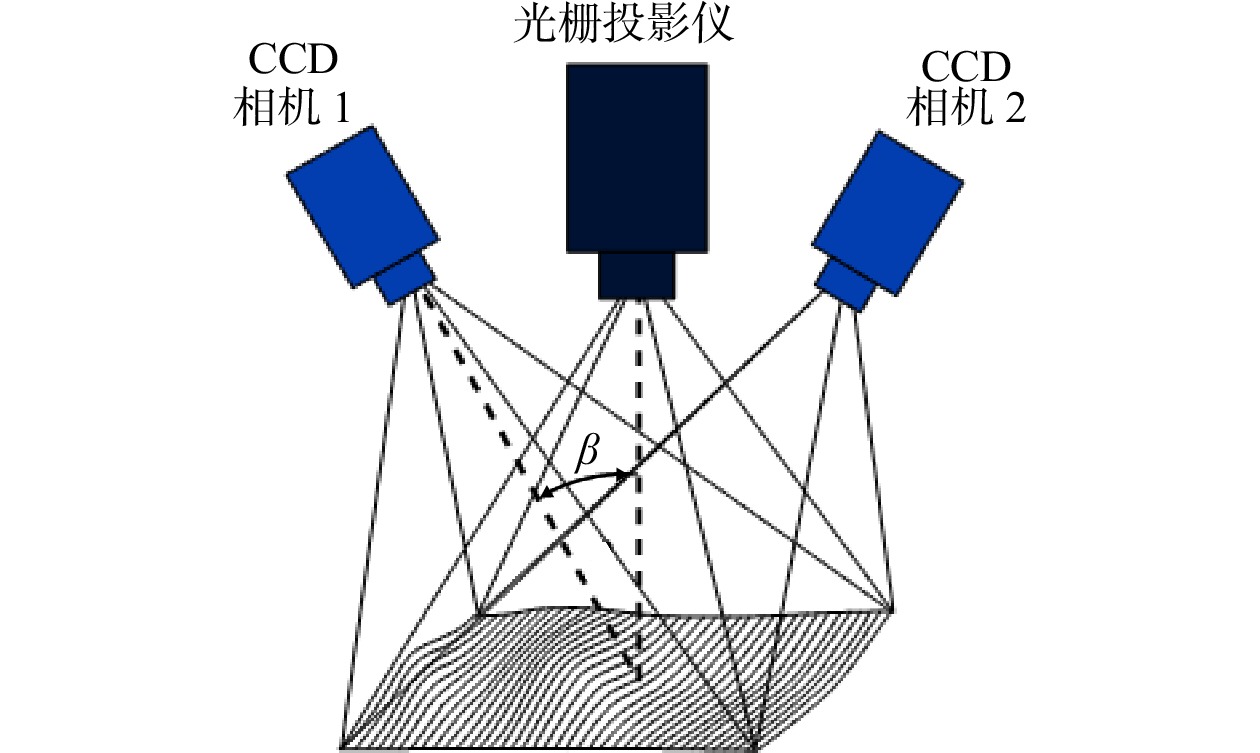
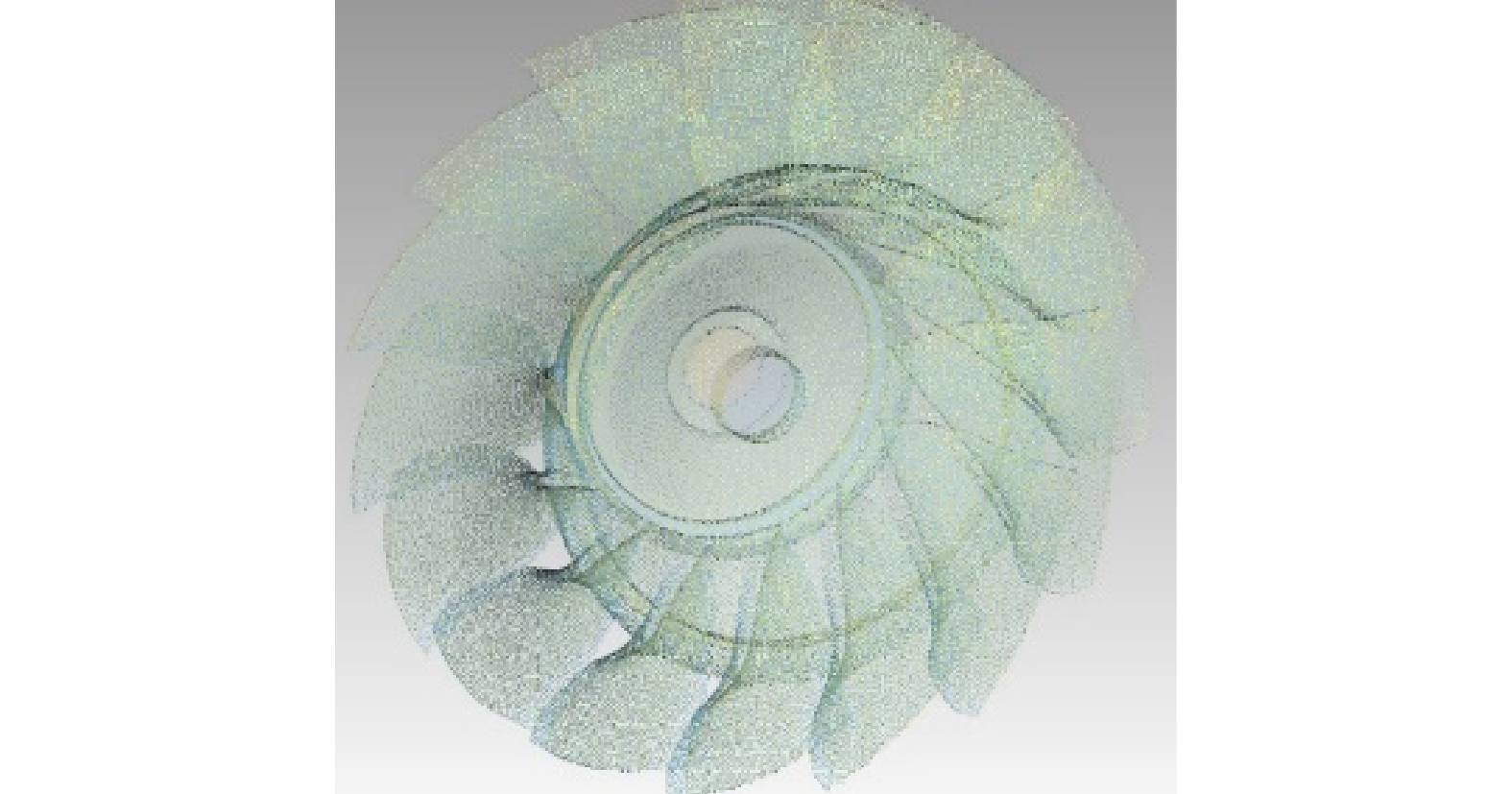
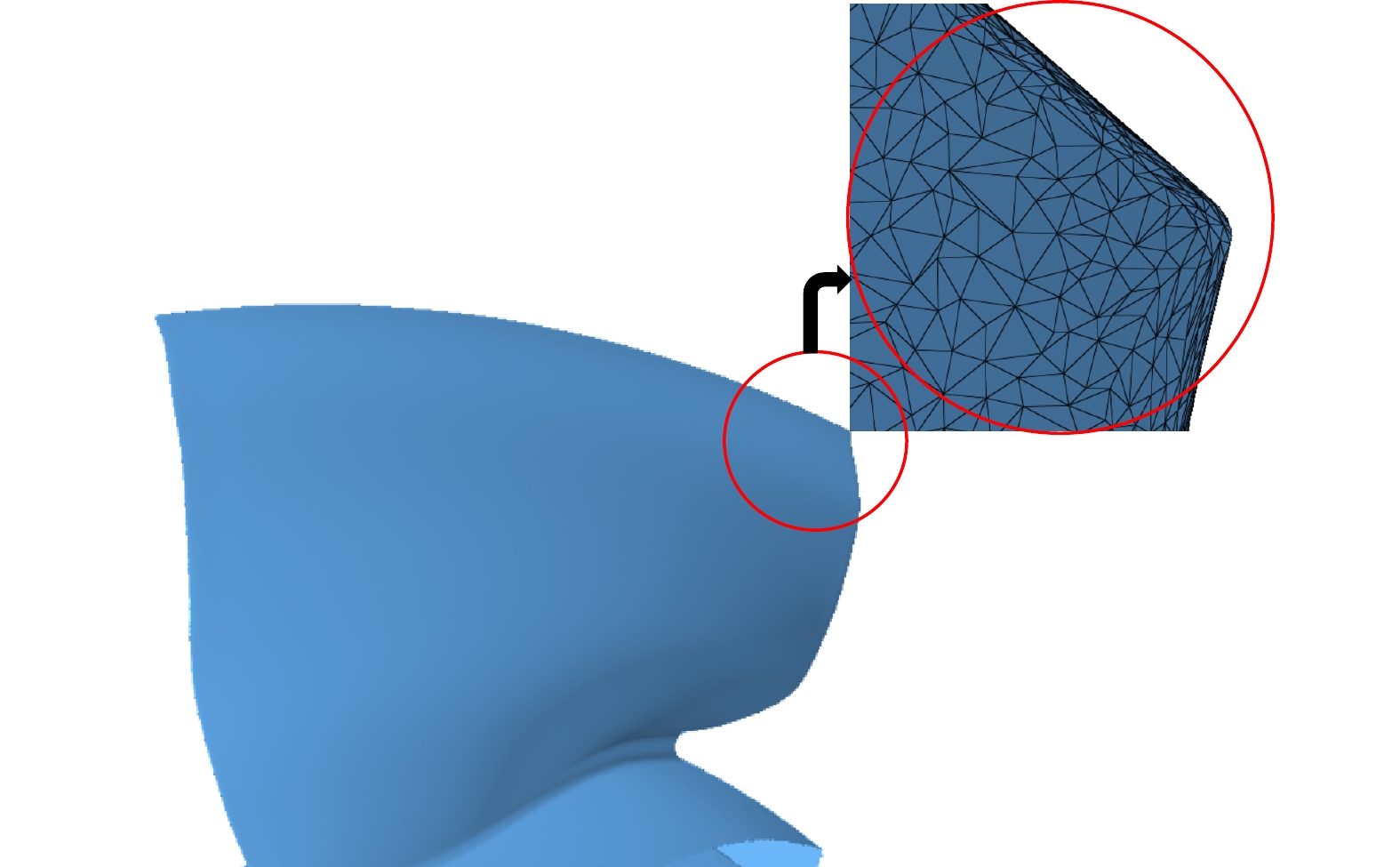
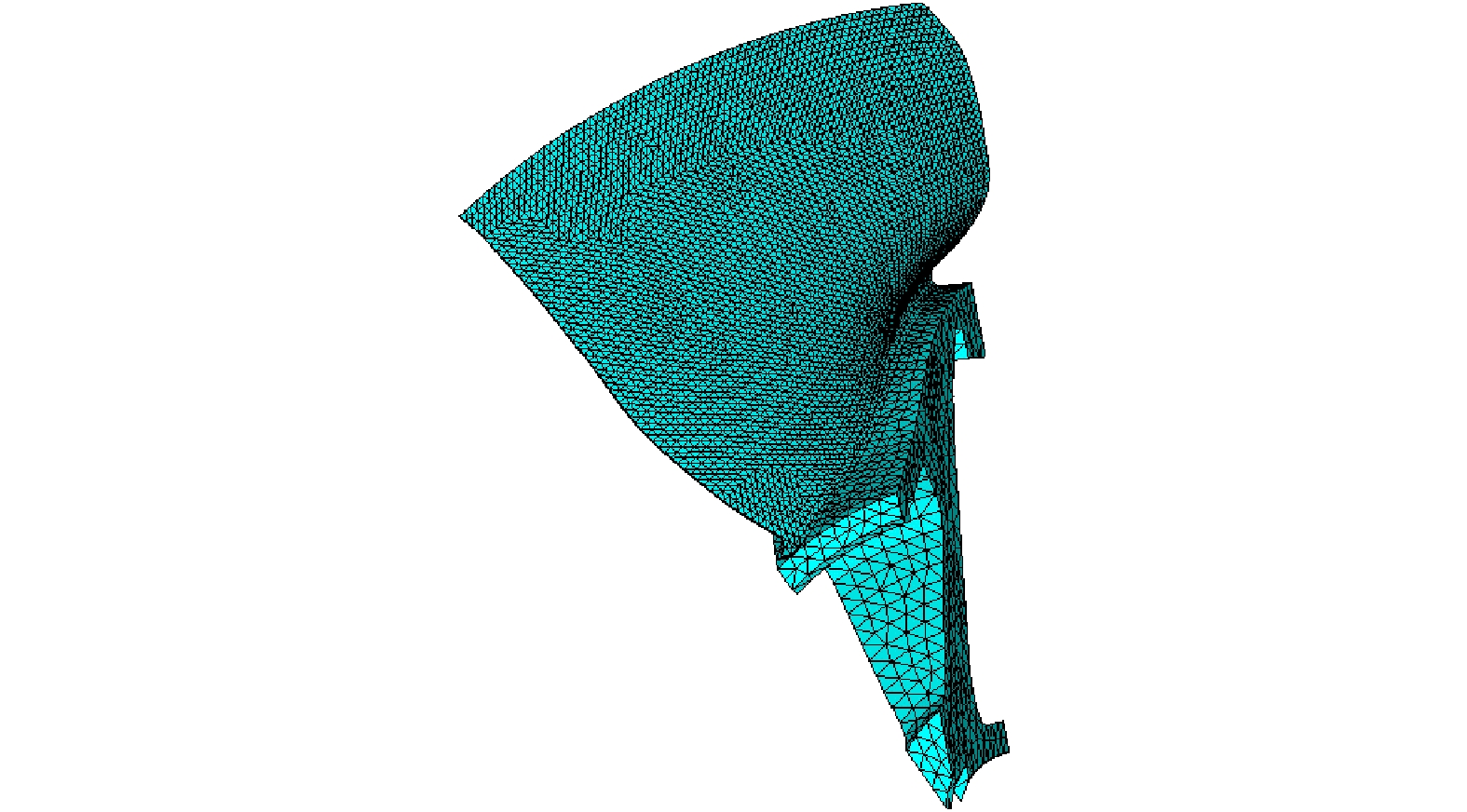
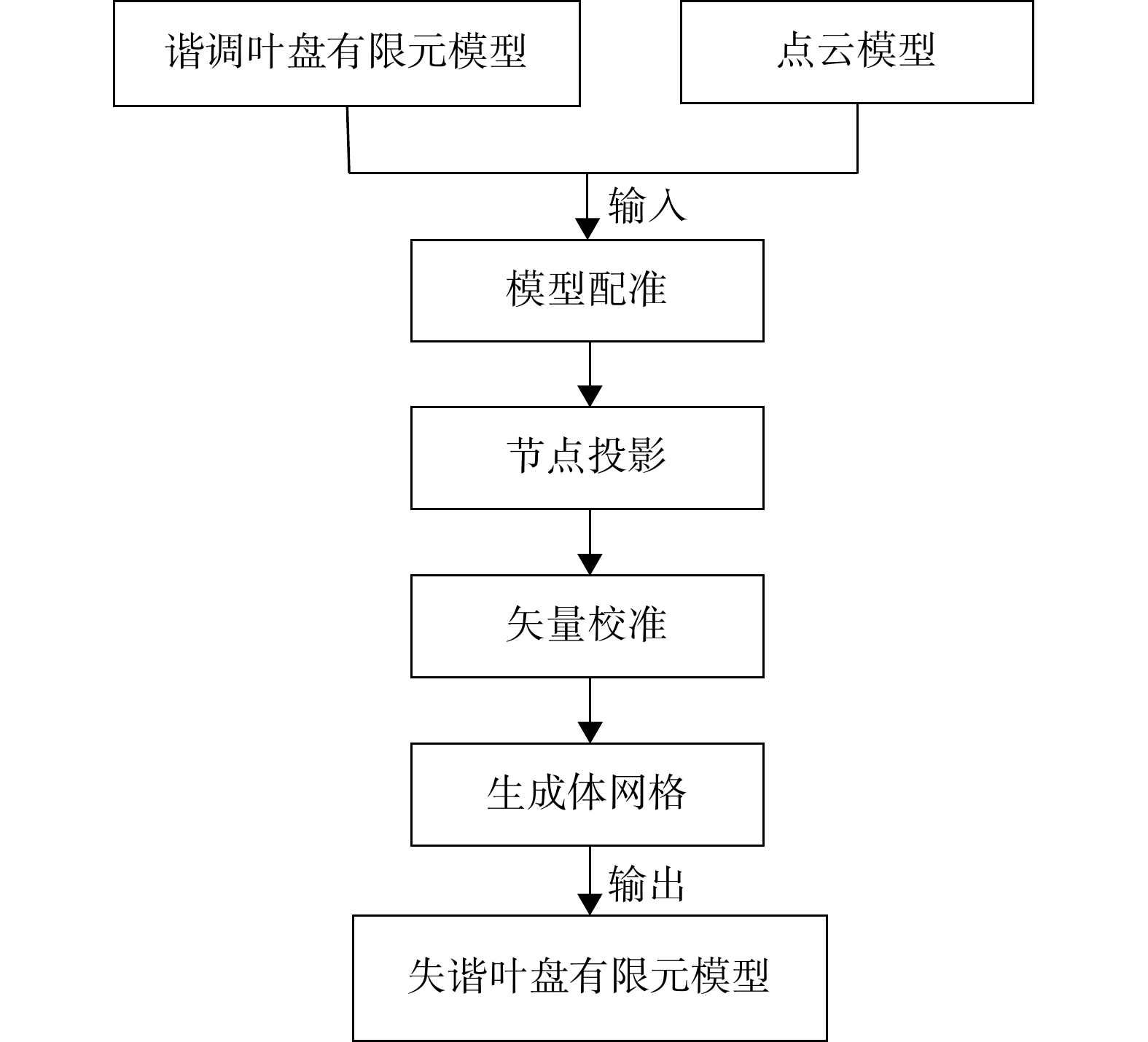
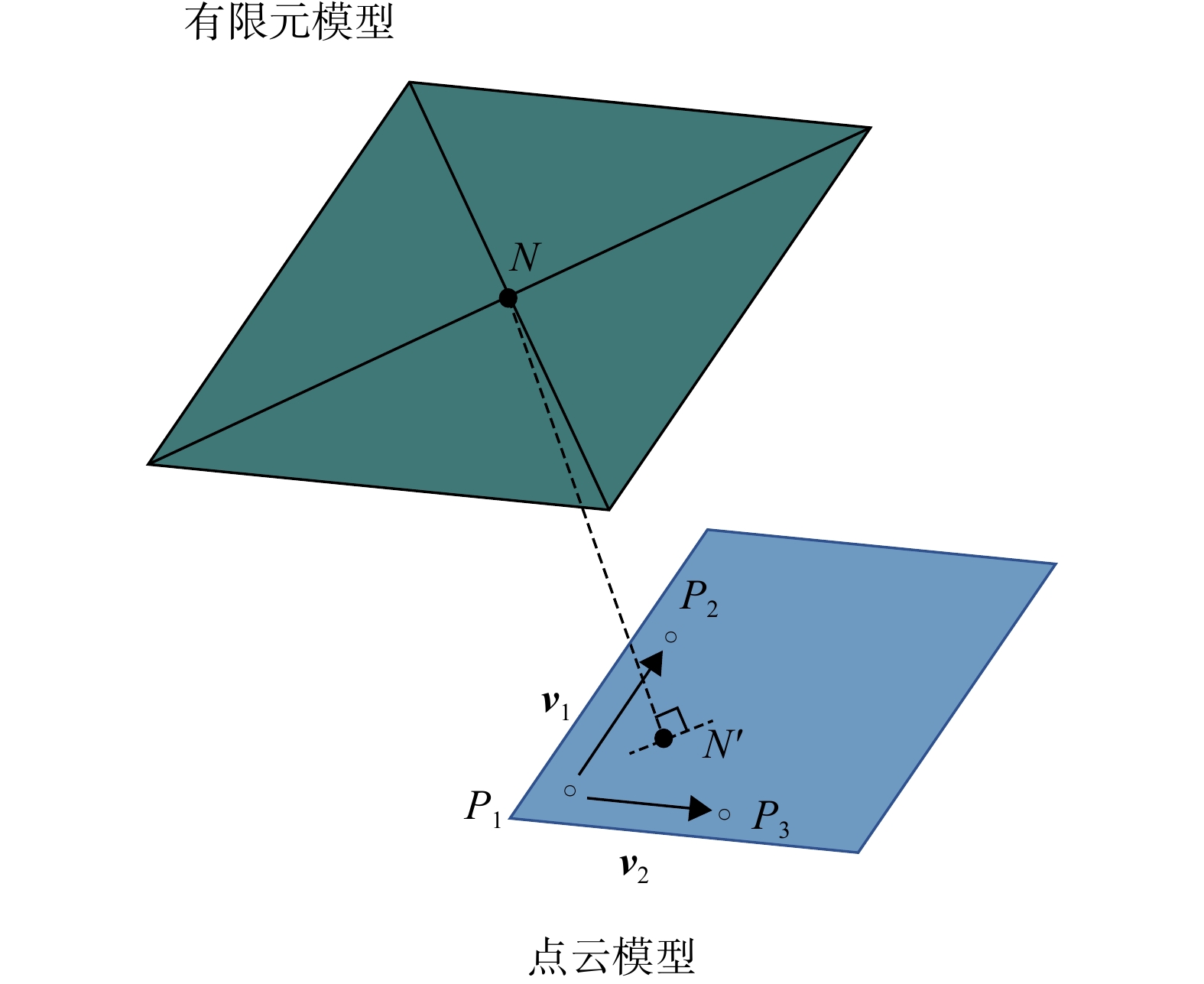
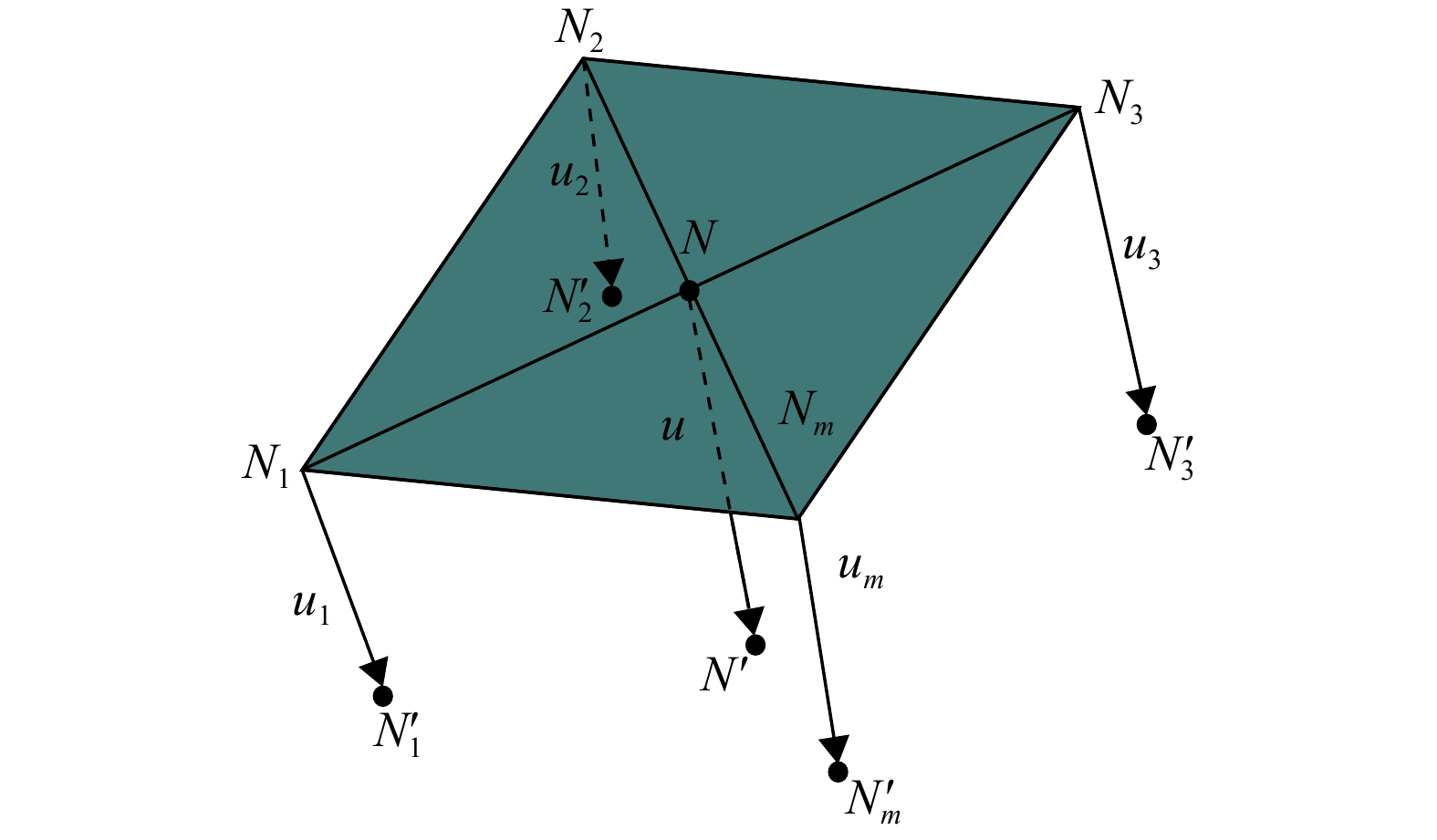
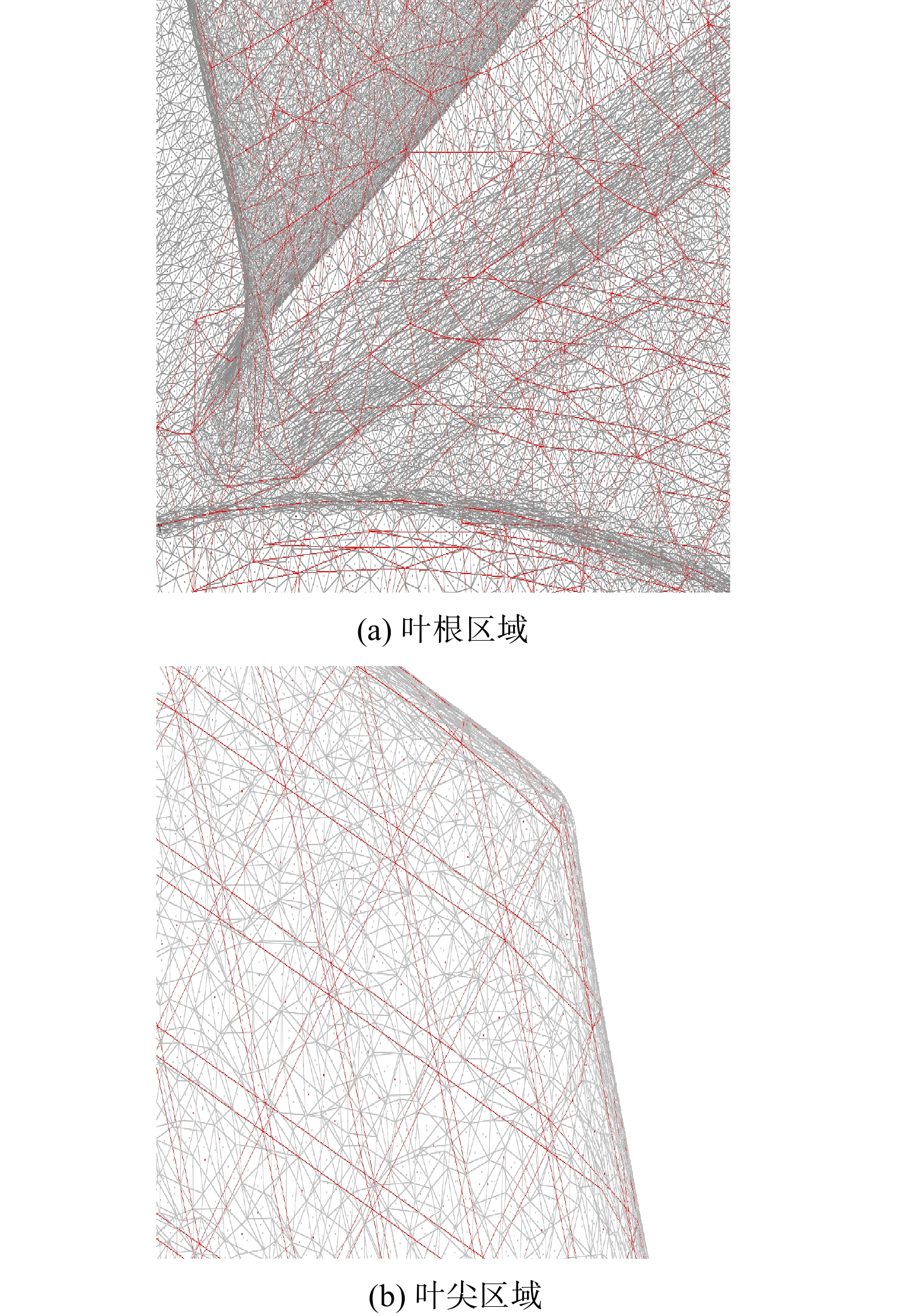
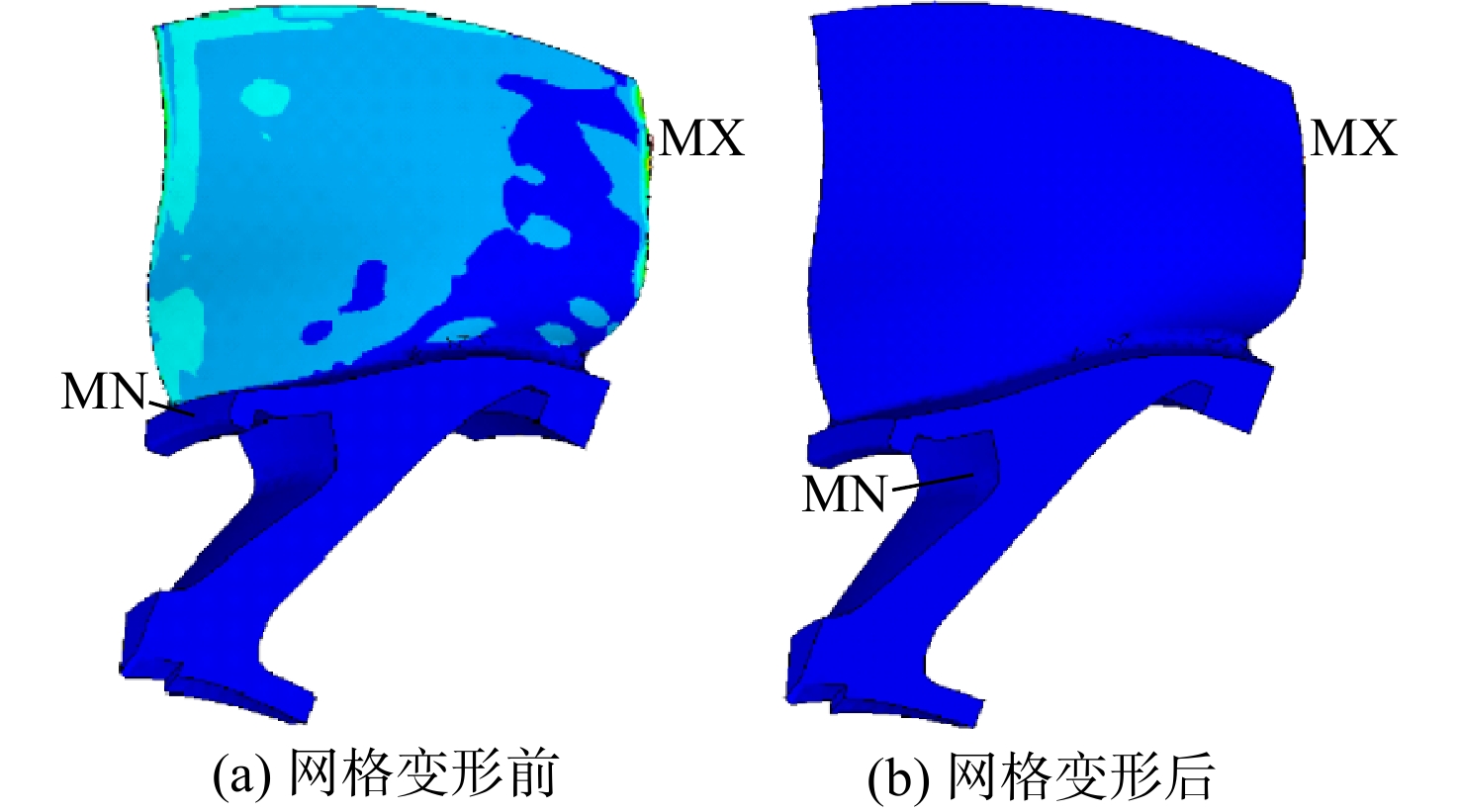
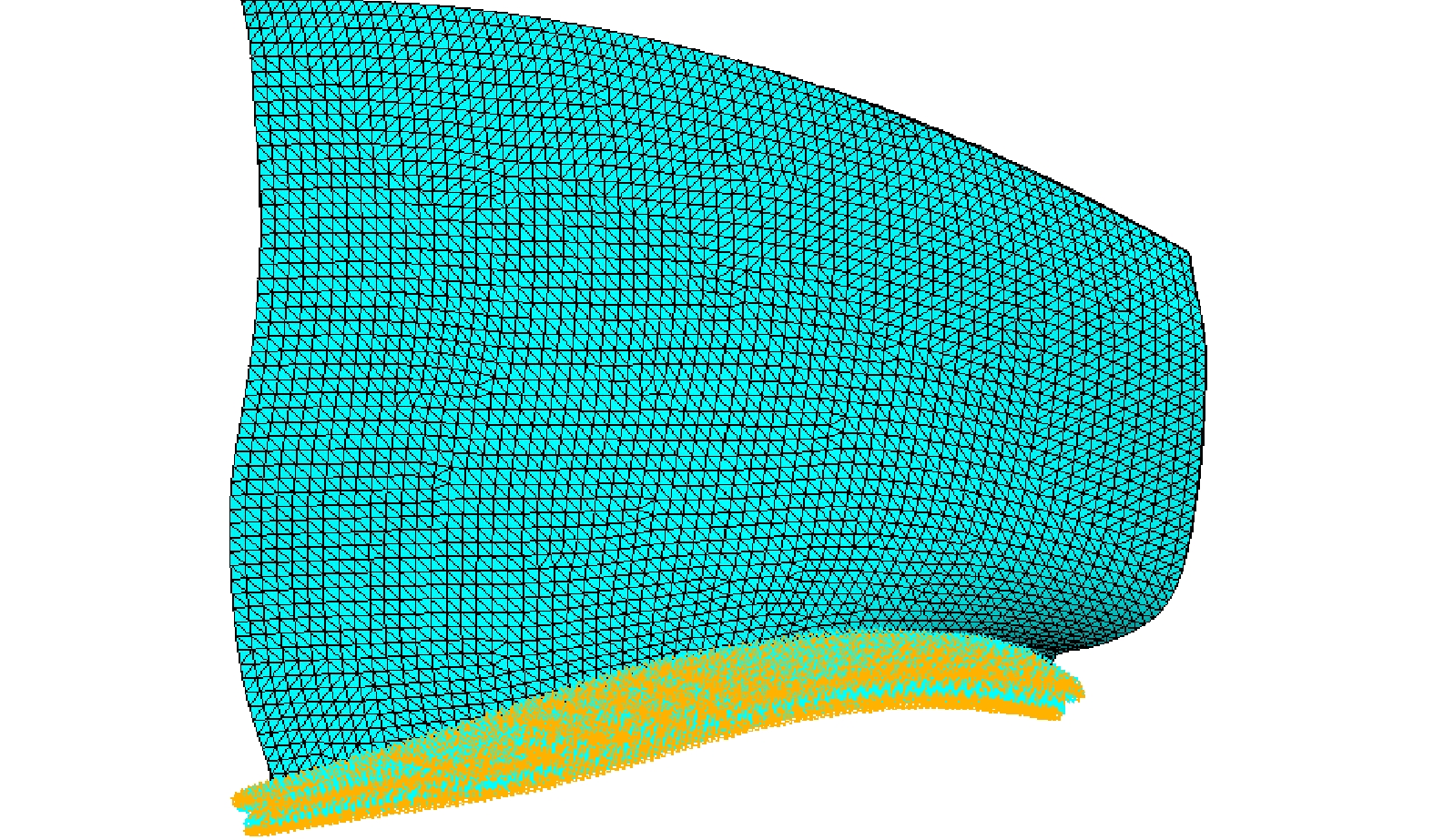
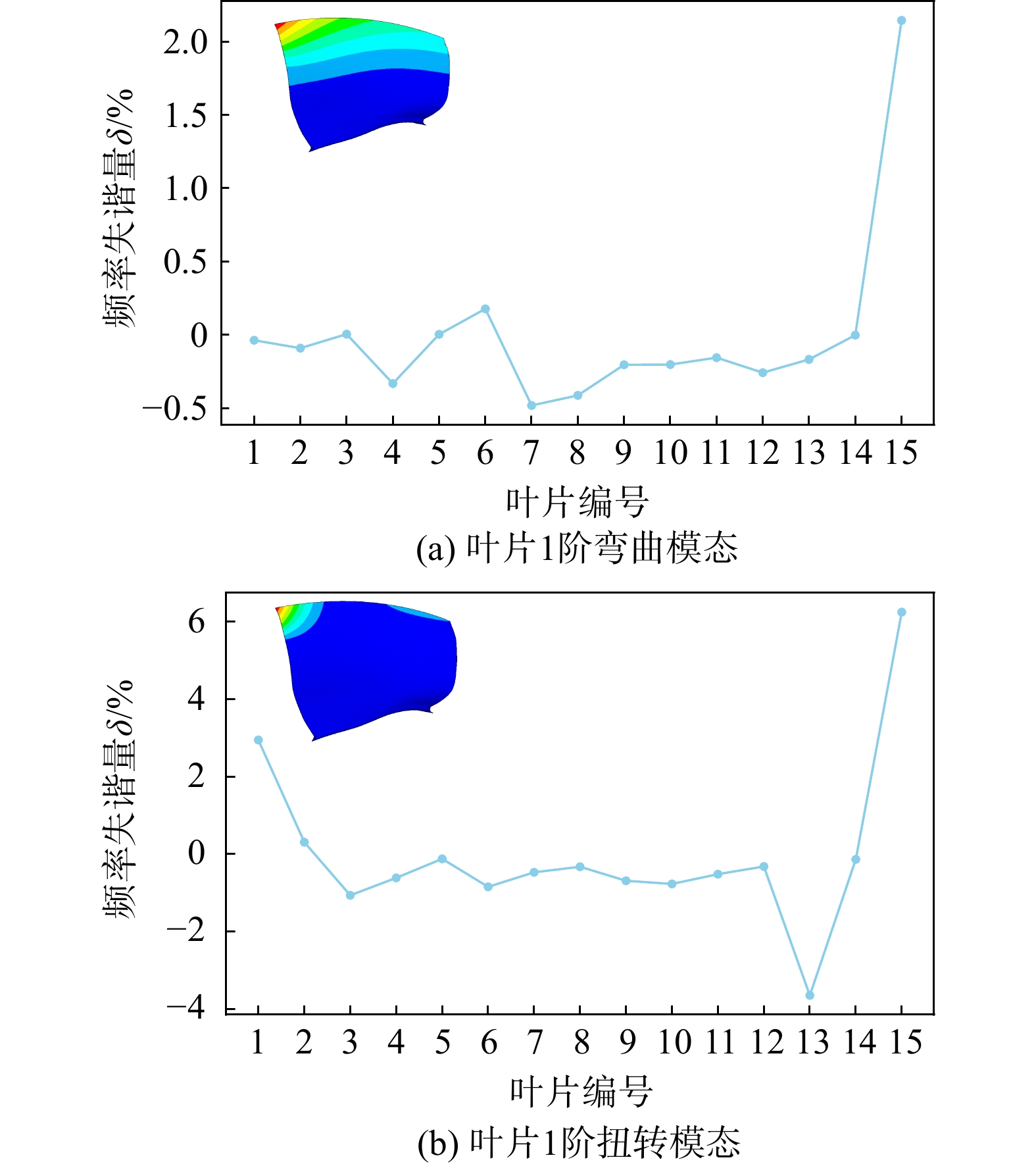
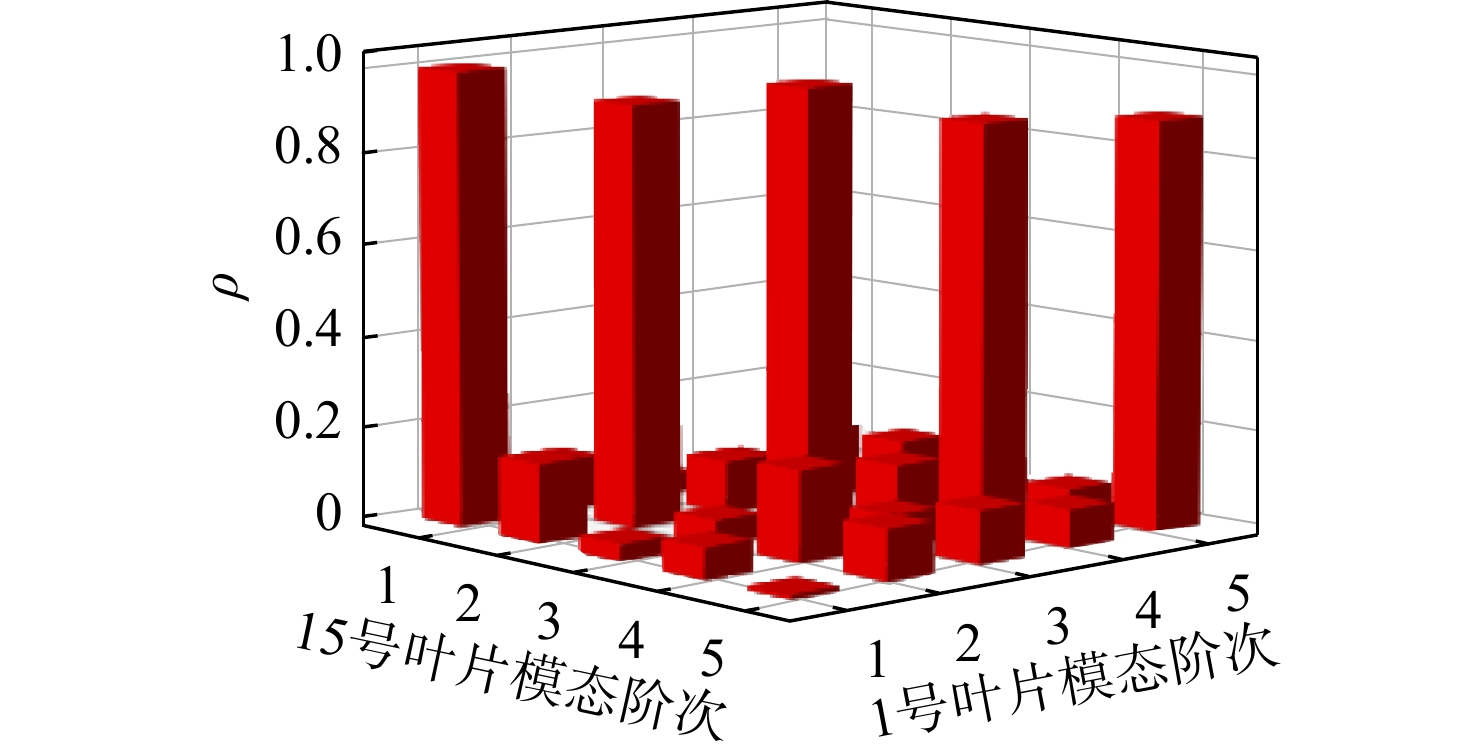
Establishing a model for description of blade geometric mistuning is one of the fundamental problems for dynamic analysis of blisk. The blade profile difference (geometric mistuning) was captured accurately by using optical geometry measurement technology and then a high-fidelity blisk modeling method was established. According to the core idea of this method, an accurate point cloud representing blade geometries was built by means of advanced three-dimensional structured blue light scanning system. An adaptive mesh deformation technology was developed to automatically project the finite element model nodes of the blade to the measured point cloud. Without solid model reconstruction in the traditional reverse engineering, it enabled rapid generation of high-fidelity blisk model. The high-fidelity blisk model can be directly used to quantitatively capture the influence of blade geometry variations on both its natural frequencies and mode shapes. Frequency mistuning of each blade was within 2.1%, and the modal assurance criterion between each blade can be accurately compared. It is thus able to significantly improve the accuracy of modeling and dynamic analysis of blisk.

Combustion,Heat and Mass Transfer
Effect of density ratio on film cooling characteristics of a bowed and twisted turbine vane with fan-shaped film holes
WANG Xiaozeng, KAN Rui, LIU Cunliang
2023, 38(1): 70-78. doi: 10.13224/j.cnki.jasp.20220154
Abstract:

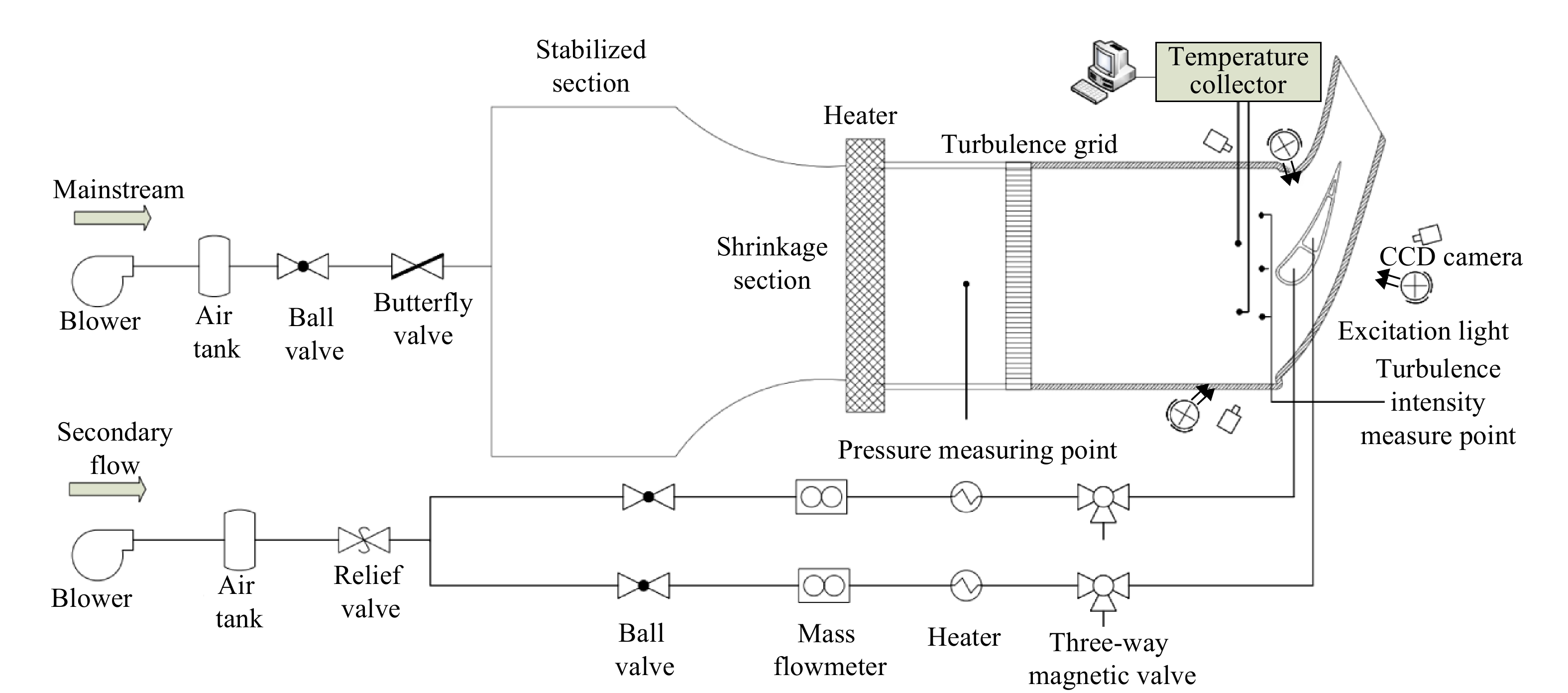
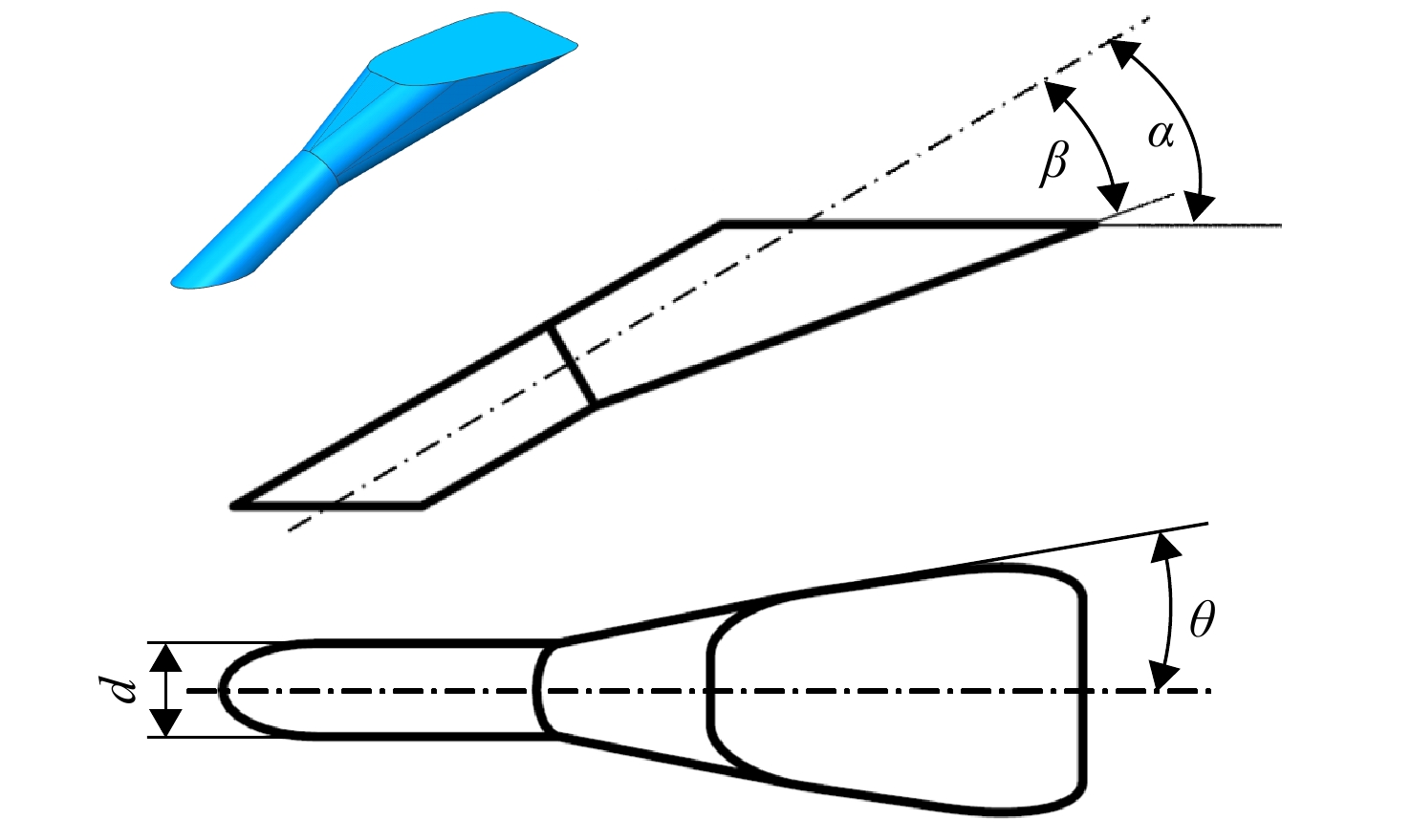
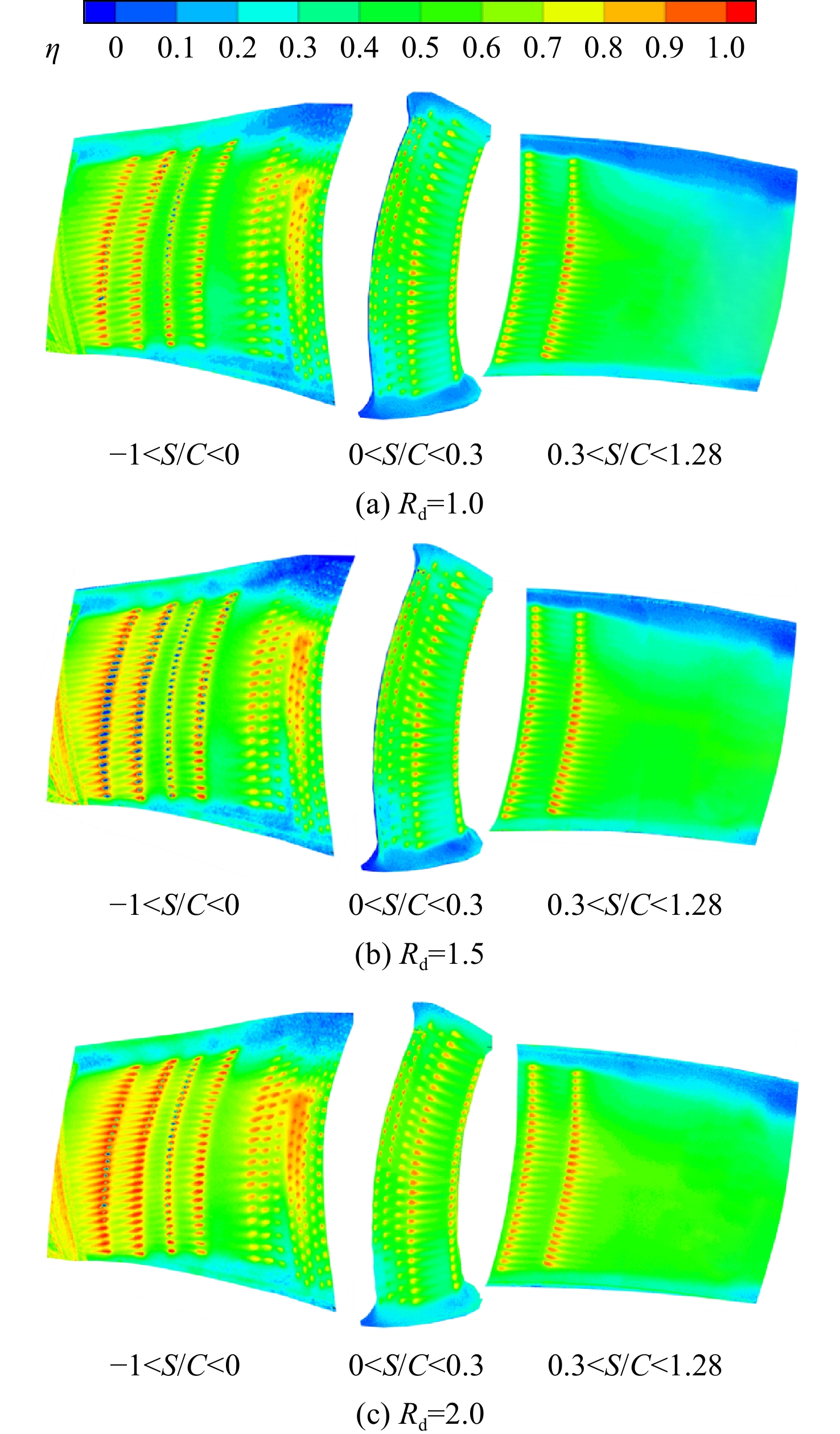
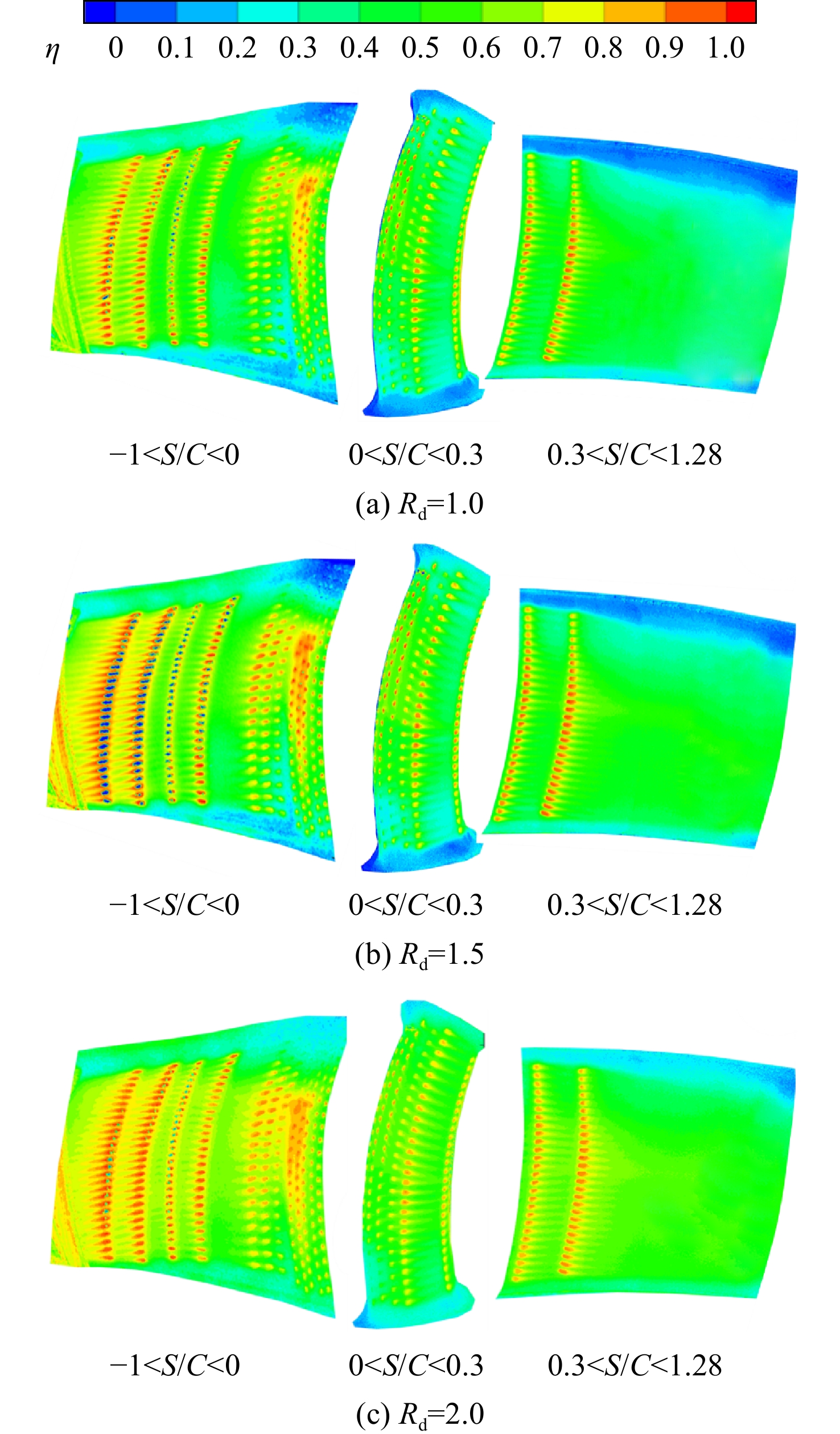
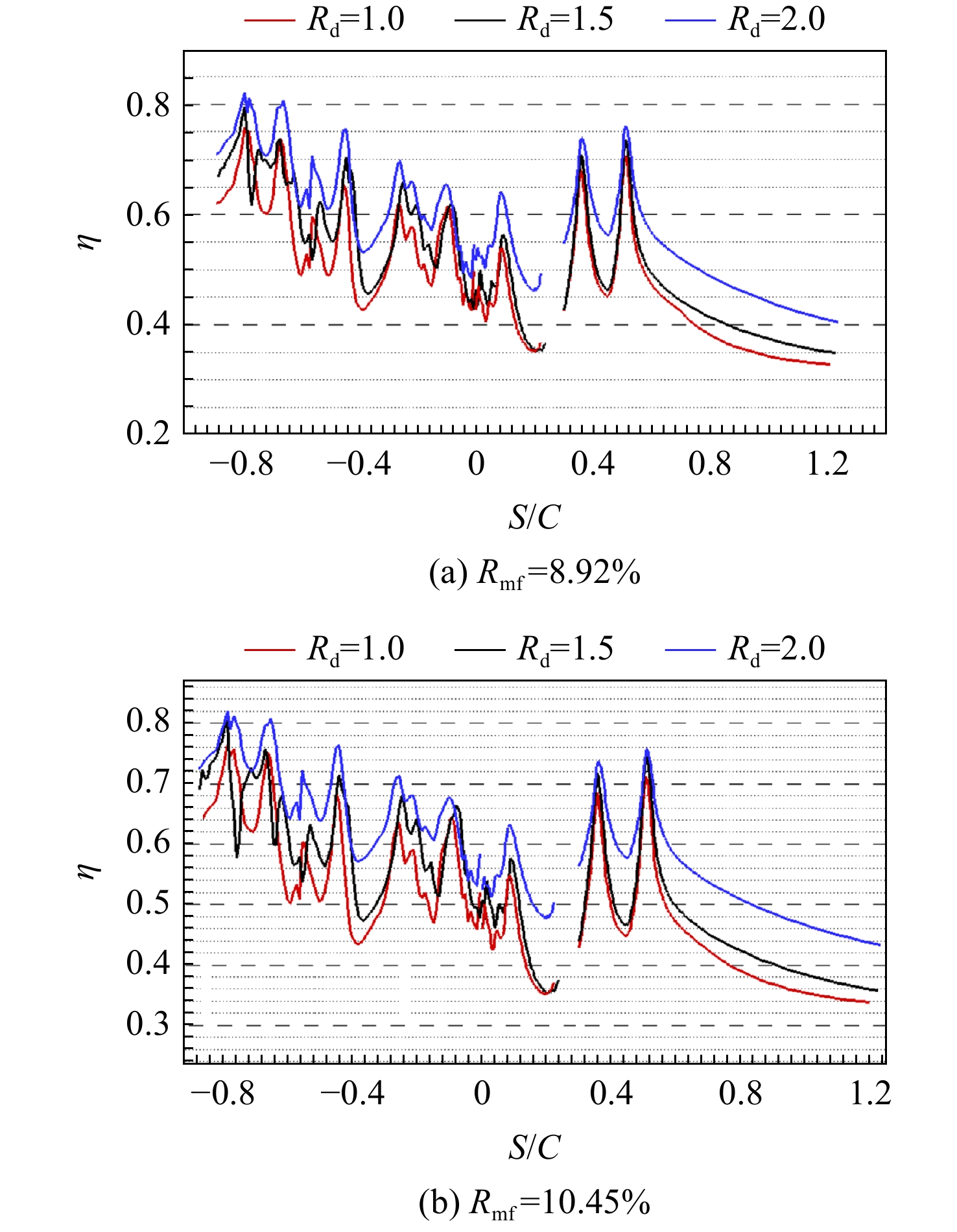
The influences of density ratio and mass flow ratio on the full coverage film cooling effectiveness of a bowed and twisted high pressure turbine 1st stage vane were studied experimentally in a fan-shaped cascade wind tunnel. The pressure sensitive paint technique was used to measure the film cooling effectiveness of the vane. Results showed that the film cooling effectiveness increased with increasing density ratio and mass flow ratio. When the density ratio increased from 1.0 to 2.0, the spanwise averaged film cooling effectiveness increased by 6% to 32%. The film cooling effectiveness only had a minor increase when the density ratio increased from 1.0 to 1.5. However, it had a great increase when the density ratio increased from 1.5 to 2.0, meaning that the relationship between film cooling effectiveness and density ratio was non-linear.

Unsteady combustion process of ethylene flame with pilot hydrogen
DENG Weixin, LI Ji, ZHANG Dongqing, TIAN Ye
2023, 38(1): 79-85. doi: 10.13224/j.cnki.jasp.20210419
Abstract:

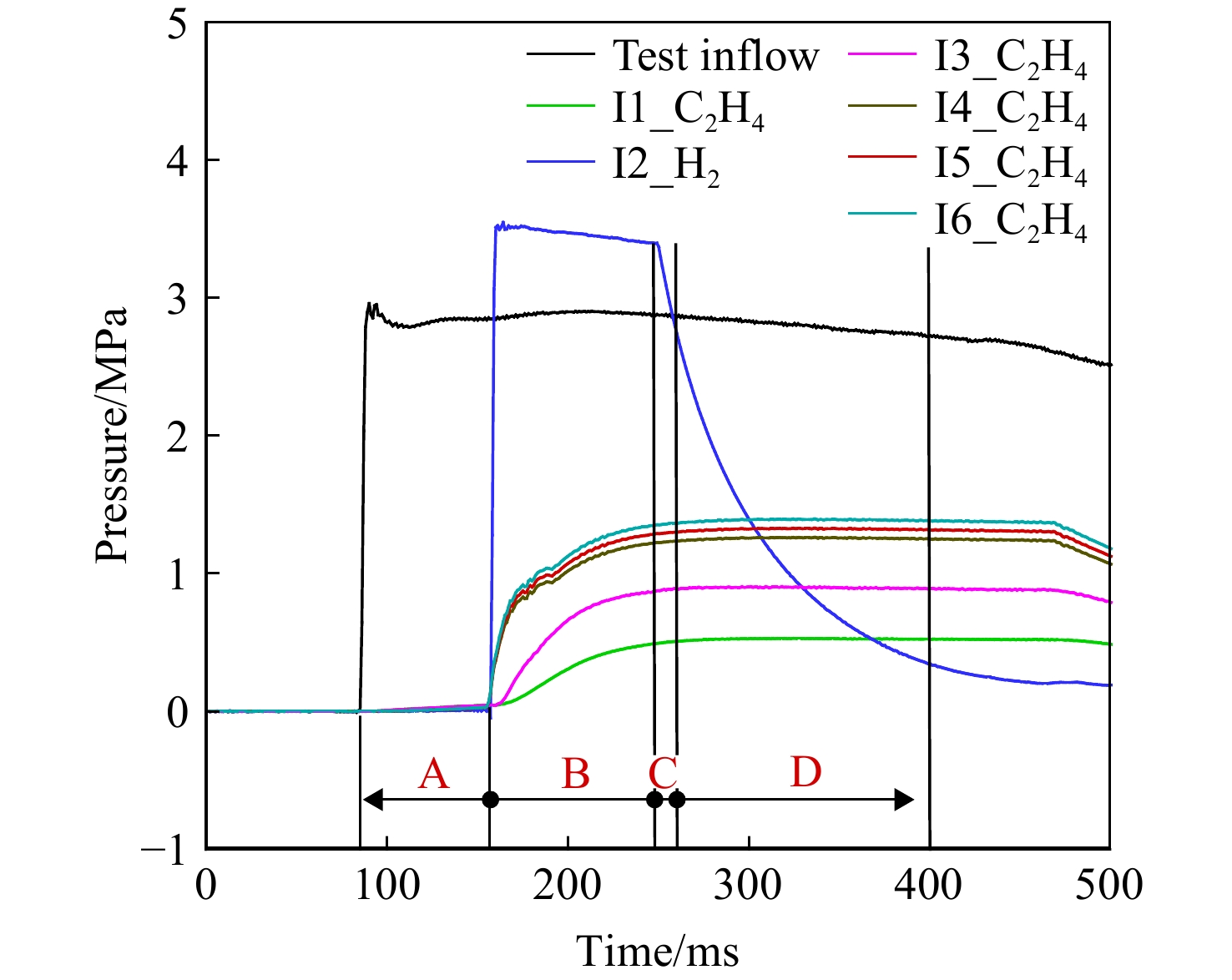
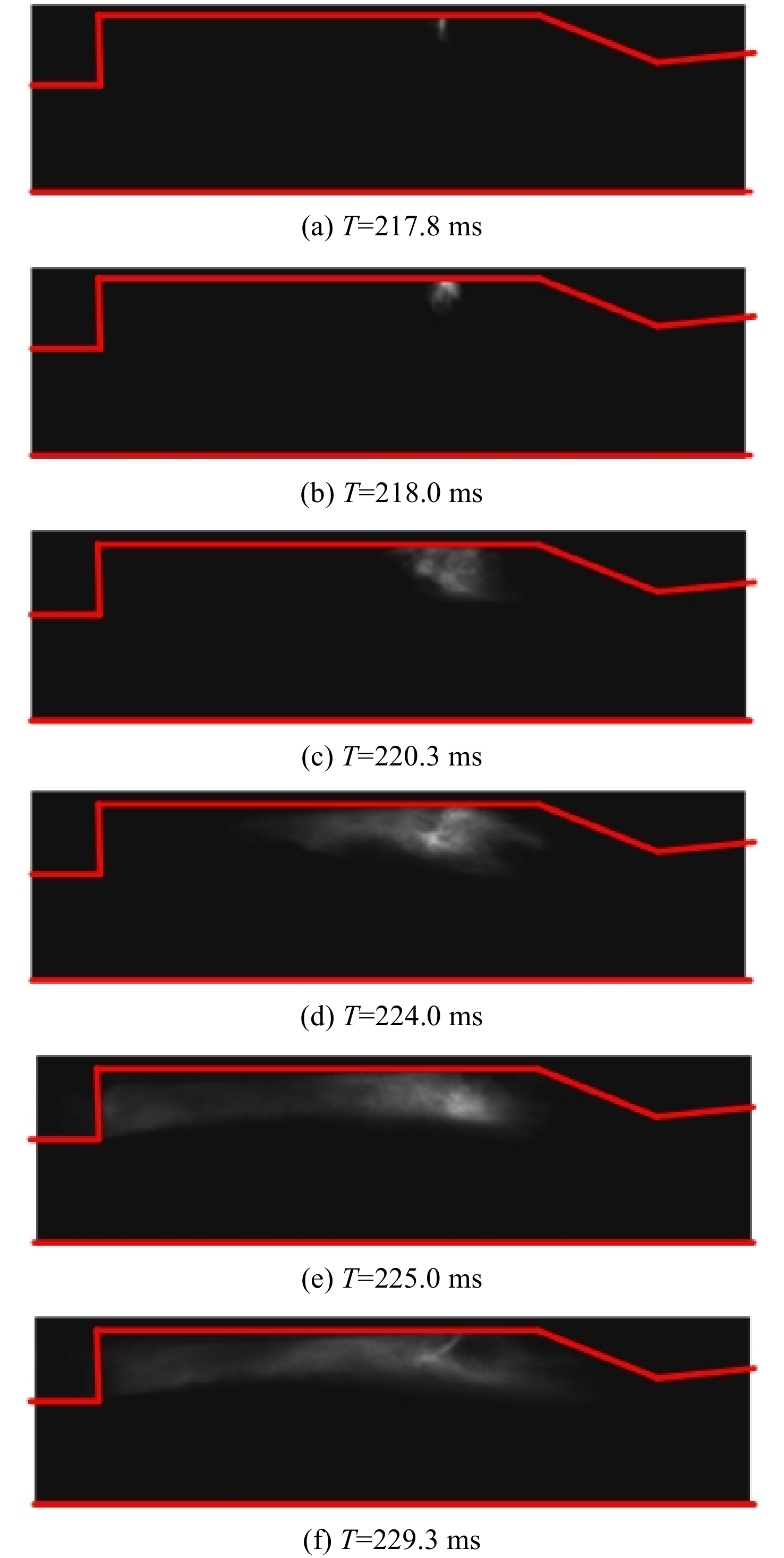
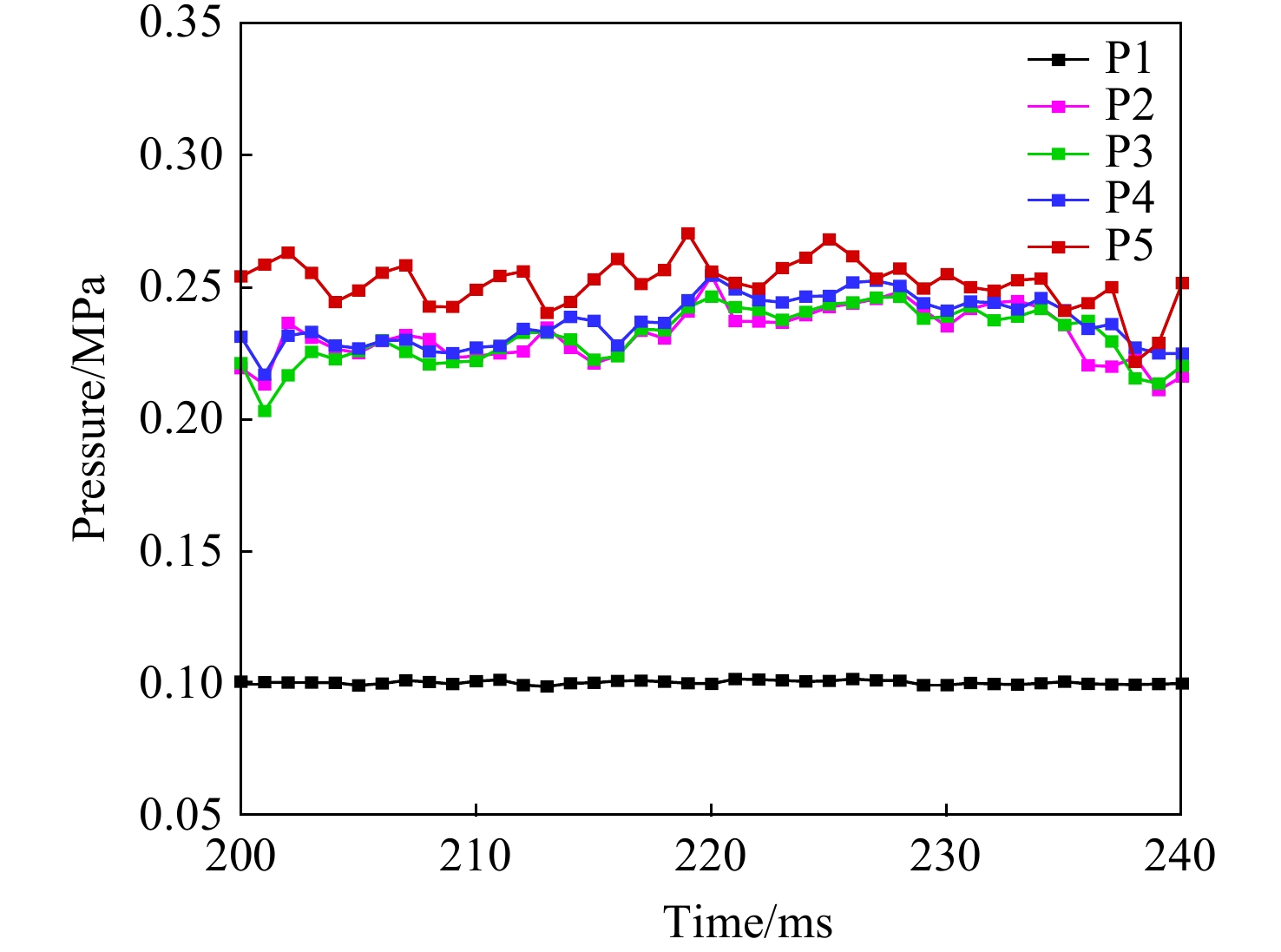
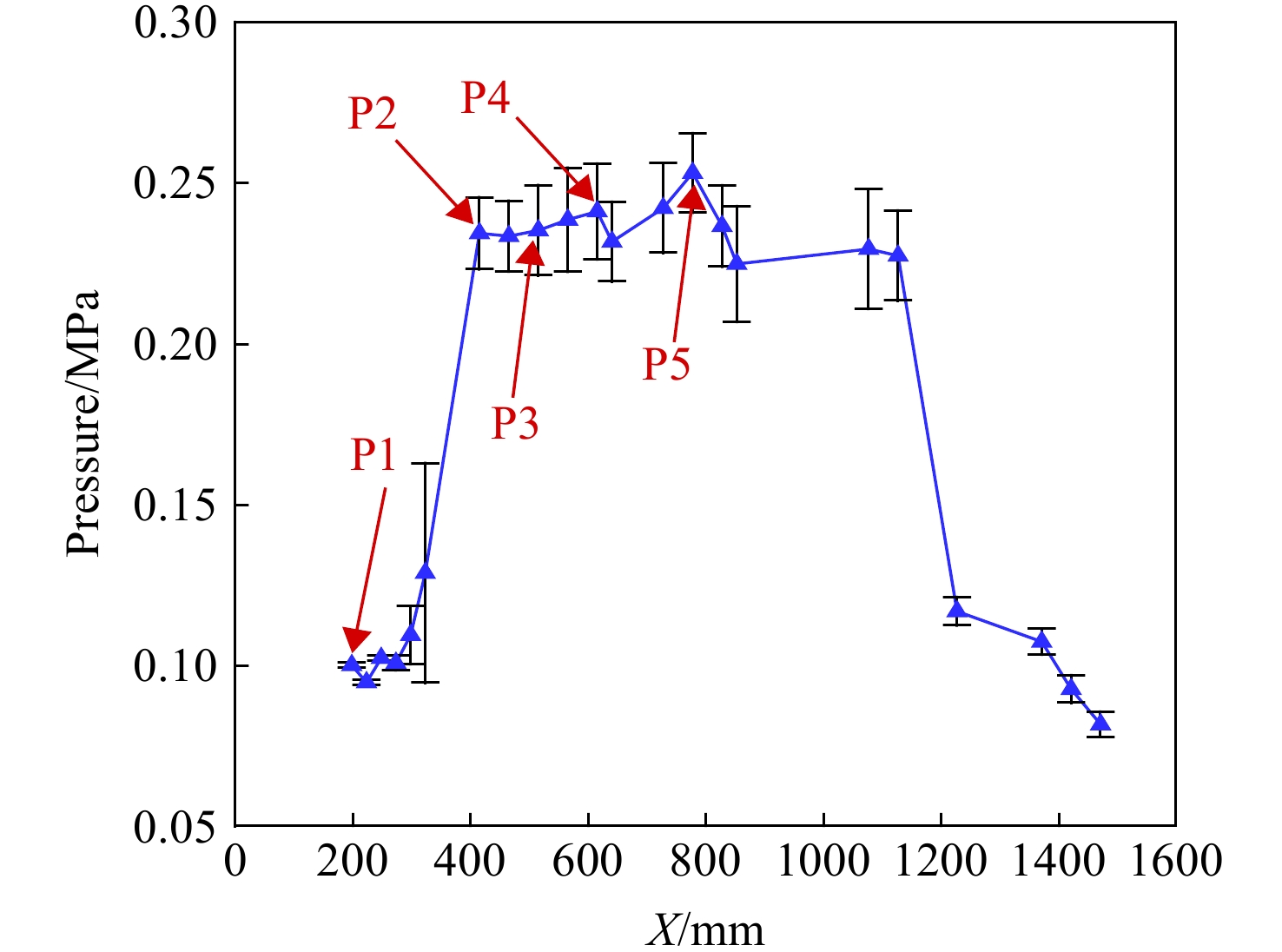
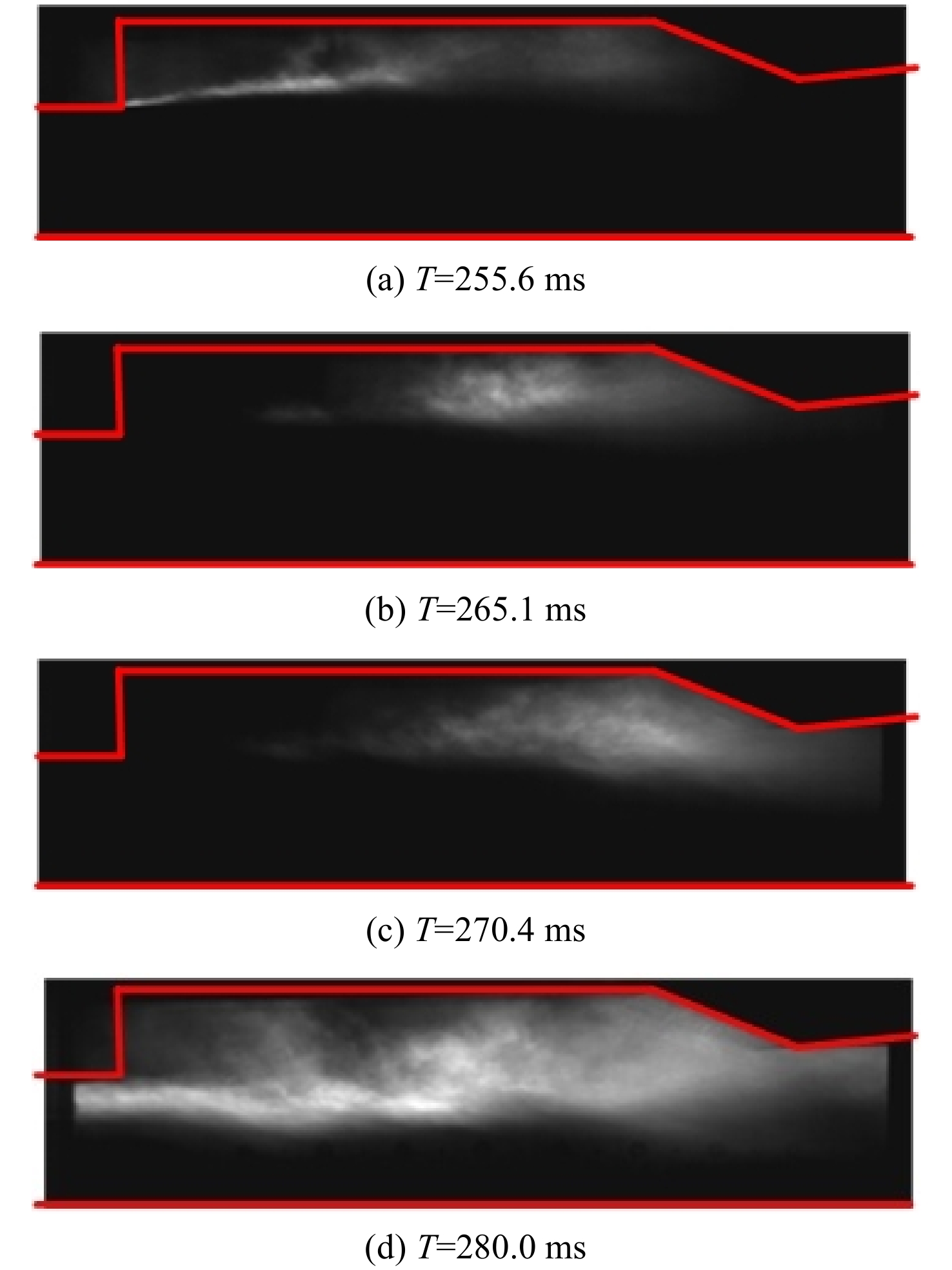
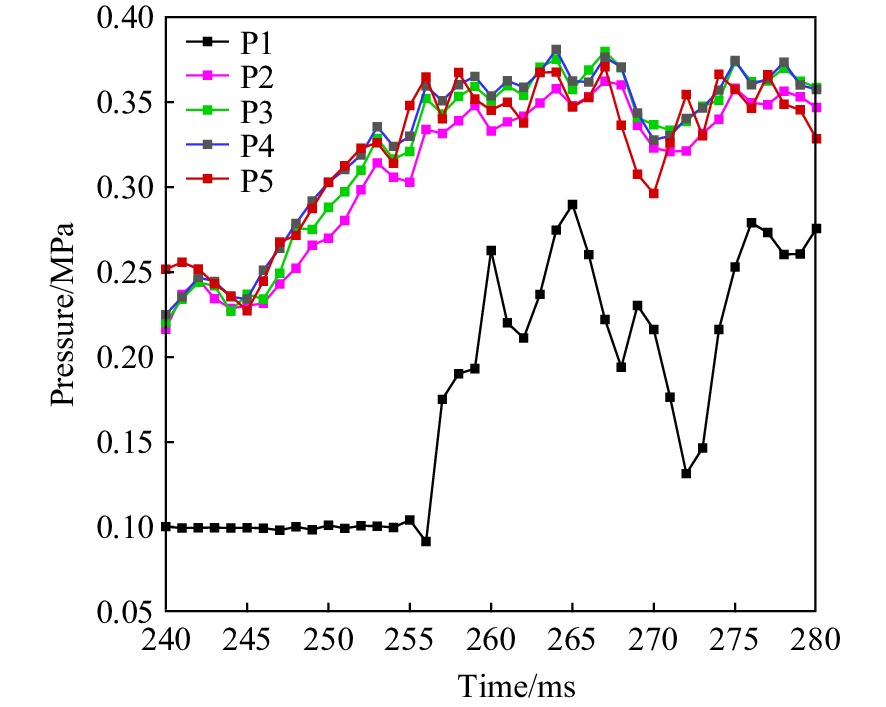
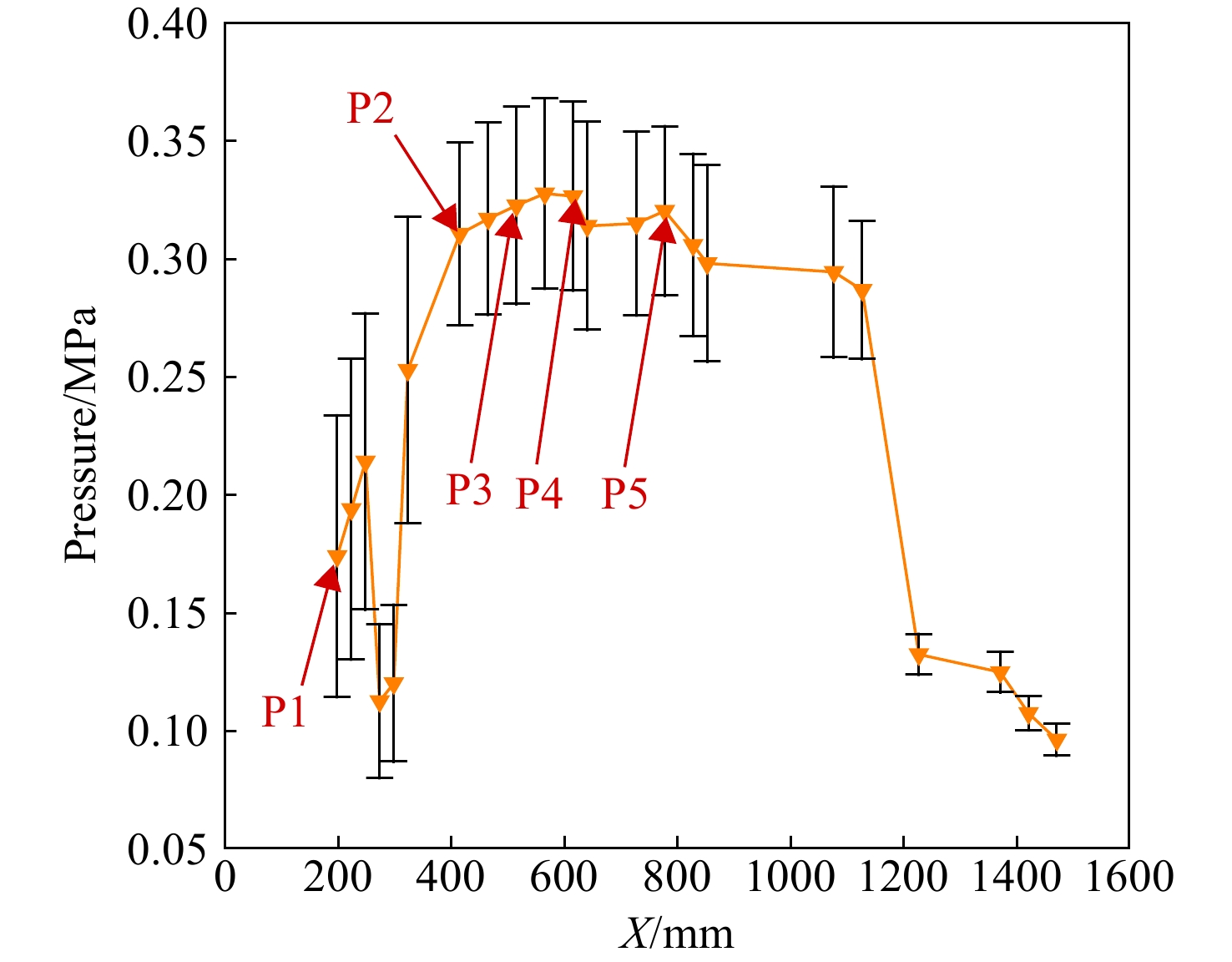
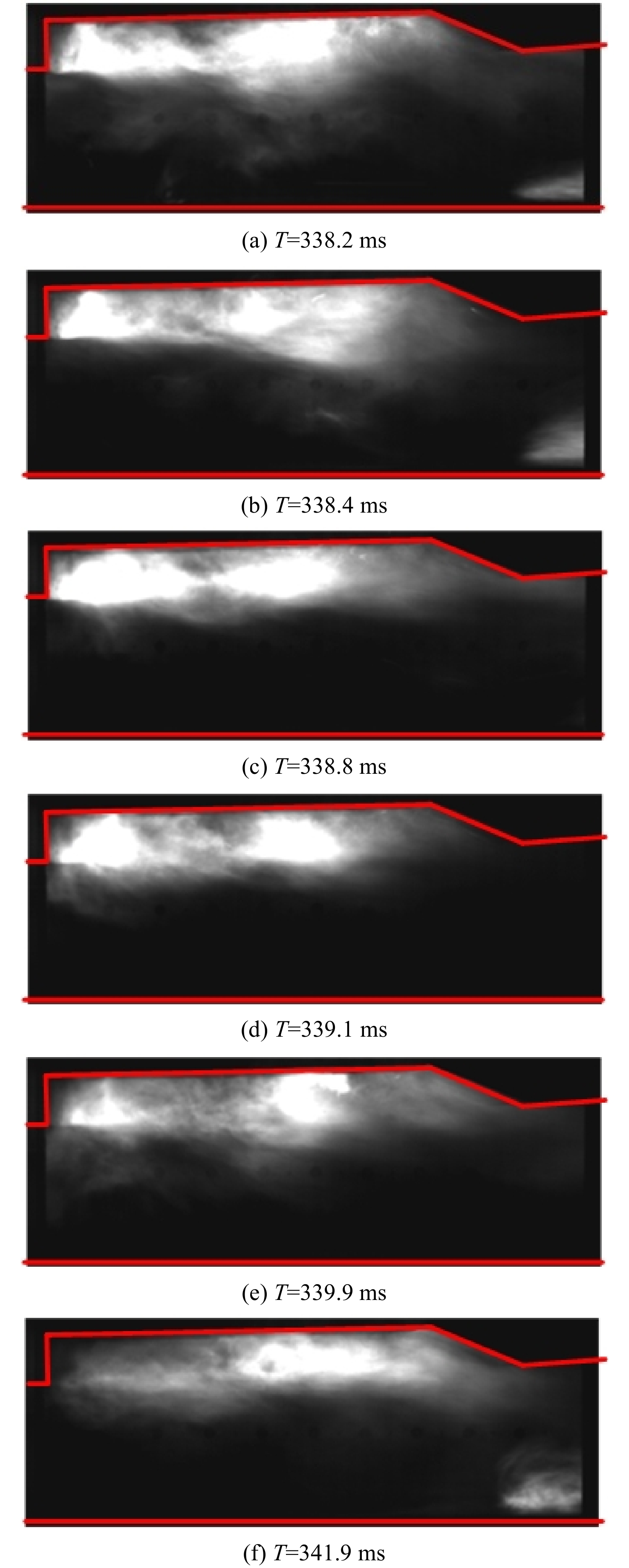
Unsteady supersonic combustion process of hydrogen piloted ethylene flame in a scramjet combustor was carried out based on a direct-connected facility. The results were obtained under the inflow conditions of Mach number 2, total temperature 950 K and total pressure 1.0 MPa respectively. Ambient ethylene was used as the main fuel and ignited by pilot hydrogen. The whole experimental process could be divided into four periods: cold flow without combustion, hydrogen combustion alone, ethylene igniting by hydrogen, ethylene combustion alone. The curves of wall pressure with time and combustion development processes at five important locations in the combustor were gained through high frequency pressure transducers and flame photographs. Some insight information, including the wall pressure average value, oscillation extent and frequency, ignition time and location, were picked out. Then the unsteady combustion characteristics in different periods were analyzed and discussed. The unsteadiness came from the change of acting intensity at cavity aft-step in period of hydrogen combustion alone. The transfer between hydrogen and ethylene produced unsteady combustion in period of ethylene igniting by hydrogen. In period of ethylene combustion alone, the unsteadiness emerged from the coupling of flow and combustion.

Experimental on chilldown performance of 60 m3 horizontal storage tank with liquid nitrogen
ZHANG Qing, YUAN Wenhao, ZHENG Yan, LI Penghu, XIA Mingbo, HE Guogeng, CHEN Jianye
2023, 38(1): 86-93. doi: 10.13224/j.cnki.jasp.20220542
Abstract:

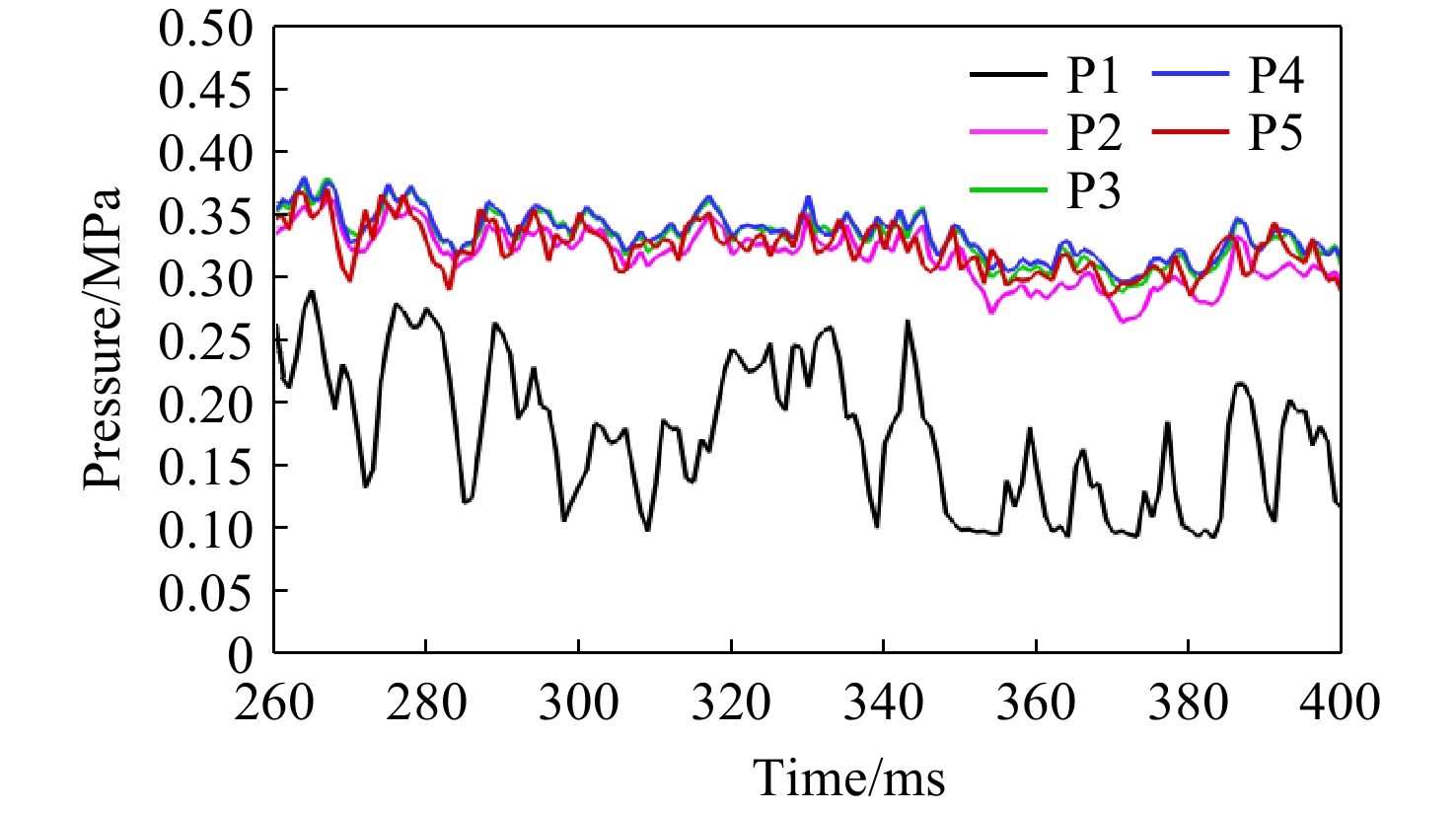
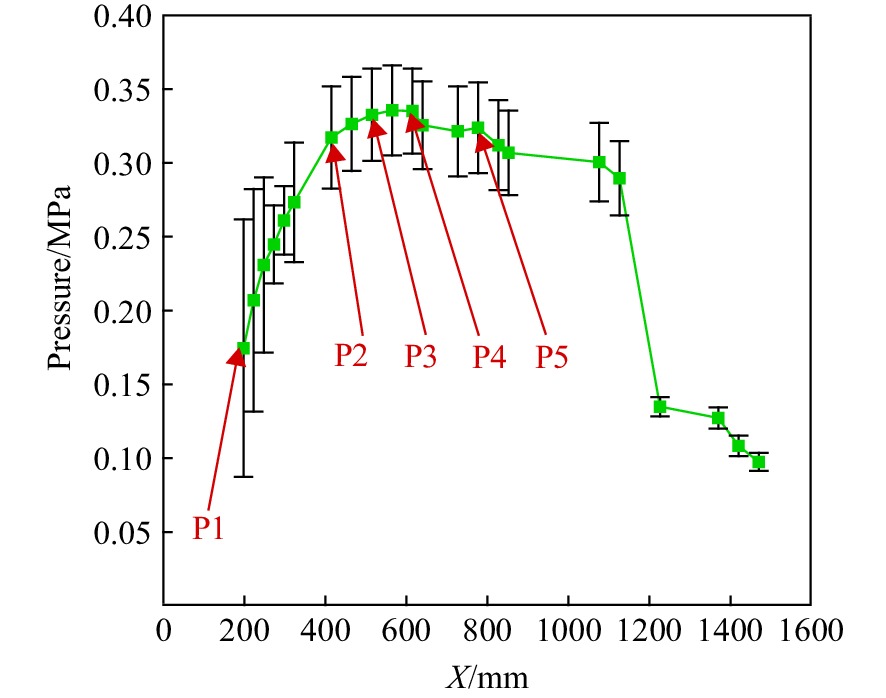
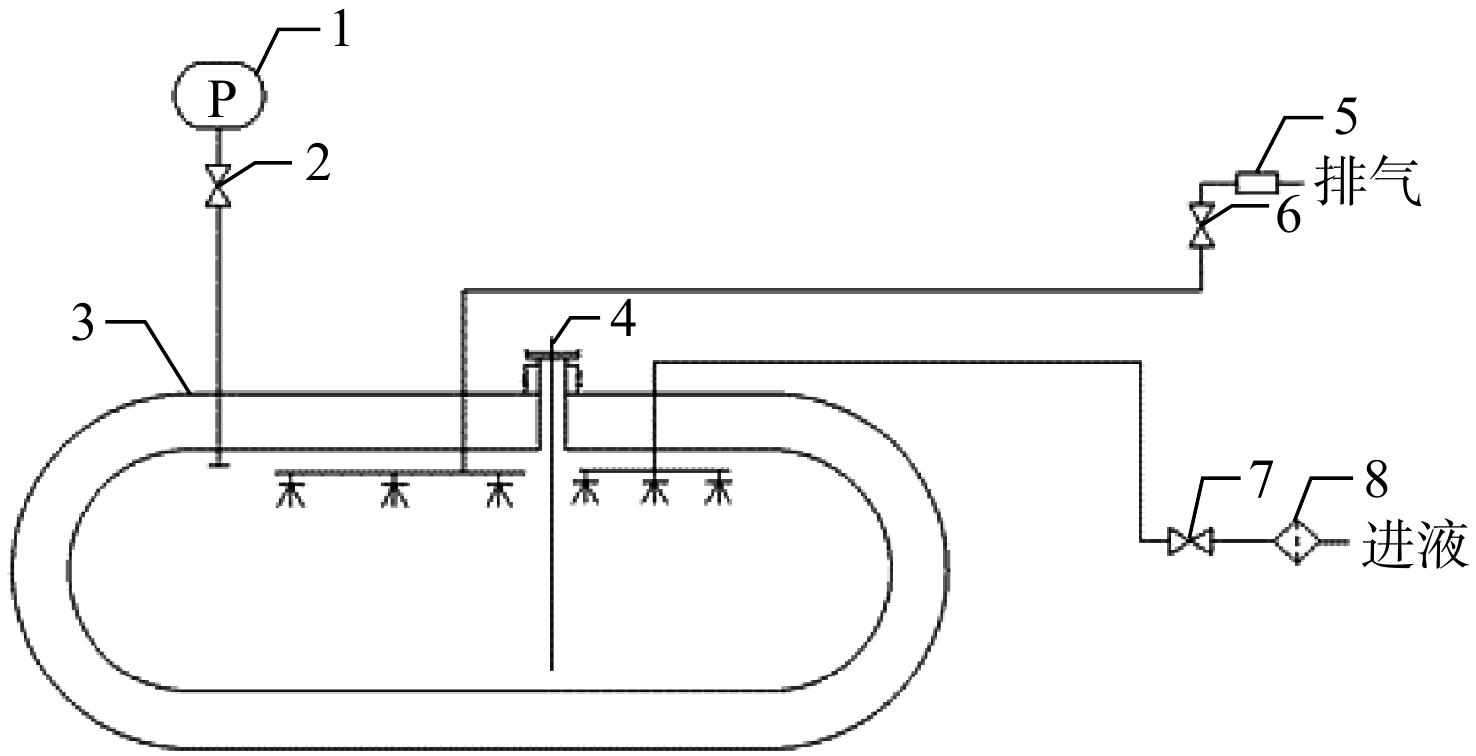
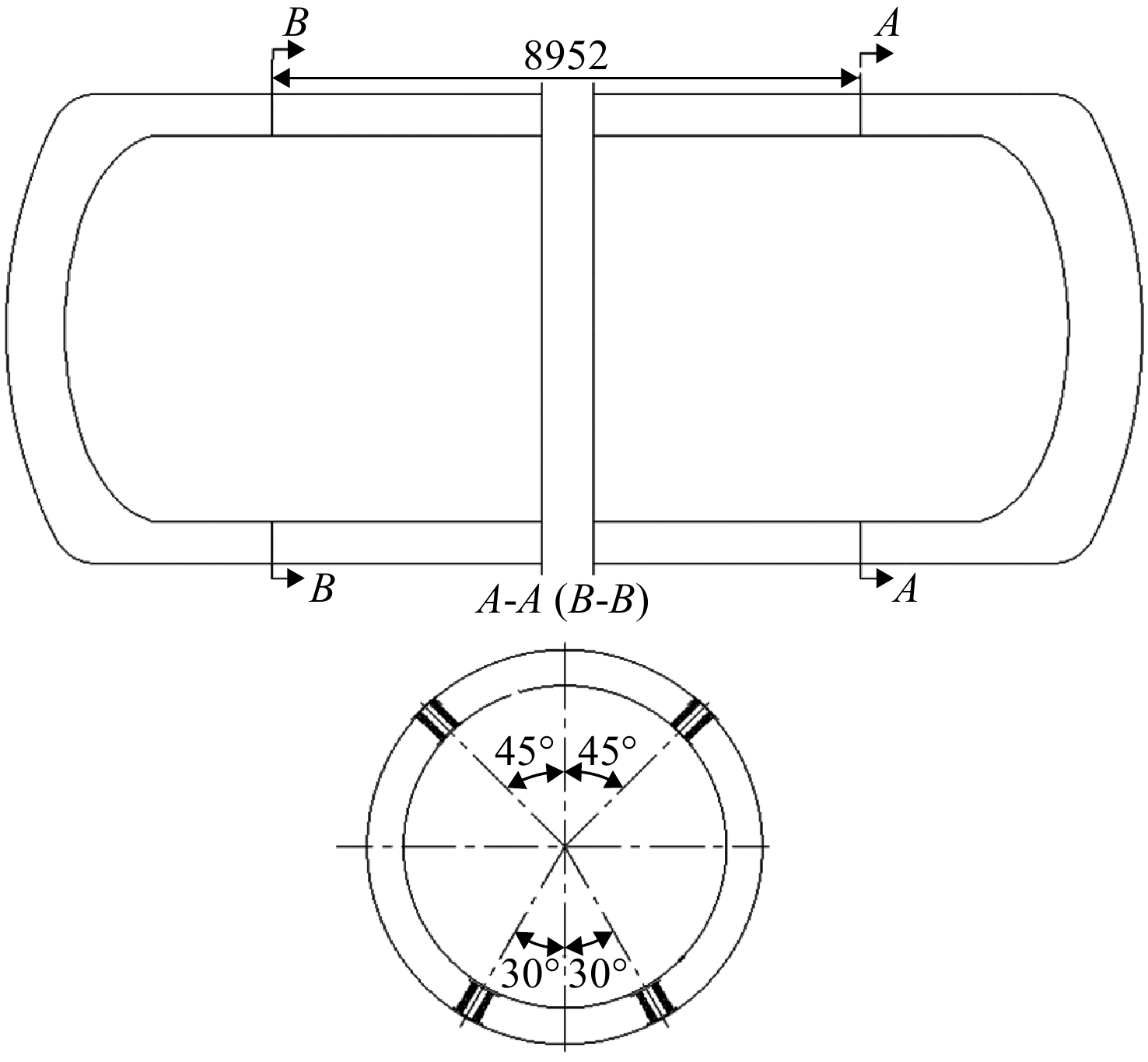
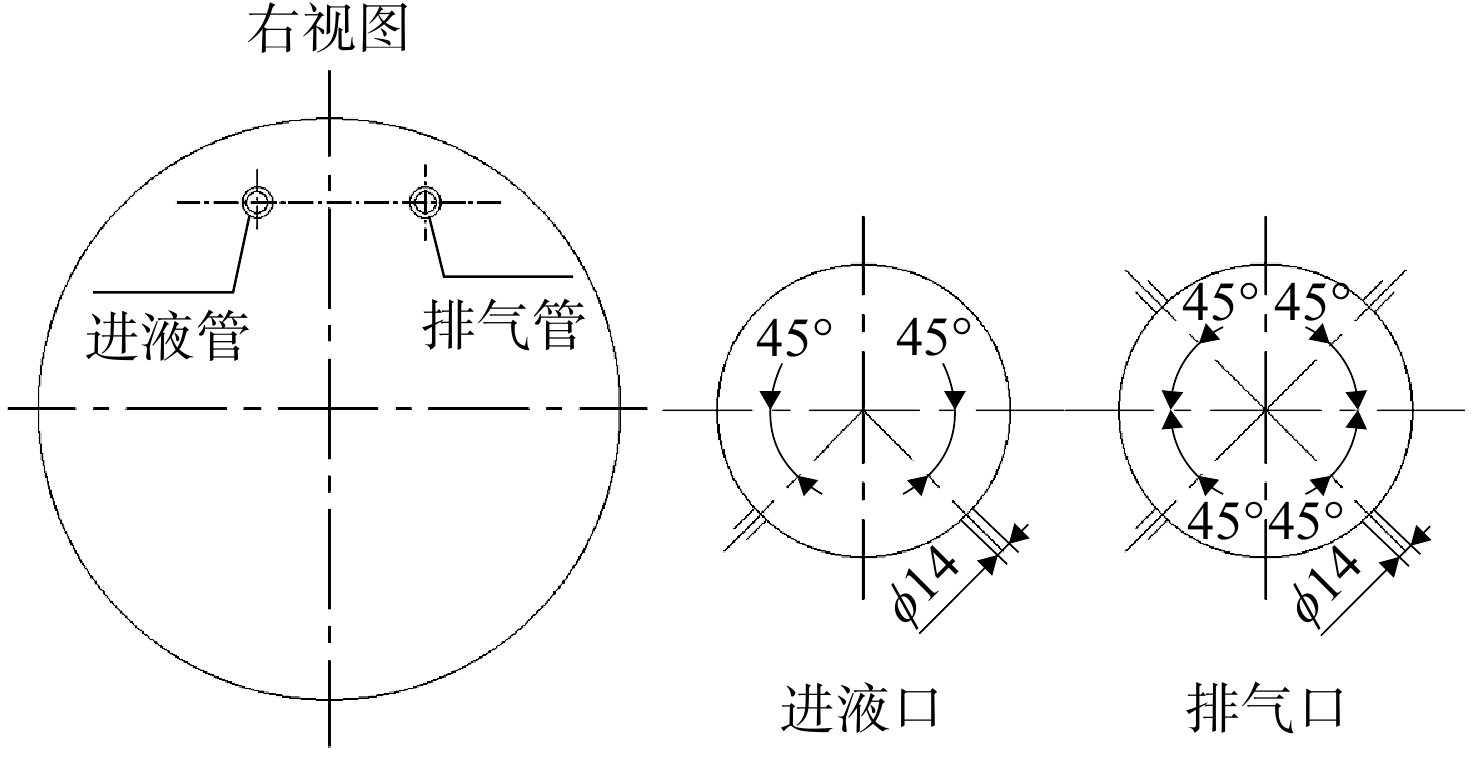
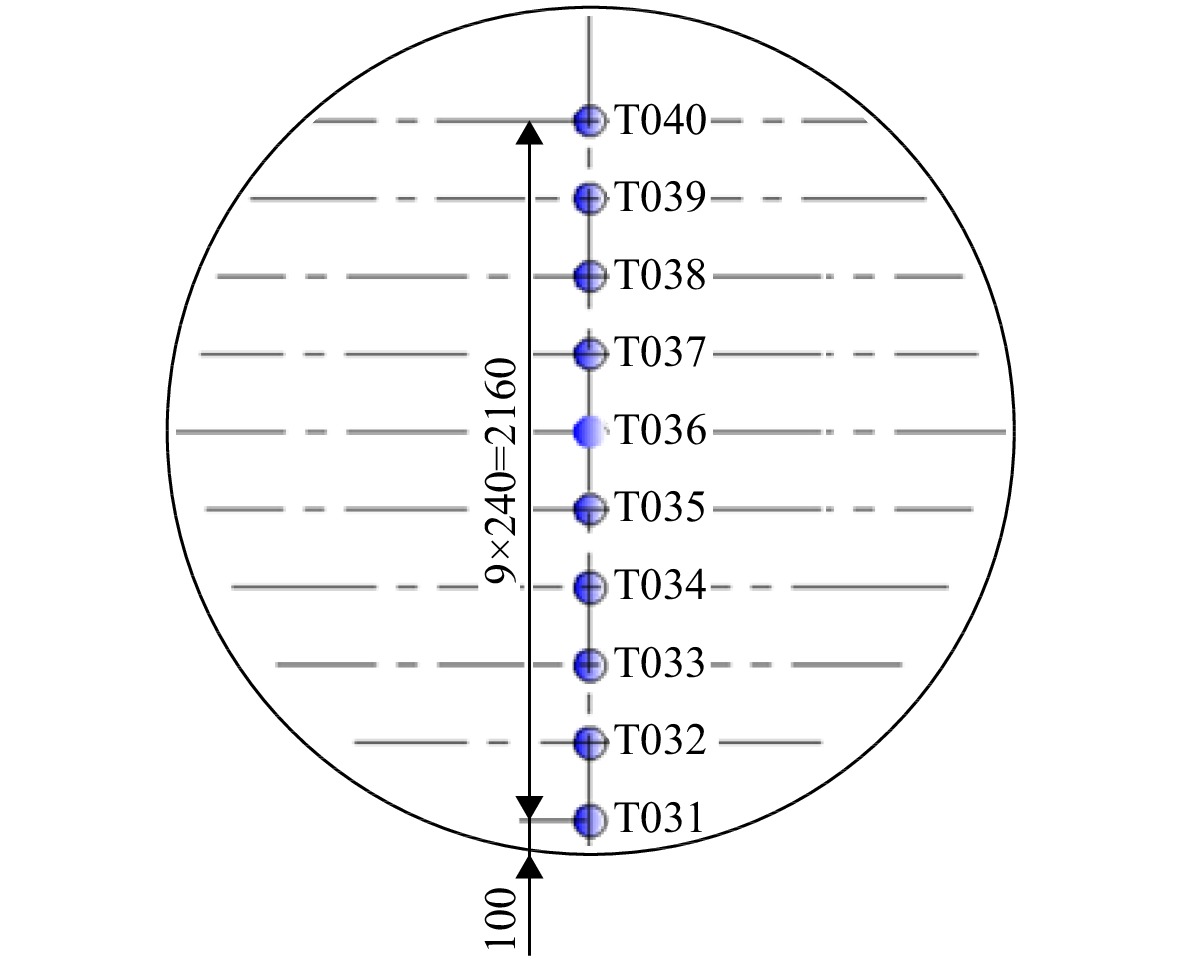
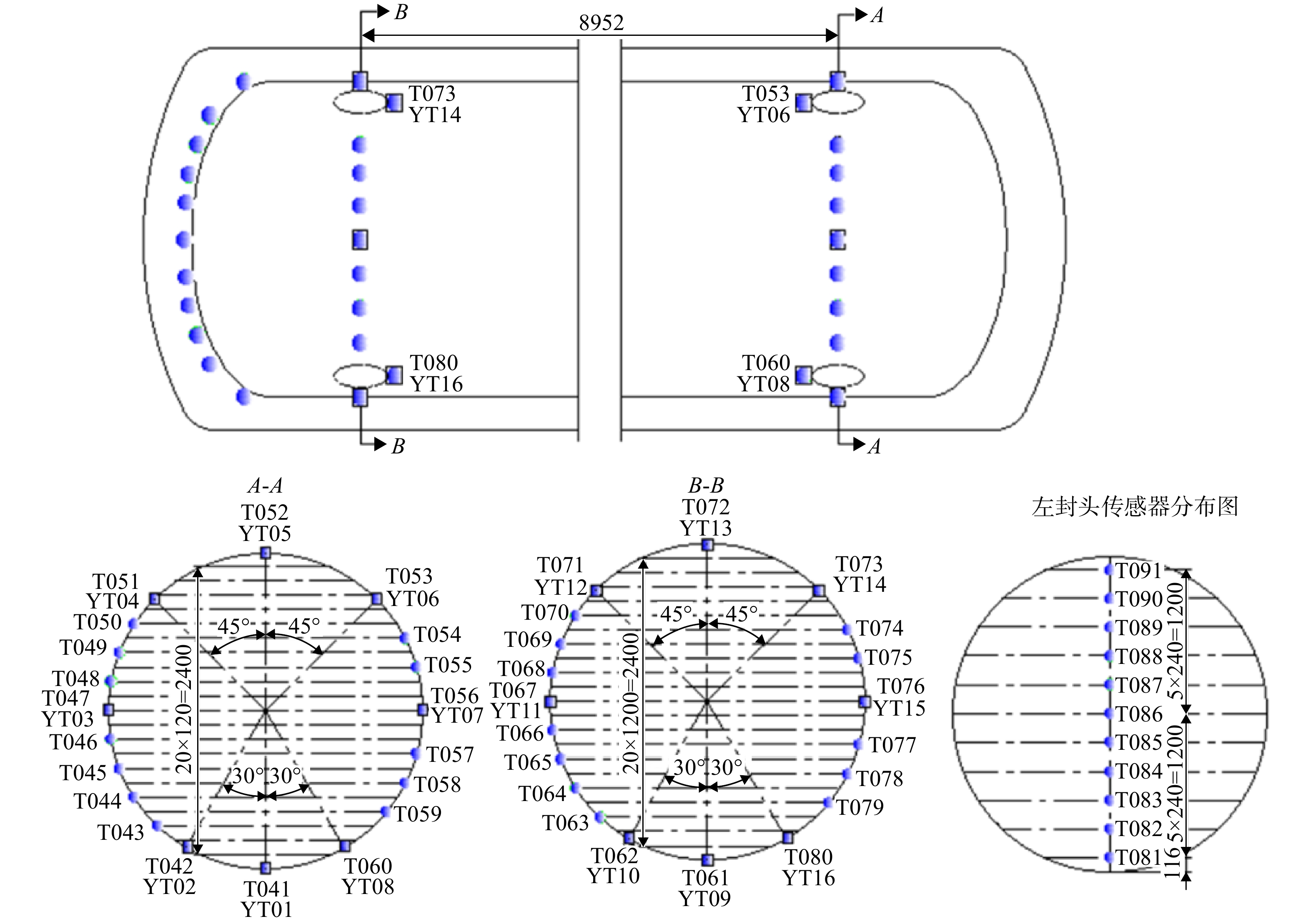
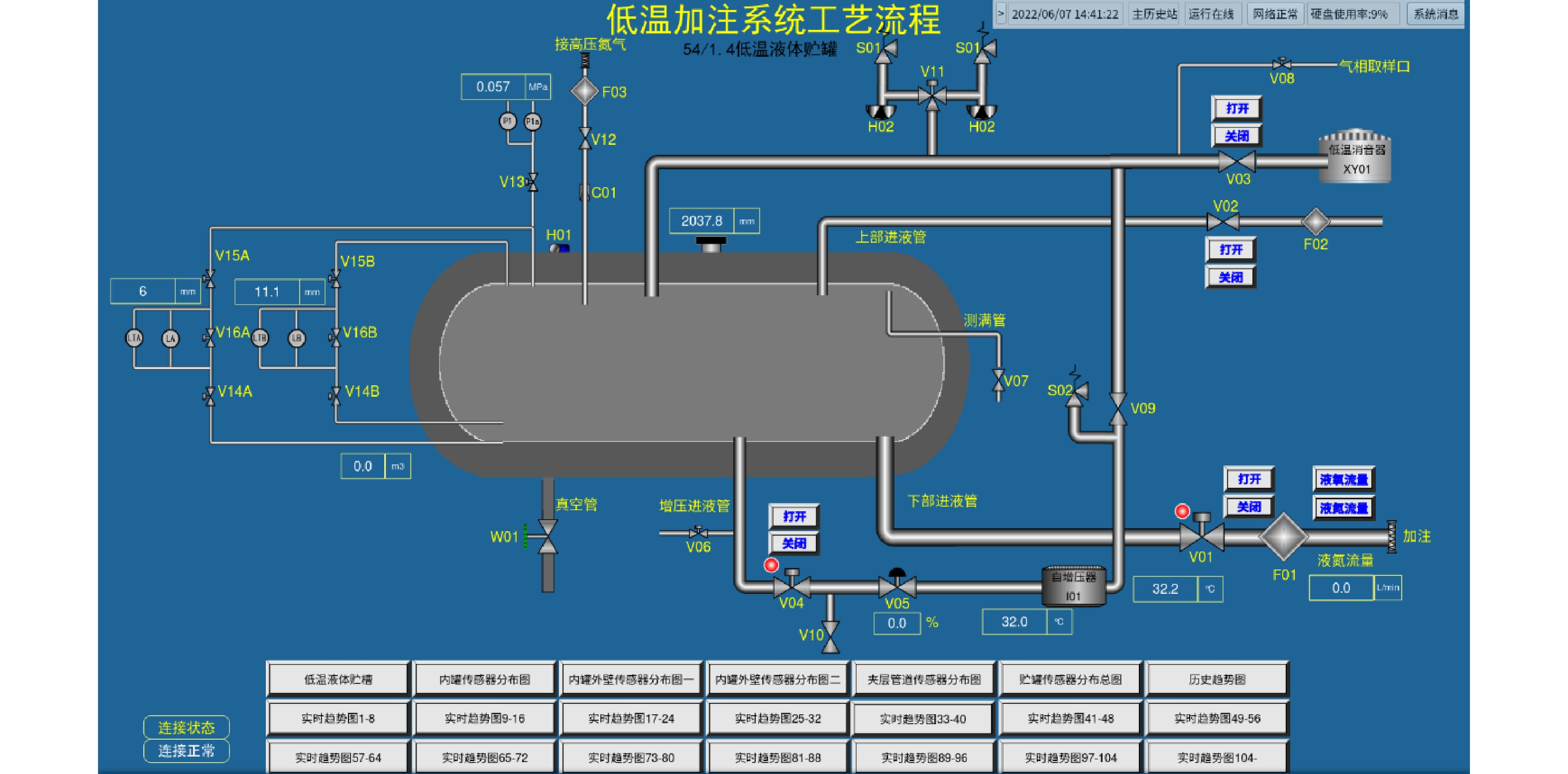
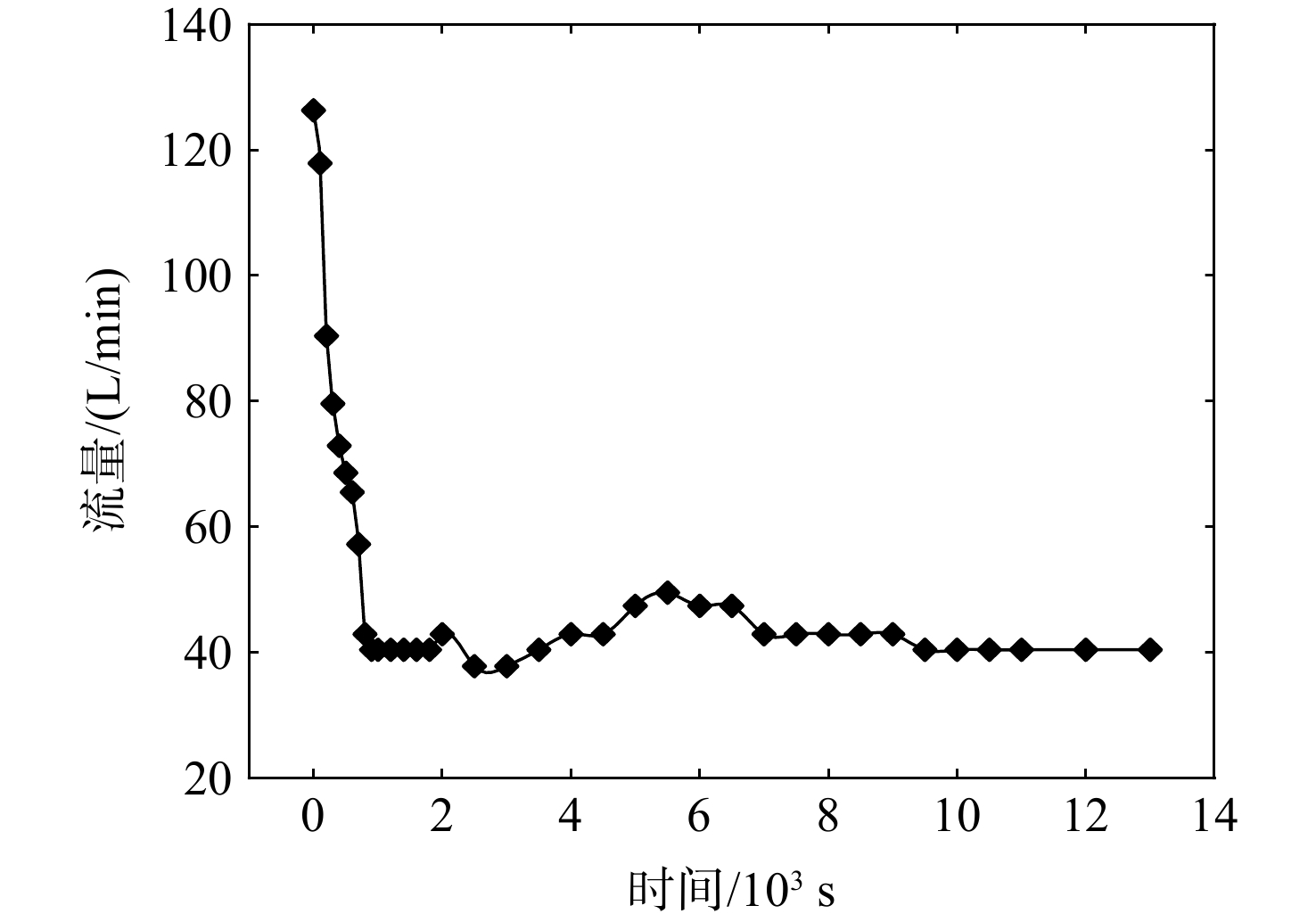
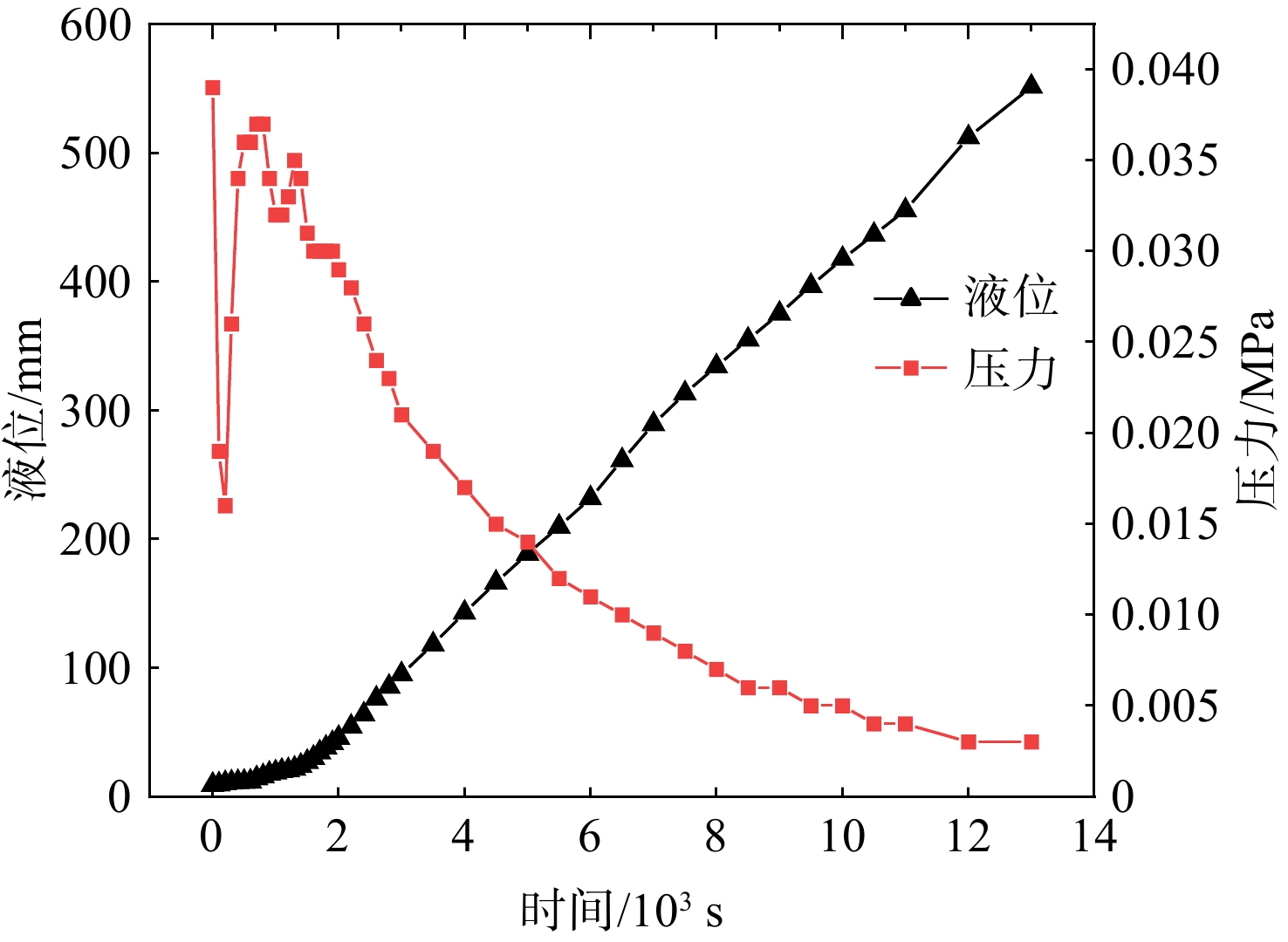
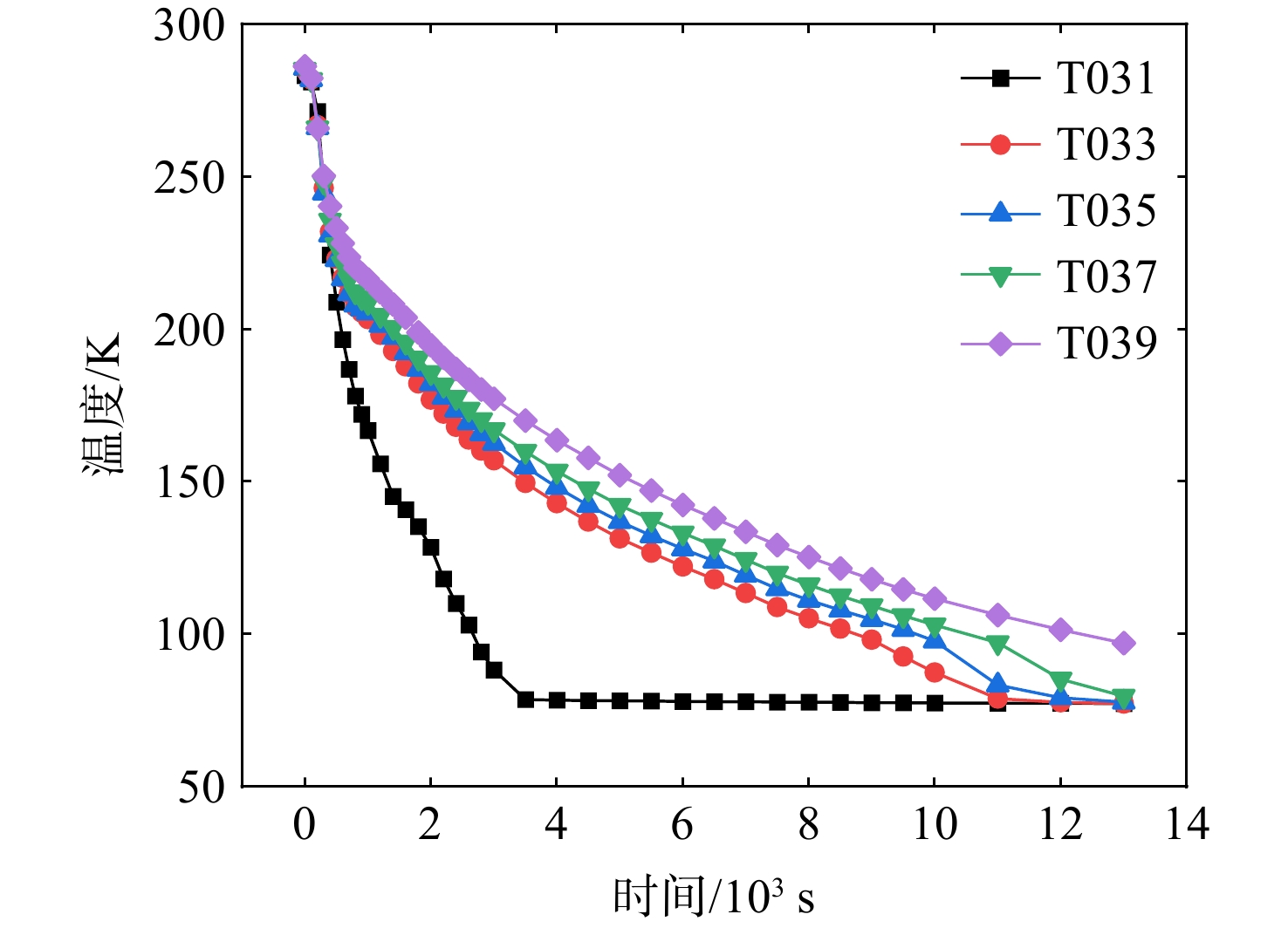
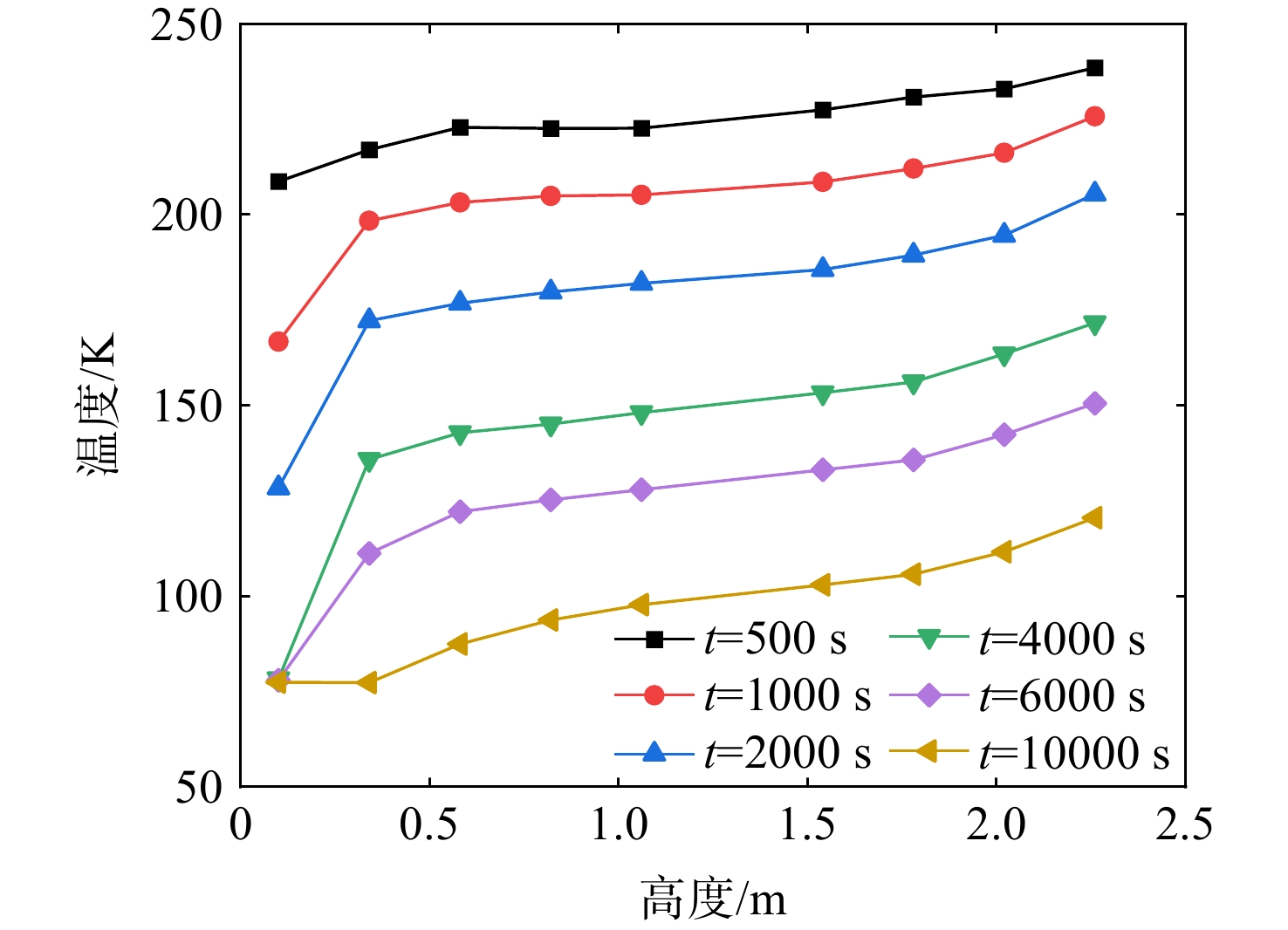
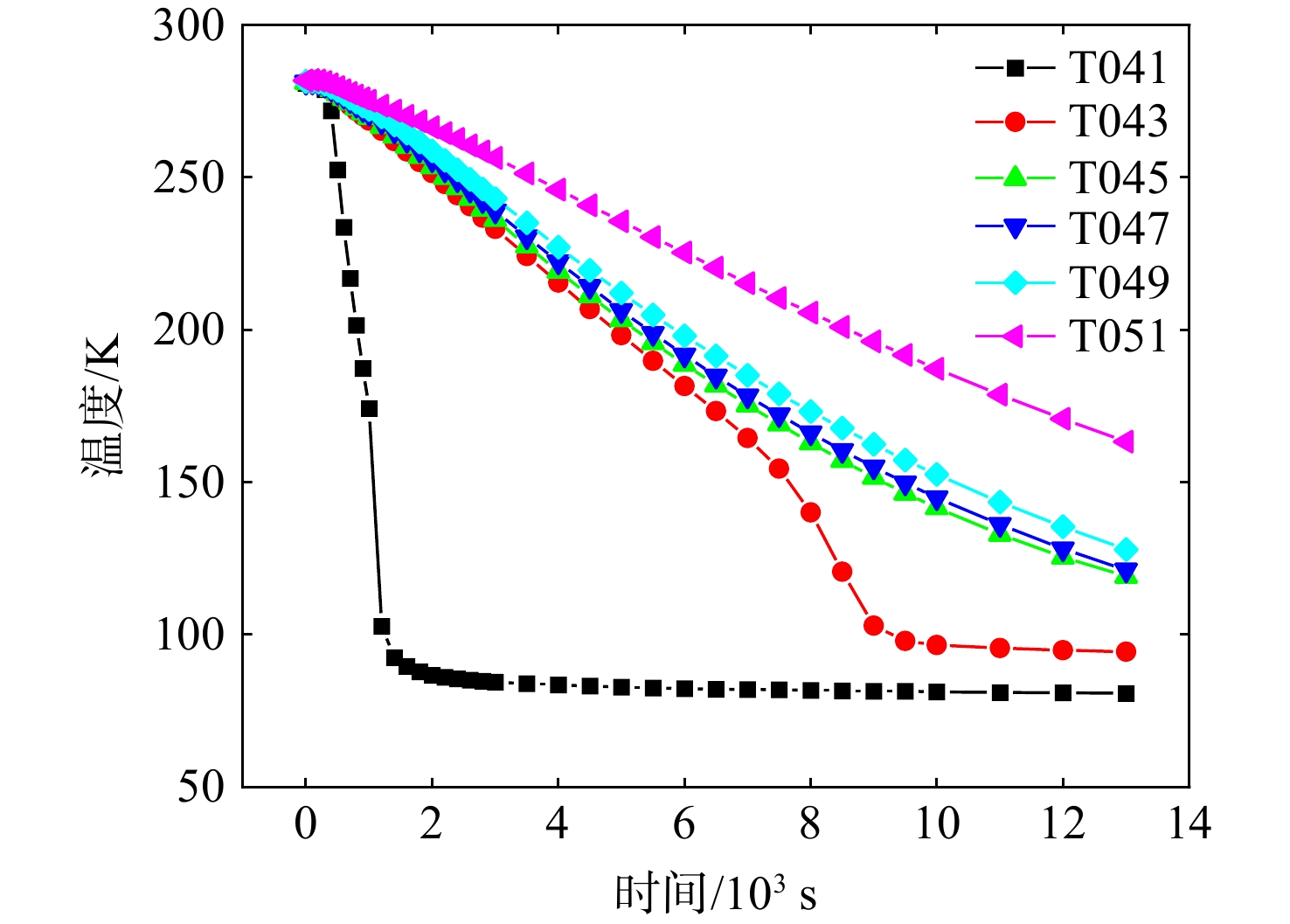
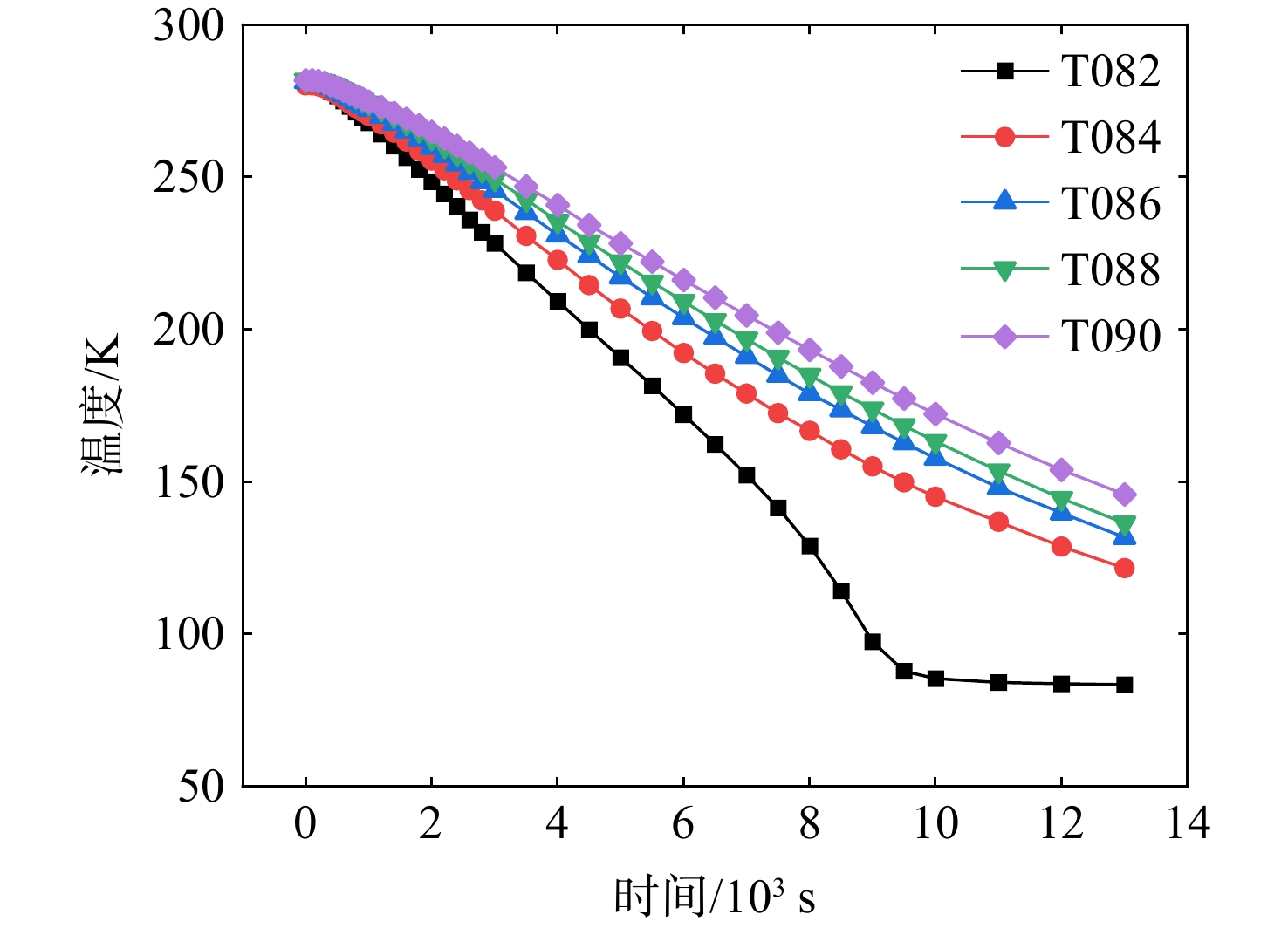
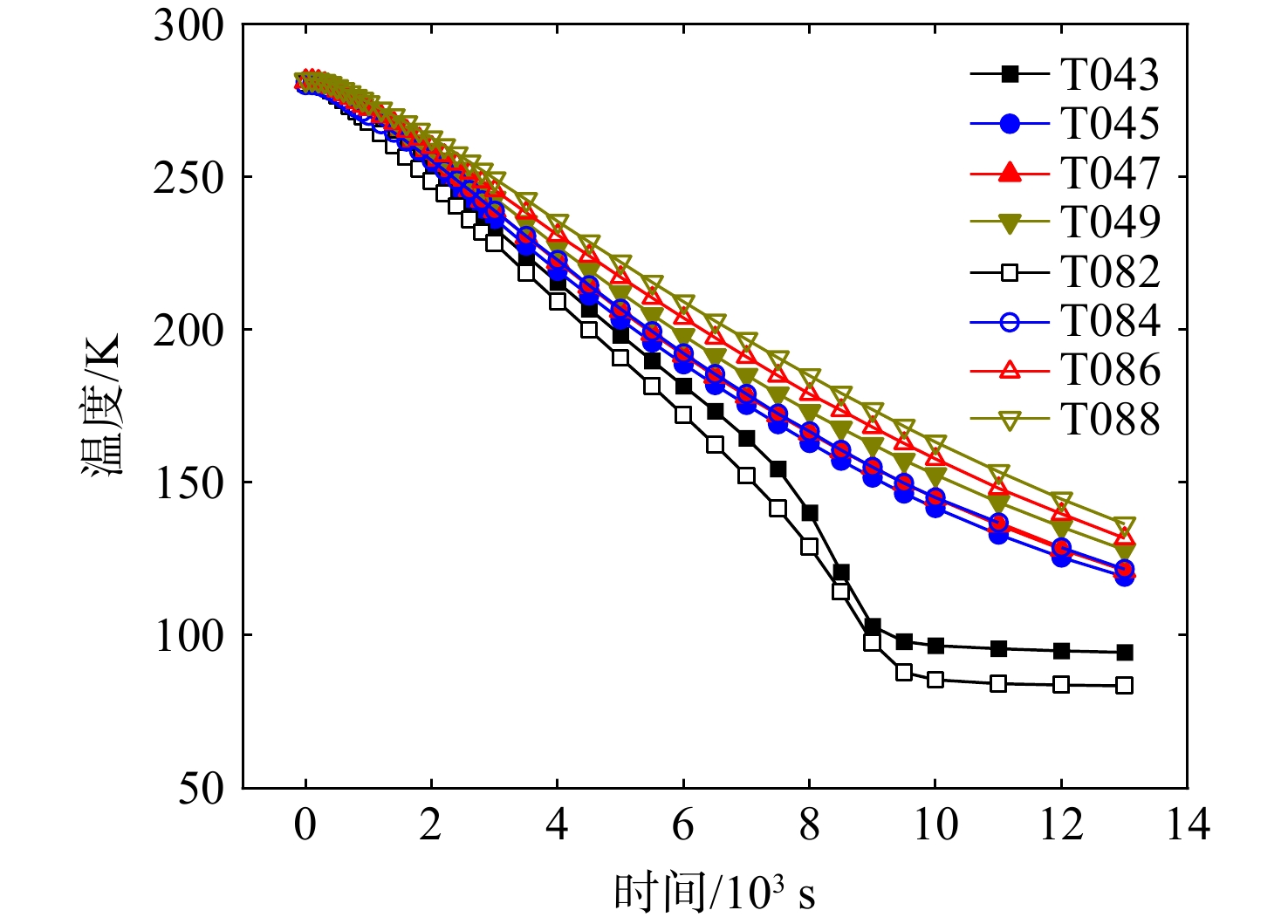
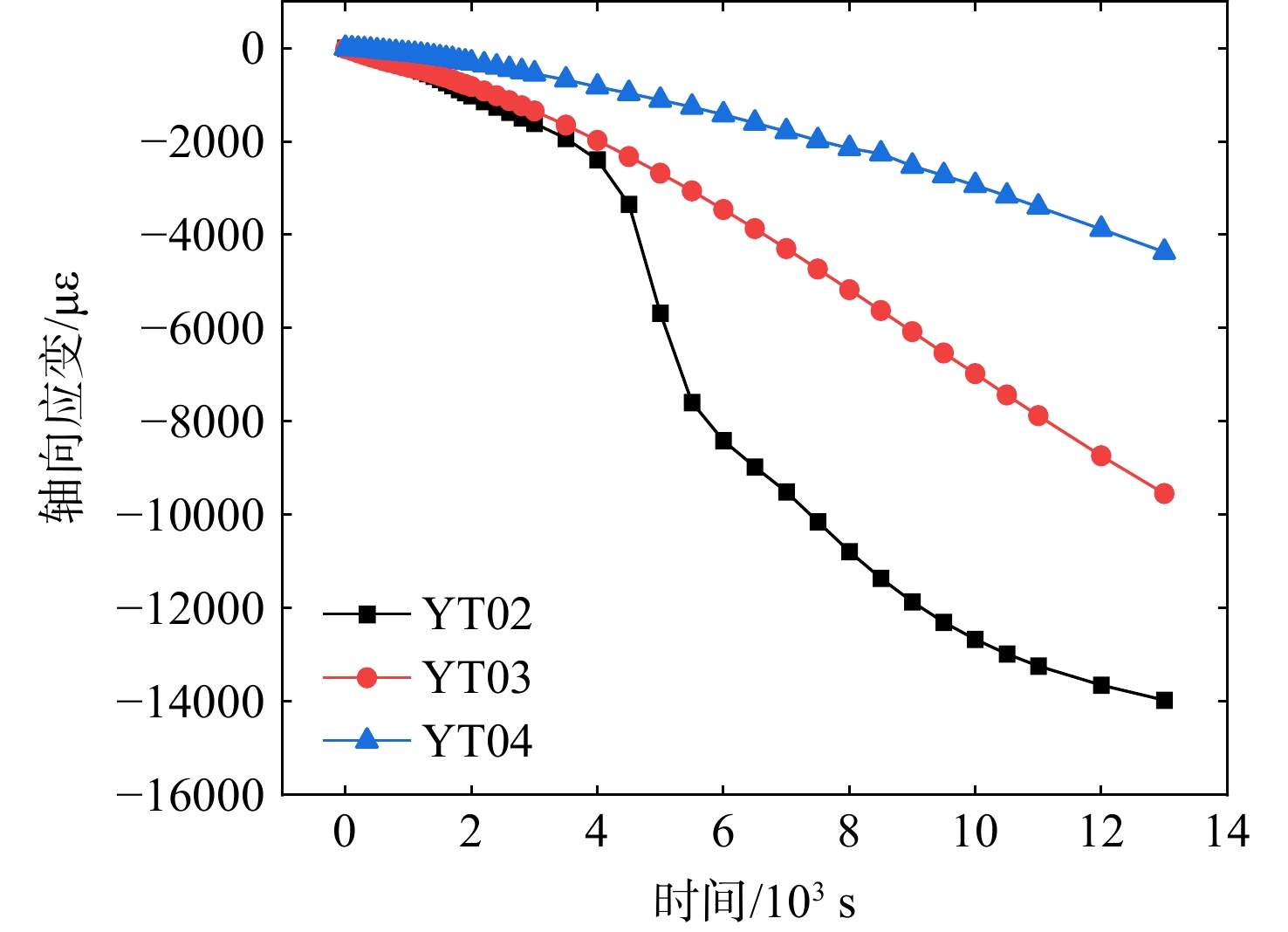
In order to further understand the pre-cooling process of large horizontal storage tanks, an experimental setup was built to investigate the chilldown performance of 60 m3 horizontal storage tank with liquid nitrogen. Accordingly, the cooling and strain features during the chilldown process were studied. The results showed that the vapor temperature experienced overall sharp reduction and subsequent slow reduction. Moreover, thermal stratification occurred in the tank. In the preliminary stage, liquid nitrogen accumulated rarely in the bottom tank. The precooling process of the bottom tank wall could be classified into three stages, namely the mild decline of wall temperature by the cryogenic nitrogen vapor, sharp drop of wall temperature by the boiling heat transfer with liquid nitrogen when the liquid accumulated in the bottom, and the final unchanged temperature with the finish of chilldown. Meanwhile, the upper tank wall kept the mild precooling rate. Besides, the axial strain of tank wall increased with the ongoing pre-cooling. Moreover, a rapid increase of axial strain occurred at the wall in contact with liquid nitrogen. The success of this experiment strongly supplemented the blank of precooling data of large horizontal storage tanks in China and provided data support for related researches such as reliability and life prediction of cryogenic tanks.

Combustion organization and NOx emission in a single sector model combustor
WANG Jing, ZHANG Man, ZHANG Chi, WANG Jianchen
2023, 38(1): 94-103. doi: 10.13224/j.cnki.jasp.20220525
Abstract:

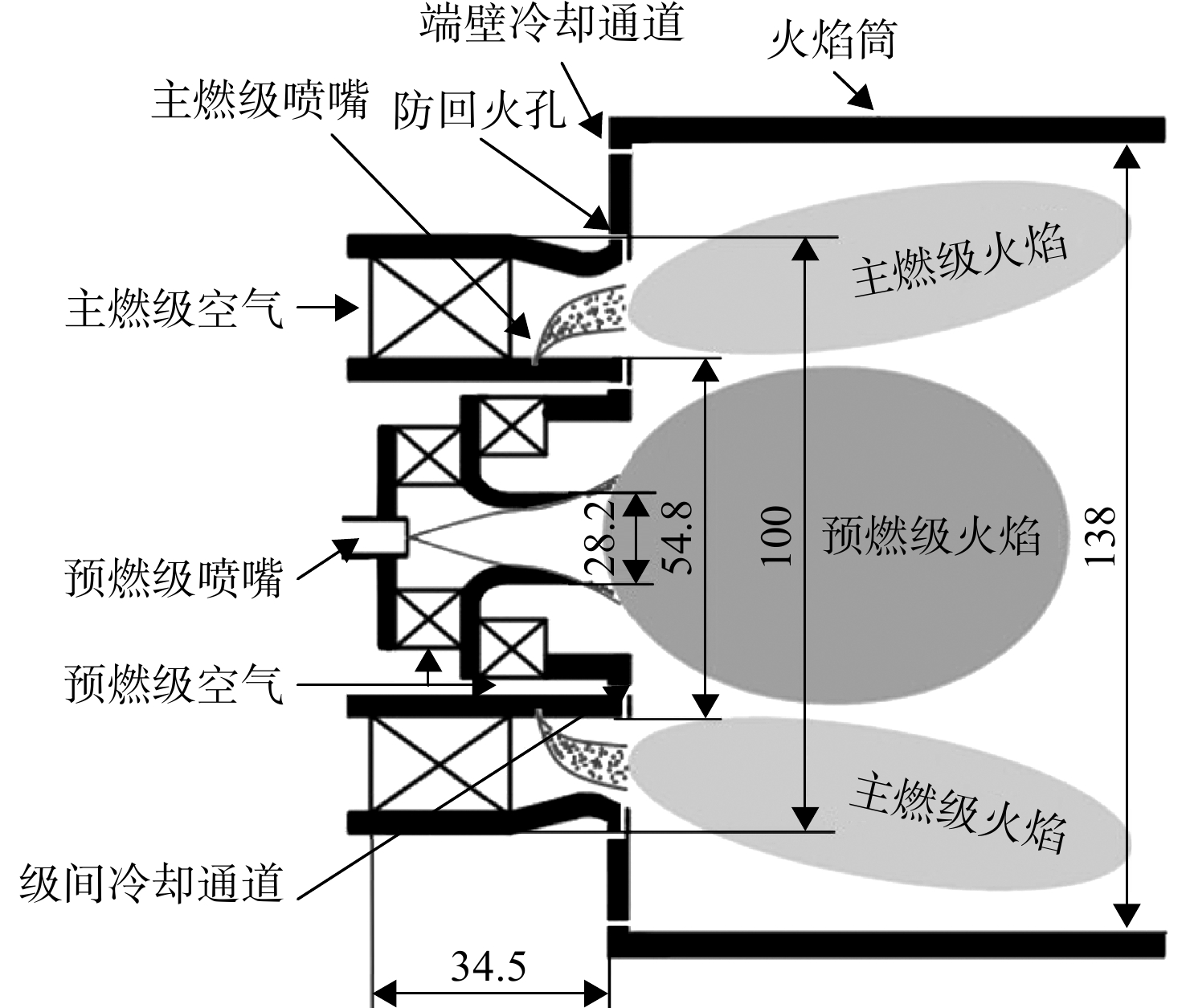
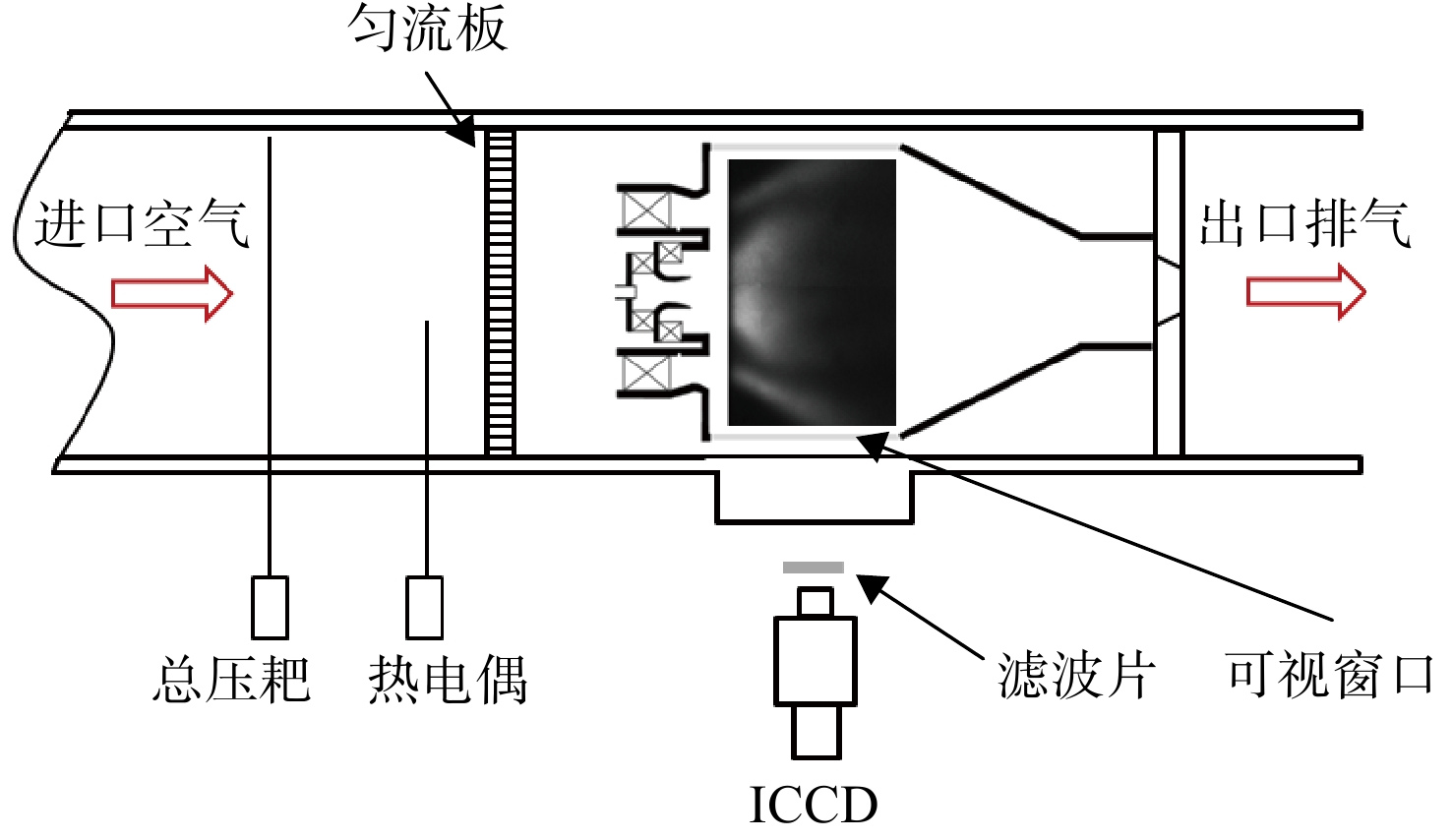
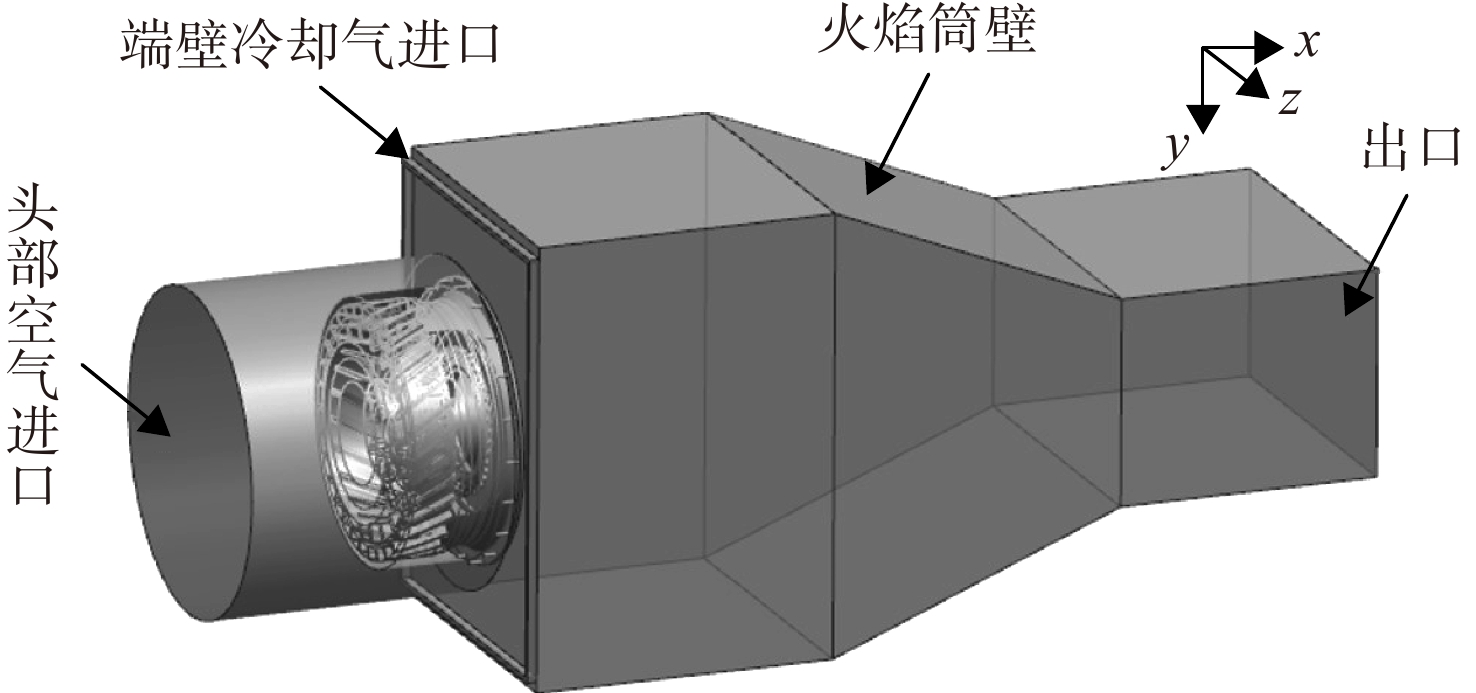
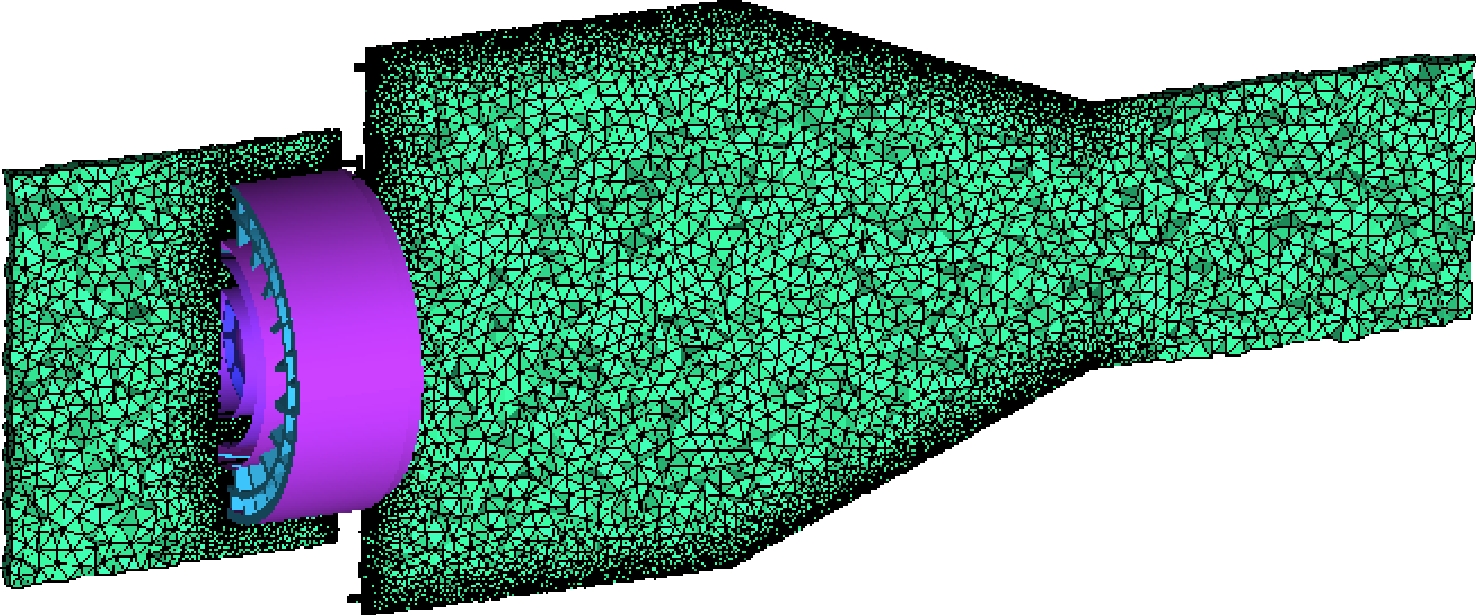
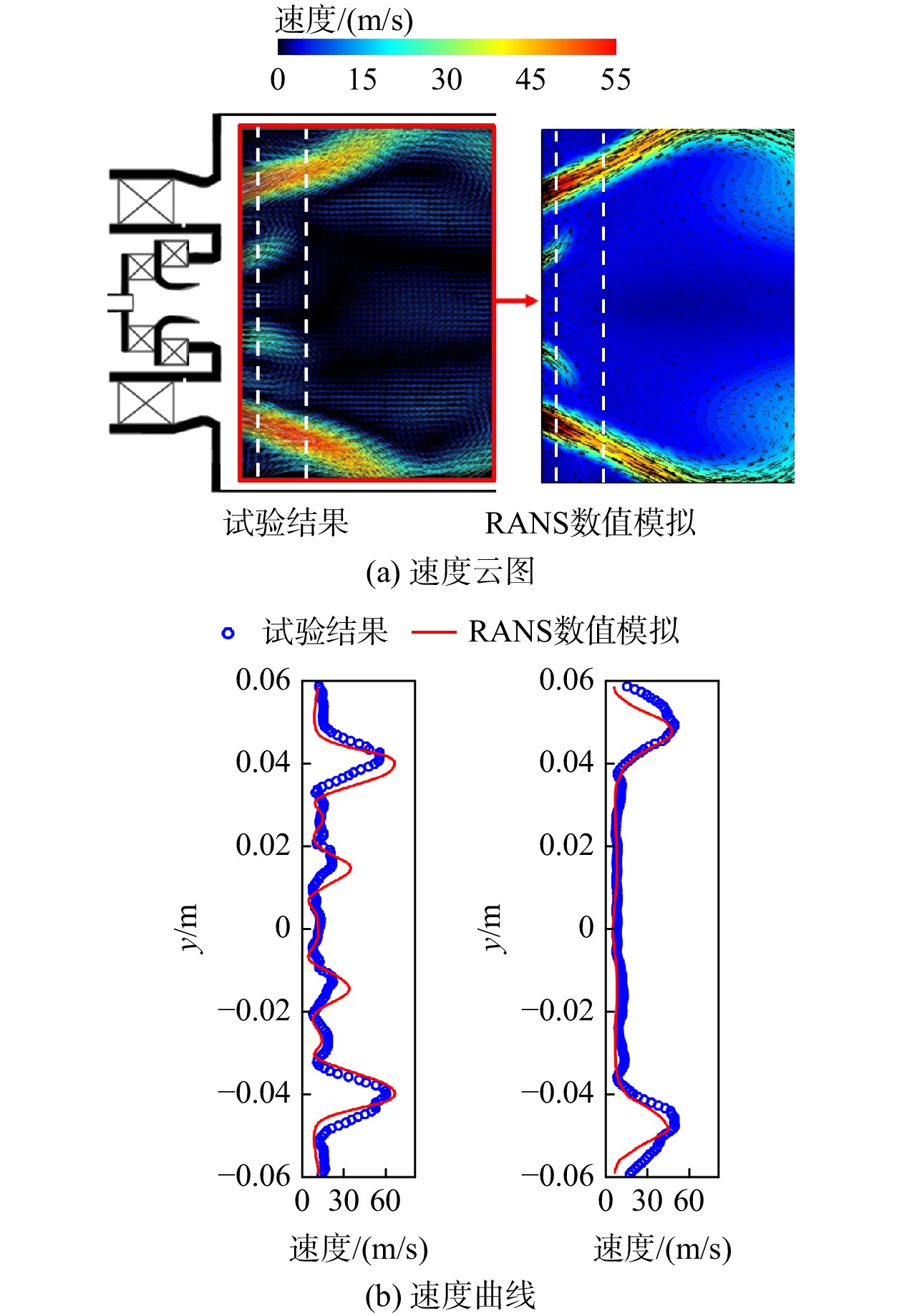
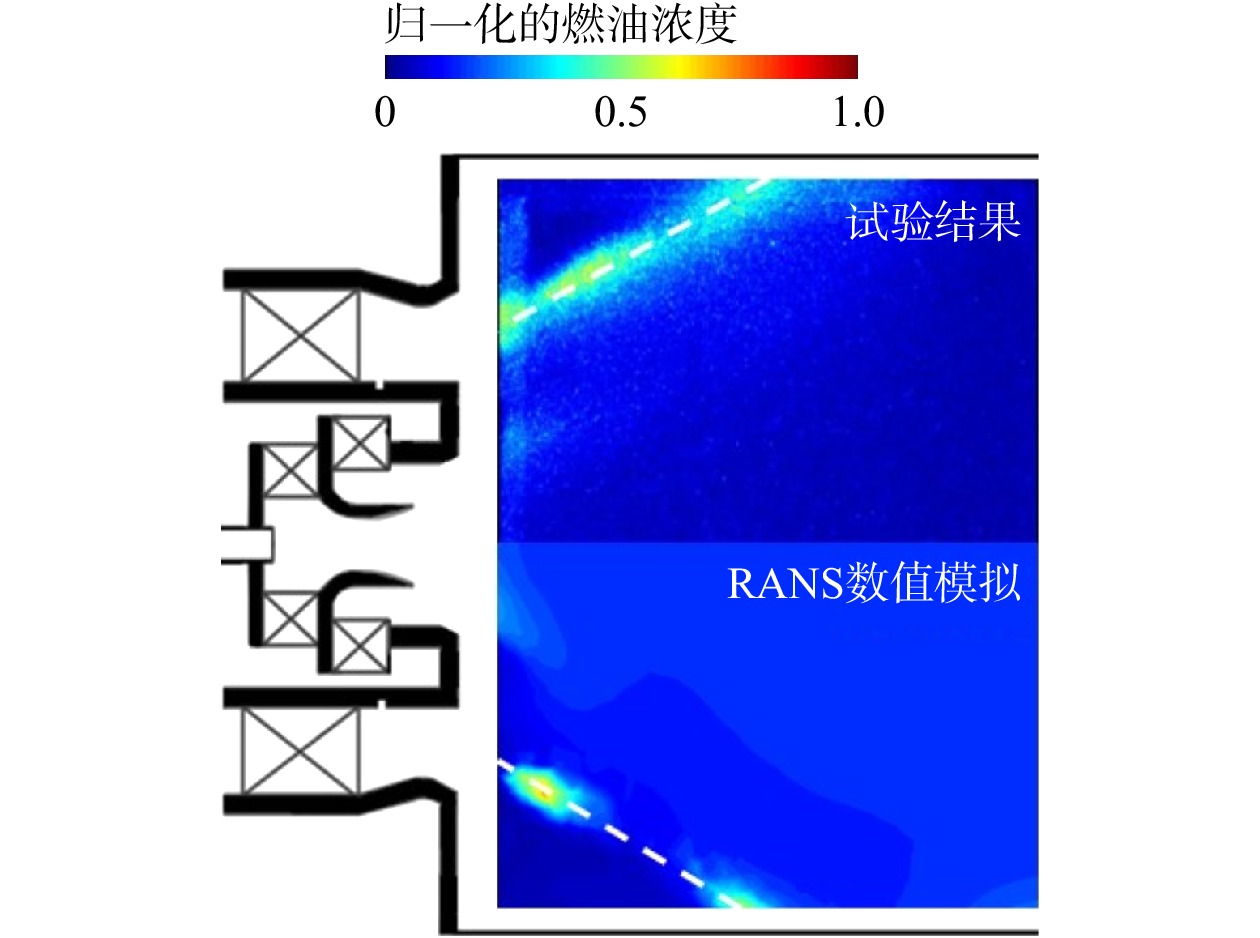
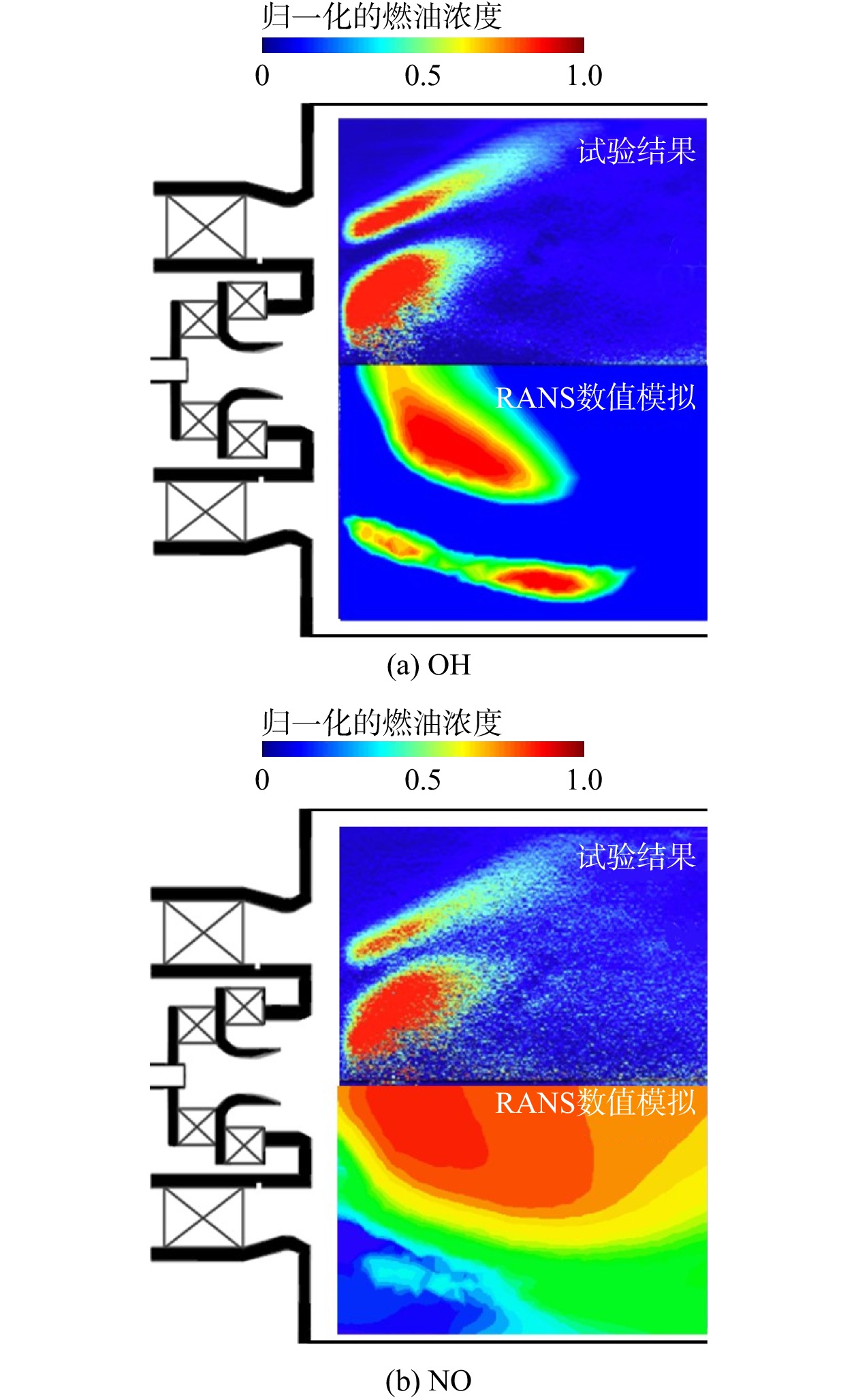
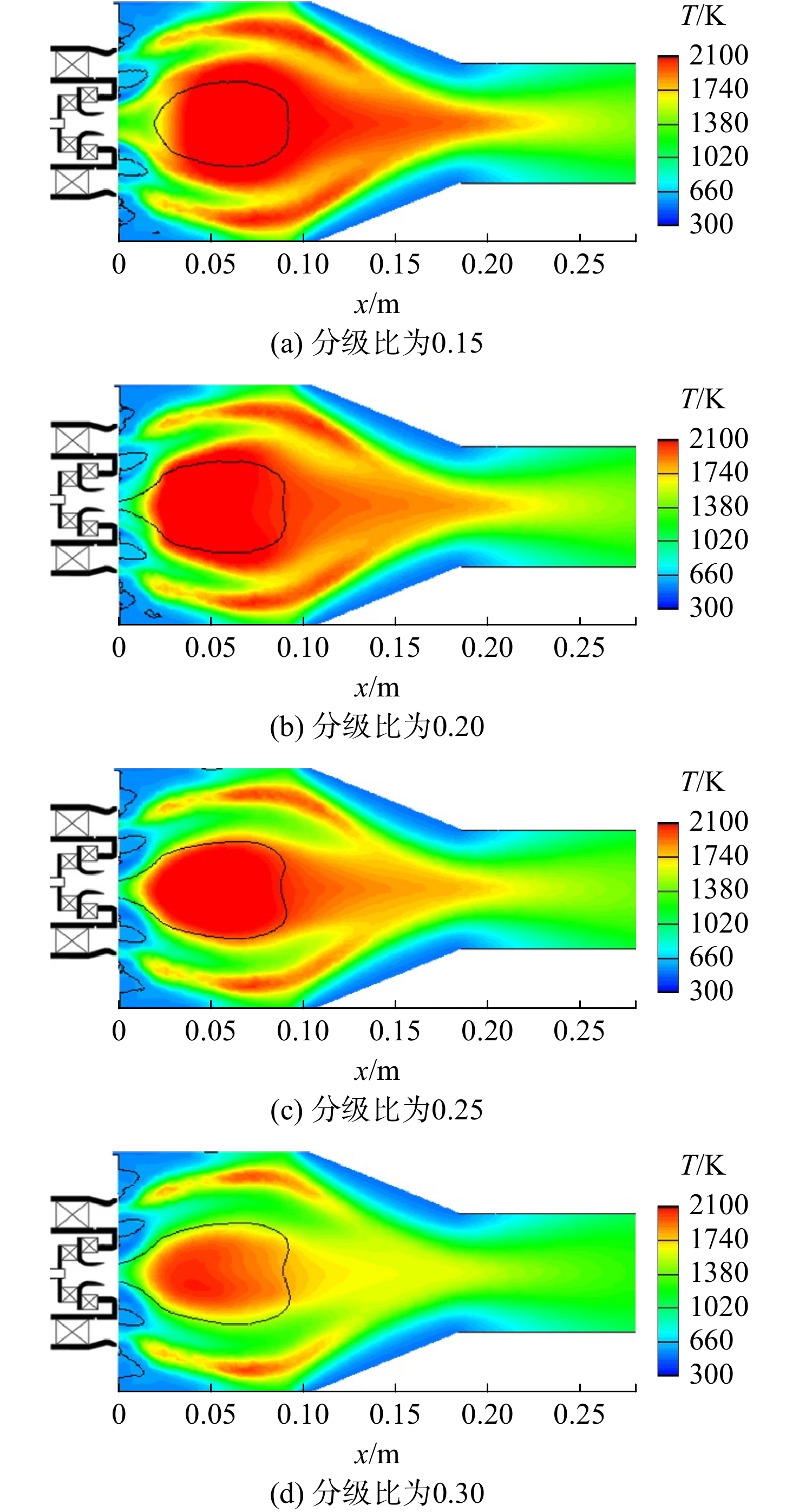
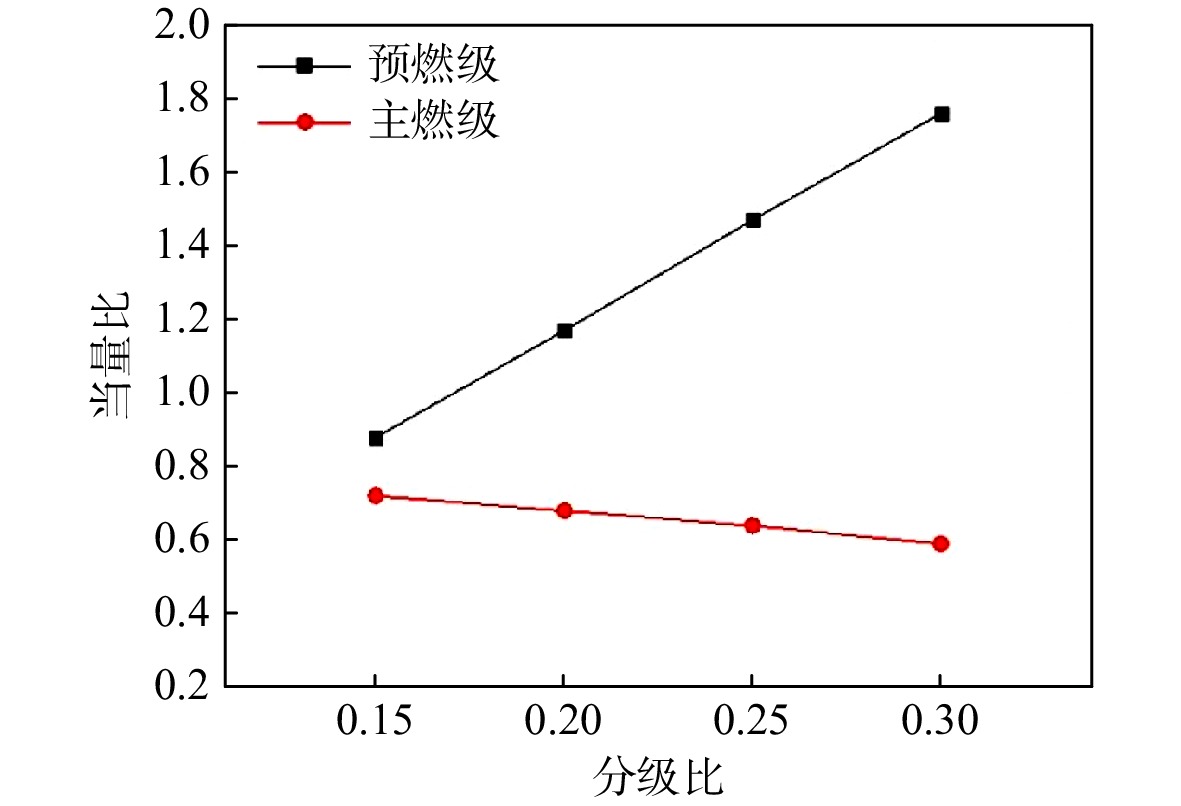
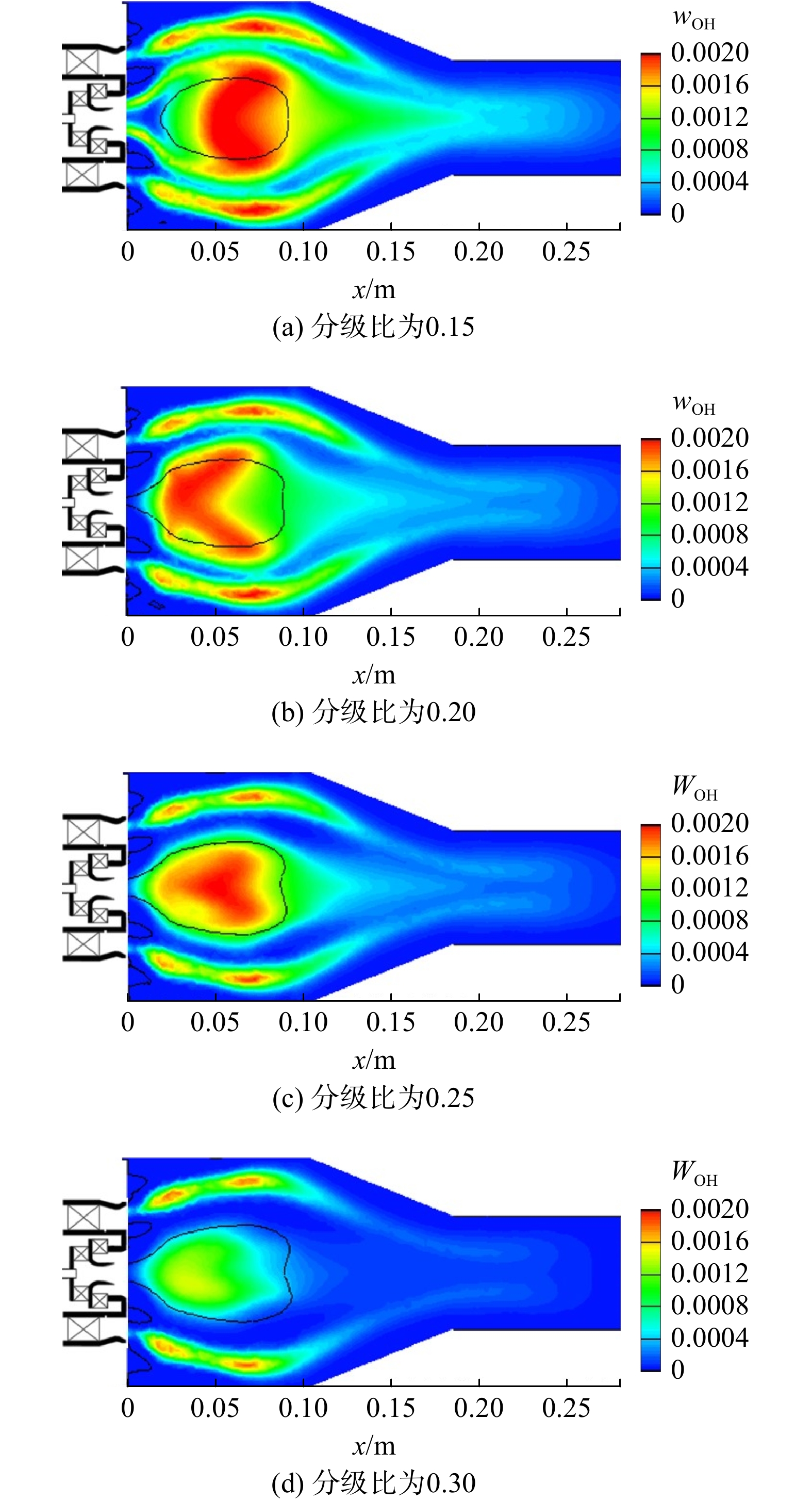
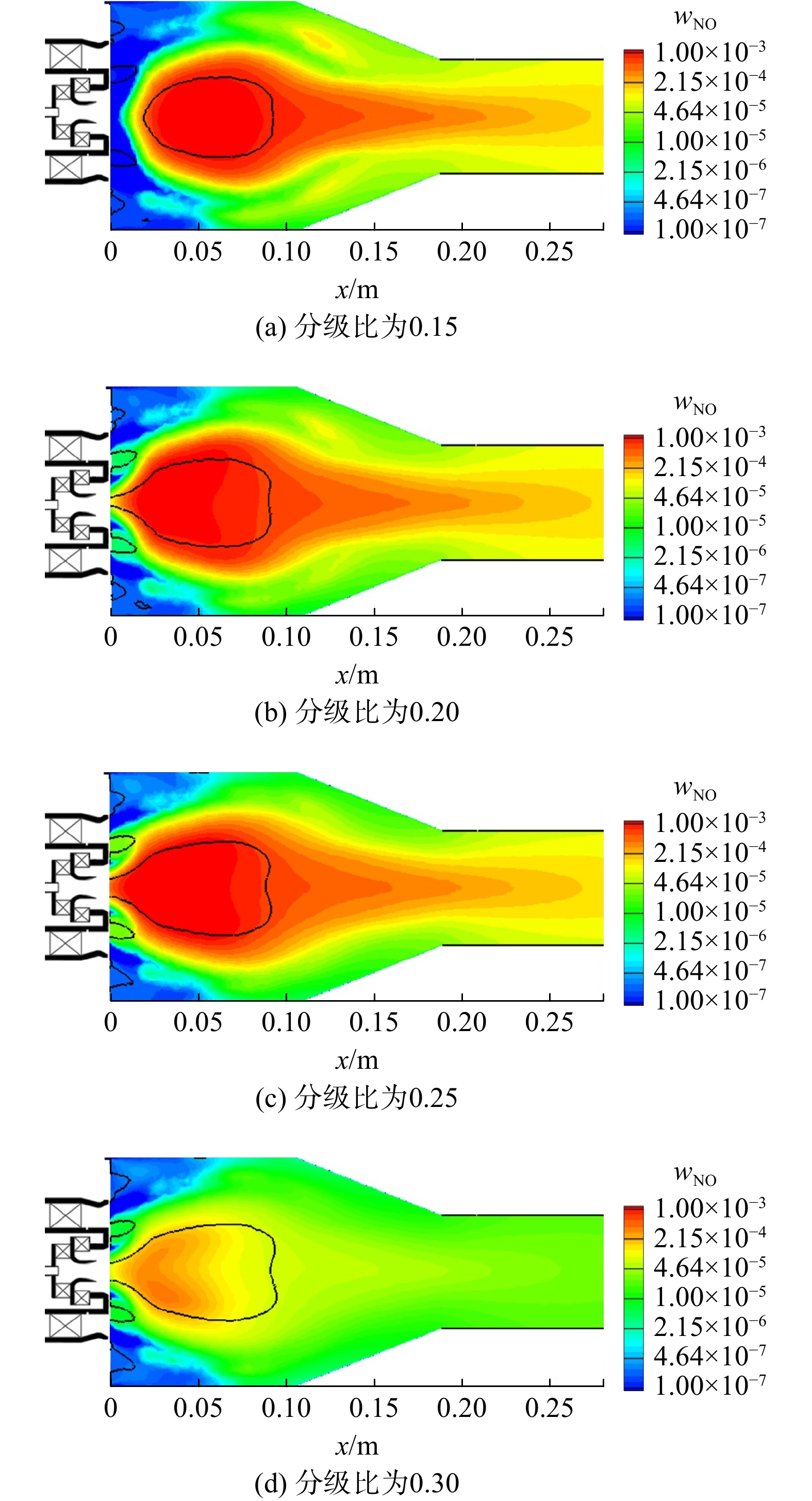
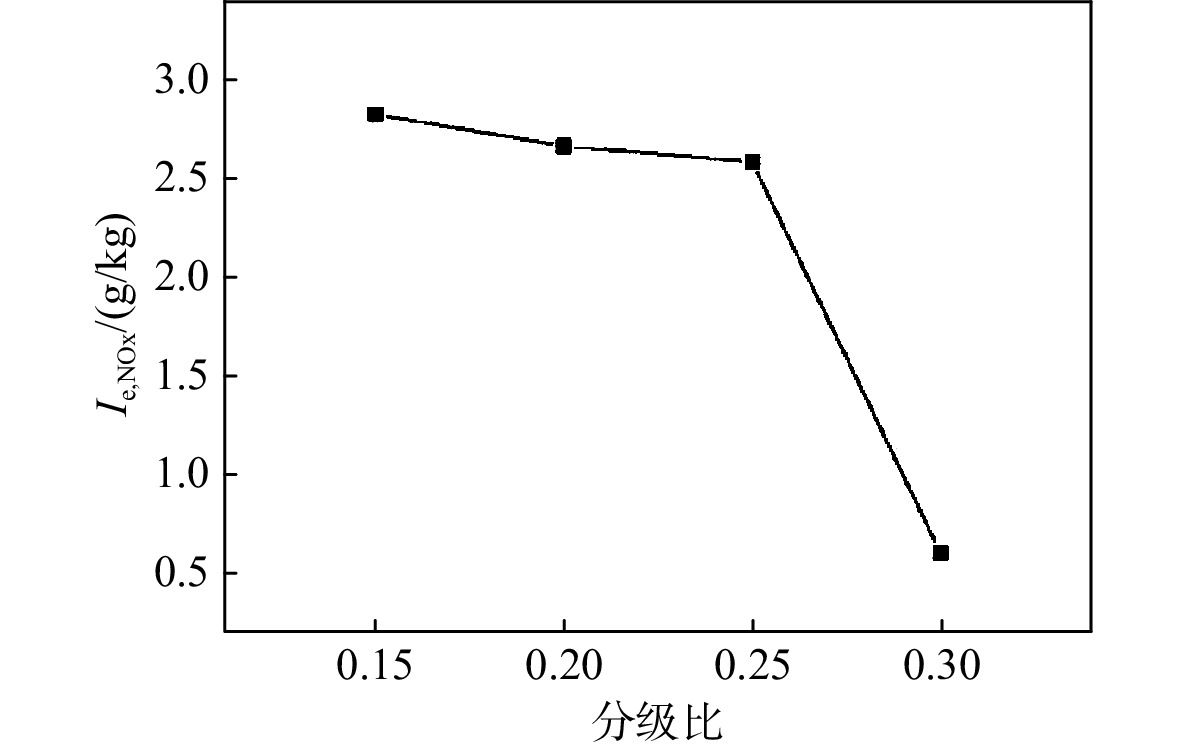
Combustion organization and NOx formation characteristics in a single sector model lean premixed pre-vaporized combustor were investigated by optical experiments and 3-dimensional numerical simulations. The flow field, spray field, OH and NO species field in the combustor were simulated by the Reynolds-averaged Navier-Stokes method and then compared with the experimental results. It was found that the prediction errors of the flow field and spray angle were 13.9% and 6.0%, respectively. The predicted OH and NO distribution characteristics were in good agreement with the experimental results. The results showed that the main and pilot flames organized combustion in a weakly coupled way, and most NO was generated in high temperature region located in the pilot stage. The variation (0.15−0.30) of fuel staging ratio did not affect the flow and combustion structure, but it had a certain influence on the NO emission, which decreased with the increase of the fuel staging ratio.

Efficient spray combustion simulations using the characteristic timescale model
YIN Yu, YANG Tianwei, ZHOU Hua, REN Zhuyin, LIN Hongjun, SHANG Shoutang
2023, 38(1): 104-115. doi: 10.13224/j.cnki.jasp.20210366
Abstract:

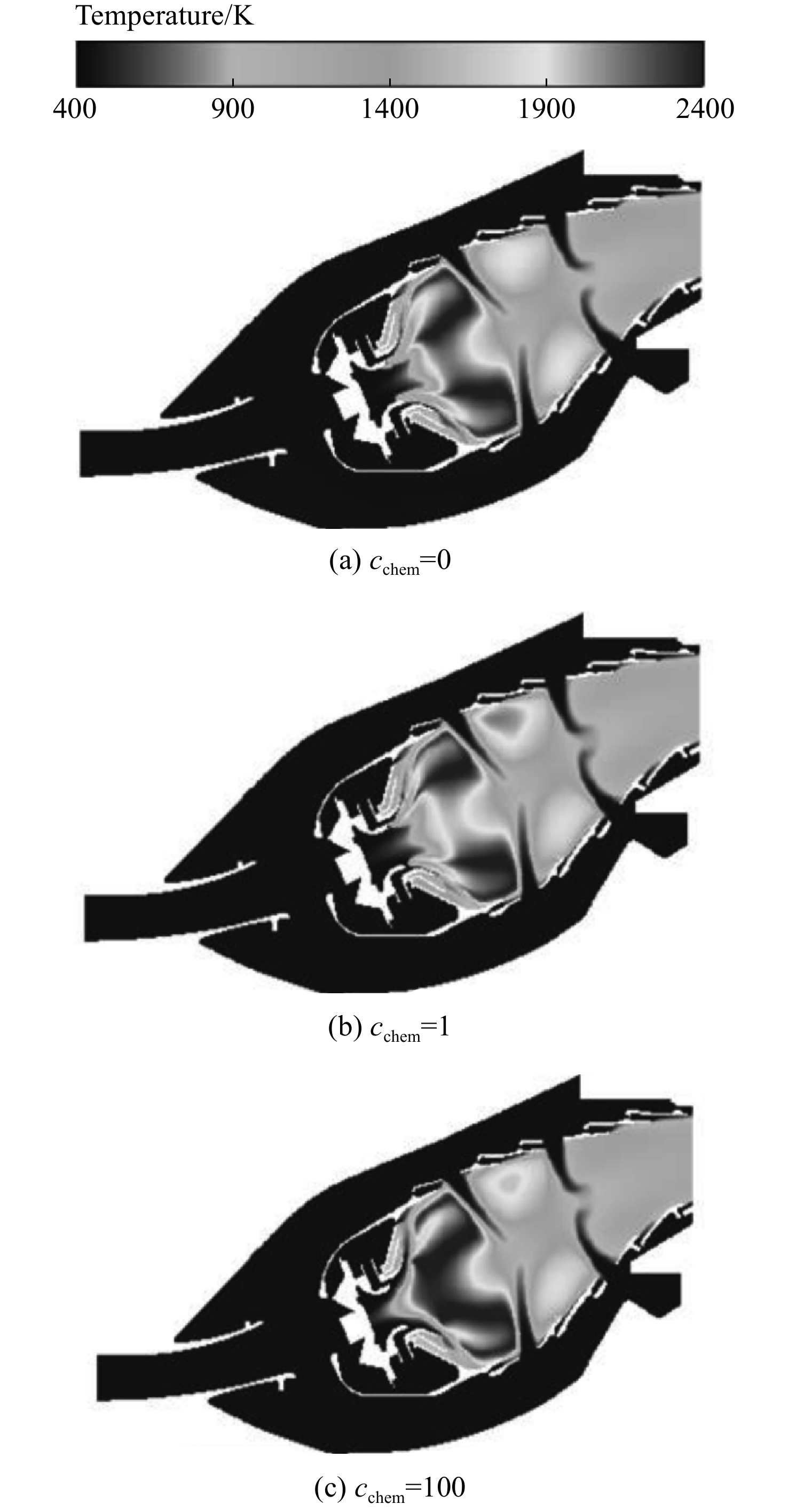
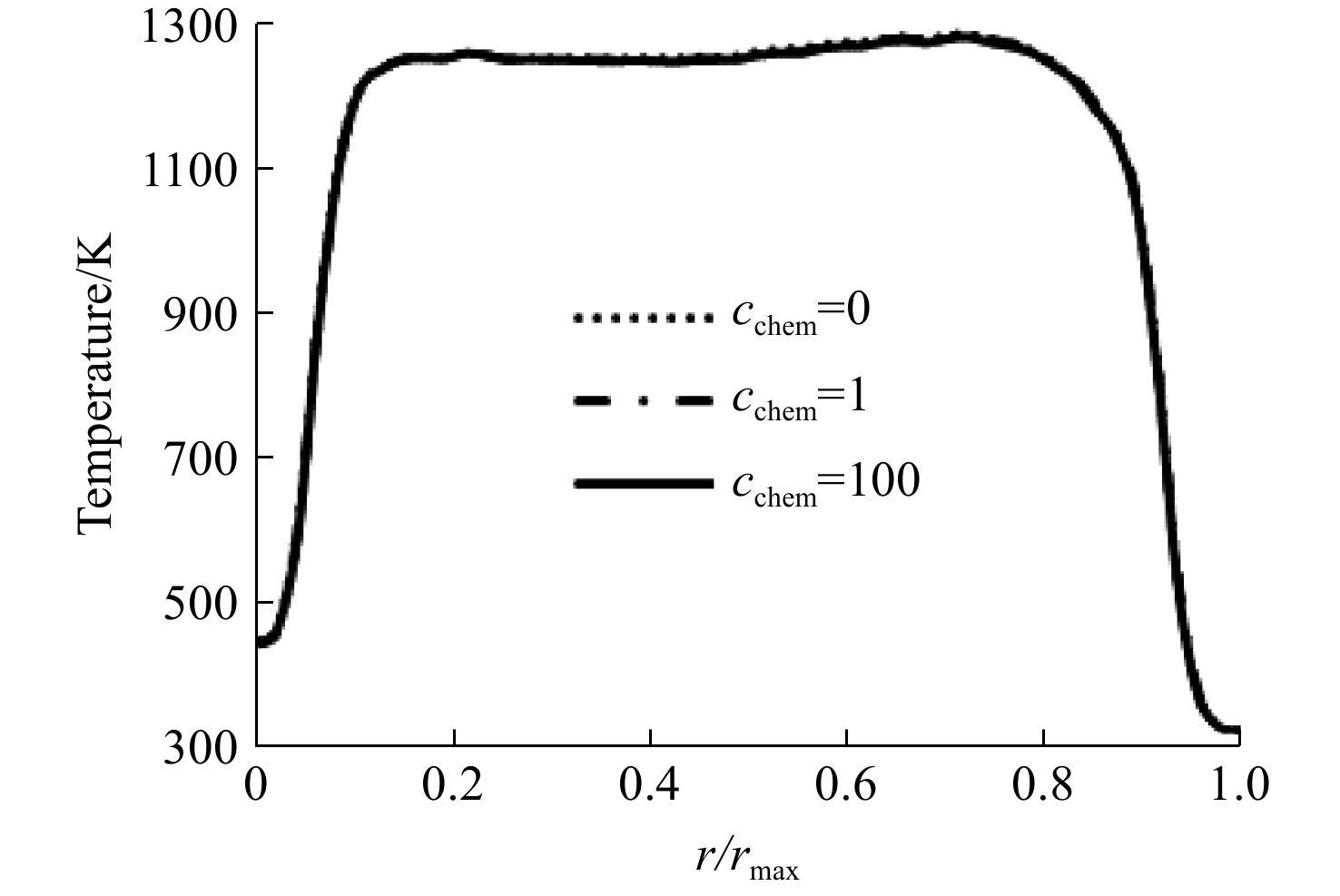
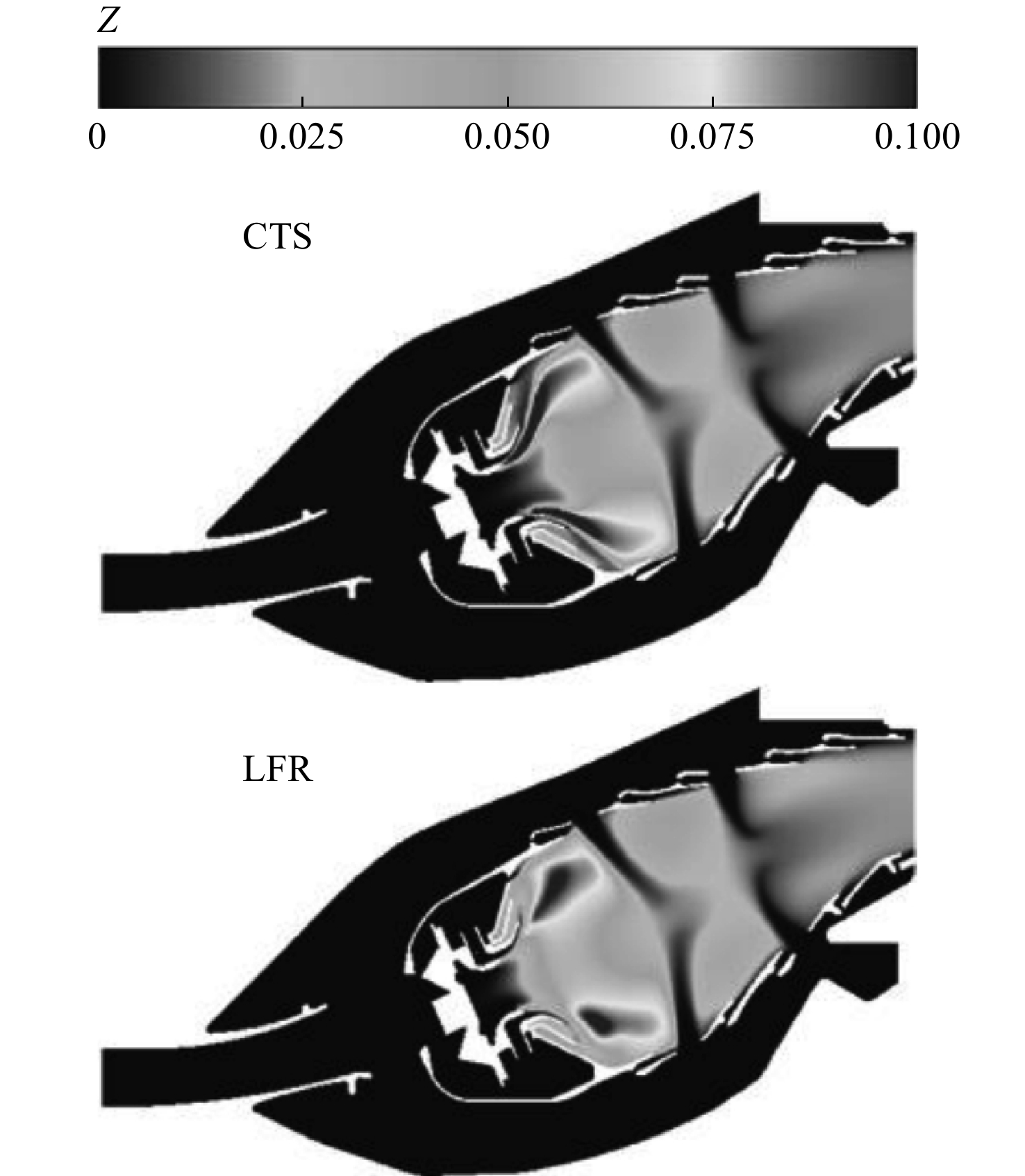
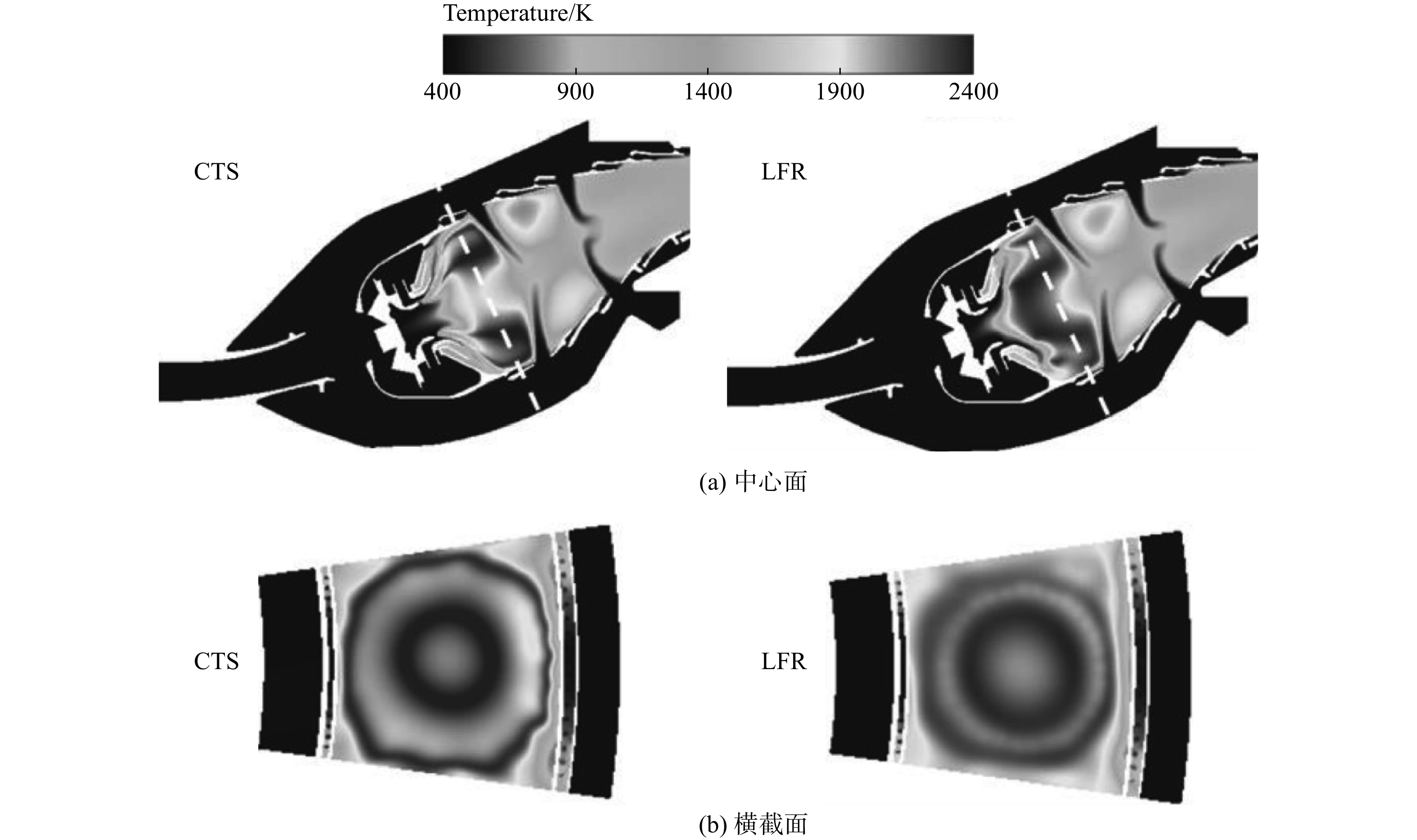
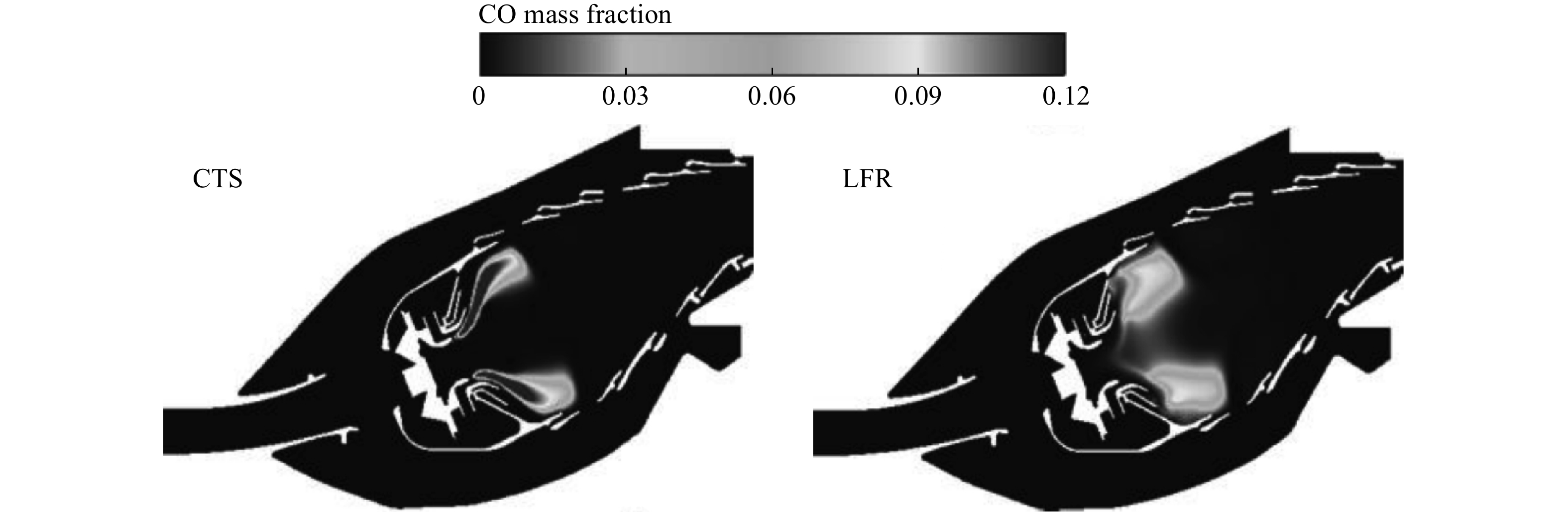
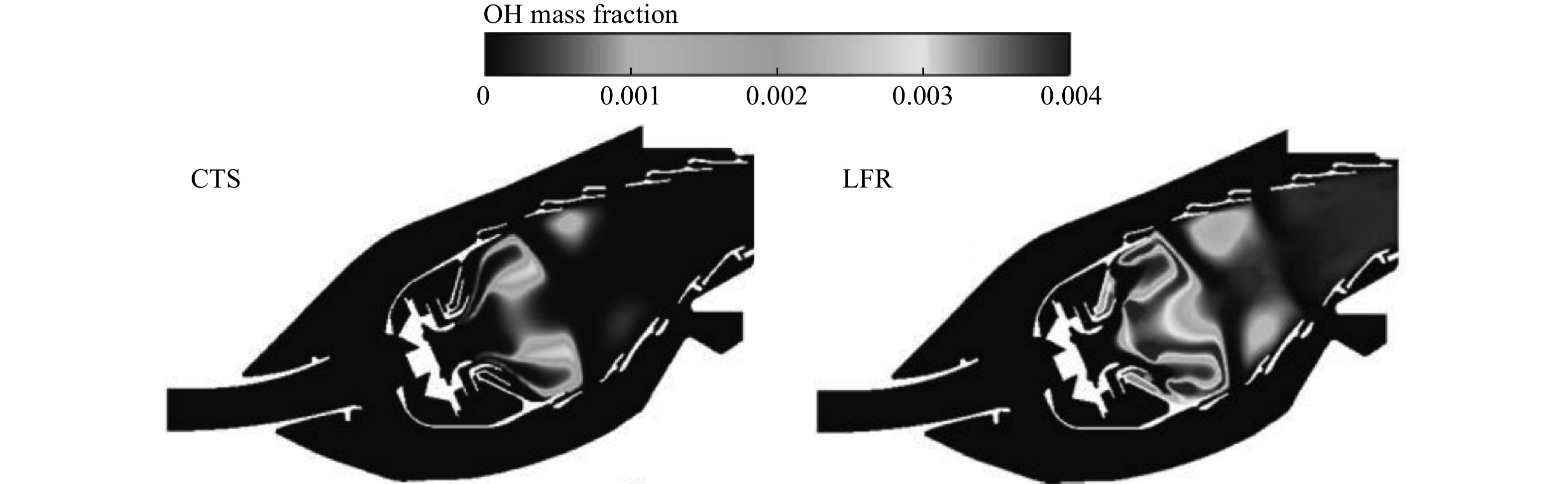
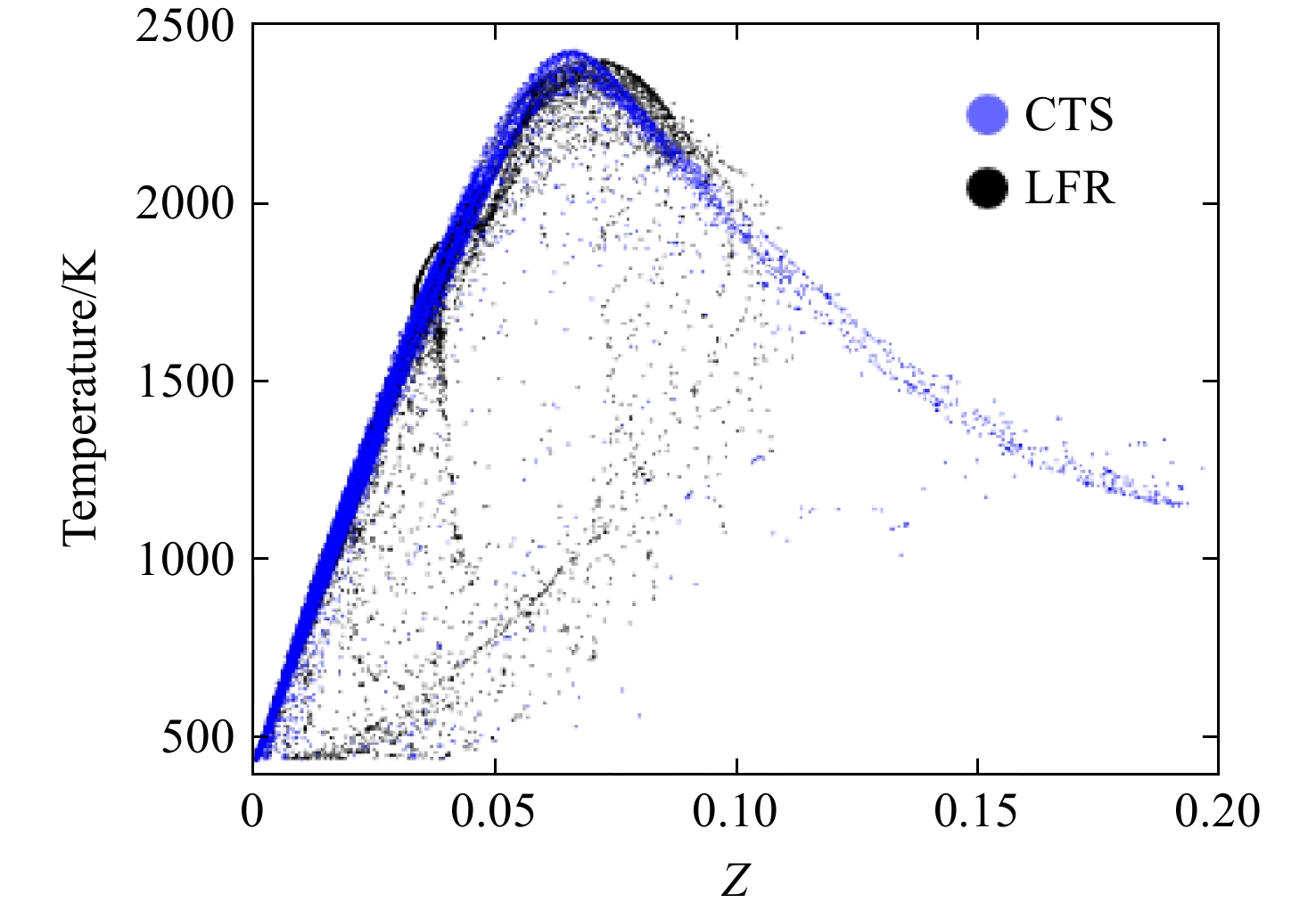
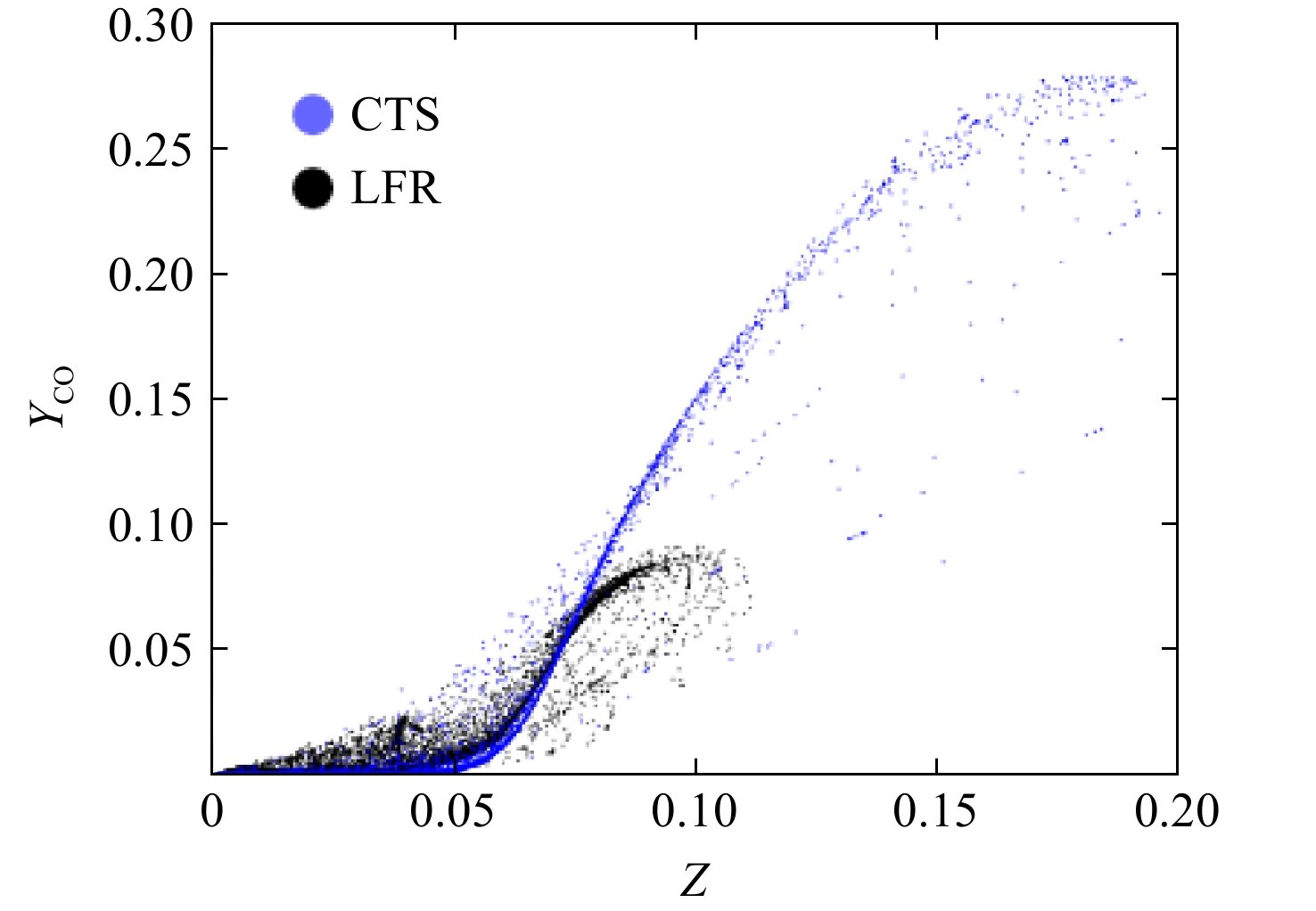
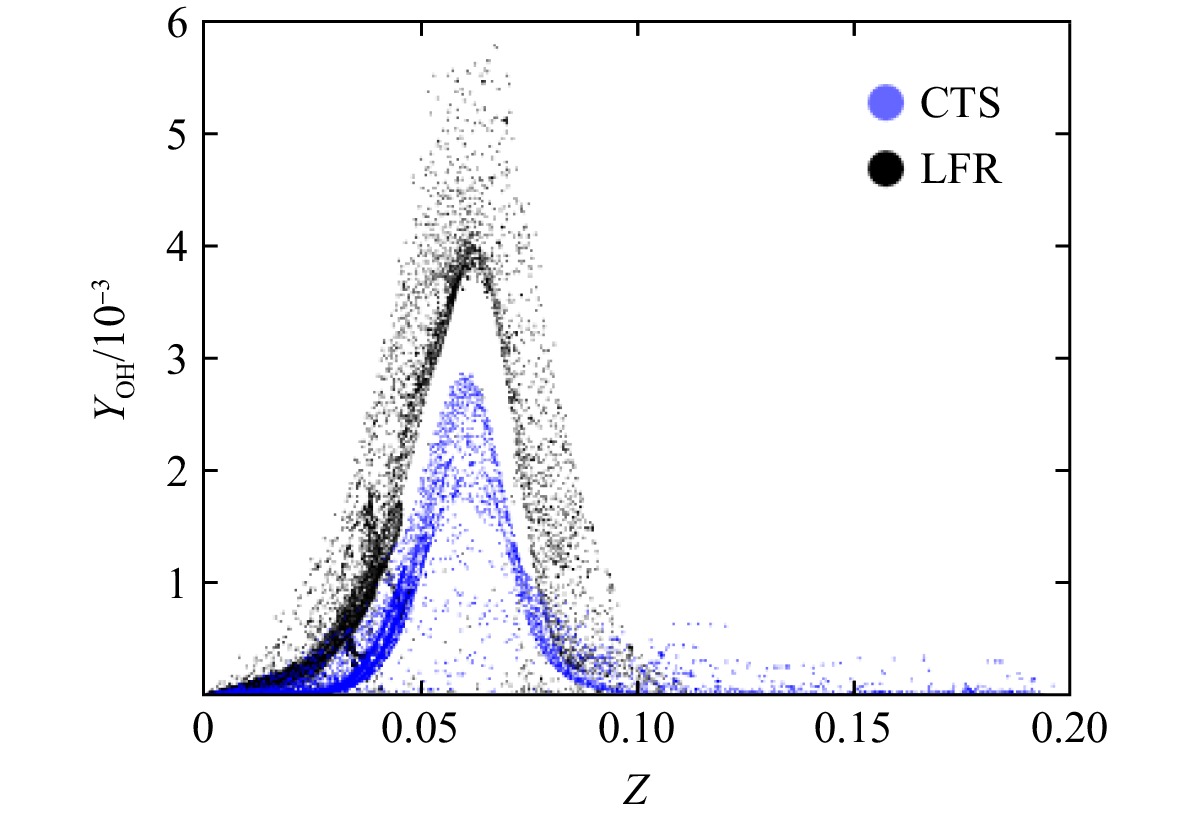
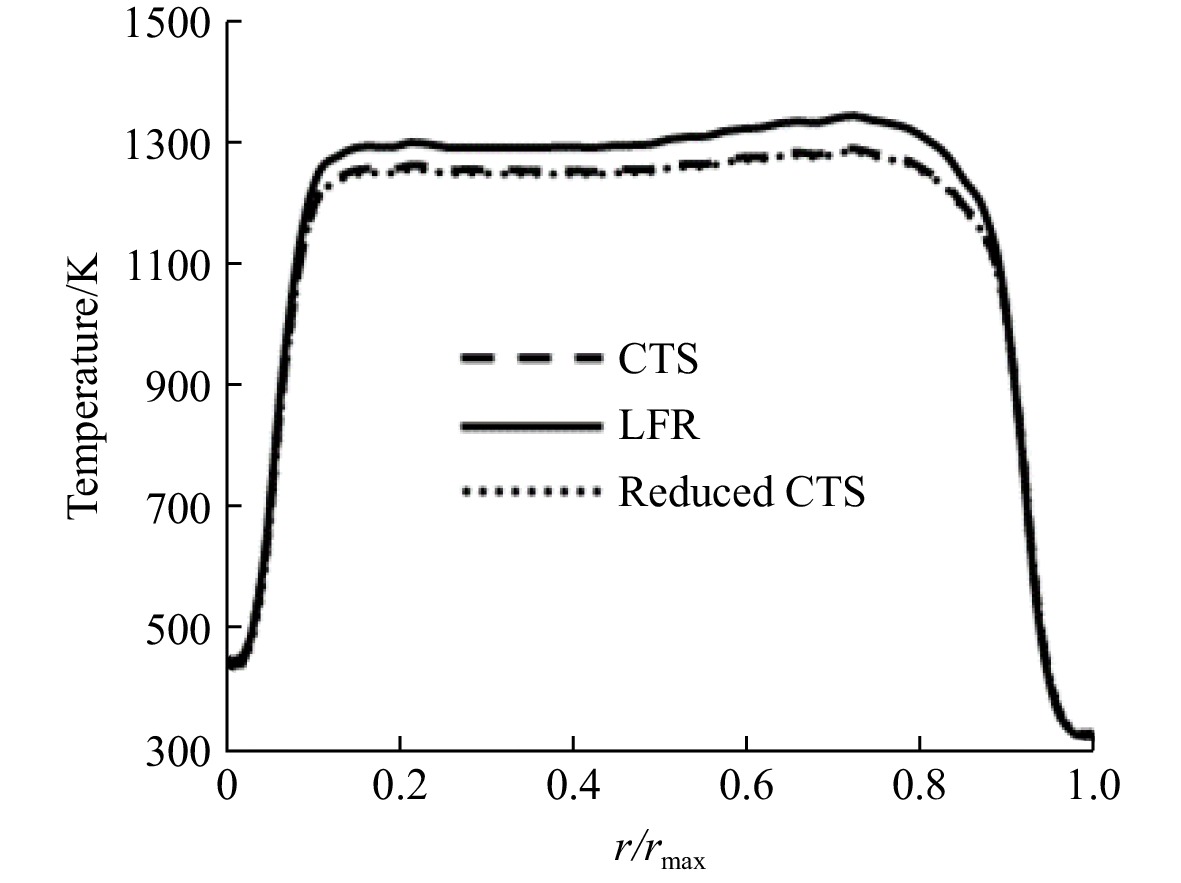
The characteristic time scale (CTS) model was investigated for efficient and robust spray combustion simulations. This model was demonstrated in steady-state simulations of spray flames in an aero-engine model combustor, and the predicted temperature and species results were compared with those from the finite-rate combustion model to verify the feasibility of the CTS model in spray combustion. Combined with a dimension reduction method, the CTS model can be used to facilitate the finite-rate based calculations with full chemical kinetics by providing good initial conditions. The accelerating effect was investigated. Results showed that for the CFM56 model combustor considered, CTS yielded a realistic flame shape and reasonably predicted species distributions. The in situ adaptive tabulation (ISAT) approach reduced the calculation time by 90%. The convergence time of steady-state simulations with initialization based on the CTS model was reduced by 35% and then reduced by 40% if combined with the dimension reduction method. Hence, the proposed characteristic timescale model was valuable in providing good initial conditions for finite-rate based combustion models and in improving the efficiency and robustness of spray combustion simulations.

TDLAT measurement method for outlet temperature profile of combustor based on wavelength modulation spectroscopy technology
LIU Chongyang, XU Zhenyu, HUANG An, SONG Wenyan
2023, 38(1): 116-126. doi: 10.13224/j.cnki.jasp.20210451
Abstract:

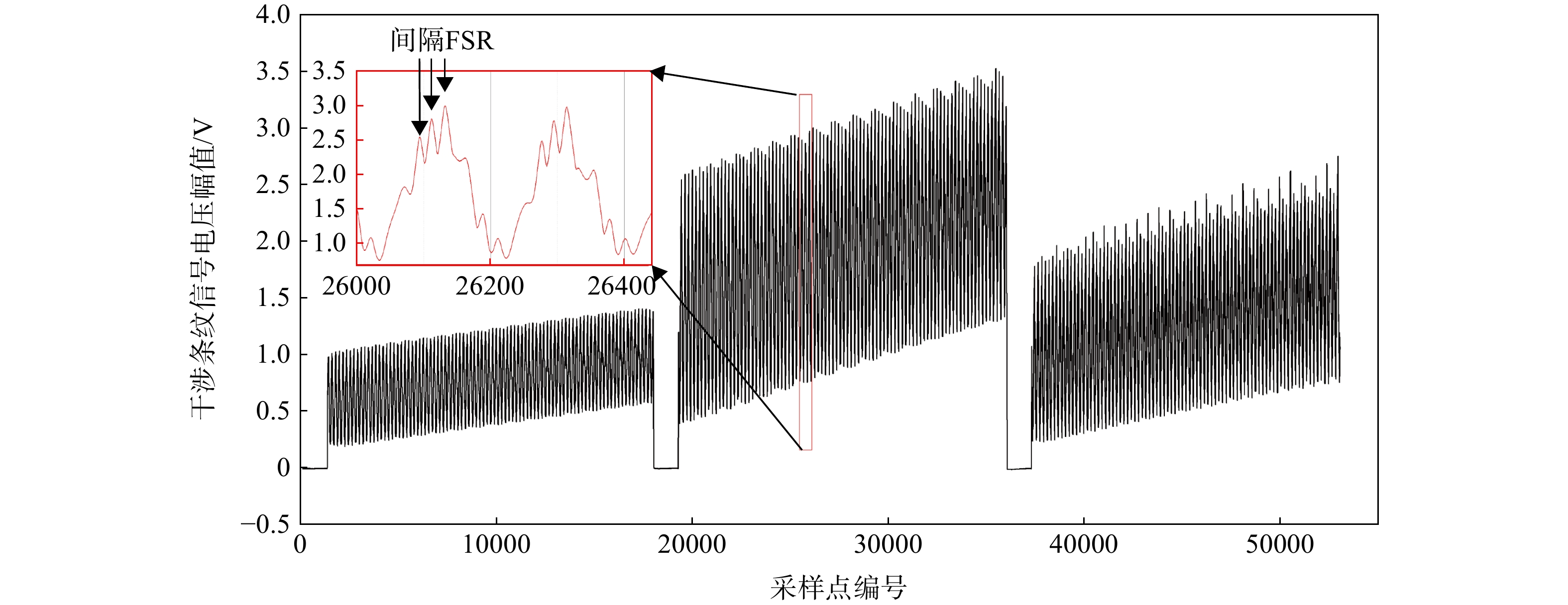
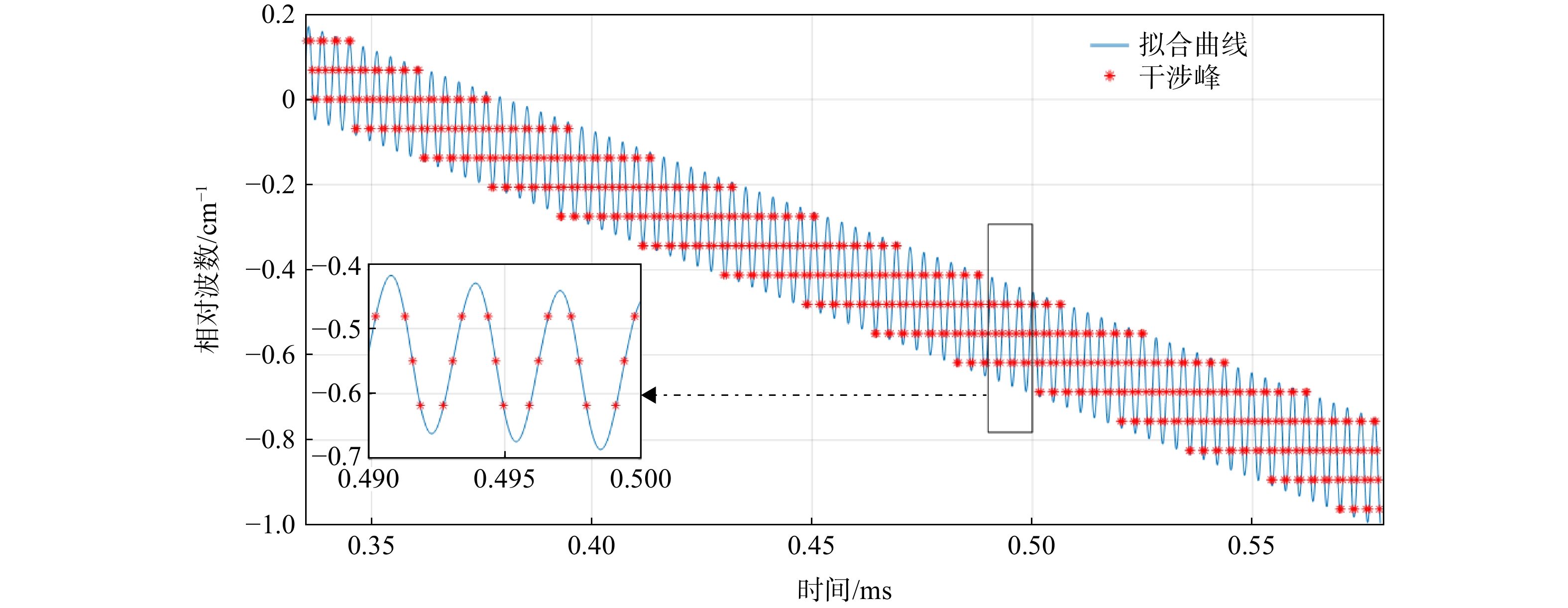
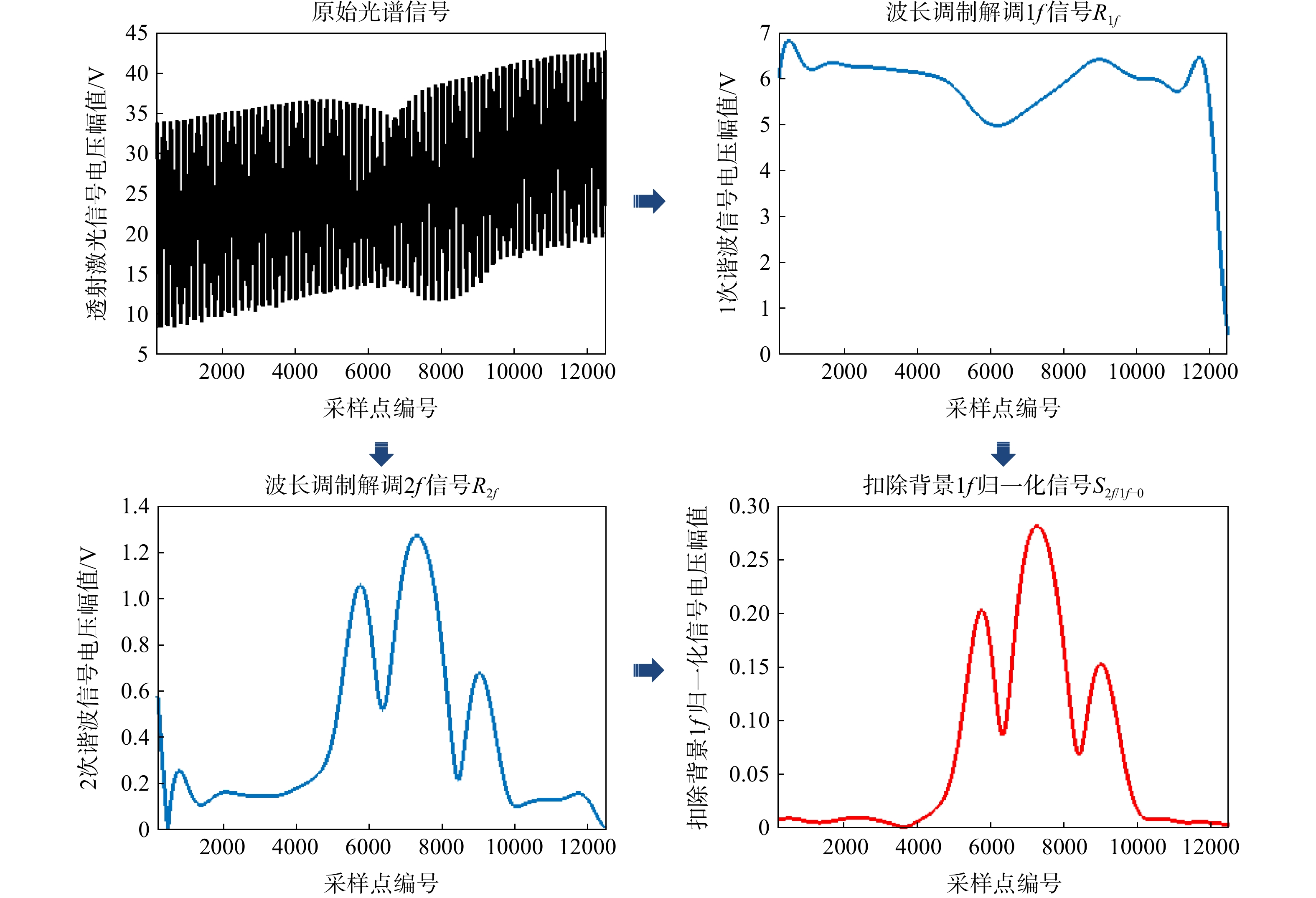
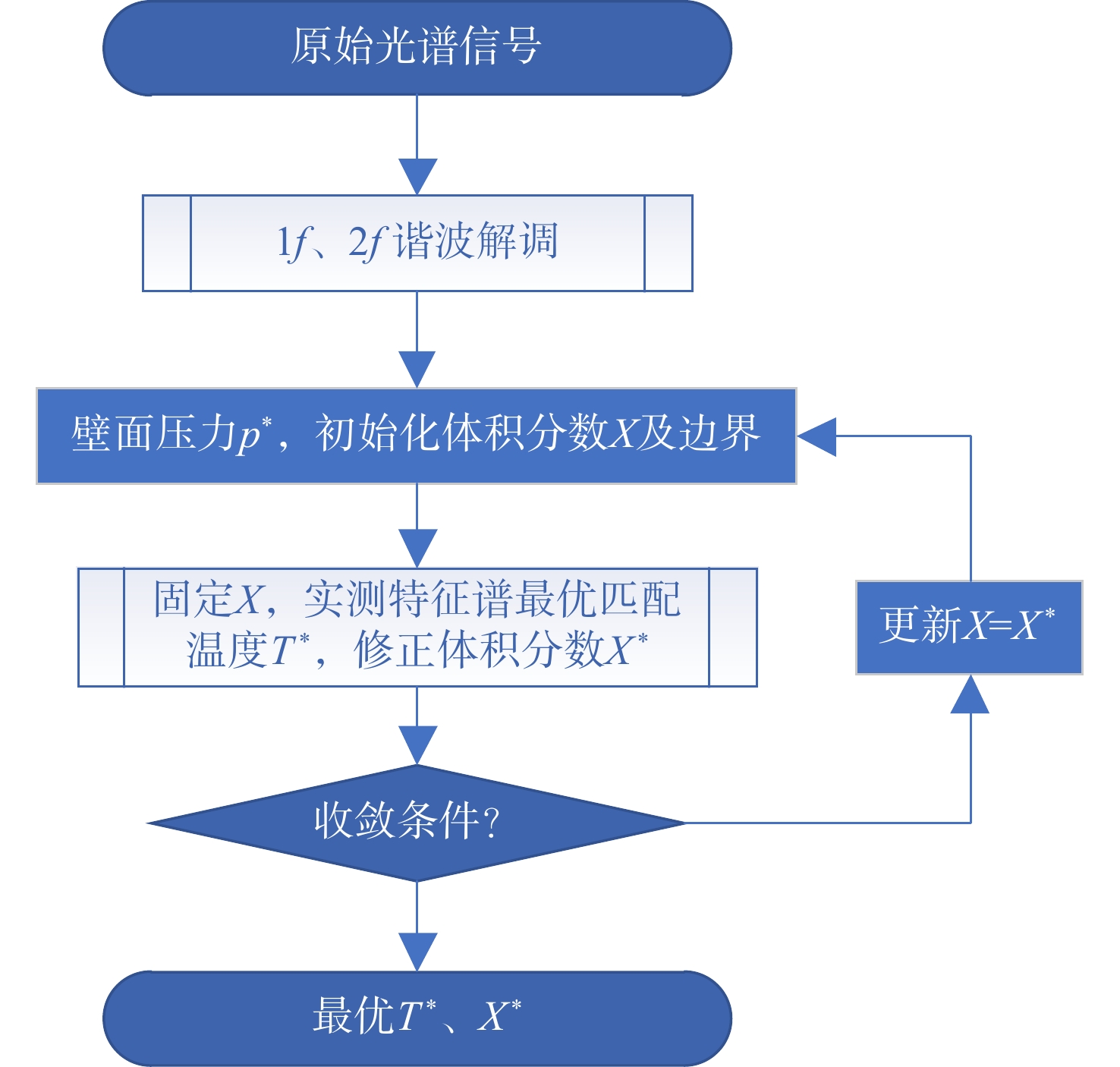
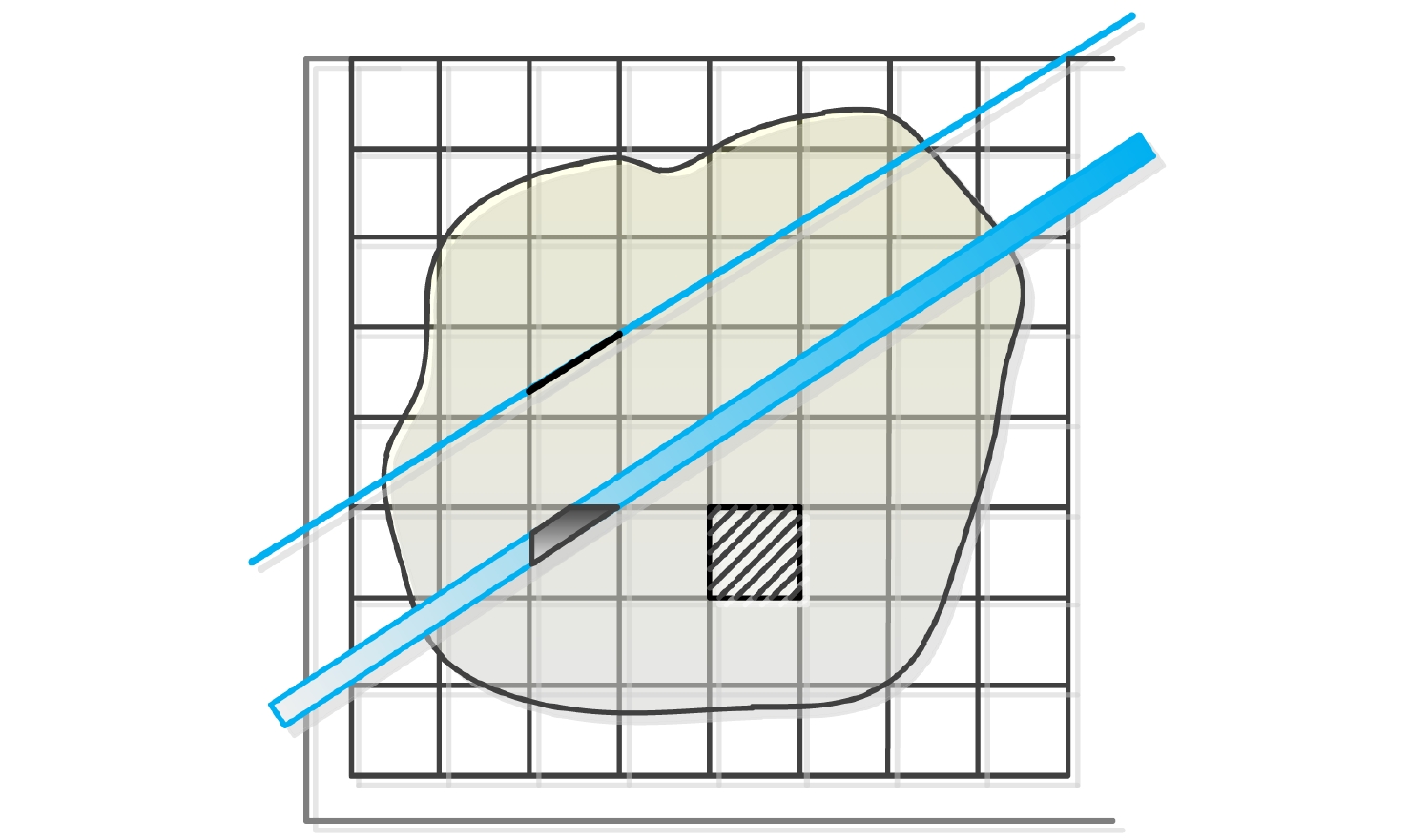
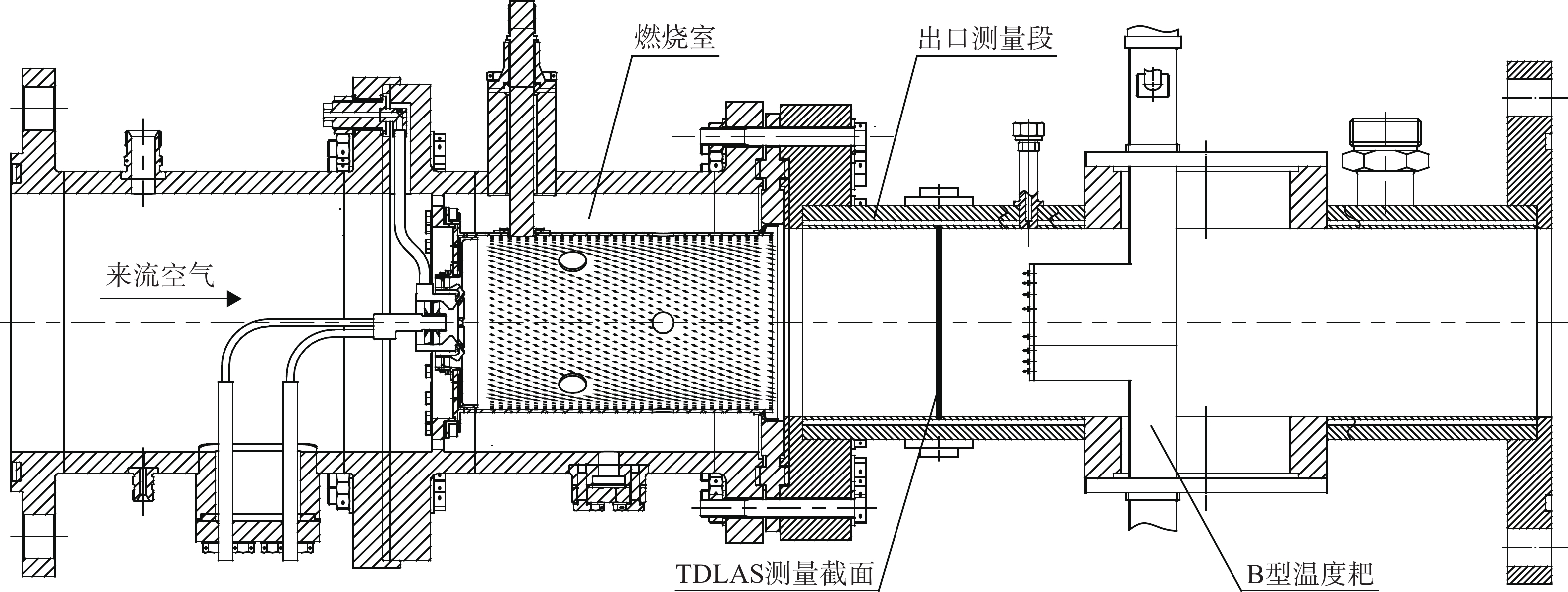
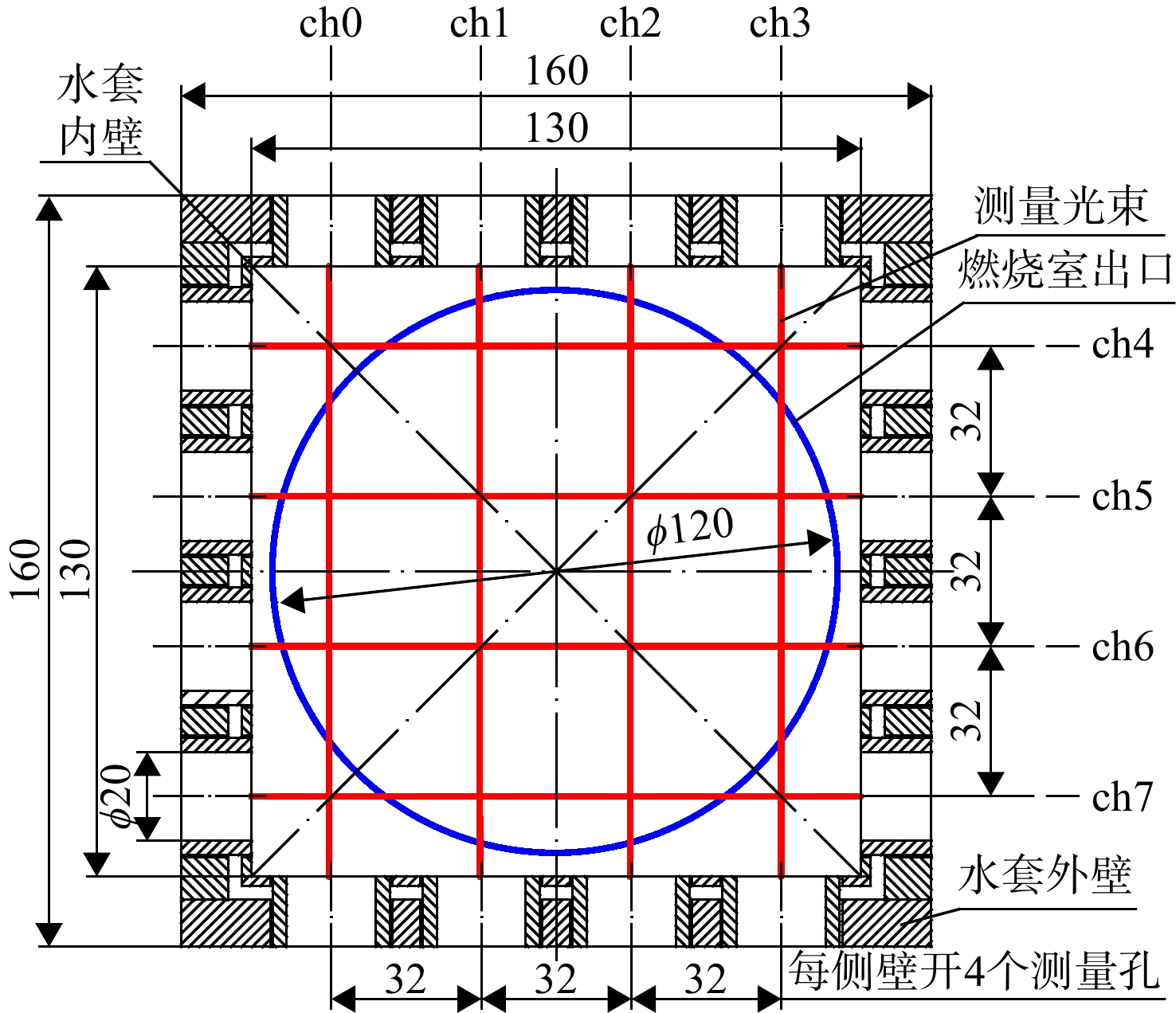
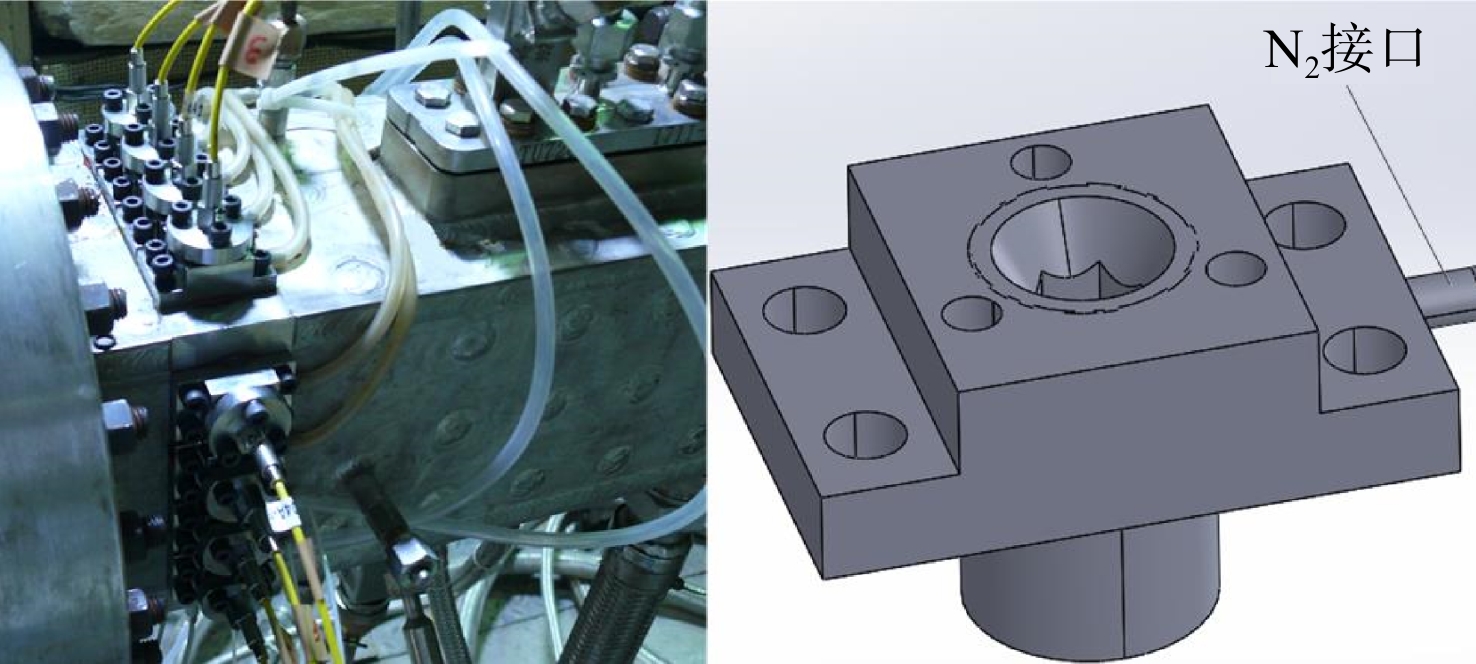
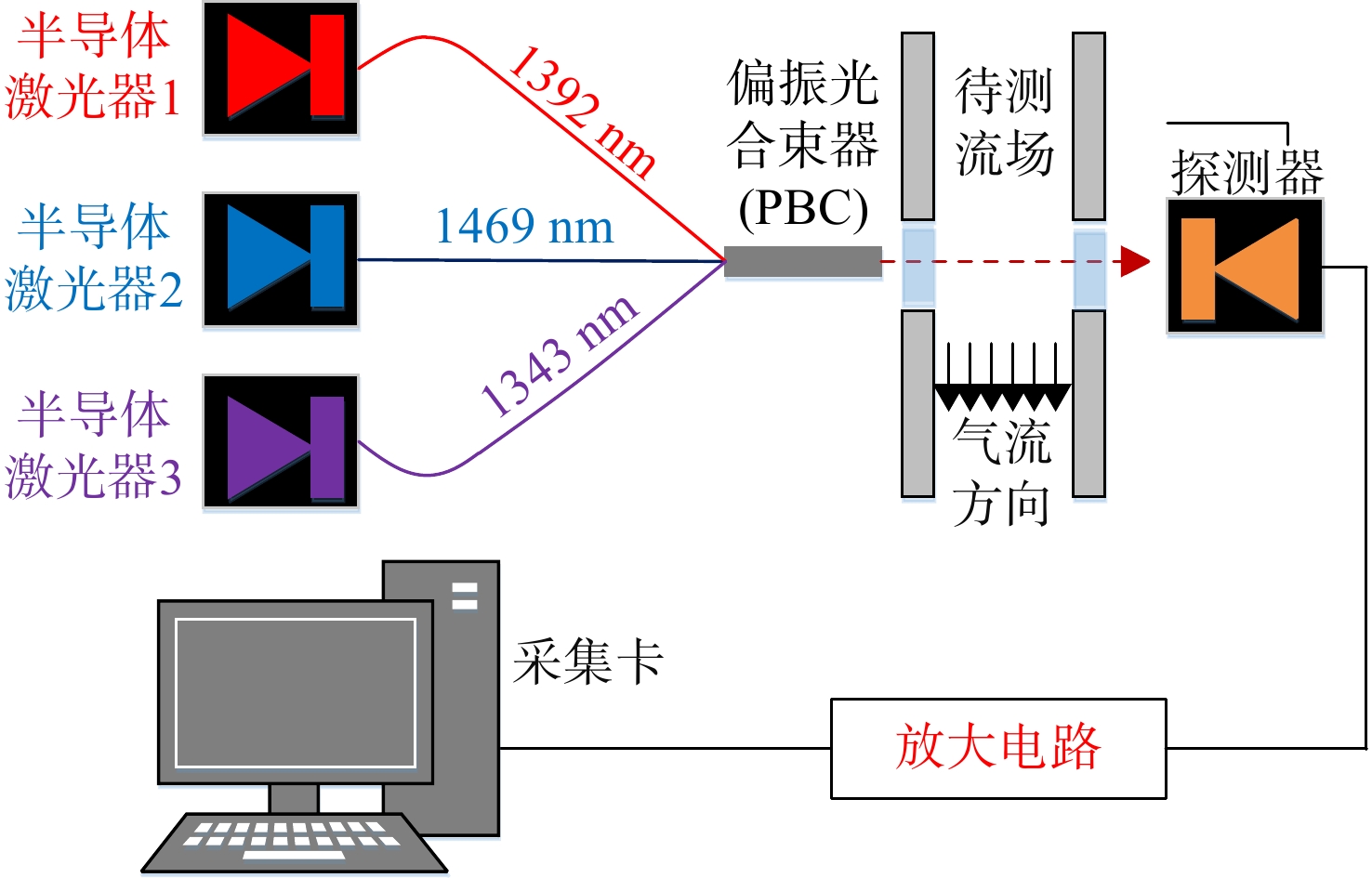
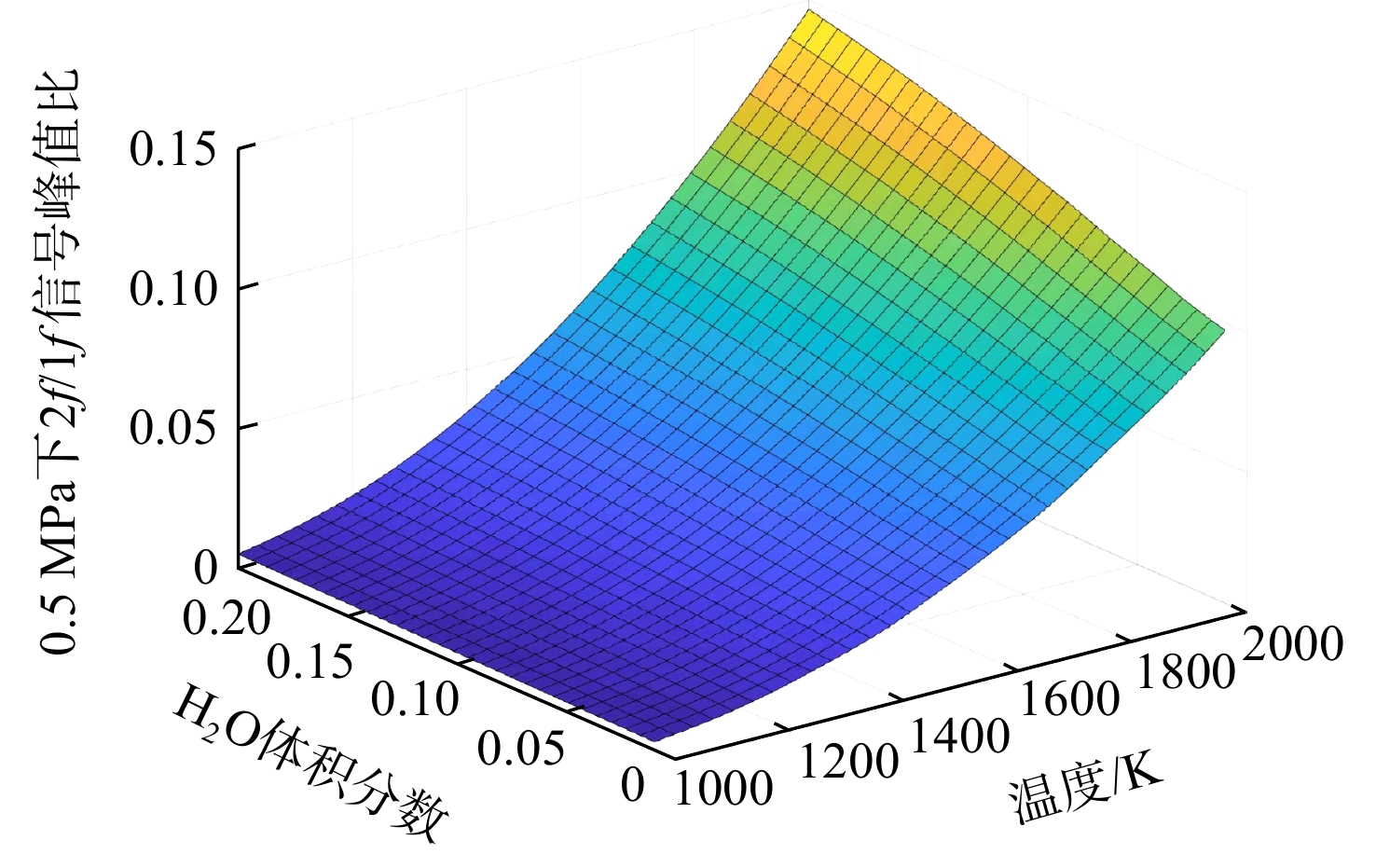
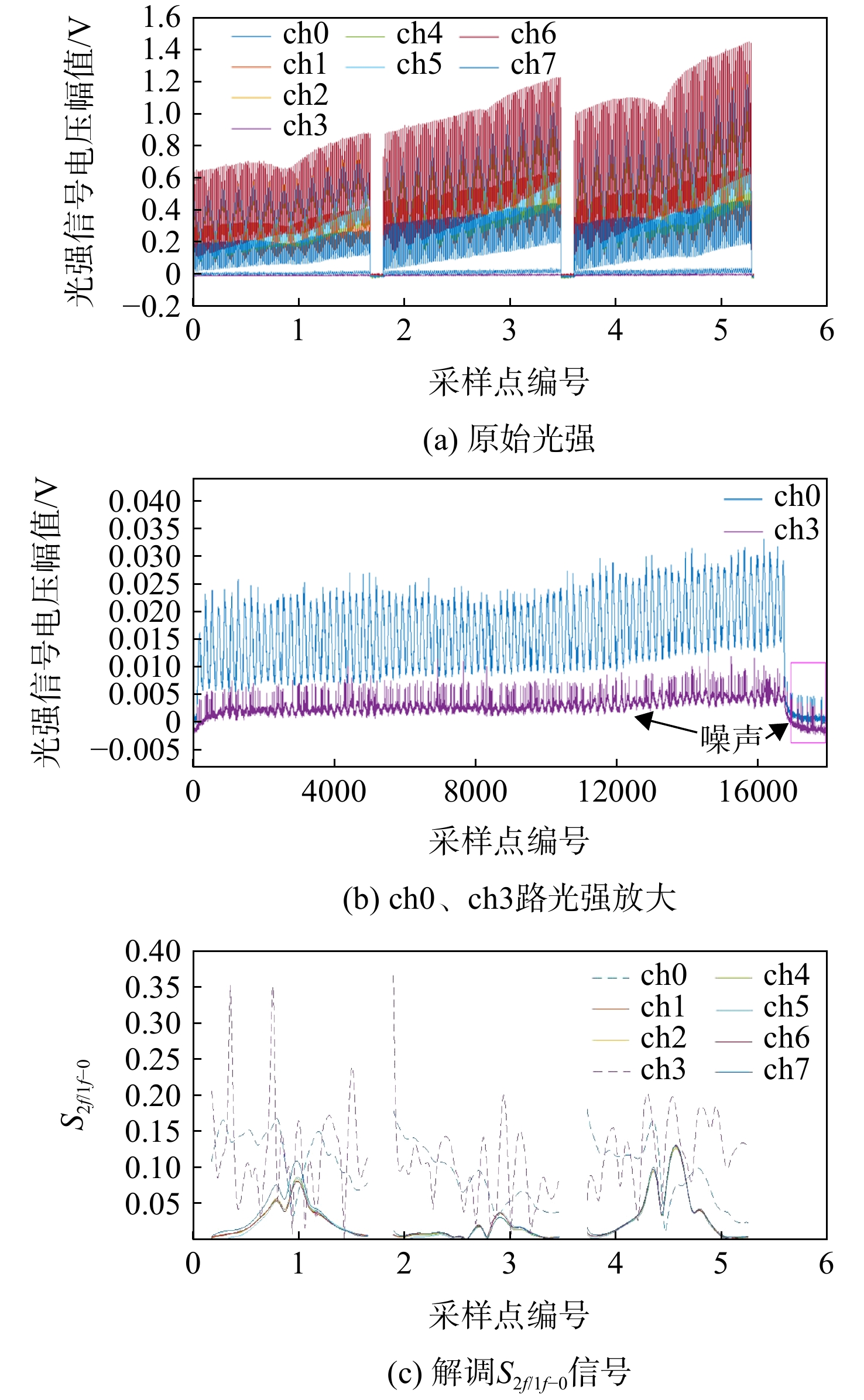
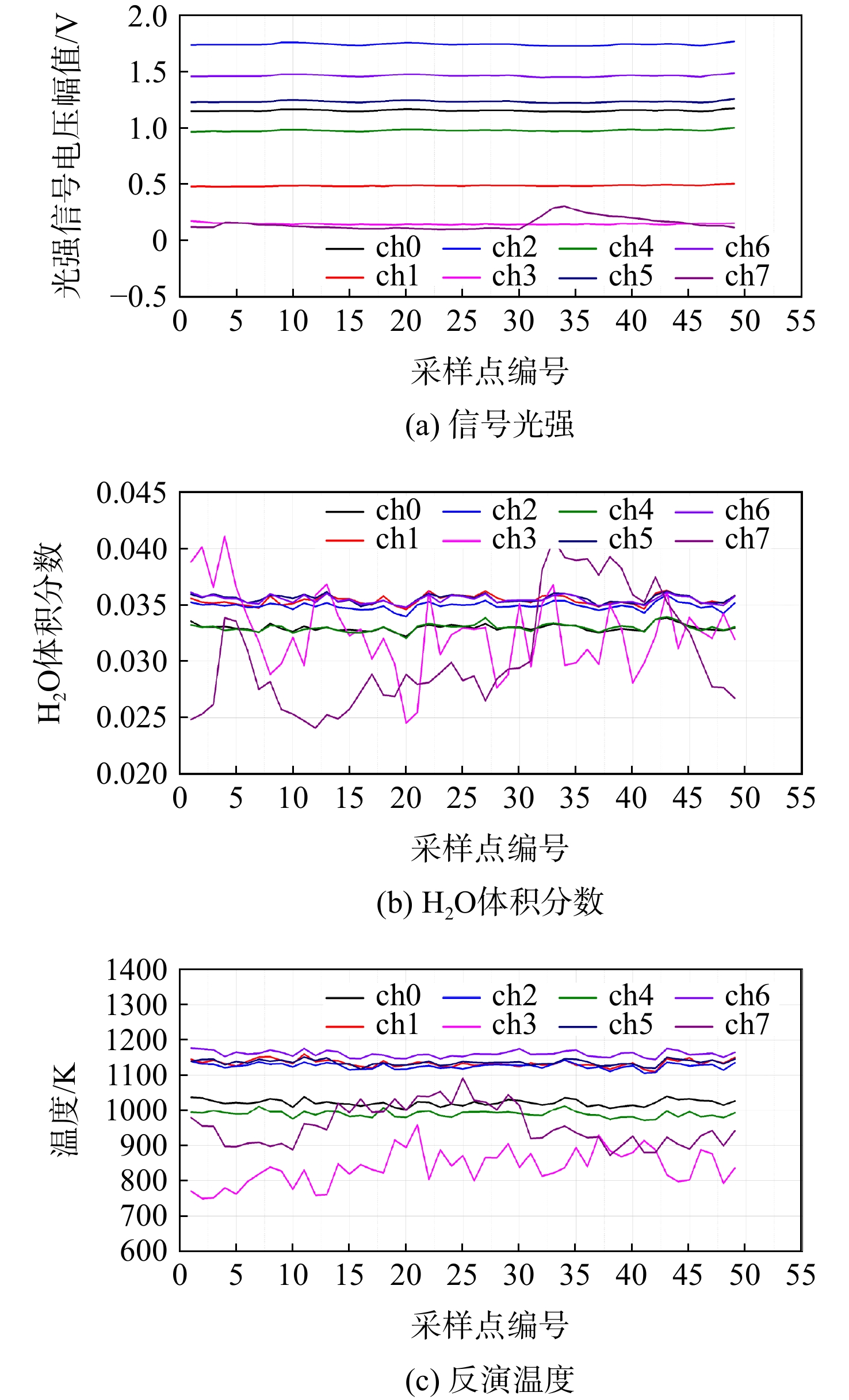
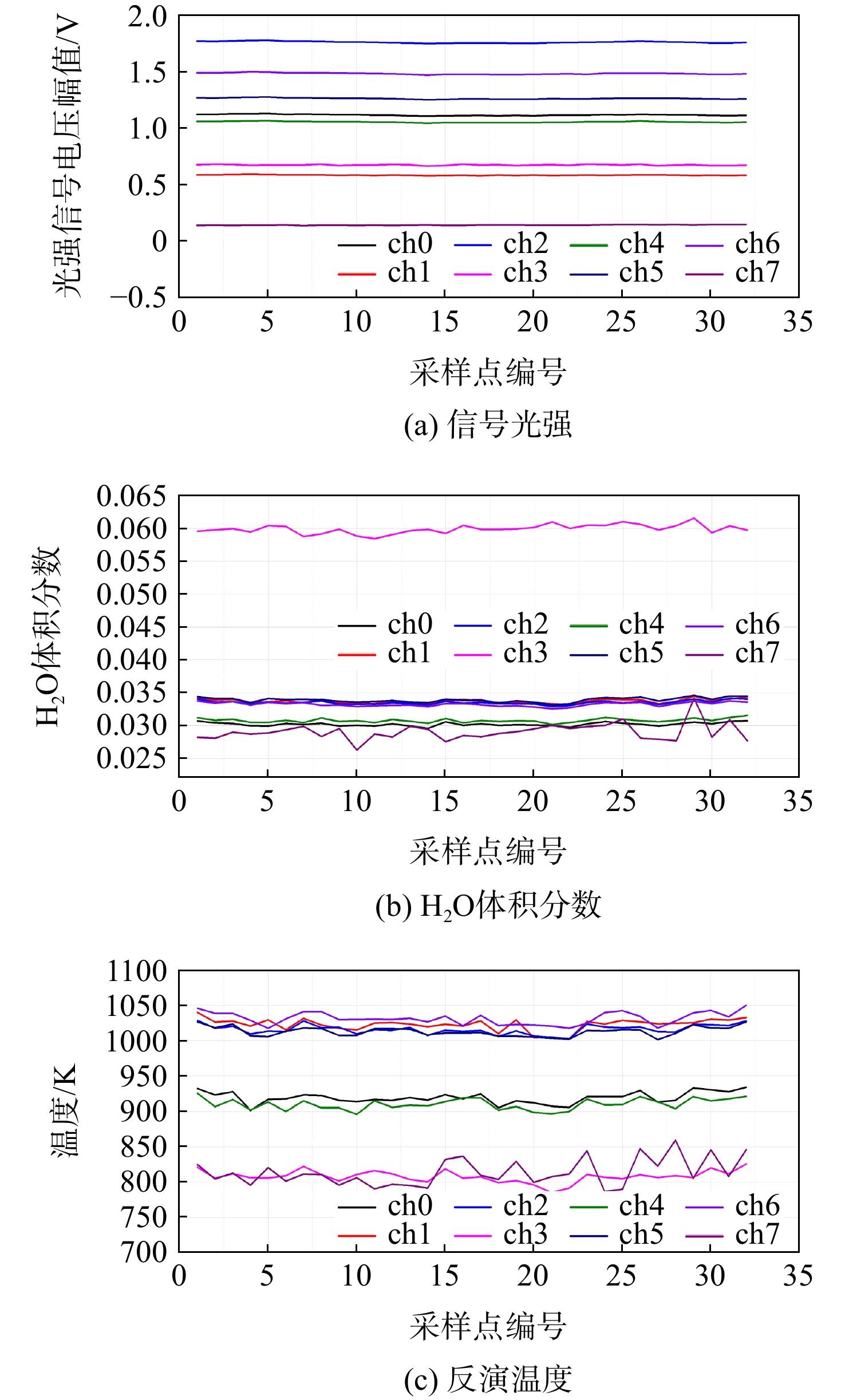
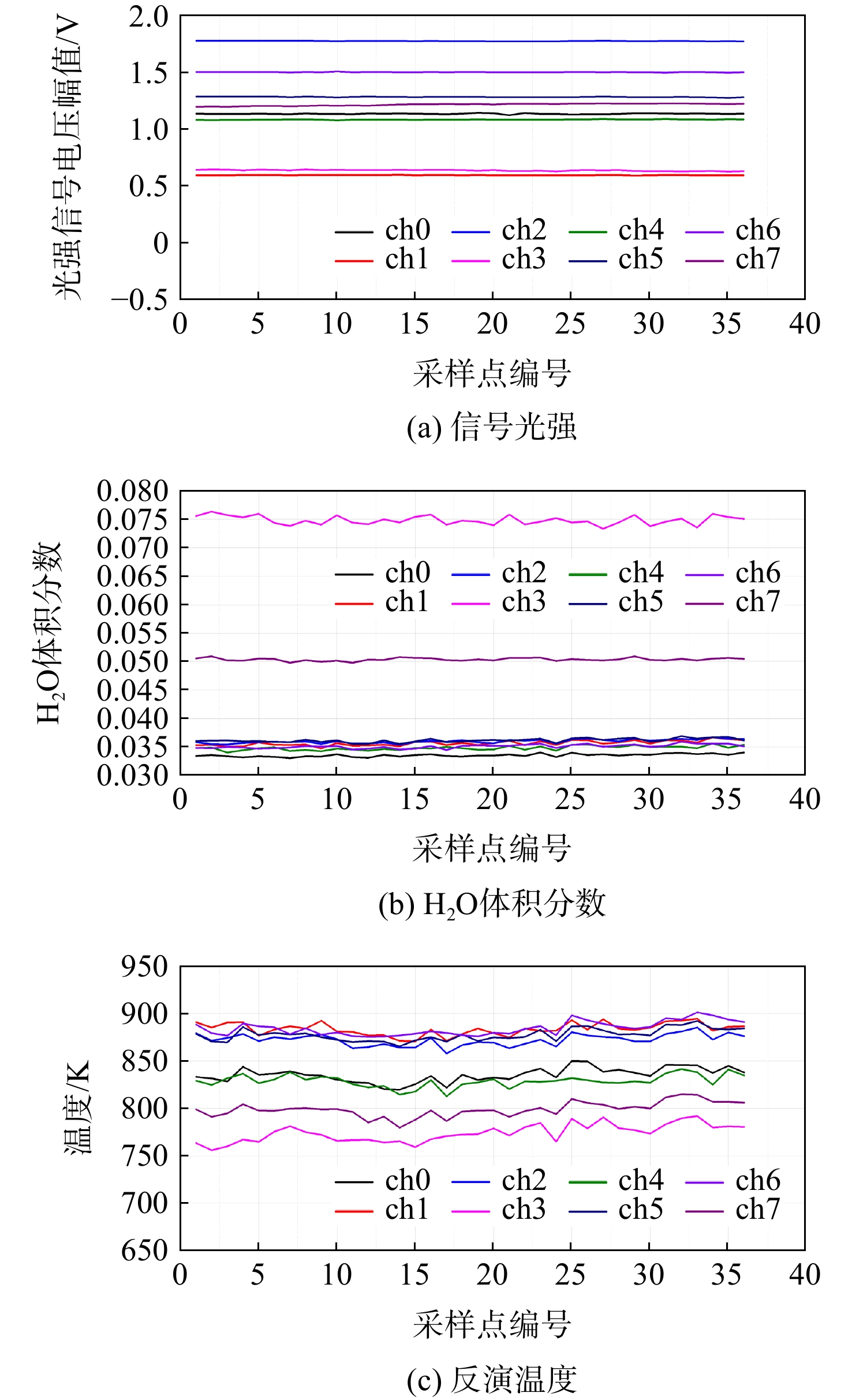
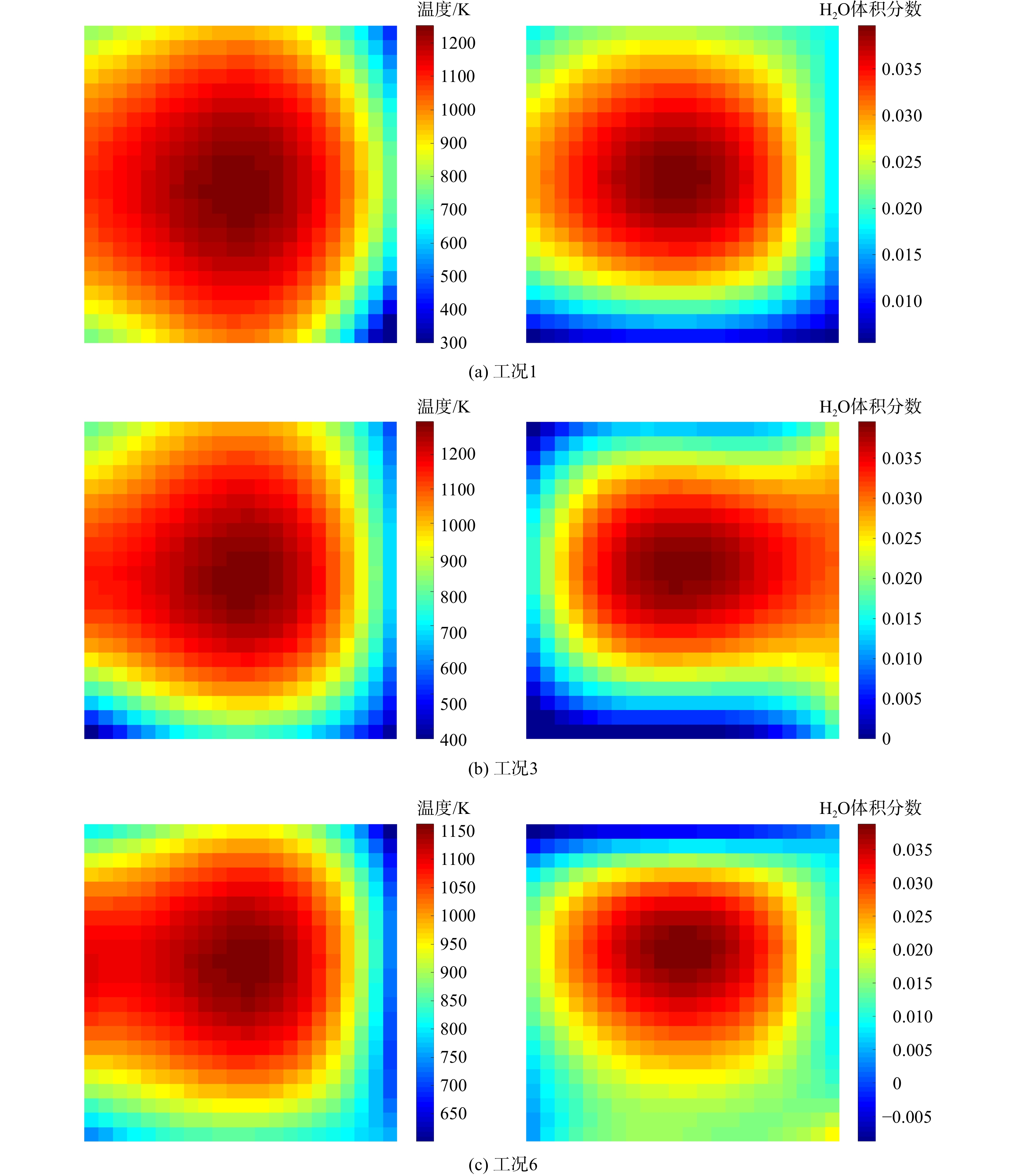
In order to make technical reserves for measurement of combustor outlet temperature profile of high thrust-weight ratio aero-engine in future, the computed tomography technology of tunable diode laser absorption tomography (TDLAT) technology was applied, and the engineering adaptability of measurement method based on wavelength modulation spectroscopy (WMS) technology was studied in a single can combustor under the pressure of 0.5−0.8 MPa condition. The results showed that the measurement of combustor outlet temperature profile could be achieved with time and spatial resolution applying the grid method of orthogonal intersection of multiple light path, using the normalized WMS model whose background was subtracted, the iterative inversion method of variables and the computed tomography (CT) technology; the trends and characteristics of gas temperature and H2O concentration distribution vs. the changes of inlet parameters could be better shown from the reconstruction results; the mean value of TDLAS temperature measurement were lower than that of thermocouple measurement, and the relative error was between 15% and 23%, which was ascribed to the non-uniform flow field, the inaccuracy of spectral model and spectrum parameter calibration, and the imperfections of inversion and reconstruction algorithm, etc, there was still a certain gap between the accuracy of measurement data and the requirements of engineering application.

Aerothermodynamics and Aeroengine Design
Sand ingestion test and performance degradation evaluation of turboshaft engine
LIU Wei, ZHANG Yun
2023, 38(1): 127-133. doi: 10.13224/j.cnki.jasp.20210283
Abstract:

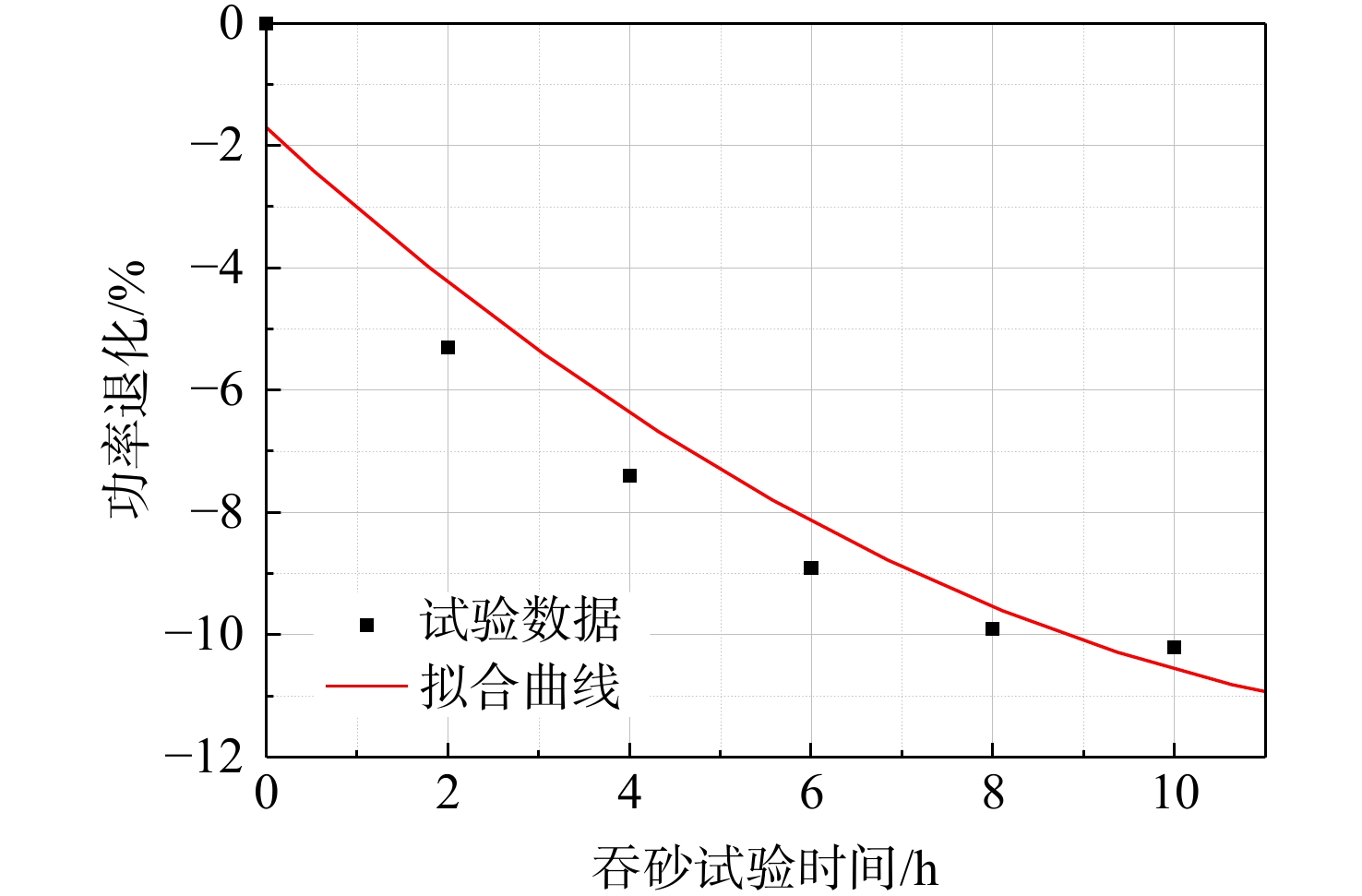
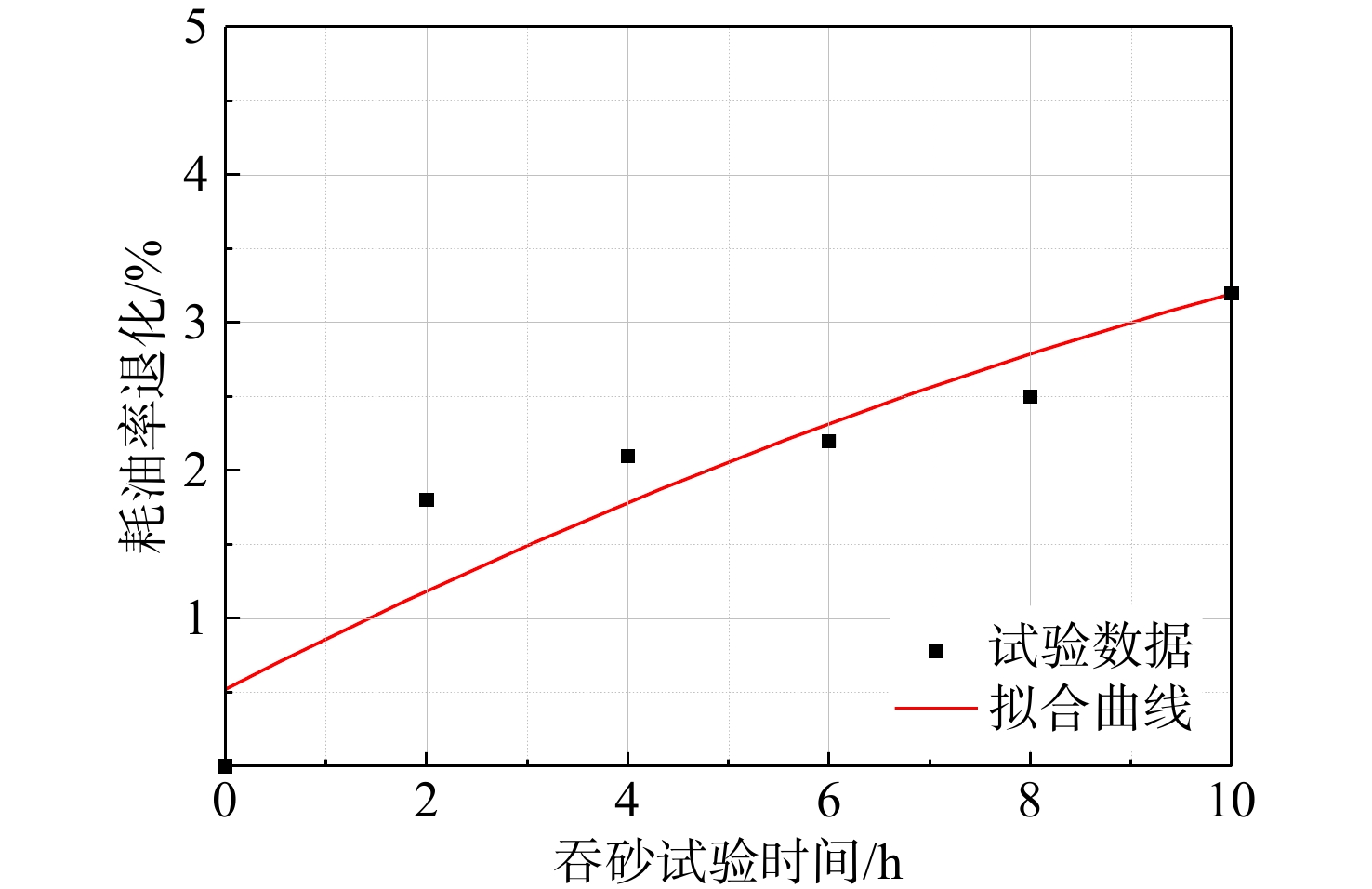
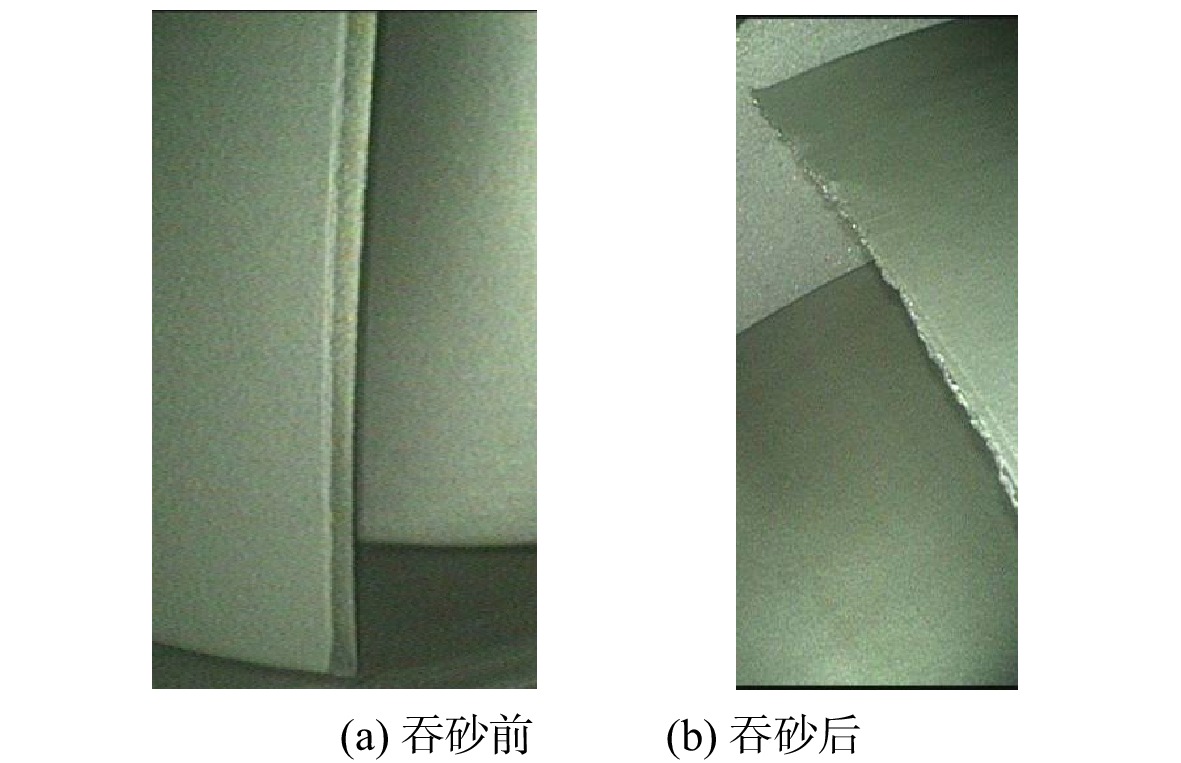
In order to grasp the effect of sand and dust erosion on the turboshaft engine, the differences and applicability of the sand ingestion test terms at home and abroad were analyzed. The sand ingestion test of a turboshaft engine was implemented and investigated. A rapid test data evaluation model of turboshaft engine was established based on the aero-thermodynamic equations and engine matching constraint. The method was used to evaluate the performance degradation of overall unit and components, which was validated using data from other references. The results indicated that the power and fuel consumption rate degradation presented a quadratic function law. The output power degradation was 10.2% and specific fuel consumption degradation was 3.2% after 10 h of sand ingestion. The chord length of the compressor first stage blade became shorter by 0.7%−3.4% and the thickness was reduced by 1.0%−3.0%, which resulted in the compressor flow rate decrease by 4.1%, the efficiency decrease by 3.1% and the pressure ratio decrease by 4.5%. The turbine cooling hole had slight blockage and ablation, the cooling air volume was reduced by 1.5%, and the gas turbine efficiency was reduced by 0.5%. The power turbine efficiency had a slight improvement due to blade smoothness.

Numerical simulation of gas flow field in supersonic swirler
LIU Yi, DING Chang, SUN Wanlin, JIANG Kejian, HUANG Yanli
2023, 38(1): 134-143. doi: 10.13224/j.cnki.jasp.20210434
Abstract:

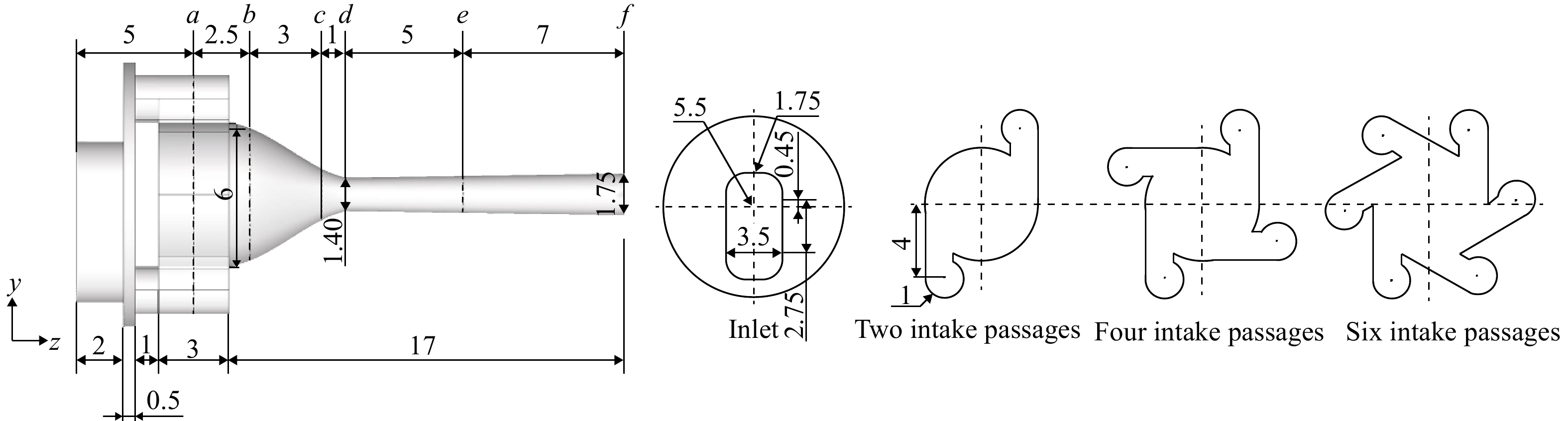
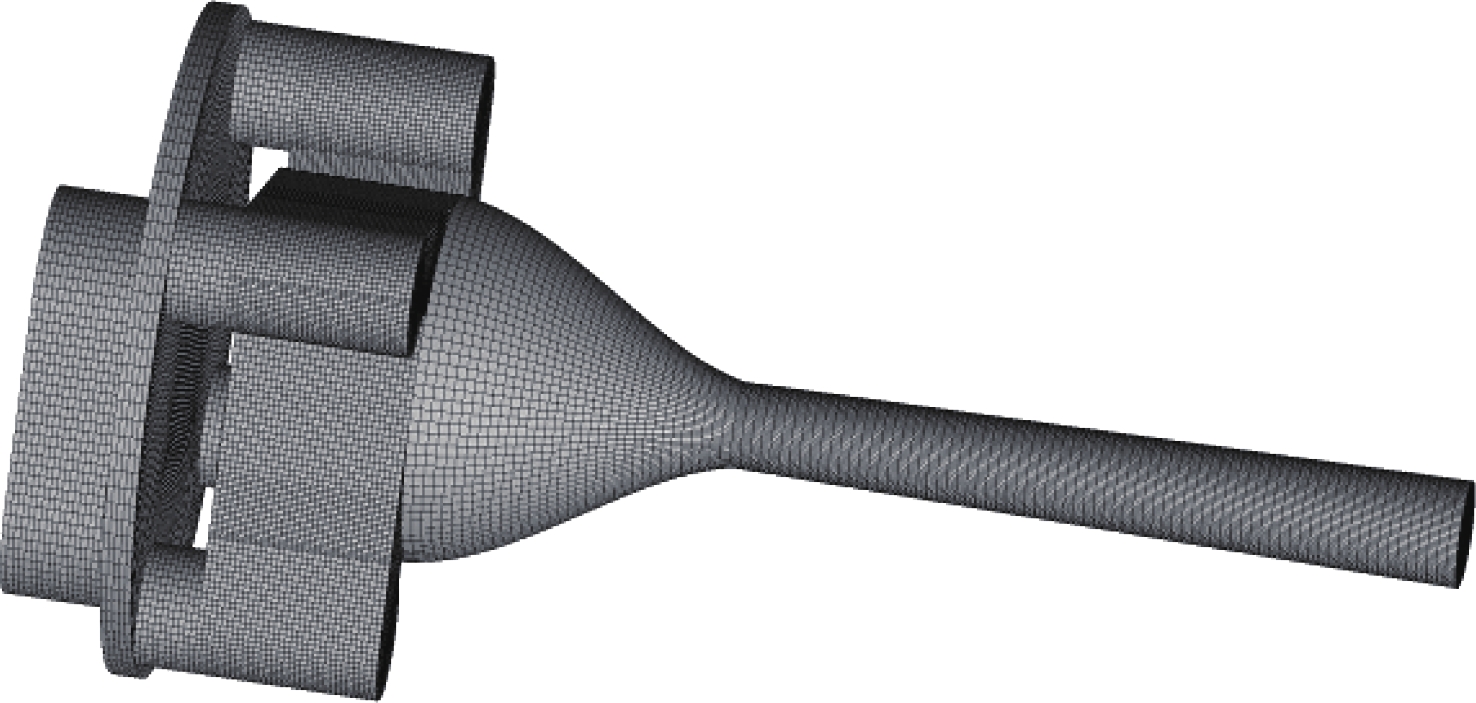
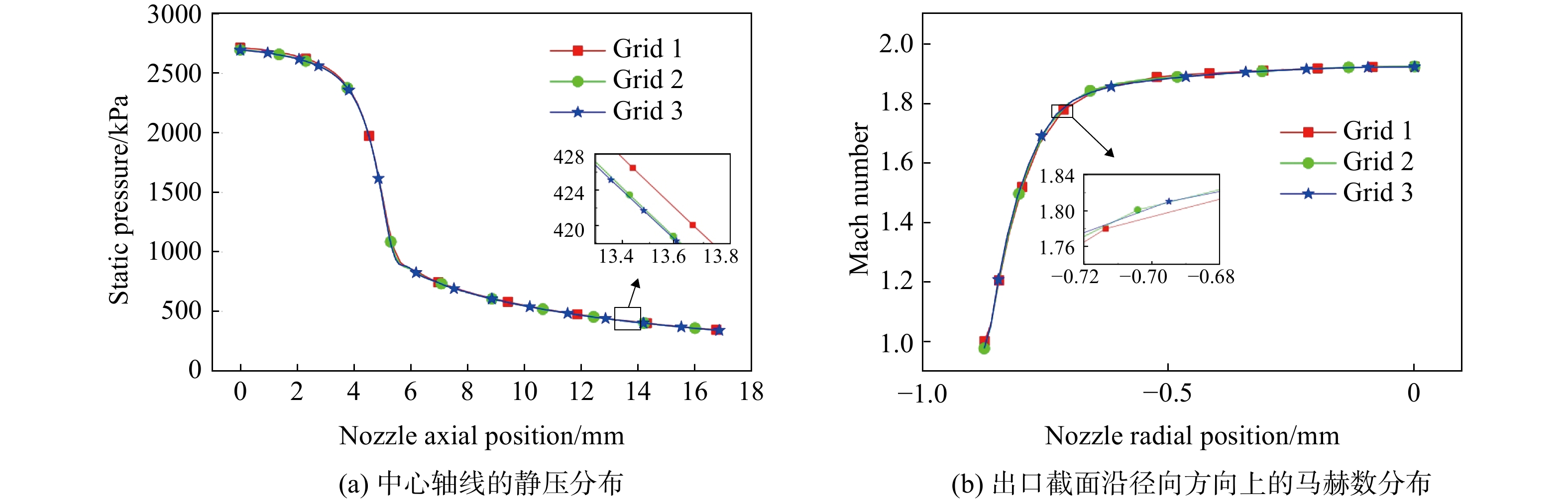
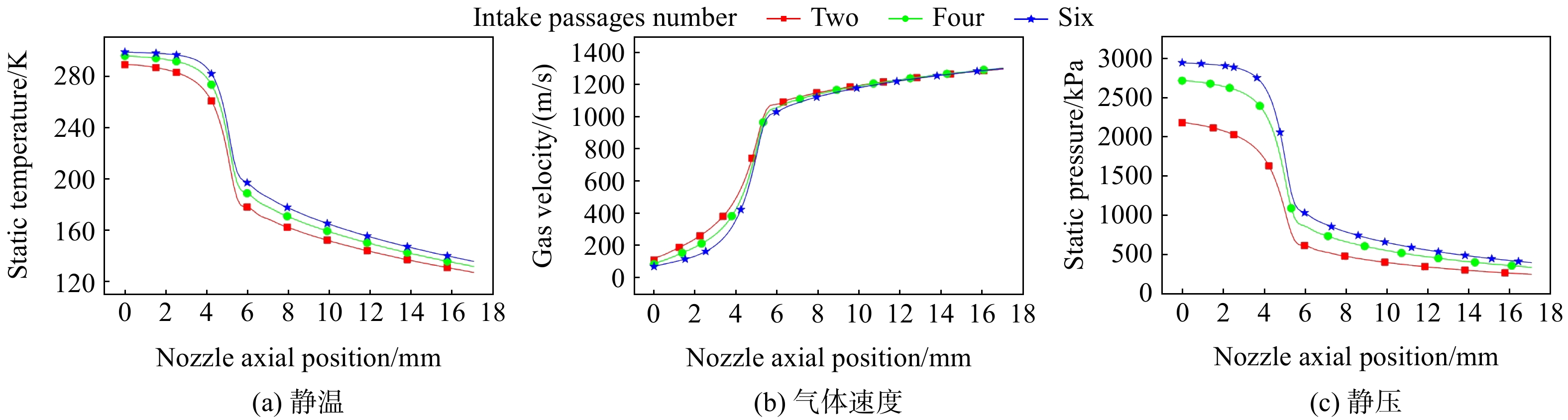
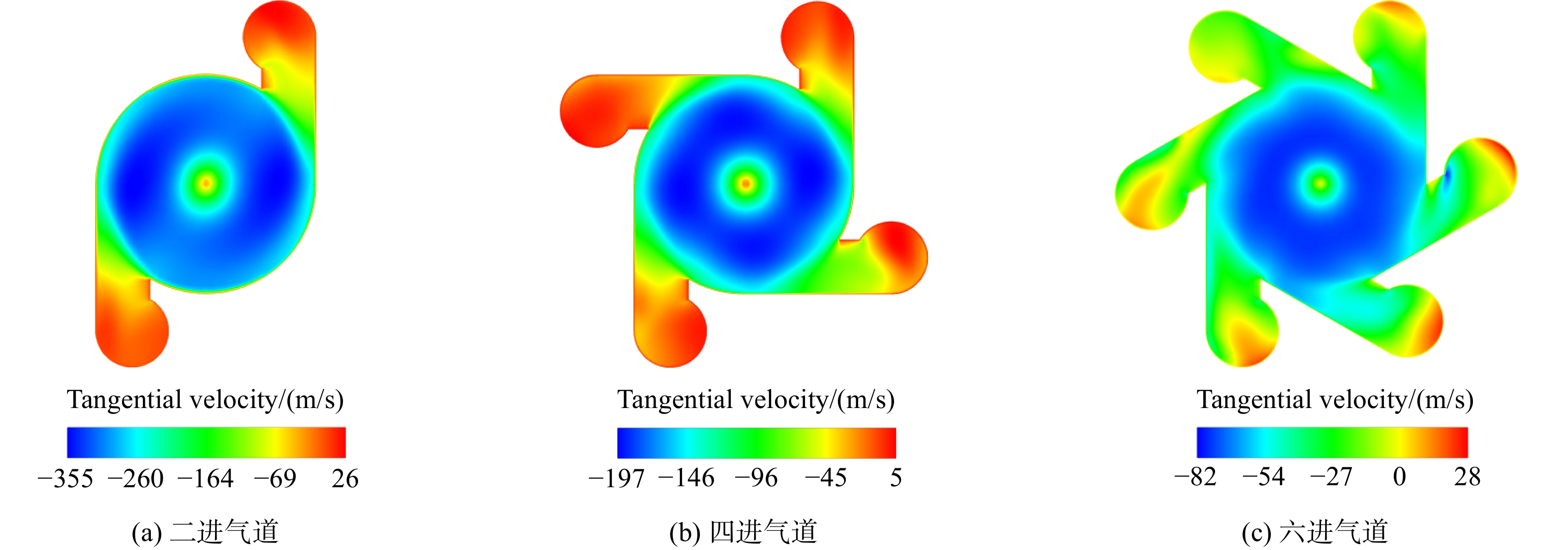
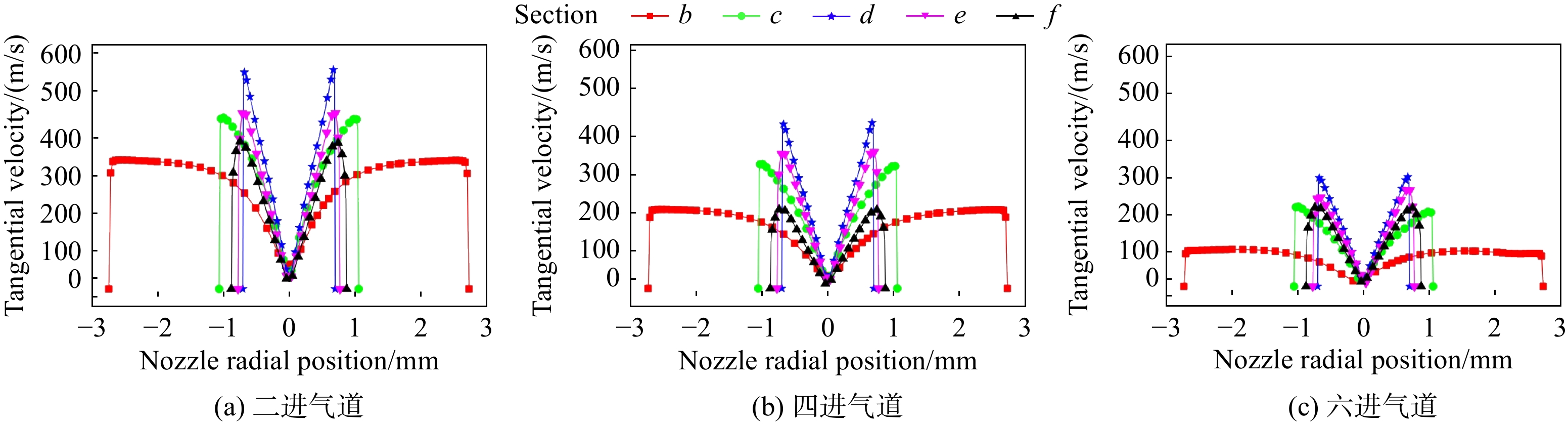
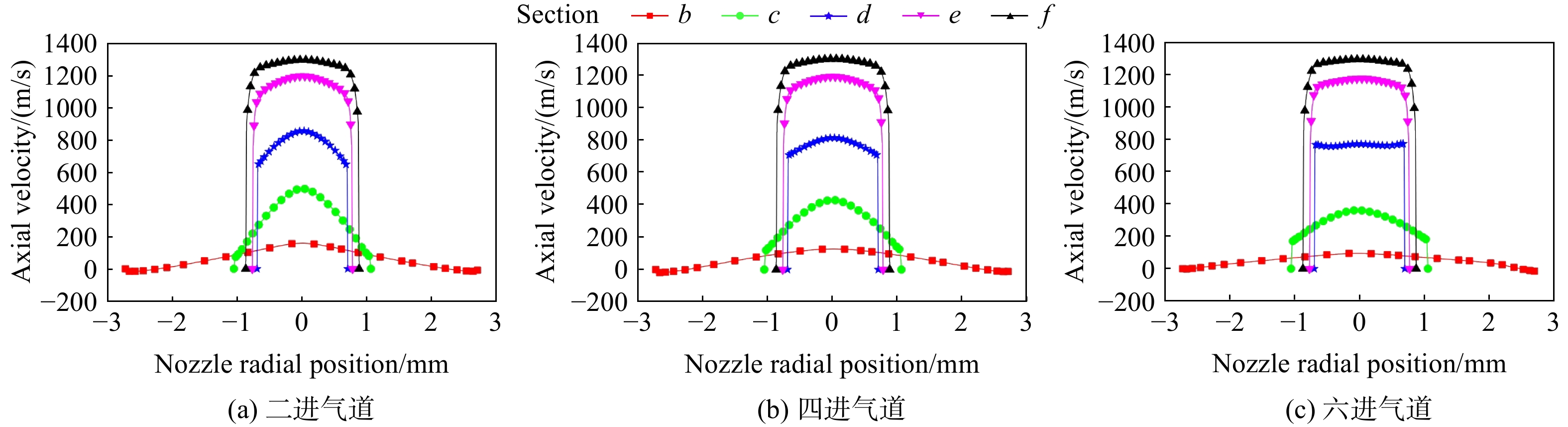
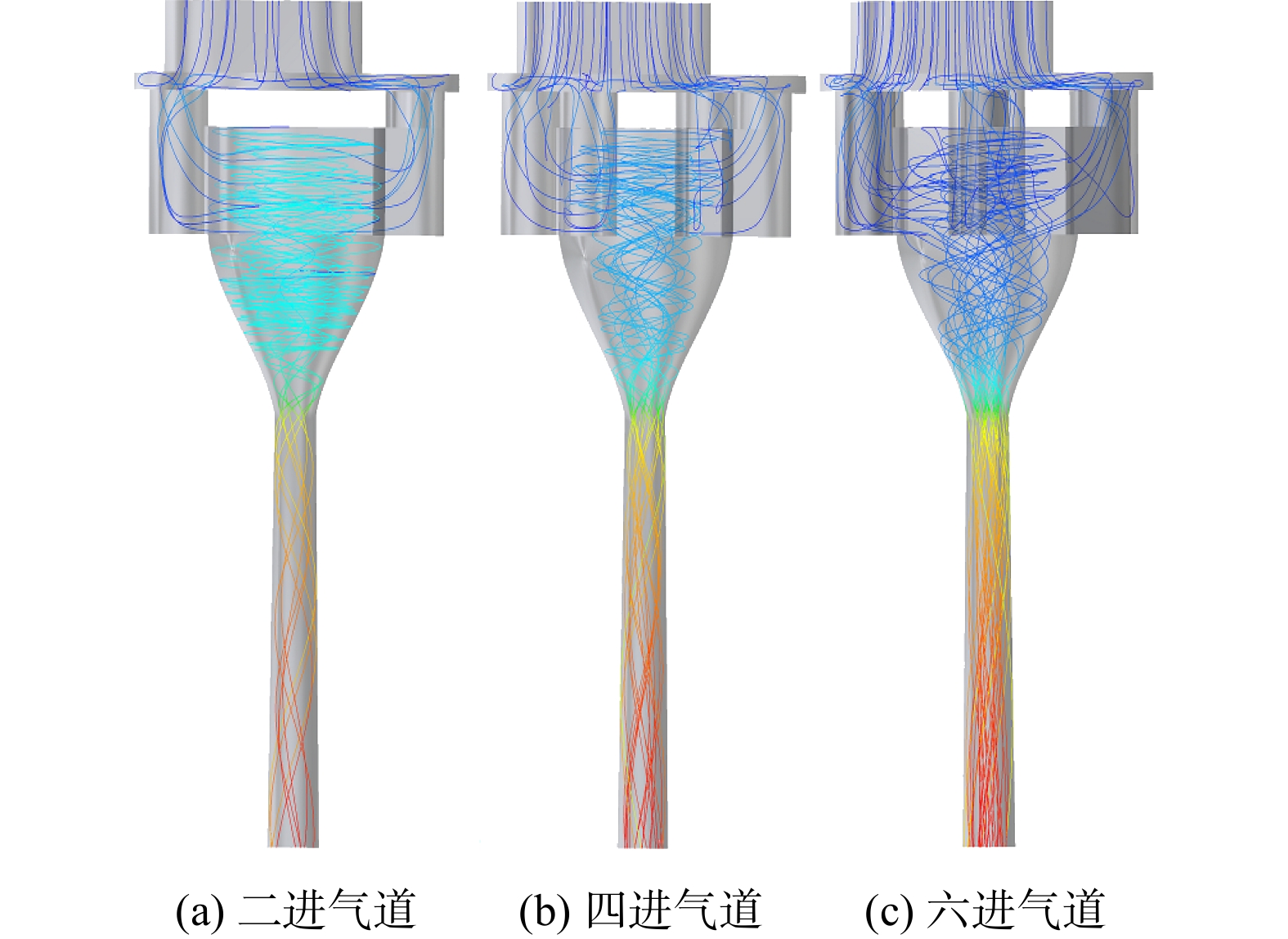
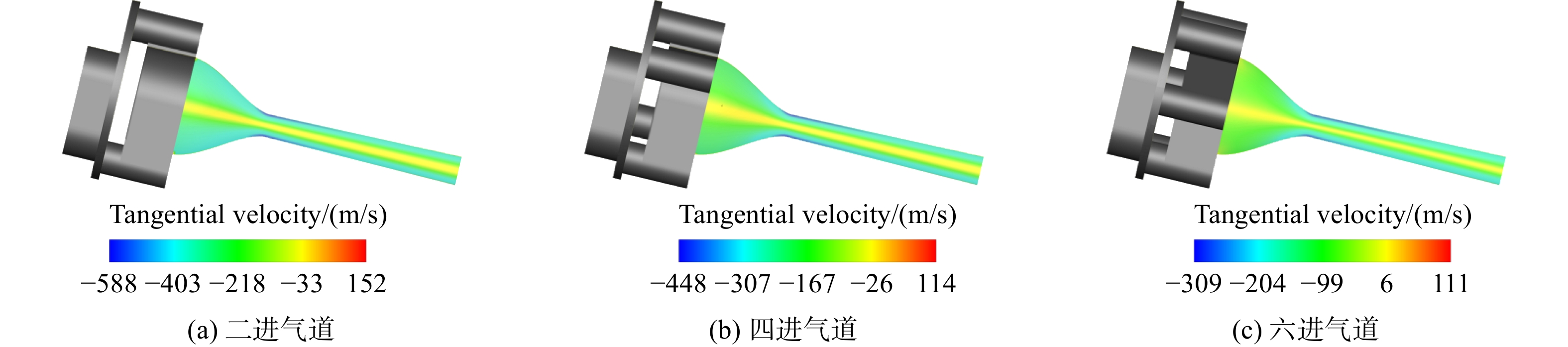
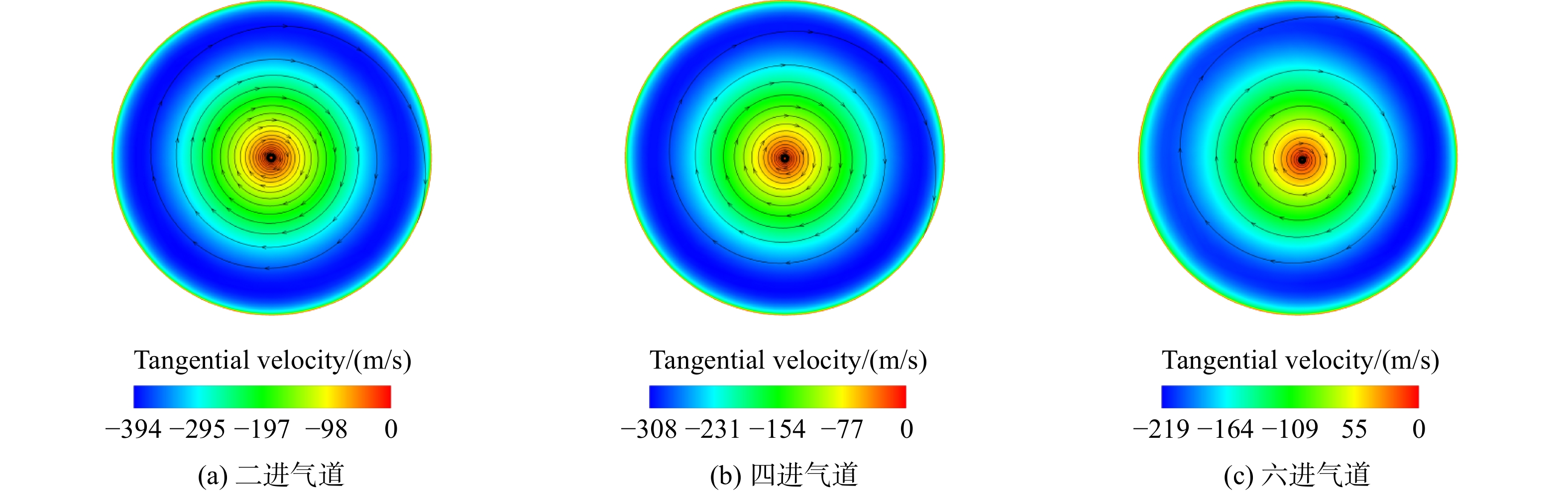
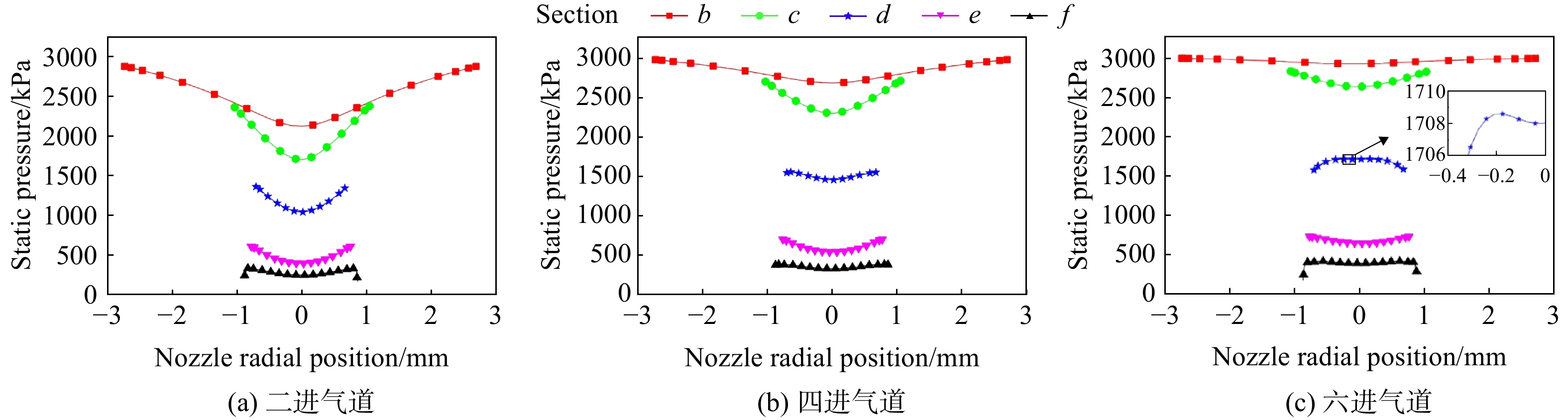
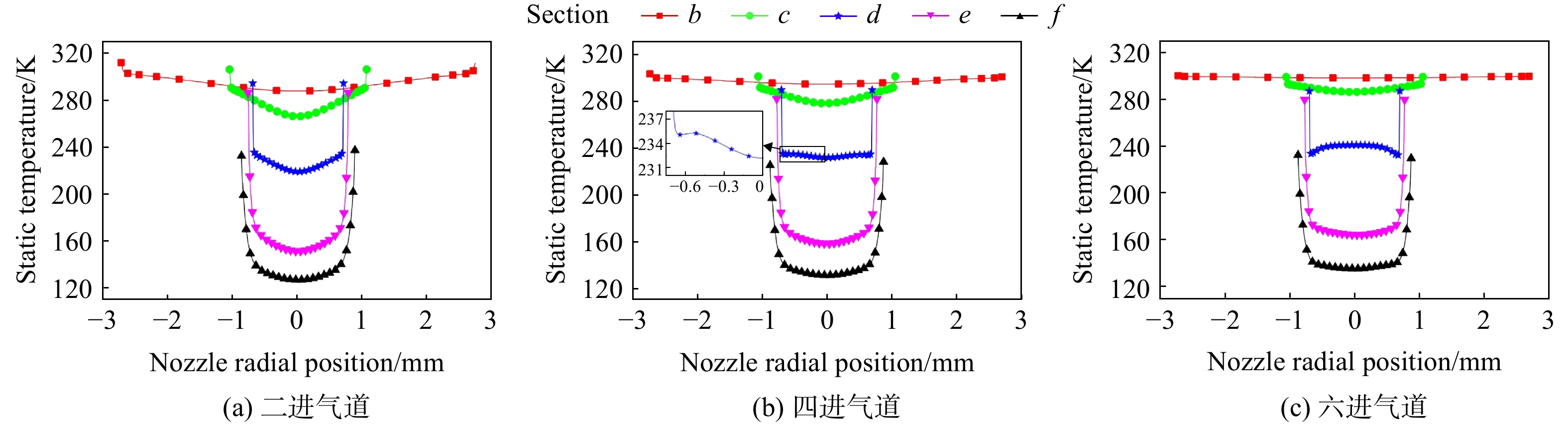
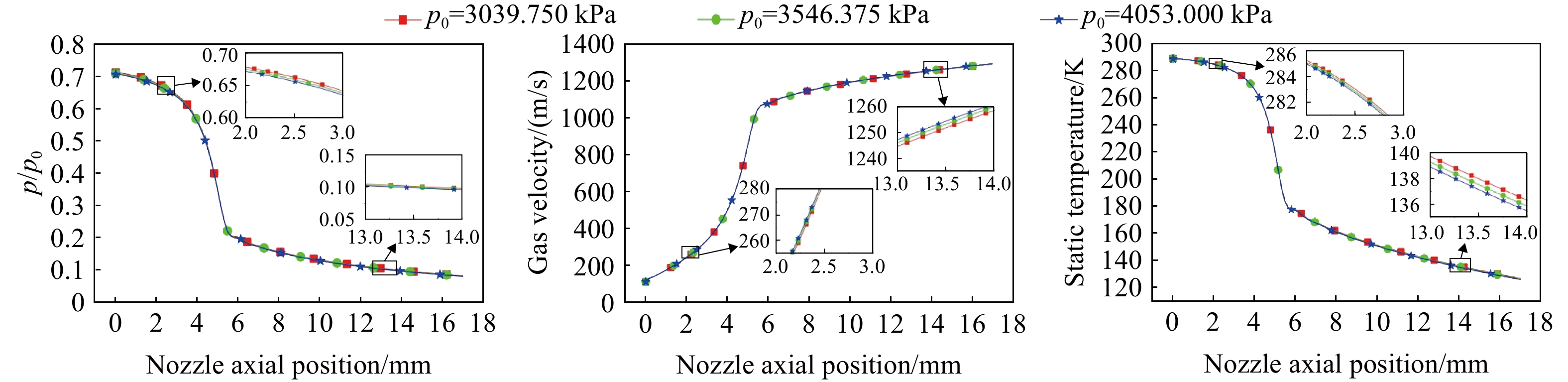
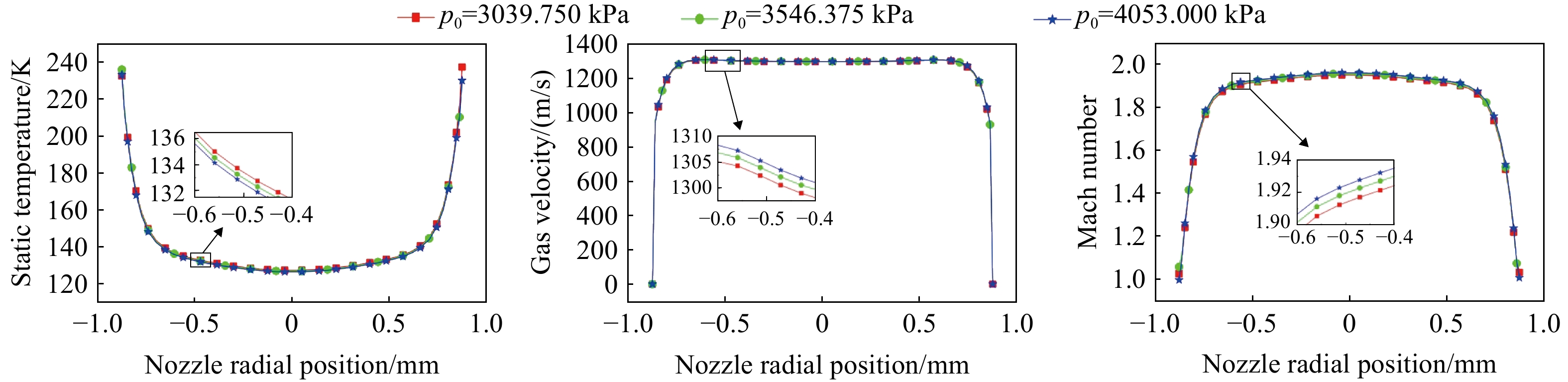
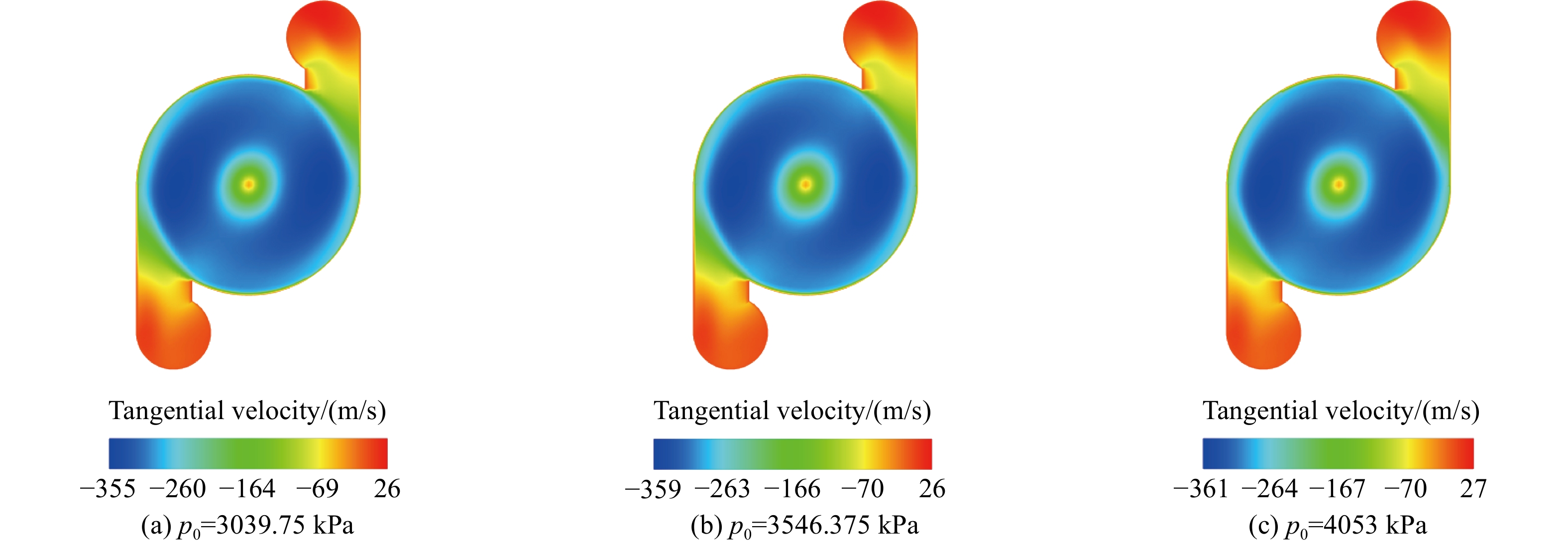
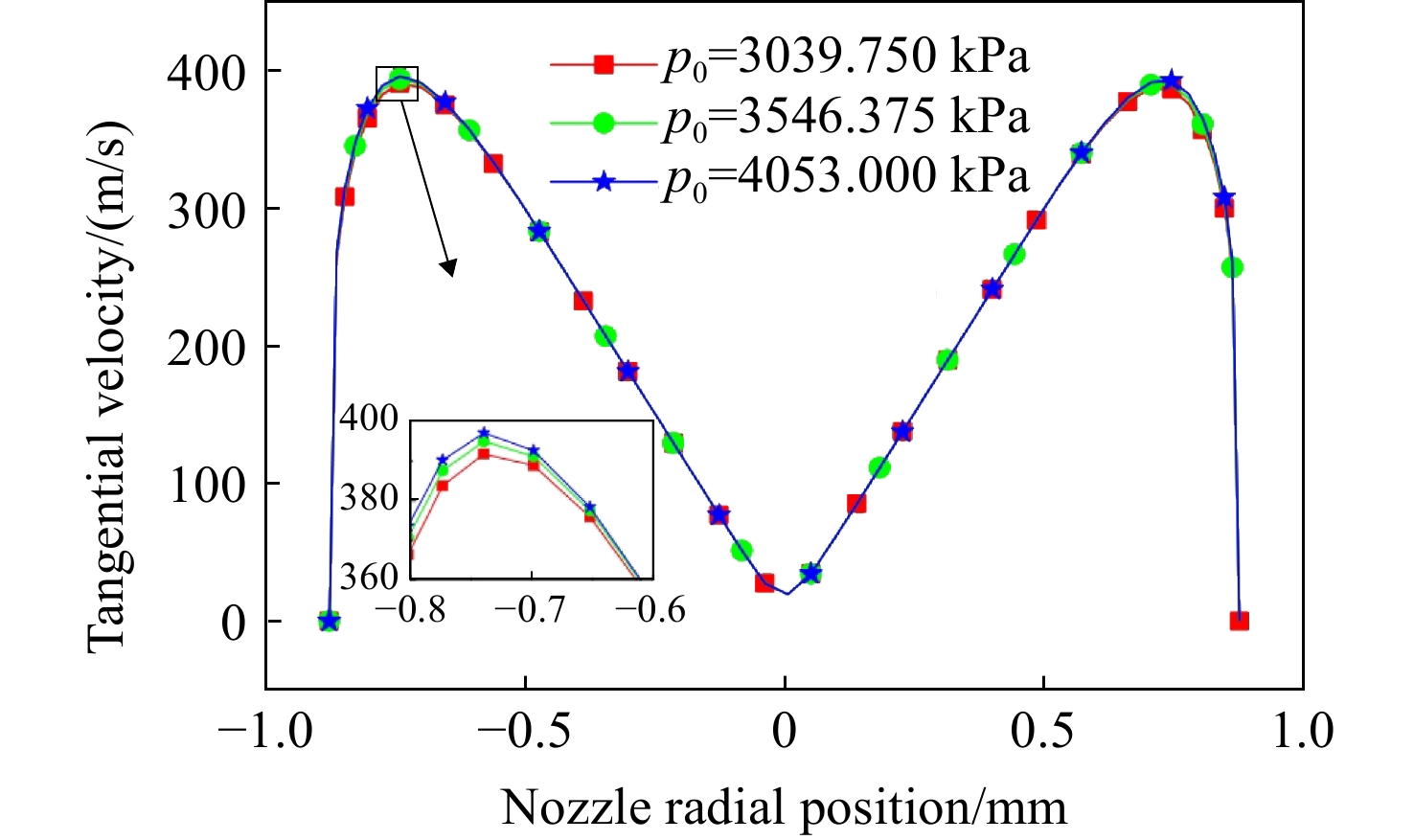
To interrogate the effects of the swirling inlet on the supersonic nozzle flow and its characteristics, a set of front-mounted supersonic swirlers were designed on the basis of the existing swirler by simplifying the model. A three-dimensional geometric model of the swirler was established and integrated with a supersonic nozzle. The flow field of the whole system was then numerically simulated by using a computational fluid dynamics (CFD) software Fluent, and the realizable k-ε turbulence model. It was shown that when keeping the inlet total pressure constant, the maximum tangential velocity rate of the flow generated in the swirler increased with the decrease of intake passages. However, the nozzle flow clearly exhibited the characteristic of spiral vortexes. As the angular momentum decreased at the expense of the axial momentum, the increase of the tangential velocity led to the decrease of the averaged axial velocity at the nozzle exit plane. It was also discovered that when the inlet total pressure increased, the distribution of gas velocity and temperature in the converging section was close. Meanwhile, the gas velocity and Mach number increased as the static temperature decreased along the nozzle diverging section. In addition, the tangential velocity displayed almost an identical distribution across the radial direction at the nozzle exit plane.

Force measurement method and calibration technology of aeroengine whole thrust test bed
DING Xu, FENG Chuanqi, XUE Wenpeng, SONG Jiangtao
2023, 38(1): 144-150. doi: 10.13224/j.cnki.jasp.20210362
Abstract:

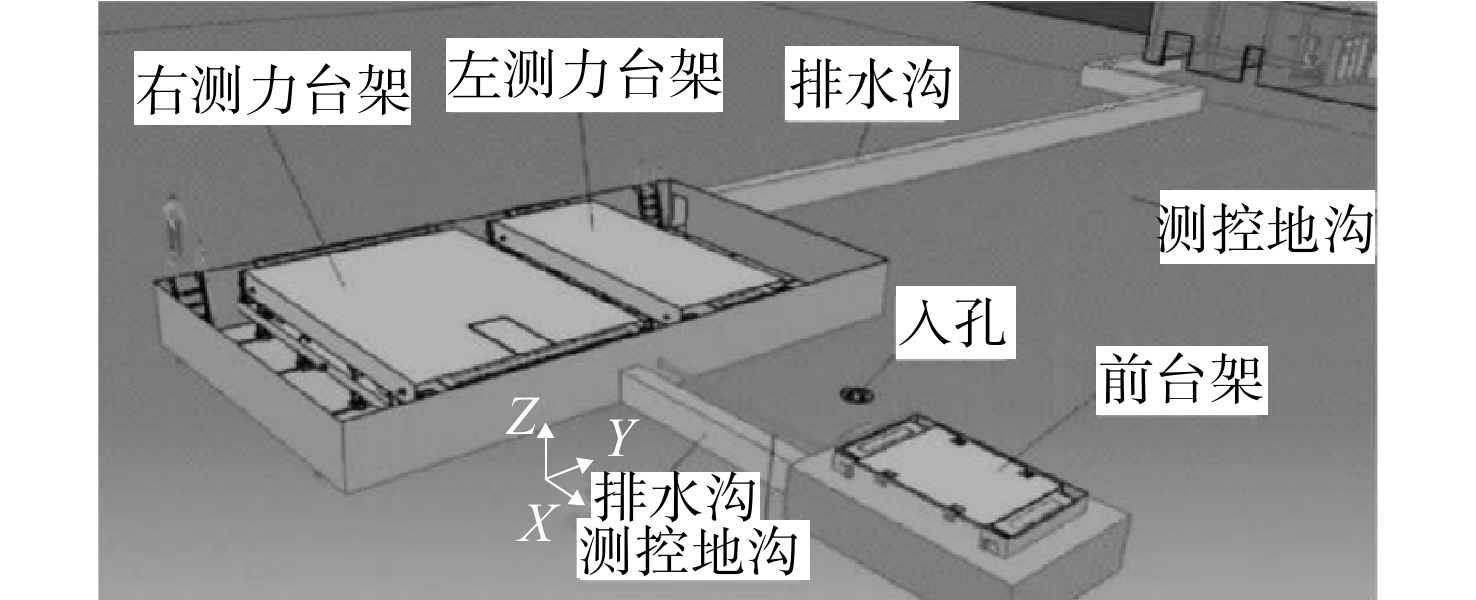
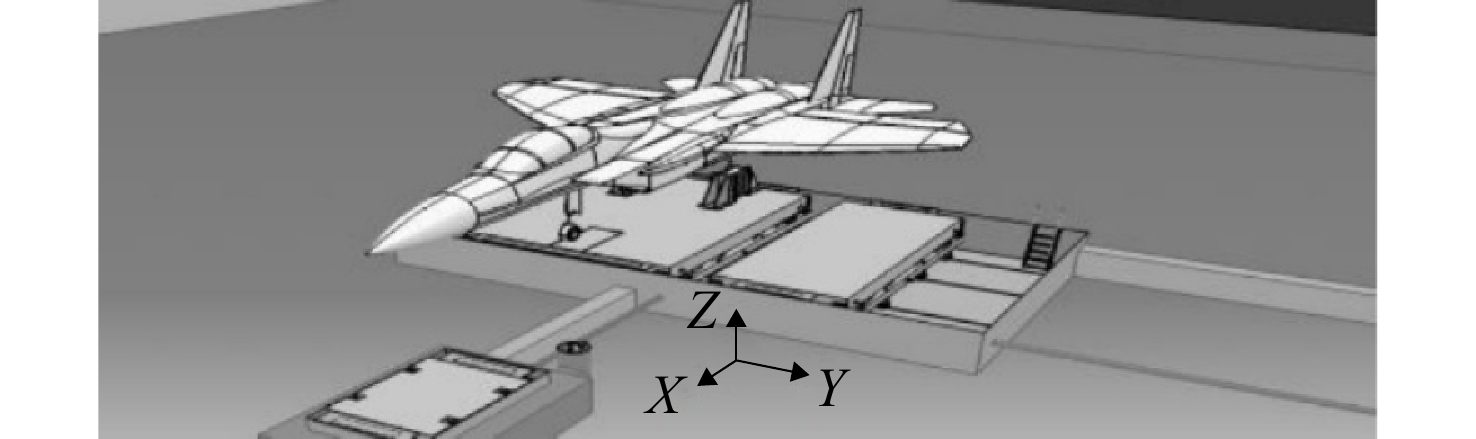
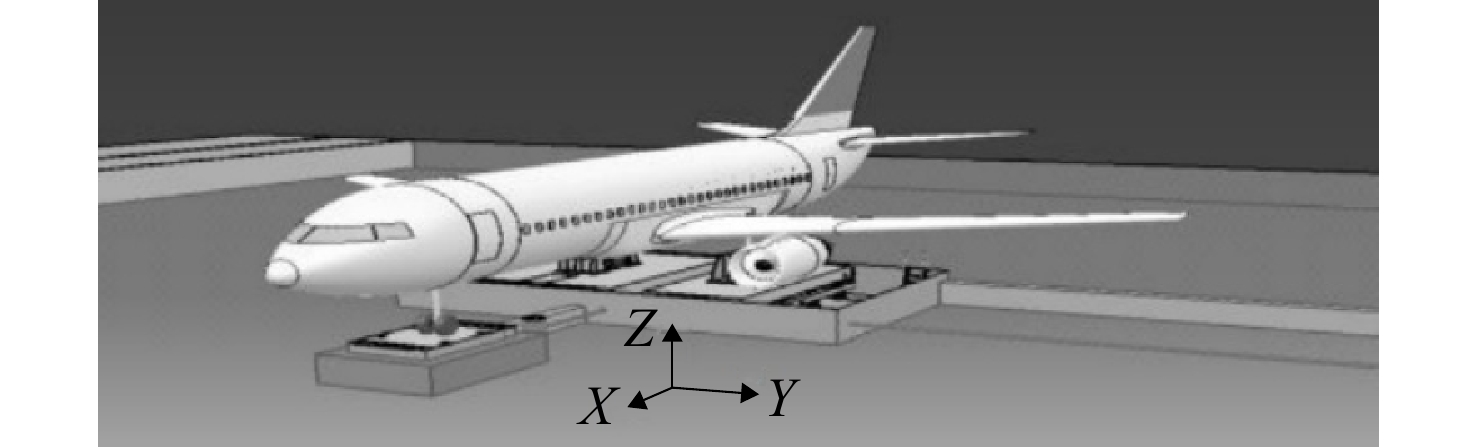
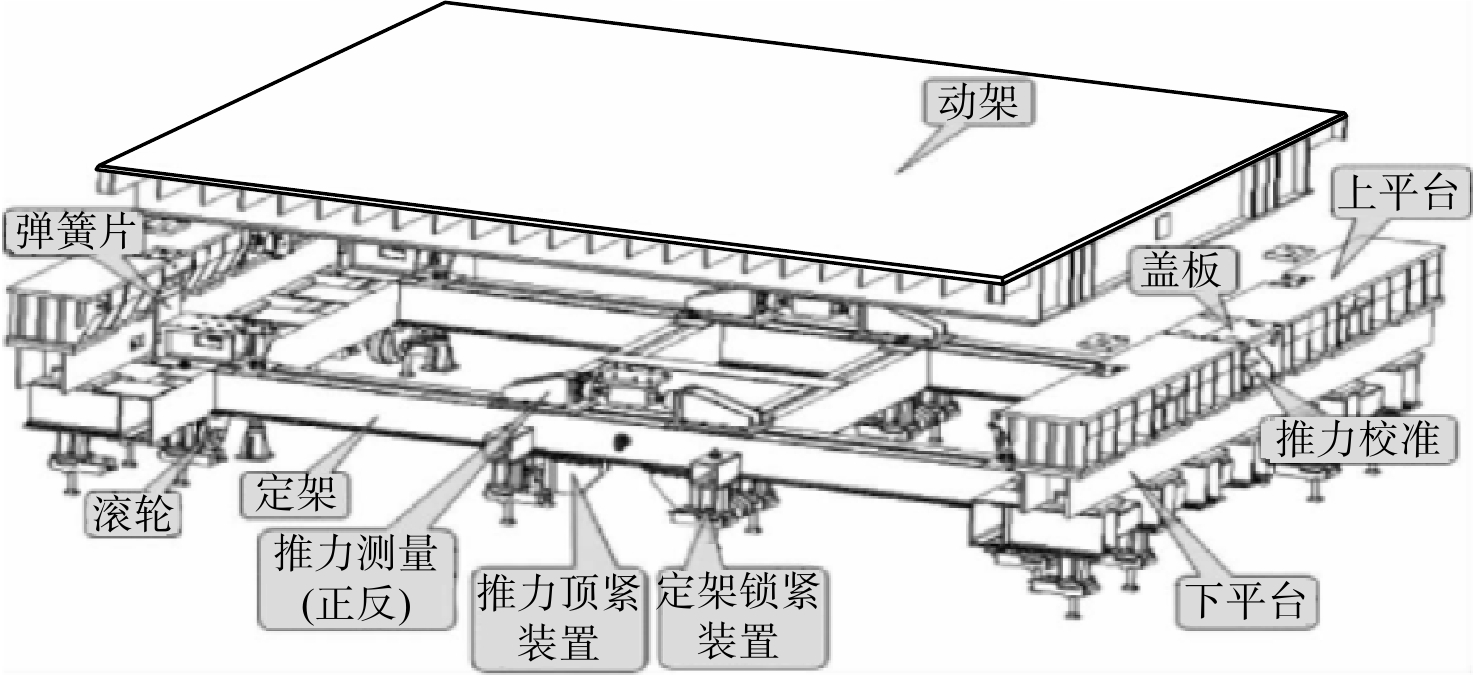
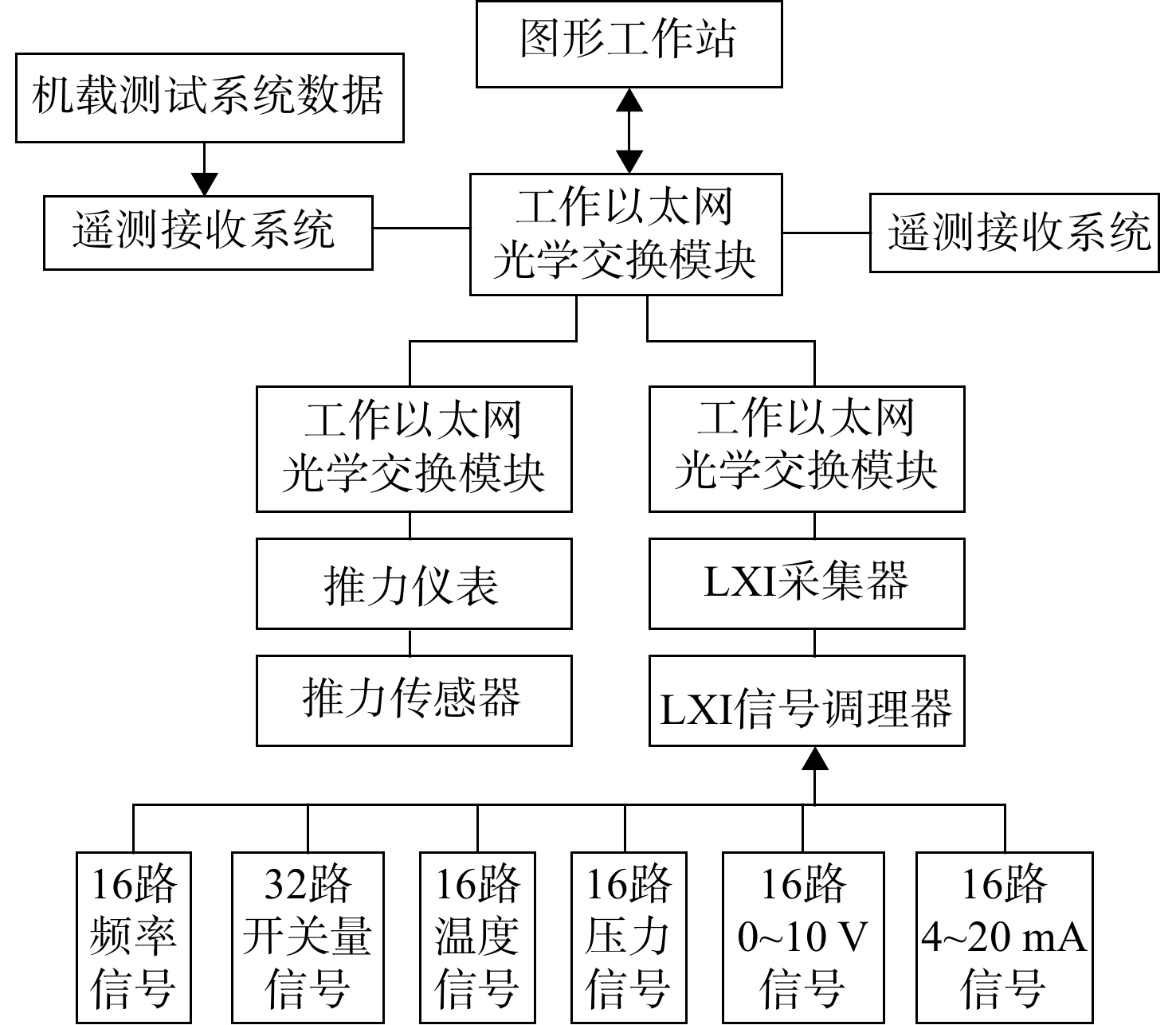
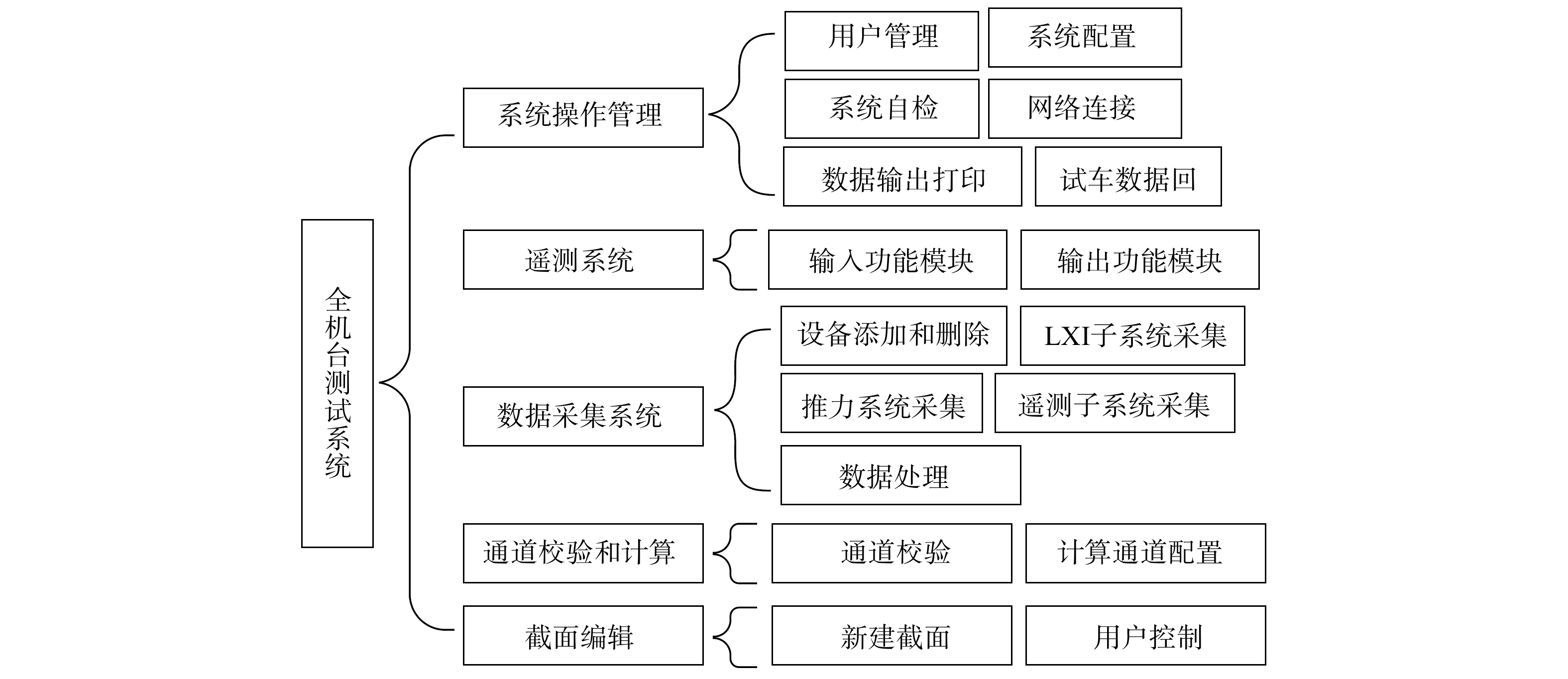
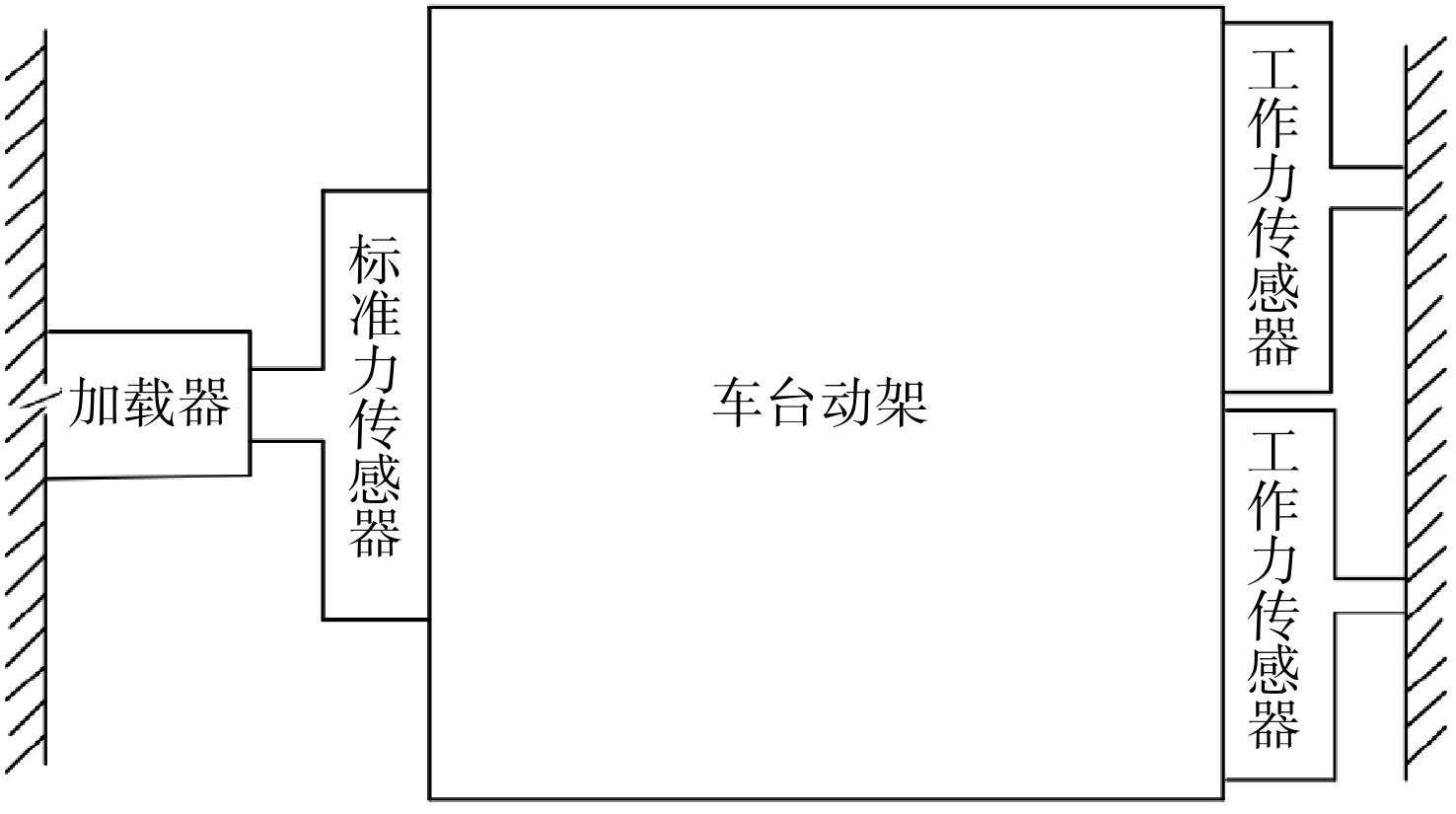
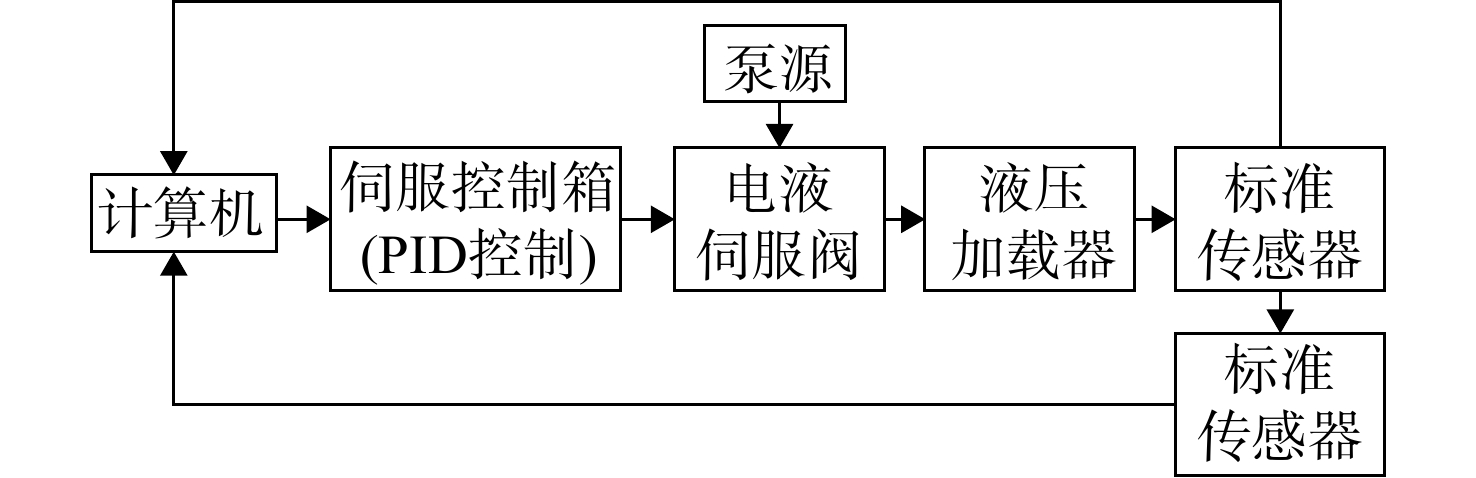
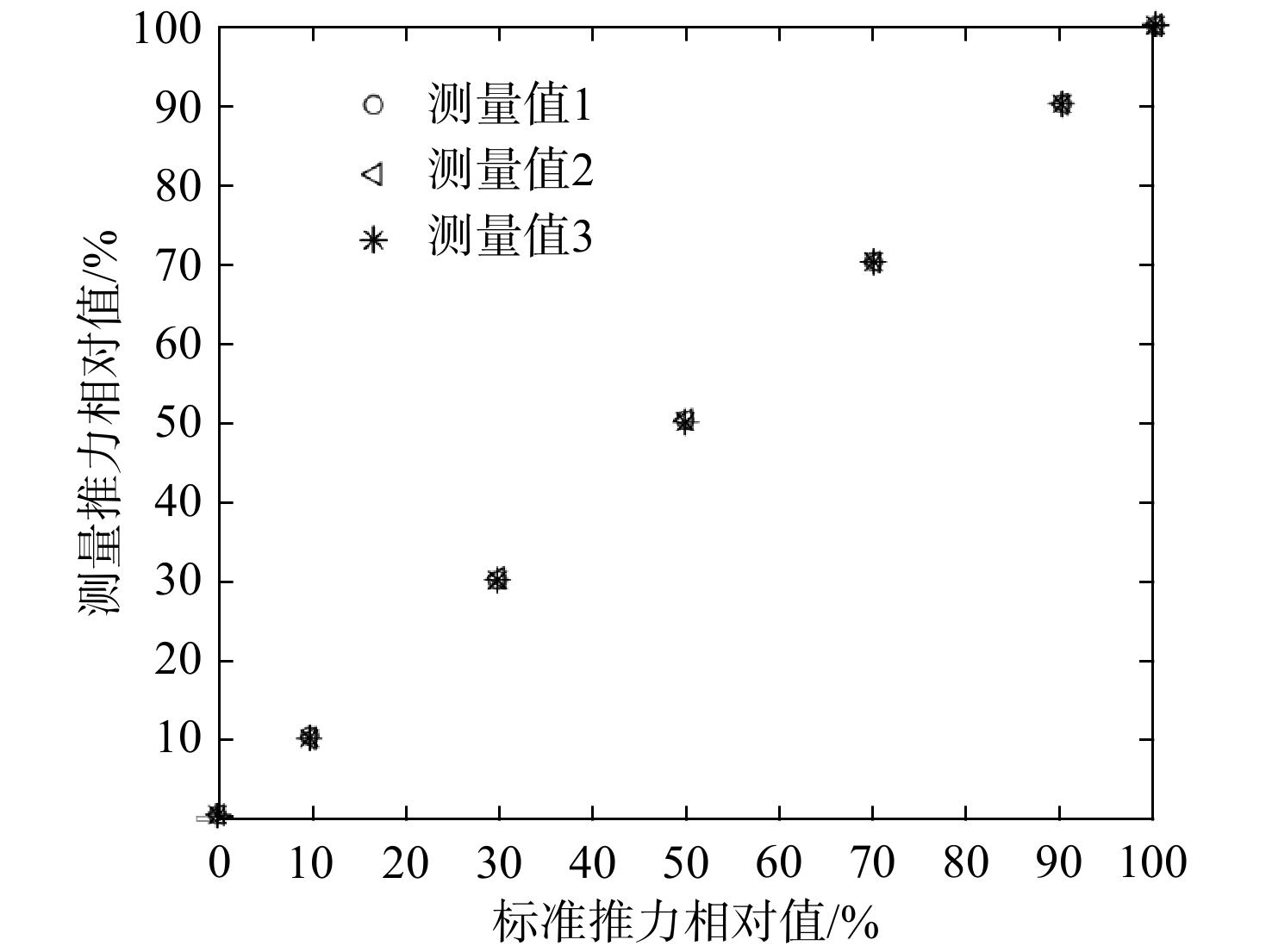
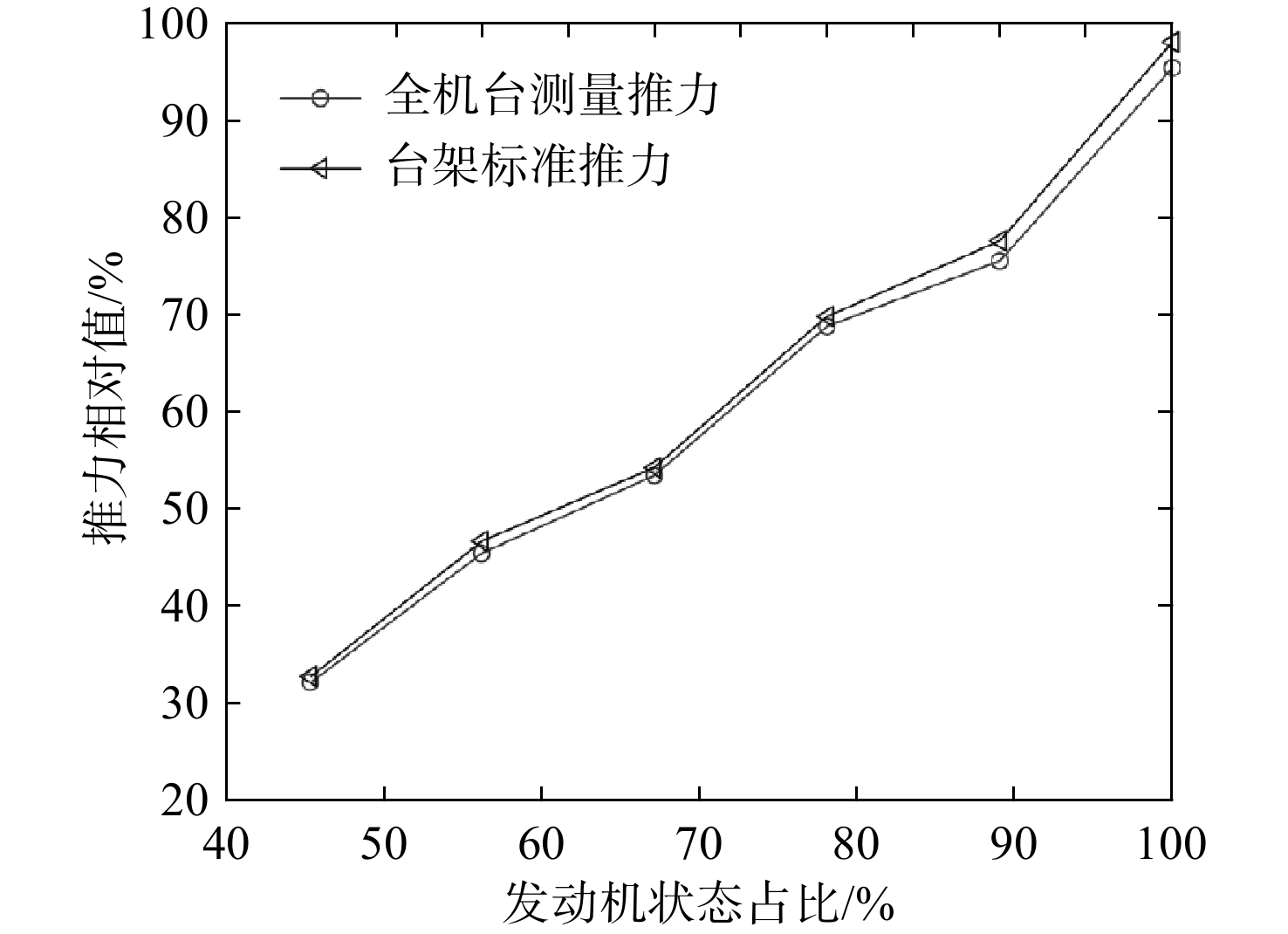
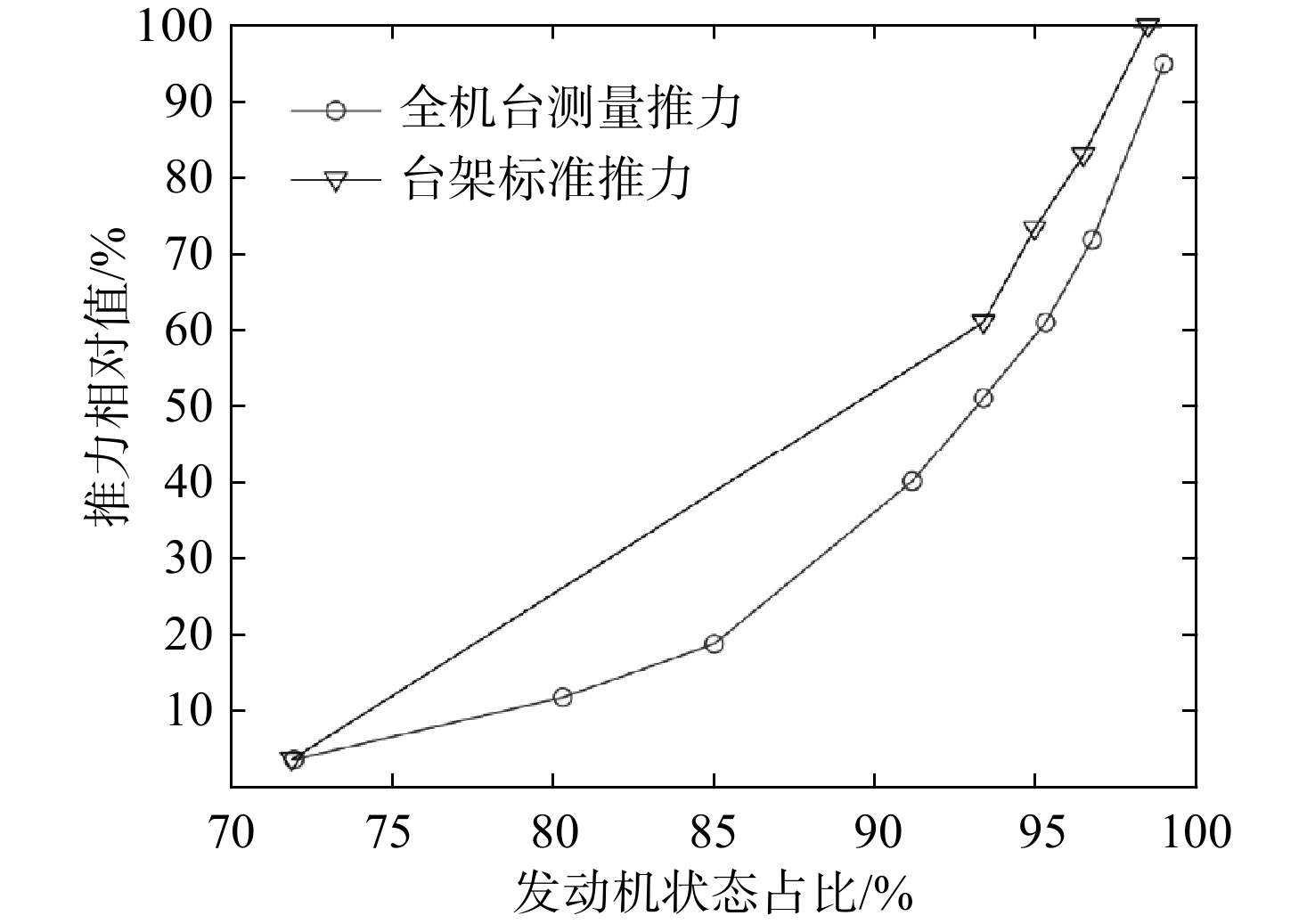
In order to realize the whole aircraft thrust measurement of aeroengine, a thrust measurement platform under the condition of aeroengine installation was developed. With introduction of the “pin” shape layout, this platform was embedded under the ground test pit to realize the thrust measurement of different types of aircraft. The measurement system and calibration method were mainly introduced. Using this measurement platform, the thrust measurement test of a large transport aircraft was carried out, and the thrust measurement of this type of aircraft was realized, with high measurement accuracy. Due to the influence of intake and exhaust and engine installation position, there was a certain gap between the engine installed thrust measured by the full aircraft thrust measurement platform and the bench standard thrust, and the thrust loss of transport aircraft was generally less than 3%, Fighter losses ranged from 5% to 15.1%.

Numerical simulation of ground vortex flow field of large transport aircraft
YANG Liu, LIU Yu, WANG Junqi
2023, 38(1): 151-159. doi: 10.13224/j.cnki.jasp.20210435
Abstract:

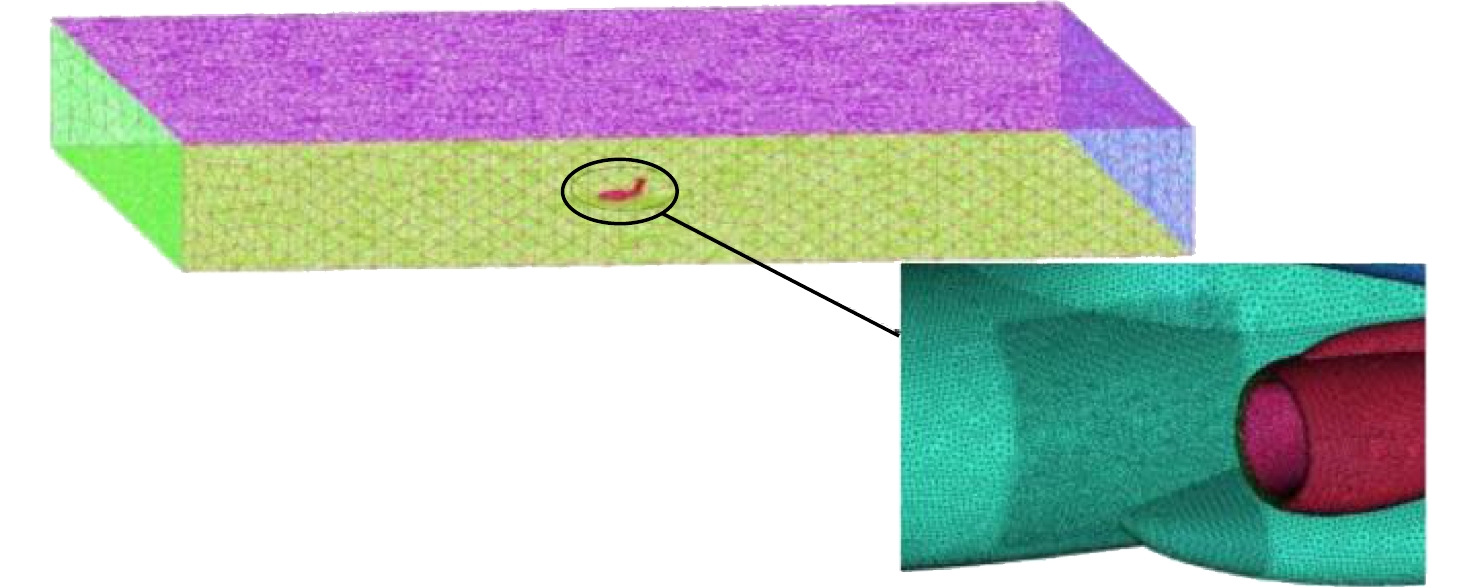
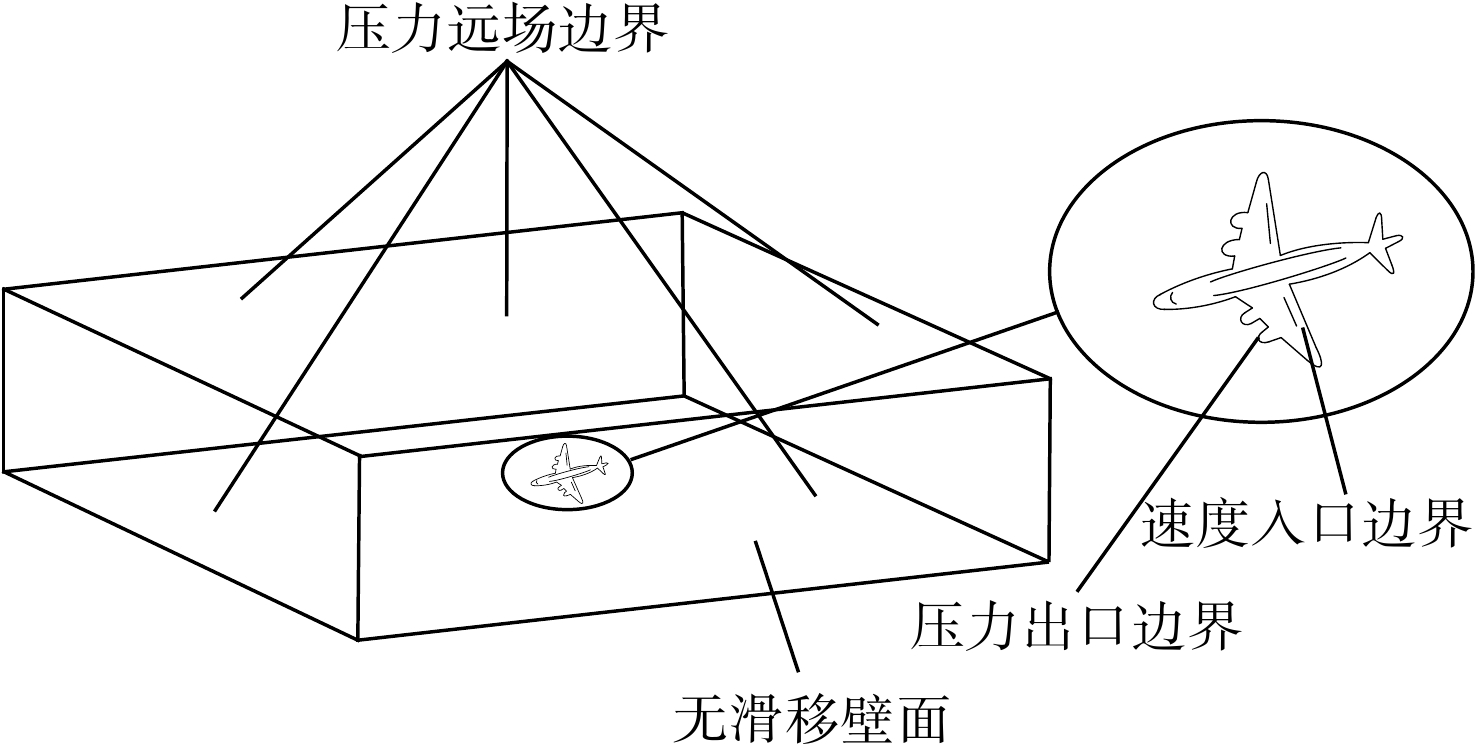
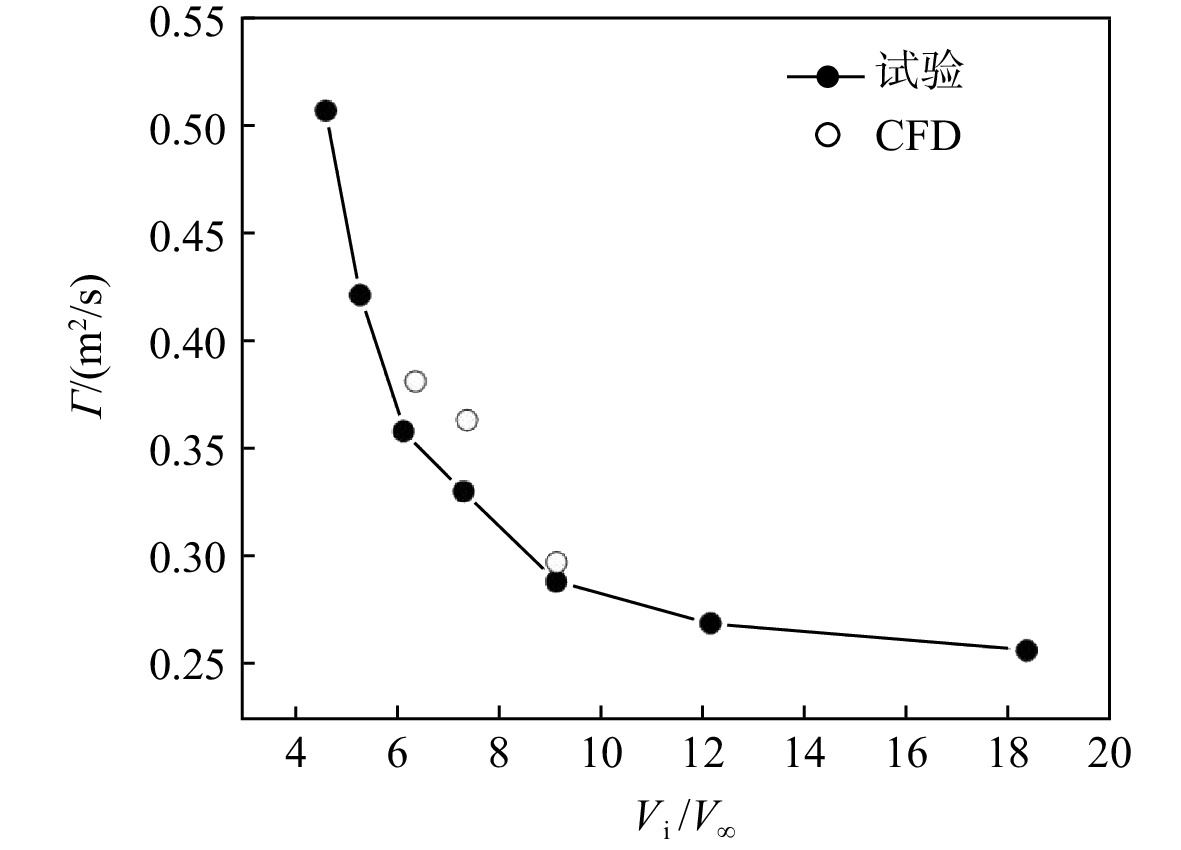
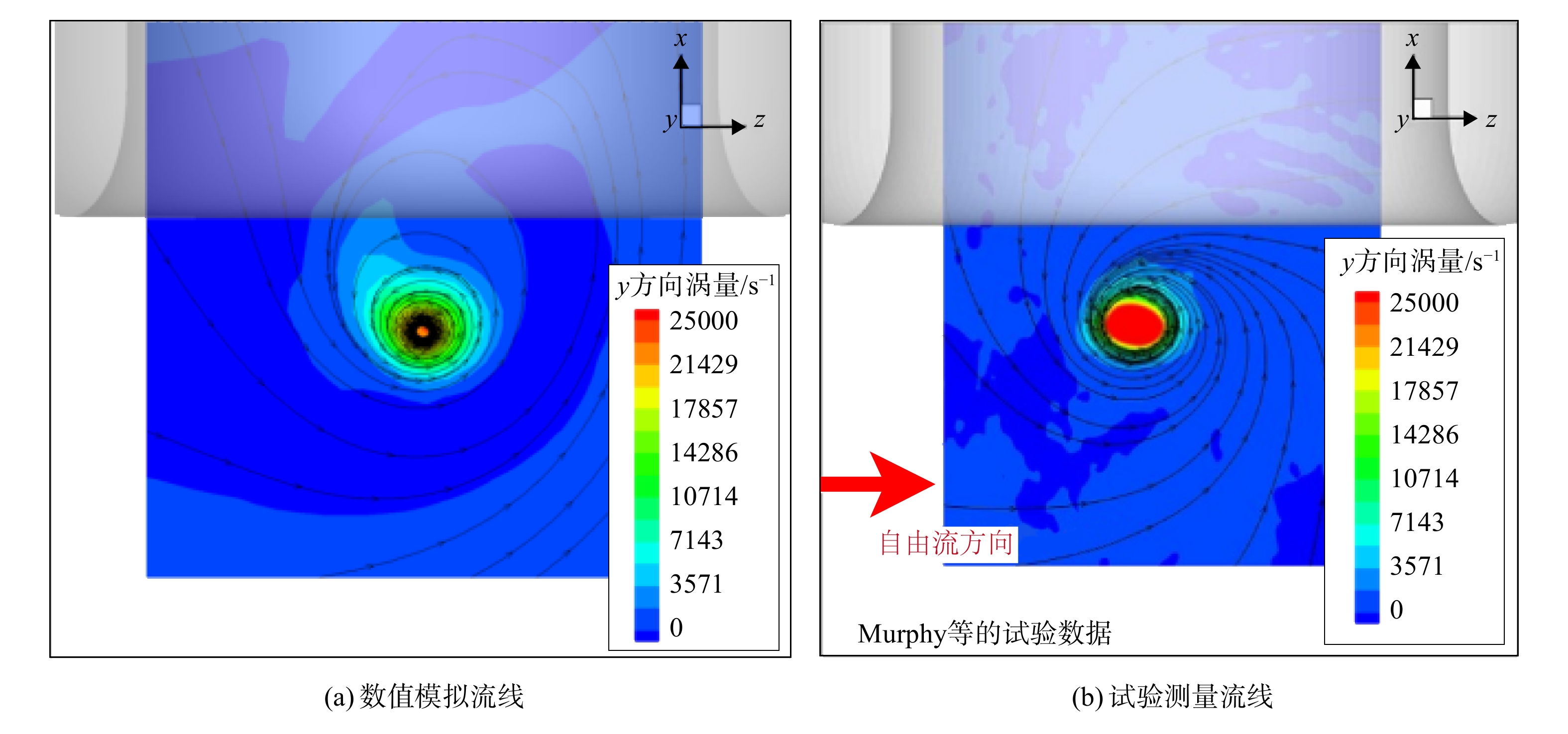
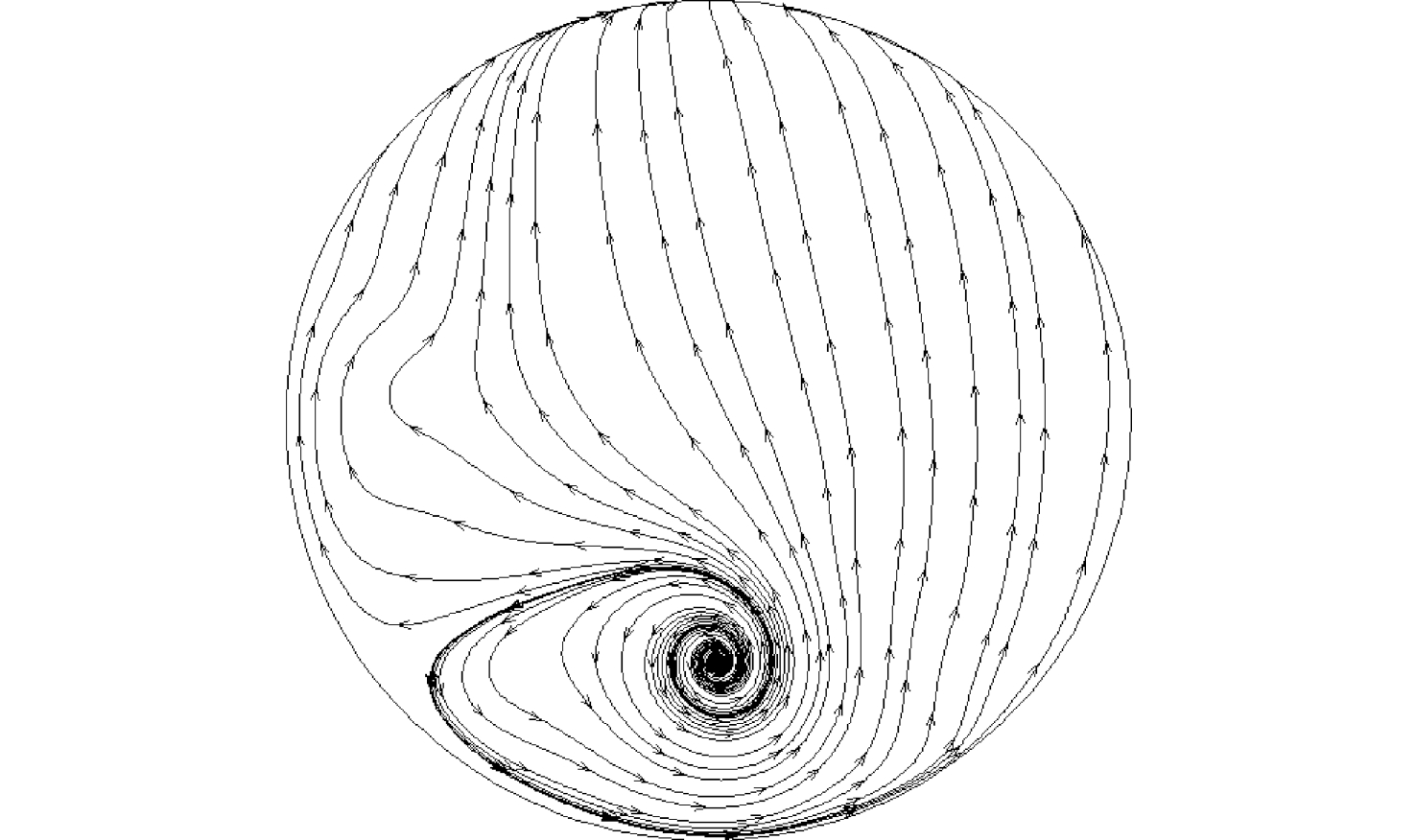
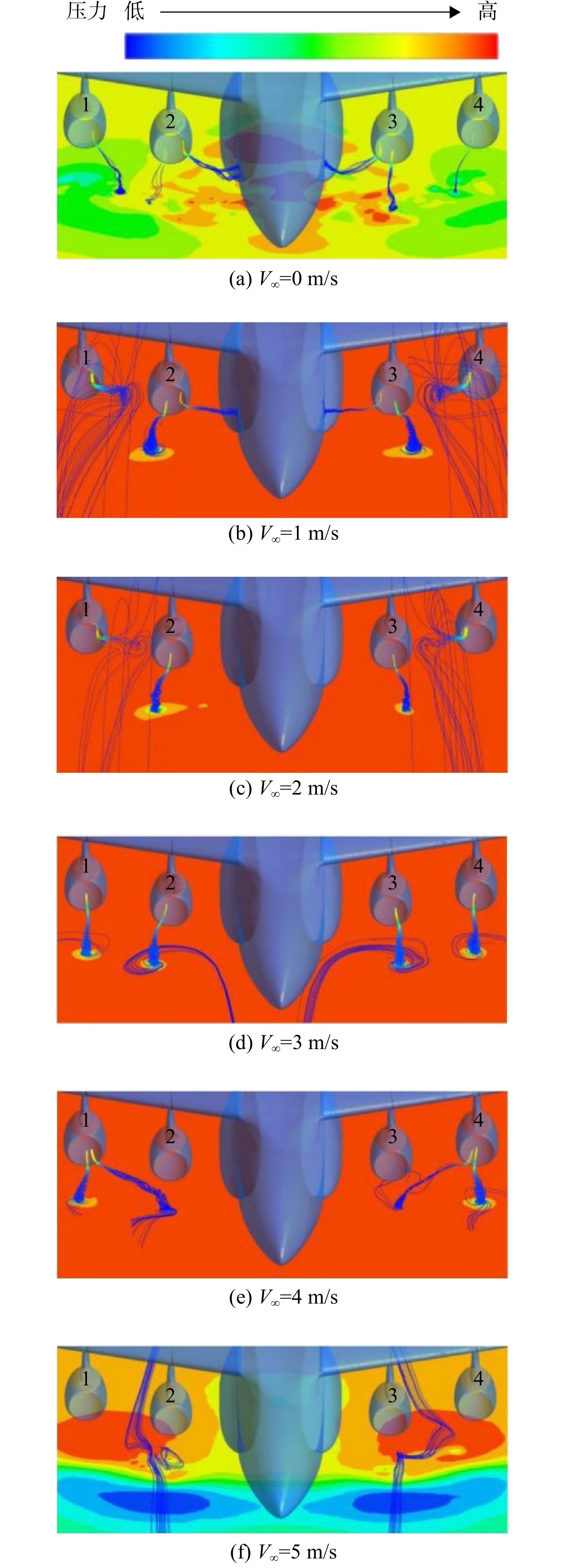
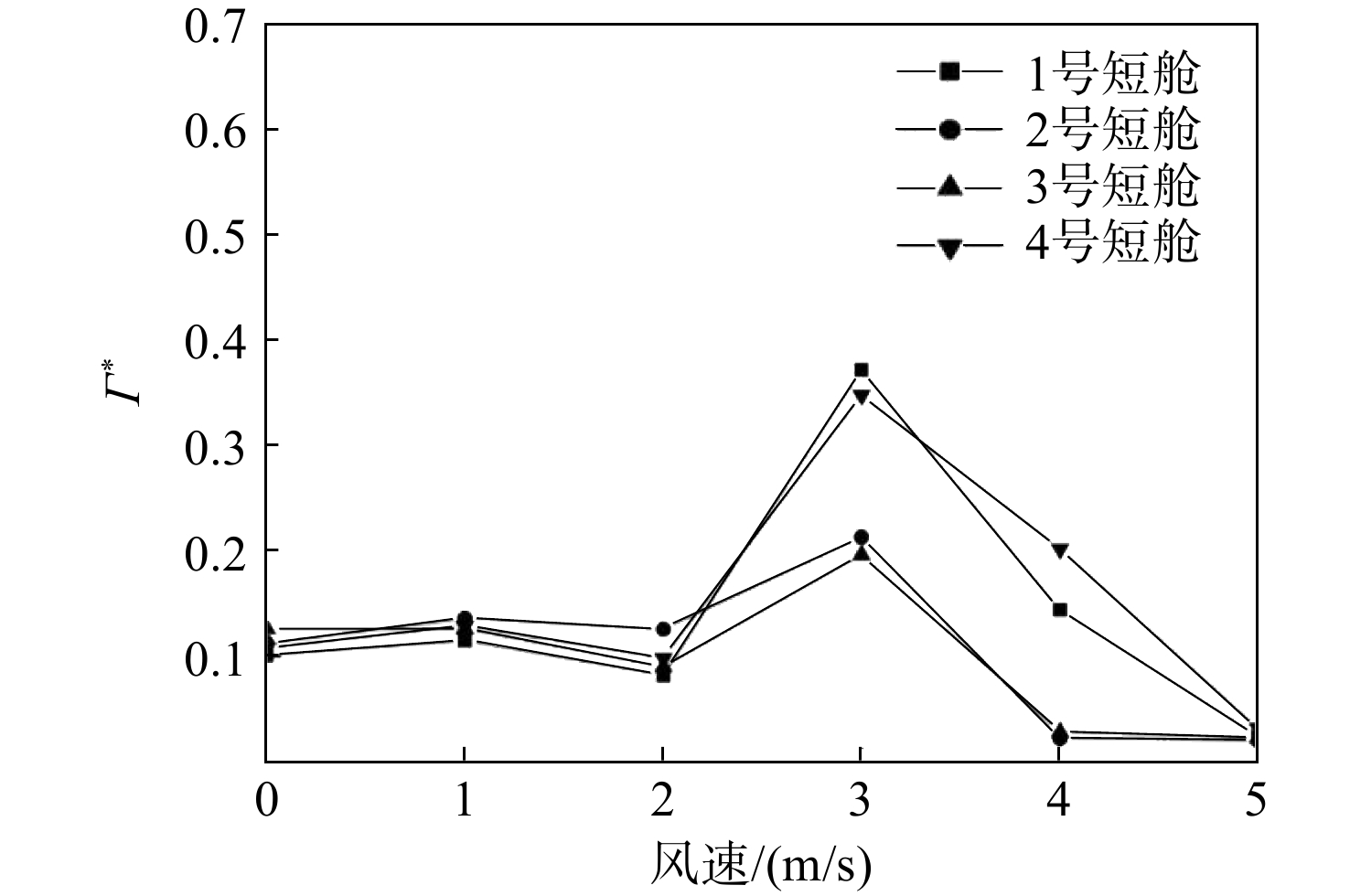
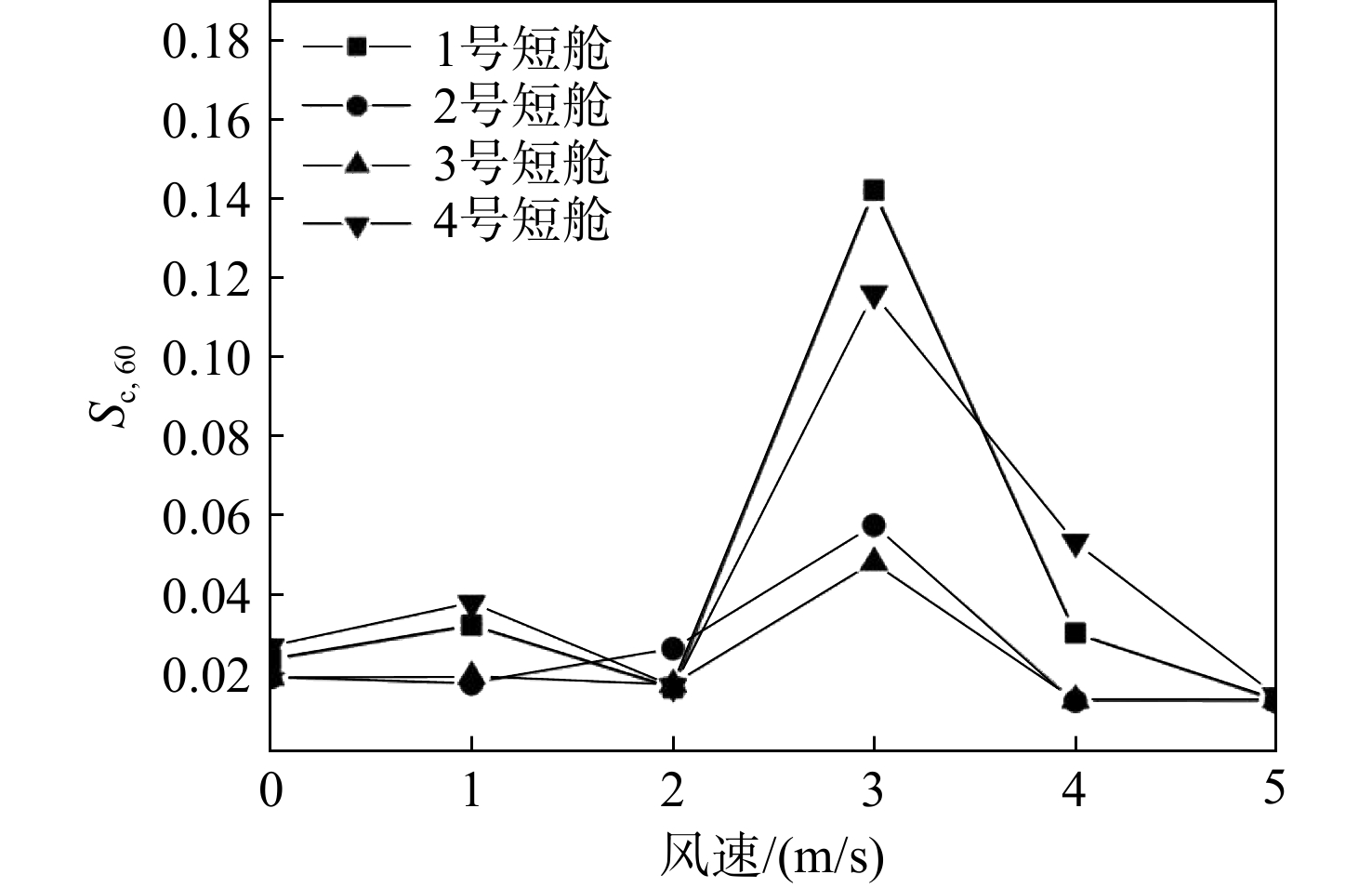
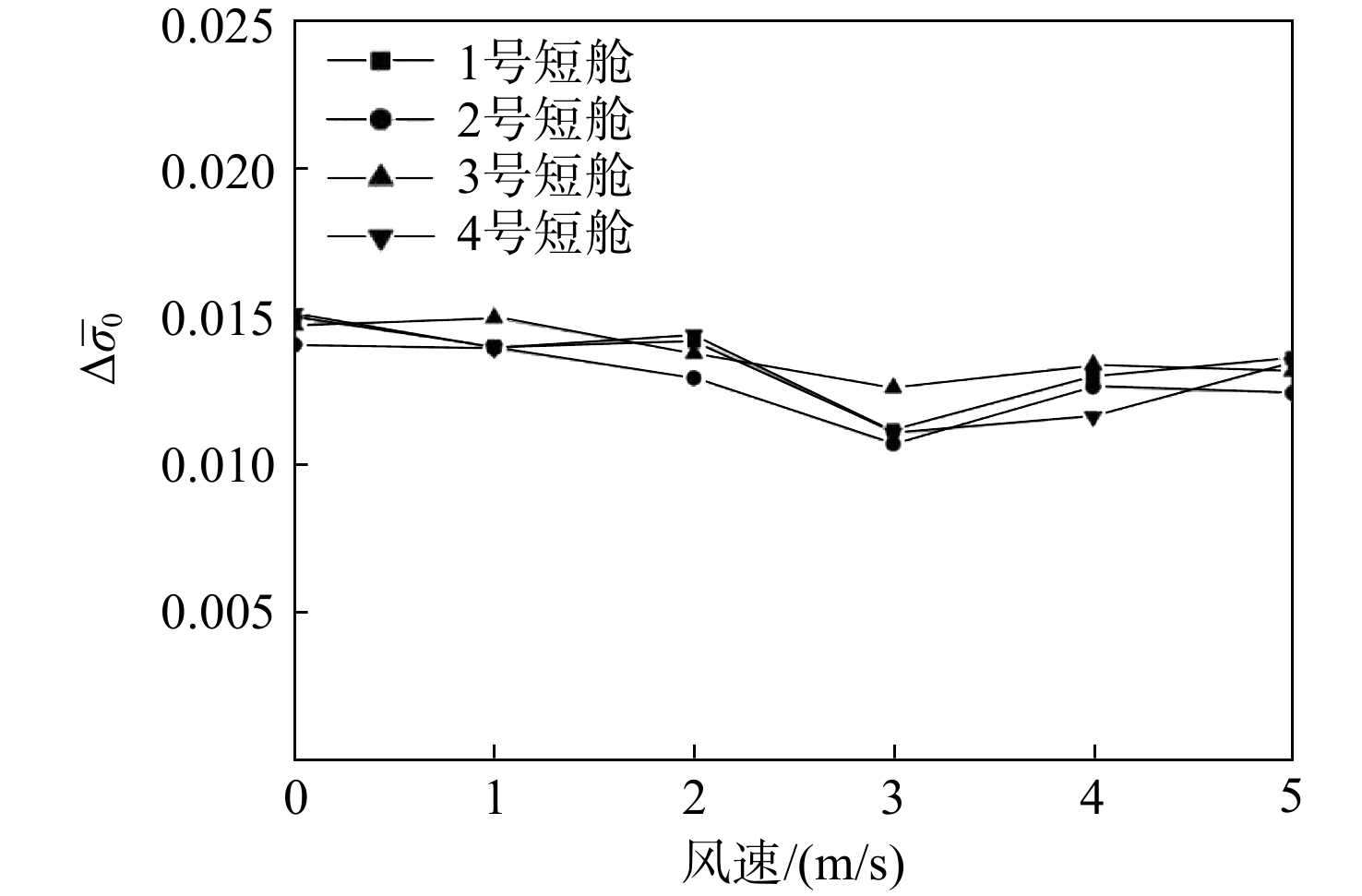
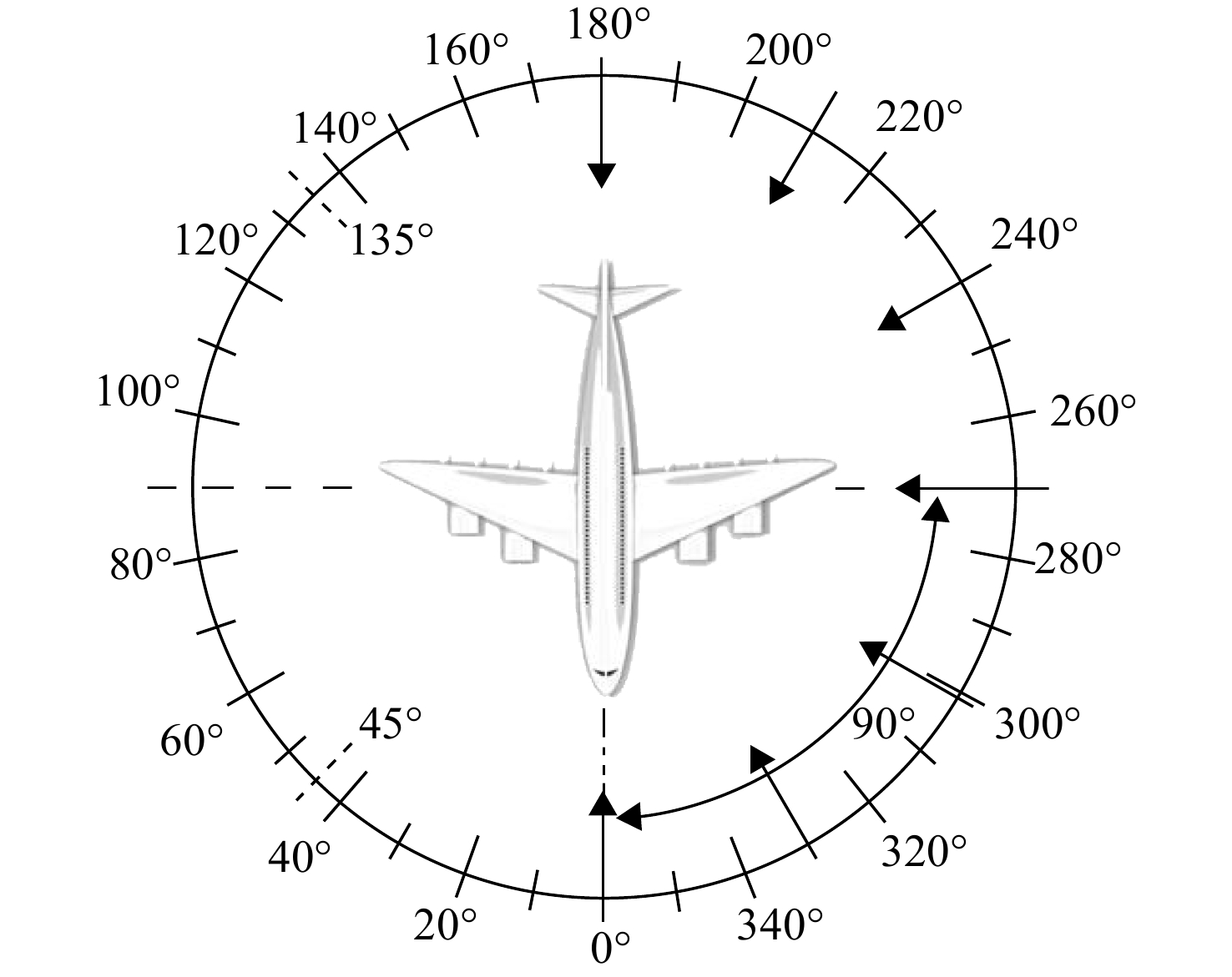
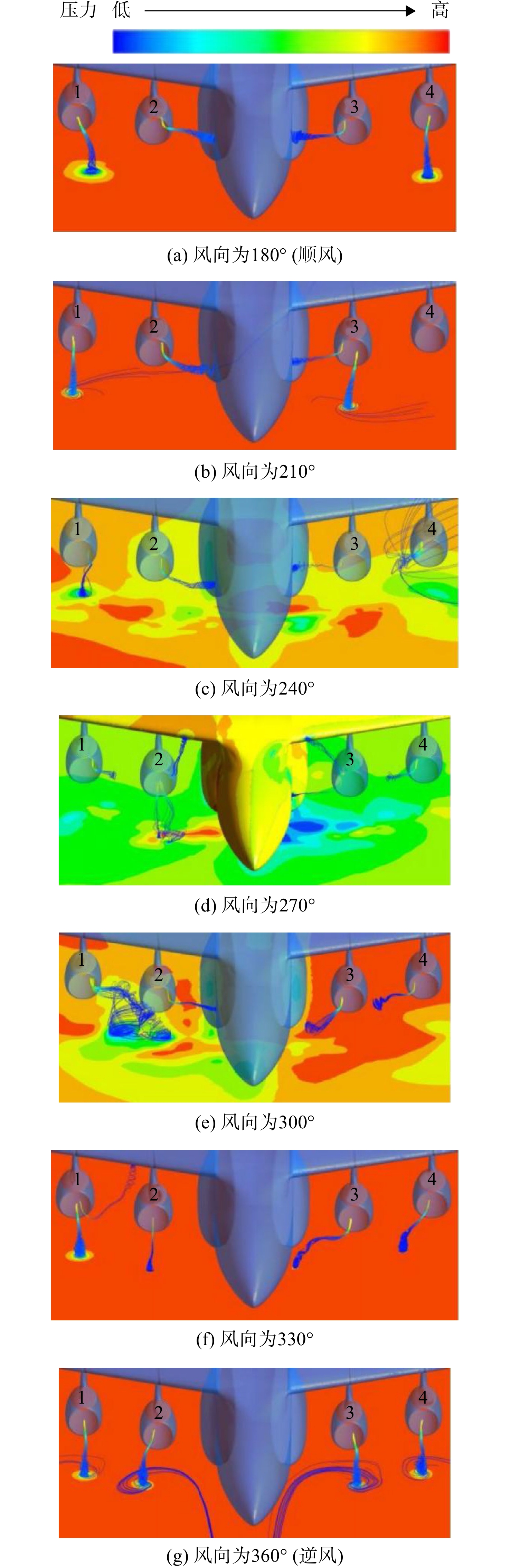
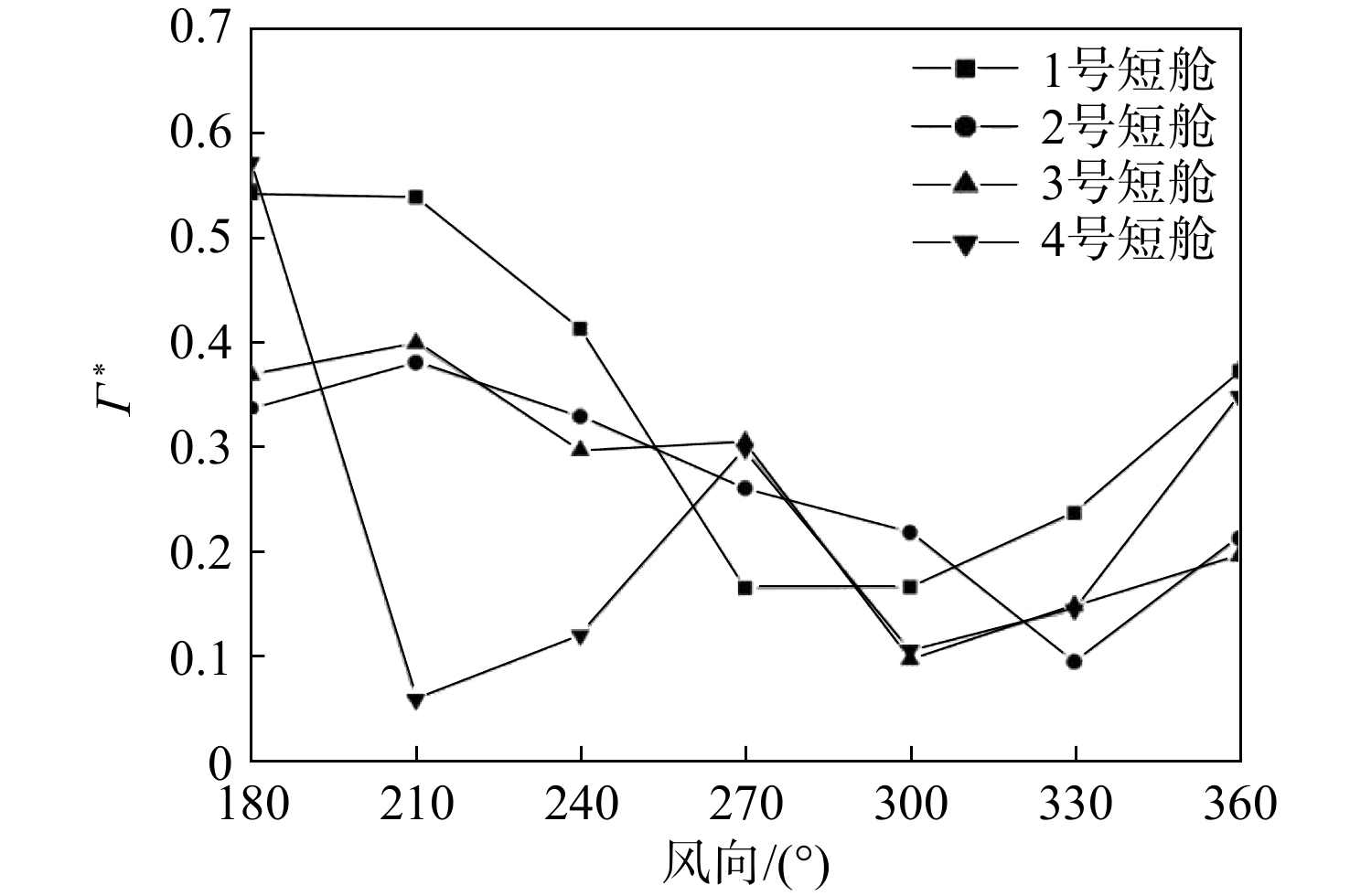
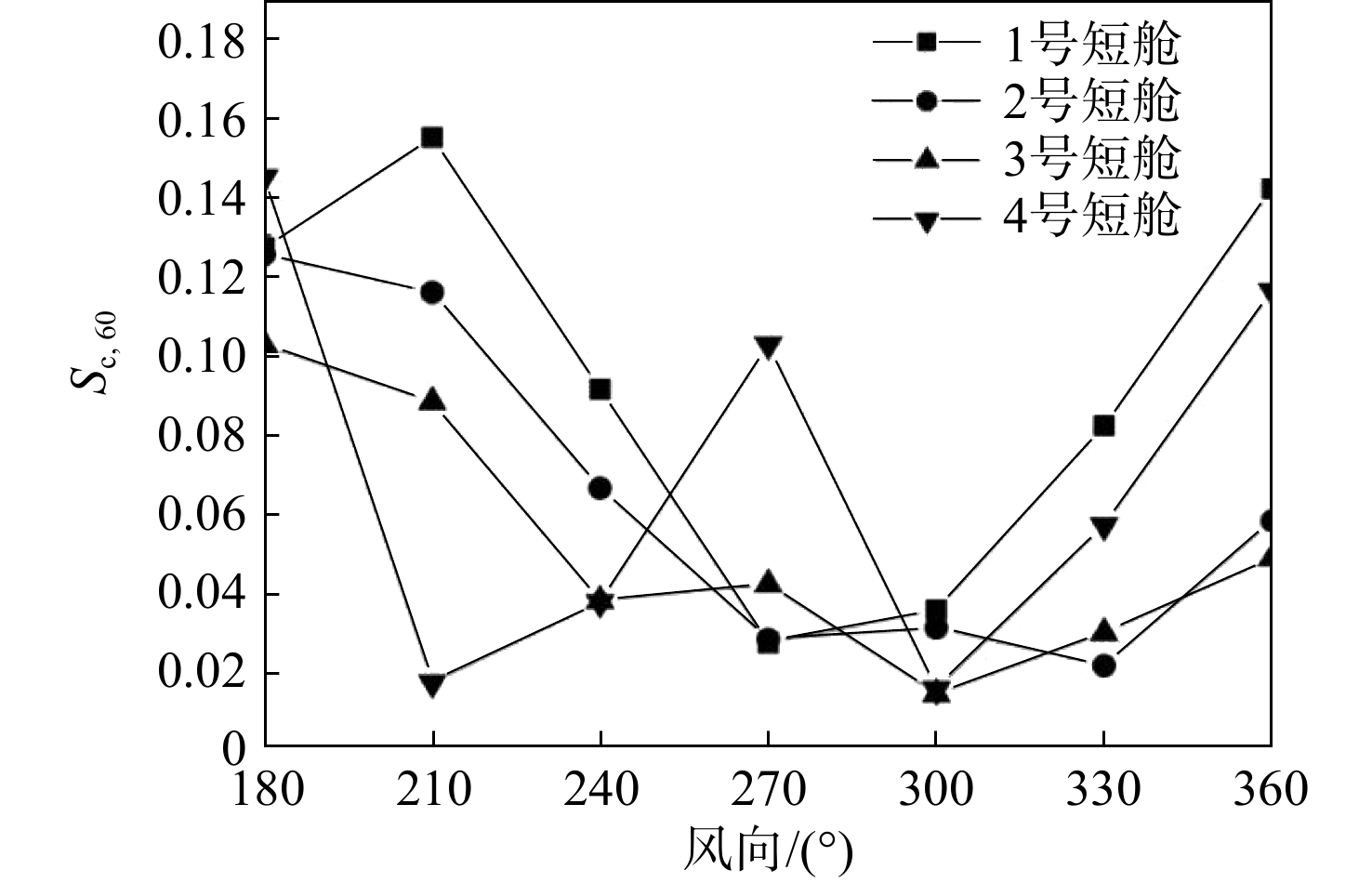
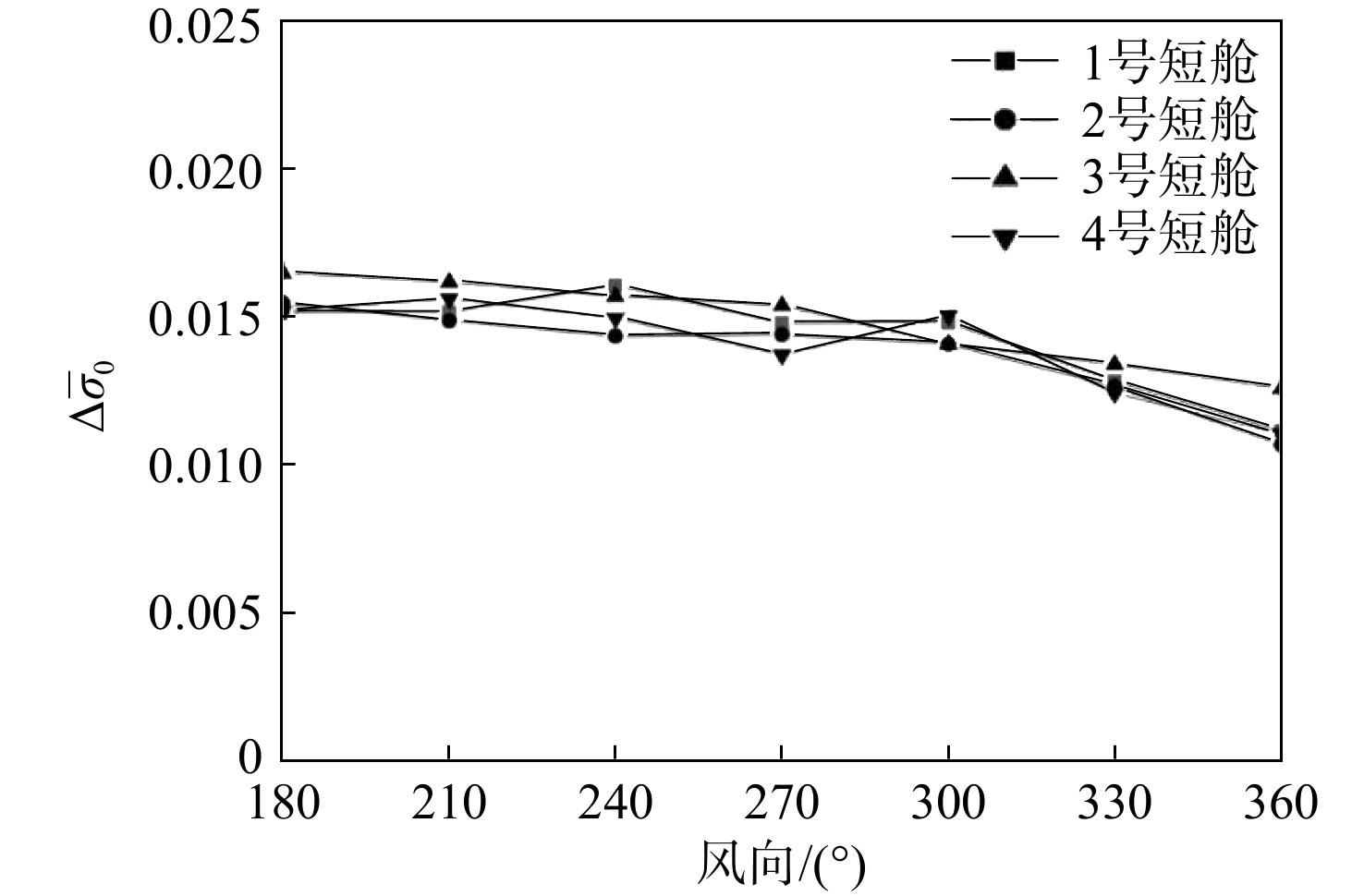
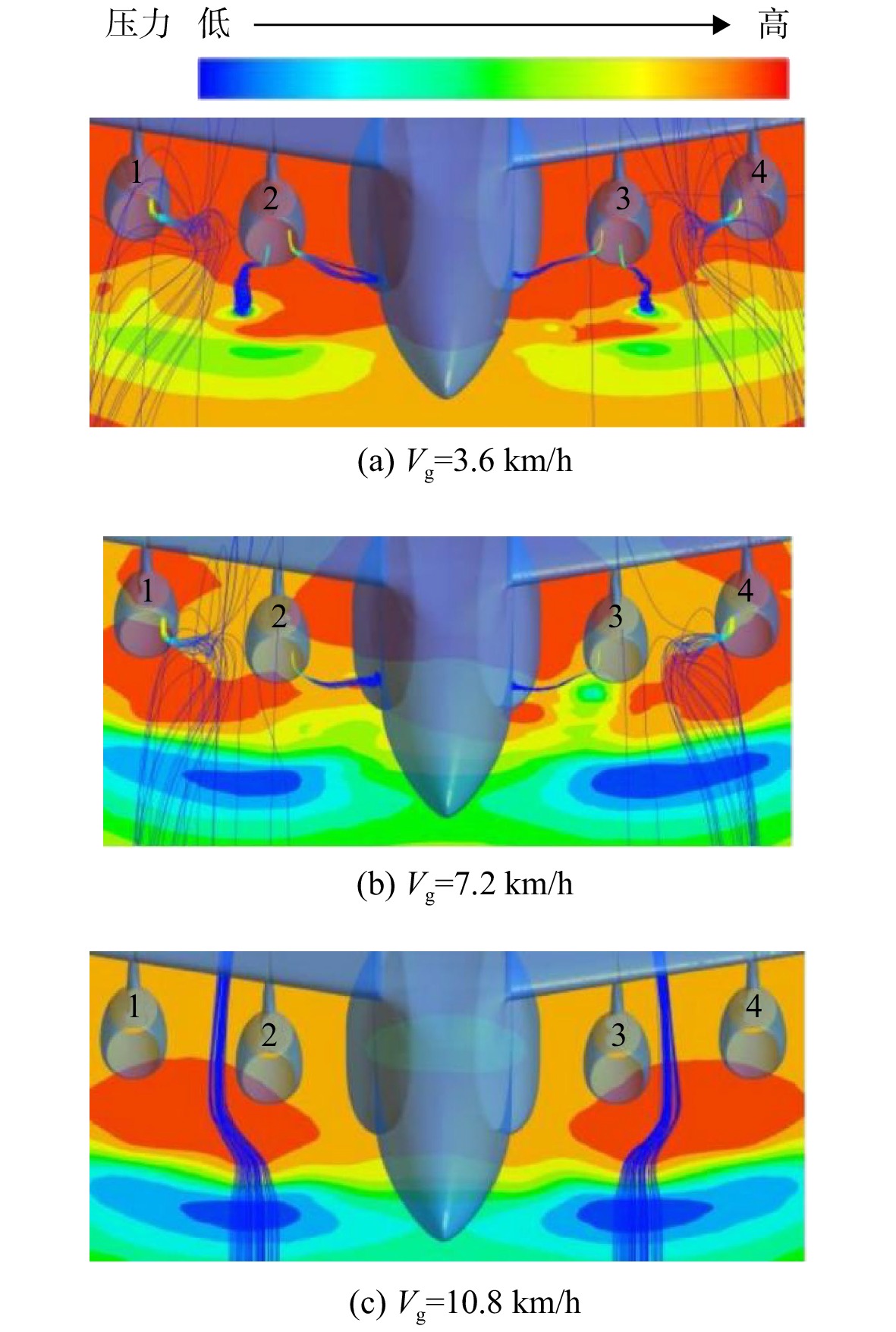
A three-dimensional model of a large transport aircraft equipped with turbofan engine was established to study the ground vortex. Numerical simulation method was used to simulate the ground vortex flow field under different wind speeds, directions and taxiing speeds. According to the results, the distribution characteristics and variation rules of the ground vortex flow field were obtained, and the matters needing attention in the aircraft operation were put forward. The results showed that, for this type of aircraft, the ground vortex mainly caused the inlet swirl flow distortion, the total inlet pressure distortion was low, and the distortion index was kept between 1.1%−1.7%. When the upwind speed was greater than 5 m/s, the ground vortex disappeared, and its intensity first increased and then decreased with the increase of wind speed. With the change of wind direction, the ground vortex structure changed constantly, and the nacelle on the downwind side was more likely to produce ground vortex. Under the taxiing condition, the intensity of ground vortex changed little, and there was no vortex suction when the taxiing speed reached 3 m/s. In practice, the working state of No.1 and No.4 engines with large swirl distortion should be observed when the engine was running on the ground. During taxiing, focus should be put on observing the foreign object damage of No.2 and No.3 engines with strong ground vortex suction capacity.

Influence of pitch diameter protruding structure on interference noise of tandem double cylinders
WANG Daqing, TONG Fan, FENG Heying, WANG Yong, YANG Chenghao
2023, 38(1): 160-172. doi: 10.13224/j.cnki.jasp.20210421
Abstract:

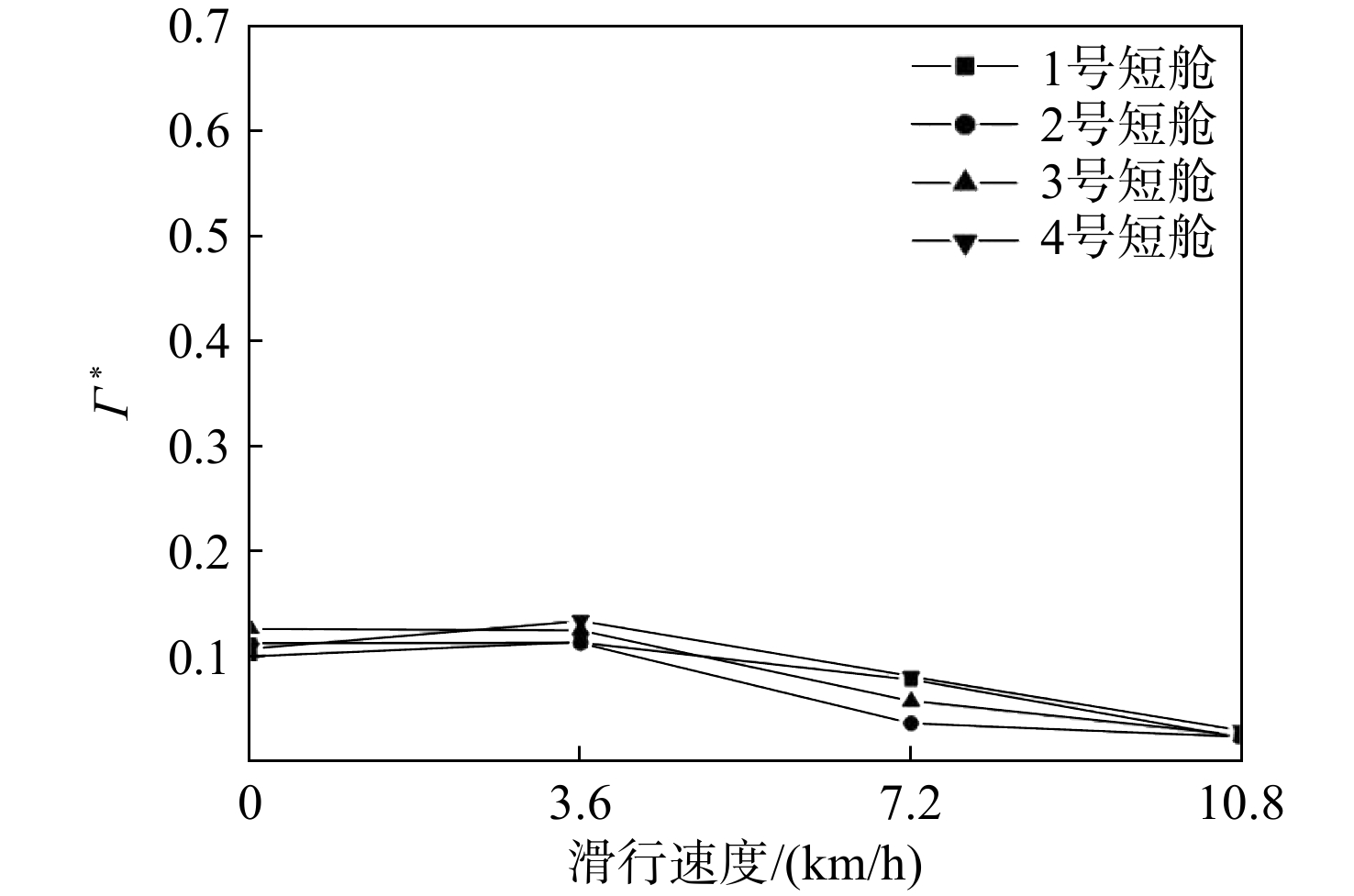
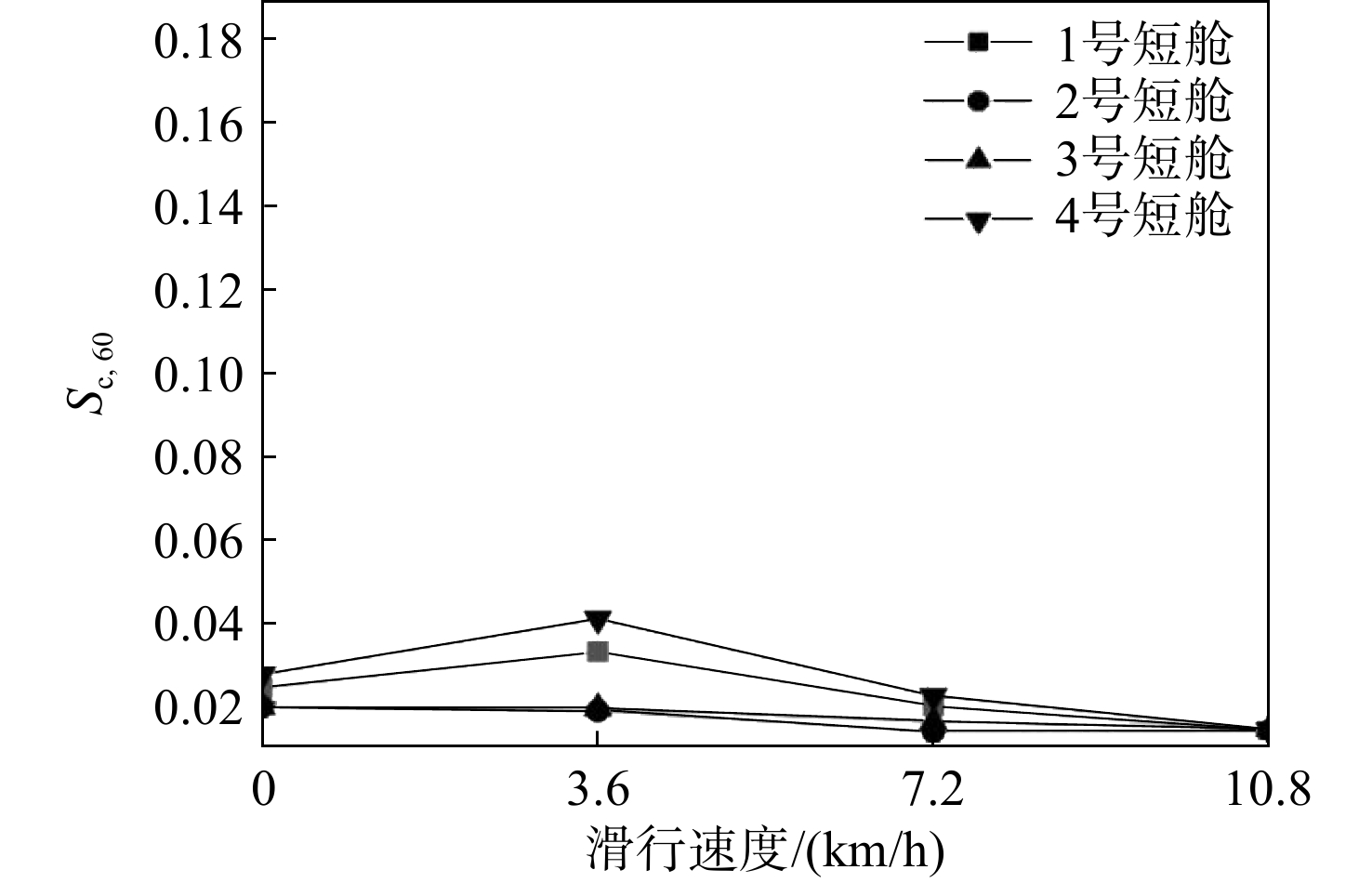
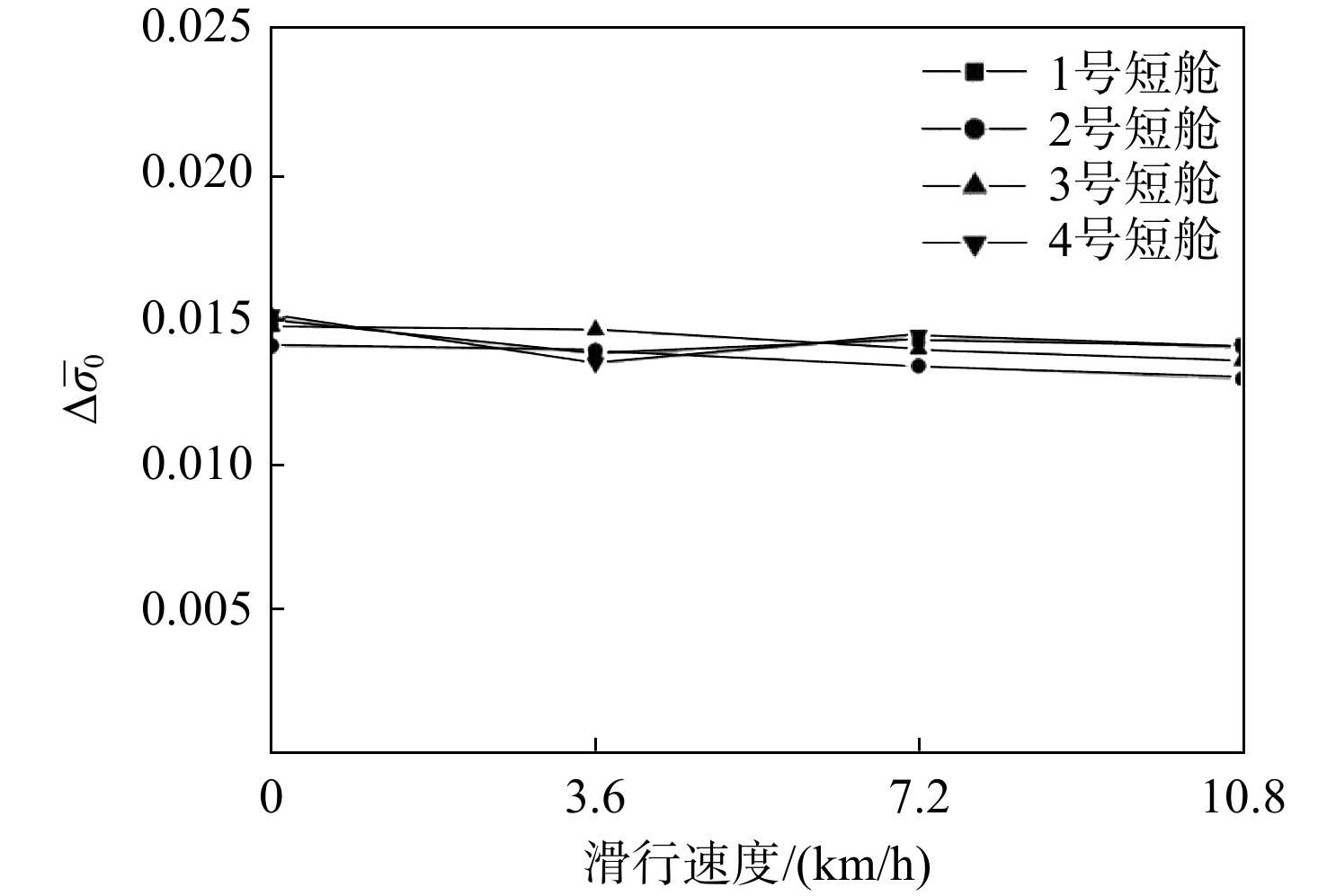
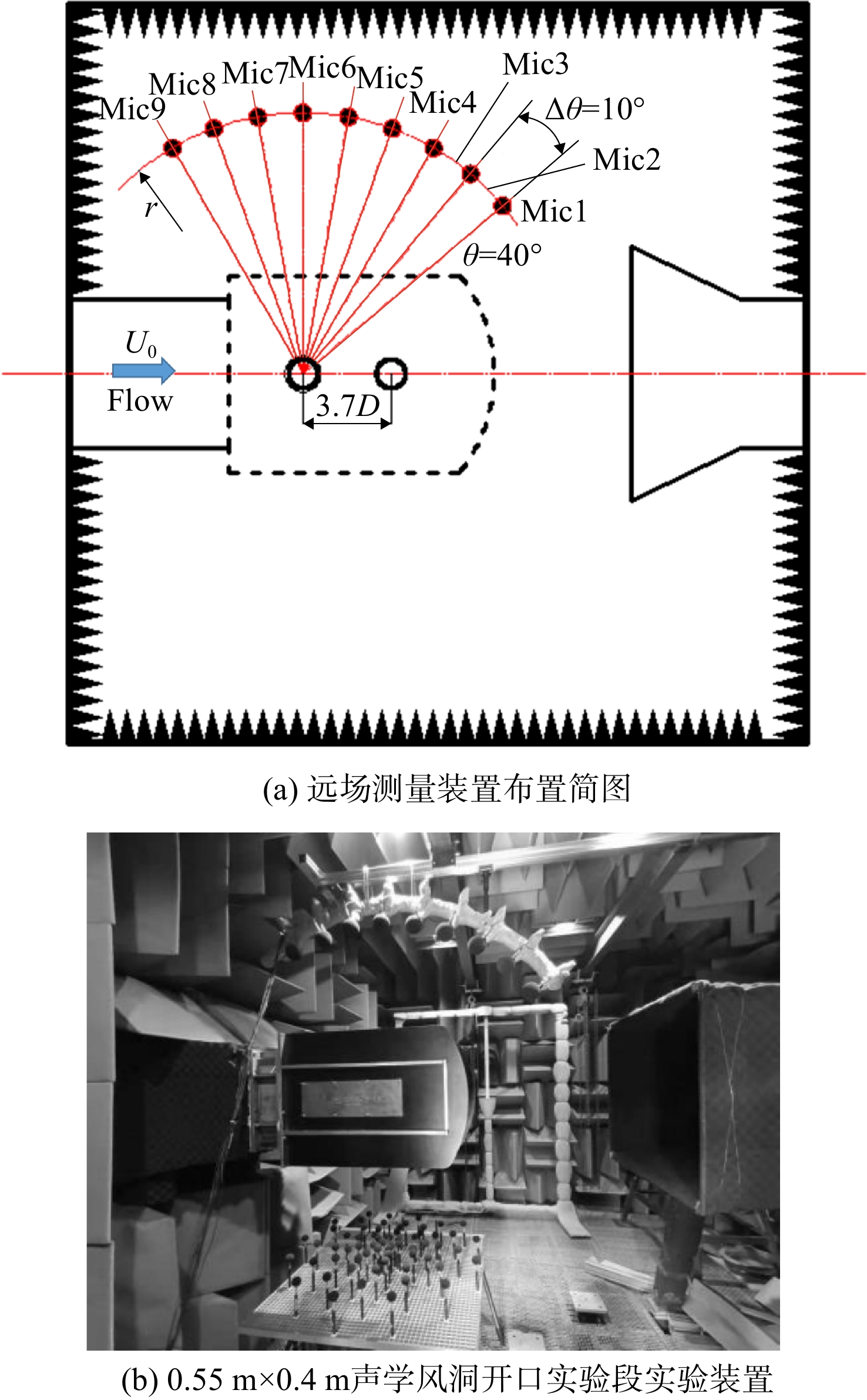
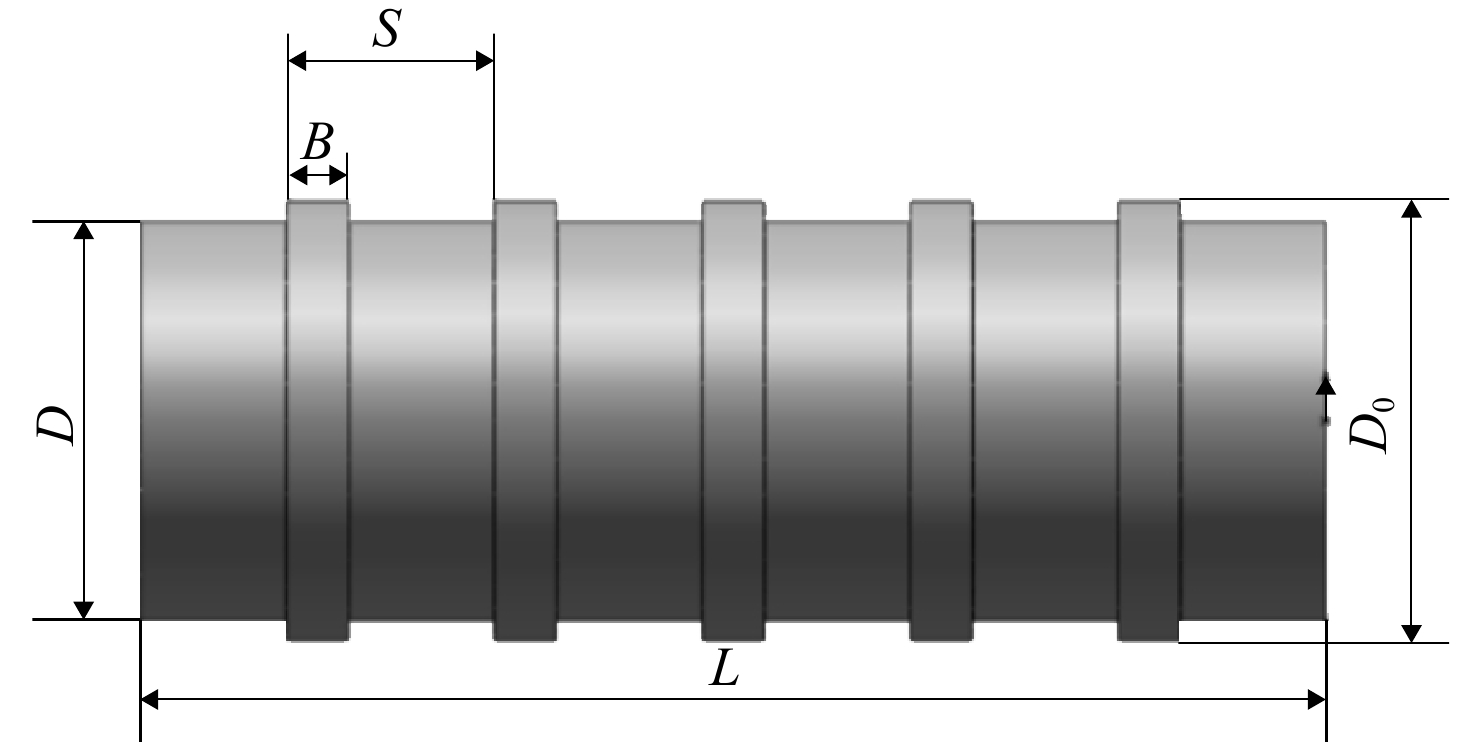
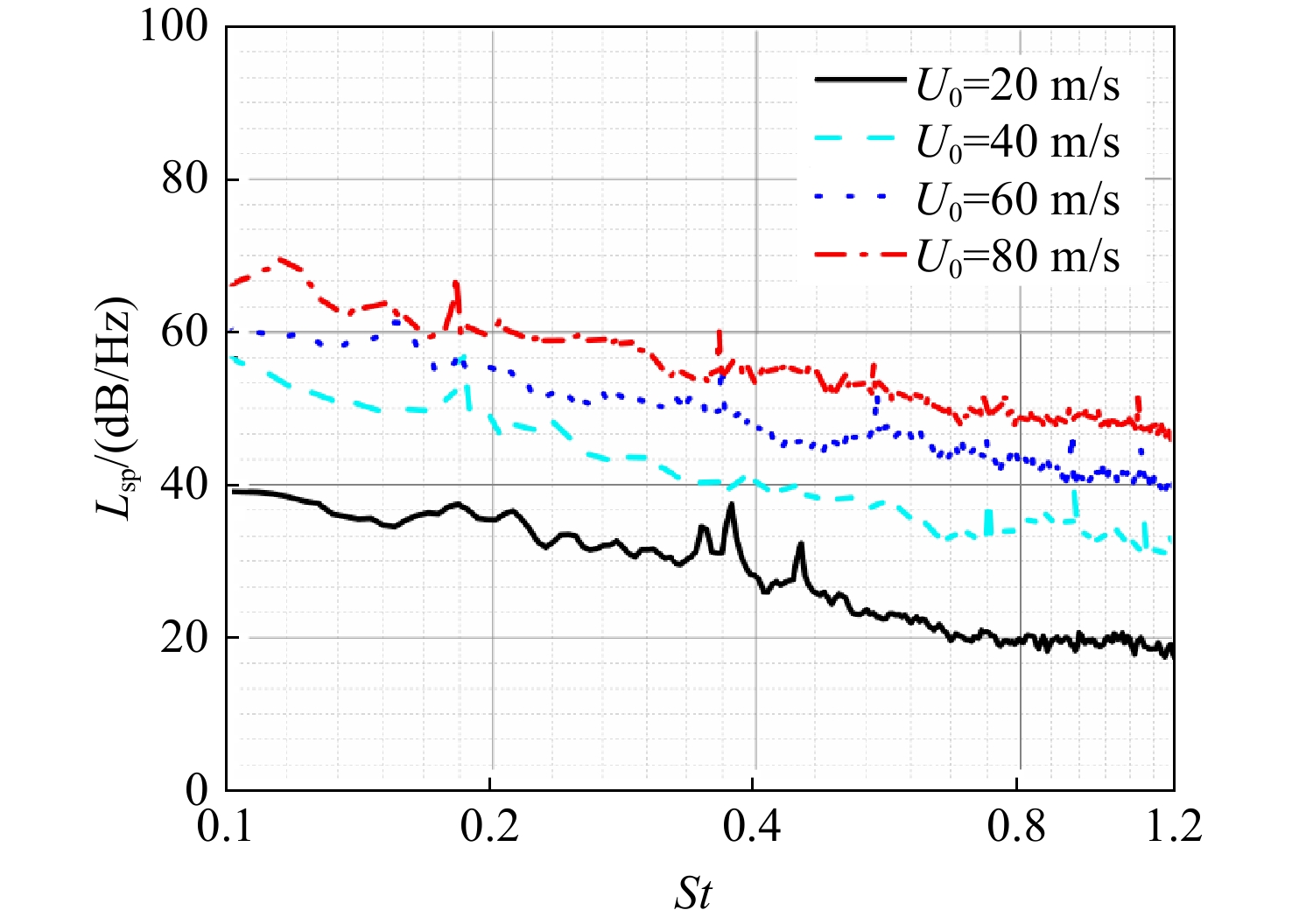
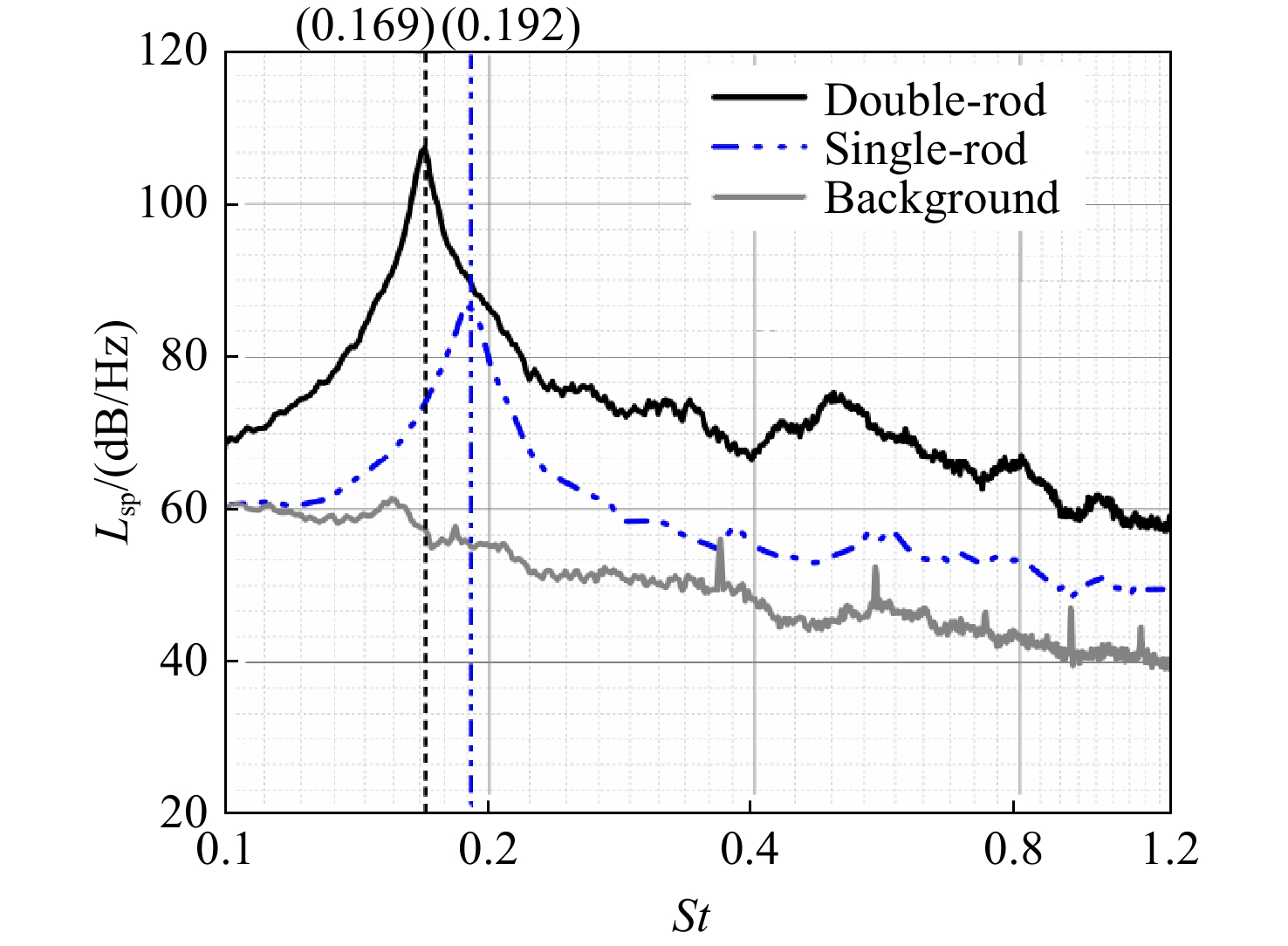
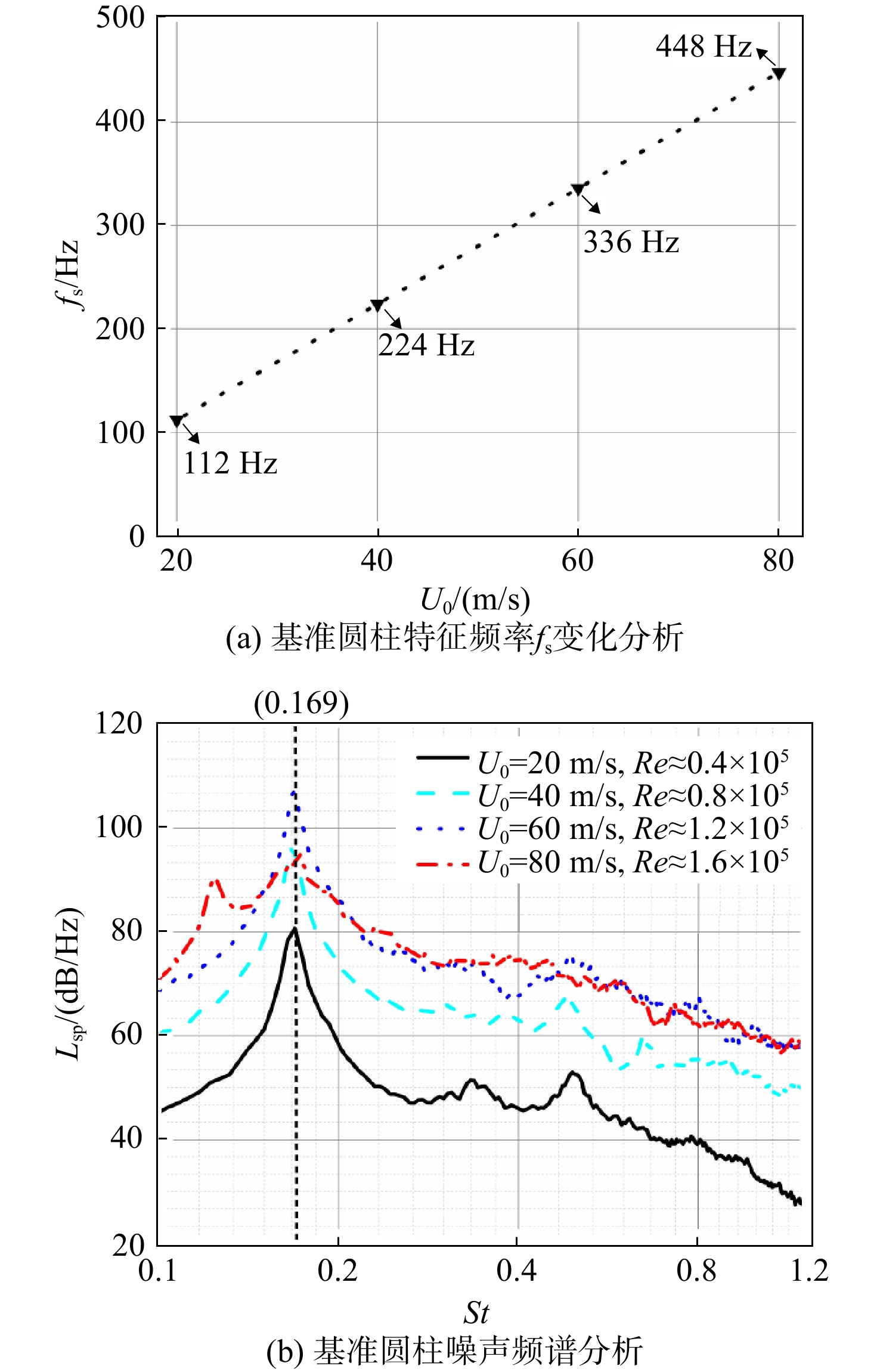
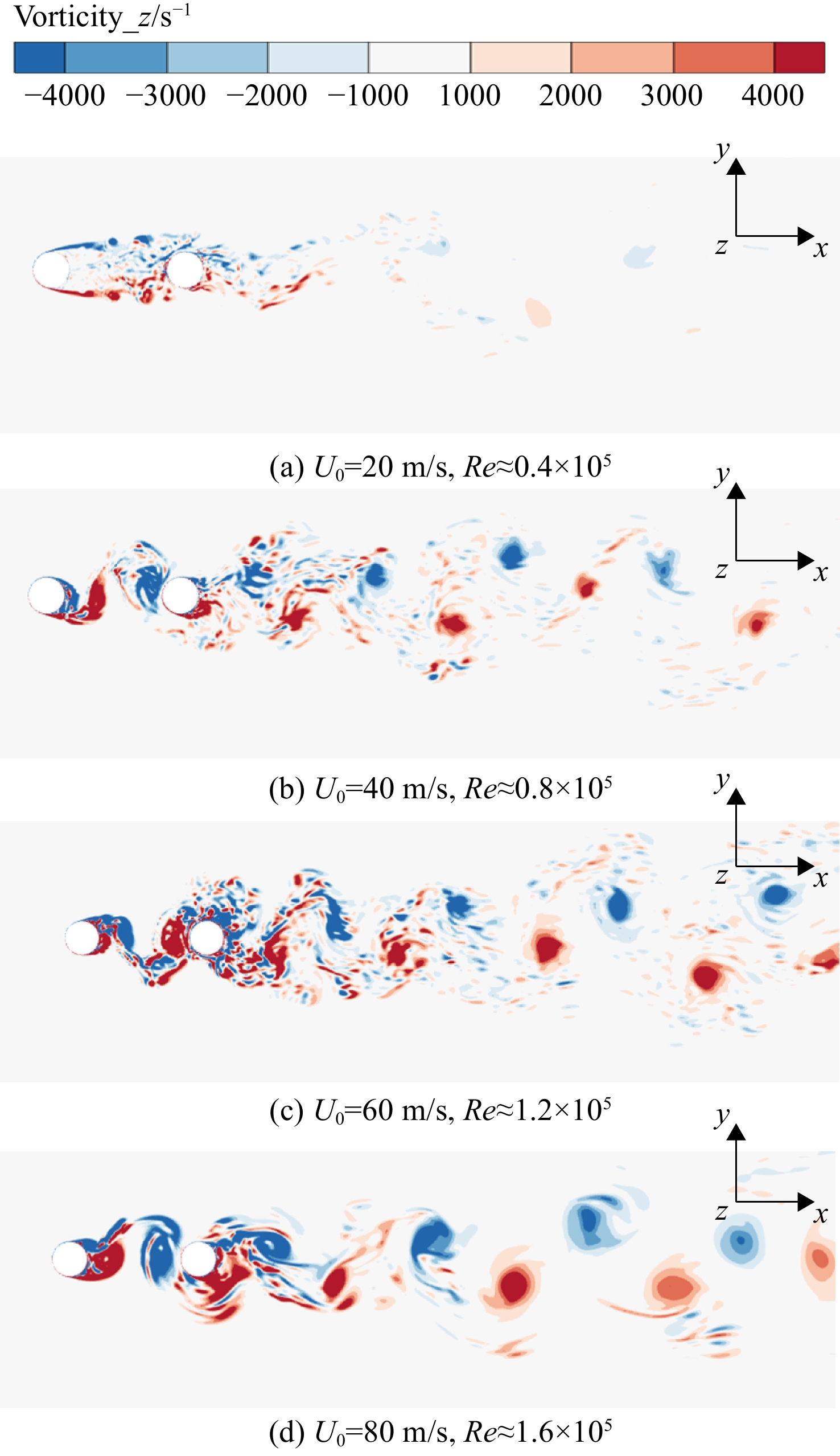
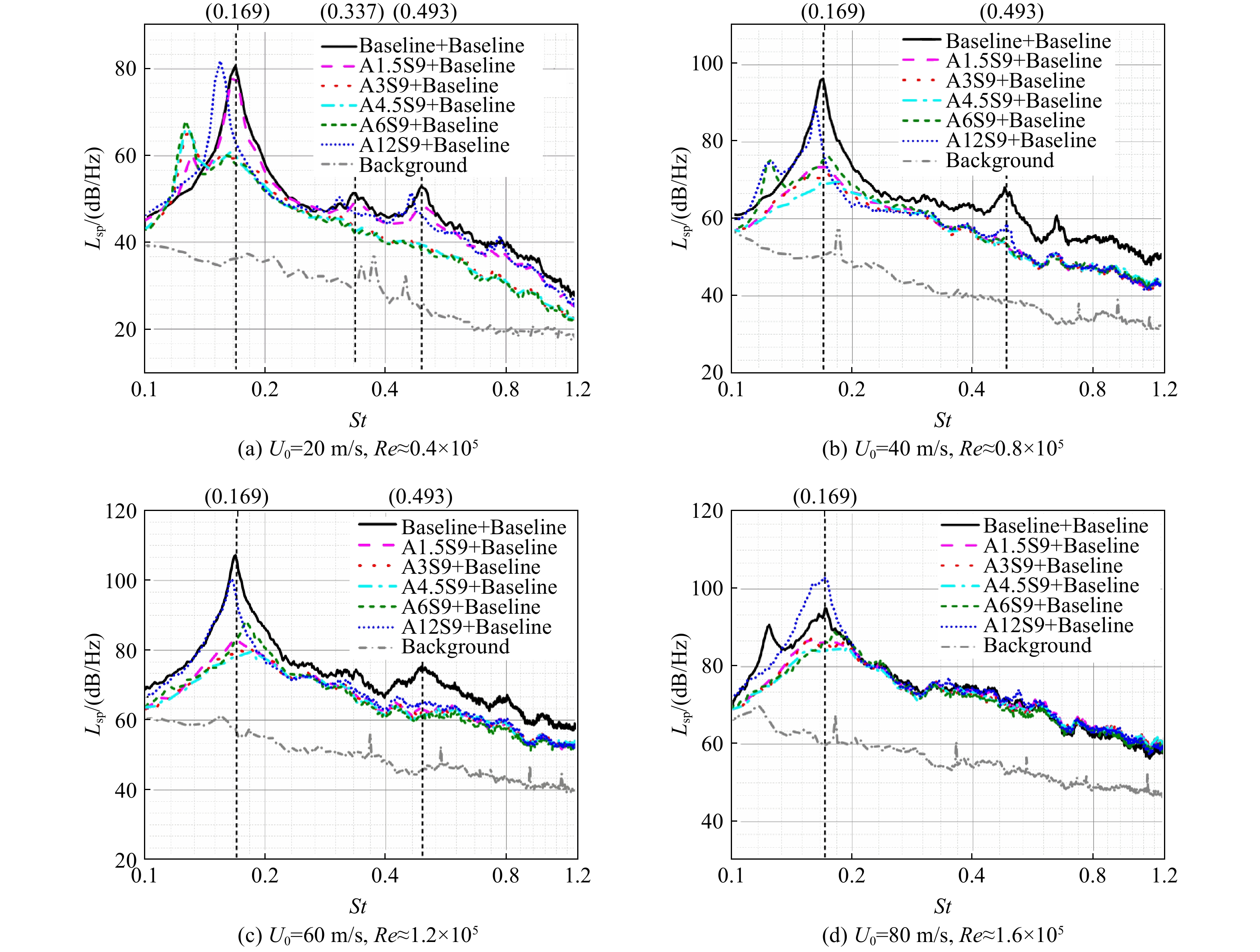
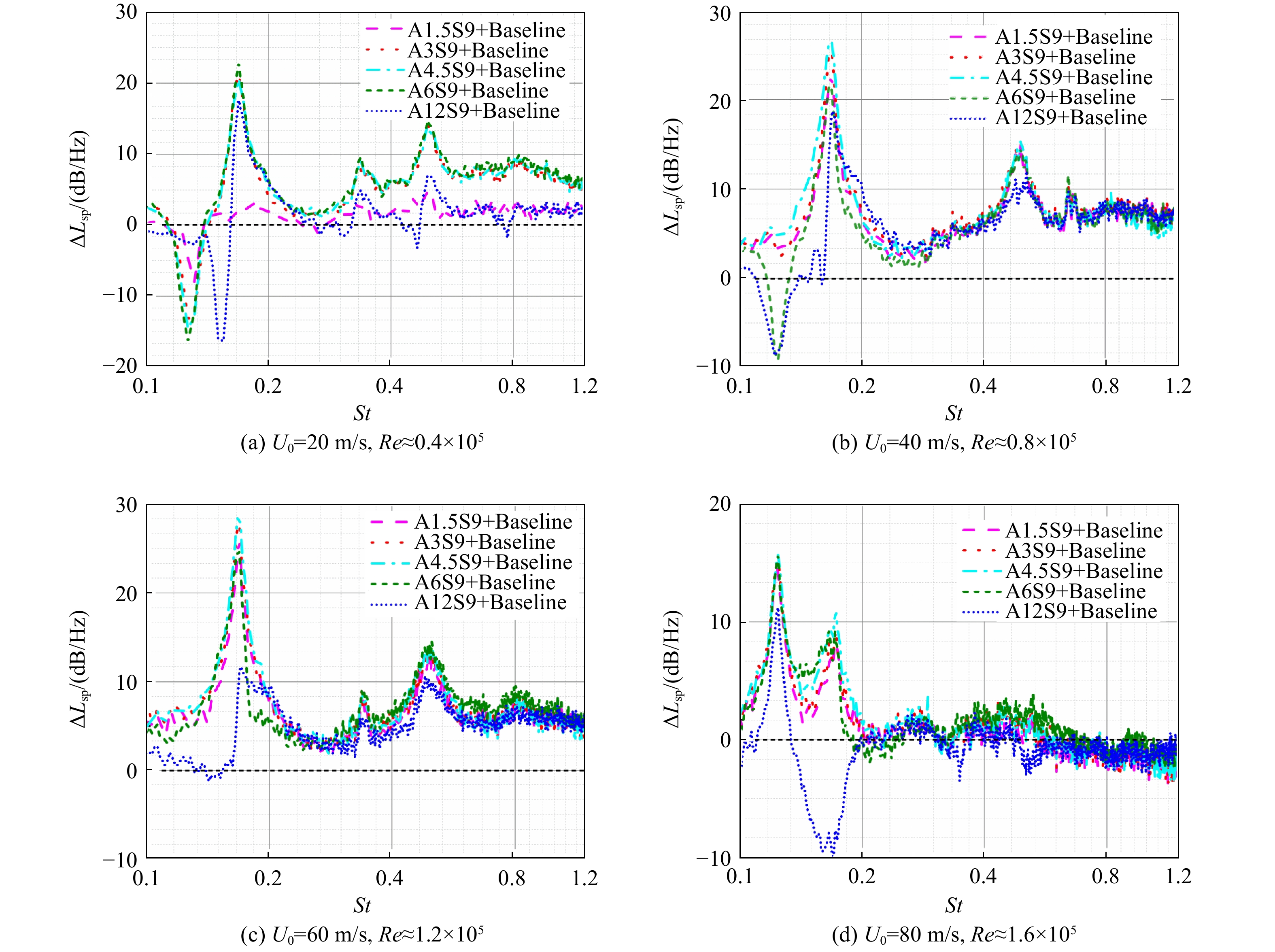
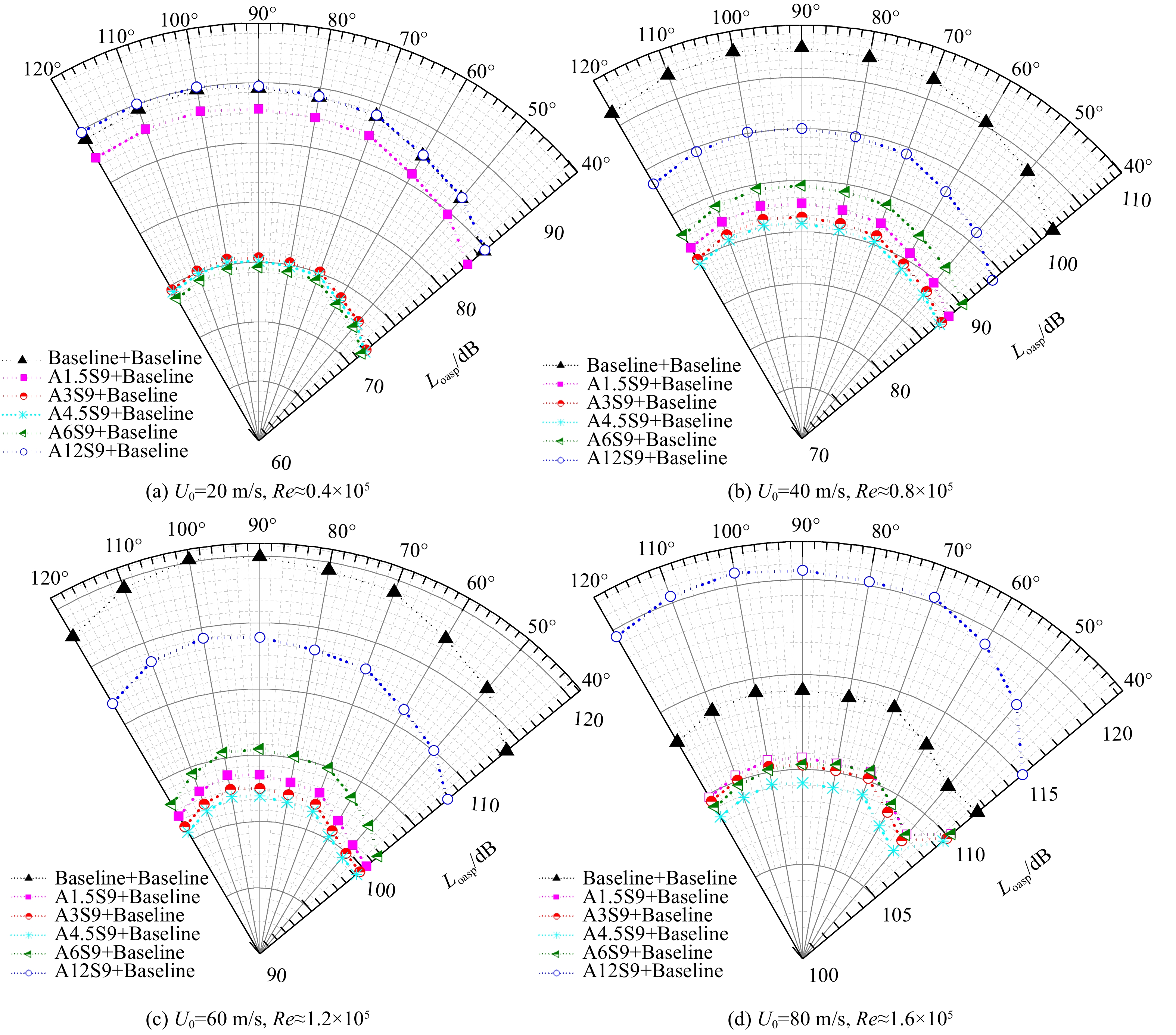
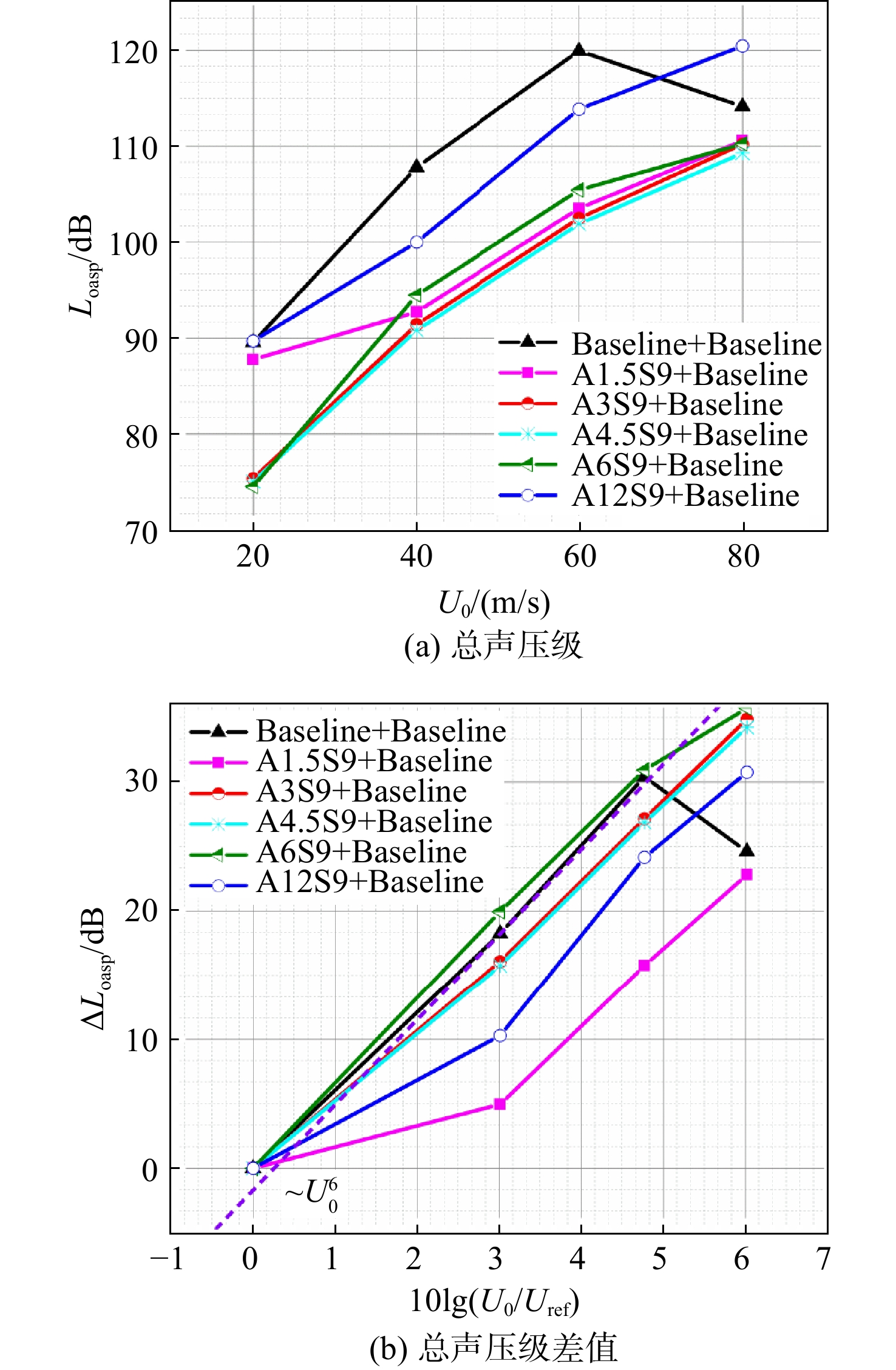
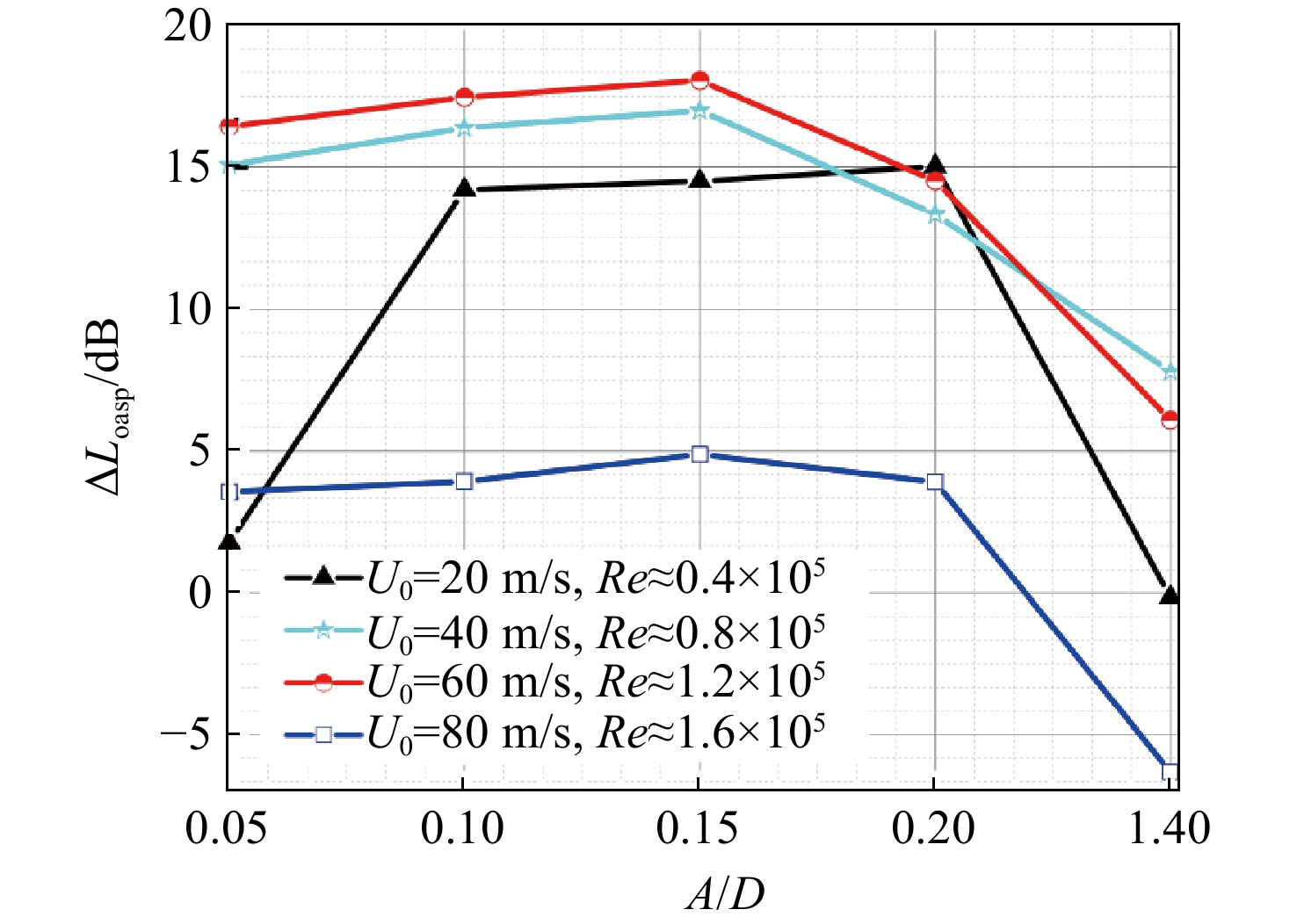
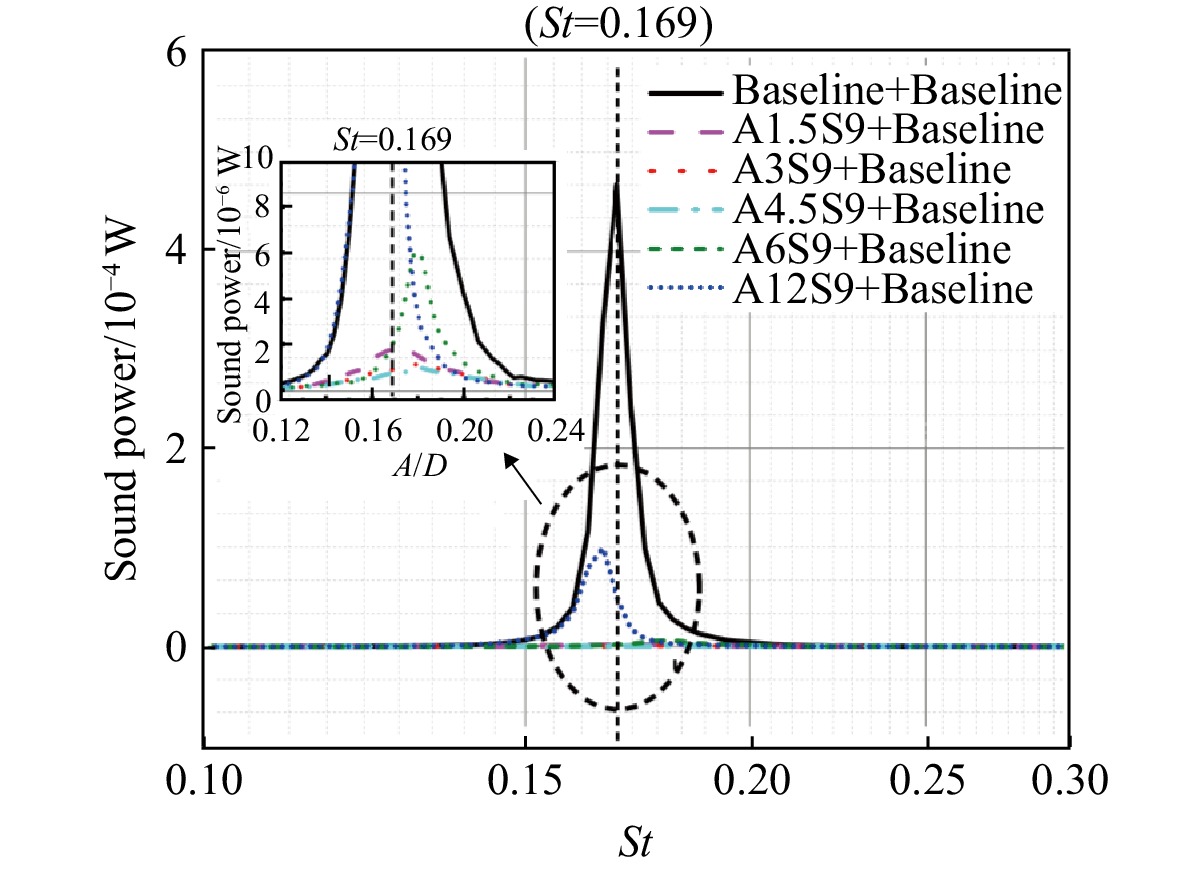
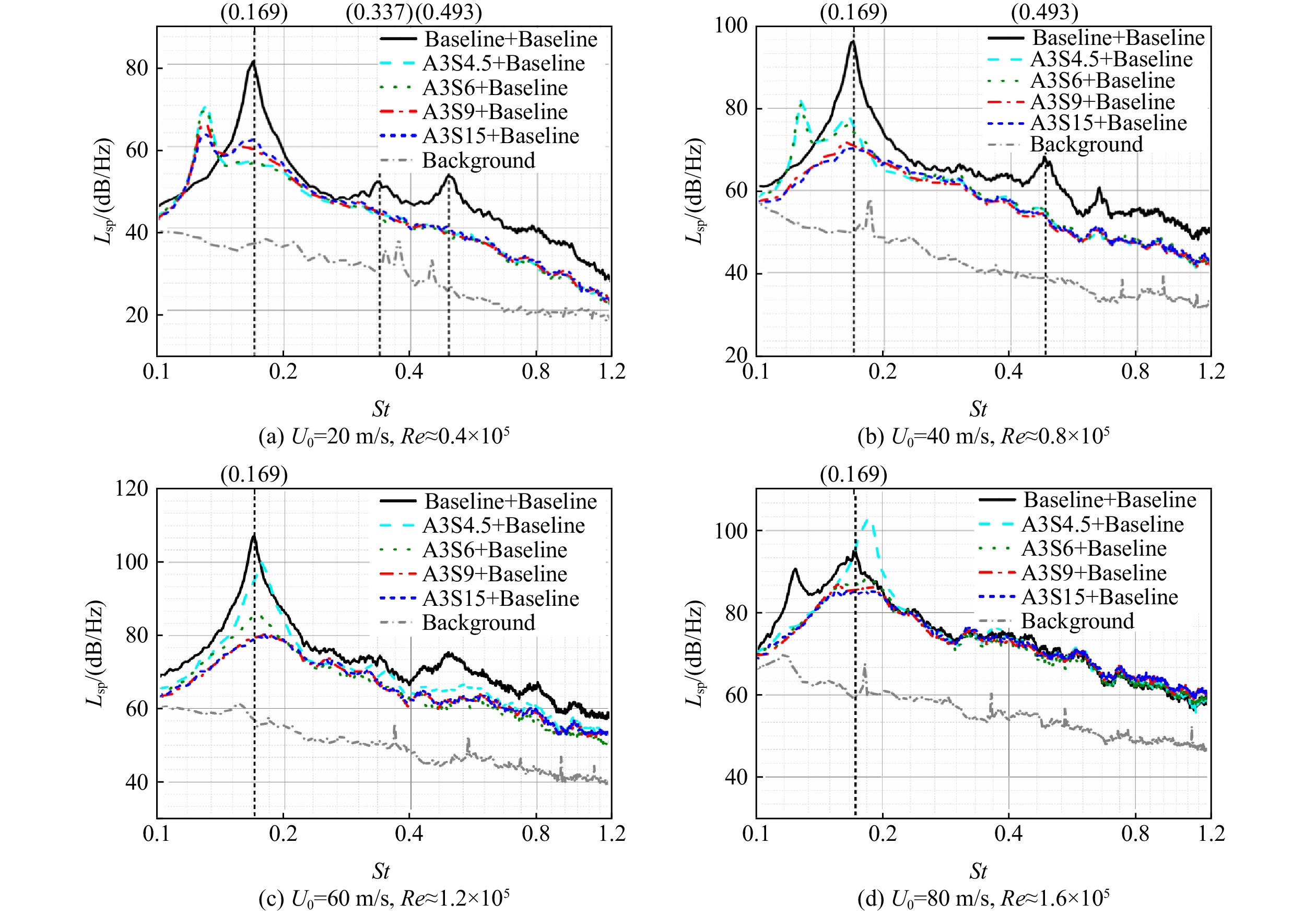
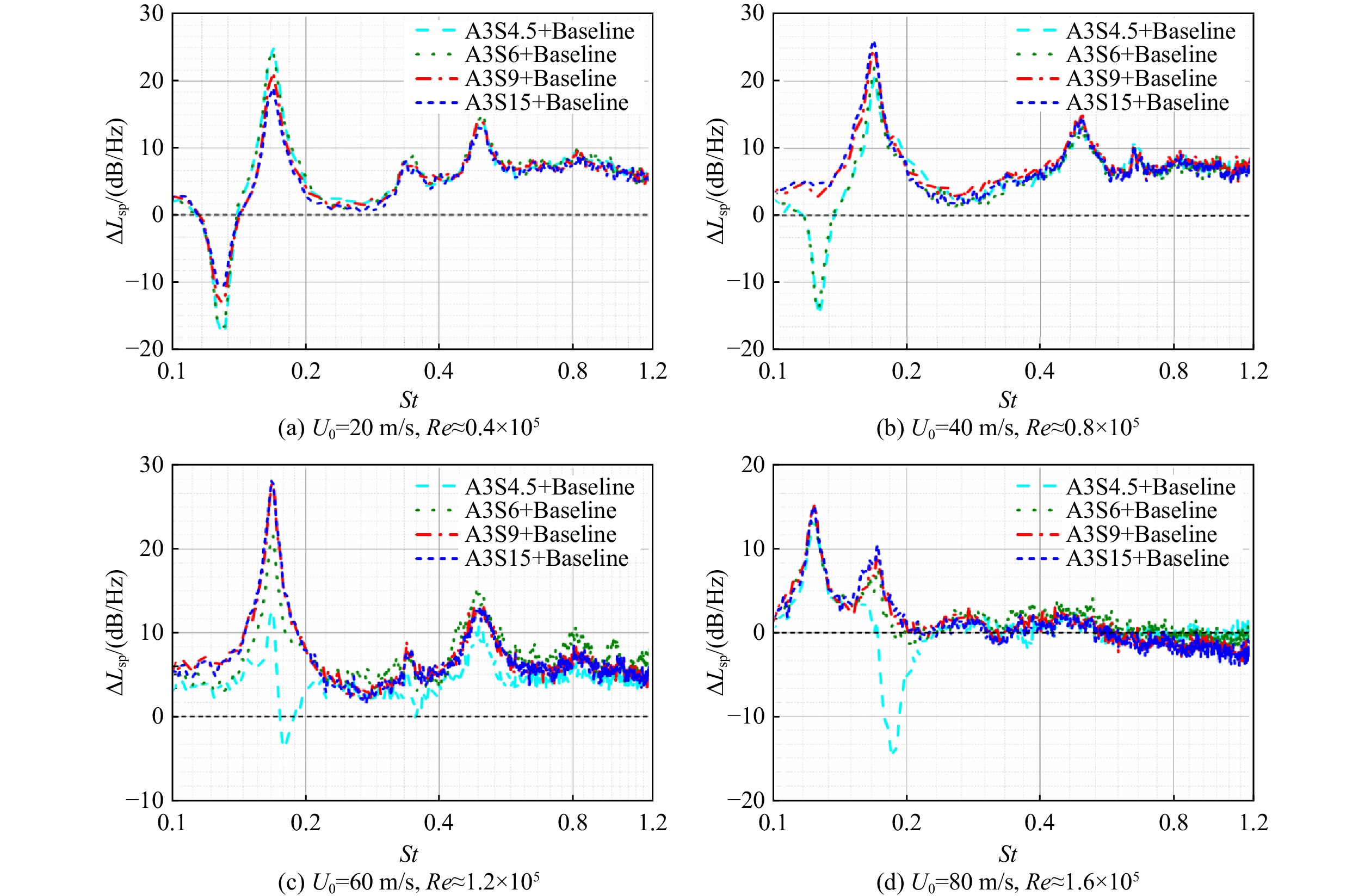
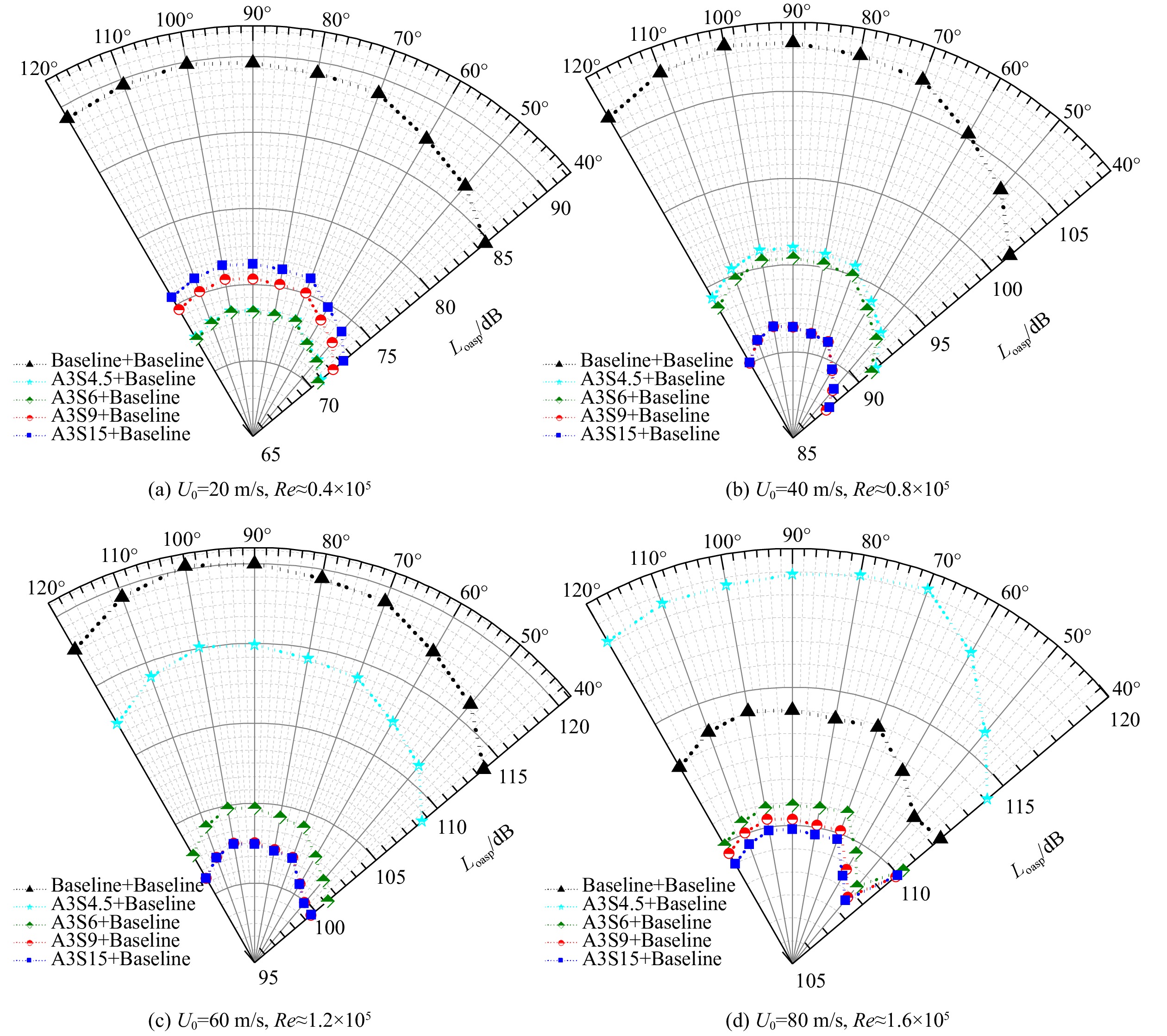
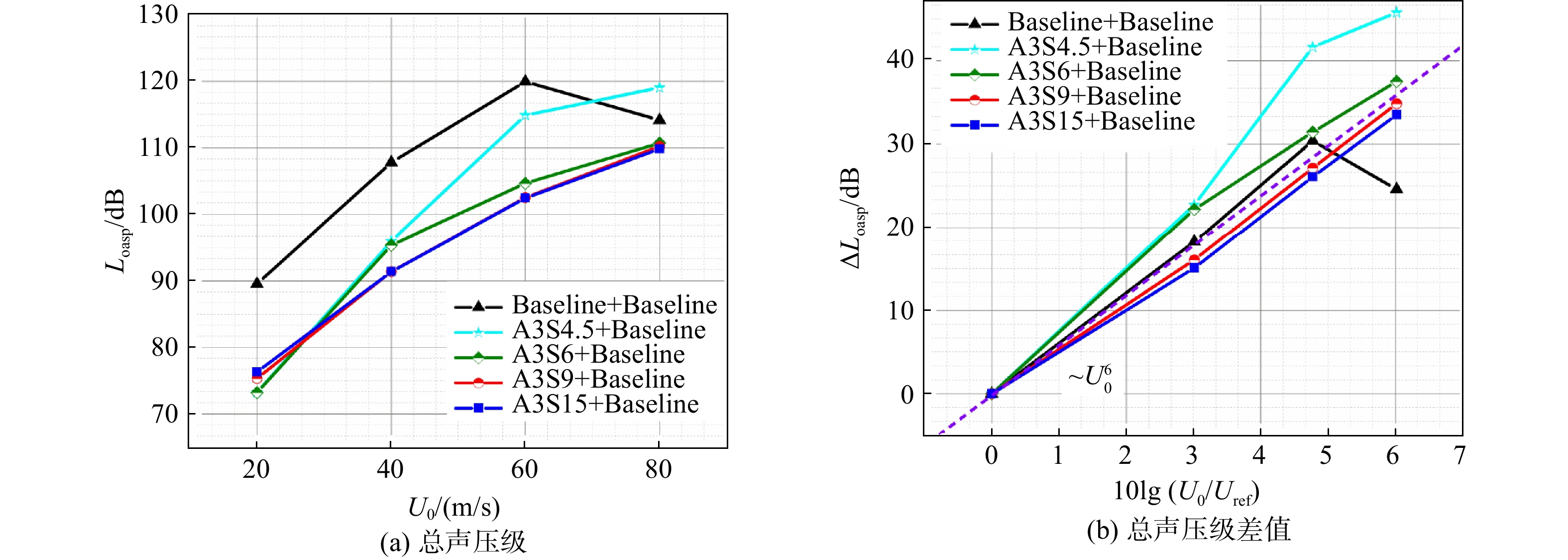
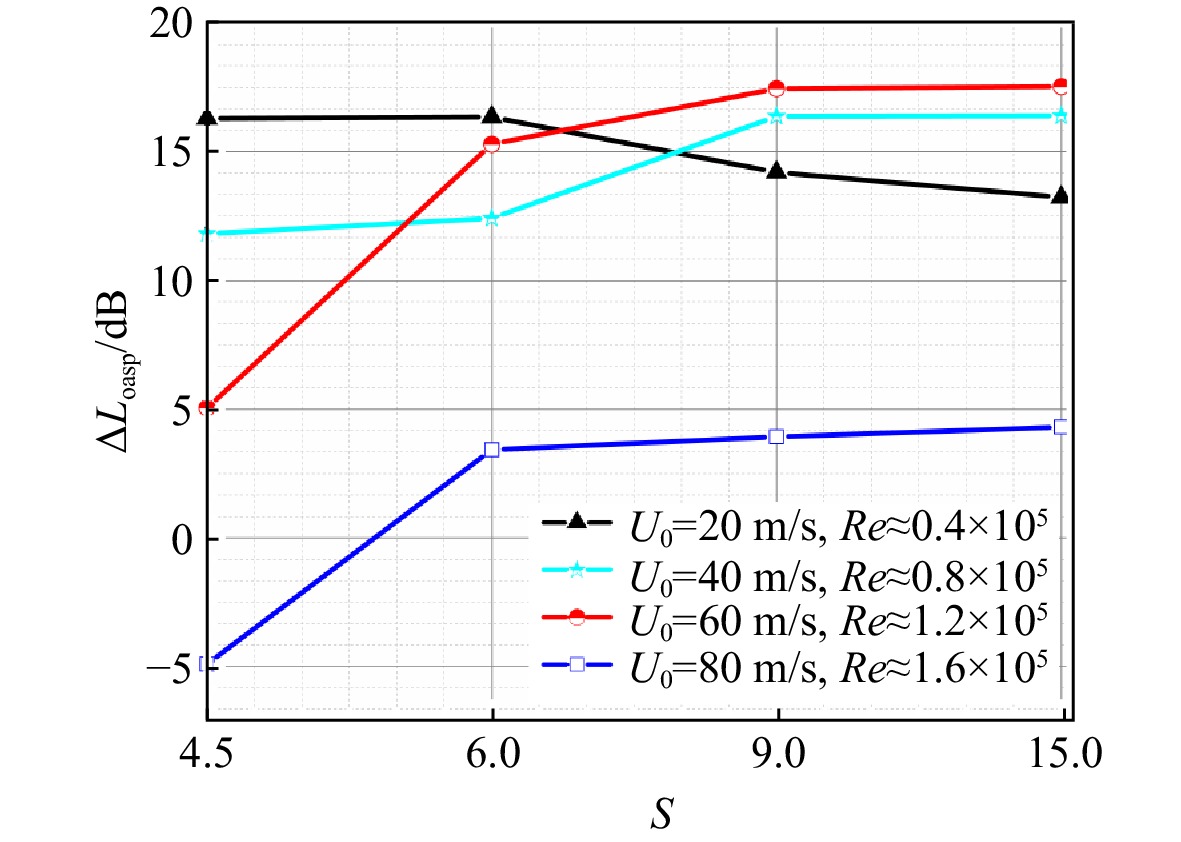
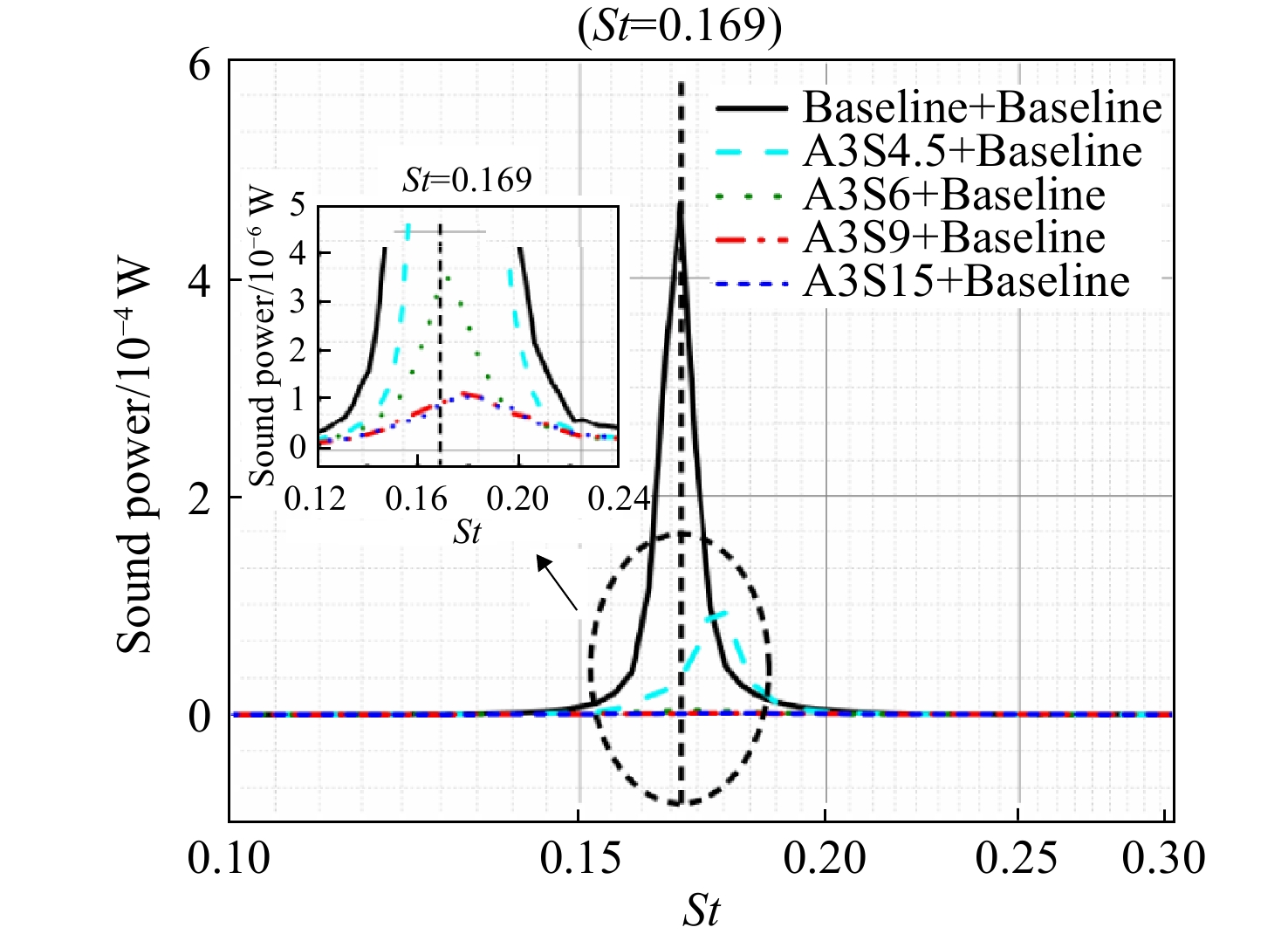
In order to explore the noise reduction effect and noise reduction law of the periodic pitch diameter protruding structure on the interference noise of the tandem double cylinders bluff body, noise reduction experiments of tandem double cylinders were carried out in the 0.55 m×0.4 m anechoic wind tunnel. Eight kinds of periodic pitch diameter protruding structures with different parameters were designed, and the noise reduction effects of pitch diameter periodic protruding structure on the interference noise of the tandem double cylinders were tested at four incoming flow velocities (Reynolds number 0.4×10⁵−1.6×10⁵). Experiment results showed that, the tone peak noise can be reduced or even be completely suppressed by the periodic pitch diameter protruding structure. The maximum peak noise reduction can reach nearly 30 dB, and the maximum overall sound pressure level noise reduction can reach 18.1 dB. Under different working conditions, different structures had different noise suppression capability and there was an optimal value for each working condition. Generally speaking, periodic pitch diameter protruding structure with protruding height of (0.1D~0.15D), protruding space of 0.5D has the best noise reduction effect across a wide working condition range. The introduction of periodic pitch diameter protruding structure not only changed the peak characteristic frequency and vortex shedding frequency of tandem double cylinders, but also suppressed the generation of Karman vortex street.

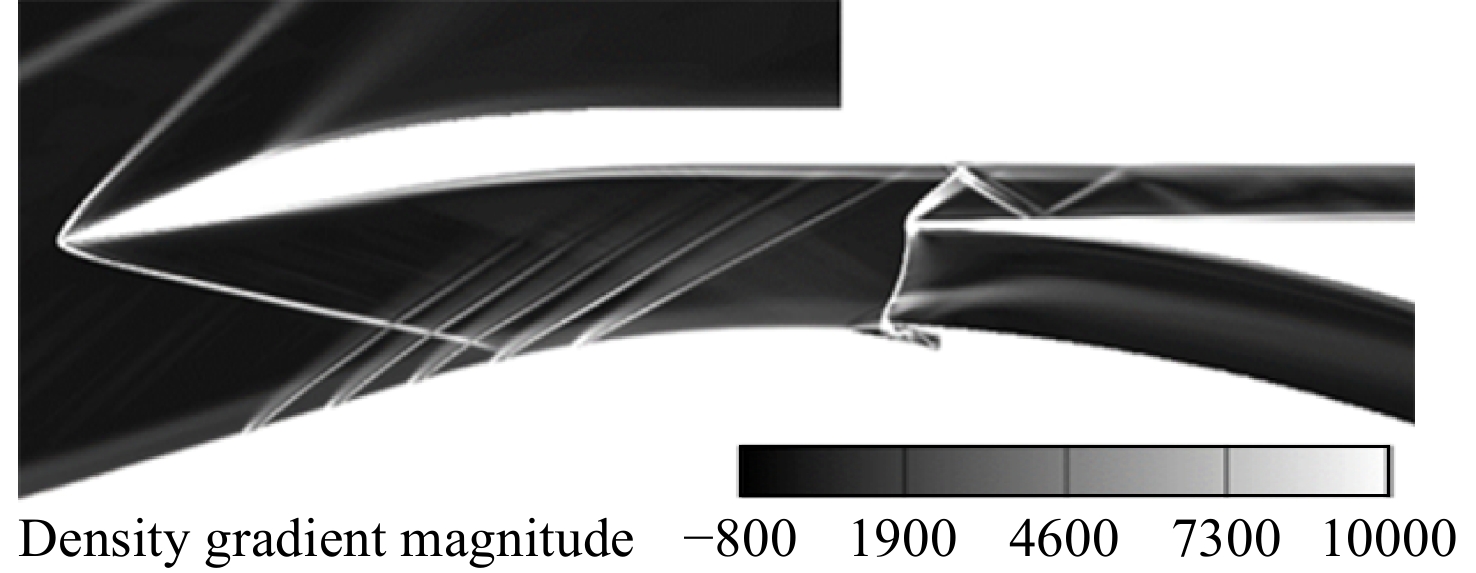
Study on flowfield for mode transition of over-under type inlet with double flow path
ZHAO Jiahui, YANG Shunhua, YOU Jin, WANG Yuhang, LUO Jiamao, ZHANG Qianfeng
2023, 38(1): 173-183. doi: 10.13224/j.cnki.jasp.20220519
Abstract:

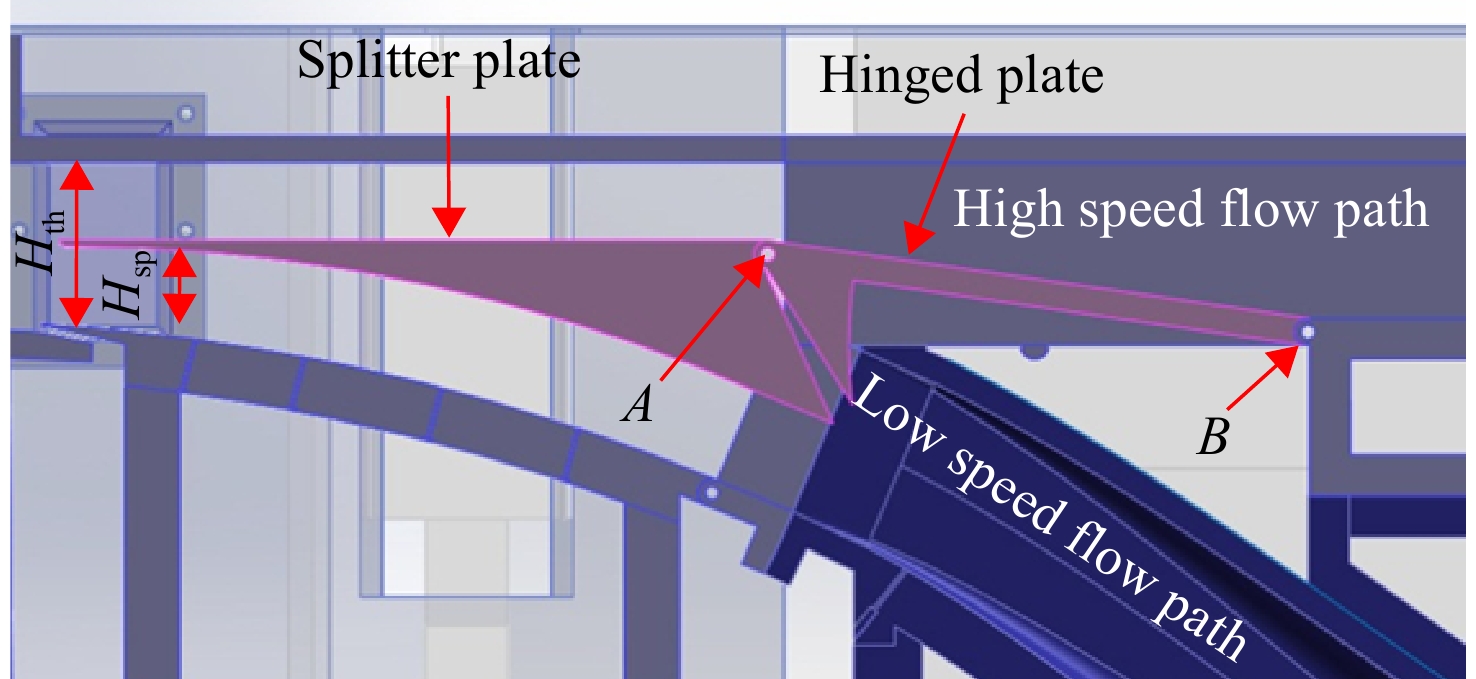
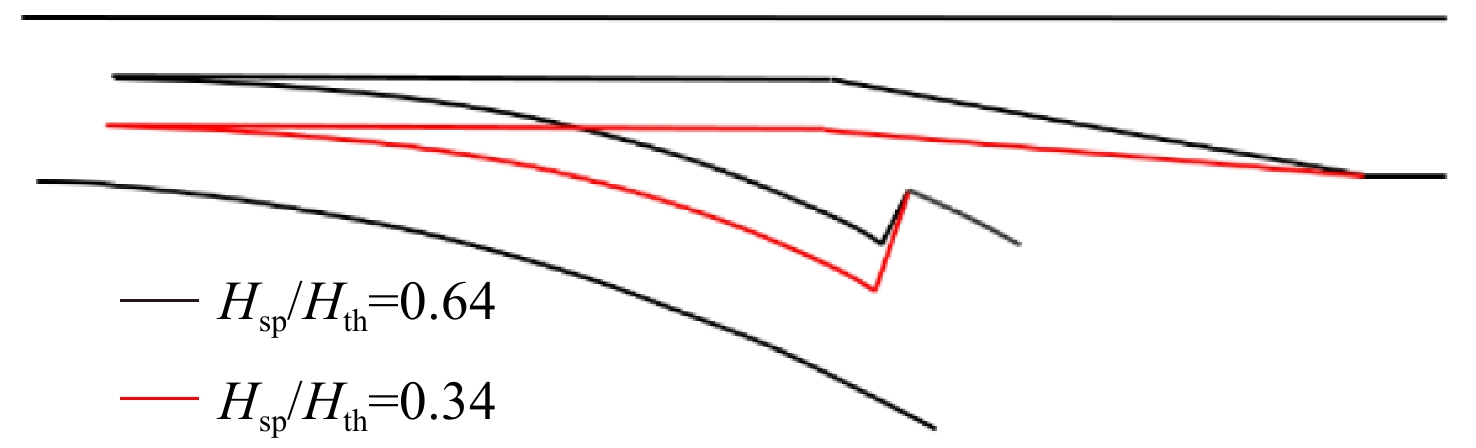
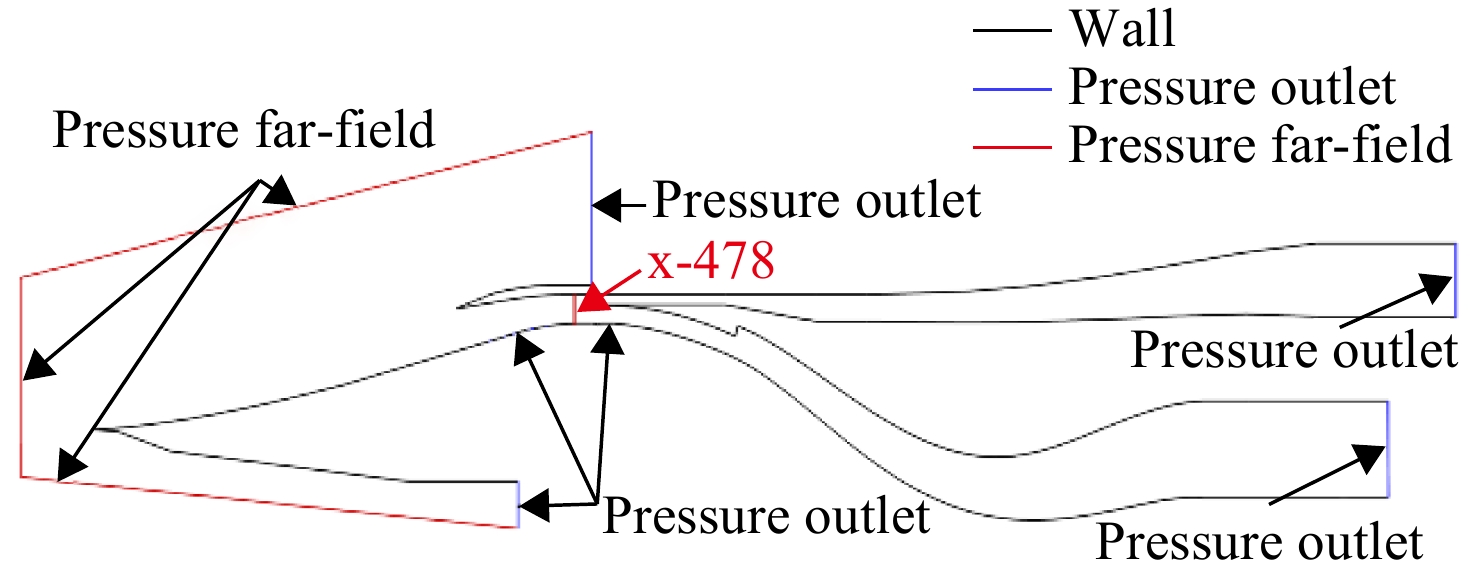
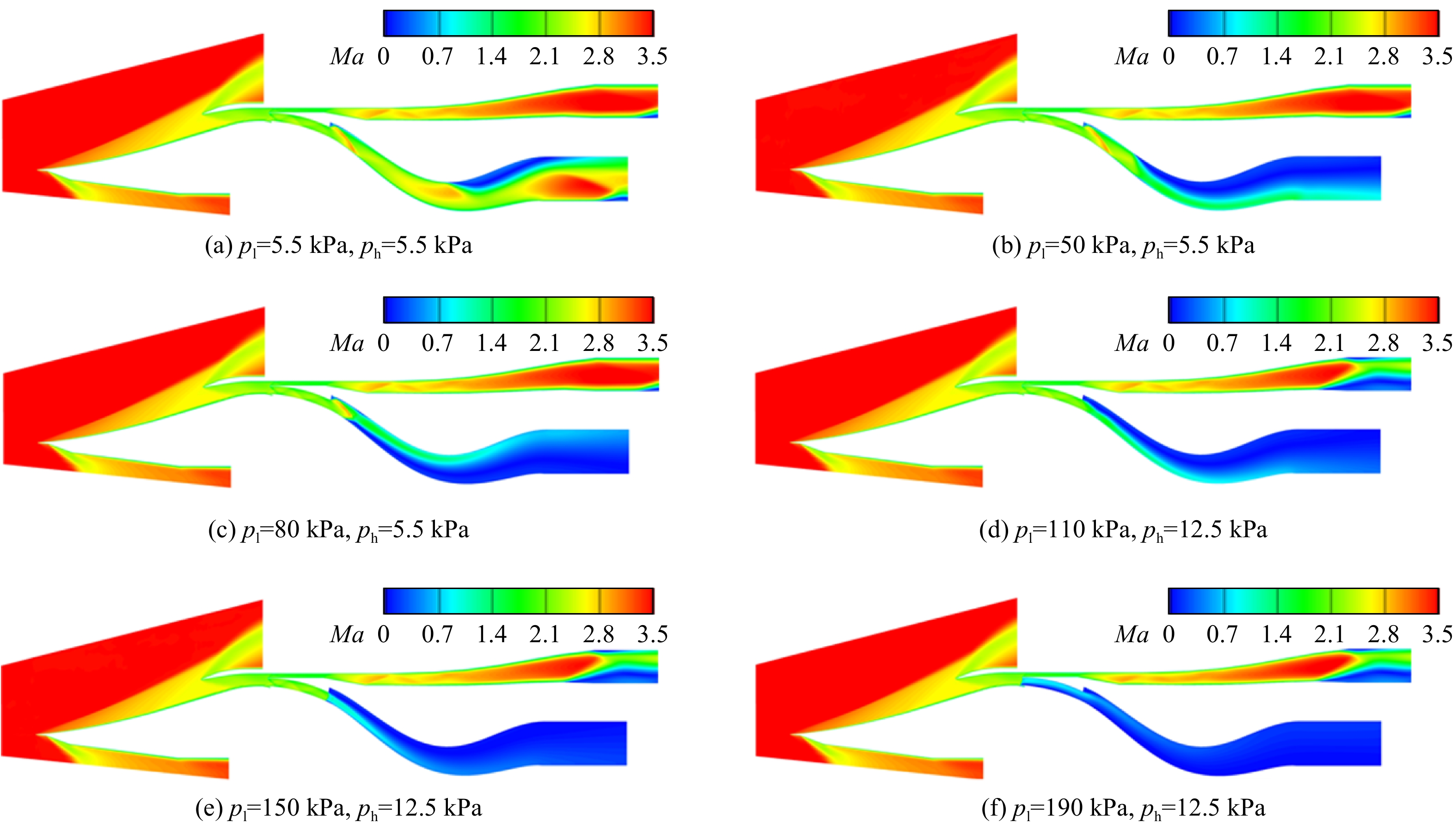
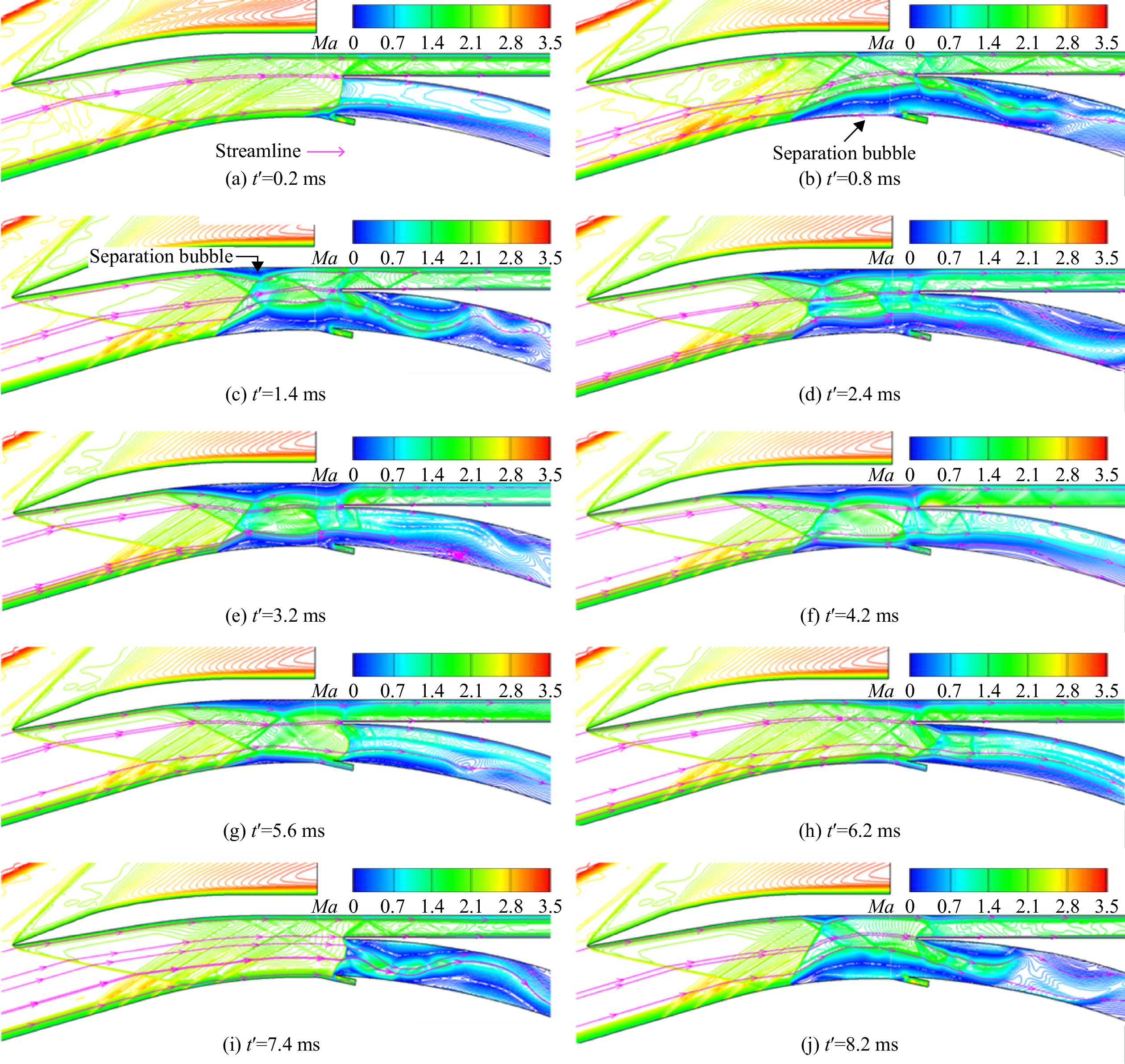
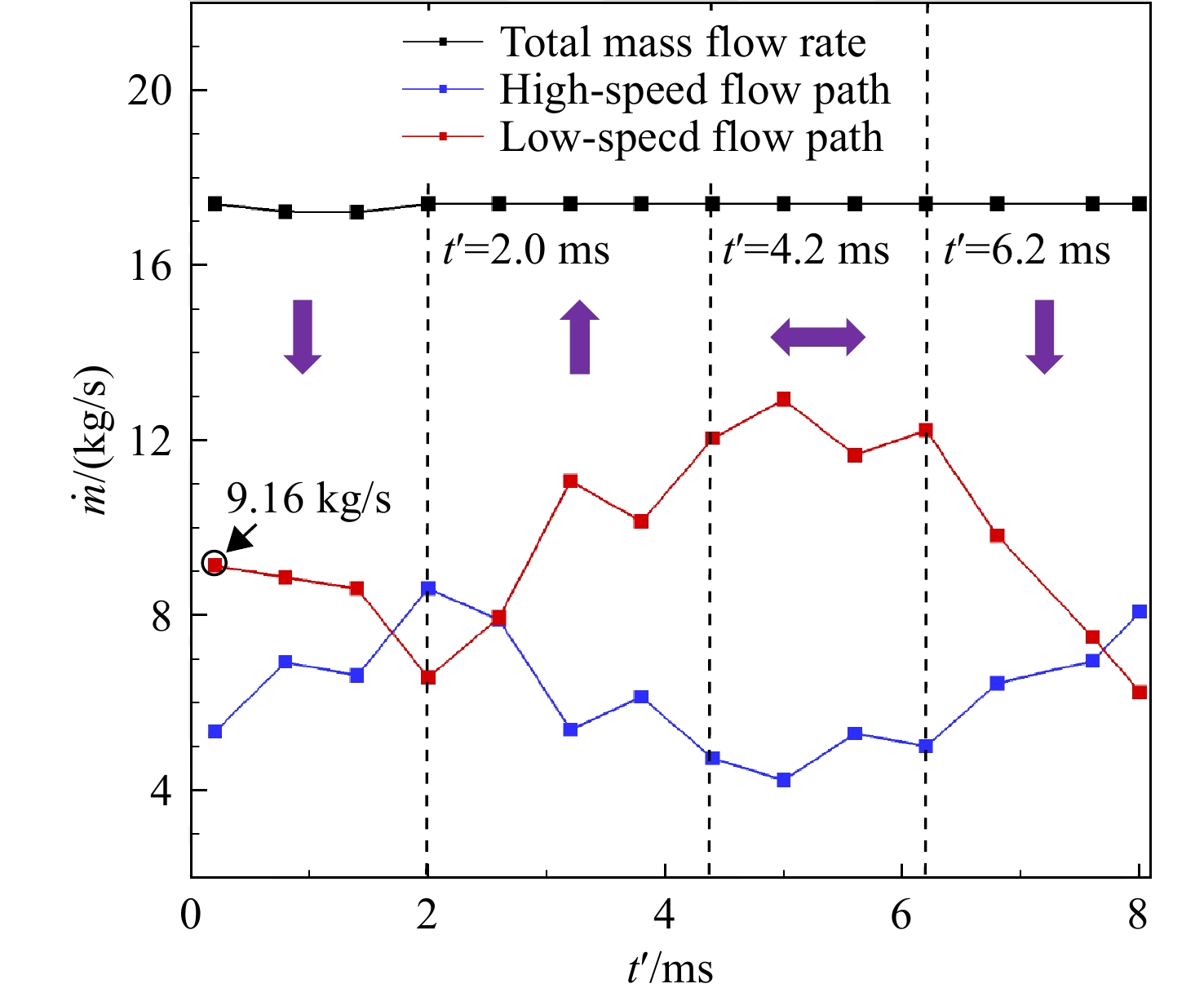
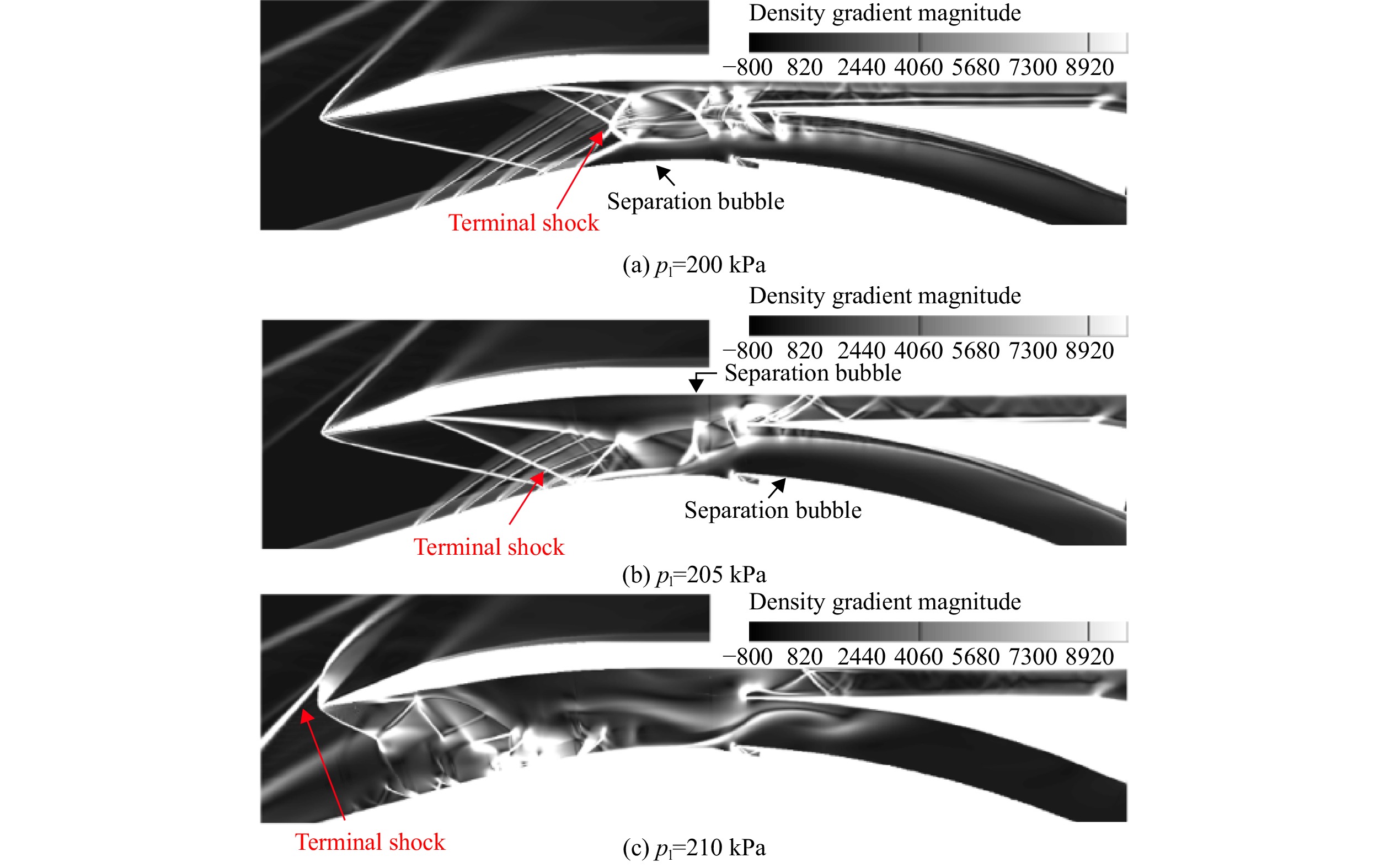
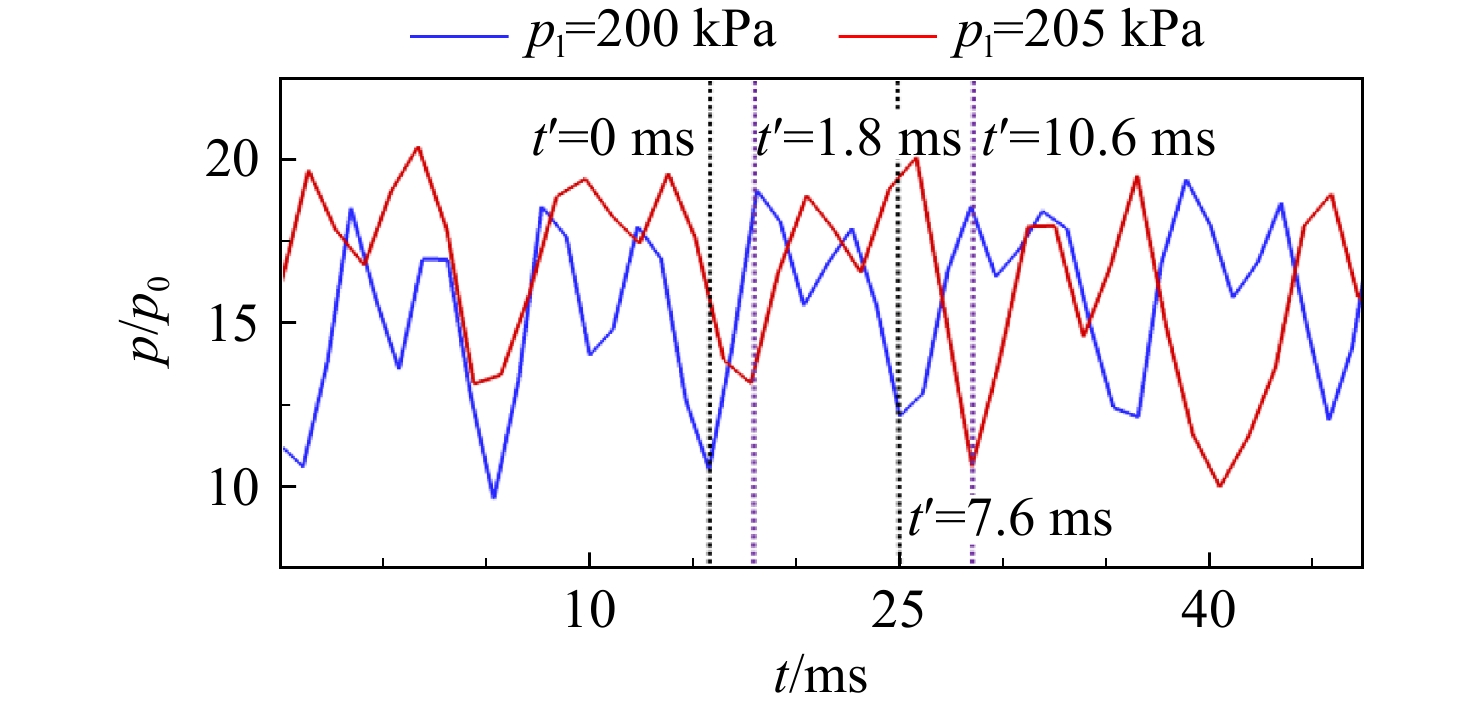
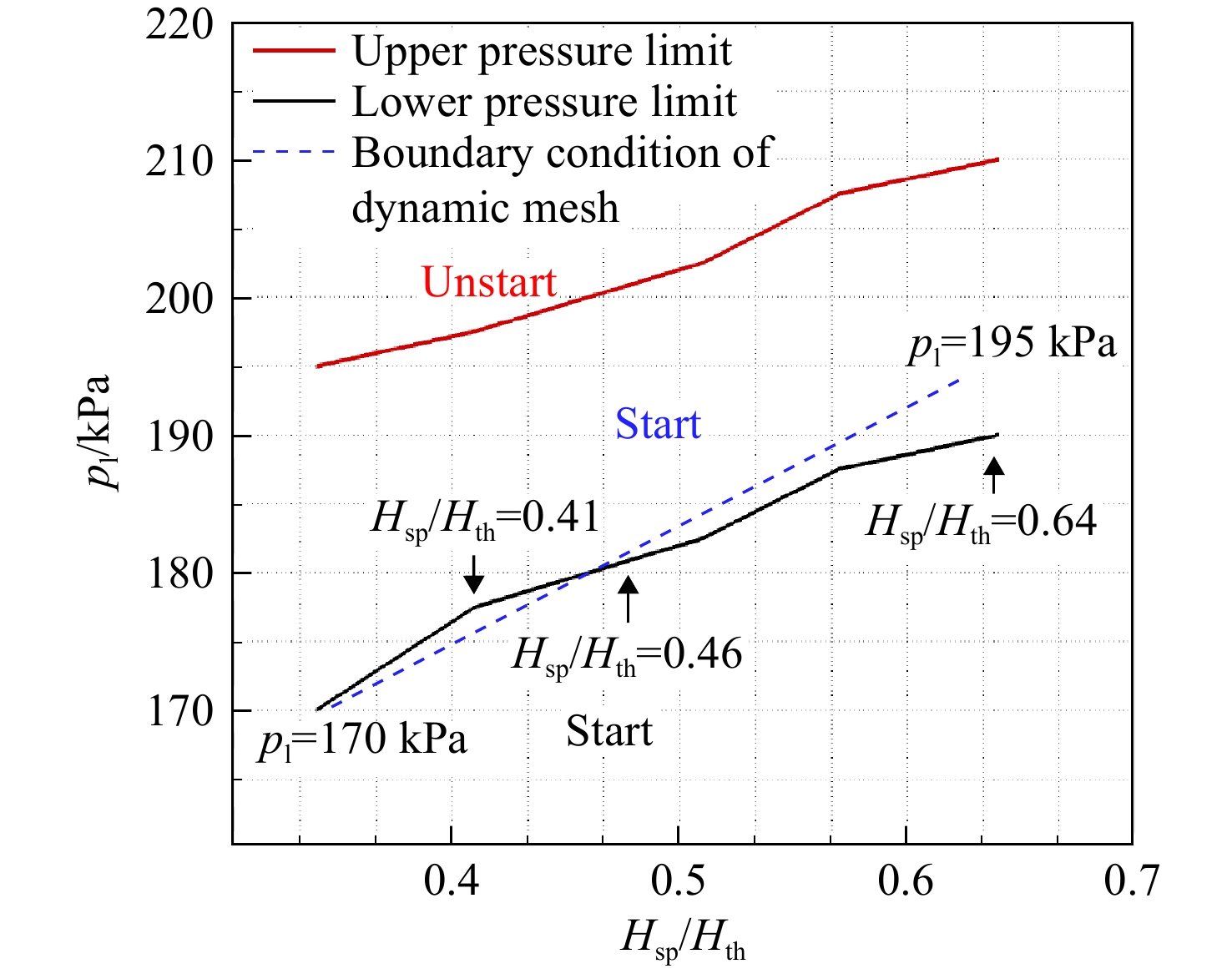
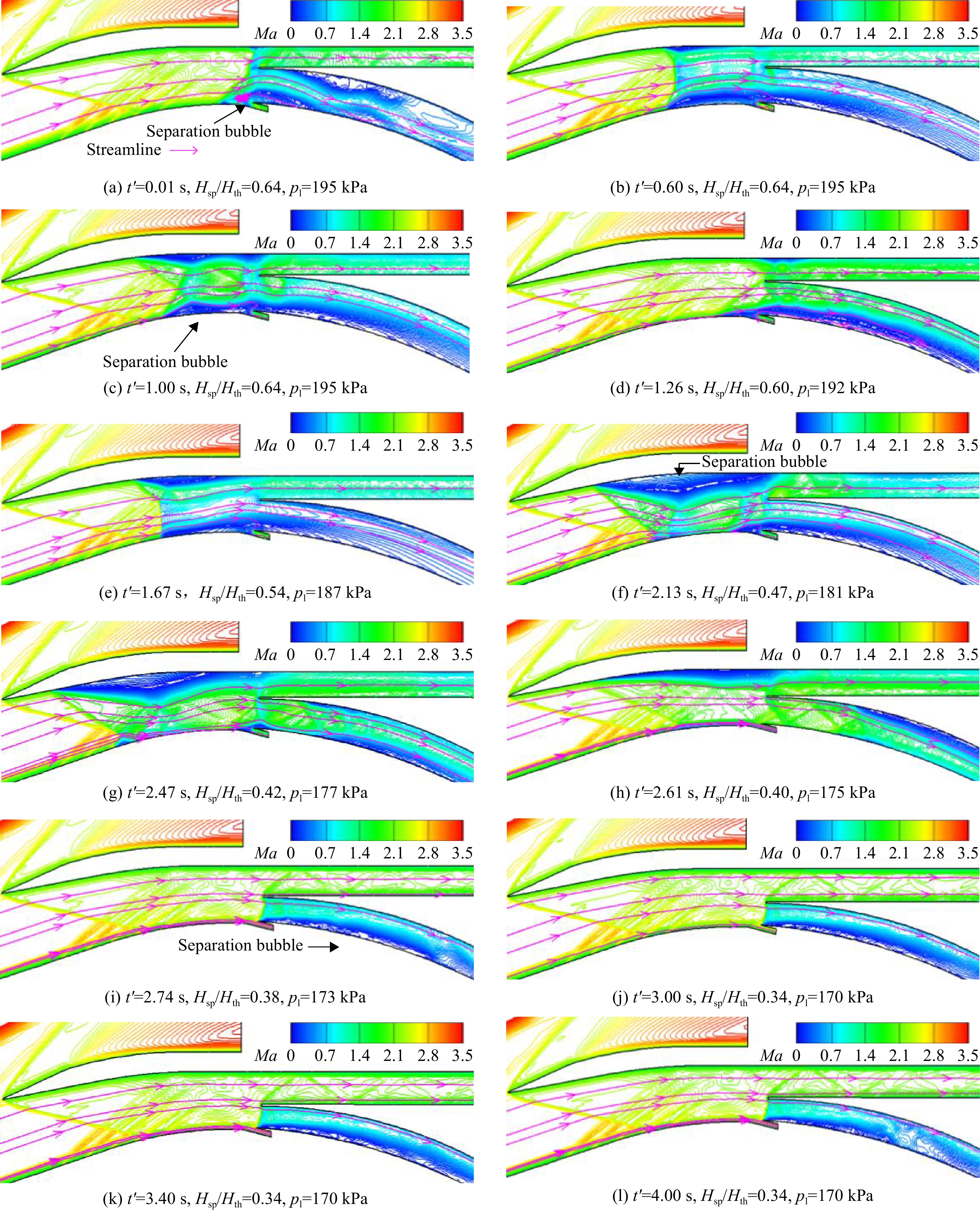
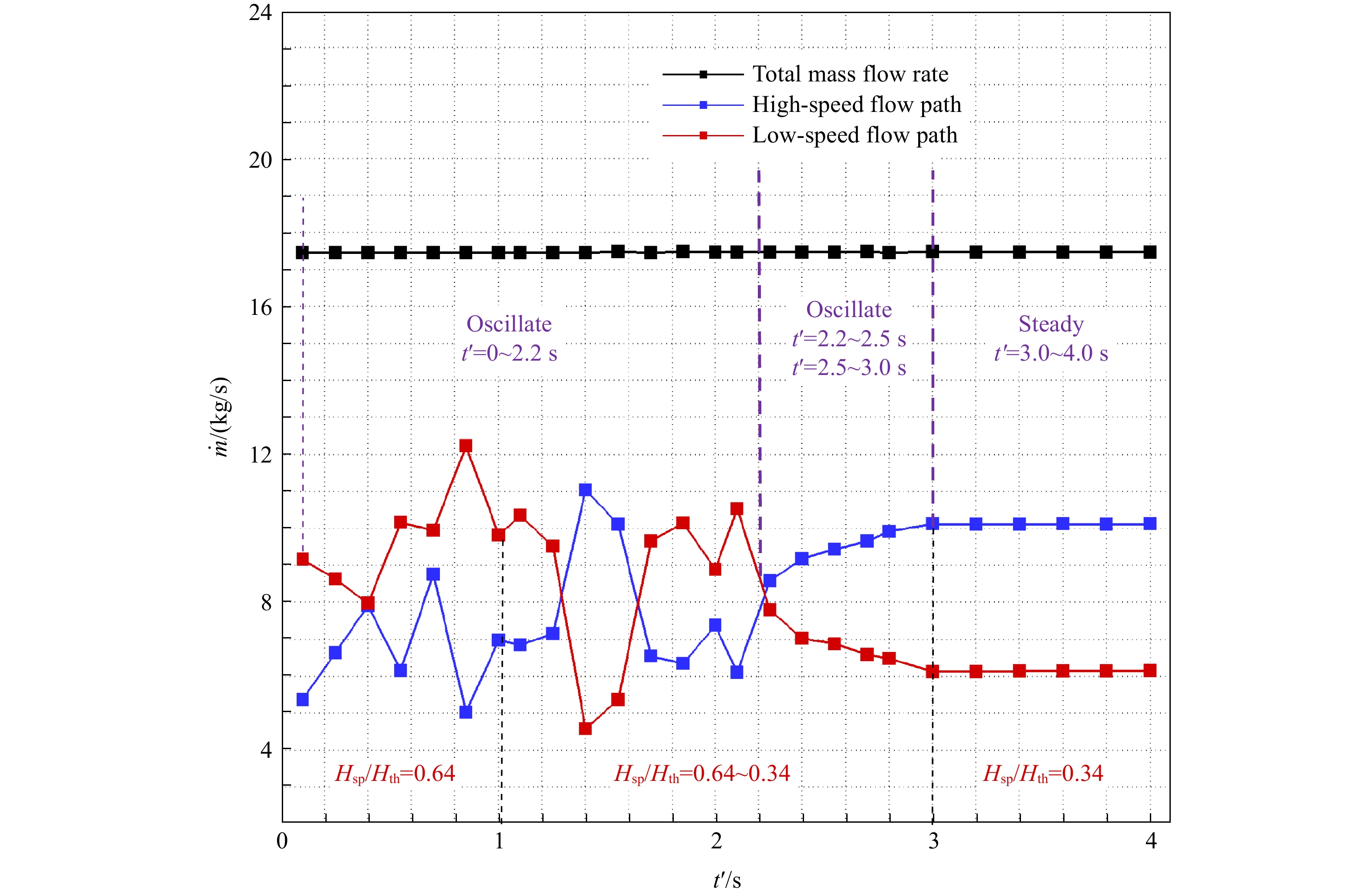
Numerical simulation model was used to study the influence of the height of splitter plate on the backpressure resistance capacity of low speed passage and the coupled aerodynamic characteristics of high/low speed passage, of which the model was validated by dynamic mesh calculation. It was found that with the increase of backpressure, the terminal shock was put out of the low speed passage and oscillated periodically in the throat. In the meantime, the frequency of oscillation decreased with adding backpressure. When the backpressure reached a specific value, the inlet failed to start. Besides, it became more difficult for inlet to work when the low speed passage was further closed as its resistance to backpressure reduced.

Turbomachinery
Influences of the cavity leakage flow on shrouded stator performance at different inlet boundary layer thicknesses
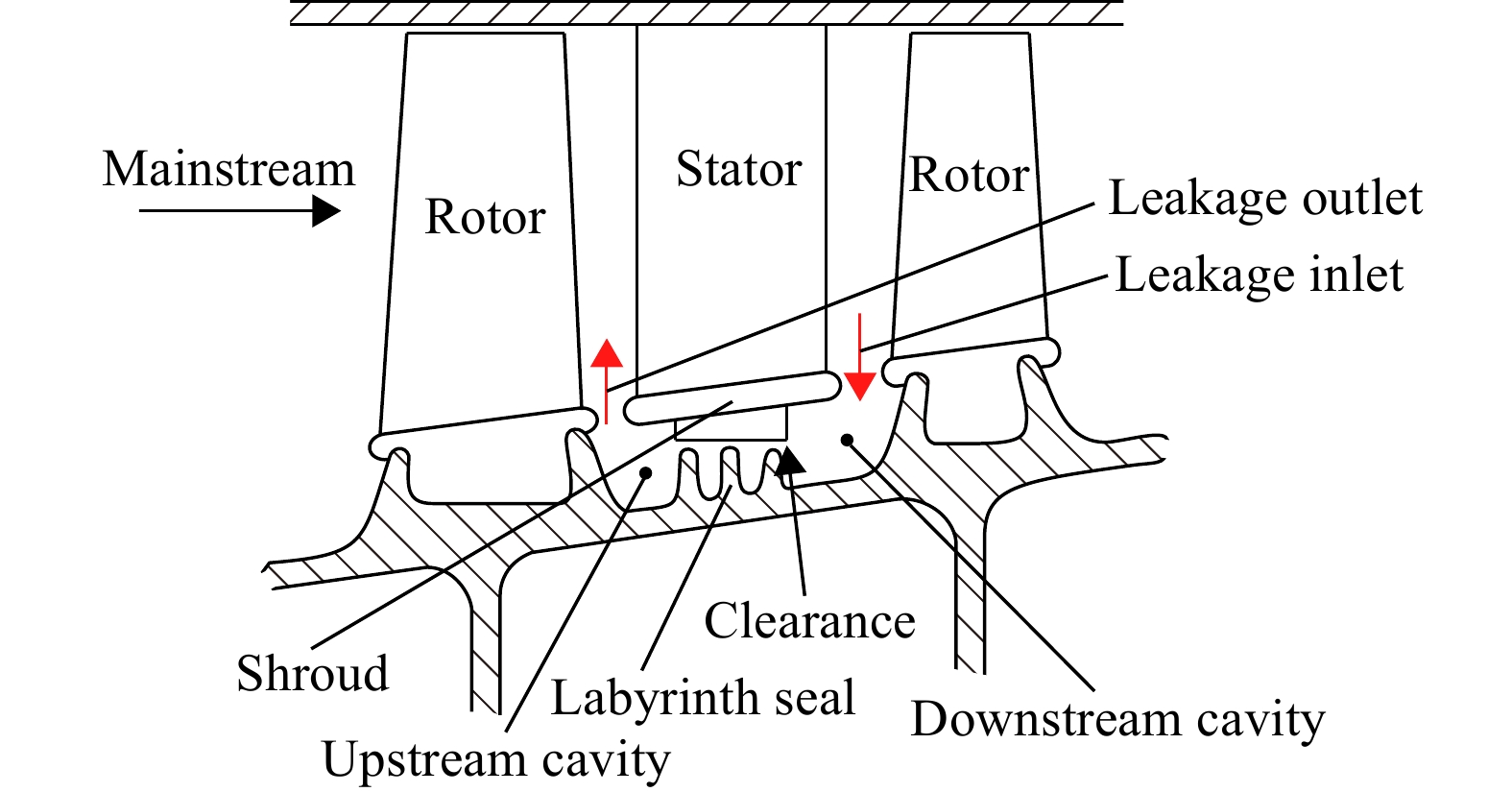
KONG Xiaozhi, HUANG Tianshuo, LIU Yuxin, WANG Chengze, LU Huawei
2023, 38(1): 184-196. doi: 10.13224/j.cnki.jasp.20220445
Abstract:

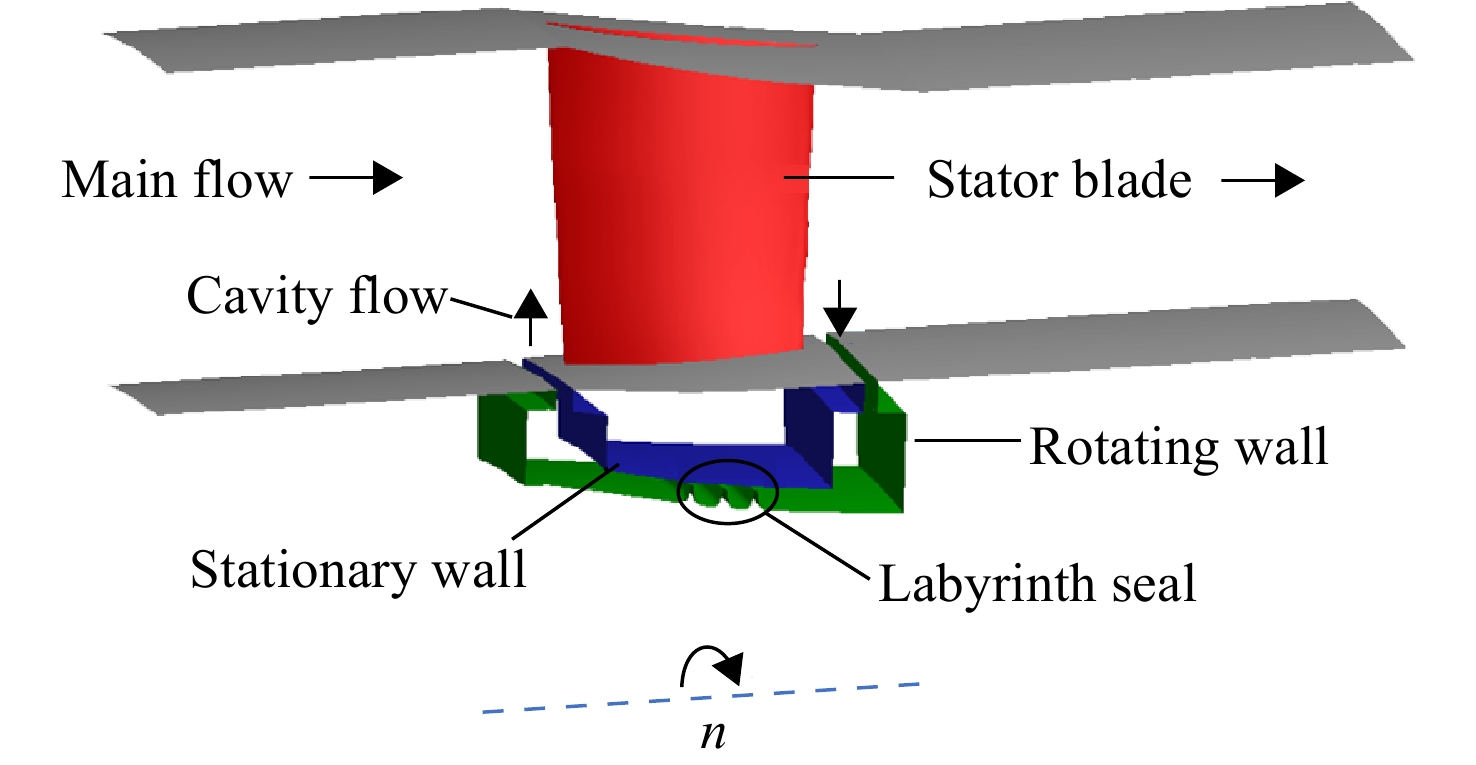
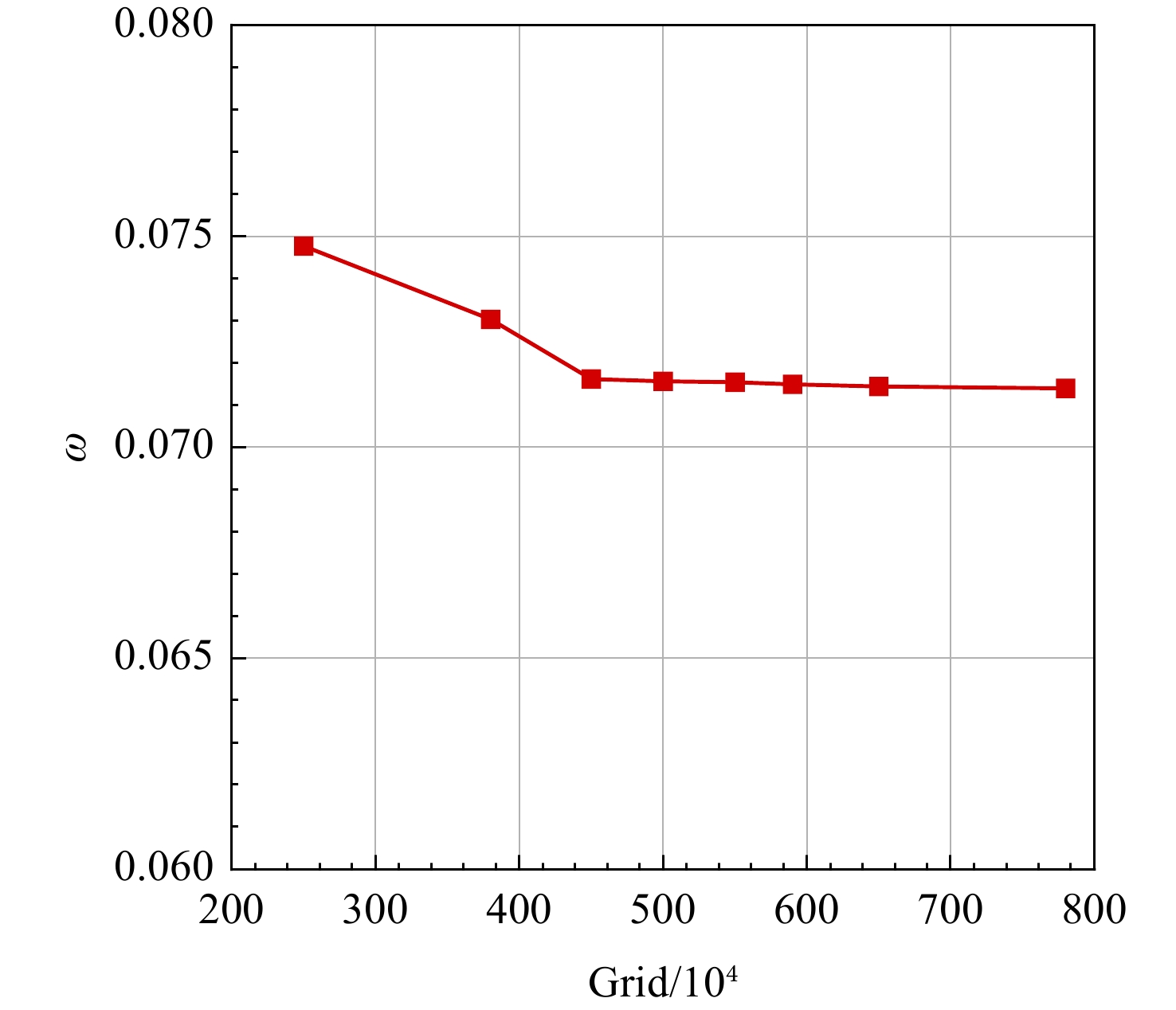
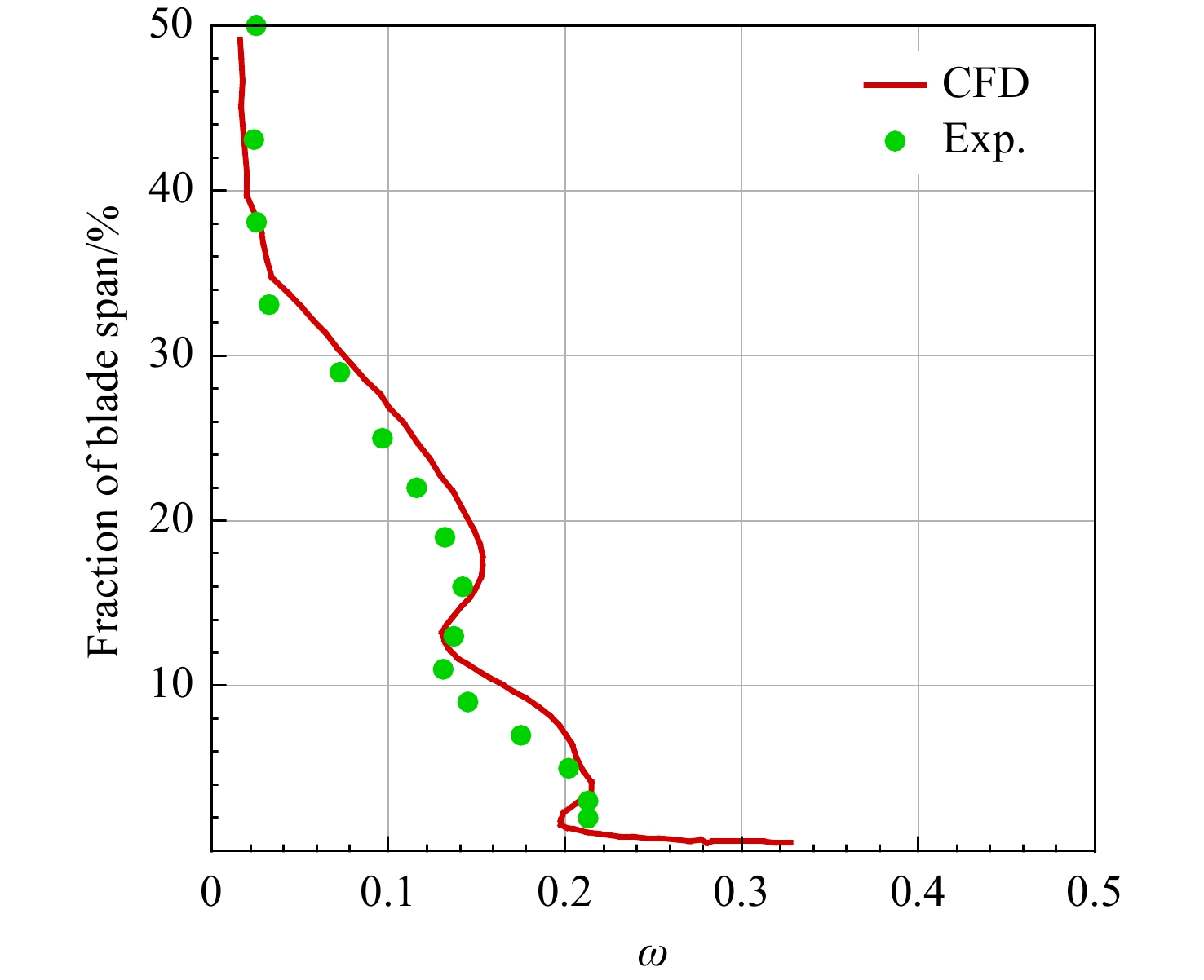
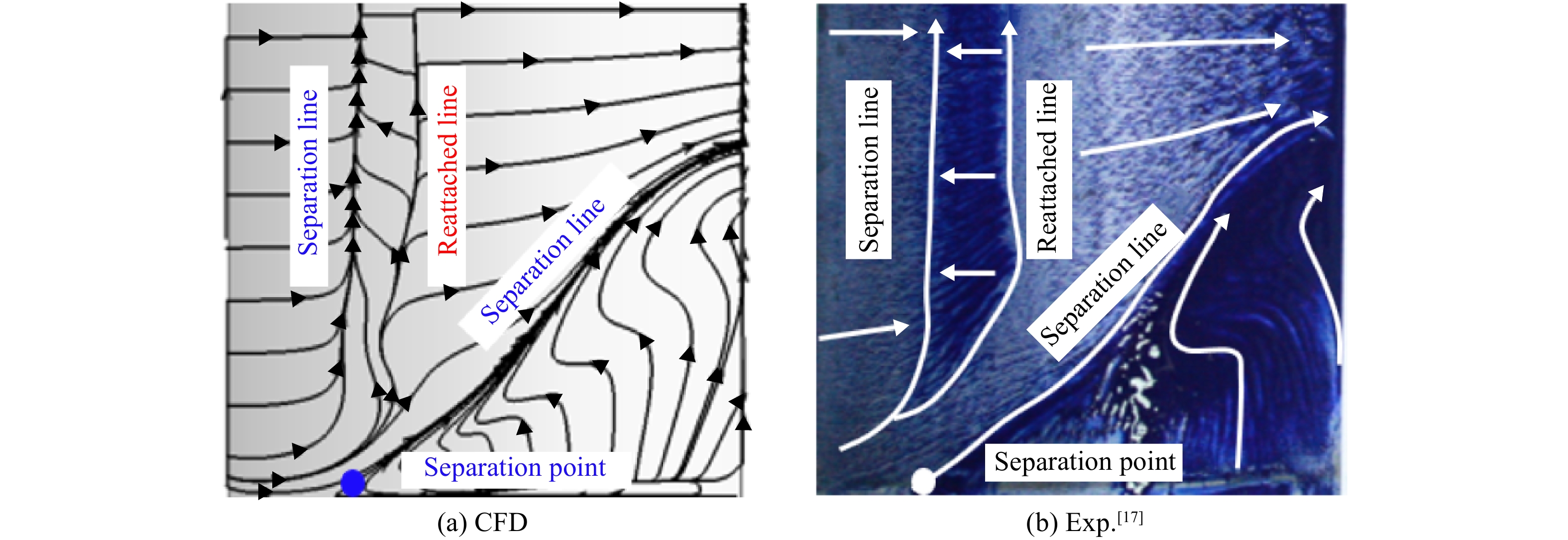
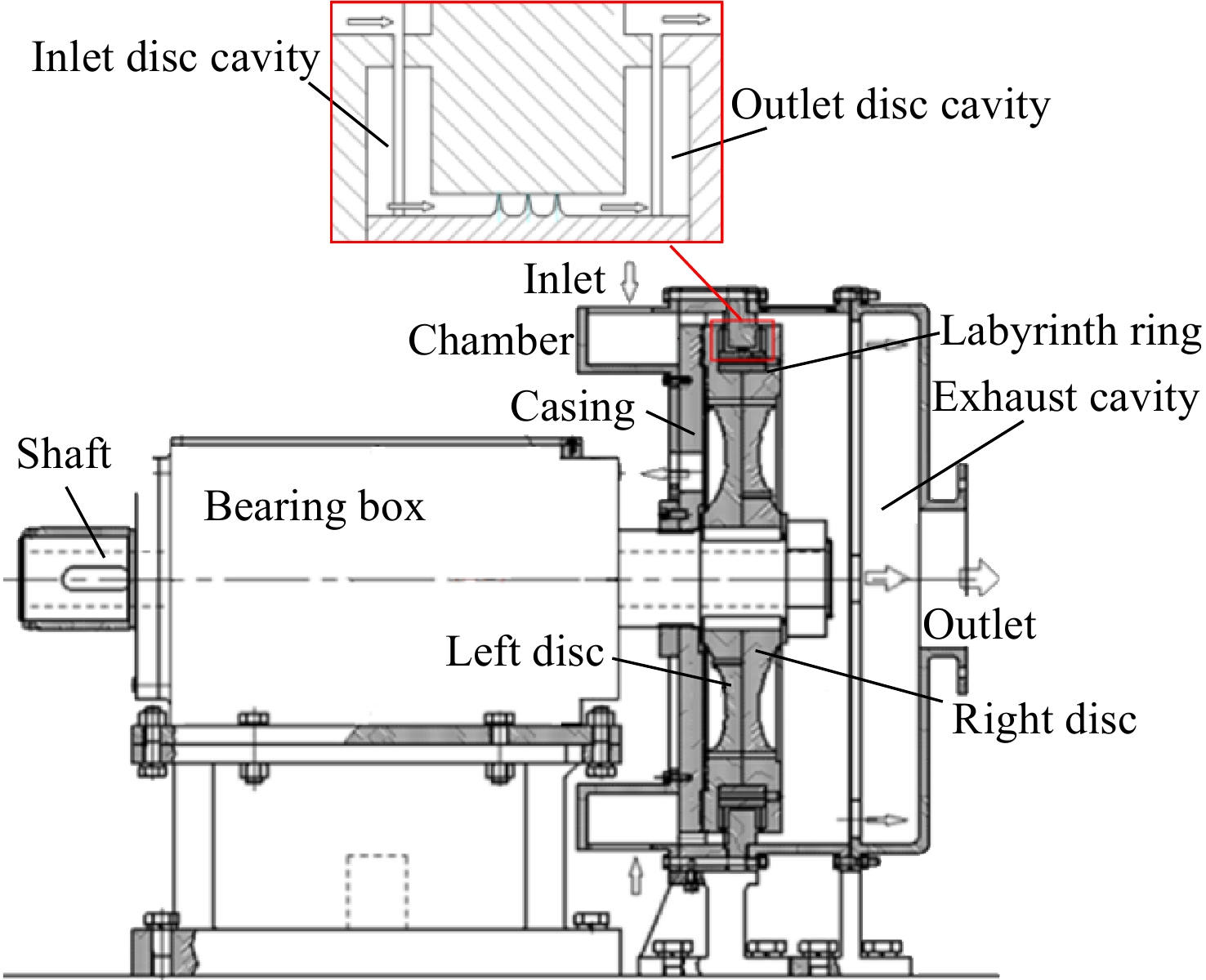
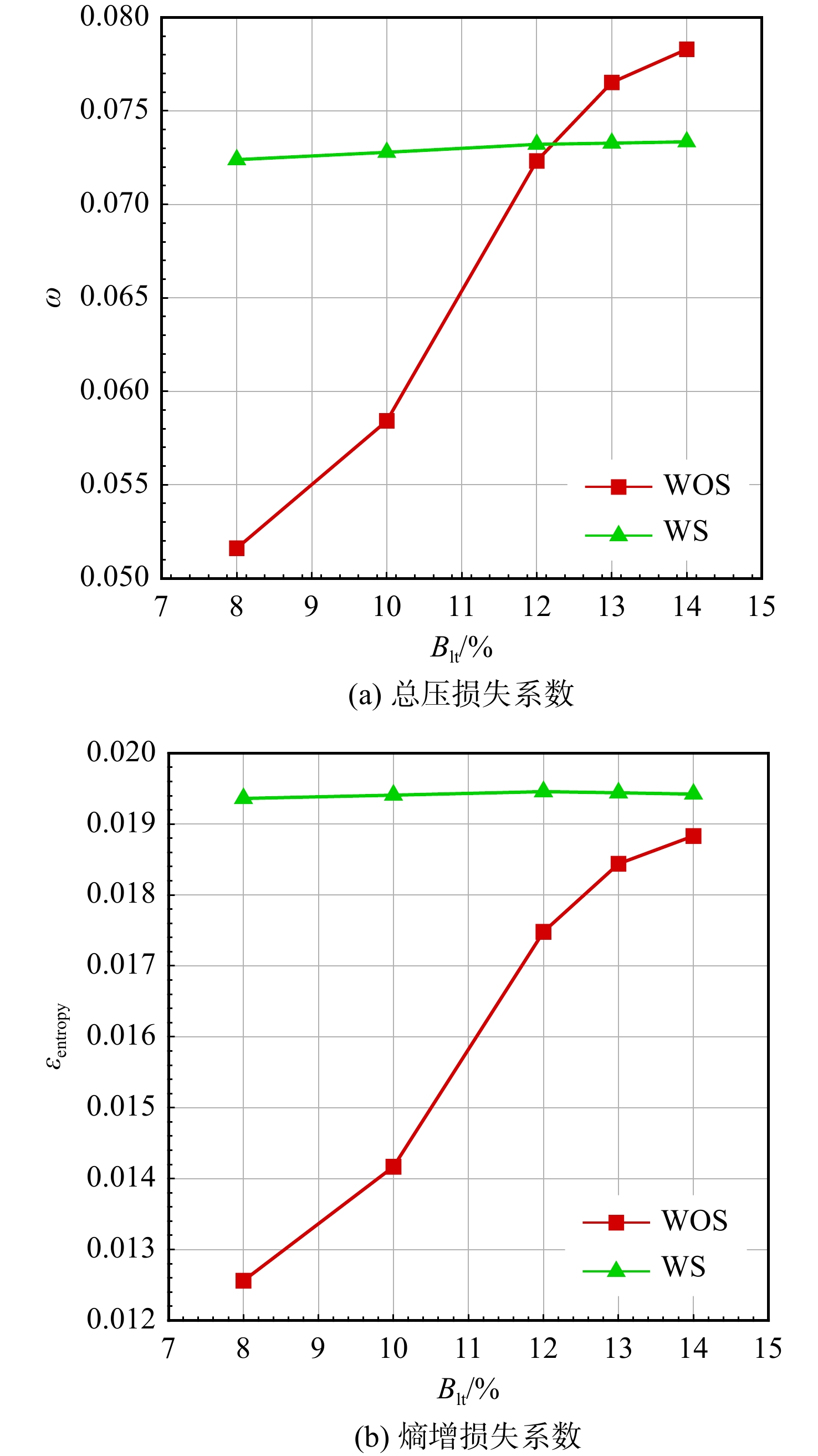
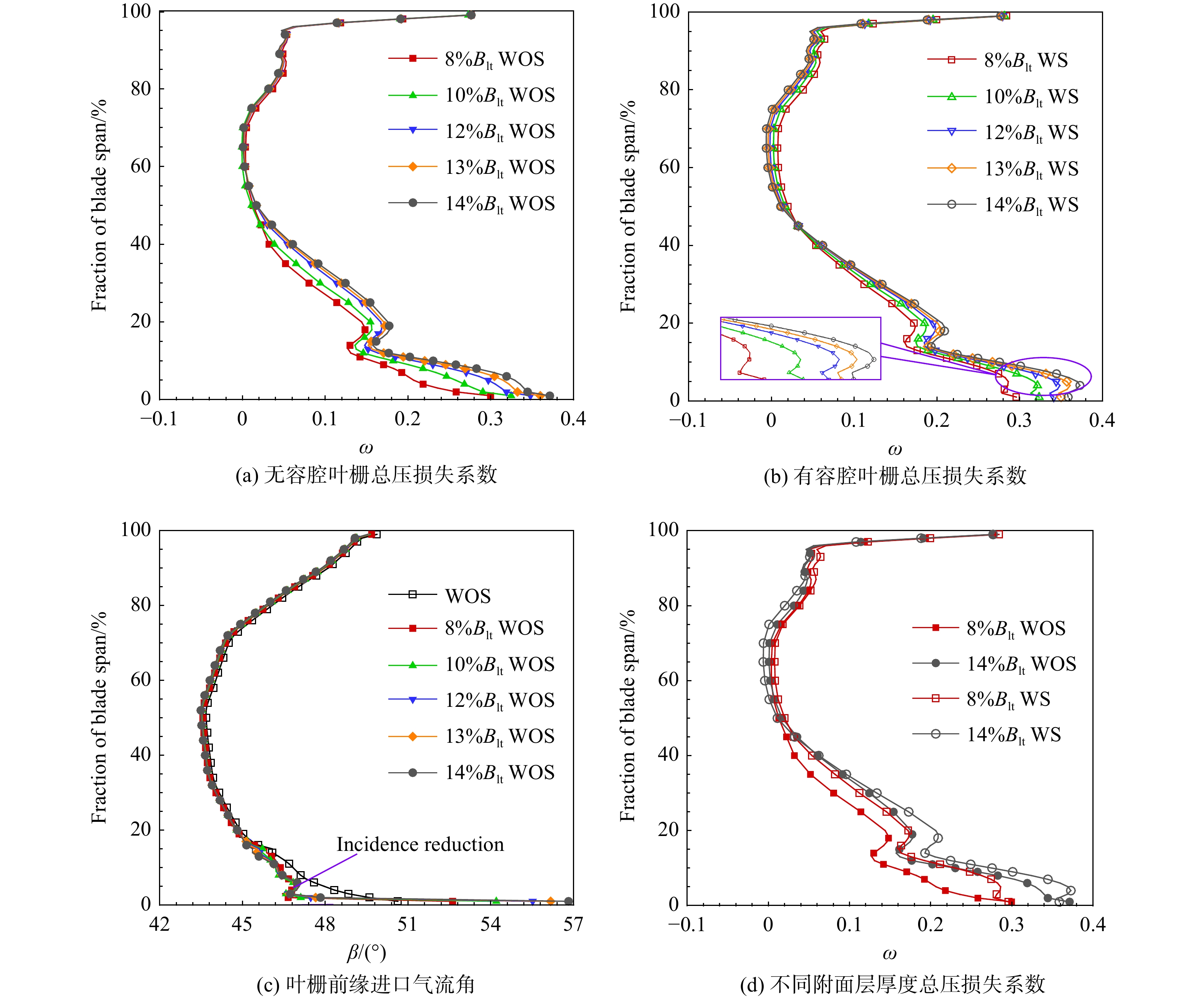
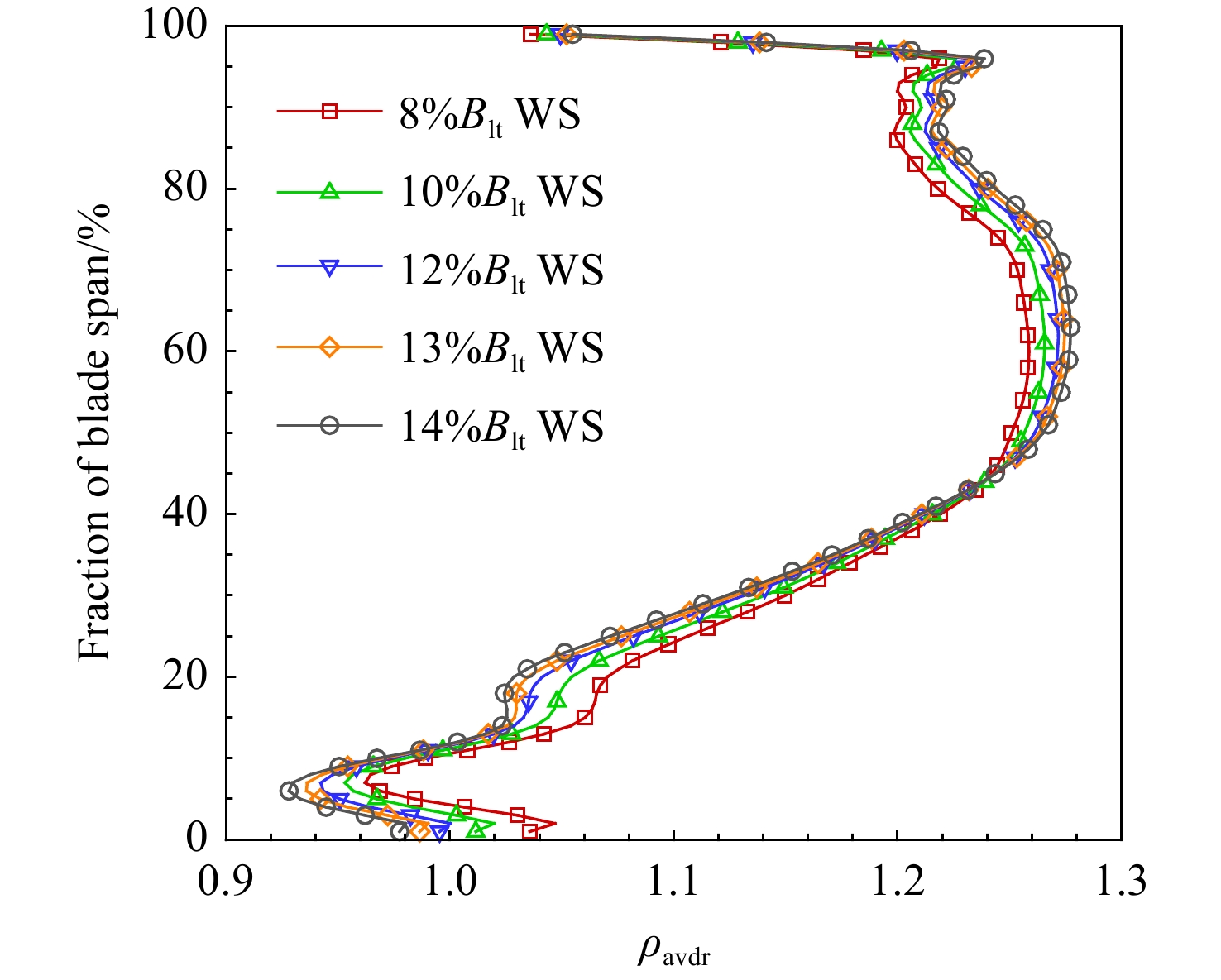
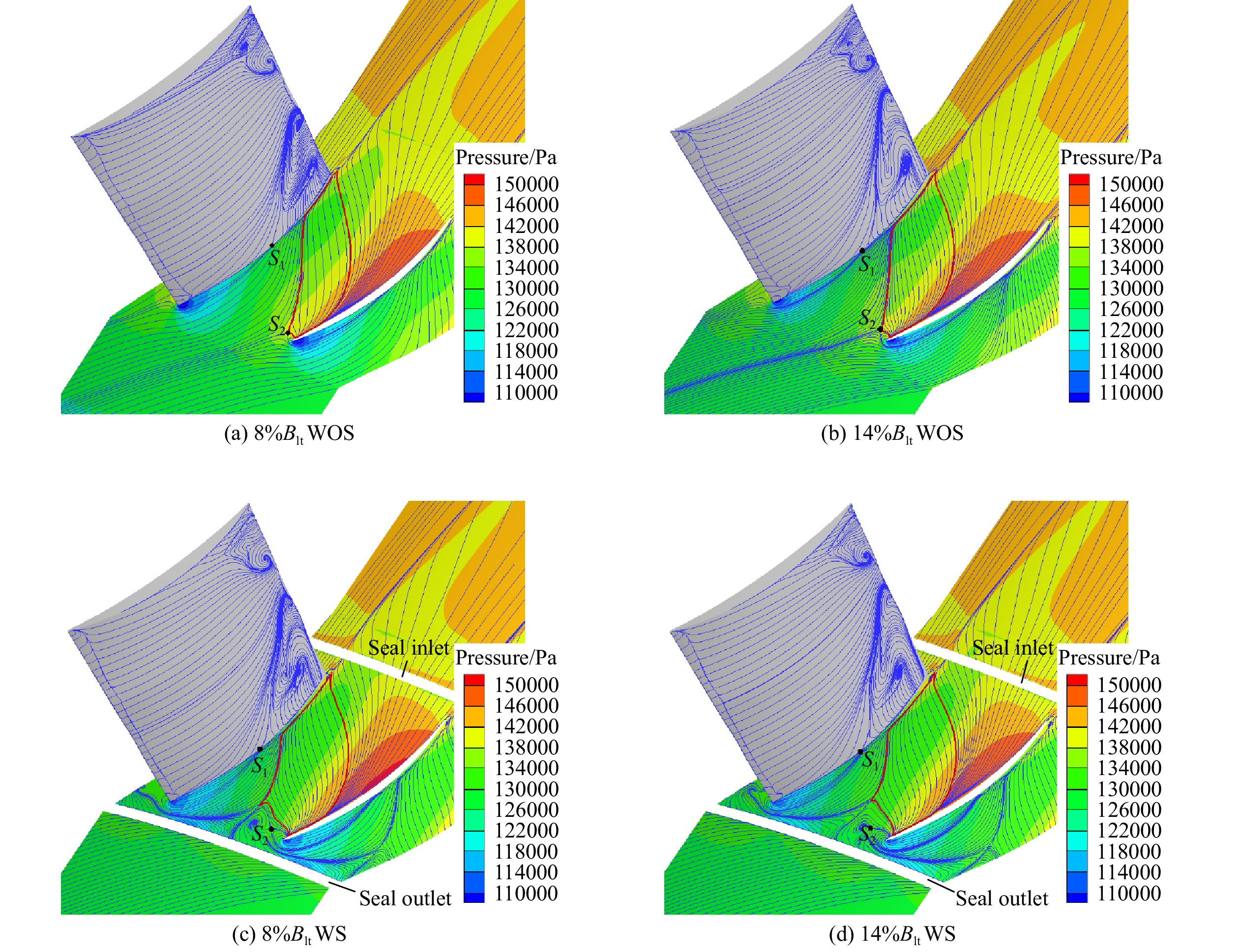
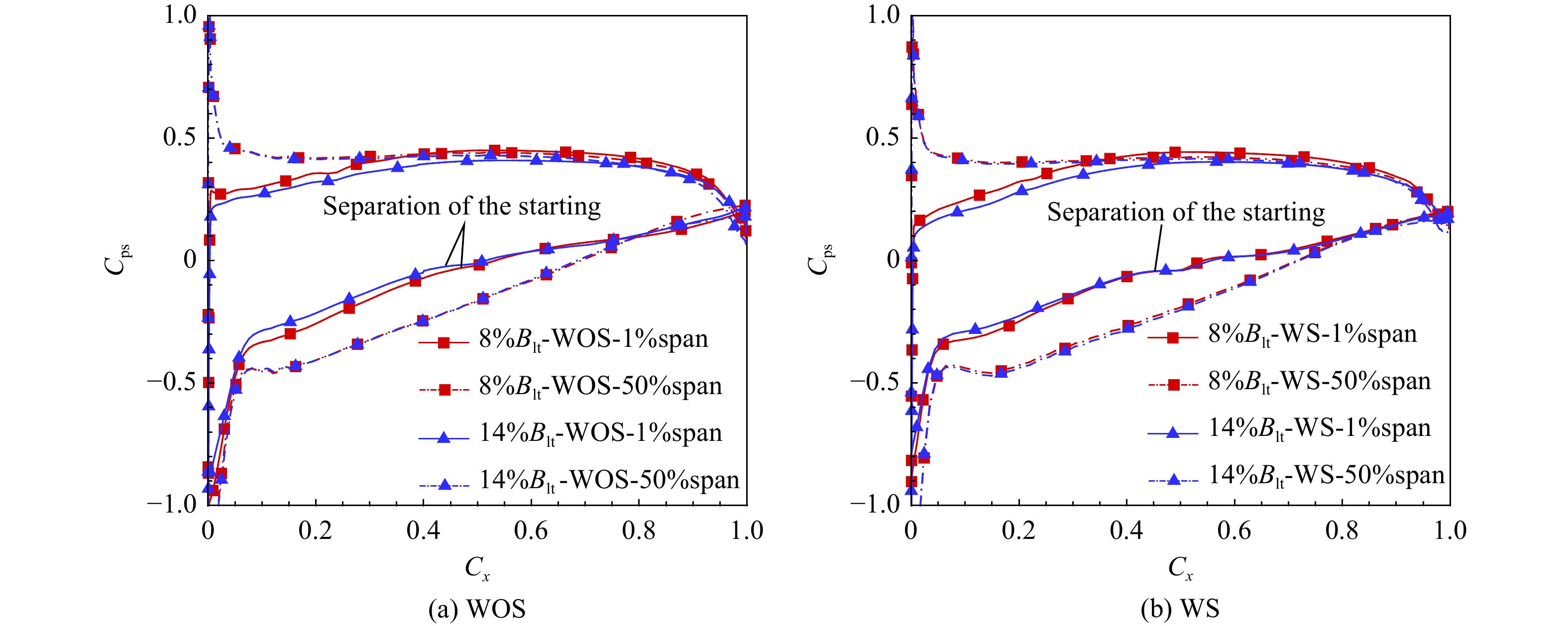
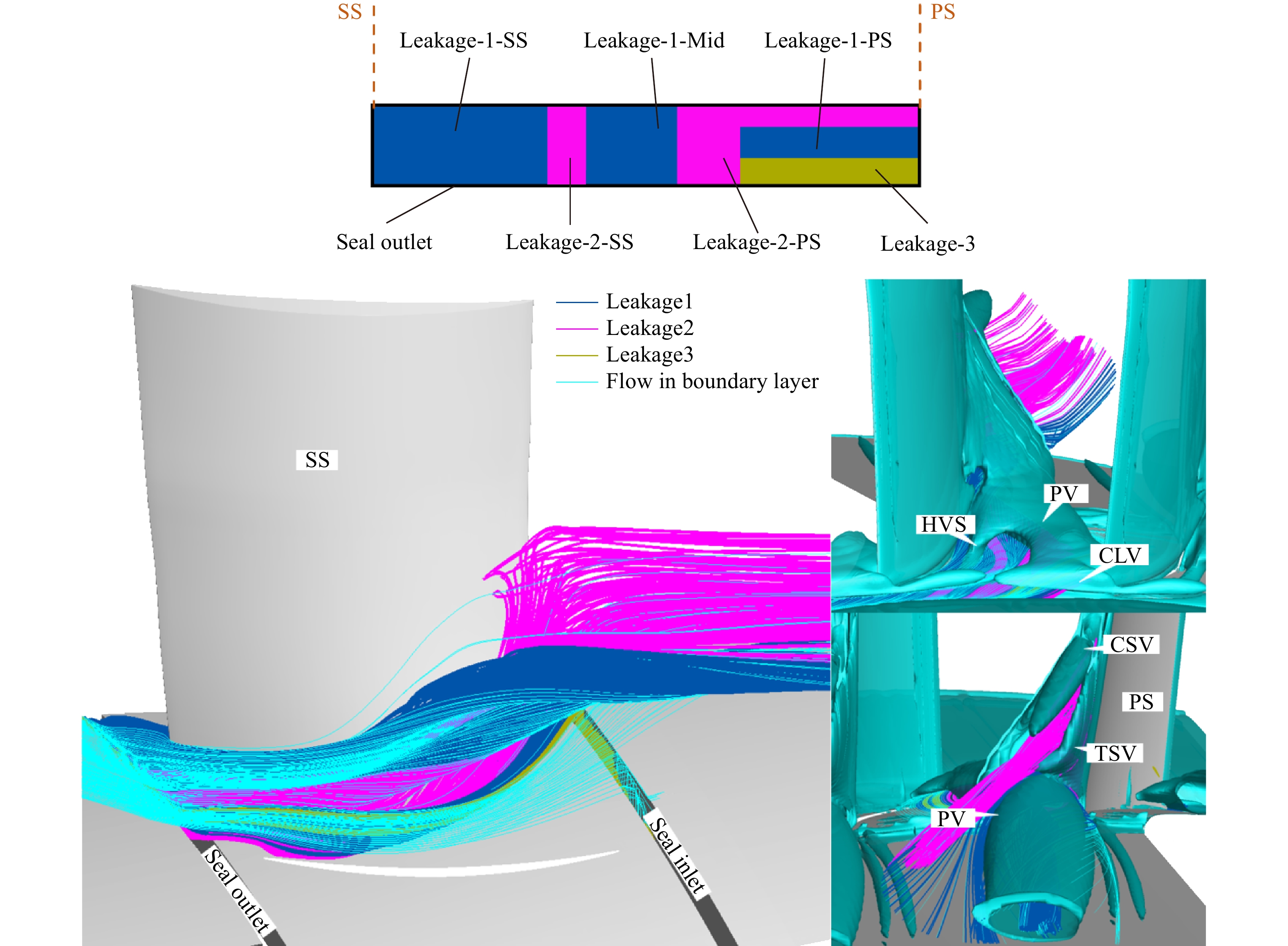
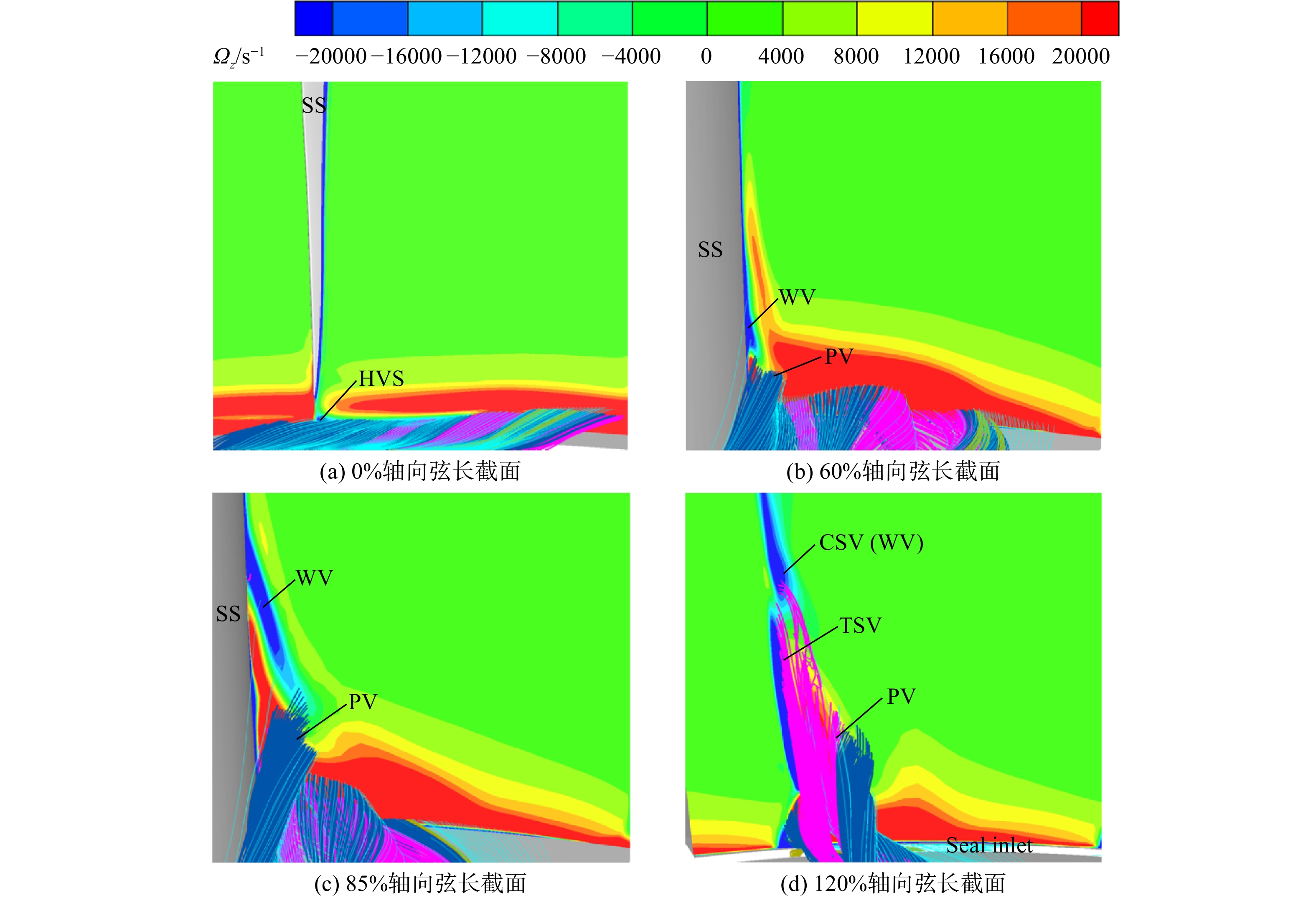
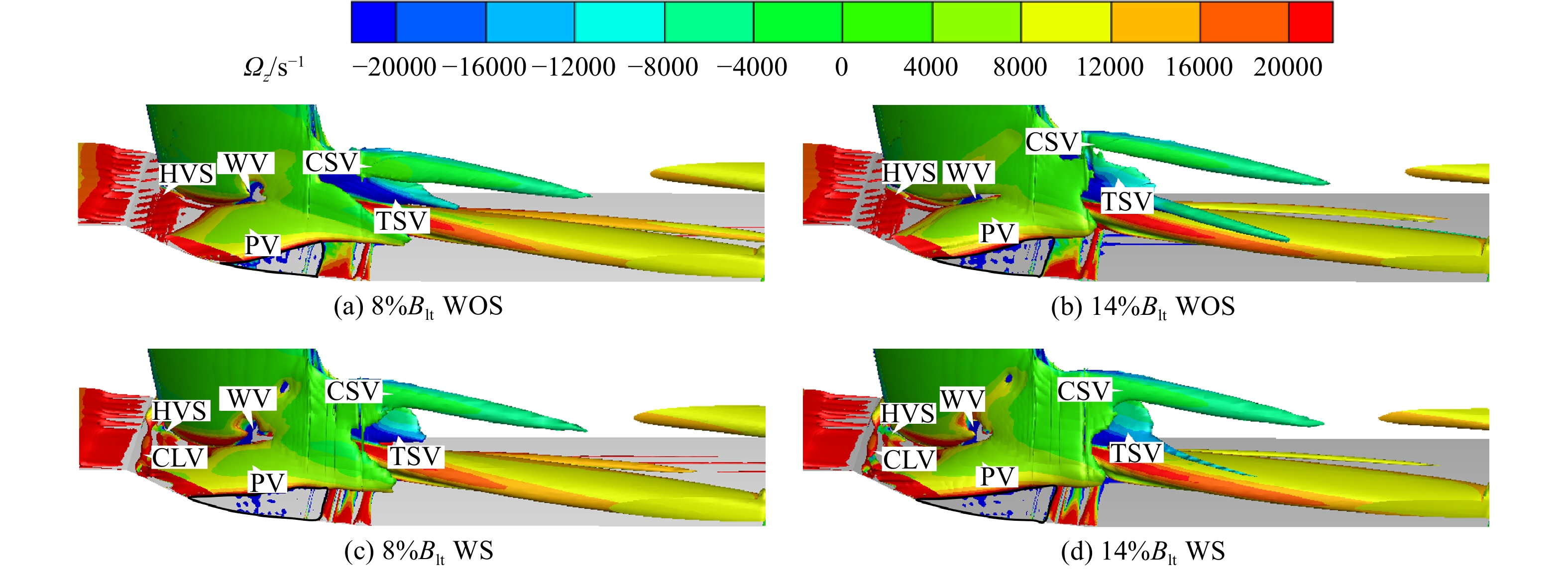
The impacts of the cavity leakage flow on the shrouded stator aerodynamic performance were investigated by modelling of the annular cascade mainstream with the seal cavity flow path based on the validated numerical method. Meanwhile, the interactions between the cavity leakage and the mainstream were also determined in the current study. The developments of hub corner separation under the action of leakage were discussed, while the total pressure loss coefficient and the entropy-based loss coefficient were employed to evaluate the performance changes at different boundary layer thicknesses. The results showed that the thickening of the boundary layer increased the total pressure loss coefficient and the entropy-based loss coefficient of diffuser cascade without cavity. The cavity leakage flow induced a new vortex near the blade leading edge, and had effect on the development of passage vortex and the size of concentrated shedding vortex. At the same time, the leakage flow strengthened the three-dimensional flow effect in the cascade passage and weakened the cross-passage deflection of the fluid near end-wall. As the boundary layer thickened, the variations of total pressure loss coefficient and entropy increase loss coefficient of diffuser cascade with cavity were not obvious.

Analytic expression and series expansion of pulsation pressures of aviation hydraulic pumps
JIANG Huijun, ZHANG Junyu, ZHOU Xiaokai, LI Wei, MA Jun, QIU Yuanying, LI Jing
2023, 38(1): 197-205. doi: 10.13224/j.cnki.jasp.20220288
Abstract:

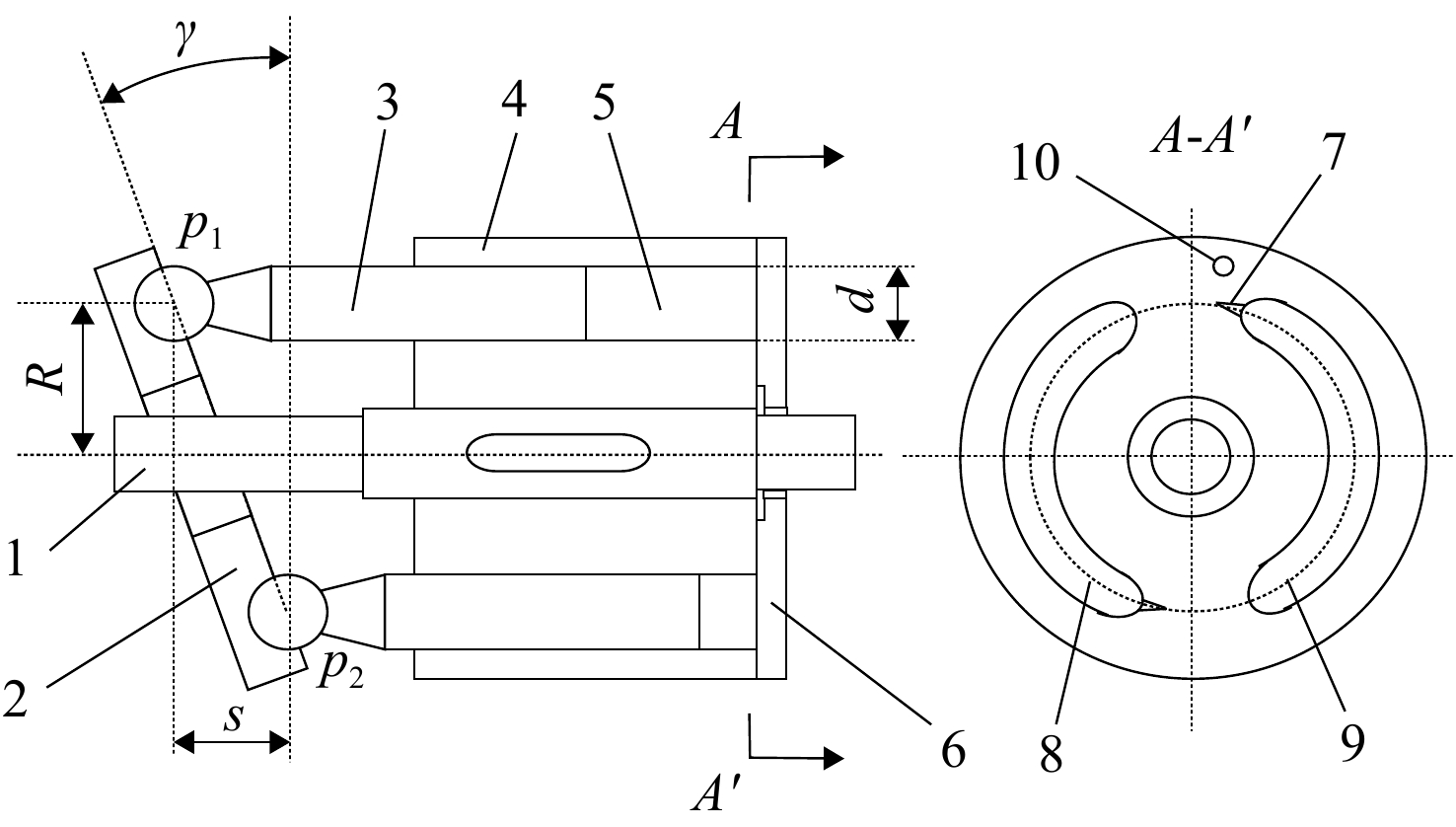
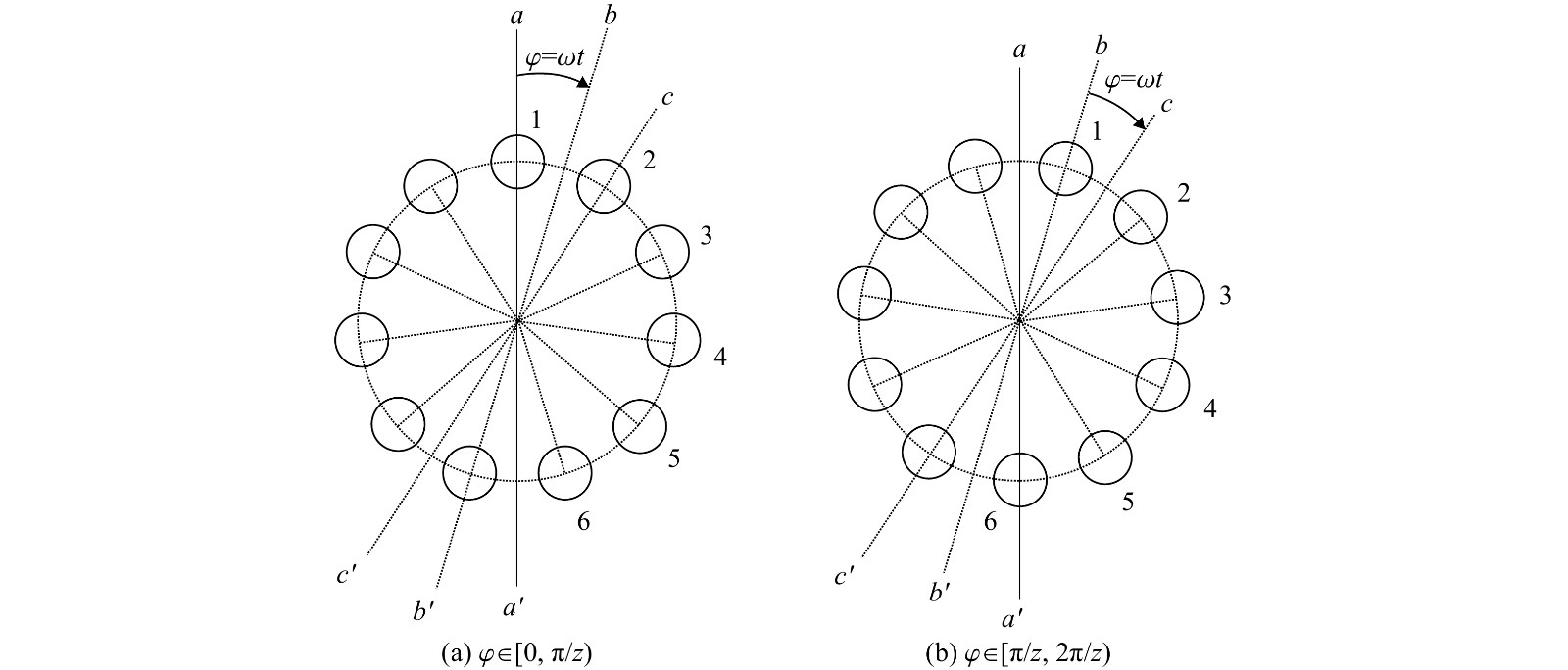
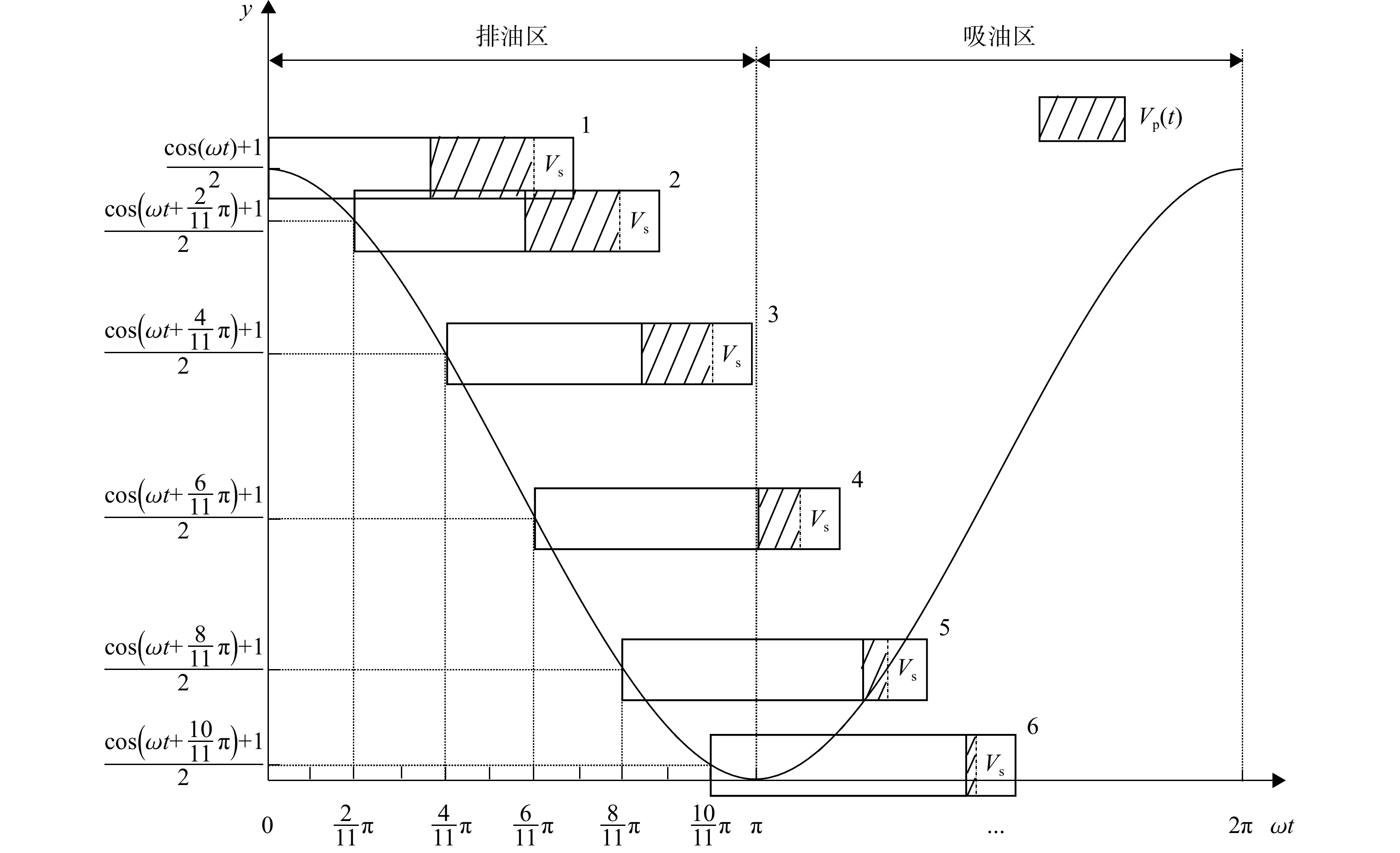
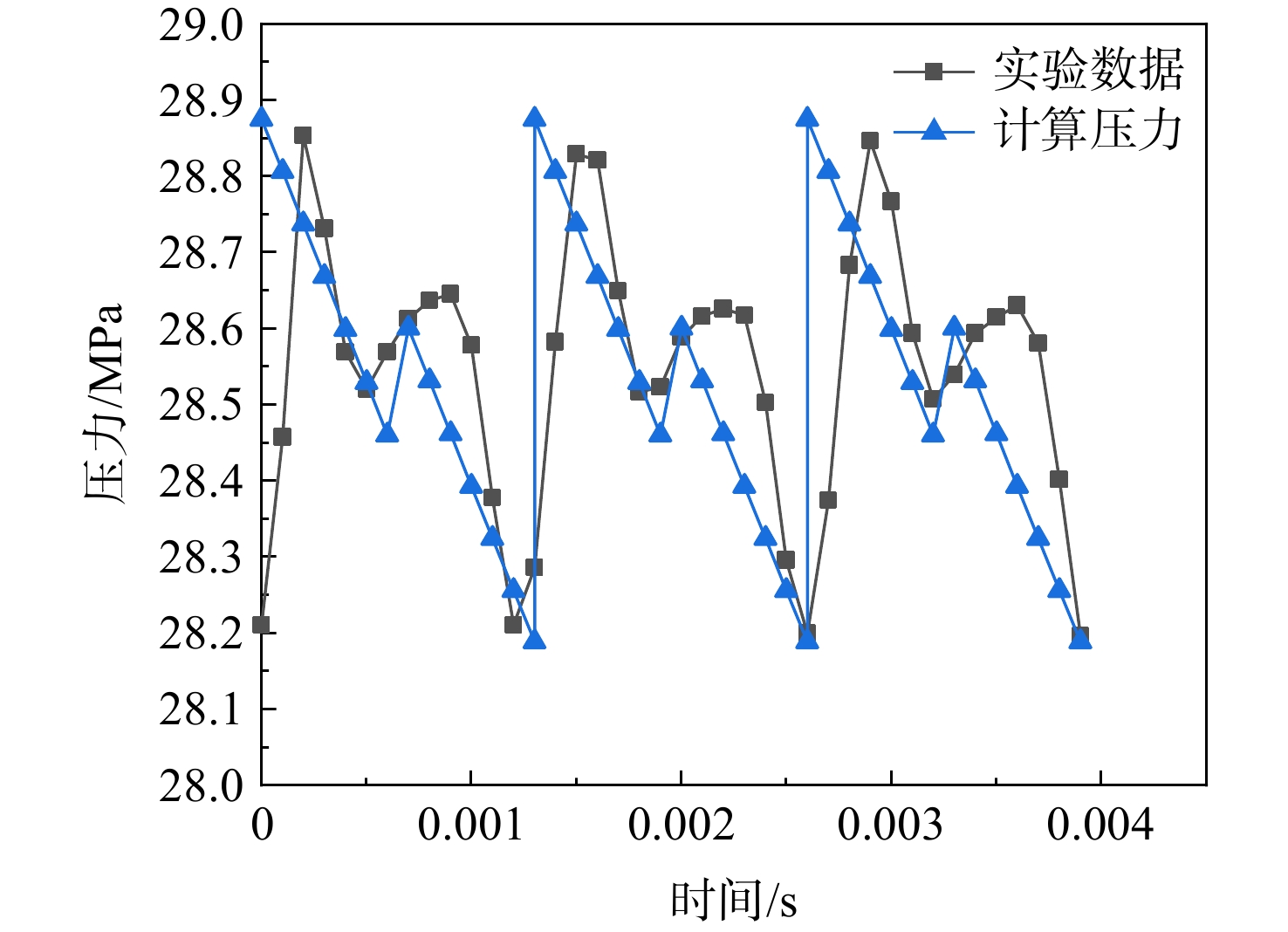
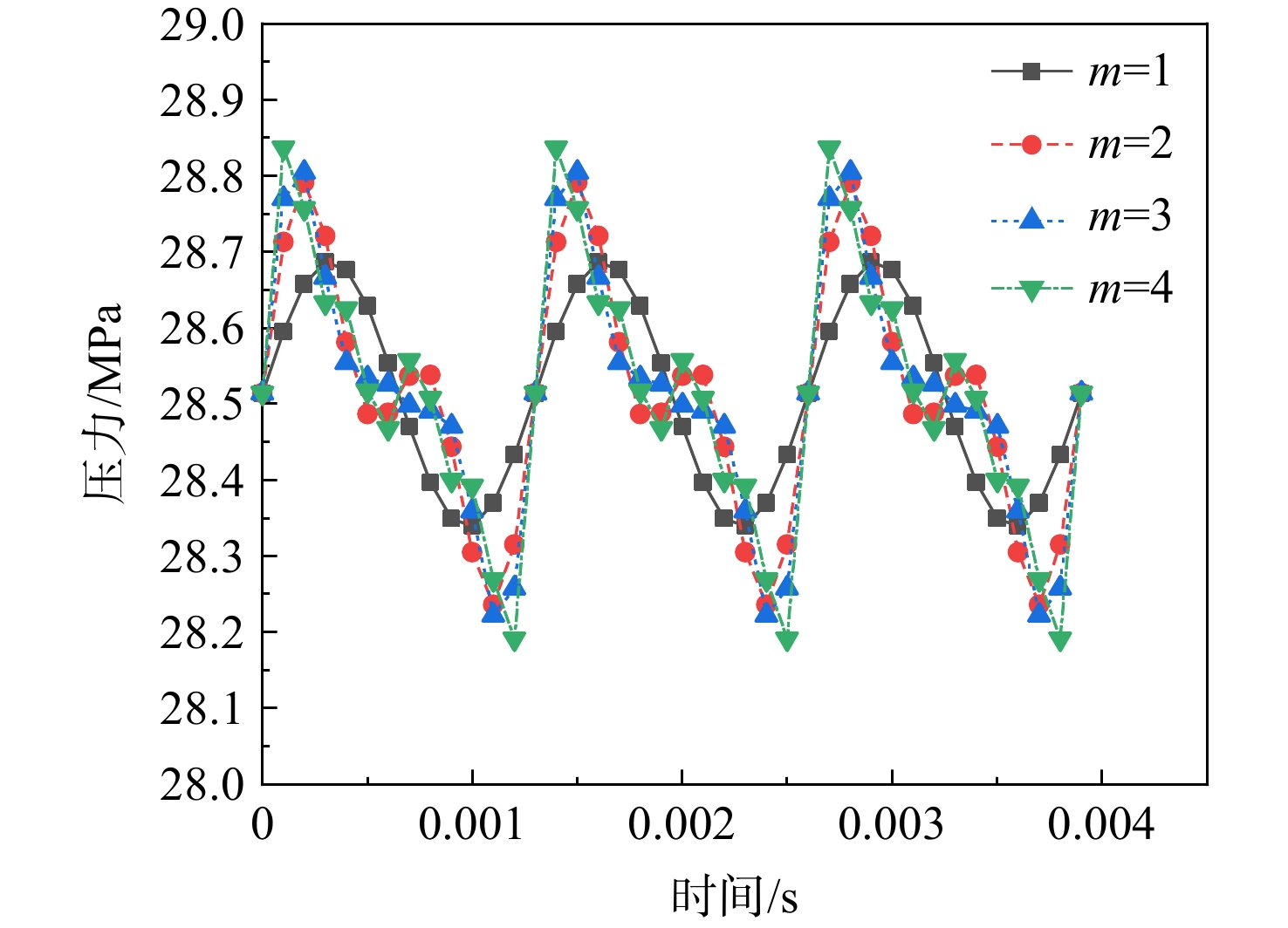
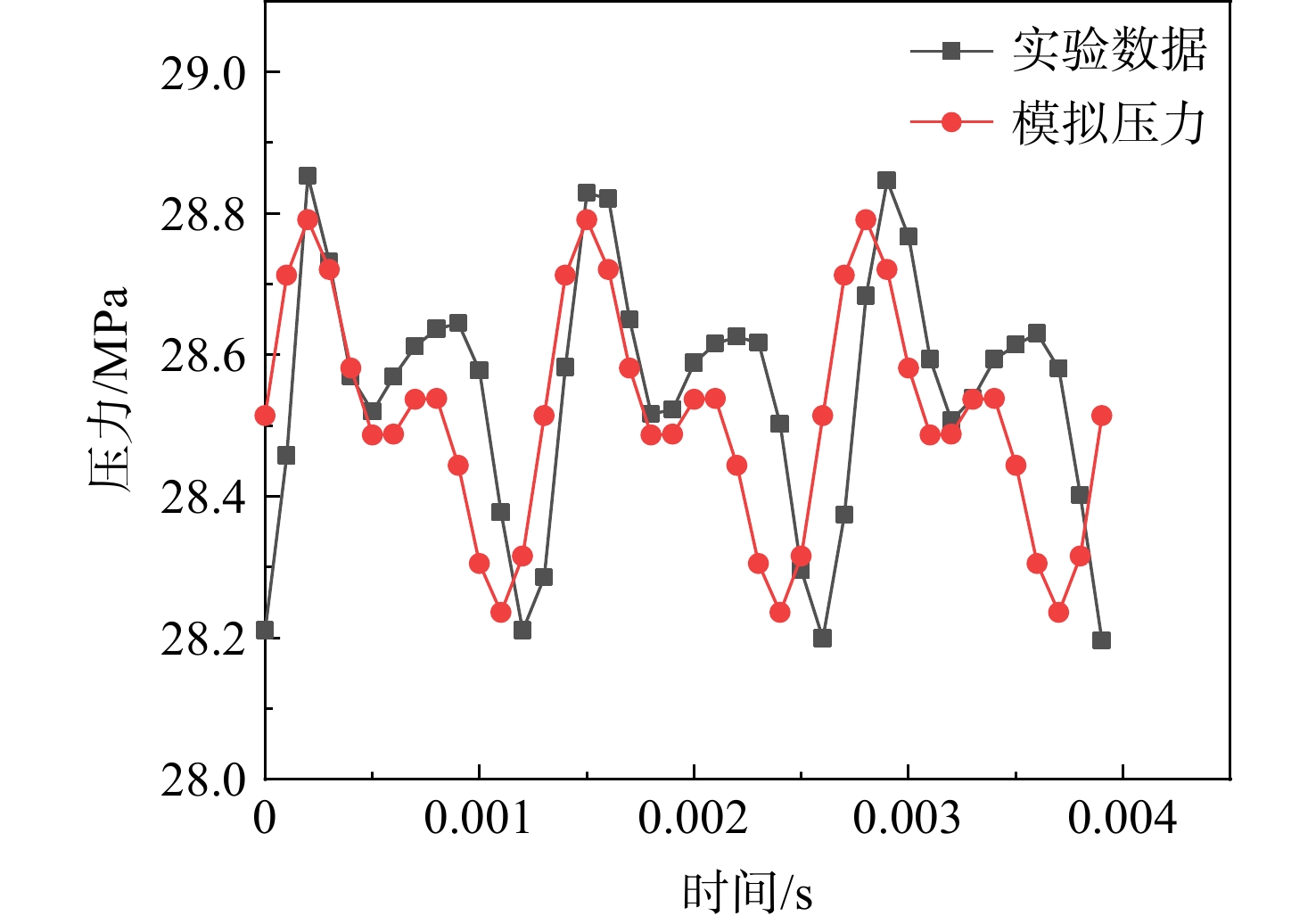
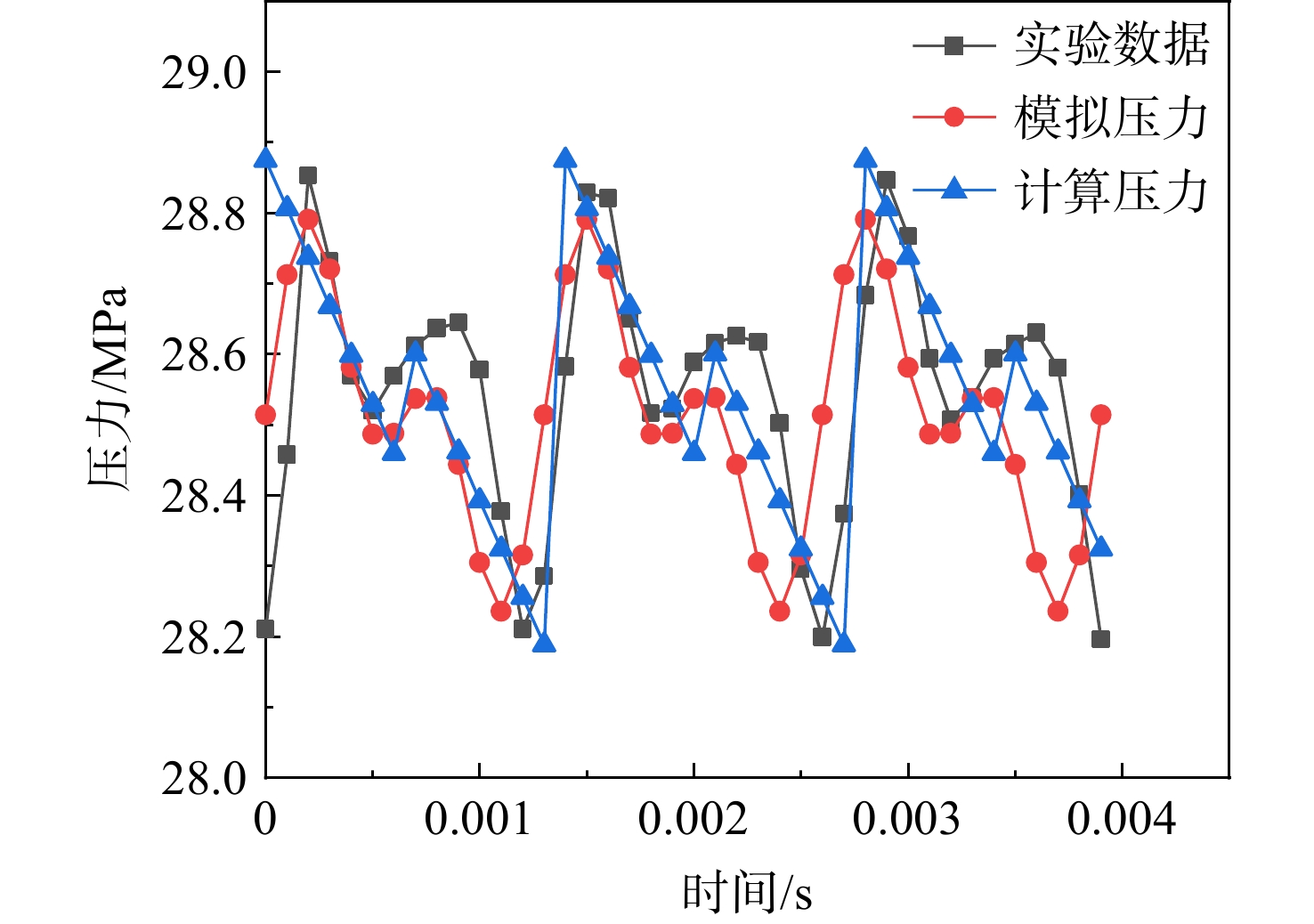
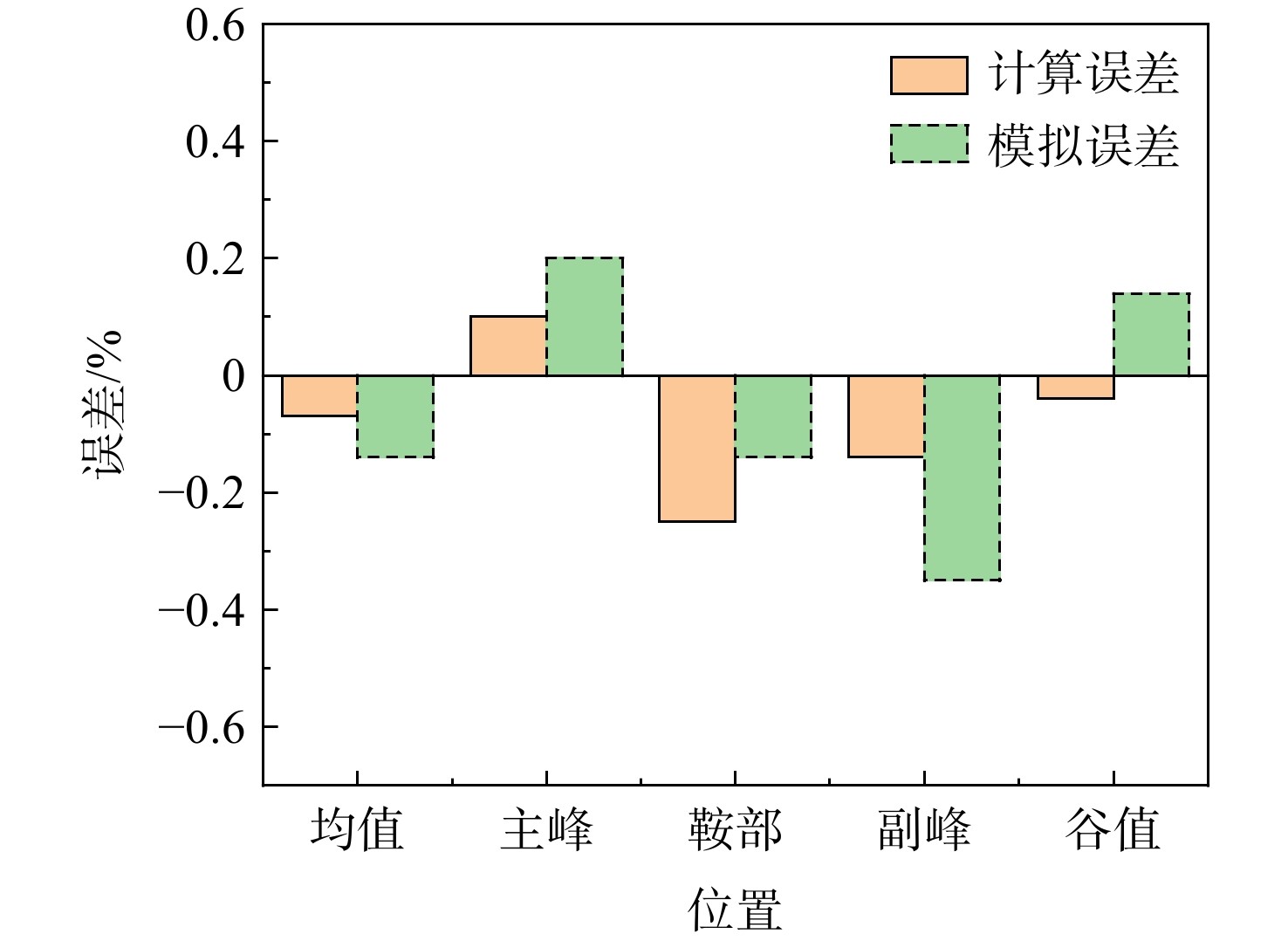
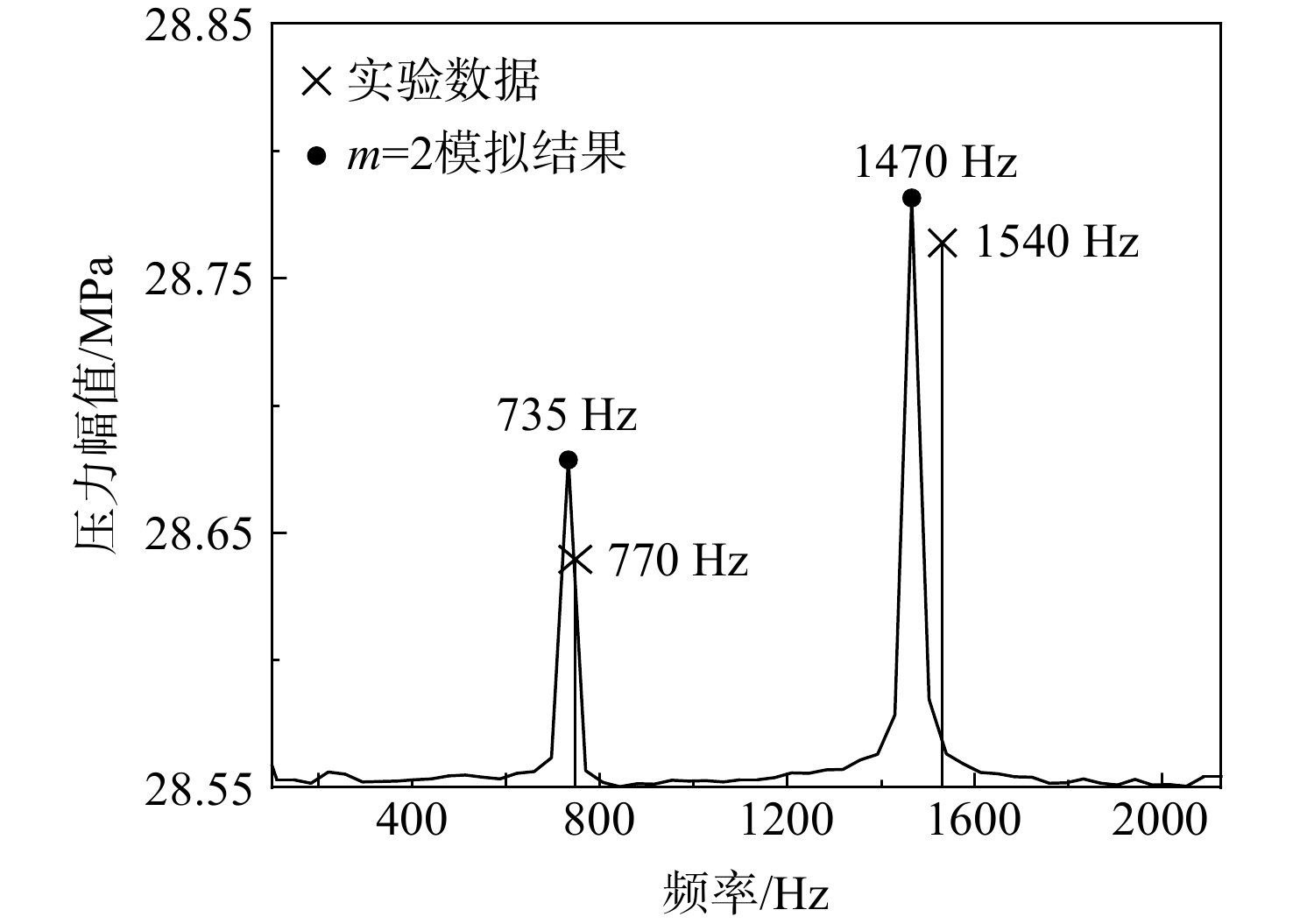
To deeply research the pressure pulsation characteristics of aviation hydraulic piston pumps, the movement of the pumps and the causes of volume flowrate pulsation were analyzed respectively. Furthermore the relationship between the oil pressure and the volume flowrate pulsation function was established, and the volume flowrate pulsation function expression from the pump discharge nozzle was deduced. Finally, the multistage pulsation pressure curves consistent with the experimental data were simulated through the Fourier series. The results showed that the relative errors of the simulated pulsating pressure curve and the experimental data were within 5%, and the relative errors of the pressure amplitudes at the fundamental frequency and the double frequency were within 1%. The series approximation including the fundamental frequency and the double frequency can be used to describe the main characteristics of the periodic pulsating pressure at the outlet of the aircraft hydraulic piston pump. The research results provide a load input basis for the fluid-structure interaction vibration simulation of the pipeline structure of the aircraft hydraulic system.

Experiment of axial force control for centrifugal pump based on compensation trimming method
ZENG Jilai, LIU Zailun, WU Xinrui, ZHAO Weiguo, ZHANG Sen
2023, 38(1): 206-214. doi: 10.13224/j.cnki.jasp.20220270
Abstract:

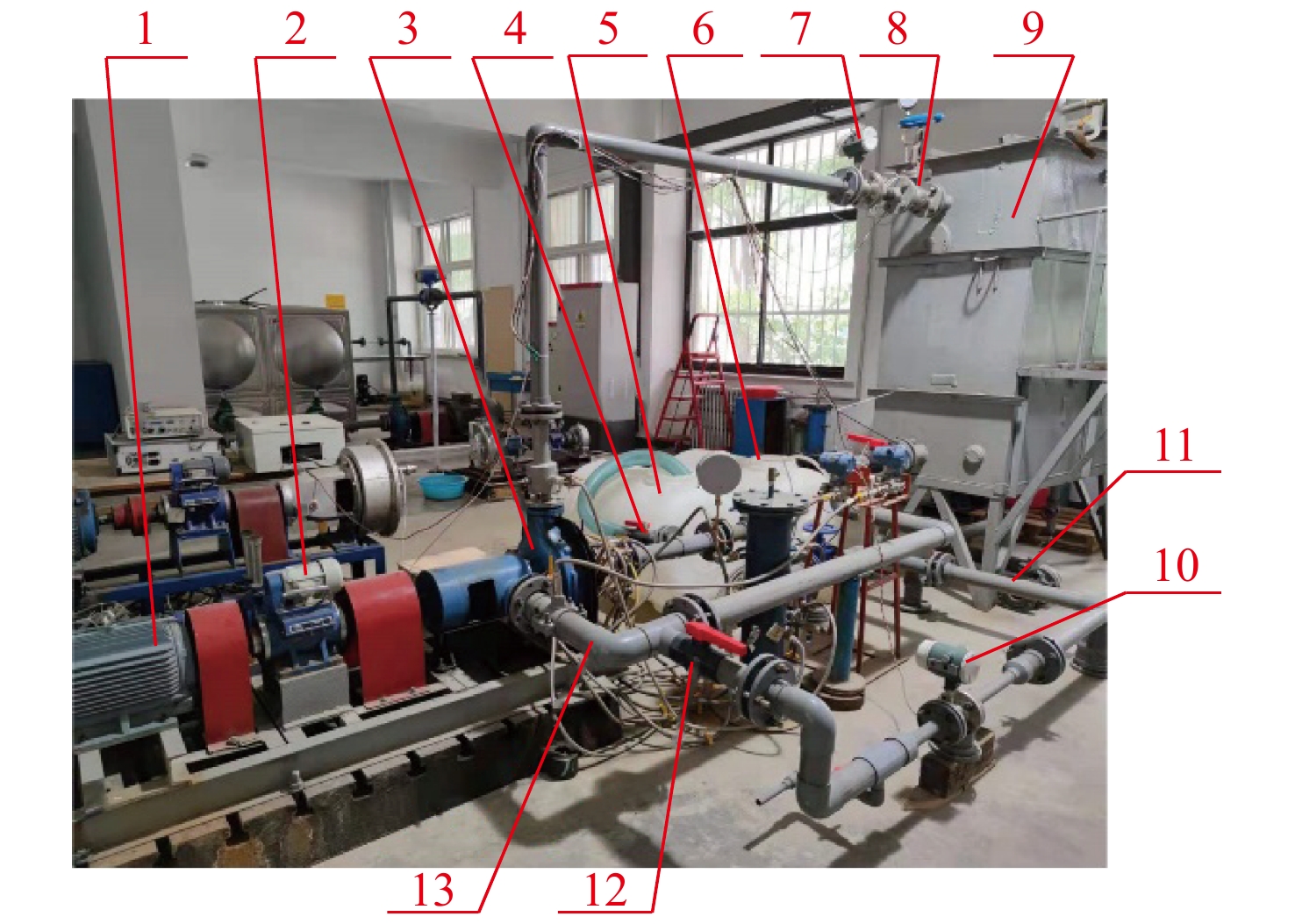
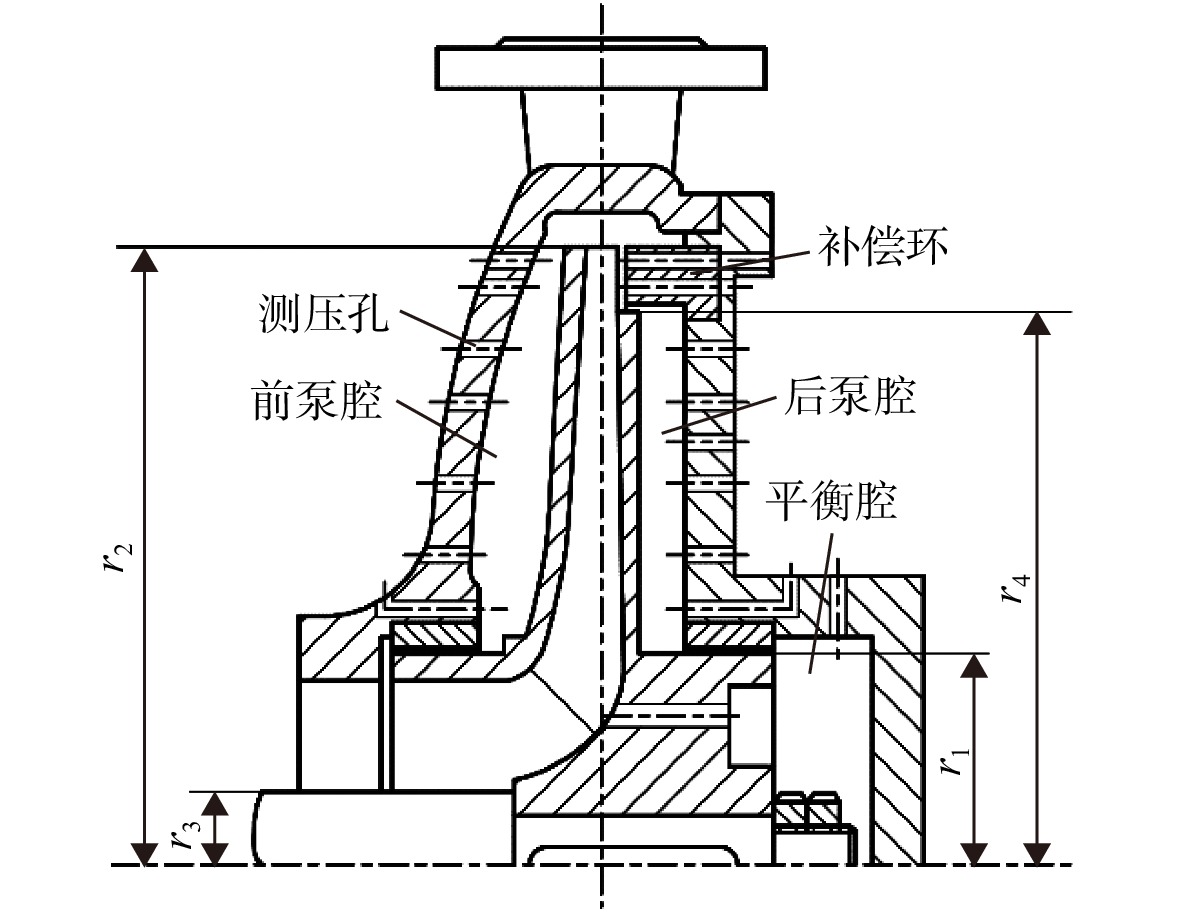
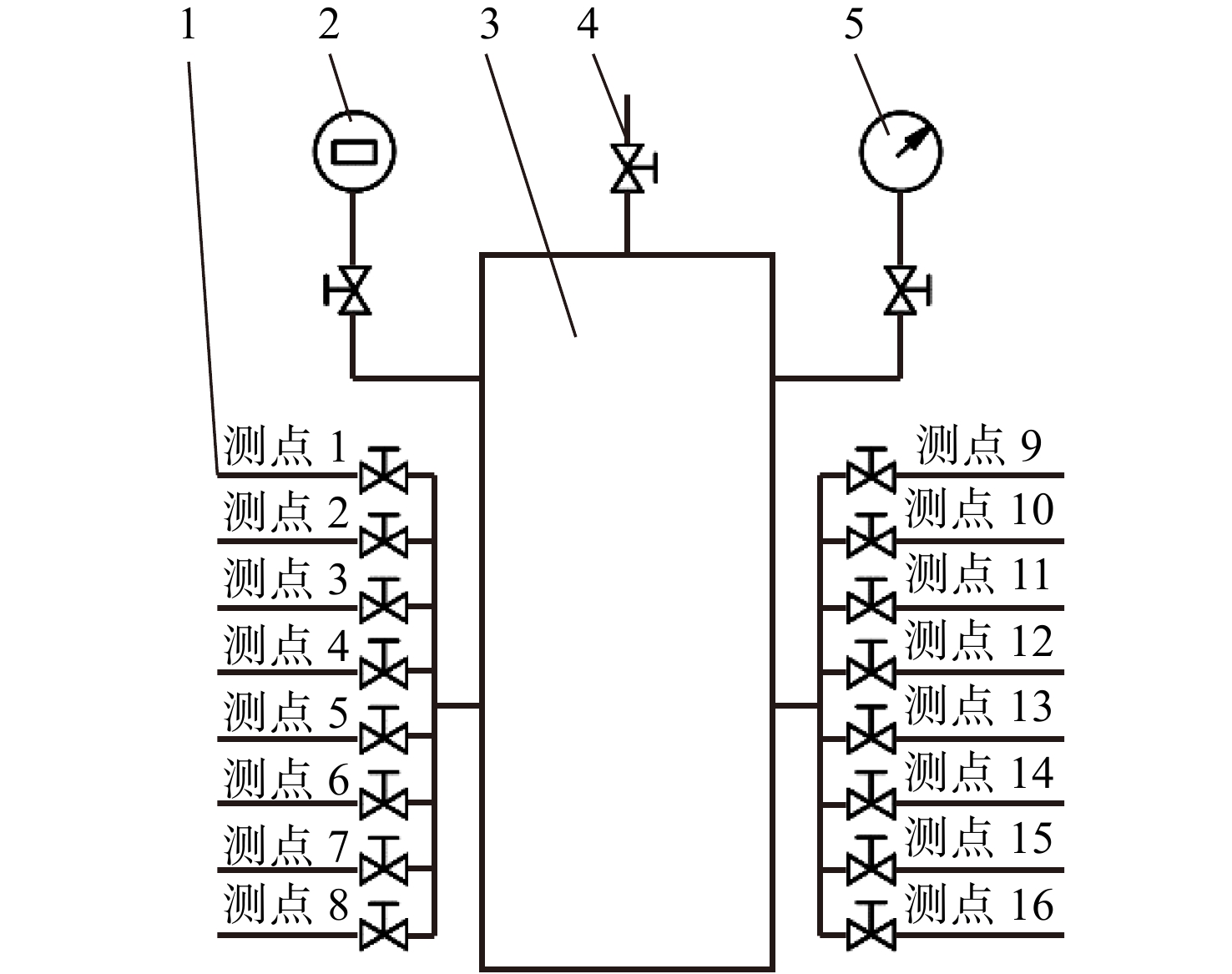
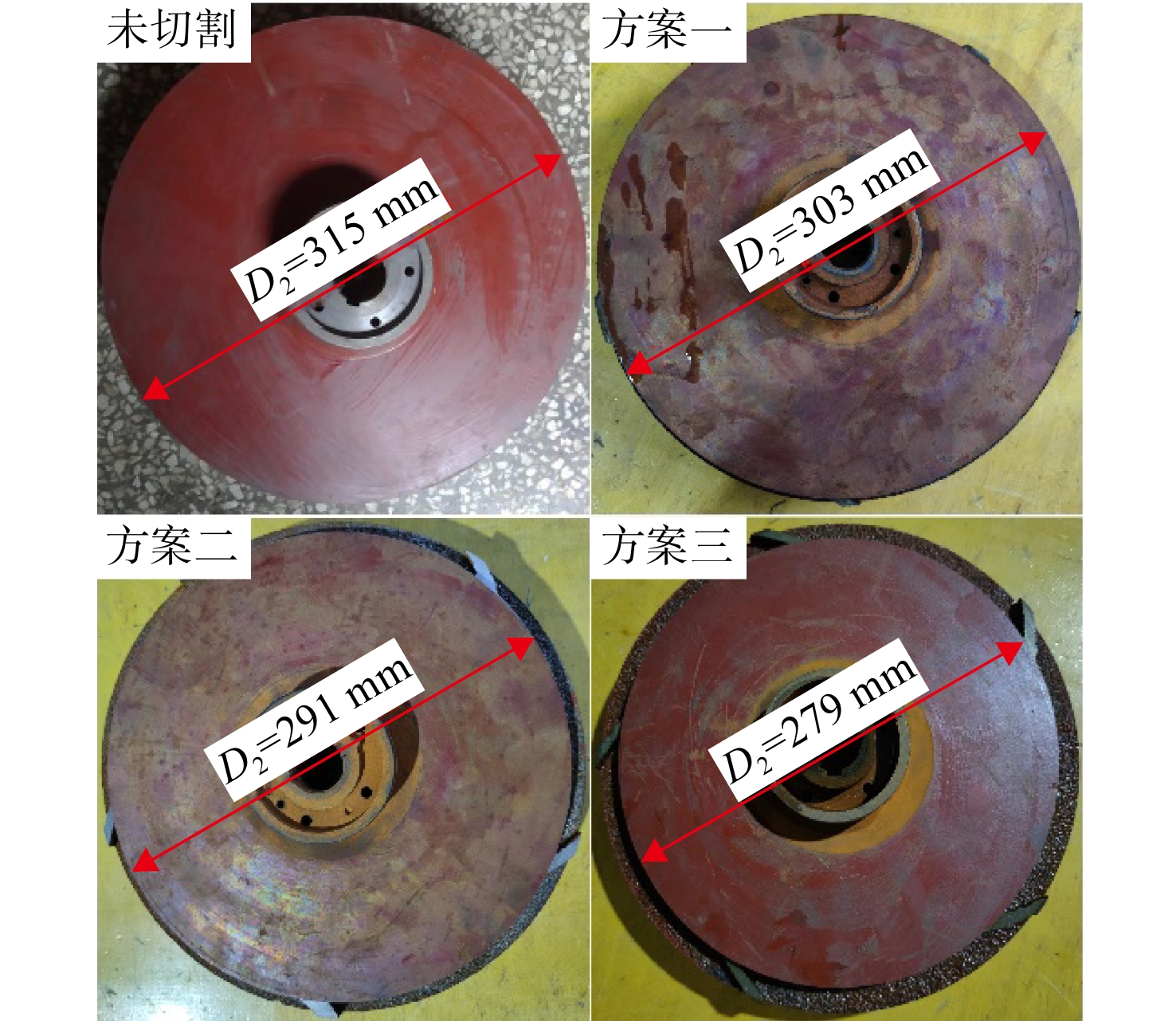
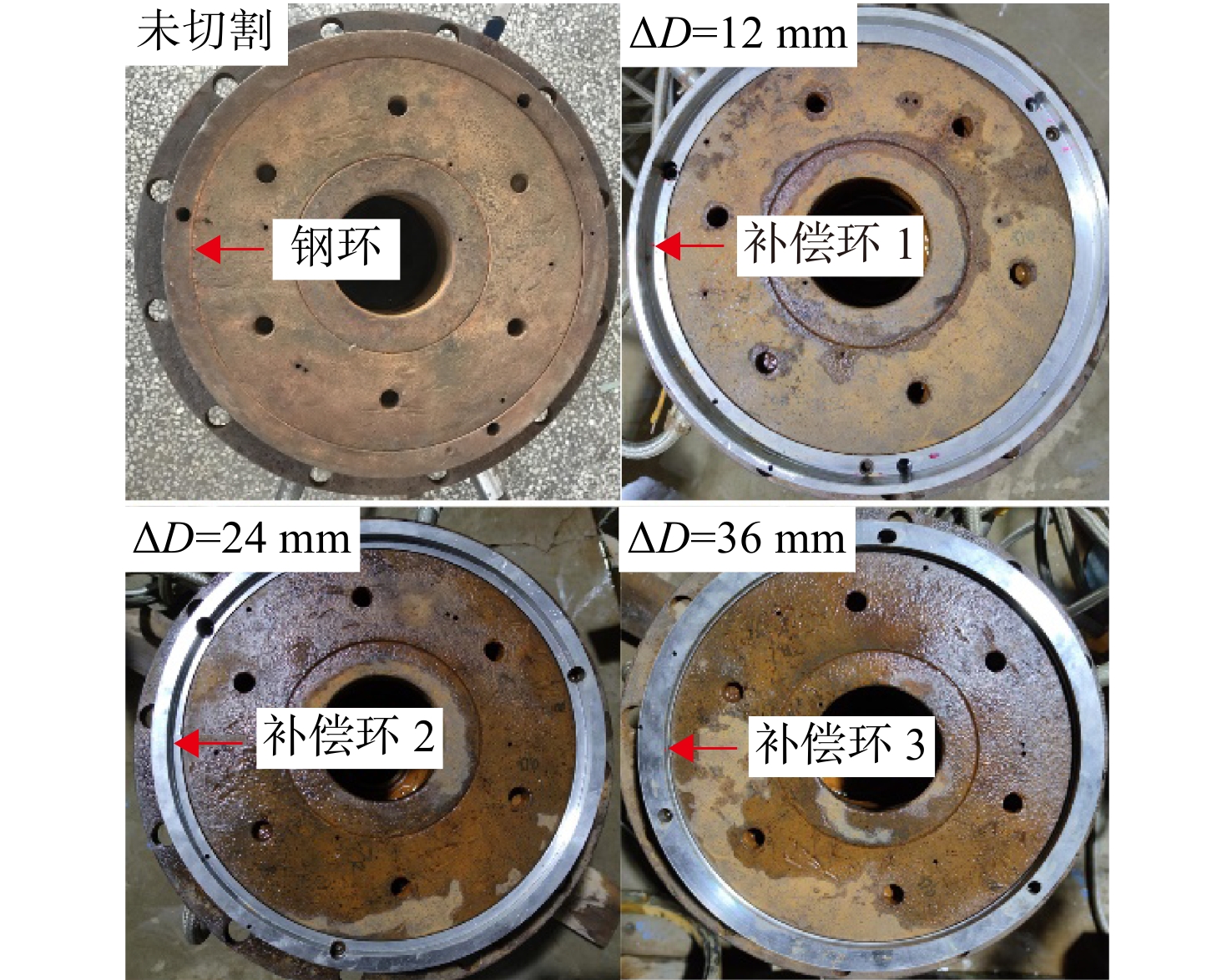
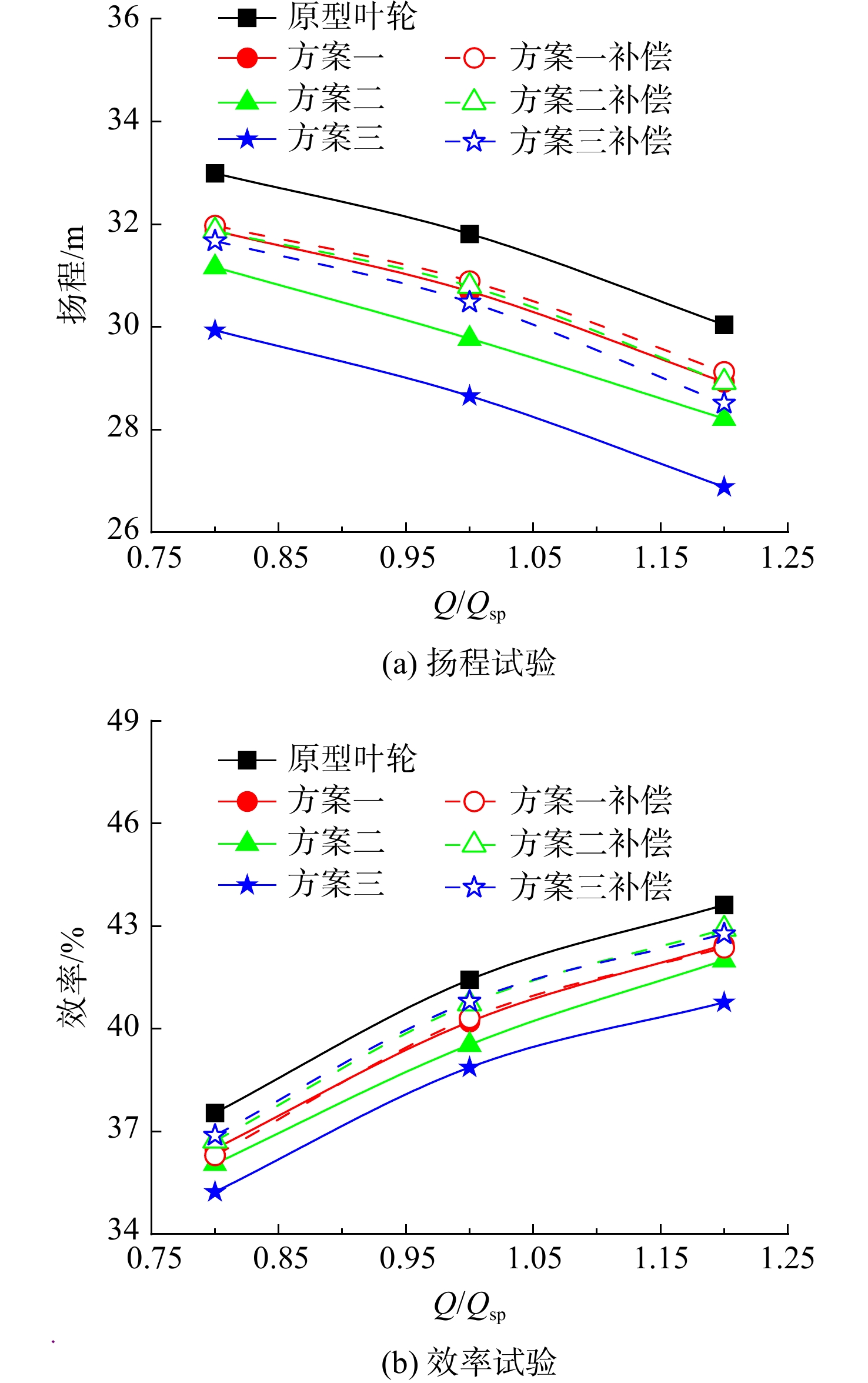
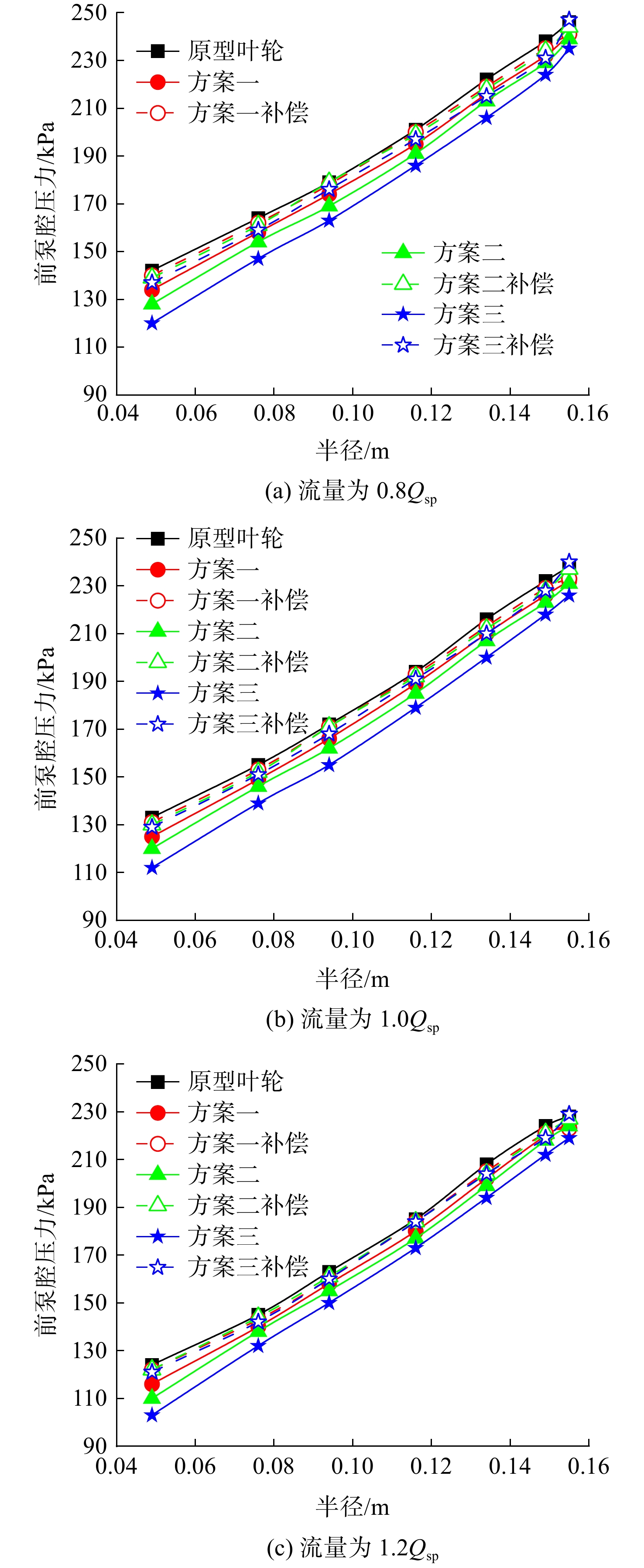
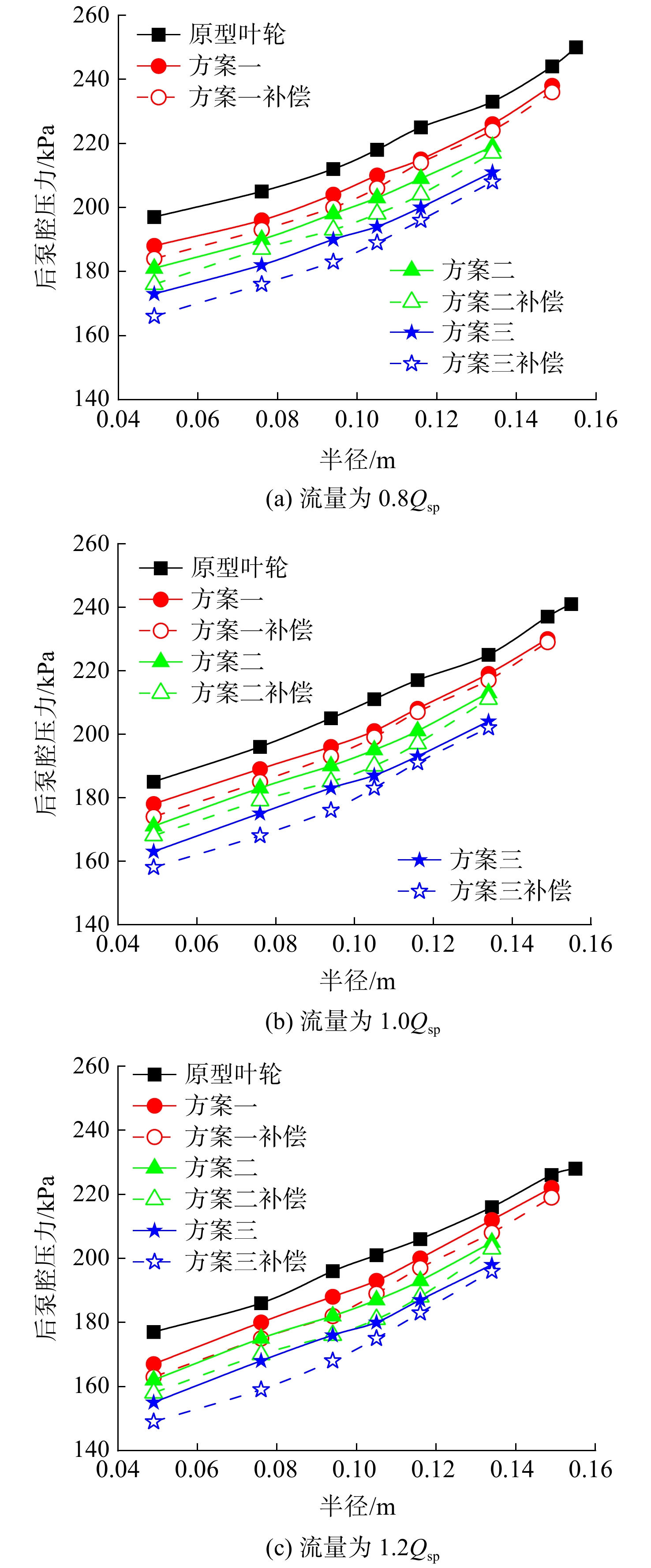
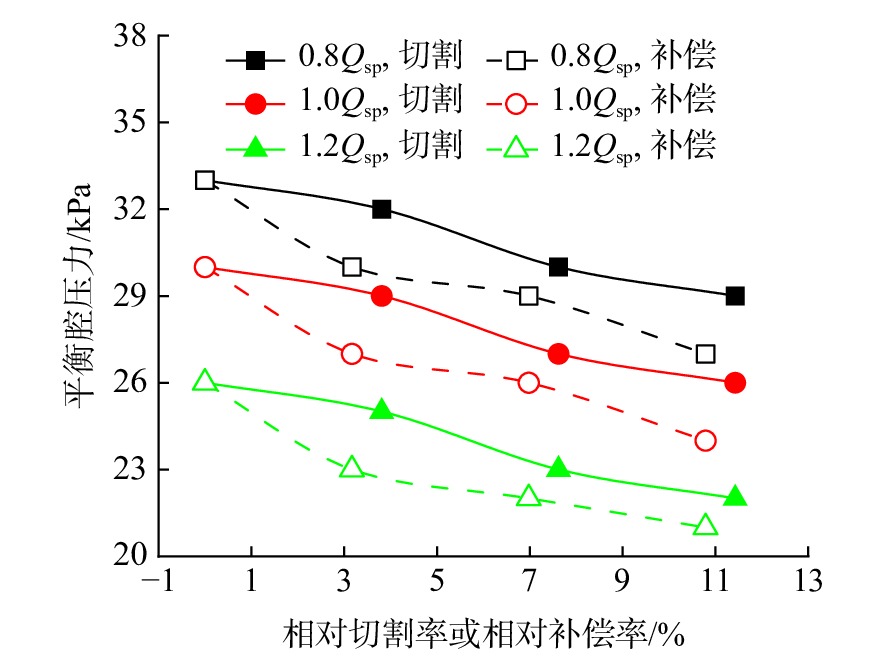
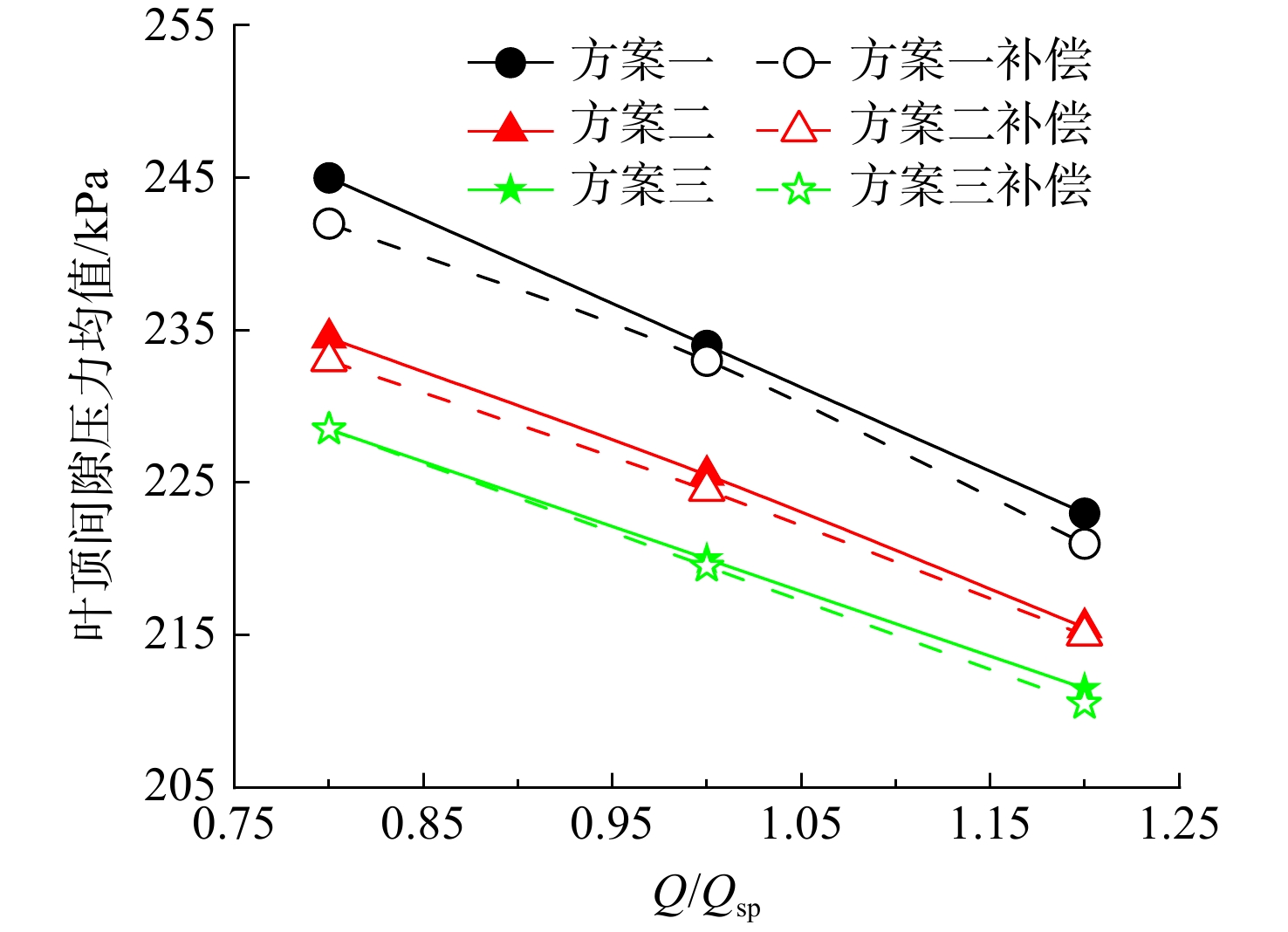
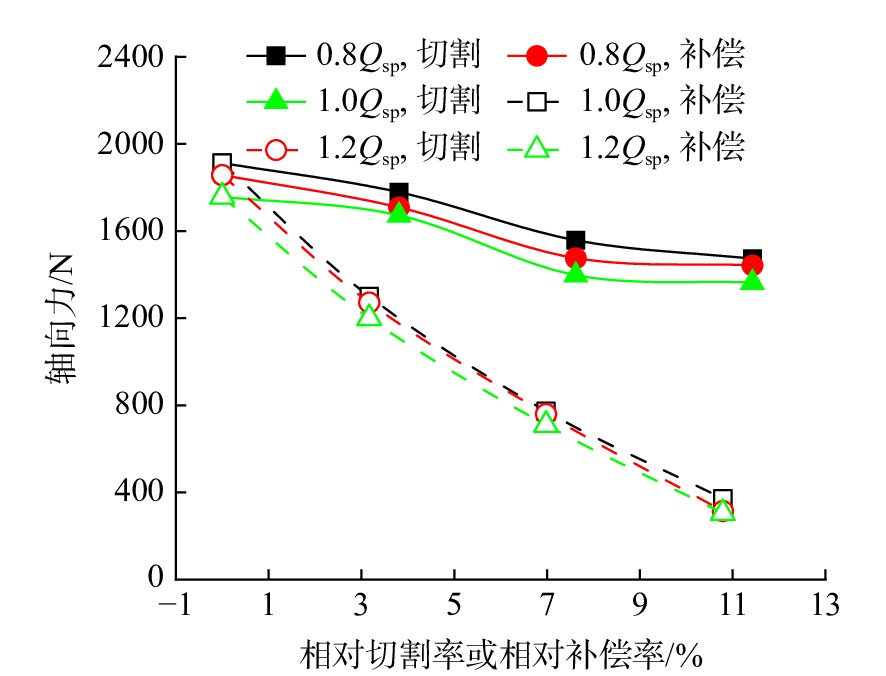
To solve the key problem that trimming rear shroud of impeller balanced axial force could reduce the pump head and efficiency, a method to balance axial force by compensating rear shroud of impeller cut was proposed. On the same impeller, systematic measurements of the pump performance, tip clearance pressure, liquid pressure distribution in front and rear pump cavity and liquid pressure in balanced cavity were carried out with the research scheme of trimming rear shroud of impeller and compensating rear shroud of impeller. The experiment results showed that at the designed speed and flow rate, the relative trimming rates of rear shroud of impeller were 3.81%, 7.62% and 11.43%, respectively, the pump head was 3.52%, 6.41%, 9.93% lower than that of the prototype impeller, the efficiency was 2.97%, 4.59% and 6.18% lower than that of the prototype impeller, and the axial force was 8.02%, 20.57% and 22.3% lower than that of the prototype impeller. After compensating rear shroud of impeller trimming, the maximum drop of pump head was 4.18%, the maximum drop of efficiency was 2.7%, and the maximum drop of axial force was 83.1%. Compared with cutting rear shroud of impeller, compensating rear shroud of impeller trimming can increase the pressure of the front pump cavity and reduce the pressure of the rear pump cavity.

Influence of inlet guide vane angle on flow instability of hub instability compressor
CHEN Xiaosong, WU Wenqian, PAN Tianyu, LI Qiushi
2023, 38(1): 215-222. doi: 10.13224/j.cnki.jasp.20210355
Abstract:

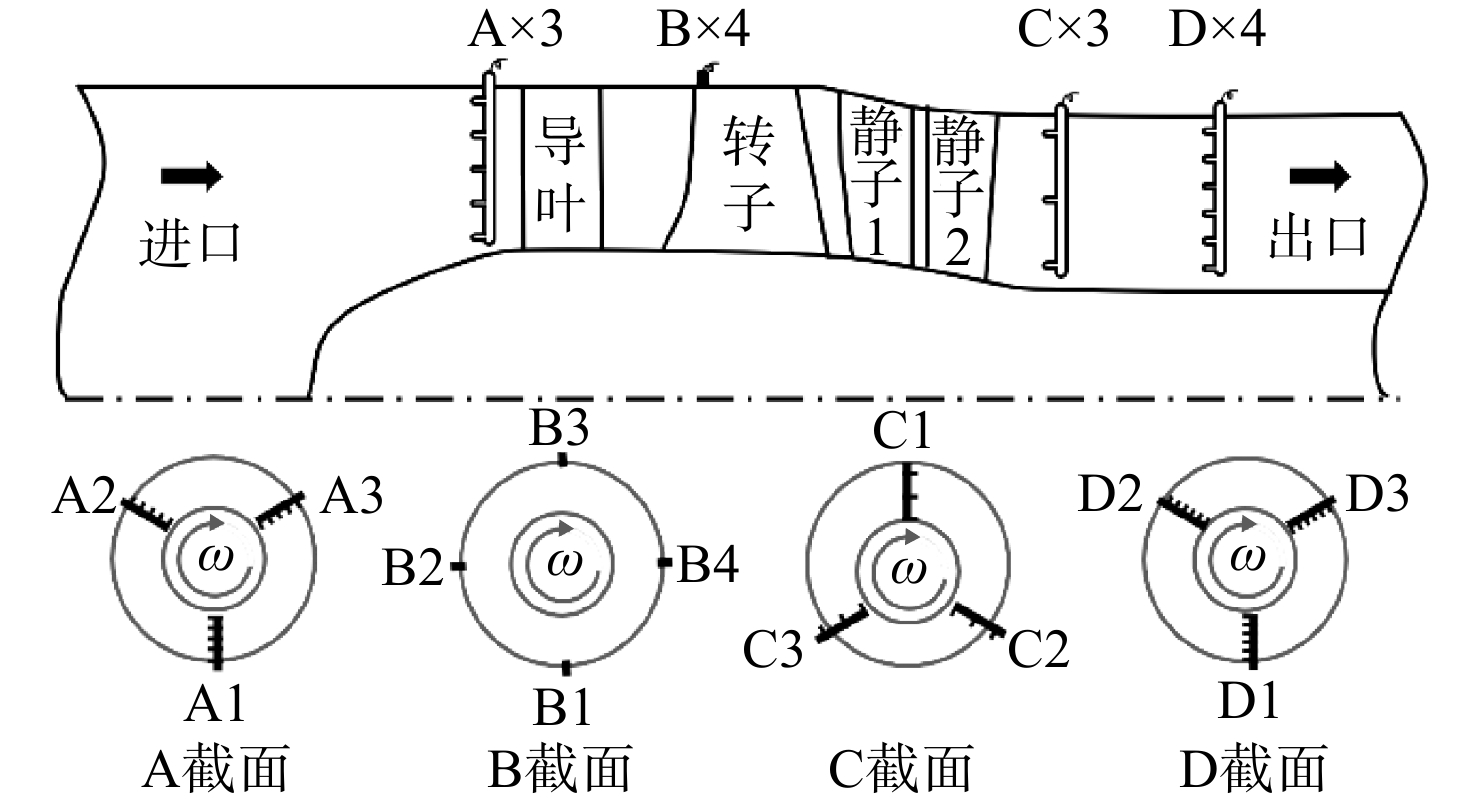
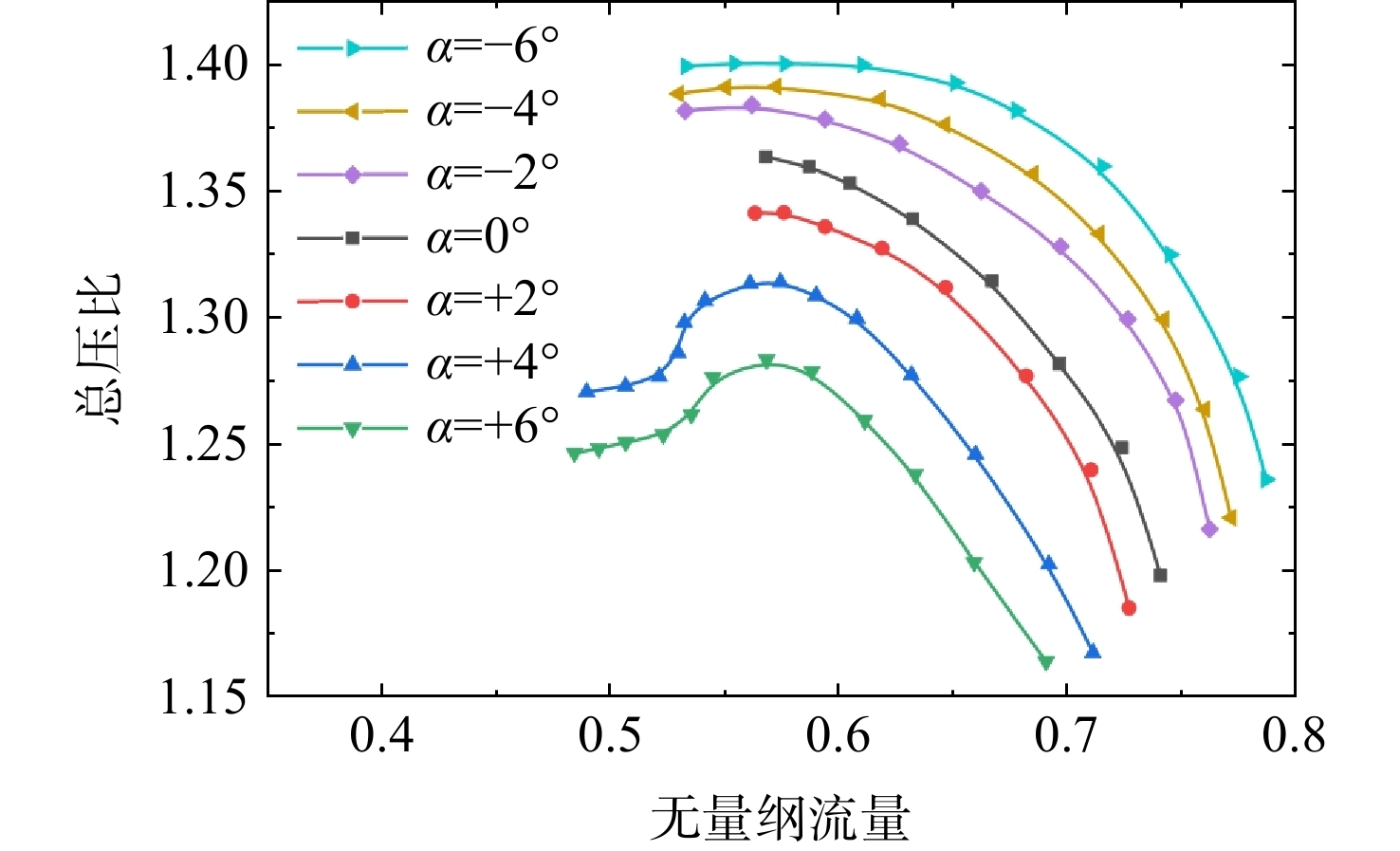
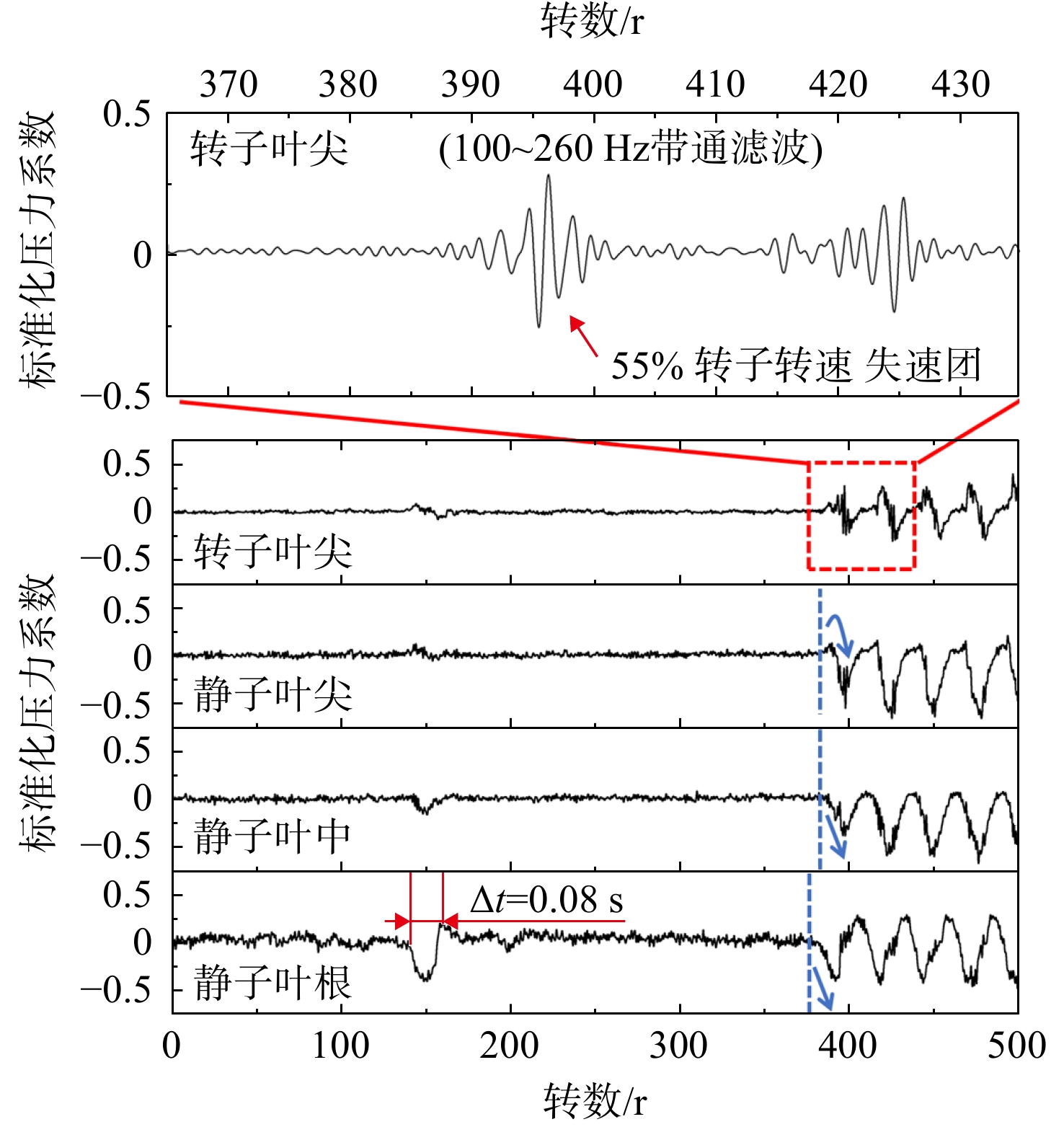
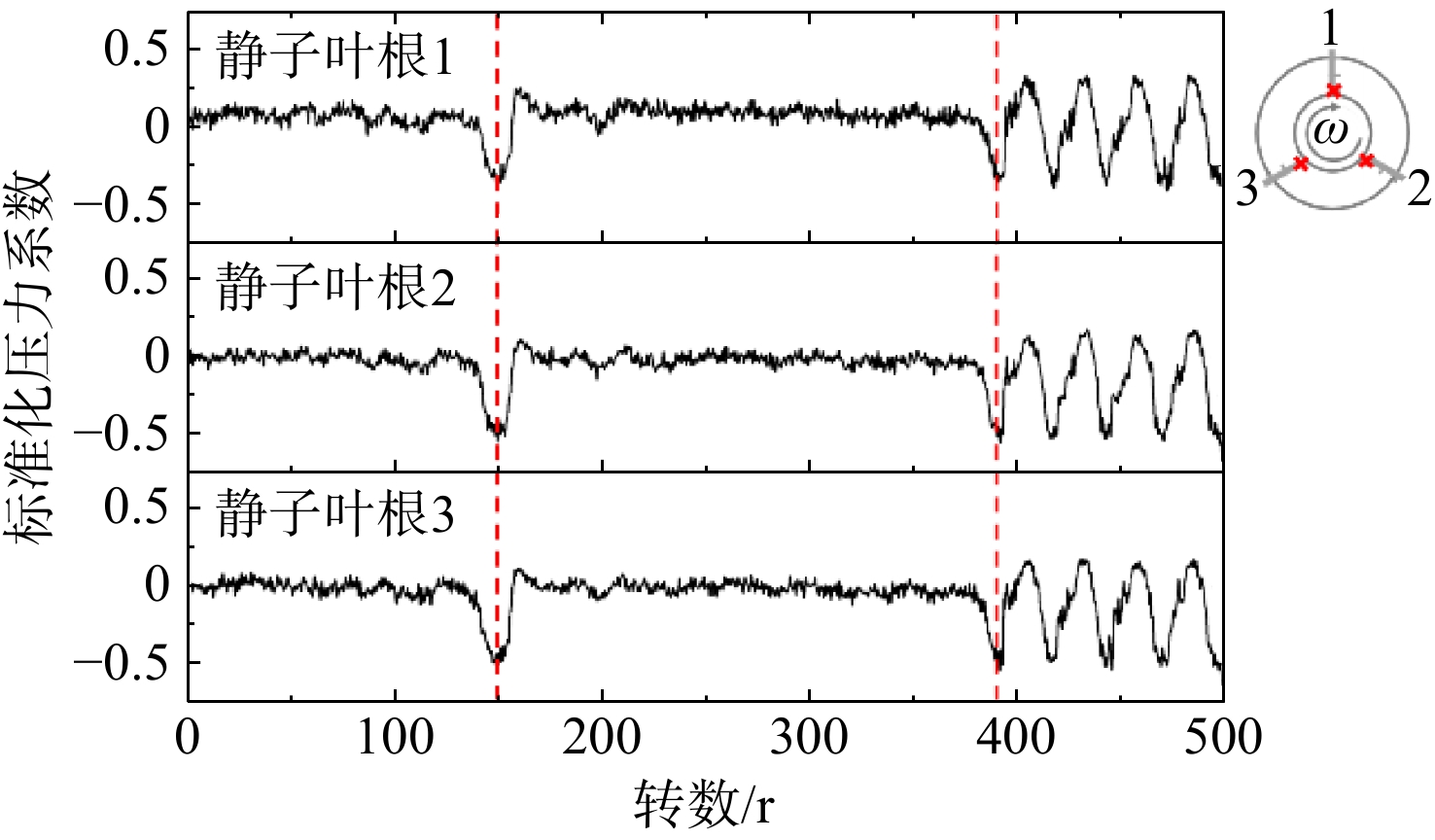
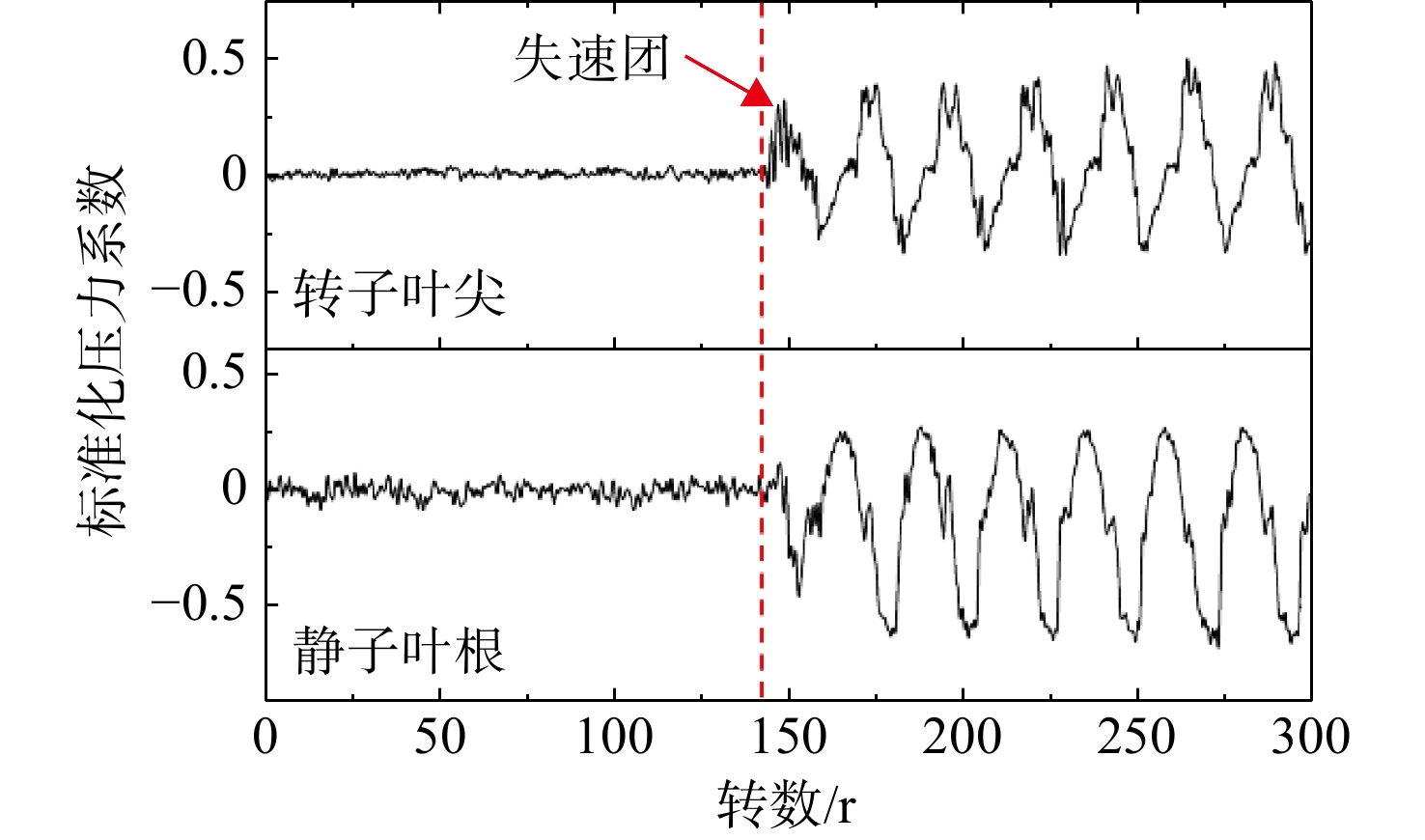
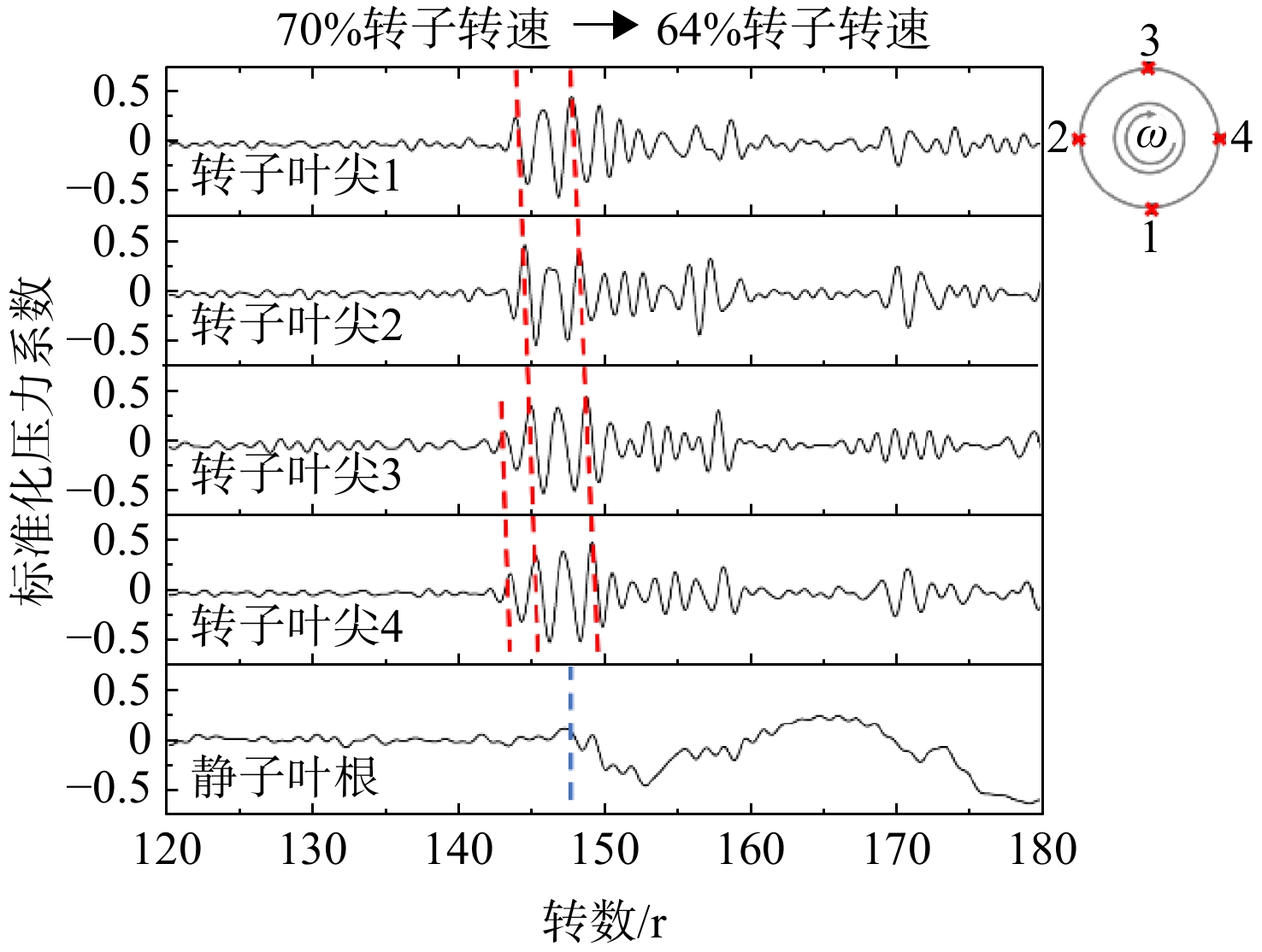
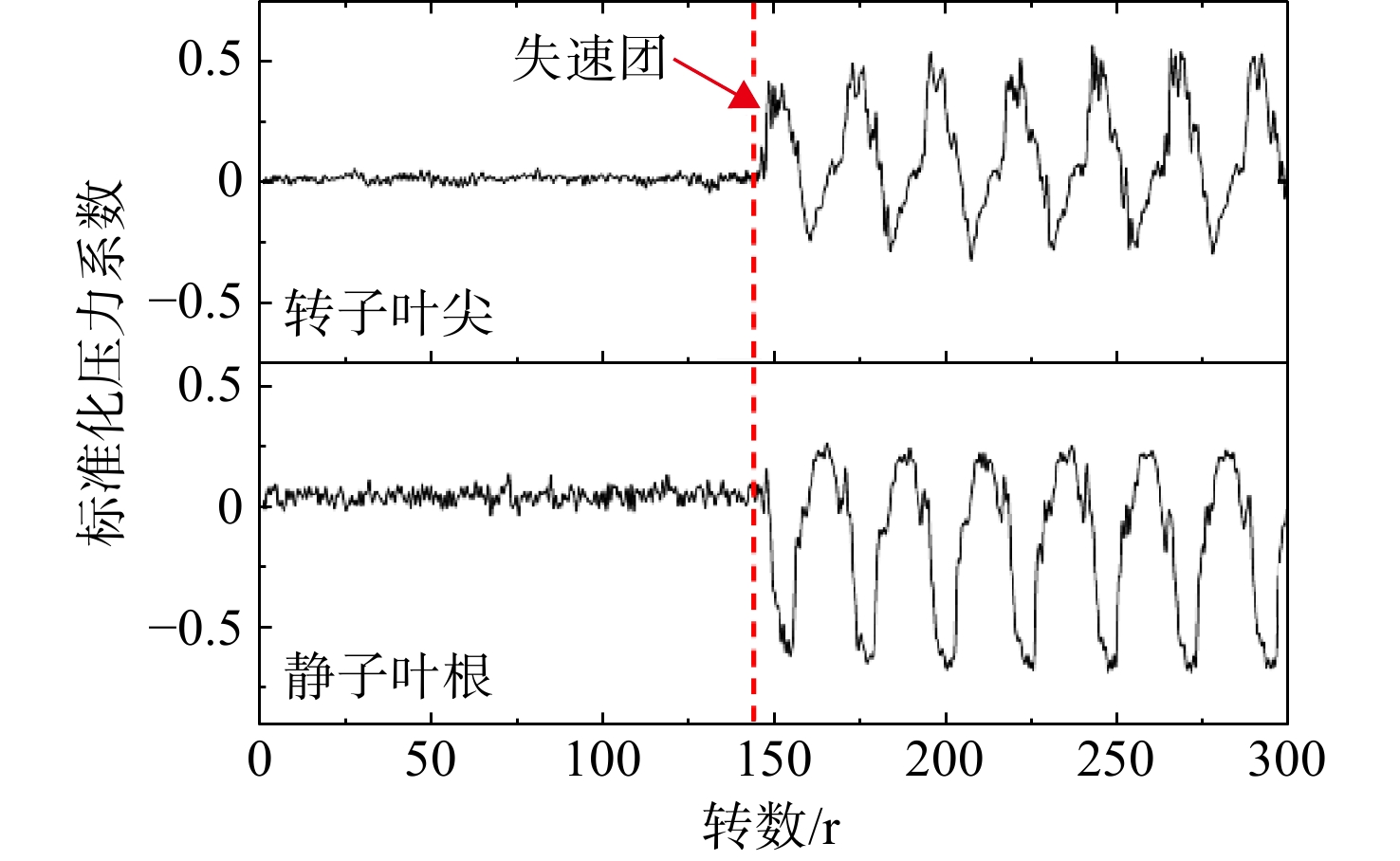
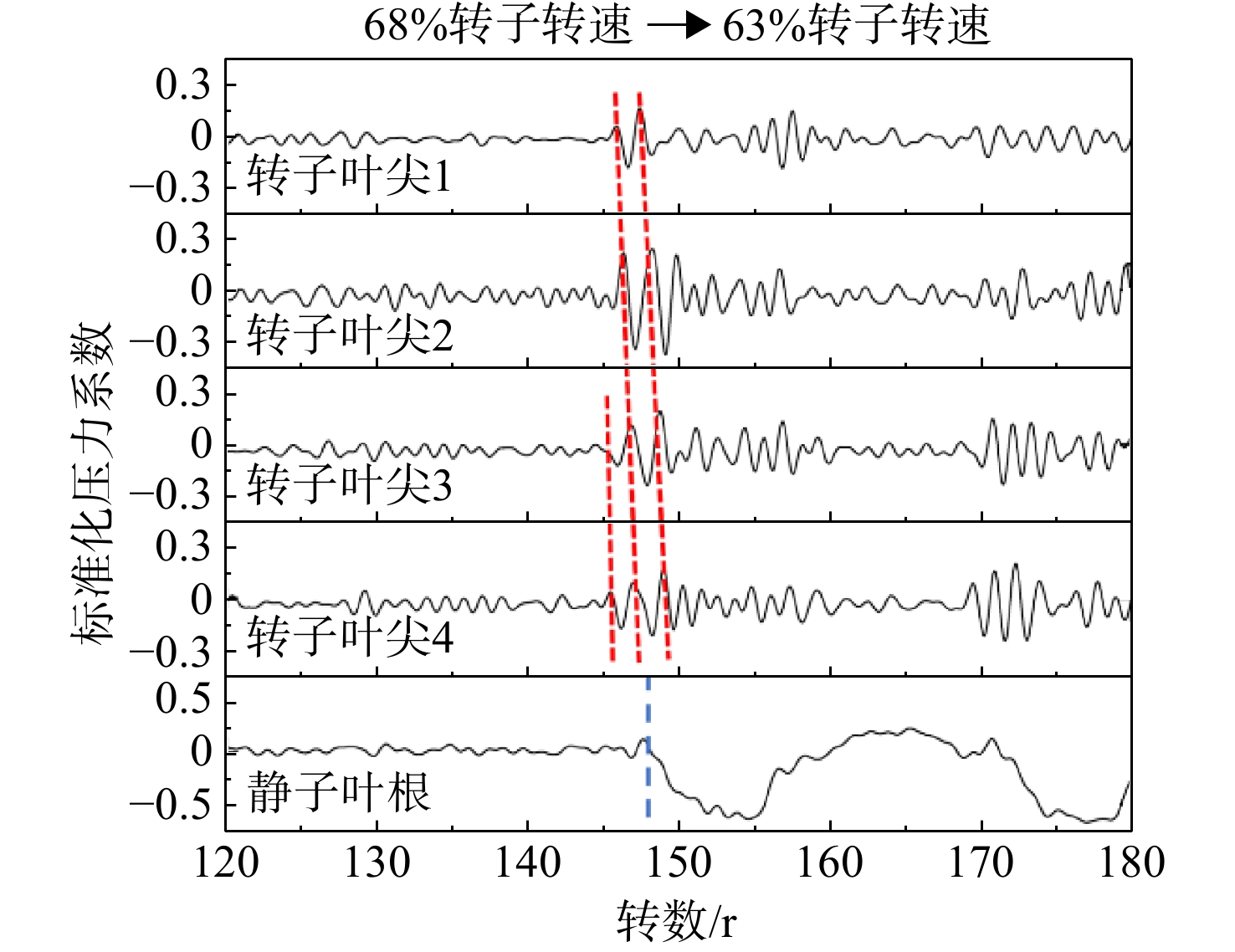
A high-speed aero-compressor with different instability precursors was taken as the research object. The inlet guide vane was installed to manipulate the compressor inlet pre-swirl angle. Several dynamic pressure transducers were arranged to measure the whole instability evolutions. The instability precursor and the evolutions were observed under different inlet guide vane angles. The results showed that at negative inlet guide vane angle, the compressor instability was caused by the spike in the rotor tip region. At zero inlet guide vane angle and small positive inlet guide vane angle, the instability was induced by the partial surge in the stator hub region. Under the condition of large positive inlet guide vane angle, local instability occurred at stator hub first in the process of throttling, and led to complete compressor instability with further throttling in form of rotating stall cells at the tip. The analysis showed that the increase of the inlet guide vane angle adjusted the load distribution between the rotor and the stator by reducing the degree of reaction, thus causing the instability precursors to change from “spike at rotor- partial surge at stator-local instability at stator” as described above.

Rocket Engine
Influence and control of non-uniform flow field on longitudinal combustion instability of liquid rocket engines
LI Longfei, YANG Baoqing, GE Shuhong, LIU Peijin, LIU Xinhua
2023, 38(1): 223-229. doi: 10.13224/j.cnki.jasp.20210356
Abstract:

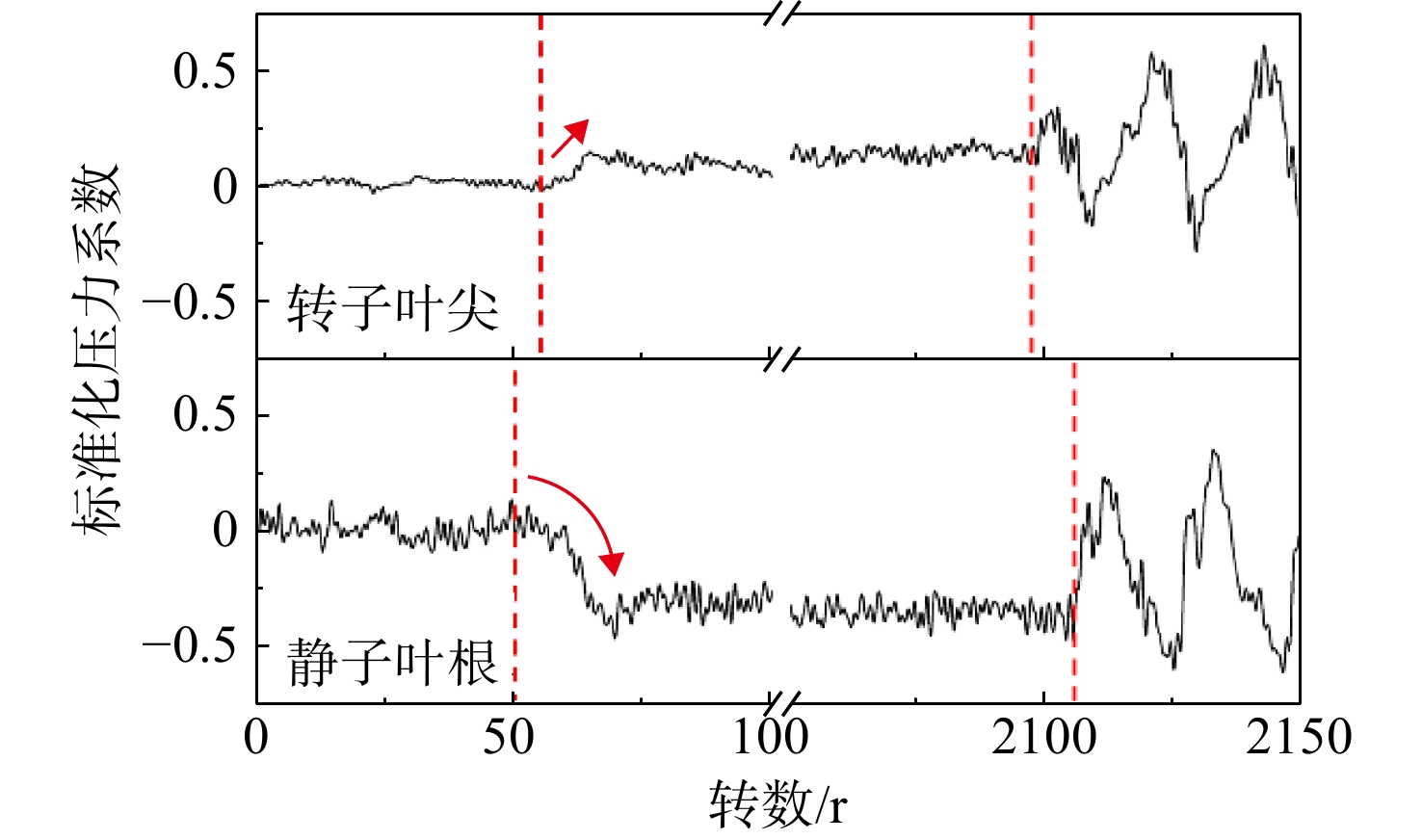
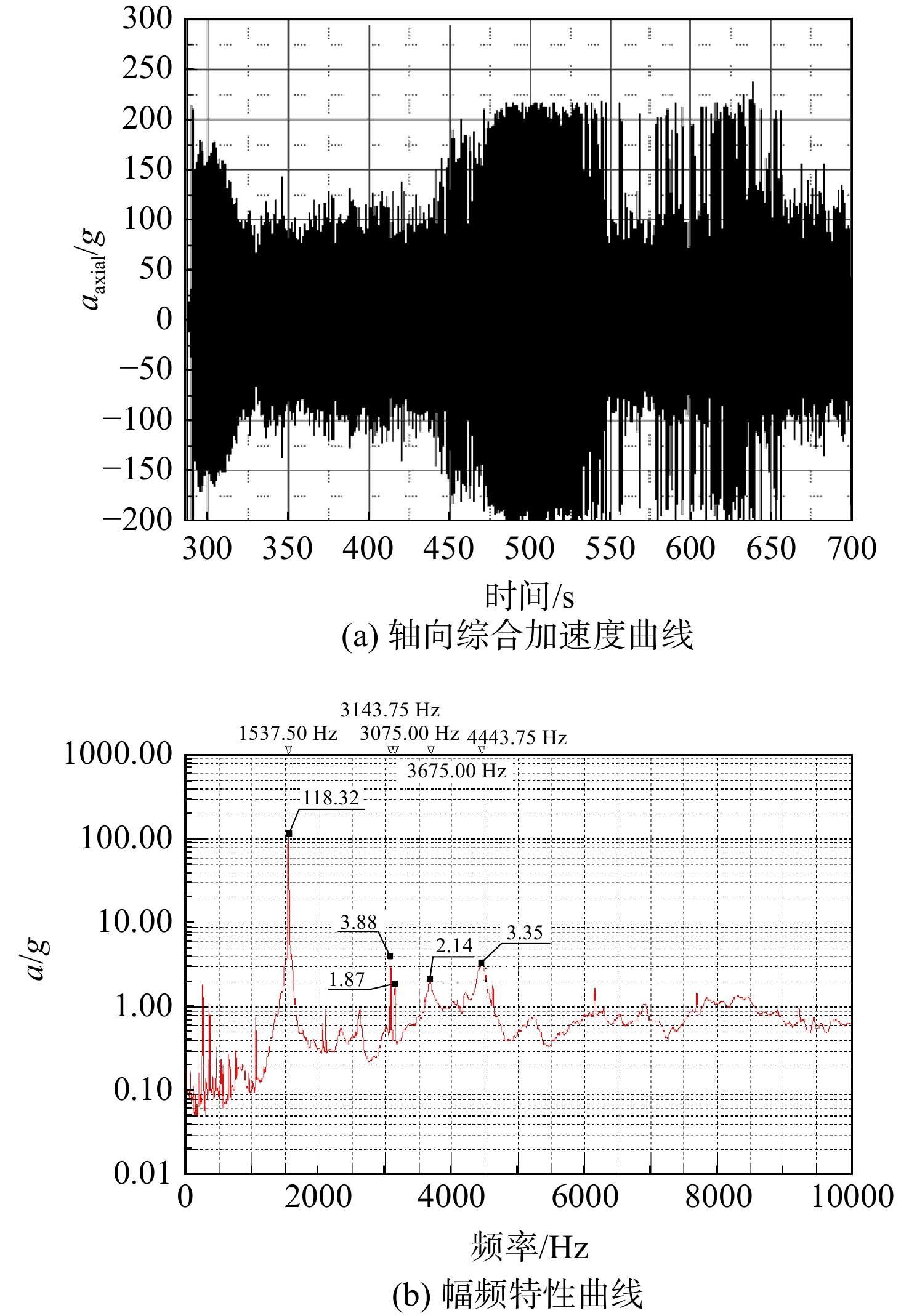
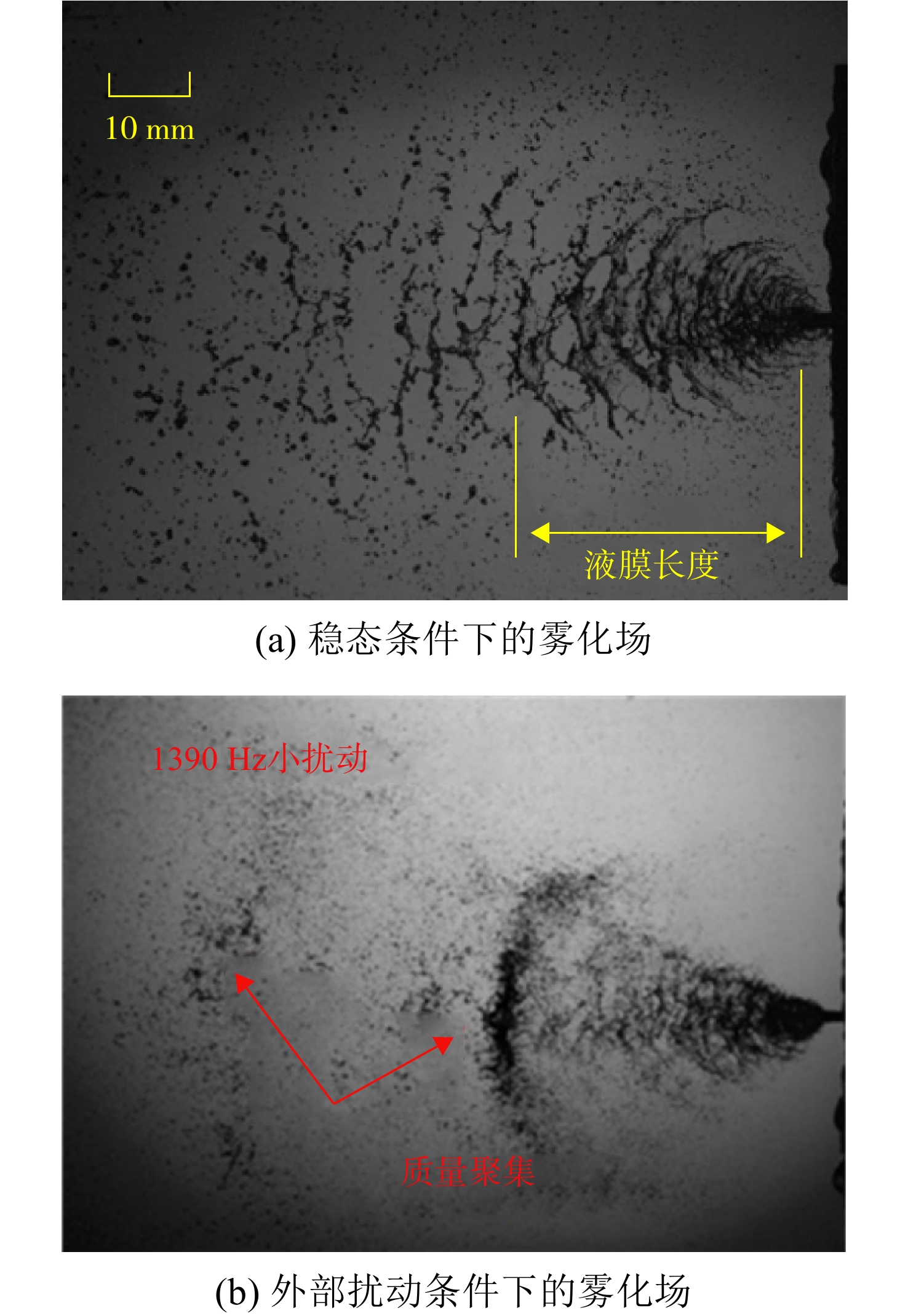
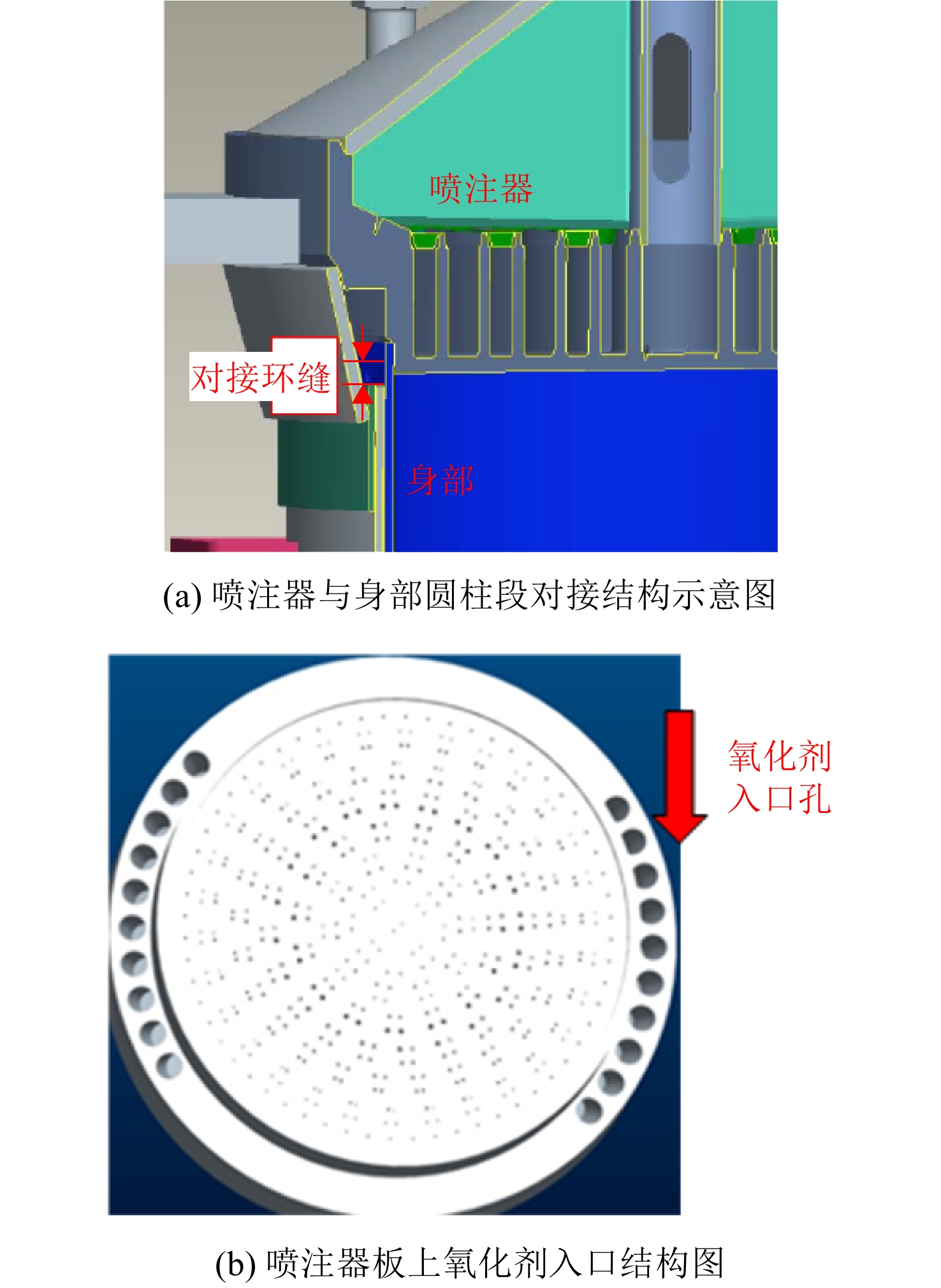
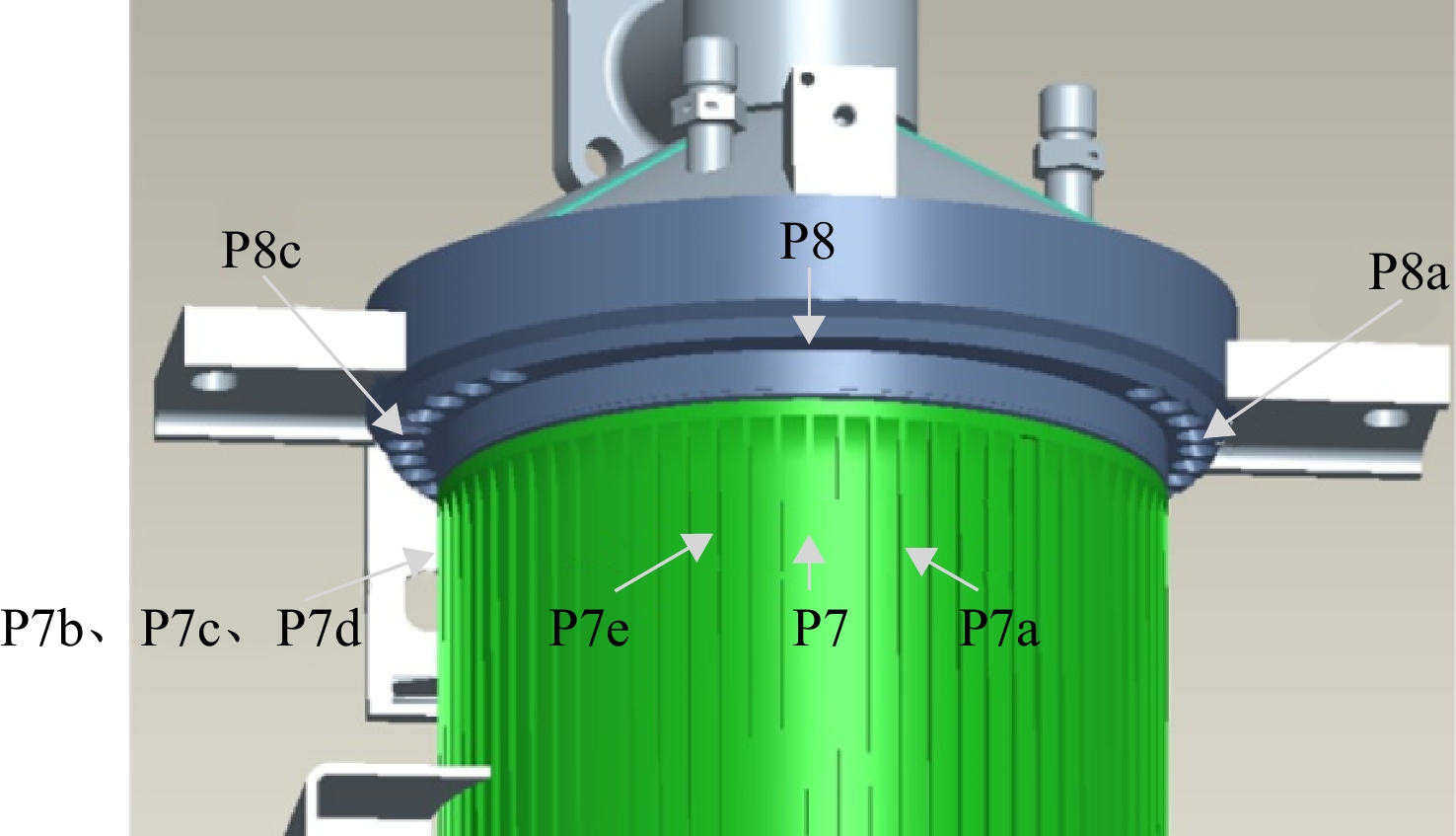
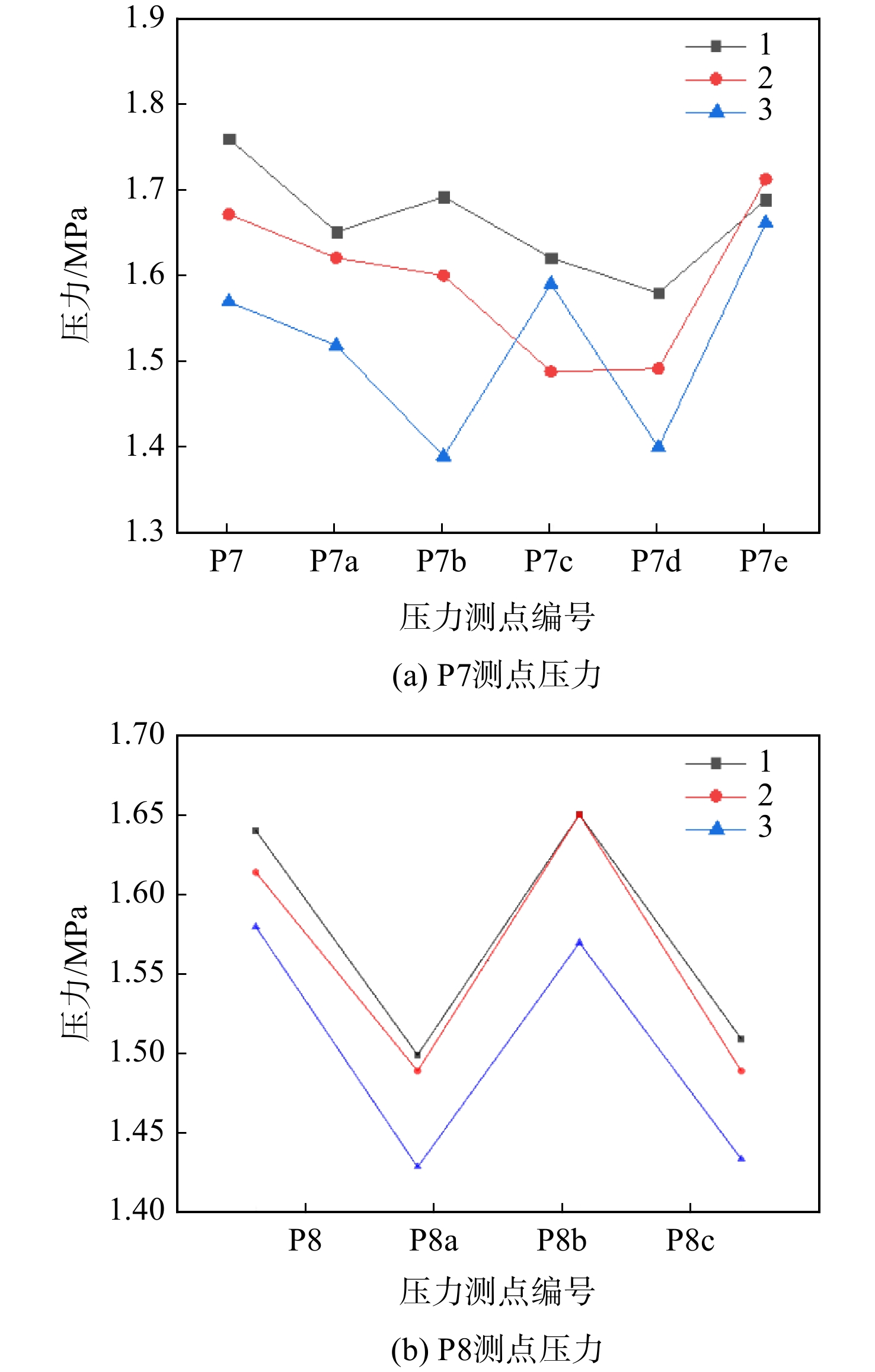
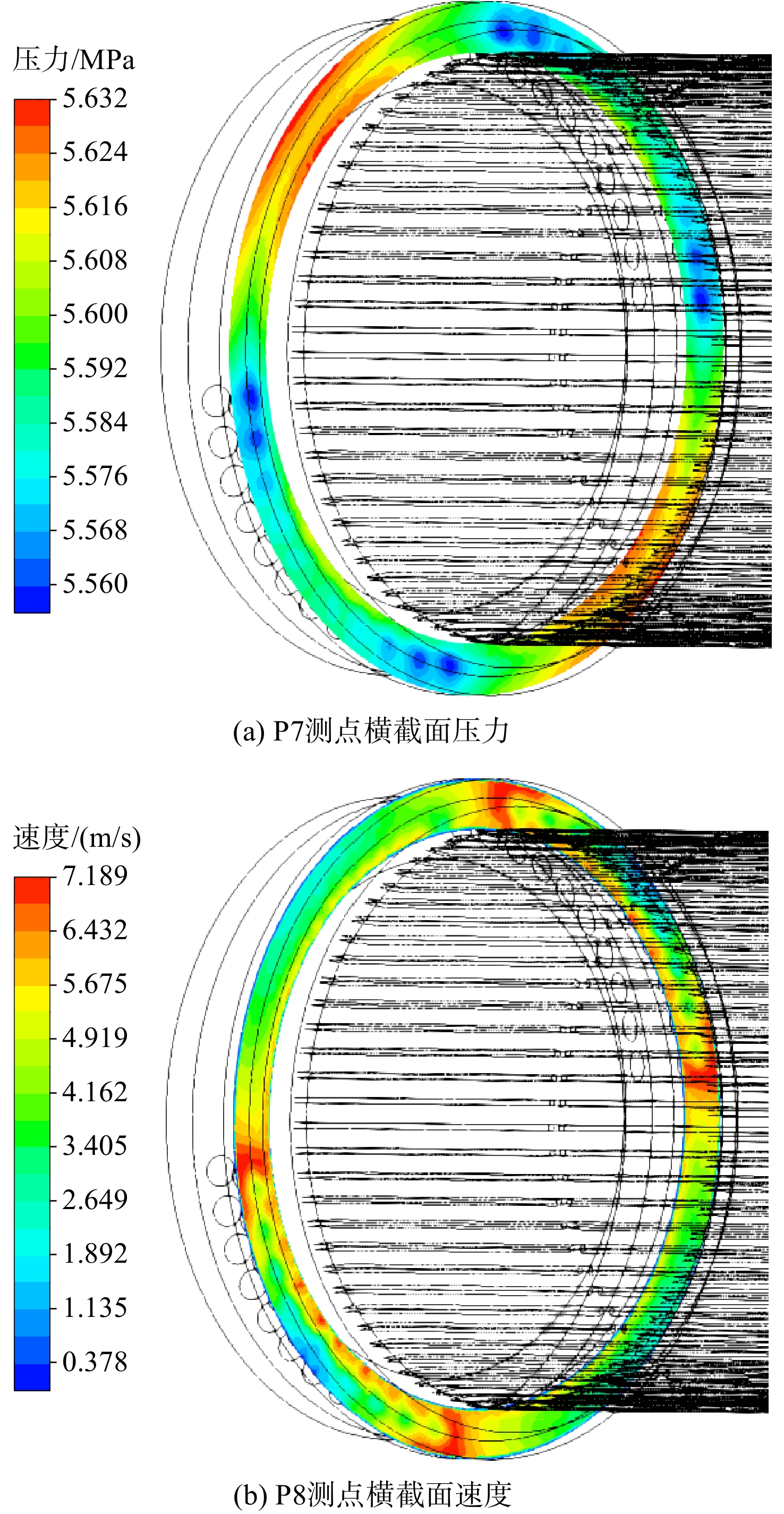
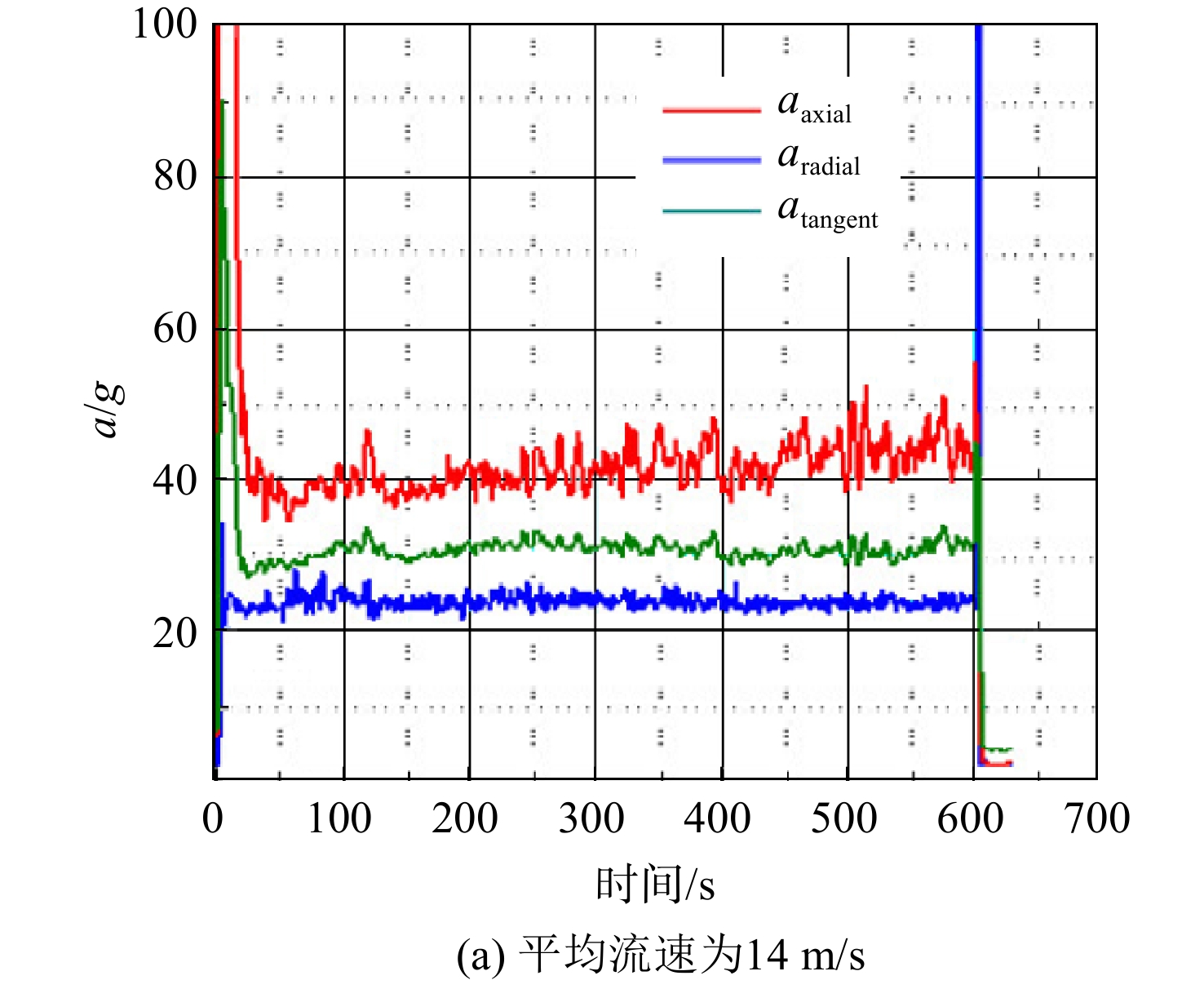
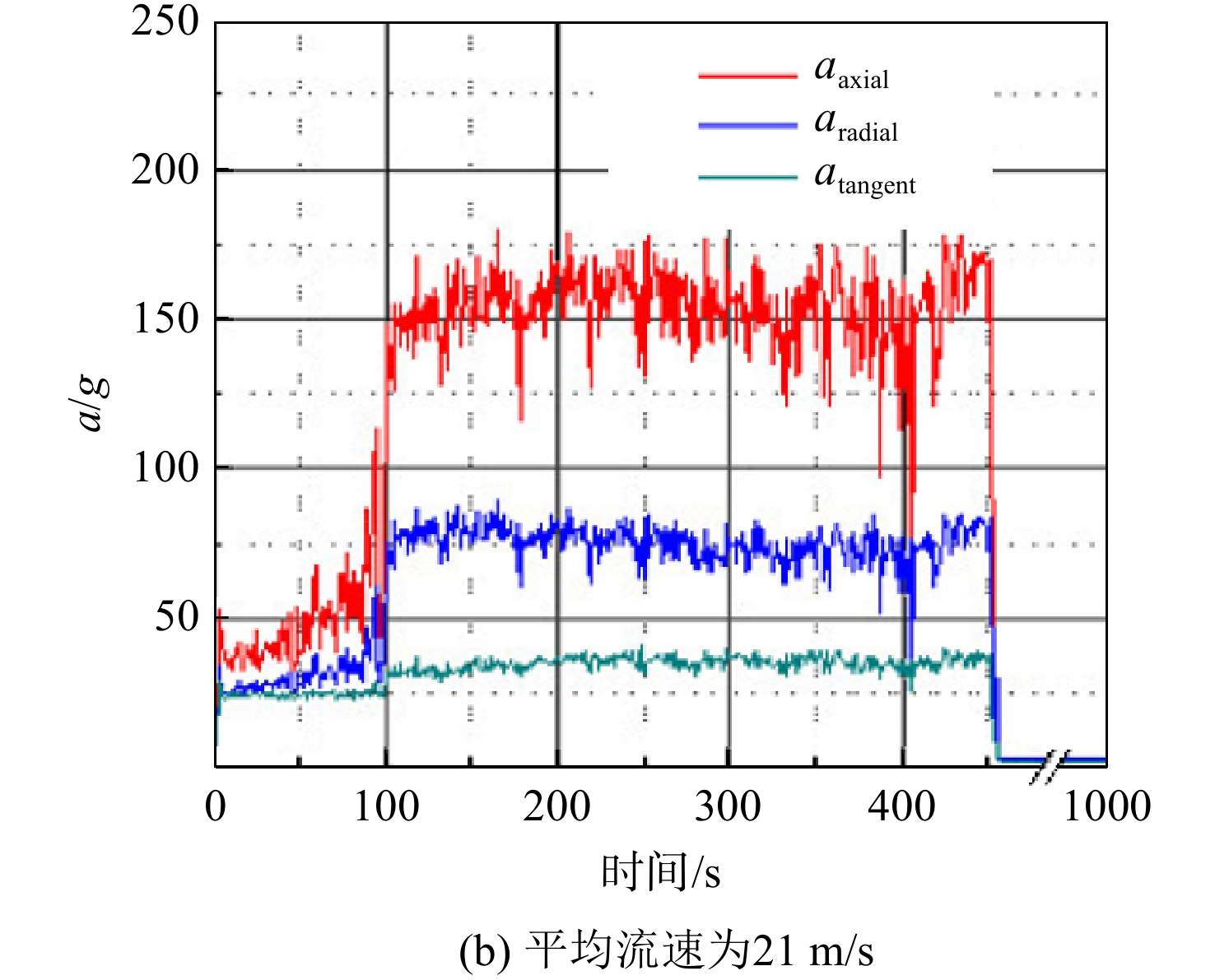
The vortex instability and pressure oscillation in the flow field are one of the important reasons for the high frequency longitudinal combustion instability of liquid rocket engine. Considering the regenerative cooling channel and impinging jet injectors in the thrust chamber ofnormal temperature propellant rocket engine, the flow field of the connecting part between the thrust chamber body and the injector was analyzed, and its uniformity were measured experimentally. Results showed that the circumferential non-uniform pressure at outlet of regenerative cooling channel was about 0.15 MPa. The use of throttling at the outlet of the cylindrical section of the thrust chamber can significantly increase the local fluid velocity and the turbulence and non-uniformity of the oxidant at the injector, thereby changing the combustion characteristics. The atomization test of impact injection unit was carried out, and the propellant inlet boundary velocity of 18 m/s was obtained. Based on the flow field uniformity of the injector, a control method of suppressing the longitudinal high frequency combustion instability was proposedby controlling the propellant flow rate and reducing the non-uniformity. The engine thermal test results showed that the control method suppressed the longitudinal high frequency combustion instability of the thrust chamber at the propellant inlet flow rate of (15±1) m/s.
Frequency characteristics of liquid rocket engine feed system
DONG Meng, TAN Yonghua, XING Lixiang, XU Haohai, LI Pengfei
2023, 38(1): 230-239. doi: 10.13224/j.cnki.jasp.20210363
Abstract:

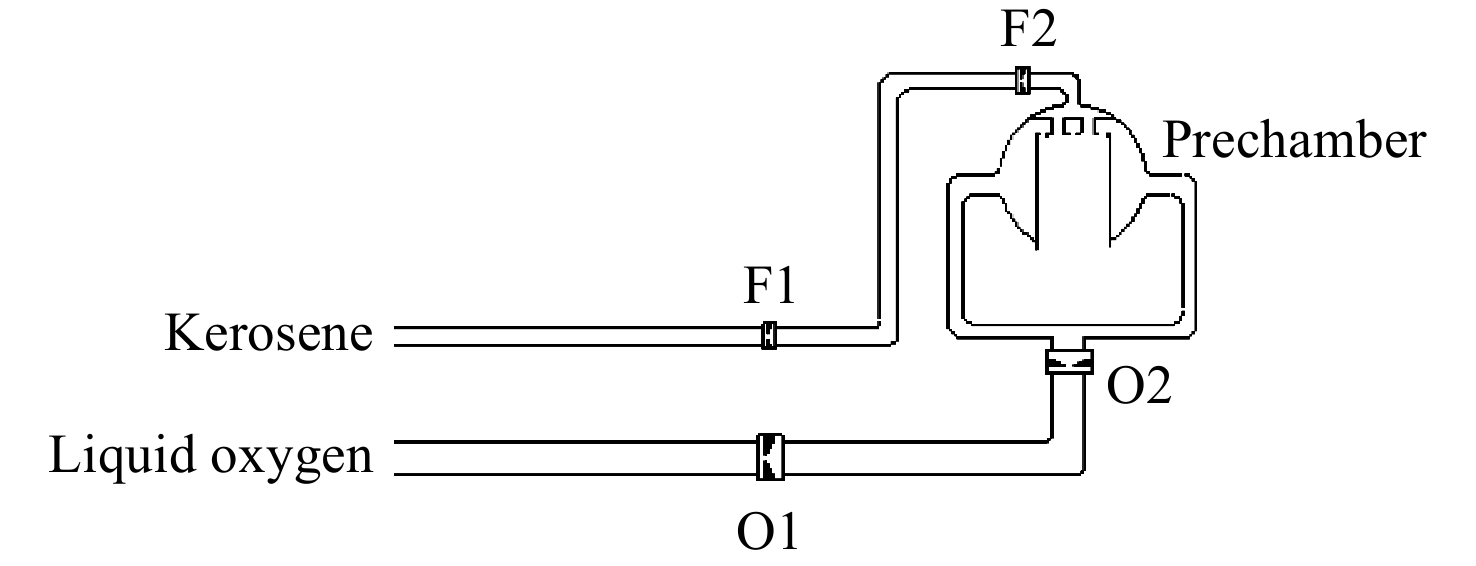
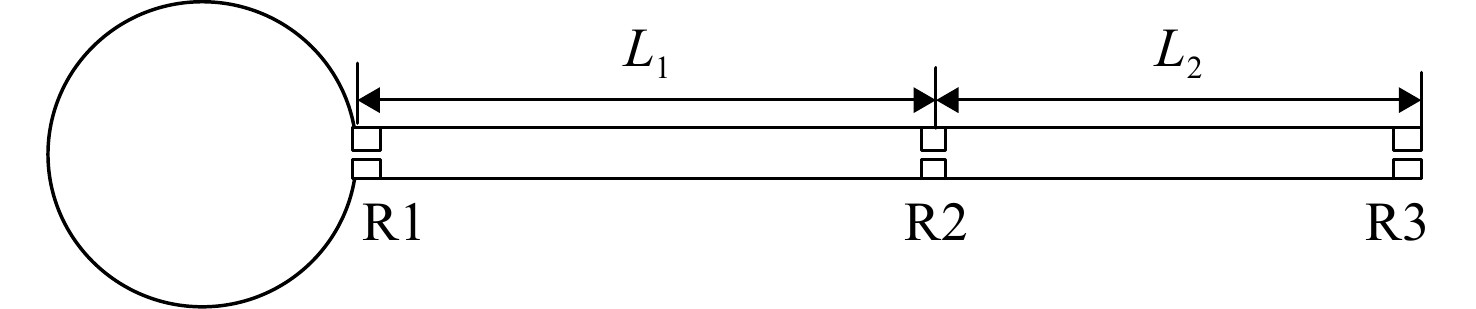
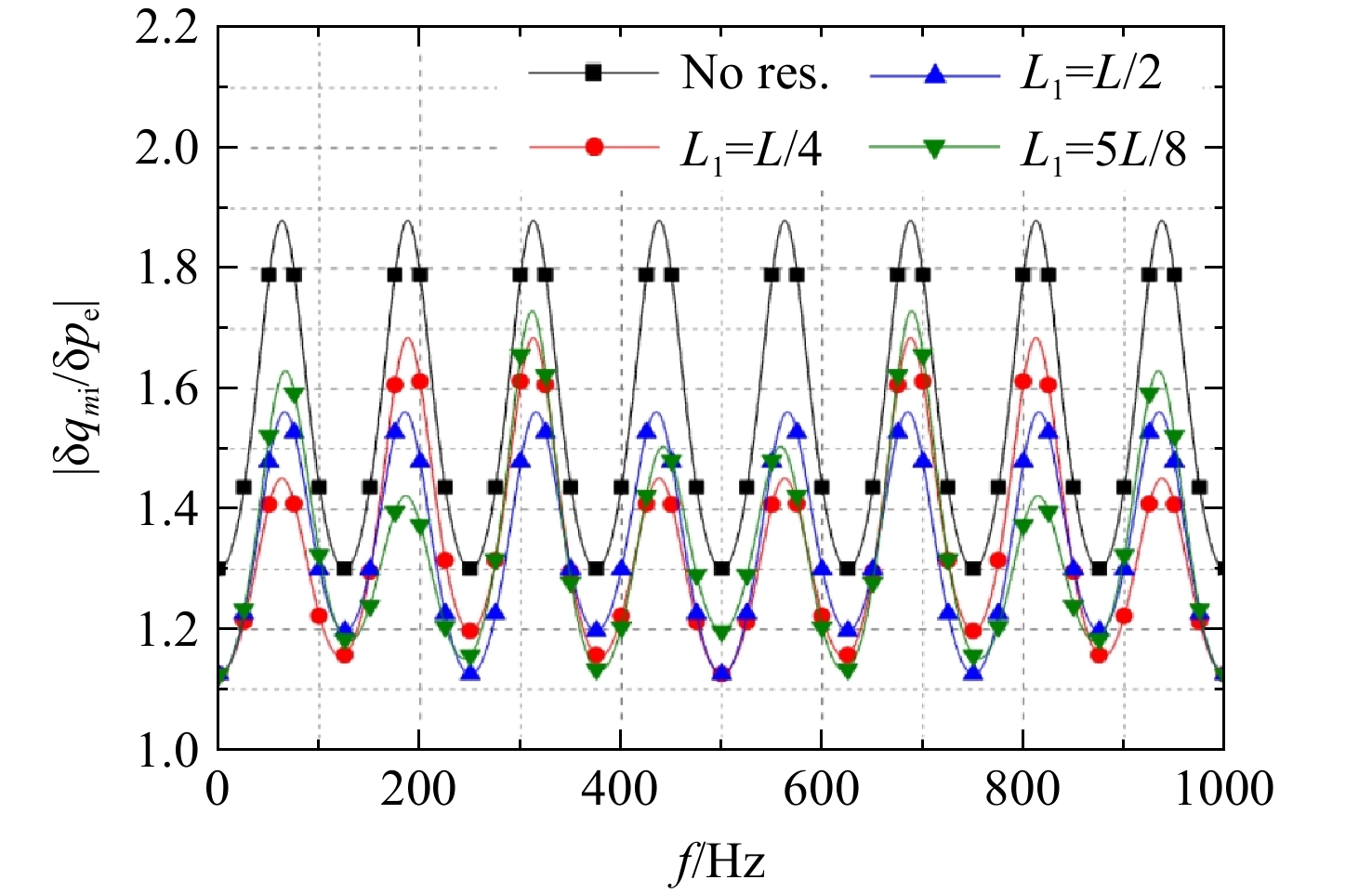
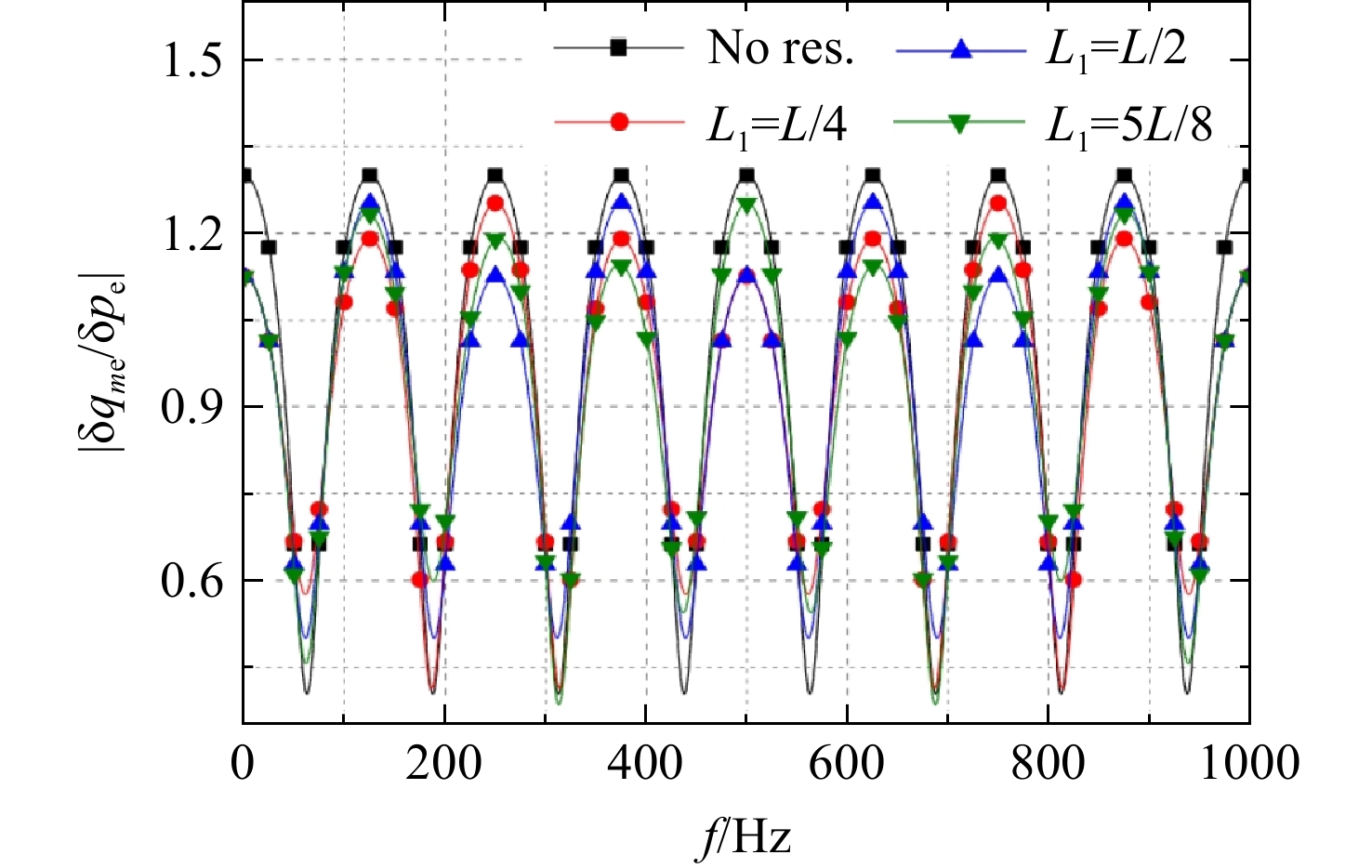
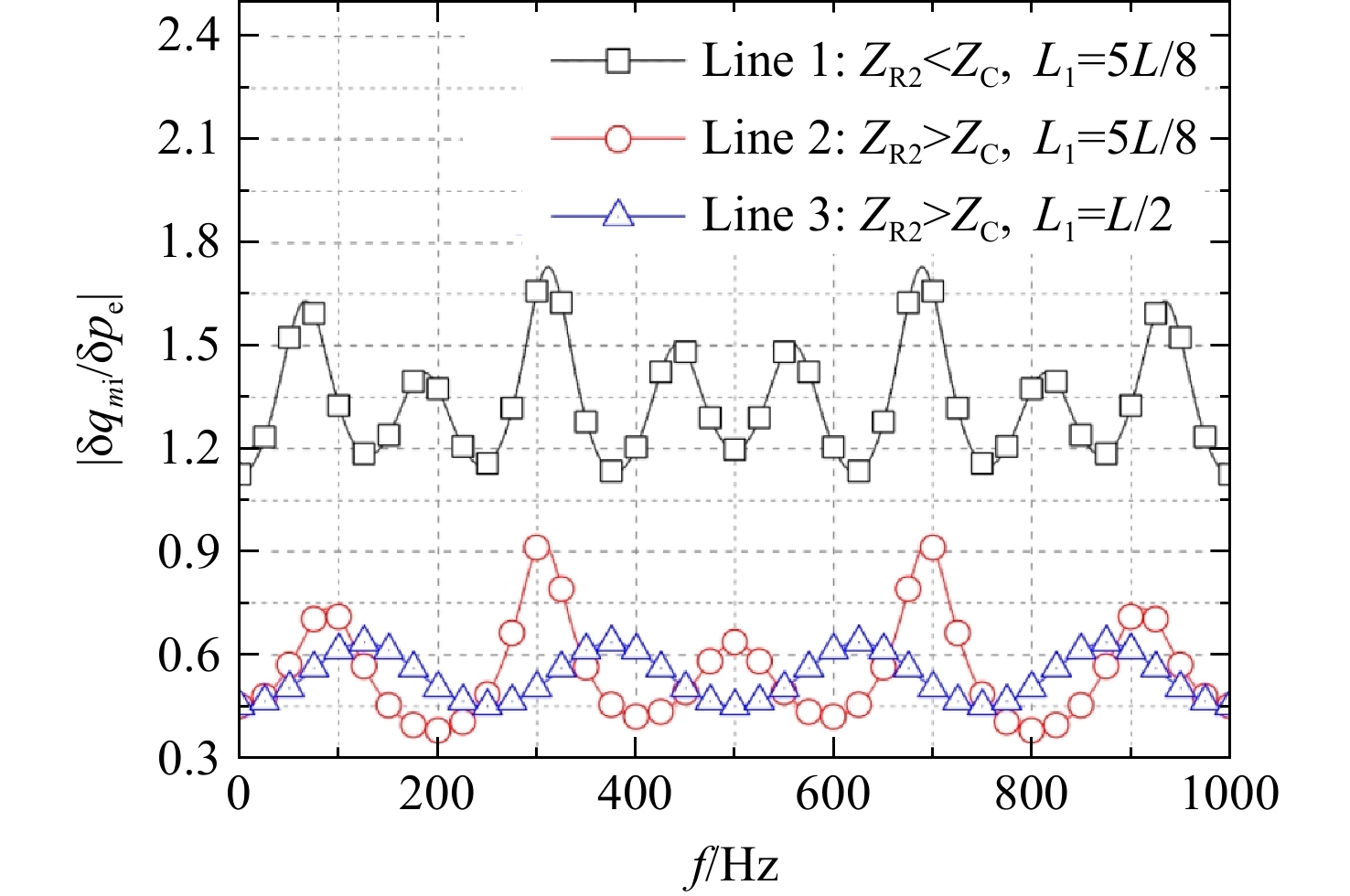
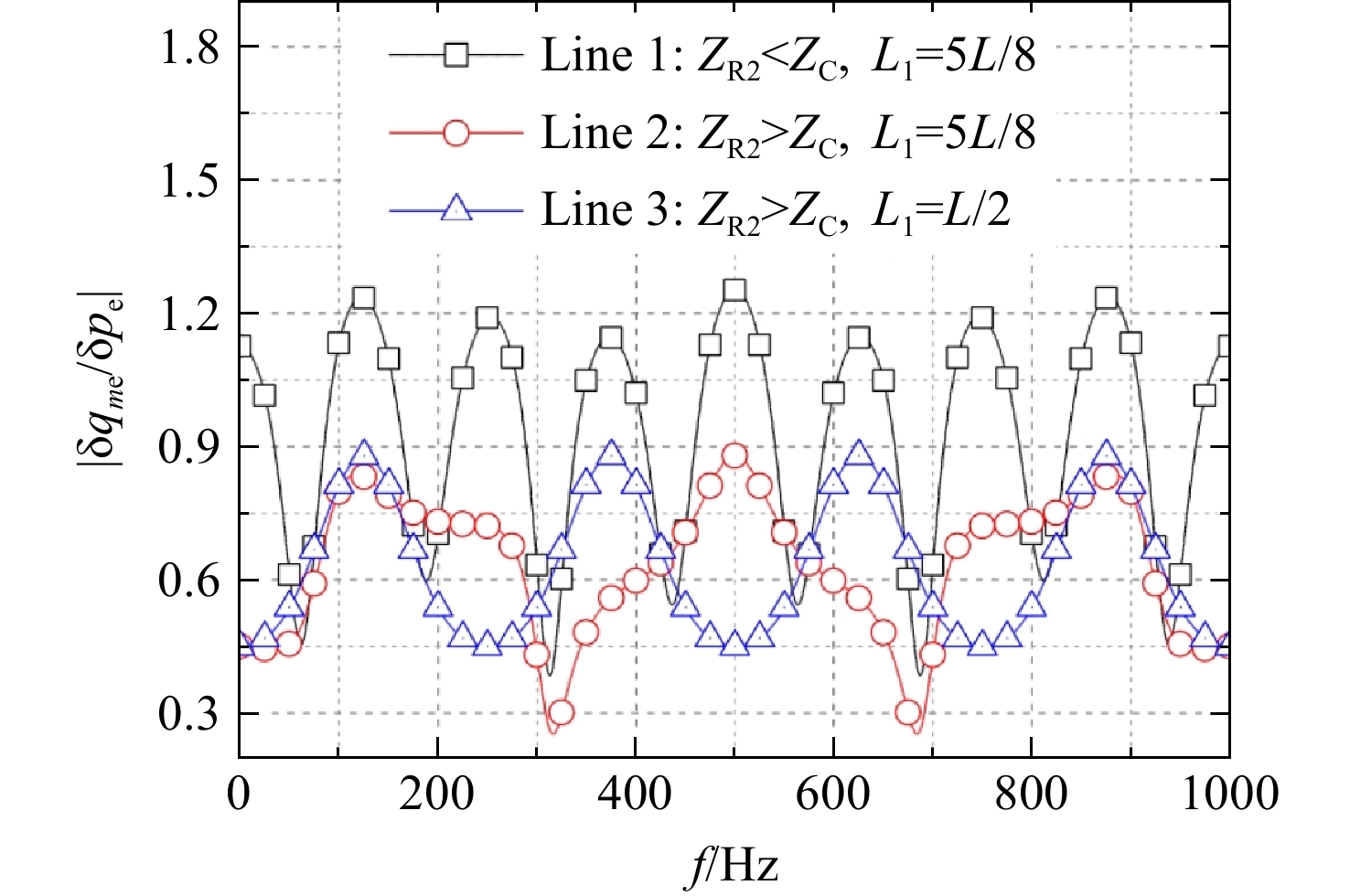
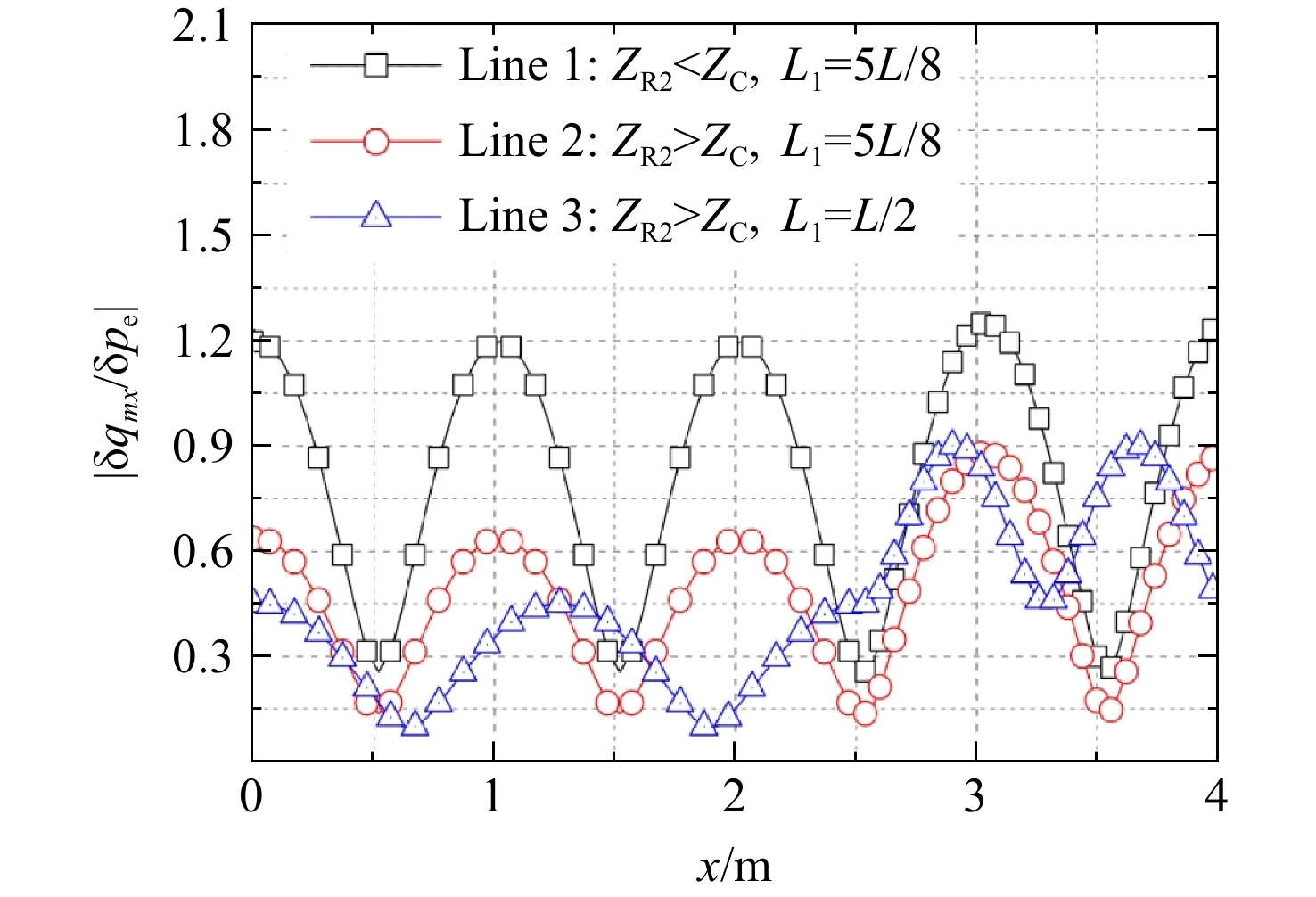
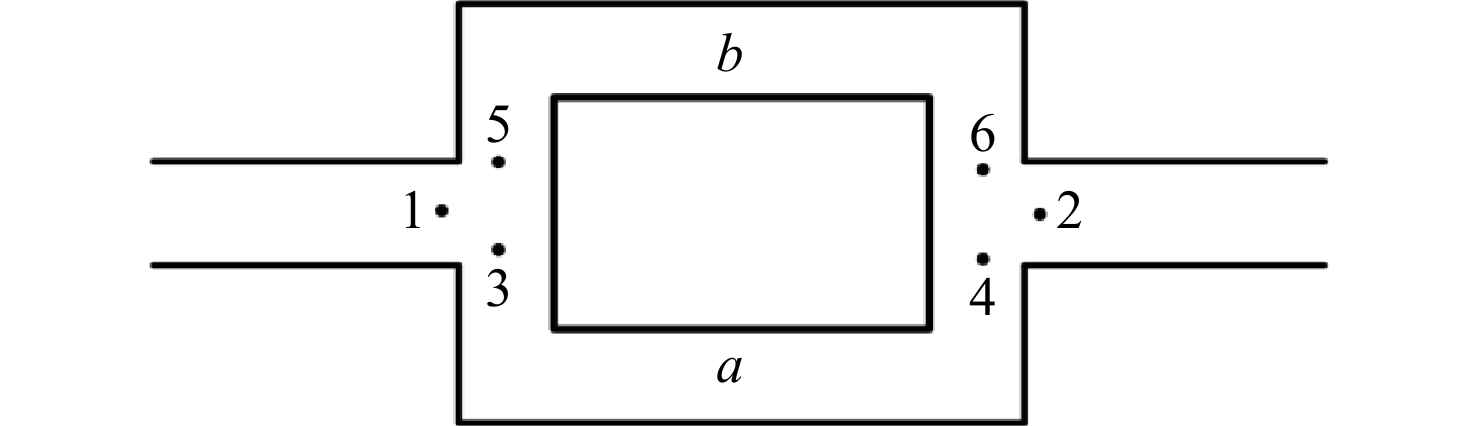
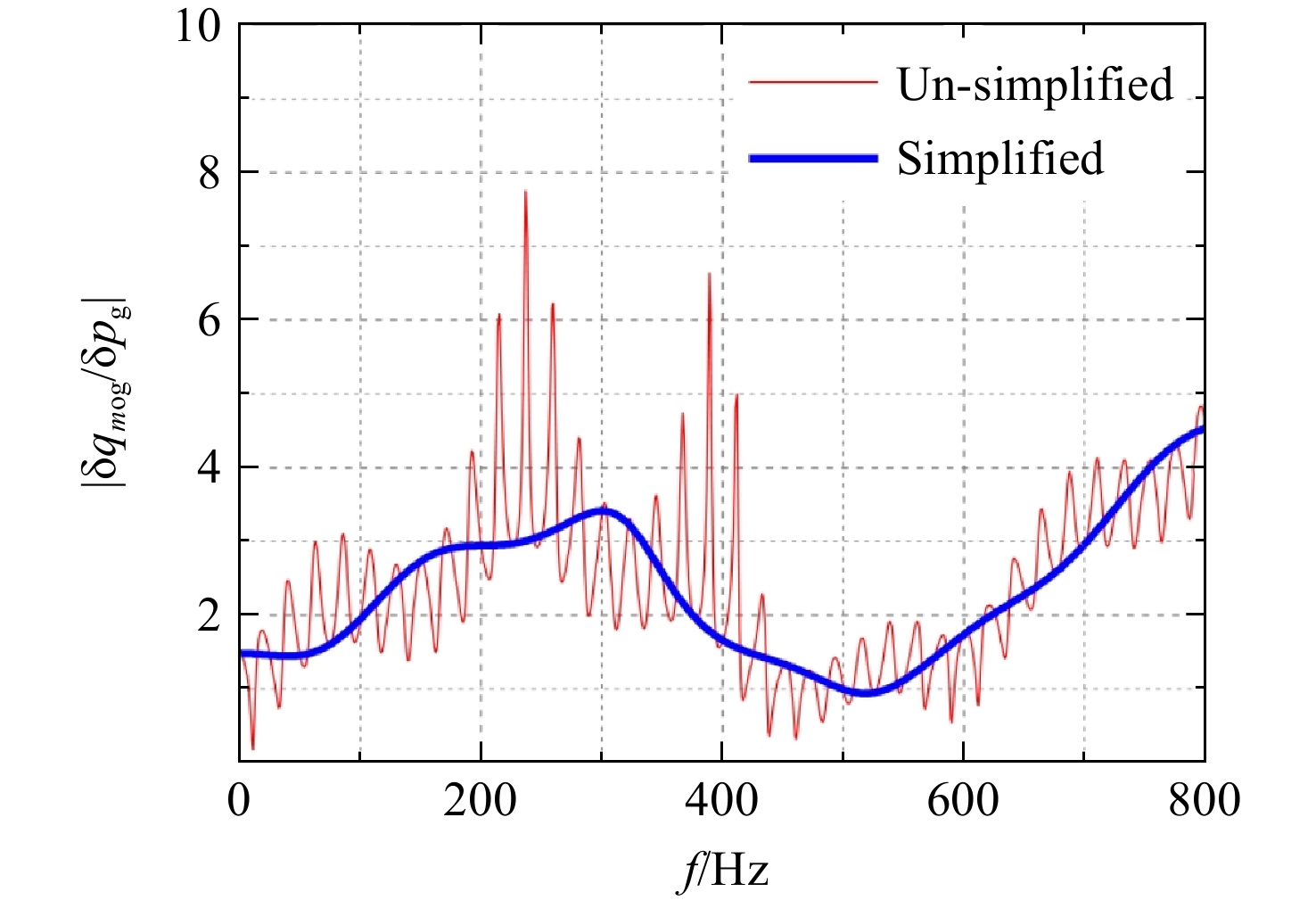
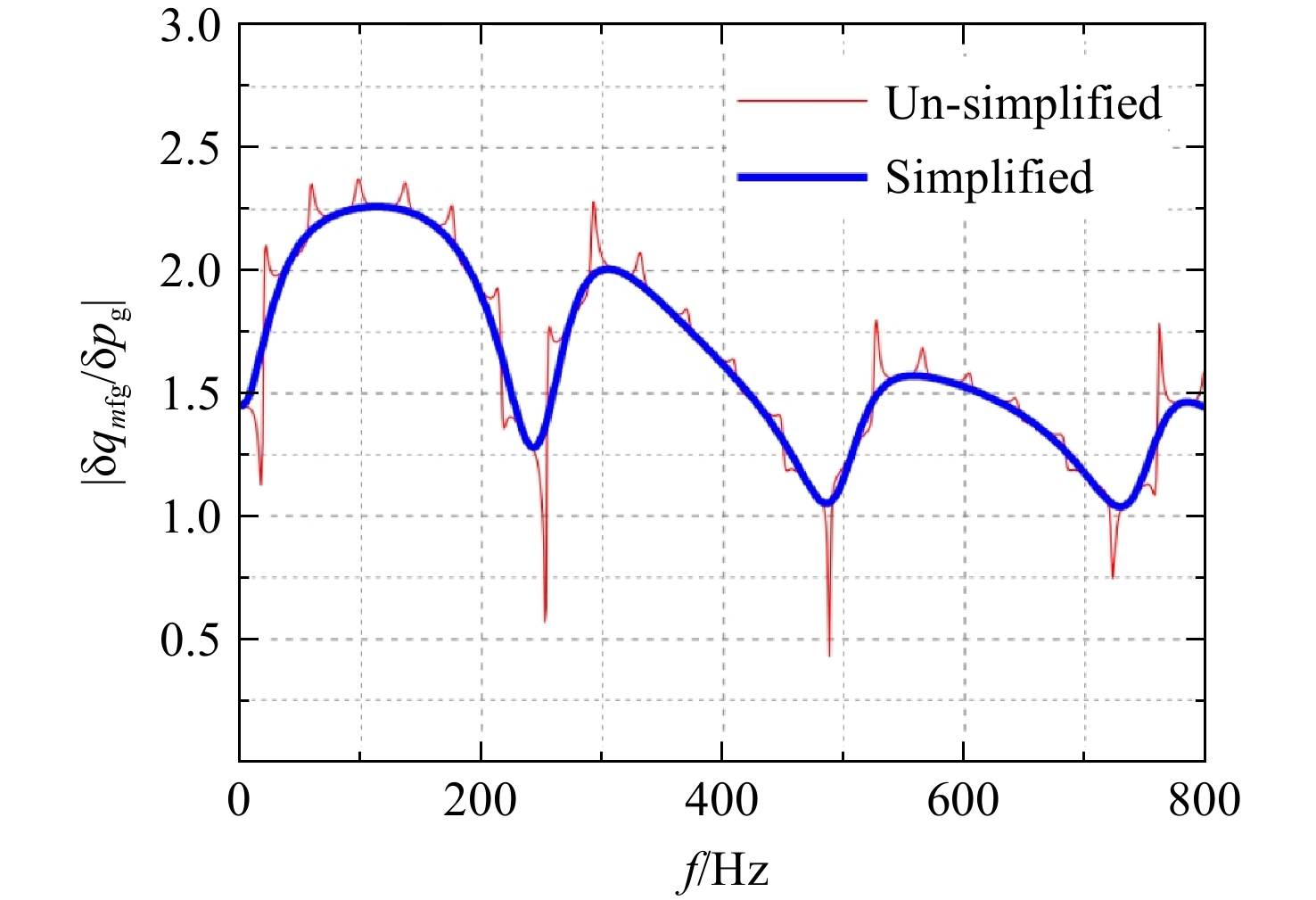
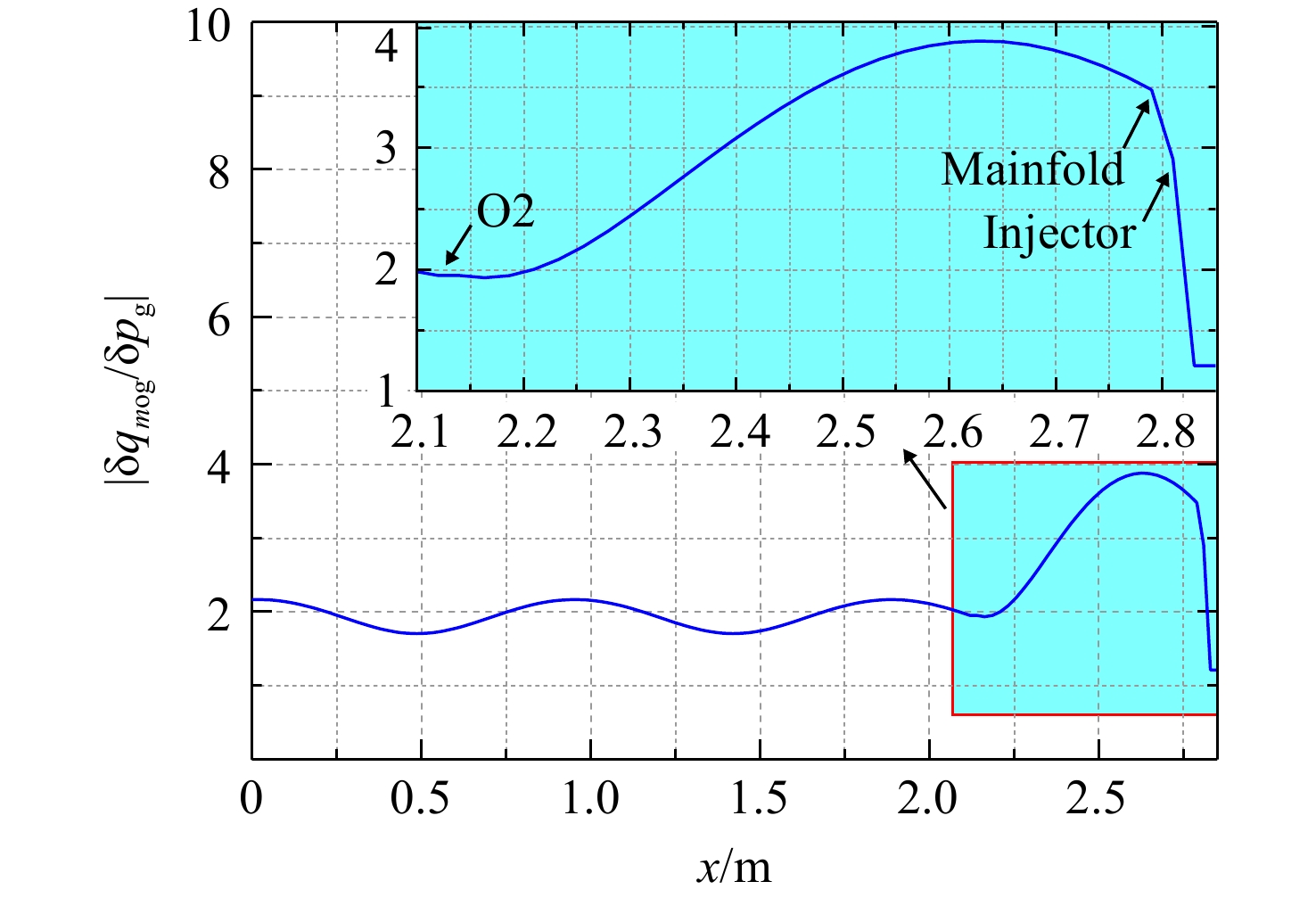
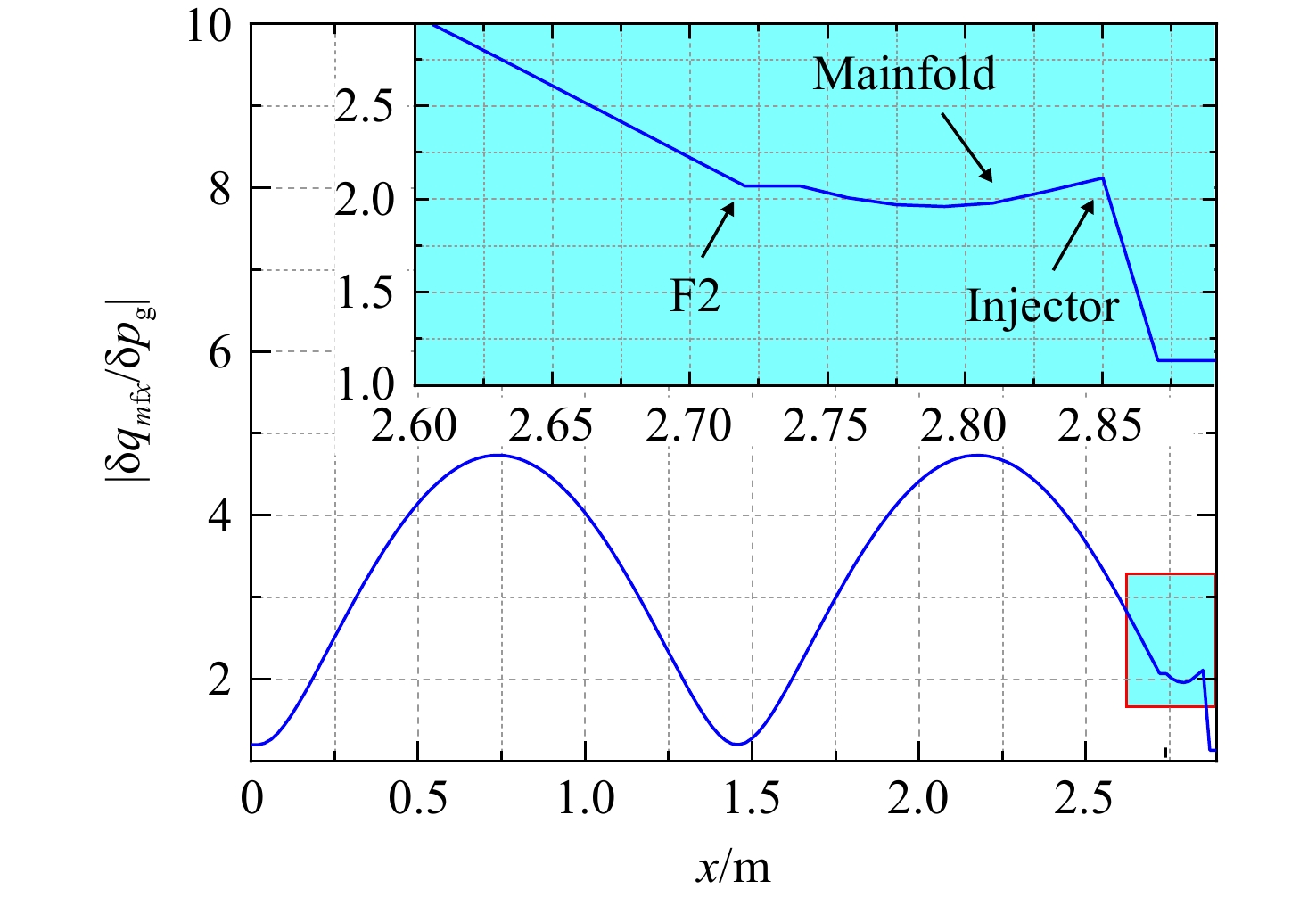
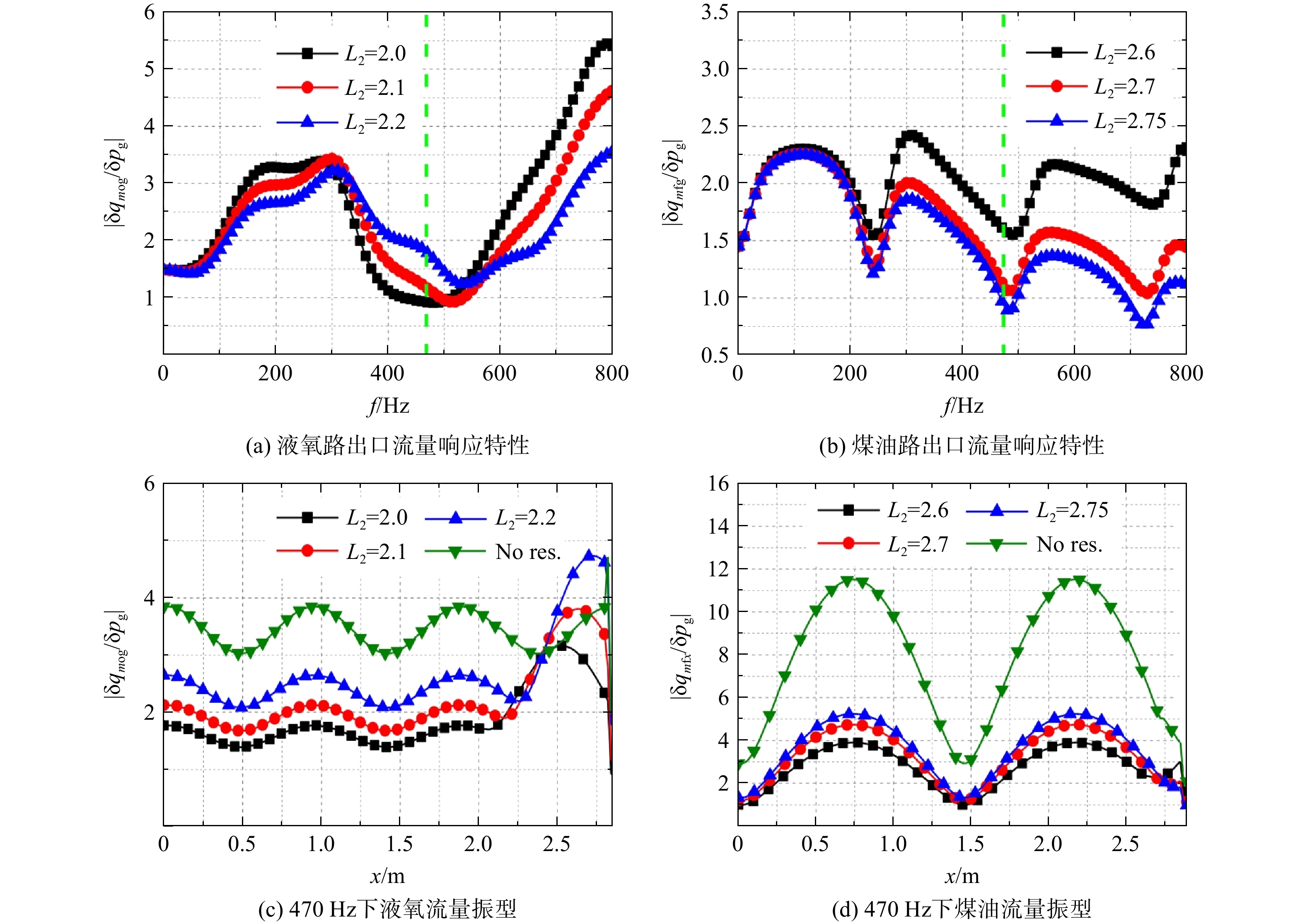
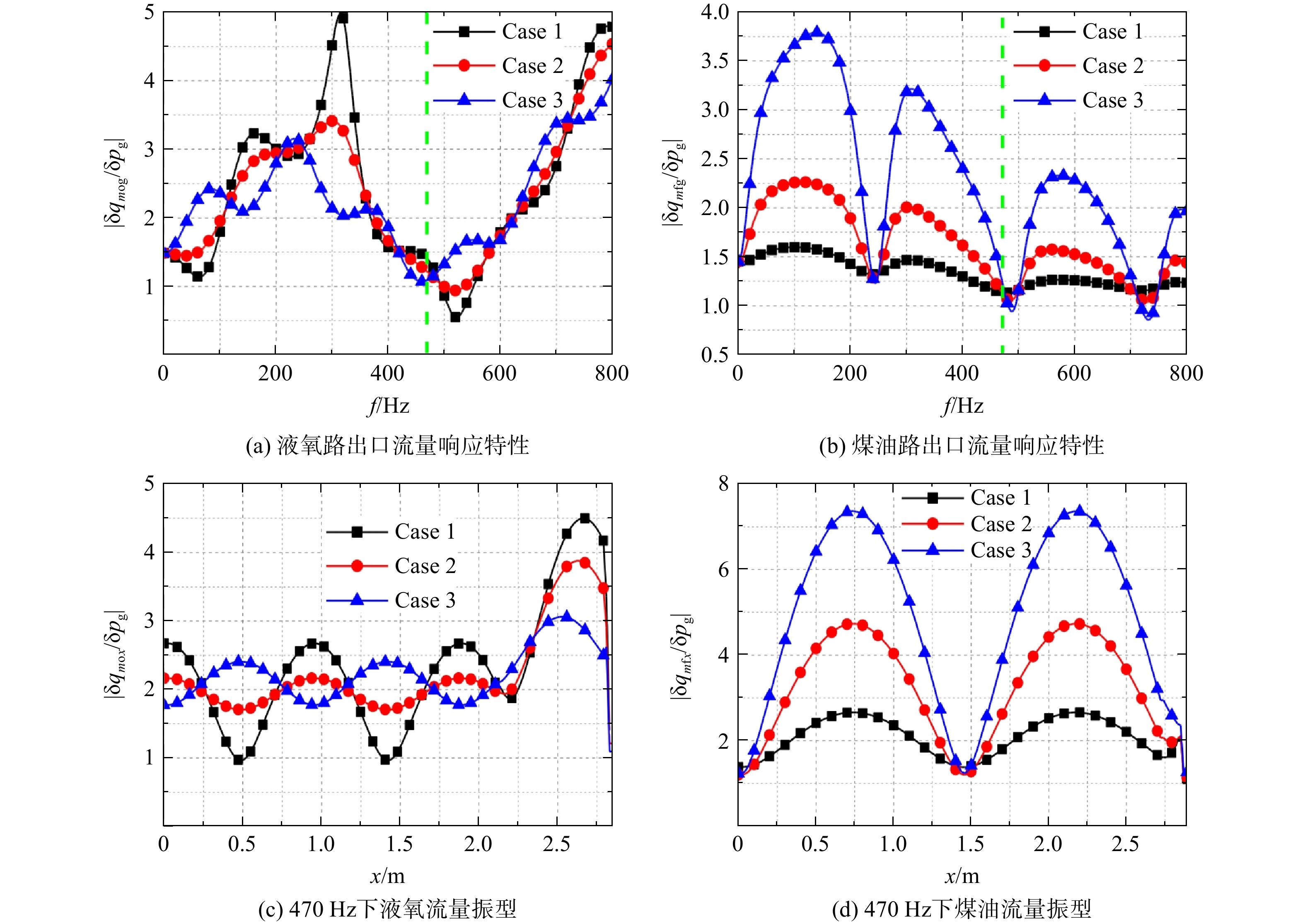
In order to study effective engineering measures to reduce the oscillation in the liquid rocket engine feed system, the linearized transfer matrix models in complex domain suitable for medium and high frequency analysis were established for the model system and the real system. Combined with the method of the contrast relationship between the impedance of orifices and the characteristic impedance of pipelines, the frequency characteristic of the system flow path under the excitation of outlet pressure was analyzed. The results showed that the resonance frequency shift effect may occur at the excitation source end, and the amplitude-frequency response of the non-excitation source end should be selected to judge the system resonance frequency. The throttle orifice had strong frequency selectivity and position selectivity for the system of anti-resonance characteristics, so attention shall be paid to the frequency and location. The closer the throttle orifice to the antinode of the flow mode, or the greater the pressure drop of the throttle orifice at the position of the flow antinode, indicated the greater attenuation effect on the oscillation in the flow path. For the liquid rocket engine feed system, shortening the length of the liquid oxygen pipe by 0.1 m, increasing the length of the kerosene pipe by 0.05 m, and adjusting the pressure drop distribution of the throttle orifice can effectively reduce the oscillation of the feed system.
Autocontrol
Flow control strategy for powered nacelle calibration facility
CHEN Kuang, ZHANG Rongping, JIN Rongchao
2023, 38(1): 240-249. doi: 10.13224/j.cnki.jasp.20220497
Abstract:

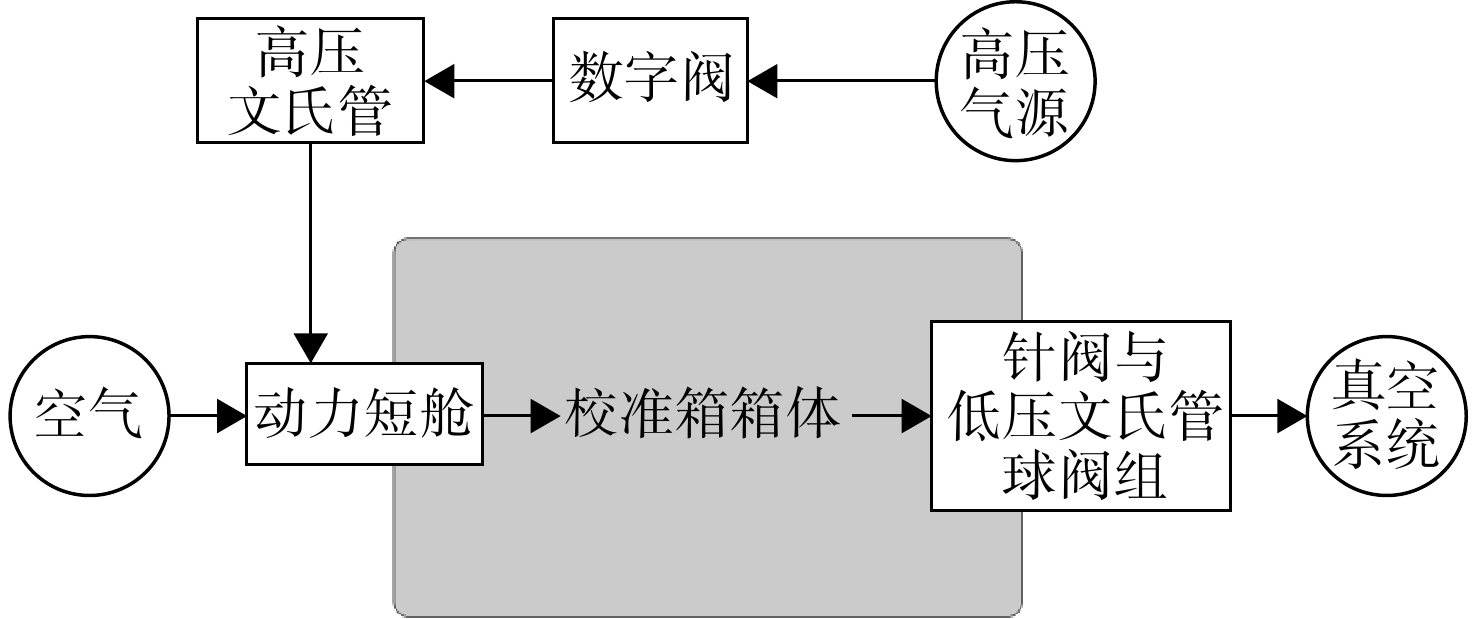
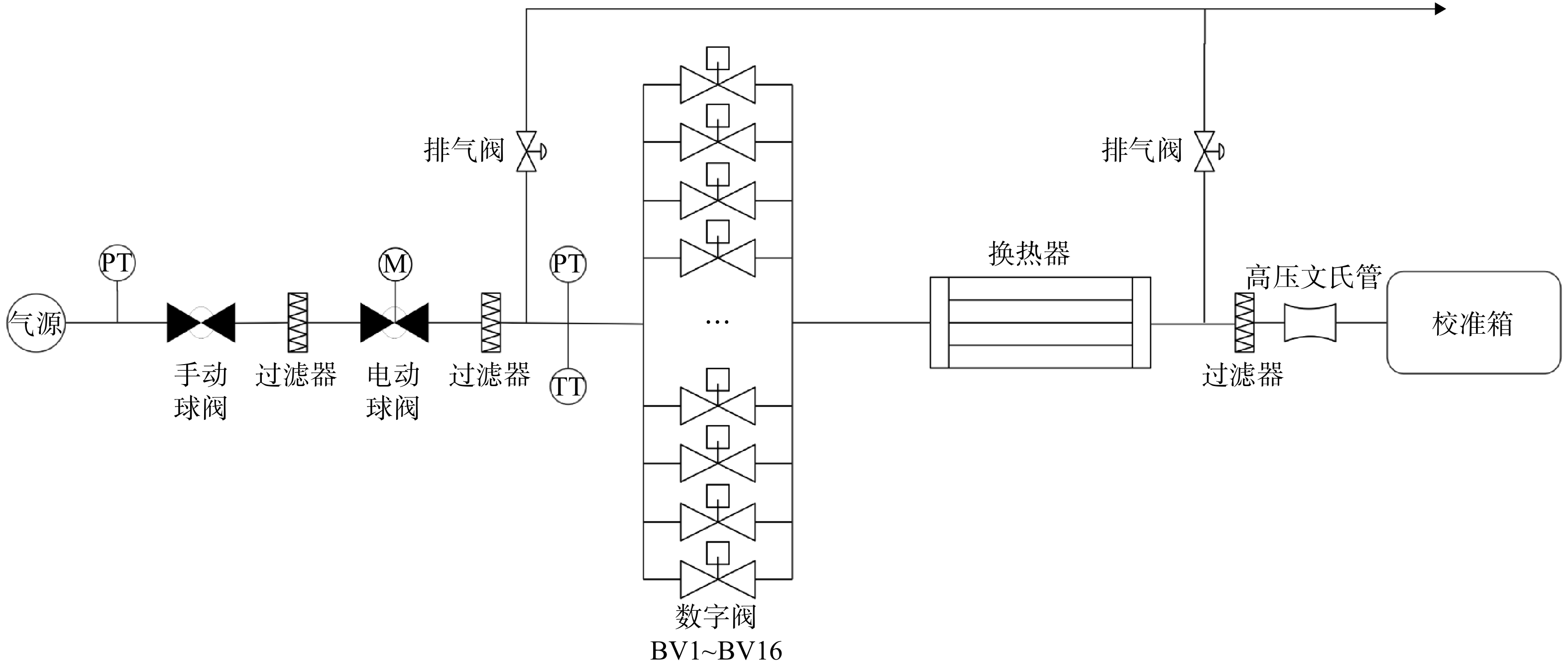
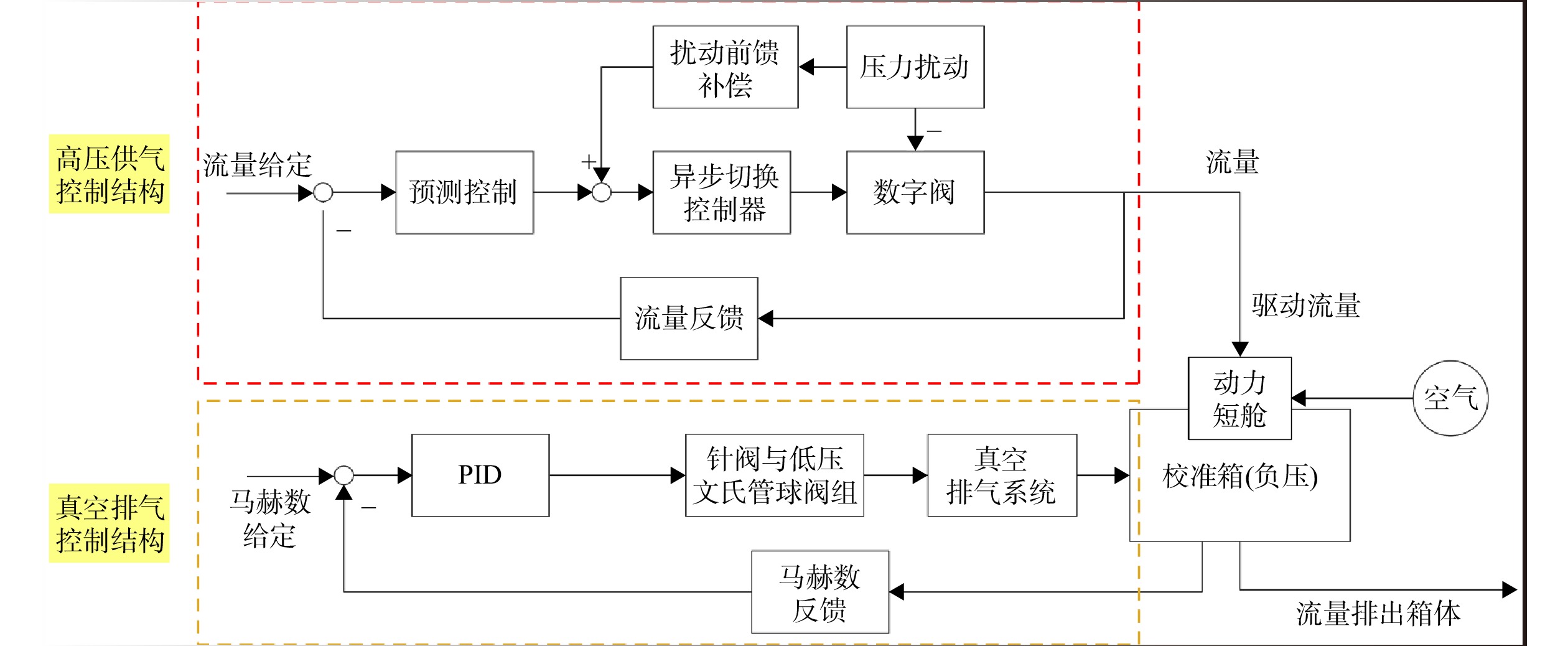
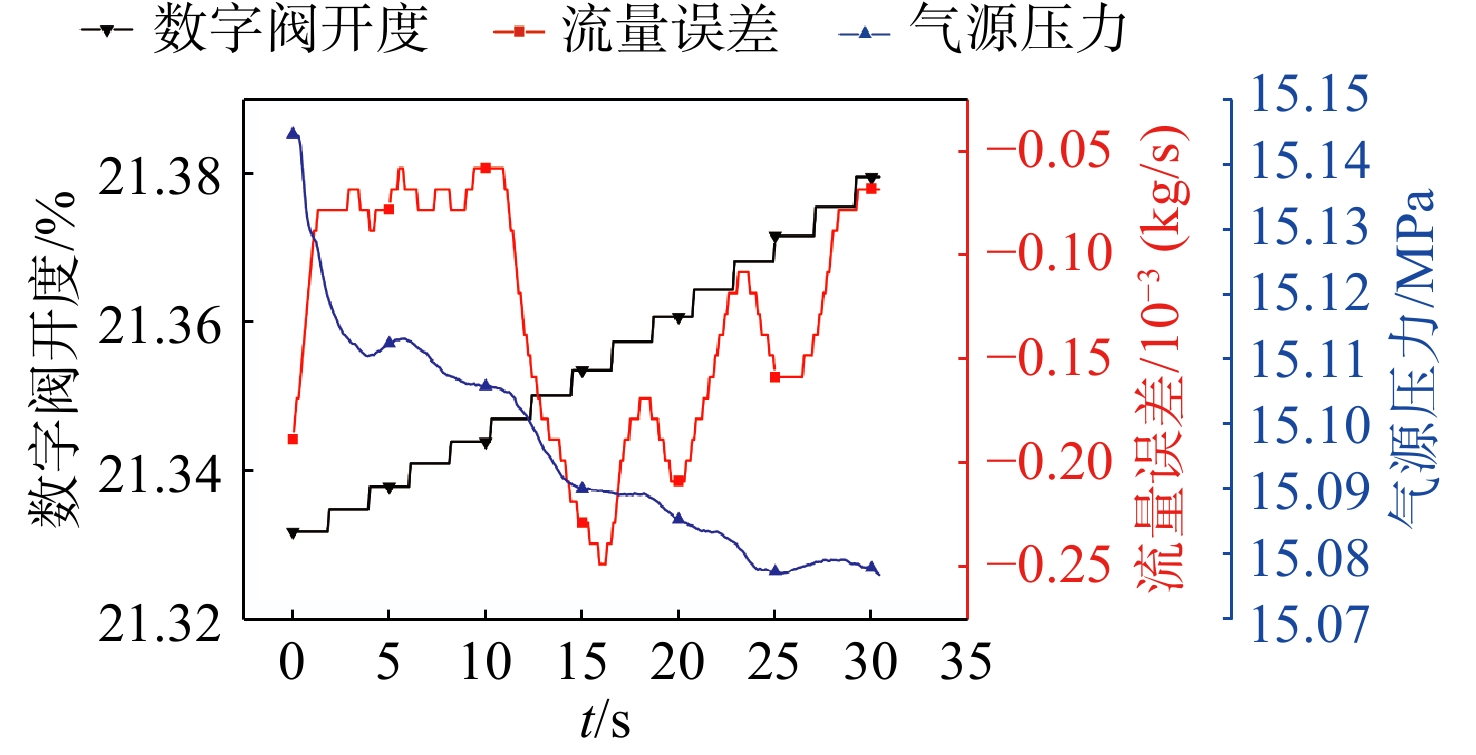
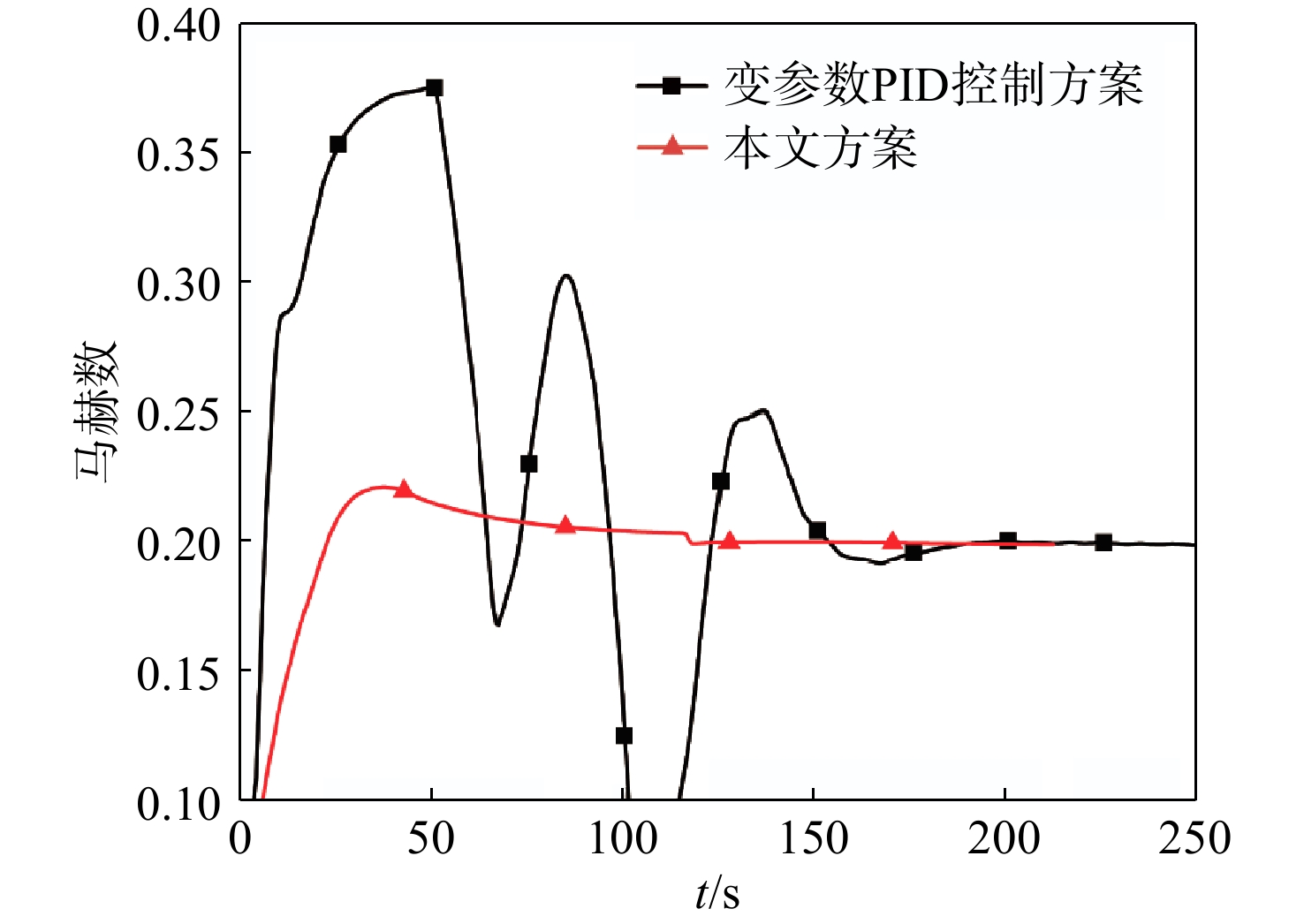
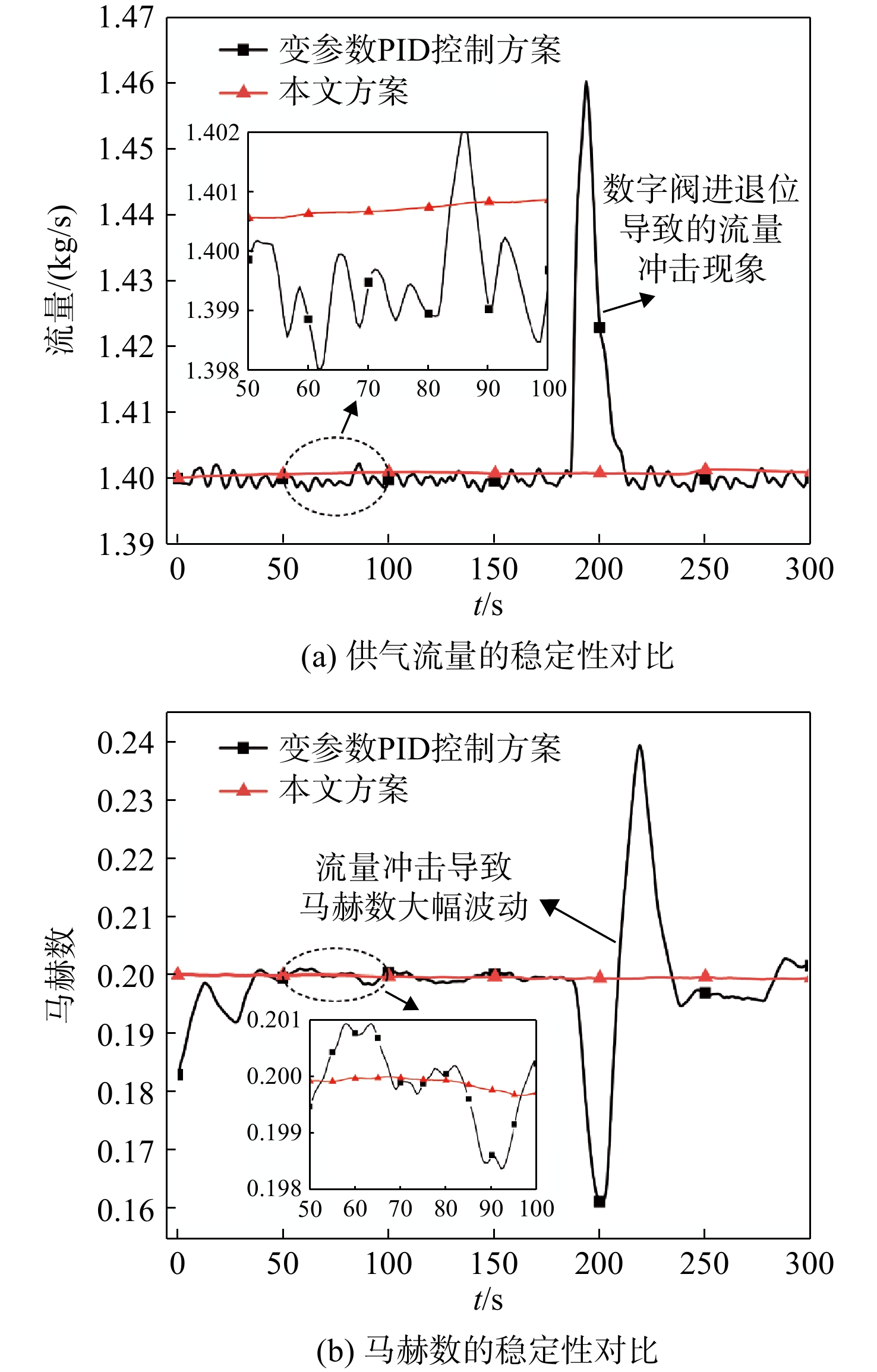
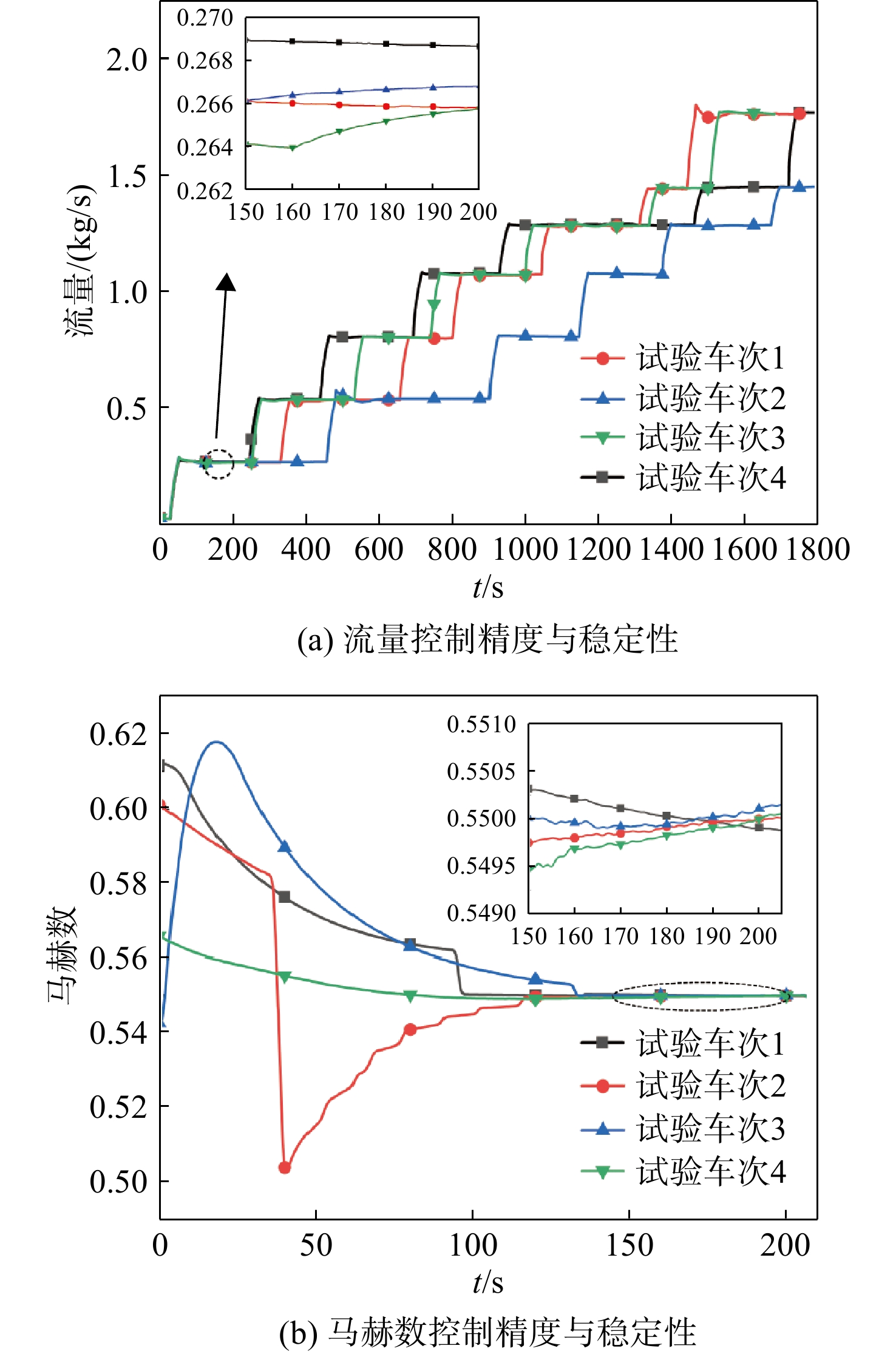
In order to reduce the fluctuation of Mach number of powered nacelle calibration facility and improve the accuracy of calibration data, it is necessary to study the control strategy of air supply flow rate. The overall characteristics of the system were analyzed, and the generalized predictive control algorithm was adopted to realize the optimal control of the high-pressure air supply control system in a certain time domain. At the same time, considering the problem of poor flow stability caused by the pressure disturbance of air source, the recursive least square method with forgetting factor was adopted to identify the disturbance model online, and then the disturbance feedforward control structure was adopted to effectively suppress the disturbance. Considering the problem of flow shock caused by asynchronous switching process of digital valves, an asynchronous switching controller for digital valves was designed to suppress the disturbance. Finally, calibration test of a certain type of nacelle was carried out. Results showed that the control accuracy of air supply flow was better than ±0.001 kg/s, the control accuracy of Mach number was better than 0.0005, and the control efficiency was increased by 40%, proving that the proposed control strategy was effective.

Safety,Airworthiness
Inversion of thermal parameters of aircraft fuel tank based on particle swarm optimization
DU Mingjie, LÜ Xufei, WEI Jinzhou, YAO Shanghong
2023, 38(1): 250-256. doi: 10.13224/j.cnki.jasp.20210360
Abstract:

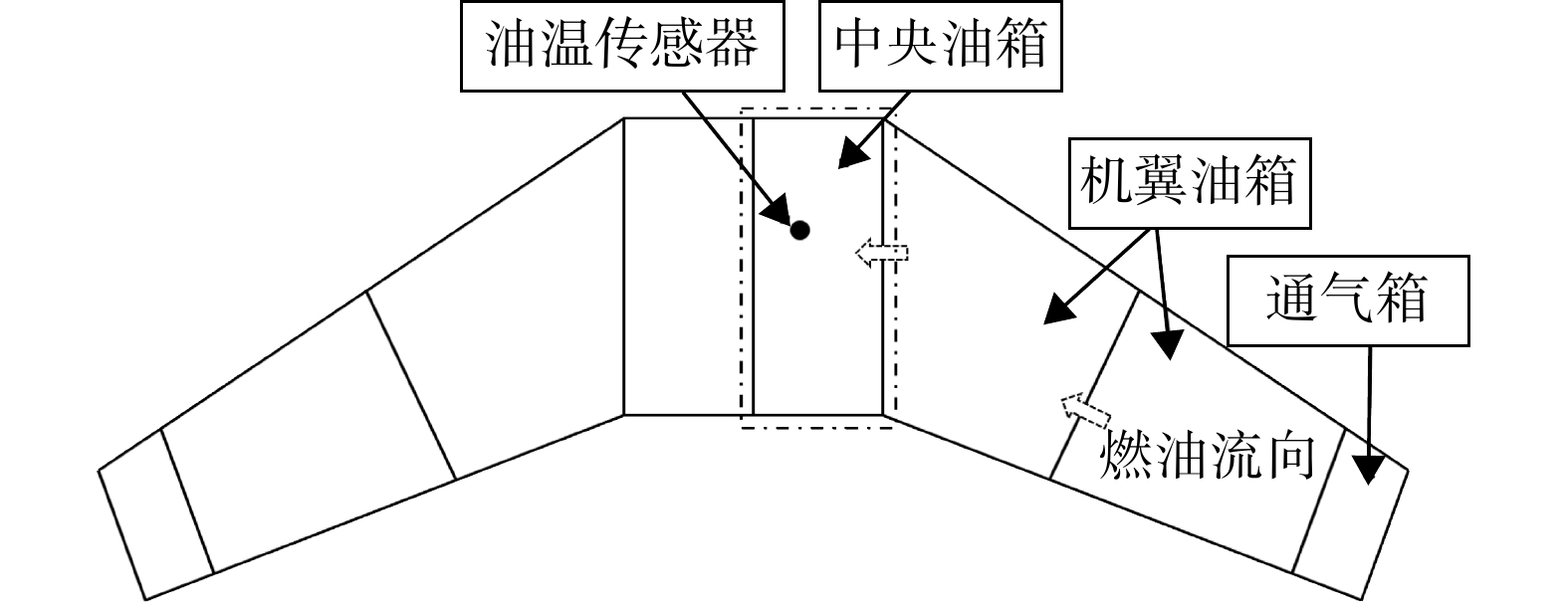
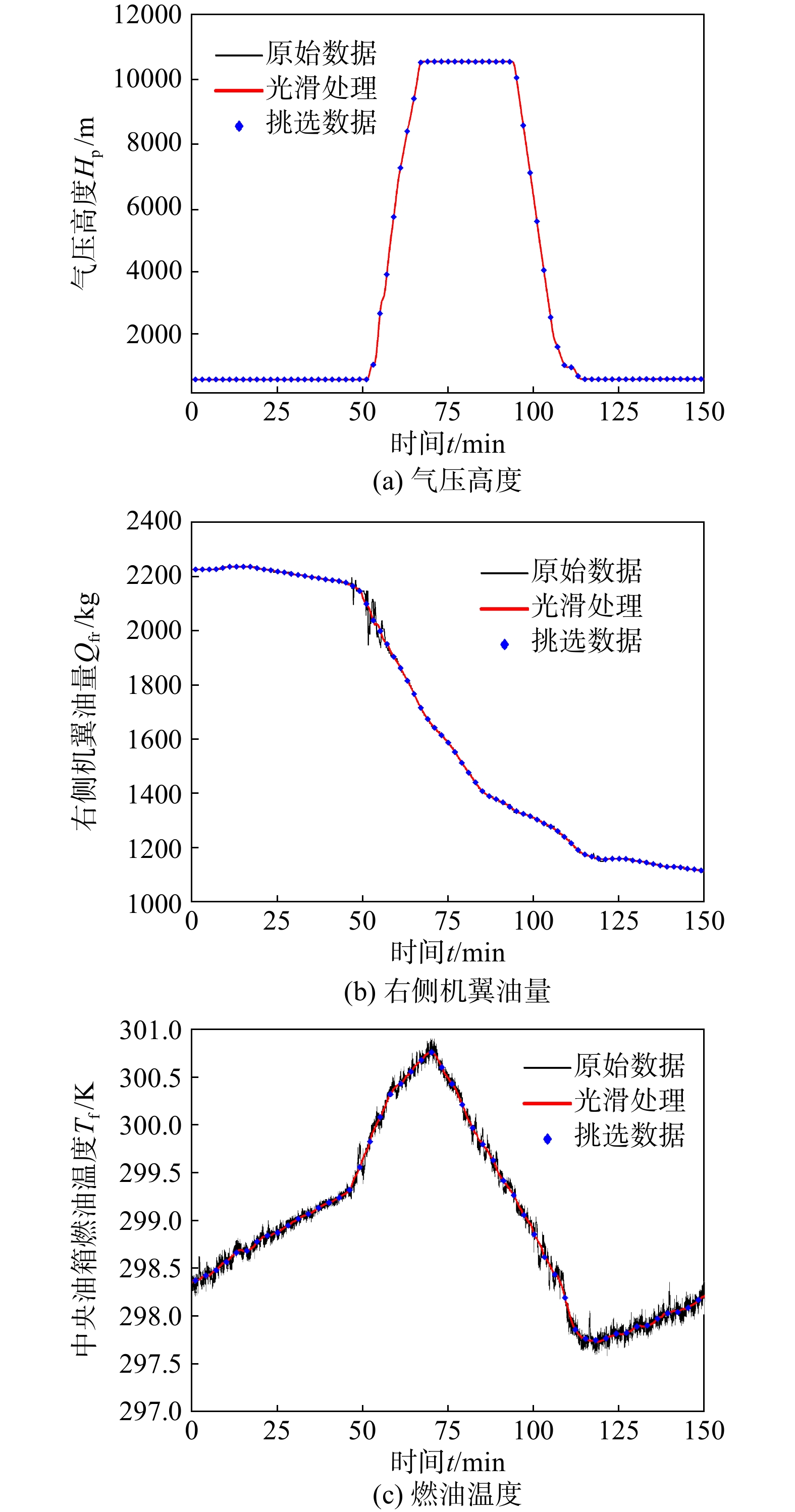
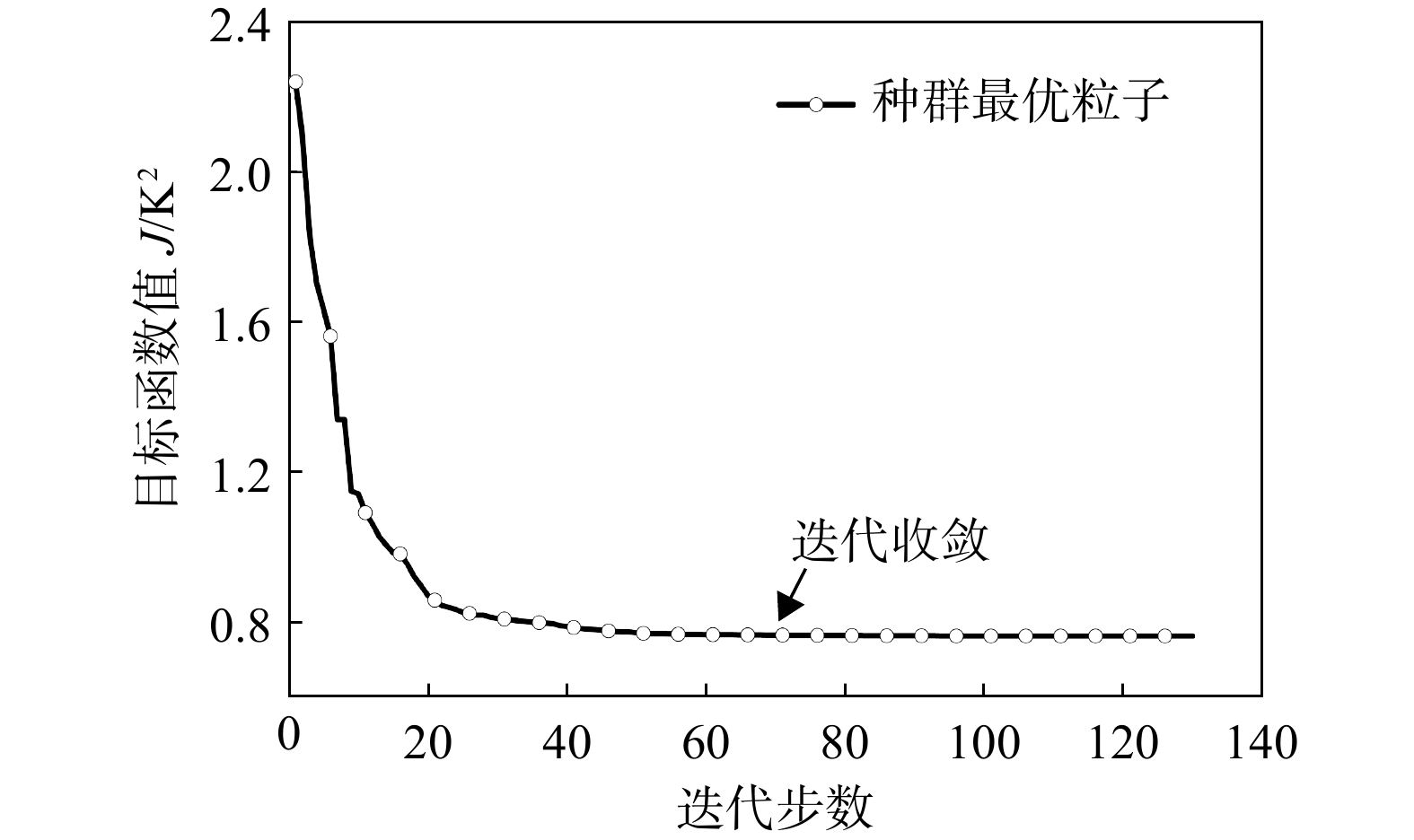
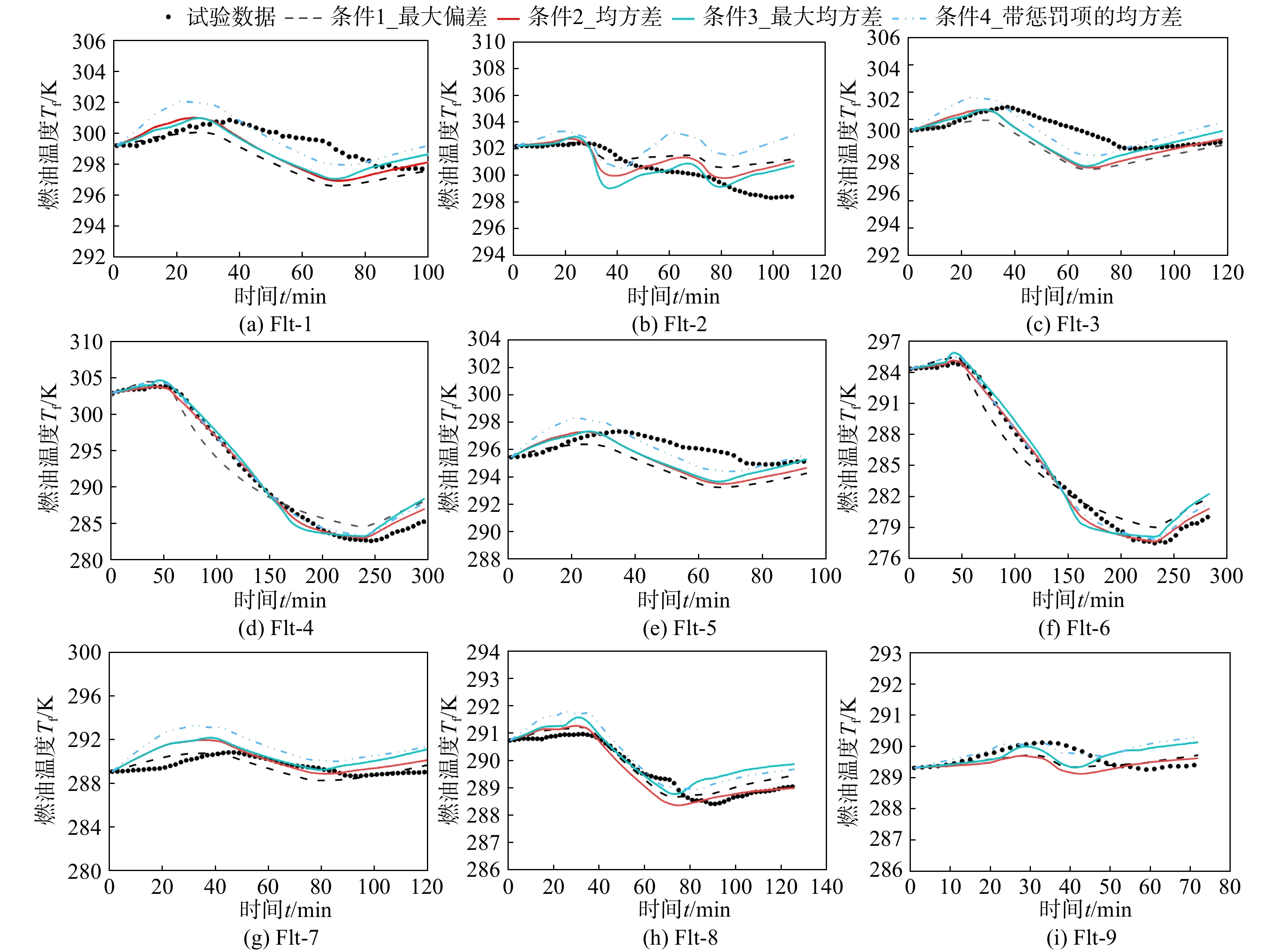
In order to obtain the thermal parameters of aircraft fuel tank for quantitative evaluation of flammability, relying on the assumption of establishing fuel tank thermal model with lumped parameter method, the inversion of thermal parameters of a certain aircraft central fuel tank was explored based on particle swarm optimization algorithm and flight test data. Four different parameters were selected as the objective functions to study the influences of the selection of the objective function on the inversion results of thermal parameters. Results showed that the output value of the fuel tank thermal parameter model was consistent with the experimental value, which proved the effectiveness of the method; the maximum deviation between the model output and the experimental value was 2.62 K; finally, adding a penalty term to the overall mean square error could make the inversion thermal parameter model meet the requirements of airworthiness regulations.